EP1799194B1 - A new class of surfactant-like materials comprising vitamin e tpgs and a water soluble polymer - Google Patents
A new class of surfactant-like materials comprising vitamin e tpgs and a water soluble polymer Download PDFInfo
- Publication number
- EP1799194B1 EP1799194B1 EP05813897A EP05813897A EP1799194B1 EP 1799194 B1 EP1799194 B1 EP 1799194B1 EP 05813897 A EP05813897 A EP 05813897A EP 05813897 A EP05813897 A EP 05813897A EP 1799194 B1 EP1799194 B1 EP 1799194B1
- Authority
- EP
- European Patent Office
- Prior art keywords
- surfactant
- vetpgs
- acid
- water soluble
- soluble polymer
- Prior art date
- Legal status (The legal status is an assumption and is not a legal conclusion. Google has not performed a legal analysis and makes no representation as to the accuracy of the status listed.)
- Revoked
Links
Images


Classifications
-
- A—HUMAN NECESSITIES
- A61—MEDICAL OR VETERINARY SCIENCE; HYGIENE
- A61K—PREPARATIONS FOR MEDICAL, DENTAL OR TOILETRY PURPOSES
- A61K31/00—Medicinal preparations containing organic active ingredients
- A61K31/33—Heterocyclic compounds
- A61K31/335—Heterocyclic compounds having oxygen as the only ring hetero atom, e.g. fungichromin
- A61K31/35—Heterocyclic compounds having oxygen as the only ring hetero atom, e.g. fungichromin having six-membered rings with one oxygen as the only ring hetero atom
- A61K31/352—Heterocyclic compounds having oxygen as the only ring hetero atom, e.g. fungichromin having six-membered rings with one oxygen as the only ring hetero atom condensed with carbocyclic rings, e.g. methantheline
- A61K31/353—3,4-Dihydrobenzopyrans, e.g. chroman, catechin
- A61K31/355—Tocopherols, e.g. vitamin E
-
- A—HUMAN NECESSITIES
- A61—MEDICAL OR VETERINARY SCIENCE; HYGIENE
- A61K—PREPARATIONS FOR MEDICAL, DENTAL OR TOILETRY PURPOSES
- A61K47/00—Medicinal preparations characterised by the non-active ingredients used, e.g. carriers or inert additives; Targeting or modifying agents chemically bound to the active ingredient
- A61K47/06—Organic compounds, e.g. natural or synthetic hydrocarbons, polyolefins, mineral oil, petrolatum or ozokerite
- A61K47/22—Heterocyclic compounds, e.g. ascorbic acid, tocopherol or pyrrolidones
-
- A—HUMAN NECESSITIES
- A61—MEDICAL OR VETERINARY SCIENCE; HYGIENE
- A61K—PREPARATIONS FOR MEDICAL, DENTAL OR TOILETRY PURPOSES
- A61K47/00—Medicinal preparations characterised by the non-active ingredients used, e.g. carriers or inert additives; Targeting or modifying agents chemically bound to the active ingredient
- A61K47/30—Macromolecular organic or inorganic compounds, e.g. inorganic polyphosphates
- A61K47/32—Macromolecular compounds obtained by reactions only involving carbon-to-carbon unsaturated bonds, e.g. carbomers, poly(meth)acrylates, or polyvinyl pyrrolidone
-
- A—HUMAN NECESSITIES
- A61—MEDICAL OR VETERINARY SCIENCE; HYGIENE
- A61K—PREPARATIONS FOR MEDICAL, DENTAL OR TOILETRY PURPOSES
- A61K9/00—Medicinal preparations characterised by special physical form
- A61K9/14—Particulate form, e.g. powders, Processes for size reducing of pure drugs or the resulting products, Pure drug nanoparticles
- A61K9/141—Intimate drug-carrier mixtures characterised by the carrier, e.g. ordered mixtures, adsorbates, solid solutions, eutectica, co-dried, co-solubilised, co-kneaded, co-milled, co-ground products, co-precipitates, co-evaporates, co-extrudates, co-melts; Drug nanoparticles with adsorbed surface modifiers
- A61K9/146—Intimate drug-carrier mixtures characterised by the carrier, e.g. ordered mixtures, adsorbates, solid solutions, eutectica, co-dried, co-solubilised, co-kneaded, co-milled, co-ground products, co-precipitates, co-evaporates, co-extrudates, co-melts; Drug nanoparticles with adsorbed surface modifiers with organic macromolecular compounds
-
- A—HUMAN NECESSITIES
- A61—MEDICAL OR VETERINARY SCIENCE; HYGIENE
- A61K—PREPARATIONS FOR MEDICAL, DENTAL OR TOILETRY PURPOSES
- A61K9/00—Medicinal preparations characterised by special physical form
- A61K9/20—Pills, tablets, discs, rods
- A61K9/2004—Excipients; Inactive ingredients
- A61K9/2013—Organic compounds, e.g. phospholipids, fats
-
- A—HUMAN NECESSITIES
- A61—MEDICAL OR VETERINARY SCIENCE; HYGIENE
- A61K—PREPARATIONS FOR MEDICAL, DENTAL OR TOILETRY PURPOSES
- A61K9/00—Medicinal preparations characterised by special physical form
- A61K9/20—Pills, tablets, discs, rods
- A61K9/2004—Excipients; Inactive ingredients
- A61K9/2013—Organic compounds, e.g. phospholipids, fats
- A61K9/2018—Sugars, or sugar alcohols, e.g. lactose, mannitol; Derivatives thereof, e.g. polysorbates
-
- A—HUMAN NECESSITIES
- A61—MEDICAL OR VETERINARY SCIENCE; HYGIENE
- A61K—PREPARATIONS FOR MEDICAL, DENTAL OR TOILETRY PURPOSES
- A61K9/00—Medicinal preparations characterised by special physical form
- A61K9/20—Pills, tablets, discs, rods
- A61K9/2004—Excipients; Inactive ingredients
- A61K9/2022—Organic macromolecular compounds
- A61K9/2027—Organic macromolecular compounds obtained by reactions only involving carbon-to-carbon unsaturated bonds, e.g. polyvinyl pyrrolidone, poly(meth)acrylates
-
- A—HUMAN NECESSITIES
- A61—MEDICAL OR VETERINARY SCIENCE; HYGIENE
- A61K—PREPARATIONS FOR MEDICAL, DENTAL OR TOILETRY PURPOSES
- A61K9/00—Medicinal preparations characterised by special physical form
- A61K9/20—Pills, tablets, discs, rods
- A61K9/2004—Excipients; Inactive ingredients
- A61K9/2022—Organic macromolecular compounds
- A61K9/205—Polysaccharides, e.g. alginate, gums; Cyclodextrin
- A61K9/2054—Cellulose; Cellulose derivatives, e.g. hydroxypropyl methylcellulose
Definitions
- This invention generally refers to a novel class of surfactant-like material that promotes the solubility of poorly soluble compounds.
- solubility and dissolution rate remain key problems in drug discovery and product development for oral dosage forms ( Mehta, Bulletin Tech., Gattefose, No. 91, 65-71 (1998 )).
- lipid-based dissolution enhancement poorly soluble drugs are first dissolved in liquid lipid-melts and formulated as soft or hard capsules ( Dordunoo, Drug Development and Industrial Pharmacy, 17(12), 1685-1713 (1991 ) and Seajuddin, J. Pharm. Sci., 88(10), 1058-1066 (1999 )).
- This lipid-based hard gel capsule technology overcomes the scale-up difficulties in solid dispersion as well as avoids the drop in dissolution rate due to the loss of solubilizer and formation of a drug-rich surface layer.
- the shell of such a capsule disintegrates after oral ingestion, the drug-lipid matrix is exposed to the gastrointestinal fluid as a solid plug, and drug dissolution may be limited by surface erosion of this solid plug.
- Self-emulsifying powders were also prepared by freeze-drying drug-lipid emulsions or microemulsions ( Pather, U.S. Patent No. 6,280,770, 2001 ). Similarly, insoluble drugs also form microemulsion with lipids. These microemulsions are then freeze-dried to provide the solid dosage form.( Lundberg, J. Pharm. Pharmacol., 49, 16-21 (1997 )). However, these processes encounter either scale-up complexity or the need of organic solvents.
- Vitamin E TPGS (D-alpha-tocopherol PEG 1000 succinate) (hereinafter "VeTPGS”) is a nonionic surfactant which is useful as an emulsifier, in liquid formulations such as hydrophobic compounds, through micellization. VeTPGS has been used in a drug composition to form a true molecular solution to provide a slowly dissolving TPGS/drug matrix that absorbs gastrointestinal fluid into the matrix at the dosage form/fluid interface, where a gel-like liquid crystal is formed.( US 5,891,845 ).
- the instant invention overcomes the waxy nature of VeTPGS and provides for its emulsifying activity in solid formulations resulting in improving, enhacing and/or increasing the solubility and bioavailability of poorly water soluble compounds.
- the present invention provides a surfactant-like material wherein VeTPGS is converted into a truly solid material with surfactant property which can be utilized in solid dosage formulations.
- the invention also provides for methods of preparing this surfactant-like material.
- the present invention relates to a surfactant-like material comprising Vitamin E TPGS and at least one water soluble polymer and optionally additional carrier or excipients.
- Another object of the invention is a method of preparing the surfactant-like material comprising Vitamin E TPGS and at least one water soluble polymer and optionally additional carrier or excipients, comprising the steps of:
- Another object of the invention is a method of preparing the surfactant-like material comprising Vitamin E TPGS and at least one water soluble polymer and optionally additional carrier or excipients, comprising the steps of:
- Another object of the invention is a surfactant-like material prepared by the process comprising the steps of:
- Another object of the invention is surfactant-like material prepared by a process comprising the steps of:
- Another object of the invention is a surfactant-like material comprising Vitamin E TPGS and at least one water soluble polymer and optionally additional carrier or excipients that does not contain a therapeutically active agent or a tautomer, , solvate or salt thereof
- the surfactant-like material is a homogeneous, amorphous or semi-crystalline powder comprising Vitamin E TPGS and at least one water soluble polymer and optionally additional carrier or excipients.
- the surfactant-like material is an amorphous powder comprising Vitamin E TPGS and at least one water soluble polymer and optionally additional carrier or excipients.
- Another object of the invention is a method of preparing the surfactant-like material which is a homogeneous, amorphous or semi-crystalline powder comprising Vitamin E TPGS and at least one water soluble polymer and optionally additional carrier or excipients, comprising the steps of:
- Another object of the invention is a method of preparing the surfactant-like material which is a homogeneous, amorphous or semi-crystalline powder comprising Vitamin E TPGS and at least one water soluble polymer and optionally additional carrier or excipients, comprising the steps of:
- Another object of the invention is surfactant-like material which is a homogeneous, amorphous or semi-crystalline powder prepared by a process comprising the steps of:
- a surfactant-like material is a homogenous, amorphous or semi-crystalline powder comprising Vitamin E TPGS and at least one water soluble polymer and optionally additional carrier or excipients does not contain a therapeutically active agent or a tautomer, , solvate or salt thereof
- Another object of the invention is a method of preparing the composition comprising surfactant-like material which is a homogenous, amorphous or semi-crystalline powder comprising Vitamin E TPGS and at least one water soluble polymer and a poorly soluble active agent or a tautomer, , solvate or salt therof and optionally a pharmaceutically acceptable carriers or excipients comprising the steps of:
- amorphous as used herein is defined as being as lacking a long range order, non-crystalline or devoid of real or apparent crystalline form.
- water soluble polymer as used herein may be selected from a group such as polyvinylpyrrolidones (PVP), copolyvidones, hydroxypropylmethylcellulose (HPMC); polyvinylalcohols, poly(methyl methacrylate), polysaccharides, polylactides, polyesters, and the like.
- PVP polyvinylpyrrolidones
- HPMC hydroxypropylmethylcellulose
- HPMC hydroxypropylmethylcellulose
- polyvinylalcohols poly(methyl methacrylate)
- polysaccharides polylactides
- polyesters and the like.
- the preferred water soluble polymers include polyvinylpyrrolidones and copolyvidone VA 64, HPMC, and the like.
- polyvinylpyrrolidones include but are not limited to Kollidon 12 PF, Kollidon 17 PF (PVP K17), Kollidon 25, Kollidon 30 (PVP K30), Kollidon 90 F, and the like.
- copolyvidones examples include but are not limited to Kollidon VA 64 (VA 64) and the like.
- Most preferred water soluble polymers include PVP K17, PVP K30 and VA 64.
- the ratio of water soluble polymer to VeTPGS to be employed in the surfactant-like material is the range from about 2:1 to about 15:1, preferable in the range from about 2:1 to about 5:1.
- poorly soluble active agent as used herein is defined as the solubility of compounds due to which solubilization becomes the rate limiting step for absorption of the compound.
- solubility As a rule of thumb in pharmaceutical industry, such dissolution-related absorption problems cannot be rule out for a compound with an aqueous solubility less than 0.1/mL
- Some examples of such poorly soluble active agents include but are not limited to Griseofulvin, Diazepam, Davazol, Cinnarixine, Halofantrine, Diclofenac, Etodolac, Indomethacin, Ketorolac, Sulindac, Tolmetin, Fenoprofen, Flurbiprofen, Ibuprofen, Ketoprofen, Naproxen, Oxaprozin, Mefanamic Acid, Acetyl-salicylic acid, Diflunisal, Salicyclic acid, Meloxicam, Prioxicam, Celecoxib, Rofecoxib, cyclosporine, triamterene, acyclovir, doxorubicin, labetalol, doxepin, methyldopa, (Z)-(1S,4R,14S,18R)-14-Cyclopentyloxycarbonylamino-18-[2-(2-isopropylamino-thiazol-4
- the preferred poorly soluble active agent being selected from Griseofulvin, Diazepam, Davazol, Cinnarixine, Halofantrine, Diclofenac, Etodolac, Indomethacin, Ketorolac, Sulindac, Tolmetin, Fenoprofen, Flurbiprofen, Ibuprofen, Ketoprofen, Naproxen, Oxaprozin, Mefanamic Acid, Acetyl-salicylic acid, Diflunisal, Salicyclic acid, Meloxicam, Prioxicam, Celecoxib, Rofecoxib, cyclosporine, triamterene, acyclovir, doxorubicin, labetalol, doxepin, methyldopa, pentoxifill and (Z)-(1S,4R,14S,18R)-14-Cyclopentyloxycarbonylamino-18-[2-(2-isopropylamino-thiazol-4
- solvent system as used herein is defined as either an organic solvent, a mixture of organic solvents or an aqueous media.
- drying technologies as used herein is defined as technologies commonly employed to dry, such as spray-drying, freeze-drying, mechanical melt extrusion, etc. A reference on these technologies are disclosed in Advanced Drying Technologies, authored by Tadeusz Kudra, 2001 , hereby incorporated by reference.
- excipients as used herein is defined in the Handbook of Pharmaceutical Excipients, 2003 by Raymond Rowe , hereby incorporated by reference.
- salt means an ionic form of the parent compound or the product of the reaction between the parent compound with a suitable acid or base to make the acid salt or base salt of the parent compound.
- Salts of the compounds of the present invention can be synthesized from the parent compounds which contain a basic or acidic moiety by conventional chemical methods. Generally, the salts are prepared by reacting the free base or acid parent compound with stoichiometric amounts or with an excess of the desired salt-forming inorganic or organic acid or base in a suitable solvent or various combinations of solvents.
- pharmaceutically acceptable salt means a salt of a compound of the invention which is, within the scope of sound medical judgment, suitable for use in contact with the tissues of humans and lower animals without undue toxicity, irritation, allergic response, and the like, commensurate with a reasonable benefit/risk ratio, generally water or oil-soluble or dispersible, and effective for their intended use.
- pharmaceutically-acceptable acid addition salts and pharmaceutically-acceptable base addition salts.
- the use of the salt form amounts to use of the base form. Lists of suitable salts are found in, e.g., S.M. Birge et al., J. Pharm. Sci., 1977, 66, pp. 1-19 , which is hereby incorporated by reference in its entirety.
- pharmaceutically-acceptable acid addition salt means those salts which retain the biological effectiveness and properties of the free bases and which are not biologically or otherwise undesirable, formed with inorganic acids such as hydrochloric acid, hydrobromic acid, hydroiodic acid, sulfuric acid, sulfamic acid, nitric acid, phosphoric acid, and the like, and organic acids such as acetic acid, trichloroacetic acid, trifluoroacetic acid, adipic acid, alginic acid, ascorbic acid, aspartic acid, benzenesulfonic acid, benzoic acid, 2-acetoxybenzoic acid, butyric acid, camphoric acid, camphorsulfonic acid, cinnamic acid, citric acid, digluconic acid, ethanesulfonic acid, glutamic acid, glycolic acid, glycerophosphoric acid, hemisulfic acid, heptanoic acid, hexanoic acid, formic acid, fum
- pharmaceutically-acceptable base addition salt means those salts which retain the biological effectiveness and properties of the free acids and which are not biologically or otherwise undesirable, formed with inorganic bases such as ammonia or hydroxide, carbonate, or bicarbonate of ammonium or a metal cation such as sodium, potassium, lithium, calcium, magnesium, iron, zinc, copper, manganese, aluminum, and the like. Particularly preferred are the ammonium, potassium, sodium, calcium, and magnesium salts.
- Salts derived from pharmaceutically-acceptable organic nontoxic bases include salts of primary, secondary, and tertiary amines, quaternary amine compounds, substituted amines including naturally occurring substituted amines, cyclic amines and basic ion-exchange resins, such as methylamine, dimethylamine, trimethylamine, ethylamine, diethylamine, triethylamine, isopropylamine, tripropylamine, tributylamine, ethanolamine, diethanolamine, 2-dimethylaminoethanol, 2-diethylaminoethanol, dicyclohexylamine, lysine, arginine, histidine, caffeine, hydrabamine, choline, betaine, ethylenediamine, glucosamine, methylglucamine, theobromine, purines, piperazine, piperidine, N -ethylpiperidine, tetramethylammonium compounds, tetraethylammoni
- solvate means a physical association of a compound with one or more solvent molecules or a complex of variable stoichiometry formed by a solute and a solvent, for example, water, ethanol, or acetic acid. This physical association may involve varying degrees of ionic and other bondings, including hydrogen bonding. In certain instances, the solvate will be capable of isolation, for example, when one or more solvent molecules are incorporated in the crystal lattice of the crystalline solid. In general, the solvents selected do not interfere with the biological activity of the solute. Solvates encompasses both solution-phase and isolatable solvates. Representative solvates include hydrates, ethanolates, methanolates, and the like.
- hydrate means a solvate wherein the solvent molecule(s) is/are H 2 O.
- the compounds of the present invention as discussed below include the free base or acid thereof, their salts, solvates, and s and may include oxidized sulfur atoms or quaternized nitrogen atoms in their structure, although not explicitly stated or shown, particularly the pharmaceutically acceptable forms thereof. Such forms, particularly the pharmaceutically acceptable forms, are intended to be embraced by the appended claims.
- patient includes both human and non-human mammals.
- effective amount means an amount of a compound according to the invention which, in the context of which it is administered or used, is sufficient to achieve the desired effect or result.
- effective amount may include or be synonymous with a pharmaceutically effective amount or a diagnostically effective amount.
- pharmaceutically effective amount or “therapeutically effective amount” means an amount of a compound according to the invention which, when administered to a patient in need thereof, is sufficient to effect treatment for disease-states, conditions, or disorders for which the compounds have utility. Such an amount would be sufficient to elicit the biological or medical response of a tissue, system, or patient that is sought by a researcher or clinician.
- the amount of a compound of according to the invention which constitutes a therapeutically effective amount will vary depending on such factors as the compound and its biological activity, the composition used for administration, the time of administration, the route of administration, the rate of excretion of the compound, the duration of treatment, the type of disease-state or disorder being treated and its severity, drugs used in combination with or coincidentally with the compounds of the invention, and the age, body weight, general health, sex, and diet of the patient.
- a therapeutically effective amount can be determined routinely by one of ordinary skill in the art having regard to their own knowledge, the prior art, and this disclosure.
- diagnostically effective amount means an amount of a compound according to the invention which, when used in a diagnostic method, apparatus, or assay, is sufficient to achieve the desired diagnostic effect or the desired biological activity necessary for the diagnostic method, apparatus, or assay. Such an amount would be sufficient to elicit the biological or medical response in a diagnostic method, apparatus, or assay, which may include a biological or medical response in a patient or in a in vitro or in vivo tissue or system, that is sought by a researcher or clinician.
- the amount of a compound according to the invention which constitutes a diagnostically effective amount will vary depending on such factors as the compound and its biological activity, the diagnostic method, apparatus, or assay used, the composition used for administration, the time of administration, the route of administration, the rate of excretion of the compound, the duration of administration, drugs and other compounds used in combination with or coincidentally with the compounds of the invention, and, if a patient is the subject of the diagnostic administration, the age, body weight, general health, sex, and diet of the patient.
- a diagnostically effective amount can be determined routinely by one of ordinary skill in the art having regard to their own knowledge, the prior art, and this disclosure.
- Administration of the appropriate pharmaceutical composition can be carried out using any of the accepted modes of administration of pharmaceutical compositions.
- administration can be, for example, orally, buccally (e.g., sublingually), nasally, parenterally, topically, transdermally, vaginally, or rectally, in the form of solid, semisolid, lyophilized powder, or liquid dosage forms, such as, for example, tablets, suppositories, pills, soft elastic and hard gelatin capsules, powders, solutions, suspensions, or aerosols, or the like, preferably in unit dosage forms suitable for simple administration of precise dosages.
- the forms of the compounds of the invention utilized in a particular pharmaceutical formulation will be selected (e.g., salts) that possess suitable physical characteristics (e.g., water solubility) that is required for the formulation to be efficacious.
- Solid dosage forms for oral administration of the compounds include capsules, tablets, pills, powders, and granules.
- a pharmaceutically acceptable composition containing a compound(s) of the invention is formed by the incorporation of any of the normally employed excipients, such as, for example, pharmaceutical grades of mannitol, lactose, starch, pregelatinized starch, magnesium stearate, sodium saccharine, talcum, cellulose ether derivatives, glucose, gelatin, sucrose, citrate, propyl gallate, and the like.
- Such solid pharmaceutical formulations may include formulations, as are well-known in the art, to provide prolonged or sustained delivery of the drug to the gastrointestinal tract by any number of mechanisms, which include, but are not limited to, pH sensitive release from the dosage form based on the changing pH of the small intestine, slow erosion of a tablet or capsule, retention in the stomach based on the physical properties of the formulation, bioadhesion of the dosage form to the mucosal lining of the intestinal tract, or enzymatic release of the active drug from the dosage form.
- Liquid dosage forms for oral administration of the compounds include emulsions, microemulsions, solutions, suspensions, syrups, and elixirs, optionally containing pharmaceutical adjuvants in a carrier, such as, for example, water, saline, aqueous dextrose, glycerol, ethanol and the like. These compositions can also contain additional adjuvants such as wetting, emulsifying, suspending, sweetening, flavoring, and perfuming agents.
- a carrier such as, for example, water, saline, aqueous dextrose, glycerol, ethanol and the like.
- additional adjuvants such as wetting, emulsifying, suspending, sweetening, flavoring, and perfuming agents.
- a therapeutically effective daily dose is from about 0.001 mg to about 15 mg/kg of body weight per day of a compound of the invention; preferably, from about 0.1 mg to about 10 mg/kg of body weight per day; and most preferably, from about 0.1 mg to about 1.5 mg/kg of body weight per day.
- the dosage range would be from about 0.07 mg to about 1050 mg per day of a compound of the invention, preferably from about 7.0 mg to about 700 mg per day, and most preferably from about 7.0 mg to about 105 mg per day.
- free flowing is defined as that it can be easily processed with conventional pharmaceutical tableting, capsule-filling, or other formulation processes.
- compressible is defined as that it can be compressed to a tablet, dry granules or other formulations with appropriate mechanical strength and disintegration rates.
- This invention provides a broad opportunity for improving dissolution of "water-insoluble" compounds in dosage forms and therefore increase product development opportunity of many previously undevelopable compounds. Compared to blending with water insoluble substrates, this approach provides a better miscibility between vitamin E TPGS and polymers and thereby we can eliminate the processing difficulty encountered with vitamin E TPGS completely. In addition, mixing with water soluble polymers not only accelerates the release of drug compounds but also enhances solublization of compounds. In addition, the following processing properties have been improved by using this invention, they include, flow and compression properties, content uniformity, etc.
- the instant surfactant-like material differs from the so called "microemulsions as solid dosage forms" in that the drugs to be loaded do not need to form microemulsions prior to loading into with the active ingredient, thus formulation procedures are much simpler.
- the instant surfactant-like material is also different from compositions employing Vitamin E TPGS alone as in its original form, VeTPGS has a limited effect on improving overall dissolution, in addition,it is difficult to process.
- This type of solid dosage forms does not improve the overall dissolution of tables and tablets made from physical mixtures of drug substance with Vitamin E TPGS have higher dissolution than 10 mg SDS tables.
- Vitamin E TPGS is very difficult to process due to its waxy nature resulting from low melting point.
- Our preliminary experiment showed that initial dissolution rate of a model composition can improve tablet bioavailability to about 30% of SEDDs (AUC), which is significantly higher than that of 10 mg SDS tablets (approximately six times higher).
- composition that comprises surfactant-like material which is a homogenous, amorphous or semi-crystalline powder and a poorly soluble therapeutically active agent or a tautomer, , solvate or salt therof and optionally a pharmaceutically acceptable active agent
- dissolution improvement arises from improved mixing of Vitamin E TPGS with drug substance and thereby a better interaction between Vitamin E TPGS and drug substance. This mechanism is feasible for poorly soluble or insoluble drugs.
- binders such as binders, disintegrants, or coating materials
- binders such as binders, disintegrants, or coating materials
- these ingredients include but are not limited to microcrystalline cellulose, croscarmelose sodium, crospovidone, starch, methylcellulose A, sodium alginate, and cellulosephthalate.
- compositions of this invention can be formulated to various solid-dosage forms, such as tablets, coated tablets, hard capsules, and granules using conventional methods.
- composition of VeTPGS/PVP K17 conventional tablet formulation was prepared using the same procerdure.
- Table 2 The composition of the VeTPGS/PVP K17 conventional tablet formulations Component Weight (mg) Active agent substance 100 VeTPGS 100 PVP K17 200 Mannitol 300 MCC 233 Sodium Starch Glycolate 24 Colloidal Sillicon Dioxide 8 Mg Stearate 2
- VeTPGS tablets were also prepared.
- active agent substance and VeTPGS/VA 64 dispersion 100 mg to 150 mg
- 300 mg mannitol and other inert excipients were triturated in a mortar with pestle followed by mixing with 300 mg mannitol and other inert excipients in the same way as preparing 100 mg VeTPGS tablets. Tablets were compressed at a force of 2.7 KN on a Carver press.
- Tris was incorporated into VeTPGS/VA64 tablet formulation to synergistically enhance dissolution since Tris is a base which can modify the local pH environment of Z)-(1S,4R,14S,18R)-14-Cyclopentyloxycarbonylamino-18-[2-(2-isopropylamino-thiazol-4-yl)-7-methoxy-quinolin-4-yloxy]-2,15-dioxo-3,16-diaza-tricyclo[14.3.0.04,6]nonadec-7-ene-4-carboxylic acid which has higher solubility in basic conditions.
- the composition of the VETPGS/VA64 containing Tris is shown in Table 3. The tablets were prepared similarly as described in Example 3.
- Table 3 Composition of the VeTPGS/VA64/Tris tablet formulation Component Composition (mg) Active Ingredient 100 VeTPGS 100 Va64 200 Tris 150 Mannitol 300 MCC 233 Sodium starch glycolate 24 Colloidal silicon dioxide 8 MgStearate 14
- Table 4 Composition of the VeTPGS/VA64/Tris tablet formulation component Composition mg Active Ingredient 200 VeTPGS 100 Va64 200 Tris 150 mannitol 150 MCC 90 Sodium starch glycolate 50 Colloidal silicon dioxide 8 MgStearate 2
- Figure. 7 shows the bioavalbility of Z)-(1S,4R,14S,18R)-14-Cyclopentyloxycarbonylamino-18-[2-(2-isopropylamino-thiazol-4-yl)-7-methoxy-quinolin-4-yloxy]-2,15-dioxo-3,16-diaza-tricyclo[14.3.0.04,6]nonadec-7-ene-4-carboxylic acid /VeTPGS-VA64/Tris tablets vs. SEEDs, indicating that addition of Tris in formulation increases the bioavalability of this formulation.
Landscapes
- Health & Medical Sciences (AREA)
- Chemical & Material Sciences (AREA)
- Life Sciences & Earth Sciences (AREA)
- Public Health (AREA)
- Veterinary Medicine (AREA)
- Medicinal Chemistry (AREA)
- Pharmacology & Pharmacy (AREA)
- Epidemiology (AREA)
- Animal Behavior & Ethology (AREA)
- General Health & Medical Sciences (AREA)
- Engineering & Computer Science (AREA)
- Biophysics (AREA)
- Molecular Biology (AREA)
- Bioinformatics & Cheminformatics (AREA)
- Chemical Kinetics & Catalysis (AREA)
- General Chemical & Material Sciences (AREA)
- Oil, Petroleum & Natural Gas (AREA)
- Inorganic Chemistry (AREA)
- Pharmaceuticals Containing Other Organic And Inorganic Compounds (AREA)
- Medicinal Preparation (AREA)
- Emulsifying, Dispersing, Foam-Producing Or Wetting Agents (AREA)
- Organic Low-Molecular-Weight Compounds And Preparation Thereof (AREA)
Abstract
Description
- This invention generally refers to a novel class of surfactant-like material that promotes the solubility of poorly soluble compounds.
- Despite extensive research efforts, solubility and dissolution rate remain key problems in drug discovery and product development for oral dosage forms (Mehta, Bulletin Tech., Gattefose, No. 91, 65-71 (1998)). Compounds that have limited solubility, in water, typically below 0.1 mg/ml, present unusual challenges in drug discovery (Wyatt, Bulletin Tech Gattefose, No. 92, 31-39 (1999)). This is especially true in circumstances where solubility and dissolution limit drug absorption.
- Strategies for improving apparent solubility and dissolution rates include:
- (a) forming soluble salts for ionizable drugs (Nelson, J. Pharm. Sci., 47, 297 (1958));
- (b) reducing crystal size (Nelson, J. Pharm. Sci., 53, 1224 (1964));
- (c) forming soluble pro-drugs;
- (d) using amorphous forms (Niazi, J. Pharm. Sci., 65, 302 (1976));
- (e) using co-solvents and superdisintegrants (Serajuddin, J. Pharm. Sci., 77(4), 325-329 (1998));
- (f) impregnating liquid drugs or drug solution in porous powders (Jaworski, Drug Development and Industrial Pharmacy, 16(5), 965-977 (1990)); and
- (g) using surface active self-emulsifying systems (Dordunoo, Drug Development and Industrial Pharmacy, 17(12), 1685-1713 (1991)).
- Although salt formation and particle size reduction are commonly used to increase dissolution rate and oral absorption, there are practical limitations for these techniques. Salt formation is not feasible for neutral compounds and weak electrolytes. Very fine powders of hydrophobic drugs, on the other hand, are difficult to disperse in water due to the poor wettability of the particle surfaces (Seajuddin, J. Pharm. Sci., 88(10), 1058-1066 (1999)). The loading of liquid drugs in porous powder (called "powder solutions" by Jarowski, identified supra) encountered flow property and compressibility problems in pharmaceutical manufacture, consequently, it is only suitable for low-dose drugs. Among the strategies, those that increase dissolution rate of poorly soluble drugs with lipids/surfactants are the most commonly used techniques for enhancing their absorption.
- For lipid-based dissolution enhancement, poorly soluble drugs are first dissolved in liquid lipid-melts and formulated as soft or hard capsules (Dordunoo, Drug Development and Industrial Pharmacy, 17(12), 1685-1713 (1991) and Seajuddin, J. Pharm. Sci., 88(10), 1058-1066 (1999)). This lipid-based hard gel capsule technology overcomes the scale-up difficulties in solid dispersion as well as avoids the drop in dissolution rate due to the loss of solubilizer and formation of a drug-rich surface layer. However, when the shell of such a capsule disintegrates after oral ingestion, the drug-lipid matrix is exposed to the gastrointestinal fluid as a solid plug, and drug dissolution may be limited by surface erosion of this solid plug. Self-emulsifying powders were also prepared by freeze-drying drug-lipid emulsions or microemulsions (
Pather, U.S. Patent No. 6,280,770, 2001 ). Similarly, insoluble drugs also form microemulsion with lipids. These microemulsions are then freeze-dried to provide the solid dosage form.(Lundberg, J. Pharm. Pharmacol., 49, 16-21 (1997)). However, these processes encounter either scale-up complexity or the need of organic solvents. - Vitamin E TPGS (D-alpha-
tocopherol PEG 1000 succinate)

US 5,891,845 ). - Various mechanisms have been employed to improve the solubility of poorly water soluble compounds using VeTPGS. Mesoporous compositions for use in drug delivery are discussed in
US 2002/0164380 A1 ; stability of polyethylene oxide in matrix tablets prepared by hot-melt extrusion is disclosed in Crowley (Biomaterials 23 (2002) 4241-4248); VeTPGS used as emulsifier in solvent evaporation/extraction technique for fabrication of polymeric nanosphere for controlled release of paclitaxel (Taxol®) in Mu, et al (Journal of Controlled Release, 80 (2002) 129-144); VeTPGS is used in the solvent extraction/evaporation technique for fabrication of polymeric nanosheres of an antineoplastic drug paclitaxel (Taxol®) for cancer therapy in Mu, et al (Bioengineering Conference, Vol. 50 (2001), 187-188); oxidized cellulose and vitamin E blend for topical hemostatic applications inWu, et al (WO 97/38737 Myers, et al (US Patent 5,891,845 ); the influence of VeTPGS on the properties of hydrophilic films produced by hot-melt extrusion in Repka, et al (International Journal of Pharmaceutics, 202 (2002), 63-70); and VeTPGS has been applied in polymeric compositions suitable for injection molding of a single or multi-component pharmaceutical dosage forms inWO 02/060382 - The instant invention overcomes the waxy nature of VeTPGS and provides for its emulsifying activity in solid formulations resulting in improving, enhacing and/or increasing the solubility and bioavailability of poorly water soluble compounds.
- The above-captioned technical problems with the use of VeTPGS alone in increasing the solubility of poorly soluble compounds is solved by the embodiments characterized in the claims and the description. The before-mentioned disadvantages in the art are overcome by the present invention as discussed in the description section.
- The present invention provides a surfactant-like material wherein VeTPGS is converted into a truly solid material with surfactant property which can be utilized in solid dosage formulations. The invention also provides for methods of preparing this surfactant-like material.
-
-
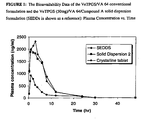
FIG. 1 . Bioavailability profile of SEEDs, and VeTPGS/VA 64/ Z)-(1S,4R,14S,18R)-14-Cyclopentyloxycarbonylamino-18-[2-(2-isopropylamino-thiazol-4-yl)-7-methoxy-quinolin-4-yloxy]-2,15-dioxo-3,16-diaza-tricyclo[14.3.0.04,6]nonadec-7-ene-4-carboxylic acid amorphous solid dispersion and Z)-(1S,4R,14S,18R)-14-Cyclopentyloxycarbonylamino-18-[2-(2-isopropylamino-thiazol-4-yl)-7-methoxy-quinolin-4-yloxy]-2,15-dioxo-3,16-diaza-tricyclo[14.3.0.04,6]nonadec-7-ene-4-carboxylic acid (crystalline) with VeTPGS/Va64 dispersion. -
FIG. 2 . PXRD pattern of VeTPGS/VA 64/solid dispersion,(Z)-(1S,4R,14S,18R)-14-Cyclopentyloxycarbonylamino-18-[2-(2-isopropylamino-thiazol-4-yl)-7-methoxy-quinolin-4-yloxy]-2,15-dioxo-3,16-diaza-tricyclo[14.3.0.04,6]nonadec-7-ene-4-carboxylic acid VA 64 and VeTPGS. -
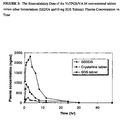
FIG. 3 . Bioavailability data of VeTPGS/VA 64 conventional formulations versus other formulations. -
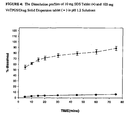
FIG. 4 . SDS versus VeTPGS/drug solid dispersion tablet. -
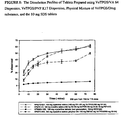
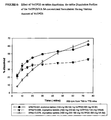
FIG. 5 . Dissolution profiles of VeTPGS/VA 64, VeTPGS/PVP K17, VeTPGS/Drug substance and 10 mg of SDS. -
FIG. 6 . Effect of VeTPGS amounts on tablet dissolution. - Terms not specifically defined herein should be given the meanings that would be given to them by one of skill in the art in light of the disclosure and the context. As used in the specification and appended claims, however, unless specified to the contrary, the following terms have the meaning indicated and the following conventions are adhered to.
- Before the embodiments of the present invention, it must be noted that as used herein and in the appended claims, the singular "a", "an", and "the" include plural reference unless the context clearly dictates otherwise. Thus, for example, reference to "a surfactant-like material" includes a plurality of such surfactant-like materials, reference to "a water soluble polymer" is a reference to one or more such water soluble polymers and equivalents thereof known to those skilled in the art, and so forth.
- In the present invention it was found that surfactant-like material powder of the instant invention has demonstrated improved solubility, dissolution rate and absorption of drugs which are poorly soluble.
- The present invention relates to a surfactant-like material comprising Vitamin E TPGS and at least one water soluble polymer and optionally additional carrier or excipients.
- Another object of the invention is a method of preparing the surfactant-like material comprising Vitamin E TPGS and at least one water soluble polymer and optionally additional carrier or excipients, comprising the steps of:
- (a) dissolving Vitamin E TPGS and a water soluble polymer in a solvent system; and
- (b) employing drying technology till the resultant material is a free-flowing powder.
- Another object of the invention is a method of preparing the surfactant-like material comprising Vitamin E TPGS and at least one water soluble polymer and optionally additional carrier or excipients, comprising the steps of:
- (a) dissolving Vitamin E TPGS and a water soluble polymer in a solvent system; and
- (b) employing drying technology till the resultant material is a free-flowing powder,
- Another object of the invention is a surfactant-like material prepared by the process comprising the steps of:
- (a) dissolving Vitamin E TPGS and a water soluble polymer in a solvent system; and
- (b) employing drying technology till the resultant material is a free-flowing powder.
- Another object of the invention is surfactant-like material prepared by a process comprising the steps of:
- (a) dissolving Vitamin E TPGS and a water soluble polymer in a solvent system; and
- (b) employing drying technology till the resultant material is a free-flowing powder,
- Another object of the invention is a surfactant-like material comprising Vitamin E TPGS and at least one water soluble polymer and optionally additional carrier or excipients that does not contain a therapeutically active agent or a tautomer, , solvate or salt thereof
- Another aspect of the invention is where the surfactant-like material is a homogeneous, amorphous or semi-crystalline powder comprising Vitamin E TPGS and at least one water soluble polymer and optionally additional carrier or excipients.
- Another aspect of the invention is where the surfactant-like material is a homogenous powder comprising Vitamin E TPGS and at least one water soluble polymer and optionally additional carrier or excipients.
- Another aspect of the invention is where the surfactant-like material is an amorphous powder comprising Vitamin E TPGS and at least one water soluble polymer and optionally additional carrier or excipients.
- Another aspect of the invention is where the surfactant-like material is a semi-crystalline powder comprising Vitamin E TPGS and at least one water soluble polymer and optionally additional carrier or excipients.
- Another object of the invention is a method of preparing the surfactant-like material which is a homogeneous, amorphous or semi-crystalline powder comprising Vitamin E TPGS and at least one water soluble polymer and optionally additional carrier or excipients, comprising the steps of:
- (a) dissolving Vitamin E TPGS and a water soluble polymer in a solvent system; and
- (b) employing drying technology till the resultant material is a free-flowing powder.
- Another object of the invention is a method of preparing the surfactant-like material which is a homogeneous, amorphous or semi-crystalline powder comprising Vitamin E TPGS and at least one water soluble polymer and optionally additional carrier or excipients, comprising the steps of:
- (a) dissolving Vitamin E TPGS and a water soluble polymer in a solvent system; and
- (b) employing drying technology till the resultant material is a free-flowing powder,
- Another object of the invention is a surfactant-like material which is a homogeneous, amorphous or semi-crystalline powder prepared by the process comprising the steps of:
- (a) dissolving Vitamin E TPGS and a water soluble polymer in a solvent system; and
- (b) employing drying technology till the resultant material is a free-flowing powder.
- Another object of the invention is surfactant-like material which is a homogeneous, amorphous or semi-crystalline powder prepared by a process comprising the steps of:
- (a) dissolving Vitamin E TPGS and a water soluble polymer in a solvent system; and
- (b) employing drying technology till the resultant material is a free-flowing powder,
- Another object of the invention is a surfactant-like material is a homogenous, amorphous or semi-crystalline powder comprising Vitamin E TPGS and at least one water soluble polymer and optionally additional carrier or excipients does not contain a therapeutically active agent or a tautomer, , solvate or salt thereof
- Another object of the invention is a method of preparing the composition comprising surfactant-like material which is a homogenous, amorphous or semi-crystalline powder comprising Vitamin E TPGS and at least one water soluble polymer and a poorly soluble active agent or a tautomer, , solvate or salt therof and optionally a pharmaceutically acceptable carriers or excipients comprising the steps of:
- a. Dissolving the VeTPGS and the water soluble polymer in a solvent system; and
- b. Employing drying technology till the resultant material a free-flowing powder;
- c. Mixing the dispersion with a poorly soluble active agentand optionally other excipients followed by a direct compression or by wet granulation and drying; and
- d. Optionally followed by mixing granules with other tablet excipients for tableting
- The term "homogenous" as used herein is defined as being uniform in kind, structure or composition.
- The term "amorphous" as used herein is defined as being as lacking a long range order, non-crystalline or devoid of real or apparent crystalline form.
- The term "water soluble polymer" as used herein may be selected from a group such as polyvinylpyrrolidones (PVP), copolyvidones, hydroxypropylmethylcellulose (HPMC); polyvinylalcohols, poly(methyl methacrylate), polysaccharides, polylactides, polyesters, and the like.
- The preferred water soluble polymers include polyvinylpyrrolidones and
copolyvidone VA 64, HPMC, and the like. - Examples of polyvinylpyrrolidones include but are not limited to Kollidon 12 PF, Kollidon 17 PF (PVP K17),
Kollidon 25, Kollidon 30 (PVP K30), Kollidon 90 F, and the like. - Examples of copolyvidones include but are not limited to Kollidon VA 64 (VA 64) and the like.
- Most preferred water soluble polymers include PVP K17, PVP K30 and
VA 64. - The ratio of water soluble polymer to VeTPGS to be employed in the surfactant-like material is the range from about 2:1 to about 15:1, preferable in the range from about 2:1 to about 5:1.
- The term "poorly soluble active agent" as used herein is defined as the solubility of compounds due to which solubilization becomes the rate limiting step for absorption of the compound. As a rule of thumb in pharmaceutical industry, such dissolution-related absorption problems cannot be rule out for a compound with an aqueous solubility less than 0.1/mL These poorly soluble compounds, new chemical entities, belong to Class II or below, that is, compounds that have an aqueous solubility of less that 0.1 mg/mL. Some examples of such poorly soluble active agents include but are not limited to Griseofulvin, Diazepam, Davazol, Cinnarixine, Halofantrine, Diclofenac, Etodolac, Indomethacin, Ketorolac, Sulindac, Tolmetin, Fenoprofen, Flurbiprofen, Ibuprofen, Ketoprofen, Naproxen, Oxaprozin, Mefanamic Acid, Acetyl-salicylic acid, Diflunisal, Salicyclic acid, Meloxicam, Prioxicam, Celecoxib, Rofecoxib, cyclosporine, triamterene, acyclovir, doxorubicin, labetalol, doxepin, methyldopa, (Z)-(1S,4R,14S,18R)-14-Cyclopentyloxycarbonylamino-18-[2-(2-isopropylamino-thiazol-4-yl)-7-methoxy-quinolin-4-yloxy]-2,15-dioxo-3,16-diaza-tricyclo[14.3.0.04,6]nonadec-7-ene-4-carboxylic acid, pentoxifill and the like.
- The preferred poorly soluble active agent being selected from Griseofulvin, Diazepam, Davazol, Cinnarixine, Halofantrine, Diclofenac, Etodolac, Indomethacin, Ketorolac, Sulindac, Tolmetin, Fenoprofen, Flurbiprofen, Ibuprofen, Ketoprofen, Naproxen, Oxaprozin, Mefanamic Acid, Acetyl-salicylic acid, Diflunisal, Salicyclic acid, Meloxicam, Prioxicam, Celecoxib, Rofecoxib, cyclosporine, triamterene, acyclovir, doxorubicin, labetalol, doxepin, methyldopa, pentoxifill and (Z)-(1S,4R,14S,18R)-14-Cyclopentyloxycarbonylamino-18-[2-(2-isopropylamino-thiazol-4-yl)-7-methoxy-quinolin-4-yloxy]-2,15-dioxo-3,16-diaza-tricyclo[14.3.0.04,6]nona-dec-7-ene-4-carboxylic acid.
either an organic solvent or an aqueous media. Still more preferred poorly soluble active agentbeing (Z)-(1S,4R,14S,18R)-14-Cyclopentyloxycarbonylamino-18-[2-(2-isopropylamino-thiazol-4-yl)-7-methoxy-quinolin-4-yloxy]-2,15-dioxo-3,16-diaza-tricyclo[14.3.0.04,6]nonadec-7-ene-4-carboxylic acid , whose chemical structure is as follows:
Tsantrizos et al., U.S. Patent No. 6,608,027 B1 , which is hereby incorporated by reference. - The term "solvent system" as used herein is defined as either an organic solvent, a mixture of organic solvents or an aqueous media.
- The term "drying technologies" as used herein is defined as technologies commonly employed to dry, such as spray-drying, freeze-drying, mechanical melt extrusion, etc. A reference on these technologies are disclosed in Advanced Drying Technologies, authored by Tadeusz Kudra, 2001, hereby incorporated by reference.
- The term "excipients" as used herein is defined in the Handbook of Pharmaceutical Excipients, 2003 by Raymond Rowe, hereby incorporated by reference.
- The terms "optional" or "optionally" mean that the subsequently described event or circumstances may or may not occur, and that the description includes instances where the event or circumstance occurs and instances in which it does not.
- The term "salt" means an ionic form of the parent compound or the product of the reaction between the parent compound with a suitable acid or base to make the acid salt or base salt of the parent compound. Salts of the compounds of the present invention can be synthesized from the parent compounds which contain a basic or acidic moiety by conventional chemical methods. Generally, the salts are prepared by reacting the free base or acid parent compound with stoichiometric amounts or with an excess of the desired salt-forming inorganic or organic acid or base in a suitable solvent or various combinations of solvents.
- The term "pharmaceutically acceptable salt" means a salt of a compound of the invention which is, within the scope of sound medical judgment, suitable for use in contact with the tissues of humans and lower animals without undue toxicity, irritation, allergic response, and the like, commensurate with a reasonable benefit/risk ratio, generally water or oil-soluble or dispersible, and effective for their intended use. The term includes pharmaceutically-acceptable acid addition salts and pharmaceutically-acceptable base addition salts. As the compounds of the present invention are useful in both free base and salt form, in practice, the use of the salt form amounts to use of the base form. Lists of suitable salts are found in, e.g., S.M. Birge et al., J. Pharm. Sci., 1977, 66, pp. 1-19, which is hereby incorporated by reference in its entirety.
- The term "pharmaceutically-acceptable acid addition salt" means those salts which retain the biological effectiveness and properties of the free bases and which are not biologically or otherwise undesirable, formed with inorganic acids such as hydrochloric acid, hydrobromic acid, hydroiodic acid, sulfuric acid, sulfamic acid, nitric acid, phosphoric acid, and the like, and organic acids such as acetic acid, trichloroacetic acid, trifluoroacetic acid, adipic acid, alginic acid, ascorbic acid, aspartic acid, benzenesulfonic acid, benzoic acid, 2-acetoxybenzoic acid, butyric acid, camphoric acid, camphorsulfonic acid, cinnamic acid, citric acid, digluconic acid, ethanesulfonic acid, glutamic acid, glycolic acid, glycerophosphoric acid, hemisulfic acid, heptanoic acid, hexanoic acid, formic acid, fumaric acid, 2-hydroxyethanesulfonic acid (isethionic acid), lactic acid, maleic acid, hydroxymaleic acid, malic acid, malonic acid, mandelic acid, mesitylenesulfonic acid, methanesulfonic acid, naphthalenesulfonic acid, nicotinic acid, 2-naphthalenesulfonic acid, oxalic acid, pamoic acid, pectinic acid, phenylacetic acid, 3-phenylpropionic acid, picric acid, pivalic acid, propionic acid, pyruvic acid, pyruvic acid, salicylic acid, stearic acid, succinic acid, sulfanilic acid, tartaric acid, p-toluenesulfonic acid, undecanoic acid, and the like.
- The term "pharmaceutically-acceptable base addition salt" means those salts which retain the biological effectiveness and properties of the free acids and which are not biologically or otherwise undesirable, formed with inorganic bases such as ammonia or hydroxide, carbonate, or bicarbonate of ammonium or a metal cation such as sodium, potassium, lithium, calcium, magnesium, iron, zinc, copper, manganese, aluminum, and the like. Particularly preferred are the ammonium, potassium, sodium, calcium, and magnesium salts. Salts derived from pharmaceutically-acceptable organic nontoxic bases include salts of primary, secondary, and tertiary amines, quaternary amine compounds, substituted amines including naturally occurring substituted amines, cyclic amines and basic ion-exchange resins, such as methylamine, dimethylamine, trimethylamine, ethylamine, diethylamine, triethylamine, isopropylamine, tripropylamine, tributylamine, ethanolamine, diethanolamine, 2-dimethylaminoethanol, 2-diethylaminoethanol, dicyclohexylamine, lysine, arginine, histidine, caffeine, hydrabamine, choline, betaine, ethylenediamine, glucosamine, methylglucamine, theobromine, purines, piperazine, piperidine, N-ethylpiperidine, tetramethylammonium compounds, tetraethylammonium compounds, pyridine, N,N-dimethylaniline, N-methylpiperidine, N-methylmorpholine, dicyclohexylamine, dibenzylamine, N,N-dibenzylphenethylamine, 1-ephenamine, N,N'-dibenzylethylenediamine, polyamine resins, and the like. Particularly preferred organic nontoxic bases are isopropylamine, diethylamine, ethanolamine, trimethylamine, dicyclohexylamine, choline, and caffeine.
- The term "solvate" means a physical association of a compound with one or more solvent molecules or a complex of variable stoichiometry formed by a solute and a solvent, for example, water, ethanol, or acetic acid. This physical association may involve varying degrees of ionic and other bondings, including hydrogen bonding. In certain instances, the solvate will be capable of isolation, for example, when one or more solvent molecules are incorporated in the crystal lattice of the crystalline solid. In general, the solvents selected do not interfere with the biological activity of the solute. Solvates encompasses both solution-phase and isolatable solvates. Representative solvates include hydrates, ethanolates, methanolates, and the like.
- The term "hydrate" means a solvate wherein the solvent molecule(s) is/are H2O.
- The compounds of the present invention as discussed below include the free base or acid thereof, their salts, solvates, and s and may include oxidized sulfur atoms or quaternized nitrogen atoms in their structure, although not explicitly stated or shown, particularly the pharmaceutically acceptable forms thereof. Such forms, particularly the pharmaceutically acceptable forms, are intended to be embraced by the appended claims.
- The term "patient" includes both human and non-human mammals.
- The term "effective amount" means an amount of a compound according to the invention which, in the context of which it is administered or used, is sufficient to achieve the desired effect or result. Depending on the context, the term effective amount may include or be synonymous with a pharmaceutically effective amount or a diagnostically effective amount.
- The terms "pharmaceutically effective amount" or "therapeutically effective amount" means an amount of a compound according to the invention which, when administered to a patient in need thereof, is sufficient to effect treatment for disease-states, conditions, or disorders for which the compounds have utility. Such an amount would be sufficient to elicit the biological or medical response of a tissue, system, or patient that is sought by a researcher or clinician. The amount of a compound of according to the invention which constitutes a therapeutically effective amount will vary depending on such factors as the compound and its biological activity, the composition used for administration, the time of administration, the route of administration, the rate of excretion of the compound, the duration of treatment, the type of disease-state or disorder being treated and its severity, drugs used in combination with or coincidentally with the compounds of the invention, and the age, body weight, general health, sex, and diet of the patient. Such a therapeutically effective amount can be determined routinely by one of ordinary skill in the art having regard to their own knowledge, the prior art, and this disclosure.
- The term "diagnostically effective amount" means an amount of a compound according to the invention which, when used in a diagnostic method, apparatus, or assay, is sufficient to achieve the desired diagnostic effect or the desired biological activity necessary for the diagnostic method, apparatus, or assay. Such an amount would be sufficient to elicit the biological or medical response in a diagnostic method, apparatus, or assay, which may include a biological or medical response in a patient or in a in vitro or in vivo tissue or system, that is sought by a researcher or clinician. The amount of a compound according to the invention which constitutes a diagnostically effective amount will vary depending on such factors as the compound and its biological activity, the diagnostic method, apparatus, or assay used, the composition used for administration, the time of administration, the route of administration, the rate of excretion of the compound, the duration of administration, drugs and other compounds used in combination with or coincidentally with the compounds of the invention, and, if a patient is the subject of the diagnostic administration, the age, body weight, general health, sex, and diet of the patient. Such a diagnostically effective amount can be determined routinely by one of ordinary skill in the art having regard to their own knowledge, the prior art, and this disclosure.
- Administration of the appropriate pharmaceutical composition, can be carried out using any of the accepted modes of administration of pharmaceutical compositions. Thus, administration can be, for example, orally, buccally (e.g., sublingually), nasally, parenterally, topically, transdermally, vaginally, or rectally, in the form of solid, semisolid, lyophilized powder, or liquid dosage forms, such as, for example, tablets, suppositories, pills, soft elastic and hard gelatin capsules, powders, solutions, suspensions, or aerosols, or the like, preferably in unit dosage forms suitable for simple administration of precise dosages. The pharmaceutical compositions will generally include a conventional pharmaceutical carrier or excipient and a compound of the invention as the/an active agent, and, in addition, may include other medicinal agents, pharmaceutical agents, carriers, adjuvants, diluents, vehicles, or combinations thereof. Such pharmaceutically acceptable excipients, carriers, or additives as well as methods of making pharmaceutical compositions for various modes or administration are well-known to those of skill in the art. The state of the art is evidenced, e.g., by Remington: The Science and Practice of Pharmacy, 20th Edition, A. Gennaro (ed.), Lippincott Williams & Wilkins, 2000; Handbook of Pharmaceutical Additives, Michael & Irene Ash (eds.), Gower, 1995; Handbook of Pharmaceutical Excipients, A.H. Kibbe (ed.), American Pharmaceutical Ass'n, 2000; H.C. Ansel and N.G. Popovish, Pharmaceutical Dosage Forms and Drug Delivery Systems, 5th ed., Lea and Febiger, 1990; each of which is incorporated herein by reference in their entireties to better describe the state of the art.
- As one of skill in the art would expect, the forms of the compounds of the invention utilized in a particular pharmaceutical formulation will be selected (e.g., salts) that possess suitable physical characteristics (e.g., water solubility) that is required for the formulation to be efficacious.
- Pharmaceutical compositions suitable for buccal (sub-lingual) administration include lozenges comprising a compound of the present invention in a flavored base, usually sucrose, and acacia or tragacanth, and pastilles comprising the compound in an inert base such as gelatin and glycerin or sucrose and acacia.
- Solid dosage forms for oral administration of the compounds include capsules, tablets, pills, powders, and granules. For such oral administration, a pharmaceutically acceptable composition containing a compound(s) of the invention is formed by the incorporation of any of the normally employed excipients, such as, for example, pharmaceutical grades of mannitol, lactose, starch, pregelatinized starch, magnesium stearate, sodium saccharine, talcum, cellulose ether derivatives, glucose, gelatin, sucrose, citrate, propyl gallate, and the like. Such solid pharmaceutical formulations may include formulations, as are well-known in the art, to provide prolonged or sustained delivery of the drug to the gastrointestinal tract by any number of mechanisms, which include, but are not limited to, pH sensitive release from the dosage form based on the changing pH of the small intestine, slow erosion of a tablet or capsule, retention in the stomach based on the physical properties of the formulation, bioadhesion of the dosage form to the mucosal lining of the intestinal tract, or enzymatic release of the active drug from the dosage form.
- Liquid dosage forms for oral administration of the compounds include emulsions, microemulsions, solutions, suspensions, syrups, and elixirs, optionally containing pharmaceutical adjuvants in a carrier, such as, for example, water, saline, aqueous dextrose, glycerol, ethanol and the like. These compositions can also contain additional adjuvants such as wetting, emulsifying, suspending, sweetening, flavoring, and perfuming agents.
- Rectal administration can be effected utilizing unit dose suppositories in which the compound is admixed with low-melting water-soluble or insoluble solids such as fats, cocoa butter, glycerinated gelatin, hydrogenated vegetable oils, mixtures of polyethylene glycols of various molecular weights, or fatty acid esters of polyethylene glycols, or the like. The active compound is usually a minor component, often from about 0.05 to 10% by weight, with the remainder being the base component.
- Generally, a therapeutically effective daily dose is from about 0.001 mg to about 15 mg/kg of body weight per day of a compound of the invention; preferably, from about 0.1 mg to about 10 mg/kg of body weight per day; and most preferably, from about 0.1 mg to about 1.5 mg/kg of body weight per day. For example, for administration to a 70 kg person, the dosage range would be from about 0.07 mg to about 1050 mg per day of a compound of the invention, preferably from about 7.0 mg to about 700 mg per day, and most preferably from about 7.0 mg to about 105 mg per day. Some degree of routine dose optimization may be required to determine an optimal dosing level and pattern.
- As used herein, free flowing is defined as that it can be easily processed with conventional pharmaceutical tableting, capsule-filling, or other formulation processes.
- As used herein, compressible is defined as that it can be compressed to a tablet, dry granules or other formulations with appropriate mechanical strength and disintegration rates.
- The products that use this invention would give better stability as compared to those that use vitamin E TPGS in liquid formulation. This invention provides a broad opportunity for improving dissolution of "water-insoluble" compounds in dosage forms and therefore increase product development opportunity of many previously undevelopable compounds. Compared to blending with water insoluble substrates, this approach provides a better miscibility between vitamin E TPGS and polymers and thereby we can eliminate the processing difficulty encountered with vitamin E TPGS completely. In addition, mixing with water soluble polymers not only accelerates the release of drug compounds but also enhances solublization of compounds. In addition, the following processing properties have been improved by using this invention, they include, flow and compression properties, content uniformity, etc.
- The instant surfactant-like material differs from the so called "microemulsions as solid dosage forms" in that the drugs to be loaded do not need to form microemulsions prior to loading into with the active ingredient, thus formulation procedures are much simpler. The instant surfactant-like material is also different from compositions employing Vitamin E TPGS alone as in its original form, VeTPGS has a limited effect on improving overall dissolution, in addition,it is difficult to process. This type of solid dosage forms does not improve the overall dissolution of tables and tablets made from physical mixtures of drug substance with Vitamin E TPGS have higher dissolution than 10 mg SDS tables. Particularly, it is noted that Vitamin E TPGS is very difficult to process due to its waxy nature resulting from low melting point. Our preliminary experiment showed that initial dissolution rate of a model composition can improve tablet bioavailability to about 30% of SEDDs (AUC), which is significantly higher than that of 10 mg SDS tablets (approximately six times higher).
- For the mechanistic details of a composition that comprises surfactant-like material which is a homogenous, amorphous or semi-crystalline powder and a poorly soluble therapeutically active agent or a tautomer, , solvate or salt therof and optionally a pharmaceutically acceptable active agent, we hypothesize that dissolution improvement arises from improved mixing of Vitamin E TPGS with drug substance and thereby a better interaction between Vitamin E TPGS and drug substance. This mechanism is feasible for poorly soluble or insoluble drugs.
- The surfactant-like material preserves all the manufacturing conveniences and patient compliances of pharmaceutical solid dosage forms with comparable effectiveness to other solubility-improving approaches for insoluble drugs.
- The drug loaded powder can be further compressed with disintegrents to tablets or filled in capsules.
- Other pharmaceutical ingredients, such as binders, disintegrants, or coating materials, may be preferably used with the present dosage forms. These ingredients include but are not limited to microcrystalline cellulose, croscarmelose sodium, crospovidone, starch, methylcellulose A, sodium alginate, and cellulosephthalate.
- The compositions of this invention can be formulated to various solid-dosage forms, such as tablets, coated tablets, hard capsules, and granules using conventional methods.
- The invention will be better understood by reference to the Examples which follow.
- Preparation of surfactant-like material comprising VeTPGS and
VA 64 as the water soluble polymer: - VeTPGS and
VA 64 were dissolved in ethanol in 1 to 2 ratios up to 6% followed by heating up the solution to 50 °C on a hotplate with stirring until all the material was completely dissolved. Spray drying process was used to produce VeTPGS/VA 64 solid dispersion using a Buchi Model B-290 spray dryer. 6% ethanol solution of VeTPGS andVA 64 was first prepared before spray drying. During spray drying operation, nitrogen gas was used as inert gas to purge the system thoroughly before pumping liquid. Typically following parameters were used for spray drying using a Buchi Model B-290 spray dryer. Nitrogen pressure of 40 psi was used for atomization and 100% aspiration was used throughout drying period. Pump rate varied from 35 to 50% and inlet temperature was set to 68 °C which resulted in an outlet temperature of 39 or 42 °C depending on pump rate. After spray drying, the material was scraped out of chambers and passed through an 18 mesh screen. For experimental stability batch preparation, Niro Mobile Minor-XP spray dryer was used. The process parameters of Niro process include inlet temperature 69 °C and outlet temperature 39 °C. In addition, both 6% and 20% solid concentration of ethanol solution were used for spray drying. - Preparation of surfactant-like material comprising VeTPGS and PVP K17 as the water soluble polymer:
- VeTPGS/PVP K17 solid dispersion was prepared using the same procedure as in Example 1.
- Incorporating the surfactant-like material into a solid dosage form:
- Typically, active agent substance and VeTPGS/
VA 64 solid dispersion were triturated in a 1 to 3 ratio (w/w) in a mortar with pestle followed by mixing with mannitol (300 mg mannitol for every 100 mg of active agent substance) in a Turbula mixer at 32 rpm for 12 min. Then, 700mg of drug/dispersion/mannitol mixture and 267 mg of inert blend were weighed out separately for each tablet and mixed on a weigh paper using a spatula followed by transferring the material to a tablet die of 9.3mmX19.1 mm and compressing at a force of 2.7 KN on a Carver press. - Similarly the composition of VeTPGS/PVP K17 conventional tablet formulation was prepared using the same procerdure.
Table 2: The composition of the VeTPGS/PVP K17 conventional tablet formulations Component Weight (mg) Active agent substance 100 VeTPGS 100 PVP K17 200 Mannitol 300 MCC 233 Sodium Starch Glycolate 24 Colloidal Sillicon Dioxide 8 Mg Stearate 2 - Example 4:
- To test the effect of the amount of VeTPGS in the formulation on dissolution of formulation, 50 mg and 150 mg VeTPGS tablets were also prepared. For preparing 50 mg VeTPGS tablets, active agent substance and VeTPGS/
VA 64 dispersion (100 mg to 150 mg) for each tablet were triturated in a mortar with pestle followed by mixing with 300 mg mannitol and other inert excipients in the same way as preparing 100 mg VeTPGS tablets. Tablets were compressed at a force of 2.7 KN on a Carver press. To incorporate 150 mg VeTPGS into tablet formulation, 100 mg drug substance and 450 mg VeTPGS/VA 64 solid dispersion were mixed and triturated in a mortar with pestle for each tablet followed by mixing with mannitol and inert excipients in the same proportion and same manner as 100 mg VeTPGS tablet. Then, the same procedure used for preparing 100 mg VeTPGS tablet was used to prepare 150 mg VeTPGS tablet. In addition, the modified VeTPGS/PVP K17 conventional tablets were prepared in the same manner as the modified 100 mg VeTPGS/VA 64 conventional tablets. - Tris was incorporated into VeTPGS/VA64 tablet formulation to synergistically enhance dissolution since Tris is a base which can modify the local pH environment of Z)-(1S,4R,14S,18R)-14-Cyclopentyloxycarbonylamino-18-[2-(2-isopropylamino-thiazol-4-yl)-7-methoxy-quinolin-4-yloxy]-2,15-dioxo-3,16-diaza-tricyclo[14.3.0.04,6]nonadec-7-ene-4-carboxylic acid which has higher solubility in basic conditions. The composition of the VETPGS/VA64 containing Tris is shown in Table 3. The tablets were prepared similarly as described in Example 3.
Table 3 Composition of the VeTPGS/VA64/Tris tablet formulation Component Composition (mg) Active Ingredient 100 VeTPGS 100 Va64 200 Tris 150 Mannitol 300 MCC 233 Sodium starch glycolate 24 Colloidal silicon dioxide 8 MgStearate 14 Table 4 : Composition of the VeTPGS/VA64/Tris tablet formulation component Composition mg Active Ingredient 200 VeTPGS 100 Va64 200 Tris 150 mannitol 150 MCC 90 Sodium starch glycolate 50 Colloidal silicon dioxide 8 MgStearate 2 - In vitro evaluation of active agent composition with the surfactant-like material vis-à-vis active agent composition with VeTPGS alone:
- After incorporation of VeTPGS/
VA 64 solid dispersion into tablet formulations, both process and dissolution have been improved possibly due to intimate contacts created between drug molecules and VeTPGS.Fig 5 shows the in vitro dissolution profiles of tablets prepared using VeTPGS/VA 64 solid dispersion and VeTPGS/PVP K17 solid dispersion. In addition, the dissolution profiles of 10 mg SDS tablets and tablets made from the physical mixture of VeTPGS/drug substance are also shown inFigure 5 , indicating that tablets prepared using VeTPGS/VA 64 and VeTPGS/PVPk17 solid dispersions have much higher dissolution than those made from the physical mixture and 10 mg SDS tablets. At this point, it can be assumed that dissolution improvement from incorporation of VeTPGS/VA 64 dispersion into tablet formulations is due to an improved mixing of VeTPGS with drug substance and thereby a better interaction between VeTPGS and drug substance. - In vivo Bioavailability studies:
- The oral bioavailability of tablets prepared using VeTPGS/
VA 64 in dogs is displayed nFigure 3 . In addition the bioavailability data of 10 mg SDS tablet is shown for comparison.Figure 3 indicates that incorporation of VeTPGS into tablet formulation in form of VeTPGS/VA 64 dispersion can significantly improve the bioavailability of the Compound I(?) over the 10 mg SDS tablets. -
Figure. 7 shows the bioavalbility of Z)-(1S,4R,14S,18R)-14-Cyclopentyloxycarbonylamino-18-[2-(2-isopropylamino-thiazol-4-yl)-7-methoxy-quinolin-4-yloxy]-2,15-dioxo-3,16-diaza-tricyclo[14.3.0.04,6]nonadec-7-ene-4-carboxylic acid /VeTPGS-VA64/Tris tablets vs. SEEDs, indicating that addition of Tris in formulation increases the bioavalability of this formulation. - Characterization of physical nature of the surfactant-like material:
- To overcome the stickiness of VeTPGS and improve its processing property, VeTPGS was first mixed with polymers of high glass transition temperatures (Tg) at molecular level. Two pharmaceutical polymers: PVP (167 °C) and Kolloidon VA 64 (100 °C) were selected to blend with VeTPGS based on their Tg values and hydrophilic/hydrophobic properties.
Figure 2 shows the PXRD patterns of VeTPGS/VA 64 dispersion from spray drying, VeTPGS alone andVA 64 alone, indicating that the solid dispersion of VeTPGS/VA 64 from spray drying is semi crystalline in nature and a portion of VeTPGS crystallized out during the process. This can be confirmed by MDSC thermogram of the solid dispersion where a melting peak for VeTPGS can be observed and indicates that a portion of VeTPGS forms an amorphous phase with VA 64 (Tg ≈ 70 °C). Based on the polarized microscopic examination of some solid dispersion samples, it appears that VeTPGS crystallites distributes uniformly throughout the sample.
| Component | Weight (mg) |
| | 100 |
| | 100 |
| | 200 |
| | 300 |
| MCC | 233 |
| Sodium Starch Glycolate | 24 |
| | 8 |
| | 2 |
Claims (7)
- A surfactant-like material comprising Vitamin E TPGS and at least one water soluble polymer and optionally additional carrier or excipients, and which does not contain a therapeutically active agent or a tautomer, solvate or salt thereof
- The surfactant-like material according to claim 1, which is a homogeneous, amorphous or semi-crystalline powder.
- The surfactant-like material according to claim 1 or 2, in which the water soluble polymer is chosen from the group of PVP K17, PVP K30 and VA 64.
- The surfactant-like material according to claim any of the preceding claims, in which the ratio of water soluble polymer to Vitamin E TPGS is the range from about 2:1 to about 15:1.
- The surfactant-like material according to any of the preceding claims, in which the ratio of water soluble polymer to Vitamin E TPGS is the range from about 2:1 to about 5:1.
- A method of preparing the surfactant-like material according to any of the preceding claims, comprising the steps of:(a) dissolving Vitamin E TPGS and a water soluble polymer in a solvent system; and(b) employing drying technology till the resultant material is a free-flowing powder.
- A method of preparing the composition comprising surfactant-like material according to claims 2-5 and a poorly soluble active agent or a tautomer, solvate or salt thereof and optionally a pharmaceutically acceptable carriers or excipients comprising the steps of:a. Dissolving the VeTPGS and the water soluble polymer in a solvent system; andb. Employing drying technology till the resultant material a free-flowing powder;c. Mixing the dispersion with a poorly soluble active agentand optionally other excipients followed by a direct compression or by wet granulation and drying; andd. Optionally followed by mixing granules with other tablet excipients for tableting.
Applications Claiming Priority (2)
| Application Number | Priority Date | Filing Date | Title |
|---|---|---|---|
| US61271604P | 2004-09-24 | 2004-09-24 | |
| PCT/US2005/033324 WO2006036614A2 (en) | 2004-09-24 | 2005-09-16 | A new class of surfactant-like materials comprising vitamin e tpgs and a water soluble polymer |
Publications (2)
| Publication Number | Publication Date |
|---|---|
| EP1799194A2 EP1799194A2 (en) | 2007-06-27 |
| EP1799194B1 true EP1799194B1 (en) | 2011-11-16 |
Family
ID=36119387
Family Applications (1)
| Application Number | Title | Priority Date | Filing Date |
|---|---|---|---|
| EP05813897A Revoked EP1799194B1 (en) | 2004-09-24 | 2005-09-16 | A new class of surfactant-like materials comprising vitamin e tpgs and a water soluble polymer |
Country Status (6)
| Country | Link |
|---|---|
| US (1) | US20060068007A1 (en) |
| EP (1) | EP1799194B1 (en) |
| JP (1) | JP4977611B2 (en) |
| AT (1) | ATE533473T1 (en) |
| CA (1) | CA2578356C (en) |
| WO (1) | WO2006036614A2 (en) |
Families Citing this family (22)
| Publication number | Priority date | Publication date | Assignee | Title |
|---|---|---|---|---|
| MX2009004861A (en) * | 2006-11-09 | 2009-05-21 | Abbott Gmbh & Co Kg | Pharmaceutical dosage form for oral administration of tyrosine kinase inhibitor. |
| US20100016449A1 (en) * | 2006-12-21 | 2010-01-21 | Boehringer Ingelheim International Gmbh | Formulations with Improved Bioavailability |
| WO2008093358A2 (en) * | 2007-01-29 | 2008-08-07 | Sun Pharmaceutical Industries Limited | Aqueous topical solution containing olopatadine |
| US8435544B2 (en) | 2007-10-08 | 2013-05-07 | Lux Biosciences, Inc. | Ophthalmic compositions comprising calcineurin inhibitors or mTOR inhibitors |
| JP5222550B2 (en) * | 2007-12-27 | 2013-06-26 | 財團法人工業技術研究院 | Sustained release composition and method for producing the same |
| US9161943B2 (en) | 2007-12-31 | 2015-10-20 | Industrial Technology Research Institute | Sustained release composition and manufacturing method thereof |
| AR071375A1 (en) | 2008-04-22 | 2010-06-16 | Solvay Pharm Gmbh | FORMULATIONS FOR ACTIVE PHARMACEUTICAL INGREDIENTS OF DEFICIENT PERMEABILITY, PREPARATION AND PRODUCT PROCESS |
| UY32099A (en) | 2008-09-11 | 2010-04-30 | Enanta Pharm Inc | HEPATITIS C SERINA PROTEASAS MACROCYCLIC INHIBITORS |
| AR075180A1 (en) * | 2009-01-29 | 2011-03-16 | Novartis Ag | SOLID ORAL FORMULATIONS OF A PYRIDOID-PYRIMIDINONE |
| WO2010144194A1 (en) | 2009-06-09 | 2010-12-16 | Lux Biosciences, Inc. | Topical drug delivery systems for ophthalmic use |
| WO2010150144A2 (en) | 2009-06-25 | 2010-12-29 | Wockhardt Research Centre | Low dose pharmaceutical compositions of celecoxib |
| JP5717768B2 (en) * | 2010-03-10 | 2015-05-13 | アッヴィ・バハマズ・リミテッド | Solid composition |
| WO2012092411A2 (en) | 2010-12-30 | 2012-07-05 | Enanta Pharmaceuticals, Inc. | Phenanthridine macrocyclic hepatitis c serine protease inhibitors |
| CN103534256B (en) | 2010-12-30 | 2016-08-10 | 益安药业 | Macrocyclic hepatitis c serine protease inhibitors |
| US10201584B1 (en) | 2011-05-17 | 2019-02-12 | Abbvie Inc. | Compositions and methods for treating HCV |
| ITRM20120331A1 (en) | 2012-07-12 | 2014-01-13 | Guidotti & C Spa Labor | LIQUID ORAL PEDIATRIC COMPOSITIONS CONTAINING NEPADUTANT. |
| CN104661652B (en) * | 2012-09-27 | 2018-08-28 | 巴斯夫欧洲公司 | Including the stable storing of at least one watermiscible vitamin E derivative and at least one hydrophilic polymer without dust homogeneous particle shape preparaton |
| US9789063B2 (en) * | 2012-09-27 | 2017-10-17 | Basf Se | Storage-stable dust-free homogeneous particulate formulation |
| WO2015103490A1 (en) | 2014-01-03 | 2015-07-09 | Abbvie, Inc. | Solid antiviral dosage forms |
| US20190224275A1 (en) | 2017-05-12 | 2019-07-25 | Aurinia Pharmaceuticals Inc. | Protocol for treatment of lupus nephritis |
| CN108659214A (en) * | 2018-05-21 | 2018-10-16 | 上海联陆实业股份有限公司 | Preparation method of solvent-free synthesis of water-soluble vitamin E polyethylene glycol succinate |
| JP7675724B2 (en) * | 2019-12-20 | 2025-05-13 | インターベット インターナショナル ベー. フェー. | Pyrazole pharmaceutical composition |
Family Cites Families (18)
| Publication number | Priority date | Publication date | Assignee | Title |
|---|---|---|---|---|
| GB9409778D0 (en) * | 1994-05-16 | 1994-07-06 | Dumex Ltd As | Compositions |
| US5558876A (en) * | 1995-03-29 | 1996-09-24 | Alcon Laboratories, Inc. | Topical ophthalmic acidic drug formulations |
| MY126358A (en) * | 1996-03-22 | 2006-09-29 | Glaxo Group Ltd | Compositions comprising vx478 and a water soluble tocopherol derivative such as vitamin e-tpgs |
| US5696101A (en) | 1996-04-16 | 1997-12-09 | Eastman Chemical Company | Oxidized cellulose and vitamin E blend for topical hemostatic applications |
| JP2001523221A (en) * | 1996-09-01 | 2001-11-20 | ファーモス コーポレイション | Solid co-precipitates for enhanced bioavailability of lipophilic substances |
| US5891469A (en) * | 1997-04-02 | 1999-04-06 | Pharmos Corporation | Solid Coprecipitates for enhanced bioavailability of lipophilic substances |
| US5891845A (en) | 1997-11-21 | 1999-04-06 | Fuisz Technologies Ltd. | Drug delivery systems utilizing liquid crystal structures |
| DE69942205D1 (en) | 1998-08-13 | 2010-05-12 | Cima Labs Inc | Microemulsions as solid dosage forms for oral administration |
| US6331581B1 (en) * | 1998-12-24 | 2001-12-18 | Kansai Paint Co., Ltd. | Method for color matching of powder coating composition and process for the preparation thereof |
| DE19913606A1 (en) * | 1999-03-25 | 2000-09-28 | Basf Ag | Powdery solubilization aids for solid pharmaceutical dosage forms |
| UA74546C2 (en) * | 1999-04-06 | 2006-01-16 | Boehringer Ingelheim Ca Ltd | Macrocyclic peptides having activity relative to hepatitis c virus, a pharmaceutical composition and use of the pharmaceutical composition |
| US6608027B1 (en) | 1999-04-06 | 2003-08-19 | Boehringer Ingelheim (Canada) Ltd | Macrocyclic peptides active against the hepatitis C virus |
| US6416793B1 (en) * | 2000-07-11 | 2002-07-09 | Bioresponse, L.L.C. | Formulations and use of controlled-release indole alkaloids |
| DE10046541A1 (en) * | 2000-09-19 | 2002-03-28 | Knoll Ag | Oral dosage form useful as nutritional supplement or medicament comprises solid dispersion of ubiquinone in thermoplastic matrix |
| EP1372648B1 (en) | 2001-01-19 | 2006-03-15 | Smithkline Beecham Corporation | Tie2 receptor kinase inhibitors for treating angiogenic diseases |
| US7172770B2 (en) | 2001-02-19 | 2007-02-06 | Board Of Regents, The University Of Texas System | Mesoporous compositions for use in drug delivery |
| AR033711A1 (en) * | 2001-05-09 | 2004-01-07 | Novartis Ag | PHARMACEUTICAL COMPOSITIONS |
| JP2003252750A (en) * | 2002-02-26 | 2003-09-10 | ▲寛▼治 ▲高▼田 | Bioavailability-improving technique of water-soluble medicine with slight or low absorptivity |
-
2005
- 2005-09-16 WO PCT/US2005/033324 patent/WO2006036614A2/en not_active Ceased
- 2005-09-16 JP JP2007533565A patent/JP4977611B2/en not_active Expired - Fee Related
- 2005-09-16 EP EP05813897A patent/EP1799194B1/en not_active Revoked
- 2005-09-16 US US11/228,123 patent/US20060068007A1/en not_active Abandoned
- 2005-09-16 CA CA2578356A patent/CA2578356C/en not_active Expired - Fee Related
- 2005-09-16 AT AT05813897T patent/ATE533473T1/en active
Also Published As
| Publication number | Publication date |
|---|---|
| US20060068007A1 (en) | 2006-03-30 |
| JP4977611B2 (en) | 2012-07-18 |
| WO2006036614A2 (en) | 2006-04-06 |
| EP1799194A2 (en) | 2007-06-27 |
| ATE533473T1 (en) | 2011-12-15 |
| WO2006036614A3 (en) | 2006-12-14 |
| CA2578356C (en) | 2013-05-28 |
| JP2008514607A (en) | 2008-05-08 |
| CA2578356A1 (en) | 2006-04-06 |
Similar Documents
| Publication | Publication Date | Title |
|---|---|---|
| CA2578356C (en) | A new class of surfactant-like materials | |
| US12599610B2 (en) | Solid dosage formulations of an orexin receptor antagonist | |
| EP2436377B1 (en) | Microspheres with improved bioavailability containing poorly water-soluble drugs, and method for preparing same | |
| CN1213754C (en) | Beta-carboline pharmaceutical compositions | |
| EP3566697B1 (en) | Tablet formulations of neratinib maleate | |
| US20100099687A1 (en) | Tadalafil solid composites | |
| EP3616696B1 (en) | Orally administrable enzalutamide-containing pharmaceutical composition | |
| KR20080093464A (en) | Ziprasidone Nanoparticles | |
| KR101047042B1 (en) | Oral preparations with improved bioavailability | |
| WO2013034040A1 (en) | Celecoxib solid dispersion and preparation method therefor | |
| TW200803922A (en) | Novel dosage formulation | |
| JP2025516547A (en) | GLP1 tablet composition | |
| WO2008104852A2 (en) | Pharmaceutical compositions comprising adsorbate of fenofibrate | |
| WO2009026257A9 (en) | Methods and compositions for controlling the bioavailability of poorly soluble drugs | |
| JP5340285B2 (en) | Method for preparing controlled release solid formulation containing oxcarbazepine and formulation obtained by the method | |
| WO2009034409A2 (en) | Pharmaceutical compositions of rhein or diacerein | |
| WO2012045863A1 (en) | Pharmaceutical compositions comprising glimepiride and polyethylene glycol castor oil | |
| WO2025078941A1 (en) | Pharmaceutical composition of pirtobrutinib | |
| CN120676932A (en) | Bei Zula Tinib preparation | |
| EP2790680A2 (en) | Wafer and capsule formulations with enhanced dissolution rates for fenofibrate | |
| TW201247246A (en) | Dronedarone solid dispersion and its preparation method |
Legal Events
| Date | Code | Title | Description |
|---|---|---|---|
| PUAI | Public reference made under article 153(3) epc to a published international application that has entered the european phase |
Free format text: ORIGINAL CODE: 0009012 |
|
| AK | Designated contracting states |
Kind code of ref document: A2 Designated state(s): AT BE BG CH CY CZ DE DK EE ES FI FR GB GR HU IE IS IT LI LT LU LV MC NL PL PT RO SE SI SK TR |
|
| AX | Request for extension of the european patent |
Extension state: AL BA HR MK YU |
|
| 17P | Request for examination filed |
Effective date: 20070614 |
|
| RBV | Designated contracting states (corrected) |
Designated state(s): AT BE BG CH CY CZ DE DK EE ES FI FR GB GR HU IE IS IT LI LT LU LV MC NL PL PT RO SE SI SK TR |
|
| DAX | Request for extension of the european patent (deleted) | ||
| 17Q | First examination report despatched |
Effective date: 20100211 |
|
| GRAP | Despatch of communication of intention to grant a patent |
Free format text: ORIGINAL CODE: EPIDOSNIGR1 |
|
| RIN1 | Information on inventor provided before grant (corrected) |
Inventor name: GEREG, GEORGE W., JR. Inventor name: LI, JINJIANG Inventor name: CORSON, MARIOTTE Inventor name: CHEN, SHIRLYNN |
|
| GRAS | Grant fee paid |
Free format text: ORIGINAL CODE: EPIDOSNIGR3 |
|
| GRAA | (expected) grant |
Free format text: ORIGINAL CODE: 0009210 |
|
| AK | Designated contracting states |
Kind code of ref document: B1 Designated state(s): AT BE BG CH CY CZ DE DK EE ES FI FR GB GR HU IE IS IT LI LT LU LV MC NL PL PT RO SE SI SK TR |
|
| REG | Reference to a national code |
Ref country code: GB Ref legal event code: FG4D |
|
| REG | Reference to a national code |
Ref country code: CH Ref legal event code: EP |
|
| REG | Reference to a national code |
Ref country code: IE Ref legal event code: FG4D |
|
| REG | Reference to a national code |
Ref country code: DE Ref legal event code: R096 Ref document number: 602005031280 Country of ref document: DE Effective date: 20120126 |
|
| REG | Reference to a national code |
Ref country code: NL Ref legal event code: VDEP Effective date: 20111116 |
|
| LTIE | Lt: invalidation of european patent or patent extension |
Effective date: 20111116 |
|
| PG25 | Lapsed in a contracting state [announced via postgrant information from national office to epo] |
Ref country code: IS Free format text: LAPSE BECAUSE OF FAILURE TO SUBMIT A TRANSLATION OF THE DESCRIPTION OR TO PAY THE FEE WITHIN THE PRESCRIBED TIME-LIMIT Effective date: 20120316 Ref country code: LT Free format text: LAPSE BECAUSE OF FAILURE TO SUBMIT A TRANSLATION OF THE DESCRIPTION OR TO PAY THE FEE WITHIN THE PRESCRIBED TIME-LIMIT Effective date: 20111116 |
|
| PG25 | Lapsed in a contracting state [announced via postgrant information from national office to epo] |
Ref country code: BE Free format text: LAPSE BECAUSE OF FAILURE TO SUBMIT A TRANSLATION OF THE DESCRIPTION OR TO PAY THE FEE WITHIN THE PRESCRIBED TIME-LIMIT Effective date: 20111116 Ref country code: PL Free format text: LAPSE BECAUSE OF FAILURE TO SUBMIT A TRANSLATION OF THE DESCRIPTION OR TO PAY THE FEE WITHIN THE PRESCRIBED TIME-LIMIT Effective date: 20111116 Ref country code: LV Free format text: LAPSE BECAUSE OF FAILURE TO SUBMIT A TRANSLATION OF THE DESCRIPTION OR TO PAY THE FEE WITHIN THE PRESCRIBED TIME-LIMIT Effective date: 20111116 Ref country code: NL Free format text: LAPSE BECAUSE OF FAILURE TO SUBMIT A TRANSLATION OF THE DESCRIPTION OR TO PAY THE FEE WITHIN THE PRESCRIBED TIME-LIMIT Effective date: 20111116 Ref country code: SE Free format text: LAPSE BECAUSE OF FAILURE TO SUBMIT A TRANSLATION OF THE DESCRIPTION OR TO PAY THE FEE WITHIN THE PRESCRIBED TIME-LIMIT Effective date: 20111116 Ref country code: SI Free format text: LAPSE BECAUSE OF FAILURE TO SUBMIT A TRANSLATION OF THE DESCRIPTION OR TO PAY THE FEE WITHIN THE PRESCRIBED TIME-LIMIT Effective date: 20111116 Ref country code: PT Free format text: LAPSE BECAUSE OF FAILURE TO SUBMIT A TRANSLATION OF THE DESCRIPTION OR TO PAY THE FEE WITHIN THE PRESCRIBED TIME-LIMIT Effective date: 20120316 Ref country code: GR Free format text: LAPSE BECAUSE OF FAILURE TO SUBMIT A TRANSLATION OF THE DESCRIPTION OR TO PAY THE FEE WITHIN THE PRESCRIBED TIME-LIMIT Effective date: 20120217 |
|
| PG25 | Lapsed in a contracting state [announced via postgrant information from national office to epo] |
Ref country code: CY Free format text: LAPSE BECAUSE OF FAILURE TO SUBMIT A TRANSLATION OF THE DESCRIPTION OR TO PAY THE FEE WITHIN THE PRESCRIBED TIME-LIMIT Effective date: 20111116 |
|
| PG25 | Lapsed in a contracting state [announced via postgrant information from national office to epo] |
Ref country code: EE Free format text: LAPSE BECAUSE OF FAILURE TO SUBMIT A TRANSLATION OF THE DESCRIPTION OR TO PAY THE FEE WITHIN THE PRESCRIBED TIME-LIMIT Effective date: 20111116 Ref country code: SK Free format text: LAPSE BECAUSE OF FAILURE TO SUBMIT A TRANSLATION OF THE DESCRIPTION OR TO PAY THE FEE WITHIN THE PRESCRIBED TIME-LIMIT Effective date: 20111116 Ref country code: CZ Free format text: LAPSE BECAUSE OF FAILURE TO SUBMIT A TRANSLATION OF THE DESCRIPTION OR TO PAY THE FEE WITHIN THE PRESCRIBED TIME-LIMIT Effective date: 20111116 Ref country code: BG Free format text: LAPSE BECAUSE OF FAILURE TO SUBMIT A TRANSLATION OF THE DESCRIPTION OR TO PAY THE FEE WITHIN THE PRESCRIBED TIME-LIMIT Effective date: 20120216 Ref country code: DK Free format text: LAPSE BECAUSE OF FAILURE TO SUBMIT A TRANSLATION OF THE DESCRIPTION OR TO PAY THE FEE WITHIN THE PRESCRIBED TIME-LIMIT Effective date: 20111116 |
|
| PLBI | Opposition filed |
Free format text: ORIGINAL CODE: 0009260 |
|
| PG25 | Lapsed in a contracting state [announced via postgrant information from national office to epo] |
Ref country code: IT Free format text: LAPSE BECAUSE OF FAILURE TO SUBMIT A TRANSLATION OF THE DESCRIPTION OR TO PAY THE FEE WITHIN THE PRESCRIBED TIME-LIMIT Effective date: 20111116 Ref country code: RO Free format text: LAPSE BECAUSE OF FAILURE TO SUBMIT A TRANSLATION OF THE DESCRIPTION OR TO PAY THE FEE WITHIN THE PRESCRIBED TIME-LIMIT Effective date: 20111116 |
|
| REG | Reference to a national code |
Ref country code: AT Ref legal event code: MK05 Ref document number: 533473 Country of ref document: AT Kind code of ref document: T Effective date: 20111116 |
|
| 26 | Opposition filed |
Opponent name: BUEHLER, DIRK Effective date: 20120814 |
|
| PLAX | Notice of opposition and request to file observation + time limit sent |
Free format text: ORIGINAL CODE: EPIDOSNOBS2 |
|
| REG | Reference to a national code |
Ref country code: DE Ref legal event code: R026 Ref document number: 602005031280 Country of ref document: DE Effective date: 20120814 |
|
| PLBB | Reply of patent proprietor to notice(s) of opposition received |
Free format text: ORIGINAL CODE: EPIDOSNOBS3 |
|
| PG25 | Lapsed in a contracting state [announced via postgrant information from national office to epo] |
Ref country code: AT Free format text: LAPSE BECAUSE OF FAILURE TO SUBMIT A TRANSLATION OF THE DESCRIPTION OR TO PAY THE FEE WITHIN THE PRESCRIBED TIME-LIMIT Effective date: 20111116 |
|
| PG25 | Lapsed in a contracting state [announced via postgrant information from national office to epo] |
Ref country code: MC Free format text: LAPSE BECAUSE OF NON-PAYMENT OF DUE FEES Effective date: 20120930 Ref country code: ES Free format text: LAPSE BECAUSE OF FAILURE TO SUBMIT A TRANSLATION OF THE DESCRIPTION OR TO PAY THE FEE WITHIN THE PRESCRIBED TIME-LIMIT Effective date: 20120227 |
|
| REG | Reference to a national code |
Ref country code: CH Ref legal event code: PL |
|
| REG | Reference to a national code |
Ref country code: IE Ref legal event code: MM4A |
|
| PG25 | Lapsed in a contracting state [announced via postgrant information from national office to epo] |
Ref country code: FI Free format text: LAPSE BECAUSE OF FAILURE TO SUBMIT A TRANSLATION OF THE DESCRIPTION OR TO PAY THE FEE WITHIN THE PRESCRIBED TIME-LIMIT Effective date: 20111116 |
|
| PG25 | Lapsed in a contracting state [announced via postgrant information from national office to epo] |
Ref country code: IE Free format text: LAPSE BECAUSE OF NON-PAYMENT OF DUE FEES Effective date: 20120916 Ref country code: LI Free format text: LAPSE BECAUSE OF NON-PAYMENT OF DUE FEES Effective date: 20120930 Ref country code: CH Free format text: LAPSE BECAUSE OF NON-PAYMENT OF DUE FEES Effective date: 20120930 |
|
| PGFP | Annual fee paid to national office [announced via postgrant information from national office to epo] |
Ref country code: DE Payment date: 20130919 Year of fee payment: 9 |
|
| PGFP | Annual fee paid to national office [announced via postgrant information from national office to epo] |
Ref country code: GB Payment date: 20130919 Year of fee payment: 9 Ref country code: FR Payment date: 20130919 Year of fee payment: 9 |
|
| REG | Reference to a national code |
Ref country code: DE Ref legal event code: R064 Ref document number: 602005031280 Country of ref document: DE Ref country code: DE Ref legal event code: R103 Ref document number: 602005031280 Country of ref document: DE |
|
| PG25 | Lapsed in a contracting state [announced via postgrant information from national office to epo] |
Ref country code: TR Free format text: LAPSE BECAUSE OF FAILURE TO SUBMIT A TRANSLATION OF THE DESCRIPTION OR TO PAY THE FEE WITHIN THE PRESCRIBED TIME-LIMIT Effective date: 20111116 |
|
| PG25 | Lapsed in a contracting state [announced via postgrant information from national office to epo] |
Ref country code: LU Free format text: LAPSE BECAUSE OF NON-PAYMENT OF DUE FEES Effective date: 20120916 |
|
| PG25 | Lapsed in a contracting state [announced via postgrant information from national office to epo] |
Ref country code: HU Free format text: LAPSE BECAUSE OF FAILURE TO SUBMIT A TRANSLATION OF THE DESCRIPTION OR TO PAY THE FEE WITHIN THE PRESCRIBED TIME-LIMIT Effective date: 20050916 |
|
| RDAF | Communication despatched that patent is revoked |
Free format text: ORIGINAL CODE: EPIDOSNREV1 |
|
| RDAG | Patent revoked |
Free format text: ORIGINAL CODE: 0009271 |
|
| STAA | Information on the status of an ep patent application or granted ep patent |
Free format text: STATUS: PATENT REVOKED |
|
| 27W | Patent revoked |
Effective date: 20131217 |
|
| GBPR | Gb: patent revoked under art. 102 of the ep convention designating the uk as contracting state |
Effective date: 20131217 |
|
| REG | Reference to a national code |
Ref country code: DE Ref legal event code: R107 Ref document number: 602005031280 Country of ref document: DE Effective date: 20150212 |
|
| PLAB | Opposition data, opponent's data or that of the opponent's representative modified |
Free format text: ORIGINAL CODE: 0009299OPPO |
|
| R26 | Opposition filed (corrected) |
Opponent name: BUEHLER, DIRK Effective date: 20120814 |