EP1797879A1 - Novel antimicrobial medicine - Google Patents
Novel antimicrobial medicine Download PDFInfo
- Publication number
- EP1797879A1 EP1797879A1 EP05782332A EP05782332A EP1797879A1 EP 1797879 A1 EP1797879 A1 EP 1797879A1 EP 05782332 A EP05782332 A EP 05782332A EP 05782332 A EP05782332 A EP 05782332A EP 1797879 A1 EP1797879 A1 EP 1797879A1
- Authority
- EP
- European Patent Office
- Prior art keywords
- methyl
- hydroxyethyl
- pharmaceutically acceptable
- acceptable salt
- antimicrobial medicament
- Prior art date
- Legal status (The legal status is an assumption and is not a legal conclusion. Google has not performed a legal analysis and makes no representation as to the accuracy of the status listed.)
- Withdrawn
Links
- 0 CCC=C[C@@](C)N(*)N Chemical compound CCC=C[C@@](C)N(*)N 0.000 description 1
Classifications
-
- A—HUMAN NECESSITIES
- A61—MEDICAL OR VETERINARY SCIENCE; HYGIENE
- A61K—PREPARATIONS FOR MEDICAL, DENTAL OR TOILETRY PURPOSES
- A61K31/00—Medicinal preparations containing organic active ingredients
- A61K31/33—Heterocyclic compounds
- A61K31/395—Heterocyclic compounds having nitrogen as a ring hetero atom, e.g. guanethidine or rifamycins
- A61K31/41—Heterocyclic compounds having nitrogen as a ring hetero atom, e.g. guanethidine or rifamycins having five-membered rings with two or more ring hetero atoms, at least one of which being nitrogen, e.g. tetrazole
- A61K31/425—Thiazoles
- A61K31/427—Thiazoles not condensed and containing further heterocyclic rings
-
- C—CHEMISTRY; METALLURGY
- C07—ORGANIC CHEMISTRY
- C07D—HETEROCYCLIC COMPOUNDS
- C07D477/00—Heterocyclic compounds containing 1-azabicyclo [3.2.0] heptane ring systems, i.e. compounds containing a ring system of the formula:, e.g. carbapenicillins, thienamycins; Such ring systems being further condensed, e.g. 2,3-condensed with an oxygen-, nitrogen- or sulphur-containing hetero ring
-
- A—HUMAN NECESSITIES
- A61—MEDICAL OR VETERINARY SCIENCE; HYGIENE
- A61K—PREPARATIONS FOR MEDICAL, DENTAL OR TOILETRY PURPOSES
- A61K31/00—Medicinal preparations containing organic active ingredients
- A61K31/33—Heterocyclic compounds
- A61K31/395—Heterocyclic compounds having nitrogen as a ring hetero atom, e.g. guanethidine or rifamycins
- A61K31/40—Heterocyclic compounds having nitrogen as a ring hetero atom, e.g. guanethidine or rifamycins having five-membered rings with one nitrogen as the only ring hetero atom, e.g. sulpiride, succinimide, tolmetin, buflomedil
- A61K31/407—Heterocyclic compounds having nitrogen as a ring hetero atom, e.g. guanethidine or rifamycins having five-membered rings with one nitrogen as the only ring hetero atom, e.g. sulpiride, succinimide, tolmetin, buflomedil condensed with other heterocyclic ring systems, e.g. ketorolac, physostigmine
-
- A—HUMAN NECESSITIES
- A61—MEDICAL OR VETERINARY SCIENCE; HYGIENE
- A61P—SPECIFIC THERAPEUTIC ACTIVITY OF CHEMICAL COMPOUNDS OR MEDICINAL PREPARATIONS
- A61P31/00—Antiinfectives, i.e. antibiotics, antiseptics, chemotherapeutics
- A61P31/04—Antibacterial agents
-
- A—HUMAN NECESSITIES
- A61—MEDICAL OR VETERINARY SCIENCE; HYGIENE
- A61P—SPECIFIC THERAPEUTIC ACTIVITY OF CHEMICAL COMPOUNDS OR MEDICINAL PREPARATIONS
- A61P43/00—Drugs for specific purposes, not provided for in groups A61P1/00-A61P41/00
Definitions
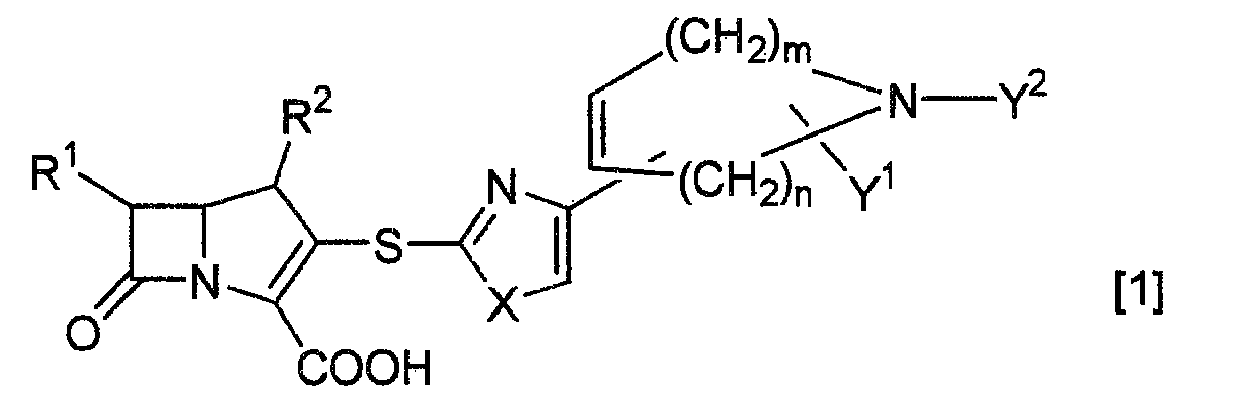
- the present invention relates to an antimicrobial medicament containing a ⁇ -lactam compound represented by the formula [1] below in combination with a carbapenem.
- MRSA methicillin-registant Staphylococcus aureus
- MRCNS methicillin-resistant and coagulase-negative Staphylococci
- the present inventors have further studied, and found that by concomitant administration of a compound [1] below and a carbapenem, not only mutual supplement of each spectrum, but also enhancement of antibacterial activities of the carbapenem is attained and shows superior antibacterial activities than ones of known antibacterial agents. Thus the present invention has been completed.
- the present invention relates to an antimicrobial medicament containing a combination of a ⁇ -lactam compound [1] below and a carbapenem.
- the present invention relates to the above antimicrobial medicament, wherein in the formula [1] X is S, and the sum of m and n is 2 or 3.
- the present invention relates to the above antimicrobial medicament, wherein in the formula [1] R 1 is 1-(R)-hydroxyethyl.
- the present invention relates to the above antimicrobial medicament, wherein in the formula [1] R 1 is 1-(R)-hydroxyethyl, R 2 is methyl, X is S, the sum of m and n is 2 or 3, Y 1 is methyl or hydroxymethyl, and Y 2 is hydrogen atom.
- the present invention relates to the above antimicrobial medicament, wherein the ⁇ -lactam compound [1] is (4R, 5S, 6S)-6-[(1R)-1-hydroxyethyl]-4-methyl-3-( ⁇ 4-[(5S)-5-methyl-2, 5-dihydro-1H-pyrrol-3-yl]-1, 3-thiazol-2-yl ⁇ sulfanyl)-7-oxo-1-azabicyclo[3.2.0]hept-2-ene-2-carboxylic acid.
- the ⁇ -lactam compound [1] is (4R, 5S, 6S)-6-[(1R)-1-hydroxyethyl]-4-methyl-3-( ⁇ 4-[(5S)-5-methyl-2, 5-dihydro-1H-pyrrol-3-yl]-1, 3-thiazol-2-yl ⁇ sulfanyl)-7-oxo-1-azabicyclo[3.2.0]hept-2-ene-2-carboxylic acid.
- the present invention relates to the above antimicrobial medicament, wherein the ⁇ -lactam compound [1] is (4R, 5S, 6S)-6-[(1R)-1-hydroxyethyl]-3-( ⁇ 4-[(5R)-5-(hydroxymethyl)-2,5-dihydro-1H-pyrrol-3-yl]-1,3-thiazol-2-yl ⁇ thio)-4-methyl-7-oxo-1-azabicyclo[3.2.0]hept-2-ene-2-carboxylic acid, or (4R,5S,6S)-6-[(1R)-1-hydroxyethyl]-3-( ⁇ 4-[(5S)-5-(hydroxymethyl)-2, 5-dihydro-1H-pyrrol-3-yl]-1, 3-thiazol-2-yl ⁇ thio)-4-methyl-7-oxo-1-azabicyclo[3.2.0]hept-2-ene-2-carboxylic acid.
- the ⁇ -lactam compound [1] is (4R
- the present invention relates to the above antimicrobial medicament, wherein the carbapenem is meropenem, imipenem, panipenem, biapenem, ertapenem, doripenem (S-4661), CS-023 or ME-1036.
- the present invention relates to the above antimicrobial medicament containing combination of (4R,5S,6S)-6-[(1R)-1-hydroxyethyl]-4-methyl-3-( ⁇ 4-[(5S)-5-methyl-2,5-dihydro-1H-pyrrol-3-yl]-1,3-thiazol-2-yl ⁇ sulfanyl)-7-oxo-1-azabicyclo[3.2.0]hept-2-ene-2-carboxylic acid or its pharmaceutically acceptable salt; and meropenem, imipenem or panipenem.
- the present invention relates to the above antimicrobial medicament containing combination of (4R,5S,6S)-6-[(1R)-1-hydroxyethyl]-4-methyl-3-( ⁇ 4-[(5S)-5-methyl-2,5-dihydro-1H-pyrrol-3-yl]-1, 3-thiazol-2-yl ⁇ sulfanyl)-7-oxo-1-azabicyclo[3.2.0]hept-2-ene-2-carboxylic acid, or its pharmaceutically acceptable salt; and meropenem.
- the present invention relates to the above antimicrobial medicament which is in the form of an injection or a vial or a kit.
- the present invention relates to a method for treating infectious diseases comprising administering a ⁇ -lactam compound [1] or its pharmaceutically acceptable salt; and a carbapenem in the effective amount to a patient who needs it.
- the present invention relates to a method for treating infectious diseases comprising administering combination of a ⁇ -lactam compound [1] or its pharmaceutically acceptable salt; and a carbapenem in the effective amount to a patient who needs it.
- the present invention relates to use of combination of a ⁇ -lactam compound [1] or its pharmaceutically acceptable salt; and a carbapenem in the preparation of an antimicrobial medicament for treating infectious diseases.
- the present invention relates to use of a ⁇ -lactam compound [1] or its pharmaceutically acceptable salt for combination of a carbapenem in the preparation of an antimicrobial medicament for treating infectious diseases.
- the lower alkyl group used in the present invention includes a straight chain or branched chain C 1-6 alkyl group, for example, methyl, ethyl, n-propyl, isopropyl, n-butyl, isobutyl, tert-butyl, n-pentyl and n-hexyl.
- the lower alkyl group substituted by a hydroxy group includes ones having 1 to 6 carbon atoms, for example, hydroxymethyl, 1-hydroxyethyl, 2-hydroxyethyl, 1-hydroxy-1-methylethyl, 1-hydroxypropyl, and 2-hydroxypropyl.
- the lower alkoxy group includes a straight chain or branched chain C 1-6 alkyloxy group, for example methoxy, ethoxy, n-propoxy, isopropoxy, n-butoxy, isobutoxy, tert-butoxy, n-pentoxy and n-hexoxy.
- the lower alkylamino group includes amino group mono or di-substituted by a straight chain or branched chain C 1-6 alkyl group, for example methylamino, ethylamino, n-propylamino, isopropylamino, n-butylamino, isobutylamino, tert-butylamino, n-pentylamino, n-hexylamino, methyl ethylamino, dimethylamino, diethylamino, di(n-propyl)amino, di(isopropyl)amino, di(n-butyl)amino, di(n-pentyl)amino and di(n-hexyl)amino.
- the halogen atom includes fluorine atom, chlorine atom, bromine atom and iodine atom.
- the 5 to 7 membered hetero cyclic ring includes, for example 3,4-dihydro-2-H-pyrrole ring, 2,3,4,5-tetrahydropyridine ring, 3,4,5,6-tetrahydro-2-H-azepine ring, etc.
- the substituent of lower alkyl group optionally substituted includes a hydroxy group, a lower alkoxy group, a lower alkylthio group, a lower alkylsulfinyl group, a lower alkylsulfonyl group, a lower alkylcarbonyl group, a lower alkylcarbonyloxy group, a lower alkoxycarbonyl group, a carboxyl group, a halogen atom, cyano group, -NR 6 R 7 (wherein R 6 and R 7 are independently hydrogen atom or a lower alkyl group, or R 6 and R 7 may be combined together with the nitrogen atom to form a 5-7 membered ring such as pyrrolidine, piperidine, azepane, morpholine, piperazine, or a N-lower alkyl piperazine), -CONR 6 R 7 (wherein R 6 and R 7 are the same as defined above), -NR 6a COR 7a (wherein R 6a and R 7
- the lower alkylcarbonyl group includes a straight chain or branched chain C 2-7 alkylcarbonyl group, for example methylcarbonyl, ethylcarbonyl, n-propylcarbonyl, isopropylcarbonyl, n-butylcarbonyl, isobutylcarbonyl, tert-butylcarbohyl, n-pentylcarbonyl and n-hexylcarbonyl.
- the lower alkylcarbonyloxy group includes a straight chain or branched chain C 2-7 alkylcarbonyloxy group, for example methylcarbonyloxy, ethylcarbonyloxy, n-propylcarbonyloxy, isopropylcarbonyloxy, n-butylcarbonyloxy, isobutylcarbonyloxy, tert-butylcarbonyloxy, n-pentylcarbonyloxy and n-hexylcarbonyloxy.
- the lower alkoxycarbonyl group includes a straight chain or branched chain C 2-7 alkoxycarbonyl group, for example methoxycarbonyl, ethoxycarbonyl, n-propoxycarbonyl, isopropoxycarbonyl, n-butoxycarbonyl, isobutoxycarbonyl, tert-butoxycarbonyl, n-pentoxycarbonyl and n-hexoxycarbonyl.
- the lower alkyl portion of lower alkylthio group, lower alkylsulfinyl group and lower alkylsulfonyl group includes a straight chain or branched chain C 1-6 alkyl group, for example, methyl, ethyl, n-propyl, isopropyl, n-butyl, isobutyl, tert-butyl, n-pentyl and n-hexyl.
- the substituent of carbamoyl group optionally substituted includes one or two lower alkyl groups, and the carbamoyl group substituted includes pyrrolidine, piperidine and azepane, which is formed with the nitrogen atom of the carbamoyl group.
- the substituent of the amino group optionally substituted includes one or two lower alkyl groups, and the amino group substituted includes pyrrolidine, piperidine, and azepane, which is formed with the nitrogen atom of the amino group.
- the substituent of the 5 to 7 membered heterocyclic group optionally substituted includes, for example a lower alkyl group, a hydroxy group, a lower alkoxy group, a lower alkylcarbonyl group, a lower alkylcarbonyloxy group, a lower alkyloxycarbonyl group, a carboxyl group, a halogen atom, and cyano group.
- the protecting group for carboxyl group may be any conventional protecting groups, but preferably for example, a straight chain or branched chain lower alkyl group having 1 to 5 carbon atoms (e.g., methyl, ethyl, isopropyl, tert-butyl, etc.), a halogeno C 1-5 lower alkyl group (e.g., 2-iodoethyl, 2,2,2-trichloroethyl, etc.), an C 1-5 alkoxymethyl group (e.g., methoxymethyl, ethoxymethyl, isobutoxymethyl, etc.), a C 1-5 lower aliphatic acyloxymethyl group (e.g., acetoxymethyl, propionyloxymethyl, butyryloxymethyl, pivaloyloxymethyl, etc.), a 1-(C 1-5 ) lower alkoxycarbonyloxyethyl group (e.g., 1-ethoxycarbonyloxyethyl), a substituted or un
- the protecting group for a hydroxy group or an amino group may be any conventional one, and preferably a C 1-5 lower alkoxycarbonyl group (e.g., tert-butyloxycarbonyl), a halogeno C 1-5 alkoxycarbonyl group (e.g., 2-iodoethyloxycarbonyl, 2,2,2-trichloroethyloxycarbonyl), a substituted or unsubstituted C 3-7 lower alkenyloxycarbonyl group (e.g., allyloxycarbonyl), a substituted or unsubstituted aralkyloxycarbonyl group (e.g., benzyloxycarbonyl, p-methoxybenzyloxycarbonyl, o-nitro benzyloxycarbonyl, p-nitrobenzyloxycarbonyl), or a trialkylsilyl group (e.g., trimethylsilyl, triethylsilyl, tert-but
- the preferable substituents of Y 1 on the ⁇ -lactam compound of the formula [1] are a C 1-3 alkyl group such as methyl, ethyl, isopropyl, etc., hydroxymethyl, chloromethyl, fluoromethyl, methoxymethyl, carbamoyloxymethyl (-CH 2 OCONH 2 ), ureidomethyl (-CH 2 NHCONH 2 ), sulfamoylmethyl (-CH 2 SO 2 NH 2 ), sulfamoylaminomethyl (-CH 2 NHSO 2 NH 2 ), carbamoyl, etc.
- the pharmaceutically acceptable salt of the compound of the above formula [1] is a conventional non-toxic salt.
- Such salts include, as a salt with an intramolecular carboxylic acid, a salt with an inorganic base such as sodium, potassium, calcium, magnesium, ammonium, a salt with an organic base such as triethylammonium, pyridinium, diisopropylammonium, or an intramolecular salt being formed with a cation at the 3-position side chain such as a quaternary ammonium ion.
- a salt with an intramolecular base a salt with an inorganic acid such as hydrochloric acid, sulfuric acid, phosphoric acid, or a salt with an organic acid such as formic acid, acetic acid, oxalic acid, methanesulfonic acid, or benzenesulfonic acid can be exemplified.
- the non-toxic ester of the compound of the formula [1] includes a conventional pharmaceutically acceptable ester at the 2-carboxyl group of carbapenem antibacterial agents, and may be esters being able to be easily hydrolyzed in a living body, for example esters with acetoxymethyl, pivaloyloxymethyl, 1-(ethoxycarbonyloxy)ethyl, and phthalidyl.
- the ⁇ -lactam compound of the formula [1], or a pharmaceutically acceptable salt thereof, or a non-toxic ester thereof may be in the form of an anhydride thereof, a hydrate thereof, or a solvate thereof.
- the compound of the formula [1] may have optical isomers based on the asymmetric carbon atoms at the 4-, 5- and 6-positions of the carbapenem nucleus, as shown in the following formula, and these isomers are all conveniently expressed by only one formula.
- the scope of the present invention should not be construed to be limited thereby, and includes all isomers and a mixture of isomers based on each asymmetric carbon atom.
- the scope of the present invention includes all isomers and a mixture of the isomers.
- the 4-position carbon atom has an R-eonfiguration and the 5-position carbon atom has an S-configuration, such as (4R,5S,6S)-compounds or (4R,5S,6R)-compounds, when R 2 is a lower alkyl group.
- the compound [1] may have isomers having an R-configuration or an S-configuration at the 8-position, as shown in the above formula, the preferable one is ones having an R-configuration at the 8-position.
- ⁇ -lactam compound of the formula [1] a pharmaceutically acceptable salt thereof, or a non-toxic ester thereof are known, and can be prepared in accordance of the methods described in WO 02/38564 .
- carbapenems used in this invention are not limited, and include meropenem, imipenem, panipenem, biapenem, ertapenem, doripenem (S-4661), CS-023 and ME-1036, preferably carbapenems which show excellent antibacterial activities against Gram negative bacteria including Pseudomonas aeruginosae, such as meropenem, imipenem, panipenem, biapenem, doripenem (S-4661), and CS-023, especially preferably meropenem.
- ME-1036 is described in Antimicrobial Agents and Chemotherapy, Aug. 2004, 2381-2837 and WO 02/42321 and has a following formula:
- the ratio of a ⁇ -lactam compound [1] and a carbapenem is not limited and according to pharmacokinetic property of each drug the ratio should be changed.
- such ratio that the value of a ⁇ -lactam compound [1]/a carbapenem in a living body maintains preferably a range of 1/10 to 10 is preferable, especially in case of meropenem, such ratio that the value of a ⁇ -lactam compound [1]/meropenem maintains a range of 1 to 4 for possible long time is preferable.
- the administration forms of the present concomitant medicament used for an antimicrobial agent for treating infectious diseases include parenteral administration such as an intravenous injection, an intramuscular injection, an infusion, an intrarectal administration, or inhalation.
- the medicament may contain other suitable medicines according to the disease of a patient.
- suitable administration forms as mentioned above may be prepared according to the conventinal method using active ingredients with a conventional pharmaceutically acceptable carriers, excipients, binders, or stabilizers.
- injections e.g., subcutaneous injection, intravenous injection, intramuscular injection, intraperitoneal injection and so on
- a dispersing agent e.g., Tween 80 (AtlasPowder, USA), HCO 60 (Nikko Chemicals), polyethyleneglycol, carboxymethylcellulose, sodium alginate), preservatives (e.g., methylparaben, propylparaben, benzyl alcohol, chlorobutanol, phenol), tonicity agents (e.g., sodium chloride, glycerin, solbitol, glucose, invert sugar) and so on in an aqueous solvent (e.g., distilled water, saline solution, Ringer's solution) or an oily solvent (e.g., vegetable oil such as olive oil, sesame oil, cottonseed oil or corn oil, propylene glycol).
- aqueous solvent e.g., distilled water, saline solution, Ringer's solution
- an additive such as a solubilizing agent (e.g., sodium salicylate, sodium acetate), a stabilizing agent (e.g., human serum albumin), or a soothing agent (e.g., benzalkonium chloride, procaine hydrochloride) may be added thereto.
- a solubilizing agent e.g., sodium salicylate, sodium acetate
- a stabilizing agent e.g., human serum albumin
- a soothing agent e.g., benzalkonium chloride, procaine hydrochloride
- both active ingredients can be pareneterally administered together or separately.
- each active ingredient may be mixed with diluents on administration, and separately administered in intervals to the same subject.
- the dosage of the antimicrobial medicament of the present invention varies according to the symptom, age, body weight, the administration form, the frequency of the administration, etc., but usually in the range of 100mg to 12g per day for an adult, which is administered once or divided into several dosage units, preferably for several days.
- the dosage may be increased or decreased, if necessary.
- the ratio of the drugs contained is selected according to subject, age, body weight, the symptom, the administration term, the administration form, the administration route, combination of drugs, etc.
- the ratio of a ⁇ -lactam compound [1] of the present invention and a carbapenem is 0.1 to 10 weight parts, preferably 0.3 to 1.5weight parts.
- a ⁇ -lactam compound [1] its pharmaceutically acceptable salt or its nontoxic ester per meropen is 0.1 to 10 weight parts, preferably 0.3 to 1.5 weight parts, more preferably 0.5 to 1.0 weight parts.
- Compound 1 250mg
- meropenem trihydrate 250mg
- the solution was sterilized by aseptic filtration and was filled into an ampoule to prepare the solution for injection.
- Compound 1 250mg
- meropenem trihydrate 250mg
- distilled water 50ml
- the solution was sterilized by aseptic filtration and was filled into a vial.
- the filled solution was lyophilized to prepare the lyophilized preparation.
- the antibacterial activities were tested against various 18 bacteria (27 standard strains) which are representative bacteria caused clinically infectious disease (Staphylococcus aureus 3 strains, Staphylococcus epidermidis 1 strain, Micrococcus luteus 1 strain, Streptococcus pyogenes 1 strain, Enterococcus faecalis 1 strain, Enterococcus faecium 1 strain, Bacillus subtilis 1 strain, Escherichia coli 3 strains, Klebsiella pneumoniae 1 strain, Proteus mirabilis 1 strain, Proteus vulgaris 2 strains, Pseudomonas aeruginosa 3 strains, Serratia marcescens 2 strains, Enterobacter aerogenes 1 strain, Stenotrophomonas maltophilia 1 strain, Enterobacter cloacae 1 strain, Citrobacter freundii 1 strain, Moraxella catarrhalis 2 strains).
- strains which are comparatively less sensitive to ⁇ -lactam compounds namely clinically isolated 13 strains of Acinetobacter calcoaceticus and Acinetobacter lwoffi, clinically isolated 11 strains of Serratia marcescens, clinically isolated 12 strains of Burkholderia cepacia, and clinically isolated 15 strains of Pseudomonas aeruginosa.
- the suspension (about 5 ⁇ l) containing test strains was inoculated to the medium containing the test samples by Micro Planter. After cultivating the agar medium at 37°C for about 20hours, growth of the strains was checked, and the minimum inhibitory concentration wherein the test sample inhibited the bacterial growth was determined (MIC, ⁇ g/ml).
- Each drug was weighed, and dissolved in distilled water to give a test sample.
- two kinds of solution containing each drug were mixed so as to be various ratio of concentration to give a mixed solution.
- this mixed solution was diluted by twice serial dilution method.
- each test sample was used as it is, and diluted by twice serial dilution method from the maximum concentration to the minimum concentration.
- FIC index MIC of Drug A in combination / MIC of Drug A alone + MIC of Drug B in combination / MIC of Drug B alone N.C. in tables means being not calculated.
- SM means compound 1
- IPM means imipenem
- PAPM panipenem
- BIPM means biapenem
- DRPM means doripenem
- PIPC means piperacillin
- CAZ means ceftazidime
- AZT means aztreonam
- CPFX means ciprofloxacin, respectively.
- Numbers in each table mean the minimum inhibitory concentration (MIC) ( ⁇ g/ml) in which each drug or combination drug inhibited growth of the strains.
- the concomitant medicament of the present invention shows the enhanced effect against various bacterial strains and is useful for prophylactic or therapeutic agent for various infectious diseases.
Landscapes
- Chemical & Material Sciences (AREA)
- Organic Chemistry (AREA)
- Health & Medical Sciences (AREA)
- Life Sciences & Earth Sciences (AREA)
- Veterinary Medicine (AREA)
- Public Health (AREA)
- General Health & Medical Sciences (AREA)
- Medicinal Chemistry (AREA)
- Animal Behavior & Ethology (AREA)
- Pharmacology & Pharmacy (AREA)
- Chemical Kinetics & Catalysis (AREA)
- Nuclear Medicine, Radiotherapy & Molecular Imaging (AREA)
- General Chemical & Material Sciences (AREA)
- Epidemiology (AREA)
- Bioinformatics & Cheminformatics (AREA)
- Engineering & Computer Science (AREA)
- Communicable Diseases (AREA)
- Oncology (AREA)
- Pharmaceuticals Containing Other Organic And Inorganic Compounds (AREA)
- Nitrogen Condensed Heterocyclic Rings (AREA)
Abstract
Description
- The present invention relates to an antimicrobial medicament containing a β-lactam compound represented by the formula [1] below in combination with a carbapenem.
- By the wide clinical application of the third-generation cephalosporins, Gram-positive bacteria have become to be frequently isolated. Particularly, methicillin-registant Staphylococcus aureus (hereinafter, abbreviated as MRSA) has been more frequently isolated, and becomes a serious problem in clinical field, because infectious diseases caused by MRSA are difficult to be treated. Although vancomycin has been broadly used for infectious diseases caused by MRSA in these days, it has a defect in difficulty of administration because of its side effects, and further glycopeptide-resistant bacteria are supposed to increase in future by administration thereof.
- Moreover, it has recently been reported increase in isolation of methicillin-resistant and coagulase-negative Staphylococci (MRCNS). Under these circumstances, it has been desired to develop a safer medicament having excellent anti-MRSA and MRCNS activities.
- The present inventors had intensively studied, and found that a compound [1] below shows excellent antibacterial activities against Gram-positive bacteria, especially MRSA and MRCNS and filed a patent application (See
WO 02/38564 - The present inventors have further studied, and found that by concomitant administration of a compound [1] below and a carbapenem, not only mutual supplement of each spectrum, but also enhancement of antibacterial activities of the carbapenem is attained and shows superior antibacterial activities than ones of known antibacterial agents. Thus the present invention has been completed.
- The present invention relates to an antimicrobial medicament containing a combination of a β-lactam compound [1] below and a carbapenem.
- Namely, the present invention relates to an antimicrobial medicament containing a combination of a β-lactam compound represented by the following formula,

its pharmaceutically acceptable salt or its nontoxic ester; and a carbapenem. - The present invention relates to the above antimicrobial medicament, wherein in the formula [1] X is S, and the sum of m and n is 2 or 3.
- The present invention relates to the above antimicrobial medicament, wherein in the formula [1] R1 is 1-(R)-hydroxyethyl.
- The present invention relates to the above antimicrobial medicament, wherein in the formula [1] R1 is 1-(R)-hydroxyethyl, R2 is methyl, X is S, the sum of m and n is 2 or 3, Y1 is methyl or hydroxymethyl, and Y2 is hydrogen atom.
- The present invention relates to the above antimicrobial medicament, wherein the β-lactam compound [1] is (4R, 5S, 6S)-6-[(1R)-1-hydroxyethyl]-4-methyl-3-({4-[(5S)-5-methyl-2, 5-dihydro-1H-pyrrol-3-yl]-1, 3-thiazol-2-yl}sulfanyl)-7-oxo-1-azabicyclo[3.2.0]hept-2-ene-2-carboxylic acid.
- The present invention relates to the above antimicrobial medicament, wherein the β-lactam compound [1] is (4R, 5S, 6S)-6-[(1R)-1-hydroxyethyl]-3-({4-[(5R)-5-(hydroxymethyl)-2,5-dihydro-1H-pyrrol-3-yl]-1,3-thiazol-2-yl}thio)-4-methyl-7-oxo-1-azabicyclo[3.2.0]hept-2-ene-2-carboxylic acid, or (4R,5S,6S)-6-[(1R)-1-hydroxyethyl]-3-({4-[(5S)-5-(hydroxymethyl)-2, 5-dihydro-1H-pyrrol-3-yl]-1, 3-thiazol-2-yl}thio)-4-methyl-7-oxo-1-azabicyclo[3.2.0]hept-2-ene-2-carboxylic acid.
- The present invention relates to the above antimicrobial medicament, wherein the carbapenem is meropenem, imipenem, panipenem, biapenem, ertapenem, doripenem (S-4661), CS-023 or ME-1036.
- The present invention relates to the above antimicrobial medicament containing combination of (4R,5S,6S)-6-[(1R)-1-hydroxyethyl]-4-methyl-3-({4-[(5S)-5-methyl-2,5-dihydro-1H-pyrrol-3-yl]-1,3-thiazol-2-yl}sulfanyl)-7-oxo-1-azabicyclo[3.2.0]hept-2-ene-2-carboxylic acid or its pharmaceutically acceptable salt; and meropenem, imipenem or panipenem.
- The present invention relates to the above antimicrobial medicament containing combination of (4R,5S,6S)-6-[(1R)-1-hydroxyethyl]-4-methyl-3-({4-[(5S)-5-methyl-2,5-dihydro-1H-pyrrol-3-yl]-1, 3-thiazol-2-yl}sulfanyl)-7-oxo-1-azabicyclo[3.2.0]hept-2-ene-2-carboxylic acid, or its pharmaceutically acceptable salt; and meropenem.
- The present invention relates to the above antimicrobial medicament which is in the form of an injection or a vial or a kit.
- The present invention relates to a method for treating infectious diseases comprising administering a β-lactam compound [1] or its pharmaceutically acceptable salt; and a carbapenem in the effective amount to a patient who needs it.
- The present invention relates to a method for treating infectious diseases comprising administering combination of a β-lactam compound [1] or its pharmaceutically acceptable salt; and a carbapenem in the effective amount to a patient who needs it.
- The present invention relates to use of combination of a β-lactam compound [1] or its pharmaceutically acceptable salt; and a carbapenem in the preparation of an antimicrobial medicament for treating infectious diseases.
- The present invention relates to use of a β-lactam compound [1] or its pharmaceutically acceptable salt for combination of a carbapenem in the preparation of an antimicrobial medicament for treating infectious diseases.
- The lower alkyl group used in the present invention includes a straight chain or branched chain C1-6 alkyl group, for example, methyl, ethyl, n-propyl, isopropyl, n-butyl, isobutyl, tert-butyl, n-pentyl and n-hexyl. The lower alkyl group substituted by a hydroxy group includes ones having 1 to 6 carbon atoms, for example, hydroxymethyl, 1-hydroxyethyl, 2-hydroxyethyl, 1-hydroxy-1-methylethyl, 1-hydroxypropyl, and 2-hydroxypropyl. The lower alkoxy group includes a straight chain or branched chain C1-6 alkyloxy group, for example methoxy, ethoxy, n-propoxy, isopropoxy, n-butoxy, isobutoxy, tert-butoxy, n-pentoxy and n-hexoxy. The lower alkylamino group includes amino group mono or di-substituted by a straight chain or branched chain C1-6 alkyl group, for example methylamino, ethylamino, n-propylamino, isopropylamino, n-butylamino, isobutylamino, tert-butylamino, n-pentylamino, n-hexylamino, methyl ethylamino, dimethylamino, diethylamino, di(n-propyl)amino, di(isopropyl)amino, di(n-butyl)amino, di(n-pentyl)amino and di(n-hexyl)amino. The halogen atom includes fluorine atom, chlorine atom, bromine atom and iodine atom. The 5 to 7 membered hetero cyclic ring includes, for example 3,4-dihydro-2-H-pyrrole ring, 2,3,4,5-tetrahydropyridine ring, 3,4,5,6-tetrahydro-2-H-azepine ring, etc. The substituent of lower alkyl group optionally substituted includes a hydroxy group, a lower alkoxy group, a lower alkylthio group, a lower alkylsulfinyl group, a lower alkylsulfonyl group, a lower alkylcarbonyl group, a lower alkylcarbonyloxy group, a lower alkoxycarbonyl group, a carboxyl group, a halogen atom, cyano group, -NR6R7 (wherein R6 and R7 are independently hydrogen atom or a lower alkyl group, or R6 and R7 may be combined together with the nitrogen atom to form a 5-7 membered ring such as pyrrolidine, piperidine, azepane, morpholine, piperazine, or a N-lower alkyl piperazine), -CONR6R7 (wherein R6 and R7 are the same as defined above), -NR6aCOR7a (wherein R6a and R7a are independently hydrogen atom or a lower alkyl group), -OCONR6R7 (wherein R6 and R7 are the same as defined above), -SO2NR6R7 (wherein R6 and R7 are the same as defined above), -NR6aSO2NR6R7 (wherein R6a, R6 and R7 are the same as defined above), -NR6aCONR6R7 (wherein R6a, R6 and R7 are the same as defined above), and -COOCH2OCOR8 (wherein R8 is a lower alkyl group). These substituents may be protected by a suitable protective group. The substituted positions are not limited as far as chemically possible, but one or more substituents are possible.
- The lower alkylcarbonyl group includes a straight chain or branched chain C2-7 alkylcarbonyl group, for example methylcarbonyl, ethylcarbonyl, n-propylcarbonyl, isopropylcarbonyl, n-butylcarbonyl, isobutylcarbonyl, tert-butylcarbohyl, n-pentylcarbonyl and n-hexylcarbonyl. The lower alkylcarbonyloxy group includes a straight chain or branched chain C2-7 alkylcarbonyloxy group, for example methylcarbonyloxy, ethylcarbonyloxy, n-propylcarbonyloxy, isopropylcarbonyloxy, n-butylcarbonyloxy, isobutylcarbonyloxy, tert-butylcarbonyloxy, n-pentylcarbonyloxy and n-hexylcarbonyloxy.
- The lower alkoxycarbonyl group includes a straight chain or branched chain C2-7 alkoxycarbonyl group, for example methoxycarbonyl, ethoxycarbonyl, n-propoxycarbonyl, isopropoxycarbonyl, n-butoxycarbonyl, isobutoxycarbonyl, tert-butoxycarbonyl, n-pentoxycarbonyl and n-hexoxycarbonyl. The lower alkyl portion of lower alkylthio group, lower alkylsulfinyl group and lower alkylsulfonyl group includes a straight chain or branched chain C1-6 alkyl group, for example, methyl, ethyl, n-propyl, isopropyl, n-butyl, isobutyl, tert-butyl, n-pentyl and n-hexyl. The substituent of carbamoyl group optionally substituted includes one or two lower alkyl groups, and the carbamoyl group substituted includes pyrrolidine, piperidine and azepane, which is formed with the nitrogen atom of the carbamoyl group. The substituent of the amino group optionally substituted includes one or two lower alkyl groups, and the amino group substituted includes pyrrolidine, piperidine, and azepane, which is formed with the nitrogen atom of the amino group.
- The substituent of the 5 to 7 membered heterocyclic group optionally substituted includes, for example a lower alkyl group, a hydroxy group, a lower alkoxy group, a lower alkylcarbonyl group, a lower alkylcarbonyloxy group, a lower alkyloxycarbonyl group, a carboxyl group, a halogen atom, and cyano group.
- The protecting group for carboxyl group may be any conventional protecting groups, but preferably for example, a straight chain or branched chain lower alkyl group having 1 to 5 carbon atoms (e.g., methyl, ethyl, isopropyl, tert-butyl, etc.), a halogeno C1-5 lower alkyl group (e.g., 2-iodoethyl, 2,2,2-trichloroethyl, etc.), an C1-5 alkoxymethyl group (e.g., methoxymethyl, ethoxymethyl, isobutoxymethyl, etc.), a C1-5 lower aliphatic acyloxymethyl group (e.g., acetoxymethyl, propionyloxymethyl, butyryloxymethyl, pivaloyloxymethyl, etc.), a 1-(C1-5) lower alkoxycarbonyloxyethyl group (e.g., 1-ethoxycarbonyloxyethyl), a substituted or unsubstituted aralkyl group (e.g., benzyl, p-methoxybenzyl, o-nitrobenzyl, p-nitrobenzyl), a C3-7 lower alkenyl group (e.g., allyl, 3-methylallyl), benzhydryl group, or phthalidyl group.
- The protecting group for a hydroxy group or an amino group may be any conventional one, and preferably a C1-5 lower alkoxycarbonyl group (e.g., tert-butyloxycarbonyl), a halogeno C1-5 alkoxycarbonyl group (e.g., 2-iodoethyloxycarbonyl, 2,2,2-trichloroethyloxycarbonyl), a substituted or unsubstituted C3-7 lower alkenyloxycarbonyl group (e.g., allyloxycarbonyl), a substituted or unsubstituted aralkyloxycarbonyl group (e.g., benzyloxycarbonyl, p-methoxybenzyloxycarbonyl, o-nitro benzyloxycarbonyl, p-nitrobenzyloxycarbonyl), or a trialkylsilyl group (e.g., trimethylsilyl, triethylsilyl, tert-butyldimethylsilyl).
- The preferable substituents of Y1 on the β-lactam compound of the formula [1] are a C1-3 alkyl group such as methyl, ethyl, isopropyl, etc., hydroxymethyl, chloromethyl, fluoromethyl, methoxymethyl, carbamoyloxymethyl (-CH2OCONH2), ureidomethyl (-CH2NHCONH2), sulfamoylmethyl (-CH2SO2NH2), sulfamoylaminomethyl (-CH2NHSO2NH2), carbamoyl, etc., and preferable substituents of Y2 are hydrogen atom, a C1-3 alkyl group such as methyl, ethyl, isopropyl, etc., iminomethyl (-CH=NH), -C(CH3)=NH, etc., preferable R2 is methyl, etc., and preferable R1 is 1-(R)-hydroxyethyl.
- The pharmaceutically acceptable salt of the compound of the above formula [1] is a conventional non-toxic salt. Such salts include, as a salt with an intramolecular carboxylic acid, a salt with an inorganic base such as sodium, potassium, calcium, magnesium, ammonium, a salt with an organic base such as triethylammonium, pyridinium, diisopropylammonium, or an intramolecular salt being formed with a cation at the 3-position side chain such as a quaternary ammonium ion. As a salt with an intramolecular base, a salt with an inorganic acid such as hydrochloric acid, sulfuric acid, phosphoric acid, or a salt with an organic acid such as formic acid, acetic acid, oxalic acid, methanesulfonic acid, or benzenesulfonic acid can be exemplified.
- The non-toxic ester of the compound of the formula [1] includes a conventional pharmaceutically acceptable ester at the 2-carboxyl group of carbapenem antibacterial agents, and may be esters being able to be easily hydrolyzed in a living body, for example esters with acetoxymethyl, pivaloyloxymethyl, 1-(ethoxycarbonyloxy)ethyl, and phthalidyl.
- The β-lactam compound of the formula [1], or a pharmaceutically acceptable salt thereof, or a non-toxic ester thereof may be in the form of an anhydride thereof, a hydrate thereof, or a solvate thereof.
- The compound of the formula [1] may have optical isomers based on the asymmetric carbon atoms at the 4-, 5- and 6-positions of the carbapenem nucleus, as shown in the following formula,

- The β-lactam compound of the formula [1], a pharmaceutically acceptable salt thereof, or a non-toxic ester thereof are known, and can be prepared in accordance of the methods described in
WO 02/38564 - The preferable compounds among β-lactam compounds of the formula [1] are illustrated below.
- (4R,5S,6S)-6-[(1R)-1-Hydroxyethyl]-4-methyl-3-({4-[(5S)-5-methyl-2,5-dihydro-1H-pyrrol-3-yl]-1,3-thiazol-2-yl}sulfanyl)-7-oxo-1-azabicyclo[3.2.0]hept-2-ene-2-carboxylic acid(abbreviated as compound 1).
- (4R,5S,6S)-6-[(1R)-1-Hydroxyethyl]-4-methyl-3-({4-[(5R)-5-methyl-2,5-dihydro-1H-pyrrol-3-yl]-1,3-thiazol-2-yl}sulfanyl)-7-oxo-1-azabicyclo[3.2.0]hept-2-ene-2-carboxylic acid.
- (4R,5S,6S)-6-[(1R)-1-Hydroxyethyl]-4-methyl-3-({4-[(6S)-6-methyl-1,2,3,6-tetrahydro-4-pyridinyl]-1,3-thiazol-2-yl}sulfanyl)-7-oxo-1-azabicyclo[3.2.0]hept-2-ene-2-carboxylic acid.
- (4R,5S,6S)-6-[(1R)-1-Hydroxyethyl]-4-methyl-3-({4-[(6R)-6-methyl-1,2,3,6-tetrahydro-4-pyridinyl]-1,3-thiazol-2-yl}sulfanyl)-7-oxo-1-azabicyclo[3.2.0]hept-2-ene-2-carboxylic acid.
- (4R,5S,6S)-6-[(1R)-1-Hydroxyethyl]-3-({4-[(2R)-2-(hydroxymethyl)-1,2,3,6-tetrahydro-4-pyridinyl]-1,3-thiazol-2-yl}sulfanyl)-4-methyl-7-oxo-1-azabicyclo[3.2.0]hept-2-ene-2-carboxylic acid.
- (4R,5S,6S)-6-[(1R)-1-Hydroxyethyl]-3-({4-[(2S)-2-(hydroxymethyl)-1,2,3,6-tetrahydro-4-pyridinyl]-1,3-thiazol-2-yl}sulfanyl)-4-methyl-7-oxo-1-azabicyclo[3.2.0]hept-2-ene-2-carboxylic acid.
- (4R,5S,6S)-6-[(1R)-1-Hydroxyethyl]-4-methyl-3-({4-[(2R)-2-methyl-1,2,3,6-tetrahydro-4-pyridinyl]-1,3-thiazol-2-yl}sulfanyl)-4-methyl-7-oxo-1-azabicyclo[3.2.0]hept-2-ene-2-carboxylic acid.
- (4R,5S,6S)-6-[(1R)-1-Hydroxyethyl]-4-methyl-3-({4-[(2S)-2-methyl-1,2,3,6-tetrahydro-4-pyridinyl]-1,3-thiazol-2-yl}sulfanyl)-4-methyl-7-oxo-1-azabicyclo[3.2.0]hept-2-ene-2-carboxylic acid.
- (4R,5S,6S)-6-[(1R)-1-Hydroxyethyl]-4-methyl-3-({4-[(2S)-2-methyl-2,5-dihydro-1H-pyrrol-3-yl]-1,3-thiazol-2-yl})sulfanyl)-7-oxo-1-azabicyclo[3.2.0]hept-2-ene-2-carboxylic acid.
- (4R,5S,6S)-6-[(1R)-1-Hydroxyethyl]-4-methyl-3-({4-[(2R)-2-methyl-2,5-dihydro-1H-pyrrol-3-yl]-1,3-thiazol-2-yl})sulfanyl)-7-oxo-1-azabicyclo[3.2.0]hept-2-ene-2-carboxylic acid.
- (4R,5S,6S)-6-[(1R)-1-Hydroxyethyl]-3-({4-[(2S)-2-(hydroxymethyl)-2,5-dihydro-1H-pyrrol-3-yl]-1,3-thiazol-2-yl}sulfanyl)-4-methyl-7-oxo-1-azabicyclo[3.2.0]hept-2-ene-2-carboxylic acid.
- (4R,5S,6S)-6-[(1R)-1-Hydroxyethyl]-3-({4-[(2R)-2-(hydroxymethyl)-2,5-dihydro-1H-pyrrol-3-yl]-1,3-thiazol-2-yl})sulfanyl)-4-methyl-7-oxo-1-azabicyclo[3.2.0]hept-2-ene-2-carboxylic acid.
- (4R, 5S, 6S)-6-[(1R)-1-Hydroxyethyl]-3-({4-[(2R)-2-(methoxymethyl)-2, 5-dihydro-1H-pyrrol-3-yl]-1,3-thiazol-2-yl})sulfanyl)-4-methyl-7-oxo-1-azabicyclo[3.2.0]hept-2-ene-2-carboxylic acid.
- (4R,5S,65)-6-[(1R)-1-Hydroxyethyl]-4-methyl-3-{[4-(6-methyl-1,2,5,6-tetrahydro-3-pyridinyl)-1,3-thiazol-2-yl]sulfanyl]-7-oxo-1-azabicyclo[3.2.0]hept-2-ene-2-carboxylic acid.
- (4R,5S,6S)-6-[(1R)-1-Hydroxyethyl]-4-methyl-3-({4-[(6R)-6-methyl-1,2,5,6-tetrahydro-3-pyridinyl]-1,3-thiazol-2-yl}sulfanyl)-}-7-oxo-1-azabicyclo[3.2.0]hept-2-ene-2-carboxylic acid.
- (4R,5S,6S)-6-[(1R)-1-Hydroxyethyl]-4-methyl-3-({4-[(6S)-6-methyl-1,2,5,6-tetrahydro-3-pyridinyl]-1,3-thiazol-2-yl}sulfanyl)-7-oxo-1-azabicyclo[3.2.0]hept-2-ene-2-carboxylic acid.
- (4R,5S,6S)-6-[(1R)-1-Hydroxyethyl]-3-({4-[(6S)-6-(hydroxymethyl)-1,2,5,6-tetrahydro-3-pyridinyl]-1,3-thiazol-2-yl}sulfanyl)-4-methyl-7-oxo-1-azabicyclo[3.2.0]hept-2-ene-2-carboxylic acid.
- (4R,5S,6S)-3-{(4-((2R)-2-{[(Aminocarbonyl)oxy]oxy]ethyl}-1,2,3,6-tetrahydro-4-pyridinyl)-1,3-thiazol-2-yl]sulfanyl}-6-[(1R)-1-hydroxyethyl]-4-methyl-7-oxo-1-azabicyclo[3.2.0]hept-2-ene-2-carboxylic acid.
- (4R,5S,6S)-6-[(1R)-1-Hydroxyethyl]-3-({4-[(6R)-6-(hydroxymethyl)-1,2,5,6-tetrahydro-3-pyridinyl]-1,3-thiazol-2-yl}sulfanyl)-4-methyl-7-oxo-1-azabicyclo[3.2.0]hept-2-ene-2-carboxylic acid.
- (4R,5S,6S)-6-[(1R)-1-Hydroxyethyl]-3-({4-[(5R)-5-(hydroxymethyl)-2,5-dihydro-1H-pyrrol-3-yl]-1,3-thiazol-2-yl}thio)-4-methyl-7-oxo-1-azabicyclo[3.2.0]hept-2-ene-2-carboxylic acid.
- (4R,5S,6S)-6-[(1R)-1-Hydroxyethyl]-3-({4-[(5S)-5-(hydroxymethyl)-2,5-dihydro-1H-pyrrol-3-yl]-1,3-thiazol-2-yl}thio)-4-methyl-7-oxo-1-azabicyclo[3.2.0]hept-2-ene-2-carboxylic acid.
- And a pharmaceutically acceptable salt of the above compound.
- On the other hand, carbapenems used in this invention are not limited, and include meropenem, imipenem, panipenem, biapenem, ertapenem, doripenem (S-4661), CS-023 and ME-1036, preferably carbapenems which show excellent antibacterial activities against Gram negative bacteria including Pseudomonas aeruginosae, such as meropenem, imipenem, panipenem, biapenem, doripenem (S-4661), and CS-023, especially preferably meropenem.
- Doripenem (S-4661) is described in the Journal of Antibiotics Vol. 49, No.2, 199-205, 1996 and
Japanese Patent Publication A Hei 5-294970 
- CS-023 is described in the Journal of Antibiotics Vol. 56, No. 6, 565-579, 2003 and has a following formula:

- ME-1036 is described in Antimicrobial Agents and Chemotherapy, Aug. 2004, 2381-2837 and
WO 02/42321 
- The ratio of a β-lactam compound [1] and a carbapenem is not limited and according to pharmacokinetic property of each drug the ratio should be changed. In case of administration in the form of a combination of both compounds, such ratio that the value of a β-lactam compound [1]/a carbapenem in a living body maintains preferably a range of 1/10 to 10 is preferable, especially in case of meropenem, such ratio that the value of a β-lactam compound [1]/meropenem maintains a range of 1 to 4 for possible long time is preferable.
- The administration forms of the present concomitant medicament used for an antimicrobial agent for treating infectious diseases include parenteral administration such as an intravenous injection, an intramuscular injection, an infusion, an intrarectal administration, or inhalation. The medicament may contain other suitable medicines according to the disease of a patient.
- The suitable administration forms as mentioned above may be prepared according to the conventinal method using active ingredients with a conventional pharmaceutically acceptable carriers, excipients, binders, or stabilizers.
- For example, injections (e.g., subcutaneous injection, intravenous injection, intramuscular injection, intraperitoneal injection and so on)can be prepared by dissolving, suspending or emulsifying active ingredients with a dispersing agent (e.g., Tween 80 (AtlasPowder, USA), HCO 60 (Nikko Chemicals), polyethyleneglycol, carboxymethylcellulose, sodium alginate), preservatives (e.g., methylparaben, propylparaben, benzyl alcohol, chlorobutanol, phenol), tonicity agents (e.g., sodium chloride, glycerin, solbitol, glucose, invert sugar) and so on in an aqueous solvent (e.g., distilled water, saline solution, Ringer's solution) or an oily solvent (e.g., vegetable oil such as olive oil, sesame oil, cottonseed oil or corn oil, propylene glycol). If necessary, an additive such as a solubilizing agent (e.g., sodium salicylate, sodium acetate), a stabilizing agent (e.g., human serum albumin), or a soothing agent (e.g., benzalkonium chloride, procaine hydrochloride) may be added thereto.
- Regarding the antimicrobial medicament of the present invention comprising a combination of a β-lactam compound [1], its pharmaceutically acceptable salt or its non-toxic ester; and a carbapenem, both active ingredients can be pareneterally administered together or separately. In case that each active ingredient is separately formed in the preparation, each ingredient may be mixed with diluents on administration, and separately administered in intervals to the same subject.
- The dosage of the antimicrobial medicament of the present invention varies according to the symptom, age, body weight, the administration form, the frequency of the administration, etc., but usually in the range of 100mg to 12g per day for an adult, which is administered once or divided into several dosage units, preferably for several days. The dosage may be increased or decreased, if necessary.
- In addition the ratio of the drugs contained is selected according to subject, age, body weight, the symptom, the administration term, the administration form, the administration route, combination of drugs, etc. Especially, in case of combination of a β-lactam compound [1] of the present invention and a carbapenem, the ratio of a β-lactam compound [1], its pharmaceutically acceptable salt or its nontoxic ester per a carbapenem is 0.1 to 10 weight parts, preferably 0.3 to 1.5weight parts. Especially when the carbapenem is meropenem trihydrate, a β-lactam compound [1], its pharmaceutically acceptable salt or its nontoxic ester per meropen is 0.1 to 10 weight parts, preferably 0.3 to 1.5 weight parts, more preferably 0.5 to 1.0 weight parts.
- Compound 1 (250mg) and meropenem trihydrate (250mg) were dissolved in J.P. (Japanese Pharmacopeia) saline solution (100ml). The solution was sterilized by aseptic filtration and was filled into a vial to prepare the solution for injection.
- Compound 1 (250mg) and meropenem trihydrate (250mg) were dissolved in J.P. saline solution (100ml). The solution was sterilized by aseptic filtration and was filled into an ampoule to prepare the solution for injection.
- Compound 1 (250mg) and meropenem trihydrate (250mg) were dissolved in distilled water (50ml). The solution was sterilized by aseptic filtration and was filled into a vial. The filled solution was lyophilized to prepare the lyophilized preparation.
- Compound 1 (250mg) in powders and meropenem trihydrate (250mg) in powders were filled into a vial to prepare the powder. Reference example
- The following 2 compounds were synthesized according to the method described in Example 1 of
WO 02/38564 
1H NMR (300 MHz, DCl3) δ 1.02 (3H, d, J=7.3 Hz), 1.20 (3H, d, J = 6.2 Hz), 3.19-3.30 (1H, m), 3.34 (1H, dd, J = 6.1, 2.7Hz), 3.84 (1H, dd, J = 12.6, 5.0 Hz), 3.95 (1H, dd, J = 12.6, 3.3 Hz), 4.13-4.22 (2H, in), 4.38-4.50 (2H, m), 6.27 (1H, s), 7.62 (1H, s).
1H NMR (300 MHz, CDCl3) δ 0.93 (3H, d, J=7.3 Hz), 0.98 (3H, d, J = 6.4 Hz), 3.13-3.19 (1H, m), 3.33 (1H, dd, J = 6.1, 2.9Hz), 3.71 (1H, dd, J = 12.5, 5.1 Hz), 3.82 (1H, dd, J = 12.5, 3.4 Hz), 4.06-4.13 (2H, m), 4.28-4.33 (2H, m), 6.18 (1H, s), 7.51 (1H, s). - The antibacterial activities were tested against various 18 bacteria (27 standard strains) which are representative bacteria caused clinically infectious disease (Staphylococcus aureus 3 strains, Staphylococcus epidermidis 1 strain, Micrococcus luteus 1 strain, Streptococcus pyogenes 1 strain, Enterococcus faecalis 1 strain, Enterococcus faecium 1 strain, Bacillus subtilis 1 strain, Escherichia coli 3 strains, Klebsiella pneumoniae 1 strain, Proteus mirabilis 1 strain, Proteus vulgaris 2 strains, Pseudomonas aeruginosa 3 strains, Serratia marcescens 2 strains, Enterobacter aerogenes 1 strain, Stenotrophomonas maltophilia 1 strain, Enterobacter cloacae 1 strain, Citrobacter freundii 1 strain, Moraxella catarrhalis 2 strains).
- In addition, the antibacterial activities were tested against strains which are comparatively less sensitive to β-lactam compounds, namely clinically isolated 13 strains of Acinetobacter calcoaceticus and Acinetobacter lwoffi, clinically isolated 11 strains of Serratia marcescens, clinically isolated 12 strains of Burkholderia cepacia, and clinically isolated 15 strains of Pseudomonas aeruginosa.
- According to the standard method of Japan Chemotherapeutic Society (Chemotherapy, vol.129, p76-79 (1981)) the test was carried out using the agar dilution method. After dissolving test samples in distilled water, agar medium containing the test samples was prepared in such a manner that the final concentration became twice serial dilution by pouring serially diluted combination drug solution or a single drug solution into agar medium. As agar medium was used Mueller Hinton Agar medium (MHA). Then, each strain was cultivated over night at 37°C in an incubator and suspended in buffered saline solution with gelatin (BSG) in the concentration of about 106CFU/ml. The suspension (about 5µl) containing test strains was inoculated to the medium containing the test samples by Micro Planter. After cultivating the agar medium at 37°C for about 20hours, growth of the strains was checked, and the minimum inhibitory concentration wherein the test sample inhibited the bacterial growth was determined (MIC, µg/ml).
- Each drug was weighed, and dissolved in distilled water to give a test sample. When the drugs are used in combination, two kinds of solution containing each drug were mixed so as to be various ratio of concentration to give a mixed solution. When the sample is subjected to sensitivity test, this mixed solution was diluted by twice serial dilution method.
- Furthermore, when the drug is solely used, each test sample was used as it is, and diluted by twice serial dilution method from the maximum concentration to the minimum concentration.
- When each concentration of the test drugs containing in a combination drug which shows MIC against the strain is less than 1/2 comparing with MIC of each drug, the effect of the combination drug in said ratio was judged to be additive or synergistic.
- In each table, MIC values of carbapenems, other anibiotics, compound 1, and combination drug were indicated. FIC index based on MIC value was calculated. FIC index is generally used as a standard evaluation parameter of the combination effect in combination of antibiotics (e.g., The Japanese Journal of Antibiotics vol.58, p168-178, 2005). Namely, when FIC index calculated by the following formula is equal or less than 1, the enhanced effect of the combination drug in said ratio is considered as positive. When FIC index is over 1, the enhanced effect of the combination drug in said ratio is considered as negative.

- The combination effect of meropenem and compound 1 against the above standard strains were shown in Table 1-a to Table 1-d. The test method and preparations of the drug were done in accordance with above methods.
- As shown in Table 1-a to Table 1-d, the enhanced effect was recognized in higher frequency especially against Gram negative strains. Test 2
- The combination effect of meropenem and compound 1 against the above clinically isolated strains were shown in Table 2-a and Table 2-b. The test method and preparations of the test sample were done in accordance with above methods.
- As shown in Table 2-a and Table 2-b, the enhanced effect against the clinically isolated strains was recognized likewise against the standard strains.
- The combination effect of compound 1 and imipenem, panipenem, biapenem, doripenem, piperacillin, ceftazidime, aztreonam or ciprofloxacin against the above standard strains were shown in Table 3-a to Table 3-h. The test method and preparations of the drug were done in accordance with above methods.
- As shown in Table 3-e to Table 3-g, even in the same β-lactam compounds, the combination of either piperacillin belonging to penicillins, ceftazidime belonging to cephalosporins, or aztreonam belonging to monobactams with compound 1 showed remarkably high FIC index against considerable strains, and decrease of efficacy by combination, namely antagonism was recognized. In addition, as shown in Table 3-h in case of ciprofloxacin belonging to new quinolone antibiotics, its combination effect was hardly recognized.
- On the contrary, as shown in Table 3-a to Table 3-d, when imipenem, panipenem, biapenem or doripenem belonging to carbapenems was combined with compound 1, all combinations showed FIC index equal or less than 1 against many strains, and the combination effect was recognized likewise meropenem.
- In the tables MEPM or ME means meropenem, SM means compound 1, IPM means imipenem, PAPM means panipenem, BIPM means biapenem, DRPM means doripenem, PIPC means piperacillin, CAZ means ceftazidime, AZT means aztreonam, and CPFX means ciprofloxacin, respectively.
- Numbers in each table mean the minimum inhibitory concentration (MIC) (µg/ml) in which each drug or combination drug inhibited growth of the strains.


- The concomitant medicament of the present invention shows the enhanced effect against various bacterial strains and is useful for prophylactic or therapeutic agent for various infectious diseases.
Claims (17)
- An antimicrobial medicament containing a combination of a β-lactam compound represented by the following formula,

- The antimicrobial medicament according to claim 1, wherein in the formula [1] X is S, and the sum of m and n is 2 or 3.
- The antimicrobial medicament according to claim 1 or 2, wherein in the formula [1] R1 is 1-(R)-hydroxyethyl.
- The antimicrobial medicament according to claim 1, wherein in the formula [1] R1 is 1-(R)-hydroxyethyl, R2 is methyl, X is S, the sum of m and n is 2 or 3, Y1 is methyl or hydroxymethyl, and Y2 is hydrogen atom.
- The antimicrobial medicament according to claim 1, wherein the β-lactam compound [1] is (4R,5S,6S)-6-[(1R)-1-hydroxyethyl]-4-methyl-3-({4-[(5S)-5-methyl-2,5-dihydro-1H-pyrrol-3-yl]-1,3-thiazol-2-yl}sulfanyl)-7-oxo-1-azabicyclo[3.2.0]hept-2-ene-2-carboxylic acid.
- The antimicrobial medicament according to claim 1, wherein the β-lactam compound [1] is (4R,5S,6S)-6-[(1R)-1-hydroxyethyl]-3-({4-[(5R)-5-(hydroxymethyl)-2,5-dihydro-1H-pyrrol-3-yl]-1,3-thiazol-2-yl}thio)-4-methyl-7-oxo-1-azabicyclo[3.2.0]hept-2-ene-2-carboxylic acid, or (4R,5S,6S)-6-[(1R)-1-hydroxyethyl]-3-({4-[(5S)-5-(hydroxymethyl)-2,5-dihydro-1H-pyrrol-3-yl]-1,3-thiazol-2-yl}thio)-4-methyl-7-oxo-1-azabicyclo[3.2.0]hept-2-ene-2-carboxylic acid.
- The antimicrobial medicament according to any one of claims 1 to 6, wherein the carbapenem is meropenem, imipenem, panipenem, biapenem, ertapenem, doripenem (S-4661), CS-023 or ME-1036.
- An antimicrobial medicament containing combination of (4R, 5S,6S)-6-[(1R)-1-hydroxyethyl]-4-methyl-3-({4-[(5S)-5-methyl-2, 5-dihydro-1H-pyrrol-3-yl]-1,3-thiazol-2-yl}sulfanyl)-7-oxo-1-azabicyclo[3.2.0]hept-2-ene-2-carboxylic acid or its pharmaceutically acceptable salt; and meropenem, imipenem or panipenem.
- An antimicrobial medicament containing combination of (4R, 5S, 6S)-6-[(1R)-1-hydroxyethyl]-4-methyl-3-({4-[(5S)-5-methyl-2, 5-dihydro-1H-pyrrol-3-yl]-1,3-thiazol-2-yl}sulfanyl)-7-oxo-1-azabicyclo[3.2.0]hept-2-ene-2-carboxylic acid, or its pharmaceutically acceptable salt; and meropenem.
- The antimicrobial medicament according to any one of claims 1 to 9, wherein the β-lactam compound [1], its pharmaceutically acceptable salt or its nontoxic ester; and a carbapenem form a concomitant drug.
- The antimicrobial medicament according to any one of claims 1 to 9, wherein the medicament is an injection.
- The antimicrobial medicament for injection, wherein the injection contains (4R,5S,6S)-6-[(1R)-1-hydroxyethyl]-4-methyl-3-({4-[(5S)-5-methyl-2,5-dihydro-1H-pyrrol-3-yl]-1,3-thiazol-2-yl}sulfanyl)-7-oxo-1-azabicyclo[3.2.0]hept-2-ene-2-carboxylic acid or its pharmaceutically acceptable salt; and meropenem as active ingredients.
- The antimicrobial medicament according to claim 1 which is in the form of an injection or a vial or a kit for administration of the β-lactam compound or its pharmaceutically acceptable salt; and meropenem at same time or an interval.
- A method for treating infectious diseases comprising administering combination of a β-lactam compound [1] or its pharmaceutically acceptable salt; and a carbapenem in the effective amount to a patient who needs it.
- A method for treating infectious diseases comprising administering a concobinant comprising a β-lactam compound [1] or its pharmaceutically acceptable salt; and a carbapenem in the effective amount to a patient who needs it.
- Use of combination of a β-lactam compound [1] or its pharmaceutically acceptable salt; and a carbapenem in the preparation of an antimicrobial medicament for treating infectious diseases.
- Use of a β-lactam compound [1] or its pharmaceutically acceptable salt for combination of a carbapenem in the preparation of an antimicrobial medicament for treating infectious diseases.
Applications Claiming Priority (2)
| Application Number | Priority Date | Filing Date | Title |
|---|---|---|---|
| JP2004296349 | 2004-10-08 | ||
| PCT/JP2005/016611 WO2006040893A1 (en) | 2004-10-08 | 2005-09-09 | Novel antimicrobial medicine |
Publications (2)
| Publication Number | Publication Date |
|---|---|
| EP1797879A1 true EP1797879A1 (en) | 2007-06-20 |
| EP1797879A4 EP1797879A4 (en) | 2009-05-06 |
Family
ID=36148195
Family Applications (1)
| Application Number | Title | Priority Date | Filing Date |
|---|---|---|---|
| EP05782332A Withdrawn EP1797879A4 (en) | 2004-10-08 | 2005-09-09 | NEW ANTI-MICROBIAL MEDICINE |
Country Status (8)
| Country | Link |
|---|---|
| US (1) | US20090018111A1 (en) |
| EP (1) | EP1797879A4 (en) |
| JP (1) | JPWO2006040893A1 (en) |
| KR (1) | KR20070061895A (en) |
| CN (1) | CN101039669B (en) |
| CA (1) | CA2581663A1 (en) |
| TW (1) | TW200621243A (en) |
| WO (1) | WO2006040893A1 (en) |
Families Citing this family (4)
| Publication number | Priority date | Publication date | Assignee | Title |
|---|---|---|---|---|
| WO2006101062A1 (en) * | 2005-03-22 | 2006-09-28 | Daiichi Sankyo Company, Limited | Process for producing carbapenem derivative having 1-alkylpyrrolidine structure |
| TW200930722A (en) * | 2007-12-12 | 2009-07-16 | Dainippon Sumitomo Pharma Co | Stable crystal of β-lactam compound |
| RU2470715C1 (en) * | 2011-07-21 | 2012-12-27 | Открытое акционерное общество "Алтай-кокс" | Centrifuge |
| CN111840236B (en) * | 2020-08-07 | 2022-09-02 | 安徽康正康仁药业有限公司 | Meropenem probenecid compound freeze-dried preparation for injection |
Family Cites Families (15)
| Publication number | Priority date | Publication date | Assignee | Title |
|---|---|---|---|---|
| JPS5492983A (en) * | 1977-12-29 | 1979-07-23 | Sanraku Inc | Antibiotics ps-4 and ps-7 |
| JPS5781498A (en) * | 1980-11-11 | 1982-05-21 | Meiji Seika Kaisha Ltd | New antibiotic sf-2103a substance and its preparation |
| JPS5852222A (en) * | 1981-09-24 | 1983-03-28 | Meiji Seika Kaisha Ltd | Antimicrobial agent composition |
| JPH0347122A (en) * | 1989-02-21 | 1991-02-28 | Banyu Pharmaceut Co Ltd | Antimicrobial composition |
| JPH02250829A (en) * | 1989-03-24 | 1990-10-08 | Fujisawa Pharmaceut Co Ltd | Antibacterial agent |
| JPH02279627A (en) * | 1989-04-19 | 1990-11-15 | Sumitomo Pharmaceut Co Ltd | Antibacterial composition |
| US5068232A (en) * | 1990-04-10 | 1991-11-26 | American Cyanamid Company | Novel 2-substituted alkyl-3-carboxy carbapenems as antibiotics and a method of producing them |
| JPH0429930A (en) * | 1990-05-24 | 1992-01-31 | Fujisawa Pharmaceut Co Ltd | Antibacterial agent for prevention or therapy of enterococcus bacterium infectious disease |
| US5317016A (en) * | 1991-08-20 | 1994-05-31 | Shionogi Seiyaku Kabushiki Kaisha | Pyrrolidylthiocarbapenem derivative |
| US5741782A (en) * | 1996-03-29 | 1998-04-21 | Cryolife, Inc. | Antibiotic cocktail and method of use |
| JPH1077285A (en) * | 1996-09-04 | 1998-03-24 | Sumitomo Pharmaceut Co Ltd | Novel β-lactam compound and method for producing the same |
| CA2341650A1 (en) * | 1998-09-01 | 2000-03-09 | Merck & Co., Inc. | Carbapenem antibacterial compositions and methods of treatment |
| ES2294035T3 (en) * | 2000-11-08 | 2008-04-01 | Dainippon Sumitomo Pharma Co., Ltd. | NEW BETA-LACTAMA COMPOUNDS AND THEIR PRODUCTION PROCEDURE. |
| GB0028710D0 (en) * | 2000-11-24 | 2001-01-10 | Isis Innovation | Mixed fibrils |
| ATE404197T1 (en) * | 2001-11-30 | 2008-08-15 | Lg Life Sciences Ltd | METHOD FOR TREATING BACTERIAL INFECTIONS WITH GEMIFLOXACIN OR ONE OF ITS SALTS AND A CARBAPENEM ANTIBACTERIAL AGENT |
-
2005
- 2005-09-09 EP EP05782332A patent/EP1797879A4/en not_active Withdrawn
- 2005-09-09 JP JP2006540852A patent/JPWO2006040893A1/en active Pending
- 2005-09-09 WO PCT/JP2005/016611 patent/WO2006040893A1/en not_active Ceased
- 2005-09-09 KR KR1020077009294A patent/KR20070061895A/en not_active Ceased
- 2005-09-09 CN CN2005800344249A patent/CN101039669B/en not_active Expired - Fee Related
- 2005-09-09 CA CA002581663A patent/CA2581663A1/en not_active Abandoned
- 2005-09-09 US US11/664,810 patent/US20090018111A1/en not_active Abandoned
- 2005-09-16 TW TW094132199A patent/TW200621243A/en unknown
Also Published As
| Publication number | Publication date |
|---|---|
| CN101039669B (en) | 2010-06-16 |
| EP1797879A4 (en) | 2009-05-06 |
| CA2581663A1 (en) | 2006-04-20 |
| WO2006040893A1 (en) | 2006-04-20 |
| JPWO2006040893A1 (en) | 2008-05-15 |
| CN101039669A (en) | 2007-09-19 |
| US20090018111A1 (en) | 2009-01-15 |
| TW200621243A (en) | 2006-07-01 |
| KR20070061895A (en) | 2007-06-14 |
Similar Documents
| Publication | Publication Date | Title |
|---|---|---|
| US6458780B1 (en) | Carbapenem derivatives | |
| US6221859B1 (en) | Carbapenem antibacterial compositions and methods of the treatment | |
| US20090018111A1 (en) | Novel Antimicrobial Medicament | |
| EP0760370B1 (en) | Novel carbapenem derivatives | |
| EP1022279B1 (en) | New carbapenem derivatives | |
| AT395590B (en) | 2-METHOXYMETHYLPENEM COMPOUNDS, METHOD FOR THE PRODUCTION THEREOF AND PHARMACEUTICAL COMPOSITIONS CONTAINING THE SAME | |
| HK1105352A (en) | Novel antimicrobial medicine | |
| US20110172200A1 (en) | Use of inhibitor of beta-lactamases and its combination with beta-lactam antibiotics | |
| KR880001055B1 (en) | Method for preparing carbapenem derivatives | |
| AU760249B2 (en) | Novel c-2 s/o- and s/n formaldehyde acetal derivatives of carbapenem-3-carboxylic acids and their use as antibiotics and beta-lactamase inhibitors | |
| EP2124935A2 (en) | Antibacterial combination and its use | |
| US6680313B2 (en) | Carbapenum derivatives | |
| JP2002525275A (en) | Carbapenem antimicrobial compositions and methods of treatment | |
| US6251890B1 (en) | Carbapenem antibacterial compounds, compositions containing such compounds and methods of treatment | |
| EP0384410B1 (en) | Antimicrobial composition | |
| EP0544307A1 (en) | Alkylaminoakylpyrrolidinylthiocarbapenem derivatives | |
| EP2186814A1 (en) | Sulfonyl-substituted carbapenem compounds | |
| MXPA03003280A (en) | Pharmaceutical compositions containing oxapenem-3-carboxylic acids. | |
| US6599895B1 (en) | β-lactam compounds and process for producing the same | |
| JPH05255331A (en) | MRSA active 2-halophenyl carbapenem | |
| GB2243831A (en) | 2-Pyrrolidinylthio- and 2-piperidinylthio-carbapenems |
Legal Events
| Date | Code | Title | Description |
|---|---|---|---|
| PUAI | Public reference made under article 153(3) epc to a published international application that has entered the european phase |
Free format text: ORIGINAL CODE: 0009012 |
|
| 17P | Request for examination filed |
Effective date: 20070502 |
|
| AK | Designated contracting states |
Kind code of ref document: A1 Designated state(s): AT BE BG CH CY CZ DE DK EE ES FI FR GB GR HU IE IS IT LI LT LU LV MC NL PL PT RO SE SI SK TR |
|
| DAX | Request for extension of the european patent (deleted) | ||
| REG | Reference to a national code |
Ref country code: HK Ref legal event code: DE Ref document number: 1105352 Country of ref document: HK |
|
| A4 | Supplementary search report drawn up and despatched |
Effective date: 20090408 |
|
| 17Q | First examination report despatched |
Effective date: 20090710 |
|
| STAA | Information on the status of an ep patent application or granted ep patent |
Free format text: STATUS: THE APPLICATION IS DEEMED TO BE WITHDRAWN |
|
| 18D | Application deemed to be withdrawn |
Effective date: 20120403 |
|
| REG | Reference to a national code |
Ref country code: HK Ref legal event code: WD Ref document number: 1105352 Country of ref document: HK |