EP1797082B1 - Carbostyril compound - Google Patents
Carbostyril compound Download PDFInfo
- Publication number
- EP1797082B1 EP1797082B1 EP05788152A EP05788152A EP1797082B1 EP 1797082 B1 EP1797082 B1 EP 1797082B1 EP 05788152 A EP05788152 A EP 05788152A EP 05788152 A EP05788152 A EP 05788152A EP 1797082 B1 EP1797082 B1 EP 1797082B1
- Authority
- EP
- European Patent Office
- Prior art keywords
- group
- groups
- optionally substituted
- phenyl
- alkyl
- Prior art date
- Legal status (The legal status is an assumption and is not a legal conclusion. Google has not performed a legal analysis and makes no representation as to the accuracy of the status listed.)
- Not-in-force
Links
- -1 Carbostyril compound Chemical class 0.000 title claims description 2157
- LISFMEBWQUVKPJ-UHFFFAOYSA-N carbostyril Natural products C1=CC=C2NC(=O)C=CC2=C1 LISFMEBWQUVKPJ-UHFFFAOYSA-N 0.000 title claims description 90
- 125000004169 (C1-C6) alkyl group Chemical group 0.000 claims description 542
- 125000001997 phenyl group Chemical group [H]C1=C([H])C([H])=C(*)C([H])=C1[H] 0.000 claims description 487
- 125000005843 halogen group Chemical group 0.000 claims description 346
- 125000000217 alkyl group Chemical group 0.000 claims description 272
- 125000003386 piperidinyl group Chemical group 0.000 claims description 203
- 125000004076 pyridyl group Chemical group 0.000 claims description 192
- 125000004191 (C1-C6) alkoxy group Chemical group 0.000 claims description 184
- 125000000335 thiazolyl group Chemical group 0.000 claims description 121
- 125000002883 imidazolyl group Chemical group 0.000 claims description 118
- 125000002252 acyl group Chemical group 0.000 claims description 111
- 150000001875 compounds Chemical class 0.000 claims description 100
- 125000001544 thienyl group Chemical group 0.000 claims description 74
- 125000003277 amino group Chemical group 0.000 claims description 67
- 125000000842 isoxazolyl group Chemical group 0.000 claims description 62
- 125000002541 furyl group Chemical group 0.000 claims description 60
- 125000004454 (C1-C6) alkoxycarbonyl group Chemical group 0.000 claims description 56
- 125000000951 phenoxy group Chemical group [H]C1=C([H])C([H])=C(O*)C([H])=C1[H] 0.000 claims description 52
- 125000003236 benzoyl group Chemical group [H]C1=C([H])C([H])=C(C([H])=C1[H])C(*)=O 0.000 claims description 51
- 125000004435 hydrogen atom Chemical group [H]* 0.000 claims description 50
- 125000000719 pyrrolidinyl group Chemical group 0.000 claims description 50
- JUJWROOIHBZHMG-UHFFFAOYSA-N Pyridine Chemical group C1=CC=NC=C1 JUJWROOIHBZHMG-UHFFFAOYSA-N 0.000 claims description 49
- 125000005400 pyridylcarbonyl group Chemical group N1=C(C=CC=C1)C(=O)* 0.000 claims description 47
- 150000003839 salts Chemical class 0.000 claims description 46
- 125000004193 piperazinyl group Chemical group 0.000 claims description 44
- 125000000168 pyrrolyl group Chemical group 0.000 claims description 44
- 125000004453 alkoxycarbonyl group Chemical group 0.000 claims description 42
- 125000001624 naphthyl group Chemical group 0.000 claims description 41
- 125000006552 (C3-C8) cycloalkyl group Chemical group 0.000 claims description 40
- 125000004093 cyano group Chemical group *C#N 0.000 claims description 40
- 125000004043 oxo group Chemical group O=* 0.000 claims description 40
- 125000004196 benzothienyl group Chemical group S1C(=CC2=C1C=CC=C2)* 0.000 claims description 37
- 125000004594 isoindolinyl group Chemical group C1(NCC2=CC=CC=C12)* 0.000 claims description 35
- 125000003831 tetrazolyl group Chemical group 0.000 claims description 34
- 125000000623 heterocyclic group Chemical group 0.000 claims description 33
- 125000003226 pyrazolyl group Chemical group 0.000 claims description 32
- 125000003917 carbamoyl group Chemical group [H]N([H])C(*)=O 0.000 claims description 29
- 125000002915 carbonyl group Chemical group [*:2]C([*:1])=O 0.000 claims description 28
- 125000000449 nitro group Chemical group [O-][N+](*)=O 0.000 claims description 28
- RWRDLPDLKQPQOW-UHFFFAOYSA-N Pyrrolidine Chemical group C1CCNC1 RWRDLPDLKQPQOW-UHFFFAOYSA-N 0.000 claims description 25
- 125000002490 anilino group Chemical group [H]N(*)C1=C([H])C([H])=C([H])C([H])=C1[H] 0.000 claims description 25
- 125000001984 thiazolidinyl group Chemical group 0.000 claims description 25
- 125000006700 (C1-C6) alkylthio group Chemical group 0.000 claims description 22
- 125000000882 C2-C6 alkenyl group Chemical group 0.000 claims description 22
- 125000002887 hydroxy group Chemical group [H]O* 0.000 claims description 22
- 229910052757 nitrogen Inorganic materials 0.000 claims description 22
- 238000000034 method Methods 0.000 claims description 21
- 230000008569 process Effects 0.000 claims description 21
- 125000004739 (C1-C6) alkylsulfonyl group Chemical group 0.000 claims description 20
- 125000000753 cycloalkyl group Chemical group 0.000 claims description 20
- 125000004433 nitrogen atom Chemical group N* 0.000 claims description 20
- 125000005493 quinolyl group Chemical group 0.000 claims description 20
- 125000003161 (C1-C6) alkylene group Chemical group 0.000 claims description 19
- 125000004573 morpholin-4-yl group Chemical group N1(CCOCC1)* 0.000 claims description 18
- 230000000069 prophylactic effect Effects 0.000 claims description 18
- 229910052717 sulfur Chemical group 0.000 claims description 18
- 125000001589 carboacyl group Chemical group 0.000 claims description 17
- 125000004434 sulfur atom Chemical group 0.000 claims description 17
- 125000001412 tetrahydropyranyl group Chemical group 0.000 claims description 17
- WYURNTSHIVDZCO-UHFFFAOYSA-N Tetrahydrofuran Chemical group C1CCOC1 WYURNTSHIVDZCO-UHFFFAOYSA-N 0.000 claims description 16
- FZWLAAWBMGSTSO-UHFFFAOYSA-N Thiazole Chemical group C1=CSC=N1 FZWLAAWBMGSTSO-UHFFFAOYSA-N 0.000 claims description 16
- 102000008816 Trefoil Factor-2 Human genes 0.000 claims description 16
- 108010088411 Trefoil Factor-2 Proteins 0.000 claims description 16
- 125000005530 alkylenedioxy group Chemical group 0.000 claims description 16
- 125000003178 carboxy group Chemical group [H]OC(*)=O 0.000 claims description 16
- 125000001041 indolyl group Chemical group 0.000 claims description 16
- 125000004430 oxygen atom Chemical group O* 0.000 claims description 16
- 125000005554 pyridyloxy group Chemical group 0.000 claims description 16
- 239000003814 drug Substances 0.000 claims description 15
- YLQBMQCUIZJEEH-UHFFFAOYSA-N Furan Chemical group C=1C=COC=1 YLQBMQCUIZJEEH-UHFFFAOYSA-N 0.000 claims description 14
- 125000005842 heteroatom Chemical group 0.000 claims description 14
- 125000003373 pyrazinyl group Chemical group 0.000 claims description 14
- JPRPJUMQRZTTED-UHFFFAOYSA-N 1,3-dioxolanyl Chemical group [CH]1OCCO1 JPRPJUMQRZTTED-UHFFFAOYSA-N 0.000 claims description 13
- 125000003387 indolinyl group Chemical group N1(CCC2=CC=CC=C12)* 0.000 claims description 13
- 125000003356 phenylsulfanyl group Chemical group [*]SC1=C([H])C([H])=C([H])C([H])=C1[H] 0.000 claims description 13
- 125000004504 1,2,4-oxadiazolyl group Chemical group 0.000 claims description 12
- 125000001781 1,3,4-oxadiazolyl group Chemical group 0.000 claims description 12
- 208000037265 diseases, disorders, signs and symptoms Diseases 0.000 claims description 12
- 125000005030 pyridylthio group Chemical group N1=C(C=CC=C1)S* 0.000 claims description 12
- 125000004423 acyloxy group Chemical group 0.000 claims description 11
- 125000005090 alkenylcarbonyl group Chemical group 0.000 claims description 10
- 125000006678 phenoxycarbonyl group Chemical group 0.000 claims description 10
- 229940124597 therapeutic agent Drugs 0.000 claims description 10
- YTPLMLYBLZKORZ-UHFFFAOYSA-N Thiophene Chemical group C=1C=CSC=1 YTPLMLYBLZKORZ-UHFFFAOYSA-N 0.000 claims description 9
- 125000005133 alkynyloxy group Chemical group 0.000 claims description 9
- 125000003170 phenylsulfonyl group Chemical group C1(=CC=CC=C1)S(=O)(=O)* 0.000 claims description 9
- 230000001225 therapeutic effect Effects 0.000 claims description 9
- 125000001376 1,2,4-triazolyl group Chemical group N1N=C(N=C1)* 0.000 claims description 8
- FCEHBMOGCRZNNI-UHFFFAOYSA-N 1-benzothiophene Chemical group C1=CC=C2SC=CC2=C1 FCEHBMOGCRZNNI-UHFFFAOYSA-N 0.000 claims description 8
- 125000006267 biphenyl group Chemical group 0.000 claims description 8
- 208000035475 disorder Diseases 0.000 claims description 8
- GWVMLCQWXVFZCN-UHFFFAOYSA-N isoindoline Chemical group C1=CC=C2CNCC2=C1 GWVMLCQWXVFZCN-UHFFFAOYSA-N 0.000 claims description 8
- 230000003827 upregulation Effects 0.000 claims description 8
- 125000005137 alkenylsulfonyl group Chemical group 0.000 claims description 7
- 125000001118 alkylidene group Chemical group 0.000 claims description 7
- 208000025865 Ulcer Diseases 0.000 claims description 6
- 125000005225 alkynyloxycarbonyl group Chemical group 0.000 claims description 6
- 125000000609 carbazolyl group Chemical group C1(=CC=CC=2C3=CC=CC=C3NC12)* 0.000 claims description 6
- MTNDZQHUAFNZQY-UHFFFAOYSA-N imidazoline Chemical group C1CN=CN1 MTNDZQHUAFNZQY-UHFFFAOYSA-N 0.000 claims description 6
- 125000005185 naphthylcarbonyl group Chemical group C1(=CC=CC2=CC=CC=C12)C(=O)* 0.000 claims description 6
- JVQIKJMSUIMUDI-UHFFFAOYSA-N 3-pyrroline Chemical group C1NCC=C1 JVQIKJMSUIMUDI-UHFFFAOYSA-N 0.000 claims description 5
- 238000004519 manufacturing process Methods 0.000 claims description 5
- 125000002924 primary amino group Chemical group [H]N([H])* 0.000 claims description 5
- 231100000397 ulcer Toxicity 0.000 claims description 5
- 125000006636 (C3-C8) cycloalkylcarbonyl group Chemical group 0.000 claims description 4
- 125000004511 1,2,3-thiadiazolyl group Chemical group 0.000 claims description 4
- BBVIDBNAYOIXOE-UHFFFAOYSA-N 1,2,4-oxadiazole Chemical group C=1N=CON=1 BBVIDBNAYOIXOE-UHFFFAOYSA-N 0.000 claims description 4
- FKASFBLJDCHBNZ-UHFFFAOYSA-N 1,3,4-oxadiazole Chemical group C1=NN=CO1 FKASFBLJDCHBNZ-UHFFFAOYSA-N 0.000 claims description 4
- TZOYXRMEFDYWDQ-UHFFFAOYSA-N 3,4-dihydro-1h-quinolin-2-one Chemical group C1=CC=C2NC(=O)CCC2=C1 TZOYXRMEFDYWDQ-UHFFFAOYSA-N 0.000 claims description 4
- YRLORWPBJZEGBX-UHFFFAOYSA-N 3,4-dihydro-2h-1,4-benzoxazine Chemical group C1=CC=C2NCCOC2=C1 YRLORWPBJZEGBX-UHFFFAOYSA-N 0.000 claims description 4
- 125000003320 C2-C6 alkenyloxy group Chemical group 0.000 claims description 4
- 125000003601 C2-C6 alkynyl group Chemical group 0.000 claims description 4
- 208000007882 Gastritis Diseases 0.000 claims description 4
- 208000027418 Wounds and injury Diseases 0.000 claims description 4
- 239000004480 active ingredient Substances 0.000 claims description 4
- 125000005092 alkenyloxycarbonyl group Chemical group 0.000 claims description 4
- 125000004397 aminosulfonyl group Chemical group NS(=O)(=O)* 0.000 claims description 4
- IOJUPLGTWVMSFF-UHFFFAOYSA-N benzothiazole Chemical group C1=CC=C2SC=NC2=C1 IOJUPLGTWVMSFF-UHFFFAOYSA-N 0.000 claims description 4
- 125000005170 cycloalkyloxycarbonyl group Chemical group 0.000 claims description 4
- 201000010099 disease Diseases 0.000 claims description 4
- 229940079593 drug Drugs 0.000 claims description 4
- 125000000714 pyrimidinyl group Chemical group 0.000 claims description 4
- 125000000464 thioxo group Chemical group S=* 0.000 claims description 4
- QEPMINXTVXRWBU-UHFFFAOYSA-N (2-chlorophenyl)methyl n-[4-[[5-[(2,4-dioxo-1,3-thiazolidin-5-yl)methyl]-8-methoxy-2-oxo-3,4-dihydroquinolin-1-yl]methyl]phenyl]carbamate Chemical compound C1=2CCC(=O)N(CC=3C=CC(NC(=O)OCC=4C(=CC=CC=4)Cl)=CC=3)C=2C(OC)=CC=C1CC1SC(=O)NC1=O QEPMINXTVXRWBU-UHFFFAOYSA-N 0.000 claims description 3
- 125000004845 (C1-C6) alkylsulfonylamino group Chemical group 0.000 claims description 3
- CFYUNIHJLFWRQQ-UHFFFAOYSA-N 5-[(8-methoxy-1-methyl-2-oxo-3,4-dihydroquinolin-5-yl)methyl]-2-sulfanylidene-1,3-thiazolidin-4-one Chemical compound C1=2CCC(=O)N(C)C=2C(OC)=CC=C1CC1SC(=S)NC1=O CFYUNIHJLFWRQQ-UHFFFAOYSA-N 0.000 claims description 3
- IQNFIURLAYAHAS-UHFFFAOYSA-N 5-[[1-[(4-bromophenyl)methyl]-8-methoxy-2-oxo-3,4-dihydroquinolin-5-yl]methyl]-1,3-thiazolidine-2,4-dione Chemical compound C1=2CCC(=O)N(CC=3C=CC(Br)=CC=3)C=2C(OC)=CC=C1CC1SC(=O)NC1=O IQNFIURLAYAHAS-UHFFFAOYSA-N 0.000 claims description 3
- TYKGDJYMODVYSG-UHFFFAOYSA-N 5-[[1-[(4-chlorophenyl)methyl]-8-methoxy-2-oxo-3,4-dihydroquinolin-5-yl]methyl]-1,3-thiazolidine-2,4-dione Chemical compound C1=2CCC(=O)N(CC=3C=CC(Cl)=CC=3)C=2C(OC)=CC=C1CC1SC(=O)NC1=O TYKGDJYMODVYSG-UHFFFAOYSA-N 0.000 claims description 3
- NVXOWTBRSXAPOL-UHFFFAOYSA-N 5-[[1-[[1-(4-methylphenyl)piperidin-4-yl]methyl]-2-oxo-3,4-dihydroquinolin-5-yl]methyl]-1,3-thiazolidine-2,4-dione Chemical compound C1=CC(C)=CC=C1N1CCC(CN2C3=CC=CC(CC4C(NC(=O)S4)=O)=C3CCC2=O)CC1 NVXOWTBRSXAPOL-UHFFFAOYSA-N 0.000 claims description 3
- OIKKECAVFQLRFC-UHFFFAOYSA-N 5-[[2-oxo-1-[[1-(4-phenylphenyl)piperidin-4-yl]methyl]-3,4-dihydroquinolin-5-yl]methyl]-1,3-thiazolidine-2,4-dione Chemical compound S1C(=O)NC(=O)C1CC1=CC=CC2=C1CCC(=O)N2CC1CCN(C=2C=CC(=CC=2)C=2C=CC=CC=2)CC1 OIKKECAVFQLRFC-UHFFFAOYSA-N 0.000 claims description 3
- QSPOPRVTALJGED-UHFFFAOYSA-N 5-[[8-methoxy-1-(2-methylpropyl)-2-oxo-3,4-dihydroquinolin-5-yl]methyl]-2-sulfanylidene-1,3-thiazolidin-4-one Chemical compound C1=2CCC(=O)N(CC(C)C)C=2C(OC)=CC=C1CC1SC(=S)NC1=O QSPOPRVTALJGED-UHFFFAOYSA-N 0.000 claims description 3
- JFMKXZLXECWMJH-UHFFFAOYSA-N 5-[[8-methoxy-1-(3-methylbutyl)-2-oxo-3,4-dihydroquinolin-5-yl]methyl]-2-sulfanylidene-1,3-thiazolidin-4-one Chemical compound C1=2CCC(=O)N(CCC(C)C)C=2C(OC)=CC=C1CC1SC(=S)NC1=O JFMKXZLXECWMJH-UHFFFAOYSA-N 0.000 claims description 3
- UZTUUSKSRZPVJP-UHFFFAOYSA-N 5-[[8-methoxy-1-(naphthalen-2-ylmethyl)-2-oxo-3,4-dihydroquinolin-5-yl]methyl]-1,3-thiazolidine-2,4-dione Chemical compound C1=2CCC(=O)N(CC=3C=C4C=CC=CC4=CC=3)C=2C(OC)=CC=C1CC1SC(=O)NC1=O UZTUUSKSRZPVJP-UHFFFAOYSA-N 0.000 claims description 3
- INAOSFODVGDCKV-UHFFFAOYSA-N 5-[[8-methoxy-2-oxo-1-(1-phenylethyl)-3,4-dihydroquinolin-5-yl]methyl]-2-sulfanylidene-1,3-thiazolidin-4-one Chemical compound COC=1C=CC(=C2CCC(N(C12)C(C)C1=CC=CC=C1)=O)CC1C(NC(S1)=S)=O INAOSFODVGDCKV-UHFFFAOYSA-N 0.000 claims description 3
- HUXJCOVKWULDOS-UHFFFAOYSA-N 5-[[8-methoxy-2-oxo-1-[(4-phenylphenyl)methyl]-3,4-dihydroquinolin-5-yl]methyl]-1,3-thiazolidine-2,4-dione Chemical compound C1=2CCC(=O)N(CC=3C=CC(=CC=3)C=3C=CC=CC=3)C=2C(OC)=CC=C1CC1SC(=O)NC1=O HUXJCOVKWULDOS-UHFFFAOYSA-N 0.000 claims description 3
- VKBXWQZERSAUNW-UHFFFAOYSA-N 5-[[8-methoxy-2-oxo-1-[(4-phenylphenyl)methyl]-3,4-dihydroquinolin-5-yl]methyl]-2-sulfanylidene-1,3-thiazolidin-4-one Chemical compound C1=2CCC(=O)N(CC=3C=CC(=CC=3)C=3C=CC=CC=3)C=2C(OC)=CC=C1CC1SC(=S)NC1=O VKBXWQZERSAUNW-UHFFFAOYSA-N 0.000 claims description 3
- 206010028980 Neoplasm Diseases 0.000 claims description 3
- 208000025157 Oral disease Diseases 0.000 claims description 3
- 208000018569 Respiratory Tract disease Diseases 0.000 claims description 3
- 208000007107 Stomach Ulcer Diseases 0.000 claims description 3
- 206010052428 Wound Diseases 0.000 claims description 3
- 125000005115 alkyl carbamoyl group Chemical group 0.000 claims description 3
- 208000030533 eye disease Diseases 0.000 claims description 3
- DHZLFCAKAFPXKG-UHFFFAOYSA-N heptyl n-[4-[[5-[(2,4-dioxo-1,3-thiazolidin-5-yl)methyl]-8-methoxy-2-oxo-3,4-dihydroquinolin-1-yl]methyl]phenyl]carbamate Chemical compound C1=CC(NC(=O)OCCCCCCC)=CC=C1CN1C2=C(OC)C=CC(CC3C(NC(=O)S3)=O)=C2CCC1=O DHZLFCAKAFPXKG-UHFFFAOYSA-N 0.000 claims description 3
- 208000030194 mouth disease Diseases 0.000 claims description 3
- 125000005186 naphthyloxy group Chemical group C1(=CC=CC2=CC=CC=C12)O* 0.000 claims description 3
- 239000008194 pharmaceutical composition Substances 0.000 claims description 3
- 208000003265 stomatitis Diseases 0.000 claims description 3
- 208000011479 upper respiratory tract disease Diseases 0.000 claims description 3
- 125000004890 (C1-C6) alkylamino group Chemical group 0.000 claims description 2
- 208000023514 Barrett esophagus Diseases 0.000 claims description 2
- 208000023665 Barrett oesophagus Diseases 0.000 claims description 2
- 208000006545 Chronic Obstructive Pulmonary Disease Diseases 0.000 claims description 2
- 206010009895 Colitis ischaemic Diseases 0.000 claims description 2
- 206010009900 Colitis ulcerative Diseases 0.000 claims description 2
- 208000011231 Crohn disease Diseases 0.000 claims description 2
- 208000003556 Dry Eye Syndromes Diseases 0.000 claims description 2
- 206010013774 Dry eye Diseases 0.000 claims description 2
- 208000004232 Enteritis Diseases 0.000 claims description 2
- 206010064147 Gastrointestinal inflammation Diseases 0.000 claims description 2
- 206010030201 Oesophageal ulcer Diseases 0.000 claims description 2
- 201000007100 Pharyngitis Diseases 0.000 claims description 2
- 208000021386 Sjogren Syndrome Diseases 0.000 claims description 2
- 201000006704 Ulcerative Colitis Diseases 0.000 claims description 2
- 208000005946 Xerostomia Diseases 0.000 claims description 2
- 125000005103 alkyl silyl group Chemical group 0.000 claims description 2
- 125000006620 amino-(C1-C6) alkyl group Chemical class 0.000 claims description 2
- 208000006673 asthma Diseases 0.000 claims description 2
- 125000004618 benzofuryl group Chemical group O1C(=CC2=C1C=CC=C2)* 0.000 claims description 2
- 125000001164 benzothiazolyl group Chemical group S1C(=NC2=C1C=CC=C2)* 0.000 claims description 2
- 125000004541 benzoxazolyl group Chemical group O1C(=NC2=C1C=CC=C2)* 0.000 claims description 2
- 201000011510 cancer Diseases 0.000 claims description 2
- 208000023652 chronic gastritis Diseases 0.000 claims description 2
- 206010013781 dry mouth Diseases 0.000 claims description 2
- 208000028299 esophageal disease Diseases 0.000 claims description 2
- 208000019064 esophageal ulcer Diseases 0.000 claims description 2
- 125000003983 fluorenyl group Chemical group C1(=CC=CC=2C3=CC=CC=C3CC12)* 0.000 claims description 2
- 201000005917 gastric ulcer Diseases 0.000 claims description 2
- 208000021302 gastroesophageal reflux disease Diseases 0.000 claims description 2
- 208000018925 gastrointestinal mucositis Diseases 0.000 claims description 2
- 208000014617 hemorrhoid Diseases 0.000 claims description 2
- 125000003453 indazolyl group Chemical group N1N=C(C2=C1C=CC=C2)* 0.000 claims description 2
- 208000030603 inherited susceptibility to asthma Diseases 0.000 claims description 2
- 208000002551 irritable bowel syndrome Diseases 0.000 claims description 2
- 201000008222 ischemic colitis Diseases 0.000 claims description 2
- 206010023332 keratitis Diseases 0.000 claims description 2
- 201000010666 keratoconjunctivitis Diseases 0.000 claims description 2
- 230000001175 peptic effect Effects 0.000 claims description 2
- 208000000689 peptic esophagitis Diseases 0.000 claims description 2
- 125000005412 pyrazyl group Chemical group 0.000 claims description 2
- 206010039083 rhinitis Diseases 0.000 claims description 2
- 125000001712 tetrahydronaphthyl group Chemical group C1(CCCC2=CC=CC=C12)* 0.000 claims description 2
- 125000004588 thienopyridyl group Chemical group S1C(=CC2=C1C=CC=N2)* 0.000 claims description 2
- 125000001495 ethyl group Chemical group [H]C([H])([H])C([H])([H])* 0.000 description 128
- 125000002496 methyl group Chemical group [H]C([H])([H])* 0.000 description 115
- 125000003545 alkoxy group Chemical group 0.000 description 104
- 125000001436 propyl group Chemical group [H]C([*])([H])C([H])([H])C([H])([H])[H] 0.000 description 84
- 125000001797 benzyl group Chemical group [H]C1=C([H])C([H])=C(C([H])=C1[H])C([H])([H])* 0.000 description 69
- 238000006243 chemical reaction Methods 0.000 description 60
- 125000000472 sulfonyl group Chemical group *S(*)(=O)=O 0.000 description 59
- 125000001301 ethoxy group Chemical group [H]C([H])([H])C([H])([H])O* 0.000 description 48
- 125000000956 methoxy group Chemical group [H]C([H])([H])O* 0.000 description 48
- 125000000484 butyl group Chemical group [H]C([*])([H])C([H])([H])C([H])([H])C([H])([H])[H] 0.000 description 46
- 125000004051 hexyl group Chemical group [H]C([H])([H])C([H])([H])C([H])([H])C([H])([H])C([H])([H])C([H])([H])* 0.000 description 45
- 125000001147 pentyl group Chemical group C(CCCC)* 0.000 description 45
- 125000001501 propionyl group Chemical group O=C([*])C([H])([H])C([H])([H])[H] 0.000 description 32
- 125000002572 propoxy group Chemical group [*]OC([H])([H])C(C([H])([H])[H])([H])[H] 0.000 description 32
- 150000001412 amines Chemical class 0.000 description 31
- 239000002904 solvent Substances 0.000 description 24
- 150000007514 bases Chemical class 0.000 description 23
- 125000003707 hexyloxy group Chemical group [H]C([H])([H])C([H])([H])C([H])([H])C([H])([H])C([H])([H])C([H])([H])O* 0.000 description 19
- 125000004115 pentoxy group Chemical group [*]OC([H])([H])C([H])([H])C([H])([H])C(C([H])([H])[H])([H])[H] 0.000 description 19
- QTBSBXVTEAMEQO-UHFFFAOYSA-N Acetic acid Chemical compound CC(O)=O QTBSBXVTEAMEQO-UHFFFAOYSA-N 0.000 description 18
- RTZKZFJDLAIYFH-UHFFFAOYSA-N Diethyl ether Chemical compound CCOCC RTZKZFJDLAIYFH-UHFFFAOYSA-N 0.000 description 18
- 125000004106 butoxy group Chemical group [*]OC([H])([H])C([H])([H])C(C([H])([H])[H])([H])[H] 0.000 description 17
- 150000001732 carboxylic acid derivatives Chemical class 0.000 description 17
- LFQSCWFLJHTTHZ-UHFFFAOYSA-N Ethanol Chemical compound CCO LFQSCWFLJHTTHZ-UHFFFAOYSA-N 0.000 description 16
- UHOVQNZJYSORNB-UHFFFAOYSA-N Benzene Chemical compound C1=CC=CC=C1 UHOVQNZJYSORNB-UHFFFAOYSA-N 0.000 description 15
- YMWUJEATGCHHMB-UHFFFAOYSA-N Dichloromethane Chemical compound ClCCl YMWUJEATGCHHMB-UHFFFAOYSA-N 0.000 description 15
- OKKJLVBELUTLKV-UHFFFAOYSA-N Methanol Chemical compound OC OKKJLVBELUTLKV-UHFFFAOYSA-N 0.000 description 15
- ZMXDDKWLCZADIW-UHFFFAOYSA-N N,N-Dimethylformamide Chemical compound CN(C)C=O ZMXDDKWLCZADIW-UHFFFAOYSA-N 0.000 description 15
- HEMHJVSKTPXQMS-UHFFFAOYSA-M Sodium hydroxide Chemical compound [OH-].[Na+] HEMHJVSKTPXQMS-UHFFFAOYSA-M 0.000 description 15
- YXFVVABEGXRONW-UHFFFAOYSA-N Toluene Chemical compound CC1=CC=CC=C1 YXFVVABEGXRONW-UHFFFAOYSA-N 0.000 description 15
- 125000002777 acetyl group Chemical group [H]C([H])([H])C(*)=O 0.000 description 15
- 125000003342 alkenyl group Chemical group 0.000 description 13
- 125000004414 alkyl thio group Chemical group 0.000 description 13
- CSCPPACGZOOCGX-UHFFFAOYSA-N Acetone Chemical compound CC(C)=O CSCPPACGZOOCGX-UHFFFAOYSA-N 0.000 description 12
- WEVYAHXRMPXWCK-UHFFFAOYSA-N Acetonitrile Chemical compound CC#N WEVYAHXRMPXWCK-UHFFFAOYSA-N 0.000 description 12
- XEKOWRVHYACXOJ-UHFFFAOYSA-N Ethyl acetate Chemical compound CCOC(C)=O XEKOWRVHYACXOJ-UHFFFAOYSA-N 0.000 description 12
- KWYUFKZDYYNOTN-UHFFFAOYSA-M Potassium hydroxide Chemical compound [OH-].[K+] KWYUFKZDYYNOTN-UHFFFAOYSA-M 0.000 description 12
- ZMANZCXQSJIPKH-UHFFFAOYSA-N Triethylamine Chemical compound CCN(CC)CC ZMANZCXQSJIPKH-UHFFFAOYSA-N 0.000 description 12
- 239000002253 acid Substances 0.000 description 11
- 125000004390 alkyl sulfonyl group Chemical group 0.000 description 11
- 239000003638 chemical reducing agent Substances 0.000 description 11
- 239000003795 chemical substances by application Substances 0.000 description 11
- HEDRZPFGACZZDS-UHFFFAOYSA-N Chloroform Chemical compound ClC(Cl)Cl HEDRZPFGACZZDS-UHFFFAOYSA-N 0.000 description 10
- KFZMGEQAYNKOFK-UHFFFAOYSA-N Isopropanol Chemical compound CC(C)O KFZMGEQAYNKOFK-UHFFFAOYSA-N 0.000 description 10
- 125000001449 isopropyl group Chemical group [H]C([H])([H])C([H])(*)C([H])([H])[H] 0.000 description 10
- VZGDMQKNWNREIO-UHFFFAOYSA-N tetrachloromethane Chemical compound ClC(Cl)(Cl)Cl VZGDMQKNWNREIO-UHFFFAOYSA-N 0.000 description 10
- ZWEHNKRNPOVVGH-UHFFFAOYSA-N 2-Butanone Chemical compound CCC(C)=O ZWEHNKRNPOVVGH-UHFFFAOYSA-N 0.000 description 9
- LYCAIKOWRPUZTN-UHFFFAOYSA-N Ethylene glycol Chemical compound OCCO LYCAIKOWRPUZTN-UHFFFAOYSA-N 0.000 description 9
- SJRJJKPEHAURKC-UHFFFAOYSA-N N-Methylmorpholine Chemical compound CN1CCOCC1 SJRJJKPEHAURKC-UHFFFAOYSA-N 0.000 description 9
- 150000008065 acid anhydrides Chemical class 0.000 description 9
- UMJSCPRVCHMLSP-UHFFFAOYSA-N pyridine Natural products COC1=CC=CN=C1 UMJSCPRVCHMLSP-UHFFFAOYSA-N 0.000 description 9
- IAZDPXIOMUYVGZ-UHFFFAOYSA-N Dimethylsulphoxide Chemical compound CS(C)=O IAZDPXIOMUYVGZ-UHFFFAOYSA-N 0.000 description 8
- LRHPLDYGYMQRHN-UHFFFAOYSA-N N-Butanol Chemical compound CCCCO LRHPLDYGYMQRHN-UHFFFAOYSA-N 0.000 description 8
- NQRYJNQNLNOLGT-UHFFFAOYSA-N Piperidine Chemical compound C1CCNCC1 NQRYJNQNLNOLGT-UHFFFAOYSA-N 0.000 description 8
- CDBYLPFSWZWCQE-UHFFFAOYSA-L Sodium Carbonate Chemical compound [Na+].[Na+].[O-]C([O-])=O CDBYLPFSWZWCQE-UHFFFAOYSA-L 0.000 description 8
- UIIMBOGNXHQVGW-UHFFFAOYSA-M Sodium bicarbonate Chemical compound [Na+].OC([O-])=O UIIMBOGNXHQVGW-UHFFFAOYSA-M 0.000 description 8
- DKGAVHZHDRPRBM-UHFFFAOYSA-N Tert-Butanol Chemical compound CC(C)(C)O DKGAVHZHDRPRBM-UHFFFAOYSA-N 0.000 description 8
- 125000004063 butyryl group Chemical group O=C([*])C([H])([H])C([H])([H])C([H])([H])[H] 0.000 description 8
- 125000003104 hexanoyl group Chemical group O=C([*])C([H])([H])C([H])([H])C([H])([H])C([H])([H])C([H])([H])[H] 0.000 description 8
- BDAGIHXWWSANSR-UHFFFAOYSA-N methanoic acid Natural products OC=O BDAGIHXWWSANSR-UHFFFAOYSA-N 0.000 description 8
- 239000000203 mixture Substances 0.000 description 8
- BWHMMNNQKKPAPP-UHFFFAOYSA-L potassium carbonate Chemical compound [K+].[K+].[O-]C([O-])=O BWHMMNNQKKPAPP-UHFFFAOYSA-L 0.000 description 8
- GETQZCLCWQTVFV-UHFFFAOYSA-N trimethylamine Chemical compound CN(C)C GETQZCLCWQTVFV-UHFFFAOYSA-N 0.000 description 8
- 125000003774 valeryl group Chemical group O=C([*])C([H])([H])C([H])([H])C([H])([H])C([H])([H])[H] 0.000 description 8
- GQHTUMJGOHRCHB-UHFFFAOYSA-N 2,3,4,6,7,8,9,10-octahydropyrimido[1,2-a]azepine Chemical compound C1CCCCN2CCCN=C21 GQHTUMJGOHRCHB-UHFFFAOYSA-N 0.000 description 7
- GLUUGHFHXGJENI-UHFFFAOYSA-N Piperazine Chemical group C1CNCCN1 GLUUGHFHXGJENI-UHFFFAOYSA-N 0.000 description 7
- 150000002148 esters Chemical class 0.000 description 7
- 125000002071 phenylalkoxy group Chemical group 0.000 description 7
- 125000003884 phenylalkyl group Chemical group 0.000 description 7
- CZSRXHJVZUBEGW-UHFFFAOYSA-N 1,2-thiazolidine Chemical compound C1CNSC1 CZSRXHJVZUBEGW-UHFFFAOYSA-N 0.000 description 6
- 125000000579 2,2-diphenylethyl group Chemical group [H]C1=C([H])C([H])=C(C([H])=C1[H])C([H])(C1=C([H])C([H])=C([H])C([H])=C1[H])C([H])([H])* 0.000 description 6
- 125000006201 3-phenylpropyl group Chemical group [H]C1=C([H])C([H])=C(C([H])=C1[H])C([H])([H])C([H])([H])C([H])([H])* 0.000 description 6
- 125000006283 4-chlorobenzyl group Chemical group [H]C1=C([H])C(=C([H])C([H])=C1Cl)C([H])([H])* 0.000 description 6
- 125000004176 4-fluorobenzyl group Chemical group [H]C1=C([H])C(=C([H])C([H])=C1F)C([H])([H])* 0.000 description 6
- XTHFKEDIFFGKHM-UHFFFAOYSA-N Dimethoxyethane Chemical compound COCCOC XTHFKEDIFFGKHM-UHFFFAOYSA-N 0.000 description 6
- VEXZGXHMUGYJMC-UHFFFAOYSA-N Hydrochloric acid Chemical compound Cl VEXZGXHMUGYJMC-UHFFFAOYSA-N 0.000 description 6
- YNAVUWVOSKDBBP-UHFFFAOYSA-N Morpholine Chemical compound C1COCCN1 YNAVUWVOSKDBBP-UHFFFAOYSA-N 0.000 description 6
- VYPSYNLAJGMNEJ-UHFFFAOYSA-N Silicium dioxide Chemical compound O=[Si]=O VYPSYNLAJGMNEJ-UHFFFAOYSA-N 0.000 description 6
- WQDUMFSSJAZKTM-UHFFFAOYSA-N Sodium methoxide Chemical compound [Na+].[O-]C WQDUMFSSJAZKTM-UHFFFAOYSA-N 0.000 description 6
- QAOWNCQODCNURD-UHFFFAOYSA-N Sulfuric acid Chemical compound OS(O)(=O)=O QAOWNCQODCNURD-UHFFFAOYSA-N 0.000 description 6
- 150000007513 acids Chemical class 0.000 description 6
- 229960004132 diethyl ether Drugs 0.000 description 6
- 150000002170 ethers Chemical class 0.000 description 6
- 229940052303 ethers for general anesthesia Drugs 0.000 description 6
- RAXXELZNTBOGNW-UHFFFAOYSA-N imidazole Natural products C1=CNC=N1 RAXXELZNTBOGNW-UHFFFAOYSA-N 0.000 description 6
- SCYULBFZEHDVBN-UHFFFAOYSA-N 1,1-Dichloroethane Chemical compound CC(Cl)Cl SCYULBFZEHDVBN-UHFFFAOYSA-N 0.000 description 5
- RYHBNJHYFVUHQT-UHFFFAOYSA-N 1,4-Dioxane Chemical compound C1COCCO1 RYHBNJHYFVUHQT-UHFFFAOYSA-N 0.000 description 5
- 125000006282 2-chlorobenzyl group Chemical group [H]C1=C([H])C(Cl)=C(C([H])=C1[H])C([H])([H])* 0.000 description 5
- 125000003852 3-chlorobenzyl group Chemical group [H]C1=C([H])C(=C([H])C(Cl)=C1[H])C([H])([H])* 0.000 description 5
- 125000006284 3-fluorobenzyl group Chemical group [H]C1=C([H])C(=C([H])C(F)=C1[H])C([H])([H])* 0.000 description 5
- 125000004217 4-methoxybenzyl group Chemical group [H]C1=C([H])C(=C([H])C([H])=C1OC([H])([H])[H])C([H])([H])* 0.000 description 5
- 125000006181 4-methyl benzyl group Chemical group [H]C1=C([H])C(=C([H])C([H])=C1C([H])([H])[H])C([H])([H])* 0.000 description 5
- 125000000590 4-methylphenyl group Chemical group [H]C1=C([H])C(=C([H])C([H])=C1*)C([H])([H])[H] 0.000 description 5
- 125000003352 4-tert-butyl benzyl group Chemical group [H]C1=C([H])C(=C([H])C([H])=C1C([H])([H])*)C(C([H])([H])[H])(C([H])([H])[H])C([H])([H])[H] 0.000 description 5
- CTQNGGLPUBDAKN-UHFFFAOYSA-N O-Xylene Chemical compound CC1=CC=CC=C1C CTQNGGLPUBDAKN-UHFFFAOYSA-N 0.000 description 5
- 125000000738 acetamido group Chemical group [H]C([H])([H])C(=O)N([H])[*] 0.000 description 5
- 150000001298 alcohols Chemical class 0.000 description 5
- 125000001931 aliphatic group Chemical group 0.000 description 5
- 150000004945 aromatic hydrocarbons Chemical class 0.000 description 5
- 125000000043 benzamido group Chemical group [H]N([*])C(=O)C1=C([H])C([H])=C([H])C([H])=C1[H] 0.000 description 5
- 210000004027 cell Anatomy 0.000 description 5
- SBZXBUIDTXKZTM-UHFFFAOYSA-N diglyme Chemical compound COCCOCCOC SBZXBUIDTXKZTM-UHFFFAOYSA-N 0.000 description 5
- 150000008282 halocarbons Chemical class 0.000 description 5
- 150000004678 hydrides Chemical class 0.000 description 5
- 239000008096 xylene Substances 0.000 description 5
- 125000006183 2,4-dimethyl benzyl group Chemical group [H]C1=C(C([H])=C(C(=C1[H])C([H])([H])*)C([H])([H])[H])C([H])([H])[H] 0.000 description 4
- 125000002927 2-methoxybenzyl group Chemical group [H]C1=C([H])C([H])=C(C(OC([H])([H])[H])=C1[H])C([H])([H])* 0.000 description 4
- 125000006179 2-methyl benzyl group Chemical group [H]C1=C([H])C(=C(C([H])=C1[H])C([H])([H])*)C([H])([H])[H] 0.000 description 4
- 125000006188 2-phenyl benzyl group Chemical group [H]C1=C([H])C([H])=C(C([H])=C1[H])C1=C(C([H])=C([H])C([H])=C1[H])C([H])([H])* 0.000 description 4
- 125000006499 2-trifluoromethoxy benzyl group Chemical group [H]C1=C([H])C(OC(F)(F)F)=C(C([H])=C1[H])C([H])([H])* 0.000 description 4
- 125000005806 3,4,5-trimethoxybenzyl group Chemical group [H]C1=C(OC([H])([H])[H])C(OC([H])([H])[H])=C(OC([H])([H])[H])C([H])=C1C([H])([H])* 0.000 description 4
- 125000002774 3,4-dimethoxybenzyl group Chemical group [H]C1=C([H])C(=C([H])C(OC([H])([H])[H])=C1OC([H])([H])[H])C([H])([H])* 0.000 description 4
- 125000006497 3-methoxybenzyl group Chemical group [H]C1=C([H])C(=C([H])C(OC([H])([H])[H])=C1[H])C([H])([H])* 0.000 description 4
- 125000006180 3-methyl benzyl group Chemical group [H]C1=C([H])C(=C([H])C(=C1[H])C([H])([H])[H])C([H])([H])* 0.000 description 4
- 125000006500 3-trifluoromethoxy benzyl group Chemical group [H]C1=C([H])C(=C([H])C(OC(F)(F)F)=C1[H])C([H])([H])* 0.000 description 4
- 125000006495 3-trifluoromethyl benzyl group Chemical group [H]C1=C([H])C(=C([H])C(=C1[H])C([H])([H])*)C(F)(F)F 0.000 description 4
- OSWFIVFLDKOXQC-UHFFFAOYSA-N 4-(3-methoxyphenyl)aniline Chemical compound COC1=CC=CC(C=2C=CC(N)=CC=2)=C1 OSWFIVFLDKOXQC-UHFFFAOYSA-N 0.000 description 4
- 125000004861 4-isopropyl phenyl group Chemical group [H]C1=C([H])C(=C([H])C([H])=C1*)C([H])(C([H])([H])[H])C([H])([H])[H] 0.000 description 4
- 125000006189 4-phenyl benzyl group Chemical group [H]C1=C([H])C([H])=C(C([H])=C1[H])C1=C([H])C([H])=C(C([H])=C1[H])C([H])([H])* 0.000 description 4
- 125000000173 4-trifluoromethoxy benzyl group Chemical group [H]C1=C([H])C(=C([H])C([H])=C1OC(F)(F)F)C([H])([H])* 0.000 description 4
- 125000001318 4-trifluoromethylbenzyl group Chemical group [H]C1=C([H])C(=C([H])C([H])=C1C([H])([H])*)C(F)(F)F 0.000 description 4
- IJGRMHOSHXDMSA-UHFFFAOYSA-N Atomic nitrogen Chemical group N#N IJGRMHOSHXDMSA-UHFFFAOYSA-N 0.000 description 4
- JGFZNNIVVJXRND-UHFFFAOYSA-N N,N-Diisopropylethylamine (DIPEA) Chemical compound CCN(C(C)C)C(C)C JGFZNNIVVJXRND-UHFFFAOYSA-N 0.000 description 4
- XBDQKXXYIPTUBI-UHFFFAOYSA-M Propionate Chemical compound CCC([O-])=O XBDQKXXYIPTUBI-UHFFFAOYSA-M 0.000 description 4
- 238000003436 Schotten-Baumann reaction Methods 0.000 description 4
- 108010078184 Trefoil Factor-3 Proteins 0.000 description 4
- 102000014456 Trefoil Factor-3 Human genes 0.000 description 4
- 102000007641 Trefoil Factors Human genes 0.000 description 4
- 108010007389 Trefoil Factors Proteins 0.000 description 4
- DTQVDTLACAAQTR-UHFFFAOYSA-N Trifluoroacetic acid Chemical compound OC(=O)C(F)(F)F DTQVDTLACAAQTR-UHFFFAOYSA-N 0.000 description 4
- KXKVLQRXCPHEJC-UHFFFAOYSA-N acetic acid trimethyl ester Natural products COC(C)=O KXKVLQRXCPHEJC-UHFFFAOYSA-N 0.000 description 4
- 230000003213 activating effect Effects 0.000 description 4
- AXCZMVOFGPJBDE-UHFFFAOYSA-L calcium dihydroxide Chemical compound [OH-].[OH-].[Ca+2] AXCZMVOFGPJBDE-UHFFFAOYSA-L 0.000 description 4
- 239000000920 calcium hydroxide Substances 0.000 description 4
- 229910001861 calcium hydroxide Inorganic materials 0.000 description 4
- 150000004649 carbonic acid derivatives Chemical class 0.000 description 4
- 125000003754 ethoxycarbonyl group Chemical group C(=O)(OCC)* 0.000 description 4
- 235000019253 formic acid Nutrition 0.000 description 4
- GNOIPBMMFNIUFM-UHFFFAOYSA-N hexamethylphosphoric triamide Chemical compound CN(C)P(=O)(N(C)C)N(C)C GNOIPBMMFNIUFM-UHFFFAOYSA-N 0.000 description 4
- CGIGDMFJXJATDK-UHFFFAOYSA-N indomethacin Chemical compound CC1=C(CC(O)=O)C2=CC(OC)=CC=C2N1C(=O)C1=CC=C(Cl)C=C1 CGIGDMFJXJATDK-UHFFFAOYSA-N 0.000 description 4
- 125000000040 m-tolyl group Chemical group [H]C1=C([H])C(*)=C([H])C(=C1[H])C([H])([H])[H] 0.000 description 4
- 229910000000 metal hydroxide Inorganic materials 0.000 description 4
- 150000004692 metal hydroxides Chemical class 0.000 description 4
- 210000003097 mucus Anatomy 0.000 description 4
- 125000003261 o-tolyl group Chemical group [H]C1=C([H])C(*)=C(C([H])=C1[H])C([H])([H])[H] 0.000 description 4
- 239000011736 potassium bicarbonate Substances 0.000 description 4
- 235000015497 potassium bicarbonate Nutrition 0.000 description 4
- 229910000028 potassium bicarbonate Inorganic materials 0.000 description 4
- 229910000027 potassium carbonate Inorganic materials 0.000 description 4
- 235000011181 potassium carbonates Nutrition 0.000 description 4
- TYJJADVDDVDEDZ-UHFFFAOYSA-M potassium hydrogencarbonate Chemical compound [K+].OC([O-])=O TYJJADVDDVDEDZ-UHFFFAOYSA-M 0.000 description 4
- 229940086066 potassium hydrogencarbonate Drugs 0.000 description 4
- 235000017557 sodium bicarbonate Nutrition 0.000 description 4
- 229910000030 sodium bicarbonate Inorganic materials 0.000 description 4
- 229910000029 sodium carbonate Inorganic materials 0.000 description 4
- 235000017550 sodium carbonate Nutrition 0.000 description 4
- 125000006296 sulfonyl amino group Chemical group [H]N(*)S(*)(=O)=O 0.000 description 4
- FPGGTKZVZWFYPV-UHFFFAOYSA-M tetrabutylammonium fluoride Chemical compound [F-].CCCC[N+](CCCC)(CCCC)CCCC FPGGTKZVZWFYPV-UHFFFAOYSA-M 0.000 description 4
- JOXIMZWYDAKGHI-UHFFFAOYSA-N toluene-4-sulfonic acid Chemical compound CC1=CC=C(S(O)(=O)=O)C=C1 JOXIMZWYDAKGHI-UHFFFAOYSA-N 0.000 description 4
- CIISBYKBBMFLEZ-UHFFFAOYSA-N 1,2-oxazolidine Chemical compound C1CNOC1 CIISBYKBBMFLEZ-UHFFFAOYSA-N 0.000 description 3
- OGYGFUAIIOPWQD-UHFFFAOYSA-N 1,3-thiazolidine Chemical compound C1CSCN1 OGYGFUAIIOPWQD-UHFFFAOYSA-N 0.000 description 3
- YOYAIZYFCNQIRF-UHFFFAOYSA-N 2,6-dichlorobenzonitrile Chemical compound ClC1=CC=CC(Cl)=C1C#N YOYAIZYFCNQIRF-UHFFFAOYSA-N 0.000 description 3
- YCWRFIYBUQBHJI-UHFFFAOYSA-N 2-(4-aminophenyl)acetonitrile Chemical group NC1=CC=C(CC#N)C=C1 YCWRFIYBUQBHJI-UHFFFAOYSA-N 0.000 description 3
- 125000003541 2-chlorobenzoyl group Chemical group ClC1=C(C(=O)*)C=CC=C1 0.000 description 3
- 125000004182 2-chlorophenyl group Chemical group [H]C1=C([H])C(Cl)=C(*)C([H])=C1[H] 0.000 description 3
- 125000004198 2-fluorophenyl group Chemical group [H]C1=C([H])C(F)=C(*)C([H])=C1[H] 0.000 description 3
- 125000004189 3,4-dichlorophenyl group Chemical group [H]C1=C([H])C(Cl)=C(Cl)C([H])=C1* 0.000 description 3
- 125000004211 3,5-difluorophenyl group Chemical group [H]C1=C(F)C([H])=C(*)C([H])=C1F 0.000 description 3
- 125000006275 3-bromophenyl group Chemical group [H]C1=C([H])C(Br)=C([H])C(*)=C1[H] 0.000 description 3
- 125000004179 3-chlorophenyl group Chemical group [H]C1=C([H])C(*)=C([H])C(Cl)=C1[H] 0.000 description 3
- 125000004180 3-fluorophenyl group Chemical group [H]C1=C([H])C(*)=C([H])C(F)=C1[H] 0.000 description 3
- 125000002672 4-bromobenzoyl group Chemical group BrC1=CC=C(C(=O)*)C=C1 0.000 description 3
- 125000000242 4-chlorobenzoyl group Chemical group ClC1=CC=C(C(=O)*)C=C1 0.000 description 3
- 125000001255 4-fluorophenyl group Chemical group [H]C1=C([H])C(*)=C([H])C([H])=C1F 0.000 description 3
- 125000004199 4-trifluoromethylphenyl group Chemical group [H]C1=C([H])C(=C([H])C([H])=C1*)C(F)(F)F 0.000 description 3
- WFDIJRYMOXRFFG-UHFFFAOYSA-N Acetic anhydride Chemical compound CC(=O)OC(C)=O WFDIJRYMOXRFFG-UHFFFAOYSA-N 0.000 description 3
- DGAQECJNVWCQMB-PUAWFVPOSA-M Ilexoside XXIX Chemical compound C[C@@H]1CC[C@@]2(CC[C@@]3(C(=CC[C@H]4[C@]3(CC[C@@H]5[C@@]4(CC[C@@H](C5(C)C)OS(=O)(=O)[O-])C)C)[C@@H]2[C@]1(C)O)C)C(=O)O[C@H]6[C@@H]([C@H]([C@@H]([C@H](O6)CO)O)O)O.[Na+] DGAQECJNVWCQMB-PUAWFVPOSA-M 0.000 description 3
- WRYCSMQKUKOKBP-UHFFFAOYSA-N Imidazolidine Chemical compound C1CNCN1 WRYCSMQKUKOKBP-UHFFFAOYSA-N 0.000 description 3
- WMFOQBRAJBCJND-UHFFFAOYSA-M Lithium hydroxide Chemical compound [Li+].[OH-] WMFOQBRAJBCJND-UHFFFAOYSA-M 0.000 description 3
- JLTDJTHDQAWBAV-UHFFFAOYSA-N N,N-dimethylaniline Chemical compound CN(C)C1=CC=CC=C1 JLTDJTHDQAWBAV-UHFFFAOYSA-N 0.000 description 3
- WYNCHZVNFNFDNH-UHFFFAOYSA-N Oxazolidine Chemical compound C1COCN1 WYNCHZVNFNFDNH-UHFFFAOYSA-N 0.000 description 3
- ZLMJMSJWJFRBEC-UHFFFAOYSA-N Potassium Chemical compound [K] ZLMJMSJWJFRBEC-UHFFFAOYSA-N 0.000 description 3
- KEAYESYHFKHZAL-UHFFFAOYSA-N Sodium Chemical compound [Na] KEAYESYHFKHZAL-UHFFFAOYSA-N 0.000 description 3
- 108010088412 Trefoil Factor-1 Proteins 0.000 description 3
- 102000008817 Trefoil Factor-1 Human genes 0.000 description 3
- 125000003302 alkenyloxy group Chemical group 0.000 description 3
- 125000002947 alkylene group Chemical group 0.000 description 3
- 125000000304 alkynyl group Chemical group 0.000 description 3
- 125000003705 anilinocarbonyl group Chemical group O=C([*])N([H])C1=C([H])C([H])=C([H])C([H])=C1[H] 0.000 description 3
- 125000001584 benzyloxycarbonyl group Chemical group C(=O)(OCC1=CC=CC=C1)* 0.000 description 3
- 238000009903 catalytic hydrogenation reaction Methods 0.000 description 3
- 239000007795 chemical reaction product Substances 0.000 description 3
- 150000002222 fluorine compounds Chemical class 0.000 description 3
- 230000014509 gene expression Effects 0.000 description 3
- 150000002576 ketones Chemical class 0.000 description 3
- 229910052751 metal Inorganic materials 0.000 description 3
- 239000002184 metal Substances 0.000 description 3
- 239000012046 mixed solvent Substances 0.000 description 3
- 210000004877 mucosa Anatomy 0.000 description 3
- PSHKMPUSSFXUIA-UHFFFAOYSA-N n,n-dimethylpyridin-2-amine Chemical compound CN(C)C1=CC=CC=N1 PSHKMPUSSFXUIA-UHFFFAOYSA-N 0.000 description 3
- 150000007530 organic bases Chemical class 0.000 description 3
- 229910052760 oxygen Inorganic materials 0.000 description 3
- 239000001301 oxygen Substances 0.000 description 3
- 125000003854 p-chlorophenyl group Chemical group [H]C1=C([H])C(*)=C([H])C([H])=C1Cl 0.000 description 3
- UYWQUFXKFGHYNT-UHFFFAOYSA-N phenylmethyl ester of formic acid Natural products O=COCC1=CC=CC=C1 UYWQUFXKFGHYNT-UHFFFAOYSA-N 0.000 description 3
- 229960003975 potassium Drugs 0.000 description 3
- 239000011591 potassium Substances 0.000 description 3
- 229910052700 potassium Inorganic materials 0.000 description 3
- NTTOTNSKUYCDAV-UHFFFAOYSA-N potassium hydride Chemical compound [KH] NTTOTNSKUYCDAV-UHFFFAOYSA-N 0.000 description 3
- 229910000105 potassium hydride Inorganic materials 0.000 description 3
- NLKNQRATVPKPDG-UHFFFAOYSA-M potassium iodide Chemical compound [K+].[I-] NLKNQRATVPKPDG-UHFFFAOYSA-M 0.000 description 3
- USPWKWBDZOARPV-UHFFFAOYSA-N pyrazolidine Chemical compound C1CNNC1 USPWKWBDZOARPV-UHFFFAOYSA-N 0.000 description 3
- 239000000377 silicon dioxide Substances 0.000 description 3
- 235000012239 silicon dioxide Nutrition 0.000 description 3
- 239000011734 sodium Substances 0.000 description 3
- 229910052708 sodium Inorganic materials 0.000 description 3
- ODZPKZBBUMBTMG-UHFFFAOYSA-N sodium amide Chemical compound [NH2-].[Na+] ODZPKZBBUMBTMG-UHFFFAOYSA-N 0.000 description 3
- QDRKDTQENPPHOJ-UHFFFAOYSA-N sodium ethoxide Chemical compound [Na+].CC[O-] QDRKDTQENPPHOJ-UHFFFAOYSA-N 0.000 description 3
- 239000012312 sodium hydride Substances 0.000 description 3
- 229910000104 sodium hydride Inorganic materials 0.000 description 3
- FVAUCKIRQBBSSJ-UHFFFAOYSA-M sodium iodide Chemical compound [Na+].[I-] FVAUCKIRQBBSSJ-UHFFFAOYSA-M 0.000 description 3
- BRNULMACUQOKMR-UHFFFAOYSA-N thiomorpholine Chemical compound C1CSCCN1 BRNULMACUQOKMR-UHFFFAOYSA-N 0.000 description 3
- IMNIMPAHZVJRPE-UHFFFAOYSA-N triethylenediamine Chemical compound C1CN2CCN1CC2 IMNIMPAHZVJRPE-UHFFFAOYSA-N 0.000 description 3
- XLYOFNOQVPJJNP-UHFFFAOYSA-N water Substances O XLYOFNOQVPJJNP-UHFFFAOYSA-N 0.000 description 3
- MMWRGWQTAMNAFC-UHFFFAOYSA-N 1,2-dihydropyridine Chemical compound C1NC=CC=C1 MMWRGWQTAMNAFC-UHFFFAOYSA-N 0.000 description 2
- 125000005808 2,4,6-trimethoxyphenyl group Chemical group [H][#6]-1=[#6](-[#8]C([H])([H])[H])-[#6](-*)=[#6](-[#8]C([H])([H])[H])-[#6]([H])=[#6]-1-[#8]C([H])([H])[H] 0.000 description 2
- 125000004098 2,6-dichlorobenzoyl group Chemical group O=C([*])C1=C(Cl)C([H])=C([H])C([H])=C1Cl 0.000 description 2
- XNWFRZJHXBZDAG-UHFFFAOYSA-N 2-METHOXYETHANOL Chemical compound COCCO XNWFRZJHXBZDAG-UHFFFAOYSA-N 0.000 description 2
- 125000004847 2-fluorobenzyl group Chemical group [H]C1=C([H])C(F)=C(C([H])=C1[H])C([H])([H])* 0.000 description 2
- 125000004204 2-methoxyphenyl group Chemical group [H]C1=C([H])C(*)=C(OC([H])([H])[H])C([H])=C1[H] 0.000 description 2
- VSWICNJIUPRZIK-UHFFFAOYSA-N 2-piperideine Chemical compound C1CNC=CC1 VSWICNJIUPRZIK-UHFFFAOYSA-N 0.000 description 2
- 125000004362 3,4,5-trichlorophenyl group Chemical group [H]C1=C(Cl)C(Cl)=C(Cl)C([H])=C1* 0.000 description 2
- VTXNOVCTHUBABW-UHFFFAOYSA-N 3,4-dichlorobenzoyl chloride Chemical group ClC(=O)C1=CC=C(Cl)C(Cl)=C1 VTXNOVCTHUBABW-UHFFFAOYSA-N 0.000 description 2
- 125000003762 3,4-dimethoxyphenyl group Chemical group [H]C1=C([H])C(OC([H])([H])[H])=C(OC([H])([H])[H])C([H])=C1* 0.000 description 2
- FPQQSJJWHUJYPU-UHFFFAOYSA-N 3-(dimethylamino)propyliminomethylidene-ethylazanium;chloride Chemical compound Cl.CCN=C=NCCCN(C)C FPQQSJJWHUJYPU-UHFFFAOYSA-N 0.000 description 2
- BMYNFMYTOJXKLE-UHFFFAOYSA-N 3-azaniumyl-2-hydroxypropanoate Chemical compound NCC(O)C(O)=O BMYNFMYTOJXKLE-UHFFFAOYSA-N 0.000 description 2
- 125000006279 3-bromobenzyl group Chemical group [H]C1=C([H])C(=C([H])C(Br)=C1[H])C([H])([H])* 0.000 description 2
- 125000004207 3-methoxyphenyl group Chemical group [H]C1=C([H])C(*)=C([H])C(OC([H])([H])[H])=C1[H] 0.000 description 2
- 125000006506 3-phenyl benzyl group Chemical group [H]C1=C([H])C([H])=C(C([H])=C1[H])C1=C([H])C([H])=C([H])C(=C1[H])C([H])([H])* 0.000 description 2
- 125000001999 4-Methoxybenzoyl group Chemical group [H]C1=C([H])C(=C([H])C([H])=C1OC([H])([H])[H])C(*)=O 0.000 description 2
- 125000006281 4-bromobenzyl group Chemical group [H]C1=C([H])C(=C([H])C([H])=C1Br)C([H])([H])* 0.000 description 2
- 125000004801 4-cyanophenyl group Chemical group [H]C1=C([H])C(C#N)=C([H])C([H])=C1* 0.000 description 2
- 125000004860 4-ethylphenyl group Chemical group [H]C1=C([H])C(=C([H])C([H])=C1*)C([H])([H])C([H])([H])[H] 0.000 description 2
- 125000006306 4-iodophenyl group Chemical group [H]C1=C([H])C(*)=C([H])C([H])=C1I 0.000 description 2
- 125000004172 4-methoxyphenyl group Chemical group [H]C1=C([H])C(OC([H])([H])[H])=C([H])C([H])=C1* 0.000 description 2
- 125000004863 4-trifluoromethoxyphenyl group Chemical group [H]C1=C([H])C(OC(F)(F)F)=C([H])C([H])=C1* 0.000 description 2
- ZUVNWEQABCWVAN-UHFFFAOYSA-N 5-[(8-methoxy-2-oxo-1-propyl-3,4-dihydroquinolin-5-yl)methyl]-2-sulfanylidene-1,3-thiazolidin-4-one Chemical compound C1=CC(OC)=C2N(CCC)C(=O)CCC2=C1CC1SC(=S)NC1=O ZUVNWEQABCWVAN-UHFFFAOYSA-N 0.000 description 2
- 102000003972 Fibroblast growth factor 7 Human genes 0.000 description 2
- 108090000385 Fibroblast growth factor 7 Proteins 0.000 description 2
- 108010016731 PPAR gamma Proteins 0.000 description 2
- 102100038825 Peroxisome proliferator-activated receptor gamma Human genes 0.000 description 2
- NBIIXXVUZAFLBC-UHFFFAOYSA-N Phosphoric acid Chemical compound OP(O)(O)=O NBIIXXVUZAFLBC-UHFFFAOYSA-N 0.000 description 2
- SMWDFEZZVXVKRB-UHFFFAOYSA-N Quinoline Chemical compound N1=CC=CC2=CC=CC=C21 SMWDFEZZVXVKRB-UHFFFAOYSA-N 0.000 description 2
- 241000700159 Rattus Species 0.000 description 2
- 238000010306 acid treatment Methods 0.000 description 2
- 125000005078 alkoxycarbonylalkyl group Chemical group 0.000 description 2
- 238000010976 amide bond formation reaction Methods 0.000 description 2
- 150000008064 anhydrides Chemical class 0.000 description 2
- ZSIQJIWKELUFRJ-UHFFFAOYSA-N azepane Chemical compound C1CCCNCC1 ZSIQJIWKELUFRJ-UHFFFAOYSA-N 0.000 description 2
- FJDQFPXHSGXQBY-UHFFFAOYSA-L caesium carbonate Chemical compound [Cs+].[Cs+].[O-]C([O-])=O FJDQFPXHSGXQBY-UHFFFAOYSA-L 0.000 description 2
- 229910000024 caesium carbonate Inorganic materials 0.000 description 2
- 125000005242 carbamoyl alkyl group Chemical group 0.000 description 2
- 150000001244 carboxylic acid anhydrides Chemical class 0.000 description 2
- 238000006482 condensation reaction Methods 0.000 description 2
- 125000000000 cycloalkoxy group Chemical group 0.000 description 2
- 125000006254 cycloalkyl carbonyl group Chemical group 0.000 description 2
- HGCIXCUEYOPUTN-UHFFFAOYSA-N cyclohexene Chemical compound C1CCC=CC1 HGCIXCUEYOPUTN-UHFFFAOYSA-N 0.000 description 2
- 239000012973 diazabicyclooctane Substances 0.000 description 2
- 238000002474 experimental method Methods 0.000 description 2
- 230000002496 gastric effect Effects 0.000 description 2
- 210000001035 gastrointestinal tract Anatomy 0.000 description 2
- 238000006460 hydrolysis reaction Methods 0.000 description 2
- 229960000905 indomethacin Drugs 0.000 description 2
- 239000012442 inert solvent Substances 0.000 description 2
- 150000007529 inorganic bases Chemical class 0.000 description 2
- 229910052500 inorganic mineral Inorganic materials 0.000 description 2
- 238000011813 knockout mouse model Methods 0.000 description 2
- 239000003446 ligand Substances 0.000 description 2
- 125000001160 methoxycarbonyl group Chemical group [H]C([H])([H])OC(*)=O 0.000 description 2
- 235000010755 mineral Nutrition 0.000 description 2
- 239000011707 mineral Substances 0.000 description 2
- 125000006518 morpholino carbonyl group Chemical group [H]C1([H])OC([H])([H])C([H])([H])N(C(*)=O)C1([H])[H] 0.000 description 2
- 125000001326 naphthylalkyl group Chemical group 0.000 description 2
- 150000007524 organic acids Chemical class 0.000 description 2
- 235000005985 organic acids Nutrition 0.000 description 2
- 125000006505 p-cyanobenzyl group Chemical group [H]C1=C([H])C(=C([H])C([H])=C1C#N)C([H])([H])* 0.000 description 2
- 125000005359 phenoxyalkyl group Chemical group 0.000 description 2
- XHXFXVLFKHQFAL-UHFFFAOYSA-N phosphoryl trichloride Chemical compound ClP(Cl)(Cl)=O XHXFXVLFKHQFAL-UHFFFAOYSA-N 0.000 description 2
- 108090000765 processed proteins & peptides Proteins 0.000 description 2
- 125000004742 propyloxycarbonyl group Chemical group 0.000 description 2
- 125000002755 pyrazolinyl group Chemical group 0.000 description 2
- 125000005344 pyridylmethyl group Chemical group [H]C1=C([H])C([H])=C([H])C(=N1)C([H])([H])* 0.000 description 2
- 239000011541 reaction mixture Substances 0.000 description 2
- 230000035484 reaction time Effects 0.000 description 2
- 230000001172 regenerating effect Effects 0.000 description 2
- 230000001105 regulatory effect Effects 0.000 description 2
- 238000012552 review Methods 0.000 description 2
- MFRIHAYPQRLWNB-UHFFFAOYSA-N sodium tert-butoxide Chemical compound [Na+].CC(C)(C)[O-] MFRIHAYPQRLWNB-UHFFFAOYSA-N 0.000 description 2
- SYXYWTXQFUUWLP-UHFFFAOYSA-N sodium;butan-1-olate Chemical compound [Na+].CCCC[O-] SYXYWTXQFUUWLP-UHFFFAOYSA-N 0.000 description 2
- 150000003460 sulfonic acids Chemical class 0.000 description 2
- FYSNRJHAOHDILO-UHFFFAOYSA-N thionyl chloride Chemical compound ClS(Cl)=O FYSNRJHAOHDILO-UHFFFAOYSA-N 0.000 description 2
- RIOQSEWOXXDEQQ-UHFFFAOYSA-N triphenylphosphine Chemical compound C1=CC=CC=C1P(C=1C=CC=CC=1)C1=CC=CC=C1 RIOQSEWOXXDEQQ-UHFFFAOYSA-N 0.000 description 2
- 229920002554 vinyl polymer Polymers 0.000 description 2
- NWZSZGALRFJKBT-KNIFDHDWSA-N (2s)-2,6-diaminohexanoic acid;(2s)-2-hydroxybutanedioic acid Chemical compound OC(=O)[C@@H](O)CC(O)=O.NCCCC[C@H](N)C(O)=O NWZSZGALRFJKBT-KNIFDHDWSA-N 0.000 description 1
- 125000000027 (C1-C10) alkoxy group Chemical group 0.000 description 1
- FQUYSHZXSKYCSY-UHFFFAOYSA-N 1,4-diazepane Chemical compound C1CNCCNC1 FQUYSHZXSKYCSY-UHFFFAOYSA-N 0.000 description 1
- ILROLYQPRYHHFG-UHFFFAOYSA-N 1-$l^{1}-oxidanylprop-2-en-1-one Chemical group [O]C(=O)C=C ILROLYQPRYHHFG-UHFFFAOYSA-N 0.000 description 1
- ASOKPJOREAFHNY-UHFFFAOYSA-N 1-Hydroxybenzotriazole Chemical compound C1=CC=C2N(O)N=NC2=C1 ASOKPJOREAFHNY-UHFFFAOYSA-N 0.000 description 1
- LLAPDLPYIYKTGQ-UHFFFAOYSA-N 1-aminoethyl Chemical group C[CH]N LLAPDLPYIYKTGQ-UHFFFAOYSA-N 0.000 description 1
- 125000004973 1-butenyl group Chemical group C(=CCC)* 0.000 description 1
- RMSGQZDGSZOJMU-UHFFFAOYSA-N 1-butyl-2-phenylbenzene Chemical group CCCCC1=CC=CC=C1C1=CC=CC=C1 RMSGQZDGSZOJMU-UHFFFAOYSA-N 0.000 description 1
- LMDZBCPBFSXMTL-UHFFFAOYSA-N 1-ethyl-3-(3-dimethylaminopropyl)carbodiimide Chemical compound CCN=C=NCCCN(C)C LMDZBCPBFSXMTL-UHFFFAOYSA-N 0.000 description 1
- 125000006039 1-hexenyl group Chemical group 0.000 description 1
- 125000004066 1-hydroxyethyl group Chemical group [H]OC([H])([*])C([H])([H])[H] 0.000 description 1
- 125000006432 1-methyl cyclopropyl group Chemical group [H]C([H])([H])C1(*)C([H])([H])C1([H])[H] 0.000 description 1
- 125000006019 1-methyl-1-propenyl group Chemical group 0.000 description 1
- 125000006443 1-n-butyl cyclopropyl group Chemical group [H]C([H])([H])C([H])([H])C([H])([H])C([H])([H])C1(*)C([H])([H])C1([H])[H] 0.000 description 1
- 125000006017 1-propenyl group Chemical group 0.000 description 1
- 125000000453 2,2,2-trichloroethyl group Chemical group [H]C([H])(*)C(Cl)(Cl)Cl 0.000 description 1
- 125000004206 2,2,2-trifluoroethyl group Chemical group [H]C([H])(*)C(F)(F)F 0.000 description 1
- NZHIIDNOLFOHSG-UHFFFAOYSA-N 2,3-dihydropyridine Chemical compound C1CN=CC=C1 NZHIIDNOLFOHSG-UHFFFAOYSA-N 0.000 description 1
- 125000004201 2,4-dichlorophenyl group Chemical group [H]C1=C([H])C(*)=C(Cl)C([H])=C1Cl 0.000 description 1
- 125000006334 2,4-difluoro benzoyl group Chemical group [H]C1=C([H])C(C(*)=O)=C(F)C([H])=C1F 0.000 description 1
- 125000004215 2,4-difluorophenyl group Chemical group [H]C1=C([H])C(*)=C(F)C([H])=C1F 0.000 description 1
- 125000000022 2-aminoethyl group Chemical group [H]C([*])([H])C([H])([H])N([H])[H] 0.000 description 1
- 125000006280 2-bromobenzyl group Chemical group [H]C1=C([H])C(Br)=C(C([H])=C1[H])C([H])([H])* 0.000 description 1
- 125000006276 2-bromophenyl group Chemical group [H]C1=C([H])C(Br)=C(*)C([H])=C1[H] 0.000 description 1
- 125000004974 2-butenyl group Chemical group C(C=CC)* 0.000 description 1
- 125000000069 2-butynyl group Chemical group [H]C([H])([H])C#CC([H])([H])* 0.000 description 1
- 125000000143 2-carboxyethyl group Chemical group [H]OC(=O)C([H])([H])C([H])([H])* 0.000 description 1
- 125000001340 2-chloroethyl group Chemical group [H]C([H])(Cl)C([H])([H])* 0.000 description 1
- 125000001731 2-cyanoethyl group Chemical group [H]C([H])(*)C([H])([H])C#N 0.000 description 1
- ZNQVEEAIQZEUHB-UHFFFAOYSA-N 2-ethoxyethanol Chemical compound CCOCCO ZNQVEEAIQZEUHB-UHFFFAOYSA-N 0.000 description 1
- 125000006040 2-hexenyl group Chemical group 0.000 description 1
- 125000006290 2-hydroxybenzyl group Chemical group [H]OC1=C(C([H])=C([H])C([H])=C1[H])C([H])([H])* 0.000 description 1
- 125000000954 2-hydroxyethyl group Chemical group [H]C([*])([H])C([H])([H])O[H] 0.000 description 1
- 125000002379 2-iodobenzoyl group Chemical group IC1=C(C(=O)*)C=CC=C1 0.000 description 1
- 125000006304 2-iodophenyl group Chemical group [H]C1=C([H])C(I)=C(*)C([H])=C1[H] 0.000 description 1
- FLFWJIBUZQARMD-UHFFFAOYSA-N 2-mercapto-1,3-benzoxazole Chemical compound C1=CC=C2OC(S)=NC2=C1 FLFWJIBUZQARMD-UHFFFAOYSA-N 0.000 description 1
- 125000004200 2-methoxyethyl group Chemical group [H]C([H])([H])OC([H])([H])C([H])([H])* 0.000 description 1
- 125000006020 2-methyl-1-propenyl group Chemical group 0.000 description 1
- YOETUEMZNOLGDB-UHFFFAOYSA-N 2-methylpropyl carbonochloridate Chemical compound CC(C)COC(Cl)=O YOETUEMZNOLGDB-UHFFFAOYSA-N 0.000 description 1
- 125000003903 2-propenyl group Chemical group [H]C([*])([H])C([H])=C([H])[H] 0.000 description 1
- 125000001494 2-propynyl group Chemical group [H]C#CC([H])([H])* 0.000 description 1
- RSEBUVRVKCANEP-UHFFFAOYSA-N 2-pyrroline Chemical compound C1CC=CN1 RSEBUVRVKCANEP-UHFFFAOYSA-N 0.000 description 1
- 125000006494 2-trifluoromethyl benzyl group Chemical group [H]C1=C([H])C([H])=C(C(=C1[H])C([H])([H])*)C(F)(F)F 0.000 description 1
- 125000006512 3,4-dichlorobenzyl group Chemical group [H]C1=C(Cl)C(Cl)=C([H])C(=C1[H])C([H])([H])* 0.000 description 1
- 125000006185 3,4-dimethyl benzyl group Chemical group [H]C1=C(C([H])=C(C(=C1[H])C([H])([H])[H])C([H])([H])[H])C([H])([H])* 0.000 description 1
- KLDLRDSRCMJKGM-UHFFFAOYSA-N 3-[chloro-(2-oxo-1,3-oxazolidin-3-yl)phosphoryl]-1,3-oxazolidin-2-one Chemical compound C1COC(=O)N1P(=O)(Cl)N1CCOC1=O KLDLRDSRCMJKGM-UHFFFAOYSA-N 0.000 description 1
- 125000004975 3-butenyl group Chemical group C(CC=C)* 0.000 description 1
- 125000000474 3-butynyl group Chemical group [H]C#CC([H])([H])C([H])([H])* 0.000 description 1
- 125000000984 3-chloro-4-fluorobenzyl group Chemical group [H]C1=C(F)C(Cl)=C([H])C(=C1[H])C([H])([H])* 0.000 description 1
- 125000006041 3-hexenyl group Chemical group 0.000 description 1
- 125000006291 3-hydroxybenzyl group Chemical group [H]OC1=C([H])C([H])=C([H])C(=C1[H])C([H])([H])* 0.000 description 1
- 125000004208 3-hydroxyphenyl group Chemical group [H]OC1=C([H])C([H])=C([H])C(*)=C1[H] 0.000 description 1
- QOXOZONBQWIKDA-UHFFFAOYSA-N 3-hydroxypropyl Chemical group [CH2]CCO QOXOZONBQWIKDA-UHFFFAOYSA-N 0.000 description 1
- 125000006305 3-iodophenyl group Chemical group [H]C1=C([H])C(I)=C([H])C(*)=C1[H] 0.000 description 1
- JSGVZVOGOQILFM-UHFFFAOYSA-N 3-methoxy-1-butanol Chemical compound COC(C)CCO JSGVZVOGOQILFM-UHFFFAOYSA-N 0.000 description 1
- 125000005917 3-methylpentyl group Chemical group 0.000 description 1
- 125000006140 3-methylpentyl sulfonyl group Chemical group 0.000 description 1
- 125000005925 3-methylpentyloxy group Chemical group 0.000 description 1
- FTAHXMZRJCZXDL-UHFFFAOYSA-N 3-piperideine Chemical compound C1CC=CCN1 FTAHXMZRJCZXDL-UHFFFAOYSA-N 0.000 description 1
- 125000004042 4-aminobutyl group Chemical group [H]C([*])([H])C([H])([H])C([H])([H])C([H])([H])N([H])[H] 0.000 description 1
- 125000004800 4-bromophenyl group Chemical group [H]C1=C([H])C(*)=C([H])C([H])=C1Br 0.000 description 1
- 125000006042 4-hexenyl group Chemical group 0.000 description 1
- SXIFAEWFOJETOA-UHFFFAOYSA-N 4-hydroxy-butyl Chemical group [CH2]CCCO SXIFAEWFOJETOA-UHFFFAOYSA-N 0.000 description 1
- 125000003143 4-hydroxybenzyl group Chemical group [H]C([*])([H])C1=C([H])C([H])=C(O[H])C([H])=C1[H] 0.000 description 1
- 125000004203 4-hydroxyphenyl group Chemical group [H]OC1=C([H])C([H])=C(*)C([H])=C1[H] 0.000 description 1
- 125000006418 4-methylphenylsulfonyl group Chemical group 0.000 description 1
- 125000006043 5-hexenyl group Chemical group 0.000 description 1
- ZCYVEMRRCGMTRW-UHFFFAOYSA-N 7553-56-2 Chemical compound [I] ZCYVEMRRCGMTRW-UHFFFAOYSA-N 0.000 description 1
- BSYNRYMUTXBXSQ-UHFFFAOYSA-N Aspirin Chemical compound CC(=O)OC1=CC=CC=C1C(O)=O BSYNRYMUTXBXSQ-UHFFFAOYSA-N 0.000 description 1
- ROFVEXUMMXZLPA-UHFFFAOYSA-N Bipyridyl Chemical group N1=CC=CC=C1C1=CC=CC=N1 ROFVEXUMMXZLPA-UHFFFAOYSA-N 0.000 description 1
- WKBOTKDWSSQWDR-UHFFFAOYSA-N Bromine atom Chemical compound [Br] WKBOTKDWSSQWDR-UHFFFAOYSA-N 0.000 description 1
- RRXSYZFVDIRTFB-UHFFFAOYSA-N C[CH]C1=CC=C(OC)C=C1 Chemical group C[CH]C1=CC=C(OC)C=C1 RRXSYZFVDIRTFB-UHFFFAOYSA-N 0.000 description 1
- XVZXOLOFWKSDSR-UHFFFAOYSA-N Cc1cc(C)c([C]=O)c(C)c1 Chemical group Cc1cc(C)c([C]=O)c(C)c1 XVZXOLOFWKSDSR-UHFFFAOYSA-N 0.000 description 1
- ZAMOUSCENKQFHK-UHFFFAOYSA-N Chlorine atom Chemical compound [Cl] ZAMOUSCENKQFHK-UHFFFAOYSA-N 0.000 description 1
- 229910021580 Cobalt(II) chloride Inorganic materials 0.000 description 1
- 229910021581 Cobalt(III) chloride Inorganic materials 0.000 description 1
- QOSSAOTZNIDXMA-UHFFFAOYSA-N Dicylcohexylcarbodiimide Chemical compound C1CCCCC1N=C=NC1CCCCC1 QOSSAOTZNIDXMA-UHFFFAOYSA-N 0.000 description 1
- ZAFNJMIOTHYJRJ-UHFFFAOYSA-N Diisopropyl ether Chemical compound CC(C)OC(C)C ZAFNJMIOTHYJRJ-UHFFFAOYSA-N 0.000 description 1
- PXGOKWXKJXAPGV-UHFFFAOYSA-N Fluorine Chemical compound FF PXGOKWXKJXAPGV-UHFFFAOYSA-N 0.000 description 1
- 241000282412 Homo Species 0.000 description 1
- UFHFLCQGNIYNRP-UHFFFAOYSA-N Hydrogen Chemical compound [H][H] UFHFLCQGNIYNRP-UHFFFAOYSA-N 0.000 description 1
- 239000012448 Lithium borohydride Substances 0.000 description 1
- 206010028116 Mucosal inflammation Diseases 0.000 description 1
- 201000010927 Mucositis Diseases 0.000 description 1
- KDLHZDBZIXYQEI-UHFFFAOYSA-N Palladium Chemical compound [Pd] KDLHZDBZIXYQEI-UHFFFAOYSA-N 0.000 description 1
- 239000007868 Raney catalyst Substances 0.000 description 1
- NPXOKRUENSOPAO-UHFFFAOYSA-N Raney nickel Chemical compound [Al].[Ni] NPXOKRUENSOPAO-UHFFFAOYSA-N 0.000 description 1
- 229910000564 Raney nickel Inorganic materials 0.000 description 1
- 208000005718 Stomach Neoplasms Diseases 0.000 description 1
- NINIDFKCEFEMDL-UHFFFAOYSA-N Sulfur Chemical group [S] NINIDFKCEFEMDL-UHFFFAOYSA-N 0.000 description 1
- 101150053753 TFF1 gene Proteins 0.000 description 1
- 108010017842 Telomerase Proteins 0.000 description 1
- 102000044209 Tumor Suppressor Genes Human genes 0.000 description 1
- 108700025716 Tumor Suppressor Genes Proteins 0.000 description 1
- DGEZNRSVGBDHLK-UHFFFAOYSA-N [1,10]phenanthroline Chemical compound C1=CN=C2C3=NC=CC=C3C=CC2=C1 DGEZNRSVGBDHLK-UHFFFAOYSA-N 0.000 description 1
- SORGEQQSQGNZFI-UHFFFAOYSA-N [azido(phenoxy)phosphoryl]oxybenzene Chemical compound C=1C=CC=CC=1OP(=O)(N=[N+]=[N-])OC1=CC=CC=C1 SORGEQQSQGNZFI-UHFFFAOYSA-N 0.000 description 1
- QPQGTZMAQRXCJW-UHFFFAOYSA-N [chloro(phenyl)phosphoryl]benzene Chemical compound C=1C=CC=CC=1P(=O)(Cl)C1=CC=CC=C1 QPQGTZMAQRXCJW-UHFFFAOYSA-N 0.000 description 1
- 229960001138 acetylsalicylic acid Drugs 0.000 description 1
- 229910001508 alkali metal halide Inorganic materials 0.000 description 1
- 125000004183 alkoxy alkyl group Chemical group 0.000 description 1
- 125000005085 alkoxycarbonylalkoxy group Chemical group 0.000 description 1
- 125000003282 alkyl amino group Chemical group 0.000 description 1
- 125000004656 alkyl sulfonylamino group Chemical group 0.000 description 1
- 125000006350 alkyl thio alkyl group Chemical group 0.000 description 1
- HSFWRNGVRCDJHI-UHFFFAOYSA-N alpha-acetylene Natural products C#C HSFWRNGVRCDJHI-UHFFFAOYSA-N 0.000 description 1
- 229910000147 aluminium phosphate Inorganic materials 0.000 description 1
- 150000001408 amides Chemical class 0.000 description 1
- 125000000539 amino acid group Chemical group 0.000 description 1
- 125000004103 aminoalkyl group Chemical group 0.000 description 1
- 125000004202 aminomethyl group Chemical group [H]N([H])C([H])([H])* 0.000 description 1
- VZTDIZULWFCMLS-UHFFFAOYSA-N ammonium formate Chemical compound [NH4+].[O-]C=O VZTDIZULWFCMLS-UHFFFAOYSA-N 0.000 description 1
- 230000006907 apoptotic process Effects 0.000 description 1
- 239000012298 atmosphere Substances 0.000 description 1
- QVGXLLKOCUKJST-UHFFFAOYSA-N atomic oxygen Chemical group [O] QVGXLLKOCUKJST-UHFFFAOYSA-N 0.000 description 1
- 230000003416 augmentation Effects 0.000 description 1
- QXNDZONIWRINJR-UHFFFAOYSA-N azocane Chemical compound C1CCCNCCC1 QXNDZONIWRINJR-UHFFFAOYSA-N 0.000 description 1
- 125000000319 biphenyl-4-yl group Chemical group [H]C1=C([H])C([H])=C([H])C([H])=C1C1=C([H])C([H])=C([*])C([H])=C1[H] 0.000 description 1
- GDTBXPJZTBHREO-UHFFFAOYSA-N bromine Substances BrBr GDTBXPJZTBHREO-UHFFFAOYSA-N 0.000 description 1
- 229910052794 bromium Inorganic materials 0.000 description 1
- 125000006278 bromobenzyl group Chemical group 0.000 description 1
- 125000005997 bromomethyl group Chemical group 0.000 description 1
- 210000000465 brunner gland Anatomy 0.000 description 1
- 125000004744 butyloxycarbonyl group Chemical group 0.000 description 1
- 230000003327 cancerostatic effect Effects 0.000 description 1
- 150000001718 carbodiimides Chemical class 0.000 description 1
- 229910052799 carbon Inorganic materials 0.000 description 1
- 125000004432 carbon atom Chemical group C* 0.000 description 1
- PFKFTWBEEFSNDU-UHFFFAOYSA-N carbonyldiimidazole Chemical compound C1=CN=CN1C(=O)N1C=CN=C1 PFKFTWBEEFSNDU-UHFFFAOYSA-N 0.000 description 1
- 125000005111 carboxyalkoxy group Chemical group 0.000 description 1
- 125000004181 carboxyalkyl group Chemical group 0.000 description 1
- 125000002057 carboxymethyl group Chemical group [H]OC(=O)C([H])([H])[*] 0.000 description 1
- 230000003197 catalytic effect Effects 0.000 description 1
- 230000012292 cell migration Effects 0.000 description 1
- 239000000460 chlorine Substances 0.000 description 1
- 229910052801 chlorine Inorganic materials 0.000 description 1
- 125000004218 chloromethyl group Chemical group [H]C([H])(Cl)* 0.000 description 1
- 125000000068 chlorophenyl group Chemical group 0.000 description 1
- 125000003016 chromanyl group Chemical group O1C(CCC2=CC=CC=C12)* 0.000 description 1
- 125000000490 cinnamyl group Chemical group C(C=CC1=CC=CC=C1)* 0.000 description 1
- 150000001869 cobalt compounds Chemical class 0.000 description 1
- GVPFVAHMJGGAJG-UHFFFAOYSA-L cobalt dichloride Chemical compound [Cl-].[Cl-].[Co+2] GVPFVAHMJGGAJG-UHFFFAOYSA-L 0.000 description 1
- QAHREYKOYSIQPH-UHFFFAOYSA-L cobalt(II) acetate Chemical compound [Co+2].CC([O-])=O.CC([O-])=O QAHREYKOYSIQPH-UHFFFAOYSA-L 0.000 description 1
- 206010009887 colitis Diseases 0.000 description 1
- 238000009295 crossflow filtration Methods 0.000 description 1
- 125000004966 cyanoalkyl group Chemical group 0.000 description 1
- 125000004802 cyanophenyl group Chemical group 0.000 description 1
- 125000001316 cycloalkyl alkyl group Chemical group 0.000 description 1
- 125000006637 cyclobutyl carbonyl group Chemical group 0.000 description 1
- 125000001995 cyclobutyl group Chemical group [H]C1([H])C([H])([H])C([H])(*)C1([H])[H] 0.000 description 1
- 125000006640 cycloheptyl carbonyl group Chemical group 0.000 description 1
- 125000000582 cycloheptyl group Chemical group [H]C1([H])C([H])([H])C([H])([H])C([H])([H])C([H])(*)C([H])([H])C1([H])[H] 0.000 description 1
- 125000006639 cyclohexyl carbonyl group Chemical group 0.000 description 1
- 125000000113 cyclohexyl group Chemical group [H]C1([H])C([H])([H])C([H])([H])C([H])(*)C([H])([H])C1([H])[H] 0.000 description 1
- 125000004210 cyclohexylmethyl group Chemical group [H]C([H])(*)C1([H])C([H])([H])C([H])([H])C([H])([H])C([H])([H])C1([H])[H] 0.000 description 1
- 125000006641 cyclooctyl carbonyl group Chemical group 0.000 description 1
- 125000000640 cyclooctyl group Chemical group [H]C1([H])C([H])([H])C([H])([H])C([H])([H])C([H])(*)C([H])([H])C([H])([H])C1([H])[H] 0.000 description 1
- 125000006638 cyclopentyl carbonyl group Chemical group 0.000 description 1
- 125000001511 cyclopentyl group Chemical group [H]C1([H])C([H])([H])C([H])([H])C([H])(*)C1([H])[H] 0.000 description 1
- 125000004851 cyclopentylmethyl group Chemical group C1(CCCC1)C* 0.000 description 1
- 125000006255 cyclopropyl carbonyl group Chemical group [H]C1([H])C([H])([H])C1([H])C(*)=O 0.000 description 1
- 125000001559 cyclopropyl group Chemical group [H]C1([H])C([H])([H])C1([H])* 0.000 description 1
- 125000004186 cyclopropylmethyl group Chemical group [H]C([H])(*)C1([H])C([H])([H])C1([H])[H] 0.000 description 1
- 125000000151 cysteine group Chemical group N[C@@H](CS)C(=O)* 0.000 description 1
- 230000006378 damage Effects 0.000 description 1
- 125000003074 decanoyl group Chemical group [H]C([H])([H])C([H])([H])C([H])([H])C([H])([H])C([H])([H])C([H])([H])C([H])([H])C([H])([H])C([H])([H])C(*)=O 0.000 description 1
- 230000018044 dehydration Effects 0.000 description 1
- 238000006297 dehydration reaction Methods 0.000 description 1
- 238000011161 development Methods 0.000 description 1
- ZWWWLCMDTZFSOO-UHFFFAOYSA-N diethoxyphosphorylformonitrile Chemical compound CCOP(=O)(C#N)OCC ZWWWLCMDTZFSOO-UHFFFAOYSA-N 0.000 description 1
- LJXTYJXBORAIHX-UHFFFAOYSA-N diethyl 2,6-dimethyl-1,4-dihydropyridine-3,5-dicarboxylate Chemical compound CCOC(=O)C1=C(C)NC(C)=C(C(=O)OCC)C1 LJXTYJXBORAIHX-UHFFFAOYSA-N 0.000 description 1
- LGTLXDJOAJDFLR-UHFFFAOYSA-N diethyl chlorophosphate Chemical compound CCOP(Cl)(=O)OCC LGTLXDJOAJDFLR-UHFFFAOYSA-N 0.000 description 1
- 125000001028 difluoromethyl group Chemical group [H]C(F)(F)* 0.000 description 1
- 125000004212 difluorophenyl group Chemical group 0.000 description 1
- 125000005805 dimethoxy phenyl group Chemical group 0.000 description 1
- JGUQDUKBUKFFRO-CIIODKQPSA-N dimethylglyoxime Chemical compound O/N=C(/C)\C(\C)=N\O JGUQDUKBUKFFRO-CIIODKQPSA-N 0.000 description 1
- 238000005886 esterification reaction Methods 0.000 description 1
- XCPXPFNKTCFWTA-UHFFFAOYSA-N ethyl carbonobromidate Chemical compound CCOC(Br)=O XCPXPFNKTCFWTA-UHFFFAOYSA-N 0.000 description 1
- RIFGWPKJUGCATF-UHFFFAOYSA-N ethyl chloroformate Chemical compound CCOC(Cl)=O RIFGWPKJUGCATF-UHFFFAOYSA-N 0.000 description 1
- 125000006125 ethylsulfonyl group Chemical group 0.000 description 1
- 125000002534 ethynyl group Chemical group [H]C#C* 0.000 description 1
- 125000005290 ethynyloxy group Chemical group C(#C)O* 0.000 description 1
- 239000011737 fluorine Substances 0.000 description 1
- 229910052731 fluorine Inorganic materials 0.000 description 1
- 125000004216 fluoromethyl group Chemical group [H]C([H])(F)* 0.000 description 1
- 125000001207 fluorophenyl group Chemical group 0.000 description 1
- 125000002485 formyl group Chemical group [H]C(*)=O 0.000 description 1
- 206010017758 gastric cancer Diseases 0.000 description 1
- 210000004907 gland Anatomy 0.000 description 1
- 150000004820 halides Chemical class 0.000 description 1
- 230000002140 halogenating effect Effects 0.000 description 1
- 230000035876 healing Effects 0.000 description 1
- 125000000268 heptanoyl group Chemical group O=C([*])C([H])([H])C([H])([H])C([H])([H])C([H])([H])C([H])([H])C([H])([H])[H] 0.000 description 1
- 125000001072 heteroaryl group Chemical group 0.000 description 1
- 125000004836 hexamethylene group Chemical group [H]C([H])([*:2])C([H])([H])C([H])([H])C([H])([H])C([H])([H])C([H])([H])[*:1] 0.000 description 1
- JISVIRFOSOKJIU-UHFFFAOYSA-N hexylidene Chemical group [CH2+]CCCC[CH-] JISVIRFOSOKJIU-UHFFFAOYSA-N 0.000 description 1
- 125000005935 hexyloxycarbonyl group Chemical group 0.000 description 1
- IKDUDTNKRLTJSI-UHFFFAOYSA-N hydrazine monohydrate Substances O.NN IKDUDTNKRLTJSI-UHFFFAOYSA-N 0.000 description 1
- 229910052739 hydrogen Inorganic materials 0.000 description 1
- 239000001257 hydrogen Substances 0.000 description 1
- 239000000852 hydrogen donor Substances 0.000 description 1
- 230000003301 hydrolyzing effect Effects 0.000 description 1
- 125000004029 hydroxymethyl group Chemical group [H]OC([H])([H])* 0.000 description 1
- 230000001976 improved effect Effects 0.000 description 1
- 230000002401 inhibitory effect Effects 0.000 description 1
- 208000014674 injury Diseases 0.000 description 1
- 239000011630 iodine Substances 0.000 description 1
- 229910052740 iodine Inorganic materials 0.000 description 1
- 125000000959 isobutyl group Chemical group [H]C([H])([H])C([H])(C([H])([H])[H])C([H])([H])* 0.000 description 1
- 125000005929 isobutyloxycarbonyl group Chemical group [H]C([H])([H])C([H])(C([H])([H])[H])C([H])([H])OC(*)=O 0.000 description 1
- 125000004491 isohexyl group Chemical group C(CCC(C)C)* 0.000 description 1
- 238000002955 isolation Methods 0.000 description 1
- 125000001972 isopentyl group Chemical group [H]C([H])([H])C([H])(C([H])([H])[H])C([H])([H])C([H])([H])* 0.000 description 1
- JMMWKPVZQRWMSS-UHFFFAOYSA-N isopropanol acetate Natural products CC(C)OC(C)=O JMMWKPVZQRWMSS-UHFFFAOYSA-N 0.000 description 1
- 229940011051 isopropyl acetate Drugs 0.000 description 1
- 125000005928 isopropyloxycarbonyl group Chemical group [H]C([H])([H])C([H])(OC(*)=O)C([H])([H])[H] 0.000 description 1
- GWYFCOCPABKNJV-UHFFFAOYSA-N isovaleric acid Chemical compound CC(C)CC(O)=O GWYFCOCPABKNJV-UHFFFAOYSA-N 0.000 description 1
- 239000010410 layer Substances 0.000 description 1
- 239000012280 lithium aluminium hydride Substances 0.000 description 1
- 210000003750 lower gastrointestinal tract Anatomy 0.000 description 1
- 125000003564 m-cyanobenzyl group Chemical group [H]C1=C([H])C(=C([H])C(C#N)=C1[H])C([H])([H])* 0.000 description 1
- UKVIEHSSVKSQBA-UHFFFAOYSA-N methane;palladium Chemical compound C.[Pd] UKVIEHSSVKSQBA-UHFFFAOYSA-N 0.000 description 1
- HRDXJKGNWSUIBT-UHFFFAOYSA-N methoxybenzene Chemical group [CH2]OC1=CC=CC=C1 HRDXJKGNWSUIBT-UHFFFAOYSA-N 0.000 description 1
- 125000004184 methoxymethyl group Chemical group [H]C([H])([H])OC([H])([H])* 0.000 description 1
- 125000006533 methyl amino methyl group Chemical group [H]N(C([H])([H])[H])C([H])([H])* 0.000 description 1
- QQHNGZNHRRLNKI-UHFFFAOYSA-N methyl carbonobromidate Chemical compound COC(Br)=O QQHNGZNHRRLNKI-UHFFFAOYSA-N 0.000 description 1
- XMJHPCRAQCTCFT-UHFFFAOYSA-N methyl chloroformate Chemical compound COC(Cl)=O XMJHPCRAQCTCFT-UHFFFAOYSA-N 0.000 description 1
- 125000004170 methylsulfonyl group Chemical group [H]C([H])([H])S(*)(=O)=O 0.000 description 1
- 125000004092 methylthiomethyl group Chemical group [H]C([H])([H])SC([H])([H])* 0.000 description 1
- 150000007522 mineralic acids Chemical class 0.000 description 1
- 230000001181 motogenic effect Effects 0.000 description 1
- 210000000091 mucous neck cell Anatomy 0.000 description 1
- 125000004108 n-butyl group Chemical group [H]C([H])([H])C([H])([H])C([H])([H])C([H])([H])* 0.000 description 1
- 125000006126 n-butyl sulfonyl group Chemical group 0.000 description 1
- YTCLURCISMZCOA-UHFFFAOYSA-N n-diaminophosphoryl-n-phenylaniline Chemical compound C=1C=CC=CC=1N(P(N)(=O)N)C1=CC=CC=C1 YTCLURCISMZCOA-UHFFFAOYSA-N 0.000 description 1
- 125000001280 n-hexyl group Chemical group C(CCCCC)* 0.000 description 1
- 125000006137 n-hexyl sulfonyl group Chemical group 0.000 description 1
- 125000004718 n-hexylthio group Chemical group C(CCCCC)S* 0.000 description 1
- 125000000740 n-pentyl group Chemical group [H]C([H])([H])C([H])([H])C([H])([H])C([H])([H])C([H])([H])* 0.000 description 1
- 125000006129 n-pentyl sulfonyl group Chemical group 0.000 description 1
- 125000004123 n-propyl group Chemical group [H]C([H])([H])C([H])([H])C([H])([H])* 0.000 description 1
- 125000006124 n-propyl sulfonyl group Chemical group 0.000 description 1
- 125000004923 naphthylmethyl group Chemical group C1(=CC=CC2=CC=CC=C12)C* 0.000 description 1
- 125000001971 neopentyl group Chemical group [H]C([*])([H])C(C([H])([H])[H])(C([H])([H])[H])C([H])([H])[H] 0.000 description 1
- 125000005933 neopentyloxycarbonyl group Chemical group 0.000 description 1
- 125000001402 nonanoyl group Chemical group O=C([*])C([H])([H])C([H])([H])C([H])([H])C([H])([H])C([H])([H])C([H])([H])C([H])([H])C([H])([H])[H] 0.000 description 1
- 125000006504 o-cyanobenzyl group Chemical group [H]C1=C([H])C(C#N)=C(C([H])=C1[H])C([H])([H])* 0.000 description 1
- 125000002801 octanoyl group Chemical group C(CCCCCCC)(=O)* 0.000 description 1
- MUMZUERVLWJKNR-UHFFFAOYSA-N oxoplatinum Chemical compound [Pt]=O MUMZUERVLWJKNR-UHFFFAOYSA-N 0.000 description 1
- 125000003232 p-nitrobenzoyl group Chemical group [N+](=O)([O-])C1=CC=C(C(=O)*)C=C1 0.000 description 1
- 125000006503 p-nitrobenzyl group Chemical group [H]C1=C([H])C(=C([H])C([H])=C1[N+]([O-])=O)C([H])([H])* 0.000 description 1
- 210000000496 pancreas Anatomy 0.000 description 1
- 125000001148 pentyloxycarbonyl group Chemical group 0.000 description 1
- 230000000144 pharmacologic effect Effects 0.000 description 1
- NMHMNPHRMNGLLB-UHFFFAOYSA-N phloretic acid Chemical compound OC(=O)CCC1=CC=C(O)C=C1 NMHMNPHRMNGLLB-UHFFFAOYSA-N 0.000 description 1
- 229910052698 phosphorus Inorganic materials 0.000 description 1
- 239000011574 phosphorus Substances 0.000 description 1
- UHZYTMXLRWXGPK-UHFFFAOYSA-N phosphorus pentachloride Chemical compound ClP(Cl)(Cl)(Cl)Cl UHZYTMXLRWXGPK-UHFFFAOYSA-N 0.000 description 1
- FAIAAWCVCHQXDN-UHFFFAOYSA-N phosphorus trichloride Chemical compound ClP(Cl)Cl FAIAAWCVCHQXDN-UHFFFAOYSA-N 0.000 description 1
- 125000004483 piperidin-3-yl group Chemical group N1CC(CCC1)* 0.000 description 1
- 125000004482 piperidin-4-yl group Chemical group N1CCC(CC1)* 0.000 description 1
- BASFCYQUMIYNBI-UHFFFAOYSA-N platinum Chemical compound [Pt] BASFCYQUMIYNBI-UHFFFAOYSA-N 0.000 description 1
- 229910003446 platinum oxide Inorganic materials 0.000 description 1
- 239000002798 polar solvent Substances 0.000 description 1
- LPNYRYFBWFDTMA-UHFFFAOYSA-N potassium tert-butoxide Chemical compound [K+].CC(C)(C)[O-] LPNYRYFBWFDTMA-UHFFFAOYSA-N 0.000 description 1
- 102000004196 processed proteins & peptides Human genes 0.000 description 1
- 230000035755 proliferation Effects 0.000 description 1
- BDERNNFJNOPAEC-UHFFFAOYSA-N propan-1-ol Chemical compound CCCO BDERNNFJNOPAEC-UHFFFAOYSA-N 0.000 description 1
- WGYKZJWCGVVSQN-UHFFFAOYSA-N propylamine Chemical group CCCN WGYKZJWCGVVSQN-UHFFFAOYSA-N 0.000 description 1
- UQOQENZZLBSFKO-POPPZSFYSA-N prostaglandin J2 Chemical compound CCCCC[C@H](O)\C=C\[C@@H]1[C@@H](C\C=C/CCCC(O)=O)C=CC1=O UQOQENZZLBSFKO-POPPZSFYSA-N 0.000 description 1
- 235000018102 proteins Nutrition 0.000 description 1
- 108090000623 proteins and genes Proteins 0.000 description 1
- 102000004169 proteins and genes Human genes 0.000 description 1
- 125000004944 pyrazin-3-yl group Chemical group [H]C1=C([H])N=C(*)C([H])=N1 0.000 description 1
- GRJJQCWNZGRKAU-UHFFFAOYSA-N pyridin-1-ium;fluoride Chemical compound F.C1=CC=NC=C1 GRJJQCWNZGRKAU-UHFFFAOYSA-N 0.000 description 1
- 150000003222 pyridines Chemical class 0.000 description 1
- HNJBEVLQSNELDL-UHFFFAOYSA-N pyrrolidin-2-one Chemical compound O=C1CCCN1 HNJBEVLQSNELDL-UHFFFAOYSA-N 0.000 description 1
- ZVJHJDDKYZXRJI-UHFFFAOYSA-N pyrroline Natural products C1CC=NC1 ZVJHJDDKYZXRJI-UHFFFAOYSA-N 0.000 description 1
- 125000001422 pyrrolinyl group Chemical group 0.000 description 1
- 230000008439 repair process Effects 0.000 description 1
- 238000011160 research Methods 0.000 description 1
- 125000002914 sec-butyl group Chemical group [H]C([H])([H])C([H])([H])C([H])(*)C([H])([H])[H] 0.000 description 1
- 125000005930 sec-butyloxycarbonyl group Chemical group [H]C([H])([H])C([H])([H])C([H])(OC(*)=O)C([H])([H])[H] 0.000 description 1
- 230000003248 secreting effect Effects 0.000 description 1
- 239000012279 sodium borohydride Substances 0.000 description 1
- 229910000033 sodium borohydride Inorganic materials 0.000 description 1
- BEOOHQFXGBMRKU-UHFFFAOYSA-N sodium cyanoborohydride Chemical compound [Na+].[B-]C#N BEOOHQFXGBMRKU-UHFFFAOYSA-N 0.000 description 1
- 235000009518 sodium iodide Nutrition 0.000 description 1
- 239000012321 sodium triacetoxyborohydride Substances 0.000 description 1
- 239000007858 starting material Substances 0.000 description 1
- 210000002784 stomach Anatomy 0.000 description 1
- 201000011549 stomach cancer Diseases 0.000 description 1
- 125000005504 styryl group Chemical group 0.000 description 1
- 125000001424 substituent group Chemical group 0.000 description 1
- HXJUTPCZVOIRIF-UHFFFAOYSA-N sulfolane Chemical compound O=S1(=O)CCCC1 HXJUTPCZVOIRIF-UHFFFAOYSA-N 0.000 description 1
- 239000011593 sulfur Substances 0.000 description 1
- 230000001629 suppression Effects 0.000 description 1
- 125000006253 t-butylcarbonyl group Chemical group [H]C([H])([H])C(C(*)=O)(C([H])([H])[H])C([H])([H])[H] 0.000 description 1
- 125000000999 tert-butyl group Chemical group [H]C([H])([H])C(*)(C([H])([H])[H])C([H])([H])[H] 0.000 description 1
- 125000005931 tert-butyloxycarbonyl group Chemical group [H]C([H])([H])C(OC(*)=O)(C([H])([H])[H])C([H])([H])[H] 0.000 description 1
- WAOWQLJJQBDGQC-UHFFFAOYSA-N tetraazanium;tetrafluoride Chemical compound [NH4+].[NH4+].[NH4+].[NH4+].[F-].[F-].[F-].[F-] WAOWQLJJQBDGQC-UHFFFAOYSA-N 0.000 description 1
- 210000001519 tissue Anatomy 0.000 description 1
- YNJBWRMUSHSURL-UHFFFAOYSA-N trichloroacetic acid Chemical compound OC(=O)C(Cl)(Cl)Cl YNJBWRMUSHSURL-UHFFFAOYSA-N 0.000 description 1
- IEKWPPTXWFKANS-UHFFFAOYSA-K trichlorocobalt Chemical compound Cl[Co](Cl)Cl IEKWPPTXWFKANS-UHFFFAOYSA-K 0.000 description 1
- 125000003866 trichloromethyl group Chemical group ClC(Cl)(Cl)* 0.000 description 1
- 125000002023 trifluoromethyl group Chemical group FC(F)(F)* 0.000 description 1
- 125000001889 triflyl group Chemical group FC(F)(F)S(*)(=O)=O 0.000 description 1
- GXPHKUHSUJUWKP-UHFFFAOYSA-N troglitazone Chemical compound C1CC=2C(C)=C(O)C(C)=C(C)C=2OC1(C)COC(C=C1)=CC=C1CC1SC(=O)NC1=O GXPHKUHSUJUWKP-UHFFFAOYSA-N 0.000 description 1
- 229960001641 troglitazone Drugs 0.000 description 1
- GXPHKUHSUJUWKP-NTKDMRAZSA-N troglitazone Natural products C([C@@]1(OC=2C(C)=C(C(=C(C)C=2CC1)O)C)C)OC(C=C1)=CC=C1C[C@H]1SC(=O)NC1=O GXPHKUHSUJUWKP-NTKDMRAZSA-N 0.000 description 1
- 230000036269 ulceration Effects 0.000 description 1
- 125000000391 vinyl group Chemical group [H]C([*])=C([H])[H] 0.000 description 1
Images
Classifications
-
- C—CHEMISTRY; METALLURGY
- C07—ORGANIC CHEMISTRY
- C07D—HETEROCYCLIC COMPOUNDS
- C07D471/00—Heterocyclic compounds containing nitrogen atoms as the only ring hetero atoms in the condensed system, at least one ring being a six-membered ring with one nitrogen atom, not provided for by groups C07D451/00 - C07D463/00
- C07D471/02—Heterocyclic compounds containing nitrogen atoms as the only ring hetero atoms in the condensed system, at least one ring being a six-membered ring with one nitrogen atom, not provided for by groups C07D451/00 - C07D463/00 in which the condensed system contains two hetero rings
- C07D471/08—Bridged systems
-
- A—HUMAN NECESSITIES
- A61—MEDICAL OR VETERINARY SCIENCE; HYGIENE
- A61K—PREPARATIONS FOR MEDICAL, DENTAL OR TOILETRY PURPOSES
- A61K31/00—Medicinal preparations containing organic active ingredients
- A61K31/33—Heterocyclic compounds
- A61K31/395—Heterocyclic compounds having nitrogen as a ring hetero atom, e.g. guanethidine or rifamycins
- A61K31/435—Heterocyclic compounds having nitrogen as a ring hetero atom, e.g. guanethidine or rifamycins having six-membered rings with one nitrogen as the only ring hetero atom
- A61K31/47—Quinolines; Isoquinolines
- A61K31/4709—Non-condensed quinolines and containing further heterocyclic rings
-
- A—HUMAN NECESSITIES
- A61—MEDICAL OR VETERINARY SCIENCE; HYGIENE
- A61K—PREPARATIONS FOR MEDICAL, DENTAL OR TOILETRY PURPOSES
- A61K31/00—Medicinal preparations containing organic active ingredients
- A61K31/33—Heterocyclic compounds
- A61K31/395—Heterocyclic compounds having nitrogen as a ring hetero atom, e.g. guanethidine or rifamycins
- A61K31/435—Heterocyclic compounds having nitrogen as a ring hetero atom, e.g. guanethidine or rifamycins having six-membered rings with one nitrogen as the only ring hetero atom
- A61K31/47—Quinolines; Isoquinolines
- A61K31/472—Non-condensed isoquinolines, e.g. papaverine
- A61K31/4725—Non-condensed isoquinolines, e.g. papaverine containing further heterocyclic rings
-
- A—HUMAN NECESSITIES
- A61—MEDICAL OR VETERINARY SCIENCE; HYGIENE
- A61P—SPECIFIC THERAPEUTIC ACTIVITY OF CHEMICAL COMPOUNDS OR MEDICINAL PREPARATIONS
- A61P1/00—Drugs for disorders of the alimentary tract or the digestive system
-
- A—HUMAN NECESSITIES
- A61—MEDICAL OR VETERINARY SCIENCE; HYGIENE
- A61P—SPECIFIC THERAPEUTIC ACTIVITY OF CHEMICAL COMPOUNDS OR MEDICINAL PREPARATIONS
- A61P1/00—Drugs for disorders of the alimentary tract or the digestive system
- A61P1/02—Stomatological preparations, e.g. drugs for caries, aphtae, periodontitis
-
- A—HUMAN NECESSITIES
- A61—MEDICAL OR VETERINARY SCIENCE; HYGIENE
- A61P—SPECIFIC THERAPEUTIC ACTIVITY OF CHEMICAL COMPOUNDS OR MEDICINAL PREPARATIONS
- A61P1/00—Drugs for disorders of the alimentary tract or the digestive system
- A61P1/04—Drugs for disorders of the alimentary tract or the digestive system for ulcers, gastritis or reflux esophagitis, e.g. antacids, inhibitors of acid secretion, mucosal protectants
-
- A—HUMAN NECESSITIES
- A61—MEDICAL OR VETERINARY SCIENCE; HYGIENE
- A61P—SPECIFIC THERAPEUTIC ACTIVITY OF CHEMICAL COMPOUNDS OR MEDICINAL PREPARATIONS
- A61P11/00—Drugs for disorders of the respiratory system
-
- A—HUMAN NECESSITIES
- A61—MEDICAL OR VETERINARY SCIENCE; HYGIENE
- A61P—SPECIFIC THERAPEUTIC ACTIVITY OF CHEMICAL COMPOUNDS OR MEDICINAL PREPARATIONS
- A61P11/00—Drugs for disorders of the respiratory system
- A61P11/06—Antiasthmatics
-
- A—HUMAN NECESSITIES
- A61—MEDICAL OR VETERINARY SCIENCE; HYGIENE
- A61P—SPECIFIC THERAPEUTIC ACTIVITY OF CHEMICAL COMPOUNDS OR MEDICINAL PREPARATIONS
- A61P17/00—Drugs for dermatological disorders
- A61P17/02—Drugs for dermatological disorders for treating wounds, ulcers, burns, scars, keloids, or the like
-
- A—HUMAN NECESSITIES
- A61—MEDICAL OR VETERINARY SCIENCE; HYGIENE
- A61P—SPECIFIC THERAPEUTIC ACTIVITY OF CHEMICAL COMPOUNDS OR MEDICINAL PREPARATIONS
- A61P17/00—Drugs for dermatological disorders
- A61P17/16—Emollients or protectives, e.g. against radiation
-
- A—HUMAN NECESSITIES
- A61—MEDICAL OR VETERINARY SCIENCE; HYGIENE
- A61P—SPECIFIC THERAPEUTIC ACTIVITY OF CHEMICAL COMPOUNDS OR MEDICINAL PREPARATIONS
- A61P27/00—Drugs for disorders of the senses
- A61P27/02—Ophthalmic agents
-
- A—HUMAN NECESSITIES
- A61—MEDICAL OR VETERINARY SCIENCE; HYGIENE
- A61P—SPECIFIC THERAPEUTIC ACTIVITY OF CHEMICAL COMPOUNDS OR MEDICINAL PREPARATIONS
- A61P27/00—Drugs for disorders of the senses
- A61P27/16—Otologicals
-
- A—HUMAN NECESSITIES
- A61—MEDICAL OR VETERINARY SCIENCE; HYGIENE
- A61P—SPECIFIC THERAPEUTIC ACTIVITY OF CHEMICAL COMPOUNDS OR MEDICINAL PREPARATIONS
- A61P35/00—Antineoplastic agents
-
- A—HUMAN NECESSITIES
- A61—MEDICAL OR VETERINARY SCIENCE; HYGIENE
- A61P—SPECIFIC THERAPEUTIC ACTIVITY OF CHEMICAL COMPOUNDS OR MEDICINAL PREPARATIONS
- A61P37/00—Drugs for immunological or allergic disorders
- A61P37/02—Immunomodulators
-
- C—CHEMISTRY; METALLURGY
- C07—ORGANIC CHEMISTRY
- C07D—HETEROCYCLIC COMPOUNDS
- C07D417/00—Heterocyclic compounds containing two or more hetero rings, at least one ring having nitrogen and sulfur atoms as the only ring hetero atoms, not provided for by group C07D415/00
- C07D417/02—Heterocyclic compounds containing two or more hetero rings, at least one ring having nitrogen and sulfur atoms as the only ring hetero atoms, not provided for by group C07D415/00 containing two hetero rings
- C07D417/04—Heterocyclic compounds containing two or more hetero rings, at least one ring having nitrogen and sulfur atoms as the only ring hetero atoms, not provided for by group C07D415/00 containing two hetero rings directly linked by a ring-member-to-ring-member bond
-
- C—CHEMISTRY; METALLURGY
- C07—ORGANIC CHEMISTRY
- C07D—HETEROCYCLIC COMPOUNDS
- C07D417/00—Heterocyclic compounds containing two or more hetero rings, at least one ring having nitrogen and sulfur atoms as the only ring hetero atoms, not provided for by group C07D415/00
- C07D417/02—Heterocyclic compounds containing two or more hetero rings, at least one ring having nitrogen and sulfur atoms as the only ring hetero atoms, not provided for by group C07D415/00 containing two hetero rings
- C07D417/06—Heterocyclic compounds containing two or more hetero rings, at least one ring having nitrogen and sulfur atoms as the only ring hetero atoms, not provided for by group C07D415/00 containing two hetero rings linked by a carbon chain containing only aliphatic carbon atoms
-
- C—CHEMISTRY; METALLURGY
- C07—ORGANIC CHEMISTRY
- C07D—HETEROCYCLIC COMPOUNDS
- C07D417/00—Heterocyclic compounds containing two or more hetero rings, at least one ring having nitrogen and sulfur atoms as the only ring hetero atoms, not provided for by group C07D415/00
- C07D417/14—Heterocyclic compounds containing two or more hetero rings, at least one ring having nitrogen and sulfur atoms as the only ring hetero atoms, not provided for by group C07D415/00 containing three or more hetero rings
-
- C—CHEMISTRY; METALLURGY
- C07—ORGANIC CHEMISTRY
- C07D—HETEROCYCLIC COMPOUNDS
- C07D487/00—Heterocyclic compounds containing nitrogen atoms as the only ring hetero atoms in the condensed system, not provided for by groups C07D451/00 - C07D477/00
- C07D487/02—Heterocyclic compounds containing nitrogen atoms as the only ring hetero atoms in the condensed system, not provided for by groups C07D451/00 - C07D477/00 in which the condensed system contains two hetero rings
- C07D487/04—Ortho-condensed systems
-
- C—CHEMISTRY; METALLURGY
- C07—ORGANIC CHEMISTRY
- C07D—HETEROCYCLIC COMPOUNDS
- C07D495/00—Heterocyclic compounds containing in the condensed system at least one hetero ring having sulfur atoms as the only ring hetero atoms
- C07D495/02—Heterocyclic compounds containing in the condensed system at least one hetero ring having sulfur atoms as the only ring hetero atoms in which the condensed system contains two hetero rings
- C07D495/04—Ortho-condensed systems
Definitions
- the present invention relates to a carbostyril compound.
- TFF The trefoil factor family
- TFF1 Three TFF peptides (TFF1, TFF2 and TFF3) have been identified so far in humans.
- TFFs are present in mucus-related tissues such as the alimentary tract, and are secreted mainly by mucus-secreting cells.
- the expression of TTF peptides is up-regulated in the vicinity of damaged mucosa and in regenerating glands. It is reported that the main functions of TFF peptides lie in the augmentation of cell migration processes (motogenic effects), protection of cells, and suppression of apoptosis [ Nature Reviews, Molecular Cell Biology, Vol. 4: 721-732(2003 )].
- TFF2 is a peptide of 106 amino acid residues, initially isolated from porcine pancreas.
- the TFF2 peptide is abundant in the gastric mucous neck cells, the pyloric region of the stomach, the mucosa surrounding ulcers, the regenerative mucosa, the overlying mucus layer, Brunner's glands, and so forth.
- TFF2 prevents the development of colitis and gastric ulceration and also accelerates the healing thereof [ Gastroenterology 108: 108-116(1995 ); Gastroenterology 110: 489-497(1996 ); Alim. Pharmacol. Ther., 14: 1033-1040(2000 ); Gut, 45: 516-522(1999 ); Gut, 44: 636-642, 1999 ; and J. Leukoc. Biol., Vol. 75: 214-223(2004 )].
- TFF2 might be involved in regulating the proliferation of damaged airway epithelia.
- TFF2 plays key roles in protection against and repair of mucosal injury. With regard to diseases which are likely to be cured with TFF2, improved therapeutic effects are expected by a promotion of endogenous TFF2 production.
- Gastroenterology, 126: 796-808(2004 ) discloses that TFF3 is effective for curing alimentary tract mucositis such as stomatitis induced by the administration of carcinostatics. Science, Vol. 274: 259-262(1996 ) and Gastroenterology, 119: 691-698(2000 ) conclude, from the fact that stomach cancer was developed in TFF1 knockout mice, that the TFF1 gene may function as a tumor suppressor gene. Nature Reviews, Molecular Cell Biology, Vol. 4: 721-732(2003 ) and Int. J. Mol. Med., 12: 3-9(2003 ) suggest that TFF2 may act in a similar way as TFF1 and TFF3.
- ligands for peroxisome proliferator-activated receptor- ⁇ e.g., indomethacin, aspirin, prostaglandin J 2 and troglitazone
- PPAR ⁇ peroxisome proliferator-activated receptor- ⁇
- KGF keratinocyte growth factor
- TFF peptides Some studies teach pharmacological actions of the TFF peptides themselves, and suggest the possibility of their application in clinical medicine ( WO92/14837 , WO02/102403 , and WO02/46226 ).
- WO01/002377 and WO02/051419 disclose various compounds having a substituent containing a 2,4-dioxo-thazolidinyl or 4-oxo-2-thioxo-thiazolidinyl moiety on a heteroaryl skeleton such as a quinoline. These documents also disclose that such compounds exhibit telomerase inhibitory activity.
- An object of the present invention is to provide a novel compound capable of up-regulating TFF; and to provide a pharmaceutical composition for preventing and/or treating alimentary tract diseases, oral diseases, upper respiratory tract diseases, respiratory tract diseases, eye diseases, cancers, and/or wounds, by up-regulating TFF.
- the present inventors carried out extensive research to develop a novel compound capable of up-regulating endogenous TFF, and as a result, they found that carbostyril compounds of the following formula (1) can up-regulate endogenous TFF, particularly TFF2.
- the present invention has been accomplished based on these findings.
- the present invention provides a carbostyril compound, an agent comprising said compound, a use of said compound, a and a process for producing said compound, as described in Items 1 to 19 below.
- Item 2 A carbostyril compound or a salt thereof according to Item 1, wherein the bond between the 3 and 4 positions of the carbostyril skeleton is a single bond or a double bond, and R 4 and R 5 each represent a hydrogen atom.
- Item 4 A carbostyril compound or a salt thereof according to Item 3, wherein R 1 is one of (1-2), (1-3), (1-4), (1-6), (1-10), (1-12), (1-13), (1-18) and (1-21) as defined in Item 1 above.
- Item 6 A carbostyril compound or a salt thereof according to Item 5, wherein R 1 is a phenyl C 1-6 alkyl group optionally substituted on the phenyl ring with one or more members selected from the group consisting of a phenyl ring, halogen atoms, -(B) 1 NR 6 R 7 groups wherein B, l, R 6 and R 7 are as defined in Item 1, C 1-6 alkoxy-carbonyl groups, and phenyl C 1-6 alkoxy groups.
- Item 7 A carbostyril compound or a salt thereof according to Item 6, wherein A is a C 1-6 alkylene group, R 2 is a hydrogen atom or a C 1-6 alkoxy group, R 3 is a hydrogen atom, and X is an oxygen atom or a sulfur atom.
- Item 8 A carbostyril compound or a salt thereof according to Item 5, wherein A is a C 1-6 alkylene group, R 1 is a C 1-6 alkyl group, R 2 is a hydrogen atom or a C 1-6 alkoxy group, R 3 is a hydrogen atom, and X is an oxygen atom or a sulfur atom.
- Item 9 A carbostyril compound or a salt thereof according to Item 5, wherein A is a C 1-6 alkylene group, R 1 is a naphthyl C 1-6 alkyl group, R 2 is a hydrogen atom or a C 1-6 alkoxy group, R 3 is a hydrogen atom, and X is an oxygen atom or a sulfur atom.
- Item 10 A carbostyril compound or a salt thereof according to Item 5, wherein A is a C 1-6 alkylene group, R 1 is a group of the formula in which R 10 and A 2 are as defined in Item 1 above, R 2 is a hydrogen atom or a C 1-6 alkoxy group, R 3 is a hydrogen atom, and X is an oxygen atom or a sulfur atom.
- Item 13 A pharmaceutical composition comprising as an active ingredient a carbostyril compound or salt thereof according to Item 1.
- a prophylactic and/or therapeutic agent for a disorder on which TFF up-regulation has a prophylactic and/or therapeutic effect comprising as an active ingredient a carbostyril compound or salt thereof according to Item 1.
- a prophylactic and/or therapeutic agent according to Item 14, wherein the disorder on which TFF up-regulation has a prophylactic and/or therapeutic effect is an alimentary tract disease, oral disease, upper respiratory tract disease, respiratory tract disease, eye disease, cancer, or wound.
- a prophylactic and/or therapeutic agent according to Item 14, wherein the disorder on which TFF up-regulation has a prophylactic and/or therapeutic effect is a drug-induced ulcer, peptic gastric ulcer, ulcerative colitis, Crohn's disease, drug-induced enteritis, ischemic colitis, irritable bowel syndrome, ulcer developed after endoscopic demucosation, acute gastritis, chronic gastritis, reflux esophagitis, esophageal ulcer, Barrett esophagus, gastrointestinal mucositis, hemorrhoidal diseases, stomatitis, Sjögren syndrome, xerostomia, rhinitis, pharyngitis, bronchial asthma, chronic obstructive lung disease, dry eye, or keratoconjunctivitis.
- Item 17 A prophylactic and/or therapeutic agent according to Item 14, wherein the TFF is TFF2.
- Item 18 A use of a carbostyril compound or salt thereof according to Item 1 for manufacturing a prophylactic and/or therapeutic agent for a disorder on which TFF up-regulation has a prophylactic and/or therapeutic effect.
- Item 19 A process for the production of a carbostyril compound (1) of the following formula: or a salt thereof, wherein R 1 , R 2 , R 3 , R 4 , R 5 , A, X, and the bond between the 3 and 4 positions of the carbostyril skeleton are as defined in Item 1, which comprises
- carbostyril compounds represented by General Formula (1) compounds wherein the bond between the 3 and 4 positions of the carbostyril skeleton is a single bond and a double bond, and R 4 and R 5 each represent a hydrogen atom are preferable.
- carbostyril compounds represented by General Formula (1) compounds wherein the bond between the 3 and 4 positions of the carbostyril skeleton is a single bond are preferable .
- carbostyril compounds compounds wherein the group of the formula in which R 3 , A and X are as defined in Item 1 above, is bound to the 5 position of the carbostyril skelton are more preferable.
- R 1 is a phenyl lower alkyl group optionally substituted on the phenyl ring with one or more members selected from a phenyl group, halogen atoms, -(B) 1 NR 6 R 7 groups wherein B, l, R 6 and R 7 are as defined in Item 1 above, lower alkoxycarbonyl groups, and phenyl lower alkoxy groups are also more preferable; of such carbostyril compounds, those wherein R 2 is a hydrogen atom or a lower alkoxy group, R 3 is a hydrogen atom, and X is an oxygen atom or a sulfur atom are particularly preferable.
- carbostyril compounds of the present invention are as follows: 5-[1-(biphenyl-4-ylmethyl)-8-methoxy-2-oxo-1,2,3,4-tetrahydroquinolin-5-ylmethyl]thiazolidine-2,4-dione, 5-[1-(4-chlorobenzyl)-8-methoxy-2-oxo-1,2,3,4-tetrahydroquinolin-5-ylmethyl]thiazolidine-2,4-dione, 5-[1-(4-bromobenzyl)-8-methoxy-2-oxo-1,2,3,4-tetrahydroquinolin-5-ylmethyl]thiazolidine-2,4-dione, 5-[1-(2-naphthylmethyl)-8-methoxy-2-oxo-1,2,3,4-tetrahydroquinolin-5-ylmethyl]thiazolidine-2,4-dione, 5- ⁇ 1-[4-(h
- lower alkylene groups include straight and branched C 1-6 alkylene groups, such as methylene, ethylene, trimethylene, 2-methyltrimethylene, 2,2-dimethylethylene, 2,2-dimethyltrimethylene, 1-methyltrimethylene, methylmethylene, ethylmethylene, tetramethylene, pentamethylene, and hexamethylene.
- lower alkylidene groups include straight and branched C 1-6 alkylidene groups, such as methylidene, ethylidene, propylidene, butylidene, pentylidene, and hexylidene.
- lower alkyl groups include straight and branched C 1-6 alkyl groups, such as methyl, ethyl, n -propyl, isopropyl, n -butyl, isobutyl, tert -butyl, sec -butyl, n -pentyl, isopentyl, neopentyl, n -hexyl, isohexyl, and 3-methylpentyl.
- C 1-6 alkyl groups such as methyl, ethyl, n -propyl, isopropyl, n -butyl, isobutyl, tert -butyl, sec -butyl, n -pentyl, isopentyl, neopentyl, n -hexyl, isohexyl, and 3-methylpentyl.
- lower alkoxy groups include straight and branched C 1-6 alkoxy groups, such as methoxy, ethoxy, n -propoxy, isopropoxy, n -butoxy, isobutoxy, tert -butoxy, sec -butoxy, n- pentyloxy, isopentyloxy, neopentyloxy, n -hexyloxy, isohexyloxy, and 3-methylpentyloxy.
- C 1-6 alkoxy groups such as methoxy, ethoxy, n -propoxy, isopropoxy, n -butoxy, isobutoxy, tert -butoxy, sec -butoxy, n- pentyloxy, isopentyloxy, neopentyloxy, n -hexyloxy, isohexyloxy, and 3-methylpentyloxy.
- halogen atoms include fluorine, chlorine, bromine, and iodine.
- lower alkoxycarbonyl groups include alkoxycarbonyl groups wherein the alkoxy moiety is a straight or branched C 1-6 alkoxy group, such as methoxycarbonyl, ethoxycarbonyl, n -propoxycarbonyl, isopropoxycarbonyl, n -butoxycarbonyl, isobutoxycarbonyl, tert -butoxycarbonyl, sec -butoxycarbonyl, n- pentyloxycarbonyl, neopentyloxycarbonyl, n -hexyloxycarbonyl, isohexyloxycarbonyl, and 3-methylpentyloxycarbonyl.
- alkoxycarbonyl groups wherein the alkoxy moiety is a straight or branched C 1-6 alkoxy group, such as methoxycarbonyl, ethoxycarbonyl, n -propoxycarbonyl, isopropoxycarbonyl, n -butoxycarbonyl, isobut
- phenyl lower alkoxy groups include phenylalkoxy groups wherein the alkoxy moiety is a straight or branched C 1-6 alkoxy group, such as benzyloxy, 2-phenylethoxy, 1-phenylethoxy, 3-phenylpropoxy, 4-phenylbutoxy, 5-phenylpentyloxy, 6-phenylhexyloxy, 1,1-dimethyl-2-phenylethoxy, and 2-methyl-3-phenylpropoxy.
- piperidinyl lower alkoxycarbonyl groups include piperidinylalkoxycarbonyl groups wherein the alkoxy moiety is a straight or branched C 1-6 alkoxy group, such as [(1-, 2-, 3-, or 4-)piperidinyl]methoxycarbonyl, 2-[(1-, 2-, 3-, or 4-)piperidinyl]ethoxycarbonyl, 1-[(1-, 2-, 3-, or 4-)piperidinyl]ethoxycarbonyl, 3-[(1-, 2-, 3-, or 4-)piperidinyl]propoxycarbonyl, 4-[(1-, 2-, 3-, or 4-)piperidinyl]butoxycarbonyl, 5-[(1-, 2-, 3-, or 4-)piperidinyl]pentyloxycarbonyl, 6-[(1-, 2-, 3-, or 4-)piperidinyl]hexyloxycarbonyl, 1,1-dimethyl-2-[(1-, 2-, 3-, or 4-
- cycloalkyl groups include C 3-8 cycloalkyl groups, such as cyclopropyl, cyclobutyl, cyclopentyl, cyclohexyl, cycloheptyl, and cyclooctyl.
- amino lower alkoxycarbonyl groups optionally substituted with one or more cycloalkyl groups include:
- lower alkylthio groups include straight and branched C 1-6 alkylthio groups such as methylthio, ethylthio, n- propylthio, isopropylthio, n -butylthio, tert -butylthio, n- pentylthio, and n -hexylthio.
- 2-imidazolinylcarbonyl groups optionally substituted on the 2-imidazoline ring with one or more alkylthio groups include 2-imidazolinylcarbonyl groups optionally substituted on the 2-imidazoline ring with one to three lower alkylthio groups, such as (1-, 2-, 4-, or 5-)2-imidazolinylcarbonyl, 2-methylthio-(1-, 4-, or 5-)2-imidazolinylcarbonyl, 2-ethylthio-(1-, 4-, or 5-)2-imidazolinylcarbonyl, 4-propylthio-(1-, 2-, or 5-)2-imidazolinylcarbonyl, 5-isopropylthio-(1-, 2-, or 4-)2-imidazolinylcarbonyl, 2- n -butylthio-(1-, 4-, or 5-)2-imidazolinylcarbonyl, 2- n -pentylthio
- 3-pyrrolinylcarbonyl groups optionally substituted on the 3-pyrroline ring with one or more lower alkyl groups include 3-pyrrolinylcarbonyl groups optionally substituted on the 3-pyrroline ring with one to three lower alkyl groups, such as (1-, 2-, or 3-)3-pyrrolinylcarbonyl, 2-methyl-(1-, 2-, 3-, 4-, or 5-)3-pyrrolinylcarbonyl, 2-ethyl-(1-, 2-, 3-, 4-, or 5-)3-pyrrolinylcarbonyl, 3-propyl-(1-, 2-, 4-, or 5-)3-pyrrolinylcarbonyl, 4-isopropyl-(1-, 2-, 3-, or 5-)3-pyrrolinylcarbonyl, 5- n -butyl-(1-, 2-, 3-, 4-, or 5-)3-pyrrolinylcarbonyl, 2- n -pentyl-(1-, 2-, 3-, 4-, or 5-
- Examples of thiazolidinylcarbonyl groups optionally substituted on the thiazolidine ring with a phenyl group includes (2-, 3-, 4-, or 5-)thiazolidinylcarbonyl, 2-phenyl-(3-, 4-, or 5-)thiazolidinylcarbonyl, 3-phenyl-(2-, 4-, or 5-) thiazolidinylcarbonyl, 4-phenyl-(2-, 3-, or 5-) thiazolidinylcarbonyl, and 5-phenyl-(2-, 3-, or 4-) thiazolidinylcarbonyl.
- piperidinyl lower alkyl groups include piperidinylalkyl groups wherein the alkyl moiety is a straight or branched C 1-6 alkyl group; such as [(1-, 2-, 3-, or 4-) piperidinyl]methyl, 2-[(1-, 2-, 3-, or 4-)piperidinyl]ethyl, 1-[(1-, 2-, 3-, or 4-)piperidinyl]ethyl, 3-[(1-, 2-, 3-, or 4-) piperidinyl]propyl, 4-[(1-, 2-, 3-, or 4-)piperidinyl]butyl, 5-[(1-, 2-, 3-, or 4-)piperidinyl]pentyl, 6-[(1-, 2-, 3-, or 4-) piperidinyl]hexyl, 1,1-dimethyl-2-[(1-, 2-, 3-, or 4-) piperidinyl]ethyl, and 2-methyl-3-[(1-, 2-, 3-,
- anilino lower alkyl groups optionally substituted on the amino group with one or more lower alkyl groups include anilinoalkyl groups optionally substituted on the amino group with one or more straight and/or branched C 1-6 alkyl groups, such as anilinomethyl, N -methylanilinomethyl, N- ethylanilinomethyl, N - n -propylanilinomethyl, N- isopropylanilinomethyl, N - n -butylanilinomethyl, N - sec- butylanilinomethyl, N - tert -butylanilinomethyl, N - n- pentylanilinomethyl, N - n -hexylanilinomethyl, 2-anilinoethyl, 2-( N -methylanilino)ethyl, 2-( N -ethylanilino)ethyl, 2-( N - n- propylanilino)
- phenylthio lower alkyl groups include phenylthioalkyl groups wherein the alkyl moiety is a straight or branched C 1-6 alkyl group, such as phenylthiomethyl, 2-phenylthioethyl, 1-phenylthioethyl, 3-phenylthiopropyl, 4-phenylthiobutyl, 5-phenylthiopentyl, 6-phenylthiohexyl, 1,1-dimethyl-2-phenylthioethyl, and 2-methyl-3-phenylthiopropyl.
- indolinyl lower alkyl groups include indolinylalkyl groups wherein the alkyl moiety is a straight or branched C 1-6 alkyl group, such as [(1-, 2-, 3-, 4-, 5-, 6-, or 7-)indolinyl]methyl, 2-[(1-, 2-, 3-, 4-, or 5-)indolinyl]ethyl, 1-[(1-, 2-, 3-, 4-, 5-, 6-, or 7)indolinyl]ethyl, 3-[(1-, 2-, 3-, 4-, 5-, 6-, or 7)indolinyl]propyl, 4-[(1-, 2-, 3-, 4-, 5-, 6-, or 7)indolinyl]butyl, 5-[(1-, 2-, 3-, 4-, 5-, 6-, or 7)indolinyl]pentyl, 6-[(1-, 2-, 3-, 4-, 5-, 6-, or 7)indolinyl]hexyl, 1,1-dimethyl,
- piperidinylcarbonyl groups optionally substituted on the piperidine ring with one or more lower alkyl groups include piperidinylcarbonyl groups optionally substituted on the piperidine ring with one to three straight and/or branched C 1-6 alkyl groups, such as (1-, 2-, 3-, or 4-)piperidinylcarbonyl, 1-methyl-(2-, 3-, or 4-)piperidinylcarbonyl, 1-ethyl-(2-, 3-, or 4-)piperidinylcarbonyl, 1- n -propyl-(2-, 3-, or 4-)piperidinylcarbonyl, 1- n -butyl-(2-, 3-, or 4-)piperidinylcarbonyl, 1- n -pentyl-(2-, 3-, or 4-)piperidinylcarbonyl, 1- n -hexyl-(2-, 3-, or 4-)piperidinylcarbonyl, 1,2-dimethyl-(3-, 4-, 5-,
- phenyl lower alkyl groups optionally substituted on the phenyl ring with one or more members selected from the group consisting of a phenyl group; lower alkyl groups; lower alkoxy groups; halogen atoms; -(B) 1 NR 6 R 7 groups; a nitro group; a carboxy group; lower alkoxycarbonyl groups; a cyano group; phenyl lower alkoxy groups; a phenoxy group; piperidinyl lower alkoxycarbonyl groups; amino lower alkoxycarbonyl groups optionally substituted with one or more cycloalkyl groups; 2-imidazolinylcarbonyl groups optionally substituted on the 2-imidazoline ring with one or more lower alkylthio groups; 3-pyrrolinylcarbonyl groups optionally substituted on the pyrroline ring with one or more lower alkyl groups; a thiazolidinylcarbonyl groups optionally substituted on the thiazolidine ring with
- cycloalkyl lower alkyl groups include C 3-8 cycloalkylalkyl groups wherein the alkyl moiety is a straight or branched C 1-6 alkyl group, such as cyclopropylmethyl, cyclohexylmethyl, 2-cyclopropylethyl, 1-cyclobutylethyl, cyclopentylmethyl, 3-cyclopentylpropyl, 4-cyclohexylbutyl, 5-cycloheptylpentyl, 6-cyclooctylhexyl, 1,1-dimethyl-2-cyclohexylethyl, and 2-methyl-3-cyclopropylpropyl.
- phenoxy lower alkyl groups include phenoxy alkyl groups wherein the alkyl moiety is a straight or branched C 1-6 alkyl group, such as phenoxymethyl, 2-phenoxyethyl, 1-phenoxyethyl, 3-phenoxypropyl, 4-phenoxybutyl, 1,1-dimethyl-2-phenoxyethyl, 5-phenoxypentyl, 6-phenoxyhexyl, 1-phenoxyisopropyl, and 2-methyl-3-phenoxypropyl.
- naphthyl lower alkyl groups include naphthylalkyl groups wherein the alkyl moiety is a straight or branched C 1-6 alkyl group, such as (1- or 2-)naphthylmethyl, 2-[(1- or 2-)naphthyl]ethyl, 1-[(1- or 2-)naphthyl]ethyl, 3-[(1- or 2-)naphthyl]propyl, 4-[(1- or 2-)naphthyl]butyl, 5-[(1- or 2-)naphthyl]pentyl, 6-[(1- or 2-)naphthyl]hexyl, 1,1-dimethyl-2-[(1- or 2-)naphthyl]ethyl, and 2-methyl-3-[(1- or 2-) naphthyl]propyl.
- the alkyl moiety is a straight or branched C 1-6 al
- lower alkoxy lower alkyl groups include alkoxyalkyl groups wherein the alkyl moiety is a straight or branched C 1-6 alkyl group and the alkoxy moiety is a straight or branched C 1-6 alkoxy group, such as methoxymethyl, 2-methoxyethyl, 1-ethoxyethyl, 2-ethoxyethyl, 3- n -butoxypropyl, 4- n -propoxybutyl, 1-methyl-3-isobutoxypropyl, 1,1-dimethyl-2- n -pentyloxyethyl, 5- n- hexyloxypentyl, 6-methoxyhexyl, 1-ethoxyisopropyl, and 2-methyl-3-methoxypropyl.
- carboxy lower alkyl groups include carboxyalkyl groups wherein the alkyl moiety is a straight or branched C 1-6 alkyl group, such as carboxymethyl, 2-carboxyethyl, 1-carboxyethyl, 3-carboxypropyl, 4-carboxybutyl, 5-carboxypentyl, 6-carboxyhexyl, 1,1-dimethyl-2-carboxyethyl, and 2-methyl-3-carboxypropyl.
- lower alkoxycarbonyl lower alkyl groups include alkoxycarbonylalkyl groups wherein the alkoxy moiety is a straight or branched C 1-6 alkoxy group and the alkyl moiety is a straight or branched C 1-6 alkyl group, such as methoxycarbonylmethyl, ethoxycarbonylmethyl, 2-methoxycarbonylethyl, 2-ethoxycarbonylethyl, 1-ethoxycarbonylethyl, 3-methoxycarbonylpropyl, 3-ethoxycarbonylpropyl, 4-ethoxycarbonylbutyl, 5-isopropoxycarbonylpentyl, 6- n -propoxycarbonylhexyl, 1,1-dimethyl-2- n -butoxycarbonylethyl, 2-methyl-3- tert -butoxycarbonylpropyl, 2- n -pentyloxycarbonylethyl, and n -hexyloxycarbonyl methyl
- piperazinyl groups optionally substituted on the piperazine ring with one or more members selected from the group consisting of a phenyl group and lower alkyl groups include:
- pyridylamino groups examples include (2-, 3-, or 4-) pyridylamino.
- pyridylcarbonylamino groups examples include (2-, 3-, or 4-)pyridylcarbonylamino.
- anilino groups optionally substituted on the amino group with one or more lower alkyl groups include anilino groups optionally substituted on the amino group with one or more straight and/or branched C 1-6 alkyl groups, such as anilino, N -methylanilino, N -ethylanilino, N - n -propylanilino, N- isopropylanilino, N - n -butylanilino, N -sec-butylanilino, N -tert-butylanilino, N - n -pentylanilino, and N - n -hexylanilino.
- Examples of pyridyl lower alkyl groups optionally substituted on the pyridine ring with one or more members selected from the group consisting of halogen atoms; piperidinyl groups; a morpholino group; piperazinyl groups optionally substituted on the piperizine ring with one or more members selected from the group consisting of a phenyl group and lower alkyl groups; thienyl groups; a phenyl group; pyridyl groups; piperidinyl lower alkyl groups; phenylthio lower alkyl groups; biphenyl groups; lower alkyl groups optionally substituted with one or more halogen atoms; pyridylamino groups; pyridylcarbonylamino groups; lower alkoxy groups; anilino lower alkyl groups optionally substituted on the amino group with one or more lower alkyl groups; and anilino groups optionally substituted on the amino group with one or more lower alkyl groups include:
- cyano lower alkyl groups include cyanoalkyl groups wherein the alkyl moiety is a straight or branched C 1-6 alkyl group, such as cyanomethyl, 2-cyanoethyl, 1-cyanoethyl, 3-cyanopropyl, 4-cyanobutyl, 1,1-dimethyl-2-cyanoethyl, 5-cyanopentyl, 6-cyanohexyl, 1-cyanoisopropyl, and 2-methyl-3-cyanopropyl.
- quinolyl lower alkyl groups include quinolylalkyl groups wherein the alkyl moiety is a straight or branched C 1-6 alkyl group, such as [(2-, 3-, 4-, 5-, 6-, 7-, or 8-) quinolyl]methyl, 2-[(2-, 3-, 4-, 5-, 6-, 7-, or 8-)quinolyl]ethyl, 1-[(2-, 3-, 4-, 5-, 6-, 7-, or 8-)quinolyl]ethyl, 3-[(2-, 3-, 4-, 5-, 6-, 7-, or 8-)quinolyl]propyl, 4-[(2-, 3-, 4-, 5-, 6-, 7-, or 8-)quinolyl]butyl, 1,1-dimethyl-2-[(2-, 3-, 4-, 5-, 6-, 7-, or 8-)quinolyl]ethyl, 5-[(2-, 3-, 4-, 5-, 6-, 7-, or 8-)quinolyl]pentyl, 6-[(2-,
- lower alkoxy lower alkoxy-substituted lower alkyl groups include alkoxyalkoxy-substituted alkyl groups wherein each of the two alkoxy moieties is a straight or branched C 1-6 alkoxy group and the alkyl moiety is a straight or branched C 1-6 alkyl group, such as methoxymethoxymethyl, 2-(methoxymethoxy) ethyl, 1-(ethoxymethoxy)ethyl, 3-(2- n- butoxyethoxy)propyl, 4-(3- n -propoxypropoxy)butyl, 1,1-dimethyl-2-(4- n -pentyloxybutoxy)ethyl, 5-(5- n -hexyloxypentyloxy)pentyl, 6-(6-methoxyhexyloxy)hexyl, 1-ethoxymethoxyisopropyl, 2-methyl-3-(2-methoxyethoxy
- hydroxy-substituted lower alkyl groups include straight and branched C 1-6 alkyl groups substituted with one to three hydroxy groups, such as hydroxymethyl, 2-hydroxyethyl, 1-hydroxyethyl, 3-hydroxypropyl, 2,3-dihydroxypropyl, 4-hydroxybutyl, 3,4-dihydroxybutyl, 1,1-dimethyl-2-hydroxyethyl, 5-hydroxypentyl, 6-hydroxyhexyl, 3,3-dimethyl-3-hydroxypropyl, 2-methyl-3-hydroxypropyl, and 2,3,4-trihydroxybutyl.
- thiazolyl lower alkyl groups optionally substituted on the thiazole ring with one or more members selected from the group consisting of halogen atoms, a phenyl group, thienyl groups, and pyridyl groups include:
- lower alkylsilyloxy lower alkyl groups include alkylsilyloxyalkyl groups wherein each of the two alkyl moieties is a straight or branched C 1-6 alkyl group, such as trimethylsilyloxymethyl, (1- or 2-)(triethylsilyloxy)ethyl, 3-(trimethylsilyloxy)propyl, dimethyl- tert -butylsilyloxymethyl, 2-(dimethyl- tert -butylsilyloxy)ethyl, 3-(dimethyl- tert- butylsilyloxy)propyl, 4-(dimethyl- tert -butylsilyloxy)butyl, 5-(dimethyl- tert -butylsilyloxy)pentyl, and 6-(dimethyl- tert- butylsilyloxy)hexyl.
- phenoxy lower alkyl groups optionally substituted on the phenyl ring with one or more members selected from the group consisting of lower alkyl groups optionally substituted with one or more halogen atoms; lower alkoxy groups; halogen atoms; lower alkenyl groups, cycloalkyl groups, a nitro group; and a phenyl group include:
- phenylthio lower alkyl groups optionally substituted on the phenyl ring with one or more halogen atoms include:
- piperidinyl lower alkyl groups optionally substituted on the piperidine ring with one or more members selected from the group consisting of a phenyl group and phenyl lower alkyl groups include:
- piperazinyl lower alkyl groups optionally substituted on the piperazine ring with one or more phenyl groups include:
- 1,2,3,4-tetrahydroisoquinolyl lower alkyl groups include 1,2,3,4-tetrahydroisoquinolylalkyl groups wherein the alkyl moiety is a straight or branched C 1-6 alkyl group, such as (1,2,3,4-tetrahydroisoquinolin-2-yl)methyl, 2-(1,2,3,4-tetrahydroisoquinolin-2-yl)ethyl, 3-(1,2,3,4-tetrahydroisoquinolin-2-yl)propyl, 4-(1,2,3,4-tetrahydroisoquinolin-2-yl)butyl, 5-(1,2,3,4-tetrahydroisoquinolin-2-yl)pentyl, and 6-(1,2,3,4-tetrahydroisoquinolin-2-yl)hexyl.
- naphthyloxy lower alkyl groups include naphthyloxyalkyl groups wherein the alkyl moiety is a straight or branched C 1-6 alkyl group, such as 1-naphthyloxymethyl, 2-(2-naphthyloxy)ethyl, 3-(1-naphthyloxy)propyl, 3-(2-naphthyloxy)propyl, 4-(1-naphthyloxy)butyl, 5-(2-naphthyloxy)pentyl and 6-(1-naphthyloxy)hexyl.
- benzothiazolyloxy lower alkyl group optionally substituted on the benzothiazole ring with one or more alkyl groups include:
- lower alkyl groups substituted with one or more members selected from the group consisting of quinolyloxy groups and isoquinolyloxy groups include:
- pyridyloxy lower alkyl groups optionally substituted on the pyridine ring with one or more lower alkyl groups include:
- carboxy lower alkoxy groups include carboxyalkoxy groups wherein the alkoxy moiety is a straight or branched C 1-6 alkoxy group, such as carboxymethoxy, 2-carboxyethoxy, 1-carboxyethoxy, 3-carboxypropoxy, 4-carboxybutoxy, 5-carboxypentyloxy, 6-carboxyhexyloxy, 1,1-dimethyl-2-carboxyethoxy, and 2-methyl-3-carboxypropoxy.
- lower alkoxycarbonyl lower alkoxy groups include alkoxycarbonylalkoxy groups wherein each of the two alkoxy moieties is a straight or branched C 1-6 alkoxy group, such as methoxycarbonylmethoxy, ethoxycarbonylmethoxy, 2-methoxycarbonylethoxy, 2-ethoxycarbonylethoxy, 1-ethoxycarbonylethoxy, 3-methoxycarbonylpropoxy, 3-ethoxycarbonylpropoxy, 4-ethoxycarbonylbutoxy, 5-isopropoxycarbonylpentyloxy, 6- n -propoxycarbonylhexyloxy, 1,1-dimethyl-2- n -butoxycarbonylethoxy, 2-methyl-3- tert- butoxycarbonylpropoxy, 2- n -pentyloxycarbonylethoxy, and n- hexyloxycarbonylmethoxy.
- lower alkyl groups optionally substituted with one or more halogen atoms include straight and branched C 1-6 alkyl groups optionally substituted with one to three halogen atoms, such as, in addition to the above-described lower alkyl groups, trifluoromethyl, trichloromethyl, chloromethyl, bromomethyl, fluoromethyl, iodomethyl, difluoromethyl, dibromomethyl, 2-chloroethyl, 2,2,2-trifluoroethyl, 2,2,2-trichloroethyl, 3-chloropropyl, 2,3-dichloropropyl, 4,4,4-trichlorobutyl, 4-fluorobutyl, 4,4,4-trifluorobutyl, 5-chloropentyl, 3-chloro-2-methylpropyl, 5-bromohexyl, and 5,6-dibromhexyl.
- lower alkylthio groups optionally substituted with one or more halogen atoms include straight and branched C 1-6 alkylthio groups optionally substituted with one to three halogen atoms, such as, in addition to the above-described lower alkylthio groups, trifluoromethylthio, trichloromethylthio, chloromethylthio, bromomethylthio, fluoromethylthio, iodomethylthio, difluoromethylthio, dibromomethylthio, 2-chloroethylthio, 2,2,2-trifluoroethylthio, 2,2,2-trichloroethylthio, 3-chloropropylthio, 2,3-dichloropropylthio, 4,4,4-trichlorobutylthio, 4-fluorobutylthio, 4,4,4-trifluorobutylthio, 5-chloropentylthio, 3-chloro-2-methylpropylthio
- lower alkylsulfonyl groups include straight and branched C 1-6 alkyl sulfonyl groups optionally substituted with one to three halogen atoms, such as methylsulfonyl, ethylsulfonyl, n -propylsulfonyl, isopropylsulfonyl, n -butylsulfonyl, isobutylsulfonyl, tert -butylsulfonyl, sec -butylsulfonyl, n- pentylsulfonyl, isopentylsulfonyl, neopentylsulfonyl, n- hexylsulfonyl, isohexylsulfonyl, and 3-methylpentylsulfonyl.
- halogen atoms such as methylsulfonyl, ethy
- phenyl lower alkenyl groups include phenylalkenyl groups containing one to three double bonds wherein the alkenyl moiety is a straight or branched C 2-6 alkynyl group, such as styryl, 3-phenyl-2-propenyl (trivial name: cinnamyl), 4-phenyl-2-butenyl, 4-phenyl-3-butenyl, 5-phenyl-4-pentenyl, 5-phenyl-3-pentenyl, 6-phenyl-5-hexenyl, 6-phenyl-4-hexenyl, 6-phenyl-3-hexenyl, 4-phenyl-1,3-butadienyl, and 6-phenyl-1,3,5-hexatrienyl.
- lower alkanoyloxy groups include straight and branched C 2-6 alkanoyloxy groups such as acetyloxy, propionyloxy, butyryloxy, isobutyryloxy, pentanoyloxy, tert-butylcarbonyloxy, and hexanoyloxy.
- piperidinyl lower alkoxy groups optionally substituted on the piperidine ring with one or more lower alkyl groups include:
- amino-substituted lower alkoxy groups optionally substituted on each amino group with one or more lower alkyl groups include amino-substituted straight and branched C 1-6 alkoxy groups optionally substituted on the amino group with one or two straight and/or branched C 1-6 alkyl groups, such as aminomethoxy, 2-aminomethoxy, 1-aminoethoxy, 3-aminopropoxy, 4-aminobutoxy, 5-aminopentyloxy, 6-aminohexyloxy, 1,1-dimethyl-2-aminoethoxy, 2-methyl-3-aminopropoxy, methylaminomethoxy, 1-ethylaminoethoxy, 2- n -propylaminoethoxy, 3-isopropylaminopropoxy, 4- n -butylaminobutoxy, 5- n -pentylaminopentyloxy, 6- n- hexylaminohexyloxy, dimethylaminomethoxy
- lower alkenyloxy groups include straight and branched C 2-6 alkenyloxy groups containig one to three double bonds, such as vinyloxy, 1-propenyloxy, 1-methyl-1-propenyloxy, 2-methyl-1-propenyloxy, 2-propenyloxy, 2-butenyloxy, 1-butenyloxy, 3-butenyloxy, 2-pentenyloxy, 1-pentenyloxy, 3-pentenyloxy, 4-pentenyloxy, 1,3-butadienyloxy, 1,3-pentadienyloxy, 2-penten-4-yloxy, 2-hexenyloxy, 1-hexenyloxy, 5-hexenyloxy, 3-hexenyloxy, 4-hexenyloxy, 3,3-dimethyl-1-propenyloxy, 2-ethyl-1-propenyloxy, 1,3,5-hexatrienyloxy, 1,3-hexadienyloxy, and 1,4-hexadienyl
- pyridyl lower alkoxy groups optionally substituted on the pyridine ring with one or more lower alkyl groups, each lower alkyl substituent optionally being substituted with one or more halogen atoms include:
- lower alkynyloxy groups include straight and branched C 2-6 alkynyloxy groups, such as ethynyloxy, 2-propynyloxy, 2-butynyloxy, 3-butynyloxy, 1-methyl-2-propynyloxy, 2-pentynyloxy, and 2-hexynyloxy.
- phenyl lower alkynyloxy groups include phenylalkynyloxy groups wherein the alkynyloxy moiety is a straight or branched C 2-6 alkynyloxy group, such as 2-phenylethynyloxy, 3-phenyl-2-propynyloxy, 4-phenyl-2-butynyloxy, 4-phenyl-3-butynyloxy, 3-phenyl-1-methyl-2-propynyloxy, 5-phenyl-2-pentynyloxy, and 6-phenyl-2-hexynyloxy.
- phenylalkynyloxy groups wherein the alkynyloxy moiety is a straight or branched C 2-6 alkynyloxy group, such as 2-phenylethynyloxy, 3-phenyl-2-propynyloxy, 4-phenyl-2-butynyloxy, 4-phenyl-3-butynyloxy, 3-phenyl-1-methyl-2
- phenyl lower alkenyloxy groups include phenylalkenyloxy groups containing one to three double bonds wherein the alkenyloxy moiety is a straight or branched C 2-6 alkenyloxy group, such as styryloxy, 3-phenyl-1-propenyloxy, 3-phenyl-1-methyl-1-propenyloxy, 3-phenyl-2-methyl-1-propenyloxy, 3-phenyl-2-propenyloxy, 4-phenyl-2-butenyloxy, 4-phenyl-1-butenyloxy, 4-phenyl-3-butenyloxy, 4-phenyl-2-pentenyloxy, 5-phenyl-1-pentenyloxy, 5-phenyl-3-pentenyloxy, 5-phenyl-4-pentenyloxy, 4-phenyl-1,3-butadienyloxy, 5-phenyl-1,3-pentadienyloxy, 5-phenyl-2-penten-4-yloxy, 6-phen
- furyl lower alkoxy groups optionally substituted on the furan ring with one or more lower alkoxycarbonyl groups include:
- tetrazolyl lower alkoxy groups optionally substituted on the tetrazole ring with one member selected from the group consisting of a phenyl group, phenyl lower alkyl groups, and cycloalkyl lower alkyl groups include:
- phenyl groups optionally substituted on the phenyl ring with one or more lower alkyl groups include phenyl groups optionally substituted on the phenyl ring with one to three straight and/or branched C 1-6 alkyl groups, such as phenyl, 2-methylphenyl, 3-methylphenyl, 4-methylphenyl, 2-ethylphenyl, 3-ethylphenyl, 4-ethylphenyl, 4-isopropylphenyl, 3- n -butylphenyl, 4- n -pentylphenyl, 4- n -hexylphenyl, 3,4-dimethylphenyl, 3,4-diethylphenyl, 2,4-dimethylphenyl, 2,5-dimethylphenyl, 2,6-dimethylphenyl, and 3,4,5-trimethylphenyl.
- 1,2,4-oxadiazolyl lower alkoxy groups optionally substituted on the 1,2,4-oxadiazole ring with a phenyl group, the phenyl substituent optionally being substituted on the phenyl ring with one or more lower alkyl groups include:
- isoxazolyl lower alkoxy groups optionally substituted on the isoxazole ring with one or more lower alkyl groups include:
- 1,3,4-oxadiazolyl lower alkoxy groups optionally substituted on the 1,3,4-oxadiazole ring with a phenyl group, the phenyl substituent optionally being substituted on the phenyl ring with one or more lower alkyl groups include:
- lower alkanoyl lower alkoxy groups include alkanoylalkoxy groups wherein the alkanoyl moiety is a straight or branched C 2-6 alkanoyl group and the alkoxy moiety is a straight or branched C 1-6 alkoxy group, such as acetylmethoxy, propionylmethoxy, 2-acetylethoxy, 2-propionylethoxy, 1-acetylethoxy, 3-acetylpropoxy, 3-propionylpropoxy, 4-acetylbutoxy, 5-butyrylpentyloxy, 6-pentanoylhexyloxy, 1,1-dimethyl-2-hexanoylethoxy, 2-methyl-3-acetylpropoxy, 2-pentanoylethoxy, and hexanoylmethoxy.
- alkanoylalkoxy groups wherein the alkanoyl moiety is a straight or branched C 2-6 alkanoyl group and the alkoxy
- phenyl groups optionally substituted on the phenyl ring with one or more halogen atoms include phenyl groups optionally substituted on the phenyl ring with one to three halogen atoms, such as phenyl, 4-fluorophenyl, 2,5-difluorophenyl, 2,4-difluorophenyl, 3,4-difluorophenyl, 3,5-difluorophenyl, 2,6-difluorophenyl, 2-chlorophenyl, 3-chlorophenyl, 4-chlorophenyl, 2,3-dichlorophenyl, 2,4-dichlorophenyl, 2,5-dichlorophenyl, 3,4-dichlorophenyl, 2,6-dichlorophenyl, 3-fluorophenyl, 2-fluorophenyl, 3-bromophenyl, 4-iodophenyl, 2-bromophenyl, 4-bromoph
- thiazolyl lower alkoxy groups optionally substituted on the thiazole ring with one or more members selected from the group consisting of lower alkyl groups and a phenyl group, each phenyl substituent optionally being substituted on the phenyl ring with one or more halogen atoms, include:
- benzoyl groups optionally substituted on the phenyl ring with one or more halogen atoms include benzoyl groups optionally substituted on the phenyl ring with one to three halogen atoms, such as benzoyl, 4-fluorobenzoyl, 2,5-difluorobenzoyl, 2,4-difluorobenzoyl, 3,4-difluorobenzoyl, 3,5-difluorobenzoyl, 2,6-difluorobenzoyl, 2-chlorobenzoyl, 3-chlorobenzoyl, 4-chlorobenzoyl, 2,3-dichlorobenzoyl, 2,4-dichlorobenzoyl, 2,5-dichlorobenzoyl, 3,4-dichlorobenzoyl, 2,6-dichlorobenzoyl, 3-fluorobenzoyl, 2-fluorobenzoyl, 3-bromobenzoyl, 4-iodobenzoyl, 2-flu
- piperidinyloxy groups optionally substituted on the piperidine ring with one or more benzoyl groups, each benzoyl substituent optionally being substituted on the phenyl ring with one or more halogen atoms include:
- thienyl lower alkoxy groups include thienylalkoxy groups wherein the alkoxy moiety is a straight or branched C 1-6 alkoxy group, such as [(2- or 3-)thienyl]methoxy, 2-[(2- or 3-)thienyl]ethoxy, 1-[(2- or 3-)thienyl]ethoxy, 3-[(2- or 3-)thienyl]propoxy, 4-[(2- or 3-)thienyl]butoxy, 5-[(2- or 3-) thienyl]pentyloxy, 6-[(2- or 3-)thienyl]hexyloxy, 1,1-dimethyl-2-[(2- or 3-)thienyl]ethoxy, and 2-methyl-3-[(2- or 3-)thienyl]propoxy.
- phenylthio lower alkoxy groups include phenylthioalkoxy groups wherein the alkoxy moiety is a straight or branched C 1-6 alkoxy group, such as phenylthiomethoxy, 2-phenylthioethoxy, 1-phenylthioethoxy, 3-phenylthiopropoxy, 4-phenylthiobutoxy, 5-phenylthiopentyloxy, 6-phenylthiohexyloxy, 1,1-dimethyl-2-phenylthioethoxy, and 2-methyl-3-phenylthiopropoxy.
- carbamoyl-substituted lower alkoxy groups optionally substituted with one or more lower alkyl groups include:
- benzoyl lower alkoxy groups include benzoylalkoxy groups wherein the alkoxy moiety is a straight or branched C 1-6 alkoxy group, such as benzoylmethoxy, 2-benzoylethoxy, 1-benzoylethoxy, 3-benzoylpropoxy, 4-benzoylbutoxy, 5-benzoylpentyloxy, 6-benzoylhexyloxy, 1,1-dimethyl-2-benzoylethoxy, and 2-methyl-3-benzoylpropoxy.
- pyridylcarbonyl lower alkoxy groups include pyridylcarbonylalkoxy groups wherein the alkoxy moiety is a straight or branched C 1-6 alkoxy group, such as [(2-, 3-, or 4-)pyridylcarbonyl]methoxy, 2-[(2-, 3-, or 4-) pyridylcarbonyl]ethoxy, 1-[(2-, 3-, or 4-)pyridylcarbonyl] ethoxy, 3-[(2-, 3-, or 4-)pyridylcarbonyl]propoxy, 4-[(2-, 3-, or 4-)pyridylcarbonyl]butoxy, 5-[(2-, 3-, or 4-) pyridylcarbonyl]pentyloxy, 6-[(2-, 3-, or 4-)pyridylcarbonyl] hexyloxy, 1,1-dimethyl-2-[(2-, 3-, or 4-)pyridylcarbonyl]ethoxy, and 2-methyl
- imidazolyl lower alkoxy groups optionally substituted on the imidazole ring with one or more phenyl lower alkyl groups include:
- phenoxy lower alkoxy groups include phenoxyalkoxy groups wherein the alkoxy moiety is a straight or branched C 1-6 alkoxy group, such as phenoxymethoxy, 2-phenoxyethoxy, 1-phenoxyethoxy, 3-phenoxypropoxy, 4-phenoxybutoxy, 5-phenoxypentyloxy, 6-phenoxyhexyloxy, 1,1-dimethyl-2-phenoxyethoxy, and 2-methyl-3-phenoxypropoxy.
- phenyl lower alkoxy-substituted lower alkoxy groups include phenylalkoxy-substituted alkoxy groups wherein each of the two alkoxy moieties is a straight or branched C 1-6 alkoxy group, such as phenylmethoxymethoxy, 2-(phenylmethoxy)ethoxy, 1-(phenylmethoxy)ethoxy, 3-(phenylmethoxy) propoxy, 4-(phenylmethoxy)butoxy, 5-(phenylmethoxy)pentyloxy, 6-(phenylmethoxy)hexyloxy, 1,1-dimethyl-2-(phenylmethoxy)ethoxy, 2-methyl-3-(phenylmethoxy) propoxy, 1-(2-phenylethoxy)ethoxy, 2-(1-phenylethoxy)ethoxy, 3-(3-phenylpropoxy)propoxy, 4-(4-phenylbutoxy)butoxy, 5-(5-phenyl
- isoindolinyl lower alkoxy groups optionally substituted on the isoindoline ring with one or more oxo groups include:
- lower alkoxy groups optionally substituted with one or more halogen atoms include straight and branched C 1-6 alkoxy groups optionally substituted with one to three halogen atoms, such as, in addition to the above-described lower alkoxy groups, trifluoromethoxy, trichloromethoxy, chloromethoxy, bromomethoxy, fluoromethoxy, iodomethoxy, difluoromethoxy, dibromomethoxy, 2-chloroethoxy, 2,2,2-trifluoroethoxy, 2,2,2-trichloroethoxy, 3-chloropropoxy, 2,3-dichloropropoxy, 4,4,4-trichlorobutoxy, 4-fluorobutoxy, 5-chloropentyloxy, 3-chloro-2-methylpropoxy, 5-bromohexyloxy, and 5,6-dibromohexyloxy.
- lower alkanoyl groups include straight and branched C 1-6 alkanoyl groups, such as formyl, acetyl, propionyl, butyryl, isobutyryl, pentanoyl, tert- butylcarbonyl, and hexanoyl.
- amino groups optionally substituted with one or more lower alkanoyl groups include amino groups optionally substituted with one or two straight and/or branched C 1-6 alkanoyl groups, such as amino, formylamino, acetylamino, propionylamino, butyrylamino, isobutyrylamino, pentanoylamino, tert- butylcarbonylamino, hexanoylamino, N , N- diacetylamino, and N- acetyl- N- propionylamino.
- naphthyl lower alkyl groups include naphthylalkyl groups wherein the alkyl moiety is a straight or branched C 1-6 alkyl group, such as [(1- or 2-)naphthyl]methyl, 1-[(1- or 2-)naphthyl]ethyl, 2-[(1- or 2-)naphthyl]ethyl, 3-[(1- or 2-)naphthyl]propyl, 2-[(1- or 2-)naphthyl]propyl, 4-[(1- or 2-)naphthyl]butyl, 5-[(1- or 2-)naphthyl]pentyl, 4-[(1- or 2-)naphthyl]pentyl, 6-[(1- or 2-)naphthyl]hexyl, 2-methyl-3-[(1- or 2-)naphthyl]propyl, and 1,
- furyl lower alkyl groups optionally substituted on the furan ring with one or more lower alkoxycarbonyl groups include:
- phenyl groups optionally substituted on the phenyl ring with one or more lower alkyl groups, each lower alkyl substituent optionally being substituted with one or more halogen atoms include:
- Examples of thiazolyl lower alkyl groups optionally substituted on the thiazole ring with one or more members selected from the group consisting of lower alkyl groups and a phenyl group, each phenyl substituent optionally being substituted with one or more optionally halogen-substituted lower alkyl groups include thiazolylalkyl groups wherein the alkyl moiety is a straight or branched C 1-6 alkyl group.
- Such thiazoylalkyl groups include those optionally substituted on the thiazole ring with one or two members selected from the above-described straight and branched C 1-6 alkyl groups and the above-described phenyl groups optionally substituted on the phenyl ring with one to three straight and/or branched C 1-6 alkyl groups, each alkyl substituent on the phenyl substituent optionally further being substituted with one to three halogen atoms.
- thiazolyl lower alkyl groups are [(2-, 4-, or 5-) thiazolyl]methyl, 2-[(2-, 4-, or 5-) thiazolyl]ethyl, 1-[(2-, 4-, or 5-)thiazolyl]ethyl, 3-[(2-, 4-, or 5-)thiazolyl] propyl, 4-[(2-, 4-, or 5-)thiazolyl]butyl, 5-[(2-, 4-, or 5-) thiazolyl]pentyl, 6-[(2-, 4-, or 5-)thiazolyl]hexyl, 1,1-dimethyl-2-[(2-, 4-, or 5-)thiazolyl]ethyl, [2-methyl-(4- or 5-) thiazolyl]methyl, [2-(4-trifluoromethylphenyl)-[(4- or 5-) thiazolyl]methyl, 2-[4-ethyl-(2- or 5-)thiazolyl]ethyl, 1-[5
- tetrazolyl lower alkyl groups optionally substituted on the tetrazole ring with one or more lower alkyl groups include:
- benzothienyl lower alkyl groups optionally substituted on the benzothiophene ring with one or more halogen atoms include:
- lower alkynyl groups include C 2-6 straight and branched alkynyl groups, such as ethynyl, 2-propynyl, 2-butynyl, 3-butynyl, 1-methyl-2-propynyl, 2-pentynyl, and 2-hexynyl.
- lower alkenyl groups include straight and branched C 2-6 alkenyl groups containing one to three double bonds, such as vinyl, 1-propenyl, 1-methyl-1-propenyl, 2-methyl-1-propenyl, 2-propenyl, 2-butenyl, 1-butenyl, 3-butenyl, 2-penthenyl, 1-penthenyl, 3-penthenyl, 4-penthenyl, 1,3-butadienyl, 1,3-pentadienyl, 2-penten-4-yl, 2-hexenyl, 1-hexenyl, 5-hexenyl, 3-hexenyl, 4-hexenyl, 3,3-dimethyl-1-propenyl, 2-ethyl-1-propenyl, 1,3,5-hexatrienyl, 1,3-hexadienyl, and 1,4-hexadienyl.
- benzoimidazolyl lower alkyl groups include benzoimidazolylalkyl groups wherein the alkyl moiety is a straight or branched C 1-6 alkyl group, such as [(1-, 2-, 4-, or 5-) benzoimidazolyl]methyl, 2-[(1-, 2-, 4-, or 5-)benzoimidazolyl] ethyl, 1-[(1-, 2-, 4-, or 5-)benzoimidazolyl]ethyl, 3-[(1-, 2-, 4-, or 5-)benzoimidazolyl]propyl, 4-[(1-, 2-, 4-, or 5-)benzoimidazolyl]butyl, 5-[(1-, 2-, 4-, or 5-) benzoimidazolyl]pentyl, 6-[(1-, 2-, 4-, or 5-)benzoimidazolyl] hexyl, 1,1-dimethyl-2-[(1-, 2-, 4-, or 5-)benzoimidazoly
- pyridyl lower alkyl groups include pyridylalkyl groups wherein the alkyl moiety is a straight or branched C 1-6 alkyl group, such as [(2-, 3-, or 4-)pyridyl]methyl, 2-[(2-, 3-, or 4-)pyridyl]ethyl, 1-[(2-, 3-, or 4-)pyridyl]ethyl, 3-[(2-, 3-, or 4-)pyridyl]propyl, 4-[(2-, 3-, or 4-)pyridyl]butyl, 1,1-dimethyl-2-[(2-, 3-, or 4-)pyridyl]ethyl, 5-[(2-, 3-, or 4-) pyridyl]pentyl, 6-[(2-, 3-, or 4-)pyridyl]hexyl, 1-[(2-, 3-, or 4-)pyridyl]isopropyl, and 2-methyl-3-[(2-, 3-, or 4-)
- imidazolyl lower alkyl groups optionally substituted on the imidazole ring with one or more phenyl lower alkyl groups include:
- lower alkylsulfonyl groups optionally substituted with one or more halogen atoms include straight and branched C 1-6 alkylsulfonyl groups optionally substituted with one to three halogen atoms, such as, in addition to the above-described lower alkylsulfonyl groups, trifluoromethylsulfonyl, trichloromethylsulfonyl, chloromethylsulfonyl, bromomethylsulfonyl, fluoromethylsulfonyl, iodomethylsulfonyl, difluoromethylsulfonyl, dibromomethylsulfonyl, 2-chloroethylsulfonyl, 2,2,2-trifluoroethylsulfonyl, 2,2,2-trichloroethylsulfonyl, 3-chloropropylsulfonyl, 2,3-dichloropropylsulf
- alkoxycarbonyl groups optionally substituted with one or more halogen atoms include:
- pyridylcarbonyl groups optionally substituted on the pyridine ring with one or more members selected from the group consisting of pyrrolyl groups and halogen atoms include:
- pyridyl groups optionally substituted on the pyridine ring with one or more members selected from the group consisting of lower alkyl groups and lower alkoxy groups include:
- Examples of pyrrolidinyl groups optionally substituted on the pyrrolidine ring with one or more oxo groups include pyrrolidinyl groups optionally substituted with one or two oxo groups, such as (1-, 2-, or 3-)pyrrolidinyl, 2-oxo-(1-, 3-, 4-, or 5-)pyrrolidinyl, and 2,5-dioxo-(1- or 3-)pyrrolidinyl.
- piperidinyl groups optionally substituted on the piperidine ring with one or more lower alkyl groups include piperidinyl groups optionally substituted on the piperidine ring with one to three straight and/or branched C 1-6 alkyl groups, such as (1-, 2-, 3-, or 4-)piperidinyl, 1-methyl-(2-, 3-, or 4-)piperidinyl, 1-ethyl-(2-, 3-, or 4-)piperidinyl, 1- n- propyl-(2-, 3-, or 4-)piperidinyl, 1-isopropyl-(2-, 3-, or 4-)piperidinyl, 1- n- butyl-(2-, 3-, or 4-)piperidinyl, 1- n- pentyl-(2-, 3-, or 4-)piperidinyl, 1- n- hexyl-(2-, 3-, or 4-) piperidinyl, 1,2-dimethyl-(3-, 4-, 5-, or 6-)piperidinyl,
- carbamoyl groups optionally substituted with one or more lower alkyl groups include carbamoyl groups optionally substituted with one or two straight and/or branched C 1-6 alkyl groups, such as carbamoyl, methylcarbamoyl, ethylcarbamoyl, n- propylcarbamoyl, isopropylcarbamoyl, n- butylcarbamoyl, tert- butylcarbamoyl, n- pentylcarbamoyl, n- hexylcarbamoyl, dimethylcarbamoyl, diethylcarbamoyl, di- n- propyl carbamoyl, di- n- butylcarbamoyl, di- n- pentylcarbamoyl, di- n- hexylcarbamoyl, N- methyl- N- ethyl
- Examples of cycloalkyl groups optionally substituted on the cycloalkyl ring with one or more lower alkyl groups include C 3-8 cycloalkyl groups optionally substituted on the cycloalkyl ring with one to three straight and/or branched C 1-6 alkyl groups, such as, in addition to the above-described cycloalkyl groups, 1-methylcyclopropyl, 1-methylcyclopentyl, 1-methylcyclohexyl, 2-methylcyclohexyl, 1-methylcyclobutyl, 1-ethylcyclooctyl, 1- n- propylcycloheptyl, 1,2-dimethylcyclohexyl, 1,4,5-trimethylcyclooctyl, 1- n- butylcyclopropyl, 1- n- pentylcyclopentyl, and 1- n- hexylcyclohexyl.
- amino groups optionally substituted with one or more members selected from the group consisting of a phenyl group and lower alkyl groups include:
- benzoyl groups optionally substituted on the phenyl ring with one or more members selected from the group consisting of halogen atoms; a phenoxy group; a phenyl group; lower alkyl groups optionally substituted with one or more halogen atoms; lower alkoxy groups; lower alkanoyl groups; a nitro group; a cyano group; amino groups optionally substituted with one or more members selected from the group consisting of a phenyl group and lower alkyl groups; pyrrolidinyl groups optionally substituted on the pyrrolidine ring with one or more oxo groups; pyrrolyl groups; pyrazolyl groups; 1,2,4-triazolyl groups; and imidazolyl groups include:
- lower alkylenedioxy groups include straight and branched C 1-4 alkylene groups, such as methylenedioxy, ethylenedioxy, trimethylenedioxy, and tetramethylenedioxy.
- benzoyl groups substituted on the phenyl ring with one or more lower alkylenedioxy groups include:
- cycloalkylcarbonyl groups include cycloalkylcarbonyl groups wherein the cycloalkyl moiety is a C 3-8 cycloalkyl group, such as cyclopropylcarbonyl, cyclobutylcarbonyl, cyclopentylcarbonyl, cyclohexylcarbonyl, cycloheptylcarbonyl, and cyclooctylcarbonyl.
- furylcarbonyl groups examples include (2- or 3-) furylcarbonyl.
- naphthylcarbonyl groups examples include (1- or 2-) naphthylcarbonyl.
- phenoxycarbonyl groups optionally substituted on the phenyl ring with one or more members selected from the group consisting of lower alkoxy groups, lower alkyl groups, halogen atoms, and a nitro group include:
- phenyl lower alkoxycarbonyl groups optionally substituted on the phenyl ring with one or more members selected from the group consisting of halogen atoms and a nitro group include:
- piperidinyl groups optionally substituted on the piperidine ring with one or more members selected from the group consisting of lower alkyl groups; lower alkanoyl groups; benzoyl groups optionally substituted on the phenyl ring with one or more halogen atoms; and phenyl groups optionally substituted on the phenyl ring with one or more halogen atoms include:
- tetrahydropyranyl lower alkyl groups include tetrahydropyranylalkyl groups wherein the alkyl moiety is a straight or branched C 1-6 alkyl group, such as [(2-, 3-, or 4-)tetrahydropyranyl]methyl, 2-[(2-, 3-, or 4-) tetrahydropyranyl]ethyl, 1-[(2-, 3-, or 4-)tetrahydropyranyl] ethyl, 3-[(2-, 3-, or 4-)tetrahydropyranyl]propyl, 4-[(2-, 3-, or 4-)tetrahydropyranyl]butyl, 1,1-dimethyl-2-[(2-, 3-, or 4-)tetrahydropyranyl]ethyl, 5-[(2-, 3-, or 4-) tetrahydropyranyl]pentyl, 6-[(2-, 3-, or 4-)tetrahydropyranyl] hexyl, 1-[
- lower alkylenedioxy-substituted phenyl lower alkyl groups include:
- furyl lower alkyl groups include furylalkyl groups wherein the alkyl moiety is a straight or branched C 1-6 alkyl group, such as [(2- or 3-)furyl]methyl, 2-[(2- or 3-)furyl] ethyl, 1-[(2- or 3-)furyl]ethyl, 3-[(2- or 3-)furyl]propyl, 4-[(2- or 3-)furyl]butyl, 5-[(2- or 3-)furyl]pentyl, 6-[(2- or 3-) furyl]hexyl, 1,1-dimethyl-2-[(2- or 3-)furyl]ethyl, and 2-methyl-3-[(2- or 3-)furyl]propyl.
- furylalkyl groups wherein the alkyl moiety is a straight or branched C 1-6 alkyl group, such as [(2- or 3-)furyl]methyl, 2-[(2- or 3-)furyl] ethyl, 1-[(
- carbamoyl lower alkyl groups optionally substituted with one or more members selected from the group consisting of lower alkyl groups and a phenyl group, each phenyl substituent optionally being substituted on the phenyl ring with one or more lower alkyl groups, include:
- imidazolyl lower alkyl groups optionally substituted on the lower alkyl group with one or more members selected from the group consisting of a carbamoyl group and lower alkoxycarbonyl groups include:
- amino-substituted lower alkyl groups optionally substituted on each amino group with one or more lower alkyl groups include:
- 2,3,4,5-tetrahydrofuryl groups optionally substituted on the 2,3,4,5-tetrahydrofuran ring with one or more oxo groups include:
- pyrrolidinyl lower alkyl groups optionally substituted on the pyrrolidine ring with one or more lower alkyl groups include:
- phenoxy lower alkanoyl groups include phenoxyalkanoyl groups wherein the alkanoyl moiety is a straight or branched C 2-6 alkanoyl group, such as 2-phenoxyacetyl, 3-phenoxypropionyl, 2-phenoxypropionyl, 4-phenoxybutyryl, 5-phenoxypentanoyl, 6-phenoxyhexanoyl, 2,2-dimethyl-3-phenoxypropionyl, and 2-methyl-3-phenoxypropionyl.
- morpholino lower alkyl groups include morpholinoalkyl groups wherein the alkyl moiety is a straight or branched C 1-6 alkyl group, such as [(2-, 3-, or 4-) morpholino]methyl, 2-[(2-, 3-, or 4-)morpholino]ethyl, 1-[(2-, 3-, or 4-)morpholino]ethyl, 3-[(2-, 3-, or 4-) morpholino]propyl, 4-[(2-, 3-, or 4-)morpholino]butyl, 5-[(2-, 3-, or 4-)morpholino]pentyl, 6-[(2-, 3-, or 4-) morpholino]hexyl, 1,1-dimethyl-2-[(2-, 3-, or 4-)morpholino]ethyl, and 2-methyl-3-[(2-, 3-, or 4-)morpholino]propyl.
- morpholinoalkyl groups wherein the alkyl moiety is a straight or branched C 1-6 alkyl
- pyridyl lower alkanoyl groups include pyridylalkanoyl groups wherein the alkanoyl moiety is a straight or branched C 2-6 alkanoyl group, such as 2-[(2-, 3-, or 4-)pyridyl]acetyl, 3-[(2-, 3-, or 4-)pyridyl] propionyl, 2-[(2-, 3-, or 4-)pyridyl]propionyl, 4-[(2-, 3-, or 4-)pyridyl]butyryl, 5-[(2-, 3-, or 4-)pyridyl] pentanoyl, 6-[(2-, 3-, or 4-)pyridyl]hexanoyl, 2,2-dimethyl-3-[(2-, 3-, or 4-)pyridyl]propionyl, and 2-methyl-3-[(2-, 3-, or 4-)pyridyl]propionyl.
- thienylcarbonyl groups examples include 2-thienylcarbonyl and 3-thienylcarbonyl.
- thienyl lower alkanoyl groups include thienylalkanoyl groups wherein the alkanoyl moiety is a straight or branched C 2-6 alkanoyl group, such as 2-[(2- or 3-) thienyl]acetyl, 3-[(2- or 3-)thienyl]propionyl, 2-[(2- or 3-) thienyl]propionyl, 4-[(2- or 3-)thienyl]butyryl, 5-[(2- or 3-) thienyl]pentanoyl, 6-[(2- or 3-)thienyl]hexanoyl, 2,2-dimethyl-3-[(2- or 3-)thienyl]propionyl, and 2-methyl-3-[(2- or 3-)thienyl] propionyl.
- cycloalkyl lower alkanoyl groups include C 3-8 cycloalkylalkanoyl groups wherein the alkanoyl moiety is a straight or branched C 2-6 alkanoyl group, such as 2-cyclopropylacetyl, 2-cyclohexylacetyl, 3-cyclopropylpropionyl, 2-cyclobutylpropionyl, 2-cyclopentylacetyl, 3-cyclopentylpropionyl, 4-cyclohexylbutyryl, 5-cycloheptylpentanoyl, 6-cyclooctylhexanoyl, 2,2-dimethyl-3-cyclohexylpropionyl, and 2-methyl-3-cyclopropylpropionyl.
- isoxazolylcarbonyl groups optionally substituted on the isoxazole ring with one or more lower alkyl groups include isoxazoylcarbonyl groups optionally substituted on the isoxazole ring with one or two straight and/or branched C 1-6 alkyl groups, such as (3-, 4-, or 5-)isoxazolylcarbonyl, [3,5-dimethyl-4-isoxazolyl]carbonyl, [3-ethyl-(4- or 5-) isoxazolyl]carbonyl, [4- n- propyl-(3- or 5-)isoxazolyl]carbonyl, [5- n- butyl-(3- or 4-)isoxazolyl]carbonyl, [3- n- pentyl-(4- or 5-) isoxazolyl]carbonyl, and [4- n- hexyl-(3- or 5-)isoxazolyl]carbonyl.
- Examples of pyrazylcarbonyl groups include 2-pyrazylcarbonyl.
- piperidinylcarbonyl groups optionally substituted on the piperidine ring with one or more members selected from the group consisting of a benzoyl group and lower alkanoyl groups include:
- chromanylcarbonyl groups examples include 2-chromanylcarbonyl, 3-chromanylcarbonyl, 4-chromanylcarbonyl, 5-chromanylcarbonyl, 6-chromanylcarbonyl, 7-chromanylcarbonyl, and 8-chromanylcarbonyl.
- isoindolinyl lower alkanoyl groups optionally substituted on the isoindoline ring with one or more oxo groups include:
- thiazolidinyl lower alkanoyl groups optionally substituted on the thiazolidine ring with one or more members selected from the group consisting of an oxo group and a thioxo group include:
- piperidinyl lower alkanoyl groups include piperidinylalkanoyl groups wherein the alkanoyl moiety is a straight or branched C 2-6 alkanoyl group, such as 2-[(1-, 2-, 3-, or 4-)piperidinyl]acetyl, 3-[(1-, 2-, 3-, or 4-) piperidinyl]propionyl, 2-[(1-, 2-, 3-, or 4-)piperidinyl] propionyl, 4-[(1-, 2-, 3-, or 4-)piperidinyl]butyryl, 5-[(1-, 2-, 3- or 4-)piperidinyl]pentanoyl, 6-[(1-, 2-, 3-, or 4-) piperidinyl]hexanoyl, 2,2-dimethyl-3-[(1-, 2-, 3-, or 4-) piperidinyl]propionyl, and 2-methyl-3-[(1-, 2-, 3-, or 4-) piperidinyl]
- phenyl lower alkenylcarbonyl groups optionally substituted on the phenyl ring with one or more halogen atoms include:
- phenyl lower alkenylcarbonyl groups optionally substituted on the phenyl ring with one or more lower alkylenedioxy groups include:
- pyridyl lower alkenylcarbonyl groups include pyridylalkenylcarbonyl groups containing one to three double bonds wherein the alkenyl moiety is a straight or branched C 2-6 alkenyl group, such as 2-[(2-, 3-, or 4-)pyridyl] vinylcarbonyl, 3-[(2-, 3-, or 4-)pyridyl]-2-propenylcarbonyl, 4-[(2-, 3-, or 4-)pyridyl]-2-butenylcarbonyl, 4-[(2-, 3-, or 4-) pyridyl]-3-butenylcarbonyl, 5-[(2-, 3- or 4-)pyridyl]-4-pentenyl carbonyl, 5-[(2-, 3-, or 4-)pyridyl]-3-pentenylcarbonyl, 6-[(2-, 3-, or 4-)pyridyl]-5-hexenylcarbonyl, 6-[(2-, 3-, or 4-)pyr
- pyridylthio lower alkanoyl groups include pyridylthioalkanoyl groups wherein the alkanoyl moiety is a straight or branched C 2-6 alkanoyl group, such as 2-[(2-, 3-, or 4-)pyridylthio]acetyl, 3-[(2-, 3-, or 4-) pyridylthio]propionyl, 2-[(2-, 3-, or 4-)pyridylthio]propionyl, 4-[(2-, 3-, or 4-) pyridylthio]butyryl, 5-[(2-, 3-, or 4-) pyridylthio]pentanoyl, 6-[(2-, 3-, or 4-)pyridylthio]hexanoyl, 2,2-dimethyl-3-[(2-, 3-, or 4-)pyridylthio]propionyl, and 2-methyl-3-[(2-, 3-, or 4-)pyridylthio
- indolylcarbonyl groups include 1-indolylcarbonyl, 2-indolylcarbonyl, 3-indolylcarbonyl, 4-indolylcarbonyl, 5-indolylcarbonyl, 6-indolylcarbonyl, and 7-indolylcarbonyl.
- pyrrolylcarbonyl groups examples include 2-pyrrolylcarbonyl and 3-pyrrolylcarbonyl.
- Examples of pyrrolidinylcarbonyl groups optionally substituted on the pyrrolidine ring with one or more oxo groups include pyrrolidinylcarbonyl groups optionally substituted on the pyrrolidine ring with one or two oxo groups, such as (1-, 2-, or 3-)pyrrolidinylcarbonyl, 2-oxo-(1-, 3-, 4-, or 5-) pyrrolidinylcarbonyl, 3-oxo-(1-, 2-, 4-, or 5-)pyrrolidinyl carbonyl, 2,5-dioxo-(1- or 3-)pyrrolidinylcarbonyl, and 2,3-dioxo-(1-, 4-, or 5-)pyrrolidinyl carbonyl.
- oxo groups such as (1-, 2-, or 3-)pyrrolidinylcarbonyl, 2-oxo-(1-, 3-, 4-, or 5-) pyrrolidinylcarbonyl, 3-oxo-
- benzofurylcarbonyl groups include 2-benzofurylcarbonyl, 3-benzofurylcarbonyl, 4-benzofurylcarbonyl, 5-benzofurylcarbonyl, 6-benzofurylcarbonyl, and 7-benzofurylcarbonyl.
- indolyl lower alkanoyl groups include indolylalkanoyl groups wherein the alkanoyl moiety is a straight or branched C 2-6 alkanoyl group, such as 2-[(1-, 2-, 3-, 4-, 5-, 6-, or 7-)indolyl]acetyl, 3-[(1-, 2-, 3-, 4-, 5-, 6-, or 7-)indolyl]propionyl, 2-[(1-, 2-, 3-, 4-, 5-, 6-, or 7-)indolyl]propionyl, 4-[(1-, 2-, 3-, 4-, 5-, 6-, or 7-)indolyl]butyryl, 5-[(1-, 2-, 3-, 4-, 5-, 6-, or 7-)indolyl]pentanoyl, 6-[(1-, 2-, 3-, 4-, 5-, 6-, or 7-)indolyl]hexanoyl, 2,2-dimethyl-3-[(1-
- benzothienylcarbonyl groups include 2-benzothienylcarbonyl, 3-benzothienylcarbonyl, 4-benzothienylcarbonyl, 5-benzothienylcarbonyl, 6-benzothienylcarbonyl, and 7-benzothienylcarbonyl.
- phenyl lower alkanoyl groups optionally substituted on the phenyl ring with one or more halogen atoms include:
- phenylsulfonyl groups optionally substituted on the phenyl ring with one or more members selected from the group consisting of lower alkoxycarbonyl groups; a cyano group; a nitro group; amino groups optionally substituted with one or more lower alkanoyl groups; a hydroxy group; a carboxyl group; lower alkoxycarbonyl lower alkyl groups; halogen atoms; lower alkyl groups optionally substituted with one or more halogen atoms; and lower alkoxy groups optionally substituted with one or more halogen atoms include:
- thienylsulfonyl groups optionally substituted on the thiophene ring with one or more members selected from the group consisting of halogen atoms and lower alkoxycarbonyl groups include:
- quinolylsulfonyl groups include 2-quinolylsulfonyl, 3-quinolylsulfonyl, 4-quinolylsulfonyl, 5-quinolylsulfonyl, 6-quinolylsulfonyl, 7-quinolylsulfonyl, and 8-quinolylsulfonyl.
- imidazolylsulfonyl groups optionally substituted on the imidazole ring with one or more lower alkyl groups include imidazolylsulfonyl groups optionally substituted on the imidazole ring with one to three above-described straight and branched C 1-6 alkyl groups, such as (1-, 2-, 4-, or 5-)imidazolylsulfonyl, [1-methyl-(2-, 4-, or 5-) imidazolyl]sulfonyl, [2-ethyl-(1-, 4-, or 5-)imidazolyl]sulfonyl, [1-isopropyl-(2-, 4-, or 5-)imidazolyl]sulfonyl, [4- n- butyl-(1-, 2-, or 5-)imidazolyl]sulfonyl, [5- n- pentyl-(1-, 2-, or 4-) imidazolyl]sulfonyl,
- phenylsulfonyl groups optionally substituted on the phenyl ring with one or more lower alkylenedioxy groups include phenylsulfonyl groups optionally substituted on the phenyl ring with one or more one to three the above-described straight and branched C 1-4 alkylenedioxy groups, such as (3,4-ethylenedioxyphenyl)sulfonyl, (2,3-methylenedioxyphenyl)sulfonyl, (3,4-trimethylenedioxyphenyl)sulfonyl, and (2,3-tetramethylenedioxyphenyl)sulfonyl.
- lower alkenylsulfonyl groups include straight and branched C 2-6 alkenylsulfonyl groups containing one to three double bonds, such as vinylsulfonyl, 1-propenylsulfonyl, 1-methyl-1-propenylsulfonyl, 2-methyl-1-propenylsulfonyl, 2-propenylsulfonyl, 2-butenylsulfonyl, 1-butenylsulfonyl, 3-butenylsulfonyl, 2-pentenylsulfonyl, 1-pentenylsulfonyl, 3-pentenylsulfonyl, 4-pentenylsulfonyl, 1, 3-butadienylsulfonyl, 1,3-pentadienylsulfonyl, 2-pentene-4-ynylsulfonyl, 2-hexenylsulfonyl, 1-hexen
- cycloalkyl-substituted lower alkylsulfonyl groups include C 3-8 cycloalkyl-substituted alkylsulfonyl groups wherein the alkyl moiety is a straight or branched C 1-6 alkyl group, such as cyclopropylmethylsulfonyl, cyclohexylmethylsulfonyl, 2-cyclopropylethylsulfonyl, 1-cyclobutylethylsulfonyl, cyclopentylmethylsulfonyl, 3-cyclopentylpropylsulfonyl, 4-cyclohexylbutylsulfonyl, 5-cycloheptylpentylsulfonyl, 6-cyclooctylhexylsulfonyl, 1,1-dimethyl-2-cyclohexylethylsulfonyl, and 2-methyl-3-cyclopropy
- 3,4-dihydro-2H-1,4-benzoxazinylsulfonyl groups optionally substituted on the 3,4-dihydro-2H-1,4-benzoxazine ring with one or more lower alkyl groups include 3,4-dihydro-2H-1,4-benzoxazinylsulfonyl groups optionally substituted on the 3,4-dihydro-2H-1,4-benzoxazine ring with one to three above-described straight and/or branched C 1-6 alkyl groups, such as (2-, 3-, 4-, 5-, 6-, 7- or 8-)3,4-dihydro-2H-1,4-benzoxazinylsulfonyl, [4-methyl-(2-, 3-, 5-, 6-, 7- or 8-) 3,4-dihydro-2H-1,4-benzoxazinyl]sulfonyl, [5-ethyl-(2-, 3-, 4-, 6-, 7
- pyrazolylsulfonyl groups optionally substituted on the pyrazole ring with one or more members selected from the group consisting of halogen atoms and lower alkyl groups include:
- isoxazolylsulfonyl groups optionally substituted on the isoxazole ring with one or more lower alkyl groups include isoxazolylsulfonyl groups optionally substituted on the isoxazole ring with one or two above-described straight and/or branched C 1-6 alkyl groups, such as (3-, 4-, or 5-) isoxazolylsulfonyl, (3,5-dimethyl-4-isoxazolyl)sulfonyl, [3-methyl-(4- or 5-)isoxazolyl]sulfonyl, [3-ethyl-(4- or 5-) isoxazolyl]sulfonyl, [4-n-propyl-(3- or 5-)isoxazolyl]sulfonyl, [5-n-butyl-(3- or 4-)isoxazolyl]sulfonyl, [3-n-pentyl-(
- thiazolylsulfonyl groups optionally substituted on the thiazole ring with one or more members selected from the group consisting of lower alkyl groups and an amino group, each amino substituent optionally being substituted with one or more lower alkanoyl groups, include:
- phenyl lower alkylsulfonyl groups include mono- and di-phenylalkyl groups wherein the alkyl moiety is a straight or branched C 1-6 alkyl group, such as benzylsulfonyl, 1-phenethylsulfonyl, 2-phenethylsulfonyl, 3-phenylpropylsulfonyl, 2-phenylpropylsulfonyl, 4-phenylbutylsulfonyl, 5-phenylpentylsulfonyl, 4-phenylpentylsulfonyl, 6-phenylhexylsulfonyl, 2-methyl-3-phenylpropylsulfonyl, 1,1-dimethyl-2-phenylethylsulfonyl, 1,1-dimethyl-1-phenylmethylsulfonyl, 1,1-diphenylmethylsulfonyl, 2,2-dip
- phenyl lower alkenylsulfonyl groups examples include:
- naphthyloxycarbonyl groups include 1-naphthyloxycarbonyl and 2-naphthyloxycarbonyl.
- lower alkynyloxycarbonyl groups include alkynyloxycarbonyl groups wherein the alkynyl moiety is a straight or branched C 2-6 alkynyl group, such as ethynyloxycarbonyl, 2-propynyloxycarbonyl, 2-butynyloxycarbonyl, 3-butynyloxycarbonyl, 1-methyl-2-propynyloxycarbonyl, 2-pentynyloxycarbonyl, and 2-hexynyloxycarbonyl.
- lower alkenyloxycarbonyl groups include alkenyloxycarbonyl groups containing one to three double bonds wherein the alkenyl moiety is a straight or branched C 2-6 alkenyl group, such as vinyloxycarbonyl, 1-propenyloxycarbonyl, 1-methyl-1-propenyloxycarbonyl, 2-methyl-1-propenyloxycarbonyl, 2-propenyloxycarbonyl, 2-butenyloxycarbonyl, 1-butenyloxycarbonyl, 3-butenyloxycarbonyl, 2-pentenyloxycarbonyl, 1-pentenyloxycarbonyl, 3-pentenyloxycarbonyl, 4-pentenyloxycarbonyl, 1,3-butadienyloxycarbonyl, 1,3-pentadienyloxycarbonyl, 2-pentene-4-ynyloxycarbonyl, 2-hexenyloxycarbonyl, 1-hexenyloxycarbonyl, 5-hexenyloxycarbonyl
- phenyl lower alkoxy-substituted lower alkoxycarbonyl groups include phenylalkoxy-substituted alkoxycarbonyl groups wherein each of the two alkoxy moieties is a straight or branched C 1-6 alkoxy group, such as phenylmethoxymethoxycarbonyl, 2-(phenylmethoxy)ethoxycarbonyl, 1-(phenylmethoxy)ethoxycarbonyl, 3-(phenylmethoxy)propoxycarbonyl, 4-(phenylmethoxy)butoxycarbonyl, 5-(phenylmethoxy) pentyloxycarbonyl, 6-(phenylmethoxy)hexyloxycarbonyl, 1,1-dimethyl-2-(phenylmethoxy)ethoxycarbonyl, 2-methyl-3-(phenylmethoxy)propoxycarbonyl, 1-(2-phenylethoxy)ethoxycarbonyl, 2-(1-phenylethoxy)e
- cycloalkyloxycarbonyl groups optionally substituted on the cycloalkyl ring with one or more lower alkyl groups include:
- isoxazolyl groups optionally substituted on the isoxazole ring with one or more lower alkyl groups include isoxazolyl groups optionally substituted on the isoxazole ring with one or two straight and/or branched C 1-6 alkyl groups, such as (3-, 4-, or 5-)isoxazolyl, 5-methyl-(3- or 4-) isoxazolyl, 3,5-dimethyl-4-isoxazolyl, 3-ethyl-(4- or 5-) isoxazolyl, 4-n-propyl-(3- or 5-)isoxazolyl, 5-n-butyl-(3- or 4-) isoxazolyl, 3-n-pentyl-(4- or 5-)isoxazolyl and 4-n-hexyl-(3- or 5-)isoxazolyl.
- Examples of 5- to 7-membered saturated heterocyclic rings formed from R 6 and R 7 being linked together, together with the nitrogen atom to which they are bound, the heterocyclic ring optionally containing one or more additional heteroatoms, include:
- phenyl groups optionally substituted on the phenyl ring with one or more members selected from the group consisting of halogen atoms; lower alkoxy groups optionally substituted with one or more halogen atoms; lower alkyl groups optionally substituted with one or more halogen atoms; a cyano group; and a hydroxy group include:
- phenyl lower alkyl groups optionally substituted on the phenyl ring with one or more halogen atoms include:
- phenyl lower alkoxy groups optionally substituted on the phenyl ring with one or more halogen atoms include:
- Examples of carbamoyl lower alkyl groups optionally substituted with one or more members selected from the group consisting of phenyl group and lower alkyl groups include:
- phenyl lower alkylidene groups optionally substituted on the phenyl ring with one or more halogen atoms include:
- phenyl lower alkoxycarbonyl groups include phenylalhoxycarbonyl groups wherein the alkoxy moiety is a straight or branched C 1-6 alkoxy group, such as benzyloxycarbonyl, 2-phenylethoxycarbonyl, 1-phenylethoxycarbonyl, 3-phenylpropoxy carbonyl, 4-phenylbutoxycarbonyl, 5-phenylpentyloxycarbonyl, 6-phenylhexyloxycarbonyl, 1,1-dimethyl-2-phenylethoxycarbonyl, and 2-methyl-3-phenylpropoxycarbonyl.
- Examples of pyridyl groups optionally substituted on the pyridine ring with one or more members selected from the group consisting of a cyano group and lower alkyl groups include;
- 1,3-dioxolanyl lower alkyl groups include 1,3-dioxolanylalkyl groups wherein the alkyl moiety is a straight or branched C 1-6 alkyl group, such as [(2- or 4-)1,3-dioxolanyl]methyl, 2-[(2- or 4-)1,3-dioxolanyl]ethyl, 1-[(2- or 4-)1,3-dioxolanyl]ethyl, 3-[(2- or 4-)1,3-dioxolanyl] propyl, 4-[(2- or 4-)1,3-dioxolanyl]butyl, 1,1-dimethyl-2-[(2- or 4-)1,3-dioxolanyl]ethyl, 5-[(2- or 4-)1,3-dioxolanyl] pentyl, 6-[(2- or 4-)1,3-dioxolanyl]hexyl, 1-[
- Examples of 5- to 8-membered saturated heterocyclic rings formed from R 8 and R 9 being linked together, together with the nitrogen atom to which they are bound, the heterocyclic ring optionally containing one or more additional heteroatoms, include:
- Examples of octahydropyrrolo[1,2- a ]pyrazinyl groups optionally substituted on the pyrazine ring with one or more lower alkyl groups include octahydropyrrolo[1,2-alpyrazinyl groups optionally substituted on the pyrazine ring with one to three straight and/or branched C 1-6 alkyl groups.
- Examples of 8-azabicyclo[3.2.1]octyl groups optionally substituted on the 8-azabicyclo[3.2.1]octyl group with one or more phenoxy groups, each phenoxy substituent optionally being substituted on the phenyl ring with one or more halogen atoms include 8-azabicyclo[3.2.1]octyl groups optionally substituted on the 8-azabicyclo[3.2.1]octyl group with one to three phenoxy groups, each phenoxy substituent optionally being substituted on the phenyl ring with one to three halogen atoms.
- Examples of 5- or 6-membered saturated heterocyclic rings formed from R 11 and R 12 , or R 13 and R 14 being linked together, together with the nitrogen atom to which they are bound, the heterocyclic ring optionally containing one or more additional heteroatoms, include:
- phenyl groups optionally substituted on the phenyl ring with one or more members selected from the group consisting of lower alkyl groups optionally substituted with one or more halogen atoms; lower alkylthio groups; lower alkoxy groups optionally substituted with one or more halogen atoms; halogen atoms; a phenyl group; lower alkylamino groups; a cyano group; a phenoxy group; cycloalkyl groups; pyrrolidinyl groups optionally substituted with one or more oxo groups; 1,2,3,4-tetrahydroisoquinolylcarbonyl groups; 1,2,3,4-tetrahydroquinolylcarbonyl groups optionally substituted with one or more lower alkyl groups; 1,2,3,4-tetrahydroquinoxalinylcarbonyl groups optionally substituted with one or more lower alkyl groups; thiazolyl groups optionally substituted with one or more phenyl groups; a carbam
- phenyl lower alkyl groups optionally substituted on the phenyl ring with one or more members selected from the group consisting of lower alkyl groups optionally substituted with one or more halogen atoms; lower alkoxy groups optionally substituted with one or more halogen atoms; halogen atoms; and a phenyl group include:
- lower alkyl-substituted amino lower alkyl groups examples include:
- pyrazinyl lower alkyl groups optionally substituted on the pyrazine ring with one or more lower alkyl groups include:
- pyrazolyl lower alkyl groups optionally substituted on the pyrazoline ring with one or more lower alkyl groups include:
- piperidinyl groups optionally substituted on the piperidine ring with one or more members selected from the group consisting of lower alkyl groups; a benzoyl group; and phenyl lower alkyl groups optionally substituted on the phenyl ring with one or more members selected from halogen atoms and lower alkyl groups include:
- 3,4-dihydrocarbostyril groups optionally substituted with one or more lower alkyl groups include 3,4-dihydrocarbostyril groups optionally substituted with one to three straight and/or branched C 1-6 alkyl groups, such as 3,4-dihydro-(5-, 6-, 7-, or 8-)carbostyril and (6-, 7-, or 8-)methyl-3,4-dihydro-5-carbostyril.
- quinolyl groups optionally substituted with one or more lower alkyl groups include quinolyl groups optionally substituted with one to three straight and/or branched C 1-6 alkyl groups, such as (2-, 3-, 4-, 5-, 6-, 7- or 8-)quinolyl and 2-methyl-4-quinolyl.
- carbazolyl groups optionally substituted with one or more lower alkyl groups include carbazolyl groups optionally substituted with one to three straight and branched C 1-6 alkyl groups, such as N -methyl-(2-, 3-, 4-, or 5-)carbazolyl and N-ethyl-(2-, 3-, 4-, or 5-)carbazolyl.
- phenyl lower alkylcarbamoyl lower alkyl groups include phenylalkylcarbamoylalkyl groups wherein each of the two alkyl moieties is a straight or branched C 1-6 alkyl group, such as phenylmethylcarbamoylmethyl, (1- or 2-)phenylethyl carbamoylmethyl, (1- or 2-)phenylethylcarbamoylethyl, 3-(2-phenylethylcarbamoyl)propyl, 4-(2-phenylethylcarbamoyl)butyl, 5-(2-phenylethylcarbamoyl)pentyl, and 6-(2-phenylethylcarbamoyl) hexyl.
- phenylcarbamoyl lower alkyl groups include phenylcarbamoylalkyl groups wherein the alkyl moiety is a straight or branched C 1-6 alkyl group, such as phenylcarbamoylmethyl, (1- or 2-)phenylcarbamoylethyl, 3-(phenylcarbamoyl)propyl, 4-(phenylcarbamoyl)butyl, 5-(phenylcarbamoyl)pentyl, and 6-(phenylcarbamoyl)hexyl.
- phenylcarbamoylalkyl groups wherein the alkyl moiety is a straight or branched C 1-6 alkyl group, such as phenylcarbamoylmethyl, (1- or 2-)phenylcarbamoylethyl, 3-(phenylcarbamoyl)propyl, 4-(phenylcarbamoyl)but
- anilino groups optionally substituted on the phenyl ring with one or more lower alkoxy groups, each lower alkoxy substituent optionally being substituted with one or more halogen atoms include:
- anilino groups substituted on the amino group with one or more lower alkyl groups and further substituted on the phenyl ring with one or more halogen atoms include:
- Examples of 5- and 6-membered unsaturated heterocyclic rings formed from R 8 and R 9 being linked together, together with the nitrogen atom to which they are bound, include (2- or 3-) pyrroline, 1,2-dihydropyridine, 2,3-dihydropyridine, 1,2,3,4-tetrahydropyridine, and 1,2,5,6-tetrahydropyridine.
- benzoyl groups optionally substituted on the phenyl ring with one or more members selected from the group consisting of lower alkyl groups optionally substituted with one or more halogen atoms; a phenyl group; halogen atoms; a cyano group; a phenoxy group; lower alkoxycarbonyl groups; pyrazolyl groups; and lower alkoxy groups optionally substituted with one or more halogen atoms include:
- alkanoyl groups include straight and branched C 1-10 alkanoyl groups, such as, in addition to the above-described lower alkanoyl groups, heptanoyl, octanoyl, nonanoyl, decanoyl, and 2-ethyl-hexanoyl.
- phenyl lower alkanoyl groups optionally substituted on the phenyl ring with one or more members selected from the group consisting of halogen atoms and lower alkyl groups include:
- phenoxy lower alkanoyl groups optionally substituted on the phenyl ring with one or more halogen atoms include:
- phenyl lower alkenylcarbonyl groups include phenylalkenylcarbonyl groups containing one to three double bonds wherein the alkenyl moiety is a straight or branched C 2-6 alkenyl group, such as styrylcarbonyl (trivial name: cinnamoyl), 3-phenyl-2-propenylcarbonyl, 4-phenyl-2-butenylcarbonyl, 4-phenyl-3-butenylcarbonyl, 5-phenyl-4-pentenylcarbonyl, 5-phenyl-3-pentenylcarbonyl, 6-phenyl-5-hexenylcarbonyl, 6-phenyl-4-hexenylcarbonyl, 6-phenyl-3-hexenylcarbonyl, 4-phenyl-1,3-butadienylcarbonyl, and 6-phenyl-1,3,5-hexatrienylcarbonyl.
- styrylcarbonyl trivial name: cin
- Examples of pyridylcarbonyl groups optionally substituted on the pyridine ring with one or more members selected from the group consisting of halogen atoms and lower alkyl groups, each lower alkyl substituent optionally being substituted with one or more halogen atoms, include:
- piperidinylcarbonyl groups optionally substituted on the piperidine ring with one or more lower alkanoyl groups include piperidinylcarbonyl groups optionally substituted on the piperidine ring with one to three straight and/or branched C 1-6 alkanoyl groups, such as (2-, 3-, or 4-)piperidinylcarbonyl, 1-acetyl-(2-, 3-, or 4-) piperidinylcarbonyl, 1- n -propanoyl-(2-, 3-, or 4-) piperidinylcarbonyl, 1-isopropanoyl-(2-, 3-, or 4-) piperidinylcarbonyl, 1- n -butyryl-(2-, 3-, or 4-) piperidinylcarbonyl, 1- n -pentanoyl-(2-, 3-, or 4-) piperidinylcarbonyl, 1- n -hexanoyl-(2-, 3-, or 4-) piperidinylcarbonyl,
- tetrahydropyranylcarbonyl groups examples include 2-tetrahydropyranylcarbonyl, 3-tetrahydropyranylcarbonyl, and 4-tetrahydropyranylcarbonyl.
- benzothienylcarbonyl groups optionally substituted on the benzothiophene ring with one or more halogen atoms include benzothienylcarbonyl groups optionally substituted on the benzothiophene ring with one to three halogen atoms, such as (2-, 3-, 4-, 5-, 6-, or 7-)benzothienylcarbonyl, [3-chloro-(2-, 4-, 5-, 6-, or 7-)benzothienyl]carbonyl, [4-bromo-(2-, 3-, 5-, 6-, or 7-)benzothienyl]carbonyl, [5-fluoro-(2-, 3-, 4-, 6-, or 7-)benzothienyl]carbonyl, [6-iodo-(2-, 3-, 4-, 5-, or 7-)benzothienyl]carbonyl, [7-chloro-(2-, 3-, 4-, 5-, or 6-)benzothienyl]carbonyl, [7
- Examples of pyridyl lower alkyl groups optionally substituted on the pyridine ring with one or more members selected from the group consisting of halogen atoms and lower alkyl groups, each lower alkyl substituent optionally being substituted with one or more halogen atoms, include:
- thienyl lower alkyl groups optionally substituted on the thiophene ring with one or more halogen atoms include:
- amino groups optionally substituted with one or more members selected from the group consisting of lower alkyl groups and lower alkanoyl groups include:
- phenyl lower alkyl groups optionally substituted on the phenyl ring with one or more members selected from the group consisting of lower alkoxy groups optionally substituted with one or more halogen atoms; a cyano group; lower alkyl groups optionally substituted with one or more halogen atoms; amino groups optionally substituted with one or more members selected from the group consisting of lower alkyl groups and lower alkanoyl groups; halogen atoms; lower alkoxycarbonyl groups; lower alkanoyloxy groups; lower alkylsulfonyl groups; lower alkylthio groups; and pyrrolidinyl groups include:
- thiazolyl lower alkyl groups include thiazolylalkyl groups wherein the alkyl moiety is a straight or branched C 1-6 alkyl group, such as [(2-, 4-, or 5-)thiazolyl]methyl, 2-[(2-, 4-, or 5-)thiazolyl]ethyl, 1-[(2-, 4-, or 5-)thiazolyl] ethyl, 3-[(2-, 4-, or 5-)thiazolyl]propyl, 4-[(2-, 4-, or 5-) thiazolyl]butyl, 5-[(2-, 4-, or 5-)thiazolyl]pentyl, 6-[(2-, 4-, or 5-)thiazolyl]hexyl, 1,1-dimethyl-2-[(2-, 4-, or 5-) thiazolyl]ethyl, and [2-methyl-3-[(2-, 4-, or 5-)thiazolyl]propyl.
- thiazolylalkyl groups wherein the alkyl moiety is
- imidazolyl lower alkyl groups optionally substituted on the imidazole ring with one or more lower alkyl groups include:
- pyrrolyl lower alkyl groups optionally substituted on the pyrrole ring with one or more lower alkyl groups include:
- lower alkylthio lower alkyl groups include alkylthioalkyl groups wherein each of the two alkyl moieties is a straight or branched C 1-6 alkyl group, such as methylthiomethyl, 2-methylthioethyl, 1-ethylthioethyl, 2-ethylthioethyl, 3- n- butylthiopropyl, 4- n -propylthiobutyl, 1,1-dimethyl-2- n- pentylthioethyl, 5- n -hexylthiopentyl, 6-methylthiohexyl, 1-ethylthioisopropyl, and 2-methyl-3-methylthiopropyl.
- phenoxycarbonyl groups optionally substituted on the phenyl ring with one or more members selected from the group consisting of halogen atoms, lower alkyl groups, and lower alkoxy groups include:
- phenyl lower alkoxycarbonyl groups optionally substituted on the phenyl ring with one or more halogen atoms include:
- quinoxalinylcarbonyl groups examples include 2-quinoxalinylcarbonyl, 5-quinoxalinylcarbonyl, and 6-quinoxalinylcarbonyl.
- phenyl lower alkanoyl groups include phenylalkanoyl groups wherein the alkanoyl moiety is a straight or branched C 2-6 alkanoyl group, such as 2-phenylacetyl, 3-phenylpropionyl, 2-phenylpropionyl, 4-phenylbutyryl, 5-phenylpentanoyl, 6-phenylhexanoyl, 2,2-dimethyl-2-phenylpropionyl, and 2-methyl-3-phenylpropionyl.
- the compounds of the present invention can be produced according to, for example, Reaction Schemes 1 to 16. All the starting materials and target compounds shown in Reaction Schemes 1 to 16 may be in the form of suitable salts. Examples of such salts are as described for carbostyril compound of Formula (1) below.
- R 1 , R 2 , R 3 , R 4 , R 5 , X, and the bond between the 3- and 4-positions of the carbostyril skeleton are as defined above
- R 15 is a hydrogen atom or lower alkyl group
- a 4 represents a direct bond or lower alkylene group, provided that the total number of carbon atoms of the group substituting the carbostyril skeleton, i.e., -CH(R 15 )-A 4 -, is no greater than 6.
- reaction of Compound (2) with Compound (3) is carried out in a suitable solvent in the presence of a basic compound or acid.
- solvents usable herein are aromatic hydrocarbons such as benzene, toluene and xylene, ethers such as diethyl ether, tetrahydrofuran, dioxane, monoglyme and diglyme, halogenated hydrocarbons such as dichloromethane, dichloroethane, chloroform and carbon tetrachloride, lower alcohols such as methanol, ethanol, isopropanol, butanol, tert-butanol and ethylene glycol, aliphatic acids such as acetic acid, esters such as ethyl acetate and methyl acetate, ketones such as acetone and methyl ethyl ketone, acetonitrile, pyridine, dimethyl sulfoxide, N,N-dimethylformamide, hexamethylphosphoric triamide, mixed solvents of such solvents, etc.
- aromatic hydrocarbons such as benzene, toluen
- Examples of basic compounds are carbonates such as sodium carbonate, potassium carbonate, sodium hydrogencarbonate, potassium hydrogencarbonate and cesium carbonate, metal hydroxides such as sodium hydroxide, potassium hydroxide and calcium hydroxide, sodium hydride, potassium hydride, potassium, sodium, sodium amide, metal alcoholates such as sodium methylate, sodium ethylate and sodium n-butoxide, piperidine, pyridine, imidazole, N-ethyldiisopropylamine, dimethylaminopyridine, triethylamine, trimethylamine, dimethylaniline, N-methylmorpholine, 1,5-diazabicyclo[4.3.0]nonene-5 (DBN), 1,8-diazabicyclo[5.4.0]undecene-7 (DBU), 1,4-diazabicyclo[2.2.2]octane (DABCO), and like organic bases and mixtures thereof.
- metal hydroxides such as sodium hydroxide, potassium hydroxide and calcium hydroxide
- acids are organic acids such as p-toluenesulfonic acid and like sulfonic acids, and acetic acid, trifluoroacetic acid, trichloroacetic acid and like aliphatic acids; inorganic acids such as hydrochloric acid, sulfuric acid, hydrobromic acid, and phosphoric acid; and mixtures thereof.
- a basic compound and an acid may be used in combination.
- Basic compound or acid is usually used in a catalytic amount, and preferably about 0.01 to about 1 mol, per mol of Compound (2).
- Compound (3) is usually used in an amount of at least 1 mol, and preferably about 1 to about 2 mol, per mol of Compound (2).
- the reaction is usually carried out at about room temperature to about 200°C, and preferably about room temperature to about 150°C.
- the reaction is usually finished in about 0.5 to about 20 hours.
- the reaction for producing Compound (1b) from Compound (1a) is carried out, for example, either without a solvent or in a suitable solvent, in the presence of a reducing agent.
- solvents usable herein are water, lower alcohols such as methanol, ethanol, isopropanol, butanol, tert- butanol and ethylene glycol, acetonitrile, aliphatic acids such as formic acid and acetic acid, ethers such as diethyl ether, tetrahydrofuran, dioxane, monoglyme and diglyme, aromatic hydrocarbons such as benzene, toluene and xylene, halogenated hydrocarbons such as dichloromethane, dichloroethane, chloroform and carbon tetrachloride, N,N -dimethylformamide, mixtures of such solvents, etc.
- lower alcohols such as methanol, ethanol, isopropanol, butanol, tert- butanol and ethylene glycol
- acetonitrile aliphatic acids such as formic acid and acetic acid
- ethers such as dieth
- reducing agents are mixtures of silicon dioxide and pyridine compounds such as diethyl 1,4-dihydro-2,6-dimethyl-3,5-pyridinedicarboxylate; sodium borohydride, lithium borohydride, sodium cyanoborohydride, sodium triacetoxy borohydride, aluminium lithium hydride, and like hydride reducing agents; mixtures of such hydride reducing agents; palladium black, palladium carbon, platinum oxide, platinum black, Raney nickel, and like catalytic hydrogenation reducing agent; etc.
- a suitable reaction temperature is usually about room temperature to about 200°C, and preferably about room temperature to about 150°C.
- the reaction is usually finished in about 0.5 to about 50 hours.
- the pyridine compound is usually used in an amount of at least 1 mol, and preferably 1 to 3 mol, per mol of Compound (1a).
- Silicon dioxide is usually used in an amount of at least 1 mol, and preferably 1 to 10 mol, per mol of Compound (1a).
- a suitable reaction temperature is usually about -80 to about 100°C and preferably about -80 to about 70°C.
- the reaction is usually finished in about 30 minutes to about 60 hours.
- the hydride reducing agent is usually used in an amount of about 0.1 to about 20 mol, and preferably about 0.1 to about 6 mol, per mol of Compound (1b).
- Cobalt(II) chloride, cobalt(III) chloride, cobalt(II) acetate, or like cobalt compound may be added to the reaction system of the reaction in the presence of pyridine, trimethylamine, triethylamine, N-ethyldiisopropylamine, or like amine; sodium hydroxide or like inorganic base; and/or dimethylglyoxime, 2,2'-bipyridyl, 1,10-phenanthroline, or like ligand.
- the reaction is usually carried out at about -30 to about 100°C, and preferably about 0 to about 100°C, in a hydrogen atmosphere of about atmospheric pressure to about 20 atm, and preferably about atmospheric pressure to about 10 atm, or in the presence of formic acid, ammonium formate, cyclohexene, hydrazine hydrate, or like hydrogen donor.
- the reaction is usually finished in about 1 to about 12 hours.
- the catalytic hydrogenation reducing agent is usually used in an amount of about 0.01 to about 5 times, and preferably about 1 to about 3 times, the weight of Compound (1a).
- R 1 , R 2 , R 4 , R 5 , X, A, and the bond between the 3- and 4-positions of the carbostyril skeleton are as defined above;
- X 1 is a halogen atom; and
- R 3a is a group other than a hydrogen atom as defined in connection with R 3 above.
- reaction of Compound (le) and Compound (7) is carried out in a suitable inert solvent in the presence of a basic compound.
- inert solvents usable herein are aromatic hydrocarbons such as benzene, toluene and xylene, ethers such as diethyl ether, tetrahydrofuran, dioxane, 2-methoxyethanol, monoglyme and diglyme, halogenated hydrocarbons such as dichloromethane, dichloroethane, chloroform and carbon tetrachloride, lower alcohols such as methanol, ethanol, isopropanol, butanol, tert -butanol and ethylene glycol, aliphatic acids such as acetic acid, esters such as ethyl acetate and methyl acetate, ketones such as acetone and methyl ethyl ketone, acetonitrile, pyridine, dimethyl sulfoxide, N,N -dimethylformamide, hexamethylphosphoric triamide, mixed solvents of such solvents, etc.
- aromatic hydrocarbons
- Examples of basic compounds are carbonates such as sodium carbonate, potassium carbonate, sodium hydrogencarbonate, potassium hydrogencarbonate and cesium carbonate, metal hydroxides such as sodium hydroxide, potassium hydroxide and calcium hydroxide, sodium hydride, potassium hydride, potassium, sodium, sodium amide, metal alcoholates such as sodium methylate, sodium ethylate, sodium n-butoxide, sodium tert -butoxide and potassium tert -butoxide, pyridine, imidazole, N- ethyldiisopropylamine, dimethylaminopyridine, triethylamine, trimethylamine, dimethylaniline, N-methylmorpholine, DBN, DBU, DABCO, other organic bases, and mixtures thereof.
- metal hydroxides such as sodium hydroxide, potassium hydroxide and calcium hydroxide
- metal alcoholates such as sodium methylate, sodium ethylate, sodium n-
- Basic compound is usually used in an amount of at least 1 mol, and preferably 1 to 10 mol, per mol of Compound (1e).
- Compound (7) is usually used in an amount of at least 1 mol, and preferably 1 to 10 mol, per mol of Compound (1e).
- the reaction is usually carried out at about 0 to about 200°C, and preferably 0 to about 150°C.
- the reaction is usually finished in about 5 minutes to about 80 hours.
- Sodium iodide, potassium iodide, or like alkali metal halide compound may be introduced into the reaction system of the reaction.
- the reaction to produce Compound (9) from Compound (8) is carried out by hydrolyzing Compound (8).
- This hydrolysis reaction is performed, for example, either in a suitable solvent or without a solvent, in the presence of an acid or basic compound.
- Examples of usable solvents are water, lower alcohols such as methanol, ethanol, isopropanol and tert -butanol, ketones such as acetone and methyl ethyl ketone, ethers such as diethyl ether, dioxane, tetrahydrofuran, monoglyme and diglyme, aliphatic acids such as acetic acid and formic acid, esters such as methyl acetate and ethyl acetate, halogenated hydrocarbons such as chloroform, dichloroethane, dichloromethane, carbon tetrachloride, dimethyl sulfoxide, N,N -dimethylformamide, hexamethylphosphoric triamide, mixed solvents of such solvents, etc.
- lower alcohols such as methanol, ethanol, isopropanol and tert -butanol
- ketones such as acetone and methyl ethyl ketone
- acids are mineral acids such as hydrochloric acid, sulfuric acid and hydrobromic acid; and organic acids such as formic acid, acetic acid, trifluoroacetic acid, p -toluenesulfonic acid and like sulfonic acids. Such acids may be used singly or as a combination of two or more such acids.
- Examples of basic compounds are carbonates such as sodium carbonate, potassium carbonate, sodium hydrogencarbonate and potassium hydrogencarbonate; metal hydroxides such as sodium hydroxide, potassium hydroxide, calcium hydroxide and lithium hydroxide; etc. Such basic compounds may be used singly or as a combination of two or more such compounds.
- the hydrolysis reaction advantageously proceeds usually at about 0 to about 200°C, and preferably about 0 to about 150°C.
- the reaction is usually finished in about 10 minutes to about 30 hours.
- Compound (1g) can be produced by reacting Compound (8) with Compound (5) in a suitable solvent in the presence or absence of basic compound, and then acid-treating the reaction product.
- Compound (1g) can be produced by reacting Compound (9) with Compound (5) in a suitable solvent in the presence or absence of basic compound, and then acid-treating the reaction product.
- solvents for use in the reaction of Compound (8) with Compound (5) and the reaction of Compound (9) with Compound (5) include, in addition to sulfolane, those that are usable in the reaction of Compound (4) with Compound (5) shown in Reaction Scheme 2 presented above.
- Examples of usable basic compounds include those that are usable in the reaction of Compound (4) with Compound (5) shown in Reaction Scheme 2 presented above.
- Basic compound is usually used in an amount of at least 1 mol, and preferably 1 to 2 mol, per mol of Compound (5).
- Compound (8) and Compound (9) are usually used in amounts of at least 1 mol, and preferably 1 to 5 mol, per mol of Compound (5).
- the reaction is usually carried out at about room temperature to about 200°C, and preferable about room temperature to about 150°C.
- the reaction is usually finished in about 0.5 to about 10 hours.
- reaction conditions selected for an ordinary amide bond formation reaction are applicable to the reaction of Compound (1j) with Compound (11), such as, in particular, (a) a mixed acid anhydride process in which Carboxylic Acid (1j) is reacted with an alkyl halocarboxylate to form a mixed acid anhydride and reacting this anhydride with Amine (11), (b) an activated ester process in which Carboxylic Acid (1j) is activated into an activated ester such as phenyl ester, p-nitrophenyl ester, N -hydroxysuccinimide ester, 1-hydroxybenzotriazole ester, etc., or into an activated amide with benzoxazoline-2-thione, and then reacted with Amine (11), (c) a carbodiimide process in which Carboxylic Acid (1j) and Amine (11) are subjected to a condensation reaction in the presence of an activating agent such as dicyclohexylcarbodiimide
- a mixed acid anhydride for use in the mixed acid anhydride process described above can be obtained by an ordinary Schotten-Baumann reaction, and the reaction product is usually used for the reaction with Amine (11) to give the desired compound of Formula (1k) without isolation from the reaction mixture.
- the above-described Schotten-Baumann reaction is usually carried out in the presence of a basic compound.
- Such basic compounds include any conventional basic compounds for use in Schotten-Baumann reactions, for example, triethylamine, trimethylamine, pyridine, dimethylaniline, N-ethyldiisopropylamine, dimethylaminopyridine, N -methylmorpholine, DBN, DBU, DABCO, and like organic bases; and carbonates such as sodium carbonate, potassium carbonate, sodium hydrogencarbonate and potassium hydrogencarbonate, metal hydroxides such as sodium hydroxide, potassium hydroxide and calcium hydroxide, potassium hydride, sodium hydride, potassium, sodium, sodium amide, metal alcoholates such as sodium methylate and sodium ethylate, and like inorganic bases.
- Such basic compounds are used singly or as a combination of two or more such compounds.
- the reaction is usually carried out at about -20 to about 100°C, and preferably about 0 to about 50°C.
- the reaction time is about 5 minutes to about 10 hours, and preferably about 5 minutes to about 2 hours.
- the reaction of the resulting mixed acid anhydride with Amine (11) is usually carried out at about -20 to about 150°C, and preferably about 10 to about 50°C.
- the reaction time is about 5 minutes to about 10 hours, and preferably about 5 minutes to about 5 hours.
- the mixed acid anhydride process is usually carried out in a solvent.
- solvents are those that are commonly used in connection with mixed acid anhydride processes. Specific examples are chloroform, dichloromethane, dichloroethane, carbon tetrachloride, and like halogenated hydrocarbons; benzene, toluene, xylene, and like aromatic hydrocarbons; diethyl ether, diisopropyl ether, tetrahydrofuran, dimethoxyethane, and like ethers; methyl acetate, ethyl acetate, isopropyl acetate, and like esters; N,N -dimethylformamide, dimethyl sulfoxide, hexamethylphosphoric triamide, and like aprotic polar solvents; mixtures of such solvents; etc.
- alkyl halocarboxylates usable in the mixed anhydride process are methyl chloroformate, methyl bromoformate, ethyl chloroformate, ethyl bromoformate, isobutyl chloroformate, etc.
- Carboxylic Acid (1j), an alkyl halocarboxylate, and Amine (11) are preferably used equimolar to each other.
- an alkyl halocarboxylate and Amine (11) are each usable in an amount of about 1 to about 1.5 mol per mol of Carboxylic Acid (1j).
- Process (c) in which a condensation reaction carried out in the presence of an activating agent as described above is performed in a suitable solvent either in the presence or absence of a basic compound.
- solvents and basic compounds usable herein are those that are usable in the process in which a carboxylic acid halide is reacted with Amine (1b) as described in Processes (d) below.
- the amount of activating agent is usually used in an amount of at least 1 mol, and preferably 1 to 5 mol, per mol of Compound (1j).
- WSC is used as an activating agent
- the reaction advantageously progresses by introducing 1-hydroxybenzotriazole into the reaction system.
- the reaction is usually carried out at about -20 to 180°C, and preferably about 0 to about 150°C.
- the reaction usually completes in about 5 minutes to about 90 hours.
- the ratio of carboxylic acid halide to Amine (11) is not limited and can be suitably selected from a broad range. It is usually such that, per mol of the former, the latter is used in an amount of at least about 1 mol, and preferably about 1 to about 5 mol.
- the reaction is usually carried out at about -20 to about 180°C, and preferably about 0 to about 150°C. The reaction is usually finished in about 5 minutes to about 30 hours.
- the amide bond formation reaction shown in Reaction Scheme 6 can be carried out by reacting Carboxylic Acid (1j) and Amine (11) in the presence of a condensing agent composed of a phosphorus compound such as triphenylphosphine, diphenylphosphinyl chloride, phenyl- N -phenylphosphoramide chloridate, diethyl chlorophosphate, diethyl cyanophosphate, diphenyl azidophosphate, bis(2-oxo-3-oxazolidinyl)phosphinic chloride, etc.
- a condensing agent composed of a phosphorus compound such as triphenylphosphine, diphenylphosphinyl chloride, phenyl- N -phenylphosphoramide chloridate, diethyl chlorophosphate, diethyl cyanophosphate, diphenyl azidophosphate, bis(2-oxo-3-oxazolidinyl)phosphinic chlor
- the reaction is usually carried out at about -20 to about 150°C, and preferably about 0 to about 100°C, using a solvent and basic compound that are also usable in the aforementioned process in which a carboxylic acid halide and Amine (11) are reacted.
- the reaction is usually finished in about 5 minutes to about 30 hours.
- Condensing agent and Amine (11) are each used in an amount of at least about 1 mol, and preferably about 1 to about 2 mol, per mol of Carboxylic Acid (1j).
- R 2 , R 3 , R 4 , R 5 , X, A, and the bond between the 3- and 4-positions of the carbostyril skeleton are as defined above;
- R 1b is a group as defined in (1-9) in connection with R 1 above;
- R 1c is a group as defined in (1-8) in connection with R 1 above.
- reaction for producing Compound (1m) from Compound (11) is carried out under conditions as described in connection with the reaction for producing Compound (9) from Compound (8) shown in Reaction Scheme 4 above.
- the reaction for producing Compound (11) from Compound (1m) can be carried out by reacting Compound (1m) with a compound represented by the formula R 23 OH (50) wherein R 23 is a lower alkyl group.
- Conditions usually selected for esterification reactions are applicable to the reaction. For example, it may be carried out in the presence of hydrochloric acid, sulfuric acid, or like a mineral acid; or thionyl chloride, phosphorus oxychloride, phosphorus pentachloride, phosphorus trichloride, or like halogenating agent.
- Compound (50) is used in a large excess relative to Compound (1m).
- the reaction advantageously progresses usually at about 0 to about 150°C, and preferably about 50 to about 100°C.
- the reaction is usually finished in about 1 to about 10 hours.
- R 2 , R 3 , R 4 , R 5 , X, A, A 2 , and the bond between the 3- and 4-positions of the carbostyril skeleton are as defined above, and R 10a is a group as defined in (7-3) and (7-44) in connection with R 10 above.
- reaction for producing Compound (1o) from Compound (1n) is carried out under the same conditions as described in connection with the reaction for producing Compound (9) from Compound (8) shown in Reaction Scheme 4 above.
- R 10a of Compound (1n) is a group as defined in (7-44)
- the above-presented reaction may be carried out in the presence of a fluorine compound.
- fluorine compounds are ammonium tetrafluoride, tetra-N-butyl ammonium fluoride, pyridine hydrofluoride, etc. Among such examples, tetra-N-butyl ammonium fluoride is preferable.
- Fluorine compound is usually used in at least 1 mol, and preferably 1 to 2 mol, per mol of Compound (1n).
- R 2 , R 3 , R 4 , R 5 , X, A, A 2 , X 1 , and the bond between the 3-and 4-positions of the carbostyril skeleton are as defined above;
- R 10b is a group as defined in (7-3) to (7-7), (7-9) to (7-20), (7-30) to (7-35), and (7-44) in connection with R 10 above;
- R 10c is a group as defined in (7-2), (7-8), (7-21) to (7-29), and (7-37) to (7-43) in connection with R 10 above;
- R 10a is a group as defined in (7-1), (7-2), (7-21) to (7-29), and (7-40) in connection with R 10 above; furyl group; pyridyl group optionally substituted on the pyridine ring with one or more members selected from the group consisting of halogen atoms and lower alkyl groups, each lower alkyl substituent optionally being substituted with one or more halogen atoms; thienyl
- reaction of Compound (1o) with Compound (12) is carried out under the same conditions as described in connection with the reaction of Compound (1j) with Compound (11) shown in Reaction Scheme 6 above, provided that with respect to the reaction of Compound (1o) with Compound (12), the amounts of alkyl halocarboxylate, Carboxylic Acid (12), activating agent, condensing agent, carboxylic acid halide, etc., are relative to Compound (1o).
- reaction of Compound (1o) with Compound (14) may be carried out, for example, either in a suitable solvent or without a solvent, in the presence of a reducing agent.
- solvents usable herein are water, lower alcohols such as methanol, ethanol, isopropanol, butanol, tert-butanol and ethylene glycol, acetonitrile, aliphatic acids such as formic acid and acetic acid, ethers such as diethyl ether, tetrahydrofuran, dioxane, monoglyme and diglyme, aromatic hydrocarbons such as benzene, toluene and xylene, halogenated hydrocarbons such as dichloromethane, dichloroethane, chloroform, carbon tetrachloride, mixtures of such solvents, etc.
- lower alcohols such as methanol, ethanol, isopropanol, butanol, tert-butanol and ethylene glycol
- acetonitrile aliphatic acids such as formic acid and acetic acid
- ethers such as diethyl ether, tetrahydro
- reducing agents are aliphatic acids such as formic acid, aliphatic acid alkali metal salts such as sodium formate and sodium acetate, hydride reducing agents such as sodium borohydride, sodium cyanoborohydride, sodium triacetoxyborohydride and aluminium lithium hydride, mixtures of such hydride reducing agents, catalytic hydrogenation reducing agent such as palladium black, palladium carbon, platinum oxide, platinum black, Raney nickel, etc.
- aliphatic acids such as formic acid, aliphatic acid alkali metal salts such as sodium formate and sodium acetate
- hydride reducing agents such as sodium borohydride, sodium cyanoborohydride, sodium triacetoxyborohydride and aluminium lithium hydride, mixtures of such hydride reducing agents
- catalytic hydrogenation reducing agent such as palladium black, palladium carbon, platinum oxide, platinum black, Raney nickel, etc.
- a suitable reaction temperature is usually about room temperature to about 200°C, and preferably about 50 to about 150°C. The reaction is usually finished in about 10 minutes to about 10 hours.
- Such aliphatic acids and aliphatic acid alkali metal salts are usually used in a large excess relative to Compound (1o).
- a suitable reaction temperature is usually about -80 to about 100°C, and preferably about -80 to about 70°C.
- the reaction is usually finished in about 30 minutes to about 60 hours.
- the hydride reducing agent is usually used in an amount of about 1 to about 20 mol, and preferably about 1 to about 6 mol, per mol of Compound (1o).
- aluminium lithium hydride it is preferable to use diethyl ether, tetrahydrofuran, dioxane, monoglyme, diglyme, or like ether; or benzene, toluene, xylene, or like aromatic hydrocarbon as a solvent.
- Trimethylamine, triethylamine, N-ethyldiisopropylamine, or like amine; or molcular sieves 3A (MS-3A), molcular sieves 4A (MS-4A), or like molcular sieves may be introduced into the reaction system of the reaction.
- the reaction is usually carried out at about -30 to about 100°C, and preferably about 0 to about 60°C, in a hydrogen atmosphere usually of about atmospheric pressure to about 20 atm, and preferably about atmospheric pressure to about 10 atm, or in the presence of formic acid, ammonium formate, cyclohexene, hydrazine hydrate, or like hydrogen donor.
- the reaction is usually finished in about 1 to about 12 hours.
- the catalytic hydrogenation reducing agent is usually used in an amount of about 0.1 to about 40 wt.%, and preferably about 1 to about 20 wt.%, relative to Compound (1o).
- Compound (14) is usually used in an amount at least equimolar, and preferably equimolar to a large excess, relative to Compound (1o).
- reaction of Compound (1o) with Compound (15) is carried out in the presence or absence of basic compound, but preferably in the absence of basic compound, in a suitable inert solvent or without a solvent.
- inert solvents and basic compounds include those that are for use in one of the Processes (d) in which a carboxylic acid halide is reacted with Amine (11) for the reaction of Compound (1o) with Compound (12) (amide bond formation reaction).
- the amount of Compound (15) is usually about 1 to about 5 mol, and preferably about 1 to about 3 mol, per mol of Compound (1o).
- the reaction advantageously proceeds usually at about 0 to about 200°C, and preferably about room temperature to about 150°C.
- the reaction is usually finished in about 5 minutes to about 30 hours.
- Boron trifluoride diethyl ether complex or like boron compound may be introduced into the reaction system of the reaction.
- R 2 , R 3 , R 4 , R 5 , X, A, A 2 , X 1 , R 14a , and the bond between the 3- and 4-positions of the carbostyril skeleton are as defined above
- R 14b is a group as defined in (10-2) and (10-3) in connection with R 14 above.
- reaction for producing Compound (1v) from Compound (1u) is carried out under the same conditions as described in connection with the reaction for producing Compound (9) from Compound (8) shown in Reaction Scheme 4 above.
- the reaction for producing Compound (1u) from Compound (1v) is carried out under the same conditions as described in connection with the reaction for producing Compound (11) from Compound (1m) shown in Reaction Scheme 7 above.
- R 2 , R 3 , R 4 , R 5 , X, A, R 6 , R 7 , R 1e , and the bond between the 3- and 4-positions of the carbostyril skeleton are as defined above; and R 1f is a group as defined in (1-3) in connection with R 1 above except for having at least one -CONR 6 R 7 group on the phenyl ring.
- the reaction for producing Compound (1cc) from Compound (1bb) can be carried out by, for example, (1) reducing Compound (1bb) in a suitable solvent using a catalytic hydrogenation reducing agent, or (2) reducing Compound (1bb) in a suitable inert solvent using as a reducing agent a mixture of an acid with a metal or metal salt, a mixture of a metal or metal salt with an alkali metal hydroxide, sulfide, or ammonium salt, or the like.
- examples of usable solvents are water, acetic acid, alcohols such as methanol, ethanol and isopropanol, hydrocarbons such as n-hexane and cyclohexane, ethers such as dioxane, tetrahydrofuran, diethyl ether and diethylene glycol dimethyl ether, esters such as ethyl acetate and methyl acetate, aprotic polar solvents such as N,N- dimethylformamide, mixtures of such solvents, etc.
- examples of usable catalytic hydrogenation reducing agent include palladium, palladium black, palladium carbon, platinum carbon, platinum, platinum oxide, copper chromite, Raney nickel, etc.
- Such reducing agent may be used singly or as a combination of two or more such agents.
- Reducing agent is usually used in an amount of about 0.02 times to equal to the weight of Compound (1bb).
- the reaction temperature is usually about -20 to about 150°C, and preferably about 0 to about 100°C.
- the hydrogen pressure is usually about 1 to 10 atm.
- the reaction is usually finished in about 0.5 to about 100 hours.
- An acid such as hydrochloric acid may be introduced into the reaction system of the reaction.
- alkali metal hydroxide such as sodium hydroxide
- a sulfide such as ammonium sulfide, aqueous ammonia, or an ammonium salt such as ammonium chloride, or the like
- inert solvents are water, acetic acid, alcohols such as methanol and ethanol, ethers such as dioxane, mixtures of such solvents, etc.
- Conditions for the reduction reaction can be suitably selected according to the reducing agent to be used.
- a mixture of tin(II) chloride and hydrochloric acid is used as a reducing agent, it is advantageous to carry out the reaction at about 0 to about 150°C for about 0.5 to about 10 hours.
- Reducing agent is used in an amount of at least 1 mol, and usually about 1 to 5 mol, per mol of Compound (1bb).
- R 1m is a group as defined in (1-10) in connection with R 1 above except for having at least one halogen atom on the pyridine ring
- R 1n is a group as defined in (1-10) in connection with R 1 above except for having on the pyridine ring at least one member selected from piperidinyl groups; morpholino group; piperazinyl group optionally substituted on the piperazine ring with one or more members selected from the group consisting of a phenyl group and lower alkyl groups; anilino group optionally substituted on the amino group with one or more lower alkyl groups; pyridylamino group; or pyridylcarbonylamino group; R 1o is a group as defined in (1-10) in connection with R 1 above except for having at least one member selected from thien
- reaction of Compound (1dd) with Compound (21) is carried out in a suitable solvent in the presence of a basic compound and a catalyst.
- solvents and basic compounds usable herein include those that are usable in the reaction of Compound (1e) with Compound (7) shown in Reaction Scheme 3 above.
- catalysts are bis(tributyltin)/bis(dibenzylideneacetone)palladium, R-tris(dibenzylideneacetone)dipalladium, S-tris(dibenzylideneacetone)dipalladium, palladium(II) acetate, and like palladium compounds; R-2,2'-bis(diphenylphosphino)-1,1'-binaphthyl (R-BINAP), S-2,2'-bis(diphenylphosphino)-1,1'-binaphthyl (S-BINAP), RAC-2,2'-bis(diphenylphosphino)-1,1'-binaphthyl (RAC-BINAP), 2,2-bis(diphenylimidazolidinylidene), and like compounds; 4,5-bis(diphenylphosphino)-9,9-dimethylxanthene, and like xanthene compounds;
- Basic compound is usually used in an amount of at least 1 mol, and preferably 1 to 2 mol, per mol of Compound (1dd).
- Catalyst is used in a typical catalytic amount relative to Compound (1dd).
- Compound (21) is usually used in an amount of at least 1 mol, and preferably 1 to 2 mol, per mol of Compound (1dd).
- the reaction is usually carried out at about room temperature to about 200°C, and preferably about room temperature to about 150°C.
- the reaction is usually finished in about 0.5 to about 20 hours.
- reaction of Compound (1dd) with Compound (22a) or (22b) is carried out in a suitable solvent in the presence of a basic compound and a catalyst.
- Solvents usable herein include, in addition to water, those that are usable in the reaction of Compound (1e) with Compound (7) shown in Reaction Scheme 3 above.
- Basic compounds usable herein include those that are usable in the reaction of Compound (1e) with Compound (7) shown in Reaction Scheme 3 above.
- catalysts are tetrakis(triphenylphosphine)palladium(0), dichlorobis(triphenylphosphine)palladium(II), and like palladium compounds.
- Basic compound is usually used in an amount of at least 1 mol, and preferably 1 to 5 mol, per mol of Compound (1dd).
- Catalyst is usually used in an amount of 0.001 to 1 mol per mol of Compound (1dd), and preferably 0.01 to 0.5 mol, per mol of Compound (1dd).
- Compound (21) is usually used in an amount of at least 1 mol, and preferably 1 to 5 mol, per mol of Compound (1dd).
- the reaction is usually carried out at about -30 to about 200°C, and preferably about 0 to about 150°C.
- the reaction is usually finished in about 0.5 to about 20 hours.
- R 1 , R 3 , R 4 , R 5 , X, A, X 1 , and the bond between the 3- and 4-positions of the carbostyril skeleton are as defined above;
- R 2a is a group as defined in (2-2), (2-4), (2-5), and (2-7) to (2-32) in connection with R 2 above;
- R 21 is a lower alkyl group; carboxy lower alkyl group; lower alkoxycarbonyl lower alkyl; phenyl lower alkyl group optionally substituted on the phenyl ring with one or more members selected from the group consisting of halogen atoms, lower alkyl groups optionally substituted with one or more halogen atoms, lower alkylthio groups optionally substituted with one or more halogen atoms, lower alkoxy groups, a nitro group, lower alkylsulfon
- reaction of Compound (24) with Compound (25) or (26) and the reaction of Compound (30) with Compound (25) or (26) can be carried out under the same conditions as described in one of the Processes (d) in which an acid halide of Carboxylic Acid (1j), i.e., a carboxylic acid halide, is reacted with Amine (11) for the reaction of Compound (1j) with Compound (11) shown in Reaction Scheme 6 above.
- an acid halide of Carboxylic Acid (1j) i.e., a carboxylic acid halide
- the reaction for producing Compound (28) from Compound (27) and the reaction for producing Compound (32) from Compound (31) can be achieved by reacting Compound (27) with a metal cyanide, and Compound (31) with a metal cyanide, respectively, in a suitable solvent in the presence of a catalyst.
- metal cyanides are sodium cyanide, potassium cyanide, silver cyanide, zinc cyanide, cuprous cyanide, etc.
- solvents and catalysts usable in these reactions include those that are usable in the reaction of Compound (1dd) with Compound (22) shown in Reaction Scheme 15 above.
- Catalyst is usually used in an amount of 0.01 to 1 mol, and preferably 0.01 to 0.5 mol, per mol of Compound (27) or (31).
- Metal cyanide is usually used in an amount of at least 1 mol, and preferably 1 to 3 mol, per mol of Compound (27) or (31).
- the reactions are usually carried out at about room temperature to 200°C, and preferably about room temperature to about 150°C.
- the reactions are usually finished in about 1 hour to about 1 week.
- reaction for producing Compound (2a) from Compound (28) and the reaction for producing Compound (2b) from Compound (32) are carried out in a suitable solvent in the presence of a reducing agent.
- solvents usable herein are formic acid and like aliphatic acids; dioxane, tetrahydrofuran, diethyl ether, diethylene glycol dimethyl ether, and like ethers; benzene, toluene, xylene, and like aromatic hydrocarbons, dichloromethane, dichloroethane, chloroform, carbon tetrachloride, and like halogenated hydrocarbons; and mixtures of such solvents.
- reducing agents are diisobutylaluminum hydride and like alkylaluminum hydrides, Raney nickel, etc.
- Reducing agent is usually used in an amount at least equal to, and preferably equal to to 5 times, the weight of Compound (28) or (32).
- the reactions are usually carried out at about room temperature to 200°C, and preferably about room temperature to about 150°C.
- the reactions are usually finished in about 0.5 to about 20 hours.
- Compounds (2a) and (2b) can be produced by reducing compounds (28) and (32), respectively, under the same conditions as described in connection with the reaction, as shown in Reaction scheme 1, for producing Compound (1b) from Compound (1a) when a catalytic hydrogenation reducing agent is used. It is desirable to introduce an inorganic acid such as hydrochloric acid or sulfuric acid into the reaction system usually in an amount of at least 1 mol, and preferably 1 to 2 mol, per mol of compounds (28) or (32).
- an inorganic acid such as hydrochloric acid or sulfuric acid
- reaction for producing Compound (29) from Compound (2a) and the reaction for producing Compound (33) from Compound (2b) are carried out, in a suitable solvent in the presence of an acid, by separately reacting Compound (2a) and Compound (2b) with an alcohol compound represented by HO-(CH 2 ) m -OH (51) wherein m is as defined above.
- Solvents and acids usable herein include those that are usable in the reaction of Compound (2) with Compound (3) shown in Reaction Scheme 1 above.
- the amount of Compound (51) is usually at least 1 mol, and preferably 1 to 5 mol, per mol of Compound (2a) or (2b).
- the reactions are usually carried out at about room temperature to 200°C, and preferably about room temperature to about 150°C.
- the reactions are usually finished in about 0.5 hours to about 10 hours.
- reaction of Compound (24) with Compound (10), the reaction of Compound (27) with Compound (10), the reaction of Compound (28) with Compound (10), the reaction of Compound (2a) with Compound (10), and the reaction of Compound (29) with Compound (10) are carried out under the same conditions as described in connection with the reaction of Compound (1e) with Compound (7) shown in Reaction scheme 3.
- reaction for producing Compound (2a) from Compound (29) and the reaction for producing Compound (2b) from Compound (33) are carried out under the same conditions as described in connection with the reaction for producing Compound (9) from Compound (8) shown in Reaction scheme 4.
- pyridinium p-toluenesulfonate and like sulfonates are usable as acids.
- R 1a , R 2 , R 4 , R 5 , R 15 , X 1 , and the bond between the 3- and 4-positions of the carbostyril skeleton are as defined above.
- reaction for producing, from Compound (34), Compound (2c) wherein R 15 is a hydrogen atom, and the reaction for producing, from Compound (35), Compound (2d) wherein R 15 is a hydrogen atom are carried out, in a suitable solvent in the presence of a catalyst, by separately reacting Compound (34) and Compound (35) with a compound represented by X 1 (X 2 )CHOR 24 (52) wherein X 1 and X 2 are as defined above, and R 24 is a lower alkyl group.
- Solvents usable herein include those that are usable in the reaction of Compound (1dd) with Compound (22) shown in Reaction Scheme 15 above.
- catalysts are titanium tetrachloride and like titanium compounds; tin (IV) chloride and like tin compounds; aluminium chloride and like aluminium compounds; etc.
- Catalyst is usually used in an amount of at least 1 mol, and preferably 1 to 5 mol, per mol of Compound (34) or (35).
- Compound (52) is usually used in an amount of at least 1 mol, and preferably 1 to 5 mol, per mol of Compound (34) or (35).
- the reaction is usually carried out at about 0 to about 70°C, and preferably about 0 to about 50°C.
- the reaction is usually finished in about 1 minute to about 1 hour.
- the reaction for producing, from Compound (34), Compound (2c) wherein R 15 is a hydrogen atom, and the reaction for producing, from Compound (35), Compound (2d) wherein R 15 is a hydrogen atom can be carried out, in the presence of a halogenating agent and an acid, by separately reacting Compound (34) and Compound (35) with p-formaldehyde and then hexamethylenetetramine.
- halogenating agents usable herein are hydrochloric acid, hydrobromic acid, etc.
- acids are sulfuric acid, phosphoric acid, and like inorganic acids; p-toluenesulfonic acid, formic acid, acetic acid, and like organic acids; and mixtures of such acids.
- Halogenating agent and acid are usually used in large excess.
- p-Formaldehyde is usually used in an amount at least 0.1 times, and preferably 0.1 times to equal to, Compound (34) or (35).
- Hexamethylenetetramine is usually used in an amount of at least 1 mol, and preferably 1 to 5 mol, per mol of compound (34) or (35).
- the reaction is usually carried out at about room temperature to about 150°C, and preferably about room temperature to about 100°C.
- the reaction is usually finished in about 0.5 to about 10 hours.
- reaction for producing, from Compound (34), Compound (2c) wherein R 15 is a hydrogen atom and the reaction for producing, from Compound (35), Compound (2d) wherein R 15 is a hydrogen atom can be carried out, in a suitable solvent in the presence of an acid, by separately reacting Compound (34) and Compound (35) with hexamethylenetetramine.
- Acids usable herein are those that are preferably used in Duff reactions, for example, acetic acid, boric acid/anhydrous glycerol, trifluoroacetic acid, etc. Acid is usually used in an amount at least equimolar, and preferably equimolar to a large excess, per mol of Compound (34) or (35).
- Solvents usable herein include those that are usable in the reaction of Compound (1dd) with Compound (22) shown in Reaction Scheme 15 above.
- the reactions are usually carried out at about room temperature to about 200°C, and preferably about room temperature to about 150°C.
- the reactions are usually finished in about 0.5 to about 10 hours.
- Compound (2c) wherein R 15 is a lower alkyl group and Compound (2d) wherein R 15 is a lower alkyl group are produced by separately reacting, in a suitable solvent in the presence of an acid, reacting Compound (34) and Compound (35) with a compound represented by X 1 COR 15a (53) wherein X 1 is as described above and R 15a is a lower alkyl group.
- Lewis acids usable herein include any Lewis acids typically used in such Friedel-Crafts reactions, and examples are aluminium chloride, zinc chloride, iron chloride, tin(IV) chloride, boron tribromide, boron trifluoride, concentrated sulfuric acid, etc.
- Examples of usable solvents are carbon disulfide, nitrobenzene, chlorobenzene, and like aromatic hydrocarbons; dichloromethane, dichloroethane, carbon tetrachloride, tetrachloroethane, and like halogenated hydrocarbons; nitroethane, nitromethane, and like aliphatic nitro compounds; mixed solvents of such solvents; etc.
- Lewis acid is usually used in an amount of 1 to 6 mol per mol of compounds (34) or (35).
- Compound (53) is usually used in an amount of at least 1 mol, and preferably 1 to 5 mol, per mol of Compound (34) or (35).
- the reactions are usually carried out at about 0 to about 150°C, and preferably about 0 to about 100°C.
- the reactions are usually finished in about 0.5 to about 25 hours.
- the reaction for producing Compound (2e) from Compound (36) and the reaction for producing Compound (2f) from Compound (37) are carried out by reacting Compound (36) with carbon monoxide gas, and Compound (37) with carbon monoxide gas, respectively, in a suitable solvent in the presence of a catalyst and an acid alkali metal salt.
- solvents and catalysts usable in these reactions include those that are usable in the reaction of Compound (1dd) with Compound (22) shown in Reaction Scheme 15 above.
- Acid alkali metal salts are sodium formate, potassium formate, sodium acetate, potassium acetate, etc. Acid alkali metal salt is usually used in an amount of at least 1 mol, and preferably 1 to 5 mol, per mol of Compound (36) or (37).
- Catalyst is usually used in an amount of 0.01 to 1 mol per mol of Compound (36) or (37).
- Carbon monoxide gas is usually used in a large excess relative to Compound (36) or (37).
- the reactions are usually carried out at about room temperature to about 200°C, and preferably about room temperature to about 150°C.
- the reactions are usually finished in about 0.5 to about 10 hours.
- reaction for producing Compound (41) from Compound (40) is carried out by reducing Compound (40) under the same conditions as described in connection with the reaction for producing Compound (1b) from Compound (1a) using a hydride reducing agent, shown in Reaction Scheme 1 above.
- the reaction for producing Compound (4a) from Compound (41) is carried out by reacting Compound (41) with a halogenating agent either in a suitable solvent or without a solvent.
- halogenating agents are hydrochloric acid, hydrobromic acid, and like mineral acids, N,N-diethyl-1,2,2-trichlorovinylazide, phosphorus pentachloride, phosphorus pentabromide, phosphorus oxychloride, thionyl chloride, and mixtures of sulfonyl halide compounds (mesyl chloride, tosyl chloride, and the like) with basic compounds, etc.
- Basic compounds usable herein are those that are usable in the reaction of Compound (2) with Compound (3) shown in Reaction Scheme 1 above.
- Examples of usable solvents are dioxane, tetrahydrofuran, diethyl ether, and like ethers; chloroform, methylene chloride, carbon tetrachloride, and like halogenated hydrocarbons; etc.
- sulfonyl halide compound is usually used in an amount of at least 1 mol, and preferably 1 to 2 mol, per mol of Compound (41).
- Basic compound is usually used in a catalytic amount, and preferably a catalytic to equimolar amount, relative to Compound (41).
- the halogenating agent is usually used in an amount of at least 1 mol, and preferably 1 to 10 mol, per mol of Compound (41).
- the reaction advantageously proceeds usually at room temperature to 150°C, and preferably room temperature to 100°C.
- the reaction is usually finished in about 1 to about 10 hours.
- R 1 , R 2 , R 4 , R 5 , X 1 , R 15 , R 16 , R 17 , A 4 , and the bond between the 3- and 4-positions of the carbostyril skeleton are as defined above.
- the reaction for producing Compound (8) from Compound (43) is carried out in a suitable solvent in the presence of a halogenating agent either in the presence or absence of a basic compound.
- halogenating agents usable herein are Br 2 , Cl 2 , and like halogen molecules, iodine chloride, sulfuryl chloride, copper compounds such as copper(I) bromide, N-bromosuccinimide and like N-halosuccinimides, etc.
- Examples of usable solvents are diethyl ether, tetrahydrofuran, dioxane, 2-methoxyethanol, monoglyme, diglyme, and like ethers; dichloromethane, dichloroethane, chloroform, carbon tetrachloride, and like halogenated hydrocarbons; acetic acid, propionic acid, and like aliphatic acids; carbon disulfide; etc.
- Examples of basic compounds include those that are usable in the reaction of Compound (2) with Compound (3) shown in Reaction Scheme 1 presented above.
- Halogenating agent is usually used in an amount of 1 to 10 mol, and preferably 1 to 5 mol, per mol of Compound (43).
- Basic compound is usually used in an amount of 1 to 10 mol, and preferably 1 to 5 mol, per mol of Compound (43).
- the reaction is usually carried out at about 0 to about 200°C, and preferably about 0 to about 100°C.
- the reaction is usually finished in about 5 minutes to about 20 hours.
- reaction of Compound (44) with Compound (46) is carried out in a suitable solvent in the presence of a basic compound.
- Examples of basic compounds usable herein are sodium hydroxide, potassium hydroxide, calcium hydroxide, sodium carbonate, potassium carbonate, and like inorganic basic compounds; sodium acetate and like aliphatic acid alkali metal salts; piperidine, triethylamine, trimethylamine, pyridine, dimethylaniline, N-ethyldiisopropylamine, dimethylaminopyridine, N-methylmorpholine, DBN, DBU, DABCO, and like organic bases; etc.
- Such basic compounds may be used singly or as a combination of two or more such compounds.
- any inert solvents are usable insofar as they do not adversely affect the reaction, for example, water, aromatic hydrocarbons such as benzene, toluene and xylene, ethers such as diethyl ether, tetrahydrofuran, dioxane, monoglyme and diglyme, halogenated hydrocarbons such as dichloromethane, dichloroethane, chloroform and carbon tetrachloride, lower alcohols such as methanol, ethanol, isopropanol, butanol, tert-butanol and ethylene glycol, aliphatic acids such as acetic acid, esters such as ethyl acetate and methyl acetate, ketones such as acetone and methyl ethyl ketone, acetonitrile, pyridine, dimethyl sulfoxide, N,N-dimethylformamide, hexamethylphosphoric triamide, mixtures of such solvents
- Basic compound is usually used in an amount of about 0.1 to about 5 mol per mol of Compound (45).
- Compound (46) is usually used in an amount of at least 1 mol, and preferably about 1 to about 5 mol, per mol of Compound (45).
- the reaction temperature is usually about room temperature to about 200°C, and preferably about 50 to about 150°C.
- the reaction is usually finished in about 5 minutes to about 30 hours.
- the reaction for producing Compound (43) from Compound (46) is carried out by reducing Compound (46) under the same conditions as described in connection with the reaction for producing Compound (1b) from Compound (1a) shown in Reaction Scheme 1 in which a catalytic hydrogenation reducing agent is used.
- R 1m , R 1n , R 1o , R 2 , R 4 , R 5 , M, m, and the bond between the 3-and 4-positions of the carbostyril skeleton are as defined above.
- Each of the objective compounds obtained according to the above reaction schemes can be isolated and purified from the reaction mixture by, for example, after cooling the reaction mixture, performing an isolation procedure such as filtration, concentration, extraction, etc., to separate a crude reaction product, and then subjecting the crude reaction product to a usual purification procedure such as column chromatography, recrystallization, etc.
- the carbostyril compound of Formula (1) according to the present invention includes stereoisomers and optical isomers, and solvents such as hydrate, etc.
- those having a basic group or groups can easily form salts with common pharmaceutically acceptable acids.
- acids include hydrochloric acid, hydrobromic acid, nitric acid, sulfuric acid, phosphoric acid and other inorganic acid, methansulfonic acid, p-toluenesulfonic acid, acetic acid, citric acid, tartric acid, maleic acid, fumaric acid, malic acid, lactic acid and other organic acid, etc.
- those having an acidic group or groups can easily form salts by reacting with pharmaceutically acceptable basic compounds.
- basic compounds include sodium hydroxide, potassium hydroxide, calcium hydroxide, sodium carbonate, potassium carbonate, sodium hydrogencarbonate, potassium hydrogencarbonate, etc.
- Such pharmaceutical preparations are obtained by formulating the compound of the present invention into usual pharmaceutical preparations, using usually employed diluents or excipients such as fillers, extenders, binders, wetting agents, disintegrants, surfactants, lubricants, etc.
- compositions can be selected from various forms according to the purpose of therapy. Typical examples include tablets, pills, powders, solutions, suspensions, emulsions, granules, capsules, suppositories, injections (solutions, suspensions, etc.) and the like.
- any of various known carriers can be used, including, for example, lactose, white sugar, sodium chloride, glucose, urea, starch, calcium carbonate, kaolin, crystalline cellulose and other excipients; water, ethanol, propanol, simple syrup, glucose solutions, starch solutions, gelatin solutions, carboxymethylcellulose, shellac, methylcellulose, potassium phosphate, polyvinylpyrrolidone and other binders; dry starch, sodium alginate, agar powder, laminaran powder, sodium hydrogencarbonate, calcium carbonate, fatty acid esters of polyoxyethylenesorbitan, sodium laurylsulfate, stearic acid monoglyceride, starch, lactose and other disintegrants; white sugar, stearin, cacao butter, hydrogenated oils and other disintegration inhibitors; quaternary ammonium base, sodium lauryl sulfate and other absorption promoters; glycerin, starch and other wetting agents; starch,
- Such tablets may be coated with usual coating materials as required, to prepare, for example, sugar-coated tablets, gelatin-coated tablets, enteric-coated tablets, film-coated tablets, double- or multi-layered tablets, etc.
- any of various known carriers can be used, including, for example, glucose, lactose, starch, cacao butter, hydrogenated vegetable oils, kaolin, talc and other excipients; gum arabic powder, tragacanth powder, gelatin, ethanol and other binders; laminaran, agar and other disintegrants; etc.
- any of various known carriers can be used, including, for example, polyethylene glycol, cacao butter, higher alcohols, esters of higher alcohols, gelatin, semisynthetic glycerides, etc.
- a solution, emulsion or suspension is sterilized and preferably made isotonic with blood.
- Any of various known widely used diluents can be employed to prepare the solution, emulsion or suspension. Examples of such diluents include water, ethanol, propylene glycol, ethoxylated isostearyl alcohol, polyoxylated isostearyl alcohol, fatty acid esters of polyoxyethylene sorbitan, etc.
- the pharmaceutical preparation may contain sodium chloride, glucose or glycerin in an amount sufficient to prepare an isotonic solution, and may contain usual solubilizers, buffers, analgesic agents, etc., and further, if necessary, coloring agents, preservatives, flavors, sweetening agents, etc., and/or other medicines.
- the proportion of the compound of the present invention in the pharmaceutical preparation is not limited and can be suitably selected from a wide range. It is usually preferable that the pharmaceutical preparation contain the compound of the present invention in a proportion of 1 to 70 wt.%.
- the route of administration of the pharmaceutical preparation according to the present invention is not limited, and the preparation is administered by a route suitable for the form of the preparation, patient's age and sex, conditions of the disease, and other conditions.
- a route suitable for the form of the preparation for example, tablets, pills, solutions, suspensions, emulsions, granules and capsules are administered orally.
- Injections are intravenously administered singly or as mixed with usual injection transfusions such as glucose solutions, amino acid solutions or the like, or singly administered intramuscularly, intracutaneously, subcutaneously or intraperitoneally, as required.
- Suppositories are administered intrarectally.
- the dosage of the pharmaceutical preparation is suitably selected according to the method of use, patient's age and sex, severity of the disease, and other conditions, and is usually about 0.001 to about 100 mg/kg body weight/day, and preferably 0.001 to 50 mg/kg body weight/day, in single or divided doses.
- a dosage smaller than the above range may be sufficient or a dosage larger than the above range may be required.
- the carbostyril derivative of the present invention induces TFF production, such as TFF2 production, and thus is useful as an active ingredient of a TFF inducer (up-regulator), particularly TFF2 inducer.
- TFF inducer up-regulator
- the compound of the present invention can be used, based on its TFF production inducing activity, as an agent for preventing or treating various diseases, for example, mucosal injury, in human and veterinary medicines.
- diseases for which preventive or therapeutic effects can be obtained based on TFF production inducing activity, particularly TFF2 production inducing activity include acute and chronic alimentary tract diseases of various origins (e.g., drug-induced ulcers, peptic gastric ulcers, ulcerative colitis, Crohn's disease, drug-induced enteritis, ischemic colitis, irritable bowel syndrome, ulcers developed after endoscopic demucosation, acute gastritis, chronic gastritis, reflux esophagitis, esophageal ulcer, Barrett esophagus, gastrointestinal mucositis (such as gastrointestinal mucositis caused by chemotherapy, radiotherapy, etc), hemorrhoidal diseases, etc.); oral diseases (e.g., stomatitis (such as stomatitis caused by
- the compound of the present invention has few side effects and is highly safe.
- the carbostyril compounds of Formula (1) and salts thereof encompassed by the present invention can be administered in combination with TFF peptides (TFF1, TFF2, TFF3, etc), other type of compounds having an inducing activity of TFF production, and/or other drugs (such as, anti-inflammatory agents, anti-ulcer drugs, etc).
- TFF peptides TFF1, TFF2, TFF3, etc
- other drugs such as, anti-inflammatory agents, anti-ulcer drugs, etc.
- Fig. 1 shows a comparison between the nucleotide sequence of the PCR product cloned to the plasmid pCR-Blunt-TFF2pro (Sequence Number 1 in Sequence Listing) and the counterpart of the hTFF2 promoter region reported in a gene bank (GenBank accession AB038162).
- Pyridinium p-toluene sulfonate (0.54 g) was added to a mixed solution of 5-(1,3-dioxolan-2-yl)-8-methoxy-1-[6-(N-methyl-N-phenylamino)pyridin-3-ylmethyl]-3,4-dihydro-1H-quinolin-2-one (0.95 g) in acetone (19 ml) and water (9.5 ml), followed by heating under reflux for 2 hours. An aqueous sodium hydrogencarbonate solution was added to the reaction mixture, and extraction with ethyl acetate was performed.
- PPTS Pyridinium p-toluene sulfonate
- Pyridinium p-toluenesulfonate (0.24 g) was added to a mixed solution of 5-(1,3-dioxolan-2-yl)-8-methoxy-1-(6-thiophen-3-ylpyridin-3-ylmethyl)-3,4-dihydro-1H-quinolin-2-one (0.4 g) in acetone (8 ml) and water (4 ml), followed by heating under reflux 1.5 hours.
- a dichloromethane solution (12 ml) of 2N boron tribromide was added dropwise at -20°C to a dichloromethane solution (50 ml) of 1-(biphenyl-4-ylmethyl)-5-methoxy-8-phenyl-3,4-dihydro-1H-quinolin-2-one (5.00 g).
- the reaction mixture was poured into ice water and separated into layers. The organic layer was washed twice with water, washed with a saturated sodium chloride solution, dried over sodium sulfate, filtered, and concentrated under reduced pressure.
- Me represents methyl and tBu represents tert-butyl.
- the purified product was concentrated under reduced pressure, and the residue was dissolved in acetone (16 ml).
- p-Toluenesulfonic acid monohydrate (53.5 mg) and water (3 ml) were added, followed by stirring at room temperature overnight.
- An aqueous solution of potassium carbonate was added to the reaction mixture, and extraction with dichloromethane was performed.
- the purified product was concentrated under reduced pressure, and the residue was dissolved in acetone (15 ml).
- p-Toluenesulfonic acid monohydrate (368 mg) was added, and the resulting mixture was heated under reflux for 2 hours.
- An aqueous solution of potassium carbonate was added to the reaction mixture, followed by concentration under reduced pressure. Water was added to the residue, and extraction with dichloromethane was performed.
- the purified product was recrystallized from an ethyl acetate-ether mixed solvent, giving 585 mg (97% yield) of 5-[8-methoxy-1-(4-nitrobenzyl)-2-oxo-1,2,3,4-tetrahydroquinolin-5-ylmethyl]thiazolidine-2,4-dione as a white powder. Melting point: 246.5°C to 246.6°C.
- Example 27 Using appropriate starting materials, the same procedure as in Example 27 was conducted, giving compounds of the following Examples 28 and 29.
- Example 48 Using an appropriate starting material, the same procedure as in Example 47 was conducted, giving a compound of the following Example 48.
- Example 21 Using appropriate starting materials, the same procedure as in Example 21 was conducted, giving compounds of the following Examples 120 and 133.
- Example 22 Using appropriate starting materials, the same procedure as in Example 22 was conducted, giving compounds of the following Examples 189 to 225, and 258 to 291.
- Example 23 Using appropriate starting materials, the same procedure as in Example 23 was conducted, giving compounds of the following Examples 228 to 257, 292 to 309, 656 to 658, 664, 666 to 667, 681 to 686, and 690 to 694.
- Example 27 Using appropriate starting materials, the same procedure as in Example 27 was conducted, giving compounds of the following Examples 176, 310 to 545, and 1034.
- Example 32 Using appropriate starting materials, the same procedure as in Example 32 was conducted, giving compounds of the following Examples 546 to 606.
- Example 35 Using appropriate starting materials, the same procedure as in Example 35 was conducted, giving compounds of the following Examples 607 to 613, 614 to 655, 659 to 663, 665, 668 to 680, and 687 to 689.
- Example Reference 38 # Using appropriate starting materials, the same procedure as in Example Reference 38 # was conducted, giving compounds of the following Examples Reference 695 # to 699#, and 921 # to 959 #
- Example 39 Using appropriate starting materials, the same procedure as in Example 39 was conducted, giving compounds of the following Examples 139, 145 to 147, 154 to 155, 166 to 172, 174 to 175, 700 to 704, 913 to 920, 960 to 964, 970 to 972, and 977 to 985.
Landscapes
- Chemical & Material Sciences (AREA)
- Organic Chemistry (AREA)
- Health & Medical Sciences (AREA)
- Pharmacology & Pharmacy (AREA)
- Veterinary Medicine (AREA)
- Public Health (AREA)
- General Health & Medical Sciences (AREA)
- Animal Behavior & Ethology (AREA)
- Medicinal Chemistry (AREA)
- Life Sciences & Earth Sciences (AREA)
- General Chemical & Material Sciences (AREA)
- Nuclear Medicine, Radiotherapy & Molecular Imaging (AREA)
- Chemical Kinetics & Catalysis (AREA)
- Bioinformatics & Cheminformatics (AREA)
- Engineering & Computer Science (AREA)
- Pulmonology (AREA)
- Immunology (AREA)
- Dermatology (AREA)
- Epidemiology (AREA)
- Ophthalmology & Optometry (AREA)
- Toxicology (AREA)
- Plural Heterocyclic Compounds (AREA)
- Pharmaceuticals Containing Other Organic And Inorganic Compounds (AREA)
- Nitrogen Condensed Heterocyclic Rings (AREA)
- Heterocyclic Carbon Compounds Containing A Hetero Ring Having Oxygen Or Sulfur (AREA)
Description
- The present invention relates to a carbostyril compound.
- The trefoil factor family (TFF) is a group of highly stable peptides, having a three-leaved clover-like structure formed from six cysteine residues. Three TFF peptides (TFF1, TFF2 and TFF3) have been identified so far in humans. TFFs are present in mucus-related tissues such as the alimentary tract, and are secreted mainly by mucus-secreting cells. The expression of TTF peptides is up-regulated in the vicinity of damaged mucosa and in regenerating glands. It is reported that the main functions of TFF peptides lie in the augmentation of cell migration processes (motogenic effects), protection of cells, and suppression of apoptosis [Nature Reviews, Molecular Cell Biology, Vol. 4: 721-732(2003)].
- TFF2 is a peptide of 106 amino acid residues, initially isolated from porcine pancreas. The TFF2 peptide is abundant in the gastric mucous neck cells, the pyloric region of the stomach, the mucosa surrounding ulcers, the regenerative mucosa, the overlying mucus layer, Brunner's glands, and so forth.
- It has been confirmed with experiments using rats that TFF2 prevents the development of colitis and gastric ulceration and also accelerates the healing thereof [Gastroenterology 108: 108-116(1995); Gastroenterology 110: 489-497(1996); Alim. Pharmacol. Ther., 14: 1033-1040(2000); Gut, 45: 516-522(1999); Gut, 44: 636-642, 1999; and J. Leukoc. Biol., Vol. 75: 214-223(2004)].
- Other experiments show that indomethacin-induced gastric ulcers are exacerbated in TFF2 knockout mice [J. Clin. Invest., Vol. 109: 193-204(2002)].
- Eur. J. Clin. Invest., 32: 519-527(2002) discloses the ability of TFF2 to stabilize mucus.
- Am. J. Respir. Cell Mol. Biol., Vol. 29: 458-464(2003) teaches that TFF2 might be involved in regulating the proliferation of damaged airway epithelia.
- It can be understood from the above that TFF2 plays key roles in protection against and repair of mucosal injury. With regard to diseases which are likely to be cured with TFF2, improved therapeutic effects are expected by a promotion of endogenous TFF2 production.
- Gastroenterology, 126: 796-808(2004) discloses that TFF3 is effective for curing alimentary tract mucositis such as stomatitis induced by the administration of carcinostatics. Science, Vol. 274: 259-262(1996) and Gastroenterology, 119: 691-698(2000) conclude, from the fact that stomach cancer was developed in TFF1 knockout mice, that the TFF1 gene may function as a tumor suppressor gene. Nature Reviews, Molecular Cell Biology, Vol. 4: 721-732(2003) and Int. J. Mol. Med., 12: 3-9(2003) suggest that TFF2 may act in a similar way as TFF1 and TFF3.
- As compounds for up-regulating TFF2 expression, ligands for peroxisome proliferator-activated receptor-γ (PPARγ) (e.g., indomethacin, aspirin, prostaglandin J2 and troglitazone) are known [FEBS Lett., 488: 206-210(2001); Alim. Pharmacol. Ther., 18 (suppl. 1): 119-125(2003); FEBS Lett., 558: 33-38(2004); and Can. Res., 61: 2424-2428(2001)].
- Among various proteins, keratinocyte growth factor (KGF) is reported to enhance TFF2 and TFF3 expressions in rat lower gastrointestinal tracts [Am. J. Physiol. Regul. Integr. Comp. Physiol., 284: R564-R573(2003)].
- Some studies teach pharmacological actions of the TFF peptides themselves, and suggest the possibility of their application in clinical medicine (
WO92/14837 WO02/102403 WO02/46226 -
WO01/002377 WO02/051419 - An object of the present invention is to provide a novel compound capable of up-regulating TFF; and to provide a pharmaceutical composition for preventing and/or treating alimentary tract diseases, oral diseases, upper respiratory tract diseases, respiratory tract diseases, eye diseases, cancers, and/or wounds, by up-regulating TFF.
- The present inventors carried out extensive research to develop a novel compound capable of up-regulating endogenous TFF, and as a result, they found that carbostyril compounds of the following formula (1) can up-regulate endogenous TFF, particularly TFF2. The present invention has been accomplished based on these findings.
- The present invention provides a carbostyril compound, an agent comprising said compound, a use of said compound, a and a process for producing said compound, as described in Items 1 to 19 below.
- Item 1. A carbostyril compound represented by General Formula (1)

wherein A is a C1-6 alkylene group;
X is an oxygen atom or a sulfur atom;
the bond between the 3 and 4 positions of the carbostyril skeleton is a single bond or a double bond;
R4 and R5 each represent a hydrogen atom, with the proviso that when the bond between the 3 and 4 positions of the carbostyril skeleton is a double bond, R4 and R5 instead may be linked together in the form of a -CH=CH-CH=CH- group;
R1 is one of the following (1-1) to (1-29): - (1-1) a hydrogen atom,
- (1-2) a C1-6 alkyl group,
- (1-3) a phenyl C1-6 alkyl group optionally substituted on the phenyl ring with one or more members selected from the group consisting of a phenyl group, C1-6 alkyl groups, C1-6 alkoxy groups, halogen atoms, -(B)1NR6R7 groups, a nitro group, a carboxy group, C1-6 alkoxy-carbonyl groups, a cyano group, phenyl C1-6 alkoxy groups, a phenoxy group, a piperidinyl C1-6 alkoxy-carbonyl groups, amino C1-6 alkoxy-carbonyl groups optionally substituted with one or more C3-8 cycloalkyl groups, 2-imidazolinylcarbonyl groups optionally substituted on the 2-imidazoline ring with one or more C1-6 alkylthio groups, 3-pyrrolinylcarbonyl groups optionally substituted on the 3-pyrroline ring with one or more C1-6 alkyl groups, thiazolidinylcarbonyl groups optionally substituted on the thiazolidine ring with a phenyl group, 3-azabicyclo[3.2.2]nonylcarbonyl groups, piperidinyl C1-6 alkyl groups, anilino C1-6 aklyl groups optionally substituted on the amino group with one or more C1-6 alkyl groups, phenylthio C1-6 alkyl groups, indolinyl C1-6 alkyl groups, and piperidinylcarbonyl groups optionally substituted on the piperidine ring with one or more C1-6 alkyl groups,
- (1-4) a C3-8 cycloalkyl C1-6 alkyl group,
- (1-5) a phenoxy C1-6 alkyl group,
- (1-6) a naphthyl C1-6 alkyl group,
- (1-7) a C1-6 alkoxy C1-6 alkyl group,
- (1-8) a carboxy C1-6 alkyl group,
- (1-9) a C1-6 alkoxy-carbonyl C1-6 alkyl group,
- (1-10) a pyridyl C1-6 alkyl group optionally substituted on the pyridine ring with one or more members selected from the group consisting of halogen atoms; piperidinyl groups; a morpholino group; piperazinyl groups optionally substituted on the piperazine ring with one or more members selected from the group consisting of a phenyl group and C1-6 alkyl group; thienyl groups; a phenyl group; pyridyl groups; piperidinyl C1-6 alkyl groups; phenylthio C1-6 alkyl groups; biphenyl groups; C1-6 alkyl groups optionally substituted with one or more halogen atoms; pyridylamino groups; pyridylcarbonylamino groups; C1-6 alkoxy groups; anilino C1-6 alkyl groups optionally substituted on the amino group with one or more C1-6 alkyl groups; and anilino groups optionally substituted on the amino group with one or more C1-6 alkyl groups,
- (1-11) a cyano C1-6 alkyl group,
- (1-12) an -A1-CONR8R9 group,
- (1-13) a group of the following formula

- (1-14) a phenyl group,
- (1-15) a quinolyl C1-6 alkyl group,
- (1-16) a C1-6 alkoxy C1-6 alkoxy-substituted C1-6 alkyl group,
- (1-17) a hydroxy-substituted C1-6 alkyl group,
- (1-18) a thiazolyl C1-6 alkyl group optionally substituted on the thiazole ring with one or more members selected from the group consisting of halogen atoms, a phenyl group, thienyl groups, and pyridyl groups,
- (1-19) a C1-6 alkyl group optionally substituted with one or more halogen atoms,
- (1-20) a C1-6 alkylsilyloxy C1-6 alkyl group,
- (1-21) a phenoxy C1-6 alkyl group optionally substituted on the phenyl ring with one or more members selected from the group consisting of C1-6 alkyl groups optionally substituted with one or more halogen atoms; C1-6 alkoxy groups; halogen atoms; C2-6 alkenyl groups; C3-8 cycloalkyl groups; a nitro group; and a phenyl group,
- (1-22) a phenylthio C1-6 alkyl group optionally substituted on the phenyl ring with one or more halogen atoms,
- (1-23) a piperidinyl C1-6 alkyl groups optionally substituted on the piperidine ring with one or more members selected from the group consisting of phenyl C1-6 alkyl groups and a phenyl group,
- (1-24) a piperazinyl C1-6 alkyl group optionally substituted on the piperazine ring with one or more phenyl groups,
- (1-25) a 1,2,3,4-tetrahydroisoquinolyl C1-6 alkyl group,
- (1-26) a naphthyloxy C1-6 alkyl group,
- (1-27) a benzothiazolyloxy C1-6 alkyl group optionally substituted on the benzothiazole ring with one or more alkyl groups,
- (1-28) a C1-6 alkyl group substituted with one or more members selected from the group consisting of quinolyloxy groups and isoquinolyloxy groups,
- (1-29) a pyridyloxy C1-6 alkyl group optionally substituted on the pyridine ring with one or more C1-6 alkyl groups;
- (2-1) a hydrogen atom,
- (2-2) a C1-6 alkoxy group,
- (2-3) a C1-6 alkyl group,
- (2-4) a carboxy C1-6 alkoxy group,
- (2-5) a C1-6 alkoxy-carbonyl C1-6 alkoxy group,
- (2-6) a hydroxy group,
- (2-7) a phenyl C1-6 alkoxy group optionally substituted on the phenyl ring with one or more members selected from the group consisting of halogen atoms; C1-6 alkyl groups optionally substituted with one or more halogen atoms; C1-6 alkylthio groups optionally substituted with one or more halogen atoms; C1-6 alkoxy groups; a nitro group; C1-6 alkylsulfonyl groups; C1-6 alkoxy-carbonyl groups; phenyl C2-6 alkenyl groups; C1-6 alkanoyloxy groups; and 1,2,3-thiadiazolyl groups,
- (2-8) a piperidinyl C1-6 alkoxy group optionally substituted on the piperidine ring with one or more C1-6 alkyl groups,
- (2-9) an amino-substituted C1-6 alkoxy group optionally substituted with one or more C1-6 alkyl groups,
- (2-10) a C2-6 alkenyloxy group,
- (2-11) a pyridyl C1-6 alkoxy group optionally substituted on the pyridine ring with one or more C1-6 alkyl groups, each C1-6 alkyl substituent optionally being substituted with one or more halogen atoms,
- (2-12) a C2-6 alkynyloxy group,
- (2-13) a phenyl C2-6 alkynyloxy group,
- (2-14) a phenyl C2-6 alkenyloxy group,
- (2-15) a furyl C1-6 alkoxy group optionally substituted on the furan ring with one or more C1-6 alkoxy-carbonyl groups, (2-16) a tetrazolyl C1-6 alkoxy group optionally substituted on the tetrazole ring with one member selected from the group consisting of a phenyl group, phenyl C1-6 alkyl groups, and C3-8 cycloalkyl C1-6 alkyl groups,
- (2-17) a 1,2,4-oxadiazolyl C1-6 alkoxy group optionally substituted on the 1,2,4-oxadiazole ring with a phenyl group, the phenyl substituent optionally being substituted on the phenyl ring with one or more C1-6 alkyl groups,
- (2-18) an isoxazolyl C1-6 alkoxy group optionally substituted on the isoxazole ring with one or more C1-6 alkyl groups,
- (2-19) a 1,3,4-oxadiazolyl C1-6 alkoxy group optionally substituted on the 1,3,4-oxadiazole ring with a phenyl group, the phenyl substituent optionally being substituted on the phenyl ring with one or more C1-6 alkyl groups,
- (2-20) a C2-6 alkanoyl C1-6 alkoxy group,
- (2-21) a thiazolyl C1-6 alkoxy group optionally substituted on the thiazole ring with one or more members selected from the group consisting of C1-6 alkyl groups and a phenyl group, each phenyl substituent optionally being substituted on the phenyl ring with one or more halogen atoms,
- (2-22) a piperidinyloxy group optionally substituted on the piperidine ring with one or more benzoyl groups, each benzoyl substituent optionally being substituted on the phenyl ring with one or more halogen atoms,
- (2-23) a thienyl C1-6 alkoxy group,
- (2-24) a phenylthio C1-6 alkoxy group,
- (2-25) a carbamoyl-substituted C1-6 alkoxy group optionally substituted with one or more C1-6 alkyl groups,
- (2-26) a benzoyl C1-6 alkoxy group,
- (2-27) a pyridylcarbonyl C1-6 alkoxy group,
- (2-28) an imidazolyl C1-6 alkoxy group optionally substituted on the imidazole ring with one or more phenyl C1-6 alkyl groups, (2-29) a phenoxy C1-6 alkoxy group,
- (2-30) a phenyl C1-6 alkoxy-substituted C1-6 alkoxy group,
- (2-31) a 2,3-dihydro-1H-indenyloxy group,
- (2-32) an isoindolinyl C1-6 alkoxy group optionally substituted on the isoindoline ring with one or more oxo groups,
- (2-33) a phenyl group;
- (3-1) a hydrogen atom,
- (3-2) a C1-6 alkyl group,
- (3-3) a hydroxy-substituted C1-6 alkyl group,
- (3-4) a C3-8 cycloalkyl C1-6 alkyl group,
- (3-5) a carboxy C1-6 alkyl group,
- (3-6) a C1-6 alkoxy-carbonyl C1-6 alkyl group,
- (3-7) a phenyl C1-6 alkyl group optionally substituted on the phenyl ring with one or more members selected from the group consisting of halogen atoms; C1-6 alkyl groups optionally substituted with one or more halogen atoms; C1-6 alkoxy groups optionally substituted with one or more halogen atoms; a phenyl group; C1-6 alkoxy-carbonyl groups; a phenoxy group; C1-6 alkylthio groups; C1-6 alkylsulfonyl groups; phenyl C1-6 alkoxy groups; and amino groups optionally substituted with one or more C1-6 alkanoyl groups,
- (3-8) a naphthyl C1-6 alkyl group,
- (3-9) a furyl C1-6 alkyl group optionally substituted on the furan ring with one or more C1-6 alkoxy-carbonyl groups,
- (3-10) a thiazolyl C1-6 alkyl group optionally substituted on the thiazole ring with one or more members selected from the group consisting of C1-6 alkyl groups and a phenyl group, each phenyl substituent optionally being substituted on the phenyl ring with one or more optionally halogen-substituted C1-6 alkyl groups,
- (3-11) a tetrazolyl C1-6 alkyl group optionally substituted on the tetrazole ring with one or more C1-6 alkyl groups,
- (3-12) a benzothienyl C1-6 alkyl group optionally substituted on the benzothiophene ring with one or more halogen atoms,
- (3-13) a C2-6 alkynyl group,
- (3-14) a C2-6 alkenyl group,
- (3-15) a phenyl C2-6 alkenyl group,
- (3-16) a benzoimidazolyl C1-6 alkyl group,
- (3-17) a pyridyl C1-6 alkyl group,
- (3-18) an imidazolyl C1-6 alkyl group optionally substituted on the imidazole ring with one or more phenyl C1-6 alkyl groups,
- (3-19) a quinolyl C1-6 alkyl group;
- (4-1) a hydrogen atom,
- (4-2) a C1-6 alkyl group,
- (4-3) a C1-6 alkanoyl group,
- (4-4) a C1-6 alkylsulfonyl group optionally substituted with one or more halogen atoms,
- (4-5) an alkoxy-carbonyl group optionally substituted with one or more halogen atoms,
- (4-6) a hydroxy-substituted C1-6 alkyl group,
- (4-7) a pyridylcarbonyl group optionally substituted on the pyridine ring with one or more members selected from the group consisting of pyrrolyl groups and halogen atoms,
- (4-8) a pyridyl group optionally substituted on the pyridine ring with one or more members selected from the group consisting of
C1-6 alkyl groups and C1-6 alkoxy groups, - (4-9) a pyridyl C1-6 alkyl group,
- (4-10) a phenyl group optionally substituted on the phenyl ring with one or more members selected from the group consisting of halogen atoms; C1-6 alkyl groups optionally substituted with one or more halogen atoms; a phenoxy group; C1-6 alkoxy groups optionally substituted with one or more halogen atoms; C1-6 alkylthio groups; C1-6 alkylsulfonyl groups; amino groups optionally substituted with one or more members selected from the group consisting of C1-6 alkyl groups and C1-6 alkanoyl groups; pyrrolidinyl groups optionally substituted on the pyrrolidine ring with one or more oxo groups; piperidinyl groups optionally substituted on the piperidine ring with one or more C1-6 alkyl groups; C2-6 alkenyl groups; an aminosulfonyl group; a hydroxy group; carbamoyl groups optionally substituted with one or more C1-6 alkyl groups; phenyl C1-6 alkoxy groups; and a cyano group,
- (4-11) a C3-8 cycloalkyl group optionally substituted on the cycloalkyl ring with one or more C1-6 alkyl groups,
- (4-12) a benzoyl group optionally substituted on the phenyl ring with one or more members selected from the group consisting of halogen atoms; a phenoxy group; a phenyl group; C1-6 alkyl groups optionally substituted with one or more halogen atoms; C1-6 alkoxy groups; C1-6 alkanoyl groups; a nitro group; a cyano group; amino groups optionally substituted with one or more members selected from the group consisting of a phenyl group and C1-6 alkyl groups; pyrrolidinyl groups optionally substituted on the pyrrolidine ring with one or more oxo groups; pyrrolyl groups; pyrazolyl groups; 1,2,4-triazolyl groups; and imidazolyl groups,
- (4-13) a benzoyl group substituted on the phenyl ring with one or more C1-4 alkylenedioxy groups,
- (4-14) a C3-8 cycloalkyl-carbonyl group,
- (4-15) a furylcarbonyl group,
- (4-16) a naphthylcarbonyl group,
- (4-17) a phenoxycarbonyl group optionally substituted on the phenyl ring with one or more members selected from the group consisting of C1-6 alkoxy groups, C1-6 alkyl groups, halogen atoms, and a nitro group,
- (4-18) a phenyl C1-6 alkoxy-carbonyl group optionally substituted on the phenyl ring with one or more members selected from the group consisting of halogen atoms and a nitro group,
- (4-19) a piperidinyl group optionally substituted on the piperidine ring with one or more members selected from the group consisting of C1-6 alkyl groups; C1-6 alkanoyl groups; benzoyl groups optionally substituted on the phenyl ring with one or more halogen atoms; and phenyl groups optionally substituted on the phenyl ring with one or more halogen atoms, (4-20) a tetrahydropyranyl C1-6 alkyl group,
- (4-21) a C3-8 cycloalkyl C1-6 alkyl group,
- (4-22) a C2-6 alkenyl group,
- (4-23) a phenyl C1-6 alkyl group optionally substituted on the alkyl group with one or more C1-6 alkoxy-carbonyl groups; and optionally substituted on the phenyl ring with one or more members selected from the group consisting of halogen atoms, C1-6 alkyl groups optionally substituted with one or more halogen atoms, C1-6 alkoxy groups optionally substituted with one or more halogen atoms, and a hydroxy group, (4-24) a C1-4 alkylenedioxy-substituted phenyl C1-6 alkyl group, (4-25) a furyl C1-6 alkyl group,
- (4-26) a carbamoyl C1-6 alkyl group optionally substituted with one or more members selected from C1-6 alkyl groups and a phenyl group, each phenyl substituent optionally being substituted on the phenyl ring with one or more C1-6 alkyl groups,
- (4-27) a C1-6 alkoxy C1-6 alkyl group,
- (4-28) an imidazolyl C1-6 alkyl group optionally substituted on the C1-6 alkyl group with one or more members selected from the group consisting of a carbamoyl group and C1-6 alkoxy-carbonyl groups,
- (4-29) an amino-substituted C1-6 alkyl group optionally substituted with one or more C1-6 alkyl groups,
- (4-30) a 2,3,4,5-tetrahydrofuryl group optionally substituted on the 2,3,4,5-tetrahydrofuran ring with one or more oxo groups,
- (4-31) a C1-6 alkoxy-carbonyl C1-6 alkyl group,
- (4-32) a pyrrolidinyl C1-6 alkyl group optionally substituted on the pyrrolidine ring with one or more C1-6 alkyl groups,
- (4-33) a phenoxy C2-6 alkanoyl group,
- (4-34) a morpholino C1-6 alkyl group,
- (4-35) a indolyl group,
- (4-36) a thiazolyl group,
- (4-37) a 1,2,4-triazolyl group,
- (4-38) a pyridyl C2-6 alkanoyl group,
- (4-39) a thienylcarbonyl group,
- (4-40) a thienyl C2-6 alkanoyl group,
- (4-41) a C3-8 cycloalkyl C2-6 alkanoyl group,
- (4-42) an isoxazolylcarbonyl group optionally substituted on the isoxazole ring with one or more C1-6 alkyl groups,
- (4-43) a pyrazylcarbonyl group,
- (4-44) a piperidinylcarbonyl group optionally substituted on the piperidine ring with one or more members selected from a benzoyl group and C1-6 alkanoyl groups,
- (4-45) a chromanylcarbonyl group,
- (4-46) an isoindolinyl C2-6 alkanoyl group optionally substituted on the isoindoline ring with one or more oxo groups,
- (4-47) a thiazolidinyl C2-6 alkanoyl group optionally substituted on the thiazolidine ring with one or more members selected from an oxo group and a thioxo group, (4-48) a piperidinyl C2-6 alkanoyl group,
- (4-49) a phenyl C2-6 alkenylcarbonyl group optionally substituted on the phenyl ring with one or more halogen atoms, (4-50) a phenyl C2-6 alkenylcarbonyl group substituted on the phenyl ring with one or more alkylenedioxy groups,
- (4-51) a pyridyl C2-6 alkenyl carbonyl group,
- (4-52) a pyridylthio C2-6 alkanoyl group,
- (4-53) an indolylcarbonyl group,
- (4-54) a pyrrolylcarbonyl group,
- (4-55) a pyrrolidinylcarbonyl group optionally substituted on the pyrrolidine ring with one or more oxo groups,
- (4-56) a benzofurylcarbonyl group,
- (4-57) an indolyl C2-6 alkanoyl group,
- (4-58) a benzothienylcarbonyl group,
- (4-59) a phenyl C2-6 alkanoyl group optionally substituted on the phenyl ring with one or more halogen atoms,
- (4-60) a phenylsulfonyl group optionally substituted on the phenyl ring with one or more members selected from the group consisting of C1-6 alkoxy-carbonyl groups; a cyano group; a nitro group; amino groups optionally substituted with one or more C1-6 alkanoyl groups; a hydroxy group; a carboxyl group; C1-6 alkoxy-carbonyl C1-6 alkyl groups; halogen atoms; C1-6 alkyl groups optionally substituted with one or more halogen atoms; and C1-6 alkoxy groups optionally substituted with one or more halogen atoms,
- (4-61) a thienylsulfonyl group optionally substituted on the thiophene ring with one or more members selected from the group consisting of halogen atoms and C1-6 alkoxy-carbonyl groups,
- (4-62) a quinolylsulfonyl group,
- (4-63) an imidazolylsulfonyl group optionally substituted on the imidazole ring with one or more C1-6 alkyl groups,
- (4-64) a phenylsulfonyl group optionally substituted on the phenyl ring with one or more C1-4 alkylenedioxy groups,
- (4-65) a C2-6 alkenylsulfonyl group,
- (4-66) a C3-8 cycloalkyl C1-6 alkylsulfonyl group,
- (4-67) a 3,4-dihydro-2H-1,4-benzoxazinylsulfonyl group optionally substituted on the 3,4-dihydro-2H-1,4-benzoxazine ring with one or more C1-6 alkyl groups,
- (4-68) a pyrazolylsulfonyl group optionally substituted on the pyrazole ring with one or more members selected from halogen atoms and C1-6 alkyl groups,
- (4-69) an isoxazolylsulfonyl group optionally substituted on the isoxazole ring with one or more C1-6 alkyl groups,
- (4-70) a thiazolylsulfonyl group optionally substituted on the thiazole ring with one or more members selected from the group consisting of C1-6 alkyl groups and an amino group, each amino substituent optionally being substituted with one or more C1-6 alkanoyl groups,
- (4-71) a phenyl C1-6 alkylsulfonyl group,
- (4-72) a phenyl C2-6 alkenylsulfonyl group,
- (4-73) a naphthyloxycarbonyl group,
- (4-74) a C2-6 alkynyloxycarbonyl group,
- (4-75) a C2-6 alkenyloxycarbonyl group,
- (4-76) a phenyl C1-6 alkoxy-substituted C1-6 alkoxy-carbonyl group,
- (4-77) a C3-8 cycloalkyloxy-carbonyl group optionally substituted on the cycloalkyl ring with one or more C1-6 alkyl groups,
- (4-78) a tetrazolyl group,
- (4-79) an isoxazolyl group optionally substituted on the isoxazole ring with one or more C1-6 alkyl groups; or instead,
- (5-1) C1-6 alkyl groups,
- (5-2) C1-6 alkoxy groups,
- (5-3) an oxo group,
- (5-4) a hydroxy group,
- (5-5) pyridyl C1-6 alkyl groups,
- (5-6) phenyl groups optionally substituted on the phenyl ring with one or more members selected from the group consisting of halogen atoms; C1-6 alkoxy groups optionally substituted with one or more halogen atoms; C1-6 alkyl groups optionally substituted with one or more halogen atoms; a cyano group; and a hydroxy group,
- (5-7) C1-4 alkylenedioxy-substituted phenyl C1-6 alkyl groups,
- (5-8) phenyl C1-6 alkyl groups optionally substituted on the phenyl ring with one or more halogen atoms,
- (5-9) pyrimidyl groups,
- (5-10) pyrazyl groups,
- (5-11) C3-8 cycloalkyl groups,
- (5-12) phenyl C1-6 alkoxy groups optionally substituted on the phenyl ring with one or more halogen atoms,
- (5-13) benzoyl groups optionally substituted on the phenyl ring with one or more halogen atoms,
- (5-14) benzoyl groups substituted on the phenyl ring with one or more C1-4 alkylenedioxy groups,
- (5-15) carbamoyl C1-6 alkyl groups optionally substituted with one or more members selected from the group consisting of a phenyl group and C1-6 alkyl groups,
- (5-16) benzoxazolyl groups,
- (5-17) C1-6 alkoxy-carbonyl groups,
- (5-18) a carbamoyl group,
- (5-19) phenyl C1-6 alkylidene groups optionally substituted on the phenyl ring with one or more halogen atoms,
- (5-20) phenyl C1-6 alkoxy-carbonyl groups,
- (5-21) pyridyl groups optionally substituted on the pyridine ring with one or more members selected from the group consisting of a cyano group and C1-6 alkyl groups,
- (5-22) furyl C1-6 alkyl groups,
- (5-23) tetrahydropyranyl groups,
- (5-24) imidazolyl C1-6 alkyl groups,
- (5-25) naphthyl groups,
- (5-26) 2,3-dihydro-1H-indenyl groups,
- (5-27) 1,3-dioxolanyl C1-6 alkyl groups,
- (5-28) -(A3)mNR11R12 groups;
- (6-1) a hydrogen atom,
- (6-2) a C1-6 alkyl group,
- (6-3) a phenyl group optionally substituted on the phenyl ring with one or more members selected from the group consisting of C1-6 alkyl groups optionally substituted with one or more halogen atoms; C1-6 alkylthio groups; C1-6 alkoxy groups optionally substituted with one or more halogen atoms; halogen atoms; a phenyl group; C1-6 alkylamino groups; a cyano group; a phenoxy group; C3-8 cycloalkyl groups; pyrrolidinyl groups optionally substituted with one or more oxo groups; 1,2,3,4-tetrahydroisoquinolylcarbonyl groups; 1,2,3,4-tetrahydroquinolylcarbonyl groups optionally substituted with one or more C1-6 alkyl groups; 1,2,3,4-tetrahydroquinoxalinylcarbonyl groups optionally substituted with one or more C1-6 alkyl groups; thiazolyl groups optionally substituted with one or more phenyl groups; a carbamoyl group; phenyl C1-6 alkoxy groups; C1-6 alkylsulfonylamino groups; anilino groups optionally substituted with one or more halogen atoms; phenyl C1-6 alkyl groups; and hydroxy-substituted C1-6 alkyl groups,
- (6-4) a C3-8 cycloalkyl group,
- (6-5) a C3-8 cycloalkyl C1-6 alkyl group,
- (6-6) a carbamoyl C1-6 alkyl group,
- (6-7) a phenyl C1-6 alkyl group optionally substituted on the phenyl ring with one or more members selected from the group consisting of C1-6 alkyl groups optionally substituted with one or more halogen atoms; C1-6 alkoxy groups optionally substituted with one or more halogen atoms; halogen atoms; and a phenyl group,
- (6-8) C1-6 alkyl-substituted amino C1-6 alkyl group,
- (6-9) a naphthyl group,
- (6-10) a naphthyl C1-6 alkyl group,
- (6-11) a tetrahydronaphthyl C1-6 alkyl group,
- (6-12) a fluorenyl group,
- (6-13) a pyridyl group,
- (6-14) a pyridyl C1-6 alkyl group,
- (6-15) a pyrimidinyl group,
- (6-16) a pyrazinyl C1-6 alkyl group optionally substituted on the pyrazine ring with one or more C1-6 alkyl groups, (6-17) a thiazolyl group,
- (6-18) a pyrazolyl C1-6 alkyl group optionally substituted on the pyrazole ring with one or more C1-6 alkyl groups, (6-19) a thienyl C1-6 alkyl group
- (6-20) a piperidinyl group optionally substituted on the piperidine ring with one or more members selected from the group consisting of C1-6 alkyl groups; a benzoyl group; and phenyl C1-6 alkyl groups optionally substituted on the phenyl ring with one or more members selected from the group consisting of halogen atoms and C1-6 alkyl groups,
- (6-21) an indolyl group,
- (6-22) an indazolyl group,
- (6-23) a 3,4-dihydrocarbostyril optionally substituted with one or more C1-6 alkyl groups,
- (6-24) a quinolyl group optionally substituted with one or more C1-6 alkyl groups,
- (6-25) a carbazolyl group optionally substituted with one or more C1-6 alkyl groups; or
- (6-28-1) C1-6 alkyl groups,
- (6-28-2) phenyl C1-6 alkyl groups optionally substituted on the phenyl ring with one or more members selected from halogen atoms and C1-6 alkoxy groups optionally substituted with one or more halogen atoms,
- (6-28-3) naphthyl C1-6 alkyl groups,
- (6-28-4) phenyl C1-6 alkylcarbamoyl C1-6 alkyl groups,
- (6-28-5) phenylcarbamoyl C1-6 alkyl groups,
- (6-28-6) phenyl C1-6 alkoxy-carbonyl groups,
- (6-28-7) phenoxy C1-6 alkyl groups optionally substituted on the phenyl ring with one or more members selected from the group consisting of halogen atoms and C1-6 alkyl groups optionally substituted with one or more halogen atoms,
- (6-28-8) biphenyl groups,
- (6-28-9) phenyl groups optionally substituted on the phenyl ring with one or more halogen atoms,
- (6-28-10) 2,3-dihydroindenyl groups optionally substituted with one or more halogen atoms,
- (6-28-11) benzothiazolyl groups optionally substituted with one or more halogen atoms,
- (6-28-12) pyridyl groups optionally substituted with one or more halogen atoms,
- (6-28-13) benzothienyl groups,
- (6-28-14) benzoisothiazolyl groups,
- (6-28-15) thienopyridyl groups,
- (6-28-16) a carbamoyl group,
- (6-28-17) phenyl C1-6 alkoxy groups optionally substituted on the phenyl ring with one or more halogen atoms, (6-28-18) phenoxy groups optionally substituted with one or more halogen atoms,
- (6-28-19) benzoyl groups optionally substituted on the phenyl ring with one or more members selected from halogen atoms and C1-6 alkoxy groups,
- (6-28-20) anilino groups optionally substituted on the phenyl ring with one or more C1-6 alkyl groups, each C1-6 alkyl substituent optionally being substituted with one or more halogen atoms,
- (6-28-21) anilino groups substituted on the amino group with one or more C1-6 alkyl groups, and optionally further substituted on the phenyl ring with one or more halogen atoms, (6-28-22) benzofuryl groups,
- (6-28-23) naphthyl groups,
- (6-28-24) an oxo group; or
- (6-29-1) phenyl groups optionally substituted with one or more halogen atoms,
- (6-29-2) 2,3-dihydroindenyl groups,
- (6-29-3) benzothienyl groups; or instead,
- (7-1) a hydrogen atom,
- (7-2) a C1-6 alkyl group,
- (7-3) an alkoxy-carbonyl group optionally substituted with one or more halogen atoms,
- (7-4) a benzoyl group optionally substituted on the phenyl ring with one or more members selected from the group consisting of C1-6 alkyl groups optionally substituted with one or more halogen atoms; a phenyl group; halogen atoms; a cyano group; a phenoxy group; C1-6 alkoxy-carbonyl groups; pyrazolyl groups; and C1-6 alkoxy groups optionally substituted with one or more halogen atoms,
- (7-5) a C1-10 alkanoyl group,
- (7-6) a phenyl C2-6 alkanoyl group optionally substituted on the phenyl ring with one or more members selected from the group consisting of halogen atoms and C1-6 alkyl groups,
- (7-7) a C3-8 cycloalkyl C2-6 alkanoyl group,
- (7-8) a phenyl group optionally substituted on the phenyl ring with one or more C1-6 alkyl groups,
- (7-9) a phenoxy C2-6 alkanoyl group optionally substituted on the phenyl ring with one or more halogen atoms,
- (7-10) a phenyl C2-6 alkenylcarbonyl group,
- (7-11) a pyridylcarbonyl group optionally substituted on the pyridine ring with one or more members selected from the group consisting of halogen atoms and C1-6 alkyl groups, each C1-6 alkyl substituent optionally being substituted with one or more halogen atoms,
- (7-12) a furylcarbonyl group,
- (7-13) a thienylcarbonyl group,
- (7-14) a piperidinylcarbonyl group optionally substituted on the piperidine ring with one or more C1-6 alkanoyl groups, (7-15) a pyrrolidinylcarbonyl group optionally substituted on the pyrrolidine ring with one or more oxo groups,
- (7-16) a tetrahydropyranylcarbonyl group,
- (7-17) a naphthylcarbonyl group,
- (7-18) an indolylcarbonyl group,
- (7-19) a benzofurylcarbonyl group,
- (7-20) a benzothienylcarbonyl group optionally substituted on the benzothiophene ring with one or more halogen atoms,
- (7-21) a furyl C1-6 alkyl group,
- (7-22) a pyridyl C1-6 alkyl group optionally substituted on the pyridine ring with one or more members selected from the group consisting of halogen atoms and C1-6 alkyl groups, each C1-6 alkyl substituent optionally being substituted with one or more halogen atoms,
- (7-23) a thienyl C1-6 alkyl group optionally substituted on the thiophene ring with one or more halogen atoms,
- (7-24) a phenyl C1-6 alkyl group optionally substituted on the phenyl ring with one or more members selected from the group consisting of C1-6 alkoxy groups optionally substituted with one or more halogen atoms; a cyano group; C1-6 alkyl groups optionally substituted with one or more halogen atoms; amino groups optionally substituted with one or more members selected from the group consisting of C1-6 alkyl groups and C1-6 alkanoyl groups; halogen atoms; C1-6 alkoxy-carbonyl groups; C2-6 alkanoyloxy groups; C1-6 alkylsulfonyl groups; C1-6 alkylthio groups; and pyrrolidinyl groups,
- (7-25) a thiazolyl C1-6 alkyl group,
- (7-26) an imidazolyl C1-6 alkyl group optionally substituted on the imidazole ring with one or more C1-6 alkyl groups,
- (7-27) a pyrrolyl C1-6 alkyl group optionally substituted on the pyrrole ring with one or more C1-6 alkyl groups,
- (7-28) a C3-8 cycloalkyl C1-6 alkyl group,
- (7-29) a C1-6 alkylthio C1-6 alkyl group,
- (7-30) a phenoxycarbonyl group optionally substituted on the phenyl ring with one or more members selected from the group consisting of halogen atoms, C1-6 alkyl groups, and C1-6 alkoxy groups,
- (7-31) a phenyl C1-6 alkoxy-carbonyl group optionally substituted on the phenyl ring with one or more halogen atoms, (7-32) a naphthyloxycarbonyl group,
- (7-33) a C2-6 alkynyloxy-carbonyl group,
- (7-34) a C3-8 cycloalkyl-carbonyl group,
- (7-35) a quinoxalinylcarbonyl group,
- (7-36) a -CO-NR13R14 group,
- (7-37) a piperidinyl group optionally substituted on the piperidine ring with one or more C1-6 alkyl groups,
- (7-38) a C3-8 cycloalkyl group,
- (7-39) a tetrahydropyranyl group,
- (7-40) a C1-6 alkoxy C1-6 alkyl group,
- (7-41) a tetrahydro-2H-thiopyranyl group,
- (7-42) a naphthyl group,
- (7-43) a biphenyl group,
- (7-44) a C1-6 alkylsilyl C1-6 alkoxy-carbonyl group;
- (8-1) a hydrogen atom,
- (8-2) a C1-6 alkyl group,
- (8-3) a C1-6 alkanoyl group,
- (8-4) a phenyl C2-6 alkanoyl group,
- (8-5) a phenyl group optionally substituted on the phenyl ring with one or more halogen atoms; or instead,
- (9-1) C1-6 alkyl groups,
- (9-2) a phenyl group; and
- (10-1) a hydrogen atom,
- (10-2) a C1-6 alkyl group,
- (10-3) a phenyl group, or instead
- Item 2. A carbostyril compound or a salt thereof according to Item 1, wherein the bond between the 3 and 4 positions of the carbostyril skeleton is a single bond or a double bond, and R4 and R5 each represent a hydrogen atom.
- Item 3. A carbostyril compound or a salt thereof according to Item 2, wherein the bond between the 3 and 4 positions of the carbostyril skeleton is a single bond

- Item 4. A carbostyril compound or a salt thereof according to Item 3, wherein R1 is one of (1-2), (1-3), (1-4), (1-6), (1-10), (1-12), (1-13), (1-18) and (1-21) as defined in Item 1 above.
- Item 5. A carbostyril compound or a salt thereof according to Item 4, wherein the group of the formula

- Item 6. A carbostyril compound or a salt thereof according to Item 5, wherein R1 is a phenyl C1-6 alkyl group optionally substituted on the phenyl ring with one or more members selected from the group consisting of a phenyl ring, halogen atoms, -(B)1NR6R7 groups wherein B, l, R6 and R7 are as defined in Item 1, C1-6 alkoxy-carbonyl groups, and phenyl C1-6 alkoxy groups.
- Item 7. A carbostyril compound or a salt thereof according to Item 6, wherein A is a C1-6 alkylene group, R2 is a hydrogen atom or a C1-6 alkoxy group, R3 is a hydrogen atom, and X is an oxygen atom or a sulfur atom.
- Item 8. A carbostyril compound or a salt thereof according to Item 5, wherein A is a C1-6 alkylene group, R1 is a C1-6 alkyl group, R2 is a hydrogen atom or a C1-6 alkoxy group, R3 is a hydrogen atom, and X is an oxygen atom or a sulfur atom.
- Item 9. A carbostyril compound or a salt thereof according to Item 5, wherein A is a C1-6 alkylene group, R1 is a naphthyl C1-6 alkyl group, R2 is a hydrogen atom or a C1-6 alkoxy group, R3 is a hydrogen atom, and X is an oxygen atom or a sulfur atom.
- Item 10. A carbostyril compound or a salt thereof according to Item 5, wherein A is a C1-6 alkylene group, R1 is a group of the formula

- Item 11. A carbostyril compound or a salt thereof according to Item 1, wherein the bond between the 3 and 4 positions of the carbostyril skeleton is a double bond, and R4 and R5 are linked together in the form of a -CH=CH-CH=CH- group.
- Item 12. A carbostyril compound or a salt thereof according to Item 1, wherein the carbostyril compound is selected from the group consisting of the following compounds: 5-[1-(biphenyl-4-ylmethyl)-8-methoxy-2-oxo-1,2,3,4-tetrahydroquinolin-5-ylmethyl]thiazolidine-2,4-dione, 5-[1-(4-chlorobenzyl)-8-methoxy-2-oxo-1,2,3,4-tetrahydroquinolin-5-ylmethyl]thiazolidine-2,4-dione, 5-[1-(4-bromobenzyl)-8-methoxy-2-oxo-1,2,3,4-tetrahydroquinolin-5-ylmethyl]thiazolidine-2,4-dione, 5-[1-(2-naphthylmethyl)-8-methoxy-2-oxo-1,2,3,4-tetrahydroquinolin-5-ylmethyl]thiazolidine-2,4-dione, 5-{1-[4-(heptyloxycarbonylamino)benzyl]-8-methoxy-2-oxo-1,2,3,4-tetrahydroquinolin-5-ylmethyl}thiazolidine-2,4-dione, 5-[1-(1-biphenyl-4-ylpiperidin-4-ylmethyl)-2-oxo-1,2,3,4-tetrahydroquinolin-5-ylmethyl]thiazolidine-2,4-dione, 5-{1-[1-(4-methylphenyl)piperidin-4-ylmethyl]-2-oxo-1,2,3,4-tetrahydroquinolin-5-ylmethyl}thiazolidine-2,4-dione, 5-{1-[4-(2-chlorobenzyloxycarbonylamino)benzyl]-8-methoxy-2-oxo-1,2,3,4-tetrahydroquinolin-5-ylmethyl}thiazolidine-2,4-dione, 1-(biphenyl-4-ylmethyl)-8-methoxy-5-(4-oxo-2-thioxothiazolidin-5-ylmethyl)-3,4-dihydro-1H-quinolin-2-one, 8-methoxy-1-methyl-5-(4-oxo-2-thioxothiazolidin-5-ylmethyl)-3,4-dihydro-1H-quinolin-2-one, 8-methoxy-1-(3-methylbutyl)-5-(4-oxo-2-thioxothiazolidin-5-ylmethyl)-3,4-dihydro-1H-quinolin-2-one, 1-propyl-8-methoxy-5-(4-oxo-2-thioxothiazolidin-5-ylmethyl)-3,4-dihydro-1H-quinolin-2-one, 1-isobutyl-8-methoxy-5-(4-oxo-2-thioxothiazolidin-5-ylmethyl)-3,4-dihydro-1H-quinolin-2-one, 8-methoxy-1-phenethyl-5-(4-oxo-2-thioxothiazolidin-5-ylmethyl)-3,4-dihydro-1H-quinolin-2-one, and 1-(4-phenylthiomethyl)benzyl-5-(4-oxo-2-thioxothiazolidin-5-ylmethyl)-3,4-dihydro-1H-quinolin-2-one; or a salt thereof.
- Item 13. A pharmaceutical composition comprising as an active ingredient a carbostyril compound or salt thereof according to Item 1.
- Item 14. A prophylactic and/or therapeutic agent for a disorder on which TFF up-regulation has a prophylactic and/or therapeutic effect, comprising as an active ingredient a carbostyril compound or salt thereof according to Item 1.
- Item 15. A prophylactic and/or therapeutic agent according to Item 14, wherein the disorder on which TFF up-regulation has a prophylactic and/or therapeutic effect is an alimentary tract disease, oral disease, upper respiratory tract disease, respiratory tract disease, eye disease, cancer, or wound.
- Item 16. A prophylactic and/or therapeutic agent according to Item 14, wherein the disorder on which TFF up-regulation has a prophylactic and/or therapeutic effect is a drug-induced ulcer, peptic gastric ulcer, ulcerative colitis, Crohn's disease, drug-induced enteritis, ischemic colitis, irritable bowel syndrome, ulcer developed after endoscopic demucosation, acute gastritis, chronic gastritis, reflux esophagitis, esophageal ulcer, Barrett esophagus, gastrointestinal mucositis, hemorrhoidal diseases, stomatitis, Sjögren syndrome, xerostomia, rhinitis, pharyngitis, bronchial asthma, chronic obstructive lung disease, dry eye, or keratoconjunctivitis.
- Item 17. A prophylactic and/or therapeutic agent according to Item 14, wherein the TFF is TFF2.
- Item 18. A use of a carbostyril compound or salt thereof according to Item 1 for manufacturing a prophylactic and/or therapeutic agent for a disorder on which TFF up-regulation has a prophylactic and/or therapeutic effect.
- Item 19. A process for the production of a carbostyril compound (1) of the following formula:

which comprises - (i) reacting a compound (2) of the formula:

with a compound (3) of the formula:
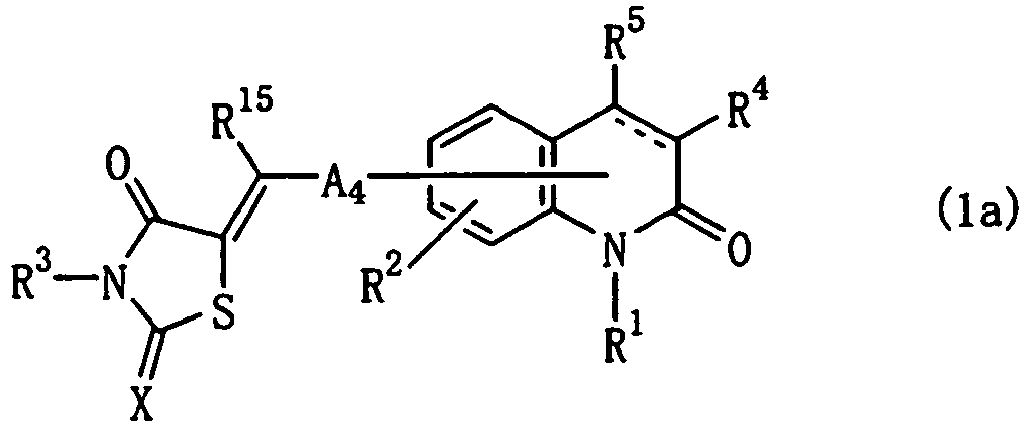
- (ii) reducing the compound (1a) defined above or a salt thereof, to give a compound (1b) of the formula:
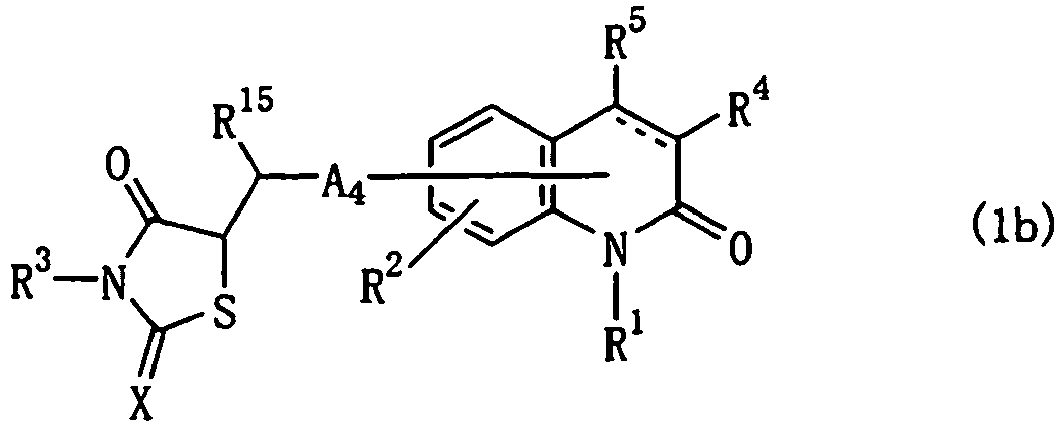
- Among carbostyril compounds represented by General Formula (1), compounds wherein the bond between the 3 and 4 positions of the carbostyril skeleton is a single bond and a double bond, and R4 and R5 each represent a hydrogen atom are preferable.
- Among carbostyril compounds represented by General Formula (1), compounds wherein the bond between the 3 and 4 positions of the carbostyril skeleton is a single bond are preferable .
- Among carbostyril compounds represented by General Formula (1), compounds wherein R1 is one of (1-2), (1-3), (1-4), (1-6), (1-10), (1-12), (1-13), (1-18) and (1-21) as defined in Item 1 above are preferable.
- Among these preferable carbostyril compounds, compounds wherein the group of the formula

- Compounds wherein R1 is a phenyl lower alkyl group optionally substituted on the phenyl ring with one or more members selected from a phenyl group, halogen atoms, -(B)1NR6R7 groups wherein B, l, R6 and R7 are as defined in Item 1 above, lower alkoxycarbonyl groups, and phenyl lower alkoxy groups are also more preferable;
of such carbostyril compounds, those wherein R2 is a hydrogen atom or a lower alkoxy group, R3 is a hydrogen atom, and X is an oxygen atom or a sulfur atom are particularly preferable. - Among carbostyril compounds represented by General Formula (1), compounds wherein R1 is a lower alkyl group are preferable, and further, those wherein R2 is a hydrogen atom or a lower alkoxy group, R3 is a hydrogen atom, and X is an oxygen atom or a sulfur atom are more preferable.
- Among carbostyril compounds represented by General Formula (1), compounds wherein R1 is a naphthyl lower alkyl group are preferable, and further, those wherein R2 is a hydrogen atom or a lower alkoxy group, R3 is a hydrogen atom, and X is an oxygen atom or a sulfur atom are more preferable.
- Among carbostyril compounds represented by General Formula (1) , compounds wherein R1 is a group

- Among carbostyril compounds represented by General Formula (1), compounds wherein the bond between the 3 and 4 positions of the carbostyril skeleton is a double bond and R4 and R5 are linked together in the form of a -CH=CH-CH=CH- group are preferable;
- Examples of particularly preferable carbostyril compounds of the present invention are as follows: 5-[1-(biphenyl-4-ylmethyl)-8-methoxy-2-oxo-1,2,3,4-tetrahydroquinolin-5-ylmethyl]thiazolidine-2,4-dione, 5-[1-(4-chlorobenzyl)-8-methoxy-2-oxo-1,2,3,4-tetrahydroquinolin-5-ylmethyl]thiazolidine-2,4-dione, 5-[1-(4-bromobenzyl)-8-methoxy-2-oxo-1,2,3,4-tetrahydroquinolin-5-ylmethyl]thiazolidine-2,4-dione, 5-[1-(2-naphthylmethyl)-8-methoxy-2-oxo-1,2,3,4-tetrahydroquinolin-5-ylmethyl]thiazolidine-2,4-dione, 5-{1-[4-(heptyloxycarbonylamino)benzyl]-8-methoxy-2-oxo-1,2,3,4-tetrahydroquinolin-5-ylmethyl}thiazolidine-2,4-dione, 5-[1-(1-biphenyl-4-ylpiperidin-4-ylmethyl)-2-oxo-1,2,3,4-tetrahydroquinolin-5-ylmethyl]thiazolidine-2,4-dione, 5-{1-[1-(4-methylphenyl)piperidin-4-ylmethyl]-2-oxo-1,2,3,4-tetrahydroquinolin-5-ylmethyl}thiazolidine-2,4-dione, 5-{1-[4-(2-chlorobenzyloxycarbonylamino)benzyl]-8-methoxy-2-oxo-1,2,3,4-tetrahydroquinolin-5-ylmethyl}thiazolidine-2,4-dione, 1-(biphenyl-4-ylmethyl)-8-methoxy-5-(4-oxo-2-thioxothiazolidin-5-ylmethyl)-3,4-dihydro-1H-quinolin-2-one, 8-methoxy-1-methyl-5-(4-oxo-2-thioxothiazolidin-5-ylmethyl)-3,4-dihydro-1H-quinolin-2-one, 8-methoxy-1-(3-methylbutyl)-5-(4-oxo-2-thioxothiazolidin-5-ylmethyl)-3,4-dihydro-1H-quinolin-2-one, 1-propyl-8-methoxy-5-(4-oxo-2-thioxothiazolidin-5-ylmethyl)-3,4-dihydro-1H-quinolin-2-one, 1-isobutyl-8-methoxy-5-(4-oxo-2-thioxothiazolidin-5-ylmethyl)-3,4-dihydro-1H-quinolin-2-one, 8-methoxy-1-phenethyl-5-(4-oxo-2-thioxothiazolidin-5-ylmethyl)-3,4-dihydro-1H-quinolin-2-one, and 1-(4-phenylthiomethyl)benzyl-5-(4-oxo-2-thioxothiazolidin-5-ylmethyl)-3,4-dihydro-1H-quinolin-2-one.
- Specific examples of groups in the above formula (1) are as follows.
- Examples of lower alkylene groups include straight and branched C1-6 alkylene groups, such as methylene, ethylene, trimethylene, 2-methyltrimethylene, 2,2-dimethylethylene, 2,2-dimethyltrimethylene, 1-methyltrimethylene, methylmethylene, ethylmethylene, tetramethylene, pentamethylene, and hexamethylene.
- Examples of lower alkylidene groups include straight and branched C1-6 alkylidene groups, such as methylidene, ethylidene, propylidene, butylidene, pentylidene, and hexylidene.
- Examples of lower alkyl groups include straight and branched C1-6 alkyl groups, such as methyl, ethyl, n-propyl, isopropyl, n-butyl, isobutyl, tert-butyl, sec-butyl, n-pentyl, isopentyl, neopentyl, n-hexyl, isohexyl, and 3-methylpentyl.
- Examples of lower alkoxy groups include straight and branched C1-6 alkoxy groups, such as methoxy, ethoxy, n-propoxy, isopropoxy, n-butoxy, isobutoxy, tert-butoxy, sec-butoxy, n-pentyloxy, isopentyloxy, neopentyloxy, n-hexyloxy, isohexyloxy, and 3-methylpentyloxy.
- Examples halogen atoms include fluorine, chlorine, bromine, and iodine.
- Examples of lower alkoxycarbonyl groups include alkoxycarbonyl groups wherein the alkoxy moiety is a straight or branched C1-6 alkoxy group, such as methoxycarbonyl, ethoxycarbonyl, n-propoxycarbonyl, isopropoxycarbonyl, n-butoxycarbonyl, isobutoxycarbonyl, tert-butoxycarbonyl, sec-butoxycarbonyl, n-pentyloxycarbonyl, neopentyloxycarbonyl, n-hexyloxycarbonyl, isohexyloxycarbonyl, and 3-methylpentyloxycarbonyl.
- Examples of phenyl lower alkoxy groups include phenylalkoxy groups wherein the alkoxy moiety is a straight or branched C1-6 alkoxy group, such as benzyloxy, 2-phenylethoxy, 1-phenylethoxy, 3-phenylpropoxy, 4-phenylbutoxy, 5-phenylpentyloxy, 6-phenylhexyloxy, 1,1-dimethyl-2-phenylethoxy, and 2-methyl-3-phenylpropoxy.
- Examples of piperidinyl lower alkoxycarbonyl groups include piperidinylalkoxycarbonyl groups wherein the alkoxy moiety is a straight or branched C1-6 alkoxy group, such as [(1-, 2-, 3-, or 4-)piperidinyl]methoxycarbonyl, 2-[(1-, 2-, 3-, or 4-)piperidinyl]ethoxycarbonyl, 1-[(1-, 2-, 3-, or 4-)piperidinyl]ethoxycarbonyl, 3-[(1-, 2-, 3-, or 4-)piperidinyl]propoxycarbonyl, 4-[(1-, 2-, 3-, or 4-)piperidinyl]butoxycarbonyl, 5-[(1-, 2-, 3-, or 4-)piperidinyl]pentyloxycarbonyl, 6-[(1-, 2-, 3-, or 4-)piperidinyl]hexyloxycarbonyl, 1,1-dimethyl-2-[(1-, 2-, 3-, or 4-)piperidinyl]ethoxycarbonyl, and 2-methyl-3-[(1-, 2-, 3-, or 4-)piperidinyl]propoxy carbonyl.
- Examples of cycloalkyl groups include C3-8cycloalkyl groups, such as cyclopropyl, cyclobutyl, cyclopentyl, cyclohexyl, cycloheptyl, and cyclooctyl.
- Examples of amino lower alkoxycarbonyl groups optionally substituted with one or more cycloalkyl groups include:
- amino-substituted alkoxycarbonyl groups wherein the alkoxy moiety is a straight or branched C1-6 alkoxy group, optionally substituted with one or two C3-8 cycloalkyl groups;
- such as aminomethoxycarbonyl, 2-aminoethoxycarbonyl, cyclopropylaminomethoxycarbonyl, 2-cyclohexylaminoethoxycarbonyl, 1-cyclobutylaminoethoxycarbonyl, 3-cyclopentylaminopropoxycarbonyl, 4-cycloheptylaminobutoxycarbonyl, 5-cyclooctylaminopentyloxycarbonyl, 6-cyclohexylaminohexyloxycarbonyl, 1,1-dimethyl-2-cyclohexylaminoethoxycarbonyl, 2-methyl-3-cyclopropylaminopropoxycarbonyl, and 2-(N-cyclopropyl-N-cyclohexylamino)ethoxycarbonyl.
- Examples of lower alkylthio groups include straight and branched C1-6 alkylthio groups such as methylthio, ethylthio, n-propylthio, isopropylthio, n-butylthio, tert-butylthio, n-pentylthio, and n-hexylthio.
- Examples of 2-imidazolinylcarbonyl groups optionally substituted on the 2-imidazoline ring with one or more alkylthio groups include 2-imidazolinylcarbonyl groups optionally substituted on the 2-imidazoline ring with one to three lower alkylthio groups, such as (1-, 2-, 4-, or 5-)2-imidazolinylcarbonyl, 2-methylthio-(1-, 4-, or 5-)2-imidazolinylcarbonyl, 2-ethylthio-(1-, 4-, or 5-)2-imidazolinylcarbonyl, 4-propylthio-(1-, 2-, or 5-)2-imidazolinylcarbonyl, 5-isopropylthio-(1-, 2-, or 4-)2-imidazolinylcarbonyl, 2-n-butylthio-(1-, 4-, or 5-)2-imidazolinylcarbonyl, 2-n-pentylthio-(1-, 4-, or 5-)2-imidazolinylcarbonyl, 2-n-hexylthio-(1-, 4-, or 5-)2-imidazolinylcarbonyl, 2,4-dimethylthio-(1- or 5-)2-imidazolinylcarbonyl, and 2,4,5-trimethylthio-(1-)2-imidazolinylcarbonyl.
- Examples of 3-pyrrolinylcarbonyl groups optionally substituted on the 3-pyrroline ring with one or more lower alkyl groups include 3-pyrrolinylcarbonyl groups optionally substituted on the 3-pyrroline ring with one to three lower alkyl groups, such as (1-, 2-, or 3-)3-pyrrolinylcarbonyl, 2-methyl-(1-, 2-, 3-, 4-, or 5-)3-pyrrolinylcarbonyl, 2-ethyl-(1-, 2-, 3-, 4-, or 5-)3-pyrrolinylcarbonyl, 3-propyl-(1-, 2-, 4-, or 5-)3-pyrrolinylcarbonyl, 4-isopropyl-(1-, 2-, 3-, or 5-)3-pyrrolinylcarbonyl, 5-n-butyl-(1-, 2-, 3-, 4-, or 5-)3-pyrrolinylcarbonyl, 2-n-pentyl-(1-, 2-, 3-, 4-, or 5-)3-pyrrolinylcarbonyl, 2-n-hexyl-(1-, 2-, 3-, 4-, or 5-)3-pyrrolinylcarbonyl, 2,5-dimethyl-(1-, 2-, 3-, 4-, or 5-)3-pyrrolinylcarbonyl, 2,4-dimethyl-(1-, 2-, 3-, or 5-)3-pyrrolinylcarbonyl, 2,3-dimethyl-(1-, 2-, 4-, or 5-)3-pyrrolinylcarbonyl, and 2,4,5-trimethylthio-(1-, 2-, 3-, or 5-)3-pyrrolinylcarbonyl.
- Examples of thiazolidinylcarbonyl groups optionally substituted on the thiazolidine ring with a phenyl group includes (2-, 3-, 4-, or 5-)thiazolidinylcarbonyl, 2-phenyl-(3-, 4-, or 5-)thiazolidinylcarbonyl, 3-phenyl-(2-, 4-, or 5-) thiazolidinylcarbonyl, 4-phenyl-(2-, 3-, or 5-) thiazolidinylcarbonyl, and 5-phenyl-(2-, 3-, or 4-) thiazolidinylcarbonyl.
- Examples of piperidinyl lower alkyl groups include piperidinylalkyl groups wherein the alkyl moiety is a straight or branched C1-6 alkyl group; such as [(1-, 2-, 3-, or 4-) piperidinyl]methyl, 2-[(1-, 2-, 3-, or 4-)piperidinyl]ethyl, 1-[(1-, 2-, 3-, or 4-)piperidinyl]ethyl, 3-[(1-, 2-, 3-, or 4-) piperidinyl]propyl, 4-[(1-, 2-, 3-, or 4-)piperidinyl]butyl, 5-[(1-, 2-, 3-, or 4-)piperidinyl]pentyl, 6-[(1-, 2-, 3-, or 4-) piperidinyl]hexyl, 1,1-dimethyl-2-[(1-, 2-, 3-, or 4-) piperidinyl]ethyl, and 2-methyl-3-[(1-, 2-, 3-, or 4-) piperidinyl]propyl.
- Examples of anilino lower alkyl groups optionally substituted on the amino group with one or more lower alkyl groups include anilinoalkyl groups optionally substituted on the amino group with one or more straight and/or branched C1-6 alkyl groups, such as anilinomethyl, N-methylanilinomethyl, N-ethylanilinomethyl, N-n-propylanilinomethyl, N-isopropylanilinomethyl, N-n-butylanilinomethyl, N-sec-butylanilinomethyl, N-tert-butylanilinomethyl, N-n-pentylanilinomethyl, N-n-hexylanilinomethyl, 2-anilinoethyl, 2-(N-methylanilino)ethyl, 2-(N-ethylanilino)ethyl, 2-(N-n-propylanilino)ethyl, 2-(N-isopropylanilino)ethyl, 2-(N-n-butylanilino)ethyl, 2-(N-sec-butylanilino)ethyl, 2-(N-tert-butylanilino)ethyl, 2-(N-n-pentylanilino)ethyl, 2-(N-n-hexylanilino)ethyl, 3-anilinopropyl, 3-(N-methylanilino)propyl, 4-(N-ethylanilino)butyl, 4-(N-n-propylanilino)butyl, 5-(N-isopropylanilino)pentyl, 5-(N-n-butylanilino)pentyl, 6-(N-sec-butylanilino)hexyl, 6-(N-tert-butylanilino)hexyl, 6-(N-n-pentylanilino)hexyl, and 6-(N-n-hexylanilino)hexyl.
- Examples of phenylthio lower alkyl groups include phenylthioalkyl groups wherein the alkyl moiety is a straight or branched C1-6 alkyl group, such as phenylthiomethyl, 2-phenylthioethyl, 1-phenylthioethyl, 3-phenylthiopropyl, 4-phenylthiobutyl, 5-phenylthiopentyl, 6-phenylthiohexyl, 1,1-dimethyl-2-phenylthioethyl, and 2-methyl-3-phenylthiopropyl.
- Examples of indolinyl lower alkyl groups include indolinylalkyl groups wherein the alkyl moiety is a straight or branched C1-6 alkyl group, such as [(1-, 2-, 3-, 4-, 5-, 6-, or 7-)indolinyl]methyl, 2-[(1-, 2-, 3-, 4-, or 5-)indolinyl]ethyl, 1-[(1-, 2-, 3-, 4-, 5-, 6-, or 7)indolinyl]ethyl, 3-[(1-, 2-, 3-, 4-, 5-, 6-, or 7)indolinyl]propyl, 4-[(1-, 2-, 3-, 4-, 5-, 6-, or 7)indolinyl]butyl, 5-[(1-, 2-, 3-, 4-, 5-, 6-, or 7)indolinyl]pentyl, 6-[(1-, 2-, 3-, 4-, 5-, 6-, or 7)indolinyl]hexyl, 1,1-dimethyl-2-[(1-, 2-, 3-, 4-, 5-, 6-, or 7)indolinyl]ethyl, and 2-methyl-3-[(1-, 2-, 3-, 4-, 5-, 6-, or 7)indolinyl]propyl.
- Examples of piperidinylcarbonyl groups optionally substituted on the piperidine ring with one or more lower alkyl groups include piperidinylcarbonyl groups optionally substituted on the piperidine ring with one to three straight and/or branched C1-6 alkyl groups, such as (1-, 2-, 3-, or 4-)piperidinylcarbonyl, 1-methyl-(2-, 3-, or 4-)piperidinylcarbonyl, 1-ethyl-(2-, 3-, or 4-)piperidinylcarbonyl, 1-n-propyl-(2-, 3-, or 4-)piperidinylcarbonyl, 1-n-butyl-(2-, 3-, or 4-)piperidinylcarbonyl, 1-n-pentyl-(2-, 3-, or 4-)piperidinylcarbonyl, 1-n-hexyl-(2-, 3-, or 4-)piperidinylcarbonyl, 1,2-dimethyl-(3-, 4-, 5-, or 6-)piperidinylcarbonyl, 1,2,3-trimethyl-(4-, 5-, or 6-)piperidinylcarbonyl, 2-n-propyl-(1-, 3-, 4-, 5-, or 6-)piperidinylcarbonyl, 3-ethyl-(1-, 2-, 4-, 5-, or 6-) piperidinylcarbonyl, and 2-methyl-4-isopropyl-(1-, 3-, 5-, or 6-)piperidinylcarbonyl.
- Examples of phenyl lower alkyl groups optionally substituted on the phenyl ring with one or more members selected from the group consisting of a phenyl group; lower alkyl groups; lower alkoxy groups; halogen atoms; -(B)1NR6R7 groups; a nitro group; a carboxy group; lower alkoxycarbonyl groups; a cyano group; phenyl lower alkoxy groups; a phenoxy group; piperidinyl lower alkoxycarbonyl groups; amino lower alkoxycarbonyl groups optionally substituted with one or more cycloalkyl groups; 2-imidazolinylcarbonyl groups optionally substituted on the 2-imidazoline ring with one or more lower alkylthio groups; 3-pyrrolinylcarbonyl groups optionally substituted on the pyrroline ring with one or more lower alkyl groups; a thiazolidinylcarbonyl groups optionally substituted on the thiazolidine ring with a phenyl group; 3-azabicyclo[3.2.2] nonylcarbonyl groups; piperidinyl lower alkyl groups; anilino lower alkyl groups optionally substituted on the amino group with one or more lower alkyl groups; phenylthio lower alkyl groups; indolinyl lower alkyl groups; and piperidinylcarbonyl groups optionally substituted on the piperidine ring with one or more lower alkyl groups include:
- mono- and di-phenylalkyl groups wherein the alkyl moiety is a straight or branched C1-6 aklyl group, optionally substituted on the phenyl ring with one to three members selected from the group consisting of a phenyl group; the above-described straight and branched C1-6 alkyl groups; the above-described straight and branched C1-6 alkoxy groups; halogen atoms; the below-described -(B)1NR6R7 groups; a nitro group; a carboxyl group; the above-described straight and branched C1-6 alkoxycarbonyl groups; a cyano group; the above-described phenylalkoxy groups wherein the alkoxy moiety is a straight or branched C1-6 alkoxy group; a phenoxy group; the above-described piperidinylalkoxycarbonyl groups wherein the alkoxy moiety is a straight or branched C1-6 alkoxy group; the above-described aminoalkoxycarbonyl groups wherein the alkoxy moiety is a straight or branched C1-6 alkoxy group, optionally substituted with one or two C3-8 cycloalkyl groups; the above-described 2-imidazolinylcarbonyl groups optionally substituted on the 2-imidazoline ring with one to three straight and/or branched C1-6 alkylthio groups; the above-described 3-pyrrolinylcarbonyl groups optionally substituted on the 3-pyrroline ring with one to three straight and/or branched C1-6 alkyl groups; thiazolidinylcarbonyl groups optionally substituted on the thiazolidine ring with a phenyl group; 3-azabicyclo[3.2.2]nonylcarbonyl groups; piperidinylalkyl groups wherein the alkyl moiety is a straight or branched C1-6 alkyl group; anilinoalkyl groups wherein the alkyl moiety is a straight or branched C1-6 alkyl group, optionally substituted on the amino group with one or two straight and/or branched C1-6 alkyl groups; phenylthioalkyl groups wherein the alkyl moiety is a straight or branched C1-6 alkyl group; indolinylalkyl groups wherein the alkyl moiety is a straight or branched C1-6 alkyl group; and the above-described piperidinylcarbonyl groups optionally substituted on the piperidine ring with one to three straight and/or branched C1-6 alkyl groups;
- such as benzyl, 1-phenethyl, 2-phenethyl, 3-phenylpropyl, 2-phenylpropyl, 4-phenylbutyl, 5-phenylpentyl, 4-phenylpentyl, 6-phenylhexyl, 2-methyl-3-phenylpropyl, 1,1-dimethyl-2-phenylethyl, 1,1-diphenylmethyl, 2,2-diphenylethyl, 3,3-diphenylpropyl, 1,2-diphenylethyl, 4-[N-(3-pyridyl) aminocarbonyl]benzyl, 4-[N-(2-methoxyphenyl)aminocarbonyl]benzyl, 4-[2-(2-piperidinyl)ethoxycarbonyl]benzyl, 4-[2-(cyclohexylamino) ethoxycarbonyl]benzyl, 4-[4-(3-pyridylmethyl)-1-piperazinylcarbonyl]benzyl, 4-[4-(4-pyridylmethyl)-1-piperazinylcarbonyl]benzyl, 4-[4-(2-pyridylmethyl)-1-piperazinylcarbonyl]benzyl, 4-[4-(2-pyridyl)-1-piperazinylcarbonyl]benzyl, 4-[4-(3-chlorophenyl)-1-piperazinylcarbonyl]benzyl, 4-[4-(2-fluorophenyl)-1-piperazinylcarbonyl]benzyl, 4-[4-(2-pyrimidyl)-1-piperazinylcarbonyl]benzyl, 4-(4-cyclopentyl-1-piperazinylcarbonyl)benzyl, 4-[4-(2-methoxyphenyl)-1-piperazinylcarbonyl]benzyl, 4-[4-(4-fluorophenyl)-1-piperazinylcarbonyl]benzyl, 4-[4-(3,4-methylenedioxybenzyl)-1-piperazinylcarbonyl]benzyl, 4-(N-cyclohexyl-N-methylaminocarbonyl)benzyl, 4-(N,N-di-n-butylaminocarbonyl)benzyl, 4-[4-(1-piperidinyl)-1-piperidinylcarbonyl]benzyl, 4-(1-homopiperidinylcarbonyl)benzyl, 4-[2-methylthio-1-(2-imidazolinyl)carbonyl]benzyl, 4-{N-[2-(2-pyridyl)ethyl]-N-methylaminocarbonyl}benzyl, 4-[N-(1-methyl-4-piperidinyl)-N-methylaminocarbonyl]benzyl, 4-(N,N-diisobutylaminocarbonyl)benzyl, 4-[N-(2-tetrahydropyranyl)methyl-N-ethylaminocarbonyl]benzyl, 4-(4-thiomorpholinocarbonyl)benzyl, 4-[2,5-dimethyl-1-(3-pyronyl)carbonyl]benzyl, 4-(3-thiazolidinylcarbonyl)benzyl, 4-(N-cyclopropylmethyl-N-n-propylaminocarbonyl)benzyl, 4-[1-(3-azabicyclo[3.2.2]nonylcarbonyl)benzyl, 4-(N-cyclopentyl-N-allylaminocarbonyl)benzyl, 4-[4-(4-pyridyl)-1-piperazinylcarbonyl]benzyl, 4-[4-(4-trifluoromethylphenyl)-1-piperazinylcarbonyl]benzyl, 4-[4-(2-phenylethyl)-1-piperazinylcarbonyl]benzyl, 4-[4-(2-pyrazyl)-1-piperazinylcarbonyl]benzyl, 4-(N-n-butylaminocarbonyl)benzyl, 4-(N-cyclopropylaminocarbonyl)benzyl, 4-[N-(1-methyl-1-phenylethyl) aminocarbonyl]benzyl, 4-(N-benzylaminocarbonyl)benzyl, 4-[N-(2-chlorobenzyl)aminocarbonyl]benzyl, 4-[N-(3-chlorobenzyl) aminocarbonyl]benzyl, 4-[N-(4-chlorobenzyl)aminocarbonyl]benzyl, 4-[N-(2-pyridyl)methylaminocarbonyl]benzyl, 4-[N-(3-pyridyl) methylaminocarbonyl]benzyl, 4-[(4-pyridyl)methylaminocarbonyl] benzyl, 4-[3,5-dimethyl-1-piperidinylcarbonyl]benzyl, 4-[N-(2-furyl)methylaminocarbonyl]benzyl, 4-[4-(2-fluorobenzyloxy)-1-piperidinylcarbonyl]benzyl, 4-{4-[N-(2-phenylacetyl)-N-methylamino]-1-piperidinylcarbonyl}benzyl, 4-[(4-methoxy-1-piperidinyl)carbonyl]benzyl, 4-{[4-(3,4-dimethyl-1-piperazinyl)-1-piperidinyl]carbonyl}benzyl, 4-{[4-(4-chlorobenzoyl)-1-piperidinyl]carbonyl}benzyl, 4-{[4-(4-chlorobenzyl)-1-piperidinyl]carbonyl}benzyl, 4-[(4-ethylcarbamoylmethyl-l-piperidinyl)carbonyl]benzyl, 4-[(4-cyclohexyl-1-piperidinyl)carbonyl]benzyl, 4-{[4-(4-methoxyphenyl)-1-piperidinyl]carbonyl}benzyl, 4-{[4-(2-benzoxazolyl)-1-piperazinyl]carbonyl}benzyl, 4-[(4-anilinocarbonylmethyl-1-piperazinyl)carbonyl]benzyl, 4-[(4-methyl-2-benzyl-1-piperazinyl)carbonyl]benzyl, 4-[(4-phenyl-3-oxo-1-piperazinyl)carbonyl]benzyl, 4-[(4-tert-butyl-3-oxo-1-piperazinyl)carbonyl]benzyl, 4-[N-(1-benzoyl-4-piperidinyl)-N-methylaminocarbonyl]benzyl, 4-[N-(1-acetyl-4-piperidinyl)-N-methylaminocarbonyl]benzyl, 4-{[4-(4-cyanophenyl)-1-piperazinyl]carbonyl}benzyl, 4-[N-methylcarbamoylmethyl-N-benzylaminocarbonyl]benzyl, 4-[N-benzyl-N-cyclohexylaminocarbonyl]benzyl, 4-[2-(N-methyl-N-phenylcarbamoyl)ethyl-N-methylaminocarbonyl]benzyl, 4-{[4-(3-phenyl-1-pyrrolidinyl)-1-piperidinyl]carbonyl}benzyl, 4-[(1,2,3,4-tetrahydroisoquinoline-2-yl)carbonyl]benzyl, 4-[(4-benzyl-1-piperidinyl)carbonyl]benzyl, 4-{[4-(3,4-methylenedioxybenzoyl)-1-piperazinyl]carbonyl}benzyl, 4-[N-methyl-N-(4-methylbenzyl)aminocarbonyl]benzyl, 4-[N-methyl-N-(3,4-methylenedioxybenzyl)aminocarbonyl]benzyl, 4-[N-methyl-N-(2-methoxybenzyl)aminocarbonyl]benzyl, 4-[(4-phenyl-1-piperazinyl) carbonyl]benzyl, 4-[(4-phenyl-4-hydroxy-1-piperidinyl)carbonyl] benzyl, 4-(N-isopropyl-N-benzylaminocarbonyl)benzyl, 4-(N-ethyl-N-cyclohexylaminocarbonyl)benzyl, 4-[N-ethyl-N-(4-pyridyl) methylaminocarbonyl]benzyl, 4-(N-n-propylaminocarbonyl)benzyl, 4-[N-ethyl-N-(4-ethoxybenzyl)aminocarbonyl]benzyl, 4-(N-ethyl-N-cyclohexylmethylaminocarbonyl)benzyl, 4-[N-(2-ethoxyethyl) aminocarbonyl]benzyl, 4-[N-(1,1-dimethyl-2-phenylethyl) aminocarbonyl]benzyl, 4-[{4-[N-methyl-N-(4-chlorophenyl)amino]-1-piperidinyl}carbonyl]benzyl, 4-[N-(1-methyl-1-cyclopentyl) aminocarbonyl]benzyl, 4-[N-(1-methyl-1-cyclohexyl)aminocarbonyl] benzyl, 4-{N-[2-(3-methoxyphenyl)ethyl]aminocarbonyl}benzyl, 4-[N-(4-trifluoromethoxybenzyl)aminocarbonyl]benzyl, 4-{N-[2-(4-chlorophenyl)ethyl]aminocarbonyl}benzyl, 4-[N-(3,4-methylenedioxybenzyl)aminocarbonyl]benzyl, 4-(N-cyclohexylmethylaminocarbonyl)benzyl, 4-[N-(4-fluorobenzyl) aminocarbonyl]benzyl, 4-[N-(1-phenylethyl)aminocarbonyl]benzyl, 4-[N-(3-phenylpropyl)aminocarbonyl]benzyl, 4-{N-[3-(1-imidazolyl) propyl]aminocarbonyl}benzyl, 4-[N-(2-phenylethyl)aminocarbonyl] benzyl, 4-[2-(N,N-diisopropylamino)ethylaminocarbonyl]benzyl, 4-{N-[1-methoxycarbonyl-2-(4-hydroxyphenyl)ethyl]aminocarbonyl} benzyl, 4-[N-(carbamoylmethyl)aminocarbonyl]benzyl, 4-{N-[1-carbamoyl-2-(5-imidazolyl)ethyl]aminocarbonyl}benzyl, 4-{N-[1-methoxycarbonyl-2-(5-imidazolyl)ethyl]amino carbonyl}benzyl, 4-[N-(2-oxo-2,3,4,5-tetrahydrofuran-3-yl)aminocarbonyl]benzyl, 4-[(2-ethoxycarbonyl-1-piperidinyl)carbonyl]benzyl, 4-(N-methoxycarbonylmethyl-N-methylaminocarbonyl)benzyl, 4-[(2-carbamoyl-1-pyrrolidinyl)carbonyl]benzyl, 4-{[N-(2,6-dimethylbenzyl)-N-ethyl]aminocarbonyl}benzyl, 4-{[N-[(4-methylphenyl)carbamoylmethyl]-N-methylaminocarbonyl}benzyl, 4-[N-(4-chlorobenzyl)-N-ethylaminocarbonyl]benzyl, 4-[N-(4-trifluoromethylbenzyl)-N-ethylaminocarbonyl]benzyl, 4-[N-(3-bromobenzyl)-N-ethylaminocarbonyl]benzyl, 4-{[4-(2-chlorobenzyl)-1-piperidinyl]carbonyl}benzyl, 4-{[4-(3-chlorobenzyl)-1-piperidinyl]carbonyl}benzyl, 4-{[4-(2-chlorobenzylidene)-1-piperidinyl]carbonyl}benzyl, 4-[N-(2-methoxybenzyl)aminocarbonyl] benzyl, 4-{N-[2-(2-fluorophenyl)ethyl]aminocarbonyl}benzyl, 4-{N-[2-(3-fluorophenyl)ethyl]aminocarbonyl}benzyl, 4-[(4-benzyloxycarbonyl-1-piperazinyl)carbonyl]benzyl, 4-{[4-(3-cyano-2-pyridyl)-1-piperazinyl]carbonyl}benzyl, 4-[(4-phenyl-1-piperidinyl)carbonyl]benzyl, 4-[{4-[(3-furyl)methyl]-1-piperazinyl}carbonyl]benzyl, 4-{[4-(3-pyridyl)-1-piperazinyl] carbonyl}benzyl, 4-{[4-(4-tetrahydropyranyl)-1-piperazinyl] carbonyl}benzyl, 4-{[4-(2-fluorobenzyl)-1-piperidinyl]carbonyl} benzyl, 4-{[4-(4-morpholino)-1-piperidinyl]carbonyl}benzyl, 4-{4-[2-(1,3-dioxolane-2-yl)ethyl]-1-piperazinyl}carbonyl]enzyl, 4-phenylbenzyl, 2-phenylbenzyl, 3-phenylbenzyl, 4-tert-butylbenzyl, 4-aminobenzyl, 4-nitrobenzyl, 4-methoxycarbonylbenzyl, 4-carboxybenzyl, 3-methoxy-4-chlorobenzyl, 4-methoxybenzyl, 2,4,6-trimethoxybenzyl, 3,4-dichlorobenzyl, 4-chlorobenzyl, 4-bromobenzyl, 2,4,6-trifluorobenzyl, 4-fluorobenzyl, 4-cyanobenzyl, 4-piperidinylcarbonylbenzyl, 4-anilinocarbonylbenzyl, 4-(N-cyclohexylaminocarbonyl)benzyl, 4-(N-benzoylamino)benzyl, 4-(N-cyclohexylamino)benzyl, 4-phenylcarbamoylaminobenzyl, 4-methylbenzyl, 3,4-dimethylbenzyl, 3,4,5-trimethylbenzyl, 4-benzyloxybenzyl, 4-ethylcarbamoylaminobenzyl, 4-ethylaminocarbonylbenzyl, 4-isopropylaminocarbonylbenzyl, 4-[N-(2-hydroxyethyl)aminocarbonyl]benzyl, 4-[N-(3-pyridyl) aminocarbonyl]benzyl, 4-[N-(4-chlorophenyl)aminocarbonyl]benzyl, 4-[N-(4-isopropylphenyl)aminocarbonyl]benzyl, 4-[N-(4-phenoxyphenyl)aminocarbonyl]benzyl, 4-[N-(3-phenoxyphenyl) aminocarbonyl]benzyl, 4-[N-(3-phenoxybenzoyl)amino]benzyl, 4-[N-(4-phenoxybenzoyl)amino]benzyl, 4-[N-(4-chlorobenzoyl)amino] benzyl, 4-[N-(2-chlorobenzoyl)amino]benzyl, 4-[N-(2,6-dichlorobenzoyl)amino]benzyl, 4-[N-(4-methoxyphenyl) aminocarbonyl]benzyl, 4-[N-(2-furylcarbonyl)amino]benzyl, 4-[N-(4-methoxybenzoyl)amino]benzyl, 4-[N-(3-methoxybenzoyl)amino] benzyl, 4-[N-(2-methoxybenzoyl)amino]benzyl, 4-phenoxybenzyl, 4-n-pentyloxycarbonylaminobenzyl, 4-[N-(4-methoxyphenoxycarbonyl) amino]benzyl, 4-[N-(4-methylphenoxycarbonyl)amino]benzyl, 4-benzyloxycarbonylaminobenzyl, 4-ethanoylaminobenzyl, 4-(N-acetylamino)benzyl, 4-methylsulfonylaminobenzyl, methoxycarbonylaminobenzyl, 4-[N-(4-isopropylphenyl) aminocarbonyl]benzyl, 4-[4-{2-[(1-,2-, or 3-)imidazolyl]ethyl}-1-piperazinylcarbonyl]benzyl, 4-{4-[3-methyl-(2-, 3-, or 4-) pyridyl]-1piperazinyl carbonyl}benzyl, 4-{4-[4-methyl-(2-, 3-, or 4-)pyridyl]-1-piperazinylcarbonyl}benzyl, 4-[4-{2-[(2-, 3-, or 4-)pyridyl]ethyl}-1-piperazinylcarbonyl]benzyl, 4-{4-4-[(1- or 2-)naphthyl]-(1-, 2-, or 3-)piperazinylcarbonyl} benzyl, 4-[(1-, 2-, 3-, or 4- piperazinylcarbonyl)] benzyl, 4-[2-methyl-(1- 3-, 4-, 5-, or 6-)piperidinylcarbonyl]benzyl, 4-[3-ethoxycarbonyl-(1, 2-, 4-, 5-, or 6-)piperidinyl]benzyl, 4-[4-(3-hydroxyphenyl)-(1-, 2-, 4-, 5-, or 6-)piperidinyl]benzyl, 4-[4-hydroxy-4-benzyl-(1-, 2-, or 3-)piperidinylcarbonyl]benzyl, 4-[3-acetylamino-(1-, 2-, 4-, or 5-)pyrrolidinylcarbonyl]benzyl, 4-[N-{2-[1-ethyl-(2- or 3-)pyrrolidinyl]ethyl}aminocarbonyl]benzyl, 4-[N-{2-[(2- or 3-)pyrrolidinyl]ethyl}aminocarbonyl]benzyl, 4-[N-{2-([2-, 3-, or 4-]morpholino)ethyl}aminocarbonyl]benzyl, 4-[N-{3-([2-, 3-, or 4-]morpholino)propyl}aminocarbonyl]benzyl, 4-[2,6-dimethyl-(3-, 4-, or 5-)morpholinocarbonyl]benzyl, 4-[4-(4-trifluoromethylanilino)-(1-, 2-, or 3-)piperazinylcarbonyl]benzyl, 4-{2-[(1-, 2-, 3-, or 4-) piperidinylmethyl]-(3-, 4-, 5- or 6-) morpholinocarbonyl}benzyl, 4-(N-methyl-N-n-pentylaminocarbonyl) benzyl, 4-{4-[(1-, 2-, 4-, or 5-)2,3-dihydro-1H-indenyl]-(1-, 2-, or 3-)piperidinylcarbonyl}benzyl, 4-[N-(2-methylcyclohexyl)aminocarbonyl]benzyl, 4-isoindolinylcarbonylbenzyl, 4-[2-phenyl-(1-, 3-, 4- or 5-) pyrrolidinylcarbonyl]benzyl, 4-{2-[(1-, 2-, 3-, or 4-morpholinomethyl)-(1-, 3-, 4-, or 5-)pyrrolidinylcarbonyl] benzyl, 4-[2-dimethylaminomethyl-(1-, 3-, 4-, or 5-) pyrrolidinylcarbonyl]benzyl, 4-{N-[1-(4-fluorobenzoyl)-(2-, 3-, or 4-)piperidinyl]-N-methylaminocarbonyl}benzyl, 4-[2-phenyl-(3-, 4-, or 5-)thiazolidinylcarbonyl]benzyl, 4-[N-methyl-(2-methoxyanilino)carbonyl]benzyl, 4-(3-methylthioanilinocarbonyl)benzyl, 4-(2-methylthioanilinocarbonyl)benzyl, 4-(3,4-dichloroanilinocarbonyl)benzyl, 4-(4-trifluoromethoxy-4-anilinocarbonyl)benzyl, 4-anilinocarbonylbenzyl, 4-(4-chloroanilinocarbonyl)benzyl, 4-(4-methoxyanilinocarbonyl)benzyl, 4-(3-methoxyanilinocarbonyl)benzyl, 4-(2-chloroanilinocarbonyl)benzyl, 4-(4-methylanilinocarbonyl)benzyl, 4-(2,4-dimethoxyanilinocarbonyl)benzyl, 4-(4-methoxy-5-chloroanilinocarbonyl)benzyl, 4-(2-methoxy-5-acetylaminoanilinocarbonyl)benzyl, 4-(3,4-dimethoxyanilinocarbonyl)benzyl, 4-[2-(1-methylallyl) anilinocarbonyl]benzyl, 4-(3-trifluoromethoxyanilinocarbonyl) benzyl, 4-(2-methylanilinocarbonyl)benzyl, 4-(2-fluoroanilinocarbonyl)benzyl, 4-(3-fluoroanilinocarbonyl)benzyl, 4-(4-fluoroanilinocarbonyl)benzyl, 4-(3-dimethylaminoanilinocarbonyl)benzyl, 4-(4-ethoxyanilinocarbonyl)benzyl, 4-(3-trifluoromethylanilinocarbonyl)benzyl, 4-(4-trifluoromethylanilinocarbonyl)benzyl, 4-(3-acetylaminoanilinocarbonyl)benzyl, 4-(4-acetylaminoanilinocarbonyl)benzyl, 4-[(2-, 3-, or 4-pyridylaminocarbonyl)benzyl, 4-[N-methyl-(3-methylanilino)carbonyl]benzyl, 4-[3-methoxy-(2-, 4-, 5-, or 6-)pyridylaminocarbonyl]benzyl, 4-(2-phenoxyanilinocarbonyl)benzyl, 4-(3-phenoxyanilinocarbonyl)benzyl, 4-(4-phenoxyanilinocarbonyl) benzyl, 4-(3,5-dichloroanilinocarbonyl)benzyl, 4-(2,3-dimethylanilinocarbonyl)benzyl, 4-(2,4-dimethylanilinocarbonyl) benzyl, 4-(3,5-dimethylanilinocarbonyl)benzyl, 4-(3,5-difluoroanilinocarbonyl)benzyl, 4-[(1-, 2-, 3-, 4-, 5-, 6-, or 7-)indolylaminocarbonyl]benzyl, 4-(3-fluoro-4-methoxyanilinocarbonyl)benzyl, 4-(4-aminosulfonylanilinocarbonyl)benzyl, 4-(4-methyl-3-methoxyanilinocarbonyl)benzyl, 4-(3-chloro-4-methoxyanilinocarbonyl)benzyl, 4-(3-chloro-4-methylanilinocarbonyl)benzyl, 4-(3-methoxy-5-trifluoromethylanilinocarbonyl)benzyl, 4-(3-chloro-4-fluoroanilinocarbonyl)benzyl, 4-[3-methyl-(2-, 4-, 5- or 6-)pyridylaminocarbonyl]benzyl, 4-[(2-, 4- or 5-thiazolylaminocarbonyl)benzyl, 4-(3-chloro-4-hydroxyanilinocarbonyl)benzyl, 4-(2-chloro-5-acetylaminoanilinocarbonyl)benzyl, 4-(4-methylthioanilinocarbonyl)benzyl, 4-(4-isopropylanilinocarbonyl)benzyl, 4-(4-tert-butylanilinocarbonyl)benzyl, 4-[(2- or 4-)1,2,4-triazolylaminocarbonyl]benzyl, 4-{4-[2-oxo-(1-, 3-, 4-, or 5-) pyrrolidinyl]anilinocarbonyl}benzyl, 4-(4-methylsulfonylamino) benzyl, 4-(4-methylcarbamoylanilinocarbonyl)benzyl, anilinocarbonylbenzyl, 4-(2-benzyloxyanilinocarbonyl)benzyl, 4-(4-vinylanilinocarbonyl)benzyl, 4-(4-acetylaminoanilinocarbonyl) benzyl, 4-(3-acetylaminoanilinocarbonyl)benzyl, 4-(4-trifluoromethylanilinocarbonyl)benzyl, 4-{3-[(2-, 3-, or 4-) pyridyl]propionylamino}benzyl, 4-(3-phenoxypropionylamino)benzyl, 4-[(2-, 3- or 4-) pyridylcarbonylamino]benzyl, 4-{2-[(2-, 3-, or 4-) pyridyl]acetylamino}benzyl, 4-[(2- or 3-)furylcarbonylamino] benzyl, 4-[(2- or 3-)thienylcarbonylamino]benzyl, 4-{2-[(2- or 3-)thienyl]acetylamino}benzyl, 4-{2-[(1-, 2-, or 3-) pyrrolyl]-(3-, 4-, 5-, or 6-)pyridyl carbonylamino}benzyl, 4-cyclopentylcarbonylaminobenzyl, 4-cyclohexylcarbonylaminobenzyl, 4-(2-cyclopentylacetylamino)benzyl, 4-(2-cyclohexylcarbonylamino) benzyl, 4-[1-benzoyl-(2-, 3-, or 4-)piperidinylcarbonylamino] benzyl, 4-[1-acetyl-(2-, 3-, or 4-)piperidinylcarbonylamino] benzyl, 4-[(2-, 3-, 4-, 5-, 6-, 7-, or 8-)chromanyl]benzyl, 4-(2-nitrobenzoylamino)benzyl, 4-(3-nitrobenzoylamino)benzyl, 4-(4-nitrobenzoylamino)benzyl, 4-(2-phenylbenzoylamino)benzyl, 4-(2-dimethylaminobenzoylamino)benzyl, 4-(2-anilinobenzoylamino)benzyl, 4-(2,6-dichlorobenzoylamino)benzyl, 4-(2-cyanobenzoylamino)benzyl, 4-(3-phenoxybenzoylamino)benzyl, 4-(2-phenoxybenzoylamino)benzyl, 4-(4-phenoxybenzoylamino)benzyl, 4-[(1- or 2-) naphthylcarbonylamino]benzyl, 4-(2-methyl-3-fluorobenzoylamino) benzyl, 4-(3,4-methylenedioxybenzoylamino)benzyl, 4-{2-[1,3-dioxo-(2-, 4-, or 5-)isoindolinyl]acetylamino}benzyl, 4-{2-[2-thioxo-4-oxothiazolidinyl]acetylamino}benzyl, 4-{3-[(1-, 2-, 3-, or 4-)piperidinyl]propionylamino}benzyl, 4-(4-acetylbenzoylamino)benzyl, 4-(2-trifluoromethylbenzoylamino) benzyl, 4-(3-trifluoromethylbenzoylamino)benzyl, 4-(4-trifluoromethylbenzoylamino)benzyl, 4-[2-(2-chlorophenyl) acetylamino]benzyl, 4-(2-chloro-4-fluorobenzoylamino)benzyl, 4-(2-chlorocinnamoylamino)benzyl, 4-(3,4-methylenedioxycinnamoylamino)benzyl, 4-[3-(2-, 3-, or 4-) pyridylvinylcarbonylamino]benzyl, 4-[2-chloro-(3-, 4-, 5-, or 6-) pyridylcarbonylamino]benzyl, 4-{2-[(2-, 3-, or 4-)pyridylthio] acetylamino}benzyl, 4-[(2-, 3-, 4-, 5-, 6-, or 7-) indolylcarbonylamino]benzyl, 4-[(1-, 2-, or 3-) pyrrolylcarbonylamino]benzyl, 4-[2-oxo-(1-, 3-, 4-, or 5-) pyrrolidinylcarbonylamino]benzyl, 4-[(2-, 3-, 4-, 5-, 6-, or 7-) benzofurylcarbonylamino]benzyl, 4-[2,6-dichloro-(3-, 4-, or 5-) pyridylcarbonylamino]benzyl, 4-{2-[(1, 2-, 3-, 4-, 5-, 6-, or 7-)indolyl]acetylamino}benzyl, 4-[(2-, 3-, 4-, 5-, 6-, or 7-)benzothienylcarbonylamino]benzyl, 4-{4-[2-oxo-(1- 3-, 4-, or 5-)pyrrolidinyl]benzoylamino}benzyl, 4-{4-[(1-, 2-, or 3-)pyrrolyl]benzoylamino}benzyl, 4-{4-[(1-, 3-, 4-, or 5-) pyrazolyl]benzoylamino}benzyl, 4-{4-[(1-, 3-, or 5-)1,2,4-triazolyl]benzoylamino}benzyl, 4-{4-[(1-, 2-, 4-, or 5-)imidazolyl]benzoylamino}benzyl, 4-[4-(3,5-dimethyl-4-isoxazolyl)benzoylamino]benzyl, 4-[(2- or 3-) pyrazylcarbonylamino]benzyl, 4-(2-methoxybenzoylamino)benzyl, 4-(2-methoxy-5-chlorobenzoylamino)benzyl, 4-(4-chlorobenzoylamino) benzyl, 4-(2-phenoxyacetylamino)benzyl, 4-(3-phenylpropionyl) benzyl, 4-[(2-, 3-, or 4-)pyridylcarbonylamino]benzyl, 4-benzoylaminobenzyl, 4-cinnamoylaminobenzyl, 4-(4-methoxyphenylsulfonylamino)benzyl, 4-(3-methoxyphenylsulfonylamino)benzyl, 4-(2-methoxyphenylsulfonylamino)benzyl, 4-(4-chlorophenylsulfonylamino)benzyl, 4-(3-chlorophenylsulfonylamino)benzyl, 4-(2-chlorophenylsulfonylamino)benzyl, 4-(2-methylphenylsulfonylamino)benzyl, 4-(3-methylphenylsulfonylamino)benzyl, 4-(4-methylphenylsulfonylamino)benzyl, 4-(4-fluorophenylsulfonylamino)benzyl, 4-(3-fluorophenylsulfonylamino)benzyl, 4-(2-fluorophenylsulfonylamino)benzyl, 4-(2-methoxy-5-chlorophenylsulfonylamino)benzyl, 4-(2-trifluoromethylphenylsulfonylamino)benzyl, 4-(3-trifluoromethylphenylsulfonylamino)benzyl, 4-(4-trifluoromethylphenylsulfonylamino)benzyl, 4-[(2- or 3-)thienylsulfonylamino]benzyl, 4-(2-chlorophenylsulfonylamino)benzyl, 4-(2-trifluoromethoxyphenylsulfonylamino)benzyl, 4-(3-trifluoromethoxyphenylsulfonylamino)benzyl, 4-(4-trifluoromethoxyphenylsulfonylamino)benzyl, 4-(2-methoxycarbonylphenylsulfonylamino)benzyl, 4-(2-cyanophenylsulfonylamino)benzyl, 4-(3-cyanophenylsulfonylamino)benzyl, 4-(4-cyanophenylsulfonylamino)benzyl, 4-(3,4-dimethoxyphenylsulfonylamino)benzyl, 4-(2,5-dimethoxyphenylsulfonylamino)benzyl, 4-(2-nitrophenylsulfonylamino)benzyl, 4-(3-nitrophenylsulfonylamino)benzyl, 4-(4-nitrophenylsulfonylamino)benzyl, 4-(4-bromophenylsulfonylamino)benzyl, 4-(3-bromophenylsulfonylamino)benzyl, 4-(2-bromophenylsulfonylamino)benzyl, 4-(4-n-butylphenylsulfonylamino)benzyl, 4-(2-methoxy-5-chlorophenylsulfonylamino)benzyl, 4-(2,6-dichlorophenylsulfonylamino)benzyl, 4-[(1-, 2-, 3-, 4-, 5-, 6-, 7-, or 8-)quinolylsulfonylamino] benzyl, 4-[1-methyl-(2-, 4-, or 5-)imidazolylsulfonylamino]benzyl, 4-(2,3-dichlorophenylsulfonylamino)benzyl, 4-(2,5-dichlorophenylsulfonylamino)benzyl, 4-(2,4-dichlorophenylsulfonylamino)benzyl, 4-(3-nitro-4-methylphenylsulfonylamino)benzyl, 4-(2-chloro-4-fluorophenylsulfonylamino)benzyl, 4-(2,4-dichloro-5-methylphenylsulfonylamino)benzyl, 4-(2-methyl-5-nitrophenylsulfonylamino)benzyl, 4-(2-chloro-5-nitrophenylsulfonylamino)benzyl, 4-(2-chloro-4-cyanophenylsulfonylamino)benzyl, 4-(2,4,6-trimethylphenylsulfonylamino)benzyl, 4-(4-acetylaminophenylsulfonylamino)benzyl, 4-(3,5-dichloro-2-hydroxyphenylsulfonylamino)benzyl, 4-(4-methoxy-2-nitrophenylsulfonylamino)benzyl, 4-(3,4-dichlorophenylsulfonylamino)benzyl, 4-(4-tert-butylphenylsulfonylamino)benzyl, 4-(4-carboxyphenylsulfonylamino)benzyl, 4-(2-bromo-5-chlorophenylsulfonylamino)benzyl, 4-(4-ethylphenylsulfonylamino)benzyl, 4-(2,5-dimethylsulfonylamino)benzyl, 4-(4-n-butoxyphenylsulfonylamino)benzyl, 4-(2,5-difluorophenylsulfonylamino)benzyl, 4-(2-chloro-4-acetylaminophenylsulfonylamino)benzyl, 4-(2,4-difluorophenylsulfonylamino)benzyl, 4-(2-methoxy-4-methylphenylsulfonylamino)benzyl, 4-(2-methyl-3-chlorophenylsulfonylamino)benzyl, 4-(2,6-difluorophenylsulfonylamino)benzyl, 4-(3,4-difluorophenylsulfonylamino)benzyl, 4-(2-methyl-5-fluorophenylsulfonylamino)benzyl, 4-(3-methyl-4-chlorophenylsulfonylamino)benzyl, 4-(2-methyl-6-chlorophenylsulfonylamino)benzyl, 4-(4-isopropylphenylsulfonylamino)benzyl, 4-(3,4-dichlorophenylsulfonylamino)benzyl, 4-(2-fluoro-4-bromophenylsulfonylamino)benzyl, 4-(4-methyl-3-chlorophenylsulfonylamino)benzyl, 4-vinylsulfonylaminobenzyl, 4-(3-chloropropylphenylsulfonylamino) benzyl, 4-cyclohexylmethylsulfonylaminobenzyl, 4-[2-chloro-(3-, 4-, or 5-) thienylsulfonylamino]benzyl, 4-(3,5-dichlorophenylsulfonylamino) benzyl, 4-{4-[2-(4-methoxycarbonyl)ethyl]phenylsulfonylamino} benzyl, 4-[4-methyl-(2-, 3-, 4-, 5-, 6-, 7-, or 8-)3,4-dihydro-2H-1,4-dihydro-2H-1,4-benzoxazinylsulfonylamino]benzyl, 4-(2,2,2-trifluoroethylsulfonylamino)benzyl, 4-(2,3,5-trimethyl-4-methoxyphenylsulfonylamino)benzyl, 4-[(1,3-dimethyl-5-chloro-4-pyrazolyl)sulfonylamino]benzyl, 4-[(3,5-dimethyl-4-isoxazolyl) sulfonylamino]benzyl, 4-(3-carboxy-4-hydroxyphenylsulfonylamino) benzyl, 4-{[2,3-dichloro-(4- or 5-)thienyl]sulfonylamino}benzyl, 4-{[2,5-dichloro-(3- or 4-)thienyl]sulfonylamino}benzyl, 4-{[2-bromo-(3-, 4-, or 5-)thienyl]sulfonylamino}benzyl, 4-(4-carboxyphenylsulfonylamino)benzyl, 4-(2-acetylamino-4-methyl-5-thiazolylsulfonylamino)benzyl, 4-{[2-methoxycarbonyl-(3-, 4-, or 5-)thienyl]sulfonylamino}benzyl, 4-benzylsulfonylaminobenzyl, 4-styrylsulfonylaminobenzyl, 4-(2,4,5-trifluorophenylsulfonylamino)benzyl, 4-phenylsulfonylaminobenzyl, 4-phenoxycarbonylaminobenzyl, 4-[(4-chlorophenoxy)carbonylamino] benzyl, 4-[(4-bromophenoxy)carbonylamino]benzyl, 4-benzyloxycarbonylaminobenzyl, 4-methoxycarbonylaminobenzyl, 4-n-butoxycarbonylaminobenzyl, 4-[(4-methoxyphenoxy)carbonylamino] benzyl, 4-[(3-methoxyphenoxy)carbonylamino]benzyl, 4-[(2-methoxyphenoxy)carbonylamino]benzyl, 4-[(1- or 2-) naphthyloxycarbonylamino]benzyl, 4-[(4-fluorophenoxy) carbonylamino]benzyl, 4-[(4-methylphenoxy)carbonylamino]benzyl, 4-[(2-chlorobenzyloxy)carbonylamino]benzyl, 4-[2-propynyloxycarbonylamino]benzyl, 4-[(4-nitrophenoxy) carbonylamino]benzyl, 4-(2-fluoroethoxycarbonylamino)benzyl, 4-(3-butenyloxycarbonylamino)benzyl, 4-(4-chlorobutoxycarbonylamino)benzyl, 4-(2-chloroethoxycarbonylamino) benzyl, 4-[2-(benzyloxy)ethoxycarbonylamino]benzyl, 4-propoxycarbonylaminobenzyl, 4-n-butoxycarbonylaminobenzyl, 4-(2-isopropyl-5-methylcyclohexyloxycarbonylamino)benzyl, 4-[(4-nitrobenzyloxy)carbonylamino]benzyl, 4-(2-ethylhexyloxycarbonylamino)benzyl, 4-[N-methyl-(4-chloroanilino)carbonyl]benzyl, 4-[(2-chloroanilino)carbonyl] benzyl, 4-[(3-cyanoanilino)carbonyl]benzyl, 4-[(4-cyanoanilino) carbonyl]benzyl, 4-[(2-cyanoanilino)carbonyl]benzyl, 4-[(2-chloro-4-fluoroanilino)carbonyl]benzyl, 4-[(1- or 5-) tetrazolylaminocarbonyl]benzyl, 4-[5-methyl-(3- or 4-) isoxazolylaminocarbonyl]benzyl, 4-{4-[4-methyl-(1-, 2-, 3-, or 4-)piperazinyl]anilinocarbonyl}benzyl, (2-, 3-, or 4-)(1-piperidinylmethyl)benzyl, (2-, 3-, or 4-)(N-methylanilinomethyl)benzyl, (2-, 3-, or 4-)(phenylthiomethyl) benzyl, and (2-, 3-, or 4-)(1-indolylmethyl)benzyl.
- Examples of cycloalkyl lower alkyl groups include C3-8 cycloalkylalkyl groups wherein the alkyl moiety is a straight or branched C1-6 alkyl group, such as cyclopropylmethyl, cyclohexylmethyl, 2-cyclopropylethyl, 1-cyclobutylethyl, cyclopentylmethyl, 3-cyclopentylpropyl, 4-cyclohexylbutyl, 5-cycloheptylpentyl, 6-cyclooctylhexyl, 1,1-dimethyl-2-cyclohexylethyl, and 2-methyl-3-cyclopropylpropyl.
- Examples of phenoxy lower alkyl groups include phenoxy alkyl groups wherein the alkyl moiety is a straight or branched C1-6 alkyl group, such as phenoxymethyl, 2-phenoxyethyl, 1-phenoxyethyl, 3-phenoxypropyl, 4-phenoxybutyl, 1,1-dimethyl-2-phenoxyethyl, 5-phenoxypentyl, 6-phenoxyhexyl, 1-phenoxyisopropyl, and 2-methyl-3-phenoxypropyl.
- Examples of naphthyl lower alkyl groups include naphthylalkyl groups wherein the alkyl moiety is a straight or branched C1-6 alkyl group, such as (1- or 2-)naphthylmethyl, 2-[(1- or 2-)naphthyl]ethyl, 1-[(1- or 2-)naphthyl]ethyl, 3-[(1- or 2-)naphthyl]propyl, 4-[(1- or 2-)naphthyl]butyl, 5-[(1- or 2-)naphthyl]pentyl, 6-[(1- or 2-)naphthyl]hexyl, 1,1-dimethyl-2-[(1- or 2-)naphthyl]ethyl, and 2-methyl-3-[(1- or 2-) naphthyl]propyl.
- Examples of lower alkoxy lower alkyl groups include alkoxyalkyl groups wherein the alkyl moiety is a straight or branched C1-6 alkyl group and the alkoxy moiety is a straight or branched C1-6 alkoxy group, such as methoxymethyl, 2-methoxyethyl, 1-ethoxyethyl, 2-ethoxyethyl, 3-n-butoxypropyl, 4-n-propoxybutyl, 1-methyl-3-isobutoxypropyl, 1,1-dimethyl-2-n-pentyloxyethyl, 5-n-hexyloxypentyl, 6-methoxyhexyl, 1-ethoxyisopropyl, and 2-methyl-3-methoxypropyl.
- Examples of carboxy lower alkyl groups include carboxyalkyl groups wherein the alkyl moiety is a straight or branched C1-6 alkyl group, such as carboxymethyl, 2-carboxyethyl, 1-carboxyethyl, 3-carboxypropyl, 4-carboxybutyl, 5-carboxypentyl, 6-carboxyhexyl, 1,1-dimethyl-2-carboxyethyl, and 2-methyl-3-carboxypropyl.
- Examples of lower alkoxycarbonyl lower alkyl groups include alkoxycarbonylalkyl groups wherein the alkoxy moiety is a straight or branched C1-6 alkoxy group and the alkyl moiety is a straight or branched C1-6 alkyl group, such as methoxycarbonylmethyl, ethoxycarbonylmethyl, 2-methoxycarbonylethyl, 2-ethoxycarbonylethyl, 1-ethoxycarbonylethyl, 3-methoxycarbonylpropyl, 3-ethoxycarbonylpropyl, 4-ethoxycarbonylbutyl, 5-isopropoxycarbonylpentyl, 6-n-propoxycarbonylhexyl, 1,1-dimethyl-2-n-butoxycarbonylethyl, 2-methyl-3-tert-butoxycarbonylpropyl, 2-n-pentyloxycarbonylethyl, and n-hexyloxycarbonyl methyl.
- Examples of piperazinyl groups optionally substituted on the piperazine ring with one or more members selected from the group consisting of a phenyl group and lower alkyl groups include:
- piperazinyl groups optionally substituted on the piperazine ring with one to three members selected from the group consisting of a phenyl group and straight and branched C1-6 alkyl groups;
- such as (1- or 2-)piperazinyl, 4-methyl-(1-, 2-, or 3-) piperazinyl, 4-ethyl-(1-; 2-, or 3-)piperazinyl, 4-n-propyl-1-, 2-, or 3-)piperazinyl, 4-tert-butyl-(1-, 2-, or 3-) piperazinyl, 4-sec-butyl-(1-, 2-, or 3-) piperazinyl, 4-n-butyl-(1-, 2-, or 3-)piperazinyl, 4-n-pentyl-(1-, 2-, or 3-)piperazinyl, 4-n-hexyl-(1-, 2-, or 3-)piperazinyl, 3,4-dimethyl-(1-, 2-, 5-, or 6-)piperazinyl, 3,4,5-trimethyl-(1- or 2-) piperazinyl, 4-phenyl-(1-, 2-, or 3-)piperazinyl, 2,4-diphenyl-(1-, 3-, 5-, or 6-)piperazinyl, 2,3,4-triphenyl-(1-, 5-, or 6-) piperazinyl, and 4-phenyl-2-methyl-(1-, 3-, 5-, or 6-)piperazinyl.
- Examples of pyridylamino groups include (2-, 3-, or 4-) pyridylamino.
- Examples of pyridylcarbonylamino groups include (2-, 3-, or 4-)pyridylcarbonylamino.
- Examples of anilino groups optionally substituted on the amino group with one or more lower alkyl groups include anilino groups optionally substituted on the amino group with one or more straight and/or branched C1-6 alkyl groups, such as anilino, N-methylanilino, N-ethylanilino, N-n-propylanilino, N-isopropylanilino, N-n-butylanilino, N-sec-butylanilino, N-tert-butylanilino, N-n-pentylanilino, and N-n-hexylanilino.
- Examples of pyridyl lower alkyl groups optionally substituted on the pyridine ring with one or more members selected from the group consisting of halogen atoms; piperidinyl groups; a morpholino group; piperazinyl groups optionally substituted on the piperizine ring with one or more members selected from the group consisting of a phenyl group and lower alkyl groups; thienyl groups; a phenyl group; pyridyl groups; piperidinyl lower alkyl groups; phenylthio lower alkyl groups; biphenyl groups; lower alkyl groups optionally substituted with one or more halogen atoms; pyridylamino groups; pyridylcarbonylamino groups; lower alkoxy groups; anilino lower alkyl groups optionally substituted on the amino group with one or more lower alkyl groups; and anilino groups optionally substituted on the amino group with one or more lower alkyl groups include:
- pyridyl alkyl groups wherein the alkyl moiety is a C1-6 straight or branched alkyl group, optionally substituted on the pyridine ring with one to three members selected from the group consisting of the above-described halogen atoms; piperidinyl groups; a morpholino group; the above-described piperazinyl groups optionally substituted on the piperazine ring with one to three members selected from the group consisting of a phenyl group and straight and branched C1-6 alkyl groups; thienyl groups; a phenyl group; pyridyl groups; piperidinylalkyl groups wherein the alkyl moiety is a straight or branched C1-6 alkyl group; phenylthioalkyl groups wherein the alkyl moiety is a straight or branched C1-6 alkyl group; biphenyl groups; lower alkyl groups wherein the alkyl moiety is a straight or branched C1-6 alkyl group, optionally substituted with one to three halogen atoms; pyridylamino groups; pyridylcarbonylamino groups; straight and branched C1-6 alkoxy groups; anilinoalkyl groups wherein the alkyl moiety is a straight or branched C1-6 alkyl group, optionally substituted on the amino group with one or two straight and/or branched C1-6 alkyl groups; and the above-described anilino groups optionally substituted on the amino group with one or more straight and/or branched C1-6 alkyl groups;
- such as (2-, 3-, or 4-)pyridylmethyl, 2-[(2-, 3-, or 4-)pyridyl]ethyl, 1-[(2-, 3-, or 4-) pyridyl]ethyl, 3-[(2-, 3-, or 4-)pyridyl]propyl, 4-[(2-, 3-, or 4-)pyridyl]butyl, 1,1-dimethyl-2-[(2-, 3-, or 4-)pyridyl]ethyl, 5-[(2-, 3-, or 4-) pyridyl]pentyl, 6-[(2-, 3-, or 4-)pyridyl]hexyl, 1-[(2-, 3-, or 4-)pyridyl]isopropyl, 2-methyl-3-[(2-, 3-, or 4-) pyridyl]propyl, (2-chloro-3-pyridyl)methyl, [2-chloro-(3-, 4-, 5-, or 6-)pyridyl]methyl, [2,3-dichloro-(4-, 5-, or 6-) pyridyl]methyl, [2-bromo-(3-, 4-, 5-, or 6-)pyridyl]methyl, [2,4,6-trifluoro-(3-, 5-, or 6-)pyridyl]methyl, [2-(1-piperidinyl)-(3-, 4-, 5-, or 6-)pyridyl]methyl, [2-(4-morpholino)-(3-, 4-, 5-, or 6-)pyridyl]methyl, [2-(4-methyl-1-piperazinyl)-(3-, 4-, 5-, or 6-)pyridyl]methyl, 2-[2-(4-ethyl-1-piperazinyl)-(3-, 4-, 5-, or 6-)pyridyl]ethyl, 3-[2-(4-isopropyl-1-piperazinyl)-(3-, 4-, 5-, or 6-) pyridyl]propyl, 4-[2-(4-sec-butyl-1-piperazinyl)-(3-, 4-, 5-, or 6-)pyridyl]butyl, 5-[2-(4-n-pentyl-1-piperazinyl)-(3-, 4-, 5-, or 6-)pyridyl]pentyl, 6-[2-(4-n-hexyl-1-piperazinyl)-(3-, 4-, 5-, or 6-)pyridyl]hexyl, [2-(4-phenyl-2-methyl-1-piperazinyl)-(3-, 4-, 5-, or 6-)pyridyl]methyl, [2-(4-phenyl-1-piperazinyl)-(3-, 4-, 5-, or 6-)pyridyl]methyl, [2-(3-thienyl)-(3-, 4-, 5-, or 6-)pyridyl]methyl, [2-phenyl-(3-, 4-, 5-, or 6-)pyridyl]methyl, 2-[2,4-diphenyl-(3-, 5-, or 6-)pyridyl]ethyl, 3-[2-(2-pyridyl)-6-(3-thienyl)-(3-, 4-, or 5-)pyridyl]propyl, 4-(3-anilino-(2-, 4-, 5-, or 6-) pyridylbutyl, 5-[2-(4-morpholino)-(3-, 4-, 5-, or 6-)pyridyl] pentyl, 6-[2-(1-piperidinyl)-(3-, 4-, 5-, or 6-)pyridyl]hexyl, [2-(2-pyridyl)-(3-, 4-, 5-, or 6-)pyridyl]methyl, (3-, 4-, 5-, or 6-)(1-piperidinylmethyl)-2-pyridylmethyl, (3-, 4-, 5-, or 6-)phenylthiomethyl-2-pyridylmethyl, (4-, 5-, or 6-)biphenyl-3-pyridylmethyl, (4-, 5-, or 6-) trifluoromethyl-3-pyridylmethyl, (4-, 5-, or 6-)(2-pyridylamino)-3-pyridylmethyl, (4-, 5-, or 6-)[(2- or 3-)pyridylcarbonylamino]-3-pyridylmethyl, 3,5-dimethyl-4-methoxy-2-pyridylmethyl, (3-, 4-, 5-, or 6-)(N-methylanilinomethyl)-2-pyridylmethyl, [2-(N-methylanilino)-(3-, 4-, 5-, or 6-)pyridyl]methyl, 2-[2-(N-ethylanilino)-(3-, 4-, 5-, or 6-)pyridyl]ethyl, 3-[2-(N-n-propylanilino)-(3-, 4-, 5-, or 6-)pyridyl]propyl, 4-[2-(N-n-butylanilino)-(3-, 4-, 5-, or 6-)pyridyl]ethyl, 5-[2-(N-n-pentylanilino)-(3-, 4-, 5-, or 6-)pyridyl]pentyl, and 6-[2-(N-n-hexylanilino)-(3-, 4-, 5-, or 6-)pyridyl]hexyl.
- Examples of cyano lower alkyl groups include cyanoalkyl groups wherein the alkyl moiety is a straight or branched C1-6 alkyl group, such as cyanomethyl, 2-cyanoethyl, 1-cyanoethyl, 3-cyanopropyl, 4-cyanobutyl, 1,1-dimethyl-2-cyanoethyl, 5-cyanopentyl, 6-cyanohexyl, 1-cyanoisopropyl, and 2-methyl-3-cyanopropyl.
- Examples of quinolyl lower alkyl groups include quinolylalkyl groups wherein the alkyl moiety is a straight or branched C1-6 alkyl group, such as [(2-, 3-, 4-, 5-, 6-, 7-, or 8-) quinolyl]methyl, 2-[(2-, 3-, 4-, 5-, 6-, 7-, or 8-)quinolyl]ethyl, 1-[(2-, 3-, 4-, 5-, 6-, 7-, or 8-)quinolyl]ethyl, 3-[(2-, 3-, 4-, 5-, 6-, 7-, or 8-)quinolyl]propyl, 4-[(2-, 3-, 4-, 5-, 6-, 7-, or 8-)quinolyl]butyl, 1,1-dimethyl-2-[(2-, 3-, 4-, 5-, 6-, 7-, or 8-)quinolyl]ethyl, 5-[(2-, 3-, 4-, 5-, 6-, 7-, or 8-)quinolyl]pentyl, 6-[(2-, 3-, 4-, 5-, 6-, 7-, or 8-)quinolyl]hexyl, 1-[(2-, 3-, 4-, 5-, 6-, 7-, or 8-)quinolyl]isopropyl, and 2-methyl-3-[(2-, 3-, 4-, 5-, 6-, 7-, or -8)quinolyl]propyl.
- Examples of lower alkoxy lower alkoxy-substituted lower alkyl groups include alkoxyalkoxy-substituted alkyl groups wherein each of the two alkoxy moieties is a straight or branched C1-6 alkoxy group and the alkyl moiety is a straight or branched C1-6 alkyl group, such as methoxymethoxymethyl, 2-(methoxymethoxy) ethyl, 1-(ethoxymethoxy)ethyl, 3-(2-n-butoxyethoxy)propyl, 4-(3-n-propoxypropoxy)butyl, 1,1-dimethyl-2-(4-n-pentyloxybutoxy)ethyl, 5-(5-n-hexyloxypentyloxy)pentyl, 6-(6-methoxyhexyloxy)hexyl, 1-ethoxymethoxyisopropyl, 2-methyl-3-(2-methoxyethoxy)propyl, and 3,3-dimethyl-3-(methoxymethoxy) propyl.
- Examples of hydroxy-substituted lower alkyl groups include straight and branched C1-6 alkyl groups substituted with one to three hydroxy groups, such as hydroxymethyl, 2-hydroxyethyl, 1-hydroxyethyl, 3-hydroxypropyl, 2,3-dihydroxypropyl, 4-hydroxybutyl, 3,4-dihydroxybutyl, 1,1-dimethyl-2-hydroxyethyl, 5-hydroxypentyl, 6-hydroxyhexyl, 3,3-dimethyl-3-hydroxypropyl, 2-methyl-3-hydroxypropyl, and 2,3,4-trihydroxybutyl.
- Examples of thiazolyl lower alkyl groups optionally substituted on the thiazole ring with one or more members selected from the group consisting of halogen atoms, a phenyl group, thienyl groups, and pyridyl groups include:
- thiazolylalkyl groups wherein the alkyl moiety is a straight or branched C1-6 alkyl group, optionally substituted on the thiazole ring with one to three members selected from the group consisting of halogen atoms, a phenyl group, thienyl groups, and pyridyl groups;
- such as [(2-, 4-, or 5-)thiazolyl]methyl, 2-[(2-, 4-, or 5-)thiazolyl]ethyl, 1-[(2-, 4-, or 5-)thiazolyl] ethyl, 3-[(2-, 4-, or 5-)thiazolyl]propyl, 4-[(2-, 4-, or 5-) thiazolyl]butyl, 5-[(2-, 4-, or 5-)thiazolyl]pentyl, 6-[(2-, 4-, or 5-)thiazolyl]hexyl, 1,1-dimethyl-2-[(2-, 4-, or 5-) thiazolyl]ethyl, [2-methyl-3-[(2-, 4-, or 5-)thiazolyl]propyl, [2-chloro-(4- or 5-)thiazolyl]methyl, 2-[2-chloro-(4- or 5-) thiazolyl]ethyl, 1-[2-fluoro-(4- or 5-)thiazolyl]ethyl, 3-[2-bromo-(4- or 5-)thiazolyl]propyl, 4-[2-iodo-(4- or 5-) thiazolyl]butyl, [2-phenyl-(4- or 5-)thiazolyl]methyl, 2-[2-phenyl-(4- or 5-)thiazolyl]ethyl, 1-[2-phenyl-(4- or 5-) thiazolyl]ethyl, 3-[2-phenyl-(4- or 5-)thiazolyl]propyl, 4-[2-phenyl-(4- or 5-)thiazolyl]butyl, 5-[2-phenyl-(4- or 5-) thiazolyl]pentyl, 6-[2-phenyl-(4- or 5-)thiazolyl]hexyl, 1,1-dimethyl-2-[2-phenyl-(4- or 5-)thiazolyl]ethyl, [2-methyl-3-[2-phenyl-(4- or 5-)thiazolyl]propyl, [2-(2- or 3-)thienyl-(4- or 5-)thiazolyl]methyl, 2-[2-(2- or 3-)thienyl-(4- or 5-) thiazolyl]ethyl, 1-[2-(2- or 3-)thienyl-(4- or 5-)thiazolyl] ethyl, 3-[2-(2- or 3-)thienyl-(4- or 5-)thiazolyl]propyl, 4-[2-(2- or 3-)thienyl-(4- or 5-)thiazolyl]butyl, 5-[2-(2- or 3-) thienyl-(4- or 5-)thiazolyl]pentyl, 6-[2-(2- or 3-)thienyl-(4- or 5-)thiazolyl]hexyl, 1,1-dimethyl-2-[2-(2- or 3-)thienyl-(4- or 5-)thiazolyl]ethyl, [2-methyl-3-[2-(2- or 3-)thienyl-(4-or 5-) thiazolyl]propyl, [2-(2-, 3-, or 4-)pyridyl-(4- or 5-) thiazolyl]methyl, 2-[2-(2-, 3-, or 4-)pyridyl-(4- or 5-) thiazolyl]ethyl, 1-[2-(2-, 3-, or 4-)pyridyl-(4- or 5-)thiazolyl] ethyl, 3-[2-(2-, 3-, or 4-)pyridyl-(4- or 5-)thiazolyl]propyl, 4-[2-(2-, 3-, or 4-) pyridyl-(4- or 5-)thiazolyl]butyl, 5-[2-(2-, 3-, or 4-)pyridyl-(4- or 5-)thiazolyl]pentyl, 6-[2-(2-, 3-, or 4-)pyridyl-(4- or 5-)thiazolyl]hexyl, 1,1-dimethyl-2-[2-(2-, 3-, or 4-)pyridyl-(4- or 5-)thiazolyl]ethyl, and [2-methyl-3-[2-(2-, 3-, or 4-)pyridyl-(4- or 5-)thiazolyl]propyl.
- Examples of lower alkylsilyloxy lower alkyl groups include alkylsilyloxyalkyl groups wherein each of the two alkyl moieties is a straight or branched C1-6 alkyl group, such as trimethylsilyloxymethyl, (1- or 2-)(triethylsilyloxy)ethyl, 3-(trimethylsilyloxy)propyl, dimethyl-tert-butylsilyloxymethyl, 2-(dimethyl-tert-butylsilyloxy)ethyl, 3-(dimethyl-tert-butylsilyloxy)propyl, 4-(dimethyl-tert-butylsilyloxy)butyl, 5-(dimethyl-tert-butylsilyloxy)pentyl, and 6-(dimethyl-tert-butylsilyloxy)hexyl.
- Examples of phenoxy lower alkyl groups optionally substituted on the phenyl ring with one or more members selected from the group consisting of lower alkyl groups optionally substituted with one or more halogen atoms; lower alkoxy groups; halogen atoms; lower alkenyl groups, cycloalkyl groups, a nitro group; and a phenyl group include:
- phenoxy alkyl groups wherein the alkyl moiety is a straight or branched C1-6 alkyl group, optionally substituted on the phenyl ring with one to three members selected from the group consisting of straight and branched C1-6 alkyl groups optionally substituted with one to three halogen atoms; straight and branched C1-6 alkoxy groups; halogen atoms; straight and branched C2-6 alkenyl groups; C3-8 cycloalkyl groups; a nitro group; and a phenyl group;
- such as 3-[(2-, 3-, or 4-)methylphenoxy]propyl, 3-[(2-, 3-, or 4-)propylphenoxy]propyl, 3-[(2-, 3-, or 4-) methoxyphenoxy]propyl, 3-[(2,3- or 3,4-)dichlorophenoxy]propyl, 3-[(2,3- or 3,4-)difluorophenoxy]propyl, 3-[3-fluoro-4-chlorophenoxy]propyl, 3-[(2-, 3-, or 4-)trifluoromethylphenoxy] propyl, 3-[2-methoxy-4-propenylphenoxy]propyl, 3-[2-chloro-4-methoxyphenoxy]propyl, (2-, 3-, or 4-)cyclopentylphenoxypropyl, 3-[(2-, 3-, or 4-)nitrophenoxy]propyl, 3-[(2,3- or 3,4-) dimethylphenoxy]propyl, and 3-[(2-, 3-, or 4-)phenylphenoxy] propyl.
- Examples of phenylthio lower alkyl groups optionally substituted on the phenyl ring with one or more halogen atoms include:
- phenylthioalkyl groups wherein the alkyl moiety is a straight or branched C1-6 alkyl group, optionally substituted on the phenyl ring with one to three halogen atoms;
- such as phenylthiomethyl, 2-phenylthioethyl, 1-phenylthioethyl, 3-phenylthiopropyl, 4-phenylthiobutyl, 5-phenylthiopentyl, 6-phenylthiohexyl, 1,1-dimethyl-2-phenylthioethyl, 2-methyl-3-phenylthiopropyl, (2-, 3-, or 4-) chlorophenylthiomethyl, 2-[(2-, 3-, or 4-)chlorophenylthio]ethyl, 3-[(2-, 3-, or 4-)chlorophenylthio]propyl, 4-[(2-, 3-, or 4-) fluorophenylthio]butyl, 5-[(2-, 3-, or 4-)bromophenylthio]pentyl, and 6-[(2-, 3-, or 4-)iodophenylthio]hexyl.
- Examples of piperidinyl lower alkyl groups optionally substituted on the piperidine ring with one or more members selected from the group consisting of a phenyl group and phenyl lower alkyl groups include:
- piperidinylalkyl groups wherein the alkyl moiety is a straight or branched C1-6 alkyl group, optionally substituted on the piperidine ring with one to three members selected from the group consisting of a phenyl group and phenylalkyl groups wherein the alkyl moiety is a straight or branched C1-6 alkyl group;
- such as [(1-, 2-, 3-, or 4-)piperidinyl]methyl, 2-[(1-, 2-, 3-, or 4-)piperidinyl]ethyl, 1-[(1-, 2-, 3-, or 4-) piperidinyl]ethyl, 3-[(1-, 2-, 3-, or 4-)piperidinyl]propyl, 4-[(1-, 2-, 3-, or 4-) piperidinyl]butyl, 5-[(1-, 2-, 3-, or 4-) piperidinyl]pentyl, 6-[(1-, 2-, 3-, or 4-)piperidinyl]hexyl, 1,1-dimethyl-2-[(1-, 2-, 3-, or 4-)piperidinyl]ethyl, 2-methyl-3-[(1-, 2-, 3-, or 4-)piperidinyl]propyl, [4-phenyl-1-piperidinyl] methyl, 3-[4-phenyl-1-piperidinyl]propyl, [4-phenylmethyl-1-piperidinyl]methyl, 3-[4-phenylmethyl-1-piperidinyl]propyl, 2-[4-phenyl-(1-, 2-, or 3-)piperidinyl]ethyl, 3-[4-phenylmethyl-(1-, 2-, or 3-)piperidinyl]propyl, 4-[4-phenylethyl-(1-, 2-, or 3-)piperidinyl]butyl, 5-[4-phenyl-(1-, 2-, or 3-) piperidinyl]pentyl, and 6-[4-phenyl-(1-, 2-, or 3-)piperidinyl] hexyl.
- Examples of piperazinyl lower alkyl groups optionally substituted on the piperazine ring with one or more phenyl groups include:
- piperazinylalkyl groups wherein the alkyl moiety is a straight or branched C1-6 alkyl group, optionally substituted on the piperazine ring with one to three phenyl groups;
- such as (1- or 2-)piperazinylmethyl, 2-[(1- or 2-) piperazinyl]ethyl, [4-phenyl-(1-, 2-, or 3-)piperazinyl]methyl, 2-[4-phenyl-(1-, 2-, or 3-)piperazinyl]ethyl, 3-[4-phenyl-(1-, 2-, or 3-)piperazinyl]propyl, 4-[4-phenyl-(1-, 2-, or 3-) piperazinyl]butyl, 5-[4-phenyl-(1-, 2-, or 3-)piperazinyl]pentyl, and 6-[4-phenyl-(1-, 2-, or 3-)piperazinyl]hexyl.
- Examples of 1,2,3,4-tetrahydroisoquinolyl lower alkyl groups include 1,2,3,4-tetrahydroisoquinolylalkyl groups wherein the alkyl moiety is a straight or branched C1-6 alkyl group, such as (1,2,3,4-tetrahydroisoquinolin-2-yl)methyl, 2-(1,2,3,4-tetrahydroisoquinolin-2-yl)ethyl, 3-(1,2,3,4-tetrahydroisoquinolin-2-yl)propyl, 4-(1,2,3,4-tetrahydroisoquinolin-2-yl)butyl, 5-(1,2,3,4-tetrahydroisoquinolin-2-yl)pentyl, and 6-(1,2,3,4-tetrahydroisoquinolin-2-yl)hexyl.
- Examples of naphthyloxy lower alkyl groups include naphthyloxyalkyl groups wherein the alkyl moiety is a straight or branched C1-6 alkyl group, such as 1-naphthyloxymethyl, 2-(2-naphthyloxy)ethyl, 3-(1-naphthyloxy)propyl, 3-(2-naphthyloxy)propyl, 4-(1-naphthyloxy)butyl, 5-(2-naphthyloxy)pentyl and 6-(1-naphthyloxy)hexyl.
- Examples of benzothiazolyloxy lower alkyl group optionally substituted on the benzothiazole ring with one or more alkyl groups include:
- benzothiazolyloxyalkyl groups wherein the alkyl moiety is a straight or branched C1-6 alkyl group, optionally substituted on the benzothiazoline ring with one to three straight and/or branched C1-6 alkyl groups;
- such as 1-[benzothiazol-(2-,4-,5-,6-or 7-)yloxy]methyl, 2-[benzothiazol-(2-,4-,5-,6-or 7-)yloxy]ethyl, 3-[benzothiazol-(2-,4-,5-,6-or 7-)yloxy]propyl, 3-[benzothiazol-(2-,4-,5-,6-or 7-)yloxy]propyl, 4-[benzothiazol-(2-,4-,5-,6-or 7-)yloxy]butyl, 5-[benzothiazol-(2-,4-,5-,6-or 7-)yloxy]pentyl, 6-[benzothiazol-(2-,4-,5-,6-or 7-)yloxy]hexyl, 2-methylbenzothiazol-5-yloxymethyl, 2-(2-methylbenzothiazol-5-yloxy)ethyl, 3-(2-methylbenzothiazol-5-yloxy)propyl, 4-(2-ethylbenzothiazol-5-yloxy)butyl, 5-(2-ethylbenzothiazol-5-yloxy)pentyl, and 6-(2-ethylbenzothiazol-5-yloxy)hexyl.
- Examples of lower alkyl groups substituted with one or more members selected from the group consisting of quinolyloxy groups and isoquinolyloxy groups include:
- alkyl groups wherein the alkyl moiety is a straight or branched C1-6 alkyl group, substituted with one to three members selected from the group consisting of quinolyloxy groups and isoquinolyloxy groups;
- such as (5-quinolyloxy)methyl, 2-(5-quinolyloxy)ethyl, 3-(5-quinolyloxy)propyl, 4-(5-quinolyloxy)butyl, 5-(5-quinolyloxy)pentyl, 6-(5-quinolyloxy)hexyl, (5-isoquinolyloxy) methyl, 2-(5-isoquinolyloxy)ethyl, 3-(5-isoquinolyloxy)propyl, 4-(5-isoquinolyloxy)butyl, 5-(5-isoquinolyloxy)pentyl, and 6-(5-isoquinolyloxy)hexyl.
- Examples of pyridyloxy lower alkyl groups optionally substituted on the pyridine ring with one or more lower alkyl groups include:
- pyridyloxyalkyl groups wherein the alkyl moiety is a straight or branched C1-6 alkyl group, optionally substituted on the pyridine ring with one to three straight and/or branched C1-6 alkyl groups;
- such as (2-, 3-, or 4-)pyridyloxymethyl, 2-[(2-, 3-, or 4-)pyridyloxy]ethyl, 1-[(2-, 3-; or 4-)pyridyloxy] ethyl, 3-[(2-, 3-, or 4-)pyridyloxy]propyl, 4-[(2-, 3-, or 4-) pyridyloxy]butyl, 1,1-dimethyl-2-[(2-, 3-, or 4-)pyridyloxy]ethyl, 5-[(2-, 3-, or 4-)pyridyloxy]pentyl, 6-[(2-, 3-, or 4-) pyridyloxy]hexyl, [6-methyl-(2-, 3-, 4-, or 5-)pyridyloxy]methyl, 2-[6-ethyl-(2-, 3-, 4-, or 5-)pyridyloxy]ethyl, 3-[6-methyl-(2-, 3-, 4-, or 5-)pyridyloxy]propyl, 4-[6-methyl-(2-, 3-, 4-, or 5-)pyridyloxy]butyl, 5-[6-methyl-(2-, 3-, 4-, or 5-)pyridyloxy]pentyl, and 6-[6-methyl-(2-, 3-, 4-, or 5-)pyridyloxy]hexyl.
- Examples of carboxy lower alkoxy groups include carboxyalkoxy groups wherein the alkoxy moiety is a straight or branched C1-6 alkoxy group, such as carboxymethoxy, 2-carboxyethoxy, 1-carboxyethoxy, 3-carboxypropoxy, 4-carboxybutoxy, 5-carboxypentyloxy, 6-carboxyhexyloxy, 1,1-dimethyl-2-carboxyethoxy, and 2-methyl-3-carboxypropoxy.
- Examples of lower alkoxycarbonyl lower alkoxy groups include alkoxycarbonylalkoxy groups wherein each of the two alkoxy moieties is a straight or branched C1-6alkoxy group, such as methoxycarbonylmethoxy, ethoxycarbonylmethoxy, 2-methoxycarbonylethoxy, 2-ethoxycarbonylethoxy, 1-ethoxycarbonylethoxy, 3-methoxycarbonylpropoxy, 3-ethoxycarbonylpropoxy, 4-ethoxycarbonylbutoxy, 5-isopropoxycarbonylpentyloxy, 6-n-propoxycarbonylhexyloxy, 1,1-dimethyl-2-n-butoxycarbonylethoxy, 2-methyl-3-tert-butoxycarbonylpropoxy, 2-n-pentyloxycarbonylethoxy, and n-hexyloxycarbonylmethoxy.
- Examples of lower alkyl groups optionally substituted with one or more halogen atoms include straight and branched C1-6 alkyl groups optionally substituted with one to three halogen atoms, such as, in addition to the above-described lower alkyl groups, trifluoromethyl, trichloromethyl, chloromethyl, bromomethyl, fluoromethyl, iodomethyl, difluoromethyl, dibromomethyl, 2-chloroethyl, 2,2,2-trifluoroethyl, 2,2,2-trichloroethyl, 3-chloropropyl, 2,3-dichloropropyl, 4,4,4-trichlorobutyl, 4-fluorobutyl, 4,4,4-trifluorobutyl, 5-chloropentyl, 3-chloro-2-methylpropyl, 5-bromohexyl, and 5,6-dibromhexyl.
- Examples of lower alkylthio groups optionally substituted with one or more halogen atoms include straight and branched C1-6 alkylthio groups optionally substituted with one to three halogen atoms, such as, in addition to the above-described lower alkylthio groups, trifluoromethylthio, trichloromethylthio, chloromethylthio, bromomethylthio, fluoromethylthio, iodomethylthio, difluoromethylthio, dibromomethylthio, 2-chloroethylthio, 2,2,2-trifluoroethylthio, 2,2,2-trichloroethylthio, 3-chloropropylthio, 2,3-dichloropropylthio, 4,4,4-trichlorobutylthio, 4-fluorobutylthio, 4,4,4-trifluorobutylthio, 5-chloropentylthio, 3-chloro-2-methylpropylthio, 5-bromohexylthio, and 5,6-dibromohexylthio.
- Examples of lower alkylsulfonyl groups include straight and branched C1-6 alkyl sulfonyl groups optionally substituted with one to three halogen atoms, such as methylsulfonyl, ethylsulfonyl, n-propylsulfonyl, isopropylsulfonyl, n-butylsulfonyl, isobutylsulfonyl, tert-butylsulfonyl, sec-butylsulfonyl, n-pentylsulfonyl, isopentylsulfonyl, neopentylsulfonyl, n-hexylsulfonyl, isohexylsulfonyl, and 3-methylpentylsulfonyl.
- Examples of phenyl lower alkenyl groups include phenylalkenyl groups containing one to three double bonds wherein the alkenyl moiety is a straight or branched C2-6 alkynyl group, such as styryl, 3-phenyl-2-propenyl (trivial name: cinnamyl), 4-phenyl-2-butenyl, 4-phenyl-3-butenyl, 5-phenyl-4-pentenyl, 5-phenyl-3-pentenyl, 6-phenyl-5-hexenyl, 6-phenyl-4-hexenyl, 6-phenyl-3-hexenyl, 4-phenyl-1,3-butadienyl, and 6-phenyl-1,3,5-hexatrienyl.
- Examples of lower alkanoyloxy groups include straight and branched C2-6 alkanoyloxy groups such as acetyloxy, propionyloxy, butyryloxy, isobutyryloxy, pentanoyloxy, tert-butylcarbonyloxy, and hexanoyloxy.
- Examples of phenyl lower alkoxy groups optionally substituted on the phenyl ring with one or more members selected from the group consisting of halogen atoms; lower alkyl groups optionally substituted with one or more halogen atoms; lower alkylthio groups optionally substituted with one or more halogen atoms; lower alkoxy groups; a nitro group; lower alkylsulfonyl groups; lower alkoxycarbonyl groups; phenyl lower alkenyl groups; lower alkanoyloxy groups; and 1,2,3-thiadiazolyl groups include:
- phenylalkoxy groups wherein the alkoxy moiety is a straight or branched C1-6 alkoxy group, optionally substituted on the phenyl ring with one to three members selected from the group consisting of the above-described halogen atoms; the above-described straight and branched C1-6 alkyl groups optionally substituted with one to three halogen atoms; the above-described straight and branched C1-6 alkylthio groups optionally substituted with one to three halogen atoms; the above-described straight and branched C1-6 alkoxy groups; a nitro group; the above-described straight and branched C1-6 alkylsulfonyl groups; the above-described straight and branched C1-6 alkoxycarbonyl groups; the above-described phenylalkenyl groups containing one to three double bonds wherein the alkenyl moiety is a straight or branched C2-6 alkenyl group; the above-described straight and branched C1-6 alkanoyloxy groups; and 1,2,3-thiadiazolyl groups;
- such as benzyloxy, 2-phenylethoxy, 1-phenylethoxy, 3-phenylpropoxy, 4-phenylbutoxy, 5-phenylpentyloxy, 6-phenylhexyloxy, 1,1-dimethyl-2-phenylethoxy, 2-methyl-3-phenylpropoxy, 4-chlorobenzyloxy, 2-chlorobenzyloxy, 3-chlorobenzyloxy, 3-fluorobenzyloxy, 4-fluorobenzyloxy, 2,4-dibromobenzyloxy, 2,4,6-trifluorobenzyloxy, 3-trifluoromethylbenzyloxy, 4-trifluoromethylbenzyloxy, 4-methylbenzyloxy, 3-methylbenzyloxy, 2,4-dimethylbenzyloxy, 2,4,6-trimethylbenzyloxy, 4-methoxycarbonylbenzyloxy, 3-methoxybenzyloxy, 2-methoxybenzyloxy, 3-methoxycarbonylbenzyloxy, 2,3-dimethoxybenzyloxy, 2,4,5-trimethoxybenzyloxy, 3-nitrobenzyloxy, 2-(2,3-dinitrophenyl)ethoxy, 3-(2,4,6-trinitrophenyl)ethoxy, 2-nitro-4-methylbenzyloxy, 4-methylsulfonylbenzyloxy, 4-(4-ethylsulfonylphenyl)butoxy, 5-(4-propylsulfonylphenyl)pentyloxy, 4-acetyloxybenzyloxy, 6-(4-propionyloxyphenyl)hexyloxy, 4-styrylbenzyloxy, 4-(1,2,3-thiadiazol-4-yl)benzyloxy, 4-trifluoromethylthiobenzyloxy, 3-methylthiobenzyloxy, 2,4-dimethylthiobenzyloxy, and 2,4,6-trimethylthiobenzyloxy.
- Examples of piperidinyl lower alkoxy groups optionally substituted on the piperidine ring with one or more lower alkyl groups include:
- piperidinylalkoxy groups wherein the alkoxy moiety is a straight or branched C1-6 alkoxy group, optionally substituted on the piperidine ring with one to three straight and/or branched C1-6 alkyl groups;
- such as [(1-, 2-, 3-, or 4-) piperidinyl]methoxy, 2-[(1-, 2-, 3-, or 4-)piperidinyl]ethoxy, 1-[(1-, 2-, 3-, or 4-) piperidinyl]ethoxy, 3-[(1-, 2-, 3-, or 4-)piperidinyl]propoxy, 4-[(1-, 2-, 3-, or 4-)piperidinyl]butoxy, 5-[(1-, 2-, 3-, or 4-) piperidinyl]pentyloxy, 6-[(1-, 2-, 3-, or 4-)piperidinyl]hexyloxy, 1,1-dimethyl-2-[(1-, 2-, 3-, or 4-)piperidinyl]ethoxy, 2-methyl-3-[(1-, 2-, 3-, or 4-)piperidinyl]propoxy, [1-methyl-(2-, 3-, or 4-)piperidinyl]methoxy, 2-[1-ethyl-(2-, 3-, or 4-) piperidinyl]ethoxy, 3-[1-n-propyl-(2-, 3-, or 4-)piperidinyl] propoxy, 4-[1-n-butyl-(2-, 3-, or 4-piperidinyl)butoxy, 5-[1-n-pentyl-(2-, 3-, or 4-)piperidinyl]pentyloxy, 6-[1-n-hexyl-(2-, 3-, or 4-)piperidinyl]hexyloxy, [1,2-dimethyl-(3-, 4-, 5-, or 6-) piperidinyl]methoxy, [1,2,3-trimethyl-(4-, 5-, or 6-)piperidinyl] methoxy, 2-[2-n-propyl-(3-, 4-, 5-, or 6-)piperidinyl]ethoxy, 2-[3-ethyl-(2-, 4-, 5-, or 6-)piperidinyl]ethoxy, and [2-methyl-4-isopropyl-(3-, 5-, or 6-piperidinyl)methoxy.
- Examples of amino-substituted lower alkoxy groups optionally substituted on each amino group with one or more lower alkyl groups include amino-substituted straight and branched C1-6 alkoxy groups optionally substituted on the amino group with one or two straight and/or branched C1-6 alkyl groups, such as aminomethoxy, 2-aminomethoxy, 1-aminoethoxy, 3-aminopropoxy, 4-aminobutoxy, 5-aminopentyloxy, 6-aminohexyloxy, 1,1-dimethyl-2-aminoethoxy, 2-methyl-3-aminopropoxy, methylaminomethoxy, 1-ethylaminoethoxy, 2-n-propylaminoethoxy, 3-isopropylaminopropoxy, 4-n-butylaminobutoxy, 5-n-pentylaminopentyloxy, 6-n-hexylaminohexyloxy, dimethylaminomethoxy, 3-dimethylaminopropoxy, 2-diisopropylaminoethoxy, (N-ethyl-N-n-propylamino)methoxy, and 2-(N-methyl-N-n-hexylamino)ethoxy.
- Examples of lower alkenyloxy groups include straight and branched C2-6 alkenyloxy groups containig one to three double bonds, such as vinyloxy, 1-propenyloxy, 1-methyl-1-propenyloxy, 2-methyl-1-propenyloxy, 2-propenyloxy, 2-butenyloxy, 1-butenyloxy, 3-butenyloxy, 2-pentenyloxy, 1-pentenyloxy, 3-pentenyloxy, 4-pentenyloxy, 1,3-butadienyloxy, 1,3-pentadienyloxy, 2-penten-4-yloxy, 2-hexenyloxy, 1-hexenyloxy, 5-hexenyloxy, 3-hexenyloxy, 4-hexenyloxy, 3,3-dimethyl-1-propenyloxy, 2-ethyl-1-propenyloxy, 1,3,5-hexatrienyloxy, 1,3-hexadienyloxy, and 1,4-hexadienyloxy.
- Examples of pyridyl lower alkoxy groups optionally substituted on the pyridine ring with one or more lower alkyl groups, each lower alkyl substituent optionally being substituted with one or more halogen atoms include:
- pyridylalkoxy groups wherein the alkoxy moiety is a straight or branched C1-6 alkoxy group, optionally substituted on the pyridine ring with one to three above-described straight and/or branched C1-6 alkyl groups, each alkyl substituent optionally being substituted with one to three halogen atoms;
- such as [(2-, 3-, or 4-)pyridyl]methoxy, 2-[(2-, 3-, or 4-)pyridyl]ethoxy, 1-[(2-, 3-, or 4-) pyridyl]ethoxy, 3-[(2-, 3-, or 4-)pyridyl]propoxy, 4-[(2-, 3-, or 4-)pyridyl] butoxy, 5-[(2-, 3-, or 4-) pyridyl]pentyloxy, 6-[(2-, 3-, or 4-) pyridyl]hexyloxy, 1,1-dimethyl-2-[(2-, 3-, or 4-)pyridyl]ethoxy, 2-methyl-3-[(2-, 3-, or 4-)pyridyl]propoxy, [2-trifluoromethyl-(3-, 4-, 5-, or 6-)pyridyl]methoxy, [2-methyl-(3-, 4-, 5-, or 6-) pyridyl]methoxy, [2,4-dimethyl-(3-, 5-, or 6-)pyridyl]methoxy, [2,4,6-trimethyl-(3- or 5-)pyridyl]methoxy), [2-trifluoromethyl-4-methyl-(3-, 5-, or 6-)pyridyl]methoxy, 2-[3-ethyl-(2-, 4-, 5-, or 6-) pyridyl]ethoxy, 3-[4-n-propyl-(2- or 3-)pyridyl]propoxy, 4-[3-n-butyl-(2-, 4-, 5-, or 6-) pyridyl]butyl, 5-[3-trifluoromethyl-(2-, 4-, 5-, or 6-)pyridyl] pentyloxy, 6-[2-n-pentyl-(3-, 4-, 5-, or 6-)pyridyl]hexyloxy, and [2-n-hexyl-(3-, 4-, 5-, or 6-)pyridyl]methoxy.
- Examples of lower alkynyloxy groups include straight and branched C2-6 alkynyloxy groups, such as ethynyloxy, 2-propynyloxy, 2-butynyloxy, 3-butynyloxy, 1-methyl-2-propynyloxy, 2-pentynyloxy, and 2-hexynyloxy.
- Examples of phenyl lower alkynyloxy groups include phenylalkynyloxy groups wherein the alkynyloxy moiety is a straight or branched C2-6 alkynyloxy group, such as 2-phenylethynyloxy, 3-phenyl-2-propynyloxy, 4-phenyl-2-butynyloxy, 4-phenyl-3-butynyloxy, 3-phenyl-1-methyl-2-propynyloxy, 5-phenyl-2-pentynyloxy, and 6-phenyl-2-hexynyloxy.
- Examples of phenyl lower alkenyloxy groups include phenylalkenyloxy groups containing one to three double bonds wherein the alkenyloxy moiety is a straight or branched C2-6 alkenyloxy group, such as styryloxy, 3-phenyl-1-propenyloxy, 3-phenyl-1-methyl-1-propenyloxy, 3-phenyl-2-methyl-1-propenyloxy, 3-phenyl-2-propenyloxy, 4-phenyl-2-butenyloxy, 4-phenyl-1-butenyloxy, 4-phenyl-3-butenyloxy, 4-phenyl-2-pentenyloxy, 5-phenyl-1-pentenyloxy, 5-phenyl-3-pentenyloxy, 5-phenyl-4-pentenyloxy, 4-phenyl-1,3-butadienyloxy, 5-phenyl-1,3-pentadienyloxy, 5-phenyl-2-penten-4-yloxy, 6-phenyl-2-hexenyloxy, 6-phenyl-1-hexenyloxy, 6-phenyl-5-hexenyloxy, 6-phenyl-3-hexenyloxy, 6-phenyl-4-hexenyloxy, 3-phenyl-3,3-dimethyl-1-propenyloxy, 3-phenyl-2-ethyl-1-propenyloxy, 6-phenyl-1,3,5-hexatrienyloxy, 6-phenyl-1,3-hexadienyloxy, and 6-phenyl-1,4-hexadienyloxy.
- Examples of furyl lower alkoxy groups optionally substituted on the furan ring with one or more lower alkoxycarbonyl groups include:
- furylalkoxy groups wherein the alkoxy moiety is a straight or branched C1-6 alkoxy group, optionally substituted on the furan ring with one to three above-described alkoxycarbonyl groups wherein the alkoxy moiety is a straight or branched C1-6 alkoxy group;
- such as [(2- or 3-)furyl]methoxy, 2-[(2- or 3-)furyl] ethoxy, 1-[(2- or 3-)furyl]ethoxy, 3-[(2- or 3-)furyl]propoxy, 4-[(2- or 3-)furyl]butoxy, 5-[(2- or 3-)furyl]pentyloxy, 6-[(2- or 3-)furyl]hexyloxy, 1,1-dimethyl-2-[(2- or 3-)furyl]ethoxy, 2-methyl-3-[(2- or 3-)furyl]propoxy, [2-ethoxycarbonyl-(3-, 4-, or 5-)furyl]methoxy, [2-methoxycarbonyl-(3-, 4-, or 5-) furyl]methoxy, [3-n-propoxycarbonyl-(2-, 4-, or 5-)furyl]methoxy, [2-n-butoxycarbonyl-(3-, 4-, or 5-)furyl]methoxy, [3-n-pentyloxycarbonyl-(2-, 4-, or 5-)furyl]methoxy, [2-n-hexyloxycarbonyl-(3-, 4-, or 5-)furyl]methoxy, [2,3-diethoxycarbonyl-(4- or 5-)furyl]methoxy, 2,3,4-trimethoxycarbonyl-5-furyl)methoxy, 2-[3-n-propoxycarbonyl-(2-, 4-, or 5-)furyl]ethoxy, 3-[2-n-butoxycarbonyl-(3-, 4-, or 5-)furyl]propoxy, 4-[3-n-pentyloxycarbonyl-(2-, 4-, or 5-)furyl]butoxy, 5-[2-n-hexyloxycarbonyl-(3-, 4-, or 5-)furyl]pentyloxy, and 6-[2-n-hexyloxycarbonyl-(3-, 4-, or 5-)furyl]hexyloxy.
- Examples of tetrazolyl lower alkoxy groups optionally substituted on the tetrazole ring with one member selected from the group consisting of a phenyl group, phenyl lower alkyl groups, and cycloalkyl lower alkyl groups include:
- tetrazolylalkoxy groups wherein the alkoxy moiety is a straight or branched C1-6 alkoxy group, optionally substituted on the tetrazole ring with one member selected from the group consisting of a phenyl group, the above-described phenylalkyl groups wherein the alkyl moiety is a straight or branched C1-6 alky group, and the above-descried C3-8 cycloalkyl alkylgroups wherein the alkyl moiety is a straight or branched C1-6 alkyl group;
- such as [(1- or 5-)tetrazolyl]methoxy, 2-[(1- or 5-) tetrazolyl]ethoxy, 1-[(1- or 5-)tetrazolyl]ethoxy, 3-[(1- or 5-)tetrazolyl]propoxy, 4-[(1- or 5-)tetrazolyl] butoxy, 5-[(1- or 5-)tetrazolyl]pentyloxy, 6-[(1- or 5-) tetrazolyl]hexyloxy, 1,1-dimethyl-2-[(1- or 5-)tetrazolyl] ethoxy, 2-methyl-3-[(1- or 5-) tetrazolyl]propoxy, (1-benzyl-5-tetrazolyl)methoxy, (1-phenyl-5-tetrazolyl)methoxy, (1-cyclohexylmethyl-5-tetrazolyl)methoxy, [5-(2-phenylethyl)-1-tetrazolyl]methoxy, [1-(1-phenylethyl)-5-tetrazolyl]methoxy, [1-(3-phenylpropyl)-5-tetrazolyl]methoxy, [5-(4-phenylbutyl)-1-tetrazolyl]methoxy, [1-(5-phenylpentyl)-5-tetrazolyl]methoxy, [1-(6-phenylhexyl)-5-tetrazolyl]methoxy, [5-(2-cyclohexylethyl)-1-tetrazolyl]methoxy, [1-(1-cyclopropylethyl)-5-tetrazolyl]methoxy, [1-(3-cyclobutylpropyl)-5-tetrazolyl]methoxy, [5-(4-cyclopentylbutyl)-1-tetrazolyl]methoxy, [1-(5-cycloheptylpentyl)-5-tetrazolyl]methoxy, [1-(6-cyclooctylhexyl)-5-tetrazolyl]methoxy, 2-(1-phenyl-5-tetrazolyl)ethoxy, 3-(1-cyclohexylmethyl-5-tetrazolyl)propoxy, 4-[5-(2-phenylethyl)-1-tetrazolyl]butoxy, 5-(1-benzyl-5-tetrazolyl)pentyloxy, 6-(1-phenyl-5-tetrazolyl)hexyloxy, and 1-(1-cyclohexylmethyl-5-tetrazolyl)ethoxy.
- Examples of phenyl groups optionally substituted on the phenyl ring with one or more lower alkyl groups include phenyl groups optionally substituted on the phenyl ring with one to three straight and/or branched C1-6 alkyl groups, such as phenyl, 2-methylphenyl, 3-methylphenyl, 4-methylphenyl, 2-ethylphenyl, 3-ethylphenyl, 4-ethylphenyl, 4-isopropylphenyl, 3-n-butylphenyl, 4-n-pentylphenyl, 4-n-hexylphenyl, 3,4-dimethylphenyl, 3,4-diethylphenyl, 2,4-dimethylphenyl, 2,5-dimethylphenyl, 2,6-dimethylphenyl, and 3,4,5-trimethylphenyl.
- Examples of 1,2,4-oxadiazolyl lower alkoxy groups optionally substituted on the 1,2,4-oxadiazole ring with a phenyl group, the phenyl substituent optionally being substituted on the phenyl ring with one or more lower alkyl groups, include:
- 1,2,4-oxadiazolylalkoxy groups wherein the alkoxy moiety is a straight or branched C1-6 alkoxy group, optionally substituted on the 1,2,4-oxadiazole ring with one of the above-described phenyl groups optionally substituted on the phenyl ring with one to three straight and/or branched C1-6 alkyl groups;
- such as [(3- or 5-)1,2,4-oxadiazolyl]methoxy, 2-[(3- or 5-)1,2,4-oxadiazolyl]ethoxy, 1-[(3- or 5-) 1,2,4-oxadiazolyl]ethoxy, 3-[(3- or 5-)1,2,4-oxadiazolyl] propoxy, 4-[(3- or 5-)1,2,4-oxadiazolyl]butoxy, 5-[(3- or 5-) 1,2,4-oxadiazolyl]pentyloxy, 6-[(3- or 5-)1,2,4-oxadiazolyl] hexyloxy, 1,1-dimethyl-2-[(3- or 5-)1,2,4-oxadiazolyl]ethoxy, 2-methyl-3-[(3- or 5-)1,2,4-oxadiazolyl]propoxy, [3-(4-tert-butylphenyl)-5-1,2,4-oxadiazolyl]methoxy, [3-(3-methylphenyl)-5-1,2,4-oxadiazolyl]methoxy, [5-(2-ethylphenyl)-3-1,2,4-oxadiazolyl] methoxy, [3-(4-n-propylphenyl)-5-1,2,4-oxadiazolyl]methoxy, [5-(3-n-pentylphenyl)-3-1,2,4-oxadiazolyl]methoxy, [3-(2-n-hexylphenyl)-5-1,2,4-oxadiazolyl]methoxy, [3-(2,4-dimethylphenyl)-5-1,2,4-oxadiazolyl]methoxy, [3-(2,3,5-trimethylphenyl)-5-1,2,4-oxadiazolyl]methoxy, 2-[3-(4-tert-butylphenyl)-5-1,2,4-oxadiazolyl]ethoxy, 1-[3-(3-methylphenyl)-5-1,2,4-oxadiazolyl]ethoxy, 3-[5-(2-ethylphenyl)-3-1,2,4-oxadiazolyl]propoxy, 3-(4-n-propylphenyl)-5-1,2,4-oxadiazolyl] butoxy, 5-[5-(3-n-pentylphenyl)-3-1,2,4-oxadiazolyl]pentyloxy, 6-[3-(2-n-hexylphenyl)-5-1,2,4-oxadiazolyl]hexyloxy, 2-[3-(2,4-dimethylphenyl)-5-1,2,4-oxadiazolyl]ethoxy and 1-[3-(2,3,5-trimethylphenyl)-5-1,2,4-oxadiazolyl]ethoxy.
- Examples of isoxazolyl lower alkoxy groups optionally substituted on the isoxazole ring with one or more lower alkyl groups include:
- isoxazolylalkoxy groups wherein the alkoxy moiety is a straight or branched C1-6 alkoxy group, optionally substituted on the isoxazole ring with one or two above-described straight and/or branched C1-6 alkyl groups;
- such as [(3-, 4-, or 5-)isoxazolyl]methoxy, 2-[(3-, 4-, or 5-)isoxazolyl]ethoxy, 1-[(3-, 4-, or 5-) isoxazolyl]ethoxy, 3-[(3-, 4-, or 5-)isoxazolyl]propoxy, 4-[(3-, 4-, or 5-)isoxazolyl]butoxy, 5-[(3-, 4-, or 5-)isoxazolyl] pentyloxy, 6-[(3-, 4-, or 5-)isoxazolyl]hexyloxy, 1,1-dimethyl-2-[(3-, 4-, or 5-)isoxazolyl]ethoxy, 2-methyl-3-[(3-, 4-, or 5-) isoxazolyl]propoxy, (3,5-dimethyl-4-isoxazolyl)methoxy, [3-methyl-(4- or 5-) isoxazolyl]methoxy, [3-ethyl-(4- or 5-) isoxazolyl]methoxy, [4-n-propyl-(3- or 5-)isoxazolyl]methoxy, [5-n-butyl-(3- or 4-)isoxazolyl]methoxy, [3-n-pentyl-(4- or 5-) isoxazolyl]methoxy, [4-n-hexyl-(3- or 5-)isoxazolyl]methoxy, 2-[3-methyl-(4- or 5-)isoxazolyl]ethoxy, 1-[3-ethyl-(4- or 5-) isoxazolyl]ethoxy, 3-[4-n-propyl-(3- or 5-) isoxazolyl]propoxy, 4-[5-n-butyl-(3- or 4-)isoxazolyl]butoxy, 5-[3-n-pentyl-(4- or 5-)isoxazolyl]pentyloxy, and 6-[4-n-hexyl-(3- or 5-) isoxazolyl]hexyloxy.
- Examples of 1,3,4-oxadiazolyl lower alkoxy groups optionally substituted on the 1,3,4-oxadiazole ring with a phenyl group, the phenyl substituent optionally being substituted on the phenyl ring with one or more lower alkyl groups include:
- 1,3,4-oxadiazolylalkoxy groups wherein the alkoxy moiety is a straight or branched C1-6alkoxy group, optionally substituted on the 1,3,4-oxadiazole ring with one of the above-described phenyl groups optionally substituted on the phenyl ring with one to three straight and/or branched C1-6 alkyl groups;
- such as [(2- or 5-)1,3,4-oxadiazolyl]methoxy, 2-[(2- or 5-)1,3,4-oxadiazolyl]ethoxy, 1-[(2- or 5-)1,3,4-oxadiazolyl]ethoxy, 3-[(2- or 5-)1,3,4- oxadiazolyl]propoxy, 4-[(2- or 5-)1,3,4-oxadiazolyl]butoxy, 5-[(2- or 5-)1,3,4-oxadiazolyl]pentyloxy, 6-[(2- or 5-)1,3,4-oxadiazolyl]hexyloxy, 1,1-dimethyl-2-[(2- or 5-)1,3,4-oxadiazolyl]ethoxy, 2-methyl-3-[(2- or 5-)1,3,4-oxadiazolyl]propoxy, [2-(4-tert-butylphenyl)-5-1,3,4-oxadiazolyl]methoxy, [2-(4-methylphenyl)-5-1,3,4-oxadiazolyl]methoxy, [5-(2-ethylphenyl)-2-1,3,4-oxadiazolyl] methoxy, [2-(4-n-propylphenyl)-5-1,3,4-oxadiazolyl]methoxy, [5-(3-n-pentylphenyl)-2-1,3,4-oxadiazolyl]methoxy, [2-(2-n-hexylphenyl)-5-1,3,4-oxadiazolyl]methoxy, [2-(2,4-dimethylphenyl)-5-1,3,4-oxadiazolyl]methoxy, [2-(2,3,5-trimethylphenyl)-5-1,3,4-oxadiazolyl]methoxy, 2-[2-(4-tert-butylphenyl)-5-1,3,4-oxadiazolyl]ethoxy, 1-[2-(3-methylphenyl)-5-1,3,4-oxadiazolyl]ethoxy, 3-[5-(2-ethylphenyl)-2-1,3,4-oxadiazolyl]propoxy, 4-[2-(4-n-propylphenyl)-5-1,3,4-oxadiazolyl] butoxy, 5-[5-(3-n-pentylphenyl)-2-1,3,4-oxadiazolyl]pentyloxy, 6-[2-(2-n-hexylphenyl)-5-1,3,4-oxadiazolyl]hexyloxy, 2-[2-(2,4-dimethylphenyl)-5-1,3,4-oxadiazolyl]ethoxy, and 1-[2-(2,3,5-trimethylphenyl)-5-1,3,4-oxadiazolyl]ethoxy.
- Examples of lower alkanoyl lower alkoxy groups include alkanoylalkoxy groups wherein the alkanoyl moiety is a straight or branched C2-6 alkanoyl group and the alkoxy moiety is a straight or branched C1-6 alkoxy group, such as acetylmethoxy, propionylmethoxy, 2-acetylethoxy, 2-propionylethoxy, 1-acetylethoxy, 3-acetylpropoxy, 3-propionylpropoxy, 4-acetylbutoxy, 5-butyrylpentyloxy, 6-pentanoylhexyloxy, 1,1-dimethyl-2-hexanoylethoxy, 2-methyl-3-acetylpropoxy, 2-pentanoylethoxy, and hexanoylmethoxy.
- Examples of phenyl groups optionally substituted on the phenyl ring with one or more halogen atoms include phenyl groups optionally substituted on the phenyl ring with one to three halogen atoms, such as phenyl, 4-fluorophenyl, 2,5-difluorophenyl, 2,4-difluorophenyl, 3,4-difluorophenyl, 3,5-difluorophenyl, 2,6-difluorophenyl, 2-chlorophenyl, 3-chlorophenyl, 4-chlorophenyl, 2,3-dichlorophenyl, 2,4-dichlorophenyl, 2,5-dichlorophenyl, 3,4-dichlorophenyl, 2,6-dichlorophenyl, 3-fluorophenyl, 2-fluorophenyl, 3-bromophenyl, 4-iodophenyl, 2-bromophenyl, 4-bromophenyl, 3,5-dichlorophenyl, 2,4,6-trifluorophenyl, 3,4-difluorophenyl, 2-iodophenyl, 3-iodophenyl, 4-iodophenyl, 2,3-dibromophenyl, 2,4-diiodophenyl, and 2,4,6-trichlorophenyl.
- Examples of thiazolyl lower alkoxy groups optionally substituted on the thiazole ring with one or more members selected from the group consisting of lower alkyl groups and a phenyl group, each phenyl substituent optionally being substituted on the phenyl ring with one or more halogen atoms, include:
- thiazolylalkoxy groups wherein the alkoxy moiety is a straight or branched C1-6 alkoxy group, optionally substituted on the thiazole ring with one or two members selected from the group consisting of the above-described straight and branched C1-6 alkyl groups and phenyl groups optionally substituted on the phenyl ring with one to three halogen atoms;
- such as [(2-, 4-, or 5-)thiazolyl]methoxy, 2-[(2-, 4-, or 5-)thiazolyl]ethoxy, 1-[(2-, 4-, or 5-)thiazolyl] ethoxy, 3-[(2-, 4-, or 5-)thiazolyl]propoxy, 4-[(2-, 4-, or 5-) thiazolyl]butoxy, 5-[(2-, 4-, or 5-) thiazolyl]pentyloxy, 6-[(2-, 4-, or 5-)thiazolyl]hexyloxy, 1,1-dimethyl-2-[(2-, 4-, or 5-)thiazolyl]ethoxy, 2-methyl-3-[(2-, 4-, or 5-) thiazolyl]propoxy, [2-phenyl-(4- or 5-)thiazolyl]methoxy, [2-(4-chlorophenyl)-4-methyl-5-thiazolyl]methoxy, [2-(3-bromophenyl)-(4- or 5-)thiazolyl]methoxy, [2-(2-fluorophenyl)-(4- or 5-) thiazolyl]methoxy, [2-(3,4-dichlorophenyl)-(4- or 5-)thiazolyl] methoxy, [2-(2,4,6-trifluorophenyl)-(4- or 5-)thiazolyl]methoxy, [2-methyl-(4- or 5-)thiazolyl]methoxy, 2-[2-ethyl-(4- or 5-) thiazolyl]methoxy, 2-[4-phenyl-(2- or 5-)thiazolyl]ethoxy, 3-[5-n-propyl-(2- or 4-)thiazolyl]propoxy, 4-[4-n-butyl-(2- or 5-)thiazolyl]butoxy, 5-[2-n-pentyl-(4- or 5-)thiazolyl] pentyloxy, 6-[5-n-hexyl-(2- or 4-)thiazolyl]hexyloxy, [2,4-dimethyl-5-thiazolyl]methoxy, and [2,4-diphenyl-5-thiazolyl] methoxy.
- Examples of benzoyl groups optionally substituted on the phenyl ring with one or more halogen atoms include benzoyl groups optionally substituted on the phenyl ring with one to three halogen atoms, such as benzoyl, 4-fluorobenzoyl, 2,5-difluorobenzoyl, 2,4-difluorobenzoyl, 3,4-difluorobenzoyl, 3,5-difluorobenzoyl, 2,6-difluorobenzoyl, 2-chlorobenzoyl, 3-chlorobenzoyl, 4-chlorobenzoyl, 2,3-dichlorobenzoyl, 2,4-dichlorobenzoyl, 2,5-dichlorobenzoyl, 3,4-dichlorobenzoyl, 2,6-dichlorobenzoyl, 3-fluorobenzoyl, 2-fluorobenzoyl, 3-bromobenzoyl, 4-iodobenzoyl, 2-bromobenzoyl, 4-bromobenzoyl, 3,5-dichlorobenzoyl, 2,4,6-trifluorobenzoyl, 2-iodobenzoyl, 3-iodobenzoyl, 4-iodobenzoyl, 2,3-dibromobenzoyl, 2,4-diiodobenzoyl, and 2,4,6-trichlorobenzoyl.
- Examples of piperidinyloxy groups optionally substituted on the piperidine ring with one or more benzoyl groups, each benzoyl substituent optionally being substituted on the phenyl ring with one or more halogen atoms, include:
- piperidinyloxy groups optionally substituted on the piperidine ring with one to three above-described benzoyl groups, each benzoyl substituent optionally being substituted on the phenyl ring with one to three halogen atoms;
- such as (1-, 2-, 3-, or 4-)piperidinyloxy, 1-(4-chlorobenzoyl)-(2-, 3-, or 4-piperidinyloxy, 1-(3-bromobenzoyl)-(2-, 3-, or 4-)piperidinyloxy, 1-benzoyl-(2-, 3-, or 4-) piperidinyloxy, 1-(2-fluorobenzoyl)-(2-, 3-, or 4-)piperidinyloxy, 1-(2,4-dichlorobenzoyl)-(2-, 3-, or 4-)piperidinyloxy, 1-(2,4,6-trifluorobenzoyl)-(2-, 3-, or 4-)piperidinyloxy, 2-(3-chlorobenzoyl)-(1-, 3-, or 4-)piperidinyloxy, 3-(2-chlorobenzoyl)-(1-, 2-, or 4-)piperidinyloxy, 4-(2,3-dibromobenzoyl)-(1-, 2-, or 3-)piperidinyloxy, 1,2-dibenzoyl-(3- or 4-)piperidinyloxy, and 1,2,4-tribenzoyl-3-piperidinyloxy.
- Examples of thienyl lower alkoxy groups include thienylalkoxy groups wherein the alkoxy moiety is a straight or branched C1-6 alkoxy group, such as [(2- or 3-)thienyl]methoxy, 2-[(2- or 3-)thienyl]ethoxy, 1-[(2- or 3-)thienyl]ethoxy, 3-[(2- or 3-)thienyl]propoxy, 4-[(2- or 3-)thienyl]butoxy, 5-[(2- or 3-) thienyl]pentyloxy, 6-[(2- or 3-)thienyl]hexyloxy, 1,1-dimethyl-2-[(2- or 3-)thienyl]ethoxy, and 2-methyl-3-[(2- or 3-)thienyl]propoxy.
- Examples of phenylthio lower alkoxy groups include phenylthioalkoxy groups wherein the alkoxy moiety is a straight or branched C1-6 alkoxy group, such as phenylthiomethoxy, 2-phenylthioethoxy, 1-phenylthioethoxy, 3-phenylthiopropoxy, 4-phenylthiobutoxy, 5-phenylthiopentyloxy, 6-phenylthiohexyloxy, 1,1-dimethyl-2-phenylthioethoxy, and 2-methyl-3-phenylthiopropoxy.
- Examples of carbamoyl-substituted lower alkoxy groups optionally substituted with one or more lower alkyl groups include:
- carbamoyl-substituted straight and branched C1-6 alkoxy groups optionally substituted on the carbamoyl group with one or two straight and/or branched C1-6 alkyl groups;
- such as carbamoylmethoxy, 2-carbamoylethoxy, 1-carbamoylethoxy, 3-carbamoylpropoxy, 4-carbamoylbutoxy, 5-carbamoylpentyloxy, 6-carbamoylhexyloxy, 1,1-dimethyl-2-carbamoylethoxy, 2-methyl-3-carbamoylpropoxy, methylcarbamoylmethoxy, 1-ethylcarbamoylethoxy, 2-n-propylcarbamoylethoxy, 3-isopropylcarbamoylpropoxy, 4-n-butylcarbamoylbutoxy, 5-n-pentylcarbamoylpentyloxy, 6-n-hexylcarbamoylhexyloxy, dimethylcarbamoylmethoxy, 3-dimethylcarbamoylpropoxy, 2-diisopropylcarbamoylethoxy, (N-ethyl-N-n-propylcarbamoyl)methoxy, and 2-(N-methyl-N-n-hexylcarbamoyl)ethoxy.
- Examples of benzoyl lower alkoxy groups include benzoylalkoxy groups wherein the alkoxy moiety is a straight or branched C1-6 alkoxy group, such as benzoylmethoxy, 2-benzoylethoxy, 1-benzoylethoxy, 3-benzoylpropoxy, 4-benzoylbutoxy, 5-benzoylpentyloxy, 6-benzoylhexyloxy, 1,1-dimethyl-2-benzoylethoxy, and 2-methyl-3-benzoylpropoxy.
- Examples of pyridylcarbonyl lower alkoxy groups include pyridylcarbonylalkoxy groups wherein the alkoxy moiety is a straight or branched C1-6 alkoxy group, such as [(2-, 3-, or 4-)pyridylcarbonyl]methoxy, 2-[(2-, 3-, or 4-) pyridylcarbonyl]ethoxy, 1-[(2-, 3-, or 4-)pyridylcarbonyl] ethoxy, 3-[(2-, 3-, or 4-)pyridylcarbonyl]propoxy, 4-[(2-, 3-, or 4-)pyridylcarbonyl]butoxy, 5-[(2-, 3-, or 4-) pyridylcarbonyl]pentyloxy, 6-[(2-, 3-, or 4-)pyridylcarbonyl] hexyloxy, 1,1-dimethyl-2-[(2-, 3-, or 4-)pyridylcarbonyl]ethoxy, and 2-methyl-3-[(2-, 3-, or 4-)pyridylcarbonyl] propoxy.
- Examples of imidazolyl lower alkoxy groups optionally substituted on the imidazole ring with one or more phenyl lower alkyl groups include:
- imidazolylalkoxy groups wherein the alkoxy moiety is a straight or branched C1-6alkoxy group, optionally substituted on the imidazole ring with one to three phenylalkyl groups wherein the alkyl moiety is a straight or branched C1-6 alkyl group;
- such as [(1-, 2-, 4-, or 5-)imidazolyl]methoxy, 2-[(1-, 2-, 4-, or 5-)imidazolyl]ethoxy, 1-[(1-, 2-, 4-, or 5-) imidazolyl]ethoxy, 3-[(1-, 2-, 4-, or 5-)imidazolyl]propoxy, 4-[(1-, 2-, 4-, or 5-)imidazolyl]butoxy, 5-[(1-, 2-, 4-, or 5-) imidazolyl]pentyloxy, 6-[(1-, 2-, 4-, or 5-)imidazolyl] hexyloxy, 1,1-dimethyl-2-[(1-, 2-, 4-, or 5-)imidazolyl] ethoxy, 2-methyl-3-[(1-, 2-, 4-, or 5-)imidazolyl]propoxy, [1-benzyl-(2-, 4-, or 5-)imidazolyl]methoxy, [1-(2-phenylethyl)-(2-, 4-, or 5-)imidazolyl]methoxy, 2-[2-(3-phenylpropyl)-(1-, 4-, or 5-)imidazolyl]ethoxy, 3-[4-(4-phenylbutyl)-(1-, 2-, or 5-)imidazolyl]propoxy, 5-[4-(5-phenylpentyl)-(1-, 2-, or 4-)imidazolyl]pentyloxy, 6-[1-(6-phenylhexyloxy)-(2-, 4-, or 5-)imidazolyl]hexyloxy, [1,2-dibenzyl-(4- or 5-) imidazolyl]methoxy, and [1,2,4-tribenzyl-5-imidazolyl]methoxy.
- Examples of phenoxy lower alkoxy groups include phenoxyalkoxy groups wherein the alkoxy moiety is a straight or branched C1-6 alkoxy group, such as phenoxymethoxy, 2-phenoxyethoxy, 1-phenoxyethoxy, 3-phenoxypropoxy, 4-phenoxybutoxy, 5-phenoxypentyloxy, 6-phenoxyhexyloxy, 1,1-dimethyl-2-phenoxyethoxy, and 2-methyl-3-phenoxypropoxy.
- Examples of phenyl lower alkoxy-substituted lower alkoxy groups include phenylalkoxy-substituted alkoxy groups wherein each of the two alkoxy moieties is a straight or branched C1-6 alkoxy group, such as phenylmethoxymethoxy, 2-(phenylmethoxy)ethoxy, 1-(phenylmethoxy)ethoxy, 3-(phenylmethoxy) propoxy, 4-(phenylmethoxy)butoxy, 5-(phenylmethoxy)pentyloxy, 6-(phenylmethoxy)hexyloxy, 1,1-dimethyl-2-(phenylmethoxy)ethoxy, 2-methyl-3-(phenylmethoxy) propoxy, 1-(2-phenylethoxy)ethoxy, 2-(1-phenylethoxy)ethoxy, 3-(3-phenylpropoxy)propoxy, 4-(4-phenylbutoxy)butoxy, 5-(5-phenylpentyloxy)pentyloxy, 6-(6-phenylhexyloxy)hexyloxy, (1,1-dimethyl-2-phenylethoxy)methoxy, and 3-(2-methyl-3-phenylpropoxy)propoxy.
- Examples of isoindolinyl lower alkoxy groups optionally substituted on the isoindoline ring with one or more oxo groups include:
- isoindolinylalkoxy groups wherein the alkoxy moiety is a straight or branched C1-6 alkoxy group, optionally substituted on the isoindoline ring with one or two oxo groups;
- such as [(1-, 2-, 4-, or 5-)isoindolinyl]methoxy, 2-[(1-, 2-, 4-, or 5-)isoindolinyl]ethoxy, 1-[(1-, 2-, 4-, or 5-) isoindolinyl]ethoxy, 3-[(1-, 2-, 4-, or 5-)isoindolinyl]propoxy, 4-[(1-, 2-, 4-, or 5-) isoindolinyl]butoxy, 5-[(1-, 2-, 4-, or 5-)isoindolinyl]pentyloxy, 6-[(1-, 2-, 4-, or 5-)isoindolinyl]hexyloxy, 1,1-dimethyl-2-[(1-, 2-, 4-, or 5-)isoindolinyl]ethoxy, 2-methyl-3-[(1-, 2-, 4-, or 5-)isoindolinyl]propoxy, 3-[1,3-dioxo-(2-, 4-, or 5-) isoindolinyl]propoxy, [1-oxo-(2-, 3-, 4-, 5-, 6-, or 7-)isoindolinyl]methoxy, 2-[1,3-dioxo-(1-, 4-, or 5-)isoindolinyl]ethoxy, 4-[1-oxo-(2-, 3-, 4-, 5-, 6-, or 7-)isoindolinyl]butoxy, 5-[1,3-dioxo-(1-, 4-, or 5-)isoindolinyl]pentyloxy, and 6-[1-oxo-(2-, 3-, 4-, 5-, 6-, or 7-)isoindolinyl]hexyloxy.
- Examples of lower alkoxy groups optionally substituted with one or more halogen atoms include straight and branched C1-6 alkoxy groups optionally substituted with one to three halogen atoms, such as, in addition to the above-described lower alkoxy groups, trifluoromethoxy, trichloromethoxy, chloromethoxy, bromomethoxy, fluoromethoxy, iodomethoxy, difluoromethoxy, dibromomethoxy, 2-chloroethoxy, 2,2,2-trifluoroethoxy, 2,2,2-trichloroethoxy, 3-chloropropoxy, 2,3-dichloropropoxy, 4,4,4-trichlorobutoxy, 4-fluorobutoxy, 5-chloropentyloxy, 3-chloro-2-methylpropoxy, 5-bromohexyloxy, and 5,6-dibromohexyloxy.
- Examples of lower alkanoyl groups include straight and branched C1-6 alkanoyl groups, such as formyl, acetyl, propionyl, butyryl, isobutyryl, pentanoyl, tert-butylcarbonyl, and hexanoyl.
- Examples of amino groups optionally substituted with one or more lower alkanoyl groups include amino groups optionally substituted with one or two straight and/or branched C1-6 alkanoyl groups, such as amino, formylamino, acetylamino, propionylamino, butyrylamino, isobutyrylamino, pentanoylamino, tert-butylcarbonylamino, hexanoylamino, N,N-diacetylamino, and N-acetyl-N-propionylamino.
- Examples of phenyl lower alkyl groups optionally substituted on the phenyl ring with one or more members selected from the group consisting of halogen atoms; lower alkyl groups optionally substituted with one or more halogen atoms; lower alkoxy groups optionally substituted with one or more halogen atoms; a phenyl group; lower alkoxycarbonyl groups; a phenoxy group; lower alkylthio groups; lower alkylsulfonyl groups; phenyl lower alkoxy groups; and amino groups optionally substituted with one or more lower alkanoyl groups include:
- mono- and di-phenylalkyl groups wherein the alkyl moiety is a straight or branched C1-6alkyl group, optionally substituted on the phenyl ring with one to three members selected from the group consisting of the above-described halogen atoms; the above-described straight and branched C1-6 alkyl groups optionally substituted with one to three halogen atoms; the above-described straight and branched C1-6 alkoxy groups optionally substituted with one to three halogen atoms; a phenyl group; the above-described alkoxycarbonyl groups wherein the alkoxy moiety is a straight or branched C1-6 alkoxy group; a phenoxy group, the above-described straight and branched C1-6 alkylthio groups; the above-described straight and branched C1-6 alkylsulfonyl groups; the above-described phenylalkoxy groups wherein the alkoxy moiety is a straight or branched C1-6 alkoxy group; and the above-described amino groups optionally substituted with one or two straight and/or branched C1-6 alkanoyl groups;
- such as benzyl, 1-phenethyl, 2-phenethyl, 3-phenylpropyl, 2-phenylpropyl, 4-phenylbutyl, 5-phenylpentyl, 4-phenylpentyl, 6-phenylhexyl, 2-methyl-3-phenylpropyl, 1,1-dimethyl-2-phenylethyl, 1,1-diphenylmethyl, 2,2-diphenylethyl, 3,3-diphenylpropyl, 1,2-diphenylethyl, 4-chlorobenzyl, 2-chlorobenzyl, 3-chlorobenzyl, 3-fluorobenzyl, 4-fluorobenzyl, 2,3-dichlorobenzyl, 2,4,6-trifluorobenzyl, 3-trifluoromethylbenzyl, 4-trifluoromethylbenzyl, 2-methylbenzyl, 3-methylbenzyl, 4-methylbenzyl, 4-tert-butylbenzyl, 2,4-dimethylbenzyl, 2,4,6-trimethylbenzyl, 2-phenylbenzyl, 4-phenylbenzyl, 2,4-diphenylbenzyl, 2,4,6-triphenylbenzyl, 2-trifluoromethoxybenzyl, 3-trifluoromethoxybenzyl, 4-trifluoromethoxybenzyl, 2-methoxybenzyl, 3-methoxybenzyl, 4-methoxybenzyl, 3,4-dimethoxybenzyl, 3,4,5-trimethoxybenzyl, 4-methoxycarbonylbenzyl, 3-ethoxycarbonylbenzyl, 2-n-propoxycarbonylbenzyl, 2,4-dimethoxycarbonylbenzyl, 2,4,6-trimethoxycarbonylbenzyl, 4-tert-butoxycarbonylbenzyl, 3-phenoxybenzyl, 2-phenoxybenzyl, 4-phenoxybenzyl, 3,4-diphenoxybenzyl, 3,4,5-triphenoxybenzyl, 4-methylthiobenzyl, 3-methylthiobenzyl, 2-methylthiobenzyl, 2,4-dimethylthiobenzyl, 2,4,6-trimethylthiobenzyl, 4-methylsulfonylbenzyl, 3-methylsulfonylbenzyl, 2-methylsulfonylbenzyl, 3,4-dimethylsulfonylbenzyl, 3,4,5-trimethylsulfonylbenzyl, 4-benzyloxybenzyl, 3-benzyloxybenzyl, 2-benzyloxybenzyl, 2,4-dibenzyloxybenzyl, 2,4,6-tribenzyloxybenzyl, 4-methoxy-3-chlorobenzyl, 4-(N-acetylamino)benzyl, 3-aminobenzyl, 2-aminobenzyl, 4-aminobenzyl, 2,3-diaminobenzyl, 3,4,5-triaminobenzyl, and 4-methyl-3-fluorobenzyl.
- Examples of naphthyl lower alkyl groups include naphthylalkyl groups wherein the alkyl moiety is a straight or branched C1-6 alkyl group, such as [(1- or 2-)naphthyl]methyl, 1-[(1- or 2-)naphthyl]ethyl, 2-[(1- or 2-)naphthyl]ethyl, 3-[(1- or 2-)naphthyl]propyl, 2-[(1- or 2-)naphthyl]propyl, 4-[(1- or 2-)naphthyl]butyl, 5-[(1- or 2-)naphthyl]pentyl, 4-[(1- or 2-)naphthyl]pentyl, 6-[(1- or 2-)naphthyl]hexyl, 2-methyl-3-[(1- or 2-)naphthyl]propyl, and 1,1-dimethyl-2-[(1- or 2-)naphthyl]ethyl.
- Examples of furyl lower alkyl groups optionally substituted on the furan ring with one or more lower alkoxycarbonyl groups include:
- furylalkyl groups wherein the alkyl moiety is a straight or branched C1-6 alkyl group, optionally substituted on the furan ring with one to three alkoxycarbonyl groups wherein the alkoxy moiety is a straight or branched C1-6 alkoxy group;
- such as [(2- or 3-)furyl]methyl, 2-[(2- or 3-)furyl] ethyl, 1-[(2- or 3-)furyl]ethyl, 3-[(2- or 3-)furyl]propyl, 4-[(2- or 3-)furyl]butyl, 5-[(2- or 3-)furyl]pentyl, 6-[(2- or 3-) furyl]hexyl, 1,1-dimethyl-2-[(2- or 3-)furyl] ethyl, 2-methyl-3-[(2- or 3-)furyl]propyl, [5-ethoxycarbonyl-(2-, 3-, or 4-)furyl] methyl, [5-methoxycarbonyl-(2-, 3-, or 4-)furyl]methyl, [2-n-propoxycarbonyl-(3-, 4-, or 5-)furyl]methyl, [3-tert-butoxycarbonyl-(2-, 4-, or 5-)furyl]methyl, [4-n-pentyloxycarbonyl-(2-, 3-, or 5-)furyl]methyl, [2-n-hexyloxycarbonyl-(3-, 4-, or 5-)furyl]methyl, [2,5-diethoxycarbonyl-(3- or 4-)furyl]methyl, and [2,4,5-triethoxycarbonyl-3-furyl]methyl.
- Examples of phenyl groups optionally substituted on the phenyl ring with one or more lower alkyl groups, each lower alkyl substituent optionally being substituted with one or more halogen atoms, include:
- phenyl groups optionally substituted on the phenyl ring with one to three straight and/or branched C1-6 alkyl groups, each alkyl substituent optionally being substituted with one to three above-described halogen atoms;
- such as phenyl, 2-methylphenyl, 3-methylphenyl, 4-methylphenyl, 2-ethylphenyl, 3-ethylphenyl, 4-ethylphenyl, 4-isopropylphenyl, 3-n-butylphenyl, 4-n-pentylphenyl, 4-n-hexylphenyl, 3,4-dimethylphenyl, 3,4-diethylphenyl, 2,4-dimethylphenyl, 2,5-dimethylphenyl, 2,6-dimethylphenyl, 3,4,5-trimethylphenyl, 2-trifluoromethylphenyl, 3-trifluoromethylphenyl, 4-trifluoromethylphenyl, 3,5-difluoromethylphenyl, 2,4,6-tri (trifluoromethyl)phenyl, and 2-methyl-4-trifluoromethylphenyl.
- Examples of thiazolyl lower alkyl groups optionally substituted on the thiazole ring with one or more members selected from the group consisting of lower alkyl groups and a phenyl group, each phenyl substituent optionally being substituted with one or more optionally halogen-substituted lower alkyl groups, include thiazolylalkyl groups wherein the alkyl moiety is a straight or branched C1-6 alkyl group. Such thiazoylalkyl groups include those optionally substituted on the thiazole ring with one or two members selected from the above-described straight and branched C1-6alkyl groups and the above-described phenyl groups optionally substituted on the phenyl ring with one to three straight and/or branched C1-6 alkyl groups, each alkyl substituent on the phenyl substituent optionally further being substituted with one to three halogen atoms. More specific examples of the thiazolyl lower alkyl groups are [(2-, 4-, or 5-) thiazolyl]methyl, 2-[(2-, 4-, or 5-) thiazolyl]ethyl, 1-[(2-, 4-, or 5-)thiazolyl]ethyl, 3-[(2-, 4-, or 5-)thiazolyl] propyl, 4-[(2-, 4-, or 5-)thiazolyl]butyl, 5-[(2-, 4-, or 5-) thiazolyl]pentyl, 6-[(2-, 4-, or 5-)thiazolyl]hexyl, 1,1-dimethyl-2-[(2-, 4-, or 5-)thiazolyl]ethyl, [2-methyl-(4- or 5-) thiazolyl]methyl, [2-(4-trifluoromethylphenyl)-[(4- or 5-) thiazolyl]methyl, 2-[4-ethyl-(2- or 5-)thiazolyl]ethyl, 1-[5-(3-methylphenyl)-(2- or 4-)thiazolyl]ethyl, 3-[5-isopropyl-(2- or 4-)thiazolyl]propyl, 4-[2-(2,4-dimethylphenyl)-(4- or 5-) thiazolyl]butyl, 5-[2-n-butyl-(4- or 5-)thiazolyl]pentyl, 6-[4-(2,4,6-trimethylphenyl)-(2- or 5-)thiazolyl]hexyl, (2,4-dimethyl-5-thiazolyl)methyl, [2-(4-trifluoromethylphenyl)-4-phenyl-5-thiazolyl]methyl, and (2-phenyl-4-thiazolyl)methyl.
- Examples of tetrazolyl lower alkyl groups optionally substituted on the tetrazole ring with one or more lower alkyl groups include:
- tetrazolylalkyl groups wherein the alkyl moiety is a straight or branched C1-6 alkyl group, optionally substituted on the tetrazole ring with one or more straight and/or branched C1-6 alkyl groups,
- such as [(1- or 5-)tetrazolyl]methyl, 2-[(1- or 5-) tetrazolyl]ethyl, 1-[(1- or 5-)tetrazolyl]ethyl, 3-[(1- or 5-) tetrazolyl]propyl, 4-[(1- or 5-)tetrazolyl]butyl, 5-[(1- or 5-) tetrazolyl]pentyl, 6-[(1- or 5-)tetrazolyl]butyl, 5-(1-methyl-5-tetrazolyl)pentyl, 6-(1-methyl-5-tetrazolyl)hexyl, (5-methyl-1-tetrazolyl)methyl, 2-(5-ethyl-1-tetrazolyl)hexyl, 1,1-dimethyl-2-[(1- or 5-) tetrazolyl]ethyl, 2-methyl-3-[(1- or 5-)tetrazolyl] propyl, (1-methyl-5-tetrazolyl)methyl, (1-ethyl-5-tetrazolyl) methyl, 2-(1-n-propyl-5-tetrazolyl)ethyl, 1-(1-n-butyl-5-tetrazolyl)ethyl, 3-(1-n-pentyl-5-tetrazolyl)propyl, 4-(1-n-hexyl-4-tetrazolyl)butyl, 3-(5-isopropyl-1-tetrazolyl)propyl, 4-(5-sec-butyl-1-tetrazolyl)butyl, 5-(5-isopentyl-1-tetrazolyl) pentyl, and 6-(5-n-hexyl-1-tetrazolyl)hexyl.
- Examples of benzothienyl lower alkyl groups optionally substituted on the benzothiophene ring with one or more halogen atoms include:
- benzothienylalkyl groups wherein the alkyl moiety is a straight and branched C1-6 alkyl group, optionally substituted on the benzothiophene ring with one to three halogen atoms;
- such as [(2-, 3-, 4-, 5-, 6-, or 7-)benzothienyl] methyl, 2-[(2-, 3-, 4-, 5-, 6-, or 7-)benzothienyl]ethyl, 1-[(2-, 3-, 4-, 5-, 6-, or 7-)benzothienyl]ethyl, 3-[(2-, 3-, 4-, 5-, 6-, or 7-)benzothienyl]propyl, 4-[(2-, 3-, 4-, 5-, 6-, or 7-)benzothienyl]butyl, 5-[(2-, 3-, 4-, 5-, 6-, or 7-)benzothienyl]pentyl, 6-[(2-, 3-, 4-, 5-, 6-, or 7-)benzothienyl]hexyl, 1,1-dimethyl-2-[(2-, 3-, 4-, 5-, 6-, or 7-)benzothienyl]ethyl, 2-methyl-3-[(2-, 3-, 4-, 5-, 6-, or 7-)benzothienyl]propyl, [5-chloro-(2-, 3-, 4-, 6-, or 7-)benzothienyl]methyl, [4-bromo-(2-, 3-, 5-, 6-, or 7-)benzothienyl]methyl, [6-fluoro-(2-, 3-, 4-, 5-, or 7-)benzothienyl]methyl, [7-iodo-(2-, 3-, 4-, 5-, or 6-)benzothienyl]methyl, [2-chloro-(3-, 4-, 5-, 6-, or 7-)benzothienyl]methyl, [4,5-dichloro-(2-, 3-, 6-, or 7-)benzothienyl]methyl, [2,4,5-chloro-(3-, 6- or 7-)benzothienyl]methyl, 2-[6-fluoro-(2-, 3-, 4-, 5-, or 7-)benzothienyl]ethyl, 1-[7-iodo-(2-, 3-, 4-, 5-, or 6-)benzothienyl]ethyl, 3-[2-chloro-(3-, 4-, 5-, 6-, or 7-)benzothienyl]propyl, 4-[4,5-dichloro-(2-, 3-, 6-, or 7-)benzothienyl]butyl, 5-[2,4,5-trichloro-(3-, 6- or 7-)benzothienyl]pentyl, and 6-[5-chloro-(2-, 3-, 4-, 6-, or 7-)benzothienyl]hexyl.
- Examples of lower alkynyl groups include C2-6 straight and branched alkynyl groups, such as ethynyl, 2-propynyl, 2-butynyl, 3-butynyl, 1-methyl-2-propynyl, 2-pentynyl, and 2-hexynyl.
- Examples of lower alkenyl groups include straight and branched C2-6 alkenyl groups containing one to three double bonds, such as vinyl, 1-propenyl, 1-methyl-1-propenyl, 2-methyl-1-propenyl, 2-propenyl, 2-butenyl, 1-butenyl, 3-butenyl, 2-penthenyl, 1-penthenyl, 3-penthenyl, 4-penthenyl, 1,3-butadienyl, 1,3-pentadienyl, 2-penten-4-yl, 2-hexenyl, 1-hexenyl, 5-hexenyl, 3-hexenyl, 4-hexenyl, 3,3-dimethyl-1-propenyl, 2-ethyl-1-propenyl, 1,3,5-hexatrienyl, 1,3-hexadienyl, and 1,4-hexadienyl.
- Examples of benzoimidazolyl lower alkyl groups include benzoimidazolylalkyl groups wherein the alkyl moiety is a straight or branched C1-6alkyl group, such as [(1-, 2-, 4-, or 5-) benzoimidazolyl]methyl, 2-[(1-, 2-, 4-, or 5-)benzoimidazolyl] ethyl, 1-[(1-, 2-, 4-, or 5-)benzoimidazolyl]ethyl, 3-[(1-, 2-, 4-, or 5-)benzoimidazolyl]propyl, 4-[(1-, 2-, 4-, or 5-)benzoimidazolyl]butyl, 5-[(1-, 2-, 4-, or 5-) benzoimidazolyl]pentyl, 6-[(1-, 2-, 4-, or 5-)benzoimidazolyl] hexyl, 1,1-dimethyl-2-[(1-, 2-, 4-, or 5-)benzoimidazolyl]ethyl, and 2-methyl-3-[(1-, 2-, 4-, or 5-)benzoimidazolyl]propyl.
- Examples of pyridyl lower alkyl groups include pyridylalkyl groups wherein the alkyl moiety is a straight or branched C1-6 alkyl group, such as [(2-, 3-, or 4-)pyridyl]methyl, 2-[(2-, 3-, or 4-)pyridyl]ethyl, 1-[(2-, 3-, or 4-)pyridyl]ethyl, 3-[(2-, 3-, or 4-)pyridyl]propyl, 4-[(2-, 3-, or 4-)pyridyl]butyl, 1,1-dimethyl-2-[(2-, 3-, or 4-)pyridyl]ethyl, 5-[(2-, 3-, or 4-) pyridyl]pentyl, 6-[(2-, 3-, or 4-)pyridyl]hexyl, 1-[(2-, 3-, or 4-)pyridyl]isopropyl, and 2-methyl-3-[(2-, 3-, or 4-)pyridyl]propyl.
- Examples of imidazolyl lower alkyl groups optionally substituted on the imidazole ring with one or more phenyl lower alkyl groups include:
- imidazolylalkyl groups wherein the alkyl moiety is a straight or branched C1-6 alkyl group, optionally substituted on the imidazole ring with one to three above-described phenylalkyl groups wherein the alkyl moiety is a straight or branched C1-6 alkyl group;
- such as [(1-, 2-, 4-, or 5-)imidazolyl]methyl, 2-[(1-, 2-, 4-, or 5-)imidazolyl]ethyl, 1-[(1-, 2-, 4-, or 5-) imidazolyl]ethyl, 3-[(1-, 2-, 4-, or 5-)imidazolyl]propyl, 4-[(1-, 2-, 4-, or 5-)imidazolyl]butyl, 1,1-dimethyl-2-[(1-, 2-, 4-, or 5-)imidazolyl]ethyl, 5-[(1-, 2-, 4-, or 5-) imidazolyl]pentyl, 6-[(1-, 2-, 4-, or 5-)imidazolyl]hexyl, 1-[(1-, 2-, 4-, or 5-)imidazolyl]isopropyl, 2-methyl-3-[(1-, 2-, 4-, or 5-)imidazolyl]propyl, [1-benzyl-(2-, 4-, or 5-) imidazolyl]methyl, [1-(2-phenylethyl)-(2-, 4-, or 5-)imidazolyl] methyl, [1-(1-phenylethyl)-(2-, 4-, or 5-)imidazolyl]methyl, [1-(3-phenylpropyl)-(2-, 4-, or 5-)imidazolyl]methyl, [1-(4-phenylbutyl)-(2-, 4-, or 5-)imidazolyl]methyl, [1-(5-phenylpentyl)-(2-, 4-, or 5-)imidazolyl]methyl, [1-(6-phenylhexyl)-(2-, 4-, or 5-)imidazolyl]methyl, 2-[2-benzyl-(1-, 4-, or 5-)imidazolyl]ethyl, 1-[4-(4-phenylethyl)-(1- or 2-)imidazolyl]ethyl, 3-[2-(2-phenylethyl)-(1-, 4-, or 5-)imidazolyl]methyl, 4-[1-(3-phenylpropyl)-(2-, 4-, or 5-)imidazolyl]butyl, 5-[1-(4-phenylbutyl)-(2-, 4-, or 5-)imidazolyl]pentyl, 6-[1-(5-phenylpentyl)-(2-, 4-, or 5-)imidazolyl]hexyl, [1,2-dibenzyl-(4- or 5-)imidazolyl]methyl, and (1,2,4-tribenzyl-5-imidazolyl)methyl.
- Examples of lower alkylsulfonyl groups optionally substituted with one or more halogen atoms include straight and branched C1-6 alkylsulfonyl groups optionally substituted with one to three halogen atoms, such as, in addition to the above-described lower alkylsulfonyl groups, trifluoromethylsulfonyl, trichloromethylsulfonyl, chloromethylsulfonyl, bromomethylsulfonyl, fluoromethylsulfonyl, iodomethylsulfonyl, difluoromethylsulfonyl, dibromomethylsulfonyl, 2-chloroethylsulfonyl, 2,2,2-trifluoroethylsulfonyl, 2,2,2-trichloroethylsulfonyl, 3-chloropropylsulfonyl, 2,3-dichloropropylsulfonyl, 4,4,4-trichlorobutylsulfonyl, 4-fluorobutylsulfonyl, 5-chloropentylsulfonyl, 3-chloro-2-methylpropylsulfonyl, 5-bromohexylsulfonyl, and 5,6-dibromohexylsulfonyl.
- Examples of alkoxycarbonyl groups optionally substituted with one or more halogen atoms include:
- alkoxycarbonyl groups wherein the alkoxy moiety is a straight or branched C1-10 alkoxy group, optionally substituted with one to three halogen atoms;
- such as, in addition to the above-described lower alkoxycarbonyl groups, n-heptyloxycarbonyl, n-octyloxycarbonyl, n-nonyloxycarbonyl, n-decyloxycarbonyl, 2-ethylhexyloxycarbonyl, trifluoromethoxycarbonyl, trichloromethoxycarbonyl, chloromethoxycarbonyl, bromomethoxycarbonyl, fluoromethoxycarbonyl, iodomethoxycarbonyl, difluoromethoxycarbonyl, dibromomethoxycarbonyl, 2-chloroethoxycarbonyl, 2-fluoroethoxycarbonyl, 2,2,2-trifluoroethoxycarbonyl, 2,2,2-trichloroethoxycarbonyl, 3-chloropropoxycarbonyl, 2,3-dichloropropoxycarbonyl, 4,4,4-trichlorobutoxycarbonyl, 4-fluorobutoxycarbonyl, 4-chlorobutoxycarbonyl, 5-chloropentyloxycarbonyl, 3-chloro-2-methylpropoxycarbonyl, 5-bromohexyloxycarbonyl, 5,6-dibromohexyloxycarbonyl, 7,7,6-trichloroheptyloxycarbonyl, 8-bromooctyloxycarbonyl, 9,9,9-trifluorononyloxycarbonyl, and 10,10,10-trichlorodecyloxycarbonyl.
- Examples of pyridylcarbonyl groups optionally substituted on the pyridine ring with one or more members selected from the group consisting of pyrrolyl groups and halogen atoms include:
- pyridylcarbonyl groups optionally substituted on the pyridine ring with one to three members selected from the group consisting of pyrrolyl groups and halogen atoms;
- such as (2-, 3-, or 4-)pyridylcarbonyl, 2-chloro-(3-, 4-, 5-, or 6-)pyridylcarbonyl, 2,6-dichloro-(3-, 4-, or 5-) pyridylcarbonyl, 2-(1-pyrrolyl)-(3-, 4-, 5-, or 6-) pyridylcarbonyl, 2-bromo-(3-, 4-, 5-, or 6-)pyridylcarbonyl, 2,6-difluoro-(3-, 4-, or 5-)pyridylcarbonyl, 4-(1-pyrrolyl)-(2- or 3-)pyridylcarbonyl, 3-chloro-(2-, 4-, 5-, or 6-) pyridylcarbonyl, 2,5-dibromo-(3-, 4-, or 6-)pyridylcarbonyl, 2-(1-pyrrolyl)-4-chloro-(3-, 5-, or 6-)pyridylcarbonyl, 2,4,6-trifluoro-(3- or 5-)pyridylcarbonyl, and 2,4-di(1-pyrrolyl)-(3-, 5-, or 6-)pyridylcarbonyl.
- Examples of pyridyl groups optionally substituted on the pyridine ring with one or more members selected from the group consisting of lower alkyl groups and lower alkoxy groups include:
- pyridyl groups optionally substituted on the pyridine ring with one to three members selected from the group consisting of the above-described straight and branched C1-6 alkyl groups and the above-described straight and branched C1-6 alkoxy groups;
- such as (2-, 3-, or 4-)pyridyl, 2-methyl-(3-, 4-, 5-, or 6-)pyridyl, 3-methyl-(2-, 4-, 5-, or 6-)pyridyl, 2-methoxy-(3-, 4-, 5-, or 6-)pyridyl, 4-ethyl-(2- or 3-)pyridyl, 3-n-propyl-(2-, 4-, 5-, or 6-)pyridyl, 2-tert-butyl-(3-, 4-, 5-, or 6-)pyridyl, 2-n-pentyl-(3-, 4-, 5-, or 6-)pyridyl, 3-n-hexyl-(2-, 4-, 5-, or 6-)pyridyl, 2,4-dimethyl-(3-, 5-, or 6-)pyridyl, 2,4,6-trimethyl-(3- or 5-)pyridyl, 3-ethoxy-(2-, 4-, 5-, or 6-)pyridyl, 2-isopropoxy-(3-, 4-, 5-, or 6-)pyridyl, 2-n-butoxy-(3-, 4-, 5-, or 6-)pyridyl, 4-n-pentyloxy-(2- or 3-)pyridyl, 2-n-hexyloxy-(3-, 4-, 5-, or 6-) pyridyl, 2,3-dimethoxy-(4-, 5-, or 6-)pyridyl, 3-methyl-(2-, 4-, 5-, or 6-)pyridyl, 3,4,5-trimethoxy-(2- or 6-)pyridyl, and 2-methyl-3-methoxy-(4-, 5-, or 6-)pyridyl.
- Examples of amino groups optionally substituted with one or more members selected from the group consisting of lower alkyl groups and lower alkanoyl groups:
- include amino groups optionally substituted with one or two members selected from the group consisting of straight and branched C1-6 alkyl groups and straight and branched C1-6 alkanoyl groups;
- such as amino, methylamino, ethylamino, n-propylamino, isopropylamino, n-butylamino, tert-butylamino, n-pentylamino, n-hexylamino, dimethylamino, diethylamino, di-n-propylamino, di-n-butylamino, di-n-pentylamino, di-n-hexylamino, N-methyl-N-ethylamino, N-ethyl-N-n-propylamino, N-methyl-N-n-butylamino, N-methyl-N-n-hexylamino, formylamino, acetylamino, propionylamino, butyrylamino, isobutyrylamino, pentanoylamino, tert- butylcarbonylamino, hexanoylamino, N,N-diacetylamino, N-acetyl-N-propionylamino, N-methyl-N-acetylamino, and N-ethyl-N-propionylamino.
- Examples of pyrrolidinyl groups optionally substituted on the pyrrolidine ring with one or more oxo groups include pyrrolidinyl groups optionally substituted with one or two oxo groups, such as (1-, 2-, or 3-)pyrrolidinyl, 2-oxo-(1-, 3-, 4-, or 5-)pyrrolidinyl, and 2,5-dioxo-(1- or 3-)pyrrolidinyl.
- Examples of piperidinyl groups optionally substituted on the piperidine ring with one or more lower alkyl groups include piperidinyl groups optionally substituted on the piperidine ring with one to three straight and/or branched C1-6 alkyl groups, such as (1-, 2-, 3-, or 4-)piperidinyl, 1-methyl-(2-, 3-, or 4-)piperidinyl, 1-ethyl-(2-, 3-, or 4-)piperidinyl, 1-n-propyl-(2-, 3-, or 4-)piperidinyl, 1-isopropyl-(2-, 3-, or 4-)piperidinyl, 1-n-butyl-(2-, 3-, or 4-)piperidinyl, 1-n-pentyl-(2-, 3-, or 4-)piperidinyl, 1-n-hexyl-(2-, 3-, or 4-) piperidinyl, 1,2-dimethyl-(3-, 4-, 5-, or 6-)piperidinyl, 1,2,3-trimethyl-(4-, 5-, or 6-)piperidinyl, 2-n-propyl-(1-, 3-, 4-, 5- or 6-)piperidinyl, 3-ethyl-(1-, 2-, 4-, 5-, or 6-)piperidinyl, and 2-methyl-4-isopropyl-(1-, 3-, 5-, or 6-)piperidinyl.
- Examples of carbamoyl groups optionally substituted with one or more lower alkyl groups include carbamoyl groups optionally substituted with one or two straight and/or branched C1-6 alkyl groups, such as carbamoyl, methylcarbamoyl, ethylcarbamoyl, n-propylcarbamoyl, isopropylcarbamoyl, n-butylcarbamoyl, tert-butylcarbamoyl, n-pentylcarbamoyl, n-hexylcarbamoyl, dimethylcarbamoyl, diethylcarbamoyl, di-n-propyl carbamoyl, di-n-butylcarbamoyl, di-n-pentylcarbamoyl, di-n-hexylcarbamoyl, N-methyl-N-ethylcarbamoyl, N-ethyl-N-n-propylcarbamoyl, N-methyl-N-n-butylcarbamoyl, and N-methyl-N-n-hexylcarbamoyl.
- Examples of phenyl groups optionally substituted with on the phenyl ring one or more members selected from the group consisting of halogen atoms; lower alkyl groups optionally substituted with one or more halogen atoms; a phenoxy group; lower alkoxy groups optionally substituted with one or more halogen atoms; lower alkylthio groups; lower alkylsulfonyl groups; amino groups optionally substituted with one or more members selected from the group consisting of lower alkyl groups and lower alkanoyl groups; pyrrolidinyl groups optionally substituted on the pyrrolidine ring with one or more oxo groups; piperidinyl groups optionally substituted on the piperidine ring with one or more lower alkyl groups; lower alkenyl groups; an aminosulfonyl group; a hydroxy group; carbamoyl groups optionally substituted with one or more lower alkyl groups; phenyl lower alkoxy groups; and a cyano group include:
- phenyl groups optionally substituted on the phenyl ring with one to three members selected from the group consisting of the above-described halogen atoms; the above-described straight and branched C1-6 alkyl groups optionally substituted with one to three halogen atoms; a phenoxy group; the above-described straight and branched C1-6 alkoxy groups optionally substituted with one to three halogen atoms; the above-described straight and branched C1-6 alkylthio groups; the above-described straight and branched C1-6 alkylsulfonyl groups; the above-described amino groups optionally substituted with one or two members selected from the group consisting of straight and branched C1-6 alkyl groups and straight and branched C1-6 alkanoyl groups; the above-described pyrrolidinyl groups optionally substituted on the pyrrolidine ring with one or two oxo groups: the above-described piperidinyl groups optionally substituted on the piperidine ring with one to three straight and/or branched C1-6 alkyl groups; the above-described straight and branched C2-6 alkenyl groups containing one to three double bonds; an aminosulfonyl group; a hydroxy group; the above-described carbamoyl groups optionally substituted with one or two straight and/or branched C1-6 alkyl groups; the above-described phenylalkoxy groups wherein the alkoxy moiety is a straight or branched C1-6 alkoxy group; and a cyano group;
- such as phenyl, 4-phenoxyphenyl, 3-phenoxyphenyl, 2-phenoxyphenyl, 4-isopropylphenyl, 3-isopropylphenyl, 2-isopropylphenyl, 4-tert-butylphenyl, 4-methylphenyl, 3-methylphenyl, 2-methylphenyl, 2,3-dimethylphenyl, 2,4-dimethylphenyl, 3,5-dimethylphenyl, 2,4,6-trimethylphenyl, 4-methyl-3-methoxyphenyl, 4-trifluoromethylphenyl, 3-trifluoromethylphenyl, 2-trifluoromethylphenyl, 4-methyl-3-chlorophenyl, 4-chlorophenyl, 3-chlorophenyl, 2-chlorophenyl, 2-fluorophenyl, 3-fluorophenyl, 4-fluorophenyl, 3-bromophenyl, 3,4-dichlorophenyl, 3,5-dichlorophenyl, 3,4,5-trichlorophenyl, 2,4,6-trifluorophenyl, 3,5-difluorophenyl, 3-chloro-4-fluorophenyl, 2-chloro-5-fluorophenyl, 3-fluoro-4-methoxyphenyl, 3-chloro-4-methoxyphenyl, 3-chloro-4-hydroxyphenyl, 4-methoxyphenyl, 3-methoxyphenyl, 2-methoxyphenyl, 2,4-dimethoxyphenyl, 3,4-dimethoxyphenyl, 2,4,6-trimethoxyphenyl, 2-methoxy-5-chlorophenyl, 2-methoxy-5-acetylaminophenyl, 2-chloro-5-acetylaminophenyl, 4-ethoxyphenyl, 4-trifluoromethoxyphenyl, 3-trifluoromethoxyphenyl, 2-trifluoromethoxyphenyl, 3-methoxy-5-trifluoromethylphenyl, 4-methylthiophenyl, 3-methylthiophenyl, 2-methylthiophenyl, 2-(1-methyl-1-vinyl)phenyl, 4-vinylphenyl, 3-dimethylaminophenyl, 4-methylaminophenyl, 2-(N-methyl-N-acetylomino)phenyl, 3-acetylaminophenyl, 4-propionylaminophenyl, 4-acetylaminophenyl, 2-acetylaminophenyl, 4-aminosulfonylphenyl, 3-aminosulfonylphenyl, 2-aminosulfonylphenyl, 4-methylthiophenyl, 3-methylthiophenyl, 2-methylthiophenyl, 4-methylsulfonylphenyl, 3-methylsulfonylphenyl, 2-methylsulfonylphenyl, 4-methylcarbamoylphenyl, 3-carbamoylphenyl, 2-ethylcarbamoylphenyl, 2-benzyloxyphenyl, 3-benzyloxyphenyl, 4-benzyloxyphenyl, 2-phenylphenyl, 3-phenylphenyl, 4-phenylphenyl, 2-cyanophenyl, 3-cyanophenyl, 4-cyanophenyl, 4-[2-oxo-(1-, 3-, 4-, or 5-)pyrrolidinyl]phenyl, 3-[2,5-dioxo-(1- or 3-)pyrrolidinyl]phenyl, 4-[4-methyl-(1-, 2-, or 3-)piperazinyl]phenyl, 3-[4-ethyl-(1-, 2-, or 3-) piperazinyl]phenyl, and 2-[4-isopropyl-(1-, 2-, or 3-) piperazinyl]phenyl.
- Examples of cycloalkyl groups optionally substituted on the cycloalkyl ring with one or more lower alkyl groups include C3-8 cycloalkyl groups optionally substituted on the cycloalkyl ring with one to three straight and/or branched C1-6 alkyl groups, such as, in addition to the above-described cycloalkyl groups, 1-methylcyclopropyl, 1-methylcyclopentyl, 1-methylcyclohexyl, 2-methylcyclohexyl, 1-methylcyclobutyl, 1-ethylcyclooctyl, 1-n-propylcycloheptyl, 1,2-dimethylcyclohexyl, 1,4,5-trimethylcyclooctyl, 1-n-butylcyclopropyl, 1-n-pentylcyclopentyl, and 1-n-hexylcyclohexyl.
- Examples of amino groups optionally substituted with one or more members selected from the group consisting of a phenyl group and lower alkyl groups include:
- amino groups optionally substituted with one or two members selected from the group consisting of a phenyl group and straight and branched C1-6 alkyl groups;
- such as amino, methylamino, ethylamino, n-propylamino, isopropylamino, n-butylamino, tert-butylamino, n-pentylamino, n-hexylamino, dimethylamino, diethylamino, di-n-propylamino, di-n-butylamino, di-n-pentylamino, di-n-hexylamino, N-methyl-N-ethylamino, N-ethyl-N-n-propylamino, N-methyl-N-n-butylamino, N-methyl-N-n-hexylamino, phenylamino, N,N-diphenylamino, N-methyl-N-phenylamino, N-ethyl-N-phenylamino, and N-n-propyl-N-phenylamino.
- Examples of benzoyl groups optionally substituted on the phenyl ring with one or more members selected from the group consisting of halogen atoms; a phenoxy group; a phenyl group; lower alkyl groups optionally substituted with one or more halogen atoms; lower alkoxy groups; lower alkanoyl groups; a nitro group; a cyano group; amino groups optionally substituted with one or more members selected from the group consisting of a phenyl group and lower alkyl groups; pyrrolidinyl groups optionally substituted on the pyrrolidine ring with one or more oxo groups; pyrrolyl groups; pyrazolyl groups; 1,2,4-triazolyl groups; and imidazolyl groups include:
- benzoyl groups optionally substituted on the phenyl ring with one to three members selected from the group consisting of halogen atoms; a phenoxy group; a phenyl group; the above-described straight and branched C1-6alkyl groups optionally substituted with one to three halogen atoms; the above-described straight and branched C1-6 alkoxy groups; the above-described straight and branched C1-6 alkanoyl groups; a nitro group; a cyano group; the above-described amino groups optionally substituted with one or two members selected from the group consisting of a phenyl group and straight and branched C1-6 alkyl groups; the above-described pyrrolidinyl groups optionally substituted on the pyrrolidine ring with one or two oxo groups; pyrrolyl groups; pyrazolyl groups; 1,2,4-triazolyl groups; and imidazolyl groups;
- such as benzoyl, 4-methoxybenzoyl, 3-methoxybenzoyl, 2-methoxybenzoyl, 2,4-dimethoxybenzoyl, 3,4,5-trimethoxybenzoyl, 2-methoxy-5-chlorobenzoyl, 4-phenoxybenzoyl, 2-phenoxybenzoyl, 3-phenoxybenzoyl, 4-chlorobenzoyl, 3-chlorobenzoyl, 2-chlorobenzoyl, 2,6-dichlorobenzoyl, 2-chloro-4-fluorobenzoyl, 2,4,6-trifluorobenzoyl, 4-bromobenzoyl, 3-fluorobenzoyl, 4-trifluoromethylbenzoyl, 3-trifluoromethylbenzoyl, 2-trifluoromethylbenzoyl, 3-fluoro-2-methylbenzoyl, 4-methylbenzoyl, 3-methylbenzoyl, 2-methylbenzoyl, 3,4-dimethylbenzoyl, 2,4,5-trimethylbenzoyl, 2-phenylbenzoyl, 3-phenylbenzoyl, 4-phenylbenzoyl, 4-nitrobenzoyl, 3-nitrobenzoyl, 2-nitrobenzoyl, 2-dimethylaminobenzoyl, 3-methylaminobenzoyl, 4-(N-methylanilino)benzoyl, 2-anilinobenzoyl, 3-cyanobenzoyl, 4-cyanobenzoyl, 2-cyanobenzoyl, 4-acetylbenzoyl, 2-propionylbenzoyl, 3-butyrylbenzoyl, 4-[(1-, 2-, or 3-)pyrrolyl]benzoyl, 4-[(1-, 3-, 4-, or 5-)pyrazolyl]benzoyl, 4-[(1-, 3- or 5-)1,2,4-triazolyl]benzoyl, 4-[(1-, 2-, 4-, or 5-)imidazolyl]benzoyl, and 4-[2-oxo-(1-, 3-, 4-, or 5-)pyrrolidinyl]benzoyl.
- Examples of lower alkylenedioxy groups include straight and branched C1-4 alkylene groups, such as methylenedioxy, ethylenedioxy, trimethylenedioxy, and tetramethylenedioxy.
- Examples of benzoyl groups substituted on the phenyl ring with one or more lower alkylenedioxy groups include:
- benzoyl groups substituted on the phenyl ring with one or more of the above-described straight and branched C1-4 alkylenedioxy groups;
- such as 3,4-methylenedioxybenzoyl, 2,3-ethylenedioxybenzoyl, 3,4-trimethylenedioxybenzoyl, and 2,3-tetramethylenedioxybenzoyl.
- Examples of cycloalkylcarbonyl groups include cycloalkylcarbonyl groups wherein the cycloalkyl moiety is a C3-8 cycloalkyl group, such as cyclopropylcarbonyl, cyclobutylcarbonyl, cyclopentylcarbonyl, cyclohexylcarbonyl, cycloheptylcarbonyl, and cyclooctylcarbonyl.
- Examples of furylcarbonyl groups include (2- or 3-) furylcarbonyl.
- Examples of naphthylcarbonyl groups include (1- or 2-) naphthylcarbonyl.
- Examples of phenoxycarbonyl groups optionally substituted on the phenyl ring with one or more members selected from the group consisting of lower alkoxy groups, lower alkyl groups, halogen atoms, and a nitro group include:
- phenoxycarbonyl groups optionally substituted on the phenyl ring with one to three members selected from the group consisting of the above-described straight and branched C1-6alkoxy groups, the above-described straight and branched C1-6 alkyl groups, halogen atoms, and a nitro group;
- such as phenoxycarbonyl, 4-chlorophenoxycarbonyl, 3-chlorophenoxycarbonyl, 2-chlorophenoxycarbonyl, 3,4-dichlorophenoxycarbonyl, 2,4,6-trichlorophenoxycarbonyl, 4-fluorophenoxycarbonyl, 3-fluorophenoxycarbonyl, 2-fluorophenoxycarbonyl, 2,4-difluorophenoxycarbonyl, 3,4,5-trifluorophenoxycarbonyl, 4-bromophenoxycarbonyl, 2-chloro-4-methoxyphenoxycarbonyl, 3-fluoro-5-methylphenoxycarbonyl, 4-methoxyphenoxycarbonyl, 3-methoxyphenoxycarbonyl, 2-methoxyphenoxycarbonyl, 3,4-dimethoxyphenoxycarbonyl, 2,4,5-trimethoxyphenoxycarbonyl, 4-methylphenoxycarbonyl, 3-methylphenoxycarbonyl, 2-methylphenoxycarbonyl, 2,5-dimethylphenoxycarbonyl, 2,3,4-trimethylphenoxycarbonyl, 4-nitrophenoxycarbonyl, 3-nitrophenoxycarbonyl, 2-nitrophenoxycarbonyl, 2,4-dinitrophenoxycarbonyl, and 2,4,6-trinitrophenoxycarbonyl.
- Examples of phenyl lower alkoxycarbonyl groups optionally substituted on the phenyl ring with one or more members selected from the group consisting of halogen atoms and a nitro group include:
- phenylalkoxycarbonyl groups wherein the alkoxy moiety is a straight or branched C1-6 alkoxy group, optionally substituted on the phenyl ring with one to three members selected from the group consisting of halogen atoms and a nitro group;
- such as benzyloxycarbonyl, 2-phenylethoxycarbonyl, 1-phenylethoxycarbonyl, 3-phenylpropoxycarbonyl, 4-phenylbutoxycarbonyl, 5-phenylpentyloxycarbonyl, 6-phenylhexyloxycarbonyl, 1,1-dimethyl-2-phenylethoxycarbonyl, 2-methyl-3-phenylpropoxycarbonyl, 4-chlorobenzyloxycarbonyl, 3-chlorobenzyloxycarbonyl, 2-chlorobenzyloxycarbonyl, 3,4-dichlorobenzyloxycarbonyl, 2,4,6-trichlorobenzyloxycarbonyl, 4-fluorobenzyloxycarbonyl, 3-fluorobenzyloxycarbonyl, 2-fluorobenzyloxycarbonyl, 2,4-difluorobenzyloxycarbonyl, 3,4,5-trifluorobenzyloxycarbonyl, 4-bromobenzyloxycarbonyl, 4-nitrobenzyloxycarbonyl, 3-nitrobenzyloxycarbonyl, 2-nitrobenzyloxycarbonyl, 2,4-dinitrobenzyloxycarbonyl, 2,4,6-trinitrobenzyloxycarbonyl, and 2-nitro-4-chlorobenzyloxycarbonyl.
- Examples of piperidinyl groups optionally substituted on the piperidine ring with one or more members selected from the group consisting of lower alkyl groups; lower alkanoyl groups; benzoyl groups optionally substituted on the phenyl ring with one or more halogen atoms; and phenyl groups optionally substituted on the phenyl ring with one or more halogen atoms include:
- piperidinyl groups optionally substituted on the piperidine ring with one to three members selected from the group consisting of the above-described straight and branched C1-6 alkyl groups; the above-described straight and branched C1-6 alkanoyl groups; the above-described benzoyl groups optionally substituted on the phenyl ring with one to three halogen atoms; and the above-described phenyl groups optionally substituted on the phenyl ring with one to three halogen atoms;
- such as (1-, 2-, 3-, or 4-)piperidinyl, 1-methyl-(2-, 3-, or 4-)piperidinyl, 1-acetyl-(2-, 3-, or 4-)piperidinyl, 1-benzoyl-(2-, 3-, or 4-)piperidinyl, 1-(4-chlorobenzoyl)-(2-, 3-, or 4-)piperidinyl, 1-(3-bromobenzoyl)-(2-, 3-, or 4-) piperidinyl, 1-benzoyl-(2-, 3-, or 4-)piperidinyl, 1-(4-fluorobenzoyl)-(2-, 3-, or 4-)piperidinyl, 1-(2,4-dichloro benzoyl)-(2-, 3-, or 4-)piperidinyl, 1-(2,4,6-trifluorobenzoyl)-(2-, 3-, or 4-)piperidinyl, 2-(3-chlorobenzoyl)-(1-, 3-, or 4-) piperidinyl, 3-(2-chlorobenzoyl)-(1-, 2-, or 4-)piperidinyl, 4-(2,3-dibromobenzoyl)-(1-, 2-, or 3-)piperidinyl, 1,2-dibenzoyl-(3- or 4-)piperidinyl, 1,2,4-tribenzoyl-3-piperidinyl, 1,4-dimethyl-(2-, 3-, 5-, or 6-)piperidinyl, 1,2,4-trimethyl-(3-, 5-, or 6-)piperidinyl, 1-benzoyl-2-methyl-(3-, 4-, 5-, or 6-)piperidinyl, 1-phenyl-2-methyl-(3-, 4-, 5-, or 6-)piperidinyl, 1-acetyl-3-methyl-(2-, 4-, 5-, or 6-)piperidinyl, 1-phenyl-(2-, 3-, or 4-) piperidinyl, 1-(4-chlorophenyl)-(2-, 3-, or 4-)piperidinyl, 1-(3-bromophenyl)-(2-, 3-, or 4-)piperidinyl, 1-(4-iodophenyl)-(2-, 3-, or 4-)piperidinyl, 1-(4-fluorophenyl)-(2-, 3-, or 4-) piperidinyl, 1-(2,4-dichlorophenyl)-(2-, 3-, or 4-)piperidinyl, 1-(2,4,6-trifluorophenyl)-(2-, 3-, or 4-)piperidinyl, 2-(3-chlorophenyl)-(1-, 3-, 4-, 5-, or 6-)piperidinyl, 3-(2-chlorophenyl)-(1-, 2-, 4-, 5-, or 6-)piperidinyl, 4-(2,3-dibromophenyl)-(1-, 2-, or 3-)piperidinyl, 1,2-diphenyl-(3-,4-, 5- or 6-)piperidinyl, and 1,2,4-triphenyl-(3-, 5-, or 6-) piperidinyl.
- Examples of tetrahydropyranyl lower alkyl groups include tetrahydropyranylalkyl groups wherein the alkyl moiety is a straight or branched C1-6 alkyl group, such as [(2-, 3-, or 4-)tetrahydropyranyl]methyl, 2-[(2-, 3-, or 4-) tetrahydropyranyl]ethyl, 1-[(2-, 3-, or 4-)tetrahydropyranyl] ethyl, 3-[(2-, 3-, or 4-)tetrahydropyranyl]propyl, 4-[(2-, 3-, or 4-)tetrahydropyranyl]butyl, 1,1-dimethyl-2-[(2-, 3-, or 4-)tetrahydropyranyl]ethyl, 5-[(2-, 3-, or 4-) tetrahydropyranyl]pentyl, 6-[(2-, 3-, or 4-)tetrahydropyranyl] hexyl, 1-[(2-, 3- or 4-)tetrahydropyranyl]isopropyl, and 2-methyl-3-[(2-, 3-, or 4-)tetrahydropyranyl]propyl.
- Examples of phenyl lower alkyl groups optionally substituted on the alkyl group with one or more lower alkoxycarbonyl groups; and optionally further substituted on the phenyl ring with one or more members selected from the group consisting of halogen atoms, lower alkyl groups optionally substituted with one or more halogen atoms, lower alkoxy groups optionally substituted with one or more halogen atoms, and a hydroxy group include:
- mono- and di-phenylalkyl groups wherein the alkyl moiety is a straight or branched C1-6 alkyl group, optionally substituted on the alkyl group with one or more lower alkoxycarbonyl groups wherein the alkoxy moiety is a straight or branched C1-6 alkoxy group; and optionally further substituted on the phenyl group with one to three members selected from the group consisting of halogen atoms, the above-described straight and branched C1-6 alkyl groups optionally substituted with one to three halogen atoms, the above-described straight and branched C1-6 alkoxy groups optionally substituted with one to three halogen atoms, and a hydroxy group;
- such as benzyl, 1-phenethyl, 2-phenethyl, 3-phenylpropyl, 2-phenylpropyl, 4-phenylbutyl, 5-phenylpentyl, 4-phenylpentyl, 6-phenylhexyl, 2-methyl-3-phenylpropyl, 1,1-dimethyl-2-phenylethyl, 1,1-dimethyl-1-phenylmethyl, 1,1-diphenylmethyl, 2,2-diphenylethyl, 3,3-diphenylpropyl, 1,2-diphenylethyl, 4-chlorobenzyl, 2-chlorobenzyl, 3-chlorobenzyl, 3-fluorobenzyl, 4-fluorobenzyl, 3-bromobenzyl, 2,3-dichlorobenzyl, 2,6-dichlorobenzyl, 2,4,6-trifluorobenzyl, 2-(4-chlorophenyl) ethyl, 2-(2-fluorophenyl)ethyl, 2-(3-fluorophenyl)ethyl, 3-trifluoromethylbenzyl, 4-trifluoromethylbenzyl, 2-methylbenzyl, 3-methylbenzyl, 4-methylbenzyl, 4-tert-butylbenzyl, 2,4-dimethylbenzyl, 2,4,6-trimethylbenzyl, 2-trifluoromethoxybenzyl, 3-trifluoromethoxybenzyl, 4-trifluoromethoxybenzyl, 2-methoxybenzyl, 3-methoxybenzyl, 4-methoxybenzyl, 4-ethoxybenzy, 2-(3-methoxyphenyl)ethyl, 3,4-dimethoxybenzyl, 3,4,5-trimethoxybenzyl, 4-hydroxybenzyl, 3-hydroxybenzyl, 2-hydroxybenzyl, 2,4-dihydroxybenzyl, 3,4,5-trihydroxybenzyl, 2-methoxy-4-chlorobenzyl, 3-methyl-5-fluorobenzyl, 2-(4-hydroxyphenyl)-1-methoxycarbonylethyl, and 2-(4-chlorophenyl)-1-ethoxycarbonylethyl.
- Examples of lower alkylenedioxy-substituted phenyl lower alkyl groups include:
- alkylenedioxy-substituted phenylalkyl groups wherein the alkyl moiety is a straight or branched C1-6 alkyl group, substituted on the phenyl ring with one or more of the above-described straight and branched C1-4 alkylenedioxy groups;
- such as 3,4-methylenedioxybenzyl, 3,4-trimethylenedioxybenzyl, 2-(2,3-ethylenedioxyphenyl)ethyl, 1-(3,4-trimethylenedioxyphenyl)ethyl, 3-(2,3-tetramethylenedioxyphenyl)propyl, 4-(3,4-methylenedioxyphenyl) butyl, 5-(2,3-ethylenedioxyphenyl)pentyl, 6-(3,4-trimethylenedioxyphenyl)hexyl, 1,1-dimethyl-2-(2,3-methylenedioxyphenyl)ethyl, and 2-methyl-3-(3,4-ethylenedioxyphenyl)propyl.
- Examples of furyl lower alkyl groups include furylalkyl groups wherein the alkyl moiety is a straight or branched C1-6 alkyl group, such as [(2- or 3-)furyl]methyl, 2-[(2- or 3-)furyl] ethyl, 1-[(2- or 3-)furyl]ethyl, 3-[(2- or 3-)furyl]propyl, 4-[(2- or 3-)furyl]butyl, 5-[(2- or 3-)furyl]pentyl, 6-[(2- or 3-) furyl]hexyl, 1,1-dimethyl-2-[(2- or 3-)furyl]ethyl, and 2-methyl-3-[(2- or 3-)furyl]propyl.
- Examples of carbamoyl lower alkyl groups optionally substituted with one or more members selected from the group consisting of lower alkyl groups and a phenyl group, each phenyl substituent optionally being substituted on the phenyl ring with one or more lower alkyl groups, include:
- carbamoylalkyl groups wherein the alkyl moiety is a straight or branched C1-6 alkyl group, optionally substituted with one or two members selected from the group consisting of the above-described straight and branched C1-6 alkyl groups and the above-described phenyl groups optionally substituted on the phenyl ring with one to three straight and/or branched C1-6 alkyl groups;
- such as carbamoylmethyl, 2-carbamoylethyl, 1-carbamoylethyl, 3-carbamoylpropyl, 4-carbamoylbutyl, 5-carbamoylpentyl, 6-carbamoylhexyl, 1,1-dimethyl-2-carbamoyiethyl, 2-methyl-3-carbamoylpropyl, 2-(N-methyl-N-phenylcarbamoyl)ethyl, N-(4-methylphenyl)carbamoylmethyl, 2-[N-methyl-N-(3-methylphenyl) carbamoyl]ethyl, N-(2-methylphenyl)carbamoylmethyl, 2-[N-ethyl-N-(3,4-dimethylphenyl)carbamoyl]ethyl, N-(2,4,6-trimethylphenyl) carbamoylmethyl, N,N-dimethylcarbamoylmethyl, N,N-diphenylcarbamoylmethyl, N-methyl-N-ethylcarbamoylmethyl, N-methylcarbamoylmethyl, and 2-(N-methylcarbamoyl)ethyl.
- Examples of imidazolyl lower alkyl groups optionally substituted on the lower alkyl group with one or more members selected from the group consisting of a carbamoyl group and lower alkoxycarbonyl groups include:
- imidazolylalkyl groups wherein the alkyl moiety is a straight or branched C1-6 alkyl group, optionally substituted on the lower alkyl group with one or more members selected from the group consisting of a carbamoyl group and alkoxycarbonyl groups wherein the alkoxy moiety is a straight or branched C1-6 alkoxy group;
- such as, in addition to the above-described imidazolyl lower alkyl groups, 1-carbamoyl-2-[(1-, 2-, 4-, or 5-)imidazolyl] ethyl, 1-methoxycarbonyl-2-[(1-, 2-, 4-, or 5-)imidazolyl]ethyl, 1-carbamoyl-1-[(1-, 2-, 4-, or 5-)imidazolyl]methyl, 1-ethoxycarbonyl-1-[(1-, 2-, 4-, or 5-)imidazolyl]methyl, 1-carbamoyl-3-[(1-, 2-, 4-, or 5-)imidazolyl]propyl, 1-n-propoxycarbonyl-4-[(1-, 2-, 4-, or 5-)imidazolyl]butyl, 1-carbamoyl-5-[(1-, 2-, 4-, or 5-)imidazolyl]pentyl, and 1-tert-butoxycarbonyl-6-[(1-, 2-, 4-, or 5-)imidazolyl]hexyl.
- Examples of amino-substituted lower alkyl groups optionally substituted on each amino group with one or more lower alkyl groups include:
- amino-subsituted straight and branched C1-6 alkyl groups optionally substituted on the amino group with one or two straight and/or branched C1-6 alkyl groups;
- such as aminomethyl, 2-aminoethyl, 1-aminoethyl, 3-aminopropyl, 4-aminobutyl, 5-aminopentyl, 6-aminohexyl, 1,1-dimethyl-2-aminoethyl, 2-methyl-3-aminopropyl, methylaminomethyl, 2-ethylaminoethyl, 3-n-propylaminopropyl, 3-isopropylaminopropyl, 4-n-butylaminobutyl, 5-n-pentylaminopentyl, 6-n-hexylaminohexyl, dimethylaminoethyl, 2-diisopropylaminopropyl, 3-diisopropylaminopropyl, (N-ethyl-N-n-propylamino)methyl, and 2-(N-methyl-N-n-hexylamino)methyl.
- Examples of 2,3,4,5-tetrahydrofuryl groups optionally substituted on the 2,3,4,5-tetrahydrofuran ring with one or more oxo groups include:
- 2,3,4,5-tetrahydrofuryl groups optionally substituted on the 2,3,4,5-tetrahydrofuran ring with one or two oxo groups;
- such as (2- or 3-)2,3,4,5-tetrahydrofuryl, 2-oxo-(3-, 4-, or 5-)2,3,4,5-tetrahydrofuryl, 3-oxo-(2-, 4-, or 5-) 2,3,4,5-tetrahydrofuryl, and 2,5-dioxo-(3- or 4-)2,3,4,5-tetrahydrofuryl.
- Examples of pyrrolidinyl lower alkyl groups optionally substituted on the pyrrolidine ring with one or more lower alkyl groups include:
- pyrrolidinylalkyl groups wherein the alkyl moiety is a straight or branched C1-6 alkyl group, optionally substituted on the pyrrolidine ring with one to three above-described straight and/or branched C1-6 alkyl groups;
- such as [(1-, 2-, or 3-)pyrrolidinyl]methyl, 2-[(1-, 2-, or 3-)pyrrolidinyl]ethyl, 1-[(1-, 2-, or 3-) pyrrolidinyl]ethyl, 3-[(1-, 2-, or 3-)pyrrolidinyl]propyl, 4-[(1-, 2-, or 3-)pyrrolidinyl]butyl, 5-[(1-, 2-, or 3-) pyrrolidinyl]pentyl, 6-[(1-, 2-, or 3-)pyrrolidinyl]hexyl, 1,1-dimethyl-2-[(1-, 2-, or 3-)pyrrolidinyl]ethyl, 2-methyl-3-[(1-, 2-, or 3-)pyrrolidinyl]propyl, 1-ethyl-[(2- or 3-) pyrrolidinyl]methyl, 1-ethyl-[(2- or 3-)pyrrolidinyl]methyl, 2-methyl-[(1-, 3-, 4-, or 5-)pyrrolidinyl]methyl, 3-n-propyl-[(1-, 2-, 4-, or 5-)pyrrolidinyl]methyl, 1-n-butyl-[(2- or 3-) pyrrolidinyl]methyl, 2-n-pentyl-[(1-, 3-, 4-, or 5-)pyrrolidinyl] methyl, 1-n-hexyl-[(2- or 3-)pyrrolidinyl]methyl, 1,2-dimethyl-[(3-, 4-, or 5-) pyrrolidinyl]methyl, and 1,2,3-trimethyl-[(4- or 5-)pyrrolidinyl]methyl.
- Examples of phenoxy lower alkanoyl groups include phenoxyalkanoyl groups wherein the alkanoyl moiety is a straight or branched C2-6 alkanoyl group, such as 2-phenoxyacetyl, 3-phenoxypropionyl, 2-phenoxypropionyl, 4-phenoxybutyryl, 5-phenoxypentanoyl, 6-phenoxyhexanoyl, 2,2-dimethyl-3-phenoxypropionyl, and 2-methyl-3-phenoxypropionyl.
- Examples of morpholino lower alkyl groups include morpholinoalkyl groups wherein the alkyl moiety is a straight or branched C1-6 alkyl group, such as [(2-, 3-, or 4-) morpholino]methyl, 2-[(2-, 3-, or 4-)morpholino]ethyl, 1-[(2-, 3-, or 4-)morpholino]ethyl, 3-[(2-, 3-, or 4-) morpholino]propyl, 4-[(2-, 3-, or 4-)morpholino]butyl, 5-[(2-, 3-, or 4-)morpholino]pentyl, 6-[(2-, 3-, or 4-) morpholino]hexyl, 1,1-dimethyl-2-[(2-, 3-, or 4-)morpholino]ethyl, and 2-methyl-3-[(2-, 3-, or 4-)morpholino]propyl.
- Examples of pyridyl lower alkanoyl groups include pyridylalkanoyl groups wherein the alkanoyl moiety is a straight or branched C2-6 alkanoyl group, such as 2-[(2-, 3-, or 4-)pyridyl]acetyl, 3-[(2-, 3-, or 4-)pyridyl] propionyl, 2-[(2-, 3-, or 4-)pyridyl]propionyl, 4-[(2-, 3-, or 4-)pyridyl]butyryl, 5-[(2-, 3-, or 4-)pyridyl] pentanoyl, 6-[(2-, 3-, or 4-)pyridyl]hexanoyl, 2,2-dimethyl-3-[(2-, 3-, or 4-)pyridyl]propionyl, and 2-methyl-3-[(2-, 3-, or 4-)pyridyl]propionyl.
- Examples of thienylcarbonyl groups include 2-thienylcarbonyl and 3-thienylcarbonyl.
- Examples of thienyl lower alkanoyl groups include thienylalkanoyl groups wherein the alkanoyl moiety is a straight or branched C2-6 alkanoyl group, such as 2-[(2- or 3-) thienyl]acetyl, 3-[(2- or 3-)thienyl]propionyl, 2-[(2- or 3-) thienyl]propionyl, 4-[(2- or 3-)thienyl]butyryl, 5-[(2- or 3-) thienyl]pentanoyl, 6-[(2- or 3-)thienyl]hexanoyl, 2,2-dimethyl-3-[(2- or 3-)thienyl]propionyl, and 2-methyl-3-[(2- or 3-)thienyl] propionyl.
- Examples of cycloalkyl lower alkanoyl groups include C3-8 cycloalkylalkanoyl groups wherein the alkanoyl moiety is a straight or branched C2-6 alkanoyl group, such as 2-cyclopropylacetyl, 2-cyclohexylacetyl, 3-cyclopropylpropionyl, 2-cyclobutylpropionyl, 2-cyclopentylacetyl, 3-cyclopentylpropionyl, 4-cyclohexylbutyryl, 5-cycloheptylpentanoyl, 6-cyclooctylhexanoyl, 2,2-dimethyl-3-cyclohexylpropionyl, and 2-methyl-3-cyclopropylpropionyl.
- Examples of isoxazolylcarbonyl groups optionally substituted on the isoxazole ring with one or more lower alkyl groups include isoxazoylcarbonyl groups optionally substituted on the isoxazole ring with one or two straight and/or branched C1-6 alkyl groups, such as (3-, 4-, or 5-)isoxazolylcarbonyl, [3,5-dimethyl-4-isoxazolyl]carbonyl, [3-ethyl-(4- or 5-) isoxazolyl]carbonyl, [4-n-propyl-(3- or 5-)isoxazolyl]carbonyl, [5-n-butyl-(3- or 4-)isoxazolyl]carbonyl, [3-n-pentyl-(4- or 5-) isoxazolyl]carbonyl, and [4-n-hexyl-(3- or 5-)isoxazolyl]carbonyl.
- Examples of pyrazylcarbonyl groups include 2-pyrazylcarbonyl.
- Examples of piperidinylcarbonyl groups optionally substituted on the piperidine ring with one or more members selected from the group consisting of a benzoyl group and lower alkanoyl groups include:
- piperidinylcarbonyl groups optionally substituted on the piperidine ring with one to three members selected from the group consisting of a benzoyl group and the above-described straight and branched C1-6 alkanoyl groups;
- such as (1-, 2-, 3-, or 4-)piperidinylcarbonyl, [1-acetyl-(2-, 3-, or 4-)piperidinyl]carbonyl, [1-benzoyl-(2-, 3-, or 4-)piperidinyl]carbonyl, [2-propionyl-(1-, 3-, 5-, or 6-)piperidinyl]carbonyl, [3-butyryl-(1-, 2-, 5-, or 6-)piperidinyl]carbonyl, [4-pentanoyl-(1-, 2-, or 3-)piperidinyl]carbonyl, [1-hexanoyl-(2-, 3-, or 4-) piperidinyl]carbonyl, [1-acetyl-4-benzoyl-(2-, 3-, 5-, or 6-) piperidinyl]carbonyl, and [1,2,4-triacetyl-(3-, 5-, or 6-) piperidinyl]carbonyl.
- Examples of chromanylcarbonyl groups include 2-chromanylcarbonyl, 3-chromanylcarbonyl, 4-chromanylcarbonyl, 5-chromanylcarbonyl, 6-chromanylcarbonyl, 7-chromanylcarbonyl, and 8-chromanylcarbonyl.
- Examples of isoindolinyl lower alkanoyl groups optionally substituted on the isoindoline ring with one or more oxo groups include:
- isoindolinyl lower alkanoyl groups wherein the alkanoyl moiety is a straight or branched C2-6 alkanoyl group, optionally substituted on the isoindoline ring with one or two oxo groups;
- such as 2-[(1-, 2-, 4-, or 5-)isoindolinyl]acetyl, 3-[(1-, 2-, 4-, or 5-)isoindolinyl]propionyl, 2-[(1-, 2-, 4-, or 5-)isoindolinyl]propionyl, 4-[(1-, 2-, 4-, or 5-)isoindolinyl]butyryl, 5-[(1-, 2-, 4-, or 5-) isoindolinyl]pentanoyl, 6-[(1-, 2-, 4-, or 5-)isoindolinyl] hexanoyl, 2,2-dimethyl-3-[(1-, 2-, 4-, or 5-)isoindolinyl] propionyl, 2-methyl-3-[(1-, 2-, 4-, or 5-)isoindolinyl]propionyl, [1,3-dioxo-2-(2-, 4-, or 5-)isoindolinyl]acetyl, and [1-oxo-2-(2-, 3-, 4-, 5-, 6-, or 7-)isoindolinyl]acetyl.
- Examples of thiazolidinyl lower alkanoyl groups optionally substituted on the thiazolidine ring with one or more members selected from the group consisting of an oxo group and a thioxo group include:
- thiazolidinylalkanoyl groups wherein the alkanoyl moiety is a straight or branched C2-6 alkanoyl group, optionally substituted on the thiazolidine ring with one or two members selected from the group consisting of an oxo group and a thioxo group;
- such as 2-[(2-, 3-, 4-, or 5-)thiazolidinyl]acetyl, 3-[(2-, 3-, 4-, or 5-)thiazolidinyl]propionyl, 2-[(2-, 3-, 4-, or 5-)thiazolidinyl]propionyl, 4-[(2-, 3-, 4-, or 5-)thiazolidinyl]butyryl, 5-[(2-, 3-, 4-, or 5-) thiazolidinyl]pentanoyl, 6-[(2-, 3-, 4-, or 5-)thiazolidinyl] hexanoyl, 2,2-dimethyl-3-[(2-, 3-, 4-, or 5-)thiazolidinyl] propionyl, 2-methyl-3-[(2-, 3-, 4-, or 5-)thiazolidinyl]propionyl, [2-thioxo-4-oxo-2-(3- or 5-)thiazolidinyl]acetyl, [2-thioxo-2-(3-, 4-, or 5-)thiazolidinyl]acetyl, [2-oxo-2-(3-, 4-, or 5-) thiazolidinyl]acetyl, [2,4-dithioxo-2-(3- or 5-)thiazolidinyl] acetyl, and [2,4-dioxo-2-(3- or 5-)thiazolidinyl]acetyl.
- Examples of piperidinyl lower alkanoyl groups include piperidinylalkanoyl groups wherein the alkanoyl moiety is a straight or branched C2-6 alkanoyl group, such as 2-[(1-, 2-, 3-, or 4-)piperidinyl]acetyl, 3-[(1-, 2-, 3-, or 4-) piperidinyl]propionyl, 2-[(1-, 2-, 3-, or 4-)piperidinyl] propionyl, 4-[(1-, 2-, 3-, or 4-)piperidinyl]butyryl, 5-[(1-, 2-, 3- or 4-)piperidinyl]pentanoyl, 6-[(1-, 2-, 3-, or 4-) piperidinyl]hexanoyl, 2,2-dimethyl-3-[(1-, 2-, 3-, or 4-) piperidinyl]propionyl, and 2-methyl-3-[(1-, 2-, 3-, or 4-) piperidinyl]propionyl.
- Examples of phenyl lower alkenylcarbonyl groups optionally substituted on the phenyl ring with one or more halogen atoms include:
- phenylalkenylcarbonyl groups containing one to three double bonds wherein the alkenyl moiety is a straight or branched C2-6 alkenyl group, optionally substituted on the phenyl ring with one to three halogen atoms;
- such as styrylcarbonyl (trivial name: cinnamoyl group), 3-phenyl-2-propenylcarbonyl, 4-phenyl-2-butenylcarbonyl, 4-phenyl-3-butenylcarbonyl, 5-phenyl-4-pentenylcarbonyl, 5-phenyl-3-pentenylcarbonyl, 6-phenyl-5-hexenylcarbonyl, 6-phenyl-4-hexenylcarbonyl, 6-phenyl-3-hexenylcarbonyl, 4-phenyl-1,3-butadienylcarbonyl, 6-phenyl-1,3,5-hexatrienylcarbonyl, 2-chlorostyrylcarbonyl, 3-(4-bromophenyl)-2-propenylcarbonyl, 4-(3-fluorophenyl)-2-butenylcarbonyl, 4-(2,4-dichlorophenyl)-3-butenylcarbonyl, 5-(2,4,6-trifluorophenyl)-4-pentenylcarbonyl, 5-(4-iodophenyl)-3-pentenylcarbonyl, 6-(3-chlorophenyl)-5-hexenylcarbonyl, 6-(4-chlorophenyl)-4-hexenylcarbonyl, 6-(3,4-dichlorophenyl)-3-hexenylcarbonyl, 4-(3-chloro-4-fluorophenyl)-1,3-butadienylcarbonyl, and 6-(2,6-difluorophenyl)-1,3,5-hexatrienylcarbonyl.
- Examples of phenyl lower alkenylcarbonyl groups optionally substituted on the phenyl ring with one or more lower alkylenedioxy groups include:
- phenylalkenylcarbonyl groups containing one to three double bonds wherein the alkenyl moiety is a straight or branched C2-6 alkenyl group, optionally substituted on the phenyl ring with one or more of the above-described straight and branched C1-4 alkylenedioxy groups;
- such as 3,4-methylenedioxystyrylcarbonyl, 3-(2,3-ethylenedioxyphenyl)-2-propenylcarbonyl, 4-(3,4-trimethylenedioxyphenyl)-2-butenylcarbonyl, 4-(2,3-tetramethylenedioxyphenyl)-3-butenylcarbonyl, 5-(2,3-methylenedioxyphenyl)-4-pentenylcarbonyl, 5-(3,4-ethylenedioxyphenyl)-3-pentenylcarbonyl, 6-(2,3-trimethylenedioxyphenyl)-5-hexenylcarbonyl, 6-(3,4-tetramethylenedioxyphenyl)-4-hexenylcarbonyl, 6-(2,3-methylenedioxyphenyl)-3-hexenylcarbonyl, 4-(3,4-methylenedioxyphenyl)-1,3-butadienylcarbonyl, and 6-(2,3-methylenedioxyphenyl)-1,3,5-hexatrienylcarbonyl.
- Examples of pyridyl lower alkenylcarbonyl groups include pyridylalkenylcarbonyl groups containing one to three double bonds wherein the alkenyl moiety is a straight or branched C2-6 alkenyl group, such as 2-[(2-, 3-, or 4-)pyridyl] vinylcarbonyl, 3-[(2-, 3-, or 4-)pyridyl]-2-propenylcarbonyl, 4-[(2-, 3-, or 4-)pyridyl]-2-butenylcarbonyl, 4-[(2-, 3-, or 4-) pyridyl]-3-butenylcarbonyl, 5-[(2-, 3- or 4-)pyridyl]-4-pentenyl carbonyl, 5-[(2-, 3-, or 4-)pyridyl]-3-pentenylcarbonyl, 6-[(2-, 3-, or 4-)pyridyl]-5-hexenylcarbonyl, 6-[(2-, 3-, or 4-) pyridyl]-4-hexenylcarbonyl, 6-[(2-, 3-, or 4-)pyridyl]-3-hexenylcarbonyl, 4-phenyl-1,3-butadienylcarbonyl, and 6-[(2-, 3-, or 4-)pyridyl]-1,3,5-hexatrienylcarbonyl.
- Examples of pyridylthio lower alkanoyl groups include pyridylthioalkanoyl groups wherein the alkanoyl moiety is a straight or branched C2-6 alkanoyl group, such as 2-[(2-, 3-, or 4-)pyridylthio]acetyl, 3-[(2-, 3-, or 4-) pyridylthio]propionyl, 2-[(2-, 3-, or 4-)pyridylthio]propionyl, 4-[(2-, 3-, or 4-) pyridylthio]butyryl, 5-[(2-, 3-, or 4-) pyridylthio]pentanoyl, 6-[(2-, 3-, or 4-)pyridylthio]hexanoyl, 2,2-dimethyl-3-[(2-, 3-, or 4-)pyridylthio]propionyl, and 2-methyl-3-[(2-, 3-, or 4-)pyridylthio]propionyl.
- Examples of indolylcarbonyl groups include 1-indolylcarbonyl, 2-indolylcarbonyl, 3-indolylcarbonyl, 4-indolylcarbonyl, 5-indolylcarbonyl, 6-indolylcarbonyl, and 7-indolylcarbonyl.
- Examples of pyrrolylcarbonyl groups include 2-pyrrolylcarbonyl and 3-pyrrolylcarbonyl.
- Examples of pyrrolidinylcarbonyl groups optionally substituted on the pyrrolidine ring with one or more oxo groups include pyrrolidinylcarbonyl groups optionally substituted on the pyrrolidine ring with one or two oxo groups, such as (1-, 2-, or 3-)pyrrolidinylcarbonyl, 2-oxo-(1-, 3-, 4-, or 5-) pyrrolidinylcarbonyl, 3-oxo-(1-, 2-, 4-, or 5-)pyrrolidinyl carbonyl, 2,5-dioxo-(1- or 3-)pyrrolidinylcarbonyl, and 2,3-dioxo-(1-, 4-, or 5-)pyrrolidinyl carbonyl.
- Examples of benzofurylcarbonyl groups include 2-benzofurylcarbonyl, 3-benzofurylcarbonyl, 4-benzofurylcarbonyl, 5-benzofurylcarbonyl, 6-benzofurylcarbonyl, and 7-benzofurylcarbonyl.
- Examples of indolyl lower alkanoyl groups include indolylalkanoyl groups wherein the alkanoyl moiety is a straight or branched C2-6 alkanoyl group, such as 2-[(1-, 2-, 3-, 4-, 5-, 6-, or 7-)indolyl]acetyl, 3-[(1-, 2-, 3-, 4-, 5-, 6-, or 7-)indolyl]propionyl, 2-[(1-, 2-, 3-, 4-, 5-, 6-, or 7-)indolyl]propionyl, 4-[(1-, 2-, 3-, 4-, 5-, 6-, or 7-)indolyl]butyryl, 5-[(1-, 2-, 3-, 4-, 5-, 6-, or 7-)indolyl]pentanoyl, 6-[(1-, 2-, 3-, 4-, 5-, 6-, or 7-)indolyl]hexanoyl, 2,2-dimethyl-3-[(1-, 2-, 3-, 4-, 5-, 6-, or 7-)indolyl]propionyl, and 2-methyl-3-[(1-, 2-, 3-, 4-, 5-, 6-, or 7-)indolyl]propionyl.
- Examples of benzothienylcarbonyl groups include 2-benzothienylcarbonyl, 3-benzothienylcarbonyl, 4-benzothienylcarbonyl, 5-benzothienylcarbonyl, 6-benzothienylcarbonyl, and 7-benzothienylcarbonyl.
- Examples of phenyl lower alkanoyl groups optionally substituted on the phenyl ring with one or more halogen atoms include:
- phenylalkanoyl groups wherein the alkanoyl moiety is a straight or branched C2-6 alkanoyl group, optionally substituted on the phenyl ring with one to three halogen atoms;
- such as 2-phenylacetyl, 3-phenylpropionyl, 2-phenylpropionyl, 4-phenylbutyryl, 5-phenylpentanoyl, 6-phenylhexanoyl, 2,2-dimethyl-3-phenylpropionyl, 2-methyl-3-phenylpropionyl, 2-(4-fluorophenyl)acetyl, 3-(2,5-difluorophenyl)propionyl, 2-(2,4-difluorophenyl)propionyl, 4-(3,4-difluorophenyl)butyryl, 5-(3,5-difluorophenyl)pentanoyl, 6-(2,6-difluorophenyl)hexanoyl, 2-(2-chlorophenyl)acetyl, 3-(3-chlorophenyl)propionyl, 2-(4-chlorophenyl)propionyl, 4-(2,3-dichlorophenyl)propionyl, 5-(2,4-dichlorophenyl)pentanoyl, 6-(2,5-dichlorophenyl)hexanoyl, 2-(3,4-dichlorophenyl)acetyl, 3-(2,6-dichlorophenyl)propionyl, 2-(3-fluorophenyl)propionyl, 4-(2-fluorophenyl)butyryl, 5-(3-bromophenyl)pentanoyl, 6-(4-iodophenyl)hexanoyl, 2-(2-bromophenyl)acetyl, 3-(4-bromophenyl) propionyl, 2-(3,5-dichlorophenyl)propionyl, 4-(2,4,6-trifluoro phenyl)butyryl, 5-(3,4-difluorophenyl)pentanoyl, 6-(2-iodophenyl) hexanoyl, 2-(3-iodophenyl)acetyl, 3-(4-iodophenyl)propionyl, 2-(2,3-dibromophenyl)propionyl, 4-(2,4-diiodophenyl)butyryl, and 2-(2,4,6-trichlorophenyl)acetyl.
- Examples of phenylsulfonyl groups optionally substituted on the phenyl ring with one or more members selected from the group consisting of lower alkoxycarbonyl groups; a cyano group; a nitro group; amino groups optionally substituted with one or more lower alkanoyl groups; a hydroxy group; a carboxyl group; lower alkoxycarbonyl lower alkyl groups; halogen atoms; lower alkyl groups optionally substituted with one or more halogen atoms; and lower alkoxy groups optionally substituted with one or more halogen atoms include:
- phenylsulfonyl groups optionally substituted on the phenyl ring with one to five members selected from the group consisting of the above-described lower alkoxycarbonyl groups wherein the alkoxy moiety is a straight or branched C1-6 alkoxy group; a cyano group; a nitro group; the above-described amino groups optionally substituted with one or two straight and/or branched C1-6 alkanoyl groups; a hydroxy group; a carboxyl group; the above-described alkoxycarbonylalkyl groups wherein the alkoxy moiety is a straight or branched C1-6 alkoxy group and the alkyl moiety is a straight or branched C1-6 alkyl group; halogen atoms; the above-described straight and branched C1-6 alkyl groups optionally substituted with one to three halogen atoms; and the above-described straight and branched C1-6 alkoxy groups optionally substituted with one to three halogen atoms;
- such as phenylsulfonyl, 4-methoxyphenylsulfonyl, 3-methoxyphenylsulfonyl, 2-methoxyphenylsulfonyl, 2-trifluoromethoxyphenylsulfonyl, 3-trifluoromethoxyphenylsulfonyl, 4-trifluoromethoxyphenylsulfonyl, 3,4-dimethoxyphenylsulfonyl, 2,5-dimethoxyphenylsulfonyl, 2,4,6-trimethoxyphenylsulfonyl, 4-n-butoxyphenylsulfonyl, 2-methoxy-5-chlorophenylsulfonyl, 2-methoxy-5-methylphenylsulfonyl, 2-methoxy-4-methylphenylsulfonyl, 4-chlorophenylsulfonyl, 3-chlorophenylsulfonyl, 2-chlorophenylsulfonyl, 4-fluorophenylsulfonyl, 3-fluorophenylsulfonyl, 2-fluorophenylsulfonyl, 4-bromophenylsulfonyl, 3-bromophenylsulfonyl, 2-bromophenylsulfonyl, 2,6-dichlorophenylsulfonyl, 2,3-dichlorophenylsulfonyl, 2,5-dichlorophenylsulfonyl, 2,4-dichlorophenylsulfonyl, 3,4-dichlorophenylsulfonyl, 3,5-dichlorophenylsulfonyl, 2-chloro-4-fluorophenylsulfonyl, 2-bromo-5-chlorophenylsulfonyl, 2,5-difluorophenylsulfonyl, 2,4-difluorophenylsulfonyl, 2,6-difluorophenylsulfonyl, 3,4-difluorophenylsulfonyl, 2,4-dichloro-5-methylphenylsulfonyl, 2,4,5-trifluorophenylsulfonyl, 2,3,4,5,6-pentafluorophenylsulfonyl, 3-chloro-4-fluorophenylsulfonyl, 2-chloro-6-methylphenylsulfonyl, 2,4-dichloro-6-methylphenylsulfonyl, 2-methyl-3-chlorophenylsulfonyl, 2-methyl-3-chlorophenylsulfonyl, 4-methyl-3-chlorophenylsulfonyl, 2-methyl-5-fluorophenylsulfonyl, 2-methyl-4-bromophenylsulfonyl, 2-fluoro-4-bromophenylsulfonyl, 2,5-dimethyl-4-chlorophenylsulfonyl, 2-methylphenylsulfonyl, 3-methylphenylsulfonyl, 4-methylphenylsulfonyl, 2,5-dimethylphenylsulfonyl, 2,4,6-trimethylphenylsulfonyl, 2,3,6-trimethyl-4-methoxyphenylsulfonyl, 4-tert-butylphenylsulfonyl, 4-ethylphenylsulfonyl, 4-isopropylphenylsulfonyl, 2-trifluoromethylphenylsulfonyl, 3-trifluoromethylphenylsulfonyl, 4-trifluoromethylphenylsulfonyl, 2-methoxycarbonylphenylsulfonyl, 2-cyanophenylsulfonyl, 3-cyanophenylsulfonyl, 4-cyanophenylsulfonyl, 3-nitrophenylsulfonyl, 2-nitrophenylsulfonyl, 4-nitrophenylsulfonyl, 3-nitro-4-methylphenylsulfonyl, 3-nitro-6-methylphenylsulfonyl, 3-nitro-6-chlorophenylsulfonyl, 2-chloro-4-cyanophenylsulfonyl, 4-acetylaminophenylsulfonyl, 3-chloro-4-acetylaminophenylsulfonyl, 2-hydroxy-3,5-dichlorophenylsulfonyl, 2-hydroxyphenylsulfonyl, 3-hydroxyphenylsulfonyl, 4-hydroxyphenylsulfonyl, 2-nitro-4-methoxyphenylsulfonyl, 3-carboxyphenylsulfonyl, 4-carboxyphenylsulfonyl, 2-carboxyphenylsulfonyl, 4-(2-methoxycarbonylethyl)phenylsulfonyl, 3-carboxy-4-hydroxyphenylsulfonyl, 3-aminophenylsulfonyl, 2-aminophenylsulfonyl, and 4-aminophenylsulfonyl.
- Examples of thienylsulfonyl groups optionally substituted on the thiophene ring with one or more members selected from the group consisting of halogen atoms and lower alkoxycarbonyl groups include:
- thienylsulfonyl groups optionally substituted on the thiophene ring with one to three members selected from halogen atoms and the above-described alkoxycarbonyl groups wherein the alkoxy moiety is a straight or branched C1-6 alkoxy group;
- such as (2- or 3-)thienylsulfonyl, [2-chloro-(3-, 4-, or 5-)thienyl]sulfonyl, [2,3-dichloro-(4- or 5-) thienyl]sulfonyl, [2,5-dichloro-(3- or 4-)thienyl]sulfonyl, [2-bromo-(3-, 4-, or 5-)thienyl]sulfonyl, [2-fluoro-(3-, 4-, or 5-) thienyl]sulfonyl, (2,3,4-trichloro-5-thienyl)sulfonyl, [2-methoxycarbonyl-(3-, 4-, or 5-)thienyl]sulfonyl, [3-ethoxycarbonyl-(2-, 4-, or 5-)thienyl]sulfonyl, [3-n-propoxycarbonyl-(2-, 4-, or 5-)thienyl]sulfonyl, [2-tert-butoxycarbonyl-(3-, 4-, or 5-)thienyl]sulfonyl, [2-n-pentyloxycarbonyl-(3-, 4-, or 5-)thienyl]sulfonyl, [3-n-hexyloxycarbonyl-(2-, 4-, or 5-)thienyl]sulfonyl, [2,3-dimethoxycarbonyl-(4- or 5-)thienyl]sulfonyl, and [2-chloro-3-methoxycarbonyl-(4- or 5-)thienyl]sulfonyl.
- Examples of quinolylsulfonyl groups include 2-quinolylsulfonyl, 3-quinolylsulfonyl, 4-quinolylsulfonyl, 5-quinolylsulfonyl, 6-quinolylsulfonyl, 7-quinolylsulfonyl, and 8-quinolylsulfonyl.
- Examples of imidazolylsulfonyl groups optionally substituted on the imidazole ring with one or more lower alkyl groups include imidazolylsulfonyl groups optionally substituted on the imidazole ring with one to three above-described straight and branched C1-6 alkyl groups, such as (1-, 2-, 4-, or 5-)imidazolylsulfonyl, [1-methyl-(2-, 4-, or 5-) imidazolyl]sulfonyl, [2-ethyl-(1-, 4-, or 5-)imidazolyl]sulfonyl, [1-isopropyl-(2-, 4-, or 5-)imidazolyl]sulfonyl, [4-n-butyl-(1-, 2-, or 5-)imidazolyl]sulfonyl, [5-n-pentyl-(1-, 2-, or 4-) imidazolyl]sulfonyl, [1-n-hexyl-(2-, 4-, or 5-)imidazolyl] sulfonyl, [1,2-dimethyl-(4- or 5-)imidazolyl]sulfonyl, and (1,2,4-trimethyl-5-imidazolyl)sulfonyl.
- Examples of phenylsulfonyl groups optionally substituted on the phenyl ring with one or more lower alkylenedioxy groups include phenylsulfonyl groups optionally substituted on the phenyl ring with one or more one to three the above-described straight and branched C1-4 alkylenedioxy groups, such as (3,4-ethylenedioxyphenyl)sulfonyl, (2,3-methylenedioxyphenyl)sulfonyl, (3,4-trimethylenedioxyphenyl)sulfonyl, and (2,3-tetramethylenedioxyphenyl)sulfonyl.
- Examples of lower alkenylsulfonyl groups include straight and branched C2-6 alkenylsulfonyl groups containing one to three double bonds, such as vinylsulfonyl, 1-propenylsulfonyl, 1-methyl-1-propenylsulfonyl, 2-methyl-1-propenylsulfonyl, 2-propenylsulfonyl, 2-butenylsulfonyl, 1-butenylsulfonyl, 3-butenylsulfonyl, 2-pentenylsulfonyl, 1-pentenylsulfonyl, 3-pentenylsulfonyl, 4-pentenylsulfonyl, 1, 3-butadienylsulfonyl, 1,3-pentadienylsulfonyl, 2-pentene-4-ynylsulfonyl, 2-hexenylsulfonyl, 1-hexenylsulfonyl, 5-hexenylsulfonyl, 3-hexenylsulfonyl, 4-hexenylsulfonyl, 3,3-dimethyl-1-propenylsulfonyl, 2-ethyl-1-propenylsulfonyl, 1,3,5-hexatrienylsulfonyl, 1,3-hexadienylsulfonyl, and 1,4-hexadienylsulfonyl.
- Examples of cycloalkyl-substituted lower alkylsulfonyl groups include C3-8 cycloalkyl-substituted alkylsulfonyl groups wherein the alkyl moiety is a straight or branched C1-6 alkyl group, such as cyclopropylmethylsulfonyl, cyclohexylmethylsulfonyl, 2-cyclopropylethylsulfonyl, 1-cyclobutylethylsulfonyl, cyclopentylmethylsulfonyl, 3-cyclopentylpropylsulfonyl, 4-cyclohexylbutylsulfonyl, 5-cycloheptylpentylsulfonyl, 6-cyclooctylhexylsulfonyl, 1,1-dimethyl-2-cyclohexylethylsulfonyl, and 2-methyl-3-cyclopropylpropylsulfonyl.
- Examples of 3,4-dihydro-2H-1,4-benzoxazinylsulfonyl groups optionally substituted on the 3,4-dihydro-2H-1,4-benzoxazine ring with one or more lower alkyl groups include 3,4-dihydro-2H-1,4-benzoxazinylsulfonyl groups optionally substituted on the 3,4-dihydro-2H-1,4-benzoxazine ring with one to three above-described straight and/or branched C1-6 alkyl groups, such as (2-, 3-, 4-, 5-, 6-, 7- or 8-)3,4-dihydro-2H-1,4-benzoxazinylsulfonyl, [4-methyl-(2-, 3-, 5-, 6-, 7- or 8-) 3,4-dihydro-2H-1,4-benzoxazinyl]sulfonyl, [5-ethyl-(2-, 3-, 4-, 6-, 7- or 8-)3,4-dihydro-2H-1,4-benzoxazinyl] sulfonyl, [6-n-propyl-(2-, 3-, 4-, 5-, 7- or 8-)3,4-dihydro-2H-1,4-benzoxazinyl]sulfonyl, [7-n-butyl-(2-, 3-, 5-, 6-, 7- or 8-) 3,4-dihydro-2H-1,4-benzoxazinyl]sulfonyl, [8-n-pentyl-(2-, 3-, 5-, 6-, 7- or 8-)3,4-dihydro-2H-1,4-benzoxazinyl] sulfonyl, [2-n-hexyl-(3-, 4-, 5-, 6-, 7- or 8-)3,4-dihydro-2H-1,4-benzoxazinyl]sulfonyl, [3-methyl-(2-, 4-, 5-, 6-, 7- or 8-) 3,4-dihydro-2H-1,4-benzoxazinyl]sulfonyl, [4,6-dimethyl-(2-, 3-, 5-, 7- or 8-)3,4-dihydro-2H-1,4-benzoxazinyl]sulfonyl, and [4,5,6-trimethyl-(2-, 3-, 7- or 8-)3,4-dihydro-2H-1,4-benzoxazinyl]sulfonyl.
- Examples of pyrazolylsulfonyl groups optionally substituted on the pyrazole ring with one or more members selected from the group consisting of halogen atoms and lower alkyl groups include:
- pyrazolylsulfonyl groups optionally substituted on the pyrazole ring with one to three members selected from the group consisting of halogen atoms and the above-described straight and branched C1-6 alkyl groups;
- such as (1-, 3-, 4-, or 5-)pyrazolylsulfonyl, (1,3-dimethyl-5-chloro-4-pyrazolyl)sulfonyl, [1-ethyl-(3-, 4-, or 5-) pyrazolyl]sulfonyl, [3-n-propyl-(1-, 4-, or 5-)pyrazolyl]sulfonyl, [4-n-butyl-(3-, 4-, or 5-)pyrazolyl]sulfonyl, [5-n-pentyl-(1-, 3-, or 4-)pyrazolyl]sulfonyl, [1-n-hexyl-(3-, 4-, or 5-) pyrazolyl]sulfonyl, [1,3-dimethyl-(4- or 5-)pyrazolyl]sulfonyl, (1,3,5-trimethyl-4-pyrazolyl)sulfonyl, [3-bromo-(1-, 4-, or 5-) pyrazolyl]sulfonyl, [4-fluoro-(1-, 3-, or 5-)pyrazolyl]sulfonyl, [5-iodo-(1-, 3-, or 4-)pyrazolyl]sulfonyl, [3,4-dichloro-(1- or 5-)pyrazolyl]sulfonyl, and (3,4,5-trichloro-4-pyrazolyl) sulfonyl.
- Examples of isoxazolylsulfonyl groups optionally substituted on the isoxazole ring with one or more lower alkyl groups include isoxazolylsulfonyl groups optionally substituted on the isoxazole ring with one or two above-described straight and/or branched C1-6 alkyl groups, such as (3-, 4-, or 5-) isoxazolylsulfonyl, (3,5-dimethyl-4-isoxazolyl)sulfonyl, [3-methyl-(4- or 5-)isoxazolyl]sulfonyl, [3-ethyl-(4- or 5-) isoxazolyl]sulfonyl, [4-n-propyl-(3- or 5-)isoxazolyl]sulfonyl, [5-n-butyl-(3- or 4-)isoxazolyl]sulfonyl, [3-n-pentyl-(4- or 5-) isoxazolyl]sulfonyl, and [4-n-hexyl-(3- or 5-)isoxazolyl]sulfonyl.
- Examples of thiazolylsulfonyl groups optionally substituted on the thiazole ring with one or more members selected from the group consisting of lower alkyl groups and an amino group, each amino substituent optionally being substituted with one or more lower alkanoyl groups, include:
- thiazolylsulfonyl groups optionally substituted on the thiazole ring with one or two members selected from the group consisting of the above-described straight or branched C1-6 alkyl groups and the above-described amino groups optionally substituted with one or two straight and/or branched C1-6 alkanoyl groups;
- such as (2-, 4-, or 5-)thiazolylsulfonyl, (2-acetylamino-4-methyl-5-thiazolyl)sulfonyl, [2-ethyl-(4- or 5-) thiazolyl]sulfonyl, [4-n-propyl-(2- or 5-)thiazolyl]sulfonyl, [5-n-butyl-(2- or 4-)thiazolyl]sulfonyl, [2-n-pentyl-(4- or 5-) thiazolyl]sulfonyl, [4-n-hexyl-(2- or 5-)thiazolyl]sulfonyl, (2,4-dimethyl-5-thiazolyl)sulfonyl, [2-amino-(4- or 5-) thiazolyl]sulfonyl, [2-formylamino-(4- or 5-)thiazolyl]sulfonyl, [4-n-propionylamino-(2- or 5-)thiazolyl]sulfonyl, [5-n-butyryl amino-(2- or 4-)thiazolyl]sulfonyl, [2-n-pentanoylamino-(4- or 5-)thiazolyl]sulfonyl, [4-n-hexanoylamino-(2- or 5-) thiazolyl]sulfonyl, (2,4-diacetyl-5-thiazolyl)sulfonyl, and [2-(N,N-diacetylamino)-(4- or 5-)thiazolyl]sulfonyl.
- Examples of phenyl lower alkylsulfonyl groups include mono- and di-phenylalkyl groups wherein the alkyl moiety is a straight or branched C1-6 alkyl group, such as benzylsulfonyl, 1-phenethylsulfonyl, 2-phenethylsulfonyl, 3-phenylpropylsulfonyl, 2-phenylpropylsulfonyl, 4-phenylbutylsulfonyl, 5-phenylpentylsulfonyl, 4-phenylpentylsulfonyl, 6-phenylhexylsulfonyl, 2-methyl-3-phenylpropylsulfonyl, 1,1-dimethyl-2-phenylethylsulfonyl, 1,1-dimethyl-1-phenylmethylsulfonyl, 1,1-diphenylmethylsulfonyl, 2,2-diphenylethylsulfonyl, 3,3-diphenylpropylsulfonyl, and 1,2-diphenylethylsulfonyl.
- Examples of phenyl lower alkenylsulfonyl groups include:
- phenylalkenylsulfonyl groups containing one to three double bonds wherein the alkenyl moiety is a straight or branched C2-6 alkenyl group, optionally substituted on the phenyl ring with one to three halogen atoms;
- such as styrylsulfonyl, 3-phenyl-2-propenylsulfonyl, 4-phenyl-2-butenylsulfonyl, 4-phenyl-3-butenylsulfonyl, 5-phenyl-4-pentenylsulfonyl, 5-phenyl-3-pentenylsulfonyl, 6-phenyl-5-hexenylsulfonyl, 6-phenyl-4-hexenylsulfonyl, 6-phenyl-3-hexenylsulfonyl, 4-phenyl-1,3-butadienylsulfonyl, 6-phenyl-1,3,5-hexatrienylsulfonyl, 2-chlorostyrylsulfonyl, 3-(4-bromophenyl)-2-propenylsulfonyl, 4-(3-fluorophenyl)-2-butenylsulfonyl, 4-(2,4-dichlorophenyl)-3-butenylsulfonyl, 5-(2,4,6-trifluorophenyl)-4-pentenylsulfonyl, 5-(4-iodophenyl)-3-pentenylsulfonyl, 6-(3-chlorophenyl)-5-hexenylsulfonyl, 6-(4-chlorophenyl)-4-hexenylsulfonyl, 6-(3,4-dichlorophenyl)-3-hexenylsulfonyl, 4-(3-chloro-4-fluorophenyl)-1, 3-butadienylsulfonyl, and 6-(2,6-difluorophenyl)-1,3,5-hexatrienylsulfonyl.
- Examples of naphthyloxycarbonyl groups include 1-naphthyloxycarbonyl and 2-naphthyloxycarbonyl.
- Examples of lower alkynyloxycarbonyl groups include alkynyloxycarbonyl groups wherein the alkynyl moiety is a straight or branched C2-6 alkynyl group, such as ethynyloxycarbonyl, 2-propynyloxycarbonyl, 2-butynyloxycarbonyl, 3-butynyloxycarbonyl, 1-methyl-2-propynyloxycarbonyl, 2-pentynyloxycarbonyl, and 2-hexynyloxycarbonyl.
- Examples of lower alkenyloxycarbonyl groups include alkenyloxycarbonyl groups containing one to three double bonds wherein the alkenyl moiety is a straight or branched C2-6 alkenyl group, such as vinyloxycarbonyl, 1-propenyloxycarbonyl, 1-methyl-1-propenyloxycarbonyl, 2-methyl-1-propenyloxycarbonyl, 2-propenyloxycarbonyl, 2-butenyloxycarbonyl, 1-butenyloxycarbonyl, 3-butenyloxycarbonyl, 2-pentenyloxycarbonyl, 1-pentenyloxycarbonyl, 3-pentenyloxycarbonyl, 4-pentenyloxycarbonyl, 1,3-butadienyloxycarbonyl, 1,3-pentadienyloxycarbonyl, 2-pentene-4-ynyloxycarbonyl, 2-hexenyloxycarbonyl, 1-hexenyloxycarbonyl, 5-hexenyloxycarbonyl, 3-hexenyloxycarbonyl, 4-hexenyloxycarbonyl, 3,3-dimethyl-1-propenyloxycarbonyl, 2-ethyl-1-propenyloxycarbonyl, 1,3,5-hexatrienyloxycarbonyl, 1,3-hexadienyloxycarbonyl, and 1,4-hexadienyloxycarbonyl.
- Examples of phenyl lower alkoxy-substituted lower alkoxycarbonyl groups include phenylalkoxy-substituted alkoxycarbonyl groups wherein each of the two alkoxy moieties is a straight or branched C1-6 alkoxy group, such as phenylmethoxymethoxycarbonyl, 2-(phenylmethoxy)ethoxycarbonyl, 1-(phenylmethoxy)ethoxycarbonyl, 3-(phenylmethoxy)propoxycarbonyl, 4-(phenylmethoxy)butoxycarbonyl, 5-(phenylmethoxy) pentyloxycarbonyl, 6-(phenylmethoxy)hexyloxycarbonyl, 1,1-dimethyl-2-(phenylmethoxy)ethoxycarbonyl, 2-methyl-3-(phenylmethoxy)propoxycarbonyl, 1-(2-phenylethoxy)ethoxycarbonyl, 2-(1-phenylethoxy)ethoxycarbonyl, 3-(3-phenylpropoxy)propoxy carbonyl, 4-(4-phenylbutoxy)butoxycarbonyl, 5-(5-phenylpentyloxy) pentyloxycarbonyl, 6-(6-phenylhexyloxy)hexyloxycarbonyl, (1,1-dimethyl-2-phenylethoxy)methoxycarbonyl, and 3-(2-methyl-3-phenylpropoxy)propoxycarbonyl.
- Examples of cycloalkyloxycarbonyl groups optionally substituted on the cycloalkyl ring with one or more lower alkyl groups include:
- cycloalkyloxycarbonyl groups wherein the cycloalkoxy moiety is a C3-8 cycloalkoxy group, optionally substituted on the cycloalkyl ring with one to three above-described straight and branched C1-6 alkyl groups;
- such as cyclopropyloxycarbonyl, cyclobutyloxycarbonyl, cyclopentyloxycarbonyl, cyclohexyloxycarbonyl, cycloheptyloxycarbonyl, cyclooctyloxycarbonyl, 3-methyl-6-isopropylcyclohexyloxycarbonyl, 2-ethylcyclopropyloxycarbonyl, 2-n-propylcyclobutyloxycarbonyl, 3-n-butylcycloheptyloxycarbonyl, 3-n-pentylcyclooctyloxycarbonyl, 2-methylcyclopentyloxycarbonyl, and 2,3,6-trimethylcyclohexyloxycarbonyl.
- Examples of isoxazolyl groups optionally substituted on the isoxazole ring with one or more lower alkyl groups include isoxazolyl groups optionally substituted on the isoxazole ring with one or two straight and/or branched C1-6 alkyl groups, such as (3-, 4-, or 5-)isoxazolyl, 5-methyl-(3- or 4-) isoxazolyl, 3,5-dimethyl-4-isoxazolyl, 3-ethyl-(4- or 5-) isoxazolyl, 4-n-propyl-(3- or 5-)isoxazolyl, 5-n-butyl-(3- or 4-) isoxazolyl, 3-n-pentyl-(4- or 5-)isoxazolyl and 4-n-hexyl-(3- or 5-)isoxazolyl.
- Examples of 5- to 7-membered saturated heterocyclic rings formed from R6 and R7 being linked together, together with the nitrogen atom to which they are bound, the heterocyclic ring optionally containing one or more additional heteroatoms, include:
- 5- to 7-membered saturated heterocyclic rings formed from R6 and R7 being linked together, together with the nitrogen atom to which they are bound, the heterocyclic group optionally containing one or more additional heteroatoms selected from oxygen, sulfur atom, and nitrogen atom;
- such as pyrrolidine, piperazine, piperidine, morpholine, thiomorpholine, homopiperazine, homopiperidine, imidazolidine, thiazolidine, isothiazolidine, oxazolidine, isoxazolidine, isothiazolidine, and pyrazolidine.
- Examples of phenyl groups optionally substituted on the phenyl ring with one or more members selected from the group consisting of halogen atoms; lower alkoxy groups optionally substituted with one or more halogen atoms; lower alkyl groups optionally substituted with one or more halogen atoms; a cyano group; and a hydroxy group include:
- phenyl groups optionally substituted on the phenyl ring with one to three members selected from the group consisting of halogen atoms; the above-described straight and branched C1-6 alkoxy groups optionally substituted with one to three halogen atoms; the above-described straight and branched C1-6 alkyl groups optionally substituted with one to three halogen atoms; a cyano group; and a hydroxy group;
- such as phenyl, 4-isopropylphenyl, 3-isopropylphenyl, 2-isopropylphenyl, 4-tert-butylphenyl, 4-methylphenyl, 3-methylphenyl, 2-methylphenyl, 2,3-dimethylphenyl, 2,4-dimethylphenyl, 3,5-dimethylphenyl, 2,4,6-trimethylphenyl, 4-methyl-3-methoxyphenyl, 4-trifluoromethylphenyl, 3-trifluoromethylphenyl, 2-trifluoromethylphenyl, 4-methyl-3-chlorophenyl, 4-chlorophenyl, 3-chlorophenyl, 2-chlorophenyl, 2-fluorophenyl, 3-fluorophenyl, 4-fluorophenyl, 3-bromophenyl, 3,4-dichlorophenyl, 3,5-dichlorophenyl, 3,4,5-trichlorophenyl, 2,4,6-trifluorophenyl, 3,5-difluorophenyl, 3-chloro-4-fluorophenyl, 2-chloro-5-fluorophenyl, 3-fluoro-4-methoxyphenyl, 3-chloro-4-methoxyphenyl, 3-chloro-4-hydroxyphenyl, 4-methoxyphenyl, 3-methoxyphenyl, 2-methoxyphenyl, 2,4-dimethoxyphenyl, 3,4-dimethoxyphenyl, 2,4,6-trimethoxyphenyl, 2-methoxy-5-chlorophenyl, 4-ethoxyphenyl, 4-trifluoromethoxyphenyl, 3-trifluoromethoxyphenyl, 2-trifluoromethoxyphenyl, 3-methoxy-5-trifluoromethyl phenyl, 2-cyanophenyl, 3-cyanophenyl, 4-cyanophenyl, 3-hydroxyphenyl, 2-hydroxyphenyl, and 4-hydroxyphenyl.
- Examples of phenyl lower alkyl groups optionally substituted on the phenyl ring with one or more halogen atoms include:
- mono- and di-phenylalkyl groups wherein the alyl moiety is a straight or branched C1-6 alkyl group, optionally substituted on each phenyl ring with one to three halogen atoms;
- such as benzyl, 1-phenethyl, 2-phenethyl, 3-phenylpropyl, 2-phenylpropyl, 4-phenylbutyl, 5-phenylpentyl, 4-phenylpentyl, 6-phenylhexyl, 2-methyl-3-phenylpropyl, 1,1-dimethyl-2-phenylethyl, 1,1-diphenylmethyl, 2,2-diphenylethyl, 3,3-diphenylpropyl, 1,2-diphenylethyl, 4-chlorobenzyl, 2-chlorobenzyl, 3-chlorobenzyl, 2-fluorobenzyl, 3-fluorobenzyl, 4-fluorobenzyl, 2,3-dichlorobenzyl, and 2,4,6-trifluorobenzyl.
- Examples of phenyl lower alkoxy groups optionally substituted on the phenyl ring with one or more halogen atoms include:
- phenylalkoxy groups wherein the alkoxy moiety is a straight or branched C1-6 alkoxy group, optionally substituted on the phenyl ring with one to three halogen atoms;
- such as benzyloxy, 2-phenylethoxy, 1-phenylethoxy, 3-phenylpropoxy, 4-phenylbutoxy, 5-phenylpentyloxy, 6-phenylhexyloxy, 1,1-dimethyl-2-phenylethoxy, 2-methyl-3-phenylpropoxy, 4-chlorobenzyloxy, 2-chlorobenzyloxy, 3-chlorobenzyloxy, 2-fluorobenzyloxy, 3-fluorobenzyloxy, 4-fluorobenzyloxy, 2,4-dibromobenzyloxy, and 2,4,6-trifluorobenzyloxy.
- Examples of carbamoyl lower alkyl groups optionally substituted with one or more members selected from the group consisting of phenyl group and lower alkyl groups include:
- carbamoylalkyl groups wherein the alkyl moiety is a straight or branched C1-6 alkyl group, optionally substituted with one or two members selected from the group consisting of a phenyl group and the above-described straight and branched C1-6 alkyl groups;
- such as carbamoylmethyl, 2-carbamoylethyl, 1-carbamoylethyl, 3-carbamoylpropyl, 4-carbamoylbutyl, 5-carbamoylpentyl, 6-carbamoylhexyl, 1,1-dimethyl-2-carbamoylethyl, 2-methyl-3-carbamoylpropyl, 2-(N-methyl-N-phenylcarbamoyl)ethyl, N-phenylcarbamoylmethyl, 2-(N,N-dimethylcarbamoyl)ethyl, 3-(N-phenylcarbamoyl)propyl, 2-(N-ethyl-N-phenylcarbamoyl)ethyl, N,N-dimethylcarbamoylmethyl, N-methyl-N-ethylcarbamoylmethyl, N-methylcarbamoylmethyl, and 2-(N-methylcarbamoyl)ethyl.
- Examples of phenyl lower alkylidene groups optionally substituted on the phenyl ring with one or more halogen atoms include:
- phenylalkylidene groups wherein the alkylidene moiety is a straight or branched C1-6 alkylidene group, optionally substituted on the phenyl ring with one to three halogen atoms;
- such as phenylmethylidene, phenylethylidene, phenylpropylidene, phenylisopropylidene, phenylbutylidene, phenylpentylidene, phenylhexylidene, 2-chlorophenylmethylidene, 3-chlorophenylmethylidene, 4-chlorophenylmethylidene, 2-fluorophenylmethylidene, 3-fluorophenylmethylidene, 4-fluorophenylmethylidene, 2-bromophenylmethylidene, 3-bromophenylmethylidene, 4-bromophenylmethylidene, 2-iodophenylmethylidene, 2,3-dichlorophenylmethylidene, 2,4-difluorophenylmethylidene, 2,4,6-trichlorophenylmethylidene, 2,3,5-trifluorophenylmethylidene, and 2-fluoro-4-chlorophenylmethylidene.
- Examples of phenyl lower alkoxycarbonyl groups include phenylalhoxycarbonyl groups wherein the alkoxy moiety is a straight or branched C1-6 alkoxy group, such as benzyloxycarbonyl, 2-phenylethoxycarbonyl, 1-phenylethoxycarbonyl, 3-phenylpropoxy carbonyl, 4-phenylbutoxycarbonyl, 5-phenylpentyloxycarbonyl, 6-phenylhexyloxycarbonyl, 1,1-dimethyl-2-phenylethoxycarbonyl, and 2-methyl-3-phenylpropoxycarbonyl.
- Examples of pyridyl groups optionally substituted on the pyridine ring with one or more members selected from the group consisting of a cyano group and lower alkyl groups include;
- pyridyl groups optionally substituted on the pyridine ring with one to three members selected from the group consisting of a cyano group and the above-described straight and branched C1-6 alkyl groups;
such as (2-, 3-, or 4-)pyridyl, 2-methyl-(3-, 4-, 5-, or 6-)pyridyl, 3-methyl-(2-, 4-, 5-, or 6-)pyridyl, 4-methyl-(2- or 3-)pyridyl, 2-cyano-(3-, 4-, 5-, or 6-)pyridyl, 3-cyano-(2-, 4-, 5-, or 6-)pyridyl, 4-cyano-(2- or 3-)pyridyl, 2,3-dimethyl-(4-, 5-, or 6-)pyridyl, 3,4,5-trimethyl-(2- or 6-) pyridyl, 2,4-dicyano-(3-, 5-, or 6-)pyridyl, 2,4,5-tricyano-(3- or 6-)pyridyl, and 2-methyl-4-cyano-(3-, 5-, or 6-)pyridyl. - Examples of 1,3-dioxolanyl lower alkyl groups include 1,3-dioxolanylalkyl groups wherein the alkyl moiety is a straight or branched C1-6 alkyl group, such as [(2- or 4-)1,3-dioxolanyl]methyl, 2-[(2- or 4-)1,3-dioxolanyl]ethyl, 1-[(2- or 4-)1,3-dioxolanyl]ethyl, 3-[(2- or 4-)1,3-dioxolanyl] propyl, 4-[(2- or 4-)1,3-dioxolanyl]butyl, 1,1-dimethyl-2-[(2- or 4-)1,3-dioxolanyl]ethyl, 5-[(2- or 4-)1,3-dioxolanyl] pentyl, 6-[(2- or 4-)1,3-dioxolanyl]hexyl, 1-[(2- or 4-)1,3-dioxolanyl]isopropyl, and 2-methyl-3-[(1-, 2-, or 4-)1,3-dioxolanyl]propyl.
- Examples of 5- to 8-membered saturated heterocyclic rings formed from R8 and R9 being linked together, together with the nitrogen atom to which they are bound, the heterocyclic ring optionally containing one or more additional heteroatoms, include:
- 5- to 8-membered saturated heterocyclic rings formed from R8 and R9 being linked together, together with the nitrogen atom to which they are bound, the heterocyclic ring optionally containing one or more additional heteroatoms selected from oxygen, nitrogen, and sulfur atom;
- such as pyrrolidone, piperazine, piperidine, morpholine, thiomorpholine, imidazolidine, thiazolidine, isothiazolidine, oxazolidine, isoxazolidine, isothiazolidine, pyrazolidine, perhydroazepine, and perhydroazocine.
- Examples of octahydropyrrolo[1,2-a]pyrazinyl groups optionally substituted on the pyrazine ring with one or more lower alkyl groups include octahydropyrrolo[1,2-alpyrazinyl groups optionally substituted on the pyrazine ring with one to three straight and/or branched C1-6 alkyl groups.
- Examples of 8-azabicyclo[3.2.1]octyl groups optionally substituted on the 8-azabicyclo[3.2.1]octyl group with one or more phenoxy groups, each phenoxy substituent optionally being substituted on the phenyl ring with one or more halogen atoms, include 8-azabicyclo[3.2.1]octyl groups optionally substituted on the 8-azabicyclo[3.2.1]octyl group with one to three phenoxy groups, each phenoxy substituent optionally being substituted on the phenyl ring with one to three halogen atoms.
- Examples of 5- or 6-membered saturated heterocyclic rings formed from R11 and R12, or R13 and R14 being linked together, together with the nitrogen atom to which they are bound, the heterocyclic ring optionally containing one or more additional heteroatoms, include:
- 5- or 6-membered saturated heterocyclic rings formed from R11 and R12, or R13 and R14 being linked together, together with the nitrogen atom to which they are bound, the heterocyclic ring optionally containing one or more additional heteroatoms selected from oxygen, nitrogen, and sulfur atom;
- such as pyrrolidine, piperazine, piperidine, morpholine, thiomorpholine, imidazolidine, thiazolidine, isothiazolidine, oxazolidine, isoxazolidine, isothiazolidine, and pyrazolidine.
- Examples of phenyl groups optionally substituted on the phenyl ring with one or more members selected from the group consisting of lower alkyl groups optionally substituted with one or more halogen atoms; lower alkylthio groups; lower alkoxy groups optionally substituted with one or more halogen atoms; halogen atoms; a phenyl group; lower alkylamino groups; a cyano group; a phenoxy group; cycloalkyl groups; pyrrolidinyl groups optionally substituted with one or more oxo groups; 1,2,3,4-tetrahydroisoquinolylcarbonyl groups; 1,2,3,4-tetrahydroquinolylcarbonyl groups optionally substituted with one or more lower alkyl groups; 1,2,3,4-tetrahydroquinoxalinylcarbonyl groups optionally substituted with one or more lower alkyl groups; thiazolyl groups optionally substituted with one or more phenyl groups; a carbamoyl group; phenyl lower alkoxy groups; lower alkylsulfonylamino groups; anilino groups optionally substituted with one or more halogen atoms; phenyl lower alkyl groups; and hydroxy-substituted lower alkyl groups include:
- phenyl groups optionally substituted on the phenyl ring with one to three members selected from the group consisting of straight and branched C1-6 alkyl groups optionally substituted with one to three halogen atoms; straight and branched C1-6 alkylthio groups; straight and branched C1-6 alkoxy groups optionally substituted with one to three halogen atoms; halogen atoms; a phenyl group; amino groups optionally substituted with one or two straight and/or branched C1-6 alkyl groups; a cyano group; a phenoxy group; C3-8 cycloalkyl groups; pyrrolidinyl groups optionally substituted with one or two oxo groups; 1,2,3,4-tetrahydroisoquinolylcarbonyl groups; 1,2,3,4-tetrahydroquinolylcarbonyl groups optionally substituted with one to three straight and/or branched C1-6 alkyl groups; 1,2,3,4-tetrahydroquinoxalinylcarbonyl groups optionally substituted with one to three straight and/or branched C1-6 alkyl groups; thiazolyl groups optionally substituted with one to three phenyl groups; a carbamoyl group; phenyl alkoxy groups wherein the alkoxy moiety is a straight or branched C1-6 alkoxy group; straight and branched C1-6 alkylsulfonylamino groups; anilino groups optionally substituted with one to three halogen atoms; phenyl alkyl groups wherein the alkyl moiety is a straight or branched C1-6 alkyl group; and hydroxy-substituted alkyl groups wherein the alkyl moiety is a straight or branched C1-6alkyl group, substituted with one to three hydroxy groups;
- such as (2-, 3-, or 4-)trifluoromethylphenyl, (2-, 3-, or 4-)methylthiophenyl, (2-, 3-, or 4-) trifluoromethoxyphenyl, (2-, 3-, or 4-)ethylphenyl, (2-, 3-, or 4-)propylphenyl, (2-, 3-, or 4-)butylphenyl, (2-, 3-, or 4-)pentylphenyl, (2-, 3-, or 4-)hexylphenyl, (2-, 3-, or 4-)isopropylphenyl, (2-, 3-, or 4-)chlorophenyl, (2-, 3-, or 4-)fluorophenyl, (2-, 3-, or 4-)phenylphenyl, (2-, 3-, or 4-)dimethylaminophenyl, (2-, 3-, or 4-)cyanophenyl, (2-, 3-, or 4-)phenyloxyphenyl, (3,4-, 2,3-, 2,6-, or 3,5-) dimethylphenyl, (3,4-, 2,3-, 2,6-, or 3,5-)difluorophenyl, 2-chloro-4-methylphenyl, (2-, 3-, or 4-)cyclohexylphenyl, (2-, 3-, or 4-)benzyloxyphenyl, (2-, 3-, or 4-) methylsulfonylaminophenyl, (2-, 3- or 4-)anilinophenyl, (3,4-, 2,3-, 2,6- or 3,5-)dimethoxyphenyl, 3-chloro-4-methoxyphenyl, 3-chloro-4-methylphenyl, 3-methoxy-5-trifluoromethylphenyl, 2-chloro-5-trifluoromethylphenyl, 2-chloro-6-cyanophenyl, 2-chloro-5-carbamoylphenyl, (2-, 3-, or 4-)phenylmethylphenyl, (2-, 3-, or 4-)pyrrolidinylphenyl, (2-, 3-, or 4-)[(1-, 2-, 3-, or 4-) (1,2,3,4-tetrahydroisoquinolylcarbonyl)]phenyl, (2-, 3-, or 4-) [(1-, 2-, 3-, or 4-)(6-methyl-1,2,3,4-tetrahydroquinolyl carbonyl)]phenyl, (2-, 3-, or 4-)(4-fluoroanilino)phenyl, (2-, 3-or 4-)[4-methyl-1-(1,2,3,4-tetrahydroquinoxalinyl)carbonyl]phenyl, and (2-, 3-, or 4-) [(4- or 5-) phenylthiazolyl-2-yl]phenyl.
- Examples of phenyl lower alkyl groups optionally substituted on the phenyl ring with one or more members selected from the group consisting of lower alkyl groups optionally substituted with one or more halogen atoms; lower alkoxy groups optionally substituted with one or more halogen atoms; halogen atoms; and a phenyl group include:
- phenyl alkyl groups wherein the alkyl moiety is a straight or branched C1-6 alkyl group, optionally substituted on the phenyl ring with one to three members selected from the group consisting of straight and branched C1-6 alkyl groups optionally substituted with one to three halogen atoms; straight and branched C1-6 alkoxy groups optionally substituted with one to three halogen atoms; halogen atoms; and a phenyl group;
- such as benzyl, 1-phenethyl, 2-phenethyl, 3-phenylpropyl, 2-phenylpropyl, 4-phenylbutyl, 5-phenylpentyl, 4-phenylpentyl, 6-phenylhexyl, 2-methyl-3-phenylpropyl, 1,1-dimethyl-2-phenylethyl, 1,1-diphenylmethyl, 2,2-diphenylethyl, 3,3-diphenylpropyl, 1,2-diphenylethyl, 4-chlorobenzyl, 2-chlorobenzyl, 3-chlorobenzyl, 3-fluorobenzyl, 4-fluorobenzyl, (2- or 4-)bromobenzyl, 2,3-dichlorobenzyl, 2,4-dichlorobenzyl, 3-chloro-4-fluorobenzyl, 2,4,6-trifluorobenzyl, 3-trifluoromethylbenzyl, 4-trifluoromethylbenzyl, 2-methylbenzyl, 3-methylbenzyl, 4-methylbenzyl, 4-tert-butylbenzyl, 2,4-dimethylbenzyl, 2,4,6-trimethylbenzyl, 2-phenylbenzyl, 3-phenylbenzyl, 4-phenylbenzyl, 2,4-diphenylbenzyl, 2,4,6-triphenylbenzyl, 2-trifluoromethoxybenzyl, 3-trifluoromethoxybenzyl, 4-trifluoromethoxybenzyl, 3-chloro-4-difluoromethoxybenzyl, 4-chloro-3-trifluoromethylbenzyl, 2-methoxybenzyl, 3-methoxybenzyl, 4-methoxybenzyl, 3,4-dimethoxybenzyl, 3,4,5-trimethoxybenzyl, 2-(4-methoxyphenyl)ethyl, 2-(2-methoxyphenyl)ethyl, and 2-(4-chlorophenyl)ethyl.
- Examples of lower alkyl-substituted amino lower alkyl groups include:
- aminoalkyl groups wherein the alkyl moiety is a straight or branched C1-6 alkyl group, having on the amino group one or two straight and/or branched C1-6 alkyl groups;
- such as N-methylaminomethyl, N,N-diethylaminomethyl, N,N-di-n-propylaminoethyl, N,N-diisopropylaminoethyl, 3-(N,N-dimethylamino)propyl, 4-(N,N-dimethylamino)butyl, 5-(N,N-dimethylamino)pentyl, and 6-(N,N-dimethylamino)hexyl.
- Examples of pyrazinyl lower alkyl groups optionally substituted on the pyrazine ring with one or more lower alkyl groups include:
- pyrazinylalkyl groups wherein the alkyl moiety is a straight or branched C1-6 alkyl group, optionally substituted on the pyrazine ring with one to three straight and/or branched C1-6 alkyl groups;
- such as (2- or 3-)pyrazinylmethyl, (1- or 2-)(2- or 3-pyrazinyl)ethyl, 3-(2- or 3-)pyrazinylpropyl, 4-(2- or 3-) pyrazinylbutyl, 5-(2- or 3-)pyrazinylpentyl, 6-(2- or 3-) pyrazinylhexyl, 2-methyl-5-pyrazinylmethyl, (1- or 2-)(2-methyl-5-pyrazinyl)ethyl, 3-(2-methyl-5-pyrazinyl)propyl, 4-(2-ethyl-5-pyrazinyl)butyl, 5-(2-ethyl-5-pyrazinyl)pentyl, and 6-(2-methyl-5-pyrazinyl)hexyl.
- Examples of pyrazolyl lower alkyl groups optionally substituted on the pyrazoline ring with one or more lower alkyl groups include:
- pyrazolylalkyl groups wherein the alkyl moiety is a straight or branched C1-6 alkyl group, optionally substituted on the pyrazoline ring with one to three straight and/or branched C1-6 alkyl groups;
- such as (3-, 4-, or 5-)pyrazolylmethyl, (1- or 2-) (3-, 4-, or 5-)pyrazolylethyl, 3-(3-, 4-, or 5-)pyrazolylpropyl, 4-(3-, 4-, or 5-)pyrazolylbutyl, 5-(3-, 4-, or 5-)pyrazolylpentyl, 6-(3-, 4-, or 5-)pyrazolylhexyl, [1-methyl-(3-, 4-, or 5-) pyrazolyl]methyl, [1,5-dimethyl-(3- or 4-)pyrazolyl]methyl, and [1,5-dimethyl-(3- or 4-)pyrazolyl]ethyl.
- Examples of piperidinyl groups optionally substituted on the piperidine ring with one or more members selected from the group consisting of lower alkyl groups; a benzoyl group; and phenyl lower alkyl groups optionally substituted on the phenyl ring with one or more members selected from halogen atoms and lower alkyl groups include:
- piperidinyl groups optionally substituted on the piperidine ring with one to three members selected from the group consisting of straight and branched C1-6 alkyl groups; a benzoyl group; and phenyl lower alkyl groups wherein the alkyl moiety is a straight or branched C1-6 alkyl group, optionally substituted on the phenyl ring with one to three members selected from the group consisting of halogen atoms and straight and branched C1-6 alkyl groups;
- such as , N-methyl-(2-, 3-, or 4-)piperidinyl, N-ethyl-(2-, 3-, or 4-)piperidinyl, N-n-propyl-(2-, 3-, or 4-)piperidinyl, N-benzoyl-(2-, 3-, or 4-)piperidinyl, 1-benzyl-4-piperidinyl, 1-phenylethyl-4-piperidinyl, 1-(2-, 3-, or 4-)chlorophenylmethyl-4-piperidinyl, and 1-(2-, 3-, or 4-)methylphenylmethyl-4-piperidinyl, 1,2,3-trimethyl-(4-, 5-, or 6-)piperidinyl, 1-benzyl-3-methyl-(2- ,4-, 5-,or 6-)piperidinyl, and 1-benzoyl-2-benzyl-(3-, 4-, 5-, or 6-)piperidinyl.
- Examples of 3,4-dihydrocarbostyril groups optionally substituted with one or more lower alkyl groups include 3,4-dihydrocarbostyril groups optionally substituted with one to three straight and/or branched C1-6 alkyl groups, such as 3,4-dihydro-(5-, 6-, 7-, or 8-)carbostyril and (6-, 7-, or 8-)methyl-3,4-dihydro-5-carbostyril.
- Examples of quinolyl groups optionally substituted with one or more lower alkyl groups include quinolyl groups optionally substituted with one to three straight and/or branched C1-6 alkyl groups, such as (2-, 3-, 4-, 5-, 6-, 7- or 8-)quinolyl and 2-methyl-4-quinolyl.
- Examples of carbazolyl groups optionally substituted with one or more lower alkyl groups include carbazolyl groups optionally substituted with one to three straight and branched C1-6 alkyl groups, such as N-methyl-(2-, 3-, 4-, or 5-)carbazolyl and N-ethyl-(2-, 3-, 4-, or 5-)carbazolyl.
- Examples of phenyl lower alkylcarbamoyl lower alkyl groups include phenylalkylcarbamoylalkyl groups wherein each of the two alkyl moieties is a straight or branched C1-6 alkyl group, such as phenylmethylcarbamoylmethyl, (1- or 2-)phenylethyl carbamoylmethyl, (1- or 2-)phenylethylcarbamoylethyl, 3-(2-phenylethylcarbamoyl)propyl, 4-(2-phenylethylcarbamoyl)butyl, 5-(2-phenylethylcarbamoyl)pentyl, and 6-(2-phenylethylcarbamoyl) hexyl.
- Examples of phenylcarbamoyl lower alkyl groups include phenylcarbamoylalkyl groups wherein the alkyl moiety is a straight or branched C1-6 alkyl group, such as phenylcarbamoylmethyl, (1- or 2-)phenylcarbamoylethyl, 3-(phenylcarbamoyl)propyl, 4-(phenylcarbamoyl)butyl, 5-(phenylcarbamoyl)pentyl, and 6-(phenylcarbamoyl)hexyl.
- Examples of anilino groups optionally substituted on the phenyl ring with one or more lower alkoxy groups, each lower alkoxy substituent optionally being substituted with one or more halogen atoms, include:
- anilino groups optionally substituted on the phenyl ring with one to three straight and/or branched C1-6 alkoxy groups, each alkoxy substituent optionally being substituted with one to three halogen atoms;
- such as (2-, 3-, or 4-)chloromethoxyanilino, and (2-, 3-, or 4-)trifluoromethoxyanilino.
- Examples of anilino groups substituted on the amino group with one or more lower alkyl groups and further substituted on the phenyl ring with one or more halogen atoms include:
- anilino groups substituted on the amino group with one to three straight and/or branched C1-6 alkyl groups and further substituted on the phenyl ring with one to three halogen atoms;
- such as N-methyl-(2-, 3-, or 4-)chloroanilino, N-ethyl-(2-, 3-, or 4-)chloroanilino, N-methyl-(2-, 3-, or 4-) bromoanilino, N-methyl-(2-, 3-, or 4-)fluoroanilino, N-ethyl-(2-, 3-, or 4-)iodoanilino, and N-n-propyl-(2-, 3-, or 4-) chloroanilino.
- Examples of 5- and 6-membered unsaturated heterocyclic rings formed from R8 and R9 being linked together, together with the nitrogen atom to which they are bound, include (2- or 3-) pyrroline, 1,2-dihydropyridine, 2,3-dihydropyridine, 1,2,3,4-tetrahydropyridine, and 1,2,5,6-tetrahydropyridine.
- Examples of benzoyl groups optionally substituted on the phenyl ring with one or more members selected from the group consisting of lower alkyl groups optionally substituted with one or more halogen atoms; a phenyl group; halogen atoms; a cyano group; a phenoxy group; lower alkoxycarbonyl groups; pyrazolyl groups; and lower alkoxy groups optionally substituted with one or more halogen atoms include:
- benzoyl groups optionally substituted on the phenyl ring with one to three members selected from the group consisting of the above-described straight and branched C1-6 alkyl groups optionally substituted with one to three halogen atoms; a phenyl group; halogen atoms; a cyano group; a phenoxy group; the above-described straight and branched C1-6alkoxycarbonyl groups; pyrazolyl groups; and the above-described straight and branched C1-6 alkoxy groups optionally substituted with one to three halogen atoms;
- such as benzoyl, 4-methylbenzoyl, 3-methylbenzoyl, 2-methylbenzoyl, 4-tert-butylbenzoyl, 2,4-dimethylbenzoyl, 2,4,6-trimethylbenzoyl, 3-trifluoromethylbenzoyl, 4-trifluoromethylbenzoyl, 2-trifluoromethylbenzoyl, 4-phenylbenzoyl, 4-chlorobenzoyl, 3-chlorobenzoyl, 2-chlorobenzoyl, 4-fluorobenzoyl, 3-fluorobenzoyl, 2-fluorobenzoyl, 3-bromobenzoyl, 2-bromobenzoyl, 4-bromobenzoyl, 3,4-dichlorobenzoyl, 2,3-dichlorobenzoyl, 2-chloro-4-fluorobenzoyl, 2-methoxy-5-chlorobenzoyl, 4-methoxybenzoyl, 3-methoxybenzoyl, 2-methoxybenzoyl, 3,4-dimethoxybenzoyl, 3,4,5-trimethoxybenzoyl, 3-trifluoromethoxybenzoyl, 4-trifluoromethoxybenzoyl, 2-trifluoromethoxybenzoyl, 3-cyanobenzoyl, 4-cyanobenzoyl, 2-cyanobenzoyl, 3-phenoxybenzoyl, 2-phenoxybenzoyl, 4-phenoxybenzoyl, 4-methoxycarbonylbenzoyl, 3-ethoxycarbonylbenzoyl, 2-tert-butoxycarbonylbenzoyl, and 4-(1-pyrazolyl)benzoyl.
- Examples of alkanoyl groups include straight and branched C1-10 alkanoyl groups, such as, in addition to the above-described lower alkanoyl groups, heptanoyl, octanoyl, nonanoyl, decanoyl, and 2-ethyl-hexanoyl.
- Examples of phenyl lower alkanoyl groups optionally substituted on the phenyl ring with one or more members selected from the group consisting of halogen atoms and lower alkyl groups include:
- phenylalkanoyl groups wherein the alkanoyl moiety is a straight or branched C2-6 alkanoyl group, optionally substituted on the phenyl ring with one to three members selected from the group consisting of halogen atoms and straight and branched C1-6 alkyl groups;
- such as 2-phenylacetyl, 3-phenylpropionyl, 2-phenylpropionyl, 4-phenylbutyryl, 5-phenylpentanoyl, 6-phenylhexanoyl, 2,2-dimethyl-3-phenylpropionyl, 2-methyl-3-phenylpropionyl, 2-(4-fluorophenyl)acetyl, 3-(2,5-difluorophenyl)propionyl, 2-(2,4-difluorophenyl)propionyl, 4-(3,4-difluorophenyl)butyryl, 5-(3,5-difluorophenyl)pentanoyl, 6-(2,6-difluorophenyl)hexanoyl, 2-(2-chlorophenyl)acetyl, 3-(3-chlorophenyl)propionyl, 2-(4-chlorophenyl)propionyl, 4-(2,3-dichlorophenyl)propionyl, 5-(2,4-dichlorophenyl)pentanoyl, 6-(2,5-dichlorophenyl)hexanoyl, 2-(3,4-dichlorophenyl)acetyl, 3-(2,6-dichlorophenyl)propionyl, 2-(3-fluorophenyl)propionyl, 4-(2-fluorophenyl)butyryl, 5-(3-bromophenyl)pentanoyl, 6-(4-iodophenyl)hexanoyl, 2-(2-bromophenyl)acetyl, 3-(4-bromophenyl)propionyl, 2-(3,5-dichlorophenyl)propionyl, 4-(2,4,6-trifluorophenyl)butyryl, 5-(3,4-difluorophenyl)pentanoyl, 6-(2-iodophenyl)hexanoyl, 2-(3-iodophenyl)acetyl, 3-(4-iodophenyl)propionyl, 2-(2,3-dibromophenyl)propionyl, 4-(2,4-diiodophenyl)butyryl, 2-(2,4,6-trichlorophenyl)acetyl, 2-(4-methylphenyl)acetyl, 3-(2,5-dimethylphenyl)propionyl, 2-(2,4-diethylphenyl)propionyl, 4-(3,4-di-n-propylphenyl)butyryl, 2-(2-ethylphenyl)acetyl, 3-(3-n-propylphenyl)propionyl, 2-(4-tert-butylphenyl)propionyl, 2-(2,4,6-trimethylphenyl)acetyl, 2-(2,5-dichloro-4-methylphenyl)acetyl, 2-(3-methyl-4-chlorophenyl)acetyl, 4-(2-n-butylphenyl)butyryl, 5-(3-n-pentylphenyl)pentanoyl, and 6-(4-n-hexylphenyl)hexanoyl.
- Examples of phenoxy lower alkanoyl groups optionally substituted on the phenyl ring with one or more halogen atoms include:
- phenoxyalkanoyl groups wherein the alkanoyl moiety is a straight or branched C2-6 alkanoyl group, optionally substituted on the phenyl ring with one to three halogen atoms;
- such as, in addition to the above-described phenoxy lower alkanoyl groups, 2-(4-chlorophenoxy)acetyl, 2-(4-fluorophenoxy)acetyl, 3-(2,5-difluorophenoxy)propionyl, 2-(2,4-difluorophenoxy)propionyl, 4-(3,4-difluorophenoxy)butyryl, 5-(3,5-difluorophenoxy)pentanoyl, 6-(2,6-difluorophenoxy)hexanoyl, 2-(2-chlorophenoxy)acetyl, 3-(3-chlorophenoxy)propionyl, 2-(4-chlorophenoxy)propionyl, 4-(2,3-dichlorophenoxy)propionyl, 5-(2,4-dichlorophenoxy)pentanoyl, 6-(2,5-dichlorophenoxy)hexanoyl, 2-(3,4-dichlorophenoxy)acetyl, 3-(2,6-dichlorophenoxy)propionyl, 2-(3-fluorophenoxy)propionyl, 4-(2-fluorophenoxy)butyryl, 5-(3-bromophenoxy)pentanoyl, 6-(4-iodophenoxy)hexanoyl, 2-(2-bromophenoxy)acetyl, 3-(4-bromophenoxy)propionyl, 2-(3,5-dichlorophenoxy)propionyl, 4-(2,4,6-trifluorophenoxy)butyryl, 5-(3,4-difluorophenoxy)pentanoyl, 6-(2-iodophenoxy)hexanoyl, 2-(3-iodophenoxy)acetyl, 3-(4-iodophenoxy)propionyl, 2-(2,3-dibromophenoxy)propionyl, 4-(2,4-diiodophenoxy)butyryl, and 2-(2,4,6-trichlorophenoxy)acetyl.
- Examples of phenyl lower alkenylcarbonyl groups include phenylalkenylcarbonyl groups containing one to three double bonds wherein the alkenyl moiety is a straight or branched C2-6 alkenyl group, such as styrylcarbonyl (trivial name: cinnamoyl), 3-phenyl-2-propenylcarbonyl, 4-phenyl-2-butenylcarbonyl, 4-phenyl-3-butenylcarbonyl, 5-phenyl-4-pentenylcarbonyl, 5-phenyl-3-pentenylcarbonyl, 6-phenyl-5-hexenylcarbonyl, 6-phenyl-4-hexenylcarbonyl, 6-phenyl-3-hexenylcarbonyl, 4-phenyl-1,3-butadienylcarbonyl, and 6-phenyl-1,3,5-hexatrienylcarbonyl.
- Examples of pyridylcarbonyl groups optionally substituted on the pyridine ring with one or more members selected from the group consisting of halogen atoms and lower alkyl groups, each lower alkyl substituent optionally being substituted with one or more halogen atoms, include:
- pyridylcarbonyl groups optionally substituted on the pyridine ring with one to three members selected from the group consisting of halogen atoms and the above-described straight and branched C1-6 alkyl groups optionally substituted with one to three halogen atoms;
- such as (2-, 3-, or 4-)pyridylcarbonyl, 2-chloro-(3-, 4-, 5-, or 6-)pyridylcarbonyl, 2,6-dichloro-(3-, 4-, or 5-) pyridylcarbonyl, 2,3-dichloro-(4-, 5-, or 6-)pyridylcarbonyl, 2-trifluoromethyl-(3-, 4-, 5-, or 6-)pyridylcarbonyl, 2-bromo-(3-, 4-, 5-, or 6-)pyridylcarbonyl, 2,6-difluoro-(3-, 4-, or 5-) pyridylcarbonyl, 4-methyl-(2-, 3-, 5-, or 6-)pyridylcarbonyl, 3-chloro-(2-, 4-, 5-, or 6-)pyridylcarbonyl, 2,5-dibromo-(3-, 4-, or 5-)pyridylcarbonyl, 2-ethyl-4-chloro-(3-, 5-, or 6-) pyridylcarbonyl, 2,4,6-trifluoro-(3- or 5-)pyridylcarbonyl, 2,4-dimethyl-(3-, 5-, or 6-)pyridylcarbonyl, 2,4,6-trimethyl-(3- or 5-)pyridylcarbonyl, and 2-methyl-4-chloro-(3-, 5-, or 6-) pyridylcarbonyl.
- Examples of piperidinylcarbonyl groups optionally substituted on the piperidine ring with one or more lower alkanoyl groups include piperidinylcarbonyl groups optionally substituted on the piperidine ring with one to three straight and/or branched C1-6 alkanoyl groups, such as (2-, 3-, or 4-)piperidinylcarbonyl, 1-acetyl-(2-, 3-, or 4-) piperidinylcarbonyl, 1-n-propanoyl-(2-, 3-, or 4-) piperidinylcarbonyl, 1-isopropanoyl-(2-, 3-, or 4-) piperidinylcarbonyl, 1-n-butyryl-(2-, 3-, or 4-) piperidinylcarbonyl, 1-n-pentanoyl-(2-, 3-, or 4-) piperidinylcarbonyl, 1-n-hexanoyl-(2-, 3-, or 4-) piperidinylcarbonyl, 1,2-diacetyl-(3-, 4-, 5-, or 6-) piperidinylcarbonyl, 1,2,3-triacetyl-(4-, 5-, or 6-) piperidinylcarbonyl, 2-acetyl-(1-, 3-, 4-, 5-, or 6-) piperidinylcarbonyl, 3-propanoyl-(1-, 2-, 4-, 5-, or 6-) piperidinylcarbonyl, and 2-formyl-4-propanoyl-(l-, 3-, 5-, or 6-) piperidinylcarbonyl.
- Examples of tetrahydropyranylcarbonyl groups include 2-tetrahydropyranylcarbonyl, 3-tetrahydropyranylcarbonyl, and 4-tetrahydropyranylcarbonyl.
- Examples of benzothienylcarbonyl groups optionally substituted on the benzothiophene ring with one or more halogen atoms include benzothienylcarbonyl groups optionally substituted on the benzothiophene ring with one to three halogen atoms, such as (2-, 3-, 4-, 5-, 6-, or 7-)benzothienylcarbonyl, [3-chloro-(2-, 4-, 5-, 6-, or 7-)benzothienyl]carbonyl, [4-bromo-(2-, 3-, 5-, 6-, or 7-)benzothienyl]carbonyl, [5-fluoro-(2-, 3-, 4-, 6-, or 7-)benzothienyl]carbonyl, [6-iodo-(2-, 3-, 4-, 5-, or 7-)benzothienyl]carbonyl, [7-chloro-(2-, 3-, 4-, 5-, or 6-)benzothienyl]carbonyl, [2-chloro-(3-, 4-, 5-, 6-, or 7-)benzothienyl]carbonyl, [2,3-dichloro-(4-, 5-, 6-, or 7-)benzothienyl]carbonyl, and [3,4,6-trichloro-(2-, 5- or 7-)benzothienyl]carbonyl.
- Examples of pyridyl lower alkyl groups optionally substituted on the pyridine ring with one or more members selected from the group consisting of halogen atoms and lower alkyl groups, each lower alkyl substituent optionally being substituted with one or more halogen atoms, include:
- pyridylalkyl groups wherein the alkyl moiety is a straight or branched C1-6 alkyl group, optionally substituted on the pyridine ring with one to three members selected from the group consisting of halogen atoms and the above-described straight and branched C1-6 alkyl groups optionally substituted with one to three halogen atoms;
- such as (2-, 3-, or 4-)pyridylmethyl, 2-[(2-, 3-, or 4-)pyridyl]ethyl, 1-[(2-, 3-, or 4-)pyridyl]ethyl, 3-[(2-, 3-, or 4-)pyridyl]propyl, 4-[(2-, 3-, or 4-)pyridyl]butyl, 1,1-dimethyl-2-[(2-, 3-, or 4-)pyridyl]ethyl, 5-[(2-, 3-, or 4-) pyridyl]pentyl, 6-[(2-, 3-, or 4-)pyridyl]hexyl, 1-[(2-, 3-, or 4-)pyridyl]isopropyl, 2-methyl-3-[(2-, 3-, or 4-) pyridyl]propyl, [2-chloro-(3-, 4-, 5-, or 6-)pyridyl]methyl, [2,3-dichloro-(4-, 5-, or 6-)pyridyl]methyl, [2-bromo-(3-, 4-, 5-, or 6-)pyridyl]methyl, [2,4,6-trifluoro-(3-, 5-, or 6-)pyridyl]methyl, [2-trifluoromethyl-(3-, 4-, 5-, or 6-)pyridyl]methyl, [2-methyl-(3-, 4-, 5-, or 6-) pyridyl]methyl, [2-ethyl-(3-, 4-, 5-, or 6-)pyridyl]methyl, 2-[2-n-propyl-(3-, 4-, 5-, or 6-)pyridyl]ethyl, 3-[2-n-butyl-(3-, 4-, 5-, or 6-)pyridyl]propyl, 4-[2-n-pentyl-(3-, 4-, 5-, or 6-)pyridyl]butyl, 5-[2-n-hexyl-(3-, 4-, 5-, or 6-)pyridyl]pentyl, 6-[2-isopropyl-(3-, 4-, 5-, or 6-)pyridyl]hexyl, [2-tert-butyl-(3-, 4-, 5-, or 6-)pyridyl]methyl, [2,4-dimethyl-(3-, 5-, or 6-) pyridyl]methyl, [2,4,6-trimethyl-(3- or 5-)pyridyl]methyl, [2,4-ditrifluoromethyl-(3-, 5-, or 6-)pyridyl]methyl, 2-(2,4-bistrifluoromethyl)-(3-, 5-, or 6-)pyridyl)ethyl, and 3-[2-methyl-6-chloro-(3-, 4-, or 5-)pyridyl]propyl.
- Examples of thienyl lower alkyl groups optionally substituted on the thiophene ring with one or more halogen atoms include:
- thienylalkyl groups wherein the alkyl moiety is a straight or branched C1-6 alkyl group, optionally substituted on the thiophene ring with one to three halogen atoms;
- such as [(2- or 3-)thienyl]methyl, 2-[(2- or 3-) thienyl]ethyl, 1-[(2- or 3-)thienyl]ethyl, 3-[(2- or 3-)thienyl] propyl, 4-[(2- or 3-)thienyl]butyl, 5-[(2- or 3-)thienyl]pentyl, 6-[(2- or 3-)thienyl]hexyl, 1,1-dimethyl-2-[(2- or 3-)thienyl] ethyl, 2-methyl-3-[(2- or 3-)thienyl]propyl, [2-chloro-(3-, 4-, or 5-)thienyl]methyl, [4-bromo-(2-, 3-, or 5-)thienyl] methyl, [5-fluoro-(2-, 3-, or 4-) thienyl]methyl, [3-iodo-(2-, 4-, or 5-)thienyl]methyl, [2,3-dichloro-(4- or 5-)thienyl] methyl, (2,4,5-trichloro-3-thienyl)methyl, 2-[2-fluoro-(3-, 4-, or 5-)thienyl]ethyl, 1-[4-iodo-(2-, 3-, or 5-)thienyl] ethyl, 3-[3-chloro-(2-, 4-, or 5-) thienyl]propyl, 4-[4,5-dichloro-(2- or 3-)thienyl]butyl, 5-(2,4,5-trichloro-3-thienyl) pentyl, and 6-[2-chloro-(3-, 4-, or 5-)thienyl]hexyl.
- Examples of amino groups optionally substituted with one or more members selected from the group consisting of lower alkyl groups and lower alkanoyl groups include:
- amino groups optionally substituted with one or two members selected from the group consisting of straight and branched C1-6 alkyl groups and straight and branched C1-6 alkanoyl groups;
- such as amino, formylamino, acetylamino, propionylamino, butyrylamino, isobutyrylamino, pentanoylamino, tert-butylcarbonylamino, hexanoylamino, N,N-diacetylamino, N-acetyl-N-propionylamino, methylamino, ethylamino, n-propylamino, isopropylamino, n-butylamino, n-pentylamino, n-hexylamino, dimethylamino, 3-diethylamino, diisopropylamino, N-ethyl-N-n-propylamino, N-methyl-N-n-hexylamino, N-methyl-N-acetylamino, and N-ethyl-N-acetylamino.
- Examples of phenyl lower alkyl groups optionally substituted on the phenyl ring with one or more members selected from the group consisting of lower alkoxy groups optionally substituted with one or more halogen atoms; a cyano group; lower alkyl groups optionally substituted with one or more halogen atoms; amino groups optionally substituted with one or more members selected from the group consisting of lower alkyl groups and lower alkanoyl groups; halogen atoms; lower alkoxycarbonyl groups; lower alkanoyloxy groups; lower alkylsulfonyl groups; lower alkylthio groups; and pyrrolidinyl groups include:
- mono- and di-phenylalkyl groups wherein the alkyl moiety is a straight or branched C1-6 alkyl group, optionally substituted on the phenyl ring with one to three members selected from the group consisting of the above-described straight and branched C1-6 alkoxy groups optionally substituted with one to three halogen atoms; a cyano group; the above-described straight and branched C1-6 alkyl groups optionally substituted with one to three halogen atoms; the above-described amino groups optionally substituted with one or two members selected from the group consisting of straight and branched C1-6 alkyl groups and straight and branched C1-6 alkanoyl groups; halogen atoms; the above-described straight and branched C1-6 alkoxycarbonyl groups; the above-described straight and branched C2-6 alkanoyloxy groups; the above-described straight and branched C1-6 alkylsulfonyl groups; the above-described straight and branched C1-6 alkylthio groups; and pyrrolidinyl groups;
- such as benzyl, 1-phenethyl, 2-phenethyl, 3-phenylpropyl, 2-phenylpropyl, 4-phenylbutyl, 5-phenylpentyl, 4-phenylpentyl, 6-phenylhexyl, 2-methyl-3-phenylpropyl, 1,1-dimethyl-2-phenylethyl, 1,1-diphenylmethyl, 2,2-diphenylethyl, 3,3-diphenylpropyl, 1,2-diphenylethyl, 4-chlorobenzyl, 2-chlorobenzyl, 3-chlorobenzyl, 3-fluorobenzyl, 4-fluorobenzyl, 2-fluorobenzyl, 4-bromobenzyl, 3-bromobenzyl, 2-bromobenzyl, 1-(2-chlorophenyl)ethyl, 2,3-dichlorobenzyl, 2,4,6-trifluorobenzyl, 2-trifluoromethylbenzyl, 3-trifluoromethylbenzyl, 4-trifluoromethylbenzyl, 2-methylbenzyl, 3-methylbenzyl, 4-methylbenzyl, 4-tert-butylbenzyl, 4-n-butylbenzyl, 2,4-dimethylbenzyl, 2,4,6-trimethylbenzyl, 2-phenylbenzyl, 4-phenylbenzyl, 2,4-diphenylbenzyl, 2,4,6-triphenylbenzyl, 2-trifluoromethoxybenzyl, 3-trifluoromethoxybenzyl, 4-trifluoromethoxybenzyl, 4-difluoromethoxybenzyl, 2-methoxybenzyl, 3-methoxybenzyl, 4-methoxybenzyl, 4-n-butoxybenzyl, 4-tert-butoxybenzyl, 1-(3-methoxyphenyl)ethyl, 1-(4-methoxyphenyl)ethyl, 1-(2-methoxyphenyl)ethyl, 3,4-dimethoxybenzyl, 3,4,5-trimethoxybenzyl, 4-methoxycarbonylbenzyl, 3-ethoxycarbonylbenzyl, 2-n-propoxycarbonylbenzyl, 2,4-dimethoxycarbonylbenzyl, 2,4,6-trimethoxycarbonylbenzyl, 1-(4-n-butoxyphenyl)ethyl, 4-tert-butoxycarbonylbenzyl, 4-methylthiobenzyl, 3-methylthiobenzyl, 2-methylthiobenzyl, 4-ethylthiobenzyl, 2,4-dimethylthiobenzyl, 2,4,6-trimethylthiobenzyl, 4-methylsulfonylbenzyl, 3-methylsulfonylbenzyl, 2-methylsulfonylbenzyl, 3,4-dimethylsulfonylbenzyl, 3,4,5-trimethylsulfonylbenzyl, 4-methoxy-3-chlorobenzyl, 4-(N-acetylamino)benzyl, 4-(N,N-diethylamino)benzyl, 4-(N,N-dimethylamino)benzyl, 4-(N-methylamino)benzyl, 3-aminobenzyl, 2-aminobenzyl, 4-aminobenzyl, 4-acetyloxybenzyl, 2,3-diaminobenzyl, 3,4,5-triaminobenzyl, 4-methyl-3-fluorobenzyl, 4-cyanobenzyl, 3-cyanobenzyl, 2-cyanobenzyl, 4-(1-pyrrolidinyl)benzyl, 4-methoxy-2-chlorobenzyl, and 3-chloro-5-methylbenzyl.
- Examples of thiazolyl lower alkyl groups include thiazolylalkyl groups wherein the alkyl moiety is a straight or branched C1-6 alkyl group, such as [(2-, 4-, or 5-)thiazolyl]methyl, 2-[(2-, 4-, or 5-)thiazolyl]ethyl, 1-[(2-, 4-, or 5-)thiazolyl] ethyl, 3-[(2-, 4-, or 5-)thiazolyl]propyl, 4-[(2-, 4-, or 5-) thiazolyl]butyl, 5-[(2-, 4-, or 5-)thiazolyl]pentyl, 6-[(2-, 4-, or 5-)thiazolyl]hexyl, 1,1-dimethyl-2-[(2-, 4-, or 5-) thiazolyl]ethyl, and [2-methyl-3-[(2-, 4-, or 5-)thiazolyl]propyl.
- Examples of imidazolyl lower alkyl groups optionally substituted on the imidazole ring with one or more lower alkyl groups include:
- imidazolylalkyl groups wherein the alkyl moiety is a straight or branched C1-6 alkyl group, optionally substituted on the imidazole ring with one to three above-described straight and branched C1-6 alkyl groups ;
- such as [(1-, 2-, 4-, or 5-)imidazolyl]methyl, 2-[(1-, 2-, 4-, or 5-)imidazolyl]ethyl, 1-[(1-, 2-, 4-, or 5-) imidazolyl]ethyl, 3-[(1-, 2-, 4-, or 5-)imidazolyl]propyl, 4-[(1-, 2-, 4-, or 5-)imidazolyl]butyl, 1,1-dimethyl-2-[(1-, 2-, 4-, or 5-)imidazolyl]ethyl, 5-[(1-, 2-, 4-, or 5-) imidazolyl]pentyl, 6-[(1-, 2-, 4-, or 5-)imidazolyl]hexyl, 1-[(1-, 2-, 4-, or 5-)imidazolyl]isopropyl, 2-methyl-3-[(1-, 2-, 4-, or 5-)imidazolyl]propyl, [1-methyl-(2-, 4-, or 5-)imidazolyl]methyl, [1-ethyl-(2-, 4-, or 5-) imidazolyl]methyl, [1-n-propyl-(2-, 4-, or 5-)imidazolyl]methyl, [1-n-butyl-(2-, 4-, or 5-)imidazolyl]methyl, [1-n-pentyl-(2-, 4-, or 5-)imidazolyl]methyl, [1-n-hexyl-(2-, 4-, or 5-) imidazolyl]methyl, 2-[2-methyl-(1-, 4-, or 5-)imidazolyl]ethyl, 1-[1-ethyl-(2-, 4-, or 5-)imidazolyl]ethyl, 3-[1-ethyl-(2-, 4-, or 5-)imidazolyl]methyl, 4-[1-n-propyl-(2-, 4-, or 5-) imidazolyl]butyl, 5-[1-n-butyl-(2-, 4-, or 5-)imidazolyl]pentyl, 6-[1-n-pentyl-(2-, 4-, or 5-)imidazolyl]hexyl, [1,2-dimethyl-(4- or 5-)imidazolyl]methyl, and (1,2,4-trimethyl-5-imidazolyl) methyl.
- Examples of pyrrolyl lower alkyl groups optionally substituted on the pyrrole ring with one or more lower alkyl groups include:
- pyrrolylalkyl groups wherein the alkyl moiety is a straight or branched C1-6 alkyl group, optionally substituted on the pyrrole ring with one to three above-described straight and branched C1-6 alkyl groups;
- such as [(1-, 2-, or 3-)pyrrolyl]methyl, 2-[(1-, 2-, or 3-)pyrrolyl]ethyl, 1-[(1-, 2-, or 3-)pyrrolyl] ethyl, 3-[(1-, 2-, or 3-)pyrrolyl]propyl, 4-[(1-, 2-, or 3-) pyrrolyl]butyl, 1,1-dimethyl-2-[(1-, 2-, or 3-)pyrrolyl]ethyl, 5-[(1-, 2-, or 3-)pyrrolyl]pentyl, 6-[(1-, 2-, or 3-)pyrrolyl]hexyl, 1-[(1-, 2-, or 3-)pyrrolyl]isopropyl, 2-methyl-3-[(1-, 2-, or 3-) pyrrolyl]propyl, [1-methyl-(2- or 3-)pyrrolyl]methyl, [1-ethyl-(2- or 3-)pyrrolyl]methyl, [1-n-propyl-(2- or 3-)pyrrolyl]methyl, [1-n-butyl-(2- or 3-)pyrrolyl]methyl, [1-n-pentyl-(2- or 3-) pyrrolyl]methyl, [1-n-hexyl-(2- or 3-)pyrrolyl]methyl, 2-[2-methyl-(1-, 3-, 4-, or 5-)pyrrolyl]ethyl, 1-[1-ethyl-(2- or 3-) pyrrolyl]ethyl, 3-[1-ethyl-(2- or 3-)pyrrolyl]methyl, 4-[1-n-propyl-(2- or 3-)pyrrolyl]butyl, 5-[1-n-butyl-(2- or 3-)pyrrolyl] pentyl, 6-[1-n-pentyl-(2- or 3-)pyrrolyl]hexyl, [1,2-dimethyl-(3-, 4-, or 5-)pyrrolyl]methyl, and [1,2,4-trimethyl-(3- or 5-) pyrrolyl]methyl.
- Examples of lower alkylthio lower alkyl groups include alkylthioalkyl groups wherein each of the two alkyl moieties is a straight or branched C1-6 alkyl group, such as methylthiomethyl, 2-methylthioethyl, 1-ethylthioethyl, 2-ethylthioethyl, 3-n-butylthiopropyl, 4-n-propylthiobutyl, 1,1-dimethyl-2-n-pentylthioethyl, 5-n-hexylthiopentyl, 6-methylthiohexyl, 1-ethylthioisopropyl, and 2-methyl-3-methylthiopropyl.
- Examples of phenoxycarbonyl groups optionally substituted on the phenyl ring with one or more members selected from the group consisting of halogen atoms, lower alkyl groups, and lower alkoxy groups include:
- phenoxycarbonyl groups optionally substituted on the phenyl ring with one to three members selected from the group consisting of halogen atoms, the above-described straight and branched C1-6 aklyl groups, and the above-described straight and branched C1-6 alkoxy groups;
- such as phenoxycarbonyl, 4-chlorophenoxycarbonyl, 3-chlorophenoxycarbonyl, 2-chlorophenoxycarbonyl, 3,4-dichlorophenoxycarbonyl, 2,4,6-trichlorophenoxycarbonyl, 4-fluorophenoxycarbonyl, 3-fluorophenoxycarbonyl, 2-fluorophenoxycarbonyl, 2,4-difluorophenoxycarbonyl, 3,4,5-trifluorophenoxycarbonyl, 4-bromophenoxycarbonyl, 2-chloro-4-methoxyphenoxycarbonyl, 3-fluoro-5-methylphenoxycarbonyl, 4-methoxyphenoxycarbonyl, 3-methoxyphenoxycarbonyl, 2-methoxyphenoxycarbonyl, 3,4-dimethoxyphenoxycarbonyl, 2,4,5-trimethoxyphenoxycarbonyl, 4-methylphenoxycarbonyl, 3-methylphenoxycarbonyl, 2-methylphenoxycarbonyl, 2,5-dimethylphenoxycarbonyl, and 2,3,4-trimethylphenoxycarbonyl.
- Examples of phenyl lower alkoxycarbonyl groups optionally substituted on the phenyl ring with one or more halogen atoms include:
- phenylalkoxycarbonyl groups wherein the alkoxy moiety is a straight or branched C1-6 alkoxy group, optionally substituted on the phenyl ring with one to three halogen atoms;
- such as benzyloxycarbonyl, 2-phenylethoxycarbonyl, 1-phenylethoxycarbonyl, 3-phenylpropoxycarbonyl, 4-phenylbutoxycarbonyl, 5-phenylpentyloxycarbonyl, 6-phenylhexyloxycarbonyl, 1,1-dimethyl-2-phenylethoxycarbonyl, 2-methyl-3-phenylpropoxycarbonyl, 2-chlorobenzyloxycarbonyl, 3-chlorobenzyloxycarbonyl, 2-chlorobenzyloxycarbonyl, 3,4-dichlorobenzyloxycarbonyl, 2,4,6-trichlorobenzyloxycarbonyl, 4-fluorobenzyloxycarbonyl, 3-fluorobenzyloxycarbonyl, 2-fluorobenzyloxycarbonyl, 2,4-difluorobenzyloxycarbonyl, 3,4,5-trifluorobenzyloxycarbonyl, 4-bromobenzyloxycarbonyl, 4-nitrobenzyloxycarbonyl, and 3-nitrobenzyloxycarbonyl.
- Examples of quinoxalinylcarbonyl groups include 2-quinoxalinylcarbonyl, 5-quinoxalinylcarbonyl, and 6-quinoxalinylcarbonyl.
- Examples of phenyl lower alkanoyl groups include phenylalkanoyl groups wherein the alkanoyl moiety is a straight or branched C2-6 alkanoyl group, such as 2-phenylacetyl, 3-phenylpropionyl, 2-phenylpropionyl, 4-phenylbutyryl, 5-phenylpentanoyl, 6-phenylhexanoyl, 2,2-dimethyl-2-phenylpropionyl, and 2-methyl-3-phenylpropionyl.
- The compounds of the present invention can be produced according to, for example, Reaction Schemes 1 to 16. All the starting materials and target compounds shown in Reaction Schemes 1 to 16 may be in the form of suitable salts. Examples of such salts are as described for carbostyril compound of Formula (1) below.

- The reaction of Compound (2) with Compound (3) is carried out in a suitable solvent in the presence of a basic compound or acid.
- Examples of solvents usable herein are aromatic hydrocarbons such as benzene, toluene and xylene, ethers such as diethyl ether, tetrahydrofuran, dioxane, monoglyme and diglyme, halogenated hydrocarbons such as dichloromethane, dichloroethane, chloroform and carbon tetrachloride, lower alcohols such as methanol, ethanol, isopropanol, butanol, tert-butanol and ethylene glycol, aliphatic acids such as acetic acid, esters such as ethyl acetate and methyl acetate, ketones such as acetone and methyl ethyl ketone, acetonitrile, pyridine, dimethyl sulfoxide, N,N-dimethylformamide, hexamethylphosphoric triamide, mixed solvents of such solvents, etc.
- Examples of basic compounds are carbonates such as sodium carbonate, potassium carbonate, sodium hydrogencarbonate, potassium hydrogencarbonate and cesium carbonate, metal hydroxides such as sodium hydroxide, potassium hydroxide and calcium hydroxide, sodium hydride, potassium hydride, potassium, sodium, sodium amide, metal alcoholates such as sodium methylate, sodium ethylate and sodium n-butoxide, piperidine, pyridine, imidazole, N-ethyldiisopropylamine, dimethylaminopyridine, triethylamine, trimethylamine, dimethylaniline, N-methylmorpholine, 1,5-diazabicyclo[4.3.0]nonene-5 (DBN), 1,8-diazabicyclo[5.4.0]undecene-7 (DBU), 1,4-diazabicyclo[2.2.2]octane (DABCO), and like organic bases and mixtures thereof.
- Examples of acids are organic acids such as p-toluenesulfonic acid and like sulfonic acids, and acetic acid, trifluoroacetic acid, trichloroacetic acid and like aliphatic acids; inorganic acids such as hydrochloric acid, sulfuric acid, hydrobromic acid, and phosphoric acid; and mixtures thereof.
- In the present invention, a basic compound and an acid may be used in combination.
- Basic compound or acid is usually used in a catalytic amount, and preferably about 0.01 to about 1 mol, per mol of Compound (2).
- Compound (3) is usually used in an amount of at least 1 mol, and preferably about 1 to about 2 mol, per mol of Compound (2).
- The reaction is usually carried out at about room temperature to about 200°C, and preferably about room temperature to about 150°C. The reaction is usually finished in about 0.5 to about 20 hours.
- The reaction for producing Compound (1b) from Compound (1a) is carried out, for example, either without a solvent or in a suitable solvent, in the presence of a reducing agent.
- Examples of solvents usable herein are water, lower alcohols such as methanol, ethanol, isopropanol, butanol, tert-butanol and ethylene glycol, acetonitrile, aliphatic acids such as formic acid and acetic acid, ethers such as diethyl ether, tetrahydrofuran, dioxane, monoglyme and diglyme, aromatic hydrocarbons such as benzene, toluene and xylene, halogenated hydrocarbons such as dichloromethane, dichloroethane, chloroform and carbon tetrachloride, N,N-dimethylformamide, mixtures of such solvents, etc.
- Examples of reducing agents are mixtures of silicon dioxide and pyridine compounds such as diethyl 1,4-dihydro-2,6-dimethyl-3,5-pyridinedicarboxylate; sodium borohydride, lithium borohydride, sodium cyanoborohydride, sodium triacetoxy borohydride, aluminium lithium hydride, and like hydride reducing agents; mixtures of such hydride reducing agents; palladium black, palladium carbon, platinum oxide, platinum black, Raney nickel, and like catalytic hydrogenation reducing agent; etc.
- When a mixture of a pyridine compound and silicon dioxide is used as a reducing agent, a suitable reaction temperature is usually about room temperature to about 200°C, and preferably about room temperature to about 150°C. The reaction is usually finished in about 0.5 to about 50 hours. The pyridine compound is usually used in an amount of at least 1 mol, and preferably 1 to 3 mol, per mol of Compound (1a). Silicon dioxide is usually used in an amount of at least 1 mol, and preferably 1 to 10 mol, per mol of Compound (1a).
- When a hydride reducing agent is used, a suitable reaction temperature is usually about -80 to about 100°C and preferably about -80 to about 70°C. The reaction is usually finished in about 30 minutes to about 60 hours. The hydride reducing agent is usually used in an amount of about 0.1 to about 20 mol, and preferably about 0.1 to about 6 mol, per mol of Compound (1b). In particular, when lithium aluminium hydride is used as a hydride reducing agent, it is preferable to use diethyl ether, tetrahydrofuran, dioxane, monoglyme, diglyme, and like ethers, and benzene, toluene, xylene, and like aromatic hydrocarbons as solvents. Cobalt(II) chloride, cobalt(III) chloride, cobalt(II) acetate, or like cobalt compound may be added to the reaction system of the reaction in the presence of pyridine, trimethylamine, triethylamine, N-ethyldiisopropylamine, or like amine; sodium hydroxide or like inorganic base; and/or dimethylglyoxime, 2,2'-bipyridyl, 1,10-phenanthroline, or like ligand.
- When a catalytic hydrogenation reducing agent is used, the reaction is usually carried out at about -30 to about 100°C, and preferably about 0 to about 100°C, in a hydrogen atmosphere of about atmospheric pressure to about 20 atm, and preferably about atmospheric pressure to about 10 atm, or in the presence of formic acid, ammonium formate, cyclohexene, hydrazine hydrate, or like hydrogen donor. The reaction is usually finished in about 1 to about 12 hours. The catalytic hydrogenation reducing agent is usually used in an amount of about 0.01 to about 5 times, and preferably about 1 to about 3 times, the weight of Compound (1a).

- The reaction of Compound (le) and Compound (7) is carried out in a suitable inert solvent in the presence of a basic compound.
- Examples of inert solvents usable herein are aromatic hydrocarbons such as benzene, toluene and xylene, ethers such as diethyl ether, tetrahydrofuran, dioxane, 2-methoxyethanol, monoglyme and diglyme, halogenated hydrocarbons such as dichloromethane, dichloroethane, chloroform and carbon tetrachloride, lower alcohols such as methanol, ethanol, isopropanol, butanol, tert-butanol and ethylene glycol, aliphatic acids such as acetic acid, esters such as ethyl acetate and methyl acetate, ketones such as acetone and methyl ethyl ketone, acetonitrile, pyridine, dimethyl sulfoxide, N,N-dimethylformamide, hexamethylphosphoric triamide, mixed solvents of such solvents, etc.
- Examples of basic compounds are carbonates such as sodium carbonate, potassium carbonate, sodium hydrogencarbonate, potassium hydrogencarbonate and cesium carbonate, metal hydroxides such as sodium hydroxide, potassium hydroxide and calcium hydroxide, sodium hydride, potassium hydride, potassium, sodium, sodium amide, metal alcoholates such as sodium methylate, sodium ethylate, sodium n-butoxide, sodium tert-butoxide and potassium tert-butoxide, pyridine, imidazole, N-ethyldiisopropylamine, dimethylaminopyridine, triethylamine, trimethylamine, dimethylaniline, N-methylmorpholine, DBN, DBU, DABCO, other organic bases, and mixtures thereof.
- Basic compound is usually used in an amount of at least 1 mol, and preferably 1 to 10 mol, per mol of Compound (1e).
- Compound (7) is usually used in an amount of at least 1 mol, and preferably 1 to 10 mol, per mol of Compound (1e).
- The reaction is usually carried out at about 0 to about 200°C, and preferably 0 to about 150°C. The reaction is usually finished in about 5 minutes to about 80 hours.
- Sodium iodide, potassium iodide, or like alkali metal halide compound may be introduced into the reaction system of the reaction.
- When a Compound (le) in which X is sulfur is used in the reaction of Compound (1e) with Compound (7), a compound represented by the formula:


- The reaction to produce Compound (9) from Compound (8) is carried out by hydrolyzing Compound (8).
- This hydrolysis reaction is performed, for example, either in a suitable solvent or without a solvent, in the presence of an acid or basic compound.
- Examples of usable solvents are water, lower alcohols such as methanol, ethanol, isopropanol and tert-butanol, ketones such as acetone and methyl ethyl ketone, ethers such as diethyl ether, dioxane, tetrahydrofuran, monoglyme and diglyme, aliphatic acids such as acetic acid and formic acid, esters such as methyl acetate and ethyl acetate, halogenated hydrocarbons such as chloroform, dichloroethane, dichloromethane, carbon tetrachloride, dimethyl sulfoxide, N,N-dimethylformamide, hexamethylphosphoric triamide, mixed solvents of such solvents, etc.
- Examples of acids are mineral acids such as hydrochloric acid, sulfuric acid and hydrobromic acid; and organic acids such as formic acid, acetic acid, trifluoroacetic acid, p-toluenesulfonic acid and like sulfonic acids. Such acids may be used singly or as a combination of two or more such acids.
- Examples of basic compounds are carbonates such as sodium carbonate, potassium carbonate, sodium hydrogencarbonate and potassium hydrogencarbonate; metal hydroxides such as sodium hydroxide, potassium hydroxide, calcium hydroxide and lithium hydroxide; etc. Such basic compounds may be used singly or as a combination of two or more such compounds.
- The hydrolysis reaction advantageously proceeds usually at about 0 to about 200°C, and preferably about 0 to about 150°C. The reaction is usually finished in about 10 minutes to about 30 hours.
- Compound (1g) can be produced by reacting Compound (8) with Compound (5) in a suitable solvent in the presence or absence of basic compound, and then acid-treating the reaction product. Alternatively, Compound (1g) can be produced by reacting Compound (9) with Compound (5) in a suitable solvent in the presence or absence of basic compound, and then acid-treating the reaction product.
- Examples of solvents for use in the reaction of Compound (8) with Compound (5) and the reaction of Compound (9) with Compound (5) include, in addition to sulfolane, those that are usable in the reaction of Compound (4) with Compound (5) shown in Reaction Scheme 2 presented above.
- Examples of usable basic compounds include those that are usable in the reaction of Compound (4) with Compound (5) shown in Reaction Scheme 2 presented above.
- Basic compound is usually used in an amount of at least 1 mol, and preferably 1 to 2 mol, per mol of Compound (5). Compound (8) and Compound (9) are usually used in amounts of at least 1 mol, and preferably 1 to 5 mol, per mol of Compound (5).
- The reaction is usually carried out at about room temperature to about 200°C, and preferable about room temperature to about 150°C. The reaction is usually finished in about 0.5 to about 10 hours.
- The subsequent acid treatment is carried out under the same conditions as described with respect to "Acid Treatment A" in Reaction Scheme 2 above.

- The reaction of Compound (1h) with Compound (10) is carried out under the same conditions as described in connection with the reaction of Compound (le) with Compound (7) shown in Reaction Scheme 3 above.
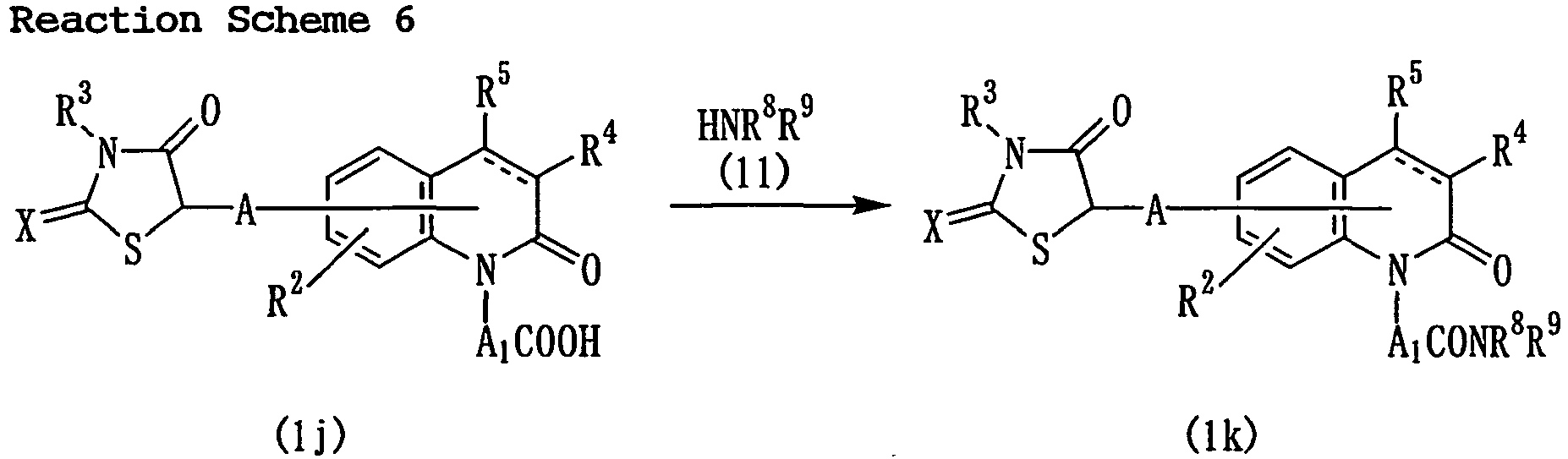
- A wide variety of reaction conditions selected for an ordinary amide bond formation reaction are applicable to the reaction of Compound (1j) with Compound (11), such as, in particular, (a) a mixed acid anhydride process in which Carboxylic Acid (1j) is reacted with an alkyl halocarboxylate to form a mixed acid anhydride and reacting this anhydride with Amine (11), (b) an activated ester process in which Carboxylic Acid (1j) is activated into an activated ester such as phenyl ester, p-nitrophenyl ester, N-hydroxysuccinimide ester, 1-hydroxybenzotriazole ester, etc., or into an activated amide with benzoxazoline-2-thione, and then reacted with Amine (11), (c) a carbodiimide process in which Carboxylic Acid (1j) and Amine (11) are subjected to a condensation reaction in the presence of an activating agent such as dicyclohexylcarbodiimide, 1-(3-dimethylaminopropyl)-3-ethylcarbodiimide (WSC), carbonyldiimidazole, or the like, (d) other processes, for example, in which Carboxylic Acid (1j) is converted into a carboxylic anhydride using a dehydration agent such as acetic anhydride, and reacting this carboxylic anhydride with Amine (11); an ester of Carboxylic Acid (1j) formed with a lower alcohol is reacted with Amine (11) at a high temperature and high pressure; an acid halide of Carboxylic Acid (1j), i.e., a carboxylic acid halide, is reacted with Amine (11), and like processes.
- A mixed acid anhydride for use in the mixed acid anhydride process described above can be obtained by an ordinary Schotten-Baumann reaction, and the reaction product is usually used for the reaction with Amine (11) to give the desired compound of Formula (1k) without isolation from the reaction mixture.
- The above-described Schotten-Baumann reaction is usually carried out in the presence of a basic compound.
- Such basic compounds include any conventional basic compounds for use in Schotten-Baumann reactions, for example, triethylamine, trimethylamine, pyridine, dimethylaniline, N-ethyldiisopropylamine, dimethylaminopyridine, N-methylmorpholine, DBN, DBU, DABCO, and like organic bases; and carbonates such as sodium carbonate, potassium carbonate, sodium hydrogencarbonate and potassium hydrogencarbonate, metal hydroxides such as sodium hydroxide, potassium hydroxide and calcium hydroxide, potassium hydride, sodium hydride, potassium, sodium, sodium amide, metal alcoholates such as sodium methylate and sodium ethylate, and like inorganic bases. Such basic compounds are used singly or as a combination of two or more such compounds. The reaction is usually carried out at about -20 to about 100°C, and preferably about 0 to about 50°C. The reaction time is about 5 minutes to about 10 hours, and preferably about 5 minutes to about 2 hours.
- The reaction of the resulting mixed acid anhydride with Amine (11) is usually carried out at about -20 to about 150°C, and preferably about 10 to about 50°C. The reaction time is about 5 minutes to about 10 hours, and preferably about 5 minutes to about 5 hours.
- The mixed acid anhydride process is usually carried out in a solvent. Examples of solvents are those that are commonly used in connection with mixed acid anhydride processes. Specific examples are chloroform, dichloromethane, dichloroethane, carbon tetrachloride, and like halogenated hydrocarbons; benzene, toluene, xylene, and like aromatic hydrocarbons; diethyl ether, diisopropyl ether, tetrahydrofuran, dimethoxyethane, and like ethers; methyl acetate, ethyl acetate, isopropyl acetate, and like esters; N,N-dimethylformamide, dimethyl sulfoxide, hexamethylphosphoric triamide, and like aprotic polar solvents; mixtures of such solvents; etc.
- Examples of alkyl halocarboxylates usable in the mixed anhydride process are methyl chloroformate, methyl bromoformate, ethyl chloroformate, ethyl bromoformate, isobutyl chloroformate, etc.
- In the mixed acid anhydride process, Carboxylic Acid (1j), an alkyl halocarboxylate, and Amine (11) are preferably used equimolar to each other. However, an alkyl halocarboxylate and Amine (11) are each usable in an amount of about 1 to about 1.5 mol per mol of Carboxylic Acid (1j).
- Process (c) in which a condensation reaction carried out in the presence of an activating agent as described above is performed in a suitable solvent either in the presence or absence of a basic compound. Examples of solvents and basic compounds usable herein are those that are usable in the process in which a carboxylic acid halide is reacted with Amine (1b) as described in Processes (d) below. The amount of activating agent is usually used in an amount of at least 1 mol, and preferably 1 to 5 mol, per mol of Compound (1j). When WSC is used as an activating agent, the reaction advantageously progresses by introducing 1-hydroxybenzotriazole into the reaction system. The reaction is usually carried out at about -20 to 180°C, and preferably about 0 to about 150°C. The reaction usually completes in about 5 minutes to about 90 hours.
- Among Processes (d), if a process in which a carboxylic acid halide is reacted with Amine (11) is selected, this reaction is carried out in the presence of a basic compound in a suitable solvent. Examples of basic compounds for use include a wide variety of known compounds such as those described above in connection with the Schotten-Baumann reaction. Examples of solvents include, in addition to those usable in the aforementioned mixed acid anhydride process, methanol, ethanol, isopropanol, propanol, butanol, 3-methoxy-1-butanol, ethyl cellosolve, methyl cellosolve, and like alcohols, acetonitrile, pyridine, acetone, water, etc. The ratio of carboxylic acid halide to Amine (11) is not limited and can be suitably selected from a broad range. It is usually such that, per mol of the former, the latter is used in an amount of at least about 1 mol, and preferably about 1 to about 5 mol. The reaction is usually carried out at about -20 to about 180°C, and preferably about 0 to about 150°C. The reaction is usually finished in about 5 minutes to about 30 hours.
- Moreover, the amide bond formation reaction shown in Reaction Scheme 6 can be carried out by reacting Carboxylic Acid (1j) and Amine (11) in the presence of a condensing agent composed of a phosphorus compound such as triphenylphosphine, diphenylphosphinyl chloride, phenyl-N-phenylphosphoramide chloridate, diethyl chlorophosphate, diethyl cyanophosphate, diphenyl azidophosphate, bis(2-oxo-3-oxazolidinyl)phosphinic chloride, etc. Such condensing agents can be used singly or as a combination of two or more such agents.
- The reaction is usually carried out at about -20 to about 150°C, and preferably about 0 to about 100°C, using a solvent and basic compound that are also usable in the aforementioned process in which a carboxylic acid halide and Amine (11) are reacted. The reaction is usually finished in about 5 minutes to about 30 hours. Condensing agent and Amine (11) are each used in an amount of at least about 1 mol, and preferably about 1 to about 2 mol, per mol of Carboxylic Acid (1j).

- The reaction for producing Compound (1m) from Compound (11) is carried out under conditions as described in connection with the reaction for producing Compound (9) from Compound (8) shown in Reaction Scheme 4 above.
- The reaction for producing Compound (11) from Compound (1m) can be carried out by reacting Compound (1m) with a compound represented by the formula
R23OH (50)
wherein R23 is a lower alkyl group. - Conditions usually selected for esterification reactions are applicable to the reaction. For example, it may be carried out in the presence of hydrochloric acid, sulfuric acid, or like a mineral acid; or thionyl chloride, phosphorus oxychloride, phosphorus pentachloride, phosphorus trichloride, or like halogenating agent. Compound (50) is used in a large excess relative to Compound (1m). The reaction advantageously progresses usually at about 0 to about 150°C, and preferably about 50 to about 100°C. The reaction is usually finished in about 1 to about 10 hours.

- The reaction for producing Compound (1o) from Compound (1n) is carried out under the same conditions as described in connection with the reaction for producing Compound (9) from Compound (8) shown in Reaction Scheme 4 above.
- When R10a of Compound (1n) is a group as defined in (7-44), the above-presented reaction may be carried out in the presence of a fluorine compound. Examples of fluorine compounds are ammonium tetrafluoride, tetra-N-butyl ammonium fluoride, pyridine hydrofluoride, etc. Among such examples, tetra-N-butyl ammonium fluoride is preferable. Fluorine compound is usually used in at least 1 mol, and preferably 1 to 2 mol, per mol of Compound (1n).


R10a is a group as defined in (7-1), (7-2), (7-21) to (7-29), and (7-40) in connection with R10 above; furyl group; pyridyl group optionally substituted on the pyridine ring with one or more members selected from the group consisting of halogen atoms and lower alkyl groups, each lower alkyl substituent optionally being substituted with one or more halogen atoms; thienyl group optionally substituted on the thiophene ring with one or more halogen atoms; phenyl group optionally substituted on the phenyl ring with one or more members selected from the group consisting of lower alkoxy groups optionally substituted with one or more halogen atoms, a cyano group, lower alkyl groups optionally substituted with one or more halogen atoms, amino groups optionally substituted with one or more members selected from the group consisting of lower alkyl groups and lower alkanoyl groups, halogen atoms, lower alkoxycarbonyl groups, lower alkanoyloxy groups, lower alkylsulfonyl groups, lower alkylthio groups, and pyrrolidinyl groups; thiazolyl group; imidazolyl group optionally substituted on the imidazole ring with one or more lower alkyl groups; pyrrolyl group optionally substituted on the pyrrole ring with one or more lower alkyl groups; or cycloalkyl group; R14a is a group as defined in (10-1) to (10-3) in connection with R14 above; and
R18 is a hydrogen atom or lower alkyl group,
provided that the total number of carbon atoms of the group CH(R10d)R18 of Compound (1r) is not greater than 6. - The reaction of Compound (1o) with Compound (12) is carried out under the same conditions as described in connection with the reaction of Compound (1j) with Compound (11) shown in Reaction Scheme 6 above, provided that with respect to the reaction of Compound (1o) with Compound (12), the amounts of alkyl halocarboxylate, Carboxylic Acid (12), activating agent, condensing agent, carboxylic acid halide, etc., are relative to Compound (1o).
- The reaction of Compound (1o) with Compound (13) is carried out under the same conditions as described in connection with the reaction of Compound (1e) with Compound (7) shown in Reaction Scheme 3 above.
- The reaction of Compound (1o) with Compound (14) may be carried out, for example, either in a suitable solvent or without a solvent, in the presence of a reducing agent.
- Examples of solvents usable herein are water, lower alcohols such as methanol, ethanol, isopropanol, butanol, tert-butanol and ethylene glycol, acetonitrile, aliphatic acids such as formic acid and acetic acid, ethers such as diethyl ether, tetrahydrofuran, dioxane, monoglyme and diglyme, aromatic hydrocarbons such as benzene, toluene and xylene, halogenated hydrocarbons such as dichloromethane, dichloroethane, chloroform, carbon tetrachloride, mixtures of such solvents, etc.
- Examples of reducing agents are aliphatic acids such as formic acid, aliphatic acid alkali metal salts such as sodium formate and sodium acetate, hydride reducing agents such as sodium borohydride, sodium cyanoborohydride, sodium triacetoxyborohydride and aluminium lithium hydride, mixtures of such hydride reducing agents, catalytic hydrogenation reducing agent such as palladium black, palladium carbon, platinum oxide, platinum black, Raney nickel, etc.
- When an aliphatic acid such as formic acid or an aliphatic acid alkali metal salt such as sodium formate or sodium acetate is used as a reducing agent, a suitable reaction temperature is usually about room temperature to about 200°C, and preferably about 50 to about 150°C. The reaction is usually finished in about 10 minutes to about 10 hours. Such aliphatic acids and aliphatic acid alkali metal salts are usually used in a large excess relative to Compound (1o).
- When a hydride reducing agent is used, a suitable reaction temperature is usually about -80 to about 100°C, and preferably about -80 to about 70°C. The reaction is usually finished in about 30 minutes to about 60 hours. The hydride reducing agent is usually used in an amount of about 1 to about 20 mol, and preferably about 1 to about 6 mol, per mol of Compound (1o). In particular, when aluminium lithium hydride is used as a hydride reducing agent, it is preferable to use diethyl ether, tetrahydrofuran, dioxane, monoglyme, diglyme, or like ether; or benzene, toluene, xylene, or like aromatic hydrocarbon as a solvent. Trimethylamine, triethylamine, N-ethyldiisopropylamine, or like amine; or molcular sieves 3A (MS-3A), molcular sieves 4A (MS-4A), or like molcular sieves may be introduced into the reaction system of the reaction.
- When a catalytic hydrogenation reducing agent is used, the reaction is usually carried out at about -30 to about 100°C, and preferably about 0 to about 60°C, in a hydrogen atmosphere usually of about atmospheric pressure to about 20 atm, and preferably about atmospheric pressure to about 10 atm, or in the presence of formic acid, ammonium formate, cyclohexene, hydrazine hydrate, or like hydrogen donor. The reaction is usually finished in about 1 to about 12 hours. The catalytic hydrogenation reducing agent is usually used in an amount of about 0.1 to about 40 wt.%, and preferably about 1 to about 20 wt.%, relative to Compound (1o).
- In the reaction of Compound (1o) with Compound (14), Compound (14) is usually used in an amount at least equimolar, and preferably equimolar to a large excess, relative to Compound (1o).
- The reaction of Compound (1o) with Compound (15) is carried out in the presence or absence of basic compound, but preferably in the absence of basic compound, in a suitable inert solvent or without a solvent.
- Examples of inert solvents and basic compounds include those that are for use in one of the Processes (d) in which a carboxylic acid halide is reacted with Amine (11) for the reaction of Compound (1o) with Compound (12) (amide bond formation reaction).
- The amount of Compound (15) is usually about 1 to about 5 mol, and preferably about 1 to about 3 mol, per mol of Compound (1o).
- The reaction advantageously proceeds usually at about 0 to about 200°C, and preferably about room temperature to about 150°C. The reaction is usually finished in about 5 minutes to about 30 hours.
- Boron trifluoride diethyl ether complex or like boron compound may be introduced into the reaction system of the reaction.

- The reaction of Compound (1s) with Compound (16) is carried out under the same conditions as described in connection with the reaction of Compound (le) with Compound (7) shown in Reaction Scheme 3 above.


- The reaction for producing Compound (1v) from Compound (1u) is carried out under the same conditions as described in connection with the reaction for producing Compound (9) from Compound (8) shown in Reaction Scheme 4 above.
- The reaction for producing Compound (1u) from Compound (1v) is carried out under the same conditions as described in connection with the reaction for producing Compound (11) from Compound (1m) shown in Reaction Scheme 7 above.

- The reaction of Compound (1v) with Compound (17) is carried out under the same conditions as described in connection with the reaction of Compound (1j) with Compound (11) shown in Reaction Scheme 6 above.

R1h is a group as defined in (1-3) in connection with R1 above except for having at least one -(B)1N(R6a)R7a group on the phenyl ring;
R1i is a group as defined in (1-3) in connection with R1 above except for having at least one - (B)1N(R6b)R7a group on the phenyl ring;
R1j is a group as defined in (1-3) in connection with R1 above except for having at least one -(B)1N[CH(R6c)R18]R7a group on the phenyl ring, provided that the total number of carbon atoms of CH(R6c)R18 is no greater than 6 ; 1 is as defined above;
R7a is a group as defined in (4-1) to (4-79) in connection with R7 above;
R6a is a group as defined in (4-2), (4-4), (4-6), (4-8) to (4-11), (4-19) to (4-32), (4-34) to (4-37), (4-60), (4-62) to (4-72), (4-78), and (4-79) in connection with R6 above;
R6b is a group as defined in (4-3), (4-5), (4-7), (4-12) to (4-18), (4-33), (4-38) to (4-59), (4-61), (4-73) to (4-77) in connection with R6 above; and
R6c is a group as defined in (4-1), (4-2), (4-6), (4-9), (4-20), (4-21), (4-23) to (4-29), (4-31), (4-32), and (4-34); pyridyl group; tetrahydropyranyl group; cycloalkyl group; phenyl group optionally substituted on the phenyl ring with one or more members selected from the group consisting of halogen atoms, lower alkyl groups optionally substituted with one or more halogen atoms, lower alkoxy groups optionally substituted with one or more halogen atoms, and hydroxy groups; lower alkylenedioxy-substituted phenyl group; furyl group; imidazolyl group optionally substituted on the imidazole ring with one or more members selected from the group consisting of a carbamoyl group and lower alkoxycarbonyl groups; pyrrolidinyl group optionally substituted on the pyrrolidine ring with one or more lower alkyl groups; or morpholino group. - The reaction of Compound (1x) with Compound (18) is carried out under the same conditions as described in connection with the reaction of Compound (1o) with Compound (12) shown in Reaction Scheme 9 above.
- The reaction of Compound (1x) with Compound (19) is carried out under the same conditions as described in connection with the reaction of Compound (1o) with Compound (13) shown in Reaction Scheme 9 above.
- The reaction of Compound (1x) with Compound (20) is carried out under the same conditions as described in connection with the reaction of Compound (10) with Compound (14) shown in Reaction Scheme 9 above.
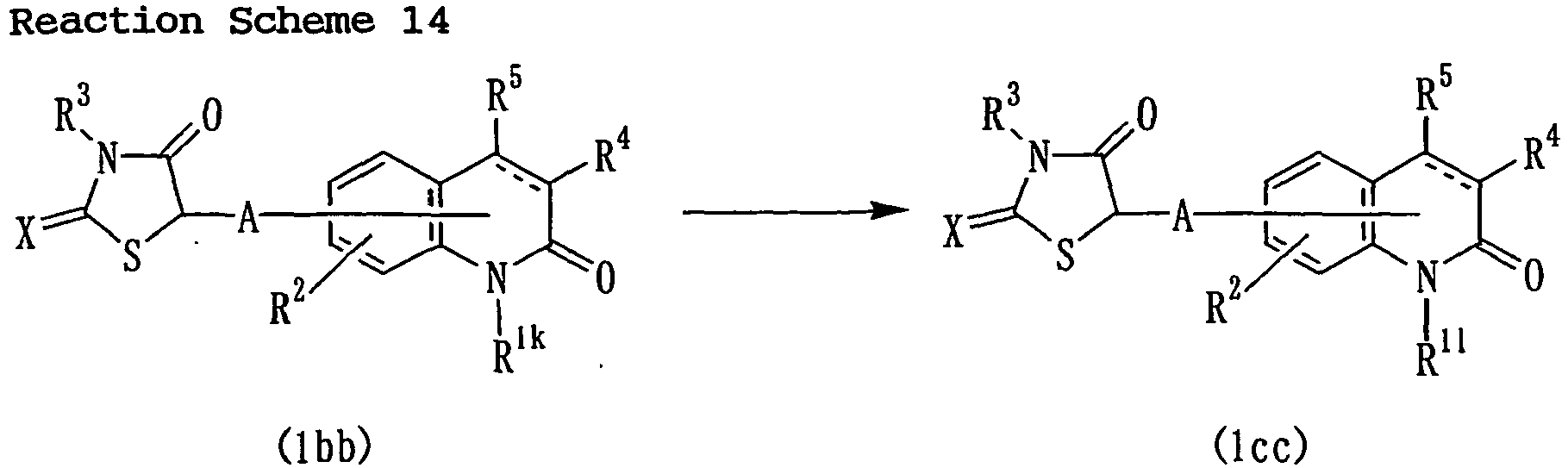
- The reaction for producing Compound (1cc) from Compound (1bb) can be carried out by, for example, (1) reducing Compound (1bb) in a suitable solvent using a catalytic hydrogenation reducing agent, or (2) reducing Compound (1bb) in a suitable inert solvent using as a reducing agent a mixture of an acid with a metal or metal salt, a mixture of a metal or metal salt with an alkali metal hydroxide, sulfide, or ammonium salt, or the like.
- When using Method (1) above, examples of usable solvents are water, acetic acid, alcohols such as methanol, ethanol and isopropanol, hydrocarbons such as n-hexane and cyclohexane, ethers such as dioxane, tetrahydrofuran, diethyl ether and diethylene glycol dimethyl ether, esters such as ethyl acetate and methyl acetate, aprotic polar solvents such as N,N-dimethylformamide, mixtures of such solvents, etc. Examples of usable catalytic hydrogenation reducing agent include palladium, palladium black, palladium carbon, platinum carbon, platinum, platinum oxide, copper chromite, Raney nickel, etc. Such reducing agent may be used singly or as a combination of two or more such agents. Reducing agent is usually used in an amount of about 0.02 times to equal to the weight of Compound (1bb). The reaction temperature is usually about -20 to about 150°C, and preferably about 0 to about 100°C. The hydrogen pressure is usually about 1 to 10 atm. The reaction is usually finished in about 0.5 to about 100 hours. An acid such as hydrochloric acid may be introduced into the reaction system of the reaction.
- When using Method (2) above, a mixture of iron, zinc, tin, or tin(II) chloride, with a mineral acid such as hydrochloric acid, or sulfuric acid; or a mixture of iron, iron(II) sulfate, zinc, or tin, with an alkali metal hydroxide such as sodium hydroxide, a sulfide such as ammonium sulfide, aqueous ammonia, or an ammonium salt such as ammonium chloride, or the like can be used as a reducing agent. Examples of inert solvents are water, acetic acid, alcohols such as methanol and ethanol, ethers such as dioxane, mixtures of such solvents, etc. Conditions for the reduction reaction can be suitably selected according to the reducing agent to be used. For example, when a mixture of tin(II) chloride and hydrochloric acid is used as a reducing agent, it is advantageous to carry out the reaction at about 0 to about 150°C for about 0.5 to about 10 hours. Reducing agent is used in an amount of at least 1 mol, and usually about 1 to 5 mol, per mol of Compound (1bb).


R1o is a group as defined in (1-10) in connection with R1 above except for having at least one member selected from thienyl groups, a phenyl group, pyridyl groups and a biphenyl group; R19 is a piperidinyl group; morpholino group; piperazinyl, group optionally substituted on the piperazine ring with one or more members selected from the group consisting of a phenyl group and lower alkyl groups; anilino group optionally substituted on the amino group with one or more lower alkyl groups; pyridylamino group; or pyridylcarbonylamino group;
R20 is a thienyl group, phenyl group, pyridyl group, or biphenyl group;
M is an alkali metal such as lithium, potassium, sodium or the like, -MgX1 (X1 is as defined above), -ZnX1 (X1 is as defined above), or -B(OH)2;
Y is a lower alkyl group;
q is 1 to 4; and
r is 1 to 3, provided that q + r equals 4. - The reaction of Compound (1dd) with Compound (21) is carried out in a suitable solvent in the presence of a basic compound and a catalyst.
- Examples of solvents and basic compounds usable herein include those that are usable in the reaction of Compound (1e) with Compound (7) shown in Reaction Scheme 3 above.
- Examples of catalysts are bis(tributyltin)/bis(dibenzylideneacetone)palladium, R-tris(dibenzylideneacetone)dipalladium, S-tris(dibenzylideneacetone)dipalladium, palladium(II) acetate, and like palladium compounds; R-2,2'-bis(diphenylphosphino)-1,1'-binaphthyl (R-BINAP), S-2,2'-bis(diphenylphosphino)-1,1'-binaphthyl (S-BINAP), RAC-2,2'-bis(diphenylphosphino)-1,1'-binaphthyl (RAC-BINAP), 2,2-bis(diphenylimidazolidinylidene), and like compounds; 4,5-bis(diphenylphosphino)-9,9-dimethylxanthene, and like xanthene compounds; tert-butylphosphine, tert-butylphosphine tetrafluoroborate, and like alkylphosphines; salts thereof; mixtures thereof; etc.
- Basic compound is usually used in an amount of at least 1 mol, and preferably 1 to 2 mol, per mol of Compound (1dd).
- Catalyst is used in a typical catalytic amount relative to Compound (1dd).
- Compound (21) is usually used in an amount of at least 1 mol, and preferably 1 to 2 mol, per mol of Compound (1dd).
- The reaction is usually carried out at about room temperature to about 200°C, and preferably about room temperature to about 150°C. The reaction is usually finished in about 0.5 to about 20 hours.
- The reaction of Compound (1dd) with Compound (22a) or (22b) is carried out in a suitable solvent in the presence of a basic compound and a catalyst.
- Solvents usable herein include, in addition to water, those that are usable in the reaction of Compound (1e) with Compound (7) shown in Reaction Scheme 3 above.
- Basic compounds usable herein include those that are usable in the reaction of Compound (1e) with Compound (7) shown in Reaction Scheme 3 above.
- Examples of catalysts are tetrakis(triphenylphosphine)palladium(0), dichlorobis(triphenylphosphine)palladium(II), and like palladium compounds.
- Basic compound is usually used in an amount of at least 1 mol, and preferably 1 to 5 mol, per mol of Compound (1dd).
- Catalyst is usually used in an amount of 0.001 to 1 mol per mol of Compound (1dd), and preferably 0.01 to 0.5 mol, per mol of Compound (1dd).
- Compound (21) is usually used in an amount of at least 1 mol, and preferably 1 to 5 mol, per mol of Compound (1dd).
- The reaction is usually carried out at about -30 to about 200°C, and preferably about 0 to about 150°C. The reaction is usually finished in about 0.5 to about 20 hours.
- With respect to the reaction, when M is an alkali metal salt or MgX1, the reaction proceeds in the absence of basic compound and catalyst.

R21 is a lower alkyl group; carboxy lower alkyl group; lower alkoxycarbonyl lower alkyl; phenyl lower alkyl group optionally substituted on the phenyl ring with one or more members selected from the group consisting of halogen atoms, lower alkyl groups optionally substituted with one or more halogen atoms, lower alkylthio groups optionally substituted with one or more halogen atoms, lower alkoxy groups, a nitro group, lower alkylsulfonyl groups, lower alkoxycarbonyl groups, phenyl lower alkenyl groups, lower alkanoyloxy groups, and 1,2,3-thiodiazolyl groups; piperidinyl lower alkyl group optionally substituted on the piperidine ring with one or more lower alkyl groups; amino-substituted lower alkyl group optionally substituted with one or more lower alkyl groups; lower alkenyl group; pyridyl lower alkyl group optionally substituted on the pyridine ring with one or more lower alkyl groups, each lower alkyl substituent optionally being substituted with one or more halogen atoms; lower alkynyl group; phenyl lower alkynyl group; phenyl lower alkenyl group; furyl lower alkyl group optionally substituted on the furan ring with one or more lower alkoxycarbonyl groups; tetrazolyl lower alkyl group optionally substituted on the tetrazole ring with a substituent selected from the group consisting of a phenyl group, phenyl lower alkyl groups, and cycloalkyl lower alkyl groups; 1,2,4-oxadiazolyl lower alkyl group optionally substituted on the 1,2,4-oxadiazole ring with a phenyl group, the phenyl substituent optionally being substituted on the phenyl ring with one or more lower alkyl groups; isooxazolyl lower alkyl group optionally substituted on the isoxazole ring with one or more lower alkyl groups; 1,3,4-oxadiazolyl lower alkyl group optionally substituted on the 1,3,4-oxadiazole ring with a phenyl group, the phenyl substituent optionally being substituted on the phenyl ring with one or more lower alkyl groups; lower alkanoyl lower alkyl group; thiazolyl lower alkyl group optionally substituted on the thiazole ring with one or more members selected from the group consisting of lower alkyl groups and phenyl groups, each phenyl substituent optionally being substituted on the phenyl ring with one or more halogen atoms; piperidinyl group optionally substituted on the piperidine ring with one or more benzoyl groups, each benzoyl substituent optionally being substituted on the phenyl ring with one or more halogen atoms; thienyl lower alkyl group; phenylthio lower alkyl group; carbamoyl-substituted lower alkyl group optionally substituted with one or more lower alkyl groups; benzoyl lower alkyl group; pyridylcarbonyl lower alkyl group; imidazolyl lower alkyl group optionally substituted on the imidazole ring with one or more phenyl lower alkyl groups; phenoxy lower alkyl group; phenyl lower alkoxy-substituted lower alkyl group; 2,3-dihydro-1H-indenyl group; or isoindolinyl lower alkyl group optionally substituted on the isoindoline ring with one or more oxo groups. - The reaction of Compound (1gg) with Compound (23) is carried out under the same conditions as described in connection with the reaction of Compound (1e) with Compound (7) shown in Reaction Scheme 3 above.
- Compounds (2), (4) and (8) used as starting materials as shown in the reaction scheme given above can be produced according to, for example, the reaction scheme below.


- The reaction of Compound (24) with Compound (25) or (26) and the reaction of Compound (30) with Compound (25) or (26) can be carried out under the same conditions as described in one of the Processes (d) in which an acid halide of Carboxylic Acid (1j), i.e., a carboxylic acid halide, is reacted with Amine (11) for the reaction of Compound (1j) with Compound (11) shown in Reaction Scheme 6 above.
- The reaction for producing Compound (28) from Compound (27) and the reaction for producing Compound (32) from Compound (31) can be achieved by reacting Compound (27) with a metal cyanide, and Compound (31) with a metal cyanide, respectively, in a suitable solvent in the presence of a catalyst.
- Examples of metal cyanides are sodium cyanide, potassium cyanide, silver cyanide, zinc cyanide, cuprous cyanide, etc.
- Examples of solvents and catalysts usable in these reactions include those that are usable in the reaction of Compound (1dd) with Compound (22) shown in Reaction Scheme 15 above.
- Catalyst is usually used in an amount of 0.01 to 1 mol, and preferably 0.01 to 0.5 mol, per mol of Compound (27) or (31).
- Metal cyanide is usually used in an amount of at least 1 mol, and preferably 1 to 3 mol, per mol of Compound (27) or (31).
- The reactions are usually carried out at about room temperature to 200°C, and preferably about room temperature to about 150°C. The reactions are usually finished in about 1 hour to about 1 week.
- The reaction for producing Compound (2a) from Compound (28) and the reaction for producing Compound (2b) from Compound (32) are carried out in a suitable solvent in the presence of a reducing agent.
- Examples of solvents usable herein are formic acid and like aliphatic acids; dioxane, tetrahydrofuran, diethyl ether, diethylene glycol dimethyl ether, and like ethers; benzene, toluene, xylene, and like aromatic hydrocarbons, dichloromethane, dichloroethane, chloroform, carbon tetrachloride, and like halogenated hydrocarbons; and mixtures of such solvents.
- Examples of reducing agents are diisobutylaluminum hydride and like alkylaluminum hydrides, Raney nickel, etc. Reducing agent is usually used in an amount at least equal to, and preferably equal to to 5 times, the weight of Compound (28) or (32).
- The reactions are usually carried out at about room temperature to 200°C, and preferably about room temperature to about 150°C. The reactions are usually finished in about 0.5 to about 20 hours.
- Compounds (2a) and (2b) can be produced by reducing compounds (28) and (32), respectively, under the same conditions as described in connection with the reaction, as shown in Reaction scheme 1, for producing Compound (1b) from Compound (1a) when a catalytic hydrogenation reducing agent is used. It is desirable to introduce an inorganic acid such as hydrochloric acid or sulfuric acid into the reaction system usually in an amount of at least 1 mol, and preferably 1 to 2 mol, per mol of compounds (28) or (32).
- The reaction for producing Compound (29) from Compound (2a) and the reaction for producing Compound (33) from Compound (2b) are carried out, in a suitable solvent in the presence of an acid, by separately reacting Compound (2a) and Compound (2b) with an alcohol compound represented by
HO-(CH2)m-OH (51)
wherein m is as defined above. - Solvents and acids usable herein include those that are usable in the reaction of Compound (2) with Compound (3) shown in Reaction Scheme 1 above.
- It is usually advantageous to use an acid in a catalytic amount. The amount of Compound (51) is usually at least 1 mol, and preferably 1 to 5 mol, per mol of Compound (2a) or (2b).
- The reactions are usually carried out at about room temperature to 200°C, and preferably about room temperature to about 150°C. The reactions are usually finished in about 0.5 hours to about 10 hours.
- The reaction of Compound (24) with Compound (10), the reaction of Compound (27) with Compound (10), the reaction of Compound (28) with Compound (10), the reaction of Compound (2a) with Compound (10), and the reaction of Compound (29) with Compound (10) are carried out under the same conditions as described in connection with the reaction of Compound (1e) with Compound (7) shown in Reaction scheme 3.
- The reaction for producing Compound (2a) from Compound (29) and the reaction for producing Compound (2b) from Compound (33) are carried out under the same conditions as described in connection with the reaction for producing Compound (9) from Compound (8) shown in Reaction scheme 4. In these reactions, pyridinium p-toluenesulfonate and like sulfonates are usable as acids.


- The reaction for producing, from Compound (34), Compound (2c) wherein R15 is a hydrogen atom, and the reaction for producing, from Compound (35), Compound (2d) wherein R15 is a hydrogen atom, are carried out, in a suitable solvent in the presence of a catalyst, by separately reacting Compound (34) and Compound (35) with a compound represented by
X1(X2)CHOR24 (52)
wherein X1 and X2 are as defined above, and R24 is a lower alkyl group. - Solvents usable herein include those that are usable in the reaction of Compound (1dd) with Compound (22) shown in Reaction Scheme 15 above.
- Examples of catalysts are titanium tetrachloride and like titanium compounds; tin (IV) chloride and like tin compounds; aluminium chloride and like aluminium compounds; etc. Catalyst is usually used in an amount of at least 1 mol, and preferably 1 to 5 mol, per mol of Compound (34) or (35).
- Compound (52) is usually used in an amount of at least 1 mol, and preferably 1 to 5 mol, per mol of Compound (34) or (35).
- The reaction is usually carried out at about 0 to about 70°C, and preferably about 0 to about 50°C. The reaction is usually finished in about 1 minute to about 1 hour.
- The reaction for producing, from Compound (34), Compound (2c) wherein R15 is a hydrogen atom, and the reaction for producing, from Compound (35), Compound (2d) wherein R15 is a hydrogen atom, can be carried out, in the presence of a halogenating agent and an acid, by separately reacting Compound (34) and Compound (35) with p-formaldehyde and then hexamethylenetetramine.
- Examples of halogenating agents usable herein are hydrochloric acid, hydrobromic acid, etc. Examples of acids are sulfuric acid, phosphoric acid, and like inorganic acids; p-toluenesulfonic acid, formic acid, acetic acid, and like organic acids; and mixtures of such acids. Halogenating agent and acid are usually used in large excess.
- p-Formaldehyde is usually used in an amount at least 0.1 times, and preferably 0.1 times to equal to, Compound (34) or (35).
- Hexamethylenetetramine is usually used in an amount of at least 1 mol, and preferably 1 to 5 mol, per mol of compound (34) or (35).
- The reaction is usually carried out at about room temperature to about 150°C, and preferably about room temperature to about 100°C. The reaction is usually finished in about 0.5 to about 10 hours.
- The reaction for producing, from Compound (34), Compound (2c) wherein R15 is a hydrogen atom and the reaction for producing, from Compound (35), Compound (2d) wherein R15 is a hydrogen atom can be carried out, in a suitable solvent in the presence of an acid, by separately reacting Compound (34) and Compound (35) with hexamethylenetetramine.
- These reactions are generally called Duff reactions. Acids usable herein are those that are preferably used in Duff reactions, for example, acetic acid, boric acid/anhydrous glycerol, trifluoroacetic acid, etc. Acid is usually used in an amount at least equimolar, and preferably equimolar to a large excess, per mol of Compound (34) or (35).
- Solvents usable herein include those that are usable in the reaction of Compound (1dd) with Compound (22) shown in Reaction Scheme 15 above.
- The reactions are usually carried out at about room temperature to about 200°C, and preferably about room temperature to about 150°C. The reactions are usually finished in about 0.5 to about 10 hours.
- Compound (2c) wherein R15 is a lower alkyl group and Compound (2d) wherein R15 is a lower alkyl group are produced by separately reacting, in a suitable solvent in the presence of an acid, reacting Compound (34) and Compound (35) with a compound represented by
X1COR15a (53)
wherein X1 is as described above and R15a is a lower alkyl group. - These reactions are generally called Friedel-Crafts reactions and performed in a suitable solvent in the presence of a Lewis acid.
- Lewis acids usable herein include any Lewis acids typically used in such Friedel-Crafts reactions, and examples are aluminium chloride, zinc chloride, iron chloride, tin(IV) chloride, boron tribromide, boron trifluoride, concentrated sulfuric acid, etc.
- Examples of usable solvents are carbon disulfide, nitrobenzene, chlorobenzene, and like aromatic hydrocarbons; dichloromethane, dichloroethane, carbon tetrachloride, tetrachloroethane, and like halogenated hydrocarbons; nitroethane, nitromethane, and like aliphatic nitro compounds; mixed solvents of such solvents; etc.
- Lewis acid is usually used in an amount of 1 to 6 mol per mol of compounds (34) or (35).
- Compound (53) is usually used in an amount of at least 1 mol, and preferably 1 to 5 mol, per mol of Compound (34) or (35).
- The reactions are usually carried out at about 0 to about 150°C, and preferably about 0 to about 100°C. The reactions are usually finished in about 0.5 to about 25 hours.
- The reaction of Compound (34) with Compound (10) and the reaction of Compound (2c) with Compound (10) are carried out under the same conditions as described in connection with the reaction of Compound (1e) with Compound (7) shown in Reaction Scheme 3 above.

- The reaction for producing Compound (2e) from Compound (36) and the reaction for producing Compound (2f) from Compound (37) are carried out by reacting Compound (36) with carbon monoxide gas, and Compound (37) with carbon monoxide gas, respectively, in a suitable solvent in the presence of a catalyst and an acid alkali metal salt.
- Examples of solvents and catalysts usable in these reactions include those that are usable in the reaction of Compound (1dd) with Compound (22) shown in Reaction Scheme 15 above.
- Examples of acid alkali metal salts are sodium formate, potassium formate, sodium acetate, potassium acetate, etc. Acid alkali metal salt is usually used in an amount of at least 1 mol, and preferably 1 to 5 mol, per mol of Compound (36) or (37).
- Catalyst is usually used in an amount of 0.01 to 1 mol per mol of Compound (36) or (37).
- Carbon monoxide gas is usually used in a large excess relative to Compound (36) or (37).
- The reactions are usually carried out at about room temperature to about 200°C, and preferably about room temperature to about 150°C. The reactions are usually finished in about 0.5 to about 10 hours.
- The reaction of Compound (36) with Compound (10) and the reaction of Compound (2e) with Compound (10) are carried out under the same conditions as described in connection with the reaction of Compound (1e) with Compound (7) shown in Reaction Scheme 3 above.

- The reaction of Compound (38) with Compound (39) is carried out under the same conditions as described in connection with the reaction of Compound (34) with Compound (53) shown in Reaction Scheme 18 above.
- The reaction for producing Compound (41) from Compound (40) is carried out by reducing Compound (40) under the same conditions as described in connection with the reaction for producing Compound (1b) from Compound (1a) using a hydride reducing agent, shown in Reaction Scheme 1 above.
- The reaction for producing Compound (4a) from Compound (41) is carried out by reacting Compound (41) with a halogenating agent either in a suitable solvent or without a solvent.
- Examples of halogenating agents are hydrochloric acid, hydrobromic acid, and like mineral acids, N,N-diethyl-1,2,2-trichlorovinylazide, phosphorus pentachloride, phosphorus pentabromide, phosphorus oxychloride, thionyl chloride, and mixtures of sulfonyl halide compounds (mesyl chloride, tosyl chloride, and the like) with basic compounds, etc.
- Basic compounds usable herein are those that are usable in the reaction of Compound (2) with Compound (3) shown in Reaction Scheme 1 above.
- Examples of usable solvents are dioxane, tetrahydrofuran, diethyl ether, and like ethers; chloroform, methylene chloride, carbon tetrachloride, and like halogenated hydrocarbons; etc.
- When a mixture of sulfonyl halide compound and basic compound is used as a halogenating agent, sulfonyl halide compound is usually used in an amount of at least 1 mol, and preferably 1 to 2 mol, per mol of Compound (41). Basic compound is usually used in a catalytic amount, and preferably a catalytic to equimolar amount, relative to Compound (41). When other halogenating agents are used, the halogenating agent is usually used in an amount of at least 1 mol, and preferably 1 to 10 mol, per mol of Compound (41).
- The reaction advantageously proceeds usually at room temperature to 150°C, and preferably room temperature to 100°C. The reaction is usually finished in about 1 to about 10 hours.

- The reaction of Compound (42) with Compound (46) is carried out under the same conditions as described in connection with the reaction of Compound (1e) with Compound (7) shown in Reaction Scheme 3 above.
- The reaction for producing Compound (8) from Compound (43) is carried out in a suitable solvent in the presence of a halogenating agent either in the presence or absence of a basic compound.
- Examples of halogenating agents usable herein are Br2, Cl2, and like halogen molecules, iodine chloride, sulfuryl chloride, copper compounds such as copper(I) bromide, N-bromosuccinimide and like N-halosuccinimides, etc.
- Examples of usable solvents are diethyl ether, tetrahydrofuran, dioxane, 2-methoxyethanol, monoglyme, diglyme, and like ethers; dichloromethane, dichloroethane, chloroform, carbon tetrachloride, and like halogenated hydrocarbons; acetic acid, propionic acid, and like aliphatic acids; carbon disulfide; etc.
- Examples of basic compounds include those that are usable in the reaction of Compound (2) with Compound (3) shown in Reaction Scheme 1 presented above.
- Halogenating agent is usually used in an amount of 1 to 10 mol, and preferably 1 to 5 mol, per mol of Compound (43).
- Basic compound is usually used in an amount of 1 to 10 mol, and preferably 1 to 5 mol, per mol of Compound (43).
- The reaction is usually carried out at about 0 to about 200°C, and preferably about 0 to about 100°C. The reaction is usually finished in about 5 minutes to about 20 hours.
- The reaction of Compound (44) with Compound (46) is carried out in a suitable solvent in the presence of a basic compound.
- Examples of basic compounds usable herein are sodium hydroxide, potassium hydroxide, calcium hydroxide, sodium carbonate, potassium carbonate, and like inorganic basic compounds; sodium acetate and like aliphatic acid alkali metal salts; piperidine, triethylamine, trimethylamine, pyridine, dimethylaniline, N-ethyldiisopropylamine, dimethylaminopyridine, N-methylmorpholine, DBN, DBU, DABCO, and like organic bases; etc. Such basic compounds may be used singly or as a combination of two or more such compounds.
- Any inert solvents are usable insofar as they do not adversely affect the reaction, for example, water, aromatic hydrocarbons such as benzene, toluene and xylene, ethers such as diethyl ether, tetrahydrofuran, dioxane, monoglyme and diglyme, halogenated hydrocarbons such as dichloromethane, dichloroethane, chloroform and carbon tetrachloride, lower alcohols such as methanol, ethanol, isopropanol, butanol, tert-butanol and ethylene glycol, aliphatic acids such as acetic acid, esters such as ethyl acetate and methyl acetate, ketones such as acetone and methyl ethyl ketone, acetonitrile, pyridine, dimethyl sulfoxide, N,N-dimethylformamide, hexamethylphosphoric triamide, mixtures of such solvents, etc.
- Basic compound is usually used in an amount of about 0.1 to about 5 mol per mol of Compound (45).
- Compound (46) is usually used in an amount of at least 1 mol, and preferably about 1 to about 5 mol, per mol of Compound (45).
- The reaction temperature is usually about room temperature to about 200°C, and preferably about 50 to about 150°C. The reaction is usually finished in about 5 minutes to about 30 hours.
- The reaction for producing Compound (43) from Compound (46) is carried out by reducing Compound (46) under the same conditions as described in connection with the reaction for producing Compound (1b) from Compound (1a) shown in Reaction Scheme 1 in which a catalytic hydrogenation reducing agent is used.


- The reaction of Compound (47) with Compound (21) is carried out under the same conditions as described in connection with the reaction of Compound (1dd) with Compound (21) shown in Reaction Scheme 15 above.
- The reaction of Compound (47) with Compound (22) is carried out under the same conditions as described in connection with the reaction of Compound (1dd) with Compound (21) shown in Reaction Scheme 15 above.
- By reacting Compound (23) with starting Compounds (24), (34), (36), (38), (42) and (47) in which R2 is a hydroxyl group, the corresponding compounds in which R2 is a group as defined in (2-2), (2-4), (2-5), and (2-7) to (2-32) can be produced. These reactions are carried out under the same conditions as described in connection with the reaction of Compound (1gg) with Compound (23) shown in Reaction Scheme 16 above.
- By reacting Compound (10) with starting Compounds (38) and (42) in which R1 is a hydrogen atom, the corresponding compounds in which R1 is a group as defined in (1-2) to (1-29) can be produced. These reactions are carried out under the same conditions as described in connection with the reaction of Compound (1h) with Compound (10) shown in Reaction Scheme 5 above.
- Each of the objective compounds obtained according to the above reaction schemes can be isolated and purified from the reaction mixture by, for example, after cooling the reaction mixture, performing an isolation procedure such as filtration, concentration, extraction, etc., to separate a crude reaction product, and then subjecting the crude reaction product to a usual purification procedure such as column chromatography, recrystallization, etc.
- The carbostyril compound of Formula (1) according to the present invention includes stereoisomers and optical isomers, and solvents such as hydrate, etc.
- Among the compounds of the present invention, those having a basic group or groups can easily form salts with common pharmaceutically acceptable acids. Examples of such acids include hydrochloric acid, hydrobromic acid, nitric acid, sulfuric acid, phosphoric acid and other inorganic acid, methansulfonic acid, p-toluenesulfonic acid, acetic acid, citric acid, tartric acid, maleic acid, fumaric acid, malic acid, lactic acid and other organic acid, etc.
- Among the compounds of the present invention, those having an acidic group or groups can easily form salts by reacting with pharmaceutically acceptable basic compounds. Examples of such basic compounds include sodium hydroxide, potassium hydroxide, calcium hydroxide, sodium carbonate, potassium carbonate, sodium hydrogencarbonate, potassium hydrogencarbonate, etc.
- The following is an explanation of pharmaceutical preparations comprising the compound of the present invention as an active ingredient.
- Such pharmaceutical preparations are obtained by formulating the compound of the present invention into usual pharmaceutical preparations, using usually employed diluents or excipients such as fillers, extenders, binders, wetting agents, disintegrants, surfactants, lubricants, etc.
- The form of such pharmaceutical preparations can be selected from various forms according to the purpose of therapy. Typical examples include tablets, pills, powders, solutions, suspensions, emulsions, granules, capsules, suppositories, injections (solutions, suspensions, etc.) and the like.
- To form tablets, any of various known carriers can be used, including, for example, lactose, white sugar, sodium chloride, glucose, urea, starch, calcium carbonate, kaolin, crystalline cellulose and other excipients; water, ethanol, propanol, simple syrup, glucose solutions, starch solutions, gelatin solutions, carboxymethylcellulose, shellac, methylcellulose, potassium phosphate, polyvinylpyrrolidone and other binders; dry starch, sodium alginate, agar powder, laminaran powder, sodium hydrogencarbonate, calcium carbonate, fatty acid esters of polyoxyethylenesorbitan, sodium laurylsulfate, stearic acid monoglyceride, starch, lactose and other disintegrants; white sugar, stearin, cacao butter, hydrogenated oils and other disintegration inhibitors; quaternary ammonium base, sodium lauryl sulfate and other absorption promoters; glycerin, starch and other wetting agents; starch, lactose, kaolin, bentonite, colloidal silicic acid and other adsorbents; purified talc, stearates, boric acid powder, polyethylene glycol and other lubricants; etc.
- Such tablets may be coated with usual coating materials as required, to prepare, for example, sugar-coated tablets, gelatin-coated tablets, enteric-coated tablets, film-coated tablets, double- or multi-layered tablets, etc.
- To form pills, any of various known carriers can be used, including, for example, glucose, lactose, starch, cacao butter, hydrogenated vegetable oils, kaolin, talc and other excipients; gum arabic powder, tragacanth powder, gelatin, ethanol and other binders; laminaran, agar and other disintegrants; etc.
- To form suppositories, any of various known carriers can be used, including, for example, polyethylene glycol, cacao butter, higher alcohols, esters of higher alcohols, gelatin, semisynthetic glycerides, etc.
- To form an injection, a solution, emulsion or suspension is sterilized and preferably made isotonic with blood. Any of various known widely used diluents can be employed to prepare the solution, emulsion or suspension. Examples of such diluents include water, ethanol, propylene glycol, ethoxylated isostearyl alcohol, polyoxylated isostearyl alcohol, fatty acid esters of polyoxyethylene sorbitan, etc. In this case, the pharmaceutical preparation may contain sodium chloride, glucose or glycerin in an amount sufficient to prepare an isotonic solution, and may contain usual solubilizers, buffers, analgesic agents, etc., and further, if necessary, coloring agents, preservatives, flavors, sweetening agents, etc., and/or other medicines.
- The proportion of the compound of the present invention in the pharmaceutical preparation is not limited and can be suitably selected from a wide range. It is usually preferable that the pharmaceutical preparation contain the compound of the present invention in a proportion of 1 to 70 wt.%.
- The route of administration of the pharmaceutical preparation according to the present invention is not limited, and the preparation is administered by a route suitable for the form of the preparation, patient's age and sex, conditions of the disease, and other conditions. For example, tablets, pills, solutions, suspensions, emulsions, granules and capsules are administered orally. Injections are intravenously administered singly or as mixed with usual injection transfusions such as glucose solutions, amino acid solutions or the like, or singly administered intramuscularly, intracutaneously, subcutaneously or intraperitoneally, as required. Suppositories are administered intrarectally.
- The dosage of the pharmaceutical preparation is suitably selected according to the method of use, patient's age and sex, severity of the disease, and other conditions, and is usually about 0.001 to about 100 mg/kg body weight/day, and preferably 0.001 to 50 mg/kg body weight/day, in single or divided doses.
- Since the dosage varies depending on various conditions, a dosage smaller than the above range may be sufficient or a dosage larger than the above range may be required.
- The carbostyril derivative of the present invention induces TFF production, such as TFF2 production, and thus is useful as an active ingredient of a TFF inducer (up-regulator), particularly TFF2 inducer.
- The compound of the present invention can be used, based on its TFF production inducing activity, as an agent for preventing or treating various diseases, for example, mucosal injury, in human and veterinary medicines. Specific examples of diseases for which preventive or therapeutic effects can be obtained based on TFF production inducing activity, particularly TFF2 production inducing activity, include acute and chronic alimentary tract diseases of various origins (e.g., drug-induced ulcers, peptic gastric ulcers, ulcerative colitis, Crohn's disease, drug-induced enteritis, ischemic colitis, irritable bowel syndrome, ulcers developed after endoscopic demucosation, acute gastritis, chronic gastritis, reflux esophagitis, esophageal ulcer, Barrett esophagus, gastrointestinal mucositis (such as gastrointestinal mucositis caused by chemotherapy, radiotherapy, etc), hemorrhoidal diseases, etc.); oral diseases (e.g., stomatitis (such as stomatitis caused by chemotherapy or radiotherapy, aphthous stomatitis, etc), Sjögren syndrome, xerostomia, etc.); upper respiratory tract diseases (e.g., rhinitis, pharyngitis, etc.); respiratory tract diseases (e.g., bronchial asthma, chronic obstructive lung diseases, etc.); eye diseases (e.g., dry eye, keratoconjunctivitis, etc.); cancers; wounds; etc.
- The compound of the present invention has few side effects and is highly safe.
- The carbostyril compounds of Formula (1) and salts thereof encompassed by the present invention can be administered in combination with TFF peptides (TFF1, TFF2, TFF3, etc), other type of compounds having an inducing activity of TFF production, and/or other drugs (such as, anti-inflammatory agents, anti-ulcer drugs, etc).
- The patents, patent applications and publications cited herein are incorporated by reference.
-
Fig. 1 shows a comparison between the nucleotide sequence of the PCR product cloned to the plasmid pCR-Blunt-TFF2pro (Sequence Number 1 in Sequence Listing) and the counterpart of the hTFF2 promoter region reported in a gene bank (GenBank accession AB038162). - The following Examples are intended to illustrate the present invention in further detail.
- 8-Methoxy-1-methyl-1H-quinolin-2-one (21.14 g, 0.11 mol) and paraformaldehyde (10.6 g) were suspended in concentrated hydrochloric acid (105 ml), and 4 ml of concentrated sulfuric acid was added, followed by stirring at 70 to 80°C for 2.5 hours. After cooling to room temperature, ice water was added to the reaction mixture, and extraction with dichloromethane was performed. The organic layer was washed with a saturated sodium chloride solution and dried over anhydrous sodium sulfate. The solvent was then distilled off under reduced pressure. The residue was dissolved in 400 ml of chloroform, and hexamethylenetetramine (4.25 g, 0.03 mol) was added, followed by heating under reflux for 2.5 hours. After cooling to room temperature, the solvent was distilled off under reduced pressure. 50% acetic acid (110 ml) was added to the residue, and stirring was carried out at 100°C for 2 hours. After cooling to room temperature, water was added, and the insoluble matter was collected by filtration and dried to thereby obtain 13.81 g (yield: 57%) of 8-methoxy-1-methyl-2-oxo-1,2-dihydroquinoline-5-carboxaldehyde as a light yellow powder.
1H-NMR(DMSO-d6) dppm:
3.80 (3H,s), 4.01 (3H,s), 6.79 (1H,d,J=9.9Hz), 7.45 (1H,d,J=8.4Hz), 7.86 (1H,d,J=8.4Hz), 9.05 (1H,d,J=9.9Hz), 10.14(1H,s) - 8-Methoxy-1-methyl-2-oxo-1,2-dihydroquinoline-5-carboxaldehyde (18.9 g), diethyl malonate (26.5 ml) and piperidine (2.7 ml) were added to pyridine (90 ml), and the resulting mixture was stirred at 90 to 100°C for 6 hours. After cooling to room temperature, the reaction mixture was added to cold concentrated hydrochloric acid, and the precipitated solid was collected by filtration, washed with water and dried to thereby obtain 16.62 g (yield: 53%) of diethyl 2-(8-methoxy-1-methyl-2-oxo-1,2-dihydroquinolin-5-ylmethylene)malonate as a yellow powder.
1H-NMR(DMSO-d6) dppm:
1.10 (3H,t,J=7.2Hz), 1.28 (3H,t,J=7.2Hz), 3.80 (3H,s), 3.92 (3H,s), 4.05-4.3 (4H,m), 6.69 (1H,d,J=9.8Hz), 7.18 (1H,d,J=8.5Hz), 7.30 (1H,d,J=8.5Hz), 7.84 (1H,d,J=9.8Hz), 8.14(1H,s) - Diethyl 2-(8-methoxy-1-methyl-2-oxo-1,2-dihydroquinolin-5-ylmethylene)malonate (16.62 g) and 10% palladium carbon (1.6 g) were added to 300 ml of ethanol, followed by catalytic hydrogenation at room temperature and atmospheric pressure for 6 hours. The catalyst was filtered off, and the filtrate was concentrated under reduced pressure. The residue was purified by silica gel column chromatography (ethyl acetate:n-hexane = 1:1) to thereby obtain 13.59 g (yield: 81%) of diethyl 2-(8-methoxy-1-methyl-2-oxo-1,2-dihydroquinolin-5-ylmethyl)malonate as a light yellow oil.
1H-NMR(CDCl3) dppm:
1.15-1.3 (6H,m), 3.45 (2H,d,J=7.6Hz), 3.60 (1H,t,J=7.6Hz), 3.89 (3H,s), 3.95 (3H,s), 4.1-4.25 (4H,m), 6.75 (1H,d,J=9.8Hz), 6.96 (1H,d,J=8.3Hz), 7.04 (1H,d,J=8.3Hz), 7.86 (1H,d,J=9.8Hz) - Sodium hydride (60% in oil) (1.0 g) was added under ice cooling to a tetrahydrofuran (THF) solution (140 ml) of 13.59 g of diethyl 2-(8-methoxy-1-methyl-2-oxo-1,2-dihydroquinolin-5-ylmethyl)malonate, and stirring was carried out until the generation of hydrogen stopped. N-chlorosuccinimide (5.6 g) was added, followed by stirring for 1 hour. The reaction mixture was added to cold hydrochloric acid, and extraction with dichloromethane was performed. After drying over anhydrous sodium sulfate, the dry product was concentrated under reduced pressure, diisopropyl ether was added to the residue, and the precipitated solid was collected by filtration and dried to thereby obtain 12.77 g (yield: 86%) of diethyl 2-chloro-2-(8-methoxy-1-methyl-2-oxo-1,2-dihydroquinolin-5-ylmethyl)malonate as a light yellow powder. 1H-NMR(CDCl3) dppm:
1.28 (3H,t,J=7.2Hz), 3.86(2H,s), 3.89(3H,s), 3.92(3H,s), 4.2-4.3 (4H,m), 6.71 (1H,d,J=9.8Hz), 6.98 (1H,d,J=8.4Hz), 7.10 (1H,d,J=8.4Hz), 7.93 (1H,d,J=9.8Hz) - Diethyl 2-chloro-2-(8-methoxy-1-methyl-2-oxo-1,2-dihydroquinolin-5-ylmethyl)malonate (5.1 g) was added to a mixture of 20 ml of acetic acid and 15 ml of 6N hydrochloric acid, followed by heating under reflux for 9 hours. After cooling to room temperature, water was added to the reaction mixture, followed by cooling with ice. The precipitated solid was collected by filtration, washed with water and dried to thereby obtain 3.1 g of 2-chloro-3-(8-methoxy-1-methyl-2-oxo-1,2-dihydroquinolin-5-yl)propionic acid as a light yellow powder.
1H-NMR(DMSO-d6) dppm:
3.45-3.65 (2H,m), 3.77 (3H,s), 3.86 (3H,s), 4.5-4.65 (1H,m), 6.62 (1H,d,J=9.8Hz), 7.14 (1H,d,J=8.3Hz), 7.21 (1H,d,J=8.3Hz), 8.03 (1H,d,J=9.8Hz), 13.4 (1H,brs) - Sodium hydride (60% in oil) (0.5 g) was added under ice cooling to a tetrahydrofuran (THF) solution (30 ml) of diethyl malonate (2.2 ml), and stirring was carried out until the generation of hydrogen stopped. 5-(2-iodoethyl)-8-methoxy-1-methyl-2-oxo-1,2-dihydroquinoline (1.54 g) was added, followed by stirring at room temperature overnight. The reaction mixture was added to cold hydrochloric acid, and extraction with dichloromethane was performed. After drying over anhydrous sodium sulfate, the dry product was concentrated under reduced pressure, and the residue was purified by silica gel column chromatography (dichloromethane:methanol = 50:1 → 40:1). The purified product was under reduced pressure to thereby obtain 1.73 g (yield: quantitative) of diethyl 2-[2-(8-methoxy-1-methyl-2-oxo-1,2-dihydroquinolin-5-yl)ethyl]malonate as a yellow oil.
1H-NMR(CDCl3) dppm:
1.2-1.4 (6H,m), 2.1-2.25 (2H,m), 2.8-3.0 (2H,m), 3.3-3.5(1H,m), 3.88 (3H,s), 3.93 (3H,s), 4.1-4.4 (4H,m), 6.75 (1H,d,J=9.7Hz), 6.9-7.1 (2H,m), 7.92 (1H,d,J=9.7Hz) - Sodium hydride (60% in oil) (0.21 g) was added under ice cooling to a THF solution (30 ml) of 1.79 g of diethyl 2-[2-(8-methoxy-1-methyl-2-oxo-1,2-dihydroquinolin-5-yl)ethyl]malonate, and stirring was carried out until the generation of hydrogen stopped. N-chlorosuccinimide (0.7 g) was added, followed by stirring for 1.5 hours. The reaction mixture was added to cold hydrochloric acid, and extraction with dichloromethane was performed. The extract was dried over anhydrous sodium sulfate, and concentrated under reduced pressure to thereby obtain 2.38 g (yield: quantitative) of diethyl 2-chloro-2-[2-(8-methoxy-1-methyl-2-oxo-1,2-dihydroquinolin-5-yl)ethyl]malonate as a yellow oil. 1H-NMR(CDCl3) dppm:
1.31 (6H,t,J=7.1Hz), 2.47 (2H,t,J=8.7Hz), 2.98 (2H,t,J=8.7Hz), 3.88 (3H,s), 3.93 (3H,s), 6.75 (1H,d,J=9.7Hz), 6.9-7.1 (2H,m), 7.87 (1H,d,J=9.7Hz) - Diethyl 2-chloro-2-[2-(8-methoxy-1-methyl-2-oxo-1,2-dihydroqinolin-5-yl)ethyl]malonate (2.38 g) was added to a mixture of acetic acid (10 ml) and 6N hydrochloric acid (15 ml), and the resulting mixture was heated under reflux overnight. After cooling to room temperature, water and a small quantity of ethanol was added to the reaction mixture, followed by ice cooling. The precipitated solid was collected by filtration, washed with water and dried to thereby obtain 0.99 g (yield: 55%) of 2-chloro-4-(8-methoxy-1-methyl-2-oxo-1,2-dihydroquinolin-5-yl)butyric acid as a gray powder.
1H-NMR(DMSO-d6) dppm:
1.9-2.3 (2H,m), 2.8-3.1 (2H,m), 3.77 (3H,s), 3.85 (3H,s), 4.4-4.6 (1H,m), 6.61 (1H,d,J=9.7Hz), 7.05 (1H,d,J=7.1Hz), 7.18 (1H,d,J=7.1Hz), 7.98 (1H,d,J=9.7Hz), 13.4 (1H,brs) - Sodium hydride (60% in oil) (0.39 g) was added under ice cooling to a THF solution (30 ml) of diethyl malonate (1.85 ml), and stirring was carried out until the generation of hydrogen stopped. 5-(3-Iodopropyl)-8-methoxy-1-methyl-2-oxo-1,2-dihydroquinoline (2.89 g) was added, followed by stirring at room temperature for 4.5 hours. The reaction mixture was added to cold hydrochloric acid, and extraction with dichloromethane was performed. After drying over anhydrous sodium sulfate, the dry product was concentrated under reduced pressure, and the residue was purified by silica gel column chromatography (dichloromethane:methanol = 20:1). The purified product was concentrated under reduced pressure to thereby obtain 2.94 g (yield: 93%) of diethyl 2-[3-(8-methoxy-1-methyl-2-oxo-1,2-dihydroquinolin-5-yl)propyl]malonate as a yellow oil.
1H-NMR(CDCl3) dppm:
1.27 (6H,t,J=7.1Hz), 1.6-1.8 (2H,m), 1.95-2.1 (2H,m), 2.87 (2H,t,J=7.7Hz), 3.56 (1H,t,J=7.5Hz), 3.89(3H,s), 3.95(3H,s), 4.1-4.4 (4H,m), 6.73 (1H,d,J=9.8Hz), 7.00 (2H,s), 7.84(1H,d,J=9.8Hz) - Sodium hydride (60% in oil) (0.33 g) was added under ice cooling to a THF solution (30 ml) of diethyl 2-[3-(8-methoxy-1-methyl-2-oxo-1,2-dihydroquinolin-5-yl)propyl]malonate (2.94 g), and stirring was carried out until the generation of hydrogen stopped. N-chlorosuccinimide (1.2 g) was added, followed by stirring for 2 hours. The reaction mixture was added to cold hydrochloric acid, and extraction with dichloromethane was performed. The extract was dried over anhydrous sodium sulfate, and concentrated under reduced pressure to thereby obtain 4.02 g (yield: quantitative) of diethyl 2-chloro-2-[3-(8-methoxy-1-methyl-2-oxo-1,2-dihydroquinolin-5-yl)propyl]malonate as a yellow oil.
1H-NMR(CDCl3) dppm:
1.26 (6H,t,J=7.1Hz), 1.6-1.9 (2H,m), 2.31 (2H,t,J=8.0Hz), 2.88 (2H,t,J=7.7Hz), 3.88 (3H,s), 3.94 (3H,s), 6.72(1H,d,J=9.8Hz), 6.99 (2H,s), 7.79(1H,d,J=9.8Hz) - Diethyl 2-chloro-2-[3-(8-methoxy-1-methyl-2-oxo-1,2-dihydroquinolin-5-yl)propyl]malonate (4.02 g) was added to a mixture of acetic acid (15 ml) and 6N hydrochloric acid (20 ml), followed by heating under reflux for 24 hours. After cooling to room temperature, water was added to the reaction mixture, followed by cooling with ice. The precipitated solid was collected by filtration, washed with water and dried to thereby obtain 2.30 g (yield: 75%) of 2-chloro-5-(8-methoxy-1-methyl-2-oxo-1,2-dihydroquinolin-5-yl)valeric acid as a light yellow powder.
1H-NMR(DMSO-d6) dppm:
1.6-2.2 (4H,m), 2.7-3.1(2H,m), 3.77(3H,s), 3.84(3H,s), 4.5-4.65 (1H,m), 6.59 (1H,d,J=9.7Hz), 7.05 (1H,d,J=8.1Hz), 7.17 (1H,d,J=8.1Hz), 7.99 (1H,d,J=9.7Hz), 13.2 (1H,brs) - 8-Methoxy-3,4-dihydro-1H-quinolin-2-one (5 g) was dissolved in dichloromethane (100 ml), and dichloromethyl methyl ether (6.4 ml) was added at room temperature, followed by cooling in an ice water bath. Titanium tetrachloride (85 ml) was added dropwise at a temperature not higher than 10°C, and the resulting mixture was stirred at room temperature overnight. The reaction mixture was poured into ice water, and the aqueous layer was subjected to extraction with dichloromethane. The organic layer was dried over sodium sulfate, filtered, and concentrated under reduced pressure. Diethyl ether was added to the residue and the produced solid was collected by filtration and dried to thereby obtain 5.2 g (yield: 90%) of 8-methoxy-2-oxo-1,2,3,4-tetrahydroquinoline-5-carboxaldehyde.
1H-NMR(CDCl3) dppm:
2.63 (2H,t,J=7.4Hz), 3.54 (2H,t,J=7.4Hz), 3.97(3H,s), 6.92 (1H,d,J=8.5Hz), 7.50 (1H,d,J=8.5Hz), 7.84 (1H,brs), 10.02 (1H,s) - 8-Methoxy-2-oxo-1,2,3,4-tetrahydroquinoline-5-carboxaldehyde (2.0 g) was dissolved in DMF (20 ml), and 0.43 g of sodium hydride (60% in oil) was added under ice cooling. After the addition, stirring was carried out at room temperature until the generation of hydrogen stopped. The resulting mixture was cooled in an ice water bath again, 1.2 ml of ethyl iodide was added dropwise, and stirring was carried out at room temperature for 8 hours. The reaction mixture was poured into iced aqueous hydrochloric acid, extraction with methylene chloride was performed, and the organic layer was dried over sodium sulfate, filtered, and concentrated under reduced pressure. The residue was purified by silica gel column chromatography to thereby obtain 2.1 g (yield: 91%) of 8-methoxy-1-ethyl-2-oxo-1,2,3,4-tetrahydroquinoline-5-carboxaldehyde.
1H-NMR(CDCl3) dppm:
1.15 (3H,t,J=7.1Hz), 2.51 (2H,t,J=7.0Hz), 3.36 (2H,t,J=7.0Hz), 3.97 (3H,s), 4.01 (2H,t,J=7.4Hz), 6.98 (1H,d,J=8.6Hz), 7.60 (1H,d,J=8.6Hz), 10.06 (1H,s) - 8-Methoxy-3,4-dihydro-1H-quinolin-2-one (15 g) was dissolved in DMF (150 ml), and 3.6 g of sodium hydride (60% in oil) was added under ice cooling. After the addition, stirring was carried out at room temperature until the generation of hydrogen stopped. The resulting mixture was cooled with ice water again, and 5.8 ml of methyl iodide was added dropwise, followed by stirring at room temperature overnight. The solvent was distilled off under reduced pressure, and the residue was purified by silica gel column chromatography to thereby obtain 16.7 g (yield: 96%) of 8-methoxy-1-methyl-3,4-dihydro-1H-quinolin-2-one.
1H-NMR(CDCl3) dppm:
2.5-2.6 (2H,m), 2.8-2.9(2H,m), 3.39(3H,s), 3.85(3H,s), 6.75-6.9 (2H,m), 7.0-7.05 (1H,m) - 8-Methoxy-1-methyl-3,4-dihydro-1H-quinolin-2-one (1.5 g) was dissolved in dichloromethane (15 ml), and dichloromethyl methyl ether (0.86 ml) was added at room temperature, followed by cooling with ice water. Titanium tetrachloride (10.5 ml) was added dropwise, and the resulting mixture was stirred at room temperature overnight. Further, dichloromethyl methyl ether (1.29 ml) and titanium tetrachloride (15.8 ml) were added, and stirring was carried out at room temperature for 5 hours. The reaction mixture was poured into ice water, and the aqueous layer was subjected to extraction with dichloromethane. The organic layer was dried over sodium sulfate, filtered, and concentrated under reduced pressure. Hexane was added to the residue, and the produced insoluble matter was collected by filtration and dried to thereby obtain 1.37 g (yield: 80%) of 8-methoxy-1-methyl-2-oxo-1,2,3,4-tetrahydroquinoline-5-carboxaldehyde.
1H-NMR(CDCl3) dppm:
2.5-2.55 (2H,m), 3.3-3.45 (2H,m), 3.96 (3H,s), 6.99 (1H,d,J=8.6Hz), 7.60 (1H,d,J=8.6Hz), 10.06(1H,s) - Sodium hydride (60% in oil) (0.49 g) was added at 0°C to a DMF solution (20 ml) of 6-bromo-3,4-dihydro-1H-quinolin-2-one (2.54 g), followed by stirring for 30 minutes. 4-Bromomethylbiphenyl (3.05 g) was added, and the resulting mixture was stirred at room temperature overnight. Water was added to the reaction mixture, extraction with ethyl acetate was performed, and the extract was dried over anhydrous sodium sulfate, and concentrated under reduced pressure. The residue was purified by silica gel column chromatography (ethyl acetate:n-hexane = 1:6 → 1:2). The purified product was recrystallized from a chloroform-diisopropyl ether mixed solvent to thereby obtain 4.06 g (yield: 92%) of 1-(4-biphenylmethyl)-6-bromo-3,4-dihydro-1H-quinolin-2-one as a white powder.
1H-NMR(DMSO-d6) dppm:
2.65-2.78 (2H,m), 2.89-3.03 (2H,m), 5.17(2H,s), 6.90 (1H,d,J=8.7 Hz), 7.23-7.39 (4H,m), 7.39-7.50 (3H,m), 7.50-7.71 (4H,m) - A DMF solution (30 ml) of 1-(4-biphenylmethyl)-6-bromo-3,4-dihydro-1H-quinolin-2-one (2.80 g), sodium formate (0.171 g) and bistriphenylphosphine palladium chloride (0.25 g) was stirred under a carbon monoxide atmosphere at 100°C for 4 hours. Water was added to the reaction mixture, extraction with ethyl acetate was performed, and the extract was dried over anhydrous sodium sulfate, and concentrated under reduced pressure. The residue was purified by silica gel column chromatography (ethyl acetate:n-hexane = 1:4 → 1:2). The purified product was recrystallized from a chloroform-diethyl ether mixed solvent to thereby obtain 1.95 g (yield: 78%) of 1-(4-biphenylmethyl)-2-oxo-1,2,3,4-tetrahydroquinoline-6-carboxaldehyde as a white powder.
1H-NMR(DMSO-d6) dppm:
2.78 (2H,t,J=8.0Hz), 3.07(2H,t,J=8.0Hz), 5.24(2H,s), 7.15 (1H,d,J=8.4Hz), 7.25-7.49(5H,m), 7.55-7.82 (6H,m), 9.84(1H,s) - Sodium hydride (60% in oil) (1.3 g) was added at 0°C to a DMF solution (50 ml) of 2-oxo-1,2-dihydroquinoline-4-carboxaldehyde (5.13 g), followed by stirring for 30 minutes. 4-chlorobenzylbromide (7.0 g) was added, and the resulting mixture was stirred at room temperature overnight. Water was added to the reaction mixture, extraction with ethyl acetate was performed, and the extract was dried over anhydrous sodium sulfate, and concentrated under reduced pressure. The residue was purified by silica gel column chromatography (ethyl acetate:n-hexane = 1:10 → 1:4). The purified product was recrystallized from a chloroform-diisopropyl ether-n-hexane mixed solvent to thereby obtain 4.13 g (yield: 47%) of 1-(4-chlorobenzyl)-2-oxo-1,2-dihydroquinoline-4-carboxaldehyde as a white powder.
1H-NMR(DMSO-d6) dppm:
5.55 (2H,s), 7.24 (2H,d,J=8.5Hz), 7.28-7.39 (4H,m), 7.45 (1H,d,J=8.4Hz), 7.50-7.64 (1H,m), 8.68 (1H,dd,J=1.3,8.1Hz), 10.24(1H,s) - Sodium hydride (60% in oil) (1.3 g) was added at 0°C to a DMF solution (50 ml) of 2-oxo-1,2-dihydroquinoline-3-carboxaldehyde (5.13 g), followed by stirring for 30 minutes. 4-chlorobenzyl bromide (7.0 g) was added, and the resulting mixture was stirred at room temperature overnight. Water was added to the reaction mixture, extraction with ethyl acetate was performed, and the extract was dried over anhydrous sodium sulfate, and concentrated under reduced pressure. The residue was purified by silica gel column chromatography (ethyl acetate:n-hexane = 1:10 → 1:4). The purified product was recrystallized from a chloroform-diisopropyl ether mixed solvent to thereby obtain 6.57 g (yield: 72%) of 1-(4-chlorobenzyl)-2-oxo- 1,2-dihydroquinoline-3-carboxaldehyde as a white powder.
1H-NMR(DMSO-d6) dppm:
5.56 (2H,s), 7.21-7.39 (5H,m), 7.44 (1H,d,J=8.6Hz), 7.61-7.72 (1H,m), 8.02 (1H,dd,J=1.4,7.8Hz), 8.59 (1H,s), 10.31(1H,s) - Pyridine (30 ml) and trifluoromethanesulfonic anhydride (25 g) were added with stirring at 0°C to an anhydrous dichloromethane solution (200 ml) of 5-hydroxy-3,4-dihydro-1H-quinolin-2-one (15.9 g), followed by stirring for 2 hours. The resulting mixture was concentrated under reduced pressure, water was added to the residue, and extraction with dichloromethane was performed. The extract was washed with water, an aqueous potassium hydrogensulfate solution and water in this order, and dried over anhydrous sodium sulfate. After concentration under reduced pressure, the residue was recrystallized from an ethyl acetate-diisopropyl ether mixed solvent to thereby obtain 28 g (yield: 97%) of 5-trifluoromethanesulfonyloxy-3,4-dihydro-1H-quinolin-2-one as a light brown powder.
1H-NMR(CDCl3) dppm :
2.67 (2H,dd,J=6.3Hz,J=8.8Hz), 3.07 (2H,t,J=7.2Hz), 6.80-6.90(1H,m), 6.90-7.02(1H,m), 7.16-7.32 (1H,m), 8.95(1H,brs) - 5-Trifluoromethanesulfonyloxy-3,4-dihydro-1H-quinolin-2-one (1.5 g), zinc cyanide (1.3 g) and tetrakis(triphenylphosphine) palladium (0.59 g) were suspended in DMF (20 ml), and the suspension was stirred at 100°C for 2 hours. The insoluble matter was filtered off, and ethyl acetate was added to the filtrate, followed by washing with water. The resulting mixture was dried over anhydrous magnesium sulfate, and concentrated under reduced pressure, and the residue was recrystallized from an ethyl acetate-diethyl ether mixed solvent to thereby obtain 0.71 g (yield: 81%) of 5-cyano-3,4-dihydro-1H-quinolin-2-one as a light brown powder.
1H-NMR(DMSO-d6) dppm:
2.45-2.60 (2H,m), 3.05(2H,t,J=7.2Hz),7.08-7.18(1H,m),7.28-7.40 (2H,m),10.37 (1H,brs) - 5-Cyano-3,4-dihydro-1H-quinolin-2-one (100 mg) and Raney nickel (100 mg) were suspended in formic acid (10 ml), and the suspension was heated under reflux for 2 hours. An additional 100 mg of Raney nickel was added, followed by heating under reflux for 1 hour. The reaction mixture was filtered to remove the insoluble matter, and the filtrate was concentrated. Ethyl acetate and water were added to the residue, and after stirring, the mixture was filtered through Celite. The filtrate was separated into layers, and the organic layer was washed with water and dried over anhydrous sodium sulfate. After concentration under reduced pressure, the residue was recrystallized from an ethyl acetate-n-hexane mixed solvent to thereby obtain 77 mg (yield: 76%) of 2-oxo-1,2,3,4-tetrahydroquinoline-5-carboxaldehyde as a light brown powder.
1H-NMR(DMSO-d6) dppm:
2.39-2.51 (2H,m), 3.35 (2H,t,J=7.4Hz), 7.10-7.17 (1H,m), 7.31-7.41 (1H,m), 7.44-7.50 (1H,m), 10.18 (1H,s), 10.26(1H,brs) - Sodium hydride (60% in oil) (0.25 g) was added at 0°C to a DMF solution (10 ml) of 2-oxo-1,2,3,4-tetrahydroquinoline-5-carboxaldehyde (1.0 g), followed by stirring for 30 minutes. 4-bromomethylbiphenyl (1.69 g) was added, and the resulting mixture was stirred at room temperature for 1 hour. Water was added to the reaction mixture, and extraction with ethyl acetate was performed. The extract was washed with a saturated sodium chloride solution, dried over anhydrous magnesium sulfate, and concentrated under reduced pressure. The residue was purified by silica gel column chromatography (ethyl acetate:n-hexane = 1:4 → 1:2). The purified product was recrystallized from a chloroform-diisopropyl ether mixed solvent to thereby obtain 1.11 g (yield: 56%) of 1-(4-biphenylmethyl)-2-oxo-1,2,3,4-tetrahydroquinoline-5-carboxaldehyde as a colorless plate crystals.
1H-NMR(DMSO-d6) dppm:
2.65-2.78 (2H,m), 3.45 (2H,t,J=7.6Hz), 5.24 (2H,s), 7.21-7.49 (7H,m), 7.49-7.57 (1H,m), 7.57-7.70 (4H,m), 10.24(1H,s) - 8-Methoxy-2-oxo-1,2,3,4-tetrahydroquinoline-5-carboxaldehyde (42 g) was suspended in toluene (400 ml), and ethylene glycol (33.7 ml) and p-toluenesulfonic acid monohydrate (0.78 g) were added, and the resulting mixture was heated under reflux in a Dean-Stark apparatus for 4.5 hours. The reaction mixture was cooled, and 10 ml of an aqueous solution containing 1.72 g of sodium bicarbonate was added. Stirring was carried out for some time, and the produced solid was collected by filtration. The solid was washed with water and toluene and dried at 60°C to thereby obtain 35.5 g (yield: 70%) of 5-(1,3-dioxolan-2-yl)-8-methoxy-3,4-dihydro-1H-quinolin-2-one as white crystals.
1H-NMR(DMSO-d6) dppm:
2.33-2.44 (2H,m), 2.85-2.98 (2H,m), 3.79 (3H,s), 3.86-4.08 (4H,m), 5.78 (1H,s), 6.86 (1H,d,J=8.5Hz), 7.07 (1H,d,J=8.5Hz), 8.97 (1H,s) - Sodium hydride (55% in oil) (2.1 g) was added in small portions under ice cooling to a DMF solution (70 ml) of 5-(1,3-dioxolan-2-yl)-8-methoxy-3,4-dihydro-1H-quinolin-2-one (10 g), and stirring was carried out at room temperature until the generation of hydrogen stopped. The resulting mixture was cooled with ice again, and a DMF solution (30 ml) of 2-chloro-5-chloromethyl pyridine (9.74 g) was added dropwise. After stirring at room temperature for 4 hours, the reaction mixture was poured into ice water, and the produced insoluble matter was collected by filtration. The solid was washed with water and diethyl ether and dried to thereby obtain 11.84 g (yield: 79%) of 1-(6-chloropyridin-3-ylmethyl)-5-(1,3-dioxolan-2-yl)-8-methoxy-3,4-dihydro-1H-quinolin-2-one as a light yellow solid.
1H-NMR(DMSO-d6) dppm:
2.47-2.53 (2H,m), 2.88-2.94 (2H,m), 3.63 (3H,s), 3.91-4.04 (4H,m), 5.08 (2H,s), 5.80 (1H,s), 6.88 (1H,d,J=8.6Hz), 7.19(1H,d,J=8.6Hz), 7.38 (1H,d,J=8.3Hz), 7.60 (1H,dd,J1=2.3Hz,J2=8.3Hz), 8.19 (1H,d,J=2.3Hz) - 1-(6-Chloropyridin-3-ylmethyl)-5-[1,3]dioxolan-2-yl-8-methoxy-3,4-dihydro-1H-quinolin-2-one (0.4 g), tris(dibenzylideneacetone)dipalladium (48.8 mg), 4,5-bis(diphenylphosphino)-9,9-dimethylxanthene (92.6 mg) and sodium tert-butoxide (0.15 g) were suspended in toluene (10.6 ml). N-methylaniline (0.17 g) was added, and the resulting mixture was heated under reflux in an argon atmosphere for 13 hours. After concentration under reduced pressure, the residue was purified by silica gel column chromatography (ethyl acetate:n-hexane = 1:1 → dichloromethane:methanol = 20:1). The purified product was concentrated under reduced pressure to thereby obtain 0.45 g (yield: 95%) of 5-(1,3-dioxolan-2-yl)-8-methoxy-1-[6-(N-methyl-N-phenylamino)pyridin-3-ylmethyl]-3,4-dihydro-1H-quinolin-2-one as an amorphous solid.
1H-NMR (CDCl3) dppm:
2.52-2.58 (2H,m), 2.74-2.80 (2H,m), 3.40 (3H,s), 3.83(3H,s), 3.98-4.12 (4H,m), 5.22 (2H,s), 5.81 (1H,s), 6.39 (1H,d,J=8.7Hz), 6.76 (1H,d, J=8.7Hz), 7.13-7.26 (4H,m), 7.33-7.39 (3H,m), 7.99 (1H,d,J=2.0Hz) - Pyridinium p-toluene sulfonate (PPTS) (0.54 g) was added to a mixed solution of 5-(1,3-dioxolan-2-yl)-8-methoxy-1-[6-(N-methyl-N-phenylamino)pyridin-3-ylmethyl]-3,4-dihydro-1H-quinolin-2-one (0.95 g) in acetone (19 ml) and water (9.5 ml), followed by heating under reflux for 2 hours. An aqueous sodium hydrogencarbonate solution was added to the reaction mixture, and extraction with ethyl acetate was performed. The extract was washed twice with water, washed with a saturated sodium chloride solution, dried over sodium sulfate, filtered, and concentrated under reduced pressure. The residue was purified by silica gel column chromatography (ethyl acetate:n-hexane = 1:1). The purified product was concentrated under reduced pressure to thereby obtain 0.69 g (yield: 81%) of 8-methoxy-1-[6-(N-methyl-N-phenylamino)pyridin-3-ylmethyl]-2-oxo-1,2,3,4-tetrahydroquinoline-5-carboxaldehyde as a light yellow amorphous solid.
1H-NMR(CDCl3) dppm:
2.53-2.59 (2H,m), 3.28-3.34 (2H,m), 3.39 (3H,s), 3.95 (3H,s), 5.23(2H,s), 6.37 (1H,d,J=8.8Hz), 6.90 (1H,d,J=8.6Hz), 7.09 (1H,dd,J1=2.4Hz,J2=8.8Hz),7.16-7.21 (3H,m), 7.33-7.39 (2H,m), 7.54 (1H,d,J=8.6Hz), 7.94 (1H,d,J=2.4Hz), 10.00 (1H,s) - 1-(6-Chloropyridin-3-ylmethyl)-5-(1,3-dioxolan-2-yl)-8-methoxy-3,4-dihydro-1H-quinolin-2-one (0.4 g), tetrakis(triphenylphosphine) palladium (0.12 g) and a 2N aqueous solution of sodium carbonate (2.5 ml) were suspended in 8 ml of 1,2-dimethoxyethane, and 0.20 g of 3-thiopheneboronic acid was added, followed by heating under reflux in an argon atmosphere for 4 hours. Water was added to the reaction mixture, and extraction with ethyl acetate was performed. The extract was washed twice with water, washed with a saturated sodium chloride solution, dried over sodium sulfate, filtered, and concentrated under reduced pressure. The residue was purified by silica gel column chromatography (ethyl acetate:n-hexane = 1:1). The purified product was concentrated under reduced pressure to thereby obtain 0.45 g (yield: 95%) of 5-(1,3-dioxolan-2-yl)-8-methoxy-1-(6-thiophen-3-ylpyridin-3-ylmethyl)-3,4-dihydro-1H-quinolin-2-one as a light brown amorphous solid.
1H-NMR(DMSO-d6) dppm:
2.49-2.51 (2H,m), 2.89-2.91 (2H,m), 3.71 (3H,s), 3.91-4.04 (4H,m), 5.19 (2H,s), 5.79 (1H,s), 6.87 (1H,d,J=8.8Hz), 7.16 (1H,d,J=8.8Hz), 7.51-7.74 (4H,m), 8.09-8.10 (1H,m), 8.32 (1H,d,J=2.0Hz) - Pyridinium p-toluenesulfonate (PPTS) (0.24 g) was added to a mixed solution of 5-(1,3-dioxolan-2-yl)-8-methoxy-1-(6-thiophen-3-ylpyridin-3-ylmethyl)-3,4-dihydro-1H-quinolin-2-one (0.4 g) in acetone (8 ml) and water (4 ml), followed by heating under reflux 1.5 hours. The resulting mixture was concentrated under reduced pressure, subjected to extraction with dichloromethane, washed with water, washed with a saturated sodium chloride solution, dried over sodium sulfate, filtrated, and concentrated under reduced pressure to thereby obtain 0.4 g (yield: quantitative) of 8-methoxy-1-(6-thiophen-3-ylpyridin-3-ylmethyl)-2-oxo-1,2,3,4-tetrahydroquinoline-5-carboxaldehyde as a light brown amorphous solid.
1H-NMR(DMSO-d6) dppm:
2.51-2.58 (2H,m), 3.34-3.41 (2H,m), 3.81 (3H,s), 5.19 (2H,s), 7.09 (1H,d, J=8.8Hz), 7.54-7.74 (5H,m), 8.09-8.10 (1H,m), 8.35 (1H,d,J=1.8Hz), 10.03 (1H,s) - 5-(1,3-Dioxolan-2-yl)-3,4-dihydro-1H-quinolin-2-one (2.30 g, 10.5 mmol), iodobenzene (3.5 ml, 31.5 mmol), copper(I) iodide (400 mg, 2.10 mmol), trans-1,2-diaminocyclohexane (0.129 ml, 1.05 mmol) and cesium carbonate (6.84 g, 21.0 mol) were stirred in 30 ml of 1,4-dioxane under reflux for three days. After cooling, the insoluble matter was filtered off through a Celite pad. Ethyl acetate and water were added to the filtrate, and the resulting mixture was washed (twice with water and once with a saturated sodium chloride solution), dried (MgSO4), and concentrated under reduced pressure. The residue was purified by silica gel column chromatography (ethyl acetate:n-hexane = 1:3 → 1:1) to thereby obtain 2.91 g (yield: 92%) of 5-(1,3-dioxolan-2-yl)-1-phenyl-3,4-dihydro-1H-quinolin-2-one as a white solid.
1H-NMR(CDCl3) dppm:
2.75-2.90 (2H,m), 3.11-3.27 (2H,m), 3.98-4.25 (4H,m), 5.99 (1H,s), 6.39 (1H,d,J=7.6Hz), 7.05 (1H,t,J=8.0Hz), 7.16-7.30 (3H,m), 7.35-7.56 (3H,m) - 2N Hydrochloric acid (5 ml) was added to a solution of 5-(1,3-dioxolan-2-yl)-1-phenyl-3,4-dihydro-1H-quinolin-2-one (2.60 g) in THF (30 ml), followed by stirring at room temperature overnight. After distilling off THF under reduced pressure, ethyl acetate-water was added, and the resulting mixture was washed (twice with water and once with a saturated sodium chloride solution), dried (MgSO4), and concentrated under reduced pressure. The obtained solid was recrystallized from chloroform-diethyl ether to thereby obtain 1.93 g (yield: 87%) of 1-phenyl-2-oxo-1,2,3,4- tetrahydroquinoline-5-carboxaldehyde as a beige powder.
1H-NMR(CDCl3) dppm:
2.75-2.89 (2H,m), 3.53-3.68 (2H,m), 6.65 (1H,dd,J=0.9Hz,J=8.2Hz), 7.15-7.20 (3H,m), 7.39-7.61 (4H,m), 10.24 (1H,s) - 5-Methoxy-3,4-dihydro-1H-quinolin-2-one (5.00 g, 26 mmol) was dissolved in dichloromethane (100 ml), and dichloromethyl methyl ether (7.65 ml, 85 mmol) was added at 0ºC. Titanium tetrachloride (12.4 ml, 113 mmol) was added dropwise at a temperature not higher than 10ºC. Stirring was carried out at room temperature for 2 hours, and the reaction mixture was poured into ice water and separated into layers. The aqueous layer was subjected to extraction with dichloromethane. The organic layers were combined and washed twice with water, washed with a saturated sodium chloride solution, dried over sodium sulfate, filtered, and concentrated under reduced pressure. The residue was dissolved in dichloromethane, diethyl ether was added, and the produced insoluble matter was collected by filtration and dried to thereby obtain 5.32 g (yield: 92%) of 5-methoxy-2-oxo-1,2,3,4-tetrahydroquinoline-8-carboxaldehyde as a light brown powder.
1H-NMR(CDCl3) dppm:
2.55-2.67 (2H,m), 2.90-3.04 (2H,m), 3.94 (3H,s), 6.69 (1H,d,J=8.6Hz), 7.53 (1H,d,J=8.6Hz), 9.79 (1H,s), 10.60 (1H,brs) - 5-Methoxy-2-oxo-1,2,3,4-tetrahydroquinoline-8-carboxaldehyde (1.00 g) and 10% palladium carbon (100 mg) were added to a mixed solvent of acetic acid (10 ml) and ethanol (10 ml), followed by catalytic reduction at 50ºC for 1 hour. The catalyst was filtered off, and the filtrate was concentrated under reduced pressure. The residue was subjected to extraction with ethyl acetate, and the extract was washed twice with water, washed with a saturated sodium chloride solution, dried over sodium sulfate, filtered, and concentrated under reduced pressure. The residue was recrystallized from an ethyl acetate-diethyl ether mixed solvent to thereby obtain 826 mg (yield: 89%) of 5-methoxy-8-methyl-3,4-dihydro-1H-quinolin-2-one as a white powder.
1H-NMR(CDCl3) dppm:
2.04 (3H,s), 2.54-2.65 (2H,m), 2.89-3.02 (2H,m), 3.81 (3H,s), 6.51 (1H,d, J=8.4Hz), 6.97 (1H,d,J=8.4Hz), 7.37 (1H,brs) - A 2N dichloromethane solution (52 ml) of boron tribromide was added dropwise at -20ºC to a dichloromethane solution (100 ml) of 5-methoxy-8-methyl-3,4-dihydro-1H-quinolin-2-one (10.0 g). After stirring for 1 hour, the reaction mixture was poured into ice water and separated into layers. The organic layer was washed twice with water, washed with a saturated sodium chloride solution, dried over sodium sulfate, filtered, and concentrated under reduced pressure. The residue was recrystallized from an ethyl acetate-diethyl ether mixed solvent to thereby obtain 9.4 g (yield: quantitative) of 5-hydroxy-8-methyl-3,4-dihydro-1H-quinolin-2-one as a white powder.
1H-NMR(CDCl3) dppm:
2.14 (3H,s), 2.60-2.65 (2H,m), 2.94-2.99 (2H,m), 5.50 (1H,brs), 6.45 (1H,d,J=8.2Hz), 6.88 (1H,d,J=8.2Hz), 7.40 (1H,brs) - Pyridine (6.2 ml) and trifluoromethanesulfonic anhydride (10.3 ml) were added with stirring at 0ºC to an anhydrous dichloromethane solution (30 ml) of 5-hydroxy-8-methyl-3,4-dihydro-1H-quinolin-2-one (9.0 g), followed by stirring for 1 hour. The resulting mixture was concentrated under reduced pressure, water was added to the residue, and extraction with dichloromethane was performed. The extract was washed with water, an aqueous potassium hydrogensulfate solution and water in this order, and dried over anhydrous sodium sulfate. After concentration under reduced pressure, the residue was recrystallized from an ethyl acetate-diisopropyl ether mixed solvent to thereby obtain 28 g (yield: 97%) of 8-methyl-5-trifluoromethanesulfonyloxy-3,4-dihydro-1H-quinolin-2-one as a light brown powder. 1H-NMR(CDCl3) dppm:
2.26 (3H,s), 2.60-2.73 (2H,m), 2.99-3.12 (2H,m), 6.89 (1H,d,J=8.5Hz), 7.11 (1H,d,J=8.5Hz), 7.67 (1H,brs) - 8-Methyl-5-trifluoromethanesulfonyloxy-3,4-dihydro-1H-quinolin-2-one (4.0 g), zinc cyanide (3.34 g) and tetrakis(triphenylphosphine) palladium (0.299 g) were suspended in DMF (40 ml), and the suspension was stirred at 100ºC for 4 hours. The insoluble matter was filtered off, and ethyl acetate was added to the filtrate, followed by washing with water. After drying over anhydrous magnesium sulfate, the dry product was concentrated, and the residue was recrystallized from a DMF-ethanol mixed solvent to thereby obtain 2.1 g (yield: 87%) of 5-cyano-8-methyl-3,4-dihydro-1H-quinolin-2-one as a light brown powder.
1H-NMR(CDCl3) dppm: 2.31 (3H,s), 2.64-2.75 (2H,m), 3.15-3.27 (2H,m), 7.14 (1H,d,J=7.9Hz), 7.24 (1H,d,J=7.9Hz), 7.67(1H,brs) - 5-Cyano-8-methyl-3,4-dihydro-1H-quinolin-2-one (2.0 g) and Raney nickel (10 g) were suspended in formic acid (40 ml), and the suspension was heated under reflux for 6 hours. The reaction mixture was filtered to remove the insoluble matter, and the filtrate was concentrated. Ethyl acetate and water were added to the residue, and after stirring, the mixture was filtered through Celite. The filtrate was separated into layers, and the organic layer was washed with water and dried over anhydrous sodium sulfate. After concentration under reduced pressure, the residue was recrystallized from an ethyl acetate-diethyl ether mixed solvent to thereby obtain 1.29 g (yield: 62%) of 8-methyl-2-oxo-1,2,3,4-tetrahydroquinoline-5-carboxaldehyde as a light brown powder.
1H-NMR(DMSO-d6) dppm:
2.30 (3H,s), 2.37-2.50 (2H,m), 3.28-3.43 (2H,m), 7.26 (1H,d,J=7.8Hz), 7.44 (1H,d,J=7.8Hz), 9.56 (1H,s), 10.15 (1H,s) - 8-Bromo-5-methoxy-3,4-dihydro-1H-quinolin-2-one (10.0 g), tetrakis(triphenylphosphine) palladium (0.45 g) and potassium carbonate (5.4 g) were suspended in dioxane (100 ml), and phenylboronic acid (5.24 g) was added, followed by heating under reflux in an argon atmosphere for 2 hours. The reaction mixture was concentrated under reduced pressure, water was added to the residue, and the resulting mixture was subjected to extraction with ethyl acetate. The extract was washed twice with water, washed with a saturated sodium chloride solution, dried over magnesium sulfate, filtered, and concentrated under reduced pressure. The residue was recrystallized from an ethyl acetate-n-hexane mixed solvent to thereby obtain 8.3 g (yield: 84%) of 5-methoxy-8-phenyl-3,4-dihydro-1H-quinolin-2-one as a light yellow powder.
1H-NMR(CDCl3) dppm:
2.57-2.64 (2H,m), 2.97-3.04 (3H,m), 3.88 (2H,s), 6.66 (1H,d,J=8.5Hz), 7.09 (1H,d,J=8.5Hz), 7.27-7.52 (6H,m) - Sodium hydride (60% in oil) (0.87 g) was added at 0°C to a DMF solution (50 ml) of 5-methoxy-8-phenyl-3,4-dihydro-1H-quinolin-2-one (5.0 g), followed by stirring for 30 minutes. 4-Bromomethylbiphenyl (5.37 g) was added, and the resulting mixture was stirred at room temperature for 1 hour. Water was added to the reaction mixture, and extraction with ethyl acetate was performed. The extract was washed with a saturated sodium chloride solution, dried over anhydrous magnesium sulfate, and concentrated under reduced pressure. The residue was purified by silica gel column chromatography (ethyl acetate:n-hexane = 1:10 → 1:5). The purified product was recrystallized from an ethyl acetate-n-hexane-diethyl ether mixed solvent to thereby obtain 6.8 g (yield: 82%) of 1-(biphenyl-4-ylmethyl)-5-methoxy-8-phenyl-3,4-dihydro-1H-quinolin-2-one as a white powder.
1H-NMR(CDCl3) dppm:
2.64-2.70 (2H,m), 2.84-2.96 (2H,m), 3.86 (3H,s), 4.49 (2H,s), 6.73 (1H,d, J=8.6Hz), 6.91 (2H,d,J=8.1Hz), 7.13 (1H,d,J=8.6Hz), 7.24-7.55 (12H,m) - A dichloromethane solution (12 ml) of 2N boron tribromide was added dropwise at -20°C to a dichloromethane solution (50 ml) of 1-(biphenyl-4-ylmethyl)-5-methoxy-8-phenyl-3,4-dihydro-1H-quinolin-2-one (5.00 g). After stirring for 4 hours, the reaction mixture was poured into ice water and separated into layers. The organic layer was washed twice with water, washed with a saturated sodium chloride solution, dried over sodium sulfate, filtered, and concentrated under reduced pressure. The residue was recrystallized from a dichloromethane-diisopropyl ether mixed solvent to thereby obtain 5.01 g (yield: quantitative) of 1-(biphenyl-4-ylmethyl)-5-hydroxy-8-phenyl-3,4-dihydro-1H-quinolin-2-one as a white powder.
1H-NMR(CDCl3) dppm:
2.66-2.74 (2H,m), 2.84-2.90 (2H,m), 4.48 (2H,s), 5.84 (1H,brs), 6.61 (1H,d, J=8.4Hz), 6.92 (2H,d,J=8.2Hz), 7.01 (1H,d,J=8.4Hz), 7.22-7.54 (12H,m) - Pyridine (1.12 ml) and trifluoromethanesulfonic anhydride (1.99 ml) were added with stirring at 0°C to an anhydrous dichloromethane solution (40 ml) of 1-(biphenyl-4-ylmethyl)-5-hydroxy-8-phenyl-3,4-dihydro-1H-quinolin-2-one (4.0 g), followed by stirring for 1 hour. The resulting mixture was concentrated under reduced pressure, water was added to the residue, and extraction with dichloromethane was performed. The extract was washed with water, an aqueous potassium hydrogensulfate solution and water in this order, dried over anhydrous sodium sulfate, and concentrated under reduced pressure to thereby obtain 5.45 g (yield: quantitative) of 1-(biphenyl-4-ylmethyl)-8-phenyl-5-trifluoromethanesulfonyloxy-3,4-dihydro-1H-quinolin-2-one as a white amorphous solid.
1H-NMR(CDCl3) dppm:
2.67-2.81 (2H,m), 2.90-3.03 (2H,m), 4.48 (2H,s), 6.85 (2H,d,J=8.2Hz), 7.05-7.15 (1H,m), 7.20-7.58 (13H,m) - 1-(Biphenyl-4-ylmethyl)-8-phenyl-5-trifluoromethanesulfonyloxy-3,4-dihydro-1H-quinolin-2-one (5.2 g), zinc cyanide (2.50 g) and tetrakis(triphenylphosphine) palladium (0.224 g) were suspended in DMF (50 ml), followed by stirring at 100°C for 4 hours. The insoluble matter was filtered off, and ethyl acetate was.added to the filtrate, and the resulting mixture was washed with water. After drying over anhydrous magnesium sulfate, the dry product was concentrated to thereby obtain 2.1 g (yield: 90%) of 1-(biphenyl-4-ylmethyl)-5-cyano-8-phenyl-3,4-dihydro-1H-quinolin-2-one as a white amorphous solid.
1H-NMR(CDCl3) dppm:
2.75-2.82 (2H,m), 3.09-3.15 (2H,m), 4.48(2H,s), 6.85 (2H,d,J=8.3Hz), 7.20-7.57 (14H,m) - 1-(Biphenyl-4-ylmethyl)-5-cyano-8-phenyl-3,4-dihydro-1H-quinolin-2-one (3.0 g) and Raney nickel (15 g) were suspended in formic acid (60 ml), and the suspension was heated under reflux for 11 hours. The reaction mixture was filtered to remove the insoluble matter, and the filtrate was concentrated. Ethyl acetate and water were added to the residue, and after stirring, the mixture was filtered through Celite. The filtrate was separated into layers, and the organic layer was washed with water, dried over anhydrous sodium sulfate, and concentrated under reduced pressure. The residue was purified by silica gel column chromatography (ethyl acetate:n-hexane = 1:10 → 1:3). The purified product was concentrated to thereby obtain 0.44 g (yield: 15%) of 1-(biphenyl-4-ylmethyl)-8-phenyl-2-oxo-1,2,3,4-tetrahydroquinoline-5-carboxaldehyde as a white amorphous solid.
1H-NMR(CDCl3) dppm:
2.69-2.75 (2H,m), 2.37-2.43 (2H,m), 4.48 (2H,s), 6.87 (2H,d,J=8.3Hz), 7.25-7.55 (13H,m), 7.61 (1H,d,J=8.0Hz), 10.20 (1H,s) - Sodium hydride (60% in oil) (1.07 g) was added at 0°C to a DMF solution (50 ml) of 8-methoxy-2-oxo-1,2,3,4-tetrahydroquinoline-5-carboxaldehyde (5.0 g), followed by stirring for 30 minutes. Benzyl bromide (3.47 ml) was added, and the resulting mixture was stirred at room temperature for 1 hour. Water was added to the reaction mixture, and extraction with ethyl acetate was performed. The extract was washed with a saturated sodium chloride solution, dried over anhydrous magnesium sulfate, and concentrated under reduced pressure. The residue was recrystallized from an ethyl acetate-n-hexane mixed solvent to thereby obtain 6.6 g (yield: 92%) of 1-benzyl-8-methoxy-2-oxo-1,2,3,4-tetrahydroquinoline-5-carboxaldehyde as a white powder.
1H-NMR (CDCl3) dppm:
2.60 (2H,t,J=7.0Hz), 3.38 (2H,t,J=7.0Hz), 3.82 (3H,s), 5.29 (2H,s), 6.82 (1H,d,J=8.6Hz), 7.0-7.3 (5H,m), 7.5 (1H,d,J=8.6Hz), 10.00(1H,s) - 1-Benzyl-8-methoxy-2-oxo-1,2,3,4-tetrahydroquinoline-5-carboxaldehyde (3.0 g) and sodium 4-methylbenzenethiolate (3.27 g) were added to DMSO (30 ml), followed by stirring at 100°C for 40 minutes. Water and an aqueous solution of potassium hydrogensulfate were added to the reaction mixture, and extraction with ethyl acetate was performed. The extract was washed with a saturated sodium chloride solution, dried over anhydrous magnesium sulfate, and concentrated under reduced pressure. The residue was recrystallized from an ethyl acetate-n-hexane mixed solvent to thereby obtain 6.6 g (yield: 92%) of 1-benzyl-8-methoxy-2-oxo-1,2,3,4-tetrahydroquinoline-5-carboxaldehyde as a light brown powder.
1H-NMR(DMSO-d6) dppm:
2.42-2.59 (2H,m), 3.19-3.40 (2H,m), 5.31 (2H,s), 6.85 (1H,d,J=8.5Hz), 7.05-7.27 (5H,m), 7.43 (1H,d,J=8.5Hz), 9.94 (1H,s), 11.12 (1H,s) - Sodium hydride (60% in oil) (2.87 g) was added at 0°C to a DMF solution (100 ml) of 8-methoxy-2-oxo-1,2,3,4-tetrahydroquinoline-5-carboxaldehyde (13.4 g), followed by stirring for 30 minutes. Methyl 4-bromomethyl benzoate (18.0 g) was added, and the resulting mixture was stirred at room temperature overnight. Water was added to the reaction mixture, and extraction with ethyl acetate was performed. The extract was washed with a saturated sodium chloride solution, dried over anhydrous magnesium sulfate, and concentrated under reduced pressure. The residue was purified by silica gel column chromatography (ethyl acetate:n-hexane = 1:4 → 1:2). The purified product was recrystallized from a chloroform-diisopropyl ether mixed solvent to thereby obtain 14.43 g (yield: 62%) of 1-(4-carbomethoxybenzyl)-8-methoxy-2-oxo-1,2,3,4-tetrahydroquinoline-5-carboxaldehyde as a white powder.
1H-NMR (DMSO-d6) dppm:
2.50-2.61 (2H,m), 3.29-3.41 (2H,m), 3.71 (3H,s), 3.79 (3H,s), 5.18(2H,s), 7.06 (1H,d,J=8.7Hz), 7.25 (2H,d,J=8.2Hz), 7.60 (1H,d,J=8.7Hz), 7.81 (2H,d,J=8.2Hz), 10.02(1H,s) - Using appropriate starting materials and following the procedure of Reference Example 41, the compounds of Reference Examples 47 to 50 were synthesized.
- 1H-NMR (CDCl3) dppm:
2.63-2.75 (2H,m), 3.02-3.15 (2H,m), 6.94 (1H,d,J=8.9Hz), 7.34 (1H,d,J=8.9Hz), 7.85(1H,brs) - 1H-NMR (CDCl3) dppm:
2.60-2.73 (2H,m), 3.01 (2H,t,J=8.0Hz), 6.81-6.92 (1H,m), 7.00-7.12 (2H,m), 9.09 (1H,brs) - 1H-NMR (CDCl3) dppm:
2.60-2.71 (2H,m), 3.00 (2H,t,J=8.0Hz), 6.70-6.77 (1H,m), 6.84-6.95 (1H,m), 7.16-7.30 (1H,m), 8.80 (1H,brs) - 1H-NMR(CDCl3) dppm :
2.63-2.75 (2H,m), 3.05 (2H,t,J=7.9Hz), 7.03 (1H,t,J=7.9Hz), 7.12-7.28 (2H,m), 7.78(1H,brs) - 2-(4,4-Dimethyl-[1,3,2]dioxaboronan-2-yl)-benzoic acid ethyl ester (19.84 g), 2-iodo-4-cyanoaniline (18.47 g), tetrakis(triphenylphosphine) palladium (8.75 g) and potassium phosphate (35.36 g) were added to dioxane (360 ml), and the resulting mixture was heated under reflux overnight. The reaction solvent was cooled, and the produced solid was collected by filtration, washed with water and dried to thereby obtain 17.3 g (yield: quantitative) of the title compound as a yellow solid.
1H-NMR(DMSO-d6) dppm:
7.47 (1H,d,J=8.5Hz), 7.6-8.0 (3H,m), 8.1-8.2 (1H,m), 8.3-8.4 (1H,m), 8.98 (1H,s), 12.05(1H,brs) - 6-Oxo-5,6-dihydrophenanthridine-2-carbonitrile (1 g) was suspended in DMF (20 ml), 60% sodium hydride (0.2 g) was added under ice cooling, and stirring was carried out until the generation of hydrogen stopped. Benzyl bromide (0.59 ml) was added, followed by stirring at room temperature for 1 hour. Water was added, and the produced solid was collected by filtration and purified by silica gel chromatography (dichloromethane:n-hexane =1:1) to thereby obtain 0.68 g (yield: 48%) of the title compound as colorless crystals.
1H-NMR(DMSO-d6) dppm:
5.57 (2H,s), 7.1-7.5 (6H,m), 7.6-7.95 (3H,m), 8.27 (1H,d,J=8.3Hz), 8.58 (1H,d,J=1.8Hz), 8.63(1H,dd,J=8.3Hz,J=1.8Hz) - Using appropriate starting materials and following the procedure of Reference Example 52, the compounds of Reference
- 1H-NMR(DMSO-d6) dppm:
1.43 (3H,t,J=7.1Hz), 4.47 (2H,t,J=7.1Hz), 7.35-7.9 (4H,m), 8.27 (1H,d,J=8.3Hz), 8.5-8.65 (2H,m) - 1H-NMR(DMSO-d6) dppm:
5.57 (2H,s), 7.1-7.5 (6H,m), 7.6-7.95 (3H,m), 8.27 (1H,d,J=8.3Hz), 8.58 (1H,d,J=1.8Hz), 8.63 (1H,dd,J=8.3Hz,J=1.8Hz) - 5-Benzyl-6-oxo-5,6-dihydrophenanthridine-2-carbonitrile (1.24 g) and Raney nickel (0.8 g) were suspended in 75% formic acid (25 ml). The suspension was heated under reflux for 1 hour and 40 minutes, and filtered while hot. The filtrate was concentrated and purified by silica gel chromatography (methylene chloride:methanol = 50:1) to thereby obtain 1.08 g (yield: 80%) of the title compound as a colorless crystals.
1H-NMR(DMSO-d6) dppm:
5.69 (2H,s), 7.15-7.35 (6H,m), 7.5-8.05 (3H,m), 8.47(1H,d,J=7.9Hz), 8.70 (1H,d,J=8.1Hz), 8.63 (1H,d,J=1.4Hz), 10.08 (1H,s) - Using appropriate starting materials and following the procedure of Reference Example 55, the compound of Reference Example 56 was synthesized.
- 1H-NMR(DMSO-d6) dppm:
1.45 (3H,t,J=7.1Hz), 4.50 (2H,t.J=7.1Hz), 7.15-7.35 (6H,m), 7.5-8.15 (4H,m), 8.39 (1H,d,J=8.1Hz), 8.56 (1H,dd,J=8.1Hz,J=1.3Hz), 8.81 (1H,d,J=1.8Hz), 10.11 (1H,s) - Using appropriate starting materials and following the procedure of Reference Example 13, the compounds of Reference Examples 104 to 130, 133, 134 and 137 to 141 were synthesized.
- Using appropriate starting materials and following the procedure of Reference Example 19, the compounds of Reference Examples 147 and 148 were synthesized.
- Using appropriate starting materials and following the procedure of Reference Example 21, the compounds of Reference Examples 57 to 63 were synthesized.
- Using appropriate starting materials and following the procedure of Reference Example 23, the compounds of Reference Examples 144 to 145 and 152 to 156 were synthesized.
- Using appropriate starting materials and following the procedure of Reference Example 24, the compounds of Reference Examples 70, 71 and 81 were synthesized.
- Using appropriate starting materials and following the procedure of Reference Example 25, the compounds of Reference Examples 64 to 69, 72, 79, 80, 82 and 83 were synthesized.
- Using appropriate starting materials and following the procedure of Reference Example 26, the compounds of Reference Examples 75 to 77 were synthesized.
- Using appropriate starting materials and following the procedure of Reference Example 28, the compounds of Reference Examples 74 and 78 were synthesized.
- Using appropriate starting materials and following the procedure of Reference Example 29, the compounds of Reference Examples 98, 99, 100 to 103, 131, 135, 136 and 146 were synthesized.
- Using appropriate starting materials and following the procedure of Reference Example 31, the compounds of Reference
- Examples 84 to 97 and 142 were synthesized.
- Using appropriate starting materials and following the procedure of Reference Example 37, the compounds of Reference Examples 149 to 151 were synthesized.
Table 1 
Ref. Ex. R101 R201 1HNMR dppm 57 -H -OCH3 CDCl3:2.65-2.72 (2H, m), 3.15-3.22 (2H, m), 3.94 (3H, s), 6.86 (1H, d, J = 8.6 Hz), 7.32 (1H, d, J = 8.6 Hz), 7.82 (1H, br)." 58 -H -Cl CDCl3:2.82-2.68 (2H, m), 3.20-3.32 (2H, m), 7.27 (1H, d, J = 8.4 Hz), 7.38 (1H, d, J = 8.4 Hz), 7.85 (1H, brs). Table 2 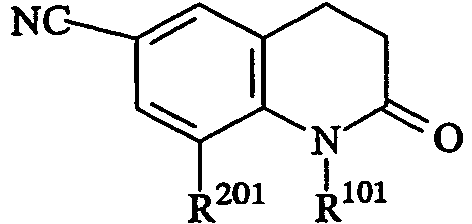
Ref. Ex. R101 R201 1HNMR dppm 59 -H -H DMSO-d6:2.41-2.55 (2H, m), 2.91 (2H, t, J = 7.9 Hz), 6.96 (1H, d, J = 8.2 Hz), 7.55-7.67 (2H, m), 10.49 (1H, brs). 60 -H -CH3 CDCl3::2.67 (3H, s), 2.61-2.72 (2H, m), 2.94-3.08 (2H, m), 7.30-7.39 (2H, m), 7.66 (1H, brs). 61 -H -OCH3 CDCl3:2.62-2.69 (2H, m), 2.96-3.03 (2H, m), 3.91 (3H, s), 7.01 (1H, s), 7.13 (1H, s), 7.86 (1H, brs). 62 
-OCH3 CDCl3:2.65-2.71 (2H, m), 2.85-2.92 (2H, m), 3.78 (3H, s), 5.38 (2H, s), 6.98 (1H, d, J = 1.5 Hz), 7.10 (1H, d, J = 1.5 Hz), 7.15 (2H, d, J = 8.1 Hz), 7.30-7.36 (1H, m), 7.36-7.49 (4H, m), 7.49-7.59 (2H, m). 63 
-CH3 CDCl3:2.40 (3H, s), 2.57-2.70 (2H, m), 2.77-2.90 (2H,m ), 5.17 (2H, s), 7.13 (2H, d, J = 8.3 Hz), 7.29-7.37 (3H, m), 7.37-7.50 (4H, m), 7.50-7.90 (2H, m). Table 3 
Ref. Ex. R111 R112 R113 R114 R115 R201 1HNMR dppm 64 -H -H -Br -H -H -H CDCl3:2.70-2.83 (2H, m), 3.01-3.16 (2H, m), 3.97-4.22 (4H, m), 5.12 (2H, s), 5.95 (1H, s), 6.85 (1H, dd, J = 0.8, 8.1 Hz), 7.02-7.19 (3H, m), 7.22-7.31 (1H, m), 7.38-7.50 (2H, m). 65 -H -H -Cl -H -H -H CDCl3:2.68-2.82 (2H, m), 3.02-3.17 (2H, m), 3.97-4.20 (4H, m), 5.14 (2H, s), 5.95 (1H, s), 6.84 (1H, dd, J = 0.8, 8.1 Hz), 7.05-7.18 (3H, m), 7.20-7.33 (3H, m). 66 -H -H -CH3 -H -H -H CDCl3:2.30 (3H, s), 2.68-2.82 (2H, m), 3.01-3.16 (2H, m), 3.97-4.20 (4H, m), 5.14 (2H, s), 5.95 (1H, s), 6.91 (1H, dd, J = 0.8, 8.1 Hz), 7.04-7.17 (5H,m), 7.24 (1H, dd, J = 0.8, 8.1). 67 -H -H -OC6H5 -H -H -OCH3 CDCl3:2.55-2.66 (2H ,m), 2.87-2.99 (2H, m), 3.74 (3H, s), 3.96-4.18 (4H, m), 5.25 (2H, s), 5.84 (1H, s), 6.75 (1H, d, J = 8.7 Hz), 6.84 (2H, d, J = 8.6 Hz), 6.94 (2H, dd, J = 1.1, 8.7 Hz), 7.03-7.22 (3H, m), 7.22-7.36 (3H, m). 68 -H -H -CO2CH3H3 -H -H -H CDCl3:2.75-2.81 (2H, m), 3.09-3.15 (2H, m), 3.89 (3H, s), 4.04-4.17 (4H, m), 5.23 (2H,s), 5.96 (1H, s), 6.80 (1H, d, J=7.9Hz), 7.11 (1H, t, J=7.9Hz), 7.25-7.28 (3H, m), 7.98 (2H, d, J=8.3Hz) 69 -H -H -NO2 -H -H -H CDCl3:2.76-2.82 (2H, m), 3.10-3.16 (2H, m), 4.05-4.15 (4H, m), 5.27 (2H,s), 5.96 (1H, s), 6.76 (1H, d, J=8.0Hz), 7.14 (1H, t, J=8.0Hz), 7.29 (1H, d, J=8.0Hz), 7.37 (2H, d, J=8.8Hz), 8.18 (2H, d, J=8.8Hz) Table 4 
Ref. Ex. R101 R201 1HNMR dppm 70 -H -OCH3 DMSO-d6:2.33-2.44 (2H, m), 2.85-2.98 (2H, m), 3.79 (3H, s), 3.86-4.08 (4H, m), 5.78 (1H, s), 6.86 (1H, d, J = 8.5 Hz), 7.07 (1H, d, J = 8.5 Hz), 8.97 (1H, s). 71 -H -H CDCl3:2.56-2.70 (2H, m), 3.01-3.18 (2H, m), 3.97-4.22 (4H, m), 5.93 (1H, s), 6.80 (1H, dd, J = 1.4, 7.6 Hz), 7.13-7.31 (2H, m), 8.52 (1H, s). 72 
-H CDCl3:2.77-2.89 (2H, m), 3.07-3.21 (2H, m), 3.98-4.19 (4H, m), 5.34 (2H, s), 5.96 (1H, s), 6.89-6.97 (1H, m), 7.02-7.12 (1H, m), 7.19-7.29 (1H, m), 7.31-7.40 (1H, m), 7.40-7.53 (2H, m), 7.61 (1H, s), 7.69-7.88 (3H, m). 73 -C6H5 -H CDC13:2.75-2.90 (2H, m), 3.11-3.27 (2H, m), 3.98-4.25 (4H, m), 5.99 (1H, s), 6.39 (1H, d, J = 7.6 Hz), 7.05 (1H, t, J = 8.0 Hz), 7.16-7.30 (3H, m), 7.35-7.56 (3H, m). 74 
-OCH3 DMSO-d6: 2.49-2.55 (2H, m), 2.89-2.91 (2H, m), 3.70 (3H, s), 3.91-4.04 (4H, m), 5.20 (2H,s), 5.80 (1H, s), 6.89 (1H, d, J=8.7Hz), 7.18 (1H, d, J=8.7Hz), 7.42-7.67 (4H, m), 7.84 (1H, d, J=8.3Hz), 8.09-8.10 (1H, m), 8.42 (1H, d, J=1.8Hz) 75 
-OCH3 DMSO-d6: 2.49-2.52 (2H, m), 2.77-2.80 (2H, m), 3.24-3.26 (4H, m), 3.61-3.63 (4H, m), 3.80 (3H, s), 3.90-4.02 (4H, m), 5.12 (2H, s), 6.65 (1H, d, J=8.5Hz), 6.88 (1H, d, J=8.5Hz), 7.15 (1H, d, J=8.5Hz), 7.25-7.28 (1H, m), 7.85 (1H, d, J=2.3Hz) Table 5 
Ref. Ex. R101 R201 1H-NMR dppm 76 
-OCH3 CDCl3:2.57-2.60 (2H, m), 2.86-2.89 (2H, m), 3.24-3.28 (4H, m), 3.59-3.63 (4H, m), 3.83 (3H, s), 3.99-4.13 (4H, m), 5.23 (2H,s), 5.81 (1H, s), 6.54 (1H, d, J=8.7Hz), 6.76 (1H, d, J=8.7Hz), 6.85-6.90 (1H, m), 6.96 (1H, d, J=8.4Hz), 7.22-7.34 (4H, m), 7.98 (1H, d, J=2.2Hz) 77 
-OCH3 CDCl3:2.32 (3H, s), 2.46-2.50 (4H, m), 2.54-2.59 (2H, m), 2.85-2.90 (2H, m), 3.45-3.49 (4H, m), 3.82 (3H, s), 3.99-4.12 (4H, m), 5.22 (2H,s), 5.80 (1H, s), 6.49 (1H, d, J=8.7Hz), 6.75 (1H, d, J=8.7Hz), 7.24 (1H, d, J=8.7Hz), 7.30 (1H, d, J=2.3Hz), 7.95 (1H, d, J=2.3Hz) 78 
-OCH3 CDCl3:2.62-2.66 (2H, m), 2.95-2.99 (2H, m), 3.71 (3H, s), 3.99-4.14 (4H, m), 5.31 (2H,s), 5.84 (1H, s), 6.74 (1H, d, J=8.7Hz), 7.23-7.29 (2H, m), 7.46-7.82 (2H, m), 8.22-8.33 (2H, m), 8.47-8.48 (1H, m), 8.63-8.65 (1H, m) 79 
-OCH3 CDCl3:2.69-2.74 (2H, m), 3.11-3.16 (2H, m), 3.45 (3H, s), 4.03-4.17 (4H, m), 5.36 (2H,s), 5.91 (1H, s), 6.72 (1H, d, J=8.6Hz), 7.25-7.31 (2H, m), 7.44-7.50 (1H, m), 7.64-7.69 (1H, m), 7.76 (1H, d, J=8.1Hz), 8.02 (2H, t, J=9.3Hz) 80 
-H CDCl3:2.72-2.78 (2H, m), 3.06-3.12 (2H, m), 4.02-4.17 (4H, m), 5.17 (2H,s), 5.94 (1H, s), 6.84 (1H, d, J=8.1Hz), 7.13-7.31 (2H, m), 7.49 (1H, dd, J1=2.5Hz, J2=8.2Hz), 8.32 (1H, d, J=2.5Hz) Table 6 
Ref. Ex. R101 1HNMR dppm 81 -H DMSO-d6:2.35-2.51 (2H, m), 2.86 (2H, t, J = 7.9 Hz), 3.84-4.08 (4H, m), 5.61 (1H, s), 6.83 (1H, d, J = 8.0 Hz), 7.12-7.25 (2H, m), 10.12 (1H, s). 82 
CDCl3:2.71-2.82 (2H, m), 2.91-3.06 (2H, m), 3.94-4.18 (4H, m), 5.12 (2H, s), 5.71 (1H, s), 6.81 (1H, d, J = 8.3 Hz), 7.07 (2H, d, J = 8.5 Hz), 7.15-7.27 (1H, m), 7.31 (1H, d, J = 1.7 Hz), 7.35-7.46 (2H, m). 83 
CDCl3:2.73-2.87 (2H, m), 2.94-3.10 (2H, m), 3.97-4.20 (4H, m), 5.26 (2H, s), 5.71 (1H, s), 6.74 (1H, d, J = 8.4 Hz), 7.22 (1H, dd, J = 1.9, 8.4 Hz), 7.30-7.41 (3H, m), 8.16 (2H, d, J = 8.7 Hz). Table 7 
Ref. Ex. R111 R112 R113 R114 R115 1HNMR dppm 84 -H -H - C6H5 -H -H CDCl3 : 2.62(2H, t, J=7.0Hz), 3.41(2H, t, J=7.0Hz), 3.86(3H, s), 5.33(2H, s), 6.86(1H, d, J=8.6Hz), 7.15(1H, d, J=8.6Hz), 7.25-7.6(5H, m), 10.00(1H, s) 85 -H -H -C (CH3)3 -H -H CDCl3 : 1.23(9H, s), 2.55-2.65(2H, m), 3.3-3.4(2H, m), 3.86(3H, s), 5.27(2H, s), 6.86(1H, d, J=8.6Hz), 7.00(2H, d, J=7.3Hz), 7.19(2H, d, J=7.3Hz), 7.52(1H, d, J=8.6Hz), 10.02(1H, s) 86 -H -H -H -C6H5 -H CDCl3 : 2.63(2H, t, J=7.0Hz), 3.42(2H, t, J=7.0Hz), 3.84(3H, s), 5.36(2H, s), 6.85(1H, d, J=8.6Hz), 7.06(1H, d, J=7.4Hz), 7.2-7.65(7H, m), 10.02(1H, s) 87 -H -H -H -H -C6H5 CDCl3 : 2.52(2H, t, J=7.0Hz), 3.18(2H, t, J=7.0Hz), 3.45(3H, s), 5.34(2H, s), 6.67(1H, d, J=8.6Hz), 7.06(1H, d, J=7.4Hz), 7.1-7.5(10H, m), 9.98(1H, s) 88 -H -H -NO2 -H -H DMSO-d6:2.52-2.65 (2H, m), 2.34-2.46 (2H, m), 3.66 (3H, s), 5.16 (2H, s), 7.09 (1H, d, J = 8.7 Hz), 7.41 (2H, d, J = 8.6 Hz), 7.63 (1H, d, J = 8.7 Hz), 8.11 (2H, d, J = 8.6 Hz), 10.04 (1H, s). 89 -H -H - CO2H -H -H DMSO-d6:2.4-2.64 (2H, m), 3.20-3.50 (2H, m), 3.73 (3H, s), 5.19 (2H, s), 7.06 (1H, d, J = 8.7 Hz), 7.22 (2H, d, J = 8.6 Hz), 7.60 (1H, d, J = 8.6 Hz), 7.78 (2H, d, J = 8.0 Hz), 10.01(1H, s), 12.80 (1H, brs). Table 8 
Ref. Ex. R111 R112 R113 R114 R115 1HNMRdppm : 90 -H -H -OCH3 -H -H DMSO-d6:2.40-2.59 (2H, m), 3.17-3.38 (2H, m), 3.63 (3H, s), 3.87 (3H, s), 5.16 (2H, s), 6.73 (2H, d, J = 8.5 Hz), 6.99 (2H, d, J = 8.5 Hz), 7.06 (1H, d, J = 8.7 Hz), 7.58 (1H, d, J = 8.7 Hz), 9.98 (1H, s). 91 -H -H -Cl -H -H CDCl3:2.60 (2H, t, J= 7.0 Hz), 3.39 (2H, t, J = 7.0 Hz), 3.82 (3H, s), 5.23 (2H, s), 6.86 (1H, d, J = 8.6 Hz), 6.98-7.06 (2H, m), 7.13-7.21 (2H, m), 7.54 (1H, d, J = 8.6 Hz), 10.02 (1H, s). 92 -H -H -Br -H -H DMSO-d6:2.42-2.60 (2H, m), 3.22-3.39 (2H, m), 3.77 (3H, s), 5.12 (2H, s), 7.00-7.15 (3H, m), 7.38 (2H, d, J = 8.2 Hz), 7.60 (1H, d, J = 8.7 Hz), 10.00 (1H, s). 93 -H -H -OCH2C6H5 -H -H CDCl3:2.53-2.63 (2H, m), 3.29-3.40 (2H, m), 3.87 (3H, s), 4.96 (2H, s), 5.25 (2H, s), 6.78 (2H, dd, J = 2.1, 6.7 Hz), 6.85 (1H, d, J = 8.6 Hz), 7.00 (2H, d, J = 8.7 Hz), 7.25-7.42 (5H, m), 7.51 (1H. d, J = 8.6 Hz), 10.00 (1H, s). 94 -H -H -F -H -H DMSO-d6:2.44-2.58 (2H, m), 3.23-3.38 (2H, m), 3.80 (3H, s), 5.16 (2H, s), 6.94-7.19 (5H, m), 7.59 (1H, d, J = 8.7 Hz), 10.00 (1H, s). 95 -H -H -CN -H -H DMSO-d6:2.50-2.64 (2H, m), 3.32-3.45 (2H, m), 3.66 (3H, s), 5.13 (2H, s), 7.08 (1H, d, J = 8.7 Hz), 7.32 (2H, d, J = 8.2 Hz), 7.63 (1H, d. J = 8.7 Hz), 7.69 (2H, d, J = 8.2 Hz), 10.04 (1H. s). 96 -H -H -CH3 -H -H CDCl3:2.23 (3H, s), 2.55-2.62 (2H, m), 3.32-3.39(2H, m), 3.86 (3H, s), 5.28 (2H, s), 6.84 (1H, d, J = 8.6 Hz), 6.90-7.11 (4H, m), 7.51 (1H, d, J = 8.6 Hz), 10.00 (1H, s). Table 9 
Ref. Ex. R111 R112 R113 R114 R115 1H-NMR dppm 97 -H -H - OC6H5 -H -H CDCl3:2.60 (2H, t, J = 7.0 Hz), 3.37 (2H, t, J = 7.0 Hz), 3.86 (3H, s), 5.27 (2H, s), 6.75-6.97 (5H, m), 7.00-7.12 (3H, m), 7.22-7.37 (2H, m), 7.54 (1H, d, J = 8.6 Hz), 10.02 (1H, s). 98 -H -H - CO2CH3 -H -H CDCl3: 2.77-2.83 (2H, m), 3.51-3.57 (2H, m), 3.90 (3H, s), 5.26 (2H,s), 7.03 (1H, d, J=8.2Hz), 7.26-7.32 (3H, m), 7.50 (2H, dd, J1=0.9Hz, J2=7.7Hz), 10.21 (1H, s) Table 10 
Ref. Ex. R121 1HNMR dppm : 99 -C6H5 DMSO-d6: 2.52-2.59 (2H, m), 3.18-3.25 (2H, m), 3.81 (3H, s), 5.21 (2H, s), 7.11 (1H, d, J=8.8Hz), 7.39-7.66 (5H, m), 7.83 (1H, d, J=8.0Hz), 8.01-8.03 (1H, m), 8.44-8.45 (1H, m), 10.04 (1H, s) 100 -2-PYRIDYL CDCl3 : 2.61-2.67 (2H, m), 3.39-3.45 (2H, m), 3.83 (3H, s), 5.34 (2H,s), 6.85 (1H, d, J=8.6Hz), 7.25-7.30 (1H, m), 7.46-7.82 (3H, m), 8.24 (1H, d, J=8.2Hz), 8.30 (1H, J=8.0Hz), 8.45 (1H, d, J=1.8Hz), 8.64 (1H, d, 4.7Hz), 10.01 (1H, s) 101 
DMSO-d6: 2.47-2.52 (2H, m), 3.23-3.33 (6H, m), 3.61-3.65 (4H, m), 3.90 (3H, s), 5.12 (2H, s), 6.67 (1H, d, J=8.8Hz), 7.11 (1H, d, J=8.7Hz), 7.29 (1H, dd, J1=2.2Hz, J2=8.8Hz), 7.61 (1H, d, 8.7Hz), 7.87 (1H, d, J=2.2Hz), 10.00 (1H, s) 102 
CDCl3: 2.55-2.60 (2H, m), 3.23-3.27 (4H, m), 3.30-3.36 (2H, m), 3.58-3.62 (4H, m), 3.94 (3H, s), 5.24 (2H, s), 6.54 (1H, d, J=8.8Hz), 6.85-6.97 (4H, m), 7.24-7.31 (3H, m), 7.53 (1H, d, J=8.6Hz), 7.93 (1H, d, J=2.2Hz), 9.99 (1H, s) 103 
CDCl3: 2.31 (3H, s), 2.45-2.49 (4H, m), 2.54-2.60 (2H, m), 3.29-3.35 (2H, m), 3.44-3.48 (4H, m), 3.94 (3H, s), 3.99-4.12 (4H, m), 5.22 (2H,s), 6.48 (1H, d, J=8.7Hz), 6.88 (1H, d, J=8.6Hz), 7.23-7.28 (1H, m), 7.52 (1H, d, J=8.6Hz), 7.90 (1H, d, J=2.2Hz), 9.99 (1H, s) Table 11 
Ref. Ex. R101 1HNMR dppm : 104 (CH2)2C(CH3) 2OCH2OCH3. CDCl3 : 1.20(6H, s), 1.89 (2H, t, J=7.1Hz), 2.45 (3H, s), 3.27 (3H, s), 4.18 (2H, t, J=7.1Hz), 4.62 (2H, s), 7.35 (2H, d, J=8.3Hz), 7.80 (2H, d, J=8.3Hz) 105 -(CH2)3CF3 CDCl3 : 1.8-2.2(4H, m), 2.5-2.6(2H, m), 3.3-3.45(2H, m), 3.9-4.05(2H, m), 3.97(3H,s), 7.00(1H, d, J=8.6Hz), 7.61(1H, d, J=8.6Hz), 10.06(1H, s) 106 -C4H9 CDCl3 : 0.85(3H, t, J=7.5Hz), 1.2-1.35(2H, m), 1.4-1.5(2H, m), 2.51(2H, t, J=7.0Hz), 3.35(2H, t, J=7.0Hz), 3.96(3H, s), 4.04(2H, t, J=7.4Hz), 6.98(1H, d, J=8.6Hz), 7.60(1H, d, J=8.6Hz), 10.06(1H, s) 107 -C2H5 CDCl3 : 1.15(3H, t, J=7.1Hz), 2.51(2H, t, J=7.0Hz), 3.36(2H, t, J=7.0Hz), 3.97(3H, s), 4.01(2H, t, J=7.4Hz), 6.98(1H, d, J=8.6Hz), 7.60(1H, d, J=8.6Hz), 10.06(1H, s) 108 -C3H7 CDCl3 : 0.81(3H, t, J=7.4Hz), 1.4-1.6(2H, m), 2.52(2H, t, J=6.8Hz), 3.36(2H, t, J=6.8Hz), 3.96(3H, s), 4.00(2H, t, J=7.4Hz), 6.97(1H, t, J=8.6Hz), 7.59(1H, t, J=8.6Hz), 10.06(1H, s) 109 -C5H11 CDCl3 : 0.83(3H, t, J=7.2Hz), 1.1-1.3(4H, m), 1.4-1.5(2H, m), 2.52(2H, t, J=6.8Hz), 3.36(2H, t, J=6.8Hz), 3.96(3H, s), 4.02(2H, t, J=7.4Hz), 6.97(1H, t, J=8.6Hz), 7.59(1H, t, J=8.6Hz), 10.06(1H, s) 110 -CH(CH3)2 CDCl3 : 1.53(6H, d, J=6.8Hz), 2.4-2.5(2H, m), 3.35-3.45(2H, m), 3.85-4.0(1H, m), 3.97(3H, s), 6.97(1H, t, J=8.6Hz), 7.59(1H, t, J=8.6Hz), 10.06(1H, s) 111 -CH2CH(CH3)2 CDCl3 : 0.76(6H, d, J=6.6Hz), 1.4-1.7(1H, m), 2.5-2.6(2H, m), 3.3-3.45(2H, m), 3.96(3H, s), 4.04(1H, d, J=7.4Hz), 6.97(1H, t, J=8.6Hz), 7.60(1H, t, J=8.6Hz), 10.07(1H, s) 112 -CH2CO2C(CH3)3 CDCl3 : 1.42(9H, s), 2.55-2.65(2H, m), 3.4-3.55(2H, m), 3.81(3H, s), 4.60(2H, s), 6.97(1H, d, J=8.6Hz), 7.59(1H, d, J=8.6Hz), 10.07(1H, s) Table 12 
Ref. Ex. R101 1H-NMR dppm 113 - (CH2)2C6H5 CDCl3 : 2.44(2H, t, J=7.0Hz), 2.82(2H, t, J=7.5Hz), 3.02(2H, t, J=7.0Hz), 4.01(3H, s), 4.32(2H, t, J=7.5Hz), 6.95-7.1(3H, m), 7.1-7.25(3H, m), 7.60(1H, d, J=8.6Hz), 10.03(1H, s) 114 - (CH2)3C6H5 CDCl3 : 1.75-1.95(2H, m), 2.5-2.65(4H, m), 3.36(2H, t, J=7.0Hz), 3.79(3H, s), 4.05(2H, t, J=7.4Hz), 6.93(1H, d, J=8.6Hz), 7.05-7.35(5H, m), 7.58(1H, d, J=8.6Hz), 10.05(1H, s) 115 -CH2-cyclo-C3H5 CDCl3 : 0.1-0.4(4H, m), 0.8-0.9(1H, m), 2.53(2H, t, J=7.0Hz), 3.39(2H, t, J=7.0Hz), 3.97(3H, s), 4.01(2H, t, J=7.3Hz), 6.97(1H, d, J=8.6Hz), 7.61(1H, d, J=8.6Hz), 10.08(1H, s) 116 -CH2CH2OCH3 CDCl3 : 2.54(2H, t, J=7.0Hz), 3.23(3H, s), 3.36(2H, t, J=7.0Hz), 3.47(2H, t, J=6.0Hz), 3.96(3H, s), 4.25(2H, t, J=6.0Hz), 6.96(1H, d, J=8.6Hz), 7.61(1H, d, J=8.6Hz), 10.07(1H, s) 117 - (CH2)2OC6H5 CDCl3 : 2.54(2H, t, J=7.0Hz), 3.34(2H, t, J=7.0Hz), 3.93(3H, s), 4.16(2H, t, J=6.0Hz), 4.42(2H, t, J=6.0Hz), 6.72(1H, dd, J1=8.8Hz, J2=0.95Hz), 6.85-7.05(2H, m), 7.15-7.3(2H, m), 7.60(1H, d, J=8.6Hz), 10.05(1H. s) 118 -CH2-cyclo-C6H11 CDCl3 : 0.8-1.75(11H, m), 2.5-2.6(2H, m), 3.3-3.45(2H, m), 3.96(3H, s), 4.06(2H, t, J=7.2Hz), 6.97(1H, d, J=8.6Hz), 7.60(1H, d, J=8.6Hz), 10.07(1H, s) 119 - (CH2)4C6H5 CDCl3 : 1.45-1.6(4H, m), 2.45-2.6(4H, m), 3.34(2H, t, J=7.0Hz), 3.85(3H, s), 4.02(2H, t, J=6.6Hz), 6.93(1H, d, J=8.6Hz), 7.05-7.35(5H, m), 7.58(1H, d, J=8.6Hz), 10.05(1H, s) Table 13 
Ref. Ex. R101 1H-NMR dppm 120 -(CH2)5C6H5 CDCl3 : 1.15-1.3(2H, m), 1.42-1.61(4H, m), 2.4-2.6(4H, m), 3.28(2H, t, J=7.0Hz), 3.92(3H, s), 4.02(2H, t, J=7.4Hz), 6.96(1H, d, J=8.6Hz), 7.1-7.3(5H, m), 7.59(1H, d, J=8.6Hz), 10.05(1H, s) 121 -CH(C6H5)2 CDCl3 : 2.52(2H, t, J=7.0Hz), 3.33(2H, t, J=7.0Hz), 3.48(3H, s), 6.30(1H, s), 6.81(1H, d, J=8.6Hz), 7.15-7.35(10H, m), 7.57(1H, d, J=8.6Hz), 10.00(1H, s) 122 -(CH2)3CO2C2H5 CDCl3:1.24 (3H, t, J =7.1 Hz), 1.79-1.94 (2H, m), 2.24 (2H, t, J = 7. Hz), 2.45-2.57 (2H, m), 3.36 (2H, t, J = 7.0 Hz), 3.97 (3H, s), 4.00-4.16 (4H, m), 6.99 (1H, d, J = 8.6 Hz), 7.60 (1H, d, J = 8.6 Hz), 10.06 (1H, s). 123 -CH2CH2CN DMSO-d6:2.37-2.49 (2H, m), 2.76 (2H, t, J = 6.8 Hz), 3.21-3.44 (2H, m), 3.96 (3H, s), 4.08 (2H, t, J = 6.8 Hz), 7.24 (1H, d, J = 8.7 Hz), 7.72 (1H, d, J = 8.7 Hz), 10.06 (1H, s). 124 -C6H5 CDCl3:2.65-2.79 (2H, m), 3.41 (3H, s), 3.54 (2H, t, J - 7.0 Hz), 6.86 (1H, d, J = 8.6 Hz), 7.08-7.44 (5H, m), 7.61 (1H, d, J = 8.6 Hz), 10.09 (1H, s). 125 -CH2CH=CH2 CDCl3: 2.52-2.57(2H, m), 3.36-3.41(2H, m), 3.94(3H, s), 4.66(2H, dt, J = 6.0 and 1.3 Hz), 5.02-5.15(2H, m), 5.64-5.77(1H, m), 6.96(1H, d, J = 8.6 Hz), 7.59(1H, d, J = 8.6 Hz), 10.05(1H, s) 126 -C8H17 CDCl3: 0.85(3H, t, J = 6.7 Hz), 1.20-1.38(10H, m), 1.38-1.53(2H, m), 2.49-2.54(2H, m), 3.33-3.40(2H, m), 3.96(3H, s), 5.83(2H, t, J = 7.5 Hz), 6.98(1H, d, J = 8.6 Hz), 7.60(1H, d, J = 8.6 Hz), 10.06(1H, s) Table 14 
Ref. Ex. R101 1H-NMR dppm 127 
CDCl3:0.9-1.2(2H, m), 1.42(9H, s), 1.25-1.85(3H, m), 2.4-2.7(4H, m), 3.2-3.6(2H, m), 3.8-4.2(4H, m), 3.96(3H, s), 6.99(1H, d, J=6.6Hz), 7.61(1H, d, J=6.6Hz), 10.06(1H, s) 128 
CDCl3:1.2-1.75(5H, m), 2.24(3H, s), 2.4-2.6(4H, m), 3.3-3.6(4H, m), 3.97(3H, s), 4.0-4.2(2H, m), 6.78(2H, d, J=8.5Hz), 6.95-7.1(3H, m), 7.61(1H, d, J=7.6Hz), 10.07(1H, s) 129 
CDCl3:2.65(2H, t, J=7.0Hz), 3.30(2H, t, J=7.0Hz), 3.76(3H, s), 5.78(2H, s), 6.78(1H, d, J=8.6Hz), 7.2-7.35(2H, m), 7.4-7.55(3H, m), 7.66(1H, d, J=8.1Hz), 7.79(1H, d, J=7.9Hz), 8.00(1H, d, J=8.5Hz), 9.93(1H, s) 130 
CDCl3:2.64(2H, t, J=7.0Hz), 3.42(2H, t, J=7.0Hz), 3.85(3H, s), 5.47(2H, s), 6.81(1H, d, J=8.6Hz), 7.19(1H, dd, J1=8.5Hz, J2=1.6Hz), 7.35-7.8(7H, m),9.98(1H, s) 131 
CDCl3:2.68-2.74 (2H, m), 3.57-3.63 (2H, m), 3.62 (3H, s), 5.42 (2H,s), 6.85 (1H, d, J=8.6Hz), 7.28 (1H, d, J=8.5Hz), 7.47 (1H, ddd, J1=1.1Hz, J2=7.5Hz, J3=8.2Hz), 7.54 (1H, d, J=8.6Hz), 7.66 (1H, ddd, J1=1.1Hz, J2=7.5Hz, J3=8.5Hz), 7.76 (1H, dd, J1=1.1Hz, J2=8.2Hz), 7.96 (1H, d, J=8.5Hz), 8.04 (1H, d, J=8.5Hz) Table 15 
Ref. Ex. R111 R112 -H R113 R114 R115 R201 1H-NMR dppm 132 -H -C6H5 -H -H -OH CDCl3:2.64(2H, t, J=7.0Hz), 3.41(2H, t, J=7.0Hz), 5.37(2H, s), 6.30(1H, br s), 6.80(1H, d, J=8.6Hz), 7.2-7.6(10H, m), 10.00(1H, s) 133 -H -H -C6H5 -H -H -OC4H9 CDCl3:0.94(3H, t, J=7.4Hz), 1.35-1.5(2H, m), 1.65-1.8(2H, m), 2.62(2H, t, J=7.0Hz), 3.41(2H, t, J=7.0Hz), 4.03(2H, t, J=6.6Hz), 5.35(2H, s), 6.89(1H, d, J=8.6Hz), 7.1-7.6(10H, m), 10.02(1H, s) 134 -H -H -C6H5 -H -H -OCH2CO2C(CH3)3 CDCl3:1.53(9H, s), 2.64(2H, t, J=7.0Hz), 3.42(2H, t, J=7.0Hz), 4.48(2H, s), 5.47(2H, s), 6.71(1H, d, J=8.6Hz), 7.15-7.65(10H, m), 10.03(1H, s) 135 -H -H -Br -H -H -H CDCl3:2.77 (2H, t, J = 7.4 Hz), 3.52 (2H, t, J = 7.5 Hz), 5.16 (2H, s), 7.03-7.14 (3H, m), 7.32 (1H, t, J = 8.0 Hz), 7.40-7.48 (2H, m), 7.50 (1H, dd, J = 0.8, 7.7 Hz), 10.20 (1H, s). 136 -H -H -Cl -H -H -H CDCl3:2.70-2.82 (2H, m), 3.2 (2H, t, J= 7.6 Hz), 5.17 (2H, s), 7.07 (1H, dd, J = 1.0, 8.2 Hz), 7.10-7.20 (2H, m), 7.22-7.35 (3H, m), 7.49 (1H, d, J = 1.1, 7.7 Hz), 10.20 (1H, s). Table 16 
Ref. Ex. R111 R112 R113 R114 R115 R201 1H-NMR dppm 137 -H -H -CH3 -H -H -H CDCl3:2.31 (3H, s), 2.70-2.85 (2H, m), 3.51 (2H, t, J = 7.7 Hz), 5.17 (2H, s), 7.03-7.19 (5H, m), 7.20-7.36 (1H, m), 7.47 (1H, d, J = 7.6 Hz), 10.20 (1H, s). 138 -H -H -C6H5 -H -H -CH3 CDCl3:2.46 (3H, s), 2.54-2.60 (2H, m), 3.27-3.34 (2H, m), 5.13 (2H, s), 7.14 (2H, d, J = 8.3 Hz), 7.20-7.60 (9H, m), 10.13 (1H, s). 139 -H -H -C6H5 -H -H -Cl CDCl3:2.58-2.64 (2H, m), 3.30-3.36 (2H, m), 5.44 (2H, s), 7.17 (2H, d, J = 8.2 Hz), 7.22-7.61 (9H, m), 10.12 (1H, s). 140 -H -H -NO2 -H -H -H CDCl3:2.78-2.84 (2H, m), 3.53-3.59 (2H, m), 5.30 (2H,s), 6.98 (1H, d, J=8.2Hz), 7.26-7.32 (1H, m), 7.38 (2H, d, J=8.8Hz), 7.53 (1H, d, J=6.7Hz), 8.20 (2H, d, J=8.8Hz), 10.22 (1H, s) Table 17 
Ref. Ex. R101 R201 1H-NMR dppm 141 CH2)4OSi(CH3)2C(CH3)3 -H CDCl3:0.09(3H, s), 0.88(9H, s), 1.6-2.1(2H, m), 2.62(2H, t, J=7.2Hz), 3.42(2H, t, J=7.7Hz), 3.71(2H, t, J=5.7Hz), 4.06(2H, t, J=7.8Hz), 7.1-7.6(2H, m), 10.22(1H, s) 142 -C6H5 -H CDCl3:2.75-2.89 (2H, m), 3.53-3.68 (2H, m), 6.65 (1H, dd, J = 0.9, 8.2 Hz), 7.15-7.20 (3H, m), 7.39-7.61 (4H, m), 10.24 (1H, s). 143 -H -Cl CDCl3:2.61-2.72 (2H, m), 3.50-3.64 (2H, m), 7.40-7.51 (2H, m), 7.88 (1H, brs), 10.15 (1H, s). Table 18 
Ref. Ex. R101 R201 1H-NMR dppm 144 
-H CDCl3:1.05-1.9(9H, m), 1.51(9H, s), 2.6-2.8(4H, m), 3.35-3.50(2H, m), 3.95-4.2(2H, m), 7.23(1H, dd, J1=8.0Hz, J2=1.0Hz), 7.46(1H, t, J=8Hz), 7.54(1H, dd, J1=8.0Hz, J2=1.0Hz), 10.23(1H, s) 145 
-H CDCl3:2.84 (2H, t, J = 7.5 Hz), 3.56 (2H, t, J = 7.5 Hz), 5.37 (2H, s), 7.13-7.21 (1H, m), 7.21-7.29 (1H, m), 7.29-7.40 (1H, m), 7.40-7.50 (3H, m), 7.61 (1H, s), 7.70-7.78 (1H, m), 7.78-7.87 (2H, m), 10.19 (1H, s). 146 
-H CDCl3:2.74-2.80 (2H, m), 3.49-3.55 (2H, m), 5.21 (2H,s), 7.07 (1H, d, J=8.1Hz), 7.26-7.38 (2H, m), 7.49-7.54 (2H, m), 8.33 (1H, d, J=2.5Hz), 10.20 (1H, s) Table 19 
Ref. Ex. R101 R201 1H-NMR dppm 147 -(CH2)2CH(CH3)2 -OCH3 CDCl3 : 0.99 (6H, d, J=6.2Hz), 1.5-1.8 (3H, m), 4.03 (3H, s), 4.57(2H, t, J=7.0Hz), 6.84 (1H, d, J=9.9Hz), 7.16 (1H, d, J=8.3Hz), 7.63 (1H, d, J=8.3Hz), 9.18(1H, d, J=9.9Hz), 10.09 (1H, s), 148 
-OCH3 CDCl3:3.71 (3H, s), 5.77 (2H, brs), 6.89-7.00 (3H, m), 7.06 (1H, d, J = 8.4 Hz), 7.39 (2H, d, J = 8.4 Hz), 7.63 (1H, d, J = 8.4 Hz), 9.28 (1H, d, J = 9.9 Hz), 10.10 (1H, s). Table 20 
Ref. Ex. R201 1H-NMR dppm 149 -H DMSO-d6:2.44-2.59 (2H, m), 2.96 (2H, t, J = 7.9 Hz), 7.00 (1H, d, J = 8.7 Hz), 7.65-7.78 (2H, m), 9.82 (1H, s), 10.50 (1H, brs). 150 -CH3 CDCl3:2.32 (3H, s), 2.65-2.72 (2H, m), 3.01-3.08 (2H, m), 7.54-7.65 (2H, m), 7.75 (1H, brs), 9.87 (1H, s). 151 -OCH3 CDCl3:2.65-2.72 (2H, m), 3.02-3.09 (2H, m), 3.95 (3H, m), 7.32 (2H, s), 7.94 (1H, brs), 9.86 (1H, s). Table 21 
Ref. Ex. R101 R201 1H-NMR dppm 152 
-H DMSO-d6:2.68-2.81 (2H, m), 2.96-3.10 (2H, m), 5.17 (2H, s), 7.08 (1H, d, J = 8.4 Hz), 7.19 (2H, d, J = 8.4 Hz), 7.43-7.52 (2H, m), 7.68 (1H, dd, J = 1.9, 8.4 Hz), 7.76 (1H, d, J = 1.9 Hz), 9.84 (1H, s). 153 
-H CDCl3:2.82-2.93 (2H, m), 3.05-3.17 (2H, m), 5.31 (2H, s). 6.88 (1H, d, J = 8.4 Hz), 7.37 (2H, d, J = 8.8 Hz), 7.64 (1H, dd, J = 1.9, 8.4 Hz), 7.75 (1H, d, J = 1.9 Hz), 8.20 (2H, d, J = 8.7 Hz), 9.89 (1H, s). 154 
-OCH3 CDCl3:2.67-2.74 (2H, m), 2.91-2.98 (2H, m), 3.83 (3H, s), 5.41 (2H, s), 7.18 (2H, d, J = 8.1 Hz), 7.23-7.35 (3H, m), 7.35-7.48 (4H, m), 7.48-7.57 (2H, m), 9.85 (1H, s). 155 
-CH3 CDCl3:2.46 (3H, s), 2.62-2.68 (2H, m), 2.85-2.92 (2H, m), 5.20 (2H, s), 7.15 (2H, d, J = 8.1 Hz), 7.20-7.65 (9H, m), 9.88 (1H, s). Table 22 
Ref. Ex. R101 R121 1H-NMR dppm 156 
-H DMSO-d6: 2.55-2.68 (2H, m), 2.85-2.98 (2H, m), 5.07 (2H, s), 7.10 (2H, d, J = 8.2 Hz), 7.27-7.70 (10 H, m), 10.05 (1H, s). 157 -H -H DMSO-d6: 7.51-7.62 (2H, m), 2.99 (2H, t, J = 7.9 Hz), 7.17 (1H, t, J = 7.5 Hz), 7.54 (1H, d, J = 7.5 Hz), 7.74 (1H, d, J = 7.5 Hz), 10.00 (1H, s), 10.31 (1H, brs). - In the above Tables, Me represents methyl and tBu represents tert-butyl.
- 1-(4-Chloromethylbenzyl)-5-(1,3-dioxolan-2-yl)-3,4-dihydro-1H-quinolin-2-one (100 mg, 0.28 mmol), N-methylaniline (0.045 ml, 0.42 mmol) and potassium carbonate (57.9 mg, 0.42 mmol) were added to acetonitrile (1 ml), followed by heating under reflux for 4 hours. After cooling to room temperature, water was added to the reaction mixture, and extraction with dichloromethane was performed. The organic layer was washed with water and a saturated sodium chloride solution, and dried over anhydrous sodium sulfate. The dry product was concentrated under reduced pressure, and the residue was purified by preparative silica gel thin layer chromatography (n-hexane:ethyl acetate = 1:1). The purified product was concentrated to dryness under reduced pressure to thereby obtain 80 mg (yield: 67%) of 5-(1,3-dioxolan-2-yl)-1- {4-[(N-methyl-N-phenylamino)methyl]benzyl}-3,4-dihydro-1H-quinolin-2-one as a light yellow amorphous solid. 1H-NMR(CDCl3) dppm: 2.72-2.78 (2H,m), 2.98 (3H,s), 3.08-3.12 (2H,m), 4.06-4.16 (4H,m), 4.48 (2H,s), 5.15 (2H,s), 5.94 (1H,s), 6.67-6.74 (3H,m), 6.90 (1H,d,J=8.1Hz), 7.09-7.26 (8H,m)
- 1-(6-Chloromethylpyridin-2-ylmethyl)-5-(1,3-dioxolan-2-yl)-3,4-dihydro-1H-quinolin-2-one (1.0 g, 2.8 mmol) was added to piperidine (2 ml), followed by stirring in an argon atmosphere at 100°C for 2 hours. After cooling to room temperature, water and a small quantity of acetic acid were added to the reaction mixture, and extraction with ethyl acetate was performed twice. The organic layers were combined, washed twice with water and once with a saturated sodium chloride solution, and dried over anhydrous sodium sulfate. The dry product was concentrated under reduced pressure, and the residue was purified by silica gel column chromatography (dichloromethane:methanol = 20:1). The purified product was concentrated to dryness under reduced pressure to thereby obtain 0.73 g (yield: 64%) of 5-(1,3-dioxolan-2-yl)-1-(6-piperidinomethylpyridin-2-ylmethyl)-3,4-dihydro-1H-quinolin-2-one as a light yellow amorphous solid. 1H-NMR (CDCl3) dppm: 1.44-1.49 (2H,m), 1.56-1.65 (4H,m), 2.42-2.46 (4H,m), 2.74-2.80 (2H,m), 3.09-3.15 (2H,m), 3.64 (2H,s), 4.01-4.17 (4H,m), 5.27 (2H,s), 5.95 (1H,s), 6.95-7.02 (2H,m), 7.11 (1H,t,J=7.9Hz), 7.23-7.31 (2H,m), 7.54 (1H,t,J=7.7Hz)
- 1-(4-Chloromethylbenzyl)-5-(1,3-dioxolan-2-yl)-3,4-dihydro-1H-quinolin-2-one (1.0 g, 2.79 mmol), thiophenol (0.37 ml, 3.63 mmol) and 1,8-diazabicyclo[5.4.0]undecene-7 (DBU) (0.84 ml, 5.59 mmol) were added to THF (30 ml), followed by heating under reflux for 7 hours. After cooling to room temperature, the reaction mixture was concentrated under reduced pressure. The residue was purified by silica gel column chromatography (n-hexane:ethyl acetate = 1:1). The purified product was concentrated to dryness under reduced pressure to thereby obtain 1.13 g (yield: 94%) of 5-(1,3-dioxolan-2-yl)-1-(4-phenylsulfanylbenzyl)-3,4-dihydro-1H-quinolin-2-one as a white solid.
1H-NMR(CDCl3) dppm: 2.73-2.79 (2H,m), 3.06-3.12 (2H,m), 4.01-4.17 (6H,m), 5.14 (2H,s), 5.95 (1H,s), 6.85-6.88 (1H,m), 7.09-7.17 (4H,m), 7.19-7.32 (7H,m) - Palladium acetate (34 mg, 0.15 mmol), tri-tert-butylphosphine tetrafluoroborate (66 mg, 0.23 mmol) and sodium tert-butoxide (218 mg, 2.27 mmol) were added to a toluene solution (10 ml) of 5-(1,3-dioxolan-2-yl)-1-(2-piperidin-4-ylethyl)-3,4-dihydro-1H-quinolin-2-one (500 mg, 1.52 mmol) and 4-bromobiphenyl (424 mg, 1.82 mmol), followed by stirring in an argon atmosphere at 100°C for 7.5 hours. After cooling to room temperature, water was added to the reaction mixture, and extraction with ethyl acetate was performed. The extract was dried over sodium sulfate and concentrated under reduced pressure, and the residue was purified by basic silica gel column chromatography (n-hexane:ethyl acetate = 2:1). The purified product was concentrated under reduced pressure, and the residue was dissolved in acetone (10 ml). p-Toluenesulfonic acid monohydrate (104 mg) and water (2 ml) were added, followed by heating under reflux for 15 minutes. The resulting mixture was cooled to room temperature and concentrated under reduced pressure. The residue was rendered basic by adding an aqueous solution of potassium carbonate, and washed for 10 minutes in an ultrasonic washing machine. The produced insoluble matter was collected by filtration, washed with water and dried to thereby obtain 213 mg (yield: 32.1%) of 1-[2-(1-biphenyl-4-ylpiperidin-4-yl)ethyl]-2-oxo-1,2,3,4-tetrahydroquinoline-5-carboxaldehyde as a colorless solid. 1H-NMR (CDCl3) dppm: 1.2-2.3 (7H,m), 2.6-2.7 (2H,m), 3.0-3.25 (2H, m), 3.4-3.55 (2H,m), 3.65-3.8 (2H,m), 3.95-4.1 (2H,m), 7.18 (1H, d,J=8.0Hz), 7.25-7.7 (10H,m), 7.84 (1H,d,J=8.1Hz), 10.22 (1H,s)
- 1-(3-Bromopropyl)-5-(1,3-dioxolan-2-yl)-3,4-dihydro-1H-quinolin-2-one (797 mg, 2.34 mmol), 4-chlorothiophenol (407 mg, 2.81 mmol) and potassium carbonate (421 mg, 3.05 mmol) were added to acetonitrile (16 ml), followed by heating under reflux for 5 hours. After cooling to room temperature, water was added to the reaction mixture, and extraction with ethyl acetate was performed. The extract was dried over sodium sulfate and concentrated under reduced pressure, and the residue was purified by silica gel column chromatography (n-hexane:ethyl acetate = 3:1 → 2:1). The purified product was concentrated under reduced pressure, and the residue was dissolved in acetone (16 ml). p-Toluenesulfonic acid monohydrate (53.5 mg) and water (3 ml) were added, followed by stirring at room temperature overnight. An aqueous solution of potassium carbonate was added to the reaction mixture, and extraction with dichloromethane was performed. The organic layer was washed with a saturated sodium chloride solution, dried over anhydrous sodium sulfate, and concentrated under reduced pressure to thereby obtain 700 mg (yield: 83%) of 1-[3-(4-chlorophenylsulfanyl)propyl]-2-oxo-1,2,3,4-tetrahydroquinoline-5-carboxaldehyde as a colorless oil. 1H-NMR(CDCl3) dppm: 1.9-2.05 (2H,m), 2.55-2.65 (2H,m), 2.9-3.05 (4H,m), 4.0-4.2 (6H,m), 5.94 (1H,s), 6.96 (1H,d,J=7.9Hz), 7.2-7.35 (6H, m)
- 1-(3-Bromopropyl)-5-(1,3-dioxolan-2-yl)-3,4-dihydro-1H-quinolin-2-one (790 mg, 2.32 mmol), 4-benzylpiperidine (0.49 ml, 2.79 mmol) and potassium carbonate (142 mg, 1.03 mmol) were added to acetonitrile (15 ml), followed by heating under reflux for 1.5 hours. After cooling to room temperature, the reaction mixture was filtered to remove the insoluble matter. The solid was washed with acetonitrile, and the filtrate and washing were combined and concentrated under reduced pressure. The residue was purified by silica gel column chromatography (n-hexane:ethyl acetate = 3:1 → ethyl acetate:methanol = 50:1). The purified product was concentrated under reduced pressure, and the residue was dissolved in acetone (15 ml). p-Toluenesulfonic acid monohydrate (368 mg) was added, and the resulting mixture was heated under reflux for 2 hours. An aqueous solution of potassium carbonate was added to the reaction mixture, followed by concentration under reduced pressure. Water was added to the residue, and extraction with dichloromethane was performed. The organic layer was washed with a saturated sodium chloride solution, dried over anhydrous sodium sulfate, and concentrated under reduced pressure to thereby obtain 672 mg (yield: quantitative) of 1-[3-(4-benzylpiperidin-1-yl)propyl]-2-oxo-1,2,3,4-tetrahydroquinoline-5-carboxaldehyde as a colorless oil.
1H-NMR(CDCl3) dppm: 1.2-1.95 (9H,m), 2.35 (2H,t,J=7.0Hz), 2.4-2.7 (4H,m), 2.8-3.1 (4H,m), 3.9-4.2 (6H,m), 5.94 (1H,s), 7.1-7.4 (8H,m) - Using appropriate starting materials and following the procedure of Reference Example 24, the compounds of Reference Examples 178 and 185 shown below were synthesized.
- Using appropriate starting materials and following the procedure of Reference Example 25, the compounds of Reference Examples 164, 165, 167 to 172, 176, 177, 179, 183 and 184 shown below were synthesized.
- Using appropriate starting materials and following the procedure of Reference Example 26, the compounds of Reference Examples 186 to 190, 192, 193, 197, 198, 203 and 206 to 209 shown below were synthesized.
- Using appropriate starting materials and following the procedure of Reference Example 27, the compounds of Reference Examples 166 and 180 to 182 shown below were synthesized.
- Using appropriate starting materials and following the procedure of Reference Example 30, the compounds of Reference Examples 73, 196, 200, 201 and 210 shown below were synthesized.
- Using appropriate starting materials and following the procedure of Reference Example 158, the compound of Reference Example 175 shown below was synthesized.
- Using appropriate starting materials and following the procedure of Reference Example 159, the compounds of Reference Examples 173 and 174 shown below were synthesized.
- Using appropriate starting materials and following the procedure of Reference Example 161, the compounds of Reference Examples 202, 204, 205 and 214 shown below were synthesized.
- Using appropriate starting materials and following the procedure of Reference Example 162, the compounds of Reference Examples 191 and 195 shown below were synthesized.
- Using appropriate starting materials and following the procedure of Reference Example 163, the compounds of Reference Examples 194, 199 and 211 to 213 shown below were synthesized.
- Using appropriate starting materials and following the procedure of Reference Example 32, the compounds of Reference Example 132 shown below was synthesized.
- Using appropriate starting materials and following the procedure of Reference Example 41, the compounds of Reference Example 143 shown below was synthesized.
- Using appropriate starting materials and following the procedure of Reference Example 22, the compounds of Reference Example 157 shown below was synthesized.
Table 23 
Ref. Ex. R122 NMR 164 -NHC6H5 1H-NMR (CDCl3) dppm : 2.55-2.61 (2H, m), 2.86-2.94 (2H, m), 3.82 (3H, s), 3.98-4.15 (4H, m), 5.22 (2H, s), 5.82 (1H, s), 6.42 (1H, s), 6.70-6.78 (2H, m), 7.27-7.30 (1H, m), 7.23-7.98 (6H, m), 7.99 (1H, s) 165 166 -CF3 -C6H4C6H5(PARA) 1H-NMR (CDCl3) dppm : 2.61-2.67 (2H, m), 2.98-3.03 (2H, m), 3.63 (3H, s), 4.00-4.16 (4H, m), 5.21 (2H, s), 5.85 (1H, s), 6.77 (1H, d, J=8.7Hz), 7.30 (1H, d, J=8.7Hz), 7.57 (1H, d, J=8.1Hz), 7.68 (1H, dd, J1=2.1Hz, J2=8.1Hz), 8.55 (1H, d, J=2.1Hz) 1H-NMR (CDCl3) dppm : 2.61-2.66 (2H, m), 2.96-3.01 (2H, m), 3.74 (3H, s), 3.98-4.15 (4H, m), 5.30 (2H, s), 5.84 (1H, s), 6.76 (1H, d, J=8.7Hz), 7.27 (1H, d, J=8.7Hz), 7.34-7.70 (9H, m), 7.99-8.03 (2H, m), 8.50 (1H, d, J=1.6Hz) 167 
1H-NMR (CDCl3) dppm : 2.60-2.65 (2H, m), 2.90-2.97 (2H, m), 3.78 (3H, s), 3.99-4.14 (4H, m), 5.24 (2H, s), 5.83 (1H, s), 6.77 (1H, d, J=8.7Hz), 7.40-7.48 (2H, m), 7.55-7.62 (1H, m), 8.13 (1H, d, J=1.7Hz), 8.18-8.25 (2H, m), 8.61 (1H, s), 8.78 (1H, dd, J1=1.7Hz, J2=4.8Hz), 9.13 (1H, d, J=2 1Hz) (1H, dd, J1=1.7Hz, J2=4.8Hz), 9.13 (1H, d, J=2.1Hz) 1H-MMR (CDCl3) dppm : 2.55-2.62 (2H, m), 2.87-2.94 1H-NMR (CDCl3) dppm : 2.55-2.62 (2H, m), 2.87-2.94 (2H, m), 3.80 (3H, s), 4.00-4.14 (4H, m), 5.25 (2H, s), 5.82 (1H, s), 6.50 (1H, ddd, J1=0.8Hz, J2=8.5Hz), 6.62-6.67 (1H, m), 6.76 (1H, d, J=8.7Hz), 6.78-6.84 (1H, m), 7.23 (1H, s), 7.38-7.48 (2H, m), 7.53-7.60 (1H, m), 8.05-8.08 (1H, m), 8.20-8.23 (1H, m), 168 
Table 24 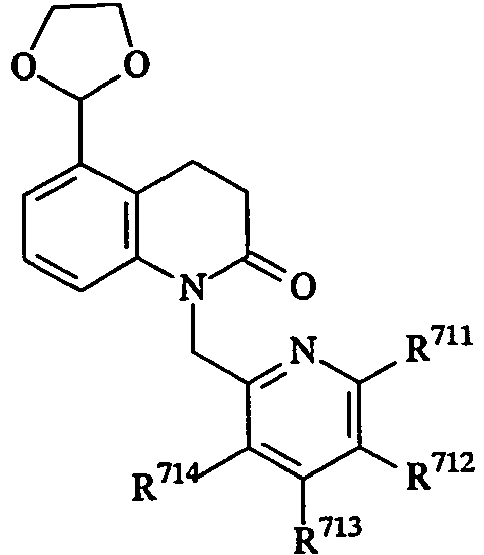
Ref. Ex. R711 R712 R713 R714 NMR 169 -CH2Cl -H -H -H 1H-NMR (CDCl3) dppm : 2.74-2.80 (2H, m), 3.09-3.15 (2H, m), 4.02-4.17 (4H, m), 4.67 (2H, s), 5.27 (2H, s), 5.96 (1H, s), 7.00 (1H, d, J=7.8Hz), 7.07 (1H, d, J=7.8Hz), 7.15 (1H, t, J=7.8Hz), 7.27 (1H, d, J=7.8Hz), 7.35 (1H, d, J=7.8Hz), 7.63 (1H, t, J=7.8Hz) 170 -H -CH3 -OCH3 -CH3 1H-NMR (CDCl3) dppm : 2.19 (3H, s), 2.27 (3H, s), 2.73-2.79 (2H, m), 3.05-3.11 (2H, m), 3.78 (3H, s), 4.01-4.16 (4H, m), 5.19 (2H, s), 5.96 (1H, s), 6.85-6.89 (1H, m), 7.11 (1H, t, J=7.9Hz), 7.22-7.26 (1H, m), 8.10 (1H, s) Table 25 
Ref. Ex. R111 R112 R113 R114 R115 NMR 171 -H -H -CH2Cl -H -H 1H-NMR (CDCl3) dppm : 2.74-2.79 (2H, m), 3.08-3.13 (2H, m), 4.02-4.17 (4H, m), 4.58 (2H, s), 5.17 (2H, s), 5.95 (1H, s), 6.87 (1H, d, J=8.0Hz), 7.13 (1H, t, J=8.0Hz), 7.19 (2H, d, J=8.0Hz), 7.25-7.28 (1H, m), 7.33 (2H, d, J=8.0Hz) 172 -H -H -H -CH2Cl -H 1H-NMR (CDCl3) dppm : 2.75-2.81 (2H, m), 3.08-3.14 (2H, m), 4.02-4.17 (4H, m), 4.55 (2H, s), 5.17 (2H, s), 5.96 (1H, s), 6.88 (1H, d, J=8.1Hz), 7.10-7.16 (2H, m), 7.23-7.33 (4H, m), 173 -H -H -H 
-H 1H-NMR (CDCl3) dppm : 1.50-1.60 (6H, m), 2.30-2.34 (4H, m), 2.74-2.80 (2H, m), 3.07-3.13 (2H, m), 3.43 (2H, s), 4.01-4.16 (4H, m), 5.17 (2H, s), 5.95 (1H, s), 6.90 (1H, d, J=8.1Hz), 7.03-7.27 (6H, m) 174 -H -H 
-H -H 1H-NMR (CDCl3) dppm : 1.41-1.47 (2H, m), 1.57-1.65 (4H, m), 2.40-2.44 (4H, m), 2.73-2.79 (2H, m), 3.07-3.13 (2H, m), 3.50 (2H, s), 4.00-4.17 (4H, m), 5.16 (2H, s), 5.95 (1H, s), 6.91 (1H, d, J=8.1Hz), 7.09-7.17 (3H, m), 7.24-7.29 (3H, m) 175 -H -H 
-H -H 1H-NMR (CDCl3) dppm : 2.73-2.79 (2H, m), 2.92-2.98 (2H, m), 3.07-3.13 (2H, m), 3.24-3.30 (2H, m), 4.01-4.17 (4H, m), 4.20 (2H, s), 5.17 (2H, s), 5.95 (1H, s), 6.48 (1H, d, J=7.8Hz), 6.61-6.68 (1H, m), 6.90-7.18 (6H, m), 7.24-7.31 (3H, m) Table 26 
Ref. Ex. R715 NMR 176 -CO2CH2CH2Si (CH3) 3 1H-NMR (CDCl3) dppm : 0.04 (9H,s), 0.98 (2H, d, J=8.3Hz), 1.2-1.4 (2H, m), 1.5-2.0 (2H, m), 2.5-2.8 (4H, m), 2.95-3.1 (2H, m), 3.75-4.3 (10H, m), 7.02 (1H, dd, J1=1.8Hz, J2=7.4Hz), 7.2-7.4 (2H, m) 177 -CO2C(CH3)3 1H-NMR (CDCl3) δ ppm : 1.15-1.95 (5H, m), 1.44 (9H, s), 2.5-2.7 (4H, m), 2.95-3.1 (2H, m), 3.75-4.2 (8H, m), 5. 94 (1H, s), 7.0-7.1 (1H, m), 7.2-7.35 (2H, m) 178 -H 1H-NMR (CDCl3) dppm : 1.25-1.8 (5H, m), 2.45-3.3 (8H, m), 3.92 (2H, d, J=7.1Hz), 4.0-4.25 (4H, m), 5.94 (1H, s), 6.9-7.1 (1H, m), 7.2-7.4 (2H, m) Table 27 
Ref. Ex. R721 NMR 179 -Cl 1H-NMR (CDCl3) dppm : 2.54-2.60 (2H, m), 2.89-2.95 (2H, m), 3.88 (3H, s), 3.99-4.16 (4H, m), 5.23 (2H, s), 5.84 (1H, s), 6.86 (1H, d, J=8.7Hz), 7.32 (1H, d, J=8.7Hz), 7.39 (1H, s) 180 -C6H5 1H-NMR (CDCl3) dppm : 2.56-2.62 (2H, m), 2.89-2.95 (2H, m), 3.91 (3H, s), 3.97-4.14 (4H, m), 5.45 (2H, s), 5.82 (1H, s), 6.84 (1H, d, J=8.7Hz), 7.30 (1H, d, J=8.7Hz), 7.37-7.43 (3H, m), 7.61 (1H, s), 7.84-7.88 (2H, m) 181 -3-THIENYL 1H-NMR (CDCl3) dppm : 2.55-2.61 (2H, m), 2.89-2.95 (2H, m), 3.90 (3H, s), 4.00-4.14 (4H, m), 5.42 (2H, s), 5.82 (1H, s), 6.84 (1H, d, J=8.9Hz), 7.30 (1H, d, J=8.9Hz), 7.33-7.35 (1H, m), 7.47-7.49 (1H, m), 7.55 (1H, s), 7.74 (1H, dd, J1=1.0Hz, J2=2.8Hz) 182 -3-PYRIDYL 1H-NMR (CDCl3) dppm : 2.57-2.62 (2H, m), 2.91-2.96 (2H, m), 3.91 (3H, s), 4.01-4.20 (4H, m), 5.43 (2H, s), 5.83 (1H, s), 6.86 (1H, d, J=8.7Hz), 7.29-7.37 (2H, m), 7.69 (1H, s), 8.13-8.18 (1H, m), 8.60 (1H, dd, J1=1.6Hz, J2=4.8Hz), 9.08 (1H, d, J=2.0Hz) Table 28 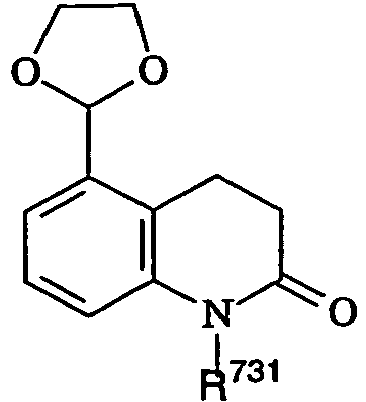
Ref. Ex. R731 NMR 183 - (CH2)3Br 1H-NMR (CDCl3) dppm : 2.15-2.3(2H, m), 2.5-2.7 (2H, m), 2.9-3.1 (2H, m), 3.44 (2H, t, J=6.5Hz), 4.0-4.25 (6H, m), 5.94 (1H, s), 7.0-7.1 (1H, m), 7.25-7.35 (2H, m) 184 
1H-NMR (CDCl3) dppm : 1.1-1.2 (2H, m), 1.42 (9H, s), 1.4-1.6 (3H, m), 1.7-1.8 (2H, m), 2.55-2.8 (4H, m), 2.95-3.05 (2H, m), 3.9-4.2 (8H, m), 5.94 (1H, s), 6.95-7.05 (1H, m), 7.2-7.35 (2H, m) 185 
1H-NMR (CDCl3) dppm : 1.1-1.65 (7H, m), 2.5-2.7 (4H, m), 2.9-3.2 (4H, m), 3.97 (2H, t, J=8.2Hz), 4.05-4.2 (4H, m), 5.94 (1H, s), 6.95-7.05 (1H, m), 7.2-7.4 (2H, m) Table 29 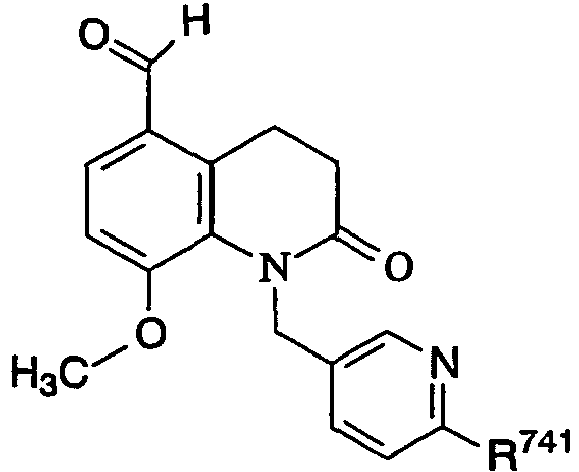
Ref. Ex. R741 NMR 186 -NHC6H5 1H-NMR (CDCl3) dppm : 2.55-2.62 (2H, m), 3.31-3.38 (2H, m), 3.93 (3H, s), 5.23 (2H, s), 6.42 (1H, s), 6.70 (1H, d, J=8.6Hz), 6.89 (1H, d, J=8.6Hz), 6.98-7.06 (1H, m), 7.23-7.33 (5H, m), 7.54 (1H, d, J=8.2Hz), 7.94 (1H, d, J=2.1Hz), 10.00 (1H, s) 187 -CF3 1H-NMR (CDCl3) dppm : 2.61-2.67 (2H, m), 3.41-3.47 (2H, m), 3.75 (3H, s), 5.23 (2H, s), 6.92 (1H, d, J=8.6Hz), 7.58 (1H, d, J=8.0Hz), 7.59 (1H, d, J=8.6Hz), 7.68 (1H, dd, J1=2.0Hz, J2=8.0Hz), 8.54 (1H, d, J=2.0Hz), 10.04 (1H, s) 188 -C6H4C6H5 (PARA) 1H-MMR (CDCl3) dppm : 2.61-2.67 (2H, m), 3.40-3.45 (2H, m), 3.86 (3H, s), 5.32 (2H, s), 6.89 (1H, d, J=8.7Hz), 7.33-7.39 (1H, m), 7.42-7.49 (2H, m), 7.52-7.56 (2H, m), 7.62-7.69 (5H, m), 7.99-8.02 (2H, m), 8.46 (1H, d, J=1.6Hz), 10.01 (1H, s) 189 
1H-NMR (DMSO-d6) dppm : 2.59-2.65 (2H, m), 3.37-3.42 (2H, m), 3.87 (3H, s), 5.26 (2H, s), 6.91 (1H, d, J=8.6Hz), 7.44 (1H, dd, J1=4.9Hz, J2=7.9Hz), 7.52-7.58 (2H, m), 8.10 (1H, d, J=1.8Hz), 8.18-8.24 (2H, m), 8.59 (1H, s), 8.79 (1H, dd, J1=1.8Hz, J2=4.9Hz), 9.12 (1H, d, J=1.8Hz), 10.02 (1H, s) 190 
1H-NMR (CDCl3) dppm : 2.57-2.62 (2H, m), 3.34-3.39 (2H, m), 3.92 (3H, s), 5.26 (2H, s), 6.79-6.85 (1H, m), 6.89 (1H, d, J=8.7Hz), 7.34-7.45 (4H, m), 7.51-7.60 (2H, m), 8.01 (1H, d, J=2.0Hz), 8.20-8.23 (1H, m), 10.00 (1H, s) Table 30 
Ref. Ex. R711 R712 R713 R714 NMR 191 -CH2SC6H5 -H -H -H 1H-NMR (CDCl3) dppm : 2.72-2.78 (2H, m), 3.49-3.55 (2H, m), 4.24 (2H, s), 5.26 (2H, s), 7.04 (1H, d, J=7.7Hz), 7.15-7.33 (8H, m), 7.47-7.55 (2H, m), 10.20 (1H, s) 192 -H -CH3 -OC H3 -CH3 1H-NMR (CDCl3) dppm : 2.20 (3H, s), 2.27 (3H, s), 2.74-2.80 (2H, m), 3.47-3.53 (2H, m), 3.75 (3H, s), 5.22 (2H, s), 7.12 (1H, dd, J1=1.0Hz, J2=7.9Hz), 7.29 (1H, t, J=7.9Hz), 7.47 (1H, dd, J1=1.0Hz, J2=7.9Hz), 8.12 (1H, s), 10.21 (1H, s) 193 
-H -H -H 1H-NMR (CDCl3) dppm : 1.44-1.50 (2H, m), 1.62-1.68 (4H, m), 2.50-2.54 (4H, m), 2.74-2.80 (2H, m), 3.51-3.57 (2H, m), 3.72 (2H, s), 5.30 (2H, s), 7.06 (1H, d, J=8.5Hz), 7.30 (2H, d, J=4.4Hz), 7.33 (1H, d, J=8.5Hz), 7.49 (1H, t, J=4.4Hz), 7.59 (1H, t, J=8.5Hz), 10.21 (1H, s) 194 
-H -H -H 1H-NMR (CDCl3) dppm : 2.72-2.78 (2H, m), 3.09 (3H, s), 3.49-3.55 (2H, m), 4.63 (2H, s), 5.28 (2H, s), 6.67-6.73 (3H, m), 7.03 (1H, d, J=3.8Hz), 7.06 (1H, d, J=3.8Hz), 7.16-7.23 (2H, m), 7.30-7.33 (2H, m), 7.47-7.55 (2H, m), 10.22 (1H, s) Table 31 
Ref. Ex. R111 R112 R113 R114 R115 NMR 195 -H -H -H -CH2SC6H5 -H 1H-NMR (CDCl3) dppm : 2.71-2.77 (2H, m), 3.47-3.53 (2H, m), 4.06 (2H, s), 5.15 (2H, s), 7.02-7.12 (3H, m), 7.14-7.32 (8H, m), 7.48 (1H, dd, J1=1.1Hz, J2=7.7Hz), 10.20 (1H, s) 196 -H -H -CH2SC6H5 -H -H 1H-NMR (CDCl3) dppm : 2.74-2.80 (2H, m), 3.49-3.55 (2H, m), 4.08 (2H, s), 5.18 (2H, s), 7.07-7.13 (3H, m), 7.16-7.33 (8H, m), 7.49 (1H, dd, J1=1.1Hz, J2=7.6Hz), 10.21 (1H, s) 197 -H -H -H 
-H 1H-NMR (CDCl3) dppm : 1.39-1.45 (2H, m), 1.50-1.58 (4H, m), 2.30-2.34 (4H, m), 2.76-2.82 (2H, m), 3.45 (2H, s), 3.50-3.56 (2H, m), 5.22 (2H, s), 7.03-7.31 (6H, m), 7.47 (1H, d, J=7.6Hz), 10.20 (1H, s) 198 -H -H 
-H -H 1H-NMR (CDCl3) dppm : 1.39-1.45 (2H, m), 1.50-1.62 (4H, m), 2.34-2.38 (4H, m), 2.75-2.81 (2H, m), 3.44 (2H, s), 3.49-3.55 (2H, m), 5.19 (2H, s), 7.14 (2H, d, J=8.1Hz), 7.25-7.33 (4H, m), 7.48 (1H, dd, J1=1.0Hz, J2=7.6Hz), 10.21 (1H, s) 199 -H -H -H 
-H 1H-NMR (CDCl3) dppm : 2.64-2.70 (2H, m), 2.93 (3H, s), 3.37-3.43 (2H, m), 4.48 (2H, s), 5.18 (2H, s), 6.61-6.69 (3H, m), 6.95-7.30 (8H, m), 7.47 (1H, dd, J1=0.9Hz, J2=7.7Hz), 10.20 (1H, s) 200 -H -H 
-H -H 1H-NMR (CDCl3) dppm : 2.73-2.79 (2H, m), 2.98 (3H, s), 3.48-3.54 (2H, m), 4.49 (2H, s), 5.18 (2H, s), 6.67-6.73 (3H, m), 7.11-7.33 (8H, m), 7.48 (1H, dd, J1=1.0Hz, J2=7.6Hz), 10.20 (1H, s) 201 -H -H 
-H -H 1H-NMR (CDCl3) dppm : 2.75-2.81 (2H, m), 2.92-2.98 (2H, m), 3.25-3.31 (2H, m), 3.49-3.55 (2H, m), 4.21 (2H, s), 5.20 (2H, s), 6.47 (1H, d, J=7,7Hz), 6.63-6.69 (1H, m), 7.01-7.07 (1H, m), 7.11 (1H, dd, J1=1.0Hz, J2=5.6Hz), 7.17 (2H, d, J=8.2Hz), 7.26-7.34 (4H, m), 7.49 (1H, dd, J1=1.0Hz, J2=7.7Hz), 10.21 (1H, s) Table 32 
Ref. Ex. R715 NMR 202 -C6H4C6H5(PARA) 1H-NMR (CDCl3) dppm : 1.4-2.2 (5H, m), 2.5-3.0 (4H, m), 3.4-3.55 (2H, m), 3.65-3.8 (2H, m), 4.03 (1H, br s), 7.2-7.65 (12H, m), 10.23 (1H, s) 203 -CO2CH2CH2Si (CH3)3 1H-NMR (CDCl3) dppm : 0.04 (9H,s), 0.97 (2H, d, J=8.3Hz), 1.2-2.0 (5H, m), 2.55-2.8 (4H, m), 3.3-3.6 (2H, m), 3.75-4.3 (6H, m), 7.2-7.6 (3H, m), 10.22 (1H, s) 204 
1H-NMR (CDCl3) dppm : 1.35-1.9 (5H, m), 2.56 (3H, s), 2.5-2.7 (4H, m), 2.9-3.1 (2H, m), 3.5-3.7 (2H, m), 3.97 (2H, d, J=7.1Hz), 4.0-4.2 (4H, m), 6.82 (1H, d, J=6.1Hz), 7.0-7.2 (3H, m), 7.25-7.4 (2H, m) 205 
1H-NMR (DMSO-d6) dppm : 1.45-1.9 (5H, m), 2.6-2.7 (4H, m), 2.85-3.0 (2H, m), 3.15-3.4 (2H, m), 3.85-4.15 (6H, m), 5.92 (1H, s), 7.04 (1H, d, J=7.3Hz), 7.15-7.6 (8H, m), 7.86 (1H, d, J=6.8Hz), 8.06 (1H, d, J=7.0Hz), 10.23 (1H, s) Table 33 
Ref. Ex. R721 NMR 206 -Cl 1H-NMR (CDCl3) dppm : 2.54-2.60 (2H, m), 3.34-3.40 (2H, m), 3.99 (3H, s), 5.25 (2H, s), 7.01 (1H, d, J=8.6Hz), 7.36 (1H, s), 7.62 (1H, d, J=8.6Hz), 10.04 (1H, s) 207 - C6H5 1H-NMR (CDCl3) dppm : 2.57-2.62 (2H, m), 3.34-3.40 (2H, m), 4.01 (3H, s), 5.48 (2H, s), 6.98 (1H, d, J=8.7Hz), 7.37-7.40 (3H, m), 7.56-7.60 (2H, m), 7.82-7.86 (2H, m), 10.01 (1H, s) 208 -3-THIENYL (CDCl3) dppm : 2.56-2.62 (2H, m), 3.34-3.39 (2H, m), 4.01 (3H, s), 5.46 (2H, s), 6.98 (1H, d, J=8.7Hz), 7.34 (1H, dd, J1=3.0Hz, J2=5.0Hz), 7.44-7.47 (1H, m), 7.51 (1H, s), 7.58 (1H, d, J=8.7Hz), 7.72-7.75 (1H, m), 10.01 (1H, s) 209 -3-PYRIDYL (CDCl3) dppm : 2.58-2.63 (2H, m), 3.35-3.41 (2H, m), 4.02 (3H, s), 5.46 (2H, s), 7.00 (1H, d, J=8.6Hz), 7.34 (1H, dd, J1=4.8Hz, J2=8.0Hz). 7.60 (1H, d, J=8.6Hz), 7.66 (1H, s), 8.13 (1H, ddd, J1=1.9Hz, J2=8.0Hz), 8.61 (1H, dd, J=1.9Hz, J2=4.8Hz), 9.07 (1H, d, J=1.9Hz), 10.02 (1H, s) Table 34 
Ref. Ex. R732 NMR 210 -(CH2)4F 1H-NMR (CDCl3) dppm : 1.5-1.75 (2H, m), 2.45-2.6 (2H, m), 3.3-3.45 (2H, m), 3.69 (3H, s), 4.02 (2H, t, J=7.2Hz), 4.25-4.35 (1H, m), 4.45-4.55 (1H, m), 6.98 (1H, d, J=8.6Hz), 7.60 (1H, d, J=8.6Hz), 10.06 (1H, s) 211 
1H-NMR (CDCl3) dppm : 1.8-1.95 (2H, m), 2.4-2.75 (6H, m), 3.1-3.25 (4H, m), 3.35-3.6 (3H, m), 3.95-4.2 (3H, m), 6.8-7.0 (3H, m), 7.2-7.6 (5H, m), 10.22 (1H, s) 212 
1H-NMR (CDCl3) dppm : 1.8-2.05 (2H, m), 2.5-3.05 (8H, m), 3.35-3.5 (2H, m), 3.61 (2H, s), 4.0-4.25 (2H, m), 6.9-7.6 (7H, s), 10.2 (1H, s) 213 
1H-NMR (CDCl3) dppm : 1.6-2.3 (8H, m), 2.45-2.8 (4H, m), 3.0-3.25 (2H, m), 3.4-3.65 (2.5H, m), 3.95-4.2 (2.5H, m), 7.1-7.6 (8H, m), 10.21 (1H, s) 214 
1H-NMR (CDCl3) dppm : 1.35-1.95 (7H, m), 2.26 (3H, s), 2.5-2.75 (4H, m), 3.35-3.5 (2H, m), 3.5-3.65 (2H, m), 3.95-4.1 (2H, m), 6.86 (2H, d, J=8.5Hz), 7.06 (2H, d, J=8.5Hz), 7.15-7.6 (3H, m), 10.22 (1H, s) - 1.0 g of 2-chloro-3-(8-methoxy-1-methyl-2-oxo-1,2-dihydroquinolin-5-yl)propionic acid, 0.45 g of thiourea, and 0.4 g of sodium acetate were added to 20 ml of methoxy ethanol, and the mixture was stirred at 110°C for 7.5 hours. The reaction mixture was concentrated under reduced pressure, an aqueous sodium hydrogencarbonate solution was added to the residue to precipitate a solid, and the precipitated solid was collected by filtration. The filtrate was extracted with dichloromethane, and the extract was dried over anhydrous sodium sulfate and concentrated. The concentrated residue and the solid collected by filtration were combined and added to a mixed solvent of 10% hydrochloric acid and ethanol, followed by heating and refluxing overnight. The solvent was distilled off under reduced pressure, and the residue was recrystallized from an aqueous DMF, giving 0.41 g of 5-(8-methoxy-1-methyl-2-oxo-1,2-dihydroquinolin-5-ylmethyl)thiazolidine-2,4-dione as a yellow powder. Melting point: 254°C-255°C
- 912 mg of 2-chloro-4-(8-methoxy-1-methyl-2-oxo-1,2-dihydroquinolin-5-yl)butyric acid, 390 mg of thiourea, and 394 mg of sodium acetate were added to 20 ml of methoxyethanol, followed by stirring at 110°C for 4 hours. The reaction mixture was concentrated under reduced pressure. Water was added to the residue, and the mixture was extracted with dichloromethane. The extract was dried over anhydrous sodium sulfate and concentrated. The residue was added to a mixed solvent of 10 ml of 10% hydrochloric acid and 10 ml of ethanol, followed by heating and refluxing overnight. The solvent was distilled off under reduced pressure, and the residue was recrystallized from a DMF-ethanol mixed solvent, giving 332 mg (31% yield) of 5-[2-(8-methoxy-1-methyl-2-oxo-1,2-dihydroquinolin-5-yl)ethyl]thiazolidine-2,4-dione as a yellow powder.
Melting point: 222°C to 224°C - 1 g of 2-chloro-5-(8-methoxy-1-methyl-2-oxo-1,2-dihydroquinolin-5-yl)valeric acid, 380 mg of thiourea, and 380 mg of sodium acetate were added to 20 ml of methoxyethanol, followed by stirring at 110°C for 5 hours. The reaction mixture was concentrated under reduced pressure, and water and a small amount of ethanol were added to the residue to precipitate a solid. The precipitated solid was collected by filtration. The solid collected by filtration was added to a mixed solvent of 10 ml of 10% hydrochloric acid and 10 ml of ethanol, followed by heating and refluxing overnight. The solvent was distilled off under reduced pressure, and the residue was extracted with dichloromethane. The extract was dried over anhydrous sodium sulfate and concentrated. The concentrated residue was purified by silica gel column chromatography (dichloromethane:methanol of 100:1 → 10:1), and recrystallized from an ethanol-ether mixed solvent, giving 332 mg (29% yield) of 5-[3-(8-methoxy-1-methyl-2-oxo-1,2-dihydroquinolin-5-yl)propyl]thiazolidine-2,4-dione as a light yellow powder.
Melting point: 172°C to 175°C - 3.02 g of ethyl chloro-(8-methoxy-1-methyl-2-oxo-1,2-dihydroquinolin-5-yl)acetate, 1.4 g of thiourea, and 2 g of sodium acetate were added to 50 ml of methoxyethanol, followed by stirring at 110°C for 2.5 hours. The reaction mixture was concentrated under reduced pressure. Water was added to the residue to precipitate a solid, and the precipitated solid was collected by filtration. The collected solid was added to a mixed solvent of 30 ml of 10% hydrochloric acid and 30 ml of ethanol, followed by heating and refluxing overnight. The resultant was concentrated to half its original volume under reduced pressure. Water was added thereto, and the mixture was cooled with ice to precipitate a solid. The precipitated solid was collected by filtration. The solid was recrystallized from a DMF-ethanol mixed solvent, giving 1.68 g (57% yield) of 5-(8-methoxy-1-methyl-2-oxo-1,2-dihydroquinolin-5-yl)thiazolidine-2,4-dione as a gray powder.
Melting point: 255°C (decomposition) - 1.50 g of 1-(4-chlorobenzyl)-2-oxo-1,2-dihydroquinolin-4-carboxaldehyde and 0.826 g of 2,4-thiazolidinedione were suspended in 30 ml of toluene. Five drops of piperidine and five drops of acetic acid were added, followed by heating and refluxing for 6 hours. The resultant was allowed to cool to precipitate a solid, and the precipitated solid was collected by filtration and dried, giving 1.01 g (50% yield) of 5-[1-(4-chlorobenzyl)-2-oxo-1,2-dihydroquinolin-4-ylmethylidene]thiazolidine-2,4-dione as a light-brown powder.
1H-NMR(DMSO-d6) dppm:
5.53 (2H, s), 6.76 (1H, s), 7.11-7.49 (6H, m), 7.53-7.64 (1H, m), 7.81 (1H, d, J=8.1Hz), 8.04 (1H, s), 12.21-13.32 (1H, br) - 1.50 g of 1-(4-chlorobenzyl)-2-oxo-1,2-dihydroquinolin-3-carboxaldehyde and 0.826 g of 2,4-thiazolidinedione were suspended in 30 ml of toluene, and five drops of piperidine and five drops of acetic acid were added, followed by heating and reflexing for 6 hours. The resultant was allowed to cool to precipitate a solid. The precipitated solid was collected by filtration and dried, giving 1.36 g of 5-[1-(4-chlorobenzyl)-2-oxo-1,2-dihydroquinolin-3-ylmethylidene]thiazolidine-2,4-dione as a yellow powder (68% yield).
1H-NMR(DMSO-d6) dppm:
5.55 (2H, s), 7.18-7.45 (6H, m), 7.53-7.65 (1H, m), 7.88-8.00 (2H, m), 8.21 (1H, s), 12.59 (1H, brs) - Using appropriate starting materials, the same procedure as in Reference Example 6 # was conducted, giving compounds of the following Reference Examples 7 # to 13.
- 5-[1-(1-Biphenyl-4-ylmethyl-2-oxo-1,2-dihydroquinolin-4-yl)methylidene)thiazolidine-2,4-dione 1H-NMR(DMSO-d6) dppm:
5.59 (2H, brs), 6.78 (1H, s), 7.18-7.70 (12H, m), 7.82 (1H, d, J=8.0Hz), 8.05 (1H, s), 12.81 (1H, brs) - 5-[1-(1-Biphenyl-4-ylmethyl-2-oxo-1,2-dihydroquinolin-3-yl)methylidene]thiazolidine-2,4-dione 1H-NMR(DMSO-d6) dppm:
5.61 (2H, brs), 7.21-7.51 (7H, m), 7.51-7.68 (5H, m), 7.87-8.00 (2H, m), 8.22 (1H; s), 12.60 (1H, brs) - 5-[1-(8-Methoxy-1-methyl-2-oxo-1,2-dihydroquinolin-5-yl)methylidene]thiazolidine-2,4-dione
Melting point: 300°C or higher
1H-NMR(DMSO-d6) dppm:
3.80 (3H, s), 3.95 (3H, s), 6.70 (1H, d, J=9.8Hz), 7.35-7.45 (2H, m), 8.05 (1H, d, J=9.8Hz), 8.14 (1H, s), 12.63 (1H, brs) - 5-[1-(8-Methoxy-1-methyl-2-oxo-1,2-dihydroquinolin-5-yl)methylidene]-3-methylthiazolidine-2,4-dione Melting point: 270°C (decomposition)
- 5-{1-[8-Methoxy-1-(4-bromobenzyl)-2-oxo-1,2-dihydroquinolin-5-yl]methylidene}thiazolidine-2,4-dione 1H-NMR(DMSO-d6) dppm:
3.65 (3H, s), 5.67 (2H, s), 6.80 (1H, d, J=9.8Hz), 7.03 (2H, d, J=8.5Hz), 7.25-7.40 (2H, m), 7.40-7.52 (2H, m), 8.16 (2H, d, J=10.9Hz), 12.64 (1H, brs) - 5-[1-(1-Biphenyl-4-ylmethyl-2-oxo-1,2,3,4-tetrahydroquinolin-7-yl)methylidene]thiazolidine-2,4-dione 1H-NMR(DMSO-d6) dppm:
2.70-2.84 (2H, m), 2.97-3.09 (2H, m), 5.22 (2H, brs), 7.12 (1H, s), 7.15-7.25 (1H, m), 7.25-7.49 (6H, m), 7.56-7.71 (5H, m), 12.52 (1H, brs) - 5-[1-(1-Biphenyl-4-ylmethyl-2-oxo-1,2,3,4-tetrahydroquinolin-8-yl)methylidene]thiazolidine-2,4-dione 1H-NMR(DMSO-d6) dppm:
2.55-2.68 (2H, m), 2.80-2.94 (2H, m), 4.98 (2H, s), 6.98-7.16 (3H, m), 7.22-7.63 (9H, m), 7.75 (1H, s), 12.57 (1H, brs) - 0.96 g of 5-[1-(4-chlorobenzyl)-2-oxo-1,2-dihydroquinolin-4-ylmethylidene]thiazolidine-2,4-dione, 0.735 g of diethyl 1,4-dihydro-2,6-dimethyl-3,5-pyridinedicarboxylate, and 0.96 g of silica gel were added to 30 ml of toluene, followed by heating and refluxing overnight. The solvent was distilled off, and the residue was purified by silica gel column chromatography (dichloromethane:ethyl acetate of 10:1 → 3:1), and the purified product was recrystallized from a chloroform-ether mixed solvent, giving 0.87 g (91% yield) of 5-[1-(4-chlorobenzyl)-2-oxo-1,2-dihydroquinolin-4-ylmethyl]thiazolidine-2,4-dione as a white powder.
Melting point: 142.1°C to 143.7°C - 1.207 g of 5-[1-(4-chlorobenzyl)-2-oxo-1,2-dihydroquinolin-3-ylmethylidene]thiazolidine-2,4-dione, 0.924 g of diethyl 1,4-dihydro-2,6-dimethyl-3,5-pyridinedicarboxylate, and 1.2 g of silica gel were added to 30 ml of toluene, followed by heating and refluxing overnight. 0.77 g of diethyl 1,4-dihydro-2,6-dimethyl-3,5-pyridine dicarboxylate was further added to the reaction liquid, followed by heating and refluxing overnight. The solvent was distilled off, and the residue was purified by silica gel column chromatography (dichloromethane:ethyl acetate of 10:1 → 3:1). The purified product was recrystallized from a chloroform-ether mixed solvent, giving 0.74 g (61% yield) of 5-[1-(4-chlorobenzyl)-2-oxo-1,2-dihydroquinolin-4-ylmethyl]thiazolidine-2,4-dione as a white powder.
Melting point: 230.7°C to 231.9°C - Using appropriate starting materials, the same procedure as in Reference Example 15 # was conducted, giving compounds of the following Reference Examples 16 # to 19.
- 5-(2-Oxo-1,2-dihydroquinolin-3-ylmethyl)thiazolidine-2,4-dione
1H-NMR(DMSO-d6) dppm:
2.45-2.55 (1H, m), 3.35-3.5 (1H, m), 4.9-5.0 (1H, m), 7.15-7.7 (4H, m), 7.84 (1H, s), 11.91 (1H, brs), 12.08 (1H, brs) - 5-[1-(Biphenyl-4-ylmethyl)-2-oxo-1,2-dihydroquinolin-3-ylmethyl]thiazolidine-2,4-dione Melting point: 220.4°C to 221.8°C
- 5-[1-(Biphenyl-4-ylmethyl)-2-oxo-1,2,3,4-tetrahydroquinolin-7-ylmethyl]thiazolidine-2,4-dione Melting point: 213.2°C to 213.7°C
- 5-[1-(Biphenyl-4-ylmethyl)-2-oxo-1,2,3,4-tetrahydroquinolin-8-ylmethyl]thiazolidine-2,4-dione 1H-NMR(DMSO-d6) dppm:
2.40-2.53 (2H, m), 2.70-2.85 (2H, m), 3.09-3.25 (1H, m), 3.50-3.64 (1H, m), 4.79-4.90 (1H, m), 4.90-5.16 (2H, m), 7.02 (1H, t, J=7.5Hz), 7.08-7.21 (4H, m), 7.28-7.64 (7H, m), 12.04 (1H, s) - 600 mg of 5-[8-methoxy-1-(4-nitrobenzyl)-2-oxo-1,2,3,4-tetrahydroquinolin-5-ylmethylidene]thiazolidine-2,4-dione, 415 mg of diethyl 1,4-dihydro-2,6-dimethyl-3,5-pyridinedicarboxylate, and 600 mg of silica gel were added to 20 ml of toluene, followed by heating and refluxing for 14 hours. The solvent was distilled off, and the residue was purified by silica gel column chromatography (n-hexane:ethyl acetate=4:1 → 1:1). The purified product was recrystallized from an ethyl acetate-ether mixed solvent, giving 585 mg (97% yield) of 5-[8-methoxy-1-(4-nitrobenzyl)-2-oxo-1,2,3,4-tetrahydroquinolin-5-ylmethyl]thiazolidine-2,4-dione as a white powder.
Melting point: 246.5°C to 246.6°C. - 10 g of 10% palladium carbon was added to a DMF solution (100 ml) of 10.0 g of 5-[8-methoxy-1-(4-nitrobenzyl)-2-oxo-1,2,3,4-tetrahydroquinolin-5-ylmethyl]thiazolidine-2,4-dione, and the mixture was subjected to a catalytic reduction at 40°C for 5 hours. The catalyst was removed by filtration, and the filtrate was concentrated. Ethyl acetate and water were added to the residue, and celite filtration was carried out. The filtrate was washed with water and dried over magnesium sulfate, followed by concentration. The residue was purified by silica gel chromatography (n-hexane:ethyl acetate=4:1 → 1:4), and the purified product was recrystallized from ethyl acetate, giving 7.98 g (86% yield) of 5-[1-(4-aminobenzyl)-8-methoxy-2-oxo-1,2,3,4-tetrahydroquinolin-5-ylmethyl]thiazolidine-2,4-dione as a white powder. Melting point: 174.1°C to 174.8°C
- 0.52 g of triethylamine and 0.42 g of diethylphosphoro cyanidate (DEPC) were added with ice cooling to a DMF solution (14 ml) of 0.7 g of 5-[1-(4-aminobenzyl)-8-methoxy-2-oxo-1,2,3,4-tetrahydroquinolin-5-ylmethyl]thiazolidine-2,4-dione and 0.59 g of 2-naphthoic acid, followed by stirring for 16 hours. Water and ethyl acetate were added to the reaction liquid, and the insoluble matter thus formed was collected by filtration. The collected insoluble matter was dissolved in a dichloromethane-methanol mixed solvent and concentrated. The residue was washed with diethylether and diisopropyl ether. The residue was dried under reduced pressure, giving 0.74 g (77% yield) of 5-{8-methoxy-1-[4-(2-naphthoylamino)benzyl]-2-oxo-1,2,3,4-tetrahydroquinolin-5-ylmethyl}thiazolidin-2,4-dione as a white amorphous solid.
Melting point: 202°C to 208°C
1H-NMR(DMSO-d6) dppm:
2.44-2.52 (2H, m), 2.82-2.88 (2H, m), 3.03-3.13 (1H, m), 3.35-3.45 (1H, m), 3.73 (3H, s), 4.79 (1H, dd, J1=4.1Hz, J2=9.9Hz), 5.20 (2H, s), 6.83 (1H, d, J=8.6Hz), 6.91 (1H, d, J=8.6Hz), 7.05 (2H, d, J=8.4Hz), 7.58-7.66 (4H, m), 7.95-8.08 (4H, m), 8.52 (1H, s), 10.33 (1H, s), 12.06 (1H, s) - 0.6 g of 5-[1-(4-aminobenzyl)-8-methoxy-2-oxo-1,2,3,4-tetrahydroquinolin-5-ylmethyl]thiazolidine-2,4-dione was suspended in dichloromethane (6 ml), and 4 ml of pyridine was added with ice cooling to form a solution. 0.26 g of amyl chloroformate was added to this solution, followed by stirring for 1 hour. 1 N hydrochloric acid was added to the reaction liquid, and extracted with ethyl acetate. The extract was washed twice with water and once with saturated sodium chloride solution, dried over anhydrous sodium sulfate, and concentrated under reduced pressure. The residue was purified by silica gel column chromatography (n-hexane:ethyl acetate=2:1 → 1:1), and recrystallized from diisopropyl ether, giving 3.75 g (97% yield) of 5-[1-(4-pentyloxycarbonylaminobenzyl)-8-methoxy-2-oxo-1,2,3,4-tetrahydroquinolin-5-ylmethyl]thiazolidine-2,4-dione as a white powder.
Melting point: 98°C to 102°C. - 7.0 g of 8-methoxy-1-(4-methoxycarbonylbenzyl)-2-oxo- 1,2,3,4-tetrahydroquinoline-5-carboxaldehyde and 3.25 g of 2,4-thiazolidinedione were suspended in 70 ml of toluene. Ten drops of piperidine and ten drops of acetic acid were added, followed by heating and refluxing for 4 hours. The resultant was allowed to cool to precipitate a solid, and the precipitated solid was collected by filtration and dried, giving 8.0 g (90% yield) of 5-[8-methoxy-1-(4-methoxycarbonylbenzyl)-2-oxo-1,2,3,4-tetrahydroquinolin-5-ylmethylidene]thiazolidine-2,4-dione as a light yellow powder.
1H-NMR(DMSO-d6) dppm:
2.52-2.66 (2H, m), 2.91-3.05 (2H, m), 3.65 (3H, s), 3.79 (3H, s), 5.17 (2H, s), 7.02 (1H, d, J=8.7Hz), 7.16 (1H, d, J=8.7 Hz), 7.25 (2H, d, J=8.3Hz), 7.74- 7.90 (3H, m) 12.55 (1H, brs) - 7.0 g of 10% palladium carbon was added to a DMF solution (70 ml) of 7.0 g of 5-[8-methoxy-1-(4-methoxycarbonyl benzyl)-2-oxo-1,2,3,4-tetrahydroquinolin-5-ylmethylidene]thiazolidine-2,4-dione, and a catalytic reduction was carried out at 40°C for 5 hours. The catalyst was removed by filtration and the filtrate was concentrated. The residue was purified by silica gel column chromatography (n-hexane:ethyl acetate=4:1 1:1). The purified product was recrystallized from an ethyl acetate-diethyl ether mixed solvent, giving 5.23 g (74% yield) of 5-[8-methoxy-1-(4-methoxycarbonylbenzyl)-2-oxo-1,2,3,4-tetrahydroquinolin-5-ylmethyl]thiazolidine-2,4-dione as a white powder. Melting point: 193.1°C to 195.5°C
- 35 ml of an aqueous 1 N-lithium hydroxide solution was added to a mixed ethanol (200 ml) and THF (200 ml) solution of 4.0 g of 5-[8-methoxy-1-(4-methoxycarbonylbenzyl)-2-oxo-1,2,3,4-tetrahydroquinolin-5-ylmethyllthiazolidine-2,4-dione, followed by stirring at room temperature overnight. The solvent was distilled off under reduced pressure, hydrochloric acid was added to the residue, and the insoluble matter thus formed was collected by filtration. The collected insoluble matter was purified by silica gel column chromatography (n-hexane:ethyl acetate=1:1 → 1:3), and recrystallized from ethyl acetate, giving 3.75 g (97% yield) of 5-[8-methoxy-1-(4-carboxybenzyl)-2-oxo-1,2,3,4-tetrahydroquinolin-5-ylmethyl]thiazolidine-2,4-dione as a white powder.
1H-NMR(DMSO-d6) dppm:
2.42-2.61 (2H, m), 2.70-2.94 (2H, m), 3.01-3.15 (1H, m), 3.34-3.48 (1H, m), 3.56 (3H, s), 4.78 (1H, dd, J=4.4, 9.8Hz), 5.17 (2H, brs), 6.81 (1H, d, J=8.6Hz), 6.90 (1H, d, J=8.6Hz), 7.17 (2H, d, J=8.2Hz), 7.77 (2H, d, J=8.2Hz), 12.06 (1H, brs), 12.76 (1H, brs) - 0.34 g of triethylamine and 0.28 g of diethyl phosphorocyanidate (DEPC) were added with ice cooling to a DMF solution (10 ml) of 0.5 g of 5-[8-methoxy-1-(4-carboxybenzyl)-2-oxo-1,2,3,4-tetrahydroquinolin-5-ylmethyl]thiazolidine-2,4-dione and 0.23 g of 4-isopropylaniline, followed by stirring for 0.5 hours. Water was added to the reaction liquid and the mixture was extracted with ethyl acetate. The organic layer was washed twice with water and once with saturated sodium chloride solution, and dried over anhydrous sodium sulfate. The solvent was distilled off under a reduced pressure, the residue was purified by silica gel column chromatography (dichloromethane:methanol=100:1 → 20:1), and recrystallized from a mixed solvent of ethyl acetate and n-hexane, giving 0.57 g (64% yield) of 5-{1-[4-(4-isopropylphenylaminocarbonyl)benzyl]-8-methoxy-2-oxo-1,2,3,4-tetrahydroquinolin-5-ylmethyl}thiazolidine-2,4-dione as a white powder.
Melting point: 243°C to 244°C. - Using appropriate starting materials, the same procedure as in Example 27 was conducted, giving compounds of the following Examples 28 and 29.
- 5-{8-Methoxy-1-[4-(piperidtne-1-carbonyl)benzyl]-2-oxo-1,2,3,4-tetrahydroquinolin-5-ylmethyl}thiazolidine-2,4-dione
1H-NMR(DMSO-d6) dppm:
1.25-1.80 (6H, m), 2.39-2.62 (2H, m), 2.72-2.95 (2H, m), 2.95- 3.72 (9H, m), 4.77 (1H, dd, J=4.3, 9.6Hz), 5.16 (2H, s), 6.81 (1H, d, J=8.6Hz), 6.90 (1H, d, J=8.6Hz), 7.09 (2H, d, J=8.0Hz), 7.18 (2H, d, J=8.0Hz), 12.05 (1H, brs) - 5-[1-(4-Cyclohexylaminocarbonylbenzyl)-8-methoxy-2-oxo-1,2,3,4-tetrahydroquinolin-5-ylmethyl]thiazolidine-2,4-dione
1H-NMR(DMSO-d6) dppm:
0.95-1.85 (10H, m), 2.39-2.60 (2H, m), 2.70-2.94 (2H, m), 3.00-3.19 (1H, m), 3.23-3.50 (1H, m), 3.63 (3H, s), 3.80-3.99 (1H, m), 4.64-4.88 (1H, m), 5.19 (2H, s), 6.80 (1H, d, J=8.6Hz), 6.89 (1H, d, J=8.6Hz), 7.11 (2H, d, J=8.0Hz), 7.65 (2H, d, J=8.0Hz), 8.03 (1H, d, J=7.8Hz), 12.06 (1H, brs) - 2.0 g of 1-benzyl-8-hydroxy-2-oxo-1,2,3,4-tetrahydroquinoline-5-carboxaldehyde and 0.874 .g of 2,4-thiazolidinedione were suspended in 20 ml of toluene. Ten drops of piperidine and ten drops of acetic acid were added, followed by heating and refluxing for 8 hours. The resultant was allowed to cool to precipitate a solid, and the precipitated solid was collected by filtration and dried, giving 2.7 g (92% yield) of 5-(1-benzyl-8-hydroxy-2-oxo-1,2,3,4-tetrahydroquinolin-5-ylmethylidene)thiazolidine-2,4-dione as a yellow powder.
1H-NMR(DMSO-d6) dppm:
2.41-2.60 (2H, m), 2.75-2.98 (2H, m), 5.31 (2H, s), 6.84 (1H, d, J=8.6Hz), 7.00-7.30 (6H, m), 7.81 (1H, s), 10.72 (1H, s), 12.48 (1H, brs) - 2.2 g of 10% palladium carbon was added to a DMF solution (20ml) of 2.2 g of 5-(1-benzyl-8-hydroxy-2-oxo-1,2,3,4-tetrahydroquinolin-5-ylmethylidene)thiazolidine-2,4-dione, and the mixture was subjected to catalytic reduction at room temperature for 2 hours. The catalyst was removed by filtration, and the filtrate was concentrated. The residue was dissolved in ethyl acetate, washed with water and saturated sodium chloride solution, and concentrated. The residue was purified by silica gel column chromatography (dichloromethane:methanol=50:1). The purified product was recrystallized from a dichloromethane-ether mixed solvent, giving 1.9 g (88% yield) of 5-(1-benzyl-8-hydroxy-2-oxo-1,2,3,4-tetrahydroquinolin-5-ylmethyl)thiazolidine-2,4-dione as a white powder.
Melting point: 213.2°C to 213.7°C - 55.5 mg of potassium tert-butoxide was added to a DMSO solution (1 ml) of 90 mg of 5-(1-benzyl-8-hydroxy-2-oxo-1,2,3,4-tetrahydroquinolin-5-ylmethyl)thiazolidine-2,4-dione, followed by stirring at room temperature for 1 hour. 29.8 µl of 4-iodobutane was added thereto, followed by stirring at room temperature for 2 hours. Water was added to the reaction liquid, potassium hydrogensulfate was added to the mixture, and the mixture was extracted with ethyl acetate. After washing with water, the extract was dried over anhydrous magnesium sulfate, and concentrated. The residue was purified by preparative silica gel thin layer chromatography (dichloromethane:methanol=20:1), giving 42 mg (41% yield) of 5-(1-benzyl-8-butoxy-2-oxo-1,2,3,4-tetrahydroquinolin-5-ylmethyl)thiazolidine-2,4-dione as a colorless amorphous solid.
1H-NMR(CDCl3) dppm:
0.93 (3H, t, J=7.3Hz), 1.35-1.50 (2H, m), 1.57-1.73 (2H, m), 2.52-2.67 (2H, m), 2.67-2.95 (2H, m),
3.05 (1H, dd, J=10.1Hz, J=14.0Hz), 3.51 (1H, dd, J=4.0Hz, J=14.0Hz), 3.89 (2H, t, J=6.6Hz), 4.39 (1H, dd, J=4.0Hz, J=10.1Hz), 5.32 (2H, s), 6.71 (1H, d, J=8.6Hz), 6.87 (1H, d, J=8.6Hz), 7.02-7.25 (5H, m), 9.15 (1H, brs) - 55.5 mg of potassium tert-butoxide was added to a DMSO solution (1 ml) of 90 mg of 5-(1-benzyl-8-hydroxy-2-oxo-1,2,3,4-tetrahydroquinolin-5-ylmethyl)thiazolidine-2,4-dione, followed by stirring at room temperature for 1 hour. 30 µl of benzyl bromide was added thereto, followed by stirring at room temperature for 1 hour. Water was added to the reaction liquid, potassium hydrogensulfate was added to the mixture, and the mixture was extracted with ethyl acetate. The extract was washed with water, dried over anhydrous magnesium sulfate, and concentrated. The residue was purified by preparative silica gel thin layer chromatography (dichloromethane:methanol=20:1), giving 84.5 mg (76% yield) of 5-(1-benzyl-8-benzyloxy-2-oxo-1,2,3,4-tetrahydroquinolin-5-ylmethyl)thiazolidine-2,4-dione as a colorless amorphous solid.
1H-NMR(CDCl3) dppm:
2.49-2.65 (2H, m), 2.65-2.94 (2H, m), 3.07 (1H, dd, J=10.0Hz, J=14.5Hz), 3.51 (1H, dd, J=4.1Hz, J=14.5Hz), 4.39 (1H, dd, J=4.1Hz, J=10.0Hz), 4.97 (2H, s), 5.32 (2H, s), 6.76 (1H, d, J=8.6Hz), 6.86 (1H, d, J=8.6Hz), 6.93-7.02 (2H, m), 7.03-7.19 (3H, m), 7.29- 7.45 (5H, m), 9.07 (1H, brs) - 4.16 g of 1-tert-butoxycarbonylmethyl-8-methoxy-2-oxo-1,2,3,4-tetrahydroquinolin-5-carboxaldehyde and 1.66 g of 2,4-thiazolidinedione (1.00 eq.) were suspended in 40 ml of toluene, and two drops of acetic acid and two drops of piperidine were added, followed by heating and refluxing for 13 hours using a Dean Stark trap. After cooling, crystals were separated by filtration and washed with toluene. The crystals obtained were suspended in 3.15 g of silica gel, 2.09 g of dihydropyridine, and 60 ml of toluene, followed by heating and refluxing overnight. 3.15 g of silica gel was added, the solvent was distilled off under reduced pressure, and the residue was purified by silica gel column chromatography (n-hexane:ethyl acetate=2:1), and recrystallized from ethyl acetate-hexane, giving 2.13 g (38% yield) of 5-(1-carboxymethyl-8-methoxy-2-oxo-1,2,3,4-tetrahydroquinolin-5-ylmethyl)thiazolidine-2,4-dione as a white powder.
Melting point: 251°C to 255°C - 500 mg of 5-(1-carboxymethyl-8-methoxy-2-oxo-1,2,3,4-tetrahydroquinolin-5-ylmethyl)thiazolidine-2,4-dione was dissolved in 5 ml of DMF. 0.35 ml of 3-trifluoromethyl aniline, 0.32 g of 1-(3-dimethylaminopropyl)-3-ethylcarbodiimide hydrochloride(WSC), and 0.25 g of 1-hydroxybenzotriazole (HOBT) were added to the solution, followed by stirring at room temperature overnight. Water was added to the reaction liquid, and the solid thus obtained was separated by filtration. The solid was dissolved in methylene chloride, washed with sodium chloride solution, and dried over sodium sulfate. After filtration, the filtrate was concentrated under reduced pressure. The residue was purified by silica gel column chromatography (methylene chloride:methanol=50:1), giving 412 mg of 5-{1-[N-(3-trifluoromethylphenyl)amino]carbonylmethyl-8-methoxy-2-oxo-1,2,3,4-tetrahydroquinolin-5-ylmethyl}thiazolidine-2,4-dione.
- The 5-{1-[N-(3-trifluoromethyl phenyl)amino]carbonylmethyl-8-methoxy-2-oxo-1,2,3,4-tetrahydroquinolin-5-ylmethyl}thiazolidine-2,4-dione thus obtained was dissolved in 4 ml of THF. 84.5 mg of potassium t-butoxide was added to dissolve the solid. Diethyl ether was added, and trituration was carried out. The crystals produced were separated by filtration and dried, giving 340 mg (49% yield) of 5-{1-[N-(3-trifluoromethyl phenyl)amino]carbonylmethyl-8-methoxy-2-oxo-1,2,3,4-tetrahydroquinolin-5-ylmethyl}thiazolidine-2,4-dione·potassium salt as a brown powder.
Melting point: 135°C to 139.5°C. - 1.7 g of 5-[8-methoxy-1-(1-tert-butoxycarbonyl piperidin-4-ylmethyl)-2-oxo-1,2,3,4-tetrahydroquinolin-5-ylmethyl]thiazolidine-2,4-dione was added to 50 ml of a 4 N-hydrogen chloride ethyl acetate solution, followed by stirring at room temperature for 6 hours. The resultant was concentrated under reduced pressure, and an aqueous sodium hydrogencarbonate solution was added to the residue. The insoluble matter thus formed was collected by filtration and dried, giving 1.5 g (yield: quantitative) of 5-(8-methoxy-1-piperidin-4-ylmethyl-2-oxo-1,2,3,4-tetrahydroquinolin-5-ylmethyl)thiazolidine-2,4-dione as a white powder.
1H-NMR(DMSO-d6) dppm:
1.05-1.3(2H, m), 1.4-1.7(3H, m), 2.3-2.9(6H, m), 3.0-3.25(3H, m), 3.82(3H, s), 4.00(2H, d, J=6.8Hz), 4.63(1H, dd, J=8.7Hz, J=4.2Hz), 6.9-7.05 (2H, m) - 2 ml of DMF was added to 100 mg of 5-{1-[2-(1-piperidin-4-yl)ethyl]-2-oxo-1,2,3,4-tetrahydroquinolin-5-ylmethyl}thiazolidine-2,4-dione, 42.2 mg of p-toluic acid, 59.4 mg of 1-(3-dimethylaminopropyl)-3-ethylcarbodiimide hydrochloride (WSC), and 43.5 mg of 1-hydroxybenzotriazole (HOBt), followed by stirring at room temperature for 2.5 hours. Water was added, the mixture was stirred for a while, and the solid thus produced was collected by filtration. The collected solid was dissolved in methylene chloride, and purified by silica gel chromatography (methylene chloride:methanol=20:1), giving 68.4 mg (97% yield) of the target compound as a white solid.
Melting point: 60°C to 65°C. - 592 mg of 5-benzyl-6-oxo-5,6-dihydrophenanthridine-2-carboxaldehyde and 221 mg of 2,4-thiazolidinedione were suspended in 10 ml of toluene. Two drops of acetic acid and two drops of piperidine were added to the suspension, followed by heating and refluxing overnight. The reaction liquid was cooled, and the solid thus obtained was collected by filtration. The collected solid was washed with toluene-diethyl ether, and dried, giving 620 mg (80% yield) of 5-[1-(5-benzyl-6-oxo-5,6-dihydrophenanthridin-2-yl)methylidene]thiazolidine-2,4-dione as a yellow solid.
1H-NMR(DMSO-d6) dppm:
5.67 (2H, s), 7.0-8.0 (10H, m), 8.45 (1H, dd, J=8.0Hz, 1.3Hz), 8.60 (1H, d, J=8.0Hz), 8.80 (1H, d, J=1.8Hz), 12.6 (1H, brs) - 620 mg of 5-[1-(5-benzyl-6-oxo-5,6-dihydrophenanthridin-2-yl)methylidene]thiazolidine-2,4-dione was dissolved in 2.31 ml of THF. 2.31 ml of pyridine and 2.31 ml of a THF solution of 2 M lithium borohydride were added to the solution, followed by heating and refluxing for 4 hours. The reaction liquid was cooled, acidified with diluted hydrochloric acid, and extracted with dichloromethane. The organic layer was washed with water, then with saturated sodium chloride solution, and dried over sodium sulfate. After filtration, the solvent was distilled off under reduced pressure, the residue was crystallized using dichloromethane, and the solid thus obtained was separated by filtration. The solid separated by filtration was air-dried, giving 232 mg (36% yield) of 5-[1-(5-benzyl-6-oxo-5,6-dihydrophenanthridin-2-yl)methyl]thiazolidine-2,4-dione as white crystals.
1H-NMR(DMSO-d6) dppm:
3.1-3.7 (2H, m), 5.04 (1H, dd, J=13.8Hz, J=4.8Hz), 5.76 (2H, s), 7.1-7.45 (5H, m), 7.6-8.0 (2H, m), 8.3-8.6 (3H, m), 12.0 (1H, brs) - To 5-(8-methoxy-1-piperidin-4-ylmethyl-2-oxo-1,2,3,4-tetrahydroquinolin-5-ylmethyl)thiazolidine-2,4-dione (20 µmol, 1.0 eq.) was added a DMF (200 µl) solution of 2-methylbenzaldehyde (24 µmol, 1.2 eq) and acetic acid (10 µl). Si-sodium cyanoborohydride was added further thereto. The solution was shaken for several minutes, diisopropylethylamine (30 µl) was added, and a reaction was carried out at room temperature overnight. The resin was removed by filtration and washed with dichloromethane. The solvent was distilled off from the filtrate in a nitrogen gas stream, and the residue was purified by HPLC (UV-trigger, column : CAPCELL PAK C18, UG 120 S-5, 20 mm x 50 mm, 0.05% trifluoroacetic acid-H2O, 0.05% trifluoroacetic acid-CH3CN). The structure was confirmed by LC-MS, and freeze-drying was conducted, giving 5-{8-methoxy-1-[1-(2-methylbenzyl)piperidin-4-yl]methyl-2-oxo-1,2,3,4-tetrahydroquinolin-5-ylmethyl}thiazolidine-2,4-dione in 50.5% yield.
MS: 508 (M+1) - To 5-(8-methoxy-1-piperidin-4-ylmethyl-2-oxo-1,2,3,4-tetrahydroquinolin-5-ylmethyl)thiazolidine-2,4-dione (20 µmol, 1.0 eq.) was added a DMF (200 µl) solution of tetrahydropyran-4-one (24 µmol, 1.2 eq.) and acetic acid (10 µl). MP-sodium triacetoxy borohydride was added further. After this solution was shaken for several minutes, DIEA (30 µl) was added and a reaction was carried out at 60°C overnight. The resin was removed by filtration and washed with methylene chloride. The solvent was distilled off with nitrogen gas, and the residue was purified by HPLC (UV-trigger, column:CAPCELL PAK C18, UG 120 S-5, 20 mm x 50 mm, 0.05% trofluoroacetic acid-H2o, 0.05% trofluoroacetic acid-CH3CN). The structure was confirmed by LC-MS, and freeze-drying was conducted, giving 5-{8-methoxy-1-[1-(tetrahydropyran-4-yl)piperidin-4-yl]methyl-2-oxo-1,2,3,4-tetrahydroquinolin-5-ylmethyl}thiazolidine-2,4-dione in 30% yield.
MS: 488 (M+1) - To a dichloromethane (20 ml) solution of 1.00 g (0.00243 mM) of 5-[1-(4-aminobenzyl)-8-methoxy-2-oxo-1,2,3,4-tetrahydroquinolin-5-ylmethyl]thiazolidine-2,4-dione were successively added pyridine (2.0 ml) and 0.21 ml (0.0027 mM) of methanesulfonyl chloride under ice cooling with stirring. The mixture was stirred at the same temperature for 30 minutes, and water was added to stop the reaction. The resultant was washed (twice with water and once with saturated sodium chloride solution), dried (magnesium sulfate), and concentrated under reduced pressure. The residue was purified by silica gel column chromatography (dichloromethane:ethyl acetate=1:10 → 1:1), giving 1.1 g (92% yield) of the target compound as a white amorphous solid.
1H-NMR(DMSO-d6) dppm:
2.39-2.54 (2H, m), 2.72-2.87 (2H, m), 2.88 (3H, s), 3.05 (1H, dd, J=10.0Hz, J=14.4Hz), 3.39 (1H, dd, J=4.0Hz, J=14.4Hz), 3.67 (3H, s), 4.76 (1H, dd, J=4.0Hz, J=10.0Hz), 5.13 (2H, s), 6.80 (1H, d, J=8.6Hz), 6.89 (1H, d, J=8.6Hz), 6.93-7.06 (4H, m), 9.57 (1H, s), 12.05 (1H, s) - 350 mg of 5-(8-methoxy-1-methyl-2-oxo-1,2-dihydroquinolin-5-ylmethyl)thiazolidine-2,4-dione was dissolved in 5 ml of DMF. 0.156 ml of methyl bromoacetate and 0.25 g of potassium carbonate were added to the solution, followed by stirring at room temperature overnight. Water was added, and the mixture was extracted with methylene chloride. The organic layer was washed with saturated sodium chloride, solution, and dried over sodium sulfate. After filtration, the solvent was distilled off under reduced pressure. The residue was purified by silica gel chromatography and recrystallized from methanol-acetone, giving 245 mg (57% yield) of 3-methoxycarbonylmethyl-5-(8-methoxy-1-methyl-2-oxo-1,2-dihydroquinolin-5-ylmethyl)thiazolidine-2,4-dione as white crystals.
Melting point: 182°C to 184°C - 1.50 g of 1-(biphenyl-4-ylmethyl)-2-oxo-1,2,3,4-tetrahydroquinoline-5-carboxaldehyde and 0.761 g of 2-thioxo-1,3-thiazolidin-4-one were suspended in 20 ml of toluene. Two drops of piperidine and two drops of acetic acid were added to the suspension, followed by heating and refluxing for 4 hours. After allowing to cool, the solid thus precipitated was collected by filtration, and dried, giving 2.34 g (91% yield) of 1-(biphenyl-4-ylmethyl)-5-(4-oxo-2-thioxothiazolidine-5-ylidenemethyl)-3,4-dihydro-1H-quinolin-2-one as a yellow powder.
1H-NMR(DMSO-d6) dppm:
2.76-2.81 (2H, m), 3.04-3.09 (2H, m), 5.23 (2H, m), 7.10-7.47 (8H, m), 7.54 (1H, s), 7.59-7.65 (4H, m), 13.78 (1H, brs) - Using an appropriate starting material, the same procedure as in Reference Example 44 # was performed, giving a compound of the following Reference Example 45 #
- 1-(4-Bromobenzyl)-5-(4-oxo-2-thioxothiazolidine-5-ylidenemethyl)-3,4-dihydro-1H-quinolin-2-one
1H-NMR(DMSO-d6) dppm:
2.67-2.80 (2H, m), 2.93-3.09 (2H, m), 5.14 (2H, s), 7.04 (1H, d, J=8.6Hz), 7.10-7.25 (2H, m), 7.32-7.57 (5H, m), 13.77 (1H, brs) - To 20 ml of toluene were added 1.4 g of 1-(biphenyl-4-ylmethyl)-5-(4-oxo-2-thioxothiazolidine-5-ylidenemethyl)-3,4-dihydro-1H-quinolin-2-one, 1.01 g of diethyl 1,4-dihydro-2,6-dimethyl-3,5-pyridine dicarboxylate, and 1.4 g of silica gel, followed by heating and refluxing overnight. The solvent was distilled off, and the residue was purified by silica gel column chromatography (n-hexane:ethyl acetate=4:1 → 2:1). The purified product was recrystallized from toluene, giving 0.84 g (60% yield) of 1-(biphenyl-4-ylmethyl)-5-(4-oxo-2-thioxothiazolidin-5-ylmethyl)-3,4-dihydro-1H-quinolin-2-one as a white powder. Melting point: 186.3°C to 187.1°C
- 50 mg of 1-(4-bromobenzyl)-5-(4-oxo-2-thioxothiazolidine-5-ylidenemethyl)-3,4-dihydro-1H-quinolin-2-once was suspended in a mixed solvent of 0.15 ml of methanol, 0.1 ml of water, 0.08 ml of an aqueous 1 N-sodium hydroxide solution, and 0.1 ml of THF. 0.03 ml of a DMF (5 ml) solution of 42 mg of cobalt chloride 6-hydrate and 250 mg of dimethylglyoxime was further added to the suspension, and the mixture was heated to 30°C to 40°C. An aqueous solution (0.1 ml) of 15 mg of sodium borohydride was added, followed by stirring for 30 minutes. A saturated aqueous potassium hydrogensulfate solution was added, the mixture was extracted with ethyl acetate, and the extract was washed with water. The extract was dried over anhydrous magnesium sulfate and concentrated. The residue was purified by preparative silica gel thin layer chromatography (ethyl acetate:n-hexane=1:1) to give 44.7 mg (89% yield) of 1-(4-bromobenzyl)-5-(4-oxo-2-thioxothiazolidin-5-ylmethyl)-3,4-dihydro-1H-quinolin-2-one as a colorless amorphous solid, and further recrystallized from ethyl acetate-diethyl ether, giving a white powder.
Melting point: 191.3°C to 192.1°C - Using an appropriate starting material, the same procedure as in Example 47 was conducted, giving a compound of the following Example 48.
- 1-(6-Chloropyridin-3-ylmethyl)-5-(4-oxo-2-thioxothiazolidin-5-ylmethyl)-3,4-dihydro-1H-quinolin-2-one ·hydrochloride
Melting point: 70°C to 80°C - Using appropriate starting materials, the same procedure as in Reference Example 6# was conducted, giving compounds of the following Reference Examples 49# to 110#
- Using appropriate starting materials, the same procedure as in Reference Example 15 # was conducted, giving compounds of the following Reference Examples 111# to 114#. Example 115 to 119 121 to 131, 134 to 138, 140 to 144, 148, 150 to 153, 156 to 159, 161 to 165, 173, 177 to 182, 184 to 188, 859 to 860, 965 to 969, 975 to 976, and 986 to 1001.
- Using appropriate starting materials, the same procedure as in Example 21 was conducted, giving compounds of the following Examples 120 and 133.
- Using appropriate starting materials, the same procedure as in Example 22 was conducted, giving compounds of the following Examples 189 to 225, and 258 to 291.
- Using appropriate starting materials, the same procedure as in Example 23 was conducted, giving compounds of the following Examples 228 to 257, 292 to 309, 656 to 658, 664, 666 to 667, 681 to 686, and 690 to 694.
- Using appropriate starting materials, the same procedure as in Example 27 was conducted, giving compounds of the following Examples 176, 310 to 545, and 1034.
- Using appropriate starting materials, the same procedure as in Example 32 was conducted, giving compounds of the following Examples 546 to 606.
- Using appropriate starting materials, the same procedure as in Example 35 was conducted, giving compounds of the following Examples 607 to 613, 614 to 655, 659 to 663, 665, 668 to 680, and 687 to 689.
- Using appropriate starting materials, the same procedure as in Example Reference 38 # was conducted, giving compounds of the following Examples Reference 695 # to 699#, and 921 # to 959 #
- Using appropriate starting materials, the same procedure as in Example 39 was conducted, giving compounds of the following Examples 139, 145 to 147, 154 to 155, 166 to 172, 174 to 175, 700 to 704, 913 to 920, 960 to 964, 970 to 972, and 977 to 985.
- Using appropriate starting materials, the same procedure as in Example 40 was conducted, giving compounds of the following Examples 705 to 759.
- Using appropriate starting materials, the same procedure as in Example 42 was conducted, giving compounds of the following Examples 760 to 855.
- Using appropriate starting materials, the same procedure as in Example 43 was conducted, giving compounds of the following Examples 857, and 861 to 912.
- Using appropriate starting materials, the same procedure as in Reference Example 6 # was conducted, giving compounds of Reference Examples 1002 # to 1031 #
- Using appropriate starting materials, the same procedure as in Reference Example 15 # was conducted, giving compounds of Examples 1032 to 1033, 1038, 1041 to 1045, 1047, 1050 to 1055, 1057 to 1058, 1069 to 1070, 1076 to 1079, and 1088.
- Using appropriate starting materials, the same procedure as in Example 23 was conducted, giving a compound of Example 1059.
- Using appropriate starting materials, the same procedure as in Example 35 was conducted, giving compounds of Examples 1115 to 1314.
- Using appropriate starting materials, the same procedure as in Example 36 was conducted, giving compounds of Examples 160 and 1056.
- Using appropriate starting materials, the same procedure as in Example 47 was conducted, giving compounds of Examples 974, 1035 to 1037, 1039 to 1040, 1048, 1060 to 1068, 1071 to 1075, 1080 to 1087, and 1089 to 1090.
- The same procedure as in Example 1 was conducted, giving compound of Example 856.
- Using appropriate starting materials, the same procedure as in Example 1317 was conducted, giving compounds of Examples 1049, and 1091 to 1114.
- Using appropriate starting materials, the same procedure as in Example 25 was conducted, giving compounds of the following Examples 226, 227, and 1046.
- Using appropriate starting materials, the same procedure as in Example 26 was conducted, giving compounds of the following Examples 149, 858, and 973.
- Using an appropriate starting material, the same procedure as in Example 31 was conducted, giving a compound of the following Example 183.
- Using an appropriate starting material, the same procedure as in Example 34 was conducted, giving a compound of the following Example 132.
Table 35 
Ref. Ex R111 R112 R113 R114 R115 1H NMR (DMSO-d6) dppm 49 # -H -H -H -H -H 2.55(1H, t, J=6.9Hz), 2.93(2H, t, J=6.9Hz), 3.76(3H, s), 5.21(2H, s), 7.0-7.25(7H, m), 7.83(1H, s), 12.56(1H, br s) 50 # -H -H -C6H5 -H -H 2.57(2H, t, J=6.9Hz), 2.97(2H, t, J=6.9Hz), 3.80(3H, s), 5.25(2H, s), 7.0-7.65(11H, m), 7.85(1H, s), 13.1(1H, br s) 51 # -H -H -C(CH3)3 -H -H 1.20(9H, s), 2.54(2H, t, J=6.9Hz), 2.93(2H, t, J=6.9Hz), 3.81(3H, s), 5.20(2H, s), 7.00(2H, d, J=8.2Hz), 7,08(1H, d, J=8.8Hz), 7.17(1H, d, J=8.8Hz), 7.22(2H, d, J=8.2Hz), 7.84(1H, s), 12.5(1H, br s) 52 # -H -H -H -C6H5 -H 2.58(2H, t, J=6.9Hz), 2.96(2H, t, J=6.9Hz), 3.77(3H, s), 5.77(2H, s), 6.8-7.65(11H, m), 7.86(1H, s), 12.7(1H, br s) 53 # -H -H -H -H -C6H5 2.50(2H, t, J=6.9Hz), 2.78(2H, t, J=6.9Hz), 3.36(3H, s), 5.20(2H, s), 6.90(1H, d, J=8.6Hz), 7.1-7.6(10H, m), 7.81(1H, s), 12.6(1H, br s) 54 # -H -H -NO2 -H -H 2.55-2.69 (2H, m), 2.95-3.10(2H, m), 3.60 (3H, s), 5.15 (2H, s), 7.05 (1H, d, J = 8.8 Hz), 7.19 (1H, d, J = 8.8 Hz), 7.40 (2H, d, J = 8.8 Hz), 7.85 (1H, s), 8.11 (2H, d, J = 8.8 Hz), 12.56 (1H, brs). 55 # -H -H -CO2CH3 -H -H 2.52-2.66 (2H, m), 2.91-3.05 (2H, m), 3.65 (3H, s), 3.79 (3H, s), 5.17 (2H, s), 7.02 (1H, d, J = 8.7 Hz), 7.16 (1H, d, J = 8.7 Hz), 7.25 (2H, d, J = 8.3 Hz), 7.74-7.90 (3H, m), 12.55 (1H, brs). Table 36 
Ref. Ex. R111 R112 R113 R114 R115 1H NMR (DMSO-d6) dppm 56 # -H -H -OCH3 -H -H 2.40-2.62 (2H, m), 2.80-3.00 (2H, m), 3.64 (3H, s), 3.81 (3H, s), 5.16 (2H, s), 6.69-6.82 (2H, m), 6.95-7.10 (3H, m), 7.10-7.13 (1H, m), 7.81 (1H, s), 12.54 (1H, brs). 57 # -H -H -Cl -H -H 7.45-7.65 (2H, m), 2.85-3.04 (2H, m), 3.72 (3H, s), 5.12 (2H, s), 7.03 (1H, d, J = 8.7 Hz), 7.06-7.31 (5H, m), 7.82 (1H, s), 12.53 (1H, brs). 58 # -H -H -Br -H -H 2.42-2.65 (2H, m), 2.85-3.04 (2H, m), 3.72 (3H, s), 5.11 (2H, s), 6.96-7.12 (3H, m), 7.16 (1H, d, J = 8.7 Hz), 7.39 (2H, d, J = 8.0 Hz), 7.83 (1H, s), 12.54 (1H, brs). 59 # -H -H -OCH2C 6H5 -H -H 2.42-2.61 (2H, m), 2.81-2.99 (2H, m), 3.80 (3H, s), 4.97 (2H, s), 5.16 (2H, s), 6.82 (2H, d, J = 8.7 Hz), 6.95-7.10 (3H, m), 7.15 (1H, d, J = 8.8 Hz), 7.22-7.43 (5H, m), 7.81 (1H, s), 12.50 (1H, brs). 60# -H -H -F -H -H 2.85-3.05 (2H, m), 3.28-3.42 (2H, m), 4.19 (3H, s), 5.60 (2H, s), 7.36-7.52 (3H, m), 7.52-7.70 (3H, m), 8.21 (1H, s), 12.40-13.45 (1H, br). 61# -H -H -CN -H -H 2.50-2.66 (2H, m), 2.90-3.06 (2H, m), 3.61 (3H, s), 5.12 (2H, s), 7.04 (1H, d, J = 8.8 Hz), 7.18 (1H, d, J = 8.8 Hz), 7.32 (2H, d, J = 8.2 Hz), 7.70 (2H, d, J = 8.2 Hz), 7.85 (1H, s), 12.56 (1H, s). Table 37 
Ref. Ex. R111 R112 R113 R114 R115 1H NMR (DMSO-d6) dppm 62 # -H -H -CH3 -H -H 2.17 (3H, s), 2.42-2.62 (2H, m), 2.76-3.00 (2H, m), 3.79 (3H, s), 5.18 (2H, s), 6.88-7.08 (5H, m), 7.14 (1H, d, J = 8.7 Hz), 7.82 (1H, s), 12.54 (1H, s). 63 # -H -H -OC6H5 -H -H 2.50-2.64 (2H, m), 2.87-3.02 (2H, m), 3.78 (3H, s), 5.18 (2H, s), 6.84 (2H, d, J = 8.6 Hz), 6.90-6.93 (2H, m), 7.03-7.11 (4H, m), 7.18 (1H, d, J = 8.7 Hz), 7.32-7.37 (2H, m), 7.84 (1H, s), 12.59 (1H, brs). Table 38 
Ref. Ex. R101 R131 1H NMR (DMSO-d6) dppm 64 # -CH3 -CH3 2.44(2H, t, J=6.9Hz), 2.90(2H, t, J=6.9Hz), 3.21 (3H, s), 3.89(3H, s), 7,17(1H, d, J=8.8Hz), 7.23 (1H, d, J=8.8Hz), 7.86 (1H, s), 12.59(1H, br s) 65 # -H -CH3 2.47(2H, t, J=6.9Hz), 2.99(2H, t, J=6.9Hz), 3.89(3H, s), 7.05-7.2(2H, m), 7.86(1H, s) 66 # -C4H9 -CH3 0.81(3H, t, J=7.3Hz), 1.1-1.2(2H, m), 1.3-1.4(2H, m), 2.43(2H, t, J=6.9Hz), 2.87(2H, t, J=6.9Hz), 3.89(3H, s), 3.92(2H, t, J=7.3Hz), 7,17(1H, d, J=8.8Hz), 7.24(1H, d, J=8.8Hz), 7.86(1H, s), 12.57(1H, br s) 67 # - (CH2)3C6H5 -CH3 1.65-1.8(2H, m), 2.35-2.5(4H, m), 2.89(2H, t, J=6.9Hz), 3.78(3H, s),3.92(2H, t, J=7.3Hz), 7.0-7.3(7H, m), 7.86(1H, s), 12.25(1H, br s) 68 # - (CH2)2C6H5 -CH3 2.35(2H, t, J=6.9Hz), 2.55(2H, t, J=4.5Hz), 2.73(2H, t, J=6.9Hz), 3.96(3H, s), 4.16(2H, t, J=4.5Hz), 6.99(1H, d, J=8.8Hz), 7.1-7.3(5H, m), 7.79(1H, s), 12.59(1H, br s) 69 # -C2H5 -CH3 1.07(3H, t, J=7.0Hz), 2.42(2H, t, J=6.9Hz), 2.87(2H, t, J=6.9Hz), 3.85(2H, q, J=7.0Hz), 3.90(3H, s), 7.18(1H, d, J=8.8Hz), 7.24(1H, d, J=8.8Hz), 7.86(1H, s), 12.59(1H, br s) 70 # -CH2-cyclo-C3H5 -CH3 0.05-0.10(2H, m), 0.25-0.30(2H, m), 0.75-0.80(1H, m), 2.45(2H, t, J=6.9Hz), 2.90(2H, t, J=6.9Hz), 3.85-3.90(5H, m), 7.17(1H, d, J=8.8Hz), 7.26(1H, d, J=8.8Hz), 7.86(1H, s), 12.59(1H, br s) 71 # - (CH2)2OC6H5 -CH3 2.47(2H, t, J=6.9Hz), 2.84(2H, t, J=6.9Hz), 3.86(3H, s), 4.04(2H, t, J=5.9Hz), 4.29(2H, t, J=5.9Hz), 6.77(2H, d, J=8.6Hz), 6.89(1H, t, J=8.6Hz), 7.1-7.3(4H, m), 7.82(1H, s), 13.2(1H, br s) Table 39 
Ref. Ex . R101 R131 1H NMR (DMSO-d6) dppm 72 # -CH2-cyclo-C6H11 -CH3 0.75-1.57(11H, m), 2.45(2H, t, J=6.9Hz), 2.88(2H, t, J=6.9Hz), 3.89(3H, s), 3.90-3.95(2H, m), 7,17(1H, d, J=8.8Hz), 7.25(1H, d, J=8.8Hz), 7.88(1H, s), 12.59(1H, br s) 73 # -CH2CH2OCH3 -CH3 2.46(2H, t, J=6.9Hz), 2.86(2H, t, J=6.9Hz), 3.10(3H, s), 3.35(2H, t, J=6.0Hz), 3.90(3H, s), 4.10(2H, t, J=6.0Hz), 7.17(2H, d, J=8.6Hz), 7.24(1H, t, J=8.6Hz), 7.86(1H, s), 12.6(1H, br s) 74 # -CH(C6H5)2 -CH3 2.47(2H, t, J=6.9Hz), 285(2H, t, J=6.9Hz), 3.40(3H, s), 6.29(2H, s), 7.00(1H, d, J=8.8Hz), 7.15-7.3(11H, m), 7.87(1H, s), 12.55(1H, br s) 75 # -CH2C6H5 -H 2.41-2.60 (2H, m), 2.75-2.98 (2H, m), 5.31 (2H, s), 6.84 (1H, d, J = 8.6 Hz), 7.00-7.30 (6H, m), 7.81 (1H, s), 10.72 (1H, s), 12.48 (1H, brs). 76 # -CH2CH2CN -CH3 2.37-2.55 (2H, m), 2.78 (2H, t, J = 6.8 Hz), 2.83-2.98 (2H, m), 3.92 (3H, s), 4.06 (2H, t, J = 6.8 Hz), 7.19 (1H, d, J = 8.8 Hz), 7.27 (1H, d, J = 8.8 Hz), 7.85 (1H, s), 12.57 (1H, s). 77 # - (CH2)4C6H5 -CH3 1.35-1.55(4H, m), 2.40-2.70(4H, m), 2.80(2H, t, J=6.9Hz), 3.83(3H, s), 3.85-3.95(2H, m), 7.05-7.3(7H, m), 7.85(1H, s), 12.7(1H, br s) 78 # - (CH2)5C6H5 -CH3 1.05-1.15(2H, m), 1.35-1.5(4H, m), 2.35-2.70(4H, m), 2.77(2H, t, J=6.9Hz), 3.87(3H, s), 3.91(2H, t, J=7.0Hz), 7.05-7.3(7H, m), 7.83(1H, s), 12.6(1H, br s) 79 # - ( CH2)2CO2C2H5 -CH3 1.13 (3H, t, J = 7.1 Hz), 1.60-1.76 (2H, m), 2.17 (2H, t, J = 7.3 Hz), 2.35-2.47 (2H, m), 2.80-2.92 (2H, m), 3.79-3.84 (5H, m), 3.98 (2H, q, J = 7.1 Hz), 7.16 (1H, d, J = 8.8 Hz), 7.24 (1H, d, J = 8.8 Hz), 7.85 (1H, s), 12.54 (1H, s). Table 40 
Ref. Ex. R101 R131 1H NMR dppm 80 # 
-CH3 2.60(2H, t, J=6.9Hz), 2.84(2H, t, J=6.9Hz), 3.70(3H, s), 5.64(2H, s), 6.95-8.05(9H, m), 12.5(1H, br s) 81 # 
-CH3 2.60(2H, t, J=6.9Hz), 2.99(2H, t, J=6.9Hz), 3.78(3H, s), 5.37(2H, s), 6.95-7.85(9H, m), 12.6(1H, br s) 82 # 
-C4H9 0.82(3H, t, J=7.4Hz), 1.2-1.35(2H, m), 1.45-1.6(2H, m), 2.59(2H, t, J=6.9Hz), 2.97(2H, t, J=6.9Hz), 3.99(2H, t, J=6.4Hz), 5.21(2H, s), 7.0-7.65(11H, m), 7.85(1H, s), 12.6(1H, br s) 83 # 
-CH2CO2C(CH3)3 CDCl3 : 1.53(9H, s), 2.70(2H, t, J=6.8Hz), 2.98(2H, t, J=6.8Hz), 4.46(2H, s), 5.47(2H, s), 6.69(1H, d, J=8.5Hz), 7.1-7.6(10H, m), 7.96(1H, s), 8.48(1H, br s) 84 # 
-H 2.56(2H, t, J=6.9Hz), 2.93(2H, t, J=6.9Hz), 5.36(2H, s), 6.8-7.65(11H, m), 7.83(1H, s), 10.79(1H, s), 12.6(1H, br s) 85 # 
-CH2OCH3 CDCl3 : 2.6-2.84m, 2H), 2.9-3.1(m, 2H), 3.40(s, 3H), 3.44(s, 3H), 5.02(s, 2H), 5.13(s, 2H), 5.32(s, 2H), 7.05-7.6(11H, m), 8.06(s, 1H) 86 # 
-CH3 7.45-7.65 (2H, m), 2.85-3.04 (2H, m), 3.72 (3H, s), 5.12 (2H, s), 7.03 (1H, d, J = 8.7 Hz), 7.06-7.31 (5H, m), 7.82 (1H, s), 12.53 (1H, brs). DMSO-d6 is used for measuring NMR, unless otherwise specified. Table 41 
Ref. Ex. R101 R131 1H NMR (DMSO-d6) dppm 87 # 
-CH3 2.48-2.51 (2H, m), 2.96-2.99 (2H, m), 3.75 (3H, s), 5.18 (2H, s), 6.88 (1H, d, J=10.3Hz), 7.06 (1H, d, J=10.3Hz), 7.53-7.74 (4H, m), 7.84 (1H, s), 8.09-8.10 (1H, m), 8.35 (1H, d, J=2.0Hz), 12.57 (1H, brs) 88 # 
-CH3 2.48-2.51 (2H, m), 2.98-3.01 (2H, m), 3.75 (3H, s), 5.19 (2H, s), 7.07 (1H, d, J=10.5Hz), 7.20 (1H, d, J=10.5Hz), 7.43-7.66 (4H, m), 7.82-7.84 (2H, m), 8.01-8.04 (2H, m), 8.43-8.45 (1H, m), 12.56 (1H, brs) 89 # 
-CH3 DMSO overlap (2H), 2.80-2.85 (2H, m), 3.40-3.47 (4H, m), 3.61-3.68 (4H, m), 3.84 (3H, s), 5.11 (2H, s), 6.65 (1H, d, J=9.0Hz), 6.98-7.24 (3H, m), 7.77 (1H, s), 7.87 (1H, d, J=2.1Hz), 12.18 (1H, brs) 90 # 
-CH3 2.84-2.89 (2H, m), 3.15-3.19 (4H, m), 3.25-3.30 (2H, m), 3.50-3.54 (4H, m), 3.86 (3H, s), 5.12 (2H, s), 6.69-6.90 (2H, m), 6.96 (2H, d, J=8.0Hz), 7.07 (1H, d, J=8.9Hz), 7.16-7.30 (4H, m), 7.81 (1H, s), 7.88 (1H, d, J=2.2Hz), 12.53 (1H, brs) 91 # 
-CH3 2.35 (3H, s), 2.55-2.59 (4H, m), 2.83-2.89 (2H, m), 3.34-3.44 (6H, m), 3.84 (3H, s), 5.11 (2H, s), 6.68 (1H, d, J=8.6Hz), 7.04 (1H, d, J=8.8Hz), 7.20 (1H, d, J=8.8Hz), 7.26 (1H, dd, J1=2.2Hz, J2=8.8Hz), 7.68 (1H, s), 7.86 (1H, d, J=2.2Hz) Table 42 
Ref. Ex. R101 R131 1H NMR (DMSO-d6) dppm 92 # 
-CH3 2.50-2.58 (2H, m), 2.95-3.03 (2H, m), 3.71 (3H, s), 5.20 (2H,s), 7.04 (1H, d, J=8.7Hz), 7.21 (1H, d, 8.7Hz), 7.39-7.44 (1H, m), 7.61-7.70 (2H, m), 7.87-7.94 (1H, m), 8.25 (1H, d, J=8.2Hz), 8.32 (1H, d, J=8.0Hz), 8.45-8.46 (1H, m), 8.64 (1H, d, J=4.1Hz), NH n.d. (1H, brs) 93 # 
-CH3 2.82-2.87 (2H, m), 3.05-3.10 (2H, m), 3.62 (3H, s), 5.32 (2H,s), 7.06 (1H, d, J=8.8Hz), 7.20 (1H, d, J=8.8Hz), 7.38 (1H, d, J=8.6Hz), 7.50-7.56 (1H, m), 7.67-7.73 (1H, m), 7.87-7.93 (1H, m), 8.24 (1H, d, J=8.5Hz), 12.56 (1H, brs) Table 43 
Ref. Ex. R101 R141 R201 1H NMR (DMSO-d6) dppm 94 # 
-H -H 2.70-2.83 (2H, m), 2.98-3.15 (2H, m), 5.32 (2H, s), 6.99-7.10 (2H, m), 7.18-7.30 (1H, m), 7.35-7.54 (3H, m), 7.70 (1H, s), 7.75-7.90 (3H, m), 7.94 (1H, s), 12.63 (1H, s). 95 # -C6H5 -H -H 2.71-2.76 (2H, m), 3.10-3.33 (2H, m), 6.30 (1H, d, J = 7.7 Hz), 7.10-7.28 (4H, m), 7.40-7.57 (3H, m), 7.98 (1H, s), 12.66 (1H, s). 96 # 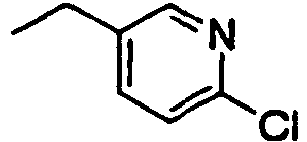
-H -H 2.69-2.75 (2H, m), 3.01-3.06 (2H, m), 5.21 (2H, s), 7.05-7.14 (2H, m), 7.31 (1H, t, J=8.0Hz), 7.45 (1H, d, J=8.3Hz), 7.69 (1H, dd, J1=2.4Hz, J2=8.3Hz), 7.92 (1H, s), 8.36 (1H, d, J=2.4Hz), 12.60 (1H, brs) Table 44 
Ref. Ex. R151 R201 1H NMR (DMSO-d6) dppm 97 # -C6H5 -H 2.68-2.81 (2H, m), 3.04 (2H, t, J = 6.6 Hz), 5.21 (2H, s), 7.01-7.15 (2H, m), 7.21-7.39 (4H, m), 7.39-7.50 (2H, m), 7.5-7.65 (4H, m), 7.93 (1H, s), 12.62 (1H, s). 98 # -Br -H 2.60-2.80 (2H, m), 2.95-3.10 (2H, m), 5.13 (2H, s), 6.99 (1H, d, J = 8.2 Hz), 7.09 (1H, d, J = 7.7 Hz), 7.11-7.32 (3H, m), 7.49 (2H, d, J = 8.4 Hz), 7.92 (1H, s), 12.64 (1H, s). 99 # -Cl -H 7.63-7.80 (2H, m), 2.92-3.10 (2H, m), 5.16 (2H, s), 7.01 (1H, d, J = 8.1 Hz), 7.10 (1H, d, J = 7.7 Hz), 7.20-7.31 (3H, m), 7.31-7.45 (2H, m), 7.93 (1H, s), 12.65 (1H, brs). 100 # -CH3 -H 2.25 (3H, s), 2.49-2.51 (2H, m), 2.68-2.73 (2H, m), 5.12 (2H, s), 7.02 (1H, d, J = 8.2 Hz), 7.07-7.29 (6H, m), 7.93 (1H, s), 12.64 (1H, brs). 101 # -C6H5 -C6H5 2.62-2.77 (2H, m), 2.89-3.07 (2H, m), 4.36 (2H, brs), 6.85 (2H, d, J = 8.2 Hz), 7.20-7.61 (14H, m), 7.93 (1H, s), 12.66 (1H, brs). 102 # -CO2CH3 -H 2.71-2.77 (2H, m), 3.02-3.08 (2H, m), 3.83 (3H, s), 5.24 (2H,s), 6.96 (1H, d, J=7.9Hz), 7.11 (1H, d, J=7.9Hz), 7.27 (1H, t, J=7.9Hz), 7.38 (2H, d, J=8.3Hz), 7.90 (2H, d, J=8.3Hz), 7.94 (1H, s), 12.64 (1H, brs) 103 # -NO2 -H 2.72-2.78 (2H, m), 3.04-3.10 (2H, m), 5.31 (2H,s), 6.98 (1H, d, J=8.0Hz), 7.12 (1H, d, J=8.0Hz), 7.28 (1H, t, J=8.0Hz), 7.51 (2H, d, J=8.7Hz), 7.94 (1H, s), 8.18 (2H, d, J=8.7Hz), 12.66 (1H, brs) Table 45 
Ref. Ex. R151 R201 1H NMR (CDCl3) dppm 104 # -C6H5 -CH3 2.43 (3H, s), 2.57-2.63 (2H, m), 2.84-2.91 (2H, m), 5.12 (2H, s), 7.06-7.22 (4H, m), 7.22-7.60 (7H, m), 7.98 (1H, s), 8.42 (1H, brs). 105 # -C6H5 -Cl 2.60-2.66 (2H, m), 2.85-2.92 (2H, m), 5.44 (2H, s), 7.11 (1H, d, J = 8.5 Hz), 7.18 (2H, d, J = 8.2 Hz), 7.23-7.48 (6H, m), 7.48-7.59 (2H, m), 7.91 (1H, s), 7.23 (1H, brs). Table 46 
Ref. Ex. R151 R301 1H NMR (DMSO-d6) dppm 106 # -C6H5 -H 2.70-2.84 (2H, m), 2.97-3.10 (2H, m), 5.22 (2H, s), 7.04-7.20 (2H, m), 7.20-7.49 (6H, m), 7.49-7.65 (4H, m), 7.68 (1H, s), 12.53 (1H, s). 107 # -Br -H 2.66-2.81 (2H, m), 2.91-3.09 (2H, m), 5.13 (2H, s), 7.03 (1H, d, J = 8.6 Hz), 7.19 (2H, d, J = 8.4 Hz), 7.36 (1H, dd, J = 2.0, 8.6 Hz), 7.40-7.55 (3H, m), 7.67 (1H, s), 12.54 (1H, brs). 108 # -NO2 -H 2.71-2.87 (2H, m), 2.97-3.15 (2H, m), 5.31 (2H, s), 7.02 (1H, d, J = 8.6 Hz), 7.38 (1H, dd, J = 1.9, 8.6 Hz), 7.45-7.60 (3H, m), 7.69 (1H, s), 8.18 (2H, m), 12.55 (1H, brs). 109 # -C6H5 -OCH3 2.55-2.70 (2H, m), 2.85-3.01 (2H, m), 3.78 (3H, s), 5.31 (2H, s), 7.07 (1H, s), 7.12 (1H, s), 7.21 (2H, d, J = 8.2 Hz), 7.25-7.35 (1H, m), 7.35-7.47 (2H, m), 7.54 (2H, d, J = 8.2 Hz), 7.60 (2H, d, J = 7.3 Hz), 7.68 (1H, s), 12.57 (1H, brs). 110 # -C6H5 -CH3 2.36 (3H, s), 2.53-2.68 (2H, m), 2.79-3.04 (2H, m), 5.15 (2H, s), 7.22 (2H, d, J = 8.2 Hz), 7.25-7.36 (3H, m), 7.36-7.49 (2H, m), 7.50-7.70 (5H, m), 12.57 (1H, brs). Table 47 
Ref. Ex. R161 R301 M.p. (°C) 111 # -H -H 290-291 112 # -CH3 -H 246-248 113 # -CH3 -CH3 143-145 114 # 
-H 244.7-246.7 Table 48 
Ex. R111 R112 R113 R114 R115 M.p. (°C) 115 -H -H -H -H -H 178-180 116 -H -H -C6H5 -H -H 211-213 117 -H -H -H -H -H 210-215 118 -H -H -C(CH3)3 -H -H 215-217 119 -H -H -NO2 -H -H 246.5-246.6 120 -H -H -NH2 -H -H 174.1-174.8 121 -H -H -OCH3 -H -H 177.5-179.0 122 -H -H -Cl -H -H 190.5-191.8 123 -H -H -Br -H -H 178.1-179.0 124 -H -H -F -H -H 177.7-179.2 125 -H -H -CN -H -H 206.4-208.0 126 -H -H -CH3 -H -H 165.2-167.0 127 -H -H -OCH2C6H5 -H -H 106.4-109.1 128 -H -H -OC6H5 -H -H 213.9-214.7 Table 49 
Ex. R111 R112 R113 R114 R115 1H NMR (DMSO-d6) dppm 129 -H -H -H -H -C6H5 2.39-2.52(m, 2H), 2.63-2.80(m, 2H), 3.06(dd; J=9.9, 14.4Hz, 1H), 3.33(S, 3H), 3.39(dd; J=4.2, 14.4Hz, 1H), 4.76(dd; J=4.2, 9.9Hz, 1H), 5.18(s, 2H), 6.69(d, J=8.6Hz, 1H), 6.86(d, J=8.6Hz, 1H), 7.04-7.47(m, 9H), 12.08(brs, 1H) 130 -H -H -H -C6H5 -H 2.45-2.57(m, 2H), 2.79-2.90(m, 2H), 3.09(dd; J=10.1, 14.4Hz, 1H), 3.41(dd; J=4.3, 14.4Hz, 1H), 3.68(S, 3H), 4.77(dd; J=4.3, 10.1Hz, 1H), 5.26(s, 2H), 6.84(d, J=8.6Hz, 1H), 6.92(d, J=8.6Hz, 1H), 7.03(d, J=7.6Hz, 1H), 7.25-7.55(m, 8H), 12.09(brs, 1H) 131 -H -H -NHSO2CH3 -H -H 2.39-2.54 (2H, m), 2.72-2.87 (2H, m), 2.88 (3H, s), 3.05 (1H, dd, J = 10.0, 14.4 Hz), 3.39 (1H, dd, J = 4.0, 14.4 Hz), 3.67 (3H, s), 4.76 (1H, dd, J = 4.0, 10.0 Hz), 5.13 (2H, s), 6.80 (1H, d, J = 8.6 Hz), 6.89 (1H, d, J = 8.6 Hz), 6.93-7.06 (4H, m), 9.57 (1H, s), 12.05 (1H, s). Table 50 
Ex. R171 R201 M.p. (°C) 132 -C6H5 -OCH2CO2H 128-133 133 -C6H5 -H 198.1-199.2 134 -Br -H 224.3-225.8 135 -Cl -H 212.1-212.9 136 -CH3 -H 209.3-210.3 137 -CO2CH3 -H 247-249 138 -NO2 -H 243-250 Table 51 
Ex. R171 R201 1H NMR dppm 139 -C6H5 -OC4H9 0.82(t, J=7.4Hz, 3H), 1.25-1.33(m, 2H), 1.46-1.55(m, 2H), 2.45-2.56(m, 2H), 2.80-2.91(m, 2H), 3.11(dd; J=9.6, 14.4Hz, 1H), 3.41(dd; J=4.4, 14.4Hz, 1H), 3.84-3.92(m, 2H), 4.80(dd; J=4.4, 9.6Hz, 1H), 5.21(s, 2H), 6.87d, J=8.6Hz, 1H), 6.90(d, J=8.6Hz, 1H), 7.14(d, J=8.1Hz, 2H), 7.27-7.62(m, 7H), 12.08(brs, 1H) 140 -C6H5 -CH3 2.28 (3H, s), 2.37-2.57 (2H, m), 2.67-2.94 (2H, m), 3.16 (1H, dd, J = 9.3, 14.3 Hz), 3.44 (1H, d, J = 4.4, 14.3 Hz), 4.83 (1H, dd, J = 4.4, 9.3 Hz), 4.95-5.20 (2H, m), 6.87 (1H, d, J = 7.9 Hz), 7.00 (1H, d, J = 7.9 Hz), 7.15 (2H, d, J = 8.1 Hz), 7.25-7.48 (3H, m), 7.51 (2H, d, J = 8.2 Hz), 7.60 (2H, d, J = 7.4 Hz), 12.07 (1H, brs). 141 -C6H5 -Cl 2.43-2.62 (2H, m), 2.80-2.98 (2H, m), 3.21 (1H, dd, J = 9.3, 14.3 Hz), 3.45 (1H, dd, J = 4.7, 14.3 Hz), 4.84 (1H, dd, J = 4.7, 9.3 Hz), 5.31 (2H, s), 6.97 (1H, d, J = 8.4 Hz), 7.15 (2H, d, J = 8.2 Hz), 7.25 (1H, d, J = 8.4 Hz), 7.27-7.45 (3H, m), 7.50 (2H, d, J = 8.2 Hz), 7.59 (2H, d, J = 7.2. Hz), 12.10(1H, brs). 142 -C6H5 -C6H5 2.56-2.75 (2H, m), 2.80-3.00 (2H, m), 3.13-3.30 (1H, m), 3.45-3.60 (1H, m), 4.18-4.50 (2H, m), 4.90 (1H, dd, J = 4.5, 9.4 Hz), 6.80 (2H, d, J = 8.2 Hz), 7.04 (1H, d, J = 8.0 Hz), 7.12 (1H, d, J = 8.0 Hz), 7.21-7.64 (12H, m), 12.12 (1H, brs). 143 -CO2H -H 2.67-2.72 (2H, m), 2.97-3.02 (2H, m), 3.11-3.60 (2H, m), 4.85 (1H, dd, J1=4.6Hz, J2=10.7Hz), 5.21 (2H,s), 6.79 (1H, d, J=7.8Hz), 6.90 (1H, d, J=7.8Hz), 7.09 (1H, t, J=7.8Hz), 7.32 (2H, d, J=8.2Hz), 7.88 (2H, d, J=8.2Hz), 12.19 (1H, brs), 12.88 (1H, brs) 144 -C6H5 -OCH2CO2C(CH3)3 CDCl3:1.57(9H, s), 2.55-2.8(2H, m), 2.75-2.95(2H, m), 3.05-3.2(1H, m), 3.5-3.6(1H, m), 4.38(3H, s), 4.35-4.5(1H, m), 5.4-5.55(2H, m), 6.57(1H, d, J=8.6Hz), 6.87(1H, d, J=8.6Hz), 7.15-7.6(9H, m), 7.96(1H, br s) DMSO-d6 is used for measuring NMR, unless otherwise specified. Table 52 
Ex. R101 R201 M.p. (°C) 145 -CH3 -OCH3 204-208 146 -H -OCH3 253-256 147 -C2H5 -OCH3 179-181 148 -CH2CH2CN -OCH3 197.9-199.9 149 -(CH2)3CO2H -OCH3 164.7-165.5 150 -C6H5 -H 225.5-2272 151 -(CH2)3CO2C2H5 -OCH3 154.7-156.0 152 -CH2CH=CH2 -OCH3 160.0-161.5 153 -C8H17 -OCH3 102.0-103.0 154 
-OCH3 117-121 155 
-OCH3 97-99 156 
-OCH3 183-185 157 
-OCH3 107-114 158 
-H 228.1-230.0 159 
-H 76-94 160 
-H 261.5-263 Table 53 
Ex. R101 R201 M.p.(°C) 161 
-OCH3 121-126 162 
-OCH3 135-137 163 
-OCH3 215(dec.) 164 
-OCH3 104-109 165 
-H 225-226 Table 54 
Ex. R101 R201 1H NMR (DMSO-d6) dppm 166 - (CH2)3C6H5 -OCH3 1.62-1.73(m, 2H), 2.32-2.45(m, 4H), 2.75-2.85(m, 2H), 3.10(dd; J=10.1, 14.4Hz, 1H), 3.44(dd; J=4.3, 14.4Hz, 1H), 3.70(S, 3H), 3.85-3.95(m, 2H), 4.81(dd; J=4.3, 10.1Hz, 1H), 6.93(d, J=8.6Hz, 1H), 6.98(d, J=8.6Hz, 1H), 7.04(d, J=7.5Hz, 2H), 7.14(t, J=7.5Hz, 1H), 7.22(t, J=7.5Hz, 2H), 12.10(brs, 1H) 167 - (CH2)2C6H5 -OCH3 2.22-2.31(m, 2H), 2.32-2.55(m, 2H), 2.63-2.75(m, 2H), 3.05(dd; J=10.4, 14.5Hz, 1H), 3.41(dd; J=4.2, 14.5Hz, 1H), 3.87(S, 3H), 4.10-4.30(m, 2H), 4.69(dd; J=4.2, 10.4Hz, 1H), 6.90-7.05(m, 4H), 7.12-7.25(m, 3H), 12.12(brs, 1H) 168 -C4H9 -OCH3 0.79(t; J=7.2Hz, 3H), 1.13(tt; J=7.2, 7.2Hz, 2H), 1.36(tt; J=7.2, 7.2Hz, 2H), 2.30-2.42(m, 2H), 2.70-2.80(m, 2H), 3.11(dd; J=9.8, 14.5Hz, 1H), 3.42(dd; J=4.4, 14.5Hz, 1H), 3.80(S, 3H), 3.92(t; J=7.2Hz, 2H), 4.80(dd; J=4.4, 9.8Hz, 1H), 6.80(d; J=8.6Hz, 1H), 6.97(d; J=8.6Hz, 1H), 12.09(brs, 1H) 169 -CH2-cyclo-C3H5 -OCH3 0-0.05(m, 2H), 0.20-0.26(m, 2H), 0.73-0.84(m, 1H), 2.30-2.42(m, 2H), 2.70-2.85(m, 2H), 3.14(dd; J=9.6, 14.5Hz, 1H), 3.42(dd; J=4.4, 14.5Hz, 1H), 3.81(S, 3H), 3.84-3.90(m, 2H), 4.82(dd; J=4.4, 9.6Hz, 1H), 6.94(d; J=8.6Hz, 1H), 6.98(d; J=8.6Hz, 1H), 12.07(brs, 1H) 170 - (CH2)2OC6H5 -OCH3 2.35-2.47(m, 2H), 2.70-2.83(m, 2H), 3.07(dd; J=10.2, 14.5Hz, 1H), 3.42(dd; J=4.2, 14.5Hz, 1H), 3.79(S, 3H), 4.00-4.07(m, 2H), 4.21-4.30(m, 2H), 4.73(dd; J=4.2, 10.2Hz, 1H), 6.79(d, J=7.7Hz, 2H), 6.88(t, J=7.7Hz, 1H), 6.95(d, J=8.7Hz, 1H), 6.98(d, J=8.7Hz, 1H), 7.21(t, J=7.7Hz, 2H), 12.11(brs, 1H) Table 55 
Ex. R101 R201 1H NMR (DMSO-d6) dppm 171 -CH2-cyclo-C6H11 -OCH3 0.71-0.80(m, 2H), 0.94-1.07(m, 3H), 1.20-1.27(m, 1H), 1.37-1.45(m, 2H), 1.45-1.59(m, 3H), 2.34-2.44(m, 2H), 2.71-2.82(m, 2H), 3.13(dd; J=9.4, 14.4Hz, 1H), 3.42(dd; J=4.4, 14.4Hz, 1H), 3.80(S, 3H), 3.89-3.99(m, 2H), 4.82(dd; J=4.4, 9.4Hz, 1H), 6.94(d, J=8.6Hz, 1H), 6.97(d, J=8.6Hz, 1H), 12.06(brs, 1H) 172 -CH2CH2OCH3 -OCH3 2.35-2.44(m, 2H), 2.71-2.80(m, 2H), 3.08(S, 3H), 3.11(dd; J=9.8, 14.5Hz, 1H), 3.25-3.36(m, 2H), 3.42(dd; J=4.3, 14.5Hz, 1H), 3.80(S, 3H), 4.03-4.12(m, 2H), 4.80(dd; J=4.3, 9.8Hz, 1H), 6.95(d, J=8.6Hz, 1H), 6.98(d, J=8.6Hz, 1H), 12.09(brs, 1H) 173 -(CH2)2CH(CH3)2 -OCH3 0.75-0.85(6H, m), 1.2-1.5(3H, m), 2.3-2.5(2H, m), 2.6-2.9(2H, m), 3.0-3.15(1H, m), 3.35-3.5(1H, m), 3.80(3H, s), 3.94(2H, t, J=7.1Hz), 4.75-4.85(1H, m), 6.9-7.1(2H, m), 12.05(1H, br s) 174 -(CH2)4C6H5 -OCH3 1.38-1.45(m, 4H), 2.33-2.42(m, 2H), 2.44-2.50(m, 2H), 2.70-2.81(m, 2H), 3.10(dd; J=10.0, 14.5Hz, 1H), 3.42(dd; J=4.3, 14.5Hz, 1H), 3.74(S, 3H), 3.88-3.96(m, 2H), 4.80(dd; J=4.3, 10.0Hz, 1H), 6.93(d, J=8.6Hz, 1H), 6.97(d, J=8.6Hz, 1H), 7.10(d, J=7.3Hz, 2H), 7.14(t, J=7.3Hz, 1H), 7.23(t, J=7.3Hz, 2H), 12.10 (brs, 1H) 175 -(CH2)5C6H5 -OCH3 1.04-1.15(m, 2H), 1.35-1.50(m, 4H), 2.32-2.41(m, 2H), 2.42-2.53(m, 2H), 2.65-2.73(m, 2H), 3.09(dd; J=10.0, 14.5Hz, 1H), 3.42(dd; J=4.3, 14.5Hz, 1H), 3.78(S, 3H), 3.86-3.96(m, 2H), 4.78(dd; J=4.3, 10.0Hz, 1H). 6.94(d, J=8.6Hz, 1H), 6.97(d, J=8.6Hz, 1H), 7.11(d, J=7.5Hz, 2H), 7.15(t, J=7.5Hz, 1H), 7.24(t, J=7.5Hz, 2H), 12.10(brs, 1H) Table 56 
Ex. R101 R311 R201 1H NMR (DMSO-d6) dppm 176 
-H -OCH3 1.25-1.45 (4H, m), 1.45-1.70 (4H, m), 2.09 (2H, t, J = 7.7 Hz), 2.31-2.48 (2H, m), 2.65-2.88 (2H, m), 3.00-3.21 (3H, m), 3.21-3.50 (3H, m), 3.79 (3H, s), 3.85-4.00 (2H, m), 4.78 (1H, dd, J = 4.2, 10.0 Hz), 6.86-8.09 (2H, m), 12.08 (1H, brs). 177 
-H -OCH3 DMSO overlap (2H), 2.82-2.88 (2H, m), 3.06-3.14 (1H, m), 3.37-3.45 (1H, m), 3.66 (3H, s), 4.79 (1H, dd, J1=4.4Hz, J2=9.5Hz), 5.18 (2H, s), 6.85 (1H, d, J=8.6Hz), 6.91 (1H, d, J=8.6Hz), 7.39-7.66 (4H, m), 7.78-7.81 (2H, m), 8.43 (1H, d, J=2.0Hz), 12.56 (1H, brs) 178 
-H -OCH3 DMSO overlap (2H), 2.67-2.73 (2H, m), 2.98-3.18 (2H, m), DMSO overlap (4H, m), 3.32-3.64 (4H, m), 3.75 (3H, s), 4.68-4.72 (1H, m), 5.09 (2H, s), 6.63 (1H, d, J=8.9Hz), 6.82-6.98 (2H, m), 7.18-7.22 (1H, m), 7.85 (1H, d, J=2.1Hz), 12.02 (1H, brs) Table 57 
Ex. R101 R311 R201 1H NMR (DMSO-d6) dppm 179 
-H -OCH3 2.20 (3H, s), 2.34-2.38 (4H, m), DMSO overlap (2H, 4H), 2.71-2.76 (2H, m), 2.97-3.05 (2H, m), 3.75 (3H, s), 4.65-4.70 (1H, m), 5.08 (2H, s), 6.62 (1H, d, J=8.7Hz), 6.83 (1H, d, J=8.6Hz), 6.90 (1H, d, J=8.6Hz), 7.17 (1H, dd, J1=2.4Hz, J2=8.7Hz), 7.83 (1H, d, J=2.4Hz), NH n. d. (1H) 180 
-H -OCH3 2.55-2.57 (2H, m), 2.87-2.89 (2H, m), 3.07-3.14 (1H, m), 3.39-3.46 (1H, m), 3.64 (3H, s), 4.76-4.82 (1H, m), 5.19 (2H,s), 6.85 (1H, d, J=8.5Hz), 6.93 (1H, d, J=8.5Hz), 7.38-7.43 (1H, m), 7.61 (1H, dd, J1=2Hz, J2=8.2Hz), 7.90 (1H, ddd, J1=1.5Hz, J2=7.8Hz, J3=7.9Hz), 8.24 (1H, d, J=8.2Hz), 8.32 (1H, d, J=7.9Hz), 8.45 (1H, d, J=1.5Hz), 8.64 (1H, d, J=4.6Hz), 12.06 (1H, brs) 181 
-H -OCH3 2.55-2.60 (2H, m), 3.02-3.07 (2H, m), 3.11-3.16 (1H, m), 3.41-3.46 (1H, m), 3.52 (3H, s), 4.80-4.86 (1H, m), 5.30 (2H,s), 6.84 (1H, d, J=8.5Hz), 6.93 (1H, d, J=8.5Hz), 7.33 (1H, d, J=8.6Hz), 7.50-7.56 (1H, m), 7.66-7.72 (1H, m), 7.88-7.91 (1H, m), 8.21 (1H, d, J=8.6Hz), 12.12 (1H, brs) Table 58 
Ex. R101 R311 R201 1H NMR dppm 182 
-CH2OCH3 -OCH2OCH3 CDCl3:2.55-2.75(2H, m), 2.75-3.0(2H, m), 3.05-3.15(1H, m), 3.28(3H, s), 3.38(3H, s), 3.55-3.65(2H, m), 4.35-4.45(1H, m), 4.9-5.1(4H, m), 5.25-5.4(2H, m), 6.88(1H, d, J=8.6Hz), 6.97(1H, d, J=8.6Hz), 7.1-7.6(11H, m) 183 
-CH2OCH3 -OH 2.45-2.55(2H, m), 2.75-2.9(2H, m), 3.05-3.2(4H, m), 3.35-3.45(1H, m), 4.7-5.0(3H, m), 5.34(2H, s), 6.65(1H, d, J=8.4Hz), 6.76(1H, d, J=8.4Hz), 7.1-7.7(9H, m), 9.94(1H, br s) DMSO-d6 is used for measuring NMR, unless otherwise specified. Table 59 
Ex. R151 R201 M.p. (°C) 184 -Br -H 193.4-195.0 185 -NO2 -H 215.5-216.1 Table 60 
Ex. R151 R201 1H NMR (DMSO-d6) dppm 186 -C6H5 -H 2.62-2.76 (2H, m), 2.85-3.07 (3H, m), 3.20-3.40 (1H, m), 4.85 (1H, dd, J = 4.2, 9.7 Hz), 5.16 (2H, s), 6.89 (1H, d, J = 8.3 Hz), 6.96-7.06 (1H, m), 7.11 (1H, s), 7.24-7.38 (3H, m), 7.38-7.50 (2H, m), 7.50-7.68 (4H, m), 12.02 (1H, s). 187 -C6H5 -OCH3 2.4.8-2.60 (2H, m), 2.60-2.88 (2H, m), 2.90-3.06 (1H, m), 3.26-3.40 (1H, m), 3.70 (3H, s), 4.82-4.95 (1H, m), 5.24 (2H, s), 6.73 (1H, d, J = 1.5 Hz), 6.80 (1H, d, J = 1.5 Hz), 7.18 (2H, d, J = 8.2 Hz), 7.25-7.37 (1H, m), 7.37-7.46 (2H, m), 7.46-7.55 (2H, m), 7.55-7.68 (2H, m), 12.06 (1H, brs). 188 -C6H5 -CH3 2.26 (3H, s), 2.45-2.60 (2H, m), 2.70-2.85 (2H, m), 2.87-3.05 (1H, m), 3.18-3.40 (1H, m), 4.87 (1H, dd, J = 4.3, 9.8 Hz), 5.07 (2H, s), 6.93 (1H, s), 6.98 (1H, s), 7.18 (2H, m), 7.27-7.38 (1H, m), 7.38-7.48 (2H, m), 7.48-7.56 (2H, m), 7.56-7.66 (2H, m), 12.06 (1H, s). Table 61 
Ex. R181 R182 R183 R184 R185 M.p. (°C) 189 -H -H -H -H -H 231.1-232.2 190 -H -H -H -OC6H5 -H 208-209 191 -H -H -OCH3 -H -H 199-200 192 -H -H -H -H -OCH3 209 193 -H -H -Cl -H -H 223-225 Table 62 
Ex. R181 R182 R183 R184 R185 1H NMR (DMSO-d6) dppm 194 -H -H -H -OCH3 -H 2.81-2.87 (2H, m), 3.01-3.11 (1H, m), DMSO overlap (2H, 1H), 3.71 (3H, s), 3.82 (3H, s), 4.58-4.61 (1H, m), 5.18 (2H, s), 6.82 (1H, d, J=8.6Hz), 6.90 (1H, d, J=8.6Hz), 7.03 (2H, d, J=8.5Hz), 7.11-7.15 (1H, m), 7.38-7.50 (3H, m), 7.57 (2H, d, J=8.5Hz), 10.10 (1H, s), 12.07 (1H, s) 195 -H -H -OC6H5 -H -H 2.80-2.86 (2H, m), 3.01-3.11 (1H, m), DMSO overlap (2H, 1H), 3.72 (3H, s), 4.78 (1H, dd, J1=4.4Hz, J2=9.9Hz), 5.18 (2H, s), 6.82 (1H, d, J=8.6Hz), 6.90 (1H, d, J=8.6Hz), 7.00-7.12 (6H, m), 7.19-7.25 (1H, m), 7.42-7.48 (2H, m), 7.57 (2H, d, J=8.5Hz), 7.94 (2H, d, J=8.7Hz), 10.08 (1H, s), 12.07 (1H, s) 196 -H -H -H -H -Cl 2.80-2.86 (2H, m), 3.06 (1H, dd, J1=9.9Hz, J2=14.5Hz), DMSO overlap (2H, 1H), 3.73 (3H, s), 4.78 (1H, dd, J1=4.2Hz, J2=9.9Hz), 5.19 (2H, s), 6.82 (1H, d, J=8.7Hz), 6.90 (1H, d, J=8.7Hz), 7.02 (2H, d, J=8.5Hz), 7.37-7.54 (6H, m), 10.37 (1H, s), 12.05 (1H, s) 197 -Cl -H -H -H -Cl 2.82-2.88 (2H, m), 3.02-3.12 (1H, m), DMSO overlap (2H, 1H), 3.74 (3H, s), 4.76-4.79 (1H, m), 5.15 (2H, s), 6.78 (1H, d, J=8.4Hz), 6.91 (1H, d, J=8.4Hz), 7.04 (2H, d, J=8.2Hz), 7.48-7.56 (5H, m), 10.63 (1H, s), 12.07 (1H, s) Table 63 
Ex. R181 R182 R183 R184 R185 MS(M+1) 198 -H -H -NHCOCH3 -H -H 573 199 -H -H -H -NHCOCH 3 -H 573 200 -H -H -CF3 -H -H 584 201 -H -H -H -H -NO2 561 202 -H -H -H -H -C6H5 592 203 -H -H -H -H -N(CH3)2 559 204 -H -H -H -H -NHC6H5 607 205 -Cl -H -H -Cl 584 206 -H -H -H -CN -H 541 207 -H -H -H -NO2 -H 561 208 -H -H -H -OC6H5 -H 608 209 -H -H -H -F -CH3 548 210 -H -H -COCH3 -H -H 558 211 -H -H -H -H -CF3 584 212 -H -H -H -CF3 -H 584 213 -H -H -H -H -OC6H5 608 214 -H -H -OC6Hs -H -H 608 215 -H -H -F -H -Cl 568 216 -H -H 
-H -H 599 217 -H -H -1-PYRRYL -H -H 581 218 -H -H 
-H -H 582 219 -H -H 
-H -H 583 Table 64 
Ex. R181 R182 R183 R184 R185 MS(M+1) 220 -H -H 
-H -H 582 221 -H -H -H -H -OCH3 546 222 -H -Cl -H -H -OCH3 580 223 -H -H -Cl -H -H 550 224 -H -H -H -H -H 516 Table 65 
Ex. R191 M.p. (°C) 225 -cyclo-C6H11 124.7-126.4 226 -NHC6H5 233.0-234.6 227 -NHC2H5 195.7-196.9 228 -C2H5 198.3-200.3 229 -CH3 215.2-217.8 230 -OCH3 136.3-138.6 231 -3-PYRIDYL 233.0-234.2 232 -OC5H11 98-102 233 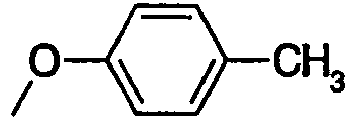
166-168 234 -OCH2C6H5 186-189 Table 66 
Ex. R191 1H NMR (DMSO-d6) dppm 235 -2-FURYL 2.76-2.81 (2H, m), 3.01-3.11 (1H, m), DMSO overlap (2H), 3.32-3.42 (1H, m), 3.71 (3H, s), 4.76-4.79 (1H, m), 5.17 (2H, s), 6.67 (1H, dd, J1=1.7Hz, J2=3.5Hz), 6.82 (1H, d, J=8.6Hz), 6.90 (1H, d, J=8.5Hz), 7.01 (2H, d, J=8.5Hz), 7.28 (1H, dd, J1=0.7Hz, J2=3.5Hz), 7.55 (2H, d, J=8.6Hz), 7.90 (1H, dd, J1=0.7Hz, J2=1.7Hz), 10.06 (1H, s), 12.06 (1H, s) 236 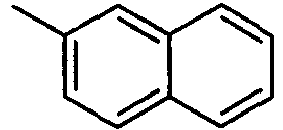
2.82-2.88 (2H, m), 3.03-3.13 (1H, m), DMSO overlap (2H, 1H), 3.73 (3H, s), 4.79 (1H, dd, J1=4.1Hz, J2=9.9Hz), 5.20 (2H, s), 6.83 (1H, d, J=8.6Hz), 6.91 (1H, d, J=8.6Hz), 7.05 (2H, d, J=8.4Hz), 7.58-7.66 (4H, m), 7.95-8.08 (4H, m), 8.52 (1H, s), 10.33 (1H, s), 12.06 (1H, s) 237 
2.79-2.85 (2H, m), 3.00-3.10 (1H, m), DMSO overlap (2H, 1H), 3.70 (3H, s), 3.74 (3H, s), 4.74-4.78 (1H, m), 5.15 (2H, s), 6.80 (1H, d, J=8.7Hz), 6.91-7.00 (5H, m), 7.06-7.11 (2H, m), 7.30 (2H, d, J=8.5Hz), 10.01 (1H, s), 12.05 (1H, s) Table 67 
Ex. R191 MS(M+1) 238 (CH2)2OC6H5 560 239 -3-PYRIDYL 517 240 -4-PYRIDYL 517 241 -2-FURYL 506 242 -2-THIENYL 522 243 -3-FURYL 506 244 -3-THIENYL 522 245 -cyclo-C5H9 508 246 -cyclo-C6H11 522 247 -CH2-cyclo-C6H11 536 248 -CH2OC6H5 546 249 (CH2)2C6H5 544 250 -2-PYRIDYL 517 251 -CH=CHC6H5(trans) 542 252 -OC6H5 532 253 -OC3H7 498 254 -OC5H11 526 255 -OCH2C6H5 546 256 -OCH3 470 257 -OC4H9 512 Table 68 
Ex. R191 MS(M+1) 258 
545 259 
531 260 
531 261 
536 262 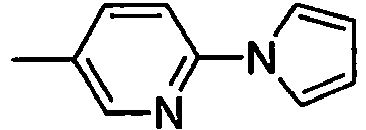
582 263 
536 264 
522 265 
627 266 
565 Table 69 
Ex. R191 MS(M+1) 267 
572 268 
566 269 
566 270 
560 271 
599 272 
585 273 
551 274 
564 275 
576 Table 70 
Ex. R191 MS(M+1) 276 
586 277 
543 278 
543 279 
551 280 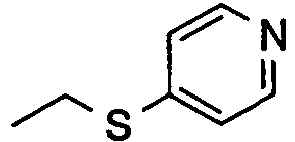
563 281 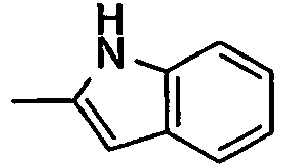
555 282 
555 283 
505 284 
523 Table 71 
Ex. R191 MS(M+1) 285 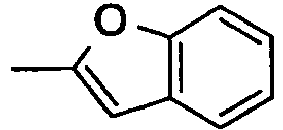
556 286 
585 287 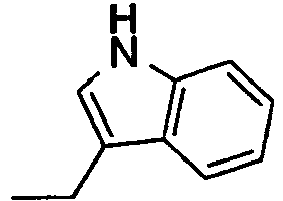
569 288 
572 289 
543 290 
535 291 
518 292 
566 293 
562 Table 72 
Ex. R191 MS(M+1) 294 
582 295 
550 296 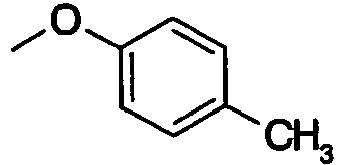
546 297 
580 298 
494 299 
577 300 
502 301 
510 302 
546 303 
518 Table 73 
Ex. R191 MS(M+1) 304 
562 305 
612 306 
590 307 
594 308 
591 309 
568 Table 74 
Ex. R211 R212 R213 R214 R215 M.p. (° C) 310 -H -H -CH(CH3)2 -H -H 226 311 -H -H -H -OC6H5 -H 139-142 312 -H -H -Cl -H -H 154-158 313 -H -H -OCH3 -H -H 225-230 Table 75 
Ex. R321 R211 R212 R213 R214 R215 M.p. (° C) 314 -H -H -H -H -H -H 242.7-243.5 315 -H -H -H -Cl -H -H 240-241 316 -H -H -H -CH(CH3)2 -H -H 243-244 317 -H -H -H -OC6H5 -H -H 152-156 318 -H -H -H -OCH3 -H -H 215-216 319 -H -H -H -H -OC6H5 -H 203-204 Table 76 
Ex. R321 R211 R212 R213 R214 R215 MS(M+1) 320 -H -H -H -H -H -OCH3 546 321 -CH3 -H -H -H -H -OCH3 560 322 -H -H -H -H -SCH3 -H 562 323 -H -H -H -H -H -SCH3 562 324 -H -H -H -Cl -Cl -H 584 325 -H -H -H -OCF3 -H -H 600 326 -H -H -H -H -H -H 516 327 -H -H -H -Cl -H -H 550 328 -H -H -H -OCH3 -H -H 546 329 -H -H -H -H -OCH3 -H 546 330 -H -H -H -H -Cl -H 550 331 -H -H -H -CH3 -H -H 530 332 -H -H -H -OCH3 -H -OCH3 576 333 -H -OCH3 -H -H -Cl -H 580 334 -H -OCH3 -H -H -NHCOCH3 -H 603 335 -H -H -H -OCH3 -OCH3 -H 576 336 -H -H -H -H -H -C(CH3)=C H2 556 337 -H -H -H -H -OCF3 -H 600 338 -H -H -H -H -H -CH3 530 339 -H -H -H -H -H -F 534 340 -H -H -H -H -F -H 534 341 -H -H -H -F -H -H 534 342 -H -H -H -H -N(CH3)2 -H 559 343 -H -H -H -OC2H5 -H -H 560 344 -H -H -H -H -CF3 -H 584 345 -H -H -H -H -NHCOCH3 -H 573 346 -H -H -H -NHCOCH3 -H -H 573 347 -CH3 -H -H -H -CH3 -H 544 348 -H -H -H -H -H -OC6H5 608 349 -H -H -H -H -OC6H5 -H 608 350 -H -H -H -OC6H5 -H -H 608 Table 77 
Ex. R321 R211 R212 R213 R214 R215 MS(M+1) 351 -H -H -H -CF3 -H -H 584 352 -H -H -Cl -H -Cl -H 584 353 -H -H -H -H -CH3 -CH3 544 354 -H -H -H -CH3 -H -CH3 544 355 -H -H -CH3 -H -CH3 -H 544 356 -H -H -F -H -F -H 552 357 -H -H -H -OCH3 -F -H 564 358 -H -H -H -SO2NH2 -H -H 595 359 -H -H -H -CH3 -OCH3 -H 560 360 -H -H -H -OCH3 -Cl -H 580 361 -H -H -H -CH3 -Cl -H 564 362 -H -H -OCH3 -H -CF3 -H 614 363 -H -H -H -F -Cl -H 568 364 -H -H -H -OH -Cl -H 566 365 -H -Cl -H -H -NHCOCH3 -H 607 366 -H -H -H -SCH3 -H -H 562 367 -H -H -H -CH(CH3)2 -H -H 558 368 -H -H -H -C(CH3)3 -H -H 572 369 -H -H -H -NHSO2CH3 -H -H 609 370 -H -H -H -CONHCH3 -H -H 573 371 -H -H -H -H -H -OCH2C6H5 622 372 -H -H -H -CH=CH2 -H -H 544 373 -CH3 -H -H -Cl -H -H 564 374 -H -H -H -H -H -Cl 550 375 -H -H -CN -H -H -H 541 376 -H -H -H -F -H -Cl 568 377 -H -H -H -CN -H -H 541 Table 78 
Ex. R321 R211 R212 -H R213 R214 R215 MS(M+1) 378 -H -H 
-H -H 599 379 -H -H -H 
-H -H 614 Table 79 
Ex. R231 R232 R233 R234 R235 MS(M+1) 380 -H -H -H -Cl -H 619 381 -H -H -H -H -F 603 382 -H -H -H -H -OCH3 615 383 -H -H -F -H -H 603 384 -H -H -CF3 -H -H 653 385 -H -H -CN -H -H 610 386 -H -H -H -H -H 585 Table 80 
Ex. R401 MS(M+1) 387 -2-PYRIDYL 586 388 -cyclo-C5H9 577 389 -4-PYRIDYL 586 390 -(CH2)2C6H5 613 391 -CH3 613 392 -C(CH3)3 579 393 -3-PYRIDYL 586 394 -H 508 Table 81 
Ex. R401 MS(M+1) 395 
600 396 
600 397 
587 398 
643 399 
587 400 
626 401 
642 402 
657 403 
643 Table 82 
Ex. R401 MS(M+1) 404 
611 405 
589 406 
593 407 
609 408 
603 409 
600 410 
600 411 
614 412 
635 413 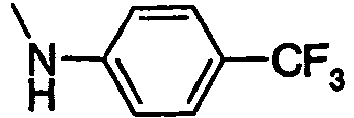
668 Table 83 
Ex. R411 MS(M+1) 414 -OCH3 538 415 -cyclo-C6H11 590 416 -CH2C6H5 598 417 -C6H5 584 Table 84 
Ex. R411 MS(M+1) 418 
591 419 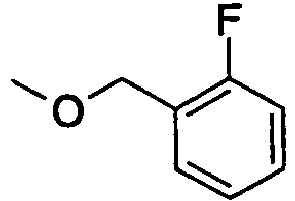
632 420 
655 421 
620 422 
646 423 
632 424 
593 425 
614 426 
653 427 
647 Table 85 
Ex. R411 MS(M+1) 428 
632 429 
632 430 
630 431 
616 432 
593 433 
600 434 
624 Table 86 
Ex. R421 R422 M.p. (° C) 435 -C2H5 -H 277.7-279.1 436 -CH(CH3)2 -H 256.5-257.4 437 -CH2CH2OH -H 248.1-249.9 438 -3-PYRIDYL -H 251.9-254.1 Table 87 
Ex. R421 R422 MS(M+1) 439 -3-PYRIDYL -H 517 440 -cyclo-C6H11 -CH3 536 441 -C4H9 -C4H9 552 442 -CH2CH(CH3)2 -CH2CH(CH3)2 552 443 -CH2-cyclo-C3H5 -C3H7 536 444 -cyclo-C5H9 -CH2CH=CH2 548 445 -C4H9 -H 496 446 -cyclo-C3H5 -H 480 447 -CH2C6H5 -H 530 448 -CH2C6H5 -cyclo-C6H11 612 449 -CH2C6H5 -CH(CH3)2 572 450 -cyclo-C6H11 -C2H5 550 451 -C3H7 -H 482 452 -CH2-cyclo-C6H11 -C2H5 564 453 -CH2CH2OC2H5 -H 512 454 -1-CH3-CYCLOHEXYL -H 536 455 -CH2-cyclo-C6H11 -H 536 456 -CH(CH3)C6H5 -H 544 457 -(CH2)3C6H5 -H 558 458 (CH2)2C6H5 -H 544 459 -CH2CONH2 -H 497 460 -CH2CO2CH3 -CH3 526 461 -C5H11 -CH3 524 462 -2-PYRIDYL -H 517 Table 88 
Ex. R421 R422 MS(M+1) 463 
-CH3 559 464 
-CH3 551 465 
-C2H5 566 466 
-H 558 467 
-H 564 468 
-H 564 469 
-H 564 470 
-H 531 471 
-H 531 472 
-H 531 Table 89 
Ex. R421 R422 MS(M+1) 473 
-H 520 474 
-CH3 641 475 
-CH3 579 476 
-CH2C6H5 601 477 
-CH3 615 478 
-CH3 558 479 
-CH3 588 480 
-CH3 574 481 
-C2H5 559 Table 90 
Ex. R421 R422 MS(M+1) 482 
-C2H5 602 483 
-H 572 484 
-CH3 647 485 
-H 494 486 
-H 522 487 
-H 574 488 
-H 614 489 
-H 578 490 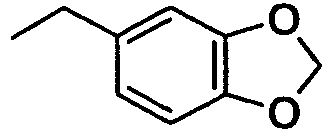
-H 574 491 
-H 548 Table 91 
Ex. R421 R422 MS(M+1) 492 
-H 548 493 
-H 567 494 
-H 618 495 
-H 577 496 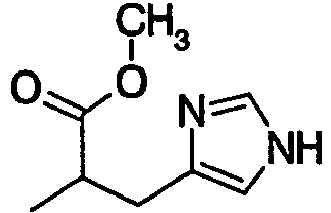
-H 592 497 
-H 524 498 
- C2H5 626 499 
-CH3 601 Table 92 
Ex. R421 R422 MS(M+1) 500 
-C2H5 592 501 
-C2H5 626 502 
-C2H5 638 503 
-H 560 504 
-H 562 505 
-H 562 506 
-H 551 507 
-H 537 508 
-H 553 509 
-H 567 Table 93 
Ex. R421 R422 MS(M+1) 510 
-H 536 511 
-CH3 659 512 
-H 531 513 
-H 547 514 
-H 555 515 
-H 531 516 
-H 523 517 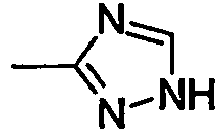
-H 507 518 
-H 508 519 
-H 521 Table 94 
Ex. R431 MS(M+1) 520 
522 521 
539 522 
526 523 
520 524 
512 525 
548 526 
536 527 
599 528 
556 Table 95 
Ex. R431 MS(M+1) 529 
600 530 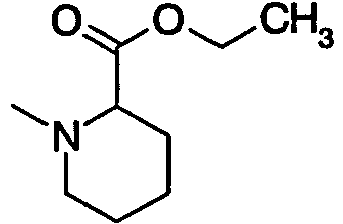
580 531 
537 532 
522 533 
522 534 
580 535 
614 536 
551 Table 96 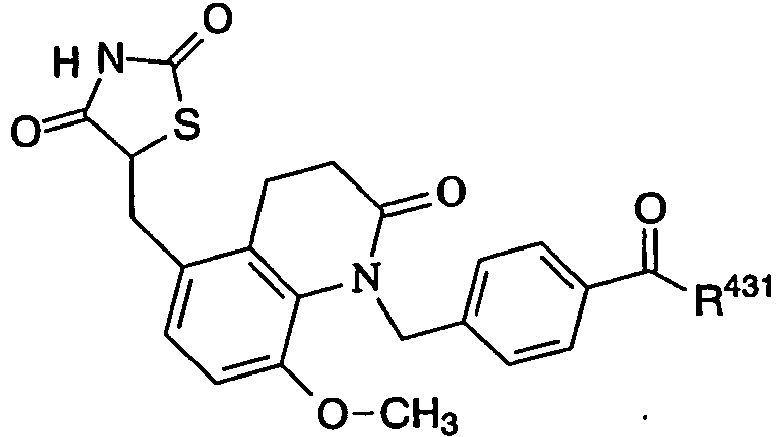
Ex. R431 MS(M+1) 537 
538 538 
607 539 
542 540 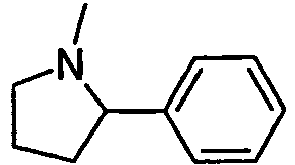
570 541 
593 542 
551 543 
588 Table 97 
Ex. R441 MS(M+1) 544 
552 545 
566 Table 98 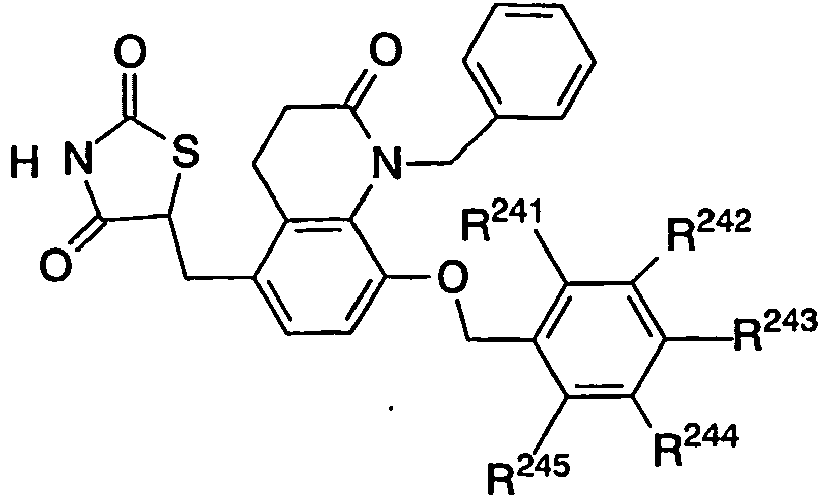
Ex. R241 R242 R243 R244 R245 MS(M+1) 546 -H -H -Cl -H -H 507 547 -Cl -H -H -H -H 507 548 -H -CF3 -H -H -H 541 549 -H -H -CF3 -H -H 541 550 -H -H -CH3 -H -H 487 551 -H -F -H -H -H 491 552 -H -CH3 -H -H -H 487 553 -H -H -CO2CH3 -H -H 529 554 -H -Cl -H -H -H 507 555 -H -OCH3 -H -H -H 503 556 -H -H -H -NO2 -H 518 557 -H -H -SO2CH3 -H -H 551 558 -OCH3 -H -H -H -H 503 559 -H -H -CH=CHC6H5 (trans) -H -H 575 560 -H -H -OCOCH3 -H -H 531 561 -H -H -F -H -H 491 562 -H -H -OCH3 -H -H 503 563 -H -H 
-H -H 557 564 -H -H -SCF3 -H -H 573 Table 99 
Ex. R251 MS(M+1) 565 -CH2CH2N(CH3)2 454 566 -CH2CH=CHCH3(trans) 437 567 -(CH2)3CH=CH2 451 568 (CH2)2C6H5 487 569 -CH2CCCH3 435 570 -CH2CCC6H5 497 571 -CH2CH(CH3)2 439 572 -CH2COCH3 439 573 -(CH2)3N(CH3)2 468 574 (CH2)2SC6H5 519 575 -CH2CCH 421 576 -CH2CH=CHC6H5 499 577 -CH2CON(CH3)2 468 578 -CH2COC6H5 501 579 -CH2CO2C2H5 469 580 -(CH2)2OC6H5 503 581 -(CH2)2OCH2C6H5 517 582 -(CH2)4COC6H5 543 583 -(CH2)3OCH2C6H5 531 Table 100 
Ex. R251 MS(M+1) 584 
494 585 
488 586 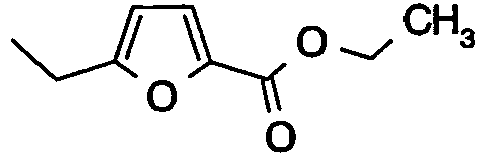
535 587 
555 588 
597 589 
492 590 
555 591 
474 592 
556 593 
474 Table 101 
Ex. R251 MS(M+1) 594 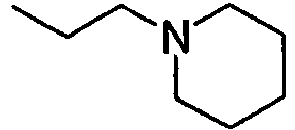
494 595 
604 596 
541 597 
604 598 
493 599 
561 600 
542 601 
502 602 
553 Table 102 
Ex. R251 MS(M+1) 603 
479 604 
463 605 
499 606 
570 Table 103 
Ex. R451 R452 R2 1H NMR (DMSO-d6) dppm 607 -C2H5 -C2H5 -OCH3 0.94 (3H, t, J = 7.1 Hz), 0.99 (3H, t, J = 7.1 Hz), 1.50-1.69 (2H, m), 2.08 (2H, t, J = 7.7 Hz), 2.26-2.45 (2H, m), 2.63-2.85 (2H, m), 2.99-3.22 (5H, m), 3.31-3.49 (1H, m), 3.79 (3H, s), 3.82-4.03 (2H, m), 4.78 (1H, dd, J = 4.2, 10.0 Hz), 6.83-7.06 (2H, m), 12.08 (1H, brs). 608 -H -C6H5 -OCH3 1.64-1.81 (2H, m), 2.20 (2H, t, J = 7.4 Hz), 2.30-2.46 (2H, m), 2.63-2.92 (2H, m), 2.99-2.16 (1H, m), 2.35-2.50 (1H, m), 3.78 (3H, s), 3.86-4.02 (2H, m), 4.69-4.85 (1H, m), 6.87-7.07 (3H, m), 7.18-7.32 (2H, m), 7.54 (2H, d, J = 7.6 Hz), 9.80 (1H, s), 12.07 (1H, s). 609 -H -cyclo-C6H11 -OCH3 0.95-1.32 (5H, m), 1.42-1.75 (7H, m), 1.83-2.00 (2H, m), 2.25-2.45 (2H, m), 2.64-2.89 (2H, m), 3.00-3.15 (1H, m), 3.35-3.52 (2H, m), 3.79 (3H, s), 3.80-3.95 (2H, m), 4.77 (1H, dd, J = 4.2, 10.0 Hz), 6.81-7.05 (2H, m), 7.56 (1H, d, J = 7.8 Hz), 12.07 (1H, brs). Table 104 
Ex. n R451 R452 R2 M.p. (° C) 610 1 -H -cyclo-C6H11 -OCH3 105-114 611 1 -H -C6H5 -OCH3 135-138.5 612 1 -H 
-OCH3 128-132.5 613 3 -H -C2H5 -OCH3 174.2-175.2 Table 105 
Ex. R461 M.p. (° C) 614 -COCH3 209.5-211 615 
120-122 616 
182-184.5 617 -COC3H7 52-67 618 
53-69 Table 106 
Ex. R471 R472 R473 R474 R475 MS(M+1) 619 -H -H -H -H -H 508 620 -H -H -CH3 -H -H 522 621 -H -H -Cl -H -H 542 622 -H -H -F -H -H 526 623 -H -H -OCH3 -H -H 538 624 -H -Cl -Cl -H -H 576 625 -Cl -H -H -H -H 542 626 -CH3 -H -H -H -H 522 627 -H -OCH3 -H -H -H 538 628 -H -Cl -H -H -H 542 629 -H -CN -H -H -H 533 630 -Cl -Cl -H -H -H 576 631 -H -CF3 -H -H -H 576 632 -Cl -H -F -H -H 560 633 -H -OC6H5 -H -H -H 600 634 -OCH3 -H -H -Cl -H 572 635 -H -H -CF3 -H -H 576 636 -H -OCF3 -H -H -H 592 637 -Br -H -H -H -H 588 638 -H -H -OCF3 -H -H 592 639 -OCF3 -H -H -H -H 592 640 -H -H -CN -H -H 533 641 -H -H -C(CH3)3 -H -H 564 642 -H -H -CO2CH3 -H -H 566 643 -H -Br -H -H -H 586 644 -CF3 -H -H -H -H 576 645 -H -H 
-H -H 574 Table 107 
Ex. R501 MS(M+1) 646 -CH=CHC6H5(trans) 534 647 -2-PYRIDYL 509 648 -3-PYRIDYL 509 649 -4-PYRIDYL 509 650 -2-FURYL 498 651 -2-THIENYL 514 652 -3-FURYL 498 653 -3-THIENYL 514 654 -CH2-cyclo-C6H11 528 655 - (CH2)2C6H5 536 656 -OC6H5 524 657 -OCH2C6H, 538 658 -OC4H9 504 659 -cyclo-C6H11 514 660 -cyclo-C3H5 472 661 -cyclo-C4H7 486 662 -CH2OC6H5 538 663 -CH(C2H5)C4H9 530 664 -N(C2H5)2 503 665 - (CH2)2SCH3 506 666 -OCH2CCH 486 667 -O(CH2)4Cl 538 Table 108 
Ex. R501 MS(M+1) 668 
556 669 
572 670 
557 671 
543 672 
577 673 
543 674 
515 675 
577 676 
516 677 
558 Table 109 
Ex. R501 MS(M+1) 678 
547 679 
548 680 
564 681 
558 682 
554 683 
574 684 
542 685 
538 686 
572 687 
552 Table 110 
Ex. R501 MS(M+1) 688 
560 689 
598 690 
560 691 
517 692 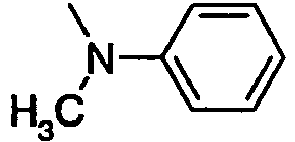
537 693 
515 694 
501 Table 111 
Ref. Ex. R601 1H NMR (DMSO-d6) dppm 695# -CH2C6H5 5.67(2H, s), 7.0-8.0(10H, m), 8.45(1H, dd, J=8.0Hz, 1.3Hz), 8.60(1H, d, J=8.0Hz), 8.80(1H, d, J=1.8Hz). 12.6(1H, br s) 696# -C2H5 1.29(3H, t. J=7.1Hz), 4.41(2H. t, J=7.1Hz), 7.6-8.0(6H, m), 8.38(1H, dd, J=8.0Hz, 1.2Hz), 8.56(1H, d, J=8.1Hz), 8.74(1H, s), 12.6(1H, br s) Table 112 
Ref. Ex. R611 1H NMR (DMSO-d6) dppm 697# -CH2C6H5 5.67(2H, s), 7.1-8.1(10H. m), 8.55(1H, dd, J=8.0Hz, 1.3Hz), 8.65(1H, d, J=8.0Hz). 8.81(1H, d, J=1.8Hz), 13.8(1H, br s) 698# -C2H5 1.30(3H, t, J=7.1Hz), 4.41(2H, t, J=7.1Hz), 7.5-8.0(6H, m), 8.38(1H, dd, J=8.0Hz, 1.2Hz), 8.55(1H, d, J=8.1Hz), 8.79(1H, s), 13.9(1H, br s) 699# 
5.72(2H, s), 7.1-8.0(14H, m), 8.46(1H, dd, J=8.0Hz, 1.3Hz), 8.62(1H, d, J=8.0Hz), 8.82(1H, d, J=1.6Hz), 13.5(1H, br s) Table 113 
Ex. R621 1H NMR (DMSO-d6) dppm 700 -CH2C6H5 3.1-3.7(2H, m), 5.04(1H, dd, J=13.8Hz, 4.8Hz), 5.76(2H, s), 7.1-7.45(5H, m), 7.6-8.0(2H, m), 8.3-8.6(3H, m), 12.0(1H, br s) 701 -C2H5 1.27(3H, t, J=7.1Hz), 3.2-3.7(2H, m), 4.39(2H, t, J=7.1Hz), 5.09(1H, dd, J=13.8Hz, 4.8Hz), 7.4-7.9(4H, m), 8.25-8.6(3H, m), 12.2(1H, br s) Table 114 
Ex. R631 1H NMR (DMSO-d6) dppm 702 -CH2C6H5 3.1-3.7(2H, m), 5.16(1H, dd, J=13.8Hz, 4.8Hz), 5.63(2H, s), 7.0-7.45(5H, m), 7.6-8.0(2H, m), 8.3-8.6(3H, m),13.2(1H, br s) 703 
3.1-3.7(2H, m), 5.16(1H, dd, J=13.8Hz, 4.8Hz), 5.69(2H, s), 7.1-8.0(13H, m), 8.4-8.7(3H, m),13.2(1H, br s) 704 -C2H5 1.27(3H, t, J=7.1Hz), 3.2-3.7(2H, m), 4.39(2H, t, J=7.1Hz), 5.20(1H, dd, J=13.8Hz, 4.8Hz), 7.4-7.9(4H, m), 8.35-8.6(3H, m), 13.2(1H, br s) Table 115 
Ex. R481 R482 R483 R484 R485 MS(M+1) 705 -H -H -H -H -H 494 706 -H -H -OCH3 -H -H 524 707 -H -OCH3 -H -H -H 524 708 -H -H -CN -H -H 519 709 -H -H -N(C2H5)2 -H -H 565 710 -H -H -NHCOCH3 -H -H 551 711 -Cl -H -H -H -H 528 712 -H -Cl -H -H -H 528 713 -H -H -Cl -H -H 528 714 -F -H -H -H -H 512 715 -CN -H -H -H -H 519 716 -CF3 -H -H -H -H 562 717 -H -CF3 -H -H -H 562 718 -H -CH3 -H -H -H 508 719 -H -H -CF3 -H -H 562 720 -H -H -Br -H -H 574 721 -H -H -F -H -H 512 722 -CH3 -H -H -H -H 508 723 -H -H -OC4H9 -H -H 566 724 -H -H - CO2CH3 -H -H 552 725 -H -F -H -H -H 512 726 -H -H -N(CH3)2 -H -H 537 727 -H -H -OCOCH3 -H -H 552 728 -H -H -C4H9 -H -H 550 729 -H -H -SO2CH3 -H -H 572 730 -H -H - SC2H5 -H -H 554 731 -H -H -OCHF2 -H -H 560 732 -H -H 
-H -H 563 Table 116 
Ex. R481 R482 R483 R484 R485 MS(M+1) 733 -H -H -OC(CH3)3 -H -H 566 734 -H -H -H -H -H 508 735 -H -H -H -H -OCH3 538 736 -H -H -H -OCH3 -H 538 737 -H -H -OCH3 -H -H 538 738 -H -H -H -H -Cl 542 739 -H -H -OC4H9 -H -H 580 Table 117 
Ex. R511 MS(M+1) 740 -CH2-cyclo-C6H11 500 741 -C6H13 488 742 -cyclo-C6H11 486 743 
484 744 
495 745 
495 746 
495 747 
500 748 
500 749 
501 750 
534 751 
498 Table 118 
Ex. R511 MS(M+1) 752 
497 753 
484 754 
573 755 
563 756 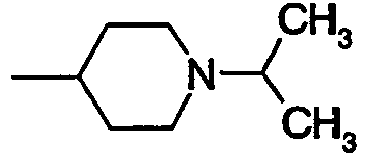
529 757 
488 758 
532 759 
504 Table 119 
Ex. R491 R492 R493 R494 R495 MS(M+1) 760 -H -H -OCH3 -H -H 582 761 -H -H -Cl -H -H 586 762 -H -H -H -H -CH3 566 763 -H -H -F -H -H 570 764 -OCH3 -H -H -Cl -H 616 765 -H -H -H -H -CF3 620 766 -H -H -H -H -Cl 586 767 -H -H -H -H -OCF3 636 768 -H -H -H -H -CO2CH3 610 769 -CN -H -H -H -H 577 770 -H -H -H -OCH3 -H 582 771 -H -H -H -F -H 570 772 -H -H -H -H -F 570 773 -H -H -CF3 -H -H 620 774 -H -H -H -CF3 -H 620 775 -H -H -OCF3 -H -H 636 776 -H -H -OCH3 -OCH3 -H 612 777 -OCH3 -H -H -OCH3 -H 612 778 -H -H -H -CH3 -H 566 779 -H -H -H -H -NO2 597 780 -H -H -H -NO2 -H 597 781 -H -H -Br -H -H 632 782 -H -H -H -Cl -H 586 783 -H -CH3 -H -H -OCH3 596 784 -Cl -H -H -H -Cl 620 785 -H -H -H -OCF3 -H 636 786 -H -H -H -Cl -Cl 620 787 -Cl -H -H -Cl -H 620 788 -H -H -Cl -H -Cl 620 789 -H -H -CH3 -NO2 -H 611 790 -H -H -F -H -Cl 604 791 -H -CH3 -Cl -H -Cl 634 Table 120 
Ex. R491 R492 R493 R494 R495 MS(M+1) 792 -CH3 -H -H -NO2 -H 611 793 -Cl -H -H -NO2 -H 631 794 -H -H -CN -H -Cl 611 795 -CH3 -H -CH3 -H -CH3 594 796 -H -H -NHCOCH3 -H -H 609 797 -H -H -NO2 -H -H 597 798 -H -Cl -H -Cl -OH 636 799 -H -H -CH3 -H -H 566 800 -H -H -OCH3 -H -NO2 627 801 -H -H -Cl -Cl -H 620 802 -H -H -C(CH3)3 -H -H 608 803 -H -H -H -CO2H -H 596 804 -Br -H -H -Cl -H 666 805 -H -H -C2H5 -H -H 580 806 -H -CH3 -H -H -CH3 580 807 -H -H -OC4H9 -H -H 624 808 -F -H -H -F -H 588 809 -H -H -H -CN -H 577 810 -CH3 -H -Cl -H -Cl 634 811 -H -F -H -Cl -CH3 618 812 -H -H -Br -H -CH3 646 813 -H -H -H -Br -H 632 814 -H -H -CN -H -H 577 815 -H -H -NHCOCH3 -Cl -H 643 816 -H -H -F -H -F 588 817 -H -H -CH3 -H -OCH3 596 818 -H -H -H -Cl -CH3 600 819 -F -H -H -H -F 588 820 -CH3 -H -H -F -H 584 821 -CH3 -H -Cl -CH3 -H 614 822 -CH3 -H -H -H -Cl 600 823 -H -H -CH(CH3)2 -H -H 594 Table 121 
Ex. R491 R492 R493 R494 R495 MS(M+1) 824 -H -H -F -Cl -H 604 825 -H -H -Br -H -F 650 826 -H -H -CH3 -Cl -H 600 827 -H -H -F -F -H 588 828 -H -H -H -H -Br 632 829 -H -Cl -H -Cl -H 620 830 -H -H -(CH2)2CO2CH3 -H -H 638 831 -CH3 -H -OCH3 -CH3 -CH3 624 832 -H -H -OH -CO2H -H 612 833 -H -H -CO2H -H -H 596 834 -F -H -F -F -H 606 835 -H -H -H -H -H 552 Table 122 
Ex. R521 MS(M+1) 836 -2-THIENYL 558 837 -C4H9 532 838 -CH=CH2 502 839 - (CH2)3Cl 552 840 -CH2-cyclo-C6H11 572 841 - CH2CF3 558 842 -CH2C6H5 566 843 -CH=CHC6H5 (trans) 578 844 
603 845 
556 846 
610 847 
592 848 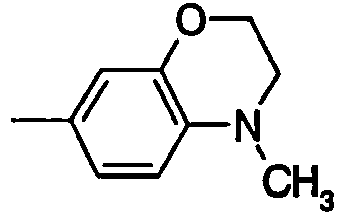
623 849 
604 850 
571 Table 123 
Ex. R521 MS(M+1) 851 
626 852 
626 853 
638 854 
630 855 
616 Table 124 
Ex. R1 R2 R611 M.p. (°C) 856 -CH3 -OCH3 -H 254-255 857 -CH3 -OCH3 -CH2CO2CH3 182-184 858 -CH3 -OCH3 -CH2CO2H 207-210 859 -(CH2)2CH(CH3)2 -OCH3 -H 141-145 860 
-OCH3 -H 247.9-251.8 Table 125 
Ex. R621 R622 R623 R624 R625 MS(M+1) 861 -H -H -Cl -H -H 443 862 -H -H -H -H -Cl 443 863 -H -H -H -CF3 -H 477 864 -H -H -H -H -CH3 423 865 -H -H -H -H -C6H5 485 866 -H -H -C(CH3)3 -H -H 465 867 -H -H -CF3 -H -H 477 868 -H -H -CH3 -H -H 423 869 -H -H -C6H5 -H -H 485 870 -H -H -H -H -OCF3 493 871 -H -H -H -F -H 427 872 -H -H -H -CH3 -H 423 873 -H -H -OCF3 -H -H 493 874 -H -H -H -Cl -H 443 875 -H -H -F -H -H 427 876 -H -H -H -OCH3 -H 439 877 -H -H -OCH3 -H -H 439 878 -H -H -CO2CH3 -H -H 467 879 -H -H -H -OC6H5 -H 501 880 -H -H -SCH3 -H -H 465 881 -H -H -H -H -H 409 882 -H -H -SO2CH3 -H -H 487 883 -H -H -H -OCF3 -H 493 884 -H -H -OCH2C6H5 -H -H 515 885 -H -H -OCH3 -Cl -H 473 886 -H -H -H -H -OCH3 439 887 -H -H -NHCOCH3 -H -H 466 Table 126 
Ex. R631 MS(M+1) 888 -CH2C≡CH 357 889 -CH2CH=CH2 359 890 -CH2CH=CHC6H5 435 891 - (CH2)2C6H5 423 892 - (CH2)3C6H5 437 893 -CH3 333 894 -C2H5 347 895 -CH(CH3)2 361 896 -C4H9 375 897 -CH2CH2OH 363 898 -C6H13 403 899 -CH2-cyclo-C6H11 415 900 -CH2CO2C2H5 405 901 
459 902 
460 903 
471 904 
430 905 
429 906 
499 Table 127 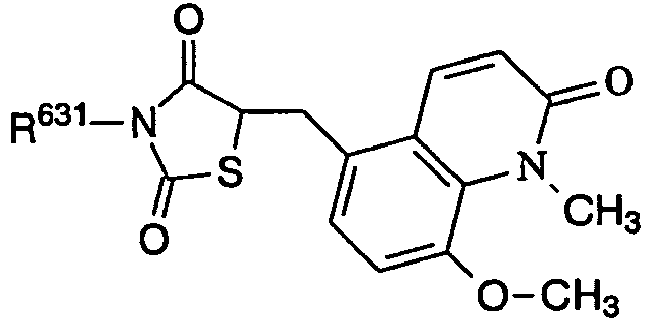
Ex. R631 MS(M+1) 907 
459 908 
449 909 
466 910 
410 911 
560 912 
489 Table 128 
Ex. R531 R532 R533 R534 R535 M.p. (° C) 913 -H -H -C6H5 -H -H 164-168 914 -H -H -C(CH3)3 -H -H 222-224 915 -H -H -H -H -C6H5 193-199 916 -H -H -Cl -H -H 179.8-183.8 917 -H -H -Br -H -H 191.3-192.1 918 -H -H -OC6H5 -H -H 156.5-158.5 Table 129 
Ex. R531 R532 R533 R534 R535 1H NMR (DMSO-d6) δ ppm 919 -H -H -H -H -H 2.45-2.54(m, 2H), 2.75-2.85(m, 2H), 3.13(dd; J=9.5, 14.4Hz, 1H), 3.38(dd; J=4.7, 14.4Hz, 1H), 3.67(S, 3H), 4.92(dd; J=4.7, 9.5Hz, 1H), 5.19(S, 2H), 6.81(d, J=8.6Hz, 1H), 6.89(d, J=8.6Hz, 1H), 7.04(d, J=7.5Hz, 2H), 7.11(t, J=7.5Hz, 1H), 7.19(t, J=7.5Hz, 2H), 13.19(brs, 1H) 920 -H -H -H -C6H5 -H 2.47-2.57(m, 2H), 2.80-2.88(m, 2H), 3.15(dd; J=9.9, 14.5Hz, 1H), 3.40(dd; J=4.5, 14.5Hz, 1H), 3.69(S, 3H), 4.91(dd; J=4.5, 9.9Hz, 1H), 5.26(s, 2H), 6.84(d, J=8.6Hz, 1H), 6.91(d, J=8.6Hz, 1H), 7.02(d, J=7.7Hz, 1H), 7.24-7.57(m, 8H), 13.22(brs, 1H) Table 130 
Ref. Ex. R531 R532 R533 R534 R535 1H NMR (DMSO-d6) dppm 921# -H -H -H -H -H 2.56(2H, t, J=6.9Hz), 2.97(2H, t, J=6.9Hz), 3.78(3H, s), 5.21(2H, s), 7.0-7.55(7H, m), 7.69(1H, s), 13.80(1H, br s) 922# -H -H -C6H5 -H -H 2.58(2H, t, J=6.9Hz), 3.00(2H, t, J=6.9Hz), 3.81(3H, s), 5.24(2H, s), 7.0-7.6(11H, m), 7.80(1H, s), 13.85(1H, br s) 923# -H -H C(CH3)3 -H -H 1.20(9H, s), 2.54(2H, t, J=6.9Hz), 2.96(2H, t, J=6.9Hz), 3.81(3H, s), 5.20(2H, s), 7.00(2H, d, J=8.2Hz), 7,07(1H, d, J=8.8Hz), 7.15(1H, d, J=8.8Hz), 7.22(2H, d, J=8.2Hz), 769(1H, s), 13.8(1H, br s) Table 131 
Ref. Ex. R531 R532 R533 R534 R535 1H NMR (DMSO-d6) dppm 924# -H -H -H -C6H5 -H 2.57(2H, t, J=6.9Hz), 3.00(2H, t, J=6.9Hz), 3.79(3H, s), 5.27(2H, s), 7.0-7.55(11H, m), 7.71(1Hn s), 13.7(1H, br s) 925# -H -H -H -H -C6H5 2.49(2H, t, J=6.9Hz), 2.80(2H, t, J=6.9Hz), 3.44(3H, s), 5.20(2H, s), 6.91(1H, d, J=8.6Hz), 7.05-7.5(10H, m), 7.66(1H, s), 13.8(1H, br s) 926# -H -H -Cl -H -H 2.49-2.56 (2H, m). 2.84-3.08 (2H, m), 3.74 (3H, s), 5.14 (2H, s), 6.95-7.20 (4H, m), 7.20-7.33 (2H, m), 7.69 (1H, s), 13.79 (1H, brs). 927# -H -H -Br -H -H 2.51-2.62 (2H, m), 2.86-3.05 (2H, m), 3.74 (3H, s), 5.11 (2H, s), 6.98-7.10 (3H, m), 7.16 (1H, d, J = 8.8 Hz), 7.40 (2H, d, J = 8.3 Hz), 7.69 (1H, s), 13.79 (1H, s). 928# -H -H -OC6H5 -H -H 2.42-2.61 (2H, m), 2.85-2.05 (2H, m), 3.80 (3H, s), 5.17 (2H, s), 6.84 (2H, d, J = 8.6 Hz), 6.91 (2H, d, J = 7.8 Hz), 7.05-7.17 (5H, m), 7.32-7.37 (2H, m), 7.69 (1H, s), 13.78 (1H, brs). Table 132 
Ref. Ex. R1 R641 R2 1H NMR dppm 929# -H -OCH3 2.43(2H, t, J=6.9Hz), 2.91(2H, t, J=6.9Hz), 3.20(3H, s), 3.89(3H, s), 7,17(1H, d, J=8.8Hz), 7.20(1H, d, J=8.8Hz), 7.68(1H, s) 930# -H -OCH3 2.48(2H, t, J=6.9Hz), 3.00(2H, t, J=6.9Hz), 3.85(3H, s), 6.95-7.2(2H, m), 9.22(1H, s), 13.77(1H, br s) 931# -CH3 -OCH3 CDCl3: 2.5-2.6(2H, m), 2.95-3.0(2H, m), 3.37(3H, s), 3.53(3H, s), 3.93(3H, s), 6.95(1H, d, J=8.8Hz), 7.24(1H, d, J=8.8Hz), 7.89(1H, s) 932# -H -OCH3 0.81(3H, t, J=7.3Hz), 1.1-1.2(2H, m), 1.3-1.4(2H, m), 2.44(1H, t, J=6.9Hz), 2.90(2H, t, J=6.9Hz), 3.90(3H, s), 3.92(2H, t, J=7.3Hz), 7,18(1H, d, J=8.8Hz), 7.22(1H, d, J=8.8Hz), 7,71(1H, s), 13.81(1H, br s) 933# - (CH2)3C6H5 -H -OCH3 1.65-1.8(2H, m), 2.35-2.5(4H, m), 2.92(2H, t, J=6.9Hz), 3.80(3H, s),3.91(2H, t, J=7.3Hz), 7.0-7.3(7H, m), 7.72(1H, s), 13.8(1H, br s) 934# - (CH2)2C6H5 -H -OCH3 2.36(2H, t, J=6.9Hz), 2.59(2H, t, J=4.5Hz), 2.73(2H, t, J=6.9Hz), 3.96(3H, s), 4.17(2H, t, J=4.5Hz), 7.00(1H, d, J=8.8Hz), 7.1-7.3(5H, m), 7.64(1H, s), 13.82(1H, br s) 935# -H -OCH3 1.07(3H, t, J=7.0Hz), 2.42(2H, t, J=6.9Hz), 2.92(2H, t, J=6.9Hz). 3.86(2H, q, J=7.0Hz), 3.91(3H, s), 7.19(1H, d, J=8.8Hz), 7.22(1H. d, J=8.8Hz), 7.71(1H. s), 12.82(1H. br s) 936# -(CH2)2OC6H5 -H -OCH3 2.47(2H, t, J=6.9Hz), 2.88(2H, t, J=6.9Hz), 3.88(3H, s), 4.06(2H, t, J=5.9Hz), 4.29(2H, t, J=5.9Hz), 6.77(2H, d, J=8.6Hz), 6.88(1H, t, J=8.6Hz), 7.1-7.3(4H, m), 7.68(1H, s), 13.8(1H, br s) 937# -CH2-cyclo-C6H11 -H -OCH3 0.75-1.57(11H, m), 2.45(2H, t, J=6.9Hz), 2.92(2H, t, J=6.9Hz), 3.91(3H, s), 3.95-4.00(2H, m), 7,18(1H, d, J=8.8Hz), 7.23(1H, d, J=8.8Hz), 7.73(1H, s), 13.8(1H, br s) DMSO-d6 is used for measuring NMR, unless otherwise specified. Table 133 
Ref Ex. R1 R641 R2 1H NMR (DMSO-d6) dppm 938# - CH2H2OCH3 -H -OCH3 2.50(2H, t, J=6.9Hz), 2.89(2H, t, J=6.9Hz), 3.10(3H, s), 3.35(2H, t, J=6.0Hz), 3.90(3H, s), 4.10(2H, t, J=6.0Hz) , 7.17(2H, d, J=8.6Hz), 7.24(1H, t, J=8.6Hz), 7.71(1H, s), 13.8(1H, br s) 939# -CH(C6H5)2 -H -OCH3 2.4-2.5(2H, m), 2.8-2.95(2H, m), 3.41(3H, s), 6.29(2H, s), 6.95-7.35(12H, m), 7.73(1H, s), 13.8(1H, br s) 940# -CH3-cyclo-C3H5 -H -OCH3 0.05-0.10(2H, m), 0.25-0.30(2H, m), 0.75-0.80(1H, m), 2.46(2H, t, J=6.9Hz), 2.93(2H, t, J=6.9Hz), 3.85-3.950(5H, m), 7.1-7.3(2H, m), 7.73(1H, s), 13.82(1H, br s) 941# -C6H5 -H -H 2.71-2.76 (2H, m), 3.13-3.18 (2H, m), 6.32 (1H, d, J = 8.1 Hz), 7.10 (1H, d, J = 7.7 Hz), 7.19-7.27 (3H, m), 7.43-7.56 (3H, m), 7.83 (1H, s), 13.85 (1H, brs). 942# - (CH2)4C6H5 -H -OCH3 1.35-1.50(4H, m), 2.40-2.70(4H. m), 2.89(2H, t, J=6.9Hz), 3.83(3H, s), 3.85-3.95(2H, m), 7.05-7.3(7H, m), 7.71(1H, s), 13.8(1H, br s) 943# - (CH2)5C6H5 -H -OCH3 1.05-1.15(2H, m), 1.35-1.5(4H, m), 2.35-2.70(4H, m), 2.80(2H, t, J=6.9Hz). 3.85-4.0(5H, m), 7.05-7.3(7H, m), 7.69(1H, s), 13.82(1H, br s) Table 134 
Ref. Ex. R1 R2 1H NMR dppm 944# 
-OCH3 2.61(2H, t, J=6.9Hz), 2.87(2H, t, J=6.9Hz), 3.71(3H, s), 5.64(2H, s), 7.0-8.05(9H, m), 13.8(1H, br s) 945# 
-OCH3 2.60(2H, t, J=6.9Hz), 3.02(2H. t, J=6.9Hz), 3.77(3H, s), 5.37(2H, s), 6.95-7.85(9H, m), 13.8(1H, br s) 946# 
-OC4H9 0.82(3H, t, J=7.4Hz), 1.2-1.35(2H, m), 1.45-1.6(2H, m), 2.59(2H, t, J=6.9Hz), 3.01(2H, t. J=6.9Hz), 4.01(2H, t, J=6.4Hz). 5.21(2H, s), 7.0-7.65(11H, m), 7.71(1H, s), 13.8(1H, br s) 947# 
-OCH2CO2C(CH3)3 CDCl3 : 1.54(9H, s), 2.68(2H, t, J=6.8Hz), 2.98(2H, t, J=6.8Hz), 4.46(2H, s), 5.47(2H, s), 6.69(1H, d, J=8.5Hz), 7.1-7.6(10H, m), 7.78(1H, s), 9.25(1H, br s) 948# 
-OH 2.57(2H, t, J=6.9Hz), 2.97(2H. t, J=6.9Hz). 5.35(2H, s), 6.8-7.65(11H, m), 7.69(1H, s), 10.92(1H, s), 13.8(1H, br s) 949# 
-H 2.64-2.82 (2H, m), 3.07 (2H, t, J = 7.8 Hz), 5.21 (2H, brs). 7.00-7.13 (2H, m), 7.24-7.49 (6H, m), 7.54-7.70 (4H, m), 7.79 (1H, s), 13.82 (1H, s). 950# 
-H 2.64-2.80 (2H, m), 2.97-3.12 (2H, m), 5.13 (2H, s), 7.01 (1H, d, J = 8.1. Hz), 7.08 (1H, d, J = 7.7 Hz), 7.11-7.35 (3H, m), 7.44-7.55 (2H, m), 7.78 (1H, s), 13.84 (1H, s). DMSO-d6 is used for measuring NMR, unless otherwise specified. Table 135 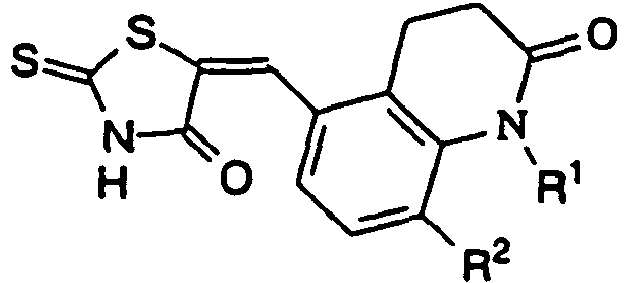
Ref.Ex. R1 R2 1H NMR (DMSO-d6) dppm 951# 
-H 2.20-2.37 (2H, m), 2.49-2.69 (2H, m), 4.83 (2H, s). 6.49-6.62 (2H, m), 6.68-6.82 (1H, m), 6.87-7.05 (3H, m), 7.21 (1H, s), 7.25-7.49 (4H, m), 13.36 (1H, s). 952# 
-OCH3 2.58-2.61 (2H, m), 2.98-3.01 (2H, m), 3.77 (3H, s), 5.17 (2H, s), 7.07 (1H, d, J=8.9Hz), 7.16 (1H, d, J=8.9Hz), 7.53-7.74 (5H, m), 8.09-8.10 (1H, m), 8.35 (1H, d, J=2.0Hz), 13.79 (1H, brs) 953# 
-H 2.65-2.80 (2H, m), 2.99-3.12 (2H, m), 5.16 (2H, s), 7.03 (1H, d, J = 8.1 Hz), 7.09 (1H, d, J = 7.7 Hz), 7.20-7.40 (5H, m), 7.79 (1H, s), 13.87 (1H, brs). 954# 
-H 2.24 (3H, s), 2.68-2.73 (2H, m), 3.01-3.07 (2H, m), 5.12 (2H, s), 7.02-7.18 (6H, m), 7.26 (1H, t, J = 8.0 Hz), 7.78 (1H, s), 13.86 (1H, brs). 955# 
-OCH3 2.61-2.66 (2H, m), 3.16-3.21 (2H, m), 3.64 (3H, s), 5.33 (2H,s), 7.07 (1H, d, J=8.8Hz), 7.17 (1H, d, J=8.8Hz), 7.39 (1H, d, J=8.6Hz), 7.50-7.561 (1H, m), 7.67-7.73 (1H, m), 7.78 (1H, s), 7.87-7.93 (2H, m), 8.24 (1H, d, J=8.5Hz), 13.80 (1H, brs) 956# 
-OCH3 - 2.47-2.52 (2H, m), 2.88-2.93 (2H, m), 3.30 (3H, s), 3.86 (3H, s), 5.11 (2H,s), 6.38 (1H, d, J=8.7Hz), 7.06-7.22 (6H, m), 7.35-7.41 (2H, m), 7.67 (1H, s), 7.89 (1H, d, J=2.1Hz), 13.75 (1H, brs) 957# 
-H 2.70-2.76 (2H, m), 3.03-3.09 (2H, m), 5.21 (2H,s), 7.07-7.12 (2H, m), 7.32 (1H, t, J=8.0Hz), 7.45 (1H, d, J=8.3Hz), 7.69 (1H, dd, J1=2.4Hz, J2=8.3Hz), 7.78 (1H, s), 8.36 (1H, d, J=2.4Hz), 13.81 (1H, brs) Table 136 
Ref. Ex. R1 1H NMR (DMSO-d6) dppm 958 # -CH3 4.02(3H, s), 4.07(3H, s), 6.77(1H, d, J=9.8Hz), 7.35-7.65(2H, m), 8.07(1H, s), 8.17(1H, d, J=9.8Hz), 959 # 
3.66 (3H, s), 5.67 (2H, s), 6.82 (1H, d, J = 9.8 Hz), 7.04 (2H, d, J = 8.5 Hz), 7.28-7.38 (2H, m), 7.40-7.52 (2H, m), 8.05 (1H, s), 8.22 (1H, d, J = 10.0 Hz), 13.86 (1H, brs). Table 137 
Ex. R1 R651 R261 M.p. (°C) 960 -CH3 -H -CH3 204-209 961 -H -H -CH3 266(dec.) 962 -CH3 -CH3 -CH3 196-198 963 -C2H5 -H -CH3 200.5-201.5 964 -CH(C6H5)2 -H -CH3 233(dec.) 965 -(CH2)2CH(CH3)2 -H -CH3 139.5-141 966 -C3H7 -H -CH3 59-83 967 -C5H11 -H -CH3 143-145.5 968 -CH(CH3)2 -H -CH3 182-184 969 -CH2CH(CH3)2 -H -CH3 208-211 Table 138 
Ex. R1 R651 R261 M.p.(°C) 970 
-H -CH3 238(dec.) 971 
-H -CH3 133-136 972 
-H -C4H9 156-161 973 
-H -CH2CO2H 128-135 974 
-H - CH3 177-181 Table 139 
Ex. R1 R651 1H NMR dppm 975 CH3OCH2O(CH2)3- 3- -H CDCl3: 1.9-2.0(2H, m), 2.63(2H, t, J=7.1Hz), 2.75-3.05(2H,m), 3.16(1H, dd, J=13.3Hz, J=4.0Hz), 3.37(3H,s), 3.60(2H, t, J=6.2Hz), 3.6-3.75(1H, m), 4.0-4.2(2H,m), 4.48(1H, dd, J=10.3Hz, J=4.0Hz), 4.69(3H, s), 6.94(1H, d, J=7.6Hz), 7.08(1H, d, J=8.2Hz), 7.5-9.0(1H, 976 HO(CH2)3- -H DMSO-d6:1.6-1.9(2H, m), 2.7-3.0(2H,m), 3.13(1H, dd, J=14.4Hz, J=4.0Hz), 3.3-3.8(5H, m), 3.91(2H, t, J=8.4Hz), 4.55(1H, t, J=5.0Hz), 4.83(1H, dd, J=14.4Hz, J=4.0Hz), 6.92(1H, d, J=7.5Hz), 7.0-7.5(2H, m), 12.13(1H, br s) Table 140 
Ex. R1 R651 R261 1H NMR (DMSO-d6) dppm 977 - (CH2)3C6H5 -H -CH3 1.64-1.73(m, 2H), 2.32-2.42(m, 4H), 2.74-2.85(m, 2H), 3.10(dd; J=9.8, 14.4Hz, 1H), 3.14(dd; J=4.6, 14.4Hz, 1H), 3.69(S, 3H), 3.85-3.95(m, 2H), 4.93(dd; J=4.6, 9.8Hz, 1H), 6.93(d, J=8.6Hz, 1H), 6.98(d, J=8.6Hz, 1H), 7.04(d, J=7.5Hz, 2H), 7.14(t, J=7.5Hz, 1H), 7.23(t, J=7.5Hz, 2H), 13.22(brs, 1H) 978 - (CH2)2C6H5 -H -CH3 2.22-2.31(m, 2H), 2.32-2.55(m, 2H), 2.63-2.75(m, 2H), 3.12(dd; J=10.0, 14.4Hz, 1H), 3.68(dd; J=4.5, 14.4Hz, 1H), 3.87(S, 3H), 4.10-4.30(m, 2H), 4.83(dd; J=4.5, 10.0Hz, 1H), 6.90-7.05(m, 4H), 7.12-7.25(m, 3H), 13.25(brs, 1H) 979 -C4H9 -H -CH3 0.79(t; J=7.2Hz, 3H), 1.13(tt; J=7.2, 7.2Hz, 2H), 1.35(tt; J=7.2, 7.2Hz, 2H), 2.34-2.43(m, 2H), 2.70-2.80(m, 2H), 3.21(dd; J=9.5, 14.5Hz, 1H), 3.41(dd; J=4.7, 14.5Hz, 1H), 3.80(S, 3H), 3.93(t; J=7.2Hz, 2H), 4.94(dd; J=4.7, 9.5Hz, 1H), 6.95(d; J=8.8Hz, 1H), 6.97(d; J=8.8Hz, 1H), 13.20(brs, 1H) 980 -CH2-cyclo-C3H5 -H -CH3 0-0.07(m, 2H), 0.20-0.26(m, 2H), 0.73-0.84(m, 1H), 2.30-2.42(m, 2H), 2.70-2.85(m, 2H), 3.18(dd; J=9.1, 14.5Hz, 1H), 3.42(dd; J=4.7, 14.5Hz, 1H), 3.81(S, 3H), 3.84-3.90(m, 2H), 4.95(dd; J=4.7, 9.1Hz, 1H), 6.94(d; J=8.6Hz, 1H), 6.97(d; J=8.6Hz, 1H), 13.19(brs, 1H) 981 - (CH2)2OC6H5 -H -CH3 2.39-2.47(m, 2H), 2.70-2.83(m, 2H), 3.14(dd; J=10.0, 14.5Hz, 1H), 3.40(dd; J=4.5, 14.5Hz, 1H), 3.79(S, 3H), 4.00-4.07(m, 2H), 4.20-4.30(m, 2H), 4.88(dd; J=4.5, 10.0Hz, 1H), 6.79(d, J=7.7Hz, 2H), 6.88(t, J=7.7Hz, 1H), 6.95(d, J=8.7Hz, 1H), 6.98(d, J=8.7Hz, 1H), 7.22(t, J=7.7Hz, 2H), 13.23(brs, 1H) Table 141 
Ex. R1 R651 R261 1H NMR (DMSO-d6) dppm 982 -CH2-cyclo-C6H11 -H -CH3 0.71-0.80(m, 2H), 0.94-1.07(m, 3H), 1.20-1.27(m, 1H), 1.37-1.45(m, 2H), 1.45-1.59(m, 3H), 2.34-2.43(m, 2H), 2.70-2.80(m, 2H), 3.19(dd; J=9.2, 14.5Hz, 1H), 3.41(dd; J=4.9, 14.5Hz, 1H), 3.80(S, 3H), 3.88-3.99(m, 2H), 4.95(dd; J=4.9, 9.2Hz, 1H), 6.94(d, J=8.6Hz, 1H), 6.97(d, J=8.6Hz, 1H), 13.18(brs, 1H) 983 -CH2CH2OCH3 -H -CH3 2.34-2.43(m, 2H), 2.69-2.79(m, 2H), 3.08(S, 3H), 3.17(dd; J=9.6, 14.5Hz, 1H), 3.25-3.36(m, 2H), 3.41(dd; J=4.6, 14.5Hz, 1H), 3.80(S, 3H), 4.03-4.12(m, 2H), 4.93(dd; J=4.6, 9.6Hz, 1H), 6.95(d, J=8.6Hz, 1H), 6.98(d, J=8.6Hz, 1H), 13.21(brs, 1H) 984 -(CH2)4C6H5 -H -CH3 1.38-1.45(m, 4H), 2.33-2.42(m, 2H), 2.43-2.53(m, 2H), 2.69-2.80(m, 2H), 3.16(dd; J=9.7, 14.6Hz, 1H), 3.40(dd; J=4.6, 14.6Hz, 1H), 3.74(S, 3H), 3.88-3.96(m, 2H), 4.93(dd; J=4.6, 9.7Hz, 1H), 6.93(d, J=8.6Hz, 1H), 6.97(d, J=8.6Hz, 1H), 7.10(d, J=7.3Hz, 2H), 7.14(t, J=7.3Hz, 1H), 7.24(t, J=7.3Hz, 2H), 13.20(brs, 1H) 985 -(CH2)5C6H5 -H -CH3 1.05-1.16(m, 2H), 1.34-1.51(m, 4H), 2.31-2.41(m, 2H), 2.43-2.53(m, 2H), 2.64-2.72(m, 2H), 3.14(dd; J=9.7, 14.5Hz, 1H), 3.40(dd; J=4.6, 14.5Hz, 1H), 3.78(S, 3H), 3.87-3.96(m, 2H), 4.91(dd; J=4.6, 9.7Hz, 1H), 6.94(d, J=8.6Hz, 1H), 6.97(d, J=8.6Hz, 1H), 7.12(d, J=7.4Hz, 2H), 7.15(t, J=7.4Hz, 1H), 7.24(t, J=7.5Hz, 2H), 13.22(brs, 1H) Table 142 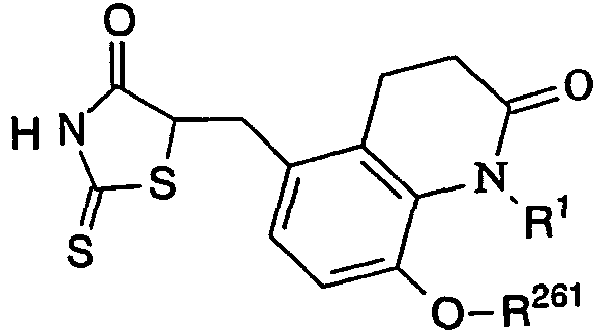
Ex. R1 R261 1H NMR dppm 986 
-CH3 2.83-2.89 (2H, m), 3.20-3.10 (1H, m), 3.36-3.42 (2H, m), DMSO overlap (1H), 3.66 (3H, s), 4.93 (1H, dd, J1=4.5Hz, J2=9.5Hz), 5.15 (2H, s), 6.84 (1H, d, J=8.6Hz), 6.92 (1H, d, J=8.6Hz), 7.54-7.57 (1H, m), 7.61-7.77 (3H, m), 8.11-8.13 (1H, m), 8.36 (1H, d, J=1.8Hz), 13.19 (1H, brs) 987 
-CH3 2.84-2.78 (2H, m), 3.15-3.21(2H, m), DMSO overlap (3H, s), 3.72 (3H, s), 4.90-4.94 (1H, m), 5.01 (2H,s), 6.65 (1H, d, J=9.0Hz), 6.88-6.93 (2H, m), 7.36-7.39 (3H, m), 7.50-7.53 (3H, m), 7.85 (1H, s), 13.20 (1H, brs) 988 
-CH3 2.55-2.60 (2H, m), 3.05-3.10 (2H, m), 3.13-3.48 (2H, m), 3.53 (3H, s), 4.93-4.99 (1H, m), 5.31 (2H,s), 6.84 (1H, d, J=8.5Hz), 6.93 (1H, d, J=8.5Hz), 7.34 (1H, d, J=8.6Hz), 7.50-7.56 (1H, m), 7.66-7.72 (1H, m), 7.88-7.95 (2H, m), 8.22 (1H, d, J=8.6Hz), 12.77 (1H, brs) 989 
- CH2CO2C(CH3)3 CDCl3 : 1.52(s, 9H), 2.6-2.7(m, 2H), 2.7-2.95(m, 2H), 3.1-3.2(m, 1H), 3.35-3.5(m, 1H), 4.39(s, 2H), 4.45-4.55(m, 1H), 5.4-5.55(m, 1H), 6.57(d, 1H, J=8.6Hz), 6.86(d, 1H, J=8.6Hz), 7.1-7.6(m, 9H), 8.96(br s) DMSO-d6 is used for measuring NMR, unless otherwise specified. Table 143 
Ex. R540 M.p. (°C) 990 -C6H5 186.8-188.0 991 -Br 229.6-230.4 992 -Cl 214.6-215.4 993 -CH3 188.7-189.5 Table 144 
Ex. R540 M.p. (°C) 994 -Br 204.5-205.7 995 -C6H5 186.3-187.1 Table 145 
Ex. R1 R2 M.p.(°C) 996 
-H 204.1-205.9 997 -C6H5 -H 223.6-225.4 998 -CH2CH=CH2 -OCH3 156.5-158.5 999 -C8H17 -OCH3 114.0-114.5 Table 146 
Ex. R1 M.p. (°C) 1000 
249.5-250.2 1001 -(CH2)2CH(CH3)2 198.5-200.5 Table 147 
Ref. Ex. R1 R2 1H NMR (DMSO-d6) dppm 1002# 
-H 1.40-1.48 (2H, m), 1.52-1.60 (4H, m), 2.64-2.74 (6H, m), 2.99-3.05 (2H, m), 3.76 (2H, s), 5.16 (2H, s), 6.92 (1H, d, J=7.0Hz), 7.14-7.33 (6H, m), 7.66 (1H, s) 1003# 
-H 1.23-1.29 (2H, m), 1.51-1.57 (4H, m), 2.57-2.61 (4H, m), 2.68-2.74 (2H, m), 3.00-3.06 (2H, m), 3.79 (2H, s), 5.19 (2H, s), 6.93 (1H, d, J=7.6Hz), 7.12-7.23 (5H, m), 7.30-7.33 (1H, m), 7.69 (1H, s) 1004# 
-H 1.36-1.44 (2H, m), 1.49-1.57 (4H, m), 2.57-2.64 (4H, m), 2.67-2.73 (2H, m), 3.00-3.06 (2H, m), 3.84 (2H, s), 5.21 (2H, s), 6.90 (1H, d, J=7.4Hz), 7.14-7.21 (3H, m), 7.32 (1H, d, J=7.7Hz), 7.68 (1H, s), 7.74 (1H, t, J=7.7Hz) 1005# 
-H 2.60-2.77 (2H, m), 2.97-3.07 (2H, m), 4.30 (2H, s), 5.16 (2H, s), 6.85 (1H, d, J=8.0Hz), 6.90 (1H, d, J=8.0Hz), 7.04-7.36 (8H, m), 7.65 (1H, t, J=7.7Hz), 7.92 (1H, s), 12.19 (1H, brs) 1006# 
-OCH3 2.57-2.62 (2H, m), 2.98-3.02 (2H, m), 3.76 (3H, s), 5.20 (2H, s), 7.08 (1H, d, J=8.8Hz), 7.20 (1H, d, J=8.8Hz), 7.40 (1H, d, J=7.3Hz), 7.49 (2H, t, J=7.3Hz), 7.77 (1H, dd, J1=2.0Hz, J2=8.3Hz), 7.71-7.78 (4H, m), 7.86 (1H, s), 7.89 (1H, d, J=8.3Hz), 8.13 (2H, d, J=8.3Hz), 8.46-8.47 (1H, m), 12.58 (1H, brs) 1007# 
-OCH3 2.47-2.52 (2H, m), 2.88-2.93 (2H, m), 3.85 (3H, s), 5.13 (2H, s), 6.66 (1H, d, J=8.8Hz), 6.84 (1H, t, J=7.3Hz), 7.06 (1H, d, J=8.8Hz), 7.15-7.29 (4H, m), 7.57-7.61 (2H, m), 7.83 (1H, s), 7.89 (1H, d, J=2.1 Hz), 8.91 (1H, s), 12.55 (1H, brs) 1008# 
-OCH3 2.58-2.63 (2H, m), 2.98-3.04 (2H, m), 3.61 (3H, s), 5.13 (2H, s), 7.08 (1H, d, J=8.8Hz), 7.22 (1H, d, J=8.8Hz), 7.78-7.84 (2H, m), 7.86 (1H, s), 8.60 (1H, s), 12.54 (1H, brs) 1009# 
-OCH3 2.53-2.57 (2H, m), 2.92-2.96 (2H, m), 3.84 (3H, s), 5.15 (2H, s), 6.83 (1H, dd, J1=4.1Hz, J2=8.5Hz), 7.05 (1H, d, J=8.8Hz), 7.17 (1H, d, J=8.8Hz), 7.36 (1H, dd, J1=2.2Hz, J2=8.5Hz), 7.56-7.63 (3H, m), 7.83 (1H, s), 7.98 (1H, d, J=1.8Hz), 8.16-8.18 (1H, m), 9.59 (1H, s), 12.58 (1H, brs) Table 148 
Ref. Ex. R1 R2 1H NMR (DMSO-d6) dppm 1010# 
-OCH3 2.50-2.55 (2H, m), 2.88-2.93 (2H, m), 3.89 (3H, s), 5.11 (2H, s), 7.19 (1H, d, J=8.8Hz), 7.26 (1H, d, J=8.8Hz), 7.55 (1H, s), 7.84 (1H, s), 12.51 (1H, brs) 1011# 
-OCH3 2.51-2.56 (2H, m), 2.87-2.92 (2H, m), ), 3.93 (3H, s), 5.36 (2H, s), 7.17 (1H, d, J=8.8Hz), 7.25 (1H, d, J=8.8Hz), 7.44-7.47 (3H, m), 7.69 (1H, s), 7.75 (1H, s), 7.83-7.87 (2H, m) 1012# 
-OCH3 2.48-2.53 (2H, m), 2.86-2.91 (2H, m), 3.93 (3H, s), 5.33 (2H, s), 7.17 (1H, d, J=8.8Hz), 7.24 (1H, d, J=8.8Hz), 7.49 (1H, dd, J1=1.2Hz, J2=5.0Hz), 7.61 (1H, s), 7.66 (1H, dd, J1=2.9Hz, J2=5.0Hz), 7.81 (1H, s), 8.04 (H, dd, J1=1.2Hz, J2=2.9Hz), 12.54 (1 H, brs) 1013# 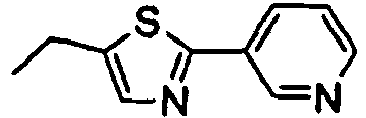
-OCH3 2.52-2.57 (2H, m), 2.89-2.94 (2H, m), 3.93 (3H, s), 5.34 (2H, s), 7.18 (1H, d, J=8.8Hz), 7.25 (1H, d, J=8.8Hz), 7.50 (1H, dd, J1=4.8Hz, J2=8.0Hz), 7.79 (1H, s), 7.80(1 H, s), 8.19-8.23 (1H, m), 8.62 (1H, dd, J1=1.3Hz, J2=4.8Hz), 9.05 (1H, d, J=2.2Hz), 12.54 (1H, brs) Table 149 
Ref. Ex. R1 R2 1H-NMR (CDCl3) dppm 1014# 
-H 2.75-2.81 (2H, m), 2.99 (3H, s), 3.04-3.10 (2H, m), 4.49 (2H, s), 5.16 (2H, s), 6.67-6.74 (3H, m), 6.95 (1H, dd, J1=1.5Hz, J2=7.5Hz), 7.12-7.21 (8H, m), 7.96 (1H, s) 1015# 
-H 2.74-2.80 (2H, m), 3.03-3.09 (2H, m), 4.07 (2H, s), 5.14 (2H, s), 6.87 (1H, dd, J1=2.3Hz, J2=6.9Hz), 7.04-7.10 (2H, m), 7.13-7.25 (9H, m), , 7.98 (1 H, s) 1016# 
-H 2.77-2.83 (2H, m), 2.92-2.99 (2H, m), 3.05-3.12 (2H, m), 3.25-3.32 (2H, m), 4.21 (2H, s), 5.18 (2H, s), 6.48 (1H, d, J=7,7Hz), 6.66 (1H, t, J=7.1 Hz), 6.94-7.01 (1H, m), 7.07 (1H, t, J=7.7Hz), 7.15-7.33 (7H, m), 7.97 (1H, s) Table 150 
Ref. Ex. R1 R2 1H NMR (DMSO-d6) dppm 1017# 
-H 1.44-1.52 (2H, m), 1.61-1.69 (4H, m), 2.69-2.75 (2H, m), 2.90-2.96 (4H, m), 3.02-3.08 (2H, m), 4.07 (2H, s), 5.19 (2H, s), 6.91 (1H, d, J=8.0Hz), 7.10 (1H, d, J=7.6Hz), 7.14-7.31 (4H, m), 7.37-7.40 (2H, m) 1018# 
-H 1.41-1.47 (2H, m), 1.57-1.63 (4H, m), 2.28-2.32 (4H, m), 2.70-2.74 (2H, m), 3.03-3.09 (2H, m), 4.08 (2H, s), 5.21 (2H, s), 6.89 (1H, d, J=8.1 Hz), 7.08 (1H, d, J=7.6Hz), 7.14-7.25 (3H, m), 7.28-7.43 (3H, m) 1019# 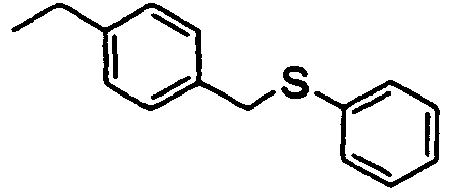
-H 2.68-2.74 (2H, m), 3.02-3.08 (2H, m), 4.19 (2H, s), 5.13 (2H, s), 7.00 (1H, d, J=8.0Hz), 7.07 (1H, d, J=8.0Hz), 7.13-7.19 (3H, m), 7.24-7.29 (7H, m), , 7.78 (1H, s), 13.89 (1H, brs) 1020# 
-OCH3 2.48-2.52 (2H, m), 3.29-3.03 (2H, m), 3.79 (3H, s), 5.17 (2H, s), 7.07 (1H, d, J=8.8Hz), 7.17 (1H, d, J=8.8Hz), 7.50-7.55 (1H, m), 7.59 (1H, dd, J1=2.2Hz, J2=8.5Hz), 7.69 (1H, s), 8.04 (1H, d, J=8.5Hz), 8.17 (1H, d, J=2.0Hz), 8.30 (1H, dt, J1=2.0Hz, J2=8.0Hz), 8.73 (1H, dd, J1=1.6Hz, J2=4.8Hz), 9.08 (1H, d, J=1.6Hz), 10.98 (1 H, s), 13.69 (1 H, brs) 1021# 
-OCH3 2.57-2.63 (2H, m), 3.00-3.05 (2H, m), 3.60 (3H, s), 5.12 (2H, s), 7.06 (1H, d, J=8.8Hz), 7.19 (1H, d, J=8.8Hz), 7.48 (1H, s), 7.77-7.85 (2H, m), 8.60 (1H, s), 11.98 (1H, brs) 1022# 
-OCH3 2.47-2.52 (2H, m), 2.92-3.07 (2H, m), 3.86 (3H, s), 5.12 (2H, s), 6.66 (1 H, d, J=8.5Hz), 6.84 (1H, t, J=7.5Hz), 7.05-7.29 (5H, m), 7.58 (2H, d, J=7.5Hz), 7.66 (1H, s), 7.89 (1H, d, J=2.2Hz), 8.92 (1H, s), 13.76 (1H, brs) 1023# 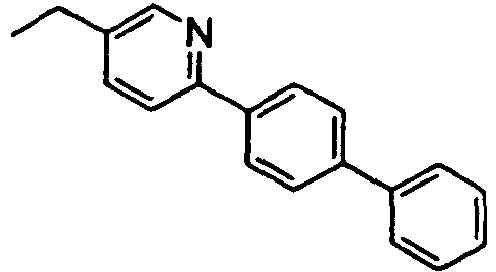
-OCH3 2.57-2.61 (2H, m), 2.99-3.05 (2H, m), 3.77 (3H, s), 5.20 (2H, s), 7.09 (1H, d, J=8.9Hz), 7.18 (1H, d, J=8.9Hz), 7.40 (1H, d, J=7.2Hz), 7.46-7.52 (2H, m), 7.61-7.65 (1H, m), 7.71-7.79 (5H, m), 7.90 (1H, d, J=8.3Hz), 8.13 (2H, d, J=8.3Hz), 8.46-8.47 (1H, m), 13.81 (1H, brs) Table 151 
Ref. Ex. R1 R2 1H NMR (DMSO-d6) dppm 1024 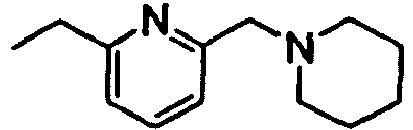
-H 1.40-1.48 (2H, m), 1.56-1.64 (4H, m), 2.68-2.74 (2H, m), 2.90-2.98 (4H, m), 3.04-3.09 (2H, m), 4.21 (2H, s), 5.27 (2H, s), 6.89 (1H, d, J=7.8Hz), 7.09-7.39 (4H, m), 7.42 (1 H, s), 7.83 (1H, t, J=7.7Hz) 1025 
-OCH3 2.46-2.52 (2H, m), 2.91-97 (2H, m), 3.90 (3H, s), 5.11 (2H, s), 7.20 (1H, d, J=8.8Hz), 7.25 (1H, d, J=8.8Hz), 7.56 (1H, s), 7.69 (1H, s), 13.76 (1 H, brs) 1026 
-OCH3 2.51-2.57 (2H, m), 2.90-2.96 (2H, m), 3.95 (3H, s), 5.36 (2H, s), 7.19 (1H, d, J=9.1Hz), 7.23 (1H, d, J=9.1Hz), 7.44-7.47 (3H, m), 7.68 (1H, s), 7.70 (1H, s), 7.83-7.86 (2H, m), 13.81 (1H, brs) 1027 
-OCH3 2.45-2.50 (2H, m), 2.89-2.94 (2H, m), 3.95 (3H, s), 5.33 (2H, s), 7.16-7.24 (2H, m), 7.49 (1H, dd, J1=1.0Hz, J2=5.0Hz), 7.61 (1H, s), 7.64-7.66 (1H, m), 7.67 (1H, s), 8.03-8.04 (1H, m), 13.80 (1H, brs) 1028 
-OCH3 2.47-2.52 (2H, m), 2.89-2.94 (2H, m), 3.94 (3H, s), 5.34 (2H, s), 7.17-7.25 (2H, m), 7.49 (1H, dd, J1=4.9Hz. J2=8.0Hz), 7.65 (1H, s), 7.79 (1H, s), 8.19-8.23 (1H, m), 8.61-8.63 (1H, m), 9.04-9.05 (1H, m), 13.80 (1H, brs) Table 152 
Ref. Ex. R1 R2 1H-NMR (CDCl3) dppm 1029# 
-H 2.77-2.83 (2H, m), 2.94 (3H, s), 3.07-3.13 (2H, m), 4.49 (2H, s), 5.17 (2H, s), 6.50-6.74 (3H, m), 6.98 (1H, d, J=8.2Hz), 7.08-7.68 (8H, m), 7.86 (1H, s), 9.65 (1 H, brs) 1030# 
-H 2.75-2.81 (2H, m), 3.05-3.11 (2H, m), 4.07 (2H, s), 5.14 (2H, s), 6.90 (1H, d, J=7.3Hz), 7.04-7.13 (3H, m), 7.14-7.33 (8H, m), 7.85 (1H, s), 9.41 (1H, brs) 1031# 
-H 2.21 (3H, s), 2.33 (3H, s), 2.75-2.81 (2H, m), 3.07-3.13 (2H, m), 3.78 (3H, s), 5.18 (2H, s), 6.97 (1H, d, J=8.1Hz), 7.08 (1H, d J=7.8Hz), 7.16-7.28 (1H, m), 7.81 (1H, s), 8.10 (1H, s) Table 153 
Ex. R1 R2 M.p.(°C) 1032 -(CH2)3CF3 -OCH3 169-170 1033 -(CH2)4F -OCH3 136-138 1034 
-H 153-157 1035 
-H 114-115 1036 
-OCH3 170-171 1037 
-OCH3 227-229 1038 
-OCH3 269-272 1039 
-H 113-114 1040 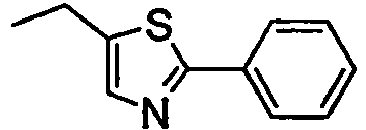
-OCH3 185-188 Table 154 
Ex. R1 R2 M.p.(°C) 1041 
-H 221-227 1042 
-H 220(dec.) 1043 
-H 177(dec.) 1044 
-H 103-112 Table 155 
Ex. R1 R2 1H-NMR (CDCl3) dppm 1045 -(CH2)3OSi(CH3)2C(CH3)3 -H 0.08 (6H, s), 0.91 (9H, s), 1.85-2.0 (2H, m), 2.55-2.75 (2H, m), 2.75-3.05 (2H, m), 3.13 (1 H, dd, J=10.6Hz, J2=12.2Hz), 3.6-3.8 (3H, m), 3.95-4.1 (2H, m), 4.47(1H, dd, J=3.8Hz, J2=12.2Hz), 6.9-7.0 (1 H, m), 7.1-7.3 (2H, m) 1046 -(CH2)3OH -H 1.5-2.0 (4H, m), 2.6-2.7 (2H, m), 2.8-3.1 (2H, m), 3.16 (1 H, dd, J=10.5Hz, J2=14.5Hz), 3.6-3.7 (2H, m), 3.67 (1 H, dd, J=3.9Hz, J2=14.5Hz), 4.05-4.15 (2H, m), 4.47 (1 H, dd, J=3.9Hz, J2=10.5Hz), 6.96 (1H, d, J=7.4Hz), 7.06 (1 H, d, J=7.6Hz), 7.1-7.2 (1 H, m) 1047 -CH2CO2C(CH3)3 -OCH3 1.43 (9H, s), 2.5-2.65 (2H, m), 2.8-3.05 (2H, m), 3.10 (1H, dd, J1=10.3Hz, J2=14.5Hz), 3.61 (1H, dd, J1=4.0Hz, J2=14.5Hz), 3.82 (3H, s), 4.44 (1 H, dd, J1=4.0Hz, J2=10.3Hz), 4.55-4.65 (2H, m), 6.80 (1H, d, J=8.5Hz), 6.94 (1 H, d, J=8.5Hz) 1048 
-H 2.74-2.79 (2H, m), 2.88-3.04 (5H, m), 3.15 (1 H, dd, J1=10.4Hz, J2=14.5Hz), 3.68 (1 H, dd, J1=3.9Hz, J2=14.5Hz), 4.42-4.51 (3H, m), 5.06-5.22 (2H, m), 6.70-6.74 (3H, m), 6.84-6.91 (2H, m), 7.06-7.23 (7H, m), 8.05 (1H, brs) Table 156 
Ex. R1 R2 1H NMR (DMSO-d6) dppm 1049 
-H 2.0-2.2 (2H, m), 2.28 (3H, s), 2.55-3.25 (5H, m), 3.68 (1H, dd, J1=3.7Hz, J2=14.4Hz), 4.02 (2H, t, J=5.9Hz), 4.14 (2H, t, J=7.0Hz), 4.46 (1H, dd, J1=3.7Hz, J2=10.5Hz), 6.92 (2H, d, J=7.5Hz), 7.08 (1 H, d, J=8.0Hz), 7.05-7.4 (4H, m) 1050 
-H 1.6-1.9 (2H, m), 2.4-2.6 (2H, m), 2.75-3.25 (5H, m), 3.50 (1 H, dd, J=4.0Hz, J2=14.3Hz), 3.9-4.1 (2H, m), 4.82 (1 H, dd, J=4.0Hz, J2=10.8Hz), 6.9-7.05 (2H, m), 7.1-7.3 (1 H, m), 7.35-7.5 (4H, m), 12.13 (1 H, br s) 1051 
-H 1.1-1.3 (2H, m), 1.85-2.1 (2H, m), 2.4-2.6 (2H, m), 2.75-4.1 (2H, m), 4.64 (1 H, dd, J=3.1Hz, J2=10.3Hz), 6.91 (1 H, d, J=7.4Hz), 7.0-7.35 (7H, m) 1052 
-H 1.75-2.1 (3H, m), 2.4-3.6 (16H, m), 3.9-4.05 (2H, m), 4.83 (1 H, dd, J1=4.0Hz, J2=9.9Hz), 6.94 (1H, d, J=7.4Hz), 7.1-7.3 (7H, m), 9.79 (1 H, brs), 12.13 (1 H, br s) 1053 
-H 1.9-2.1 (2H, m), 2.4-4.0 (18H, m), 4.85 (1 H, dd, J1=3.9Hz, J2=9.8Hz), 6.8-7.4 (8H, m), 10.3 (1 H, br s), 12.15 (1 H, s) 1054 
-H 1.9-5.2 (19H, m), 6.9-7.8 (7H, m), 10.6-11.0 (1 H, m), 12.1-12.6 (1 H, m) 1055 
-H 0.03 (9H, s), 0.98 (2H, t, J=8.4Hz), 1.1-1.4(3H, m), 1.7-2.0 (3H, m), 2.6-3.3 (7H, m), 3.65 (1H, dd, J1=3.8Hz, J2=14.4Hz), 3.8-4.3 (6H, m), 4.49 (1H, dd, J1=3.8Hz, J2=10.2Hz),6.9-7.05 (2H, m), 7.21 (1 H, d, J=7.9Hz) 1056 
-H 1.2-1.45 (2H, m), 1.6-2.0 (3H, m), 2.6-4.2 (13H, m), 6.91 (1H, d, J=7.6Hz), 7.08 (1 H, d, J=7.6Hz), 7.17 (1 H, d, J=7.6Hz) 1057 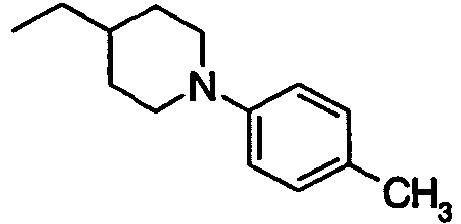
-H 0.75-0.95 (1 H, m), 1.15-1.4 (3H, m), 1.5-1.85 (3H, m), 2.17 (3H, s), 2.3-3.65 (8H, m), 3.8-4.0 (2H, m), 4.75-4.95 (1 H, m), 6.78 (2H, d, J=8.7Hz), 6.8-7.0 (3H, m), 6.8-7.0 (3H, m), 7.1-7.3 (2H, m), 12.11 (1H, br s) 1058 
-H 0.8-0.95 (1 H, m), 1.1-1.7 (6H, m), 1.7-1.9 (2H, m), 2.3-4.1 (10H, m), 4.75-4.95 (1 H, m),78 (2H, d, J=8.7Hz), 6.8-7.7 (1 H, m), 12.11 (1 H, br s) Table 157 
Ex. R1 R2 1H NMR (DMSO-d6) dppm 1059 
-OCH3 2.46-2.51 (2H, m), 2.80-2.84 (2H, m), 3.00-3.10 (1 H, m), 3.39-3.49 (1H, m), 3.70 (3H, s), 4.77 (1H, dd, J1=4.2Hz, J2=10.0Hz), 5.14 (2H, s), 5.19 (2H, s), 6.80 (1H, d, J=8.6Hz), 6.84 (1 H, d, J=8.6Hz), 6.96 (2H, d, J=8.4Hz), 7.28 (2H, d, J=8.4Hz), 7.36-7.42 (2H, m), 7.47-7.56 (2H, m), 9.73 (1H, s), 12.07 (1 H, s) 1060 
-H 1.28-1.58 (6H, m), 2.26-2.46 (4H, m), 2.64-2.70 (2H, m), 2.96-3.03 (2H, m), 3.04-3.13 (1H, m), 3.31-3.40 (1H, m), 3.46 (2H, s), 4.74 (1 H, dd, J1=3.8Hz, J2=10.2Hz), 5.11 (2H, d, J=4.5Hz), 6.83 (1 H, d, J=7.9Hz), 6.88 (1 H, d, J=7.9Hz), 7.08 (1 H, t, J=7.9Hz), 7.15 (2H, d, J=7.8Hz), 7.23 (2H, d, J=7.8Hz) 1061 
-H 1.35-1.71 (6H, m), 2.40-2.44 (4H, m), 2.65-2.73 (2H, m), 2.92-3.00 (2H, m), 3.07-3.17 (1 H, m), 3.39-3.49 (1 H, m), 3.57 (2H, s), 4.77-4.83 (1H, m), 5.07-5.22 (2H, m), 6.81-6.89 (2H, m), 7.03-7.30 (5H, m) 1062 
-H 2.64--2.70 (2H, m), 2.93-2.99 (2H, m), 3.10-3.20 (1 H, m), 3.53 (1 H, dd, J1=3.7Hz, J2=14.3Hz), 4.18 (2H, s), 4.84 (1 H, dd, J1=3.7Hz, J2=10.0Hz), 5.01-5.16 (2H, m), 6.77 (1 H, d, J=7.8Hz), 6.89 (1 H, d, J=7.8Hz), 7.03-7.43 (10H, m), 12.16 (1H, brs) 1063 
-OCH3 2.47-2.51 (2H, m), 2.77-2.81 (2H, m), 3.03-3.10 (1 H, m), 3.39-3.46 (1 H, m), 3.81 (3H, s), 4.79 (1H, dd, J1=4.3Hz, J2=10.0Hz), 5.12 (2H,s), 6.99 (2H, s), 7.52(1 H, s), 12.10 (1 H, brs) 1064 
-OCH3 2.36-2.57 (2H, m), 2.71-2.86 (2H, m), 3.01-3.17 (1 H, m), 3.45-3.51 (1 H, m), 3.84 (3H, s), 4.77 (1H, dd, J1=4.1Hz, J2=10.0Hz), 5.32 (2H, s), 6.97 (2H, s), 7.48 (1H, d, J=4.9Hz), 7.58 (1 H, s), 7.63-7.67 (1 H, m), 8.02 (1 H, d, J=2.1Hz), 12.09 (1 H, brs) 1065 
-OCH3 2.50-2.66 (2H, m), 2.73-2.89 (2H, m), 3.01-3.17 (1 H, m), 3.35-3.51 (1 H, m), 3.85 (3H, s), 4.78 (1H, dd, J1=4.2Hz, J2=9.9Hz), 5.34 (2H, s), 6.98 (2H, s), 7.48 (1 H, dd, J1=4.1Hz, J2=7.8Hz), 7.76 (1H, s), 8.20 (1 H, d, J=7.8Hz), 8.62 (1 H, d, J=4.1 Hz), 9.04 (1 H, s), 12.06 (1 H, brs) Table 158 
Ex. R1 R2 1H NMR (DMSO-d6) dppm 1066 
-OCH3 2.48-2.52 (2H, m), 2.79-2.83 (2H, m), 3.00-3.10 (1 H, m), 3.34-3.44 (1 H, m), 3.74 (3H, s), 4.77 (1H, dd, J1=4.1Hz, J2=10.2Hz), 5.12 (2H, s), 6.79-6.85 (2H, m), 6.91 (1 H, d, J=8.6Hz), 7.31 (1 H, dd, J1=2.1Hz, J2=8.6Hz), 7.54-7.62 (3H, m), 7.95 (1H, d, J=2.1Hz), 8.14-8.18 (1 H, m), 9.55 (1 H, s), 12.09 (1H, brs) 1067 
-H 1.37-1.52 (6H, m), 2.42-2.46 (4H, m), 2.64-2.71 (2H, m), 2.81-2.95 (2H, m), 3.17 (2H, s), 3.34-3.42 (1 H, m), 3.50-3.56 (1 H, m), 4.75-4.80 (1 H, m), 5.07-5.23 (2H, m), 6.81 (1 H, d, J=7.9Hz), 6.89 (1 H, d, J=7.9Hz), 7.01-7.10 (2H, m), 7.29 (1H, d, J=7.6Hz), 7.69 (1 H, t, J=7.6Hz) 1068 
-H 2.64 (2H, t, J=6.5Hz), 2.98 (2H, t, J=6.5Hz), 3.04 (3H, s), 3.15 (1 H, dd, J1=10.3Hz, J2=14.3Hz), 3.53 (1 H, dd, J1=4.0Hz, J2=14.3Hz), 4.59 (2H, s), 4.84 (1H, dd, J1=4.0Hz, J2=10.3Hz), 5.08-5.23 (2H, m), 6.59 (1 H, t, J=7.6Hz), 6.66 (2H, d, J=8.2Hz), 6.83 (1 H, d, J=7.6Hz), 6.90 (1 H, d, J=7.6Hz), 6.99-7.14 (5H, m), 7.61 (1 H, t, J=7.7Hz), 12.15 (1 H, brs) Table 159 
Ex. R1 R2 M.p.(°C) 1069 -(CH2)3CF3 -OCH3 186-193 1070 -(CH2)4F -OCH3 181-183 1071 
-H 91-96 1072 
-OCH3 241-245 1073 
-H 146-149 1074 
-OCH3 206-208 1075 
-OCH3 108-113 Table 160 
Ex. R1 R2 1H NMR (DMSO-d6) dppm 1076 
-H 1.7-1.95 (2H, m), 2.3-3.6 (8H, m), 3.95-4.1 (2H, m), 4.9-5.1 (1H, m), 6.8-7.5 (7H, m), 13.25 (1 H, br s) 1077 
-H 1.15-1.45 (2H, m), 1.5-2.0 (5H, m), 2.75-3.05 (5H, m), 3.9-4.05 (2H, m), 4.4-4.5 (1H, m), 6.91 (1 H, d, J=7.2Hz), 7.06 (1H, d, J=7.8Hz), 7.1-7.4 (6H, m) 1078 
-H 1.9-2.1 (2H, m), 2.4-4.1 (18H, m), 4.98 (1 H, dd, J1=4.3Hz, J2=9.8Hz), 6.75-7.3 (8H, m), 10.12 (1 H, br s), 13.28 (1 H, br s) 1079 
-H 1.1-1.7 (3H, m), 2.0-2.2 (2H, m), 2.4-4.6 (13H, m), 4.95-5.05 (1 H, m), 6.96 (1 H, d, J=7.2Hz), 7.0-7.3 (6H, m), 10.75 (1 H, br s), 13.28 (1 H, br s) 1080 
-OCH3 2.47-2.51 (2H, m), 2.76-2.80 (2H, m), 3.04-3.14 (1 H, m), 3.45-3.55 (1 H, m), 3.85 (3H, s), 4.85 (1H, dd, J1=4.5Hz, J2=10.0Hz), 5.12 (2H, s), 6.97 (2H, s), 7.43-7.46 (3H, m), 7.67(1H, s), 7.82-7.86 (2H, m), 13.16 (1 H, brs) 1081 
-OCH3 2.44-2.48 (2H, m), 2.82-2.86 (2H, m), 3.08-3.18 (1 H, m), 3.33-3.43 (1 H, m), 3.69 (3H, s), 4.90 (1H, dd, J1=4.5Hz, J2=9.5Hz), 5.14 (2H, s), 6.85 (1 H, d, J=8.6Hz), 6.92 (1H, d, J=8.6Hz), 7.50-5.55 (2H, m), 8.04 (1 H, d, J=8.5Hz), 8.15 (1H, d, J=1.9Hz), 8.28-8.33 (1 H, m), 8.73 (1 H, dd, J1=1.5Hz, J2=4.9Hz), 9.09 (1 H, d, J=1.9Hz), 10.98 (1 H, s), 13.20 (1 H, s) 1082 
-OCH3 2.69-2.73 (2H, m), 2.91-2.87 (2H, m), 3.07-3.22 (1H; m), 3.39-3.50 (1 H, m), 3.53 (3H, s), 4.94 (1 H, dd, J1=4.5Hz, J2=9.5Hz), 5.12 (2H, s), 6.87 (1 H, d, J=8.5Hz), 6.95 (1 H, d, J=8.5Hz), 7.78 (2H, dd, J1=1.0Hz, J2=3.8Hz), 8.58 (1 H, s), 13.22 (1 H, brs) 1083 
-OCH3 2.52-2.56 (2H, m), 2.86-2.90 (2H, m), 3.12-3.22 (1 H, m), 3.35-3.44 (1 H, m), 3.66 (3H, s), 4.94 (1 H, dd, J1=4.5Hz, J2=9.4Hz), 5.18 (2H, s), 6.87 (1 H, d, J=8.6Hz), 6.94 (1H, d, J=8.6Hz), 7.36-7.52 (3H, m), 7.65 (1 H, dd, J1=2.4Hz, J2=8.0Hz), 7.73-7.81 (4H, m), 7.93 (1 H, d, J=8.3Hz), 8.13 (2H, d, J=8.3Hz), 8.48 (1H, d, J=2.4Hz), 13.21 (1 H, brs) Table 161 
Ex. R1 R2 1H NMR (DMSO-d6) dppm 1084 
-H 1.38-1.52 (6H, m), 2.65-2.75 (6H, m), 2.96-3.04 (3H, m), 3.46-3.51 (1 H, m), 3.93 (2H, s), 4.61-4.67 (1 H, m), 5.10-5.26 (2H, m), 6.78 (1 H, d, J=7.6Hz), 6.87 (1 H, d, J=7.6Hz), 7.05 (1 H, t, J=7.6Hz), 7.14 (1H, d, J=7.3Hz), 7.34 (1H, d, J=7.3Hz), 7.75 (1 H, t, J=7.3Hz) 1085 
-H 1.30-1.66 (6H, m), 2.57-2.61 (4H, m), 2.64-2.70 (2H, m), 2.93-2.99 (2H, m), 3.03-3.48 (2H, m), 3.77 (2H, s), 4.58-4.62 (1 H, m), 5.07-5.23 (2H, m), 6.80 (1 H, d, J=7.8Hz), 6.86 (1 H, d, J=7.8Hz), 7.05 (1 H, t, J=7.8Hz), 7.16-7.35 (4H, m) 1086 
-H 1.32-1.42 (2H, m), 1.43-1.47 (4H, m), 2.24-2.35 (4H, m), 2.63-2.70 (2H, m), 2.90-3.03 (2H, m), 3.07 (1 H, dd, J1=10.4Hz, J2=14.4Hz), 3.43 (2H, s), 3.51 (1H, dd, J1=4.0Hz, J2=14.4Hz), 4.71 (1H, dd, J1=4.0Hz, J2=10.4Hz), 5.08-5.19 (2H, m), 6.82 (1 H, d, J=8.2Hz), 6.87 (1 H, d,J=7.5Hz), 7.04-7.14 (4H, m), 7.24 (1 H, t) 1087 
-H 2.54-2.60 (2H, m), 2.85-2.92 (5H, m), 3.19 (1H, dd, J1=9.9Hz, J2=14.5Hz), 3.44-3.52 (1 H, m), 4.50 (2H, s), 4.95 (1 H, dd, J1=4.3Hz, J2=9.9Hz), 5.08-5.23 (2H, m), 6.58-6.64 (3H, m), 6.78 (1 H, d, J=8.2Hz), 6.86 (1 H, d, J=7.6Hz), 6.95-7.26 (7H, m), 13.30 (1 H, brs) Table 162 
Ex. R1 R2 1H-NMR (CDCl3) dppm 1088 
-OCH3 2.57-2.67 (2H, m), 2.77-2.87 (2H, m), 3.13 (1H, dd, J1=10.0Hz, J2=14.7Hz), 3.44-3.56 (1 H, m), 3.90 (3H, s), 4.49 (1 H, dd, J1=4.1Hz, J2=10.0Hz), 5.47 (2H, s), 6.82 (1 H, d, J=8.5Hz), 6.97 (1 H, d, J=8.5Hz), 7.36 (1 H, dd, J1=4.8Hz, J2=8.0Hz), 7.66 (1H, s), 8.18 (1 H, ddd, J1=1.7Hz, J2=4.8Hz), 8.62 (1H, dd, J1=1.7Hz, J2=4.8Hz), 9.09 (1 H, d, J=1.7Hz) 1089 
-H 2.74-2.80 (2H, m), 2.94-3.09 (2H, m), 3.18 (1H, dd, J1=10.6Hz, J2=14.5Hz), 3.67 (1H, dd, J1=3.9Hz, J2=14.5Hz), 4.08 (2H, s), 4.55 (1H, dd, J1=3.9Hz, J2=10.6Hz), 5.06-5.22 (2H, m), 6.81-6.90 (2H, m), 7.06-7.30 (10H, m), 9.09 (1H, brs) 1090 
-H 2.75-2.80 (2H, m), 2.87-3.09 (5H, m), 3.16 (1H, dd, J1=10.7Hz, J2=14.4Hz), 3.65 (1H, dd, J1=3.8Hz, J2=14.4Hz), 4.46-4.57 (3H, m), 5.07-5.23 (2H, m), 6.67-6.73 (3H, m), 6.84-6.90 (2H, m), 7.05-7.26 (7H, m), 9.73 (1H, brs) Table 163 
Ex. R911 R912 R913 R914 R915 MS(M+1) 1091 -H -H -OCH3 -H -H 441 1092 -H -H -H -H -H 411 1093 -Cl -H -H -H -H 445 1094 -H -Cl -H -H -H 445 1095 -H -H -Cl -H -H 445 1096 -Cl -Cl -H -H -H 479 1097 -H -Cl -Cl -H -H 479 1098 -H -F -F -H -H 447 1099 -H -H -CF3 -H -H 479 1100 -H -H -C3H7 -H -H 453 1101 -H -F -Cl -H -H 463 1102 -OCH3 -H -CH2CH=CH2 -H -H 481 1103 -Cl -H -OCH3 -H -H 475 1104 -H -H -cyclo-C5H9 -H -H 479 1105 -H -H -NO2 -H -H 456 1106 -CH3 -CH3 -H -H -H 439 1107 -H -H -C6H5 -H -H 487 Table 164 
Ex. R921 MS(M+1) 1108 
461 1109 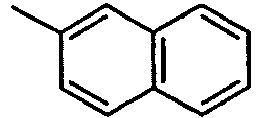
461 1110 
482 1111 
462 1112 
426 1113 
462 1114 
412 Table 165 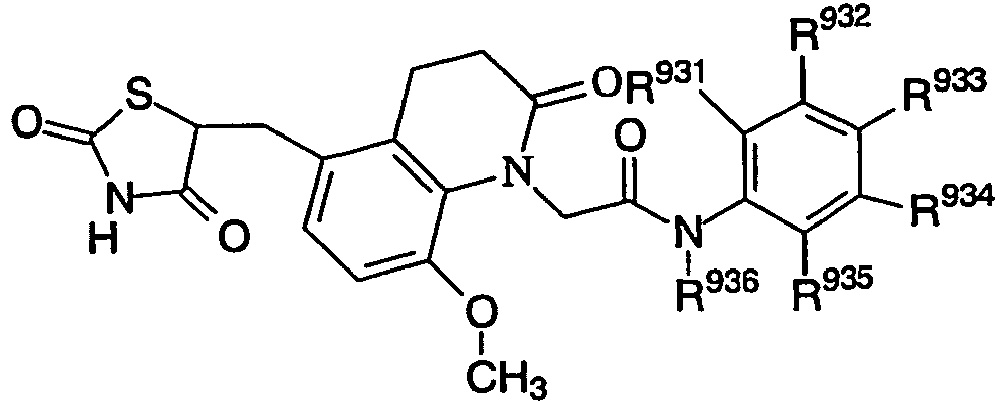
Ex. R936 R931 R932 R933 R934 R935 MS(M+1) 1115 -H -H -H -H -SCH3 -H 486 1116 -H -H -H -OCF3 -H -H 524 1117 -H -H -H -C4H9 -H -H 496 1118 -H -H -H -Cl -H -H 474 1119 -H -H -H -H -H -Cl 474 1120 -H -H -H -H -Cl -H 474 1121 -H -H -H -H -H -C6H5 516 1122 -H -H -H -H -H -F 458 1123 -H -H -H -H -F -H 458 1124 -H -H -H -F -H -H 458 1125 -H -H -H -H -N(CH3)2 -H 483 1126 -H -CN -H -H -H -H 465 1127 -CH3 -H -H -H -CH3 -H 468 1128 -H -H -H -H -H -OC6H5 532 1129 -H -H -H -H -OC6H5 -H 532 1130 -H -H -H -OC6H5 -H -H 532 1131 -H -H -H -CF3 -H -H 508 1132 -H -H -H -CH3 -CH3 -H 468 1133 -H -H -CH3 -H -CH3 -H 468 1134 -H -CH3 -H -CH3 -H -CH3 482 1135 -H -H -H -F -H -F 476 1136 -H -H -H -F -F -H 476 1137 -H -H -H -CH3 -H -Cl 488 1138 -H -H -H -CN -H -H 465 1139 -H -H -H -SCH3 -H -H 486 1140 -H -H -H -H -H -CH(CH3)2 482 1141 -H -H -H -CH(CH3)2 -H -H 482 1142 -H -H -H -C6H13 -H -H 524 1143 -H -H -H -cyclo-C6H11 -H -H 522 1144 -H -H -H -H -OCH2C6H5 -H 546 1145 -H -H -H -OCH2C6H5 -H -H 546 1146 -H -H -H -NHSO2CH3 -H -H 533 1147 -H -H -H -H -H -OCH2C6H5 546 1148 -H -H -H -NHC6H5 -H -H 531 1149 -CH2C6H5 -H -H -H -H -H 530 1150 -CH2CH2OH -H -H -H -H -H 484 Table 166 
Ex. R936 R931 R932 R933 R934 R935 MS(M+1) 1151 -H -H -H -H -OCH3 -H 470 1152 -H -H -H -CH3 -H -H 454 1153 -H -H -OCH3 -H -OCH3 -H 500 1154 -H -H -H -H -C2H5 -H 468 1155 -H -H -H -N(CH3)2 -H -H 483 1156 -H -H -H -C2H5 -H -H 468 1157 -H -H -H -H -H -CF3 508 1158 -H -H -CN -H -H -H 465 1159 -CH3 -H -H -H -Cl -H 488 1160 -C2H5 -H -H -H -H -OCH3 498 1161 -H -H -H -H -F -F 476 1162 -H -H -H -OCH3 -Cl -H 504 1163 -H -H -H -CH3 -Cl -H 488 1164 -H -H -OCH3 -H -CF3 -H 538 1165 -H -Cl -H -H -CF3 -H 542 1166 -H -H -H -F -H -Cl 492 1167 -H -H -CN -H -H -Cl 499 1168 -H -Cl -H -H -CONH2 -H 517 1169 -H -H -H -C5H11 -H -H 510 1170 -H -H -H -CH2C6H5 -H -H 530 Table 167 
Ex. R936 -H R931 R932 R933 R934 R935 MS(M+1) 1171 -H -H 
-H -H 523 1172 -H -H -H 
-H -H 599 1173 -H -H -H 
-H -H 613 1174 -H -H -F -H -H 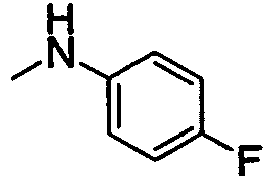
567 1175 -H -H -H 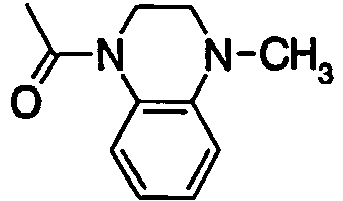
-H -H 614 1176 -H -H -H 
-H -H 599 Table 168 
Ex. R941 R942 MS(M+1) 1177 -cyclo-C6H11 -CH3 460 1178 -cyclo-C6H11 -H 446 1179 -C4H9 -C4H9 476 1180 -CH2CH(CH3)2 -CH2CH(CH3)2 476 1181 -cyclo-C7H13 -H 460 1182 -cyclo-C5H9 -H 432 1183 -CH2-cyclo-C6H11 -H 460 1184 -CH2CONH2 -H 421 1185 .(CH2)2C6H5 -H 468 1186 -(CH2)3C6H5 -CSH11 552 1187 -C6H5 -C2H5 468 1188 -CH(CH3)C6H5 -H 468 1189 -CH2C6H5 -cyclo-C6H11 536 1190 -CH2C6H5 -CH3 468 1191 -CH2C6H5 -C5H11 524 1192 -CH2C6H5 -CH2C6H5 544 1193 -cyclo-C6H11 -C2H5 474 Table 169 
Ex. R941 R942 MS(M+1) 1194 
-H 448 1195 
-H 491 1196 
-H 484 1197 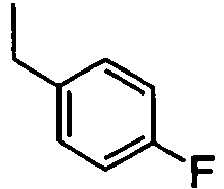
-H 472 1198 
-H 506 1199 
-CH3 482 1200 
-C2H5 560 1201 
-CH3 536 1202 
-C2H5 550 Table 170 
Ex. R941 R942 MS(M+1) 1203 
-C2H5 558 1204 
-C2H5 558 1205 
-C2H5 560 1206 
-H 554 1207 
-H 556 1208 
-H 488 1209 
-H 498 1210 
-C2H5 530 1211 
-CH2C6H5 588 1212 
-CH2C6H5 588 Table 171 
Ex. R941 R942 MS(M+1) 1213 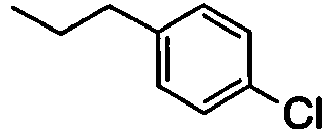
-H 502 1214 
-H 502 1215 
-H 482 1216 
-H 502 1217 
-C2H5 536 1218 
-H 504 1219 
-CH3 488 1220 
-H 490 1221 
-H 528 Table 172 
Ex. R941 R942 MS(M+1) 1222 -4-PYRIDYL -H 441 1223 
-H 455 1224 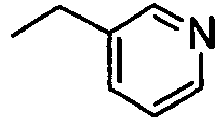
-H 455 1225 
-H 455 1226 
-H 469 1227 
-H 469 1228 
-H 469 1229 
-H 442 1230 
-H 470 1231 
-H 447 1232 
-H 472 1233 
-H 460 Table 173 
Ex. R941 R942 MS(M+1) 1234 
-H 537 1235 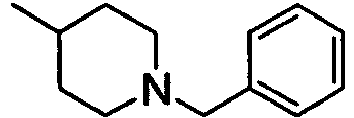
-CH3 551 1236 
-C2H5 599 1237 
-C2H5 579 1238 
-C2H5 579 1239 
-CH3 475 1240 
-CH3 565 1241 
-H 479 1242 
-H 480 Table 174 
Ex. R941 R942 MS(M+1) 1243 
-H 523 1244 
-H 491 1245 
-H 505 1246 
-H 491 1247 
-H 557 Table 175 
Ex. R943 MS(M+1) 1248 -C2H5 461 1249 -C3H7 475 1250 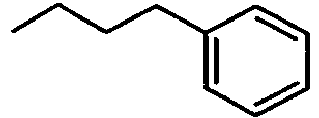
551 1251 
537 1252 
565 1253 
629 1254 
667 1255 
573 1256 
594 1257 
566 Table 176 
Ex. R943 MS(M+1) 1258 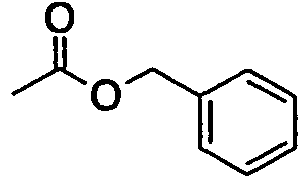
567 1259 
601 1260 
585 1261 
509 1262 
577 1263 
543 1264 
543 1265 
545 1266 
583 Table 177 
Ex. R943 MS(M+1) 1267 -2-BENZTHIAZOLYL 566 1268 -3-PYRIDYL 510 1269 
510 1270 
578 1271 
565 1272 
565 1273 
566 1274 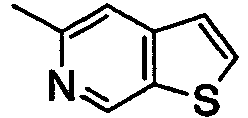
566 1275 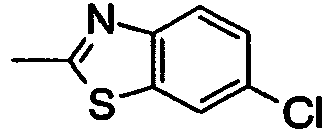
600 Table 178 
Ex. R944 MS(M+1) 1276 -CONH2 475 1277 
590 1278 
522 1279 
540 1280 
540 1281 
606 1282 
606 1283 
556 1284 
542 1285 
508 Table 179 
Ex. R944 MS(M+1) 1286 
538 1287 
606 1288 
524 1289 
558 1290 
558 1291 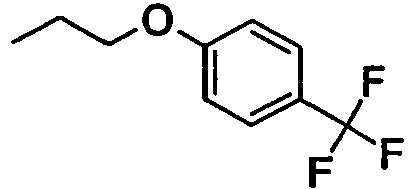
620 1292 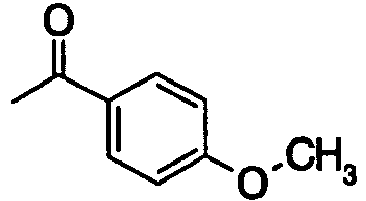
566 1293 
570 1294 
607 1295 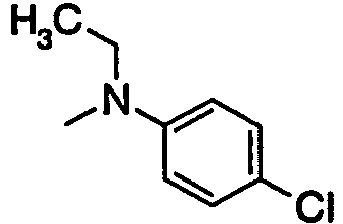
585 Table 180 
Ex. R944 MS(M+1) 1296 
548 1297 
548 1298 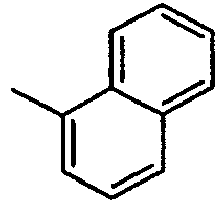
558 Table 181 
Ex. R945 MS(M+1) 1299 
523 1300 
557 1301 
506 1302 
524 1303 
546 1304 
562 1305 
494 1306 
568 Table 182 
Ex. R945 MS(M+1) 1307 
480 1308 
480 1309 
466 1310 
487 1311 
446 1312 
460 1313 
436 1314 
434 - 3.0 g of 8-methoxy-1-(3-methylbutyl)-4-ylmethyl-2-oxo-1,2,3,4-tetrahydroquinoline-5-carboxaldehyde and 1.53 g of 2-thioxo-1,3-thiazolidin-4-one were suspended in 30 ml of toluene. Five drops of piperidine and five drops of acetic acid were added, followed by heating and refluxing for overnight. After allowing to cool, the solid thus precipitated was collected by filtration, and dried, and then suspended in 16 ml of toluene. 2.29 g of diethyl 1,4-dihydro-2,6-dimethyl-3,5-pyridine dicarboxylate and 4.0 g of silica gel were added to the suspension, followed by heating and refluxing overnight. The solvent was distilled off from the reaction mixture, and the residue was purified by silica gel column chromatography (n-hexane:ethyl acetate=3:1 → 1:1). The purified product was recrystallized from an ethyl acetate-n-hexane mixed solvent, giving 2.11 g (55.2% yield) of 8-methoxy-1-(3-methylbutyl)-5-(4-oxo-2-thioxothiazolidin-5-ylmethyl)-3,4-dihydro-1H-quinolin-2-one as a yellow powder. Melting point: 139.5°C to 141°C
- A DMF solution (10 ml) of 1.0 g (2.99 mmol) of 5-[1-(3-hydroxypropyl)-2-oxo-1,2,3,4-tetrahydroquinolin-5-ylmethyl]thiazolidine-2,4-dione and 0.455 g (3.29 mmol) of potassium carbonate was cooled with ice, and 0.876 g (3.04 mmol) of triphenylmethylchloride was added thereto, followed by stirring at room temperature overnight. Water was added to the reaction liquid and the mixture was extracted with ethyl acetate. The organic layer was washed twice with water and once with saturated sodium chloride solution, and concentrated under reduced pressure. The residue was purified by silica gel column chromatography (n-hexane:ethyl acetate=2:1 → ethyl acetate). The purified product was concentrated under reduced pressure and evaporated to dryness, giving 700 mg (40.6% yield) of 5-[1-(3-hydroxypropyl)-2-oxo-1,2,3,4-tetrahydroquinolin-5-ylmethyl]-3-tritylthiazolidine-2,4-dione as a colorless amorphous solid.
- A THF solution (2 ml) of 100 mg (0.18 mmol) of 5-[1-(3-hydroxypropyl)-2-oxo-1,2,3,4-tetrahydroquinolin-5-ylmethyl]-3-trityl thiazolidine-2,4-dione, 0.0363 ml(0.347 mmol) of p-cresol, and 91.1 mg (0.35 mmol) of triphenylphosphine was cooled with ice. 0.158 ml of azodicarboxylic acid diethyl (2.2 M toluene solution) was added to the solution in an argon atmosphere. The mixture was stirred at room temperature for two hours, and ethyl acetate was added to the reaction liquid. After washing with water, the organic layer was concentrated under reduced pressure, and the residue was purified by preparative silica gel thin layer chromatography (n-hexane:ethyl acetate=1:1). The purified product was concentrated under reduced pressure, and 2 ml of a solution of 4N-hydrogen chloride/ethyl acetate was added to the residue. The mixture was stirred at room temperature overnight, and further stirred at 70°C for 1.5 hours. The mixture was concentrated under reduced pressure, and the residue was purified by preparative silica gel thin layer chromatography (n-hexane:ethyl acetate=1:1). The purified product was concentrated under reduced pressure and evaporated to dryness, giving 27.1 mg (34.4% yield) of 5-{1-[3-(4-methylphenoxy)propyl]-2-oxo-1,2,3,4-tetrahydroquinolin-5-ylmethyl}thiazolidine-2,4-dione as a colorless amorphous solid.
1H-NMR(DMSO-d6) dppm: 2.0-2.2 (2H, m), 2.28 (3H, s), 2.55-3.25 (5H, m), 3.68 (1H, dd, J1=3.7Hz, J2=14.4Hz), 4.02 (2H, t, J=5.9Hz), 4.14 (2H, t, J=7.0Hz), 4.46 (1H, dd, J1=3.7Hz, J2=10.5Hz), 6.92 (2H, d, J=7.5Hz), 7.08 (1H, d, J=8.0Hz), 7.05-7.4 (4H, m)Preparation Example 1 1- Methyl-8-methoxy-5-(4-oxo-2-thioxo-5-thiazolidinyl) methyl-3,4-dihydro-1H-quinolin-2-one 5 mg Starch 132 mg Magnesium stearate 18 mg Lactose 45 mg Total 200 mg - Tablets containing the above composition per tablet are prepared in the conventional manner.
Preparation Example 2 1-(2-Phenylethyl)-8-methoxy-5-(4-oxo-2-thioxo-5-thiazolidinyl)methyl-3,4-dihydro-1H-quinolin-2-one 5 g Polyethyleneglycol (molecular weight: 4000) 0.3 g Sodium chloride 0.9 g Polyoxyethylenesorbitan monooleate 0.4 g Sodium metabisulfite 0.1 g Methyl-paraben 0.18 g Propyl-paraben 0.02 g Distilled water for injection 100 ml - The above parabens, sodium metabisulfite and sodium chloride are dissolved into distilled water at 80°C with agitation. The obtained solution is cooled to 40°C, and the compound of the invention, polyethyleneglycol and polyoxyethylenesorbitan monooleate are dissolved into the above solution. Further distilled water for injection is then added to the solution to adjust the solution to the final amount. The resultant solution is subjected to filter sterilization using an appropriate filter paper, and 1 ml of the filtered solution is dispensed into ampules to prepare injectable solutions.
- Transcription promoting activity on human Trefoil Factor 2 (hTFF2) gene of test compounds was evaluated by means of an hTFF2 gene reporter assay.
- DNA was extracted from HeLa cells (CCL-2, DAINIPPON PHARMACEUTICAL CO., LTD.) using a deoxyribonucleic acid (DNA) extraction kit (DNeasy™ Tissue Kit, manufactured by QIAGEN). The hTFF2 promoter region was amplified using the extracted DNA as a template by means of the polymerase chain reaction (PCR). The oligomers 5'-CACGCGTCAGACTGGCAACCCCCTGTC-3' and 5'-GAAGCTTCTAGCTCAGCTGCACCCCAG-3' were selected as PCR primers to be amplified, based on the report by Beck et al. (Beck S., Sommer P., Blin N., Gott P., 5'-flanking motifs control cell-specific expression of trefoil factor genes (TFF), Int. J. Mol. Med. 2(3), 353-361 (1998)). Platinum® Pfx DNA polymerase was used as DNA polymerase. The PCR was performed under the conditions of denaturing for 30 seconds at 95°C, annealing for 30 seconds at 55°C and extending for 75 seconds at 68°C, and the procedures were repeated for 32 cycles.
- The PCR products were separated and purified by 1 % agarose gel electrophoresis, and cloned to a pCR-BluntII-TOPO vector attached to a cloning kit (Zero Blunt® TOPO® PCR Cloning Kit, manufactured by Invitrogen Corporation). The produced plasmid pCR-Blunt-TFF2pro was introduced into E.coli for transformation (TOP 10 Ultracomp™ Cells, manufactured by Invitrogen Corporation), and transformant strain pCR-Blunt-TFF2pro/TOP10 was selectively cultured in LB agar medium containing 30µg/ml of Zeocin (Zeocin, manufactured by Invitrogen Corporation). The pCR-Blunt-TFF2pro/TOP10 was subjected to shaking culture in 50 ml of LB medium containing 30µg/ml of Zeocin at 37°C over night, and a plasmid was prepared using a plasmid preparation kit (Concert™ High Purity Midiprep System, manufactured by GIBCO BRL).
- The nucleotide sequence of the PCR product cloned to the plasmid pCR-Blunt-TFF2pro was determined. The determined nucleotide sequence was compared with the counterpart of hTFF2 promoter region reported in a gene bank (GenBank accession AB038162). The nucleotide sequence of the MluI-HindIII region cloned in pCR-Blunt-TFF2pro was identical to GenBank accession AB038162 (
Fig. 1 ). -
Fig. 1 shows in the upper register the nucleotide sequence and nucleotide numbering of the hTFF2 promoter region reported in GenBank (accession AB038162). The lower register shows the nucleotide sequence (see appended Sequence Number 1 shown in Sequence Listing) of the PCR product cloned in the plasmid pCR-Blunt-TFF2pro. The underlined portions indicate the recognition sequence (ACGCGT) of the restriction enzyme MluI and the recognition sequence (AAGCTT) of the restriction enzyme HindIII. The nucleotide sequences of the MluI-HindIII region are identical between the hTFF2 promoter region reported in GenBank and the PCR product cloned to the plasmid pCR-Blunt-TFF2pro. ATG enclosed in the box is the translation start codon and the arrow shows the transcription initiation site. - The plasmid pCR-Blunt-hTFF2pro was cleaved by the restriction enzymes MluI and HindIII, fractionated by 1% agarose gel electrophoresis, and the hTFF2 promoter region was purified using a nucleic acid purification kit (Concert™ Matrix Gel Extraction System, manufactured by GIBCO BRL). The hTFF2 promoter region was inserted into the MluI-HindIII region of a commercial plasmid pGL-Basic (manufactured by Promega Corporation) using a ligation kit (Ligation high, manufactured by TOYOBO CO., LTD.) to produce pGL3-hTFF2pro. The plasmid pGL3-hTFF2pro was introduced into E. coli for transformation (DH5α Competent Cell, manufactured by TOYOBO CO., LTD.) and transformant strain pGL3-hTFF2pro/DH5α was selectively cultured in LB agar medium containing 100µg/ml of ampicillin.
- The pGL3-hTFF2pro/DH5α was inoculated into a 2-liter Erlenmeyer flask containing 400ml of LB medium containing 100µg/ml ampicillin, and subjected to 200 rpm shaking culture at 37°C in a rotary shaker overnight. The plasmid pGL3-hTFF2pro was extracted and purified from the cultured cells using a plasmid preparation kit (EndoFree Plasmid Maxi Kit, manufactured by QIAGEN).
- A commercial vector, pWLneo (manufactured by Stratagene), containing a drug-selection marker was introduced into E. coli for transformation (DH5α Competent Cell, manufactured by TOYOBO CO., LTD.) and transformant strain pWLneo/DH5α was selectively cultured in LB agar medium containing 100µg/ml of ampicillin. The pWLneo/DH5α was inoculated into a 1-liter Erlenmeyer flask containing 150ml of LB medium containing 100µg/ml of ampicillin, and subjected to 200 rpm shaking culture at 37°C in a rotary shaker overnight. The plasmid pWLneo was extracted and purified from the cultured cells using a plasmid preparation kit (EndoFree Plasmid Maxi Kit, manufactured by QIAGEN).
- Human gastric cancer cell line MKN-45 (JCRB0254, Health Science Research Resources Bank) was cultured in medium (IMDM medium) composed of 500 ml of medium (Iscove's Modified Dulbecco's Medium, manufactured by SIGMA), 50 ml of fetal bovine serum (manufactured by SIGMA) immobilized by heating at 56°C for 30 minutes, 5 ml of Penicillin-Streptomycin liquid (manufactured by SIGMA) and 20 ml of 200 mM L-glutamin (manufactured by SIGMA), using a culture dish having a diameter of 10 cm (CORNING Incorporated) placed in a 5% CO2 incubator at 37°C. The cells were washed with buffer (Dulbecco's Phosphate Buffered Saline, manufactured by SIGMA) and subjected to trypsin (0.25% Tripsin-1mM EDTA·4Na, manufactured by SIGMA) treatment for suspension. The cells were suspended in the IMDM medium, stained using Trypan Blue Stain, 0.4% (tradename, Invitrogen Corporation) and the number of cells which did not stain was counted as live cells using a hemocytometer. The cells were washed once with buffer (Dulbecco's Phosphate Buffered Saline, manufactured by SIGMA) and 106 live cells were suspended in a solution for gene transfer (0.25 M Mannitol/0.1 mM CaCl2/0-1 mM MgCl2/0.2 mM Tris-HCl, pH7.2 to 7.4) to which 10 µg of the prepared plasmid pGL3-hTFF2pro and 2 µg of the plasmid pWLneo were added. The plasmid-added cell suspension was transferred to a 1mm cuvette (manufactured by Bio-Rad Laboratories, Inc.) and gene introduction into cells was performed by means of electroporation using an SSH-1 cell fusion apparatus (Shimadzu Corporation). The cells were suspended in the IMDM medium, inoculated in a culture dish having a diameter of 10 cm (CORNING Incorporated) and cultured in a 5% CO2 incubator at 37°C for 2 days. Selective culturing was then carried out using IMDM medium containing 400 µg/ml of Geneticin (manufactured by Invitrogen Corporation). 100 µl of the culture medium was then first inoculated into each well of a 96-well plate (manufactured by BD Falcon), and proliferated cells were sequentially subjected to passaged culturing in a 24-well plate (manufactured by BD Falcon) and further in a 6-well plate (manufactured by BD Falcon) to prepare pGL3-hTFF2pro·pWL-neo/MKN-45 #6 cells. The obtained pGL3-hTFF2pro·pWL-neo/MKN-45 #6 cells were suspended in IMDM medium containing 400 µg/ml of Geneticin, inoculated into a 96-well plate by means of limiting dilution for cloning to obtain single clone pGL3-hTFF2pro·pWL-neo/MKN-45 #6-2 cells. The pGL3-hTFF2prod·pWL-neo/MKN-45 #6-2 cells were proliferated in a 10 cm culture dish, harvested and cryopreserved.
- pGL3-hTFF2pro·pWL-neo/MKN-45 #6-2 was thawed from the frozen state for use. The cells were inoculated into IMDM medium containing 400 µg/ml of Geneticin in a 10 cm culture dish and sequentially passaged every 3 to 5 days. During the passage culturing, the cells were washed with buffer (Dulbecco's Phosphate Buffered Saline, manufactured by SIGMA), and tripsin (0.25% Tripsin-1mM EDTA·4Na, manufactured by SIGMA) was added to separate the cells by treatment for 5 minutes at 37°C. The cell suspension was collected by adding IMDM medium, and the cells were stained using Trypan Blue Stain, 0.4% (tradename, Invitrogen Corporation) and the number of cells which did not stain was counted as live cells using a hemocytometer. A cell survival rate of 90 % or higher was confirmed prior to the live cells being used for the hTFF2 genetic reporter assay.
- A day before test compounds were added, 100 µl of the cell suspension containing about 7.5 x 10⁴ cells was inoculated into each well of 96-well plates (manufactured by COSTAR) and cultured in a 5 % CO2 incubator at 37 °C. The test compounds were prepared to have a concentration 200 times the final measurement concentration with dimethylsulfoxide (Wako Pure Chemical Industries, Ltd.). The test compounds having a predetermined concentration were respectively diluted 100 times with IMDM medium, and 100 µl of the diluted compounds was dispensed into wells of the 96-well plates. Demethylsulfoxide was diluted 100 times with IMDM medium and added to those wells to which test compounds were not added. After the test compounds were added, the cells were cultured in a 5 % CO2 incubator at 37 °C for 24 hours. When the culturing was completed, the culture supernatant was removed and the 96-well plates were frozen in a deep freezer (manufactured by SANYO Electric Co., Ltd.). The 96-well plates were thawed at room temperature when the luciferase activity was measured, and 100 µl of PicaGene LT2.0 (Wako Pure Chemical Industries, Ltd.) diluted two times with buffer (Dulbecco's Phosphate Buffered Saline, manufactured by SIGMA) was added to each well. The plates were allowed to stand at room temperature for at least 30 minutes and the luciferase activity was measured using a Labsystems Luminoskan (manufactured by ICN Biomedicals Inc.).
- Taking the average measurement of the dimethylsulfoxide-added well groups in each plate as 100%, a percentage for each test compound to the demethylsulfoxide-added well groups (control %) was calculated.
- The results are shown in the table below.
Table 183 Test Compound TFF2 Production Promoting Activity Compound of Example 22 ++ Compound of Example 25 ++ Compound of Example 32 + Compound of Example 116 ++ Compound of Example 122 ++ Compound of Example 127 ++ Compound of Example 133 ++ Compound of Example 154 ++ Compound of Example 157 ++ Compound of Example 158 ++ Compound of Example 164 ++ Compound of Example 166 ++ Compound of Example 171 ++ Compound of Example 176 ++ Compound of Example 184 ++ Compound of Example 226 ++ Compound of Example 233 ++ Compound of Example 316 ++ Compound of Example 349 ++ Compound of Example 438 + Compound of Example 607 + Compound of Example 662 + Compound of Example 685 ++ Compound of Example 700 ++ Compound of Example 740 + Compound of Example 963 ++ Compound of Example 965 ++ Compound of Example 974 ++ Compound of Example 981 ++ Compound of Example 986 ++ Compound of Example 992 ++ Compound of Example 1032 ++ Compound of Example 1034 ++ Compound of Example 1040 ++ Compound of Example 1042 ++ Compound of Example 1050 ++ Compound of Example 1052 ++ Compound of Example 1057 ++ Compound of Example 1076 ++ Compound of Example 1315 ++ - In the above table, a TFF2 production promoting activity of 1000% or higher at a test compound concentration of 10-6 M is indicated as "++" and a TFF2 production promoting activity of 300% or higher at a test compound concentration of 10-6 M as "+".
- The above results show that the concentration of compound of the present invention for showing 300 % or higher TFF2 production promoting activity is less than 10-5 M, and more preferably less than 10-6 M.
- Rats were fasted from the previous day. A celiotomy was done in each rat under ether anesthesia, and the stomach was exteriorized. Subsequently, 20 µL of a 30 % acetic acid solution was injected into the submucosa at the junction of the body of the glandular stomach and the pyloric antrum using a disposable syringe to produce a gastric ulcer.
- Each test compound was suspended in a 0.5% carboxymethylcelullose (CMC) solution at concentrations of 0.75 or 2.5 mg/ml. The rats were orally administrated once a day for 8 days starting with the forth day from operation at doses of 3 or 10 mg/kg. A gastric tube and a syringe were used for the oral administration. The volumes of each test compound and vehicle (0.5% CMC) were 4 ml/kg.
- On the next day the vehicle and the test compound were finally administrated to the rats, the rats were sacrificed by exsanguination under anesthesia with ether, and each stomach was removed. The removed stomachs were fixed in 1 % formalin for 15 minutes, dissected along the greater curvature of stomach to expose the ulcer, and the ulcerated area was measured.
- The ulcerated area was measured under a stereo microscope (10 x) with an ocular micrometer (1 mm2/grid), and the percentage healing ratio was calculated. The test results were shown in the Table 184. The percentage healing ratio was calculated by the following formula.

Table 184 Test Compound Dose(mg/kg) Healing Ratio(%) Example 1 10 >20 Example 115 3 >20 Example 122 3 >20 Example 123 3 >20 Example 155 10 >20 Example 913 3 >20 Example 919 3 >20 Example 960 10 >20 Example 961 10 >20 Example 965 3 >20 Example 966 3 >20 Example 968 3 >20 Example 969 3 >20 Example 978 10 >20 - The Table 184 demonstrates that the compounds of the present invention are effective in preventing and/or treating mucosal injury.
-
- <110> Otsuka Pharmaceutical Co., Ltd.
- <120> Carbostyril Compound
- <130> P05-85
- <140>
EP05788152.6
<141> 2007-03-23 - <150>
JP2004-282814
<151> 2004-09-28 - <160> 3
- <170> PatentIn version 3.1
- <210> 1
<211> 898
<212> DNA
<213> HeLa cell - <400> 1

- <210> 2
<211> 27
<212> DNA
<213> Artificial Sequence - <220>
<223> PCR primer - <400> 2
cacgcgtcag actggcaacc ccctgtc 27 - <210> 3
<211> 27
<212> DNA
<213> Artificial Sequence - <220>
<223> PCR primer - <400> 3
gaagcttcta gctcagctgc accccag 27
l is 0 or 1;
R6 and R7 each independently represent one of the following (4-1) to (4-79):
R8 and R9 each independently represent one of the following (6-1) to (6-25):
A2 is a C1-6 alkylene group;
R10 is one of the following (7-1) to (7-44):
m is 0 or 1;
R11 and R12 each independently represent one of the following (8-1) to (8-5):
a group of the formula

Claims (19)
- A carbostyril compound represented by General Formula (1)

wherein A is a C1-6 alkylene group;
X is an oxygen atom or a sulfur atom;
the bond between the 3 and.4 positions of the carbostyril skeleton is a single bond or a double bond;
R4 and R5 each represent a hydrogen atom, with the proviso that when the bond between the 3 and 4 positions of the carbostyril skeleton is a double bond, R4 and R5 instead may be linked together in the form of a -CH=CH-CH=CH- group;
R1 is one of the following (1-1) to (1-29):(1-1) a hydrogen atom,(1-2) a C1-6 alkyl group,(1-3) a phenyl C1-6 alkyl group optionally substituted on the phenyl ring with one or more members selected from the group consisting of a phenyl group, C1-6 alkyl groups, C1-6 alkoxy groups, halogen atoms, -(B)1NR6R7 groups, a nitro group, a carboxy group, C1-6 alkoxy-carbonyl groups, a cyano group, phenyl C1-6 alkoxy groups, a phenoxy group, a piperidinyl C1-6 alkoxy-carbonyl groups, amino C1-6 alkoxy-carbonyl groups optionally substituted with one or more C3-8 cycloalkyl groups, 2-imidazolinylcarbonyl groups optionally substituted on the 2-imidazoline ring with one or more C1-6 alkylthio groups, 3-pyrrolinylcarbonyl groups optionally substituted on the 3-pyrroline ring with one or more C1-6 alkyl groups, thiazolidinylcarbonyl groups optionally substituted on the thiazolidine ring with a phenyl group, 3-azabicyclo[3.2.2]nonylcarbonyl groups, piperidinyl C1-6 alkyl groups, anilino C1-6 aklyl groups optionally substituted on the amino group with one or more C1-6 alkyl groups, phenylthio C1-6 alkyl groups, indolinyl C1-6 alkyl groups, and piperidinylcarbonyl groups optionally substituted on the piperidine ring with one or more C1-6 alkyl groups,(1-4) a C3-8 cycloalkyl C1-6 alkyl group,(1-5) a phenoxy C1-6 alkyl group,(1-6) a naphthyl C1-6 alkyl group,(1-7) a C1-6 alkoxy C1-6 alkyl group,(1-8) a carboxy C1-6 alkyl group,(1-9) a C1-6 alkoxy-carbonyl C1-6 alkyl group,(1-10) a pyridyl C1-6 alkyl group optionally substituted on the pyridine ring with one or more members selected from the group consisting of halogen atoms; piperidinyl groups; a morpholino group; piperazinyl groups optionally substituted on the piperazine ring with one or more members selected from the group consisting of a phenyl group and C1-6 alkyl group; thienyl groups; a phenyl group; pyridyl groups; piperidinyl C1-6 alkyl groups; phenylthio C1-6 alkyl groups; biphenyl groups; C1-6 alkyl groups optionally substituted with one or more halogen atoms; pyridylamino groups; pyridylcarbonylamino groups; C1-6 alkoxy groups; anilino C1-6 alkyl groups optionally substituted on the amino group with one or more C1-6 alkyl groups; and anilino groups optionally substituted on the amino group with one or more C1-6 alkyl groups,(1-11) a cyano C1-6 alkyl group,(1-12) an -A1-CONR8R9 group,(1-13) a group of the following formula (1-14) a phenyl group,(1-15) a quinolyl C1-6 alkyl group,(1-16) a C1-6 alkoxy C1-6 alkoxy-substituted C1-6 alkyl group, (1-17) a hydroxy-substituted C1-6 alkyl group,(1-18) a thiazolyl C1-6 alkyl group optionally substituted on the thiazole ring with one or more members selected from the group consisting of halogen atoms, a phenyl group, thienyl groups, and pyridyl groups,(1-19) a C1-6 alkyl group optionally substituted with one or more halogen atoms,(1-20) a C1-6 alkylsilyloxy C1-6 alkyl group,(1-21) a phenoxy C1-6 alkyl group optionally substituted on the phenyl ring with one or more members selected from the group consisting of C1-6 alkyl groups optionally substituted with one or more halogen atoms; C1-6 alkoxy groups; halogen atoms; C2-6 alkenyl groups; C3-8 cycloalkyl groups; a nitro group; and a phenyl group,(1-22) a phenylthio C1-6 alkyl group optionally substituted on the phenyl ring with one or more halogen atoms,(1-23) a piperidinyl C1-6 alkyl groups optionally substituted on the piperidine ring with one or more members selected from the group consisting of phenyl C1-6 alkyl groups and a phenyl group, (1-24) a piperazinyl C1-6 alkyl group optionally substituted on the piperazine ring with one or more phenyl groups,(1-25) a 1,2,3,4-tetrahydroisoquinolyl C1-6 alkyl group,(1-26) a naphthyloxy C1-6 alkyl group,(1-27) a benzothiazolyloxy C1-6 alkyl group optionally substituted on the benzothiazole ring with one or more alkyl groups,(1-28) a C1-6 alkyl group substituted with one or more members selected from the group consisting of quinolyloxy groups and isoquinolyloxy groups,(1-29) a pyridyloxy C1-6 alkyl group optionally substituted on the pyridine ring with one or more C1-6 alkyl groups;R2 is one of the following (2-1) to (2-33):(2-1) a hydrogen atom,(2-2) a C1-6 alkoxy group,(2-3) a C1-6 alkyl group,(2-4) a carboxy C1-6 alkoxy group,(2-5) a C1-6 alkoxy-carbonyl C1-6 alkoxy group,(2-6) a hydroxy group,(2-7) a phenyl C1-6 alkoxy group optionally substituted on the phenyl ring with one or more members selected from the group consisting of halogen atoms; C1-6 alkyl groups optionally substituted with one or more halogen atoms; C1-6 alkylthio groups optionally substituted with one or more halogen atoms; C1-6 alkoxy groups; a nitro group; C1-6 alkylsulfonyl groups; C1-6 alkoxy-carbonyl groups; phenyl C2-6 alkenyl groups; C1-6 alkanoyloxy groups; and 1,2,3-thiadiazolyl groups,(2-8) a piperidinyl C1-6 alkoxy group optionally substituted on the piperidine ring with one or more C1-6 alkyl groups,(2-9) an amino-substituted C1-6 alkoxy group optionally substituted with one or more C1-6 alkyl groups,(2-10) a C2-6 alkenyloxy group,(2-11) a pyridyl C1-6 alkoxy group optionally substituted on the pyridine ring with one or more C1-6 alkyl groups, each C1-6 alkyl substituent optionally being substituted with one or more halogen atoms,(2-12) a C2-6 alkynyloxy group,(2-13) a phenyl C2-6 alkynyloxy group,(2-14) a phenyl C2-6 alkenyloxy group,(2-15) a furyl C1-6 alkoxy group optionally substituted on the furan ring with one or more C1-6 alkoxy-carbonyl groups,(2-16) a tetrazolyl C1-6 alkoxy group optionally substituted on the tetrazole ring with one member selected from the group consisting of a phenyl group, phenyl C1-6 alkyl groups, and C3-8 cycloalkyl C1-6 alkyl groups,(2-17) a 1,2,4-oxadiazolyl C1-6 alkoxy group optionally substituted on the 1,2,4-oxadiazole ring with a phenyl group, the phenyl substituent optionally being substituted on the phenyl ring with one or more C1-6 alkyl groups,(2-18) an isoxazolyl C1-6 alkoxy group optionally substituted on the isoxazole ring with one or more C1-6 alkyl groups,(2-19) a 1,3,4-oxadiazolyl C1-6 alkoxy group optionally substituted on the 1,3,4-oxadiazole ring with a phenyl group, the phenyl substituent optionally being substituted on the phenyl ring with one or more C1-6 alkyl groups,(2-20) a C2-6 alkanoyl C1-6 alkoxy group,(2-21) a thiazolyl C1-6 alkoxy group optionally substituted on the thiazole ring with one or more members selected from the group consisting of C1-6 alkyl groups and a phenyl group, each phenyl substituent optionally being substituted on the phenyl ring with one or more halogen atoms,(2-22) a piperidinyloxy group optionally substituted on the piperidine ring with one or more benzoyl groups, each benzoyl substituent optionally being substituted on the phenyl ring with one or more halogen atoms,(2-23) a thienyl C1-6 alkoxy group,(2-24) a phenylthio C1-6 alkoxy group,(2-25) a carbamoyl-substituted C1-6 alkoxy group optionally substituted with one or more C1-6 alkyl groups,(2-26) a benzoyl C1-6 alkoxy group,(2-27) a pyridylcarbonyl C1-6 alkoxy group,(2-28) an imidazolyl C1-6 alkoxy group optionally substituted on the imidazole ring with one or more phenyl C1-6 alkyl groups,(2-29) a phenoxy C1-6 alkoxy group,(2-30) a phenyl C1-6 alkoxy-substituted C1-6 alkoxy group,(2-31) a 2,3-dihydro-1H-indenyloxy group,(2-32) an isoindolinyl C1-6 alkoxy group optionally substituted on the isoindoline ring with one or more oxo groups,(2-33) a phenyl group;R3 is one of the following (3-1) to (3-19):(3-1) a hydrogen atom,(3-2) a C1-6 alkyl group,(3-3) a hydroxy-substituted C1-6 alkyl group,(3-4) a C3-8 cycloalkyl C1-6 alkyl group,(3-5) a carboxy C1-6 alkyl group,(3-6) a C1-6 alkoxy-carbonyl C1-6 alkyl group,(3-7) a phenyl C1-6 alkyl group optionally substituted on the phenyl ring with one or more members selected from the group consisting of halogen atoms; C1-6 alkyl groups optionally substituted with one or more halogen atoms; C1-6 alkoxy groups optionally substituted with one or more halogen atoms; a phenyl group; C1-6 alkoxy-carbonyl groups; a phenoxy group; C1-6 alkylthio groups; C1-6 alkylsulfonyl groups; phenyl C1-6 alkoxy groups; and amino groups optionally substituted with one or more C1-6 alkanoyl groups,(3-8) a naphthyl C1-6 alkyl group,(3-9) a furyl C1-6 alkyl group optionally substituted on the furan ring with one or more C1-6 alkoxy-carbonyl groups,(3-10) a thiazolyl C1-6 alkyl group optionally substituted on the thiazole ring with one or more members selected from the group consisting of C1-6 alkyl groups and a phenyl group, each phenyl substituent optionally being substituted on the phenyl ring with one or more optionally halogen-substituted C1-6 alkyl groups, (3-11) a tetrazolyl C1-6 alkyl group optionally substituted on the tetrazole ring with one or more C1-6 alkyl groups,(3-12) a benzothienyl C1-6 alkyl group optionally substituted on the benzothiophene ring with one or more halogen atoms,(3-13) a C2-6 alkynyl group,(3-14) a C2-6 alkenyl group,(3-15) a phenyl C2-6 alkenyl group,(3-16) a benzoimidazolyl C1-6 alkyl group,(3-17) a pyridyl C1-6 alkyl group,(3-18) an imidazolyl C1-6 alkyl group optionally substituted on the imidazole ring with one or more phenyl C1-6 alkyl groups,(3-19) a quinolyl C1-6 alkyl group;B is a carbonyl group or an -NHCO- group;
1 is 0 or 1;
R6 and R7 each independently represent one of the following (4-1) to (4-79):(4-1) a hydrogen atom,(4-2) a C1-6 alkyl group,(4-3) a C1-6 alkanoyl group,(4-4) a C1-6 alkylsulfonyl group optionally substituted with one or more halogen atoms,(4-5) an alkoxy-carbonyl group optionally substituted with one or more halogen atoms,(4-6) a hydroxy-substituted C1-6 alkyl group,(4-7) a pyridylcarbonyl group optionally substituted on the pyridine ring with one or more members selected from the group consisting of pyrrolyl groups and halogen atoms,(4-8) a pyridyl group optionally substituted on the pyridine ring with one or more members selected from the group consisting of C1-6 alkyl groups and C1-6 alkoxy groups,(4-9) a pyridyl C1-6 alkyl group,(4-10) a phenyl group optionally substituted on the phenyl ring with one or more members selected from the group consisting of halogen atoms; C1-6 alkyl groups optionally substituted with one or more halogen atoms; a phenoxy group; C1-6 alkoxy groups optionally substituted with one or more halogen atoms; C1-6 alkylthio groups; C1-6 alkylsulfonyl groups; amino groups optionally substituted with one or more members selected from the group consisting of C1-6 alkyl groups and C1-6 alkanoyl groups; pyrrolidinyl groups optionally substituted on the pyrrolidine ring with one or more oxo groups; piperidinyl groups optionally substituted on the piperidine ring with one or more C1-6 alkyl groups; C2-6 alkenyl groups; an aminosulfonyl group; a hydroxy group; carbamoyl groups optionally substituted with one or more C1-6 alkyl groups; phenyl C1-6 alkoxy groups; and a cyano group,(4-11) a C3-8 cycloalkyl group optionally substituted on the cycloalkyl ring with one or more C1-6 alkyl groups,(4-12) a benzoyl group optionally substituted on the phenyl ring with one or more members selected from the group consisting of halogen atoms; a phenoxy group; a phenyl group; C1-6 alkyl groups optionally substituted with one or more halogen atoms; C1-6 alkoxy groups; C1-6 alkanoyl groups; a nitro group; a cyano group; amino groups optionally substituted with one or more members selected from the group consisting of a phenyl group and C1-6 alkyl groups; pyrrolidinyl groups optionally substituted on the pyrrolidine ring with one or more oxo groups; pyrrolyl groups; pyrazolyl groups; 1,2,4-triazolyl groups; and imidazolyl groups,(4-13) a benzoyl group substituted on the phenyl ring with one or more C1-4 alkylenedioxy groups,(4-14) a C3-8 cycloalkyl-carbonyl group,(4-15) a furylcarbonyl group,(4-16) a naphthylcarbonyl group,(4-17) a phenoxycarbonyl group optionally substituted on the phenyl ring with one or more members selected from the group consisting of C1-6 alkoxy groups, C1-6 alkyl groups, halogen atoms, and a nitro group,(4-18) a phenyl C1-6 alkoxy-carbonyl group optionally substituted on the phenyl ring with one or more members selected from the group consisting of halogen atoms and a nitro group,(4-19) a piperidinyl group optionally substituted on the piperidine ring with one or more members selected from the group consisting of C1-6 alkyl groups; C1-6 alkanoyl groups; benzoyl groups optionally substituted on the phenyl ring with one or more halogen atoms; and phenyl groups optionally substituted on the phenyl ring with one or more halogen atoms,(4-20) a tetrahydropyranyl C1-6 alkyl group,(4-21) a C3-8 cycloalkyl C1-6 alkyl group,(4-22) a C2-6 alkenyl group,(4-23) a phenyl C1-6 alkyl group optionally substituted on the alkyl group with one or more C1-6 alkoxy-carbonyl groups; and optionally substituted on the phenyl ring with one or more members selected from the group consisting of halogen atoms, C1-6 alkyl groups optionally substituted with one or more halogen atoms, C1-6 alkoxy groups optionally substituted with one or more halogen atoms, and a hydroxy group,(4-24) a C1-4 alkylenedioxy-substituted phenyl C1-6 alkyl group,(4-25) a furyl C1-6 alkyl group,(4-26) a carbamoyl C1-6 alkyl group optionally substituted with one or more members selected from C1-6 alkyl groups and a phenyl group, each phenyl substituent optionally being substituted on the phenyl ring with one or more C1-6 alkyl groups,(4-27) a C1-6 alkoxy C1-6 alkyl group,(4-28) an imidazolyl C1-6 alkyl group optionally substituted on the C1-6 alkyl group with one or more members selected from the group consisting of a carbamoyl group and C1-6 alkoxy-carbonyl groups,(4-29) an amino-substituted C1-6 alkyl group optionally substituted with one or more C1-6 alkyl groups,(4-30) a 2,3,4,5-tetrahydrofuryl group optionally substituted on the 2,3,4,5-tetrahydrofuran ring with one or more oxo groups,(4-31) a C1-6 alkoxy-carbonyl C1-6 alkyl group,(4-32) a pyrrolidinyl C1-6 alkyl group optionally substituted on the pyrrolidine ring with one or more C1-6 alkyl groups,(4-33) a phenoxy C2-6 alkanoyl group,(4-34) a morpholino C1-6 alkyl group,(4-35) a indolyl group,(4-36) a thiazolyl group,(4-37) a 1,2,4-triazolyl group,(4-38) a pyridyl C2-6 alkanoyl group,(4-39) a thienylcarbonyl group,(4-40) a thienyl C2-6 alkanoyl group,(4-41) a C3-8 cycloalkyl C2-6 alkanoyl group,(4-42) an isoxazolylcarbonyl group optionally substituted on the isoxazole ring with one or more C1-6 alkyl groups,(4-43) a pyrazylcarbonyl group,(4-44) a piperidinylcarbonyl group optionally substituted on the piperidine ring with one or more members selected from a benzoyl group and C1-6 alkanoyl groups,(4-45) a chromanylcarbonyl group,(4-46) an isoindolinyl C2-6 alkanoyl group optionally substituted on the isoindoline ring with one or more oxo groups,(4-47) a thiazolidinyl C2-6 alkanoyl group optionally substituted on the thiazolidine ring with one or more members selected from an oxo group and a thioxo group,(4-48) a piperidinyl C2-6 alkanoyl group,(4-49) a phenyl C2-6 alkenylcarbonyl group optionally substituted on the phenyl ring with one or more halogen atoms,(4-50) a phenyl C2-6 alkenylcarbonyl group substituted on the phenyl ring with one or more alkylenedioxy groups,(4-51) a pyridyl C2-6 alkenyl carbonyl group,(4-52) a pyridylthio C2-6 alkanoyl group,(4-53) an indolylcarbonyl group,(4-54) a pyrrolylcarbonyl group,(4-55) a pyrrolidinylcarbonyl group optionally substituted on the pyrrolidine ring with one or more oxo groups,(4-56) a benzofurylcarbonyl group,(4-57) an indolyl C2-6 alkanoyl group,(4-58) a benzothienylcarbonyl group,(4-59) a phenyl C2-6 alkanoyl group optionally substituted on the phenyl ring with one or more halogen atoms,(4-60) a phenylsulfonyl group optionally substituted on the phenyl ring with one or more members selected from the group consisting of C1-6 alkoxy-carbonyl groups; a cyano group; a nitro group; amino groups optionally substituted with one or more C1-6 alkanoyl groups; a hydroxy group; a carboxyl group; C1-6 alkoxy-carbonyl C1-6 alkyl groups; halogen atoms; C1-6 alkyl groups optionally substituted with one or more halogen atoms; and C1-6 alkoxy groups optionally substituted with one or more halogen atoms,(4-61) a thienylsulfonyl group optionally substituted on the thiophene ring with one or more members selected from the group consisting of halogen atoms and C1-6 alkoxy-carbonyl groups,(4-62) a quinolylsulfonyl group,(4-63) an imidazolylsulfonyl group optionally substituted on the imidazole ring with one or more C1-6 alkyl groups,(4-64) a phenylsulfonyl group optionally substituted on the phenyl ring with one or more C1-6 alkylenedioxy groups,(4-65) a C2-6 alkenylsulfonyl group,(4-66) a C3-8 cycloalkyl C1-6 alkylsulfonyl group,(4-67) a 3,4-dihydro-2H-1,4-benzoxazinylsulfonyl group optionally substituted on the 3,4-dihydro-2H-1,4-benzoxazine ring with one or more C1-6 alkyl groups,(4-68) a pyrazolylsulfonyl group optionally substituted on the pyrazole ring with one or more members selected from halogen atoms and C1-6 alkyl groups,(4-69) an isoxazolylsulfonyl group optionally substituted on the isoxazole ring with one or more C1-6 alkyl groups,(4-70) a thiazolylsulfonyl group optionally substituted on the thiazole ring with one or more members selected from the group consisting of C1-6 alkyl groups and an amino group, each amino substituent optionally being substituted with one or more C1-6 alkanoyl groups,(4-71) a phenyl C1-6 alkylsulfonyl group,(4-72) a phenyl C2-6 alkenylsulfonyl group,(4-73) a naphthyloxycarbonyl group,(4-74) a C2-6 alkynyloxycarbonyl group,(4-75) a C2-6 alkenyloxycarbonyl group,(4-76) a phenyl C1-6 alkoxy-substituted C1-6 alkoxy-carbonyl group,(4-77) a C3-8 cycloalkyloxy-carbonyl group optionally substituted on the cycloalkyl ring with one or more C1-6 alkyl groups,(4-78) a tetrazolyl group,(4-79) an isoxazolyl group optionally substituted on the isoxazole ring with one or more C1-6 alkyl groups; or instead,R6 and R7 may be linked together to form, together with the nitrogen atom to which they are bound, a 1,2,3,4-tetrahydroisoquinolyl group, an isoindolinyl group, or a 5- to 7-membered saturated heterocyclic group, the heterocyclic group optionally containing one or more additional heteroatoms and optionally being substituted with one to three members from the following (5-1) to (5-28):(5-1) C1-6 alkyl groups,(5-2) C1-6 alkoxy groups,(5-3) an oxo group,(5-4) a hydroxy group,(5-5) pyridyl C1-6 alkyl groups,(5-6) phenyl groups optionally substituted on the phenyl ring with one or more members selected from the group consisting of halogen atoms; C1-6 alkoxy groups optionally substituted with one or more halogen atoms; C1-6 alkyl groups optionally substituted with one or more halogen atoms; a cyano group; and a hydroxy group,(5-7) C1-4 alkylenedioxy-substituted phenyl C1-6 alkyl groups, (5-8) phenyl C1-6 alkyl groups optionally substituted on the phenyl ring with one or more halogen atoms,(5-9) pyrimidyl groups,(5-10) pyrazyl groups,(5-11) C3-8 cycloalkyl groups,(5-12) phenyl C1-6 alkoxy groups optionally substituted on the phenyl ring with one or more halogen atoms,(5-13) benzoyl groups optionally substituted on the phenyl ring with one or more halogen atoms,(5-14) benzoyl groups substituted on the phenyl ring with one or more C1-4 alkylenedioxy groups,(5-15) carbamoyl C1-6 alkyl groups optionally substituted with one or more members selected from the group consisting of a phenyl group and C1-6 alkyl groups,(5-16) benzoxazolyl groups,(5-17) C1-6 alkoxy-carbonyl groups,(5-18) a carbamoyl group,(5-19) phenyl C1-6 alkylidene groups optionally substituted on the phenyl ring with one or more halogen atoms,(5-20) phenyl C1-6 alkoxy-carbonyl groups,(5-21) pyridyl groups optionally substituted on the pyridine ring with one or more members selected from the group consisting of a cyano group and C1-6 alkyl groups,(5-22) furyl C1-6 alkyl groups,(5-23) tetrahydropyranyl groups,(5-24) imidazolyl C1-6 alkyl groups,(5-25) naphthyl groups,(5-26) 2,3-dihydro-1H-indenyl groups,(5-27) 1,3-dioxolanyl C1-6 alkyl groups,(5-28) - (A3)mNR11R12 groups;A1 is a C1-6 alkylene group;
R8 and R9 each independently represent one of the following (6-1) to (6-25):(6-1) a hydrogen atom,(6-2) a C1-6 alkyl group,(6-3) a phenyl group optionally substituted on the phenyl ring with one or more members selected from the group consisting of C1-6 alkyl groups optionally substituted with one or more halogen atoms; C1-6 alkylthio groups; C1-6 alkoxy groups optionally substituted with one or more halogen atoms; halogen atoms; a phenyl group; C1-6 alkylamino groups; a cyano group; a phenoxy group; C3-8 cycloalkyl groups; pyrrolidinyl groups optionally substituted with one or more oxo groups; 1,2,3,4-tetrahydroisoquinolylcarbonyl groups; 1,2,3,4-tetrahydroquinolylcarbonyl groups optionally substituted with one or more C1-6 alkyl groups; 1,2,3,4-tetrahydroquinoxalinylcarbonyl groups optionally substituted with one or more C1-6 alkyl groups; thiazolyl groups optionally substituted with one or more phenyl groups; a carbamoyl group; phenyl C1-6 alkoxy groups; C1-6 alkylsulfonylamino groups; anilino groups optionally substituted with one or more halogen atoms; phenyl C1-6 alkyl groups; and hydroxy-substituted C1-6 alkyl groups,(6-4) a C3-8 cycloalkyl group,(6-5) a C3-8 cycloalkyl C1-6 alkyl group,(6-6) a carbamoyl C1-6 alkyl group,(6-7) a phenyl C1-6 alkyl group optionally substituted on the phenyl ring with one or more members selected from the group consisting of C1-6 alkyl groups optionally substituted with one or more halogen atoms; C1-6 alkoxy groups optionally substituted with one or more halogen atoms; halogen atoms; and a phenyl group,(6-8) C1-6 alkyl-substituted amino C1-6 alkyl group,(6-9) a naphthyl group,(6-10) a naphthyl C1-6 alkyl group,(6-11) a tetrahydronaphthyl C1-6 alkyl group,(6-12) a fluorenyl group,(6-13) a pyridyl group,(6-14) a pyridyl C1-6 alkyl group,(6-15) a pyrimidinyl group,(6-16) a pyrazinyl C1-6 alkyl group optionally substituted on the pyrazine ring with one or more C1-6 alkyl groups,(6-17) a thiazolyl group,(6-18) a pyrazolyl C1-6 alkyl group optionally substituted on the pyrazole ring with one or more C1-6 alkyl groups,(6-19) a thienyl C1-6 alkyl group(6-20) a piperidinyl group optionally substituted on the piperidine ring with one or more members selected from the group consisting of C1-6 alkyl groups; a benzoyl group; and phenyl C1-6 alkyl groups optionally substituted on the phenyl ring with one or more members selected from the group consisting of halogen atoms and C1-6 alkyl groups,(6-21) an indolyl group,(6-22) an indazolyl group,(6-23) a 3,4-dihydrocarbostyril optionally substituted with one or more C1-6 alkyl groups,(6-24) a quinolyl group optionally substituted with one or more C1-6 alkyl groups,(6-25) a carbazolyl group optionally substituted with one or more C1-6 alkyl groups; orR8 and R9 may be linked together to form, together with the nitrogen atom to which they are bound, a 5- to 8-membered saturated heterocyclic group optionally containing one or more additional heteroatoms and optionally substituted on the heterocyclic ring with one or more members selected from the group consisting of the following (6-28-1) to (6-28-24):(6-28-1) C1-6 alkyl groups,(6-28-2) phenyl C1-6 alkyl groups optionally substituted on the phenyl ring with one or more members selected from halogen atoms and C1-6 alkoxy groups optionally substituted with one or more halogen atoms,(6-28-3) naphthyl C1-6 alkyl groups,(6-28-4) phenyl C1-6 alkylcarbamoyl C1-6 alkyl groups,(6-28-5) phenylcarbamoyl C1-6 alkyl groups,(6-28-6) phenyl C1-6 alkoxy-carbonyl groups,(6-28-7) phenoxy C1-6 alkyl groups optionally substituted on the phenyl ring with one or more members selected from the group consisting of halogen atoms and C1-6 alkyl groups optionally substituted with one or more halogen atoms,(6-28-8) biphenyl groups,(6-28-9) phenyl groups optionally substituted on the phenyl ring with one or more halogen atoms,(6-28-10) 2,3-dihydroindenyl groups optionally substituted with one or more halogen atoms,(6-28-11) benzothiazolyl groups optionally substituted with one or more halogen atoms,(6-28-12) pyridyl groups optionally substituted with one or more halogen atoms,(6-28-13) benzothienyl groups,(6-28-14) benzoisothiazolyl groups,(6-28-15) thienopyridyl groups,(6-28-16) a carbamoyl group,(6-28-17) phenyl C1-6 alkoxy groups optionally substituted on the phenyl ring with one or more halogen atoms,(6-28-18) phenoxy groups optionally substituted with one or more halogen atoms,(6-28-19) benzoyl groups optionally substituted on the phenyl ring with one or more members selected from halogen atoms and C1-6 alkoxy groups,(6-28-20) anilino groups optionally substituted on the phenyl ring with one or more C1-6 alkyl groups, each C1-6 alkyl substituent optionally being substituted with one or more halogen atoms,(6-28-21) anilino groups substituted on the amino group with one or more C1-6 alkyl groups, and optionally further substituted on the phenyl ring with one or more halogen atoms,(6-28-22) benzofuryl groups,(6-28-23) naphthyl groups,(6-28-24) an oxo group; orR8 and R9 may be linked together to form, together with the nitrogen atom to which they are bound, a 5- or 6-membered unsaturated heterocyclic group, the unsaturated heterocyclic group optionally being substituted on the heterocyclic ring with one or more members selected from the group consisting of the following (6-29-1) to (6-29-3):(6-29-1) phenyl groups optionally substituted with one or more halogen atoms,(6-29-2) 2,3-dihydroindenyl groups,(6-29-3) benzothienyl groups; or instead,R8 and R9 may be linked together to form, together with the nitrogen atom to which they are bound, a 1,2,3,4-tetrahydroquinolyl group; a 1,2,3,4-tetrahydroisoquinolyl group;
a 1,3-dihydroisoindolyl group; an octahydropyrrolo[1,2-a]pyrazinyl group optionally substituted on the pyrazine ring with one or more C1-6 alkyl groups; or an 8-azabicyclo[3.2.1]octyl group optionally substituted on the 8-azabicyclo[3.2.1]octyl group with one or more phenoxy groups, each phenoxy substituent optionally being substituted on the phenyl ring with one or more halogen atoms;
A2 is a C1-6 alkylene group;
R10 is one of the following (7-1) to (7-44):(7-1) a hydrogen atom,(7-2) a C1-6 alkyl group,(7-3) an alkoxy-carbonyl group optionally substituted with one or more halogen atoms,(7-4) a benzoyl group optionally substituted on the phenyl ring with one or more members selected from the group consisting of C1-6 alkyl groups optionally substituted with one or more halogen atoms; a phenyl group; halogen atoms; a cyano group; a phenoxy group; C1-6 alkoxy-carbonyl groups; pyrazolyl groups; and C1-6 alkoxy groups optionally substituted with one or more halogen atoms,(7-5) a C1-10 alkanoyl group,(7-6) a phenyl C2-6 alkanoyl group optionally substituted on the phenyl ring with one or more members selected from the group consisting of halogen atoms and C1-6 alkyl groups,(7-7) a C3-8 cycloalkyl C2-6 alkanoyl group,(7-8) a phenyl group optionally substituted on the phenyl ring with one or more C1-6 alkyl groups,(7-9) a phenoxy C2-6 alkanoyl group optionally substituted on the phenyl ring with one or more halogen atoms,(7-10) a phenyl C2-6 alkenylcarbonyl group,(7-11) a pyridylcarbonyl group optionally substituted on the pyridine ring with one or more members selected from the group consisting of halogen atoms and C1-6 alkyl groups, each C1-6 alkyl substituent optionally being substituted with one or more halogen atoms,(7-12) a furylcarbonyl group,(7-13) a thienylcarbonyl group,(7-14) a piperidinylcarbonyl group optionally substituted on the piperidine ring with one or more C1-6 alkanoyl groups,(7-15) a pyrrolidinylcarbonyl group optionally substituted on the pyrrolidine ring with one or more oxo groups,(7-16) a tetrahydropyranylcarbonyl group,(7-17) a naphthylcarbonyl group,(7-18) an indolylcarbonyl group,(7-19) a benzofurylcarbonyl group,(7-20) a benzothienylcarbonyl group optionally substituted on the benzothiophene ring with one or more halogen atoms,(7-21) a furyl C1-6 alkyl group,(7-22) a pyridyl C1-6 alkyl group optionally substituted on the pyridine ring with one or more members selected from the group consisting of halogen atoms and C1-6 alkyl groups, each C1-6 alkyl substituent optionally being substituted with one or more halogen atoms,(7-23) a thienyl C1-6 alkyl group optionally substituted on the thiophene ring with one or more halogen atoms,(7-24) a phenyl C1-6 alkyl group optionally substituted on the phenyl ring with one or more members selected from the group consisting of C1-6 alkoxy groups optionally substituted with one or more halogen atoms; a cyano group; C1-6 alkyl groups optionally substituted with one or more halogen atoms; amino groups optionally substituted with one or more members selected from the group consisting of C1-6 alkyl groups and C1-6 alkanoyl groups; halogen atoms; C1-6 alkoxy-carbonyl groups; C2-6 alkanoyloxy groups; C1-6 alkylsulfonyl groups; C1-6 alkylthio groups; and pyrrolidinyl groups,(7-25) a thiazolyl C1-6 alkyl group,(7-26) an imidazolyl C1-6 alkyl group optionally substituted on the imidazole ring with one or more C1-6 alkyl groups,(7-27) a pyrrolyl C1-6 alkyl group optionally substituted on the pyrrole ring with one or more C1-6 alkyl groups,(7-28) a C3-8 cycloalkyl C1-6 alkyl group,(7-29) a C1-6 alkylthio C1-6 alkyl group,(7-30) a phenoxycarbonyl group optionally substituted on the phenyl ring with one or more members selected from the group consisting of halogen atoms, C1-6 alkyl groups, and C1-6 alkoxy groups,(7-31) a phenyl C1-6 alkoxy-carbonyl group optionally substituted on the phenyl ring with one or more halogen atoms,(7-32) a naphthyloxycarbonyl group,(7-33) a C2-6 alkynyloxy-carbonyl group,(7-34) a C3-8 cycloalkyl-carbonyl group,(7-35) a quinoxalinylcarbonyl group,(7-36) a -CO-NR13R14 group,(7-37) a piperidinyl group optionally substituted on the piperidine ring with one or more C1-6 alkyl groups,(7-38) a C3-8 cycloalkyl group,(7-39) a tetrahydropyranyl group,(7-40) a C1-6 alkoxy C1-6 alkyl group,(7-41) a tetrahydro-2H-thiopyranyl group,(7-42) a naphthyl group,(7-43) a biphenyl group,(7-44) a C1-6 alkylsilyl C1-6 alkoxy-carbonyl group;A3 is a C1-6 alkylene group;
m is 0 or 1;
R11 and R12 each independently represent one of the following (8-1) to (8-5):(8-1) a hydrogen atom,(8-2) a C1-6 alkyl group,(8-3) a C1-6 alkanoyl group,(8-4) a phenyl C2-6 alkanoyl group,(8-5) a phenyl group optionally substituted on the phenyl ring with one or more halogen atoms; or instead,R11 and R12 may be linked together to form, together with the nitrogen atom to which they are bound, a 5- or 6-membered saturated heterocyclic group which optionally contains one or more additional heteroatoms, the heterocyclic group optionally being substituted with one to three members selected from the group consisting of the following (9-1) and (9-2):(9-1) C1-6 alkyl groups,(9-2) a phenyl group; andR13 and R14 each independently represent one of the following (10-1) to (10-3):(10-1) a hydrogen atom,(10-2) a C1-6 alkyl group,(10-3) a phenyl group, or insteadR13 and R14 may be linked together to form, together with the nitrogen atom to which they are bound, a 5- or 6-membered saturated heterocyclic group which optionally contains one or more additional heteroatoms; and
the group of the formula
- A carbostyril compound or a salt thereof according to Claim 1, wherein the bond between the 3 and 4 positions of the carbostyril skeleton is a single bond or a double bond, and R9 and R5 each represent a hydrogen atom.
- A carbostyril compound or a salt thereof according to Claim 2, wherein the bond between the 3 and 4 positions of the carbostyril skeleton is a single bond.
- A carbostyril compound or a salt thereof according to Claim 3, wherein R1 is one of (1-2), (1-3), (1-4), (1-6), (1-10), (1-12), (1-13), (1-18) and (1-21) as defined in Claim 1 above.
- A carbostyril compound or a salt thereof according to Claim 4, wherein the group of the formula

- A carbostyril compound or a salt thereof according to Claim 5, wherein R1 is a phenyl C1-6 alkyl group optionally substituted on the phenyl ring with one or more members selected from the group consisting of a phenyl ring, halogen atoms, -(B)1NR6R7 groups wherein B, 1, R6 and R7 are as defined in Claim 1, C1-6 alkoxy-carbonyl groups, and phenyl C1-6 alkoxy groups.
- A carbostyril compound or a salt thereof according to Claim 6, wherein A is a C1-6 alkylene group, R2 is a hydrogen atom or a C1-6 alkoxy group, R3 is a hydrogen atom, and X is an oxygen atom or a sulfur atom.
- A carbostyril compound or a salt thereof according to Claim 5, wherein A is a C1-6 alkylene group, R1 is a C1-6 alkyl group, R2 is a hydrogen atom or a C1-6 alkoxy group, R3 is a hydrogen atom, and X is an oxygen atom or a sulfur atom.
- A carbostyril compound or a salt thereof according to Claim 5, wherein A is a C1-6 alkylene group, R1 is a naphthyl C1-6 alkyl group, R2 is a hydrogen atom or a C1-6 alkoxy group, R3 is a hydrogen atom, and X is an oxygen atom or a sulfur atom.
- A carbostyril compound or a salt thereof according to Claim 5, wherein A is a C1-6 alkylene group, R1 is a group of the formula

- A carbostyril compound or a salt thereof according to Claim 1, wherein the bond between the 3 and 4 positions of the carbostyril skeleton is a double bond, and R4 and R5 are linked together in the form of a -CH=CH-CH=CH- group.
- A carbostyril compound or a salt thereof according to Claim 1, wherein the carbostyril compound is selected from the group consisting of the following compounds:5-[1-(biphenyl-4-ylmethyl)-8-methoxy-2-oxo-1,2,3,4-tetrahydroquinolin-5-ylmethyl]thiazolidine-2,4-dione,5-[1-(4-chlorobenzyl)-8-methoxy-2-oxo-1,2,3,4-tetrahydroquinolin-5-ylmethyl]thiazolidine-2,4-dione,5-[1-(4-bromobenzyl)-8-methoxy-2-oxo-1,2,3, 4-tetrahydroquinolin-5-ylmethyl]thiazolidine-2,4-dione,5-[1-(2-naphthylmethyl)-8-methoxy-2-oxo-1,2,3,4-tetrahydroquinolin-5-ylmethyl]thiazolidine-2,4-dione,5-{1-[4-(heptyloxycarbonylamino)benzyl]-8-methoxy-2-oxo-1,2,3,4-tetrahydroquinolin-5-ylmethyl}thiazolidine-2,4-dione,5-[1-(1-biphenyl-4-ylpiperidin-4-ylmethyl)-2-oxo-1,2,3,4-tetrahydroquinolin-5-ylmethyl]thiazolidine-2,4-dione,5-{1-[1-(4-methylphenyl)piperidin-4-ylmethyl]-2-oxo-1,2,3,4-tetrahydroquinolin-5-ylmethyl}thiazolidine-2,4-dione,5-{1-[4-(2-chlorobenzyloxycarbonylamino)benzyl]-8-methoxy-2-oxo-1,2,3,4-tetrahydroquinolin-5-ylmethyl}thiazolidine-2,4-dione,1-(biphenyl-4-ylmethyl)-8-methoxy-5-(4-oxo-2-thioxothiazolidin-5-ylmethyl)-3,4-dihydro-1H-quinolin-2-one,8-methoxy-1-methyl-5-(4-oxo-2-thioxothiazolidin-5-ylmethyl)-3,4-dihydro-1H-quinolin-2-one,8-methoxy-1-(3-methylbutyl)-5-(4-oxo-2-thioxothiazolidin-5-ylmethyl)-3,4-dihydro-1H-quinolin-2-one,1-propyl-8-methoxy-5-(4-oxo-2-thioxothiazolidin-5-ylmethyl)-3,9-dihydro-1H-quinolin-2-one,1-isobutyl-8-methoxy-5-(4-oxo-2-thioxothiazolidin-5-ylmethyl)-3,4-dihydro-1H-quinolin-2-one,8-methoxy-1-phenethyl-5-(4-oxo-2-thioxothiazolidin-5-ylmethyl)-3,4-dihydro-1H-quinolin-2-one, and1-(4-phenylthiomethyl)benzyl-5-(4-oxo-2-thioxothiazolidin-5-ylmethyl)-3,4-dihydro-1H-quinolin-2-one; or a salt thereof.
- A pharmaceutical composition comprising as an active ingredient a carbostyril compound or salt thereof according to Claim 1.
- A prophylactic and/or therapeutic agent for a disorder on which TFF up-regulation has a prophylactic and/or therapeutic effect, comprising as an active ingredient a carbostyril compound or salt thereof according to Claim 1.
- A prophylactic and/or therapeutic agent according to Claim 14, wherein the disorder on which TFF up-regulation has a prophylactic and/or therapeutic effect is an alimentary tract disease, oral disease, upper respiratory tract disease, respiratory tract disease, eye disease, cancer, or wound.
- A prophylactic and/or therapeutic agent according to Claim 14, wherein the disorder on which TFF up-regulation has a prophylactic and/or therapeutic effect is a drug-induced ulcer, peptic gastric ulcer, ulcerative colitis, Crohn's disease, drug-induced enteritis, ischemic colitis, irritable bowel syndrome, ulcer developed after endoscopic demucosation, acute gastritis, chronic gastritis, reflux esophagitis, esophageal ulcer, Barrett esophagus, gastrointestinal mucositis, hemorrhoidal diseases, stomatitis, Sjögren syndrome, xerostomia, rhinitis, pharyngitis, bronchial asthma, chronic obstructive lung disease, dry eye, or keratoconjunctivitis.
- A prophylactic and/or therapeutic agent according to Claim 14, wherein the TFF is TFF2.
- A use of a carbostyril compound or salt thereof according to Claim 1 for manufacturing a prophylactic and/or therapeutic agent for a disorder on which TFF up-regulation has a prophylactic and/or therapeutic effect.
- A process for the production of a carbostyril compound (1) of the following formula:

which comprises(i) reacting a compound (2) of the formula:
with a compound (3) of the formula:
 (ii) reducing the compound (la) defined above or a salt thereof, to give a compound (1b) of the formula:or a salt thereof, wherein R1, R2, R3, R4, R5, R15, A4 and the bond between the 3 and 4 positions of the carbostyril skeleton are as defined above.
Priority Applications (1)
| Application Number | Priority Date | Filing Date | Title |
|---|---|---|---|
| EP11191504A EP2426128A1 (en) | 2004-09-28 | 2005-09-26 | Carbostyril compound |
Applications Claiming Priority (2)
| Application Number | Priority Date | Filing Date | Title |
|---|---|---|---|
| JP2004282814 | 2004-09-28 | ||
| PCT/JP2005/018217 WO2006035954A1 (en) | 2004-09-28 | 2005-09-26 | Carbostyril compound |
Related Child Applications (1)
| Application Number | Title | Priority Date | Filing Date |
|---|---|---|---|
| EP11191504A Division-Into EP2426128A1 (en) | 2004-09-28 | 2005-09-26 | Carbostyril compound |
Publications (3)
| Publication Number | Publication Date |
|---|---|
| EP1797082A1 EP1797082A1 (en) | 2007-06-20 |
| EP1797082A4 EP1797082A4 (en) | 2009-09-23 |
| EP1797082B1 true EP1797082B1 (en) | 2012-08-29 |
Family
ID=36119093
Family Applications (2)
| Application Number | Title | Priority Date | Filing Date |
|---|---|---|---|
| EP05788152A Not-in-force EP1797082B1 (en) | 2004-09-28 | 2005-09-26 | Carbostyril compound |
| EP11191504A Withdrawn EP2426128A1 (en) | 2004-09-28 | 2005-09-26 | Carbostyril compound |
Family Applications After (1)
| Application Number | Title | Priority Date | Filing Date |
|---|---|---|---|
| EP11191504A Withdrawn EP2426128A1 (en) | 2004-09-28 | 2005-09-26 | Carbostyril compound |
Country Status (16)
| Country | Link |
|---|---|
| US (2) | US7777038B2 (en) |
| EP (2) | EP1797082B1 (en) |
| JP (1) | JP3906471B1 (en) |
| KR (2) | KR100840465B1 (en) |
| CN (1) | CN101068810B (en) |
| AR (1) | AR055193A1 (en) |
| AU (2) | AU2005288080B2 (en) |
| BR (1) | BRPI0516219A (en) |
| CA (1) | CA2580811C (en) |
| ES (1) | ES2393197T3 (en) |
| IL (2) | IL181630A0 (en) |
| MX (1) | MX2007003735A (en) |
| RU (2) | RU2430920C2 (en) |
| TW (1) | TWI353353B (en) |
| WO (1) | WO2006035954A1 (en) |
| ZA (1) | ZA200702228B (en) |
Families Citing this family (21)
| Publication number | Priority date | Publication date | Assignee | Title |
|---|---|---|---|---|
| AU2005288080B2 (en) * | 2004-09-28 | 2011-10-13 | Otsuka Pharmaceutical Co., Ltd. | Carbostyril compound |
| WO2006137485A1 (en) * | 2005-06-24 | 2006-12-28 | Toyama Chemical Co., Ltd. | Novel nitrogenated heterocyclic compound and salt thereof |
| JP5191155B2 (en) * | 2006-03-27 | 2013-04-24 | 大塚製薬株式会社 | Medicaments comprising carbostyril compounds |
| WO2007134457A1 (en) * | 2006-05-22 | 2007-11-29 | Merck Frosst Canada Ltd. | Cyclic amine derivatives as inhibitors of stearoyl-coenzyme a delta-9 desaturase |
| CA2657114A1 (en) * | 2006-07-20 | 2008-01-24 | Otsuka Pharmaceutical Co., Ltd. | Nf-.kappa.b inhibitor |
| JP5419706B2 (en) * | 2006-12-20 | 2014-02-19 | タケダ カリフォルニア インコーポレイテッド | Glucokinase activator |
| US8304441B2 (en) | 2007-09-14 | 2012-11-06 | Metabolic Solutions Development Company, Llc | Thiazolidinedione analogues for the treatment of metabolic diseases |
| NZ597381A (en) | 2007-09-14 | 2013-03-28 | Metabolic Solutions Dev Co Llc | Thiazolidinedione analogues for the treatment of diabetes and inflammatory diseases |
| HUE038042T2 (en) | 2009-12-15 | 2018-09-28 | Cirius Therapeutics Inc | Ppar-sparing thiazolidinedione salts for the treatment of metabolic diseases |
| MX2014015265A (en) | 2012-06-14 | 2015-08-12 | Basf Se | Pesticidal methods using substituted 3-pyridyl thiazole compounds and derivatives for combating animal pests. |
| RU2523387C1 (en) * | 2013-03-19 | 2014-07-20 | Федеральное государственное бюджетное учреждение науки Институт общей генетики им. Н.И. Вавилова Российской академии наук (ИОГЕН РАН) | PHARMACEUTICAL COMPOSITION BASED ON 6-[(4-METHYL-1-1-PIPERAZINYL)METHYL]-INDOLO[1',7':1,2,3]PYRROLO[3',4':6,7]AZEPINO[4,5-b]INDOLE-1,3(2H,10 H)-DIONE AS ANTI-TUMOUR MEDICATION |
| KR102084185B1 (en) | 2013-08-29 | 2020-03-04 | 주식회사 대웅제약 | Tetrahydrocyclopentapyrrole derivatives and method for preparation thereof |
| JP6480944B2 (en) * | 2014-01-09 | 2019-03-13 | オリオン コーポレーション | Bicyclic heterocyclic derivatives as bromodomain inhibitors |
| WO2016066175A1 (en) | 2014-10-29 | 2016-05-06 | Glycom A/S | Synthetic composition and method for treating irritable bowel syndrome |
| GB2532990A (en) | 2014-12-05 | 2016-06-08 | Schlumberger Holdings | Corrosion inhibition |
| GB2543498A (en) | 2015-10-19 | 2017-04-26 | Schlumberger Holdings | Corrosion inhibition |
| WO2018166855A1 (en) | 2017-03-16 | 2018-09-20 | Basf Se | Heterobicyclic substituted dihydroisoxazoles |
| CN108948029A (en) * | 2017-05-27 | 2018-12-07 | 华中科技大学 | Phenanthridone derivatives and their synthetic methods and anti-tumor applications |
| US10324266B1 (en) * | 2018-01-12 | 2019-06-18 | Vinay Advani | LED light projection with multiple lenses |
| CN108864072B (en) * | 2018-08-01 | 2021-03-23 | 西南大学 | Coumarin thiadione compound and its preparation method and application |
| CN118206542B (en) * | 2023-03-22 | 2025-06-27 | 沈阳药科大学 | Compound, preparation method thereof and application of compound in preparation of sEH inhibitor and PPARs agonist |
Family Cites Families (13)
| Publication number | Priority date | Publication date | Assignee | Title |
|---|---|---|---|---|
| US3152905A (en) | 1961-02-09 | 1964-10-13 | Minnesota Mining & Mfg | Sensitizing methine dyes and intermediates, process for preparing same and photographic element containing these dyes |
| JPS63230689A (en) * | 1987-03-18 | 1988-09-27 | Tanabe Seiyaku Co Ltd | Benzoxazine derivative |
| ES2176188T3 (en) | 1991-02-14 | 2002-12-01 | Gen Hospital Corp | TREFOIL INTESTINAL PROTEINS. |
| AU6340600A (en) | 1999-07-01 | 2001-01-22 | Geron Corporation | Telomerase inhibitors and methods of their use |
| JP2004515235A (en) | 2000-12-08 | 2004-05-27 | ノボ ノルディスク アクティーゼルスカブ | TFF peptide |
| WO2002051419A2 (en) | 2000-12-22 | 2002-07-04 | K.U. Leuven Research & Development | A pharmaceutical composition containing benzopyrano-oxopyrimidotetrahydrothiazine and its use in the treatment of hiv |
| US6452014B1 (en) | 2000-12-22 | 2002-09-17 | Geron Corporation | Telomerase inhibitors and methods of their use |
| WO2002102403A1 (en) | 2001-06-14 | 2002-12-27 | Novo Nordisk A/S | Mucosal repair by tff dimer peptides |
| MXPA04002404A (en) * | 2001-09-14 | 2004-05-31 | Novo Nordisk As | NOVEL LIGANDS FOR THE HisB10 Zn2+. |
| WO2004028535A1 (en) * | 2002-09-26 | 2004-04-08 | Pintex Pharmaceuticals, Inc. | Pin1-modulating compounds and methods of use thereof |
| EP1587534A1 (en) * | 2003-01-17 | 2005-10-26 | Children's Hospital Medical Center | Use of tff2, or agents inducing tff2, in the therapy of allergies |
| CN1205934C (en) | 2003-01-20 | 2005-06-15 | 鲁南制药股份有限公司 | Composition for treating hyperlipemia |
| AU2005288080B2 (en) * | 2004-09-28 | 2011-10-13 | Otsuka Pharmaceutical Co., Ltd. | Carbostyril compound |
-
2005
- 2005-09-26 AU AU2005288080A patent/AU2005288080B2/en not_active Ceased
- 2005-09-26 CN CN2005800370900A patent/CN101068810B/en not_active Expired - Fee Related
- 2005-09-26 WO PCT/JP2005/018217 patent/WO2006035954A1/en not_active Ceased
- 2005-09-26 EP EP05788152A patent/EP1797082B1/en not_active Not-in-force
- 2005-09-26 JP JP2006519041A patent/JP3906471B1/en not_active Expired - Fee Related
- 2005-09-26 CA CA2580811A patent/CA2580811C/en not_active Expired - Fee Related
- 2005-09-26 BR BRPI0516219-0A patent/BRPI0516219A/en not_active IP Right Cessation
- 2005-09-26 MX MX2007003735A patent/MX2007003735A/en active IP Right Grant
- 2005-09-26 KR KR1020077014064A patent/KR100840465B1/en not_active Expired - Fee Related
- 2005-09-26 US US10/582,014 patent/US7777038B2/en not_active Expired - Fee Related
- 2005-09-26 KR KR1020077009483A patent/KR100823414B1/en not_active Expired - Fee Related
- 2005-09-26 EP EP11191504A patent/EP2426128A1/en not_active Withdrawn
- 2005-09-26 RU RU2007116147/04A patent/RU2430920C2/en not_active IP Right Cessation
- 2005-09-26 ES ES05788152T patent/ES2393197T3/en active Active
- 2005-09-27 TW TW094133508A patent/TWI353353B/en not_active IP Right Cessation
- 2005-09-28 AR ARP050104086A patent/AR055193A1/en unknown
-
2007
- 2007-02-28 IL IL181630A patent/IL181630A0/en unknown
- 2007-03-16 ZA ZA200702228A patent/ZA200702228B/en unknown
-
2009
- 2009-11-03 US US12/611,921 patent/US8362252B2/en not_active Expired - Fee Related
-
2011
- 2011-01-20 IL IL210756A patent/IL210756A0/en unknown
- 2011-05-25 AU AU2011202454A patent/AU2011202454B2/en not_active Ceased
- 2011-06-07 RU RU2011123036/04A patent/RU2011123036A/en not_active Application Discontinuation
Also Published As
Similar Documents
| Publication | Publication Date | Title |
|---|---|---|
| US8362252B2 (en) | Carbostyril compound | |
| JP5191155B2 (en) | Medicaments comprising carbostyril compounds | |
| JP2003533524A (en) | Substituted pyrrolopyridinone derivatives effective as phosphodiesterase inhibitors | |
| JP4914724B2 (en) | Thienopyrrole compounds and their use as HCV polymerase inhibitors | |
| TWI475021B (en) | Novel (heterocyclic-tetrahydropyridine)(piperidinyl)-1-alkanone and (heterocyclic-dihydropyrrolidinium)(piperidinyl)-1-alkanone derivatives and their use as p75 inhibitors | |
| WO2007119600A1 (en) | Carbazole compound | |
| US20090326008A1 (en) | NF-kappa B Inhibitor | |
| HK1109901B (en) | Carbostyril compound | |
| CN101489555A (en) | NF-kB inhibitors |
Legal Events
| Date | Code | Title | Description |
|---|---|---|---|
| PUAI | Public reference made under article 153(3) epc to a published international application that has entered the european phase |
Free format text: ORIGINAL CODE: 0009012 |
|
| 17P | Request for examination filed |
Effective date: 20070323 |
|
| AK | Designated contracting states |
Kind code of ref document: A1 Designated state(s): AT BE BG CH CY CZ DE DK EE ES FI FR GB GR HU IE IS IT LI LT LU LV MC NL PL PT RO SE SI SK TR |
|
| DAX | Request for extension of the european patent (deleted) | ||
| A4 | Supplementary search report drawn up and despatched |
Effective date: 20090824 |
|
| 17Q | First examination report despatched |
Effective date: 20091202 |
|
| GRAP | Despatch of communication of intention to grant a patent |
Free format text: ORIGINAL CODE: EPIDOSNIGR1 |
|
| GRAS | Grant fee paid |
Free format text: ORIGINAL CODE: EPIDOSNIGR3 |
|
| GRAA | (expected) grant |
Free format text: ORIGINAL CODE: 0009210 |
|
| RAP1 | Party data changed (applicant data changed or rights of an application transferred) |
Owner name: OTSUKA PHARMACEUTICAL CO., LTD. |
|
| RBV | Designated contracting states (corrected) |
Designated state(s): CH DE ES FR GB IT LI NL |
|
| AK | Designated contracting states |
Kind code of ref document: B1 Designated state(s): CH DE ES FR GB IT LI NL |
|
| REG | Reference to a national code |
Ref country code: GB Ref legal event code: FG4D |
|
| REG | Reference to a national code |
Ref country code: CH Ref legal event code: EP Ref country code: CH Ref legal event code: NV Representative=s name: SERVOPATENT GMBH |
|
| RIN2 | Information on inventor provided after grant (corrected) |
Inventor name: ISHIYAMA, HIRONOBU, C/O OTSUKA PHARMACEUTICAL CO. Inventor name: SUMIDA, TAKUMI, C/O OTSUKA PHARMACEUTICAL CO., LTD Inventor name: OSHIMA, KUNIO, C/O OTSUKA PHARMACEUTICAL CO., LTD. Inventor name: SHINOHARA, TOMOICHI, C/O OTSUKA PHARMACEUTICAL CO. Inventor name: KITAJIMA, CHIHARU, C/O OTSUKA PHARMACEUTICAL CO., Inventor name: OHTA, KAZUHIDE, C/O OTSUKA PHARMACEUTICAL CO., LTD Inventor name: NAGAO, HITOSHI, C/O OTSUKA PHARMACEUTICAL CO., LTD Inventor name: TOMOYASU, TAKAHIRO, C/O OTSUKA PHARMACEUTICAL CO. Inventor name: FUKUSHIMA, TAE, C/O OTSUKA PHARMACEUTICAL CO., LTD Inventor name: YAMAUCHI, TAKAHITO, C/O OTSUKA PHARMACEUTICAL CO. Inventor name: KURODA, TAKESHI, C/O OTSUKA PHARMACEUTICAL CO., LT Inventor name: TAKANO, MASAAKI, C/O OTSUKA PHARMACEUTICAL CO., LT |
|
| REG | Reference to a national code |
Ref country code: DE Ref legal event code: R096 Ref document number: 602005035907 Country of ref document: DE Effective date: 20121025 |
|
| REG | Reference to a national code |
Ref country code: NL Ref legal event code: T3 |
|
| REG | Reference to a national code |
Ref country code: ES Ref legal event code: FG2A Ref document number: 2393197 Country of ref document: ES Kind code of ref document: T3 Effective date: 20121219 |
|
| PLBE | No opposition filed within time limit |
Free format text: ORIGINAL CODE: 0009261 |
|
| STAA | Information on the status of an ep patent application or granted ep patent |
Free format text: STATUS: NO OPPOSITION FILED WITHIN TIME LIMIT |
|
| 26N | No opposition filed |
Effective date: 20130530 |
|
| REG | Reference to a national code |
Ref country code: DE Ref legal event code: R097 Ref document number: 602005035907 Country of ref document: DE Effective date: 20130530 |
|
| REG | Reference to a national code |
Ref country code: FR Ref legal event code: PLFP Year of fee payment: 11 |
|
| PGFP | Annual fee paid to national office [announced via postgrant information from national office to epo] |
Ref country code: NL Payment date: 20150809 Year of fee payment: 11 |
|
| PGFP | Annual fee paid to national office [announced via postgrant information from national office to epo] |
Ref country code: DE Payment date: 20150922 Year of fee payment: 11 Ref country code: GB Payment date: 20150923 Year of fee payment: 11 Ref country code: CH Payment date: 20150911 Year of fee payment: 11 Ref country code: ES Payment date: 20150810 Year of fee payment: 11 |
|
| PGFP | Annual fee paid to national office [announced via postgrant information from national office to epo] |
Ref country code: FR Payment date: 20150811 Year of fee payment: 11 |
|
| PGFP | Annual fee paid to national office [announced via postgrant information from national office to epo] |
Ref country code: IT Payment date: 20150925 Year of fee payment: 11 |
|
| REG | Reference to a national code |
Ref country code: DE Ref legal event code: R119 Ref document number: 602005035907 Country of ref document: DE |
|
| REG | Reference to a national code |
Ref country code: CH Ref legal event code: PL |
|
| REG | Reference to a national code |
Ref country code: NL Ref legal event code: MM Effective date: 20161001 |
|
| GBPC | Gb: european patent ceased through non-payment of renewal fee |
Effective date: 20160926 |
|
| PG25 | Lapsed in a contracting state [announced via postgrant information from national office to epo] |
Ref country code: NL Free format text: LAPSE BECAUSE OF NON-PAYMENT OF DUE FEES Effective date: 20161001 |
|
| REG | Reference to a national code |
Ref country code: FR Ref legal event code: ST Effective date: 20170531 |
|
| PG25 | Lapsed in a contracting state [announced via postgrant information from national office to epo] |
Ref country code: LI Free format text: LAPSE BECAUSE OF NON-PAYMENT OF DUE FEES Effective date: 20160930 Ref country code: CH Free format text: LAPSE BECAUSE OF NON-PAYMENT OF DUE FEES Effective date: 20160930 Ref country code: DE Free format text: LAPSE BECAUSE OF NON-PAYMENT OF DUE FEES Effective date: 20170401 Ref country code: GB Free format text: LAPSE BECAUSE OF NON-PAYMENT OF DUE FEES Effective date: 20160926 Ref country code: FR Free format text: LAPSE BECAUSE OF NON-PAYMENT OF DUE FEES Effective date: 20160930 |
|
| PG25 | Lapsed in a contracting state [announced via postgrant information from national office to epo] |
Ref country code: IT Free format text: LAPSE BECAUSE OF NON-PAYMENT OF DUE FEES Effective date: 20160926 |
|
| PG25 | Lapsed in a contracting state [announced via postgrant information from national office to epo] |
Ref country code: ES Free format text: LAPSE BECAUSE OF NON-PAYMENT OF DUE FEES Effective date: 20160927 |
|
| REG | Reference to a national code |
Ref country code: ES Ref legal event code: FD2A Effective date: 20181127 |