EP1785481A1 - Promotion of somatic embryogenesis in plants by Wuschel gene expression - Google Patents
Promotion of somatic embryogenesis in plants by Wuschel gene expression Download PDFInfo
- Publication number
- EP1785481A1 EP1785481A1 EP07075071A EP07075071A EP1785481A1 EP 1785481 A1 EP1785481 A1 EP 1785481A1 EP 07075071 A EP07075071 A EP 07075071A EP 07075071 A EP07075071 A EP 07075071A EP 1785481 A1 EP1785481 A1 EP 1785481A1
- Authority
- EP
- European Patent Office
- Prior art keywords
- plant
- promoter
- gene
- wuschel
- wus
- Prior art date
- Legal status (The legal status is an assumption and is not a legal conclusion. Google has not performed a legal analysis and makes no representation as to the accuracy of the status listed.)
- Granted
Links
- 230000014509 gene expression Effects 0.000 title abstract description 44
- 230000030118 somatic embryogenesis Effects 0.000 title abstract description 25
- 238000000034 method Methods 0.000 claims abstract description 53
- 108090000623 proteins and genes Proteins 0.000 claims abstract description 50
- 230000009261 transgenic effect Effects 0.000 claims abstract description 22
- 230000002018 overexpression Effects 0.000 claims abstract description 21
- 210000000056 organ Anatomy 0.000 claims abstract description 19
- 239000003550 marker Substances 0.000 claims abstract description 14
- 230000000392 somatic effect Effects 0.000 claims description 71
- 210000002257 embryonic structure Anatomy 0.000 claims description 68
- 230000001939 inductive effect Effects 0.000 claims description 55
- 239000000411 inducer Substances 0.000 claims description 50
- 210000001161 mammalian embryo Anatomy 0.000 claims description 39
- VOXZDWNPVJITMN-ZBRFXRBCSA-N 17β-estradiol Chemical compound OC1=CC=C2[C@H]3CC[C@](C)([C@H](CC4)O)[C@@H]4[C@@H]3CCC2=C1 VOXZDWNPVJITMN-ZBRFXRBCSA-N 0.000 claims description 37
- 230000015572 biosynthetic process Effects 0.000 claims description 33
- 239000013598 vector Substances 0.000 claims description 27
- 229960005309 estradiol Drugs 0.000 claims description 19
- SEOVTRFCIGRIMH-UHFFFAOYSA-N indole-3-acetic acid Chemical compound C1=CC=C2C(CC(=O)O)=CNC2=C1 SEOVTRFCIGRIMH-UHFFFAOYSA-N 0.000 claims description 15
- 238000012258 culturing Methods 0.000 claims description 8
- 229930192334 Auxin Natural products 0.000 claims description 7
- 239000002363 auxin Substances 0.000 claims description 7
- 239000003375 plant hormone Substances 0.000 claims description 6
- 108091028043 Nucleic acid sequence Proteins 0.000 claims description 4
- 108091026890 Coding region Proteins 0.000 claims description 3
- 230000001131 transforming effect Effects 0.000 claims description 3
- 229940011871 estrogen Drugs 0.000 claims 2
- 239000000262 estrogen Substances 0.000 claims 2
- 101100373196 Arabidopsis thaliana WUS gene Proteins 0.000 claims 1
- 101100083070 Candida albicans (strain SC5314 / ATCC MYA-2876) PGA6 gene Proteins 0.000 claims 1
- 229920001184 polypeptide Polymers 0.000 claims 1
- 108090000765 processed proteins & peptides Proteins 0.000 claims 1
- 102000004196 processed proteins & peptides Human genes 0.000 claims 1
- 230000001172 regenerating effect Effects 0.000 claims 1
- 230000001737 promoting effect Effects 0.000 abstract description 8
- 241000196324 Embryophyta Species 0.000 description 84
- 210000001519 tissue Anatomy 0.000 description 37
- 210000004027 cell Anatomy 0.000 description 25
- 230000035772 mutation Effects 0.000 description 25
- 102100036791 Adhesion G protein-coupled receptor L2 Human genes 0.000 description 24
- 101000928189 Homo sapiens Adhesion G protein-coupled receptor L2 Proteins 0.000 description 24
- 101000854547 Arabidopsis thaliana Protein WUSCHEL Proteins 0.000 description 23
- 239000002609 medium Substances 0.000 description 22
- 239000006870 ms-medium Substances 0.000 description 22
- 230000000408 embryogenic effect Effects 0.000 description 20
- 238000011161 development Methods 0.000 description 19
- 230000013020 embryo development Effects 0.000 description 19
- 230000001419 dependent effect Effects 0.000 description 18
- 101150031785 WUS gene Proteins 0.000 description 15
- 230000007704 transition Effects 0.000 description 15
- 230000018109 developmental process Effects 0.000 description 14
- 239000005631 2,4-Dichlorophenoxyacetic acid Substances 0.000 description 13
- 241000219194 Arabidopsis Species 0.000 description 12
- 239000002299 complementary DNA Substances 0.000 description 12
- 230000002068 genetic effect Effects 0.000 description 10
- 229940088597 hormone Drugs 0.000 description 10
- 239000005556 hormone Substances 0.000 description 10
- 238000012216 screening Methods 0.000 description 10
- 230000008635 plant growth Effects 0.000 description 9
- 230000009466 transformation Effects 0.000 description 9
- 108091032973 (ribonucleotides)n+m Proteins 0.000 description 8
- 238000004458 analytical method Methods 0.000 description 8
- 230000006698 induction Effects 0.000 description 8
- 241000894007 species Species 0.000 description 8
- 210000000130 stem cell Anatomy 0.000 description 8
- 206010020649 Hyperkeratosis Diseases 0.000 description 7
- 108700019146 Transgenes Proteins 0.000 description 7
- UQHKFADEQIVWID-UHFFFAOYSA-N cytokinin Natural products C1=NC=2C(NCC=C(CO)C)=NC=NC=2N1C1CC(O)C(CO)O1 UQHKFADEQIVWID-UHFFFAOYSA-N 0.000 description 7
- 239000004062 cytokinin Substances 0.000 description 7
- 230000000694 effects Effects 0.000 description 7
- 210000002308 embryonic cell Anatomy 0.000 description 7
- 230000012010 growth Effects 0.000 description 7
- 229930027917 kanamycin Natural products 0.000 description 7
- 229960000318 kanamycin Drugs 0.000 description 7
- SBUJHOSQTJFQJX-NOAMYHISSA-N kanamycin Chemical compound O[C@@H]1[C@@H](O)[C@H](O)[C@@H](CN)O[C@@H]1O[C@H]1[C@H](O)[C@@H](O[C@@H]2[C@@H]([C@@H](N)[C@H](O)[C@@H](CO)O2)O)[C@H](N)C[C@@H]1N SBUJHOSQTJFQJX-NOAMYHISSA-N 0.000 description 7
- 229930182823 kanamycin A Natural products 0.000 description 7
- 230000008121 plant development Effects 0.000 description 7
- 230000008569 process Effects 0.000 description 6
- 238000013518 transcription Methods 0.000 description 6
- 230000035897 transcription Effects 0.000 description 6
- 238000000636 Northern blotting Methods 0.000 description 5
- 239000012634 fragment Substances 0.000 description 5
- 230000033458 reproduction Effects 0.000 description 5
- 150000003839 salts Chemical class 0.000 description 5
- 238000011282 treatment Methods 0.000 description 5
- 238000011144 upstream manufacturing Methods 0.000 description 5
- 102100039736 Adhesion G protein-coupled receptor L1 Human genes 0.000 description 4
- 229920002148 Gellan gum Polymers 0.000 description 4
- 101000959588 Homo sapiens Adhesion G protein-coupled receptor L1 Proteins 0.000 description 4
- 101000833492 Homo sapiens Jouberin Proteins 0.000 description 4
- 101000651236 Homo sapiens NCK-interacting protein with SH3 domain Proteins 0.000 description 4
- 102100024407 Jouberin Human genes 0.000 description 4
- 101150022280 PGA6 gene Proteins 0.000 description 4
- 229930006000 Sucrose Natural products 0.000 description 4
- CZMRCDWAGMRECN-UGDNZRGBSA-N Sucrose Chemical compound O[C@H]1[C@H](O)[C@@H](CO)O[C@@]1(CO)O[C@@H]1[C@H](O)[C@@H](O)[C@H](O)[C@@H](CO)O1 CZMRCDWAGMRECN-UGDNZRGBSA-N 0.000 description 4
- 108091023040 Transcription factor Proteins 0.000 description 4
- 102000040945 Transcription factor Human genes 0.000 description 4
- 238000009395 breeding Methods 0.000 description 4
- FPPNZSSZRUTDAP-UWFZAAFLSA-N carbenicillin Chemical compound N([C@H]1[C@H]2SC([C@@H](N2C1=O)C(O)=O)(C)C)C(=O)C(C(O)=O)C1=CC=CC=C1 FPPNZSSZRUTDAP-UWFZAAFLSA-N 0.000 description 4
- 229960003669 carbenicillin Drugs 0.000 description 4
- 230000004720 fertilization Effects 0.000 description 4
- 230000035784 germination Effects 0.000 description 4
- 239000003617 indole-3-acetic acid Substances 0.000 description 4
- 238000004519 manufacturing process Methods 0.000 description 4
- 239000000463 material Substances 0.000 description 4
- 230000005305 organ development Effects 0.000 description 4
- 238000003752 polymerase chain reaction Methods 0.000 description 4
- 230000001105 regulatory effect Effects 0.000 description 4
- 239000000523 sample Substances 0.000 description 4
- 238000005204 segregation Methods 0.000 description 4
- 239000000126 substance Substances 0.000 description 4
- 239000005720 sucrose Substances 0.000 description 4
- 102000009331 Homeodomain Proteins Human genes 0.000 description 3
- 108010048671 Homeodomain Proteins Proteins 0.000 description 3
- 206010021929 Infertility male Diseases 0.000 description 3
- 208000007466 Male Infertility Diseases 0.000 description 3
- 108700026244 Open Reading Frames Proteins 0.000 description 3
- 108091081024 Start codon Proteins 0.000 description 3
- 230000002159 abnormal effect Effects 0.000 description 3
- 230000005856 abnormality Effects 0.000 description 3
- 230000004075 alteration Effects 0.000 description 3
- 210000000349 chromosome Anatomy 0.000 description 3
- 230000001276 controlling effect Effects 0.000 description 3
- 210000003783 haploid cell Anatomy 0.000 description 3
- 231100000518 lethal Toxicity 0.000 description 3
- 230000001665 lethal effect Effects 0.000 description 3
- 230000009456 molecular mechanism Effects 0.000 description 3
- 108010058731 nopaline synthase Proteins 0.000 description 3
- 230000008929 regeneration Effects 0.000 description 3
- 238000011069 regeneration method Methods 0.000 description 3
- 230000019491 signal transduction Effects 0.000 description 3
- 238000010561 standard procedure Methods 0.000 description 3
- 238000012546 transfer Methods 0.000 description 3
- IAKHMKGGTNLKSZ-INIZCTEOSA-N (S)-colchicine Chemical compound C1([C@@H](NC(C)=O)CC2)=CC(=O)C(OC)=CC=C1C1=C2C=C(OC)C(OC)=C1OC IAKHMKGGTNLKSZ-INIZCTEOSA-N 0.000 description 2
- 108020005345 3' Untranslated Regions Proteins 0.000 description 2
- 108700028369 Alleles Proteins 0.000 description 2
- 241000219195 Arabidopsis thaliana Species 0.000 description 2
- 108020004414 DNA Proteins 0.000 description 2
- 238000001712 DNA sequencing Methods 0.000 description 2
- YQYJSBFKSSDGFO-UHFFFAOYSA-N Epihygromycin Natural products OC1C(O)C(C(=O)C)OC1OC(C(=C1)O)=CC=C1C=C(C)C(=O)NC1C(O)C(O)C2OCOC2C1O YQYJSBFKSSDGFO-UHFFFAOYSA-N 0.000 description 2
- 101150080441 LEC1 gene Proteins 0.000 description 2
- 238000002123 RNA extraction Methods 0.000 description 2
- 108700005075 Regulator Genes Proteins 0.000 description 2
- 230000003213 activating effect Effects 0.000 description 2
- 230000004913 activation Effects 0.000 description 2
- 239000012190 activator Substances 0.000 description 2
- 239000003242 anti bacterial agent Substances 0.000 description 2
- 238000013459 approach Methods 0.000 description 2
- 238000006243 chemical reaction Methods 0.000 description 2
- 238000010367 cloning Methods 0.000 description 2
- 244000038559 crop plants Species 0.000 description 2
- 230000003247 decreasing effect Effects 0.000 description 2
- 238000010586 diagram Methods 0.000 description 2
- 230000021759 endosperm development Effects 0.000 description 2
- 239000003623 enhancer Substances 0.000 description 2
- 230000035558 fertility Effects 0.000 description 2
- 238000012252 genetic analysis Methods 0.000 description 2
- 230000001771 impaired effect Effects 0.000 description 2
- 238000000338 in vitro Methods 0.000 description 2
- 230000000977 initiatory effect Effects 0.000 description 2
- 230000004777 loss-of-function mutation Effects 0.000 description 2
- 238000012423 maintenance Methods 0.000 description 2
- 230000008774 maternal effect Effects 0.000 description 2
- 230000035800 maturation Effects 0.000 description 2
- 230000000442 meristematic effect Effects 0.000 description 2
- 238000002703 mutagenesis Methods 0.000 description 2
- 231100000350 mutagenesis Toxicity 0.000 description 2
- 229930195732 phytohormone Natural products 0.000 description 2
- 102000004169 proteins and genes Human genes 0.000 description 2
- 238000011160 research Methods 0.000 description 2
- 230000004044 response Effects 0.000 description 2
- 230000001568 sexual effect Effects 0.000 description 2
- 210000001082 somatic cell Anatomy 0.000 description 2
- 230000014621 translational initiation Effects 0.000 description 2
- GCUVWBFOTMJVLI-UHFFFAOYSA-N 2-(3-methylbut-3-enyl)-7h-purin-6-amine Chemical compound CC(=C)CCC1=NC(N)=C2NC=NC2=N1 GCUVWBFOTMJVLI-UHFFFAOYSA-N 0.000 description 1
- SXGZJKUKBWWHRA-UHFFFAOYSA-N 2-(N-morpholiniumyl)ethanesulfonate Chemical compound [O-]S(=O)(=O)CC[NH+]1CCOCC1 SXGZJKUKBWWHRA-UHFFFAOYSA-N 0.000 description 1
- 102100028220 ABI gene family member 3 Human genes 0.000 description 1
- 108010085238 Actins Proteins 0.000 description 1
- 102000007469 Actins Human genes 0.000 description 1
- 229920001817 Agar Polymers 0.000 description 1
- 108700027952 Arabidopsis LEC1 Proteins 0.000 description 1
- 241000207199 Citrus Species 0.000 description 1
- 244000000626 Daucus carota Species 0.000 description 1
- 235000002767 Daucus carota Nutrition 0.000 description 1
- 108090000790 Enzymes Proteins 0.000 description 1
- 102000004190 Enzymes Human genes 0.000 description 1
- 101150032501 FUS3 gene Proteins 0.000 description 1
- WQZGKKKJIJFFOK-GASJEMHNSA-N Glucose Natural products OC[C@H]1OC(O)[C@H](O)[C@@H](O)[C@@H]1O WQZGKKKJIJFFOK-GASJEMHNSA-N 0.000 description 1
- 101000724234 Homo sapiens ABI gene family member 3 Proteins 0.000 description 1
- 240000005979 Hordeum vulgare Species 0.000 description 1
- 235000007340 Hordeum vulgare Nutrition 0.000 description 1
- 108010025815 Kanamycin Kinase Proteins 0.000 description 1
- FAIXYKHYOGVFKA-UHFFFAOYSA-N Kinetin Natural products N=1C=NC=2N=CNC=2C=1N(C)C1=CC=CO1 FAIXYKHYOGVFKA-UHFFFAOYSA-N 0.000 description 1
- 108091026898 Leader sequence (mRNA) Proteins 0.000 description 1
- 241000209510 Liliopsida Species 0.000 description 1
- 235000007688 Lycopersicon esculentum Nutrition 0.000 description 1
- 235000021534 Mangelwurzel Nutrition 0.000 description 1
- 108091005461 Nucleic proteins Chemical group 0.000 description 1
- 108091000080 Phosphotransferase Proteins 0.000 description 1
- 241001442085 Ptyas mucosa Species 0.000 description 1
- 240000003768 Solanum lycopersicum Species 0.000 description 1
- 108700009124 Transcription Initiation Site Proteins 0.000 description 1
- 241000269370 Xenopus <genus> Species 0.000 description 1
- 240000008042 Zea mays Species 0.000 description 1
- 235000016383 Zea mays subsp huehuetenangensis Nutrition 0.000 description 1
- 235000002017 Zea mays subsp mays Nutrition 0.000 description 1
- 230000003044 adaptive effect Effects 0.000 description 1
- 239000008272 agar Substances 0.000 description 1
- 230000003042 antagnostic effect Effects 0.000 description 1
- 230000003466 anti-cipated effect Effects 0.000 description 1
- 229940088710 antibiotic agent Drugs 0.000 description 1
- 230000011681 asexual reproduction Effects 0.000 description 1
- 238000013465 asexual reproduction Methods 0.000 description 1
- 210000000270 basal cell Anatomy 0.000 description 1
- 230000009286 beneficial effect Effects 0.000 description 1
- 230000003115 biocidal effect Effects 0.000 description 1
- 230000004071 biological effect Effects 0.000 description 1
- 230000033228 biological regulation Effects 0.000 description 1
- 230000001488 breeding effect Effects 0.000 description 1
- 230000000453 cell autonomous effect Effects 0.000 description 1
- 230000034303 cell budding Effects 0.000 description 1
- 230000024245 cell differentiation Effects 0.000 description 1
- 230000032823 cell division Effects 0.000 description 1
- 230000004663 cell proliferation Effects 0.000 description 1
- 230000007248 cellular mechanism Effects 0.000 description 1
- 238000012512 characterization method Methods 0.000 description 1
- 235000020971 citrus fruits Nutrition 0.000 description 1
- 238000011509 clonal analysis Methods 0.000 description 1
- 229960001338 colchicine Drugs 0.000 description 1
- 230000001010 compromised effect Effects 0.000 description 1
- 230000002559 cytogenic effect Effects 0.000 description 1
- 230000007547 defect Effects 0.000 description 1
- 230000002950 deficient Effects 0.000 description 1
- 230000009547 development abnormality Effects 0.000 description 1
- 230000016574 developmental growth Effects 0.000 description 1
- 230000004069 differentiation Effects 0.000 description 1
- 238000009792 diffusion process Methods 0.000 description 1
- 201000010099 disease Diseases 0.000 description 1
- 208000037265 diseases, disorders, signs and symptoms Diseases 0.000 description 1
- 210000005069 ears Anatomy 0.000 description 1
- 230000005014 ectopic expression Effects 0.000 description 1
- 238000010218 electron microscopic analysis Methods 0.000 description 1
- 210000004212 embryonic organizer Anatomy 0.000 description 1
- 238000005516 engineering process Methods 0.000 description 1
- 229930182833 estradiol Natural products 0.000 description 1
- ZMMJGEGLRURXTF-UHFFFAOYSA-N ethidium bromide Chemical compound [Br-].C12=CC(N)=CC=C2C2=CC=C(N)C=C2[N+](CC)=C1C1=CC=CC=C1 ZMMJGEGLRURXTF-UHFFFAOYSA-N 0.000 description 1
- 229960005542 ethidium bromide Drugs 0.000 description 1
- 241001233957 eudicotyledons Species 0.000 description 1
- 238000002474 experimental method Methods 0.000 description 1
- 239000013604 expression vector Substances 0.000 description 1
- 230000023428 female meiosis Effects 0.000 description 1
- 235000021393 food security Nutrition 0.000 description 1
- 230000004927 fusion Effects 0.000 description 1
- 239000000499 gel Substances 0.000 description 1
- 102000034356 gene-regulatory proteins Human genes 0.000 description 1
- 108091006104 gene-regulatory proteins Proteins 0.000 description 1
- 239000008103 glucose Substances 0.000 description 1
- 239000003630 growth substance Substances 0.000 description 1
- 230000001976 improved effect Effects 0.000 description 1
- 230000002401 inhibitory effect Effects 0.000 description 1
- 238000003780 insertion Methods 0.000 description 1
- 230000037431 insertion Effects 0.000 description 1
- 230000010354 integration Effects 0.000 description 1
- QANMHLXAZMSUEX-UHFFFAOYSA-N kinetin Chemical compound N=1C=NC=2N=CNC=2C=1NCC1=CC=CO1 QANMHLXAZMSUEX-UHFFFAOYSA-N 0.000 description 1
- 229960001669 kinetin Drugs 0.000 description 1
- 230000011890 leaf development Effects 0.000 description 1
- 231100000225 lethality Toxicity 0.000 description 1
- 230000000670 limiting effect Effects 0.000 description 1
- 235000009973 maize Nutrition 0.000 description 1
- 230000007246 mechanism Effects 0.000 description 1
- 230000001404 mediated effect Effects 0.000 description 1
- 230000023409 microsporogenesis Effects 0.000 description 1
- 230000004048 modification Effects 0.000 description 1
- 238000012986 modification Methods 0.000 description 1
- 238000007479 molecular analysis Methods 0.000 description 1
- 101150015886 nuc-1 gene Proteins 0.000 description 1
- 108020004707 nucleic acids Proteins 0.000 description 1
- 102000039446 nucleic acids Human genes 0.000 description 1
- 150000007523 nucleic acids Chemical group 0.000 description 1
- 210000004940 nucleus Anatomy 0.000 description 1
- 230000037361 pathway Effects 0.000 description 1
- 230000035515 penetration Effects 0.000 description 1
- 102000020233 phosphotransferase Human genes 0.000 description 1
- 230000001766 physiological effect Effects 0.000 description 1
- 230000008488 polyadenylation Effects 0.000 description 1
- 238000002203 pretreatment Methods 0.000 description 1
- 230000007420 reactivation Effects 0.000 description 1
- 238000011084 recovery Methods 0.000 description 1
- 230000027272 reproductive process Effects 0.000 description 1
- 230000008672 reprogramming Effects 0.000 description 1
- 230000002441 reversible effect Effects 0.000 description 1
- 230000021217 seedling development Effects 0.000 description 1
- 230000014639 sexual reproduction Effects 0.000 description 1
- 230000011664 signaling Effects 0.000 description 1
- 239000002689 soil Substances 0.000 description 1
- 239000007787 solid Substances 0.000 description 1
- 238000010186 staining Methods 0.000 description 1
- 238000012360 testing method Methods 0.000 description 1
- 230000002103 transcriptional effect Effects 0.000 description 1
- 238000000844 transformation Methods 0.000 description 1
- 230000010474 transient expression Effects 0.000 description 1
- 238000013519 translation Methods 0.000 description 1
- 230000001960 triggered effect Effects 0.000 description 1
- 238000009424 underpinning Methods 0.000 description 1
- 230000035899 viability Effects 0.000 description 1
Images




Classifications
-
- C—CHEMISTRY; METALLURGY
- C12—BIOCHEMISTRY; BEER; SPIRITS; WINE; VINEGAR; MICROBIOLOGY; ENZYMOLOGY; MUTATION OR GENETIC ENGINEERING
- C12N—MICROORGANISMS OR ENZYMES; COMPOSITIONS THEREOF; PROPAGATING, PRESERVING, OR MAINTAINING MICROORGANISMS; MUTATION OR GENETIC ENGINEERING; CULTURE MEDIA
- C12N15/00—Mutation or genetic engineering; DNA or RNA concerning genetic engineering, vectors, e.g. plasmids, or their isolation, preparation or purification; Use of hosts therefor
- C12N15/09—Recombinant DNA-technology
- C12N15/63—Introduction of foreign genetic material using vectors; Vectors; Use of hosts therefor; Regulation of expression
- C12N15/79—Vectors or expression systems specially adapted for eukaryotic hosts
- C12N15/82—Vectors or expression systems specially adapted for eukaryotic hosts for plant cells, e.g. plant artificial chromosomes (PACs)
- C12N15/8241—Phenotypically and genetically modified plants via recombinant DNA technology
- C12N15/8261—Phenotypically and genetically modified plants via recombinant DNA technology with agronomic (input) traits, e.g. crop yield
-
- A—HUMAN NECESSITIES
- A01—AGRICULTURE; FORESTRY; ANIMAL HUSBANDRY; HUNTING; TRAPPING; FISHING
- A01H—NEW PLANTS OR NON-TRANSGENIC PROCESSES FOR OBTAINING THEM; PLANT REPRODUCTION BY TISSUE CULTURE TECHNIQUES
- A01H4/00—Plant reproduction by tissue culture techniques ; Tissue culture techniques therefor
- A01H4/005—Methods for micropropagation; Vegetative plant propagation using cell or tissue culture techniques
-
- C—CHEMISTRY; METALLURGY
- C12—BIOCHEMISTRY; BEER; SPIRITS; WINE; VINEGAR; MICROBIOLOGY; ENZYMOLOGY; MUTATION OR GENETIC ENGINEERING
- C12N—MICROORGANISMS OR ENZYMES; COMPOSITIONS THEREOF; PROPAGATING, PRESERVING, OR MAINTAINING MICROORGANISMS; MUTATION OR GENETIC ENGINEERING; CULTURE MEDIA
- C12N15/00—Mutation or genetic engineering; DNA or RNA concerning genetic engineering, vectors, e.g. plasmids, or their isolation, preparation or purification; Use of hosts therefor
- C12N15/09—Recombinant DNA-technology
- C12N15/63—Introduction of foreign genetic material using vectors; Vectors; Use of hosts therefor; Regulation of expression
- C12N15/79—Vectors or expression systems specially adapted for eukaryotic hosts
- C12N15/82—Vectors or expression systems specially adapted for eukaryotic hosts for plant cells, e.g. plant artificial chromosomes (PACs)
- C12N15/8201—Methods for introducing genetic material into plant cells, e.g. DNA, RNA, stable or transient incorporation, tissue culture methods adapted for transformation
- C12N15/8209—Selection, visualisation of transformants, reporter constructs, e.g. antibiotic resistance markers
- C12N15/821—Non-antibiotic resistance markers, e.g. morphogenetic, metabolic markers
-
- C—CHEMISTRY; METALLURGY
- C12—BIOCHEMISTRY; BEER; SPIRITS; WINE; VINEGAR; MICROBIOLOGY; ENZYMOLOGY; MUTATION OR GENETIC ENGINEERING
- C12N—MICROORGANISMS OR ENZYMES; COMPOSITIONS THEREOF; PROPAGATING, PRESERVING, OR MAINTAINING MICROORGANISMS; MUTATION OR GENETIC ENGINEERING; CULTURE MEDIA
- C12N15/00—Mutation or genetic engineering; DNA or RNA concerning genetic engineering, vectors, e.g. plasmids, or their isolation, preparation or purification; Use of hosts therefor
- C12N15/09—Recombinant DNA-technology
- C12N15/63—Introduction of foreign genetic material using vectors; Vectors; Use of hosts therefor; Regulation of expression
- C12N15/79—Vectors or expression systems specially adapted for eukaryotic hosts
- C12N15/82—Vectors or expression systems specially adapted for eukaryotic hosts for plant cells, e.g. plant artificial chromosomes (PACs)
- C12N15/8241—Phenotypically and genetically modified plants via recombinant DNA technology
- C12N15/8261—Phenotypically and genetically modified plants via recombinant DNA technology with agronomic (input) traits, e.g. crop yield
- C12N15/8287—Phenotypically and genetically modified plants via recombinant DNA technology with agronomic (input) traits, e.g. crop yield for fertility modification, e.g. apomixis
-
- Y—GENERAL TAGGING OF NEW TECHNOLOGICAL DEVELOPMENTS; GENERAL TAGGING OF CROSS-SECTIONAL TECHNOLOGIES SPANNING OVER SEVERAL SECTIONS OF THE IPC; TECHNICAL SUBJECTS COVERED BY FORMER USPC CROSS-REFERENCE ART COLLECTIONS [XRACs] AND DIGESTS
- Y02—TECHNOLOGIES OR APPLICATIONS FOR MITIGATION OR ADAPTATION AGAINST CLIMATE CHANGE
- Y02A—TECHNOLOGIES FOR ADAPTATION TO CLIMATE CHANGE
- Y02A40/00—Adaptation technologies in agriculture, forestry, livestock or agroalimentary production
- Y02A40/10—Adaptation technologies in agriculture, forestry, livestock or agroalimentary production in agriculture
- Y02A40/146—Genetically Modified [GMO] plants, e.g. transgenic plants
Definitions
- Somatic embryogenesis is a unique pathway for asexual propagation or somatic cloning in plants.
- the developmental process of somatic embryogenesis shares considerable similarity with that of zygotic embryogenesis (Zimmerman, 1993; Mordhorst et al., 1997) and this is likely due to the conservation in the underpinning cellular and molecular mechanisms between the two processes. Therefore, somatic embryogenesis provides an attractive model system for studying zygotic embryogenesis, particularly because zygotic embryos are encased by maternal tissues and difficult to access by biochemical and molecular tools. Moreover, in biotechnological applications, most economically important crop as well as non-crop plants are regenerated via somatic embryogenesis.
- somatic embryogenesis does not require any external cytokinins, but rather is dependent on high concentrations of 2,4-D (Zimmerman, 1993; Mordhorst et al., 1997; Sugiyama, 2000), a synthetic chemical that has long been used as a functional analog of auxin. It is generally believed that somatic embryogenesis is mediated by a signaling cascade triggered by external auxin or 2,4-D (Zimmerman, 1993; Mordhorst et al., 1997; Schmidt et al., 1997). However, very little is known about the signal transduction pathway, particularly the molecular mechanism involved in the transition of a vegetative cell to an embryogenic competent cell.
- LEC1 Leafy cotyledon 1
- HAP3 HAP heterotrimeric transcription factor complex
- One aspect of the present invention is a method to promote somatic embryogenesis from a tissue or organ of a plant, said method comprising overexpressing a Wuschel gene in said tissue or organ.
- a second aspect of the invention is a method to generate somatic plant embryos wherein said method comprises overexpressing a Wuschel gene in a tissue or organ of a plant
- Another aspect of the invention is a method for generating shoots from a tissue or organ of a plant, said method comprising overexpressing a Wuschel gene in said tissue or organ.
- Yet another aspect of the invention is a method of selecting plants transformed with a vector comprising a silent selectable marker wherein the marker is a Wuschel gene.
- Another object of the invention is a method of producing an apomictic plant line.
- Another object of the invention is a method of producing haploid plants.
- Arabidopsis thaliana is known to be a species difficult for somatic embryogenesis.
- embryogenic calli could only be induced from immature embryos of wild-type (WT) plants or from the primordia timing (pt) mutant plant (Wu et al., 1992; Mordhorst et al., 1998; and references therein). Therefore, Arabidopsis vegetative explants appear to be reliable materials for screening for genetic mutations involved in the vegetative-to-embryonic transition.
- PGA6 Plant Growth Activator 6
- PGA6 a genetic locus PGA6 by a novel functional screen aimed at elucidating the molecular mechanism of somatic embryogenesis.
- a gain-of-function mutation at this locus causes a rapid transition from vegetative or somatic to embryonic cells, leading to somatic embryo development from various tissues and organs.
- the pga6 mutation-dependent cell fate reprogramming can occur either in the presence or absence of external plant hormones, although the local concentration of endogenous growth regulators might play an important role in the vegetative-to-embryonic transition.
- the hormone-independent somatic embryogenesis in pga6 strikingly resembles zygotic embryo development.
- PGA6 plays a critical regulatory role during embryogenesis, likely involved in maintaining embryonic cell identity.
- Molecular and genetic analyses indicate that pga6 is a gain-of-function allele of the previously characterized wus loss-of-function mutation (Mayer et al., 1998).
- Loss-of function mutations in WUS have been shown to cause impaired development of shoot and floral meristems in Arabidopsis, resulting in the absence of the shoot and floral meristems in all developmental stages of wus embryos and adult plants (Laux et al., 1996; Mayer et al., 1998). Genetic studies revealed that WUS interacts with CLAVATA (CLV), and the WUS / CLV self-regulatory loop, in which CLV presumably acts upstream of WUS (Clark, 2001) appears to be critical for the maintenance of stem cell identity (Schoof et al., 2000; Brand et al., 2000; Waites and Simon, 2000).
- CLV CLAVATA
- WUS is capable of promoting vegetative-to-embryonic transition and eventually somatic embryo formation uncovers an additional critical function of this homeodomain protein during embryogenesis.
- the highly restrictive expression of WUS hallmarks the putative embryonic organizing center which, in turn, may give rise to stem cells during embryogenesis and later development. Therefore, WUS is involved in promoting and maintaining the identity of embryonic cells from which stem cells are derived. Because WUS -expressing cells have not been morphologically and functionally characterized, it remains of interest to determine whether this cluster of cells indeed represents a functional organizing center similar to Spemann's organizer discovered nearly 80 years ago in Xenopus embryos (Spemann and Mangold, 1924).
- LEC1 transcript was barely detectable in the organizing center or the WUS expressing domain, albeit LEC1 was found to express throughout embryogenesis as well as in seeds (Lotan et al., 1998). Consistent with these observations, somatic embryo expression of LEC1, presumably resembling that in zygotic embryos, was found to be promptly repressed by the WUS activity. In addition, the LEC1 function appeared to require unidentified embryo- and or seed-specific cofactors, since inducible overexpression of LEC1 by the XVE system (Zuo, et al., 2000b) during post-germination stages did not result in any detectable phenotype.
- WUS appears to be a key player in promoting embryonic potential as its activity does not appear to require any developmentally specific factors under our tested conditions.
- LEC2 encodes a transcription factor containing a B3 domain unique to several other plant transcription factors including ABI3/VP1 and FUS3.
- ABI3/VP1 and FUS3 Overexpression of LEC2 leads to formation of somatic embryos as well as the formation of callus, cotyledon-like and leaf-like structures, a phenotype similar to that of pga6 mutant, suggesting that LEC2 might be functionally close to WUS. It will be interesting to determine if the LEC2 activity is also dependent on embryo-and/or seed-specific cofactors as in the case for LEC1.
- Leafy cotyledon 1 causes severe developmental abnormality and growth arrest, a phenotype similar to that of the pga6 mutant (Lotan et al., 1998). Formation of somatic embryos is occasionally observed in the Lecl overexpression plants (Lotan et al., 1998), but these embryos never germinate or develop into normal adult plants.
- the finding that the pga6 gain-of-function mutation or overexpression of WUS results in hormone-independent somatic embryo formation at a high frequency will have significant impact on plant biotechnology, and provides a convenient and attractive model system for many aspects of plant biological research.
- embryogenesis is induced in haploid cells, such as pollen cells, to produce haploid plants.
- This can be achieved by stably transforming a plant cell or tissue with a WUS gene under the control of a tissue specific promoter that is active in a haploid cell or tissue, and expressing the WUS gene therein, or by introducing the WUS gene into a plant tissue or cell under the control of an inducible promoter and applying the inducer to cause expression of the WUS gene therein.
- the WUS gene is under the control of a promoter that is both haploid-tissue specific and inducible.
- a promoter is used that is both inducible and tissue-specific, giving greater control over the process.
- a WUS gene linked to an inducible pollen-specific promoter is used to induce somatic embryogenesis in pollen cells.
- haploid tissue or cell results in the formation of haploid somatic embryos, which can be grown into haploid plants using standard techniques.
- an inducible promoter comprises exposing excised transgenic tissue containing the haploid cells (e.g., pollen or ovules) to the inducer specific for the inducible promoter for a time sufficient to induce the formation of a somatic embryo, withdrawing the inducer, and growing the somatic embryo into a transgenic haploid plant in the absence of the inducer.
- Diploidization of the haploid plants to form dihaploids will significantly expedite the process of obtaining homozygous plants as compared to a method of conventional genetic segregation.
- This technology will not only be beneficial for breeding purposes but also for basic research such as studies of mutagenesis and other genetic studies, because dihaploids are truly homozygous down to the DNA level, containing two identical copies of each gene.
- WUS genes will be useful for inducing apomixis into plants.
- Apomixis and methods of conferring apomixis into plants are discussed in several patents (see, e.g., U.S. Patent Nos. 5,710,367 ; 5,811,636 ; 6,028,185 ; 6,229,064 ; and 6,239,327 as well as WO 00/24914 which are incorporated herein by reference).
- Reproduction in plants is ordinarily classified as sexual or asexual.
- apomixis is generally accepted as the replacement of sexual reproduction by various forms of asexual reproduction ( Rieger et al., IN Glossary of Genetics and Cytogenetics, Springer-Verlag, New York, N.Y., 1976 ). In general the initiation of cell proliferation in the embryo and endosperm are uncoupled from fertilization. Apomixis is a genetically controlled method of reproduction in plants where the embryo is formed without union of an egg and a sperm.
- apomictic reproduction There are three basic types of apomictic reproduction: 1) apospory-embryo develops from a chromosomally unreduced egg in an embryo sac derived from a somatic cell in the nucellus, 2) diplospory-embryo develops from an unreduced egg in an embryo sac derived from the megaspore mother cell, and 3) adventitious embryony-embryo develops directly from a somatic cell. In most forms of apomixis, pseudogamy or fertilization of the polar nuclei to produce endosperm is necessary for seed viability. These types of apomixis have economic potential because they can cause any genotype, regardless of how heterozygous, to breed true.
- apomixis can make possible commercial hybrid production in crops where efficient male sterility or fertility restoration systems for producing hybrids are not known or developed. Apomixis can make hybrid development more efficient. It also simplifies hybrid production and increases genetic diversity in plant species with good male sterility.
- the Wassilewskija, Columbia and Landsberg ecotypes of A. thaliana were used. Plants were grown under continuous white light at 22°C on solid A medium (1 X MS salts (Murashige and Skoog, 1962), 3% sucrose, 0.8% agar) supplemented with appropriate antibiotics and/or the inducer 17- ⁇ -estradiol. Unless indicated otherwise, 5 ⁇ M 17- ⁇ -estradiol was used for induction. In planta transformation of Arabidopsis plants (the Columbia ecotype) was performed as described by Bechtold et al. (1993). Transformation of root explants was carried out according to Koncz et al. (1989).
- Agrobacteria ABI cells carrying pER16 were used to transform Arabidopsis (the Wassilewskija ecotype) root explants. Infected root explants were cultured on the screening medium (SCM; 1 X MS salts, 1% sucrose, 0.5 g/L MES (2-[N-morpholino]ethanesulfonic acid), 0.15 mg/L IAA (indole acetic acid), 5 ⁇ M 17- ⁇ -estradiol, 50 mg/L kanamycin, 100 mg/L carbenicillin and 0.2% phytagel, pH 5.7) at 22°C under a 16-hour white light/8-hour dark cycle.
- SCM screening medium
- Putative pga mutants which appeared as rapidly growing green-yellowish or green cell clumps or calli upon culturing on the SCM for 10-15 days, were transferred onto a non-inductive shoot induction medium (SIM; for green calli; 1 X MS salts, 1% sucrose, 0.5 g/L MES, 1 mg/L 2-IP (N 6 , ⁇ 2 -isopentenyladenine), 0.15 mg/L IAA, 50 mg/L kanamycin, 100 mg/L carbenicillin and 0.2% phytagel, pH 5.7) to recover mutant shoots.
- SIM non-inductive shoot induction medium
- the green-yellowish calli were transferred onto the callus induction medium (CIM; 1 X B5 salts (Sigma), 2% glucose, 0.5 g/L MES, 0.5 mg/L 2,4-D, 0.05 mg/L kinetin, 50 mg/L kanamycin, 100 mg/L carbenicillin and 0.2% phytagel, pH 5.7).
- CIM callus induction medium
- the amplified calli were then transferred onto a SIM to regenerate shoots. Regenerated shoots, usually formed after culturing on the SIM for 2-3 weeks, were then transferred to a root induction medium (RIM; identical to SIM but without 2-IP) to promote root formation.
- RIM root induction medium
- pga mutant plantlets including pga6, were able to set seeds after transferring to soil, a portion of roots were excised and placed on the CIM to reinduce callus formation, followed by repeating the above-described screening procedure to confirm the inducer-dependent pga phenotype.
- the pga6 mutant was backcrossed with wild-type (Wassilewskija) plants twice for further genetic and phenotypic analyses.
- the XVE inducible expression vector pER10 is identical to pER8 (Zuo et al., 2000a) except that the hygromycin selectable marker of pER8 was replaced with a kanamycin selectable marker.
- pER10 was digested with Spe I and Asp 718 I followed by Klenow enzyme fill-in reaction and religation.
- the resulting pER16 vector lacked the rbcs S 3A polyA addition sequence of the O LexA-46 ::T 3A expression cassette (see Figure 1 of Zuo et al. (2000a)).
- pER16 is shown in Figure 1. Only the region between the Right Border (RB) and Left Border (LB) is shown (not to scale).
- Two transcription units and the O LexA -46 promoter are located between the RB and LB.
- the G10-90 promoter (Ishige et al., 1999) drives the XVE fusion gene terminated by the rbcs E9 polyA addition sequence.
- the second transcription unit consists of the Nopaline Synthase (NOS) gene promoter, the coding sequence of the Neomycin Phosphotransferase II (NPT II ) gene and the NOS polyadenylation sequence.
- NOS Nopaline Synthase
- the O LexA -46 promoter consists of 8 copies of the LexA operator sequence fused to the -46 CaMV35S promoter. Upon integration into the plant genome, the O LexA -46 promoter can activate the transcription of sequences fused downstream from the promoter in a 17- ⁇ -estradiol-dependent fashion.
- the pER16-tagged genomic sequences were recovered by Tail-PCR (Liu et al., 1995), and the purified PCR fragments were directly subjected to DNA sequencing analysis.
- the WUS cDNA was amplified from flower cDNA by polymerase chain reaction (PCR), using the primers WusUp (5' CTTATTTACCGTTAACTTGTGAACA 3') (SEQ ID NO:1) and WusLow (5' CACATAACGAGAGATAACTAGTTAAC 3') (SEQ ID NO:2).
- Genomic DNA Southern and RNA Northern blotting analyses were carried out as previously described (Zuo et al., 2000a; Zuo et al., 2001).
- Explants derived from Arabidopsis vegetative tissues are known to be incapable of forming somatic embryos or embryogenic calli promoted by external plant hormones.
- external hormones alone were incapable of activating key regulators of Arabidopsis necessary for vegetative-to-embryogenic transition.
- gain-of-function mutations in these regulatory genes may activate the vegetative-to-embryonic transition.
- gain-of-function mutations may also cause severe defects during subsequent plant growth and development. Therefore, if the expression of the mutated gene and/or the biological activity of related gene products is not appropriately controlled, it will be difficult to maintain the identified mutations.
- Arabidopsis root explants were transformed with Agrobacteria (Koncz et al., 1989) carrying an XVE vector pER16 ( Figure 1). Transformed explants were cultured on a screening medium (SCM containing auxin, 17- ⁇ -estradiol and kanamycin but without cytokinin). Note that mutations functionally analogous to cytokinin independent 1 (ckil; Kakimoto, 1996) should also be recovered under the screening conditions. In the primary screen, we isolated 35 putative mutants by interrogating approximately 38,000 independent transformation events. As expected, most of these mutants (33 out of 35) showed a ckil -like phenotype, i.e., shoot regeneration independent of cytokinin.
- the pga6 gain-of-function mutation promotes the vegetative-to-embryonic transition
- the pga6 mutant was initially identified by its ability to form embryogenic calli on SCM.
- the embryogenic calli were transferred onto a shoot induction medium containing both auxin and cytokinin but without the chemical inducer 17- ⁇ -estradiol.
- shoots were regenerated from the isolated calli.
- Explants derived from different organs of the regenerated shoots were cultured on SCM as described before; a portion of the excised explants was cultured in SCM without the inducer to serve as controls. After culturing for 7-10 days, only slowly growing calli were occasionally observed in the absence of inducer (Figure 2A).
- somatic embryo-derived plants as shown in Figure 2F, were germinated on MS medium in the absence of the inducer.
- the inducer-dependent somatic embryo formation was reproducibly observed in pga6 explants prepared from different organs/tissues of previously uninduced T1 plants. Similar to that observed in the T0 explants, the highest frequency of somatic embryo formation was observed from root explants, followed by leaf petioles, stems and leaves. Isolated zygotic embryos had a frequency similar to that of root explants.
- somatic embryos which are characterized by the presence of cotyledons lacking trichomes on the surfaces, we also observed approximately 10% of the pga6 calli developing into shoots, suggesting that PGA6 is also involved in organogenesis.
- Somatic embryogenesis in the inducer-treated pga6 explants highly resembled zygotic embryogenesis.
- the process was initiated from an asymmetric division of a single cell, giving rise to a smaller apical cell and a larger basal cell ( Figure 3A).
- Figure 3B embryo-like structures equivalent to that of zygotic embryos at the early globular stage were easily recognizable.
- These somatic embryos underwent a typical embryogenesis process, including the heart stage, the torpedo stage, and the cotyledon stage ( Figures 3B and 3C), and eventually germinated into healthy seedlings (Figure 2F).
- T1 seeds were germinated on MS media (Murashige and Skoog, 1962) with or without the inducer. No detectable abnormality in growth and development (phenotype) was observed in pga6 plants germinated and grown in the absence of the inducer.
- progeny with the mutant and wild-type phenotype segregated in the ratio of 3: 1, characteristic of a dominant mutation in a single locus.
- the pga6 mutant seeds germinated substantially later, with a delay of 3-5 days, suggesting an inhibitory effect of the mutation on plant growth and development.
- LEC1 Overexpression of LEC1 leads to abnormal plant growth and development as well as the occasional formation of embryo-like structures (Lotan et al., 1998).
- the LEC1 gain-of-function phenotype appeared to be strictly restricted to developmental stages prior to germination.
- overexpression of LEC1 controlled by the XVE inducible expression system (Zuo et al., 2000a) did not produce any apparent abnormality in plant growth and development, although the LEC1 transgene was highly responsive to the inducer during post-germination stages.
- the same transgenic line showed a strong phenotype if germinated directly in the presence of the inducer and the LEC1 transgene was highly responsive to the inducer during post-germination stages.
- PGA6 is identical to the homeodomain protein WUS
- the pga6 mutant genome appears to contain a single transgenic locus.
- molecular analysis indicated the presence of the O LexA -46 promoter in two independent, loci.
- One O LexA - 46 promoter was found to fuse to the WUS gene in chromosome II (Mayer et al., 1998), approximately 1 kilobase-pair (Kb) upstream from the putative translation initiation codon (Figure 5A).
- the second O LexA -46 promoter fused immediately upstream of the putative translation initiation codon of an open reading frame (ORF) in chromosome V, encoding a putative basic-helix-loop-helix type transcription factor (deigned ORF1).
- ORF open reading frame
- cDNA fragments containing both WUS and the putative ORF1 were cloned into an XVE vector, and the resulting constructs were used to transform wild-type plants (Bechtold et al., 1993). Explants derived from XVE- ORF1 T1 transgenic plants did not show any apparent inducer-dependent phenotype.
- ORF1 expression did not appear to be up-regulated by the chemical inducer in pga6 plants, presumably due to the instability of the ORF1 transcript lacking the entire 5'-untranslated region (UTR).
- all pga6 mutant phenotypes as described before were observed in the XVE- WUS T2 transgenic plants ( Figures 6A and 6B) in an inducer-dependent manner (see Example 11 for details).
- FIG. 5B shows expression of PGA6 / WUS induced by different concentrations of the inducer.
- FIG. 5C shows expression of PGA6 / WUS induced by different concentrations of the inducer.
- Ten-day-old pga6 seedlings germinated and grown on the MS medium were transferred to an MS medium containing various concentrations of 17- ⁇ -estradiol as indicated and cultured for an additional 16 hours before total RNA extraction. Five ⁇ g total RNA were used for Northern blot analysis using a WUS cDNA fragment as a probe. Consistent with the inducer concentration-dependent WUS expression, pga6 plants also showed various penetrations of the mutant phenotype in an inducer concentration-dependent fashion (Figure 5B), thus providing a series of conditional mutant alleles for further functional studies.
- the WUS promoter presumably remains functional in the mutant genome, leading to no apparent loss-of-function phenotype for the mutation. Nevertheless, the WUS gene was strongly inducible, giving rise to two transcripts, approximately 1.3 and 2.3 Kb ( Figure 5C).
- the shorter transcript was presumably generated from the native transcription initiation site of the WUS gene, in which case the LexA operator sequence might serve as an enhancer to the WUS promoter.
- the longer transcript might represent transcription from the O Lex- 46 promoter. This suggests that the O LexA- 46 sequence can serve as a functional promoter, as well as a transcriptional enhancer for activation tagging.
- LEC1 gene normally expressed only in embryos and seeds (Lotan et al., 1998), was highly expressed in 20-30-day-old explants, a stage when somatic embryos and derived seedlings were generated.
- Figure 7B shows LEC1 expression from 14 days until 28 days when pga6 -dependent somatic embryogenesis takes places. LEC1 expression, however, was dramatically decreased upon reactivation of WUS expression ( Figure 7B). No alteration of LEC1 expression was detected when the explants/calli were transferred onto the control medium for an additional two days, suggesting that the LEC1 repression was a specific response to the 17- ⁇ -estradiol induced WUS expression.
- somatic embryos Although we were able to generate somatic embryos from various pga6 tissues/organs in the absence of any external hormone, the frequency of somatic embryo formation appears to be lower compared to that observed in our original screening conditions, under which a 2,4-D pretreatment was included.
- pga6 root explants were cultured on MS medium with 0.5 mg/L 2,4-D for 5 days prior to being transferred to an MS medium with or without 10 ⁇ M 17- ⁇ -estradiol. No somatic embryo formation was observed in the medium without the inducer, whereas numerous somatic embryos were generated after 2-3 weeks culturing in the presence of the inducer.
- the XVE vector pER10 is identical to pER 8 except that the hygromycin resistance marker is replaced with a kanamycin-resistance marker (Zuo et al., 2000(a)).
- Full length WUS cDNA was placed under the control of the XVE system in pER10.
- Stem segments derived from the pER10- WUS transgenic plants were pre-cultured on the MS medium with 0.5 mg/L 2,4-D for 5 days and then transferred to an MS medium with or without 10 ⁇ M 17- ⁇ -estradiol. No somatic embryo was observed in medium in the absence of the inducer, whereas with the inducer, many somatic embryos were generated after 2-3 weeks of culture.
- the method of placing WUS in pER10 or similar vectors which can be regulated enables one to perform the same or similar experiments in plants other than Arabidopsis.
- the G10-90 promoter in the XVE vector can be replaced with a tissue-specific promoter (e.g. a pollen-, root- stem- or leaf-specific promoter).
- tissue-specific promoter e.g. a pollen-, root- stem- or leaf-specific promoter.
- tissue specific promoters are well known to those of skill in the art. Because expression of a transgene is activated by the chimeric XVE gene which is controlled by a tissue-specific promoter in this Example, the O lexA- 46 promoter controlling the WUS transgene is therefore tissue-specific in an inducer-dependent manner. This means that WUS will be induced only in the presence of an inducer and only in the specific tissue corresponding to the tissue specific promoter. Appropriate tissues or cell types, can then be collected from the transgenic plants and used for induction of somatic embryos as described in Examples 10 and 11.
- progeny plants generated from pollen-derived somatic embryos should be haploid instead of diploid (see, e.g., Twell et al., 1989 and Twell et al., 1990 for pollen specific promoters).
- a transgenic plant having in its genome a Wuschel (WUS) gene under the control of an inducible, pollen-specific promoter would not normally express the gene.
- Pollen from such a plant can be cultured in the presence of the inducer until somatic embryogenesis occurs, after which the inducer is removed and the haploid embryos are permitted to develop into haploid clones according to standard techniques.
- the pER10- WUS vector can be used directly for transformation of explants without the use of an antibiotic resistance marker. Somatic embryos that formed in the presence of an inducer but in the absence of cytokinin should be transformants, because under such conditions non-transformants will be incapable of forming somatic embryos nor shoots due to the lack of induced WUS gene expression. Upon inducer removal, the embryos and shoots will develop into normal and fertile plants.
- the vector can include any gene or genes which are desired to be present in the transformed plants and these can be under the control of a desired promoter. The plants selected as a result of selecting for inducible WUS expression-dependent somatic embryos or shoots will contain the desired gene or genes.
- the WUS transgene can be placed into a vector comprising a means of removing the WUS transgene as well as other portions of the vector which are no longer desired, e.g., using the XVE-Cre/lox system (Zuo et al., 2001).
- a vector comprising a means of removing the WUS transgene as well as other portions of the vector which are no longer desired, e.g., using the XVE-Cre/lox system (Zuo et al., 2001).
- Zygote embryos at late heart stage were isolated from young siliques of PGA6 plants and transferred to either non-inductive medium (MICK: MS salts, 30 g/L sucrose, 0.15 mg/L IAA, 100 mg/L carbenicillin, 50 mg/L kanamycin, and 0.25% phytagel, pH 5.7) or inductive medium (MICK plus 10.0 ⁇ M 17- ⁇ -estradiol).
- MICK MS salts, 30 g/L sucrose, 0.15 mg/L IAA, 100 mg/L carbenicillin, 50 mg/L kanamycin, and 0.25% phytagel, pH 5.7
- inductive medium MICK plus 10.0 ⁇ M 17- ⁇ -estradiol
- Apomixis can be induced by introducing WUS into a plant cell in such a manner that the WUS gene is expressed in the appropriate tissues (e.g., nucellus tissue). This can be by means of, but is not limited to, placing the WUS gene under the control of a tissue-specific promoter (e.g., a nucellus-specific promoter), an inducible promoter, or a promoter that is both inducible and tissue-specific. Inducing expression of the WUS gene, e.g. in the nucellus, produces apomixis leading to an apomictic plant. This plant may then be used to establish a true-breeding plant line.
- tissue-specific promoter e.g., a nucellus-specific promoter
- an inducible promoter e.g., a promoter that is both inducible and tissue-specific.
- the vector utilized to transfer WUS into the plant cell can include any other desired heterologous gene in addition to WUS , including but not limited to, a marker gene or a gene to confer a desirable trait upon the plant, e.g., a gene resulting in larger plants, faster growth, resistance to stress, etc. This would lead to the development of an apomictic line with the desired trait
- plant expression cassettes including but not limited to monocot or dicot expression cassettes, directing WUS expression to the inner integument or nucellus can easily be constructed.
- An expression cassette directing expression of the WUS DNA sequences to the nucellus was made using the barley Nuc1 promoter (Doan et al., 1996). The expression was used for plant transformation. Other genes which confer desirable traits can also be included in the cassette.
- transgenic plants carrying the expression cassette will then be capable of producing de novo embryos from WUS expressing nucellar cells. In the case of maize, this is complemented by pollinating the ears to promote normal central cell fertilization and endosperm development
- Nucl: WUS transformations could be done using a fie (fertility-independent endosperm)-null genetic background which would promote both de novo embryo development and endosperm development without fertilization (Ohad et al., 1999). Upon microscopic examination of the developing embryos it will be apparent that apomixis has occurred by the presence of embryos budding off the nucellus.
- the WUS DNA sequences could be delivered as described above into a homozygous zygotic-embryolethal genotype. Only the adventive embryos produced from somatic nucellus tissue would develop in the seed.
Landscapes
- Life Sciences & Earth Sciences (AREA)
- Health & Medical Sciences (AREA)
- Genetics & Genomics (AREA)
- Engineering & Computer Science (AREA)
- Biotechnology (AREA)
- Biomedical Technology (AREA)
- Bioinformatics & Cheminformatics (AREA)
- Wood Science & Technology (AREA)
- Organic Chemistry (AREA)
- General Engineering & Computer Science (AREA)
- Chemical & Material Sciences (AREA)
- Zoology (AREA)
- Molecular Biology (AREA)
- Cell Biology (AREA)
- Biochemistry (AREA)
- Microbiology (AREA)
- Plant Pathology (AREA)
- Physics & Mathematics (AREA)
- General Health & Medical Sciences (AREA)
- Biophysics (AREA)
- Developmental Biology & Embryology (AREA)
- Botany (AREA)
- Environmental Sciences (AREA)
- Breeding Of Plants And Reproduction By Means Of Culturing (AREA)
- Micro-Organisms Or Cultivation Processes Thereof (AREA)
- Medicines Containing Plant Substances (AREA)
- Agricultural Chemicals And Associated Chemicals (AREA)
Abstract
Description
- Somatic embryogenesis is a unique pathway for asexual propagation or somatic cloning in plants. The developmental process of somatic embryogenesis shares considerable similarity with that of zygotic embryogenesis (Zimmerman, 1993; Mordhorst et al., 1997) and this is likely due to the conservation in the underpinning cellular and molecular mechanisms between the two processes. Therefore, somatic embryogenesis provides an attractive model system for studying zygotic embryogenesis, particularly because zygotic embryos are encased by maternal tissues and difficult to access by biochemical and molecular tools. Moreover, in biotechnological applications, most economically important crop as well as non-crop plants are regenerated via somatic embryogenesis.
- In contrast to organogenesis, which requires a high cytokinin to auxin ratio (Skoog and Miller, 1957; Sugiyama, 1999; Sugiyama, 2000), somatic embryogenesis does not require any external cytokinins, but rather is dependent on high concentrations of 2,4-D (Zimmerman, 1993; Mordhorst et al., 1997; Sugiyama, 2000), a synthetic chemical that has long been used as a functional analog of auxin. It is generally believed that somatic embryogenesis is mediated by a signaling cascade triggered by external auxin or 2,4-D (Zimmerman, 1993; Mordhorst et al., 1997; Schmidt et al., 1997). However, very little is known about the signal transduction pathway, particularly the molecular mechanism involved in the transition of a vegetative cell to an embryogenic competent cell.
- During the last two decades, considerable efforts have been made to identify genes with altered expression patterns during somatic embryogenesis (Schmidt et al., 1997; Lin et al., 1996; Thomas, 1993). Most of these genes, however, are up-regulated only in late developmental stages, suggesting that they do not play a direct role in the vegetative-to-embryogenic transition. Thus far, the only exception is the carrot Somatic Embryogenesis Receptor-like Kinase (SERK) gene the expression of which appears to mark the vegetative-to-embryogenic transition; however, its function remains unclear (Schmidt et al., 1997). An additional molecular approach was attempted by manipulating certain embryo-specific genes. The Arabidopsis Leafy cotyledon 1 (LECI) gene, encoding a subunit of the HAP heterotrimeric transcription factor complex (HAP3), has been proposed as a key regulator for embryonic identity (Lotan et al., 1998). Mutations in the LEC1 locus result in defective embryo maturation as well as the conversion of cotyledons into true-leaf-like structures (Lotan et al., 1998; Meinke, 1992; Meinke et al., 1994). Constitutive overexpression of LEC1 leads to severely abnormal plant growth and development with occasional formation of somatic embryo-like structures (Lotan et al., 1998). The developmental fate of these embryo-like structures, however, remained unknown due to the lethality of LEC1 overexpression.
- The publications and other materials used herein to illuminate the background of the invention, and in particular, cases to provide additional details respecting the practice, are incorporated herein by reference, and for convenience, are referenced by author and date in the text and respectively grouped in the appended List of References.
- One aspect of the present invention is a method to promote somatic embryogenesis from a tissue or organ of a plant, said method comprising overexpressing a Wuschel gene in said tissue or organ.
- A second aspect of the invention is a method to generate somatic plant embryos wherein said method comprises overexpressing a Wuschel gene in a tissue or organ of a plant
- Another aspect of the invention is a method for generating shoots from a tissue or organ of a plant, said method comprising overexpressing a Wuschel gene in said tissue or organ.
- Yet another aspect of the invention is a method of selecting plants transformed with a vector comprising a silent selectable marker wherein the marker is a Wuschel gene.
- Another object of the invention is a method of producing an apomictic plant line.
- Another object of the invention is a method of producing haploid plants.
-
- Figure 1 is a schematic diagram of the XVE activation tagging vector pER16.
- Figures 2A-F illustrate the pga6 gain-of-function mutant phenotype. Root explants derived from pga6 seedlings were cultured on the non-inductive SCM (SCM minus 17-β-estradiol) for 20 days (Figure 2A); or on the inductive SCM for 10 days (Figure 2B), 20 days (Figure 2C), or 30 days (Figure 2D). Figure 2E shows an enlarged view of a germinating somatic embryo isolated from the explant shown in (Figure 2D). Figure 2F shows a germinating seedling derived from a somatic embryo grown on MS medium (45 days). Scale bar, 100 µm for Figures 2A and 2E; 1 mm, for Figures 2B, 2C, 2D and 2F.
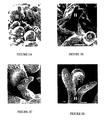
- Figures 3A-D are electron microscopic analyses showing somatic embryogenesis in pga6 mutant explants (culturing conditions were identical to those shown in Figures 2A-F). Figure 3A shows a pre-embryo stage before the first embryonic cell division (arrows) and a two-cell stage after the first asymmetric division with a smaller apical cell (A) and a larger basal (B) cell. Figure 3B shows embryos at the globular (G) and the early heart (H) stages. Figure 3C shows a germinating embryo. C: cotyledon; H: hypocotyl. Figure 3D shows an abnormal somatic embryo with three cotyledons (C) anchored on the hypocotyl (H). Scale bar, 10 µm for Figure 3A; 100 µm for Figures 3B-D.
- Figures 4A-H illustrate phytohormone-independent somatic embryo formation caused by the pga6 gain-of-function mutation. Figure 4A is an overview of pga6 mutant seedlings germinated and grown on MS medium (first seedling from the left) or the inductive MS medium (MST: 5 µM 17-β-estradiol) for 7 days. Figures 4B-D show pga6 seedlings that were cultured on the inductive MS medium for 10 days (Figure 4B), 14 days (Figure 4C) or 30 days (Figure 4D). Figures 4E-F show seven-day-old pga6 seedlings germinated and grown on MS medium which were transferred onto an inductive MS medium and cultured for 5 (Figure 4E) or 10 (Figure 4F) days. Figure 4G shows pga6 root explants which were cultured on the inductive MS medium for 20 days. Figure 4H is an enlarged view of Figure 4G. Scale bar, 1 mm.
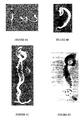
- Figures 5A-D show that the pga6 phenotype is due to the inducer-dependent overexpression of WUS. Figure 5A is a schematic diagram illustrating the insertion site of the T-DNA upstream of the WUS gene (not shown to scale). Arrows indicate the directions of transcription. Figure 5B shows pga6 seeds (T2, homozygous) which were germinated and grown on MS medium supplemented with various concentrations of the inducer as indicated. Ten-day old seedlings are shown. The scale bar represents 1 mm. Figure 5Cshows the expression of PGA6/WUS induced by different concentrations of the inducer. Ten-day-old pga6 seedlings were germinated and grown on MS medium and transferred to an MS medium containing various concentrations of 17-β-estradiol as indicated and were cultured for an additional 16 hours before total RNA extraction. Five µg total RNA were used for Northern blot analysis using a WUS cDNA fragment as a probe. Positions of two RNA molecular weight markers are indicated at the right (GIBCO BRL, catalog number, 15620-016). Figure 5D shows ethidium bromide staining of the gel as a control for RNA loading and transfer.
- Figures 6A-H are photographs showing that 35S- or XVE-controlled overexpression of WUS cDNA phenocopies the pga6 phenotype. Figure 6A shows embryogenic callus and Figure 6B shows somatic embryo formation from root tips of XVE-WUS cDNA T2 seedlings grown for 15 days in A medium supplemented with 17-β-estradiol (10µM). Figures 6C-H show 15 day-old T1 35S::WUS seedling phenotypes. Figure 6C shows the tips of the roots are enlarged and show an embryo-like structure. Figure 6D shows the adventitious root tip. Figure 6E shows that WUS overexpression induces both organogenesis and embryogenesis from the root. Figure 6F shows detail of early embryo structure formation. Figure 6G shows the shoot apical meristem is dramatically altered and, besides forming lateral organs with altered shaped, givers rise to adventitious shoots and somatic embryos. Figure 6H shows the entire shoot apical meristem expands and lateral organs transform into meristematic tissues. Scale bar is 1 mm.
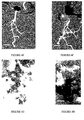
- Figures 7A-C are Northern blots of RNA from root explants prepared from pga6 seedlings cultured on the screening medium (SCM) for different times as indicated. On
day 28, when somatic embryos were apparent, cultures were transferred onto a freshly-prepared SCM or control medium (SCM without the inducer) and incubated for an additional day (28 + 1) or two days (28 + 2). Five micrograms of total RNA, prepared from the frozen materials, were analyzed by Northern blotting using WUS (Figure 7A) and LEC1 (Figure 7B) cDNA as probes. The blot was rehybridized with an actin cDNA probe (Figure 7C) to ensure that equal amounts of RNA were loaded. - Figures 8A-B illustrate formation of somatic embryos from isolated zygotic embryos of PGA6 transgenic plants grown in the presence (Figure 8A) or absence (Figure 8B) of an inducer of PGA6.
- To dissect the signaling pathway during somatic embryogenesis, we have employed a genetic approach to identify gain-of-function mutations that can promote embryogenic callus formation from Arabidopsis root explants. Arabidopsis thaliana is known to be a species difficult for somatic embryogenesis. Thus far, embryogenic calli could only be induced from immature embryos of wild-type (WT) plants or from the primordia timing (pt) mutant plant (Wu et al., 1992; Mordhorst et al., 1998; and references therein). Therefore, Arabidopsis vegetative explants appear to be reliable materials for screening for genetic mutations involved in the vegetative-to-embryonic transition. Herein we disclose the identification of the Plant Growth Activator 6 (PGA6) gene by a novel genetic screen. Overexpression of PGA6 promotes the formation of somatic embryos from various vegetative tissues as well as from zygotic embryos independently of any external plant hormones. These somatic embryos, following a developmental process remarkably similar to that of zygotic embryogenesis, are able to germinate and grow into healthy, fertile plants, suggesting that PGA6 is involved in the maintenance of embryonic cell identity. PGA6 was found to be identical to the Wuschel gene (WUS), a homeodomain protein that was previously characterized as a key regulator for specification of meristem cell fate (Laux et al., 1996; see, also,
WO 01/23572 - In this study, we identified a genetic locus PGA6 by a novel functional screen aimed at elucidating the molecular mechanism of somatic embryogenesis. A gain-of-function mutation at this locus causes a rapid transition from vegetative or somatic to embryonic cells, leading to somatic embryo development from various tissues and organs. The pga6 mutation-dependent cell fate reprogramming can occur either in the presence or absence of external plant hormones, although the local concentration of endogenous growth regulators might play an important role in the vegetative-to-embryonic transition. In addition, the hormone-independent somatic embryogenesis in pga6 strikingly resembles zygotic embryo development. These observations suggest that PGA6 plays a critical regulatory role during embryogenesis, likely involved in maintaining embryonic cell identity. Molecular and genetic analyses indicate that pga6 is a gain-of-function allele of the previously characterized wus loss-of-function mutation (Mayer et al., 1998).
- In addition to causing vegetative tissues or organs to become embryogenic, inducing overexpression of PGA6 in zygotic embryos also results in the generation of somatic embryos at very high frequency, whereas no somatic embryos or embryogenic calli were observed in the absence of the inducer. Wu et al. (1992) previously reported the generation of somatic embryos from isolated Arabidopsis zygotic embryos at very low efficiency, which involved tedious multiple subculturing and hormone treatments. Our finding that the simple manipulation of a single gene (WUS) was able to generate somatic embryos at very high frequency is a major advance in plant biotechnology.
- Loss-of function mutations in WUS have been shown to cause impaired development of shoot and floral meristems in Arabidopsis, resulting in the absence of the shoot and floral meristems in all developmental stages of wus embryos and adult plants (Laux et al., 1996; Mayer et al., 1998). Genetic studies revealed that WUS interacts with CLAVATA (CLV), and the WUS/CLVself-regulatory loop, in which CLV presumably acts upstream of WUS (Clark, 2001) appears to be critical for the maintenance of stem cell identity (Schoof et al., 2000; Brand et al., 2000; Waites and Simon, 2000). On the other hand, ectopic expression of WUS results in enlarged meristems (Schoof et al., 2000). Collectively, these observations suggested an instructive role of WUS for the specification of meristematic stem cell fate. Interestingly, the WUS gene is not expressed in the stem or meristem cells; rather its expression is restricted to a small group of cells underneath the stem cells during the entire embryogenesis and post-embryogenesis stages (Mayer et al., 1998; Schoof et al., 2000). The cluster of WUS expressing cells was termed as the organizing center (Mayer et al., 1998). The unexpected expression pattern led to postulations that WUS promotes and/or maintains the stem cell fate by a diffusion mechanism or acted in a non-cell-autonomous manner (Mayer et al., 1998; Waites and Simon, 2000).
- Our observation that WUS is capable of promoting vegetative-to-embryonic transition and eventually somatic embryo formation uncovers an additional critical function of this homeodomain protein during embryogenesis. Presumably, the highly restrictive expression of WUS hallmarks the putative embryonic organizing center which, in turn, may give rise to stem cells during embryogenesis and later development. Therefore, WUS is involved in promoting and maintaining the identity of embryonic cells from which stem cells are derived. Because WUS-expressing cells have not been morphologically and functionally characterized, it remains of interest to determine whether this cluster of cells indeed represents a functional organizing center similar to Spemann's organizer discovered nearly 80 years ago in Xenopus embryos (Spemann and Mangold, 1924).
- Interestingly, the LEC1 transcript was barely detectable in the organizing center or the WUS expressing domain, albeit LEC1 was found to express throughout embryogenesis as well as in seeds (Lotan et al., 1998). Consistent with these observations, somatic embryo expression of LEC1, presumably resembling that in zygotic embryos, was found to be promptly repressed by the WUS activity. In addition, the LEC1 function appeared to require unidentified embryo- and or seed-specific cofactors, since inducible overexpression of LEC1 by the XVE system (Zuo, et al., 2000b) during post-germination stages did not result in any detectable phenotype. By contrast, WUS appears to be a key player in promoting embryonic potential as its activity does not appear to require any developmentally specific factors under our tested conditions. Taken together, these observations further suggest that WUS plays a predominant role in inducing the embryonic potential, whereas LEC1 is likely involved in promoting differentiation of embryonic cells at later developmental stages. A reasonable assumption would be that the LEC1 activity, a driving force for embryo cell differentiation, must be excluded in order to fully maintain the embryonic potential in the putative organizing center.
- Recently, Stone et al. (2001) showed that LEC2 encodes a transcription factor containing a B3 domain unique to several other plant transcription factors including ABI3/VP1 and FUS3. Overexpression of LEC2 leads to formation of somatic embryos as well as the formation of callus, cotyledon-like and leaf-like structures, a phenotype similar to that of pga6 mutant, suggesting that LEC2 might be functionally close to WUS. It will be interesting to determine if the LEC2 activity is also dependent on embryo-and/or seed-specific cofactors as in the case for LEC1.
- Systems for hormone-dependent somatic embryo formation have been well established in several model species, and rapidly extended to other species (Zimmerman, 1993; Mordhorst et al., 1997). In all these in vitro systems, phytohormones, particularly auxin or 2,4-D, are essential for induction of somatic embryo formation. Arabidopsis has been known to be a species difficult for somatic embryogenesis, even though with limited success by using wild-type immature zygotic embryos (e.g., Wu et al., 1992) or certain vegetative tissues of the pt mutant plants (Mordhorst et al., 1998). Overexpression of Leafy cotyledon 1 (Lecl) causes severe developmental abnormality and growth arrest, a phenotype similar to that of the pga6 mutant (Lotan et al., 1998). Formation of somatic embryos is occasionally observed in the Lecl overexpression plants (Lotan et al., 1998), but these embryos never germinate or develop into normal adult plants. The finding that the pga6 gain-of-function mutation or overexpression of WUS results in hormone-independent somatic embryo formation at a high frequency will have significant impact on plant biotechnology, and provides a convenient and attractive model system for many aspects of plant biological research.
- In another embodiment of the invention, embryogenesis is induced in haploid cells, such as pollen cells, to produce haploid plants. This can be achieved by stably transforming a plant cell or tissue with a WUS gene under the control of a tissue specific promoter that is active in a haploid cell or tissue, and expressing the WUS gene therein, or by introducing the WUS gene into a plant tissue or cell under the control of an inducible promoter and applying the inducer to cause expression of the WUS gene therein. In a preferred embodiment, the WUS gene is under the control of a promoter that is both haploid-tissue specific and inducible. In a preferred embodiment, a promoter is used that is both inducible and tissue-specific, giving greater control over the process. In a most preferred embodiment, a WUS gene linked to an inducible pollen-specific promoter is used to induce somatic embryogenesis in pollen cells.
- Expression of the gene in the haploid tissue or cell (for example, by application of the inducer specific for the inducible promoter) results in the formation of haploid somatic embryos, which can be grown into haploid plants using standard techniques. When an inducible promoter is used (whether tissue specific or not), a preferred method comprises exposing excised transgenic tissue containing the haploid cells (e.g., pollen or ovules) to the inducer specific for the inducible promoter for a time sufficient to induce the formation of a somatic embryo, withdrawing the inducer, and growing the somatic embryo into a transgenic haploid plant in the absence of the inducer.
- Diploidization of the haploid plants to form dihaploids, either spontaneously or by treatment with the appropriate chemical (e.g. colchicine) will significantly expedite the process of obtaining homozygous plants as compared to a method of conventional genetic segregation. This technology will not only be beneficial for breeding purposes but also for basic research such as studies of mutagenesis and other genetic studies, because dihaploids are truly homozygous down to the DNA level, containing two identical copies of each gene.
- Additionally, WUS genes will be useful for inducing apomixis into plants. Apomixis and methods of conferring apomixis into plants are discussed in several patents (see, e.g.,
U.S. Patent Nos. 5,710,367 ;5,811,636 ;6,028,185 ;6,229,064 ; and6,239,327 as well asWO 00/24914 - It would be ideal to find genes controlling obligate or a high level of apomixis in the cultivated species and be able to readily hybridize cross-compatible sexual x apomictic genotypes to produce true-breeding F1 hybrids. In reality, most desirable genes controlling apomixis are found in the wild species which are distantly related to the cultivated species. Although interspecific crosses may be possible between the cultivated and wild species, chromosome pairing between genomes is usually low or nonexistent
- Although apomixis is effectively used in Citrus to produce uniform and disease-and virus-free rootstock (Parlevliet et al, 1959) and in buffelgrass (Bashaw, 1980) and Poa (Pepin et al, 1971) to produce improved cultivars, it has not been successfully transferred to a cultivated crop plant. The transfer of apomixis to important crops would make possible development of true-breeding hybrids and commercial production of hybrids without a need for cytoplasmic-nuclear male sterility and high cost, labor-intensive production processes. An obligately apomictic F1 hybrid would breed true through the seed indefinitely and could be considered a vegetative or clonal method of reproduction through the seed. The development of apomictically reproducing cultivated crops would also provide a major contribution toward the food security in developing nations (Wilson et al, 1992).
- The present invention is further detailed in the following Examples, which are offered by way of illustration and are not intended to limit the invention in any manner. Standard techniques well known in the art or the techniques specifically described below are utilized.
- The Wassilewskija, Columbia and Landsberg ecotypes of A. thaliana were used. Plants were grown under continuous white light at 22°C on solid A medium (1 X MS salts (Murashige and Skoog, 1962), 3% sucrose, 0.8% agar) supplemented with appropriate antibiotics and/or the inducer 17-β-estradiol. Unless indicated otherwise, 5 µM 17-β-estradiol was used for induction. In planta transformation of Arabidopsis plants (the Columbia ecotype) was performed as described by Bechtold et al. (1993). Transformation of root explants was carried out according to Koncz et al. (1989).
- Light and electron microscope analyses were carried out as previously described (Zuo et al., 2000b).
- Agrobacteria ABI cells carrying pER16 were used to transform Arabidopsis (the Wassilewskija ecotype) root explants. Infected root explants were cultured on the screening medium (SCM; 1 X MS salts, 1% sucrose, 0.5 g/L MES (2-[N-morpholino]ethanesulfonic acid), 0.15 mg/L IAA (indole acetic acid), 5 µM 17-β-estradiol, 50 mg/L kanamycin, 100 mg/L carbenicillin and 0.2% phytagel, pH 5.7) at 22°C under a 16-hour white light/8-hour dark cycle. Putative pga mutants, which appeared as rapidly growing green-yellowish or green cell clumps or calli upon culturing on the SCM for 10-15 days, were transferred onto a non-inductive shoot induction medium (SIM; for green calli; 1 X MS salts, 1% sucrose, 0.5 g/L MES, 1 mg/L 2-IP (N6, δ2-isopentenyladenine), 0.15 mg/L IAA, 50 mg/L kanamycin, 100 mg/L carbenicillin and 0.2% phytagel, pH 5.7) to recover mutant shoots. The green-yellowish calli were transferred onto the callus induction medium (CIM; 1 X B5 salts (Sigma), 2% glucose, 0.5 g/L MES, 0.5 mg/
L 2,4-D, 0.05 mg/L kinetin, 50 mg/L kanamycin, 100 mg/L carbenicillin and 0.2% phytagel, pH 5.7). After culturing on the CIM for 7-10 days, the amplified calli were then transferred onto a SIM to regenerate shoots. Regenerated shoots, usually formed after culturing on the SIM for 2-3 weeks, were then transferred to a root induction medium (RIM; identical to SIM but without 2-IP) to promote root formation. Whereas most putative pga mutant plantlets, including pga6, were able to set seeds after transferring to soil, a portion of roots were excised and placed on the CIM to reinduce callus formation, followed by repeating the above-described screening procedure to confirm the inducer-dependent pga phenotype. The pga6 mutant was backcrossed with wild-type (Wassilewskija) plants twice for further genetic and phenotypic analyses. - Molecular manipulations were performed as specifically stated or by the methods as taught by Sambrook et al. (1989). The XVE inducible expression vector pER10 is identical to pER8 (Zuo et al., 2000a) except that the hygromycin selectable marker of pER8 was replaced with a kanamycin selectable marker. To construct the mutagenesis vector pER16, pER10 was digested with SpeI and Asp 718I followed by Klenow enzyme fill-in reaction and religation. The resulting pER16 vector lacked the rbcsS3A polyA addition sequence of the OLexA-46::T3A expression cassette (see Figure 1 of Zuo et al. (2000a)).
- pER16 is shown in Figure 1. Only the region between the Right Border (RB) and Left Border (LB) is shown (not to scale). Two transcription units and the OLexA-46 promoter are located between the RB and LB. In the first transcription unit, the G10-90 promoter (Ishige et al., 1999) drives the XVE fusion gene terminated by the rbcs E9 polyA addition sequence. The second transcription unit consists of the Nopaline Synthase (NOS) gene promoter, the coding sequence of the Neomycin Phosphotransferase II (NPT II) gene and the NOS polyadenylation sequence. The OLexA-46 promoter consists of 8 copies of the LexA operator sequence fused to the -46 CaMV35S promoter. Upon integration into the plant genome, the OLexA-46 promoter can activate the transcription of sequences fused downstream from the promoter in a 17-β-estradiol-dependent fashion.
- The pER16-tagged genomic sequences were recovered by Tail-PCR (Liu et al., 1995), and the purified PCR fragments were directly subjected to DNA sequencing analysis.
- The WUS cDNA was amplified from flower cDNA by polymerase chain reaction (PCR), using the primers WusUp (5' CTTATTTACCGTTAACTTGTGAACA 3') (SEQ ID NO:1) and WusLow (5' CACATAACGAGAGATAACTAGTTAAC 3') (SEQ ID NO:2). The 1062-bp long PCR fragment, harboring the entire protein coding region plus part of the 3' UTR, was first cloned into the pPCR-Script Amp SK(+) vector (Stratagene) and then cut with XhoI (vector polylinker site) and SpeI (site in the 3' UTR of the WUS cDNA) for the subsequent cloning into the corresponding sites of both the pER10 vector (17-β-estradiol inducible) and the pBA002 vector (constitutive 35S promoter) for the 35S::WUS expression. The correct sequence of the WUS cDNA was confirmed by DNA sequencing analysis.
- Genomic DNA Southern and RNA Northern blotting analyses were carried out as previously described (Zuo et al., 2000a; Zuo et al., 2001).
- Explants derived from Arabidopsis vegetative tissues are known to be incapable of forming somatic embryos or embryogenic calli promoted by external plant hormones. We presumed that external hormones alone were incapable of activating key regulators of Arabidopsis necessary for vegetative-to-embryogenic transition. With appropriate hormone treatments, gain-of-function mutations in these regulatory genes may activate the vegetative-to-embryonic transition. Such gain-of-function mutations, on the other hand, may also cause severe defects during subsequent plant growth and development. Therefore, if the expression of the mutated gene and/or the biological activity of related gene products is not appropriately controlled, it will be difficult to maintain the identified mutations. An example is the constitutive overexpression of the LEC1 gene (Lotan et al., 1998). As a consequence, we carried out the screen by using a previously developed chemical-inducible XVE system, which has been demonstrated to be stringently controlled and to be highly responsive to the inducer 17-β-estradiol, a mammalian hormone with no apparent physiological effects on plant growth and development (Zuo et al., 2000a). The use of an inducible promoter thus allows us to recover normal mutant plants by withdrawal of the inducer, even in the case that the gain-of-function mutation is lethal.
- Arabidopsis root explants were transformed with Agrobacteria (Koncz et al., 1989) carrying an XVE vector pER16 (Figure 1). Transformed explants were cultured on a screening medium (SCM containing auxin, 17-β-estradiol and kanamycin but without cytokinin). Note that mutations functionally analogous to cytokinin independent 1 (ckil; Kakimoto, 1996) should also be recovered under the screening conditions. In the primary screen, we isolated 35 putative mutants by interrogating approximately 38,000 independent transformation events. As expected, most of these mutants (33 out of 35) showed a ckil-like phenotype, i.e., shoot regeneration independent of cytokinin. The remaining two mutants gave rise to green-yellowish embryogenic calli. We collectively named these two classes of mutations as pga for plant growth activator. Here, we disclose a detailed characterization of one of these mutants which is named pga6.
- The pga6 mutant was initially identified by its ability to form embryogenic calli on SCM. The embryogenic calli were transferred onto a shoot induction medium containing both auxin and cytokinin but without the chemical inducer 17-β-estradiol. After 2-3 weeks, shoots were regenerated from the isolated calli. Explants derived from different organs of the regenerated shoots were cultured on SCM as described before; a portion of the excised explants was cultured in SCM without the inducer to serve as controls. After culturing for 7-10 days, only slowly growing calli were occasionally observed in the absence of inducer (Figure 2A). In the presence of the inducer, however, the explants produced numerous, rapidly growing, yellowish embryogenic calli (Figure 2B), which subsequently developed into distinctive somatic embryos (Figure 2C). After being transferred onto a non-inductive medium, all these somatic embryos were able to germinate (Figures 2D and 2E) and develop into fertile adult plants, most of which were morphologically indistinguishable from wild-type plants (Figure 2F).
- To further confirm the above observations, somatic embryo-derived plants, as shown in Figure 2F, were germinated on MS medium in the absence of the inducer. The inducer-dependent somatic embryo formation was reproducibly observed in pga6 explants prepared from different organs/tissues of previously uninduced T1 plants. Similar to that observed in the T0 explants, the highest frequency of somatic embryo formation was observed from root explants, followed by leaf petioles, stems and leaves. Isolated zygotic embryos had a frequency similar to that of root explants. The above results suggested that the pga6 gain-of-function mutation was able to promote vegetative-to-embryonic transition under our experimental conditions, and that the PGA6 gene was most likely tagged by the inducer-responsive QLexA-46 promoter.
- In addition to the formation of somatic embryos, which are characterized by the presence of cotyledons lacking trichomes on the surfaces, we also observed approximately 10% of the pga6 calli developing into shoots, suggesting that PGA6 is also involved in organogenesis.
- To more closely follow the somatic embryogenesis process of the pga6 mutant, we performed a scanning electron microscopic analysis. Somatic embryogenesis in the inducer-treated pga6 explants highly resembled zygotic embryogenesis. The process was initiated from an asymmetric division of a single cell, giving rise to a smaller apical cell and a larger basal cell (Figure 3A). Subsequently, embryo-like structures equivalent to that of zygotic embryos at the early globular stage were easily recognizable (Figure 3B). These somatic embryos underwent a typical embryogenesis process, including the heart stage, the torpedo stage, and the cotyledon stage (Figures 3B and 3C), and eventually germinated into healthy seedlings (Figure 2F). In addition to the relatively normal growth and development of the somatic embryo-derived mutant plants, we observed that a small fraction (approximately 10%) of somatic embryos generated seedlings with three cotyledons (Figure 3D). This abnormality is presumably caused by different expression levels of the PGA6 gene or by abiotic effects as occasionally observed in seedlings germinated from wild-type seeds. Nevertheless, these above results demonstrated that a conditional gain-of-function mutation in the pga6 locus promoted vegetative-to-embryonic transition, leading to the initiation of somatic embryogenesis.
- The data described above were obtained under tissue culture conditions. To investigate the effects of the pga6 mutation on normal plant growth and development, T1 seeds were germinated on MS media (Murashige and Skoog, 1962) with or without the inducer. No detectable abnormality in growth and development (phenotype) was observed in pga6 plants germinated and grown in the absence of the inducer. On the inductive MS medium, progeny with the mutant and wild-type phenotype segregated in the ratio of 3: 1, characteristic of a dominant mutation in a single locus. Compared to wild-type seeds, the pga6 mutant seeds germinated substantially later, with a delay of 3-5 days, suggesting an inhibitory effect of the mutation on plant growth and development. Whereas approximately one third of the mutant seedlings stopped further growth after germination and eventually died, the remaining two thirds mutant seedlings rapidly turned into green calli upon germination. These two distinctive mutant phenotypes, with an approximately 2:1 ratio, were presumably due to segregations (heterozygous or homozygous) for the pga6 gain-of-function mutation locus, leading to different PGA6 expression levels in homozygous and heterozygous seedlings. This notion was supported by subsequent genetic analysis of the T2 generation derived from T1 plants grown under non-inductive conditions. Whereas all progenies of the putative homozygous T2 families (5 out of 16) showed only the "lethal" phenotype on the inductive medium, the remaining 11 heterozygous families gave rise to a typical 2:1:1 segregation for embryogenic calli, "lethal" and wild-type phenotypes. In addition, the strength of the mutant phenotype was dependent on the inducer concentrations and the induced PGA6 expression levels per se (see Figures 5B-C).
- In the absence of any external plant hormones, somatic embryos were formed from green embryogenic calli (Figures 4B and 4C), which were able to germinate and grow normally into fertile adult plants (Figure 4D). Interestingly, a considerably higher frequency of embryogenic callus formation was observed from excised pga6 roots cultured on the inductive MS medium (Figures 4G and 4H), suggesting the presence of an antagonistic activity to PGA6 in intact plants, which may promote post-embryogenesis growth and development.
- Overexpression of LEC1 leads to abnormal plant growth and development as well as the occasional formation of embryo-like structures (Lotan et al., 1998). The LEC1 gain-of-function phenotype, however, appeared to be strictly restricted to developmental stages prior to germination. After seedling germination, overexpression of LEC1, controlled by the XVE inducible expression system (Zuo et al., 2000a), did not produce any apparent abnormality in plant growth and development, although the LEC1 transgene was highly responsive to the inducer during post-germination stages. On the other hand, the same transgenic line showed a strong phenotype if germinated directly in the presence of the inducer and the LEC1 transgene was highly responsive to the inducer during post-germination stages. These observations suggest that embryo- or seed-specific co-factor(s) are required for LEC1 function. To examine if PGA6 function is also dependent on embryo- or seed-specific co-factors, pga6 mutant seedlings at different growth stages, germinated and grown on the non-inductive MS medium; were transferred onto an inductive MS medium. At these developmental stages, the fate of both root and shoot stem cells has already been highly specified in wild-type plants. The pga6 mutation, however, appeared to reverse the developmental program, causing both root and shoot meristems to transform into embryogenic calli (Figure 4D). Similar to that shown before, these embryogenic calli were eventually capable of forming somatic embryos, which were able to germinate and grow into morphologically normal adult plants. The above results strongly suggest that PGA6 plays a key role in specifying and maintaining embryonic cell identity, independent of any embryo- or seed-specific co-factors.
- Based on the segregation of the kanamycin selectable marker, the pga6 mutant genome appears to contain a single transgenic locus. However, molecular analysis indicated the presence of the OLexA-46 promoter in two independent, loci. One OLexA-46 promoter was found to fuse to the WUS gene in chromosome II (Mayer et al., 1998), approximately 1 kilobase-pair (Kb) upstream from the putative translation initiation codon (Figure 5A). The second OLexA-46 promoter fused immediately upstream of the putative translation initiation codon of an open reading frame (ORF) in chromosome V, encoding a putative basic-helix-loop-helix type transcription factor (deigned ORF1). To verify the identity of the PGA6 gene(s), cDNA fragments containing both WUS and the putative ORF1 were cloned into an XVE vector, and the resulting constructs were used to transform wild-type plants (Bechtold et al., 1993). Explants derived from XVE-ORF1 T1 transgenic plants did not show any apparent inducer-dependent phenotype. In addition, ORF1 expression did not appear to be up-regulated by the chemical inducer in pga6 plants, presumably due to the instability of the ORF1 transcript lacking the entire 5'-untranslated region (UTR). By contrast, all pga6 mutant phenotypes as described before were observed in the XVE-WUS T2 transgenic plants (Figures 6A and 6B) in an inducer-dependent manner (see Example 11 for details).
- WUS expression was strictly dependent on different concentrations of the inducer in pga6 mutant plants (Figure 5B). Figure 5C shows expression of PGA6/WUS induced by different concentrations of the inducer. Ten-day-old pga6 seedlings germinated and grown on the MS medium were transferred to an MS medium containing various concentrations of 17-β-estradiol as indicated and cultured for an additional 16 hours before total RNA extraction. Five µg total RNA were used for Northern blot analysis using a WUS cDNA fragment as a probe. Consistent with the inducer concentration-dependent WUS expression, pga6 plants also showed various penetrations of the mutant phenotype in an inducer concentration-dependent fashion (Figure 5B), thus providing a series of conditional mutant alleles for further functional studies.
- We also used a 35S-WUS construct for transformation of Arabidopsis thaliana Columbia as well as Landsberg ecotype. Most of the transformants recovered from selection showed strong alteration in seedling development. The hypocotyl was swollen and root tips often enlarged to give rise to shoot-like or embryo-like structures which were unable to further develop (Figures 6C-G). Leaf development, when observed, was also compromised indicating strong alteration of the shoot apical meristem (SAM) which, besides lateral organs, could also form adventitious shoots or embryo-like structures (Figures 6G-H). Overall, all the tissues of the transformants would give rise to organs or embryo-like structures whose further development, however, was impaired. This observation supports the validity of our strategy of using an inducible system to isolate genes involved in the switch to embryo development as the continuous overexpression of regulatory proteins would prevent recovery of the mutants.
- In summary, the above results indicated that the OLexA-46 promoter-tagged WUS in the mutant genome represents PGA6. We will refer to the PGA6 gene/protein as WUS in the future, but use pga6 for the mutation/mutant identified in this study due to different properties between the loss- and gain-of-function mutations.
- Because the OLexA-46 promoter fused approximately 1 Kb upstream from the putative translation start codon (Figure 5A), the WUS promoter presumably remains functional in the mutant genome, leading to no apparent loss-of-function phenotype for the mutation. Nevertheless, the WUS gene was strongly inducible, giving rise to two transcripts, approximately 1.3 and 2.3 Kb (Figure 5C). The shorter transcript was presumably generated from the native transcription initiation site of the WUS gene, in which case the LexA operator sequence might serve as an enhancer to the WUS promoter. On the other hand, the longer transcript might represent transcription from the OLex-46 promoter. This suggests that the OLexA-46 sequence can serve as a functional promoter, as well as a transcriptional enhancer for activation tagging.
- The above data indicate that WUS, in addition to its meristem function described previously (Laux et al., 1996; Mayer et al., 1998), also plays a critical role in promoting or maintaining the embryonic potential. We have investigated expression of several embryo- or seed-specific genes in pga6 embryogenic callus and somatic embryos. Root explants derived from pga6 mutant plants were cultured on an MS medium supplemented with the inducer. Under such conditions, whereas embryogenic calli appeared after 10-15 days, somatic embryos and germinating seedlings were generated after 20 days (see Figures 2A-F, 3A-D and 4A-H). Due to the transient expression nature of the XVE inducible system (Zuo et al., 2000a), WUS expression gradually declined upon continued culture on the inductive medium; however, the expression can be strongly re-induced by adding freshly-prepared inducer (Figure 7A).
- The LEC1 gene, normally expressed only in embryos and seeds (Lotan et al., 1998), was highly expressed in 20-30-day-old explants, a stage when somatic embryos and derived seedlings were generated. Figure 7B shows LEC1 expression from 14 days until 28 days when pga6-dependent somatic embryogenesis takes places. LEC1 expression, however, was dramatically decreased upon reactivation of WUS expression (Figure 7B). No alteration of LEC1 expression was detected when the explants/calli were transferred onto the control medium for an additional two days, suggesting that the LEC1 repression was a specific response to the 17-β-estradiol induced WUS expression.
- These observations suggest that LEC expression in pga6 explants was not a direct response to WUS overexpression but rather a consequence of the pga6 somatic embryo development. On the other hand, a developmental path redefined by WUS overexpression leads to the repression of LEC1, a gene presumably involved in embryo maturation.
- Although we were able to generate somatic embryos from various pga6 tissues/organs in the absence of any external hormone, the frequency of somatic embryo formation appears to be lower compared to that observed in our original screening conditions, under which a 2,4-D pretreatment was included. To test the effects of 2,4-D on somatic embryogenesis, pga6 root explants were cultured on MS medium with 0.5 mg/
L 2,4-D for 5 days prior to being transferred to an MS medium with or without 10 µM 17-β-estradiol. No somatic embryo formation was observed in the medium without the inducer, whereas numerous somatic embryos were generated after 2-3 weeks culturing in the presence of the inducer. As shown above (see Example 7 and Figures 4A-H) and by the results disclosed in this Example, the absence of 2,4-D pretreatment resulted in a substantially decreased efficiency for somatic embryo formation, indicating that the 2,4-D treatment is able to significantly increase the efficiency of somatic embryo formation. Collectively, the above results suggest that 2,4-D was able to enhance yet unidentified components in the signaling network, which play a key role in promoting the vegetative-to-embryonic transition. In addition, these results further demonstrated the validity of our working hypothesis as well as the screening strategy, i.e., that external hormones alone were incapable of activating key components for the vegetative-to-embryonic transition in Arabidopsis, and that the appropriate external hormone treatment in combination with gain-of-function mutations in key regulatory genes is fully capable of promoting the vegetative-to-embryonic transition or somatic embryogenesis. - The XVE vector pER10 is identical to pER 8 except that the hygromycin resistance marker is replaced with a kanamycin-resistance marker (Zuo et al., 2000(a)). Full length WUS cDNA was placed under the control of the XVE system in pER10. Stem segments derived from the pER10-WUS transgenic plants were pre-cultured on the MS medium with 0.5 mg/
L 2,4-D for 5 days and then transferred to an MS medium with or without 10 µM 17-β-estradiol. No somatic embryo was observed in medium in the absence of the inducer, whereas with the inducer, many somatic embryos were generated after 2-3 weeks of culture. - Similar to that of pga6 mutant plants, we found that the 2,4-D pre-treatment substantially increased the frequency of somatic embryo formation in pER10-WUS transgenic plants.
- The method of placing WUS in pER10 or similar vectors which can be regulated enables one to perform the same or similar experiments in plants other than Arabidopsis.
- The G10-90 promoter in the XVE vector can be replaced with a tissue-specific promoter (e.g. a pollen-, root- stem- or leaf-specific promoter). A variety of tissue specific promoters are well known to those of skill in the art. Because expression of a transgene is activated by the chimeric XVE gene which is controlled by a tissue-specific promoter in this Example, the OlexA-46 promoter controlling the WUS transgene is therefore tissue-specific in an inducer-dependent manner. This means that WUS will be induced only in the presence of an inducer and only in the specific tissue corresponding to the tissue specific promoter. Appropriate tissues or cell types, can then be collected from the transgenic plants and used for induction of somatic embryos as described in Examples 10 and 11.
- Particularly when pollen derived from transgenic plants carrying a pollen-specific promoter-XVE/OlexA -46-WUS vector is used, progeny plants generated from pollen-derived somatic embryos should be haploid instead of diploid (see, e.g., Twell et al., 1989 and Twell et al., 1990 for pollen specific promoters). In this embodiment of the invention, a transgenic plant having in its genome a Wuschel (WUS) gene under the control of an inducible, pollen-specific promoter would not normally express the gene. Pollen from such a plant can be cultured in the presence of the inducer until somatic embryogenesis occurs, after which the inducer is removed and the haploid embryos are permitted to develop into haploid clones according to standard techniques.
- The pER10-WUS vector can be used directly for transformation of explants without the use of an antibiotic resistance marker. Somatic embryos that formed in the presence of an inducer but in the absence of cytokinin should be transformants, because under such conditions non-transformants will be incapable of forming somatic embryos nor shoots due to the lack of induced WUS gene expression. Upon inducer removal, the embryos and shoots will develop into normal and fertile plants. The vector can include any gene or genes which are desired to be present in the transformed plants and these can be under the control of a desired promoter. The plants selected as a result of selecting for inducible WUS expression-dependent somatic embryos or shoots will contain the desired gene or genes.
- If desired, the WUS transgene can be placed into a vector comprising a means of removing the WUS transgene as well as other portions of the vector which are no longer desired, e.g., using the XVE-Cre/lox system (Zuo et al., 2001). Such methods are also disclosed in
U.S. Patent Application Serial No. 09/439,534, filed 12 November 1999 - Zygote embryos at late heart stage were isolated from young siliques of PGA6 plants and transferred to either non-inductive medium (MICK: MS salts, 30 g/L sucrose, 0.15 mg/L IAA, 100 mg/L carbenicillin, 50 mg/L kanamycin, and 0.25% phytagel, pH 5.7) or inductive medium (MICK plus 10.0 µM 17-β-estradiol). After two weeks of culture, 10 zygotic embryos formed embryogenic calli on the inductive medium, but only 3 zygotic embryos started to form embryogenic calli on the non-inductive MICK medium. After 35 days of culture on the inductive medium, 10 zygotic embryos formed somatic embryos with a regeneration index (the number of somatic embryos per zygote embryo explant) of about 70-100 (Figure 8A). By contrast, on MICK medium without estradiol, only two zygotic embryos regenerated somatic embryos and the somatic embryo regeneration index was about 10-20 (Figure 8B).
- Apomixis can be induced by introducing WUS into a plant cell in such a manner that the WUS gene is expressed in the appropriate tissues (e.g., nucellus tissue). This can be by means of, but is not limited to, placing the WUS gene under the control of a tissue-specific promoter (e.g., a nucellus-specific promoter), an inducible promoter, or a promoter that is both inducible and tissue-specific. Inducing expression of the WUS gene, e.g. in the nucellus, produces apomixis leading to an apomictic plant. This plant may then be used to establish a true-breeding plant line. Additionally, the vector utilized to transfer WUS into the plant cell can include any other desired heterologous gene in addition to WUS, including but not limited to, a marker gene or a gene to confer a desirable trait upon the plant, e.g., a gene resulting in larger plants, faster growth, resistance to stress, etc. This would lead to the development of an apomictic line with the desired trait
- In a variation of the scheme, plant expression cassettes, including but not limited to monocot or dicot expression cassettes, directing WUS expression to the inner integument or nucellus can easily be constructed. An expression cassette directing expression of the WUS DNA sequences to the nucellus was made using the barley Nuc1 promoter (Doan et al., 1996). The expression was used for plant transformation. Other genes which confer desirable traits can also be included in the cassette.
- It is anticipated that transgenic plants carrying the expression cassette will then be capable of producing de novo embryos from WUS expressing nucellar cells. In the case of maize, this is complemented by pollinating the ears to promote normal central cell fertilization and endosperm development In another variation of this scheme, Nucl: WUS transformations could be done using a fie (fertility-independent endosperm)-null genetic background which would promote both de novo embryo development and endosperm development without fertilization (Ohad et al., 1999). Upon microscopic examination of the developing embryos it will be apparent that apomixis has occurred by the presence of embryos budding off the nucellus. In yet another variation of this scheme the WUS DNA sequences could be delivered as described above into a homozygous zygotic-embryolethal genotype. Only the adventive embryos produced from somatic nucellus tissue would develop in the seed.
- While the invention has been disclosed by reference to the details of preferred embodiments of the invention, it is to be understood that the disclosure is intended in an illustrative rather than in a limiting sense, as it is contemplated that modifications will readily occur to those skilled in the art, within the spirit of the invention and the scope of the appended claims.
-
- Bashaw, Crop Science, 1980. 20: p. 112.
- Bechtold, N., Ellis, J., and Pelletier, G., In planta Agr. by infiltration of adult Arabidopsis thaliana plants. C. R. Acad. Sci. Ser. III Sci. Vie, 1993. 316: p. 1194-1199.
- Brand, U., Fletcher, J.C., Hobe, M., Meyerowitz, E.M., and Simon, R., Dependence of stem cell fate in Arabidopsis on a feedback loop regulated by CLV3 activity. Science, 2000.289: p. 617-619.
- Clark, S.E., Cell signalling at the shoot meristem. Nat. Rev. Mol. Cell Biol., 2001. 2: p. 276-284.
- Doan, D.N., Linnestad, C. and Olsen, O.A., Isolation of molecular markers from the barley endosperm coenocyte and the surrounding nucellus cell layers. Plant Mo. Biol., 1996. 31: p. 877-886 .
- Ishige, F., Takaichi, M., Foster, R., Chua, N.-H., and Oeda, K., A G-box motif (GCCACGTGCC) tetramer confers high-level constitutive expression in dicot and monocot plants. Plant J., 1999. 18:443-448.
- Kakimoto, T., CKIl, a histidine kinase homolog implicated in cytokinin signal transduction. Science, 1996. 274: p. 982-985.
- Koncz, C., Martini, N., Mayerhofer, R., Koncz-Kalman, Z., Korber, H., Redei, G.P., and Schell, J., High-frequency T-DNA-mediated gene tagging in plants. Proc. Natl. Acad. Sci. USA, 1989. 86(21): p. 8467-8471.
- Laux, T., Mayer, K.F., Berger, J., and Jurgens, G., The WUSCHEL gene is required for shoot and floral meristem integrity in Arabidopsis. Development, 1996.122: p. 87-96.
- Lin, X., Hwang, G.J, and Zimmerman, J.L., Isolation and characterization of a diverse set of genes from carrot somatic embryos. Plant Physiol., 1996. 112: p. 1365-1374.
- Liu, Y.G., Mitsukawa, N., Oosumi, T., and Whittier, R.F., Efficient isolation and mapping of Arabidopsis thaliana T-DNA insert junctions by thermal asymmetric interlaced PCR. Plant J., 1995. 8: p. 457-463.
- Lotan, T., Ohto, M., Yee, K.M., West, M.A., Lo, R., Kwong, RW., Yamagishi, K., Fischer, RL., Goldberg, R.B., and Harada, J.J., Arabidopsis LEAFY COTYLEDON1 is sufficient to induce embryo development in vegetative cells. Cell, 1998. 93: p. 1195-1205.
- Mayer, K.F., Schoof, H., Haecker, A., Lenhard, M., Jurgens, G., Laux, T., Role of WUSCHEL in regulating stem cell fate in the Arabidopsis shoot meristem. Cell, 1998. 95: 805-815
- Meinke, D.W., A homoeotic mutant of Arabidops Science, 1992. 258: p. 1647-1650.
- Meinke, D.W., Franzmann, L.H., Nickle, T.C., and Yeung, E.C., Leafy cotyledon mutants of Arabidopsis. Plant Cell, 1994. 6: p. 1049-1064.
- Mordhorst, A.P., Toonen, M.A.J., and de Vries, S.C., Plant embryogenesis. Crit. Rev. Plant Sci., 1997.16: p. 535-576.
- Mordhorst, A.P., Voerman, K.J., Hartog, M.V., Meijer, E.A., van Went, J., Koornneef, M., and de Vries, S.C., Somatic embryogenesis in Arabidopsis thaliana is facilitated by mutations in genes repressing meristematic cell divisions. Genetics, 1998. 149: p. 549-563.
- Murashige, T., and Skoog, F., A revised medium for rapid growth and bioassays with tobacco tissue culture. Physiol. Plant, 1962. 15: p. 473-497.
- Ohad, N., Yadegari, R., Margossian, L., Hannon, M., Michaeli, D., Harada, J.J., Goldberg, R.B., and Fischer, R.L., Mutations in FIE, a WD polycomb group gene, allow endosperm development without fertilization. The Plant Cell, 1999. 11: p. 407-416.
- Parlevliet JE et al. Citrus. Proc. Am. Soc. Hort. Sci., 1959. 74: p. 252-260.
- Pepin et al, Crop Science, 1971. 11: p. 445-448.
- Rieger et al., in Glossary of Genetics and Cytogenetics, Springer-Verlag, New York, N.Y., 1976
- Sambrook, J., Fritsch, E.F., and Maniatis, T., Molecular cloning: A Laboratory Manual. 1989, Cold Spring Harbor, NY: Cold Spring Harbor Laboratory Press.
- Schmidt, E.D., Guzzo, F., Toonen, M.A., and de Vries, S.C., A leucine-rich repeat containing receptor-like kinase marks somatic plant cells competent to form embryos. Development, 1997.124: p. 2049-2062.
- Schoof, H., Lenhard, M., Haecker, A., Mayer, K.F., Jurgens, G., and Laux, T., The stem cell population of Arabidopsis shoot meristems in maintained by a regulatory loop between the CLAVATA and WUSCHEL genes. Cell, 2000.100: p. 635-644.
- Skoog, F., and Miller, C.O., Chemical regulation of growth and organ formation in plant tissues cultured in vitro. Symp. Soc. Exp. Biol., 1957.11: p. 118-131.
- Spemann, H., and Mangold, H., Uber Induktion von Embryonalanlagen durch Implantation artfremder Organisatoren. Archiv fur Mikroskopische Anatomie und Entwicklungsmechanik, 1924. 100: p. 599-638.
- Stone, S.L., Kwong, L.W. Yee, K.M., Pelletier, J., Lepiniec, L., Fisher, R.L., Goldberg, RB., and Harada, J.J., .
- Sugiyama, M., Organogenesis in vitro. Curr. Opin. Plant Biol., 1999. 2: p. 61-64.
- Sugiyama, M., Genetic analysis of plant morphogenesis in vitro. Int. Rev. Cytol., 2000. 196: p. 67-84.
- Thomas, T.L., Gene expression during plant embryogenesis and germination: an overview. Plant Cell, 1993. 5: p. 1401-1410.
- Twell, D., Wing, R Yamaguchi, J. and McCormick S. Isolation and expression of an anther-specific gene from tomato. Mol. Gen. Genet., 1989. 217: p. 240-245.
- Twell, D. Yamaguchi, J. and McCormick, S. Pollen-specific gene expression in transgenic plants: coordinate regulation of two different tomato gene promoters during microsporogenesis. Development, 1990. 109: p. 705-713.
- Waites, R, and Simon, R, Signaling cell fate in plant meristems: Three clubs on one tousle. Cell, 2000. 103: p. 835-838.
- Wilson et al, Proceedings of the International Workshop on Apomixis in Rice, Changsha, People's Republic of China, Jan. 13-Jan. 15, 1992. Hunan Hybrid Rice Research Center, Changsha, People's Republic of China.
- Wu, Y., Haberland, G., Zhou, C., and Koop, H.-U., Somatic embryogenesis, formation of morphogenetic callus and normal development in zygotic embryos of Arabidopsis thaliana in vitro. Protoplasma, 1992.169: p. 89-96.
- Zimmerman, J.L., Somatic embryogenesis: A model for early development in higher plants. Plant Cell, 1993. 5: p. 1411-1423.
- Zuo, J., Niu, Q.-W., and Chua, N.-H., An estrogen receptor-based transactivator XVE mediates highly inducible gene expression in transgenic plants. Plant J., 2000a. 24: p. 265-273.
- Zuo, J., Niu, Q.-W., Nishizawa, N., Wu, Y., Kost, B., and Chua, N.-H., KORRIGAN, an Arabidopsis endo-1,4-b-glucanase, localizes to the cell plate by polarized targeting and is essential for cytokinesis. Plant Cell, 2000b.12(7): p. 1137-1152.
- Zuo, J., Niu, Q.-W, Moller, S.G., and Chua, N.-H., Chenzical-regulated, site-specific DNA excision in transgenic plants. Nat Biotechnol., 2001. 19. p. 157-161.
-
Published Patent Application WO 00/24914, published 4 May 2000 -
Published Patent Application WO 01/23575, published April 5,2001 -
-
-
-
-

Claims (26)
- A method of selecting plants transformed with a vector comprising a silent selectable marker, said silent selectable marker being a Wuschel gene, said method comprisinga) transforming a plant, plant tissue or plant organ with a vector comprising said Wuschel gene under the control of an inducible promoter;b) culturing said plant, plant tissue or plant organ in the presence of an inducer of said inducible promoter;c) selecting somatic embryos which form; andd) growing said somatic embryos in the absence of said inducer to develop plants,wherein said plants which develop are transformed with said vector.
- The method of claim 1 wherein method is performed in the absence of external plant hormones.
- The method of claim 1 wherein said method comprises a step of culturing in the presence of an auxin.
- The method of claim 1 wherein said inducible promoter is inducible by an estrogen.
- The method of claim 4 wherein said estrogen is 17-β-estradiol.
- The method of claim 1 wherein said vector comprises a tissue specific promoter.
- The method of claim 1 wherein said vector comprises a gene of interest.
- The method of claim 7 wherein said gene of interest is under the control of a promoter.
- The method of claim 8 wherein said promoter controlling the gene of interest is a constitutive promoter or an inducible promoter.
- The method of claim 1 wherein said plant, plant tissue or plant organ is selected from the group consisting of trees or crops.
- The method of claim 1 wherein said vector comprises means for deleting said Wuschel gene.
- A method for inducing apomixis in a plant cell comprising overexpressing Wuschel in said plant cell.
- The method of claim 12 wherein said plant cell is transformed with a vector comprising Wuschel.
- The method of claim 13 wherein Wuschel is under the control of an inducible promoter.
- The method of claim 13 wherein said vector comprises a second gene in addition to said Wuschel.
- The method of claim 15 wherein said second gene encodes a marker.
- The method of claim 15 wherein said second gene confers a desired trait to said plant.
- An apomictic plant comprising Wuschel under the control of an inducible promoter.
- A method for conferring apomixis to a plant comprisinga. stably transforming a responsive plant cell with a DNA sequence comprising at least one Wuschel coding sequence under the control of a promoter to produce a transgenic plant cell, said promoter being selected from the group consisting of a tissue-specific promoter, an inducible promoter and a promoter that is both tissue-specific and inducible,b. regenerating a transgenic plant from said transgenic plant cell, whereby overexpression of a Wuschel polypeptide from the Wuschel coding sequence in the transgenic plant results in the formation of an apomictic embryo.
- The method of claim 19 wherein the promoter is a tissue-specific promoter.
- The method of claim 19 wherein the promoter is an inducible promoter.
- The method of claim 19 wherein the promoter is both tissue-specific and inducible.
- The method of claim 20 wherein the promoter is a nucellus-specific promoter.
- The method of claim 20 wherein the transgenic plant cell comprises at least one additional heterologous DNA sequence in its genome.
- The method of claim 19 wherein the Wuschel gene is PGA6.
- A plant produced by the method of claim 19.
Applications Claiming Priority (2)
| Application Number | Priority Date | Filing Date | Title |
|---|---|---|---|
| US09/984,274 US20030082813A1 (en) | 2001-10-29 | 2001-10-29 | Promotion of somatic embryogenesis in plants by wuschel gene expression |
| EP02776339A EP1451301B1 (en) | 2001-10-29 | 2002-10-28 | Promotion of somatic embryogenesis in plants by wuschel gene expression |
Related Parent Applications (1)
| Application Number | Title | Priority Date | Filing Date |
|---|---|---|---|
| EP02776339A Division EP1451301B1 (en) | 2001-10-29 | 2002-10-28 | Promotion of somatic embryogenesis in plants by wuschel gene expression |
Publications (2)
| Publication Number | Publication Date |
|---|---|
| EP1785481A1 true EP1785481A1 (en) | 2007-05-16 |
| EP1785481B1 EP1785481B1 (en) | 2009-12-23 |
Family
ID=25530423
Family Applications (2)
| Application Number | Title | Priority Date | Filing Date |
|---|---|---|---|
| EP07075071A Expired - Lifetime EP1785481B1 (en) | 2001-10-29 | 2002-10-28 | Promotion of somatic embryogenesis in plants by Wuschel gene expression |
| EP02776339A Expired - Lifetime EP1451301B1 (en) | 2001-10-29 | 2002-10-28 | Promotion of somatic embryogenesis in plants by wuschel gene expression |
Family Applications After (1)
| Application Number | Title | Priority Date | Filing Date |
|---|---|---|---|
| EP02776339A Expired - Lifetime EP1451301B1 (en) | 2001-10-29 | 2002-10-28 | Promotion of somatic embryogenesis in plants by wuschel gene expression |
Country Status (9)
| Country | Link |
|---|---|
| US (7) | US20030082813A1 (en) |
| EP (2) | EP1785481B1 (en) |
| AT (2) | ATE360060T1 (en) |
| AU (1) | AU2002342173B2 (en) |
| CA (2) | CA2821597C (en) |
| DE (2) | DE60234877D1 (en) |
| ES (1) | ES2286290T3 (en) |
| MX (1) | MXPA04004003A (en) |
| WO (1) | WO2003037072A2 (en) |
Cited By (1)
| Publication number | Priority date | Publication date | Assignee | Title |
|---|---|---|---|---|
| CN111972289A (en) * | 2020-08-24 | 2020-11-24 | 云南农业大学 | Method for inducing endosperm of mature fruit of ponkan to generate callus |
Families Citing this family (15)
| Publication number | Priority date | Publication date | Assignee | Title |
|---|---|---|---|---|
| US7256322B2 (en) * | 1999-10-01 | 2007-08-14 | Pioneer Hi-Bred International, Inc. | Wuschel (WUS) Gene Homologs |
| WO2005075655A2 (en) | 2004-02-02 | 2005-08-18 | Pioneer Hi-Bred International, Inc. | Ap2 domain transcription factor odp2 (ovule development protein 2) and methods of use |
| US7148402B2 (en) | 2004-05-21 | 2006-12-12 | Rockefeller University | Promotion of somatic embryogenesis in plants by PGA37 gene expression |
| NZ562456A (en) * | 2005-05-31 | 2011-02-25 | Rijk Zwaan Zaadteelt En Zaadhandel Bv | Method of producing haploid and doubled haploid plant embryos |
| US8878002B2 (en) | 2005-12-09 | 2014-11-04 | Council Of Scientific And Industrial Research | Nucleic acids and methods for producing seeds with a full diploid complement of the maternal genome in the embryo |
| WO2007094762A2 (en) | 2006-02-13 | 2007-08-23 | Temasek Life Sciences Laboratory | Novel plant homeodomain protein-encoding genes and their uses |
| WO2011082318A2 (en) | 2009-12-30 | 2011-07-07 | Pioneer Hi-Bred International, Inc. | Methods and compositions for the introduction and regulated expression of genes in plants |
| US8704041B2 (en) * | 2009-12-30 | 2014-04-22 | Pioneer Hi Bred International Inc | Methods and compositions for targeted polynucleotide modification |
| CN104039818A (en) * | 2012-01-06 | 2014-09-10 | 先锋国际良种公司 | Methods And Compositions For Modulating Expression Or Activity Of A Rkd Polypeptide In A Plant |
| US9006515B2 (en) | 2012-01-06 | 2015-04-14 | Pioneer Hi Bred International Inc | Pollen preferred promoters and methods of use |
| WO2015077447A2 (en) * | 2013-11-22 | 2015-05-28 | Bangladesh Jute Research Institue | Nucleotide sequence encoding wuschel-related homeobox4 (wox4) protein from corchorus olitorius and corchorus capsularis and methods of use for same |
| ES2881392T3 (en) * | 2015-10-30 | 2021-11-29 | Pioneer Hi Bred Int | Methods and compositions for rapid plant transformation |
| WO2019075295A1 (en) | 2017-10-13 | 2019-04-18 | Pioneer Hi-Bred International, Inc. | Systems and methods for cellular reprogramming of a plant cell |
| EP3827665B1 (en) * | 2019-11-26 | 2025-02-19 | Consejo Superior de Investigaciones Científicas (CSIC) | Mammal kinase inhibitors to promote in vitro embryogenesis induction of plants |
| US20210285006A1 (en) * | 2020-03-10 | 2021-09-16 | Pioneer Hi-Bred International, Inc. | Systems and methods for high-throughput automated clonal plant production |
Citations (8)
| Publication number | Priority date | Publication date | Assignee | Title |
|---|---|---|---|---|
| US5710367A (en) | 1995-09-22 | 1998-01-20 | The United States Of America As Represented By The Secretary Of Agriculture | Apomictic maize |
| US5811636A (en) | 1995-09-22 | 1998-09-22 | The United States Of America As Represented By The Secretary Of Agriculture | Apomixis for producing true-breeding plant progenies |
| US6028185A (en) | 1998-01-07 | 2000-02-22 | The United States Of America As Represented By The Secretary Of Agriculture | Nucleic acid markers for apospory-specific genomic region |
| WO2000024914A2 (en) | 1998-10-22 | 2000-05-04 | Syngenta Participations Ag | Apomixis conferred by expression of serk interacting proteins |
| WO2001023575A2 (en) | 1999-09-30 | 2001-04-05 | E.I. Du Pont De Nemours And Company | Wuschel (wus) gene homologs |
| US6229064B1 (en) | 1998-05-01 | 2001-05-08 | The Regents Of The University Of California | Nucleic acids that control endosperm development in plants |
| US6239327B1 (en) | 1998-04-16 | 2001-05-29 | Cold Spring Harbor Laboratory | Seed specific polycomb group gene and methods of use for same |
| US6512224B1 (en) | 1999-07-21 | 2003-01-28 | The Charles Stark Draper Laboratory, Inc. | Longitudinal field driven field asymmetric ion mobility filter and detection system |
Family Cites Families (2)
| Publication number | Priority date | Publication date | Assignee | Title |
|---|---|---|---|---|
| US7238860B2 (en) * | 2001-04-18 | 2007-07-03 | Mendel Biotechnology, Inc. | Yield-related polynucleotides and polypeptides in plants |
| US7256322B2 (en) * | 1999-10-01 | 2007-08-14 | Pioneer Hi-Bred International, Inc. | Wuschel (WUS) Gene Homologs |
-
2001
- 2001-10-29 US US09/984,274 patent/US20030082813A1/en not_active Abandoned
-
2002
- 2002-10-28 EP EP07075071A patent/EP1785481B1/en not_active Expired - Lifetime
- 2002-10-28 WO PCT/US2002/034534 patent/WO2003037072A2/en not_active Ceased
- 2002-10-28 CA CA2821597A patent/CA2821597C/en not_active Expired - Lifetime
- 2002-10-28 MX MXPA04004003A patent/MXPA04004003A/en active IP Right Grant
- 2002-10-28 CA CA2464147A patent/CA2464147C/en not_active Expired - Lifetime
- 2002-10-28 AU AU2002342173A patent/AU2002342173B2/en not_active Ceased
- 2002-10-28 AT AT02776339T patent/ATE360060T1/en active
- 2002-10-28 DE DE60234877T patent/DE60234877D1/en not_active Expired - Lifetime
- 2002-10-28 EP EP02776339A patent/EP1451301B1/en not_active Expired - Lifetime
- 2002-10-28 AT AT07075071T patent/ATE452966T1/en not_active IP Right Cessation
- 2002-10-28 DE DE60219673T patent/DE60219673T2/en not_active Expired - Lifetime
- 2002-10-28 ES ES02776339T patent/ES2286290T3/en not_active Expired - Lifetime
-
2004
- 2004-10-04 US US10/956,120 patent/US7700829B2/en not_active Expired - Lifetime
-
2010
- 2010-03-12 US US12/722,981 patent/US7816580B2/en not_active Expired - Fee Related
- 2010-09-23 US US12/888,636 patent/US7977534B2/en not_active Expired - Fee Related
-
2011
- 2011-06-21 US US13/164,904 patent/US8101821B2/en not_active Expired - Fee Related
-
2012
- 2012-01-11 US US13/347,839 patent/US8431773B2/en not_active Expired - Fee Related
-
2013
- 2013-04-04 US US13/856,623 patent/US8581037B2/en not_active Expired - Fee Related
Patent Citations (8)
| Publication number | Priority date | Publication date | Assignee | Title |
|---|---|---|---|---|
| US5710367A (en) | 1995-09-22 | 1998-01-20 | The United States Of America As Represented By The Secretary Of Agriculture | Apomictic maize |
| US5811636A (en) | 1995-09-22 | 1998-09-22 | The United States Of America As Represented By The Secretary Of Agriculture | Apomixis for producing true-breeding plant progenies |
| US6028185A (en) | 1998-01-07 | 2000-02-22 | The United States Of America As Represented By The Secretary Of Agriculture | Nucleic acid markers for apospory-specific genomic region |
| US6239327B1 (en) | 1998-04-16 | 2001-05-29 | Cold Spring Harbor Laboratory | Seed specific polycomb group gene and methods of use for same |
| US6229064B1 (en) | 1998-05-01 | 2001-05-08 | The Regents Of The University Of California | Nucleic acids that control endosperm development in plants |
| WO2000024914A2 (en) | 1998-10-22 | 2000-05-04 | Syngenta Participations Ag | Apomixis conferred by expression of serk interacting proteins |
| US6512224B1 (en) | 1999-07-21 | 2003-01-28 | The Charles Stark Draper Laboratory, Inc. | Longitudinal field driven field asymmetric ion mobility filter and detection system |
| WO2001023575A2 (en) | 1999-09-30 | 2001-04-05 | E.I. Du Pont De Nemours And Company | Wuschel (wus) gene homologs |
Non-Patent Citations (5)
| Title |
|---|
| AOYAMA ET AL: "a glucocorticoid-mediated transcriptional induction system in transgenic plants", PLANT JOURNAL, BLACKWELL SCIENTIFIC PUBLICATIONS, OXFORD, GB, vol. 11, no. 3, March 1997 (1997-03-01), pages 605 - 612, XP002082422, ISSN: 0960-7412 * |
| GALLOIS J-L ET AL: "Combined SHOOT MERISTEMLESS and WUSCHEL trigger ectopic organogenesis in Arabidopsis", DEVELOPMENT, COMPANY OF BIOLOGISTS, CAMBRIDGE,, GB, vol. 129, 2002, pages 3207 - 3217, XP002965917, ISSN: 0950-1991 * |
| MAYER K F X ET AL: "ROLE OF WUSCHEL IN REGULATING STEM CELL FATE IN THE ARABIDOPSIS SHOOT MERISTEM", CELL, CELL PRESS, CAMBRIDGE, NA, US, vol. 95, 11 December 1998 (1998-12-11), pages 805 - 815, XP000982656, ISSN: 0092-8674 * |
| RIEGER ET AL.: "IN Glossary of Genetics and Cytogenetics", 1976, SPRINGER-VERLAG |
| ZUO J. ET AL: "the wuschel gene promotes vegetative-to -embryonic transition in arabidopsis", THE PLANT JOURNAL, vol. 30, no. 3, 2002, pages 349 - 359, XP002313477 * |
Cited By (1)
| Publication number | Priority date | Publication date | Assignee | Title |
|---|---|---|---|---|
| CN111972289A (en) * | 2020-08-24 | 2020-11-24 | 云南农业大学 | Method for inducing endosperm of mature fruit of ponkan to generate callus |
Also Published As
| Publication number | Publication date |
|---|---|
| EP1451301B1 (en) | 2007-04-18 |
| AU2002342173B2 (en) | 2007-01-18 |
| EP1785481B1 (en) | 2009-12-23 |
| WO2003037072A2 (en) | 2003-05-08 |
| CA2821597C (en) | 2018-01-02 |
| MXPA04004003A (en) | 2004-10-29 |
| US8431773B2 (en) | 2013-04-30 |
| US20120102594A1 (en) | 2012-04-26 |
| US20030082813A1 (en) | 2003-05-01 |
| EP1451301A2 (en) | 2004-09-01 |
| DE60234877D1 (en) | 2010-02-04 |
| ATE360060T1 (en) | 2007-05-15 |
| DE60219673D1 (en) | 2007-05-31 |
| ATE452966T1 (en) | 2010-01-15 |
| US20050071898A1 (en) | 2005-03-31 |
| US7816580B2 (en) | 2010-10-19 |
| US20130205442A1 (en) | 2013-08-08 |
| WO2003037072A3 (en) | 2003-10-16 |
| US20110252506A1 (en) | 2011-10-13 |
| US8101821B2 (en) | 2012-01-24 |
| CA2464147C (en) | 2013-02-12 |
| DE60219673T2 (en) | 2007-08-16 |
| US7977534B2 (en) | 2011-07-12 |
| CA2821597A1 (en) | 2003-05-08 |
| ES2286290T3 (en) | 2007-12-01 |
| EP1451301A4 (en) | 2005-03-16 |
| US20110078823A1 (en) | 2011-03-31 |
| CA2464147A1 (en) | 2003-05-08 |
| US8581037B2 (en) | 2013-11-12 |
| US20100169997A1 (en) | 2010-07-01 |
| US7700829B2 (en) | 2010-04-20 |
Similar Documents
| Publication | Publication Date | Title |
|---|---|---|
| US7816580B2 (en) | Promotion of somatic embryogenesis in plants by Wuschel gene expression | |
| Zuo et al. | The WUSCHEL gene promotes vegetative‐to‐embryonic transition in Arabidopsis | |
| US7148402B2 (en) | Promotion of somatic embryogenesis in plants by PGA37 gene expression | |
| CZ86798A3 (en) | Fertile transgenic wheat plant, process of its preparation, cells and seed of such a plant | |
| AU2002342173A1 (en) | Promotion of somatic embryogenesis in plants by wuschel gene expression | |
| US9212369B2 (en) | Method for providing fertile plants via induction of BBM during transformation | |
| EP0951558B1 (en) | Methods for producing parthenocarpic or female sterile transgenic plants | |
| Heidmann et al. | A protocol for transformation and regeneration ofAntirrhinum majus. | |
| AU2007201633B2 (en) | Promotion of somatic embryogenesis in plants by wuschel gene expression | |
| Mohanty et al. | Germline transformation for crop improvement | |
| CA2515333A1 (en) | Control of plant growth and developmental processes | |
| EP2451956B1 (en) | Method for providing fertile plants via induction of bbm during transformation |
Legal Events
| Date | Code | Title | Description |
|---|---|---|---|
| PUAI | Public reference made under article 153(3) epc to a published international application that has entered the european phase |
Free format text: ORIGINAL CODE: 0009012 |
|
| 17P | Request for examination filed |
Effective date: 20070214 |
|
| AC | Divisional application: reference to earlier application |
Ref document number: 1451301 Country of ref document: EP Kind code of ref document: P |
|
| AK | Designated contracting states |
Kind code of ref document: A1 Designated state(s): AT BE BG CH CY CZ DE DK EE ES FI FR GB GR IE IT LI LU MC NL PT SE SK TR |
|
| RIN1 | Information on inventor provided before grant (corrected) |
Inventor name: NIU, QI-WEN Inventor name: FRUGIS, GIOVANNA Inventor name: ZUO, JIANRU Inventor name: CHUA, NAM-HAI |
|
| AKX | Designation fees paid |
Designated state(s): AT BE BG CH CY CZ DE DK EE ES FI FR GB GR IE IT LI LU MC NL PT SE SK TR |
|
| 17Q | First examination report despatched |
Effective date: 20080212 |
|
| GRAP | Despatch of communication of intention to grant a patent |
Free format text: ORIGINAL CODE: EPIDOSNIGR1 |
|
| GRAC | Information related to communication of intention to grant a patent modified |
Free format text: ORIGINAL CODE: EPIDOSCIGR1 |
|
| GRAS | Grant fee paid |
Free format text: ORIGINAL CODE: EPIDOSNIGR3 |
|
| RIN1 | Information on inventor provided before grant (corrected) |
Inventor name: GORDON-KAMM, WILLIAM J. Inventor name: CHUA, NAM-HAI Inventor name: NIU, QI-WEN Inventor name: ZUO, JIANRU Inventor name: FRUGIS, GIOVANNA |
|
| RAP1 | Party data changed (applicant data changed or rights of an application transferred) |
Owner name: THE ROCKEFELLER UNIVERSITY Owner name: PIONEER HI-BRED INTERNATIONAL, INC. |
|
| GRAA | (expected) grant |
Free format text: ORIGINAL CODE: 0009210 |
|
| AC | Divisional application: reference to earlier application |
Ref document number: 1451301 Country of ref document: EP Kind code of ref document: P |
|
| AK | Designated contracting states |
Kind code of ref document: B1 Designated state(s): AT BE BG CH CY CZ DE DK EE ES FI FR GB GR IE IT LI LU MC NL PT SE SK TR |
|
| REG | Reference to a national code |
Ref country code: GB Ref legal event code: FG4D |
|
| REG | Reference to a national code |
Ref country code: CH Ref legal event code: EP |
|
| REG | Reference to a national code |
Ref country code: IE Ref legal event code: FG4D |
|
| REF | Corresponds to: |
Ref document number: 60234877 Country of ref document: DE Date of ref document: 20100204 Kind code of ref document: P |
|
| REG | Reference to a national code |
Ref country code: NL Ref legal event code: VDEP Effective date: 20091223 |
|
| PG25 | Lapsed in a contracting state [announced via postgrant information from national office to epo] |
Ref country code: FI Free format text: LAPSE BECAUSE OF FAILURE TO SUBMIT A TRANSLATION OF THE DESCRIPTION OR TO PAY THE FEE WITHIN THE PRESCRIBED TIME-LIMIT Effective date: 20091223 Ref country code: SE Free format text: LAPSE BECAUSE OF FAILURE TO SUBMIT A TRANSLATION OF THE DESCRIPTION OR TO PAY THE FEE WITHIN THE PRESCRIBED TIME-LIMIT Effective date: 20091223 |
|
| PG25 | Lapsed in a contracting state [announced via postgrant information from national office to epo] |
Ref country code: AT Free format text: LAPSE BECAUSE OF FAILURE TO SUBMIT A TRANSLATION OF THE DESCRIPTION OR TO PAY THE FEE WITHIN THE PRESCRIBED TIME-LIMIT Effective date: 20091223 |
|
| PG25 | Lapsed in a contracting state [announced via postgrant information from national office to epo] |
Ref country code: BG Free format text: LAPSE BECAUSE OF FAILURE TO SUBMIT A TRANSLATION OF THE DESCRIPTION OR TO PAY THE FEE WITHIN THE PRESCRIBED TIME-LIMIT Effective date: 20100323 Ref country code: PT Free format text: LAPSE BECAUSE OF FAILURE TO SUBMIT A TRANSLATION OF THE DESCRIPTION OR TO PAY THE FEE WITHIN THE PRESCRIBED TIME-LIMIT Effective date: 20100423 Ref country code: NL Free format text: LAPSE BECAUSE OF FAILURE TO SUBMIT A TRANSLATION OF THE DESCRIPTION OR TO PAY THE FEE WITHIN THE PRESCRIBED TIME-LIMIT Effective date: 20091223 Ref country code: EE Free format text: LAPSE BECAUSE OF FAILURE TO SUBMIT A TRANSLATION OF THE DESCRIPTION OR TO PAY THE FEE WITHIN THE PRESCRIBED TIME-LIMIT Effective date: 20091223 Ref country code: ES Free format text: LAPSE BECAUSE OF FAILURE TO SUBMIT A TRANSLATION OF THE DESCRIPTION OR TO PAY THE FEE WITHIN THE PRESCRIBED TIME-LIMIT Effective date: 20100403 |
|
| PG25 | Lapsed in a contracting state [announced via postgrant information from national office to epo] |
Ref country code: BE Free format text: LAPSE BECAUSE OF FAILURE TO SUBMIT A TRANSLATION OF THE DESCRIPTION OR TO PAY THE FEE WITHIN THE PRESCRIBED TIME-LIMIT Effective date: 20091223 Ref country code: SK Free format text: LAPSE BECAUSE OF FAILURE TO SUBMIT A TRANSLATION OF THE DESCRIPTION OR TO PAY THE FEE WITHIN THE PRESCRIBED TIME-LIMIT Effective date: 20091223 Ref country code: CZ Free format text: LAPSE BECAUSE OF FAILURE TO SUBMIT A TRANSLATION OF THE DESCRIPTION OR TO PAY THE FEE WITHIN THE PRESCRIBED TIME-LIMIT Effective date: 20091223 |
|
| PG25 | Lapsed in a contracting state [announced via postgrant information from national office to epo] |
Ref country code: GR Free format text: LAPSE BECAUSE OF FAILURE TO SUBMIT A TRANSLATION OF THE DESCRIPTION OR TO PAY THE FEE WITHIN THE PRESCRIBED TIME-LIMIT Effective date: 20100324 Ref country code: CY Free format text: LAPSE BECAUSE OF FAILURE TO SUBMIT A TRANSLATION OF THE DESCRIPTION OR TO PAY THE FEE WITHIN THE PRESCRIBED TIME-LIMIT Effective date: 20091223 |
|
| PLBE | No opposition filed within time limit |
Free format text: ORIGINAL CODE: 0009261 |
|
| STAA | Information on the status of an ep patent application or granted ep patent |
Free format text: STATUS: NO OPPOSITION FILED WITHIN TIME LIMIT |
|
| 26N | No opposition filed |
Effective date: 20100924 |
|
| PG25 | Lapsed in a contracting state [announced via postgrant information from national office to epo] |
Ref country code: DK Free format text: LAPSE BECAUSE OF FAILURE TO SUBMIT A TRANSLATION OF THE DESCRIPTION OR TO PAY THE FEE WITHIN THE PRESCRIBED TIME-LIMIT Effective date: 20091223 |
|
| PG25 | Lapsed in a contracting state [announced via postgrant information from national office to epo] |
Ref country code: MC Free format text: LAPSE BECAUSE OF NON-PAYMENT OF DUE FEES Effective date: 20101031 |
|
| REG | Reference to a national code |
Ref country code: CH Ref legal event code: PL |
|
| GBPC | Gb: european patent ceased through non-payment of renewal fee |
Effective date: 20101028 |
|
| PG25 | Lapsed in a contracting state [announced via postgrant information from national office to epo] |
Ref country code: CH Free format text: LAPSE BECAUSE OF NON-PAYMENT OF DUE FEES Effective date: 20101031 Ref country code: LI Free format text: LAPSE BECAUSE OF NON-PAYMENT OF DUE FEES Effective date: 20101031 |
|
| PG25 | Lapsed in a contracting state [announced via postgrant information from national office to epo] |
Ref country code: GB Free format text: LAPSE BECAUSE OF NON-PAYMENT OF DUE FEES Effective date: 20101028 |
|
| PG25 | Lapsed in a contracting state [announced via postgrant information from national office to epo] |
Ref country code: IE Free format text: LAPSE BECAUSE OF NON-PAYMENT OF DUE FEES Effective date: 20101028 |
|
| PG25 | Lapsed in a contracting state [announced via postgrant information from national office to epo] |
Ref country code: LU Free format text: LAPSE BECAUSE OF NON-PAYMENT OF DUE FEES Effective date: 20101028 |
|
| PG25 | Lapsed in a contracting state [announced via postgrant information from national office to epo] |
Ref country code: TR Free format text: LAPSE BECAUSE OF FAILURE TO SUBMIT A TRANSLATION OF THE DESCRIPTION OR TO PAY THE FEE WITHIN THE PRESCRIBED TIME-LIMIT Effective date: 20091223 |
|
| REG | Reference to a national code |
Ref country code: FR Ref legal event code: PLFP Year of fee payment: 14 |
|
| REG | Reference to a national code |
Ref country code: FR Ref legal event code: PLFP Year of fee payment: 15 |
|
| REG | Reference to a national code |
Ref country code: FR Ref legal event code: PLFP Year of fee payment: 16 |
|
| REG | Reference to a national code |
Ref country code: FR Ref legal event code: PLFP Year of fee payment: 17 |
|
| PGFP | Annual fee paid to national office [announced via postgrant information from national office to epo] |
Ref country code: FR Payment date: 20210913 Year of fee payment: 20 Ref country code: IT Payment date: 20210910 Year of fee payment: 20 |
|
| PGFP | Annual fee paid to national office [announced via postgrant information from national office to epo] |
Ref country code: DE Payment date: 20210914 Year of fee payment: 20 |
|
| REG | Reference to a national code |
Ref country code: DE Ref legal event code: R071 Ref document number: 60234877 Country of ref document: DE |