EP1784030A1 - Method of using the frequency spectrum of a TDD radio system - Google Patents
Method of using the frequency spectrum of a TDD radio system Download PDFInfo
- Publication number
- EP1784030A1 EP1784030A1 EP05292322A EP05292322A EP1784030A1 EP 1784030 A1 EP1784030 A1 EP 1784030A1 EP 05292322 A EP05292322 A EP 05292322A EP 05292322 A EP05292322 A EP 05292322A EP 1784030 A1 EP1784030 A1 EP 1784030A1
- Authority
- EP
- European Patent Office
- Prior art keywords
- guardbands
- frequencies
- guardband
- tdd
- signals
- Prior art date
- Legal status (The legal status is an assumption and is not a legal conclusion. Google has not performed a legal analysis and makes no representation as to the accuracy of the status listed.)
- Granted
Links
Images
Classifications
-
- H—ELECTRICITY
- H04—ELECTRIC COMMUNICATION TECHNIQUE
- H04B—TRANSMISSION
- H04B7/00—Radio transmission systems, i.e. using radiation field
- H04B7/24—Radio transmission systems, i.e. using radiation field for communication between two or more posts
- H04B7/26—Radio transmission systems, i.e. using radiation field for communication between two or more posts at least one of which is mobile
- H04B7/2615—Radio transmission systems, i.e. using radiation field for communication between two or more posts at least one of which is mobile using hybrid frequency-time division multiple access [FDMA-TDMA]
-
- H—ELECTRICITY
- H04—ELECTRIC COMMUNICATION TECHNIQUE
- H04W—WIRELESS COMMUNICATION NETWORKS
- H04W16/00—Network planning, e.g. coverage or traffic planning tools; Network deployment, e.g. resource partitioning or cells structures
- H04W16/14—Spectrum sharing arrangements between different networks
Definitions
- the invention relates to a base station for and a method of using the frequency spectrum of a time division duplex (TDD) radio system.
- TDD time division duplex
- the invention can be used in all wireless communication systems using TDD, such as Wifi systems, Wimax systems, UMTS-TDD systems or DECT systems.
- Wireless telecommunication systems e.g. those offering telephone services, often use TDD.
- TDD faces a problem when two devices, e.g. two mobile phones, transmit and receive simultaneously and are connected to different TDD systems, e.g. TDD systems operated by different telecommunication companies. If the two TDD systems are not synchronized with each other the two devices encounter significant interferences if they use adjacent frequencies.
- Each TDD system services its users within a certain frequency range. This frequency range is granted by a regulator and might be licensed or unlicensed. To comply with the regulation the operator and the terminals use a multitude of channel filters to make sure that they only transmit signals within the given frequency spectrum. Despite the channel filters the transmitters within a TDD system, in particular the transmitters of the terminals, transmit their signals with an out-of-band power. This out-of-band power is responsible for the above-mentioned interferences.
- Another object of the invention is to use the frequency spectrum of a TDD system more efficiently.
- the above-mentioned objects are achieved simultaneously.
- a method for using the frequency spectrum of a TDD system is suggested.
- a first step an upper guardband at the upper edge of the frequency spectrum, and a lower guardband at the lower edge of the frequency spectrum is defined.
- the frequency spectrum is used in such a way that radio links are enabled between the two guardbands, but that emitted signals having frequencies within these guardbands are filtered out.
- the signal strength of signals having frequencies between the guard bands is higher than for frequencies within the upper or lower guard band. Therefore, users of the TDD system will only be serviced with frequencies between these guardbands, and emissions within the guardbands are kept to a minimum.
- Attenuating the unwanted signals in the guardbands is done with filters.
- the attenuation is achieved inherently by the channel filter.
- each channel filter may have a bandwidth of 5 MHz.
- the TDD system provides the above-mentioned guardbands and would only be responsible for a certain out-of-band power in these guardbands, but not for out-of-band power outside the frequency range granted by the regulator.
- guardbands reduces interferences of the above-mentioned type because users will be serviced at frequencies which are too different to experience a significant interference.
- actions for reducing interferences between a first device serviced by a first TDD system and a second device serviced by a second TDD system are taken, whereby the reduced amount of interference enable the operator to reuse the guardbands for preselected radio links.
- the preselected radio links might be two TDD radio links which is advantageous when the terminal associated with these links are located nearby. Preselected radio links might also be used for FDD links, e.g. one guardband for transmitting, one guardband for receiving. The preselected radio links might be used to service users in regions with poor reception conditions.
- the measures which can be taken to reduce the interferences within the guardbands may be any measure which can be taken to reduce the interferences within the guardbands.
- the preselected radio link is used for a backhauling between base stations and the core network.
- Self-backhauling over the air reduces hardware requirements and costs as the last mile between an existing telecommunication network and the base stations for broadband radio systems such as WIMAX are a significant cost factor.
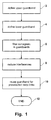
- Fig. 1 shows a flowchart illustrating the way in which the method is carried out.
- step 2 the upper guardband is defined, and in step 4 the lower guardband.
- signals within the guardbands are filtered out in step 6. This is done by channel filters in the devices of the TDD system, e.g. in base stations or in terminals. As a result, devices of a TDD system using the method according to the invention will face a smaller amount of interference in comparison to users of other TDD systems.
- step 8 action is taken to reduce interferences, e.g. by using a reduced output power, smaller radiation lobes, or receiving signals with increased sensitivity for signals having frequencies within the guardbands. These measures reduce the out-of-band power within the guardbands.
- the TDD operator can reuse the guardbands in step 10 for preselected radio links.
- the guardbands are used for self-backhauling of the TDD system reducing hardware requirements of the last mile which is otherwise based on cable connections. The method then stops with step 12.
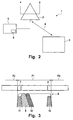
- Fig. 2 shows a TDD radio system 1 with a base station 2 connected to a core network 3 by a radio link 4.
- a logic 5 responsible for the transmission and reception of signals over the air interface.
- the logic 5 comprises a channel filter 5 to provide an upper guardband and a corresponding channel filter (not shown) to provide a lower guardband.
- Fig. 3 shows the frequency ranges associated with the operation of the base station 2.
- the operator of the base station 2 is using a frequency spectrum F1, whereas competitors use frequency spectra F2 and F3.
- the frequency specra might be granted to them by a regulator.
- the spectrum F1 has an upper guardband 6 and lower guardband 7.
- the multitude of channel filters provide a spectrum mask 8.
- Output spectra 9, 10 of a carrier frequency are located between the guardbands 6, 7.
- the output spectra 11, 12 of the backhauling links are located in the lower and upper guardband respectively.
Landscapes
- Engineering & Computer Science (AREA)
- Computer Networks & Wireless Communication (AREA)
- Signal Processing (AREA)
- Mobile Radio Communication Systems (AREA)
- Radio Relay Systems (AREA)
- Time-Division Multiplex Systems (AREA)
Abstract
Description
- The invention relates to a base station for and a method of using the frequency spectrum of a time division duplex (TDD) radio system. The invention can be used in all wireless communication systems using TDD, such as Wifi systems, Wimax systems, UMTS-TDD systems or DECT systems.
- Wireless telecommunication systems, e.g. those offering telephone services, often use TDD. When using this technology for telephone services TDD faces a problem when two devices, e.g. two mobile phones, transmit and receive simultaneously and are connected to different TDD systems, e.g. TDD systems operated by different telecommunication companies. If the two TDD systems are not synchronized with each other the two devices encounter significant interferences if they use adjacent frequencies.
- Each TDD system services its users within a certain frequency range. This frequency range is granted by a regulator and might be licensed or unlicensed. To comply with the regulation the operator and the terminals use a multitude of channel filters to make sure that they only transmit signals within the given frequency spectrum. Despite the channel filters the transmitters within a TDD system, in particular the transmitters of the terminals, transmit their signals with an out-of-band power. This out-of-band power is responsible for the above-mentioned interferences.
- If the two TDD systems were synchronized the time slots used for the first device would be different from the time slots used for servicing the second device. A synchronization would thus avoid the above-mentioned interferences. However, apart from Korea wireless telecommunication systems using TDD are not synchronized.
- It is an object of the invention to avoid interferences between two devices being serviced by different TDD systems for the case that the two TDD systems are not synchronized.
- Another object of the invention is to use the frequency spectrum of a TDD system more efficiently.
- Preferably, the above-mentioned objects are achieved simultaneously.
- These objects and other objects are solved by the features of the independent claims. Preferred embodiments of the invention are described by the features of the dependent claims. It should be emphasized that any reference signs in the claims shall not be construed as limiting the scope of the invention.
- According to a first aspect a method for using the frequency spectrum of a TDD system is suggested. In a first step an upper guardband at the upper edge of the frequency spectrum, and a lower guardband at the lower edge of the frequency spectrum is defined. In a second step the frequency spectrum is used in such a way that radio links are enabled between the two guardbands, but that emitted signals having frequencies within these guardbands are filtered out. As a consequence, the signal strength of signals having frequencies between the guard bands is higher than for frequencies within the upper or lower guard band. Therefore, users of the TDD system will only be serviced with frequencies between these guardbands, and emissions within the guardbands are kept to a minimum.
- Attenuating the unwanted signals in the guardbands is done with filters. In the simplest case the attenuation is achieved inherently by the channel filter.As an example, in a Wimax system covering the frequency range 3.4 GHz - 3.6 GHz each channel filter may have a bandwidth of 5 MHz. With the channel filters the TDD system provides the above-mentioned guardbands and would only be responsible for a certain out-of-band power in these guardbands, but not for out-of-band power outside the frequency range granted by the regulator.
- Using the guardbands reduces interferences of the above-mentioned type because users will be serviced at frequencies which are too different to experience a significant interference.
- In preferred embodiments actions for reducing interferences between a first device serviced by a first TDD system and a second device serviced by a second TDD system are taken, whereby the reduced amount of interference enable the operator to reuse the guardbands for preselected radio links. The preselected radio links might be two TDD radio links which is advantageous when the terminal associated with these links are located nearby. Preselected radio links might also be used for FDD links, e.g. one guardband for transmitting, one guardband for receiving. The preselected radio links might be used to service users in regions with poor reception conditions.
- This approach takes into account that future filters, in particular filters used in terminals, will probably have a higher quality. Filters of higher quality will then reduce the out-of-band power more than today. As a consequence the guardbands can then be made smaller or will become superfluous altogether. Even then the interoperability between TDD systems will still be guaranteed.
- The measures which can be taken to reduce the interferences within the guardbands may be
- Reducing the output power of transmitters, and thus reducing the out-of-band power
- Transmitting signals with smaller radiation lobes
- As a matter of fact these measures, applied for frequencies within the guardbands, can be taken individually or in combination. All serve to reduce interferences which enable the operator to reuse the guardbands.
- In a preferred embodiment the preselected radio link is used for a backhauling between base stations and the core network. Self-backhauling over the air reduces hardware requirements and costs as the last mile between an existing telecommunication network and the base stations for broadband radio systems such as WIMAX are a significant cost factor.
- These and other aspects of the invention will be apparent from and elucidated with reference to the embodiments thereafter. It should be noted that the use of reference signs shall not be construed as limiting the scope of the invention.
-
- Fig. 1
- shows a flowchart illustrating the way in which the method is carried out,
- Fig. 2
- shows a wireless telecommunication system using the invention.
- Fig. 1 shows a flowchart illustrating the way in which the method is carried out. In
step 2 the upper guardband is defined, and instep 4 the lower guardband. - In operation, signals within the guardbands are filtered out in
step 6. This is done by channel filters in the devices of the TDD system, e.g. in base stations or in terminals. As a result, devices of a TDD system using the method according to the invention will face a smaller amount of interference in comparison to users of other TDD systems. - In
step 8 action is taken to reduce interferences, e.g. by using a reduced output power, smaller radiation lobes, or receiving signals with increased sensitivity for signals having frequencies within the guardbands. These measures reduce the out-of-band power within the guardbands. - As a consequence, the TDD operator can reuse the guardbands in
step 10 for preselected radio links. The guardbands are used for self-backhauling of the TDD system reducing hardware requirements of the last mile which is otherwise based on cable connections. The method then stops withstep 12. - Fig. 2 shows a TDD radio system 1 with a
base station 2 connected to acore network 3 by aradio link 4. Associated with thebase station 2 is alogic 5 responsible for the transmission and reception of signals over the air interface. Thelogic 5 comprises achannel filter 5 to provide an upper guardband and a corresponding channel filter (not shown) to provide a lower guardband. - Fig. 3 shows the frequency ranges associated with the operation of the
base station 2. The operator of thebase station 2 is using a frequency spectrum F1, whereas competitors use frequency spectra F2 and F3. The frequency specra might be granted to them by a regulator. The spectrum F1 has anupper guardband 6 andlower guardband 7. The multitude of channel filters provide aspectrum mask 8.Output spectra guardbands output spectra -
- 01
- TDD system
- 02
- Base station
- 03
- Core network
- 04
- Logic
- 05
- Filter
- 06
- Upper guardband
- 07
- Lower guardband
- 08
- Spectrum mask
- 09
- Output spectrum of a carrier frequency
- 10
- Output spectrum of a carrier frequency
- 11
- Output spectrum of backhauling link
- 12
- Output spectrum of backhauling link
- F1
- frequency spectrum
- F2
- frequency spectrum
- F3
- frequency spectrum
Claims (10)
- Method with which a time division duplex (TDD) radio system (1) uses a frequency spectrum (F1), wherein- an upper guardband (6) at the upper edge of the frequency spectrum, and- a lower guardband (7) at the lower edge of the frequency spectrumare defined, whereby signals having frequencies within these guardbands are transmitted with a signal strength which is smaller than the signal strength of signals having frequencies between the guard bands.
- Method according to claim 1, characterized in that signals having frequencies within the upper guardband or within the lower guardband are transmitted with a reduced output power in comparison to signals having frequencies between the guardbands, and that the guardbands are reused for preselected radio links.
- Method according to claim 1, characterized in that signals having frequencies within the upper guardband or within the lower guardband are transmitted or received using antennas with smaller radiation lobes in comparison to signals having frequencies between the guardbands, and that the guardbands are reused for preselected radio links.
- Method according to claim 1, characterized in that signals having frequencies within the upper guardband or within the lower guardband are received with a higher sensitivity in comparison to signals having frequencies between the guardbands, and that the guardbands are reused for preselected radio links.
- Method according to claim 1, characterized in that the preselected radio links are used for a backhauling between a base station and a core network (3).
- Method according to claim 1, characterized in that the preselected radio links are used for providing a radio access in regions having reception conditions below average.
- Base station of a time division duplex (TDD) radio system, the base station (2) comprising channel filters (5) for the provison of an upper guard band (7) and of a lower guard band (6) at the edges of a frequency spectrum (F1) covered by said base station.
- Base station according to claim 8, characterized in that it is adapted to provide WIMAX services.
- Base station according to claim 8, characterized in that it is adapted to use the upper guard band and/or the lower guard band for a backhauling with the core network (3).
- Time division duplex (TDD) radio system, comprising a base station according to any of the claims claim 6 to 8.
Priority Applications (5)
| Application Number | Priority Date | Filing Date | Title |
|---|---|---|---|
| EP05292322A EP1784030B1 (en) | 2005-11-02 | 2005-11-02 | Method of using the frequency spectrum of a TDD radio system |
| AT05292322T ATE393553T1 (en) | 2005-11-02 | 2005-11-02 | METHOD FOR USING THE FREQUENCY SPECTRUM OF A TDD MOBILE SYSTEM |
| DE602005006291T DE602005006291T2 (en) | 2005-11-02 | 2005-11-02 | Method for using the frequency spectrum of a TDD mobile radio system |
| US11/582,340 US20070097943A1 (en) | 2005-11-02 | 2006-10-18 | Method of using the frequency spectrum of a TDD radio system |
| CNA2006101431344A CN1968491A (en) | 2005-11-02 | 2006-11-01 | Method of using the frequency spectrum of a TDD radio system |
Applications Claiming Priority (1)
| Application Number | Priority Date | Filing Date | Title |
|---|---|---|---|
| EP05292322A EP1784030B1 (en) | 2005-11-02 | 2005-11-02 | Method of using the frequency spectrum of a TDD radio system |
Publications (2)
| Publication Number | Publication Date |
|---|---|
| EP1784030A1 true EP1784030A1 (en) | 2007-05-09 |
| EP1784030B1 EP1784030B1 (en) | 2008-04-23 |
Family
ID=35788750
Family Applications (1)
| Application Number | Title | Priority Date | Filing Date |
|---|---|---|---|
| EP05292322A Expired - Lifetime EP1784030B1 (en) | 2005-11-02 | 2005-11-02 | Method of using the frequency spectrum of a TDD radio system |
Country Status (5)
| Country | Link |
|---|---|
| US (1) | US20070097943A1 (en) |
| EP (1) | EP1784030B1 (en) |
| CN (1) | CN1968491A (en) |
| AT (1) | ATE393553T1 (en) |
| DE (1) | DE602005006291T2 (en) |
Families Citing this family (8)
| Publication number | Priority date | Publication date | Assignee | Title |
|---|---|---|---|---|
| US20090034738A1 (en) * | 2007-07-31 | 2009-02-05 | Charles Rodney Starrett | Method and apparatus for securing layer 2 networks |
| CN101388718B (en) * | 2007-09-14 | 2012-10-03 | 北京三星通信技术研究有限公司 | TDD system coexistent frame slip and/or uplink downlink time slot ratio transmitting method |
| CN101778392B (en) * | 2009-01-08 | 2012-06-06 | 中国移动通信集团公司 | Method and equipment for using guard band |
| US8472390B2 (en) * | 2010-02-23 | 2013-06-25 | Motorola Solutions, Inc. | Method and apparatus for allocating spectrum |
| WO2015003347A1 (en) | 2013-07-10 | 2015-01-15 | 华为技术有限公司 | Communication method and apparatus thereof |
| US9312998B2 (en) * | 2013-09-30 | 2016-04-12 | T-Mobile Usa, Inc. | Filter-based guardband determination and subcarrier selection |
| US10785657B2 (en) | 2018-05-14 | 2020-09-22 | At&T Intellectual Property I, L.P. | Method and apparatus to efficiently support narrowband devices in broadband systems |
| US20230379849A1 (en) * | 2022-05-18 | 2023-11-23 | Charter Communications Operating, Llc | Conveyance of communications in a wireless network |
Citations (3)
| Publication number | Priority date | Publication date | Assignee | Title |
|---|---|---|---|---|
| EP1006745A1 (en) * | 1998-05-08 | 2000-06-07 | Ntt Mobile Communications Network Inc. | Radio communication system, and method and apparatus for frequency allocation |
| EP1349414A1 (en) * | 2002-03-27 | 2003-10-01 | NTT DoCoMo, Inc. | Radio control apparatus, data communication control method, and mobile communication system |
| US20040092232A1 (en) * | 2002-06-28 | 2004-05-13 | Interdigital Technology Corporation | Method and system for determining correct escape mechanisms and controlling interference in third generation wireless systems |
Family Cites Families (3)
| Publication number | Priority date | Publication date | Assignee | Title |
|---|---|---|---|---|
| JPS55111917A (en) * | 1979-02-22 | 1980-08-29 | Toshiba Corp | Reciprocating photo scanner |
| US5933421A (en) * | 1997-02-06 | 1999-08-03 | At&T Wireless Services Inc. | Method for frequency division duplex communications |
| US6760319B1 (en) * | 2000-07-05 | 2004-07-06 | Motorola, Inc. | Fixed frequency interference avoidance enhancement |
-
2005
- 2005-11-02 EP EP05292322A patent/EP1784030B1/en not_active Expired - Lifetime
- 2005-11-02 DE DE602005006291T patent/DE602005006291T2/en not_active Expired - Lifetime
- 2005-11-02 AT AT05292322T patent/ATE393553T1/en not_active IP Right Cessation
-
2006
- 2006-10-18 US US11/582,340 patent/US20070097943A1/en not_active Abandoned
- 2006-11-01 CN CNA2006101431344A patent/CN1968491A/en active Pending
Patent Citations (3)
| Publication number | Priority date | Publication date | Assignee | Title |
|---|---|---|---|---|
| EP1006745A1 (en) * | 1998-05-08 | 2000-06-07 | Ntt Mobile Communications Network Inc. | Radio communication system, and method and apparatus for frequency allocation |
| EP1349414A1 (en) * | 2002-03-27 | 2003-10-01 | NTT DoCoMo, Inc. | Radio control apparatus, data communication control method, and mobile communication system |
| US20040092232A1 (en) * | 2002-06-28 | 2004-05-13 | Interdigital Technology Corporation | Method and system for determining correct escape mechanisms and controlling interference in third generation wireless systems |
Non-Patent Citations (1)
| Title |
|---|
| QINGYU MIAO ET AL: "An analysis of the interference in the TDD-CDMA system", PROCEEDINGS OF IEEE TENCON 2000. IEEE REGION 10 CONFERENCE. KUALA LUMPUR, SEPT. 24 - 27, 2000, IEEE REGION 10 ANNUAL CONFERENCE, NEW YORK, NY : IEEE, US, vol. VOL. 1 OF 3, August 2000 (2000-08-01), pages I - 333, XP002955267, ISBN: 0-7803-6356-6 * |
Also Published As
| Publication number | Publication date |
|---|---|
| DE602005006291D1 (en) | 2008-06-05 |
| DE602005006291T2 (en) | 2008-07-31 |
| ATE393553T1 (en) | 2008-05-15 |
| EP1784030B1 (en) | 2008-04-23 |
| US20070097943A1 (en) | 2007-05-03 |
| CN1968491A (en) | 2007-05-23 |
Similar Documents
| Publication | Publication Date | Title |
|---|---|---|
| US9232564B2 (en) | Wireless transceivers with filter arrangement for WiFi and LTE coexistence | |
| CN101515818B (en) | Fdd inband backhauling and method thereof | |
| EP3145271B1 (en) | Equipment for femtocell telecommunications system | |
| US8121645B2 (en) | Software defined radio base station and configuration method | |
| US8175550B2 (en) | Method and apparatus for interference mitigation by removing a portion of the transmit signal | |
| US20070286156A1 (en) | Utilizing guard band between FDD and TDD wireless systems | |
| EP1006745B8 (en) | Radio communication system, and method and apparatus for frequency allocation | |
| KR102382906B1 (en) | Smart Scheduling for Intermodulation Distortion Avoidance in Multiple Uplink Transmissions | |
| US20090180406A1 (en) | Method for reducing interferences | |
| MXPA04003174A (en) | Method for in-building distribution using wireless access technologiy. | |
| CA2440609A1 (en) | Communications apparatus and method | |
| US20150365951A1 (en) | Overlay of bearers in a radio communication system | |
| EP0780993A2 (en) | Radiotelephone transceiver operative over more than one frequency range | |
| KR101974549B1 (en) | Mobile base station apparatus and wireless communication method using the same | |
| EP1784030A1 (en) | Method of using the frequency spectrum of a TDD radio system | |
| CA2616207A1 (en) | Converting a wireless system deployment from one duplexing scheme to another | |
| US12537556B2 (en) | Method and apparatus for network assignment of the user equipment transmitter local oscillator frequency | |
| CN1153381C (en) | Mobile radio system and mobile station operating in duplex and half-duplex mode | |
| KR20080027840A (en) | Communication device and associated method comprising integrated digital camera operating at different frequencies | |
| KR101082346B1 (en) | Repeater for mobile communications system capable of selecting a channel frequency | |
| US20080279290A1 (en) | Technique for Operating a Communication System at a Higher Spectral Utilization for Wireless Broadband Applications | |
| KR20180027349A (en) | Mobile base station apparatus | |
| KR101782114B1 (en) | Mobile base station apparatus and wireless communication method using the same | |
| CN120677796A (en) | Time slot structure and start symbol for unlicensed spectrum side-link operation | |
| KR20020015456A (en) | System and method of B-WLL channel repeater using ISM frequency band |
Legal Events
| Date | Code | Title | Description |
|---|---|---|---|
| PUAI | Public reference made under article 153(3) epc to a published international application that has entered the european phase |
Free format text: ORIGINAL CODE: 0009012 |
|
| 17P | Request for examination filed |
Effective date: 20060425 |
|
| AK | Designated contracting states |
Kind code of ref document: A1 Designated state(s): AT BE BG CH CY CZ DE DK EE ES FI FR GB GR HU IE IS IT LI LT LU LV MC NL PL PT RO SE SI SK TR |
|
| AX | Request for extension of the european patent |
Extension state: AL BA HR MK YU |
|
| GRAP | Despatch of communication of intention to grant a patent |
Free format text: ORIGINAL CODE: EPIDOSNIGR1 |
|
| AKX | Designation fees paid |
Designated state(s): AT BE BG CH CY CZ DE DK EE ES FI FR GB GR HU IE IS IT LI LT LU LV MC NL PL PT RO SE SI SK TR |
|
| GRAS | Grant fee paid |
Free format text: ORIGINAL CODE: EPIDOSNIGR3 |
|
| GRAA | (expected) grant |
Free format text: ORIGINAL CODE: 0009210 |
|
| AK | Designated contracting states |
Kind code of ref document: B1 Designated state(s): AT BE BG CH CY CZ DE DK EE ES FI FR GB GR HU IE IS IT LI LT LU LV MC NL PL PT RO SE SI SK TR |
|
| REG | Reference to a national code |
Ref country code: GB Ref legal event code: FG4D |
|
| REG | Reference to a national code |
Ref country code: CH Ref legal event code: EP |
|
| REF | Corresponds to: |
Ref document number: 602005006291 Country of ref document: DE Date of ref document: 20080605 Kind code of ref document: P |
|
| REG | Reference to a national code |
Ref country code: IE Ref legal event code: FG4D Free format text: LANGUAGE OF EP DOCUMENT: FRENCH |
|
| PG25 | Lapsed in a contracting state [announced via postgrant information from national office to epo] |
Ref country code: SI Free format text: LAPSE BECAUSE OF FAILURE TO SUBMIT A TRANSLATION OF THE DESCRIPTION OR TO PAY THE FEE WITHIN THE PRESCRIBED TIME-LIMIT Effective date: 20080423 |
|
| NLV1 | Nl: lapsed or annulled due to failure to fulfill the requirements of art. 29p and 29m of the patents act | ||
| ET | Fr: translation filed | ||
| PG25 | Lapsed in a contracting state [announced via postgrant information from national office to epo] |
Ref country code: FI Free format text: LAPSE BECAUSE OF FAILURE TO SUBMIT A TRANSLATION OF THE DESCRIPTION OR TO PAY THE FEE WITHIN THE PRESCRIBED TIME-LIMIT Effective date: 20080423 Ref country code: NL Free format text: LAPSE BECAUSE OF FAILURE TO SUBMIT A TRANSLATION OF THE DESCRIPTION OR TO PAY THE FEE WITHIN THE PRESCRIBED TIME-LIMIT Effective date: 20080423 Ref country code: ES Free format text: LAPSE BECAUSE OF FAILURE TO SUBMIT A TRANSLATION OF THE DESCRIPTION OR TO PAY THE FEE WITHIN THE PRESCRIBED TIME-LIMIT Effective date: 20080803 Ref country code: BG Free format text: LAPSE BECAUSE OF FAILURE TO SUBMIT A TRANSLATION OF THE DESCRIPTION OR TO PAY THE FEE WITHIN THE PRESCRIBED TIME-LIMIT Effective date: 20080723 Ref country code: PT Free format text: LAPSE BECAUSE OF FAILURE TO SUBMIT A TRANSLATION OF THE DESCRIPTION OR TO PAY THE FEE WITHIN THE PRESCRIBED TIME-LIMIT Effective date: 20080923 |
|
| PG25 | Lapsed in a contracting state [announced via postgrant information from national office to epo] |
Ref country code: LV Free format text: LAPSE BECAUSE OF FAILURE TO SUBMIT A TRANSLATION OF THE DESCRIPTION OR TO PAY THE FEE WITHIN THE PRESCRIBED TIME-LIMIT Effective date: 20080423 Ref country code: AT Free format text: LAPSE BECAUSE OF FAILURE TO SUBMIT A TRANSLATION OF THE DESCRIPTION OR TO PAY THE FEE WITHIN THE PRESCRIBED TIME-LIMIT Effective date: 20080423 Ref country code: PL Free format text: LAPSE BECAUSE OF FAILURE TO SUBMIT A TRANSLATION OF THE DESCRIPTION OR TO PAY THE FEE WITHIN THE PRESCRIBED TIME-LIMIT Effective date: 20080423 |
|
| PG25 | Lapsed in a contracting state [announced via postgrant information from national office to epo] |
Ref country code: IS Free format text: LAPSE BECAUSE OF FAILURE TO SUBMIT A TRANSLATION OF THE DESCRIPTION OR TO PAY THE FEE WITHIN THE PRESCRIBED TIME-LIMIT Effective date: 20080823 |
|
| PG25 | Lapsed in a contracting state [announced via postgrant information from national office to epo] |
Ref country code: DK Free format text: LAPSE BECAUSE OF FAILURE TO SUBMIT A TRANSLATION OF THE DESCRIPTION OR TO PAY THE FEE WITHIN THE PRESCRIBED TIME-LIMIT Effective date: 20080423 Ref country code: CZ Free format text: LAPSE BECAUSE OF FAILURE TO SUBMIT A TRANSLATION OF THE DESCRIPTION OR TO PAY THE FEE WITHIN THE PRESCRIBED TIME-LIMIT Effective date: 20080423 Ref country code: LT Free format text: LAPSE BECAUSE OF FAILURE TO SUBMIT A TRANSLATION OF THE DESCRIPTION OR TO PAY THE FEE WITHIN THE PRESCRIBED TIME-LIMIT Effective date: 20080423 Ref country code: SE Free format text: LAPSE BECAUSE OF FAILURE TO SUBMIT A TRANSLATION OF THE DESCRIPTION OR TO PAY THE FEE WITHIN THE PRESCRIBED TIME-LIMIT Effective date: 20080723 |
|
| PG25 | Lapsed in a contracting state [announced via postgrant information from national office to epo] |
Ref country code: RO Free format text: LAPSE BECAUSE OF FAILURE TO SUBMIT A TRANSLATION OF THE DESCRIPTION OR TO PAY THE FEE WITHIN THE PRESCRIBED TIME-LIMIT Effective date: 20080423 Ref country code: SK Free format text: LAPSE BECAUSE OF FAILURE TO SUBMIT A TRANSLATION OF THE DESCRIPTION OR TO PAY THE FEE WITHIN THE PRESCRIBED TIME-LIMIT Effective date: 20080423 Ref country code: BE Free format text: LAPSE BECAUSE OF FAILURE TO SUBMIT A TRANSLATION OF THE DESCRIPTION OR TO PAY THE FEE WITHIN THE PRESCRIBED TIME-LIMIT Effective date: 20080423 |
|
| PLBE | No opposition filed within time limit |
Free format text: ORIGINAL CODE: 0009261 |
|
| STAA | Information on the status of an ep patent application or granted ep patent |
Free format text: STATUS: NO OPPOSITION FILED WITHIN TIME LIMIT |
|
| 26N | No opposition filed |
Effective date: 20090126 |
|
| PG25 | Lapsed in a contracting state [announced via postgrant information from national office to epo] |
Ref country code: EE Free format text: LAPSE BECAUSE OF FAILURE TO SUBMIT A TRANSLATION OF THE DESCRIPTION OR TO PAY THE FEE WITHIN THE PRESCRIBED TIME-LIMIT Effective date: 20080423 |
|
| PG25 | Lapsed in a contracting state [announced via postgrant information from national office to epo] |
Ref country code: MC Free format text: LAPSE BECAUSE OF NON-PAYMENT OF DUE FEES Effective date: 20081130 |
|
| PG25 | Lapsed in a contracting state [announced via postgrant information from national office to epo] |
Ref country code: IT Free format text: LAPSE BECAUSE OF FAILURE TO SUBMIT A TRANSLATION OF THE DESCRIPTION OR TO PAY THE FEE WITHIN THE PRESCRIBED TIME-LIMIT Effective date: 20080423 |
|
| PG25 | Lapsed in a contracting state [announced via postgrant information from national office to epo] |
Ref country code: IE Free format text: LAPSE BECAUSE OF NON-PAYMENT OF DUE FEES Effective date: 20081102 |
|
| REG | Reference to a national code |
Ref country code: CH Ref legal event code: PL |
|
| PG25 | Lapsed in a contracting state [announced via postgrant information from national office to epo] |
Ref country code: LU Free format text: LAPSE BECAUSE OF NON-PAYMENT OF DUE FEES Effective date: 20081102 Ref country code: HU Free format text: LAPSE BECAUSE OF FAILURE TO SUBMIT A TRANSLATION OF THE DESCRIPTION OR TO PAY THE FEE WITHIN THE PRESCRIBED TIME-LIMIT Effective date: 20081024 Ref country code: CY Free format text: LAPSE BECAUSE OF FAILURE TO SUBMIT A TRANSLATION OF THE DESCRIPTION OR TO PAY THE FEE WITHIN THE PRESCRIBED TIME-LIMIT Effective date: 20080423 |
|
| PG25 | Lapsed in a contracting state [announced via postgrant information from national office to epo] |
Ref country code: TR Free format text: LAPSE BECAUSE OF FAILURE TO SUBMIT A TRANSLATION OF THE DESCRIPTION OR TO PAY THE FEE WITHIN THE PRESCRIBED TIME-LIMIT Effective date: 20080423 |
|
| PG25 | Lapsed in a contracting state [announced via postgrant information from national office to epo] |
Ref country code: CH Free format text: LAPSE BECAUSE OF NON-PAYMENT OF DUE FEES Effective date: 20091130 Ref country code: LI Free format text: LAPSE BECAUSE OF NON-PAYMENT OF DUE FEES Effective date: 20091130 Ref country code: GR Free format text: LAPSE BECAUSE OF FAILURE TO SUBMIT A TRANSLATION OF THE DESCRIPTION OR TO PAY THE FEE WITHIN THE PRESCRIBED TIME-LIMIT Effective date: 20080724 |
|
| REG | Reference to a national code |
Ref country code: FR Ref legal event code: GC Effective date: 20131018 |
|
| REG | Reference to a national code |
Ref country code: FR Ref legal event code: CA Effective date: 20150521 |
|
| REG | Reference to a national code |
Ref country code: FR Ref legal event code: CA Effective date: 20150521 |
|
| REG | Reference to a national code |
Ref country code: FR Ref legal event code: PLFP Year of fee payment: 11 |
|
| REG | Reference to a national code |
Ref country code: FR Ref legal event code: PLFP Year of fee payment: 12 |
|
| REG | Reference to a national code |
Ref country code: FR Ref legal event code: PLFP Year of fee payment: 13 |
|
| REG | Reference to a national code |
Ref country code: DE Ref legal event code: R082 Ref document number: 602005006291 Country of ref document: DE Representative=s name: METACOM LEGAL RECHTSANWAELTE, DE Ref country code: DE Ref legal event code: R082 Ref document number: 602005006291 Country of ref document: DE Representative=s name: METACOM LEGAL, DE Ref country code: DE Ref legal event code: R081 Ref document number: 602005006291 Country of ref document: DE Owner name: WSOU INVESTMENTS, LLC, LOS ANGELES, US Free format text: FORMER OWNER: ALCATEL LUCENT, PARIS, FR Ref country code: DE Ref legal event code: R082 Ref document number: 602005006291 Country of ref document: DE Representative=s name: BARKHOFF REIMANN VOSSIUS, DE |
|
| REG | Reference to a national code |
Ref country code: GB Ref legal event code: 732E Free format text: REGISTERED BETWEEN 20200827 AND 20200902 |
|
| REG | Reference to a national code |
Ref country code: DE Ref legal event code: R082 Ref document number: 602005006291 Country of ref document: DE Representative=s name: METACOM LEGAL RECHTSANWAELTE, DE Ref country code: DE Ref legal event code: R082 Ref document number: 602005006291 Country of ref document: DE Representative=s name: METACOM LEGAL, DE |
|
| P01 | Opt-out of the competence of the unified patent court (upc) registered |
Effective date: 20230606 |
|
| PGFP | Annual fee paid to national office [announced via postgrant information from national office to epo] |
Ref country code: DE Payment date: 20250429 Year of fee payment: 20 |
|
| PGFP | Annual fee paid to national office [announced via postgrant information from national office to epo] |
Ref country code: GB Payment date: 20250428 Year of fee payment: 20 |
|
| PGFP | Annual fee paid to national office [announced via postgrant information from national office to epo] |
Ref country code: FR Payment date: 20250425 Year of fee payment: 20 |
|
| REG | Reference to a national code |
Ref country code: DE Ref legal event code: R071 Ref document number: 602005006291 Country of ref document: DE |
|
| REG | Reference to a national code |
Ref country code: GB Ref legal event code: PE20 Expiry date: 20251101 |