EP1783216A1 - Telomerase-inhibitory ena oligonucleotide - Google Patents
Telomerase-inhibitory ena oligonucleotide Download PDFInfo
- Publication number
- EP1783216A1 EP1783216A1 EP05743855A EP05743855A EP1783216A1 EP 1783216 A1 EP1783216 A1 EP 1783216A1 EP 05743855 A EP05743855 A EP 05743855A EP 05743855 A EP05743855 A EP 05743855A EP 1783216 A1 EP1783216 A1 EP 1783216A1
- Authority
- EP
- European Patent Office
- Prior art keywords
- compound
- group represented
- formula
- acceptable salt
- pharmacologically acceptable
- Prior art date
- Legal status (The legal status is an assumption and is not a legal conclusion. Google has not performed a legal analysis and makes no representation as to the accuracy of the status listed.)
- Withdrawn
Links
- 108091034117 Oligonucleotide Proteins 0.000 title description 11
- 150000001875 compounds Chemical class 0.000 claims abstract description 395
- 150000003839 salts Chemical class 0.000 claims abstract description 60
- 108010017842 Telomerase Proteins 0.000 claims abstract description 24
- 201000010099 disease Diseases 0.000 claims abstract description 11
- 208000037265 diseases, disorders, signs and symptoms Diseases 0.000 claims abstract description 11
- 238000000034 method Methods 0.000 claims description 12
- 239000000203 mixture Substances 0.000 claims description 12
- 201000011510 cancer Diseases 0.000 claims description 11
- 206010028980 Neoplasm Diseases 0.000 claims description 10
- 230000002401 inhibitory effect Effects 0.000 claims description 8
- FNYYDRRCUPHASE-WXAMSNGASA-N 4-[[5-[5-[(3as,4s,6ar)-2-oxo-1,3,3a,4,6,6a-hexahydrothieno[3,4-d]imidazol-4-yl]pentanoylamino]-1-carboxypentyl]carbamoyl]benzenediazonium;chloride Chemical compound [Cl-].C([C@H]1[C@H]2NC(=O)N[C@H]2CS1)CCCC(=O)NCCCCC(C(=O)O)NC(=O)C1=CC=C([N+]#N)C=C1 FNYYDRRCUPHASE-WXAMSNGASA-N 0.000 claims description 7
- 239000004480 active ingredient Substances 0.000 claims description 5
- 239000003795 chemical substances by application Substances 0.000 claims description 5
- 239000003814 drug Substances 0.000 claims description 5
- 241001465754 Metazoa Species 0.000 claims description 4
- 125000002887 hydroxy group Chemical group [H]O* 0.000 claims description 4
- 125000004435 hydrogen atom Chemical group [H]* 0.000 claims description 2
- 229940123582 Telomerase inhibitor Drugs 0.000 claims 1
- 239000003277 telomerase inhibitor Substances 0.000 claims 1
- 230000009471 action Effects 0.000 abstract description 3
- WEVYAHXRMPXWCK-UHFFFAOYSA-N Acetonitrile Chemical compound CC#N WEVYAHXRMPXWCK-UHFFFAOYSA-N 0.000 description 243
- 239000000243 solution Substances 0.000 description 84
- 239000007864 aqueous solution Substances 0.000 description 64
- IOLCXVTUBQKXJR-UHFFFAOYSA-M potassium bromide Chemical compound [K+].[Br-] IOLCXVTUBQKXJR-UHFFFAOYSA-M 0.000 description 44
- -1 alkali metal salts Chemical class 0.000 description 38
- AVBGNFCMKJOFIN-UHFFFAOYSA-N triethylammonium acetate Chemical compound CC(O)=O.CCN(CC)CC AVBGNFCMKJOFIN-UHFFFAOYSA-N 0.000 description 35
- XLYOFNOQVPJJNP-UHFFFAOYSA-N water Substances O XLYOFNOQVPJJNP-UHFFFAOYSA-N 0.000 description 23
- 238000004255 ion exchange chromatography Methods 0.000 description 22
- 239000008363 phosphate buffer Substances 0.000 description 22
- 230000015572 biosynthetic process Effects 0.000 description 21
- 238000000746 purification Methods 0.000 description 21
- 238000003786 synthesis reaction Methods 0.000 description 21
- 239000002585 base Substances 0.000 description 19
- 108010057210 telomerase RNA Proteins 0.000 description 19
- 210000004027 cell Anatomy 0.000 description 17
- 238000004007 reversed phase HPLC Methods 0.000 description 17
- 239000005289 controlled pore glass Substances 0.000 description 16
- 239000002773 nucleotide Substances 0.000 description 16
- 125000003729 nucleotide group Chemical group 0.000 description 16
- 230000000295 complement effect Effects 0.000 description 15
- 238000002330 electrospray ionisation mass spectrometry Methods 0.000 description 15
- 150000002500 ions Chemical class 0.000 description 15
- 238000010511 deprotection reaction Methods 0.000 description 12
- 239000002502 liposome Substances 0.000 description 11
- 150000008300 phosphoramidites Chemical class 0.000 description 11
- 239000002904 solvent Substances 0.000 description 11
- 230000000694 effects Effects 0.000 description 10
- 229940126062 Compound A Drugs 0.000 description 9
- NLDMNSXOCDLTTB-UHFFFAOYSA-N Heterophylliin A Natural products O1C2COC(=O)C3=CC(O)=C(O)C(O)=C3C3=C(O)C(O)=C(O)C=C3C(=O)OC2C(OC(=O)C=2C=C(O)C(O)=C(O)C=2)C(O)C1OC(=O)C1=CC(O)=C(O)C(O)=C1 NLDMNSXOCDLTTB-UHFFFAOYSA-N 0.000 description 9
- 229920005654 Sephadex Polymers 0.000 description 9
- 239000012507 Sephadex™ Substances 0.000 description 9
- 238000002523 gelfiltration Methods 0.000 description 9
- 238000011033 desalting Methods 0.000 description 8
- 238000001246 colloidal dispersion Methods 0.000 description 7
- 230000008685 targeting Effects 0.000 description 7
- 238000012360 testing method Methods 0.000 description 7
- 108020004414 DNA Proteins 0.000 description 6
- DNIAPMSPPWPWGF-UHFFFAOYSA-N Propylene glycol Chemical compound CC(O)CO DNIAPMSPPWPWGF-UHFFFAOYSA-N 0.000 description 6
- 239000003153 chemical reaction reagent Substances 0.000 description 6
- 238000011160 research Methods 0.000 description 6
- 238000009472 formulation Methods 0.000 description 5
- 150000002632 lipids Chemical class 0.000 description 5
- 108020004707 nucleic acids Proteins 0.000 description 5
- 102000039446 nucleic acids Human genes 0.000 description 5
- 150000007523 nucleic acids Chemical class 0.000 description 5
- 210000000056 organ Anatomy 0.000 description 5
- JUJWROOIHBZHMG-UHFFFAOYSA-N Pyridine Chemical compound C1=CC=NC=C1 JUJWROOIHBZHMG-UHFFFAOYSA-N 0.000 description 4
- JLCPHMBAVCMARE-UHFFFAOYSA-N [3-[[3-[[3-[[3-[[3-[[3-[[3-[[3-[[3-[[3-[[3-[[5-(2-amino-6-oxo-1H-purin-9-yl)-3-[[3-[[3-[[3-[[3-[[3-[[5-(2-amino-6-oxo-1H-purin-9-yl)-3-[[5-(2-amino-6-oxo-1H-purin-9-yl)-3-hydroxyoxolan-2-yl]methoxy-hydroxyphosphoryl]oxyoxolan-2-yl]methoxy-hydroxyphosphoryl]oxy-5-(5-methyl-2,4-dioxopyrimidin-1-yl)oxolan-2-yl]methoxy-hydroxyphosphoryl]oxy-5-(6-aminopurin-9-yl)oxolan-2-yl]methoxy-hydroxyphosphoryl]oxy-5-(6-aminopurin-9-yl)oxolan-2-yl]methoxy-hydroxyphosphoryl]oxy-5-(6-aminopurin-9-yl)oxolan-2-yl]methoxy-hydroxyphosphoryl]oxy-5-(6-aminopurin-9-yl)oxolan-2-yl]methoxy-hydroxyphosphoryl]oxyoxolan-2-yl]methoxy-hydroxyphosphoryl]oxy-5-(5-methyl-2,4-dioxopyrimidin-1-yl)oxolan-2-yl]methoxy-hydroxyphosphoryl]oxy-5-(4-amino-2-oxopyrimidin-1-yl)oxolan-2-yl]methoxy-hydroxyphosphoryl]oxy-5-(5-methyl-2,4-dioxopyrimidin-1-yl)oxolan-2-yl]methoxy-hydroxyphosphoryl]oxy-5-(5-methyl-2,4-dioxopyrimidin-1-yl)oxolan-2-yl]methoxy-hydroxyphosphoryl]oxy-5-(6-aminopurin-9-yl)oxolan-2-yl]methoxy-hydroxyphosphoryl]oxy-5-(6-aminopurin-9-yl)oxolan-2-yl]methoxy-hydroxyphosphoryl]oxy-5-(4-amino-2-oxopyrimidin-1-yl)oxolan-2-yl]methoxy-hydroxyphosphoryl]oxy-5-(4-amino-2-oxopyrimidin-1-yl)oxolan-2-yl]methoxy-hydroxyphosphoryl]oxy-5-(4-amino-2-oxopyrimidin-1-yl)oxolan-2-yl]methoxy-hydroxyphosphoryl]oxy-5-(6-aminopurin-9-yl)oxolan-2-yl]methoxy-hydroxyphosphoryl]oxy-5-(4-amino-2-oxopyrimidin-1-yl)oxolan-2-yl]methyl [5-(6-aminopurin-9-yl)-2-(hydroxymethyl)oxolan-3-yl] hydrogen phosphate Polymers Cc1cn(C2CC(OP(O)(=O)OCC3OC(CC3OP(O)(=O)OCC3OC(CC3O)n3cnc4c3nc(N)[nH]c4=O)n3cnc4c3nc(N)[nH]c4=O)C(COP(O)(=O)OC3CC(OC3COP(O)(=O)OC3CC(OC3COP(O)(=O)OC3CC(OC3COP(O)(=O)OC3CC(OC3COP(O)(=O)OC3CC(OC3COP(O)(=O)OC3CC(OC3COP(O)(=O)OC3CC(OC3COP(O)(=O)OC3CC(OC3COP(O)(=O)OC3CC(OC3COP(O)(=O)OC3CC(OC3COP(O)(=O)OC3CC(OC3COP(O)(=O)OC3CC(OC3COP(O)(=O)OC3CC(OC3COP(O)(=O)OC3CC(OC3COP(O)(=O)OC3CC(OC3COP(O)(=O)OC3CC(OC3COP(O)(=O)OC3CC(OC3CO)n3cnc4c(N)ncnc34)n3ccc(N)nc3=O)n3cnc4c(N)ncnc34)n3ccc(N)nc3=O)n3ccc(N)nc3=O)n3ccc(N)nc3=O)n3cnc4c(N)ncnc34)n3cnc4c(N)ncnc34)n3cc(C)c(=O)[nH]c3=O)n3cc(C)c(=O)[nH]c3=O)n3ccc(N)nc3=O)n3cc(C)c(=O)[nH]c3=O)n3cnc4c3nc(N)[nH]c4=O)n3cnc4c(N)ncnc34)n3cnc4c(N)ncnc34)n3cnc4c(N)ncnc34)n3cnc4c(N)ncnc34)O2)c(=O)[nH]c1=O JLCPHMBAVCMARE-UHFFFAOYSA-N 0.000 description 4
- 125000001797 benzyl group Chemical group [H]C1=C([H])C([H])=C(C([H])=C1[H])C([H])([H])* 0.000 description 4
- 229920002678 cellulose Polymers 0.000 description 4
- 235000010980 cellulose Nutrition 0.000 description 4
- 238000006243 chemical reaction Methods 0.000 description 4
- 239000003446 ligand Substances 0.000 description 4
- HQKMJHAJHXVSDF-UHFFFAOYSA-L magnesium stearate Chemical compound [Mg+2].CCCCCCCCCCCCCCCCCC([O-])=O.CCCCCCCCCCCCCCCCCC([O-])=O HQKMJHAJHXVSDF-UHFFFAOYSA-L 0.000 description 4
- 238000004519 manufacturing process Methods 0.000 description 4
- 230000002829 reductive effect Effects 0.000 description 4
- QTBSBXVTEAMEQO-UHFFFAOYSA-N Acetic acid Chemical compound CC(O)=O QTBSBXVTEAMEQO-UHFFFAOYSA-N 0.000 description 3
- YMWUJEATGCHHMB-UHFFFAOYSA-N Dichloromethane Chemical compound ClCCl YMWUJEATGCHHMB-UHFFFAOYSA-N 0.000 description 3
- 108090000790 Enzymes Proteins 0.000 description 3
- 102000004190 Enzymes Human genes 0.000 description 3
- LYCAIKOWRPUZTN-UHFFFAOYSA-N Ethylene glycol Chemical compound OCCO LYCAIKOWRPUZTN-UHFFFAOYSA-N 0.000 description 3
- XEEYBQQBJWHFJM-UHFFFAOYSA-N Iron Chemical compound [Fe] XEEYBQQBJWHFJM-UHFFFAOYSA-N 0.000 description 3
- 229920000881 Modified starch Polymers 0.000 description 3
- ZMANZCXQSJIPKH-UHFFFAOYSA-N Triethylamine Chemical compound CCN(CC)CC ZMANZCXQSJIPKH-UHFFFAOYSA-N 0.000 description 3
- DPXJVFZANSGRMM-UHFFFAOYSA-N acetic acid;2,3,4,5,6-pentahydroxyhexanal;sodium Chemical compound [Na].CC(O)=O.OCC(O)C(O)C(O)C(O)C=O DPXJVFZANSGRMM-UHFFFAOYSA-N 0.000 description 3
- 125000004432 carbon atom Chemical group C* 0.000 description 3
- 239000001913 cellulose Substances 0.000 description 3
- AUZONCFQVSMFAP-UHFFFAOYSA-N disulfiram Chemical compound CCN(CC)C(=S)SSC(=S)N(CC)CC AUZONCFQVSMFAP-UHFFFAOYSA-N 0.000 description 3
- 238000001914 filtration Methods 0.000 description 3
- 239000012634 fragment Substances 0.000 description 3
- 238000002347 injection Methods 0.000 description 3
- 239000007924 injection Substances 0.000 description 3
- 238000002844 melting Methods 0.000 description 3
- 230000008018 melting Effects 0.000 description 3
- 235000019426 modified starch Nutrition 0.000 description 3
- 239000002777 nucleoside Substances 0.000 description 3
- 125000003835 nucleoside group Chemical group 0.000 description 3
- 239000000546 pharmaceutical excipient Substances 0.000 description 3
- 150000003904 phospholipids Chemical class 0.000 description 3
- SXADIBFZNXBEGI-UHFFFAOYSA-N phosphoramidous acid Chemical compound NP(O)O SXADIBFZNXBEGI-UHFFFAOYSA-N 0.000 description 3
- 230000009758 senescence Effects 0.000 description 3
- 235000012239 silicon dioxide Nutrition 0.000 description 3
- 150000003467 sulfuric acid derivatives Chemical class 0.000 description 3
- 108091035539 telomere Proteins 0.000 description 3
- 210000003411 telomere Anatomy 0.000 description 3
- 102000055501 telomere Human genes 0.000 description 3
- 229920001285 xanthan gum Polymers 0.000 description 3
- 125000001731 2-cyanoethyl group Chemical group [H]C([H])(*)C([H])([H])C#N 0.000 description 2
- WRMNZCZEMHIOCP-UHFFFAOYSA-N 2-phenylethanol Chemical compound OCCC1=CC=CC=C1 WRMNZCZEMHIOCP-UHFFFAOYSA-N 0.000 description 2
- VHUUQVKOLVNVRT-UHFFFAOYSA-N Ammonium hydroxide Chemical compound [NH4+].[OH-] VHUUQVKOLVNVRT-UHFFFAOYSA-N 0.000 description 2
- VTYYLEPIZMXCLO-UHFFFAOYSA-L Calcium carbonate Chemical compound [Ca+2].[O-]C([O-])=O VTYYLEPIZMXCLO-UHFFFAOYSA-L 0.000 description 2
- FBPFZTCFMRRESA-FSIIMWSLSA-N D-Glucitol Natural products OC[C@H](O)[C@H](O)[C@@H](O)[C@H](O)CO FBPFZTCFMRRESA-FSIIMWSLSA-N 0.000 description 2
- VZCYOOQTPOCHFL-OWOJBTEDSA-N Fumaric acid Chemical compound OC(=O)\C=C\C(O)=O VZCYOOQTPOCHFL-OWOJBTEDSA-N 0.000 description 2
- ZRALSGWEFCBTJO-UHFFFAOYSA-N Guanidine Chemical compound NC(N)=N ZRALSGWEFCBTJO-UHFFFAOYSA-N 0.000 description 2
- DGAQECJNVWCQMB-PUAWFVPOSA-M Ilexoside XXIX Chemical compound C[C@@H]1CC[C@@]2(CC[C@@]3(C(=CC[C@H]4[C@]3(CC[C@@H]5[C@@]4(CC[C@@H](C5(C)C)OS(=O)(=O)[O-])C)C)[C@@H]2[C@]1(C)O)C)C(=O)O[C@H]6[C@@H]([C@H]([C@@H]([C@H](O6)CO)O)O)O.[Na+] DGAQECJNVWCQMB-PUAWFVPOSA-M 0.000 description 2
- GUBGYTABKSRVRQ-QKKXKWKRSA-N Lactose Natural products OC[C@H]1O[C@@H](O[C@H]2[C@H](O)[C@@H](O)C(O)O[C@@H]2CO)[C@H](O)[C@@H](O)[C@H]1O GUBGYTABKSRVRQ-QKKXKWKRSA-N 0.000 description 2
- ROHFNLRQFUQHCH-UHFFFAOYSA-N Leucine Chemical compound CC(C)CC(N)C(O)=O ROHFNLRQFUQHCH-UHFFFAOYSA-N 0.000 description 2
- 239000000232 Lipid Bilayer Substances 0.000 description 2
- YNAVUWVOSKDBBP-UHFFFAOYSA-N Morpholine Chemical compound C1COCCN1 YNAVUWVOSKDBBP-UHFFFAOYSA-N 0.000 description 2
- JGFZNNIVVJXRND-UHFFFAOYSA-N N,N-Diisopropylethylamine (DIPEA) Chemical compound CCN(C(C)C)C(C)C JGFZNNIVVJXRND-UHFFFAOYSA-N 0.000 description 2
- PXHVJJICTQNCMI-UHFFFAOYSA-N Nickel Chemical compound [Ni] PXHVJJICTQNCMI-UHFFFAOYSA-N 0.000 description 2
- 102000015636 Oligopeptides Human genes 0.000 description 2
- 108010038807 Oligopeptides Proteins 0.000 description 2
- 229910019142 PO4 Inorganic materials 0.000 description 2
- ISWSIDIOOBJBQZ-UHFFFAOYSA-N Phenol Chemical compound OC1=CC=CC=C1 ISWSIDIOOBJBQZ-UHFFFAOYSA-N 0.000 description 2
- GLUUGHFHXGJENI-UHFFFAOYSA-N Piperazine Chemical compound C1CNCCN1 GLUUGHFHXGJENI-UHFFFAOYSA-N 0.000 description 2
- VYPSYNLAJGMNEJ-UHFFFAOYSA-N Silicium dioxide Chemical compound O=[Si]=O VYPSYNLAJGMNEJ-UHFFFAOYSA-N 0.000 description 2
- DBMJMQXJHONAFJ-UHFFFAOYSA-M Sodium laurylsulphate Chemical compound [Na+].CCCCCCCCCCCCOS([O-])(=O)=O DBMJMQXJHONAFJ-UHFFFAOYSA-M 0.000 description 2
- 229920002472 Starch Polymers 0.000 description 2
- 229930006000 Sucrose Natural products 0.000 description 2
- RYYWUUFWQRZTIU-UHFFFAOYSA-N Thiophosphoric acid Chemical group OP(O)(S)=O RYYWUUFWQRZTIU-UHFFFAOYSA-N 0.000 description 2
- 238000002835 absorbance Methods 0.000 description 2
- 239000000654 additive Substances 0.000 description 2
- WNLRTRBMVRJNCN-UHFFFAOYSA-N adipic acid Chemical compound OC(=O)CCCCC(O)=O WNLRTRBMVRJNCN-UHFFFAOYSA-N 0.000 description 2
- 235000011114 ammonium hydroxide Nutrition 0.000 description 2
- 229960000686 benzalkonium chloride Drugs 0.000 description 2
- CADWTSSKOVRVJC-UHFFFAOYSA-N benzyl(dimethyl)azanium;chloride Chemical compound [Cl-].C[NH+](C)CC1=CC=CC=C1 CADWTSSKOVRVJC-UHFFFAOYSA-N 0.000 description 2
- 229910052791 calcium Inorganic materials 0.000 description 2
- 239000011575 calcium Substances 0.000 description 2
- CJZGTCYPCWQAJB-UHFFFAOYSA-L calcium stearate Chemical compound [Ca+2].CCCCCCCCCCCCCCCCCC([O-])=O.CCCCCCCCCCCCCCCCCC([O-])=O CJZGTCYPCWQAJB-UHFFFAOYSA-L 0.000 description 2
- 235000013539 calcium stearate Nutrition 0.000 description 2
- 239000008116 calcium stearate Substances 0.000 description 2
- OSGAYBCDTDRGGQ-UHFFFAOYSA-L calcium sulfate Chemical compound [Ca+2].[O-]S([O-])(=O)=O OSGAYBCDTDRGGQ-UHFFFAOYSA-L 0.000 description 2
- 239000001768 carboxy methyl cellulose Substances 0.000 description 2
- OSASVXMJTNOKOY-UHFFFAOYSA-N chlorobutanol Chemical compound CC(C)(O)C(Cl)(Cl)Cl OSASVXMJTNOKOY-UHFFFAOYSA-N 0.000 description 2
- HVYWMOMLDIMFJA-DPAQBDIFSA-N cholesterol Chemical compound C1C=C2C[C@@H](O)CC[C@]2(C)[C@@H]2[C@@H]1[C@@H]1CC[C@H]([C@H](C)CCCC(C)C)[C@@]1(C)CC2 HVYWMOMLDIMFJA-DPAQBDIFSA-N 0.000 description 2
- 230000008878 coupling Effects 0.000 description 2
- 238000010168 coupling process Methods 0.000 description 2
- 238000005859 coupling reaction Methods 0.000 description 2
- OPTASPLRGRRNAP-UHFFFAOYSA-N cytosine Chemical compound NC=1C=CNC(=O)N=1 OPTASPLRGRRNAP-UHFFFAOYSA-N 0.000 description 2
- JXTHNDFMNIQAHM-UHFFFAOYSA-N dichloroacetic acid Chemical compound OC(=O)C(Cl)Cl JXTHNDFMNIQAHM-UHFFFAOYSA-N 0.000 description 2
- 235000014113 dietary fatty acids Nutrition 0.000 description 2
- 239000003085 diluting agent Substances 0.000 description 2
- 239000003995 emulsifying agent Substances 0.000 description 2
- 239000000194 fatty acid Substances 0.000 description 2
- 229930195729 fatty acid Natural products 0.000 description 2
- 210000003734 kidney Anatomy 0.000 description 2
- 239000008101 lactose Substances 0.000 description 2
- 235000019359 magnesium stearate Nutrition 0.000 description 2
- 229910052751 metal Inorganic materials 0.000 description 2
- 239000002184 metal Substances 0.000 description 2
- LXCFILQKKLGQFO-UHFFFAOYSA-N methylparaben Chemical compound COC(=O)C1=CC=C(O)C=C1 LXCFILQKKLGQFO-UHFFFAOYSA-N 0.000 description 2
- 239000000693 micelle Substances 0.000 description 2
- VLKZOEOYAKHREP-UHFFFAOYSA-N n-Hexane Chemical compound CCCCCC VLKZOEOYAKHREP-UHFFFAOYSA-N 0.000 description 2
- 235000021317 phosphate Nutrition 0.000 description 2
- WTJKGGKOPKCXLL-RRHRGVEJSA-N phosphatidylcholine Chemical compound CCCCCCCCCCCCCCCC(=O)OC[C@H](COP([O-])(=O)OCC[N+](C)(C)C)OC(=O)CCCCCCCC=CCCCCCCCC WTJKGGKOPKCXLL-RRHRGVEJSA-N 0.000 description 2
- 150000003013 phosphoric acid derivatives Chemical class 0.000 description 2
- 125000004437 phosphorous atom Chemical group 0.000 description 2
- 239000001267 polyvinylpyrrolidone Substances 0.000 description 2
- 235000013855 polyvinylpyrrolidone Nutrition 0.000 description 2
- 229920000036 polyvinylpyrrolidone Polymers 0.000 description 2
- 238000002360 preparation method Methods 0.000 description 2
- QELSKZZBTMNZEB-UHFFFAOYSA-N propylparaben Chemical compound CCCOC(=O)C1=CC=C(O)C=C1 QELSKZZBTMNZEB-UHFFFAOYSA-N 0.000 description 2
- 125000006239 protecting group Chemical group 0.000 description 2
- 230000001681 protective effect Effects 0.000 description 2
- 108090000623 proteins and genes Proteins 0.000 description 2
- UMJSCPRVCHMLSP-UHFFFAOYSA-N pyridine Natural products COC1=CC=CN=C1 UMJSCPRVCHMLSP-UHFFFAOYSA-N 0.000 description 2
- RMAQACBXLXPBSY-UHFFFAOYSA-N silicic acid Chemical compound O[Si](O)(O)O RMAQACBXLXPBSY-UHFFFAOYSA-N 0.000 description 2
- 229910052708 sodium Inorganic materials 0.000 description 2
- 239000011734 sodium Substances 0.000 description 2
- WXMKPNITSTVMEF-UHFFFAOYSA-M sodium benzoate Chemical compound [Na+].[O-]C(=O)C1=CC=CC=C1 WXMKPNITSTVMEF-UHFFFAOYSA-M 0.000 description 2
- 239000004299 sodium benzoate Substances 0.000 description 2
- 235000010234 sodium benzoate Nutrition 0.000 description 2
- 235000019333 sodium laurylsulphate Nutrition 0.000 description 2
- 239000007901 soft capsule Substances 0.000 description 2
- 239000000600 sorbitol Substances 0.000 description 2
- 235000010356 sorbitol Nutrition 0.000 description 2
- 238000013112 stability test Methods 0.000 description 2
- 239000008107 starch Substances 0.000 description 2
- 230000001954 sterilising effect Effects 0.000 description 2
- 238000004659 sterilization and disinfection Methods 0.000 description 2
- 239000000126 substance Substances 0.000 description 2
- KDYFGRWQOYBRFD-UHFFFAOYSA-N succinic acid Chemical compound OC(=O)CCC(O)=O KDYFGRWQOYBRFD-UHFFFAOYSA-N 0.000 description 2
- 229960004793 sucrose Drugs 0.000 description 2
- 235000000346 sugar Nutrition 0.000 description 2
- 238000005987 sulfurization reaction Methods 0.000 description 2
- 239000004094 surface-active agent Substances 0.000 description 2
- 239000000725 suspension Substances 0.000 description 2
- 208000024891 symptom Diseases 0.000 description 2
- 210000001519 tissue Anatomy 0.000 description 2
- 239000008215 water for injection Substances 0.000 description 2
- LYNDPCRWKNUDPQ-UHFFFAOYSA-N 1,1-dimethoxy-3,3,3-triphenylpropane-1,2-diol Chemical compound COC(C(C(C1=CC=CC=C1)(C1=CC=CC=C1)C1=CC=CC=C1)O)(OC)O LYNDPCRWKNUDPQ-UHFFFAOYSA-N 0.000 description 1
- JUDOLRSMWHVKGX-UHFFFAOYSA-N 1,1-dioxo-1$l^{6},2-benzodithiol-3-one Chemical compound C1=CC=C2C(=O)SS(=O)(=O)C2=C1 JUDOLRSMWHVKGX-UHFFFAOYSA-N 0.000 description 1
- KILNVBDSWZSGLL-KXQOOQHDSA-N 1,2-dihexadecanoyl-sn-glycero-3-phosphocholine Chemical compound CCCCCCCCCCCCCCCC(=O)OC[C@H](COP([O-])(=O)OCC[N+](C)(C)C)OC(=O)CCCCCCCCCCCCCCC KILNVBDSWZSGLL-KXQOOQHDSA-N 0.000 description 1
- IJFVSSZAOYLHEE-SSEXGKCCSA-N 1,2-dilauroyl-sn-glycero-3-phosphocholine Chemical compound CCCCCCCCCCCC(=O)OC[C@H](COP([O-])(=O)OCC[N+](C)(C)C)OC(=O)CCCCCCCCCCC IJFVSSZAOYLHEE-SSEXGKCCSA-N 0.000 description 1
- NRJAVPSFFCBXDT-HUESYALOSA-N 1,2-distearoyl-sn-glycero-3-phosphocholine Chemical compound CCCCCCCCCCCCCCCCCC(=O)OC[C@H](COP([O-])(=O)OCC[N+](C)(C)C)OC(=O)CCCCCCCCCCCCCCCCC NRJAVPSFFCBXDT-HUESYALOSA-N 0.000 description 1
- TZCPCKNHXULUIY-RGULYWFUSA-N 1,2-distearoyl-sn-glycero-3-phosphoserine Chemical compound CCCCCCCCCCCCCCCCCC(=O)OC[C@H](COP(O)(=O)OC[C@H](N)C(O)=O)OC(=O)CCCCCCCCCCCCCCCCC TZCPCKNHXULUIY-RGULYWFUSA-N 0.000 description 1
- FFQYKVHJPYQWER-JIMJEQGWSA-N 1-[(2r,4s,5s)-5-(hydroxymethyl)-4-(tritylamino)oxolan-2-yl]-5-methylpyrimidine-2,4-dione Chemical compound O=C1NC(=O)C(C)=CN1[C@@H]1O[C@H](CO)[C@@H](NC(C=2C=CC=CC=2)(C=2C=CC=CC=2)C=2C=CC=CC=2)C1 FFQYKVHJPYQWER-JIMJEQGWSA-N 0.000 description 1
- XGDRLCRGKUCBQL-UHFFFAOYSA-N 1h-imidazole-4,5-dicarbonitrile Chemical compound N#CC=1N=CNC=1C#N XGDRLCRGKUCBQL-UHFFFAOYSA-N 0.000 description 1
- QIJIUJYANDSEKG-UHFFFAOYSA-N 2,4,4-trimethylpentan-2-amine Chemical compound CC(C)(C)CC(C)(C)N QIJIUJYANDSEKG-UHFFFAOYSA-N 0.000 description 1
- MSWZFWKMSRAUBD-IVMDWMLBSA-N 2-amino-2-deoxy-D-glucopyranose Chemical compound N[C@H]1C(O)O[C@H](CO)[C@@H](O)[C@@H]1O MSWZFWKMSRAUBD-IVMDWMLBSA-N 0.000 description 1
- MYNLFGHAZLGJGP-UHFFFAOYSA-N 2-bromoethyl octadecanoate Chemical compound CCCCCCCCCCCCCCCCCC(=O)OCCBr MYNLFGHAZLGJGP-UHFFFAOYSA-N 0.000 description 1
- QTWJRLJHJPIABL-UHFFFAOYSA-N 2-methylphenol;3-methylphenol;4-methylphenol Chemical compound CC1=CC=C(O)C=C1.CC1=CC=CC(O)=C1.CC1=CC=CC=C1O QTWJRLJHJPIABL-UHFFFAOYSA-N 0.000 description 1
- HVCOBJNICQPDBP-UHFFFAOYSA-N 3-[3-[3,5-dihydroxy-6-methyl-4-(3,4,5-trihydroxy-6-methyloxan-2-yl)oxyoxan-2-yl]oxydecanoyloxy]decanoic acid;hydrate Chemical compound O.OC1C(OC(CC(=O)OC(CCCCCCC)CC(O)=O)CCCCCCC)OC(C)C(O)C1OC1C(O)C(O)C(O)C(C)O1 HVCOBJNICQPDBP-UHFFFAOYSA-N 0.000 description 1
- LRSASMSXMSNRBT-UHFFFAOYSA-N 5-methylcytosine Chemical compound CC1=CNC(=O)N=C1N LRSASMSXMSNRBT-UHFFFAOYSA-N 0.000 description 1
- 244000215068 Acacia senegal Species 0.000 description 1
- GUBGYTABKSRVRQ-XLOQQCSPSA-N Alpha-Lactose Chemical compound O[C@@H]1[C@@H](O)[C@@H](O)[C@@H](CO)O[C@H]1O[C@@H]1[C@@H](CO)O[C@H](O)[C@H](O)[C@H]1O GUBGYTABKSRVRQ-XLOQQCSPSA-N 0.000 description 1
- 239000005995 Aluminium silicate Substances 0.000 description 1
- 206010006187 Breast cancer Diseases 0.000 description 1
- 208000026310 Breast neoplasm Diseases 0.000 description 1
- YRGXVNBINOAMSD-KXPFFURISA-N CCC(O[C@H](C1)N(C=C(C)C(N2)=O)C2=O)=C1OP(O)(OC)=S Chemical compound CCC(O[C@H](C1)N(C=C(C)C(N2)=O)C2=O)=C1OP(O)(OC)=S YRGXVNBINOAMSD-KXPFFURISA-N 0.000 description 1
- 0 CC[C@](*)(C(C1O*)OC)O[C@]1[n]1c(N=C(N)NC2=O)c2nc1 Chemical compound CC[C@](*)(C(C1O*)OC)O[C@]1[n]1c(N=C(N)NC2=O)c2nc1 0.000 description 1
- OIEHMQQQPOLBIW-WMCDKUTBSA-N CC[C@](CC(C)(C)OC12)(C1OP(O)(OC)=O)O[C@H]2N(C=C(C)C(N1)=O)C1=O Chemical compound CC[C@](CC(C)(C)OC12)(C1OP(O)(OC)=O)O[C@H]2N(C=C(C)C(N1)=O)C1=O OIEHMQQQPOLBIW-WMCDKUTBSA-N 0.000 description 1
- VJVABGUZPLESFL-UHFFFAOYSA-N COCc(cc1)cc(OCc2ccccc2)c1OCc1ccccc1 Chemical compound COCc(cc1)cc(OCc2ccccc2)c1OCc1ccccc1 VJVABGUZPLESFL-UHFFFAOYSA-N 0.000 description 1
- OYPRJOBELJOOCE-UHFFFAOYSA-N Calcium Chemical compound [Ca] OYPRJOBELJOOCE-UHFFFAOYSA-N 0.000 description 1
- 229920002134 Carboxymethyl cellulose Polymers 0.000 description 1
- RYGMFSIKBFXOCR-UHFFFAOYSA-N Copper Chemical compound [Cu] RYGMFSIKBFXOCR-UHFFFAOYSA-N 0.000 description 1
- 229920002261 Corn starch Polymers 0.000 description 1
- 229920000742 Cotton Polymers 0.000 description 1
- 229920002785 Croscarmellose sodium Polymers 0.000 description 1
- FBPFZTCFMRRESA-KVTDHHQDSA-N D-Mannitol Chemical compound OC[C@@H](O)[C@@H](O)[C@H](O)[C@H](O)CO FBPFZTCFMRRESA-KVTDHHQDSA-N 0.000 description 1
- FBPFZTCFMRRESA-JGWLITMVSA-N D-glucitol Chemical compound OC[C@H](O)[C@@H](O)[C@H](O)[C@H](O)CO FBPFZTCFMRRESA-JGWLITMVSA-N 0.000 description 1
- 239000004287 Dehydroacetic acid Substances 0.000 description 1
- 229920002307 Dextran Polymers 0.000 description 1
- 229920001353 Dextrin Polymers 0.000 description 1
- 239000004375 Dextrin Substances 0.000 description 1
- BWLUMTFWVZZZND-UHFFFAOYSA-N Dibenzylamine Chemical compound C=1C=CC=CC=1CNCC1=CC=CC=C1 BWLUMTFWVZZZND-UHFFFAOYSA-N 0.000 description 1
- XBPCUCUWBYBCDP-UHFFFAOYSA-N Dicyclohexylamine Chemical compound C1CCCCC1NC1CCCCC1 XBPCUCUWBYBCDP-UHFFFAOYSA-N 0.000 description 1
- PIICEJLVQHRZGT-UHFFFAOYSA-N Ethylenediamine Chemical compound NCCN PIICEJLVQHRZGT-UHFFFAOYSA-N 0.000 description 1
- KRHYYFGTRYWZRS-UHFFFAOYSA-N Fluorane Chemical class F KRHYYFGTRYWZRS-UHFFFAOYSA-N 0.000 description 1
- 206010061968 Gastric neoplasm Diseases 0.000 description 1
- 108010010803 Gelatin Proteins 0.000 description 1
- WQZGKKKJIJFFOK-GASJEMHNSA-N Glucose Natural products OC[C@H]1OC(O)[C@H](O)[C@@H](O)[C@@H]1O WQZGKKKJIJFFOK-GASJEMHNSA-N 0.000 description 1
- JZNWSCPGTDBMEW-UHFFFAOYSA-N Glycerophosphorylethanolamin Natural products NCCOP(O)(=O)OCC(O)CO JZNWSCPGTDBMEW-UHFFFAOYSA-N 0.000 description 1
- ZWZWYGMENQVNFU-UHFFFAOYSA-N Glycerophosphorylserin Natural products OC(=O)C(N)COP(O)(=O)OCC(O)CO ZWZWYGMENQVNFU-UHFFFAOYSA-N 0.000 description 1
- 229930186217 Glycolipid Natural products 0.000 description 1
- 229920000084 Gum arabic Polymers 0.000 description 1
- CPELXLSAUQHCOX-UHFFFAOYSA-N Hydrogen bromide Chemical class Br CPELXLSAUQHCOX-UHFFFAOYSA-N 0.000 description 1
- 229920002153 Hydroxypropyl cellulose Polymers 0.000 description 1
- 208000008839 Kidney Neoplasms Diseases 0.000 description 1
- AHLPHDHHMVZTML-BYPYZUCNSA-N L-Ornithine Chemical class NCCC[C@H](N)C(O)=O AHLPHDHHMVZTML-BYPYZUCNSA-N 0.000 description 1
- KDXKERNSBIXSRK-YFKPBYRVSA-N L-lysine Chemical class NCCCC[C@H](N)C(O)=O KDXKERNSBIXSRK-YFKPBYRVSA-N 0.000 description 1
- WHXSMMKQMYFTQS-UHFFFAOYSA-N Lithium Chemical compound [Li] WHXSMMKQMYFTQS-UHFFFAOYSA-N 0.000 description 1
- FYYHWMGAXLPEAU-UHFFFAOYSA-N Magnesium Chemical compound [Mg] FYYHWMGAXLPEAU-UHFFFAOYSA-N 0.000 description 1
- 229930195725 Mannitol Natural products 0.000 description 1
- 229920000168 Microcrystalline cellulose Polymers 0.000 description 1
- BDICDNNMVUIKNV-NJZAESGASA-N N([C@H]1C[C@@H](O[C@@H]1COP(O)(CCC#N)N(C(C)C)C(C)C)N1C(N=C(NC(=O)C=2C=CC=CC=2)C(C)=C1)=O)C(C=1C=CC=CC=1)(C=1C=CC=CC=1)C1=CC=CC=C1 Chemical compound N([C@H]1C[C@@H](O[C@@H]1COP(O)(CCC#N)N(C(C)C)C(C)C)N1C(N=C(NC(=O)C=2C=CC=CC=2)C(C)=C1)=O)C(C=1C=CC=CC=1)(C=1C=CC=CC=1)C1=CC=CC=C1 BDICDNNMVUIKNV-NJZAESGASA-N 0.000 description 1
- NVHKOQLKOWFHHS-BMPTZRATSA-N N([C@H]1C[C@@H](O[C@@H]1COP(O)(CCC#N)N(C(C)C)C(C)C)N1C(NC(=O)C(C)=C1)=O)C(C=1C=CC=CC=1)(C=1C=CC=CC=1)C1=CC=CC=C1 Chemical compound N([C@H]1C[C@@H](O[C@@H]1COP(O)(CCC#N)N(C(C)C)C(C)C)N1C(NC(=O)C(C)=C1)=O)C(C=1C=CC=CC=1)(C=1C=CC=CC=1)C1=CC=CC=C1 NVHKOQLKOWFHHS-BMPTZRATSA-N 0.000 description 1
- MIVIDLQPBTZWJV-KQIHHXPCSA-N N([C@H]1C[C@@H](O[C@@H]1COP(O)(CCC#N)N(C(C)C)C(C)C)N1C2=NC=NC(NC(=O)C=3C=CC=CC=3)=C2N=C1)C(C=1C=CC=CC=1)(C=1C=CC=CC=1)C1=CC=CC=C1 Chemical compound N([C@H]1C[C@@H](O[C@@H]1COP(O)(CCC#N)N(C(C)C)C(C)C)N1C2=NC=NC(NC(=O)C=3C=CC=CC=3)=C2N=C1)C(C=1C=CC=CC=1)(C=1C=CC=CC=1)C1=CC=CC=C1 MIVIDLQPBTZWJV-KQIHHXPCSA-N 0.000 description 1
- CHJJGSNFBQVOTG-UHFFFAOYSA-N N-methyl-guanidine Natural products CNC(N)=N CHJJGSNFBQVOTG-UHFFFAOYSA-N 0.000 description 1
- MBBZMMPHUWSWHV-BDVNFPICSA-N N-methylglucamine Chemical compound CNC[C@H](O)[C@@H](O)[C@H](O)[C@H](O)CO MBBZMMPHUWSWHV-BDVNFPICSA-N 0.000 description 1
- 206010061535 Ovarian neoplasm Diseases 0.000 description 1
- 206010061902 Pancreatic neoplasm Diseases 0.000 description 1
- OAICVXFJPJFONN-UHFFFAOYSA-N Phosphorus Chemical compound [P] OAICVXFJPJFONN-UHFFFAOYSA-N 0.000 description 1
- 229920003171 Poly (ethylene oxide) Polymers 0.000 description 1
- 229920001214 Polysorbate 60 Polymers 0.000 description 1
- ZLMJMSJWJFRBEC-UHFFFAOYSA-N Potassium Chemical compound [K] ZLMJMSJWJFRBEC-UHFFFAOYSA-N 0.000 description 1
- 229920001218 Pullulan Polymers 0.000 description 1
- 239000004373 Pullulan Substances 0.000 description 1
- 108010081734 Ribonucleoproteins Proteins 0.000 description 1
- 102000004389 Ribonucleoproteins Human genes 0.000 description 1
- PMZURENOXWZQFD-UHFFFAOYSA-L Sodium Sulfate Chemical compound [Na+].[Na+].[O-]S([O-])(=O)=O PMZURENOXWZQFD-UHFFFAOYSA-L 0.000 description 1
- VMHLLURERBWHNL-UHFFFAOYSA-M Sodium acetate Chemical compound [Na+].CC([O-])=O VMHLLURERBWHNL-UHFFFAOYSA-M 0.000 description 1
- 235000021355 Stearic acid Nutrition 0.000 description 1
- CZMRCDWAGMRECN-UGDNZRGBSA-N Sucrose Chemical compound O[C@H]1[C@H](O)[C@@H](CO)O[C@@]1(CO)O[C@@H]1[C@H](O)[C@@H](O)[C@H](O)[C@@H](CO)O1 CZMRCDWAGMRECN-UGDNZRGBSA-N 0.000 description 1
- 208000007097 Urinary Bladder Neoplasms Diseases 0.000 description 1
- 108010067390 Viral Proteins Proteins 0.000 description 1
- HCHKCACWOHOZIP-UHFFFAOYSA-N Zinc Chemical compound [Zn] HCHKCACWOHOZIP-UHFFFAOYSA-N 0.000 description 1
- ATBOMIWRCZXYSZ-XZBBILGWSA-N [1-[2,3-dihydroxypropoxy(hydroxy)phosphoryl]oxy-3-hexadecanoyloxypropan-2-yl] (9e,12e)-octadeca-9,12-dienoate Chemical compound CCCCCCCCCCCCCCCC(=O)OCC(COP(O)(=O)OCC(O)CO)OC(=O)CCCCCCC\C=C\C\C=C\CCCCC ATBOMIWRCZXYSZ-XZBBILGWSA-N 0.000 description 1
- KVPMQCQOEVMOOK-JSSVAETHSA-N [2-[[(2r)-1,5-didodecoxy-1,5-dioxopentan-2-yl]amino]-2-oxoethyl]-trimethylazanium;chloride Chemical compound [Cl-].CCCCCCCCCCCCOC(=O)CC[C@@H](NC(=O)C[N+](C)(C)C)C(=O)OCCCCCCCCCCCC KVPMQCQOEVMOOK-JSSVAETHSA-N 0.000 description 1
- YKTSYUJCYHOUJP-UHFFFAOYSA-N [O--].[Al+3].[Al+3].[O-][Si]([O-])([O-])[O-] Chemical compound [O--].[Al+3].[Al+3].[O-][Si]([O-])([O-])[O-] YKTSYUJCYHOUJP-UHFFFAOYSA-N 0.000 description 1
- 238000010521 absorption reaction Methods 0.000 description 1
- 239000000205 acacia gum Substances 0.000 description 1
- 235000010489 acacia gum Nutrition 0.000 description 1
- 150000001242 acetic acid derivatives Chemical class 0.000 description 1
- 230000002378 acidificating effect Effects 0.000 description 1
- 239000002535 acidifier Substances 0.000 description 1
- 229940095602 acidifiers Drugs 0.000 description 1
- 239000001361 adipic acid Substances 0.000 description 1
- 235000011037 adipic acid Nutrition 0.000 description 1
- 150000001298 alcohols Chemical class 0.000 description 1
- 229910052783 alkali metal Inorganic materials 0.000 description 1
- 229910052784 alkaline earth metal Inorganic materials 0.000 description 1
- 150000005215 alkyl ethers Chemical class 0.000 description 1
- AWUCVROLDVIAJX-UHFFFAOYSA-N alpha-glycerophosphate Natural products OCC(O)COP(O)(O)=O AWUCVROLDVIAJX-UHFFFAOYSA-N 0.000 description 1
- 229910052782 aluminium Inorganic materials 0.000 description 1
- XAGFODPZIPBFFR-UHFFFAOYSA-N aluminium Chemical compound [Al] XAGFODPZIPBFFR-UHFFFAOYSA-N 0.000 description 1
- WNROFYMDJYEPJX-UHFFFAOYSA-K aluminium hydroxide Chemical compound [OH-].[OH-].[OH-].[Al+3] WNROFYMDJYEPJX-UHFFFAOYSA-K 0.000 description 1
- 229910021502 aluminium hydroxide Inorganic materials 0.000 description 1
- 235000012211 aluminium silicate Nutrition 0.000 description 1
- 229910000323 aluminium silicate Inorganic materials 0.000 description 1
- 150000003863 ammonium salts Chemical class 0.000 description 1
- 125000000129 anionic group Chemical group 0.000 description 1
- 230000000840 anti-viral effect Effects 0.000 description 1
- 230000000890 antigenic effect Effects 0.000 description 1
- 239000012062 aqueous buffer Substances 0.000 description 1
- 125000000637 arginyl group Chemical class N[C@@H](CCCNC(N)=N)C(=O)* 0.000 description 1
- 239000000823 artificial membrane Substances 0.000 description 1
- 125000005228 aryl sulfonate group Chemical group 0.000 description 1
- CKLJMWTZIZZHCS-REOHCLBHSA-L aspartate group Chemical class N[C@@H](CC(=O)[O-])C(=O)[O-] CKLJMWTZIZZHCS-REOHCLBHSA-L 0.000 description 1
- 239000011324 bead Substances 0.000 description 1
- 235000013871 bee wax Nutrition 0.000 description 1
- 229940092738 beeswax Drugs 0.000 description 1
- 239000012166 beeswax Substances 0.000 description 1
- UPABQMWFWCMOFV-UHFFFAOYSA-N benethamine Chemical compound C=1C=CC=CC=1CNCCC1=CC=CC=C1 UPABQMWFWCMOFV-UHFFFAOYSA-N 0.000 description 1
- 239000000440 bentonite Substances 0.000 description 1
- 229910000278 bentonite Inorganic materials 0.000 description 1
- SVPXDRXYRYOSEX-UHFFFAOYSA-N bentoquatam Chemical compound O.O=[Si]=O.O=[Al]O[Al]=O SVPXDRXYRYOSEX-UHFFFAOYSA-N 0.000 description 1
- JUHORIMYRDESRB-UHFFFAOYSA-N benzathine Chemical compound C=1C=CC=CC=1CNCCNCC1=CC=CC=C1 JUHORIMYRDESRB-UHFFFAOYSA-N 0.000 description 1
- SRSXLGNVWSONIS-UHFFFAOYSA-N benzenesulfonic acid Chemical class OS(=O)(=O)C1=CC=CC=C1 SRSXLGNVWSONIS-UHFFFAOYSA-N 0.000 description 1
- MSWZFWKMSRAUBD-UHFFFAOYSA-N beta-D-galactosamine Natural products NC1C(O)OC(CO)C(O)C1O MSWZFWKMSRAUBD-UHFFFAOYSA-N 0.000 description 1
- WQZGKKKJIJFFOK-VFUOTHLCSA-N beta-D-glucose Chemical compound OC[C@H]1O[C@@H](O)[C@H](O)[C@@H](O)[C@@H]1O WQZGKKKJIJFFOK-VFUOTHLCSA-N 0.000 description 1
- 239000011230 binding agent Substances 0.000 description 1
- 239000012867 bioactive agent Substances 0.000 description 1
- 239000008280 blood Substances 0.000 description 1
- 210000004369 blood Anatomy 0.000 description 1
- 229910021538 borax Inorganic materials 0.000 description 1
- KGBXLFKZBHKPEV-UHFFFAOYSA-N boric acid Chemical compound OB(O)O KGBXLFKZBHKPEV-UHFFFAOYSA-N 0.000 description 1
- 239000004327 boric acid Substances 0.000 description 1
- 210000004958 brain cell Anatomy 0.000 description 1
- 210000000481 breast Anatomy 0.000 description 1
- 235000012215 calcium aluminium silicate Nutrition 0.000 description 1
- 229910000019 calcium carbonate Inorganic materials 0.000 description 1
- FUFJGUQYACFECW-UHFFFAOYSA-L calcium hydrogenphosphate Chemical compound [Ca+2].OP([O-])([O-])=O FUFJGUQYACFECW-UHFFFAOYSA-L 0.000 description 1
- 239000000378 calcium silicate Substances 0.000 description 1
- 229910052918 calcium silicate Inorganic materials 0.000 description 1
- OYACROKNLOSFPA-UHFFFAOYSA-N calcium;dioxido(oxo)silane Chemical compound [Ca+2].[O-][Si]([O-])=O OYACROKNLOSFPA-UHFFFAOYSA-N 0.000 description 1
- 239000002775 capsule Substances 0.000 description 1
- 229910052799 carbon Inorganic materials 0.000 description 1
- 150000004649 carbonic acid derivatives Chemical class 0.000 description 1
- 235000010948 carboxy methyl cellulose Nutrition 0.000 description 1
- 239000008112 carboxymethyl-cellulose Substances 0.000 description 1
- 229940105329 carboxymethylcellulose Drugs 0.000 description 1
- 229940084030 carboxymethylcellulose calcium Drugs 0.000 description 1
- 229940063834 carboxymethylcellulose sodium Drugs 0.000 description 1
- 125000002091 cationic group Chemical group 0.000 description 1
- 230000032823 cell division Effects 0.000 description 1
- 230000001413 cellular effect Effects 0.000 description 1
- 210000003169 central nervous system Anatomy 0.000 description 1
- 201000007455 central nervous system cancer Diseases 0.000 description 1
- 208000025997 central nervous system neoplasm Diseases 0.000 description 1
- 229930183167 cerebroside Natural products 0.000 description 1
- 150000001784 cerebrosides Chemical class 0.000 description 1
- 230000008859 change Effects 0.000 description 1
- 229960004926 chlorobutanol Drugs 0.000 description 1
- VDANGULDQQJODZ-UHFFFAOYSA-N chloroprocaine Chemical compound CCN(CC)CCOC(=O)C1=CC=C(N)C=C1Cl VDANGULDQQJODZ-UHFFFAOYSA-N 0.000 description 1
- 229960002023 chloroprocaine Drugs 0.000 description 1
- 235000012000 cholesterol Nutrition 0.000 description 1
- 239000013611 chromosomal DNA Substances 0.000 description 1
- 210000000349 chromosome Anatomy 0.000 description 1
- 150000001860 citric acid derivatives Chemical class 0.000 description 1
- 239000011248 coating agent Substances 0.000 description 1
- 238000000576 coating method Methods 0.000 description 1
- 229910017052 cobalt Inorganic materials 0.000 description 1
- 239000010941 cobalt Substances 0.000 description 1
- GUTLYIVDDKVIGB-UHFFFAOYSA-N cobalt atom Chemical compound [Co] GUTLYIVDDKVIGB-UHFFFAOYSA-N 0.000 description 1
- 239000008119 colloidal silica Substances 0.000 description 1
- 229940075614 colloidal silicon dioxide Drugs 0.000 description 1
- 210000001072 colon Anatomy 0.000 description 1
- 208000029742 colonic neoplasm Diseases 0.000 description 1
- 210000002808 connective tissue Anatomy 0.000 description 1
- 229910052802 copper Inorganic materials 0.000 description 1
- 239000010949 copper Substances 0.000 description 1
- 239000008120 corn starch Substances 0.000 description 1
- 229930003836 cresol Natural products 0.000 description 1
- 229940104302 cytosine Drugs 0.000 description 1
- 235000019258 dehydroacetic acid Nutrition 0.000 description 1
- 229940061632 dehydroacetic acid Drugs 0.000 description 1
- JEQRBTDTEKWZBW-UHFFFAOYSA-N dehydroacetic acid Chemical compound CC(=O)C1=C(O)OC(C)=CC1=O JEQRBTDTEKWZBW-UHFFFAOYSA-N 0.000 description 1
- PGRHXDWITVMQBC-UHFFFAOYSA-N dehydroacetic acid Natural products CC(=O)C1C(=O)OC(C)=CC1=O PGRHXDWITVMQBC-UHFFFAOYSA-N 0.000 description 1
- 238000006642 detritylation reaction Methods 0.000 description 1
- 235000019425 dextrin Nutrition 0.000 description 1
- 235000019700 dicalcium phosphate Nutrition 0.000 description 1
- 229960005215 dichloroacetic acid Drugs 0.000 description 1
- 235000013681 dietary sucrose Nutrition 0.000 description 1
- ZBCBWPMODOFKDW-UHFFFAOYSA-N diethanolamine Chemical compound OCCNCCO ZBCBWPMODOFKDW-UHFFFAOYSA-N 0.000 description 1
- 229940043237 diethanolamine Drugs 0.000 description 1
- HPNMFZURTQLUMO-UHFFFAOYSA-N diethylamine Chemical compound CCNCC HPNMFZURTQLUMO-UHFFFAOYSA-N 0.000 description 1
- SWSQBOPZIKWTGO-UHFFFAOYSA-N dimethylaminoamidine Natural products CN(C)C(N)=N SWSQBOPZIKWTGO-UHFFFAOYSA-N 0.000 description 1
- MWRBNPKJOOWZPW-CLFAGFIQSA-N dioleoyl phosphatidylethanolamine Chemical compound CCCCCCCC\C=C/CCCCCCCC(=O)OCC(COP(O)(=O)OCCN)OC(=O)CCCCCCC\C=C/CCCCCCCC MWRBNPKJOOWZPW-CLFAGFIQSA-N 0.000 description 1
- 239000006185 dispersion Substances 0.000 description 1
- 238000009826 distribution Methods 0.000 description 1
- MOTZDAYCYVMXPC-UHFFFAOYSA-N dodecyl hydrogen sulfate Chemical class CCCCCCCCCCCCOS(O)(=O)=O MOTZDAYCYVMXPC-UHFFFAOYSA-N 0.000 description 1
- 238000001035 drying Methods 0.000 description 1
- 230000012202 endocytosis Effects 0.000 description 1
- 230000002708 enhancing effect Effects 0.000 description 1
- 150000002148 esters Chemical class 0.000 description 1
- CCIVGXIOQKPBKL-UHFFFAOYSA-N ethanesulfonic acid Chemical class CCS(O)(=O)=O CCIVGXIOQKPBKL-UHFFFAOYSA-N 0.000 description 1
- BEFDCLMNVWHSGT-UHFFFAOYSA-N ethenylcyclopentane Chemical compound C=CC1CCCC1 BEFDCLMNVWHSGT-UHFFFAOYSA-N 0.000 description 1
- 239000000796 flavoring agent Substances 0.000 description 1
- 235000013355 food flavoring agent Nutrition 0.000 description 1
- 235000003599 food sweetener Nutrition 0.000 description 1
- VZCYOOQTPOCHFL-OWOJBTEDSA-L fumarate(2-) Chemical class [O-]C(=O)\C=C\C([O-])=O VZCYOOQTPOCHFL-OWOJBTEDSA-L 0.000 description 1
- 239000001530 fumaric acid Substances 0.000 description 1
- 150000002270 gangliosides Chemical class 0.000 description 1
- 239000008273 gelatin Substances 0.000 description 1
- 229920000159 gelatin Polymers 0.000 description 1
- 235000019322 gelatine Nutrition 0.000 description 1
- 235000011852 gelatine desserts Nutrition 0.000 description 1
- 229960002442 glucosamine Drugs 0.000 description 1
- 239000008103 glucose Substances 0.000 description 1
- 235000001727 glucose Nutrition 0.000 description 1
- 150000002306 glutamic acid derivatives Chemical class 0.000 description 1
- 150000002332 glycine derivatives Chemical class 0.000 description 1
- 239000008187 granular material Substances 0.000 description 1
- 239000003102 growth factor Substances 0.000 description 1
- 238000010438 heat treatment Methods 0.000 description 1
- 208000024200 hematopoietic and lymphoid system neoplasm Diseases 0.000 description 1
- 238000004128 high performance liquid chromatography Methods 0.000 description 1
- 239000005556 hormone Substances 0.000 description 1
- 229940088597 hormone Drugs 0.000 description 1
- 150000003840 hydrochlorides Chemical class 0.000 description 1
- XMBWDFGMSWQBCA-UHFFFAOYSA-N hydrogen iodide Chemical class I XMBWDFGMSWQBCA-UHFFFAOYSA-N 0.000 description 1
- 230000007062 hydrolysis Effects 0.000 description 1
- 238000006460 hydrolysis reaction Methods 0.000 description 1
- WGCNASOHLSPBMP-UHFFFAOYSA-N hydroxyacetaldehyde Natural products OCC=O WGCNASOHLSPBMP-UHFFFAOYSA-N 0.000 description 1
- 239000001863 hydroxypropyl cellulose Substances 0.000 description 1
- 235000010977 hydroxypropyl cellulose Nutrition 0.000 description 1
- 239000001866 hydroxypropyl methyl cellulose Substances 0.000 description 1
- 235000010979 hydroxypropyl methyl cellulose Nutrition 0.000 description 1
- 229920003088 hydroxypropyl methyl cellulose Polymers 0.000 description 1
- UFVKGYZPFZQRLF-UHFFFAOYSA-N hydroxypropyl methyl cellulose Chemical compound OC1C(O)C(OC)OC(CO)C1OC1C(O)C(O)C(OC2C(C(O)C(OC3C(C(O)C(O)C(CO)O3)O)C(CO)O2)O)C(CO)O1 UFVKGYZPFZQRLF-UHFFFAOYSA-N 0.000 description 1
- 239000008011 inorganic excipient Substances 0.000 description 1
- 229910052742 iron Inorganic materials 0.000 description 1
- 238000005304 joining Methods 0.000 description 1
- 125000005647 linker group Chemical group 0.000 description 1
- 125000003473 lipid group Chemical group 0.000 description 1
- 229910052744 lithium Inorganic materials 0.000 description 1
- 210000004185 liver Anatomy 0.000 description 1
- 230000004807 localization Effects 0.000 description 1
- 229940031703 low substituted hydroxypropyl cellulose Drugs 0.000 description 1
- 231100000053 low toxicity Toxicity 0.000 description 1
- 239000000314 lubricant Substances 0.000 description 1
- 210000004072 lung Anatomy 0.000 description 1
- 208000020816 lung neoplasm Diseases 0.000 description 1
- 208000037841 lung tumor Diseases 0.000 description 1
- 229960003511 macrogol Drugs 0.000 description 1
- 229920002521 macromolecule Polymers 0.000 description 1
- 229910052749 magnesium Inorganic materials 0.000 description 1
- 239000011777 magnesium Substances 0.000 description 1
- VTHJTEIRLNZDEV-UHFFFAOYSA-L magnesium dihydroxide Chemical compound [OH-].[OH-].[Mg+2] VTHJTEIRLNZDEV-UHFFFAOYSA-L 0.000 description 1
- 239000000347 magnesium hydroxide Substances 0.000 description 1
- 229910001862 magnesium hydroxide Inorganic materials 0.000 description 1
- 229940037627 magnesium lauryl sulfate Drugs 0.000 description 1
- HBNDBUATLJAUQM-UHFFFAOYSA-L magnesium;dodecyl sulfate Chemical compound [Mg+2].CCCCCCCCCCCCOS([O-])(=O)=O.CCCCCCCCCCCCOS([O-])(=O)=O HBNDBUATLJAUQM-UHFFFAOYSA-L 0.000 description 1
- 150000002688 maleic acid derivatives Chemical class 0.000 description 1
- 150000004701 malic acid derivatives Chemical class 0.000 description 1
- 239000000594 mannitol Substances 0.000 description 1
- 235000010355 mannitol Nutrition 0.000 description 1
- 239000012528 membrane Substances 0.000 description 1
- 229910000000 metal hydroxide Inorganic materials 0.000 description 1
- 150000004692 metal hydroxides Chemical class 0.000 description 1
- AFVFQIVMOAPDHO-UHFFFAOYSA-M methanesulfonate group Chemical class CS(=O)(=O)[O-] AFVFQIVMOAPDHO-UHFFFAOYSA-M 0.000 description 1
- 239000004292 methyl p-hydroxybenzoate Substances 0.000 description 1
- 235000010270 methyl p-hydroxybenzoate Nutrition 0.000 description 1
- 229960002216 methylparaben Drugs 0.000 description 1
- 229940016286 microcrystalline cellulose Drugs 0.000 description 1
- 235000019813 microcrystalline cellulose Nutrition 0.000 description 1
- 239000008108 microcrystalline cellulose Substances 0.000 description 1
- 239000004005 microsphere Substances 0.000 description 1
- 230000011278 mitosis Effects 0.000 description 1
- 230000004048 modification Effects 0.000 description 1
- 238000012986 modification Methods 0.000 description 1
- 238000012544 monitoring process Methods 0.000 description 1
- 210000000865 mononuclear phagocyte system Anatomy 0.000 description 1
- 239000002088 nanocapsule Substances 0.000 description 1
- 238000006386 neutralization reaction Methods 0.000 description 1
- 229910052759 nickel Inorganic materials 0.000 description 1
- 150000002823 nitrates Chemical class 0.000 description 1
- 239000002736 nonionic surfactant Substances 0.000 description 1
- QIQXTHQIDYTFRH-UHFFFAOYSA-N octadecanoic acid Chemical compound CCCCCCCCCCCCCCCCCC(O)=O QIQXTHQIDYTFRH-UHFFFAOYSA-N 0.000 description 1
- OQCDKBAXFALNLD-UHFFFAOYSA-N octadecanoic acid Natural products CCCCCCCC(C)CCCCCCCCC(O)=O OQCDKBAXFALNLD-UHFFFAOYSA-N 0.000 description 1
- 239000003921 oil Substances 0.000 description 1
- 235000019198 oils Nutrition 0.000 description 1
- 239000004006 olive oil Substances 0.000 description 1
- 235000008390 olive oil Nutrition 0.000 description 1
- 239000008012 organic excipient Substances 0.000 description 1
- 210000001672 ovary Anatomy 0.000 description 1
- 150000003891 oxalate salts Chemical class 0.000 description 1
- 210000000496 pancreas Anatomy 0.000 description 1
- VLTRZXGMWDSKGL-UHFFFAOYSA-N perchloric acid Chemical class OCl(=O)(=O)=O VLTRZXGMWDSKGL-UHFFFAOYSA-N 0.000 description 1
- 239000002304 perfume Substances 0.000 description 1
- 150000002989 phenols Chemical class 0.000 description 1
- WVDDGKGOMKODPV-ZQBYOMGUSA-N phenyl(114C)methanol Chemical compound O[14CH2]C1=CC=CC=C1 WVDDGKGOMKODPV-ZQBYOMGUSA-N 0.000 description 1
- 229940067107 phenylethyl alcohol Drugs 0.000 description 1
- 125000001095 phosphatidyl group Chemical group 0.000 description 1
- 150000008104 phosphatidylethanolamines Chemical class 0.000 description 1
- 229910052698 phosphorus Inorganic materials 0.000 description 1
- 239000011574 phosphorus Substances 0.000 description 1
- 230000004962 physiological condition Effects 0.000 description 1
- 229910052700 potassium Inorganic materials 0.000 description 1
- 239000011591 potassium Substances 0.000 description 1
- 229920001592 potato starch Polymers 0.000 description 1
- 239000000843 powder Substances 0.000 description 1
- MFDFERRIHVXMIY-UHFFFAOYSA-N procaine Chemical compound CCN(CC)CCOC(=O)C1=CC=C(N)C=C1 MFDFERRIHVXMIY-UHFFFAOYSA-N 0.000 description 1
- 229960004919 procaine Drugs 0.000 description 1
- 239000004405 propyl p-hydroxybenzoate Substances 0.000 description 1
- 235000010232 propyl p-hydroxybenzoate Nutrition 0.000 description 1
- 229960003415 propylparaben Drugs 0.000 description 1
- 210000002307 prostate Anatomy 0.000 description 1
- 208000023958 prostate neoplasm Diseases 0.000 description 1
- 210000004777 protein coat Anatomy 0.000 description 1
- 102000004169 proteins and genes Human genes 0.000 description 1
- 235000019423 pullulan Nutrition 0.000 description 1
- 230000010076 replication Effects 0.000 description 1
- 210000001525 retina Anatomy 0.000 description 1
- 208000024725 retina neoplasm Diseases 0.000 description 1
- 239000000523 sample Substances 0.000 description 1
- 239000012488 sample solution Substances 0.000 description 1
- 229920006395 saturated elastomer Polymers 0.000 description 1
- 150000004760 silicates Chemical class 0.000 description 1
- 125000005624 silicic acid group Chemical class 0.000 description 1
- NGHMEZWZOZEZOH-UHFFFAOYSA-N silicic acid;hydrate Chemical compound O.O[Si](O)(O)O NGHMEZWZOZEZOH-UHFFFAOYSA-N 0.000 description 1
- 238000010583 slow cooling Methods 0.000 description 1
- 239000001632 sodium acetate Substances 0.000 description 1
- 235000017281 sodium acetate Nutrition 0.000 description 1
- 235000019812 sodium carboxymethyl cellulose Nutrition 0.000 description 1
- 229920001027 sodium carboxymethylcellulose Polymers 0.000 description 1
- 239000012064 sodium phosphate buffer Substances 0.000 description 1
- 229910052938 sodium sulfate Inorganic materials 0.000 description 1
- 235000011152 sodium sulphate Nutrition 0.000 description 1
- 235000010339 sodium tetraborate Nutrition 0.000 description 1
- 239000007787 solid Substances 0.000 description 1
- 239000004334 sorbic acid Substances 0.000 description 1
- 235000010199 sorbic acid Nutrition 0.000 description 1
- 229940075582 sorbic acid Drugs 0.000 description 1
- 239000003549 soybean oil Substances 0.000 description 1
- 235000012424 soybean oil Nutrition 0.000 description 1
- 239000012177 spermaceti Substances 0.000 description 1
- 229940084106 spermaceti Drugs 0.000 description 1
- 150000003408 sphingolipids Chemical class 0.000 description 1
- 239000003381 stabilizer Substances 0.000 description 1
- 238000010561 standard procedure Methods 0.000 description 1
- 235000019698 starch Nutrition 0.000 description 1
- 239000008117 stearic acid Substances 0.000 description 1
- 150000003431 steroids Chemical class 0.000 description 1
- 210000002784 stomach Anatomy 0.000 description 1
- 150000003890 succinate salts Chemical class 0.000 description 1
- 239000001384 succinic acid Substances 0.000 description 1
- 239000005720 sucrose Substances 0.000 description 1
- 239000000829 suppository Substances 0.000 description 1
- 239000003765 sweetening agent Substances 0.000 description 1
- 239000006188 syrup Substances 0.000 description 1
- 235000020357 syrup Nutrition 0.000 description 1
- 239000003826 tablet Substances 0.000 description 1
- 239000000454 talc Substances 0.000 description 1
- 229910052623 talc Inorganic materials 0.000 description 1
- 229910052715 tantalum Inorganic materials 0.000 description 1
- 150000003892 tartrate salts Chemical class 0.000 description 1
- QEMXHQIAXOOASZ-UHFFFAOYSA-N tetramethylammonium Chemical compound C[N+](C)(C)C QEMXHQIAXOOASZ-UHFFFAOYSA-N 0.000 description 1
- RTKIYNMVFMVABJ-UHFFFAOYSA-L thimerosal Chemical compound [Na+].CC[Hg]SC1=CC=CC=C1C([O-])=O RTKIYNMVFMVABJ-UHFFFAOYSA-L 0.000 description 1
- 229940033663 thimerosal Drugs 0.000 description 1
- 150000003568 thioethers Chemical class 0.000 description 1
- JOXIMZWYDAKGHI-UHFFFAOYSA-N toluene-4-sulfonic acid Chemical class CC1=CC=C(S(O)(=O)=O)C=C1 JOXIMZWYDAKGHI-UHFFFAOYSA-N 0.000 description 1
- VZCYOOQTPOCHFL-UHFFFAOYSA-N trans-butenedioic acid Natural products OC(=O)C=CC(O)=O VZCYOOQTPOCHFL-UHFFFAOYSA-N 0.000 description 1
- 230000007704 transition Effects 0.000 description 1
- 125000002827 triflate group Chemical class FC(S(=O)(=O)O*)(F)F 0.000 description 1
- BSVBQGMMJUBVOD-UHFFFAOYSA-N trisodium borate Chemical compound [Na+].[Na+].[Na+].[O-]B([O-])[O-] BSVBQGMMJUBVOD-UHFFFAOYSA-N 0.000 description 1
- 125000002221 trityl group Chemical group [H]C1=C([H])C([H])=C([H])C([H])=C1C([*])(C1=C(C(=C(C(=C1[H])[H])[H])[H])[H])C1=C([H])C([H])=C([H])C([H])=C1[H] 0.000 description 1
- 210000004881 tumor cell Anatomy 0.000 description 1
- 208000025421 tumor of uterus Diseases 0.000 description 1
- 210000003932 urinary bladder Anatomy 0.000 description 1
- 206010046766 uterine cancer Diseases 0.000 description 1
- 208000024719 uterine cervix neoplasm Diseases 0.000 description 1
- MWOOGOJBHIARFG-UHFFFAOYSA-N vanillin Chemical compound COC1=CC(C=O)=CC=C1O MWOOGOJBHIARFG-UHFFFAOYSA-N 0.000 description 1
- FGQOOHJZONJGDT-UHFFFAOYSA-N vanillin Natural products COC1=CC(O)=CC(C=O)=C1 FGQOOHJZONJGDT-UHFFFAOYSA-N 0.000 description 1
- 235000012141 vanillin Nutrition 0.000 description 1
- 239000001993 wax Substances 0.000 description 1
- 229910052725 zinc Inorganic materials 0.000 description 1
- 239000011701 zinc Substances 0.000 description 1
Images

Classifications
-
- C—CHEMISTRY; METALLURGY
- C12—BIOCHEMISTRY; BEER; SPIRITS; WINE; VINEGAR; MICROBIOLOGY; ENZYMOLOGY; MUTATION OR GENETIC ENGINEERING
- C12N—MICROORGANISMS OR ENZYMES; COMPOSITIONS THEREOF; PROPAGATING, PRESERVING, OR MAINTAINING MICROORGANISMS; MUTATION OR GENETIC ENGINEERING; CULTURE MEDIA
- C12N15/00—Mutation or genetic engineering; DNA or RNA concerning genetic engineering, vectors, e.g. plasmids, or their isolation, preparation or purification; Use of hosts therefor
- C12N15/09—Recombinant DNA-technology
- C12N15/11—DNA or RNA fragments; Modified forms thereof; Non-coding nucleic acids having a biological activity
- C12N15/113—Non-coding nucleic acids modulating the expression of genes, e.g. antisense oligonucleotides; Antisense DNA or RNA; Triplex- forming oligonucleotides; Catalytic nucleic acids, e.g. ribozymes; Nucleic acids used in co-suppression or gene silencing
- C12N15/1137—Non-coding nucleic acids modulating the expression of genes, e.g. antisense oligonucleotides; Antisense DNA or RNA; Triplex- forming oligonucleotides; Catalytic nucleic acids, e.g. ribozymes; Nucleic acids used in co-suppression or gene silencing against enzymes
-
- A—HUMAN NECESSITIES
- A61—MEDICAL OR VETERINARY SCIENCE; HYGIENE
- A61K—PREPARATIONS FOR MEDICAL, DENTAL OR TOILETRY PURPOSES
- A61K31/00—Medicinal preparations containing organic active ingredients
- A61K31/70—Carbohydrates; Sugars; Derivatives thereof
- A61K31/7088—Compounds having three or more nucleosides or nucleotides
- A61K31/7125—Nucleic acids or oligonucleotides having modified internucleoside linkage, i.e. other than 3'-5' phosphodiesters
-
- A—HUMAN NECESSITIES
- A61—MEDICAL OR VETERINARY SCIENCE; HYGIENE
- A61P—SPECIFIC THERAPEUTIC ACTIVITY OF CHEMICAL COMPOUNDS OR MEDICINAL PREPARATIONS
- A61P35/00—Antineoplastic agents
-
- A—HUMAN NECESSITIES
- A61—MEDICAL OR VETERINARY SCIENCE; HYGIENE
- A61P—SPECIFIC THERAPEUTIC ACTIVITY OF CHEMICAL COMPOUNDS OR MEDICINAL PREPARATIONS
- A61P43/00—Drugs for specific purposes, not provided for in groups A61P1/00-A61P41/00
-
- C—CHEMISTRY; METALLURGY
- C07—ORGANIC CHEMISTRY
- C07H—SUGARS; DERIVATIVES THEREOF; NUCLEOSIDES; NUCLEOTIDES; NUCLEIC ACIDS
- C07H21/00—Compounds containing two or more mononucleotide units having separate phosphate or polyphosphate groups linked by saccharide radicals of nucleoside groups, e.g. nucleic acids
-
- C—CHEMISTRY; METALLURGY
- C12—BIOCHEMISTRY; BEER; SPIRITS; WINE; VINEGAR; MICROBIOLOGY; ENZYMOLOGY; MUTATION OR GENETIC ENGINEERING
- C12Y—ENZYMES
- C12Y207/00—Transferases transferring phosphorus-containing groups (2.7)
- C12Y207/07—Nucleotidyltransferases (2.7.7)
- C12Y207/07049—RNA-directed DNA polymerase (2.7.7.49), i.e. telomerase or reverse-transcriptase
-
- C—CHEMISTRY; METALLURGY
- C12—BIOCHEMISTRY; BEER; SPIRITS; WINE; VINEGAR; MICROBIOLOGY; ENZYMOLOGY; MUTATION OR GENETIC ENGINEERING
- C12N—MICROORGANISMS OR ENZYMES; COMPOSITIONS THEREOF; PROPAGATING, PRESERVING, OR MAINTAINING MICROORGANISMS; MUTATION OR GENETIC ENGINEERING; CULTURE MEDIA
- C12N2310/00—Structure or type of the nucleic acid
- C12N2310/10—Type of nucleic acid
- C12N2310/11—Antisense
-
- C—CHEMISTRY; METALLURGY
- C12—BIOCHEMISTRY; BEER; SPIRITS; WINE; VINEGAR; MICROBIOLOGY; ENZYMOLOGY; MUTATION OR GENETIC ENGINEERING
- C12N—MICROORGANISMS OR ENZYMES; COMPOSITIONS THEREOF; PROPAGATING, PRESERVING, OR MAINTAINING MICROORGANISMS; MUTATION OR GENETIC ENGINEERING; CULTURE MEDIA
- C12N2310/00—Structure or type of the nucleic acid
- C12N2310/30—Chemical structure
- C12N2310/32—Chemical structure of the sugar
- C12N2310/323—Chemical structure of the sugar modified ring structure
- C12N2310/3231—Chemical structure of the sugar modified ring structure having an additional ring, e.g. LNA, ENA
Definitions
- the present invention relates to a telomerase-inhibiting ENA oligonucleotide compound or a pharmacologically acceptable salt thereof inhibiting the action of telomerase specifically expressed in cancer cells and effective in treating and preventing diseases such as cancer, to a medicinal composition containing the same as an active ingredient, to the use of the compound or a pharmacologically acceptable salt thereof for producing the medicinal composition, and to a method for preventing or treating diseases which involves administering a pharmacologically effective amount of the compound or a pharmacologically acceptable salt thereof to a warm-blooded animal (particularly, human).
- telomere The end of a chromosome is called the "telomere".
- the telomere In cell division, the telomere is shortened owing to the incomplete replication of chromosomal DNA during mitosis. When the telomere reaches a certain critical length, the remaining DNA becomes unstable and cells containing the shortened DNA typically enter into senescence and end up in death. Such cell senescence or death is not observed in cells containing telomerase.
- Telomerase is a ribonucleoprotein enzyme using a sequence contained in the RNA component of the enzyme as a template to synthesize one strand of telomeric DNA. It is probable that cells having telomerase activities typically do not undergo senescence and therefore can maintain immortality.
- Telomerase activities have been found in more than 85% of all malignant tumors including skin, connective tissue, depot fat, breast, lung, stomach, pancreas, ovary, cervical, uterine, kidney, bladder, colon, prostate, central nervous system, retina, and blood tumor cell line, and, in most cases, have not been observed in normal cells (see Feng, et al., Science, 269: 1236-1241, 1995 ; Kim et al., Science, 266: 2011-2014, 1994 ; and PCT application WO93/23572 published November 25, 1993 ).
- telomerase a compound inhibiting telomerase is considered to effectively treat or prevent cancer and the like.
- compound A As a compound inhibiting telomerase, there is known a compound having the sequence: 5'-tagggttagacaa-3' (SEQ ID NO: 1 of the Sequence Listing) (hereinafter referred to as "compound A”) that complementarily binds to a certain region of the template RNA in the telomerase, whose nucleosides are bound to each other through thio-phosphoramidate bonds ( Asai et al., Cancer Research, 63: 3931-3939, 2003 ).
- Compound A previously known, has not been sufficient in activity and stability. Thus, a compound having improved activity and stability has been hoped for.
- telomerase RNA As the result of studying substances inhibiting the action of telomerase, the present inventors have found that a compound of general formula (I) strongly binds to telomerase RNA and that it is useful for treating diseases in which telomerase is involved, such as cancer, thereby accomplishing the invention.
- the present invention is a compound having general formula (I) below: E1-B1-B2-B3-B4-E2 (I) (wherein E1 represents a group represented by the formula R1-, a group represented by the formula R1-B6-, or a group represented by the formula R1-B5-B6-;
- E2 represents a group represented by the formula -B7-R2, a group represented by the formula -B8-B9-R2, a group represented by the formula -B8-B10-B11-R2, a group represented by the formula -B8-B10-B12-B13-R2, a group represented by the formula -B8-B10-B12-B14-B15-R2, a group represented by the formula -B8-B10-B12-B14-B16-B17-R2, or a group represented by the formula - B8-B10-B12-B14-B16-B18-B19-R2;
- T p a group represented by formula:
- T s a group represented by general formula T ep : (where 1 represents an integer of 1 to 5), or a group represented by general formula T es : (where m represents an integer of 1 to 5);
- B1, B2, B3, and B12 are identical or different, and each represents a group of formula: (hereinafter referred to as "G p "), a group represented by formula: (hereinafter referred to as “G s “), a group represented by general formula G ep : (where n represents an integer of 1 to 5), or a group represented by general formula G es : (where o represents an integer of 1 to 5);
- B 16 represents a group represented by formula: (hereinafter referred to as "C p "), a group represented by formula: (hereinafter referred to as “C s “), a group represented by general formula C ep : (where p represents an integer of 1 to 5), or a group represented by general formula C es : (where q represents an integer of 1 to 5);
- B6, B10, B 14, and B 18 are identical or different, and each represents a group represented by formula: (hereinafter referred to as "A p "), a group represented by formula: (hereinafter referred to as "A s "), a group represented by general formula A ep : (where s represents an integer of 1 to 5), or a group represented by general formula A es : (where t represents an integer of 1 to 5);
- B 11 represents a group represented by formula: (hereinafter referred to as "G t ”) or a group represented by general formula G et : (where u represents an integer of 1 to 5);
- B 15 represents a group represented by formula: (hereinafter referred to as "C t ”) or a group represented by general formula C et : (where v represents an integer of 1 to 5);
- B9, B 13, B 17, and B 19 are identical or different, and each represents a group represented by formula: (hereinafter referred to as "A t ”) or a group represented by general formula A et : (where w represents an integer of 1 to 5);
- T t represents a group represented by formula: (hereinafter referred to as "T t ”) or a group represented by general formula T et : (where x represents an integer of 1 to 5);
- G e1t , C e1t , A e1t , T e1t , A e1p , G e1p , C e1p , T e1p , A e1s , G e1s , C e1s , T e1s , G e2t , C e2t , A e2t , T e2t , A e2p , G e2p , C e2p , T e2p , A e2s , G e2s , C e2s , and T e2s represent groups having the chemical structures shown below.
- further preferred compounds are the compounds of Exemplified Compound Nos. 1 to 13, 19 to 31, 37 to 39, 73 to 79, and 145 to 158; and still further preferred compounds are the compounds of Exemplified Compound Nos. 1 to 3, 13 to 15, 31 to 33, 43 to 45, 61 to 63, 73 to 75, 91 to 93, and 103 to 105.
- “Pharmacologically acceptable salt thereof' refers to a salt of a compound of the present invention because the compound can be made in the form of a salt, and preferred examples of the salt can include alkali metal salts such as sodium, potassium, and lithium; alkali earth metal salts such as calcium and magnesium; metal salts such as aluminum, iron, zinc, copper, nickel, and cobalt; amine salts such as inorganic salts (e.g., ammonium salts) and organic salts (e.g., t-octylamine, dibenzylamine, morpholine, glucosamine, phenylglycine alkyl ester, ethylenediamine, N-methylglucamine, guanidine, diethylamine, triethylamine, dicyclohexylamine, N,N'-dibenzylethylenediamine, chloroprocaine, procaine, diethanolamine, N-benzyl-phenethylamine, piperazine,
- the compound (I) of the present invention may be present in the form of a hydrate, and the invention also includes a hydrate thereof.
- Another aspect of the present invention is a medicine containing the compound (I) of the present invention, preferably a medicine used for treating or preventing diseases in which telomerase is involved, more preferably a medicine used for treating or preventing cancer.
- the compound of the present invention strongly binds to telomerase RNA, and is useful for treating or preventing diseases in which telomerase is involved, such as cancer.
- the compound (I) of the present invention can be synthesized according to the method described in a reference ( Nucleic Acids Research, 12: 4539 (1984 )) using a DNA synthesizer, for example, Perkin Elmer's Model 392 employing a phosphoroamidite method.
- the phosphoroamidite reagents used in this instance may be commercially available ones; for other nucleosides, they may be obtained according to the method described in WO99/14226 when 1 to w are each 1 therein or according to that in WO00/47599 when 1 to w are each 2 to 5 therein.
- the compound (I) may be optionally thioated according to a method described in a reference. ( Tetrahedron Letters, 32: 3005 (1991 ), J. Am. Chem. Soc., 112: 1253 (1990 )) using a reagent reacting with trivalent phosphorus to form a thioether, for example, tetraethylthiuram disulfide (TETD, Applied Biosystems), xanthan hydride, or Beaucage reagent (Glen Research) to provide a thioate derivative thereof.
- TETD tetraethylthiuram disulfide
- xanthan hydride xanthan hydride
- Beaucage reagent Beaucage reagent
- the compound (I) having 3,4-DBB can be synthesized by a method described in Japanese Patent Laid-Open No. 07-87892 or 11-199597 .
- the compound (I) having an acyloxyethyl thiophosphate group can be synthesized by a method described in Japanese Patent Laid-Open No. 2004-182725 .
- the compound (I) of the present invention or a pharmacologically acceptable salt thereof has the activity of inhibiting telomerase.
- the compound (I) of the present invention is excellent in its pharmacokinetics such as absorption, biodistribution, and half-life in the blood, and also has low toxicity to organs such as the kidney and liver.
- the compound (I) of the present invention is useful, for example, as a medicine, particularly for treating or preventing diseases in which various telomerases are involved (cancer in particular).
- the compound of the above-described general formula (I) or a pharmacologically acceptable salt thereof may be administered alone or in a suitable mixture with a pharmacologically acceptable excipient, diluent and the like orally in the form of, for example, a tablet, capsule, granule, powder, or syrup or parenterally in the form of, for example, an injection, suppository, patch, or external preparation.
- excipients including, for example, organic excipients such as sugar derivatives (e.g., lactose, saccharose, glucose, mannitol, and sorbitol), starch derivatives (e.g., corn starch, potato starch, ⁇ -starch, and dextrin), cellulose derivatives (e.g., crystalline cellulose), gum arabic, dextran, and pullulan and inorganic excipients such as silicate derivatives (e.g., light silicic acid anhydride, synthetic aluminium silicate, calcium silicate, and magnesium metasilicate aluminate), phosphates (e.g., calcium hydrogen phosphate), carbonates (e.g., calcium carbonate), and sulfates (e.g., calcium sulfate)), lubricants (including, for example, stearic acid or its metal salts (e.g., calcium stearate and magnesium
- a colloidal dispersion system may be used in a method for introducing the compound of the present invention to patients.
- the colloidal dispersion system is expected to have the effect of enhancing the stability of a compound in the body and the effect of efficiently transporting the compound to a particular organ, tissue or cell.
- the colloidal dispersion system is not restricted if it is a conventionally used one; examples thereof include lipid-based dispersion systems including a macromolecular complex, nanocapsule, microsphere, bead, oil-in-water emulsifier, micelle, mixed micelle, and liposome.
- a preferred colloidal dispersion system is a plurality of liposomes or artificial membrane vesicles which have the effect of efficiently transporting a compound to a particular organ, tissue or cell ( Mannino, et al., Biotechniques, 1988, 6: 682 ; Blume and Cevc, Biochem. et Biophys. Acta, 1990, 1029: 91 ; Lappalainen, et al., Antiviral Res., 1994, 23: 119 ; Chonn and Cullis, Current Op. Biotech., 1995, 6: 698 ).
- Unilamellar liposomes having a size range of 0.2 to 0.4 ⁇ m can encapsulate a substantial percentage of an aqueous buffer containing large macromolecules, and a compound is encapsulated within the aqueous interior and delivered to brain cells in a biologically active form ( Fraley, et al., Trends Biochem. Sci., 1981, 6: 77 ).
- the composition of the liposome is usually a combination of lipids, particularly phospholipids, in particular, high phase transition temperature phospholipids, usually with one or more steroids, particularly cholesterol.
- lipids useful in liposome production include phosphatidyl compounds, such as phosphatidylglycerol, phosphatidylcholine, phosphatidylserine, sphingolipids, phosphatidylethanolamine, cerebrosides, and gangliosides. Particularly useful are diacyl phosphatidylglycerols, where the lipid moiety contains 14-18 carbon atoms, particularly 16-18 carbon atoms, and is saturated (lacking double bonds within the 14-18 carbon atom chain).
- Typical phospholipids include phosphatidylcholine, dipalmitoylphosphatidylcholine, and distearoylphosphatidylcholine.
- the targeting of colloidal dispersion systems can be either passive or active. Passive targeting is achieved by utilizing the natural tendency of liposomes to distribute to cells of the reticuloendothelial system in organs that contain sinusoidal capillaries. Active targeting, by contrast, involves modification of the liposome by coupling thereto a specific ligand such as a viral protein coat ( Morishita et al., Proc. Natl. Acad. Sci.
- lipid groups can be incorporated into the lipid bilayer of the liposome in order to maintain the targeting ligand in close association with the lipid bilayer.
- Various linking groups can be used for joining the lipid chains to the targeting ligand.
- the targeting ligand which binds a specific cell surface molecule found predominantly on cells to which delivery of the oligonucleotides of the present invention is desired, may be, for example, (1) a hormone, growth factor or a suitable oligopeptide fragment thereof which is bound by a specific cellular receptor predominantly expressed by cells to which delivery is desired or (2) a polyclonal or monoclonal antibody, or a suitable fragment thereof (e.g., Fab; F(ab')2) which specifically binds an antigenic epitope found predominantly on targeted cells.
- Two or more bioactive agents e.g., the compound (I) and other agents
- the usage amount of the compound (I) of the present invention or a pharmacologically acceptable salt thereof will vary depending on symptoms, age, and the like, but is desirably administered to an adult once to six times a day orally at a lower limit of 1 mg (preferably 30 mg) per once and an upper limit of 2,000 mg (preferably 1,500 mg) per once or intravenously at a lower limit of 0.5 mg (preferably 5 mg) per once and an upper limit of 500 mg (preferably 250 mg) per once, depending on the symptoms.
- the synthesis was carried out at a scale of 1 ⁇ mol using an automated nucleic acid synthesizer (ABI Model 394 DNA/RNA Synthesizer from Perkin Elmer).
- concentrations of the solvent, reagent, and phosphoramidite in each synthesis cycle were the same as those for the synthesis of natural oligonucleotides.
- Example 14 The non-natural phosphoramidites used were compounds described in Example 14 (5'-O-dimethoxytrityl-2'-O,4'-C-ethylene-6-N-benzoyladenosine-3'-O-(2-cyanoethyl-N,N-diisopropyl)phosphoramidite),
- Example 27 (5'-O-dimethoxytrityl-2'-O,4'-C-ethylene-2-N-isobutylylguanosine-3'-O-(2-cyanoethyl-N,N-diisopropyl)phosphoramidite)
- Example 22 (5'-O-dimethoxytrityl-2'-O,4'-C-ethylene-4-N-benzoyl-5-methylcytidine-3'-O-(2-cyanoethyl-N,N-diisopropyl)phosphoramidite)
- Example 9 (5'-O-dimethoxytrityl-2'-O,
- CPG controlled pore glass
- dimethoxytritylethylene glycol described in Example 12b of Japanese Patent Laid-Open No. 07-87982 .
- a protected oligonucleotide analogue having a desired sequence was treated with concentrated ammonia water to cleave the oligomer from the support and simultaneously to remove protective cyanoethyl groups on the phosphorus atoms and protective groups on the nucleic acid bases.
- the solvent was distilled off under reduced pressure, followed by dissolving the residue in 2 ml of water, and desalting by gel filtration using Sephadex G-25 (15 ⁇ 300 mm). A fraction corresponding to the desired compound was collected and distilled off, followed by dissolving the residue in 1 ml of water before filtration using a 0.45- ⁇ m filter (Millipore, Ultrafree-MC) to provide the desired oligonucleotide.
- the base sequence of the compound is a sequence complementary to the nucleotide Nos. 136-148 region of human telomerase RNA (GenBank accession No. U86046).
- Example 2 The compound of Example 2 having the desired sequence was synthesized in the same manner as the compound of Example 1 using 1.2 ⁇ mol of CPG identical to that in Example 1. After deprotection, the purification was carried out using reverse phase HPLC (LC-10VP from Shimadzu Corporation, column (Merck, Chromolith Performance RP-18e (4.6 ⁇ 100 mm)), A solution: 5% acetonitrile, 0.1 M triethylamine acetate aqueous solution (TEAA), pH 7.0, B solution: acetonitrile, B%: 10% ⁇ 50% (10 min., linear gradient); 60°C; 2 ml/min.; 254 nm) to collect the peak of the desired compound having dimethoxytrityl groups.
- reverse phase HPLC LC-10VP from Shimadzu Corporation, column (Merck, Chromolith Performance RP-18e (4.6 ⁇ 100 mm)
- a solution 5% acetonitrile, 0.1 M triethylamine acetate aqueous solution
- the dimethoxytrityl groups were deprotected, followed by purification using ion exchange HPLC (LC-10VP from Shimadzu Corporation, column (Tosoh Corporation, DEAE-5PW (10 ⁇ 50 mm)), A solution: 20% acetonitrile aqueous solution, B solution: 20% acetonitrile, 67 mM phosphate buffer, 1.5 M potassium bromide aqueous solution, pH 6.8 B%: 20% ⁇ 70% (10 min., linear gradient); 60°C; 2 ml/min.; 254 nm) to collect the peak of the desired compound. The desalting was carried out by gel filtration using Sephadex G-25 (15 ⁇ 300 mm).
- the base sequence of the compound is a sequence complementary to the nucleotide Nos. 137-148 region of human telomerase RNA (GenBank accession No. U86046).
- Example 3 The compound of Example 3 having the desired sequence was synthesized in the same manner as the compound of Example 1 using 1.2 ⁇ mol of CPG identical to that in Example 1. After deprotection, the purification was carried out using reverse phase HPLC (LC-10VP from Shimadzu Corporation, column (Merck, Chromolith Performance RP-18e (4.6 ⁇ 100 mm)), A solution: 5% acetonitrile, 0.1 M triethylamine acetate aqueous solution (TEAA), pH 7.0, B solution: acetonitrile, B%: 10% ⁇ 50% (10 min., linear gradient); 60°C; 2 ml/min.; 254 nm) to collect the peak of the desired compound having dimethoxytrityl groups.
- reverse phase HPLC LC-10VP from Shimadzu Corporation, column (Merck, Chromolith Performance RP-18e (4.6 ⁇ 100 mm)
- a solution 5% acetonitrile, 0.1 M triethylamine acetate aqueous solution
- the dimethoxytrityl groups were deprotected, followed by purification using ion exchange HPLC (LC-10VP from Shimadzu Corporation, column (Tosoh Corporation, DEAE-5PW (10 ⁇ 50 mm)), A solution: 20% acetonitrile aqueous solution, B solution: 20% acetonitrile, 67 mM phosphate buffer, 1.5 M potassium bromide aqueous solution, pH 6.8 B%: 20% ⁇ 70% (10 min., linear gradient); 60°C; 2 ml/min.; 254 nm) to collect the peak of the desired compound. The desalting was carried out by gel filtration using Sephadex G-25 (15 ⁇ 300 mm).
- the base sequence of the compound is a sequence complementary to the nucleotide Nos. 139-148 region of human telomerase RNA (GenBank accession No. U86046).
- Example 4 The compound of Example 4 having the desired sequence was synthesized in the same manner as the compound of Example 1 using 1.2 ⁇ mol of CPG identical to that in Example 1. After deprotection, the purification was carried out using reverse phase HPLC (LC-10VP from Shimadzu Corporation, column (Merck, Chromolith Performance RP-18e (4.6 ⁇ 100 mm)), A solution: 5% acetonitrile, 0.1 M triethylamine acetate aqueous solution (TEAA), pH 7.0, B solution: acetonitrile, B%: 10% ⁇ 50% (10 min., linear gradient); 60°C; 2 ml/min.; 254 nm) to collect the peak of the desired compound having dimethoxytrityl groups.
- reverse phase HPLC LC-10VP from Shimadzu Corporation, column (Merck, Chromolith Performance RP-18e (4.6 ⁇ 100 mm)
- a solution 5% acetonitrile, 0.1 M triethylamine acetate aqueous solution
- the dimethoxytrityl groups were deprotected, followed by purification using ion exchange HPLC (LC-10VP from Shimadzu Corporation, column (Tosoh Corporation, DEAE-5PW (10 ⁇ 50 mm)), A solution: 20% acetonitrile aqueous solution, B solution: 20% acetonitrile, 67 mM phosphate buffer, 1.5 M potassium bromide aqueous solution, pH 6.8 B%: 20% ⁇ 70% (10 min., linear gradient); 60°C; 2 ml/min.; 254 nm) to collect the peak of the desired compound. The desalting was carried out by gel filtration using Sephadex G-25 (15 ⁇ 300 mm).
- the base sequence of the compound is a sequence complementary to the nucleotide Nos. 141-148 region of human telomerase RNA (GenBank accession No. U86046).
- Example 5 The compound of Example 5 having the desired sequence was synthesized in the same manner as the compound of Example 1 using 1.2 ⁇ mol of CPG identical to that in Example 1. After deprotection, the purification was carried out using reverse phase HPLC (LC-10VP from Shimadzu Corporation, column (Merck, Chromolith Performance RP-18e (4.6 ⁇ 100 mm)), A solution: 5% acetonitrile, 0.1 M triethylamine acetate aqueous solution (TEAA), pH 7.0, B solution: acetonitrile, B%: 10% ⁇ 50% (10 min., linear gradient); 60°C; 2 ml/min.; 254 nm) to collect the peak of the desired compound having dimethoxytrityl groups.
- reverse phase HPLC LC-10VP from Shimadzu Corporation, column (Merck, Chromolith Performance RP-18e (4.6 ⁇ 100 mm)
- a solution 5% acetonitrile, 0.1 M triethylamine acetate aqueous solution
- the dimethoxytrityl groups were deprotected, followed by purification using ion exchange HPLC (LC-10VP from Shimadzu Corporation, column (Tosoh Corporation, DEAE-5PW (10 ⁇ 50 mm)), A solution: 20% acetonitrile aqueous solution, B solution: 20% acetonitrile, 67 mM phosphate buffer, 1.5 M potassium bromide aqueous solution, pH 6.8 B%: 20% ⁇ 70% (10 min., linear gradient); 60°C; 2 ml/min.; 254 nm) to collect the peak of the desired compound. The desalting was carried out by gel filtration using Sephadex G-25 (15 ⁇ 300 mm).
- the base sequence of the compound is a sequence complementary to the nucleotide Nos. 142-148 region of human telomerase RNA (GenBank accession No. U86046).
- Example 6 The compound of Example 6 having the desired sequence was synthesized in the same manner as the compound of Example 1 using 1.2 ⁇ mol of CPG identical to that in Example 1. After deprotection, the purification was carried out using reverse phase HPLC (LC-10VP from Shimadzu Corporation, column (Merck, Chromolith Performance RP-18e (4.6 ⁇ 100 mm)), A solution: 5% acetonitrile, 0.1 M triethylamine acetate aqueous solution (TEAA), pH 7.0, B solution: acetonitrile, B%: 10% ⁇ 50% (10 min., linear gradient); 60°C; 2 ml/min.; 254 nm) to collect the peak of the desired compound having dimethoxytrityl groups.
- reverse phase HPLC LC-10VP from Shimadzu Corporation, column (Merck, Chromolith Performance RP-18e (4.6 ⁇ 100 mm)
- a solution 5% acetonitrile, 0.1 M triethylamine acetate aqueous solution
- the dimethoxytrityl groups were deprotected, followed by purification using ion exchange HPLC (LC-10VP from Shimadzu Corporation, column (Tosoh Corporation, DEAE-5PW (10 ⁇ 50 mm)), A solution: 20% acetonitrile aqueous solution, B solution: 20% acetonitrile, 67 mM phosphate buffer, 1.5 M potassium bromide aqueous solution, pH 6.8 B%: 20% ⁇ 70% (10 min., linear gradient); 60°C; 2 ml/min.; 254 nm) to collect the peak of the desired compound. The desalting was carried out by gel filtration using Sephadex G-25 (15 ⁇ 300 mm).
- the base sequence of the compound is a sequence complementary to the nucleotide Nos. 140-148 region of human telomerase RNA (GenBank accession No. U86046).
- Example 7 The compound of Example 7 having the desired sequence was synthesized in the same manner as the compound of Example 1 using 1.2 ⁇ mol of CPG identical to that in Example 1. After deprotection, the purification was carried out using reverse phase HPLC (LC-10VP from Shimadzu Corporation, column (Merck, Chromolith Performance RP-18e (4.6 ⁇ 100 mm)), A solution: 5% acetonitrile, 0.1 M triethylamine acetate aqueous solution (TEAA), pH 7.0, B solution: acetonitrile, B%: 10% ⁇ 50% (10 min., linear gradient); 60°C; 2 ml/min.; 254 nm) to collect the peak of the desired compound having dimethoxytrityl groups.
- reverse phase HPLC LC-10VP from Shimadzu Corporation, column (Merck, Chromolith Performance RP-18e (4.6 ⁇ 100 mm)
- a solution 5% acetonitrile, 0.1 M triethylamine acetate aqueous solution
- the dimethoxytrityl groups were deprotected, followed by purification using ion exchange HPLC (LC-10VP from Shimadzu Corporation, column (Tosoh Corporation, DEAE-5PW (10 ⁇ 50 mm)), A solution: 20% acetonitrile aqueous solution, B solution: 20% acetonitrile, 67 mM phosphate buffer, 1.5 M potassium bromide aqueous solution, pH 6.8 B%: 20% ⁇ 70% (10 min., linear gradient); 60°C; 2 ml/min.; 254 nm) to collect the peak of the desired compound. The desalting was carried out by gel filtration using Sephadex G-25 (15 ⁇ 300 mm).
- the base sequence of the compound is a sequence complementary to the nucleotide Nos. 139-147 region of human telomerase RNA (GenBank accession No. U86046).
- Example 8 having the desired sequence was synthesized in the same manner as the compound of Example 1 using 1.2 ⁇ mol of universal-Q 500 CPG (from Glen Research). After deprotection, the purification was carried out using reverse phase HPLC (LC-10VP from Shimadzu Corporation, column (Merck, Chromolith Performance RP-18e (4.6 ⁇ 100 mm)), A solution: 5% acetonitrile, 0.1 M triethylamine acetate aqueous solution (TEAA), pH 7.0, B solution: acetonitrile, B%: 10% ⁇ 50% (10 min., linear gradient); 60°C; 2 ml/min.; 254 nm) to collect the peak of the desired compound having dimethoxytrityl groups.
- reverse phase HPLC LC-10VP from Shimadzu Corporation, column (Merck, Chromolith Performance RP-18e (4.6 ⁇ 100 mm)
- a solution 5% acetonitrile, 0.1 M triethylamine acetate aqueous solution (TE
- the dimethoxytrityl groups were deprotected, followed by purification using ion exchange HPLC (LC-10VP from Shimadzu Corporation, column (Tosoh Corporation, DEAE-5PW (10 ⁇ 50 mm)), A solution: 20% acetonitrile aqueous solution, B solution: 20% acetonitrile, 67 mM phosphate buffer, 1.5 M potassium bromide aqueous solution, pH 6.8 B%: 20% ⁇ 70% (10 min., linear gradient); 60°C; 2 ml/min.; 254 nm) to collect the peak of the desired compound. The desalting was carried out by gel filtration using Sephadex G-25 (15 ⁇ 300 mm).
- the base sequence of the compound is a sequence complementary to the nucleotide Nos. 136-148 region of human telomerase RNA (GenBank accession No. U86046).
- Example 9 having the desired sequence was synthesized in the same manner as the compound of Example 1 using 2.7 ⁇ mol of CPG identical to that in Example 1. Described in Example 13b of Japanese Patent Laid-Open No. 11-199597 , 6-O-[(3,4-dibenzyloxy)benzyl]-hexanediol-1-O-(2-cyanoethyl N,N-diisopropyl)phosphoramidite was lastly coupled.
- the base sequence of the compound is a sequence complementary to the nucleotide Nos. 137-148 region of human telomerase RNA (GenBank accession No. U86046).
- Example 10 having the desired sequence was synthesized in the same manner as the compound of Example 1 using 2.7 ⁇ mol of CPG identical to that in Example 1. Described in Example 12b of Japanese Patent Laid-Open No. 11-199597 , 6-O-[(3,4-dibenzyloxy)benzyl]-propanediol-1-O-(2-cyanoethyl N,N-diisopropyl)phosphoramidite was lastly coupled.
- the base sequence of the compound is a sequence complementary to the nucleotide Nos. 137-148 region of human telomerase RNA (GenBank accession No. U86046).
- Example 11 having the desired sequence was synthesized in the same manner as the compound of Example 1 using 2.7 ⁇ mol of CPG identical to that in Example 1. Described in Example 12b of Japanese Patent Laid-Open No. 07-87982 , 5'-O-[(3,4-dibenzyloxy)benzyl]-thymidine-3'-O-(2-cyanoethyl N,N-diisopropyl)phosphoramidite was lastly coupled thereto.
- the base sequence of the compound is a sequence complementary to the nucleotide Nos. 137-148 region of human telomerase RNA (GenBank accession No. U86046).
- Example 12 having the desired sequence was synthesized in the same manner as the compound of Example 1 using 2.7 ⁇ mol of CPG identical to that in Example 1. Described in Example 12b of Japanese Patent Laid-Open No. 07-87982 , 5'-O-[(3,4-dibenzyloxy)benzyl]-thymidine-3'-O-(2-cyanoethyl N,N-diisopropyl)phosphoramidite was lastly coupled.
- the base sequence of the compound is a sequence complementary to the nucleotide Nos. 137-149 region of human telomerase RNA (GenBank accession No. U86046).
- Example 13 having the desired sequence was synthesized in the same manner as the compound of Example 1 using 1.0 ⁇ mol of CPG identical to that in Example 1.
- phosphalink from Applied Biosystems was used according to the appended protocol in order to introduce a thiophosphate group into the 5' end.
- the base sequence of the compound is a sequence complementary to the nucleotide Nos. 136-148 region of human telomerase RNA (GenBank accession No. U86046).
- Example 13 The compound of Example 13 (18 A 260 units) was dissolved in 0.8 mL of DMF, to which diisopropylethylamine (4.96 ⁇ L) was then added, followed by adding thereto a solution consisting of 19 mg of 2-(stearoyloxy)ethyl bromide (Ackrman, et al., J. Am. Chem. Soc., 78: 6025 (1956)) dissolved, under heating, in 0.8 mL of DMF. The resultant solution was subjected to reaction at 42°C for 4 days.
- the base sequence of the compound is a sequence complementary to the nucleotide Nos. 136-148 region of human telomerase RNA (GenBank accession No. U86046).
- the synthesis was carried out at a scale of 1 ⁇ mol using an automated nucleic acid synthesizer (ABI model 394 DNA/RNA Synthesizer from Perkin Elmer).
- concentrations of the solvent, reagent, and phosphoramidite in each synthesis cycle were the same as those for the synthesis of natural oligonucleotides.
- Non-natural phosphoroamidites as A a and G a moieties used 6-N-benzoyl-3'-(trityl)amino-2',3'-dideoxyadenosine 5'-(2-cyanoethyl N,N-diisopropylphosphoramidite) and 2-N-isobutylyl-3'-(trityl)amino-2',3'-dideoxyguanosine 5'-(2-cyanoethyl N,N-diisopropylphosphoramidite) purchased from Transgenomic, respectively.
- CPG controlled pore glass
- a protected oligonucleotide analogue having the desired sequence was treated with concentrated ammonia water to cleave the oligomer from the support and simultaneously to remove protective cyanoethyl groups on the phosphorus atoms and protective groups on the nucleic acid bases.
- the solvent was distilled off under reduced pressure, followed by purifying the resultant residue using ion exchange HPLC (LC-10VP from Shimadzu Corporation, column (Tosoh Corporation, DEAE-5PW (10 ⁇ 50 mm)), A solution: 20% acetonitrile aqueous solution, B solution: 20% acetonitrile, 67 mM phosphate buffer, 1.5 M potassium bromide aqueous solution, pH 6.8 B%: 20% ⁇ 40% (10 min., linear gradient); 60°C; 2 ml/min.; 254 nm) to collect the peak of a desired compound.
- the solvent was distilled off, followed by dissolving the residue in 2 ml of water to desalt by gel filtration using Sephadex G-25 (15 ⁇ 300 mm).
- a fraction corresponding to the desired compound was collected and distilled off, followed by dissolving the residue in 1 ml of water before filtration using a 0.45- ⁇ m filter (Millipore, Ultrafree-MC) to provide a desired oligonucleotide.
- the compound has the same sequence as that of GRN163 described in Asai, et al., 2003, Cancer Research 63: 3931-3939 , and uses a 5-methylcytosine base in place of a cytosine base.
- the base sequence of the compound is a sequence complementary to the nucleotide Nos. 136-148 region of human telomerase RNA (GenBank accession No. U86046).
- Test Example 1 Test for determining melting temperature
- Each of the compounds of the Examples was dissolved in a solution for determining melting temperature (Tm) (10 mM sodium phosphate buffer (pH 7.2)) so as to provide a final concentration of each of the compounds of 3.4 ⁇ M, which was further prepared so that an RNA oligonucleotide having the sequence of telomerase RNA (5'-UUGUCUAACCCUA-3') (3.4 ⁇ M) was present in the solution.
- Tm melting temperature
- the solution containing both of the strands was heated at 90°C for 5 minutes, followed by slow cooling to room temperature.
- the sample solution was determined using a spectrophotometer (Shimazu UV-3100PC).
- the sample was placed in a cell (cell thickness: 10 mm, cylindrical jacket type) and heated by circulated water heated in an incubator (Haake FE2 from EKO). The temperature was elevated from 20°C to 95°C while monitoring using a digital temperature indicator (SATO SK-1250MC), and absorbance was determined at 260 nm at 1°C intervals. The temperature at which the amount of change in absorbance per 1°C became maximal was denoted as Tm, and the compounds of the Examples were evaluated. The results are shown in Table 1.
- the compounds of these Examples had higher Tm values than that of compound A. This means that they more strongly bind to telomerase than compound A, which is known to have the activity of inhibiting telomerase, suggesting that the compounds of the Examples inhibit the enzyme activity of telomerase.
- Test Example 2 Stability test of oligonucleotides at pH 5.0
- Example 1 The compound of Example 1 (about 3.6 nmol) or compound A obtained in Reference Example 1 (about 3.6 nmol) was dissolved in 500 ⁇ L of a 20 mM sodium acetate aqueous solution (pH 5.0) and incubated at 37°C, and 73 ⁇ L thereof was sampled at fixed times, to which 27 ⁇ l of a sodium borate aqueous solution (pH 9.18) was then added for neutralization.
- pH 5.0 sodium acetate aqueous solution
- Example 1 Underwent no hydrolysis even after about 100 hours, whereas 60% of compound A was observed to be hydrolyzed after about 24 hours. These results demonstrated that the compound of Example 1 was extremely stable, compared to compound A, under acidic conditions similar to physiological conditions within cells into which they are incorporated by endocytosis.
- digestible oily matter for example, soybean oil, cotton oil, or olive oil
- the suspension is produced so that 5 ml thereof contains 100 mg of the compound of Example 1, 100 mg of sodium carboxymethylcellulose, 5 mg of sodium benzoate, 1.0 g of sorbitol solution (Japanese Pharmacopeia), and 0.025 ml of vanillin.
- N-( ⁇ -trimethylammonioacetyl)-didodecyl-D-glutamate chloride (final concentration: 30 nmol/ml)
- dilauroylphosphatidylcholine (final concentration: 60 nmol/ml)
- dioleoylphosphatidylethanolamine (final concentration: 60 nmol/ml)
- 1.5% by weight of the compound of Example 2 were stirred in 10% by volume of propylene glycol, to which water for injection was added to a fixed volume before sterilization for production.
- the compound of the present invention strongly binds to telomerase RNA, and is useful for treating or preventing diseases in which telomerase is involved, such as cancer.
Landscapes
- Health & Medical Sciences (AREA)
- Life Sciences & Earth Sciences (AREA)
- Chemical & Material Sciences (AREA)
- Organic Chemistry (AREA)
- Engineering & Computer Science (AREA)
- Molecular Biology (AREA)
- Genetics & Genomics (AREA)
- Biochemistry (AREA)
- General Health & Medical Sciences (AREA)
- Bioinformatics & Cheminformatics (AREA)
- Wood Science & Technology (AREA)
- Zoology (AREA)
- General Engineering & Computer Science (AREA)
- Biotechnology (AREA)
- Biomedical Technology (AREA)
- Medicinal Chemistry (AREA)
- Pharmacology & Pharmacy (AREA)
- Animal Behavior & Ethology (AREA)
- Public Health (AREA)
- Veterinary Medicine (AREA)
- Nuclear Medicine, Radiotherapy & Molecular Imaging (AREA)
- Physics & Mathematics (AREA)
- Biophysics (AREA)
- Virology (AREA)
- Epidemiology (AREA)
- Plant Pathology (AREA)
- Microbiology (AREA)
- General Chemical & Material Sciences (AREA)
- Chemical Kinetics & Catalysis (AREA)
- Pharmaceuticals Containing Other Organic And Inorganic Compounds (AREA)
Abstract
A compound represented by general formula:
E1-B1-B2-B3-B4-E2(I)
(wherein E1 represents a group represented by the formula R1- or the like; E2 represents a group represented by the formula -B7-R2 or the like; B4, B5, and B8 are identical or different, and each represents T p or the like; B1, B2, B3, and B12 are identical or different, and each represents G p or the like; B 16 represents C p or the like; and B6, B10, B14, and B18 are identical or different, and each represents A p or the like) or a pharmacologically acceptable salt thereof, inhibits the action of telomerase and is effective in treating diseases in which telomerase is involved.
Description
- The present invention relates to a telomerase-inhibiting ENA oligonucleotide compound or a pharmacologically acceptable salt thereof inhibiting the action of telomerase specifically expressed in cancer cells and effective in treating and preventing diseases such as cancer, to a medicinal composition containing the same as an active ingredient, to the use of the compound or a pharmacologically acceptable salt thereof for producing the medicinal composition, and to a method for preventing or treating diseases which involves administering a pharmacologically effective amount of the compound or a pharmacologically acceptable salt thereof to a warm-blooded animal (particularly, human).
- The end of a chromosome is called the "telomere". In cell division, the telomere is shortened owing to the incomplete replication of chromosomal DNA during mitosis. When the telomere reaches a certain critical length, the remaining DNA becomes unstable and cells containing the shortened DNA typically enter into senescence and end up in death. Such cell senescence or death is not observed in cells containing telomerase. Telomerase is a ribonucleoprotein enzyme using a sequence contained in the RNA component of the enzyme as a template to synthesize one strand of telomeric DNA. It is probable that cells having telomerase activities typically do not undergo senescence and therefore can maintain immortality. Telomerase activities have been found in more than 85% of all malignant tumors including skin, connective tissue, depot fat, breast, lung, stomach, pancreas, ovary, cervical, uterine, kidney, bladder, colon, prostate, central nervous system, retina, and blood tumor cell line, and, in most cases, have not been observed in normal cells (see Feng, et al., Science, 269: 1236-1241, 1995; Kim et al., Science, 266: 2011-2014, 1994; and
PCT application WO93/23572 published November 25, 1993 - Thus, a compound inhibiting telomerase is considered to effectively treat or prevent cancer and the like.
- As a compound inhibiting telomerase, there is known a compound having the sequence: 5'-tagggttagacaa-3' (SEQ ID NO: 1 of the Sequence Listing) (hereinafter referred to as "compound A") that complementarily binds to a certain region of the template RNA in the telomerase, whose nucleosides are bound to each other through thio-phosphoramidate bonds (Asai et al., Cancer Research, 63: 3931-3939, 2003).
- Non patent literature 1: Science, 269, 1236-1241 (1995)
- Non patent literature 2: Science, 266, 2011-2014 (1994)
- Patent literature 1:
WO 93/23572 - Non patent literature 3: Cancer Research, 63, 3931-3939 (2003)
- Compound A, previously known, has not been sufficient in activity and stability. Thus, a compound having improved activity and stability has been hoped for.
- As the result of studying substances inhibiting the action of telomerase, the present inventors have found that a compound of general formula (I) strongly binds to telomerase RNA and that it is useful for treating diseases in which telomerase is involved, such as cancer, thereby accomplishing the invention.
- Thus, the present invention is a compound having general formula (I) below:
E1-B1-B2-B3-B4-E2 (I)
(wherein E1 represents a group represented by the formula R1-, a group represented by the formula R1-B6-, or a group represented by the formula R1-B5-B6-; - E2 represents a group represented by the formula -B7-R2, a group represented by the formula -B8-B9-R2, a group represented by the formula -B8-B10-B11-R2, a group represented by the formula -B8-B10-B12-B13-R2, a group represented by the formula -B8-B10-B12-B14-B15-R2, a group represented by the formula -B8-B10-B12-B14-B16-B17-R2, or a group represented by the formula - B8-B10-B12-B14-B16-B18-B19-R2;
- B4, B5, and B8 are identical or different, and each represents a group represented by formula:


- B1, B2, B3, and B12 are identical or different, and each represents a group of formula:


- B 16 represents a group represented by formula:


- B6, B10, B 14, and B 18 are identical or different, and each represents a group represented by formula:


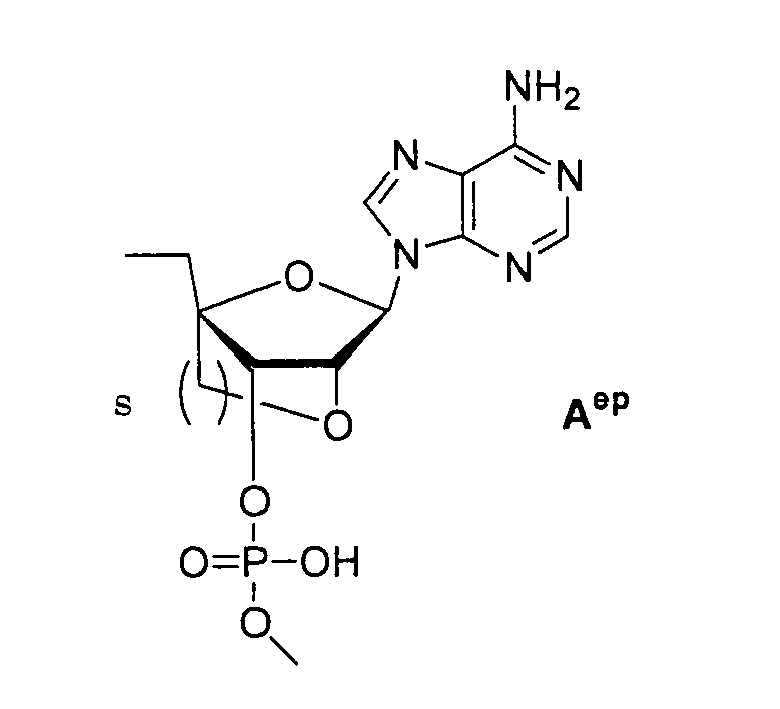

- B 11 represents a group represented by formula:


- B 15 represents a group represented by formula:

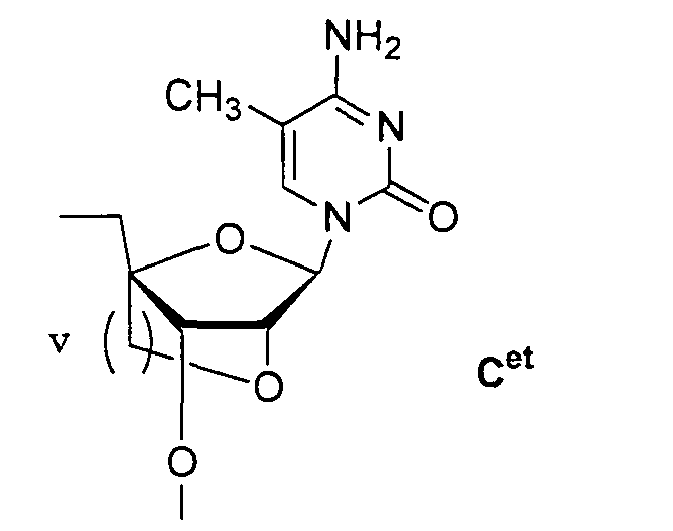
- B9, B 13, B 17, and B 19 are identical or different, and each represents a group represented by formula:


- B7 represents a group represented by formula:


- R1 represents a hydroxyl group, a group represented by formula:
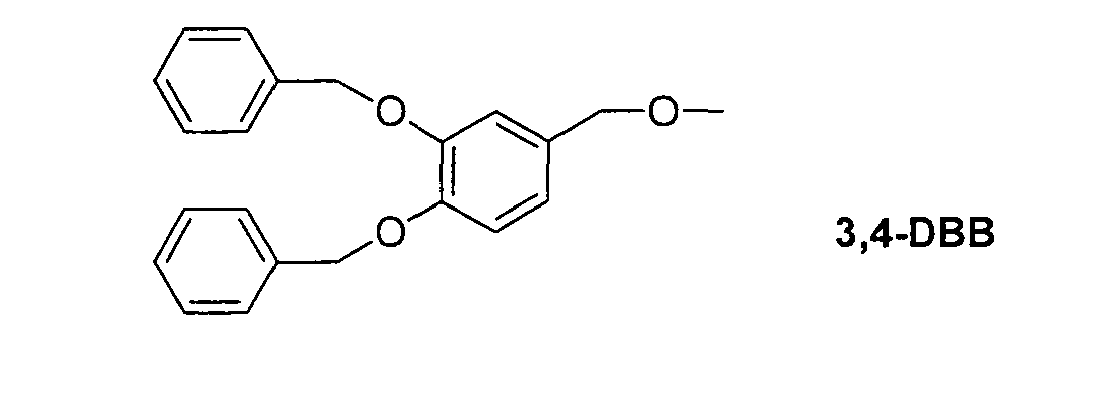
- R2 represents a hydrogen atom, the group -P(=O)(OH)-O-CH2-CH2-OH, or the group -P(=S)(OH)-O-CH2-CH2-OH;
- with the proviso that the following case is excluded:
- B4, B5, and B8 are identical or different, and each is Tp or Ts;
- B1, B2, B3, and B12 are identical or different, and each is Gp or Gs;
- B16 is Cp or Cs;
- B6, B10, B 14, and B 18 are identical or different, and each is Ap or As;
- B11 is Gt;
- B15 is Ct;
- B9, B 13, B 17, and B 19 are each At; and
- B7 is Tt),
- The above-described compound of formula (I) or a pharmacologically acceptable salt thereof is preferably:
- (1) a compound wherein B4, B5, and B8 are identical or different, and each is Tep or Tes;
- B1, B2, B3, and B12 are identical or different, and each is Gep or Ges;
- B16 is Cep or Ces;
- B6, B 10, B 14, and B 18 are identical or different, and each is Aep or Aes;
- B11 is Get;
- B 15 is Cet;
- B9, B 13, B 17, and B 19 are each Aet; and
- B7 is Tet,
or a pharmacologically acceptable salt thereof,
- (2) a compound wherein B4, B5, and B8 are each Tes;
- B1, B2, B3, and B12 are each Ges;
- B16 is Ces; and
- B6, B10, B14, and B18 are each Aes,
or a pharmacologically acceptable salt thereof,
- (3) a compound wherein E1 is a group represented by the formula R1-B5-B6-, or a pharmacologically acceptable salt thereof,
- (4) a compound wherein E1 is a group represented by the formula R1-B6-, or a pharmacologically acceptable salt thereof,
- (5) a compound wherein E1 is a group represented by the formula R1, or a pharmacologically acceptable salt thereof,
- (6) a compound wherein E2 is a group represented by the formula -B8-B10-B12-B14-B16-B18-B19-R2, or a pharmacologically acceptable salt thereof,
- (7) a compound wherein E2 is a group represented by the formula -B8-B10-B12-B14-B16-B17-R2, or a pharmacologically acceptable salt thereof,
- (8) a compound wherein E2 is a group represented by the formula -B8-B10-B12-B14-B-15-R2, or a pharmacologically acceptable salt thereof,
- (9) a compound wherein E2 is a group represented by the formula -B8-B10-B12-B13-R2, or a pharmacologically acceptable salt thereof,
- (10) a compound wherein E2 is a group represented by the formula -B8-B10-B11-R2, or a pharmacologically acceptable salt thereof,
- (11) a compound wherein E2 is a group represented by the formula -B8-B9-R2, or a pharmacologically acceptable salt thereof,
- (12) a compound wherein E2 is a group represented by the formula -B7-R2, or a pharmacologically acceptable salt thereof,
- (13) a compound wherein R1 is a hydroxyl group, or a pharmacologically acceptable salt thereof,
- (14) a compound wherein R2 is the group -P(=O)(OH)-O-CH2-CH2-OH or the group -P(=S)(OH)-O-CH2-CH2-OH, or a pharmacologically acceptable salt thereof,
- (15) a compound wherein R2 is the group -P(=S)(OH)-O-CH2-CH2-OH, or a pharmacologically acceptable salt thereof,
- (16) a compound wherein each of l, m, n, o, p, q, r , s, t, u, v, w, and x is identical or different, and each is 1 or 2, or a pharmacologically acceptable salt thereof,
- (17) a compound wherein 1, m, n, o, p, q, r , s, t, u, v, w, and x are identical, and each is 1 or 2, or a pharmacologically acceptable salt thereof, or
- (18) a compound wherein each of 1, m, n, o, p, q, r , s, t, u, v, w, and x is 2, or a pharmacologically acceptable salt thereof.
- More preferred is a compound selected from the following (compound group):
(compound group) - Illustrative Compound No. 1: HO-Te2s-Ae2s-Ge2s-Ge2s-Ge2s-Te2s-Te2s-Ae2s-Ge2s-Ae2s-Ce2s-Ae2s-Ae2s-CH2CH2OH
- Illustrative Compound No. 2: HO-Te2s-Ae2s-Ge2s-Ge2s-Ge2s-Te2s-Te2s-Ae2s-Ge2s-Ae2s-Ce2s-Ae2s-CH2CH2OH
- Illustrative Compound No. 3: HO-Te2s-Ae2s-Ge2s-Ge2s-Ge2s-Te2s-Te2s-Ae2s-Ge2s-Ae2s-Ce2s-CH2CH2OH
- Illustrative Compound No. 4: HO-Te2s-Ae2s-Ge2s-Ge2s-Ge2s-Te2s-Te2s-Ae2s-Ge2s-Ae2s-CH2CH2OH
- Illustrative Compound No. 5: HO-Te2s-Ae2s-Ge2s-Ge2s-Ge2s-Te2s-Te2s-Ae2s-Ge2s-CH2CH2OH
- Illustrative Compound No. 6: HO-Te2s-Ae2s-Ge2s-Ge2s-Ge2s-Te2s-Te2s-Ae2s-CH2CH2OH
- Illustrative Compound No. 7: HO-Te2s-Ae2s-Ge2s-Ge2s-Ge2s-Te22s-Te2s-CH2CH2OH
- Illustrative Compound No. 8: HO-Ae2s-Ge2s-Ge2s-Ge2s-Te2s-Te2s-Ae2s-Ge2s-Ae2s-Ce2s-Ae2s-Ae2s-CH2CH2OH
- Illustrative Compound No. 9: HO-Ae2s-Ge2s-Ge2s-Ge2s-Te2s-Te2s-Ae2s-Ge2s-Ae2s-Ce2s-Ae2s-CH2CH2OH
- Illustrative Compound No. 10: HO-Ae2s-Ge2s-Ge2s-Ge2s-Te2s-Te2s-Ae2s-Ge2s-Ae2s-Ce2s-CH2CH2OH
- Illustrative Compound No. 11: HO-Ae2s-Ge2s-Ge2s-Ge2s-Te2s-Te2s-Ae2s-Ge2s-Ae2s-CH2CH2OH
- Illustrative Compound No. 12: HO-Ae2s-Ge2s-Ge2s-Ge2s-Te2s-Te2s-Ae2s-Ge2s-CH2CH2OH
- Illustrative Compound No. 13: HO-Ae2s-Ge2s-Ge2s-Ge2s-Te2s-Te2s-Ae2s-CH2CH2OH
- Illustrative Compound No. 14: HO-Ge2s-Ge2s-Ge2s-Te2s-Te2s-Ae2s-Ge2s-Ae2s-Ce2s-Ae2s-Ae2s-CH2CH2OH
- Illustrative Compound No. 15: HO-Ge2s-Ge2s-Ge2s-Te2s-Te2s-Ae2s-Ge2s-Ae2s-Ce2s-Ae2s-CH2CH2OH
- Illustrative Compound No. 16: HO-Ge2s-Ge2s-Ge2s-Te2s-Te2s-Ae2s-Ge2s-Ae2s-Ce2s-CH2CH2OH
- Illustrative Compound No. 17: HO-Ge2s-Ge2s-Ge2s-Te2s-Te2s-Ae2s-Ge2s-Ae2s-CH2CH2OH
- Illustrative Compound No. 18: HO-Ge2s-Ge2s-Ge2s-Te2s-Te2s-Ae2s-Ge2s-CH2CH2OH
- Illustrative Compound No. 19: HO-Te2s-Ae2s-Ge2s-Ge2s-Ge2s-Te2s-Te2s-Ae2s-Ge2s-Ae2s-Ce2s-Ae2s-Ae2t-H
- Illustrative Compound No. 20: HO-Te2s-Ae2s-Ge2s-Ge2s-Ge2s-Te2s-Te2s-Ae2s-Ge2s-Ae2s-Ce2s-Ae2t-H
- Illustrative Compound No. 21: HO-Te2s-Ae2s-Ge2s-Ge2s-Ge2s-Te2s-Te2s-Ae2s-Ge2s-Ae2s-Ce2t-H
- Illustrative Compound No. 22: HO-Te2s-Ae2s-Ge2s-Ge2s-Ge2s-Te2s-Te2s-Ae2s-Ge2s-Ae2t-H
- Illustrative Compound No. 23: HO-Te2s-Ae2s-Ge2s-Ge2s-Ge2s-Te2s-Te2s-Ae2s-Ge2t-H
- Illustrative Compound No. 24: HO-Te2s-Ae2s-Ge2s-Ge2s-Ge2s-Te2s-Te2s-Ae2t-H
- Illustrative Compound No. 25: HO-Te2s-Ae2s-Ge2s-Ge2s-Ge2s-Te2s-Te2t-H
- Illustrative Compound No. 26: HO-Ae2s-Ge2s-Ge2s-Ge2s-Te2s-Te2s-Ae2s-Ge2s-Ae2s-Ce2s-Ae2s-Ae2t-H
- Illustrative Compound No. 27: HO-Ae2s-Ge2s-Ge2s-Ge2s-Te2s-Te2s-Ae2s-Ge2s-Ae2s-Ce2s-Ae2t-H
- Illustrative Compound No. 28: HO-Ae2s-Ge2s-Ge2s-Ge2s-Te2s-Te2s-Ae2s-Ge2s-Ae2s-Ce2t-H
- Illustrative Compound No. 29: HO-Ae2s-Ge2s-Ge2s-Ge2s-Te2s-Te2s-Ae2s-Ge2s-Ae2t-H
- Illustrative Compound No. 30: HO-Ae2s-Ge2s-Ge2s-Ge2s-Te2s-Te2s-Ae2s-Ge2t-H
- Illustrative Compound No. 31: HO-Ae2s-Ge2s-Ge2s-Ge2s-Te2s-Te2s-Ae2t-H
- Illustrative Compound No. 32: HO-Ge2s-Ge2s-Ge2s-Te2s-Te2s-Ae2s-Ge2s-Ae2s-Ce2s-Ae2s-Ae2t-H
- Illustrative Compound No. 33: HO-Ge2s-Ge2s-Ge2s-Te2s-Te2s-Ae2s-Ge2s-Ae2s-Ce2s-Ae2t-H
- Illustrative Compound No. 34: HO-Ge2s-Ge2s-Ge2s-Te2s-Te2s-Ae2s-Ge2s-Ae2s-Ce2t-H
- Illustrative Compound No. 35: HO-Ge2s-Ge2s-Ge2s-Te2s-Te2s-Ae2s-Ge2s-Ae2t-H
- Illustrative Compound No. 36: HO-Ge2s-Ge2s-Ge2s-Te2s-Te2s-Ae2s-Ge2t-H
- Illustrative Compound No. 37: HO-Te2p-Ae2p-Ge2p-Ge2p-Ge2p-Te2p-Te2p-Ae2p-Ge2p-Ae2p-Ce2p-Ae2p-Ae2p-CH2CH2OH
- Illustrative Compound No. 38: HO-Te2p-Ae2p-Ge2p-Ge2p-Ge2p-Te2p-Te2p-Ae2p-Ge2p-Ae2p-Ce2p-Ae2p-CH2CH2OH
- Illustrative Compound No. 39: HO-Te2p-Ae2p-Ge2p-Ge2p-Ge2p-Te2p-Te2p-Ae2p-Ge2p-Ae2p-Ce2p-CH2CH2OH
- Illustrative Compound No. 40: HO-Te2p-Ae2p-Ge2p-Ge2p-Ge2p-Te2p-Te2p-Ae2p-Ge2p-Ae2p-CH2CH2OH
- Illustrative Compound No. 41: HO-Te2p-Ae2p-Ge2p-Ge2p-Ge2p-Te2p-Te2p-Ae2p-Ge2p-CH2CH2OH
- Illustrative Compound No. 42: HO-Te2p-Ae2p-Ge2p-Ge2p-Ge2p-Te2p-Te2p-Ae2p-CH2CH2OH
- Illustrative Compound No. 43: HO-Te2p-Ae2p-Ge2p-Ge2p-Ge2p-Te2p-Te2p-CH2CH2OH
- Illustrative Compound No. 44: HO-Ae2p-Ge2p-Ge2p-Ge2p-Te2p-Te2p-Ae2p-Ge2p-Ae2p-Ce2p-Ae2p-Ae2p-CH2CH2OH
- Illustrative Compound No. 45: HO-Ae2p-Ge2p-Ge2p-Ge2p-Te2p-Te2p-Ae2p-Ge2p-Ae2p-Ce2p-Ae2p-CH2CH2OH
- Illustrative Compound No. 46: HO-Ae2p-Ge2p-Ge2p-Ge2p-Te2p-Te2p-Ae2p-Ge2p-Ae2p-Ce2p-CH2CH2OH
- Illustrative Compound No. 47: HO-Ae2p-Ge2p-Ge2p-Ge2p-Te2p-Te2p-Ae2p-Ge2p-Ae2p-CH2CH2OH
- Illustrative Compound No. 48: HO-Ae2p-Ge2p-Ge2p-Ge2p-Te2p-Te2p-Ae2p-Ge2p-CH2CH2OH
- Illustrative Compound No. 49: HO-Ae2p-Ge2p-Ge2p-Ge2p-Te2p-Te2p-Ae2p-CH2CH2OH
- Illustrative Compound No. 50: HO-Ge2p-Ge2p-Ge2p-Te2p-Te2p-Ae2p-Ge2p-Ae2p-Ce2p-Ae2p-Ae2p-CH2CH2OH
- Illustrative Compound No. 51: HO-Ge2p-Ge2p-Ge2p-Te2p-Te2p-Ae2p-Ge2p-Ae2p-Ce2p-Ae2p-CH2CH2OH
- Illustrative Compound No. 52: HO-Ge2p-Ge2p-Ge2p-Te2p-Te2p-Ae2p-Ge2p-Ae2p-Ce2p-CH2CH2OH
- Illustrative Compound No. 53: HO-Ge2p-Ge2p-Ge2p-Te2p-Te2p-Ae2p-Ge2p-Ae2p-CH2CH2OH
- Illustrative Compound No. 54: HO-Ge2p-Ge2p-Ge2p-Te2p-Te2p-Ae2p-Ge2p-CH2CH2OH
- Illustrative Compound No. 55: HO-Te2p-Ae2p-Ge2p-Ge2p-Ge2p-Te2p-Te2p-Ae2p-Ge2p-Ae2p-Ce2p-Ae2p-Ae2t-H
- Illustrative Compound No. 56: HO-Te2p-Ae2p-Ge2p-Ge2p-Ge2p-Te2p-Te2p-Ae2p-Ge2p-Ae2p-Ce2p-Ae2t-H
- Illustrative Compound No. 57: HO-Te2p-Ae2p-Ge2p-Ge2p-Ge2p-Te2p-Te2p-Ae2p-Ge2p-Ae2p-Ce2t-H
- Illustrative Compound No. 58: HO-Te2p-Ae2p-Ge2p-Ge2p-Ge2p-Te2p-Te2p-Ae2p-Ge2p-Ae2t-H
- Illustrative Compound No. 59: HO-Te2p-Ae2p-Ge2p-Ge2p-Ge2p-Te2p-Te2p-Ae2p-Ge2t-H
- Illustrative Compound No. 60: HO-Te2p-Ae2p-Ge2p-Ge2p-Ge2p-Te2p-Te2p-Ae2t-H
- Illustrative Compound No. 61: HO-Te2p-Ae2p-Ge2p-Ge2p-Ge2p-Te2p-Te2t-H
- Illustrative Compound No. 62: HO-Ae2p-Ge2p-Ge2p-Ge2p-Te2p-Te2p-Ae2p-Ge2p-Ae2p-Ce2p-Ae2p-Ae2t-H
- Illustrative Compound No. 63: HO-Ae2p-Ge2p-Ge2p-Ge2p-Te2p-Te2p-Ae2p-Ge2p-Ae2p-Ce2p-Ae2t-H
- Illustrative Compound No. 64: HO-Ae2p-Ge2p-Ge2p-Ge2p-Te2p-Te2p-Ae2p-Ge2p-Ae2p-Ce2t-H
- Illustrative Compound No. 65: HO-Ae2p-Ge2p-Ge2p-Ge2p-Te2p-Te2p-Ae2p-Ge2p-Ae2t-H
- Illustrative Compound No. 66: HO-Ae2p-Ge2p-Ge2p-Ge2p-Te2p-Te2p-Ae2p-Ge2t-H
- Illustrative Compound No. 67: HO-Ae2p-Ge2p-Ge2p-Ge2p-Te2p-Te2p-Ae2t-H
- Illustrative Compound No. 68: HO-Ge2p-Ge2p-Ge2p-Te2p-Te2p-Ae2p-Ge2p-Ae2p-Ce2p-Ae2p-Ae2t-H
- Illustrative Compound No. 69: HO-Ge2p-Ge2p-Ge2p-Te2p-Te2p-Ae2p-Ge2p-Ae2p-Ce2p-Ae2t-H
- Illustrative Compound No. 70: HO-Ge2p-Ge2p-Ge2p-Te2p-Te2p-Ae2p-Ge2p-Ae2p-Ce2t-H
- Illustrative Compound No. 71: HO-Ge2p-Ge2p-Ge2p-Te2p-Te2p-Ae2p-Ge2p-Ae2t-H
- Illustrative Compound No. 72: HO-Ge2p-Ge2p-Ge2p-Te2p-Te2p-Ae2p-Ge2t-H
- Illustrative Compound No. 73: HO-Te1s-Ae1s-Ge1s-Ge1s-Ge1s-Te1s-Te1s-Ae1s-Ge1s-Ae1s-Ce1s-Ae1s-Ae1s-CH2CH2OH
- Illustrative Compound No. 74: HO-Te1s-Ae1s-Ge1s-Ge1s-Ge1s-Te1s-Te1s-Ae1s-Ge1s-Ae1s-Ce1s-Ae1s-CH2CH2OH
- Illustrative Compound No. 75: HO-Te1s-Ae1s-Ge1s-Ge1s-Ge1s-Te1s-Te1s-Ae1s-Ge1s-Ae1s-Ce1s-CH2CH2OH
- Illustrative Compound No. 76: HO-Te1s-Ae1s-Ge1s-Ge1s-Ge1s-Te1s-Te1s-Ae1s-Ge1s-Ae1s-CH2CH2OH
- Illustrative Compound No. 77: HO-Te1s-Ae1s-Ge1s-Ge1s-Ge1s-Te1s-Te1s-Ae1s-Ge1s-CH2CH2OH
- Illustrative Compound No. 78: HO-Te1s-Ae1s-Ge1s-Ge1s-Ge1s-Te1s-Te1s-Ae1s-CH2CH2OH
- Illustrative Compound No. 79: HO-Te1s-Ae1s-Ge1s-Ge1s-Ge1s-Te1s-Te1s-CH2CH2OH
- Illustrative Compound No. 80: HO-Ae1s-Ge1s-Ge1s-Ge1s-Te1s-Te1s-Ae1s-Ge1s-Ae1s-Ce1s-Ae1s-Ae1s-CH2CH2OH
- Illustrative Compound No. 81: HO-Ae1s-Ge1s-Ge1s-Ge1s-Te1s-Te1s-Ae1s-Ge1s-Ae1s-Ce1s-Ae1s-CH2CH2OH
- Illustrative Compound No. 82: HO-Ae1s-Ge1s-Ge1s-Ge1s-Te1s-Te1s-Ae1s-Ge1s-Ae1s-Ce1s-CH2CH2OH
- Illustrative Compound No. 83: HO-Ae1s-Ge1s-Ge1s-Ge1s-Te1s-Te1s-Ae1s-Ge1s-Ae1s-CH2CH2OH
- Illustrative Compound No. 84: HO-Ae1s-Ge1s-Ge1s-Ge1s-Te1s-Te1s-Ae1s-Ge1s-CH2CH2OH
- Illustrative Compound No. 85: HO-Ae1s-Ge1s-Ge1s-Ge1s-Te1s-Te1s-Ae1s-CH2CH2OH
- Illustrative Compound No. 86: HO-Ge1s-Ge1s-Ge1s-Te1s-Te1s-Ae1s-Ge1s-Ae1s-Ce1s-Ae1s-Ae1s-CH2CH2OH
- Illustrative Compound No. 87: HO-Ge1s-Ge1s-Ge1s-Te1s-Te1s-Ae1s-Ge1s-Ae1s-Ce1s-Ae1s-CH2CH2OH
- Illustrative Compound No. 88: HO-Ge1s-Ge1s-Ge1s-Te1s-Te1s-Ae1s-Ge1s-Ae1s-Ce1s-CH2CH2OH
- Illustrative Compound No. 89: HO-Ge1s-Ge1s-Ge1s-Te1s-Te1s-Ae1s-Ge1s-Ae1s-CH2CH2OH
- Illustrative Compound No. 90: HO-Ge1s-Ge1s-Ge1s-Te1s-Te1s-Ae1s-Ge1s-CH2CH2OH
- Illustrative Compound No. 91: HO-Te1s-Ae1s-Ge1s-Ge1s-Ge1s-Te1s-Te1s-Ae1s-Ge1s-Ae1s-Ce1s-Ae1s-Ae1t-H
- Illustrative Compound No. 92: HO-Te1s-Ae1s-Ge1s-Ge1s-Ge1s-Te1s-Te1s-Ae1s-Ge1s-Ae1s-Ce1s-Ae1t-H
- Illustrative Compound No. 93: HO-Te1s-Ae1s-Ge1s-Ge1s-Ge1s-Te1s-Te1s-Ae1s-Ge1s-Ae1s-Ce1t-H
- Illustrative Compound No. 94: HO-Te1s-Ae1s-Ge1s-Ge1s-Ge1s-Te1s-Te1s-Ae1s-Ge1s-Ae1t-H
- Illustrative Compound No. 95: HO-Te1s-Ae1s-Ge1s-Ge1s-Ge1s-Te1s-Te1s-Ae1s-Ge1t-H
- Illustrative Compound No. 96: HO-Te1s-Ae1s-Ge1s-Ge1s-Ge1s-Te1s-Te1s-Ae1t-H
- Illustrative Compound No. 97: HO-Te1s-Ae1s-Ge1s-Ge1s-Ge1s-Te1s-Te1t-H
- Illustrative Compound No. 98: HO-Ae1s-Ge1s-Ge1s-Ge1s-Te1s-Te1s-Ae1s-Ge1s-Ae1s-Ce1s-Ae1s-Ae1t-H
- Illustrative Compound No. 99: HO-Ae1s-Ge1s-Ge1s-Ge1s-Te1s-Te1s-Ae1s-Ge1s-Ae1s-Ce1s-Ae1t-H
- Illustrative Compound No. 100: HO-Ae1s-Ge1s-Ge1s-Ge1s-Te1s-Te1s-Ae1s-Ge1s-Ae1s-Ce1t-H
- Illustrative Compound No. 101: HO-Ae1s-Ge1s-Ge1s-Ge1s-Te1s-Te1s-Ae1s-Ge1s-Ae1t-H
- Illustrative Compound No. 102: HO-Ae1s-Ge1s-Ge1s-Ge1s-Te1s-Te1s-Ae1s-Ge1t-H.
- Illustrative Compound No. 103: HO-Ae1s-Ge1s-Ge1s-Ge1s-Te1s-Te1s-Ae1t-H
- Illustrative Compound No. 104: HO-Ge1s-Ge1s-Ge1s-Te1s-Te1s-Ae1s-Ge1s-Ae1s-Ce1s-Ae1s-Ae1t-H
- Illustrative Compound No. 105: HO-Ge1s-Ge1s-Ge1s-Te1s-Te1s-Ae1s-Ge1s-Ae1s-Ce1s-Ae1t-H
- Illustrative Compound No. 106: HO-Ge1s-Ge1s-Ge1s-Te1s-Te1s-Ae1s-Ge1s-Ae1s-Ce1t-H
- Illustrative Compound No. 107: HO-Ge1s-Ge1s-Ge1s-Te1s-Te1s-Ae1s-Ge1s-Ae1t-H
- Illustrative Compound No. 108: HO-Ge1s-Ge1s-Ge1s-Te1s-Te1s-Ae1s-Ge1t-H
- Illustrative Compound No. 109: HO-Te1p-Ae1p-Ge1p-Ge1p-Ge1p-Te1p-Te1p-Ae1p-Ge1p-Ae1p-Ce1p-Ae1p-Ae1p-CH2CH2OH
- Illustrative Compound No. 110: HO-Te1p-Ae1p-Ge1p-Ge1p-Ge1p-Te1p-Te1p-Ae1p-Ge1p-Ae1p-Ce1p-Ae1p-CH2CH2OH
- Illustrative Compound No. 111: HO-Te1p-Ae1p-Ge1p-Ge1p-Ge1p-Te1p-Te1p-Ae1p-Ge1p-Ae1p-Ce1p-CH2CH2OH
- Illustrative Compound No. 112: HO-Te1p-Ae1p-Ge1p-Ge1p-Ge1p-Te1p-Te1p-Ae1p-Ge1p-Ae1p-CH2CH2OH
- Illustrative Compound No. 113: HO-Te1p-Ae1p-Ge1p-Ge1p-Ge1p-Te1p-Te1p-Ae1p-Ge1p-CH2CH2OH
- Illustrative Compound No. 114: HO-Te1p-Ae1p-Ge1p-Ge1p-Ge1p-Te1p-Te1p-Ae1p-CH2CH2OH
- Illustrative Compound No. 115: HO-Te1p-Ae1p-Ge1p-Ge1p-Ge1p-Te1p-Te1p-CH2CH2OH
- Illustrative Compound No. 116: HO-Ae1p-Ge1p-Ge1p-Ge1p-Te1p-Te1p-Ae1p-Ge1p-Ae1p-Ce1p-Ae1p-Ae1p-CH2CH2OH
- Illustrative Compound No. 117: HO-Ae1p-Ge1p-Ge1p-Ge1p-Te1p-Te1p-Ae1p-Ge1p-Ae1p-Ce1p-Ae1p-CH2CH2OH
- Illustrative Compound No. 118: HO-Ae1p-Ge1p-Ge1p-Ge1p-Te1p-Te1p-Ae1p-Ge1p-Ae1p-Ce1p-CH2CH2OH
- Illustrative Compound No. 119: HO-Ae1p-Ge1p-Ge1p-Ge1p-Te1p-Te1p-Ae1p-Ge1p-Ae1p-CH2CH2OH
- Illustrative Compound No. 120: HO-Ae1p-Ge1p-Ge1p-Ge1p-Te1p-Te1p-Ae1p-Ge1p-CH2CH2OH
- Illustrative Compound No. 121: HO-Ae1p-Ge1p-Ge1p-Ge1p-Te1p-Te1p-Ae1p-CH2CH2OH
- Illustrative Compound No. 122: HO-Ge1p-Ge1p-Ge1p-Te1p-Te1p-Ae1p-Ge1p-Ae1p-Ce1p-Ae1p-Ae1p-CH2CH2OH
- Illustrative Compound No. 123: HO-Ge1p-Ge1p-Ge1p-Te1p-Te1p-Ae1p-Ge1p-Ae1p-Ce1p-Ae1p-CH2CH2OH
- Illustrative Compound No. 124: HO-Ge1p-Ge1p-Ge1p-Te1p-Te1p-Ae1p-Ge1p-Ae1p-Ce1p-CH2CH2OH
- Illustrative Compound No. 125: HO-Ge1p-Ge1p-Ge1p-Te1p-Te1p-Ae1p-Ge1p-Ae1p-CH2CH2OH
- Illustrative Compound No. 126: HO-Ge1p-Ge1p-Ge1p-Te1p-Te1p-Ae1p-Ge1p-CH2CH2OH
- Illustrative Compound No. 127: HO-Te1p-Ae1p-Ge1p-Ge1p-Ge1p-Te1p-Te1p-Ae1p-Ge1p-Ae1p-Ce1p-Ae1p-Ae1t-H
- Illustrative Compound No. 128: HO-Te1p-Ae1p-Ge1p-Ge1p-Ge1p-Te1p-Te1p-Ae1p-Ge1p-Ae1p-Ce1p-Ae1t-H
- Illustrative Compound No. 129: HO-Te1p-Ae1p-Ge1p-Ge1p-Ge1p-Te1p-Te1p-Ae1p-Ge1p-Ae1p-Ce1t-H
- Illustrative Compound No. 130: HO-Te1p-Ae1p-Ge1p-Ge1p-Ge1p-Te1p-Te1p-Ae1p-Ge1p-Ae1t-H
- Illustrative Compound No. 131: HO-Te1p-Ae1p-Ge1p-Ge1p-Ge1p-Te1p-Te1p-Ae1p-Ge1t-H
- Illustrative Compound No. 132: HO-Te1p-Ae1p-Ge1p-Ge1p-Ge1p-Te1p-Te1p-Ae1t-H
- Illustrative Compound No. 133: HO-Te1p-Ae1p-Ge1p-Ge1p-Ge1p-Te1p-Te1t-H
- Illustrative Compound No. 134: HO-Ae1p-Ge1p-Ge1p-Ge1p-Te1p-Te1p-Ae1p-Ge1p-Ae1p-Ce1p-Ae1p-Ae1t-H
- Illustrative Compound No. 135: HO-Ae1p-Ge1p-Ge1p-Ge1p-Te1p-Te1p-Ae1p-Ge1p-Ae1p-Ce1p-Ae1t-H
- Illustrative Compound No. 136: HO-Ae1p-Ge1p-Ge1p-Ge1p-Te1p-Te1p-Ae1p-Ge1p-Ae1p-Ce1t-H
- Illustrative Compound No. 137: HO-Ae1p-Ge1p-Ge1p-Ge1p-Te1p-Te1p-Ae1p-Ge1p-Ae1t-H
- Illustrative Compound No. 138: HO-Ae1p-Ge1p-Ge1p-Ge1p-Te1p-Te1p-Ae1p-Ge1t-H
- Illustrative Compound No. 139: HO-Ae1p-Ge1p-Ge1p-Ge1p-Te1p-Te1p-Ae1t-H
- Illustrative Compound No. 140: HO-Ge1p-Ge1p-Ge1p-Te1p-Te1p-Ae1p-Ge1p-Ae1p-Ce1p-Ae1p-Ae1t-H
- Illustrative Compound No. 141: HO-Ge1p-Ge1p-Ge1p-Te1p-Te1p-Ae1p-Ge1p-Ae1p-Ce1p-Ae1t-H
- Illustrative Compound No. 142: HO-Ge1p-Ge1p-Ge1p-Te1p-Te1p-Ae1p-Ge1p-Ae1p-Ce1t-H
- Illustrative Compound No. 143: HO-Ge1p-Ge1p-Ge1p-Te1p-Te1p-Ae1p-Ge1p-Ae1t-H
- Illustrative Compound No. 144: HO-Ge1p-Ge1p-Ge1p-Te1p-Te1p-Ae1p-Ge1t-H
- Illustrative Compound No. 145: 3,4-DBB-(CH2)3-O-P(=S)(OH)-O-Te2s-Ae2s-Ge2s-Ge2s-Ge2s-Te2s-Te2s-Ae2s-Ge2s-Ae2s-Ce2s-Ae2s-Ae2s-CH2CH2OH
- Illustrative Compound No. 146: 3,4-DBB-(CH2)3-O-P(=S)(OH)-O-Te2s-Ae2s-Ge2s-Ge2s-Ge2s-Te2s-Te2s-Ae2s-Ge2s-Ae2s-Ce2s-Ae2s-Ae2t-H
- Illustrative Compound No. 147: 3,4-DBB-(CH2)6-O-P(=S)(OH)-O-Te2s-Ae2s-Ge2s-Ge2s-Ge2s-Te2s-Te2s-Ae2s-Ge2s-Ae2s-Ce2s-Ae2s-Ae2s-CH2CH2OH
- Illustrative Compound No. 148: 3,4-DBB-(CH2)6-O-P(=S)(OH)-O-Te2s-Ae2s-Ge2s-Ge2s-Ge2s-Te2s-Te2s-Ae2s-Ge2s-Ae2s-Ce2s-Ae2s-Ae2t-H
- Illustrative Compound No. 149: 3,4-DBB-Ts-Te2s-Ae2s-Ge2s-Ge2s-Ge2s-Te2s-Te2s-Ae2s-Ge2s-Ae2s-Ce2s-Ae2s-Ae2s-CH2CH2OH
- Illustrative Compound No. 150: 3,4-DBB-Ts-Te2s-Ae2s-Ge2s-Ge2s-Ge2s-Te2s-Te2s-Ae2s-Ge2s-Ae2s-Ce2s-Ae2s-Ae2t-H
- Illustrative Compound No. 151: 3,4-DBB-Ts-Ae2s-Ge2s-Ge2s-Ge2s-Te2s-Te2s-Ae2s-Ge2s-Ae2s-Ce2s-Ae2s-Ae2s-CH2CH2OH
- Illustrative Compound No. 152: 3,4-DBB-Ts-Ae2s-Ge2s-Ge2s-Ge2s-Te2s-Te2s-Ae2s-Ge2s-Ae2s-Ce2s-Ae2s-Ae2t-H
- Illustrative Compound No. 153: HO-Te2s-Ae2s-Ge2p-Ge2p-Ge2p-Te2p-Te2p-Ae2p-Ge2p-Ae2p-Ce2p-Ae2s-Ae2s-CH2CH2OH
- Illustrative Compound No. 154: HO-Te2s-Ae2s-Ge2p-Ge2p-Ge2p-Te2p-Te2p-Ae2p-Ge2p-Ae2p-Ce2p-Ae2s-Ae2t-H
- Illustrative Compound No. 155: HO-Te2s-Ae2s-Ge2s-Ge2p-Ge2p-Te2p-Te2p-Ae2p-Ge2p-Ae2p-Ce2s-Ae2s-Ae2s-CH2CH2OH
- Illustrative Compound No. 156: HO-Te2s-Ae2s-Ge2s-Ge2p-Ge2p-Te2p-Te2p-Ae2p-Ge2p-Ae2p-Ce2s-Ae2s-Ae2t-H
- Illustrative Compound No. 157: HO-Te2s-Ae2s-Ge2s-Ge2s-Ge2p-Te2p-Te2p-Ae2p-Ge2p-Ae2s-Ce2s-Ae2s-Ae2s-CH2CH2OH
- Illustrative Compound No. 158: HO-Te2s-Ae2s-Ge2s-Ge2s-Ge2p-Te2p-Te2p-Ae2p-Ge2p-Ae2s-Ce2s-Ae2s-Ae2t-H
- Illustrative Compound No. 159: HOP(S)(OH)-O-Te2s-Ae2s-Ge2s-Ge2s-Ge2s-Te2s-Te2s-Ae2s-Ge2s-Ae2s-Ce2s-Ae2s-Ae2s-CH2CH2OH
- Illustrative Compound No. 160: HOP(S)(OH)-O-Te2s-Ae2s-Ge2s-Ge2s-Ge2s-Te2s-Te2s-Ae2s-Ge2s-Ae2s-Ce2s-Ae2s-Ae2t-H
- Illustrative Compound No. 161: C17H35C(O)O(CH2)2SP(O)(OH)-O-Te2s-Ae2s-Ge2s-Ge2s-Ge2s-Te2s-Te2s-Ae2s-Ge2s-Ae2s-Ce2s-Ae2s-Ae2s-CH2CH2OH
- Illustrative Compound No. 162: C17H35C(O)O(CH2)2SP(O)(OH)-O-Te2s-Ae2s-Ge2s-Ge2s-Ge2s-Te2s-Te2s-Ae2s-Ge2s-Ae2s-Ce2s-Ae2s-Ae2t-H
- Illustrative Compound No. 163: C18H37C(O)O(CH2)2SP(O)(OH)-O-Te2s-Ae2s-Ge2s-Ge2s-Ge2s-Te2s-Te2s-Ae2s-Ge2s-Ae2s-Ce2s-Ae2s-Ae2s-CH2CH2OH
- Illustrative Compound No. 164: C18H37C(O)O(CH2)2SP(O)(OH)-O-Te2s-Ae2s-Ge2s-Ge2s-Ge2s-Te2s-Te2s-Ae2s-Ge2s-Ae2s-Ce2s-Ae2s-Ae2t-H
- Illustrative Compound No. 165: C19H39C(O)O(CH2)2SP(O)(OH)-O-Te2s-Ae2s-Ge2s-Ge2s-Ge2s-Te2s-Te2s-Ae2s-Ge2s-Ae2s-Ce2s-Ae2s-Ae2s-CH2CH2OH
- Illustrative Compound No. 166: C19H39C(O)O(CH2)2SP(O)(OH)-O-Te2s-Ae2s-Ge2s-Ge2s-Ge2s-Te2s-Te2s-Ae2s-Ge2s-Ae2s-Ce2s-Ae2s-Ae2t-H
- Illustrative Compound No. 167: C16H33C(O)O(CH2)2SP(O)(OH)-O-Te2s-Ae2s-Ge2s-Ge2s-Ge2s-Te2s-Te2s-Ae2s-Ge2s-Ae2s-Ce2s-Ae2s-Ae2s-CH2CH2OH
- Illustrative Compound No. 168: C16H33C(O)O(CH2)2SP(O)(OH)-O-Te2s-Ae2s-Ge2s-Ge2s-Ge2s-Te2s-Te2s-Ae2s-Ge2s-Ae2s-Ce2s-Ae2s-Ae2t-H
- Illustrative Compound No. 169: C15H31C(O)O(CH2)2SP(O)(OH)-O-Te2s-Ae2s-Ge2s-Ge2s-Ge2s-Te2s-Te2s-Ae2s-Ge2s-Ae2s-Ce2s-Ae2s-Ae2s-CH2CH2OH
- Illustrative Compound No. 170: C15H31C(O)O(CH2)2SP(O)(OH)-O-Te2s-Ae2s-Ge2s-Ge2s-Ge2s-Te2s-Te2s-Ae2s-Ge2s-Ae2s-Ce2s-Ae2s-Ae2t-H
- In the above description and the present specification, Ge1t, Ce1t, Ae1t, Te1t, Ae1p, Ge1p, Ce1p, Te1p, Ae1s, Ge1s, Ce1s, Te1s, Ge2t, Ce2t, Ae2t, Te2t, Ae2p, Ge2p, Ce2p, Te2p, Ae2s, Ge2s, Ce2s, and Te2s represent groups having the chemical structures shown below.


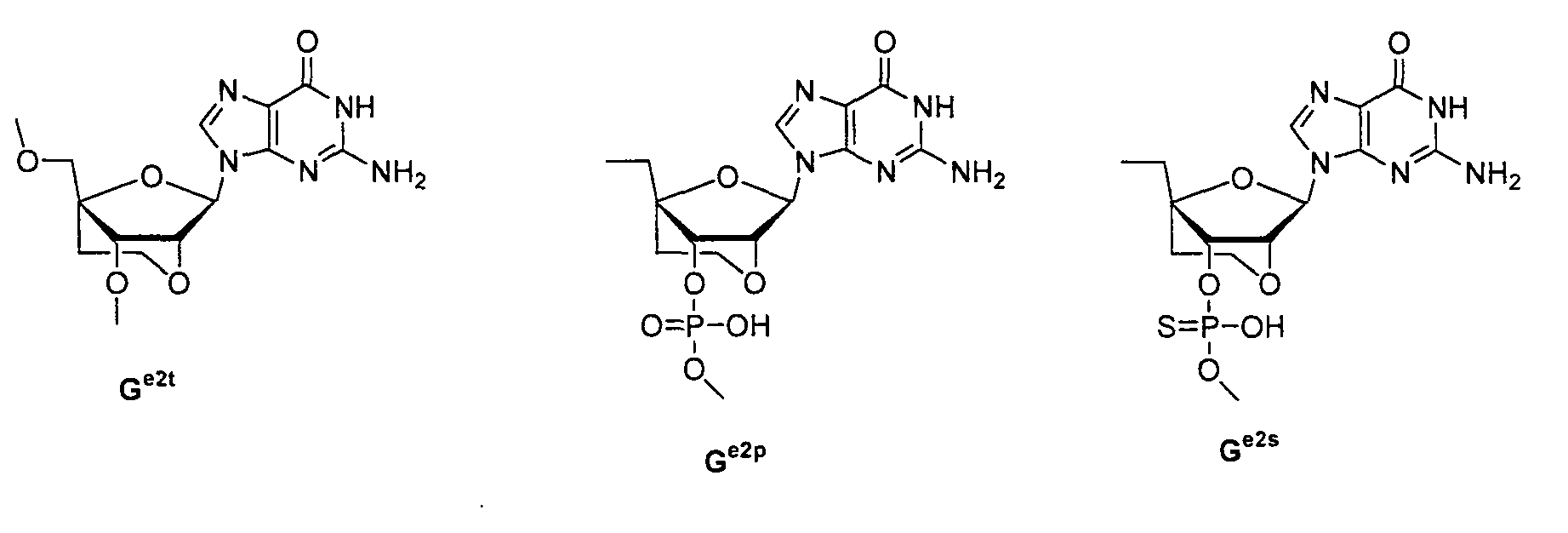


- In the above-described compound group, further preferred compounds are the compounds of Exemplified Compound Nos. 1 to 13, 19 to 31, 37 to 39, 73 to 79, and 145 to 158; and still further preferred compounds are the compounds of Exemplified Compound Nos. 1 to 3, 13 to 15, 31 to 33, 43 to 45, 61 to 63, 73 to 75, 91 to 93, and 103 to 105.
- "Pharmacologically acceptable salt thereof' refers to a salt of a compound of the present invention because the compound can be made in the form of a salt, and preferred examples of the salt can include alkali metal salts such as sodium, potassium, and lithium; alkali earth metal salts such as calcium and magnesium; metal salts such as aluminum, iron, zinc, copper, nickel, and cobalt; amine salts such as inorganic salts (e.g., ammonium salts) and organic salts (e.g., t-octylamine, dibenzylamine, morpholine, glucosamine, phenylglycine alkyl ester, ethylenediamine, N-methylglucamine, guanidine, diethylamine, triethylamine, dicyclohexylamine, N,N'-dibenzylethylenediamine, chloroprocaine, procaine, diethanolamine, N-benzyl-phenethylamine, piperazine, tetramethylammonium and tris(hydroxymethyl)aminomethane salts); inorganic acid salts such as hydrohalides (e.g., hydrofluorides, hydrochlorides, hydrobromides, and hydroiodides), nitrates, perchlorates, sulfates, and phosphates; organic acid salts such as lower alkanesulfonates (e.g., methanesulfonates, trifluoromethanesulfonates, and ethanesulfonates), arylsulfonates (e.g., benzenesulfonates and p-toluenesulfonates), acetates, malates, fumarates, succinates, citrates, tartrates, oxalates, and maleates; and amino-acid salts such as glycine salts, lysine salts, arginine salts, ornithine salts, glutamates, and aspartates.
- The compound (I) of the present invention may be present in the form of a hydrate, and the invention also includes a hydrate thereof.
- Another aspect of the present invention is a medicine containing the compound (I) of the present invention, preferably a medicine used for treating or preventing diseases in which telomerase is involved, more preferably a medicine used for treating or preventing cancer.
- The compound of the present invention strongly binds to telomerase RNA, and is useful for treating or preventing diseases in which telomerase is involved, such as cancer.
-
- Figure 1 shows the results of a stability test in Test Example 2. Time: the time elapsed from the start of the test. Residual amount: the residual amount when it is 100% at the time of the start.
- The compound (I) of the present invention can be synthesized according to the method described in a reference (Nucleic Acids Research, 12: 4539 (1984)) using a DNA synthesizer, for example, Perkin Elmer's Model 392 employing a phosphoroamidite method.
- For natural nucleosides, the phosphoroamidite reagents used in this instance may be commercially available ones; for other nucleosides, they may be obtained according to the method described in
WO99/14226 WO00/47599 - In addition, the compound (I) may be optionally thioated according to a method described in a reference. (Tetrahedron Letters, 32: 3005 (1991), J. Am. Chem. Soc., 112: 1253 (1990)) using a reagent reacting with trivalent phosphorus to form a thioether, for example, tetraethylthiuram disulfide (TETD, Applied Biosystems), xanthan hydride, or Beaucage reagent (Glen Research) to provide a thioate derivative thereof.
- The compound (I) having 3,4-DBB can be synthesized by a method described in
Japanese Patent Laid-Open No. 07-87892 11-199597 Japanese Patent Laid-Open No. 2004-182725 - The compound (I) of the present invention or a pharmacologically acceptable salt thereof has the activity of inhibiting telomerase. In addition, the compound (I) of the present invention is excellent in its pharmacokinetics such as absorption, biodistribution, and half-life in the blood, and also has low toxicity to organs such as the kidney and liver. Thus, the compound (I) of the present invention is useful, for example, as a medicine, particularly for treating or preventing diseases in which various telomerases are involved (cancer in particular).
- When the compound of the present invention is used as an agent for preventing or treating the above-mentioned diseases, the compound of the above-described general formula (I) or a pharmacologically acceptable salt thereof may be administered alone or in a suitable mixture with a pharmacologically acceptable excipient, diluent and the like orally in the form of, for example, a tablet, capsule, granule, powder, or syrup or parenterally in the form of, for example, an injection, suppository, patch, or external preparation.
- These preparations may be produced by well-known methods using additives such as excipients (including, for example, organic excipients such as sugar derivatives (e.g., lactose, saccharose, glucose, mannitol, and sorbitol), starch derivatives (e.g., corn starch, potato starch, α-starch, and dextrin), cellulose derivatives (e.g., crystalline cellulose), gum arabic, dextran, and pullulan and inorganic excipients such as silicate derivatives (e.g., light silicic acid anhydride, synthetic aluminium silicate, calcium silicate, and magnesium metasilicate aluminate), phosphates (e.g., calcium hydrogen phosphate), carbonates (e.g., calcium carbonate), and sulfates (e.g., calcium sulfate)), lubricants (including, for example, stearic acid or its metal salts (e.g., calcium stearate and magnesium stearate), talc, colloidal silica, waxes (e.g., bees wax and spermaceti), boric acid, adipic acid, sulfates (e.g., sodium sulfate), glycol, fumaric acid, sodium benzoate, DL-leucine, lauryl sulfates (e.g., sodium lauryl sulfate and magnesium lauryl sulfate), silicic acids (e.g., silicic acid anhydride and silicic acid hydrate), and the above-described starch derivatives), binders (including, for example, hydroxypropylcellulose, hydroxypropyl methylcellulose, polyvinylpyrrolidone, macrogol, and compounds similar to the above-described excipients), disintegrators (including, for example, cellulose derivatives (e.g., low substituted hydroxypropylcellulose, carboxymethylcellulose, carboxymethylcellulose calcium, and internally cross-linked carboxymethylcellulose sodium) and chemically modified starches or celluloses (e.g., carboxymethylstarch, carboxymethylstarch sodium, and cross-linked polyvinylpyrrolidone)), emulsifiers (including, for example, colloidal clays (e.g., bentonite and veegum), metal hydroxides (e.g., magnesium hydroxide and aluminium hydroxide), anionic surface active agents (e.g., sodium lauryl sulfate and calcium stearate), cationic surface active agents (e.g., benzalkonium chloride), and nonionic surfactants (e.g., polyoxyethylene alkyl ether, polyoxyethylene sorbitan fatty acid ester, and sucrose fatty acid ester)), stabilizers (including, for example, p-hydroxybenzoic esters (e.g., methylparaben and propylparaben), alcohols (chlorobutanol, benzyl alcohol, and phenylethyl alcohol), benzalkonium chloride, phenols (e.g., phenol and cresol), thimerosal, dehydroacetic acid, and sorbic acid), flavoring agents (including, for example, conventionally used sweeteners, acidifiers and perfumes), and diluents.
- In addition to the above-described additives, a colloidal dispersion system may be used in a method for introducing the compound of the present invention to patients. The colloidal dispersion system is expected to have the effect of enhancing the stability of a compound in the body and the effect of efficiently transporting the compound to a particular organ, tissue or cell. The colloidal dispersion system is not restricted if it is a conventionally used one; examples thereof include lipid-based dispersion systems including a macromolecular complex, nanocapsule, microsphere, bead, oil-in-water emulsifier, micelle, mixed micelle, and liposome. A preferred colloidal dispersion system is a plurality of liposomes or artificial membrane vesicles which have the effect of efficiently transporting a compound to a particular organ, tissue or cell (Mannino, et al., Biotechniques, 1988, 6: 682; Blume and Cevc, Biochem. et Biophys. Acta, 1990, 1029: 91; Lappalainen, et al., Antiviral Res., 1994, 23: 119; Chonn and Cullis, Current Op. Biotech., 1995, 6: 698).
- Unilamellar liposomes having a size range of 0.2 to 0.4 µm can encapsulate a substantial percentage of an aqueous buffer containing large macromolecules, and a compound is encapsulated within the aqueous interior and delivered to brain cells in a biologically active form (Fraley, et al., Trends Biochem. Sci., 1981, 6: 77). The composition of the liposome is usually a combination of lipids, particularly phospholipids, in particular, high phase transition temperature phospholipids, usually with one or more steroids, particularly cholesterol. Examples of lipids useful in liposome production include phosphatidyl compounds, such as phosphatidylglycerol, phosphatidylcholine, phosphatidylserine, sphingolipids, phosphatidylethanolamine, cerebrosides, and gangliosides. Particularly useful are diacyl phosphatidylglycerols, where the lipid moiety contains 14-18 carbon atoms, particularly 16-18 carbon atoms, and is saturated (lacking double bonds within the 14-18 carbon atom chain). Typical phospholipids include phosphatidylcholine, dipalmitoylphosphatidylcholine, and distearoylphosphatidylcholine.
- The targeting of colloidal dispersion systems, including liposomes, can be either passive or active. Passive targeting is achieved by utilizing the natural tendency of liposomes to distribute to cells of the reticuloendothelial system in organs that contain sinusoidal capillaries. Active targeting, by contrast, involves modification of the liposome by coupling thereto a specific ligand such as a viral protein coat (Morishita et al., Proc. Natl. Acad. Sci. (U.S.A.), 1993, 90: 8474), monoclonal antibody (or a suitable binding portion thereof), sugar, glycolipid or protein (or a suitable oligopeptide fragment thereof), or by changing the composition of the liposome in order to achieve distribution to organs and cell types other than the naturally occurring sites of localization. The surface of the targeted colloidal dispersion system can be modified in a variety of ways. In the case of a liposomal targeted delivery system, lipid groups can be incorporated into the lipid bilayer of the liposome in order to maintain the targeting ligand in close association with the lipid bilayer. Various linking groups can be used for joining the lipid chains to the targeting ligand. The targeting ligand, which binds a specific cell surface molecule found predominantly on cells to which delivery of the oligonucleotides of the present invention is desired, may be, for example, (1) a hormone, growth factor or a suitable oligopeptide fragment thereof which is bound by a specific cellular receptor predominantly expressed by cells to which delivery is desired or (2) a polyclonal or monoclonal antibody, or a suitable fragment thereof (e.g., Fab; F(ab')2) which specifically binds an antigenic epitope found predominantly on targeted cells. Two or more bioactive agents (e.g., the compound (I) and other agents) can be combined within, and delivered by, a single liposome. It is also possible to add agents to colloidal dispersion systems which enhance the intercellular stability and/or targeting of the contents thereof.
- The usage amount of the compound (I) of the present invention or a pharmacologically acceptable salt thereof will vary depending on symptoms, age, and the like, but is desirably administered to an adult once to six times a day orally at a lower limit of 1 mg (preferably 30 mg) per once and an upper limit of 2,000 mg (preferably 1,500 mg) per once or intravenously at a lower limit of 0.5 mg (preferably 5 mg) per once and an upper limit of 500 mg (preferably 250 mg) per once, depending on the symptoms.
- The present invention is described below in further detail with reference to Examples, Reference Example, and Test Examples.
- Synthesis of HO-Te2s-Ae2s-Ge2s-Ge2s-Ge2s-Te2s-Te2s-Ae2s-Ge2s-Ae2s-Ce2s-Ae2s-Ae2s-CH2CH2OH (Exemplified Compound No. 1)
- The synthesis was carried out at a scale of 1 µmol using an automated nucleic acid synthesizer (ABI Model 394 DNA/RNA Synthesizer from Perkin Elmer). The concentrations of the solvent, reagent, and phosphoramidite in each synthesis cycle were the same as those for the synthesis of natural oligonucleotides. For sulfuration was used 0.3% xanthan hydride/pyridine:acetonitrile = 1:9 (v/v) (900 seconds), and other solvents and reagents were obtained from Applied Biosystems. The non-natural phosphoramidites used were compounds described in Example 14 (5'-O-dimethoxytrityl-2'-O,4'-C-ethylene-6-N-benzoyladenosine-3'-O-(2-cyanoethyl-N,N-diisopropyl)phosphoramidite), Example 27 (5'-O-dimethoxytrityl-2'-O,4'-C-ethylene-2-N-isobutylylguanosine-3'-O-(2-cyanoethyl-N,N-diisopropyl)phosphoramidite), Example 22 (5'-O-dimethoxytrityl-2'-O,4'-C-ethylene-4-N-benzoyl-5-methylcytidine-3'-O-(2-cyanoethyl-N,N-diisopropyl)phosphoramidite) and Example 9 (5'-O-dimethoxytrityl-2'-O,4'-C-ethylene-5-methyluridine-3'-O-(2-cyanoethyl-N,N-diisopropyl)phosphoramidite) of
Japanese Patent Laid-Open No. 2000-297097 Japanese Patent Laid-Open No. 07-87982 - A protected oligonucleotide analogue having a desired sequence was treated with concentrated ammonia water to cleave the oligomer from the support and simultaneously to remove protective cyanoethyl groups on the phosphorus atoms and protective groups on the nucleic acid bases. The solvent was distilled off under reduced pressure, followed by purifying the resultant residue using reverse phase HPLC (LC-10VP from Shimadzu Corporation, column (Merck, Chromolith Performance RP-18e (4.6×100 mm)), A solution: 5% acetonitrile, 0.1 M triethylamine acetate aqueous solution (TEAA), pH 7.0, B solution: acetonitrile, B%: 20%→60% (10 min., linear gradient); 60°C; 2 ml/min.; 254 nm) to collect the peak of the desired compound having dimethoxytrityl groups. Water was added, followed by distilling off under reduced pressure to remove TEAA. An 80% acetic acid aqueous solution (200 µl) was added to the residue, followed by allowing to stand for 20 minutes to deprotect the dimethoxytrityl groups. The solvent was distilled off, followed by purification using ion exchange HPLC (LC-10VP from Shimadzu Corporation, column (Tosoh Corporation, DEAE-5PW (10×50 mm)), A solution: 20% acetonitrile aqueous solution, B solution: 20% acetonitrile, 67 mM phosphate buffer, 1.5 M potassium bromide aqueous solution, pH 6.8 B%: 20%→70% (10 min., linear gradient); 60°C; 2 ml/min.; 254 nm) to collect the peak of the desired compound. The solvent was distilled off under reduced pressure, followed by dissolving the residue in 2 ml of water, and desalting by gel filtration using Sephadex G-25 (15×300 mm). A fraction corresponding to the desired compound was collected and distilled off, followed by dissolving the residue in 1 ml of water before filtration using a 0.45-µm filter (Millipore, Ultrafree-MC) to provide the desired oligonucleotide. When analyzed using ion exchange HPLC (LC-10VP from Shimadzu Corporation, column (Tosoh Corporation, DEAE-5PW (10×50 mm)), A solution: 20% acetonitrile aqueous solution, B solution: 20% acetonitrile, 67 mM phosphate buffer, 1.5 M potassium bromide aqueous solution, pH 6.8 B%: 20%→70% (10 min., linear gradient); 60°C; 2 ml/min.; 254 nm), this compound was eluted at 6.39 minutes (26.4 A260 units) (λmax (H2O) = 257 nm). In addition, the compound was identified by negative ion ESI mass spectrometry (calculated value: 4916.10, measured value: 4916.09).
- The base sequence of the compound is a sequence complementary to the nucleotide Nos. 136-148 region of human telomerase RNA (GenBank accession No. U86046).
- Synthesis of HO-Te2s-Ae2s-Ge2s-Ge2s-Ge2s-Te2s-Te2s-Ae2s-Ge2s-Ae2s-Ce2s-Ae2s-CH2CH2OH (Exemplified Compound No. 2)
- The compound of Example 2 having the desired sequence was synthesized in the same manner as the compound of Example 1 using 1.2 µmol of CPG identical to that in Example 1. After deprotection, the purification was carried out using reverse phase HPLC (LC-10VP from Shimadzu Corporation, column (Merck, Chromolith Performance RP-18e (4.6×100 mm)), A solution: 5% acetonitrile, 0.1 M triethylamine acetate aqueous solution (TEAA), pH 7.0, B solution: acetonitrile, B%: 10%→50% (10 min., linear gradient); 60°C; 2 ml/min.; 254 nm) to collect the peak of the desired compound having dimethoxytrityl groups.
- The dimethoxytrityl groups were deprotected, followed by purification using ion exchange HPLC (LC-10VP from Shimadzu Corporation, column (Tosoh Corporation, DEAE-5PW (10×50 mm)), A solution: 20% acetonitrile aqueous solution, B solution: 20% acetonitrile, 67 mM phosphate buffer, 1.5 M potassium bromide aqueous solution, pH 6.8 B%: 20%→70% (10 min., linear gradient); 60°C; 2 ml/min.; 254 nm) to collect the peak of the desired compound. The desalting was carried out by gel filtration using Sephadex G-25 (15×300 mm). When analyzed using ion exchange HPLC (LC-10VP from Shimadzu Corporation, column (Tosoh Corporation, DEAE-5PW (10×50 mm)), A solution: 20% acetonitrile aqueous solution, B solution: 20% acetonitrile, 67 mM phosphate buffer, 1.5 M potassium bromide aqueous solution, pH 6.8 B%: 20%→70% (10 min., linear gradient); 60°C; 2 ml/min.; 254 nm), the finally purified compound was eluted at 5.73 minutes (11.5 A260 units) (λmax (H2O) = 259 nm). In addition, the compound was identified by negative ion ESI mass spectrometry (calculated value: 4544.79, measured value: 4543.92).
- The base sequence of the compound is a sequence complementary to the nucleotide Nos. 137-148 region of human telomerase RNA (GenBank accession No. U86046).
- The compound of Example 3 having the desired sequence was synthesized in the same manner as the compound of Example 1 using 1.2 µmol of CPG identical to that in Example 1. After deprotection, the purification was carried out using reverse phase HPLC (LC-10VP from Shimadzu Corporation, column (Merck, Chromolith Performance RP-18e (4.6×100 mm)), A solution: 5% acetonitrile, 0.1 M triethylamine acetate aqueous solution (TEAA), pH 7.0, B solution: acetonitrile, B%: 10%→50% (10 min., linear gradient); 60°C; 2 ml/min.; 254 nm) to collect the peak of the desired compound having dimethoxytrityl groups.
- The dimethoxytrityl groups were deprotected, followed by purification using ion exchange HPLC (LC-10VP from Shimadzu Corporation, column (Tosoh Corporation, DEAE-5PW (10×50 mm)), A solution: 20% acetonitrile aqueous solution, B solution: 20% acetonitrile, 67 mM phosphate buffer, 1.5 M potassium bromide aqueous solution, pH 6.8 B%: 20%→70% (10 min., linear gradient); 60°C; 2 ml/min.; 254 nm) to collect the peak of the desired compound. The desalting was carried out by gel filtration using Sephadex G-25 (15×300 mm). When analyzed using ion exchange HPLC (LC-10VP from Shimadzu Corporation, column (Tosoh Corporation, DEAE-5PW (10×50 mm)), A solution: 20% acetonitrile aqueous solution, B solution: 20% acetonitrile, 67 mM phosphate buffer, 1.5 M potassium bromide aqueous solution, pH 6.8 B%: 20%→70% (10 min., linear gradient); 60°C; 2 ml/min.; 254 nm), the finally purified compound was eluted at 4.54 minutes (6.88 A260 units) (λmax (H2O) = 254 nm). In addition, the compound was identified by negative ion ESI mass spectrometry (calculated value: 3812.16, measured value: 3811.17).
- The base sequence of the compound is a sequence complementary to the nucleotide Nos. 139-148 region of human telomerase RNA (GenBank accession No. U86046).
- The compound of Example 4 having the desired sequence was synthesized in the same manner as the compound of Example 1 using 1.2 µmol of CPG identical to that in Example 1. After deprotection, the purification was carried out using reverse phase HPLC (LC-10VP from Shimadzu Corporation, column (Merck, Chromolith Performance RP-18e (4.6×100 mm)), A solution: 5% acetonitrile, 0.1 M triethylamine acetate aqueous solution (TEAA), pH 7.0, B solution: acetonitrile, B%: 10%→50% (10 min., linear gradient); 60°C; 2 ml/min.; 254 nm) to collect the peak of the desired compound having dimethoxytrityl groups.
- The dimethoxytrityl groups were deprotected, followed by purification using ion exchange HPLC (LC-10VP from Shimadzu Corporation, column (Tosoh Corporation, DEAE-5PW (10×50 mm)), A solution: 20% acetonitrile aqueous solution, B solution: 20% acetonitrile, 67 mM phosphate buffer, 1.5 M potassium bromide aqueous solution, pH 6.8 B%: 20%→70% (10 min., linear gradient); 60°C; 2 ml/min.; 254 nm) to collect the peak of the desired compound. The desalting was carried out by gel filtration using Sephadex G-25 (15×300 mm). When analyzed using ion exchange HPLC (LC-10VP from Shimadzu Corporation, column (Tosoh Corporation, DEAE-5PW (10×50 mm)), A solution: 20% acetonitrile aqueous solution, B solution: 20% acetonitrile, 67 mM phosphate buffer, 1.5 M potassium bromide aqueous solution, pH 6.8 B%: 20%→70% (10 min., linear gradient); 60°C; 2 ml/min.; 254 nm), the finally purified compound was eluted at 5.53 minutes (8.73 A260 units) (λmax (H2O) = 260 nm). In addition, the compound was identified by negative ion ESI mass spectrometry (calculated value: 3053.53, measured value: 3053.09).
- The base sequence of the compound is a sequence complementary to the nucleotide Nos. 141-148 region of human telomerase RNA (GenBank accession No. U86046).
- The compound of Example 5 having the desired sequence was synthesized in the same manner as the compound of Example 1 using 1.2 µmol of CPG identical to that in Example 1. After deprotection, the purification was carried out using reverse phase HPLC (LC-10VP from Shimadzu Corporation, column (Merck, Chromolith Performance RP-18e (4.6×100 mm)), A solution: 5% acetonitrile, 0.1 M triethylamine acetate aqueous solution (TEAA), pH 7.0, B solution: acetonitrile, B%: 10%→50% (10 min., linear gradient); 60°C; 2 ml/min.; 254 nm) to collect the peak of the desired compound having dimethoxytrityl groups.
- The dimethoxytrityl groups were deprotected, followed by purification using ion exchange HPLC (LC-10VP from Shimadzu Corporation, column (Tosoh Corporation, DEAE-5PW (10×50 mm)), A solution: 20% acetonitrile aqueous solution, B solution: 20% acetonitrile, 67 mM phosphate buffer, 1.5 M potassium bromide aqueous solution, pH 6.8 B%: 20%→70% (10 min., linear gradient); 60°C; 2 ml/min.; 254 nm) to collect the peak of the desired compound. The desalting was carried out by gel filtration using Sephadex G-25 (15×300 mm). When analyzed using ion exchange HPLC (LC-10VP from Shimadzu Corporation, column (Tosoh Corporation, DEAE-5PW (10×50 mm)), A solution: 20% acetonitrile aqueous solution, B solution: 20% acetonitrile, 67 mM phosphate buffer, 1.5 M potassium bromide aqueous solution, pH 6.8 B%: 20%→70% (10 min., linear gradient); 60°C; 2 ml/min.; 254 nm), the finally purified compound was eluted at 7.10 minutes (8.92 A260 units) (λmax (H2O) = 255 nm). In addition, the compound was identified by negative ion ESI mass spectrometry (calculated value: 2682.22, measured value: 2682.10).
- The base sequence of the compound is a sequence complementary to the nucleotide Nos. 142-148 region of human telomerase RNA (GenBank accession No. U86046).
- The compound of Example 6 having the desired sequence was synthesized in the same manner as the compound of Example 1 using 1.2 µmol of CPG identical to that in Example 1. After deprotection, the purification was carried out using reverse phase HPLC (LC-10VP from Shimadzu Corporation, column (Merck, Chromolith Performance RP-18e (4.6×100 mm)), A solution: 5% acetonitrile, 0.1 M triethylamine acetate aqueous solution (TEAA), pH 7.0, B solution: acetonitrile, B%: 10%→50% (10 min., linear gradient); 60°C; 2 ml/min.; 254 nm) to collect the peak of the desired compound having dimethoxytrityl groups.
- The dimethoxytrityl groups were deprotected, followed by purification using ion exchange HPLC (LC-10VP from Shimadzu Corporation, column (Tosoh Corporation, DEAE-5PW (10×50 mm)), A solution: 20% acetonitrile aqueous solution, B solution: 20% acetonitrile, 67 mM phosphate buffer, 1.5 M potassium bromide aqueous solution, pH 6.8 B%: 20%→70% (10 min., linear gradient); 60°C; 2 ml/min.; 254 nm) to collect the peak of the desired compound. The desalting was carried out by gel filtration using Sephadex G-25 (15×300 mm). When analyzed using ion exchange HPLC (LC-10VP from Shimadzu Corporation, column (Tosoh Corporation, DEAE-5PW (10×50 mm)), A solution: 20% acetonitrile aqueous solution, B solution: 20% acetonitrile, 67 mM phosphate buffer, 1.5 M potassium bromide aqueous solution, pH 6.8 B%: 20%→70% (10 min., linear gradient); 60°C; 2 ml/min.; 254 nm), the finally purified compound was eluted at 7.67 minutes (19.5 A260 units) (λmax (H2O) = 259 nm). In addition, the compound was identified by negative ion ESI mass spectrometry (calculated value: 3440.85, measured value: 3439.47).
- The base sequence of the compound is a sequence complementary to the nucleotide Nos. 140-148 region of human telomerase RNA (GenBank accession No. U86046).
- The compound of Example 7 having the desired sequence was synthesized in the same manner as the compound of Example 1 using 1.2 µmol of CPG identical to that in Example 1. After deprotection, the purification was carried out using reverse phase HPLC (LC-10VP from Shimadzu Corporation, column (Merck, Chromolith Performance RP-18e (4.6×100 mm)), A solution: 5% acetonitrile, 0.1 M triethylamine acetate aqueous solution (TEAA), pH 7.0, B solution: acetonitrile, B%: 10%→50% (10 min., linear gradient); 60°C; 2 ml/min.; 254 nm) to collect the peak of the desired compound having dimethoxytrityl groups.
- The dimethoxytrityl groups were deprotected, followed by purification using ion exchange HPLC (LC-10VP from Shimadzu Corporation, column (Tosoh Corporation, DEAE-5PW (10×50 mm)), A solution: 20% acetonitrile aqueous solution, B solution: 20% acetonitrile, 67 mM phosphate buffer, 1.5 M potassium bromide aqueous solution, pH 6.8 B%: 20%→70% (10 min., linear gradient); 60°C; 2 ml/min.; 254 nm) to collect the peak of the desired compound. The desalting was carried out by gel filtration using Sephadex G-25 (15×300 mm). When analyzed using ion exchange HPLC (LC-10VP from Shimadzu Corporation, column (Tosoh Corporation, DEAE-5PW (10×50 mm)), A solution: 20% acetonitrile aqueous solution, B solution: 20% acetonitrile, 67 mM phosphate buffer, 1.5 M potassium bromide aqueous solution, pH 6.8 B%: 20%→70% (10 min., linear gradient); 60°C; 2 ml/min.; 254 nm), the finally purified compound was eluted at 7.60 minutes (18.6 A260 units) (λmax (H2O) = 257 nm). In addition, the compound was identified by negative ion ESI mass spectrometry (calculated value: 3449.86, measured value: 3449.42).
- The base sequence of the compound is a sequence complementary to the nucleotide Nos. 139-147 region of human telomerase RNA (GenBank accession No. U86046).
- The compound of Example 8 having the desired sequence was synthesized in the same manner as the compound of Example 1 using 1.2 µmol of universal-Q 500 CPG (from Glen Research). After deprotection, the purification was carried out using reverse phase HPLC (LC-10VP from Shimadzu Corporation, column (Merck, Chromolith Performance RP-18e (4.6×100 mm)), A solution: 5% acetonitrile, 0.1 M triethylamine acetate aqueous solution (TEAA), pH 7.0, B solution: acetonitrile, B%: 10%→50% (10 min., linear gradient); 60°C; 2 ml/min.; 254 nm) to collect the peak of the desired compound having dimethoxytrityl groups.
- The dimethoxytrityl groups were deprotected, followed by purification using ion exchange HPLC (LC-10VP from Shimadzu Corporation, column (Tosoh Corporation, DEAE-5PW (10×50 mm)), A solution: 20% acetonitrile aqueous solution, B solution: 20% acetonitrile, 67 mM phosphate buffer, 1.5 M potassium bromide aqueous solution, pH 6.8 B%: 20%→70% (10 min., linear gradient); 60°C; 2 ml/min.; 254 nm) to collect the peak of the desired compound. The desalting was carried out by gel filtration using Sephadex G-25 (15×300 mm). When analyzed using ion exchange HPLC (LC-10VP from Shimadzu Corporation, column (Tosoh Corporation, DEAE-5PW (10×50 mm)), A solution: 20% acetonitrile aqueous solution, B solution: 20% acetonitrile, 67 mM phosphate buffer, 1.5 M potassium bromide aqueous solution, pH 6.8 B%: 20%→70% (10 min., linear gradient); 60°C; 2 ml/min.; 254 nm), the finally purified compound was eluted at 9.55 minutes (18.6 A260 units) (λmax (H2O) = 264 nm). In addition, the compound was identified by negative ion ESI mass spectrometry (calculated value: 4776.00, measured value: 4775.23).
- The base sequence of the compound is a sequence complementary to the nucleotide Nos. 136-148 region of human telomerase RNA (GenBank accession No. U86046).
- The compound of Example 9 having the desired sequence was synthesized in the same manner as the compound of Example 1 using 2.7 µmol of CPG identical to that in Example 1. Described in Example 13b of
Japanese Patent Laid-Open No. 11-199597 - When analyzed using reverse phase HPLC (LC-10VP from Shimadzu Corporation, column (Merck, Chromolith Performance RP-18e (4.6×100 mm)), A solution: 5% acetonitrile, 0.1 M triethylamine acetate aqueous solution (TEAA), pH 7.0, B solution: acetonitrile, B%: 10%→50% (8 min., linear gradient); 60°C; 2 ml/min.; 254 nm), the finally purified compound was eluted at 8.33 minutes (34.8 A260 units) (λmax (H2O) = 258 nm). In addition, the compound was identified by negative ion ESI mass spectrometry (calculated value: 5414.69, measured value: 5414.48).
- The base sequence of the compound is a sequence complementary to the nucleotide Nos. 137-148 region of human telomerase RNA (GenBank accession No. U86046).
- The compound of Example 10 having the desired sequence was synthesized in the same manner as the compound of Example 1 using 2.7 µmol of CPG identical to that in Example 1. Described in Example 12b of
Japanese Patent Laid-Open No. 11-199597 - When analyzed using reverse phase HPLC (LC-10VP from Shimadzu Corporation, column (Merck, Chromolith Performance RP-18e (4.6×100 mm)), A solution: 5% acetonitrile, 0.1 M triethylamine acetate aqueous solution (TEAA), pH 7.0, B solution: acetonitrile, B%: 10%→50% (8 min., linear gradient); 60°C; 2 ml/min.; 254 nm), the finally purified compound was eluted at 7.52 minutes (28.4 A260 units) (λmax (H2O) = 258 nm). In addition, the compound was identified by negative ion ESI mass spectrometry (calculated value: 5372.61, measured value: 5372.40).
- The base sequence of the compound is a sequence complementary to the nucleotide Nos. 137-148 region of human telomerase RNA (GenBank accession No. U86046).
- The compound of Example 11 having the desired sequence was synthesized in the same manner as the compound of Example 1 using 2.7 µmol of CPG identical to that in Example 1. Described in Example 12b of
Japanese Patent Laid-Open No. 07-87982 - When analyzed using reverse phase HPLC (LC-10VP from Shimadzu Corporation, column (Merck, Chromolith Performance RP-18e (4.6×100 mm)), A solution: 5% acetonitrile, 0.1 M triethylamine acetate aqueous solution (TEAA), pH 7.0, B solution: acetonitrile, B%: 10%→50% (8 min., linear gradient); 60°C; 2 ml/min.; 254 nm), the finally purified compound was eluted at 7.30 minutes (42.9 A260 units) (λmax (H2O) = 258 nm). In addition, the compound was identified by negative ion ESI mass spectrometry (calculated value: 5538.75, measured value: 5538.30).
- The base sequence of the compound is a sequence complementary to the nucleotide Nos. 137-148 region of human telomerase RNA (GenBank accession No. U86046).
- The compound of Example 12 having the desired sequence was synthesized in the same manner as the compound of Example 1 using 2.7 µmol of CPG identical to that in Example 1. Described in Example 12b of
Japanese Patent Laid-Open No. 07-87982 - When analyzed using ion exchange HPLC (LC-10VP from Shimadzu Corporation, column (Tosoh Corporation, DEAE-5PW (10×50 mm)), A solution: 20% acetonitrile aqueous solution, B solution: 20% acetonitrile, 67 mM phosphate buffer, 1.5 M potassium bromide aqueous solution, pH 6.8 B%: 10%→60% (8 min., linear gradient); 60°C; 2 ml/min.; 254 nm), the finally purified compound was eluted at 8.23 minutes (33.2 A260 units) (λmax (H2O) = 259 nm). In addition, the compound was identified by negative ion ESI mass spectrometry (calculated value: 5176.45, measured value: 5175.63).
- The base sequence of the compound is a sequence complementary to the nucleotide Nos. 137-149 region of human telomerase RNA (GenBank accession No. U86046).
- The compound of Example 13 having the desired sequence was synthesized in the same manner as the compound of Example 1 using 1.0 µmol of CPG identical to that in Example 1. However, phosphalink (from Applied Biosystems) was used according to the appended protocol in order to introduce a thiophosphate group into the 5' end. After deprotection, the purification was carried out using reverse phase HPLC (LC-10VP from Shimadzu Corporation, column (Merck, Chromolith Performance RP-18e (4.6×100 mm)), A solution: 5% acetonitrile, 0.1 M triethylamine acetate aqueous solution (TEAA), pH 7.0, B solution: acetonitrile, B%: 0%→80% (10 min., linear gradient); 60°C; 2 ml/min.; 254 nm) to collect the peak of the desired compound.
- When analyzed using ion exchange HPLC (LC-10VP from Shimadzu Corporation, column (Tosoh Corporation, DEAE-5PW (10×50 mm)), A solution: 20% acetonitrile aqueous solution, B solution: 20% acetonitrile, 67 mM phosphate buffer, 1.5 M potassium bromide aqueous solution, pH 6.8 B%: 10%→80% (8 min., linear gradient); 60°C; 2 ml/min.; 254 nm), the finally purified compound was eluted at 7.27 minutes (33.6 A260 units) (λmax (H2O) = 259 nm). In addition, the compound was identified by negative ion ESI mass spectrometry (calculated value: 5012.26, measured value: 5011.54).
- The base sequence of the compound is a sequence complementary to the nucleotide Nos. 136-148 region of human telomerase RNA (GenBank accession No. U86046).
- The compound of Example 13 (18 A260 units) was dissolved in 0.8 mL of DMF, to which diisopropylethylamine (4.96 µL) was then added, followed by adding thereto a solution consisting of 19 mg of 2-(stearoyloxy)ethyl bromide (Ackrman, et al., J. Am. Chem. Soc., 78: 6025 (1956)) dissolved, under heating, in 0.8 mL of DMF. The resultant solution was subjected to reaction at 42°C for 4 days. After the end of the reaction, it was washed thrice with 5 mL of n-hexane, and 2 mL of water was then added before removing the precipitated insoluble matter by filtration using a membrane filter, followed by purification employing reverse phase HPLC (LC-10VP from Shimadzu Corporation, column (Merck, Chromolith Performance RP-18e (4.6×100 mm)), A solution: 5% acetonitrile, 0.1 M triethylamine acetate aqueous solution (TEAA), pH 7.0, B solution: acetonitrile, B%: 0%→30% (10 min., linear gradient), 30%→80% (5 min), 60°C; 2 ml/min.; 254 nm) and then collecting the peak of the desired compound.
- When analyzed using ion exchange HPLC (LC-10VP from Shimadzu Corporation, column (Tosoh Corporation, DEAE-5PW (10×50 mm)), A solution: 20% acetonitrile aqueous solution, B solution: 20% acetonitrile, 67 mM phosphate buffer, 1.5 M potassium bromide aqueous solution, pH 6.8 B%: 10%→80% (10 min., linear gradient); 60°C; 2 ml/min.; 254 nm), the finally purified compound was eluted at 8.23 minutes (3.9 A260 units). In addition, the compound was identified by negative ion ESI mass spectrometry (calculated value: 5322.33, measured value: 5322.80).
- The base sequence of the compound is a sequence complementary to the nucleotide Nos. 136-148 region of human telomerase RNA (GenBank accession No. U86046).
- The synthesis was carried out at a scale of 1 µmol using an automated nucleic acid synthesizer (ABI model 394 DNA/RNA Synthesizer from Perkin Elmer). The concentrations of the solvent, reagent, and phosphoramidite in each synthesis cycle were the same as those for the synthesis of natural oligonucleotides. A 3% dichloroacetic acid/dichloromethane solvent (80 seconds) was used for detritylation; a 4,5-dicyanoimidazole/acetonitrile solvent (from Chem Genes, 900 seconds) for coupling; 0.3% xanthan hydride/pyridine:acetonitrile = 1:9 (v/v) (900 seconds) for sulfuration; and other solvents and reagents were obtained from Applied Biosystems. Non-natural phosphoroamidites as Aa and Ga moieties, used 6-N-benzoyl-3'-(trityl)amino-2',3'-dideoxyadenosine 5'-(2-cyanoethyl N,N-diisopropylphosphoramidite) and 2-N-isobutylyl-3'-(trityl)amino-2',3'-dideoxyguanosine 5'-(2-cyanoethyl N,N-diisopropylphosphoramidite) purchased from Transgenomic, respectively. As Ca and Ta moieties, 4-N-benzoyl-3'-(trityl)amino-2',3'-dideoxy-5-methylcytidine 5'-(2-cyanoethyl N,N-diisopropylphosphoramidite) and 3'-(trityl)amino-3'-deoxythymidine 5'-(2-cyanoethyl N,N-diisopropylphosphoramidite) were synthesized according to a reference (Nelson, J. S., et al., J. Org. Chem. (1997) 62: 7278-7287). A controlled pore glass (CPG) to which 3'-(trityl)amino-3'-deoxythymidine was bound at the 5' position via succinic acid was synthesized according to a reference ( Nelson, J. S., et al., J. Org. Chem. (1997) 62: 7278-7287) and used to synthesize the title compound without the trityl group.
- A protected oligonucleotide analogue having the desired sequence was treated with concentrated ammonia water to cleave the oligomer from the support and simultaneously to remove protective cyanoethyl groups on the phosphorus atoms and protective groups on the nucleic acid bases. The solvent was distilled off under reduced pressure, followed by purifying the resultant residue using ion exchange HPLC (LC-10VP from Shimadzu Corporation, column (Tosoh Corporation, DEAE-5PW (10×50 mm)), A solution: 20% acetonitrile aqueous solution, B solution: 20% acetonitrile, 67 mM phosphate buffer, 1.5 M potassium bromide aqueous solution, pH 6.8 B%: 20%→40% (10 min., linear gradient); 60°C; 2 ml/min.; 254 nm) to collect the peak of a desired compound. The solvent was distilled off, followed by dissolving the residue in 2 ml of water to desalt by gel filtration using Sephadex G-25 (15×300 mm). A fraction corresponding to the desired compound was collected and distilled off, followed by dissolving the residue in 1 ml of water before filtration using a 0.45-µm filter (Millipore, Ultrafree-MC) to provide a desired oligonucleotide. When analyzed using ion exchange HPLC (LC-10VP from Shimadzu Corporation, column (Tosoh Corporation, DEAE-5PW (10×50 mm)), A solution: 20% acetonitrile aqueous solution, B solution: 20% acetonitrile, 67 mM phosphate buffer, 1.5 M potassium bromide aqueous solution, pH 6.8 B%: 20%→40% (10 min., linear gradient); 60°C; 2 ml/min.; 254 nm), this compound was eluted at 5.92 minutes. In addition, the compound was identified by negative ion ESI mass spectrometry (calculated value: 4216.71, measured value: 4215.81).
- The compound has the same sequence as that of GRN163 described in Asai, et al., 2003, Cancer Research 63: 3931-3939, and uses a 5-methylcytosine base in place of a cytosine base.
- The base sequence of the compound is a sequence complementary to the nucleotide Nos. 136-148 region of human telomerase RNA (GenBank accession No. U86046).
- Each of the compounds of the Examples was dissolved in a solution for determining melting temperature (Tm) (10 mM sodium phosphate buffer (pH 7.2)) so as to provide a final concentration of each of the compounds of 3.4 µM, which was further prepared so that an RNA oligonucleotide having the sequence of telomerase RNA (5'-UUGUCUAACCCUA-3') (3.4 µM) was present in the solution. The solution containing both of the strands (1.1 mL) was heated at 90°C for 5 minutes, followed by slow cooling to room temperature. The sample solution was determined using a spectrophotometer (Shimazu UV-3100PC). The sample was placed in a cell (cell thickness: 10 mm, cylindrical jacket type) and heated by circulated water heated in an incubator (Haake FE2 from EKO). The temperature was elevated from 20°C to 95°C while monitoring using a digital temperature indicator (SATO SK-1250MC), and absorbance was determined at 260 nm at 1°C intervals. The temperature at which the amount of change in absorbance per 1°C became maximal was denoted as Tm, and the compounds of the Examples were evaluated. The results are shown in Table 1.
(Table 1) Melting temperature of each compound Test compound Tm (°C) Compound of Example 1 85 Compound of Example 2 87 Compound of Example 3 74 Compound of Example 4 62 Compound of Example 5 52 Compound of Example 6 71 Compound of Reference Example 1 (Compound A) 51 - The compounds of these Examples had higher Tm values than that of compound A. This means that they more strongly bind to telomerase than compound A, which is known to have the activity of inhibiting telomerase, suggesting that the compounds of the Examples inhibit the enzyme activity of telomerase.
- The compound of Example 1 (about 3.6 nmol) or compound A obtained in Reference Example 1 (about 3.6 nmol) was dissolved in 500 µL of a 20 mM sodium acetate aqueous solution (pH 5.0) and incubated at 37°C, and 73 µL thereof was sampled at fixed times, to which 27 µl of a sodium borate aqueous solution (pH 9.18) was then added for neutralization. These were analyzed using ion exchange HPLC (LC-10VP from Shimadzu Corporation, column (Tosoh Corporation, DEAE-5PW (10×50 mm)), A solution: 20% acetonitrile aqueous solution, B solution: 20% acetonitrile, 67 mM phosphate buffer, 1.5 M potassium bromide aqueous solution, pH 6.8 B%: 20%→70% (10 min., linear gradient); 60°C; 2 ml/min.; 254 nm), and the ratio between the area value (A) of each compound on the HPLC chart before the reaction and the area value thereof (B) after the reaction (B/A×100) was defined as the residual ratio (%) of each nucleotide. The results are shown in Figure 1.
- As shown in the figure, the compound of Example 1 underwent no hydrolysis even after about 100 hours, whereas 60% of compound A was observed to be hydrolyzed after about 24 hours. These results demonstrated that the compound of Example 1 was extremely stable, compared to compound A, under acidic conditions similar to physiological conditions within cells into which they are incorporated by endocytosis.
- A mixture consisting of the compound of Example 1 placed in digestible oily matter, for example, soybean oil, cotton oil, or olive oil is prepared, and injected into gelatin using a positive replacement pump to provide a soft capsule containing 100 mg of active component, which is then washed before drying.
- According to a standard procedure, 100 mg of the compound of Example 2, 0.2 mg of colloidal silicon dioxide, 5 mg of magnesium stearate, 275 mg of microcrystalline cellulose, 11 mg of starch, and 98.8 mg of lactose are used for production.
- In this respect, a coating is applied if desired.
- The suspension is produced so that 5 ml thereof contains 100 mg of the compound of Example 1, 100 mg of sodium carboxymethylcellulose, 5 mg of sodium benzoate, 1.0 g of sorbitol solution (Japanese Pharmacopeia), and 0.025 ml of vanillin.
- In 10% by volume of propylene glycol was stirred 1.5% by weight of the compound of Example 2, to which water for injection was added to a fixed volume before sterilization for production.
- N-(α-trimethylammonioacetyl)-didodecyl-D-glutamate chloride (final concentration: 30 nmol/ml), dilauroylphosphatidylcholine (final concentration: 60 nmol/ml), dioleoylphosphatidylethanolamine (final concentration: 60 nmol/ml), and 1.5% by weight of the compound of Example 2 were stirred in 10% by volume of propylene glycol, to which water for injection was added to a fixed volume before sterilization for production.
- The compound of the present invention strongly binds to telomerase RNA, and is useful for treating or preventing diseases in which telomerase is involved, such as cancer.
Claims (27)
- A compound having general formula (I) below:
E1-B1-B2-B3-B4-E2 (I)
(wherein E1 represents a group represented by the formula R1-, a group represented by the formula R1-B6-, or a group represented by the formula R1-B5-B6-;E2 represents a group represented by the formula -B7-R2, a group represented by the formula -B8-B9-R2, a group represented by the formula -B8-B10-B11-R2, a group represented by the formula -B8-B10-B12-B13-R2, a group represented by the formula -B8-B10-B12-B14-B15-R2, a group represented by the formula -B8-B10-B12-B14-B16-B17-R2, or a group represented by the formula - B8-B10-B12-B14-B16-B18-B19-R2;B4, B5, and B8 are identical or different, and each represents a group represented by formula:


 B1, B2, B3, and B12 are identical or different, and each represents a group of formula:


 B16 represents a group represented by formula:


 B6, B10, B14, and B 18 are identical or different, and each represents a group represented by formula:


 B11 represents a group represented by formula:
 B 15 represents a group represented by formula:
 B9, B 13, B 17, and B 19 are identical or different, and each represents a group represented by formula:
 B7 represents a group represented by formula:
 R1 represents a hydroxyl group, a group represented by formula:
 R2 represents a hydrogen atom, the group -P(=O)(OH)-O-CH2-CH2-OH, or the group -P(=S)(OH)-O-CH2-CH2-OH;
with the proviso that the following case is excluded:B4, B5, and B8 are identical or different, and each is Tp or Ts;B1, B2, B3, and B12 are identical or different, and each is Gp or Gs;B16 is Cp or Cs;B6, B10, B 14, and B 18 are identical or different, and each is Ap or As;B11 is Gt;B15 is Ct;B9, B 13, B 17, and B 19 are each At; and
B7 is Tt),
or a pharmacologically acceptable salt thereof. - The compound according to claim 1, wherein B4, B5, and B8 are identical or different, and each is Tep or Tes;B1, B2, B3, and B12 are identical or different, and each is Gep or Ges;B16 is Cep or Ces;B6, B10, B 14, and B 18 are identical or different, and each is Aep or Aes;B11 is Get;B 15 is Cet;B9, B13, B 17, and B 19 are each Aet; andB7 is Tet,
or a pharmacologically acceptable salt thereof. - The compound according to claim 1 or 2, wherein B4, B5, and B8 are each Tes;B1, B2 and B12 are each Ges;B16 is Ces; andB6, B10, B14, and B 18 are each Aes,
or a pharmacologically acceptable salt thereof. - The compound according to any one of claims 1 to 3, wherein E1 is a group represented by the formula R1-B5-B6-, or a pharmacologically acceptable salt thereof.
- The compound according to any one of claims 1 to 3, wherein E1 is a group represented by the formula R1-B6-, or a pharmacologically acceptable salt thereof.
- The compound according to any one of claims 1 to 3, wherein E1 is a group represented by the formula R1, or a pharmacologically acceptable salt thereof.
- The compound according to any one of claims 1 to 6, wherein E2 is a group represented by the formula -B8-B10-B12-B14-B16-B18-B19-R2, or a pharmacologically acceptable salt thereof.
- The compound according to any one of claims 1 to 6, wherein E2 is a group represented by the formula -B8-B10-B12-B14-B16-B17-R2, or a pharmacologically acceptable salt thereof.
- The compound according to any one of claims 1 to 6, wherein E2 is a group represented by the formula -B8-B10-B12-B14-B15-R2, or a pharmacologically acceptable salt thereof.
- The compound according to any one of claims 1 to 6, wherein E2 is a group represented by the formula -B8-B10-B12-B13-R2, or a pharmacologically acceptable salt thereof.
- The compound according to any one of claims 1 to 6, wherein E2 is a group represented by the formula -B8-B10-B11-R2, or a pharmacologically acceptable salt thereof.
- The compound according to any one of claims 1 to 6, wherein E2 is a group represented by the formula -B8-B9-R2, or a pharmacologically acceptable salt thereof.
- The compound according to any one of claims 1 to 6, wherein E2 is a group represented by the formula -B7-R2, or a pharmacologically acceptable salt thereof.
- The compound according to any one of claims 1 to 13, wherein R1 is a hydroxyl group, or a pharmacologically acceptable salt thereof.
- The compound according to any one of claims 1 to 14, wherein R2 is the group -P(=O)(OH)-O-CH2-CH2-OH or the group -P(=S)(OH)-O-CH2-CH2-OH, or a pharmacologically acceptable salt thereof.
- The compound according to any one of claims 1 to 14, wherein R2 is the group -P(=S)(OH)-O-CH2-CH2-OH, or a pharmacologically acceptable salt thereof.
- The compound according to any one of claims 1 to 16, wherein 1, m, n, o, p, q, r , s, t, u, v, w, and x are identical or different and each is 1 or 2, or a pharmacologically acceptable salt thereof.
- The compound according to any of claims 1 to 16, wherein 1, m, n, o, p, q, r , s, t, u, v, w, and x are identical, and each is 1 and 2, or a pharmacologically acceptable salt thereof.
- The compound according to any of claims 1 to 16, wherein each of l, m, n, o, p, q, r , s, t, u, v, w, and x is 2, or a pharmacologically acceptable salt thereof.
- A medicine containing a compound according to any one of claims 1 to 19 as an active ingredient.
- An agent for preventing or treating diseases in which telomerase is involved, containing a compound according to any one of claims 1 to 19 as an active ingredient.
- An agent for preventing or treating cancer, containing a compound according to any one of claims 1 to 19 as an active ingredient.
- A telomerase inhibitor containing a compound according to any one of claims 1 to 19 as an active ingredient.
- Use of a compound according to any one of claims 1 to 19 or a pharmacologically acceptable salt thereof for producing a medicinal composition.
- A method for preventing or treating diseases in which telomerase is involved, which comprises administering, to a warm-blooded animal, a pharmacologically effective amount of a compound according to any one of claims 1 to 19 or a pharmacologically acceptable salt thereof.
- A method for preventing or treating cancer, which comprises administering, to a warm-blooded animal, a pharmacologically effective amount of a compound according to any one of claims 1 to 19 or a pharmacologically acceptable salt thereof.
- A method for inhibiting telomerase, which comprises administering, to a warm-blooded animal, a pharmacologically effective amount of a compound according to any one of claims 1 to 19 or a pharmacologically acceptable salt thereof.
Applications Claiming Priority (2)
| Application Number | Priority Date | Filing Date | Title |
|---|---|---|---|
| JP2004159784 | 2004-05-28 | ||
| PCT/JP2005/009664 WO2005116207A1 (en) | 2004-05-28 | 2005-05-26 | Telomerase-inhibitory ena oligonucleotide |
Publications (1)
| Publication Number | Publication Date |
|---|---|
| EP1783216A1 true EP1783216A1 (en) | 2007-05-09 |
Family
ID=35450892
Family Applications (1)
| Application Number | Title | Priority Date | Filing Date |
|---|---|---|---|
| EP05743855A Withdrawn EP1783216A1 (en) | 2004-05-28 | 2005-05-26 | Telomerase-inhibitory ena oligonucleotide |
Country Status (4)
| Country | Link |
|---|---|
| US (1) | US20070117773A1 (en) |
| EP (1) | EP1783216A1 (en) |
| TW (1) | TW200540180A (en) |
| WO (1) | WO2005116207A1 (en) |
Families Citing this family (3)
| Publication number | Priority date | Publication date | Assignee | Title |
|---|---|---|---|---|
| PT1152009E (en) | 1999-02-12 | 2005-03-31 | Sankyo Co | NEW ANALYSIS OF NUCLEOSIDES AND OLIGONUCLEOTIDES |
| ATE404697T1 (en) * | 2003-11-07 | 2008-08-15 | Daiichi Sankyo Co Ltd | METHOD FOR DETECTING GENETIC POLYMORPHISM |
| CN113564168B (en) | 2015-04-23 | 2024-10-25 | 美国杰龙生物医药公司 | Methods of preparing polynucleotides using multivalent cation salt compositions |
Family Cites Families (9)
| Publication number | Priority date | Publication date | Assignee | Title |
|---|---|---|---|---|
| JPH0787982A (en) * | 1993-01-29 | 1995-04-04 | Sankyo Co Ltd | Modified oligodeoxyribonucleotide |
| JPH0892275A (en) * | 1994-07-25 | 1996-04-09 | Sankyo Co Ltd | Modified oligodeoxyribonucleotide |
| US6015710A (en) * | 1996-04-09 | 2000-01-18 | The University Of Texas System | Modulation of mammalian telomerase by peptide nucleic acids |
| WO1999021874A1 (en) * | 1997-10-27 | 1999-05-06 | Sankyo Company, Limited | Oligodeoxyribonucleotides containing modified nucleoside and the like |
| JPH11228451A (en) * | 1998-02-10 | 1999-08-24 | Kureha Chem Ind Co Ltd | Anticancer action-enhancing medicine composition |
| PT1152009E (en) * | 1999-02-12 | 2005-03-31 | Sankyo Co | NEW ANALYSIS OF NUCLEOSIDES AND OLIGONUCLEOTIDES |
| JP2000302684A (en) * | 1999-04-22 | 2000-10-31 | Sankyo Co Ltd | Anti-aids agent containing oligodeoxyribonucleotide containing modified nucleoside, or the like |
| AU767646B2 (en) * | 1999-09-10 | 2003-11-20 | Geron Corporation | Oligonucleotide N3'-P5' thiophosphoramidates: their synthesis and use |
| EP1379689B1 (en) * | 2001-03-23 | 2012-09-26 | Geron Corporation | Oligonucleotide conjugates |
-
2005
- 2005-05-26 TW TW094117222A patent/TW200540180A/en unknown
- 2005-05-26 EP EP05743855A patent/EP1783216A1/en not_active Withdrawn
- 2005-05-26 WO PCT/JP2005/009664 patent/WO2005116207A1/en not_active Ceased
-
2006
- 2006-11-27 US US11/604,630 patent/US20070117773A1/en not_active Abandoned
Non-Patent Citations (1)
| Title |
|---|
| See references of WO2005116207A1 * |
Also Published As
| Publication number | Publication date |
|---|---|
| WO2005116207A1 (en) | 2005-12-08 |
| TW200540180A (en) | 2005-12-16 |
| US20070117773A1 (en) | 2007-05-24 |
Similar Documents
| Publication | Publication Date | Title |
|---|---|---|
| DE60216798T2 (en) | AZYCLIC LINKER-CONTAINING OLIGONUCLEOTIDES AND ITS USES | |
| US6271358B1 (en) | RNA targeted 2′-modified oligonucleotides that are conformationally preorganized | |
| DE69732911T2 (en) | OLIGORIBONUCLEOTIDES AND RIBONUCLEASES FOR CLEANING RNA | |
| JP4690324B2 (en) | Modified oligonucleotides for telomerase inhibition | |
| JP7033547B2 (en) | Antisense oligomers for treating diseases associated with the acidic alpha-glucosidase gene and methods using them | |
| JP2000507928A (en) | Phosphotriester oligonucleotides, amidites, and methods for their preparation | |
| JP2019059769A (en) | Induced exon inclusion in spinal muscle atrophy | |
| US20040014957A1 (en) | Oligonucleotides having modified nucleoside units | |
| CN110072530A (en) | 4 '-phosphate analogs and oligonucleotides comprising it | |
| WO1990010448A2 (en) | Covalent conjugates of lipid and oligonucleotide | |
| JP2021522862A (en) | Oligonucleotide conjugate containing 7'-5'-alpha-anomeric bicyclic sugar nucleoside | |
| JPWO2004048570A1 (en) | ENA nucleic acid medicine which modifies splicing of mRNA precursor | |
| JPWO2012029986A1 (en) | Antisense nucleic acid | |
| WO2003004602A2 (en) | Nuclease resistant chimeric oligonucleotides | |
| JP2000506382A (en) | Methoxyethoxy oligonucleotides for regulating protein kinase C expression | |
| JP6987041B2 (en) | Modified antisense oligomers for exon inclusion in spinal muscular atrophy | |
| JP2003505080A (en) | Oligonucleotide for inhibiting expression of human eg5 | |
| US6537973B1 (en) | Oligonucleotide inhibition of protein kinase C | |
| US20040033973A1 (en) | Compounds and oligomeric compounds comprising novel nucleobases | |
| US6670468B1 (en) | 2′-substituted nucleosides and oligonucleotide derivatives | |
| EP2961757B1 (en) | Cell-penetrating oligonucleotides | |
| JP2003508459A (en) | Chimeric antisense oligonucleotides and cell transfection formulations thereof | |
| JP4854913B2 (en) | Oligonucleotide conjugate | |
| JP2002531102A (en) | Antisense regulation of apoptosis-two-cell inhibitor expression | |
| WO2025047679A1 (en) | Stable target editing guide rna having phosphate moiety modification introduced thereinto |
Legal Events
| Date | Code | Title | Description |
|---|---|---|---|
| PUAI | Public reference made under article 153(3) epc to a published international application that has entered the european phase |
Free format text: ORIGINAL CODE: 0009012 |
|
| 17P | Request for examination filed |
Effective date: 20061129 |
|
| AK | Designated contracting states |
Kind code of ref document: A1 Designated state(s): AT BE BG CH CY CZ DE DK EE ES FI FR GB GR HU IE IS IT LI LT LU MC NL PL PT RO SE SI SK TR |
|
| DAX | Request for extension of the european patent (deleted) | ||
| STAA | Information on the status of an ep patent application or granted ep patent |
Free format text: STATUS: THE APPLICATION IS DEEMED TO BE WITHDRAWN |
|
| 18D | Application deemed to be withdrawn |
Effective date: 20091201 |