EP1783123A1 - Synthesis of polyoxygenated nitrogen systems, comprising reactions between enamines of 1,3-dioxan-5-ones and nitroolefins - Google Patents
Synthesis of polyoxygenated nitrogen systems, comprising reactions between enamines of 1,3-dioxan-5-ones and nitroolefins Download PDFInfo
- Publication number
- EP1783123A1 EP1783123A1 EP05769869A EP05769869A EP1783123A1 EP 1783123 A1 EP1783123 A1 EP 1783123A1 EP 05769869 A EP05769869 A EP 05769869A EP 05769869 A EP05769869 A EP 05769869A EP 1783123 A1 EP1783123 A1 EP 1783123A1
- Authority
- EP
- European Patent Office
- Prior art keywords
- groups
- formula
- group
- same values
- alkyl
- Prior art date
- Legal status (The legal status is an assumption and is not a legal conclusion. Google has not performed a legal analysis and makes no representation as to the accuracy of the status listed.)
- Granted
Links
Classifications
-
- C—CHEMISTRY; METALLURGY
- C07—ORGANIC CHEMISTRY
- C07D—HETEROCYCLIC COMPOUNDS
- C07D319/00—Heterocyclic compounds containing six-membered rings having two oxygen atoms as the only ring hetero atoms
- C07D319/04—1,3-Dioxanes; Hydrogenated 1,3-dioxanes
- C07D319/08—1,3-Dioxanes; Hydrogenated 1,3-dioxanes condensed with carbocyclic rings or ring systems
-
- A—HUMAN NECESSITIES
- A61—MEDICAL OR VETERINARY SCIENCE; HYGIENE
- A61P—SPECIFIC THERAPEUTIC ACTIVITY OF CHEMICAL COMPOUNDS OR MEDICINAL PREPARATIONS
- A61P31/00—Antiinfectives, i.e. antibiotics, antiseptics, chemotherapeutics
-
- C—CHEMISTRY; METALLURGY
- C07—ORGANIC CHEMISTRY
- C07D—HETEROCYCLIC COMPOUNDS
- C07D319/00—Heterocyclic compounds containing six-membered rings having two oxygen atoms as the only ring hetero atoms
- C07D319/04—1,3-Dioxanes; Hydrogenated 1,3-dioxanes
- C07D319/06—1,3-Dioxanes; Hydrogenated 1,3-dioxanes not condensed with other rings
Definitions
- the invention is included in the general area of development of new processes for the stereocontrolled synthesis of polyoxygenated nitrogen systems and particularly in the area of development of new synthetic strategies for the preparation of those compounds having polyoxygenated nitrogen cyclohexane systems as a structural subunit, as is the case of: a) certain antibiotics such as streptomycin, kanamycins, fortimicins or hygromycin A, b) certain compounds blocking voltage-dependent sodium channels such as tetrodotoxin and the analogues thereof, and c) certain compounds with a proven antitumor and antiviral efficacy such as pancratistatin and the analogues thereof.
- certain antibiotics such as streptomycin, kanamycins, fortimicins or hygromycin A
- certain compounds blocking voltage-dependent sodium channels such as tetrodotoxin and the analogues thereof
- certain compounds with a proven antitumor and antiviral efficacy such as pancratistatin and the ana
- Polyoxygenated nitrogen cyclohexane systems constitute an essential part of the structures of a high number of compounds of great biological and pharmacological interest. These compounds include:
- This patent sets forth a solution allowing the expeditious access to polyoxygenated nitrogen systems starting from simple and easily obtainable compounds, in a convergent manner and in a very reduced number of steps.
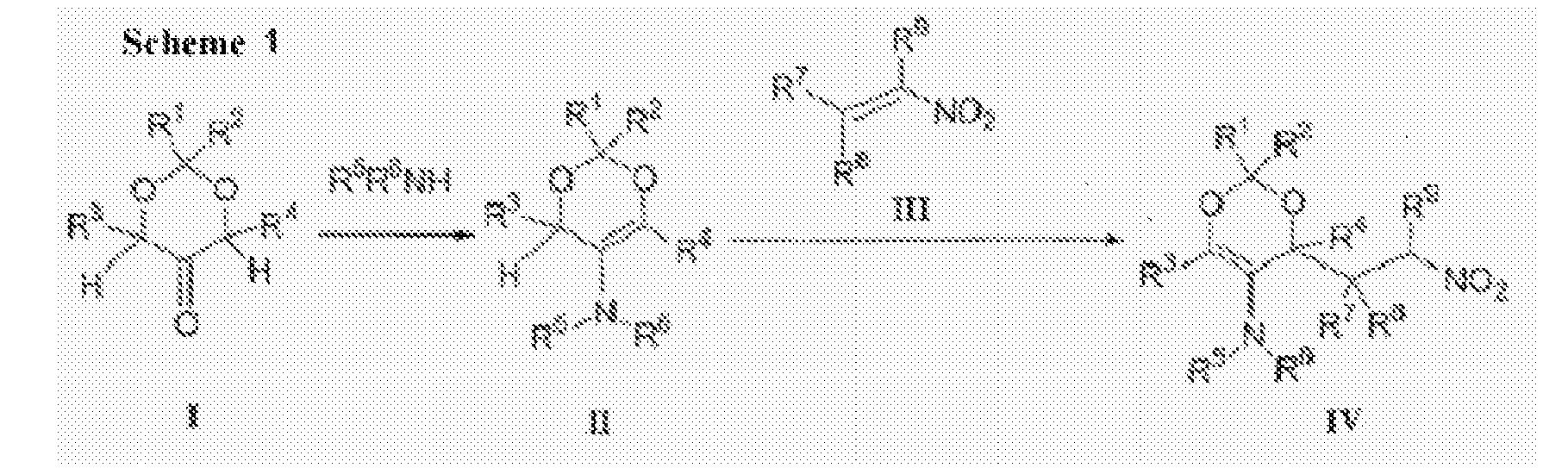
- the present invention describes the formation of polyoxygenated nitrogen systems by means of the reaction of enamines having formula II with nitroolefins having formula III.
- Enamines II can be prepared by the reaction of ketones I, which obviously allow an extraordinarily varied substitution for the indicated substituents R 1 -R 4 , with nitrogen compounds having formula R 5 R 6 NH, wherein R 5 and R 6 can also have extraordinarily different values (scheme 1, example 1).
- the reaction of enamines II with nitroolefins III where the only possible structural limitation could be that in which any of the substituents R 7 or R 8 introduces a double bond conjugated with the one in the nitroolefin, leads to polyoxygenated nitrogen compounds having formula IV by Michael-type addition (Scheme 1, example 2).
- Scheme 1, example 2 When nitroolefins III have:
- a good leaving group such as a halogen atom or an ester derived from a carboxylic acid or from a sulfonic acid by the reaction with acylation or sulfonylation agents
- the conversion of compounds having formula IV into compounds having formula V can be carried out in practice by both isolating one or several of the intermediates obtained in each step (examples 6 + 7), and by carrying out all the steps successively, one after the other, in the same reactor without isolating the intermediate products (example 8).
- Example 1 Preparation of enamine IIa starting from ketone Ia.
- Example 2 Preparation of IVa starting from enamine IIa and nitroolefin IIIa.
- Nitroolefin IIIa (441 mg, 2.90 mmol) dissolved in acetonitrile was added to a solution of enamine IIa (583 mg, 2.90 mmol) in dry acetonitrile (1.5 mL) under argon at -20°C.
- the reaction was followed by means of thin layer chromatography (AcOEt-hexane 20:80) and after 12 h at room temperature (r.t.) the disappearance of the starting substance was observed.
- the reaction mixture was diluted with Et 2 O and washed with water.
- Example 3 Preparation of the bicyclic polyoxygenated nitrogen compound Va by the reaction of enamine IIb and nitroolefin IIIb.
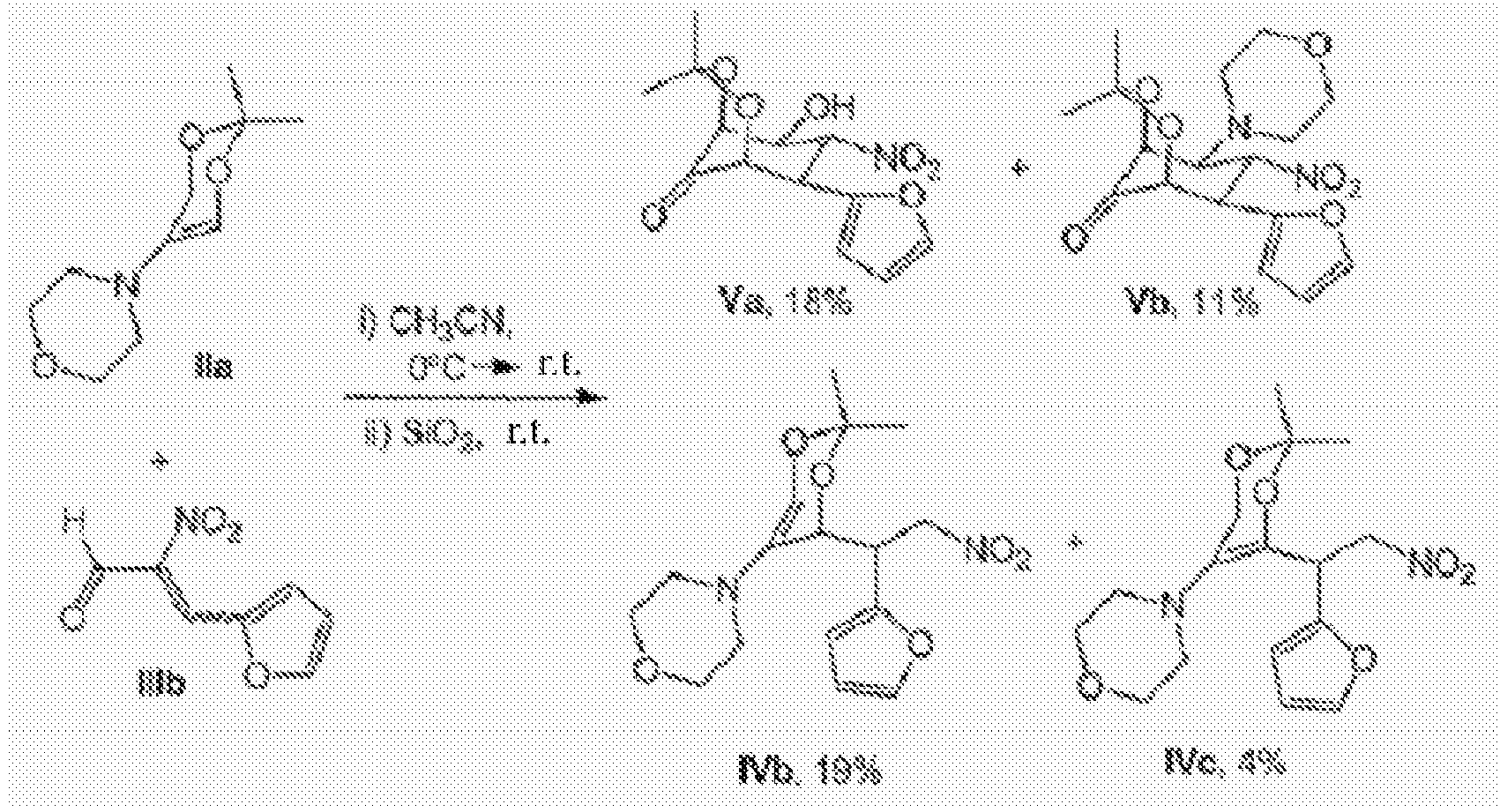
- Example 4 Preparation of bicyclic polyoxygenated nitrogen compounds Va and Vb and of nitrogen systems IVb and IVc by the reaction of enamine IIa and nitroolefin IIIb.
- Nitroolefin IIIb (423 mg, 2.61 mmol) was added to a solution of enamine IIa (520 mg, 2.61 mmol) in acetonitrile (13 mL, 0.2 M) under argon at 0°C. After stirring for half an hour at 0°C and 4 h at r.t., SiO 2 was added and was left stirring for 2 days at r.t.
- Example 5 Preparation of bicyclic polyoxygenated nitrogen compound Vc by the reaction of enamine IIb and nitroolefin IIIc.
- Dess Martin reagent (1.69 g, 3.98 mmol), t -butanol (562 ⁇ L, 5.97 mmol) and molecular sieves were added to a solution of alcohol VIIIa (672 mg, 3.98 mmol) in dry acetonitrile (25 mL, 0.16 M) under argon at 60°C. After half an hour, the reaction mixture was diluted with Et 2 O, it was filtered and the solvent was evaporated under reduced pressure. The raw product was purified by means of a fast filtration through silica gel (AcOEt-hexane 20:80), nitroolefin IIIb being obtained as an E/Z mixture (3:2) (1.58 g, 78%).
Landscapes
- Chemical & Material Sciences (AREA)
- Organic Chemistry (AREA)
- Health & Medical Sciences (AREA)
- Life Sciences & Earth Sciences (AREA)
- General Health & Medical Sciences (AREA)
- General Chemical & Material Sciences (AREA)
- Medicinal Chemistry (AREA)
- Nuclear Medicine, Radiotherapy & Molecular Imaging (AREA)
- Oncology (AREA)
- Pharmacology & Pharmacy (AREA)
- Communicable Diseases (AREA)
- Animal Behavior & Ethology (AREA)
- Chemical Kinetics & Catalysis (AREA)
- Public Health (AREA)
- Veterinary Medicine (AREA)
- Organic Low-Molecular-Weight Compounds And Preparation Thereof (AREA)
- Heterocyclic Carbon Compounds Containing A Hetero Ring Having Oxygen Or Sulfur (AREA)
- Nitrogen Condensed Heterocyclic Rings (AREA)
- Catalysts (AREA)
- Pharmaceuticals Containing Other Organic And Inorganic Compounds (AREA)
Abstract
Description
- The invention is included in the general area of development of new processes for the stereocontrolled synthesis of polyoxygenated nitrogen systems and particularly in the area of development of new synthetic strategies for the preparation of those compounds having polyoxygenated nitrogen cyclohexane systems as a structural subunit, as is the case of: a) certain antibiotics such as streptomycin, kanamycins, fortimicins or hygromycin A, b) certain compounds blocking voltage-dependent sodium channels such as tetrodotoxin and the analogues thereof, and c) certain compounds with a proven antitumor and antiviral efficacy such as pancratistatin and the analogues thereof.
- Polyoxygenated nitrogen cyclohexane systems constitute an essential part of the structures of a high number of compounds of great biological and pharmacological interest. These compounds include:
- 1. Certain antibiotics such as streptomycin, kanamycins, fortimicins or hygromycin A:

- 2. Certain compounds blocking voltage-dependent sodium channels (and therefore blocking nervous impulse and pain sensation) such as tetrodotoxin and the analogues thereof:

- 3. Certain compounds with a proven antitumor and antiviral efficacy such as pancratistatin and the analogues thereof.

- In spite of the importance of the mentioned polyoxygenated nitrogen systems derived from their presence as structural subunits in compounds of great interest, as illustrated above, the efficient access to said systems is not currently solved. By way of example, the following facts are enough to demonstrate this:
- 1. The synthesis of the polyhydroxylated aminocyclohexane of the antibiotic hygromycin A recently described by Trost (Trost, B. M.; Dudash, J., Jr.; Hembre, E.J., Chem. Eur. J. 2001, 7, 1619-1629) still requires a total of 13 steps, despite the fact that it involves an important improvement compared to the only synthesis described previously (Chida, N.; Ohtsuka, M.; Nakazawa, K.; Ogawa, S., J. Org. Chem. 1991, 56, 2976-2983).
- 2. The total synthesis of tetrodotoxin in an enantiomerically pure form has just been achieved by two groups (Hinman, A.; Du Bois, J., J. Am. Chem. Soc. 2003, 125, 11510-11511, Ohyabu, N.; Nishikawa, T.; Isobe, M., J. Am Chem. Soc. 2003, 125, 8798-8805) and in both cases requires a considerably high number of steps, more than 30 in the first case and more than 70 in the second.
- 3. Although up to eight total syntheses of pancratistatin have currently been described, none of them has solved the problem for supplying this compound, a problem which has determined the standstill of preclinical studies which were being conducted in the U.S. National Cancer Institute (NCI) (see the last total syntheses described by S. Kim et al.: Ko, H.; Kim, E.; Park, J.E.; Kim, D.; Kim, S., J. Org. Chem. 2004, 69, 112-121, as well as the synthesis studies by Kornienko et al.: Nadein, O.N.; Kornienko, A. Org. Lett. 2004, 6, 831-834 and the references mentioned therein).
- From the foregoing, it is obvious that there is a need to invent new, general synthetic strategies allowing access to polyoxygenated nitrogen systems, particularly cyclohexane systems, in a small number of steps.
- This patent sets forth a solution allowing the expeditious access to polyoxygenated nitrogen systems starting from simple and easily obtainable compounds, in a convergent manner and in a very reduced number of steps.
- The present invention describes the formation of polyoxygenated nitrogen systems by means of the reaction of enamines having formula II with nitroolefins having formula III.
- Enamines II can be prepared by the reaction of ketones I, which obviously allow an extraordinarily varied substitution for the indicated substituents R1-R4, with nitrogen compounds having formula R5R6NH, wherein R5 and R6 can also have extraordinarily different values (scheme 1, example 1). The reaction of enamines II with nitroolefins III, where the only possible structural limitation could be that in which any of the substituents R7 or R8 introduces a double bond conjugated with the one in the nitroolefin, leads to polyoxygenated nitrogen compounds having formula IV by Michael-type addition (Scheme 1, example 2).
- i) either an electrophilic R9 group which can be attacked by an enamine, such as III wherein R9 = C(O)X wherein X can be a hydrogen or a halogen atom or O, S, Se or Te atoms joined to an alkyl, aryl or acyl group, or such as III wherein R9 = C[=M(CO)5]X wherein M can be Cr, Mo or W, and X can be an O or N atom joined to one or more hydrogen atoms or to alkyl, aryl or acyl groups, or
- ii) an electrophilic center precursor R9 group such as III wherein R9 = CXYZ, wherein X and Y can be hydrogen or halogen atoms or alkyl or aryl groups which can in turn be substituted by one or several identical or different substituents selected from halogen atoms, alkyl, aryl, hydroxy, alkoxy, aryloxy, amino, alkylamino or arylamino groups, and X is any leaving group such as: a) a halogen atom, or b) an -OC(O)Rb group, or c) an -OS(O)nRb wherein n can have the values 1 or 2, and Rb can be a linear, branched or cyclic alkyl group or an aryl group, which groups can in turn be substituted by one or several identical or different substituents selected from halogen atoms, alkyl, hydroxy, alkoxy, aryloxy, amino or alkylamino groups, then the reaction of these nitroolefins III with enamines II does not stop in compound IV, but the enamino group present in IV reacts with the acceptor group in R9 to form the intermediates A which lead to bicyclic polyoxygenated nitrogen compounds having formula V by hydrolysis (scheme 2, examples 3, 4 and 5).

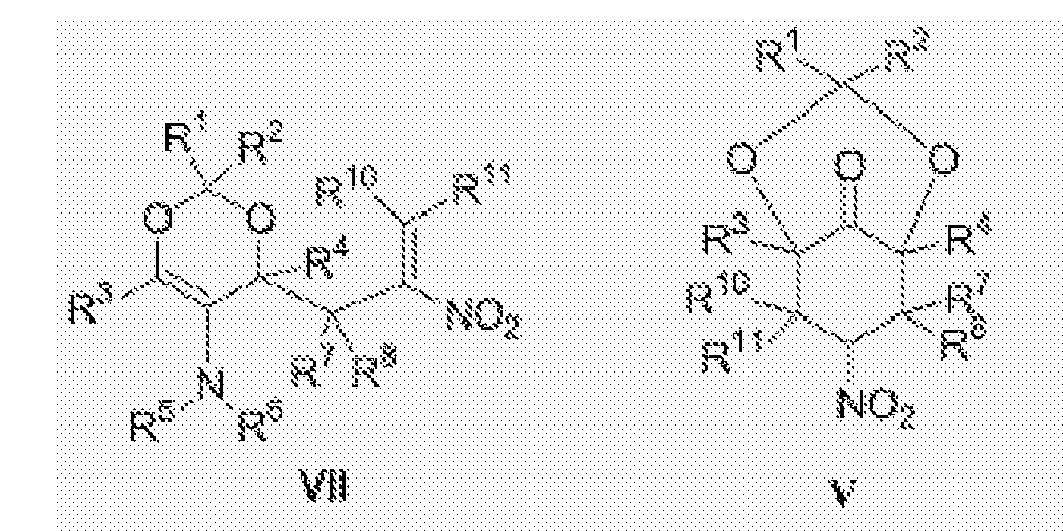
- Alternatively, bicycles V can be obtained starting from compounds having formula IV by means of a sequence including: a) an addition of compounds IV to compounds such as R10R11C=O, which leads to compounds having formula VI, b) the conversion of compounds having formula VI to compounds having formula VII by i) conversion of the hydroxy group of VI into a good leaving group such as a halogen atom or an ester derived from a carboxylic acid or from a sulfonic acid by the reaction with acylation or sulfonylation agents, followed by ii) elimination of the leaving group, and c) cyclization of VII by means of an intramolecular Michael-type addition (scheme 3, example 6 + 7).
- The conversion of compounds having formula IV into compounds having formula V can be carried out in practice by both isolating one or several of the intermediates obtained in each step (examples 6 + 7), and by carrying out all the steps successively, one after the other, in the same reactor without isolating the intermediate products (example 8).

- The novel and very convenient preparation of nitroolefins III having a group R9 = CHO by means of the oxidation of their corresponding precursor alcohols having formula VIII (Scheme 4, example 9) must also be emphasized.

- It is evident from their structural examination that both the compounds of type IV and those of type V are extraordinarily versatile precursors of other, very diverse polyoxygenated nitrogen systems into which they can be transformed by means of the suitable combination of simple reactions. In fact, several of these transformations of the systems IV and V have been successfully explored, guided by their synthetic use as precursors of the polyoxygenated nitrogen systems referred to in the introduction: certain antibiotics, tetrodotoxin and the analogues thereof, and pancratistatin and the analogues thereof. In practice, this confers an extraordinary added value to the synthetic methodology claimed herein as a route for accessing said systems IV and V and to the derivatives thereof by extension.
- The following examples are included below only for the purpose of contributing to a better understanding of the invention. The examples are by no means limited to the field of application of the described invention.
-
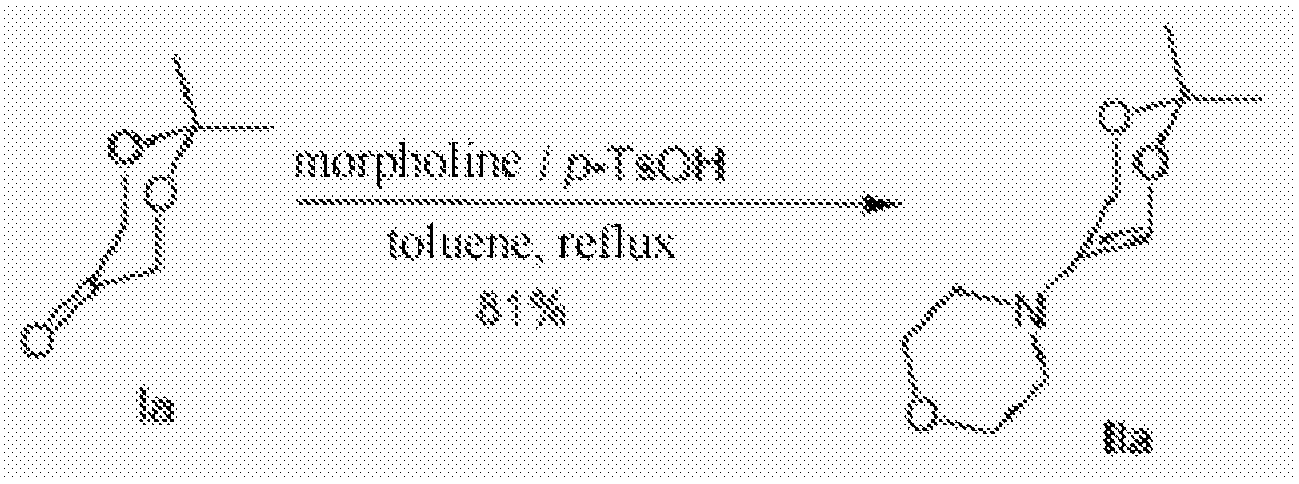
- A solution of ketone Ia (4.12 g, 31.64 mmol), morpholine (3.3 mL, 37.97 mmol) and p-toluenesulfonic acid (307 mg) in toluene (250 mL, 1.9 M) was subjected to reflux for 5 h with azeotropic elimination of water by means of a Dean-Stark. The solvent was eliminated under reduced pressure and the raw product was redissolved in Et2O, washed with a saturated NaHCO3 solution, dried over anhydrous Na2SO4 and concentrated in a rotary evaporator. After a fast filtration through neutral alumina (activity I) (AcOEt-hexane 20:80), enamine IIa (5.08 g, 81%) was obtained as a colorless oil.
1H-NMR (CDCl3, 250 MHz, TMS) δ: 5.99 (t, J= 1.3 Hz, 1H, CH), 4.20 (d, J= 1.3 Hz, 2H, CH 2), 3.74-3.70 (m, 4H, 2xCH 2), 2.70-2.66 (m, 4H, 2xCH 2), 1.45 (s, 6H, 2xCH 3).
13C-NMR and DEPT (63 MHz) δ: 125.8 (C), 125.5 (CH), 97.9 (C), 66.7 (2xCH2), 59.3 (CH2), 50.0 (2xCH2), 24.0 (2xCH3).
MS (low resolution EI) m/z (%): 239 (M+, 0.03), 141 (2), 58 (100).
MS (low resolution CI+) m/z (%): 201 (M++2, 16), 200 (M++1, 80), 199 (M+, 55), 170 (59), 143 (37), 142 (100), 141 (enal generated by the retro-hetero-Diels-Alder reaction of the dioxenone ring, 91), 112 (42), 59 (73). -
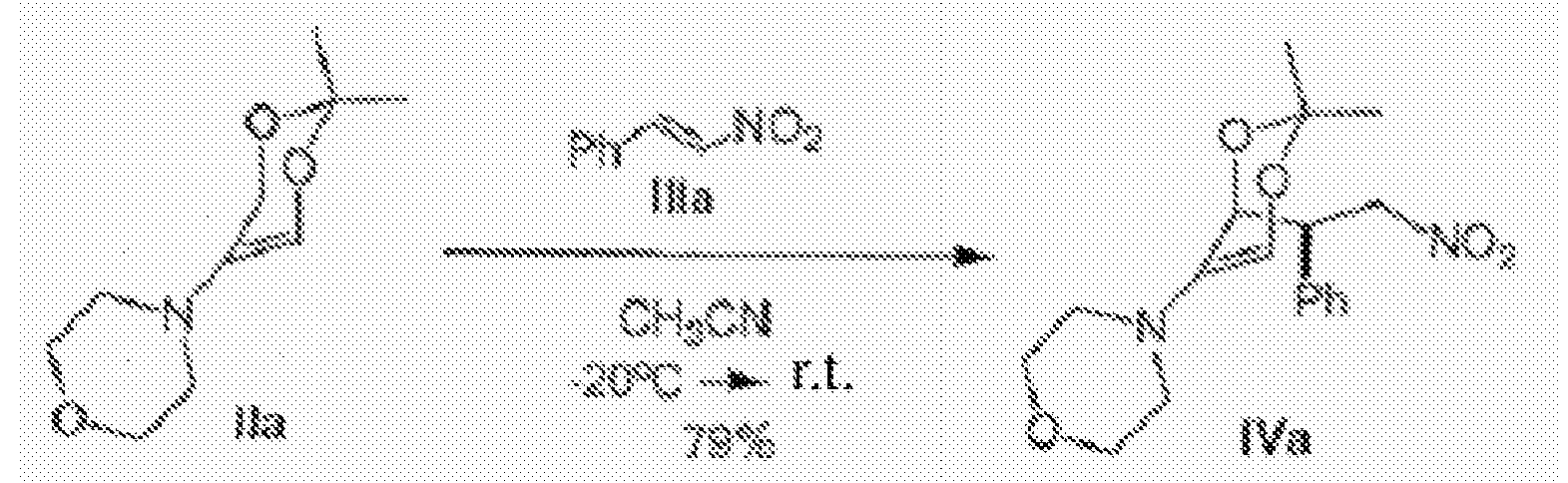
- Nitroolefin IIIa (441 mg, 2.90 mmol) dissolved in acetonitrile was added to a solution of enamine IIa (583 mg, 2.90 mmol) in dry acetonitrile (1.5 mL) under argon at -20°C. The reaction was followed by means of thin layer chromatography (AcOEt-hexane 20:80) and after 12 h at room temperature (r.t.) the disappearance of the starting substance was observed. The reaction mixture was diluted with Et2O and washed with water. The organic phase was dried with anhydrous Na2SO4 and the purification of the obtained residue by means of column chromatography (AcOEt-hexane, 10:90) led to polyoxygenated nitrogen system IVa (796 mg, 79%). Spectroscopic data of IVa in CDCl3:
1H-NMR (CDCl3, 250 MHz, TMS) δ: 7.39-7.35 (m, 2H, ΔrH) 7.25-7.22 (m, 3H, ArH), 5.76 (s, 1H, CH), 4.94 (dd, J= 13.5, J= 8.5, 1H, CH 2NO2), 4.67 (dd, J= 13.5, J= 6.9, 1H, CH 2NO2), 4.66 (d, J= 2.2, 1H, CH), 3.99 (ddd, J= 8.5, J= 6.9, J= 2.8, 1H, CHAr), 3.72-3.68 (m, 4H, 2xCH 2), 2.75-2.67 (m, 2H, CH 2), 2.23-2.15 (m, 2H, CH 2), 1.47 (s, 3H, CH 3), 1.44 (s, 3H, CH 3).
13C-NMR and DEPT (63 MHz) δ: 135.8 (Ar), 129.6 (CH + ArH), 127.7 (ArH), 127.5 (ArH), 126.6 (C), 98.1(C), 76.8 (CH2NO2), 67.7 (CH), 66.8 (2xCH2), 50.5 (2xCH2), 45.1 (CHAr), 27.7 (CH3), 20.3 (CH3).
MS (low resolution EI) m/z (%): 348 (M+, 1), 290 (α,β-unsaturated ketone generated by the retro-hetero-Diels-Alder reaction of the dioxenone ring, 4), 244 (16), 230 (18), 156 (100), 126 (60), 115 (28), 91 (27), 77 (15). Spectroscopic data of IVa in CO(CD3)2:
1H-NMR (CO(CD3)2, 250 MHz, TMS) δ: 7.37-7.33 (m, 2H, ArH), 7.16-7.07 (m, 3H, ArH), 5.68 (s, 1H, CH), 4.92 (dd, J= 13.5, J= 6.6, 1H, CH 2NO2), 4.81 (dd, J= 13.2, J= 4.1, 1H, CH 2NO2), 4.73 (d, J= 2.8, 1H, CH), 3.95 (ddd, J 9.1, J= 6.6, J= 2.8, 1H, CHAr), 3.58-3.55 (m, 4H, CH 2), 2.74-2.64 (m, 2H, CH 2), 2.10-2.02 (m, 2H, CH 2), 1.33 (s, 3H, CH 3), 1.30 (s, 3H, CH 3).
13C-NMR and DEPT (63 MHz) δ: 138.2 (C), 131.8 (CH), 130.9 (CH), 129.2 (CH), 128.9 (CH), 128.8 (C), 99.5 (C), 79.3 (CH2NO2), 70.2 (CH), 68.2 (2xCH2), 52.4 (2xCH2), 47.1 (CHAr), 29.0 (CH3), 21.6 (CH3). -

- A solution of ketone Ia (50 mg, 0.38 mmol), pyrrolidine (39 µl, 0.46 mmol), molecular sieves (100 mg) and (catalytic) PPTS in dry acetonitrile (4 mL, 0.11 M) under argon was stirred for 40 min at r.t. Nitroolefin IIIb (71 mg, 0.42 mmol) was added to the reaction mixture at 0°C containing the enamine IIb thus prepared, and after 40 min at 0°C a mixture of 0.1 M HCl/acetone (5:20) was added. After 1 h at 0°C, the reaction mixture was washed with an NH4Cl solution, and was extracted with Et2O. The organic phase was dried over anhydrous Na2SO4, concentrated in a rotary evaporator and the raw product was purified by means of column chromatography (AcOEt-hexane 10:90), Va being obtained (51 mg, 45%).
-
- 1H-NMR (CDCl3, 300 MHz, TMS) δ: 7.38 (d, J= 1.9, 1H, CH), 6.39 (d, J= 3.4, 1H, CH), 6.35 (dd, J= 3.4, J= 1.9, 1H, CH), 5.33 (dd, J= 11.6, J= 9.4, 1H, CHN02), 4.55 (m, 1H, CH), 4.51 (m, 1H, CH), 4.20 (dd, J= 9.4, J= 1.3, 1H, CHOH), 3.51 (dd, J= 11.6, J= 1.3, 1H, CH), 3.01 (d, J=10.7, 1H, OH), 1.57 (s, 3H, CH 3), 1.51 (s, 3H, CH 3).
13C-NMR and DEPT (63 MHz) δ: 205.0 (CO), 147.1 (C), 143.0 (CH), 110.7 (CH), 108.9 (CH), 99.9 (C), 89.0 (CHNO2), 79.1 (CH), 77.0 (CH), 76.2 (CH), 44.4 (CH), 28.3 (CH3), 25.5 (CH3).
MS (low resolution EI) m/z (%): 282 (17), 250 (24), 193 (57), 163 (50), 123 (100), 81 (80), 59 (69).
IR (KBr): 1739 (medium, narrow, CO), 1555 (intense, narrow, NO2) cm-1. - 1H-NMR (CDCl3, 250 MHz, TMS) δ: 7.33 (s, 1H, CH), 6.36 (s, 1H, CH), 6.30 (s, 1H, CH), 5.60 (t, J= 11.0, 1H, CHNO2), 4.77 (s, 1H, CH), 4.44 (s, 1H, CH), 3.67-3.49 (m, 5H, CH + 2xCH 2), 3.13 (d, J= 11.0, 1H, CH), 3.00-2.94 (m, 2H, CH 2), 2.60-2.53 (m, 2H, CH 2), 1.48 (s, 3H, CH 3), 1.42 (s, 3H, CH 3).
13C-NMR and DEPT (100 MHz) δ: 206.2 (CO), 147.8 (C), 142.8 (CH), 110.6 (CH), 108.7 (CH), 99.0 (C), 83.6 (CHNO2), 77.3 (CH), 76.3 (CH), 72.5 (CH), 67.2 (2xCH2), 50.2 (2xCH2), 45.6 (CH), 28.2 (CH3), 24.7 (CH3).
MS (low resolution EI) m/z (%): 366 (M+, 2), 262 (12), 237 (4), 192 (100), 158 (42), 121 (84), 83 (41). - 1H-NMR (CDCl3, 250. MHz, TMS) δ: 7.28 (m, 1H, CH), 6.27 (m, 1H, CH), 6.21 (d, J= 3.6, 1H, CH), 5.90 (s, 1H, CH), 4.84-4.66 (m, 2H, CH2NO2), 4.64 (m, 1H, CH), 4.19 (J= 11.0, J= 7.3, J= 3.6, 1H, CH), 3.62-3.58 (m, 4H, 2xCH 2), 2.67-2.59 (m, 2H, CH 2), 2.35-2.26 (m, 2H, CH 2), 1.42 (s, 6H, 2xCH 3).
13C-NMR and DEPT (63 MHz) δ: 149.9 (C), 141.4 (CH), 129.7 (CH), 126.5 (C), 110.4 (CH), 107.7 (CH), 98.3 (C), 74.3 (CH2NO2), 67.0 (CH), 66.7 (2xCH2), 50.6 (2xCH2), 39.8 (CH), 27.7 (CH3), 20.3 (CH3).
MS (Low resolution EI) m/z (%): 338 (M+, 7), 280 (6), 234 (54), 220 (21), 156 (100), 128 (70), 94 (76), 65 (38). - 1H-NMR (CDCl3, 250 MHz, TMS) δ: 7.31 (s, 1H, CH), 6.29 (d, J= 3.6, 1H, CH), 6.14 (d, J= 3.6, 1H, CH), 5.49 (dd, J= 9.1, J= 5.5, 1H, CH), 4.81 (dd, J= 12.8, J= 9.1, 1H, CH 2NO2), 4.67 (dd, J= 12.8, J= 5.5, 1H, CH 2NO2), 4.24 (s, 2H, CH 2), 3.73-3.70 (m, 4H, 2xCH 2), 2.75-2.62 (m, 4H, 2xCH 2), 1.40 (s, 6H, 2xCH 3).
13C-NMR and DEPT (75 MHz) δ: 150.5 (C), 141.7 (CH), 129.7 (C), 121.6 (C), 110.4 (CH), 106.7 (CH), 99.0 (C), 74.5 (CH2NO2), 67.4 (2xCH2), 56.0 (CH2), 51.4 (2xCH2), 36.1 (CH), 24.7 (CH3), 23.1 (CH3). -

- Pyrrolidine (21 µL, 0.25 mmol), molecular sieves (30 mg) and (catalytic) PPTS were added to a solution of ketone Ia (27 mg, 0.21 mmol) in acetonitrile (2 mL, 0.10 M), and the reaction mixture was stirred for 3.5 h at r.t. Nitroolefin IIIc (53 mg, 0.21 mmol) at 0°C was added, it was left stirring for one hour at this temperature and overnight at r.t. The reaction mixture was washed with a saturated NH4Cl solution and was extracted with CH2Cl2. The organic phase was dried over anhydrous Na2SO4 and was concentrated in a rotary evaporator. The obtained residue was purified by means of column chromatography (CH2Cl2-hexane 40:60), the product Vc (19 mg, 31%) being obtained. Vc data:
1H-NMR (CDCl3, 500 MHz, TMS) δ: 7.36 (broad s, 1H, CH), 6.36 (d, J= 3.4, 1H, CH), 6.43 (dd, J= 3.4, J= 1.8, 1H, CH), 5.56 (ddd, J= 11.7, J= 11.4, J= 4.9, 1H, CHNO2), 4.49 (t, J= 2.1, 1H, CH) , 4.47-4.45 (m, 1H, CH), 3.81 (dd, J= 11.4, J=1.5, 1H, CH), 3.01 (dt, J= 13.2, J= 4.9, 1H, CH 2), 2.29 (ddd, J= 13.2, J= 11.7, J= 1.8, 1H, CH2), 1.53 (s, 3H, CH3), 1.45 (s, 3H, CH 3).
13C-NMR and DEPT (63 MHz) δ: 208.9 (CO), 149.0 (C), 142.7 (CH), 110.7 (CH), 108.3 (CH), 99.3 (C), 81.2 (CHNO2), 77.3 (CH), 74.6 (CH), 49.9 (CH), 40.0 (CH2), 28.4 (CH3), 25.0 (CH3). -

- Furfural (171 µL, 2.10 mmol) and TBAF.3H2O (734 mg, 2.26 mmol) at -78°C were added to a solution of nitrocompound IVa (646 mg, 1.90 mmol) in dry THF (3.5 mL, 0.5 M) under argon. After 6 h of stirring, Ac2O (218 µL, 2.26 mmol) and DMAP (69 mg, 0.56 mmol) were added. The mixture was stirred for 1.5 h at -78°C and 12 h at r.t. The resulting reaction mixture was diluted with Et2O and was washed with a saturated NaHCO3 solution. The organic phase was dried over anhydrous Na2SO4, the solvent was evaporated in a rotary evaporator and the resulting raw product was purified by means of column chromatography (AcOEt-hexane 10:90) to obtain nitroolefin VIIa as a yellow solid (88%).
- 1H-NMR (CDCl3, 400 MHz, TMS) δ: 7.77 (s, 1H, CH), 7.65 (d, J= 1.9, 1H, CH), 7.40-7.37 (m, 2H, ArH), 7.29-7.18 (m, 3H, ArH), 6.90 (d, J= 3.4, 1H, CH), 6.59 (dd, J= 3.4, J= 1.9, 1H, CH), 6.24 (s, 1H, CH), 5.52 (d, J 8.7, 1H, CH), 5.23 (d, J= 8.7, 1H, CHAr), 3.513.47 (m, 4H, CH 2) , 2.85-2.77 (m, 2H, CH 2), 2.30-2.22 (m, 2H, CH 2), 1.51 (s, 3H, CH 3), 1.41 (s, 3H, CH 3).
13C-NMR and DEPT (100 MHz) δ: 150.0 (C), 147.8 (C), 146.1 (CH), 138.4 (C), 133.9 (CH), 131.0 (C), 128.3 (ArH), 128.0 (ArH), 126.5 (ArH), 119.9 (CH), 119.3 (CH), 112.9 (CH), 99.2 (C), 67.4 (CH), 66.3 (2xCH2), 52.3 (2xCH2), 48.3 (CHAr), 28.0 (CH3), 21.8 (CH3).
MS (Low resolution EI) m/z (%): 368 (α,β-unsaturated ketone generated by the retro-hetero-Diels-Alder reaction of the dioxenone ring, 3), 182 (77), 153 (32), 128 (30), 58 (100). -

- A solution of alkene VIIa (33 mg, 0.08 mmol) in acetonitrile (0.3 mL, 0.2 M) was heated at 80°C for 30 h. The reaction mixture was concentrated in the rotary evaporator and purified by means of column chromatography (AcOEt 10:90), obtaining the bicycles Vd (6 mg, 22%) and Ve (3 mg, 10%).
- 1H-NMR (CDCl3, 250 MHz, TMS) δ: 7.36 (dd, J= 1.9, J= 0.9, 1H, CH), 7.32-7.27 (m, 3H, ArH), 7.18-7.14 (m, 2H, ArH), 6.28 (dd, J= 3.1, J= 1.9, 1H, CH), 6.23-6.21 (d, J= 3.1, 1H, CH), 4.84 (dd, J= 10.7, J= 10.4, 1H, CHN02), 4.61 (dd, J= 10.4, J= 2.5, CHAr), 4.48 (d, J= 2.5, 1H, CH), 4.47 (dd, J= 10.7, J= 2.2, 1H, CH), 4.42-4.40 (m, 1H, CH), 1.62 (s, 3H, CH3), 1.46 (s, 3H, CH3).
13C-NMR and DEPT (63 MHz) δ: 207.8 (CO), 148.8 (C), 143.3 (CH), 136.8 (Ar), 129.2 (ArH), 128.4 (ArH), 127.5 (ArH), 110.5 (CH), 108.7 (CH), 101.9 (C), 87.5 (CHN02), 78.6 (CH), 76.3 (CH), 54.6 (CHAr), 48.5 (CH), 29.7 (CH3), 25.9 (CH3).
MS (low resolution CI+) m/z (%): 358 (M++1, 2), 252 (42), 223 (100).
IR (CsI): 1759 (intense, narrow, CO), 1561 (intense, narrow, NO2) cm-1. -
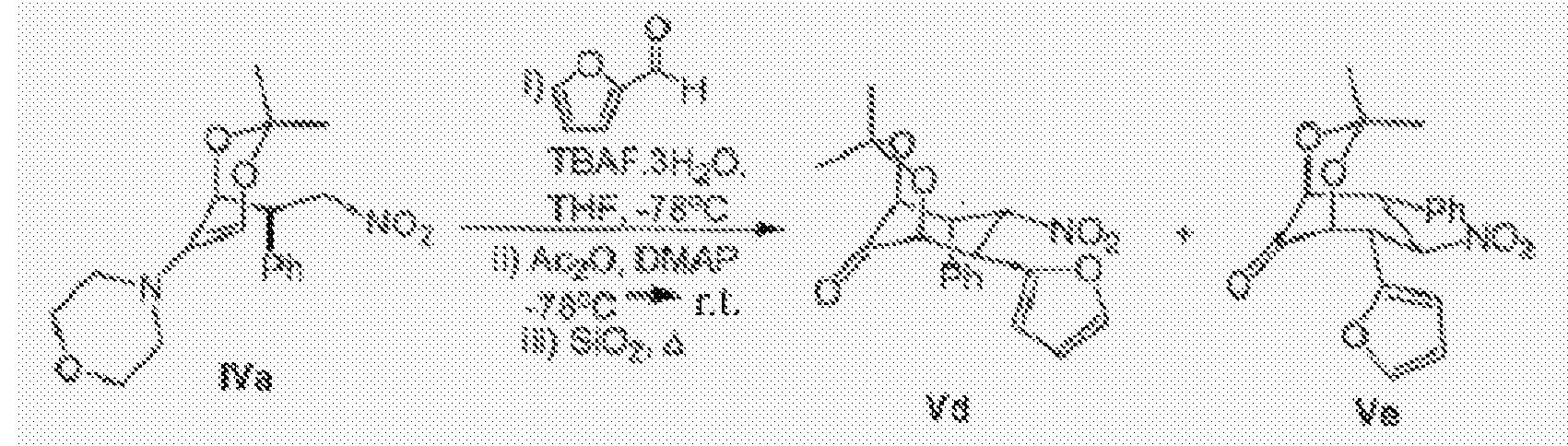
- Furfural (12 µL, 0.14 mmol) and TBAF.3H2O (54 mg, 0.16 mmol) at -78°C were added to a solution of nitrocompound IVa (44 mg, 0.13 mmol) in dry CH2Cl2 (0.3 mL, 0.4 M) under argon. After 7 h of stirring, Ac2O (15 µL, 0.15 mmol) and DMAP (5 mg, 0.04 mmol) were added. The mixture was stirred for 2.5 h at - 78°C and 15 h at r.t. Then, SiO2 (≅ 44 mg) was added to the reaction mixture and after 6 h under reflux, the solvent was evaporated under vacuum. Bicycles Vd (6 mg, 14%), and Ve (2 mg, 4%) were obtained after purifying the raw product by means of column chromatography (AcOEt-hexane 10:90). The starting nitrocompound IVa was partially recovered (13 mg, 30%).
-

- Dess Martin reagent (1.69 g, 3.98 mmol), t-butanol (562 µL, 5.97 mmol) and molecular sieves were added to a solution of alcohol VIIIa (672 mg, 3.98 mmol) in dry acetonitrile (25 mL, 0.16 M) under argon at 60°C. After half an hour, the reaction mixture was diluted with Et2O, it was filtered and the solvent was evaporated under reduced pressure. The raw product was purified by means of a fast filtration through silica gel (AcOEt-hexane 20:80), nitroolefin IIIb being obtained as an E/Z mixture (3:2) (1.58 g, 78%).
- 1H-NMR (CDCl3, 500 MHz, TMS) δ: 10.38 (dd, J= 2.3, 1H, CH-E), 9.81 (s, 1H, CH-Z), 8.45 (d, J= 3.7, 1H, CH-E), 8.36 (d, J= 2.3, 1H, CH-E), 7.92 (d, J= 1.6, 1H, CH-E), 7.82 (d, J= 1.6, 1H, CH-Z), 7.70 (d, J= 3.7, 1H, CH-Z), 7.52 (s, 1H, CH-Z), 6.77 (dd, J= 3.7, J= 1.6, 1H, CH-E), 6.74 (dd, J= 3.7, J= 1.6, 1H, CH-Z).
13C-NMR and DEPT (63 MHz) δ: 183.6 (CHO), 182.1 (CHO), 152.0 (CH), 150.6 (CH), 147.4 (C), 146.6 (C), 130.0 (CH), 128.3 (CH), 126.3 (CH), 125.3 (CH), 115.4 (CH), 114.9 5 (CH).
MS (low resolution EI) m/z (%): 167 (M+, 100), 121 (M+-NO2, 2), 106 (21), 83 (24), 63 (22), 58 (100).
Claims (11)
- Compounds having formula IV

- Compounds having formula V

- A process for preparing compounds having formula IV characterized by the reaction of an enamine II with a nitroolefin III, wherein the R1, R2, R3, R4, R5, R6, R7, R8 and R9 groups can have the same values as those indicated for said groups in claim 1.

- A process for preparing compounds having formula V characterized by the reaction of an enamine II with a nitroolefin III wherein R9 = C(O)X wherein X can be a hydrogen or a halogen atom or O, S, Se or Te atoms joined to an alkyl, aryl or acyl group, or wherein R9 = C[=M(CO)5]X wherein M can be Cr, Mo or W, and X can be an O or N atom joined to one or more hydrogen atoms or to alkyl, aryl or acyl groups and wherein the R1, R2, R3, R4, R5, R6, R7, R8, R10 and R11 groups can have the same values as those indicated for said groups in claims 1 and 2.

- A process for preparing compounds having formula V according to claim 2, characterized by the reaction of an enamine II with a nitroolefin III wherein R9 = CXYZ, wherein X and Y can be hydrogen or halogen atoms or alkyl or aryl groups which can in turn be substituted by one or several identical or different substituents selected from halogen atoms, alkyl, aryl, hydroxy, alkoxy, aryloxy, amino, alkylamino or arylamino groups, and X is any leaving group such as: a) a halogen atom, or b) an -OC(O)Rb group, or c) an -OS(O)nRb wherein n can have the values 1 or 2, and Rb can be a linear, branched or cyclic alkyl group or an aryl group, which groups can in turn be substituted by one or several identical or different substituents selected from halogen atoms, alkyl, hydroxy, alkoxy, aryloxy, amino or alkylamino groups and wherein the R1, R2, R3, R4, R5, R6, R7, R8, R10 and R11 groups can have the same values as those indicated for said groups in claims 1 and 2.

- A process for preparing compounds having formula VI characterized by an addition reaction of a compound having formula IV to a carbonyl compound R10R11(C=O), wherein the R1, R2, R3, R4, R5, R6, R7, R8, R9, R10 and R11 groups can have the same values as those indicated for said groups in claims 1 and 2.
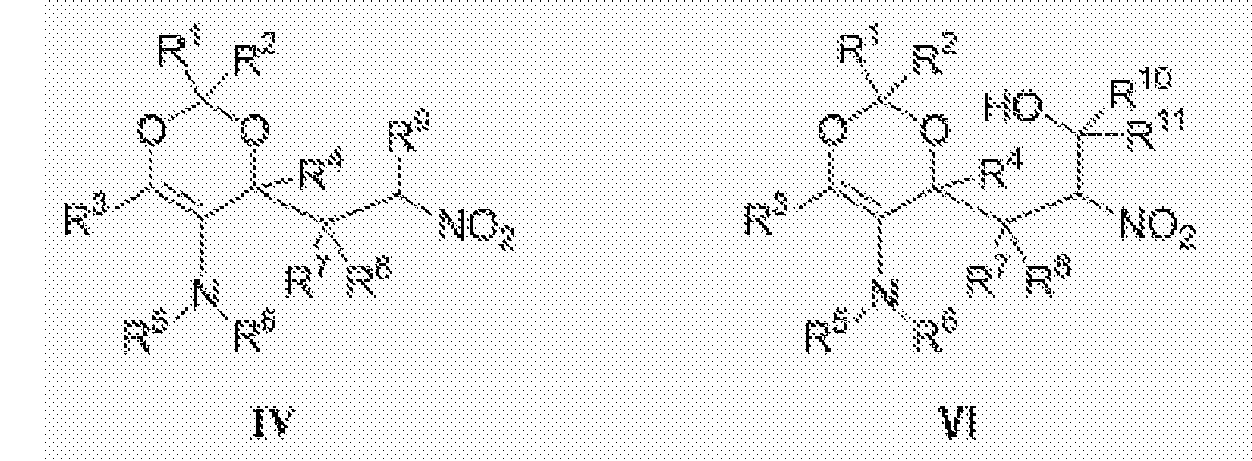
- A process for preparing compounds having formula VII characterized by a) a conversion reaction of the hydroxy group of a compound having formula VI into a good leaving group such as a halogen atom, an SR, -OC(O)R or -OS(O)nR group, wherein n can have the values 1 and 2 and R can be a linear, branched or cyclic alkyl group or an aryl group, which groups can in turn be substituted by one or several identical or different substituents selected from halogen atoms, alkyl, hydroxy, alkoxy, aryloxy, amino, alkylamino or arylamino groups followed by b) the elimination of said leaving group and wherein the R1, R2, R3, R4, R5, R6, R7, R8, R10 and R11 groups can have the same values as those indicated for said groups in claim 6.
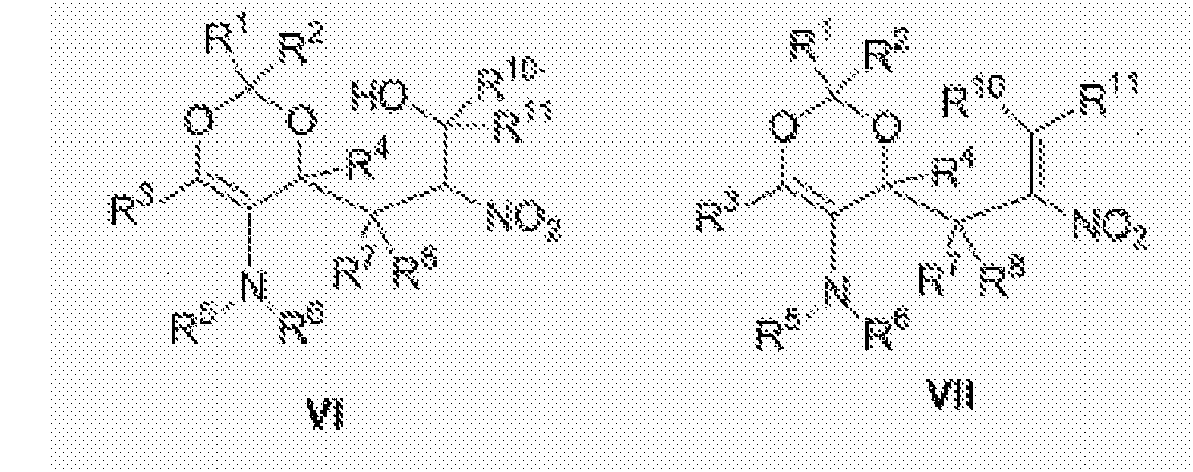
- A process for preparing compounds having formula V characterized by the cyclization of a compound having formula VII according to claim 7, by means of an intramolecular Michael-type addition, wherein the R1, R2, R3, R4, R5, R6, R7, R8, R9, R10 and R11 groups can have the same values as those indicated for said groups in claims 1 and 2.
- A process for preparing nitroolefins having formula III wherein the R1 group is a formyl group (CHO) and wherein R7 and R8 can have the same values as those indicated for said groups in claim 1, characterized by the oxidation of the corresponding precursor alcohols VIII.

- A pharmaceutical composition characterized in that it contains a compound having formula IV, V, VI or VII according to the previous claims as an active ingredient, either alone or forming part of a mixture with a suitable carrier or transporter.
- The use of compounds having general formulas IV, V, VI or VII according to the previous claims in the manufacture of an antitumor, antiviral, antimicrobial, antifungal or anesthetic pharmaceutical composition.

Applications Claiming Priority (2)
| Application Number | Priority Date | Filing Date | Title |
|---|---|---|---|
| ES200401547A ES2245603B2 (en) | 2004-06-25 | 2004-06-25 | SYNTHESIS OF POLYTOXYGEN NITROGEN SYSTEMS THROUGH REACTIONS OF 1,3-DIOXAN-5-WAVE ENAMINES WITH NITROOLEFINS. |
| PCT/ES2005/000374 WO2006003227A1 (en) | 2004-06-25 | 2005-06-20 | Synthesis of polyoxygenated nitrogen systems, comprising reactions between enamines of 1,3-dioxan-5-ones and nitroolefins |
Publications (2)
| Publication Number | Publication Date |
|---|---|
| EP1783123A1 true EP1783123A1 (en) | 2007-05-09 |
| EP1783123B1 EP1783123B1 (en) | 2010-03-17 |
Family
ID=35614430
Family Applications (1)
| Application Number | Title | Priority Date | Filing Date |
|---|---|---|---|
| EP05769869A Expired - Lifetime EP1783123B1 (en) | 2004-06-25 | 2005-06-20 | Synthesis of polyoxygenated nitrogen systems, comprising reactions between enamines of 1,3-dioxan-5-ones and nitroolefins |
Country Status (8)
| Country | Link |
|---|---|
| US (1) | US20080045523A1 (en) |
| EP (1) | EP1783123B1 (en) |
| CN (1) | CN101006071A (en) |
| AT (1) | ATE461184T1 (en) |
| CA (1) | CA2575048A1 (en) |
| DE (1) | DE602005020026D1 (en) |
| ES (1) | ES2245603B2 (en) |
| WO (1) | WO2006003227A1 (en) |
Cited By (1)
| Publication number | Priority date | Publication date | Assignee | Title |
|---|---|---|---|---|
| WO2009026961A1 (en) * | 2007-08-30 | 2009-03-05 | Universidad De Santiago De Compostela | Processes for the preparation of pancratistatin and pancratistatin analogues |
Families Citing this family (1)
| Publication number | Priority date | Publication date | Assignee | Title |
|---|---|---|---|---|
| EP1956024A1 (en) * | 2007-02-12 | 2008-08-13 | Laboratorios del Dr. Esteve S.A. | 1-Azaspiro[3.5]nonan-2-ona-5,7-carbolact one and 5,7-protected-1-azaspiro[3.5]nonan-2-one derivatives and their use as intermediates in the synthesis of TTX |
Family Cites Families (1)
| Publication number | Priority date | Publication date | Assignee | Title |
|---|---|---|---|---|
| US5777137A (en) * | 1995-11-01 | 1998-07-07 | University Of Florida | Pancratistatins and processes for their production |
-
2004
- 2004-06-25 ES ES200401547A patent/ES2245603B2/en not_active Expired - Fee Related
-
2005
- 2005-06-20 CN CNA2005800281146A patent/CN101006071A/en active Pending
- 2005-06-20 EP EP05769869A patent/EP1783123B1/en not_active Expired - Lifetime
- 2005-06-20 DE DE602005020026T patent/DE602005020026D1/en not_active Expired - Lifetime
- 2005-06-20 AT AT05769869T patent/ATE461184T1/en not_active IP Right Cessation
- 2005-06-20 WO PCT/ES2005/000374 patent/WO2006003227A1/en not_active Ceased
- 2005-06-20 US US11/572,707 patent/US20080045523A1/en not_active Abandoned
- 2005-06-20 CA CA002575048A patent/CA2575048A1/en not_active Abandoned
Non-Patent Citations (1)
| Title |
|---|
| See references of WO2006003227A1 * |
Cited By (1)
| Publication number | Priority date | Publication date | Assignee | Title |
|---|---|---|---|---|
| WO2009026961A1 (en) * | 2007-08-30 | 2009-03-05 | Universidad De Santiago De Compostela | Processes for the preparation of pancratistatin and pancratistatin analogues |
Also Published As
| Publication number | Publication date |
|---|---|
| ES2245603A1 (en) | 2006-01-01 |
| EP1783123B1 (en) | 2010-03-17 |
| ES2245603B2 (en) | 2006-07-01 |
| ATE461184T1 (en) | 2010-04-15 |
| WO2006003227A1 (en) | 2006-01-12 |
| CN101006071A (en) | 2007-07-25 |
| CA2575048A1 (en) | 2006-01-12 |
| US20080045523A1 (en) | 2008-02-21 |
| DE602005020026D1 (en) | 2010-04-29 |
Similar Documents
| Publication | Publication Date | Title |
|---|---|---|
| EP0045118B1 (en) | Intermediates for the synthesis of bicyclo (2,2,1) heptanes and bicyclo (2,2,1) hept-2z-enes | |
| Danishefsky et al. | Chelation-controlled facially selective cyclocondensation reactions of chiral alkoxy aldehydes: Syntheses of a mouse androgen and of a carbon-linked disaccharide | |
| Huang et al. | Diastereo‐and Enantioselective Inverse‐Electron‐Demand Diels–Alder Cycloaddition between 2‐Pyrones and Acyclic Enol Ethers | |
| HU225294B1 (en) | Oxazoline derivatives for synthesis of sidechain-bearing taxanes and preparation thereof | |
| Pal et al. | Benzoxazole alkaloids: occurrence, chemistry, and biology | |
| HU198938B (en) | Process for producing podophyllotoxin and podophyllotoxin derivatives | |
| Helms et al. | Stereodivergent Syntheses of Highly Substituted Enantiopure 4‐Alkoxy‐3, 6‐dihydro‐2H‐1, 2‐oxazines by Addition of Lithiated Alkoxyallenes to Carbohydrate‐Derived Aldonitrones | |
| CA2857969A1 (en) | (1r,4r) 7-oxo-2-azabicyclo[2.2.2]oct-5-ene and derivatives thereof | |
| EP1405851A1 (en) | Method for producing seven-membered diether compounds and intermediates thereof | |
| EP1783123B1 (en) | Synthesis of polyoxygenated nitrogen systems, comprising reactions between enamines of 1,3-dioxan-5-ones and nitroolefins | |
| Pinto et al. | Selective conjugate addition of nitromethane to enoates derived from D-mannitol and L-tartaric acid | |
| Ziora et al. | Reactions of N‐phthalylamino acid chlorides with trialkyl phosphites | |
| Feldman et al. | Alkyildenecarbene Insertion into a Nitrogen Lone Pair: An Unexpected Synthesis of Dihydropyrroles from Alkynyliodonium Salts | |
| US7671219B2 (en) | Method for manufacturing fullerene derivatives | |
| Brel | Synthesis and cyclization of diethylphosphono-substituted α-allenic alcohols to 4-(diethylphosphono)-2, 5-dihydrofurans | |
| CA2708141C (en) | Intermediates and methods for making zearalenone macrolide analogs | |
| US4201879A (en) | Hydroquinones | |
| Zimmer et al. | 1, 2‐Oxazines as Building Blocks for Stereoselective Synthesis: Preparation of Oxygen‐Substituted 1, 2‐Oxazines, either by Alcohol Addition or by Epoxidation, and Subsequent Hydrogenation Leading to 1, 2‐Amino Alcohols and Pyrrolidines | |
| EP1718591B1 (en) | A process for the preparation of optically active cyclohexenones | |
| Kuroda et al. | Synthesis and acid-or base-catalyzed cyclization of various 4-pentyne-1, 3-dione derivatives | |
| JP3986606B2 (en) | Synthetic intermediates useful for the synthesis of the A ring moiety of vitamin D derivatives, methods for their preparation and methods for their use | |
| KR100558848B1 (en) | Hexagonal cyclic compound having two exo methylenes and preparation method thereof | |
| EP3943477B1 (en) | Method for producing alpha-allylation cycloalkanone | |
| Tatarinova et al. | Diastereomerically pure rarely functionalized alkenoyl dihydropyrans, 1, 6-diketones, and cyclopentanes from acetylene gas and ketones | |
| Corelli et al. | Synthesis of bicyclo [9.3. 1] pentadecane derivatives, interesting intermediates for the preparation of taxuspine U and related diterpenoids |
Legal Events
| Date | Code | Title | Description |
|---|---|---|---|
| PUAI | Public reference made under article 153(3) epc to a published international application that has entered the european phase |
Free format text: ORIGINAL CODE: 0009012 |
|
| 17P | Request for examination filed |
Effective date: 20070125 |
|
| AK | Designated contracting states |
Kind code of ref document: A1 Designated state(s): AT BE BG CH CY CZ DE DK EE ES FI FR GB GR HU IE IS IT LI LT LU MC NL PL PT RO SE SI SK TR |
|
| 17Q | First examination report despatched |
Effective date: 20070801 |
|
| DAX | Request for extension of the european patent (deleted) | ||
| GRAP | Despatch of communication of intention to grant a patent |
Free format text: ORIGINAL CODE: EPIDOSNIGR1 |
|
| GRAS | Grant fee paid |
Free format text: ORIGINAL CODE: EPIDOSNIGR3 |
|
| GRAA | (expected) grant |
Free format text: ORIGINAL CODE: 0009210 |
|
| RAP1 | Party data changed (applicant data changed or rights of an application transferred) |
Owner name: UNIVERSIDADE DE SANTIAGO DE COMPOSTELA |
|
| AK | Designated contracting states |
Kind code of ref document: B1 Designated state(s): AT BE BG CH CY CZ DE DK EE ES FI FR GB GR HU IE IS IT LI LT LU MC NL PL PT RO SE SI SK TR |
|
| REG | Reference to a national code |
Ref country code: GB Ref legal event code: FG4D |
|
| REG | Reference to a national code |
Ref country code: CH Ref legal event code: EP |
|
| REG | Reference to a national code |
Ref country code: IE Ref legal event code: FG4D |
|
| REF | Corresponds to: |
Ref document number: 602005020026 Country of ref document: DE Date of ref document: 20100429 Kind code of ref document: P |
|
| REG | Reference to a national code |
Ref country code: NL Ref legal event code: VDEP Effective date: 20100317 |
|
| PG25 | Lapsed in a contracting state [announced via postgrant information from national office to epo] |
Ref country code: LT Free format text: LAPSE BECAUSE OF FAILURE TO SUBMIT A TRANSLATION OF THE DESCRIPTION OR TO PAY THE FEE WITHIN THE PRESCRIBED TIME-LIMIT Effective date: 20100317 |
|
| LTIE | Lt: invalidation of european patent or patent extension |
Effective date: 20100317 |
|
| PG25 | Lapsed in a contracting state [announced via postgrant information from national office to epo] |
Ref country code: SI Free format text: LAPSE BECAUSE OF FAILURE TO SUBMIT A TRANSLATION OF THE DESCRIPTION OR TO PAY THE FEE WITHIN THE PRESCRIBED TIME-LIMIT Effective date: 20100317 Ref country code: PL Free format text: LAPSE BECAUSE OF FAILURE TO SUBMIT A TRANSLATION OF THE DESCRIPTION OR TO PAY THE FEE WITHIN THE PRESCRIBED TIME-LIMIT Effective date: 20100317 Ref country code: FI Free format text: LAPSE BECAUSE OF FAILURE TO SUBMIT A TRANSLATION OF THE DESCRIPTION OR TO PAY THE FEE WITHIN THE PRESCRIBED TIME-LIMIT Effective date: 20100317 Ref country code: AT Free format text: LAPSE BECAUSE OF FAILURE TO SUBMIT A TRANSLATION OF THE DESCRIPTION OR TO PAY THE FEE WITHIN THE PRESCRIBED TIME-LIMIT Effective date: 20100317 |
|
| PG25 | Lapsed in a contracting state [announced via postgrant information from national office to epo] |
Ref country code: NL Free format text: LAPSE BECAUSE OF FAILURE TO SUBMIT A TRANSLATION OF THE DESCRIPTION OR TO PAY THE FEE WITHIN THE PRESCRIBED TIME-LIMIT Effective date: 20100317 Ref country code: EE Free format text: LAPSE BECAUSE OF FAILURE TO SUBMIT A TRANSLATION OF THE DESCRIPTION OR TO PAY THE FEE WITHIN THE PRESCRIBED TIME-LIMIT Effective date: 20100317 Ref country code: RO Free format text: LAPSE BECAUSE OF FAILURE TO SUBMIT A TRANSLATION OF THE DESCRIPTION OR TO PAY THE FEE WITHIN THE PRESCRIBED TIME-LIMIT Effective date: 20100317 Ref country code: GR Free format text: LAPSE BECAUSE OF FAILURE TO SUBMIT A TRANSLATION OF THE DESCRIPTION OR TO PAY THE FEE WITHIN THE PRESCRIBED TIME-LIMIT Effective date: 20100618 Ref country code: ES Free format text: LAPSE BECAUSE OF FAILURE TO SUBMIT A TRANSLATION OF THE DESCRIPTION OR TO PAY THE FEE WITHIN THE PRESCRIBED TIME-LIMIT Effective date: 20100628 Ref country code: CY Free format text: LAPSE BECAUSE OF FAILURE TO SUBMIT A TRANSLATION OF THE DESCRIPTION OR TO PAY THE FEE WITHIN THE PRESCRIBED TIME-LIMIT Effective date: 20100317 Ref country code: BE Free format text: LAPSE BECAUSE OF FAILURE TO SUBMIT A TRANSLATION OF THE DESCRIPTION OR TO PAY THE FEE WITHIN THE PRESCRIBED TIME-LIMIT Effective date: 20100317 Ref country code: SE Free format text: LAPSE BECAUSE OF FAILURE TO SUBMIT A TRANSLATION OF THE DESCRIPTION OR TO PAY THE FEE WITHIN THE PRESCRIBED TIME-LIMIT Effective date: 20100317 |
|
| PG25 | Lapsed in a contracting state [announced via postgrant information from national office to epo] |
Ref country code: SK Free format text: LAPSE BECAUSE OF FAILURE TO SUBMIT A TRANSLATION OF THE DESCRIPTION OR TO PAY THE FEE WITHIN THE PRESCRIBED TIME-LIMIT Effective date: 20100317 Ref country code: IS Free format text: LAPSE BECAUSE OF FAILURE TO SUBMIT A TRANSLATION OF THE DESCRIPTION OR TO PAY THE FEE WITHIN THE PRESCRIBED TIME-LIMIT Effective date: 20100717 Ref country code: CZ Free format text: LAPSE BECAUSE OF FAILURE TO SUBMIT A TRANSLATION OF THE DESCRIPTION OR TO PAY THE FEE WITHIN THE PRESCRIBED TIME-LIMIT Effective date: 20100317 Ref country code: BG Free format text: LAPSE BECAUSE OF FAILURE TO SUBMIT A TRANSLATION OF THE DESCRIPTION OR TO PAY THE FEE WITHIN THE PRESCRIBED TIME-LIMIT Effective date: 20100617 |
|
| PLBE | No opposition filed within time limit |
Free format text: ORIGINAL CODE: 0009261 |
|
| STAA | Information on the status of an ep patent application or granted ep patent |
Free format text: STATUS: NO OPPOSITION FILED WITHIN TIME LIMIT |
|
| PG25 | Lapsed in a contracting state [announced via postgrant information from national office to epo] |
Ref country code: DK Free format text: LAPSE BECAUSE OF FAILURE TO SUBMIT A TRANSLATION OF THE DESCRIPTION OR TO PAY THE FEE WITHIN THE PRESCRIBED TIME-LIMIT Effective date: 20100317 Ref country code: MC Free format text: LAPSE BECAUSE OF NON-PAYMENT OF DUE FEES Effective date: 20100630 Ref country code: PT Free format text: LAPSE BECAUSE OF FAILURE TO SUBMIT A TRANSLATION OF THE DESCRIPTION OR TO PAY THE FEE WITHIN THE PRESCRIBED TIME-LIMIT Effective date: 20100719 |
|
| REG | Reference to a national code |
Ref country code: CH Ref legal event code: PL |
|
| 26N | No opposition filed |
Effective date: 20101220 |
|
| PG25 | Lapsed in a contracting state [announced via postgrant information from national office to epo] |
Ref country code: IT Free format text: LAPSE BECAUSE OF NON-PAYMENT OF DUE FEES Effective date: 20100620 |
|
| PG25 | Lapsed in a contracting state [announced via postgrant information from national office to epo] |
Ref country code: IE Free format text: LAPSE BECAUSE OF NON-PAYMENT OF DUE FEES Effective date: 20100620 Ref country code: CH Free format text: LAPSE BECAUSE OF NON-PAYMENT OF DUE FEES Effective date: 20100630 Ref country code: LI Free format text: LAPSE BECAUSE OF NON-PAYMENT OF DUE FEES Effective date: 20100630 |
|
| PGFP | Annual fee paid to national office [announced via postgrant information from national office to epo] |
Ref country code: FR Payment date: 20110629 Year of fee payment: 7 |
|
| PGRI | Patent reinstated in contracting state [announced from national office to epo] |
Ref country code: IT Effective date: 20110616 |
|
| PGFP | Annual fee paid to national office [announced via postgrant information from national office to epo] |
Ref country code: GB Payment date: 20110628 Year of fee payment: 7 |
|
| PGFP | Annual fee paid to national office [announced via postgrant information from national office to epo] |
Ref country code: IT Payment date: 20110623 Year of fee payment: 7 |
|
| PGFP | Annual fee paid to national office [announced via postgrant information from national office to epo] |
Ref country code: DE Payment date: 20110629 Year of fee payment: 7 |
|
| PG25 | Lapsed in a contracting state [announced via postgrant information from national office to epo] |
Ref country code: HU Free format text: LAPSE BECAUSE OF FAILURE TO SUBMIT A TRANSLATION OF THE DESCRIPTION OR TO PAY THE FEE WITHIN THE PRESCRIBED TIME-LIMIT Effective date: 20100918 Ref country code: LU Free format text: LAPSE BECAUSE OF NON-PAYMENT OF DUE FEES Effective date: 20100620 |
|
| PG25 | Lapsed in a contracting state [announced via postgrant information from national office to epo] |
Ref country code: TR Free format text: LAPSE BECAUSE OF FAILURE TO SUBMIT A TRANSLATION OF THE DESCRIPTION OR TO PAY THE FEE WITHIN THE PRESCRIBED TIME-LIMIT Effective date: 20100317 |
|
| GBPC | Gb: european patent ceased through non-payment of renewal fee |
Effective date: 20120620 |
|
| PG25 | Lapsed in a contracting state [announced via postgrant information from national office to epo] |
Ref country code: IT Free format text: LAPSE BECAUSE OF NON-PAYMENT OF DUE FEES Effective date: 20120620 |
|
| REG | Reference to a national code |
Ref country code: FR Ref legal event code: ST Effective date: 20130228 |
|
| REG | Reference to a national code |
Ref country code: DE Ref legal event code: R119 Ref document number: 602005020026 Country of ref document: DE Effective date: 20130101 |
|
| PG25 | Lapsed in a contracting state [announced via postgrant information from national office to epo] |
Ref country code: DE Free format text: LAPSE BECAUSE OF NON-PAYMENT OF DUE FEES Effective date: 20130101 Ref country code: FR Free format text: LAPSE BECAUSE OF NON-PAYMENT OF DUE FEES Effective date: 20120702 Ref country code: GB Free format text: LAPSE BECAUSE OF NON-PAYMENT OF DUE FEES Effective date: 20120620 |