EP1781032A2 - System and method for controlling conditional access systems in a digital television decoder receiving a plurality of streams - Google Patents
System and method for controlling conditional access systems in a digital television decoder receiving a plurality of streams Download PDFInfo
- Publication number
- EP1781032A2 EP1781032A2 EP06122739A EP06122739A EP1781032A2 EP 1781032 A2 EP1781032 A2 EP 1781032A2 EP 06122739 A EP06122739 A EP 06122739A EP 06122739 A EP06122739 A EP 06122739A EP 1781032 A2 EP1781032 A2 EP 1781032A2
- Authority
- EP
- European Patent Office
- Prior art keywords
- descrambler
- decoder
- client
- conditional access
- systems
- Prior art date
- Legal status (The legal status is an assumption and is not a legal conclusion. Google has not performed a legal analysis and makes no representation as to the accuracy of the status listed.)
- Withdrawn
Links
Images



Classifications
-
- H—ELECTRICITY
- H04—ELECTRIC COMMUNICATION TECHNIQUE
- H04N—PICTORIAL COMMUNICATION, e.g. TELEVISION
- H04N7/00—Television systems
- H04N7/16—Analogue secrecy systems; Analogue subscription systems
- H04N7/162—Authorising the user terminal, e.g. by paying; Registering the use of a subscription channel, e.g. billing
- H04N7/163—Authorising the user terminal, e.g. by paying; Registering the use of a subscription channel, e.g. billing by receiver means only
-
- H—ELECTRICITY
- H04—ELECTRIC COMMUNICATION TECHNIQUE
- H04N—PICTORIAL COMMUNICATION, e.g. TELEVISION
- H04N21/00—Selective content distribution, e.g. interactive television or video on demand [VOD]
- H04N21/40—Client devices specifically adapted for the reception of or interaction with content, e.g. set-top-box [STB]; Operations thereof
- H04N21/41—Structure of client; Structure of client peripherals
- H04N21/426—Internal components of the client ; Characteristics thereof
- H04N21/42607—Internal components of the client ; Characteristics thereof for processing the incoming bitstream
- H04N21/42623—Internal components of the client ; Characteristics thereof for processing the incoming bitstream involving specific decryption arrangements
-
- H—ELECTRICITY
- H04—ELECTRIC COMMUNICATION TECHNIQUE
- H04N—PICTORIAL COMMUNICATION, e.g. TELEVISION
- H04N21/00—Selective content distribution, e.g. interactive television or video on demand [VOD]
- H04N21/40—Client devices specifically adapted for the reception of or interaction with content, e.g. set-top-box [STB]; Operations thereof
- H04N21/43—Processing of content or additional data, e.g. demultiplexing additional data from a digital video stream; Elementary client operations, e.g. monitoring of home network or synchronising decoder's clock; Client middleware
- H04N21/436—Interfacing a local distribution network, e.g. communicating with another STB or one or more peripheral devices inside the home
- H04N21/43607—Interfacing a plurality of external cards, e.g. through a DVB Common Interface [DVB-CI]
-
- H—ELECTRICITY
- H04—ELECTRIC COMMUNICATION TECHNIQUE
- H04N—PICTORIAL COMMUNICATION, e.g. TELEVISION
- H04N21/00—Selective content distribution, e.g. interactive television or video on demand [VOD]
- H04N21/40—Client devices specifically adapted for the reception of or interaction with content, e.g. set-top-box [STB]; Operations thereof
- H04N21/45—Management operations performed by the client for facilitating the reception of or the interaction with the content or administrating data related to the end-user or to the client device itself, e.g. learning user preferences for recommending movies, resolving scheduling conflicts
- H04N21/462—Content or additional data management e.g. creating a master electronic programme guide from data received from the Internet and a Head-end or controlling the complexity of a video stream by scaling the resolution or bit-rate based on the client capabilities
- H04N21/4623—Processing of entitlement messages, e.g. ECM [Entitlement Control Message] or EMM [Entitlement Management Message]
Definitions
- the object of the invention is a system for controlling conditional access systems in a digital television decoder receiving a plurality of streams and a method for controlling conditional access systems.
- conditional access (CA) systems embedded in the decoder or provided by external modules.
- conditional access systems embedded in the decoder make use of a decoder descrambler, which is an integral part of the decoder, and smart cards placed in smart card slots of the decoder.
- the smart cards provide data necessary to configure the decoder descrambler.
- CA systems usually in form of software modules, and the interfaces of CA systems of various providers differ.
- a typical digital television decoder, to support a specific embedded CA system must have its software adapted to the interface of the CA system. Such adaptation is problematic for decoder designers, since it requires a considerable workload and resources.
- the conditional access systems provided by external modules use an external descrambler, which is an integral part of the module, and therefore external to the digital television decoder, and smart cards placed in a smart card slot of the module.
- the smart cards provide data necessary to configure the external descrambler.
- the external CA systems are usually provided by Common Interface (Cl) modules, or by Point of Deployment (POD) modules. These modules are placed in module slots of the decoder. Such systems can be operated via a standard Cl or POD interface, which is provided by a software driver embedded in the decoder. If the stream is descrambled by the descrambler of the external module, the decoder descrambler is deactivated, to avoid double descrambling.
- a separate decoder descrambler is required for each CA system to be handled.
- Digital television decoders equipped with PIP (Picture-in-Picture) or DVR (Digital Video Recording) functionality require a concurrent reception of a plurality of data streams. In such a case, the number of necessary descramblers would be equal to the number of handled CA systems multiplied by the number of handled streams, which would greatly expand the structure of the decoder.
- a European Patent Application No. EP05105666.1 System for controlling conditional access systems and method for controlling conditional access systems presents a system for a digital television decoder receiving a single stream with a single decoder descrambler, to which access is allowed for a plurality of conditional access systems via virtual descramblers.
- Each conditional access system is provided with a client, which enables communication with the CA system via a client interface, uniform for all clients. However, the system is capable of receiving a single stream only.
- conditional access block In a system for controlling conditional access systems in a digital television decoder with a signal receiving block receiving a plurality of streams, a signal processing block having a plurality of decoder descramblers and a conditional access block with at least one conditional access system provided with a client supporting communication via a client interface, the conditional access block additionally is provided with a client manager handling communication with conditional access systems via clients using the client interface and controlling descrambling of the streams by granting access to decoder descramblers to selected conditional access systems.
- the client manager incorporates a plurality of virtual descrambler sets, each virtual descrambler set assigned individually to each decoder descrambler, where the virtual descrambler sets comprise virtual descramblers assigned to each conditional access systems registered for the decoder descrambler, being software objects emulating an interface of the decoder descrambler and a plurality of decoder descrambler switches, each decoder descrambler switch assigned individually to each decoder descrambler, for controlling the decoder descrambler by transmitting to it a configuration of the virtual descrambler assigned to a conditional access system which has been granted access to the particular decoder descrambler.
- At least one of the conditional access systems is a system handling a plurality of streams and the client provided for the conditional access system handling a plurality of streams comprises a plurality of PSI converters translating commands related to PSI data between the client interface and the system-specific interface and a plurality of descrambler converters translating commands related to descrambler configuration between the client interface and the system-specific interface.
- At least one of the conditional access systems is a system handling a single stream and the client provided for the conditional access system handling a single stream comprises a single PSI converter translating commands related to PSI data between the client interface and the system-specific interface, a single descrambler converter translating commands related to descrambler configuration between the client interface and the system-specific interface, a PSI converter switch selecting the source of PSI data for the PSI converter and a descrambler converter switch selecting the virtual descrambler for sending commands related to descrambler configuration.
- the client manager can comprise a client table for storing data describing the systems handled by individual clients, the data describing at least a capability to descramble each of the streams, the data being used to select the conditional access systems to be granted access to decoder descramblers.
- the client table there are additionally stored priorities of individual clients, deciding on a priority of one system versus other systems to be granted access to a particular decoder descrambler.
- conditional access systems can be systems embedded in the decoder and/or systems provided by external modules.
- the number of decoder descramblers can be equal to the number of received streams.
- a method for controlling conditional access systems in a digital television decoder with a signal receiving block receiving a plurality of streams and a signal processing block having a plurality of decoder descramblers and a conditional access block with at least one conditional access system provided with a client supporting communication via a client interface handling communication with conditional access systems via clients using the client interface is executed by a client manager and descrambling of the streams is controlled by granting access to decoder descramblers to selected conditional access systems.
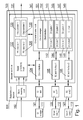
- Fig. 1 presents a general structure of a digital television decoder 101 with a system for controlling various conditional access systems.
- the main element of the decoder 101 is a decoder controller 103, comprising specialized signal processing elements and computing modules, which operate various software modules.
- the decoder receives, via a signal receiving block 102, a cable, satellite or terrestrial television signal, from which are extracted two digital data streams TS1 and TS2.
- the streams are input to a signal processing block 131, which converts them to a format acceptable by a user terminal. For example, it may decode an MPEG stream and convert the decoded data to a PAL/NTSC format.
- the received streams, which are scrambled, are descrambled by descramblers 133, 135.
- the descramblers 133, 135 are controlled by a conditional access block 141.
- the descrambling process is configured by PSI data transmitted in the streams, which are read by PSI receivers 132, 134 and transmitted to the conditional access block 141.
- the PSI data may include a Program Map Table (PMT) and a Conditional Access Table (CAT).
- PMT Program Map Table
- CAT Conditional Access Table
- the decoder is provided with a Cl slot 121 for handling Cl modules 111 and two SC slots 122, 123 for handling smart cards (SC) 112, 113.
- the configuration shown is exemplary only.
- the decoder may be provided with additional SC or Cl slots.
- the decoder may be provided with a slot for handling POD modules.
- the access to resources of the Cl module 111 is enabled by a Cl slot interface 104.
- the access to resources of the smart cards 112, 113 is enabled by SC slot interfaces 105, 106. These interfaces are low-level software modules and they provide the resources of a card or a module inserted to a specific slot via a specific program interface.
- the Cl slot interface is additionally connected to the signal processing block 131, from which it reads a scrambled stream, and after its descrambling, returns a descrambled stream.
- the conditional access block 141 controls the process of descrambling of the received streams.
- the streams can be descrambled by the decoder descramblers 133, 135, controlled by selected embedded conditional access systems, or by a descrambler of the Cl module, controlled by a conditional access system of the Cl module.
- conditional access block 141 cooperates with conditional access systems. These can be embedded conditional access (CA) systems 143, 145, 147, which cooperate with smart cards, or conditional access systems provided by Cl or POD modules, which may be communicated by the Cl or POD driver 149.
- CA embedded conditional access
- conditional access system clients 142, 144, 146, 148 which allow communication with those systems via an application program interface (API) uniform for all clients. Thanks to such solution, the other software modules of the decoder need to handle only the client interface 152 to communicate with any CA system.
- API application program interface
- the conditional access block 141 also comprises a client manager 151.
- the client manager 151 controls the process of descrambling streams by selecting CA systems responsible for descrambling and controlling the decoder descramblers. It can be a separate hardware module, a hardware element of the decoder controller, or a software module operated by the decoder controller.
- the client manager 151 provides virtual descramblers (VD), with which the clients may communicate.
- VD virtual descramblers
- the virtual descramblers are software objects emulating the interface of the decoder descrambler, which allows the embedded conditional access systems to operate as if they were connected directly to the decoder descrambler.
- the number of virtual descramblers can be smaller if some clients are not registered for all decoder descramblers.
- the client manager contains a client table, which specifies the abilities of particular conditional access systems to descramble particular streams, the priorities of clients and the clients, which are granted access to decoder descramblers.
- the virtual descramblers are connected to the decoder descramblers via switches. The client manager sets the switch position according to the client table. If a client of an external conditional access system is selected, then the decoder descrambler is deactivated.
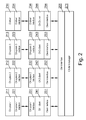
- Fig. 2 presents a schematic of communication between the conditional access system and other blocks via clients.
- Conditional access systems 211, 212, 213, 214 communicate via system-specific interfaces 221, 222, 223, 224, respectively.
- Each conditional access system is handled by a separate client 241, 242, 243, 244.
- Each client communicates with the system via its system-specific interface 231, 232, 233, 234, respectively.
- the main task of the client is to convert messages read from the system-specific interface to messages of a client interface 251, 252, 253, 254, which is uniform for all clients.
- This allows the other blocks of the system, for example the client manager 271, to communicate with the conditional access systems via clients, using a uniform client interface 261.
- all conditional access systems are provided with clients enabling communication via the client interface.
- Fig. 3 presents a schematic of client operation.
- the client interprets 303 this event and triggers 304 a relevant event of the client interface.
- the client interprets 303 this event and triggers 302 a relevant event of the CA system or the Cl driver interface it handles. This might be, for example, reading or writing specific data.
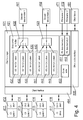
- Fig. 4 presents a structure of a client manager 401.
- the client manager communicates with clients 412, 414, 416, 418 of conditional access systems 411, 413, 415 and of a Cl driver 417 via a client interface 404.
- clients 412, 414, 416, 418 of conditional access systems 411, 413, 415 and of a Cl driver 417 via a client interface 404.
- the client interface allows execution of commands used for stream descrambling, such as commands for configuring a specific slot of the descrambler or commands for updating descrambler keys.
- the system according to the invention has been constructed in such a way that each CA system operates independently of the other systems.
- the cooperation of the systems is controlled by the client manager, so there is no need for any changes in the CA systems themselves to enable their cooperation.
- the client manager 401 comprises a descrambler controller 421 for handling communication between clients and descramblers, by transmitting commands from a particular client of embedded conditional access system to a particular decoder descrambler.
- the descrambler controller 421 comprises virtual descramblers organized in sets, one set is provided for each decoder descrambler. In each set there is one virtual descrambler for each client. In the presented example, there are two sets 430, 440 with three virtual descramblers 431, 432, 433, 441, 442, 443 in each set.
- the virtual descrambler is a software object whose structure emulates the hardware interface of the decoder descrambler, so that each embedded CA system may operate as if it were connected directly to the hardware decoder descrambler.
- the virtual_descrambler_s structure comprises a table slots_table, describing the slots of the virtual descrambler, with the number of slots specified by a MAX_DESC_SLOTS constant, which emulate the slots of the decoder descrambler.
- a client_id element identifies the identifier of the client to which the virtual descrambler is assigned.
- the structure also comprises an indicator of the number of open slots open_slots_count, which is useful to determine the number of the next descrambler slot to be opened.
- the descrambler slots are described by the virtual_descrambler_slot_s structure. An example of such a structure is presented below:
- the pid field specifies the PID identifier of packets to be descrambled by a slot of the decoder descrambler specified in the decoder_descrambler_slot field.
- the fields odd_key_length and even_key_length are used to change the length of the descrambler keys during the operation.
- the virtual_descrambler_status field may have the value of "Open” or "Closed”, which informs whether a particular slot has been already opened by a client.
- the decoder_descrambler_status field may have the value of "Open” or "Closed”, which informs whether a particular slot of the decoder descrambler has been already opened, and is useful for debugging purposes.
- the number of the slot of the virtual descrambler in the descrambler structure can be assigned consecutively for each opened slot, or can be a number referring to the number of the slot of the decoder descrambler which is to be opened by a particular conditional access system.
- the decoder descrambler controller 421 comprises switches 422, 423 for each decoder descrambler 461, 462.
- Each switch connects the virtual descrambler, which is granted access to descrambling the currently received stream, with the decoder descrambler, according to the procedure shown in Fig. 9.
- the switch is a software object, and the setting of the switch position is performed by configuring a particular data flow path inside the switch module.
- Each virtual descrambler is continuously configured by the embedded CA system assigned to it, therefore after the switch is activated, the new configuration of the decoder descrambler is set immediately.
- the client manager 401 also comprises an interface 405 for communicating with other blocks 481, such as middleware software, by which those blocks may gain access to data from the client table 453 or may gain access to the client interface 404, via which they may communicate with a selected CA system.
- the other blocks may change the priority of clients if a particular high-level software module requires descrambling by a specified CA system, or collect important data from a specific conditional access system, such as a smart card number, smart card entitlements, or the versions of registered CA systems handled by clients.
- the client manager 401 comprises a client table 453, which describes properties of individual clients.
- An exemplary format and contents of the table are presented below: Client E/M Priority TS1 descr. capability TS1 descr. granted TS2 descr. capability TS2 descr. granted CA 1 E 5 YES YES NO NO CA 2_1 E 2 NO NO YES YES CA 2_2 E 2 NO NO YES NO CA 3 E 8 NO NO NO NO CA Cl M 3 YES NO NO NO NO NO NO NO NO NO NO NO
- the first column of the client table specifies a client identifier. For clients capable of handling a plurality of streams simultaneously, individual entries are listed in the table for each stream, such as in the case of the CA 2 client.
- the second column specifies if a client handles an embedded conditional access system (E) or a system provided by an external module (M).
- E embedded conditional access system
- M system provided by an external module
- the third column specifies the priority of a client, which decides on priority of one system versus other systems capable of descrambling the currently received stream. Alternatively, the priority may be specified individually for each stream.
- next columns specify the ability of descrambling the TS1 and TS2 streams, as well as the client which has been granted access to the decoder descrambler for descrambling the specific stream.
- the clients CA 1, CA 2 and CA 3 are the clients of systems embedded in the decoder, which require access to the decoder descrambler
- the CA Cl client is a client of a conditional access system provided by a Cl module, which uses the descrambler of the module.
- the CA 1 and CA Cl clients are currently capable of descrambling the first stream TS1.
- the CA 2 client is capable of handling two streams simultaneously, and it is currently capable of descrambling the second stream TS2.
- the CA 3 client is incapable of descrambling any of the received streams. Therefore, the access to descrambling the first stream TS1 is granted to the CA 1 client, since it has greater priority than the CA Cl client.
- the access to descrambling the second stream TS2 is granted to the CA 2_1 client.
- the descrambling capability is specified by each client on the basis of the PSI data, which is provided to the client by the client manager, according to the procedures shown in Fig. 7 and Fig. 8.
- PSI data When new PSI data arrive in a specific stream, they are sent to all clients, which currently do not have granted access to a decoder descrambler, including clients, which are currently capable of descrambling other streams.
- Each client receiving new PSI data of a given stream specifies its capability of descrambling this stream. If the client is not capable of descrambling the stream, and if it was previously capable of descrambling another stream, it is switched back to that previous stream.
- the client If it is capable of descrambling the stream with new PSI data, it sets its descrambling capability for that stream and configures a particular virtual descrambler assigned to it. Once all clients have specified their descrambling capability, the client with the highest priority is granted access to the decoder descrambler, i.e. the switch for that descrambler is set to a specific position. Such procedures guarantee that the client table contains up-to-date information on clients capabilities to descramble the received streams.
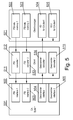
- Fig. 5 presents a schematic of communication between a client manager and a CA system via a client for a CA system handling multiple streams.
- the CA system 501 is able to descramble several streams simultaneously, and for each stream it comprises individual PSI interfaces 502, 503 and descrambler interfaces 504, 505.
- the PSI interfaces 502, 503 read PSI data to configure the descrambler.
- the descrambler interfaces 504, 505 are used for configuring descrambler slots.
- the client 511 for a CA system handling multiple streams comprises individual PSI converters 512, 513 and descrambler converters 514, 515 for each stream.
- the PSI converters 512, 513 are used to translate commands related to PSI data between the client interface and the system-specific interface.
- PSI data are provided by the client manager 521 from PSI data memories 522, 523.
- the descrambler converters 514, 515 are used to translate commands related to descrambler configuration between the client interface and the system-specific interface.
- the client manager provides virtual descramblers 524, 525 for each decoder descrambler.
- Fig. 6 presents a schematic of communication between a client manager and a CA system via a client for a CA system handling a single stream.
- the CA system 601 comprises a single PSI interface 602 and a single descrambler interface 603.
- the PSI interface 602 reads PSI data to configure the descrambler.
- the descrambler interface 603 is used for configuring descrambler slots.
- the client 611 for a CA system handling a single stream comprises a single PSI converter 612 and a single descrambler converter 614, as well as a PSI converter switch 613 and a descrambler converter switch 615.
- the PSI converter 612 is used to translate commands related to PSI data between the client interface and the system-specific interface.
- PSI data are provided by the client manager 621 from PSI data memories 622, 623, and the PSI converter switch 613 selects the PSI data memory 622, 623 from which the data will be read.
- the descrambler converter 614 is used to translate commands related to descrambler configuration between the client interface and the system-specific interface.
- the client manager provides virtual descramblers 624, 625 for each decoder descrambler, and the descrambler converter switch 615 selects the virtual descrambler 624, 625 to which configuration data will be sent.
- the switches 613, 615 operate synchronously, i.e. they are set to the same position.
- Fig. 7 presents a procedure for handling new incoming PSI data by the client manager.
- the procedure starts in step 701 when new PSI data appears in a particular transport stream.
- the new PSI data is stored in a relevant PSI memory in step 702.
- the client manager selects potential clients which could descramble the stream, including the clients which currently do not have access to any decoder descrambler granted.
- a series of steps is performed for each selected client.
- a command to stop current operation is sent to the client in step 704, which results in the client setting a negative descrambling capability for the currently handled stream.
- a notification on new PSI data is sent to the client in step 705.
- the descrambling converter switch and the PSI converter switch of the client are adjusted to connect the client to a particular stream.
- the client analyzes the data according to the procedure shown in Fig. 8 and specifies its descrambling ability for the stream.
- the client manager checks if the client set a positive descrambling capability for the stream. If yes, the procedure proceeds to the next client in step 707, until all clients are analyzed. If not, in case the client was previously capable of descrambling another stream, it is switched back to that stream in step 708.
- the series of steps 704 - 708 may be also performed asynchronously for each client, which decreases the time necessary for specifying the descrambling capability of all clients.
- Fig. 8 presents a procedure for handling new PSI data by individual clients.
- the client having received a message from the client manager in step 801 about new version of PSI data, reads these data in step 802 from the PSI memory relevant for a particular transport stream and transmits it to the CA system it handles.
- the CA system analyzes the data asynchronously in step 803 and checks in step 804 if it is capable of descrambling the stream described by these data. If so, the client sets in step 805 a positive capability of descrambling the particular stream. If the system is a system embedded in the decoder, then it starts communicating, via the client, with the virtual descrambler assigned to it. If the system is provided by an external module, it starts communicating with the descrambler of that module. If not, the client sets in the client table a negative descrambling capability in step 806.
- Fig. 9 presents a procedure for controlling the descrambler switch by the descrambler controller.
- the procedure is activated in step 901 when one of the clients changes its capability of descrambling of the currently received stream. For example, this may happen when one of the clients sets a positive descrambling capability to active, or when the client of the currently descrambling system sets a negative descrambling capability.
- the descrambler controller selects, from the clients capable of descrambling the stream, the client with the highest priority.
- step 903 it checks if a particular client requires access to the decoder descrambler.
- step 904 it sets the switch to connect the decoder descrambler with the selected virtual descrambler, so that the decoder descrambler operates according to the configuration set by the selected CA system. At the same time the operation of the descramblers in the external modules is disabled. If not, then in step 905 the operation of the decoder descrambler and descramblers of the external modules is deactivated, and the descrambling is performed by a descrambler of the selected Cl or POD module.
- the described invention enables convenient coordination of various conditional access systems for descrambling a plurality of data streams.
- the decoder descrambler switches and sets of virtual descramblers make it possible to descramble a plurality of streams scrambled by various CA systems by using a single decoder descrambler for each stream. Therefore, it enhances the functionality of the decoder without extending its hardware structure, which saves costs and makes the solution possible to implement in current digital television decoder architectures.
Landscapes
- Engineering & Computer Science (AREA)
- Multimedia (AREA)
- Signal Processing (AREA)
- Databases & Information Systems (AREA)
- Computer Security & Cryptography (AREA)
- Two-Way Televisions, Distribution Of Moving Picture Or The Like (AREA)
Abstract
Description
- The object of the invention is a system for controlling conditional access systems in a digital television decoder receiving a plurality of streams and a method for controlling conditional access systems.
- In digital television decoders (so-called set-top boxes) the received stream of data can be descrambled by conditional access (CA) systems embedded in the decoder or provided by external modules.
- The conditional access systems embedded in the decoder make use of a decoder descrambler, which is an integral part of the decoder, and smart cards placed in smart card slots of the decoder. The smart cards provide data necessary to configure the decoder descrambler. There are several companies designing embedded CA systems, usually in form of software modules, and the interfaces of CA systems of various providers differ. A typical digital television decoder, to support a specific embedded CA system, must have its software adapted to the interface of the CA system. Such adaptation is problematic for decoder designers, since it requires a considerable workload and resources.
- The conditional access systems provided by external modules use an external descrambler, which is an integral part of the module, and therefore external to the digital television decoder, and smart cards placed in a smart card slot of the module. The smart cards provide data necessary to configure the external descrambler. The external CA systems are usually provided by Common Interface (Cl) modules, or by Point of Deployment (POD) modules. These modules are placed in module slots of the decoder. Such systems can be operated via a standard Cl or POD interface, which is provided by a software driver embedded in the decoder. If the stream is descrambled by the descrambler of the external module, the decoder descrambler is deactivated, to avoid double descrambling.
- In a typical digital television decoder, a separate decoder descrambler is required for each CA system to be handled. Digital television decoders equipped with PIP (Picture-in-Picture) or DVR (Digital Video Recording) functionality require a concurrent reception of a plurality of data streams. In such a case, the number of necessary descramblers would be equal to the number of handled CA systems multiplied by the number of handled streams, which would greatly expand the structure of the decoder.
- From the
US Patent No. US 6,185,735 entitled "Method of operating an apparatus intended to permit access to services" there is known a method for operating a digital television decoder, in which the processing of streams, scrambled by an algorithm other than the one used by a decoder provider, is blocked for a specific time. The decoder has only one conditional access system, which can support various scrambling methods but only if they are compatible with that conditional access system. Therefore, this solution does not allow concurrent operation of several conditional access systems in the decoder. - From the US Patent Application No.
US 2004/0237099 "Scramble release device for scrambled digital broadcasting streams in broadcasting communication convergence system" there is known a device for reception of a plurality of scrambled digital broadcasting streams, having a control section, to which several descramblers are connected. The streams are directed to specific descramblers on the basis of their PID identifiers. Therefore, the descramblers and so their conditional access systems are static, i.e. a descrambler is preconfigured to descramble certain scrambling algorithm. Although the system is configured to receive several streams, only one descrambler for each scrambling algorithm is provided. If two streams of the same scrambling system would have to be received, the number of descramblers would double. Therefore, the complexity of the system, due to its static nature, is high. - A European Patent Application No.
EP05105666.1 - The drawback of the known systems for controlling conditional access systems is their inability to provide easy coordination of the different conditional access systems for descrambling a plurality of data streams. The addition of each new conditional access system requires modification of the existing software to provide compatibility, which is time-consuming and expensive.
- It is an object of the present invention to provide system for controlling various conditional access systems in a digital television decoder receiving a plurality of streams.
- This and other objects and advantages of the present invention will become apparent from the detailed description, which follows.
- In a system for controlling conditional access systems in a digital television decoder with a signal receiving block receiving a plurality of streams, a signal processing block having a plurality of decoder descramblers and a conditional access block with at least one conditional access system provided with a client supporting communication via a client interface, the conditional access block additionally is provided with a client manager handling communication with conditional access systems via clients using the client interface and controlling descrambling of the streams by granting access to decoder descramblers to selected conditional access systems.
- The client manager incorporates a plurality of virtual descrambler sets, each virtual descrambler set assigned individually to each decoder descrambler, where the virtual descrambler sets comprise virtual descramblers assigned to each conditional access systems registered for the decoder descrambler, being software objects emulating an interface of the decoder descrambler and a plurality of decoder descrambler switches, each decoder descrambler switch assigned individually to each decoder descrambler, for controlling the decoder descrambler by transmitting to it a configuration of the virtual descrambler assigned to a conditional access system which has been granted access to the particular decoder descrambler.
- Preferably, at least one of the conditional access systems is a system handling a plurality of streams and the client provided for the conditional access system handling a plurality of streams comprises a plurality of PSI converters translating commands related to PSI data between the client interface and the system-specific interface and a plurality of descrambler converters translating commands related to descrambler configuration between the client interface and the system-specific interface.
- It is of special advantage that at least one of the conditional access systems is a system handling a single stream and the client provided for the conditional access system handling a single stream comprises a single PSI converter translating commands related to PSI data between the client interface and the system-specific interface, a single descrambler converter translating commands related to descrambler configuration between the client interface and the system-specific interface, a PSI converter switch selecting the source of PSI data for the PSI converter and a descrambler converter switch selecting the virtual descrambler for sending commands related to descrambler configuration.
- The client manager can comprise a client table for storing data describing the systems handled by individual clients, the data describing at least a capability to descramble each of the streams, the data being used to select the conditional access systems to be granted access to decoder descramblers.
- Preferably, in the client table there are additionally stored priorities of individual clients, deciding on a priority of one system versus other systems to be granted access to a particular decoder descrambler.
- The conditional access systems can be systems embedded in the decoder and/or systems provided by external modules.
- The number of decoder descramblers can be equal to the number of received streams.
- In a method for controlling conditional access systems in a digital television decoder with a signal receiving block receiving a plurality of streams and a signal processing block having a plurality of decoder descramblers and a conditional access block with at least one conditional access system provided with a client supporting communication via a client interface, handling communication with conditional access systems via clients using the client interface is executed by a client manager and descrambling of the streams is controlled by granting access to decoder descramblers to selected conditional access systems.
- In the accompanying drawings one of the possible embodiments of the present invention is shown, where:
- Fig. 1 presents a general structure of a digital television decoder with a system for controlling various conditional access systems;
- Fig. 2 presents a schematic of communication between the conditional access system and other blocks via clients;
- Fig. 3 presents a schematic of client operation;
- Fig. 4 presents a structure of a client manager;
- Fig. 5 presents a schematic of communication between a client manager and a CA system via a client for a CA system handling multiple streams;
- Fig. 6 presents a schematic of communication between a client manager and a CA system via a client for a CA system handling a single stream;
- Fig. 7 presents a procedure for handling new incoming PSI data;
- Fig. 8 presents a procedure for handling new PSI data by individual clients; and
- Fig. 9 presents a procedure for controlling the descrambler switch.
- Fig. 1 presents a general structure of a
digital television decoder 101 with a system for controlling various conditional access systems. The main element of thedecoder 101 is adecoder controller 103, comprising specialized signal processing elements and computing modules, which operate various software modules. The decoder receives, via asignal receiving block 102, a cable, satellite or terrestrial television signal, from which are extracted two digital data streams TS1 and TS2. The streams are input to asignal processing block 131, which converts them to a format acceptable by a user terminal. For example, it may decode an MPEG stream and convert the decoded data to a PAL/NTSC format. The received streams, which are scrambled, are descrambled bydescramblers descramblers conditional access block 141. The descrambling process is configured by PSI data transmitted in the streams, which are read byPSI receivers conditional access block 141. The PSI data may include a Program Map Table (PMT) and a Conditional Access Table (CAT). - The decoder is provided with a
Cl slot 121 for handlingCl modules 111 and twoSC slots Cl module 111 is enabled by aCl slot interface 104. The access to resources of thesmart cards signal processing block 131, from which it reads a scrambled stream, and after its descrambling, returns a descrambled stream. - The
conditional access block 141 controls the process of descrambling of the received streams. In the presented embodiment, the streams can be descrambled by thedecoder descramblers - The
conditional access block 141 cooperates with conditional access systems. These can be embedded conditional access (CA)systems POD driver 149. - One of the elements of the invention are conditional
access system clients client interface 152 to communicate with any CA system. - The
conditional access block 141 also comprises aclient manager 151. Theclient manager 151 controls the process of descrambling streams by selecting CA systems responsible for descrambling and controlling the decoder descramblers. It can be a separate hardware module, a hardware element of the decoder controller, or a software module operated by the decoder controller. - The
client manager 151, described in more details in Fig. 4, provides virtual descramblers (VD), with which the clients may communicate. The virtual descramblers are software objects emulating the interface of the decoder descrambler, which allows the embedded conditional access systems to operate as if they were connected directly to the decoder descrambler. There is provided a separate set of virtual descramblers for each decoder descrambler, and each set comprises separate virtual descramblers for each client. Therefore, the total number of virtual descramblers in the system is equal to the multiple of the number of clients and the number of decoder descramblers. The number of virtual descramblers can be smaller if some clients are not registered for all decoder descramblers. In addition, the client manager contains a client table, which specifies the abilities of particular conditional access systems to descramble particular streams, the priorities of clients and the clients, which are granted access to decoder descramblers. The virtual descramblers are connected to the decoder descramblers via switches. The client manager sets the switch position according to the client table. If a client of an external conditional access system is selected, then the decoder descrambler is deactivated. - Fig. 2 presents a schematic of communication between the conditional access system and other blocks via clients.
Conditional access systems specific interfaces separate client specific interface client interface client manager 271, to communicate with the conditional access systems via clients, using auniform client interface 261. Preferably, all conditional access systems are provided with clients enabling communication via the client interface. - Fig. 3 presents a schematic of client operation. When, at the CA system or the Cl driver interface there appears 301 an event notified by the CA system of the Cl driver handled by the client, the client interprets 303 this event and triggers 304 a relevant event of the client interface. Similarly, when at the client interface there appears 305 an event notified by another block, for example by the client manager, the client interprets 303 this event and triggers 302 a relevant event of the CA system or the Cl driver interface it handles. This might be, for example, reading or writing specific data.
- Fig. 4 presents a structure of a
client manager 401. The client manager communicates withclients conditional access systems Cl driver 417 via aclient interface 404. Thus, the only requirement for systems and drivers of various types to cooperate with the manager is to be provided with a client handling the client interface functions. The client interface allows execution of commands used for stream descrambling, such as commands for configuring a specific slot of the descrambler or commands for updating descrambler keys. - The system according to the invention has been constructed in such a way that each CA system operates independently of the other systems. The cooperation of the systems is controlled by the client manager, so there is no need for any changes in the CA systems themselves to enable their cooperation.
- The
client manager 401 comprises adescrambler controller 421 for handling communication between clients and descramblers, by transmitting commands from a particular client of embedded conditional access system to a particular decoder descrambler. Thedescrambler controller 421 comprises virtual descramblers organized in sets, one set is provided for each decoder descrambler. In each set there is one virtual descrambler for each client. In the presented example, there are twosets virtual descramblers - An exemplary structure of the virtual descrambler as a software object is presented below. In the example, the syntax of the C language is used:


- The virtual_descrambler_s structure comprises a table slots_table, describing the slots of the virtual descrambler, with the number of slots specified by a MAX_DESC_SLOTS constant, which emulate the slots of the decoder descrambler. A client_id element identifies the identifier of the client to which the virtual descrambler is assigned. The structure also comprises an indicator of the number of open slots open_slots_count, which is useful to determine the number of the next descrambler slot to be opened. The descrambler slots are described by the virtual_descrambler_slot_s structure. An example of such a structure is presented below:

- The pid field specifies the PID identifier of packets to be descrambled by a slot of the decoder descrambler specified in the decoder_descrambler_slot field. The fields algorithm, odd_key having the size of ODD_SIZE and even_key having the size of EVEN_SIZE, specify the current algorithm and the descrambling keys for a particular slot of the decoder descrambler. The fields odd_key_length and even_key_length are used to change the length of the descrambler keys during the operation. The virtual_descrambler_status field may have the value of "Open" or "Closed", which informs whether a particular slot has been already opened by a client. The decoder_descrambler_status field may have the value of "Open" or "Closed", which informs whether a particular slot of the decoder descrambler has been already opened, and is useful for debugging purposes.
- The number of the slot of the virtual descrambler in the descrambler structure can be assigned consecutively for each opened slot, or can be a number referring to the number of the slot of the decoder descrambler which is to be opened by a particular conditional access system.
- The
decoder descrambler controller 421 comprisesswitches decoder descrambler - The
client manager 401 also comprises aninterface 405 for communicating withother blocks 481, such as middleware software, by which those blocks may gain access to data from the client table 453 or may gain access to theclient interface 404, via which they may communicate with a selected CA system. For example, the other blocks may change the priority of clients if a particular high-level software module requires descrambling by a specified CA system, or collect important data from a specific conditional access system, such as a smart card number, smart card entitlements, or the versions of registered CA systems handled by clients. - The
client manager 401 comprises a client table 453, which describes properties of individual clients. An exemplary format and contents of the table are presented below:Client E/M Priority TS1 descr. capability TS1 descr. granted TS2 descr. capability TS2 descr. granted CA 1 E 5 YES YES NO NO CA 2_1 E 2 NO NO YES YES CA 2_2 E 2 NO NO YES NO CA 3 E 8 NO NO NO NO CA Cl M 3 YES NO NO NO - The first column of the client table specifies a client identifier. For clients capable of handling a plurality of streams simultaneously, individual entries are listed in the table for each stream, such as in the case of the
CA 2 client. - The second column specifies if a client handles an embedded conditional access system (E) or a system provided by an external module (M).
- The third column specifies the priority of a client, which decides on priority of one system versus other systems capable of descrambling the currently received stream. Alternatively, the priority may be specified individually for each stream.
- The next columns specify the ability of descrambling the TS1 and TS2 streams, as well as the client which has been granted access to the decoder descrambler for descrambling the specific stream.
- In the table presented above, the
clients CA 1,CA 2 andCA 3 are the clients of systems embedded in the decoder, which require access to the decoder descrambler, and the CA Cl client is a client of a conditional access system provided by a Cl module, which uses the descrambler of the module. TheCA 1 and CA Cl clients are currently capable of descrambling the first stream TS1. TheCA 2 client is capable of handling two streams simultaneously, and it is currently capable of descrambling the second stream TS2. TheCA 3 client is incapable of descrambling any of the received streams. Therefore, the access to descrambling the first stream TS1 is granted to theCA 1 client, since it has greater priority than the CA Cl client. The access to descrambling the second stream TS2 is granted to the CA 2_1 client. - In case when the stream is to be descrambled by a decoder descrambler, a command is sent to the clients of systems using descramblers of Cl or POD modules, to deactivate those descramblers. In case when the stream is to be descrambled by a descrambler of the Cl or POD module, the other descramblers, including the decoder descrambler, are deactivated. This guarantees that the stream is descrambled by a single descrambler.
- The descrambling capability is specified by each client on the basis of the PSI data, which is provided to the client by the client manager, according to the procedures shown in Fig. 7 and Fig. 8. When new PSI data arrive in a specific stream, they are sent to all clients, which currently do not have granted access to a decoder descrambler, including clients, which are currently capable of descrambling other streams. Each client receiving new PSI data of a given stream specifies its capability of descrambling this stream. If the client is not capable of descrambling the stream, and if it was previously capable of descrambling another stream, it is switched back to that previous stream. If it is capable of descrambling the stream with new PSI data, it sets its descrambling capability for that stream and configures a particular virtual descrambler assigned to it. Once all clients have specified their descrambling capability, the client with the highest priority is granted access to the decoder descrambler, i.e. the switch for that descrambler is set to a specific position. Such procedures guarantee that the client table contains up-to-date information on clients capabilities to descramble the received streams.
- Fig. 5 presents a schematic of communication between a client manager and a CA system via a client for a CA system handling multiple streams. The
CA system 501 is able to descramble several streams simultaneously, and for each stream it comprises individual PSI interfaces 502, 503 anddescrambler interfaces client 511 for a CA system handling multiple streams comprisesindividual PSI converters descrambler converters PSI converters client manager 521 fromPSI data memories descrambler converters virtual descramblers - Fig. 6 presents a schematic of communication between a client manager and a CA system via a client for a CA system handling a single stream. The
CA system 601 comprises asingle PSI interface 602 and asingle descrambler interface 603. ThePSI interface 602 reads PSI data to configure the descrambler. Thedescrambler interface 603 is used for configuring descrambler slots. Theclient 611 for a CA system handling a single stream comprises asingle PSI converter 612 and asingle descrambler converter 614, as well as aPSI converter switch 613 and adescrambler converter switch 615. ThePSI converter 612 is used to translate commands related to PSI data between the client interface and the system-specific interface. PSI data are provided by theclient manager 621 fromPSI data memories PSI converter switch 613 selects thePSI data memory descrambler converter 614 is used to translate commands related to descrambler configuration between the client interface and the system-specific interface. The client manager providesvirtual descramblers descrambler converter switch 615 selects thevirtual descrambler switches - Fig. 7 presents a procedure for handling new incoming PSI data by the client manager. The procedure starts in
step 701 when new PSI data appears in a particular transport stream. The new PSI data is stored in a relevant PSI memory instep 702. Next, instep 703, the client manager selects potential clients which could descramble the stream, including the clients which currently do not have access to any decoder descrambler granted. Next, a series of steps is performed for each selected client. A command to stop current operation is sent to the client instep 704, which results in the client setting a negative descrambling capability for the currently handled stream. Then a notification on new PSI data is sent to the client instep 705. In case of a client of a system handling a single stream, the descrambling converter switch and the PSI converter switch of the client are adjusted to connect the client to a particular stream. Having received the notification, the client analyzes the data according to the procedure shown in Fig. 8 and specifies its descrambling ability for the stream. Instep 706 the client manager checks if the client set a positive descrambling capability for the stream. If yes, the procedure proceeds to the next client instep 707, until all clients are analyzed. If not, in case the client was previously capable of descrambling another stream, it is switched back to that stream instep 708. The series of steps 704 - 708 may be also performed asynchronously for each client, which decreases the time necessary for specifying the descrambling capability of all clients. - Fig. 8 presents a procedure for handling new PSI data by individual clients. The client, having received a message from the client manager in
step 801 about new version of PSI data, reads these data instep 802 from the PSI memory relevant for a particular transport stream and transmits it to the CA system it handles. The CA system analyzes the data asynchronously instep 803 and checks instep 804 if it is capable of descrambling the stream described by these data. If so, the client sets in step 805 a positive capability of descrambling the particular stream. If the system is a system embedded in the decoder, then it starts communicating, via the client, with the virtual descrambler assigned to it. If the system is provided by an external module, it starts communicating with the descrambler of that module. If not, the client sets in the client table a negative descrambling capability instep 806. - Fig. 9 presents a procedure for controlling the descrambler switch by the descrambler controller. The procedure is activated in
step 901 when one of the clients changes its capability of descrambling of the currently received stream. For example, this may happen when one of the clients sets a positive descrambling capability to active, or when the client of the currently descrambling system sets a negative descrambling capability. Then, instep 902, the descrambler controller selects, from the clients capable of descrambling the stream, the client with the highest priority. Next instep 903 it checks if a particular client requires access to the decoder descrambler. If so, then instep 904 it sets the switch to connect the decoder descrambler with the selected virtual descrambler, so that the decoder descrambler operates according to the configuration set by the selected CA system. At the same time the operation of the descramblers in the external modules is disabled. If not, then instep 905 the operation of the decoder descrambler and descramblers of the external modules is deactivated, and the descrambling is performed by a descrambler of the selected Cl or POD module. - The described invention enables convenient coordination of various conditional access systems for descrambling a plurality of data streams. The decoder descrambler switches and sets of virtual descramblers make it possible to descramble a plurality of streams scrambled by various CA systems by using a single decoder descrambler for each stream. Therefore, it enhances the functionality of the decoder without extending its hardware structure, which saves costs and makes the solution possible to implement in current digital television decoder architectures.
- The preferred embodiment having been thus described, it will now be evident to those skilled in the art that further variation thereto may be contemplated. Such variations are not regarded as a departure from the invention, the true scope of the invention being set forth in the claims appended hereto.
Claims (16)
- A system for controlling conditional access systems in a digital television decoder with a signal receiving block receiving a plurality of streams, a signal processing block having a plurality of decoder descramblers and a conditional access block with at least one conditional access system provided with a client supporting communication via a client interface, characterized in that the conditional access block (141) additionally comprises a client manager (151) handling communication with conditional access systems (143, 145, 147) via clients (142, 144, 146) using the client interface (152) and controlling descrambling of the streams by granting access to decoder descramblers (133, 135) to selected conditional access systems (143, 145, 147).
- The system according to claim 1, characterized in that the client manager is provided with a plurality of virtual descrambler sets (431, 432, 433; 441, 442, 443), each virtual descrambler set (431, 432, 433; 441, 442, 443) assigned individually to each decoder descrambler (461, 462), where the virtual descrambler sets (431, 432, 433; 441, 442, 443) comprise virtual descramblers assigned to each conditional access systems registered for the decoder descrambler (461, 462), being software objects emulating an interface of the decoder descrambler and a plurality of decoder descrambler switches (422, 423), each decoder descrambler switch (422, 423) assigned individually to each decoder descrambler (461, 462), for controlling the decoder descrambler by transmitting to it a configuration of the virtual descrambler assigned to a conditional access system which has been granted access to the particular decoder descrambler (461, 462).
- The system according to claim 2, characterized in that at least one of the conditional access systems (501) is a system handling a plurality of streams and the client (511) provided for the conditional access system (501) handling a plurality of streams comprises a plurality of PSI converters (512, 513) translating commands related to PSI data between the client interface (152) and the system-specific interface and a plurality of descrambler converters (514, 515) translating commands related to descrambler configuration between the client interface (152) and the system-specific interface.
- The system according to claim 2, characterized in that at least one of the conditional access systems (601) is a system handling a single stream and the client provided for the conditional access system (601) handling a single stream comprises a single PSI converter (612) translating commands related to PSI data between the client interface (152) and the system-specific interface, a single descrambler converter (614) translating commands related to descrambler configuration between the client interface (152) and the system-specific interface, a PSI converter switch (613) selecting the source of PSI data (622, 624) for the PSI converter (612)and a descrambler converter switch (614) selecting the virtual descrambler (624, 625) for sending commands related to descrambler configuration.
- The system according to claim 1, characterized in that the client manager comprises a client table for storing data describing the systems handled by individual clients, the data describing at least a capability to descramble each of the streams, the data being used to select the conditional access systems to be granted access to decoder descramblers.
- The system according to claim 5, characterized in that in the client table there are additionally stored priorities of individual clients, deciding on a priority of one system versus other systems to be granted access to a particular decoder descrambler.
- The system according to claim 1, characterized in that the conditional access systems are systems embedded in the decoder and/or systems provided by external modules.
- The system according to claim 1, characterized in that the number of decoder descramblers is equal to the number of received streams.
- A method for controlling conditional access systems in a digital television decoder with a signal receiving block receiving a plurality of streams and a signal processing block having a plurality of decoder descramblers and a conditional access block with at least one conditional access system provided with a client supporting communication via a client interface, characterized in that handling communication with conditional access systems via clients using the client interface is executed by a client manager and descrambling of the streams is controlled by granting access to decoder descramblers to selected conditional access systems.
- The method according to claim 9, characterized in that in the client manager there are provided a plurality of virtual descrambler sets, each virtual descrambler set assigned individually to each decoder descrambler, where the virtual descrambler sets comprise virtual descramblers assigned to each conditional access systems registered for the decoder descrambler, being software objects emulating an interface of the decoder descrambler and a plurality of decoder descrambler switches, each decoder descrambler switch assigned individually to each decoder descrambler, for controlling the decoder descrambler by transmitting to it a configuration of the virtual descrambler assigned to a conditional access system which has been granted access to the particular decoder descrambler
- The method according to claim 9, characterized in that in the client manager there is provided a table for storing data describing the systems handled by individual clients, the data describing at least a capability to descramble each of the streams, the data being used to select the conditional access systems to be granted access to decoder descramblers.
- The method according to claim 11, characterized in that the conditional access system to be granted access to a particular decoder descrambler is selected when in the client table a change of descrambling capability of the stream descrambled by that decoder descrambler by one of conditional access systems is detected.
- The method according to claim 11, characterized in that in the client table there are additionally stored priorities of individual clients, deciding on a priority of one system versus other systems to be granted access to a particular decoder descrambler.
- The method according to claim 11, characterized in that upon receiving new PSI data in a particular stream, the client manager selects potential clients for descrambling that stream, and for each selected client it sends a notification of new PSI data.
- The method according to claim 14, characterized in that as the potential clients for descrambling the stream there are selected clients which do not have access granted to any decoder descrambler.
- The method according to claim 14, characterized in that for clients previously capable of descrambling another stream, the client manager checks if the client is capable of descrambling the stream with new PSI data, and if not, the client is switched to the stream it was previously capable of descrambling.
Priority Applications (1)
| Application Number | Priority Date | Filing Date | Title |
|---|---|---|---|
| EP06122739A EP1781032A3 (en) | 2005-10-27 | 2006-10-23 | System and method for controlling conditional access systems in a digital television decoder receiving a plurality of streams |
Applications Claiming Priority (2)
| Application Number | Priority Date | Filing Date | Title |
|---|---|---|---|
| EP05461004 | 2005-10-27 | ||
| EP06122739A EP1781032A3 (en) | 2005-10-27 | 2006-10-23 | System and method for controlling conditional access systems in a digital television decoder receiving a plurality of streams |
Publications (2)
| Publication Number | Publication Date |
|---|---|
| EP1781032A2 true EP1781032A2 (en) | 2007-05-02 |
| EP1781032A3 EP1781032A3 (en) | 2011-08-03 |
Family
ID=37672282
Family Applications (1)
| Application Number | Title | Priority Date | Filing Date |
|---|---|---|---|
| EP06122739A Withdrawn EP1781032A3 (en) | 2005-10-27 | 2006-10-23 | System and method for controlling conditional access systems in a digital television decoder receiving a plurality of streams |
Country Status (1)
| Country | Link |
|---|---|
| EP (1) | EP1781032A3 (en) |
Cited By (3)
| Publication number | Priority date | Publication date | Assignee | Title |
|---|---|---|---|---|
| CN102202233A (en) * | 2010-03-26 | 2011-09-28 | 北京视博数字电视科技有限公司 | A video push method, system and terminal equipment |
| WO2012173680A2 (en) | 2011-06-14 | 2012-12-20 | Sony Corporation | Tv receiver device with multiple decryption modes |
| EP2804391A1 (en) * | 2013-05-14 | 2014-11-19 | TP Vision Holding B.V. | Common Interface hub |
Family Cites Families (7)
| Publication number | Priority date | Publication date | Assignee | Title |
|---|---|---|---|---|
| EP0562295B1 (en) * | 1992-03-04 | 1997-05-02 | THOMSON multimedia | Method and apparatus for controlling several smart cards |
| EP0964573A1 (en) * | 1998-06-11 | 1999-12-15 | THOMSON multimedia | Method and apparatus for enlarging DVB-CI functionality by enabling a direct access to the Conditional Access Module |
| US6690797B1 (en) * | 1998-07-28 | 2004-02-10 | Thomson Licensing S.A. | Descrambling device for the use of several conditional access sub-systems |
| US6975725B1 (en) * | 2000-04-14 | 2005-12-13 | Sony Corporation | Method for standardizing the use of ISO 7816 smart cards in conditional access systems |
| ZA200204489B (en) * | 2001-12-10 | 2003-06-09 | Uec Technologies Proprietary L | Decoder with multiple conditional access facility. |
| GB2399972A (en) * | 2003-03-26 | 2004-09-29 | Sony Uk Ltd | Common interface controller and method of descrambling transport stream channels |
| KR100487208B1 (en) * | 2003-05-20 | 2005-05-04 | 삼성전자주식회사 | Encryption MPTS Treatment Method in Broadcasting and Communication Convergence System |
-
2006
- 2006-10-23 EP EP06122739A patent/EP1781032A3/en not_active Withdrawn
Cited By (8)
| Publication number | Priority date | Publication date | Assignee | Title |
|---|---|---|---|---|
| CN102202233A (en) * | 2010-03-26 | 2011-09-28 | 北京视博数字电视科技有限公司 | A video push method, system and terminal equipment |
| CN102202233B (en) * | 2010-03-26 | 2013-09-25 | 北京视博数字电视科技有限公司 | A video push method, system and terminal equipment |
| WO2012173680A2 (en) | 2011-06-14 | 2012-12-20 | Sony Corporation | Tv receiver device with multiple decryption modes |
| CN104303511A (en) * | 2011-06-14 | 2015-01-21 | 索尼公司 | TV receiver device with multiple decryption modes |
| EP2705662A4 (en) * | 2011-06-14 | 2015-05-06 | Sony Corp | TELEVISION RECEIVER DEVICE HAVING MULTIPLE DIFFERENCE MODES |
| US9392318B2 (en) | 2011-06-14 | 2016-07-12 | Sony Corporation | Receiver device with multiple decryption modes |
| CN104303511B (en) * | 2011-06-14 | 2017-09-22 | 索尼公司 | TV receivers with multiple decryption modes |
| EP2804391A1 (en) * | 2013-05-14 | 2014-11-19 | TP Vision Holding B.V. | Common Interface hub |
Also Published As
| Publication number | Publication date |
|---|---|
| EP1781032A3 (en) | 2011-08-03 |
Similar Documents
| Publication | Publication Date | Title |
|---|---|---|
| CN1096797C (en) | System for processing a video signal via series-connected high speed signal processing smart cards | |
| US5826166A (en) | Digital entertainment terminal providing dynamic execution in video dial tone networks | |
| KR100553195B1 (en) | Digital Transport Stream Processing | |
| EP0594351A1 (en) | Interactive television converter | |
| US6490356B1 (en) | Broadcast receiving system comprising a computer and a decoder | |
| CZ20001821A3 (en) | Filtering method of packet data flow and receiver/decoder | |
| EP1116379A2 (en) | Application data table for a multiservice digital transmission system | |
| US8892888B2 (en) | Multiple stream decrypting and decoding systems and related methods thereof | |
| EP2887675B1 (en) | Television receiver and related methods | |
| EP1053633B1 (en) | Configuring method and device | |
| US20070098169A1 (en) | System and method for controlling conditional access systems in a digital television decoder receiving a plurality of streams | |
| EP1703733B1 (en) | System for processing of television data streams and method for processing of television data streams | |
| EP1638332A2 (en) | System for controlling conditional access systems and method for controlling conditional access systems | |
| KR20010049698A (en) | An adaptive transport protocol decoder | |
| US8196161B2 (en) | Processing digital television programs at a receiver so as to prevent interception of unscrambled programs | |
| EP1638006B1 (en) | System for controlling smart card slots and method for controlling smart card slots | |
| US20090285547A2 (en) | Sgnal processing apparatus | |
| EP1197083B1 (en) | Method and apparatus for using a single password set in an integrated television system | |
| CN100574366C (en) | Channel-changing method in the digital cable set-top box | |
| KR20000076405A (en) | Acess control system | |
| MXPA00007588A (en) | Configuring method and device | |
| CZ20002873A3 (en) | Device and method for configuring the receiver / decoder | |
| JPH09224201A (en) | Digital signal decoding device | |
| HK1002482B (en) | System for processing a video signal via series-connected high speed signal processing smart cards | |
| CZ332299A3 (en) | Transmitting and receiving system comprising computer |
Legal Events
| Date | Code | Title | Description |
|---|---|---|---|
| PUAI | Public reference made under article 153(3) epc to a published international application that has entered the european phase |
Free format text: ORIGINAL CODE: 0009012 |
|
| AK | Designated contracting states |
Kind code of ref document: A2 Designated state(s): AT BE BG CH CY CZ DE DK EE ES FI FR GB GR HU IE IS IT LI LT LU LV MC NL PL PT RO SE SI SK TR |
|
| AX | Request for extension of the european patent |
Extension state: AL BA HR MK YU |
|
| RAP1 | Party data changed (applicant data changed or rights of an application transferred) |
Owner name: ADVANCED DIGITAL BROADCAST S.A. |
|
| PUAL | Search report despatched |
Free format text: ORIGINAL CODE: 0009013 |
|
| AK | Designated contracting states |
Kind code of ref document: A3 Designated state(s): AT BE BG CH CY CZ DE DK EE ES FI FR GB GR HU IE IS IT LI LT LU LV MC NL PL PT RO SE SI SK TR |
|
| AX | Request for extension of the european patent |
Extension state: AL BA HR MK RS |
|
| RIC1 | Information provided on ipc code assigned before grant |
Ipc: H04N 7/167 20110101AFI20110628BHEP |
|
| AKY | No designation fees paid | ||
| REG | Reference to a national code |
Ref country code: DE Ref legal event code: R108 Effective date: 20120411 |
|
| STAA | Information on the status of an ep patent application or granted ep patent |
Free format text: STATUS: THE APPLICATION IS DEEMED TO BE WITHDRAWN |
|
| 18D | Application deemed to be withdrawn |
Effective date: 20120204 |