EP1777712B1 - Method for Recycling Thallium-203 Isotope in Remnant Solution of Thallium-201 Radioisotope - Google Patents
Method for Recycling Thallium-203 Isotope in Remnant Solution of Thallium-201 Radioisotope Download PDFInfo
- Publication number
- EP1777712B1 EP1777712B1 EP05109923A EP05109923A EP1777712B1 EP 1777712 B1 EP1777712 B1 EP 1777712B1 EP 05109923 A EP05109923 A EP 05109923A EP 05109923 A EP05109923 A EP 05109923A EP 1777712 B1 EP1777712 B1 EP 1777712B1
- Authority
- EP
- European Patent Office
- Prior art keywords
- solution
- precipitate
- isotope
- value
- remnant
- Prior art date
- Legal status (The legal status is an assumption and is not a legal conclusion. Google has not performed a legal analysis and makes no representation as to the accuracy of the status listed.)
- Expired - Lifetime
Links
Images




Classifications
-
- G—PHYSICS
- G21—NUCLEAR PHYSICS; NUCLEAR ENGINEERING
- G21F—PROTECTION AGAINST X-RADIATION, GAMMA RADIATION, CORPUSCULAR RADIATION OR PARTICLE BOMBARDMENT; TREATING RADIOACTIVELY CONTAMINATED MATERIAL; DECONTAMINATION ARRANGEMENTS THEREFOR
- G21F9/00—Treating radioactively contaminated material; Decontamination arrangements therefor
- G21F9/04—Treating liquids
- G21F9/06—Processing
- G21F9/10—Processing by flocculation
-
- G—PHYSICS
- G21—NUCLEAR PHYSICS; NUCLEAR ENGINEERING
- G21F—PROTECTION AGAINST X-RADIATION, GAMMA RADIATION, CORPUSCULAR RADIATION OR PARTICLE BOMBARDMENT; TREATING RADIOACTIVELY CONTAMINATED MATERIAL; DECONTAMINATION ARRANGEMENTS THEREFOR
- G21F9/00—Treating radioactively contaminated material; Decontamination arrangements therefor
- G21F9/04—Treating liquids
- G21F9/06—Processing
- G21F9/12—Processing by absorption; by adsorption; by ion-exchange
Definitions
- the present invention relates to a method for recycling; more particularly, relates to recycling Thallium(Tl)-203 isotope from a remnant electroplating solution of Tl-203 target or a remnant chemical Tl-201 solution with a recycling rate over 98% to be made into an electroplating solution or a solid thallous oxide used in nuclear medicine.
- the main purpose of the present invention is to provide a method for recycling Tl-203 isotope with high purity and high recycling rate from a remnant solution of Tl-201 radioisotope.
- the present invention provides a method according to claim 1.
- Advantageous embodiments are laid down in the dependent claims.
- the invention provides a method for recycling Tl-203 isotope in a remnant solution of Tl-201 radioisotope, where, through a chemical precipitation, an amount of Tl-203 precipitates is obtained in a remnant electroplating solution of Tl-203 target or a remnant chemical Tl-201 solution; the precipitates having Tl-203 are collected and rinsed to obtain Tl-203 isotopes; and, the Tl-203 isotopes are dissolved in a sulphuric acid to obtain a target electroplating solution or are heated to 900°C to obtain a solid Tl-203 oxide for easy storage.
- the present invention achieves a recycling rate over 98% and the chemical process flow is simple and convenient with high purity and high recycling rate through chemical precipitation and ion exchange; so, the present invention is used in an automatic or semi-automatic process to improve the convenience and the repetition of the recycling to save time and human resources. Accordingly, a novel method for recycling Tl-203 isotope in a remnant solution of Tl-201 radioisotope is obtained.
- the present invention is a method for recycling TL-203 isotope in a remnant solution of TL-201 radioisotope, where a remnant electroplating solution of TL-203 target [11] is processed with an ion exchange [12] to remove an organic solvent; after processing the ion exchange [12], the remnant electroplating solution of TL-203 target [11] is washed [13] by using a sulphuric acid to obtain a Tl-203 solution; a pH (Potential of Hydrogen) value of the Tl-203 solution is adjusted [14] by using a NaOH solution to obtain a Tl-203 solution with a pH value of 12; the Tl-203 solution with a pH value of 12 is precipitated [15] by using a sulfide solution to obtain a solution having a black precipitate of thallous sulfide;
- the Tl-203 isotope [18] obtained is made into a solid thallous oxide by being heated to 900°C, or is made into a target electroplating solution with a dissolvent of sulphuric acid for recycling the Tl-203 isotope with a recycling rate over 98%.
- the present invention is a method for recycling TL-203 isotope in a remnant solution of TL-201 radioisotope, where a pH value of a remnant chemical Tl-201 solution [21] is adjusted [22] with a NaOH solution to obtain a Tl-201 solution having a pH value of 12; the Tl-201 solution having a pH value of 12 is precipitated [23] with a sulfide solution to obtain a solution having a precipitate of thallous sulfide; the solution having a precipitate of thallous sulfide is filtrated [24] by using a filtrating tank to separate the precipitate and a recycled solution; and, the precipitate is rinsed [25] with a NaOH solution to obtain a Tl-203 isotope [26].
- the Tl-203 isotope [26] obtained can be heated to 900°C to obtain a solid thallous oxide, or be dissolved with a sulphuric acid to obtain a target electroplating solution. By doing so circularly, a recycling rate over 98% can be achieved.
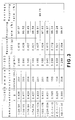
- FIG.3 is a view showing results of recycling Tl-203 isotopes from remnant electroplating solutions according to the first preferred embodiment of the present invention.
- an electroplating solution of TL-203 target comprises a thallium sulfide in an organic solvent.
- the electroplating solution is processed through an electroplating until less than 1g (gram) of Tl-203 is left, a remnant electroplating solution of Tl-203 target [11] is obtained.
- An ion exchange [12] is processed through the remnant electroplating solution of Tl-203 target [11] by using a 1cm ⁇ x 10cm L ion-exchange tube for H 2 SO 4 -form cation exchange resin and a SJ-1211H rolling motor of ATTO Corp., Japan to remove the organic solvent and absorb the Tl-203.
- Tl-203 is washed down [13] by using a 4N sulphuric acid to obtain a Tl-203 solution.
- a pH value of the Tl-203 solution is then adjusted [14] by using a NaOH solution to obtain a Tl-203 solution with a pH value of 12, where the pH value after the adjusting [14] lies between 12 and 13.5.
- the Tl-203 solution with a pH value of 12 is added with a saturated sulfide solution to be precipitated [15]. After being totally precipitated, the Tl-203 solution is stayed steady for 1 hour to obtain a solution having black precipitate of thallous sulfide.
- the Tl-203 solution is then moved into a semi-automatic vacuating filtration system, whose filtrating tank is of funnel-type made by KIMAX Corp. and whose filter plate is of elaborate-type with 4 ⁇ 5.5mm (millimeter) apertures, to be filtrated [16] to separate a precipitate out of a recycled solution.
- the recycled solution is poured into a wastes bucket, which can be circularly recycled for at least 20 times.
- the precipitate and the surfaces of the filtrating tank is rinsed [17] by using a NaOH solution and a distilled water to obtain a Tl-203 isotopes [18].
- the solution after the rinsing is collected to be recycled, whose recycling rate is at least 97% and whose actual recycling rate is over 98%.
- the Tl-203 isotope [18] is heated to 900°C to obtain a solid thallous oxide, or is dissolved in a sulphuric acid to obtain a target electroplating solution through diluting and evaporating.
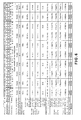
- FIG.4 is a view showing results of recycling Tl-203 isotopes from remnant chemical solutions according to the second preferred embodiment of the present invention.
- a silver-plated target is electroplated with Tl-203 isotope according to the irradiation requirement for producing a 201 thallous chloride (201TICl).
- the target is irradiated by a cyclotron and is deposited to wait for a decay. Then the target is taken out to be dissolved by using a dense nitric acid.
- the junk solution separated is a remnant chemical Tl-201 isolation solution [21], whose high-value condense Tl-203 isotope is weighted like the isotope electroplated on the target.
- the remnant chemical Tl-201 isolation solution [21] is deposited for 3 ⁇ 4 months for a decay and then is lifted for a recycling.
- a pH value of the remnant chemical Tl-201 isolation solution [21] is adjusted [22] with a NaOH solution to obtain a Tl-201 solution having a pH value of 12, where the pH value after the adjusting [22] lies between 12 and 13.5.
- the Tl-203 solution is then added with a saturated sulfide solution to be precipitated [23]. After being totally precipitated, the Tl-203 solution is stayed steady for 1 hour to obtain a solution having a black precipitate of thallous sulfide.
- the Tl-203 solution is then moved into a semi-automatic vacuating filtration system, whose filtrating tank is of funnel-type made by KIMAX Corp.
- the filter plate is of elaborate-type with 4 ⁇ 5.5mm (millimeter) apertures, to be filtrated [24] to separate a precipitate out of a recycled solution.
- the recycled solution is poured into a wastes bucket, which can be circularly recycled for at least 20 times.
- the precipitate and the surfaces of the filtrating tank is rinsed [25] by using a NaOH solution and a distilled water to obtain Tl-203 isotopes [26].
- the solution after the rinsing is collected to be recycled, whose recycling rate is at least 97% and whose actual recycling rate is over 98%.
- the Tl-203 isotope [26] is heated to 900°C to obtain a solid thallous oxide, or is dissolved in a sulphuric acid to obtain a target electroplating solution through diluting and evaporating.
- Example 3 An application of electroplating solutions of TL-203 target recycled from Example 1 and Example 2
- Electroplating solutions of TL-203 target recycled from Example 1 and Example 2 are loaded in an electroplating tank.
- the electroplating solution of TL-203 target is processed through an electroplating on an irradiation target of a cyclotron having a copper bottom and a silver surface.
- the irradiation target of the cyclotron is transported to an irradiation station of the cyclotron to be irradiated with protons of 29MeV and 200 ⁇ A. After an accumulation of 1500 ⁇ Ah through the irradiation, the irradiation target of the cyclotron is transported to a lead chamber for a chemical separation and purification.
- the Tl-201 is made into an injection of 201TICl to be used in a single photon emission computed tomography (SPECT) or a myocardium diagnosis.
- SPECT single photon emission computed tomography
- Example 4 An application of solid 203 thallous oxide recycled from Example 1 and Example 2.
- the solid thallous-203 oxide recycled from Example 1 and Example 2 is dissolved in a sulphuric acid to obtain a Tl-203 electroplating solution and is loaded in an electroplating tank.
- the TL-203 electroplating solution is processed through an electroplating on an irradiation target of a cyclotron having a copper bottom and a silver surface.
- the irradiation target of the cyclotron is transported to an irradiation station of the cyclotron to be irradiated with protons of 29MeV and 200 ⁇ A. After an accumulation of 1500 ⁇ Ah through the irradiation, the irradiation target of the cyclotron is transported to a lead chamber for chemical separation and purification.
- the Tl-201 is made into an injection of 201TlCl to be used in a SPECT or a myocardium diagnosis.
- the present invention is a method for recycling TL-203 isotope in a remnant solution of TL-201 radioisotope, where a recycling rate over 98% is achieved and the chemical process flow is simple and convenient with high purity and high recycling rate through chemical precipitation and ion exchange.
- the present invention is used in an automatic or semi-automatic process, which improves the convenience and the repetition of the recycling and saves time and human resources.
Landscapes
- Physics & Mathematics (AREA)
- Engineering & Computer Science (AREA)
- General Engineering & Computer Science (AREA)
- High Energy & Nuclear Physics (AREA)
- Electroplating And Plating Baths Therefor (AREA)
- Medicines Containing Antibodies Or Antigens For Use As Internal Diagnostic Agents (AREA)
Abstract
Description
- The present invention relates to a method for recycling; more particularly, relates to recycling Thallium(Tl)-203 isotope from a remnant electroplating solution of Tl-203 target or a remnant chemical Tl-201 solution with a recycling rate over 98% to be made into an electroplating solution or a solid thallous oxide used in nuclear medicine.
- A prior art, "Tumor Imaging Agent of Gallium Dimercaptosuccinate", is proclaimed in Taiwan, where a gallium(Ga)-67 dimercaptosuccinate compound having a dimercaptosuccinic acid labeled with Ga-67 radioisotope is obtained by a reaction of a radioactive 67GaCl and a dimercaptosuccinic acid to be a tumor imaging agent . Nevertheless, a radioisotope is hard to obtain so that the price is high. And, the recycling of the radioisotope with the purification is done with high cost. Hence, the prior art does not fulfill users' requests on actual use.
- The main purpose of the present invention is to provide a method for recycling Tl-203 isotope with high purity and high recycling rate from a remnant solution of Tl-201 radioisotope.
- To achieve the above purpose, the present invention provides a method according to
claim 1. Advantageous embodiments are laid down in the dependent claims. - More specifically, the invention provides a method for recycling Tl-203 isotope in a remnant solution of Tl-201 radioisotope, where, through a chemical precipitation, an amount of Tl-203 precipitates is obtained in a remnant electroplating solution of Tl-203 target or a remnant chemical Tl-201 solution; the precipitates having Tl-203 are collected and rinsed to obtain Tl-203 isotopes; and, the Tl-203 isotopes are dissolved in a sulphuric acid to obtain a target electroplating solution or are heated to 900°C to obtain a solid Tl-203 oxide for easy storage. The present invention achieves a recycling rate over 98% and the chemical process flow is simple and convenient with high purity and high recycling rate through chemical precipitation and ion exchange; so, the present invention is used in an automatic or semi-automatic process to improve the convenience and the repetition of the recycling to save time and human resources. Accordingly, a novel method for recycling Tl-203 isotope in a remnant solution of Tl-201 radioisotope is obtained.
- The present invention will be better understood from the following detailed descriptions of the preferred embodiments according to the present invention, taken in conjunction with the accompanying drawings, in which
- FIG.
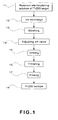
- 1 is a view showing a producing flow according to a first preferred embodiment of the present invention;
- FIG.2
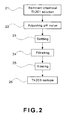
- is a view showing a producing flow according to a second preferred embodiment of the present invention;
- FIG.3
- is a view showing results of recycling Tl-203 isotopes from remnant electroplating solutions according to the first preferred embodiment of the present invention;
- FIG.4
- is a view showing results of recycling Tl-203 isotopes from remnant chemical solutions according to the second preferred embodiment of the present invention;
- FIG.5
- is a view showing examination results of raw materials made of Tl-203 isotopes recycled from remnant electroplating solutions according to the first preferred embodiment of the present invention;
- FIG.6
- is a view showing examination results of injections made of Tl-203 isotopes recycled from remnant electroplating solutions according to the first preferred embodiment of the present invention;
- FIG.7
- is a view showing examination results of raw materials made of Tl-203 isotopes recycled from remnant chemical solutions according to the second preferred embodiment of the present invention; and
- FIG.8
- is a view showing examination results of injections made of Tl-203 isotopes recycled from remnant chemical solutions according to the second preferred embodiment of the present invention.
- The following descriptions of the preferred embodiments are provided to understand the features and the structures of the present invention.
- Please refer to
FIG.1 , which is a view showing a producing flow according to a first preferred embodiment of the present invention. As shown in the figure, the present invention is a method for recycling TL-203 isotope in a remnant solution of TL-201 radioisotope, where a remnant electroplating solution of TL-203 target [11] is processed with an ion exchange [12] to remove an organic solvent; after processing the ion exchange [12], the remnant electroplating solution of TL-203 target [11] is washed [13] by using a sulphuric acid to obtain a Tl-203 solution; a pH (Potential of Hydrogen) value of the Tl-203 solution is adjusted [14] by using a NaOH solution to obtain a Tl-203 solution with a pH value of 12; the Tl-203 solution with a pH value of 12 is precipitated [15] by using a sulfide solution to obtain a solution having a black precipitate of thallous sulfide; the solution having a black precipitate of thallous sulfide is filtrated [16] by using a filtrating tank to separate the precipitate out of a recycled solution; and, the precipitate is rinsed [17] by using a NaOH solution to obtain a Tl-203 isotope [18]. The Tl-203 isotope [18] obtained is made into a solid thallous oxide by being heated to 900°C, or is made into a target electroplating solution with a dissolvent of sulphuric acid for recycling the Tl-203 isotope with a recycling rate over 98%. - Please refer to
FIG.2 , which is a view showing a producing flow according to a second preferred embodiment of the present invention. As shown in the figure, the present invention is a method for recycling TL-203 isotope in a remnant solution of TL-201 radioisotope, where a pH value of a remnant chemical Tl-201 solution [21] is adjusted [22] with a NaOH solution to obtain a Tl-201 solution having a pH value of 12; the Tl-201 solution having a pH value of 12 is precipitated [23] with a sulfide solution to obtain a solution having a precipitate of thallous sulfide; the solution having a precipitate of thallous sulfide is filtrated [24] by using a filtrating tank to separate the precipitate and a recycled solution; and, the precipitate is rinsed [25] with a NaOH solution to obtain a Tl-203 isotope [26]. The Tl-203 isotope [26] obtained can be heated to 900°C to obtain a solid thallous oxide, or be dissolved with a sulphuric acid to obtain a target electroplating solution. By doing so circularly, a recycling rate over 98% can be achieved. - Thus, a novel method for recycling Tl-203 isotope in a remnant solution of Tl-201 radioisotope is obtained. For further understanding the present invention, some preferred embodiments are described as follows:
- Please refer to
FIG.3 , which is a view showing results of recycling Tl-203 isotopes from remnant electroplating solutions according to the first preferred embodiment of the present invention. As shown in the figure together withFIG.1 referred, an electroplating solution of TL-203 target comprises a thallium sulfide in an organic solvent. When the electroplating solution is processed through an electroplating until less than 1g (gram) of Tl-203 is left, a remnant electroplating solution of Tl-203 target [11] is obtained. - An ion exchange [12] is processed through the remnant electroplating solution of Tl-203 target [11] by using a 1cm Φ x 10cm L ion-exchange tube for H2SO4-form cation exchange resin and a SJ-1211H rolling motor of ATTO Corp., Japan to remove the organic solvent and absorb the Tl-203. After the ion exchange [12], Tl-203 is washed down [13] by using a 4N sulphuric acid to obtain a Tl-203 solution. A pH value of the Tl-203 solution is then adjusted [14] by using a NaOH solution to obtain a Tl-203 solution with a pH value of 12, where the pH value after the adjusting [14] lies between 12 and 13.5. The Tl-203 solution with a pH value of 12 is added with a saturated sulfide solution to be precipitated [15]. After being totally precipitated, the Tl-203 solution is stayed steady for 1 hour to obtain a solution having black precipitate of thallous sulfide. The Tl-203 solution is then moved into a semi-automatic vacuating filtration system, whose filtrating tank is of funnel-type made by KIMAX Corp. and whose filter plate is of elaborate-type with 4~5.5mm (millimeter) apertures, to be filtrated [16] to separate a precipitate out of a recycled solution. The recycled solution is poured into a wastes bucket, which can be circularly recycled for at least 20 times. The precipitate and the surfaces of the filtrating tank is rinsed [17] by using a NaOH solution and a distilled water to obtain a Tl-203 isotopes [18]. The solution after the rinsing is collected to be recycled, whose recycling rate is at least 97% and whose actual recycling rate is over 98%. For easy storage, the Tl-203 isotope [18] is heated to 900°C to obtain a solid thallous oxide, or is dissolved in a sulphuric acid to obtain a target electroplating solution through diluting and evaporating.
- Please refer to
FIG.4 , which is a view showing results of recycling Tl-203 isotopes from remnant chemical solutions according to the second preferred embodiment of the present invention. As shown in the figure together withFIG.2 referred, a silver-plated target is electroplated with Tl-203 isotope according to the irradiation requirement for producing a 201 thallous chloride (201TICl). The target is irradiated by a cyclotron and is deposited to wait for a decay. Then the target is taken out to be dissolved by using a dense nitric acid. Through a coprecipitation and a separation with ferric nitrate and dense ammonium hydroxide, the junk solution separated is a remnant chemical Tl-201 isolation solution [21], whose high-value condense Tl-203 isotope is weighted like the isotope electroplated on the target. The remnant chemical Tl-201 isolation solution [21] is deposited for 3~4 months for a decay and then is lifted for a recycling. - A pH value of the remnant chemical Tl-201 isolation solution [21] is adjusted [22] with a NaOH solution to obtain a Tl-201 solution having a pH value of 12, where the pH value after the adjusting [22] lies between 12 and 13.5. The Tl-203 solution is then added with a saturated sulfide solution to be precipitated [23]. After being totally precipitated, the Tl-203 solution is stayed steady for 1 hour to obtain a solution having a black precipitate of thallous sulfide. The Tl-203 solution is then moved into a semi-automatic vacuating filtration system, whose filtrating tank is of funnel-type made by KIMAX Corp. and whose filter plate is of elaborate-type with 4~5.5mm (millimeter) apertures, to be filtrated [24] to separate a precipitate out of a recycled solution. The recycled solution is poured into a wastes bucket, which can be circularly recycled for at least 20 times. The precipitate and the surfaces of the filtrating tank is rinsed [25] by using a NaOH solution and a distilled water to obtain Tl-203 isotopes [26]. The solution after the rinsing is collected to be recycled, whose recycling rate is at least 97% and whose actual recycling rate is over 98%. For easy storage, the Tl-203 isotope [26] is heated to 900°C to obtain a solid thallous oxide, or is dissolved in a sulphuric acid to obtain a target electroplating solution through diluting and evaporating.
- Electroplating solutions of TL-203 target recycled from Example 1 and Example 2 are loaded in an electroplating tank. The electroplating solution of TL-203 target is processed through an electroplating on an irradiation target of a cyclotron having a copper bottom and a silver surface. The irradiation target of the cyclotron is transported to an irradiation station of the cyclotron to be irradiated with protons of 29MeV and 200µA. After an accumulation of 1500µAh through the irradiation, the irradiation target of the cyclotron is transported to a lead chamber for a chemical separation and purification. The Pb-201 isotope obtained after the nuclear reaction is deposited and is stayed steady for 32 hours to obtain Tl-201 with high-purity and high-quality from the Pb-201 solution through the separation and purification. With a quality control to conform to nuclear-medicine quality, the Tl-201 is made into an injection of 201TICl to be used in a single photon emission computed tomography (SPECT) or a myocardium diagnosis.
- The solid thallous-203 oxide recycled from Example 1 and Example 2 is dissolved in a sulphuric acid to obtain a Tl-203 electroplating solution and is loaded in an electroplating tank. The TL-203 electroplating solution is processed through an electroplating on an irradiation target of a cyclotron having a copper bottom and a silver surface. The irradiation target of the cyclotron is transported to an irradiation station of the cyclotron to be irradiated with protons of 29MeV and 200µA. After an accumulation of 1500µAh through the irradiation, the irradiation target of the cyclotron is transported to a lead chamber for chemical separation and purification. The Pb-201 isotope obtained after the nuclear reaction is deposited and is stayed steady for 32 hours to obtain Tl-201 with high-purity and high-quality from the Pb-201 solution through the separation and purification. With a quality control to conform to nuclear-medicine quality, the Tl-201 is made into an injection of 201TlCl to be used in a SPECT or a myocardium diagnosis.
- The raw materials recycled from the remnant of target electroplating solution or chemical solution and the injections made with the raw materials are examined and are all passed as shown in
FIG.5 to FIG.8 . To sum up, the present invention is a method for recycling TL-203 isotope in a remnant solution of TL-201 radioisotope, where a recycling rate over 98% is achieved and the chemical process flow is simple and convenient with high purity and high recycling rate through chemical precipitation and ion exchange. The present invention is used in an automatic or semi-automatic process, which improves the convenience and the repetition of the recycling and saves time and human resources. - The preferred embodiments herein disclosed are not intended to unnecessarily limit the scope of the invention as set out in the claims.
Claims (13)
- A method for recycling T1-203 isotope in a remnant solution of TL-201 radioisotope, comprising steps of:- adjusting pH value with a NaOH solution to obtain a second solution having a pH value of 12;- settling or precipitating said second solution with a sulfide solution to obtain a solution having a precipitate of thallous sulfide;- filtrating said solution having a precipitate of thallous sulfide with a filtrating tank to obtain said precipitate and a recycled solution; and- rinsing said precipitate with a NaOH solution to obtain T1-203 isotopes.
- The method according to claim 1, comprising steps of:- adjusting a pH value of a remnant chemical Tl-201 solution with a NaOH solution to obtain a T1-201 solution having a pH value of 12;- precipitating said T1-201 solution having a pH value of 12 with a sulfide solution to obtain a second solution having a precipitate of thallous sulfide;- filtrating said solution having a precipitate of thallous sulfide with a filtrating tank to obtain said precipitate and a recycled solution; and- rinsing said precipitate with a NaOH solution to obtain T1-203 isotopes.
- The method according to claim 1, comprising steps of:- processing an ion exchange to a remnant electroplating solution of TL-203 target;- washing said remnant electroplating solution with a sulphuric acid to obtain a first T1-203 solution;- adjusting pH value of said first Tl-203 solution with a NaOH solution to obtain a second T1-203 solution having a pH value of 12;- settling said second Tl-203 solution with a sulfide solution to obtain a solution having a precipitate of thallous sulfide;- filtrating said solution having a precipitate of thallous sulfide with a filtrating tank to obtain said precipitate and a recycled solution; and- rinsing said precipitate with a NaOH solution to obtain T1-203 isotopes.
- The method according to one of claims 1 to 3, wherein said T1-203 isotope is made into a solid thallous oxide.
- The method according to claim 4, wherein said solid thallous oxide is obtained by heating said T1-203 isotope to 900°C.
- The method according to one of claims 1 to 3, wherein a target electroplating solution is obtained by adding said TI-203 isotope.
- The method according to claim 6, wherein said target electroplating solution is obtained with a dissolvent of sulfuric acid.
- The method according to claim 6, wherein a method for obtaining said target electroplating solution comprises diluting and evaporating.
- The method according to one of claims 1 to 8, wherein a recycling rate of said T1-203 isotope is over 98%.
- The method according to one of claims 1 to 9, wherein said TI-203 isotope is a raw material for an nucleo-medical injection of 201 thallous chloride (201T1C1).
- The method according to claim 10, wherein an irradiator to said injection is a cyclotron.
- The method according to one of claims 1 to 11, wherein said pH value after said adjusting pH value is a value between 12 and 13.5; and wherein a recycling rate for said recycled solution is at least 97%.
- The method according to one of claims 1 to 12, wherein said recycled solution is recycled more than 20 times.
Priority Applications (3)
| Application Number | Priority Date | Filing Date | Title |
|---|---|---|---|
| DE602005009205T DE602005009205D1 (en) | 2005-10-24 | 2005-10-24 | Process for recycling a thallium 203 isotope in a thallium-201 radioisotope residual solution |
| AT05109923T ATE405933T1 (en) | 2005-10-24 | 2005-10-24 | METHOD FOR RECYCLING A THALLIUM-203 ISOTOPE INTO A RESIDUAL THALLIUM-201 RADIOISOTOPE SOLUTION |
| EP05109923A EP1777712B1 (en) | 2005-10-24 | 2005-10-24 | Method for Recycling Thallium-203 Isotope in Remnant Solution of Thallium-201 Radioisotope |
Applications Claiming Priority (1)
| Application Number | Priority Date | Filing Date | Title |
|---|---|---|---|
| EP05109923A EP1777712B1 (en) | 2005-10-24 | 2005-10-24 | Method for Recycling Thallium-203 Isotope in Remnant Solution of Thallium-201 Radioisotope |
Publications (2)
| Publication Number | Publication Date |
|---|---|
| EP1777712A1 EP1777712A1 (en) | 2007-04-25 |
| EP1777712B1 true EP1777712B1 (en) | 2008-08-20 |
Family
ID=37440981
Family Applications (1)
| Application Number | Title | Priority Date | Filing Date |
|---|---|---|---|
| EP05109923A Expired - Lifetime EP1777712B1 (en) | 2005-10-24 | 2005-10-24 | Method for Recycling Thallium-203 Isotope in Remnant Solution of Thallium-201 Radioisotope |
Country Status (3)
| Country | Link |
|---|---|
| EP (1) | EP1777712B1 (en) |
| AT (1) | ATE405933T1 (en) |
| DE (1) | DE602005009205D1 (en) |
Families Citing this family (2)
| Publication number | Priority date | Publication date | Assignee | Title |
|---|---|---|---|---|
| EP2014778B1 (en) * | 2007-06-22 | 2013-08-14 | Atomic Energy Council - Institute of Nuclear Energy Research | Method of recycling Cd-112 isotope |
| US12311337B1 (en) | 2024-05-21 | 2025-05-27 | King Saud University | Functionalized silica nanoparticles for lead adsorption |
Family Cites Families (4)
| Publication number | Priority date | Publication date | Assignee | Title |
|---|---|---|---|---|
| GB580551A (en) * | 1944-02-25 | 1946-09-11 | Jerzy Starkiewicz | Improvements in and relating to the preparation of materials for the production of photoconductive cells |
| US4902665A (en) * | 1986-04-07 | 1990-02-20 | Iso-Clear Systems Corporation | Removal of heavy metals and heavy metal radioactive isotopes from liquids |
| FR2657863B1 (en) * | 1990-02-05 | 1992-08-28 | Metaleurop Sa | THALLIUM EXTRACTION PROCESS. |
| EP0575612B1 (en) * | 1991-12-24 | 1997-09-10 | Sovmestnoe Sovetsko-Kanadskoe Predpriyatie " Compomet Cantec" | Method for obtaining composite sorbents |
-
2005
- 2005-10-24 EP EP05109923A patent/EP1777712B1/en not_active Expired - Lifetime
- 2005-10-24 AT AT05109923T patent/ATE405933T1/en not_active IP Right Cessation
- 2005-10-24 DE DE602005009205T patent/DE602005009205D1/en not_active Expired - Fee Related
Also Published As
| Publication number | Publication date |
|---|---|
| ATE405933T1 (en) | 2008-09-15 |
| DE602005009205D1 (en) | 2008-10-02 |
| EP1777712A1 (en) | 2007-04-25 |
Similar Documents
| Publication | Publication Date | Title |
|---|---|---|
| US20030016775A1 (en) | Production of high specific activity copper-67 | |
| AU763373B2 (en) | Production of palladium-103 | |
| US20060023829A1 (en) | Medical radioisotopes and methods for producing the same | |
| CN102382994B (en) | Radioactivity68Preparation method of Ge solution | |
| EP3539138B1 (en) | Processes for generating germanium-68 with reduced volatiles | |
| US11551826B2 (en) | Method for producing 225Ac | |
| JP2023011756A (en) | PRODUCTION METHOD OF 226Ra TARGET, PRODUCTION METHOD OF 225Ac AND ELECTRO-DEPOSITION LIQUID FOR PRODUCING 226Ra TARGET | |
| JP2010502965A (en) | Methods for purifying radium from various sources | |
| CN112789691B (en) | Method for producing lead-212 from an aqueous solution containing thorium-228 and its daughter | |
| KR100858265B1 (en) | Radioisotope recovery from irradiated target | |
| US5167938A (en) | Process for strontium-82 separation | |
| US20070098607A1 (en) | Method for recycling thallium - 203 isotope in remnant solution of thallium - 201 radioisotope | |
| EP1777712A1 (en) | Method for Recycling Thallium-203 Isotope in Remnant Solution of Thallium-201 Radioisotope | |
| AU2002310305A1 (en) | Process for the recovery of a radioisotope from an irradiated target | |
| US20150010447A1 (en) | Method of purification for recycling of gallium-69 isotope | |
| Wang et al. | Production of medical isotope 68Ge based on a novel chromatography separation technique and assembling of 68Ge/68Ga generator | |
| CN115432730B (en) | Carrier-free medical isotope Cu-64 purification method and automatic purification process | |
| CN115029566A (en) | Method for separating zirconium in yttrium sample by using TEVA-UTEVA resin | |
| JP4936304B2 (en) | Recovery method for recovering thallium-203 isotope from thallium-201 radioisotope residue | |
| CN111778522B (en) | Enrichment method112Preparation method of Cd target | |
| JP3323856B2 (en) | Method for separating americium from a solution containing fission products, curium and americium | |
| EP1892728B9 (en) | Process of producing the radioisotope Tl-201 | |
| Park et al. | A review on the process technology for Mo-99 production | |
| Rowshanfarzad et al. | Production and quality control of 66 Ga as a PET radioisotope | |
| US3545925A (en) | Method for producing radioactive tellurium |
Legal Events
| Date | Code | Title | Description |
|---|---|---|---|
| PUAI | Public reference made under article 153(3) epc to a published international application that has entered the european phase |
Free format text: ORIGINAL CODE: 0009012 |
|
| AK | Designated contracting states |
Kind code of ref document: A1 Designated state(s): AT BE BG CH CY CZ DE DK EE ES FI FR GB GR HU IE IS IT LI LT LU LV MC NL PL PT RO SE SI SK TR |
|
| AX | Request for extension of the european patent |
Extension state: AL BA HR MK YU |
|
| 17P | Request for examination filed |
Effective date: 20070522 |
|
| AKX | Designation fees paid |
Designated state(s): AT BE BG CH CY CZ DE DK EE ES FI FR GB GR HU IE IS IT LI LT LU LV MC NL PL PT RO SE SI SK TR |
|
| GRAP | Despatch of communication of intention to grant a patent |
Free format text: ORIGINAL CODE: EPIDOSNIGR1 |
|
| GRAS | Grant fee paid |
Free format text: ORIGINAL CODE: EPIDOSNIGR3 |
|
| GRAA | (expected) grant |
Free format text: ORIGINAL CODE: 0009210 |
|
| AK | Designated contracting states |
Kind code of ref document: B1 Designated state(s): AT BE BG CH CY CZ DE DK EE ES FI FR GB GR HU IE IS IT LI LT LU LV MC NL PL PT RO SE SI SK TR |
|
| REG | Reference to a national code |
Ref country code: GB Ref legal event code: FG4D |
|
| REG | Reference to a national code |
Ref country code: CH Ref legal event code: EP |
|
| REG | Reference to a national code |
Ref country code: IE Ref legal event code: FG4D |
|
| REF | Corresponds to: |
Ref document number: 602005009205 Country of ref document: DE Date of ref document: 20081002 Kind code of ref document: P |
|
| PG25 | Lapsed in a contracting state [announced via postgrant information from national office to epo] |
Ref country code: LT Free format text: LAPSE BECAUSE OF FAILURE TO SUBMIT A TRANSLATION OF THE DESCRIPTION OR TO PAY THE FEE WITHIN THE PRESCRIBED TIME-LIMIT Effective date: 20080820 Ref country code: IS Free format text: LAPSE BECAUSE OF FAILURE TO SUBMIT A TRANSLATION OF THE DESCRIPTION OR TO PAY THE FEE WITHIN THE PRESCRIBED TIME-LIMIT Effective date: 20081220 |
|
| PG25 | Lapsed in a contracting state [announced via postgrant information from national office to epo] |
Ref country code: FI Free format text: LAPSE BECAUSE OF FAILURE TO SUBMIT A TRANSLATION OF THE DESCRIPTION OR TO PAY THE FEE WITHIN THE PRESCRIBED TIME-LIMIT Effective date: 20080820 Ref country code: ES Free format text: LAPSE BECAUSE OF FAILURE TO SUBMIT A TRANSLATION OF THE DESCRIPTION OR TO PAY THE FEE WITHIN THE PRESCRIBED TIME-LIMIT Effective date: 20081201 Ref country code: SI Free format text: LAPSE BECAUSE OF FAILURE TO SUBMIT A TRANSLATION OF THE DESCRIPTION OR TO PAY THE FEE WITHIN THE PRESCRIBED TIME-LIMIT Effective date: 20080820 Ref country code: AT Free format text: LAPSE BECAUSE OF FAILURE TO SUBMIT A TRANSLATION OF THE DESCRIPTION OR TO PAY THE FEE WITHIN THE PRESCRIBED TIME-LIMIT Effective date: 20080820 Ref country code: LV Free format text: LAPSE BECAUSE OF FAILURE TO SUBMIT A TRANSLATION OF THE DESCRIPTION OR TO PAY THE FEE WITHIN THE PRESCRIBED TIME-LIMIT Effective date: 20080820 |
|
| PG25 | Lapsed in a contracting state [announced via postgrant information from national office to epo] |
Ref country code: DK Free format text: LAPSE BECAUSE OF FAILURE TO SUBMIT A TRANSLATION OF THE DESCRIPTION OR TO PAY THE FEE WITHIN THE PRESCRIBED TIME-LIMIT Effective date: 20080820 Ref country code: BG Free format text: LAPSE BECAUSE OF FAILURE TO SUBMIT A TRANSLATION OF THE DESCRIPTION OR TO PAY THE FEE WITHIN THE PRESCRIBED TIME-LIMIT Effective date: 20081120 |
|
| PG25 | Lapsed in a contracting state [announced via postgrant information from national office to epo] |
Ref country code: RO Free format text: LAPSE BECAUSE OF FAILURE TO SUBMIT A TRANSLATION OF THE DESCRIPTION OR TO PAY THE FEE WITHIN THE PRESCRIBED TIME-LIMIT Effective date: 20080820 Ref country code: PT Free format text: LAPSE BECAUSE OF FAILURE TO SUBMIT A TRANSLATION OF THE DESCRIPTION OR TO PAY THE FEE WITHIN THE PRESCRIBED TIME-LIMIT Effective date: 20090120 Ref country code: CZ Free format text: LAPSE BECAUSE OF FAILURE TO SUBMIT A TRANSLATION OF THE DESCRIPTION OR TO PAY THE FEE WITHIN THE PRESCRIBED TIME-LIMIT Effective date: 20080820 Ref country code: SK Free format text: LAPSE BECAUSE OF FAILURE TO SUBMIT A TRANSLATION OF THE DESCRIPTION OR TO PAY THE FEE WITHIN THE PRESCRIBED TIME-LIMIT Effective date: 20080820 Ref country code: MC Free format text: LAPSE BECAUSE OF NON-PAYMENT OF DUE FEES Effective date: 20081031 |
|
| PLBE | No opposition filed within time limit |
Free format text: ORIGINAL CODE: 0009261 |
|
| STAA | Information on the status of an ep patent application or granted ep patent |
Free format text: STATUS: NO OPPOSITION FILED WITHIN TIME LIMIT |
|
| REG | Reference to a national code |
Ref country code: IE Ref legal event code: MM4A |
|
| 26N | No opposition filed |
Effective date: 20090525 |
|
| PG25 | Lapsed in a contracting state [announced via postgrant information from national office to epo] |
Ref country code: EE Free format text: LAPSE BECAUSE OF FAILURE TO SUBMIT A TRANSLATION OF THE DESCRIPTION OR TO PAY THE FEE WITHIN THE PRESCRIBED TIME-LIMIT Effective date: 20080820 |
|
| PG25 | Lapsed in a contracting state [announced via postgrant information from national office to epo] |
Ref country code: IT Free format text: LAPSE BECAUSE OF FAILURE TO SUBMIT A TRANSLATION OF THE DESCRIPTION OR TO PAY THE FEE WITHIN THE PRESCRIBED TIME-LIMIT Effective date: 20080820 Ref country code: DE Free format text: LAPSE BECAUSE OF NON-PAYMENT OF DUE FEES Effective date: 20090501 |
|
| PG25 | Lapsed in a contracting state [announced via postgrant information from national office to epo] |
Ref country code: IE Free format text: LAPSE BECAUSE OF NON-PAYMENT OF DUE FEES Effective date: 20081024 |
|
| PG25 | Lapsed in a contracting state [announced via postgrant information from national office to epo] |
Ref country code: SE Free format text: LAPSE BECAUSE OF FAILURE TO SUBMIT A TRANSLATION OF THE DESCRIPTION OR TO PAY THE FEE WITHIN THE PRESCRIBED TIME-LIMIT Effective date: 20081120 |
|
| PG25 | Lapsed in a contracting state [announced via postgrant information from national office to epo] |
Ref country code: PL Free format text: LAPSE BECAUSE OF FAILURE TO SUBMIT A TRANSLATION OF THE DESCRIPTION OR TO PAY THE FEE WITHIN THE PRESCRIBED TIME-LIMIT Effective date: 20080820 |
|
| REG | Reference to a national code |
Ref country code: CH Ref legal event code: PL |
|
| PG25 | Lapsed in a contracting state [announced via postgrant information from national office to epo] |
Ref country code: LU Free format text: LAPSE BECAUSE OF NON-PAYMENT OF DUE FEES Effective date: 20081024 Ref country code: CY Free format text: LAPSE BECAUSE OF FAILURE TO SUBMIT A TRANSLATION OF THE DESCRIPTION OR TO PAY THE FEE WITHIN THE PRESCRIBED TIME-LIMIT Effective date: 20080820 Ref country code: HU Free format text: LAPSE BECAUSE OF FAILURE TO SUBMIT A TRANSLATION OF THE DESCRIPTION OR TO PAY THE FEE WITHIN THE PRESCRIBED TIME-LIMIT Effective date: 20090221 |
|
| PG25 | Lapsed in a contracting state [announced via postgrant information from national office to epo] |
Ref country code: TR Free format text: LAPSE BECAUSE OF FAILURE TO SUBMIT A TRANSLATION OF THE DESCRIPTION OR TO PAY THE FEE WITHIN THE PRESCRIBED TIME-LIMIT Effective date: 20080820 |
|
| PG25 | Lapsed in a contracting state [announced via postgrant information from national office to epo] |
Ref country code: GR Free format text: LAPSE BECAUSE OF FAILURE TO SUBMIT A TRANSLATION OF THE DESCRIPTION OR TO PAY THE FEE WITHIN THE PRESCRIBED TIME-LIMIT Effective date: 20081121 Ref country code: CH Free format text: LAPSE BECAUSE OF NON-PAYMENT OF DUE FEES Effective date: 20091031 Ref country code: LI Free format text: LAPSE BECAUSE OF NON-PAYMENT OF DUE FEES Effective date: 20091031 |
|
| REG | Reference to a national code |
Ref country code: FR Ref legal event code: PLFP Year of fee payment: 11 |
|
| PGFP | Annual fee paid to national office [announced via postgrant information from national office to epo] |
Ref country code: GB Payment date: 20151026 Year of fee payment: 11 |
|
| PGFP | Annual fee paid to national office [announced via postgrant information from national office to epo] |
Ref country code: FR Payment date: 20151026 Year of fee payment: 11 Ref country code: NL Payment date: 20151026 Year of fee payment: 11 Ref country code: BE Payment date: 20151022 Year of fee payment: 11 |
|
| PG25 | Lapsed in a contracting state [announced via postgrant information from national office to epo] |
Ref country code: BE Free format text: LAPSE BECAUSE OF NON-PAYMENT OF DUE FEES Effective date: 20161031 |
|
| REG | Reference to a national code |
Ref country code: NL Ref legal event code: MM Effective date: 20161101 |
|
| GBPC | Gb: european patent ceased through non-payment of renewal fee |
Effective date: 20161024 |
|
| REG | Reference to a national code |
Ref country code: FR Ref legal event code: ST Effective date: 20170630 |
|
| PG25 | Lapsed in a contracting state [announced via postgrant information from national office to epo] |
Ref country code: FR Free format text: LAPSE BECAUSE OF NON-PAYMENT OF DUE FEES Effective date: 20161102 Ref country code: GB Free format text: LAPSE BECAUSE OF NON-PAYMENT OF DUE FEES Effective date: 20161024 |
|
| PG25 | Lapsed in a contracting state [announced via postgrant information from national office to epo] |
Ref country code: NL Free format text: LAPSE BECAUSE OF NON-PAYMENT OF DUE FEES Effective date: 20161101 |
|
| REG | Reference to a national code |
Ref country code: BE Ref legal event code: MM Effective date: 20161031 |