EP1774962A1 - Lipid carrier and method of preparing the same - Google Patents
Lipid carrier and method of preparing the same Download PDFInfo
- Publication number
- EP1774962A1 EP1774962A1 EP05028228A EP05028228A EP1774962A1 EP 1774962 A1 EP1774962 A1 EP 1774962A1 EP 05028228 A EP05028228 A EP 05028228A EP 05028228 A EP05028228 A EP 05028228A EP 1774962 A1 EP1774962 A1 EP 1774962A1
- Authority
- EP
- European Patent Office
- Prior art keywords
- lipid
- weight
- carrier
- parts
- neutral
- Prior art date
- Legal status (The legal status is an assumption and is not a legal conclusion. Google has not performed a legal analysis and makes no representation as to the accuracy of the status listed.)
- Granted
Links
Images

Classifications
-
- C—CHEMISTRY; METALLURGY
- C12—BIOCHEMISTRY; BEER; SPIRITS; WINE; VINEGAR; MICROBIOLOGY; ENZYMOLOGY; MUTATION OR GENETIC ENGINEERING
- C12N—MICROORGANISMS OR ENZYMES; COMPOSITIONS THEREOF; PROPAGATING, PRESERVING, OR MAINTAINING MICROORGANISMS; MUTATION OR GENETIC ENGINEERING; CULTURE MEDIA
- C12N15/00—Mutation or genetic engineering; DNA or RNA concerning genetic engineering, vectors, e.g. plasmids, or their isolation, preparation or purification; Use of hosts therefor
- C12N15/09—Recombinant DNA-technology
- C12N15/87—Introduction of foreign genetic material using processes not otherwise provided for, e.g. co-transformation
- C12N15/88—Introduction of foreign genetic material using processes not otherwise provided for, e.g. co-transformation using microencapsulation, e.g. using amphiphile liposome vesicle
-
- A—HUMAN NECESSITIES
- A61—MEDICAL OR VETERINARY SCIENCE; HYGIENE
- A61K—PREPARATIONS FOR MEDICAL, DENTAL OR TOILETRY PURPOSES
- A61K9/00—Medicinal preparations characterised by special physical form
- A61K9/10—Dispersions; Emulsions
- A61K9/127—Synthetic bilayered vehicles, e.g. liposomes or liposomes with cholesterol as the only non-phosphatidyl surfactant
- A61K9/1271—Non-conventional liposomes, e.g. PEGylated liposomes or liposomes coated or grafted with polymers
-
- A—HUMAN NECESSITIES
- A61—MEDICAL OR VETERINARY SCIENCE; HYGIENE
- A61K—PREPARATIONS FOR MEDICAL, DENTAL OR TOILETRY PURPOSES
- A61K9/00—Medicinal preparations characterised by special physical form
- A61K9/10—Dispersions; Emulsions
- A61K9/127—Synthetic bilayered vehicles, e.g. liposomes or liposomes with cholesterol as the only non-phosphatidyl surfactant
- A61K9/1271—Non-conventional liposomes, e.g. PEGylated liposomes or liposomes coated or grafted with polymers
- A61K9/1272—Non-conventional liposomes, e.g. PEGylated liposomes or liposomes coated or grafted with polymers comprising non-phosphatidyl surfactants as bilayer-forming substances, e.g. cationic lipids or non-phosphatidyl liposomes coated or grafted with polymers
-
- A—HUMAN NECESSITIES
- A61—MEDICAL OR VETERINARY SCIENCE; HYGIENE
- A61P—SPECIFIC THERAPEUTIC ACTIVITY OF CHEMICAL COMPOUNDS OR MEDICINAL PREPARATIONS
- A61P43/00—Drugs for specific purposes, not provided for in groups A61P1/00-A61P41/00
-
- C—CHEMISTRY; METALLURGY
- C12—BIOCHEMISTRY; BEER; SPIRITS; WINE; VINEGAR; MICROBIOLOGY; ENZYMOLOGY; MUTATION OR GENETIC ENGINEERING
- C12N—MICROORGANISMS OR ENZYMES; COMPOSITIONS THEREOF; PROPAGATING, PRESERVING, OR MAINTAINING MICROORGANISMS; MUTATION OR GENETIC ENGINEERING; CULTURE MEDIA
- C12N2810/00—Vectors comprising a targeting moiety
- C12N2810/50—Vectors comprising as targeting moiety peptide derived from defined protein
Definitions
- the invention relates to a lipid carrier, and more specifically to a pH-sensitive and serum-resistant lipid carrier and a method of preparing the same.
- Gene therapies have gained increasing popularity in medical treatment, especially for hereditary or acquired diseases, such as primary immune deficiencies and cancers. Gene therapy has entered in vivo experiment and human clinical trial from vitro experiment in the past fifteen years. Although the clinical trials of gene therapy are still in phase I or II, gene therapy appears promising in the future. Generally speaking, carriers delivering gene drugs are divided into viral and non-viral two types, wherein viral carriers are used in 85% of clinical trials currently.
- non-viral carriers include lipid and polymer based carriers, with lipid carriers discussed herein.
- Cationic lipid carriers most commonly used, present the highest transfection efficiency among non-viral carriers.
- in vitro reagents available presently, such as Lipofectin and Lipofectamine from Life Technologies, applicable in gene and protein researches.
- cationic lipid carriers also provide the advantage of endosomolysis activity and high biocompatibility. Nevertheless, the cationic lipid and DNA complex generally exhibit a diameter exceeding 500nm, and also are unstable in serum. Thus, the complex is mainly used in vitro study or for local injection.
- the DC-liposome provided by Dr. Leaf Huang was the first lipid carrier and enters clinical trial for the treatment of breast cancer by local injection. Currently, the DC-liposome is in phase II clinical trial.
- Dr. Leaf Huang provides a novel gene transfection system called LPD with addition of cationic peptides, such as protamine or polylysine, to reduce the particle size and also to increase transfection efficiency.
- LPD novel gene transfection system
- the LPD complex is still unstable in serum due to the positive charge on the surface of the carrier.
- T.M. Allen and S.C. Semple used a neutral liposome to encapsulate DNA.
- the neutral liposome might reduce non-specific reaction between the carriers and proteins to enhance serum resistance.
- the neutral liposome might also prolong the half-life of DNA up to about 8 ⁇ 24 hours (the original half-life of DNA is less than about 30min) and also can deliver DNA to tumor sites.
- the carrier however, has difficulties entering cells due to lack of the interactions between cationic carrier and the cell, resulting in low transfection efficiency.
- target ligand is provided to trigger endocytosis by binding with a specific receptor on the cell surface, to increase DNA transfection efficiency.
- lipid carriers with high serum resistance, high encapsulation efficiency, and high transfection efficiency is desirable.
- the invention provides a lipid carrier comprising a lipid based particle comprising a cationic lipid, a cholesterol, a neutral phospholipid, and a neutral lipid, wherein the cationic lipid is about 100 parts by weight, the cholesterol is about 25 ⁇ 100 parts by weight, the neutral phospholipid is about 25 ⁇ 100 parts by weight, and the neutral lipid is about 25 ⁇ 150 parts by weight.
- the invention also provides a method of preparing a lipid carrier, comprising the following steps.
- a cationic lipid, a cholesterol, a neutral phospholipid, a neutral lipid, ethanol, and water are mixed to form a lipid solution, wherein the cationic lipid is about 100 parts by weight, the cholesterol is about 25 ⁇ 100 parts by weight, the neutral phospholipid is about 25 ⁇ 100 parts by weight, and the neutral lipid is about 25 ⁇ 150 parts by weight.
- a drug-containing solution is added to the lipid solution to form a suspension comprising a plurality of lipid particles, wherein the drug is encapsulated into the lipid particles.
- the suspension is heated to form a lipid based carrier.
- the invention provides a lipid carrier comprising a lipid based particle comprising a cationic lipid, a cholesterol, a neutral phospholipid, and a neutral lipid, wherein the cationic lipid is about 100 parts by weight, the cholesterol is about 25 ⁇ 100 parts by weight, the neutral phospholipid is about 25 ⁇ 100 parts by weight, and the neutral lipid is about 25 ⁇ 150 parts by weight.
- the cationic lipid comprises 1,2-dioleoyloxy-3-(trimethylamino)propane (DOTAP), N-[1-(2,3-ditetradecyloxy)propyl]-N,N-dimethyl-N-hydroxyethylammonium bromide (DMRIE), N-[1-(2,3-dioleyloxy)propyl]-N,N-dimethyl-N-hydroxyethylammonium bromide (DORIE), N-[1-(2,3-dioleyloxy)propyl]-N,N,N-trimethylammonium chloride (DOTMA), 3 ⁇ - [N- (N',N'-dimethylaminoethane)carbamyl]cholesterol (DC-Chol), or dimethyldioctadecylammonium (DDAB), preferably DOTAP.
- DOTAP 1,2-dioleoyloxy-3-(trimethylamino)propane
- the neutral phospholipid comprises phosphatidyl choline (PC) or phosphatidyl ethanolamine (PE), wherein the phosphatidyl choline may comprise hydrogenated soy phosphatidyl choline (HSPC).
- the neutral lipid comprises distearoylphosphatidylethanolamine-polyethyleneglycol (DSPE-PEG).
- the preferable composition of the lipid based particle is cationic lipid of about 100 parts by weight, the cholesterol about 50 parts by weight, the neutral phospholipid about 50 parts by weight, and the neutral lipid about 65 parts by weight.
- the lipid based particle might be used as a drug transfection carrier when a drug is encapsulated therein, wherein the drug comprises nucleic acid drugs, proteins, peptides, or synthetic drugs, and the nucleic acid drugs further comprise plasmid DNA, antisense oligonucleotide, and RNAi.
- the drug and the cationic lipid have a weight ratio of about 1:4 ⁇ 1:12, preferably 1:6.
- the lipid based particle has a particle size of about 35 ⁇ 95nm, a zeta potential of about -10 ⁇ 10mV, an encapsulation efficiency of about 85 ⁇ 100%, a drug release rate of about 60 ⁇ 70% at pH4 ⁇ 5, and the remained activity in serum is about 60 ⁇ 100%.
- a ligand can be conjugated onto the surface of lipid based particle to recognize the receptor in a target cell.
- the lipid carrier with the ligand has a transfection efficiency exceeding 10 times that of a lipid carrier without a ligand.
- the invention also provides a method of preparing the lipid carrier.
- a cationic lipid, a cholesterol, a neutral phospholipid, a neutral lipid, ethanol, and water are mixed to form a lipid solution, wherein the cationic lipid is about 100 parts by weight, the cholesterol is about 25 ⁇ 100 parts by weight, the neutral phospholipid is about 25 ⁇ 100 parts by weight, and the neutral lipid is about 25 ⁇ 150 parts by weight.
- a drug-containing solution is added to the lipid solution to form a suspension comprising a plurality of lipid based particles, wherein the drug is encapsulated into the lipid based particles.
- the suspension is heated to form a lipid carrier.
- the solution is heated to about 50 ⁇ 70°C, preferably 65°C.
- the ethanol and water have a volume ratio of about 3:7 ⁇ 5:5, preferably 4:6.
- the invention provides lipid based particles with uniform particle size, high encapsulation efficiency, and high serum resistance by using the specific ratio of carrier composition, ethanol/water ratios, drug/cationic lipid ratios, and heating conditions. After the lipid based particle entering the cell, the carrier will release the drug in a weak acidic lysosome in pH4 ⁇ 5 due to its pH sensitivity, without decomposing by lysosome enzymes, could significantly increasing transfection efficiency of genes.
- lipid solution 0.05mL ethanol was added to a 1.5mL centrifuge tube.
- 0.1mg cationic DOTAP, 0.05mg cholesterol, 0.05mg HSPC, and 0.065mg DSPE-PEG were dissolved in the ethanol with water bath at 65°C. Deionized water was then added to the solution until the volume of 0.095mL and mixed completely to form a lipid solution.
- oligonucleotide-containing solution 10mg/mL was added to the lipid solution to form a mixture comprising a plurality of lipid based particles, wherein oligonucleotide was encapsulated into the lipid based particles.
- 0.1mL PBS solution pH7.4 was added to the centrifuge tube with a water bath at 65°C for 10min to form lipid carriers.
- the size of the lipid based particle was measured by Coulter N4 Plus Submicron Particle Sizer (Miami, FL) and the zeta potential thereof was measured by ZetaPlus Zeta Potential Analyzer (Brookhaven Instruments Corporation, Holtsville, NY). The measured diameter was 72.0 ⁇ 22.5nm and the zeta potential was -0.302mV.
- Encapsulated oligonucleotides and free oligonucleotides were separated by a chromatography column. The encapsulation efficiency was then measured. The calculation is illustrated in the following.
- Encapsulation efficiency (%) (total amount of oligonucleotide -the amount of free oligonucleotide)/the amount of total oligonucleotide x100%
- the encapsulation efficiency of the carrier was calculated as 95 ⁇ 5%
- the carrier has a drug release rate of about 60 ⁇ 70% at pH4 ⁇ 5.
- PC14PE6 cells were cultured on a 1cm 2 glass slide. The slide contained 2 ⁇ 10 4 cells after culturing. Serum resistance testing was performed as the following steps. First, the cells and carriers encapsulated oligonucleotide were cultured in two mediums at 37°C for 4 hours, respectively, wherein one medium contained 10% serum and another one without serum. The cells were washed by PBS solution three times and were dissolved by mixing with another portion of PBS solution containing 1% Triton X-100 for 1 hour. Finally, the exuded cytosol was analyzed by a fluorescent analyzer (Ex: 494nm, Em: 519nm). According to the analytical results, the carrier maintained its activity within 60 ⁇ 100% in serum.
- PC14PE6 cells were cultured in a 24 wells night over. Each well contained 5 ⁇ 10 4 cells after culturing. Transfection efficiency was tested as follows. Cells and carriers with or without tamoxifen ligands were cultured in two mediums at 37°C for 4 hours, respectively, wherein one medium contained 10% serum and another one contained no serum. Next, the cells were washed by PBS solution and dissolved by mixing with another portion of PBS solution containing 1% Triton X-100 for 1 hour. Finally, the exuded cytosol was analyzed by a fluorescent analyzer (Ex: 494nm, Em: 519nm).
- the results indicate that the carrier with a ligand has a transfection efficiency exceeding 10 times that of the carrier without a ligand. Additionally, serum resistance of the lipid carrier provided by the invention has been proven because the test results under serum or without serum are the same.
Landscapes
- Health & Medical Sciences (AREA)
- Life Sciences & Earth Sciences (AREA)
- Chemical & Material Sciences (AREA)
- Genetics & Genomics (AREA)
- Engineering & Computer Science (AREA)
- General Health & Medical Sciences (AREA)
- Medicinal Chemistry (AREA)
- Pharmacology & Pharmacy (AREA)
- Bioinformatics & Cheminformatics (AREA)
- Animal Behavior & Ethology (AREA)
- Organic Chemistry (AREA)
- Public Health (AREA)
- Veterinary Medicine (AREA)
- Dispersion Chemistry (AREA)
- Epidemiology (AREA)
- Zoology (AREA)
- Wood Science & Technology (AREA)
- Biotechnology (AREA)
- Molecular Biology (AREA)
- Biophysics (AREA)
- General Engineering & Computer Science (AREA)
- Biomedical Technology (AREA)
- Plant Pathology (AREA)
- Physics & Mathematics (AREA)
- Microbiology (AREA)
- Biochemistry (AREA)
- Nuclear Medicine, Radiotherapy & Molecular Imaging (AREA)
- General Chemical & Material Sciences (AREA)
- Chemical Kinetics & Catalysis (AREA)
- Medicinal Preparation (AREA)
- Pharmaceuticals Containing Other Organic And Inorganic Compounds (AREA)
- Medicines That Contain Protein Lipid Enzymes And Other Medicines (AREA)
Abstract
Description
- The invention relates to a lipid carrier, and more specifically to a pH-sensitive and serum-resistant lipid carrier and a method of preparing the same.
- Gene therapies have gained increasing popularity in medical treatment, especially for hereditary or acquired diseases, such as primary immune deficiencies and cancers. Gene therapy has entered in vivo experiment and human clinical trial from vitro experiment in the past fifteen years. Although the clinical trials of gene therapy are still in phase I or II, gene therapy appears promising in the future. Generally speaking, carriers delivering gene drugs are divided into viral and non-viral two types, wherein viral carriers are used in 85% of clinical trials currently.
- Nevertheless, in September 1999, a teenager with Ornithine Transcarbamylase Deficiency (OTC) died during treatment with gene therapy at Pennsylvania Medicine Center. In February of the following year, the FDA stopped all clinical trials of gene therapy in U.S.A. In addition, a child with X-linked Severe Combined Immune Deficiency (X-SCID) developed leukemia after treatment with gene therapy in September 2002 in France. Unfortunately, a second leukemia case occurred in 2003 in the same clinical trial. Main virulence factors were determined to be immunogenecity and toxicity from viral carriers. Thus, development of a non-viral gene trnasfection system became a critical point in gene therapy. Currently, non-viral carriers include lipid and polymer based carriers, with lipid carriers discussed herein.
- Cationic lipid carriers, most commonly used, present the highest transfection efficiency among non-viral carriers. There are several in vitro reagents available presently, such as Lipofectin and Lipofectamine from Life Technologies, applicable in gene and protein researches. Besides high transfection efficiency, cationic lipid carriers also provide the advantage of endosomolysis activity and high biocompatibility. Nevertheless, the cationic lipid and DNA complex generally exhibit a diameter exceeding 500nm, and also are unstable in serum. Thus, the complex is mainly used in vitro study or for local injection. The DC-liposome provided by Dr. Leaf Huang was the first lipid carrier and enters clinical trial for the treatment of breast cancer by local injection. Currently, the DC-liposome is in phase II clinical trial.
- In order to reduce the large particle size of cationic lipid carrier and DNA complex, Dr. Leaf Huang provides a novel gene transfection system called LPD with addition of cationic peptides, such as protamine or polylysine, to reduce the particle size and also to increase transfection efficiency. The LPD complex, however, is still unstable in serum due to the positive charge on the surface of the carrier.
- To avoid serum instability and toxicity caused by cationic carriers, T.M. Allen and S.C. Semple used a neutral liposome to encapsulate DNA. The neutral liposome might reduce non-specific reaction between the carriers and proteins to enhance serum resistance. In addition, the neutral liposome might also prolong the half-life of DNA up to about 8∼24 hours (the original half-life of DNA is less than about 30min) and also can deliver DNA to tumor sites. The carrier, however, has difficulties entering cells due to lack of the interactions between cationic carrier and the cell, resulting in low transfection efficiency. To solve the problem, target ligand is provided to trigger endocytosis by binding with a specific receptor on the cell surface, to increase DNA transfection efficiency.
- Currently, most of the clinical trials by using lipid carriers are still remained in phase II. The progress is hindered by the foregoing problems such as serum instability or toxicity of the carriers. Thus, a lipid based carrier with high serum resistance, high encapsulation efficiency, and high transfection efficiency is desirable.
- The invention provides a lipid carrier comprising a lipid based particle comprising a cationic lipid, a cholesterol, a neutral phospholipid, and a neutral lipid, wherein the cationic lipid is about 100 parts by weight, the cholesterol is about 25∼100 parts by weight, the neutral phospholipid is about 25~100 parts by weight, and the neutral lipid is about 25~150 parts by weight.
- The invention also provides a method of preparing a lipid carrier, comprising the following steps. A cationic lipid, a cholesterol, a neutral phospholipid, a neutral lipid, ethanol, and water are mixed to form a lipid solution, wherein the cationic lipid is about 100 parts by weight, the cholesterol is about 25∼100 parts by weight, the neutral phospholipid is about 25∼100 parts by weight, and the neutral lipid is about 25~150 parts by weight. Next, a drug-containing solution is added to the lipid solution to form a suspension comprising a plurality of lipid particles, wherein the drug is encapsulated into the lipid particles. Finally, the suspension is heated to form a lipid based carrier.
- A detailed description is given in the following embodiments with reference to the accompanying drawings.
- Embodiments of the invention can be more fully understood by reading the subsequent detailed description and examples with references made to the accompanying drawings, wherein:
- FIG. 1 shows drug release rates of a lipid carrier in various pH conditions of the invention.
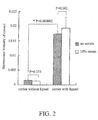
- FIG. 2 shows a comparison between transfection efficiency of the lipid carriers in serum or without serum.
- The invention provides a lipid carrier comprising a lipid based particle comprising a cationic lipid, a cholesterol, a neutral phospholipid, and a neutral lipid, wherein the cationic lipid is about 100 parts by weight, the cholesterol is about 25~100 parts by weight, the neutral phospholipid is about 25∼100 parts by weight, and the neutral lipid is about 25∼150 parts by weight.
- The cationic lipid comprises 1,2-dioleoyloxy-3-(trimethylamino)propane (DOTAP), N-[1-(2,3-ditetradecyloxy)propyl]-N,N-dimethyl-N-hydroxyethylammonium bromide (DMRIE), N-[1-(2,3-dioleyloxy)propyl]-N,N-dimethyl-N-hydroxyethylammonium bromide (DORIE), N-[1-(2,3-dioleyloxy)propyl]-N,N,N-trimethylammonium chloride (DOTMA), 3β- [N- (N',N'-dimethylaminoethane)carbamyl]cholesterol (DC-Chol), or dimethyldioctadecylammonium (DDAB), preferably DOTAP.
- The neutral phospholipid comprises phosphatidyl choline (PC) or phosphatidyl ethanolamine (PE), wherein the phosphatidyl choline may comprise hydrogenated soy phosphatidyl choline (HSPC). The neutral lipid comprises distearoylphosphatidylethanolamine-polyethyleneglycol (DSPE-PEG).
- The preferable composition of the lipid based particle is cationic lipid of about 100 parts by weight, the cholesterol about 50 parts by weight, the neutral phospholipid about 50 parts by weight, and the neutral lipid about 65 parts by weight.
- The lipid based particle might be used as a drug transfection carrier when a drug is encapsulated therein, wherein the drug comprises nucleic acid drugs, proteins, peptides, or synthetic drugs, and the nucleic acid drugs further comprise plasmid DNA, antisense oligonucleotide, and RNAi. In the carrier composition, the drug and the cationic lipid have a weight ratio of about 1:4~1:12, preferably 1:6.
- The lipid based particle has a particle size of about 35∼95nm, a zeta potential of about -10~10mV, an encapsulation efficiency of about 85~100%, a drug release rate of about 60~70% at pH4~5, and the remained activity in serum is about 60∼100%.
- Additionally, a ligand can be conjugated onto the surface of lipid based particle to recognize the receptor in a target cell. The lipid carrier with the ligand has a transfection efficiency exceeding 10 times that of a lipid carrier without a ligand.
- The invention also provides a method of preparing the lipid carrier. First, a cationic lipid, a cholesterol, a neutral phospholipid, a neutral lipid, ethanol, and water are mixed to form a lipid solution, wherein the cationic lipid is about 100 parts by weight, the cholesterol is about 25∼100 parts by weight, the neutral phospholipid is about 25~100 parts by weight, and the neutral lipid is about 25∼150 parts by weight. Next, a drug-containing solution is added to the lipid solution to form a suspension comprising a plurality of lipid based particles, wherein the drug is encapsulated into the lipid based particles. Finally, the suspension is heated to form a lipid carrier.
- The solution is heated to about 50~70°C, preferably 65°C. The ethanol and water have a volume ratio of about 3:7~5:5, preferably 4:6.
- The invention provides lipid based particles with uniform particle size, high encapsulation efficiency, and high serum resistance by using the specific ratio of carrier composition, ethanol/water ratios, drug/cationic lipid ratios, and heating conditions. After the lipid based particle entering the cell, the carrier will release the drug in a weak acidic lysosome in pH4∼5 due to its pH sensitivity, without decomposing by lysosome enzymes, could significantly increasing transfection efficiency of genes.
- First, 0.05mL ethanol was added to a 1.5mL centrifuge tube. Next, 0.1mg cationic DOTAP, 0.05mg cholesterol, 0.05mg HSPC, and 0.065mg DSPE-PEG were dissolved in the ethanol with water bath at 65°C. Deionized water was then added to the solution until the volume of 0.095mL and mixed completely to form a lipid solution.
- Next, 0.005mL oligonucleotide-containing solution (10mg/mL) was added to the lipid solution to form a mixture comprising a plurality of lipid based particles, wherein oligonucleotide was encapsulated into the lipid based particles. Finally, 0.1mL PBS solution (pH7.4) was added to the centrifuge tube with a water bath at 65°C for 10min to form lipid carriers.
- The size of the lipid based particle was measured by Coulter N4 Plus Submicron Particle Sizer (Miami, FL) and the zeta potential thereof was measured by ZetaPlus Zeta Potential Analyzer (Brookhaven Instruments Corporation, Holtsville, NY). The measured diameter was 72.0 ± 22.5nm and the zeta potential was -0.302mV.
- Encapsulated oligonucleotides and free oligonucleotides were separated by a chromatography column. The encapsulation efficiency was then measured. The calculation is illustrated in the following.
- Encapsulation efficiency (%)=(total amount of oligonucleotide -the amount of free oligonucleotide)/the amount of total oligonucleotide x100%
- The encapsulation efficiency of the carrier was calculated as 95 ± 5%
- 0.2mL carrier solution was mixed with 100mM buffer solutions (pH6.8, pH6, pH5.5, pH5, pH4.5, pH4), respectively, with water bath at 37°C for 5 min. After the lipid solution was separated by a Sepharose CL 4B chromatography column, the release rate of oligonucleotide was measured. Referring to FIG. 1, the carrier has a drug release rate of about 60~70% at pH4~5.
- PC14PE6 cells were cultured on a 1cm2 glass slide. The slide contained 2 × 10⁴ cells after culturing. Serum resistance testing was performed as the following steps. First, the cells and carriers encapsulated oligonucleotide were cultured in two mediums at 37°C for 4 hours, respectively, wherein one medium contained 10% serum and another one without serum. The cells were washed by PBS solution three times and were dissolved by mixing with another portion of PBS solution containing 1% Triton X-100 for 1 hour. Finally, the exuded cytosol was analyzed by a fluorescent analyzer (Ex: 494nm, Em: 519nm). According to the analytical results, the carrier maintained its activity within 60~100% in serum.
- PC14PE6 cells were cultured in a 24 wells night over. Each well contained 5 × 10⁴ cells after culturing. Transfection efficiency was tested as follows. Cells and carriers with or without tamoxifen ligands were cultured in two mediums at 37°C for 4 hours, respectively, wherein one medium contained 10% serum and another one contained no serum. Next, the cells were washed by PBS solution and dissolved by mixing with another portion of PBS solution containing 1% Triton X-100 for 1 hour. Finally, the exuded cytosol was analyzed by a fluorescent analyzer (Ex: 494nm, Em: 519nm).
- Referring to FIG. 2, the results indicate that the carrier with a ligand has a transfection efficiency exceeding 10 times that of the carrier without a ligand. Additionally, serum resistance of the lipid carrier provided by the invention has been proven because the test results under serum or without serum are the same.
- While the invention has been described by way of example and in terms of preferred embodiment, it is to be understood that the invention is not limited.thereto. To the contrary, it is intended to cover various modifications and similar arrangements (as would be apparent to those skilled in the art). Therefore, the scope of the appended claims should be accorded the broadest interpretation so as to encompass all such modifications and similar arrangements.
Claims (41)
- A lipid carrier, comprising:a lipid based particle comprising a cationic lipid, a cholesterol, a neutral phospholipid, and a neutral lipid, wherein the cationic lipid is about 100 parts by weight, the cholesterol is about 25∼100 parts by weight, the neutral phospholipid is about 25~100 parts by weight, and the neutral lipid is about 25∼150 parts by weight.
- The lipid carrier as claimed in claim 1, wherein the cationic lipid comprises 1,2-dioleoyloxy-3-(trimethylamino)propane (DOTAP), N-[1-(2,3-ditetradecyloxy)propyl]-N,N-dimethyl-N-hydroxyethylammonium bromide (DMRIE), N-[1-(2,3-dioleyloxy)propyl]-N,N-dimethyl-N-hydroxyethylammonium bromide (DORIE), N-[1-(2,3-dioleyloxy)propyl]-N,N,N-trimethylammonium chloride (DOTMA), 3β-[N-(N',N'-dimethylaminoethane)carbamyl]cholesterol (DC-Chol), or dimethyldioctadecylammonium (DDAB).
- The lipid carrier as claimed in claim 1, wherein the neutral phospholipid comprises phosphatidyl choline (PC) or phosphatidyl ethanolamine (PE).
- The lipid carrier as claimed in claim 3, wherein the phosphatidyl choline comprises hydrogenated soy phosphatidyl choline (HSPC).
- The lipid carrier as claimed in claim 1, wherein the neutral lipid comprises distearoylphosphatidylethanolamine-polyethyleneglycol (DSPE-PEG).
- The lipid carrier as claimed in claim 1, wherein the cationic lipid is about 100 parts by weight, the cholesterol is about 50 parts by weight, the neutral phospholipid is about 50 parts by weight, and the neutral lipid is about 65 parts by weight.
- The lipid carrier as claimed in claim 1, further comprising a drug encapsulated into the lipid based particle.
- The lipid carrier as claimed in claim 7, wherein the drug comprises nucleic acid drugs, protein drugs, peptide drugs, or synthetic drugs.
- The lipid carrier as claimed in claim 8, wherein the nucleic acid drugs comprise plasmid DNA, antisense oligonucleotide, or RNAi.
- The lipid carrier as claimed in claim 7, wherein the drug and the cationic lipid have a weight ratio of about 1:4-1:12.
- The lipid carrier as claimed in claim 7, wherein the drug and the cationic lipid have a weight ratio of about 1:6.
- The lipid carrier as claimed in claim 1, wherein the lipid based particle has a diameter of about 35∼95nm.
- The lipid carrier as claimed in claim 1, wherein the lipid based particle has a zeta potential of about - 10~10mV.
- The lipid carrier as claimed in claim 1, wherein the lipid based particle has an encapsulation efficiency of about 85~100%.
- The lipid carrier as claimed in claim 7, wherein the lipid carrier has a drug release rate of about 60∼70% at pH4~5.
- The lipid carrier as claimed in claim 1, wherein the lipid carrier has an activity of about 60~100% in serum.
- The lipid carrier as claimed in claim 1, further comprising a ligand grafted onto the lipid based particle surface.
- The lipid carrier as claimed in claim 17, wherein the ligand recognizes a target cell of a subject.
- The lipid carrier as claimed in claim 17, wherein the lipid carrier with the ligand has transfection efficiency exceeding 10 times that of a lipid carrier without a ligand.
- A method of preparing a lipid carrier, comprising:mixing a cationic lipid, a cholesterol, a neutral phospholipid, a neutral lipid, ethanol, and water to form a lipid solution, wherein the cationic lipid is about 100 parts by weight, the cholesterol is about 25∼100 parts by weight, the neutral phospholipid is about 25∼100 parts by weight, and the neutral lipid is about 25∼150 parts by weight;adding a drug-containing solution to the lipid solution to form a solution comprising a plurality of lipid based particle, wherein the drug is encapsulated into the lipid based particle; andheating the solution to form a lipid carrier.
- The method as claimed in claim 20, wherein the cationic lipid comprises 1,2-dioleoyloxy-3-(trimethylamino)propane (DOTAP), N-[1-(2,3-ditetradecyloxy)propyl]-N,N-dimethyl-N-hydroxyethylammonium bromide (DMRIE), N- [1-(2,3-dioleyloxy)propyl]-N,N-dimethyl-N-hydroxyethylammonium bromide (DORIE), N-[1-(2,3-dioleyloxy)propyl]-N,N,N-trimethylammonium chloride (DOTMA), 3β- [N- (N',N'-dimethylaminoethane)carbamyl]cholesterol (DC-Chol), or dimethyldioctadecylammonium (DDAB).
- The method as claimed in claim 20, wherein the neutral phospholipid comprises phosphatidyl choline (PC) or phosphatidyl ethanolamine (PE).
- The method as claimed in claim 22, wherein the phosphatidyl choline comprises hydrogenated soy phosphatidyl choline (HSPC).
- The method as claimed in claim 20, wherein the neutral lipid comprises distearoylphosphatidylethanolamine-polyethyleneglycol (DSPE-PEG).
- The method as claimed in claim 20, wherein the cationic lipid is about 100 parts by weight, the cholesterol is about 50 parts by weight, the neutral phospholipid is about 50 parts by weight, and the neutral lipid is about 65 parts by weight.
- The method as claimed in claim 20, wherein the ethanol and water have a volume ratio of about 3:7-5:5.
- The method as claimed in claim 20, wherein the ethanol and water have a volume ratio of about 4:6.
- The method as claimed in claim 20, wherein the drug comprises nucleic acid drugs, protein drugs, peptide drugs, or synthetic drugs.
- The method as claimed in claim 28, wherein the nucleic acid drugs comprise plasmid DNA, antisense oligonucleotide, or RNAi.
- The method as claimed in claim 20, wherein the drug and the cationic lipid have a weight ratio of about 1:4-1:12.
- The method as claimed in claim 20, wherein the drug and the cationic lipid have a weight ratio of about 1:6.
- The method as claimed in claim 20, wherein the solution is heated to about 50~70°C.
- The method as claimed in claim 20, wherein the solution is heated to about 65°C.
- The method as claimed in claim 20, wherein the lipid based particle has a diameter of about 35∼95nm.
- The method as claimed in claim 20, wherein the lipid based particle has a zeta potential of about - 10~10mV.
- The method as claimed in claim 20, wherein the lipid based particle has a encapsulation efficiency of about 85~100%.
- The method as claimed in claim 20, wherein the lipid carrier has a drug release rate of about 60~70% at pH4~5 .
- The method as claimed in claim 20, wherein the lipid carrier has an activity of about 60~100% in serum.
- The method as claimed in claim 20, further comprising a ligand grafted onto the lipid based particle surface.
- The method as claimed in claim 39, wherein the ligand recognizes a target cell of a subject.
- The method as claimed in claim 39, wherein the lipid carrier with the ligand has transfection efficiency exceeding 10 times that of a lipid carrier without a ligand.
Applications Claiming Priority (1)
| Application Number | Priority Date | Filing Date | Title |
|---|---|---|---|
| US11/249,326 US20070087045A1 (en) | 2005-10-14 | 2005-10-14 | Lipid carrier and method of preparing the same |
Publications (2)
| Publication Number | Publication Date |
|---|---|
| EP1774962A1 true EP1774962A1 (en) | 2007-04-18 |
| EP1774962B1 EP1774962B1 (en) | 2014-03-19 |
Family
ID=35695559
Family Applications (1)
| Application Number | Title | Priority Date | Filing Date |
|---|---|---|---|
| EP05028228.4A Expired - Lifetime EP1774962B1 (en) | 2005-10-14 | 2005-12-22 | Lipid carrier and method of preparing the same |
Country Status (5)
| Country | Link |
|---|---|
| US (1) | US20070087045A1 (en) |
| EP (1) | EP1774962B1 (en) |
| JP (1) | JP5264053B2 (en) |
| CN (1) | CN100588424C (en) |
| TW (1) | TWI350177B (en) |
Families Citing this family (11)
| Publication number | Priority date | Publication date | Assignee | Title |
|---|---|---|---|---|
| TW200800235A (en) * | 2005-10-18 | 2008-01-01 | Otsuka Pharma Co Ltd | Carrier composition for nucleic acid transport |
| TWI373368B (en) | 2008-11-11 | 2012-10-01 | Univ Nat Chiao Tung | Liposome and method for producing the same |
| WO2011046934A1 (en) * | 2009-10-12 | 2011-04-21 | Au Jessie L-S | Methods and compositions for improved delivery, expression or activity of rna interference agents |
| AU2013266238B2 (en) * | 2012-05-23 | 2017-07-27 | The Ohio State University | Lipid-coated albumin nanoparticle compositions and methods of making and method of using the same |
| WO2014172045A1 (en) * | 2013-03-15 | 2014-10-23 | The University Of British Columbia | Lipid nanoparticles for transfection and related methods |
| US20210284998A1 (en) | 2016-10-03 | 2021-09-16 | Precision Nanosystems Inc. | Compositions for Transfecting Resistant Cell Types |
| CN116392609A (en) * | 2017-03-23 | 2023-07-07 | Dnarx公司 | Systems and methods for in vivo nucleic acid expression |
| CN113166783B (en) | 2018-10-09 | 2024-10-11 | 不列颠哥伦比亚大学 | Compositions and systems comprising organic solvent-free and detergent-free transfection-active vesicles and methods related thereto |
| GB2613457B (en) | 2020-04-09 | 2023-12-06 | Verve Therapeutics Inc | Base editing of angptl3 and methods of using same for treatment of disease |
| EP4213882A4 (en) | 2020-09-15 | 2025-02-26 | Verve Therapeutics, Inc. | TAL EFFECTOR NUCLEASES FOR GENE EDITING |
| JPWO2025022920A1 (en) * | 2023-07-26 | 2025-01-30 |
Citations (3)
| Publication number | Priority date | Publication date | Assignee | Title |
|---|---|---|---|---|
| WO1998051278A2 (en) * | 1997-05-14 | 1998-11-19 | Inex Pharmaceuticals Corporation | High efficiency encapsulation of charged therapeutic agents in lipid vesicles |
| WO2004089339A2 (en) * | 2003-03-31 | 2004-10-21 | Alza Corporation | Lipid particles having asymmetric lipid coating and method of preparing same |
| WO2005121348A1 (en) * | 2004-06-07 | 2005-12-22 | Protiva Biotherapeutics, Inc. | Lipid encapsulated interfering rna |
Family Cites Families (10)
| Publication number | Priority date | Publication date | Assignee | Title |
|---|---|---|---|---|
| US5908635A (en) * | 1994-08-05 | 1999-06-01 | The United States Of America As Represented By The Department Of Health And Human Services | Method for the liposomal delivery of nucleic acids |
| US5837533A (en) * | 1994-09-28 | 1998-11-17 | American Home Products Corporation | Complexes comprising a nucleic acid bound to a cationic polyamine having an endosome disruption agent |
| US6743779B1 (en) * | 1994-11-29 | 2004-06-01 | Imarx Pharmaceutical Corp. | Methods for delivering compounds into a cell |
| US5786214A (en) * | 1994-12-15 | 1998-07-28 | Spinal Cord Society | pH-sensitive immunoliposomes and method of gene delivery to the mammalian central nervous system |
| US5965434A (en) * | 1994-12-29 | 1999-10-12 | Wolff; Jon A. | Amphipathic PH sensitive compounds and delivery systems for delivering biologically active compounds |
| CA2223179A1 (en) * | 1995-06-07 | 1996-12-19 | Bob Dale Brown | Phosphonic acid-based cationic lipids |
| ES2212305T3 (en) * | 1997-06-23 | 2004-07-16 | Alza Corporation | POLINUCLEOTIDES ENCAPSULATED IN LIPOSOMES, COMPOSITION AND PROCEDURE. |
| DE19915610A1 (en) * | 1999-04-07 | 2000-10-19 | Augustinus Bader | Process for colonization of substrates with biological cells and colonization devices that can be used for this |
| DK1102785T3 (en) * | 1999-06-07 | 2013-05-13 | Arrowhead Res Corp | Compositions for drug delivery using pH-sensitive molecules |
| WO2005041932A2 (en) * | 2003-11-03 | 2005-05-12 | Yissum Research Development Company Of The Hebrew University Of Jerusalem | Method for selecting cationic or anionic liposomes for treatment of a mucosa membrane, and kit comprising the same |
-
2005
- 2005-10-14 US US11/249,326 patent/US20070087045A1/en not_active Abandoned
- 2005-12-15 TW TW094144444A patent/TWI350177B/en not_active IP Right Cessation
- 2005-12-22 JP JP2005370379A patent/JP5264053B2/en not_active Expired - Lifetime
- 2005-12-22 EP EP05028228.4A patent/EP1774962B1/en not_active Expired - Lifetime
- 2005-12-29 CN CN200510135257A patent/CN100588424C/en not_active Expired - Lifetime
Patent Citations (3)
| Publication number | Priority date | Publication date | Assignee | Title |
|---|---|---|---|---|
| WO1998051278A2 (en) * | 1997-05-14 | 1998-11-19 | Inex Pharmaceuticals Corporation | High efficiency encapsulation of charged therapeutic agents in lipid vesicles |
| WO2004089339A2 (en) * | 2003-03-31 | 2004-10-21 | Alza Corporation | Lipid particles having asymmetric lipid coating and method of preparing same |
| WO2005121348A1 (en) * | 2004-06-07 | 2005-12-22 | Protiva Biotherapeutics, Inc. | Lipid encapsulated interfering rna |
Non-Patent Citations (2)
| Title |
|---|
| GIRAO DA CRUZ M T ET AL: "Improving lipoplex-mediated gene transfer into C6 glioma cells and primary neurons", EXPERIMENTAL NEUROLOGY, ACADEMIC PRESS, NEW YORK, NY, US, vol. 187, no. 1, May 2004 (2004-05-01), pages 65 - 75, XP004620583, ISSN: 0014-4886 * |
| JEFFS LLOYD B ET AL: "A scalable, extrusion-free method for efficient liposomal encapsulation of plasmid DNA", PHARMACEUTICAL RESEARCH (DORDRECHT), vol. 22, no. 3, March 2005 (2005-03-01), pages 362 - 372, XP002422317, ISSN: 0724-8741 * |
Also Published As
| Publication number | Publication date |
|---|---|
| CN1947702A (en) | 2007-04-18 |
| US20070087045A1 (en) | 2007-04-19 |
| CN100588424C (en) | 2010-02-10 |
| EP1774962B1 (en) | 2014-03-19 |
| JP5264053B2 (en) | 2013-08-14 |
| TWI350177B (en) | 2011-10-11 |
| TW200714292A (en) | 2007-04-16 |
| JP2007106740A (en) | 2007-04-26 |
Similar Documents
| Publication | Publication Date | Title |
|---|---|---|
| EP1017365B1 (en) | Liposome-entrapped polynucleotide composition and method | |
| Saul et al. | Controlled targeting of liposomal doxorubicin via the folate receptor in vitro | |
| Liu et al. | Development of non-viral vectors for systemic gene delivery | |
| US5908777A (en) | Lipidic vector for nucleic acid delivery | |
| EP3160448B1 (en) | Liposomal formulations for delivery of nucleic acids | |
| Xiang et al. | Enhancing siRNA-based cancer therapy using a new pH-responsive activatable cell-penetrating peptide-modified liposomal system | |
| Pagnan et al. | Delivery of c-myb antisense oligodeoxynucleotides to human neuroblastoma cells via disialoganglioside GD2-targeted immunoliposomes: antitumor effects | |
| US9028797B2 (en) | Composite body for antigen or drug delivery | |
| Gabizon | Stealth liposomes and tumor targeting: one step further in the quest for the magic bullet | |
| CA2177695C (en) | Method of transmitting a biologically active material to a cell | |
| EP1774962B1 (en) | Lipid carrier and method of preparing the same | |
| Zou et al. | Systemic linear polyethylenimine (L‐PEI)‐mediated gene delivery in the mouse | |
| Ali et al. | Significance and applications of nanoparticles in siRNA delivery for cancer therapy | |
| PL199201B1 (en) | Cationic virosomes as a genetic material carrying system | |
| Harvie et al. | Targeting of lipid-protamine-DNA (LPD) lipopolyplexes using RGD motifs | |
| CN110638759A (en) | A preparation for in vitro transfection and in vivo delivery of mRNA | |
| CN1616665B (en) | Targeted liposome gene delivery | |
| US6974698B1 (en) | Methods for delivering biologically active molecules into cells | |
| JP2007524604A (en) | Lipid particles having an asymmetric lipid coating and method for producing the same | |
| WO2025140607A1 (en) | Quantitative measurement method for nucleic acid in nucleic acid-lipid nanoparticle complex | |
| Bally et al. | Lipid/DNA complexes as an intermediate in the preparation of particles for gene transfer: an alternative to cationic liposome/DNA aggregates | |
| MacKay et al. | HIV TAT peptide modifies the distribution of DNA nanolipoparticles following convection-enhanced delivery | |
| Bruckheimer et al. | In vivo efficacy of folate-targeted lipid–protamine–DNA (LPD-PEG-Folate) complexes in an immunocompetent syngeneic model for breast adenocarcinoma | |
| Li et al. | Targeted delivery of antisense oligodeoxynucleotides formulated in a novel lipidic vector | |
| Wang et al. | Spleen Targeting Nucleic Acid Delivery Vector Based on Metal–Organic Frameworks |
Legal Events
| Date | Code | Title | Description |
|---|---|---|---|
| PUAI | Public reference made under article 153(3) epc to a published international application that has entered the european phase |
Free format text: ORIGINAL CODE: 0009012 |
|
| AK | Designated contracting states |
Kind code of ref document: A1 Designated state(s): AT BE BG CH CY CZ DE DK EE ES FI FR GB GR HU IE IS IT LI LT LU LV MC NL PL PT RO SE SI SK TR |
|
| AX | Request for extension of the european patent |
Extension state: AL BA HR MK YU |
|
| 17P | Request for examination filed |
Effective date: 20071017 |
|
| AKX | Designation fees paid |
Designated state(s): AT BE BG CH CY CZ DE DK EE ES FI FR GB GR HU IE IS IT LI LT LU LV MC NL PL PT RO SE SI SK TR |
|
| 17Q | First examination report despatched |
Effective date: 20071130 |
|
| GRAP | Despatch of communication of intention to grant a patent |
Free format text: ORIGINAL CODE: EPIDOSNIGR1 |
|
| RIC1 | Information provided on ipc code assigned before grant |
Ipc: A61K 9/127 20060101AFI20130909BHEP Ipc: A61K 48/00 20060101ALI20130909BHEP Ipc: C12N 15/88 20060101ALI20130909BHEP |
|
| INTG | Intention to grant announced |
Effective date: 20130925 |
|
| GRAS | Grant fee paid |
Free format text: ORIGINAL CODE: EPIDOSNIGR3 |
|
| GRAA | (expected) grant |
Free format text: ORIGINAL CODE: 0009210 |
|
| AK | Designated contracting states |
Kind code of ref document: B1 Designated state(s): AT BE BG CH CY CZ DE DK EE ES FI FR GB GR HU IE IS IT LI LT LU LV MC NL PL PT RO SE SI SK TR |
|
| REG | Reference to a national code |
Ref country code: GB Ref legal event code: FG4D |
|
| REG | Reference to a national code |
Ref country code: CH Ref legal event code: EP |
|
| REG | Reference to a national code |
Ref country code: IE Ref legal event code: FG4D |
|
| REG | Reference to a national code |
Ref country code: AT Ref legal event code: REF Ref document number: 657190 Country of ref document: AT Kind code of ref document: T Effective date: 20140415 |
|
| REG | Reference to a national code |
Ref country code: DE Ref legal event code: R096 Ref document number: 602005042996 Country of ref document: DE Effective date: 20140430 |
|
| PG25 | Lapsed in a contracting state [announced via postgrant information from national office to epo] |
Ref country code: LT Free format text: LAPSE BECAUSE OF FAILURE TO SUBMIT A TRANSLATION OF THE DESCRIPTION OR TO PAY THE FEE WITHIN THE PRESCRIBED TIME-LIMIT Effective date: 20140319 |
|
| REG | Reference to a national code |
Ref country code: NL Ref legal event code: VDEP Effective date: 20140319 |
|
| REG | Reference to a national code |
Ref country code: AT Ref legal event code: MK05 Ref document number: 657190 Country of ref document: AT Kind code of ref document: T Effective date: 20140319 |
|
| REG | Reference to a national code |
Ref country code: LT Ref legal event code: MG4D |
|
| PG25 | Lapsed in a contracting state [announced via postgrant information from national office to epo] |
Ref country code: CY Free format text: LAPSE BECAUSE OF FAILURE TO SUBMIT A TRANSLATION OF THE DESCRIPTION OR TO PAY THE FEE WITHIN THE PRESCRIBED TIME-LIMIT Effective date: 20140319 Ref country code: FI Free format text: LAPSE BECAUSE OF FAILURE TO SUBMIT A TRANSLATION OF THE DESCRIPTION OR TO PAY THE FEE WITHIN THE PRESCRIBED TIME-LIMIT Effective date: 20140319 Ref country code: SE Free format text: LAPSE BECAUSE OF FAILURE TO SUBMIT A TRANSLATION OF THE DESCRIPTION OR TO PAY THE FEE WITHIN THE PRESCRIBED TIME-LIMIT Effective date: 20140319 |
|
| PG25 | Lapsed in a contracting state [announced via postgrant information from national office to epo] |
Ref country code: LV Free format text: LAPSE BECAUSE OF FAILURE TO SUBMIT A TRANSLATION OF THE DESCRIPTION OR TO PAY THE FEE WITHIN THE PRESCRIBED TIME-LIMIT Effective date: 20140319 |
|
| PG25 | Lapsed in a contracting state [announced via postgrant information from national office to epo] |
Ref country code: BE Free format text: LAPSE BECAUSE OF FAILURE TO SUBMIT A TRANSLATION OF THE DESCRIPTION OR TO PAY THE FEE WITHIN THE PRESCRIBED TIME-LIMIT Effective date: 20140319 Ref country code: IS Free format text: LAPSE BECAUSE OF FAILURE TO SUBMIT A TRANSLATION OF THE DESCRIPTION OR TO PAY THE FEE WITHIN THE PRESCRIBED TIME-LIMIT Effective date: 20140719 Ref country code: RO Free format text: LAPSE BECAUSE OF FAILURE TO SUBMIT A TRANSLATION OF THE DESCRIPTION OR TO PAY THE FEE WITHIN THE PRESCRIBED TIME-LIMIT Effective date: 20140319 Ref country code: CZ Free format text: LAPSE BECAUSE OF FAILURE TO SUBMIT A TRANSLATION OF THE DESCRIPTION OR TO PAY THE FEE WITHIN THE PRESCRIBED TIME-LIMIT Effective date: 20140319 Ref country code: EE Free format text: LAPSE BECAUSE OF FAILURE TO SUBMIT A TRANSLATION OF THE DESCRIPTION OR TO PAY THE FEE WITHIN THE PRESCRIBED TIME-LIMIT Effective date: 20140319 Ref country code: BG Free format text: LAPSE BECAUSE OF FAILURE TO SUBMIT A TRANSLATION OF THE DESCRIPTION OR TO PAY THE FEE WITHIN THE PRESCRIBED TIME-LIMIT Effective date: 20140619 Ref country code: NL Free format text: LAPSE BECAUSE OF FAILURE TO SUBMIT A TRANSLATION OF THE DESCRIPTION OR TO PAY THE FEE WITHIN THE PRESCRIBED TIME-LIMIT Effective date: 20140319 |
|
| PG25 | Lapsed in a contracting state [announced via postgrant information from national office to epo] |
Ref country code: SK Free format text: LAPSE BECAUSE OF FAILURE TO SUBMIT A TRANSLATION OF THE DESCRIPTION OR TO PAY THE FEE WITHIN THE PRESCRIBED TIME-LIMIT Effective date: 20140319 Ref country code: ES Free format text: LAPSE BECAUSE OF FAILURE TO SUBMIT A TRANSLATION OF THE DESCRIPTION OR TO PAY THE FEE WITHIN THE PRESCRIBED TIME-LIMIT Effective date: 20140319 Ref country code: AT Free format text: LAPSE BECAUSE OF FAILURE TO SUBMIT A TRANSLATION OF THE DESCRIPTION OR TO PAY THE FEE WITHIN THE PRESCRIBED TIME-LIMIT Effective date: 20140319 Ref country code: PL Free format text: LAPSE BECAUSE OF FAILURE TO SUBMIT A TRANSLATION OF THE DESCRIPTION OR TO PAY THE FEE WITHIN THE PRESCRIBED TIME-LIMIT Effective date: 20140319 |
|
| REG | Reference to a national code |
Ref country code: DE Ref legal event code: R097 Ref document number: 602005042996 Country of ref document: DE |
|
| PG25 | Lapsed in a contracting state [announced via postgrant information from national office to epo] |
Ref country code: PT Free format text: LAPSE BECAUSE OF FAILURE TO SUBMIT A TRANSLATION OF THE DESCRIPTION OR TO PAY THE FEE WITHIN THE PRESCRIBED TIME-LIMIT Effective date: 20140721 |
|
| PLBE | No opposition filed within time limit |
Free format text: ORIGINAL CODE: 0009261 |
|
| STAA | Information on the status of an ep patent application or granted ep patent |
Free format text: STATUS: NO OPPOSITION FILED WITHIN TIME LIMIT |
|
| PG25 | Lapsed in a contracting state [announced via postgrant information from national office to epo] |
Ref country code: DK Free format text: LAPSE BECAUSE OF FAILURE TO SUBMIT A TRANSLATION OF THE DESCRIPTION OR TO PAY THE FEE WITHIN THE PRESCRIBED TIME-LIMIT Effective date: 20140319 |
|
| 26N | No opposition filed |
Effective date: 20141222 |
|
| PG25 | Lapsed in a contracting state [announced via postgrant information from national office to epo] |
Ref country code: IT Free format text: LAPSE BECAUSE OF FAILURE TO SUBMIT A TRANSLATION OF THE DESCRIPTION OR TO PAY THE FEE WITHIN THE PRESCRIBED TIME-LIMIT Effective date: 20140319 |
|
| REG | Reference to a national code |
Ref country code: DE Ref legal event code: R097 Ref document number: 602005042996 Country of ref document: DE Effective date: 20141222 |
|
| PG25 | Lapsed in a contracting state [announced via postgrant information from national office to epo] |
Ref country code: LU Free format text: LAPSE BECAUSE OF FAILURE TO SUBMIT A TRANSLATION OF THE DESCRIPTION OR TO PAY THE FEE WITHIN THE PRESCRIBED TIME-LIMIT Effective date: 20141222 Ref country code: SI Free format text: LAPSE BECAUSE OF FAILURE TO SUBMIT A TRANSLATION OF THE DESCRIPTION OR TO PAY THE FEE WITHIN THE PRESCRIBED TIME-LIMIT Effective date: 20140319 |
|
| REG | Reference to a national code |
Ref country code: CH Ref legal event code: PL |
|
| REG | Reference to a national code |
Ref country code: IE Ref legal event code: MM4A |
|
| PG25 | Lapsed in a contracting state [announced via postgrant information from national office to epo] |
Ref country code: CH Free format text: LAPSE BECAUSE OF NON-PAYMENT OF DUE FEES Effective date: 20141231 Ref country code: LI Free format text: LAPSE BECAUSE OF NON-PAYMENT OF DUE FEES Effective date: 20141231 Ref country code: IE Free format text: LAPSE BECAUSE OF NON-PAYMENT OF DUE FEES Effective date: 20141222 |
|
| REG | Reference to a national code |
Ref country code: FR Ref legal event code: PLFP Year of fee payment: 11 |
|
| PG25 | Lapsed in a contracting state [announced via postgrant information from national office to epo] |
Ref country code: MC Free format text: LAPSE BECAUSE OF FAILURE TO SUBMIT A TRANSLATION OF THE DESCRIPTION OR TO PAY THE FEE WITHIN THE PRESCRIBED TIME-LIMIT Effective date: 20140319 |
|
| PG25 | Lapsed in a contracting state [announced via postgrant information from national office to epo] |
Ref country code: GR Free format text: LAPSE BECAUSE OF FAILURE TO SUBMIT A TRANSLATION OF THE DESCRIPTION OR TO PAY THE FEE WITHIN THE PRESCRIBED TIME-LIMIT Effective date: 20140620 |
|
| PG25 | Lapsed in a contracting state [announced via postgrant information from national office to epo] |
Ref country code: TR Free format text: LAPSE BECAUSE OF FAILURE TO SUBMIT A TRANSLATION OF THE DESCRIPTION OR TO PAY THE FEE WITHIN THE PRESCRIBED TIME-LIMIT Effective date: 20140319 Ref country code: HU Free format text: LAPSE BECAUSE OF FAILURE TO SUBMIT A TRANSLATION OF THE DESCRIPTION OR TO PAY THE FEE WITHIN THE PRESCRIBED TIME-LIMIT; INVALID AB INITIO Effective date: 20051222 |
|
| REG | Reference to a national code |
Ref country code: FR Ref legal event code: PLFP Year of fee payment: 12 |
|
| REG | Reference to a national code |
Ref country code: FR Ref legal event code: PLFP Year of fee payment: 13 |
|
| PGFP | Annual fee paid to national office [announced via postgrant information from national office to epo] |
Ref country code: GB Payment date: 20241227 Year of fee payment: 20 |
|
| PGFP | Annual fee paid to national office [announced via postgrant information from national office to epo] |
Ref country code: FR Payment date: 20241226 Year of fee payment: 20 |
|
| PGFP | Annual fee paid to national office [announced via postgrant information from national office to epo] |
Ref country code: DE Payment date: 20241227 Year of fee payment: 20 |
|
| REG | Reference to a national code |
Ref country code: DE Ref legal event code: R071 Ref document number: 602005042996 Country of ref document: DE |
|
| REG | Reference to a national code |
Ref country code: GB Ref legal event code: PE20 Expiry date: 20251221 |