EP1774356B1 - Process for the determination of lipoproteins in body fluids - Google Patents
Process for the determination of lipoproteins in body fluids Download PDFInfo
- Publication number
- EP1774356B1 EP1774356B1 EP05753614.6A EP05753614A EP1774356B1 EP 1774356 B1 EP1774356 B1 EP 1774356B1 EP 05753614 A EP05753614 A EP 05753614A EP 1774356 B1 EP1774356 B1 EP 1774356B1
- Authority
- EP
- European Patent Office
- Prior art keywords
- lipoprotein
- nmr
- magnetic field
- process according
- subclass
- Prior art date
- Legal status (The legal status is an assumption and is not a legal conclusion. Google has not performed a legal analysis and makes no representation as to the accuracy of the status listed.)
- Expired - Lifetime
Links
Images



Classifications
-
- G—PHYSICS
- G01—MEASURING; TESTING
- G01N—INVESTIGATING OR ANALYSING MATERIALS BY DETERMINING THEIR CHEMICAL OR PHYSICAL PROPERTIES
- G01N24/00—Investigating or analyzing materials by the use of nuclear magnetic resonance, electron paramagnetic resonance or other spin effects
- G01N24/08—Investigating or analyzing materials by the use of nuclear magnetic resonance, electron paramagnetic resonance or other spin effects by using nuclear magnetic resonance
-
- G—PHYSICS
- G01—MEASURING; TESTING
- G01R—MEASURING ELECTRIC VARIABLES; MEASURING MAGNETIC VARIABLES
- G01R33/00—Arrangements or instruments for measuring magnetic variables
- G01R33/20—Arrangements or instruments for measuring magnetic variables involving magnetic resonance
- G01R33/44—Arrangements or instruments for measuring magnetic variables involving magnetic resonance using nuclear magnetic resonance [NMR]
- G01R33/46—NMR spectroscopy
- G01R33/4625—Processing of acquired signals, e.g. elimination of phase errors, baseline fitting, chemometric analysis
-
- G—PHYSICS
- G01—MEASURING; TESTING
- G01R—MEASURING ELECTRIC VARIABLES; MEASURING MAGNETIC VARIABLES
- G01R33/00—Arrangements or instruments for measuring magnetic variables
- G01R33/20—Arrangements or instruments for measuring magnetic variables involving magnetic resonance
- G01R33/44—Arrangements or instruments for measuring magnetic variables involving magnetic resonance using nuclear magnetic resonance [NMR]
- G01R33/46—NMR spectroscopy
- G01R33/465—NMR spectroscopy applied to biological material, e.g. in vitro testing
-
- Y—GENERAL TAGGING OF NEW TECHNOLOGICAL DEVELOPMENTS; GENERAL TAGGING OF CROSS-SECTIONAL TECHNOLOGIES SPANNING OVER SEVERAL SECTIONS OF THE IPC; TECHNICAL SUBJECTS COVERED BY FORMER USPC CROSS-REFERENCE ART COLLECTIONS [XRACs] AND DIGESTS
- Y10—TECHNICAL SUBJECTS COVERED BY FORMER USPC
- Y10T—TECHNICAL SUBJECTS COVERED BY FORMER US CLASSIFICATION
- Y10T436/00—Chemistry: analytical and immunological testing
- Y10T436/24—Nuclear magnetic resonance, electron spin resonance or other spin effects or mass spectrometry
Definitions
- the present invention relates to a process for the determination of the density and size distribution of lipoproteins in body fluids and to an apparatus for carrying out this process.
- Arteriosclerosis which, inter alia, is attributable to cholesterol deposits in the arterial vascular walls is one of the most frequent causes of death in the industrialised countries of the West.
- impairment of blood circulation in the brain stroke
- impairment of blood circulation in the heart coronary heart disease, myocardial infarction
- arterial occlusive diseases in the peripheral arteries may occur.
- Investigations have shown that the risk of suffering from arteriosclerosis corresponds to the proportion of cholesterol present in the blood. This cholesterol is present in the form of lipoprotein particles which contain cholesterol, for example, together with proteins. These lipoproteins effect the transport of the water-insoluble lipids in the blood.
- Lipoproteins can be subdivided into different lipoprotein classes, inter alia, on the basis of their density, lipid components and apolipoproteins.
- the risk of suffering from arteriosclerosis appears to correlate to a high level of LDL (low density lipoprotein) cholesterol.
- cholesterol in HDL particles seems to contribute to the removal of arteriosclerotic plaques in arterial vascular walls.
- Further investigations indicate that certain size and density distributions within lipoprotein classes are a good indicator for the early recognition of cardiovascular diseases and the risk of suffering of arteriosclerosis ( Kuller et al., (2002), Nuclear Magnetic Resonance spectroscopy of lipoproteins and risk of coronary heart disease in the cardiovascular health study, Aterioscler. Thromb.
- US 6,617,167 B2 describes a method of screening a subject for the presence of lipoprotein X. It describes also methods of classification of lipoproteins. Thereby, only a rough classification into classes such as VLDL, LDL, HDL and chylomicrons is disclosed.
- NMR spectra of a sample of the body fluid to be analysed are measured under different measuring conditions.
- the different measuring conditions are selected in such a way that they permit the separation of superimposing in-homogeneous NMR resonance lines of different lipoprotein subclasses.
- a diffusion-weighted one-dimensional and multidimensional magnetic nuclear resonance spectroscopy (NMR) with pulsed magnetic field gradients is implemented.
- NMR magnetic nuclear resonance spectroscopy
- the varying effects of the different magnetic field gradients and different temperatures on the form of the signal e.g. the intensity and/or line width of the NMR signals of the individual lipoprotein subclasses are subsequently determined and a certain density distribution and size distribution is assigned to the individual lipoprotein subclasses on the basis of the different effects.
- the process can be used to analyse a wide variety of different specimens from body fluids, e.g. blood plasma and blood serum samples of any desired origin. Suitable body fluids in this respect are all lipoprotein-containing body fluids of different origins, e.g. blood, lymph or spinal cord fluid.
- body fluids e.g. blood plasma and blood serum samples of any desired origin.
- Suitable body fluids are all lipoprotein-containing body fluids of different origins, e.g. blood, lymph or spinal cord fluid.
- the process allows the analysis of NMR signals of inhomogeneous composition in NMR spectra attributable to the varying inhomogeneous distribution within lipoprotein subclasses.
- the proportions of cholesterol, the density distribution and size distribution of the particles within a lipoprotein subclass can vary e.g. depending on the constitution of a patient.
- the size distribution of lipoprotein particles within a lipoprotein subclass can be determined according to one aspect of the invention by applying different magnetic field gradients, additionally to the high frequency pulses, to produce diffusion-weighted NMR spectra of the sample to be analysed, e.g. a blood sample. This can be done by producing an additional locally varying magnetic field in the sample e.g. by using gradient coils in addition to the magnetic field already present in the NMR spectrometer.
- a spin echo experiment wherein a magnetic field gradient is additionally produced is shown schematically in Figure 2 as merely one possible example of diffusion-weighted NMR spectroscopy.
- the magnetisation caused by spins of the hydrogen atoms is first rotated into the detection plane by a so-called 90° pulse ( ⁇ /2) and detected.
- the magnetisation of individual spin packages is subsequently dephasing.
- Lipoprotein particles for example, diffuse to a different extent due to their different sizes. If, during this period, a so-called magnetic field gradient is applied along the z-field of the sample, in addition to the existing magnetic field, the different lipoprotein particles are subject to the influence of different magnetic field strengths as a result of their different size and consequently their different diffusion behaviour.
- Smaller lipoprotein particles, HDL particles for example have already diffused further during this period and are subject to the influence of another z-field strength such that their magnetisation by the 180° pulse can be refocused only insufficiently or, depending on the strength of the magnetic field gradient, not at all.
- the applied gradient is a diffusion-sensitizing magnetic field gradient.
- the measuring temperatures it is possible to vary the measuring temperatures as further measuring conditions. Variations in the measuring temperatures exert, above all, an influence on the line width of the NMR signals of the lipoprotein particles and their components. At a rising temperature, the line width of the NMR signals can become narrower (change in the transverse relaxation time T2) since the lipoprotein particles become more mobile at rising temperature, the longitudinal relaxation time T1 and the transverse relaxation time T2 normally becoming greater.
- a T1 and T2 weighting can be introduced in a defined manner in addition to the diffusion weighting. In the case of particularly densely packed particles, e.g.
- HDL particles a temperature increase generally does not exert as strong an influence as in the case of less densely packed particles, e.g. LDL or VLDL particles. This has the consequence that, in the case of differently densely packed lipoprotein particles, a change in temperature has a different effect on the change on the line widths of the NMR signals of the lipoprotein particles concerned.
- Typical measuring temperatures would in this case be temperatures of approximately 278 K, 298 K, 308 K and 318 K.
- This multidimensional set can be determined e.g. from a series of suitable recorded NMR spectra - one spectrum being recorded for each lipoprotein subclass in a borderline case.
- the characteristic reference parameters are selected from the distributions of the chemical shifts, the distributions of the NMR signal intensities, the distributions of the NMR signal widths and the line forms as a function of magnetic field gradients and other external parameters possible such as the temperature.
- the reference parameters are known or have been determined, it is possible, primarily, to determine from them the concentration of the lipoprotein particles of the different subclasses. Secondarily, it is possible to determine further physical and chemical properties within a subclass such as the lipid composition and the exact size of the lipoprotein particles.
- the advantage of this process consists in that the characteristic reference parameters characterise in each case the pure lipoprotein subclass and can be adapted directly to the parameters of the NMR spectrometer used to record the NMR spectra such as the measuring frequency and magnetic field strength on the basis of basic physical considerations.
- the spectra of pure lipoprotein components measured on a specific NMR spectrometer are subjected to a summation using simple mathematical methods and varied in order to reconstruct in this way the experimentally measured spectrum of the blood sample to be analysed. Consequently, this process is much more strongly dependent on the specific measuring conditions, in particular the parameters, of the NMR spectrometer used.
- the present process can be carried out without problems on different NMR spectrometers with different frequencies due to the parametrisation using the characteristic reference parameters.
- the characteristic reference parameters are independent from the parameters of the apparatus used to record the spectra, e. g. the NMR spectrometer.
- This variant of the process according to the invention is based on the consideration that particles of a given lipoprotein subclass are built up from different chemical components with different patterns of chemical shifts and relaxation times and are consequently characterised by inhomogeneous resonance lines but that particles of the same size provide the same response to the variation of the magnetic field gradients. This is exploited particularly well by the above process in order to separate lipoprotein subclasses spectroscopically and to describe them mathematically by the process described above. Under given experimental conditions, only the particle concentrations c k (see equation 2) need then be adjusted. This can be done reliably by almost any desired optimisation process.
- NMR spectra of a plasma or serum sample to be analysed are recorded in a process step B) under the different measuring conditions used in A).
- a process step C the density distribution and/or size distribution are subsequently determined for each lipoprotein subclass on the basis of a weighting of the reference parameters.
- NMR reference data set determined in process step A) is shown in Figure 9 for the lipoprotein subclass LDL [A] so named by the inventors.
- Such an NMR reference data set can be obtained, for example, by recording, NMR reference spectra for each lipoprotein subclass to be analysed under the different measuring conditions, i.e. e.g. in different magnetic field gradients in process step (A) and subsequently calculating the NMR spectra and fitting them to the NMR reference spectra by means of Gauss and Lorentz functions, thereby obtaining a mathematical function for the characteristic reference parameters of the reference spectra.
- the concentration of this lipoprotein subclass in the reference sample should be known. It is also possible to determine the reference parameters of individual lipoprotein subclasses from several reference samples in the case of unknown concentrations, using statistical methods.
- a mathematical function, the base function, which describes the characteristic reference parameters is obtained in the case of both alternative methods for the determination of the characteristic reference parameters.
- the NMR spectra of the plasma or serum sample to be analysed can then be recorded under the same measuring conditions (identical magnetic field gradients and/or identical measuring temperature) as was the case with the reference samples or in the case of the calculation of the reference parameters by mathematical models, as the measuring conditions were set correspondingly in the mathematical models.
- calculated NMR spectra are fitted to the spectra determined in B) by way of a weighting of the reference parameters of each lipoprotein subclass.
- This weighting can be performed by modifying the base functions for each lipoprotein subclass, the base functions describing the characteristic reference parameters of each lipoprotein subclass, via proportionality factors for each base function in such a way that calculated NMR spectra can be fitted to the measured NMR spectra.
- proportionality factors are then multiplied by weighting factors, calibration factors, from which direct conclusions can be drawn on the concentration of the lipoprotein subclasses concerned and their sizes and/or density distributions. In this way, the concentrations of particles of the individual lipoprotein subclasses, their composition and density distribution and/or size distribution in a blood plasma or blood serum sample can be advantageously determined jointly.
- one-dimensional proton NMR spectra of reference samples and the serum or blood plasma samples to be analysed are advantageously detected for reasons of simplicity.
- the decrease in transverse magnetisation namely the free induction decay (FID)
- FID free induction decay
- 1-D NMR spectra are easier to record than multidimensional spectra.
- multidimensional NMR spectra e.g.
- HSQC pulse sequences using not only 1 H nuclei, but also 12 C and 15 N nuclei in one variant of a process according to the invention.
- Multidimensional spectra are more time consuming to record but are capable of providing more detailed information on the particle properties.
- NMR reference data sets for each non-lipoprotein component of known concentration are recorded, in a similar way to the lipoprotein subclasses, under the same measuring conditions as in process step B) and the characteristic reference parameters of each non-lipoprotein component concerned are then determined in a way similar to the lipoprotein components.
- these reference parameters are selected, similar to the lipoproteins, from the line widths, the chemical shifts of the NMR signals and the intensities of the NMR signals as a function of the magnetic field gradients. If, additionally, the NMR reference data sets of these non-lipoprotein components are available, the concentrations of these non-lipoprotein components can additionally be determined in process step C) together with a concentration of the lipoprotein components.
- the non-lipoprotein components can in this case be selected from metabolites, for example, lactate, alcohols, in particular ethanol, fatty acids, carbohydrates, pharmaceuticals and proteins.
- nucleic acids such as DNA and RNA can be determined either as single strands or double strands.
- the reference parameters of the lipoprotein components are used in process step C) for fitting of the calculated NMR spectra to the NMR spectra to be analysed, then the accuracy of the fitting process can be increased. This has the consequence that more accurate results can be achieved regarding the concentrations and density distribution and/or size distribution of the lipoprotein components and non-lipoprotein components of the blood sample in process step C).
- the magnetic field gradients exclusively are varied as measuring condition and the blood samples to be analysed are measured at a constant temperature.
- the different effects of the various magnetic field gradients on the intensity of the NMR signals of the individual lipoprotein subclasses are determined.
- less than four or more than four one-dimensional NMR spectra can also be recorded.
- the present invention also relates to a system arranged to carry out the process according to previous explanations, the system comprising:
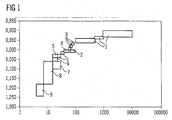
- Figure 1 shows a particle size distribution and density distribution of different lipoproteins detectable in the blood by process according to the invention.
- the particle diameter in ⁇ m is, in this case, plotted on the x axis and the particle density in g/cm 3 on the y axis.
- the density of the lipoprotein particles of different subclasses is essentially determined by their lipid composition.
- the areas indicated by 1 characterise the chylomicrons, the areas indicated by 2 the chylomicron remnants, the areas indicated by 3 the VLDL particles (very low density lipoproteins), the areas indicated by 4 the IDL particles (intermediate density lipoproteins), the bass indicated by 6 characterise the density distribution and particle size distribution of LDL particles, the area indicated by 5 the density distribution and particle size distribution of small dense LDL particles and the areas indicated by 8 and 9 the density distribution and particle size distribution of HDL2 and HDL3 particles.
- the area indicated by 7 characterises the Lp(a) particles.
- lipoproteins in the blood into lipoprotein classes has inter alia been described in the following publications: Kuller et al., (2002), Nuclear Magnetic Resonance spectroscopy of lipoproteins and risk of coronary heart disease in the cardiovascular health study, Aterioscler. Thromb. Vasc. Biol.
- the classification of the different lipoproteins into lipoprotein subclasses on the basis of their density distribution and size distribution and apoprotein components varies, depending on the literature reference, the classification shown here having been carried out by the inventors. Depending on the requirements (e.g. more detailed classification of the HDL particles into more than two HDL subclasses HDL 2 und HDL3 for more detailed analyses), the classifications can be changed at will.
- all the particles shown in Fig. 1 in particular e.g. Lp(a) and small dense LDL which can be classified as being highly dangerous with respect to the risk for cardiovascular diseases, can be determined particularly reliably.
- the NMR signals of all these lipoprotein subclasses exhibit an attenuation behaviour in magnetic field gradients which depends on the size distribution.
- chylomicrons are so large that the intensities of their signals in NMR spectra of blood samples cannot influenced by applying magnetic field gradients, or hardly at all.
- Figure 2 shows schematically the course of a spin echo experiment with an applied magnetic field gradient. Such an experiment can be used in a variant of the process according to the invention for the selective suppression or attenuation of NMR signals of smaller lipoprotein subclasses.
- Figure 2A shows how a ⁇ /2 pulse, a 90° pulse, is applied, the spins of the hydrogen atoms being rotated from the z direction into the detection plane, the x'-y' plane.
- a magnetic field Bo is present on the sample in the z direction.
- Figure 2B shows how the spins immediately after the ⁇ /2 pulse precess with a slightly different frequency in the x'-y' plane. Meanwhile, a transverse relaxation, the decomposition of the FID (free induction decay) takes place in the x'-y' plane which is described by the transverse relaxation time T2.
- This FID in the time domain can be converted, by way of a Fourier transformation known to a person skilled in the art, into a conventional NMR spectrum in the frequency domain.
- a magnetic field gradient B 0 ' is applied along the z axis, additionally to the magnetic field B 0 , the spins of different lipoprotein particles are situated in different magnetic fields, depending on their location ( Fig. 2C ).
- the smaller and more compact lipoprotein particles e.g. HDL particles
- corresponding larger lipoprotein particles e.g. VLDL or LDL particles.
- Figure 2C shows schematically that the spins 10, 30 of the smaller lipoprotein particles move more rapidly as a result of their increased diffusion than spins 15, 20 of correspondingly larger lipoprotein particles.
- the different lipoprotein particles are situated at different sites as a result of the different diffusion-rates and are consequently under the influence of different z-magnetic field strengths.
- the precision phases of spins of smaller lipoprotein particles which, due to their more rapid diffusion, are in an area with another magnetic field, cannot be fully refocused by a subsequent 180° pulse, a ⁇ -pulse, as shown in Figure 2D .
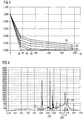
- Figure 3 shows the decrease of NMR signals of different lipoprotein subclasses under the influence of gradient effects of different strengths.
- the relative signal intensity is plotted on the y-axis and the gradient effect (gradient strength x time) is plotted on the y axis.
- the curve indicated by 40 characterises the decrease in the signal intensity of chylomicron signals, the curve indicated by 50 the decrease in the signal intensity of NMR signals of VLDL-particles and the curve indicated by 60 the decrease in the NMR signal intensity of IDL particles.
- the curve indicated by 70 is the signal intensity of LDL particles and the curves indicated by 80 and 85 the decrease in the signal intensity of HDL2 and HDL3 particles as a function of the strength of the magnetic field gradients.
- Figure 4 shows different one-dimensional 1 H NMR spectra of a blood plasma sample recorded without and with magnetic field gradients.
- the chemical shift is plotted in ppm on the x axis and the intensity on the y axis.
- the one-dimensional NMR spectrum indicated by 90 was recorded without magnetic field gradients and the NMR spectra indicated by 100 and 110 with magnetic field gradients rising from 100 to 110. It can be seen that with rising magnetic field gradients, the signals of all small substances dissolved in the blood (proteins, salts, amino acids) which are smaller than 1 nm, can be suppressed almost completely.
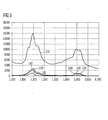
- Figures 5 and 6 show the same region of 1.4 ppm to 0.8 ppm in a 1 H-NMR spectrum, the area of the methyl and methylene peaks of the lipoprotein subclasses present in the blood.
- the area shown in Figure 5 is illustrated enlarged.
- the spectrum indicated by 120 was recorded without magnetic field gradients and the spectra indicated by 130, 140 and 150 with rising magnetic field gradients. It can be clearly seen that the signal intensity of all signals decreases with an increasing magnetic field gradient.
- the NMR signals characterised by 130A represent the methyl and methylene peaks of VLDL particles and the signals characterised by 130B the methyl- and methylene peaks of HDL particles.
- the HDL particles are much smaller than the VLDL particles (see e.g. Fig. 1 ).
- Figure 6 clearly shows that the intensity of the HDL signals decreases more strongly with a rising magnetic field gradient than the intensity of the corresponding VLDL signals. In the case of the spectrum indicated by 150, which was recorded at the strongest magnetic field gradient, the HDL signals are almost fully suppressed.
- Figure 7 shows the approximation of a calculated spectrum 210 to a spectrum of a blood plasma sample or serum sample 200 to be analysed.
- the approximation is carried out by means of a variation and addition of different base functions 220 for the individual lipoprotein subclasses.
- the line indicated by 230 shows the background of the measurement, which is still fairly strong in Figure 7 since the NMR spectrum was recorded without magnetic field gradient.
- Figure 8 shows the NMR spectrum already shown in Figure 7 though under the influence of slight magnetic field gradients.
- the intensity of the background 230 has decreased correspondingly since the signal intensity of the NMR signals of the small dissolved substances is being almost completely suppressed.
- Figure 9 shows as an example the NMR reference data set of a lipoprotein subclass LDL[A], which contains the characteristic reference parameters of this lipoprotein subclass.
- the line characterised by “standard without gradient” indicates the signal intensity of the methyl and methylene signals without magnetic field gradient, whereas "standard gradient [A]” to “standard gradient [C]” shows the corresponding reference parameters for the signal intensity of the NMR signals with three magnetic field gradients rising from [A] to [C].
- a further characteristic reference parameter is the line width and the chemical shift, in ppm.
- the proportion of the Lorentz and Gauss functions in the base function is indicated.
- Such an NMR reference data set can be drawn up for each lipoprotein subclass.
- Analogous reference data sets can also be drawn up for non-lipoprotein components of the blood plasma sample or serum sample, e.g. lactate and other proteins.
- Figure 10 shows a list of 15 lipoprotein subclasses and their respective minimum and maximum sizes in nm, minimum and maximum densities in g/ml and the corresponding chemical shifts of their methyl and/or methylene NMR signals.
- the classification of the lipoproteins into lipoprotein subclasses, e.g. HDL, and into further lipoprotein subclasses, e.g. HDL2 and HDL3, on the basis of density distributions and size distributions has been carried out by the inventors.
- Such subclass classifications can be subdivided and/or simplified even further, depending on the requirements.
- the exact size distribution and density distributions for each lipoprotein subclass can be determined which can also be an indicator of the susceptibility to certain cardiovascular diseases.
- other constituents can also be determined, e.g. the smaller LPDS with a diameter of ⁇ 1 nm, which are dissolved in the blood.
- lactate and unsaturated fatty acids [A] and unsaturated fatty acids [B] are listed.
- the measuring temperature is simultaneously set.
- the samples are then measured at 308 K.
- a 1D 1 H NMR spectrum is recorded on the NMR spectrometer (resolution: 32768 data points with 0.37 Hz/point, a spectral width of 12000 Hz, 10 ⁇ s 90° pulse, d1 delay of 0.7 s and a recording time of 1.36 s).
- 3 diffusion-weighted 1D 1 H NMR measurements are additionally carried out with a modified STE-LED (stimulated Echo and Longitudinal Eddy-current delay) pulse sequence.
- the diffusion-weighted gradients in this case amount to 40% (40 G/cm) with a length of 2 ms (experiment 2), 80% (80 G/cm) with a length of 2 ms (experiment 3) and 80% (80 G/cm) with a length of 3 ms (experiment 4).
- the FIDs (free induction decay) measured are filtered digitally, Fourier transformed and processed with the spectrometer-specific software (phase correction and baseline correction). These spectra are then converted into an ASCII format, then loaded into a PC. Here they are evaluated with the concentration-weighted multidimensional subclass functions.
- the particle concentrations of the different lipoprotein subclasses which are obtained are then printed out together with other parameters (e.g. lipid composition).
Landscapes
- Physics & Mathematics (AREA)
- High Energy & Nuclear Physics (AREA)
- General Physics & Mathematics (AREA)
- Health & Medical Sciences (AREA)
- Life Sciences & Earth Sciences (AREA)
- Condensed Matter Physics & Semiconductors (AREA)
- Spectroscopy & Molecular Physics (AREA)
- General Health & Medical Sciences (AREA)
- Chemical & Material Sciences (AREA)
- Immunology (AREA)
- Pathology (AREA)
- Engineering & Computer Science (AREA)
- Signal Processing (AREA)
- Biochemistry (AREA)
- Analytical Chemistry (AREA)
- Molecular Biology (AREA)
- Investigating Or Analysing Biological Materials (AREA)
Description
- The present invention relates to a process for the determination of the density and size distribution of lipoproteins in body fluids and to an apparatus for carrying out this process.
- Arteriosclerosis which, inter alia, is attributable to cholesterol deposits in the arterial vascular walls is one of the most frequent causes of death in the industrialised nations of the West. Depending on where the deposits occur, impairment of blood circulation in the brain (stroke), impairment of blood circulation in the heart (coronary heart disease, myocardial infarction) and arterial occlusive diseases in the peripheral arteries may occur. Investigations have shown that the risk of suffering from arteriosclerosis corresponds to the proportion of cholesterol present in the blood. This cholesterol is present in the form of lipoprotein particles which contain cholesterol, for example, together with proteins. These lipoproteins effect the transport of the water-insoluble lipids in the blood. Lipoproteins can be subdivided into different lipoprotein classes, inter alia, on the basis of their density, lipid components and apolipoproteins. The risk of suffering from arteriosclerosis appears to correlate to a high level of LDL (low density lipoprotein) cholesterol. In contrast, cholesterol in HDL particles (high density lipoprotein) seems to contribute to the removal of arteriosclerotic plaques in arterial vascular walls. Further investigations indicate that certain size and density distributions within lipoprotein classes are a good indicator for the early recognition of cardiovascular diseases and the risk of suffering of arteriosclerosis (Kuller et al., (2002), Nuclear Magnetic Resonance spectroscopy of lipoproteins and risk of coronary heart disease in the cardiovascular health study, Aterioscler. Thromb. Vasc. Biol. 22, 1175-1180; Blake et al., (2002), Low-density lipoprotein particle concentration and size as determined by nuclear magnetic resonance spectroscopy as predictors of cardiovascular disease in women, Circulation 106, 1930-1937; Rosenson et al., (2002), Relations of lipoprotein subclass levels and low-density lipoprotein size to progression of coronary artery disease in the pravastatin limitation of arteriosclerosis in the coronary arteries (PLAC-I Trial), Am. J. Cardiol. 90, 89-94; Rosenson et al., (2002), Effects of pravastatin treatment on lipoprotein subclass profiles and particle size in the PLAC-I trial, arteriosclerosis 160, 41-48). For this reason, numerous lipoprotein determinations in the blood are carried out for the early recognition of cardiovascular diseases. It is assumed that the object of up to 60-80% of the diagnostic blood tests in the laboratory is, at least partially, the determination of lipoprotein.
- From
EP 0 361 214 B1 - In the review article "Nuclear magnetic resonance chromatography: applications of pulse field gradient diffusion NMR to mixture analysis and ligand-receptor interaction", Journal of chromatography B; 725 (1999), pages 79-90, a complicated process for investigating protein-ligand interactions is disclosed in the case of which proteins specifically 13C/15N-labelled for NMR spectroscopy are used, apart from pulse field gradient NMR.
-
US 6,617,167 B2 describes a method of screening a subject for the presence of lipoprotein X. It describes also methods of classification of lipoproteins. Thereby, only a rough classification into classes such as VLDL, LDL, HDL and chylomicrons is disclosed. - It is one object of the present invention to provide a process for a finer and more accurate classification and quantification of lipoproteins in body fluids than known from prior art and an apparatus for carrying out this process which are improved with respect to the above-mentioned disadvantages.
- This object is achieved according to the invention by a process according to
claim 1. Advantageous aspects of the process are the subject matter of further claims. - The process according to the invention is a process for determining concentrations of lipoprotein subclasses k = 1...N in a body fluid, each subclass being characterised by a respective selected density distribution and size distribution; the process comprising the steps of
- a) recording or calculating an NMR reference spectrum for each of said lipoprotein subclasses for M different measuring conditions i = 1...M which are different as regards the strength of a diffusion-sensitizing magnetic field gradient and/or the temperature,
- b) determining a subclass function fi, k for each lipoprotein subclass k and each measuring condition i describing the NMR reference spectrum of the lipoprotein subclass k under the measuring conditions i,
- c) measuring NMR spectra Si=1...M of the body fluid sample to be analysed under the same M different measuring conditions as those applied in step a),
- d) fitting the class functions fi,k determined in step b) to the NMR spectra Si by using N weighting factors ck according to the following formula:

- e) obtaining the concentration of each lipoprotein subclass in the body fluid sample by using the corresponding weighting factor ck.
- Disclosed is also a process for the determination, in particular the classification and quantification, of lipoproteins in body fluids. For this purpose, NMR spectra of a sample of the body fluid to be analysed are measured under different measuring conditions. The different measuring conditions are selected in such a way that they permit the separation of superimposing in-homogeneous NMR resonance lines of different lipoprotein subclasses. By varying the measuring conditions, a diffusion-weighted one-dimensional and multidimensional magnetic nuclear resonance spectroscopy (NMR) with pulsed magnetic field gradients is implemented. These different measuring conditions are selected from different magnetic field gradients and varying temperatures. For this purpose, several NMR spectra are recorded e.g. for one plasma or serum sample at different magnetic field gradients and/or different temperatures in each case. The varying effects of the different magnetic field gradients and different temperatures on the form of the signal, e.g. the intensity and/or line width of the NMR signals of the individual lipoprotein subclasses are subsequently determined and a certain density distribution and size distribution is assigned to the individual lipoprotein subclasses on the basis of the different effects.
- It is possible to improve the process by varying other parameters such as the composition of the sample (solvent, chemical modifications). For this purpose, several NMR spectra are, as a rule, recorded and analysed jointly under different conditions.
- The process can be used to analyse a wide variety of different specimens from body fluids, e.g. blood plasma and blood serum samples of any desired origin. Suitable body fluids in this respect are all lipoprotein-containing body fluids of different origins, e.g. blood, lymph or spinal cord fluid. The process allows the analysis of NMR signals of inhomogeneous composition in NMR spectra attributable to the varying inhomogeneous distribution within lipoprotein subclasses. Thus, the proportions of cholesterol, the density distribution and size distribution of the particles within a lipoprotein subclass can vary e.g. depending on the constitution of a patient.
- The size distribution of lipoprotein particles within a lipoprotein subclass, e.g. HDL or LDL particles, can be determined according to one aspect of the invention by applying different magnetic field gradients, additionally to the high frequency pulses, to produce diffusion-weighted NMR spectra of the sample to be analysed, e.g. a blood sample. This can be done by producing an additional locally varying magnetic field in the sample e.g. by using gradient coils in addition to the magnetic field already present in the NMR spectrometer.
- A spin echo experiment, wherein a magnetic field gradient is additionally produced is shown schematically in
Figure 2 as merely one possible example of diffusion-weighted NMR spectroscopy. During this spin echo experiment, the magnetisation caused by spins of the hydrogen atoms is first rotated into the detection plane by a so-called 90° pulse (π/2) and detected. In this detection plane, the magnetisation of individual spin packages is subsequently dephasing. Lipoprotein particles, for example, diffuse to a different extent due to their different sizes. If, during this period, a so-called magnetic field gradient is applied along the z-field of the sample, in addition to the existing magnetic field, the different lipoprotein particles are subject to the influence of different magnetic field strengths as a result of their different size and consequently their different diffusion behaviour. If a 180° pulse, a π pulse is applied, the magnetisation of the spins of those lipoproteins (the larger lipoprotein particles, e.g. VLDL particles = very low density lipoproteins) is refocused which did not diffuse too far during the dephasing of the spins. Smaller lipoprotein particles, HDL particles for example, have already diffused further during this period and are subject to the influence of another z-field strength such that their magnetisation by the 180° pulse can be refocused only insufficiently or, depending on the strength of the magnetic field gradient, not at all. This has the consequence that, as a function of the magnetic field gradient applied, NMR signals of smaller lipoprotein particles can be selectively suppressed and/or the intensity of these signals reduced in a defined manner (see for example alsoFigures 3 and6 ). Apart from this spin echo experiment, a large number of other pulse sequences are possible in the case of variants of processes according to the invention. Thus, the applied gradient is a diffusion-sensitizing magnetic field gradient. - From
Figure 10 , it can be learned that, within a lipoprotein subclass, the size of the lipoprotein particles varies (e.g. in the case of the subclass division of LDL [A] to LDL [C] chosen by the inventors). The above-mentioned diffusion-weighted magnetic field gradient measuring method thus also offers a possibility for determining the size distribution within lipoprotein subclasses. This size distribution can also be an indicator of the personal risk of cardiovascular disease (Kuller et al., (2002), Nuclear Magnetic Resonance spectroscopy of lipoproteins and risk of coronary heart disease in the cardiovascular health study, Aterioscler. Thromb. Vasc. Biol. 22, 1175-1180; Blake et al., (2002), Low-density lipoprotein particle concentration and size as determined by nuclear magnetic resonance spectroscopy as predictors of cardiovascular disease in women, Circulation 106, 1930-1937; Rosenson et al., (2002), Relations of lipoprotein subclass levels and low-density lipoprotein size to progression of coronary artery disease in the pravastatin limitation of arteriosclerosis in the coronary arteries (PLAC-I Trial), Am. J. Cardiol. 90, 89-94; Rosenson et al., (2002), Effects of pravastatin treatment on lipoprotein subclass profiles and particle size in the PLAC-I trial, arteriosclerosis 160, 41-48). - By means of one embodiment of a process according to the invention, during which different magnetic field gradients are applied to the sample to be analysed, it is, for example, also possible to detect lipoprotein subclasses which had previously been difficult to detect, e.g. Lp(a) and small dense LDL which are classified as being highly dangerous with respect to the risk of cardiovascular disease (compare also
Figure 1 ). - Moreover, in one embodiment of a process according to the invention, it is possible to vary the measuring temperatures as further measuring conditions. Variations in the measuring temperatures exert, above all, an influence on the line width of the NMR signals of the lipoprotein particles and their components. At a rising temperature, the line width of the NMR signals can become narrower (change in the transverse relaxation time T2) since the lipoprotein particles become more mobile at rising temperature, the longitudinal relaxation time T1 and the transverse relaxation time T2 normally becoming greater. Depending on the gradient pulse sequence selected, a T1 and T2 weighting can be introduced in a defined manner in addition to the diffusion weighting. In the case of particularly densely packed particles, e.g. HDL particles, a temperature increase generally does not exert as strong an influence as in the case of less densely packed particles, e.g. LDL or VLDL particles. This has the consequence that, in the case of differently densely packed lipoprotein particles, a change in temperature has a different effect on the change on the line widths of the NMR signals of the lipoprotein particles concerned. Thus, it is possible by means of one embodiment according to the invention to determine a density distribution within the lipoprotein subclasses. Typical measuring temperatures would in this case be temperatures of approximately 278 K, 298 K, 308 K and 318 K.
- In one embodiment of a process according to the invention it is possible to simultaneously vary the magnetic field gradient and the measuring temperature. However, it is also possible to change only the magnetic field gradient at a constant temperature or vice versa to change only the measuring temperature with a constant magnetic field. Apart from the simple spin echo method described above, all the methods described in the literature such as PFG-STE, PFG-LED etc. can be used for diffusion weighting.
- It is possible to determine a multidimensional set of characteristic reference parameters of an NMR spectrum for each lipoprotein subclass (see for example
Figure 9 ). This multidimensional set can be determined e.g. from a series of suitable recorded NMR spectra - one spectrum being recorded for each lipoprotein subclass in a borderline case. The characteristic reference parameters are selected from the distributions of the chemical shifts, the distributions of the NMR signal intensities, the distributions of the NMR signal widths and the line forms as a function of magnetic field gradients and other external parameters possible such as the temperature. By means of these characteristic reference parameters, it is possible to calculate NMR spectra and to fit them to the experimental spectra by means of multidimensional optimisation processes known in the literature. - Since the reference parameters are known or have been determined, it is possible, primarily, to determine from them the concentration of the lipoprotein particles of the different subclasses. Secondarily, it is possible to determine further physical and chemical properties within a subclass such as the lipid composition and the exact size of the lipoprotein particles.
- It is possible to obtain a so-called subclass function fi,k(G, (δ, p1,..,pN), which is dependent on the gradient strength G, the chemical shift δ and other experimental parameters pj such as the temperature T, the pulse sequence used and the strength of the external magnetic field for each lipoprotein subclass k under the chosen measuring conditions i.
The subclass function fi,k is then built up from the N base functions gk as
with a k being a complex-valent function which describes the interaction between the amplitude and phase of parameters and L(δ) a line form function centred around δ = 0 (e.g. a Gauss or Lorentz function with the width Δ δ1/2 k). The entire experimental spectrum Si for M different measuring conditions i = 1...M can then be described for N subclasses with a concentration ck by
- For particles and free individual molecules of (approximately) equal size, the effect of the gradient intensity G in the subclass functions can be separated by

- In a simplification normally applicable, the effect dependent upon the particle size (more accurately upon the corresponding diffusion constant D i) of the gradient intensity G is approximated by

- The advantage of this process consists in that the characteristic reference parameters characterise in each case the pure lipoprotein subclass and can be adapted directly to the parameters of the NMR spectrometer used to record the NMR spectra such as the measuring frequency and magnetic field strength on the basis of basic physical considerations. In contrast, in the case of the above-mentioned measuring process described in the
document EP 0 361 214 B1 , the spectra of pure lipoprotein components measured on a specific NMR spectrometer are subjected to a summation using simple mathematical methods and varied in order to reconstruct in this way the experimentally measured spectrum of the blood sample to be analysed. Consequently, this process is much more strongly dependent on the specific measuring conditions, in particular the parameters, of the NMR spectrometer used. The present process, on the other hand, can be carried out without problems on different NMR spectrometers with different frequencies due to the parametrisation using the characteristic reference parameters. The characteristic reference parameters are independent from the parameters of the apparatus used to record the spectra, e. g. the NMR spectrometer. - This variant of the process according to the invention is based on the consideration that particles of a given lipoprotein subclass are built up from different chemical components with different patterns of chemical shifts and relaxation times and are consequently characterised by inhomogeneous resonance lines but that particles of the same size provide the same response to the variation of the magnetic field gradients. This is exploited particularly well by the above process in order to separate lipoprotein subclasses spectroscopically and to describe them mathematically by the process described above. Under given experimental conditions, only the particle concentrations ck (see equation 2) need then be adjusted. This can be done reliably by almost any desired optimisation process.
- Furthermore, a process is disclosed comprising the following process steps:
- A) determining a parametrised NMR reference model for each lipoprotein subclass to be analysed, containing the characteristic reference parameters of the lipoprotein subclass and its behaviour under the various measuring conditions in each case.
- Thereby, the effects of the different measuring conditions on the signal intensity and/or line width of each lipoprotein subclass are also calculated (see e.g. the effects of the magnetic field gradients on the signal intensity in the data set of
Fig. 9 ). - Subsequently, NMR spectra of a plasma or serum sample to be analysed are recorded in a process step B) under the different measuring conditions used in A). In a process step C), the density distribution and/or size distribution are subsequently determined for each lipoprotein subclass on the basis of a weighting of the reference parameters.
- An NMR reference data set determined in process step A) is shown in
Figure 9 for the lipoprotein subclass LDL [A] so named by the inventors. Such an NMR reference data set can be obtained, for example, by recording, NMR reference spectra for each lipoprotein subclass to be analysed under the different measuring conditions, i.e. e.g. in different magnetic field gradients in process step (A) and subsequently calculating the NMR spectra and fitting them to the NMR reference spectra by means of Gauss and Lorentz functions, thereby obtaining a mathematical function for the characteristic reference parameters of the reference spectra. When recording the NMR reference spectra for each individual lipoprotein subclass, the concentration of this lipoprotein subclass in the reference sample should be known. It is also possible to determine the reference parameters of individual lipoprotein subclasses from several reference samples in the case of unknown concentrations, using statistical methods. - As an alternative, it is also possible to calculate the characteristic parameters for each lipoprotein subclass by means of mathematical models rather than from reference samples (Gounarides et al., Nuclear magnetic resonance chromatography: applications of pulse field gradient diffusion NMR to mixture analysis and ligand-receptor interaction, Journal of chromatography B; 725 (1999), pages 79-90).
- Advantageously, a mathematical function, the base function, which describes the characteristic reference parameters is obtained in the case of both alternative methods for the determination of the characteristic reference parameters. In process step B), the NMR spectra of the plasma or serum sample to be analysed can then be recorded under the same measuring conditions (identical magnetic field gradients and/or identical measuring temperature) as was the case with the reference samples or in the case of the calculation of the reference parameters by mathematical models, as the measuring conditions were set correspondingly in the mathematical models.
- In process step C), calculated NMR spectra are fitted to the spectra determined in B) by way of a weighting of the reference parameters of each lipoprotein subclass. This weighting can be performed by modifying the base functions for each lipoprotein subclass, the base functions describing the characteristic reference parameters of each lipoprotein subclass, via proportionality factors for each base function in such a way that calculated NMR spectra can be fitted to the measured NMR spectra. These proportionality factors are then multiplied by weighting factors, calibration factors, from which direct conclusions can be drawn on the concentration of the lipoprotein subclasses concerned and their sizes and/or density distributions. In this way, the concentrations of particles of the individual lipoprotein subclasses, their composition and density distribution and/or size distribution in a blood plasma or blood serum sample can be advantageously determined jointly.
- In process steps A) and B), one-dimensional proton NMR spectra of reference samples and the serum or blood plasma samples to be analysed are advantageously detected for reasons of simplicity. In the case of one-dimensional NMR spectra, the decrease in transverse magnetisation, namely the free induction decay (FID), is detected during pulse Fourier transformation NMR, only one frequency variable being present in contrast to multidimensional NMR spectra (Hesse, Meier, Zeeh: Spektroskopische Methoden in der organischen Chemie (Spectroscopic methods in organic chemistry); 4th edition 1991 Thieme-Verlag, page 132). Thus, 1-D NMR spectra are easier to record than multidimensional spectra. However, it is also possible to use multidimensional NMR spectra, e.g. HSQC pulse sequences (heteronuclear single quantum coherence spectroscopy) using not only 1H nuclei, but also 12C and 15N nuclei in one variant of a process according to the invention. Multidimensional spectra are more time consuming to record but are capable of providing more detailed information on the particle properties.
- It is possible by means of one variant of a process according to the invention to detect also the concentrations of non-lipoprotein components in the plasma sample or serum sample, in addition to the classification of the lipoproteins, the determination of the concentration and the composition of the lipoprotein particles of the individual subclasses and their size distribution and/or density distribution. For this purpose, NMR reference data sets for each non-lipoprotein component of known concentration are recorded, in a similar way to the lipoprotein subclasses, under the same measuring conditions as in process step B) and the characteristic reference parameters of each non-lipoprotein component concerned are then determined in a way similar to the lipoprotein components. These reference parameters are selected, similar to the lipoproteins, from the line widths, the chemical shifts of the NMR signals and the intensities of the NMR signals as a function of the magnetic field gradients. If, additionally, the NMR reference data sets of these non-lipoprotein components are available, the concentrations of these non-lipoprotein components can additionally be determined in process step C) together with a concentration of the lipoprotein components. The non-lipoprotein components can in this case be selected from metabolites, for example, lactate, alcohols, in particular ethanol, fatty acids, carbohydrates, pharmaceuticals and proteins. In addition, nucleic acids such as DNA and RNA can be determined either as single strands or double strands.
- If additionally to the reference parameters of the lipoprotein components the reference parameters of the non-lipoprotein components are used in process step C) for fitting of the calculated NMR spectra to the NMR spectra to be analysed, then the accuracy of the fitting process can be increased. This has the consequence that more accurate results can be achieved regarding the concentrations and density distribution and/or size distribution of the lipoprotein components and non-lipoprotein components of the blood sample in process step C).
- In the case of one variant of a process according to the invention, the magnetic field gradients exclusively are varied as measuring condition and the blood samples to be analysed are measured at a constant temperature. During this process, the different effects of the various magnetic field gradients on the intensity of the NMR signals of the individual lipoprotein subclasses are determined. In this case, it is advantageous to record four one-dimensional NMR spectra of an NMR sample to be analysed with no magnetic field gradients and with varying magnetic field gradients. However, less than four or more than four one-dimensional NMR spectra can also be recorded.
- In addition, it is possible to use the differences in the longitudinal and transverse relaxation times by varying the measuring conditions in order to discriminate between the lipoproteins.
- The present invention also relates to a system arranged to carry out the process according to previous explanations, the system comprising:
- an NMR spectrometer arranged to perform step a) of
claim 1, - an NMR spectrometer arranged to perform step c) of
claim 1, - a data processing facility arranged to perform process steps b), d) and e), when provided with data resulting from the performance of steps a) and c) of
claim 1. - In the following, the invention will be explained in further detail by way of embodiments and figures.
- Figure 1
- shows a classification of the different lipoproteins into lipoprotein subclasses in the human blood which can be determined by a process according to the invention.
- Figure 2
- shows schematically the course of a spin echo experiment with a magnetic field gradient.
- Figure 3
- shows the intensity behaviour of the NMR signals of different lipoprotein subclasses under the influence of no magnetic field gradients or magnetic field gradients of different strength.
- Figure 4
- shows different one-dimensional NMR 1H spectra of a blood plasma sample with and without magnetic field gradients.
- Figures 5 and 6
- show the region of the methyl and methylene signals of NMR-1H spectra of a blood plasma sample recorded with and without magnetic field gradients.
- Figures 7 and 8
- show the fitting of a calculated spectrum to an NMR spectrum to be analysed by means of a weighting of the subclass functions of the individual lipoprotein subclasses.
- Figure 9
- shows, as an example, an NMR reference data set with characteristic reference parameters for a lipoprotein subclass.
- Figure 10
- shows in table form the chemical shifts, the sizes and densities of lipoprotein subclasses and non-lipoprotein components which can be determined by a process according to the invention.
-
Figure 1 shows a particle size distribution and density distribution of different lipoproteins detectable in the blood by process according to the invention. The particle diameter in µm is, in this case, plotted on the x axis and the particle density in g/cm3 on the y axis. The density of the lipoprotein particles of different subclasses is essentially determined by their lipid composition. The areas indicated by 1 characterise the chylomicrons, the areas indicated by 2 the chylomicron remnants, the areas indicated by 3 the VLDL particles (very low density lipoproteins), the areas indicated by 4 the IDL particles (intermediate density lipoproteins), the bass indicated by 6 characterise the density distribution and particle size distribution of LDL particles, the area indicated by 5 the density distribution and particle size distribution of small dense LDL particles and the areas indicated by 8 and 9 the density distribution and particle size distribution of HDL2 and HDL3 particles. The area indicated by 7 characterises the Lp(a) particles. - The classification of the lipoproteins in the blood into lipoprotein classes has inter alia been described in the following publications: Kuller et al., (2002), Nuclear Magnetic Resonance spectroscopy of lipoproteins and risk of coronary heart disease in the cardiovascular health study, Aterioscler. Thromb. Vasc. Biol. 22, 1175-1180; Blake et al., (2002), Low-density lipoprotein particle concentration and size as determined by nuclear magnetic resonance spectroscopy as predictors of cardiovascular disease in women, Circulation 106, 1930-1937; Rosenson et al., (2002), Relations of lipoprotein subclass levels and low-density lipoprotein size to progression of coronary artery disease in the pravastatin limitation of arteriosclerosis in the coronary arteries (PLAC-I Trial), Am. J. Cardiol. 90, 89-94; Rosenson et al., (2002), Effects of pravastatin treatment on lipoprotein subclass profiles and particle size in the PLAC-I trial, Arteriosclerosis 160, 41-48. The classification of the different lipoproteins into lipoprotein subclasses on the basis of their density distribution and size distribution and apoprotein components varies, depending on the literature reference, the classification shown here having been carried out by the inventors. Depending on the requirements (e.g. more detailed classification of the HDL particles into more than two
HDL subclasses HDL 2 und HDL3 for more detailed analyses), the classifications can be changed at will. - By way of one process according to the invention, all the particles shown in
Fig. 1 , in particular e.g. Lp(a) and small dense LDL which can be classified as being highly dangerous with respect to the risk for cardiovascular diseases, can be determined particularly reliably. The NMR signals of all these lipoprotein subclasses exhibit an attenuation behaviour in magnetic field gradients which depends on the size distribution. In this respect, chylomicrons are so large that the intensities of their signals in NMR spectra of blood samples cannot influenced by applying magnetic field gradients, or hardly at all. -
Figure 2 shows schematically the course of a spin echo experiment with an applied magnetic field gradient. Such an experiment can be used in a variant of the process according to the invention for the selective suppression or attenuation of NMR signals of smaller lipoprotein subclasses.Figure 2A shows how a π/2 pulse, a 90° pulse, is applied, the spins of the hydrogen atoms being rotated from the z direction into the detection plane, the x'-y' plane. A magnetic field Bo is present on the sample in the z direction. -
Figure 2B shows how the spins immediately after the π/2 pulse precess with a slightly different frequency in the x'-y' plane. Meanwhile, a transverse relaxation, the decomposition of the FID (free induction decay) takes place in the x'-y' plane which is described by the transverse relaxation time T2. This FID in the time domain can be converted, by way of a Fourier transformation known to a person skilled in the art, into a conventional NMR spectrum in the frequency domain. - If, during the divergence of the spin in the x'-y' plane, a magnetic field gradient B0' is applied along the z axis, additionally to the magnetic field B0, the spins of different lipoprotein particles are situated in different magnetic fields, depending on their location (
Fig. 2C ). The smaller and more compact lipoprotein particles (e.g. HDL particles) move, more rapidly, due to their increased diffusion, than corresponding larger lipoprotein particles (e.g. VLDL or LDL particles).Figure 2C shows schematically that thespins spins Figure 2D . As a result, as shown diagrammatically inFigure 2D , only spins 15, 20 of the larger lipoprotein particles are tilted over by 180° when a 180° pulse is applied such that only these are refocused resulting in a spin echo, as shown inFigure 2E . In contrast, spins 10, 30 of the smaller lipoprotein particles which are already in another magnetic field, are not refocused. The consequence of this is that, depending on the intensity of the magnetic field gradients applied, the NMR signals of smaller lipoprotein particles which exhibit a higher rate of diffusion than larger lipoprotein particles can be selectively weakened or even completely suppressed. -
Figure 3 shows the decrease of NMR signals of different lipoprotein subclasses under the influence of gradient effects of different strengths. The relative signal intensity is plotted on the y-axis and the gradient effect (gradient strength x time) is plotted on the y axis. The curve indicated by 40 characterises the decrease in the signal intensity of chylomicron signals, the curve indicated by 50 the decrease in the signal intensity of NMR signals of VLDL-particles and the curve indicated by 60 the decrease in the NMR signal intensity of IDL particles. The curve indicated by 70 is the signal intensity of LDL particles and the curves indicated by 80 and 85 the decrease in the signal intensity of HDL2 and HDL3 particles as a function of the strength of the magnetic field gradients. - For purposes of clarity, the decrease in the signal intensities of some other substances contained in the serum, which do not belong to the lipoprotein fraction, has been characterised by 86. These substances would be found in experiments in a lipoprotein-free serum (LPDS = lipoprotein deficient serum). It can be clearly seen from the curves that the attenuation of the NMR signals increases with a decreasing size of the lipoprotein particles and an increasing magnetic field gradient.
-
Figure 4 shows different one-dimensional 1H NMR spectra of a blood plasma sample recorded without and with magnetic field gradients. InFig. 4 and all subsequent figures which show NMR spectra, the chemical shift is plotted in ppm on the x axis and the intensity on the y axis. The one-dimensional NMR spectrum indicated by 90 was recorded without magnetic field gradients and the NMR spectra indicated by 100 and 110 with magnetic field gradients rising from 100 to 110. It can be seen that with rising magnetic field gradients, the signals of all small substances dissolved in the blood (proteins, salts, amino acids) which are smaller than 1 nm, can be suppressed almost completely. -
Figures 5 and6 show the same region of 1.4 ppm to 0.8 ppm in a 1H-NMR spectrum, the area of the methyl and methylene peaks of the lipoprotein subclasses present in the blood. InFigure 6 , the area shown inFigure 5 is illustrated enlarged. The spectrum indicated by 120 was recorded without magnetic field gradients and the spectra indicated by 130, 140 and 150 with rising magnetic field gradients. It can be clearly seen that the signal intensity of all signals decreases with an increasing magnetic field gradient. InFigure 6 , the NMR signals characterised by 130A represent the methyl and methylene peaks of VLDL particles and the signals characterised by 130B the methyl- and methylene peaks of HDL particles. In this case, the HDL particles are much smaller than the VLDL particles (see e.g.Fig. 1 ).Figure 6 clearly shows that the intensity of the HDL signals decreases more strongly with a rising magnetic field gradient than the intensity of the corresponding VLDL signals. In the case of the spectrum indicated by 150, which was recorded at the strongest magnetic field gradient, the HDL signals are almost fully suppressed. -
Figure 7 shows the approximation of acalculated spectrum 210 to a spectrum of a blood plasma sample orserum sample 200 to be analysed. In this case, the approximation is carried out by means of a variation and addition of different base functions 220 for the individual lipoprotein subclasses. The line indicated by 230 shows the background of the measurement, which is still fairly strong inFigure 7 since the NMR spectrum was recorded without magnetic field gradient. -
Figure 8 shows the NMR spectrum already shown inFigure 7 though under the influence of slight magnetic field gradients. The intensity of thebackground 230 has decreased correspondingly since the signal intensity of the NMR signals of the small dissolved substances is being almost completely suppressed. -
Figure 9 shows as an example the NMR reference data set of a lipoprotein subclass LDL[A], which contains the characteristic reference parameters of this lipoprotein subclass. The line characterised by "standard without gradient" indicates the signal intensity of the methyl and methylene signals without magnetic field gradient, whereas "standard gradient [A]" to "standard gradient [C]" shows the corresponding reference parameters for the signal intensity of the NMR signals with three magnetic field gradients rising from [A] to [C]. A further characteristic reference parameter is the line width and the chemical shift, in ppm. Moreover, the proportion of the Lorentz and Gauss functions in the base function is indicated. Such an NMR reference data set can be drawn up for each lipoprotein subclass. Analogous reference data sets can also be drawn up for non-lipoprotein components of the blood plasma sample or serum sample, e.g. lactate and other proteins. -
Figure 10 shows a list of 15 lipoprotein subclasses and their respective minimum and maximum sizes in nm, minimum and maximum densities in g/ml and the corresponding chemical shifts of their methyl and/or methylene NMR signals. The classification of the lipoproteins into lipoprotein subclasses, e.g. HDL, and into further lipoprotein subclasses, e.g. HDL2 and HDL3, on the basis of density distributions and size distributions has been carried out by the inventors. Such subclass classifications can be subdivided and/or simplified even further, depending on the requirements. By means of one process according to the invention, the exact size distribution and density distributions for each lipoprotein subclass can be determined which can also be an indicator of the susceptibility to certain cardiovascular diseases. Moreover, other constituents can also be determined, e.g. the smaller LPDS with a diameter of < 1 nm, which are dissolved in the blood. Additionally, lactate and unsaturated fatty acids [A] and unsaturated fatty acids [B] are listed. - Under standardised conditions (e.g. after 12 hour fasting, before or after the application of active substances), > 1 ml of blood is taken from the candidate and kept cool on ice. Using standard methods, blood plasma or blood serum is obtained, the blood serum is stored under cool conditions (at 277 K). Before the measurement, 50 µl of a standard mixture A (0.01 M DSS in D2O) are added to 400-450 µl of blood plasma or blood serum in Eppendorf pipettes and mixed. This mixture is then transferred into a 5 mm NMR tube and placed into the NMR spectrometer. Alternatively, continuous flow systems can also be used in the case of which a pipetting robot supplies the standard mixture through a pipette and transfers it in a defined quantity into the NMR spectrometer. During this process, the measuring temperature is simultaneously set. The samples are then measured at 308 K. A 1D 1H NMR spectrum is recorded on the NMR spectrometer (resolution: 32768 data points with 0.37 Hz/point, a spectral width of 12000 Hz, 10µs 90° pulse, d1 delay of 0.7 s and a recording time of 1.36 s). Using the same spectral parameters, 3 diffusion-weighted 1D 1H NMR measurements are additionally carried out with a modified STE-LED (stimulated Echo and Longitudinal Eddy-current delay) pulse sequence. The diffusion-weighted gradients in this case amount to 40% (40 G/cm) with a length of 2 ms (experiment 2), 80% (80 G/cm) with a length of 2 ms (experiment 3) and 80% (80 G/cm) with a length of 3 ms (experiment 4). The FIDs (free induction decay) measured are filtered digitally, Fourier transformed and processed with the spectrometer-specific software (phase correction and baseline correction). These spectra are then converted into an ASCII format, then loaded into a PC. Here they are evaluated with the concentration-weighted multidimensional subclass functions. The particle concentrations of the different lipoprotein subclasses which are obtained are then printed out together with other parameters (e.g. lipid composition).
- The scope of protection of the invention is not limited to the examples given hereinabove.
Claims (10)
- Process for determining concentrations of lipoprotein subclasses k = 1... N in a body fluid, each subclass being characterised by a respective selected density distribution and size distribution; the process comprising the steps ofa) recording or calculating an NMR reference spectrum for each of said lipoprotein subclasses for M different measuring conditions i = 1...M which are different as regards the strength of a diffusion-sensitizing magnetic field gradient and/or the temperature,b) determining a subclass function fi,k for each lipoprotein subclass k and each measuring condition i describing the NMR reference spectrum of the lipoprotein subclass k under the measuring conditions i,c) measuring NMR spectra Si=1...M of the body fluid sample to be analysed under the same M different measuring conditions as those applied in step a),d) fitting the class functions fi,k determined in step b) to the NMR spectra Si by using N weighting factors ck according to the following formula:
 e) obtaining the concentration of each lipoprotein subclass in the body fluid sample by using the corresponding weighting factor ck.
 - Process according to claim 1, wherein the body fluid sample is a plasma or serum sample.
- Process according to claim 2, wherein 1 D NMR spectra of reference samples and serum samples or blood plasma samples to be analysed are detected.
- Process according to one of the previous claims, wherein the lipoprotein subclasses are selected from: chylomicron-A, chylomicron-B, chylomicron-C, chylomicron remnants, VLDL-A, VLDL-B, VLDL-C, IDL, small dense LDL, LDL-A, LDL-B, LDL-C, HDL-2, HDL-3 and Lp(a).
- Process according to one of claims 2 to 4, wherein the concentrations of non-lipoprotein components in the plasma sample or serum sample are additionally determined.
- Process according to claim 5, wherein the non-lipoprotein components are selected from organic molecules, in particular lactate, alcohol, amino acids, peptides, nucleic acids, in particular DNA and RNA, fatty acids, carbohydrates, pharmaceuticals and proteins.
- Process according of one of the previous claims, wherein the magnetic field gradient is varied exclusively as measuring condition.
- Process according to the previous claim, wherein at least four 1 D NMR spectra of an NMR sample to be analysed are recorded with different magnetic field gradients in each case.
- Process according to one of the previous claims, wherein the density distribution and/or size distribution and the concentration of other in-homogeneous particles other than lipoproteins are determined.
- System arranged to carry out the process according to any of the previous claims, the system comprising:- an NMR spectrometer arranged to perform step a) of claim 1,- an NMR spectrometer arranged to perform step c) of claim 1,- a data processing facility arranged to perform process steps b), d) and e), when provided with data resulting from the performance of steps a) and c) of claim 1.
Priority Applications (1)
| Application Number | Priority Date | Filing Date | Title |
|---|---|---|---|
| PL05753614T PL1774356T3 (en) | 2004-06-01 | 2005-06-01 | Process for the determination of lipoproteins in body fluids |
Applications Claiming Priority (3)
| Application Number | Priority Date | Filing Date | Title |
|---|---|---|---|
| US57617304P | 2004-06-01 | 2004-06-01 | |
| DE102004026903A DE102004026903B4 (en) | 2004-06-01 | 2004-06-01 | Determination of lipoprotein classes in body fluids comprises analyzing NMR spectra of a plasma or serum sample and measuring under different measuring conditions; and determining the different effects of these measuring conditions |
| PCT/EP2005/005886 WO2005119285A1 (en) | 2004-06-01 | 2005-06-01 | Process for the determination of lipoproteins in body fluids |
Publications (2)
| Publication Number | Publication Date |
|---|---|
| EP1774356A1 EP1774356A1 (en) | 2007-04-18 |
| EP1774356B1 true EP1774356B1 (en) | 2014-11-19 |
Family
ID=35454860
Family Applications (1)
| Application Number | Title | Priority Date | Filing Date |
|---|---|---|---|
| EP05753614.6A Expired - Lifetime EP1774356B1 (en) | 2004-06-01 | 2005-06-01 | Process for the determination of lipoproteins in body fluids |
Country Status (8)
| Country | Link |
|---|---|
| US (1) | US7927878B2 (en) |
| EP (1) | EP1774356B1 (en) |
| AU (1) | AU2005250571B2 (en) |
| CA (1) | CA2568705C (en) |
| DE (1) | DE102004026903B4 (en) |
| ES (1) | ES2529040T3 (en) |
| PL (1) | PL1774356T3 (en) |
| WO (1) | WO2005119285A1 (en) |
Families Citing this family (18)
| Publication number | Priority date | Publication date | Assignee | Title |
|---|---|---|---|---|
| CA2542107A1 (en) * | 2003-10-23 | 2005-05-12 | Liposcience, Inc. | Methods, systems and computer programs for assessing chd risk using mathematical models that consider in vivo concentration gradients of ldl particle subclasses of discrete size |
| EP1735631A2 (en) * | 2004-04-01 | 2006-12-27 | Liposcience, Inc. | Nmr clinical analyzers and related methods, systems, modules and computer program products for clinical evaluation of biosamples |
| US20070202008A1 (en) * | 2006-02-28 | 2007-08-30 | Schembri Carol T | Systems and methods of lipoprotein size fraction assaying |
| WO2007133593A2 (en) | 2006-05-10 | 2007-11-22 | Liposcience, Inc. | Methods, systems and computer programs for assessing chd risk using weighted hdl particle number measurements |
| RU2326369C2 (en) * | 2006-07-03 | 2008-06-10 | Государственное образовательное учреждение высшего профессионального образорвания "Санкт-Петербургский государственный технологический институт (технический университет)" | Method of concentration measurement |
| DE102009005207A1 (en) | 2008-06-17 | 2010-01-07 | Universität Regensburg | Method for the determination of lipoprotein components in a lipoprotein mixture to be analyzed |
| WO2010047767A2 (en) * | 2008-10-20 | 2010-04-29 | Liposcience, Inc. | Lipoprotein insulin resistance indexes and related methods, systems and computer programs for generating same |
| DE102011005100B4 (en) | 2011-03-04 | 2012-11-22 | Siemens Aktiengesellschaft | Method for the automatic determination of parameters of a phase-contrast flow measurement and corresponding magnetic resonance system |
| US9322833B2 (en) | 2011-06-16 | 2016-04-26 | Children's Hospital & Research Center At Oakland | Ultra-small ApoB-containing particles and methods of use thereof |
| US9361429B2 (en) | 2012-06-08 | 2016-06-07 | Liposcience, Inc. | Multi-parameter diabetes risk evaluations |
| US9928345B2 (en) | 2012-06-08 | 2018-03-27 | Liposciences, Inc. | Multiple-marker risk parameters predictive of conversion to diabetes |
| US9551768B2 (en) | 2013-03-15 | 2017-01-24 | East Carolina University | NMR method for monitoring changes in the core of lipoprotein particles in metabolism and disease |
| EP2972325B1 (en) | 2013-03-15 | 2020-09-23 | Helena Laboratories Corporation | System and method for assessing quantities or sizes of lipoprotein particles from lipoprotein particle compositions |
| US20150260631A1 (en) * | 2014-03-17 | 2015-09-17 | Health Diagnostic Laboratory, Inc. | System and method for assessing quanitites or sizes of lipoprotein particles from lipoprotein particle compositions |
| JP6605468B2 (en) * | 2013-11-27 | 2019-11-13 | インスティトゥト、ディンベスティガシオ、サニタリア、ペレ、ビルヒリ | Methods for characterization of lipoproteins |
| DE102016224691A1 (en) * | 2016-12-12 | 2018-06-14 | Numares Ag | Method for analyzing an NMR spectrum of a lipoprotein-containing sample |
| US10775458B2 (en) | 2018-03-05 | 2020-09-15 | Texas Tech University System | Method and system for non-invasive measurement of metabolic health |
| JP7562521B2 (en) * | 2018-11-08 | 2024-10-07 | リポサイエンス,インコーポレイテッド | Methods for predicting liver disease mortality using lipoprotein LP-Z |
Family Cites Families (7)
| Publication number | Priority date | Publication date | Assignee | Title |
|---|---|---|---|---|
| US4933844A (en) * | 1988-09-26 | 1990-06-12 | Otvos James D | Measurement of blood lipoprotein constituents by analysis of data acquired from an NMR spectrometer |
| WO1993003450A1 (en) | 1991-07-30 | 1993-02-18 | North Carolina State University | Method and apparatus for measuring blood lipoprotein levels by nmr spectroscopy |
| US6653140B2 (en) * | 1999-02-26 | 2003-11-25 | Liposcience, Inc. | Methods for providing personalized lipoprotein-based risk assessments |
| AU2054000A (en) * | 1999-02-26 | 2000-09-14 | Lipomed, Inc. | Methods, systems, and computer program products for analyzing and presenting risk assessment results based on nmr lipoprotein analysis of blood |
| US7901873B2 (en) * | 2001-04-23 | 2011-03-08 | Tcp Innovations Limited | Methods for the diagnosis and treatment of bone disorders |
| WO2003012416A1 (en) | 2001-08-01 | 2003-02-13 | Liposcience, Inc. | Method of determining presence and concentration of lipoprotein x in blood plasma and serum |
| CA2542107A1 (en) * | 2003-10-23 | 2005-05-12 | Liposcience, Inc. | Methods, systems and computer programs for assessing chd risk using mathematical models that consider in vivo concentration gradients of ldl particle subclasses of discrete size |
-
2004
- 2004-06-01 DE DE102004026903A patent/DE102004026903B4/en not_active Expired - Lifetime
-
2005
- 2005-06-01 CA CA2568705A patent/CA2568705C/en not_active Expired - Lifetime
- 2005-06-01 ES ES05753614.6T patent/ES2529040T3/en not_active Expired - Lifetime
- 2005-06-01 US US11/628,168 patent/US7927878B2/en active Active
- 2005-06-01 AU AU2005250571A patent/AU2005250571B2/en not_active Ceased
- 2005-06-01 PL PL05753614T patent/PL1774356T3/en unknown
- 2005-06-01 WO PCT/EP2005/005886 patent/WO2005119285A1/en not_active Ceased
- 2005-06-01 EP EP05753614.6A patent/EP1774356B1/en not_active Expired - Lifetime
Also Published As
| Publication number | Publication date |
|---|---|
| AU2005250571B2 (en) | 2010-08-26 |
| PL1774356T3 (en) | 2015-05-29 |
| ES2529040T3 (en) | 2015-02-16 |
| US7927878B2 (en) | 2011-04-19 |
| DE102004026903A1 (en) | 2005-12-29 |
| US20080038829A1 (en) | 2008-02-14 |
| CA2568705C (en) | 2015-08-04 |
| EP1774356A1 (en) | 2007-04-18 |
| CA2568705A1 (en) | 2005-12-15 |
| AU2005250571A1 (en) | 2005-12-15 |
| DE102004026903B4 (en) | 2006-05-18 |
| WO2005119285A1 (en) | 2005-12-15 |
Similar Documents
| Publication | Publication Date | Title |
|---|---|---|
| US7927878B2 (en) | Process for the determination of lipoproteins in body fluids | |
| Cheng et al. | Correlation of high-resolution magic angle spinning proton magnetic resonance spectroscopy with histopathology of intact human brain tumor specimens | |
| Cistola et al. | Compact NMR relaxometry of human blood and blood components | |
| US8134365B2 (en) | Methods of in-vitro analysis using time-domain NMR spectroscopy | |
| US6617167B2 (en) | Method of determining presence and concentration of lipoprotein X in blood plasma and serum | |
| Van et al. | The depletion of protein signals in metabonomics analysis with the WET–CPMG pulse sequence | |
| EP2906956B1 (en) | Nmr quantification of branched chain amino acids | |
| AU2004286629A2 (en) | Methods, systems and computer programs for assessing CHD risk using mathematical models that consider in vivo concentration gradients of LDL particle subclasses of discrete size | |
| Juchem et al. | Basis of magnetic resonance | |
| Steidle et al. | Separation of intra-and extramyocellular lipid signals in proton MR spectra by determination of their magnetic field distribution | |
| US5261405A (en) | Apparatus and method for detecting cancer using nuclear magnetic resonance | |
| EP3444595B1 (en) | Nmr quantification of tmao | |
| EP0509049A1 (en) | Method for predicting atherosclerotic risk | |
| Qian et al. | Single-quantum sodium MRI at 3 T for separation of mono-and bi-T2 sodium signals | |
| US20140273247A1 (en) | Methods for monitoring changes in the core of lipoprotein particles in metabolism and disease | |
| Wyrwicz et al. | Determination of halothane distribution in the rat head using 19F NMR technique | |
| US4918021A (en) | Process for the detection of cancer | |
| Jensen et al. | Identification of distinct soluble states during fibril formation using multilinear analysis of NMR diffusion data | |
| HK40053970A (en) | Nmr quantification of branched chain amino acids | |
| EP0494969A1 (en) | Nmr apparatus and method for detecting cancer | |
| de Graaf | Principles of 1H NMR spectroscopy in vivo |
Legal Events
| Date | Code | Title | Description |
|---|---|---|---|
| PUAI | Public reference made under article 153(3) epc to a published international application that has entered the european phase |
Free format text: ORIGINAL CODE: 0009012 |
|
| 17P | Request for examination filed |
Effective date: 20061219 |
|
| AK | Designated contracting states |
Kind code of ref document: A1 Designated state(s): AT BE BG CH CY CZ DE DK EE ES FI FR GB GR HU IE IS IT LI LT LU MC NL PL PT RO SE SI SK TR |
|
| DAX | Request for extension of the european patent (deleted) | ||
| 17Q | First examination report despatched |
Effective date: 20101117 |
|
| RAP1 | Party data changed (applicant data changed or rights of an application transferred) |
Owner name: NUMARES GMBH |
|
| GRAP | Despatch of communication of intention to grant a patent |
Free format text: ORIGINAL CODE: EPIDOSNIGR1 |
|
| INTG | Intention to grant announced |
Effective date: 20140606 |
|
| RAP1 | Party data changed (applicant data changed or rights of an application transferred) |
Owner name: NUMARES AG |
|
| GRAS | Grant fee paid |
Free format text: ORIGINAL CODE: EPIDOSNIGR3 |
|
| GRAA | (expected) grant |
Free format text: ORIGINAL CODE: 0009210 |
|
| AK | Designated contracting states |
Kind code of ref document: B1 Designated state(s): AT BE BG CH CY CZ DE DK EE ES FI FR GB GR HU IE IS IT LI LT LU MC NL PL PT RO SE SI SK TR |
|
| REG | Reference to a national code |
Ref country code: GB Ref legal event code: FG4D |
|
| REG | Reference to a national code |
Ref country code: CH Ref legal event code: EP |
|
| REG | Reference to a national code |
Ref country code: AT Ref legal event code: REF Ref document number: 697319 Country of ref document: AT Kind code of ref document: T Effective date: 20141215 |
|
| REG | Reference to a national code |
Ref country code: IE Ref legal event code: FG4D |
|
| REG | Reference to a national code |
Ref country code: DE Ref legal event code: R096 Ref document number: 602005045222 Country of ref document: DE Effective date: 20141231 |
|
| REG | Reference to a national code |
Ref country code: ES Ref legal event code: FG2A Ref document number: 2529040 Country of ref document: ES Kind code of ref document: T3 Effective date: 20150216 |
|
| REG | Reference to a national code |
Ref country code: NL Ref legal event code: T3 |
|
| REG | Reference to a national code |
Ref country code: CH Ref legal event code: NV Representative=s name: SCHMAUDER AND PARTNER AG PATENT- UND MARKENANW, CH |
|
| REG | Reference to a national code |
Ref country code: SE Ref legal event code: TRGR |
|
| REG | Reference to a national code |
Ref country code: LT Ref legal event code: MG4D |
|
| PG25 | Lapsed in a contracting state [announced via postgrant information from national office to epo] |
Ref country code: LT Free format text: LAPSE BECAUSE OF FAILURE TO SUBMIT A TRANSLATION OF THE DESCRIPTION OR TO PAY THE FEE WITHIN THE PRESCRIBED TIME-LIMIT Effective date: 20141119 Ref country code: PT Free format text: LAPSE BECAUSE OF FAILURE TO SUBMIT A TRANSLATION OF THE DESCRIPTION OR TO PAY THE FEE WITHIN THE PRESCRIBED TIME-LIMIT Effective date: 20150319 Ref country code: IS Free format text: LAPSE BECAUSE OF FAILURE TO SUBMIT A TRANSLATION OF THE DESCRIPTION OR TO PAY THE FEE WITHIN THE PRESCRIBED TIME-LIMIT Effective date: 20150319 |
|
| PG25 | Lapsed in a contracting state [announced via postgrant information from national office to epo] |
Ref country code: GR Free format text: LAPSE BECAUSE OF FAILURE TO SUBMIT A TRANSLATION OF THE DESCRIPTION OR TO PAY THE FEE WITHIN THE PRESCRIBED TIME-LIMIT Effective date: 20150220 Ref country code: CY Free format text: LAPSE BECAUSE OF FAILURE TO SUBMIT A TRANSLATION OF THE DESCRIPTION OR TO PAY THE FEE WITHIN THE PRESCRIBED TIME-LIMIT Effective date: 20141119 |
|
| REG | Reference to a national code |
Ref country code: PL Ref legal event code: T3 |
|
| REG | Reference to a national code |
Ref country code: FR Ref legal event code: PLFP Year of fee payment: 11 |
|
| PG25 | Lapsed in a contracting state [announced via postgrant information from national office to epo] |
Ref country code: EE Free format text: LAPSE BECAUSE OF FAILURE TO SUBMIT A TRANSLATION OF THE DESCRIPTION OR TO PAY THE FEE WITHIN THE PRESCRIBED TIME-LIMIT Effective date: 20141119 Ref country code: DK Free format text: LAPSE BECAUSE OF FAILURE TO SUBMIT A TRANSLATION OF THE DESCRIPTION OR TO PAY THE FEE WITHIN THE PRESCRIBED TIME-LIMIT Effective date: 20141119 Ref country code: CZ Free format text: LAPSE BECAUSE OF FAILURE TO SUBMIT A TRANSLATION OF THE DESCRIPTION OR TO PAY THE FEE WITHIN THE PRESCRIBED TIME-LIMIT Effective date: 20141119 Ref country code: SK Free format text: LAPSE BECAUSE OF FAILURE TO SUBMIT A TRANSLATION OF THE DESCRIPTION OR TO PAY THE FEE WITHIN THE PRESCRIBED TIME-LIMIT Effective date: 20141119 Ref country code: RO Free format text: LAPSE BECAUSE OF FAILURE TO SUBMIT A TRANSLATION OF THE DESCRIPTION OR TO PAY THE FEE WITHIN THE PRESCRIBED TIME-LIMIT Effective date: 20141119 |
|
| REG | Reference to a national code |
Ref country code: DE Ref legal event code: R097 Ref document number: 602005045222 Country of ref document: DE |
|
| PLBE | No opposition filed within time limit |
Free format text: ORIGINAL CODE: 0009261 |
|
| STAA | Information on the status of an ep patent application or granted ep patent |
Free format text: STATUS: NO OPPOSITION FILED WITHIN TIME LIMIT |
|
| 26N | No opposition filed |
Effective date: 20150820 |
|
| PG25 | Lapsed in a contracting state [announced via postgrant information from national office to epo] |
Ref country code: MC Free format text: LAPSE BECAUSE OF FAILURE TO SUBMIT A TRANSLATION OF THE DESCRIPTION OR TO PAY THE FEE WITHIN THE PRESCRIBED TIME-LIMIT Effective date: 20141119 |
|
| REG | Reference to a national code |
Ref country code: AT Ref legal event code: UEP Ref document number: 697319 Country of ref document: AT Kind code of ref document: T Effective date: 20141119 |
|
| PG25 | Lapsed in a contracting state [announced via postgrant information from national office to epo] |
Ref country code: SI Free format text: LAPSE BECAUSE OF FAILURE TO SUBMIT A TRANSLATION OF THE DESCRIPTION OR TO PAY THE FEE WITHIN THE PRESCRIBED TIME-LIMIT Effective date: 20141119 Ref country code: LU Free format text: LAPSE BECAUSE OF FAILURE TO SUBMIT A TRANSLATION OF THE DESCRIPTION OR TO PAY THE FEE WITHIN THE PRESCRIBED TIME-LIMIT Effective date: 20150601 |
|
| REG | Reference to a national code |
Ref country code: IE Ref legal event code: MM4A |
|
| PG25 | Lapsed in a contracting state [announced via postgrant information from national office to epo] |
Ref country code: IE Free format text: LAPSE BECAUSE OF NON-PAYMENT OF DUE FEES Effective date: 20150601 |
|
| REG | Reference to a national code |
Ref country code: FR Ref legal event code: PLFP Year of fee payment: 12 |
|
| PG25 | Lapsed in a contracting state [announced via postgrant information from national office to epo] |
Ref country code: BG Free format text: LAPSE BECAUSE OF FAILURE TO SUBMIT A TRANSLATION OF THE DESCRIPTION OR TO PAY THE FEE WITHIN THE PRESCRIBED TIME-LIMIT Effective date: 20141119 Ref country code: HU Free format text: LAPSE BECAUSE OF FAILURE TO SUBMIT A TRANSLATION OF THE DESCRIPTION OR TO PAY THE FEE WITHIN THE PRESCRIBED TIME-LIMIT; INVALID AB INITIO Effective date: 20050601 |
|
| REG | Reference to a national code |
Ref country code: FR Ref legal event code: PLFP Year of fee payment: 13 |
|
| PG25 | Lapsed in a contracting state [announced via postgrant information from national office to epo] |
Ref country code: TR Free format text: LAPSE BECAUSE OF FAILURE TO SUBMIT A TRANSLATION OF THE DESCRIPTION OR TO PAY THE FEE WITHIN THE PRESCRIBED TIME-LIMIT Effective date: 20141119 |
|
| PG25 | Lapsed in a contracting state [announced via postgrant information from national office to epo] |
Ref country code: BE Free format text: LAPSE BECAUSE OF FAILURE TO SUBMIT A TRANSLATION OF THE DESCRIPTION OR TO PAY THE FEE WITHIN THE PRESCRIBED TIME-LIMIT Effective date: 20141119 |
|
| REG | Reference to a national code |
Ref country code: FR Ref legal event code: PLFP Year of fee payment: 14 |
|
| PGFP | Annual fee paid to national office [announced via postgrant information from national office to epo] |
Ref country code: NL Payment date: 20230620 Year of fee payment: 19 Ref country code: FR Payment date: 20230621 Year of fee payment: 19 Ref country code: DE Payment date: 20230516 Year of fee payment: 19 |
|
| PGFP | Annual fee paid to national office [announced via postgrant information from national office to epo] |
Ref country code: SE Payment date: 20230622 Year of fee payment: 19 Ref country code: PL Payment date: 20230510 Year of fee payment: 19 Ref country code: FI Payment date: 20230621 Year of fee payment: 19 Ref country code: AT Payment date: 20230616 Year of fee payment: 19 |
|
| PGFP | Annual fee paid to national office [announced via postgrant information from national office to epo] |
Ref country code: IT Payment date: 20230630 Year of fee payment: 19 Ref country code: GB Payment date: 20230622 Year of fee payment: 19 Ref country code: ES Payment date: 20230719 Year of fee payment: 19 Ref country code: CH Payment date: 20230702 Year of fee payment: 19 |
|
| REG | Reference to a national code |
Ref country code: DE Ref legal event code: R119 Ref document number: 602005045222 Country of ref document: DE |
|
| PG25 | Lapsed in a contracting state [announced via postgrant information from national office to epo] |
Ref country code: FI Free format text: LAPSE BECAUSE OF NON-PAYMENT OF DUE FEES Effective date: 20240601 |
|
| REG | Reference to a national code |
Ref country code: SE Ref legal event code: EUG |
|
| PG25 | Lapsed in a contracting state [announced via postgrant information from national office to epo] |
Ref country code: FI Free format text: LAPSE BECAUSE OF NON-PAYMENT OF DUE FEES Effective date: 20240601 |
|
| REG | Reference to a national code |
Ref country code: CH Ref legal event code: PL |
|
| REG | Reference to a national code |
Ref country code: NL Ref legal event code: MM Effective date: 20240701 |
|
| REG | Reference to a national code |
Ref country code: AT Ref legal event code: MM01 Ref document number: 697319 Country of ref document: AT Kind code of ref document: T Effective date: 20240601 |
|
| GBPC | Gb: european patent ceased through non-payment of renewal fee |
Effective date: 20240601 |
|
| PG25 | Lapsed in a contracting state [announced via postgrant information from national office to epo] |
Ref country code: NL Free format text: LAPSE BECAUSE OF NON-PAYMENT OF DUE FEES Effective date: 20240701 |
|
| PG25 | Lapsed in a contracting state [announced via postgrant information from national office to epo] |
Ref country code: NL Free format text: LAPSE BECAUSE OF NON-PAYMENT OF DUE FEES Effective date: 20240701 |
|
| PG25 | Lapsed in a contracting state [announced via postgrant information from national office to epo] |
Ref country code: DE Free format text: LAPSE BECAUSE OF NON-PAYMENT OF DUE FEES Effective date: 20250101 |
|
| PG25 | Lapsed in a contracting state [announced via postgrant information from national office to epo] |
Ref country code: AT Free format text: LAPSE BECAUSE OF NON-PAYMENT OF DUE FEES Effective date: 20240601 Ref country code: CH Free format text: LAPSE BECAUSE OF NON-PAYMENT OF DUE FEES Effective date: 20240630 |
|
| PG25 | Lapsed in a contracting state [announced via postgrant information from national office to epo] |
Ref country code: FR Free format text: LAPSE BECAUSE OF NON-PAYMENT OF DUE FEES Effective date: 20240630 |
|
| PG25 | Lapsed in a contracting state [announced via postgrant information from national office to epo] |
Ref country code: IT Free format text: LAPSE BECAUSE OF NON-PAYMENT OF DUE FEES Effective date: 20240601 Ref country code: GB Free format text: LAPSE BECAUSE OF NON-PAYMENT OF DUE FEES Effective date: 20240601 |
|
| REG | Reference to a national code |
Ref country code: ES Ref legal event code: FD2A Effective date: 20250728 |
|
| PG25 | Lapsed in a contracting state [announced via postgrant information from national office to epo] |
Ref country code: ES Free format text: LAPSE BECAUSE OF NON-PAYMENT OF DUE FEES Effective date: 20240602 |
|
| PG25 | Lapsed in a contracting state [announced via postgrant information from national office to epo] |
Ref country code: SE Free format text: LAPSE BECAUSE OF NON-PAYMENT OF DUE FEES Effective date: 20240602 |
|
| PG25 | Lapsed in a contracting state [announced via postgrant information from national office to epo] |
Ref country code: PL Free format text: LAPSE BECAUSE OF NON-PAYMENT OF DUE FEES Effective date: 20240601 |