EP1772599A2 - System and method for monitoring of an exhaust gas treatment system - Google Patents
System and method for monitoring of an exhaust gas treatment system Download PDFInfo
- Publication number
- EP1772599A2 EP1772599A2 EP06076825A EP06076825A EP1772599A2 EP 1772599 A2 EP1772599 A2 EP 1772599A2 EP 06076825 A EP06076825 A EP 06076825A EP 06076825 A EP06076825 A EP 06076825A EP 1772599 A2 EP1772599 A2 EP 1772599A2
- Authority
- EP
- European Patent Office
- Prior art keywords
- output signal
- exhaust gas
- ammonia
- gas sensor
- scr catalyst
- Prior art date
- Legal status (The legal status is an assumption and is not a legal conclusion. Google has not performed a legal analysis and makes no representation as to the accuracy of the status listed.)
- Granted
Links
Images





Classifications
-
- F—MECHANICAL ENGINEERING; LIGHTING; HEATING; WEAPONS; BLASTING
- F01—MACHINES OR ENGINES IN GENERAL; ENGINE PLANTS IN GENERAL; STEAM ENGINES
- F01N—GAS-FLOW SILENCERS OR EXHAUST APPARATUS FOR MACHINES OR ENGINES IN GENERAL; GAS-FLOW SILENCERS OR EXHAUST APPARATUS FOR INTERNAL-COMBUSTION ENGINES
- F01N3/00—Exhaust or silencing apparatus having means for purifying, rendering innocuous, or otherwise treating exhaust
- F01N3/08—Exhaust or silencing apparatus having means for purifying, rendering innocuous, or otherwise treating exhaust for rendering innocuous
- F01N3/10—Exhaust or silencing apparatus having means for purifying, rendering innocuous, or otherwise treating exhaust for rendering innocuous by thermal or catalytic conversion of noxious components of exhaust
- F01N3/18—Exhaust or silencing apparatus having means for purifying, rendering innocuous, or otherwise treating exhaust for rendering innocuous by thermal or catalytic conversion of noxious components of exhaust characterised by methods of operation; Control
- F01N3/20—Exhaust or silencing apparatus having means for purifying, rendering innocuous, or otherwise treating exhaust for rendering innocuous by thermal or catalytic conversion of noxious components of exhaust characterised by methods of operation; Control specially adapted for catalytic conversion
- F01N3/206—Adding periodically or continuously substances to exhaust gases for promoting purification, e.g. catalytic material in liquid form, NOx reducing agents
- F01N3/2066—Selective catalytic reduction [SCR]
-
- F—MECHANICAL ENGINEERING; LIGHTING; HEATING; WEAPONS; BLASTING
- F01—MACHINES OR ENGINES IN GENERAL; ENGINE PLANTS IN GENERAL; STEAM ENGINES
- F01N—GAS-FLOW SILENCERS OR EXHAUST APPARATUS FOR MACHINES OR ENGINES IN GENERAL; GAS-FLOW SILENCERS OR EXHAUST APPARATUS FOR INTERNAL-COMBUSTION ENGINES
- F01N11/00—Monitoring or diagnostic devices for exhaust-gas treatment apparatus
- F01N11/002—Monitoring or diagnostic devices for exhaust-gas treatment apparatus the diagnostic devices measuring or estimating temperature or pressure in, or downstream of the exhaust apparatus
-
- F—MECHANICAL ENGINEERING; LIGHTING; HEATING; WEAPONS; BLASTING
- F01—MACHINES OR ENGINES IN GENERAL; ENGINE PLANTS IN GENERAL; STEAM ENGINES
- F01N—GAS-FLOW SILENCERS OR EXHAUST APPARATUS FOR MACHINES OR ENGINES IN GENERAL; GAS-FLOW SILENCERS OR EXHAUST APPARATUS FOR INTERNAL-COMBUSTION ENGINES
- F01N11/00—Monitoring or diagnostic devices for exhaust-gas treatment apparatus
- F01N11/007—Monitoring or diagnostic devices for exhaust-gas treatment apparatus the diagnostic devices measuring oxygen or air concentration downstream of the exhaust apparatus
-
- F—MECHANICAL ENGINEERING; LIGHTING; HEATING; WEAPONS; BLASTING
- F01—MACHINES OR ENGINES IN GENERAL; ENGINE PLANTS IN GENERAL; STEAM ENGINES
- F01N—GAS-FLOW SILENCERS OR EXHAUST APPARATUS FOR MACHINES OR ENGINES IN GENERAL; GAS-FLOW SILENCERS OR EXHAUST APPARATUS FOR INTERNAL-COMBUSTION ENGINES
- F01N9/00—Electrical control of exhaust gas treating apparatus
-
- F—MECHANICAL ENGINEERING; LIGHTING; HEATING; WEAPONS; BLASTING
- F01—MACHINES OR ENGINES IN GENERAL; ENGINE PLANTS IN GENERAL; STEAM ENGINES
- F01N—GAS-FLOW SILENCERS OR EXHAUST APPARATUS FOR MACHINES OR ENGINES IN GENERAL; GAS-FLOW SILENCERS OR EXHAUST APPARATUS FOR INTERNAL-COMBUSTION ENGINES
- F01N2550/00—Monitoring or diagnosing the deterioration of exhaust systems
- F01N2550/02—Catalytic activity of catalytic converters
-
- F—MECHANICAL ENGINEERING; LIGHTING; HEATING; WEAPONS; BLASTING
- F01—MACHINES OR ENGINES IN GENERAL; ENGINE PLANTS IN GENERAL; STEAM ENGINES
- F01N—GAS-FLOW SILENCERS OR EXHAUST APPARATUS FOR MACHINES OR ENGINES IN GENERAL; GAS-FLOW SILENCERS OR EXHAUST APPARATUS FOR INTERNAL-COMBUSTION ENGINES
- F01N2560/00—Exhaust systems with means for detecting or measuring exhaust gas components or characteristics
- F01N2560/02—Exhaust systems with means for detecting or measuring exhaust gas components or characteristics the means being an exhaust gas sensor
-
- F—MECHANICAL ENGINEERING; LIGHTING; HEATING; WEAPONS; BLASTING
- F01—MACHINES OR ENGINES IN GENERAL; ENGINE PLANTS IN GENERAL; STEAM ENGINES
- F01N—GAS-FLOW SILENCERS OR EXHAUST APPARATUS FOR MACHINES OR ENGINES IN GENERAL; GAS-FLOW SILENCERS OR EXHAUST APPARATUS FOR INTERNAL-COMBUSTION ENGINES
- F01N2560/00—Exhaust systems with means for detecting or measuring exhaust gas components or characteristics
- F01N2560/02—Exhaust systems with means for detecting or measuring exhaust gas components or characteristics the means being an exhaust gas sensor
- F01N2560/021—Exhaust systems with means for detecting or measuring exhaust gas components or characteristics the means being an exhaust gas sensor for measuring or detecting ammonia NH3
-
- F—MECHANICAL ENGINEERING; LIGHTING; HEATING; WEAPONS; BLASTING
- F01—MACHINES OR ENGINES IN GENERAL; ENGINE PLANTS IN GENERAL; STEAM ENGINES
- F01N—GAS-FLOW SILENCERS OR EXHAUST APPARATUS FOR MACHINES OR ENGINES IN GENERAL; GAS-FLOW SILENCERS OR EXHAUST APPARATUS FOR INTERNAL-COMBUSTION ENGINES
- F01N2560/00—Exhaust systems with means for detecting or measuring exhaust gas components or characteristics
- F01N2560/02—Exhaust systems with means for detecting or measuring exhaust gas components or characteristics the means being an exhaust gas sensor
- F01N2560/026—Exhaust systems with means for detecting or measuring exhaust gas components or characteristics the means being an exhaust gas sensor for measuring or detecting NOx
-
- F—MECHANICAL ENGINEERING; LIGHTING; HEATING; WEAPONS; BLASTING
- F01—MACHINES OR ENGINES IN GENERAL; ENGINE PLANTS IN GENERAL; STEAM ENGINES
- F01N—GAS-FLOW SILENCERS OR EXHAUST APPARATUS FOR MACHINES OR ENGINES IN GENERAL; GAS-FLOW SILENCERS OR EXHAUST APPARATUS FOR INTERNAL-COMBUSTION ENGINES
- F01N2610/00—Adding substances to exhaust gases
- F01N2610/02—Adding substances to exhaust gases the substance being ammonia or urea
-
- F—MECHANICAL ENGINEERING; LIGHTING; HEATING; WEAPONS; BLASTING
- F01—MACHINES OR ENGINES IN GENERAL; ENGINE PLANTS IN GENERAL; STEAM ENGINES
- F01N—GAS-FLOW SILENCERS OR EXHAUST APPARATUS FOR MACHINES OR ENGINES IN GENERAL; GAS-FLOW SILENCERS OR EXHAUST APPARATUS FOR INTERNAL-COMBUSTION ENGINES
- F01N2900/00—Details of electrical control or of the monitoring of the exhaust gas treating apparatus
- F01N2900/04—Methods of control or diagnosing
- F01N2900/0408—Methods of control or diagnosing using a feed-back loop
-
- F—MECHANICAL ENGINEERING; LIGHTING; HEATING; WEAPONS; BLASTING
- F02—COMBUSTION ENGINES; HOT-GAS OR COMBUSTION-PRODUCT ENGINE PLANTS
- F02D—CONTROLLING COMBUSTION ENGINES
- F02D41/00—Electrical control of supply of combustible mixture or its constituents
- F02D41/02—Circuit arrangements for generating control signals
- F02D41/14—Introducing closed-loop corrections
- F02D41/1438—Introducing closed-loop corrections using means for determining characteristics of the combustion gases; Sensors therefor
- F02D41/1444—Introducing closed-loop corrections using means for determining characteristics of the combustion gases; Sensors therefor characterised by the characteristics of the combustion gases
- F02D41/1446—Introducing closed-loop corrections using means for determining characteristics of the combustion gases; Sensors therefor characterised by the characteristics of the combustion gases the characteristics being exhaust temperatures
-
- F—MECHANICAL ENGINEERING; LIGHTING; HEATING; WEAPONS; BLASTING
- F02—COMBUSTION ENGINES; HOT-GAS OR COMBUSTION-PRODUCT ENGINE PLANTS
- F02D—CONTROLLING COMBUSTION ENGINES
- F02D41/00—Electrical control of supply of combustible mixture or its constituents
- F02D41/02—Circuit arrangements for generating control signals
- F02D41/14—Introducing closed-loop corrections
- F02D41/1438—Introducing closed-loop corrections using means for determining characteristics of the combustion gases; Sensors therefor
- F02D41/1444—Introducing closed-loop corrections using means for determining characteristics of the combustion gases; Sensors therefor characterised by the characteristics of the combustion gases
- F02D41/1454—Introducing closed-loop corrections using means for determining characteristics of the combustion gases; Sensors therefor characterised by the characteristics of the combustion gases the characteristics being an oxygen content or concentration or the air-fuel ratio
-
- Y—GENERAL TAGGING OF NEW TECHNOLOGICAL DEVELOPMENTS; GENERAL TAGGING OF CROSS-SECTIONAL TECHNOLOGIES SPANNING OVER SEVERAL SECTIONS OF THE IPC; TECHNICAL SUBJECTS COVERED BY FORMER USPC CROSS-REFERENCE ART COLLECTIONS [XRACs] AND DIGESTS
- Y02—TECHNOLOGIES OR APPLICATIONS FOR MITIGATION OR ADAPTATION AGAINST CLIMATE CHANGE
- Y02T—CLIMATE CHANGE MITIGATION TECHNOLOGIES RELATED TO TRANSPORTATION
- Y02T10/00—Road transport of goods or passengers
- Y02T10/10—Internal combustion engine [ICE] based vehicles
- Y02T10/12—Improving ICE efficiencies
-
- Y—GENERAL TAGGING OF NEW TECHNOLOGICAL DEVELOPMENTS; GENERAL TAGGING OF CROSS-SECTIONAL TECHNOLOGIES SPANNING OVER SEVERAL SECTIONS OF THE IPC; TECHNICAL SUBJECTS COVERED BY FORMER USPC CROSS-REFERENCE ART COLLECTIONS [XRACs] AND DIGESTS
- Y02—TECHNOLOGIES OR APPLICATIONS FOR MITIGATION OR ADAPTATION AGAINST CLIMATE CHANGE
- Y02T—CLIMATE CHANGE MITIGATION TECHNOLOGIES RELATED TO TRANSPORTATION
- Y02T10/00—Road transport of goods or passengers
- Y02T10/10—Internal combustion engine [ICE] based vehicles
- Y02T10/40—Engine management systems
Definitions
- a system and a method for monitoring operation of an exhaust gas treatment system using an exhaust gas sensor are provided.
- NOx nitrogen oxides
- gasoline engines Generally, diesel engines emit higher levels of NOx than gasoline engines, because generally, diesel engines operate at higher combustion temperatures and with a higher air/fuel intake ratio. Government emission regulations mandate that diesel vehicles meet NOx emission level output requirements.
- reducing the combustion temperatures and reducing the air/fuel intake ratio can reduce the diesel engine's efficiency and can increase the amount of hydrocarbons, carbon monoxide, and soot in the exhaust gas.
- diesel vehicles can incorporate an exhaust treatment system that reduces NOx.
- the exhaust treatment system is equipped to use a urea delivery system and a selective catalytic reduction (SCR) catalyst to reduce NO x emissions.
- SCR selective catalytic reduction
- the SCR catalyst can have degraded operational performance when the SCR catalyst approaches an end of its operational life.
- a method for monitoring operation of an exhaust gas treatment system using an exhaust gas sensor in accordance with an exemplary embodiment is provided.
- the exhaust gas treatment system has an exhaust pipe configured to receive exhaust gases.
- the exhaust gas treatment system has an SCR catalyst coupled to the exhaust pipe.
- the exhaust gas treatment system has a urea delivery system configured to delivery urea upstream of the SCR catalyst.
- the exhaust gas sensor has an ammonia sensing electrode communicating with exhaust gases downstream of the SCR catalyst.
- the method includes generating a first output signal utilizing the ammonia sensing electrode, the first output signal being indicative of a first ammonia level.
- the method further includes generating a second output signal to induce the urea delivery system to deliver a predetermined flow rate of urea upstream of the SCR catalyst.
- the second output signal is based on the first output signal.
- the method further includes calculating a first ammonia level range utilizing at least a first engine operating parameter.
- the method includes generating a third output signal when the first ammonia level is outside the first ammonia level range.
- the third output signal indicates at least one of the urea delivery system having degraded operational performance, the SCR catalyst having degraded operational performance, and the exhaust gas sensor having degraded operational performance.
- a method for monitoring operation of an exhaust gas treatment system using an exhaust gas sensor in accordance with another exemplary embodiment is provided.
- the exhaust gas treatment system has an exhaust pipe configured to receive exhaust gases.
- the exhaust gas treatment system has an SCR catalyst coupled to the exhaust pipe.
- the exhaust gas treatment system has a urea delivery system configured to delivery urea upstream of the SCR catalyst.
- the exhaust gas sensor has an ammonia sensing electrode communicating with exhaust gases downstream of the SCR catalyst.
- the method includes generating a first output signal utilizing the ammonia sensing electrode.
- the first output signal is indicative of a first ammonia level.
- the method further includes generating a second output signal utilizing at least a first engine operating parameter to induce the urea delivery system to deliver a predetermined flow rate of urea upstream of the SCR catalyst.
- the method further includes calculating a first ammonia level range utilizing at least a second engine operating parameter.
- the method further includes generating a third output signal when the first ammonia level is outside the first ammonia level range.
- the third output signal indicates at least one of the urea delivery system having degraded operational performance, the SCR catalyst having degraded operational performance, and the exhaust gas sensor having degraded operational performance.
- a method for monitoring operation of an exhaust gas sensor communicating with exhaust gases in accordance with another exemplary embodiment is disclosed.
- the exhaust gas sensor has a temperature sensor disposed in thermal communication with a heater.
- the method includes generating a first output signal utilizing the temperature sensor.
- the method further includes generating a second output signal to induce the heater to generate heat based on the first output signal.
- the method further includes calculating an electrical power level supplied to the heater by the second output voltage signal over a predetermined time period.
- the method further includes calculating an electrical power level range to control a temperature of the exhaust gas sensor utilizing an engine operating parameter.
- the method further includes generating a third output signal when the electrical power level is outside the electrical power level range, the third output signal being indicative of the exhaust gas sensor having degraded operational performance.
- the exhaust gas treatment system has an exhaust pipe configured to receive exhaust gases, an SCR catalyst coupled to the exhaust pipe, and a urea delivery system configured to deliver urea upstream of the SCR catalyst.
- the system includes an exhaust gas sensor configured to generate a first output signal.
- the first output signal is indicative of an ammonia level downstream of the SCR catalyst.
- the system further includes a controller operably communicating with the exhaust gas sensor.
- the controller is configured to receive the first output signal.
- the controller is further configured to generate a second output signal to induce the urea delivery system to deliver a predetermined flow rate of urea upstream of the SCR catalyst.
- the second output signal is based on the first output signal.
- the controller is further configured to calculate a first ammonia level range utilizing at least a first engine operating parameter.
- the controller is further configured to generate a third output signal when the first ammonia level is outside the first ammonia level range.
- the third output signal indicates at least one of the urea delivery system having degraded operational performance, the SCR catalyst having degraded operational performance, and the exhaust gas sensor having degraded operational performance.
- the exhaust gas treatment system has an exhaust pipe receiving exhaust gases, an SCR catalyst coupled to the exhaust pipe, and a urea delivery system configured to deliver urea upstream of the SCR catalyst.
- the system includes an exhaust gas sensor configured to generate a first output signal. The first output signal is indicative of an ammonia level downstream the SCR catalyst.
- the system further includes a controller operably communicating with the exhaust gas sensor. The controller is configured to receive the first output signal. The controller is further configured to generate a second output signal utilizing at least one first engine operating parameter to induce the urea delivery system to deliver a predetermined flow rate of urea upstream of the SCR catalyst.
- the controller is further configured to calculate a first ammonia level range utilizing at least one first engine operating parameter.
- the controller is further configured to generate a third output signal when the first ammonia level is outside the first ammonia level range.
- the third output signal indicates at least one of the urea delivery system having degraded operational performance, the SCR catalyst having degraded operational performance, and the exhaust gas sensor having degraded operational performance.
- the exhaust gas sensor has a heater.
- the system includes a temperature sensor disposed in thermal communication with the exhaust gas sensor.
- the temperature sensor is configured to generate a first signal indicative of a temperature of the exhaust gas sensor.
- the system further includes a controller operably communicating with the temperature sensor.
- the controller is configured to receive the first output signal.
- the controller is further configured to generate a second signal to induce the heater to generate heat based on the first output signal.
- the controller is further configured to calculate an electrical power level supplied to the heater by the second signal over a predetermined time period.
- the controller is further configured to calculate an electrical power level range to control exhaust gas sensor temperature utilizing an engine operating parameter.
- the controller is further configured to generate a third output signal when the electrical power level is outside the electrical power level range, the third output signal indicating the exhaust gas sensor having degraded operational performance.
- a vehicle 10 includes an engine 12, an exhaust gas treatment system 14, and a control and monitoring system 16.
- the engine 12 is a diesel engine.
- the engine 12 is a gasoline engine.
- the engine 12 produces exhaust gases, which are received by the exhaust gas treatment system 14.
- the exhaust gas treatment system 14 is provided to reduce NOx emissions in exhaust gases received from the engine 12.
- the exhaust gas treatment system 14 includes a urea delivery system 20 and exhaust pipe portions 24, 25.
- the exhaust pipe portion 24 is operably coupled between the engine 12 and an inlet of the SCR catalyst 22.
- the exhaust pipe portion 25 is operably coupled to an outlet of the SCR catalyst 22. Exhaust gases from the engine flow through the exhaust pipe portion 24, the SCR catalyst 22, and the exhaust pipe portion 25.
- the urea delivery system 20 is operably coupled to the exhaust pipe portion 24 to deliver urea upstream of the SCR catalyst 22.
- the urea delivery system 20 is provided to deliver a predetermined flow rate of urea (or other NOx reducing agent, such as, ammonia) to exhaust gases in response to a signal (U) from a controller 32. Further, the urea delivery system 20 can store and maintain urea at selected conditions, (for example, at a selected temperature and pressure to maintain NOx reducing properties). Further, the urea delivery system 20 can receive a predetermined amount of air, and can maintain both the air and urea at predetermined pressures. The pressurized urea and air can be mixed at a predetermined ratio and can be delivered into the exhaust gases by being atomized through an injector.
- urea or other NOx reducing agent, such as, ammonia
- opening and closing a solenoid valve (not shown) in the urea delivery system 20 in response to the signal (U) from the controller 32 can control the flow rate of the urea into the exhaust pipe portion 24.
- the controller 32 controls a duty cycle (a fraction of time that the solenoid valve will remain in the open position) of the signal (U) corresponding to a selected urea delivery rate.
- the SCR catalyst 22 is constructed from a substrate, catalytic metal(s), support materials, and ammonia (NH 3 ) trapping material(s).
- the SCR catalyst 22 promotes the catalytic oxidation of NO X using a catalytic metal effective for such oxidation.
- the ammonia produced from urea reacting with the exhaust gases can collect on the ammonia trapping materials of the SCR catalyst 22.
- the NO X can react (as a strong acid e.g., NO X and HNO 3 ) with the ammonia (as a strong base e.g., NH 3 and NH 4 OH) on the SCR catalyst surface, forming nitrogen and water.
- the control and monitoring system 16 is provided to control operation of the engine 12 and the urea delivery system 20, to reduce NOx emissions.
- the system 16 is further provided to monitor operation of the exhaust gas treatment system 14 and to determine when the SCR catalyst 22 has degraded operational performance.
- the system 16 includes an exhaust gas sensor 30, a mass air flow sensor 34, an RPM sensor 36, a temperature sensor 38, and the controller 32.
- the exhaust gas sensor 30 is provided to detect ammonia levels and NOx levels in the exhaust gases.
- the exhaust gas sensor 30 generates a signal (A) indicative of ammonia level in the exhaust gases, a signal (NOx1) indicative of NOx level in the exhaust gases, and a signal (I) indicative of exhaust gas sensor 30 temperature.
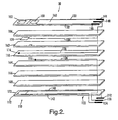
- the exhaust gas sensor 30 includes an NH 3 sensing cell; comprising a NH 3 sensing electrode 102, a reference electrode 104, and an electrolyte 106 (102/106/104); a NO X sensing cell, comprising a NO X sensing electrode 108, the reference electrode 104 and the electrolyte 106 (108/106/104); and an NH 3 -NO X sensing cell; comprising the NH 3 and NO X sensing electrodes 102, 108 and the electrolyte 106 (102/106/108).
- the exhaust gas sensor 30 further includes insulating layers 160, 162, 164, 166, 168, and 170, a heater 112, electrical leads 130, 132, 134, 136, 138, 140, and 142, contact pads 144, 146, 148, 150, 152, and 154, and a temperature sensor comprising temperature sensing electrodes 114 and 116 disposed on opposite sides of a temperature sensing electrolyte 118 (114/118/116).
- the NH 3 sensing cell 102/106/104, the NO X sensing cell 108/106/104, the NO X -NH 3 sensing cell 102/106/108, the heater 112, and the temperature sensor 114/118/116 are disposed at a sensing end 110 of the sensor 30.
- the contact pads 144, 146, 148, 150, 152, and 154 are disposed on a terminal end 122 of the sensor 30.
- the NH 3 sensing cell 102/106/104 can produce an electromotive force based on the concentration of NH 3 and NO 2 in the exhaust gas (NO does not produce a detectable electromotive force in the NH 3 sensing cell 102/106/104).
- concentration of NH 3 and NO 2 combined can be determined at the NH 3 sensing cell 102/106/104 from the cell's electromotive force.
- the temperature sensor 114/118/116 can measure a temperature indicative of the absolute gas temperature (T).
- T absolute gas temperature
- the partial pressure of oxygen gas and of water can be calculated using sensors such as air/fuel ratio sensors, oxygen sensor, mass air flow sensor, and other engine or exhaust gas sensors. In most diesel exhaust conditions, the emf effects due to O 2 and H 2 O effect will cancel each other.
- sensors such as air/fuel ratio sensors, oxygen sensor, mass air flow sensor, and other engine or exhaust gas sensors. In most diesel exhaust conditions, the emf effects due to O 2 and H 2 O effect will cancel each other.
- the controller 32 can apply equation (3) (or a suitable approximation thereof) to determine the amount of NH 3 in the presence of O 2 and H 2 O, or the controller 32 can access a lookup table from which the NH 3 partial pressure can be selected in accordance with the electromotive force output from the NH 3 sensing cell 102/106/104.
- the primary reactants at electrodes of the NO x sensing cell 108/106/104 are NO, H 2 O, NO 2 , and O 2 .
- the partial pressure of reactive components at the electrodes of the NO x sensing cell 108/106/104 can be determined from the cell's electromotive force by using the Nernst Equation, Equation 4: emf ⁇ kT 2 ⁇ e ⁇ Ln P NO - kT 4 ⁇ e ⁇ Ln P O 2 - kT 2 ⁇ e ⁇ Ln P H 2 ⁇ O - kT 4 ⁇ e ⁇ Ln P N ⁇ O 2 + constant
- the cell At low NO 2 partial pressures, the cell will produce a positive emf. At high NO 2 partial pressures, the cell will produce a negative emf (with reference electrode 104 set at positive polarity).
- the NO 2 reacts at both the NH 3 sensing electrode 102 and the NOx sensing electrode 108. Therefore, the electrical potential at the NH 3 sensing electrode 102 due to NO 2 reactions is approximately equal to the electrical potential at the NOx sensing electrode 108 due to NO 2 reactions, resulting in zero overall change in electromotive force due to reactions involving NO 2 .
- the controller 32 can use emf out put of cell 102/106/108 directly (or a suitable approximation thereof) to determine the amount of NH 3 in the presence of O 2 and H 2 O, or the controller 32 can access a lookup table from which the NH 3 partial pressure can be selected in accordance with the electromotive force output from the NH 3 -NO x sensing cell 102/106/108 and from the air/fuel ratio information provided by the engine ECM.
- the controller 32 selects the appropriate cell according to the selection rule below:
- the heater 112 is provided to maintain the sensor 30 at a selected operating temperature. More specifically, the heater is provided to heat the sensing end 110 of the sensor 30 to a sufficient temperature to facilitate the various electrochemical reactions therein. Further, the heater 112 can heat the electrodes 102, 104, 108 to a predetermined temperature for regeneration. The heater 112 can heat the electrodes 102, 104, 108 to an operating temperature of about 300 °C to about 800 °C depending on the engine operating conditions and the materials used in the electrode 102, 104, 108. The heater 112 can regenerate the electrodes 102, 104, 108 by heating the electrodes 102, 104, 108 above a threshold temperature for a predetermined time.
- the heater 112 can heat the electrodes to a temperature above about 700 °C for a time period of about 5 minutes to about 60 minutes and, more specifically, for a time period of about 15 minutes to about 45 minutes to burn off soot or other contaminants on the electrodes 102, 104, 108.
- the heater 112 can be positioned as part of the monolithic design of the sensor 30, for example between insulating layers 168 and 170, in thermal communication with the temperature sensor 114/118/116 and the sensing cells 102/106/104, 102/106/108, and 108/106/104. In other embodiments, the heater 112 can be in thermal communication with the cells without necessarily being part of a monolithic laminate structure, e.g., simply by being in close physical proximity to a cell.
- the heater 112 can be a resistance heater and can include a line pattern (connected parallel lines, serpentine, and/or the like).
- the heater 112 can include, for example, platinum, aluminum, palladium, and the like, as well as mixtures comprising at least one of the foregoing, oxides comprising at least one of the foregoing, and alloys comprising at least one of the foregoing metals.
- the electrical leads 152 and 154 are provided to transfer electric current from an external power source to the heater 112.
- the temperature sensor (114/118/116) is provided to measure the temperature of the sensing end 110 of the exhaust gas sensor 30.
- the temperature sensing electrodes 114, 116 include electrically conductive materials such as metals including platinum (Pt), copper (Cu), silver (Ag), palladium (Pd), gold (Au), alloys comprising at least one of the foregoing, as well as combinations comprising at least one of the foregoing.
- the electrolyte 118 can include ionic conducting material including the same or similar materials to electrolyte 106 such as yttria-stabilized zirconia and the like.
- the temperature sensor 114/118/116 can conduct electric current through the electrodes 114, 116 providing ionic conductance through the electrolyte layer 118, which is a function of temperature.
- the controller 32 can calculate the temperature of sensing end 110 the exhaust gas sensor 30.
- the contact pads 144, 146, 148, and 150 are provided to transfer signals from the exhaust gas sensor 30 to the controller 32.
- the contact pad 144 receives electric current from the ammonia sensing electrode 102 via the electrical lead 130.
- the contact pad 146 receives electric current from the NOx sensing electrode 108 via the electrical lead 132.
- the contact pad 148 receives electric current from the reference electrode 104 via the electrical lead 134 and receives electric current from the temperature sensing electrode 114 via the electrical lead 136.
- the contact pad 150 receives electric current from the temperature sensing electrode 116 via the electrical lead 138.
- the contact pads 144, 146, 148, 150, 152, and 154 and the electrical leads 130, 132, 134, 136, 138, 140, and 142 can include electrically conductive materials such as metals including platinum (Pt), copper (Cu), silver (Ag), palladium (Pd), gold (Au), alloys comprising at least one of the foregoing, as well as combinations comprising at least one of the foregoing.
- electrically conductive materials such as metals including platinum (Pt), copper (Cu), silver (Ag), palladium (Pd), gold (Au), alloys comprising at least one of the foregoing, as well as combinations comprising at least one of the foregoing.
- the RPM sensor 36 is provided to measure an engine speed of the engine 12.
- the RPM sensor 36 generates an (RPM) signal indicative of the number of revolutions per minute of the engine 12, that is received by the controller 32.
- the RPM sensor 36 can comprise a crankshaft sensor or a camshaft sensor, for example.
- the mass air flow sensor 34 is provided to generate a (MAF) signal indicative of a mass air flow inducted into the engine 12, that is received by the controller 32.
- the controller 32 can use the mass air flow level to calculate the air/fuel ratio of the exhaust gases.
- the temperature sensor 38 is provided to measure a temperature of exhaust gases exiting the engine 12.
- the temperature sensor 38 generates a (T) signal indicative of temperature that is received by the controller 32.
- the controller 32 is provided to receive the (NOx1), and (A) signals from the exhaust gas sensor 30, the (MAF) signal from the mass air flow sensor 34 (MAF), the (RPM) signal from the RPM sensor 36, and the (T) signal from the temperature sensor 38 to actively monitor the exhaust treatment system 14.
- the controller 32 is a computer including a microprocessor, input/output ports, read only memory in the form of an electronic storage medium for executable programs or algorithms and calibration values or constants, random access memory, as well as data buses for allowing the necessary communications within controller 32. From the output signals, the controller 32 can determine various conditions of the engine 12 including the air/fuel ratio, engine speed in revolutions per minute (RPM), engine load, and engine temperature.
- the controller can calculate air/fuel ratio in the exhaust by measuring an engine air intake level using the mass air flow sensor 34, and by using the air intake level, fuel intake level, and other engine conditions (for example, engine temperature and engine speed), to determine the amount of air and fuel reacted in the engine 12.
- the controller 32 can use the output signals along with algorithms, look up tables, and constants resident upon the microcomputer of the controller 32 to monitor the exhaust treatment system 14 as described below.
- the controller 32 measures a voltage between the contact pad 146 and the contact pad 148 corresponding to the (NOx1) signal.
- the controller 32 measures a voltage either between the contact pad 144 and the contact pad 148 or between the contact pad 144 and the contact pad 146 corresponding to the (A) signal indicative of an ammonia concentration, depending on the selection rule (as discussed above).
- the controller 32 measures an electrical impedance between the contact pad 148 and the contact pad 150 to determine the electrical impedance (I).
- the exhaust gas sensor 30 generates first and second output signals utilizing an ammonia sensing electrode 102 and a NOx sensing electrode 108, respectively, that are received by a controller 32, the first output signal being indicative of a first ammonia level, the second output signal being indicative of a first NOx level.
- the controller 32 makes a determination as to whether to operate the urea delivery system 22 in closed loop mode based on predetermined engine operating parameters. For example, the controller 32 can operate the system 22 in closed loop urea control mode when a steady-state engine operating condition is detected and can operate the system 22 in open loop control mode when a transient engine operating condition is detected. If the value of step 204 equals "yes" the method advances to step 206. Otherwise, the method advances to step 240.
- the controller 32 calculates a first ammonia level range based on an engine RPM value, an exhaust gas temperature value, and an exhaust air/fuel ratio value. It should be noted the exhaust air/fuel ratio value can be estimated based on the (MAF) signal and an amount of fuel being combusted in the engine 12.
- the controller 32 generates a third output signal to induce the urea delivery system 20 to deliver a predetermined urea flow rate into the exhaust gas treatment system 14 upstream of an SCR catalyst 22, based on the first ammonia level.
- step 210 the controller 32 makes a determination as to whether the first ammonia level is within the first ammonia level range. If the value of step 210 equals "yes,” the method advances to step 212. Otherwise, the method advances to step 230.
- the controller 32 calculates a urea flow rate range and a first NOx level range utilizing an engine RPM value, an exhaust gas temperature value and an exhaust air/fuel ratio value, respectively.
- step 214 the controller 32 makes a determination as to whether the urea flow rate of is within the urea flow rate range. If the value of step 214 equals "yes", the method advances to step 216. Otherwise, the method advances to step 222.
- step 216 the controller 32 makes a determination as to whether the first NOx level received by the controller 32 is within the first NOx level range. If the value of step 216 equals "yes", the method advances to step 218. Otherwise, the method advances to step 220.
- step 218 the exhaust gas treatment system 14 is operating as desired. After step 218, the method returns to step 202.
- step 220 the controller 32 generates a fourth output signal indicating the SCR catalyst 22 has degraded operational performance. After step 220, the method returns to step 202.
- step 222 the controller 32 makes a determination as to whether the first NOx level is within the first NOx level range. If the value of step 222 equals "yes”, the method advances to step 224. Otherwise, the method advances to step 228.
- the controller 32 At step 224, the controller 32 generates a fifth output signal indicating that either (i) the urea delivery system 20 has degraded operational performance, or (ii) the exhaust gas sensor 30 has degraded operational performance.
- the controller 32 At step 226 the controller 32 generates a sixth output signal to energize the heater 112 to heat the electrodes 102, 104, 108 of the exhaust gas sensor 30 above a threshold temperature for a predetermined amount of time to regenerate the electrodes 102, 104, 108.
- step 2208 the controller 32 generates a seventh signal indicating the SCR catalyst 22 has degraded operational performance. After step 228, the method returns to step 202.
- step 230 the controller 32 makes a determination as to whether the first NOx level is within the first NOx level range. If the value of step 230 equals "yes”, the method advances to step 232. Otherwise the method advances to step 236.
- the controller 32 generates an eighth output signal indicating the exhaust gas sensor 30 has degraded operational performance.
- the controller 32 generates a ninth output signal to energize the heater 112 to heat the electrodes 102, 104, 108 of the exhaust gas sensor 30 above a threshold temperature for a predetermined amount of time to regenerate the electrodes 102, 104, 108.
- step 230 when the value of step 230 equals "no", the method advances to step 236.
- the controller 32 At step 236, the controller 32 generates a tenth output signal indicating that either (i) the exhaust gas sensor 30 has degraded operational performance or (ii) the urea delivery system 20 has degraded operational performance.
- the controller 32 At step 238, the controller 32 generates an eleventh output signal to energize the heater 112 to heat the electrodes 102, 104, 108 of the exhaust gas sensor 30 above a threshold temperature for a predetermined amount of time to regenerate the electrodes 102, 104, 108.
- the method returns to step 202.
- step 240 the controller 32 generates a twelfth output signal to induce the urea delivery system 20 to deliver a predetermined urea flow rate into the exhaust gas treatment system 14 upstream of the SCR catalyst 22, based on an engine RPM value, an exhaust gas temperature value, and an exhaust air/fuel ratio.
- the controller 32 calculates a second ammonia range and a second NOx level range based on an engine RPM value, an exhaust gas temperature value and an exhaust air/fuel ratio value.
- step 244 the controller 32 makes a determination as to whether the first ammonia level is within the second ammonia level range. If the value at step 244 equals "yes", the method advances to step 246. Otherwise, the method advances to step 252.
- step 246 the controller 32 makes a determination as to whether the first NOx level is within the second NOx level range. If the value of step 246 equals "yes", the method advances to step 248. Otherwise, the method advances to step 250.
- the exhaust gas treatment system 14 is operating as desired.
- step 250 the controller 32 generates a thirteenth signal indicating the SCR catalyst 22 has degraded operational performance. After step 250, the method returns to step 202.
- step 252 the controller 32 makes a determination as to whether the first ammonia level is above the second ammonia level range. If the value at step 252 equals "yes”, the method advances to step 254. Otherwise, the method advances to step 260.
- step 254 the controller 32 makes a determination as to whether the first NOx level is within the second NOx level range. If the value of step 254 equals "yes", the method advances to step 256. Otherwise, the method advances to step 258.
- step 256 the controller 32 generates a fourteenth signal indicating that the urea delivery system 20 is delivering excess urea. After step 256, the method returns to step 202.
- step 258 the controller 32 generates a fifteenth signal indicating that the urea delivery system 20 is delivering excess urea and that the SCR catalyst 22 has degraded operational performance. After step 258, the method returns to step 202.
- step 260 the controller 32 makes a determination as to whether the first NOx level is within the second NOx level range. If the value of step 260 equals "yes", the method advances to step 262. Otherwise, the method advances to step 264.
- the controller 32 generates a sixteenth output signal indicating the exhaust gas sensor 30 has degraded operational performance.
- step 264 the controller 32 generates a seventeenth output signal to energize the heater 112 to heat the electrodes 102, 104, 108 of the exhaust gas sensor 30 above the threshold temperature for a predetermined amount of time to regenerate the electrode 102, 104, 108.
- the method returns to step 202.
- step 260 when the value of step 260 equals "no", the method advances to step 266.
- the controller 32 At step 266, the controller 32 generates an eighteenth signal indicating the urea delivery system 20 has degraded operational performance. After step 266, the method to step 202. After step 266, the method advances to step 202.
- the exhaust gas sensor 30 generates a first output signal utilizing the temperature sensor 114/118/116 therein, that is received by the controller 32.
- the controller 32 generates a second output signal to induce the heater 112 in the exhaust gas sensor 30 to generate heat based on the first output signal.
- the controller 32 calculates an electrical power level supplied to the heater 112 by the second output signal over a predetermined time period.
- the controller 32 calculates an electrical power level requirement range to control exhaust gas sensor temperature utilizing an engine RPM value, an exhaust gas temperature value, and an exhaust air/fuel ratio value.
- step 310 the controller 32 makes a determination as to whether the electrical power level is outside the electrical power level range. If the value of step 310 equals "yes" the method advances to step 312. Otherwise, the exhaust gas sensor 30 is operating as desired and the method returns to step 302.
- step 312 the controller 32 generates a third output signal indicating exhaust gas sensor 30 has degraded operational performance. After step 312, the method returns to step 302.
- the system and method for monitoring the exhaust gas treatment system provide substantial advantage over existing systems and methods.
- the system and method can detect degraded operational performance of an SCR catalyst and exhaust gas sensor utilized in the exhaust gas treatment system.
Landscapes
- Engineering & Computer Science (AREA)
- Chemical & Material Sciences (AREA)
- Chemical Kinetics & Catalysis (AREA)
- Combustion & Propulsion (AREA)
- Mechanical Engineering (AREA)
- General Engineering & Computer Science (AREA)
- Health & Medical Sciences (AREA)
- Toxicology (AREA)
- Exhaust Gas After Treatment (AREA)
Abstract
Description
- A system and a method for monitoring operation of an exhaust gas treatment system using an exhaust gas sensor are provided.
- Vehicle engines emit nitrogen oxides (NOx), including NO2, NO, and N2O. Generally, diesel engines emit higher levels of NOx than gasoline engines, because generally, diesel engines operate at higher combustion temperatures and with a higher air/fuel intake ratio. Government emission regulations mandate that diesel vehicles meet NOx emission level output requirements. However, reducing the combustion temperatures and reducing the air/fuel intake ratio can reduce the diesel engine's efficiency and can increase the amount of hydrocarbons, carbon monoxide, and soot in the exhaust gas.
- To meet emissions regulations, diesel vehicles can incorporate an exhaust treatment system that reduces NOx. In the application, the exhaust treatment system is equipped to use a urea delivery system and a selective catalytic reduction (SCR) catalyst to reduce NOx emissions. However, the SCR catalyst can have degraded operational performance when the SCR catalyst approaches an end of its operational life.
- Therefore, there is a need for a system for monitoring operation of an exhaust gas treatment system using an SCR catalyst to detect degraded operational performance of the exhaust gas treatment system.
- A method for monitoring operation of an exhaust gas treatment system using an exhaust gas sensor in accordance with an exemplary embodiment is provided. The exhaust gas treatment system has an exhaust pipe configured to receive exhaust gases. The exhaust gas treatment system has an SCR catalyst coupled to the exhaust pipe. The exhaust gas treatment system has a urea delivery system configured to delivery urea upstream of the SCR catalyst. The exhaust gas sensor has an ammonia sensing electrode communicating with exhaust gases downstream of the SCR catalyst. The method includes generating a first output signal utilizing the ammonia sensing electrode, the first output signal being indicative of a first ammonia level. The method further includes generating a second output signal to induce the urea delivery system to deliver a predetermined flow rate of urea upstream of the SCR catalyst. The second output signal is based on the first output signal. The method further includes calculating a first ammonia level range utilizing at least a first engine operating parameter. Finally, the method includes generating a third output signal when the first ammonia level is outside the first ammonia level range. The third output signal indicates at least one of the urea delivery system having degraded operational performance, the SCR catalyst having degraded operational performance, and the exhaust gas sensor having degraded operational performance.
- A method for monitoring operation of an exhaust gas treatment system using an exhaust gas sensor in accordance with another exemplary embodiment is provided. The exhaust gas treatment system has an exhaust pipe configured to receive exhaust gases. The exhaust gas treatment system has an SCR catalyst coupled to the exhaust pipe. The exhaust gas treatment system has a urea delivery system configured to delivery urea upstream of the SCR catalyst. The exhaust gas sensor has an ammonia sensing electrode communicating with exhaust gases downstream of the SCR catalyst. The method includes generating a first output signal utilizing the ammonia sensing electrode. The first output signal is indicative of a first ammonia level. The method further includes generating a second output signal utilizing at least a first engine operating parameter to induce the urea delivery system to deliver a predetermined flow rate of urea upstream of the SCR catalyst. The method further includes calculating a first ammonia level range utilizing at least a second engine operating parameter. The method further includes generating a third output signal when the first ammonia level is outside the first ammonia level range. The third output signal indicates at least one of the urea delivery system having degraded operational performance, the SCR catalyst having degraded operational performance, and the exhaust gas sensor having degraded operational performance.
- A method for monitoring operation of an exhaust gas sensor communicating with exhaust gases in accordance with another exemplary embodiment is disclosed. The exhaust gas sensor has a temperature sensor disposed in thermal communication with a heater. The method includes generating a first output signal utilizing the temperature sensor. The method further includes generating a second output signal to induce the heater to generate heat based on the first output signal. The method further includes calculating an electrical power level supplied to the heater by the second output voltage signal over a predetermined time period. The method further includes calculating an electrical power level range to control a temperature of the exhaust gas sensor utilizing an engine operating parameter. The method further includes generating a third output signal when the electrical power level is outside the electrical power level range, the third output signal being indicative of the exhaust gas sensor having degraded operational performance.
- A system for monitoring operation of an exhaust gas treatment system in accordance with another exemplary embodiment is disclosed. The exhaust gas treatment system has an exhaust pipe configured to receive exhaust gases, an SCR catalyst coupled to the exhaust pipe, and a urea delivery system configured to deliver urea upstream of the SCR catalyst. The system includes an exhaust gas sensor configured to generate a first output signal. The first output signal is indicative of an ammonia level downstream of the SCR catalyst. The system further includes a controller operably communicating with the exhaust gas sensor. The controller is configured to receive the first output signal. The controller is further configured to generate a second output signal to induce the urea delivery system to deliver a predetermined flow rate of urea upstream of the SCR catalyst. The second output signal is based on the first output signal. The controller is further configured to calculate a first ammonia level range utilizing at least a first engine operating parameter. The controller is further configured to generate a third output signal when the first ammonia level is outside the first ammonia level range. The third output signal indicates at least one of the urea delivery system having degraded operational performance, the SCR catalyst having degraded operational performance, and the exhaust gas sensor having degraded operational performance.
- A system for monitoring operation of an exhaust gas treatment system in accordance with another exemplary embodiment is disclosed. The exhaust gas treatment system has an exhaust pipe receiving exhaust gases, an SCR catalyst coupled to the exhaust pipe, and a urea delivery system configured to deliver urea upstream of the SCR catalyst. The system includes an exhaust gas sensor configured to generate a first output signal. The first output signal is indicative of an ammonia level downstream the SCR catalyst. The system further includes a controller operably communicating with the exhaust gas sensor. The controller is configured to receive the first output signal. The controller is further configured to generate a second output signal utilizing at least one first engine operating parameter to induce the urea delivery system to deliver a predetermined flow rate of urea upstream of the SCR catalyst. The controller is further configured to calculate a first ammonia level range utilizing at least one first engine operating parameter. The controller is further configured to generate a third output signal when the first ammonia level is outside the first ammonia level range. The third output signal indicates at least one of the urea delivery system having degraded operational performance, the SCR catalyst having degraded operational performance, and the exhaust gas sensor having degraded operational performance.
- A system for monitoring an exhaust gas sensor in accordance with another exemplary embodiment is disclosed. The exhaust gas sensor has a heater. The system includes a temperature sensor disposed in thermal communication with the exhaust gas sensor. The temperature sensor is configured to generate a first signal indicative of a temperature of the exhaust gas sensor. The system further includes a controller operably communicating with the temperature sensor. The controller is configured to receive the first output signal. The controller is further configured to generate a second signal to induce the heater to generate heat based on the first output signal. The controller is further configured to calculate an electrical power level supplied to the heater by the second signal over a predetermined time period. The controller is further configured to calculate an electrical power level range to control exhaust gas sensor temperature utilizing an engine operating parameter. The controller is further configured to generate a third output signal when the electrical power level is outside the electrical power level range, the third output signal indicating the exhaust gas sensor having degraded operational performance.
- Referring now to the figures, which are exemplary embodiments, and wherein like elements are numbered alike:
- Figure 1 is a block diagram of a vehicle having an engine, an exhaust treatment system, and a monitoring system in accordance with an exemplary embodiment of the invention;
- Figure 2 is an exploded view of an exhaust gas sensor utilized in the monitoring system of Figure 1;
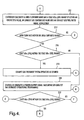
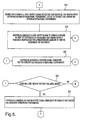
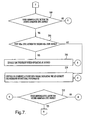
- Figures 3-8 are flow charts of a method for monitoring the exhaust gas treatment system of Figure 1; and
- Figure 9 is a flow chart of a method for monitoring operation of the exhaust gas sensor of Figure 2.
- Referring to Figure 1, a
vehicle 10 includes anengine 12, an exhaustgas treatment system 14, and a control andmonitoring system 16. In an exemplary embodiment, theengine 12 is a diesel engine. In an alternative embodiment, theengine 12 is a gasoline engine. Theengine 12 produces exhaust gases, which are received by the exhaustgas treatment system 14. - The exhaust
gas treatment system 14 is provided to reduce NOx emissions in exhaust gases received from theengine 12. The exhaustgas treatment system 14 includes a urea delivery system 20 andexhaust pipe portions exhaust pipe portion 24 is operably coupled between theengine 12 and an inlet of theSCR catalyst 22. Theexhaust pipe portion 25 is operably coupled to an outlet of theSCR catalyst 22. Exhaust gases from the engine flow through theexhaust pipe portion 24, theSCR catalyst 22, and theexhaust pipe portion 25. The urea delivery system 20 is operably coupled to theexhaust pipe portion 24 to deliver urea upstream of theSCR catalyst 22. - The urea delivery system 20 is provided to deliver a predetermined flow rate of urea (or other NOx reducing agent, such as, ammonia) to exhaust gases in response to a signal (U) from a
controller 32. Further, the urea delivery system 20 can store and maintain urea at selected conditions, (for example, at a selected temperature and pressure to maintain NOx reducing properties). Further, the urea delivery system 20 can receive a predetermined amount of air, and can maintain both the air and urea at predetermined pressures. The pressurized urea and air can be mixed at a predetermined ratio and can be delivered into the exhaust gases by being atomized through an injector. Iteratively, opening and closing a solenoid valve (not shown) in the urea delivery system 20 in response to the signal (U) from thecontroller 32 can control the flow rate of the urea into theexhaust pipe portion 24. Specifically, thecontroller 32 controls a duty cycle (a fraction of time that the solenoid valve will remain in the open position) of the signal (U) corresponding to a selected urea delivery rate. - The
SCR catalyst 22 is constructed from a substrate, catalytic metal(s), support materials, and ammonia (NH3) trapping material(s). TheSCR catalyst 22 promotes the catalytic oxidation of NOX using a catalytic metal effective for such oxidation. The ammonia produced from urea reacting with the exhaust gases can collect on the ammonia trapping materials of theSCR catalyst 22. The NOX can react (as a strong acid e.g., NOX and HNO3) with the ammonia (as a strong base e.g., NH3 and NH4OH) on the SCR catalyst surface, forming nitrogen and water. - Examples of this reaction are as follows:

NO + NO 2 + 2NH 3 → 2N 2 + 3H 2 O (2)
- The control and
monitoring system 16 is provided to control operation of theengine 12 and the urea delivery system 20, to reduce NOx emissions. Thesystem 16 is further provided to monitor operation of the exhaustgas treatment system 14 and to determine when theSCR catalyst 22 has degraded operational performance. Thesystem 16 includes anexhaust gas sensor 30, a massair flow sensor 34, anRPM sensor 36, atemperature sensor 38, and thecontroller 32. - Referring to Figure 2, the
exhaust gas sensor 30 is provided to detect ammonia levels and NOx levels in the exhaust gases. Theexhaust gas sensor 30 generates a signal (A) indicative of ammonia level in the exhaust gases, a signal (NOx1) indicative of NOx level in the exhaust gases, and a signal (I) indicative ofexhaust gas sensor 30 temperature. Theexhaust gas sensor 30 includes an NH3 sensing cell; comprising a NH3 sensing electrode 102, a reference electrode 104, and an electrolyte 106 (102/106/104); a NOX sensing cell, comprising a NOX sensing electrode 108, the reference electrode 104 and the electrolyte 106 (108/106/104); and an NH3-NOX sensing cell; comprising the NH3 and NOXsensing electrodes exhaust gas sensor 30 further includes insulatinglayers heater 112,electrical leads contact pads temperature sensing electrodes heater 112, and thetemperature sensor 114/118/116 are disposed at asensing end 110 of thesensor 30. Thecontact pads terminal end 122 of thesensor 30. - The NH3 sensing cell 102/106/104 can produce an electromotive force based on the concentration of NH3 and NO2 in the exhaust gas (NO does not produce a detectable electromotive force in the NH3 sensing cell 102/106/104). By using the Nernst Equation, the concentration of NH3 and NO2 combined can be determined at the NH3 sensing cell 102/106/104 from the cell's electromotive force.

Where : - k = the Boltzmann constant
- T = the absolute temperature of the gas
- e = the electron charge unit
- a, b, c, f, are constant
- Ln = natural log
- P NH3 = the partial pressure of ammonia in the gas,
- P O2 = the partial pressure of oxygen in the gas,
- P NO2 = the partial pressure of nitrogen dioxide in the gas,
- P H2O =the partial pressure of water vapor in the gas
- PNO = the partial pressure of nitrogen monoxide in the gas.
- The
temperature sensor 114/118/116 can measure a temperature indicative of the absolute gas temperature (T). The partial pressure of oxygen gas and of water can be calculated using sensors such as air/fuel ratio sensors, oxygen sensor, mass air flow sensor, and other engine or exhaust gas sensors. In most diesel exhaust conditions, the emf effects due to O2 and H2O effect will cancel each other. For further explanation on the operation of theexhaust gas sensor 30, and for further explanation on exhaust gas sensor materials, seeUnited States Provisional Patent Application Number 60/725,054 - In the NH3 sensing cell 102/106/104, when the NO2 concentrations are relatively low, the term

controller 32 can apply equation (3) (or a suitable approximation thereof) to determine the amount of NH3 in the presence of O2 and H2O, or thecontroller 32 can access a lookup table from which the NH3 partial pressure can be selected in accordance with the electromotive force output from the NH3 sensing cell 102/106/104. - The primary reactants at electrodes of the NOx sensing cell 108/106/104 are NO, H2O, NO2, and O2. The partial pressure of reactive components at the electrodes of the NOx sensing cell 108/106/104 can be determined from the cell's electromotive force by using the Nernst Equation, Equation 4:

- At low NO2 partial pressures, the cell will produce a positive emf. At high NO2 partial pressures, the cell will produce a negative emf (with reference electrode 104 set at positive polarity).
- At high concentrations of NO2, the NO2 reacts at both the NH3 sensing electrode 102 and the
NOx sensing electrode 108. Therefore, the electrical potential at the NH3 sensing electrode 102 due to NO2 reactions is approximately equal to the electrical potential at theNOx sensing electrode 108 due to NO2 reactions, resulting in zero overall change in electromotive force due to reactions involving NO2. Therefore, in the NH3-NOx sensing cell 102/106/108, when the NO2 concentrations are relatively high, the amount NH3 becomes the only unknown in equation (4), and, thecontroller 32 can use emf out put ofcell 102/106/108 directly (or a suitable approximation thereof) to determine the amount of NH3 in the presence of O2 and H2O, or thecontroller 32 can access a lookup table from which the NH3 partial pressure can be selected in accordance with the electromotive force output from the NH3-NOx sensing cell 102/106/108 and from the air/fuel ratio information provided by the engine ECM. - Since at lower NO2 partial pressures, the NH3 sensing cell 102/106/104 more accurately detects NH3, but at higher NO2 partial pressures, the NH3-NOx sensing cell 102/106/108 more accurately detects NH3, the
controller 32 selects the appropriate cell according to the selection rule below: - 1. Whenever the electromotive force between the
NOx sensing electrode 108 and the reference electrode 104 (measured at positive polarity) is greater than a selected emf (e.g., 0 millivolts (mV), +10 mV, or -10 mV), the NH3 electromotive force is equal to the electromotive force measured between the NH3 sensing electrode 102 and the reference electrode 104. - 2. Whenever the electromotive force between the
NOx sensing electrode 108 and the reference electrode 104 is not greater than the selected emf (e.g., 0 millivolts (mV), +10 mV, or -10 mV), the NH3 electromotive force is equal to the electromotive force between the NH3 sensing electrode 102 and theNOx sensing electrode 108. - The
heater 112 is provided to maintain thesensor 30 at a selected operating temperature. More specifically, the heater is provided to heat thesensing end 110 of thesensor 30 to a sufficient temperature to facilitate the various electrochemical reactions therein. Further, theheater 112 can heat theelectrodes heater 112 can heat theelectrodes electrode heater 112 can regenerate theelectrodes electrodes heater 112 can heat the electrodes to a temperature above about 700 °C for a time period of about 5 minutes to about 60 minutes and, more specifically, for a time period of about 15 minutes to about 45 minutes to burn off soot or other contaminants on theelectrodes - The
heater 112 can be positioned as part of the monolithic design of thesensor 30, for example between insulatinglayers temperature sensor 114/118/116 and thesensing cells 102/106/104, 102/106/108, and 108/106/104. In other embodiments, theheater 112 can be in thermal communication with the cells without necessarily being part of a monolithic laminate structure, e.g., simply by being in close physical proximity to a cell. - The
heater 112 can be a resistance heater and can include a line pattern (connected parallel lines, serpentine, and/or the like). Theheater 112 can include, for example, platinum, aluminum, palladium, and the like, as well as mixtures comprising at least one of the foregoing, oxides comprising at least one of the foregoing, and alloys comprising at least one of the foregoing metals. The electrical leads 152 and 154 are provided to transfer electric current from an external power source to theheater 112. - The temperature sensor (114/118/116) is provided to measure the temperature of the
sensing end 110 of theexhaust gas sensor 30. Thetemperature sensing electrodes electrolyte 118 can include ionic conducting material including the same or similar materials toelectrolyte 106 such as yttria-stabilized zirconia and the like. Thetemperature sensor 114/118/116 can conduct electric current through theelectrodes electrolyte layer 118, which is a function of temperature. By measuring an electrical impedance (I) of a closed loop circuit that includes thetemperature sensor 114/118/116, thecontroller 32 can calculate the temperature of sensingend 110 theexhaust gas sensor 30. - The
contact pads exhaust gas sensor 30 to thecontroller 32. Thecontact pad 144 receives electric current from theammonia sensing electrode 102 via theelectrical lead 130. Thecontact pad 146 receives electric current from theNOx sensing electrode 108 via theelectrical lead 132. Thecontact pad 148 receives electric current from the reference electrode 104 via theelectrical lead 134 and receives electric current from thetemperature sensing electrode 114 via theelectrical lead 136. Thecontact pad 150 receives electric current from thetemperature sensing electrode 116 via theelectrical lead 138. - The
contact pads electrical leads - Referring again to Figure 1, the
RPM sensor 36 is provided to measure an engine speed of theengine 12. TheRPM sensor 36 generates an (RPM) signal indicative of the number of revolutions per minute of theengine 12, that is received by thecontroller 32. TheRPM sensor 36 can comprise a crankshaft sensor or a camshaft sensor, for example. - The mass
air flow sensor 34 is provided to generate a (MAF) signal indicative of a mass air flow inducted into theengine 12, that is received by thecontroller 32. Thecontroller 32 can use the mass air flow level to calculate the air/fuel ratio of the exhaust gases. - The
temperature sensor 38 is provided to measure a temperature of exhaust gases exiting theengine 12. Thetemperature sensor 38 generates a (T) signal indicative of temperature that is received by thecontroller 32. - The
controller 32 is provided to receive the (NOx1), and (A) signals from theexhaust gas sensor 30, the (MAF) signal from the mass air flow sensor 34 (MAF), the (RPM) signal from theRPM sensor 36, and the (T) signal from thetemperature sensor 38 to actively monitor theexhaust treatment system 14. Thecontroller 32 is a computer including a microprocessor, input/output ports, read only memory in the form of an electronic storage medium for executable programs or algorithms and calibration values or constants, random access memory, as well as data buses for allowing the necessary communications withincontroller 32. From the output signals, thecontroller 32 can determine various conditions of theengine 12 including the air/fuel ratio, engine speed in revolutions per minute (RPM), engine load, and engine temperature. The controller can calculate air/fuel ratio in the exhaust by measuring an engine air intake level using the massair flow sensor 34, and by using the air intake level, fuel intake level, and other engine conditions (for example, engine temperature and engine speed), to determine the amount of air and fuel reacted in theengine 12. Thecontroller 32 can use the output signals along with algorithms, look up tables, and constants resident upon the microcomputer of thecontroller 32 to monitor theexhaust treatment system 14 as described below. - Referring to Figures 1 and 2, the
controller 32 measures a voltage between thecontact pad 146 and thecontact pad 148 corresponding to the (NOx1) signal. Thecontroller 32 measures a voltage either between thecontact pad 144 and thecontact pad 148 or between thecontact pad 144 and thecontact pad 146 corresponding to the (A) signal indicative of an ammonia concentration, depending on the selection rule (as discussed above). Thecontroller 32 measures an electrical impedance between thecontact pad 148 and thecontact pad 150 to determine the electrical impedance (I). - Referring to Figures 3-8, a
method 200 for monitoring operation of the exhaustgas treatment system 14 using theexhaust gas sensor 30, thecontroller 32, will now be described. - At
step 202, theexhaust gas sensor 30 generates first and second output signals utilizing anammonia sensing electrode 102 and aNOx sensing electrode 108, respectively, that are received by acontroller 32, the first output signal being indicative of a first ammonia level, the second output signal being indicative of a first NOx level. - At
step 204, thecontroller 32 makes a determination as to whether to operate theurea delivery system 22 in closed loop mode based on predetermined engine operating parameters. For example, thecontroller 32 can operate thesystem 22 in closed loop urea control mode when a steady-state engine operating condition is detected and can operate thesystem 22 in open loop control mode when a transient engine operating condition is detected. If the value ofstep 204 equals "yes" the method advances to step 206. Otherwise, the method advances to step 240. - At
step 206, thecontroller 32 calculates a first ammonia level range based on an engine RPM value, an exhaust gas temperature value, and an exhaust air/fuel ratio value. It should be noted the exhaust air/fuel ratio value can be estimated based on the (MAF) signal and an amount of fuel being combusted in theengine 12. - At
step 208, thecontroller 32 generates a third output signal to induce the urea delivery system 20 to deliver a predetermined urea flow rate into the exhaustgas treatment system 14 upstream of anSCR catalyst 22, based on the first ammonia level. - At
step 210, thecontroller 32 makes a determination as to whether the first ammonia level is within the first ammonia level range. If the value ofstep 210 equals "yes," the method advances to step 212. Otherwise, the method advances to step 230. - At
step 212, thecontroller 32 calculates a urea flow rate range and a first NOx level range utilizing an engine RPM value, an exhaust gas temperature value and an exhaust air/fuel ratio value, respectively. - At
step 214, thecontroller 32 makes a determination as to whether the urea flow rate of is within the urea flow rate range. If the value ofstep 214 equals "yes", the method advances to step 216. Otherwise, the method advances to step 222. - At
step 216, thecontroller 32 makes a determination as to whether the first NOx level received by thecontroller 32 is within the first NOx level range. If the value ofstep 216 equals "yes", the method advances to step 218. Otherwise, the method advances to step 220. - At
step 218, the exhaustgas treatment system 14 is operating as desired. Afterstep 218, the method returns to step 202. - At
step 220, thecontroller 32 generates a fourth output signal indicating theSCR catalyst 22 has degraded operational performance. Afterstep 220, the method returns to step 202. - Referring again to step 214, when the value of
step 214 equals "no", the method advances to step 222. Atstep 222, thecontroller 32 makes a determination as to whether the first NOx level is within the first NOx level range. If the value ofstep 222 equals "yes", the method advances to step 224. Otherwise, the method advances to step 228. - At
step 224, thecontroller 32 generates a fifth output signal indicating that either (i) the urea delivery system 20 has degraded operational performance, or (ii) theexhaust gas sensor 30 has degraded operational performance. - At
step 226 thecontroller 32 generates a sixth output signal to energize theheater 112 to heat theelectrodes exhaust gas sensor 30 above a threshold temperature for a predetermined amount of time to regenerate theelectrodes - At
step 228, thecontroller 32 generates a seventh signal indicating theSCR catalyst 22 has degraded operational performance. Afterstep 228, the method returns to step 202. - Referring again to step 210, when the value of
step 210 equals "no", the method advances to step 230. Atstep 230, thecontroller 32 makes a determination as to whether the first NOx level is within the first NOx level range. If the value ofstep 230 equals "yes", the method advances to step 232. Otherwise the method advances to step 236. - At
step 232, thecontroller 32 generates an eighth output signal indicating theexhaust gas sensor 30 has degraded operational performance. - At
step 234, thecontroller 32 generates a ninth output signal to energize theheater 112 to heat theelectrodes exhaust gas sensor 30 above a threshold temperature for a predetermined amount of time to regenerate theelectrodes - Referring again to step 230, when the value of
step 230 equals "no", the method advances to step 236. Atstep 236, thecontroller 32 generates a tenth output signal indicating that either (i) theexhaust gas sensor 30 has degraded operational performance or (ii) the urea delivery system 20 has degraded operational performance. - At
step 238, thecontroller 32 generates an eleventh output signal to energize theheater 112 to heat theelectrodes exhaust gas sensor 30 above a threshold temperature for a predetermined amount of time to regenerate theelectrodes step 238, the method returns to step 202. - Referring again to step 204, when the value of
step 204 equals "no", the method advances to step 240. Atstep 240, thecontroller 32 generates a twelfth output signal to induce the urea delivery system 20 to deliver a predetermined urea flow rate into the exhaustgas treatment system 14 upstream of theSCR catalyst 22, based on an engine RPM value, an exhaust gas temperature value, and an exhaust air/fuel ratio. - At
step 242, thecontroller 32 calculates a second ammonia range and a second NOx level range based on an engine RPM value, an exhaust gas temperature value and an exhaust air/fuel ratio value. - At
step 244, thecontroller 32 makes a determination as to whether the first ammonia level is within the second ammonia level range. If the value atstep 244 equals "yes", the method advances to step 246. Otherwise, the method advances to step 252. - At
step 246, thecontroller 32 makes a determination as to whether the first NOx level is within the second NOx level range. If the value ofstep 246 equals "yes", the method advances to step 248. Otherwise, the method advances to step 250. - At
step 248, the exhaustgas treatment system 14 is operating as desired. - At
step 250, thecontroller 32 generates a thirteenth signal indicating theSCR catalyst 22 has degraded operational performance. Afterstep 250, the method returns to step 202. - Referring again to step 244, when the value of
step 244 equals "no", the method advances to step 252. Atstep 252, thecontroller 32 makes a determination as to whether the first ammonia level is above the second ammonia level range. If the value atstep 252 equals "yes", the method advances to step 254. Otherwise, the method advances to step 260. - At
step 254, thecontroller 32 makes a determination as to whether the first NOx level is within the second NOx level range. If the value ofstep 254 equals "yes", the method advances to step 256. Otherwise, the method advances to step 258. - At
step 256, thecontroller 32 generates a fourteenth signal indicating that the urea delivery system 20 is delivering excess urea. Afterstep 256, the method returns to step 202. - At
step 258, thecontroller 32 generates a fifteenth signal indicating that the urea delivery system 20 is delivering excess urea and that theSCR catalyst 22 has degraded operational performance. Afterstep 258, the method returns to step 202. - At
step 260, thecontroller 32 makes a determination as to whether the first NOx level is within the second NOx level range. If the value ofstep 260 equals "yes", the method advances to step 262. Otherwise, the method advances to step 264. - At
step 262, thecontroller 32 generates a sixteenth output signal indicating theexhaust gas sensor 30 has degraded operational performance. - At
step 264, thecontroller 32 generates a seventeenth output signal to energize theheater 112 to heat theelectrodes exhaust gas sensor 30 above the threshold temperature for a predetermined amount of time to regenerate theelectrode step 264, the method returns to step 202. - Referring again to step 260, when the value of
step 260 equals "no", the method advances to step 266. Atstep 266, thecontroller 32 generates an eighteenth signal indicating the urea delivery system 20 has degraded operational performance. Afterstep 266, the method to step 202. Afterstep 266, the method advances to step 202. - Referring to Figure 9, a
method 300 for monitoring operation of theexhaust gas sensor 30 using thetemperature sensor 114/118/116 and thecontroller 32 will now be described. - At
step 302, theexhaust gas sensor 30 generates a first output signal utilizing thetemperature sensor 114/118/116 therein, that is received by thecontroller 32. - At
step 304, thecontroller 32 generates a second output signal to induce theheater 112 in theexhaust gas sensor 30 to generate heat based on the first output signal. - At
step 306, thecontroller 32 calculates an electrical power level supplied to theheater 112 by the second output signal over a predetermined time period. - At
step 308, thecontroller 32 calculates an electrical power level requirement range to control exhaust gas sensor temperature utilizing an engine RPM value, an exhaust gas temperature value, and an exhaust air/fuel ratio value. - At
step 310, thecontroller 32 makes a determination as to whether the electrical power level is outside the electrical power level range. If the value ofstep 310 equals "yes" the method advances to step 312. Otherwise, theexhaust gas sensor 30 is operating as desired and the method returns to step 302. - At
step 312, thecontroller 32 generates a third output signal indicatingexhaust gas sensor 30 has degraded operational performance. Afterstep 312, the method returns to step 302. - The system and method for monitoring the exhaust gas treatment system provide substantial advantage over existing systems and methods. In particular, the system and method can detect degraded operational performance of an SCR catalyst and exhaust gas sensor utilized in the exhaust gas treatment system.
- The terms "first," "second," and the like, herein do not denote any order, quantity, or importance, but rather are used to distinguish one element from another, and the terms "a" and "an" herein do not denote a limitation of quantity, but rather denote the presence of at least one of the referenced item. Unless defined otherwise, technical and scientific terms used herein have the same meaning as is commonly understood by one of skill in the art to which this invention belongs. The modifier "about" used in connection with a quantity is inclusive of the stated value and has the meaning dictated by the context (e.g., includes the degree of error associated with measurement of the particular quantity). In describing the arrangement of exhaust treatment devices within a system, the terms "upstream" and "downstream" are used. These terms have their ordinary meaning. For example, an "upstream" device as used herein refers to a device producing a fluid or gas output stream that is fed to a "downstream" device.
- While the invention has been described with reference to exemplary embodiments, it will be understood by those skilled in the art that various changes may be made and equivalents may be substituted for elements thereof without departing from the scope of the invention. In addition, many modifications may be made to adapt a particular situation or material to the teachings of the invention without departing from the essential scope thereof. Therefore, it is intended that the invention not be limited to the particular embodiment disclosed as the best mode contemplated for carrying out this invention, but that the invention will include all embodiments falling within the scope of the appended claims.
Claims (20)
- A method for monitoring operation of an exhaust gas treatment system using an exhaust gas sensor, the exhaust gas treatment system having an exhaust pipe configured to receive exhaust gases, an SCR catalyst coupled to the exhaust pipe, and a urea delivery system configured to deliver urea upstream the SCR catalyst, the exhaust gas sensor having an ammonia sensing electrode communicating with exhaust gases downstream of the SCR catalyst, the method comprising:generating a first output signal utilizing the ammonia sensing electrode, the first output signal being indicative of a first ammonia level;generating a second output signal to induce the urea delivery system to deliver a predetermined flow rate of urea upstream of the SCR catalyst, the second output signal being based on the first output signal;calculating a first ammonia level range utilizing at least a first engine operating parameter; andgenerating a third output signal when the first ammonia level is outside the first ammonia level range, the third output signal indicating at least one of the urea delivery system having degraded operational performance, the SCR catalyst having degraded operational performance, and the exhaust gas sensor having degraded operational performance.
- The method of claim 1, further comprising generating a fourth output signal to energize a heater to heat the ammonia sensing electrode to a temperature greater than a threshold temperature for a predetermined amount of time to regenerate the ammonia sensing electrode when the first ammonia level is outside the first ammonia level range.
- The method of claim 1, wherein the first engine operating parameter comprises at least one of an engine RPM value, an exhaust gas temperature value, and an exhaust air/fuel ratio value.
- The method of claim 1, further comprising:generating a fourth output signal utilizing a NOx sensing electrode in the exhaust gas sensor, the fourth output signal indicative of a first NOx level;calculating a first NOx level range utilizing at least a second engine operating parameter; andgenerating a fifth output signal when the first NOx level is outside the first NOx level range, the fifth output signal indicating at least one of the urea delivery system having degraded operational performance, the SCR catalyst having degraded operational performance, and the exhaust gas sensor having degraded operational performance.
- The method of claim 4, further comprising generating a sixth output signal to energize a heater to heat the NOx sensing electrode to a temperature greater than a threshold temperature for a predetermined amount of time to regenerate the NOx sensing electrode when the first NOx level is outside the first NOx level range.
- The method of claim 4, wherein the first engine operating parameter comprises at least one of an engine RPM value, an exhaust gas temperature value, and an exhaust air/fuel ratio value.
- The method of claim 4, wherein the first output signal is a measured voltage between the ammonia sensing electrode and a reference electrode in the exhaust gas sensor when the fourth output signal is greater than or equal to a threshold value, and the first output signal is a measured voltage between the ammonia sensing electrode and the NOx sensing electrode when the fourth output signal is less than the threshold value.
- A method for monitoring operation of an exhaust gas treatment system using an exhaust gas sensor, the exhaust gas treatment system having an exhaust pipe configured to receive exhaust gases, an SCR catalyst coupled to the exhaust pipe, and a urea delivery system configured to delivery urea upstream of the SCR catalyst, the exhaust gas sensor having an ammonia sensing electrode communicating with exhaust gases downstream of the SCR catalyst, the method comprising:generating a first output signal utilizing the ammonia sensing electrode, the first output signal being indicative of a first ammonia level;generating a second output signal utilizing at least a first engine operating parameter to induce the urea delivery system to deliver a predetermined flow rate of urea upstream of the SCR catalyst;calculating a first ammonia level range utilizing at least a second engine operating parameter; andgenerating a third output signal when the first ammonia level is outside the first ammonia level range, the third output signal indicating at least one of the urea delivery system having degraded operational performance, the SCR catalyst having degraded operational performance, and the exhaust gas sensor having degraded operational performance.
- The method of claim 8, further comprising generating a fourth output signal to energize a heater to heat the ammonia sensing electrode to a temperature greater than a threshold temperature for a predetermined amount of time to regenerate the ammonia sensing electrode when the first ammonia level is outside the first ammonia level range.
- The method of claim 8, wherein the first engine operating parameter comprises at least one of an engine RPM value, an exhaust gas temperature value, and an exhaust air/fuel ratio value.
- The method of claim 8, further comprising:generating a fourth output signal utilizing a NOx sensing electrode in the exhaust gas sensor, the fourth output signal being indicative of a first NOx level;calculating a first NOx level range utilizing at least a third engine operating parameter; andgenerating a fifth output signal when the first NOx level is outside the first NOx level range, the fifth output signal indicating at least one of the urea delivery system having degraded operational performance, the SCR catalyst having degraded operational performance, and the exhaust gas sensor having degraded operational performance.
- The method of claim 11, further comprising generating a sixth output signal to energize a heater to heat the NOx sensing electrode to a temperature greater than a threshold temperature for a predetermined amount of time to regenerate the NOx sensing electrode when the first NOx level is outside the first NOx level range.
- The method of claim 11, wherein the third engine operating parameter is at least one of an engine RPM value, an exhaust gas temperature value, and an exhaust air/fuel ratio value.
- The method of claim 11, wherein the first output signal is a measured voltage between the ammonia sensing electrode and a reference electrode in the exhaust gas sensor when the fourth output signal is greater than or equal to a threshold value, and the first output signal is a measured voltage between the ammonia sensing electrode and the NOx sensing electrode when the fourth output signal is less than the threshold value.
- A method for monitoring operation of an exhaust gas sensor communicating with exhaust gases, the exhaust gas sensor having a temperature sensor disposed in thermal communication with a heater, the method comprising:generating a first output signal utilizing the temperature sensor;generating a second output signal to induce the heater to generate heat based on the first output signal;calculating an electrical power level supplied to the heater by the second output signal over a predetermined time period;calculating an electrical power level range to control a temperature of the exhaust gas sensor utilizing an engine operating parameter; andgenerating a third output signal when the electrical power level is outside the electrical power level range, the third output signal being indicative of the exhaust gas sensor having degraded operational performance.
- A system for monitoring operation of an exhaust gas treatment system, the exhaust gas treatment system having an exhaust pipe configured to receive exhaust gases, an SCR catalyst coupled to the exhaust pipe, and a urea delivery system configured to deliver urea upstream of the SCR catalyst, comprising:an exhaust gas sensor configured to generate a first output signal, the first output signal being indicative of a first ammonia level downstream of the SCR catalyst; anda controller operably communicating with the exhaust gas sensor, the controller configured to receive the first output signal, the controller further configured to generate a second output signal to induce the urea delivery system to deliver a predetermined flow rate of urea upstream of the SCR catalyst, the second output signal being based on the first output signal, the controller further configured to calculate a first ammonia level range utilizing at least a first engine operating parameter, the controller further configured to generate a third output signal when the first ammonia level is outside the first ammonia level range, the third output signal indicating at least one of the urea delivery system having degraded operational performance, the SCR catalyst having degraded operational performance, and the exhaust gas sensor having degraded operational performance.
- The system of claim 16, wherein the controller is further configured to generate a fourth output signal to energize a heater to heat the ammonia sensing electrode to a temperature greater than a threshold temperature for a predetermined amount of time to regenerate the ammonia sensing electrode when the first ammonia level is outside the first ammonia level range.
- A system for monitoring operation of an exhaust gas treatment system, the exhaust gas treatment system having an exhaust pipe receiving exhaust gases, an SCR catalyst coupled to the exhaust pipe, and a urea delivery system configured to deliver urea upstream of the SCR catalyst, comprising:an exhaust gas sensor configured to generate a first output signal, the first output signal being indicative of a first ammonia level downstream the SCR catalyst; anda controller operably communicating with the exhaust gas sensor, the controller configured to receive the first output signal, the controller further configured to generate a second output signal utilizing at least one first engine operating parameter to induce the urea delivery system to deliver a predetermined flow rate of urea upstream of the SCR catalyst, the controller further configured to calculate a first ammonia level range utilizing at least one first engine operating parameter, the controller further configured to generate a third output signal when the first ammonia level is outside the first ammonia level range, the third output signal indicating at least one of the urea delivery system having degraded operational performance, the SCR catalyst having degraded operational performance, and the exhaust gas sensor having degraded operational performance.
- The system of claim 18, wherein the controller is further configured to generate a fourth output signal to energize a heater to heat the ammonia sensing electrode to a temperature greater than a threshold temperature for a predetermined amount of time to regenerate the ammonia sensing electrode when the first ammonia level is outside the first ammonia level range.
- A system for monitoring an exhaust gas sensor, the exhaust gas sensor having a heater, comprising:a temperature sensor disposed in thermal communication with the exhaust gas sensor, the temperature sensor configured to generate a first output signal indicative of a temperature of the exhaust gas sensor; anda controller operably communicating with the temperature sensor, the controller configured to receive the first output signal; the controller further configured to generate a second output signal to induce the heater to generate heat based on the first output signal, the controller further configured to calculate an electrical power level supplied to the heater by the second signal over a predetermined time period, the controller further configured to calculate an electrical power level range to control exhaust gas sensor temperature utilizing an engine operating parameter, the controller further configured to generate a third output signal when the electrical power level is outside the electrical power level range, the third output signal indicating the exhaust gas sensor having degraded operational performance.
Applications Claiming Priority (4)
| Application Number | Priority Date | Filing Date | Title |
|---|---|---|---|
| US72505505P | 2005-10-07 | 2005-10-07 | |
| US72505405P | 2005-10-07 | 2005-10-07 | |
| US73408705P | 2005-11-07 | 2005-11-07 | |
| US11/451,939 US7757478B2 (en) | 2005-10-07 | 2006-06-13 | System and method for monitoring operation of an exhaust gas treatment system |
Publications (3)
| Publication Number | Publication Date |
|---|---|
| EP1772599A2 true EP1772599A2 (en) | 2007-04-11 |
| EP1772599A3 EP1772599A3 (en) | 2009-03-04 |
| EP1772599B1 EP1772599B1 (en) | 2011-03-02 |
Family
ID=37663268
Family Applications (1)
| Application Number | Title | Priority Date | Filing Date |
|---|---|---|---|
| EP06076825A Active EP1772599B1 (en) | 2005-10-07 | 2006-10-03 | System and method for monitoring of an exhaust gas treatment system |
Country Status (4)
| Country | Link |
|---|---|
| US (1) | US7757478B2 (en) |
| EP (1) | EP1772599B1 (en) |
| AT (1) | ATE500405T1 (en) |
| DE (1) | DE602006020383D1 (en) |
Cited By (3)
| Publication number | Priority date | Publication date | Assignee | Title |
|---|---|---|---|---|
| GB2435625A (en) * | 2006-03-03 | 2007-09-05 | Ford Global Tech Llc | A reductant storage sensing system and method |
| EP1921444A1 (en) * | 2006-11-09 | 2008-05-14 | Delphi Technologies, Inc. | Exhaust gas sensors and methods for measuring concentrations of nox and ammonia and temperatures of the sensors |
| CN109364753A (en) * | 2018-10-16 | 2019-02-22 | 厦门邑通软件科技有限公司 | A method for predicting the remaining life of a catalyst and saving ammonia |
Families Citing this family (26)
| Publication number | Priority date | Publication date | Assignee | Title |
|---|---|---|---|---|
| US7991533B2 (en) * | 2007-06-11 | 2011-08-02 | Southwest Research Institute | Adaptive reductant dosing and emission control strategies |
| DE102007037569B4 (en) | 2007-08-09 | 2020-01-16 | Daimler Ag | Method for testing an exhaust aftertreatment system |
| US20100032318A1 (en) * | 2008-08-07 | 2010-02-11 | Da Yu Wang | System and method for ammonia and heavy hydrocarbon (hc) sensing |
| US20100032292A1 (en) * | 2008-08-07 | 2010-02-11 | Da Yu Wang | Ammonia gas sensor |
| US8051700B2 (en) * | 2008-09-29 | 2011-11-08 | Delphi Technologies, Inc. | Exhaust gas sensor and method for determining concentrations of exhaust gas constituents |
| US8103458B2 (en) * | 2008-12-18 | 2012-01-24 | Delphi Technologies, Inc. | Exhaust gas sensing system and method for determining concentrations of exhaust gas constituents |
| US9657630B2 (en) * | 2008-12-18 | 2017-05-23 | GM Global Technology Operations LLC | Diagnostic systems and methods for selective catalytic reduction (SCR) systems based on NOx sensor feedback |
| US8459243B2 (en) * | 2009-07-31 | 2013-06-11 | Ford Global Technologies, Llc | Method, systems and sensor for detecting humidity |
| JP5204160B2 (en) * | 2009-09-03 | 2013-06-05 | 日本特殊陶業株式会社 | Multigas sensor control method and multigas sensor control apparatus |
| KR101126241B1 (en) * | 2009-12-03 | 2012-03-19 | 현대자동차주식회사 | Determination Method of Lambda Sensor and Its System |
| GB2480465A (en) * | 2010-05-19 | 2011-11-23 | Gm Global Tech Operations Inc | Method of controlling injection of diesel exhaust fluid |
| US20120282564A1 (en) * | 2011-05-03 | 2012-11-08 | Electric Power Research Institute, Inc. | METHODS FOR REDUCING NOx IN SCR FOSSIL-FUEL FIRED BOILERS |
| US9119748B2 (en) * | 2011-10-28 | 2015-09-01 | Kimberly-Clark Worldwide, Inc. | Electronic discriminating device for body exudate detection |
| US8816149B2 (en) | 2011-10-28 | 2014-08-26 | Kimberly-Clark Worldwide, Inc. | System for detection and monitoring of body exudates using a gas emitting substance for use in interactive toilet training |
| US8933292B2 (en) | 2011-10-28 | 2015-01-13 | Kimberly-Clark Worldwide, Inc. | Absorbent article with sensor array for body exudate detection |
| WO2013134539A1 (en) | 2012-03-07 | 2013-09-12 | Cummins Inc. | Method and algorithm for performing an nh3 sensor rationality diagnostic |
| US9212971B2 (en) * | 2012-08-17 | 2015-12-15 | Robert Bosch Gmbh | Oxygen sensor regeneration |
| CN105579679B (en) * | 2013-09-25 | 2017-12-15 | 丰田自动车株式会社 | Abnormality diagnosis device of exhaust purification system |
| US9624804B2 (en) * | 2013-09-25 | 2017-04-18 | Toyota Jidosha Kabushiki Kaisha | Abnormality diagnosis device for a sensor |
| JP6037035B2 (en) * | 2013-09-25 | 2016-11-30 | トヨタ自動車株式会社 | Exhaust purification device diagnostic device |
| US9851328B2 (en) * | 2014-08-18 | 2017-12-26 | Stmicroelectronics Pte Ltd | Compact microelectronic integrated gas sensor |
| US9863909B2 (en) | 2014-11-14 | 2018-01-09 | Ford Global Technologies, Llc | Oxygen sensor control based on water contact |
| JP6612711B2 (en) * | 2016-10-20 | 2019-11-27 | 日本特殊陶業株式会社 | Concentration calculation device, concentration calculation system, and concentration calculation method |
| US10488380B2 (en) * | 2016-10-24 | 2019-11-26 | Ngk Insulators, Ltd. | Apparatus for measuring ammonia concentration, system for measuring ammonia concentration, system for treating exhaust gas, and method for measuring ammonia concentration |
| US10634032B2 (en) * | 2017-12-15 | 2020-04-28 | GM Global Technology Operations LLC | Method and apparatus for monitoring an exhaust aftertreatment system for an internal combustion engine |
| EP4323628A4 (en) * | 2021-04-12 | 2024-11-13 | Cummins, Inc. | SYSTEMS AND METHODS FOR MANAGING AMMONIA LOSS WITH A HEATING DEVICE |
Citations (2)
| Publication number | Priority date | Publication date | Assignee | Title |
|---|---|---|---|---|
| WO2003100225A1 (en) | 2002-05-07 | 2003-12-04 | Extengine Transport Systems | Emission control system |
| EP1426575A1 (en) | 2002-11-25 | 2004-06-09 | Robert Bosch Gmbh | Method and apparatus for monitoring an exhaust gas after-treatment system |
Family Cites Families (7)
| Publication number | Priority date | Publication date | Assignee | Title |
|---|---|---|---|---|
| US5145566A (en) * | 1988-09-30 | 1992-09-08 | Ford Motor Company | Method for determining relative amount of oxygen containing gas in a gas mixture |
| US6295809B1 (en) | 1999-07-12 | 2001-10-02 | Ford Global Technologies, Inc. | Emission control system with a catalyst |
| DE10056320A1 (en) | 2000-11-14 | 2002-05-16 | Volkswagen Ag | Process for diagnosing the end stage of a heating device of a gas sensor comprises using a prescribed diagnosis value as a sensor condition signal and/or a prescribed diagnosis value of a heating voltage parameter signal |
| JP2003148198A (en) * | 2001-11-13 | 2003-05-21 | Toyota Motor Corp | Exhaust purification device for internal combustion engine |
| EP1403637B1 (en) * | 2002-09-25 | 2010-05-12 | NGK Spark Plug Co. Ltd. | Ammonia sensor |
| US7093427B2 (en) * | 2002-11-21 | 2006-08-22 | Ford Global Technologies, Llc | Exhaust gas aftertreatment systems |
| US7074319B2 (en) * | 2002-12-11 | 2006-07-11 | Delphi Technologies, Inc. | Ammonia gas sensors |
-
2006
- 2006-06-13 US US11/451,939 patent/US7757478B2/en active Active
- 2006-10-03 EP EP06076825A patent/EP1772599B1/en active Active
- 2006-10-03 AT AT06076825T patent/ATE500405T1/en not_active IP Right Cessation
- 2006-10-03 DE DE602006020383T patent/DE602006020383D1/en active Active
Patent Citations (2)
| Publication number | Priority date | Publication date | Assignee | Title |
|---|---|---|---|---|
| WO2003100225A1 (en) | 2002-05-07 | 2003-12-04 | Extengine Transport Systems | Emission control system |
| EP1426575A1 (en) | 2002-11-25 | 2004-06-09 | Robert Bosch Gmbh | Method and apparatus for monitoring an exhaust gas after-treatment system |
Cited By (6)
| Publication number | Priority date | Publication date | Assignee | Title |
|---|---|---|---|---|
| GB2435625A (en) * | 2006-03-03 | 2007-09-05 | Ford Global Tech Llc | A reductant storage sensing system and method |
| GB2435625B (en) * | 2006-03-03 | 2009-05-27 | Ford Global Tech Llc | A Reductant storage sensing system and method |
| US8141347B2 (en) | 2006-03-03 | 2012-03-27 | Ford Global Technologies, Llc | Reductant storage sensing system and method |
| US8783018B2 (en) | 2006-03-03 | 2014-07-22 | Ford Global Technologies, Llc | Reductant storage sensing system and method |
| EP1921444A1 (en) * | 2006-11-09 | 2008-05-14 | Delphi Technologies, Inc. | Exhaust gas sensors and methods for measuring concentrations of nox and ammonia and temperatures of the sensors |
| CN109364753A (en) * | 2018-10-16 | 2019-02-22 | 厦门邑通软件科技有限公司 | A method for predicting the remaining life of a catalyst and saving ammonia |
Also Published As
| Publication number | Publication date |
|---|---|
| US20070079597A1 (en) | 2007-04-12 |
| US7757478B2 (en) | 2010-07-20 |
| ATE500405T1 (en) | 2011-03-15 |
| DE602006020383D1 (en) | 2011-04-14 |
| EP1772599B1 (en) | 2011-03-02 |
| EP1772599A3 (en) | 2009-03-04 |
Similar Documents
| Publication | Publication Date | Title |
|---|---|---|
| EP1772599B1 (en) | System and method for monitoring of an exhaust gas treatment system | |
| US7294252B2 (en) | NOx sensor and methods of using the same | |
| US8459243B2 (en) | Method, systems and sensor for detecting humidity | |
| US20080066531A1 (en) | Liquid Type Identifying Method and Liquid Type Identifying Device | |
| US10634641B2 (en) | Combination NOx and Oxygen sensor with common gas chamber | |
| JP2011513735A (en) | Amperometric electrochemical cells and sensors | |
| EP1806566A1 (en) | Liquid level detecting method and liquid level detecting device | |
| US10094261B2 (en) | Ammonia occlusion amount estimation device and method, and purification control apparatus and method | |
| US5772965A (en) | Method and system for detecting deterioration of exhaust gas control catalyst | |
| US20210262974A1 (en) | Gas sensor | |
| US11530665B2 (en) | Deterioration determination apparatus for ammonia sensor | |
| JP7022710B2 (en) | Gas concentration detector | |
| JP2009180150A (en) | NOx sensor abnormality determination device used in exhaust gas purification system | |
| JP7071873B2 (en) | Multi gas sensor | |
| CN111946432A (en) | Method for monitoring a gas sensor | |
| EP2075577A1 (en) | Composition for use in a NOx electrode, method of making the same, an NOx electrode derived therefrom, and method of detecting NOx | |
| JP7617864B2 (en) | Gas sensor element and gas sensor | |
| JP7089942B2 (en) | Ammonia concentration detector | |
| JP7146619B2 (en) | ammonia sensor | |
| JP7304317B2 (en) | Ammonia concentration detector | |
| JP7071874B2 (en) | Ammonia concentration detector | |
| US20080201086A1 (en) | Method and Apparatus for Measuring Amount of Generated Ammonia |
Legal Events
| Date | Code | Title | Description |
|---|---|---|---|
| PUAI | Public reference made under article 153(3) epc to a published international application that has entered the european phase |
Free format text: ORIGINAL CODE: 0009012 |
|
| AK | Designated contracting states |
Kind code of ref document: A2 Designated state(s): AT BE BG CH CY CZ DE DK EE ES FI FR GB GR HU IE IS IT LI LT LU LV MC NL PL PT RO SE SI SK TR |
|
| AX | Request for extension of the european patent |
Extension state: AL BA HR MK YU |
|
| PUAL | Search report despatched |
Free format text: ORIGINAL CODE: 0009013 |
|
| AK | Designated contracting states |
Kind code of ref document: A3 Designated state(s): AT BE BG CH CY CZ DE DK EE ES FI FR GB GR HU IE IS IT LI LT LU LV MC NL PL PT RO SE SI SK TR |
|
| AX | Request for extension of the european patent |
Extension state: AL BA HR MK RS |
|
| 17Q | First examination report despatched |
Effective date: 20090930 |
|
| 17P | Request for examination filed |
Effective date: 20090904 |
|
| AKX | Designation fees paid |
Designated state(s): AT BE BG CH CY CZ DE DK EE ES FI FR GB GR HU IE IS IT LI LT LU LV MC NL PL PT RO SE SI SK TR |
|
| R17C | First examination report despatched (corrected) |
Effective date: 20100412 |
|
| GRAP | Despatch of communication of intention to grant a patent |
Free format text: ORIGINAL CODE: EPIDOSNIGR1 |
|
| GRAS | Grant fee paid |
Free format text: ORIGINAL CODE: EPIDOSNIGR3 |
|
| GRAA | (expected) grant |
Free format text: ORIGINAL CODE: 0009210 |
|
| AK | Designated contracting states |
Kind code of ref document: B1 Designated state(s): AT BE BG CH CY CZ DE DK EE ES FI FR GB GR HU IE IS IT LI LT LU LV MC NL PL PT RO SE SI SK TR |
|
| REG | Reference to a national code |
Ref country code: GB Ref legal event code: FG4D |
|
| REG | Reference to a national code |
Ref country code: CH Ref legal event code: EP |
|
| REG | Reference to a national code |
Ref country code: IE Ref legal event code: FG4D |
|
| REF | Corresponds to: |
Ref document number: 602006020383 Country of ref document: DE Date of ref document: 20110414 Kind code of ref document: P |
|
| REG | Reference to a national code |
Ref country code: DE Ref legal event code: R096 Ref document number: 602006020383 Country of ref document: DE Effective date: 20110414 |
|
| REG | Reference to a national code |
Ref country code: NL Ref legal event code: VDEP Effective date: 20110302 |
|
| PG25 | Lapsed in a contracting state [announced via postgrant information from national office to epo] |
Ref country code: SE Free format text: LAPSE BECAUSE OF FAILURE TO SUBMIT A TRANSLATION OF THE DESCRIPTION OR TO PAY THE FEE WITHIN THE PRESCRIBED TIME-LIMIT Effective date: 20110302 Ref country code: GR Free format text: LAPSE BECAUSE OF FAILURE TO SUBMIT A TRANSLATION OF THE DESCRIPTION OR TO PAY THE FEE WITHIN THE PRESCRIBED TIME-LIMIT Effective date: 20110603 Ref country code: LT Free format text: LAPSE BECAUSE OF FAILURE TO SUBMIT A TRANSLATION OF THE DESCRIPTION OR TO PAY THE FEE WITHIN THE PRESCRIBED TIME-LIMIT Effective date: 20110302 Ref country code: ES Free format text: LAPSE BECAUSE OF FAILURE TO SUBMIT A TRANSLATION OF THE DESCRIPTION OR TO PAY THE FEE WITHIN THE PRESCRIBED TIME-LIMIT Effective date: 20110613 Ref country code: LV Free format text: LAPSE BECAUSE OF FAILURE TO SUBMIT A TRANSLATION OF THE DESCRIPTION OR TO PAY THE FEE WITHIN THE PRESCRIBED TIME-LIMIT Effective date: 20110302 |
|
| LTIE | Lt: invalidation of european patent or patent extension |
Effective date: 20110302 |
|
| PG25 | Lapsed in a contracting state [announced via postgrant information from national office to epo] |
Ref country code: AT Free format text: LAPSE BECAUSE OF FAILURE TO SUBMIT A TRANSLATION OF THE DESCRIPTION OR TO PAY THE FEE WITHIN THE PRESCRIBED TIME-LIMIT Effective date: 20110302 Ref country code: SI Free format text: LAPSE BECAUSE OF FAILURE TO SUBMIT A TRANSLATION OF THE DESCRIPTION OR TO PAY THE FEE WITHIN THE PRESCRIBED TIME-LIMIT Effective date: 20110302 Ref country code: NL Free format text: LAPSE BECAUSE OF FAILURE TO SUBMIT A TRANSLATION OF THE DESCRIPTION OR TO PAY THE FEE WITHIN THE PRESCRIBED TIME-LIMIT Effective date: 20110302 Ref country code: FI Free format text: LAPSE BECAUSE OF FAILURE TO SUBMIT A TRANSLATION OF THE DESCRIPTION OR TO PAY THE FEE WITHIN THE PRESCRIBED TIME-LIMIT Effective date: 20110302 Ref country code: CY Free format text: LAPSE BECAUSE OF FAILURE TO SUBMIT A TRANSLATION OF THE DESCRIPTION OR TO PAY THE FEE WITHIN THE PRESCRIBED TIME-LIMIT Effective date: 20110302 Ref country code: BG Free format text: LAPSE BECAUSE OF FAILURE TO SUBMIT A TRANSLATION OF THE DESCRIPTION OR TO PAY THE FEE WITHIN THE PRESCRIBED TIME-LIMIT Effective date: 20110602 |
|
| PG25 | Lapsed in a contracting state [announced via postgrant information from national office to epo] |
Ref country code: BE Free format text: LAPSE BECAUSE OF FAILURE TO SUBMIT A TRANSLATION OF THE DESCRIPTION OR TO PAY THE FEE WITHIN THE PRESCRIBED TIME-LIMIT Effective date: 20110302 |
|
| PG25 | Lapsed in a contracting state [announced via postgrant information from national office to epo] |
Ref country code: EE Free format text: LAPSE BECAUSE OF FAILURE TO SUBMIT A TRANSLATION OF THE DESCRIPTION OR TO PAY THE FEE WITHIN THE PRESCRIBED TIME-LIMIT Effective date: 20110302 Ref country code: PT Free format text: LAPSE BECAUSE OF FAILURE TO SUBMIT A TRANSLATION OF THE DESCRIPTION OR TO PAY THE FEE WITHIN THE PRESCRIBED TIME-LIMIT Effective date: 20110704 |
|
| PG25 | Lapsed in a contracting state [announced via postgrant information from national office to epo] |
Ref country code: CZ Free format text: LAPSE BECAUSE OF FAILURE TO SUBMIT A TRANSLATION OF THE DESCRIPTION OR TO PAY THE FEE WITHIN THE PRESCRIBED TIME-LIMIT Effective date: 20110302 Ref country code: IS Free format text: LAPSE BECAUSE OF FAILURE TO SUBMIT A TRANSLATION OF THE DESCRIPTION OR TO PAY THE FEE WITHIN THE PRESCRIBED TIME-LIMIT Effective date: 20110702 Ref country code: RO Free format text: LAPSE BECAUSE OF FAILURE TO SUBMIT A TRANSLATION OF THE DESCRIPTION OR TO PAY THE FEE WITHIN THE PRESCRIBED TIME-LIMIT Effective date: 20110302 Ref country code: SK Free format text: LAPSE BECAUSE OF FAILURE TO SUBMIT A TRANSLATION OF THE DESCRIPTION OR TO PAY THE FEE WITHIN THE PRESCRIBED TIME-LIMIT Effective date: 20110302 |
|
| PLBE | No opposition filed within time limit |
Free format text: ORIGINAL CODE: 0009261 |
|
| STAA | Information on the status of an ep patent application or granted ep patent |
Free format text: STATUS: NO OPPOSITION FILED WITHIN TIME LIMIT |
|
| 26N | No opposition filed |
Effective date: 20111205 |
|
| PG25 | Lapsed in a contracting state [announced via postgrant information from national office to epo] |
Ref country code: PL Free format text: LAPSE BECAUSE OF FAILURE TO SUBMIT A TRANSLATION OF THE DESCRIPTION OR TO PAY THE FEE WITHIN THE PRESCRIBED TIME-LIMIT Effective date: 20110302 Ref country code: DK Free format text: LAPSE BECAUSE OF FAILURE TO SUBMIT A TRANSLATION OF THE DESCRIPTION OR TO PAY THE FEE WITHIN THE PRESCRIBED TIME-LIMIT Effective date: 20110302 |
|
| REG | Reference to a national code |
Ref country code: DE Ref legal event code: R097 Ref document number: 602006020383 Country of ref document: DE Effective date: 20111205 |
|
| PG25 | Lapsed in a contracting state [announced via postgrant information from national office to epo] |
Ref country code: MC Free format text: LAPSE BECAUSE OF NON-PAYMENT OF DUE FEES Effective date: 20111031 Ref country code: IT Free format text: LAPSE BECAUSE OF FAILURE TO SUBMIT A TRANSLATION OF THE DESCRIPTION OR TO PAY THE FEE WITHIN THE PRESCRIBED TIME-LIMIT Effective date: 20110302 |
|
| REG | Reference to a national code |
Ref country code: CH Ref legal event code: PL |
|
| GBPC | Gb: european patent ceased through non-payment of renewal fee |
Effective date: 20111003 |
|
| PG25 | Lapsed in a contracting state [announced via postgrant information from national office to epo] |
Ref country code: CH Free format text: LAPSE BECAUSE OF NON-PAYMENT OF DUE FEES Effective date: 20111031 Ref country code: LI Free format text: LAPSE BECAUSE OF NON-PAYMENT OF DUE FEES Effective date: 20111031 |
|
| REG | Reference to a national code |
Ref country code: IE Ref legal event code: MM4A |
|
| PG25 | Lapsed in a contracting state [announced via postgrant information from national office to epo] |
Ref country code: GB Free format text: LAPSE BECAUSE OF NON-PAYMENT OF DUE FEES Effective date: 20111003 |
|
| PG25 | Lapsed in a contracting state [announced via postgrant information from national office to epo] |
Ref country code: IE Free format text: LAPSE BECAUSE OF NON-PAYMENT OF DUE FEES Effective date: 20111003 |
|
| PG25 | Lapsed in a contracting state [announced via postgrant information from national office to epo] |
Ref country code: LU Free format text: LAPSE BECAUSE OF NON-PAYMENT OF DUE FEES Effective date: 20111003 |
|
| PG25 | Lapsed in a contracting state [announced via postgrant information from national office to epo] |
Ref country code: TR Free format text: LAPSE BECAUSE OF FAILURE TO SUBMIT A TRANSLATION OF THE DESCRIPTION OR TO PAY THE FEE WITHIN THE PRESCRIBED TIME-LIMIT Effective date: 20110302 |
|
| PG25 | Lapsed in a contracting state [announced via postgrant information from national office to epo] |
Ref country code: HU Free format text: LAPSE BECAUSE OF FAILURE TO SUBMIT A TRANSLATION OF THE DESCRIPTION OR TO PAY THE FEE WITHIN THE PRESCRIBED TIME-LIMIT Effective date: 20110302 |
|
| REG | Reference to a national code |
Ref country code: FR Ref legal event code: PLFP Year of fee payment: 10 |
|
| REG | Reference to a national code |
Ref country code: FR Ref legal event code: PLFP Year of fee payment: 11 |
|
| REG | Reference to a national code |
Ref country code: FR Ref legal event code: PLFP Year of fee payment: 12 |
|
| REG | Reference to a national code |
Ref country code: FR Ref legal event code: PLFP Year of fee payment: 13 |
|
| REG | Reference to a national code |
Ref country code: DE Ref legal event code: R082 Ref document number: 602006020383 Country of ref document: DE Representative=s name: MANITZ FINSTERWALD PATENT- UND RECHTSANWALTSPA, DE Ref country code: DE Ref legal event code: R081 Ref document number: 602006020383 Country of ref document: DE Owner name: DELPHI TECHNOLOGIES IP LIMITED, BB Free format text: FORMER OWNER: DELPHI TECHNOLOGIES, INC., TROY, MICH., US |
|
| P01 | Opt-out of the competence of the unified patent court (upc) registered |
Effective date: 20230327 |
|
| PGFP | Annual fee paid to national office [announced via postgrant information from national office to epo] |
Ref country code: FR Payment date: 20250912 Year of fee payment: 20 |
|
| PGFP | Annual fee paid to national office [announced via postgrant information from national office to epo] |
Ref country code: DE Payment date: 20250912 Year of fee payment: 20 |