EP1770893A2 - Method and apparatus for initiating a storage window in a wireless communications system - Google Patents
Method and apparatus for initiating a storage window in a wireless communications system Download PDFInfo
- Publication number
- EP1770893A2 EP1770893A2 EP06020619A EP06020619A EP1770893A2 EP 1770893 A2 EP1770893 A2 EP 1770893A2 EP 06020619 A EP06020619 A EP 06020619A EP 06020619 A EP06020619 A EP 06020619A EP 1770893 A2 EP1770893 A2 EP 1770893A2
- Authority
- EP
- European Patent Office
- Prior art keywords
- wireless communications
- receiver
- communications device
- packet
- received
- Prior art date
- Legal status (The legal status is an assumption and is not a legal conclusion. Google has not performed a legal analysis and makes no representation as to the accuracy of the status listed.)
- Granted
Links
Images


Classifications
-
- H—ELECTRICITY
- H04—ELECTRIC COMMUNICATION TECHNIQUE
- H04L—TRANSMISSION OF DIGITAL INFORMATION, e.g. TELEGRAPHIC COMMUNICATION
- H04L1/00—Arrangements for detecting or preventing errors in the information received
- H04L1/08—Arrangements for detecting or preventing errors in the information received by repeating transmission, e.g. Verdan system
-
- H—ELECTRICITY
- H04—ELECTRIC COMMUNICATION TECHNIQUE
- H04L—TRANSMISSION OF DIGITAL INFORMATION, e.g. TELEGRAPHIC COMMUNICATION
- H04L1/00—Arrangements for detecting or preventing errors in the information received
- H04L1/12—Arrangements for detecting or preventing errors in the information received by using return channel
- H04L1/16—Arrangements for detecting or preventing errors in the information received by using return channel in which the return channel carries supervisory signals, e.g. repetition request signals
- H04L1/18—Automatic repetition systems, e.g. Van Duuren systems
- H04L1/1809—Selective-repeat protocols
-
- H—ELECTRICITY
- H04—ELECTRIC COMMUNICATION TECHNIQUE
- H04L—TRANSMISSION OF DIGITAL INFORMATION, e.g. TELEGRAPHIC COMMUNICATION
- H04L1/00—Arrangements for detecting or preventing errors in the information received
- H04L1/12—Arrangements for detecting or preventing errors in the information received by using return channel
- H04L1/16—Arrangements for detecting or preventing errors in the information received by using return channel in which the return channel carries supervisory signals, e.g. repetition request signals
- H04L1/18—Automatic repetition systems, e.g. Van Duuren systems
- H04L1/1829—Arrangements specially adapted for the receiver end
- H04L1/1832—Details of sliding window management
-
- H—ELECTRICITY
- H04—ELECTRIC COMMUNICATION TECHNIQUE
- H04L—TRANSMISSION OF DIGITAL INFORMATION, e.g. TELEGRAPHIC COMMUNICATION
- H04L1/00—Arrangements for detecting or preventing errors in the information received
- H04L1/12—Arrangements for detecting or preventing errors in the information received by using return channel
- H04L1/16—Arrangements for detecting or preventing errors in the information received by using return channel in which the return channel carries supervisory signals, e.g. repetition request signals
- H04L1/18—Automatic repetition systems, e.g. Van Duuren systems
- H04L1/1829—Arrangements specially adapted for the receiver end
- H04L1/1848—Time-out mechanisms
-
- H—ELECTRICITY
- H04—ELECTRIC COMMUNICATION TECHNIQUE
- H04L—TRANSMISSION OF DIGITAL INFORMATION, e.g. TELEGRAPHIC COMMUNICATION
- H04L47/00—Traffic control in data switching networks
- H04L47/10—Flow control; Congestion control
- H04L47/15—Flow control; Congestion control in relation to multipoint traffic
-
- H—ELECTRICITY
- H04—ELECTRIC COMMUNICATION TECHNIQUE
- H04L—TRANSMISSION OF DIGITAL INFORMATION, e.g. TELEGRAPHIC COMMUNICATION
- H04L47/00—Traffic control in data switching networks
- H04L47/10—Flow control; Congestion control
- H04L47/27—Evaluation or update of window size, e.g. using information derived from acknowledged [ACK] packets
-
- H—ELECTRICITY
- H04—ELECTRIC COMMUNICATION TECHNIQUE
- H04L—TRANSMISSION OF DIGITAL INFORMATION, e.g. TELEGRAPHIC COMMUNICATION
- H04L47/00—Traffic control in data switching networks
- H04L47/10—Flow control; Congestion control
- H04L47/34—Flow control; Congestion control ensuring sequence integrity, e.g. using sequence numbers
-
- H—ELECTRICITY
- H04—ELECTRIC COMMUNICATION TECHNIQUE
- H04W—WIRELESS COMMUNICATION NETWORKS
- H04W28/00—Network traffic management; Network resource management
- H04W28/02—Traffic management, e.g. flow control or congestion control
-
- H—ELECTRICITY
- H04—ELECTRIC COMMUNICATION TECHNIQUE
- H04W—WIRELESS COMMUNICATION NETWORKS
- H04W4/00—Services specially adapted for wireless communication networks; Facilities therefor
- H04W4/06—Selective distribution of broadcast services, e.g. multimedia broadcast multicast service [MBMS]; Services to user groups; One-way selective calling services
-
- H—ELECTRICITY
- H04—ELECTRIC COMMUNICATION TECHNIQUE
- H04W—WIRELESS COMMUNICATION NETWORKS
- H04W8/00—Network data management
- H04W8/02—Processing of mobility data, e.g. registration information at HLR [Home Location Register] or VLR [Visitor Location Register]; Transfer of mobility data, e.g. between HLR, VLR or external networks
- H04W8/04—Registration at HLR or HSS [Home Subscriber Server]
Definitions
- the present invention relates to a device and related method of initializing a storage window of a receiver in a wireless communications system operating in Unacknowledged Mode and periodically retransmitting previously transmitted packets according to the pre-characterizing clause of claims 1 and 8.
- the RLC entity recombines SDUs and delivers them to the upper layer as soon as possible.
- the prior art cannot efficiently recombine SDUs.
- the receiver deletes all PDUs stored in its buffer since the timer Timer_OSD has expired in order to avoid mistakenly combining PDUs received before moving out of the service range with PDUs received after moving back into the service range.
- this mechanism may actually prevent the receiver from correctly recombining PDUs after moving back into the service range of a base station (i.e. the transmitter).
- the present invention aims at providing a device and related method of initializing a storage window of a receiver in a wireless communications system operating in Unacknowledged Mode and periodically retransmitting previously transmitted packets that after a receiving entity of the receiver has been established, re-established, or a timer of the receiver has expired, and when the receiver receives a packet, a variable of a sequence number of a highest numbered packet that has been received in the receiver is initialized according to a sequence number of the received packet.
- the claimed device and related method of initializing a storage window of a receiver in a wireless communications system operating in Unacknowledged Mode and periodically retransmitting previously transmitted packets includes after a receiving entity of the receiver has been established, re-established, or a timer of the receiver has expired, and when the receiver receives a packet, a variable of a sequence number of a highest numbered packet that has been received in the receiver is initialized according to a sequence number of the received packet that has a hardware circuit, a processor, and a memory comprising code implementing the present invention.
- MBMS Multimedia Broadcast/Multicast Service
- UMTS Universal Mobile Telecommunications System
- WCDMA Wideband Code Division Multiple Access
- IP Internet Protocol
- the MBMS also uses information broadcasting/multicasting technologies to provide data streaming and downloading services, and can integrate with existing services, allowing service providers to provide a Mobile Triple Play over a single service and network framework.
- the MBMS integrates mobile voice, mobile broadband transmission, and mobile television, and can provide custom-made services. Additionally, contents of different formats can be played in different area network domains.
- the 3G Partnership Project (3GPP) defines a Radio Link Control (RLC) communications protocol 3GPP TS 25.322 V6.4.0, which provides an "out of sequence Service Data Unit (SDU) delivery" function, so that a receiver operating in an Unacknowledged Mode (UM) can more efficiently process Protocol Data Units (PDUs) that are periodically retransmitted by a transmitter.
- RLC Radio Link Control
- UM Protocol Data Unit
- Operating in the Unacknowledged Mode means that even if packets (PDUs) transmitted comprise sequence numbers (SNs), the receiver does not report a receiving status back to the transmitter when it receives or drops a packet. Therefore, in UM, the transmitter cannot positively acknowledge whether packets it has transmitted are successfully received.
- the transmitter can periodically retransmit packets that it has already transmitted, and the MBMS in UM uses the same periodic retransmission mechanism.
- the RLC entity of the receiver in UM initiates the out of sequence SDU delivery function, the RLC entity recombines and delivers the SDUs to an upper protocol layer as fast as it can. In other words, even if a PDU with an earlier (lower) SN has not yet been successfully received, as long as a PDU comprising a complete SDU has been successfully received, the RLC entity delivers the complete SDU to the upper layer.
- a buffer of the receiver stores a PDU until all SDUs of the stored PDU have been reconstructed, after which the PDU is deleted from the buffer.
- the prior art deletes PDUs from the buffer in accordance with a storage window and a timer.
- the variable VR(UOH) is initialized and set to SN-1. If the SN of the PDU received by the receiver is outside of the storage window, meaning the SN of the PDU is not in a union ⁇ x
- the RLC entity recombines SDUs and delivers them to the upper layer as soon as possible.
- the prior art cannot efficiently recombine SDUs. Please refer to the following explanation for further details.
- the receiver deletes all PDUs stored in its buffer since the timer Timer_OSD has expired in order to avoid mistakenly combining PDUs received before moving out of the service range with PDUs received after moving back into the service range.
- this mechanism may actually prevent the receiver from correctly recombining PDUs after moving back into the service range of a base station (i.e. the transmitter).
- Fig. 1 is a diagram of a UMTS providing a MBMS in the prior art.
- the MBMS is operating in UM.
- Fig. 1 only shows the transmitting status at the transmitter and the receiving status at the receiver of PDUs that the transmitter sends to the receiver within a short timeframe.
- OSO_Window_Size 32
- the three modification periods T_mod1, T_mod2, and T_mod3 are equal in length, and each comprises two repetition periods T_rep1 and T_rep2. Packets transmitted during the repetition period T_rep1 are retransmitted during the repetition period T_rep2, so that a probability of successful reception of all packets is increased.
- the modification period T_mod3 needs not follow right after the modification period T_mod2.
- the receiver moves out of a service range of the transmitter and the timer Timer_OSD expires, and at time point t2, the receiver moves back into the service range of the transmitter.
- the receiver deletes all PDUs stored in its buffer, however the range of the storage window remains the union ⁇ x
- the receiver moves out of the service range of the transmitter at time point t1 and moves back into the service range again at time point t2, and a deletion of PDUs stored in the buffer of the receiver is initiated as the timer Timer_OSD expires while keeping the range of the storage window unchanged.
- the present invention is used to avoid unnecessary deletion of PDUs in a communications system operating in UM that periodically retransmits previously transmitted packets.
- the communications system can be a UMTS that provides MBMS.
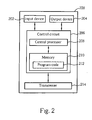
- Fig. 2 is a block diagram of a mobile communications device 200.
- Fig. 2 only shows an input device 202, an output device 204, a control circuit 206, a central processor 208, a memory 210, a program code 212, and a transceiver 214 of the mobile communications device 200.
- the control circuit 206 executes the program code 212 stored in the memory 210 with the central processor 208, thereby controlling operations of the mobile communications device 200.
- the mobile communications device 200 can receive signals input by users through the input device 202 (such as a keyboard), or output signals like images, sounds, etc. through the output device 204 (such as a monitor, speakers, etc.).
- the transceiver 214 is used for receiving wireless signals and transmitting the wireless signals to the control circuit 206; or, the control circuit 206 receives signals and outputs the signals wirelessly.
- the transceiver 214 is known as a part of Layer one, whereas the control circuit 206 is used to realize functions of Layer two and Layer three.
- Fig. 3 is a schematic diagram of the program code 212 in Fig. 2.
- the program code 212 comprises an application program layer 300, a Layer three interface 302, a Layer two interface 306, and a Layer one interface 318.
- the Layer two interface 306 forms a plurality of SDUs 308 based on data outputted by the Layer three interface 302, and stores the plurality of SDUs 308 in a buffer 312.
- the Layer two interface 306 generates a plurality of PDUs 314 according to the SDUs 308 stored in the buffer 312, and outputs the PDUs 314 generated to a destination through the Layer one interface 318.
- the wireless signal when receiving a wireless signal, the wireless signal is received through the Layer one interface 318, and the Layer one interface 318 outputs the wireless signal as PDUs 314 to the Layer two interface 306.
- the Layer two interface 306 restores the PDUs 314 to SDUs 308 and stores the SDUs 308 in the buffer 312.
- the Layer two interface 306 transmits the SDUs 308 stored in the buffer 312 to the Layer three interface 302.
- whether the program code 212 stores the SDUs 308 in the buffer 312 depends on the range of the storage window. If an SN of a PDU received falls within the range of the storage window, then procedures such as sorting, deleting duplicates, etc. are executed. On the other hand, if the SN of the PDU falls outside of the range of the storage window, then procedures like advancing the storage window location, etc. are executed.
- the program code 212 initiates an out of sequence SDU delivery function to recombine SDUs and deliver them to the upper layer as soon as possible, meaning that even if there exists an SDU with an earlier (lower) SN that has not been successfully received, when a PDU comprising complete SDUs is received, the Layer two interface 306 of the program code 212 will reorder the SDUs and deliver them to the upper layer.
- the present invention provides a method for initializing the storage window.
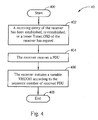
- Fig. 4 is a procedure 40 of the present invention.
- the procedure 40 is used to initialize a storage window of a receiver in a wireless communications system that is operating in UM and periodically retransmits previously transmitted packets.
- the procedure 40 comprises following steps:
- a variable VR(UOH) is initialized. Moreover, if a PDU whose SN falls outside of the storage window is received by the receiver, meaning the SN of the PDU is not in a union ⁇ x
- the present invention can also initialize the variable VR(UOH) after the timer Timer_OSD has expired, thereby changing an SN range of the receiving window.
- the timer Timer_OSD deletes all PDUs stored in the buffer 312 and the variable VR(UOH) is initialized. In this manner, the range of the storage window is changed in accordance with the initialized variable VR(UOH) and the PDUs are not unnecessarily deleted.
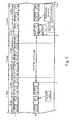
- Fig. 5 is a diagram of a UMTS providing MBMS in accordance to the procedure 40 in the present invention.
- the MBMS is operating in UM.
- Fig. 5 only shows transmitting and receiving statuses of corresponding PDUs between the transmitter and the receiver within a certain period of time.
- the three modification periods T_mod1, T_mod2, and T_mod3 are equal in length, and each comprises two repetition periods T_rep1 and T_rep2. Packets transmitted during the repetition period T_rep1 will be retransmitted again during the repetition period T_rep2, so that a probability of successfully receiving all packets is increased.
- the modification period T_mod3 needs not immediately follow the modification period T_mod2.
- the receiver moves out of a service range of the transmitter and the timer Timer_OSD expires, and at time point t2, the receiver moves back into the service range of the transmitter.
- the receiver initializes the variable VR(UOH) according to the SN of the first PDU.
- a storage window is initialized and a range of the storage window is advanced. It avoids unnecessary deletion of PDUs and hence increases efficiency when reordering SDUs.
Landscapes
- Engineering & Computer Science (AREA)
- Computer Networks & Wireless Communication (AREA)
- Signal Processing (AREA)
- Computer Security & Cryptography (AREA)
- Databases & Information Systems (AREA)
- Multimedia (AREA)
- Mobile Radio Communication Systems (AREA)
- Data Exchanges In Wide-Area Networks (AREA)
- Communication Control (AREA)
Abstract
Description
- The present invention relates to a device and related method of initializing a storage window of a receiver in a wireless communications system operating in Unacknowledged Mode and periodically retransmitting previously transmitted packets according to the pre-characterizing clause of claims 1 and 8.
- Using the out of sequence SDU delivery function, the RLC entity recombines SDUs and delivers them to the upper layer as soon as possible. However, in some cases, the prior art cannot efficiently recombine SDUs. After the variable VR(UOH) of a receiver has been initialized, if the receiver temporarily moves out of a service range of a transmitter, and the timer Timer_OSD expires before moving back into the service range of the transmitter, the receiver deletes all PDUs stored in its buffer since the timer Timer_OSD has expired in order to avoid mistakenly combining PDUs received before moving out of the service range with PDUs received after moving back into the service range. However, this mechanism may actually prevent the receiver from correctly recombining PDUs after moving back into the service range of a base station (i.e. the transmitter).
- This in mind, the present invention aims at providing a device and related method of initializing a storage window of a receiver in a wireless communications system operating in Unacknowledged Mode and periodically retransmitting previously transmitted packets that after a receiving entity of the receiver has been established, re-established, or a timer of the receiver has expired, and when the receiver receives a packet, a variable of a sequence number of a highest numbered packet that has been received in the receiver is initialized according to a sequence number of the received packet.
- This is achieved by a device and related method of initializing a storage window of a receiver in a wireless communications system operating in Unacknowledged Mode and periodically retransmitting previously transmitted packets according to claims 1 and 8. The dependent claims pertain to corresponding further developments and improvements.
- As will be seen more clearly from the detailed description following below, the claimed device and related method of initializing a storage window of a receiver in a wireless communications system operating in Unacknowledged Mode and periodically retransmitting previously transmitted packets includes after a receiving entity of the receiver has been established, re-established, or a timer of the receiver has expired, and when the receiver receives a packet, a variable of a sequence number of a highest numbered packet that has been received in the receiver is initialized according to a sequence number of the received packet that has a hardware circuit, a processor, and a memory comprising code implementing the present invention.
- In the following, the invention is further illustrated by way of example, taking reference to the accompanying drawings. Thereof
- Fig. 1 is a diagram of a UMTS providing an MBMS in the prior art;
- Fig. 2 is a block diagram of a mobile communications device according to the present invention;
- Fig. 3 is a schematic diagram of program code in Fig. 2;
- Fig. 4 is a flow chart of procedures for initializing a storage window of a receiver in a wireless communications system that is operating in UM and periodically retransmits previously transmitted packets; and
- Fig. 5 is a diagram of a UMTS providing MBMS in the present invention.
- Taking Multimedia Broadcast/Multicast Service (MBMS) as an example, MBMS is established upon a foundation of a Universal Mobile Telecommunications System (UMTS) and a Wideband Code Division Multiple Access (WCDMA) system. The MBMS uses Internet Protocol (IP) packets to transmit service content from servers to multiple user devices. The MBMS also uses information broadcasting/multicasting technologies to provide data streaming and downloading services, and can integrate with existing services, allowing service providers to provide a Mobile Triple Play over a single service and network framework. Specifically, the MBMS integrates mobile voice, mobile broadband transmission, and mobile television, and can provide custom-made services. Additionally, contents of different formats can be played in different area network domains.
- For the MBMS of the UMTS in the 3G communications system, the 3G Partnership Project (3GPP) defines a Radio Link Control (RLC) communications protocol 3GPP TS 25.322 V6.4.0, which provides an "out of sequence Service Data Unit (SDU) delivery" function, so that a receiver operating in an Unacknowledged Mode (UM) can more efficiently process Protocol Data Units (PDUs) that are periodically retransmitted by a transmitter. Operating in the Unacknowledged Mode means that even if packets (PDUs) transmitted comprise sequence numbers (SNs), the receiver does not report a receiving status back to the transmitter when it receives or drops a packet. Therefore, in UM, the transmitter cannot positively acknowledge whether packets it has transmitted are successfully received.
- To increase a probability that the receiver successfully receives packets, the transmitter can periodically retransmit packets that it has already transmitted, and the MBMS in UM uses the same periodic retransmission mechanism. When the RLC entity of the receiver in UM initiates the out of sequence SDU delivery function, the RLC entity recombines and delivers the SDUs to an upper protocol layer as fast as it can. In other words, even if a PDU with an earlier (lower) SN has not yet been successfully received, as long as a PDU comprising a complete SDU has been successfully received, the RLC entity delivers the complete SDU to the upper layer. In addition, when the out of sequence SDU delivery function is initiated, in order to allow the retransmitted SDUs to be reconstructed effectively by the receiver, a buffer of the receiver stores a PDU until all SDUs of the stored PDU have been reconstructed, after which the PDU is deleted from the buffer. Other than that, to maintain good receiving efficiency, the prior art deletes PDUs from the buffer in accordance with a storage window and a timer.
- For the out of sequence SDU delivery function, the specification mentioned above also defines the following variables and parameters:
- 1. VR(UOH): A variable representing a highest of all SNs of all PDUs that have been received;
- 2. OSD_Window_Size: A parameter representing a size of a storage window; and
- 3. Timer_OSD: A timer representing a time spent waiting to receive a next PDU. When a PDU is received, the timer is reset. If the timer expires and another PDU has not yet been received, the receiver deletes all PDUs stored in its buffer.
- According to the specification described above, after establishing or re-establishing the receiving entity of the receiver, and when the receiver receives a first PDU, based on a SN of the first PDU, the variable VR(UOH) is initialized and set to SN-1. If the SN of the PDU received by the receiver is outside of the storage window, meaning the SN of the PDU is not in a union {x | VR(UOH) >= x > VR(UOH) - OSD_Window_Size}, the variable VR(UOH) is set to be the SN of the PDU, i.e. VR(UOH) = SN. Additionally, if the timer Timer_OSD expires, the PDUs stored in the buffer are deleted.
- Using the out of sequence SDU delivery function, the RLC entity recombines SDUs and delivers them to the upper layer as soon as possible. However, in some cases, the prior art cannot efficiently recombine SDUs. Please refer to the following explanation for further details. After the variable VR(UOH) of a receiver has been initialized, if the receiver temporarily moves out of a service range of a transmitter, and the timer Timer_OSD expires before moving back into the service range of the transmitter, the receiver deletes all PDUs stored in its buffer since the timer Timer_OSD has expired in order to avoid mistakenly combining PDUs received before moving out of the service range with PDUs received after moving back into the service range. However, this mechanism may actually prevent the receiver from correctly recombining PDUs after moving back into the service range of a base station (i.e. the transmitter).
- For example, please refer to Fig. 1. Fig. 1 is a diagram of a UMTS providing a MBMS in the prior art. In the example, the MBMS is operating in UM. For simplicity, Fig. 1 only shows the transmitting status at the transmitter and the receiving status at the receiver of PDUs that the transmitter sends to the receiver within a short timeframe. Assuming that the size of the storage window is 32, i.e. OSO_Window_Size = 32, a transmitter periodically transmits PDUs with SN = 32 to 63, SN = 64 to 90, and SN = 21 to 50 during modification periods T_mod1, T_mod2, and T_mod3, respectively. The three modification periods T_mod1, T_mod2, and T_mod3 are equal in length, and each comprises two repetition periods T_rep1 and T_rep2. Packets transmitted during the repetition period T_rep1 are retransmitted during the repetition period T_rep2, so that a probability of successful reception of all packets is increased. The modification period T_mod3 needs not follow right after the modification period T_mod2. After the receiver receives PDUs with SN = 32 to 63 during modification period T_mod1, the receiver recombines the PDUs into corresponding SDUs and delivers them to the upper layer, sets VR(UOH) = 63, and sets a range of the storage window to be a union {x | 32 <= x <= 63}.
- At time point t1, the receiver moves out of a service range of the transmitter and the timer Timer_OSD expires, and at time point t2, the receiver moves back into the service range of the transmitter. When the timer Timer_OSD expires, the receiver deletes all PDUs stored in its buffer, however the range of the storage window remains the union {x | 32 <= x <= 63}. In other words, the receiver moves out of the service range of the transmitter at time point t1 and moves back into the service range again at time point t2, and a deletion of PDUs stored in the buffer of the receiver is initiated as the timer Timer_OSD expires while keeping the range of the storage window unchanged. After the receiver moves back into the service range of the transmitter, during the repetition period T_rep1 of the modification period T_mod3, the receiver receives PDUs with SN = 40 to 50. Since SN = 40 to SN = 50 falls within the range of the storage window, the PDUs with SN = 40 to 50 are stored in the buffer. Thereafter, the receiver receives a PDU with SN = 21 during the repetition time T_rep2 of the modification time T_mod3. Now, since the SN = 21 is outside of the range of the storage window, the variable VR(UOH) is updated to be 21, such that the PDUs with SNs = 40 to 50 fall outside of the storage window, causing the PDUs with SN = 40 to 50 to be deleted. In other words, after the timer Timer_OSD expires, the receiver will not initialize the storage window, such that after the PDUs with SN = 40 to 50 are received by the receiver, they are subsequently deleted from the buffer. This wastes system resources. If the receiver does not completely receive the PDUs with SN = 40 to 50 during the repetition time T_rep2 of the modification time T_mod3, the receiver cannot recombine the corresponding SDUs.
- The present invention is used to avoid unnecessary deletion of PDUs in a communications system operating in UM that periodically retransmits previously transmitted packets. The communications system can be a UMTS that provides MBMS.
- First of all, please refer to Fig. 2. Fig. 2 is a block diagram of a
mobile communications device 200. For clarity, Fig. 2 only shows aninput device 202, anoutput device 204, acontrol circuit 206, acentral processor 208, amemory 210, aprogram code 212, and atransceiver 214 of themobile communications device 200. In themobile communications device 200, thecontrol circuit 206 executes theprogram code 212 stored in thememory 210 with thecentral processor 208, thereby controlling operations of themobile communications device 200. Themobile communications device 200 can receive signals input by users through the input device 202 (such as a keyboard), or output signals like images, sounds, etc. through the output device 204 (such as a monitor, speakers, etc.). Thetransceiver 214 is used for receiving wireless signals and transmitting the wireless signals to thecontrol circuit 206; or, thecontrol circuit 206 receives signals and outputs the signals wirelessly. In a communications protocol framework, thetransceiver 214 is known as a part of Layer one, whereas thecontrol circuit 206 is used to realize functions of Layer two and Layer three. - Please refer to Fig. 3. Fig. 3 is a schematic diagram of the
program code 212 in Fig. 2. Theprogram code 212 comprises anapplication program layer 300, a Layer threeinterface 302, a Layer twointerface 306, and a Layer oneinterface 318. When transmitting signals, the Layer twointerface 306 forms a plurality ofSDUs 308 based on data outputted by the Layer threeinterface 302, and stores the plurality ofSDUs 308 in abuffer 312. Then, the Layer twointerface 306 generates a plurality ofPDUs 314 according to theSDUs 308 stored in thebuffer 312, and outputs thePDUs 314 generated to a destination through the Layer oneinterface 318. In contrast, when receiving a wireless signal, the wireless signal is received through the Layer oneinterface 318, and the Layer oneinterface 318 outputs the wireless signal asPDUs 314 to the Layer twointerface 306. The Layer twointerface 306 restores thePDUs 314 toSDUs 308 and stores theSDUs 308 in thebuffer 312. Finally, the Layer twointerface 306 transmits theSDUs 308 stored in thebuffer 312 to the Layer threeinterface 302. When the wireless signals are received, whether theprogram code 212 stores theSDUs 308 in thebuffer 312 depends on the range of the storage window. If an SN of a PDU received falls within the range of the storage window, then procedures such as sorting, deleting duplicates, etc. are executed. On the other hand, if the SN of the PDU falls outside of the range of the storage window, then procedures like advancing the storage window location, etc. are executed. - When the
wireless communication device 200 operates in MBMS or in any UM, and periodically retransmits packets that have been transmitted, theprogram code 212 initiates an out of sequence SDU delivery function to recombine SDUs and deliver them to the upper layer as soon as possible, meaning that even if there exists an SDU with an earlier (lower) SN that has not been successfully received, when a PDU comprising complete SDUs is received, the Layer twointerface 306 of theprogram code 212 will reorder the SDUs and deliver them to the upper layer. To avoid PDUs stored in the buffer being deleted unnecessarily after the out of sequence SDU delivery function has been initiated as occurs in the prior art, the present invention provides a method for initializing the storage window. - Please refer to Fig. 4. Fig. 4 is a
procedure 40 of the present invention. Theprocedure 40 is used to initialize a storage window of a receiver in a wireless communications system that is operating in UM and periodically retransmits previously transmitted packets. Theprocedure 40 comprises following steps: - Step 400: Start.
- Step 402: After a receiving entity of the receiver has been established, re-established, or a timer Timer_OSD of the receiver has expired, and the receiver receives a PDU, initialize a variable VR(UOH).
- Step 404: End.
- Therefore, in accordance with the
procedure 40, after a receiving entity of the receiver has been established, re-established, or a timer Timer_OSD of the receiver has expired, and the receiver receives a packet, a variable VR(UOH) is initialized. Moreover, if a PDU whose SN falls outside of the storage window is received by the receiver, meaning the SN of the PDU is not in a union {x | VR(UOH) - OSD_Window_Size <= x < VR(UOH)}, then the variable VR(UOH) is set to be the SN of the PDU, i.e. VR(UOH) = SN. In addition, if the timer Timer_OSD has expired, then PDUs stored in the buffer are deleted. - Thus, the
program code 212 having initiated the out of sequence SDU delivery function, if the receiving entity of thewireless communication device 200 has been established, re-established, or the timer Timer_OSD has expired, and thewireless communication device 200 receives a first PDU, then the variable VR(UOH) is initialized based on the SN of the PDU, preferably as VR(UOH) = SN - 1. In other words, in addition to handling cases of the receiving entity being established or re-established, the present invention can also initialize the variable VR(UOH) after the timer Timer_OSD has expired, thereby changing an SN range of the receiving window. Therefore, if thewireless communication device 200 temporarily moves out of a service range of a transmitter, and the timer Timer_OSD has expired by the time thewireless communication device 200 moves back into the service range of the transmitter, the timer Timer_OSD deletes all PDUs stored in thebuffer 312 and the variable VR(UOH) is initialized. In this manner, the range of the storage window is changed in accordance with the initialized variable VR(UOH) and the PDUs are not unnecessarily deleted. - For example, please refer to Fig. 5. Fig. 5 is a diagram of a UMTS providing MBMS in accordance to the
procedure 40 in the present invention. The MBMS is operating in UM. To simplify, Fig. 5 only shows transmitting and receiving statuses of corresponding PDUs between the transmitter and the receiver within a certain period of time. Assuming that a size of a storage window is 32, i.e. OSO_Window_Size = 32, a transmitter periodically transmits PDUs with SN = 32 to 63, SN = 64 to 90, and SN = 21 to 50 during modification periods T_mod 1, T_mod2, and T_mod3, respectively. The three modification periods T_mod1, T_mod2, and T_mod3 are equal in length, and each comprises two repetition periods T_rep1 and T_rep2. Packets transmitted during the repetition period T_rep1 will be retransmitted again during the repetition period T_rep2, so that a probability of successfully receiving all packets is increased. The modification period T_mod3 needs not immediately follow the modification period T_mod2. - After the receiver receives PDUs with SN = 32 to 62 during modification period T_mod1, the receiver recombines the PDUs into corresponding SDUs and delivers them to the upper layer. The receiver also sets VR(UOH) = 63 and a range of a storage window to be a union {x | 32 <= x <= 63}. At time point t1, the receiver moves out of a service range of the transmitter and the timer Timer_OSD expires, and at time point t2, the receiver moves back into the service range of the transmitter. When the timer Timer_OSD has expired, the receiver deletes all PDUs stored in its buffer, and the variable VR(UOH) is initialized in accordance with an SN of a first PDU received by the receiver, i.e. VR(UOH) = SN -1. Thus, as the receiver receives a PDU with SN = 40 during the repetition time T_rep 1 of the modification time T_mod 3, the present invention sets VR(UOH) = 40 (the variable VR(UOH) is set to 39 before changing to 40, as the SN = 40 falls outside of the storage window). When a PDU with SN = 50 is received, VR(UOH) = 50, and the range of the storage window is a union {x | 50-32+1 <= x <= 50)} = {x | 19 <= x <= 50}. Thereafter, the receiver receives PDUs with SN = 21 during the repetition time T_rep2 of the modification time T_mod3. Now, since the SN = 21 is within the union {x | 19 <= x <= 50}, the SN = 21 is still within the range of the storage window. Therefore, the range of the storage window is not changed, and PDUs with SN = 40 to 50 are not deleted. In other words, in the present invention, after the timer Timer_OSD has expired, the storage window is initialized to avoid unnecessary deletion of PDUs.
- When realizing the
present invention procedure 40, as known by people who are familiar with the art, designers can write (burn-in) theprocedures 40 into a memory (firmware) of a communication device as a program code. - In summary, in the present invention method, after a receiving entity of a receiver has been established, re-established, or a timer of the receiver has expired, and the receiver receives a first PDU, the receiver initializes the variable VR(UOH) according to the SN of the first PDU. Thus, a storage window is initialized and a range of the storage window is advanced. It avoids unnecessary deletion of PDUs and hence increases efficiency when reordering SDUs.
- This application claims the benefit of
U.S. Provisional Application No. 60/596,507, filed on September 29, 2005
Claims (14)
- A method of initializing a storage window of a receiver (200) in a wireless communications system operating in Unacknowledged Mode and periodically retransmitting previously transmitted packets, the method characterized by:after a receiving entity of the receiver (200) has been established, re-established, or a timer of the receiver has expired (402), and when the receiver (200) receives a packet (404), initializing a variable of a sequence number of a highest numbered packet that has been received in the receiver according to a sequence number of the received packet (406).
- The method of claim 1 characterized in that a range of the storage window is defined according to the variable of the sequence number of the highest numbered packet that has been received in the receiver (200) and a size of the receiving window.
- The method of claim 1 characterized in that the timer is used to count how much time passes before receiving a next packet.
- The method of claim 1 characterized in that initializing the variable of the sequence number of the highest numbered packet that has been received in the receiver (200) is setting the variable to be equal to the sequence number of the received packet less a preset value.
- The method of claim 4 characterized in that the preset value is 1.
- The method of claim 1 characterized in that the wireless communications system provides a Multimedia Broadcast/Multicast Service.
- The method of claim 1 characterized in that an out of sequence Service Data Unit delivery function of the receiver is initiated.
- A wireless communications device (200) for initializing a storage window, the wireless communications device (200) used in a wireless communications system that operates in Unacknowledged Mode and periodically retransmits previously transmitted packets, the wireless communications device (200) comprising:a hardware circuit (202, 204, 206, 214) for realizing functions of the wireless communications device (200);a processor (208) for executing program code (212) to control the hardware circuit (202, 204, 206, 214); anda memory (210) for storing the program code (212);characterized in that the program code (212) comprises after a receiving entity of the wireless communications device has been established, re-established, or a timer of the wireless communications device (200) has expired (402), and when the wireless communications device (200) receives a packet (404), initializing a variable of a sequence number of a highest numbered packet that has been received in the wireless communications device according to a sequence number of the received packet (406).
- The wireless communications device (200) of claim 8, characterized in that a range of the storage window is defined according to the variable of the sequence number of the highest numbered packet that has been received in the wireless communications device (200) and a size of the receiving window.
- The wireless communications device (200) of claim 8, characterized in that the timer is used to count how much time passes before receiving a next packet.
- The wireless communications device (200) of claim 8, characterized in that initializing the variable of the sequence number of the highest numbered packet that has been received in the receiver (406) is setting the variable to be equal to the sequence number of the received packet less a preset value.
- The wireless communications device (200) of claim 11,
characterized in that the preset value is 1. - The wireless communications device (200) of claim 8, characterized in that the wireless communications system provides a Multimedia Broadcast/Multicast Service.
- The wireless communications device (200) of claim 8, characterized
in that an out of sequence Service Data Unit delivery function of the wireless communications device (200) is initiated.
Applications Claiming Priority (1)
| Application Number | Priority Date | Filing Date | Title |
|---|---|---|---|
| US59650705P | 2005-09-29 | 2005-09-29 |
Publications (3)
| Publication Number | Publication Date |
|---|---|
| EP1770893A2 true EP1770893A2 (en) | 2007-04-04 |
| EP1770893A3 EP1770893A3 (en) | 2010-11-17 |
| EP1770893B1 EP1770893B1 (en) | 2017-05-31 |
Family
ID=37670769
Family Applications (1)
| Application Number | Title | Priority Date | Filing Date |
|---|---|---|---|
| EP06020619.0A Active EP1770893B1 (en) | 2005-09-29 | 2006-09-29 | Method and apparatus for initiating a storage window in a wireless communications system |
Country Status (6)
| Country | Link |
|---|---|
| US (1) | US8520521B2 (en) |
| EP (1) | EP1770893B1 (en) |
| JP (1) | JP4278662B2 (en) |
| KR (1) | KR100845821B1 (en) |
| CN (1) | CN1941741B (en) |
| TW (1) | TWI310911B (en) |
Cited By (1)
| Publication number | Priority date | Publication date | Assignee | Title |
|---|---|---|---|---|
| WO2009019201A3 (en) * | 2007-08-07 | 2009-05-07 | Ericsson Telefon Ab L M | System and method for control signaling in mbms networks |
Families Citing this family (9)
| Publication number | Priority date | Publication date | Assignee | Title |
|---|---|---|---|---|
| US8379646B2 (en) * | 2006-07-31 | 2013-02-19 | Lg Electronics Inc. | Method of processing control information in a mobile communication system |
| US8159965B2 (en) * | 2007-05-18 | 2012-04-17 | Innovative Sonic Limited | Method of comparing state variable or packet sequence number for a wireless communications system and related apparatus |
| KR20100087206A (en) * | 2007-11-08 | 2010-08-03 | 인터디지탈 테크날러지 코포레이션 | Methods and apparatuses for combined medium access control (mac) and radio link control (rlc) processing |
| US20130294322A1 (en) * | 2012-05-04 | 2013-11-07 | Electronics And Telecommunications Research Institute | Apparatus and method for sequentially transmitting data |
| US10028311B2 (en) | 2014-04-22 | 2018-07-17 | Lg Electronics Inc. | Method for processing received PDCP PDUs for D2D communication system and device therefor |
| KR102359265B1 (en) | 2015-09-18 | 2022-02-07 | 삼성전자주식회사 | Processing apparatus and method for performing operation thereof |
| CN112235731B (en) * | 2019-07-15 | 2022-12-27 | 华为技术有限公司 | Communication method, device and system |
| US20250317795A1 (en) * | 2024-04-04 | 2025-10-09 | Qualcomm Incorporated | Radio link control communication retransmission |
| CN120614277B (en) * | 2025-07-01 | 2025-12-09 | 广州万虹信息科技有限公司 | A data transmission system |
Family Cites Families (18)
| Publication number | Priority date | Publication date | Assignee | Title |
|---|---|---|---|---|
| JPH0738612A (en) * | 1993-06-29 | 1995-02-07 | Kawasaki Steel Corp | gateway |
| KR100391812B1 (en) | 2000-11-28 | 2003-07-12 | 주식회사 하이닉스반도체 | Method for composition of error frame in mobile communication system |
| US6847629B2 (en) | 2000-11-30 | 2005-01-25 | Qualcomm Incorporated | Method and apparatus for scheduling packet data transmissions in a wireless communication system |
| US6798842B2 (en) * | 2001-01-10 | 2004-09-28 | Asustek Computer Inc. | Retransmission range for a communications protocol |
| JP4187940B2 (en) | 2001-03-06 | 2008-11-26 | 株式会社エヌ・ティ・ティ・ドコモ | Packet transmission method and system, packet transmission device, reception device, and transmission / reception device |
| JP2002271442A (en) | 2001-03-07 | 2002-09-20 | Matsushita Electric Ind Co Ltd | RLC communication apparatus and RLC communication type determination processing method |
| KR100828322B1 (en) | 2001-07-30 | 2008-05-08 | 엘지전자 주식회사 | Retransmission Method by State Variable of Radio Link Control Layer in MMTS System |
| US7027392B2 (en) | 2001-08-14 | 2006-04-11 | Qualcomm, Incorporated | Method and apparatus for scheduling packet data transmissions in a wireless communication system |
| US7697523B2 (en) | 2001-10-03 | 2010-04-13 | Qualcomm Incorporated | Method and apparatus for data packet transport in a wireless communication system using an internet protocol |
| KR100526525B1 (en) * | 2001-10-17 | 2005-11-08 | 삼성전자주식회사 | Method and apparatus for transmitting/receiving for re-transmission of packet in mobile communication system |
| KR100557167B1 (en) * | 2001-11-02 | 2006-03-03 | 삼성전자주식회사 | Retransmission device and method in mobile communication system |
| EP1326397B1 (en) * | 2002-01-03 | 2010-03-10 | Innovative Sonic Limited | Timer based stall avoidance mechanism for high speed wireless communication system |
| KR100747464B1 (en) * | 2002-01-05 | 2007-08-09 | 엘지전자 주식회사 | Deadlock avoidance method using timer for high speed downlink packet connection (HSDPA) system |
| KR100541015B1 (en) * | 2002-02-04 | 2006-01-10 | 아스텍 컴퓨터 인코퍼레이티드 | Data Discard Signal Signal Procedures in Wireless Communication Systems |
| US20030202475A1 (en) * | 2002-04-25 | 2003-10-30 | Qingxin Chen | Multiplexing variable-rate data with data services |
| US7573958B2 (en) * | 2002-07-18 | 2009-08-11 | Motorola, Inc. | Receiver for and method of recovering transmitted symbols in a H-ARQ packet retransmission |
| KR100600738B1 (en) | 2004-03-02 | 2006-07-14 | 엘지전자 주식회사 | Wireless home network system and its operation method |
| KR101000699B1 (en) | 2004-04-19 | 2010-12-10 | 엘지전자 주식회사 | Data processing method in radio link control layer |
-
2006
- 2006-04-21 TW TW095114342A patent/TWI310911B/en active
- 2006-04-29 CN CN2006100773537A patent/CN1941741B/en not_active Expired - Lifetime
- 2006-05-15 JP JP2006134998A patent/JP4278662B2/en not_active Expired - Lifetime
- 2006-09-28 US US11/528,453 patent/US8520521B2/en active Active
- 2006-09-29 KR KR1020060096077A patent/KR100845821B1/en active Active
- 2006-09-29 EP EP06020619.0A patent/EP1770893B1/en active Active
Non-Patent Citations (3)
| Title |
|---|
| HUAWEI TECHNOLOGIES ET AL: "Out of Sequence Operations for MCCH" 3GPP DRAFT; R2-042336, 3RD GENERATION PARTNERSHIP PROJECT (3GPP), MOBILE COMPETENCE CENTRE ; 650, ROUTE DES LUCIOLES ; F-06921 SOPHIA-ANTIPOLIS CEDEX ; FRANCE, vol. RAN WG2, no. Yokohama, Japan; 20041112, 12 November 2004 (2004-11-12), XP050126922 [retrieved on 2004-11-12] * |
| QUALCOMM: "Out-of-sequence reception for RLC-UM" 3GPP DRAFT; R2-051451 RLC-UM OUT-OF-SEQUENCE, 3RD GENERATION PARTNERSHIP PROJECT (3GPP), MOBILE COMPETENCE CENTRE ; 650, ROUTE DES LUCIOLES ; F-06921 SOPHIA-ANTIPOLIS CEDEX ; FRANCE, vol. RAN WG2, no. Athens, Greece; 20050504, 4 May 2005 (2005-05-04), XP050128647 [retrieved on 2005-05-04] * |
| SIEMENS AG: "Out-of-sequence reception in UM-RLC" 3GPP DRAFT; R2-010903OUT-OF-SEQUENCE RECEPTION IN UM-RLC, 3RD GENERATION PARTNERSHIP PROJECT (3GPP), MOBILE COMPETENCE CENTRE ; 650, ROUTE DES LUCIOLES ; F-06921 SOPHIA-ANTIPOLIS CEDEX ; FRANCE, vol. RAN WG2, no. Japan; 20010416, 16 April 2001 (2001-04-16), XP050117693 [retrieved on 2001-04-16] * |
Cited By (1)
| Publication number | Priority date | Publication date | Assignee | Title |
|---|---|---|---|---|
| WO2009019201A3 (en) * | 2007-08-07 | 2009-05-07 | Ericsson Telefon Ab L M | System and method for control signaling in mbms networks |
Also Published As
| Publication number | Publication date |
|---|---|
| CN1941741B (en) | 2011-04-20 |
| JP4278662B2 (en) | 2009-06-17 |
| TWI310911B (en) | 2009-06-11 |
| KR20070036729A (en) | 2007-04-03 |
| US20070071008A1 (en) | 2007-03-29 |
| US8520521B2 (en) | 2013-08-27 |
| EP1770893B1 (en) | 2017-05-31 |
| CN1941741A (en) | 2007-04-04 |
| EP1770893A3 (en) | 2010-11-17 |
| KR100845821B1 (en) | 2008-07-14 |
| TW200713044A (en) | 2007-04-01 |
| JP2007097124A (en) | 2007-04-12 |
Similar Documents
| Publication | Publication Date | Title |
|---|---|---|
| EP2811681B1 (en) | Method for moving a receive window in a radio access network | |
| AU2011256770B2 (en) | Method to control multiple radio access bearers in a wireless device | |
| EP1695462B1 (en) | Transmitting and receiving control protocol data unit having processing time information | |
| KR101276841B1 (en) | method of triggering status report message in mobile communication system and device implementing the same | |
| TW472472B (en) | System and method for implementing a semi reliable retransmission protocol | |
| EP1768296A2 (en) | Method and apparatus for transmitting signaling data messages in a wireless communications system | |
| EP1811727A2 (en) | Method and apparatus for transmitting a status report for retransmission control in a mobile communication system | |
| CN100391201C (en) | A Method for Keeping the Sequence Number Synchronization of Packet Data Protocol Convergence Sublayer | |
| EP1871137A2 (en) | Method and apparatus for handling status report after handover in a wireless communications system | |
| US20080102841A1 (en) | Mobile communication system, wireless base station and hand over reconnection method for use therewith | |
| US8159965B2 (en) | Method of comparing state variable or packet sequence number for a wireless communications system and related apparatus | |
| AU2005324331A8 (en) | Apparatus and method for enhanced UM RLC data handling | |
| EP1855409A1 (en) | Method and related apparatus of default timer configurations of a wireless communications system | |
| US10361819B2 (en) | Packet retransmission method in a wireless transmitter | |
| US20080056148A1 (en) | Wireless communication method and apparatus for reducing data retransmission | |
| EP1770893B1 (en) | Method and apparatus for initiating a storage window in a wireless communications system | |
| KR20090087773A (en) | Retransmission and status reporting apparatus of packet data unit in mobile communication system | |
| CN101116277A (en) | Method and device for requesting/delivering a status report of a mobile communication system | |
| EP1852995A2 (en) | Method and apparatus of handling a variable of a RLC reset procedure during receiver-side-only re-establishment in wireless communication system | |
| EP1993313A2 (en) | Method and apparatus for polling transmission status in a wireless communications system | |
| CN109151904B (en) | Lora message reassembly and retransmission method, sending end and receiving end | |
| KR100662250B1 (en) | Variable segmentation transmission method of service data unit and transmission apparatus using same | |
| KR20060090138A (en) | Method and device for transmitting periodic status report in mobile communication system | |
| KR20260065932A (en) | Data processing method and device | |
| TH91830A (en) | Flow control in radio access networks |
Legal Events
| Date | Code | Title | Description |
|---|---|---|---|
| PUAI | Public reference made under article 153(3) epc to a published international application that has entered the european phase |
Free format text: ORIGINAL CODE: 0009012 |
|
| 17P | Request for examination filed |
Effective date: 20060929 |
|
| AK | Designated contracting states |
Kind code of ref document: A2 Designated state(s): AT BE BG CH CY CZ DE DK EE ES FI FR GB GR HU IE IS IT LI LT LU LV MC NL PL PT RO SE SI SK TR |
|
| AX | Request for extension of the european patent |
Extension state: AL BA HR MK YU |
|
| PUAL | Search report despatched |
Free format text: ORIGINAL CODE: 0009013 |
|
| AK | Designated contracting states |
Kind code of ref document: A3 Designated state(s): AT BE BG CH CY CZ DE DK EE ES FI FR GB GR HU IE IS IT LI LT LU LV MC NL PL PT RO SE SI SK TR |
|
| AX | Request for extension of the european patent |
Extension state: AL BA HR MK RS |
|
| AKX | Designation fees paid |
Designated state(s): AT BE BG CH CY CZ DE DK EE ES FI FR GB GR HU IE IS IT LI LT LU LV MC NL PL PT RO SE SI SK TR |
|
| RAP1 | Party data changed (applicant data changed or rights of an application transferred) |
Owner name: INNOVATIVE SONIC LIMITED |
|
| GRAP | Despatch of communication of intention to grant a patent |
Free format text: ORIGINAL CODE: EPIDOSNIGR1 |
|
| INTG | Intention to grant announced |
Effective date: 20170103 |
|
| GRAS | Grant fee paid |
Free format text: ORIGINAL CODE: EPIDOSNIGR3 |
|
| GRAA | (expected) grant |
Free format text: ORIGINAL CODE: 0009210 |
|
| AK | Designated contracting states |
Kind code of ref document: B1 Designated state(s): AT BE BG CH CY CZ DE DK EE ES FI FR GB GR HU IE IS IT LI LT LU LV MC NL PL PT RO SE SI SK TR |
|
| REG | Reference to a national code |
Ref country code: CH Ref legal event code: EP Ref country code: GB Ref legal event code: FG4D |
|
| REG | Reference to a national code |
Ref country code: AT Ref legal event code: REF Ref document number: 898318 Country of ref document: AT Kind code of ref document: T Effective date: 20170615 |
|
| REG | Reference to a national code |
Ref country code: IE Ref legal event code: FG4D |
|
| REG | Reference to a national code |
Ref country code: DE Ref legal event code: R096 Ref document number: 602006052660 Country of ref document: DE |
|
| REG | Reference to a national code |
Ref country code: FR Ref legal event code: PLFP Year of fee payment: 12 |
|
| REG | Reference to a national code |
Ref country code: NL Ref legal event code: MP Effective date: 20170531 |
|
| REG | Reference to a national code |
Ref country code: LT Ref legal event code: MG4D |
|
| REG | Reference to a national code |
Ref country code: AT Ref legal event code: MK05 Ref document number: 898318 Country of ref document: AT Kind code of ref document: T Effective date: 20170531 |
|
| PG25 | Lapsed in a contracting state [announced via postgrant information from national office to epo] |
Ref country code: LT Free format text: LAPSE BECAUSE OF FAILURE TO SUBMIT A TRANSLATION OF THE DESCRIPTION OR TO PAY THE FEE WITHIN THE PRESCRIBED TIME-LIMIT Effective date: 20170531 Ref country code: AT Free format text: LAPSE BECAUSE OF FAILURE TO SUBMIT A TRANSLATION OF THE DESCRIPTION OR TO PAY THE FEE WITHIN THE PRESCRIBED TIME-LIMIT Effective date: 20170531 Ref country code: FI Free format text: LAPSE BECAUSE OF FAILURE TO SUBMIT A TRANSLATION OF THE DESCRIPTION OR TO PAY THE FEE WITHIN THE PRESCRIBED TIME-LIMIT Effective date: 20170531 Ref country code: ES Free format text: LAPSE BECAUSE OF FAILURE TO SUBMIT A TRANSLATION OF THE DESCRIPTION OR TO PAY THE FEE WITHIN THE PRESCRIBED TIME-LIMIT Effective date: 20170531 Ref country code: GR Free format text: LAPSE BECAUSE OF FAILURE TO SUBMIT A TRANSLATION OF THE DESCRIPTION OR TO PAY THE FEE WITHIN THE PRESCRIBED TIME-LIMIT Effective date: 20170901 |
|
| PG25 | Lapsed in a contracting state [announced via postgrant information from national office to epo] |
Ref country code: LV Free format text: LAPSE BECAUSE OF FAILURE TO SUBMIT A TRANSLATION OF THE DESCRIPTION OR TO PAY THE FEE WITHIN THE PRESCRIBED TIME-LIMIT Effective date: 20170531 Ref country code: BG Free format text: LAPSE BECAUSE OF FAILURE TO SUBMIT A TRANSLATION OF THE DESCRIPTION OR TO PAY THE FEE WITHIN THE PRESCRIBED TIME-LIMIT Effective date: 20170831 Ref country code: IS Free format text: LAPSE BECAUSE OF FAILURE TO SUBMIT A TRANSLATION OF THE DESCRIPTION OR TO PAY THE FEE WITHIN THE PRESCRIBED TIME-LIMIT Effective date: 20170930 Ref country code: SE Free format text: LAPSE BECAUSE OF FAILURE TO SUBMIT A TRANSLATION OF THE DESCRIPTION OR TO PAY THE FEE WITHIN THE PRESCRIBED TIME-LIMIT Effective date: 20170531 Ref country code: NL Free format text: LAPSE BECAUSE OF FAILURE TO SUBMIT A TRANSLATION OF THE DESCRIPTION OR TO PAY THE FEE WITHIN THE PRESCRIBED TIME-LIMIT Effective date: 20170531 |
|
| PG25 | Lapsed in a contracting state [announced via postgrant information from national office to epo] |
Ref country code: RO Free format text: LAPSE BECAUSE OF FAILURE TO SUBMIT A TRANSLATION OF THE DESCRIPTION OR TO PAY THE FEE WITHIN THE PRESCRIBED TIME-LIMIT Effective date: 20170531 Ref country code: DK Free format text: LAPSE BECAUSE OF FAILURE TO SUBMIT A TRANSLATION OF THE DESCRIPTION OR TO PAY THE FEE WITHIN THE PRESCRIBED TIME-LIMIT Effective date: 20170531 Ref country code: SK Free format text: LAPSE BECAUSE OF FAILURE TO SUBMIT A TRANSLATION OF THE DESCRIPTION OR TO PAY THE FEE WITHIN THE PRESCRIBED TIME-LIMIT Effective date: 20170531 Ref country code: CZ Free format text: LAPSE BECAUSE OF FAILURE TO SUBMIT A TRANSLATION OF THE DESCRIPTION OR TO PAY THE FEE WITHIN THE PRESCRIBED TIME-LIMIT Effective date: 20170531 Ref country code: EE Free format text: LAPSE BECAUSE OF FAILURE TO SUBMIT A TRANSLATION OF THE DESCRIPTION OR TO PAY THE FEE WITHIN THE PRESCRIBED TIME-LIMIT Effective date: 20170531 |
|
| PG25 | Lapsed in a contracting state [announced via postgrant information from national office to epo] |
Ref country code: IT Free format text: LAPSE BECAUSE OF FAILURE TO SUBMIT A TRANSLATION OF THE DESCRIPTION OR TO PAY THE FEE WITHIN THE PRESCRIBED TIME-LIMIT Effective date: 20170531 Ref country code: PL Free format text: LAPSE BECAUSE OF FAILURE TO SUBMIT A TRANSLATION OF THE DESCRIPTION OR TO PAY THE FEE WITHIN THE PRESCRIBED TIME-LIMIT Effective date: 20170531 |
|
| REG | Reference to a national code |
Ref country code: DE Ref legal event code: R097 Ref document number: 602006052660 Country of ref document: DE |
|
| PLBE | No opposition filed within time limit |
Free format text: ORIGINAL CODE: 0009261 |
|
| STAA | Information on the status of an ep patent application or granted ep patent |
Free format text: STATUS: NO OPPOSITION FILED WITHIN TIME LIMIT |
|
| REG | Reference to a national code |
Ref country code: CH Ref legal event code: PL |
|
| 26N | No opposition filed |
Effective date: 20180301 |
|
| PG25 | Lapsed in a contracting state [announced via postgrant information from national office to epo] |
Ref country code: MC Free format text: LAPSE BECAUSE OF FAILURE TO SUBMIT A TRANSLATION OF THE DESCRIPTION OR TO PAY THE FEE WITHIN THE PRESCRIBED TIME-LIMIT Effective date: 20170531 Ref country code: SI Free format text: LAPSE BECAUSE OF FAILURE TO SUBMIT A TRANSLATION OF THE DESCRIPTION OR TO PAY THE FEE WITHIN THE PRESCRIBED TIME-LIMIT Effective date: 20170531 |
|
| REG | Reference to a national code |
Ref country code: IE Ref legal event code: MM4A |
|
| REG | Reference to a national code |
Ref country code: BE Ref legal event code: MM Effective date: 20170930 |
|
| PG25 | Lapsed in a contracting state [announced via postgrant information from national office to epo] |
Ref country code: LU Free format text: LAPSE BECAUSE OF NON-PAYMENT OF DUE FEES Effective date: 20170929 |
|
| PG25 | Lapsed in a contracting state [announced via postgrant information from national office to epo] |
Ref country code: IE Free format text: LAPSE BECAUSE OF NON-PAYMENT OF DUE FEES Effective date: 20170929 Ref country code: CH Free format text: LAPSE BECAUSE OF NON-PAYMENT OF DUE FEES Effective date: 20170930 Ref country code: LI Free format text: LAPSE BECAUSE OF NON-PAYMENT OF DUE FEES Effective date: 20170930 |
|
| PG25 | Lapsed in a contracting state [announced via postgrant information from national office to epo] |
Ref country code: BE Free format text: LAPSE BECAUSE OF NON-PAYMENT OF DUE FEES Effective date: 20170930 |
|
| REG | Reference to a national code |
Ref country code: FR Ref legal event code: PLFP Year of fee payment: 13 |
|
| PG25 | Lapsed in a contracting state [announced via postgrant information from national office to epo] |
Ref country code: HU Free format text: LAPSE BECAUSE OF FAILURE TO SUBMIT A TRANSLATION OF THE DESCRIPTION OR TO PAY THE FEE WITHIN THE PRESCRIBED TIME-LIMIT; INVALID AB INITIO Effective date: 20060929 |
|
| PG25 | Lapsed in a contracting state [announced via postgrant information from national office to epo] |
Ref country code: CY Free format text: LAPSE BECAUSE OF NON-PAYMENT OF DUE FEES Effective date: 20170531 |
|
| PG25 | Lapsed in a contracting state [announced via postgrant information from national office to epo] |
Ref country code: TR Free format text: LAPSE BECAUSE OF FAILURE TO SUBMIT A TRANSLATION OF THE DESCRIPTION OR TO PAY THE FEE WITHIN THE PRESCRIBED TIME-LIMIT Effective date: 20170531 |
|
| PG25 | Lapsed in a contracting state [announced via postgrant information from national office to epo] |
Ref country code: PT Free format text: LAPSE BECAUSE OF FAILURE TO SUBMIT A TRANSLATION OF THE DESCRIPTION OR TO PAY THE FEE WITHIN THE PRESCRIBED TIME-LIMIT Effective date: 20170531 |
|
| P01 | Opt-out of the competence of the unified patent court (upc) registered |
Effective date: 20230508 |
|
| PGFP | Annual fee paid to national office [announced via postgrant information from national office to epo] |
Ref country code: DE Payment date: 20250814 Year of fee payment: 20 |
|
| PGFP | Annual fee paid to national office [announced via postgrant information from national office to epo] |
Ref country code: GB Payment date: 20250821 Year of fee payment: 20 |
|
| PGFP | Annual fee paid to national office [announced via postgrant information from national office to epo] |
Ref country code: FR Payment date: 20250821 Year of fee payment: 20 |