EP1768071A2 - Coinless vending system, method and computer readable medium using an audio code collector and validator - Google Patents
Coinless vending system, method and computer readable medium using an audio code collector and validator Download PDFInfo
- Publication number
- EP1768071A2 EP1768071A2 EP06014101A EP06014101A EP1768071A2 EP 1768071 A2 EP1768071 A2 EP 1768071A2 EP 06014101 A EP06014101 A EP 06014101A EP 06014101 A EP06014101 A EP 06014101A EP 1768071 A2 EP1768071 A2 EP 1768071A2
- Authority
- EP
- European Patent Office
- Prior art keywords
- vending machine
- mobile device
- server
- audio
- code
- Prior art date
- Legal status (The legal status is an assumption and is not a legal conclusion. Google has not performed a legal analysis and makes no representation as to the accuracy of the status listed.)
- Withdrawn
Links
Images


Classifications
-
- G—PHYSICS
- G06—COMPUTING OR CALCULATING; COUNTING
- G06Q—INFORMATION AND COMMUNICATION TECHNOLOGY [ICT] SPECIALLY ADAPTED FOR ADMINISTRATIVE, COMMERCIAL, FINANCIAL, MANAGERIAL OR SUPERVISORY PURPOSES; SYSTEMS OR METHODS SPECIALLY ADAPTED FOR ADMINISTRATIVE, COMMERCIAL, FINANCIAL, MANAGERIAL OR SUPERVISORY PURPOSES, NOT OTHERWISE PROVIDED FOR
- G06Q20/00—Payment architectures, schemes or protocols
- G06Q20/08—Payment architectures
- G06Q20/18—Payment architectures involving self-service terminals [SST], vending machines, kiosks or multimedia terminals
-
- G—PHYSICS
- G06—COMPUTING OR CALCULATING; COUNTING
- G06Q—INFORMATION AND COMMUNICATION TECHNOLOGY [ICT] SPECIALLY ADAPTED FOR ADMINISTRATIVE, COMMERCIAL, FINANCIAL, MANAGERIAL OR SUPERVISORY PURPOSES; SYSTEMS OR METHODS SPECIALLY ADAPTED FOR ADMINISTRATIVE, COMMERCIAL, FINANCIAL, MANAGERIAL OR SUPERVISORY PURPOSES, NOT OTHERWISE PROVIDED FOR
- G06Q20/00—Payment architectures, schemes or protocols
- G06Q20/30—Payment architectures, schemes or protocols characterised by the use of specific devices or networks
- G06Q20/32—Payment architectures, schemes or protocols characterised by the use of specific devices or networks using wireless devices
- G06Q20/322—Aspects of commerce using mobile devices [M-devices]
-
- G—PHYSICS
- G06—COMPUTING OR CALCULATING; COUNTING
- G06Q—INFORMATION AND COMMUNICATION TECHNOLOGY [ICT] SPECIALLY ADAPTED FOR ADMINISTRATIVE, COMMERCIAL, FINANCIAL, MANAGERIAL OR SUPERVISORY PURPOSES; SYSTEMS OR METHODS SPECIALLY ADAPTED FOR ADMINISTRATIVE, COMMERCIAL, FINANCIAL, MANAGERIAL OR SUPERVISORY PURPOSES, NOT OTHERWISE PROVIDED FOR
- G06Q20/00—Payment architectures, schemes or protocols
- G06Q20/30—Payment architectures, schemes or protocols characterised by the use of specific devices or networks
- G06Q20/32—Payment architectures, schemes or protocols characterised by the use of specific devices or networks using wireless devices
- G06Q20/327—Short range or proximity payments by means of M-devices
-
- G—PHYSICS
- G06—COMPUTING OR CALCULATING; COUNTING
- G06Q—INFORMATION AND COMMUNICATION TECHNOLOGY [ICT] SPECIALLY ADAPTED FOR ADMINISTRATIVE, COMMERCIAL, FINANCIAL, MANAGERIAL OR SUPERVISORY PURPOSES; SYSTEMS OR METHODS SPECIALLY ADAPTED FOR ADMINISTRATIVE, COMMERCIAL, FINANCIAL, MANAGERIAL OR SUPERVISORY PURPOSES, NOT OTHERWISE PROVIDED FOR
- G06Q20/00—Payment architectures, schemes or protocols
- G06Q20/30—Payment architectures, schemes or protocols characterised by the use of specific devices or networks
- G06Q20/32—Payment architectures, schemes or protocols characterised by the use of specific devices or networks using wireless devices
- G06Q20/327—Short range or proximity payments by means of M-devices
- G06Q20/3272—Short range or proximity payments by means of M-devices using an audio code
-
- G—PHYSICS
- G06—COMPUTING OR CALCULATING; COUNTING
- G06Q—INFORMATION AND COMMUNICATION TECHNOLOGY [ICT] SPECIALLY ADAPTED FOR ADMINISTRATIVE, COMMERCIAL, FINANCIAL, MANAGERIAL OR SUPERVISORY PURPOSES; SYSTEMS OR METHODS SPECIALLY ADAPTED FOR ADMINISTRATIVE, COMMERCIAL, FINANCIAL, MANAGERIAL OR SUPERVISORY PURPOSES, NOT OTHERWISE PROVIDED FOR
- G06Q20/00—Payment architectures, schemes or protocols
- G06Q20/38—Payment protocols; Details thereof
- G06Q20/40—Authorisation, e.g. identification of payer or payee, verification of customer or shop credentials; Review and approval of payers, e.g. check credit lines or negative lists
-
- G—PHYSICS
- G07—CHECKING-DEVICES
- G07F—COIN-FREED OR LIKE APPARATUS
- G07F9/00—Details other than those peculiar to special kinds or types of apparatus
- G07F9/001—Interfacing with vending machines using mobile or wearable devices
-
- G—PHYSICS
- G07—CHECKING-DEVICES
- G07F—COIN-FREED OR LIKE APPARATUS
- G07F9/00—Details other than those peculiar to special kinds or types of apparatus
- G07F9/002—Vending machines being part of a centrally controlled network of vending machines
Definitions
- the present invention describes a system, method, and computer readable medium by which a consumer can purchase vending machine content via a consumer's mobile phone interfaced to a vending machine equipped with an Audio Code Collector and Validator (ACCV) system.
- ACCV Audio Code Collector and Validator
- the consumer's mobile phone will interface with both a Billing Server via a wireless cellular network and a vending machine via the ACCV system in order to perform the transaction of purchasing vending machine content.
- vending machines To be interfaced to the cellular network or via the Internet and require special mobile phones. This is not a realistic or cost effective scenario for vending machine placements.
- a solution is therefore required that overcomes the limitations of existing coinless vending concepts by providing a system, method, and computer readable medium that allows secure and accountable transactions to occur without a vending machine requiring connection to the Internet or a wireless network.
- the present invention provides an Audio Code Collector and Validator (ACCV) at the vending machine.
- ACCV Audio Code Collector and Validator
- a system for operation of a vending machine comprises a vending machine comprising an audio code collector and a code validator adapted to receive audio tones from a mobile device, wherein the audio tones include authentication codes and dispense codes to control dispensing of product from the vending machine.
- a method for purchasing product from a coinless vending machine comprises determining a vending machine identification number and a product identification number, wherein the vending machine includes an audio code collector and validator (ACCV), dialing, via a mobile device, at least one of: a unique set of symbols and a unique set of digits as well as the numbers, that allows a wireless system providing access to the mobile device, to translate the symbols and the digits, and routing the translated symbols and digits as well as the numbers to a verification server.
- ACCV audio code collector and validator
- a computer readable medium comprises instructions for: creating a public key in a form of one or more musical tones, wherein the musical tones may be audible or non- audible, and forwarding the musical tones to a Mobile Switching Center along with an indication for the MSC to alert a subscriber to place a mobile device against an acoustic coupler of an audio code collector and validator (ACCV) module in a coinless vending machine, wherein the subscriber may be alerted via a text message or an audible format.
- ACCV audio code collector and validator
- Figure 1 is a block diagram of a wireless communication system depicted in accordance with a preferred embodiment of the present invention
- FIG. 2 is a block diagram of an audio code collector and validator (ACCV) depicted in accordance with a preferred embodiment of the present invention
- FIG. 3 is a flowchart of a process for coinless vending operation in accordance with the preferred embodiment of the present invention.
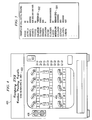
- FIG. 4 is a drawing of a coinless vending machine in accordance with the preferred embodiment of the present invention.
- Figure 5 is an example of what a typical call detail record would look like in accordance with the preferred embodiment of the present invention.
- a diagram of a wireless communication system is depicted in accordance with a preferred embodiment of the present invention.
- only one such wireless system is depicted (although a plurality of wireless and non-wireless systems may be utilized with the present invention) with only a representative sample of subsystems representing this system.
- the wireless system depicted can be any form of wireless technology and is not limited to a specific type of technology.
- the wireless system depicted in Figure 1 is representative of a code division multiple access (CDMA) system.
- CDMA code division multiple access
- the depicted example of a wireless system in Figure 1 includes a mobile switching center (MSC) (106) coupled to multiple base station controllers (BSC) (104).
- a typical base station controller will have multiple base transceiver stations (BTS) (102) coupled to it. Interfacing with each base transceiver station (BTS) (102) will be multiple wireless mobile devices (100). These wireless mobile devices interface with the base transceiver stations via radio frequency (RF).
- RF radio frequency
- the radio frequency interface between a mobile station and a base transceiver station is capable of transponding both bearer and signaling information.
- Bearer information will be in the form of either voice processing or data transaction processing.
- Voice processing can be either in the form of actual voice communication or tones such as dual tone multi frequency (DTMF) sequences.
- DTMF dual tone multi frequency
- Data transaction processing can be in the form of both circuit switched data transactions as well as packetized data transactions.
- Signaling processing will be in the form of control messaging between the two devices in order to inter-operate and communicate appropriately. Signaling messages are capable of being sent on both control channels and traffic channels and are capable of being sent simultaneously with bearer traffic while on a traffic channel.
- the mobile switching center (MSC) (106) is also coupled to a verification server (108).
- the Verification Server (108) interfaces with both a Billing Server (110) and a Media Server (114).
- the Billing Server is coupled to an Inventory System Controller (112).
- This Inventory System Controller (112) can reside on the Billing Server as a software entity or can reside on a separate, external server.
- the Media Server (114) compromises several key aspects to the preferred embodiment of the present invention.
- the media server (114) compromises a Mixer (116) which combines several pieces of key information together for exchange over the wireless system.
- the mixer (116) gets information from and sends information to an entertainment music module (118), an embedded codes module (120), and a public key generator (122).
- the public key generator contains the ability to generate both public and private keys as well as supplying the random number generator function for the present invention.
- FIG. 2 a block diagram of an audio code collector and validator (ACCV) is depicted in accordance with a preferred embodiment of the present invention.
- These blocks or module are hardware, software, firmware, and/or a combination of hardware, software, and/or firmware.
- An audio code collector and validator (ACCV) supplies the interface to a typical vending machine.
- the acoustic coupler (200) is a device that allows the audio code collector and validator (ACCV) to couple with a wireless mobile device (100 of Figure 1) via audio interfacing.
- the acoustic coupler (200) will contain a microphone (216) and a speaker (218).
- the acoustic coupler will be a device that will reside externally to the vending machine so that a wireless mobile device (100 of Figure 1) can interface to it.
- the acoustic coupler (200) will pass audio sent from the wireless mobile device (100 of Figure 1) to the ACCV and send audio signals from the ACCV to the wireless mobile device (100 of Figure 1).
- the acoustic coupler (200) will interface with an amplifier module (202) for appropriate amplification and filtering of the audio signals.
- the amplifier (202) will then pass the appropriate audio signals at the required quality and audio levels to an analog to digital/digital to analog converter (204).
- the analog to digital/digital to analog converter (204) converts an analog, audio signal to a digital bit stream.
- This bit stream is then forwarded to a digital filter (206). After the appropriate filtering of the digital stream is completed, the bit stream is sent to an encrypter/decrypter (208).
- the encrypter/decrypter module pulls the necessary bits from the bit stream for processing and comparison with its associated private key information.
- the Encrypter/Decrypter (208) works with a mixer module (210), a random number generator module (212), and a 128 bit private key module (214) in order to encrypt or decrypt the associated bit stream for processing.
- the code Validator (216) is forwarded to the Code Validator (216) for final processing and decision making. Depending of the validity of the information obtained, the code validator (216) will forward information to a dispensing module (218). This module interfaced directly with the vending machine in supplying information to appropriately dispense the specific product purchased.
- FIG. 3 a flowchart of a complete process for purchasing vending machine content through the audio code collector and validator (ACCV) is depicted in accordance with a preferred embodiment of the present invention.
- This process begins with a consumer requiring the need to purchase vending machine content from an ACCV equipped vending machine (step 300) via the consumer's wireless mobile device. It is assumed that the consumer has already established an appropriate billing account with the service provider providing the coinless vending machine service and that appropriate funds or credit information is on hand with the service provider in order for the consumer to successfully perform the transaction.
- An example of a typical vending machine equipped with an audio code collector and validator (ACCV) and having the appropriate product codes and machine identification code is illustrated in Figure 4 in accordance with a preferred embodiment of the present invention.
- a vending machine (400) capable of coinless vending operation will be identified by a unique vending machine identification number (402). Each product located inside the vending machine will also be associated with a product identification number (404).
- the consumer determines the vending machine identification number (402) consumer is located at and product identification number (404) of product consumer wants to purchase.
- the consumer dials a unique set of symbols and digits in order to start the transaction.
- the number that is dialed from the wireless mobile device can be any set of unique symbols or digits that allows the wireless system and specifically the mobile switching system (MSC) to translate the call appropriately and route it to the verification server.
- MSC mobile switching system
- the consumer dials a unique "star” code first [*58] followed by the unique vending machine id (402), followed by the product identification (404).
- a typical dial string associated with this illustration would appear as "*58200123" (step 304).
- the mobile switching center Upon successful initiation of the wireless mobile phone origination with dial string "*58200123", the mobile switching center (MSC) will translate the dialed string appropriately and determine that this unique code [*58] indicates that this is a call associated with a coinless vending machine transaction. MSC will then route the appropriate information to the verification database for further processing (step 308).
- the data that is routed to the verification database can be in the form of a call detail record (CDR) which is a well defined and a commonly used transaction type in the art.
- An example of a call detail record (CDR) is illustrated in Figure 5 in accordance with a preferred embodiment of the present invention.
- This information consists of the dialed number (502) in Figure 5 and the mobile identification number (504) in Figure 5.
- the verification server then utilizes this information to verify that the user is a valid subscriber to the coinless vending machine service. This information is compared to the verification server's database of valid subscriber accounts to the service. If the subscriber does not have a valid account on the verification server's database, the process will be halted and the appropriate announcement will be returned to the mobile via the wireless network (step 310 - failure and step 316).
- step 310 - success If the subscriber is confirmed to have a valid account on the verification server (step 310 - success), the account number associated with the subscriber, along with the dialed string (502 in Figure 5) and the mobile identification number (504 in Figure 5) are forwarded to the billing server for further processing. This is illustrated in step 312 of Figure 3.
- the billing server uses the forwarded information to determine if the subscriber has the appropriate funds in the billing account. This process is done by using the subscriber's account number to search on the billing server's database for the appropriate credit worthiness. If the subscriber does not have the appropriate funds in the database, the process will be halted and an announcement will be returned to the mobile via the wireless network (step 314 - failure and step 316). If the subscriber passes the billing server's credit check, the billing server will then gather pricing information based on the product code (404 of Figure 4) as obtained from the dialed string (502) in Figure 5.
- the billing server now forwards a request to the media server to create a public key in the form of a musical tone (step 318).
- the media server interacts with an embedded codes subsystem to create the public key in the form of musical tones.
- This musical tone is mixed with entertainment music that resides on the media server.
- the musical tones that now represent the public key can be audible or non-audible. Audible meaning that the tones can be in the range of 300 to 3000Hz. Non-audible is outside of this frequency range. All public keys utilized with this present invention will conform to the ANSI X9.19 "American National Standard for Financial Institution Message Encryption: American Bankers Association, 1988 key encryption standard" or "ISO 8730 [ISO87] and ISO 8731".
- step 320 These musical tones that are now embedded in an entertainment music clip, are now forwarded back to the mobile switching center along with an indication for the MSC to alert the mobile user to place the mobile against the acoustic coupler of the audio code collector and validator (ACCV) equipped vending machine (step 320).
- the method to alert the mobile user can be in the form of a text message or audible format.
- the mobile switching center MSC forwards the alert to the mobile through the BSC and BTS.
- the mobile user receives the indicator and places the mobile against the acoustic coupler.
- the MSC now forward the musical tones through the BSC, BTS, and mobile through to the acoustic coupler of the ACCV equipped vending machine (step 324).
- This audio information is received by the ACCV module, amplified and filtered appropriately and then forward to the Analog to Digital conversion module (step 326).
- the Analog to Digital conversion process converts the audio signal to a digital bit stream that is fed to an Encrypter/Decrypter module.
- the Encrypter/Decrypter module retrieves the Public Key that is embedded in the digital bit stream. Utilizing the retrieved Public Key, the Encrypter/Decrypter generates a Random Session Key.
- the Random Session Key is sent back through the ACCV, mobile, and MSC as an audio signal to the Verification Server.
- the Verification Server forwards this information to the Media Server. This step of the process is depicted in step 328.
- the Media server converts the audio signal to a digital bit stream and recovers the session key using its stored private vending machine key. Upon recovering the session key, the Media Server and Vending Machine ACCV module can now have secured communication via the use of this session key (step 330). The Media Server informs the Verification Server of the Session Key to use for further processing.
- the Verification Server now sends a Purchase Check Code to the mobile user/mobile device.
- This information can be in the form of a voice or text message. This will inform the mobile user that the mobile can be removed from the acoustic coupler for confirmation of the purchase being requested.
- the mobile user will be asked to confirm the purchase (step 334).
- the purchase confirmation can again be in the form of an audio tone or text message response. If the confirmation from the mobile is not received in set period of time configured on the Verification Server or if the Purchase Check code is a negative response, the transaction will be canceled at that point (step 336 - failure and step 338).
- the Verification Server queries the Billing Server for product code billing information.
- the Billing Server supplies a cost associated with a desired purchased product to the Verification Server.
- the Verification Server sends purchase confirmation message to mobile in the form of voice or text message (step 340).
- the purchase confirmation message will contain information about the purchase cost, account information, and optional marketing/promotional type information. This message will also inform the mobile user to place the mobile back against the acoustic coupler for final transaction.
- the Verification Server after sending purchase confirmation message, will query the media Server for a valid Dispense Code (step 342).
- the Media Server will embed this Dispense Code into an audio signal and forward on to the ACCV Module (step 344).
- the ACCV module's acoustic coupler will receive this information and process it through to the encrypter/decrypter for validation (step 346). If the encrypter/decrypter cannot decipher a valid dispense code (step 348 - failure), it will send a retry indication back to the Media Server (step 358).
- the Verification server will be configurable to accept and process multiple retries before failing the transaction (step 360 and 362).
- encrypter/decrypter Upon successful decipher of valid dispense code (step 348 - success), encrypter/decrypter forwards Dispense Code to Dispensing Module (step 354) for proper dispensing of product to consumer (step 356).
- the ACCV sends the validated Dispense Code response back to the Verification Server for final transaction processing (step 350).
- the Verification Server then sends validated Dispense Code response to Billing Server for finalization of billing and inventory management.
- the consumer's account is then billed (step 352).
- all or part of the functionality performed by the mobile device 100, the BTS 102, the BSC 104, the MSC 106, the verification server 108, the billing server 110, the inventory system 112, the media server 114, the mixer 116, the entertainment music module 118, the embedded codes module 120, the public key generator 122, the private key 124, the random number generator 126, the vending machine 128, and the ACCV 130 may be performed by one or more of these modules.
- the functionality described herein may be performed at various times and in relation to various events, internal or external to the modules or components.
- the information sent between various modules can be sent between the modules via at least one of: a data network, the Internet, a voice network, an Internet Protocol network, a wireless source, a wired source and/or via plurality of protocols.
- the mobile device 100 may be a cellular phone, a computer or any type of device able to receive and send a message.
- the messages sent or received by any of the modules may be sent or received directly and/or via one or more of the other modules or nodes (not shown).
Landscapes
- Business, Economics & Management (AREA)
- Engineering & Computer Science (AREA)
- Physics & Mathematics (AREA)
- Accounting & Taxation (AREA)
- General Physics & Mathematics (AREA)
- Strategic Management (AREA)
- General Business, Economics & Management (AREA)
- Theoretical Computer Science (AREA)
- Computer Networks & Wireless Communication (AREA)
- Finance (AREA)
- Computer Security & Cryptography (AREA)
- Control Of Vending Devices And Auxiliary Devices For Vending Devices (AREA)
- Mobile Radio Communication Systems (AREA)
Abstract
Description
- The present invention describes a system, method, and computer readable medium by which a consumer can purchase vending machine content via a consumer's mobile phone interfaced to a vending machine equipped with an Audio Code Collector and Validator (ACCV) system.
- The consumer's mobile phone will interface with both a Billing Server via a wireless cellular network and a vending machine via the ACCV system in order to perform the transaction of purchasing vending machine content.
- Current coinless vending machine concepts require vending machines to be interfaced to the cellular network or via the Internet and require special mobile phones. This is not a realistic or cost effective scenario for vending machine placements.
- A solution is therefore required that overcomes the limitations of existing coinless vending concepts by providing a system, method, and computer readable medium that allows secure and accountable transactions to occur without a vending machine requiring connection to the Internet or a wireless network.
- The present invention provides an Audio Code Collector and Validator (ACCV) at the vending machine. This device allows any standard mobile phone to interface with the ACCV equipped vending machine via "audio codes" in order to purchase content. Transactions occur between:
- the mobile phone via the cellular network to a Billing Server and Verification Database; and
- the mobile phone to the ACCV via audio interface.
- In one embodiment, a system for operation of a vending machine, comprises a vending machine comprising an audio code collector and a code validator adapted to receive audio tones from a mobile device, wherein the audio tones include authentication codes and dispense codes to control dispensing of product from the vending machine.
- In another embodiment, a method for purchasing product from a coinless vending machine comprises determining a vending machine identification number and a product identification number, wherein the vending machine includes an audio code collector and validator (ACCV), dialing, via a mobile device, at least one of: a unique set of symbols and a unique set of digits as well as the numbers, that allows a wireless system providing access to the mobile device, to translate the symbols and the digits, and
routing the translated symbols and digits as well as the numbers to a verification server. - In a further embodiment, a computer readable medium comprises instructions for: creating a public key in a form of one or more musical tones, wherein the musical tones may be audible or non- audible, and forwarding the musical tones to a Mobile Switching Center along with an indication for the MSC to alert a subscriber to place a mobile device against an acoustic coupler of an audio code collector and validator (ACCV) module in a coinless vending machine, wherein the subscriber may be alerted via a text message or an audible format.
- The unique features of the invention are set forth in the appended claims. The invention itself, however, as well as a preferred mode of use and advantages thereof, is best understood by reference to the following detailed description of an illustrative embodiment when read in conjunction with the accompanying drawings:
- Figure 1 is a block diagram of a wireless communication system depicted in accordance with a preferred embodiment of the present invention;
- Figure 2 is a block diagram of an audio code collector and validator (ACCV) depicted in accordance with a preferred embodiment of the present invention;
- Figure 3 is a flowchart of a process for coinless vending operation in accordance with the preferred embodiment of the present invention;
- Figure 4 is a drawing of a coinless vending machine in accordance with the preferred embodiment of the present invention; and
- Figure 5 is an example of what a typical call detail record would look like in accordance with the preferred embodiment of the present invention.
- With reference to the figures and in particular with reference to Figure 1, a diagram of a wireless communication system is depicted in accordance with a preferred embodiment of the present invention. In the interest of clarity, only one such wireless system is depicted (although a plurality of wireless and non-wireless systems may be utilized with the present invention) with only a representative sample of subsystems representing this system. The wireless system depicted can be any form of wireless technology and is not limited to a specific type of technology. The wireless system depicted in Figure 1 is representative of a code division multiple access (CDMA) system.
- The depicted example of a wireless system in Figure 1 includes a mobile switching center (MSC) (106) coupled to multiple base station controllers (BSC) (104). A typical base station controller will have multiple base transceiver stations (BTS) (102) coupled to it. Interfacing with each base transceiver station (BTS) (102) will be multiple wireless mobile devices (100). These wireless mobile devices interface with the base transceiver stations via radio frequency (RF). The radio frequency interface between a mobile station and a base transceiver station is capable of transponding both bearer and signaling information. Bearer information will be in the form of either voice processing or data transaction processing. Voice processing can be either in the form of actual voice communication or tones such as dual tone multi frequency (DTMF) sequences. Data transaction processing can be in the form of both circuit switched data transactions as well as packetized data transactions. Signaling processing will be in the form of control messaging between the two devices in order to inter-operate and communicate appropriately. Signaling messages are capable of being sent on both control channels and traffic channels and are capable of being sent simultaneously with bearer traffic while on a traffic channel.
- In continuing to reference Figure 1, the mobile switching center (MSC) (106) is also coupled to a verification server (108). The Verification Server (108) interfaces with both a Billing Server (110) and a Media Server (114). The Billing Server is coupled to an Inventory System Controller (112). This Inventory System Controller (112) can reside on the Billing Server as a software entity or can reside on a separate, external server. The Media Server (114) compromises several key aspects to the preferred embodiment of the present invention. The media server (114) compromises a Mixer (116) which combines several pieces of key information together for exchange over the wireless system. The mixer (116) gets information from and sends information to an entertainment music module (118), an embedded codes module (120), and a public key generator (122). The public key generator contains the ability to generate both public and private keys as well as supplying the random number generator function for the present invention.
- With reference now to Figure 2, a block diagram of an audio code collector and validator (ACCV) is depicted in accordance with a preferred embodiment of the present invention. These blocks or module are hardware, software, firmware, and/or a combination of hardware, software, and/or firmware. An audio code collector and validator (ACCV) supplies the interface to a typical vending machine. The acoustic coupler (200) is a device that allows the audio code collector and validator (ACCV) to couple with a wireless mobile device (100 of Figure 1) via audio interfacing. The acoustic coupler (200) will contain a microphone (216) and a speaker (218). The acoustic coupler will be a device that will reside externally to the vending machine so that a wireless mobile device (100 of Figure 1) can interface to it. The acoustic coupler (200) will pass audio sent from the wireless mobile device (100 of Figure 1) to the ACCV and send audio signals from the ACCV to the wireless mobile device (100 of Figure 1). The acoustic coupler (200) will interface with an amplifier module (202) for appropriate amplification and filtering of the audio signals. The amplifier (202) will then pass the appropriate audio signals at the required quality and audio levels to an analog to digital/digital to analog converter (204). The analog to digital/digital to analog converter (204) converts an analog, audio signal to a digital bit stream. This bit stream is then forwarded to a digital filter (206). After the appropriate filtering of the digital stream is completed, the bit stream is sent to an encrypter/decrypter (208). The encrypter/decrypter module pulls the necessary bits from the bit stream for processing and comparison with its associated private key information. The Encrypter/Decrypter (208) works with a mixer module (210), a random number generator module (212), and a 128 bit private key module (214) in order to encrypt or decrypt the associated bit stream for processing. Once the appropriate information has been retrieved from the bit stream, the information is forwarded to the Code Validator (216) for final processing and decision making. Depending of the validity of the information obtained, the code validator (216) will forward information to a dispensing module (218). This module interfaced directly with the vending machine in supplying information to appropriately dispense the specific product purchased.
- With reference now to Figure 3, a flowchart of a complete process for purchasing vending machine content through the audio code collector and validator (ACCV) is depicted in accordance with a preferred embodiment of the present invention. This process begins with a consumer requiring the need to purchase vending machine content from an ACCV equipped vending machine (step 300) via the consumer's wireless mobile device. It is assumed that the consumer has already established an appropriate billing account with the service provider providing the coinless vending machine service and that appropriate funds or credit information is on hand with the service provider in order for the consumer to successfully perform the transaction. An example of a typical vending machine equipped with an audio code collector and validator (ACCV) and having the appropriate product codes and machine identification code is illustrated in Figure 4 in accordance with a preferred embodiment of the present invention. A vending machine (400) capable of coinless vending operation will be identified by a unique vending machine identification number (402). Each product located inside the vending machine will also be associated with a product identification number (404). Referring back to Figure 3, the consumer determines the vending machine identification number (402) consumer is located at and product identification number (404) of product consumer wants to purchase. The consumer then dials a unique set of symbols and digits in order to start the transaction. The number that is dialed from the wireless mobile device can be any set of unique symbols or digits that allows the wireless system and specifically the mobile switching system (MSC) to translate the call appropriately and route it to the verification server. For this illustration, the consumer dials a unique "star" code first [*58] followed by the unique vending machine id (402), followed by the product identification (404). A typical dial string associated with this illustration would appear as "*58200123" (step 304). Once the user completes the originated call from the mobile, the call will be routed over the air interface, through the BTS (102 in Figure 1), BSC (104 in Figure 1), and to the MSC (106 in Figure 1). If call does not successfully get routed to the MSC, the wireless mobile device will supply the appropriate notification to the user that the call will need to be retried. This is illustrated in the negative decision point with respect to Figure 3 (step 306).
- Upon successful initiation of the wireless mobile phone origination with dial string "*58200123", the mobile switching center (MSC) will translate the dialed string appropriately and determine that this unique code [*58] indicates that this is a call associated with a coinless vending machine transaction. MSC will then route the appropriate information to the verification database for further processing (step 308). The data that is routed to the verification database can be in the form of a call detail record (CDR) which is a well defined and a commonly used transaction type in the art. An example of a call detail record (CDR) is illustrated in Figure 5 in accordance with a preferred embodiment of the present invention. Once the call detail record information is forwarded to the verification server, the verification server then strips out the required information from the CDR for further processing. This information consists of the dialed number (502) in Figure 5 and the mobile identification number (504) in Figure 5. The verification server then utilizes this information to verify that the user is a valid subscriber to the coinless vending machine service. This information is compared to the verification server's database of valid subscriber accounts to the service. If the subscriber does not have a valid account on the verification server's database, the process will be halted and the appropriate announcement will be returned to the mobile via the wireless network (step 310 - failure and step 316). If the subscriber is confirmed to have a valid account on the verification server (step 310 - success), the account number associated with the subscriber, along with the dialed string (502 in Figure 5) and the mobile identification number (504 in Figure 5) are forwarded to the billing server for further processing. This is illustrated in
step 312 of Figure 3. - The billing server uses the forwarded information to determine if the subscriber has the appropriate funds in the billing account. This process is done by using the subscriber's account number to search on the billing server's database for the appropriate credit worthiness. If the subscriber does not have the appropriate funds in the database, the process will be halted and an announcement will be returned to the mobile via the wireless network (step 314 - failure and step 316). If the subscriber passes the billing server's credit check, the billing server will then gather pricing information based on the product code (404 of Figure 4) as obtained from the dialed string (502) in Figure 5.
- Continuing to reference Figure 3, the billing server now forwards a request to the media server to create a public key in the form of a musical tone (step 318). The media server interacts with an embedded codes subsystem to create the public key in the form of musical tones. This musical tone is mixed with entertainment music that resides on the media server. The musical tones that now represent the public key can be audible or non-audible. Audible meaning that the tones can be in the range of 300 to 3000Hz. Non-audible is outside of this frequency range. All public keys utilized with this present invention will conform to the ANSI X9.19 "American National Standard for Financial Institution Message Encryption: American Bankers Association, 1988 key encryption standard" or "ISO 8730 [ISO87] and ISO 8731". These musical tones that are now embedded in an entertainment music clip, are now forwarded back to the mobile switching center along with an indication for the MSC to alert the mobile user to place the mobile against the acoustic coupler of the audio code collector and validator (ACCV) equipped vending machine (step 320). The method to alert the mobile user can be in the form of a text message or audible format. As depicted in
step 322, the mobile switching center (MSC) forwards the alert to the mobile through the BSC and BTS. The mobile user receives the indicator and places the mobile against the acoustic coupler. The MSC now forward the musical tones through the BSC, BTS, and mobile through to the acoustic coupler of the ACCV equipped vending machine (step 324). - This audio information is received by the ACCV module, amplified and filtered appropriately and then forward to the Analog to Digital conversion module (step 326). The Analog to Digital conversion process converts the audio signal to a digital bit stream that is fed to an Encrypter/Decrypter module. The Encrypter/Decrypter module retrieves the Public Key that is embedded in the digital bit stream. Utilizing the retrieved Public Key, the Encrypter/Decrypter generates a Random Session Key. The Random Session Key is sent back through the ACCV, mobile, and MSC as an audio signal to the Verification Server. The Verification Server forwards this information to the Media Server. This step of the process is depicted in
step 328. The Media server converts the audio signal to a digital bit stream and recovers the session key using its stored private vending machine key. Upon recovering the session key, the Media Server and Vending Machine ACCV module can now have secured communication via the use of this session key (step 330). The Media Server informs the Verification Server of the Session Key to use for further processing. - As illustrated in
step 332 of Figure 3, the Verification Server now sends a Purchase Check Code to the mobile user/mobile device. This information can be in the form of a voice or text message. This will inform the mobile user that the mobile can be removed from the acoustic coupler for confirmation of the purchase being requested. The mobile user will be asked to confirm the purchase (step 334). The purchase confirmation can again be in the form of an audio tone or text message response. If the confirmation from the mobile is not received in set period of time configured on the Verification Server or if the Purchase Check code is a negative response, the transaction will be canceled at that point (step 336 - failure and step 338). If the confirmation is received at the Verification Server prior to the timeout period and is a positive confirmation, the Verification Server queries the Billing Server for product code billing information. The Billing Server supplies a cost associated with a desired purchased product to the Verification Server. The Verification Server sends purchase confirmation message to mobile in the form of voice or text message (step 340). The purchase confirmation message will contain information about the purchase cost, account information, and optional marketing/promotional type information. This message will also inform the mobile user to place the mobile back against the acoustic coupler for final transaction. - The Verification Server, after sending purchase confirmation message, will query the media Server for a valid Dispense Code (step 342). The Media Server will embed this Dispense Code into an audio signal and forward on to the ACCV Module (step 344). The ACCV module's acoustic coupler will receive this information and process it through to the encrypter/decrypter for validation (step 346). If the encrypter/decrypter cannot decipher a valid dispense code (step 348 - failure), it will send a retry indication back to the Media Server (step 358). The Verification server will be configurable to accept and process multiple retries before failing the transaction (
step 360 and 362). Upon successful decipher of valid dispense code (step 348 - success), encrypter/decrypter forwards Dispense Code to Dispensing Module (step 354) for proper dispensing of product to consumer (step 356). At the same time, the ACCV sends the validated Dispense Code response back to the Verification Server for final transaction processing (step 350). The Verification Server then sends validated Dispense Code response to Billing Server for finalization of billing and inventory management. The consumer's account is then billed (step 352). - Although an exemplary embodiment of the system, method, and computer readable medium of the present invention has been illustrated in the accompanied drawings and described in the foregoing detailed description, it will be understood that the invention is not limited to the embodiments disclosed, but is capable of numerous rearrangements, modifications, and substitutions without departing from the spirit or scope of the invention as set forth and defined by the following claims. For example, the capabilities of the system of the present invention can be performed by one or more of the modules or components described herein or in a distributed architecture. For example, all or part of the functionality performed by the
mobile device 100, theBTS 102, theBSC 104, theMSC 106, theverification server 108, thebilling server 110, theinventory system 112, themedia server 114, themixer 116, theentertainment music module 118, the embeddedcodes module 120, the publickey generator 122, theprivate key 124, therandom number generator 126, thevending machine 128, and theACCV 130 may be performed by one or more of these modules. Further, the functionality described herein may be performed at various times and in relation to various events, internal or external to the modules or components. Also, the information sent between various modules can be sent between the modules via at least one of: a data network, the Internet, a voice network, an Internet Protocol network, a wireless source, a wired source and/or via plurality of protocols. Still further, themobile device 100 may be a cellular phone, a computer or any type of device able to receive and send a message. Also, the messages sent or received by any of the modules may be sent or received directly and/or via one or more of the other modules or nodes (not shown).
The following features, separately or in any combination, may also constitute advantageous embodiments of the described or claimed invention: - The claimed and/or described method comprising forwarding the musical tones to a Mobile Switching Center (MSC) along with an indication for the MSC to alert the subscriber to place the mobile device against an acoustic coupler of the ACCV, wherein the subscriber may be alerted via a text message or an audible format;
- The claimed and/or described method comprising forwarding the alert by the MSC to the mobile device;
- The claimed and/or described method comprising placing the mobile device against the acoustic coupler and forwarding, by the MSC, the musical tones to the acoustic coupler;
- The claimed and/or described method comprising converting the musical tones to a digital bit stream and retrieving the public key that is embedded in the digital bit stream;
- The claimed and/or described method comprising generating a random session key based on the public key, wherein the random session key is sent from the ACCV as an audio signal to the verification server;
- The claimed and/or described method comprising receiving the random session key by the media server which converts the audio signal to a digital bit stream and recovers the session key using its stored private vending machine key;
- The claimed and/or described method comprising securely communicating between the media server and the ACCV utilizing the session key;
- The claimed and/or described method comprising sending a purchase check code by the verification server to the mobile device, wherein the purchase check code is at least one of: a voice message and a text message, and wherein such a purchase check code is related to a desired purchased product informs the subscriber that the mobile device can be removed from the acoustic coupler;
- The claimed and/or described method comprising querying the billing server by the verification server for product code billing information, wherein the billing server supplies a cost associated with the desired purchased product to the verification server;
- The claimed and/or described method comprising sending a purchase confirmation message by the verification server to the mobile device via at least one of: a voice message and a text message, wherein the purchase confirmation message contains information about at least one of: the purchase cost, information about the account, and optional marketing information, and wherein the purchase confirmation message informs the subscriber to place the mobile device back against the acoustic coupler for a final transaction;
- The claimed and/or described method comprising querying the media server by the verification server for a valid dispense code;
- The claimed and/or described method comprising embedding the dispense code by the media server into an audio signal and forwarding the audio signal to the acoustic coupler;
- The claimed and/or described method comprising validating the dispense code and forwarding the dispense code to a dispensing module for proper dispensing of the purchased product;
- A computer readable medium comprising instructions for: creating a public key in a form of one or more musical tones, wherein the musical tones may be audible or non-audible; and forwarding the musical tones to a Mobile Switching Center along with an indication for the MSC to alert a subscriber to place a mobile device against an acoustic coupler of an audio code collector and validator (ACCV) module in a coinless vending machine, wherein the subscriber may be alerted via a text message or an audible format.
Claims (10)
- A system for operation of a vending machine, comprising:a vending machine comprising an audio code collector and a code validator adapted to receive audio tones from a mobile device, wherein the audio tones include authentication codes and dispense codes to control dispensing of product from the vending machine.
- The system of claim 1 comprising a media server adapted to receive a request from the mobile device, wherein the request includes an identifier of the vending machine and a code of the product.
- The system of claim 2, wherein the media server, based on the request, verifies billing, authenticates the vending machine and transmits audio codes to the mobile device for authentication of the vending machine and dispensing of the product.
- The system of claim 1, wherein the vending machine is a coinless vending machine.
- The system of claim 1, wherein the vending machine is not connected to the Internet.
- The system of claim 2, wherein the media server receives the request from the mobile device via a wireless network.
- A method for purchasing product from a coinless vending machine, comprising:determining a vending machine identification number and a product identification number, wherein the vending machine includes an audio code collector and validator (ACCV);dialing, via a mobile device, at least one of: a unique set of symbols and a unique set of digits as well as the numbers, that allows a wireless system providing access to the mobile device, to translate the symbols and the digits; androuting the translated symbols and digits as well as the numbers to a verification server.
- The method of claim 7 comprising routing the translated symbols and digits as well as the numbers in the form of a call detail record (CDR) to the verification server.
- The method of claim 8 comprising, if a subscriber of the mobile device is confirmed to have a valid account on the verification server, forwarding an account number associated with the subscriber, a mobile identification number of the mobile device, and the at least one of: a unique set of symbols and a unique set of digits as well as the numbers, to a billing server for further processing, wherein the billing server uses the forwarded information to determine if the subscriber has appropriate funds in an account.
- The method of claim 9 comprising forwarding a request by the billing server to a media server to create a public key in a form of one or more musical tones, wherein the musical tones may be audible or non- audible.
Applications Claiming Priority (1)
| Application Number | Priority Date | Filing Date | Title |
|---|---|---|---|
| US11/231,406 US7721958B2 (en) | 2005-09-21 | 2005-09-21 | Coinless vending system, method, and computer readable medium using an audio code collector and validator |
Publications (2)
| Publication Number | Publication Date |
|---|---|
| EP1768071A2 true EP1768071A2 (en) | 2007-03-28 |
| EP1768071A3 EP1768071A3 (en) | 2007-05-02 |
Family
ID=36910801
Family Applications (1)
| Application Number | Title | Priority Date | Filing Date |
|---|---|---|---|
| EP06014101A Withdrawn EP1768071A3 (en) | 2005-09-21 | 2006-07-07 | Coinless vending system, method and computer readable medium using an audio code collector and validator |
Country Status (3)
| Country | Link |
|---|---|
| US (1) | US7721958B2 (en) |
| EP (1) | EP1768071A3 (en) |
| CN (1) | CN1936971A (en) |
Cited By (7)
| Publication number | Priority date | Publication date | Assignee | Title |
|---|---|---|---|---|
| WO2010097711A2 (en) | 2009-02-10 | 2010-09-02 | Homeatm | Apparatus and method for commercial transactions using a communication device |
| WO2011128499A1 (en) | 2010-04-14 | 2011-10-20 | Nokia Corporation | Method and apparatus for providing automated payment |
| WO2012106380A1 (en) * | 2011-01-31 | 2012-08-09 | Jason Lester Hill | Sonic based digital networking |
| WO2013114248A1 (en) * | 2012-01-31 | 2013-08-08 | Fundamo (Pty) Ltd | Near sound communication payment system |
| WO2013129964A1 (en) * | 2012-02-28 | 2013-09-06 | Diachenko Vasilii Vladimirovich | System and method for enhancing customer loyalty |
| EP2877969A4 (en) * | 2012-07-25 | 2016-03-09 | Ebay Inc | SYSTEMS AND METHODS FOR ELECTRONIC PAYMENTS ON DEVICES NOT CONNECTED TO THE INTERNET |
| US9460590B2 (en) | 2012-09-24 | 2016-10-04 | Wal-Mart Stores, Inc. | Determination of customer proximity to a register through use of sound and methods thereof |
Families Citing this family (88)
| Publication number | Priority date | Publication date | Assignee | Title |
|---|---|---|---|---|
| US7584869B2 (en) * | 2004-04-15 | 2009-09-08 | Redbox Automated Retail, Llc | Article dispensing system and method for same |
| US7447605B2 (en) | 2004-04-15 | 2008-11-04 | Redbox Automated Retail, Llc | System and method for calibrating a vending apparatus |
| US8060247B2 (en) | 2005-04-22 | 2011-11-15 | Redbox Automated Retail, Llc | System and method for communicating secondary vending options |
| WO2006116110A2 (en) * | 2005-04-22 | 2006-11-02 | Redbox Automated Retail, L.L.C. | System and method for communicating vending information |
| US20070138262A1 (en) * | 2005-12-19 | 2007-06-21 | Inventec Corporation | Electronic commerce system between a communication device and a vending machine |
| US20080011825A1 (en) * | 2006-07-12 | 2008-01-17 | Giordano Claeton J | Transactions using handheld electronic devices based on unobtrusive provisioning of the devices |
| US8336770B2 (en) * | 2006-10-26 | 2012-12-25 | Mastercard International, Inc. | Method and apparatus for wireless authorization |
| DE102007049878A1 (en) * | 2007-07-25 | 2009-01-29 | Marcus Regensburger | Consumable and server system and method for allocating a monetary advantage |
| US9886809B2 (en) | 2007-09-28 | 2018-02-06 | Redbox Automated Retail, Llc | Article dispensing machine and method for auditing inventory while article dispensing machine remains operational |
| US20090089187A1 (en) * | 2007-09-28 | 2009-04-02 | Redbox Automated Retail, Llc | Article Vending Machine And Method for Auditing Inventory While Article Vending Machine Remains Operational |
| US8712872B2 (en) | 2012-03-07 | 2014-04-29 | Redbox Automated Retail, Llc | System and method for optimizing utilization of inventory space for dispensable articles |
| US8768789B2 (en) | 2012-03-07 | 2014-07-01 | Redbox Automated Retail, Llc | System and method for optimizing utilization of inventory space for dispensable articles |
| US8364520B1 (en) | 2008-08-15 | 2013-01-29 | Freeosk Marketing, Inc. | Method for measuring effectiveness of sampling activity and providing pre-market product feedback |
| US20100222037A1 (en) * | 2009-03-02 | 2010-09-02 | First Data Corporation | Systems, Methods, and Apparatus for Providing Terms and Conditions and Program Enrollment Information to a Mobile Device |
| US20100223120A1 (en) * | 2009-03-02 | 2010-09-02 | First Data Corporation | Systems, methods, and devices for administering consumer reward programs through the use of tones sent to mobile devices |
| US20100222087A1 (en) * | 2009-03-02 | 2010-09-02 | First Data Corporation | Systems, methods and apparatus for communicating information to a mobile device in a broadcast signal |
| US8725121B2 (en) * | 2009-03-02 | 2014-05-13 | First Data Corporation | Systems, methods, and devices for prompting mobile device users for feedback information using tone transmissions |
| US20100222100A1 (en) * | 2009-03-02 | 2010-09-02 | First Data Corporation | Systems, methods and apparatus for facilitating communication between mobile devices |
| US9077800B2 (en) * | 2009-03-02 | 2015-07-07 | First Data Corporation | Systems, methods, and devices for processing feedback information received from mobile devices responding to tone transmissions |
| US8577345B2 (en) * | 2009-03-02 | 2013-11-05 | First Data Corporation | Systems, methods, and apparatus for providing promotion information to a mobile device |
| US8577346B2 (en) * | 2009-03-02 | 2013-11-05 | First Data Corporation | Systems, methods, and apparatus for receiving promotion information by a mobile device |
| US20100222072A1 (en) * | 2009-03-02 | 2010-09-02 | First Data Corporation | Systems, methods and apparatus for providing information to a mobile device |
| US20100222088A1 (en) * | 2009-03-02 | 2010-09-02 | First Data Corporation | Systems, methods and apparatus for receiving information by a mobile device |
| US20100222038A1 (en) * | 2009-03-02 | 2010-09-02 | First Data Corporation | Systems, methods, and devices for communicating supplemental information to mobile devices |
| US8606638B2 (en) * | 2009-03-02 | 2013-12-10 | First Data Corporation | Systems, methods and apparatus for facilitating transactions using a mobile device |
| US20100223138A1 (en) * | 2009-03-02 | 2010-09-02 | First Data Corporation | Systems, methods and apparatus for marketing by communicating tones to a mobile device |
| US8996162B2 (en) | 2009-09-05 | 2015-03-31 | Redbox Automated Retail, Llc | Article vending machine and method for exchanging an inoperable article for an operable article |
| US9104990B2 (en) | 2009-09-05 | 2015-08-11 | Redbox Automated Retail, Llc | Article vending machine and method for exchanging an inoperable article for an operable article |
| US9092768B2 (en) * | 2010-01-11 | 2015-07-28 | R4 Technologies, Llc | Machine retrofits and interactive soda fountains |
| US8965781B2 (en) | 2010-06-01 | 2015-02-24 | Albert Bruce Urquhart | Online pay-per-use system and method |
| US8538581B2 (en) | 2010-09-03 | 2013-09-17 | Redbox Automated Retail, Llc | Article vending machine and method for authenticating received articles |
| US9569911B2 (en) | 2010-08-23 | 2017-02-14 | Redbox Automated Retail, Llc | Secondary media return system and method |
| GB2484140B (en) | 2010-10-01 | 2017-07-12 | Asio Ltd | Data communication system |
| AU2011323490A1 (en) | 2010-11-01 | 2013-05-02 | Outerwall Inc. | Gift card exchange kiosks and associated methods of use |
| US20120323359A1 (en) * | 2011-06-14 | 2012-12-20 | Mr. Jeffrey Charles Richman | Methods for enhancing vending machine utilization and devices thereof |
| CA2838944A1 (en) | 2011-06-14 | 2012-12-20 | Redbox Automated Retail, Llc | System and method for substituting a media article with alternative media |
| CA2842293C (en) | 2011-07-20 | 2019-10-22 | Redbox Automated Retail, Llc | System and method for providing the identification of geographically closest article dispensing machines |
| CA2843589A1 (en) | 2011-08-02 | 2013-02-07 | Redbox Automated Retail, Llc | System and method for generating notifications related to new media |
| US9286617B2 (en) | 2011-08-12 | 2016-03-15 | Redbox Automated Retail, Llc | System and method for applying parental control limits from content providers to media content |
| US8874467B2 (en) | 2011-11-23 | 2014-10-28 | Outerwall Inc | Mobile commerce platforms and associated systems and methods for converting consumer coins, cash, and/or other forms of value for use with same |
| US9747253B2 (en) | 2012-06-05 | 2017-08-29 | Redbox Automated Retail, Llc | System and method for simultaneous article retrieval and transaction validation |
| US20140012412A1 (en) * | 2012-06-29 | 2014-01-09 | Bhupendra Khonalkar | Coding platform for use with transactions across various mediums and devices |
| US9245403B2 (en) | 2012-11-16 | 2016-01-26 | Todd Goldstein | Method and device for accessing, controlling and purchasing a product through a dispenser |
| US9922488B2 (en) * | 2013-10-16 | 2018-03-20 | Redbox Automated Retail, Llc | Wireless communication for consumer-operated kiosks |
| USD755183S1 (en) | 2013-12-18 | 2016-05-03 | Payrange, Inc. | In-line dongle |
| US10019724B2 (en) | 2015-01-30 | 2018-07-10 | PayRange Inc. | Method and system for providing offers for automated retail machines via mobile devices |
| US9875473B2 (en) | 2013-12-18 | 2018-01-23 | PayRange Inc. | Method and system for retrofitting an offline-payment operated machine to accept electronic payments |
| US9659296B2 (en) | 2013-12-18 | 2017-05-23 | PayRange Inc. | Method and system for presenting representations of payment accepting unit events |
| US11966926B2 (en) | 2013-12-18 | 2024-04-23 | PayRange Inc. | Method and system for asynchronous mobile payments for multiple in-person transactions conducted in parallel |
| US11966895B2 (en) | 2013-12-18 | 2024-04-23 | PayRange Inc. | Refund centers for processing and dispensing vending machine refunds via an MDB router |
| US11205163B2 (en) | 2013-12-18 | 2021-12-21 | PayRange Inc. | Systems and methods for determining electric pulses to provide to an unattended machine based on remotely-configured options |
| US11983692B2 (en) | 2013-12-18 | 2024-05-14 | PayRange Inc. | Mobile payment module with dual function radio transmitter |
| US11481781B2 (en) | 2013-12-18 | 2022-10-25 | PayRange Inc. | Processing interrupted transaction over non-persistent network connections |
| US11074580B2 (en) | 2013-12-18 | 2021-07-27 | PayRange Inc. | Device and method for providing external access to multi-drop bus peripheral devices |
| US11481780B2 (en) | 2013-12-18 | 2022-10-25 | PayRange Inc. | Method and system for asynchronous mobile payments for multiple in-person transactions conducted in parallel |
| US11475454B2 (en) | 2013-12-18 | 2022-10-18 | PayRange Inc. | Intermediary communications over non-persistent network connections |
| US20150170136A1 (en) | 2013-12-18 | 2015-06-18 | PayRange Inc. | Method and System for Performing Mobile Device-To-Machine Payments |
| US12086811B2 (en) | 2013-12-18 | 2024-09-10 | PayRange Inc. | Processing interrupted transactions over non-persistent network connections |
| US12548018B2 (en) | 2013-12-18 | 2026-02-10 | Payrange Llc | Device and method for providing external access to multi-drop bus peripheral devices |
| US8856045B1 (en) | 2013-12-18 | 2014-10-07 | PayRange Inc. | Mobile-device-to-machine payment systems |
| US12093962B2 (en) | 2013-12-18 | 2024-09-17 | PayRange Inc. | Intermediary communications over non-persistent network connections |
| CN103903368B (en) * | 2014-04-10 | 2016-02-03 | 福建联迪商用设备有限公司 | POS terminal equipment, sound wave payment system and method |
| US20150332259A1 (en) * | 2014-05-13 | 2015-11-19 | Clear Token Inc. | Secure payment system and method |
| US11308462B2 (en) | 2014-05-13 | 2022-04-19 | Clear Token Inc | Secure electronic payment |
| US12548032B2 (en) | 2014-06-30 | 2026-02-10 | Payrange Llc | Processing interrupted transactions over non-persistent network connections |
| US12248939B2 (en) | 2014-06-30 | 2025-03-11 | Payrange Llc | Intermediary communications over non-persistent network connections |
| USD748196S1 (en) | 2014-08-27 | 2016-01-26 | Outerwall Inc. | Consumer operated kiosk for sampling products |
| US20160086417A1 (en) * | 2014-09-24 | 2016-03-24 | Pyramid Group, Inc. | Vending machine with wireless-enabled currency acceptor |
| US10043524B2 (en) | 2014-12-19 | 2018-08-07 | Daniel SEEMILLER | Interactive data communication with acoustic signal communication |
| USD763905S1 (en) | 2015-01-30 | 2016-08-16 | PayRange Inc. | Display screen or portion thereof with animated graphical user interface |
| USD763888S1 (en) | 2015-01-30 | 2016-08-16 | PayRange Inc. | Display screen or portion thereof with graphical user interface |
| USD764532S1 (en) | 2015-01-30 | 2016-08-23 | PayRange Inc. | Display screen or portion thereof with animated graphical user interface |
| USD773508S1 (en) | 2015-01-30 | 2016-12-06 | PayRange Inc. | Display screen or portion thereof with a graphical user interface |
| USD836118S1 (en) | 2015-01-30 | 2018-12-18 | Payrange, Inc. | Display screen or portion thereof with an animated graphical user interface |
| USD862501S1 (en) | 2015-01-30 | 2019-10-08 | PayRange Inc. | Display screen or portion thereof with a graphical user interface |
| US20190333043A1 (en) * | 2015-04-06 | 2019-10-31 | David Ben Avi | Data transmission from a vending machine through customers' cellular devices |
| JP6727805B2 (en) * | 2015-12-25 | 2020-07-22 | ザ コカ・コーラ カンパニーThe Coca‐Cola Company | Vending machines and mobile terminals |
| GB201617408D0 (en) | 2016-10-13 | 2016-11-30 | Asio Ltd | A method and system for acoustic communication of data |
| GB201617409D0 (en) | 2016-10-13 | 2016-11-30 | Asio Ltd | A method and system for acoustic communication of data |
| US12341931B2 (en) | 2016-10-13 | 2025-06-24 | Sonos Experience Limited | Method and system for acoustic communication of data |
| GB201704636D0 (en) | 2017-03-23 | 2017-05-10 | Asio Ltd | A method and system for authenticating a device |
| GB2565751B (en) | 2017-06-15 | 2022-05-04 | Sonos Experience Ltd | A method and system for triggering events |
| GB2570634A (en) | 2017-12-20 | 2019-08-07 | Asio Ltd | A method and system for improved acoustic transmission of data |
| US20210406855A1 (en) * | 2020-06-29 | 2021-12-30 | Nicholas-Alexander LLC | Systems and methods for providing a tone-based kiosk service |
| US12592134B2 (en) | 2020-07-21 | 2026-03-31 | Payrange Llc | Systems and methods for tool activation and display cabinet locking |
| US12399958B2 (en) | 2020-07-21 | 2025-08-26 | Payrange Llc | Systems and methods for tool activation and display cabinet locking |
| US11988784B2 (en) | 2020-08-31 | 2024-05-21 | Sonos, Inc. | Detecting an audio signal with a microphone to determine presence of a playback device |
| US12225109B2 (en) * | 2021-11-02 | 2025-02-11 | SK Hynix Inc. | Electronic devices and electronic systems for transmitting bit stream including programming data |
Family Cites Families (9)
| Publication number | Priority date | Publication date | Assignee | Title |
|---|---|---|---|---|
| GB1556186A (en) * | 1975-08-14 | 1979-11-21 | Matsushita Electric Industrial Co Ltd | Automatic vending systems |
| US7181629B1 (en) * | 1999-08-27 | 2007-02-20 | Fujitsu Limited | Data distribution system as well as data supply device terminal device and recording device for the same |
| EP1104973A1 (en) | 1999-12-03 | 2001-06-06 | First Hop Oy | A method and a system for obtaining services using a cellular telecommunication system |
| AU2374401A (en) * | 1999-12-03 | 2001-06-12 | First Hop Oy | A method and a system for obtaining services using a cellular telecommunication system |
| US6584309B1 (en) | 1999-12-16 | 2003-06-24 | The Coca-Cola Company | Vending machine purchase via cellular telephone |
| DE10000948A1 (en) * | 2000-01-12 | 2001-08-02 | Siemens Ag | Arrangement for the provision and flexible charging of a product or service, and automatic dispenser for use in such and method for operating such |
| US6990472B2 (en) * | 2000-10-23 | 2006-01-24 | Starpound Corporation | Telecommunications initiated data fulfillment system |
| CA2354896A1 (en) * | 2001-08-09 | 2003-02-09 | Scott Edward James Garratt | Method to activate a vending machine |
| US20030061493A1 (en) * | 2001-09-24 | 2003-03-27 | Angelo Michael F. | Portable voice encrypter |
-
2005
- 2005-09-21 US US11/231,406 patent/US7721958B2/en not_active Expired - Fee Related
-
2006
- 2006-07-07 EP EP06014101A patent/EP1768071A3/en not_active Withdrawn
- 2006-08-17 CN CNA2006101157829A patent/CN1936971A/en active Pending
Cited By (24)
| Publication number | Priority date | Publication date | Assignee | Title |
|---|---|---|---|---|
| US8534554B2 (en) | 2009-02-10 | 2013-09-17 | 4361423 Canada Inc. | Apparatus and method for commercial transactions using a communication device |
| US9269084B2 (en) | 2009-02-10 | 2016-02-23 | 4361423 Canada Inc. | Apparatus and method for commercial transactions using a communication device |
| EP2396756A4 (en) * | 2009-02-10 | 2012-07-25 | 4361423 Canada Inc | APPARATUS AND METHOD FOR COMMERCIAL TRANSACTIONS USING A COMMUNICATION DEVICE |
| US9613351B2 (en) | 2009-02-10 | 2017-04-04 | 4361423 Canada Inc. | Apparatus and method for commercial transactions using a communication device |
| US8281998B2 (en) | 2009-02-10 | 2012-10-09 | 4361423 Canada Inc. | Apparatus and method for commercial transactions using a communication device |
| US8286875B2 (en) | 2009-02-10 | 2012-10-16 | 4361423 Canada Inc. | Apparatus and method for commercial transactions using a communication device |
| WO2010097711A2 (en) | 2009-02-10 | 2010-09-02 | Homeatm | Apparatus and method for commercial transactions using a communication device |
| US10970710B2 (en) | 2009-02-10 | 2021-04-06 | 4361423 Canada Inc. | Apparatus and method for commercial transactions using a communication device |
| US10592894B2 (en) | 2009-02-10 | 2020-03-17 | 4361423 Canada Inc. | Apparatus and method for commercial transactions using a communication device |
| US9818107B2 (en) | 2009-02-10 | 2017-11-14 | 4361423 Canada Inc. | Apparatus and method for commercial transactions using a communication device |
| US9016566B2 (en) | 2009-02-10 | 2015-04-28 | 4361423 Canada Inc. | Apparatus and method for commercial transactions using a communication device |
| US10970709B2 (en) | 2009-02-10 | 2021-04-06 | 4361423 Canada Inc. | Apparatus and method for commercial transactions using a communication device |
| US10592895B2 (en) | 2009-02-10 | 2020-03-17 | 4361423 Canada Inc. | Apparatus and method for commercial transactions using a communication device |
| US9311637B2 (en) | 2009-02-10 | 2016-04-12 | 4361423 Canada Inc. | Apparatus and method for commercial transactions using a communication device |
| US9443239B2 (en) | 2009-02-10 | 2016-09-13 | 4361423 Canada Inc. | Apparatus and method for commercial transactions using a communication device |
| EP2558990A4 (en) * | 2010-04-14 | 2016-09-21 | Nokia Technologies Oy | Method and apparatus for providing automated payment |
| WO2011128499A1 (en) | 2010-04-14 | 2011-10-20 | Nokia Corporation | Method and apparatus for providing automated payment |
| WO2012106380A1 (en) * | 2011-01-31 | 2012-08-09 | Jason Lester Hill | Sonic based digital networking |
| WO2013114248A1 (en) * | 2012-01-31 | 2013-08-08 | Fundamo (Pty) Ltd | Near sound communication payment system |
| GB2529639A (en) * | 2012-02-28 | 2016-03-02 | Vasilii Vladimirovich Diachenko | System and method for enhancing customer loyalty |
| WO2013129964A1 (en) * | 2012-02-28 | 2013-09-06 | Diachenko Vasilii Vladimirovich | System and method for enhancing customer loyalty |
| US10210501B2 (en) | 2012-07-25 | 2019-02-19 | Paypal, Inc. | Electronic payments to non-internet connected devices systems and methods |
| EP2877969A4 (en) * | 2012-07-25 | 2016-03-09 | Ebay Inc | SYSTEMS AND METHODS FOR ELECTRONIC PAYMENTS ON DEVICES NOT CONNECTED TO THE INTERNET |
| US9460590B2 (en) | 2012-09-24 | 2016-10-04 | Wal-Mart Stores, Inc. | Determination of customer proximity to a register through use of sound and methods thereof |
Also Published As
| Publication number | Publication date |
|---|---|
| US20070063027A1 (en) | 2007-03-22 |
| CN1936971A (en) | 2007-03-28 |
| US7721958B2 (en) | 2010-05-25 |
| EP1768071A3 (en) | 2007-05-02 |
Similar Documents
| Publication | Publication Date | Title |
|---|---|---|
| US7721958B2 (en) | Coinless vending system, method, and computer readable medium using an audio code collector and validator | |
| CN102664866B (en) | For the method and system of registration of licensed modules in mobile devices | |
| US11823170B2 (en) | Integrated communications network for transactions | |
| KR100606318B1 (en) | Secure messaging system overlay for selective call signaling system | |
| KR100555975B1 (en) | Payment data exchange system and payment terminal device used therein | |
| KR101562051B1 (en) | Method of performing a financial transaction via unsecured public telecommunication infrastructure and an apparatus for same | |
| KR100489319B1 (en) | Portable 2-way wireless financial messaging unit | |
| JP3749284B2 (en) | Message transfer device for voice and data processing communication network | |
| US7814015B2 (en) | Methods and systems for performing a sales transaction using a mobile communications device | |
| US8002178B2 (en) | Virtual membership card system and providing method, and virtual membership card reading method | |
| AU1625099A (en) | Single account portable wireless financial messaging unit | |
| CA2314184A1 (en) | Multiple account portable wireless financial messaging unit | |
| CA2314217A1 (en) | Transaction authentication for 1-way wireless financial messaging units | |
| JP2005519400A (en) | Method and apparatus for cashless transactions over a telecommunications network | |
| HUP0500219A2 (en) | Payment terminal device, pos device, payment system, as well as, method for implementing payment | |
| US20050025300A1 (en) | Method and system for anonymously transmitting messages by means of a telecommunication network | |
| GB2372867A (en) | Transaction management system | |
| US8340632B2 (en) | Prepaid cellular phone no-charge transaction system | |
| GB2363889A (en) | Payment method & system using mobile network | |
| KR20060096784A (en) | Caller information providing system and caller information output terminal | |
| KR100748332B1 (en) | Cordless Telephone Service System for Public Using Customer Authentication and Its Method | |
| RU2284577C2 (en) | Terminal payment device for carrying out payment data exchange | |
| KR20110116290A (en) | Method and system for providing caller ID image | |
| JP2001148732A (en) | Location information service system, location information utilization method in location information service system, originating terminal, location center, and terminating terminal | |
| WO2001026344A1 (en) | Identification of the parties in a telecommunication system |
Legal Events
| Date | Code | Title | Description |
|---|---|---|---|
| PUAI | Public reference made under article 153(3) epc to a published international application that has entered the european phase |
Free format text: ORIGINAL CODE: 0009012 |
|
| AK | Designated contracting states |
Kind code of ref document: A2 Designated state(s): AT BE BG CH CY CZ DE DK EE ES FI FR GB GR HU IE IS IT LI LT LU LV MC NL PL PT RO SE SI SK TR |
|
| AX | Request for extension of the european patent |
Extension state: AL BA HR MK YU |
|
| PUAL | Search report despatched |
Free format text: ORIGINAL CODE: 0009013 |
|
| RAP1 | Party data changed (applicant data changed or rights of an application transferred) |
Owner name: ALCATEL LUCENT |
|
| AK | Designated contracting states |
Kind code of ref document: A3 Designated state(s): AT BE BG CH CY CZ DE DK EE ES FI FR GB GR HU IE IS IT LI LT LU LV MC NL PL PT RO SE SI SK TR |
|
| AX | Request for extension of the european patent |
Extension state: AL BA HR MK YU |
|
| AKX | Designation fees paid | ||
| STAA | Information on the status of an ep patent application or granted ep patent |
Free format text: STATUS: THE APPLICATION IS DEEMED TO BE WITHDRAWN |
|
| 18D | Application deemed to be withdrawn |
Effective date: 20071103 |
|
| REG | Reference to a national code |
Ref country code: DE Ref legal event code: 8566 |