EP1768039A1 - XML-based architecture for rule induction system - Google Patents
XML-based architecture for rule induction system Download PDFInfo
- Publication number
- EP1768039A1 EP1768039A1 EP06121126A EP06121126A EP1768039A1 EP 1768039 A1 EP1768039 A1 EP 1768039A1 EP 06121126 A EP06121126 A EP 06121126A EP 06121126 A EP06121126 A EP 06121126A EP 1768039 A1 EP1768039 A1 EP 1768039A1
- Authority
- EP
- European Patent Office
- Prior art keywords
- rule
- node
- candidate
- xml
- specialized
- Prior art date
- Legal status (The legal status is an assumption and is not a legal conclusion. Google has not performed a legal analysis and makes no representation as to the accuracy of the status listed.)
- Ceased
Links
Images

Classifications
-
- G—PHYSICS
- G06—COMPUTING OR CALCULATING; COUNTING
- G06F—ELECTRIC DIGITAL DATA PROCESSING
- G06F16/00—Information retrieval; Database structures therefor; File system structures therefor
- G06F16/80—Information retrieval; Database structures therefor; File system structures therefor of semi-structured data, e.g. markup language structured data such as SGML, XML or HTML
- G06F16/84—Mapping; Conversion
-
- G—PHYSICS
- G06—COMPUTING OR CALCULATING; COUNTING
- G06F—ELECTRIC DIGITAL DATA PROCESSING
- G06F40/00—Handling natural language data
- G06F40/10—Text processing
- G06F40/12—Use of codes for handling textual entities
- G06F40/14—Tree-structured documents
- G06F40/143—Markup, e.g. Standard Generalized Markup Language [SGML] or Document Type Definition [DTD]
Definitions
- the following relates to data classification, data mining, and related arts. It particularly relates to rule induction applied to structured XML data, and is described herein with particular reference thereto. However, the following is amenable to other like applications.
- Rule induction involves automated determination of predictive rules.
- a training data set is used for learning the rule.
- Each example in the training set is described by a set of values for attributes (for example, Boolean, discrete, or continuous attributes), including an attribute of interest whose value or value range is to be predicted.
- attributes for example, Boolean, discrete, or continuous attributes
- a rule is constructed based on the training set which predicts that the attribute of interest will have a specified value or value range when specified other attributes have specified values or ranges.
- a training set listing persons may include examples each having attributes including attributes F3, F4, F6, and F10 where F3 indicates highest attained education level, F4 indicates number of years of education, F6 indicates job description, and F15 indicates salary level.
- the rule to be induced may be intended to predict when a person will have an income level greater than $50,000.
- a general or overbroad initial candidate rule is refined by specialization to produce the final rule.
- the initial candidate rule may be an empty rule which reads upon every example in the training set. Attribute-value pairs are conjunctively added to specialize the rule until a selected termination criterion is reached, such as the rule having a threshold level of prediction accuracy. The process may be repeated to produce a set of such rules, each rule being a conjunctive combination of attribute-value pairs.
- rule induction has generally been applied to flat data, in which each example is defined by a set of attributes-value pairs.
- Such rule induction is difficult to apply to structured data.
- extensible mark-up language (XML), hypertext mark-up language (HTML), and other structured formats provide structure in which the data is organized in a tree-like structure.
- XML extensible mark-up language
- HTML hypertext mark-up language
- other structured formats provide structure in which the data is organized in a tree-like structure.
- an XML document may have a root node defined as "document” having child nodes corresponding to sections of the document, such as "introduction”, "chapter 1", “chapter 2", ..., “conclusions", or so forth.
- Each child node in turn, can have its own child nodes.
- each chapter node may have child nodes corresponding to paragraphs, and so forth.
- An overbroad candidate rule is selected for categorizing a node to be categorized.
- the candidate rule is specialized by: (i) adding a new node using an XML structural interface; (ii) adding a new attribute to a node; (iii) evaluating the specialized candidate rule respective to a set of training examples; and (iv) terminating the specializing when the specialized candidate rule satisfies a termination criterion.
- the identifying of a related node identifies a child node, and the adding comprises:
- a general-to-specialized rule inducer generates a rule categorizing a node to be categorized of an XML document by specializing an overbroad candidate rule respective to a set of training XML documents.
- the general-to-specialized rule inducer includes a rule node adder that selectively adds nodes and attributes to the candidate rule.
- the rule induction system as set forth in claim 15, further comprising:
- An overbroad candidate rule is selected for categorizing a node to be categorized.
- the candidate rule is specialized by: (i) adding a rule node corresponding to a node level of structured training examples; (ii) including in a rule node an attribute of at least one node of the corresponding node level to produce a specialized candidate rule; and (iii) evaluating the specialized candidate rule respective to the structured training examples.
- the including comprises:
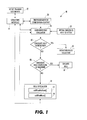
- FIGURE 1 diagrammatically shows a rule induction system capable of generating structured rules operating on XML data and including rule nodes corresponding to nodes other than the node to be categorized.
- FIGURE 2 diagrammatically shows a structure of pre-processed example XML training documents.
- a rule induction system 10 generates categorization rules by specializing an initial overbroad rule based on a set of training documents 12 that are accessible via a suitable XML structural interface 14, such as an XPath or Document Object Model (DOM) interface.
- XML structural interface 14 such as an XPath or Document Object Model (DOM) interface.
- a pre-processor 20 optionally processes the training documents 12 to define attributes of nodes of interest for rule induction, to define additional segmenting nodes that extract content of interest for rule induction, or so forth.
- each content stream (#PCDATA) is suitably segmented into tokens using a linguistic tool such as the Xerox Incremental Parser (XIP), which is described for example in: Ait-Mokhtar et al., "Robustness beyond Shallowness: Incremental Deep Parsing, in Journal of Natural Language Engineering, Special Issue on Robust Methods in Analysis of Natural Language Data, ed. A. Ballim & V.
- XIP Xerox Incremental Parser
- tokenizers can be used for the segmenting.
- a list of separators can constitute sufficient segmenting.
- For each token a new node is appended to the structure with its specific attributes.
- Each token can also be split into smaller units such as letters (if the purpose is to learn morphological structure for instance).
- Each new node (word or letter) can be enriched with attributes.
- each word node can be enriched with its part-of-speech (linguistic category such as noun, verb, preposition, or so forth), normalized form, presence in a specific terminological database, or so forth.
- each letter element can be enriched with attributes such as vowel, consonant, capital letter, or so forth.
- Figure 2 illustrates an example output of this pre-processing.
- the pre-processing keeps the original document structure, and adds new leaves, such as the illustrated letter leaves, and/or new node attributes, such as the illustrated surface, pos (part-of-speech), and lemme attributes, to it.
- new leaves such as the illustrated letter leaves
- new node attributes such as the illustrated surface, pos (part-of-speech), and lemme attributes
- a linguistic tool such as a parser
- richer linguistic information can be integrated such as linguistic dependencies between linguistic elements set forth using IDREF attributes.
- other preprocessing steps can be applied on content elements.
- the #PCDATA node can be replaced by a node with the set of words or lemmas found in the #PCDATA, preprocessing which corresponds to the traditional bag-of-words representation usually used in document categorization. If the document is structured in titles, sections, paragraphs, or so forth, this structure can be retained.
- the pre-processor 20 suitably converts the training documents to XML format.
- Structured data such as databases are readily converted into XML format.
- Traditional benchmarks used in machine learning such as the UCI database employ an ⁇ attribute-value> formalism and can also be easily converted into XML.
- an ⁇ attribute-value> formatted example such as:
- an initial candidate rule selector 22 selects an initial overbroad candidate rule for categorizing a node to be categorized. For example, a function buildEmptyRule() can be used to generate the initial overbroad candidate rule.
- a suitable overbroad initial rule constructed by the buildEmptyRule() function for the category GUIDENAME is:
- the evaluation() function serves as a candidate rule evaluator 26, and can be implemented in various ways to compute a score for the rule. Accuracy, Laplace estimate, m-estimate, information-gain, or so forth, can be used as scoring criterion.
- a decision operator 30 if the score of a candidate rule is greater than or equal to a threshold value ⁇ , then an induction rules collector 32 puts the candidate rule into the set of rules. Otherwise it is specialized by adding a new piece of information using the specializeRule() function.
- the specializeRule()function serves as a rule specializer 40 that specializes a candidate rule and adds the set of new candidate rules into the candidates list.
- a new piece of information may, for example, correspond to an attribute-value pair describing a training example.
- the attribute-value pair is added by the addNewAttribute() function 42.
- the rule specializer 40 can specialize the candidate rule by adding substantially any kind of information provided by the XML training data 12. This generalized capability is provided by a rule node adder such as the illustrated addNewNode() function 44.
- the rule is specialized by adding information which corresponds to an ID or IDREF, the resulting rule is not a tree, but a forest describing a structured rule.
- Rule specialization is done until a termination criterion is satisfied.
- the termination criterion may include, for example, the decision operator 30 which terminates the specialization when the candidate rule's frequency in the training data reaches a given threshold. Additionally or alternatively, another decision operator 48 may terminate the specialization of a candidate rule when the rule has a maximum number of elements (nodes and attributes), a maximum number of nodes, or so forth. In this case, the rule candidate is discarded 52.
- the termination criterion thresholds and the maximum complexity of the decision operator 48 are suitably user selectable parameters.
- the rule specializer 40 generates a new candidate rule with a new attribute and a new value, which depends upon the kind of attribute.
- Table I outlines how the rule specializer 40 specializes the candidate rule by adding nodes of various types. TABLE I XML Node Action Father node For each different label of the fathers, a new candidate is added Children nodes For each different label of each child, a new candidate is added Sibling nodes For each different label of each previous and next sibling, a new candidate is added Table II outlines how the rule specializer 40 specializes the candidate rule by adding attributes of various types.
- CDATA stands for character data, that is, text that does not form markup
- IDREF IDREF is used to establish connections between elements.
- the IDREF value of the attribute must refer to an ID value declared elsewhere in the document
- a conjunctive element is added with the referred element IDREFS Allows multiple ID values separated by whitespace Iteration over IDREF values NTOKEN
- the first character of an NMTOKEN value must be a letter, digit, '.', '-', '_', or':' Idem as CDATA NTOKENS Allows multiple NMTOKEN names separated by whitespace Iteration over NTOKEN values
- ID ID is a unique identifier of the attribute Idem as IDREF ENTITIES ENTITYs are used to reference data that act as an abbreviation or can be found at an external location.
- Enumerated attribute types allow you to make a choice between different attribute values.
- the first character of an Enumerated value must be a letter, digit, '.', '-', '_', or ':' Idem as CDATA
- Information about the new elements that are added in order to create a more specialized candidate rule is collected by querying the training data 12 via the Xpath, DOM, or other structure interface 14 .
- a structured rule including a plurality of rule nodes that is suitably generated by the rule induction system 10 of FIGURE 1.
- a word (element NODE with the attribute TBC) with some specific attributes (Uppercase) in a "content” context (followed by the word "Guide") and in a relatively complicated structural context is categorized in a given category (Guide Name).
- the ID and IDREF attributes enable introduction of variables into the rule formalism.
- the type IDREF refers to an ID, unique identifier of a node element.
- An example of ID/IDREF attributes usage in XML is:
- Suitable processing for the ID/IDREF attributes during rule induction is as follows.
- the attribute of type IDREF or ID is added into the rule.
- Embodiments of the rule induction system disclosed herein have been tested on several collections.
- the goal was to structure the bibliography part of documents provided by the European Patent Office. The problem was then to categorize structural XML elements. Evaluation is given Table III, with and without the use of content. TABLE III Precision Recall F1-score Without content 0 0 0 With content 95 94 94.5 In Table III, F1-score indicates the harmonic means.
- this one employing a BioTIP TM collection of bioinformatics content developed by Xerox Corporation the goal was to tag biological entities such as genes, proteins, and RNA, in articles abstracts of the BioTIP TM collection. Evaluation is given Table IV.
Landscapes
- Engineering & Computer Science (AREA)
- Theoretical Computer Science (AREA)
- Physics & Mathematics (AREA)
- General Engineering & Computer Science (AREA)
- General Physics & Mathematics (AREA)
- Databases & Information Systems (AREA)
- Data Mining & Analysis (AREA)
- Health & Medical Sciences (AREA)
- Artificial Intelligence (AREA)
- Audiology, Speech & Language Pathology (AREA)
- Computational Linguistics (AREA)
- General Health & Medical Sciences (AREA)
- Information Retrieval, Db Structures And Fs Structures Therefor (AREA)
- Machine Translation (AREA)
Abstract
In a rule induction method, an overbroad candidate rule is selected for categorizing a node to be categorized. The candidate rule is specialized by: (i) adding a rule node corresponding to a node level of structured training examples; (ii) including in a rule node a rule pertaining to an attribute of at least one node of the corresponding node level to produce a specialized candidate rule; and (iii) evaluating the specialized candidate rule respective to the structured training examples.
Description
- The following relates to data classification, data mining, and related arts. It particularly relates to rule induction applied to structured XML data, and is described herein with particular reference thereto. However, the following is amenable to other like applications.
- Rule induction involves automated determination of predictive rules. Typically, a training data set is used for learning the rule. Each example in the training set is described by a set of values for attributes (for example, Boolean, discrete, or continuous attributes), including an attribute of interest whose value or value range is to be predicted. A rule is constructed based on the training set which predicts that the attribute of interest will have a specified value or value range when specified other attributes have specified values or ranges.
- For example, a training set listing persons may include examples each having attributes including attributes F3, F4, F6, and F10 where F3 indicates highest attained education level, F4 indicates number of years of education, F6 indicates job description, and F15 indicates salary level. The rule to be induced may be intended to predict when a person will have an income level greater than $50,000. One possible induced rule is:
IF F3="Doctorate" AND F4="16" AND F6="Exec-managerial"
THEN Income>50K - In one approach, a general or overbroad initial candidate rule is refined by specialization to produce the final rule. For example, the initial candidate rule may be an empty rule which reads upon every example in the training set. Attribute-value pairs are conjunctively added to specialize the rule until a selected termination criterion is reached, such as the rule having a threshold level of prediction accuracy. The process may be repeated to produce a set of such rules, each rule being a conjunctive combination of attribute-value pairs.
- Heretofore, rule induction has generally been applied to flat data, in which each example is defined by a set of attributes-value pairs. Such rule induction is difficult to apply to structured data. For example, extensible mark-up language (XML), hypertext mark-up language (HTML), and other structured formats provide structure in which the data is organized in a tree-like structure. For example, an XML document may have a root node defined as "document" having child nodes corresponding to sections of the document, such as "introduction", "
chapter 1", "chapter 2", ..., "conclusions", or so forth. Each child node, in turn, can have its own child nodes. For example, each chapter node may have child nodes corresponding to paragraphs, and so forth. - According to aspects illustrated herein, there is provided a rule induction method. An overbroad candidate rule is selected for categorizing a node to be categorized. The candidate rule is specialized by: (i) adding a new node using an XML structural interface; (ii) adding a new attribute to a node; (iii) evaluating the specialized candidate rule respective to a set of training examples; and (iv) terminating the specializing when the specialized candidate rule satisfies a termination criterion.
In a further embodiment the identifying of a related node identifies a child node, and the adding comprises: - adding a candidate attribute-value rule corresponding to each child node label.
- adding a candidate attribute-value rule corresponding to each sibling node label.
- adding a candidate attribute-value rule for each value of a CDATA attribute of the related node.
- adding a candidate attribute-value rule for each value of an NTOKEN attribute of the related node.
- adding a conjunction of attribute-value rules corresponding to each value of an ID or IDREF attribute of the related node.
- According to aspects illustrated herein, there is provided a rule induction system. A general-to-specialized rule inducer generates a rule categorizing a node to be categorized of an XML document by specializing an overbroad candidate rule respective to a set of training XML documents. The general-to-specialized rule inducer includes a rule node adder that selectively adds nodes and attributes to the candidate rule.
In a further embodiment the rule induction system as set forth in claim 15, further comprising: - an XML structural interface accessed by the rule specializer to identify structural elements of the set of training XML documents.
- a parent node, a child node, or a sibling node of the node to be categorized.
- a pre-processor that pre-processes the set of XML training examples to define segmenting nodes that extract content of interest for rule induction.
- According to aspects illustrated herein, there is provided a rule induction method. An overbroad candidate rule is selected for categorizing a node to be categorized. The candidate rule is specialized by: (i) adding a rule node corresponding to a node level of structured training examples; (ii) including in a rule node an attribute of at least one node of the corresponding node level to produce a specialized candidate rule; and (iii) evaluating the specialized candidate rule respective to the structured training examples.
In a further embodiment the including comprises: - including in the added rule node a candidate attribute-value rule corresponding to each label of the node level.
- including in the added rule node a conjunction of attribute-value rules corresponding to each value of an ID or IDREF attribute of a node of the node level.
- repeating the adding and including until the specialized candidate rule is satisfactory or has a pre-selected maximum number of nodes.
- FIGURE 1 diagrammatically shows a rule induction system capable of generating structured rules operating on XML data and including rule nodes corresponding to nodes other than the node to be categorized.
- FIGURE 2 diagrammatically shows a structure of pre-processed example XML training documents.
- With reference to FIGURE 1, a
rule induction system 10 generates categorization rules by specializing an initial overbroad rule based on a set oftraining documents 12 that are accessible via a suitable XMLstructural interface 14, such as an XPath or Document Object Model (DOM) interface. - A pre-processor 20 optionally processes the
training documents 12 to define attributes of nodes of interest for rule induction, to define additional segmenting nodes that extract content of interest for rule induction, or so forth. For natural language processing applications, for example, each content stream (#PCDATA) is suitably segmented into tokens using a linguistic tool such as the Xerox Incremental Parser (XIP), which is described for example in: Ait-Mokhtar et al., "Robustness beyond Shallowness: Incremental Deep Parsing, in Journal of Natural Language Engineering, Special Issue on Robust Methods in Analysis of Natural Language Data, ed. A. Ballim & V. Pallotta (Cambridge University Press, 2002), which is incorporated herein by reference; and Ait-Mokhtar, Incremental Finite-State Parsing, Proceedings of Applied Natural Language Processing (ANLP-97), Washington, D.C. April 1997, which is also incorporated herein by reference. Alternatively, tokenizers can be used for the segmenting. A list of separators can constitute sufficient segmenting. For each token a new node is appended to the structure with its specific attributes. Each token can also be split into smaller units such as letters (if the purpose is to learn morphological structure for instance). Each new node (word or letter) can be enriched with attributes. For example, each word node can be enriched with its part-of-speech (linguistic category such as noun, verb, preposition, or so forth), normalized form, presence in a specific terminological database, or so forth. Similarly each letter element can be enriched with attributes such as vowel, consonant, capital letter, or so forth. - Figure 2 illustrates an example output of this pre-processing. The pre-processing keeps the original document structure, and adds new leaves, such as the illustrated letter leaves, and/or new node attributes, such as the illustrated surface, pos (part-of-speech), and lemme attributes, to it. If a linguistic tool such as a parser is used for the pre-processing, then richer linguistic information can be integrated such as linguistic dependencies between linguistic elements set forth using IDREF attributes. Depending on the learning task, other preprocessing steps can be applied on content elements. For example, for document categorization, the #PCDATA node can be replaced by a node with the set of words or lemmas found in the #PCDATA, preprocessing which corresponds to the traditional bag-of-words representation usually used in document categorization. If the document is structured in titles, sections, paragraphs, or so forth, this structure can be retained.
- If the set of
training documents 12 is not initially in an XML format, then the pre-processor 20 suitably converts the training documents to XML format. Structured data such as databases are readily converted into XML format. Traditional benchmarks used in machine learning such as the UCI database employ an <attribute-value> formalism and can also be easily converted into XML. For example, an <attribute-value> formatted example such as: - 25, Private, 226802, 11 th, 7, Never-married,
- Machine-op-inspct, Own-child, Black, Male, 0, 0 , 40,
- United-States, <=50K
- <DATA>
- <EX F0="25" F1="Private" F2="226802" F3="11th"
- F4="7" F5="Never-married" F6="Machine-op-inspct"
- F7="Own-child" F8="Black" F9="Male" F10="0" F11="0"
- F12="40" F13="United-States" CAT="-"/>
- </DATA>
- After the optional pre-processing, an initial
candidate rule selector 22 selects an initial overbroad candidate rule for categorizing a node to be categorized. For example, a function buildEmptyRule() can be used to generate the initial overbroad candidate rule. A suitable overbroad initial rule constructed by the buildEmptyRule() function for the category GUIDENAME is: - <RULE CAT="GUIDENAME" VALUE="+">
- <NODE TBC="+">
- </RULE>
- candidate = buildEmptyRule(category)
- learnSetOfRule(candidate,pos,neg)
- specializeRule(rule)
- set = set + addNewAttribute(rule)
- set = set + addNewNode(rule)
- Return set
- addNewNode(rule)
- set = emptySet()
- set = set + addfather(rule)
- set = set + addchild(rule)
- set = set + addPrevSibling(rule)
- set = set + addNextSibling(rule)
- return set
- addNewAttribute(rule)
- set = emptySet()
- set = addAttribute(rule)
- return set
- With continuing reference to FIGURE 1, the evaluation() function serves as a
candidate rule evaluator 26, and can be implemented in various ways to compute a score for the rule. Accuracy, Laplace estimate, m-estimate, information-gain, or so forth, can be used as scoring criterion. In adecision operator 30, if the score of a candidate rule is greater than or equal to a threshold value θ, then aninduction rules collector 32 puts the candidate rule into the set of rules. Otherwise it is specialized by adding a new piece of information using the specializeRule() function. - With continuing reference to FIGURE 1, the specializeRule()function serves as a
rule specializer 40 that specializes a candidate rule and adds the set of new candidate rules into the candidates list. A new piece of information may, for example, correspond to an attribute-value pair describing a training example. The attribute-value pair is added by the addNewAttribute()function 42. More generally, therule specializer 40 can specialize the candidate rule by adding substantially any kind of information provided by theXML training data 12. This generalized capability is provided by a rule node adder such as the illustrated addNewNode()function 44. When the rule is specialized by adding information which corresponds to an ID or IDREF, the resulting rule is not a tree, but a forest describing a structured rule. - Rule specialization is done until a termination criterion is satisfied. The termination criterion may include, for example, the
decision operator 30 which terminates the specialization when the candidate rule's frequency in the training data reaches a given threshold. Additionally or alternatively, anotherdecision operator 48 may terminate the specialization of a candidate rule when the rule has a maximum number of elements (nodes and attributes), a maximum number of nodes, or so forth. In this case, the rule candidate is discarded 52. The termination criterion thresholds and the maximum complexity of thedecision operator 48 are suitably user selectable parameters. - The
rule specializer 40 generates a new candidate rule with a new attribute and a new value, which depends upon the kind of attribute. Table I outlines how therule specializer 40 specializes the candidate rule by adding nodes of various types.TABLE I XML Node Action Father node For each different label of the fathers, a new candidate is added Children nodes For each different label of each child, a new candidate is added Sibling nodes For each different label of each previous and next sibling, a new candidate is added rule specializer 40 specializes the candidate rule by adding attributes of various types.TABLE II XML Attribute Explanation Action CDATA CDATA stands for character data, that is, text that does not form markup For each value of the attribute, a new candidate is added IDREF IDREF is used to establish connections between elements. The IDREF value of the attribute must refer to an ID value declared elsewhere in the document A conjunctive element is added with the referred element IDREFS Allows multiple ID values separated by whitespace Iteration over IDREF values NTOKEN The first character of an NMTOKEN value must be a letter, digit, '.', '-', '_', or':' Idem as CDATA NTOKENS Allows multiple NMTOKEN names separated by whitespace Iteration over NTOKEN values ID ID is a unique identifier of the attribute Idem as IDREF ENTITIES ENTITYs are used to reference data that act as an abbreviation or can be found at an external location. Entities are solved during parsing (idem as CDATA) ENUMERATE D Enumerated attribute types allow you to make a choice between different attribute values. The first character of an Enumerated value must be a letter, digit, '.', '-', '_', or ':' Idem as CDATA training data 12 via the Xpath, DOM, orother structure interface 14. - As an example, starting with the initial overbroad candidate rule:
- <NODE TBC='+'/>
- <NODE TBC='+' W='Guide'/>
- <NODE TBC='+' Up='+'/>
- <NODE W='Select'/><NODE TBC='+'/>
- <NODE TBC='+'/><NODE W='Guide'/>
- <p><NODE TBC='+'/></p>
- <TREE><NODE TBC="+" VERB="_=X1"/></TREE>I
- <TREE><NODE ID="_X1" LEMMA="consist"/></TREE>
- The following is an example of a structured rule including a plurality of rule nodes that is suitably generated by the
rule induction system 10 of FIGURE 1.In this rule, a word (element NODE with the attribute TBC) with some specific attributes (Uppercase) in a "content" context (followed by the word "Guide") and in a relatively complicated structural context is categorized in a given category (Guide Name).
- The ID and IDREF attributes enable introduction of variables into the rule formalism. In XML, the type IDREF refers to an ID, unique identifier of a node element. An example of ID/IDREF attributes usage in XML is:
- <Node lemma="The" ID="_1"/>
- <Node lemma="ABC" ID="_2"/>
- <Node lemma="gene" ID="_3"/>
- <Node ID="_X2" lemma="encode" ID="_4"/>
- <Node lemma="this" ID="_5"/>
- <Node lemma="protein" ID="_6"/>
- <DEPENDENCY PAR1="_1" PAR2="_2" name='MODIFIER'/>
- <DEPENDENCY PAR1="_2" PAR2="_3" name='MODIFIER'/>
- <DEPENDENCY PAR1="_3" PAR2="_4" name='SUBJ'/>
- <DEPENDENCY PAR1="_5" PAR2="_4" name='OBJ'/>
- <DEPENDENCY PAR1="_5" PAR2="_6" name='MODIFIER'/>
- Suitable processing for the ID/IDREF attributes during rule induction is as follows. The attribute of type IDREF or ID is added into the rule. In this example, the attribute of type ID="_3" is added as follows:
- <NODE lemma="gene" ID="_3">
- <DEPENDENCY PAR1="_3" PAR2="_4" NAME="SUBJECT"/>
- <DEPENDENCY PAR1="_2" PAR2="_3" NAME="MODIFIER"/>
- ...
- <TREE><NODE lemma="gene" ID="_3"></TREE>
- <TREE> <DEPENDENCY ID1="_3"/></TREE>
- ...
- <TREE><NODE ></TREE> <TREE> <DEPENDENCY PAR1="_3" NAME="SUBJECT" /></TREE>
- <TREE><NODE ></TREE> <TREE> <DEPENDENCY PAR2="_3" NAME="MODIFIER" /></TREE>
- ...
- An example of rule in ALLiS formalism with IDREF variable is:This rule is composed of three conjunctive parts (TREE elements), and two variables, _X1 and _X2. It can be read as: a word followed by the word "gene" which is the subject of a verb "encode" belongs to the BIOENTITY category.

- Embodiments of the rule induction system disclosed herein have been tested on several collections. In one test, the goal was to structure the bibliography part of documents provided by the European Patent Office. The problem was then to categorize structural XML elements. Evaluation is given Table III, with and without the use of content.
TABLE III Precision Recall F1-score Without content 0 0 0 With content 95 94 94.5 TABLE IV Precision Recall F1-score With structure 86.21 69.98 76.68 Without structure 87.90 63.47 73.71
In a further embodiment the rule node adder selectively adds one of:
In a further embodiment wherein the including comprises:

Claims (10)
- A rule induction method comprising:selecting an overbroad candidate rule for categorizing a node to be categorized; specializing the candidate rule by:(i) identifying a related node other than the node to be categorized using an XML structural interface,(ii) adding one or more candidate rules associated with attributes of a rule node,(iii) evaluating the specialized candidate rule respective to a set of training examples, and(iv) terminating the specializing when the specialized candidate rule satisfies a termination criterion.
- The rule induction method as set forth in claim 1, wherein the XML structural interface used in the identifying is one of XPath and Document Object Model (DOM).
- The rule induction method as set forth in claim 1, further comprising:pre-processing the set of XML training examples to define segmenting nodes that extract content of interest for rule induction.
- The rule induction method as set forth in claim 3, further comprising:pre-processing the segmenting nodes set of XML training examples to define attributes of the segmenting nodes of interest for rule induction.
- The rule induction method as set forth in claim 1, further comprising:pre-processing the set of XML training examples to define attributes of nodes of interest for rule induction.
- The rule induction method as set forth in claim 1, wherein the identifying of a related node comprises:identifying one of a parent node, a child node, and a sibling node of the node to be categorized.
- The rule induction method as set forth in claim 1, wherein the identifying of a related node comprises:identifying one of a parent node, a child node, and a sibling node of a previously identified related node.
- The rule induction method as set forth in claim 1, wherein the identifying of a related node identifies a parent node, and the adding comprises:adding a candidate attribute-value rule corresponding to each parent node label.
- A rule induction system comprising:a general-to-specialized rule inducer for generating a rule categorizing a node to be categorized of an XML document by specializing an overbroad candidate rule respective to a set of training XML documents, the general-to-specialized rule inducer including a rule node adder that selectively adds nodes to the candidate rule, the added nodes including attribute-value pairs relating to attributes of nodes of the training XML documents other than the node to be categorized.
- A rule induction method comprising:selecting an overbroad candidate rule for categorizing a node to be categorized;specializing the candidate rule by:(i) adding a rule node corresponding to a node level of structured training examples,(ii) including in the added rule node a rule pertaining to an attribute of at least one node of the corresponding node level to produce a specialized candidate rule, and(iii) evaluating the specialized candidate rule respective to the structured training examples.
Applications Claiming Priority (1)
| Application Number | Priority Date | Filing Date | Title |
|---|---|---|---|
| US11/234,513 US7536369B2 (en) | 2005-09-23 | 2005-09-23 | XML-based architecture for rule induction system |
Publications (1)
| Publication Number | Publication Date |
|---|---|
| EP1768039A1 true EP1768039A1 (en) | 2007-03-28 |
Family
ID=37440281
Family Applications (1)
| Application Number | Title | Priority Date | Filing Date |
|---|---|---|---|
| EP06121126A Ceased EP1768039A1 (en) | 2005-09-23 | 2006-09-22 | XML-based architecture for rule induction system |
Country Status (3)
| Country | Link |
|---|---|
| US (1) | US7536369B2 (en) |
| EP (1) | EP1768039A1 (en) |
| JP (1) | JP5226198B2 (en) |
Families Citing this family (5)
| Publication number | Priority date | Publication date | Assignee | Title |
|---|---|---|---|---|
| US8676618B2 (en) * | 2006-12-28 | 2014-03-18 | Sap Ag | Systems and methods for automatic detection and processing of instances of business rules |
| GB2505220A (en) | 2012-08-23 | 2014-02-26 | Ibm | Efficient rule execution in decision services |
| US9450819B2 (en) * | 2012-10-12 | 2016-09-20 | Cisco Technology, Inc. | Autonomic network sentinels |
| US10250617B1 (en) * | 2015-11-22 | 2019-04-02 | Symantec Corporation | Systems and methods for detecting malware using machine learning |
| US10552744B2 (en) * | 2016-12-02 | 2020-02-04 | Salesforce.Com, Inc. | Rule set induction |
Citations (1)
| Publication number | Priority date | Publication date | Assignee | Title |
|---|---|---|---|---|
| US6519580B1 (en) * | 2000-06-08 | 2003-02-11 | International Business Machines Corporation | Decision-tree-based symbolic rule induction system for text categorization |
Family Cites Families (8)
| Publication number | Priority date | Publication date | Assignee | Title |
|---|---|---|---|---|
| US5802509A (en) * | 1993-09-21 | 1998-09-01 | Hitachi, Ltd. | Rule generation system and method of generating rule |
| US5719692A (en) * | 1995-07-07 | 1998-02-17 | Lucent Technologies Inc. | Rule induction on large noisy data sets |
| US5897627A (en) * | 1997-05-20 | 1999-04-27 | Motorola, Inc. | Method of determining statistically meaningful rules |
| US6792576B1 (en) * | 1999-07-26 | 2004-09-14 | Xerox Corporation | System and method of automatic wrapper grammar generation |
| US6523020B1 (en) * | 2000-03-22 | 2003-02-18 | International Business Machines Corporation | Lightweight rule induction |
| JP2001318792A (en) * | 2000-05-10 | 2001-11-16 | Nippon Telegr & Teleph Corp <Ntt> | Named entity extraction rule generation system and method, recording medium on which processing program is recorded, and named entity extraction device |
| US7035841B2 (en) * | 2002-07-18 | 2006-04-25 | Xerox Corporation | Method for automatic wrapper repair |
| US7296223B2 (en) * | 2003-06-27 | 2007-11-13 | Xerox Corporation | System and method for structured document authoring |
-
2005
- 2005-09-23 US US11/234,513 patent/US7536369B2/en not_active Expired - Fee Related
-
2006
- 2006-09-22 EP EP06121126A patent/EP1768039A1/en not_active Ceased
- 2006-09-25 JP JP2006258404A patent/JP5226198B2/en not_active Expired - Fee Related
Patent Citations (1)
| Publication number | Priority date | Publication date | Assignee | Title |
|---|---|---|---|---|
| US6519580B1 (en) * | 2000-06-08 | 2003-02-11 | International Business Machines Corporation | Decision-tree-based symbolic rule induction system for text categorization |
Non-Patent Citations (2)
| Title |
|---|
| BRAGA D ET AL: "A tool for extracting XML association rules", PROCEEDINGS OF THE 14TH IEEE INTERNATIONAL CONFERENCE ON TOOLS WITH ARTIFICIAL INTELLIGENCE. ICTAI 2002. WASHINGTON, DC, NOV. 4 - 6, 2002, IEEE INTERNATIONAL CONFERENCE ON TOOLS WITH ARTIFICIAL INTELLIGENCE, LOS ALAMITOS, CA : IEEE COMP. SOC, US, vol. CONF. 14, 4 November 2002 (2002-11-04), pages 57 - 64, XP010632423, ISBN: 0-7695-1849-4 * |
| LING CHEN ET AL: "Mining Association Rules from Structural Deltas of Historical XML Documents", PAKDD, 2004, pages 452 - 457, XP019005735 * |
Also Published As
| Publication number | Publication date |
|---|---|
| JP2007087400A (en) | 2007-04-05 |
| US20070094201A1 (en) | 2007-04-26 |
| JP5226198B2 (en) | 2013-07-03 |
| US7536369B2 (en) | 2009-05-19 |
Similar Documents
| Publication | Publication Date | Title |
|---|---|---|
| Baldwin et al. | Extracting the unextractable: A case study on verb-particles | |
| US8594998B2 (en) | Multilingual sentence extractor | |
| US7899816B2 (en) | System and method for the triage and classification of documents | |
| Vivaldi et al. | Improving term extraction by system combination using boosting | |
| CN100353361C (en) | New method of characteristic vector weighting for text classification and its device | |
| US20020052730A1 (en) | Apparatus for reading a plurality of documents and a method thereof | |
| US20030130837A1 (en) | Computer based summarization of natural language documents | |
| Bhargava et al. | Deep extractive text summarization | |
| CN113196277A (en) | System for retrieving natural language documents | |
| CN113168499A (en) | Method for searching patent document | |
| CN113196278A (en) | Method for training a natural language search system, search system and corresponding use | |
| Yu et al. | A cluster ranking model for full anaphora resolution | |
| Mehta et al. | Stamantic clustering: combining statistical and semantic features for clustering of large text datasets | |
| Kruszewski et al. | Jointly optimizing word representations for lexical and sentential tasks with the c-phrase model | |
| Talukder et al. | Comparative study on abstractive text summarization | |
| Basili et al. | Language sensitive text classification. | |
| Garg et al. | KEST: A graph-based keyphrase extraction technique for tweets summarization using Markov decision process | |
| EP1768039A1 (en) | XML-based architecture for rule induction system | |
| Boukobza et al. | Multi-word expression identification using sentence surface features | |
| Weng et al. | A study on searching for similar documents based on multiple concepts and distribution of concepts | |
| Halteren | Writing style recognition and sentence extraction | |
| JP4426479B2 (en) | Word hierarchy relation analysis apparatus, method used therefor, and word hierarchy relation analysis program | |
| Li et al. | Chinese frame identification using t-crf model | |
| Tyagi et al. | A Survey on Text Processing Using Deep Learning Techniques | |
| Shakhovska et al. | The method of automatic summarization from different sources |
Legal Events
| Date | Code | Title | Description |
|---|---|---|---|
| PUAI | Public reference made under article 153(3) epc to a published international application that has entered the european phase |
Free format text: ORIGINAL CODE: 0009012 |
|
| AK | Designated contracting states |
Kind code of ref document: A1 Designated state(s): AT BE BG CH CY CZ DE DK EE ES FI FR GB GR HU IE IS IT LI LT LU LV MC NL PL PT RO SE SI SK TR |
|
| AX | Request for extension of the european patent |
Extension state: AL BA HR MK YU |
|
| 17P | Request for examination filed |
Effective date: 20070928 |
|
| 17Q | First examination report despatched |
Effective date: 20071102 |
|
| AKX | Designation fees paid |
Designated state(s): DE FR GB |
|
| 18R | Application refused |
Effective date: 20171110 |