EP1765779B1 - New substituted piperidines as modulators of dopamine neurotransmission - Google Patents
New substituted piperidines as modulators of dopamine neurotransmission Download PDFInfo
- Publication number
- EP1765779B1 EP1765779B1 EP05750549A EP05750549A EP1765779B1 EP 1765779 B1 EP1765779 B1 EP 1765779B1 EP 05750549 A EP05750549 A EP 05750549A EP 05750549 A EP05750549 A EP 05750549A EP 1765779 B1 EP1765779 B1 EP 1765779B1
- Authority
- EP
- European Patent Office
- Prior art keywords
- group
- disorders
- phenyl
- compounds
- treatment
- Prior art date
- Legal status (The legal status is an assumption and is not a legal conclusion. Google has not performed a legal analysis and makes no representation as to the accuracy of the status listed.)
- Expired - Lifetime
Links
- 0 *c1cc(C2(CCN(*)CC2)O)ccc1 Chemical compound *c1cc(C2(CCN(*)CC2)O)ccc1 0.000 description 3
- ICINNLFTCNLWFV-UHFFFAOYSA-N CCCN(CC1)CCC1(c1cccc(C(F)(F)F)c1F)O Chemical compound CCCN(CC1)CCC1(c1cccc(C(F)(F)F)c1F)O ICINNLFTCNLWFV-UHFFFAOYSA-N 0.000 description 1
- CRTOFCRFMHLFQZ-UHFFFAOYSA-N CCN(CC1)CCC1(c1cccc(C(F)(F)F)c1F)O Chemical compound CCN(CC1)CCC1(c1cccc(C(F)(F)F)c1F)O CRTOFCRFMHLFQZ-UHFFFAOYSA-N 0.000 description 1
- JYHROPQNQRFTLN-UHFFFAOYSA-N COCCN(CC1)CCC1(c1cccc(Cl)c1Cl)O Chemical compound COCCN(CC1)CCC1(c1cccc(Cl)c1Cl)O JYHROPQNQRFTLN-UHFFFAOYSA-N 0.000 description 1
Classifications
-
- C—CHEMISTRY; METALLURGY
- C07—ORGANIC CHEMISTRY
- C07D—HETEROCYCLIC COMPOUNDS
- C07D211/00—Heterocyclic compounds containing hydrogenated pyridine rings, not condensed with other rings
- C07D211/04—Heterocyclic compounds containing hydrogenated pyridine rings, not condensed with other rings with only hydrogen or carbon atoms directly attached to the ring nitrogen atom
- C07D211/06—Heterocyclic compounds containing hydrogenated pyridine rings, not condensed with other rings with only hydrogen or carbon atoms directly attached to the ring nitrogen atom having no double bonds between ring members or between ring members and non-ring members
- C07D211/36—Heterocyclic compounds containing hydrogenated pyridine rings, not condensed with other rings with only hydrogen or carbon atoms directly attached to the ring nitrogen atom having no double bonds between ring members or between ring members and non-ring members with hetero atoms or with carbon atoms having three bonds to hetero atoms with at the most one bond to halogen, e.g. ester or nitrile radicals, directly attached to ring carbon atoms
- C07D211/40—Oxygen atoms
- C07D211/44—Oxygen atoms attached in position 4
- C07D211/52—Oxygen atoms attached in position 4 having an aryl radical as the second substituent in position 4
-
- A—HUMAN NECESSITIES
- A61—MEDICAL OR VETERINARY SCIENCE; HYGIENE
- A61P—SPECIFIC THERAPEUTIC ACTIVITY OF CHEMICAL COMPOUNDS OR MEDICINAL PREPARATIONS
- A61P15/00—Drugs for genital or sexual disorders; Contraceptives
-
- A—HUMAN NECESSITIES
- A61—MEDICAL OR VETERINARY SCIENCE; HYGIENE
- A61P—SPECIFIC THERAPEUTIC ACTIVITY OF CHEMICAL COMPOUNDS OR MEDICINAL PREPARATIONS
- A61P25/00—Drugs for disorders of the nervous system
-
- A—HUMAN NECESSITIES
- A61—MEDICAL OR VETERINARY SCIENCE; HYGIENE
- A61P—SPECIFIC THERAPEUTIC ACTIVITY OF CHEMICAL COMPOUNDS OR MEDICINAL PREPARATIONS
- A61P25/00—Drugs for disorders of the nervous system
- A61P25/06—Antimigraine agents
-
- A—HUMAN NECESSITIES
- A61—MEDICAL OR VETERINARY SCIENCE; HYGIENE
- A61P—SPECIFIC THERAPEUTIC ACTIVITY OF CHEMICAL COMPOUNDS OR MEDICINAL PREPARATIONS
- A61P25/00—Drugs for disorders of the nervous system
- A61P25/14—Drugs for disorders of the nervous system for treating abnormal movements, e.g. chorea, dyskinesia
-
- A—HUMAN NECESSITIES
- A61—MEDICAL OR VETERINARY SCIENCE; HYGIENE
- A61P—SPECIFIC THERAPEUTIC ACTIVITY OF CHEMICAL COMPOUNDS OR MEDICINAL PREPARATIONS
- A61P25/00—Drugs for disorders of the nervous system
- A61P25/14—Drugs for disorders of the nervous system for treating abnormal movements, e.g. chorea, dyskinesia
- A61P25/16—Anti-Parkinson drugs
-
- A—HUMAN NECESSITIES
- A61—MEDICAL OR VETERINARY SCIENCE; HYGIENE
- A61P—SPECIFIC THERAPEUTIC ACTIVITY OF CHEMICAL COMPOUNDS OR MEDICINAL PREPARATIONS
- A61P25/00—Drugs for disorders of the nervous system
- A61P25/18—Antipsychotics, i.e. neuroleptics; Drugs for mania or schizophrenia
-
- A—HUMAN NECESSITIES
- A61—MEDICAL OR VETERINARY SCIENCE; HYGIENE
- A61P—SPECIFIC THERAPEUTIC ACTIVITY OF CHEMICAL COMPOUNDS OR MEDICINAL PREPARATIONS
- A61P25/00—Drugs for disorders of the nervous system
- A61P25/22—Anxiolytics
-
- A—HUMAN NECESSITIES
- A61—MEDICAL OR VETERINARY SCIENCE; HYGIENE
- A61P—SPECIFIC THERAPEUTIC ACTIVITY OF CHEMICAL COMPOUNDS OR MEDICINAL PREPARATIONS
- A61P25/00—Drugs for disorders of the nervous system
- A61P25/24—Antidepressants
-
- A—HUMAN NECESSITIES
- A61—MEDICAL OR VETERINARY SCIENCE; HYGIENE
- A61P—SPECIFIC THERAPEUTIC ACTIVITY OF CHEMICAL COMPOUNDS OR MEDICINAL PREPARATIONS
- A61P25/00—Drugs for disorders of the nervous system
- A61P25/28—Drugs for disorders of the nervous system for treating neurodegenerative disorders of the central nervous system, e.g. nootropic agents, cognition enhancers, drugs for treating Alzheimer's disease or other forms of dementia
-
- A—HUMAN NECESSITIES
- A61—MEDICAL OR VETERINARY SCIENCE; HYGIENE
- A61P—SPECIFIC THERAPEUTIC ACTIVITY OF CHEMICAL COMPOUNDS OR MEDICINAL PREPARATIONS
- A61P25/00—Drugs for disorders of the nervous system
- A61P25/30—Drugs for disorders of the nervous system for treating abuse or dependence
-
- A—HUMAN NECESSITIES
- A61—MEDICAL OR VETERINARY SCIENCE; HYGIENE
- A61P—SPECIFIC THERAPEUTIC ACTIVITY OF CHEMICAL COMPOUNDS OR MEDICINAL PREPARATIONS
- A61P3/00—Drugs for disorders of the metabolism
- A61P3/04—Anorexiants; Antiobesity agents
Definitions
- the present invention relates to new modulators of dopamine neurotransmission, and more specifically to new substituted piperidines, and use thereof.
- Dopamine is a neurotransmitter in the brain. Since this discovery, made in the 1950s, the function of dopamine in the brain has been intensely explored. To date, it is well established that dopamine is essential in several aspects of brain function including motor, cognitive, sensory, emotional and autonomous functions (e.g. regulation of appetite, body temperature, sleep). Thus, modulation of dopaminergic function may be beneficial in the treatment of a wide range of disorders affecting brain functions. In fact, drugs that act, directly or indirectly, at central dopamine receptors are commonly used in the treatment of neurological and psychiatric disorders, e.g. Parkinson's disease and schizophrenia. However, currently available dopaminergic pharmaceuticals may have severe side effects.
- dopamine antagonists are known to induce both motor (extrapyramidal side effects; EPS) and mental side effects (e.g. anhedonia, dysphoria, and impairment of cognition), and dopaminergic agonists are known to induce dyskinesias and psychoses ( Goodman and Gilman's the Pharmacological Basis of Therapeutics, 9th ed./McGraw-Hill, USA. Chapter 18, p 407 - 416, Chapter 22, p 509-512, p 515-516 ).
- An approach adopted by many researchers to improve efficacy and reduce side effects of dopaminergic pharmaceuticals is to develop novel dopamine receptor ligands with selectivity at specific dopamine receptor subtypes or with regional selectivity.
- dopaminergic stabilizers which have shown to be useful in the treatment of both neurologic and psychiatric disorders
- dopaminergic compound which has been referred to as a dopamine-serotonin system stabiliser, as well as a partial DA D 2 receptor agonist, is the recently launched antipsychotic compound aripiprazole ( Burris et al, Pharm. Exp. Ther, vol. 302, 381, 2002 .). Furthermore, compounds referred to as dopaminergic stabilizers have been described in WO01/46145 , WO01/46146 , Pettersson et al. The development of ACR16. A new class of dopaminergic stabilizers. Society for Neuroscience 32nd Annual Meeting, Abstract 2002, Vol.
- the typical pharmacological effects that are characteristic for dopaminergic stabilizers as described in WO01/46145 , WO01/46146 and Pettersson et al. 2002 can be summarised as: 1) Increased turnover of dopamine in the terminal areas of the ascending dopaminergic projections of the mammalian brain; 2) No or only weak behavioural effects in otherwise untreated rats; and 3) Inhibition of behavioural effects induced by psychostimulants or psychotomimietic compounds in the rat. In the present invention this is referred to as a dopaminergic stabilizer profile.
- hERG channels human ether-a-go-go related gene encoded voltage-dependent potassium channel
- I Kr rapidly activating delayed rectifier potassium current
- This invention relates to the field of treatment of mammals suffering from CNS disorders in which the symptoms can be affected by dopaminergic functions, where the treatment comprises administering to said mammal an amount of a new type of compound, with a dopaminergic stabilizer profile.
- the compounds display low affinity at cardiac potassium channels, reducing the risk of serious cardiac side effects.
- EP0369887 disclose substituted 4-(meta-trifluoromethylphenyl)-1,2,3,6-tetrahydropyridines for treatment of anxiety.
- WO00/03713 discloses a method for the treatment of schizophrenia and other dopamine system dysfunctions by using substituted 1-methyl-4-phenyl-1,2,3,6-tetrahydropyridines.
- WO96/06081 discloses neuroprotective phenol derivatives of formula: in which R6 may be a 4-aryl-4-hydroxy-substituted piperidine moiety. Such compounds are useful in the treatment of CNS degenerative diseases, among others.
- WO02/090362 discloses compounds of the formula in which Z may be a 4-aryl-4-hydroxy-substituted piperidine moiety. Such compounds have affinity for brain 5-HT 1A serotonin receptors and are useful in the treatment of cognitive dysfunction, such as CNS disorders and schizophrenia.
- WO97/23216 discloses 4-substituted piperidine analogues with the formula: in which R5 may be selected from OH, and Ar1 may be substituted. Such compounds are used for treating CNS trauma, psychosis and neurodegenerative disorders, among others, through selective blockade of NMDA receptor subtypes.
- US 4485109 discloses compounds with formula: which are used as psychotherapeutic agents, particularly as antidepressants.
- EP 1177792 discloses, among others, compounds with the structure: having dopaminergic activity - particularly as D4 receptor ligands - and useful for the treatment of novelty-seeking disorders.
- EP 0846683 discloses 4-hydroxypiperidine derivatives of the formula: which selectively block NDMA (N-methyl-D-aspartate)-receptor subtypes and may be used in the treatment of neurodegenerative diseases.
- Such compounds are synthesis intermediates for the synthesis of tetrahydropyridine intermediates.
- WO98/51668 discloses substituted piperidine derivatives of the formula: which possess properties as monoamine neurotransmitter i.e. dopamine, serotonin, noradrenaline, reuptake inhibitors.
- the compounds are said to be useful in the treatment of parkinsonism, depression, pseudodementia, obesity, narcolepsy, drug addiction, and/or abuse, attention-deficit hyperactivity disorders, senile dementia or memory dysfunctions.
- X is, inter alia , CH
- R 1 is selected from the group consisting of OSO 2 CF 3 , OSO 2 CH 3 , SOR 3 , SO 2 R 3 , COR 3 , CN, NO 2 , CONHR 3 , CF 3
- X is CH or C) F, Cl, Br, I (wherein R 3 is as specified below)
- R 2 is selected from the group consisting of C 1 -C 4 alkyl, allyl, CH 2 SCH 3 , CH 2 CH 2 OCH 3 , CH 2 CH 2 CH 2 F, CH 2 CF 3 , 3,3,3-trifluoropropyl, 4,4,4-trifluorobutyl, or -(CH 2 )-R 4 (wherein R 4 is as specified below);
- R 3 is selected from the group consisting of C 1 -C 3 alkyl, CF 3 , or N(R 2 ) 2 ;
- R 4 is selected from the group consisting of C 3 -C 6 cyclo
- R 1 is selected from the group consisting of OSO 2 CF 3 , OSO 2 CH 3 , SOR 7 , SO 2 R 7 , COR 7 , CN, NO 2 , CONHR 3 , CF 3 , F, Cl, Br, I (wherein R 3 is as specified below), 3-thiophene, 2-thiophene, 3-furane, 2-furane;
- R 2 is selected from the group consisting of F, Cl, Br, I, CN, CF 3 , CH 3 , OCH 3 , OH, NH2
- R 3 and R 4 are independently H or C 1 -C 4 alkyl
- R 5 is selected from the group consisting of C 1 -C 4 alkyl, allyl, CH 2 SCH 3 , CH 2 CH 2 OCH 3 , CH 2 CH 2 CH 2 F, CH 2 CF 3 , 3,3,3-trifluoropropyl, 4,4,4-trifluorobutyl, or -(CH 2
- the object of the present invention is to provide new pharmaceutically active compounds, especially useful in treatment of disorders in the central nervous system, having increased potency as dopaminergic stabilisers (See Table 1 and 4) and a low propensity to block the hERG channel (see Table 1). These compounds have particular advantages with respect to reduced side effects, particularly cardiac side effects.
- the substances according to the present invention have been biologically tested in the rat where they have been found to act preferentially on dopaminergic systems in the brain. They have effects on biochemical indices in the brain with the characteristic features of dopamine antagonists. However, the substances according to the invention show no, or only limited, inhibitory effects on spontaneous locomotion over a wide dose range. Further, the substances according to the invention can induce a slight behavioural activation, in particular when baseline locomotor activity is low. However, the substances in the present invention inhibit the behavioural activation induced by psychostimulants and psychotomimetics.
- the substances according to the present invention display a low potency at inhibiting the hERG channel, as measured by IC50 in a Rb+ efflux assay (Development and evaluation of high throughput functional assay methods for hERG potassium channel. Tang W, Kang J, Wu X, Rampe D, Wang L, Shen H, Li Z, Dunnington D, Garyantes T. J Biomol Screen. 2001 Oct; 6(5):325-31 ), indicating a low risk for QT interval prolongation and arrythmia in man.
- the present invention relates to new piperidines in the form of free base or pharmaceutically acceptable salts thereof, pharmaceutical compositions containing said compounds and use of said compounds in the manufacture of pharmaceuticals being dopamine neurotransmitters and therapy.
- R 1 is selected from the group consisting of OSO 2 CF 3 , OSO 2 CH 3 , OCF 3 , SO 2 CF 3 , COCH 3 , CN, CF 3 , F and Cl;
- R 2 occupies the 2-position and is selected from the group consisting of F and Cl;
- R 3 is selected from the group consisting of C 1 -C 4 alkyls, allyl, CH 2 CH 2 OCH 3 , CH 2 CH 2 CH 2 F, CH 2 CH 2 CHF 2 CH 2 CH 2 F, CH 2 CHF 2 CH 2 CF 3 , 3,3,3-trifluoropropyl, and 4,4,4-trifluorobutyl; and pharmaceutically acceptable salts thereof.
- R 1 is selected from the group consisting of OSO 2 CF 3 , OSO 2 CH 3 , SO 2 CF 3 , COCF 3 , CN, CF 3 , and OCF 3 .
- R 1 is selected from the group consisting of F, Cl and CF 3 .
- R 3 is selected from the group consisting of n-propyl and ethyl.
- R 2 selected from the group consisting of F and Cl and R 3 is selected from the group consisting of n-propyl and ethyl.
- the calculated octanol / water partitioning constant value (ClogP) influences the choice of compounds. Particularly of interest are compounds in which the calculated octanol / water partitioning constant value (ClogP) is greater than 1.0.
- Example 1 161000
- Example 1 65 (45 - 97) 424000
- Example 3 43 (27 - 64) 350000
- Example 4 Example 5 13 (11 - 18) 69000 * in ED 50 estimates the maximal effects have been limited to 350 - 400% of control. ** in ED 50 estimates the maximal effects have been set to 200% of control (this is the maximal increase in DOPAC that is possible to achieve for these compounds). *** inactive at 100 ⁇ mol/kg **** not determined. ; The ED 50 value was not possible to calculate because the compound did not reach sufficient high DOPAC levels after administration of 100 ⁇ mol/kg.
- One aim of the present invention is to provide new compounds for therapeutic use, and more precisely compounds for modulation of dopaminergic systems in the mammalian brain, including human brain.
- Preferably such compounds have lowered side-effects with respect to cardiac potassium channel inhibition.
- Another aim of the invention is to provide compounds with therapeutic effects after oral administration.
- the compounds and compositions according to the present invention possess dopamine-modulating properties and are useful in treating numerous central nervous system disorders, including both psychiatric and neurological disorders.
- the compounds and their pharmaceutical compositions may be used in the treatment of CNS disorders where the dopaminergic system is dysfunctional due to direct or indirect causes.
- the compounds and compositions according to the invention can be used to improve all forms of psychosis, including schizophrenia and schizophreniform disorders as well as drug induced psychotic disorders and bipolar disorder. They can also be used in the treatment of a condition selected from the group consisting of iatrogenic and non-iatrogenic psychoses and hallucinoses.
- Mood and anxiety disorders including depression and obsessive-compulsive disease may also be treated with the compounds and compositions according to the invention.
- Compounds with modulating effects on dopaminergic systems may also be used to improve cognitive functions and in the treatment of emotional disturbances related to ageing, neurodegenerative (e.g. Dementia and age-related cognitive impairment) and developmental (such as Autism spectrum disorders, ADHD, Cerebral Palsy, Gilles de la Tourette's syndrome) disorders as well as after brain injury.
- neurodegenerative e.g. Dementia and age-related cognitive impairment
- developmental such as Autism spectrum disorders, ADHD, Cerebral Palsy, Gilles de la Tourette's syndrome
- brain injury may be induced by traumatic, inflammatory, infectious, neoplastic, vascular, hypoxic or metabolic causes or by toxic reactions to exogenous chemicals, wherein the exogenous chemicals are selected from the group consisting of substances of abuse, pharmaceutical compounds, environmental toxins.
- the compounds and their pharmaceutical composition are useful for treatment of a condition selected from the group consisting of sleep disorders, sexual disorders, eating disorders, obesitas, and headaches and other pains in conditions characterized by increased muscular tone. They may also be used in the treatment of Alzheimer's disease or related dementia disorders.
- the compounds and compositions according to the invention may also be used in behavioural disorders usually first diagnosed in infancy, childhood, or adolescence as well as in impulse control disorders.
- They can also be used for treating substance abuse disorders as well as disorders characterized by misuse of food.
- Neurological indications include the use of the compounds and their compositions to improve mental and motor function in Parkinson's disease, dyskinesias (including L-DOPA induced dyskinesias), and in related parkinsonian syndromes. They may also be used to ameliorate tics and tremor of different origins. Moreover, they may be used to relieve pain in conditions characterized by increased muscle tone.
- the compounds according to the present invention have been shown to display dopaminergic stabilizer profile with improved potency (Tables 1 and 4). They have effects on biochemical indices in the brain with the characteristic features of dopamine antagonists, e.g. producing increases in concentrations of dopamine metabolites.
- the compounds of this invention show no, or only limited effects on spontaneous locomotion over a wide dose range ( Table 2 ).
- Table 2. Effects of compounds from the present invention on Locomotor activity in drug-naive rats. The animals were placed in the motility meters immediately after drug administration and locomotor activity was recorded for 60 minutes (counts/60 min ⁇ SEM) Control group 11 ⁇ mol/kg 33 ⁇ mol/kg 100 ⁇ mol/kg 10811 ⁇ 865 7481 ⁇ 1266 11085 ⁇ 2020 11288 ⁇ 1339
- Example 3 6421 ⁇ 812 7229 ⁇ 769 7669 ⁇ 1029 7542 ⁇ 844
- Example 6 12672 ⁇ 702 11764 ⁇ 3106 7506 ⁇ 905 3698 ⁇ 294
- Example 1 Table 4 Effects of compounds in the present invention on reduction of amphetamine-induced hyper-locomotion. Comparative examples from prior art is also included. For methods and statistical calculations see the enclosed tests.
- Example 1 Example 9 in WO01/46146 26 (16 - 41) 30 (21 - 44))
- Example 3 Example 43 in WO01/46146 21 (18 - 24) 52 (35 - 76)
- Example 4 Example 6 in WO01/46145 25 (13 - 66) inactive Example 6
- the compounds of this invention show a dopaminergic stabilizer profile ( Tables 1-4 ) with improved or retained potency ( Table 1 and 4 ) compared to the non-substituted piperidine ring analogue.
- the introduction of the hydroxyl group in the piperidine ring decreased the potency at inhibiting the HERG channel.
- the novel class of dopaminergic modulators presented in this invention may prove superior to presently known dopaminergic compounds in the treatment of several disorders related to dysfunctions of the CNS, in terms of efficacy as well as reduced side effects.
- the compounds in the present invention have also been shown to display high metabolic stability in rat liver microsomes measured as turnover at 15 minutes (Example 1 27%, Example 3 8%, Example 8 29%), and high oral bioavailability in rat, exemplified by Example 3 (around 80%) and Example 8 (around 29%).
- the present invention offers another principle for novel therapeutics based on interactions with the dopamine system.
- the invention provides compounds having, as their major feature, stabilizing effects on the dopaminergic system in the brain.
- the compounds according to the invention have effects on brain neurochemistry similar to antagonists at dopamine D2 receptors (i.e. dose-dependent increases of the dopamine metabolite DOPAC, in cortical, striatal and limbic brain regions).
- the compounds according to the invention show no, or only limited inhibitory, effects on spontaneous locomotion. Under certain conditions they can induce a behavioural activation. The behavioural activation is limited, not reaching the profound increases in activity induced by direct or indirect dopamine receptor agonists.
- the preferred substances reduce the increase in activity induced by the indirect dopaminergic agonist d-amphetamine.
- the increase in activity after treatment with d-amphetamine is a standard model of hyperdopaminergia ( Table 4 ).
- dopaminergic neurotransmission is increased by systemic administration of d-amphetamine at a dose that is sufficiently high to produce a large increase in locomotor activity.
- the ability of a compound to antagonize this hyperactivity reflects anti-dopaminergic properties, which are part of the dopaminergic stabiliser profile.
- antagonism of d-amphetamine induced hyperactivity is widely used as a standard assay of antipsychotic activity (see Psychopharmacology 4th Generation of progress Chapter 68, p 793-795 ).
- Glutamate antagonists i.e. NMDA antagonists
- MK-801 can induce psychoses in man (see Psychopharmacology, 4th Generation of progress Chapter 101, p. 1205 and 1207) and induce behavioural aberrations in animals.
- the ability of a drug to affect schizophrenia and psychotic states can be measured using behavioural models based on experimentally induced hypoglutamatergic states.
- the NMDA antagonist MK-801 0.7 mg/kg i.p.
- Compounds in the present invention dose-dependently reverse the behavioural aberration induced by MK-801 (see Table 5 ).
- the claimed invention provides compounds having, as their major feature, stabilizing effects on the dopaminergic system in the brain. These compounds are useful for treating CNS disorders in which the symptoms can be affected by dopaminergic functions.
- CNS disorders in which the symptoms can be affected by dopaminergic functions.
- pharmacological interaction with dopaminergic neurotransmission is widely believed to be useful in the treatment of several CNS disorders, which are not generally believed to be directly caused by disruptions in dopaminergic neurotransmission.
- CNS disorders which are not generally believed to be directly caused by disruptions in dopaminergic neurotransmission.
- the symptoms of Huntington's disease and other movement disorders can be treated with dopaminergic agents due to the involvement of dopamine in motor functions-(see Psychopharmacology 4th Generation of progress, Chapter 26, p. 295-301 ).
- cognitive disorders see Psychopharmacology 4th Generation of progress Chapters 25, p. 292, Chapter 120, p. 1417 and 1420, Chapter 123, p. 1447 and 1452 and 1455-1457 ) autism (see Psychopharmacology 4th Generation of progress Chapter 142, p.
- the compounds of the invention may be prepared as outlined below in Schemes 1-2. However, the invention is not limited to these methods.
- the compounds may also be prepared as described for structurally related compounds in the prior art.
- the reactions can be carried out according to standard procedures 1,2 or as described in the working examples.
- the starting materials for the processes described in the present application are known or may readily be prepared by conventional methods from commercially available chemicals.
- the substituent Z is a leaving group
- G1 is R1 or a group that can be transformed into R1
- G2 is R2 or a group that can be transformed into R2
- A is alkyl hydrogen or a protecting group
- W is a hydroxyl group, or a group which can be transformed into a hydroxyl group.
- R1, R2 and R3 are as defined above.
- C 1 -C 4 alkyl refers to an alkyl containing 1-4 carbon atoms in any isomeric form.
- the various carbon moieties are defined as follows:
- Alkyl refers to an aliphatic hydrocarbon radical and includes branched or unbranched forms such as methyl, ethyl, n-propyl, i-propyl, n-butyl, i-butyl, s-butyl, t-butyl.
- patient refers to an individual in need of the treatment according to the invention.
- treatment used herein relates to both treatment in order to cure or alleviate a disease or a condition and to treatment in order to prevent the development of a disease or a condition.
- the treatment may either be performed in an acute or in a chronic way.
- Suitable acid addition salts of the compounds of the present invention include those formed with pharmaceutically acceptable salts such as toluensulfonate, methanesulfonate, fumarate, hydrochloride, hydrobromide, hydroiodide, nitrate, acetate, lactate, citrate, acid citrate, tartrate, bitartrate, aliphatic, alicyclic, aromatic or heterocyclic carboxylate, succinate, maleate, fumarate, gluconate, glycolate, saccharate, ascorbate, acetate, propionate, benzoate, pyruvate, pamoate [i.e., 1,1'-methylene-bis-(2-hydroxy-3-naphthoate)], phosphate, acid phosphate, sulphate or bisulfate salts.
- These salts are readily prepared by methods known in the art. It is also to be
- the pharmaceutical composition containing a compound according to the invention may also comprise substances used to facilitate the production of the pharmaceutical preparation or the administration of the preparations.
- substances are well known to people skilled in the art and may for example be pharmaceutically acceptable adjuvants, carriers and preservatives.
- the compounds used according to the present invention will normally be administered orally, rectally, nasally or by injection, in the form of pharmaceutical preparations comprising the active ingredient either as a free base or as a pharmaceutically acceptable non-toxic, acid addition salt, such as the hydrochloride, lactate, acetate, sulfamate salt, in association with a pharmaceutically acceptable carrier.
- the carrier may be a solid, semisolid or liquid preparation.
- the active substance will constitute between 0.1 and 99% by weight of the preparation, more specifically between 0.5 and 20% by a weight for preparations intended for injection and between 0.2 and 50% by weight for preparations suitable for oral administration.
- the selected compound may be mixed with a solid excipient, e.g. lactose, saccharose, sorbitol, mannitol, starches such as potato starch, corn starch or amylopectin, cellulose derivatives, a binder such as gelatine or polyvinyl-pyrrolidine, and a lubricant such as magnesium stearate, calcium stearate, polyethylene glycol, waxes, paraffin, and the like, and then compressed into tablets.
- a concentrated sugar solution which may contain e.g.
- the tablet can be coated with a polymer known to the man skilled in the art, dissolved in a readily volatile organic solvent or mixture of organic solvents. Dyestuffs may be added to these coatings in order to readily distinguish between tablets containing different active substances or different amounts of the active compound.
- the active substance may be admixed with e.g. a vegetable oil or polyethylene glycol.
- Hard gelatine capsules may contain granules of the active substance using either the mentioned excipients for tablets e.g. lactose, saccharose, sorbitol, mannitol, starches (e.g. potato starch, corn starch or amylopectin), cellulose derivatives or gelatine. Also liquids or semisolids of the drug can be filled into hard gelatine capsules.
- Dosage units for rectal application can be solutions or suspensions or can be prepared in the form of suppositories comprising the active substance in a mixture with a neutral fatty base, or gelatine rectal capsules comprising the active substance in admixture with vegetable oil or paraffin oil.
- Liquid preparations for oral application may be in the form of syrups or suspensions, for example solutions containing from about 0.2% to about 20% by weight of the active substance herein described, the balance being sugar and mixture of ethanol, water, glycerol and propylene glycol.
- Such liquid preparations may contain coloring agents, flavoring agents, saccharine and carboxymethylcellulose as a thickening agent or other excipients known to the man in the art.
- Solutions for parenteral applications by injection can be prepared in an aqueous solution of a water-soluble pharmaceutically acceptable salt of the active substance, preferably in a concentration of from 0.5% to about 10% by weight. These solutions may also containing stabilizing agents and/or buffering agents and may conveniently be provided in various dosage unit ampoules. The use and administration to a patient to be treated in the clinic would be readily apparent to an ordinary skill in the art.
- the compounds of the present invention may be delivered in the form of a solution, dry powder or suspension.
- Administration may take place via a pump spray container that is squeezed or pumped by the patient or through an aerosol spray presentation from a pressurized container or a nebulizer, with the use of a suitable propellant, e.g., dichlorodifluoromethane, trichlorofluoromethane, dichlorotetrafluoroethane, carbon dioxide or other suitable gas.
- a suitable propellant e.g., dichlorodifluoromethane, trichlorofluoromethane, dichlorotetrafluoroethane, carbon dioxide or other suitable gas.
- the compounds of the invention may also be administered via a dry powder inhaler, either as a finely divided powder in combination with a carrier substance (e.g. a saccharide) or as microspheres.
- the inhaler, pump spray or aerosol spray may be single or multi dose..
- the compounds of the invention may also be administered in a controlled release formulation.
- the compounds are released at the required rate to maintain constant pharmacological activity for a desirable period of time.
- Such dosage forms provide a supply of a drug to the body during a predetermined period of time and thus maintain drug levels in the therapeutic range for longer periods of time than conventional non-controlled formulations.
- the compounds may also be formulated in controlled release formulations in which release of the active compound is targeted. For example, release of the compound may be limited to a specific region of the digestive system through the pH sensitivity of the formulation. Such formulations are well known to persons skilled in the art.
- the compositions may be administered at varying doses.
- the dosing will also depend upon the relation of potency to absorbability and the frequency and route of administration.
- Such doses may be administered once, twice or three or more times daily.
- the compounds of this invention can be administered to subjects in doses ranging from 0.01 mg to 500 mg per kg of body weight per day, although variations will necessarily occur depending upon the weight, sex and condition of the subject being treated, the disease state being treated and the particular route of administration chosen.
- a dosage level that is in the range of from 0.1 mg to 10 mg per kg of body weight per day, single or divided dosage is most desirably employed in humans for the treatment of diseases.
- the dosage level is such that a serum concentration of between 0.1 nM to 10 ⁇ M of the compound is obtained.
- any chemical formula or name given herein is meant to include all stereo and optical isomers and.racemates and mixtures thereof in any ratio.
- the various isomers can be obtained by standard methods well known to persons skilled in the art, e. g. via chromatography or fractional crystallisation. For example, cis/trans mixtures can be separated into the individual stereoisomers by stereoselective synthesis. Enantiomers or diastereomers may be isolated by separation of their mixtures, for instance by fractional crystallisation, resolution or HPLC. Alternatively separation can be afforded by derivatisation with a chiral reagent. Stereoisomers may be made by stereoselective synthesis from stereochemically pure starting materials under conditions which will not cause loss of stereochemical integrity. All stereoisomers are included within the scope of the invention.
- the compounds of the present invention may be isolated in any level of purity by standard methods and purification can be achieved by conventional means known to those skilled in the art, such as distillation, recrystallization and chromatography.
- Example 1 3-Bromo-2-fluorobenzotrifluoride (2.6 g, 10.6 mmol), tetrahydrofurane (60 ml), n-butyllithium (2.5 M in hexane, 4.6 ml, 11.5 mmol), 4-boc-1-piperidone (2.1 g, 10.6 mmol). Yield: 3.1 g. MS m/z (relative intensity, 70 eV) 363 (M+, 2), 290 (18), 289 (31), 245 (14), 57 (bp).
- Example 1 1-Bromo-2,3-dichlorobenzene (1.0 g, 4.4 mmol), tetrahydrofurane (40 ml), n-butyllithium (2.5 M in hexane, 1.9 ml, 4.8 mmol), 4-boc-1-piperidone (0.9 g, 4.4 mmol). Yield: 0.7 g. MS m/z (relative intensity, 70 eV) 347 (M+, 1), 345 (M+, 2), 273 (17), 271 (24), 57 (bp).
- Behavioural activity was measured using eight Digiscan activity monitors (RXYZM (16) TAO, Omnitech Electronics, Columbus, OH, USA), connected to an Omnitech Digiscan analyzer and a Apple Macintosh computer equipped with a digital interface board (NB DIO-24, National Instruments, USA).
- Each activity monitor consisted of a quadratic metal frame (WxL 40x40 cm) equipped with photobeam sensors.
- WxLxH, 40x40x30 cm was put in a transparent acrylic cage which in turn was placed in the activity monitor.
- Each activity monitor was equipped with three rows of infrared photobeam sensors, each row consisting of 16 sensors.
- the computer software was written using object oriented programming (LabVIEW ® , National instruments, Austin, TX, USA).
- Behavioural data from each activity monitor representing the position (horizontal centre of gravity and vertical activity) of the animal at each time, were recorded at a sampling frequency of 25 Hz and collected using a custom written LABViewTM application. The data from each recording session were stored and analyzed with respect to distance traveled. Each behavioural recording session lasted 60 min, starting approximately 4 min after the injection of test compound. Similar behavioural recording procedures were applied for drug-na ⁇ ve and drug pre-treated rats. Rats pretreated with d-amphetamine were given a dose of 1.5 mg/kg i.p.. 10 min before the recording session in the activity monitor. Rats pretreated with MK-801 were given a dose of 0.7 mg/kg i.p.. 90 min before the recording session in the activity monitor.
- results are presented as counts/60 minutes, or counts/30 minutes, in arbitrary length units.
- Statistical comparisons were carried out using student's t-test vs the control group. In MK-801 or amphetamine pre-treated animals, statistical comparisons were made vs the MK801 or d-amphetamine controls, respectively.
- ED 50 values for reduction of amphetamine-induced hyper-locomotion are calculated by curve fitting. For most compounds, the evaluation is based on 16 amphetamine pre-treated animals over the dose range 0, 11, 33 and 100 ⁇ mol/kg s.c. in one single experiment, with complementary doses in separate experiments. Calculations are based on distance during the last 45 minutes of one hour of measurement. The distances are normalised to amphetamine-control and fitted by least square minimization to the function "End-(End-Control)/(1+(dose/ED 50 ) Slope )". The four parameters are fitted with the restrictions: ED 50 >0, 0.5 ⁇ Slope ⁇ 3, End>0% of control. To estimate confidence levels for the parameters, the fit is repeated 100 times with a random evenly distributed squared weight (0 to 1) for every measurement value. Presented ED 50 -ranges cover 95% of these values.
- the rats were decapitated and their brains rapidly taken out and put on an ice-cold petri-dish.
- the limbic forebrain, the striatum, the frontal cortex and the remaining hemispheral parts of each rat were dissected and frozen.
- Each brain part was subsequently analyzed with respect to its content of monoamines and their metabolites.
- the monoamine transmitter substances (NA (noradrenaline), DA (dopamine), 5-HT (serotonin)) as well as their amine (NM (normethanephrine), 3-MT (3-methoxytyramine)) and acid (DOPAC (3,4-dihydroxyphenylacetic acid), 5-HIAA (5-hydroxyindoleacetic acid), HVA (homovanillic acid)) metabolites are quantified in brain tissue homogenates by HPLC separations and electrochemical detection.
- the analytical method is based on two chromatographic separations dedicated for amines or acids.
- Two chromatographic systems share a common auto injector with a 10-port valve and two sample loops for simultaneous injection on the two systems. Both systems are equipped with a reverse phase column (Luna C18(2), dp 3 ⁇ m, 50*2mm i.d., Phenomenex) and electrochemical detection is accomplished at two potentials on glassy carbon electrodes (MF-1000, Bioanalytical Systems, Inc.). Via a T-connection the column effluent is passed to the detection cell or to waste. This is accomplished by two solenoid valves, which block either the waste or detector outlet. By not letting the chromatographic front reach the detector, better detection conditions are achieved.
- the aqueous mobile phase (0.4 ml/min) for the acid system contains Citric Acid 14 mM, Sodium Citrate 10 mM, MeOH 15% (v/v) and EDTA 0.1 mM. Detection potentials relative to Ag/AgCl reference is 0.45 and 0.60V.
- the aqueous ion pairing mobile phase (0.5 ml/min) for the amine system contains Citric Acid 5 mM, Sodium Citrate 10 mM, MeOH 9% (v/v), MeCN 10.5% (v/v), Decane Sulfonic Acid 0.45 mM, and EDTA 0.1 mM. Detection potentials relative to Ag/AgCl reference is 0.45 and 0.65V.
- ED 50 values for the increase of DOPAC in striatum are calculated by curve fitting. For most compounds, the evaluation is based on 20 animals over the dose range 0, 3.7, 11, 33 and 100 ⁇ mol/kg s.c. in one single experiment.
- the DOPAC levels are normalised to control and fitted by least square minimization to the function "End-(End-Control)/(1+(dose/ED 50 ) Slope )".
- the fit is repeated 100 times with a random evenly distributed squared weight (0 to 1) for every measurement value.
- Presented ED 50 -ranges cover 95% of these values.
- Arterial blood samples are then taken during eight hours at 0, 3, 9, 27, 60, 120, 180, 240, 300 and, 360 minutes after administration of the test compound.
- the oral bioavailability was calculated as the ratio of the AUC (Area under curve) obtained after oral administration over the AUC obtained after intravenous administration for each rat.
- the parameter AUC was calculated according to the following:
- test compound levels are measured by means of liquid chromatography-mass spectrometry (LC-MS). (Hewlett-Packard 1100MSD Series).
- the module include a quaternary pump system, vacuum degasser, thermostatted autosampler, thermostatted column compartment, diode array detector and API-ES spray chamber. Data handling was performed with a HP ChemStation rev.A.06.03. system.
- MSD mode Selected ion monitoring (SIM) MSD polarity: Positiv Gas temp: 350 °C Drying gas: 13,0 I/min Nebulizer gas: 50 psig Capillary voltage: 5000 V Fragmentor voltage: 70 V Analytical column: Zorbax eclipse XDB-C8 (4.6*150 mm, 5 ⁇ m) at 20°C.
- the mobile phase was acetic acid (0,03%) (solvent A) and acetonitrile (solvent B). The flow rate of the mobile phase was 0,8 ml/min. The elution was starting at 12% of solvent B isocratic for 4,5 min, then increasing linearity to 60% over 4,5 min.
- Extractions procedure Plasma samples (0,25-0.5 ml) were diluted with water to 1 ml, and 60 pmol (100 ⁇ l) internal standard (-)-OSU6241 was added. The pH was adjusted to 11 by the addition of 25 ⁇ l saturated aqueous sodium carbonate. After mixing, the samples were extracted with 4 ml dichloromethane by shaking for 20 min. The organic layer was after centrifugation transferred to a smaller tube and evaporated to dryness under a stream of nitrogen. The residue was then dissolved in 120 ⁇ l mobile phase (acetic acid (0,03%): acetonitrile, 95:5) for LC-MS analysis (10 ⁇ l injected).
- Rat liver microsomes were isolated as described by Förlin (1980) Effects of Clophen A50, 3-methylcholantrene, pregnenolone-16aq-carbonitrile and Phenobarbital on the hepatic microsomal cytochrome P-450-dependent monooxygenaser system in rainbow trout, salmo garirdneri, of different age and sex. Tox Appl Pharm. 54(3) 420-430 , with minor modifications e.g.
- test compound was analysed using HPLC-MS (Hewlett-Packard 1100MSD Series) with a Zorbax SB-C18 column (2.1*150 mm, 5 ⁇ m) using 0.03% formic acid and acetonitrile as mobile phase (gradient) or a Zorbax Eclipse XDB-C18 (3*75 mm, 3.5 ⁇ m) using 0.03% acetic acid and acetonitrile as mobile phase (gradient).
- the 15 min turnover was calculated as the fraction of test compound eliminated after 15 minutes, expressed in percent of 0 min levels, ie 100*[conc test compound at 0 min - concentration at 15 min] / conc at 0 min.
- liver microsomes Preparation of liver microsomes was performed as described in Förlin (1980). Protocols for incubation with liver microsomes are referred in Crespi et Stresser (2000), and Renwick et al (2001). Crespi C L, and DM Stressser (2000). Fluorometric screening for metabolism based drug-drug interactions. J. Pharm. Tox. Meth. 44. 325-331
- ClogP values Calculated octanol / water / partitioning constant values (ClogP values) have been calculated for compounds of the invention, using the Bio-Loom for Windows software, version 1.0 from BioByte Corporation ( www.biobyte.com ) using SMILES representations of the structures as input. Table 6: ClogP values for selected compounds of the invention Example ClogP 1 3.24 3 2.71 4 2.36 5 3.76
Landscapes
- Health & Medical Sciences (AREA)
- Chemical & Material Sciences (AREA)
- Organic Chemistry (AREA)
- Engineering & Computer Science (AREA)
- Bioinformatics & Cheminformatics (AREA)
- Life Sciences & Earth Sciences (AREA)
- Neurosurgery (AREA)
- Veterinary Medicine (AREA)
- Chemical Kinetics & Catalysis (AREA)
- General Chemical & Material Sciences (AREA)
- Medicinal Chemistry (AREA)
- Nuclear Medicine, Radiotherapy & Molecular Imaging (AREA)
- Biomedical Technology (AREA)
- Pharmacology & Pharmacy (AREA)
- Neurology (AREA)
- Animal Behavior & Ethology (AREA)
- General Health & Medical Sciences (AREA)
- Public Health (AREA)
- Psychiatry (AREA)
- Psychology (AREA)
- Pain & Pain Management (AREA)
- Diabetes (AREA)
- Child & Adolescent Psychology (AREA)
- Obesity (AREA)
- Hospice & Palliative Care (AREA)
- Addiction (AREA)
- Hematology (AREA)
- Endocrinology (AREA)
- Reproductive Health (AREA)
- Pharmaceuticals Containing Other Organic And Inorganic Compounds (AREA)
- Hydrogenated Pyridines (AREA)
Abstract
Description
- The present invention relates to new modulators of dopamine neurotransmission, and more specifically to new substituted piperidines, and use thereof.
- Dopamine is a neurotransmitter in the brain. Since this discovery, made in the 1950s, the function of dopamine in the brain has been intensely explored. To date, it is well established that dopamine is essential in several aspects of brain function including motor, cognitive, sensory, emotional and autonomous functions (e.g. regulation of appetite, body temperature, sleep). Thus, modulation of dopaminergic function may be beneficial in the treatment of a wide range of disorders affecting brain functions. In fact, drugs that act, directly or indirectly, at central dopamine receptors are commonly used in the treatment of neurological and psychiatric disorders, e.g. Parkinson's disease and schizophrenia. However, currently available dopaminergic pharmaceuticals may have severe side effects. For instance, dopamine antagonists are known to induce both motor (extrapyramidal side effects; EPS) and mental side effects (e.g. anhedonia, dysphoria, and impairment of cognition), and dopaminergic agonists are known to induce dyskinesias and psychoses (Goodman and Gilman's the Pharmacological Basis of Therapeutics, 9th ed./McGraw-Hill, USA. Chapter 18, p 407 - 416, Chapter 22, p 509-512, p 515-516). An approach adopted by many researchers to improve efficacy and reduce side effects of dopaminergic pharmaceuticals, is to develop novel dopamine receptor ligands with selectivity at specific dopamine receptor subtypes or with regional selectivity. Yet another class of compounds acting through the dopamine systems of the brain are dopaminergic stabilizers, which have shown to be useful in the treatment of both neurologic and psychiatric disorders (A. Ekesbo, PhD Thesis, Uppsala University, Sweden: Functional consequences of dopaminergic degeneration; clinical and experimental studies using a novel stabilizer of dopaminergic systems: Ekesbo et al, (-)-OSU6162 inhibits levodopa-induced dyskinesias in a monkey model of Parkinson's disease, Neuroreport, 8, 2567, 1997; Tedroff et al. Long- lasting improvement in motor function following (-)-OSU6162 in a patient with Huntington's disease. Neurology, 22;53:1605-6, 1999; Gefvert O. et al, (-)-OSU6162 induces a rapid onset of antipsychotic effect after a single dose. A double-blind placebo-controlled pilot study. Scandinavian Society for Psychopharmacology, 41st Annual Meeting, Copenhagen Denmark Nordic Journal of Psychiatry 54/2 93-94, April 2000: Carlsson et al, Annu. Rev. Pharmacol. Toxicol.,41, 237, 2001; Carlsson et al. Current Medicinal Chemistry, 11, 267, 2004).
- Another dopaminergic compound, which has been referred to as a dopamine-serotonin system stabiliser, as well as a partial DA D2 receptor agonist, is the recently launched antipsychotic compound aripiprazole (Burris et al, Pharm. Exp. Ther, vol. 302, 381, 2002.). Furthermore, compounds referred to as dopaminergic stabilizers have been described in
WO01/46145 WO01/46146 - The typical pharmacological effects that are characteristic for dopaminergic stabilizers as described in
WO01/46145 WO01/46146 - It is known that certain pharmaceutically active compounds which are used in the treatment of neurological and psychiatric disorders (especially antipsychotic and antidepressant compounds) may have undesirable effects on those cardiac potassium channels which are involved in the electric repolarisation of cardiac cells, commonly referred to as hERG channels (human ether-a-go-go related gene encoded voltage-dependent potassium channel) or IKr (rapidly activating delayed rectifier potassium current) channels. Drugs which block these channels can induce ventricular arrhythmia (Torsade de Pointes, TdP), leading to sudden death in otherwise healthy subjects. Indication that a drug might have undesirable effects on cardiac repolarisation is seen through prolongation of the QT interval of the electrocardiogram, which is considered to be a surrogate marker for risk of TdP. A number of drugs have been withdrawn from the market due to unacceptable side effects relating to cardiac arrhythmia (J. Cardiovasc. Electrophysiol. 15, 475, 2004.; Eur. J. Pharm., 450, 37, 2002.; Cardiovascular Research, 58, 32, 2003)
- Radl et al.: Synthesis of piperidine analogs of 1-(3-chlorophenyl)piperazine, a well known serotonin ligand; J. Heterocyclic Chem. 1999 36 1017-1022, disclose a mono-substituted 4-(3-chlorophenyl)-1-ethylpiperidin-4-ol for use as an intermediate compound.
- This invention relates to the field of treatment of mammals suffering from CNS disorders in which the symptoms can be affected by dopaminergic functions, where the treatment comprises administering to said mammal an amount of a new type of compound, with a dopaminergic stabilizer profile. In addition, the compounds display low affinity at cardiac potassium channels, reducing the risk of serious cardiac side effects.
- Compounds belonging to the class of substituted 4-(phenyl)-N-alkyl-piperidines have been previously reported. Among these compounds, some are inactive in the CNS, some display serotonergic or mixed serotonergic/dopaminergic pharmacological profiles while some are full or partial dopamine receptor agonists or antagonists with high affinity for dopamine receptors.
- A number of 4-phenylpiperidine derivatives are known.
EP0369887 disclose substituted 4-(meta-trifluoromethylphenyl)-1,2,3,6-tetrahydropyridines for treatment of anxiety.WO00/03713 -
WO96/06081 
-
WO02/090362 
-
WO97/23216 
-
US 4485109 discloses compounds with formula:
-
EP 1177792 discloses, among others, compounds with the structure:
-
EP 0846683 discloses 4-hydroxypiperidine derivatives of the formula:
-
US4415736 discloses compounds with the structure:
- Such compounds are synthesis intermediates for the synthesis of tetrahydropyridine intermediates.
-
WO98/51668 
- In addition, it is known that compounds with formulae II (
WO01/46145 WO01/46146 
- In formula II;
X is, inter alia, CH, R1 is selected from the group consisting of OSO2CF3, OSO2CH3, SOR3, SO2R3, COR3, CN, NO2, CONHR3, CF3 (proviso X is CH or C) F, Cl, Br, I (wherein R3 is as specified below);
R2 is selected from the group consisting of C1-C4 alkyl, allyl, CH2SCH3, CH2CH2OCH3, CH2CH2CH2F, CH2CF3, 3,3,3-trifluoropropyl, 4,4,4-trifluorobutyl, or
-(CH2)-R4 (wherein R4 is as specified below);
R3 is selected from the group consisting of C1-C3 alkyl, CF3, or N(R2)2;
R4 is selected from the group consisting of C3-C6 cycloalkyl, 2-tetrahydrofurane, 3-tetrahydrofuran. - In formula III;
X is, inter alia, CH, R1 is selected from the group consisting of OSO2CF3, OSO2CH3, SOR7, SO2R7, COR7, CN, NO2, CONHR3, CF3, F, Cl, Br, I (wherein R3 is as specified below), 3-thiophene, 2-thiophene, 3-furane, 2-furane;
R2 is selected from the group consisting of F, Cl, Br, I, CN, CF3, CH3, OCH3, OH, NH2 R3 and R4 are independently H or C1-C4 alkyl
R5 is selected from the group consisting of C1-C4 alkyl, allyl, CH2SCH3, CH2CH2OCH3, CH2CH2CH2F, CH2CF3, 3,3,3-trifluoropropyl, 4,4,4-trifluorobutyl, or -(CH2)-R6;
R6 is selected from the group consisting of C3-C6 cycloalkyl, 2-tetrahydrofurane, 3-tetrahydrofurane.
R7 is selected from the group consisting of C1-C3 alkyl, CF3 or N(R4)2 - However, neither
WO01/46145 WO01/46146 WO01/46146 
- In addition, none of these two patent applications discloses 2,3-disubstitution of the aryl ring, and it can be seen that alternative substitution patterns (e.g. 3,4-disubstitution in which the 4-position is halogen) or mono substituted (3-position) do not yield as potent compounds as the 2,3-disubstitution disclosed in the present invention. Furthermore, the introduction of the hydroxyl group on the piperidine ring in the present invention surprisingly improved the potency and efficacy. There remains a need for new pharmaceutically active compounds, especially useful in treatment of disorders in the central nervous system, having increased potency as dopaminergic stabilisers. It is also desirable that any such pharmaceutically active compound has reduced propensity for side effects, particularly as regards cardiac arrhythmia.
- The object of the present invention is to provide new pharmaceutically active compounds, especially useful in treatment of disorders in the central nervous system, having increased potency as dopaminergic stabilisers (See Table 1 and 4) and a low propensity to block the hERG channel (see Table 1). These compounds have particular advantages with respect to reduced side effects, particularly cardiac side effects.
- The substances according to the present invention have been biologically tested in the rat where they have been found to act preferentially on dopaminergic systems in the brain. They have effects on biochemical indices in the brain with the characteristic features of dopamine antagonists. However, the substances according to the invention show no, or only limited, inhibitory effects on spontaneous locomotion over a wide dose range. Further, the substances according to the invention can induce a slight behavioural activation, in particular when baseline locomotor activity is low. However, the substances in the present invention inhibit the behavioural activation induced by psychostimulants and psychotomimetics.
- The substances according to the present invention display a low potency at inhibiting the hERG channel, as measured by IC50 in a Rb+ efflux assay (Development and evaluation of high throughput functional assay methods for hERG potassium channel. Tang W, Kang J, Wu X, Rampe D, Wang L, Shen H, Li Z, Dunnington D, Garyantes T. J Biomol Screen. 2001 Oct; 6(5):325-31), indicating a low risk for QT interval prolongation and arrythmia in man.
- The present invention relates to new piperidines in the form of free base or pharmaceutically acceptable salts thereof, pharmaceutical compositions containing said compounds and use of said compounds in the manufacture of pharmaceuticals being dopamine neurotransmitters and therapy.
- More precisely, the present invention relates to piperidine compounds of Formula 1:

R1 is selected from the group consisting of OSO2CF3, OSO2CH3, OCF3, SO2CF3, COCH3, CN, CF3, F and Cl; R2 occupies the 2-position and is selected from the group consisting of F and Cl; R3 is selected from the group consisting of C1-C4 alkyls, allyl, CH2CH2OCH3, CH2CH2CH2F, CH2CH2CHF2 CH2CH2F, CH2CHF2 CH2CF3, 3,3,3-trifluoropropyl, and 4,4,4-trifluorobutyl;
and pharmaceutically acceptable salts thereof. - In particular embodiments R1 is selected from the group consisting of OSO2CF3, OSO2CH3, SO2CF3, COCF3, CN, CF3, and OCF3. In other particular embodiments R1 is selected from the group consisting of F, Cl and CF3. In other particular embodiments R3 is selected from the group consisting of n-propyl and ethyl. In other particular embodiments R2 selected from the group consisting of F and Cl and R3 is selected from the group consisting of n-propyl and ethyl.
- The calculated octanol / water partitioning constant value (ClogP) influences the choice of compounds. Particularly of interest are compounds in which the calculated octanol / water partitioning constant value (ClogP) is greater than 1.0.
- Another aspect of the invention relates to the use of the piperidine compounds of Formula 1:

- R1 is selected from the group consisting of OSO2CF3, OSO2CH3, OCF3, OCHF2, SCF3, SCHF2, SOR4, SO2R4, COR4, CN, CF3, F, Cl, Br, and I;
- R2 occupies the 2-position and is selected from the group consisting of F and Cl;
- R3 is selected from the group consisting of C1-C4 alkyls, allyl, CH2CH2OCH3,
- CH2CH2CH2F, CH2CH2CHF2 CH2CH2F, CH2CHF2 CH2CF3, 3,3,3-trifluoropropyl, and 4,4,4-trifluorobutyl;
- R4 is selected from the group consisting of C1-C3 alkyls, CN, CF3, and CHF2;
- Inclusion of two substituents on the aryl ring of such compounds - one in the 2-position (ortho) and the other in the 3-position (meta) - increases their potency in modulating dopamine neurotransmission. The unprecedented increase in potency of these 2,3-disubstituted compounds as compared to the mono-substituted, or the 3,4-disubstituted compounds is illustrated in TABLES 1 and 4. Compounds having 3,5 or 3,6-substitution patterns are not of interest in the present invention - indeed comparative example 10 proved to be inactive (TABLE 1). It has also been found that the introduction of a substituent in the piperidine ring improves the potency (compare comparative example 5 with example 11).
- In addition, inclusion of a hydroxy substituent in the piperidine ring is found to decrease side effects relating to cardiac arhythmia, as measured by the effect of these compounds on the hERG potassium channel (Rb efflux method). The unprecedented reduction in side effects of such substituted compounds - when compared with similar compounds without a substituent in the piperidine ring - is illustrated in TABLE 1.
Table 1: Estimated ED50 values for the increase of DOPAC (3,4-dihydroxyphenylacetic acid) in the rat striatum after systemic adminstration of test compound and effect of test compound on Rb efflux through the hERG ion channel. For methods and statistical calculations see the enclosed tests. ED50 DOPAC* µmol/kg Rb efflux (IC50, nM) Comparative examples 
9.0
(6.9 - 14)7970 
41
(32 - 54)5660 
64**
(50 - 81)23000 Claimed in WO01/46146 
40**
(36 - 47)not tested Example 9 in WO01/46146 
35**
(27 - 44)not tested Example 43 in WO01/46146 
84
(47 - 110)not tested Example 4 in WO01/46145 
Inactive*** not tested 
Inactive*** not tested 
Inactive*** not tested 
Inactive*** not tested 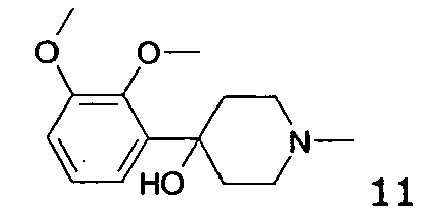
n.d**** not tested Example 1 and 2 in US 4,415,736 Examples 
13
(12 - 15).161000 Example 1 
65
(45 - 97)424000 Example 3 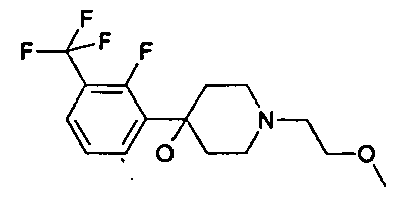
43
(27 - 64)350000 Example 4 
13
(11 - 18)69000 * in ED50 estimates the maximal effects have been limited to 350 - 400% of control. ** in ED50 estimates the maximal effects have been set to 200% of control (this is the maximal increase in DOPAC that is possible to achieve for these compounds). *** inactive at 100 µmol/kg **** not determined. ; The ED50 value was not possible to calculate because the compound did not reach sufficient high DOPAC levels after administration of 100 µmol/kg. - An important observation is that the presence of the OH substituent in the piperidine ring does not impair the efficacy or potency of the dopaminergic stabilizer, but only reduces inhibition of the hERG channel. Such an outcome would not have been predicted as a general rule. For instance, in the comparative examples 7-10, the presence of the OH-group leads to compounds which are devoid of dopamine stabilizer activity.
- One aim of the present invention is to provide new compounds for therapeutic use, and more precisely compounds for modulation of dopaminergic systems in the mammalian brain, including human brain. Preferably such compounds have lowered side-effects with respect to cardiac potassium channel inhibition.
- Another aim of the invention is to provide compounds with therapeutic effects after oral administration.
- The preferred substituted structures are
- 4-(2,3-difluorophenyl)-1-propylpiperidin-4-ol
- 4-(2,3-difluorophenyl)-1-ethylpiperidin-4-ol
- 4-(2-chloro-3-fluorophenyl)-1-propylpiperldin-4-ol
- 4-(2-chloro-3-fluorophenyl)-1-ethylpiperidin-4-ol
- 4-[2-fluoro-3-(trifluoromethyl)phenyl]-1-propylpiperidin-4-ol
- 1-ethyl-4-[2-fluoro-3-(trifluoromethyl)phenyl]piperidin-4-ol
- 4-[2-chloro-3-(trifluoromethyl)phenyl]-1-propylpiperidin-4-ol
- 4-[2-chloro-3-(trifluoromethyl)phenyl]-1-ethylpiperidin-4-ol
- 4-(3-chloro-2-fluorophenyl)-1-propylpiperidin-4-ol
- 4-(3-chloro-2-fluorophenyl)-1-ethylpiperidin-4-ol
- 4-(2,3-dichlorophenyl)-1-propylpiperidin-4-ol
- 4-(2,3-dichlorophenyl)-1-ethylpiperidin-4-ol
- 4-[2-fluoro-3-(trifluoromethoxy)phenyl]-1-propylpiperidin-4-ol
- 1-ethyl-4-[2-fluoro-3-(trifluoromethoxy)phenyl]piperidin-4-ol
- 4-[2-chloro-3-(trifluoromethoxy)phenyl]-1-propylpiperidin-4-ol
- 4-[2-chloro-3-(trifluoromethoxy)phenyl]-1-ethylpiperidin-4-ol
- 4-[3-(difluoromethoxy)-2-fluorophenyl]-1-propylpiperidin-4-ol
- 4-[3-(difluoromethoxy)-2-fluorophenyl]-1-ethylpiperidin-4-ol
- 4-[2-chloro-3-(difluoromethoxy)phenyl]-1-propylpiperidin-4-ol
- 4-[2-chloro-3-(difluoromethoxy)phenyl]-1-ethylpiperidin-4-ol
- The compounds and compositions according to the present invention possess dopamine-modulating properties and are useful in treating numerous central nervous system disorders, including both psychiatric and neurological disorders. Particularly, the compounds and their pharmaceutical compositions may be used in the treatment of CNS disorders where the dopaminergic system is dysfunctional due to direct or indirect causes.
- The compounds and compositions according to the invention can be used to improve all forms of psychosis, including schizophrenia and schizophreniform disorders as well as drug induced psychotic disorders and bipolar disorder. They can also be used in the treatment of a condition selected from the group consisting of iatrogenic and non-iatrogenic psychoses and hallucinoses.
- Mood and anxiety disorders, including depression and obsessive-compulsive disease may also be treated with the compounds and compositions according to the invention.
- Compounds with modulating effects on dopaminergic systems may also be used to improve cognitive functions and in the treatment of emotional disturbances related to ageing, neurodegenerative (e.g. Dementia and age-related cognitive impairment) and developmental (such as Autism spectrum disorders, ADHD, Cerebral Palsy, Gilles de la Tourette's syndrome) disorders as well as after brain injury. Such brain injury may be induced by traumatic, inflammatory, infectious, neoplastic, vascular, hypoxic or metabolic causes or by toxic reactions to exogenous chemicals, wherein the exogenous chemicals are selected from the group consisting of substances of abuse, pharmaceutical compounds, environmental toxins. The compounds and their pharmaceutical composition are useful for treatment of a condition selected from the group consisting of sleep disorders, sexual disorders, eating disorders, obesitas, and headaches and other pains in conditions characterized by increased muscular tone. They may also be used in the treatment of Alzheimer's disease or related dementia disorders.
- The compounds and compositions according to the invention may also be used in behavioural disorders usually first diagnosed in infancy, childhood, or adolescence as well as in impulse control disorders.
- They can also be used for treating substance abuse disorders as well as disorders characterized by misuse of food.
- Neurological indications include the use of the compounds and their compositions to improve mental and motor function in Parkinson's disease, dyskinesias (including L-DOPA induced dyskinesias), and in related parkinsonian syndromes. They may also be used to ameliorate tics and tremor of different origins. Moreover, they may be used to relieve pain in conditions characterized by increased muscle tone.
- They can also be used in the treatment of Huntington's disease and other movement disorders as well as movement disorders induced by drugs. Restless legs and related disorders as well as narcolepsy may also be treated with compounds according to the invention.
- The compounds according to the present invention have been shown to display dopaminergic stabilizer profile with improved potency (Tables 1 and 4). They have effects on biochemical indices in the brain with the characteristic features of dopamine antagonists, e.g. producing increases in concentrations of dopamine metabolites.
- The compounds of this invention show no, or only limited effects on spontaneous locomotion over a wide dose range (Table 2).
Table 2. Effects of compounds from the present invention on Locomotor activity in drug-naive rats. The animals were placed in the motility meters immediately after drug administration and locomotor activity was recorded for 60 minutes (counts/60 min ± SEM) Control group 11 µmol/kg 33 µmol/kg 100 µmol/kg 
10811 ± 865 7481 ± 1266 11085 ± 2020 11288 ± 1339 Example 3 
6421 ± 812 7229 ± 769 7669 ± 1029 7542 ± 844 Example 7 
9822 ± 3030 8897 ± 801 9739 ± 2025 7499 ± 1620 Example 6 
12672 ± 702 11764 ± 3106 7506 ± 905 3698 ± 294 Example 1 
8836 ± 962 6422 ± 1190 6016 ± 1708 4296 ± 847 Example 4 
7154 ± 2447 7668 ± 1716 3213 ± 825 1630 ± 302 Example 5 - In some cases, in particular when the baseline activity is low, they can induce a slight behavioural activation (Table 3). The behavioural activation is limited, not reaching the profound increases in activity induced by direct or indirect dopaminergic agonists. On the other hand, the preferred substances reduce the increase in activity induced by direct or indirect dopaminergic agonists, i.e. d-amphetamine and congeners (Table 4).
Table 3. Effects of compounds from the present invention on Locomotor activity in drug-naive rats. The animals were placed in the motility meters immediately after drug administration and locomotor activity was recorded between 30 and 60 minutes (counts/30 min ± SEM). During this period the animals have habituated to their environment and therefore the locomotor activity is low in the control group. Control group 11 µmol/kg 33 µmol/kg 100 µmol/kg 
281 ± 138 3200 ± 1817 1130 ± 344 (P=0.06) 541 ± 145 Example 1 Table 4. Effects of compounds in the present invention on reduction of amphetamine-induced hyper-locomotion. Comparative examples from prior art is also included. For methods and statistical calculations see the enclosed tests. Examples ED50 µmol/kg Comparative Examples ED50 µmol/kg 
15
(11 -19)
34
(12 - 54))Example 1 Example 9 in WO01/46146 
26
(16 - 41)
30
(21 - 44))Example 3 Example 43 in WO01/46146 
21
(18 - 24)
52
(35 - 76)Example 4 Example 6 in WO01/46145 
25
(13 - 66)
inactive Example 6 - Thus, the compounds of this invention show a dopaminergic stabilizer profile (Tables 1-4) with improved or retained potency (Table 1 and 4) compared to the non-substituted piperidine ring analogue. In addition, the introduction of the hydroxyl group in the piperidine ring decreased the potency at inhibiting the HERG channel.
- Given the involvement of dopamine in a large variety of CNS functions and the clinical shortcomings of presently available pharmaceuticals acting on dopamine systems, the novel class of dopaminergic modulators presented in this invention may prove superior to presently known dopaminergic compounds in the treatment of several disorders related to dysfunctions of the CNS, in terms of efficacy as well as reduced side effects.
- The compounds in the present invention have also been shown to display high metabolic stability in rat liver microsomes measured as turnover at 15 minutes (Example 1 27%, Example 3 8%, Example 8 29%), and high oral bioavailability in rat, exemplified by Example 3 (around 80%) and Example 8 (around 29%).
- These compounds are thus suitable for the preparation of orally administered pharmaceuticals. There is no guidance in the prior art how to obtain compounds with this effect on behaviour and dopamine systems in the brain.
- Evidence is available that dopaminergic neurotransmission in the CNS is disturbed in psychiatric and neurological diseases. In many instances, for example in schizophrenia, Parkinson's disease, Huntington's disease, bipolar disorder and in dementia pharmacotherapies based on antagonism or agonism at dopamine receptors are useful, but not optimal. In recent years many efforts have been made in finding novel and selective compounds for dopamine receptor subtypes (D1, D2, D3, D4, D5) with the aim to improve efficacy and reduce side effects.
- The present invention offers another principle for novel therapeutics based on interactions with the dopamine system. The invention provides compounds having, as their major feature, stabilizing effects on the dopaminergic system in the brain.
- The compounds according to the invention have effects on brain neurochemistry similar to antagonists at dopamine D2 receptors (i.e. dose-dependent increases of the dopamine metabolite DOPAC, in cortical, striatal and limbic brain regions). The compounds according to the invention show no, or only limited inhibitory, effects on spontaneous locomotion. Under certain conditions they can induce a behavioural activation. The behavioural activation is limited, not reaching the profound increases in activity induced by direct or indirect dopamine receptor agonists. However, the preferred substances reduce the increase in activity induced by the indirect dopaminergic agonist d-amphetamine. The increase in activity after treatment with d-amphetamine is a standard model of hyperdopaminergia (Table 4). In this model, dopaminergic neurotransmission is increased by systemic administration of d-amphetamine at a dose that is sufficiently high to produce a large increase in locomotor activity. The ability of a compound to antagonize this hyperactivity reflects anti-dopaminergic properties, which are part of the dopaminergic stabiliser profile. Furthermore, antagonism of d-amphetamine induced hyperactivity is widely used as a standard assay of antipsychotic activity (see Psychopharmacology 4th Generation of progress Chapter 68, p 793-795).
- Another animal model of antipsychotic activity is based on administration of the glutamate antagonist MK-801. Glutamate antagonists (i.e. NMDA antagonists), can induce psychoses in man (see Psychopharmacology, 4th Generation of progress Chapter 101, p. 1205 and 1207) and induce behavioural aberrations in animals. Thus, the ability of a drug to affect schizophrenia and psychotic states can be measured using behavioural models based on experimentally induced hypoglutamatergic states. In this study the NMDA antagonist MK-801 (0.7 mg/kg i.p.) was used to create a hypoglutamatergic state where the rats display abnormal, hyperactive behaviour. Compounds in the present invention dose-dependently reverse the behavioural aberration induced by MK-801 (see Table 5).
- It is known that the dopaminergic systems of the brain interacts strongly with other transmitter systems (see Psychopharmacology, 4th Generation of progress, Chapter 101, pages 1208-1209). Such interactions can explain the powerful effects of dopaminergic stabilizers on the behavioural aberrations induced by the glutamate antagonist MK-801 although these aberrations are not primarily based on or caused by changes in dopaminergic transmission.
Table 5. Effects of compounds from the present invention on Locomotor activity in MK-801 pre-treated rats (0.7 mg/kg i.p. 90 minutes before test compound). The animals were placed in the motility meters immediately after test compound administration and locomotor activity was recorded between 30 and 60 minutes after administration (counts/30 min ± SEM) Control group MK-801 0.7 mg/kg i.p. MK + example 100 µmol/kg 
46 ± 29 40367 ± 9127 17802 ± 6842
(P=0.09)Example 1 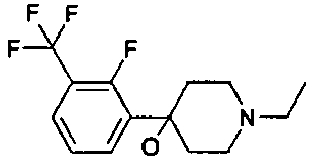
125 ± 48 32169 ± 10605 18307 ± 7375
(P=0.3)Example 3 
341 ± 201 30819 ± 12771 9564 ± 4584
(P=0.16)Example 6 - The claimed invention provides compounds having, as their major feature, stabilizing effects on the dopaminergic system in the brain. These compounds are useful for treating CNS disorders in which the symptoms can be affected by dopaminergic functions. In support of this assertion, please see the following references:
- * In support of schizophrenia and psychosis, Applicants refer to Psychopharmacology 4th Generation of progress Chapter 26, p. 295-301);
- * Parkinson's disease (Psychopharmacology 4th Generation of progress Chapter 26, p 295, Chapter 1479-1482);
- * Anxiety disorders (Psychopharmacology 4th Generation of progress Chapter 21, p. 227 and 237, Chapter 111, p. 1317-1318 and 1320);
- * Mood disorders (Psychopharmacology 4th Generation of progress Chapter 80, p. 921-928; and
- * Substance abuse (Psychopharmacology 4th Generation of progress Chapter 25, p. 283 and 292, Chapter 66, p. 759-760, Chapter 147, p. 1725 (see also Nisell et al, "Systemic Nicotine-Induced Dopamine Release in the Rat Nucleus Accumbens is Regulated by Nicotinic receptors in the Ventral Tegmental Area; Synapse (1994) 16: 36-44). Chapter 149, p. 1745-1747 and 1751-1752). Drugs abused by humans preferentially increase synaptic dopamine concentrations in the mesolimbic system of freely moving rats Di Chiara et al Proc Natl Acad Sci USA 85, 5274, 1988. Drug addiction as a disorder of associative learning. Role of nucleus accumbens shell/extended amygdala dopamine Ann N.Y. Acad Sci 877, 461, 1999 .
- As shown by these references, the claimed conditions are recognized in the art as diseases which concern dopaminergic neurotransmission.
- Furthermore, pharmacological interaction with dopaminergic neurotransmission is widely believed to be useful in the treatment of several CNS disorders, which are not generally believed to be directly caused by disruptions in dopaminergic neurotransmission. For example, the symptoms of Huntington's disease and other movement disorders can be treated with dopaminergic agents due to the involvement of dopamine in motor functions-(see Psychopharmacology 4th Generation of progress, Chapter 26, p. 295-301). Likewise, it is known that cognitive disorders (see Psychopharmacology 4th Generation of progress Chapters 25, p. 292, Chapter 120, p. 1417 and 1420, Chapter 123, p. 1447 and 1452 and 1455-1457) autism (see Psychopharmacology 4th Generation of progress Chapter 142, p. 1653 and 1661), attention-deficit hyperactivity disorders (see Psychopharmacology 4th Generation of progress Chapter 141, p. 1643 and 1649-1650), sexual disorders (see Psychopharmacology 4th Generation of progress Chapters 65, p. 743-746 and Chapter 22, p. 245 and 254) and eating disorders (see Psychopharmacology 4th Generation of progress Chapters 137, p. 1600, Chapter 138, p. 1609-1610 and 1612) may be treated with agents strengthening dopaminergic transmission. Thus, the above references support the argument that the compounds of the invention would be useful in the treatment of such diseases.
- It is widely recognised that inhibition of the HERG channel can induce severe cardiac side-effects, including lethal arrythmia (J. Cardiovasc. Electrophysiol. 15, 475, 2004.; Eur. J. Pharm., 450, 37, 2002.; Cardiovascular Research, 58, 32, 2003). Thus in the development of new CNS pharmaceuticals, compounds with minimal affinity at the HERG channel, leading to a wide safety margin, are sought.
- The compounds of the invention may be prepared as outlined below in Schemes 1-2. However, the invention is not limited to these methods. The compounds may also be prepared as described for structurally related compounds in the prior art. The reactions can be carried out according to standard procedures1,2 or as described in the working examples. The starting materials for the processes described in the present application are known or may readily be prepared by conventional methods from commercially available chemicals.
- Persons skilled in the art will appreciate that, in order to obtain compounds of the invention in an alternative and in some occasions, more convenient manner, the individual process steps mentioned hereinbefore may be performed in a different order, and/or the individual reactions may be performed at a different stage in the overall route (i.e. chemical transformations may be performed upon different intermediates to those associated hereinbefore with a particular reaction).


- The substituent Z is a leaving group, G1 is R1 or a group that can be transformed into R1, G2 is R2 or a group that can be transformed into R2, and A is alkyl hydrogen or a protecting group. W is a hydroxyl group, or a group which can be transformed into a hydroxyl group. R1, R2 and R3 are as defined above.
-
- 1. Comprehensive Organic Transformations: A Guide to Functional Group Preparations Richard C. Larock, 22 October, 1999 Wiley-VCH ISBN: 0471190314
- 2. March's Advanced Organic Chemistry: Reactions, Mechanisms, and Structure, 5th Edition. Michael B. Smith, Jerry March, January 15, 2001 Wiley-Interscience. ISBN: 0471585890
- As used herein the term C1-C4 alkyl refers to an alkyl containing 1-4 carbon atoms in any isomeric form. The various carbon moieties are defined as follows: Alkyl refers to an aliphatic hydrocarbon radical and includes branched or unbranched forms such as methyl, ethyl, n-propyl, i-propyl, n-butyl, i-butyl, s-butyl, t-butyl. The term "allyl" refers to the group -CH2-CH=CH2.
- The term "patient" used herein refers to an individual in need of the treatment according to the invention.
- The term "treatment" used herein relates to both treatment in order to cure or alleviate a disease or a condition and to treatment in order to prevent the development of a disease or a condition. The treatment may either be performed in an acute or in a chronic way.
- Both organic and inorganic acids can be employed to form non-toxic pharmaceutically acceptable acid addition salts of the compounds according to the invention. Suitable acid addition salts of the compounds of the present invention include those formed with pharmaceutically acceptable salts such as toluensulfonate, methanesulfonate, fumarate, hydrochloride, hydrobromide, hydroiodide, nitrate, acetate, lactate, citrate, acid citrate, tartrate, bitartrate, aliphatic, alicyclic, aromatic or heterocyclic carboxylate, succinate, maleate, fumarate, gluconate, glycolate, saccharate, ascorbate, acetate, propionate, benzoate, pyruvate, pamoate [i.e., 1,1'-methylene-bis-(2-hydroxy-3-naphthoate)], phosphate, acid phosphate, sulphate or bisulfate salts. These salts are readily prepared by methods known in the art. It is also to be understood that compounds of the present invention can exist in solvated as well as unsolvated forms such as, e.g, hydrated forms.
- The pharmaceutical composition containing a compound according to the invention may also comprise substances used to facilitate the production of the pharmaceutical preparation or the administration of the preparations. Such substances are well known to people skilled in the art and may for example be pharmaceutically acceptable adjuvants, carriers and preservatives.
- In clinical practice the compounds used according to the present invention will normally be administered orally, rectally, nasally or by injection, in the form of pharmaceutical preparations comprising the active ingredient either as a free base or as a pharmaceutically acceptable non-toxic, acid addition salt, such as the hydrochloride, lactate, acetate, sulfamate salt, in association with a pharmaceutically acceptable carrier. The carrier may be a solid, semisolid or liquid preparation. Usually the active substance will constitute between 0.1 and 99% by weight of the preparation, more specifically between 0.5 and 20% by a weight for preparations intended for injection and between 0.2 and 50% by weight for preparations suitable for oral administration.
- To produce pharmaceutical preparations containing the compound according to the invention in the form of dosage units for oral application, the selected compound may be mixed with a solid excipient, e.g. lactose, saccharose, sorbitol, mannitol, starches such as potato starch, corn starch or amylopectin, cellulose derivatives, a binder such as gelatine or polyvinyl-pyrrolidine, and a lubricant such as magnesium stearate, calcium stearate, polyethylene glycol, waxes, paraffin, and the like, and then compressed into tablets. If coated tablets are required, the cores, prepared as described above, may be coated with a concentrated sugar solution which may contain e.g. gum arabic, gelatine, talcum, titanium dioxide, and the like. Alternatively, the tablet can be coated with a polymer known to the man skilled in the art, dissolved in a readily volatile organic solvent or mixture of organic solvents. Dyestuffs may be added to these coatings in order to readily distinguish between tablets containing different active substances or different amounts of the active compound.
- For the preparation of soft gelatine capsules, the active substance may be admixed with e.g. a vegetable oil or polyethylene glycol. Hard gelatine capsules may contain granules of the active substance using either the mentioned excipients for tablets e.g. lactose, saccharose, sorbitol, mannitol, starches (e.g. potato starch, corn starch or amylopectin), cellulose derivatives or gelatine. Also liquids or semisolids of the drug can be filled into hard gelatine capsules. Examples of tablet and capsule formulations suitable for oral administration are given below:
Tablet I mg/tablet Compound 100 Lactose Ph.Eur 182.75 Croscarmellose sodium 12.0 Maize starch paste (5% w/v paste) 2.25 Magnesium stearate 3.0 Tablet II mg/tablet Compound 50 Lactose Ph.Eur 223.75 Croscarmellose sodium 6.0 Maize starch 15.0 Polyvinylpyrrolidone (5% w/v paste) 2.25 Magnesium stearate 3.0 Tablet III mg/tablet Compound 1.0 Lactose Ph.Eur 93.25 Croscarmellose sodium 4.0 Maize starch paste (5% w/v paste) 0.75 Magnesium stearate 1.0 Capsule mg/capsule Compound 10 Lactose Ph.Eur 488.5 Magnesium 1.5 - Dosage units for rectal application can be solutions or suspensions or can be prepared in the form of suppositories comprising the active substance in a mixture with a neutral fatty base, or gelatine rectal capsules comprising the active substance in admixture with vegetable oil or paraffin oil. Liquid preparations for oral application may be in the form of syrups or suspensions, for example solutions containing from about 0.2% to about 20% by weight of the active substance herein described, the balance being sugar and mixture of ethanol, water, glycerol and propylene glycol. Optionally such liquid preparations may contain coloring agents, flavoring agents, saccharine and carboxymethylcellulose as a thickening agent or other excipients known to the man in the art.
- Solutions for parenteral applications by injection can be prepared in an aqueous solution of a water-soluble pharmaceutically acceptable salt of the active substance, preferably in a concentration of from 0.5% to about 10% by weight. These solutions may also containing stabilizing agents and/or buffering agents and may conveniently be provided in various dosage unit ampoules. The use and administration to a patient to be treated in the clinic would be readily apparent to an ordinary skill in the art.
- For intranasal administration or administration by inhalation, the compounds of the present invention may be delivered in the form of a solution, dry powder or suspension. Administration may take place via a pump spray container that is squeezed or pumped by the patient or through an aerosol spray presentation from a pressurized container or a nebulizer, with the use of a suitable propellant, e.g., dichlorodifluoromethane, trichlorofluoromethane, dichlorotetrafluoroethane, carbon dioxide or other suitable gas. The compounds of the invention may also be administered via a dry powder inhaler, either as a finely divided powder in combination with a carrier substance (e.g. a saccharide) or as microspheres. The inhaler, pump spray or aerosol spray may be single or multi dose.. The dosage may be controlled through a valve which delivers a measured amount of active compound.
- The compounds of the invention may also be administered in a controlled release formulation. The compounds are released at the required rate to maintain constant pharmacological activity for a desirable period of time. Such dosage forms provide a supply of a drug to the body during a predetermined period of time and thus maintain drug levels in the therapeutic range for longer periods of time than conventional non-controlled formulations. The compounds may also be formulated in controlled release formulations in which release of the active compound is targeted. For example, release of the compound may be limited to a specific region of the digestive system through the pH sensitivity of the formulation. Such formulations are well known to persons skilled in the art.
- Depending upon the disorder and patient to be treated and the route of administration, the compositions may be administered at varying doses. The dosing will also depend upon the relation of potency to absorbability and the frequency and route of administration. Such doses may be administered once, twice or three or more times daily. The compounds of this invention can be administered to subjects in doses ranging from 0.01 mg to 500 mg per kg of body weight per day, although variations will necessarily occur depending upon the weight, sex and condition of the subject being treated, the disease state being treated and the particular route of administration chosen. However, a dosage level that is in the range of from 0.1 mg to 10 mg per kg of body weight per day, single or divided dosage is most desirably employed in humans for the treatment of diseases. Alternatively, the dosage level is such that a serum concentration of between 0.1 nM to 10 µM of the compound is obtained.
- Any chemical formula or name given herein is meant to include all stereo and optical isomers and.racemates and mixtures thereof in any ratio. The various isomers can be obtained by standard methods well known to persons skilled in the art, e. g. via chromatography or fractional crystallisation. For example, cis/trans mixtures can be separated into the individual stereoisomers by stereoselective synthesis. Enantiomers or diastereomers may be isolated by separation of their mixtures, for instance by fractional crystallisation, resolution or HPLC. Alternatively separation can be afforded by derivatisation with a chiral reagent. Stereoisomers may be made by stereoselective synthesis from stereochemically pure starting materials under conditions which will not cause loss of stereochemical integrity. All stereoisomers are included within the scope of the invention.
- The compounds of the present invention may be isolated in any level of purity by standard methods and purification can be achieved by conventional means known to those skilled in the art, such as distillation, recrystallization and chromatography.
- The invention is further illustrated in the examples below, which in no way are intended to limit the scope of the invention.
- To a solution of 3-bromo-2-fluorobenzotrifluoride(5.0 g, 20.5 mmol) in dry tetrahydrofurane (70 ml) at -78 °C under nitrogen, was added dropwise n-butyllithium (2.5 M in hexane, 9.0 ml, 22.5 mmol). The mixture was stirred for 1 h after which a solution of newly distilled 4-propyl-1-piperidone (2.6 g, 20.5 mmol) in dry tetrahydrofurane (30 ml) was added dropwise. The mixture was stirred at -78 °C for 30 min and then brought to ambient temperature. Water (100 ml) was added and the mixture was extracted with ethylacetate (3x100 ml). The combined organic phases was dried (MgSO4), filtered and evaporated to dryness. The oily residue was purified by flash column chromatography (ethylacetate/methanol, 1:1), to give the title compound (2.8 g, 45%). The amine was converted to the hydrochloric acid salt and recrystallized from ethanol/diethyl ether: M.p. 175-177 °C. MS m/z (rel. intensity, 70 eV) 305 (M+, 5), 276 (bp), 258 (35), 191 (21), 185 (17).
- Preparation according to Example 1: 3-Bromo-2-fluorobenzotrifluoride(5.0 g, 20.6 mmol), tetrahydrofurane (50 ml), n-butyllithium (2.5 M in hexane, 9.0 ml, 22.5 mmol), 4-ethyl-1-piperidone (2.6 g, 20.6 mmol). Yield: 4.0 g. The amine was converted to the hydrochloric acid salt and recrystallized from ethanol/diethyl ether: M.p. 177-180 °C. MS m/z (rel. intensity, 70 eV) 291 (M+, 18), 277 (15), 276 (bp), 258 (37), 191 (27).
- Preparation according to Example 2: 4-[2-fluoro-3-(trifluoromethyl)phenyl]piperidin-4-ol (0.31 g, 1.18 mmol), potassium carbonate (0.3 g, 2.17 mmol), acetonitrile (20 ml) , 1-bromo-2-methoxy ethane (0.11 ml, 1.3 mmol). Yield: (0.29 g, 76%). The amine was converted to the hydrochloric acid salt and recrystallized from ethanol/diethyl ether: M.p. 159-160 °C. MS m/z (relative intensity, 70 eV) 321 (M+, 3), 277 (13), 276 (bp), 258 (24) 191 (9).
- Preparation according to Example 2: 4-[2-fluoro-3-(trifluoromethyl)phenyl]piperidin-4-ol (0.31 g, 1.18 mmol), acetonitrile (20 ml), potassium carbonate (0.3 g, 2.9 mmol), bromobutane (0.16 ml, 1.3 mmol). Yield: 0.26 g, 70%. The amine was converted to the hydrochloric acid salt and recrystallized from ethanol/diethyl ether: M.p. 138 °C. MS m/z (relative intensity, 70 eV) 319 (M+, 6), 277 (14), 276 (bp), 258 (23) 185 (9).
- Preparation according to Example 2: 4-(2,3-dichlorophenyl)piperidin-4-ol (0.43 g, 1.75 mmol), acetonitrile (20 ml), potassium carbonate (0.59 g, 4.3 mmol), iodopropane (0.15 ml, 1.9 mmol). Yield: 0.29 g, 57%. The amine was converted to the hydrochloric acid salt and recrystallized from ethanol/diethyl ether: M.p. 181-183 °C. MS m/z (relative intensity, 70 eV) 289 (M+, 2), 287 (M+, 4), 260 (64), 258 (bp) 240 (33).
- Preparation according to Example 2: 4-(2,3-dichlorophenyl)piperidin-4-ol (0.44 g, 1.81 mmol), acetonitrile (20 ml), potassium carbonate (0.5 g, 3.6 mmol), 1-bromo-2-methoxyethane (0.17 ml, 2.0 mmol). Yield: 0.3 g, 54%. The amine was converted to the hydrochloric acid salt and recrystallized from ethanol/diethyl ether. M.p. 135 - 137 °C MS m/z (relative intensity, 70 eV) 305 (M+, 1), 303 (M+, 1), 260 (63), 258 (bp) 240 (31).
- Preparation according to Example 2: 4-[2-fluoro-3-(trifluoromethyl)phenyl]piperidin-4-ol (0.02 g, 0.076 mmol), acetonitrile (2 ml), potassium carbonate (0.02 g, 0.14 mmol), 2-iodobutane (0.009 ml, 0.082 mmol). MS m/z (relative intensity, 70 eV) 319 (M+, 2), 290 (72), 191 (28), 177 (14), 56 (bp).
- Preparation according to Example 2: 4-[2-fluoro-3-(trifluoromethyl)phenyl]piperidin-4-ol (0.02 g, 0.076 mmol), acetonitrile (2 ml), potassium carbonate (0.02 g, 0.14 mmol), 2-bromopropane (0.008 ml, 0.082 mmol). MS m/z (relative intensity, 70 eV) 305 (M+, 5), 290 (79), 191 (30), 163 (18), 56 (bp).
- Preparation according to Example 2: 4-[2-fluoro-3-(trifluoromethyl)phenyl]piperidin-4-ol (0.02 g, 0.076 mmol), acetonitrile (2 ml), potassium carbonate (0.02 g, 0.14 mmol), 1,1,1-trifluoro-3-iodopropane (0.010 ml, 0.082 mmol). MS m/z (relative intensity, 70 eV) 359 (M+, 20), 276 (bp), 258 (39), 191 (21), 152 (19).
- Preparation according to Example 2: 4-[2-fluoro-3-(trifluoromethyl)phenyl]piperidin-4-ol (0.02 g, 0.076 mmol), acetonitrile (2 ml), potassium carbonate (0.02 g, 0.14 mmol), 1-bromo-3-fluoropropane (0.010 ml, 0.082 mmol). MS m/z (relative intensity, 70 eV) 323 (M+, 2), 276 (34), 191 (15), 116 (17), 42 (bp).
- Preparation according to Example 2: 4-(2,3-dichlorophenyl)piperidine (0.02 g, 0.081 mmol), acetonitrile (2 ml), potassium carbonate (0.02 g, 0.14 mmol), iodoethane (0.007 ml, 0.082 mmol). MS m/z (relative intensity, 70 eV) 275 (M+, 14), 274 (M+, bp), 260 (67), 258 (bp), 240 (23), 173 (9).
- Preparation according to Example 2: 4-(2,3-dichlorophenyl)piperidine (0.02 g, 0.081 mmol), acetonitrile (2 ml), potassium carbonate (0.02 g, 0.14 mmol), bromobutane (0.009 ml, 0.082 mmol). MS m/z (relative intensity, 70 eV) 303 (M+, 2), 302 (M+, 4), 260 (65), 258 (bp), 242 (18), 240 (27).
- Preparation according to Example 2: 4-(2,3-dichlorophenyl)piperidine (0.02 g, 0.081 mmol), acetonitrile (2 ml), potassium carbonate (0.02 g, 0.14 mmol), 1-bromo-2-methylpropane (0.009 ml, 0.082 mmol). MS m/z (relative intensity, 70 eV) 303 (M+, 1), 302 (M+, 2), 260 (63), 258 (bp), 242 (19), 240 (29).
- Preparation according to Example 2: 4-(2,3-dichlorophenyl)piperidine (0.02 g, 0.081 mmol), acetonitrile (2 ml), potassium carbonate (0.02 g, 0.14 mmol), 1,1,1-trifluoro-3-iodopropane (0.010 ml, 0.082 mmol). MS m/z (relative intensity, 70 eV) 343 (M+, 10), 341 (M+, 15), 260 (52), 258 (82), 152 (54), 42 (bp).
- Preparation according to Example 2: 4-(2,3-dichlorophenyl)piperidine (0.02 g, 0.081 mmol), acetonitrile (2 ml), potassium carbonate (0.02 g, 0.14 mmol), 1-bromo-3-fluoropropane (0.010 ml, 0.082 mmol). MS m/z (relative intensity, 70 eV) 307 (M+, 4), 305 (M+, 8), 260 (63), 258 (bp), 242 (20), 240 (29).
- Preparation according to Example 1: 1-Bromo-2,3-difluorobenzene (5.0 g, 25.9 mmol), tetrahydrofurane (50 ml), n-butyllithium (2.5 M in hexane, 11.4 ml, 28.5 mmol), 4-propyl-1-piperidone (3.9 ml, 25.9 mmol). Yield: 6.43 g.
MS m/z (rel. intensity, 70 eV) 255 (M+, 4), 226 (bp), 208 (32), 141 (17), 127 (16). - To a solution of 1-fluoro-2-(trifluoromethoxy)benzene (1.22 g, 6.77 mmol) in dry tetrahydrofurane (30 ml) at -78 °C, under nitrogen, lithium diisopropylamide (2.5 M in hexane, 3.0 ml, 7.45 mmol) was added dropwise. The mixture was stirred for 1 h after which a solution of newly distilled 4-propyl-1-piperidone (0.96 g, 6.77 mmol) in dry tetrahydrofuran (20 ml) was added drop wise. The resulting mixture was stirred at -78 °C for 30 min and then brought to ambient temperature. Water (100 ml) was added and the mixture was extracted with ethylacetate (3x100 ml). The combined organic phases was dried (MgSO4), filtered and evaporated to dryness. The oily residue was purified by flash column chromatography (ethylacetate/methanol, 1:1) to give the title compound (0.83 g). MS m/z (rel. intensity, 70 eV) 321 (M+, 5), 293 (14), 292 (bp), 274 (25), 207 (10).
- Synthesis of intermediates used in the above Examples are described in the preparations below.
- To a mixture of magnesium (0.5 g, 20.5 mmol), activated with 1.2-dibromoethane in dry diethyl ether (30 ml), under nitrogen, was added dropwise, a solution of 5-bromo-2-fluorobenzotrifluoride (5.0 g, 20.5 mmol) in dry diethyl ether. The mixture was heated at reflux for 1 h after which a solution of 4-Boc-1-piperidone (4.9 g, 24.6 mmol) in dry diethyl ether (50 ml) was added dropwise. The reaction mixture was stirred for 5 minutes after which aqueous ammonium chloride (100 ml, saturated) was added. The residue was extracted with ethylacetate (3x50 ml) and the combined organic phases was dried (MgSO4), filtered and evaporated to dryness. The oily residue was purified by flash column chromatography (isooctane/ethylacetate, 1:1) to give the title compound (5.0 g). MS m/z (rel. intensity, 70 eV) 363 (M+, 11), 306 (29), 290(94), 289 (bp), 245 (64).
- To a solution of tert-butyl 4-[4-fluoro-3-(trifluoro-methyl)phenyl]-4-hydroxypiperidine-1-carboxylate (4.25 g, 11.7 mmol) in methylen chloride (30 ml) was added trifluoroacetic acid (4 ml) and the solution was stirred at ambient temperature for 20 h. 1 M aqueous sodium hydroxide (50 ml) was.added and the aqueous phase was extracted with methylen chloride (3x 50 ml). The combined organic phases was dried (MgSO4), filtered and evaporated to dryness. The residue was purified by flash column chromatography (ethylacetate/methanol, 1:1) to give the title compound (1.28 g). MS m/z (rel. intensity, 70 eV) 263 (M+, 9), 245 (59), 244 (29), 163 (20), 56 (bp).
- According to Preparation 1: Magnesium (0.51 g, 20.9 mmol), diethyl ether (20 ml), 5-bromo-2-methylbenzotrifluoride (5.0 g, 20.9 mmol), 4-Boc-1-piperidone (5.0 g, 25.1 mmol). Yield: 7.4 g. MS m/z (rel. intensity, 70 eV) 359 (M+, 1), 286 (11), 287(13), 241 (10), 57 (bp).
- According to Preparation 2: Tert-butyl 4-[4-methyl-3-(trifluoro-methyl)phenyl]-4-hydroxypiperidine-1-carboxylate (5.5 g, 15.3 mmol, methylen chloride (30 ml), trifluoroacetic acid (4.5 ml). Yield: 1.97 g. MS m/z (rel. intensity, 70 eV) 259 (M+, 14), 241 (84), 240 (43), 187 (19), 56 (bp).
- According to Preparation 1: Magnesium (0.47 g, 19.3 mmol), diethyl ether (20 ml), 5-bromo-2-chlorobenzotrifluoride (5.0 g, 19.3 mmol), 4-Boc-1-piperidone (4.6 g, 23.1 mmol). Yield: 4.3 g. MS m/z (rel. intensity, 70 eV) 379 (M+, 1), 306 (19), 305 (17), 261 (11), 57 (bp).
- According to Preparation 2: Tert-butyl 4-[4-chloro-3-(trifluoromethyl)phenyl]-4-hydroxypiperidine-1-carboxylate (4.3 g, 11.3 mmol, methylen chloride (30 ml), trifluoroacetic acid (4.5 ml). Yield: 1.4 g. MS m/z (rel. intensity, 70 eV) 279 (M+, 28), 263 (38), 262 (30), 261 (bp), 260 (52).
- According to Example 1: 3-Bromo-2-fluorobenzotrifluoride (2.6 g, 10.6 mmol), tetrahydrofurane (60 ml), n-butyllithium (2.5 M in hexane, 4.6 ml, 11.5 mmol), 4-boc-1-piperidone (2.1 g, 10.6 mmol). Yield: 3.1 g. MS m/z (relative intensity, 70 eV) 363 (M+, 2), 290 (18), 289 (31), 245 (14), 57 (bp).
- According to Preparation 2: Tert-butyl 4-[2-fluoro-3-(trifluoro-methyl)phenyl]-4-hydroxypiperi-dine-1-carboxylate (3.1 g, 8.5 mmol, methylen chloride (20 ml), trifluoroacetic acid (2 ml). Yield: 0.62 g. MS m/z (rel. intensity, 70 eV) 263 (M+, 22), 245 (96), 244 (44), 191 (25), 56 (bp).
- According to Example 1: 1-Bromo-2,3-dichlorobenzene (1.0 g, 4.4 mmol), tetrahydrofurane (40 ml), n-butyllithium (2.5 M in hexane, 1.9 ml, 4.8 mmol), 4-boc-1-piperidone (0.9 g, 4.4 mmol). Yield: 0.7 g. MS m/z (relative intensity, 70 eV) 347 (M+, 1), 345 (M+, 2), 273 (17), 271 (24), 57 (bp).
- According to Preparation 2: Tert-butyl 4-(2,3-dichlorophenyl)-4-hydroxypiperidine-1-carboxylate (3.0 g, 8.7 mmol), methylen chloride (50 ml), trifluoroacetic acid (10 ml). Yield: 0.88 g. MS m/z (rel. intensity, 70 eV) 246 (M+, 8), 245 (14), 212 (34), 210 (bp), 192 (67).
- The following tests were used for evaluation of the compounds according to the invention.
- Behavioural activity was measured using eight Digiscan activity monitors (RXYZM (16) TAO, Omnitech Electronics, Columbus, OH, USA), connected to an Omnitech Digiscan analyzer and a Apple Macintosh computer equipped with a digital interface board (NB DIO-24, National Instruments, USA). Each activity monitor consisted of a quadratic metal frame (WxL 40x40 cm) equipped with photobeam sensors. During measurements of behavioural activity, a rat was put in a transparent acrylic cage (WxLxH, 40x40x30 cm) which in turn was placed in the activity monitor. Each activity monitor was equipped with three rows of infrared photobeam sensors, each row consisting of 16 sensors. Two rows were placed along the front and the side of the floor of the cage, at a 90° angle, and the third row was placed 10 cm above the floor to measure vertical activity. Photobeam sensors were spaced 2.5 cm apart. Each activity monitor was fitted in an identical sound and light attenuating box containing a weak house light and a fan.
- The computer software was written using object oriented programming (LabVIEW®, National instruments, Austin, TX, USA).
- Behavioural data from each activity monitor, representing the position (horizontal centre of gravity and vertical activity) of the animal at each time, were recorded at a sampling frequency of 25 Hz and collected using a custom written LABView™ application. The data from each recording session were stored and analyzed with respect to distance traveled. Each behavioural recording session lasted 60 min, starting approximately 4 min after the injection of test compound. Similar behavioural recording procedures were applied for drug-naïve and drug pre-treated rats. Rats pretreated with d-amphetamine were given a dose of 1.5 mg/kg i.p.. 10 min before the recording session in the activity monitor. Rats pretreated with MK-801 were given a dose of 0.7 mg/kg i.p.. 90 min before the recording session in the activity monitor. The results are presented as counts/60 minutes, or counts/30 minutes, in arbitrary length units. Statistical comparisons were carried out using student's t-test vs the control group. In MK-801 or amphetamine pre-treated animals, statistical comparisons were made vs the MK801 or d-amphetamine controls, respectively.
- ED50 values for reduction of amphetamine-induced hyper-locomotion are calculated by curve fitting. For most compounds, the evaluation is based on 16 amphetamine pre-treated animals over the dose range 0, 11, 33 and 100 µmol/kg s.c. in one single experiment, with complementary doses in separate experiments. Calculations are based on distance during the last 45 minutes of one hour of measurement. The distances are normalised to amphetamine-control and fitted by least square minimization to the function "End-(End-Control)/(1+(dose/ED50)Slope)". The four parameters are fitted with the restrictions: ED50>0, 0.5<Slope<3, End>0% of control. To estimate confidence levels for the parameters, the fit is repeated 100 times with a random evenly distributed squared weight (0 to 1) for every measurement value. Presented ED50-ranges cover 95% of these values.
- After the behavioural activity sessions, the rats were decapitated and their brains rapidly taken out and put on an ice-cold petri-dish. The limbic forebrain, the striatum, the frontal cortex and the remaining hemispheral parts of each rat were dissected and frozen. Each brain part was subsequently analyzed with respect to its content of monoamines and their metabolites.
- The monoamine transmitter substances (NA (noradrenaline), DA (dopamine), 5-HT (serotonin)) as well as their amine (NM (normethanephrine), 3-MT (3-methoxytyramine)) and acid (DOPAC (3,4-dihydroxyphenylacetic acid), 5-HIAA (5-hydroxyindoleacetic acid), HVA (homovanillic acid)) metabolites are quantified in brain tissue homogenates by HPLC separations and electrochemical detection.
- The analytical method is based on two chromatographic separations dedicated for amines or acids. Two chromatographic systems share a common auto injector with a 10-port valve and two sample loops for simultaneous injection on the two systems. Both systems are equipped with a reverse phase column (Luna C18(2), dp 3 µm, 50*2mm i.d., Phenomenex) and electrochemical detection is accomplished at two potentials on glassy carbon electrodes (MF-1000, Bioanalytical Systems, Inc.). Via a T-connection the column effluent is passed to the detection cell or to waste. This is accomplished by two solenoid valves, which block either the waste or detector outlet. By not letting the chromatographic front reach the detector, better detection conditions are achieved. The aqueous mobile phase (0.4 ml/min) for the acid system contains Citric Acid 14 mM, Sodium Citrate 10 mM, MeOH 15% (v/v) and EDTA 0.1 mM. Detection potentials relative to Ag/AgCl reference is 0.45 and 0.60V. The aqueous ion pairing mobile phase (0.5 ml/min) for the amine system contains Citric Acid 5 mM, Sodium Citrate 10 mM, MeOH 9% (v/v), MeCN 10.5% (v/v), Decane Sulfonic Acid 0.45 mM, and EDTA 0.1 mM. Detection potentials relative to Ag/AgCl reference is 0.45 and 0.65V.
- ED50 values for the increase of DOPAC in striatum are calculated by curve fitting. For most compounds, the evaluation is based on 20 animals over the dose range 0, 3.7, 11, 33 and 100 µmol/kg s.c. in one single experiment. The DOPAC levels are normalised to control and fitted by least square minimization to the function "End-(End-Control)/(1+(dose/ED50)Slope)". The four parameters are fitted with the restrictions: ED50>0, 0.5<Slope<3, 350<End<400 or End=200% of control (see table 1). To estimate confidence levels for the parameters, the fit is repeated 100 times with a random evenly distributed squared weight (0 to 1) for every measurement value. Presented ED50-ranges cover 95% of these values.
- Experiments are performed 24 hours after implantation of arterial and venous catheters. Test compound is administered orally at 12.5 µmol/kg or intravenously at 5 µmol/kg using the venous catheters, n=3 per group. Arterial blood samples are then taken during eight hours at 0, 3, 9, 27, 60, 120, 180, 240, 300 and, 360 minutes after administration of the test compound. The oral bioavailability was calculated as the ratio of the AUC (Area under curve) obtained after oral administration over the AUC obtained after intravenous administration for each rat. The parameter AUC was calculated according to the following:
- AUC: the area under the plasma concentration versus time curve from time zero to the last concentration measured (Clast), calculated by the log/linear trapezoidal method.
- The levels of test compound are measured by means of liquid chromatography-mass spectrometry (LC-MS). (Hewlett-Packard 1100MSD Series). The module include a quaternary pump system, vacuum degasser, thermostatted autosampler, thermostatted column compartment, diode array detector and API-ES spray chamber. Data handling was performed with a HP ChemStation rev.A.06.03. system. Instrument settings:MSD mode: Selected ion monitoring (SIM) MSD polarity: Positiv Gas temp: 350 °C Drying gas: 13,0 I/min Nebulizer gas: 50 psig Capillary voltage: 5000 V Fragmentor voltage: 70 V
Analytical column: Zorbax eclipse XDB-C8 (4.6*150 mm, 5 µm) at 20°C. The mobile phase was acetic acid (0,03%) (solvent A) and acetonitrile (solvent B). The flow rate of the mobile phase was 0,8 ml/min. The elution was starting at 12% of solvent B isocratic for 4,5 min, then increasing linearity to 60% over 4,5 min. - Extractions procedure: Plasma samples (0,25-0.5 ml) were diluted with water to 1 ml, and 60 pmol (100 µl) internal standard (-)-OSU6241 was added. The pH was adjusted to 11 by the addition of 25 µl saturated aqueous sodium carbonate. After mixing, the samples were extracted with 4 ml dichloromethane by shaking for 20 min. The organic layer was after centrifugation transferred to a smaller tube and evaporated to dryness under a stream of nitrogen. The residue was then dissolved in 120 µl mobile phase (acetic acid (0,03%): acetonitrile, 95:5) for LC-MS analysis (10 µl injected). The selective ion (MH+) was monitored for each Example, and MH+ 296 for (-)-OSU6241 ((3-[3-(ethylsulfonyl)phenyl]-1-propylpiperidine).
A standard curve over the range of 1-500 pmol is prepared by adding appropriate amounts of test compound to blank plasma samples. - Rat liver microsomes were isolated as described by Förlin (1980) Effects of Clophen A50, 3-methylcholantrene, pregnenolone-16aq-carbonitrile and Phenobarbital on the hepatic microsomal cytochrome P-450-dependent monooxygenaser system in rainbow trout, salmo garirdneri, of different age and sex. Tox Appl Pharm. 54(3) 420-430, with minor modifications e.g. 3 mL/g liver of a 0.1 M Na/K*PO4 buffer with 0.15 M KCl, pH 7.4, (buffer 1) was added before homogenisation, the homogenate was centrifuged for 20 minutes instead of 15, the supernatant was ultracentrifuged at 100.000 g instead of 105.000 g and the pellet from the ultracentrifugation was resuspended in 1 mL/g liver of 20% v/v 87% glycerol in buffer 1.
- 1 µL of, 0.2 or 1 mM test substance diluted in water and 10 µL 20 mg/mL rat liver microsome were mixed with 149 µL 37°C buffer 1 and the reaction was started by addition of 40 µL 4.1 mg/mL NADPH. After 0 or 15 minutes incubation at 37°C in a heating block (LAB-LINE, MULTI-BLOK Heater or lab4you, TS-100 Thermo shaker at 700 rpm) the reaction was stopped by addition of 100 µL pure acetonitrile. The protein precipitation was then removed by rejecting the pellet after centrifugation at 10.000 g for 10 minutes (Heraeus, Biofuge fresco) in 4°C. The test compound was analysed using HPLC-MS (Hewlett-Packard 1100MSD Series) with a Zorbax SB-C18 column (2.1*150 mm, 5 µm) using 0.03% formic acid and acetonitrile as mobile phase (gradient) or a Zorbax Eclipse XDB-C18 (3*75 mm, 3.5µm) using 0.03% acetic acid and acetonitrile as mobile phase (gradient). The 15 min turnover was calculated as the fraction of test compound eliminated after 15 minutes, expressed in percent of 0 min levels, ie 100*[conc test compound at 0 min - concentration at 15 min] / conc at 0 min.
- Preparation of liver microsomes was performed as described in Förlin (1980). Protocols for incubation with liver microsomes are referred in Crespi et Stresser (2000), and Renwick et al (2001).
Crespi C L, and DM Stressser (2000). Fluorometric screening for metabolism based drug-drug interactions. J. Pharm. Tox. Meth. 44. 325-331 - Förlin L. (1980) Effects of Clophen A50, 3-methylcholantrene, pregnenolone-16aq-carbonitrile and Phenobarbital on the hepatic microsomal cytochrome P-450-dependent monooxygenaser system in rainbow trout, salmo gairdneri, of different age and sex. Tox Appl Pharm. 54(3) 420-430
- Renwick, AB et al. (2001). Metabolism of 2,5-bis(trifluoromethyl)-7-benzyloxy-4-trifluoromethylcoumarin by human hepatic CYP isoforms: evidence for selectivity towards CYP3A4. Xenobiotica 31(4): 187-204
- Calculated octanol / water / partitioning constant values (ClogP values) have been calculated for compounds of the invention, using the Bio-Loom for Windows software, version 1.0 from BioByte Corporation (www.biobyte.com ) using SMILES representations of the structures as input.
Table 6: ClogP values for selected compounds of the invention Example ClogP 1 3.24 3 2.71 4 2.36 5 3.76
Claims (19)
- A compound of Formula 1:
 R1 is selected from the group consisting of OSO2CF3, OSO2CH3, SO2CF3, COCH3, CN, CF3, OCF3, F and Cl;R2 occupies the 2-position and is selected from the group consisting of F and Cl;R3 is selected from the group consisting of C1-C4 alkyls, allyl, CH2CH2OCH3, CH2CH2CH2F, CH2CH2CHF2, CH2CH2F, CH2CHF2, CH2CF3, 3,3,3-trifluoropropyl, and 4,4,4-trifluorobutyl;and pharmaceutically acceptable salts thereof.
 - A compound according to claim 1, wherein R3 is selected from the group consisting of n-propyl and ethyl.
- A compound according to either one of claims 1-2, wherein R2 is selected from the group consisting of F and Cl and R3 is selected from the group consisting of n-propyl and ethyl.
- A compound according to claim 1, selected from the group comprising:4-(2,3-difluorophenyl)-1-propylpiperidin-4-ol4-(2,3-difluorophenyl)-1-ethylpiperidin-4-ol4-(2-chloro-3-fluorophenyl)-1-propylpiperidin-4-ol4-(2-chloro-3-fluorophenyl)-1-ethylpiperidin-4-ol4-[2-fluoro-3-(trifluoromethyl)phenyl]-1-propylpiperidin-4-ol1-ethyl-4-[2-fluoro-3-(trifluoromethyl)phenyl]piperidin-4-ol4-[2-chloro-3-(trifluoromethyl)phenyl]-1-propylpiperidin-4-ol4-[2-chloro-3-(trifluoromethyl)phenyl]-1-ethylpiperidin-4-ol4-(3-chloro-2-fluorophenyl)-1-propylpiperidin-4-ol4-(3-chloro-2-fluorophenyl)-1-ethylpiperidin-4-ol4-(2,3-dichlorophenyl)-1-propylpiperidin-4-ol4-(2,3-dichlorophenyl)-1-ethylpiperidin-4-ol4-[2-fluoro-3-(trifluoromethoxy)phenyl]-1-propylpiperidin-4-ol1-ethyl-4-[2-fluoro-3-(trifluoromethoxy)phenyl]piperidin-4-ol4-[2-chloro-3-(trifluoromethoxy)phenyl]-1-propylpiperidin-4-ol4-[2-chloro-3-(trifluoromethoxy)phenyl]-1-ethylpiperidin-4-ol
- Use of a compound according to formula 1:
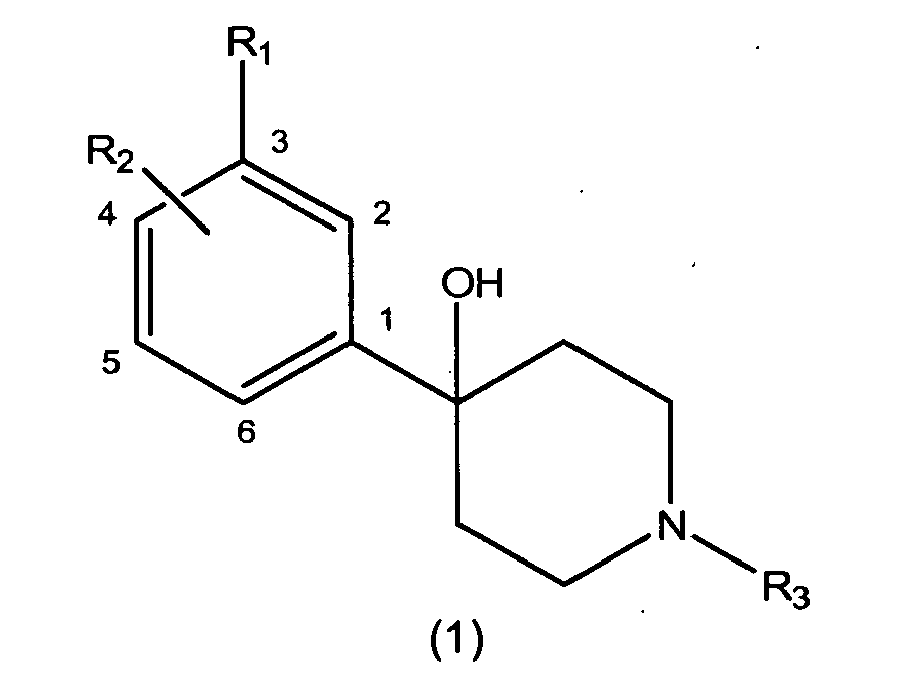 R1 is selected from the group consisting of OSO2CF3, OSO2CH3, SO2CF3, COCH3, CN, CF3, OCF3, F and Cl;
R2 occupies either the 2-position and is selected from the group consisting of F and Cl;R3 is selected from the group consisting of C1-C4 alkyls, allyl, CH2CH2OCH3, CH2CH2CH2F, CH2CH2CHF2, CH2CH2F, CH2CHF2, CH2CF3, 3,3,3-trifluoropropyl, and 4,4,4-trifluorobutyl;and pharmaceutically acceptable salts thereof, in the manufacture of pharmaceutically active preparations for treating a disorder of the central nervous system. - Use according to claim 5, wherein R3 is selected from the group consisting of n-propyl and ethyl.
- Use according to either one of claims 5-6, wherein R2 is selected from the group consisting of F and Cl, and R3 is selected from the group consisting of n-propyl and ethyl.
- A compound according to any one of claims 1-4, wherein the calculated octanol /water partitioning constant value is greater than 1.0.
- A pharmaceutical composition comprising a compound according to any one of claims 1-4, and one or more pharmaceutically acceptable carriers or diluents.
- A pharmaceutical composition according to claim 9, for treatment of a disorder of the central nervous system.
- A pharmaceutical composition according to claim 9, for treatment of movement disorders selected from the group consisting of, Parkinson's disease, Parkinsonism, dyskinesias (including L-DOPA induced dyskinesias), dystonias, tics, tremor, and Huntington disease.
- A pharmaceutical composition according to claim 9, for treatment of a condition selected from the group consisting of iatrogenic and non-iatrogenic psychoses and hallucinoses.
- A pharmaceutical composition according to claim 9, for treatment of a condition selected from the group consisting of schizophrenia and schizophreniform disorders and bipolar disorder.
- A pharmaceutical composition according to claim 9, for treatment of a condition selected from the group consisting of mood and anxiety disorders, depression and obsessive-compulsive disease.
- A pharmaceutical composition according to claim 9, for treatment of neurodevelopmental disorders selected from the group consisting of Autism spectrum disorders, ADHD, Cerebral Palsy, Gilles de la Tourette's syndrome and neurodegenerative disorders selected from the group consisting of Dementia and age-related cognitive impairment.
- A pharmaceutical composition according to claim 9, for treatment of a condition selected from the group consisting of sleep disorders, sexual disorders, eating disorders, obesitas, and headaches and other pains in conditions characterized by increased muscular tone.
- A pharmaceutical composition according to claim 9, for improvement of motor functions, cognitive functions and related emotional disturbances, and after brain injury induced by traumatic, inflammatory, infectious, neoplastic, vascular, hypoxic or metabolic causes or brain injury induced by toxic reactions to exogenous chemicals, wherein the exogenous chemicals are selected from the group consisting of substances of abuse, pharmaceutical compounds, environmental toxins.
- A pharmaceutical composition according to claim 9, for treatment of a disorder related to substance abuse.
- A pharmaceutical composition according to claim 9, for treatment of Alzheimer's disease or related dementia disorders.
Applications Claiming Priority (3)
| Application Number | Priority Date | Filing Date | Title |
|---|---|---|---|
| US57776704P | 2004-06-08 | 2004-06-08 | |
| SE0401465A SE0401465D0 (en) | 2004-06-08 | 2004-06-08 | New substituted piperdines as modulators of dopamine neurotransmission |
| PCT/EP2005/006152 WO2005121092A1 (en) | 2004-06-08 | 2005-06-08 | New substituted piperidines as modulators of dopamine neurotransmission |
Publications (2)
| Publication Number | Publication Date |
|---|---|
| EP1765779A1 EP1765779A1 (en) | 2007-03-28 |
| EP1765779B1 true EP1765779B1 (en) | 2009-11-18 |
Family
ID=32653560
Family Applications (1)
| Application Number | Title | Priority Date | Filing Date |
|---|---|---|---|
| EP05750549A Expired - Lifetime EP1765779B1 (en) | 2004-06-08 | 2005-06-08 | New substituted piperidines as modulators of dopamine neurotransmission |
Country Status (7)
| Country | Link |
|---|---|
| US (1) | US7579474B2 (en) |
| EP (1) | EP1765779B1 (en) |
| CN (1) | CN101076517B (en) |
| AU (1) | AU2005251908B2 (en) |
| CA (1) | CA2569842A1 (en) |
| SE (1) | SE0401465D0 (en) |
| WO (1) | WO2005121092A1 (en) |
Families Citing this family (21)
| Publication number | Priority date | Publication date | Assignee | Title |
|---|---|---|---|---|
| SE9904723D0 (en) | 1999-12-22 | 1999-12-22 | Carlsson A Research Ab | New modulators of dopamine neurotransmission II |
| USRE46117E1 (en) | 1999-12-22 | 2016-08-23 | Teva Pharmaceuticals International Gmbh | Modulators of dopamine neurotransmission |
| SE9904724D0 (en) | 1999-12-22 | 1999-12-22 | Carlsson A Research Ab | New modulators of dopamine neurotransmission I |
| US7851629B2 (en) | 2004-06-08 | 2010-12-14 | Nsab, Filial Af Neurosearch Sweden Ab, Sverige | Disubstituted phenylpiperidines as modulators of dopamine and serotonin neurotransmission |
| MXPA06013941A (en) | 2004-06-08 | 2007-12-10 | Neurosearch Sweden Ab | New disubstituted phenylpiperidines as modulators of dopamine and serotonin neurotransmission. |
| PL1802573T3 (en) | 2004-10-13 | 2017-03-31 | Teva Pharmaceuticals International Gmbh | Process for the synthesis of 4-(3-methanesulfonylphenyl)-1-n-propyl-piperidine |
| SE529246C2 (en) | 2005-10-13 | 2007-06-12 | Neurosearch Sweden Ab | New disubstituted phenyl-piperidines as modulators of dopamine neurotransmission |
| US8188301B2 (en) * | 2007-06-05 | 2012-05-29 | Nsab, Filial Af Neurosearch Sweden Ab, Sverige | Disubstituted phenylpyrrolidines as modulators of cortical catecholaminergic neurotransmission |
| EP2367785B1 (en) | 2008-11-24 | 2014-10-15 | Integrative Research Laboratories Sweden AB | Novel 3-phenyl-azetidine derivatives useful as modulators of cortical catecholaminergic neurotransmission |
| WO2010058020A1 (en) * | 2008-11-24 | 2010-05-27 | Nsab, Filial Af Neurosearch Sweden Ab, Sverige | Novel 1 -alkyl- 3 -hydroxy- 3 -phenylazetidine derivatives useful as modulators of cortical catecholaminergic neurotransmission |
| TW201026666A (en) * | 2008-12-16 | 2010-07-16 | Astrazeneca Ab | Quaternary piperidine derivatives and uses thereof |
| WO2011075470A1 (en) * | 2009-12-15 | 2011-06-23 | Astrazeneca Pharmaceuticals Lp | Quaternary piperidine compounds and uses thereof |
| MX347209B (en) | 2011-12-08 | 2017-04-19 | Teva Pharmaceuticals Int Gmbh | The hydrobromide salt of pridopidine. |
| AU2013243461A1 (en) | 2012-04-04 | 2014-11-06 | Teva Pharmaceuticals International Gmbh | Pharmaceutical compositions for combination therapy |
| TW201613859A (en) * | 2014-06-30 | 2016-04-16 | Teva Pharma | Analogs of PRIDOPIDINE, their preparation and use |
| JP7034488B2 (en) | 2016-02-24 | 2022-03-14 | プリレニア・ニューロセラピューティクス・エルティーディー | Treatment of neurodegenerative eye diseases with predopidine |
| CN110012661A (en) | 2016-08-24 | 2019-07-12 | 普瑞尼亚医疗发展有限公司 | More purposes determined for treating myodystony of Puli |
| US12102627B2 (en) | 2016-09-16 | 2024-10-01 | Prilenia Neurotherapeutics Ltd. | Use of pridopidine for treating rett syndrome |
| BR112019015000A2 (en) | 2017-01-20 | 2020-04-07 | Prilenia Neurotherapeutics Ltd. | use of pridopidine for the treatment of fragile x syndrome |
| CN116472043A (en) * | 2020-10-20 | 2023-07-21 | 普瑞尼亚神经治疗有限公司 | Use of pridopidine and analogues for the treatment of anxiety and depression |
| US20230390272A1 (en) * | 2020-10-20 | 2023-12-07 | Prilenia Neurotherapeutics Ltd. | Use of pridopidine and analogs for the treatment of anxiety and depression |
Family Cites Families (37)
| Publication number | Priority date | Publication date | Assignee | Title |
|---|---|---|---|---|
| BE662455A (en) * | 1964-04-14 | |||
| GB1060160A (en) | 1964-08-05 | 1967-03-01 | Allen & Hanburys Ltd | 4-phenylpiperidine derivatives |
| US3539573A (en) * | 1967-03-22 | 1970-11-10 | Jean Schmutz | 11-basic substituted dibenzodiazepines and dibenzothiazepines |
| US4048314A (en) * | 1974-12-17 | 1977-09-13 | Delmar Chemicals Limited | Morpholino containing 4-arylpiperidine derivatives |
| US4202898A (en) * | 1978-06-05 | 1980-05-13 | Synthelabo | Method of treating anxiety and depression |
| US4333942A (en) * | 1979-08-03 | 1982-06-08 | Byk Gulden Lomberg Chemische Fabrik Gmbh | Anti-depressant and analgesic 4-phenoxypiperidines |
| FR2501506A1 (en) | 1981-03-11 | 1982-09-17 | Sanofi Sa | PHARMACEUTICAL COMPOSITIONS WITH ANOREXIGENIC ACTION CONTAINING TETRAHYDROPYRIDINE DERIVATIVES |
| US4415736A (en) | 1981-12-28 | 1983-11-15 | E. I. Du Pont De Nemours & Co. | Certain tetrahydropyridine intermediates |
| US4485109A (en) | 1982-05-07 | 1984-11-27 | E. I. Du Pont De Nemours And Company | 4-Aryl-4-piperidinecarbinols |
| EP0094159B1 (en) | 1982-05-10 | 1990-03-14 | Takeda Chemical Industries, Ltd. | Dihydropyridine derivatives, their production and use |
| US4504660A (en) * | 1982-07-06 | 1985-03-12 | American Home Products Corporation | Process for the production of 2,6-diaminobenzonitrile derivatives |
| HU198454B (en) | 1987-12-14 | 1989-10-30 | Richter Gedeon Vegyeszet | Process for production of new derivatives of tetrahydrospiridin and medical compositions containing these compounds |
| FR2639226B1 (en) | 1988-11-18 | 1993-11-05 | Sanofi | USE OF TRIFLUOROMETHYLPHENYLTETRAHYDROPYRIDINES FOR THE PREPARATION OF DRUGS TO COMBAT ANXIO-DEPRESSIVE DISORDERS |
| AU658134B2 (en) | 1989-12-28 | 1995-04-06 | Virginia Commonwealth University | Sigma receptor ligands and the use thereof |
| ATE201669T1 (en) * | 1991-04-17 | 2001-06-15 | Upjohn Co | SUBSTITUTED (S)-3-PHENYLPIPERIDINE DERIVATIVES, THEIR PREPARATION AND THEIR USE AS DOPAMINE AUTORECEPTOR ANTAGONISTS |
| JPH06509069A (en) | 1991-06-27 | 1994-10-13 | バージニア・コモンウェルス・ユニバーシティ | Sigma receptor ligands and their uses |
| NZ240863A (en) | 1991-09-11 | 1995-04-27 | Mcneilab Inc | Substituted 4-aryl piperidine and 4-aryl piperazine derivatives, preparation and pharmaceutical compositions thereof |
| GB9119932D0 (en) | 1991-09-18 | 1991-10-30 | Glaxo Group Ltd | Chemical compounds |
| US5502050A (en) * | 1993-11-29 | 1996-03-26 | Cornell Research Foundation, Inc. | Blocking utilization of tetrahydrobiopterin to block induction of nitric oxide synthesis |
| MX9701282A (en) | 1994-08-18 | 1997-05-31 | Pfizer | Neuroprotective 3-(piperidinyl-1)-chroman-4,7-diol and 1-(4-hydrophenyl)-2-(piperidinyl-1)-alkanol derivatives. |
| ZA9610745B (en) | 1995-12-22 | 1997-06-24 | Warner Lambert Co | 4-Subsituted piperidine analogs and their use as subtype selective nmda receptor antagonists |
| CA2231879C (en) | 1996-07-22 | 2007-01-23 | Suntory Limited | Arylpiperidinol and arylpiperidine derivatives and pharmaceuticals containing the same |
| US5892041A (en) * | 1996-08-12 | 1999-04-06 | Neurogen Corporation | Fused indolecarboxamides: dopamine receptor subtype specific ligands |
| DE19637237A1 (en) | 1996-09-13 | 1998-03-19 | Merck Patent Gmbh | Piperazine derivatives |
| EP0846683B1 (en) | 1996-12-03 | 2001-09-19 | F. Hoffmann-La Roche Ag | 4-Hydroxy-piperidine derivatives |
| ATE248147T1 (en) | 1997-05-14 | 2003-09-15 | Neurosearch As | PIPERIDINE DERIVATIVES AS INHIBITORS OF NEUROTRANSMITTER RECONSTRUCTION |
| SE9904723D0 (en) * | 1999-12-22 | 1999-12-22 | Carlsson A Research Ab | New modulators of dopamine neurotransmission II |
| SE9904724D0 (en) * | 1999-12-22 | 1999-12-22 | Carlsson A Research Ab | New modulators of dopamine neurotransmission I |
| EP1177792A3 (en) | 2000-07-27 | 2002-10-23 | Pfizer Products Inc. | Dopamine D4 Ligands for the treatment of novelty-seeking disorders |
| EP1370558B1 (en) | 2001-01-23 | 2005-08-24 | Eli Lilly And Company | Piperazine- and piperidine-derivatives as melanocortin receptor agonists |
| US6815448B2 (en) | 2001-05-07 | 2004-11-09 | Wyeth | Azaheterocyclylmethyl derivatives of 7,8-dihydro-1,6,9-trioxa-3-aza-cyclopenta[a]naphthalene as 5-HT1A antagonists |
| NZ552411A (en) | 2004-06-08 | 2010-04-30 | Nsab Af Neurosearch Sweden Ab | New disubstituted phenylpiperidines/piperazines as modulators of dopamine neurotransmission |
| EP1796669B1 (en) | 2004-10-01 | 2010-09-22 | Merck Sharp & Dohme Corp. | Aminopiperidines as dipeptidyl peptidase-iv inhibitors for the treatment or prevention of diabetes |
| AU2005293755A1 (en) | 2004-10-13 | 2006-04-20 | Nsab, Filial Af Neurosearch Sweden Ab, Sverige | Process for the synthesis of 4-(3-sulfonylphenyl)-piperidines |
| PL1802573T3 (en) | 2004-10-13 | 2017-03-31 | Teva Pharmaceuticals International Gmbh | Process for the synthesis of 4-(3-methanesulfonylphenyl)-1-n-propyl-piperidine |
| SE529246C2 (en) | 2005-10-13 | 2007-06-12 | Neurosearch Sweden Ab | New disubstituted phenyl-piperidines as modulators of dopamine neurotransmission |
| US20080269286A1 (en) | 2005-12-07 | 2008-10-30 | Clas Sonesson | Disubstituted Phenylpiperidines as Modulators of Cortical Catecholaminergic Neurotransmission |
-
2004
- 2004-06-08 SE SE0401465A patent/SE0401465D0/en unknown
-
2005
- 2005-06-08 AU AU2005251908A patent/AU2005251908B2/en not_active Ceased
- 2005-06-08 CA CA002569842A patent/CA2569842A1/en not_active Abandoned
- 2005-06-08 CN CN2005800231908A patent/CN101076517B/en not_active Expired - Fee Related
- 2005-06-08 WO PCT/EP2005/006152 patent/WO2005121092A1/en not_active Ceased
- 2005-06-08 EP EP05750549A patent/EP1765779B1/en not_active Expired - Lifetime
-
2006
- 2006-12-07 US US11/567,886 patent/US7579474B2/en not_active Expired - Fee Related
Also Published As
| Publication number | Publication date |
|---|---|
| US7579474B2 (en) | 2009-08-25 |
| EP1765779A1 (en) | 2007-03-28 |
| AU2005251908B2 (en) | 2011-03-17 |
| SE0401465D0 (en) | 2004-06-08 |
| CA2569842A1 (en) | 2005-12-22 |
| US20070270467A1 (en) | 2007-11-22 |
| WO2005121092A1 (en) | 2005-12-22 |
| CN101076517A (en) | 2007-11-21 |
| CN101076517B (en) | 2010-12-15 |
| AU2005251908A1 (en) | 2005-12-22 |
Similar Documents
| Publication | Publication Date | Title |
|---|---|---|
| US7579474B2 (en) | Substituted piperidines as modulators of dopamine neurotransmission | |
| EP1773772B1 (en) | New disubstituted phenylpiperidines/piperazines as modulators of dopamine neurotransmission | |
| US8314126B2 (en) | Disubstituted phenylpiperdines/piperazines as modulators of dopamine neurotransmission | |
| EP1948606B1 (en) | 3, 5-disubstituted phenyl-piperidines as modulators of dopamine neurotransmission | |
| EP2367786B1 (en) | Novel 1 -alkyl- 3 -hydroxy- 3 -phenylazetidine derivatives useful as modulators of cortical catecholaminergic neurotransmission | |
| US7851629B2 (en) | Disubstituted phenylpiperidines as modulators of dopamine and serotonin neurotransmission | |
| NZ552410A (en) | New 4-phenyl-piperidin-4-ol derivatives as modulators of dopamine neurotransmission | |
| RU2366654C2 (en) | New disubstituted phenyl piperidines/piperazines as modulators of dopamine neurotransmission | |
| MX2008004603A (en) | 3, 5-disubstituted phenyl-piperidines as mdulators of dopamine? neurotransmission | |
| HK1105153A (en) | New disubstituted phenylpiperidines as modulators of dopamine and serotonin neurotransmission | |
| HK1125097B (en) | 3,5-disubstituted phenyl-piperidines as modulators of dopamine neurotransmission |
Legal Events
| Date | Code | Title | Description |
|---|---|---|---|
| PUAI | Public reference made under article 153(3) epc to a published international application that has entered the european phase |
Free format text: ORIGINAL CODE: 0009012 |
|
| 17P | Request for examination filed |
Effective date: 20061229 |
|
| AK | Designated contracting states |
Kind code of ref document: A1 Designated state(s): AT BE BG CH CY CZ DE DK EE ES FI FR GB GR HU IE IS IT LI LT LU MC NL PL PT RO SE SI SK TR |
|
| DAX | Request for extension of the european patent (deleted) | ||
| RIN1 | Information on inventor provided before grant (corrected) |
Inventor name: SWANSON, LARS Inventor name: SONESSON, CLAS Inventor name: WATERS, NICHOLAS |
|
| RAP1 | Party data changed (applicant data changed or rights of an application transferred) |
Owner name: NEUROSEARCH SWEDEN AB |
|
| 17Q | First examination report despatched |
Effective date: 20070822 |
|
| RAP1 | Party data changed (applicant data changed or rights of an application transferred) |
Owner name: NSAB, FILIAL OF NEURE-SEARCH SWEDEN AB, SVERIGE |
|
| GRAP | Despatch of communication of intention to grant a patent |
Free format text: ORIGINAL CODE: EPIDOSNIGR1 |
|
| GRAS | Grant fee paid |
Free format text: ORIGINAL CODE: EPIDOSNIGR3 |
|
| GRAA | (expected) grant |
Free format text: ORIGINAL CODE: 0009210 |
|
| AK | Designated contracting states |
Kind code of ref document: B1 Designated state(s): AT BE BG CH CY CZ DE DK EE ES FI FR GB GR HU IE IS IT LI LT LU MC NL PL PT RO SE SI SK TR |
|
| REG | Reference to a national code |
Ref country code: GB Ref legal event code: FG4D |
|
| REG | Reference to a national code |
Ref country code: CH Ref legal event code: EP |
|
| REG | Reference to a national code |
Ref country code: IE Ref legal event code: FG4D |
|
| REF | Corresponds to: |
Ref document number: 602005017780 Country of ref document: DE Date of ref document: 20091231 Kind code of ref document: P |
|
| REG | Reference to a national code |
Ref country code: SE Ref legal event code: TRGR |
|
| REG | Reference to a national code |
Ref country code: DK Ref legal event code: T3 |
|
| LTIE | Lt: invalidation of european patent or patent extension |
Effective date: 20091118 |
|
| PG25 | Lapsed in a contracting state [announced via postgrant information from national office to epo] |
Ref country code: LT Free format text: LAPSE BECAUSE OF FAILURE TO SUBMIT A TRANSLATION OF THE DESCRIPTION OR TO PAY THE FEE WITHIN THE PRESCRIBED TIME-LIMIT Effective date: 20091118 Ref country code: ES Free format text: LAPSE BECAUSE OF FAILURE TO SUBMIT A TRANSLATION OF THE DESCRIPTION OR TO PAY THE FEE WITHIN THE PRESCRIBED TIME-LIMIT Effective date: 20100228 Ref country code: PT Free format text: LAPSE BECAUSE OF FAILURE TO SUBMIT A TRANSLATION OF THE DESCRIPTION OR TO PAY THE FEE WITHIN THE PRESCRIBED TIME-LIMIT Effective date: 20100318 Ref country code: IS Free format text: LAPSE BECAUSE OF FAILURE TO SUBMIT A TRANSLATION OF THE DESCRIPTION OR TO PAY THE FEE WITHIN THE PRESCRIBED TIME-LIMIT Effective date: 20100318 Ref country code: FI Free format text: LAPSE BECAUSE OF FAILURE TO SUBMIT A TRANSLATION OF THE DESCRIPTION OR TO PAY THE FEE WITHIN THE PRESCRIBED TIME-LIMIT Effective date: 20091118 |
|
| PG25 | Lapsed in a contracting state [announced via postgrant information from national office to epo] |
Ref country code: PL Free format text: LAPSE BECAUSE OF FAILURE TO SUBMIT A TRANSLATION OF THE DESCRIPTION OR TO PAY THE FEE WITHIN THE PRESCRIBED TIME-LIMIT Effective date: 20091118 Ref country code: CY Free format text: LAPSE BECAUSE OF FAILURE TO SUBMIT A TRANSLATION OF THE DESCRIPTION OR TO PAY THE FEE WITHIN THE PRESCRIBED TIME-LIMIT Effective date: 20091118 Ref country code: SI Free format text: LAPSE BECAUSE OF FAILURE TO SUBMIT A TRANSLATION OF THE DESCRIPTION OR TO PAY THE FEE WITHIN THE PRESCRIBED TIME-LIMIT Effective date: 20091118 |
|
| PG25 | Lapsed in a contracting state [announced via postgrant information from national office to epo] |
Ref country code: BG Free format text: LAPSE BECAUSE OF FAILURE TO SUBMIT A TRANSLATION OF THE DESCRIPTION OR TO PAY THE FEE WITHIN THE PRESCRIBED TIME-LIMIT Effective date: 20100218 Ref country code: RO Free format text: LAPSE BECAUSE OF FAILURE TO SUBMIT A TRANSLATION OF THE DESCRIPTION OR TO PAY THE FEE WITHIN THE PRESCRIBED TIME-LIMIT Effective date: 20091118 Ref country code: EE Free format text: LAPSE BECAUSE OF FAILURE TO SUBMIT A TRANSLATION OF THE DESCRIPTION OR TO PAY THE FEE WITHIN THE PRESCRIBED TIME-LIMIT Effective date: 20091118 |
|
| PG25 | Lapsed in a contracting state [announced via postgrant information from national office to epo] |
Ref country code: CZ Free format text: LAPSE BECAUSE OF FAILURE TO SUBMIT A TRANSLATION OF THE DESCRIPTION OR TO PAY THE FEE WITHIN THE PRESCRIBED TIME-LIMIT Effective date: 20091118 Ref country code: SK Free format text: LAPSE BECAUSE OF FAILURE TO SUBMIT A TRANSLATION OF THE DESCRIPTION OR TO PAY THE FEE WITHIN THE PRESCRIBED TIME-LIMIT Effective date: 20091118 |
|
| PLBE | No opposition filed within time limit |
Free format text: ORIGINAL CODE: 0009261 |
|
| STAA | Information on the status of an ep patent application or granted ep patent |
Free format text: STATUS: NO OPPOSITION FILED WITHIN TIME LIMIT |
|
| 26N | No opposition filed |
Effective date: 20100819 |
|
| PG25 | Lapsed in a contracting state [announced via postgrant information from national office to epo] |
Ref country code: GR Free format text: LAPSE BECAUSE OF FAILURE TO SUBMIT A TRANSLATION OF THE DESCRIPTION OR TO PAY THE FEE WITHIN THE PRESCRIBED TIME-LIMIT Effective date: 20100219 |
|
| PG25 | Lapsed in a contracting state [announced via postgrant information from national office to epo] |
Ref country code: MC Free format text: LAPSE BECAUSE OF NON-PAYMENT OF DUE FEES Effective date: 20100630 |
|
| PG25 | Lapsed in a contracting state [announced via postgrant information from national office to epo] |
Ref country code: IT Free format text: LAPSE BECAUSE OF FAILURE TO SUBMIT A TRANSLATION OF THE DESCRIPTION OR TO PAY THE FEE WITHIN THE PRESCRIBED TIME-LIMIT Effective date: 20091118 |
|
| REG | Reference to a national code |
Ref country code: CH Ref legal event code: NV Representative=s name: MEYER & KOLLEGEN |
|
| PGFP | Annual fee paid to national office [announced via postgrant information from national office to epo] |
Ref country code: DK Payment date: 20120612 Year of fee payment: 8 Ref country code: CH Payment date: 20120612 Year of fee payment: 8 Ref country code: NL Payment date: 20120614 Year of fee payment: 8 Ref country code: DE Payment date: 20120607 Year of fee payment: 8 Ref country code: IE Payment date: 20120612 Year of fee payment: 8 |
|
| PGFP | Annual fee paid to national office [announced via postgrant information from national office to epo] |
Ref country code: GB Payment date: 20120606 Year of fee payment: 8 Ref country code: FR Payment date: 20120619 Year of fee payment: 8 Ref country code: SE Payment date: 20120612 Year of fee payment: 8 |
|
| PG25 | Lapsed in a contracting state [announced via postgrant information from national office to epo] |
Ref country code: HU Free format text: LAPSE BECAUSE OF FAILURE TO SUBMIT A TRANSLATION OF THE DESCRIPTION OR TO PAY THE FEE WITHIN THE PRESCRIBED TIME-LIMIT Effective date: 20100519 Ref country code: LU Free format text: LAPSE BECAUSE OF NON-PAYMENT OF DUE FEES Effective date: 20100608 |
|
| PG25 | Lapsed in a contracting state [announced via postgrant information from national office to epo] |
Ref country code: TR Free format text: LAPSE BECAUSE OF FAILURE TO SUBMIT A TRANSLATION OF THE DESCRIPTION OR TO PAY THE FEE WITHIN THE PRESCRIBED TIME-LIMIT Effective date: 20091118 |
|
| PGFP | Annual fee paid to national office [announced via postgrant information from national office to epo] |
Ref country code: BE Payment date: 20120620 Year of fee payment: 8 |
|
| PGFP | Annual fee paid to national office [announced via postgrant information from national office to epo] |
Ref country code: AT Payment date: 20120529 Year of fee payment: 8 |
|
| BERE | Be: lapsed |
Owner name: NSAB, FILIAL AF NEUROSEARCH SWEDEN AB, SVERIGE Effective date: 20130630 |
|
| REG | Reference to a national code |
Ref country code: NL Ref legal event code: V1 Effective date: 20140101 |
|
| PG25 | Lapsed in a contracting state [announced via postgrant information from national office to epo] |
Ref country code: SE Free format text: LAPSE BECAUSE OF NON-PAYMENT OF DUE FEES Effective date: 20130609 |
|
| REG | Reference to a national code |
Ref country code: CH Ref legal event code: PL |
|
| REG | Reference to a national code |
Ref country code: SE Ref legal event code: EUG |
|
| REG | Reference to a national code |
Ref country code: DK Ref legal event code: EBP Effective date: 20130630 |
|
| REG | Reference to a national code |
Ref country code: AT Ref legal event code: MM01 Ref document number: 449071 Country of ref document: AT Kind code of ref document: T Effective date: 20130608 |
|
| GBPC | Gb: european patent ceased through non-payment of renewal fee |
Effective date: 20130608 |
|
| REG | Reference to a national code |
Ref country code: IE Ref legal event code: MM4A |
|
| REG | Reference to a national code |
Ref country code: DE Ref legal event code: R119 Ref document number: 602005017780 Country of ref document: DE Effective date: 20140101 |
|
| REG | Reference to a national code |
Ref country code: FR Ref legal event code: ST Effective date: 20140228 |
|
| PG25 | Lapsed in a contracting state [announced via postgrant information from national office to epo] |
Ref country code: BE Free format text: LAPSE BECAUSE OF NON-PAYMENT OF DUE FEES Effective date: 20130630 |
|
| PG25 | Lapsed in a contracting state [announced via postgrant information from national office to epo] |
Ref country code: NL Free format text: LAPSE BECAUSE OF NON-PAYMENT OF DUE FEES Effective date: 20140101 Ref country code: CH Free format text: LAPSE BECAUSE OF NON-PAYMENT OF DUE FEES Effective date: 20130630 Ref country code: IE Free format text: LAPSE BECAUSE OF NON-PAYMENT OF DUE FEES Effective date: 20130608 Ref country code: LI Free format text: LAPSE BECAUSE OF NON-PAYMENT OF DUE FEES Effective date: 20130630 Ref country code: GB Free format text: LAPSE BECAUSE OF NON-PAYMENT OF DUE FEES Effective date: 20130608 Ref country code: DE Free format text: LAPSE BECAUSE OF NON-PAYMENT OF DUE FEES Effective date: 20140101 |
|
| PG25 | Lapsed in a contracting state [announced via postgrant information from national office to epo] |
Ref country code: FR Free format text: LAPSE BECAUSE OF NON-PAYMENT OF DUE FEES Effective date: 20130701 Ref country code: AT Free format text: LAPSE BECAUSE OF NON-PAYMENT OF DUE FEES Effective date: 20130608 |
|
| PG25 | Lapsed in a contracting state [announced via postgrant information from national office to epo] |
Ref country code: DK Free format text: LAPSE BECAUSE OF NON-PAYMENT OF DUE FEES Effective date: 20130630 |