EP1762203B1 - Procédé assisté par ordinateur pour sélectionner une stratégie optimale de remplacement d'une prothèse fémorale - Google Patents
Procédé assisté par ordinateur pour sélectionner une stratégie optimale de remplacement d'une prothèse fémorale Download PDFInfo
- Publication number
- EP1762203B1 EP1762203B1 EP06012485.6A EP06012485A EP1762203B1 EP 1762203 B1 EP1762203 B1 EP 1762203B1 EP 06012485 A EP06012485 A EP 06012485A EP 1762203 B1 EP1762203 B1 EP 1762203B1
- Authority
- EP
- European Patent Office
- Prior art keywords
- different
- instances
- criteria
- configuration
- represented
- Prior art date
- Legal status (The legal status is an assumption and is not a legal conclusion. Google has not performed a legal analysis and makes no representation as to the accuracy of the status listed.)
- Active
Links
Images
Classifications
-
- A—HUMAN NECESSITIES
- A61—MEDICAL OR VETERINARY SCIENCE; HYGIENE
- A61F—FILTERS IMPLANTABLE INTO BLOOD VESSELS; PROSTHESES; DEVICES PROVIDING PATENCY TO, OR PREVENTING COLLAPSING OF, TUBULAR STRUCTURES OF THE BODY, e.g. STENTS; ORTHOPAEDIC, NURSING OR CONTRACEPTIVE DEVICES; FOMENTATION; TREATMENT OR PROTECTION OF EYES OR EARS; BANDAGES, DRESSINGS OR ABSORBENT PADS; FIRST-AID KITS
- A61F2/00—Filters implantable into blood vessels; Prostheses, i.e. artificial substitutes or replacements for parts of the body; Appliances for connecting them with the body; Devices providing patency to, or preventing collapsing of, tubular structures of the body, e.g. stents
- A61F2/02—Prostheses implantable into the body
- A61F2/30—Joints
- A61F2/46—Special tools for implanting artificial joints
-
- A—HUMAN NECESSITIES
- A61—MEDICAL OR VETERINARY SCIENCE; HYGIENE
- A61F—FILTERS IMPLANTABLE INTO BLOOD VESSELS; PROSTHESES; DEVICES PROVIDING PATENCY TO, OR PREVENTING COLLAPSING OF, TUBULAR STRUCTURES OF THE BODY, e.g. STENTS; ORTHOPAEDIC, NURSING OR CONTRACEPTIVE DEVICES; FOMENTATION; TREATMENT OR PROTECTION OF EYES OR EARS; BANDAGES, DRESSINGS OR ABSORBENT PADS; FIRST-AID KITS
- A61F2/00—Filters implantable into blood vessels; Prostheses, i.e. artificial substitutes or replacements for parts of the body; Appliances for connecting them with the body; Devices providing patency to, or preventing collapsing of, tubular structures of the body, e.g. stents
- A61F2/02—Prostheses implantable into the body
- A61F2/30—Joints
- A61F2/32—Joints for the hip
- A61F2/36—Femoral heads ; Femoral endoprostheses
-
- A—HUMAN NECESSITIES
- A61—MEDICAL OR VETERINARY SCIENCE; HYGIENE
- A61F—FILTERS IMPLANTABLE INTO BLOOD VESSELS; PROSTHESES; DEVICES PROVIDING PATENCY TO, OR PREVENTING COLLAPSING OF, TUBULAR STRUCTURES OF THE BODY, e.g. STENTS; ORTHOPAEDIC, NURSING OR CONTRACEPTIVE DEVICES; FOMENTATION; TREATMENT OR PROTECTION OF EYES OR EARS; BANDAGES, DRESSINGS OR ABSORBENT PADS; FIRST-AID KITS
- A61F2/00—Filters implantable into blood vessels; Prostheses, i.e. artificial substitutes or replacements for parts of the body; Appliances for connecting them with the body; Devices providing patency to, or preventing collapsing of, tubular structures of the body, e.g. stents
- A61F2/02—Prostheses implantable into the body
- A61F2/30—Joints
- A61F2002/30001—Additional features of subject-matter classified in A61F2/28, A61F2/30 and subgroups thereof
- A61F2002/30667—Features concerning an interaction with the environment or a particular use of the prosthesis
- A61F2002/3069—Revision endoprostheses
-
- A—HUMAN NECESSITIES
- A61—MEDICAL OR VETERINARY SCIENCE; HYGIENE
- A61F—FILTERS IMPLANTABLE INTO BLOOD VESSELS; PROSTHESES; DEVICES PROVIDING PATENCY TO, OR PREVENTING COLLAPSING OF, TUBULAR STRUCTURES OF THE BODY, e.g. STENTS; ORTHOPAEDIC, NURSING OR CONTRACEPTIVE DEVICES; FOMENTATION; TREATMENT OR PROTECTION OF EYES OR EARS; BANDAGES, DRESSINGS OR ABSORBENT PADS; FIRST-AID KITS
- A61F2/00—Filters implantable into blood vessels; Prostheses, i.e. artificial substitutes or replacements for parts of the body; Appliances for connecting them with the body; Devices providing patency to, or preventing collapsing of, tubular structures of the body, e.g. stents
- A61F2/02—Prostheses implantable into the body
- A61F2/30—Joints
- A61F2/46—Special tools for implanting artificial joints
- A61F2002/4632—Special tools for implanting artificial joints using computer-controlled surgery, e.g. robotic surgery
- A61F2002/4633—Special tools for implanting artificial joints using computer-controlled surgery, e.g. robotic surgery for selection of endoprosthetic joints or for pre-operative planning
Definitions
- the invention relates to a method as defined in claim 1 for selecting, from among a set of known useful strategies, a replacement strategy of a femoral prosthesis.
- the replacement of femoral prostheses involves mechanical problems and resistance of materials whose resolution is complex.
- the purpose of the invention is to propose a method that makes it possible, by rationalizing this choice and using the computer, to identify the optimal strategy for replacing a femoral prosthesis.
- One of the classification criteria is preferably constituted by the shape of the femur, whose different values or particular instances are constituted by different types of shape.
- a second classification criterion is preferably constituted by the bone alterations of the femur, whose different values or particular instances are constituted by different stages of alterations.
- a third classification criterion is preferably constituted by the bone density of the femur, whose different values or particular instances are constituted by different stages of osteoporosis.
- a fourth classification criterion is preferably constituted by the method of attachment of the existing prosthesis, this criterion taking at least one or the other of two values depending on whether this prosthesis is or not fixed by means of a cement .
- a computer program which, when used on a computer, selects from among a set of known usable strategies an optimal replacement strategy of a femoral prosthesis for a new replacement case.
- computer having a memory in which are classified several known configurations each of which is defined by particular values or instances of different pre-established criteria, and each of which is associated with an optimal replacement strategy, this program comprising a module for inputting the different values or particular instances that the criteria take into account in the configuration that constitutes the new case, a search module to identify the optimal strategy associated with the configuration that constitutes this new case, and a display module to display a description of said optimal strategy.
- n, x, y, z, i, j, k, q and p represent integers whose value is not specified a priori.
- the invention relates to a computer-assisted method for automatically selecting an optimal replacement strategy SRT OP of a femoral prosthesis from a set of known usable strategies STR1 to STRp.
- This process essentially comprises two phases, namely a preliminary phase of data collection schematized on the Figures 1 to 3 , and an operational phase applied to each new case of replacement of femoral prosthesis and schematized on the figure 4 .
- the preliminary phase of collection includes first of all an operation consisting in identifying, on real cases of replacement of femoral prostheses, various criteria CR1 to CRn of classification of these cases, these criteria being established by observation of these cases prior to the replacement of prosthesis to which they gave rise.
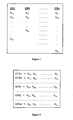
- Each criterion is chosen so that it can be objectively evaluated, for example quantification, and corresponds to a physical parameter taking, on the different cases observed, different values or different instances, such as V11 to V1x for criterion CR1, V21 to V2y for criterion CR2, and Vn1 to Vnz for criterion CRn ( figure 1 ).
- the femur can present different types of shapes and in particular be right or curve of face, and right or curve of profile.
- the curvature can be objectively evaluated by comparison with a predetermined limit radius of curvature, the femur being considered straight or curved depending on whether its radius of curvature is greater than or equal to this limit radius of curvature.
- CR1 criterion of shape of the femur for example either two particular values or instances, namely right or front curve, or right or profile curve, or four particular values or instances, namely right of face and in profile, right of face and profile curve, face curve and right profile and curve of face and profile.
- Another classification criterion for example CR2, can advantageously be constituted by the bone density of the femur, possibly measured by bone densitometry.
- the number "y" is therefore equal to 3 in this example.
- Another classification criterion for example CR3, can advantageously be constituted by the bone alterations affecting the femur.
- Another classification criterion for example CRn, can be constituted by the method of fixing the existing prosthesis, this criterion taking one or the other of two values according to whether this prosthesis is fixed or not by means of a cement.
- the number "z" is therefore equal to 2 in this example.
- Criteria CR1 to CRn having been identified, the preliminary phase of collection continues with an operation consisting in establishing a catalog of the different configurations encountered on cases observed and noted CFG1, CFG2, ..., CFGi, ..., CFGj, ..., CFGk ( figure 2 ).
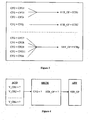
- the preliminary collection phase then consists in selecting, for each configuration, that of the strategies used for real cases belonging to this configuration which has statistically given the best results, mainly in terms of mechanical strength and durability, so this strategy is considered the optimal strategy STR_OP for this configuration ( figure 3 ).
- the computer has a program comprising at least one ACQ input module, a search module RECH and a display module AFF.
Landscapes
- Health & Medical Sciences (AREA)
- Transplantation (AREA)
- Orthopedic Medicine & Surgery (AREA)
- Heart & Thoracic Surgery (AREA)
- Cardiology (AREA)
- Oral & Maxillofacial Surgery (AREA)
- Engineering & Computer Science (AREA)
- Biomedical Technology (AREA)
- Physical Education & Sports Medicine (AREA)
- Vascular Medicine (AREA)
- Life Sciences & Earth Sciences (AREA)
- Animal Behavior & Ethology (AREA)
- General Health & Medical Sciences (AREA)
- Public Health (AREA)
- Veterinary Medicine (AREA)
- Prostheses (AREA)
Description
- L'invention concerne, de façon générale, les techniques d'optimisation de processus concrets à caractère complexe.
- Plus précisément, l'invention concerne un procédé tel que défini dans la revendication 1 pour sélectionner, parmi un ensemble de stratégies utilisables connues, une stratégie de remplacement d'une prothèse fémorale.
- On connaît déjà, par la demande de brevet
US 2005/0038338 , un procédé assisté par ordinateur pour sélectionner, parmi plusieurs prothèses fémorales possibles, la prothèse qui, par ses dimensions ou sa conformation, est la plus adaptée à un patient donné. - En dehors des aspects chirurgicaux, qui sont totalement étrangers à la présente invention, le remplacement de prothèses fémorales fait intervenir des problèmes de mécanique et de résistance des matériaux dont la résolution est complexe.
- On connaît en effet aujourd'hui différents types de prothèses fémorales et un certain nombre de stratégies de remplacement de ces prothèses, plus ou moins adaptées au type de prothèses utilisées.
- Avant tout acte chirurgical, et après le diagnostic, lui aussi totalement étranger à la présente invention, que chaque praticien doit faire sur chaque nouveau cas qui lui est soumis, et au terme duquel il prend la décision de remplacer, ou non, la prothèse défaillante en fonction notamment de l'état de santé du patient concerné, se pose donc la question, en cas de décision de remplacement de la prothèse, du choix de la stratégie à mettre en oeuvre pour ce remplacement, cette stratégie dépendant de considérations purement techniques, en particulier de mécanique et de résistance des matériaux.
- On connaît, par le brevet
US 5 824 085 , un procédé assisté par ordinateur et conforme au préambule de la revendication 1 pour sélectionner, parmi un ensemble de stratégies possibles, une stratégie de remplacement optimale d'une prothèse fémorale, ce procédé reposant sur des considérations géométriques et l'utilisation de références théoriques en résistance des matéiraux. - Néanmoins, le choix optimal d'une telle prothèse est aujourd'hui le plus souvent réalisé par le praticien lui-même, éventuellement sur les conseils d'un prothésiste, de façon tout à fait empirique et donc sans autre garantie d'optimisation que celle que peut laisser espérer l'expérience du praticien ou celle du prothésiste.
- Dans ce contexte, l'invention a pour but de proposer un procédé permettant, par une rationalisation de ce choix et le recours à l'ordinateur, d'identifier la stratégie optimale de remplacement d'une prothèse fémorale.
- L'un des critères de classification est de préférence constitué par la forme du fémur, dont les différentes valeurs ou instances particulières sont constituées par différents types de forme.
- Un deuxième critère de classification est de préférence constitué par les altérations osseuses du fémur, dont les différentes valeurs ou instances particulières sont constituées par différents stades d'altérations.
- Un troisième critère de classification est de préférence constitué par la densité osseuse du fémur, dont les différentes valeurs ou instances particulières sont constituées par différents stades d'ostéoporose.
- Un quatrième critère de classification est de préférence constitué par le mode de fixation de la prothèse existante, ce critère prenant au moins l'une ou l'autre de deux valeurs selon que cette prothèse est, ou non, fixée au moyen d'un ciment.
- Il est par ailleurs décrit un programme d'ordinateur permettant, lorsqu'il est utilisé sur un ordinateur, de sélectionner, parmi un ensemble de stratégies utilisables connues, une stratégie de remplacement optimale d'une prothèse fémorale pour un nouveau cas de remplacement, l'ordinateur comportant une mémoire dans laquelle sont classées plusieurs configurations connues dont chacune est définie par des valeurs ou instances particulières de différents critères pré-établis, et à chacune desquelles est associée une stratégie optimale de remplacement, ce programme comprenant un module de saisie des différentes valeurs ou instances particulières que prennent lesdits critères dans la configuration que constitue le nouveau cas, un module de recherche pour identifier la stratégie optimale associée à la configuration que constitue ce nouveau cas, et un module d'affichage pour afficher un descriptif de ladite stratégie optimale.
- D'autres caractéristiques et avantages de l'invention ressortiront clairement de la description qui en est faite ci-après, à titre indicatif et nullement limitatif, en référence aux dessins annexés, dans lesquels :
- la
figure 1 est une représentation schématique d'une liste de critères de classification; - la
figure 2 est une représentation schématique d'un catalogue de configurations; - la
figure 3 est une représentation schématique d'une table de correspondance associant des configurations à des stratégies optimales; et - la
figure 4 est une représentation schématique des modules d'un programme d'ordinateur conforme à l'invention et de leur fonction. - Par convention d'écriture, les lettres n, x, y, z, i, j, k, q et p représentent des nombres entiers dont la valeur n'est pas spécifiée a priori.
- Comme annoncé précédemment, l'invention concerne un procédé assisté par ordinateur permettant de sélectionner, de façon automatique, une stratégie de remplacement optimale SRT OP d'une prothèse fémorale parmi un ensemble de stratégies utilisables connues STR1 à STRp.
- Ce procédé comprend essentiellement deux phases, à savoir une phase préliminaire de collecte de données schématisée sur les
figures 1 à 3 , et une phase d'exploitation appliquée à chaque nouveau cas de remplacement de prothèse fémorale et schématisée sur lafigure 4 . - La phase préliminaire de collecte comprend tout d'abord une opération consistant à recenser, sur des cas réels de remplacement de prothèses fémorales, divers critères CR1 à CRn de classification de ces cas, ces critères étant établis par observation de ces cas préalablement au remplacement de prothèse auquel ils ont donné lieu.
- Chaque critère est choisi de manière à pouvoir faire l'objet d'une évaluation objective, par exemple d'une quantification, et correspond à un paramètre physique prenant, sur les différents cas observés, des valeurs ou instances particulières différentes, telles que V11 à V1x pour le critère CR1, V21 à V2y pour le critère CR2, et Vn1 à Vnz pour le critère CRn (
figure 1 ). - L'un des critères de classification, par exemple CR1, peut avantageusement être constitué par la forme du fémur.
- Le fémur peut présenter différents types de formes et notamment être droit ou courbe de face, et droit ou courbe de profil.
- La courbure peut être évaluée de façon objective par comparaison avec un rayon de courbure limite prédéterminé, le fémur étant considéré comme droit ou courbe selon que son rayon de courbure est supérieur ou au plus égal à ce rayon de courbure limite.
- On peut donc choisir de donner au critère CR1 de forme du fémur par exemple soit deux valeurs ou instances particulières, à savoir droit ou courbe de face, ou droit ou courbe de profil, soit quatre valeurs ou instances particulières, à savoir droit de face et de profil, droit de face et courbe de profil, courbe de face et droit de profil et courbe de face et de profil.
- En se référant à la notation dans laquelle le critère CR1 prend les valeurs V11 à V1x, le nombre "x" est donc égal à 2 ou 4 dans l'exemple ci-dessus.
- Un autre critère de classification, par exemple CR2, peut avantageusement être constitué par la densité osseuse du fémur, éventuellement mesurée par ostéodensitométrie.
- On peut alors choisir de découper en trois plages les différentes valeurs possibles de densités osseuses susceptibles d'être rencontrées, ces plages correspondant à différents stades d'ostéoporose.
- En se référant à la notation dans laquelle le critère CR2 prend les valeurs V21 à V2y, le nombre "y" est donc égal à 3 dans cet exemple.
- Un autre critère de classification, par exemple CR3, peut avantageusement être constitué par les altérations osseuses affectant le fémur.
- Il est en effet possible de distinguer, dans l'apparition d'altérations osseuses sur le fémur, quatre stades différents, de sorte que le critère CR3 pourra prendre les valeurs V31 à V34.
- Un autre critère de classification, par exemple CRn, peut être constitué par le mode de fixation de la prothèse existante, ce critère prenant l'une ou l'autre de deux valeurs selon que cette prothèse est ou non fixée au moyen d'un ciment.
- En se référant à la notation dans laquelle le critère CRn prend les valeurs Vn1 à Vnz, le nombre "z" est donc égal à 2 dans cet exemple.
- Les critères de classification CR1 à CRn ayant été recensés, la phase préliminaire de collecte se poursuit par une opération consistant à établir un catalogue des différentes configurations rencontrées sur les cas observés et notées CFG1, CFG2, ..., CFGi, ..., CFGj, ..., CFGk (
figure 2 ). - Par "configuration" on entend ici une collection particulière de valeurs ou instances particulières respectives des différents critères CR1 à CRn, deux configurations différentes quelconques se distinguant donc l'une de l'autre par au moins une valeur ou instance particulière de l'un au moins des critères CR1 à CRn.
- Les cas réels observés ayant ainsi été regroupés en configurations, et chaque cas réel ayant été traité par l'une des stratégies de remplacement connues telles que STR1, STR2, ou STRp, la phase préliminaire de collecte consiste alors à sélectionner, pour chaque configuration, celle des stratégies utilisées pour les cas réels appartenant à cette configuration qui a statistiquement donné les meilleurs résultats, essentiellement en termes de tenue mécanique et de durabilité, cette stratégie étant donc considérée comme la stratégie optimale STR_OP pour cette configuration (
figure 3 ). - La dernière opération de la phase préliminaire de collecte consiste à enregistrer dans la mémoire de l'ordinateur un lien entre chaque configuration rencontrée et la stratégie qui s'est avérée, sur la base des cas réels observés, être la stratégie optimale pour cette configuration.
- Par exemple (
figure 3 ), dans les cas où la configuration rencontrée CFG était constituée par la configuration CFG1, ou par la configuration CFG5, ou encore par la configuration CFGi, alors la stratégie optimale STR OP s'est avérée être constituée par la stratégie STR1. - Une fois ces données enregistrées dans la mémoire de l'ordinateur, la phase d'exploitation du procédé peut être mise en oeuvre pour chaque nouveau cas rencontré.
- Pour ce faire, l'ordinateur est doté d'un programme comprenant au moins un module de saisie ACQ, un module de recherche RECH et un module d'affichage AFF.
- Le module de saisie permet à l'utilisateur d'indiquer à l'ordinateur les valeurs ou instances particulières, telles que V_CR1, V_CR2, ... , V_CRn que prennent les différents critères CR1, CR2, ... , CRn pour le nouveau cas rencontré.
- Le module de recherche RECH a d'abord pour fonction de retrouver, dans le catalogue de configurations CFG1 à CFGk (
figure 2 ), la configuration CFG qui est définie par ces valeurs ou instances particulières V_CR1 à V_CRn. - Le module de recherche RECH a par ailleurs pour fonction d'extraire de la mémoire de l'ordinateur, en utilisant les liens qui y ont été enregistrés et qu'illustre la
figure 3 , la stratégie de remplacement optimale STR_OP qui a été associée à cette configuration CFG. - Enfin, le module d'affichage AFF affiche un descriptif identifiant la stratégie optimale STR_OP recommandée pour ce nouveau cas.
Claims (5)
- Procédé assisté par ordinateur pour sélectionner, parmi un ensemble de stratégies utilisables connues (STR1 à STRp), une stratégie de remplacement-optimale (SRT_OP) d'une prothèse fémorale, ce procédé comprenant une phase préliminaire de collecte de données et une phase d'exploitation appliquée à chaque nouveau cas de remplacement de prothèse fémorale, la phase préliminaire comprenant au moins les opérations consistant à : recenser, sur des cas réels de remplacement de prothèses fémorales observés préalablement à ce remplacement, divers critères (CR1 à CRn) de classification de ces cas, chacun de ces critères étant susceptible de faire l'objet d'une évaluation objective, telle qu'une quantification, et d'adopter, d'un cas à l'autre, des valeurs ou instances particulières différentes (V11-V1x; V21-V2y; Vn1-Vnz); établir un catalogue des différentes configurations (CFG1-CFGk) rencontrées sur les cas observés, chaque configuration (CFG1-CFGk) étant définie par une collection particulière de valeurs ou instances particulières respectives des différents critères (CR1 à CRn); identifier, pour chaque configuration rencontrée, une stratégie de remplacement optimale (SRT_OP) définie comme celle des stratégies qui, parmi une pluralité de stratégies de remplacement (STR1-STRp) effectivement utilisées dans les cas réels recensés et répondant à cette configuration, a conduit au moins statistiquement aux résultats les plus satisfaisants; et enregistrer dans la mémoire de l'ordinateur la stratégie de remplacement optimale identifiée pour chaque configuration rencontrée, la phase d'exploitation du procédé étant mise en oeuvre, pour chaque nouveau cas, postérieurement au diagnostic de ce nouveau cas et antérieurement à toute intervention chirurgicale pour ce nouveau cas, et comprenant au moins les opérations consistant à : indiquer à l'ordinateur les valeurs ou instances particulières (V_CR1-V_CRn) que prennent les différents critères pour ce nouveau cas; retrouver, dans le catalogue de configurations (CFG1-CFGk), la configuration définie par ces valeurs ou instances particulières (V_CR1-V_CRn); et extraire de la mémoire de l'ordinateur la stratégie de remplacement optimale (STR_OP) qui a été associée à cette configuration.
- Procédé suivant la revendication 1, caractérisé en ce qu'un des critères de classification est constitué par la forme du fémur, dont les différentes valeurs ou instances particulières sont constituées par différents types de forme.
- Procédé suivant la revendication 1 ou 2, caractérisé en ce qu'un des critères de classification est constitué par les altérations osseuses du fémur, dont les différentes valeurs ou instances particulières sont constituées par différents stades d'altérations.
- Procédé suivant l'une quelconque des revendications précédentes, caractérisé en ce qu'un des critères de classification est constitué par la densité osseuse du fémur, dont les différentes valeurs ou instances particulières sont constituées par différents stades d'ostéoporose.
- Procédé suivant l'une quelconque des revendications précédentes, caractérisé en ce qu'un des critères de classification est constitué par le mode de fixation de la prothèse existante, ce critère prenant au moins l'une ou l'autre de deux valeurs selon que cette prothèse est, ou non, fixée au moyen d'un ciment.
Applications Claiming Priority (1)
| Application Number | Priority Date | Filing Date | Title |
|---|---|---|---|
| FR0506756A FR2888021A1 (fr) | 2005-06-29 | 2005-06-29 | Procede assiste par ordinateur pour selectionner une strategie optimale de remplacement d'une prothese femorale, et programme d'ordinateur associe. |
Publications (3)
| Publication Number | Publication Date |
|---|---|
| EP1762203A2 EP1762203A2 (fr) | 2007-03-14 |
| EP1762203A3 EP1762203A3 (fr) | 2008-07-02 |
| EP1762203B1 true EP1762203B1 (fr) | 2015-10-21 |
Family
ID=35953867
Family Applications (1)
| Application Number | Title | Priority Date | Filing Date |
|---|---|---|---|
| EP06012485.6A Active EP1762203B1 (fr) | 2005-06-29 | 2006-06-17 | Procédé assisté par ordinateur pour sélectionner une stratégie optimale de remplacement d'une prothèse fémorale |
Country Status (2)
| Country | Link |
|---|---|
| EP (1) | EP1762203B1 (fr) |
| FR (1) | FR2888021A1 (fr) |
Families Citing this family (1)
| Publication number | Priority date | Publication date | Assignee | Title |
|---|---|---|---|---|
| US8078440B2 (en) | 2008-09-19 | 2011-12-13 | Smith & Nephew, Inc. | Operatively tuning implants for increased performance |
Family Cites Families (9)
| Publication number | Priority date | Publication date | Assignee | Title |
|---|---|---|---|---|
| US5086401A (en) * | 1990-05-11 | 1992-02-04 | International Business Machines Corporation | Image-directed robotic system for precise robotic surgery including redundant consistency checking |
| US5769092A (en) * | 1996-02-22 | 1998-06-23 | Integrated Surgical Systems, Inc. | Computer-aided system for revision total hip replacement surgery |
| US5824085A (en) | 1996-09-30 | 1998-10-20 | Integrated Surgical Systems, Inc. | System and method for cavity generation for surgical planning and initial placement of a bone prosthesis |
| US6205411B1 (en) * | 1997-02-21 | 2001-03-20 | Carnegie Mellon University | Computer-assisted surgery planner and intra-operative guidance system |
| FR2831794B1 (fr) * | 2001-11-05 | 2004-02-13 | Depuy France | Procede de selection d'elements de prothese de genou et dispositif pour sa mise en oeuvre |
| US6711431B2 (en) * | 2002-02-13 | 2004-03-23 | Kinamed, Inc. | Non-imaging, computer assisted navigation system for hip replacement surgery |
| AU2003245758A1 (en) * | 2002-06-21 | 2004-01-06 | Cedara Software Corp. | Computer assisted system and method for minimal invasive hip, uni knee and total knee replacement |
| EP1417941B1 (fr) * | 2002-11-05 | 2008-02-06 | BrainLAB AG | Procédé et dispositif pour l'enregistrement d'un implant fémoral |
| US20050038338A1 (en) * | 2003-08-11 | 2005-02-17 | Bono James Vincent | Pre-operative planning of implantations |
-
2005
- 2005-06-29 FR FR0506756A patent/FR2888021A1/fr not_active Ceased
-
2006
- 2006-06-17 EP EP06012485.6A patent/EP1762203B1/fr active Active
Also Published As
| Publication number | Publication date |
|---|---|
| FR2888021A1 (fr) | 2007-01-05 |
| EP1762203A3 (fr) | 2008-07-02 |
| EP1762203A2 (fr) | 2007-03-14 |
Similar Documents
| Publication | Publication Date | Title |
|---|---|---|
| Doyon et al. | Discovery of circa 115,000-year-old bone retouchers at Lingjing, Henan, China | |
| Ceyhanli et al. | Comparison of ProTaper, RaCe and Safesider instruments in the induction of dentinal microcracks: a micro‐CT study | |
| Gambarini et al. | Measurement of torque generated during intracanal instrumentation in vivo | |
| Bello et al. | 3‐dimensional microscope analysis of bone and tooth surface modifications: comparisons of fossil specimens and replicas | |
| Hedreen | Lost caps in histological counting methods | |
| KR102237696B1 (ko) | 자궁경부암 세포 영상 자동 분석을 위한 인공지능 컴퓨터 보조 진단 시스템 및 그 제어 방법 | |
| EP2419782B1 (fr) | Realisation d'un verre de lunettes personnalise en fonction d'une perception de flou | |
| FR2798493A1 (fr) | Procede d'identification d'une zone nerveuse alveolaire dans une image de machoire | |
| Du Plessis et al. | Snake fangs: 3D morphological and mechanical analysis by microCT, simulation, and physical compression testing | |
| WO2014117108A1 (fr) | Segmentation et identification d'éléments à contour fermé dans des images en utilisant la théorie des graphes et la transformée quasi-polaire | |
| Álvarez et al. | Two-versus three-dimensional morphometric approaches in macroevolution: insight from the mandible of caviomorph rodents | |
| Zabala et al. | Quantification of dental implant surface wear and topographical modification generated during insertion | |
| Papantonopoulos et al. | Peri‐implantitis: a complex condition with non‐linear characteristics | |
| Markolf et al. | True lemurs… true species-species delimitation using multiple data sources in the brown lemur complex | |
| WO2022168412A1 (fr) | Dispositif de traitement d'image, procédé de traitement d'image et programme | |
| Silcox | The biogeographic origins of Primates and Euprimates: east, west, north, or south of Eden? | |
| Rawson et al. | Brazilian fossils reveal homoplasy in the oldest mammalian jaw joint | |
| FR2888021A1 (fr) | Procede assiste par ordinateur pour selectionner une strategie optimale de remplacement d'une prothese femorale, et programme d'ordinateur associe. | |
| Gernelle et al. | Taxonomy and evolutionary history of peradectids (Metatheria): new data from the early Eocene of France | |
| Hill et al. | A quantitative method for the evaluation of three-dimensional structure of temporal bone pneumatization | |
| Creevey et al. | Identifying single copy orthologs in Metazoa | |
| Lebon et al. | A computer-aided tool to predict dental crown prosthesis surface integrity after milling | |
| Špoutil et al. | Enamel microarchitecture of a tribosphenic molar | |
| Head et al. | Stelladinium bifurcatum n. sp., a distinctive extant thermophilic heterotrophic dinoflagellate cyst from the late Quaternary of the eastern Pacific and east equatorial Atlantic oceans | |
| Kitching et al. | Cladistics |
Legal Events
| Date | Code | Title | Description |
|---|---|---|---|
| PUAI | Public reference made under article 153(3) epc to a published international application that has entered the european phase |
Free format text: ORIGINAL CODE: 0009012 |
|
| AK | Designated contracting states |
Kind code of ref document: A2 Designated state(s): AT BE BG CH CY CZ DE DK EE ES FI FR GB GR HU IE IS IT LI LT LU LV MC NL PL PT RO SE SI SK TR |
|
| AX | Request for extension of the european patent |
Extension state: AL BA HR MK YU |
|
| PUAL | Search report despatched |
Free format text: ORIGINAL CODE: 0009013 |
|
| AK | Designated contracting states |
Kind code of ref document: A3 Designated state(s): AT BE BG CH CY CZ DE DK EE ES FI FR GB GR HU IE IS IT LI LT LU LV MC NL PL PT RO SE SI SK TR |
|
| AX | Request for extension of the european patent |
Extension state: AL BA HR MK RS |
|
| 17P | Request for examination filed |
Effective date: 20080825 |
|
| 17Q | First examination report despatched |
Effective date: 20081014 |
|
| AKX | Designation fees paid |
Designated state(s): AT BE BG CH CY CZ DE DK EE ES FI FR GB GR HU IE IS IT LI LT LU LV MC NL PL PT RO SE SI SK TR |
|
| GRAP | Despatch of communication of intention to grant a patent |
Free format text: ORIGINAL CODE: EPIDOSNIGR1 |
|
| INTG | Intention to grant announced |
Effective date: 20150429 |
|
| GRAS | Grant fee paid |
Free format text: ORIGINAL CODE: EPIDOSNIGR3 |
|
| GRAA | (expected) grant |
Free format text: ORIGINAL CODE: 0009210 |
|
| AK | Designated contracting states |
Kind code of ref document: B1 Designated state(s): AT BE BG CH CY CZ DE DK EE ES FI FR GB GR HU IE IS IT LI LT LU LV MC NL PL PT RO SE SI SK TR |
|
| REG | Reference to a national code |
Ref country code: GB Ref legal event code: FG4D Free format text: NOT ENGLISH Ref country code: NL Ref legal event code: MP Effective date: 20151021 |
|
| REG | Reference to a national code |
Ref country code: CH Ref legal event code: EP |
|
| REG | Reference to a national code |
Ref country code: AT Ref legal event code: REF Ref document number: 756093 Country of ref document: AT Kind code of ref document: T Effective date: 20151115 |
|
| REG | Reference to a national code |
Ref country code: IE Ref legal event code: FG4D Free format text: LANGUAGE OF EP DOCUMENT: FRENCH |
|
| REG | Reference to a national code |
Ref country code: DE Ref legal event code: R096 Ref document number: 602006046984 Country of ref document: DE |
|
| REG | Reference to a national code |
Ref country code: LT Ref legal event code: MG4D |
|
| REG | Reference to a national code |
Ref country code: AT Ref legal event code: MK05 Ref document number: 756093 Country of ref document: AT Kind code of ref document: T Effective date: 20151021 |
|
| PG25 | Lapsed in a contracting state [announced via postgrant information from national office to epo] |
Ref country code: IT Free format text: LAPSE BECAUSE OF FAILURE TO SUBMIT A TRANSLATION OF THE DESCRIPTION OR TO PAY THE FEE WITHIN THE PRESCRIBED TIME-LIMIT Effective date: 20151021 Ref country code: ES Free format text: LAPSE BECAUSE OF FAILURE TO SUBMIT A TRANSLATION OF THE DESCRIPTION OR TO PAY THE FEE WITHIN THE PRESCRIBED TIME-LIMIT Effective date: 20151021 Ref country code: LT Free format text: LAPSE BECAUSE OF FAILURE TO SUBMIT A TRANSLATION OF THE DESCRIPTION OR TO PAY THE FEE WITHIN THE PRESCRIBED TIME-LIMIT Effective date: 20151021 Ref country code: IS Free format text: LAPSE BECAUSE OF FAILURE TO SUBMIT A TRANSLATION OF THE DESCRIPTION OR TO PAY THE FEE WITHIN THE PRESCRIBED TIME-LIMIT Effective date: 20160221 Ref country code: NL Free format text: LAPSE BECAUSE OF FAILURE TO SUBMIT A TRANSLATION OF THE DESCRIPTION OR TO PAY THE FEE WITHIN THE PRESCRIBED TIME-LIMIT Effective date: 20151021 |
|
| PG25 | Lapsed in a contracting state [announced via postgrant information from national office to epo] |
Ref country code: AT Free format text: LAPSE BECAUSE OF FAILURE TO SUBMIT A TRANSLATION OF THE DESCRIPTION OR TO PAY THE FEE WITHIN THE PRESCRIBED TIME-LIMIT Effective date: 20151021 Ref country code: PL Free format text: LAPSE BECAUSE OF FAILURE TO SUBMIT A TRANSLATION OF THE DESCRIPTION OR TO PAY THE FEE WITHIN THE PRESCRIBED TIME-LIMIT Effective date: 20151021 Ref country code: SE Free format text: LAPSE BECAUSE OF FAILURE TO SUBMIT A TRANSLATION OF THE DESCRIPTION OR TO PAY THE FEE WITHIN THE PRESCRIBED TIME-LIMIT Effective date: 20151021 Ref country code: LV Free format text: LAPSE BECAUSE OF FAILURE TO SUBMIT A TRANSLATION OF THE DESCRIPTION OR TO PAY THE FEE WITHIN THE PRESCRIBED TIME-LIMIT Effective date: 20151021 Ref country code: PT Free format text: LAPSE BECAUSE OF FAILURE TO SUBMIT A TRANSLATION OF THE DESCRIPTION OR TO PAY THE FEE WITHIN THE PRESCRIBED TIME-LIMIT Effective date: 20160222 Ref country code: GR Free format text: LAPSE BECAUSE OF FAILURE TO SUBMIT A TRANSLATION OF THE DESCRIPTION OR TO PAY THE FEE WITHIN THE PRESCRIBED TIME-LIMIT Effective date: 20160122 Ref country code: FI Free format text: LAPSE BECAUSE OF FAILURE TO SUBMIT A TRANSLATION OF THE DESCRIPTION OR TO PAY THE FEE WITHIN THE PRESCRIBED TIME-LIMIT Effective date: 20151021 |
|
| REG | Reference to a national code |
Ref country code: DE Ref legal event code: R097 Ref document number: 602006046984 Country of ref document: DE |
|
| PG25 | Lapsed in a contracting state [announced via postgrant information from national office to epo] |
Ref country code: CZ Free format text: LAPSE BECAUSE OF FAILURE TO SUBMIT A TRANSLATION OF THE DESCRIPTION OR TO PAY THE FEE WITHIN THE PRESCRIBED TIME-LIMIT Effective date: 20151021 |
|
| REG | Reference to a national code |
Ref country code: FR Ref legal event code: PLFP Year of fee payment: 11 |
|
| PLBE | No opposition filed within time limit |
Free format text: ORIGINAL CODE: 0009261 |
|
| STAA | Information on the status of an ep patent application or granted ep patent |
Free format text: STATUS: NO OPPOSITION FILED WITHIN TIME LIMIT |
|
| PG25 | Lapsed in a contracting state [announced via postgrant information from national office to epo] |
Ref country code: EE Free format text: LAPSE BECAUSE OF FAILURE TO SUBMIT A TRANSLATION OF THE DESCRIPTION OR TO PAY THE FEE WITHIN THE PRESCRIBED TIME-LIMIT Effective date: 20151021 Ref country code: SK Free format text: LAPSE BECAUSE OF FAILURE TO SUBMIT A TRANSLATION OF THE DESCRIPTION OR TO PAY THE FEE WITHIN THE PRESCRIBED TIME-LIMIT Effective date: 20151021 Ref country code: DK Free format text: LAPSE BECAUSE OF FAILURE TO SUBMIT A TRANSLATION OF THE DESCRIPTION OR TO PAY THE FEE WITHIN THE PRESCRIBED TIME-LIMIT Effective date: 20151021 Ref country code: RO Free format text: LAPSE BECAUSE OF FAILURE TO SUBMIT A TRANSLATION OF THE DESCRIPTION OR TO PAY THE FEE WITHIN THE PRESCRIBED TIME-LIMIT Effective date: 20151021 |
|
| 26N | No opposition filed |
Effective date: 20160722 |
|
| PG25 | Lapsed in a contracting state [announced via postgrant information from national office to epo] |
Ref country code: SI Free format text: LAPSE BECAUSE OF FAILURE TO SUBMIT A TRANSLATION OF THE DESCRIPTION OR TO PAY THE FEE WITHIN THE PRESCRIBED TIME-LIMIT Effective date: 20151021 |
|
| PG25 | Lapsed in a contracting state [announced via postgrant information from national office to epo] |
Ref country code: BE Free format text: LAPSE BECAUSE OF NON-PAYMENT OF DUE FEES Effective date: 20160630 |
|
| PG25 | Lapsed in a contracting state [announced via postgrant information from national office to epo] |
Ref country code: MC Free format text: LAPSE BECAUSE OF FAILURE TO SUBMIT A TRANSLATION OF THE DESCRIPTION OR TO PAY THE FEE WITHIN THE PRESCRIBED TIME-LIMIT Effective date: 20151021 |
|
| REG | Reference to a national code |
Ref country code: CH Ref legal event code: PL |
|
| REG | Reference to a national code |
Ref country code: IE Ref legal event code: MM4A |
|
| PG25 | Lapsed in a contracting state [announced via postgrant information from national office to epo] |
Ref country code: CH Free format text: LAPSE BECAUSE OF NON-PAYMENT OF DUE FEES Effective date: 20160630 Ref country code: LI Free format text: LAPSE BECAUSE OF NON-PAYMENT OF DUE FEES Effective date: 20160630 |
|
| REG | Reference to a national code |
Ref country code: FR Ref legal event code: PLFP Year of fee payment: 12 |
|
| PG25 | Lapsed in a contracting state [announced via postgrant information from national office to epo] |
Ref country code: IE Free format text: LAPSE BECAUSE OF NON-PAYMENT OF DUE FEES Effective date: 20160617 |
|
| REG | Reference to a national code |
Ref country code: FR Ref legal event code: PLFP Year of fee payment: 13 |
|
| PG25 | Lapsed in a contracting state [announced via postgrant information from national office to epo] |
Ref country code: CY Free format text: LAPSE BECAUSE OF FAILURE TO SUBMIT A TRANSLATION OF THE DESCRIPTION OR TO PAY THE FEE WITHIN THE PRESCRIBED TIME-LIMIT Effective date: 20151021 Ref country code: HU Free format text: LAPSE BECAUSE OF FAILURE TO SUBMIT A TRANSLATION OF THE DESCRIPTION OR TO PAY THE FEE WITHIN THE PRESCRIBED TIME-LIMIT; INVALID AB INITIO Effective date: 20060617 |
|
| PG25 | Lapsed in a contracting state [announced via postgrant information from national office to epo] |
Ref country code: TR Free format text: LAPSE BECAUSE OF FAILURE TO SUBMIT A TRANSLATION OF THE DESCRIPTION OR TO PAY THE FEE WITHIN THE PRESCRIBED TIME-LIMIT Effective date: 20151021 Ref country code: LU Free format text: LAPSE BECAUSE OF NON-PAYMENT OF DUE FEES Effective date: 20160617 |
|
| PG25 | Lapsed in a contracting state [announced via postgrant information from national office to epo] |
Ref country code: BG Free format text: LAPSE BECAUSE OF FAILURE TO SUBMIT A TRANSLATION OF THE DESCRIPTION OR TO PAY THE FEE WITHIN THE PRESCRIBED TIME-LIMIT Effective date: 20151021 |
|
| REG | Reference to a national code |
Ref country code: DE Ref legal event code: R082 Ref document number: 602006046984 Country of ref document: DE Representative=s name: VENNER SHIPLEY GERMANY LLP, DE Ref country code: DE Ref legal event code: R082 Ref document number: 602006046984 Country of ref document: DE Representative=s name: VENNER SHIPLEY LLP, DE |
|
| P01 | Opt-out of the competence of the unified patent court (upc) registered |
Effective date: 20230527 |
|
| PGFP | Annual fee paid to national office [announced via postgrant information from national office to epo] |
Ref country code: GB Payment date: 20240507 Year of fee payment: 19 |
|
| PGFP | Annual fee paid to national office [announced via postgrant information from national office to epo] |
Ref country code: DE Payment date: 20240506 Year of fee payment: 19 |
|
| PGFP | Annual fee paid to national office [announced via postgrant information from national office to epo] |
Ref country code: FR Payment date: 20250509 Year of fee payment: 20 |
|
| REG | Reference to a national code |
Ref country code: DE Ref legal event code: R119 Ref document number: 602006046984 Country of ref document: DE |
|
| GBPC | Gb: european patent ceased through non-payment of renewal fee |
Effective date: 20250617 |
|
| PG25 | Lapsed in a contracting state [announced via postgrant information from national office to epo] |
Ref country code: GB Free format text: LAPSE BECAUSE OF NON-PAYMENT OF DUE FEES Effective date: 20250617 |
|
| PG25 | Lapsed in a contracting state [announced via postgrant information from national office to epo] |
Ref country code: DE Free format text: LAPSE BECAUSE OF NON-PAYMENT OF DUE FEES Effective date: 20260101 |