EP1757593A1 - Therapeutic agent for nonviral hepatitis - Google Patents
Therapeutic agent for nonviral hepatitis Download PDFInfo
- Publication number
- EP1757593A1 EP1757593A1 EP05737159A EP05737159A EP1757593A1 EP 1757593 A1 EP1757593 A1 EP 1757593A1 EP 05737159 A EP05737159 A EP 05737159A EP 05737159 A EP05737159 A EP 05737159A EP 1757593 A1 EP1757593 A1 EP 1757593A1
- Authority
- EP
- European Patent Office
- Prior art keywords
- acetamide
- methyl
- piperazin
- phenyl
- ethyl
- Prior art date
- Legal status (The legal status is an assumption and is not a legal conclusion. Google has not performed a legal analysis and makes no representation as to the accuracy of the status listed.)
- Withdrawn
Links
Images

Classifications
-
- A—HUMAN NECESSITIES
- A61—MEDICAL OR VETERINARY SCIENCE; HYGIENE
- A61K—PREPARATIONS FOR MEDICAL, DENTAL OR TOILETRY PURPOSES
- A61K31/00—Medicinal preparations containing organic active ingredients
- A61K31/33—Heterocyclic compounds
- A61K31/395—Heterocyclic compounds having nitrogen as a ring hetero atom, e.g. guanethidine or rifamycins
- A61K31/495—Heterocyclic compounds having nitrogen as a ring hetero atom, e.g. guanethidine or rifamycins having six-membered rings with two or more nitrogen atoms as the only ring heteroatoms, e.g. piperazine or tetrazines
- A61K31/505—Pyrimidines; Hydrogenated pyrimidines, e.g. trimethoprim
- A61K31/506—Pyrimidines; Hydrogenated pyrimidines, e.g. trimethoprim not condensed and containing further heterocyclic rings
-
- A—HUMAN NECESSITIES
- A61—MEDICAL OR VETERINARY SCIENCE; HYGIENE
- A61P—SPECIFIC THERAPEUTIC ACTIVITY OF CHEMICAL COMPOUNDS OR MEDICINAL PREPARATIONS
- A61P1/00—Drugs for disorders of the alimentary tract or the digestive system
- A61P1/16—Drugs for disorders of the alimentary tract or the digestive system for liver or gallbladder disorders, e.g. hepatoprotective agents, cholagogues, litholytics
-
- A—HUMAN NECESSITIES
- A61—MEDICAL OR VETERINARY SCIENCE; HYGIENE
- A61P—SPECIFIC THERAPEUTIC ACTIVITY OF CHEMICAL COMPOUNDS OR MEDICINAL PREPARATIONS
- A61P41/00—Drugs used in surgical methods, e.g. surgery adjuvants for preventing adhesion or for vitreum substitution
-
- A—HUMAN NECESSITIES
- A61—MEDICAL OR VETERINARY SCIENCE; HYGIENE
- A61P—SPECIFIC THERAPEUTIC ACTIVITY OF CHEMICAL COMPOUNDS OR MEDICINAL PREPARATIONS
- A61P43/00—Drugs for specific purposes, not provided for in groups A61P1/00-A61P41/00
-
- C—CHEMISTRY; METALLURGY
- C07—ORGANIC CHEMISTRY
- C07D—HETEROCYCLIC COMPOUNDS
- C07D213/00—Heterocyclic compounds containing six-membered rings, not condensed with other rings, with one nitrogen atom as the only ring hetero atom and three or more double bonds between ring members or between ring members and non-ring members
- C07D213/02—Heterocyclic compounds containing six-membered rings, not condensed with other rings, with one nitrogen atom as the only ring hetero atom and three or more double bonds between ring members or between ring members and non-ring members having three double bonds between ring members or between ring members and non-ring members
- C07D213/04—Heterocyclic compounds containing six-membered rings, not condensed with other rings, with one nitrogen atom as the only ring hetero atom and three or more double bonds between ring members or between ring members and non-ring members having three double bonds between ring members or between ring members and non-ring members having no bond between the ring nitrogen atom and a non-ring member or having only hydrogen or carbon atoms directly attached to the ring nitrogen atom
- C07D213/60—Heterocyclic compounds containing six-membered rings, not condensed with other rings, with one nitrogen atom as the only ring hetero atom and three or more double bonds between ring members or between ring members and non-ring members having three double bonds between ring members or between ring members and non-ring members having no bond between the ring nitrogen atom and a non-ring member or having only hydrogen or carbon atoms directly attached to the ring nitrogen atom with hetero atoms or with carbon atoms having three bonds to hetero atoms with at the most one bond to halogen, e.g. ester or nitrile radicals, directly attached to ring carbon atoms
- C07D213/72—Nitrogen atoms
- C07D213/74—Amino or imino radicals substituted by hydrocarbon or substituted hydrocarbon radicals
-
- C—CHEMISTRY; METALLURGY
- C07—ORGANIC CHEMISTRY
- C07D—HETEROCYCLIC COMPOUNDS
- C07D239/00—Heterocyclic compounds containing 1,3-diazine or hydrogenated 1,3-diazine rings
- C07D239/02—Heterocyclic compounds containing 1,3-diazine or hydrogenated 1,3-diazine rings not condensed with other rings
- C07D239/24—Heterocyclic compounds containing 1,3-diazine or hydrogenated 1,3-diazine rings not condensed with other rings having three or more double bonds between ring members or between ring members and non-ring members
- C07D239/28—Heterocyclic compounds containing 1,3-diazine or hydrogenated 1,3-diazine rings not condensed with other rings having three or more double bonds between ring members or between ring members and non-ring members with hetero atoms or with carbon atoms having three bonds to hetero atoms with at the most one bond to halogen, directly attached to ring carbon atoms
- C07D239/32—One oxygen, sulfur or nitrogen atom
- C07D239/42—One nitrogen atom
-
- C—CHEMISTRY; METALLURGY
- C07—ORGANIC CHEMISTRY
- C07D—HETEROCYCLIC COMPOUNDS
- C07D239/00—Heterocyclic compounds containing 1,3-diazine or hydrogenated 1,3-diazine rings
- C07D239/02—Heterocyclic compounds containing 1,3-diazine or hydrogenated 1,3-diazine rings not condensed with other rings
- C07D239/24—Heterocyclic compounds containing 1,3-diazine or hydrogenated 1,3-diazine rings not condensed with other rings having three or more double bonds between ring members or between ring members and non-ring members
- C07D239/28—Heterocyclic compounds containing 1,3-diazine or hydrogenated 1,3-diazine rings not condensed with other rings having three or more double bonds between ring members or between ring members and non-ring members with hetero atoms or with carbon atoms having three bonds to hetero atoms with at the most one bond to halogen, directly attached to ring carbon atoms
- C07D239/46—Two or more oxygen, sulphur or nitrogen atoms
- C07D239/52—Two oxygen atoms
-
- C—CHEMISTRY; METALLURGY
- C07—ORGANIC CHEMISTRY
- C07D—HETEROCYCLIC COMPOUNDS
- C07D277/00—Heterocyclic compounds containing 1,3-thiazole or hydrogenated 1,3-thiazole rings
- C07D277/02—Heterocyclic compounds containing 1,3-thiazole or hydrogenated 1,3-thiazole rings not condensed with other rings
- C07D277/20—Heterocyclic compounds containing 1,3-thiazole or hydrogenated 1,3-thiazole rings not condensed with other rings having two or three double bonds between ring members or between ring members and non-ring members
- C07D277/32—Heterocyclic compounds containing 1,3-thiazole or hydrogenated 1,3-thiazole rings not condensed with other rings having two or three double bonds between ring members or between ring members and non-ring members with hetero atoms or with carbon atoms having three bonds to hetero atoms with at the most one bond to halogen, e.g. ester or nitrile radicals, directly attached to ring carbon atoms
- C07D277/38—Nitrogen atoms
- C07D277/42—Amino or imino radicals substituted by hydrocarbon or substituted hydrocarbon radicals
Definitions
- the present invention relates to a novel therapeutic drug for non-viral hepatitis.
- TNF- ⁇ tumor necrosis factor alpha
- Patent reference 1 describes that the compounds are effective for various diseases associated with abnormal TNF- ⁇ production or TNF- ⁇ -mediated diseases, and effective for viral hepatitis. However, it has not been described at all that the compound is effective for non-viral hepatitis, or that it has a treatment effect on non-viral hepatitis.
- patent reference 1 WO99/19301 non-patent reference 1: Akriviadis, G.E., et al., Gastroenterology, 119, 1637-1648 (2000) non-patent reference 2: Tilg, H., et al., Journal of Hepatology, 38, 419-425 (2003) non-patent reference 3: Shirin, H., et al., Journal of Hepatology, 29, 60-67 (1998) non-patent reference 4: Gantner, F., et al., Hepatology, 21, 190-198 (1995)
- the present inventors have conducted intensive studies and confirmed that pentoxifylline and anti-TNF- ⁇ , antibody, which have been known to have a prophylactic effect on non-viral hepatitis, do not inhibit progress of concanavalin A-induced hepatitis in mouse by a therapeutic administration thereof.
- a certain kind of piperazine compound inhibits progress of concanavalin A-induced hepatitis in mouse by a therapeutic administration, unlike pentoxifylline and anti-TNF- ⁇ , antibody.
- a novel therapeutic drug for non-viral hepatitis can be provided, which resulted in the completion of the present invention.
- the present invention provides the following.
- R 1 and R 2 are the same or different and each is an amino, a nitro, a hydroxy or a cyano, which is mono- or di-substituted by a group selected from a hydrogen, a halogen, a lower alkyl, a lower alkoxy, an amino, a lower alkyl and a lower acyl;
- R 3 , R 4 and R 5 are the same or different and each is an amino or a hydroxy, which is mono- or di-substituted by a group selected from a hydrogen, a halogen, a lower alkyl, a lower alkoxy, a nitro, an amino, a lower alkyl and a lower acyl;
- R 6 and R 7 are the same or different and each is a hydrogen, a lower alkyl, a lower alkyl substituted by 1 to 3 halogens, an aralkyl, an acyl or a lower acyl substituted by 1 to 3 halogens;
- R 8 and R 9 are the same or different and each is a hydrogen or a lower alkyl
- Y is a group represented by
- R 10 and R 11 are the same or different and each is a hydrogen or a lower alkyl
- R 12 and R 13 are the same or different and each is a hydrogen or a lower alkyl, or R 12 and R 13 in combination form alkylene;
- R 14 and R 15 are the same or different and each is a hydrogen or a lower alkyl
- n is an integer of 0-2, and 0 ⁇ m+n ⁇ 2;
- ring A is a phenyl, a pyrimidyl, a thiazolyl, a pyridyl, a pyradyl or an imidazolyl, or a pharmaceutically acceptable salt thereof.
- R 1 and R 2 are the same or different and each is an amino, a nitro, a hydroxy or a cyano, which is mono- or di-substituted by a group selected from a hydrogen, a halogen, a lower alkyl, a lower alkoxy, an amino, a lower alkyl and a lower acyl;
- R 3 , R 4 and R 5 are the same or different and each is an amino or hydroxy, which is mono- or di-substituted by a group selected from a hydrogen, a halogen, a lower alkyl, a lower alkoxy, a nitro, an amino, a lower alkyl and lower an acyl;
- R 6 and R 7 are the same or different and each is a hydrogen, a lower alkyl, a lower alkyl substituted by 1 to 3 halogens, an aralkyl, an acyl or a lower acyl substituted by 1 to 3 halogens;
- R 8 and R 9 are the same or different and each is a hydrogen or a lower alkyl
- R 10 and R 11 are the same or different and each is a hydrogen or a lower alkyl
- R 12 and R 13 are the same or different and each is a hydrogen or a lower alkyl, or R 12 and R 13 in combination form alkylene;
- R 14 and R 15 are the same or different and each is a hydrogen or a lower alkyl
- n is an integer of 0-2, and 0 ⁇ m+n ⁇ 2;
- ring A is a phenyl, a pyrimidyl, a thiazolyl, a pyridyl, a pyradyl or an imidazolyl, or a pharmaceutically acceptable salt thereof.
- the therapeutic drug of the present invention comprises the aforementioned compound represented by the formula (I) as an active ingredient.
- Each symbol in the aforementioned formula (I) means as follows.
- Halogen for R 1 or R 2 means fluorine, chlorine, bromine or iodine.
- Lower alkyl for R 1 or R 2 means alkyl having 1 to 4 carbon atoms such as methyl, ethyl, propyl, isopropyl, butyl, isobutyl, tertiary butyl and the like.
- Lower alkoxy for R 1 or R 2 means alkoxy having 1 to 4 carbon atoms such as methoxy, ethoxy, propoxy, isopropoxy, butoxy, tertiary butoxy and the like.
- lower alkyl as the substituent means an alkyl having 1 to 4 carbon atoms such as methyl, ethyl, propyl, isopropyl, butyl, isobutyl, tertiary butyl and the like.
- the lower acyl as the substituent means a lower alkanoyl substituted by lower alkanoyl having 1 to 4 carbon atoms, lower alkoxycarbonyl or phenyl group and, for example, formyl, acetyl, propionyl, butyryl, methoxycarbonyl, ethoxycarbonyl, propoxycarbonyl, isopropoxycarbonyl, butoxycarbonyl, isobutoxycarbonyl, tertiary butoxycarbonyl, benzoyl, phenylacetyl and phenylpropionyl can be mentioned.
- the amino mono- or di-substituted by these substituents means methylamino, dimethylamino, ethylamino, diethylamino, propylamino, butylamino, acetylamino, diacetylamino, propionylamino, dipropionylamino, butyrylamino, N-methyl-N-acetylamino, N-ethyl-N-acetylamino, N-methyl-N-propionylamino, methoxycarbonylamino, ethoxycarbonylamino, propoxycarbonylamino, tertiary butoxycarbonylamino, benzoylamino, phenylacetylamino and the like.
- Halogen for R 3 , R 4 or R 5 means fluorine, chlorine, bromine or iodine.
- Lower alkyl for R 3 , R 4 or R 5 means alkyl having 1 to 4 carbon atoms such as methyl, ethyl, propyl, isopropyl, butyl, isobutyl, tertiary butyl and the like.
- Lower alkoxy for R 3 , R 4 or R 5 means alkoxy having 1 to 4 carbon atoms such as methoxy, ethoxy, propoxy, isopropoxy, butoxy, tertiary butoxy and the like.
- lower alkyl as the substituent means alkyl having 1 to 4 carbon atoms such as methyl, ethyl, propyl, isopropyl, butyl, isobutyl, tertiary butyl and the like.
- Lower acyl as the substituent means a lower alkanoyl substituted by lower alkanoyl having 1 to 4 carbon atoms, lower alkoxycarbonyl or phenyl group and, for example, formyl, acetyl, propionyl, butyryl, methoxycarbonyl, ethoxycarbonyl, propoxycarbonyl, isopropoxycarbonyl, butoxycarbonyl, isobutoxycarbonyl, tertiary butoxycarbonyl, benzoyl, phenylacetyl, phenylpropionyl can be mentioned.
- the amino mono- or di-substituted by these substituents means methylamino, dimethylamino, ethylamino, diethylamino, propylamino, butylamino, acetylamino, diacetylamino, propionylamino, dipropionylamino, butyrylamino, N-methyl-N-acetylamino, N-ethyl-N-acetylamino, N-methyl-N-propionylamino, methoxycarbonylamino, ethoxycarbonylamino, propoxycarbonylamino, tertiary butoxycarbonylamino, benzoylamino, phenylacetylamino and the like.
- Lower alkyl for R 6 or R 7 means alkyl having 1 to 4 carbon atoms such as methyl, ethyl, propyl, isopropyl, butyl, isobutyl, tertiary butyl and the like.
- Lower alkyl substituted by 1 to 3 halogens for R 6 or R 7 means lower alkyl having 1 to 4 carbon atoms, which is substituted by halogen (fluorine, chlorine, bromine and the like), and fluoromethyl, trifluoromethyl, chloromethyl-, bromomethyl, 2-fluoroethyl, 2,2,2-trifluoroethyl, 2-chloroethyl, 2-bromoethyl, 3-fluoropropyl, 3-chloropropyl, 4-fluorobutyl, 4-chlorobutyl and the like can be mentioned.
- halogen fluorine, chlorine, bromine and the like
- Aralkyl for R 6 or R 7 means benzyl, 2-phenylethyl, 3-phenylpropyl and the like.
- Acyl for R 6 or R 7 means lower alkanoyl having 1 to 4 carbon atoms or lower alkylsulfonyl having 1 to 4 carbon atoms, which is substituted by alkanoyl having 1 to 5 carbon atoms, lower alkoxycarbonyl having 1 to 4 carbon atoms, phenyl group or pyridyl group, and formyl, acetyl, propionyl, butyryl, valeryl, isovaleryl, trimethylacetyl, methoxycarbonyl, ethoxycarbonyl, propoxycarbonyl, isopropoxycarbonyl, butoxycarbonyl, isobutoxycarbonyl, tertiary butoxycarbonyl, benzoyl, nicotinoyl, isonicotinoyl, picolinoyl, phenylacetyl, phenylpropionyl, methanesulfonyl and the like can be mentioned.
- Lower acyl substituted by 1 to 3 halogens for R 6 or R 7 means lower acyl having 1 to 4 carbon atoms which is substituted by halogen (fluorine, chlorine, bromine and the like) and fluoroacetyl, trifluoroacetyl, chloroacetyl, bromoacetyl, 3-chloropropionyl, 3-bromopropionyl, 4-chlorobutyryl, 4-bromobutyryl and the like can be mentioned.
- halogen fluorine, chlorine, bromine and the like
- Lower alkyl for R 8 or R 9 means alkyl having 1 to 4 carbon atoms and methyl, ethyl, propyl, isopropyl, n-butyl, isobutyl, secondary butyl, tertiary butyl and the like can be mentioned.
- Lower alkyl for R 10 or R 11 means alkyl having 1 to 4 carbon atoms and methyl, ethyl, propyl, isopropyl, butyl and the like can be mentioned.
- Lower alkyl for R 12 or R 13 means alkyl having 1 to 4 carbon atoms and methyl, ethyl, propyl, isopropyl, butyl and the like can be mentioned.
- Alkylene formed by R 12 and R 13 in combination means methylene, ethylene, trimethylene, tetramethylene, pentamethylene and the like.
- Lower alkyl for R 14 or R 15 means alkyl having 1 to 4 carbon atoms such as methyl, ethyl, propyl, isopropyl, butyl and the like.
- Halogen for R 16 or R 17 means fluorine, chlorine, bromine or iodine.
- Lower alkyl for R 16 or R 17 means alkyl having 1 to 4 carbon atoms and methyl, ethyl, propyl, isopropyl, butyl, isobutyl, tertiary butyl and the like can be mentioned.
- Pyrimidyl, thiazolyl, pyridyl, pyradyl or imidazolyl for ring A means 2-pyrimidyl, 4-pyrimidyl, 5-pyrimidyl, 2-thiazolyl, 4-thiazolyl, 5-thiazolyl, 2-pyridyl, 3-pyridyl, 4-pyridyl, 2-pyradyl and 2-imidazolyl and the like.
- salts with inorganic acids such as hydrochloric acid, hydrogen bromide acid, hydrogen iodide acid, sulfuric acid, nitric acid, phosphoric acid and the like
- salts with organic acids such as acetic acid, maleic acid, fumaric acid, benzoic acid, citric acid, succinic acid, tartaric acid, malic acid, mandelic acid, methanesulfonic acid, benzenesulfonic acid, p-toluenesulfonic acid, 10-camphorsulfonic acid and the like, and the like
- the compound of the present invention can be converted to quaternary ammonium salt.
- the compound of the present invention (I) or a pharmaceutically acceptable salt thereof may be a hydrate (1 hydrate, 1/2 hydrate, 1/4 hydrate, 1/5 hydrate, 2 hydrate, 3/2 hydrate, 3/4 hydrate and the like) or a solvate.
- compound (I) of the present invention has asymmetric atom(s)
- at least two kinds of optical isomers are present.
- the present invention encompasses these optical isomers and racemates thereof.
- N-(1-(4-((4-(pyrimidin-2-yl)piperazin-1-yl)methyl)phenyl)cyclopropyl)acetamide and pharmaceutically acceptable salt thereof can be mentioned as preferable ones, wherein N-(1-(4-((4-(pyrimidin-2-yl)piperazin-1-yl)methyl)phenyl)cyclopropyl)acetamide hydrochloride is particularly preferable.
- the above-mentioned compound can be produced according to the method described in patent reference 1 and, as regards the compound of the above-mentioned preferable compound, a specific Synthetic Example can be referred to.
- a therapeutic drug for non-viral hepatitis which comprises the above-mentioned compound as an active ingredient, can be provided.
- non-viral hepatitis for example, acute hepatitis, hepatic encephalopathy, cirrhosis, primary biliary hepatitis, autoimmune hepatitis, alcoholic hepatitis, nonalchoholic steatohepatitis and the like can be mentioned.
- a hepatic function-improving drug or a hepatoprotector for liver transplant patients can be provided.
- the above-mentioned compound When used as a therapeutic drug for non-viral hepatitis and the like, it is prepared as a general pharmaceutical agent.
- the above-mentioned compound can be formulated in the form suitable for oral or parenteral administration such as a pharmaceutical composition obtained by mixing with a pharmaceutically acceptable carrier (excipient, binder, disintegrant, corrigent, flavor, emulsifier, diluent, solubilizer and the like), or tablet, pill, powder, granule, capsule, troche, syrup, liquid, emulsion, suspension, injection (liquid, suspension etc.), suppository, inhalant, percutaneous absorber, eye drop, nose drop, eye ointment and the like.
- a pharmaceutically acceptable carrier excipient, binder, disintegrant, corrigent, flavor, emulsifier, diluent, solubilizer and the like
- tablet tablet
- pill powder, granule, capsule, troche, syrup, liquid, emul
- additive such as sucrose, lactose, cellulose, D-mannitol, maltitol, dextran, starches, agar, alginates, chitins, chitosans, pectins, trungums, gum arabics, gelatins, collagens, casein, albumin, calcium phosphate, sorbitol, glycine, carboxymethylcellulose, polyvinylpyrrolidone, hydroxypropylcellulose, hydroxypropylmethylcellulose, glycerol, polyethylene glycol, sodium hydrogencarbonate, magnesium stearate, talc and the like are used.
- tablet can be formulated into general coated-tablet, for example sugar-coated tablet, enteric-coated tablet, film-coated tablet, or a two-layer tablet or a multi-layer tablet.
- animal and plant oils for production of a semi-solid preparation, animal and plant oils (olive oil, corn oil, castor oil and the like), mineral oil (petrolatum, white petrolatum, solid paraffin and the like), waxes (jojoba wax, carnauba wax, bee wax and the like), partial synthesis or net synthesis glycerine fatty acid ester (lauryl acid, miristic acid, palmitic acid and the like) and the like are used.
- mineral oil petrolatum, white petrolatum, solid paraffin and the like
- waxes jojoba wax, carnauba wax, bee wax and the like
- partial synthesis or net synthesis glycerine fatty acid ester examples include Witepzol (manufactured by Dynamit Nobel Corporation), Pharmasol (manufactured by NOF Corporation) and the like.
- additives such as sodium chloride, glucose, sorbitol, glycerol, olive oil, propylene glycol, ethyl alcohol and the like can be used.
- sterile aqueous solutions such as saline, isotonic solution, oily liquid (e.g., sesame oil, soy bean oil) and the like are used.
- suitable suspending agent such as sodium carboxymethylcellulose, non-ionic surfactant, solubilizer (e.g., benzyl benzoate, benzyl alcohol) and the like may be used in combination.
- aqueous liquid or aqueous solution is used and sterile aqueous solution for injection can be particularly mentioned.
- the liquid for eye drops or nose drops may contain various additives as appropriate, such as buffer (borate buffer, acetate buffer, carbonate buffer and the like for relieving irritation are preferable), isotonicity agent, solubilizer, preservative, thickener, chelating agent, pH adjusting agent (generally, pH is preferably adjusted to about 6-8.5), fragrance and the like.
- the amount of the active ingredient of these preparations is 0.1-100 wt%, suitably 1-50 wt%, of the preparation. While the dose may vary depending on the condition, body weight, age and the like of patients, in the case of oral administration, it is generally 0.01-50 mg/day for an adult, which is preferably administered at once or in several portions.
- test compound used below was N-(1-(4-((4-(pyrimidin-2-yl)piperazin-1-yl)methyl)phenyl)cyclopropyl)acetamide hydrochloride produced according to the method described in patent reference 1, Example 71.
- concanavalin A 20 mg/kg of concanavalin A (Con A, type V, manufactured by Sigma) was intravenously administered to female BALB/c mouse (purchased from Charles River Laboratories JAPAN, INC.). Since plasma alanyltransferase (ALT) shows a peak 8 hr after Con A administration, plasma ALT was measured at this time point using FUJI Drichem 3500.
- the administration time in the therapeutic administration test was always set to 3 hr after Con A injection.
- pentoxifylline 100 mg/kg was intraperitoneally administered 2 hr before or 3 hr after Con A injection
- anti-mouse TNF- ⁇ antibody 250 ⁇ g was intravenously administrated 15 minutes before or 3 hr after Con A injection
- plasma ALT was similarly measured 8 hr later. The results are shown in Fig. 1.
- test compound (10 mg/kg) was intravenously administrated 15 minutes before or 3 hr after Con A injection, and plasma ALT concentration was similarly measured.
- the results are shown in Fig. 2.
- the results are shown in mean ⁇ standard error.
- test compound shows a therapeutic effect in the hepatitis model, unlike pentoxifylline and anti-TNF- ⁇ antibody.
- a novel therapeutic drug for non-viral hepatitis can be provided. While the present invention has been described in detail by referring to a particular embodiment, it will, however, be evident for those of ordinary skill in the art that various modifications and changes may be made without departing from the intention and scope of the present invention.
- This application is based on application No. 2004-131116 filed in Japan on April 27, 2004 , the contents of which are incorporated hereinto by reference.
Landscapes
- Chemical & Material Sciences (AREA)
- Organic Chemistry (AREA)
- Health & Medical Sciences (AREA)
- Veterinary Medicine (AREA)
- Pharmacology & Pharmacy (AREA)
- Public Health (AREA)
- General Health & Medical Sciences (AREA)
- Medicinal Chemistry (AREA)
- Animal Behavior & Ethology (AREA)
- Life Sciences & Earth Sciences (AREA)
- Nuclear Medicine, Radiotherapy & Molecular Imaging (AREA)
- Bioinformatics & Cheminformatics (AREA)
- General Chemical & Material Sciences (AREA)
- Chemical Kinetics & Catalysis (AREA)
- Engineering & Computer Science (AREA)
- Epidemiology (AREA)
- Surgery (AREA)
- Gastroenterology & Hepatology (AREA)
- Pharmaceuticals Containing Other Organic And Inorganic Compounds (AREA)
- Thiazole And Isothizaole Compounds (AREA)
- Pyridine Compounds (AREA)
Abstract
Description
- The present invention relates to a novel therapeutic drug for non-viral hepatitis.
- As protein involved in the expression of biological functions of living organisms such as immune response, inflammatory reaction and the like, many cytokines have been found. Of the cytokines, tumor necrosis factor alpha (hereinafter to be referred to as TNF-α) plays a key role in various autoimmune diseases. It has been reported in recent years that pentoxifylline that inhibits TNF-α (non-patent reference 1) and anti-TNF-α antibody (non-patent reference 2) are effective for severe alcoholic hepatitis in non-viral hepatitis. While such effective pharmaceutical agents have been discovered, a specific drug for severe alcoholic hepatitis has not been found.
- In animal experiments, pentoxifylline and anti-TNF-α antibody have been reported to inhibit the progress of concanavalin A-induced hepatitis in mouse (non-patent reference 3 and non-patent reference 4). The administration condition of these drugs is prophylactic administration of the drug before injection of concanavalin A stimulating agent, and there is no report on the effectiveness of the drug by therapeutic administration after injection of a stimulating agent. In addition, of the conventional non-viral hepatitis therapeutic agents other than these pharmaceutical agents, no pharmaceutical agent showed a clear effect by therapeutic administration to concanavalin A hepatitis model, leaving room for improvement in the pharmacological action. In consideration of the clinical situations where a drug therapy is applied to patients who developed non-viral hepatitis such as alcoholic hepatitis and the like, the development of a pharmaceutical agent having a treatment effect on concanavalin A hepatitis in animal experiments has been demanded.
- As a compound inhibiting TNF-α, piperazine compounds as those shown in patent reference 1 are currently known. Patent reference 1 describes that the compounds are effective for various diseases associated with abnormal TNF-α production or TNF-α-mediated diseases, and effective for viral hepatitis. However, it has not been described at all that the compound is effective for non-viral hepatitis, or that it has a treatment effect on non-viral hepatitis.
patent reference 1:WO99/19301
non-patent reference 1: Akriviadis, G.E., et al., Gastroenterology, 119, 1637-1648 (2000)
non-patent reference 2: Tilg, H., et al., Journal of Hepatology, 38, 419-425 (2003)
non-patent reference 3: Shirin, H., et al., Journal of Hepatology, 29, 60-67 (1998)
non-patent reference 4: Gantner, F., et al., Hepatology, 21, 190-198 (1995) - The present inventors have conducted intensive studies and confirmed that pentoxifylline and anti-TNF-α, antibody, which have been known to have a prophylactic effect on non-viral hepatitis, do not inhibit progress of concanavalin A-induced hepatitis in mouse by a therapeutic administration thereof. On the other hand, they have confirmed that a certain kind of piperazine compound inhibits progress of concanavalin A-induced hepatitis in mouse by a therapeutic administration, unlike pentoxifylline and anti-TNF-α, antibody. As a result, they have found that a novel therapeutic drug for non-viral hepatitis can be provided, which resulted in the completion of the present invention.
- Accordingly, the present invention provides the following.
- (1) A therapeutic drug for non-viral hepatitis comprising, as an active ingredient, a piperazine compound represented by the following formula (I)
-

- wherein R1 and R2 are the same or different and each is an amino, a nitro, a hydroxy or a cyano, which is mono- or di-substituted by a group selected from a hydrogen, a halogen, a lower alkyl, a lower alkoxy, an amino, a lower alkyl and a lower acyl;
- R3, R4 and R5 are the same or different and each is an amino or a hydroxy, which is mono- or di-substituted by a group selected from a hydrogen, a halogen, a lower alkyl, a lower alkoxy, a nitro, an amino, a lower alkyl and a lower acyl;
- R6 and R7 are the same or different and each is a hydrogen, a lower alkyl, a lower alkyl substituted by 1 to 3 halogens, an aralkyl, an acyl or a lower acyl substituted by 1 to 3 halogens;
- R8 and R9 are the same or different and each is a hydrogen or a lower alkyl; and
- Y is a group represented by
-

- wherein R10 and R11 are the same or different and each is a hydrogen or a lower alkyl;
- R12 and R13 are the same or different and each is a hydrogen or a lower alkyl, or R12 and R13 in combination form alkylene;
- R14 and R15 are the same or different and each is a hydrogen or a lower alkyl;
- m is an integer of 0-2, n is an integer of 0-2, and 0≤m+n≤2; and
- ring A is a phenyl, a pyrimidyl, a thiazolyl, a pyridyl, a pyradyl or an imidazolyl,
or a pharmaceutically acceptable salt thereof. - (2) The therapeutic drug of the above-mentioned (1), wherein the active ingredient is a compound of the formula (I) wherein R1 and R2 are each a hydrogen, R3, R4 and R5 are the same or different and each is a halogen or a lower alkoxy, R6 and R7 are each an acyl, R8 and R9 are the same or different and each is a hydrogen or a lower alkyl, R10 and R11 are each a hydrogen, R14 and R15 are each a hydrogen, ring A is a phenyl, a pyrimidyl, a thiazolyl or a pyridyl, or a pharmaceutically acceptable salt thereof.
-
- (3) The therapeutic drug of the above-mentioned (1), wherein the active ingredient is the following compound:
- N-(4-((4-phenylpiperazin-1-yl)methyl)phenylmethyl)acetamide;
- N-(4-((4-(4-fluorophenyl)piperazin-1-yl)methyl)phenylmethyl)acetamide;
- N-(4-((4-(2-fluorophenyl)piperazin-1-yl)methyl)phenylmethyl)acetamide;
- N-(3-(4-((4-phenylpiperazin-1-yl)methyl)phenyl)propyl)acetamide;
- N-(4-((4-(2,4-difluorophenyl)piperazin-1-yl)methyl)phenylmethyl)acetamide;
- N-(4-(1-(4-(4-fluorophenyl)piperazin-1-yl)ethyl)phenylmethyl)acetamide;
- N-(4-((4-(pyridin-2-yl)piperazin-1-yl)methyl)phenylmethyl)acetamide;
- N-(4-((4-(pyrimidin-2-yl)piperazin-1-yl)methyl)phenylmethyl)acetamide;
- N-(4-((4-(pyridin-3-yl)piperazin-1-yl)methyl)phenylmethyl)acetamide;
- N-(4-((4-(thiazol-2-yl)piperazin-1-yl) methyl) phenylmethyl) acetamide;
- N-(1-methyl-1-(4-((4-(4-fluorophenyl)piperazin-1-yl) methyl) phenyl) ethyl) acetamide;
- N-(1-(4-((4-(2,-4-difluorophenyl)piperaz-in-1-yl)methyl)phenyl)ethyl)acetamide;
- N-(1-(4-((4-(2,4-difluorophenyl)piperazin-1-yl)methyl)phenyl)propyl)acetamide;
- N-(1-(4-((4-(4-fluorophenyl)piperazin-1-yl)methyl)phenyl)ethyl)acetamide;
- N-(1-(4-((4-phenylpiperazin-1-yl)methyl)phenyl)cyclopropyl)acetamide;
- N-(1-(4-((4-(4-fluorophenyl)piperazin-1-yl)methyl)phenyl)cyclopropyl)acetamide;
- N-(1-(4-((4-(2,4-difluorophenyl)piperazin-1-yl)methyl)phenyl)cyclopropyl)acetamide;
- N-(4-((4-(6-fluoropyridin-2-yl)piperazin-1-yl)methyl)phenylmethyl)acetamide;
- N-(4-((4-(pyrimidin-2-yl)piperazin-1-yl)methyl)phenylmethyl)acetamide;
- N-(1-(4-(1-(4-phenylpiperazin-1-yl)ethyl)phenyl)-1-methylethyl)acetamide;
- N-(1-(4-(1-(4-(pyrimidin-2-yl)piperazin-1-yl)ethyl)phenyl)cyclopropyl)acetamide;
- N-(1-(4-((4-(pyrimidin-2-yl)piperazin-1-yl)methyl)phenyl)cyclopropyl)acetamide;
- N-(1-(4-((4-(pyrimidin-2-yl)piperazin-1-yl)methyl)phenyl)ethyl)acetamide;
- N-(4-((4-(4,6-dimethoxypyrimidin-2-yl)piperazin-1-yl) methyl) phenylmethyl) acetamide;
- N-(1-methyl-1-(4-((4-(pyrimidin-2-yl)piperazin-1-yl)methyl)phenyl)ethyl)acetamide;
- N-(1-methyl-1-(4-((4-(thiazol-2-yl)piperazin-1-yl)methyl)phenyl)ethyl)acetamide;
- N-(1-(4-((4-(thiazol-2-yl)-piperazin-1-yl)methyl)phenyl)cyclopropyl)acetamide;
- N-(1-(4-((4-(thiazol-2-yl)piperazin-1-yl)methyl)phenyl)ethyl)acetamide;
- N-(1-(4-((4-(6-fluoropyridin-2-yl)piperazin-1-yl)methyl)phenyl)-1-methylethyl)-acetamide;
- N-(1-(4-((4-(6-fluoropyridin-2-yl)piperazin-1-yl)methyl)phenyl)ethyl)acetamide;
- N-(1-(4-((4-(pyridin-2-yl)piperazin-1-yl)methyl)phenyl)ethyl)acetamide;
- N-(1-methyl-1-(4-((4-(pyridin-2-yl)piperazin-1-yl)methyl)phenyl)ethyl)acetamide;
- N-(1-(4-(1-(4-(pyridin-2-yl)piperazin-1-yl)ethyl)phenyl)-1-methylethyl)acetamide;
- N-(1-(4-((4-(pyridin-2-yl)piperazin-1-yl)methyl)phenyl)cyclopropyl)acetamide;
- N-(1-(4-((4-(6-fluoropyridin-2-yl)piperazin-1-yl)methyl)phenyl)cyclopropyl)acetamide;
- (S)-N-(1-(4-((4-(4-fluorophenyl)piperazin-1-yl)methyl)phenyl)ethyl)acetamide;
- (R)-N-(1-(4-((4-(4-fluorophenyl)piperazin-1-yl)methyl)phenyl)ethyl)acetamide;
- N-(4-(1-(4-(pyridin-2-yl)piperazin-1-yl)ethyl)phenylmethyl)acetamide;
- N-(1-(4-(1-(4-(6-fluoropyridin-2-yl)piperazin-1-yl)ethyl)phenyl)-1-methylethyl)acetamide; or
- N-(1-(4-(1-(4-(6-fluoropyridin-2-yl)piperazin-1-yl)ethyl)phenyl)methyl)acetamide,
- (4) The therapeutic drug of the above-mentioned (1), wherein the active ingredient is N-(1-(4-((4-(pyrimidin-2-yl)piperazin-1-yl)methyl)phenyl)cyclopropyl)acetamide, or a pharmaceutically acceptable salt thereof.
- (5) The therapeutic drug of the above-mentioned (1), wherein the active ingredient is N-(1-(4-((4-(pyrimidin-2-yl)piperazin-1-yl)methyl)phenyl)cyclopropyl)acetamide hydrochloride.
- (6) The therapeutic drug of any of the above-mentioned (1) to (5), wherein the non-viral hepatitis is selected from acute hepatitis, hepatic encephalopathy, cirrhosis, primary biliary hepatitis, autoimmune hepatitis, alcoholic hepatitis and nonalchoholic steatohepatitis.
- (7) A hepatic function-improving drug or hepatoprotector for liver transplant patient, which comprises, as an active ingredient, a piperazine compound represented by the following formula (I)
-
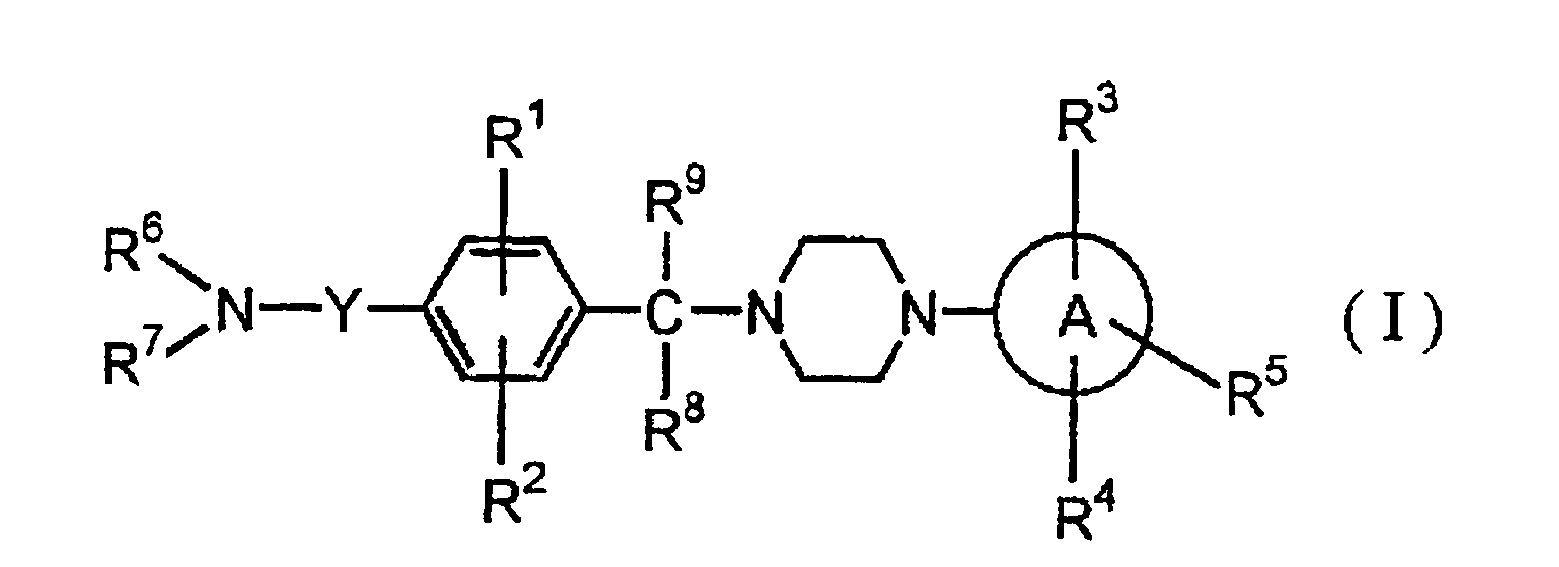
- wherein R1 and R2 are the same or different and each is an amino, a nitro, a hydroxy or a cyano, which is mono- or di-substituted by a group selected from a hydrogen, a halogen, a lower alkyl, a lower alkoxy, an amino, a lower alkyl and a lower acyl;
- R3, R4 and R5 are the same or different and each is an amino or hydroxy, which is mono- or di-substituted by a group selected from a hydrogen, a halogen, a lower alkyl, a lower alkoxy, a nitro, an amino, a lower alkyl and lower an acyl;
- R6 and R7 are the same or different and each is a hydrogen, a lower alkyl, a lower alkyl substituted by 1 to 3 halogens, an aralkyl, an acyl or a lower acyl substituted by 1 to 3 halogens;
- R8 and R9 are the same or different and each is a hydrogen or a lower alkyl;
- Y is
-

- wherein R10 and R11 are the same or different and each is a hydrogen or a lower alkyl;
- R12 and R13 are the same or different and each is a hydrogen or a lower alkyl, or R12 and R13 in combination form alkylene;
- R14 and R15 are the same or different and each is a hydrogen or a lower alkyl;
- m is an integer of 0-2, n is an integer of 0-2, and 0≤m+n≤2; and
- ring A is a phenyl, a pyrimidyl, a thiazolyl, a pyridyl, a pyradyl or an imidazolyl,
or a pharmaceutically acceptable salt thereof. - (8) The hepatic function-improving drug or hepatoprotector of the above-mentioned (7), wherein the active ingredient is a compound of the formula (I), wherein R1 and R2 are each a hydrogen, R3, R4 and R5 are the same or different and each is a halogen or a lower alkoxy, R6 and R7 are each an acyl, R8 and R9 are the same or different and each is a hydrogen or a lower alkyl, R10 and R11 are each a hydrogen, R14 and R15 are each a hydrogen, ring A is a phenyl, a pyrimidyl, a thiazolyl or a pyridyl, or a pharmaceutically acceptable salt thereof.
- (9) The hepatic function-improving drug or hepatoprotector of the above-mentioned (7), wherein the active ingredient is the following compound:
- N-(4-((4-phenylpiperazin-1-yl)-mathyl)phenylmethyl)acetamide;
- N-(4-((4-(4-fluorophenyl)piperazin-1-yl)methyl)phenylmethyl)acetamide;
- N-(4-((4-(2-fluorophenyl)piperazin-1-yl)methyl)phenylmethyl)acetamide;
- N-(3-(4-((4-phenylpiperazin-1-yl) methyl) phenyl) propyl) acetamide;
- N-(4-((4-(2,4-difluorophenyl)piperazin-1-yl)methyl)phenylmethyl)acetamide;
- N-(4-(1-(4-(4-fluorophenyl)piperazin-1-yl)ethyl)phenylmethyl)acetamide;
- N-(4-((4-(pyridin-2-yl)piperazin-1-yl)methyl)phenylmethyl)acetamide;
- N-(4-((4-(pyrimidin-2-yl)piperazin-1-yl)methyl)phenylmethyl)acetamide;
- N-(4-((4-(pyridin-3-yl)piperazin-1-yl)methyl)phenylmethyl)acetamide;
- N-(4-((4-(thiazol-2-yl)piperazin-1-yl)methyl)phenylmethyl)acetamide;
- N-(1-methyl-1-(4-((4-(4-fluorophenyl)piperazin-1-yl)methyl)phenyl)ethyl)acetamide;
- N-(1-(4-((4-(2,4-difluorophenyl)piperazin-1-yl)methyl)phenyl)ethyl)acetamide;
- N-(1-(4-((4-(2,4-difluorophenyl)piperazin-1-yl)methyl)phenyl)propyl)acetamide;
- N-(1-(4-((4-(4-fluorophenyl)piperazin-1-yl)methyl)phenyl)ethyl)acetamide;
- N-(1-(4-((4-phenylpiperazin-1-yl)methyl)phenyl)cyclopropyl)acetamide;
- N-(1-(4-((4-(4-fluorophenyl)piperazin-1-yl)methyl)phenyl)cyclopropyl)acetamide;
- N-(1-(4-((4-(2,4-difluorophenyl)piperazin-1-yl)methyl)phenyl)cyclopropyl)acetamide;
- N-(4-((4-(6-fluoropyridin-2-yl)piperazin-1-yl)methyl)phenylmethyl)acetamide;
- N-(4-((4-(pyrimidin-2-yl)piperazin-1-yl)methyl)phenylmethyl)acetamide;
- N-(1-(4-(1-(4-phenylpiperazin-1-yl)ethyl)phenyl)-1-methylethyl)acetamide;
- N-(1-(4-(1-(4-(pyrimidin-2-yl)piperazin-1-yl)ethyl)phenyl)cyclopropyl)acetamide;
- N-(1-(4-((4-(pyrimidin-2-yl)piperazin-1-yl)methyl)phenyl)cyclopropyl)acetamide;
- N-(1-(4-((4-(pyrimidin-2-yl)piperazin-1-yl)methyl)phenyl)ethyl)acetamide;
- N-(4-((4-(4,6-dimethoxypyrimidin-2-yl)piperazin-1-yl)methyl)phenylmethyl)acetamide;
- N-(1-methyl-1-(4-((4-(pyrimidin-2-yl)piperazin-1-yl)methyl)phenyl)ethyl)acetamide;
- N-(1-methyl-1-(4-((4-(thiazol-2-yl)piperazin-1-yl)methyl)phenyl)ethyl)acetamide;
- N-(1-(4-((4-(thiazol-2-yl)piperazin-1-yl)methyl)phenyl)cyclopropyl)acetamide;
- N-(1-(4-((4-(thiazol-2-yl)piperazin-1-yl)methyl)phenyl)ethyl)acetamide;
- N-(1-(4-((4-(6-fluoropyridin-2-yl)piperazin-1-yl)methyl)phenyl)-1-methylethyl)acetamide;
- N-(1-(4-((4-(6-fluoropyridin-2-yl)piperazin-1-yl)methyl)phenyl)ethyl)acetamide;
- N-(1-(4-((4-(pyridin-2-yl)piperazin-1-yl)methyl)phenyl)ethyl)acetamide;
- N-(1-methyl-1-(4-((4-(pyridin-2-yl)piperazin-1-yl)methyl)phenyl)ethyl)acetamide;
- N-(1-(4-(1-(4-(pyridin-2-yl)piperazin-1-yl)ethyl)phenyl)-1-methylethyl)acetamide;
- N-(1-(4-((4-(pyridin-2-yl)piperazin-1-yl)methyl)phenyl)cyclopropyl)acetamide;
- N-(1-(4-((4-(6-fluoropyridin-2-yl)piperazin-1-yl)methyl)phenyl)cyclopropyl)acetamide;
- (S)-N-(1-(4-((4-(4-fluorophenyl)piperazin-1-yl)methyl)phenyl)ethyl)acetamide;
- (R)-N-(1-(4-((4-(4-fluorophenyl)piperazin-1-yl)methyl)phenyl)ethyl)acetamide;
- N-(4-(1-(4-(pyridin-2-yl)piperazin-1-yl)ethyl)phenylmethyl)acetamide;
- N-(1-(4-(1-(4-(6-fluoropyridin-2-yl)piperazin-1-yl)ethyl)phenyl)-1-methylethyl)acetamide; or
- N-(1-(4-(1-(4-(6-fluoropyridin-2-yl)piperazin-1-yl)ethyl)phenyl)methyl)acetamide,
- (10) The hepatic function-improving drug or hepatoprotector of the above-mentioned (7), wherein the active ingredient is N-(1-(4-((4-(pyrimidin-2-yl)piperazin-1-yl)methyl)phenyl)cyclopropyl)acetamide or a pharmaceutically acceptable salt thereof.
- (11) The hepatic function-improving drug or hepatoprotector of the above-mentioned (7), wherein the active ingredient is N-(1-(4-((4-(pyrimidin-2-yl)piperazin-1-yl)methyl)phenyl)cyclopropyl)acetamide hydrochloride.
-
- Fig. 1 shows the effect of pentoxifylline (Fig. 1-A) and the effect of anti-TNF-α antibody (Fig. 1-B), in hepatitis model of Example 1.
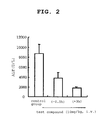
- Fig. 2 shows the effect of the test compound in hepatitis model of Example 1.
- The present invention is explained in more detail in the following.
- The therapeutic drug of the present invention comprises the aforementioned compound represented by the formula (I) as an active ingredient. Each symbol in the aforementioned formula (I) means as follows.
- Halogen for R1 or R2 means fluorine, chlorine, bromine or iodine.
- Lower alkyl for R1 or R2 means alkyl having 1 to 4 carbon atoms such as methyl, ethyl, propyl, isopropyl, butyl, isobutyl, tertiary butyl and the like.
- Lower alkoxy for R1 or R2 means alkoxy having 1 to 4 carbon atoms such as methoxy, ethoxy, propoxy, isopropoxy, butoxy, tertiary butoxy and the like.
- In the amino for R1 or R2, which is mono- or di-substituted by a group selected from lower alkyl and lower acyl, lower alkyl as the substituent means an alkyl having 1 to 4 carbon atoms such as methyl, ethyl, propyl, isopropyl, butyl, isobutyl, tertiary butyl and the like. The lower acyl as the substituent means a lower alkanoyl substituted by lower alkanoyl having 1 to 4 carbon atoms, lower alkoxycarbonyl or phenyl group and, for example, formyl, acetyl, propionyl, butyryl, methoxycarbonyl, ethoxycarbonyl, propoxycarbonyl, isopropoxycarbonyl, butoxycarbonyl, isobutoxycarbonyl, tertiary butoxycarbonyl, benzoyl, phenylacetyl and phenylpropionyl can be mentioned. The amino mono- or di-substituted by these substituents means methylamino, dimethylamino, ethylamino, diethylamino, propylamino, butylamino, acetylamino, diacetylamino, propionylamino, dipropionylamino, butyrylamino, N-methyl-N-acetylamino, N-ethyl-N-acetylamino, N-methyl-N-propionylamino, methoxycarbonylamino, ethoxycarbonylamino, propoxycarbonylamino, tertiary butoxycarbonylamino, benzoylamino, phenylacetylamino and the like.
- Halogen for R3, R4 or R5 means fluorine, chlorine, bromine or iodine.
- Lower alkyl for R3, R4 or R5 means alkyl having 1 to 4 carbon atoms such as methyl, ethyl, propyl, isopropyl, butyl, isobutyl, tertiary butyl and the like.
- Lower alkoxy for R3, R4 or R5 means alkoxy having 1 to 4 carbon atoms such as methoxy, ethoxy, propoxy, isopropoxy, butoxy, tertiary butoxy and the like.
- In the amino for R3, R4 or R5, which is mono- or di-substituted by a group selected from lower alkyl and lower acyl, lower alkyl as the substituent means alkyl having 1 to 4 carbon atoms such as methyl, ethyl, propyl, isopropyl, butyl, isobutyl, tertiary butyl and the like. Lower acyl as the substituent means a lower alkanoyl substituted by lower alkanoyl having 1 to 4 carbon atoms, lower alkoxycarbonyl or phenyl group and, for example, formyl, acetyl, propionyl, butyryl, methoxycarbonyl, ethoxycarbonyl, propoxycarbonyl, isopropoxycarbonyl, butoxycarbonyl, isobutoxycarbonyl, tertiary butoxycarbonyl, benzoyl, phenylacetyl, phenylpropionyl can be mentioned. The amino mono- or di-substituted by these substituents means methylamino, dimethylamino, ethylamino, diethylamino, propylamino, butylamino, acetylamino, diacetylamino, propionylamino, dipropionylamino, butyrylamino, N-methyl-N-acetylamino, N-ethyl-N-acetylamino, N-methyl-N-propionylamino, methoxycarbonylamino, ethoxycarbonylamino, propoxycarbonylamino, tertiary butoxycarbonylamino, benzoylamino, phenylacetylamino and the like.
- Lower alkyl for R6 or R7 means alkyl having 1 to 4 carbon atoms such as methyl, ethyl, propyl, isopropyl, butyl, isobutyl, tertiary butyl and the like.
- Lower alkyl substituted by 1 to 3 halogens for R6 or R7 means lower alkyl having 1 to 4 carbon atoms, which is substituted by halogen (fluorine, chlorine, bromine and the like), and fluoromethyl, trifluoromethyl, chloromethyl-, bromomethyl, 2-fluoroethyl, 2,2,2-trifluoroethyl, 2-chloroethyl, 2-bromoethyl, 3-fluoropropyl, 3-chloropropyl, 4-fluorobutyl, 4-chlorobutyl and the like can be mentioned.
- Aralkyl for R6 or R7 means benzyl, 2-phenylethyl, 3-phenylpropyl and the like.
- Acyl for R6 or R7 means lower alkanoyl having 1 to 4 carbon atoms or lower alkylsulfonyl having 1 to 4 carbon atoms, which is substituted by alkanoyl having 1 to 5 carbon atoms, lower alkoxycarbonyl having 1 to 4 carbon atoms, phenyl group or pyridyl group, and formyl, acetyl, propionyl, butyryl, valeryl, isovaleryl, trimethylacetyl, methoxycarbonyl, ethoxycarbonyl, propoxycarbonyl, isopropoxycarbonyl, butoxycarbonyl, isobutoxycarbonyl, tertiary butoxycarbonyl, benzoyl, nicotinoyl, isonicotinoyl, picolinoyl, phenylacetyl, phenylpropionyl, methanesulfonyl and the like can be mentioned.
- Lower acyl substituted by 1 to 3 halogens for R6 or R7 means lower acyl having 1 to 4 carbon atoms which is substituted by halogen (fluorine, chlorine, bromine and the like) and fluoroacetyl, trifluoroacetyl, chloroacetyl, bromoacetyl, 3-chloropropionyl, 3-bromopropionyl, 4-chlorobutyryl, 4-bromobutyryl and the like can be mentioned.
- Lower alkyl for R8 or R9 means alkyl having 1 to 4 carbon atoms and methyl, ethyl, propyl, isopropyl, n-butyl, isobutyl, secondary butyl, tertiary butyl and the like can be mentioned.
- Lower alkyl for R10 or R11 means alkyl having 1 to 4 carbon atoms and methyl, ethyl, propyl, isopropyl, butyl and the like can be mentioned.
- Lower alkyl for R12 or R13 means alkyl having 1 to 4 carbon atoms and methyl, ethyl, propyl, isopropyl, butyl and the like can be mentioned.
- Alkylene formed by R12 and R13 in combination means methylene, ethylene, trimethylene, tetramethylene, pentamethylene and the like.
- Lower alkyl for R14 or R15 means alkyl having 1 to 4 carbon atoms such as methyl, ethyl, propyl, isopropyl, butyl and the like.
- Halogen for R16 or R17 means fluorine, chlorine, bromine or iodine.
- Lower alkyl for R16 or R17 means alkyl having 1 to 4 carbon atoms and methyl, ethyl, propyl, isopropyl, butyl, isobutyl, tertiary butyl and the like can be mentioned.
- Pyrimidyl, thiazolyl, pyridyl, pyradyl or imidazolyl for ring A means 2-pyrimidyl, 4-pyrimidyl, 5-pyrimidyl, 2-thiazolyl, 4-thiazolyl, 5-thiazolyl, 2-pyridyl, 3-pyridyl, 4-pyridyl, 2-pyradyl and 2-imidazolyl and the like.
- Particularly, a compound of the formula (I) wherein R1, and R2 are each a hydrogen, R3, R4, and R5 are the same or different and each is a halogen or a lower alkoxy, R6 and R7 are each an acyl, R8 and R9 are the same or different and each is a hydrogen or a lower alkyl, R10 and R11 are each a hydrogen, R14 and R15 are each a hydrogen, and ring A is phenyl, pyrimidyl, thiazolyl or pyridyl, or pharmaceutically acceptable salt thereof is preferable.
- As a pharmaceutically acceptable salt of the compound of the present invention (I), salts with inorganic acids such as hydrochloric acid, hydrogen bromide acid, hydrogen iodide acid, sulfuric acid, nitric acid, phosphoric acid and the like, salts with organic acids such as acetic acid, maleic acid, fumaric acid, benzoic acid, citric acid, succinic acid, tartaric acid, malic acid, mandelic acid, methanesulfonic acid, benzenesulfonic acid, p-toluenesulfonic acid, 10-camphorsulfonic acid and the like, and the like can be mentioned. In addition, the compound of the present invention can be converted to quaternary ammonium salt. The compound of the present invention (I) or a pharmaceutically acceptable salt thereof may be a hydrate (1 hydrate, 1/2 hydrate, 1/4 hydrate, 1/5 hydrate, 2 hydrate, 3/2 hydrate, 3/4 hydrate and the like) or a solvate. In addition, when compound (I) of the present invention has asymmetric atom(s), at least two kinds of optical isomers are present. The present invention encompasses these optical isomers and racemates thereof.
- As preferable concrete compound, the compounds described in (3) and (9) within the gist of the above-mentioned present invention and pharmaceutically acceptable salts thereof can be mentioned.
- Particularly, N-(1-(4-((4-(pyrimidin-2-yl)piperazin-1-yl)methyl)phenyl)cyclopropyl)acetamide and pharmaceutically acceptable salt thereof can be mentioned as preferable ones, wherein N-(1-(4-((4-(pyrimidin-2-yl)piperazin-1-yl)methyl)phenyl)cyclopropyl)acetamide hydrochloride is particularly preferable.
- The above-mentioned compound can be produced according to the method described in patent reference 1 and, as regards the compound of the above-mentioned preferable compound, a specific Synthetic Example can be referred to.
- According to the present invention, a therapeutic drug for non-viral hepatitis, which comprises the above-mentioned compound as an active ingredient, can be provided. As non-viral hepatitis, for example, acute hepatitis, hepatic encephalopathy, cirrhosis, primary biliary hepatitis, autoimmune hepatitis, alcoholic hepatitis, nonalchoholic steatohepatitis and the like can be mentioned. According to the present invention, moreover, a hepatic function-improving drug or a hepatoprotector for liver transplant patients can be provided.
- When the above-mentioned compound is used as a therapeutic drug for non-viral hepatitis and the like, it is prepared as a general pharmaceutical agent. For example, the above-mentioned compound can be formulated in the form suitable for oral or parenteral administration such as a pharmaceutical composition obtained by mixing with a pharmaceutically acceptable carrier (excipient, binder, disintegrant, corrigent, flavor, emulsifier, diluent, solubilizer and the like), or tablet, pill, powder, granule, capsule, troche, syrup, liquid, emulsion, suspension, injection (liquid, suspension etc.), suppository, inhalant, percutaneous absorber, eye drop, nose drop, eye ointment and the like.
- For production of a solid preparation, additive such as sucrose, lactose, cellulose, D-mannitol, maltitol, dextran, starches, agar, alginates, chitins, chitosans, pectins, trungums, gum arabics, gelatins, collagens, casein, albumin, calcium phosphate, sorbitol, glycine, carboxymethylcellulose, polyvinylpyrrolidone, hydroxypropylcellulose, hydroxypropylmethylcellulose, glycerol, polyethylene glycol, sodium hydrogencarbonate, magnesium stearate, talc and the like are used. Moreover, where necessary, tablet can be formulated into general coated-tablet, for example sugar-coated tablet, enteric-coated tablet, film-coated tablet, or a two-layer tablet or a multi-layer tablet.
- For production of a semi-solid preparation, animal and plant oils (olive oil, corn oil, castor oil and the like), mineral oil (petrolatum, white petrolatum, solid paraffin and the like), waxes (jojoba wax, carnauba wax, bee wax and the like), partial synthesis or net synthesis glycerine fatty acid ester (lauryl acid, miristic acid, palmitic acid and the like) and the like are used. Examples of commercially available products thereof include Witepzol (manufactured by Dynamit Nobel Corporation), Pharmasol (manufactured by NOF Corporation) and the like.
- For production of a liquid preparation, additives such as sodium chloride, glucose, sorbitol, glycerol, olive oil, propylene glycol, ethyl alcohol and the like can be used. Particularly, for production of an injection, sterile aqueous solutions such as saline, isotonic solution, oily liquid (e.g., sesame oil, soy bean oil) and the like are used. Where necessary, moreover, suitable suspending agent such as sodium carboxymethylcellulose, non-ionic surfactant, solubilizer (e.g., benzyl benzoate, benzyl alcohol) and the like may be used in combination.
- For production of eye drops or nose drops, moreover, aqueous liquid or aqueous solution is used and sterile aqueous solution for injection can be particularly mentioned. The liquid for eye drops or nose drops may contain various additives as appropriate, such as buffer (borate buffer, acetate buffer, carbonate buffer and the like for relieving irritation are preferable), isotonicity agent, solubilizer, preservative, thickener, chelating agent, pH adjusting agent (generally, pH is preferably adjusted to about 6-8.5), fragrance and the like.
- The amount of the active ingredient of these preparations is 0.1-100 wt%, suitably 1-50 wt%, of the preparation. While the dose may vary depending on the condition, body weight, age and the like of patients, in the case of oral administration, it is generally 0.01-50 mg/day for an adult, which is preferably administered at once or in several portions.
- The present invention is explained in more detail in the following by referring to Example, which is not to be construed as limitative as long as it does not deviate from the subject matter of the present invention.
- The test compound used below was N-(1-(4-((4-(pyrimidin-2-yl)piperazin-1-yl)methyl)phenyl)cyclopropyl)acetamide hydrochloride produced according to the method described in patent reference 1, Example 71.
- 20 mg/kg of concanavalin A (Con A, type V, manufactured by Sigma) was intravenously administered to female BALB/c mouse (purchased from Charles River Laboratories JAPAN, INC.). Since plasma alanyltransferase (ALT) shows a peak 8 hr after Con A administration, plasma ALT was measured at this time point using FUJI Drichem 3500. The administration time in the prophylactic administration test of pentoxifylline (manufactured by Sigma) or anti-mouse TNF-α antibody (manufactured by Genzyme-Techne) was set according to the method of Shirin et al. [Journal of Hepatology, 29, 60-67 (1998)] or Gantner et al. [Hepatology, 21, 190-198 (1995)]. The administration time in the therapeutic administration test was always set to 3 hr after Con A injection. To be specific, pentoxifylline (100 mg/kg) was intraperitoneally administered 2 hr before or 3 hr after Con A injection, anti-mouse TNF-α antibody (250 µg) was intravenously administrated 15 minutes before or 3 hr after Con A injection, and plasma ALT was similarly measured 8 hr later.
The results are shown in Fig. 1. - In addition, the test compound (10 mg/kg) was intravenously administrated 15 minutes before or 3 hr after Con A injection, and plasma ALT concentration was similarly measured.
The results are shown in Fig. 2.
The results are shown in mean ± standard error. - From these results, it is clear that the test compound shows a therapeutic effect in the hepatitis model, unlike pentoxifylline and anti-TNF-α antibody.
- According to the present invention, a novel therapeutic drug for non-viral hepatitis can be provided.
While the present invention has been described in detail by referring to a particular embodiment, it will, however, be evident for those of ordinary skill in the art that various modifications and changes may be made without departing from the intention and scope of the present invention.
This application is based on applicationNo. 2004-131116 filed in Japan on April 27, 2004
Claims (11)
- A therapeutic drug for non-viral hepatitis comprising, as an active ingredient, a piperazine compound represented by the following formula (I)
 R3, R4 and R5 are the same or different and each is an amino or a hydroxy, which is mono- or di-substituted by a group selected from a hydrogen, a halogen, a lower alkyl, a lower alkoxy, a nitro, an amino, a lower alkyl and a lower acyl;R6 and R7 are the same or different and each is a hydrogen, a lower alkyl, a lower alkyl substituted by 1 to 3 halogens, an aralkyl, an acyl or a lower acyl substituted by 1 to 3 halogens;R8 and R9 are the same or different and each is a hydrogen or a lower alkyl; andY is a group represented by
 R12 and R13 are the same or different and each is a hydrogen or a lower alkyl, or R12 and R13 in combination form alkylene;R14 and R15 are the same or different and each is a hydrogen or a lower alkyl;m is an integer of 0-2, n is an integer of 0-2, and 0≤m+n≤2; andring A is a phenyl, a pyrimidyl, a thiazolyl, a pyridyl, a pyradyl or an imidazolyl, or a pharmaceutically acceptable salt thereof.
 - The therapeutic drug of claim 1, wherein the active ingredient is a compound of the formula (I) wherein R1 and R2 are each a hydrogen, R3, R4 and R5 are the same or different and each is a halogen or a lower alkoxy, R6 and R7 are each an acyl, R8 and R9 are the same or different and each is a hydrogen or a lower alkyl, R10 and R11 are each a hydrogen, R14 and R15 are each a hydrogen, ring A is a phenyl, a pyrimidyl, a thiazolyl or a pyridyl, or a pharmaceutically acceptable salt thereof.
- The therapeutic drug of claim 1, wherein the active ingredient is the following compound:N-(4-((4-phenylpiperazin-1-yl)methyl)phenylmethyl)acetamide;N-(4-((4-(4-fluorophenyl)piperazin-1-yl)methyl)phenylmethyl)acetamide;N-(4-((4-(2-fluorophenyl)piperazin-1-yl)methyl)phenylmethyl)acetamide;N-(3-(4-((4-phenylpiperazin-1-yl)methyl)phenyl)propyl)acetamide;N-(4-((4-(2,4-difluorophenyl)piperazin-1-yl)methyl)phenylmethyl)acetamide;N-(4-(1-(4-(4-fluorophenyl)piperazin-1-yl)ethyl)phenylmethyl)acetamide;N-(4-((4-(pyridin-2-yl)piperazin-1-yl)methyl)phenylmethyl)acetamide;N-(4-((4-(pyrimidin-2-yl)piperazin-1-yl)methyl)phenylmethyl)acetamide;N-(4-((4-(pyridin-3-yl)piperazin-1-yl)methyl)phenylmethyl)acetamide;N-(4-((4-(thiazol-2-yl)piperazin-1-yl)methyl)phenylmethyl)acetamide;N-(1-methyl-1-(4-((4-(4-fluorophenyl)piperazin-1-yl)methyl)phenyl)ethyl)acetamide;N-(1-(4-((4-(2,4-difluorophenyl)piperazin-1-yl)methyl)phenyl)ethyl)acetamide;N-(1-(4-((4-(2,4-difluorophenyl)piperazin-1-yl)methyl)phenyl)propyl)acetamide;N-(1-(4-((4-(4-fluorophenyl)piperazin-1-yl)methyl)phenyl)ethyl)acetamide;N-(1-(4-((4-phenylpiperazin-1-yl)methyl)phenyl)cyclopropyl)acetamide;N-(1-(4-((4-(4-fluorophenyl)piperazin-1-yl)methyl)phenyl)cyclopropyl)acetamide;N-(1-(4-((4-(2,4-difluorophenyl)piperazin-1-yl)methyl)phenyl)cyclopropyl)acetamide;N-(4-((4-(6-fluoropyridin-2-yl)piperazin-1-yl)methyl)phenylmethyl)acetamide;N-(4-((4-(pyrimidin-2-yl)piperazin-1-yl)methyl)phenylmethyl)acetamide;N-(1-(4-(1-(4-phenylpiperazin-1-yl)ethyl)phenyl)-1-methylethyl)acetamide;N-(1-(4-(1-(4-(pyrimidin-2-yl)piperazin-1-yl)ethyl)phenyl)cyclopropyl)acetamide;N-(1-(4-((4-(pyrimidin-2-yl)piperazin-1-yl)methyl)phenyl)cyclopropyl)acetamide;N-(1-(4-((4-(pyrimidin-2-yl)piperazin-1-yl)methyl)phenyl)ethyl)acetamide;N-(4-((4-(4,6-dimethoxypyrimidin-2-yl)piperazin-1-yl)methyl)phenylmethyl)acetamide;N-(1-methyl-1-(4-((4-(pyrimidin-2-yl)piperazin-1-yl)methyl)phenyl)ethyl)acetamide;N-(1-methyl-1-(4-((4-(thiazol-2-yl)piperazin-1-yl)methyl)phenyl)ethyl)acetamide;N-(1-(4-((4-(thiazol-2-yl)piperazin-1-yl)methyl)phenyl)cyclopropyl)acetamide;N-(1-(4-((4-(thiazol-2-yl)piperazin-1-yl)methyl)phenyl)ethyl)acetamide;N-(1-(4-((4-(6-fluoropyridin-2-yl)piperazin-1-yl)methyl)phenyl)-1-methylethyl)acetamide;N-(1-(4-((4-(6-fluoropyridin-2-yl)piperazin-1-yl)methyl)phenyl)ethyl)acetamide;N-(1-(4-((4-(pyridin-2-yl)piperazin-1-yl)methyl)phenyl)ethyl)acetamide;N-(1-methyl-1-(4-((4-(pyridin-2-yl)piperazin-1-yl)methyl)phenyl)ethyl)acetamide;N-(1-(4-(1-(4-(pyridin-2-yl)piperazin-1-yl)ethyl)phewyl)-1-methylethyl)acetamide;N-(1-(4-((4-(pyridin-2-yl)piperazin-1-yl)methyl)phenyl)cyclopropyl)acetamide;N-(1-(4-((4-(6-fluoropyridin-2-yl)piperazin-1-yl)methyl)phenyl)cyclopropyl)acetamide;(S)-N-(1-(4-((4-(4-fluorophenyl)piperazin-1-yl)methyl)phenyl)ethyl)acetamide;(R)-N-(1-(4-((4-(4-fluorophenyl)piperazin-1-yl)methyl)phenyl)ethyl)acetamide;N-(4-(1-(4-(pyridin-2-yl)piperazin-1-yl)ethyl)phenylmethyl)acetamide;N-(1-(4-(1-(4-(6-fluoropyridin-2-yl)piperazin-1-yl)ethyl)phenyl)-1-methylethyl)acetamide; orN-(1-(4-(1-(4-(6-fluoropyridin-2-yl)piperazin-1-yl)ethyl)phenyl)methyl)acetamide,or a pharmaceutically acceptable salt thereof.
- The therapeutic drug of claim 1, wherein the active ingredient is N-(1-(4-((4-(pyrimidin-2-yl)piperazin-1-yl)methyl)phenyl)cyclopropyl)acetamide, or a pharmaceutically acceptable salt thereof.
- The therapeutic drug of claim 1, wherein the active ingredient is N-(1-(4-((4-(pyrimidin-2-yl)piperazin-1-yl)methyl)phenyl)cyclopropyl)acetamide hydrochloride.
- The therapeutic drug of any of claims 1 to 5, wherein the non-viral hepatitis is selected from acute hepatitis, hepatic encephalopathy, cirrhosis, primary biliary hepatitis, autoimmune hepatitis, alcoholic hepatitis and nonalchoholic steatohepatitis.
- A hepatic function-improving drug or hepatoprotector for liver transplant patient, which comprises, as an active ingredient, a piperazine compound represented by the following formula (I)
 R3, R4 and R5 are the same or different and each is an amino or hydroxy, which is mono- or di-substituted by a group selected from a hydrogen, a halogen, a lower alkyl, a lower alkoxy, a nitro, an amino, a lower alkyl and lower an acyl;R6 and R7 are the same or different and each is a hydrogen, a lower alkyl, a lower alkyl substituted by 1 to 3 halogens, an aralkyl, an acyl or a lower acyl substituted by 1 to 3 halogens;R8 and R9 are the same or different and each is a hydrogen or a lower alkyl;Y is
 R12 and R13 are the same or different and each is a hydrogen or a lower alkyl, or R12 and R13 in combination form alkylene;R14 and R15 are the same or different and each is a hydrogen or a lower alkyl;m is an integer of 0-2, n is an integer of 0-2, and 0≤m+n≤2; andring A is a phenyl, a pyrimidyl, a thiazolyl, a pyridyl, a pyradyl or an imidazolyl,or a pharmaceutically acceptable salt thereof.
 - The hepatic function-improving drug or hepatoprotector of claim 7, wherein the active ingredient is a compound of the formula (I), wherein R1 and R2 are each a hydrogen, R3, R4 and R5 are the same or different and each is a halogen or a lower alkoxy, R6 and R7 are each an acyl, R8 and R9 are the same or different and each is a hydrogen or a lower alkyl, R10 and R11 are each a hydrogen, R14 and R15 are each a hydrogen, ring A is a phenyl, a pyrimidyl, a thiazolyl or a pyridyl, or a pharmaceutically acceptable salt thereof.
- The hepatic function-improving drug or hepatoprotector of claim 7, wherein the active ingredient is the following compound:N-(4-((4-phenylpiperazin-1-yl)methyl)phenylmethyl)acetamide;N-(4-((4-(4-fluorophenyl)piperazin-1-yl)methyl)phenylmethyl)acetamide;N-(4-((4-(2-fluorophenyl)piperazin-1-yl)methyl)phenylmethyl)acetamide;N-(3-(4-((4-phenylpiperazin-1-yl)methyl)phenyl)propyl)acetamide;N-(4-((4-(2,4-difluorophenyl)piperazin-1-yl)methyl)phenylmethyl)acetamide;N-(4-(1-(4-(4-fluorophenyl)piperazin-1-yl)ethyl)phenylmethyl)acetamide;N-(4-((4-(pyridin-2-yl)piperazin-1-yl)methyl)phenylmethyl)acetamide;N-(4-((4-(pyrimidin-2-yl)piperazin-1-yl)methyl)phenylmethyl)acetamide;N-(4-((4-(pyridin-3-yl)piperazin-1-yl)methyl)phenylmethyl)acetamide;N-(4-((4-(thiazol-2-yl)piperazin-1-yl)methyl)phenylmethyl)acetamide;N-(1-methyl-1-(4-((4-(4-fluorophenyl)piperazin-1-yl)methyl)phenyl)ethyl)acetamide;N-(1-(4-((4-(2,4-difluorophenyl)piperazin-1-yl)methyl)phenyl)ethyl)acetamide;N-(1-(4-((4-(2,4-difluorophenyl-)piperazin-1-yl)methyl)phenyl)propyl)acetamide;N-(1-(4-((4-(4-fluorophenyl)piperazin-1-yl)methyl)phenyl)ethyl)acetamide;N-(1-(4-((4-phenylpiperazin-1-yl)methyl)phenyl)cyclopropyl)acetamide;N-(1-(4-((4-(4-fluorophenyl)piperazin-1-yl)methyl)phenyl)cyclopropyl)acetamide;N-(1-(4-((4-(2,4-difluorophenyl)piperazin-1-yl)methyl)phenyl)cyclopropyl)acetamide;N-(4-((4-(6-fluoropyridin-2-yl)piperazin-1-yl)methyl)phenylmethyl)acetamide;N-(4-((4-(pyrimidin-2-yl)piperazin-1-yl)methyl)phenylmethyl)acetamide;N-(1-(4-(1-(4-phenylpiperazin-1-yl)ethyl)phenyl)-1-methylethyl)acetamide;N-(1-(4-(1-(4-(pyrimidin-2-yl)piperazin-1-yl)ethyl)phenyl)cyclopropyl)acetamide;N-(1-(4-((4-(pyrimidin-2-yl)piperazin-1-yl)methyl)phenyl)cyclopropyl)acetamide;N-(1-(4-((4-(pyrimidin-2-yl)piperazin-1-yl)methyl)phenyl)ethyl)acetamide;N-(4-((4-(4,6-dimethoxypyrimidin-2-yl)piperazin-1-yl)methyl)phenylmethyl)acetamide;N-(1-methyl-1-(4-((4-(pyrimidin-2-yl)piperazin-1-yl)methyl)phenyl)ethyl)acetamide;N-(1-methyl-1-(4-((4-(thiazol-2-yl)piperazin-1-yl)methyl)phenyl)ethyl)acetamide;N-(1-(4-((4-(thiazol-2-yl)piperazin-1-yl)methyl)phenyl)cyclopropyl)acetamide;N-(1-(4-((4-(thiazol-2-yl)piperazin-1-yl)methyl)phenyl)ethyl)acetamide;N-(1-(4-((4-(6-fluoropyridin-2-yl)piperazin-1-yl)methyl)phenyl)-1-methylethyl)acetamide;N-(1-(4-((4-(6-fluoropyridin-2-yl)piperazin-1-yl)methyl)-phenyl)ethyl)acetamide;N-(1-(4-((4-(pyridin-2-yl)piperazin-1-yl)methyl)phenyl)ethyl)acetamide;N-(1-methyl-1-(4-((4-(pyridin-2-yl)piperazin-1-yl)methyl)phenyl)ethyl)acetamide;N-(1-(4-(1-(4-(pyridin-2-yl)piperazin-1-yl)ethyl)phenyl)-1-methylethyl)acetamide;N-(1-(4-((4-(pyridin-2-yl)piperazin-1-yl)methyl)phenyl)cyclopropyl)acetamide;N-(1-(4-((4-(6-fluoropyridin-2-yl)piperazin-1-yl)methyl)phenyl)cyclopropyl)acetamide;(S)-N-(1-(4-((4-(4-fluorophenyl)piperazin-1-yl)methyl)phenyl)ethyl)acetamide;(R)-N-(1-(4-((4-(4-fluorophenyl)piperazin-1-yl)methyl)phenyl)ethyl)acetamide;N-(4-(1-(4-(pyridin-2-yl)piperazin-1-yl)ethyl)phenylmethyl)acetamide;N-(1-(4-(1-(4-(6-fluoropyridin-2-yl)piperazin-1-yl)ethyl)phenyl)-1-methylethyl)acetamide; orN-(1-(4-(1-(4-(6-fluoropyridin-2-yl)piperazin-1-yl)ethyl)phenyl)methyl)acetamide,or a pharmaceutically acceptable salt thereof.
- The hepatic function-improving drug or hepatoprotector of claim 7, wherein the active ingredient is N-(1-(4-((4-(pyrimidin-2-yl)piperazin-1-yl)methyl)phenyl)cyclopropyl)acetamide or a pharmaceutically acceptable salt thereof.
- The hepatic function-improving drug or hepatoprotector of claim 7, wherein the active ingredient is N-(1-(4-((4-(pyrimidin-2-yl)piperazin-1-yl)methyl)phenyl)cyclopropyl)acetamide hydrochloride.
Applications Claiming Priority (2)
| Application Number | Priority Date | Filing Date | Title |
|---|---|---|---|
| JP2004131116 | 2004-04-27 | ||
| PCT/JP2005/007951 WO2005103013A1 (en) | 2004-04-27 | 2005-04-27 | Therapeutic agent for nonviral hepatitis |
Publications (2)
| Publication Number | Publication Date |
|---|---|
| EP1757593A1 true EP1757593A1 (en) | 2007-02-28 |
| EP1757593A4 EP1757593A4 (en) | 2007-12-26 |
Family
ID=35196907
Family Applications (1)
| Application Number | Title | Priority Date | Filing Date |
|---|---|---|---|
| EP05737159A Withdrawn EP1757593A4 (en) | 2004-04-27 | 2005-04-27 | THERAPEUTIC AGENT FOR NON-VIRAL HEPATITIS |
Country Status (4)
| Country | Link |
|---|---|
| US (1) | US20070232614A1 (en) |
| EP (1) | EP1757593A4 (en) |
| JP (1) | JPWO2005103013A1 (en) |
| WO (1) | WO2005103013A1 (en) |
Families Citing this family (2)
| Publication number | Priority date | Publication date | Assignee | Title |
|---|---|---|---|---|
| RU2009148049A (en) * | 2007-05-24 | 2011-06-27 | Мицубиси Танабе Фарма Корпорейшн (Jp) | THERAPEUTIC FOR CEREBRAL INFARCTION TREATMENT |
| WO2012027495A1 (en) | 2010-08-27 | 2012-03-01 | University Of The Pacific | Piperazinylpyrimidine analogues as protein kinase inhibitors |
Family Cites Families (1)
| Publication number | Priority date | Publication date | Assignee | Title |
|---|---|---|---|---|
| ES2237850T3 (en) * | 1997-10-14 | 2005-08-01 | Mitsubishi Pharma Corporation | PIPERAZINE COMPOUNDS AND THEIR MEDICINAL USE. |
-
2005
- 2005-04-27 JP JP2006512645A patent/JPWO2005103013A1/en not_active Abandoned
- 2005-04-27 EP EP05737159A patent/EP1757593A4/en not_active Withdrawn
- 2005-04-27 WO PCT/JP2005/007951 patent/WO2005103013A1/en not_active Ceased
- 2005-04-27 US US11/587,759 patent/US20070232614A1/en not_active Abandoned
Non-Patent Citations (4)
| Title |
|---|
| HACKLING ANNEKE ET AL: "N-(.omega.-(4-(2-Methoxyphenyl)piperazin- 1-yl)alkyl)carboxamides as Dopamine D2 and D3 Receptor Ligands" JOURNAL OF MEDICINAL CHEMISTRY, AMERICAN CHEMICAL SOCIETY. WASHINGTON, US, vol. 46, no. 18, 2003, pages 3883-3899, XP002420971 ISSN: 0022-2623 * |
| HISADOME M ET AL: "Combination benefit of a pyrimidylpiperazine derivative (Y-40138) and methotrexate in arthritic rats" EUROPEAN JOURNAL OF PHARMACOLOGY, AMSTERDAM, NL, vol. 497, no. 3, 30 August 2004 (2004-08-30), pages 351-359, XP004546301 ISSN: 0014-2999 * |
| See also references of WO2005103013A1 * |
| T. FUKUDA ET AL.: "a novel dual regulator of tumor necrosis factor -alfa and interleukin-10" EUROPEAN JOURNAL OF PHARMACOLOGY, vol. 391, no. 3, 2000, pages 317-320, XP002458447 nl * |
Also Published As
| Publication number | Publication date |
|---|---|
| US20070232614A1 (en) | 2007-10-04 |
| EP1757593A4 (en) | 2007-12-26 |
| WO2005103013A1 (en) | 2005-11-03 |
| JPWO2005103013A1 (en) | 2008-03-13 |
Similar Documents
| Publication | Publication Date | Title |
|---|---|---|
| DE60017898T2 (en) | NOVEL HETEROCYCLIC CARBOXAMIDE DERIVATIVES | |
| ES2223772T3 (en) | PYRIMIDINCARBOXAMIDS USED AS INHIBITORS OF THE ISOZIMAS PDE4. | |
| US10047078B2 (en) | Aminothiazole compounds | |
| KR102382188B1 (en) | Novel compound for inhibiting NamPT and composition comprising the same | |
| US8802669B2 (en) | Dihydropyrimidine compounds and preparation methods, pharmaceutical compositions and uses thereof | |
| US20150126563A1 (en) | Small molecule inhibitors of the pleckstrin homology domain and methods for using same | |
| ES2691805T3 (en) | Medicine for the treatment of an eye disease | |
| JP2004518691A (en) | Thiazolyl-, oxazolyl-, pyrrolyl-, and imidazolyl-acid amide derivatives effective as PDE4 isozyme inhibitors | |
| JP2009503107A (en) | Sphingosine kinase inhibitors and methods for their use | |
| WO2010014744A1 (en) | Inhibitors of hepatitis c virus infection | |
| EP3394083B9 (en) | N-[5-[(3,4-dimethoxyphenyl)methyl]-1,3,4-thiadiazol-2-yl]-2-methoxy-benzeneacetamide derivatives and related compounds as cftr activators for treating constipation or cholestasis | |
| CA2679198A1 (en) | Nicotinamide derivatives as inhibitors of h-pgds and their use for treating prostaglandin d2 mediated diseases | |
| US11951102B2 (en) | Methods and compositions for treating retina-associated disease using CCR3-inhibitors | |
| KR20180082564A (en) | Medicinal composition for the treatment or prevention of NASH | |
| JP2018509474A (en) | Method for treating liver diseases using indane acetic acid derivatives | |
| KR102733897B1 (en) | CFTR modulators and their uses | |
| TW201641492A (en) | Substituted 1,2,3-triazoles, the use thereof, and pharmaceutical composition including the same | |
| JP4622047B2 (en) | Novel heterocyclic carboxamide derivatives | |
| US20230293539A1 (en) | Mll1-wdr5 protein-protein interaction inhibitor compounds and uses thereof | |
| US20250326720A1 (en) | Carebastine salt and use of same | |
| WO2019070917A1 (en) | Compounds and compositions for inhibiting retinal pigment epithelium degeneration and methods using the same | |
| US20070232614A1 (en) | Therapeutic Agent for Nonviral Hepatitis | |
| JP2010529032A (en) | Method of treatment | |
| US10894038B2 (en) | Indolizine derivatives, composition and methods of use | |
| EP3423448B1 (en) | Cannabinoid receptor mediating compounds |
Legal Events
| Date | Code | Title | Description |
|---|---|---|---|
| PUAI | Public reference made under article 153(3) epc to a published international application that has entered the european phase |
Free format text: ORIGINAL CODE: 0009012 |
|
| 17P | Request for examination filed |
Effective date: 20061031 |
|
| AK | Designated contracting states |
Kind code of ref document: A1 Designated state(s): AT BE BG CH CY CZ DE DK EE ES FI FR GB GR HU IE IS IT LI LT LU MC NL PL PT RO SE SI SK TR |
|
| DAX | Request for extension of the european patent (deleted) | ||
| RIC1 | Information provided on ipc code assigned before grant |
Ipc: C07D 213/74 20060101ALI20071115BHEP Ipc: A61P 1/16 20060101ALI20071115BHEP Ipc: C07D 239/42 20060101ALI20071115BHEP Ipc: A61K 31/506 20060101AFI20071115BHEP Ipc: C07D 239/52 20060101ALI20071115BHEP Ipc: C07D 277/42 20060101ALI20071115BHEP |
|
| A4 | Supplementary search report drawn up and despatched |
Effective date: 20071126 |
|
| RAP1 | Party data changed (applicant data changed or rights of an application transferred) |
Owner name: MITSUBISHI TANABE PHARMA CORPORATION |
|
| STAA | Information on the status of an ep patent application or granted ep patent |
Free format text: STATUS: THE APPLICATION HAS BEEN WITHDRAWN |
|
| 18W | Application withdrawn |
Effective date: 20090603 |