EP1755097A1 - Method and system for battery authentication for wireless and other devices - Google Patents
Method and system for battery authentication for wireless and other devices Download PDFInfo
- Publication number
- EP1755097A1 EP1755097A1 EP05106963A EP05106963A EP1755097A1 EP 1755097 A1 EP1755097 A1 EP 1755097A1 EP 05106963 A EP05106963 A EP 05106963A EP 05106963 A EP05106963 A EP 05106963A EP 1755097 A1 EP1755097 A1 EP 1755097A1
- Authority
- EP
- European Patent Office
- Prior art keywords
- battery pack
- cell
- date code
- date
- identifying
- Prior art date
- Legal status (The legal status is an assumption and is not a legal conclusion. Google has not performed a legal analysis and makes no representation as to the accuracy of the status listed.)
- Granted
Links
Images





Classifications
-
- H—ELECTRICITY
- H01—ELECTRIC ELEMENTS
- H01M—PROCESSES OR MEANS, e.g. BATTERIES, FOR THE DIRECT CONVERSION OF CHEMICAL ENERGY INTO ELECTRICAL ENERGY
- H01M50/00—Constructional details or processes of manufacture of the non-active parts of electrochemical cells other than fuel cells, e.g. hybrid cells
- H01M50/20—Mountings; Secondary casings or frames; Racks, modules or packs; Suspension devices; Shock absorbers; Transport or carrying devices; Holders
- H01M50/204—Racks, modules or packs for multiple batteries or multiple cells
-
- H—ELECTRICITY
- H01—ELECTRIC ELEMENTS
- H01M—PROCESSES OR MEANS, e.g. BATTERIES, FOR THE DIRECT CONVERSION OF CHEMICAL ENERGY INTO ELECTRICAL ENERGY
- H01M50/00—Constructional details or processes of manufacture of the non-active parts of electrochemical cells other than fuel cells, e.g. hybrid cells
- H01M50/20—Mountings; Secondary casings or frames; Racks, modules or packs; Suspension devices; Shock absorbers; Transport or carrying devices; Holders
- H01M50/247—Mountings; Secondary casings or frames; Racks, modules or packs; Suspension devices; Shock absorbers; Transport or carrying devices; Holders specially adapted for portable devices, e.g. mobile phones, computers, hand tools or pacemakers
-
- H—ELECTRICITY
- H01—ELECTRIC ELEMENTS
- H01M—PROCESSES OR MEANS, e.g. BATTERIES, FOR THE DIRECT CONVERSION OF CHEMICAL ENERGY INTO ELECTRICAL ENERGY
- H01M2200/00—Safety devices for primary or secondary batteries
-
- Y—GENERAL TAGGING OF NEW TECHNOLOGICAL DEVELOPMENTS; GENERAL TAGGING OF CROSS-SECTIONAL TECHNOLOGIES SPANNING OVER SEVERAL SECTIONS OF THE IPC; TECHNICAL SUBJECTS COVERED BY FORMER USPC CROSS-REFERENCE ART COLLECTIONS [XRACs] AND DIGESTS
- Y02—TECHNOLOGIES OR APPLICATIONS FOR MITIGATION OR ADAPTATION AGAINST CLIMATE CHANGE
- Y02E—REDUCTION OF GREENHOUSE GAS [GHG] EMISSIONS, RELATED TO ENERGY GENERATION, TRANSMISSION OR DISTRIBUTION
- Y02E60/00—Enabling technologies; Technologies with a potential or indirect contribution to GHG emissions mitigation
- Y02E60/10—Energy storage using batteries
Definitions
- This application relates to the field of battery authentication, and more specifically, to a method and system for identifying batteries and cells used in wireless or other devices as originating from an original supplier of the wireless or other devices.
- Wireless mobile communication devices include microprocessors, memory, batteries, soundcards, and run one or more software applications. Examples of software applications used in these wireless devices include micro-browsers, address books, email clients, and wavetable instruments. Additionally, wireless devices have access to a plurality of services via the Internet. A wireless device may, for example, be used to browse web sites on the Internet, to transmit and receive graphics, and to execute streaming audio and/or video applications.
- Wireless devices are typically supplied with a battery pack, which includes one or more cells, for providing power to the wireless device.
- the supplier of the wireless device is typically also the supplier of the battery pack. In the case of a battery pack fault in the field, it may be necessary for warranty and other reasons to identify the battery as a genuine battery provided by the supplier of the wireless device or as a counterfeit or non-genuine battery provided by another supplier.
- the battery pack markings may become burnt or damaged so as to render them illegible. In such a situation, identification of the original supplier of the battery becomes difficult.
- manufacturers of cells used in genuine battery packs may also provide cells to manufactures of counterfeit battery packs.
- a battery pack comprising: a housing; at least one cell within the housing; wherein the housing has inscribed thereon a battery pack date code for identifying a date of manufacture of the battery pack; and, wherein the cell has inscribed thereon a number that is associated with the battery pack date code in an external list; whereby comparing the number on the cell to the number recorded in the list for the battery pack date code of the battery pack determines whether the cell belongs to the battery pack.
- the number includes a cell date code for identifying a date of manufacture of the cell.
- At least one of the battery pack date code and cell date code includes an identifier for identifying a manufacturer of the battery pack.
- the code may be a three-digit number which may be a random number that is selected at a predetermined interval.
- the predetermined interval is a week.
- the battery pack further comprising means for coupling the battery pack to a wireless device to provide power to the wireless device.
- a method in a computer system for identifying at least one cell with a battery pack the cell being originally located within a housing of the battery pack, the method comprising: receiving a battery pack date code inscribed on the housing, the battery pack date code for identifying a date of manufacture of the battery pack; receiving a number inscribed on the cell, the number being associated with the battery pack date code in a list; and, comparing the number on the cell to the number recorded in the list for the battery pack date code of the battery pack to thereby determine whether the cell belongs to the battery pack.
- the number includes a cell date code for identifying a date of manufacture of the cell.
- At least one of the battery pack date code and cell date code includes an identifier for identifying a manufacturer of the battery pack.
- the code may be a three-digit number which may be a random number that is selected at a predetermined interval.
- the predetermined interval is a week.
- the battery pack has means for coupling the battery pack to a wireless device to provide power to the wireless device.
- a system for identifying at least one cell with a battery pack the cell being originally located within a housing of the battery pack
- the system comprising: a processor coupled to memory and an input device and adapted to: receive a battery pack date code inscribed on the housing, the battery pack date code for identifying a date of manufacture of the battery pack; receive a number inscribed on the cell, the number being associated with the battery pack date code in a list; and, compare the number on the cell to the number recorded in the list for the battery pack date code of the battery pack to thereby determine whether the cell belongs to the battery pack.
- the number includes a cell date code for identifying a date of manufacture of the cell.
- At least one of the battery pack date code and cell date code includes an identifier for identifying a manufacturer of the battery pack.
- the number may be a three-digit number which may be a random number that is selected at a predetermined interval.
- the predetermined interval is a week.
- the battery pack has means for coupling the battery pack to a wireless device to provide power to the wireless device.
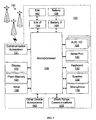
- FIG. 1 is a block diagram illustrating a wireless device adapted in accordance with an embodiment of the application
- FIG. 2 is a block diagram illustrating a memory of the wireless device of FIG. 1;
- FIG. 3 is a front view illustrating the wireless device of FIG. 1;
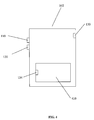
- FIG. 4 is a rear view illustrating the wireless device of FIG. 1;
- FIG. 5 is a front view illustrating a battery pack for use with the wireless device of FIG. 1 in accordance with an embodiment of the application;
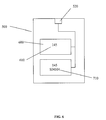
- FIG. 6 is a front sectional view illustrating cells within the housing of the battery pack of FIG. 5 in accordance with an embodiment of the application;
- FIG. 7 is a list illustrating the association between battery pack date codes and cell numbers in accordance with an embodiment of the application.
- FIG. 8 is a flowchart illustrating operations of modules within the memory of a computer system for identifying at least one cell with a battery pack, the cell being originally located within a housing of the battery pack, in accordance with an embodiment of the application.
- a battery pack comprising: a housing; at least one cell within the housing; wherein the housing has inscribed thereon a battery pack date code for identifying a date of manufacture of the battery pack; and, wherein the cell has inscribed thereon a number that is associated with the battery pack date code in an external list; whereby comparing the number on the cell to the number recorded in the list for the battery pack date code of the battery pack determines whether the cell belongs to the battery pack.
- the number includes a cell date code for identifying a date of manufacture of the cell.
- at least one of the battery pack date code and the cell date code includes an identifier for identifying a manufacturer of the battery pack.
- the number is a three-digit number.
- the number is a random number that is selected at a predetermined interval.
- the predetermined interval is a week.
- the battery pack has means for coupling the battery pack to a wireless device to provide power to the wireless device.
- a method in a computer system for identifying at least one cell with a battery pack the cell being originally located within a housing of the battery pack, the method comprising: receiving a battery pack date code inscribed on the housing, the battery pack date code for identifying a date of manufacture of the battery pack; receiving a number inscribed on the cell, the number being associated with the battery pack date code in a list; and, comparing the number on the cell to the number recorded in the list for the battery pack date code of the battery pack to thereby determine whether the cell belongs to the battery pack.
- a system for identifying at least one cell with a battery pack the cell being originally located within a housing of the battery pack
- the system comprising: a processor coupled to memory and an input device and adapted to: receive a battery pack date code inscribed on the housing, the battery pack date code for identifying a date of manufacture of the battery pack; receive a number inscribed on the cell, the number being associated with the battery pack date code in a list; and, compare the number on the cell to the number recorded in the list for the battery pack date code of the battery pack to thereby determine whether the cell belongs to the battery pack.
- FIG. 1 is a block diagram illustrating a wireless device 102 adapted in accordance with an embodiment of the application.
- the wireless device 102 is a handheld device 102.
- the wireless device 102 is a two-way communication device having at least voice and advanced data communication capabilities, including the capability to communicate with other computer systems. Depending on the functionality provided by the device 102, it may be referred to as a data messaging device, a two-way pager, a cellular telephone with data messaging capabilities, a wireless Internet appliance, or a data communication device (with or without telephony capabilities).
- the device 102 may communicate with any one of a plurality of fixed transceiver stations 100 within its geographic coverage area.
- the wireless device 102 will normally incorporate a communication subsystem 111, which includes a RF receiver, a RF transmitter, and associated components, such as one or more (preferably embedded or internal) antenna elements and, local oscillators ("LOs"), and a processing module such as a digital signal processor (“DSP”) (all not shown).
- a communication subsystem 111 which includes a RF receiver, a RF transmitter, and associated components, such as one or more (preferably embedded or internal) antenna elements and, local oscillators (“LOs”), and a processing module such as a digital signal processor (“DSP”) (all not shown).
- LOs local oscillators
- DSP digital signal processor
- the device 102 is a battery-powered device so it also includes a battery IF 154 for receiving one or more rechargeable batteries 156. Such a battery 156 provides electrical power to most if not all electrical circuitry in the device 102, and the battery IF 154 provides for a mechanical and electrical connection for it.
- the battery IF 154 is coupled to a regulator (not shown) which provides power to the circuitry of the device 102.
- the wireless device 102 includes a microprocessor (or central processing system (“CPU”)) 138 which controls overall operation of the device 102. Communication functions, including at least data and voice communications, are performed through the communication subsystem 111.
- the microprocessor 138 also interacts with additional device subsystems such as a display 122, a flash memory 124 or other persistent store, a random access memory (“RAM”) 126, auxiliary input/output (“I/O") subsystems 128, a serial port 130, a keyboard 132, a speaker 134, a microphone 136, a short-range communications subsystem 140, and any other device subsystems generally designated at 142.
- additional device subsystems such as a display 122, a flash memory 124 or other persistent store, a random access memory (“RAM”) 126, auxiliary input/output (“I/O") subsystems 128, a serial port 130, a keyboard 132, a speaker 134, a microphone 136, a short-range communications subsystem 140, and any other
- Operating system software used by the microprocessor 138 is preferably stored in a persistent store such as the flash memory 124, which may alternatively be a read-only memory (“ROM”) or similar storage element (not shown).
- ROM read-only memory
- the microprocessor 138 in addition to its operating system functions, preferably enables execution of software applications on the device 102.
- a preferred application that may be loaded onto the device 102 may be a personal information manager (“PIM”) application having the ability to organize and manage data items relating to the user such as, but not limited to, instant messaging (“IM”), email, calendar events, voice mails, appointments, and task items.
- PIM personal information manager
- IM instant messaging
- SIM 162 to facilitate storage of PIM data items and other information.
- the PIM application preferably has the ability to send and receive data items via the wireless network 100.
- PIM data items are seamlessly integrated, synchronized, and updated via the wireless network 100, with the user's corresponding data items stored and/or associated with a host computer system (not shown) thereby creating a mirrored host computer on the device 102 with respect to such items. This is especially advantageous where the host computer system is the user's office computer system (not shown).
- Additional applications may also be loaded onto the device 102 through the network 100, an auxiliary I/O subsystem 128, serial port 130, short-range communications subsystem 140, or any other suitable subsystem 142, and installed by a user in RAM 126 or preferably in a non-volatile store (e.g., flash memory 124) for execution by the microprocessor 138.
- a non-volatile store e.g., flash memory 124.
- secure communication applications may enable electronic commerce functions and other such financial transactions to be performed using the wireless device 102.
- a received signal such as a text message, an email message, or web page download will be processed by the communication subsystem 111 and input to the microprocessor 138.
- the microprocessor 138 will preferably further process the signal for output to the display 122 and/or to the auxiliary I/O device 128.
- a user of the wireless device 102 may also compose data items, such as email messages, for example, using the keyboard 132 in conjunction with the display 122 and possibly the auxiliary I/O device 128. These composed items may be transmitted over a communication network 100 through the communication subsystem 111 or the short range communication subsystem 140.
- the keyboard 132 is preferably a complete alphanumeric keyboard and/or telephone-type keypad.
- the overall operation of the wireless device 102 is substantially similar, except that the received signals would be output to the speaker 134 and signals for transmission would be generated by the microphone 136.
- Alternative voice or audio I/O subsystems such as a voice message recording subsystem, may also be implemented on the device 102.
- voice or audio signal output is preferably accomplished primarily through the speaker 134, the display 122 may also be used to provide, for example, an indication of the identity of a calling party, duration of a voice call, or other voice call related information.
- the serial port 130 shown in FIG. 1 is normally implemented in a personal digital assistant ("PDA")-type communication device for which synchronization with a user's desktop computer is a desirable, albeit optional, component.
- PDA personal digital assistant
- the serial port 130 enables a user to set preferences through an external device or software application and extends the capabilities of the device 102 by providing for information or software downloads to the device 102 other than through a wireless communication network 100.
- the alternate download path may, for example, be used to load an encryption key onto the device 102 through a direct and thus reliable and trusted connection to thereby provide secure device communication.
- the short-range communications subsystem 140 shown in FIG. 1 is an additional optional component which provides for communication between the device 102 and different systems or devices (not shown), which need not necessarily be similar devices.
- the subsystem 140 may include an infrared device and associated circuits and components, or a BluetoothTM communication module to provide for communication with similarly-enabled systems and devices. (BluetoothTM is a registered trademark of Bluetooth SIG, Inc.)
- FIG. 2 is a block diagram illustrating a memory 200 of the wireless device 102 of FIG. 1.
- the memory 200 has various software components for controlling the device 102 and may include flash memory 124, RAM 126, or ROM (not shown), for example.
- the wireless device 102 is intended to be a multi-tasking wireless communications device configured for sending and receiving data items and for making and receiving voice calls.
- an operating system (“O/S”) 202 resident on the device 102 provides a basic set of operations for supporting various applications typically operable through a graphical user interface (“GUI”) 204.
- GUI graphical user interface
- the O/S 202 provides basic input/output system features to obtain input from the auxiliary I/O 128, keyboard 132, and the like, and for facilitating output to the user.
- One or more software modules 206 for managing communications or for providing personal digital assistant like functions may also be included.
- the wireless device 102 includes computer executable programmed instructions for directing the device 102 to implement various applications.
- the programmed instructions may be embodied in one or more software modules 206 resident in the memory 200 of the wireless device 102.
- the programmed instructions may be embodied on a computer readable medium (such as a CD disk or floppy disk) which may be used for transporting the programmed instructions to the memory 200 of the wireless device 102.
- the programmed instructions may be embedded in a computer-readable, signal-bearing medium that is uploaded to a network by a vendor or supplier of the programmed instructions, and this signal-bearing medium may be downloaded through an interface 111, 130, 140 to the wireless device 102 from the network by end users or potential buyers.
- FIG. 3 is a front view illustrating the wireless device 102 of FIG. 1.
- the wireless device 102 can be a data and voice-enabled handheld device.
- the wireless device 102 includes a casing 150, a display screen 122, a graphical user interface ("GUI") 180, a keyboard (or keypad) 132, a thumbwheel (or trackwheel) 110, various select buttons 120, and various signal inputs/outputs 160 (e.g., power connector input, microphone, speaker, data interface input, etc.).
- GUI graphical user interface
- the wireless device 102 includes one or more circuit boards, a CPU 138, memory 200, a battery 156, an antenna, etc. (not shown), which are coupled to the signal inputs/outputs 160, keyboard 132, display screen 122, etc.
- the microprocessor 138 of the wireless device 102 is typically coupled to one or more devices 110, 120, 132 for receiving user commands or queries and for displaying the results of these commands or queries to the user on the display 122. For example, user queries may be transformed into a combination of commands for producing one or more tables of output data which may be incorporated in one or more display pages for presentation to the user.
- the microprocessor 138 is coupled to memory 200 for containing software modules 206 and data such as database tables and test parameters. As mentioned, the memory 200 may include a variety of storage devices typically arranged in a hierarchy of storage as understood to those skilled in the art.
- GUIs are supported by common operating systems and provide a display format which enables a user to choose commands, execute application programs, manage computer files, and perform other functions by selecting pictorial representations known as icons, or items from a menu through use of an input or pointing device such as a thumbwheel 110 and keyboard 132.
- a GUI is used to convey information to and receive commands from users and generally includes a variety of GUI objects or controls, including icons, toolbars, drop-down menus, pop-up menus, text, dialog boxes, buttons, and the like.
- a user typically interacts with a GUI 180 presented on a display 122 by using an input or pointing device (e.g., a thumbwheel 110, a keyboard 132, etc.) to position a pointer or cursor 190 over an object 191 (i.e., "pointing" at the object) and by "clicking" on the object 191. (e.g., by depressing the thumbwheel 110, by depressing a button on the keyboard 132, etc.). This is often referred to as a point-and-click operation or a selection operation.
- the object 191 may be hi-lighted (e.g., shaded) when it is pointed at.
- a GUI based system presents application, system status, and other information to the user in "windows" appearing on the display 122.
- a window 192 is a more or less rectangular area within the display 122 in which a user may view an application or a document. Such a window 192 may be open, closed, displayed full screen, reduced to an icon, increased or reduced in size, or moved to different areas of the display 122. Multiple windows may be displayed simultaneously, such as: windows included within other windows, windows overlapping other windows, or windows tiled within the display area.
- FIG. 4 is a rear view illustrating the wireless device 102 of FIG. 1.
- the wireless device 102 has a removable rear casing, or portion of casing, for concealing a battery cavity 410 and battery contacts (i.e., interface) 154 for the battery 156.
- the battery 156 may be a battery pack 500 (see FIG. 5) having a housing 510. A portion of the housing 510 may form the removable rear portion of the casing 150 of the wireless device 102. Alternatively, the battery pack 500 may be enclosed within the battery cavity 410.
- FIG. 5 is a front view illustrating a battery pack 500 for use with the wireless device 102 of FIG. 1 in accordance with an embodiment of the application.
- FIG. 6 is a front sectional view illustrating cells 600 within the housing 510 of the battery pack 500 of FIG. 5 in accordance with an embodiment of the application.
- FIG. 7 is a list 700 illustrating the association between battery pack date codes 530 and cell numbers 610 in accordance with an embodiment of the application.
- the battery pack 500 has a housing 510 and at least one cell 600 within the housing 510.
- the battery pack 500 has means (e.g., contacts, etc.) 520 for coupling the battery pack 500 to the wireless device 102 (e.g., via interface 154) to provide power to the wireless device 102.
- the housing 510 has inscribed thereon a battery pack date code 530 for identifying a date of manufacture of the battery pack 500.
- the cell 600 has inscribed thereon a number 610 that is associated with the battery pack date code in an external list 700. By comparing the number 610 on the cell 600 to the number recorded in the list 700 for the battery pack date code 530 of the battery pack 500, a user or computer system can determine whether the cell 600 belongs to the battery pack 500.
- each cell 600 also has inscribed thereon a cell date code 710 for identifying a date of manufacture of the cell 600.
- the number 610 may include the cell date code 710.
- the group of cell date code 710, battery pack date code 530, and 3-digit number 610 must all match in the list 700 in order to determine if the battery pack 500 is genuine.
- the battery pack date code 530 provides lot traceability for components of the battery pack 500 (e.g., a protection circuit, a thermal fuse, cells 600, and plastics components).
- the battery pack date code 530 e.g., "S04104” includes a 5-digit number (i.e., "04104") preceded by a single uppercase letter 531 (i.e., "S").
- This letter 531 represents the name of the manufacturer.
- the letter “S” 531 could represent the manufacturer SanyoTM.
- the first two numeric digits (i.e., "04") in the date code 530 represent the year of manufacture.
- the second two digits i.e., "10" represent the week.
- the final digit represents the day of week.
- Sunday is considered the first day of the week.
- the year code i.e., "04" is updated at the start of the first week in the year.
- the date code 530 may have an alternate format (e.g., day/month/year, etc.).
- the number 610 inscribed on each cell 600 may be a 3-digit random code, which is changed weekly. The number 610 will not be repeated within at least a 2-year time period. According to one embodiment, the random code 610 is updated every time the start of a week falls in a new month. In this way, the update of the random code 610 for a cell 600 may happen at the same time that there is an update in the battery pack date code 530 for that week. Of course, the number 610 may have more or less than three digits, it may be changed at a rate of more or less than weekly, and its repetition frequency may be more or less than two years.
- the optional cell date code 710 may be structured in a manner similar to that of the battery pack date code 530.
- the manufacturer or supplier of the battery pack 500 inscribes a number 610 (e.g., a three digit number) onto each cell 600. This inscription may be performed with a laser.
- the number 610 is changed with the date code 530 of the battery pack 500.
- the manufacturer or supplier of the battery pack 500 maintains a list 700 of pack date codes 530 and 3-digit numbers 610. This list may be a physical list or an electronic list stored in the memory of a computer system. And, by checking the list 700 for the proper battery pack date code 530 and number 610 combination (and optionally with the cell date code 710), a battery pack 700 can be authenticated.
- FIG. 8 is a flowchart illustrating operations of modules 800 within the memory of a computer system for identifying at least one cell 600 with a battery pack 500, the cell 600 being originally located within a housing 510 of the battery pack 500, in accordance with an embodiment of the application.
- the computer system (not shown) may be a personal computer system, a server system, or even a wireless device 102. Accordingly, the computer system has a processor coupled to memory, an input device (e.g., a mouse, etc.), and a display screen or output device (e.g., a printer, etc.).
- a battery pack date code 530 inscribed on the housing 510 is received, the battery pack date code 530 for identifying a date of manufacture of the battery pack 500.
- a number 610 inscribed on the cell 600 is received, the number 610 being associated with the battery pack date code 530 in a list 700.
- the number 610 on the cell 600 is compared to the number recorded in the list 700 for the battery pack date code 530 of the battery pack 500 to thereby determine whether the cell 600 belongs to the battery pack 500.
- the number 610 includes a cell date code 710 for identifying a date of manufacture of the cell 600.
- at least one of the battery pack date code 530 and the cell date code 710 includes an identifier 531 for identifying a manufacturer of the battery pack 500.
- the number 610 is a three-digit number.
- the number 610 is a random number that is selected at a predetermined interval.
- the predetermined interval is a week.
- the battery pack 500 has means (e.g., contacts, etc.) 520 for coupling the battery pack 500 to a wireless device 102 (e.g., via interface 154) to provide power to the wireless device 102.
- the above detailed description of the embodiments of the present application does not limit their implementation to any particular computer programming language.
- the embodiments of the present application may be implemented in any computer programming language provided that the operating system ("OS") provides the facilities that may support the requirements of these embodiments.
- a preferred embodiment is implemented in the JAVATM computer programming language (or other computer programming languages such as C or C++). (JAVA and all JAVA-based trademarks are the trademarks of Sun Microsystems Corporation.) Any limitations presented would be a result of a particular type of operating system or computer programming language and would not be a limitation of the embodiments of the present application.
- an apparatus such as a computer system, methods for adapting this system, as well as articles of manufacture such as a computer readable medium having program instructions recorded thereon for practising the method of the application.
Landscapes
- Chemical & Material Sciences (AREA)
- Chemical Kinetics & Catalysis (AREA)
- Electrochemistry (AREA)
- General Chemical & Material Sciences (AREA)
- Life Sciences & Earth Sciences (AREA)
- Engineering & Computer Science (AREA)
- Biophysics (AREA)
- Computer Hardware Design (AREA)
- Battery Mounting, Suspending (AREA)
- Mobile Radio Communication Systems (AREA)
- Charge And Discharge Circuits For Batteries Or The Like (AREA)
- Secondary Cells (AREA)
Abstract
Description
- This application relates to the field of battery authentication, and more specifically, to a method and system for identifying batteries and cells used in wireless or other devices as originating from an original supplier of the wireless or other devices.
- Current wireless mobile communication devices include microprocessors, memory, batteries, soundcards, and run one or more software applications. Examples of software applications used in these wireless devices include micro-browsers, address books, email clients, and wavetable instruments. Additionally, wireless devices have access to a plurality of services via the Internet. A wireless device may, for example, be used to browse web sites on the Internet, to transmit and receive graphics, and to execute streaming audio and/or video applications.
- Wireless devices are typically supplied with a battery pack, which includes one or more cells, for providing power to the wireless device. The supplier of the wireless device is typically also the supplier of the battery pack. In the case of a battery pack fault in the field, it may be necessary for warranty and other reasons to identify the battery as a genuine battery provided by the supplier of the wireless device or as a counterfeit or non-genuine battery provided by another supplier.
- For example, when a battery fault occurs, the battery pack markings may become burnt or damaged so as to render them illegible. In such a situation, identification of the original supplier of the battery becomes difficult. In addition, manufacturers of cells used in genuine battery packs may also provide cells to manufactures of counterfeit battery packs.
- Existing methods that are used to identify genuine battery packs include the following: label holograms, "invisible ink" markings, and small markings formed in the plastic or metal components of a battery pack. However, these existing methods have drawbacks. For example, most of these marking methods can be easily copied, including trademark and hologram markings.
- A need therefore exists for improved means to authenticate batteries and cells used in wireless or other devices as originating from an original supplier of the wireless or other devices. Accordingly, a solution that addresses, at least in part, the above and other shortcomings is desired.
- According to a first aspect of the present invention there is provided a battery pack comprising: a housing; at least one cell within the housing; wherein the housing has inscribed thereon a battery pack date code for identifying a date of manufacture of the battery pack; and, wherein the cell has inscribed thereon a number that is associated with the battery pack date code in an external list; whereby comparing the number on the cell to the number recorded in the list for the battery pack date code of the battery pack determines whether the cell belongs to the battery pack.
- Preferably, the number includes a cell date code for identifying a date of manufacture of the cell.
- Preferably, at least one of the battery pack date code and cell date code includes an identifier for identifying a manufacturer of the battery pack. The code may be a three-digit number which may be a random number that is selected at a predetermined interval. Preferably, the predetermined interval is a week.
- Preferably, the battery pack further comprising means for coupling the battery pack to a wireless device to provide power to the wireless device.
- According to another aspect of invention there is provided a method in a computer system for identifying at least one cell with a battery pack, the cell being originally located within a housing of the battery pack, the method comprising: receiving a battery pack date code inscribed on the housing, the battery pack date code for identifying a date of manufacture of the battery pack; receiving a number inscribed on the cell, the number being associated with the battery pack date code in a list; and, comparing the number on the cell to the number recorded in the list for the battery pack date code of the battery pack to thereby determine whether the cell belongs to the battery pack.
- Preferably, the number includes a cell date code for identifying a date of manufacture of the cell.
- Preferably, at least one of the battery pack date code and cell date code includes an identifier for identifying a manufacturer of the battery pack. The code may be a three-digit number which may be a random number that is selected at a predetermined interval. Preferably, the predetermined interval is a week.
- Preferably, the battery pack has means for coupling the battery pack to a wireless device to provide power to the wireless device.
- According to a still further aspect of the present invention there is provided a system for identifying at least one cell with a battery pack, the cell being originally located within a housing of the battery pack, the system comprising: a processor coupled to memory and an input device and adapted to: receive a battery pack date code inscribed on the housing, the battery pack date code for identifying a date of manufacture of the battery pack; receive a number inscribed on the cell, the number being associated with the battery pack date code in a list; and, compare the number on the cell to the number recorded in the list for the battery pack date code of the battery pack to thereby determine whether the cell belongs to the battery pack.
- Preferably, the number includes a cell date code for identifying a date of manufacture of the cell.
- Preferably, at least one of the battery pack date code and cell date code includes an identifier for identifying a manufacturer of the battery pack. The number may be a three-digit number which may be a random number that is selected at a predetermined interval. Preferably, the predetermined interval is a week.
- Preferably, the battery pack has means for coupling the battery pack to a wireless device to provide power to the wireless device.
- Features and advantages of the embodiments of the present application will become apparent from the following detailed description, taken in combination with the appended drawings, in which:
- FIG. 1 is a block diagram illustrating a wireless device adapted in accordance with an embodiment of the application;
- FIG. 2 is a block diagram illustrating a memory of the wireless device of FIG. 1;
- FIG. 3 is a front view illustrating the wireless device of FIG. 1;
- FIG. 4 is a rear view illustrating the wireless device of FIG. 1;
- FIG. 5 is a front view illustrating a battery pack for use with the wireless device of FIG. 1 in accordance with an embodiment of the application;
- FIG. 6 is a front sectional view illustrating cells within the housing of the battery pack of FIG. 5 in accordance with an embodiment of the application;
- FIG. 7 is a list illustrating the association between battery pack date codes and cell numbers in accordance with an embodiment of the application; and,
- FIG. 8 is a flowchart illustrating operations of modules within the memory of a computer system for identifying at least one cell with a battery pack, the cell being originally located within a housing of the battery pack, in accordance with an embodiment of the application.
- It will be noted that throughout the appended drawings, like features are identified by like reference numerals.
- According to one aspect of the application, there is described a battery pack comprising: a housing; at least one cell within the housing; wherein the housing has inscribed thereon a battery pack date code for identifying a date of manufacture of the battery pack; and, wherein the cell has inscribed thereon a number that is associated with the battery pack date code in an external list; whereby comparing the number on the cell to the number recorded in the list for the battery pack date code of the battery pack determines whether the cell belongs to the battery pack.
- Preferably, the number includes a cell date code for identifying a date of manufacture of the cell. Preferably, at least one of the battery pack date code and the cell date code includes an identifier for identifying a manufacturer of the battery pack. Preferably, the number is a three-digit number. Preferably, the number is a random number that is selected at a predetermined interval. Preferably, the predetermined interval is a week. Preferably, the battery pack has means for coupling the battery pack to a wireless device to provide power to the wireless device.
- According to another aspect of the application, there is described a method in a computer system for identifying at least one cell with a battery pack, the cell being originally located within a housing of the battery pack, the method comprising: receiving a battery pack date code inscribed on the housing, the battery pack date code for identifying a date of manufacture of the battery pack; receiving a number inscribed on the cell, the number being associated with the battery pack date code in a list; and, comparing the number on the cell to the number recorded in the list for the battery pack date code of the battery pack to thereby determine whether the cell belongs to the battery pack.
- According to another aspect of the application, there is described a system for identifying at least one cell with a battery pack, the cell being originally located within a housing of the battery pack, the system comprising: a processor coupled to memory and an input device and adapted to: receive a battery pack date code inscribed on the housing, the battery pack date code for identifying a date of manufacture of the battery pack; receive a number inscribed on the cell, the number being associated with the battery pack date code in a list; and, compare the number on the cell to the number recorded in the list for the battery pack date code of the battery pack to thereby determine whether the cell belongs to the battery pack.
- FIG. 1 is a block diagram illustrating a
wireless device 102 adapted in accordance with an embodiment of the application. Typically, thewireless device 102 is ahandheld device 102. Thewireless device 102 is a two-way communication device having at least voice and advanced data communication capabilities, including the capability to communicate with other computer systems. Depending on the functionality provided by thedevice 102, it may be referred to as a data messaging device, a two-way pager, a cellular telephone with data messaging capabilities, a wireless Internet appliance, or a data communication device (with or without telephony capabilities). Thedevice 102 may communicate with any one of a plurality of fixedtransceiver stations 100 within its geographic coverage area. - The
wireless device 102 will normally incorporate acommunication subsystem 111, which includes a RF receiver, a RF transmitter, and associated components, such as one or more (preferably embedded or internal) antenna elements and, local oscillators ("LOs"), and a processing module such as a digital signal processor ("DSP") (all not shown). As will be apparent to those skilled in field of communications, particular design of thecommunication subsystem 111 depends on thecommunication network 100 in which thedevice 102 is intended to operate. - Network access is associated with a subscriber or user of the
device 102 and therefore thedevice 102 requires a Subscriber Identity Module (or "SIM" card) 162 to be inserted in a SIM interface ("IF") 164 in order to operate in the network. Thedevice 102 is a battery-powered device so it also includes abattery IF 154 for receiving one or morerechargeable batteries 156. Such abattery 156 provides electrical power to most if not all electrical circuitry in thedevice 102, and the battery IF 154 provides for a mechanical and electrical connection for it. The battery IF 154 is coupled to a regulator (not shown) which provides power to the circuitry of thedevice 102. - The
wireless device 102 includes a microprocessor (or central processing system ("CPU")) 138 which controls overall operation of thedevice 102. Communication functions, including at least data and voice communications, are performed through thecommunication subsystem 111. Themicroprocessor 138 also interacts with additional device subsystems such as adisplay 122, aflash memory 124 or other persistent store, a random access memory ("RAM") 126, auxiliary input/output ("I/O")subsystems 128, aserial port 130, akeyboard 132, aspeaker 134, amicrophone 136, a short-range communications subsystem 140, and any other device subsystems generally designated at 142. Some of the subsystems shown in FIG. 2 perform communication-related functions, whereas other subsystems may provide "resident" or on-device functions. Notably, some subsystems, such as thekeyboard 132 anddisplay 122, for example, may be used for both communication-related functions, such as entering a text message for transmission over a communication network, and device-resident functions such as a calculator or task list. Operating system software used by themicroprocessor 138 is preferably stored in a persistent store such as theflash memory 124, which may alternatively be a read-only memory ("ROM") or similar storage element (not shown). Those skilled in the art will appreciate that the operating system, specific device applications, or parts thereof, may be temporarily loaded into a volatile store such asRAM 126. - The
microprocessor 138, in addition to its operating system functions, preferably enables execution of software applications on thedevice 102. A predetermined set of applications which control basic device operations, including at least data and voice communication applications, will normally be installed on thedevice 102 during its manufacture. A preferred application that may be loaded onto thedevice 102 may be a personal information manager ("PIM") application having the ability to organize and manage data items relating to the user such as, but not limited to, instant messaging ("IM"), email, calendar events, voice mails, appointments, and task items. Naturally, one or more memory stores are available on thedevice 102 andSIM 162 to facilitate storage of PIM data items and other information. - The PIM application preferably has the ability to send and receive data items via the
wireless network 100. In a preferred embodiment, PIM data items are seamlessly integrated, synchronized, and updated via thewireless network 100, with the user's corresponding data items stored and/or associated with a host computer system (not shown) thereby creating a mirrored host computer on thedevice 102 with respect to such items. This is especially advantageous where the host computer system is the user's office computer system (not shown). Additional applications may also be loaded onto thedevice 102 through thenetwork 100, an auxiliary I/O subsystem 128,serial port 130, short-range communications subsystem 140, or any othersuitable subsystem 142, and installed by a user inRAM 126 or preferably in a non-volatile store (e.g., flash memory 124) for execution by themicroprocessor 138. Such flexibility in application installation increases the functionality of thedevice 102 and may provide enhanced on-device functions, communication-related functions, or both. For example, secure communication applications may enable electronic commerce functions and other such financial transactions to be performed using thewireless device 102. - In a data communication mode, a received signal such as a text message, an email message, or web page download will be processed by the
communication subsystem 111 and input to themicroprocessor 138. Themicroprocessor 138 will preferably further process the signal for output to thedisplay 122 and/or to the auxiliary I/O device 128. A user of thewireless device 102 may also compose data items, such as email messages, for example, using thekeyboard 132 in conjunction with thedisplay 122 and possibly the auxiliary I/O device 128. These composed items may be transmitted over acommunication network 100 through thecommunication subsystem 111 or the shortrange communication subsystem 140. Thekeyboard 132 is preferably a complete alphanumeric keyboard and/or telephone-type keypad. - For voice communications, the overall operation of the
wireless device 102 is substantially similar, except that the received signals would be output to thespeaker 134 and signals for transmission would be generated by themicrophone 136. Alternative voice or audio I/O subsystems, such as a voice message recording subsystem, may also be implemented on thedevice 102. Although voice or audio signal output is preferably accomplished primarily through thespeaker 134, thedisplay 122 may also be used to provide, for example, an indication of the identity of a calling party, duration of a voice call, or other voice call related information. - The
serial port 130 shown in FIG. 1 is normally implemented in a personal digital assistant ("PDA")-type communication device for which synchronization with a user's desktop computer is a desirable, albeit optional, component. Theserial port 130 enables a user to set preferences through an external device or software application and extends the capabilities of thedevice 102 by providing for information or software downloads to thedevice 102 other than through awireless communication network 100. The alternate download path may, for example, be used to load an encryption key onto thedevice 102 through a direct and thus reliable and trusted connection to thereby provide secure device communication. - The short-
range communications subsystem 140 shown in FIG. 1 is an additional optional component which provides for communication between thedevice 102 and different systems or devices (not shown), which need not necessarily be similar devices. For example, thesubsystem 140 may include an infrared device and associated circuits and components, or a Bluetooth™ communication module to provide for communication with similarly-enabled systems and devices. (Bluetooth™ is a registered trademark of Bluetooth SIG, Inc.) - FIG. 2 is a block diagram illustrating a
memory 200 of thewireless device 102 of FIG. 1. Thememory 200 has various software components for controlling thedevice 102 and may includeflash memory 124,RAM 126, or ROM (not shown), for example. In accordance with an embodiment of the invention, thewireless device 102 is intended to be a multi-tasking wireless communications device configured for sending and receiving data items and for making and receiving voice calls. To provide a user-friendly environment to control the operation of thedevice 102, an operating system ("O/S") 202 resident on thedevice 102 provides a basic set of operations for supporting various applications typically operable through a graphical user interface ("GUI") 204. For example, the O/S 202 provides basic input/output system features to obtain input from the auxiliary I/O 128,keyboard 132, and the like, and for facilitating output to the user. One ormore software modules 206 for managing communications or for providing personal digital assistant like functions may also be included. - Thus, the
wireless device 102 includes computer executable programmed instructions for directing thedevice 102 to implement various applications. The programmed instructions may be embodied in one ormore software modules 206 resident in thememory 200 of thewireless device 102. Alternatively, the programmed instructions may be embodied on a computer readable medium (such as a CD disk or floppy disk) which may be used for transporting the programmed instructions to thememory 200 of thewireless device 102. Alternatively, the programmed instructions may be embedded in a computer-readable, signal-bearing medium that is uploaded to a network by a vendor or supplier of the programmed instructions, and this signal-bearing medium may be downloaded through aninterface wireless device 102 from the network by end users or potential buyers. - FIG. 3 is a front view illustrating the
wireless device 102 of FIG. 1. As mentioned above, thewireless device 102 can be a data and voice-enabled handheld device. Thewireless device 102 includes acasing 150, adisplay screen 122, a graphical user interface ("GUI") 180, a keyboard (or keypad) 132, a thumbwheel (or trackwheel) 110, variousselect buttons 120, and various signal inputs/outputs 160 (e.g., power connector input, microphone, speaker, data interface input, etc.). Internally, thewireless device 102 includes one or more circuit boards, aCPU 138,memory 200, abattery 156, an antenna, etc. (not shown), which are coupled to the signal inputs/outputs 160,keyboard 132,display screen 122, etc. - The
microprocessor 138 of thewireless device 102 is typically coupled to one ormore devices display 122. For example, user queries may be transformed into a combination of commands for producing one or more tables of output data which may be incorporated in one or more display pages for presentation to the user. Themicroprocessor 138 is coupled tomemory 200 for containingsoftware modules 206 and data such as database tables and test parameters. As mentioned, thememory 200 may include a variety of storage devices typically arranged in a hierarchy of storage as understood to those skilled in the art. - A user may interact with the
wireless device 102 and itssoftware modules 206 using the graphical user interface ("GUI") 180. GUIs are supported by common operating systems and provide a display format which enables a user to choose commands, execute application programs, manage computer files, and perform other functions by selecting pictorial representations known as icons, or items from a menu through use of an input or pointing device such as athumbwheel 110 andkeyboard 132. In general, a GUI is used to convey information to and receive commands from users and generally includes a variety of GUI objects or controls, including icons, toolbars, drop-down menus, pop-up menus, text, dialog boxes, buttons, and the like. A user typically interacts with aGUI 180 presented on adisplay 122 by using an input or pointing device (e.g., athumbwheel 110, akeyboard 132, etc.) to position a pointer orcursor 190 over an object 191 (i.e., "pointing" at the object) and by "clicking" on theobject 191. (e.g., by depressing thethumbwheel 110, by depressing a button on thekeyboard 132, etc.). This is often referred to as a point-and-click operation or a selection operation. Typically, theobject 191 may be hi-lighted (e.g., shaded) when it is pointed at. - Typically, a GUI based system presents application, system status, and other information to the user in "windows" appearing on the
display 122. Awindow 192 is a more or less rectangular area within thedisplay 122 in which a user may view an application or a document. Such awindow 192 may be open, closed, displayed full screen, reduced to an icon, increased or reduced in size, or moved to different areas of thedisplay 122. Multiple windows may be displayed simultaneously, such as: windows included within other windows, windows overlapping other windows, or windows tiled within the display area. - FIG. 4 is a rear view illustrating the
wireless device 102 of FIG. 1. Thewireless device 102 has a removable rear casing, or portion of casing, for concealing abattery cavity 410 and battery contacts (i.e., interface) 154 for thebattery 156. Thebattery 156 may be a battery pack 500 (see FIG. 5) having ahousing 510. A portion of thehousing 510 may form the removable rear portion of thecasing 150 of thewireless device 102. Alternatively, thebattery pack 500 may be enclosed within thebattery cavity 410. - FIG. 5 is a front view illustrating a
battery pack 500 for use with thewireless device 102 of FIG. 1 in accordance with an embodiment of the application. FIG. 6 is a front sectionalview illustrating cells 600 within thehousing 510 of thebattery pack 500 of FIG. 5 in accordance with an embodiment of the application. And, FIG. 7 is alist 700 illustrating the association between batterypack date codes 530 andcell numbers 610 in accordance with an embodiment of the application. - Referring to FIGS. 5-7, the
battery pack 500 has ahousing 510 and at least onecell 600 within thehousing 510. Thebattery pack 500 has means (e.g., contacts, etc.) 520 for coupling thebattery pack 500 to the wireless device 102 (e.g., via interface 154) to provide power to thewireless device 102. Thehousing 510 has inscribed thereon a batterypack date code 530 for identifying a date of manufacture of thebattery pack 500. Thecell 600 has inscribed thereon anumber 610 that is associated with the battery pack date code in anexternal list 700. By comparing thenumber 610 on thecell 600 to the number recorded in thelist 700 for the batterypack date code 530 of thebattery pack 500, a user or computer system can determine whether thecell 600 belongs to thebattery pack 500. - According to an alternate embodiment, each
cell 600 also has inscribed thereon acell date code 710 for identifying a date of manufacture of thecell 600. Thus, thenumber 610 may include thecell date code 710. According to this embodiment, the group ofcell date code 710, batterypack date code 530, and 3-digit number 610 must all match in thelist 700 in order to determine if thebattery pack 500 is genuine. - The battery
pack date code 530 provides lot traceability for components of the battery pack 500 (e.g., a protection circuit, a thermal fuse,cells 600, and plastics components). According to one embodiment, the battery pack date code 530 (e.g., "S04104") includes a 5-digit number (i.e., "04104") preceded by a single uppercase letter 531 (i.e., "S"). Thisletter 531 represents the name of the manufacturer. For example, the letter "S" 531 could represent the manufacturer Sanyo™. The first two numeric digits (i.e., "04") in thedate code 530 represent the year of manufacture. The second two digits (i.e., "10") represent the week. And, the final digit (i.e., "4") represents the day of week. Sunday is considered the first day of the week. The year code (i.e., "04") is updated at the start of the first week in the year. For example, if Sanyo™ manufactured abattery pack 500 on March 10, 2004, thedate code 530 would be "S04104", where "04" = the year 2004, "10" = the 10th week in the year, "4" = 4th day of the week. Of course, the batterypack date code 530 may have an alternate format (e.g., day/month/year, etc.). - The
number 610 inscribed on eachcell 600 may be a 3-digit random code, which is changed weekly. Thenumber 610 will not be repeated within at least a 2-year time period. According to one embodiment, therandom code 610 is updated every time the start of a week falls in a new month. In this way, the update of therandom code 610 for acell 600 may happen at the same time that there is an update in the batterypack date code 530 for that week. Of course, thenumber 610 may have more or less than three digits, it may be changed at a rate of more or less than weekly, and its repetition frequency may be more or less than two years. - The optional
cell date code 710 may be structured in a manner similar to that of the batterypack date code 530. - Thus, according to one embodiment, the manufacturer or supplier of the
battery pack 500 inscribes a number 610 (e.g., a three digit number) onto eachcell 600. This inscription may be performed with a laser. Thenumber 610 is changed with thedate code 530 of thebattery pack 500. The manufacturer or supplier of thebattery pack 500 maintains alist 700 ofpack date codes 530 and 3-digit numbers 610. This list may be a physical list or an electronic list stored in the memory of a computer system. And, by checking thelist 700 for the proper batterypack date code 530 andnumber 610 combination (and optionally with the cell date code 710), abattery pack 700 can be authenticated. - Advantageously, while most marking methods can be copied, and counterfeit battery pack suppliers can copy trademarks and holograms markings, by using the revolving key (i.e., number 610) of the present application the copying of markings is made more difficult.
- FIG. 8 is a flowchart illustrating operations of
modules 800 within the memory of a computer system for identifying at least onecell 600 with abattery pack 500, thecell 600 being originally located within ahousing 510 of thebattery pack 500, in accordance with an embodiment of the application. The computer system (not shown) may be a personal computer system, a server system, or even awireless device 102. Accordingly, the computer system has a processor coupled to memory, an input device (e.g., a mouse, etc.), and a display screen or output device (e.g., a printer, etc.). - At
step 801, theoperations 800 start. - At
step 802, a batterypack date code 530 inscribed on thehousing 510 is received, the batterypack date code 530 for identifying a date of manufacture of thebattery pack 500. - At
step 803, anumber 610 inscribed on thecell 600 is received, thenumber 610 being associated with the batterypack date code 530 in alist 700. - At
step 804, thenumber 610 on thecell 600 is compared to the number recorded in thelist 700 for the batterypack date code 530 of thebattery pack 500 to thereby determine whether thecell 600 belongs to thebattery pack 500. - At
step 805, theoperations 800 end. - Preferably, the
number 610 includes acell date code 710 for identifying a date of manufacture of thecell 600. Preferably, at least one of the batterypack date code 530 and thecell date code 710 includes anidentifier 531 for identifying a manufacturer of thebattery pack 500. Preferably, thenumber 610 is a three-digit number. Preferably, thenumber 610 is a random number that is selected at a predetermined interval. Preferably, the predetermined interval is a week. Preferably, thebattery pack 500 has means (e.g., contacts, etc.) 520 for coupling thebattery pack 500 to a wireless device 102 (e.g., via interface 154) to provide power to thewireless device 102. - The above detailed description of the embodiments of the present application does not limit their implementation to any particular computer programming language. The embodiments of the present application may be implemented in any computer programming language provided that the operating system ("OS") provides the facilities that may support the requirements of these embodiments. A preferred embodiment is implemented in the JAVA™ computer programming language (or other computer programming languages such as C or C++). (JAVA and all JAVA-based trademarks are the trademarks of Sun Microsystems Corporation.) Any limitations presented would be a result of a particular type of operating system or computer programming language and would not be a limitation of the embodiments of the present application. In accordance with further aspects of the present application there is provided an apparatus such as a computer system, methods for adapting this system, as well as articles of manufacture such as a computer readable medium having program instructions recorded thereon for practising the method of the application.
- The embodiments of the invention described above are intended to be exemplary only. The scope of the invention is therefore intended to be limited solely by the scope of the appended claims.
Claims (21)
- A battery pack comprising:a housing;at least one cell within the housing;wherein the housing has inscribed thereon a battery pack date code for identifying a date of manufacture of the battery pack; and,
wherein the cell has inscribed thereon a number that is associated with the battery pack date code in an external list;
whereby comparing the number on the cell to the number recorded in the list for the battery pack date code of the battery pack determines whether the cell belongs to the battery pack. - A battery pack as claimed in claim 1 wherein the number includes a cell date code for identifying a date of manufacture of the cell.
- A battery pack as claimed in claim 2 or claim 3 wherein at least one of the battery pack date code and cell date code includes an identifier for identifying a manufacturer of the battery pack.
- A battery pack as claimed in any one of claims 1 to 3 wherein the number is a three-digit number.
- A battery pack as claimed in any one of claims 1 to 4 wherein the number is a random number that is selected at a predetermined interval.
- A battery pack as claimed in claim 5 wherein the predetermined interval is a week.
- The battery pack as claimed in any one of claims 1 to 6 and further comprising means for coupling the battery pack to a wireless device to provide power to the wireless device.
- A method in a computer system for identifying at least one cell with a battery pack, the cell being originally located within a housing of the battery pack, the method comprising:receiving a battery pack date code inscribed on the housing, the battery pack date code for identifying a date of manufacture of the battery pack;receiving a number inscribed on the cell, the number being associated with the battery pack date code in a list; and,comparing the number on the cell to the number recorded in the list for the battery pack date code of the battery pack to thereby determine whether the cell belongs to the battery pack.
- A method as claimed in claim 8 wherein the number includes a cell date code for identifying a date of manufacture of the cell.
- A method as claimed in claim 8 or claim 9 wherein at least one of the battery pack date code and cell date code includes an identifier for identifying a manufacturer of the battery pack.
- A method as claimed in any one of claims 8 to 10 wherein the number is a three-digit number.
- A method as claimed in any one of claim 8 to 11 wherein the number is a random number that is selected at a predetermined interval.
- A method as claimed in claim 12 wherein the predetermined interval is a week.
- A method as claimed in any one of claims 8 to 13 wherein the battery pack has means for coupling the battery pack to a wireless device to provide power to the wireless device.
- A system for identifying at least one cell with a battery pack, the cell being originally located within a housing of the battery pack, the system comprising:a processor coupled to memory and an input device and adapted to:receive a battery pack date code inscribed on the housing, the battery pack date code for identifying a date of manufacture of the battery pack;receive a number inscribed on the cell, the number being associated with the battery pack date code in a list; and,compare the number on the cell to the number recorded in the list for the battery pack date code of the battery pack to thereby determine whether the cell belongs to the battery pack.
- A system as claimed in claim 15 wherein the number includes a cell date code for identifying a date of manufacture of the cell.
- A system as claimed in claim 15 or 16 wherein at least one of the battery pack date code and cell date code includes an identifier for identifying a manufacturer of the battery pack.
- A system as claimed in any one of claims 15 to 17 wherein the number is a three-digit number.
- A system as claimed in any one of claims 15 to 18 wherein the number is a random number that is selected at a predetermined interval.
- A system as claimed in claim 19 wherein the predetermined interval is a week.
- A system as claimed in any one of claims 15 to 20 wherein the battery pack has means for coupling the battery pack to a wireless device to provide power to the wireless device.
Priority Applications (3)
| Application Number | Priority Date | Filing Date | Title |
|---|---|---|---|
| EP05106963A EP1755097B1 (en) | 2005-07-28 | 2005-07-28 | Method and system for battery authentication for wireless and other devices |
| DE602005006411T DE602005006411T2 (en) | 2005-07-28 | 2005-07-28 | Method and system for battery authentication for wireless and other devices |
| AT05106963T ATE393947T1 (en) | 2005-07-28 | 2005-07-28 | METHOD AND SYSTEM FOR BATTERY AUTHENTICATION FOR WIRELESS AND OTHER DEVICES |
Applications Claiming Priority (1)
| Application Number | Priority Date | Filing Date | Title |
|---|---|---|---|
| EP05106963A EP1755097B1 (en) | 2005-07-28 | 2005-07-28 | Method and system for battery authentication for wireless and other devices |
Publications (2)
| Publication Number | Publication Date |
|---|---|
| EP1755097A1 true EP1755097A1 (en) | 2007-02-21 |
| EP1755097B1 EP1755097B1 (en) | 2008-04-30 |
Family
ID=35457722
Family Applications (1)
| Application Number | Title | Priority Date | Filing Date |
|---|---|---|---|
| EP05106963A Expired - Lifetime EP1755097B1 (en) | 2005-07-28 | 2005-07-28 | Method and system for battery authentication for wireless and other devices |
Country Status (3)
| Country | Link |
|---|---|
| EP (1) | EP1755097B1 (en) |
| AT (1) | ATE393947T1 (en) |
| DE (1) | DE602005006411T2 (en) |
Cited By (3)
| Publication number | Priority date | Publication date | Assignee | Title |
|---|---|---|---|---|
| GB2475612A (en) * | 2009-11-23 | 2011-05-25 | Chih-Ang Yao | Anti-fake battery pack with cells having inner and outer identifiers |
| WO2013112531A3 (en) * | 2012-01-23 | 2013-10-10 | Avery Dennison Corporation | Electrochemical cell labels and accessories |
| WO2018041368A1 (en) * | 2016-09-05 | 2018-03-08 | Intel IP Corporation | Chip-enhanced battery |
Families Citing this family (1)
| Publication number | Priority date | Publication date | Assignee | Title |
|---|---|---|---|---|
| DE102024209516A1 (en) | 2024-09-30 | 2026-04-02 | Robert Bosch Gesellschaft mit beschränkter Haftung | Battery pack; method for manufacturing a battery pack |
Citations (4)
| Publication number | Priority date | Publication date | Assignee | Title |
|---|---|---|---|---|
| US3889407A (en) * | 1973-10-26 | 1975-06-17 | Grafika Commercial Arts Inc | Warranty plaque |
| EP0581301A2 (en) * | 1992-07-30 | 1994-02-02 | Werner Dr. Baumann | Individualising and machine readable identifikation means for products, containers for the product and their packaging |
| US6020082A (en) * | 1998-02-19 | 2000-02-01 | Summit Microelectronics, Inc. | Integrated battery identification system and method for determination of battery type and voltage level operability |
| DE19907498A1 (en) * | 1999-02-22 | 2000-08-24 | Sanyo Energy Europ Corporate G | Contact device for electrical battery pack e.g. for mobile telephone, has housing provided with electrical contacts and recess housing electronic component coupled to latter |
-
2005
- 2005-07-28 DE DE602005006411T patent/DE602005006411T2/en not_active Expired - Lifetime
- 2005-07-28 AT AT05106963T patent/ATE393947T1/en not_active IP Right Cessation
- 2005-07-28 EP EP05106963A patent/EP1755097B1/en not_active Expired - Lifetime
Patent Citations (4)
| Publication number | Priority date | Publication date | Assignee | Title |
|---|---|---|---|---|
| US3889407A (en) * | 1973-10-26 | 1975-06-17 | Grafika Commercial Arts Inc | Warranty plaque |
| EP0581301A2 (en) * | 1992-07-30 | 1994-02-02 | Werner Dr. Baumann | Individualising and machine readable identifikation means for products, containers for the product and their packaging |
| US6020082A (en) * | 1998-02-19 | 2000-02-01 | Summit Microelectronics, Inc. | Integrated battery identification system and method for determination of battery type and voltage level operability |
| DE19907498A1 (en) * | 1999-02-22 | 2000-08-24 | Sanyo Energy Europ Corporate G | Contact device for electrical battery pack e.g. for mobile telephone, has housing provided with electrical contacts and recess housing electronic component coupled to latter |
Cited By (5)
| Publication number | Priority date | Publication date | Assignee | Title |
|---|---|---|---|---|
| GB2475612A (en) * | 2009-11-23 | 2011-05-25 | Chih-Ang Yao | Anti-fake battery pack with cells having inner and outer identifiers |
| JP2011113972A (en) * | 2009-11-23 | 2011-06-09 | Yao Chih Ang | Anti-counterfeiting battery pack, and identification system of the same |
| US8710961B2 (en) | 2009-11-23 | 2014-04-29 | Li-Ho Yao | Anti-fake battery pack and identification system thereof |
| WO2013112531A3 (en) * | 2012-01-23 | 2013-10-10 | Avery Dennison Corporation | Electrochemical cell labels and accessories |
| WO2018041368A1 (en) * | 2016-09-05 | 2018-03-08 | Intel IP Corporation | Chip-enhanced battery |
Also Published As
| Publication number | Publication date |
|---|---|
| ATE393947T1 (en) | 2008-05-15 |
| DE602005006411T2 (en) | 2008-08-14 |
| DE602005006411D1 (en) | 2008-06-12 |
| EP1755097B1 (en) | 2008-04-30 |
Similar Documents
| Publication | Publication Date | Title |
|---|---|---|
| US11468407B2 (en) | Method and system for updating message threads | |
| CA2707022C (en) | Multiple display regions in a unified message inbox | |
| US8487587B2 (en) | Method and apparatus for displaying battery fault notifications on wireless devices | |
| US8103735B2 (en) | Method and system for generating template replies to electronic mail messages | |
| US8060539B2 (en) | Method of notifying an invitee to an event of changes to the event in an electronic calendar system | |
| US20070024235A1 (en) | Method and system for battery authentication for wireless and other devices | |
| KR20060092107A (en) | Network Selection User Interface for Wireless Devices | |
| US9043393B2 (en) | Method and system for updating an electronic mail address book | |
| EP1755097B1 (en) | Method and system for battery authentication for wireless and other devices | |
| CA2565885C (en) | Method and system for updating an electronic mail address book | |
| CA2514276C (en) | A method and system for battery authentication for wireless and other devices | |
| US20060095506A1 (en) | Extended user interface for email composition | |
| EP1783627A1 (en) | Method and system for generating template replies to electronic mail messages | |
| CA2565485C (en) | Method and system for updating message threads | |
| EP1696374A1 (en) | Method of notifying an invitee to an event of changes to the event in an electronic calendar system | |
| EP3958193A1 (en) | Representing new messages on a communication device |
Legal Events
| Date | Code | Title | Description |
|---|---|---|---|
| PUAI | Public reference made under article 153(3) epc to a published international application that has entered the european phase |
Free format text: ORIGINAL CODE: 0009012 |
|
| 17P | Request for examination filed |
Effective date: 20050728 |
|
| AK | Designated contracting states |
Kind code of ref document: A1 Designated state(s): AT BE BG CH CY CZ DE DK EE ES FI FR GB GR HU IE IS IT LI LT LU LV MC NL PL PT RO SE SI SK TR |
|
| AX | Request for extension of the european patent |
Extension state: AL BA HR MK YU |
|
| GRAP | Despatch of communication of intention to grant a patent |
Free format text: ORIGINAL CODE: EPIDOSNIGR1 |
|
| GRAS | Grant fee paid |
Free format text: ORIGINAL CODE: EPIDOSNIGR3 |
|
| AKX | Designation fees paid |
Designated state(s): AT BE BG CH CY CZ DE DK EE ES FI FR GB GR HU IE IS IT LI LT LU LV MC NL PL PT RO SE SI SK TR |
|
| AXX | Extension fees paid |
Extension state: AL Payment date: 20050728 Extension state: YU Payment date: 20050728 Extension state: HR Payment date: 20050728 Extension state: BA Payment date: 20050728 Extension state: MK Payment date: 20050728 |
|
| GRAA | (expected) grant |
Free format text: ORIGINAL CODE: 0009210 |
|
| AK | Designated contracting states |
Kind code of ref document: B1 Designated state(s): AT BE BG CH CY CZ DE DK EE ES FI FR GB GR HU IE IS IT LI LT LU LV MC NL PL PT RO SE SI SK TR |
|
| AX | Request for extension of the european patent |
Extension state: AL BA HR MK YU |
|
| REG | Reference to a national code |
Ref country code: GB Ref legal event code: FG4D |
|
| REG | Reference to a national code |
Ref country code: CH Ref legal event code: EP |
|
| REG | Reference to a national code |
Ref country code: IE Ref legal event code: FG4D Free format text: LANGUAGE OF EP DOCUMENT: FRENCH |
|
| REF | Corresponds to: |
Ref document number: 602005006411 Country of ref document: DE Date of ref document: 20080612 Kind code of ref document: P |
|
| PG25 | Lapsed in a contracting state [announced via postgrant information from national office to epo] |
Ref country code: SI Free format text: LAPSE BECAUSE OF FAILURE TO SUBMIT A TRANSLATION OF THE DESCRIPTION OR TO PAY THE FEE WITHIN THE PRESCRIBED TIME-LIMIT Effective date: 20080430 |
|
| NLV1 | Nl: lapsed or annulled due to failure to fulfill the requirements of art. 29p and 29m of the patents act | ||
| ET | Fr: translation filed | ||
| PG25 | Lapsed in a contracting state [announced via postgrant information from national office to epo] |
Ref country code: FI Free format text: LAPSE BECAUSE OF FAILURE TO SUBMIT A TRANSLATION OF THE DESCRIPTION OR TO PAY THE FEE WITHIN THE PRESCRIBED TIME-LIMIT Effective date: 20080430 Ref country code: BG Free format text: LAPSE BECAUSE OF FAILURE TO SUBMIT A TRANSLATION OF THE DESCRIPTION OR TO PAY THE FEE WITHIN THE PRESCRIBED TIME-LIMIT Effective date: 20080730 Ref country code: ES Free format text: LAPSE BECAUSE OF FAILURE TO SUBMIT A TRANSLATION OF THE DESCRIPTION OR TO PAY THE FEE WITHIN THE PRESCRIBED TIME-LIMIT Effective date: 20080810 Ref country code: PT Free format text: LAPSE BECAUSE OF FAILURE TO SUBMIT A TRANSLATION OF THE DESCRIPTION OR TO PAY THE FEE WITHIN THE PRESCRIBED TIME-LIMIT Effective date: 20080930 Ref country code: NL Free format text: LAPSE BECAUSE OF FAILURE TO SUBMIT A TRANSLATION OF THE DESCRIPTION OR TO PAY THE FEE WITHIN THE PRESCRIBED TIME-LIMIT Effective date: 20080430 |
|
| PG25 | Lapsed in a contracting state [announced via postgrant information from national office to epo] |
Ref country code: PL Free format text: LAPSE BECAUSE OF FAILURE TO SUBMIT A TRANSLATION OF THE DESCRIPTION OR TO PAY THE FEE WITHIN THE PRESCRIBED TIME-LIMIT Effective date: 20080430 Ref country code: AT Free format text: LAPSE BECAUSE OF FAILURE TO SUBMIT A TRANSLATION OF THE DESCRIPTION OR TO PAY THE FEE WITHIN THE PRESCRIBED TIME-LIMIT Effective date: 20080430 Ref country code: LV Free format text: LAPSE BECAUSE OF FAILURE TO SUBMIT A TRANSLATION OF THE DESCRIPTION OR TO PAY THE FEE WITHIN THE PRESCRIBED TIME-LIMIT Effective date: 20080430 |
|
| PG25 | Lapsed in a contracting state [announced via postgrant information from national office to epo] |
Ref country code: IS Free format text: LAPSE BECAUSE OF FAILURE TO SUBMIT A TRANSLATION OF THE DESCRIPTION OR TO PAY THE FEE WITHIN THE PRESCRIBED TIME-LIMIT Effective date: 20080830 |
|
| PG25 | Lapsed in a contracting state [announced via postgrant information from national office to epo] |
Ref country code: CZ Free format text: LAPSE BECAUSE OF FAILURE TO SUBMIT A TRANSLATION OF THE DESCRIPTION OR TO PAY THE FEE WITHIN THE PRESCRIBED TIME-LIMIT Effective date: 20080430 Ref country code: LT Free format text: LAPSE BECAUSE OF FAILURE TO SUBMIT A TRANSLATION OF THE DESCRIPTION OR TO PAY THE FEE WITHIN THE PRESCRIBED TIME-LIMIT Effective date: 20080430 Ref country code: DK Free format text: LAPSE BECAUSE OF FAILURE TO SUBMIT A TRANSLATION OF THE DESCRIPTION OR TO PAY THE FEE WITHIN THE PRESCRIBED TIME-LIMIT Effective date: 20080430 Ref country code: SE Free format text: LAPSE BECAUSE OF FAILURE TO SUBMIT A TRANSLATION OF THE DESCRIPTION OR TO PAY THE FEE WITHIN THE PRESCRIBED TIME-LIMIT Effective date: 20080731 |
|
| PG25 | Lapsed in a contracting state [announced via postgrant information from national office to epo] |
Ref country code: SK Free format text: LAPSE BECAUSE OF FAILURE TO SUBMIT A TRANSLATION OF THE DESCRIPTION OR TO PAY THE FEE WITHIN THE PRESCRIBED TIME-LIMIT Effective date: 20080430 Ref country code: BE Free format text: LAPSE BECAUSE OF FAILURE TO SUBMIT A TRANSLATION OF THE DESCRIPTION OR TO PAY THE FEE WITHIN THE PRESCRIBED TIME-LIMIT Effective date: 20080430 Ref country code: RO Free format text: LAPSE BECAUSE OF FAILURE TO SUBMIT A TRANSLATION OF THE DESCRIPTION OR TO PAY THE FEE WITHIN THE PRESCRIBED TIME-LIMIT Effective date: 20080430 |
|
| PLBE | No opposition filed within time limit |
Free format text: ORIGINAL CODE: 0009261 |
|
| STAA | Information on the status of an ep patent application or granted ep patent |
Free format text: STATUS: NO OPPOSITION FILED WITHIN TIME LIMIT |
|
| PG25 | Lapsed in a contracting state [announced via postgrant information from national office to epo] |
Ref country code: MC Free format text: LAPSE BECAUSE OF NON-PAYMENT OF DUE FEES Effective date: 20080731 |
|
| 26N | No opposition filed |
Effective date: 20090202 |
|
| REG | Reference to a national code |
Ref country code: IE Ref legal event code: MM4A |
|
| PG25 | Lapsed in a contracting state [announced via postgrant information from national office to epo] |
Ref country code: EE Free format text: LAPSE BECAUSE OF FAILURE TO SUBMIT A TRANSLATION OF THE DESCRIPTION OR TO PAY THE FEE WITHIN THE PRESCRIBED TIME-LIMIT Effective date: 20080430 |
|
| PG25 | Lapsed in a contracting state [announced via postgrant information from national office to epo] |
Ref country code: IE Free format text: LAPSE BECAUSE OF NON-PAYMENT OF DUE FEES Effective date: 20080728 |
|
| PG25 | Lapsed in a contracting state [announced via postgrant information from national office to epo] |
Ref country code: IT Free format text: LAPSE BECAUSE OF FAILURE TO SUBMIT A TRANSLATION OF THE DESCRIPTION OR TO PAY THE FEE WITHIN THE PRESCRIBED TIME-LIMIT Effective date: 20080430 |
|
| REG | Reference to a national code |
Ref country code: CH Ref legal event code: PL |
|
| PG25 | Lapsed in a contracting state [announced via postgrant information from national office to epo] |
Ref country code: LI Free format text: LAPSE BECAUSE OF NON-PAYMENT OF DUE FEES Effective date: 20090731 Ref country code: CH Free format text: LAPSE BECAUSE OF NON-PAYMENT OF DUE FEES Effective date: 20090731 |
|
| PG25 | Lapsed in a contracting state [announced via postgrant information from national office to epo] |
Ref country code: CY Free format text: LAPSE BECAUSE OF FAILURE TO SUBMIT A TRANSLATION OF THE DESCRIPTION OR TO PAY THE FEE WITHIN THE PRESCRIBED TIME-LIMIT Effective date: 20080430 Ref country code: HU Free format text: LAPSE BECAUSE OF FAILURE TO SUBMIT A TRANSLATION OF THE DESCRIPTION OR TO PAY THE FEE WITHIN THE PRESCRIBED TIME-LIMIT Effective date: 20081101 Ref country code: LU Free format text: LAPSE BECAUSE OF NON-PAYMENT OF DUE FEES Effective date: 20080728 |
|
| PG25 | Lapsed in a contracting state [announced via postgrant information from national office to epo] |
Ref country code: TR Free format text: LAPSE BECAUSE OF FAILURE TO SUBMIT A TRANSLATION OF THE DESCRIPTION OR TO PAY THE FEE WITHIN THE PRESCRIBED TIME-LIMIT Effective date: 20080430 |
|
| PG25 | Lapsed in a contracting state [announced via postgrant information from national office to epo] |
Ref country code: GR Free format text: LAPSE BECAUSE OF FAILURE TO SUBMIT A TRANSLATION OF THE DESCRIPTION OR TO PAY THE FEE WITHIN THE PRESCRIBED TIME-LIMIT Effective date: 20080731 |
|
| REG | Reference to a national code |
Ref country code: DE Ref legal event code: R082 Ref document number: 602005006411 Country of ref document: DE Representative=s name: MERH-IP MATIAS ERNY REICHL HOFFMANN, DE |
|
| REG | Reference to a national code |
Ref country code: DE Ref legal event code: R082 Ref document number: 602005006411 Country of ref document: DE Representative=s name: MERH-IP MATIAS ERNY REICHL HOFFMANN, DE Effective date: 20140925 Ref country code: DE Ref legal event code: R081 Ref document number: 602005006411 Country of ref document: DE Owner name: BLACKBERRY LIMITED, WATERLOO, CA Free format text: FORMER OWNER: RESEARCH IN MOTION LTD., WATERLOO, ONTARIO, CA Effective date: 20140925 Ref country code: DE Ref legal event code: R082 Ref document number: 602005006411 Country of ref document: DE Representative=s name: MERH-IP MATIAS ERNY REICHL HOFFMANN PATENTANWA, DE Effective date: 20140925 |
|
| REG | Reference to a national code |
Ref country code: FR Ref legal event code: PLFP Year of fee payment: 12 |
|
| REG | Reference to a national code |
Ref country code: FR Ref legal event code: PLFP Year of fee payment: 13 |
|
| REG | Reference to a national code |
Ref country code: FR Ref legal event code: PLFP Year of fee payment: 14 |
|
| REG | Reference to a national code |
Ref country code: DE Ref legal event code: R082 Ref document number: 602005006411 Country of ref document: DE Ref country code: DE Ref legal event code: R081 Ref document number: 602005006411 Country of ref document: DE Owner name: MALIKIE INNOVATIONS LTD., IE Free format text: FORMER OWNER: BLACKBERRY LIMITED, WATERLOO, ONTARIO, CA |
|
| PGFP | Annual fee paid to national office [announced via postgrant information from national office to epo] |
Ref country code: DE Payment date: 20240730 Year of fee payment: 20 |
|
| PGFP | Annual fee paid to national office [announced via postgrant information from national office to epo] |
Ref country code: GB Payment date: 20240724 Year of fee payment: 20 |
|
| PGFP | Annual fee paid to national office [announced via postgrant information from national office to epo] |
Ref country code: FR Payment date: 20240725 Year of fee payment: 20 |
|
| REG | Reference to a national code |
Ref country code: DE Ref legal event code: R071 Ref document number: 602005006411 Country of ref document: DE |
|
| REG | Reference to a national code |
Ref country code: GB Ref legal event code: PE20 Expiry date: 20250727 |