EP1753824B1 - Stable liquid formulations of anionic dyes - Google Patents
Stable liquid formulations of anionic dyes Download PDFInfo
- Publication number
- EP1753824B1 EP1753824B1 EP05737968A EP05737968A EP1753824B1 EP 1753824 B1 EP1753824 B1 EP 1753824B1 EP 05737968 A EP05737968 A EP 05737968A EP 05737968 A EP05737968 A EP 05737968A EP 1753824 B1 EP1753824 B1 EP 1753824B1
- Authority
- EP
- European Patent Office
- Prior art keywords
- substituted
- weight
- alkyl
- formula
- unsubstituted
- Prior art date
- Legal status (The legal status is an assumption and is not a legal conclusion. Google has not performed a legal analysis and makes no representation as to the accuracy of the status listed.)
- Expired - Lifetime
Links
- 0 BC(*)(*)Nc(ccc1c2O)c*1cc(S(O)(=O)=O)c2N=NNN=N* Chemical compound BC(*)(*)Nc(ccc1c2O)c*1cc(S(O)(=O)=O)c2N=NNN=N* 0.000 description 1
- SRSXLGNVWSONIS-UHFFFAOYSA-N OS(c1ccccc1)(=O)=O Chemical compound OS(c1ccccc1)(=O)=O SRSXLGNVWSONIS-UHFFFAOYSA-N 0.000 description 1
- AJDQEIJGTZAVGZ-UHFFFAOYSA-N [NH-]c(cc1)cc2c1c(O)cc(S(O)(=O)=O)c2 Chemical compound [NH-]c(cc1)cc2c1c(O)cc(S(O)(=O)=O)c2 AJDQEIJGTZAVGZ-UHFFFAOYSA-N 0.000 description 1
- KYARBIJYVGJZLB-UHFFFAOYSA-O [NH3+]c1ccc2c(O)cc(S(O)(=O)=O)cc2c1 Chemical compound [NH3+]c1ccc2c(O)cc(S(O)(=O)=O)cc2c1 KYARBIJYVGJZLB-UHFFFAOYSA-O 0.000 description 1
Classifications
-
- C—CHEMISTRY; METALLURGY
- C09—DYES; PAINTS; POLISHES; NATURAL RESINS; ADHESIVES; COMPOSITIONS NOT OTHERWISE PROVIDED FOR; APPLICATIONS OF MATERIALS NOT OTHERWISE PROVIDED FOR
- C09B—ORGANIC DYES OR CLOSELY-RELATED COMPOUNDS FOR PRODUCING DYES, e.g. PIGMENTS; MORDANTS; LAKES
- C09B67/00—Influencing the physical, e.g. the dyeing or printing properties of dyestuffs without chemical reactions, e.g. by treating with solvents grinding or grinding assistants, coating of pigments or dyes; Process features in the making of dyestuff preparations; Dyestuff preparations of a special physical nature, e.g. tablets, films
- C09B67/0071—Process features in the making of dyestuff preparations; Dehydrating agents; Dispersing agents; Dustfree compositions
- C09B67/0072—Preparations with anionic dyes or reactive dyes
- C09B67/0073—Preparations of acid or reactive dyes in liquid form
-
- C—CHEMISTRY; METALLURGY
- C09—DYES; PAINTS; POLISHES; NATURAL RESINS; ADHESIVES; COMPOSITIONS NOT OTHERWISE PROVIDED FOR; APPLICATIONS OF MATERIALS NOT OTHERWISE PROVIDED FOR
- C09B—ORGANIC DYES OR CLOSELY-RELATED COMPOUNDS FOR PRODUCING DYES, e.g. PIGMENTS; MORDANTS; LAKES
- C09B67/00—Influencing the physical, e.g. the dyeing or printing properties of dyestuffs without chemical reactions, e.g. by treating with solvents grinding or grinding assistants, coating of pigments or dyes; Process features in the making of dyestuff preparations; Dyestuff preparations of a special physical nature, e.g. tablets, films
- C09B67/0071—Process features in the making of dyestuff preparations; Dehydrating agents; Dispersing agents; Dustfree compositions
- C09B67/0083—Solutions of dyes
-
- C—CHEMISTRY; METALLURGY
- C09—DYES; PAINTS; POLISHES; NATURAL RESINS; ADHESIVES; COMPOSITIONS NOT OTHERWISE PROVIDED FOR; APPLICATIONS OF MATERIALS NOT OTHERWISE PROVIDED FOR
- C09D—COATING COMPOSITIONS, e.g. PAINTS, VARNISHES OR LACQUERS; FILLING PASTES; CHEMICAL PAINT OR INK REMOVERS; INKS; CORRECTING FLUIDS; WOODSTAINS; PASTES OR SOLIDS FOR COLOURING OR PRINTING; USE OF MATERIALS THEREFOR
- C09D11/00—Inks
- C09D11/30—Inkjet printing inks
- C09D11/32—Inkjet printing inks characterised by colouring agents
-
- C—CHEMISTRY; METALLURGY
- C09—DYES; PAINTS; POLISHES; NATURAL RESINS; ADHESIVES; COMPOSITIONS NOT OTHERWISE PROVIDED FOR; APPLICATIONS OF MATERIALS NOT OTHERWISE PROVIDED FOR
- C09D—COATING COMPOSITIONS, e.g. PAINTS, VARNISHES OR LACQUERS; FILLING PASTES; CHEMICAL PAINT OR INK REMOVERS; INKS; CORRECTING FLUIDS; WOODSTAINS; PASTES OR SOLIDS FOR COLOURING OR PRINTING; USE OF MATERIALS THEREFOR
- C09D11/00—Inks
- C09D11/30—Inkjet printing inks
- C09D11/32—Inkjet printing inks characterised by colouring agents
- C09D11/328—Inkjet printing inks characterised by colouring agents characterised by dyes
-
- C—CHEMISTRY; METALLURGY
- C09—DYES; PAINTS; POLISHES; NATURAL RESINS; ADHESIVES; COMPOSITIONS NOT OTHERWISE PROVIDED FOR; APPLICATIONS OF MATERIALS NOT OTHERWISE PROVIDED FOR
- C09D—COATING COMPOSITIONS, e.g. PAINTS, VARNISHES OR LACQUERS; FILLING PASTES; CHEMICAL PAINT OR INK REMOVERS; INKS; CORRECTING FLUIDS; WOODSTAINS; PASTES OR SOLIDS FOR COLOURING OR PRINTING; USE OF MATERIALS THEREFOR
- C09D11/00—Inks
- C09D11/54—Inks based on two liquids, one liquid being the ink, the other liquid being a reaction solution, a fixer or a treatment solution for the ink
-
- D—TEXTILES; PAPER
- D21—PAPER-MAKING; PRODUCTION OF CELLULOSE
- D21H—PULP COMPOSITIONS; PREPARATION THEREOF NOT COVERED BY SUBCLASSES D21C OR D21D; IMPREGNATING OR COATING OF PAPER; TREATMENT OF FINISHED PAPER NOT COVERED BY CLASS B31 OR SUBCLASS D21G; PAPER NOT OTHERWISE PROVIDED FOR
- D21H17/00—Non-fibrous material added to the pulp, characterised by its constitution; Paper-impregnating material characterised by its constitution
- D21H17/03—Non-macromolecular organic compounds
- D21H17/05—Non-macromolecular organic compounds containing elements other than carbon and hydrogen only
- D21H17/07—Nitrogen-containing compounds
Definitions
- the present invention concerns concentrated storage-stable aqueous dye solutions, especially concentrated storage-stable aqueous dye solutions comprising anionic disazo dyes.
- the invention further concerns the use of the present invention's concentrated dye solutions, if appropriate after dilution with water, especially for dyeing and printing paper, including card and board.
- the invention likewise concerns the production of printing inks, especially inkjet printing inks, by using the concentrated dye solutions of the present invention.
- Such solutions should possess a certain stability, so that they do not precipitate during transportation or storage. Typically, they should be stable for a prolonged period between zero and five degrees Celsius, but also at around 50°C. Similarly, frozen solutions shall be stable after thawing and should not present any stability problems during pumping. Solutions containing precipitates can cause disruptions in pumping or metering systems and lead to unacceptable machine shutdowns and costly cleaning and maintenance.
- JP,A,2,127,483 discloses ink jet inks with good storage stabliity comprising disazo dyes, water and e.g. diethylene glycol monobutyl ether.
- the present invention accordingly provides concentrated aqueous solutions of anionic disazo dyes, comprising salts and or the free acids of anionic dyes of the formula where
- Alkyl as used herein is to be understood as meaning generally straight-chain or branched alkyl groups. These preferably have 1 to 4 carbon atoms. They are for example methyl, ethyl, n-propyl, i-propyl, n-butyl, i-butyl, sec-butyl or tert-butyl.
- Suitable alkoxy radicals are preferably those having 1 to 4 carbon atoms, for example methoxy, ethoxy, n-propoxy, iso-propoxy, n-butoxy, iso-butoxy, sec-butoxy or tert-butoxy.
- Suitable substituents for arylradicals and/or phenyl radicals are C 1-4 alkyl, C 1-4 alkoxy, hydroxyl, carboxyl, sulpho, cyano or halogen.
- Halogen is fluorine, bromine, iodine or chlorine. Chlorine is the preferred halogen.
- the aryl radicals constitute aromatic carbocyclic or heterocyclic radicals and can also be for example bicyclic, for example pyridyl, naphthyl or phenyl. Phenyl is particularly preferred.
- each of the rings may independently be a five-membered or six-membered ring and these five- or six-membered rings, which may include one or two or three heteroatoms (one or two N, O or S atoms in addition to the nitrogen), can be further substituted like the monocyclic substituents by C 1-4 alkyl; C 1-4 alkoxy, -SO 3 H; -OH or -CN; or independently -SO 2 -Y or -O-Y, wherein Y is an unsubstituted C 1-4 alkenyl group or an unsubstituted C 1-4 alkyl group or wherein Y is an NC-, HO-, HOSO 3 -, halogen-substituted C
- Suitable anionic disazo dyes are preferably those of the formula where the substituents are each as defined above.
- B is H, an unsubstituted phenyl group or substituted phenyl group.
- anionic disazo dyes there is a sulpho group in the phenyl group D.
- the alkyl groups are methyl groups and the alkoxy groups are methoxy groups.
- the middle component is a para-substituted phenyl group, i.e. bridging in position 1-4.
- solutions according to the present invention may comprise further components such as for example water-soluble organic solubilizers and/or biocides.
- Suitable water-soluble organic solubilizers are for example urea, formamide, dimethylformamide, water-miscible polyhydric alcohols such as ethylene glycol, propylene glycol, glycerol, alkanolamines such as ethanolamine, triethanolamine.
- the preferred water-soluble organic solubilizer is triethanolamine.
- the suitable water-soluble organic solubilizers are added in an amount of 0% to 15% by weight, more preferably in an amount of 2% to 10% by weight and most preferably in an amount of 3% to 6% by weight.
- biocide is suitable. But preference is given to using biocides having FDA and/or BGVV approval. Any biocide capable of controlling the growth of Gram-positive or Gram-negative bacteria, yeasts or fungi can be used in the solutions of the present invention. Suitable biocides are for example thiazol-3-one derivatives, for example alkyl and/or chlorinated thiazol-3-one derivatives or mixtures thereof. Typically, the biocides are used in an amount of 15 parts by weight per million parts of the composition (ppm) up to 1000 ppm; particular preference is given to 50 ppm to 500 ppm (parts by weight per ready-produced composition).
- the concentrated solutions of the present invention are generally produced by stirring the free dye acids with a mixture of water and 2-(2-butoxyethoxy) ethanol until a homogeneous solution forms.
- the amount of polyglycolamine in the mixture can vary within wide limits, so that (relative to the amount required for complete salt formation) a deficiency or excess can be present. Preferably, however, at least the amount required for complete salt formation is used.
- the stable solutions of the present invention comprise preferably not less than 10% by weight of (2-(2-butoxyethoxy)ethanol.
- the stable solutions of the present invention comprise not less than 10% by weight of (2-(2-butoxyethoxy)ethanol and not less than 3% by weight of a water-soluble organic solubilizer in particularly preferred embodiments.
- the solutions generally comprise:
- Preferred concentrated solutions comprise 10-30% by weight of dye, 10-30% by weight of 2-(2-butoxyethoxy) ethanol, and 40-80% by weight of water.
- the composition of the solutions according to the present invention will generally be 5-40% by weight of anionic dye (reckoned as free acid), 5-40% by weight of (2-(2-butoxyethoxy)ethanol, 3-10% by weight of a water-soluble organic solubilizer, and 10-88% by weight of water.
- Preferred concentrated solutions comprise 10-30% by weight of dye, 10-30% by weight of (2-(2-butoxyethoxy)ethanol, 3-6% by weight of a water-soluble organic solubilizer, and 34-77% by weight of water.
- the concentrated solutions of the present invention are notable especially for excellent stability in storage and for a low viscosity at room temperature and temperatures below room temperature, for example at 0-5°C. More particularly, the concentrated solutions of the present invention are stable even when they are kept frozen at -20°C for 2 days and after thawing they remain stable at 0-5°C or else at 25°C and at 50°C for 14 days without any signs of precipitation.
- the viscosity of the concentrated solutions according to the present invention increases only insignificantly, if at all, when cooling down to just short of freezing, so that they are readily meterable at low temperatures as well as at normal temperatures.
- the concentrated dye solutions of the present invention are used, if appropriate after dilution with water, for dyeing and/or printing hydroxyl-containing substrates. More particularly, the solutions of the present invention are used for dyeing paper, including card and board, these materials being dyeable in the pulp, by coating or by dipping for example. Besides, such a liquid formulation can also be used for a continuous or batch dyeing process for textile materials, especially cellulose.
- the invention also comprises hydroxyl-containing substrates which have been dyed and/or printed with the present invention's concentrated dye solutions, if appropriate after dilution with water. More particularly, the invention also comprises paper, including card and board, dyed and/or printed with the concentrated dye solutions of the present invention. Besides, such a liquid formulation can also be used for a continuous or batch dyeing process for textile materials, especially cellulose.
- the concentrated dye solutions of the present invention are useful as colorants in aqueous and non-aqueous inkjet inks and also in hotmelt inks.
- Inkjet inks comprise in general a total of 0.5 to 15% by weight, and preferably 1.5% to 8% by weight (reckoned dry, i.e. reckoned back to the pure dye content) of one or more of the concentrated dye solutions of the present invention.
- Microemulsion inks are based on organic solvents and water with or without an additional hydrotropic substance (interface mediator).
- Microemulsion inks comprise in general from 0.5% to 15% by weight, preferably from 1.5% to 8% by weight of one or more of the concentrated dye solutions of the present invention, 5% to 99% by weight of water and 0.5% to 94.5% by weight of organic solvent and/or hydrotropic compound.
- Solvent-borne inkjet inks comprise preferably 0.5% to 15% by weight of one or more of the concentrated dye solutions of the present invention, 85% to 99.5% by weight of organic solvent and/or hydrotropic compounds.
- Hotmelt inks are usually based on waxes, fatty acids, fatty alcohols or sulphonamides which are solid at room temperature and liquefy on heating, the preferred melting range being between about 60°C and about 140°C.
- Hotmelt inkjet inks consist for example essentially of 20% to 90% by weight of wax and 1% to 10% by weight of one or more of the concentrated dye solutions of the present invention.
- They may further include 0% to 20% by weight of an additional polymer (as a dye dissolver), 0% to 5% by weight of dispersing assistant, 0% to 20% by weight of viscosity modifier, 0% to 20% by weight of plasticizer, 0% to 10% by weight of tackifier, 0% to 10% by weight of transparency stabilizer (prevents crystallization of waxes for example) and also 0% to 2% by weight of antioxidant.
- an additional polymer as a dye dissolver
- dispersing assistant 0% to 20% by weight of viscosity modifier
- plasticizer 0% to 20% by weight of plasticizer
- 0% to 10% by weight of tackifier 0% to 10% by weight of transparency stabilizer (prevents crystallization of waxes for example) and also 0% to 2% by weight of antioxidant.
- the concentrated dye solutions of the present invention are further useful as colorants for colour filters, not only for additive but also for subtractive colour production and also as colorants for electronic inks ("e-inks”) or electronic paper (“e-paper
- 400 g of the dye of the formula are dissolved in 6000 ml of demineralized water by addition of sufficient triethenolamine for a pH of 8 to 9 and are desalted and concentrated to a weight of 3045 g by membrane filtration at temperatures of 20-50°C, and preferably between 30 and 40°C and pressures of from 10-40 bar, and more preferably of 20-30 bar.
- Example 1 410 g of the concentrated dye solution of Example 1 are admixed with 50 g of 2-(2-butoxyethoxy) ethanol, 25 g of triethanolamine and 0.75 g of biocide and diluted to 500 g with demineralized water and stirred until homogeneous.
- the solution obtained is stable in storage in that it neither thickens nor separates under the test conditions.
- Example 1 1.5 parts of the liquid dye preparation of Example 1 are added to 100 parts of chemically bleached sulphite cellulose beaten with 2000 parts of water in a hollander. After mixing through for 15 minutes, customary sizing is effected using resin size and aluminium sulphate. Paper made from this material exhibits a bluish violet hue in each case.
- An absorbent web of unsized paper is pulled at 40-50°C through an aqueous dye solution consisting of 95 parts of water and 5 parts of the inventive dye solution of Example 1.
- the dye preparations of Examples 2 to 18 can be used for dyeing similarly to prescriptions A to C.
- Example 1 5 parts of the dye preparation of Example 1 are metered into 4000 parts of softened water at room temperature. 100 parts of prewetted woven cotton fabric are introduced into the bath, followed by heating to the boil over 30 minutes. The bath is held at the boil for an hour during which evaporated water is made good from time to time. The dyeing is then removed from the liquor, rinsed with water and dried. The dyeing obtained has a bluish violet colour.
- the dye preparations of Examples 2-18 can be used for dyeing cotton in a similar manner.
- 100 parts of freshly tanned and neutralized chrome grain leather are drummed for 30 minutes in a float of 250 parts of water at 55°C and 0.5 part of the dye preparation made according to Example 1 and are treated for a further 30 minutes in the same bath with 2 parts of an anionic fatliquor based on sulphonated fish oil.
- the leathers are conventionally dried and finished.
- the leather obtained has a level scarlet hue.
- vegetable-retanned leathers can likewise be dyed according to known methods.
- Dyeing can be done in a similar manner with the dyes of Examples 2-18.
Landscapes
- Chemical & Material Sciences (AREA)
- Organic Chemistry (AREA)
- Chemical Kinetics & Catalysis (AREA)
- Life Sciences & Earth Sciences (AREA)
- Engineering & Computer Science (AREA)
- Materials Engineering (AREA)
- Wood Science & Technology (AREA)
- Inks, Pencil-Leads, Or Crayons (AREA)
- Coloring (AREA)
- Ink Jet Recording Methods And Recording Media Thereof (AREA)
- Paper (AREA)
Abstract
Description
- The present invention concerns concentrated storage-stable aqueous dye solutions, especially concentrated storage-stable aqueous dye solutions comprising anionic disazo dyes. The invention further concerns the use of the present invention's concentrated dye solutions, if appropriate after dilution with water, especially for dyeing and printing paper, including card and board. The invention likewise concerns the production of printing inks, especially inkjet printing inks, by using the concentrated dye solutions of the present invention.
- Industrial dyeing and printing is customarily carried out in an aqueous medium. So pulverulent dyes first have to be dissolved, usually in warm or hot water, to be able to use them for printing and dyeing.
- Metering systems have been developed in recent years to control the addition of dye by weighing or volumetrically, and they often require stable dye solutions instead of powders and granules.
- Such dye solutions also have the advantage that they do not dust and do not require costly dissolving operations.
- Such solutions should possess a certain stability, so that they do not precipitate during transportation or storage. Typically, they should be stable for a prolonged period between zero and five degrees Celsius, but also at around 50°C. Similarly, frozen solutions shall be stable after thawing and should not present any stability problems during pumping. Solutions containing precipitates can cause disruptions in pumping or metering systems and lead to unacceptable machine shutdowns and costly cleaning and maintenance.
-
JP,A,2,127,483 - The present invention accordingly provides concentrated aqueous solutions of anionic disazo dyes, comprising salts and or the free acids of anionic dyes of the formula

- D
- is a radical of the formula (a)

R1, R2, R3, are independently H; C1-4alkyl; C1-4alkoxy, -SO3H; -OH or -CN; or independently -SO2-Y or -O-Y, wherein Y is an unsubstituted C1-4alkenyl group or an unsubstituted C1-4alkyl group or wherein Y is an NC-, HO-, HOSO3-, halogen-substituted C1-4-alkenyl group or an NC-, HO-, HOSO3-, halogen-substituted C1-4alkyl group or Y is -NR11R12 where R11 and R12 are independently H, C1-4alkyl or substituted C1-4alkyl or combine with the interjacent nitrogen to form a five- or six-membered ring which may comprise one or two or three heteroatoms (one or two N, O or S atoms in addition to the nitrogen), in which case the heterocyclic ring is unsubstituted or the heterocyclic ring is substituted by one or two C1-4alkyl groups,
or D is a bicyclic ring system which may be substituted with C1-4alkoxy, -SO3H; -OH or -CN; or independently -SO2-Y or -O-Y, wherein Y is an unsubstituted C1-4alkenyl group or an unsubstituted C1-4alkyl group or wherein Y is an NC-, HO-, HOSO3-, halogen-substituted C1-4-alkenyl group or an NC-, HO-, HOSO3-, halogen-substituted C1-4alkyl group or Y is -NR11R12 where R1 and R12 are each as defined above, wherein each of the rings can independently be a five-membered or six- membered ring and these five- or six-membered rings, which may include one or two or three heteroatoms (one or two N, O or S atoms in addition to nitrogen) and this bicyclic ring system is not further substituted by substituents attached via azo groups, and - M
- is a bridging phenyl group which may be unsubstituted or substituted by C1-4alkyl, C1-4alkoxy, hydroxyl, carboxyl, sulpho, cyano or halogen, and
- Alkyl as used herein is to be understood as meaning generally straight-chain or branched alkyl groups. These preferably have 1 to 4 carbon atoms. They are for example methyl, ethyl, n-propyl, i-propyl, n-butyl, i-butyl, sec-butyl or tert-butyl.
- Suitable alkoxy radicals are preferably those having 1 to 4 carbon atoms, for example methoxy, ethoxy, n-propoxy, iso-propoxy, n-butoxy, iso-butoxy, sec-butoxy or tert-butoxy.
- Suitable substituents for arylradicals and/or phenyl radicals are C1-4alkyl, C1-4alkoxy, hydroxyl, carboxyl, sulpho, cyano or halogen.
- Halogen is fluorine, bromine, iodine or chlorine. Chlorine is the preferred halogen.
- The aryl radicals constitute aromatic carbocyclic or heterocyclic radicals and can also be for example bicyclic, for example pyridyl, naphthyl or phenyl. Phenyl is particularly preferred. In the case of a bicyclic ring system each of the rings may independently be a five-membered or six-membered ring and these five- or six-membered rings, which may include one or two or three heteroatoms (one or two N, O or S atoms in addition to the nitrogen), can be further substituted like the monocyclic substituents by C1-4alkyl; C1-4alkoxy, -SO3H; -OH or -CN; or independently -SO2-Y or -O-Y, wherein Y is an unsubstituted C1-4alkenyl group or an unsubstituted C1-4alkyl group or wherein Y is an NC-, HO-, HOSO3-, halogen-substituted C1-4alkenyl group or an NC-, HO-, HOSO3-, halogen-substituted C1-4alkyl group or Y is -NR11R12 where R11 and R12 are independently H, C1-4alkyl or substituted C1-4alkyl or combine with the interjacent nitrogen to form a five- or six-membered ring which may comprise one or two or three heteroatoms (one or two N, O or S atoms in addition to the nitrogen), in which case the heterocyclic ring is unsubstituted or the heterocyclic ring is substituted by one or two C1-4alkyl groups.
- Suitable anionic disazo dyes are preferably those of the formula

- In a preferred embodiment the substituents have the following meanings:
- D
- is a radical of the formula (a')

R1, R2, R3, are independently H; C1-4alkyl C1-4 alkoxy; -SO3H; -OH or -CN; - M
- is a bridging phenyl group which may be unsubstituted or substituted by C1-4alkyl, C1-4alkoxy; sulpho, carboxyl, hydroxyl and
- B
- is H, an unsubstituted phenyl group or substituted phenyl group or a substituted triazine derivative of the formula

- By preference B is H, an unsubstituted phenyl group or substituted phenyl group.
- Very particular preference is given to anionic disazo dyes of the formula (I') where
- D
- is a phenyl group of the formula (a")

- In particularly preferred anionic disazo dyes there is a sulpho group in the phenyl group D. In particularly preferred anionic disazo dyes the alkyl groups are methyl groups and the alkoxy groups are methoxy groups.
- In particularly preferred anionic disazo dyes the middle component is a para-substituted phenyl group, i.e. bridging in position 1-4.
- The solutions according to the present invention may comprise further components such as for example water-soluble organic solubilizers and/or biocides.
- Suitable water-soluble organic solubilizers are for example urea, formamide, dimethylformamide, water-miscible polyhydric alcohols such as ethylene glycol, propylene glycol, glycerol, alkanolamines such as ethanolamine, triethanolamine. The preferred water-soluble organic solubilizer is triethanolamine.
- The suitable water-soluble organic solubilizers are added in an amount of 0% to 15% by weight, more preferably in an amount of 2% to 10% by weight and most preferably in an amount of 3% to 6% by weight.
- Any biocide is suitable. But preference is given to using biocides having FDA and/or BGVV approval. Any biocide capable of controlling the growth of Gram-positive or Gram-negative bacteria, yeasts or fungi can be used in the solutions of the present invention. Suitable biocides are for example thiazol-3-one derivatives, for example alkyl and/or chlorinated thiazol-3-one derivatives or mixtures thereof. Typically, the biocides are used in an amount of 15 parts by weight per million parts of the composition (ppm) up to 1000 ppm; particular preference is given to 50 ppm to 500 ppm (parts by weight per ready-produced composition).
- The concentrated solutions of the present invention are generally produced by stirring the free dye acids with a mixture of water and 2-(2-butoxyethoxy) ethanol until a homogeneous solution forms.
- The amount of polyglycolamine in the mixture can vary within wide limits, so that (relative to the amount required for complete salt formation) a deficiency or excess can be present. Preferably, however, at least the amount required for complete salt formation is used.
- The stable solutions of the present invention comprise preferably not less than 10% by weight of (2-(2-butoxyethoxy)ethanol. The stable solutions of the present invention comprise not less than 10% by weight of (2-(2-butoxyethoxy)ethanol and not less than 3% by weight of a water-soluble organic solubilizer in particularly preferred embodiments.
- The solutions generally comprise:
- 5-40% by weight of anionic dye (reckoned as free acid),
- 5-40% by weight of 2-(2-butoxyethoxy) ethanol, and
- 20-90% by weight of water.
- Preferred concentrated solutions comprise
10-30% by weight of dye,
10-30% by weight of 2-(2-butoxyethoxy) ethanol, and
40-80% by weight of water. - When the solutions of the present invention additionally comprise solubilizer, the composition of the solutions according to the present invention will generally be
5-40% by weight of anionic dye (reckoned as free acid),
5-40% by weight of (2-(2-butoxyethoxy)ethanol,
3-10% by weight of a water-soluble organic solubilizer, and
10-88% by weight of water. - Preferred concentrated solutions comprise
10-30% by weight of dye,
10-30% by weight of (2-(2-butoxyethoxy)ethanol,
3-6% by weight of a water-soluble organic solubilizer, and
34-77% by weight of water. - The concentrated solutions of the present invention are notable especially for excellent stability in storage and for a low viscosity at room temperature and temperatures below room temperature, for example at 0-5°C. More particularly, the concentrated solutions of the present invention are stable even when they are kept frozen at -20°C for 2 days and after thawing they remain stable at 0-5°C or else at 25°C and at 50°C for 14 days without any signs of precipitation. The viscosity of the concentrated solutions according to the present invention increases only insignificantly, if at all, when cooling down to just short of freezing, so that they are readily meterable at low temperatures as well as at normal temperatures.
The concentrated dye solutions of the present invention are used, if appropriate after dilution with water, for dyeing and/or printing hydroxyl-containing substrates. More particularly, the solutions of the present invention are used for dyeing paper, including card and board, these materials being dyeable in the pulp, by coating or by dipping for example. Besides, such a liquid formulation can also be used for a continuous or batch dyeing process for textile materials, especially cellulose. - The invention also comprises hydroxyl-containing substrates which have been dyed and/or printed with the present invention's concentrated dye solutions, if appropriate after dilution with water. More particularly, the invention also comprises paper, including card and board, dyed and/or printed with the concentrated dye solutions of the present invention. Besides, such a liquid formulation can also be used for a continuous or batch dyeing process for textile materials, especially cellulose.
- In addition, the concentrated dye solutions of the present invention are useful as colorants in aqueous and non-aqueous inkjet inks and also in hotmelt inks.
- Inkjet inks comprise in general a total of 0.5 to 15% by weight, and preferably 1.5% to 8% by weight (reckoned dry, i.e. reckoned back to the pure dye content) of one or more of the concentrated dye solutions of the present invention.
- Microemulsion inks are based on organic solvents and water with or without an additional hydrotropic substance (interface mediator). Microemulsion inks comprise in general from 0.5% to 15% by weight, preferably from 1.5% to 8% by weight of one or more of the concentrated dye solutions of the present invention, 5% to 99% by weight of water and 0.5% to 94.5% by weight of organic solvent and/or hydrotropic compound.
- Solvent-borne inkjet inks comprise preferably 0.5% to 15% by weight of one or more of the concentrated dye solutions of the present invention, 85% to 99.5% by weight of organic solvent and/or hydrotropic compounds.
- Hotmelt inks are usually based on waxes, fatty acids, fatty alcohols or sulphonamides which are solid at room temperature and liquefy on heating, the preferred melting range being between about 60°C and about 140°C. Hotmelt inkjet inks consist for example essentially of 20% to 90% by weight of wax and 1% to 10% by weight of one or more of the concentrated dye solutions of the present invention. They may further include 0% to 20% by weight of an additional polymer (as a dye dissolver), 0% to 5% by weight of dispersing assistant, 0% to 20% by weight of viscosity modifier, 0% to 20% by weight of plasticizer, 0% to 10% by weight of tackifier, 0% to 10% by weight of transparency stabilizer (prevents crystallization of waxes for example) and also 0% to 2% by weight of antioxidant. The concentrated dye solutions of the present invention are further useful as colorants for colour filters, not only for additive but also for subtractive colour production and also as colorants for electronic inks ("e-inks") or electronic paper ("e-paper").
- The examples which follow illustrate the invention. All % data in the description and in the examples are to be understood as % by weight, unless otherwise stated.
- 400 g of the dye of the formula
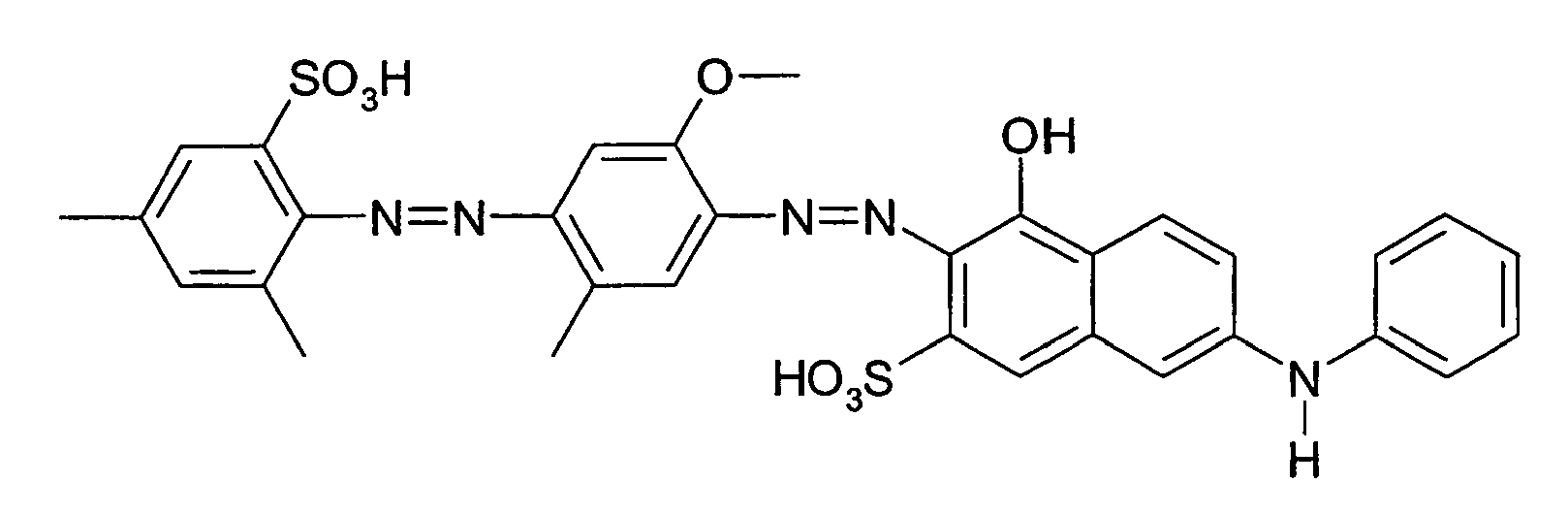
- 410 g of concentrated dye solution are then admixed with 75 g of 2-(2-butoxyethoxy) ethanol, 15 g of triethanolamine and 0.75 g of biocide (Proxel GXL™; Proxel is a trade mark of Zeneca AG Products, Inc. and comprises 1,2-benzisothiazolin-3-one (CAS No.: 2634-33-5)) and diluted to 500 g with demineralized water and stirred until homogeneous.
The solution obtained is stable in storage in that it neither thickens nor separates under the following conditions: 2 days -20°C and thawing; 14 days at 0-5°C, at 25°C and at 50°C. - 410 g of the concentrated dye solution of Example 1 are admixed with 50 g of 2-(2-butoxyethoxy) ethanol, 25 g of triethanolamine and 0.75 g of biocide and diluted to 500 g with demineralized water and stirred until homogeneous.
- The solution obtained is stable in storage in that it neither thickens nor separates under the test conditions.
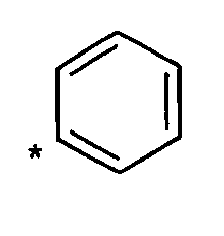
- Stable concentrated solutions of the following dyes are preparable in the same way as described in Examples 1 and 2:
Ex D M KK B n 3 


1 4 


1 5 


1 6 


1 7 


1 8 


H 1 9 


1 10 


1 11 


1 12 


1 13 


1 14 


1 15 


1 16 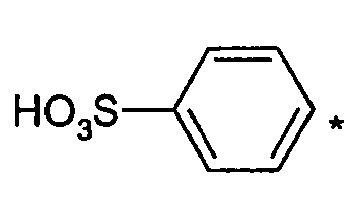


1 17 


2 18 


2 - 70 parts of chemically bleached pinewood sulphite cellulose and 30 parts of chemically bleached birchwood sulphite cellulose are beaten into 2000 parts of water in a hollander. 1.5 parts of the liquid dye preparation of Example 1 are added to the stuff. Paper is made therefrom after a mixing time of 20 minutes. The absorbent paper obtained in this way has a bluish violet colour.
- 1.5 parts of the liquid dye preparation of Example 1 are added to 100 parts of chemically bleached sulphite cellulose beaten with 2000 parts of water in a hollander. After mixing through for 15 minutes, customary sizing is effected using resin size and aluminium sulphate. Paper made from this material exhibits a bluish violet hue in each case.
- An absorbent web of unsized paper is pulled at 40-50°C through an aqueous dye solution consisting of 95 parts of water and 5 parts of the inventive dye solution of Example 1.
- Excess dye solution is squeezed by two rolls. The dried web of paper has a bluish violet colour in each case.
- The dye preparations of Examples 2 to 18 can be used for dyeing similarly to prescriptions A to C.
- 5 parts of the dye preparation of Example 1 are metered into 4000 parts of softened water at room temperature. 100 parts of prewetted woven cotton fabric are introduced into the bath, followed by heating to the boil over 30 minutes. The bath is held at the boil for an hour during which evaporated water is made good from time to time. The dyeing is then removed from the liquor, rinsed with water and dried. The dyeing obtained has a bluish violet colour.
- The dye preparations of Examples 2-18 can be used for dyeing cotton in a similar manner.
- 100 parts of freshly tanned and neutralized chrome grain leather are drummed for 30 minutes in a float of 250 parts of water at 55°C and 0.5 part of the dye preparation made according to Example 1 and are treated for a further 30 minutes in the same bath with 2 parts of an anionic fatliquor based on sulphonated fish oil. The leathers are conventionally dried and finished. The leather obtained has a level scarlet hue.
- Further low-affmity, vegetable-retanned leathers can likewise be dyed according to known methods.
- Dyeing can be done in a similar manner with the dyes of Examples 2-18.

or when n = 2 B is a bridge of the formula


and 2-(2-butoxyethoxy) ethanol.
Claims (10)
- Concentrated aqueous solutions of anionic disazo dyes, comprising salts and or the free acids of anionic dyes of the formula
 D is a radical of the formula (a)
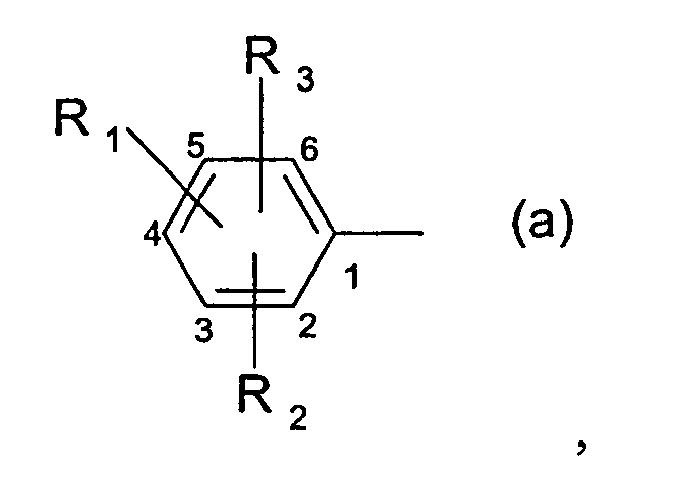 R1, R2, R3, are independently H; C1-4alkyl; C1-4alkoxy, -SO3H; -OH or -CN; or independently -SO2-Y or -O-Y, wherein Y is an unsubstituted C1-4-alkenyl group or an unsubstituted C1-4alkyl group or wherein Y is an NC-, HO-, HOSO3-, halogen-substituted C1-4- alkenyl group or an NC-, HO-, HOSO3-, halogen-substituted C1-4alkyl group or Y is -NR11R12 where R11 and R12 are independently H, C1-4alkyl or substituted C1-4alkyl or combine with the interjacent nitrogen to form a five- or six-membered ring which may comprise one or two or three heteroatoms (one or two N, O or S atoms in addition to the nitrogen), in which case the heterocyclic ring is unsubstituted or the heterocyclic ring is substituted by one or two C1-4alkyl groups,or D is a bicyclic ring system which may be substituted with C1-4alkoxy, -SO3H; -OH or -CN; or independently -SO2-Y or -O-Y, wherein Y is an unsubstituted C1-4-alkenyl group or an unsubstituted C1-4alkyl group or wherein Y is an NC-, HO-, HOSO3-, halogen-substituted C1-4-alkenyl group or an NC-, HO-, HOSO3-, halogen-substituted C1-4alkyl group or Y is -NR11R12 where R11 and R12 are each as defined above, wherein each of the rings can independently be a five-membered or six- membered ring and these five- or six-membered rings, which may include one or two or three heteroatoms (one or two N, O or S atoms in addition to nitrogen) and this bicyclic ring system is not further substituted by substituents attached via azo groups, andM is a bridging phenyl group which may be unsubstituted or substituted by C1-4alkyl, C1-4alkoxy, hydroxyl, carboxyl, sulpho, cyano or halogen, andwhen n = 1 B is hydrogen, an unsubstituted aryl radical, a substituted aryl radical, or a substituted triazine derivative having the formula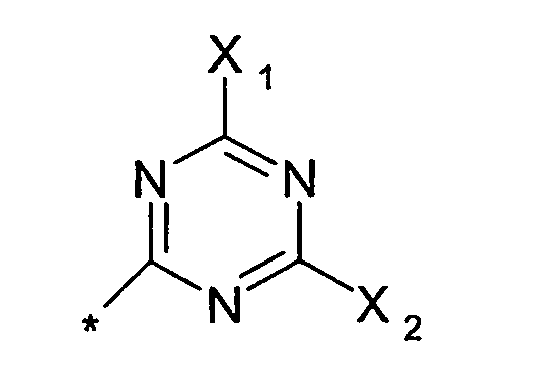
or when n = 2 B is a bridge of the formula

and 2-(2-butoxyethoxy) ethanol. - Concentrated aqueous solutions of anionic disazo dyes according to Claim 1, characterized in that the dye of the formula I is a dye of the formula I'

- Concentrated aqueous solutions of anionic disazo dyes according to Claim 1, characterized in thatD is a radical of the formula (a')

R1, R2, R3, are independently H; C1-4alkyl C1-4 alkoxy; -SO3H; -OH or -CN;M is a bridging phenyl group which may be unsubstituted or substituted by C1-4alkyl, C1-4alkoxy; sulpho, carboxyl, hydroxyl andB is H, an unsubstituted phenyl group or substituted phenyl group or a substituted triazine derivative of the formulawhere X1 and X2 are independently as defined above and n = 1.
- Concentrated aqueous solutions according to any one of Claims 1 to 3, characterized in that they comprise 5% to 40% by weight of the dye of the formula I, 5-40% by weight of 2-(2-butoxyethoxy) ethanol and 20% to 90% by weight of water.
- Concentrated aqueous solutions according to Claim 4, characterized in that they comprise 5% to 40% by weight of the dye of the formula I, 5% to 40% by weight of 2-(2-butoxyethoxy) ethanol and 3-10% by weight of a water-soluble organic solubilizer and 10% to 88% by weight of water.
- Concentrated aqueous solutions according to Claim 5, characterized in that they comprise 10% to 30% by weight of the dye of the formula I, 10% to 30% by weight of 2-(2-butoxyethoxy) ethanol and 3-6% by weight of a water-soluble organic solubilizer and 34% to 77% by weight of water.
- Inkjet inks characterized in that they comprise solutions according to any one of Claims 1 to 6.
- Use of solutions according to any one of Claims 1 to 6 for dyeing and/or printing hydroxyl-containing substrates and for producing inkjet inks.
- Hydroxyl-containing substrates characterized in that they have been dyed or printed with solutions according to any one of Claims 1 to 6.
- Hydroxyl-containing substrates according to Claim 9 characterized in that the hydroxyl-containing substrates are paper.
Priority Applications (3)
| Application Number | Priority Date | Filing Date | Title |
|---|---|---|---|
| PL05737968T PL1753824T3 (en) | 2004-05-19 | 2005-05-12 | Stable liquid formulations of anionic dyes |
| SI200531163T SI1753824T1 (en) | 2004-05-19 | 2005-05-12 | Stable liquid formulations of anionic dyes |
| EP05737968A EP1753824B1 (en) | 2004-05-19 | 2005-05-12 | Stable liquid formulations of anionic dyes |
Applications Claiming Priority (3)
| Application Number | Priority Date | Filing Date | Title |
|---|---|---|---|
| EP04011857 | 2004-05-19 | ||
| EP05737968A EP1753824B1 (en) | 2004-05-19 | 2005-05-12 | Stable liquid formulations of anionic dyes |
| PCT/IB2005/001400 WO2005113684A1 (en) | 2004-05-19 | 2005-05-12 | Stable liquid formulations of anionic dyes |
Publications (2)
| Publication Number | Publication Date |
|---|---|
| EP1753824A1 EP1753824A1 (en) | 2007-02-21 |
| EP1753824B1 true EP1753824B1 (en) | 2010-09-29 |
Family
ID=34925060
Family Applications (1)
| Application Number | Title | Priority Date | Filing Date |
|---|---|---|---|
| EP05737968A Expired - Lifetime EP1753824B1 (en) | 2004-05-19 | 2005-05-12 | Stable liquid formulations of anionic dyes |
Country Status (15)
| Country | Link |
|---|---|
| US (1) | US7553359B2 (en) |
| EP (1) | EP1753824B1 (en) |
| JP (1) | JP2007538128A (en) |
| KR (1) | KR101184835B1 (en) |
| CN (1) | CN1965035B (en) |
| AT (1) | ATE483001T1 (en) |
| BR (1) | BRPI0511438A (en) |
| DE (1) | DE602005023860D1 (en) |
| ES (1) | ES2350727T3 (en) |
| NO (1) | NO20064840L (en) |
| PL (1) | PL1753824T3 (en) |
| PT (1) | PT1753824E (en) |
| SI (1) | SI1753824T1 (en) |
| TW (1) | TWI371475B (en) |
| WO (1) | WO2005113684A1 (en) |
Families Citing this family (3)
| Publication number | Priority date | Publication date | Assignee | Title |
|---|---|---|---|---|
| KR101206593B1 (en) * | 2003-12-04 | 2012-11-29 | 클라리언트 파이넌스 (비브이아이)리미티드 | Concentrated aqueous compositions of dyestuffs |
| EP2152813B1 (en) * | 2007-05-23 | 2012-09-12 | Clariant Finance (BVI) Limited | Stable liquid formulation |
| EP2717074B8 (en) * | 2011-05-30 | 2019-05-22 | Nippon Kayaku Kabushiki Kaisha | Dye-based polarizing element and polarizing plate |
Family Cites Families (21)
| Publication number | Priority date | Publication date | Assignee | Title |
|---|---|---|---|---|
| DE2209478C3 (en) * | 1972-02-29 | 1975-04-10 | Basf Ag, 6700 Ludwigshafen | Process for the preparation of concentrated solutions of metal-free anionic azo dyes containing sulfonic acid groups |
| US4654045A (en) * | 1985-05-03 | 1987-03-31 | Crompton & Knowles Corporation | Process for preparation of concentrated anionic red dye solutions |
| EP0276534A1 (en) | 1987-01-30 | 1988-08-03 | CROMPTON & KNOWLES CORPORATION | Process for the preparation of concentrated anionic red dye solutions |
| JPH0696827B2 (en) * | 1986-08-22 | 1994-11-30 | 日本化薬株式会社 | Substrate dyeing method using disazo compound |
| JPH0762112B2 (en) * | 1987-03-31 | 1995-07-05 | 日本化薬株式会社 | Disazo compound and dyeing method of substrate using the same |
| JPH02127483A (en) | 1988-11-07 | 1990-05-16 | Mitsubishi Kasei Corp | recording liquid |
| DE59108072D1 (en) * | 1990-10-04 | 1996-09-19 | Ciba Geigy Ag | Concentrated aqueous solutions of anionic disazo dyes |
| EP0514330B1 (en) * | 1991-05-15 | 1996-07-17 | Ciba-Geigy Ag | Azodyes |
| ES2104881T3 (en) * | 1991-09-26 | 1997-10-16 | Ciba Geigy Ag | PROCEDURE FOR DYING PAPER WITH DIAZOIC DYES. |
| EP0565286B1 (en) | 1992-04-10 | 1996-05-29 | Zeneca Limited | Dye compositions and ink-jet printing ink |
| US5487761A (en) * | 1993-04-29 | 1996-01-30 | Ciba-Geigy Corporation | Process for dyeing paper with disazo dyes |
| GB9509159D0 (en) * | 1995-05-05 | 1995-06-28 | Sandoz Ltd | Organic compounds |
| US5795970A (en) | 1995-08-25 | 1998-08-18 | Orient Chemical Industries, Ltd. | Mixed disazo-dye composition and black aqueous ink composition containing the same that provides high grade image on print |
| JP3781859B2 (en) | 1997-04-16 | 2006-05-31 | セイコーエプソン株式会社 | Ink composition and recording method using the same |
| DE19753223A1 (en) * | 1997-12-01 | 1999-06-02 | Bayer Ag | Disazo dyes |
| GB9812119D0 (en) * | 1998-06-05 | 1998-08-05 | Zeneca Ltd | Composition |
| JP4004199B2 (en) * | 1999-02-25 | 2007-11-07 | 三菱化学株式会社 | Disazo dye, recording liquid using the same, ink jet recording liquid, and ink jet recording method |
| JP2003246950A (en) | 2002-02-26 | 2003-09-05 | Sony Corp | Ink for inkjet printer |
| JP4452429B2 (en) | 2002-04-03 | 2010-04-21 | 富士フイルム株式会社 | Ink set for ink jet recording and ink jet recording method |
| JP2004075766A (en) * | 2002-08-13 | 2004-03-11 | Konica Minolta Holdings Inc | Inkjet ink, inkjet ink set and method for inkjet recording |
| US20070083040A1 (en) * | 2003-10-27 | 2007-04-12 | Ludwig Hasemann | Storagestable concentrated aqueous solutions of anionic dis-or tetrazo dyestuffs |
-
2005
- 2005-05-12 PT PT05737968T patent/PT1753824E/en unknown
- 2005-05-12 PL PL05737968T patent/PL1753824T3/en unknown
- 2005-05-12 WO PCT/IB2005/001400 patent/WO2005113684A1/en not_active Ceased
- 2005-05-12 JP JP2007517497A patent/JP2007538128A/en active Pending
- 2005-05-12 DE DE602005023860T patent/DE602005023860D1/en not_active Expired - Lifetime
- 2005-05-12 KR KR1020067024160A patent/KR101184835B1/en not_active Expired - Fee Related
- 2005-05-12 AT AT05737968T patent/ATE483001T1/en active
- 2005-05-12 CN CN2005800162467A patent/CN1965035B/en not_active Expired - Fee Related
- 2005-05-12 EP EP05737968A patent/EP1753824B1/en not_active Expired - Lifetime
- 2005-05-12 ES ES05737968T patent/ES2350727T3/en not_active Expired - Lifetime
- 2005-05-12 BR BRPI0511438-1A patent/BRPI0511438A/en not_active Application Discontinuation
- 2005-05-12 SI SI200531163T patent/SI1753824T1/en unknown
- 2005-05-12 US US11/596,941 patent/US7553359B2/en not_active Expired - Lifetime
- 2005-05-17 TW TW094115934A patent/TWI371475B/en not_active IP Right Cessation
-
2006
- 2006-10-25 NO NO20064840A patent/NO20064840L/en not_active Application Discontinuation
Also Published As
| Publication number | Publication date |
|---|---|
| CN1965035B (en) | 2012-05-30 |
| SI1753824T1 (en) | 2010-12-31 |
| US20080194815A1 (en) | 2008-08-14 |
| WO2005113684A1 (en) | 2005-12-01 |
| DE602005023860D1 (en) | 2010-11-11 |
| HK1102131A1 (en) | 2007-11-09 |
| PT1753824E (en) | 2010-11-19 |
| PL1753824T3 (en) | 2010-12-31 |
| KR20070015583A (en) | 2007-02-05 |
| ES2350727T3 (en) | 2011-01-26 |
| BRPI0511438A (en) | 2007-12-26 |
| TW200613463A (en) | 2006-05-01 |
| TWI371475B (en) | 2012-09-01 |
| CN1965035A (en) | 2007-05-16 |
| KR101184835B1 (en) | 2012-09-20 |
| ATE483001T1 (en) | 2010-10-15 |
| JP2007538128A (en) | 2007-12-27 |
| US7553359B2 (en) | 2009-06-30 |
| NO20064840L (en) | 2007-02-13 |
| EP1753824A1 (en) | 2007-02-21 |
Similar Documents
| Publication | Publication Date | Title |
|---|---|---|
| US20070083040A1 (en) | Storagestable concentrated aqueous solutions of anionic dis-or tetrazo dyestuffs | |
| US7553359B2 (en) | Stable liquid formulations of anionic dyes | |
| EP2152813B1 (en) | Stable liquid formulation | |
| EP1716211B1 (en) | Concentrated aqueous compositions of dyestuffs | |
| KR101083559B1 (en) | Concentrated dye solution | |
| JPH0853627A (en) | Azo dyes and their production and use | |
| HK1102131B (en) | Stable liquid formulations of anionic dyes | |
| HK1098495B (en) | Storagestable concentrated aqueous solutions of anionic dis- or tetrazo dyestuffs | |
| CA1062702A (en) | Disazo dyes | |
| HK1144295B (en) | Stable liquid formulation | |
| WO2007042767A2 (en) | A yellow dye and a process for ink jet printing using the dye | |
| HK1103100B (en) | Concentrated dye solutions | |
| US20170022366A1 (en) | Storage-stable dye solutions |
Legal Events
| Date | Code | Title | Description |
|---|---|---|---|
| PUAI | Public reference made under article 153(3) epc to a published international application that has entered the european phase |
Free format text: ORIGINAL CODE: 0009012 |
|
| 17P | Request for examination filed |
Effective date: 20061219 |
|
| AK | Designated contracting states |
Kind code of ref document: A1 Designated state(s): AT BE BG CH CY CZ DE DK EE ES FI FR GB GR HU IE IS IT LI LT LU MC NL PL PT RO SE SI SK TR |
|
| RAP1 | Party data changed (applicant data changed or rights of an application transferred) |
Owner name: CLARIANT FINANCE (BVI) LIMITED |
|
| DAX | Request for extension of the european patent (deleted) | ||
| GRAP | Despatch of communication of intention to grant a patent |
Free format text: ORIGINAL CODE: EPIDOSNIGR1 |
|
| GRAS | Grant fee paid |
Free format text: ORIGINAL CODE: EPIDOSNIGR3 |
|
| GRAA | (expected) grant |
Free format text: ORIGINAL CODE: 0009210 |
|
| RBV | Designated contracting states (corrected) |
Designated state(s): AT BE CH CZ DE ES FI FR GB HU IE IT LI NL PL PT SE SI SK TR |
|
| AK | Designated contracting states |
Kind code of ref document: B1 Designated state(s): AT BE CH CZ DE ES FI FR GB HU IE IT LI NL PL PT SE SI SK TR |
|
| REG | Reference to a national code |
Ref country code: GB Ref legal event code: FG4D |
|
| REG | Reference to a national code |
Ref country code: CH Ref legal event code: EP |
|
| REG | Reference to a national code |
Ref country code: IE Ref legal event code: FG4D |
|
| REF | Corresponds to: |
Ref document number: 602005023860 Country of ref document: DE Date of ref document: 20101111 Kind code of ref document: P |
|
| REG | Reference to a national code |
Ref country code: SE Ref legal event code: TRGR |
|
| REG | Reference to a national code |
Ref country code: PT Ref legal event code: SC4A Free format text: AVAILABILITY OF NATIONAL TRANSLATION Effective date: 20101112 |
|
| REG | Reference to a national code |
Ref country code: NL Ref legal event code: T3 |
|
| REG | Reference to a national code |
Ref country code: ES Ref legal event code: FG2A Effective date: 20110114 |
|
| REG | Reference to a national code |
Ref country code: SK Ref legal event code: T3 Ref document number: E 8396 Country of ref document: SK |
|
| REG | Reference to a national code |
Ref country code: HU Ref legal event code: AG4A Ref document number: E009165 Country of ref document: HU |
|
| PLBE | No opposition filed within time limit |
Free format text: ORIGINAL CODE: 0009261 |
|
| STAA | Information on the status of an ep patent application or granted ep patent |
Free format text: STATUS: NO OPPOSITION FILED WITHIN TIME LIMIT |
|
| REG | Reference to a national code |
Ref country code: DE Ref legal event code: R097 Ref document number: 602005023860 Country of ref document: DE Effective date: 20110630 |
|
| PGFP | Annual fee paid to national office [announced via postgrant information from national office to epo] |
Ref country code: IE Payment date: 20140523 Year of fee payment: 10 |
|
| PGFP | Annual fee paid to national office [announced via postgrant information from national office to epo] |
Ref country code: SI Payment date: 20140423 Year of fee payment: 10 Ref country code: CZ Payment date: 20140506 Year of fee payment: 10 Ref country code: SK Payment date: 20140509 Year of fee payment: 10 |
|
| PGFP | Annual fee paid to national office [announced via postgrant information from national office to epo] |
Ref country code: BE Payment date: 20140626 Year of fee payment: 10 |
|
| PGFP | Annual fee paid to national office [announced via postgrant information from national office to epo] |
Ref country code: HU Payment date: 20140709 Year of fee payment: 10 |
|
| PGFP | Annual fee paid to national office [announced via postgrant information from national office to epo] |
Ref country code: PL Payment date: 20140509 Year of fee payment: 10 |
|
| REG | Reference to a national code |
Ref country code: SK Ref legal event code: MM4A Ref document number: E 8396 Country of ref document: SK Effective date: 20150512 |
|
| REG | Reference to a national code |
Ref country code: IE Ref legal event code: MM4A |
|
| PG25 | Lapsed in a contracting state [announced via postgrant information from national office to epo] |
Ref country code: SK Free format text: LAPSE BECAUSE OF NON-PAYMENT OF DUE FEES Effective date: 20150512 Ref country code: SI Free format text: LAPSE BECAUSE OF NON-PAYMENT OF DUE FEES Effective date: 20150513 Ref country code: CZ Free format text: LAPSE BECAUSE OF NON-PAYMENT OF DUE FEES Effective date: 20150512 |
|
| REG | Reference to a national code |
Ref country code: SI Ref legal event code: KO00 Effective date: 20160112 |
|
| REG | Reference to a national code |
Ref country code: PT Ref legal event code: PC4A Owner name: , CH Effective date: 20160229 |
|
| PG25 | Lapsed in a contracting state [announced via postgrant information from national office to epo] |
Ref country code: IE Free format text: LAPSE BECAUSE OF NON-PAYMENT OF DUE FEES Effective date: 20150512 |
|
| REG | Reference to a national code |
Ref country code: FR Ref legal event code: PLFP Year of fee payment: 12 |
|
| PG25 | Lapsed in a contracting state [announced via postgrant information from national office to epo] |
Ref country code: HU Free format text: LAPSE BECAUSE OF NON-PAYMENT OF DUE FEES Effective date: 20150513 |
|
| REG | Reference to a national code |
Ref country code: ES Ref legal event code: PC2A Owner name: ARCHROMA IP GMBH Effective date: 20160614 |
|
| REG | Reference to a national code |
Ref country code: FR Ref legal event code: TP Owner name: ARCHROMA IP GMBH, CH Effective date: 20160708 |
|
| PG25 | Lapsed in a contracting state [announced via postgrant information from national office to epo] |
Ref country code: PL Free format text: LAPSE BECAUSE OF NON-PAYMENT OF DUE FEES Effective date: 20150512 |
|
| REG | Reference to a national code |
Ref country code: CH Ref legal event code: PUE Owner name: ARCHROMA IP GMBH, CH Free format text: FORMER OWNER: CLARIANT FINANCE (BVI) LIMITED, VG |
|
| REG | Reference to a national code |
Ref country code: NL Ref legal event code: PD Owner name: ARCHROMA IP GMBH; CH Free format text: DETAILS ASSIGNMENT: VERANDERING VAN EIGENAAR(S), OVERDRACHT; FORMER OWNER NAME: CLARIANT FINANCE (BVI) LIMITED Effective date: 20160825 |
|
| REG | Reference to a national code |
Ref country code: DE Ref legal event code: R082 Ref document number: 602005023860 Country of ref document: DE Representative=s name: WALLINGER RICKER SCHLOTTER TOSTMANN PATENT- UN, DE Ref country code: DE Ref legal event code: R081 Ref document number: 602005023860 Country of ref document: DE Owner name: ARCHROMA IP GMBH, CH Free format text: FORMER OWNER: CLARIANT FINANCE (BVI) LTD., ROAD TOWN, TORTOLA, VG |
|
| REG | Reference to a national code |
Ref country code: GB Ref legal event code: 732E Free format text: REGISTERED BETWEEN 20170119 AND 20170125 |
|
| REG | Reference to a national code |
Ref country code: AT Ref legal event code: PC Ref document number: 483001 Country of ref document: AT Kind code of ref document: T Owner name: ARCHROMA IP GMBH, CH Effective date: 20170126 |
|
| REG | Reference to a national code |
Ref country code: FR Ref legal event code: PLFP Year of fee payment: 13 |
|
| PG25 | Lapsed in a contracting state [announced via postgrant information from national office to epo] |
Ref country code: BE Free format text: LAPSE BECAUSE OF NON-PAYMENT OF DUE FEES Effective date: 20150531 |
|
| REG | Reference to a national code |
Ref country code: FR Ref legal event code: PLFP Year of fee payment: 14 |
|
| REG | Reference to a national code |
Ref country code: NL Ref legal event code: MM Effective date: 20190601 |
|
| PG25 | Lapsed in a contracting state [announced via postgrant information from national office to epo] |
Ref country code: NL Free format text: LAPSE BECAUSE OF NON-PAYMENT OF DUE FEES Effective date: 20190601 |
|
| PGFP | Annual fee paid to national office [announced via postgrant information from national office to epo] |
Ref country code: ES Payment date: 20220614 Year of fee payment: 18 |
|
| PGFP | Annual fee paid to national office [announced via postgrant information from national office to epo] |
Ref country code: PT Payment date: 20230421 Year of fee payment: 19 Ref country code: IT Payment date: 20230525 Year of fee payment: 19 Ref country code: FR Payment date: 20230523 Year of fee payment: 19 Ref country code: DE Payment date: 20230530 Year of fee payment: 19 Ref country code: CH Payment date: 20230602 Year of fee payment: 19 |
|
| PGFP | Annual fee paid to national office [announced via postgrant information from national office to epo] |
Ref country code: TR Payment date: 20230425 Year of fee payment: 19 Ref country code: SE Payment date: 20230524 Year of fee payment: 19 Ref country code: FI Payment date: 20230526 Year of fee payment: 19 Ref country code: AT Payment date: 20230519 Year of fee payment: 19 |
|
| PGFP | Annual fee paid to national office [announced via postgrant information from national office to epo] |
Ref country code: GB Payment date: 20230523 Year of fee payment: 19 |
|
| REG | Reference to a national code |
Ref country code: CH Ref legal event code: PK Free format text: BERICHTIGUNGEN |
|
| REG | Reference to a national code |
Ref country code: ES Ref legal event code: FD2A Effective date: 20240628 |
|
| PG25 | Lapsed in a contracting state [announced via postgrant information from national office to epo] |
Ref country code: ES Free format text: LAPSE BECAUSE OF NON-PAYMENT OF DUE FEES Effective date: 20230513 |
|
| PG25 | Lapsed in a contracting state [announced via postgrant information from national office to epo] |
Ref country code: ES Free format text: LAPSE BECAUSE OF NON-PAYMENT OF DUE FEES Effective date: 20230513 |
|
| REG | Reference to a national code |
Ref country code: DE Ref legal event code: R119 Ref document number: 602005023860 Country of ref document: DE |
|
| PG25 | Lapsed in a contracting state [announced via postgrant information from national office to epo] |
Ref country code: PT Free format text: LAPSE BECAUSE OF NON-PAYMENT OF DUE FEES Effective date: 20241112 |
|
| REG | Reference to a national code |
Ref country code: CH Ref legal event code: PL |
|
| PG25 | Lapsed in a contracting state [announced via postgrant information from national office to epo] |
Ref country code: PT Free format text: LAPSE BECAUSE OF NON-PAYMENT OF DUE FEES Effective date: 20241112 |
|
| REG | Reference to a national code |
Ref country code: SE Ref legal event code: EUG |
|
| REG | Reference to a national code |
Ref country code: AT Ref legal event code: MM01 Ref document number: 483001 Country of ref document: AT Kind code of ref document: T Effective date: 20240512 |
|
| PG25 | Lapsed in a contracting state [announced via postgrant information from national office to epo] |
Ref country code: FI Free format text: LAPSE BECAUSE OF NON-PAYMENT OF DUE FEES Effective date: 20240512 |
|
| PG25 | Lapsed in a contracting state [announced via postgrant information from national office to epo] |
Ref country code: AT Free format text: LAPSE BECAUSE OF NON-PAYMENT OF DUE FEES Effective date: 20240512 |
|
| GBPC | Gb: european patent ceased through non-payment of renewal fee |
Effective date: 20240512 |
|
| PG25 | Lapsed in a contracting state [announced via postgrant information from national office to epo] |
Ref country code: FI Free format text: LAPSE BECAUSE OF NON-PAYMENT OF DUE FEES Effective date: 20240512 Ref country code: AT Free format text: LAPSE BECAUSE OF NON-PAYMENT OF DUE FEES Effective date: 20240512 Ref country code: CH Free format text: LAPSE BECAUSE OF NON-PAYMENT OF DUE FEES Effective date: 20240531 |
|
| PG25 | Lapsed in a contracting state [announced via postgrant information from national office to epo] |
Ref country code: DE Free format text: LAPSE BECAUSE OF NON-PAYMENT OF DUE FEES Effective date: 20241203 |
|
| PG25 | Lapsed in a contracting state [announced via postgrant information from national office to epo] |
Ref country code: FR Free format text: LAPSE BECAUSE OF NON-PAYMENT OF DUE FEES Effective date: 20240531 |
|
| PG25 | Lapsed in a contracting state [announced via postgrant information from national office to epo] |
Ref country code: IT Free format text: LAPSE BECAUSE OF NON-PAYMENT OF DUE FEES Effective date: 20240512 Ref country code: GB Free format text: LAPSE BECAUSE OF NON-PAYMENT OF DUE FEES Effective date: 20240512 |
|
| PG25 | Lapsed in a contracting state [announced via postgrant information from national office to epo] |
Ref country code: PT Free format text: LAPSE BECAUSE OF EXPIRATION OF PROTECTION Effective date: 20250521 |
|
| PG25 | Lapsed in a contracting state [announced via postgrant information from national office to epo] |
Ref country code: PT Free format text: LAPSE BECAUSE OF NON-PAYMENT OF DUE FEES Effective date: 20240512 |
|
| PG25 | Lapsed in a contracting state [announced via postgrant information from national office to epo] |
Ref country code: SE Free format text: LAPSE BECAUSE OF NON-PAYMENT OF DUE FEES Effective date: 20240513 |