EP1753454B1 - Vaccine for periodontal disease - Google Patents
Vaccine for periodontal disease Download PDFInfo
- Publication number
- EP1753454B1 EP1753454B1 EP05718305A EP05718305A EP1753454B1 EP 1753454 B1 EP1753454 B1 EP 1753454B1 EP 05718305 A EP05718305 A EP 05718305A EP 05718305 A EP05718305 A EP 05718305A EP 1753454 B1 EP1753454 B1 EP 1753454B1
- Authority
- EP
- European Patent Office
- Prior art keywords
- artificial sequence
- dna
- sequence
- denticanis
- gulae
- Prior art date
- Legal status (The legal status is an assumption and is not a legal conclusion. Google has not performed a legal analysis and makes no representation as to the accuracy of the status listed.)
- Expired - Lifetime
Links
- 229960005486 vaccine Drugs 0.000 title claims description 111
- 208000028169 periodontal disease Diseases 0.000 title claims description 51
- 241000785903 Odoribacter denticanis Species 0.000 claims description 152
- 241000162745 Porphyromonas gulae Species 0.000 claims description 149
- 241001465754 Metazoa Species 0.000 claims description 83
- 241000894006 Bacteria Species 0.000 claims description 58
- 241001135241 Porphyromonas macacae Species 0.000 claims description 50
- 239000000203 mixture Substances 0.000 claims description 43
- WSFSSNUMVMOOMR-UHFFFAOYSA-N Formaldehyde Chemical compound O=C WSFSSNUMVMOOMR-UHFFFAOYSA-N 0.000 claims description 26
- 238000002360 preparation method Methods 0.000 claims description 20
- 239000003937 drug carrier Substances 0.000 claims description 10
- 241000701114 Canine adenovirus 2 Species 0.000 claims description 8
- 241000711506 Canine coronavirus Species 0.000 claims description 8
- 241000712083 Canine morbillivirus Species 0.000 claims description 8
- 241001353878 Canine parainfluenza virus Species 0.000 claims description 8
- 241000701931 Canine parvovirus Species 0.000 claims description 8
- 238000004519 manufacturing process Methods 0.000 claims description 8
- 239000003814 drug Substances 0.000 claims description 4
- 108020004414 DNA Proteins 0.000 description 178
- 108020004465 16S ribosomal RNA Proteins 0.000 description 102
- 108090000765 processed proteins & peptides Proteins 0.000 description 101
- 102000004196 processed proteins & peptides Human genes 0.000 description 100
- 229920001184 polypeptide Polymers 0.000 description 95
- 101150043770 fimA gene Proteins 0.000 description 65
- 206010065687 Bone loss Diseases 0.000 description 61
- 101150014100 pilA gene Proteins 0.000 description 60
- 102000040430 polynucleotide Human genes 0.000 description 60
- 108091033319 polynucleotide Proteins 0.000 description 60
- 239000002157 polynucleotide Substances 0.000 description 60
- 241000282472 Canis lupus familiaris Species 0.000 description 59
- 238000003752 polymerase chain reaction Methods 0.000 description 55
- 210000004027 cell Anatomy 0.000 description 54
- 108090000623 proteins and genes Proteins 0.000 description 52
- 101000986239 Streptococcus parasanguinis Manganese ABC transporter substrate-binding lipoprotein Proteins 0.000 description 46
- 241000699670 Mus sp. Species 0.000 description 43
- 241000605894 Porphyromonas Species 0.000 description 40
- 241001148530 Porphyromonas circumdentaria Species 0.000 description 40
- 239000002671 adjuvant Substances 0.000 description 34
- 238000000034 method Methods 0.000 description 33
- 230000001580 bacterial effect Effects 0.000 description 32
- 108091028043 Nucleic acid sequence Proteins 0.000 description 31
- 241000605862 Porphyromonas gingivalis Species 0.000 description 31
- 210000000988 bone and bone Anatomy 0.000 description 30
- 101150071603 oprF gene Proteins 0.000 description 30
- 239000000047 product Substances 0.000 description 30
- 239000012634 fragment Substances 0.000 description 29
- 102000004169 proteins and genes Human genes 0.000 description 29
- 239000002953 phosphate buffered saline Substances 0.000 description 28
- 235000018102 proteins Nutrition 0.000 description 27
- 241000894007 species Species 0.000 description 27
- 201000010099 disease Diseases 0.000 description 24
- 208000037265 diseases, disorders, signs and symptoms Diseases 0.000 description 24
- 239000013612 plasmid Substances 0.000 description 24
- 241001509393 Porphyromonas cangingivalis Species 0.000 description 23
- 125000003729 nucleotide group Chemical group 0.000 description 22
- 239000013615 primer Substances 0.000 description 22
- 239000002773 nucleotide Substances 0.000 description 21
- 239000013598 vector Substances 0.000 description 21
- 241000878522 Porphyromonas crevioricanis Species 0.000 description 20
- 241001135213 Porphyromonas endodontalis Species 0.000 description 20
- 208000015181 infectious disease Diseases 0.000 description 19
- 239000000523 sample Substances 0.000 description 19
- 238000012360 testing method Methods 0.000 description 19
- 230000014509 gene expression Effects 0.000 description 17
- FAPWRFPIFSIZLT-UHFFFAOYSA-M Sodium chloride Chemical compound [Na+].[Cl-] FAPWRFPIFSIZLT-UHFFFAOYSA-M 0.000 description 15
- 238000004925 denaturation Methods 0.000 description 15
- 230000036425 denaturation Effects 0.000 description 15
- 238000005516 engineering process Methods 0.000 description 15
- 238000011282 treatment Methods 0.000 description 15
- 230000003321 amplification Effects 0.000 description 14
- 238000006243 chemical reaction Methods 0.000 description 14
- 239000013604 expression vector Substances 0.000 description 14
- 238000003199 nucleic acid amplification method Methods 0.000 description 14
- 241000282326 Felis catus Species 0.000 description 13
- 230000002163 immunogen Effects 0.000 description 13
- 102000053602 DNA Human genes 0.000 description 12
- 241000282414 Homo sapiens Species 0.000 description 12
- 238000004458 analytical method Methods 0.000 description 12
- HVYWMOMLDIMFJA-DPAQBDIFSA-N cholesterol Chemical compound C1C=C2C[C@@H](O)CC[C@]2(C)[C@@H]2[C@@H]1[C@@H]1CC[C@H]([C@H](C)CCCC(C)C)[C@@]1(C)CC2 HVYWMOMLDIMFJA-DPAQBDIFSA-N 0.000 description 12
- 238000010367 cloning Methods 0.000 description 12
- 238000009472 formulation Methods 0.000 description 12
- 102000039446 nucleic acids Human genes 0.000 description 12
- 108020004707 nucleic acids Proteins 0.000 description 12
- 150000007523 nucleic acids Chemical class 0.000 description 12
- 230000003239 periodontal effect Effects 0.000 description 12
- 241000672609 Escherichia coli BL21 Species 0.000 description 11
- 241000282412 Homo Species 0.000 description 11
- 239000000427 antigen Substances 0.000 description 11
- 102000036639 antigens Human genes 0.000 description 11
- 108091007433 antigens Proteins 0.000 description 11
- 239000002609 medium Substances 0.000 description 11
- 241000606125 Bacteroides Species 0.000 description 10
- 241000699666 Mus <mouse, genus> Species 0.000 description 10
- 208000005888 Periodontal Pocket Diseases 0.000 description 10
- 125000003275 alpha amino acid group Chemical group 0.000 description 10
- 239000011780 sodium chloride Substances 0.000 description 10
- 238000002255 vaccination Methods 0.000 description 10
- 229920002134 Carboxymethyl cellulose Polymers 0.000 description 9
- SIKJAQJRHWYJAI-UHFFFAOYSA-N Indole Chemical compound C1=CC=C2NC=CC2=C1 SIKJAQJRHWYJAI-UHFFFAOYSA-N 0.000 description 9
- 241001135232 Odoribacter splanchnicus Species 0.000 description 9
- 238000000137 annealing Methods 0.000 description 9
- 239000000872 buffer Substances 0.000 description 9
- 239000001768 carboxy methyl cellulose Substances 0.000 description 9
- 235000010948 carboxy methyl cellulose Nutrition 0.000 description 9
- 239000008112 carboxymethyl-cellulose Substances 0.000 description 9
- 238000001514 detection method Methods 0.000 description 9
- 229940031689 heterologous vaccine Drugs 0.000 description 9
- 230000009885 systemic effect Effects 0.000 description 9
- 210000001519 tissue Anatomy 0.000 description 9
- 241000282465 Canis Species 0.000 description 8
- 238000012300 Sequence Analysis Methods 0.000 description 8
- 238000010790 dilution Methods 0.000 description 8
- 239000012895 dilution Substances 0.000 description 8
- 210000004195 gingiva Anatomy 0.000 description 8
- 238000005259 measurement Methods 0.000 description 8
- 230000009257 reactivity Effects 0.000 description 8
- 210000002966 serum Anatomy 0.000 description 8
- 239000003155 DNA primer Substances 0.000 description 7
- 238000002965 ELISA Methods 0.000 description 7
- 241001135235 Tannerella forsythia Species 0.000 description 7
- SRBFZHDQGSBBOR-UHFFFAOYSA-N beta-D-Pyranose-Lyxose Natural products OC1COC(O)C(O)C1O SRBFZHDQGSBBOR-UHFFFAOYSA-N 0.000 description 7
- 210000004262 dental pulp cavity Anatomy 0.000 description 7
- 230000012010 growth Effects 0.000 description 7
- 239000000463 material Substances 0.000 description 7
- 210000000214 mouth Anatomy 0.000 description 7
- 230000002829 reductive effect Effects 0.000 description 7
- KCXVZYZYPLLWCC-UHFFFAOYSA-N EDTA Chemical compound OC(=O)CN(CC(O)=O)CCN(CC(O)=O)CC(O)=O KCXVZYZYPLLWCC-UHFFFAOYSA-N 0.000 description 6
- PYMYPHUHKUWMLA-UHFFFAOYSA-N arabinose Natural products OCC(O)C(O)C(O)C=O PYMYPHUHKUWMLA-UHFFFAOYSA-N 0.000 description 6
- 230000002238 attenuated effect Effects 0.000 description 6
- 238000005119 centrifugation Methods 0.000 description 6
- 235000012000 cholesterol Nutrition 0.000 description 6
- 230000000295 complement effect Effects 0.000 description 6
- 229960001484 edetic acid Drugs 0.000 description 6
- 239000000499 gel Substances 0.000 description 6
- 239000001963 growth medium Substances 0.000 description 6
- 229940025294 hemin Drugs 0.000 description 6
- 238000009396 hybridization Methods 0.000 description 6
- RAXXELZNTBOGNW-UHFFFAOYSA-N imidazole Natural products C1=CNC=N1 RAXXELZNTBOGNW-UHFFFAOYSA-N 0.000 description 6
- 230000028993 immune response Effects 0.000 description 6
- 230000001965 increasing effect Effects 0.000 description 6
- 238000002347 injection Methods 0.000 description 6
- 239000007924 injection Substances 0.000 description 6
- BASFCYQUMIYNBI-UHFFFAOYSA-N platinum Chemical compound [Pt] BASFCYQUMIYNBI-UHFFFAOYSA-N 0.000 description 6
- 230000004224 protection Effects 0.000 description 6
- 241000588724 Escherichia coli Species 0.000 description 5
- 238000012408 PCR amplification Methods 0.000 description 5
- 239000003153 chemical reaction reagent Substances 0.000 description 5
- 238000011156 evaluation Methods 0.000 description 5
- 238000002474 experimental method Methods 0.000 description 5
- 230000003053 immunization Effects 0.000 description 5
- -1 length Chemical class 0.000 description 5
- 238000010369 molecular cloning Methods 0.000 description 5
- 239000013641 positive control Substances 0.000 description 5
- 238000000746 purification Methods 0.000 description 5
- 239000007787 solid Substances 0.000 description 5
- 208000024891 symptom Diseases 0.000 description 5
- 238000013518 transcription Methods 0.000 description 5
- 230000035897 transcription Effects 0.000 description 5
- 229940031418 trivalent vaccine Drugs 0.000 description 5
- 241001300301 uncultured bacterium Species 0.000 description 5
- 241001148471 unidentified anaerobic bacterium Species 0.000 description 5
- 239000003981 vehicle Substances 0.000 description 5
- 239000011712 vitamin K Substances 0.000 description 5
- 229940046010 vitamin k Drugs 0.000 description 5
- 208000001362 Fetal Growth Retardation Diseases 0.000 description 4
- 206010070531 Foetal growth restriction Diseases 0.000 description 4
- WQZGKKKJIJFFOK-GASJEMHNSA-N Glucose Chemical compound OC[C@H]1OC(O)[C@H](O)[C@@H](O)[C@@H]1O WQZGKKKJIJFFOK-GASJEMHNSA-N 0.000 description 4
- 206010061218 Inflammation Diseases 0.000 description 4
- TWRXJAOTZQYOKJ-UHFFFAOYSA-L Magnesium chloride Chemical compound [Mg+2].[Cl-].[Cl-] TWRXJAOTZQYOKJ-UHFFFAOYSA-L 0.000 description 4
- 241000700605 Viruses Species 0.000 description 4
- 235000001014 amino acid Nutrition 0.000 description 4
- 238000010876 biochemical test Methods 0.000 description 4
- 239000006161 blood agar Substances 0.000 description 4
- 230000037182 bone density Effects 0.000 description 4
- 230000001332 colony forming effect Effects 0.000 description 4
- 230000000694 effects Effects 0.000 description 4
- 239000013613 expression plasmid Substances 0.000 description 4
- 208000030941 fetal growth restriction Diseases 0.000 description 4
- 210000003731 gingival crevicular fluid Anatomy 0.000 description 4
- BTIJJDXEELBZFS-QDUVMHSLSA-K hemin Chemical compound CC1=C(CCC(O)=O)C(C=C2C(CCC(O)=O)=C(C)\C(N2[Fe](Cl)N23)=C\4)=N\C1=C/C2=C(C)C(C=C)=C3\C=C/1C(C)=C(C=C)C/4=N\1 BTIJJDXEELBZFS-QDUVMHSLSA-K 0.000 description 4
- 238000002649 immunization Methods 0.000 description 4
- 230000001939 inductive effect Effects 0.000 description 4
- 230000004054 inflammatory process Effects 0.000 description 4
- 230000003902 lesion Effects 0.000 description 4
- 230000001717 pathogenic effect Effects 0.000 description 4
- 239000008188 pellet Substances 0.000 description 4
- 201000001245 periodontitis Diseases 0.000 description 4
- 238000006116 polymerization reaction Methods 0.000 description 4
- 230000002265 prevention Effects 0.000 description 4
- 125000002924 primary amino group Chemical group [H]N([H])* 0.000 description 4
- 239000001488 sodium phosphate Substances 0.000 description 4
- 229910000162 sodium phosphate Inorganic materials 0.000 description 4
- 239000000243 solution Substances 0.000 description 4
- 238000006467 substitution reaction Methods 0.000 description 4
- RYFMWSXOAZQYPI-UHFFFAOYSA-K trisodium phosphate Chemical compound [Na+].[Na+].[Na+].[O-]P([O-])([O-])=O RYFMWSXOAZQYPI-UHFFFAOYSA-K 0.000 description 4
- XLYOFNOQVPJJNP-UHFFFAOYSA-N water Substances O XLYOFNOQVPJJNP-UHFFFAOYSA-N 0.000 description 4
- 229920001817 Agar Polymers 0.000 description 3
- 102000002260 Alkaline Phosphatase Human genes 0.000 description 3
- 108020004774 Alkaline Phosphatase Proteins 0.000 description 3
- 101000798396 Bacillus licheniformis Phenylalanine racemase [ATP hydrolyzing] Proteins 0.000 description 3
- 208000035143 Bacterial infection Diseases 0.000 description 3
- 241000605059 Bacteroidetes Species 0.000 description 3
- 238000009631 Broth culture Methods 0.000 description 3
- 241000589562 Brucella Species 0.000 description 3
- SRBFZHDQGSBBOR-IOVATXLUSA-N D-xylopyranose Chemical compound O[C@@H]1COC(O)[C@H](O)[C@H]1O SRBFZHDQGSBBOR-IOVATXLUSA-N 0.000 description 3
- 102000016928 DNA-directed DNA polymerase Human genes 0.000 description 3
- 108010014303 DNA-directed DNA polymerase Proteins 0.000 description 3
- 241000605986 Fusobacterium nucleatum Species 0.000 description 3
- 102000005720 Glutathione transferase Human genes 0.000 description 3
- 108010070675 Glutathione transferase Proteins 0.000 description 3
- 108060003951 Immunoglobulin Proteins 0.000 description 3
- 206010024769 Local reaction Diseases 0.000 description 3
- 241001644525 Nastus productus Species 0.000 description 3
- 206010055671 Necrotising ulcerative periodontitis Diseases 0.000 description 3
- 108700026244 Open Reading Frames Proteins 0.000 description 3
- 206010031252 Osteomyelitis Diseases 0.000 description 3
- 229910019142 PO4 Inorganic materials 0.000 description 3
- 241000023506 Porphyromonas gingivalis ATCC 33277 Species 0.000 description 3
- 241000335876 Porphyromonas gingivalis W50 Species 0.000 description 3
- 241000095441 Porphyromonas gingivicanis Species 0.000 description 3
- 241000605861 Prevotella Species 0.000 description 3
- 108010076504 Protein Sorting Signals Proteins 0.000 description 3
- 102000007056 Recombinant Fusion Proteins Human genes 0.000 description 3
- 108010008281 Recombinant Fusion Proteins Proteins 0.000 description 3
- HEMHJVSKTPXQMS-UHFFFAOYSA-M Sodium hydroxide Chemical compound [OH-].[Na+] HEMHJVSKTPXQMS-UHFFFAOYSA-M 0.000 description 3
- 206010042566 Superinfection Diseases 0.000 description 3
- XSQUKJJJFZCRTK-UHFFFAOYSA-N Urea Chemical compound NC(N)=O XSQUKJJJFZCRTK-UHFFFAOYSA-N 0.000 description 3
- 229930003448 Vitamin K Natural products 0.000 description 3
- UZQJVUCHXGYFLQ-AYDHOLPZSA-N [(2s,3r,4s,5r,6r)-4-[(2s,3r,4s,5r,6r)-4-[(2r,3r,4s,5r,6r)-4-[(2s,3r,4s,5r,6r)-3,5-dihydroxy-6-(hydroxymethyl)-4-[(2s,3r,4s,5s,6r)-3,4,5-trihydroxy-6-(hydroxymethyl)oxan-2-yl]oxyoxan-2-yl]oxy-3,5-dihydroxy-6-(hydroxymethyl)oxan-2-yl]oxy-3,5-dihydroxy-6-(hy Chemical compound O([C@H]1[C@H](O)[C@@H](CO)O[C@H]([C@@H]1O)O[C@H]1[C@H](O)[C@@H](CO)O[C@H]([C@@H]1O)O[C@H]1CC[C@]2(C)[C@H]3CC=C4[C@@]([C@@]3(CC[C@H]2[C@@]1(C=O)C)C)(C)CC(O)[C@]1(CCC(CC14)(C)C)C(=O)O[C@H]1[C@@H]([C@@H](O[C@H]2[C@@H]([C@@H](O[C@H]3[C@@H]([C@@H](O[C@H]4[C@@H]([C@@H](O[C@H]5[C@@H]([C@@H](O)[C@H](O)[C@@H](CO)O5)O)[C@H](O)[C@@H](CO)O4)O)[C@H](O)[C@@H](CO)O3)O)[C@H](O)[C@@H](CO)O2)O)[C@H](O)[C@@H](CO)O1)O)[C@@H]1O[C@H](CO)[C@@H](O)[C@H](O)[C@H]1O UZQJVUCHXGYFLQ-AYDHOLPZSA-N 0.000 description 3
- 239000004480 active ingredient Substances 0.000 description 3
- 239000008272 agar Substances 0.000 description 3
- 238000013019 agitation Methods 0.000 description 3
- 229940024606 amino acid Drugs 0.000 description 3
- 150000001413 amino acids Chemical class 0.000 description 3
- 238000003556 assay Methods 0.000 description 3
- 208000022362 bacterial infectious disease Diseases 0.000 description 3
- 229940041514 candida albicans extract Drugs 0.000 description 3
- 239000003795 chemical substances by application Substances 0.000 description 3
- 229940001442 combination vaccine Drugs 0.000 description 3
- 238000001816 cooling Methods 0.000 description 3
- 208000029078 coronary artery disease Diseases 0.000 description 3
- 230000029087 digestion Effects 0.000 description 3
- 239000003085 diluting agent Substances 0.000 description 3
- 239000000839 emulsion Substances 0.000 description 3
- 238000000855 fermentation Methods 0.000 description 3
- 230000004151 fermentation Effects 0.000 description 3
- 108010072250 fimbrillin Proteins 0.000 description 3
- 102000037865 fusion proteins Human genes 0.000 description 3
- 108020001507 fusion proteins Proteins 0.000 description 3
- 238000003018 immunoassay Methods 0.000 description 3
- 102000018358 immunoglobulin Human genes 0.000 description 3
- 239000004615 ingredient Substances 0.000 description 3
- 238000005304 joining Methods 0.000 description 3
- 230000000813 microbial effect Effects 0.000 description 3
- 244000005700 microbiome Species 0.000 description 3
- 230000036961 partial effect Effects 0.000 description 3
- 230000007918 pathogenicity Effects 0.000 description 3
- SHUZOJHMOBOZST-UHFFFAOYSA-N phylloquinone Natural products CC(C)CCCCC(C)CCC(C)CCCC(=CCC1=C(C)C(=O)c2ccccc2C1=O)C SHUZOJHMOBOZST-UHFFFAOYSA-N 0.000 description 3
- 238000013081 phylogenetic analysis Methods 0.000 description 3
- 229910052697 platinum Inorganic materials 0.000 description 3
- 230000002441 reversible effect Effects 0.000 description 3
- 230000000405 serological effect Effects 0.000 description 3
- 238000002415 sodium dodecyl sulfate polyacrylamide gel electrophoresis Methods 0.000 description 3
- 239000000725 suspension Substances 0.000 description 3
- 230000001225 therapeutic effect Effects 0.000 description 3
- 210000000605 viral structure Anatomy 0.000 description 3
- 230000001018 virulence Effects 0.000 description 3
- 235000019168 vitamin K Nutrition 0.000 description 3
- 150000003721 vitamin K derivatives Chemical class 0.000 description 3
- 238000001262 western blot Methods 0.000 description 3
- 239000012138 yeast extract Substances 0.000 description 3
- YBJHBAHKTGYVGT-ZKWXMUAHSA-N (+)-Biotin Chemical compound N1C(=O)N[C@@H]2[C@H](CCCCC(=O)O)SC[C@@H]21 YBJHBAHKTGYVGT-ZKWXMUAHSA-N 0.000 description 2
- WQZGKKKJIJFFOK-SVZMEOIVSA-N (+)-Galactose Chemical compound OC[C@H]1OC(O)[C@H](O)[C@@H](O)[C@H]1O WQZGKKKJIJFFOK-SVZMEOIVSA-N 0.000 description 2
- QKNYBSVHEMOAJP-UHFFFAOYSA-N 2-amino-2-(hydroxymethyl)propane-1,3-diol;hydron;chloride Chemical compound Cl.OCC(N)(CO)CO QKNYBSVHEMOAJP-UHFFFAOYSA-N 0.000 description 2
- XZKIHKMTEMTJQX-UHFFFAOYSA-N 4-Nitrophenyl Phosphate Chemical compound OP(O)(=O)OC1=CC=C([N+]([O-])=O)C=C1 XZKIHKMTEMTJQX-UHFFFAOYSA-N 0.000 description 2
- 201000001320 Atherosclerosis Diseases 0.000 description 2
- 241000972773 Aulopiformes Species 0.000 description 2
- NOWKCMXCCJGMRR-UHFFFAOYSA-N Aziridine Chemical compound C1CN1 NOWKCMXCCJGMRR-UHFFFAOYSA-N 0.000 description 2
- 208000004926 Bacterial Vaginosis Diseases 0.000 description 2
- 241000606126 Bacteroidaceae Species 0.000 description 2
- 241001674039 Bacteroides acidifaciens Species 0.000 description 2
- 241000606124 Bacteroides fragilis Species 0.000 description 2
- 241000606123 Bacteroides thetaiotaomicron Species 0.000 description 2
- 241001228615 Bacteroidetes sp. oral clone FX069 Species 0.000 description 2
- 241000283690 Bos taurus Species 0.000 description 2
- FERIUCNNQQJTOY-UHFFFAOYSA-N Butyric acid Chemical compound CCCC(O)=O FERIUCNNQQJTOY-UHFFFAOYSA-N 0.000 description 2
- 102000016938 Catalase Human genes 0.000 description 2
- 108010053835 Catalase Proteins 0.000 description 2
- 108091026890 Coding region Proteins 0.000 description 2
- WQZGKKKJIJFFOK-QTVWNMPRSA-N D-mannopyranose Chemical compound OC[C@H]1OC(O)[C@@H](O)[C@@H](O)[C@@H]1O WQZGKKKJIJFFOK-QTVWNMPRSA-N 0.000 description 2
- 102000012410 DNA Ligases Human genes 0.000 description 2
- 108010061982 DNA Ligases Proteins 0.000 description 2
- 238000007400 DNA extraction Methods 0.000 description 2
- 102000004190 Enzymes Human genes 0.000 description 2
- 108090000790 Enzymes Proteins 0.000 description 2
- 241000620209 Escherichia coli DH5[alpha] Species 0.000 description 2
- 229920001917 Ficoll Polymers 0.000 description 2
- 208000031226 Hyperlipidaemia Diseases 0.000 description 2
- SRBFZHDQGSBBOR-HWQSCIPKSA-N L-arabinopyranose Chemical compound O[C@H]1COC(O)[C@H](O)[C@H]1O SRBFZHDQGSBBOR-HWQSCIPKSA-N 0.000 description 2
- 102000004882 Lipase Human genes 0.000 description 2
- 108090001060 Lipase Proteins 0.000 description 2
- 239000004367 Lipase Substances 0.000 description 2
- KDXKERNSBIXSRK-UHFFFAOYSA-N Lysine Natural products NCCCCC(N)C(O)=O KDXKERNSBIXSRK-UHFFFAOYSA-N 0.000 description 2
- MJVAVZPDRWSRRC-UHFFFAOYSA-N Menadione Chemical compound C1=CC=C2C(=O)C(C)=CC(=O)C2=C1 MJVAVZPDRWSRRC-UHFFFAOYSA-N 0.000 description 2
- 206010034038 Parotitis Diseases 0.000 description 2
- 102000015439 Phospholipases Human genes 0.000 description 2
- 108010064785 Phospholipases Proteins 0.000 description 2
- 101001086534 Porphyromonas gingivalis (strain ATCC BAA-308 / W83) Outer membrane protein 41 Proteins 0.000 description 2
- 241000314459 Prevotella intermedia ATCC 25611 = DSM 20706 Species 0.000 description 2
- 240000004808 Saccharomyces cerevisiae Species 0.000 description 2
- 235000013290 Sagittaria latifolia Nutrition 0.000 description 2
- UIIMBOGNXHQVGW-UHFFFAOYSA-M Sodium bicarbonate Chemical compound [Na+].OC([O-])=O UIIMBOGNXHQVGW-UHFFFAOYSA-M 0.000 description 2
- 208000006011 Stroke Diseases 0.000 description 2
- QAOWNCQODCNURD-UHFFFAOYSA-N Sulfuric acid Chemical compound OS(O)(=O)=O QAOWNCQODCNURD-UHFFFAOYSA-N 0.000 description 2
- 230000024932 T cell mediated immunity Effects 0.000 description 2
- 241001470488 Tannerella Species 0.000 description 2
- XDMACMMTPGFUCZ-UHFFFAOYSA-N Tetra-Ac-Benzyl glucopyranoside Natural products CC(=O)OC1C(OC(C)=O)C(OC(C)=O)C(COC(=O)C)OC1OCC1=CC=CC=C1 XDMACMMTPGFUCZ-UHFFFAOYSA-N 0.000 description 2
- 102000002933 Thioredoxin Human genes 0.000 description 2
- 241000723873 Tobacco mosaic virus Species 0.000 description 2
- 208000037009 Vaginitis bacterial Diseases 0.000 description 2
- BNGRKDJZQIGWQF-UHFFFAOYSA-N [4-benzamido-5-(naphthalen-2-ylamino)-5-oxopentyl]-(diaminomethylidene)azanium;chloride Chemical compound Cl.C=1C=C2C=CC=CC2=CC=1NC(=O)C(CCCNC(=N)N)NC(=O)C1=CC=CC=C1 BNGRKDJZQIGWQF-UHFFFAOYSA-N 0.000 description 2
- 230000005856 abnormality Effects 0.000 description 2
- 239000002253 acid Substances 0.000 description 2
- 239000013543 active substance Substances 0.000 description 2
- 208000027137 acute motor axonal neuropathy Diseases 0.000 description 2
- 238000007792 addition Methods 0.000 description 2
- HDTRYLNUVZCQOY-LIZSDCNHSA-N alpha,alpha-trehalose Chemical compound O[C@@H]1[C@@H](O)[C@H](O)[C@@H](CO)O[C@@H]1O[C@@H]1[C@H](O)[C@@H](O)[C@H](O)[C@@H](CO)O1 HDTRYLNUVZCQOY-LIZSDCNHSA-N 0.000 description 2
- 238000010171 animal model Methods 0.000 description 2
- PYMYPHUHKUWMLA-WDCZJNDASA-N arabinose Chemical compound OC[C@@H](O)[C@@H](O)[C@H](O)C=O PYMYPHUHKUWMLA-WDCZJNDASA-N 0.000 description 2
- 210000004763 bicuspid Anatomy 0.000 description 2
- 230000003115 biocidal effect Effects 0.000 description 2
- 230000005540 biological transmission Effects 0.000 description 2
- 239000007844 bleaching agent Substances 0.000 description 2
- 210000004556 brain Anatomy 0.000 description 2
- 230000001413 cellular effect Effects 0.000 description 2
- 238000012512 characterization method Methods 0.000 description 2
- 239000013611 chromosomal DNA Substances 0.000 description 2
- 235000015246 common arrowhead Nutrition 0.000 description 2
- 150000001875 compounds Chemical class 0.000 description 2
- 230000006378 damage Effects 0.000 description 2
- 230000003247 decreasing effect Effects 0.000 description 2
- LOKCTEFSRHRXRJ-UHFFFAOYSA-I dipotassium trisodium dihydrogen phosphate hydrogen phosphate dichloride Chemical compound P(=O)(O)(O)[O-].[K+].P(=O)(O)([O-])[O-].[Na+].[Na+].[Cl-].[K+].[Cl-].[Na+] LOKCTEFSRHRXRJ-UHFFFAOYSA-I 0.000 description 2
- 239000002552 dosage form Substances 0.000 description 2
- 230000007613 environmental effect Effects 0.000 description 2
- 230000002255 enzymatic effect Effects 0.000 description 2
- 208000010801 foot rot Diseases 0.000 description 2
- 208000007565 gingivitis Diseases 0.000 description 2
- 239000008103 glucose Substances 0.000 description 2
- PCHJSUWPFVWCPO-UHFFFAOYSA-N gold Chemical compound [Au] PCHJSUWPFVWCPO-UHFFFAOYSA-N 0.000 description 2
- 239000010931 gold Substances 0.000 description 2
- 229910052737 gold Inorganic materials 0.000 description 2
- FFUAGWLWBBFQJT-UHFFFAOYSA-N hexamethyldisilazane Chemical compound C[Si](C)(C)N[Si](C)(C)C FFUAGWLWBBFQJT-UHFFFAOYSA-N 0.000 description 2
- 230000016784 immunoglobulin production Effects 0.000 description 2
- 229940072221 immunoglobulins Drugs 0.000 description 2
- 230000001976 improved effect Effects 0.000 description 2
- PZOUSPYUWWUPPK-UHFFFAOYSA-N indole Natural products CC1=CC=CC2=C1C=CN2 PZOUSPYUWWUPPK-UHFFFAOYSA-N 0.000 description 2
- RKJUIXBNRJVNHR-UHFFFAOYSA-N indolenine Natural products C1=CC=C2CC=NC2=C1 RKJUIXBNRJVNHR-UHFFFAOYSA-N 0.000 description 2
- 230000006698 induction Effects 0.000 description 2
- 238000001802 infusion Methods 0.000 description 2
- 230000000977 initiatory effect Effects 0.000 description 2
- 208000014674 injury Diseases 0.000 description 2
- 238000002955 isolation Methods 0.000 description 2
- 235000019421 lipase Nutrition 0.000 description 2
- 238000009630 liquid culture Methods 0.000 description 2
- 208000018773 low birth weight Diseases 0.000 description 2
- 231100000533 low birth weight Toxicity 0.000 description 2
- 229910001629 magnesium chloride Inorganic materials 0.000 description 2
- 210000004962 mammalian cell Anatomy 0.000 description 2
- 239000012528 membrane Substances 0.000 description 2
- 239000002480 mineral oil Substances 0.000 description 2
- 230000035772 mutation Effects 0.000 description 2
- 238000011392 neighbor-joining method Methods 0.000 description 2
- 210000004225 permanent dentition Anatomy 0.000 description 2
- 239000008363 phosphate buffer Substances 0.000 description 2
- 229920000642 polymer Polymers 0.000 description 2
- 238000009021 pre-vaccination Methods 0.000 description 2
- 230000000069 prophylactic effect Effects 0.000 description 2
- 239000007671 pyg medium Substances 0.000 description 2
- 238000002601 radiography Methods 0.000 description 2
- 238000003127 radioimmunoassay Methods 0.000 description 2
- 230000004044 response Effects 0.000 description 2
- 108091008146 restriction endonucleases Proteins 0.000 description 2
- 235000019515 salmon Nutrition 0.000 description 2
- 238000001878 scanning electron micrograph Methods 0.000 description 2
- 238000010561 standard procedure Methods 0.000 description 2
- 238000007920 subcutaneous administration Methods 0.000 description 2
- 239000000758 substrate Substances 0.000 description 2
- 229940031626 subunit vaccine Drugs 0.000 description 2
- 239000006228 supernatant Substances 0.000 description 2
- 230000009897 systematic effect Effects 0.000 description 2
- 238000002560 therapeutic procedure Methods 0.000 description 2
- 108060008226 thioredoxin Proteins 0.000 description 2
- 210000001036 tooth cervix Anatomy 0.000 description 2
- 230000000699 topical effect Effects 0.000 description 2
- 230000008733 trauma Effects 0.000 description 2
- 239000012137 tryptone Substances 0.000 description 2
- HDTRYLNUVZCQOY-UHFFFAOYSA-N α-D-glucopyranosyl-α-D-glucopyranoside Natural products OC1C(O)C(O)C(CO)OC1OC1C(O)C(O)C(O)C(CO)O1 HDTRYLNUVZCQOY-UHFFFAOYSA-N 0.000 description 1
- DIGQNXIGRZPYDK-WKSCXVIASA-N (2R)-6-amino-2-[[2-[[(2S)-2-[[2-[[(2R)-2-[[(2S)-2-[[(2R,3S)-2-[[2-[[(2S)-2-[[2-[[(2S)-2-[[(2S)-2-[[(2R)-2-[[(2S,3S)-2-[[(2R)-2-[[(2S)-2-[[(2S)-2-[[(2S)-2-[[2-[[(2S)-2-[[(2R)-2-[[2-[[2-[[2-[(2-amino-1-hydroxyethylidene)amino]-3-carboxy-1-hydroxypropylidene]amino]-1-hydroxy-3-sulfanylpropylidene]amino]-1-hydroxyethylidene]amino]-1-hydroxy-3-sulfanylpropylidene]amino]-1,3-dihydroxypropylidene]amino]-1-hydroxyethylidene]amino]-1-hydroxypropylidene]amino]-1,3-dihydroxypropylidene]amino]-1,3-dihydroxypropylidene]amino]-1-hydroxy-3-sulfanylpropylidene]amino]-1,3-dihydroxybutylidene]amino]-1-hydroxy-3-sulfanylpropylidene]amino]-1-hydroxypropylidene]amino]-1,3-dihydroxypropylidene]amino]-1-hydroxyethylidene]amino]-1,5-dihydroxy-5-iminopentylidene]amino]-1-hydroxy-3-sulfanylpropylidene]amino]-1,3-dihydroxybutylidene]amino]-1-hydroxy-3-sulfanylpropylidene]amino]-1,3-dihydroxypropylidene]amino]-1-hydroxyethylidene]amino]-1-hydroxy-3-sulfanylpropylidene]amino]-1-hydroxyethylidene]amino]hexanoic acid Chemical compound C[C@@H]([C@@H](C(=N[C@@H](CS)C(=N[C@@H](C)C(=N[C@@H](CO)C(=NCC(=N[C@@H](CCC(=N)O)C(=NC(CS)C(=N[C@H]([C@H](C)O)C(=N[C@H](CS)C(=N[C@H](CO)C(=NCC(=N[C@H](CS)C(=NCC(=N[C@H](CCCCN)C(=O)O)O)O)O)O)O)O)O)O)O)O)O)O)O)N=C([C@H](CS)N=C([C@H](CO)N=C([C@H](CO)N=C([C@H](C)N=C(CN=C([C@H](CO)N=C([C@H](CS)N=C(CN=C(C(CS)N=C(C(CC(=O)O)N=C(CN)O)O)O)O)O)O)O)O)O)O)O)O DIGQNXIGRZPYDK-WKSCXVIASA-N 0.000 description 1
- VUUNELJIFNFWJC-NSHDSACASA-N (2s)-2,6-diamino-n-(4-nitrophenyl)hexanamide Chemical compound NCCCC[C@H](N)C(=O)NC1=CC=C([N+]([O-])=O)C=C1 VUUNELJIFNFWJC-NSHDSACASA-N 0.000 description 1
- WMZTYIRRBCGARG-VIFPVBQESA-N (2s)-2-azaniumyl-5-(4-nitroanilino)-5-oxopentanoate Chemical compound OC(=O)[C@@H](N)CCC(=O)NC1=CC=C([N+]([O-])=O)C=C1 WMZTYIRRBCGARG-VIFPVBQESA-N 0.000 description 1
- JWXPYNYNEUYKOW-JTQLQIEISA-N (2s)-n-(4-nitrophenyl)pyrrolidine-2-carboxamide Chemical compound C1=CC([N+](=O)[O-])=CC=C1NC(=O)[C@H]1NCCC1 JWXPYNYNEUYKOW-JTQLQIEISA-N 0.000 description 1
- ASWBNKHCZGQVJV-UHFFFAOYSA-N (3-hexadecanoyloxy-2-hydroxypropyl) 2-(trimethylazaniumyl)ethyl phosphate Chemical compound CCCCCCCCCCCCCCCC(=O)OCC(O)COP([O-])(=O)OCC[N+](C)(C)C ASWBNKHCZGQVJV-UHFFFAOYSA-N 0.000 description 1
- JDRAOGVAQOVDEB-KTKRTIGZSA-N (3-hydroxy-2,3,3a,5,6,6a-hexahydrofuro[3,2-b]furan-6-yl) (z)-octadec-9-enoate Chemical compound OC1COC2C(OC(=O)CCCCCCC\C=C/CCCCCCCC)COC21 JDRAOGVAQOVDEB-KTKRTIGZSA-N 0.000 description 1
- IIZPXYDJLKNOIY-JXPKJXOSSA-N 1-palmitoyl-2-arachidonoyl-sn-glycero-3-phosphocholine Chemical compound CCCCCCCCCCCCCCCC(=O)OC[C@H](COP([O-])(=O)OCC[N+](C)(C)C)OC(=O)CCC\C=C/C\C=C/C\C=C/C\C=C/CCCCC IIZPXYDJLKNOIY-JXPKJXOSSA-N 0.000 description 1
- LNOBZXNCABUBKK-UHFFFAOYSA-N 2,3,5-triphenyltetrazolium Chemical compound C1=CC=CC=C1C(N=[N+]1C=2C=CC=CC=2)=NN1C1=CC=CC=C1 LNOBZXNCABUBKK-UHFFFAOYSA-N 0.000 description 1
- PRCSBHBEAWPOAV-UHFFFAOYSA-N 2-(benzylamino)-5-(diaminomethylideneamino)-n-(4-nitrophenyl)pentanamide Chemical compound C=1C=C([N+]([O-])=O)C=CC=1NC(=O)C(CCCN=C(N)N)NCC1=CC=CC=C1 PRCSBHBEAWPOAV-UHFFFAOYSA-N 0.000 description 1
- KUWPCJHYPSUOFW-YBXAARCKSA-N 2-nitrophenyl beta-D-galactoside Chemical compound O[C@@H]1[C@@H](O)[C@@H](O)[C@@H](CO)O[C@H]1OC1=CC=CC=C1[N+]([O-])=O KUWPCJHYPSUOFW-YBXAARCKSA-N 0.000 description 1
- OMRLTNCLYHKQCK-DHGKCCLASA-N 4-nitrophenyl N-acetyl-beta-D-glucosaminide Chemical compound CC(=O)N[C@@H]1[C@@H](O)[C@H](O)[C@@H](CO)O[C@H]1OC1=CC=C([N+]([O-])=O)C=C1 OMRLTNCLYHKQCK-DHGKCCLASA-N 0.000 description 1
- AXZJHDNQDSVIDR-NSHDSACASA-N 4178-93-2 Chemical compound CC(C)C[C@H](N)C(=O)NC1=CC=C([N+]([O-])=O)C=C1 AXZJHDNQDSVIDR-NSHDSACASA-N 0.000 description 1
- 241001135230 Alistipes putredinis Species 0.000 description 1
- 208000002679 Alveolar Bone Loss Diseases 0.000 description 1
- 239000004475 Arginine Substances 0.000 description 1
- 241000193836 Atopobium rimae Species 0.000 description 1
- 235000014469 Bacillus subtilis Nutrition 0.000 description 1
- 208000034309 Bacterial disease carrier Diseases 0.000 description 1
- 241000423333 Bacteroides fragilis NCTC 9343 Species 0.000 description 1
- 108091003079 Bovine Serum Albumin Proteins 0.000 description 1
- 206010006326 Breath odour Diseases 0.000 description 1
- 241000168484 Capnocytophaga sp. Species 0.000 description 1
- 241000701489 Cauliflower mosaic virus Species 0.000 description 1
- 241000282693 Cercopithecidae Species 0.000 description 1
- 241000193464 Clostridium sp. Species 0.000 description 1
- 208000003322 Coinfection Diseases 0.000 description 1
- 108010078777 Colistin Proteins 0.000 description 1
- 241000699800 Cricetinae Species 0.000 description 1
- 108090000695 Cytokines Proteins 0.000 description 1
- 102000004127 Cytokines Human genes 0.000 description 1
- 150000008491 D-fucopyranosides Chemical class 0.000 description 1
- 150000008156 D-glucuronides Chemical class 0.000 description 1
- 241000238557 Decapoda Species 0.000 description 1
- QXNVGIXVLWOKEQ-UHFFFAOYSA-N Disodium Chemical compound [Na][Na] QXNVGIXVLWOKEQ-UHFFFAOYSA-N 0.000 description 1
- 241000365095 Dysgonomonas mossii Species 0.000 description 1
- 102000002322 Egg Proteins Human genes 0.000 description 1
- 108010000912 Egg Proteins Proteins 0.000 description 1
- 241000196324 Embryophyta Species 0.000 description 1
- 241000194030 Enterococcus gallinarum Species 0.000 description 1
- 241000283086 Equidae Species 0.000 description 1
- 241000283073 Equus caballus Species 0.000 description 1
- 241001522750 Escherichia coli CFT073 Species 0.000 description 1
- LFQSCWFLJHTTHZ-UHFFFAOYSA-N Ethanol Chemical class CCO LFQSCWFLJHTTHZ-UHFFFAOYSA-N 0.000 description 1
- 241000282324 Felis Species 0.000 description 1
- 102000008857 Ferritin Human genes 0.000 description 1
- 108050000784 Ferritin Proteins 0.000 description 1
- 238000008416 Ferritin Methods 0.000 description 1
- 241001282092 Filifactor alocis Species 0.000 description 1
- 241000699694 Gerbillinae Species 0.000 description 1
- 241000720942 Globicatella Species 0.000 description 1
- SXRSQZLOMIGNAQ-UHFFFAOYSA-N Glutaraldehyde Chemical compound O=CCCCC=O SXRSQZLOMIGNAQ-UHFFFAOYSA-N 0.000 description 1
- 208000032139 Halitosis Diseases 0.000 description 1
- 241000238631 Hexapoda Species 0.000 description 1
- 108010001336 Horseradish Peroxidase Proteins 0.000 description 1
- 101100321817 Human parvovirus B19 (strain HV) 7.5K gene Proteins 0.000 description 1
- 102000008394 Immunoglobulin Fragments Human genes 0.000 description 1
- 108010021625 Immunoglobulin Fragments Proteins 0.000 description 1
- 241000581650 Ivesia Species 0.000 description 1
- 241000588749 Klebsiella oxytoca Species 0.000 description 1
- 150000008214 L-arabinofuranosides Chemical class 0.000 description 1
- 150000008493 L-fucopyranosides Chemical class 0.000 description 1
- QIVBCDIJIAJPQS-VIFPVBQESA-N L-tryptophane Chemical compound C1=CC=C2C(C[C@H](N)C(O)=O)=CNC2=C1 QIVBCDIJIAJPQS-VIFPVBQESA-N 0.000 description 1
- 239000006137 Luria-Bertani broth Substances 0.000 description 1
- 241000124008 Mammalia Species 0.000 description 1
- 102000003792 Metallothionein Human genes 0.000 description 1
- 108090000157 Metallothionein Proteins 0.000 description 1
- 241000736262 Microbiota Species 0.000 description 1
- 241000282339 Mustela Species 0.000 description 1
- 239000000020 Nitrocellulose Substances 0.000 description 1
- 241000785902 Odoribacter Species 0.000 description 1
- 108091034117 Oligonucleotide Proteins 0.000 description 1
- 241000283973 Oryctolagus cuniculus Species 0.000 description 1
- 241000606210 Parabacteroides distasonis Species 0.000 description 1
- 241000204306 Parabacteroides merdae Species 0.000 description 1
- 241000606598 Pasteurella canis Species 0.000 description 1
- 241001494479 Pecora Species 0.000 description 1
- 241000192033 Peptostreptococcus sp. Species 0.000 description 1
- 102000003992 Peroxidases Human genes 0.000 description 1
- 241000235648 Pichia Species 0.000 description 1
- 241001135211 Porphyromonas asaccharolytica Species 0.000 description 1
- 241001509390 Porphyromonas canoris Species 0.000 description 1
- 241000485662 Porphyromonas endodontalis ATCC 35406 Species 0.000 description 1
- 241000986839 Porphyromonas gingivalis W83 Species 0.000 description 1
- 241001135239 Porphyromonas levii Species 0.000 description 1
- 241001300940 Porphyromonas sp. Species 0.000 description 1
- 241000045537 Prevotella bivia DSM 20514 Species 0.000 description 1
- 241001135217 Prevotella buccae Species 0.000 description 1
- 241001135209 Prevotella denticola Species 0.000 description 1
- 241001135225 Prevotella nigrescens Species 0.000 description 1
- 241001135263 Prevotella oulorum Species 0.000 description 1
- 241000700159 Rattus Species 0.000 description 1
- 108020004511 Recombinant DNA Proteins 0.000 description 1
- 241000680506 Rikenella microfusus DSM 15922 Species 0.000 description 1
- 241000283984 Rodentia Species 0.000 description 1
- 241000235070 Saccharomyces Species 0.000 description 1
- 241000533331 Salmonella bongori Species 0.000 description 1
- 229920002125 Sokalan® Polymers 0.000 description 1
- 241000939276 Streptococcus equinus JB1 Species 0.000 description 1
- 241000194021 Streptococcus suis Species 0.000 description 1
- HDTRYLNUVZCQOY-WSWWMNSNSA-N Trehalose Natural products O[C@@H]1[C@@H](O)[C@@H](O)[C@@H](CO)O[C@@H]1O[C@@H]1[C@H](O)[C@@H](O)[C@@H](O)[C@@H](CO)O1 HDTRYLNUVZCQOY-WSWWMNSNSA-N 0.000 description 1
- 241000589886 Treponema Species 0.000 description 1
- YZCKVEUIGOORGS-NJFSPNSNSA-N Tritium Chemical compound [3H] YZCKVEUIGOORGS-NJFSPNSNSA-N 0.000 description 1
- QIVBCDIJIAJPQS-UHFFFAOYSA-N Tryptophan Natural products C1=CC=C2C(CC(N)C(O)=O)=CNC2=C1 QIVBCDIJIAJPQS-UHFFFAOYSA-N 0.000 description 1
- 108010046334 Urease Proteins 0.000 description 1
- 241000700618 Vaccinia virus Species 0.000 description 1
- 108010059993 Vancomycin Proteins 0.000 description 1
- 241001331543 Veillonella sp. Species 0.000 description 1
- NKVLDFAVEWLOCX-GUSKIFEASA-N [(2s,3r,4s,5r,6r)-3-[(2s,3r,4s,5r,6s)-5-[(2s,3r,4s,5r)-4-[(2s,3r,4r)-3,4-dihydroxy-4-(hydroxymethyl)oxolan-2-yl]oxy-3,5-dihydroxyoxan-2-yl]oxy-3,4-dihydroxy-6-methyloxan-2-yl]oxy-4,5-dihydroxy-6-methyloxan-2-yl] (4ar,5r,6as,6br,9s,10s,12ar)-10-[(2r,3r,4s, Chemical compound O([C@H]1[C@H](O)CO[C@H]([C@@H]1O)O[C@H]1[C@H](C)O[C@H]([C@@H]([C@@H]1O)O)O[C@@H]1[C@@H](O)[C@@H](O)[C@@H](C)O[C@H]1OC(=O)[C@]12CCC(C)(C)CC1C1=CCC3[C@@]([C@@]1(C[C@H]2O)C)(C)CCC1[C@]3(C)CC[C@@H]([C@@]1(C)C=O)O[C@@H]1O[C@@H]([C@H]([C@H](O[C@H]2[C@@H]([C@@H](O)[C@H](O)CO2)O)[C@H]1O[C@H]1[C@@H]([C@@H](O)[C@@H](O)[C@@H](CO)O1)O)O)C(=O)NCCCCCCCCCCCC)[C@@H]1OC[C@](O)(CO)[C@H]1O NKVLDFAVEWLOCX-GUSKIFEASA-N 0.000 description 1
- 241001494424 [Eubacterium] brachy Species 0.000 description 1
- 239000002250 absorbent Substances 0.000 description 1
- 230000002745 absorbent Effects 0.000 description 1
- 150000007513 acids Chemical class 0.000 description 1
- 230000002411 adverse Effects 0.000 description 1
- 238000005273 aeration Methods 0.000 description 1
- 239000011543 agarose gel Substances 0.000 description 1
- 238000007605 air drying Methods 0.000 description 1
- 230000004075 alteration Effects 0.000 description 1
- 229940037003 alum Drugs 0.000 description 1
- 229910052782 aluminium Inorganic materials 0.000 description 1
- XAGFODPZIPBFFR-UHFFFAOYSA-N aluminium Chemical compound [Al] XAGFODPZIPBFFR-UHFFFAOYSA-N 0.000 description 1
- WNROFYMDJYEPJX-UHFFFAOYSA-K aluminium hydroxide Chemical compound [OH-].[OH-].[OH-].[Al+3] WNROFYMDJYEPJX-UHFFFAOYSA-K 0.000 description 1
- 230000006229 amino acid addition Effects 0.000 description 1
- 229960000723 ampicillin Drugs 0.000 description 1
- AVKUERGKIZMTKX-NJBDSQKTSA-N ampicillin Chemical compound C1([C@@H](N)C(=O)N[C@H]2[C@H]3SC([C@@H](N3C2=O)C(O)=O)(C)C)=CC=CC=C1 AVKUERGKIZMTKX-NJBDSQKTSA-N 0.000 description 1
- 230000000844 anti-bacterial effect Effects 0.000 description 1
- 230000000845 anti-microbial effect Effects 0.000 description 1
- 230000005875 antibody response Effects 0.000 description 1
- 230000000890 antigenic effect Effects 0.000 description 1
- 239000007864 aqueous solution Substances 0.000 description 1
- 239000007900 aqueous suspension Substances 0.000 description 1
- 229960003121 arginine Drugs 0.000 description 1
- ODKSFYDXXFIFQN-UHFFFAOYSA-N arginine Natural products OC(=O)C(N)CCCNC(N)=N ODKSFYDXXFIFQN-UHFFFAOYSA-N 0.000 description 1
- 210000001367 artery Anatomy 0.000 description 1
- 238000000376 autoradiography Methods 0.000 description 1
- 230000004888 barrier function Effects 0.000 description 1
- 230000009286 beneficial effect Effects 0.000 description 1
- 239000007621 bhi medium Substances 0.000 description 1
- 238000012742 biochemical analysis Methods 0.000 description 1
- 238000005842 biochemical reaction Methods 0.000 description 1
- 230000004071 biological effect Effects 0.000 description 1
- 229960002685 biotin Drugs 0.000 description 1
- 235000020958 biotin Nutrition 0.000 description 1
- 239000011616 biotin Substances 0.000 description 1
- 210000004369 blood Anatomy 0.000 description 1
- 239000008280 blood Substances 0.000 description 1
- 230000036760 body temperature Effects 0.000 description 1
- 230000037396 body weight Effects 0.000 description 1
- 210000002805 bone matrix Anatomy 0.000 description 1
- 229940098773 bovine serum albumin Drugs 0.000 description 1
- 239000004202 carbamide Substances 0.000 description 1
- 150000001720 carbohydrates Chemical class 0.000 description 1
- 239000000969 carrier Substances 0.000 description 1
- 239000003093 cationic surfactant Substances 0.000 description 1
- 239000006285 cell suspension Substances 0.000 description 1
- 230000007969 cellular immunity Effects 0.000 description 1
- 229960001231 choline Drugs 0.000 description 1
- OEYIOHPDSNJKLS-UHFFFAOYSA-N choline Chemical compound C[N+](C)(C)CCO OEYIOHPDSNJKLS-UHFFFAOYSA-N 0.000 description 1
- 210000000349 chromosome Anatomy 0.000 description 1
- 230000001684 chronic effect Effects 0.000 description 1
- 238000012411 cloning technique Methods 0.000 description 1
- 229960003346 colistin Drugs 0.000 description 1
- 230000021615 conjugation Effects 0.000 description 1
- 210000002808 connective tissue Anatomy 0.000 description 1
- 108091036078 conserved sequence Proteins 0.000 description 1
- 239000000470 constituent Substances 0.000 description 1
- 238000011109 contamination Methods 0.000 description 1
- 229940028617 conventional vaccine Drugs 0.000 description 1
- 230000009260 cross reactivity Effects 0.000 description 1
- 210000004489 deciduous teeth Anatomy 0.000 description 1
- 230000018044 dehydration Effects 0.000 description 1
- 238000006297 dehydration reaction Methods 0.000 description 1
- 238000012217 deletion Methods 0.000 description 1
- 230000037430 deletion Effects 0.000 description 1
- 239000011350 dental composite resin Substances 0.000 description 1
- 210000003298 dental enamel Anatomy 0.000 description 1
- 238000013461 design Methods 0.000 description 1
- 238000011161 development Methods 0.000 description 1
- 230000018109 developmental process Effects 0.000 description 1
- 230000009266 disease activity Effects 0.000 description 1
- 238000009826 distribution Methods 0.000 description 1
- 231100000673 dose–response relationship Toxicity 0.000 description 1
- 238000005553 drilling Methods 0.000 description 1
- 239000003651 drinking water Substances 0.000 description 1
- 235000020188 drinking water Nutrition 0.000 description 1
- 230000009977 dual effect Effects 0.000 description 1
- 235000013345 egg yolk Nutrition 0.000 description 1
- 210000002969 egg yolk Anatomy 0.000 description 1
- 238000004520 electroporation Methods 0.000 description 1
- 239000003995 emulsifying agent Substances 0.000 description 1
- 239000003623 enhancer Substances 0.000 description 1
- 238000001976 enzyme digestion Methods 0.000 description 1
- 210000002919 epithelial cell Anatomy 0.000 description 1
- 238000005530 etching Methods 0.000 description 1
- 210000003527 eukaryotic cell Anatomy 0.000 description 1
- 238000004299 exfoliation Methods 0.000 description 1
- 230000001747 exhibiting effect Effects 0.000 description 1
- 238000010195 expression analysis Methods 0.000 description 1
- 210000000416 exudates and transudate Anatomy 0.000 description 1
- 230000002550 fecal effect Effects 0.000 description 1
- 239000012530 fluid Substances 0.000 description 1
- GNBHRKFJIUUOQI-UHFFFAOYSA-N fluorescein Chemical compound O1C(=O)C2=CC=CC=C2C21C1=CC=C(O)C=C1OC1=CC(O)=CC=C21 GNBHRKFJIUUOQI-UHFFFAOYSA-N 0.000 description 1
- 239000011888 foil Substances 0.000 description 1
- 235000013305 food Nutrition 0.000 description 1
- 238000003304 gavage Methods 0.000 description 1
- 238000010363 gene targeting Methods 0.000 description 1
- 238000001415 gene therapy Methods 0.000 description 1
- 239000003178 glass ionomer cement Substances 0.000 description 1
- 150000004676 glycans Chemical class 0.000 description 1
- 229930182470 glycoside Natural products 0.000 description 1
- 150000002338 glycosides Chemical class 0.000 description 1
- 238000010438 heat treatment Methods 0.000 description 1
- 230000023597 hemostasis Effects 0.000 description 1
- WHWDWIHXSPCOKZ-UHFFFAOYSA-N hexahydrofarnesyl acetone Natural products CC(C)CCCC(C)CCCC(C)CCCC(C)=O WHWDWIHXSPCOKZ-UHFFFAOYSA-N 0.000 description 1
- 125000000487 histidyl group Chemical group [H]N([H])C(C(=O)O*)C([H])([H])C1=C([H])N([H])C([H])=N1 0.000 description 1
- 230000028996 humoral immune response Effects 0.000 description 1
- 230000004727 humoral immunity Effects 0.000 description 1
- 238000007654 immersion Methods 0.000 description 1
- 230000005847 immunogenicity Effects 0.000 description 1
- 238000001727 in vivo Methods 0.000 description 1
- 229940031551 inactivated vaccine Drugs 0.000 description 1
- 230000000415 inactivating effect Effects 0.000 description 1
- 238000011534 incubation Methods 0.000 description 1
- 230000000266 injurious effect Effects 0.000 description 1
- 239000002054 inoculum Substances 0.000 description 1
- 229910052500 inorganic mineral Inorganic materials 0.000 description 1
- 238000003780 insertion Methods 0.000 description 1
- 230000037431 insertion Effects 0.000 description 1
- 238000007918 intramuscular administration Methods 0.000 description 1
- 238000010255 intramuscular injection Methods 0.000 description 1
- 239000007927 intramuscular injection Substances 0.000 description 1
- 238000007912 intraperitoneal administration Methods 0.000 description 1
- 230000026045 iodination Effects 0.000 description 1
- 238000006192 iodination reaction Methods 0.000 description 1
- 238000005342 ion exchange Methods 0.000 description 1
- 229960000318 kanamycin Drugs 0.000 description 1
- 229930027917 kanamycin Natural products 0.000 description 1
- SBUJHOSQTJFQJX-NOAMYHISSA-N kanamycin Chemical compound O[C@@H]1[C@@H](O)[C@H](O)[C@@H](CN)O[C@@H]1O[C@H]1[C@H](O)[C@@H](O[C@@H]2[C@@H]([C@@H](N)[C@H](O)[C@@H](CO)O2)O)[C@H](N)C[C@@H]1N SBUJHOSQTJFQJX-NOAMYHISSA-N 0.000 description 1
- 229930182823 kanamycin A Natural products 0.000 description 1
- OOYGSFOGFJDDHP-KMCOLRRFSA-N kanamycin A sulfate Chemical compound OS(O)(=O)=O.O[C@@H]1[C@@H](O)[C@H](O)[C@@H](CN)O[C@@H]1O[C@H]1[C@H](O)[C@@H](O[C@@H]2[C@@H]([C@@H](N)[C@H](O)[C@@H](CO)O2)O)[C@H](N)C[C@@H]1N OOYGSFOGFJDDHP-KMCOLRRFSA-N 0.000 description 1
- 229960002064 kanamycin sulfate Drugs 0.000 description 1
- PXFUDSMGEYRNNC-LURJTMIESA-N l-alanine-4-nitroanilide Chemical compound C[C@H](N)C(=O)NC1=CC=C([N+]([O-])=O)C=C1 PXFUDSMGEYRNNC-LURJTMIESA-N 0.000 description 1
- 239000000787 lecithin Substances 0.000 description 1
- 229940067606 lecithin Drugs 0.000 description 1
- 235000010445 lecithin Nutrition 0.000 description 1
- 239000003446 ligand Substances 0.000 description 1
- 230000000670 limiting effect Effects 0.000 description 1
- 238000001638 lipofection Methods 0.000 description 1
- 239000002502 liposome Substances 0.000 description 1
- 239000007788 liquid Substances 0.000 description 1
- 239000006193 liquid solution Substances 0.000 description 1
- 239000006194 liquid suspension Substances 0.000 description 1
- 230000033001 locomotion Effects 0.000 description 1
- 238000012423 maintenance Methods 0.000 description 1
- 239000011159 matrix material Substances 0.000 description 1
- 235000013372 meat Nutrition 0.000 description 1
- 230000007246 mechanism Effects 0.000 description 1
- 230000001404 mediated effect Effects 0.000 description 1
- 229910052751 metal Inorganic materials 0.000 description 1
- 239000002184 metal Substances 0.000 description 1
- 230000002906 microbiologic effect Effects 0.000 description 1
- 235000010755 mineral Nutrition 0.000 description 1
- 239000011707 mineral Substances 0.000 description 1
- 235000010446 mineral oil Nutrition 0.000 description 1
- 238000001823 molecular biology technique Methods 0.000 description 1
- 230000000877 morphologic effect Effects 0.000 description 1
- 238000010172 mouse model Methods 0.000 description 1
- 238000002887 multiple sequence alignment Methods 0.000 description 1
- 229940031348 multivalent vaccine Drugs 0.000 description 1
- LWGJTAZLEJHCPA-UHFFFAOYSA-N n-(2-chloroethyl)-n-nitrosomorpholine-4-carboxamide Chemical compound ClCCN(N=O)C(=O)N1CCOCC1 LWGJTAZLEJHCPA-UHFFFAOYSA-N 0.000 description 1
- JORAUNFTUVJTNG-BSTBCYLQSA-N n-[(2s)-4-amino-1-[[(2s,3r)-1-[[(2s)-4-amino-1-oxo-1-[[(3s,6s,9s,12s,15r,18s,21s)-6,9,18-tris(2-aminoethyl)-3-[(1r)-1-hydroxyethyl]-12,15-bis(2-methylpropyl)-2,5,8,11,14,17,20-heptaoxo-1,4,7,10,13,16,19-heptazacyclotricos-21-yl]amino]butan-2-yl]amino]-3-h Chemical compound CC(C)CCCCC(=O)N[C@@H](CCN)C(=O)N[C@H]([C@@H](C)O)CN[C@@H](CCN)C(=O)N[C@H]1CCNC(=O)[C@H]([C@@H](C)O)NC(=O)[C@H](CCN)NC(=O)[C@H](CCN)NC(=O)[C@H](CC(C)C)NC(=O)[C@@H](CC(C)C)NC(=O)[C@H](CCN)NC1=O.CCC(C)CCCCC(=O)N[C@@H](CCN)C(=O)N[C@H]([C@@H](C)O)CN[C@@H](CCN)C(=O)N[C@H]1CCNC(=O)[C@H]([C@@H](C)O)NC(=O)[C@H](CCN)NC(=O)[C@H](CCN)NC(=O)[C@H](CC(C)C)NC(=O)[C@@H](CC(C)C)NC(=O)[C@H](CCN)NC1=O JORAUNFTUVJTNG-BSTBCYLQSA-N 0.000 description 1
- 229920001220 nitrocellulos Polymers 0.000 description 1
- 230000005257 nucleotidylation Effects 0.000 description 1
- 239000003921 oil Substances 0.000 description 1
- 235000019198 oils Nutrition 0.000 description 1
- 244000039328 opportunistic pathogen Species 0.000 description 1
- 239000012285 osmium tetroxide Substances 0.000 description 1
- 229910000489 osmium tetroxide Inorganic materials 0.000 description 1
- 229960005030 other vaccine in atc Drugs 0.000 description 1
- 244000052769 pathogen Species 0.000 description 1
- 230000008506 pathogenesis Effects 0.000 description 1
- 231100000915 pathological change Toxicity 0.000 description 1
- 230000036285 pathological change Effects 0.000 description 1
- 210000002379 periodontal ligament Anatomy 0.000 description 1
- 108040007629 peroxidase activity proteins Proteins 0.000 description 1
- 108010083127 phage repressor proteins Proteins 0.000 description 1
- 230000037081 physical activity Effects 0.000 description 1
- 229920003023 plastic Polymers 0.000 description 1
- 239000004033 plastic Substances 0.000 description 1
- 229920001983 poloxamer Polymers 0.000 description 1
- 229920001992 poloxamer 407 Polymers 0.000 description 1
- 229920000447 polyanionic polymer Polymers 0.000 description 1
- XDJYMJULXQKGMM-UHFFFAOYSA-N polymyxin E1 Natural products CCC(C)CCCCC(=O)NC(CCN)C(=O)NC(C(C)O)C(=O)NC(CCN)C(=O)NC1CCNC(=O)C(C(C)O)NC(=O)C(CCN)NC(=O)C(CCN)NC(=O)C(CC(C)C)NC(=O)C(CC(C)C)NC(=O)C(CCN)NC1=O XDJYMJULXQKGMM-UHFFFAOYSA-N 0.000 description 1
- KNIWPHSUTGNZST-UHFFFAOYSA-N polymyxin E2 Natural products CC(C)CCCCC(=O)NC(CCN)C(=O)NC(C(C)O)C(=O)NC(CCN)C(=O)NC1CCNC(=O)C(C(C)O)NC(=O)C(CCN)NC(=O)C(CCN)NC(=O)C(CC(C)C)NC(=O)C(CC(C)C)NC(=O)C(CCN)NC1=O KNIWPHSUTGNZST-UHFFFAOYSA-N 0.000 description 1
- 229920005862 polyol Polymers 0.000 description 1
- 150000003077 polyols Chemical class 0.000 description 1
- 229920001282 polysaccharide Polymers 0.000 description 1
- 239000005017 polysaccharide Substances 0.000 description 1
- 239000003755 preservative agent Substances 0.000 description 1
- 230000000750 progressive effect Effects 0.000 description 1
- 238000011321 prophylaxis Methods 0.000 description 1
- 230000009979 protective mechanism Effects 0.000 description 1
- 230000005180 public health Effects 0.000 description 1
- 239000001397 quillaja saponaria molina bark Substances 0.000 description 1
- 230000002285 radioactive effect Effects 0.000 description 1
- 238000011552 rat model Methods 0.000 description 1
- 238000003259 recombinant expression Methods 0.000 description 1
- 230000009467 reduction Effects 0.000 description 1
- 230000008439 repair process Effects 0.000 description 1
- 230000010076 replication Effects 0.000 description 1
- PYWVYCXTNDRMGF-UHFFFAOYSA-N rhodamine B Chemical compound [Cl-].C=12C=CC(=[N+](CC)CC)C=C2OC2=CC(N(CC)CC)=CC=C2C=1C1=CC=CC=C1C(O)=O PYWVYCXTNDRMGF-UHFFFAOYSA-N 0.000 description 1
- 210000004767 rumen Anatomy 0.000 description 1
- 210000003296 saliva Anatomy 0.000 description 1
- 150000003839 salts Chemical class 0.000 description 1
- 239000012723 sample buffer Substances 0.000 description 1
- 238000005070 sampling Methods 0.000 description 1
- 229930182490 saponin Natural products 0.000 description 1
- 150000007949 saponins Chemical class 0.000 description 1
- 238000004626 scanning electron microscopy Methods 0.000 description 1
- 238000006748 scratching Methods 0.000 description 1
- 230000002393 scratching effect Effects 0.000 description 1
- 238000012216 screening Methods 0.000 description 1
- 230000028327 secretion Effects 0.000 description 1
- 230000035945 sensitivity Effects 0.000 description 1
- 238000000926 separation method Methods 0.000 description 1
- 238000002864 sequence alignment Methods 0.000 description 1
- 238000012163 sequencing technique Methods 0.000 description 1
- 238000010008 shearing Methods 0.000 description 1
- 235000017557 sodium bicarbonate Nutrition 0.000 description 1
- 229910000030 sodium bicarbonate Inorganic materials 0.000 description 1
- GNBVPFITFYNRCN-UHFFFAOYSA-M sodium thioglycolate Chemical compound [Na+].[O-]C(=O)CS GNBVPFITFYNRCN-UHFFFAOYSA-M 0.000 description 1
- AKHNMLFCWUSKQB-UHFFFAOYSA-L sodium thiosulfate Chemical compound [Na+].[Na+].[O-]S([O-])(=O)=S AKHNMLFCWUSKQB-UHFFFAOYSA-L 0.000 description 1
- 235000019345 sodium thiosulphate Nutrition 0.000 description 1
- 210000004872 soft tissue Anatomy 0.000 description 1
- 239000008279 sol Substances 0.000 description 1
- 230000000392 somatic effect Effects 0.000 description 1
- 230000007480 spreading Effects 0.000 description 1
- 238000003892 spreading Methods 0.000 description 1
- 238000003153 stable transfection Methods 0.000 description 1
- 238000007619 statistical method Methods 0.000 description 1
- 239000008223 sterile water Substances 0.000 description 1
- 239000000126 substance Substances 0.000 description 1
- 230000008093 supporting effect Effects 0.000 description 1
- 230000008961 swelling Effects 0.000 description 1
- 230000002195 synergetic effect Effects 0.000 description 1
- 230000008685 targeting Effects 0.000 description 1
- UEUXEKPTXMALOB-UHFFFAOYSA-J tetrasodium;2-[2-[bis(carboxylatomethyl)amino]ethyl-(carboxylatomethyl)amino]acetate Chemical compound [Na+].[Na+].[Na+].[Na+].[O-]C(=O)CN(CC([O-])=O)CCN(CC([O-])=O)CC([O-])=O UEUXEKPTXMALOB-UHFFFAOYSA-J 0.000 description 1
- 229940124597 therapeutic agent Drugs 0.000 description 1
- RTKIYNMVFMVABJ-UHFFFAOYSA-L thimerosal Chemical compound [Na+].CC[Hg]SC1=CC=CC=C1C([O-])=O RTKIYNMVFMVABJ-UHFFFAOYSA-L 0.000 description 1
- 229940094937 thioredoxin Drugs 0.000 description 1
- 231100000331 toxic Toxicity 0.000 description 1
- 230000002588 toxic effect Effects 0.000 description 1
- 238000003146 transient transfection Methods 0.000 description 1
- 238000013519 translation Methods 0.000 description 1
- 230000032258 transport Effects 0.000 description 1
- IEDVJHCEMCRBQM-UHFFFAOYSA-N trimethoprim Chemical compound COC1=C(OC)C(OC)=CC(CC=2C(=NC(N)=NC=2)N)=C1 IEDVJHCEMCRBQM-UHFFFAOYSA-N 0.000 description 1
- 229960001082 trimethoprim Drugs 0.000 description 1
- 229910052722 tritium Inorganic materials 0.000 description 1
- 241001447756 uncultured bacterium SHA-38 Species 0.000 description 1
- 241000701161 unidentified adenovirus Species 0.000 description 1
- 241001624918 unidentified bacterium Species 0.000 description 1
- 241000701447 unidentified baculovirus Species 0.000 description 1
- 241001515965 unidentified phage Species 0.000 description 1
- 239000012646 vaccine adjuvant Substances 0.000 description 1
- MYPYJXKWCTUITO-LYRMYLQWSA-N vancomycin Chemical compound O([C@@H]1[C@@H](O)[C@H](O)[C@@H](CO)O[C@H]1OC1=C2C=C3C=C1OC1=CC=C(C=C1Cl)[C@@H](O)[C@H](C(N[C@@H](CC(N)=O)C(=O)N[C@H]3C(=O)N[C@H]1C(=O)N[C@H](C(N[C@@H](C3=CC(O)=CC(O)=C3C=3C(O)=CC=C1C=3)C(O)=O)=O)[C@H](O)C1=CC=C(C(=C1)Cl)O2)=O)NC(=O)[C@@H](CC(C)C)NC)[C@H]1C[C@](C)(N)[C@H](O)[C@H](C)O1 MYPYJXKWCTUITO-LYRMYLQWSA-N 0.000 description 1
- MYPYJXKWCTUITO-UHFFFAOYSA-N vancomycin Natural products O1C(C(=C2)Cl)=CC=C2C(O)C(C(NC(C2=CC(O)=CC(O)=C2C=2C(O)=CC=C3C=2)C(O)=O)=O)NC(=O)C3NC(=O)C2NC(=O)C(CC(N)=O)NC(=O)C(NC(=O)C(CC(C)C)NC)C(O)C(C=C3Cl)=CC=C3OC3=CC2=CC1=C3OC1OC(CO)C(O)C(O)C1OC1CC(C)(N)C(O)C(C)O1 MYPYJXKWCTUITO-UHFFFAOYSA-N 0.000 description 1
- 229960003165 vancomycin Drugs 0.000 description 1
- 230000002792 vascular Effects 0.000 description 1
- 235000015112 vegetable and seed oil Nutrition 0.000 description 1
- 239000008158 vegetable oil Substances 0.000 description 1
- 210000003462 vein Anatomy 0.000 description 1
- 230000035899 viability Effects 0.000 description 1
- 239000013603 viral vector Substances 0.000 description 1
- 230000003612 virological effect Effects 0.000 description 1
- 230000000007 visual effect Effects 0.000 description 1
- 235000012711 vitamin K3 Nutrition 0.000 description 1
- 239000011652 vitamin K3 Substances 0.000 description 1
- 229940041603 vitamin k 3 Drugs 0.000 description 1
- 238000005406 washing Methods 0.000 description 1
Images











Classifications
-
- A—HUMAN NECESSITIES
- A61—MEDICAL OR VETERINARY SCIENCE; HYGIENE
- A61K—PREPARATIONS FOR MEDICAL, DENTAL OR TOILETRY PURPOSES
- A61K39/00—Medicinal preparations containing antigens or antibodies
- A61K39/02—Bacterial antigens
- A61K39/0216—Bacteriodetes, e.g. Bacteroides, Ornithobacter, Porphyromonas
-
- A—HUMAN NECESSITIES
- A61—MEDICAL OR VETERINARY SCIENCE; HYGIENE
- A61K—PREPARATIONS FOR MEDICAL, DENTAL OR TOILETRY PURPOSES
- A61K39/00—Medicinal preparations containing antigens or antibodies
- A61K39/02—Bacterial antigens
- A61K39/0208—Specific bacteria not otherwise provided for
-
- A—HUMAN NECESSITIES
- A61—MEDICAL OR VETERINARY SCIENCE; HYGIENE
- A61K—PREPARATIONS FOR MEDICAL, DENTAL OR TOILETRY PURPOSES
- A61K39/00—Medicinal preparations containing antigens or antibodies
- A61K39/12—Viral antigens
-
- A—HUMAN NECESSITIES
- A61—MEDICAL OR VETERINARY SCIENCE; HYGIENE
- A61K—PREPARATIONS FOR MEDICAL, DENTAL OR TOILETRY PURPOSES
- A61K39/00—Medicinal preparations containing antigens or antibodies
- A61K39/12—Viral antigens
- A61K39/155—Paramyxoviridae, e.g. parainfluenza virus
-
- A—HUMAN NECESSITIES
- A61—MEDICAL OR VETERINARY SCIENCE; HYGIENE
- A61K—PREPARATIONS FOR MEDICAL, DENTAL OR TOILETRY PURPOSES
- A61K39/00—Medicinal preparations containing antigens or antibodies
- A61K39/12—Viral antigens
- A61K39/155—Paramyxoviridae, e.g. parainfluenza virus
- A61K39/175—Canine distemper virus
-
- A—HUMAN NECESSITIES
- A61—MEDICAL OR VETERINARY SCIENCE; HYGIENE
- A61K—PREPARATIONS FOR MEDICAL, DENTAL OR TOILETRY PURPOSES
- A61K39/00—Medicinal preparations containing antigens or antibodies
- A61K39/12—Viral antigens
- A61K39/215—Coronaviridae, e.g. avian infectious bronchitis virus
-
- A—HUMAN NECESSITIES
- A61—MEDICAL OR VETERINARY SCIENCE; HYGIENE
- A61K—PREPARATIONS FOR MEDICAL, DENTAL OR TOILETRY PURPOSES
- A61K39/00—Medicinal preparations containing antigens or antibodies
- A61K39/12—Viral antigens
- A61K39/23—Parvoviridae, e.g. feline panleukopenia virus
-
- A—HUMAN NECESSITIES
- A61—MEDICAL OR VETERINARY SCIENCE; HYGIENE
- A61K—PREPARATIONS FOR MEDICAL, DENTAL OR TOILETRY PURPOSES
- A61K39/00—Medicinal preparations containing antigens or antibodies
- A61K39/12—Viral antigens
- A61K39/235—Adenoviridae
-
- A—HUMAN NECESSITIES
- A61—MEDICAL OR VETERINARY SCIENCE; HYGIENE
- A61P—SPECIFIC THERAPEUTIC ACTIVITY OF CHEMICAL COMPOUNDS OR MEDICINAL PREPARATIONS
- A61P1/00—Drugs for disorders of the alimentary tract or the digestive system
- A61P1/02—Stomatological preparations, e.g. drugs for caries, aphtae, periodontitis
-
- A—HUMAN NECESSITIES
- A61—MEDICAL OR VETERINARY SCIENCE; HYGIENE
- A61P—SPECIFIC THERAPEUTIC ACTIVITY OF CHEMICAL COMPOUNDS OR MEDICINAL PREPARATIONS
- A61P31/00—Antiinfectives, i.e. antibiotics, antiseptics, chemotherapeutics
- A61P31/04—Antibacterial agents
-
- A—HUMAN NECESSITIES
- A61—MEDICAL OR VETERINARY SCIENCE; HYGIENE
- A61P—SPECIFIC THERAPEUTIC ACTIVITY OF CHEMICAL COMPOUNDS OR MEDICINAL PREPARATIONS
- A61P31/00—Antiinfectives, i.e. antibiotics, antiseptics, chemotherapeutics
- A61P31/12—Antivirals
-
- A—HUMAN NECESSITIES
- A61—MEDICAL OR VETERINARY SCIENCE; HYGIENE
- A61P—SPECIFIC THERAPEUTIC ACTIVITY OF CHEMICAL COMPOUNDS OR MEDICINAL PREPARATIONS
- A61P37/00—Drugs for immunological or allergic disorders
- A61P37/02—Immunomodulators
- A61P37/04—Immunostimulants
-
- C—CHEMISTRY; METALLURGY
- C07—ORGANIC CHEMISTRY
- C07K—PEPTIDES
- C07K14/00—Peptides having more than 20 amino acids; Gastrins; Somatostatins; Melanotropins; Derivatives thereof
- C07K14/195—Peptides having more than 20 amino acids; Gastrins; Somatostatins; Melanotropins; Derivatives thereof from bacteria
-
- A—HUMAN NECESSITIES
- A61—MEDICAL OR VETERINARY SCIENCE; HYGIENE
- A61K—PREPARATIONS FOR MEDICAL, DENTAL OR TOILETRY PURPOSES
- A61K39/00—Medicinal preparations containing antigens or antibodies
- A61K2039/51—Medicinal preparations containing antigens or antibodies comprising whole cells, viruses or DNA/RNA
- A61K2039/52—Bacterial cells; Fungal cells; Protozoal cells
- A61K2039/521—Bacterial cells; Fungal cells; Protozoal cells inactivated (killed)
-
- A—HUMAN NECESSITIES
- A61—MEDICAL OR VETERINARY SCIENCE; HYGIENE
- A61K—PREPARATIONS FOR MEDICAL, DENTAL OR TOILETRY PURPOSES
- A61K39/00—Medicinal preparations containing antigens or antibodies
- A61K2039/55—Medicinal preparations containing antigens or antibodies characterised by the host/recipient, e.g. newborn with maternal antibodies
- A61K2039/552—Veterinary vaccine
-
- A—HUMAN NECESSITIES
- A61—MEDICAL OR VETERINARY SCIENCE; HYGIENE
- A61K—PREPARATIONS FOR MEDICAL, DENTAL OR TOILETRY PURPOSES
- A61K39/00—Medicinal preparations containing antigens or antibodies
- A61K2039/555—Medicinal preparations containing antigens or antibodies characterised by a specific combination antigen/adjuvant
- A61K2039/55511—Organic adjuvants
- A61K2039/55572—Lipopolysaccharides; Lipid A; Monophosphoryl lipid A
-
- A—HUMAN NECESSITIES
- A61—MEDICAL OR VETERINARY SCIENCE; HYGIENE
- A61K—PREPARATIONS FOR MEDICAL, DENTAL OR TOILETRY PURPOSES
- A61K39/00—Medicinal preparations containing antigens or antibodies
- A61K2039/555—Medicinal preparations containing antigens or antibodies characterised by a specific combination antigen/adjuvant
- A61K2039/55511—Organic adjuvants
- A61K2039/55577—Saponins; Quil A; QS21; ISCOMS
-
- A—HUMAN NECESSITIES
- A61—MEDICAL OR VETERINARY SCIENCE; HYGIENE
- A61K—PREPARATIONS FOR MEDICAL, DENTAL OR TOILETRY PURPOSES
- A61K39/00—Medicinal preparations containing antigens or antibodies
- A61K2039/70—Multivalent vaccine
-
- C—CHEMISTRY; METALLURGY
- C12—BIOCHEMISTRY; BEER; SPIRITS; WINE; VINEGAR; MICROBIOLOGY; ENZYMOLOGY; MUTATION OR GENETIC ENGINEERING
- C12N—MICROORGANISMS OR ENZYMES; COMPOSITIONS THEREOF; PROPAGATING, PRESERVING, OR MAINTAINING MICROORGANISMS; MUTATION OR GENETIC ENGINEERING; CULTURE MEDIA
- C12N2710/00—MICROORGANISMS OR ENZYMES; COMPOSITIONS THEREOF; PROPAGATING, PRESERVING, OR MAINTAINING MICROORGANISMS; MUTATION OR GENETIC ENGINEERING; CULTURE MEDIA dsDNA viruses
- C12N2710/00011—Details
- C12N2710/10011—Adenoviridae
- C12N2710/10034—Use of virus or viral component as vaccine, e.g. live-attenuated or inactivated virus, VLP, viral protein
-
- C—CHEMISTRY; METALLURGY
- C12—BIOCHEMISTRY; BEER; SPIRITS; WINE; VINEGAR; MICROBIOLOGY; ENZYMOLOGY; MUTATION OR GENETIC ENGINEERING
- C12N—MICROORGANISMS OR ENZYMES; COMPOSITIONS THEREOF; PROPAGATING, PRESERVING, OR MAINTAINING MICROORGANISMS; MUTATION OR GENETIC ENGINEERING; CULTURE MEDIA
- C12N2750/00—MICROORGANISMS OR ENZYMES; COMPOSITIONS THEREOF; PROPAGATING, PRESERVING, OR MAINTAINING MICROORGANISMS; MUTATION OR GENETIC ENGINEERING; CULTURE MEDIA ssDNA viruses
- C12N2750/00011—Details
- C12N2750/14011—Parvoviridae
- C12N2750/14034—Use of virus or viral component as vaccine, e.g. live-attenuated or inactivated virus, VLP, viral protein
-
- C—CHEMISTRY; METALLURGY
- C12—BIOCHEMISTRY; BEER; SPIRITS; WINE; VINEGAR; MICROBIOLOGY; ENZYMOLOGY; MUTATION OR GENETIC ENGINEERING
- C12N—MICROORGANISMS OR ENZYMES; COMPOSITIONS THEREOF; PROPAGATING, PRESERVING, OR MAINTAINING MICROORGANISMS; MUTATION OR GENETIC ENGINEERING; CULTURE MEDIA
- C12N2760/00—MICROORGANISMS OR ENZYMES; COMPOSITIONS THEREOF; PROPAGATING, PRESERVING, OR MAINTAINING MICROORGANISMS; MUTATION OR GENETIC ENGINEERING; CULTURE MEDIA ssRNA viruses negative-sense
- C12N2760/00011—Details
- C12N2760/18011—Paramyxoviridae
- C12N2760/18411—Morbillivirus, e.g. Measles virus, canine distemper
- C12N2760/18434—Use of virus or viral component as vaccine, e.g. live-attenuated or inactivated virus, VLP, viral protein
-
- C—CHEMISTRY; METALLURGY
- C12—BIOCHEMISTRY; BEER; SPIRITS; WINE; VINEGAR; MICROBIOLOGY; ENZYMOLOGY; MUTATION OR GENETIC ENGINEERING
- C12N—MICROORGANISMS OR ENZYMES; COMPOSITIONS THEREOF; PROPAGATING, PRESERVING, OR MAINTAINING MICROORGANISMS; MUTATION OR GENETIC ENGINEERING; CULTURE MEDIA
- C12N2760/00—MICROORGANISMS OR ENZYMES; COMPOSITIONS THEREOF; PROPAGATING, PRESERVING, OR MAINTAINING MICROORGANISMS; MUTATION OR GENETIC ENGINEERING; CULTURE MEDIA ssRNA viruses negative-sense
- C12N2760/00011—Details
- C12N2760/18011—Paramyxoviridae
- C12N2760/18611—Respirovirus, e.g. Bovine, human parainfluenza 1,3
- C12N2760/18634—Use of virus or viral component as vaccine, e.g. live-attenuated or inactivated virus, VLP, viral protein
-
- C—CHEMISTRY; METALLURGY
- C12—BIOCHEMISTRY; BEER; SPIRITS; WINE; VINEGAR; MICROBIOLOGY; ENZYMOLOGY; MUTATION OR GENETIC ENGINEERING
- C12N—MICROORGANISMS OR ENZYMES; COMPOSITIONS THEREOF; PROPAGATING, PRESERVING, OR MAINTAINING MICROORGANISMS; MUTATION OR GENETIC ENGINEERING; CULTURE MEDIA
- C12N2770/00—MICROORGANISMS OR ENZYMES; COMPOSITIONS THEREOF; PROPAGATING, PRESERVING, OR MAINTAINING MICROORGANISMS; MUTATION OR GENETIC ENGINEERING; CULTURE MEDIA ssRNA viruses positive-sense
- C12N2770/00011—Details
- C12N2770/16011—Caliciviridae
- C12N2770/16034—Use of virus or viral component as vaccine, e.g. live-attenuated or inactivated virus, VLP, viral protein
Definitions
- the present invention relates to a vaccine for treating or preventing periodontal disease in companion animals comprising inactivated whole cell preparations of P. gulae B43, P. salivosa B104 and O. denticanis B106 and a pharmaceutically acceptable carrier.
- Periodontal disease comprises a group of infections involving supporting tissues of the teeth. These range in severity from mild and reversible inflammation of the gingiva (gum) to chronic destruction of periodontal tissues (gingiva, periodontal ligament, and alveolar bone) with eventual exfoliation of teeth.
- the bacterial etiology is complex, with a variety of organisms responsible for the initiation and progression of disease in humans. Many, if not all, of these organisms may also be present in periodontally healthy individual and can exist in commensal harmony with the host. Thus, disease episodes may ensue from a shift in the ecological balance between bacterial and host factors, as a result of, for example, alteration in the absolute or relative numbers of certain organisms, changes in pathogenic potential, or modulation of particular host factors.
- the local environment imposes a variety of unique constraints upon the constituent microbiota of the supragingival tooth surface and the subgingival crevice (the channel between the tooth root and the gingiva that deepens into a periodontal pocket as disease progresses).
- Colonization of the oral cavity requires that the bacteria first enter the mouth and then localize at and attach to the available surfaces.
- Host factors which function to prevent bacterial colonization include the mechanical shearing forces of tongue movement along with saliva and gingival crevicular fluid flow.
- Successful oral colonizers therefore possess a variety of attributes to overcome host protective mechanisms.
- the sessile plaque biofilm that subsequently accumulates on the hard and soft tissues of the mouth is a dynamic system composed of diverse microbial species.
- P. gingiva / is usually among the late or secondary colonizers of the oral cavity, requiring antecedent organisms to create the necessary environmental conditions.
- the human oral cavity provides a variety of surfaces to which P. gingivalis can adhere. There are the mineralized hard tissues of the teeth, along with mucosal surfaces including those of the gingiva, cheek, and tongue.
- Genco et al. (Trends in Microbiology 6: 444-449, 1998 ) describe a rat model for investigating Porphyromonas gingivicanis -mediated periodontal disease.
- Grecca et al. J. Endodontics 27: 610, 2001 ) describe radiographic evaluation of periradicular repair after endodontic treatment of dog's teeth with induced periradicular periodontitis.
- the present invention provides a vaccine for treating or preventing periodontal disease in companion animals comprising inactivated whole cell preparations of P. gulae B43, P. salivosa B104 and O. denticanis B106 and a pharmaceutically acceptable carrier.
- the bacteria of the vaccine of the present invention were inactivated by formalin.
- the vaccine of the invention further comprises at least one of Canine Distemper Virus (CDV), Canine Adenovirus-2 (CAV-2), Canine Parvovirus (CPV), Canine Parainfluenza Virus (CPI), or Canine Coronavirus (CCV).
- the present invention relates to the use of the vaccine of the invention in the manufacture of a medicament for treating or preventing periodontal disease in companion animals in need thereof.
- the present invention provides a kit comprising, in at least one container, a composition for treating and preventing periodontal disease in companion animals comprising a pharmaceutically acceptable carrier and inactivated whole cell preparations of P. gulae B43, P. salivosa B104 and O. denticanis B106; wherein the kit further comprises a set of printed instructions indicating that the kit is useful for treating or preventing periodontal disease in companion animals.
- bacteria, polynucleotides, polypeptides, vaccine, vaccine compositions or kits of the present invention comprise any of the bacteria, polynucleotides or peptides described in Foumier, D. et al., "Porphorymonas gulae sp. nov., an Anaerobic, Gram-negative, Coccibacillus from the Gingival Sulcus of Various Animal Hosts", International Journal of a Systematic and Evolutionary Microbiology (2001), 51, 1179-1189 , including a strain, P. gulae spp, nov., designated ATCC 57100, Hirasawa and Takada, "Porphyromonas gingivicanis sp.
- the present invention provides isolated anaerobic bacteria, identified by their 16S rRNA DNA sequences, which cause periodontal disease and various other diseases and clinical manifestations in companion animals. More specifically, the bacteria are selected from the genus Porphyromonas.
- the isolated bacteria of the present invention include P. gulae B43, P . cansulci B46, P. circumdentaria B52, P. gulae B69, P. circumdentaria B97, P. cangingivalis B98, P. salivosa B104, O. denticanis B106, and P. endodontalis B114, although other species or strains are encompassed by the invention.
- the isolated bacteria of the present invention can be identified by their 16S rRNA DNA sequences shown in SEQ ID Nos. 86 to 94.
- the diseases caused by infection with the bacteria of the present invention include, but are not limited to, companion animal periodontal disease, companion animal oral malodor (halitosis), bovine foot rot, canine coronary heart disease and canine systemic infections.
- Bacteria within the genus Porphyromonas have also been connected with various human diseases, including coronary heart disease, parotitis, oral malodor, gingivitis, periodontis, stroke, atherosclerosis, hyperlipidemia, bacterial vaginosis, intrauterine growth retardation (IUGR), and increased incidence of pre-term delivery of low birth weight infants.
- the present invention provides isolated polynucleotide and isolated polypeptide molecules of Porphyromonas spp. More particularly, the invention provides isolated polynucleotide molecules having the nucleotide sequence of Porphyromonas spp. fimA and oprF genes or degenerate variants thereof and isolated polypeptide molecules having the amino acid sequences of the FimA and OprF proteins encoded by such genes, respectively.
- the present invention also provides polynucleotide sequences having at least about 90% homology, preferably at least about 95%, and most preferably at least 99%, sequence identity to any of SEQ ID NOS: 95 to 102 and 111 to 119 as determined using any known standard identity algorithm.
- the present invention provides polynucleotide sequences that hybridize under stringent conditions to the complement of any of the polynucleotide sequences shown in SEQ ID NOS: 95 to 102 and 111 to 119.
- a nucleic acid which is hybridizable to any of the polynucleotide sequences depicted in SEQ ID No. 86 to 102 and 111 to 119, or their complements, under conditions of high stringency is provided.
- procedures using such conditions of high stringency for regions of hybridization of over 90 nucleotides are as follows. Prehybridization of filters containing DNA is carried out for 8 h to overnight at 65°C in buffer composed of 6X SSC, 50 mM Tris-HCl (pH 7.5), 1 mM EDTA, 0.02% PVP, 0.02% Ficoll, 0.02% BSA, and 500 ⁇ g/mL denatured salmon sperm DNA.
- Filters are hybridized for 48 h at 65°C in prehybridization mixture containing 100 ⁇ g/mL denatured salmon sperm DNA and 5-20 X 10 6 cpm of 32 P-labeled probe. Washing of filters is done at 37°C for 1 h in a solution containing 2X SSC, 0.01% PVP, 0.01% Ficoll, and 0.01% BSA. This is followed by a wash in 0.1X SSC at 50°C for 45 min before autoradiography.
- wash conditions are as follows. Each membrane is washed two times each for 30 minutes each at 45°C in 40 mM sodium phosphate, pH 7.2, 5% SDS, 1 mM EDTA, 0.5% bovine serum albumin, followed by four washes each for 30 minutes in sodium phosphate, pH 7.2, 1% SDS, 1 mM EDTA.
- the membranes are additionally subjected to four washes each for 30 minutes in 40 mM sodium phosphate, pH 7.2, 1% SDS, 1 mM EDTA at 55°C, followed by four washes each for 30 minutes in sodium phosphate, pH 7.2, 1% SDS, 1 mM EDTA at 65°C.
- the present invention further provides vaccines and vaccine formulations which, when administered to a companion animal in a therapeutically effective amount, are useful in treating or preventing (i.e., conferring resistance) to periodontal disease in a companion animal.
- the present invention provides a vaccine that comprises at least one attenuated (modified live) or inactivated whole cell Porphyromonas spp. preparation (bacterin).
- the present invention provides a vaccine that contains an inactivated whole cell preparation of at least three Porphyromonas spp., for example, the combination of P. gulae B43, P. salivosa B104 and O. denticanis B106.
- the bacterial cells can be inactivated using a variety of agents, such as formalin, binary ethyleneimine (BEI) or beta-propriolactone.
- formalin is used as the inactivating agent.
- the vaccine comprises a subunit fraction of a Porphyromonas spp. capable of inducing an immune response.
- the vaccine of the present invention comprises one or more subunit polypeptides or fragments or variants thereof, or one or more isolated polynucleotide sequences or fragments or variants thereof.
- the attenuated (modified live) or inactivated vaccines (bacterins), or isolated subunit polypeptides, or isolated polynucleotides can be present in combination with other known vaccine formulation components such as with compatible adjuvants, diluents, or carriers.
- ORF indicates "open reading frame", i.e, the coding region of a gene.
- Percentage of sequence identity for nucleotide sequences and polypeptide sequences is determined by comparing two optimally aligned sequences over a comparison window, wherein optimal alignment provides the highest order match and can introduce nucleotide or amino acid additions or to the test or reference sequence.
- the percentage identity is determined by calculating the percentage of nucleotides- that are identical between the test and reference sequence at each position over the entire sequence.
- Optimal sequence alignment and percentage identity can be determined manually, or more preferably by a computer algorithm including but not limited to TBLASTN, BLASTP, FASTA, TFASTA, GAP, BESTFIT, and CLUSTALW ( Altschul et al., 1990, J. Mol. Biol.
- NCBI Blast Server http://www.ncbi.nlm.nih.gov set at the default parameters is used to search multiple databases for homologous sequences.
- heterologous when used herein means derived from a different bacterial species or strain.
- homologous when used in reference to a bacterial species means the same bacterial species or strain.
- host cell when used herein means a bacteria or eukaryotic cell that harbors a plasmid, virus, or other vector.
- isolated when used herein means removed from its naturally occurring environment, either alone or in a heterologous host cell, or chromosome or vector (e.g., plasmid, phage, etc.).
- isolated anaerobic bacteria refers to a composition in which the bacteria are substantial free of other microorganisms, e.g., in a culture, such as when separated from it naturally occurring environment.
- isolated polynucleotide indicates a composition in which the isolated nucleotide comprises at least 50% of the composition by weight. More preferably, the isolated polynucleotide comprises about 95%, and most preferably 99% by weight of the composition.
- isolated polypeptide indicates a composition in which the isolated polypeptide comprises at least 50% of the composition by weight. More preferably, the isolated polypeptide comprises about 95%, and most preferably 99% by weight of the composition.
- the term "functionally equivalent” as utilized herein, refers to a recombinant polypeptide capable of being recognized by an antibody specific to native polypeptide produced by the bacteria which causes periodontal disease in companion animals, or a recombinant polypeptide capable of eliciting or causing a substantially similar immunological response as that of the native protein from the endogenous bacteria.
- an antibody raised against a functionally equivalent polypeptide also recognizes the native polypeptide produced by the bacteria which causes periodontal disease in companion animals.
- immunogenicity refers to the capability of a protein or polypeptide to elicit an immune response directed specifically against the bacteria that causes periodontal disease in companion animals.
- antigenicity refers to the capability of a protein or polypeptide to be immunospecifically bound by an antibody raised against the protein or polypeptide.
- antibody refers to an immunoglobulin molecule able to bind to an antigen.
- Antibodies can be a polyclonal mixture or monoclonal.
- Antibodies can be intact immunoglobulins derived from natural sources or from recombinant sources, or can be immunoreactive portions of intact immunoglobulins.
- Antibodies can exist in a variety of forms including, for example, as, Fv, Fab', F(ab') 2 , as well as in single chains.
- ⁇ animal refers to any non-human animal in captivity considered to be a pet. These may include, but are not restricted to, dogs, cats, horses, sheep, rabbits, monkeys, and rodents, including mice, rats, hamsters, gerbils, and ferrets.
- protection means that the vaccine prevents or reduces the symptoms of the disease caused by the organism from which the antigen(s) used in the vaccine is derived.
- protection and “protecting” and the like, also mean that the vaccine can be used to "treat” the disease or one of more symptoms of the disease that already exists in a subject.
- terapéuticaally effective amount refers to an amount of the bacteria, or a subunit, (e.g., polypeptides, polynucleotide sequences) and combinations thereof sufficient to elicit an immune response in the subject to which it is administered.
- the immune response can comprise, without limitation, induction of cellular and/or humoral immunity.
- preventing infection means to prevent or inhibit the replication of the bacteria which cause periodontal disease in companion animals, to inhibit transmission of the bacteria, or to prevent the bacteria from establishing itself in its host, or to alleviate the symptoms of the disease caused by infection.
- the treatment is considered therapeutic if there is a reduction in bacterial load.
- pharmaceutically acceptable carrier refers to a carrier medium that does not interfere with the effectiveness of the biological activity of the active ingredient and is not toxic to the subject to whom it is administered.
- therapeutic agent refers to any molecule, compound or treatment, preferably an antibacterial molecule or compound, that assists in the treatment of a bacterial infection or a disease or condition caused thereby.
- fragment or variant thereof refers to partial nucleotide or amino acid sequences according to the present invention.
- the fragments or variants of the polypeptides that are provided in the present invention are capable of eliciting a humoral and/or cellular immune response in a companion animal.
- Analogs are encompassed by the term "fragment or variant thereof”.
- Mutant polynucleotides which may possess one or more mutations which are deletions, insertions or substitutions of nucleotide residues are encompassed by the term "fragment or variant thereof”.
- Allelic variants are encompassed by the term "fragment or variant thereof".
- Bacteria provided by the present invention can be obtained using known sampling, culture and isolation techniques.
- microbial samples can be obtained from a population of companion animals, such as from dogs and cats, exhibiting periodontal disease.
- Evidence of periodontal disease can be observed using known measures, such as dogs with periodontal pockets >3mm and cats with periodontal pockets >2mm.
- Known parameters for characterizing periodontal disease such as dental indices (gingival index and periodontal index) and periodontal pocket depths can determined for the sample population of companion animals.
- Individual samples can be obtained from the periodontal pocket of a particular animal, maintained under anaerobic conditions and cultured using various known culture media.
- Clinical isolates can be characterized using known techniques such as a number of biochemical tests, and 16S rRNA DNA sequence analysis to determine their genus and species. Individual isolates can be transferred to plates and antibiotic disks (Anaerobe Systems) can be placed on the agar surface to determine the antibiotic resistance patterns of each isolate. Purified colonies can also be subjected to known indole and catalase tests (Anaerobe Systems). Lipase and lecithinase production patterns can be determined for individual isolates.
- the isolates can be typed based on their 16S rRNA DNA sequence. Individual, well-isolated colonies can be utilized as a template for polymerase chain reactions (PCR) amplification of the 16S rRNA region using, for example, primers D0056 and D0057 (Seq. ID NO. 1 and Seq. ID NO. 2; Table 1).
- PCR polymerase chain reactions
- the resulting PCR products can be purified using available PCR preps kits (Promega Corp.; Madison, WI) and pooled by isolate. The purified PCR products can then be desalted and subjected to DNA sequence analysis.
- the resulting DNA sequences can be used to search available DNA databases.
- the bacterial isolates can then be typed based on the closest match identified by database searches. Table 1. DNA sequence identification listing.
- endodontalis B114 oprF polynucleotide sequence NA 120 P. gulae B43 OprF polypeptide sequence NA 121 P. cansulci B46 OprF polypeptide sequence NA 122 P . circumdentaria B52 OprF polypeptide sequence NA 123 P. gulae B69 OprF polypeptide sequence NA 124 P . circumdentaria B97 OprF polypeptide sequence NA 125 P . cangingivalis B98 OprF polypeptide sequence NA 126 P. salivosa B104 OprF polypeptide sequence NA 127 O . denticanis B106 OprF polypeptide sequence NA 128 P . endodontalis B114 OprF polypeptide sequence NA 129 P.
- gulae B43 OprF polypeptide fragment sequence #3 NA ADPTGDTQYNERLSERRAKAV 135 pBAD-HisA Amino-terminal polypeptide sequence NA 136 pBAD-TOPO Amino-terminal polypeptide sequence NA MGSGSGDDDDKLALM 137 I vector Amino-terminal polypeptide sequence NA MGTTTTTTSLHM 138 O. denticanis B107 16S rRNA polynucleotide sequence NA 139 O. denticanis B113 16S rRNA polynucleotide sequence NA 140 O. denticanis B126 16S rRNA polynucleotide sequence NA 141 O.
- an isolated polynucleotide molecule of the present invention has a nucleotide sequence selected from the group consisting of SEQ ID NOS: 86 to 102 and 111 to 119.
- the preferred polypeptides of the present invention have amino acid sequences selected from the group consisting of SEQ ID NOS: 103 to 110 and 120 to 128.
- the sequences can be isolated as restriction fragments and cloned into cloning and/or expression vectors, the sequences can be PCR amplified and cloned into cloning and/or expression vectors, or the sequences can be cloned by a combination of these two methods.
- PCR Polymerase chain reaction
- the present invention encompasses the use of prokaryotic and eukaryotic expression systems, including vectors and host cells, which may be used to express both truncated and full-length (native protein) forms of the recombinant polypeptides expressed by the nucleotide sequences of the present invention.
- an isolated polynucleotide molecule of the present invention has a nucleotide sequence selected from one of the sequences of SEQ ID NO: 95 to 102 and 111 to 119 or degenerate variants thereof; and encoding a corresponding polypeptide selected from the amino acid sequences of SEQ ID NO: 103 to 110 and 120 to 128, respectively.
- host-expression vector systems may be utilized to express the polypeptides of the present invention.
- Such host-expression systems also represent vehicles by which the coding sequences of interest may be cloned and subsequently purified.
- the present invention further provides for host cells which may, when transformed or transfected with the appropriate vector or nucleotide sequence, express the encoded polypeptide gene product of the invention.
- host cells include but are not limited to, microorganisms such as bacteria (e.g., E. coli, B. subtilis ) transformed with recombinant bacteriophage DNA, plasmid DNA or cosmid DNA expression vectors containing coding sequences; yeast ( e.g.
- yeast expression vectors containing the gene product coding sequences
- insect cell systems infected with recombinant virus expression vectors e.g. , baculovirus
- plant cell systems infected with recombinant virus expression vectors e.g.
- plasmid expression vectors e.g., Ti plasmid
- mammalian cell systems e.g., COS, CHO, BHK, 293, 3T3 harboring recombinant expression constructs containing promoters derived from the genome of mammalian cells (e.g., metallothionein promoter) or from mammalian viruses (e.g. , the adenovirus late promoter; the vaccinia virus 7.5K promoter).
- the expression system is a bacterial system.
- a number of expression vectors may be advantageously selected depending upon the use intended for the product being expressed. For example, when a large quantity of such a polypeptide is to be produced, for the generation of vaccine compositions or for raising antibodies, for example, vectors which direct the expression of high levels of fusion protein products that are readily purified may be desirable.
- the vectors contain promoters that direct inducible gene expression. Suitable vectors include, but are not limited to, the E. coli pET expression vectors ( Studier and Moffatt, 1986, J. Mol. Biol.
- the fimA or oprF sequences of the present invention can be cloned into a ⁇ expression vector and expressed in ⁇ - bacterial strains.
- the bacterial strain is E. coli BL21 (Gibco-BRL, USA).
- the vectors that can be used include, but are not limited to, pLEX expression vectors ( LaVallie et al., 1992, Bio/Technology 11:187-193 ; Mieschendahl et al., 1986, Bio/Technology 4:802-808 ; Invitrogen) and pRIT2T expression vectors ( Nilsson et al., 1985, EMBO 4:1075 ; Zabeau and Stanley, 1982, EMBO 1:1217 ; Pharmacia Biotech). Other vectors and bacterial strains can be used and are known to those skilled in the art.
- Antibodies may either be monoclonal, polyclonal, or recombinant. Conveniently, the antibodies may be prepared against the immunogen or portion thereof, for example, a synthetic peptide based on the sequence, or prepared recombinantly by cloning techniques or the natural gene product and/or portions thereof may be isolated and used as the immunogen. Immunogens can be used to produce antibodies by standard antibody production technology well known to those skilled in the art as described generally in Harlow and Lane, Antibodies: A Laboratory Manual, Cold Spring Harbor Laboratory, Cold Spring Harbor, NY, 1988 and Borrebaeck, Antibody Engineering - A Practical Guide, W.H. Freeman and Co., 1992 . Antibody fragments may also be prepared from the antibodies and include Fab, F(ab') 2 , and Fv by methods known to those skilled in the art.
- the antibody can be bound to a solid support substrate or conjugated with a detectable moiety or be both bound and conjugated as is well known in the art (for a general discussion of conjugation of fluorescent or enzymatic moieties see Johnstone & Thorpe, Immunochemistry in Practice, Blackwell Scientific Publications, Oxford, 1982 .)
- the binding of antibodies to a solid support substrate is also well known in the art (see for a general discussion, Harlow & Lane Antibodies: A Laboratory Manual, Cold Spring Harbor Laboratory Publications, New York, 1988 and Borrebaeck, Antibody Engineering - A Practical Guide, W.H. Freeman and Co., 1992 ).
- the detectable moieties contemplated for use in the present invention can include, but are not limited to, fluorescent, metallic, enzymatic and radioactive markers such as biotin, gold, ferritin, alkaline phosphatase, b-galactosidase, peroxidase, urease, fluorescein, rhodamine, tritium, 14 C and iodination.
- fluorescent, metallic, enzymatic and radioactive markers such as biotin, gold, ferritin, alkaline phosphatase, b-galactosidase, peroxidase, urease, fluorescein, rhodamine, tritium, 14 C and iodination.
- the present invention further provides kits for the detection of Porphyromonas spp.
- the kit includes reagents for analyzing a sample for the presence of Porphyromonas organisms, polypeptides, or Porphyromonas nucleotide sequences of the present invention, wherein the presence of the nucleotide sequence is indicative of the presence of the organism.
- This method is valuable because disease can be diagnosed prior to the existence of symptoms and can therefore prevent the onset of the disease prior to the occurrence of damage to the patient.
- Bacteria, polypeptides, or nucleotide sequences can be determined using antibodies, PCR, hybridization, and other detection methods known to those of skill in the art.
- the kit provides reagents for the detection of antibodies against Porphyromonas.
- the kit can include a set of printed instructions or a label indicating that the kit is useful for the detection of Porphyromonas spp.
- the kit comprises in at least one container a protein having an amino acid sequence comprising at least 30 contiguous amino acids of any of the polypeptides of SEQ ID NO: 103 to 110 and 120 to 128.
- the kit further comprises a secondary antibody.
- the secondary antibody is conjugated to a detectable moiety, such as, e.g.
- kits for carrying out a colorimetric or chemiluminescent assay.
- the kit provides reagents for the detection of Porphyromonas nucleic acids.
- the kit provides reagents for the PCR detection of Porphyromonas nucleic acids and comprises in at least one container a first isolated DNA molecule comprising a fragment of at least about 15, 20, 25 or 30 nucleotides, which fragment hybridizes under stringent conditions to a DNA molecule encoding a polypeptide comprising a sequence of at least 5, 10, 15, 20, 25, or 30 contiguous amino acids, or the complete amino acid sequence, of any of the polypeptides of SEQ ID NO: 103-110 or 120-128, and a second isolated DNA molecule comprising a fragment of at least 15, 20,25, or 30 nucleotides, which fragment hybridizes under stringent conditions to a DNA molecule complementary to a DNA molecule encoding a polypeptide having a sequence of at least 5 10, 15, 20, 25, or 30 contiguous amino acids, or the complete amino acid sequence, of any of the polypeptides of S
- the present invention provides a kit comprising in at least one container an isolated DNA molecule comprising a nucleotide sequence of at least about 15 contiguous nucleotides selected from any of SEQ ID NOS: 86 to 94, 95 to 102, and 111 to 119 which hybridizes under highly stringent conditions to the complement of any of the nucleotide sequences depicted in SEQ ID NOS: 86 to 94, 95 to 102, and 111 to 119, and a second isolated DNA molecule comprising in a second container an isolated DNA molecule comprising a nucleotide sequence of at least about 15 contiguous nucleotides selected from the complement of any of the nucleotide sequences depicted in SEQ ID NOS: 86 to 94, 95 to 102, and 111 to 119 which hybridizes under highly stringent conditions to any of the nucleotide sequences depicted in SEQ ID NOS: 86 to 94, 95 to 102, and 111 to 119 which hybrid
- the vaccine of the present invention can be is administered to a companion animal in an effective amount such that the vaccine therapeutically treats or confers resistance to or prevents periodontal disease in the companion animal.
- the vaccine of the present invention is useful in the control of bacteria that cause periodontal disease.
- the vaccines of the present invention can, in particular, be used in the field of veterinary medicine to treat companion animals and for the maintenance of public health against those bacteria described herein which are known to cause periodontal disease.
- the vaccines of the present invention are of value in the control of bacteria that are injurious to, or spread or act as vectors of disease in man and companion animals, for example those described herein.
- the vaccines of the present invention are particularly useful in controlling bacteria that are present in companion animals for which purpose they can be administered using any known methods of administration, including, but not limited to, oral, parenteral, intranasal, subcutaneous, or topical.
- a composition comprising a vaccine of the present invention, in admixture with a compatible adjuvant, diluent or carrier.
- the vaccine formulation of the present invention is composed of an aqueous suspension or solution containing at least one bacteria of the present invention and/or at least one subunit protein, preferably buffered at physiological pH, in a form ready for injection.
- the vaccine formulation of the present invention is composed of inactivated whole cell preparations of at least three Porphyromonas spp., for example, P. gulae B43, P. salivosa B104 and O. denticanis B106.
- the present invention further provides a method of treating or preventing a bacterial infection, which comprises treatment with an effective amount of a vaccine or vaccine formulation of the present invention. It is to be appreciated that reference to treatment includes prophylaxis as well as the alleviation of established symptoms of a bacterial infection.
- the vaccines and vaccine formulations of the present invention can used to induce a response that prevents the pathological changes characteristic of periodontal disease caused by periodontal disease-causing bacteria.
- an immunogenic amount of the bacteria, purified protein, nucleic acid, or combinations thereof is desirably mixed with a suitable conventional vaccine adjuvants and physiologic vehicles, for use in mammals.
- a vaccine formulation for preventing periodontal disease in companion animals can be produced using at least one of the isolated and purified inactivated or attenuated bacteria, purified polypeptides (such as native proteins, subunit proteins, or polypeptides, and admixing one or more or these with a compatible adjuvant, diluent, or carrier.
- the polypeptide sequences are subunit proteins selected from the group including FimA (SEQ ID NOS: 103 to 110 and OprF (SEQ ID NOS: 120 to 128).
- fragments of FimA and OprF that can be used for diagnostic polypeptides or for vaccine preparations include, but are not limited to ACNKDNEAEPVV, YPVLVNFESNNYTYTGDAVEK, TGPGTNNPENPITESA, NDNNNKDFVDRLGA, DLNGQINRLRREVEELSKRPVSCPECPDV, and ADPTGDTQYNERLSERRAKAV (SEQ ID NOS: 129-134).
- the subunit protein can be recombinantly expressed, either alone or fused to another polypeptide sequence or protein.
- the other polypeptide sequence or protein can include, but is not limited to, a poly-His tag, MBP, thioredoxin, or GST, for example.
- polynucleotide sequences or genes that encode any of the above mentioned subunit proteins.
- the polynucleotide sequence of the bacteria can be selected from fimA and oprF or a fragment or variant thereof which fragment or variant exhibits at least about 90%, 95%, or 99% homology thereto, or a complementary polynucleotide sequence which hybridizes under high stringency conditions, or a combination of both.
- the polynucleotide sequences of the present invention can be used to amplify a fimA or oprF DNA molecule of the present invention, or encodes an amino acid fragment than can be used to raise antibodies against FimA or OprF.
- a vehicle capable of delivering or transferring heterologous nucleic acid into a host cell may be used.
- the expression vehicle may include elements to control targeting, expression and transcription of the nucleic acid in a cell selective manner as is known in the art.
- the expression vehicle can include a promoter for controlling transcription of the heterologous material and can be either a constitutive or inducible promoter to allow selective transcription. Enhancers that may be required to obtain necessary transcription levels can optionally be included.
- Vectors can be introduced into cells or tissues by any one of a variety of known methods within the art. Such methods can be found generally described in Sambrook et al., Molecular Cloning: A Laboratory Manual, Cold Springs Harbor Laboratory, New York (1989, 1992 ); Ausubel et al., Current Protocols in Molecular Biology, John Wiley and Sons, Baltimore, Maryland (1989 ); Chang et al., Somatic Gene Therapy, CRC Press, Ann Arbor, MI (1995 ); Vega et al., Gene Targeting, CRC Press, Ann Arbor, MI (1995 ); R.L. Rodriguez Vectors: A Survey of Molecular Cloning Vectors and Their Uses, Butterworths, Boston MA (1988 ) and include, for example, stable or transient transfection, lipofection, electroporation and infection with recombinant viral vectors.
- the present invention further provides for combinations vaccines having at least one of the inactivated or attenuated bacteria, nucleotide sequences, or polypeptide sequences of the present invention, in combination with one or more additional immunogenic components.
- a combination vaccine may produce in the vaccinated animal a surprisingly greater effect than that expected by simply adding the effects of each component administered separately.
- a combination vaccine may stimulate a synergistic production of antibody in animals.
- the combination vaccine of the present invention is composed of inactivated whole cell preparations of at least three Porphyromonas spp., for example, P. gulae B43, P. salivosa B104 and O. denticanis B106, in combination with one or more additional bacterial or viral immunogenic components.
- Additional immunogenic components suitable for use in combination vaccines of the present invention include, but are not limited to Canine Distemper Virus (CDV), Canine Adenovirus-2 (CAV-2), Canine Parvovirus (CPV), Canine Parainfluenza Virus (CPI), and Canine Coronavirus (CCV).
- Vaccines of the present invention can be prepared by combination of at least one of the inactivated or attenuated bacteria, nucleotide sequences, or polypeptide sequences of the present invention, with a pharmaceutically acceptable carrier, an preferably, an adjuvant.
- Suitable preparations of the vaccines of the present invention include injectables, either liquid solutions or suspensions. Solid forms suitable for solution in, or suspension in, a liquid pharmaceutically acceptable carrier prior to injection may also be prepared. The vaccine preparation may be emulsified.
- the active immunogenic component is preferably mixed with an adjuvant which is pharmaceutically acceptable and compatible with the active immunogenic component. Suitable adjuvants include, but are not limited to: mineral gels, e.g., aluminum hydroxide; surface active substances such as lysolecithin; glycosides, e.g., saponin derivatives such as Quil A or GPI-0100 (United States Patent No.
- cationic surfactants such as DDA, pluronic polyols; polyanions; non-ionic block polymers, e.g., Pluronic F-127 (B.A.S.F., USA); peptides; mineral oils, e.g. Montanide ISA-50 (Seppic, Paris, France), carbopol, Amphigen (Hydronics, Omaha, NE USA), Alhydrogel (Superfos Biosector, Frederikssund, Denmark) oil emulsions, e.g.
- an emulsion of mineral oil such as BayolF/Arlacel A and water, or an emulsion of vegetable oil, water and an emulsifier such as lecithin; alum, cholesterol, rmLT, cytokines and combinations thereof.
- the immunogenic component may also be incorporated into liposomes, or conjugated to polysaccharides and/or other polymers for use in a vaccine formulation. Additional substances that can be included in a product for use in the present methods include, but are not limited to one or more preservatives such as disodium or tetrasodium salt of ethylenediaminetetracetic acid (EDTA), merthiolate, and the like.
- EDTA ethylenediaminetetracetic acid
- the subject to which the vaccine is administered is preferably a companion animal, most preferably, a dog or cat.
- an immunogenic amount when administered comprises about 1 x 10 4 - 1 x 10 13 inactivated bacterial cells, 0.1 ⁇ g - 1 mg of purified protein, or 0.1 ⁇ g - 10 mg of nucleic acid.
- an immunogenic amount when administered comprises about 1 x 10 4 - 1 x 10 13 inactivated bacterial cells, 0.1 ⁇ g - 1 mg of purified protein, or 0.1 ⁇ g - 10 mg of nucleic acid.
- the same or lesser immunogenic amounts can usefully be employed.
- a vaccine preparation provides a dosage of a sterile preparation of an immunogenic amount of the active ingredient(s), where the active ingredient is at least one bacteria, protein, nucleic acid, or any combination thereof. In the presence of additional active agents, these unit dosages can be readily adjusted by those of skill in the art.
- a desirable dosage regimen involves administration of at least one dose of desired vaccine composition, where the antigenic content of each fraction is as stated above.
- Effective doses (immunizing amounts) of the vaccines of the invention may also be extrapolated from dose-response curves derived from model test systems.
- the mode of administration of the vaccines of the invention can be any suitable route that delivers the vaccine to the host. These include but are not limited to oral, intradermal, intramuscular, intraperitoneal, subcutaneous, intranasal routes, and via scarification (scratching through the top layers of skin, e.g. , using a bifurcated needle). However, the vaccine is preferably administered subcutaneously or by intramuscular injection. Other modes of administration can also be employed, where desired, such as intradermally, intravenously, intranasally, or intratonsillarly.
- the vaccine of the present invention is administered and dosed in accordance with good medical practice, taking into account the clinical condition of the individual subject, the site and method of administration, scheduling of administration, subject age, sex, body weight and other factors known to medical practitioners.
- kits for the prevention periodontal disease in companion animals provide kits for the prevention periodontal disease in companion animals.
- the kit provides a container comprising a therapeutically effective amount of a composition which prevents periodontal disease in companion animals.
- a pharmaceutically acceptable carrier that may be used in the composition.
- the kit can additionally include an adjuvant that can be used to aid in creating the response to the composition of the present invention.
- the kit can include a dispenser for dispensing the composition, preferably in unit dosage form.
- the dispenser can, for example, comprise metal or plastic foil, such as a blister pack.
- the kit can be accompanied by a label or printed instructions describing administration of the composition to prevent periodontal disease in a companion animal.
- Compositions comprising a vaccine composition of the present invention formulated in a pharmaceutically acceptable carrier can also be prepared, placed in an appropriate container, and labeled for treatment of the indicated periodontal condition.
- the specific mechanism of protection induced by the vaccines and vaccine compositions compositions of the present invention is the induction of the antibody and/or cellular immune response in vaccinated animals, as indicated by the in vivo animal tests described below.
- the bacteria, polynucleotides, polypeptides, vaccines, and vaccine compositions of the present invention may be useful in treating or preventing companion animal periodontal disease, bovine foot rot, coronary heart disease (dogs), or systemic infections (dogs).
- the compositions of the present invention may also be useful in treating or preventing certain illnesses in companion animals corresponding to similar illnesses in humans such as coronary heart (or vascular or artery) disease, parotitis, oral maloder, gingivitis, periodontitis, stroke, atherosclerosis, hyperlipidemia, increased incidence of pre-term delivery of low birth weight infants, bacterial vaginosis and intrauterine growth retardation (IUGR).
- IUGR intrauterine growth retardation
- a vaccine against one or more periopathogenic bacteria in an animal is provided.
- the present invention has shown that a vaccine against one or more periopathogenic bacteria can be assessed in animal species such as mouse or dog, particularly dog.
- vaccines against a variety of periopathogenic bacteria can be assessed using the methods described hereinabove, including but not limited to, Porphyromonas, Bacteriodes, Prevotella, Tannerella ( Tannerella forsythensis, formerly Bacteroides forsyfhus ) , and Treponema, which are designed for treating or preventing a periodontal disease in human or companion animals caused by these bacteria.
- the vaccines can contain inactivated or attenuated bacteria, polypeptides, or polynucleotides of any of these bacterial species.
- the efficacy of a vaccine can be assessed by introducing a challenge culture separately into a vaccinated animal and an unvaccinated animal, and comparing the clinical signs in the two animals.
- the challenge culture can be composed of the same periopathogenic bacteria as the vaccine. However, the challenge culture can contain bacteria different from those in the vaccine to evaluate any cross protection the vaccine may have against other bacterial species.
- the challenge culture typically contains about 1 ⁇ 10 2 to about 1 ⁇ 10 12 colony forming units (CFU) per challenge dose; preferably, 1 ⁇ 10 5 to about 1 ⁇ 10 11 colony forming units (CFU) per challenge dose; even more preferably, about 5 ⁇ 10 7 to about 5 ⁇ 10 10 colony forming units (CFU) per challenge dose.
- CFU colony forming units
- Clinical signs of disease which can be evaluated include increased levels of one or more periopathogenic bacteria in the gingival crevicular fluid, plaque, infected bone, or gingival sulci, or changes in the amount of aveolar bone, particularly in the periapical region of the aveolar bone.
- the bone changes can be quantitated by, e.g., radiographic measurements.
- Microbial samples were taken from dogs and cats examined at veterinary clinics for periodontal treatment, or dogs examined at either Pfizer Terre Haute or Pfizer Sandwich facilities for normal check-ups. Dogs with periodontal pockets >3mm and cats with periodontal pockets >2mm were included in this study. Dental indices (gingival index and periodontal index) and the periodontal pocket depths were recorded. Individual coarse absorbent paper points (Henry Schein; Melville, NY) were aseptically inserted into the periodontal pocket. Upon removal, the paper points were immediately inserted into vials containing Pre-Reduced Anaerobically Sterile (PRAS) Anaerobic Dental Transport (ADT) Medium (Anaerobe Systems; Morgan Hills, CA).
- PRAS Pre-Reduced Anaerobically Sterile
- ADT Anaerobic Dental Transport
- Vials were transferred into a Bactron IV anaerobic chamber (Sheldon Manufacturing, Cornelius, OR) and processed under 90% N 2 , 5% H 2 , 5% CO 2 .
- the paper points were aseptically placed into 50 ⁇ l of PRAS Brain Heart Infusion (BHI) medium (Anaerobe Systems) and vortexed for 30 seconds. Dilutions of 1:100 and 1:1000 were prepared in BHI medium. Aliquots of 100 ⁇ l of the 1:100 and 1:1000 dilutions were spread on PRAS Burcella Blood Agar (BRU) plates (Anaerobe Systems). The plates were incubated at 37°C in the anaerobic chamber for five to seven days. The total number of bacterial colonies and the number of Black Pigmented Anaerobic Bacteria (BPAB) colonies were counted. Individual BPAP colonies were transferred to new BRU plates and re-incubated as above.
- BHI PRAS Brain Heart Infusion
- BRU PRAS Burcella Blood Agar
- Each clinical isolate was subjected to a number of biochemical analyses and 16S rRNA DNA sequence analysis, using primers D0056 and D0057 (Seq. ID No. 1 and Seq. ID No. 2; Table 1), to determine genus and species. Individual isolates were streaked on BRU plates. Kanamycin, Vancomycin, and Colistin disks (Anaerobe Systems) were placed on the agar surface to determine the KVC resistance patterns of each isolate. Purified colonies were also subjected to the indole and catalase tests (Anaerobe Systems). Individual isolates were transferred to Egg Yolk Agar (EYA) plates (Anaerobe Systems) in order to determine lipase and lecithinase production patterns. This data is shown in Table 2.
- EYA Egg Yolk Agar
- the isolates were typed based on their 16S rRNA DNA sequence. Individual, well-isolated colonies were utilized as template for polymerase chain reactions (PCR) amplification of the 16S rRNA region using primers D0056 and D0057 (Seq. ID No. 1 and Seq. ID No. 2; Table 1) in triplicate.
- the PCR was carried out in 50 ⁇ l reaction volumes containing 1 x PCR buffer (Life Technologies; Rockville, MD), 1.0 mM MgCl 2 , 1.25 ⁇ M each primer, 300 ⁇ M each deoxy-NTP, and 2.5 U Platinum Pfx DNA Polymerase (Life Technologies).
- PCR cycle conditions were utilized: a two minute denaturation step at 94°C; 30 cycles of denaturation at 94°C for 40 seconds, annealing at 60°C for 40 seconds, and extension at 72°C for one minute; a final extension step at 72°C for two minutes; and a final cooling step to 4°C.
- a GeneAmp 9700 thermocycler Perkin Elmer Applied Biosystems; Foster City, CA was utilized for all PCR amplifications.
- the resulting PCR products were purified using the PCR preps kits (Promega Corp.; Madison, WI) and pooled by isolate. The purified PCR products were then desalted by drop analysis against 25 ml sterile water using a 0.025 ⁇ m nitrocellulose filter (Millipore Corp.; Bedford, MA). The purified, desalted PCR products were subjected to DNA sequence analysis using the DyeDeoxy termination reaction on an ABI automated DNA sequencer (University of Texas Genetics Core Facility, Houston, TX and Lark Technologies Inc., Houston, TX). Synthetic oligonucleotide primers D0056, D0057, PFZ175-AP1, PFZ175-AP2, and PFZ175-AP3 (Seq. ID No. 1-5, respectively; Table 1) were used to obtain double stranded DNA sequence. The resulting DNA sequences were used to search publicly available DNA databases using a BLAST-N program publicly available from The National Center for Biotechnology Information, USA.
- the bacterial isolates were typed based on the closest match identified by database searches.
- the B106 isolate did not have a precise match, suggesting that it may represent a novel bacterial genus/species. (See below.)
- a complete listing of all the isolates and their respective characteristics is located in Table 2. The top nine most frequently isolated strains are exemplified by the following isolates: P. gulae B43 (dog sample Sandwich 4), P. cansulci B46 (dog sample VHUP 1B), P. circumdentaria B52 (cat sample VHUP 2A), P. gulae B69 (cat sample VHUP 3A), P. circumdentaria B97 (dog sample TH 1bC), P.
- cangingivalis B98 dog sample TH 1 aC
- P. salivosa B104 dog sample TH 1 bC
- O. denticanis B106 dog sample TH 1 bE
- P. endodontalis B114 dog sample TH 2bA
- isolates listed above represent those species that were most frequently identified and present in the highest percentages of dogs or cats.
- Odoribacter denticanis B106 T was isolated from an adult, mixed breed, male dog of unknown age with periodontal disease.
- a paper point sample was obtained from the mandibular first molar which had a periodontal pocket of 4 mm in depth and a gingival index of 1.
- the sample was processed as described above.
- the purified cells were subjected to biochemical analysis using the RaplD ANA II clinical test kit (Remel; Lenexa, KS) and the Vitek Anaerobe Identification (ANI) card system (BioMerieux Inc.; Durham, NC). Briefly, bacterial cells on Brucella blood agar plates grown to confluence were resuspended to McFarland # 3 equivalency.
- the suspension was added to the RapID ANA II test wells or the Vitek ANI card and incubated for 4 hours at 37 °C. Following the incubation period, the results of the biochemical tests were recorded.
- Table 4 shows the results of RapID ANA II testing for O. denticanis B106 T as well as 6 related bacteria. Of the 18 tests performed by the RapID ANA II kit, only two (LGY and IND) were positive for O. denticanis B106 T . In comparison, Porphyromonas gingivalis ATCC 33277, Prevotella intermedia ATCC 25611, Tannerella forsythensis ATCC 43037, Bacteroides thetaiotaomicron ATCC 29148, Bacteroides fragilis ATCC 25285, and Bacteroides splanchnicus ATCC 29572 yielded 5, 4, 10, 12, 9, and 8 positive tests, respectively.
- O. denticanis B106T yielded only 2 positive tests (INDOL and TTZ) whereas P. gingivalis ATCC 53977 yielded 5 positive tests (INDOL, PO4, NAG, BANA, and TTZ). Of the 12 tests that are in common between the RapID-ANA II and the Vitek ANI card, all yielded similar results.
- the O. denticanis B106T isolate was incorrectly identified as F.
- the 16S rRNA gene from O. denticanis B106 T was PCR amplified in triplicate using the primers D134 (SEQ ID NO. 169) and D57 (SEQ ID NO. 2)
- the PCR products were pooled, purified, desalted, and subjected to direct DNA sequence analysis.
- BLAST-N Altschul et al., 1990 searches of the non-redundant nucleotide database at the National Center for Biotechnology Information using the O. denticanis B106 T 16S rRNA gene sequence indicated that the O. denticanis B106 T isolate was related to members of the Bacteroides genus.
- denticanis B106 T 16S rRNA gene sequence was most closely related to the 16S rRNA gene sequence of Bacteroidetes sp. oral clone FX069 (accession number AY134906) showing 96.3% identity over 1,465 bp.
- Bacteroidetes sp. oral clone FX069 was isolated from a human patient with necrotizing ulcerative periodontitis (NUP) during a study to define the bacterial species associated with NUP in HIV-positive patients ( Paster, B.J., et al., "Phylogeny of Bacteroides, Prevotella, and Porphyromonas spp. and related bacteria", J Bacteriol. (1994), 176:725-732 ).
- FIG. 1 shows the results of phylogenetic analysis for the O. denticanis B106 T isolate.
- the placement of the major genera is in agreement with previously published phylogenetic trees for the cytophaga-flavobacter-bacteroides (CFB) group (Paster et al., 1994; Sakamoto, M., et al., "Reclassification of Bacteroides forsythus (Tanner et al. 1986) as Tannerella forsythensis corrig., gen. nov., comb.nov.” Int. J Syst. Evol. Microbiol.
- CFB cytophaga-flavobacter-bacteroides
- O. denticanis B106T is grouped in an out-group of Bacteroides that includes B. splanchnicus ( Werner, H., et al., "A new butyric acid-producing Bacteroides species: B. splanchnicus n. sp.” Monella, Calif., M. splanchnicus n. sp.” Monella, Calif., M. splanchnicus n. sp.” Monellarative, and numerous uncultured strains.
- a 71.0% bootstrap confidence value at the branch point of O. denticanis B106 T and B. splanchnicus indicates a moderately high degree of certainty that these two organisms are related. However, there has been historical discussion about the placement of B.
- Clinical isolates of O. denticanis were also obtained from cats (Table 1). The same approximately 580-bp region of the 16S rRNA gene described above was amplified from these isolates by PCR using the D56 and D57 primers. The DNA sequences obtained from the purified PCR products (SEQ ID NO. 163-168) were aligned with the sequences obtained from the canine isolates. The alignment results indicate that the feline O. denticanis isolates are varying strains of the same species found in dogs.
- Denticanis B106 T FimA protein was related to the FimA protein from members of the Porphyromonas genus.
- Fig. 3 shows the phylogenetic relationship of the various FimA protein sequences. A very strong relationship exists (bootstrap value of 100%) between the O. denticanis B106 T protein and several of the type I fimbrillin proteins of Porphyromonas spp.
- O. denticanis B106 T and Porphyromonas gulae B43 were subjected to scanning electron microscopy to determine the cellular morphology. Briefly, 36-hour liquid cultures in modified PYG medium were centrifuged at 1800 X g. The media was replaced with 3% EM grade glutaraldehyde (Polysciences, Inc., Warrington, PA) in a 0.1 M phosphate buffer (pH 7.3) and incubated at 4 °C for 1 hour. The cells were then washed twice in 0.1 M phosphate buffer (pH 7.3) and suspended in buffered 1% osmium tetroxide (Polysciences, Inc., Warrington, PA) for 1 hour at room temperature.
- 3% EM grade glutaraldehyde Polysciences, Inc., Warrington, PA
- pH 7.3 0.1 M phosphate buffer
- osmium tetroxide Polysciences, Inc., Warrington, PA
- the short rod-shaped morphology (average length of 1.25 ⁇ m) of P. gulae B43 ( Fig. 4A ) is typical of members of the Porphyromonas genera.
- O. denticanis B106 T was fusiform with tapered ends and an average cell length of 5.9 ⁇ m ( Fig. 4B ).
- the morphology of O. denticanis B106 T is analogous to that of Tannerella forsythensis under these growth conditions (Tanner et al., 1986).
- the morphological difference between P. gulae and O. denticanis further supports the placement O. denticanis outside of the genus Porphyromonas.
- gulae B43 PTA-3618 growth medium due to its ability to yield high density cultures during fermentation.
- This medium contains the following ingredients: 3% phytone (Becton Dickinson; Cockeysville, MD), 0.3% yeast extract (Becton Dickinson), 0.3% glucose (Sigma Corp.; St. Louis, MO), 0.05% sodium thioglycollate (Becton Dickinson), 0.5% sodium chloride (Sigma Corp.), 5 ⁇ g/ml hemin (Sigma Corp.) (added after autoclaving), 0.5 ⁇ g/ml menadione (Sigma Corp.) (added after autoclaving), and 0.2% sodium bicarbonate (Sigma Corp.), pH 7.0.
- P. gulae B43 (PTA-3618) was routinely cultivated on Brucella blood agar plates (Anaerobe Systems) or in complete PYG medium or BHI at 37°C in a Bactron IV anaerobic chamber (Shel Labs; Cornelius, OR) under 90% N 2 , 5% CO 2 for three to five days (plates) or 24 to 48 hours (liquid cultures).
- P. gulae B43 PTA-3618 was cultivated in a BioFlo 3000 Bioreactor using 5 liters of PYG complete medium. The culture medium in the vessel was rendered anaerobic by sparging with 95 - 99.5% N 2 and 0.5 - 5% CO 2 immediately after autoclaving.
- the reduced culture medium was seeded with 0.02% of P. gulae B43 (PTA-3618) stock and cultivated at 37°C with an agitation rate of 100 rpm and the pH maintained at 7.0 by the automatic addition of NaOH.
- the vessel was periodically sparged with both N 2 and CO 2
- the bacterial cells were collected after 36 to 48 hours at an OD 600 of 2.0 to 3.5 while cells were still undergoing logarithmic growth.
- the nine isolates ( P. gulae B43, P. cansulci B46, P. circumdentaria B52, P. gulae B69, P. circumdentaria 897, P. cangingivalis B98, P. salivosa B104, O . denticanis B106, and P. endodontalis B114) were tested for their pathogenicity in the mouse periodontal bone loss model.
- Three-week-old, age-matched male Balb/c CyJ mice (Jackson Laboratories; Bar Harbor, ME) with estimated weights of 14-15 grams were utilized for this study. The animals were housed in positive pressure, barrier cage units. Food pellets, standard for the species, and water were provided ad libitum throughout the experiment.
- the bedding utilized was granular Bed O'Cobbs to minimize impaction in the gingival tissues. Following receipt, all animals were acclimatized for five to seven days. To reduce competing oral flora, animals were placed on a mixture of sulfamathoxazole and trimethoprim (10 ml drinking water; approximately 2 mg and 0.4 mg/ml, respectively) for ten days followed by a five-day washout period. Serum samples were taken from each mouse tail vein bleed. The animals were infected with 0.5 ml suspension of approximately 1 X 10 10 cfu/ml of the appropriate bacterial strain in 1% carboxymethylcellulose by gavage. Additional drops were placed in the oral cavity. This infection was repeated two more times for a total of three times (Monday, Wednesday, and Friday).
- Figure 6 graphically shows the net bone loss.
- the mean alveolar bone levels cementoenamel junction - alveolar bone crest
- cementoenamel junction - alveolar bone crest were obtained at 14 maxillary sites in mm, and the mean value for each jaw was determined.
- the mean values for each jaw were summed and the group mean derived by dividing by the total number of animals in that group.
- Figure 7 graphically shows the comparison of net bone loss.
- the mean alveolar bone levels cementoenamel junctions - alveolar bone crest
- the mean value for each jaw was determined.
- the mean values for each jaw were summed and the group mean derived by dividing by the total number of animals in that group.
- the net bone loss was determined by subtracting the sham infected mean values from each experimental groups.
- the data is presented as a percentage of the positive control group ( P. gingivalis 53977) which is set at 100%.
- P. gingivalis W50 is a poorly fimbrinated strain that has reduced virulence in this animal model.
- Bacterial species were anaerobically cultivated in BHI or complete PYG at 37°C for 48 hours. Cells from a 1-3 ml culture were pelleted by centrifugation, washed once in an equal volume of anaerobic PBS, re-centrifuged, and re-suspended in 1/10 volume anaerobic PBS.
- Genomic DNA was purified from 5 ml cultures of bacterial species that were anaerobically cultivated in BHI or complete PYG at 37°C for 48 hours.
- the Wizard Genomic DNA Extraction kit (Promega Corp.) was utilized for all genomic DNA preparations.
- the fimA gene was PCR amplified from genomic DNA isolated from the top ten clinical isolates using combinations of the following PCR primers D0067 (forward; Seq. ID No. 6), D0078 (forward; Seq. ID No. 8), D0097 (forward; Seq. ID No. 9), D0068 (reverse; Seq. ID No. 7) and D0098 (reverse; Seq. ID No. 10).
- the PCR was carried out in 50 ul reaction volumes containing 1x PCR buffer (Life Technologies), 1.0 mM MgCl 2 , 1.25 ⁇ M each primer, 300 M each deoxy-NTP, and 2.5 U Platinum Pfx DNA Polymerase (Life Technologies).
- PCR cycle conditions were utilized: a two minute denaturation step at 94°C; 30 cycles of denaturation at 94°C for 40 seconds, annealing at 60°C for 40 seconds, and extension at 72°C for 1.5 minutes; a final extension step at 72°C for five minutes; and a final cooling step to 4°C.
- a GeneAmp 9700 thermocycler Perkin Elmer Applied Biosystems; Foster City, CA was utilized for all PCR amplifications. The amplified products were visualized on a 1.2% E-gel (Invitrogen; Carlsbad, CA).
- PCR products were A-tailed using 10 units of KlenTaq polymerase (Ab Peptides, Inc.; St. Louis, MO) for five minutes at 72°C.
- the resultant products were immediately T-tail cloned into the pCR2.1-TOPO vector (Invitrogen) using the manufacturer's protocol and transformed into E. coli Top10F' (Novagen; Madison, WI).
- Transformants harboring recombinant plasmids with the correct insert DNA were identified by a combination of colony PCR, restriction enzyme digestion, and DNA sequence analysis using DyeDeoxy termination reactions on an ABI automated DNA sequence (Lark Technologies, Inc.). Synthetic oligonucleotide primers (Seq. ID No. 6, 7, 8, 11-42) were used to obtain double stranded DNA sequence.
- the P. gulae B43 (PTA-3618) fimA gene was cloned into the pBAD/HisA expression vector (Invitrogen). Genomic DNA was purified from a 5 ml culture of P. gulae B43 in BHI incubated at 37°C for two days anaerobically using the genomic DNA extraction kit (Promega Corp.). The fimA gene was PCR amplified using primers D0097 and D0098 (Seq. ID No. 9 and Seq. ID No. 10) in triplicate. The PCR was carried out in 50 ul reaction volumes containing 1 X PCR buffer (Life Technologies), 50 ng P. gulae B43 genomic DNA, 1.0 mM MgCL 2 , 1.25 ⁇ M each primer, 300 ⁇ M each deoxy-NTP, and 2.5 U Platinum Pfx DNA Polymerase (Life Technologies, USA).
- PCR cycle conditions were utilized: a two minute denaturation step at 94°C; five cycles of denaturation at 94°C for 40 seconds, annealing at 58°C for 40 seconds, and extension at 72°C for 1.5 minutes; 30 cycles of denaturation at 94°C for 40 seconds, annealing at 65°C for 40 seconds, and extension at 72°C for 1.5 minutes; a final extension step at 72°C for five minutes; and a final cooling step to 4°C.
- a GeneAmp 9700 thermocycler Perkin Elmer Applied Biosystems was utilized for all PCR amplifications. The PCR products were purified using PCR prep kits (Promega Corp.).
- the purified PCR products and pBAD/HisA were double digested with Hin dIII and Xho I for three hours at 37°C. Half way through the digestion, five units of shrimp alkaline phosphatase (SAP) (Amersham Pharmacia Biotech, Inc.: Piscataway, NJ) were added to the vector digestion. The digested DNA's were purified using the DNA Clean-Up kit (Promega Corp.). The purified Hind III/ Xho I digested PCR products were ligated into Hind III Xho I digested, SAP treated pBAD/HisA with the T4 DNA Ligase enzyme (Life Technologies) in the presence of 1 X T4 DNA ligase buffer at 16°C for 18 hours.
- a portion of the resulting ligation mixture was transformed into competent E. coli Top10F' cells (Novagen).
- a recombinant plasmid, pBAD:B43fimA4 was found to contain the fimA gene in the correct orientation.
- the resulting recombinant FimA contains a terminal, vector-encoded sequence (MGGSHHHHHHGMASMTGGQMGRDLYDDDDKDRWGSELEICSQYHMGI, SEQ ID NO: 135), followed by the mature portion of FimA beginning at asparagine-20.
- This plasmid was transformed into competent E. coli BL21 cells (Novagen) for further protein expression analysis.
- a frozen working stock of the E. coli BL21/pBAD:B43fimA4 was thawed, seeded at a 1:5000 dilution into Luria broth containing 100 ⁇ g/ml ampicillin (1% tryptone, 0.5% yeast extract, 0.5% NaCl), and grown in a 5 liter working volume BioFlo 3000 Bioreactor (New Brunswick Scientific; Edison, NJ) at 37°C with a 100 rpm agitation rate until A 625 was 2.5-3.5. L-arabinose was then added to the culture at a final concentration of 0.1% to induce FimA expression. The culture was incubated for an additional three hours.
- the recombinant FimA protein had a predicted molecular mass of 45 kDa.
- oligonucleotide primers D0086 SEQ ID No. 43
- D0087 SEQ ID NO. 44
- KWK-Pg-03 SEQ ID NO. 45
- thermostable polymerases in 1 X PC2 buffer (Ab Peptides), 200 ⁇ M each dNTP, 7.5 U KLen Taq 1 (Ab Peptides) and 0.15 U cloned Pfu (Stratagene; La Jolla, CA) thermostable polymerases in a 50 ⁇ l final sample volume. Reactions were performed in triplicate using either a washed cell suspension or purified genomic DNA as template from P. gulae B43, P. cansulci B46, P. circumdentaria B52, P. gulae B69, P. circumdentaria B97, P. cangingivalis B98, P. salivosa B104, O. denticanis B106, and P.
- endodontalis B114 endodontalis B114. Amplification was carried out as follows: denaturation (94°C, 9 minutes); 30-40 cycles of denaturation (94°C, 30 seconds), annealing (55-60°C, 30 seconds), and polymerization (72°C, 1.5 minutes); followed by a final extension at 72°C for seven minutes.
- primer KWK-Ps-04b (SEQ ID No. 81) was used in conjunction with KWK-Ps-06b (SEQ ID No. 83).
- primer KWK-Ps-04b (SEQ ID No. 81) was used with KWK-Ps-05b (SEQ ID No. 82).
- primer KWK-Ps-02 (SEQ ID No. 79) was used with KWK-Ps-03 (SEQ ID No. 80).
- Reactions were performed in triplicate using purified chromosomal DNA as template from strains P. cangingivalis B98, P. salivosa B104, and O. denticanis B106. Amplification was carried out as follows: denaturation (94°C, 9 minutes); 30-35 cycles of denaturation (94°C, 30 seconds), annealing (61-72°C, 30 seconds), and polymerization (72°C, 1.5 minutes); this was followed by a final extension at 72°C for 7 minutes.
- the PCR amplified gene products were visualized by separation on a 1.0% agarose gel (Sigma).
- the PCR products were purified using a QIAquick TM PCR Purification kit (Qiagen; Valancia, CA), and each set of triplicate samples pooled. These fragments were then sequenced directly in an attempt to avoid the introduction of sequence artifacts due to mutations that arise during PCR amplification and subsequent cloning steps.
- the pooled mixtures were then subjected to direct sequence analysis using DyeDeoxy termination reaction on an ABI automated DNA sequencer (Lark Technologies). Synthetic oligonucleotide primers (SEQ ID NO. 46-75) were used to sequence both DNA strands of the amplified products.
- the nucleotide sequences encoding the OprF homolog from P. gulae B43, P. cansulci B46, P. circumdentaria B52, P. gulae B69, P. circumdentaria B97, P. cangingivalis B98, P. salivosa B104, O. denticanis B106, P. cangingivalis B98, P. salivosa B104, O. denticanis B106, and P. endontalis B114 are depicted in SEQ ID NO. 111 to 119. Sequence corresponding the 5' and 3' primers used for PCR amplification of each gene was removed, as it may not represent the actual sequence of the gene in each of the respective strains.
- the ORFs encoded by SEQ ID NO.111 to 119 are shown in SEQ ID No. 120 to 128, respectively.
- the amino terminal sequence even when that encoded by the 5' primer was excluded, still maintained characteristics of a prokaryotic signal sequence ( von Heijne, 1985, J. Mol. Biol, 184:99-105 ; Nielsen, H., Engelbrecht, J., Brunak, S., and von Heijne, G., 1997 Protein Engineering, 10: 1-6 ).
- OprF was cloned with the sequence encoding its signal peptide.
- OprF was amplified from P. gulae B43 using oligonucleotide primers KWK-Pg-06 (SEQ ID NO. 76) and KWK-Pg-03 (SEQ ID NO. 45).
- duplicate 50 ⁇ l reactions were set up containing chromosomal DNA as template, 1 X PC2 buffer, 200 ⁇ M each dNTP, 50 pMol each primer, 7.5 U Klen Taq 1 and 0.15 cloned Pfu thermostable polymerase.
- Amplification was carried out as follows: denaturation (94°C, nine minutes); 30 cycles of denaturation (94°C, 30 sec), annealing (60°C, 30 sec), and polymerization (72°C, 1.5 min), followed by a final extension at 72°C for 7 minutes. Following amplification, the samples were purified (QIAquick TM PCR Purification kit) and pooled. The purified PCR product was cloned directly into the TA cloning site of both pBAD-TOPO and pBAD/Thio-TOPO (Invitrogen). The ligand products were transformed into Max Efficiency E. coli DH5 ⁇ cells.
- the predicted amino terminal sequence of the encoded protein expressed from pBAD-TOPO:OprF consists of the vector-encoded sequence MGSGSGDDDDKLALM (SEQ ID NO: 136) followed immediately by the sequence beginning at glutamine-13 of OprF (SEQ ID No. 120).
- a clone containing the appropriate plasmid was identified, and purified plasmid was isolated from a small-scale broth culture using a QIAprep Spin Miniprep kit (Qiagen). This plasmid was transformed into E. coli BL21 cells (Novagen), and a clone was identified that contained the appropriate plasmid.
- the predicted amino terminal sequence of the encoded fusion protein expressed from pBAD/Thio-TOPO: oprF should consist of the thioredoxin protein and a 14 amino acid residue linker followed immediately by the sequence beginning at glutamine-13 of OprF (SEQ ID NO. 120).
- a clone containing the appropriate plasmid was identified, and purified plasmid was isolated from a small-scale broth culture using a QIAprep Spin Miniprep kit. This plasmid was transformed into E. coli BL21 cells, and a clone was identified that contained the appropriate plasmid.
- the oprF gene lacking the sequence encoding the signal peptide was also cloned into two different ⁇ expression plasmids. Both of these plasmids encode the temperature-sensitive ⁇ repressor c/857, which inhibits expression from ⁇ promoters at 30°C. At 42°C, the repressor is inactivated and expression from the ⁇ promoter is enabled, yielding high-level transcription and translation.
- oprF was amplified from P. gulae B43 using oligonucleotide primers KWK-Pgu-14 (SEQ ID NO. 77) and KWK-Pgu-15 (SEQ ID NO. 78).
- duplicate 50 ⁇ l reactions were set up containing washed P. gulae B43 cells as template, 1 X PC2 buffer, 200 ⁇ M each dNTP, 50 pMol each primer, 7.5 U Klen Taq 1 and 0.15 U cloned Pfuthermostable polymerases.
- Amplification was carried out as follows: denaturation (94°C, nine minutes); 45 cycles of denaturation (94°C, 30 seconds), annealing (55°C, 30 seconds), and polymerization (72°C, 1.5 minutes), followed by a final extension at 72°C for seven minutes.
- the samples were pooled and digested with restriction enzymes, generating overhangs compatible with the plasmids which had also been linearized using the same enzymes.
- the PCR fragment and plasmids were purified (QlAquickTM PCR Purification kit; Qiagen Corp.), ligated, and transformed into E. coli DH5 ⁇ cells (Novagen).
- the predicted amino terminal consisted of the vector-encoded sequence MGTTTTTTSLHM (SEQ ID NO: 137) followed immediately by the sequence beginning at Glutamine-13 of OprF (SEQ ID NO. 120).
- the protein expressed from the second plasmid would consist only a vector-encoded Met followed by Glutamine-13 of OprF (SEQ ID NO: 120). Clones containing the appropriate plasmids were identified, and plasmids were isolated from small-scale broth cultures using QIAprep Spin Miniprep kits (Qiagen Corp.). These plasmids were transformed into E. coli BL21 cells, and separate clones were identified that contained the appropriate plasmids.
- E. coli BL21 cells that express recombinant OprF (fused at its N-terminus to SEQ ID NO: 137) were utilized for expression studies.
- a frozen stock was thawed, seeded at a 1:5000 dilution into 2 X YT medium containing 50 ⁇ g/ml kanamycin sulfate (1.6% tryptone, 1% yeast extract, 0.5 NaCL), and grown in a 5 liter working volume BioFlo 3000 Bioreactor (New Brunswick Scientific; Edison, NJ) at 29°C with a 100 rpm agitation rate until A 625 was 2.5-3.5. The cultures were then shifted to 42°C to induce OprF expression. The culture was incubated for an additional 3 hours. Aliquots were removed at various time points, centrifuged, and re-suspended in reducing sample buffer. All samples were analyzed on a 10% NuPAGE gel (Invitrogen, USA) ( Figure 9 ).
- a 5 liter batch of P. gulae B43 was grown in a fermentor as described above and split into 1 liter portions.
- the cells in each 1 liter fraction (4.4 X 10 12 total P. gulae B43 cells) were inactivated by the following treatments: exposure to 0.4% formalin for 24 hours at 23°C, exposure to 10 mM binary ethylene-imine (BEI) at pH 8.5 for 48 hours at 37°C, heating to 60°C for 30 minutes on two consecutive days, and exposure to air for 48 hours.
- the BEI was inactivated by treatment with 50 mM sodium thiosulfate. The cells were collected by centrifugation.
- the resultant cells pellets were re-suspended in 220 ml PBS yielding a final concentration of 2 X 10 10 cells per ml. Seven ml of each of the inactivated cells was mixed with 7 ml of MPL + TDM adjuvant (Sigma Corp.) yielding a final concentration of 1.0 X 10 10 cells per ml.
- mice were immunized with two injections of 0.2 ml each of the above mentioned inactivated P. gulae B43 cells in MPL + TDM adjuvant three weeks apart. The mice were infected as previously described with P. gulae B43 two weeks following the booster immunization. Forty-two days following the infection, the mice were sacrificed and processed as previously described. Table 7 shows the numerical results of bone loss measurements. Table 7. Mouse homologous vaccine efficacy study results. Group Vaccinogen Challenge Mean bone loss Std. Dev.
- Figures 10 , 11 , and 12 graphically display these results.
- Figure 11 shows the percent bone loss for the control experiment.
- Vaccines containing formalin-inactivated P. gingivalis 53977 and either Freund's complete/incomplete or MPL + TDM adjuvants reduced the bone loss induced by infection with P. gingivalis 53977 by approximately 32% and 43%, respectively.
- Figure 12 shows the percent bone loss for the test experiment.
- Vaccines containing either formalin-, heat-, or air-inactivated P. gulae B43 and MPL + TDM adjuvant reduced the bone loss induced by infection with P. gulae B43 by approximately 45%, 35%, and 75%, respectively.
- mice were immunized with two injections of 0.2 ml each of either formalin-inactivated P. gulae B43 or formalin-inactivated P. salivosa B104 and O. denticanis B106 cells in MPL + TDM adjuvant three weeks apart.
- the mice were infected as previously described with either P. gulae B43, P. gulae B69, P. salivosa B104, or O. denticanis B106 two weeks following the booster immunization. Forty-two days following the infection, the mice were sacrificed and processed as previously described. Table 8 shows the numerical results of bone loss measurements. Table 8.
- denticanis B106 a Percentage bone loss is calculated for the P. gulae B43 infected mice. b Percentage bone loss is calculated for the P. gulae B69 infected mice. c Percentage bone loss is calculated for the P. salivosa B104 infected mice. d Percentage bone loss is calculated for the O. denticanis B106 infected mice. e NA, not applicable.
- Figures 13 , 14 , 15 , 16 , and 17 graphically display these results.
- Figure 9 shows the net bone loss for these experiments.
- Figure 14 shows the percent bone loss for the P. gulae B43 infected groups.
- Formalin-inactivated P. gulae B43 and MPL + TDM adjuvant reduced the bone loss induced by infection with P. gulae B43 by approximately 84%.
- Figure 15 shows the percent bone loss for the P. gulae B69 infected groups.
- the formalin-inactivated P. gulae B43 and formalin-inactivated P. salivosa B104/O. denticanis B106 vaccines containing MPL + TDM adjuvant reduced the bone loss induced by infection with P.
- Figure 16 shows the percent bone loss for the P. salivosa B104 infected groups. Formalin-inactivated P. gulae B43 and MPL + TDM adjuvant reduced the bone loss induced by P. salivosa B104 by approximately 65%.
- Figure 17 shows the percent bone loss for the O. denticanis B106 infected groups. Formalin-inactivated P. gulae B43 with MPL + TDM adjuvant failed to cross protect against challenge with O. denticanis B106. Based on these data, it can be concluded that the formalin-inactivated P.
- gulae B43 vaccine adjuvanted with MPL + TDM was capable of providing protection not only from homologous challenge, but also from heterologous challenge with P. gulae B69. Moreover, protection was observed between two Porphyromonas species as the P. gulae B43 vaccine protected against P. salivosa B104 challenge. Extrapolating this data into the clinical setting, a multi-valent vaccine would likely be efficacious in the prophylactic prevention of periodontal disease and may well prove efficacious in the therapeutic treatment of periodontal disease.
- mice were immunized with two injections of 0.2 ml each of either recombinantly expressed, purified P. gulae B43 FimA or recombinantly expressed, purified P. gulae B43 OprF in QuilA/Cholesterol adjuvant three weeks apart. The mice were bled prior to the first vaccination and two weeks following the booster immunization. Table 9 shows the numerical results while Figures 18 and 19 show the results graphically. Table 9. Mouse subunit vaccine serology study.
- the root canal was flushed from the inside out, using an endodontic needle (27ga., Dentsply Pharmaceutical; York, PA) and copious amounts of sterile saline.
- endodontic needle 27ga., Dentsply Pharmaceutical; York, PA
- copious amounts of sterile saline were dried with sterile paper points.
- the challenge material was prepared by growing P. gulae strain B69 on Brucella blood agar (Anaerobe Systems; Morgan Hill, CA), and incubating at 37°C in an anaerobic environment (5% H 2 , 5% CO 2 , 90% N 2 ). Cells were harvested and resuspended in sterile SSYG media. A challenge dose of approximately 7.5 x 10 8 colony forming units (CFU) was then introduced into the exposed root canal cavity of the selected teeth with an endodontic needle. Five animals received the challenge material (T01), while the other five received a sham challenge consisting of sterile SSYG media (T02). The access port was then sealed with a combination of glass ionomer and light-cured dental composite restorative (Revolution 3; 3M).
- Periopathogenicity of the challenge organisms was determined based on changes in the density of periodontal bone surrounding the teeth. This assessment was made by measuring pixel intensities of digital radiographs taken using Schick Computed Dental Radiography (CDR ® ) sensors and software at study weeks 0, 3, 6, 9 and 12. Radiographs of six to eight teeth were taken in each animal. In order to obtain baseline values, radiographs were taken immediately prior to the procedure. Following challenge, radiographs were taken every three weeks for twelve weeks post-challenge. Radiographs were analyzed via two different methods. The first consisted of a subjective assessment of the radiographs by a veterinarian trained in the analysis of dental radiographs.
- the trivalent bacterin contained formalin-inactivated P. gulae (B43), P. salivosa (B104), and O. denticanis (B106), adjuvanted with Quil A and cholesterol at 50 ⁇ g of each per dose.
- Each bacterin strain was assembled at an approximate concentration of 1 x 10 10 CFU/vaccine dose.
- Three groups of eight animals with adult dentition were used in this study. Dogs in the first group (T01) were vaccinated intramuscularly (IM) with 1 ml of the trivalent vaccine.
- the second (T02) and third (T03) groups were sham vaccinated with 1 ml of sterile saline. All dogs received three intramuscularly (IM) administrations, with a three week interval between administrations. Three weeks following the final administration, animals were anaesthetized as described above, and the challenge material was introduced into the root canal of the mandibular premolars and first molars following extirpation of the root material. Dogs in the T01 and T02 groups were challenged with 1 x 10 10 CFU of a heterologous P. gulae strain (B69), prepared as described in Example 1. Dogs in the T03 group were challenged with sterile media, in an effort to measure effects of the procedure.
- IM intramuscularly
- Radiographs were taken using a Heliodont dental radiograph machine, Schick® CDR (computerized digital radiography) capture system, and standard techniques at three, six, nine, and twelve weeks following challenge.
- digital radiographs were obtained, sequential images from each dog were first registered against each other through ImageJ (v1.28, NIH; Bethesda, MD), using the plug-in TurboReg® with a scaled rotation technique. Registered image sets were then calibrated using an external gray scale with a 3 rd -degree polynomial function. The area of bone surrounding treated teeth, excluding teeth and air, was then outlined and the mean density of that area was recorded for each image. Thus, a number representing the "whiteness" of the bone surrounding the tooth roots was derived objectively and made available for analysis. This number was termed the "bone reactivity score" and is a representation of the mean bone density.
- the mixed lytic-sclerotic lesions are typical of those seen with several bone infections, but are influenced by 1) the virulence of the pathogen, 2) the age of the animal, 3) the genetics of the animal, and 4) the amount of trauma associated with the instigation of inflammation.
- Group T01 was vaccinated with a combination of the trivalent bacterin (prepared as described in Examples 3 and 4) at a concentration of 3 x 10 8 CFU of total antigen and adjuvanted with Quil A and cholesterol at 50 ⁇ g of each per dose, and the following modified live and killed viral components: Canine Distemper Virus (CDV), Canine Adenovirus-2 (CAV-2), Canine Parvovirus (CPV), Canine Parainfluenza Virus (CPI), and Canine Coronavirus (CCV).
- Group T02 received the trivalent bacterin at a concentration of 3 x 10 6 CFU and the same combination of viral components.
- the results in Figure 24 illustrate that the trivalent vaccine, when added to a combination of viral components typically administered to puppies, did not cause adverse systemic or local reactions in the test groups.
Landscapes
- Health & Medical Sciences (AREA)
- Life Sciences & Earth Sciences (AREA)
- Chemical & Material Sciences (AREA)
- Virology (AREA)
- Medicinal Chemistry (AREA)
- General Health & Medical Sciences (AREA)
- Pharmacology & Pharmacy (AREA)
- Animal Behavior & Ethology (AREA)
- Public Health (AREA)
- Veterinary Medicine (AREA)
- Immunology (AREA)
- Microbiology (AREA)
- Mycology (AREA)
- Epidemiology (AREA)
- Organic Chemistry (AREA)
- Pulmonology (AREA)
- Nuclear Medicine, Radiotherapy & Molecular Imaging (AREA)
- Communicable Diseases (AREA)
- Chemical Kinetics & Catalysis (AREA)
- General Chemical & Material Sciences (AREA)
- Engineering & Computer Science (AREA)
- Bioinformatics & Cheminformatics (AREA)
- Oncology (AREA)
- Gastroenterology & Hepatology (AREA)
- Biochemistry (AREA)
- Biophysics (AREA)
- Genetics & Genomics (AREA)
- Molecular Biology (AREA)
- Proteomics, Peptides & Aminoacids (AREA)
- Medicines Containing Antibodies Or Antigens For Use As Internal Diagnostic Agents (AREA)
- Measuring Or Testing Involving Enzymes Or Micro-Organisms (AREA)
- Medicines That Contain Protein Lipid Enzymes And Other Medicines (AREA)
- Micro-Organisms Or Cultivation Processes Thereof (AREA)
- Peptides Or Proteins (AREA)
- Fodder In General (AREA)
Description
- The present invention relates to a vaccine for treating or preventing periodontal disease in companion animals comprising inactivated whole cell preparations of P. gulae B43, P. salivosa B104 and O. denticanis B106 and a pharmaceutically acceptable carrier.
- The vast majority of experimental data concerning periodontal diseases is based on studies of humans or bacteria isolated from humans. Relatively little is known with respect to periodontal disease in non-human animals, such as companion animals, and in particular, dogs and cats.
- Periodontal disease comprises a group of infections involving supporting tissues of the teeth. These range in severity from mild and reversible inflammation of the gingiva (gum) to chronic destruction of periodontal tissues (gingiva, periodontal ligament, and alveolar bone) with eventual exfoliation of teeth.
- From a microbiological standpoint, several features of this disease are of interest. The bacterial etiology is complex, with a variety of organisms responsible for the initiation and progression of disease in humans. Many, if not all, of these organisms may also be present in periodontally healthy individual and can exist in commensal harmony with the host. Thus, disease episodes may ensue from a shift in the ecological balance between bacterial and host factors, as a result of, for example, alteration in the absolute or relative numbers of certain organisms, changes in pathogenic potential, or modulation of particular host factors. The local environment imposes a variety of unique constraints upon the constituent microbiota of the supragingival tooth surface and the subgingival crevice (the channel between the tooth root and the gingiva that deepens into a periodontal pocket as disease progresses).
- Both the calcified hard tissues of the tooth and the epithelial cells of the gingival are available for colonization. These tissues are exposed to host salivary secretions and gingival crevicular fluid (a serum exudate), both of which contain molecules that interact directly with bacteria and after prevailing environmental conditions. In addition, it is known that in humans, successful colonizers of the teeth and subgingival area must coexist with many (over 600) other species of bacteria that inhabit these regions. Study of the pathogenesis of periodontal diseases in humans is thus complicated by the ecological intricacy of the microenvironment.
- The classification of the various manifestations of periodontal disease in humans is continually changing, and it will suffice to mention that diseases range in severity, rate of progression, and number of teeth affected and that different age groups can be susceptible following the eruption of primary teeth. The nature of the pathogenic agents varies among these disease entities, as well as among human patients and even between different disease sites within a patient. In general, however, severe forms of the disease are associated with a number of gram-negative anaerobic bacteria. Of this group, in humans, most evidence points to a pathogenic role for Porphyromonas (formerly Bacteroides) gingivalis. The presence of this organism, acting either alone or as a mixed infection with other bacteria, and possibly in concert with the absence of beneficial species and certain immunological responses in the host, appears to be essential for disease activity.
- Colonization of the oral cavity requires that the bacteria first enter the mouth and then localize at and attach to the available surfaces. Host factors which function to prevent bacterial colonization include the mechanical shearing forces of tongue movement along with saliva and gingival crevicular fluid flow. Successful oral colonizers therefore possess a variety of attributes to overcome host protective mechanisms. The sessile plaque biofilm that subsequently accumulates on the hard and soft tissues of the mouth is a dynamic system composed of diverse microbial species. In humans, P. gingiva/is is usually among the late or secondary colonizers of the oral cavity, requiring antecedent organisms to create the necessary environmental conditions.
- Initial entry of P. gingivalis into the human oral cavity is thought to occur by transmission from infected individuals. Other vectors would therefore also appear to be operational. These studies indicate that individuals are colonized by a single (or at least a predominant) genotype, regardless of site of colonization or clinical status. Strains of many different clonal origins, in contrast, are present In different individuals. This supports the concept that P. gingiva/is is essentially an opportunistic pathogen, with virulence not being restricted to a particular clonal type.
- The human oral cavity provides a variety of surfaces to which P. gingivalis can adhere. There are the mineralized hard tissues of the teeth, along with mucosal surfaces including those of the gingiva, cheek, and tongue.
- While a great deal is known about periodontal disease in humans, as described above, very little is known about the same disease in companion animals. Fournier, D. et al., "Porphorymonas gulae sp. nov., an Anaerobic, Gram-negative, Coccibacillus from the Gingival Sulcus of Various Animal Hosts", International Journal of a Systematic and Evolutionary Microbiology (2001), 51, 1179-1189 describe several strains isolated from various animal hosts, including a strain, P. gulase spp. nov., designated ATCC 57100. The authors hypothesize that strains for the animal biotype of P. gingiva/is represent a Porphyromonas species that is distinct from P. gingiva/is. There is no mention of a vaccine useful in treating periodontal disease in companion animals. Hirasawa and Takada, in "Porphyromonas gingivicanis sp. nov. and Porphyromonas crevioricanis sp. nov., Isolated from Beagles", international Journal of Systemic Bacteriology, pp. 637-640, (1994), describe two bacterial species isolated from gingival crevicular fluids of beagles. These species are described in United States Patent Nos.
5,710,039 andUS 5,563,063 . Nowhere do the authors suggest the use of these species in a vaccine to treat periodontal disease. International ApplicationPCT/AU98/01023 WO 99/29870 - There remains a need for a safe and effective vaccine for treating and preventing periodontal disease in companion animals.
- Genco et al. (Trends in Microbiology 6: 444-449, 1998) describe a rat model for investigating Porphyromonas gingivicanis-mediated periodontal disease. Grecca et al. (J. Endodontics 27: 610, 2001) describe radiographic evaluation of periradicular repair after endodontic treatment of dog's teeth with induced periradicular periodontitis.
- Prior to the present invention, there has been no animal model available for assessing the efficacy of a vaccine against one or more periopathogenic bacteria in a defined and quantitative manner.
- The present invention provides a vaccine for treating or preventing periodontal disease in companion animals comprising inactivated whole cell preparations of P. gulae B43, P. salivosa B104 and O. denticanis B106 and a pharmaceutically acceptable carrier.
- In one embodiment, the the bacteria of the vaccine of the present invention were inactivated by formalin. In a further embodiment, the vaccine of the invention further comprises at least one of Canine Distemper Virus (CDV), Canine Adenovirus-2 (CAV-2), Canine Parvovirus (CPV), Canine Parainfluenza Virus (CPI), or Canine Coronavirus (CCV).
- In another embodiment, the present invention relates to the use of the vaccine of the invention in the manufacture of a medicament for treating or preventing periodontal disease in companion animals in need thereof.
- In another aspect, the present invention provides a kit comprising, in at least one container, a composition for treating and preventing periodontal disease in companion animals comprising a pharmaceutically acceptable carrier and inactivated whole cell preparations of P. gulae B43, P. salivosa B104 and O. denticanis B106; wherein the kit further comprises a set of printed instructions indicating that the kit is useful for treating or preventing periodontal disease in companion animals.
- None of the bacteria, polynucleotides, polypeptides, vaccine, vaccine compositions or kits of the present invention comprise any of the bacteria, polynucleotides or peptides described in Foumier, D. et al., "Porphorymonas gulae sp. nov., an Anaerobic, Gram-negative, Coccibacillus from the Gingival Sulcus of Various Animal Hosts", International Journal of a Systematic and Evolutionary Microbiology (2001), 51, 1179-1189, including a strain, P. gulae spp, nov., designated ATCC 57100, Hirasawa and Takada, "Porphyromonas gingivicanis sp. nov. and Porphyromonas crevioricanis sp. nov., Isolated from Beagles", International Journal of Systemic Bacteriology, pp. 637-640, (1994), United States Patent Nos.
5,710,039 orUS 5,563,063 , or International ApplicationPCT/AU98/01023 WO 99/29870 -
-
Figure 1 is a neighbor-joining phylogenetic tree for representatives from the Bacteroidetes class. The phylogenetic tree was generated using the CLUSTAL X version 1.81 and NJ Plot software programs (both available from ftp://ftp-igbmc.u-strasbg.fr/pub/ClustalX/). The tree was rooted to the Escherichia coli 16S rRNA gene sequence (accession number J01695; data not shown). Bootstrap analysis was performed using 1000 replicates. Bootstrap values are presented graphically (•, >950; ■, > 850; o, >700; □, >500; no designation, <500). The scale bar represents 0.01 substitutions per nucleotide position. The arrows indicate the location of O. denticanis B106T. Accession numbers:P. gingivalis ATCC 33277, J01695; P. gulae B243, AF285874; P. cansulci VPB 4875, X76260; P. salivosa NCTC 11632, L26103; P. endodontalis ATCC 35406, AY253728; T. forsythensis ATCC 43037, AB035460; Bacteroides cf. forsythus oral clone BU45, AF385565; B. merdae ATCC 43184T, X83954; B. distasonisATCC 8503, M86695; Equine fecal bacterium 118ds10, AY212569; D. shahii strain CCUG 43457, AJ319867; Uncultured Bacteroidaceae clone:Rs-P82, AB088919; Uncultured bacterium cadhufec 059h7, AF530302; B. splanchnicus NCTC 10825, L16496; O. denticanis B106T, AY560020; Bacteroidetes sp. Oral clone FX069, AY134906; Uncultured bacterium SHA-38, AJ249105;A. putredinis ATCC 29800, L16497; R. microfusus ATCC 29728, L16498; B. denticanium B78, AY549431;B . fragilis ATCC 25285T, X83935; B. thetaiotaomicron strain 17.4, AY319392; B. acidofaciens strain A37, AB021163; P. biviaATCC 29303. L16475; P. nigrescens ATCC 25261, L16479; P. intermedia ATCC 25611, L16468; P. denticola ATCC 35308, L16467; andP. buccae ATCC 33690, L16478. -
Figure 2 is a neighbor-joining phylogenetic tree for clinical isolates of Odoribacter denticanis. The phylogenetic tree was generated as inFig. 1 . The tree was rooted to thePorphyromonas gingivalis ATCC 53977 16S rRNA gene sequence (accession number L16492; data not shown). The scale bar represents 0.01 substitutions per nucleotide position. Accession numbers: O. denticanis B106T, AY560020; O. denticanis B113, AY560022; O. denticanis B150, AY560027; O. denticanis B155, AY560030; O. denticanis B172, AY560033; O. denticanis B183, AY560035; Bacteroidetes sp. Oral clone FX069, AY134906; Uncultured bacterium cadhufec 059h7, AF530302; B. splanchnicus NCTC 10825; and Uncultured Bacteroidaceae clone:Rs-P82, AB088919. -
Figure 3 is a neighbor-joining phylogenetic tree for representatives from the Porphyromonas gingivalis FimA protein family (classes I -V). The phylogenetic tree was generated using the CLUSTAL X version 1.81 and NJ Plot software programs. The tree was rooted to the Escherichia coli CFT073 fimbrillin protein (accession number NP_757241; data not shown). Bootstrap analysis was performed using 1000 replicates. Bootstrap values are presented graphically (•, >950; ■, > 850; o, >700; □, >500; no designation, <500). The scale bar represents 0.05 substitutions per amino acid position. FimA accession numbers: O. denticanis B106T, AY573801; P. gingivalis HG1691, Q93R80; P. gingivalis BH18/10, JN0915;P. gingivalis ATCC 33277, P13793; P. gingivalis OMZ314, BAA04624; P. gingivalis OMZ409, Q51822; P. gingivalis 6/26, Q51826; P. gingivalis ATCC 49417, Q51825; P. gingivalis W83, AAQ67087; P. gingivalis HG564, Q51827; and P. gingivalis HNA-99, Q9SOW8. -
Figure 4 consists of scanning electron micrographs of (A) P. gulae B43 and (B) O. denticanis B106T. The scale bar represents a distance of 1000 nm. -
Figure 5 is a graph showing the results of a growth study identifying an "animal product-free" medium that supports the growth of Porphyromonas gulae B43. The following medium were tested: ME-complete, ME-hemin, ME-vitamin K, ME-both hemin and vitamin K, PYG-complete, PYG-hemin, PYG-vitamin K, PYG-both hemin and vitamin K, and BHI. -
Figure 6 is a graph showing mean bone loss in mice resulting from super infection with the indicated bacterial species. The mice were sham challenged or challenged with the indicated bacteria. Net bone loss represents bone loss above and beyond that observed in the sham challenged group. The dotted line represents the net bone loss of the positive control group. The standard error is indicated. -
Figure 7 is a graph showing percent bone loss in mice resulting from super infection with the indicated bacterial species. The mice were sham challenged or challenged with the indicated bacteria. Percent bone loss is based on the net bone loss of the positive control group being set at 100% bone loss. -
Figures 8A andB are photographs showing inFigure 8A , an SDS PAGE, and inFigure 8B a Western blot analysis, using the anti-Xpress™ epitope serum (Invitrogen), of recombinant P. gulae B43 FimA expressed in E. coli BL21 from pBAD-HisA. Abbreviations: Std. (in kDa), standards; Ind, induced; Sol, soluble fraction; and Insol, insoluble fraction. The arrow heads denote the locations of rFimA. -
Figure 9 is a photograph showing SDS-PAGE analysis of recombinant P. gulae B43 oprF expressed in E. coli BL21 cells from an expression plasmid. The T= denotes the time after shifting the culture from 30°C to 42°C. The molecular mass size standards are given in kDa. The arrow head denotes the location of rOprF. -
Figure 10 is a graph showing the results of a homologous vaccine efficacy study based upon net bone loss. Homologous vaccine efficacy study, based upon net bone loss. Mice were vaccinated with the following vaccine antigens and the RIBI MPL+TDM adjuvant (except group C, which utilized Freunds complete and incomplete): A, B, and E, PBS only; C and D, formalin-inactivatedP. gingivalis 53977; F, formalin-inactivated P. gulae B43; G, BEI-inactivated P. gulae B43; H, heat-inactivated P. gulae B43; and I, aeration-inactivated P. gulae B43. The mice were sham challenged (group A), challenged with P. gingivalis 53977 (stripped boxes), or P. gulae B43 (solid boxes) in 1% carboxymethylcellulose. Standard error measurements are indicated. -
Figure 11 is a graph showing aP. gingivalis 53977 homologous vaccine efficacy study based upon percent bone loss. The mice were vaccinated with the following vaccine antigens and the RIBI MPL+TDM adjuvant (except group C which utilized Freunds complete and incomplete): A and B, PBS only; C and D, formalin-inactivatedP. gingivalis 53977. The mice were challenged with A, PBS; or B-D, P. gingivalis 53977 in 1% carboxymethylcellulose -
Figure 12 is a graph showing a P. gulae B43 homologous vaccine efficacy study based upon percent bone loss. The mice were vaccinated with the following vaccine antigens and the RIBI MPL+TDM adjuvant: A-B, PBS only; C, formalin-inactivated P. gulae B43; D, BEI-inactivated P. gulae B43; E, heat-inactivated P. gulae B43; and F, aeration-inactivated P. gulae B43. The mice were challenged with A, PBS; or B-F, P. gulae B43 in 1% carboxymethylcellulose. -
Figure 13 is a graph showing the results of a heterologous vaccine efficacy study based upon net bone loss. The mice were vaccinated with the following vaccine antigens and the RIBI MPL+TDM adjuvant: A-E, PBS only; F-1, formalin-inactivated P. gulae B43; J, formalin-inactivated P. salivosa B104 and formalin-inactivated O. denticanis B106. The mice were challenged with PBS (A), P. gulae B43 (B and F; solid boxes), P. gulae B69 (C, G, and J; striped boxes), P. salivosa B104 (D and H; lined boxes), or O. denticanis B106 (E and I; polka-dotted boxes) in 1% carboxymethylcellulose. Standard error measurements are indicated. -
Figure 14 is a graph showing the results for P. gulae B43 challenge groups of the heterologous vaccine efficacy study based upon percent bone loss. The mice were vaccinated with the following vaccine antigens and the RIBI MPL+TDM adjuvant: A-B, PBS only; C, formalin-inactivated P. gulae B43. The mice were challenged with A, PBS; or B-C, P. gulae B43 in 1% carboxymethylcellulose. -
Figure 15 is a graph showing the results for P. gulae B69 challenge groups of the heterologous vaccine efficacy study based upon percent bone loss. The mice were vaccinated with the following vaccine antigens and the RIBI MPL+TDM adjuvant: A-B, PBS only; C, formalin-inactivated P. gulae B43; or D, formalin-inactivated P. salivosa B104 and formalin-inactivated O. denticanis B106. The mice were challenged with A, PBS; or B-D, P. gulae B69 in 1% carboxymethylcellulose. -
Figure 16 is a graph showing the results for P. salivosa B104 challenge groups of the heterologous vaccine efficacy study based upon percent bone loss; The mice were vaccinated with the following vaccine antigens and the RIBI MPL+TDM adjuvant: A-B, PBS only; or C, formalin-inactivated P. gulae B43. The mice were challenged with A, PBS; or B-C, P. salivosa B104 in 1% carboxymethylcellulose. -
Figure 17 is a graph showing the results for O. denticanis B106 challenge groups of the heterologous vaccine efficacy study based upon percent bone loss. Heterologous vaccine efficacy study, based upon percent bone loss for the O. denticanis B106 infected groups. The mice were vaccinated with the following vaccine antigens and the RIBI MPL+TDM adjuvant: A-B, PBS only; or C, formalin-inactivated P. gulae B43. The mice were challenged with A, PBS; or B-C, O. denticanis B106 in 1% carboxymethylcellulose. -
Figure 18 is a graph showing the serological results of mice vaccinated with recombinant P. gulae B43 FimA or saline utilizing a FimA specific ELISA. Sixteen mice each were vaccinated with either saline (A) or rFimA/QuilA/Cholesterol (B). Pooled serum was tested for FimA-specific antibodies via a FimA specific ELISA. The minimum dilution tested was 1:100. Any sample yielding a negative result at this dilution was given a titer of 50. -
Figure 19 is a graph showing the serological results of mice vaccinated with recombinant P. gulae B43 OprF or saline utilizing an OprF specific ELISA. Sixteen mice each were vaccinated with either saline (A) or rOprF/QuilA/Cholesterol (B). Pooled serum was tested for OprF-specific antibodies via a OprF specific ELISA. The minimum dilution tested was 1:100. Any sample yielding a negative result at this dilution was given a titer of 50. -
Figure 20 is a graph showing bone loss at 0, 6, and 12 weeks post challenge. The T01 group is represented bydogs dogs -
Figure 21 is a graph showing bone reactivity scores for the T01 (vaccinated and challenged, or Vx/Ch), T02 (sham vaccinated and challenged, or Non-Vx/Ch), and T03 (sham vaccinated and sham challenged, or Non-Vx/Non-Ch) groups at 0, 3, 6, 9, and 12 weeks post-challenge. Statistical significance of treatment effects are also indicated. -
Figure 22 is a graph showing bone reactivity scores for the T01 (Vx/Ch), T02 (Non-Vx/Ch), and T03 (Non-Vx/Non-Ch) groups at 0, 3, 6, and 9 weeks post-challenge. The statistical significance between the T01 and T02 groups is indicated. -
Figures 23A-23D are radiographic images from a single dog in the T01 (Vx/Ch) group at 0 (23A), 3 (23B), 6 (23C), and 9 (23D) weeks post-challenge.Figures 23E-23H are radiographic images from a single dog in the T02 (Non-Vx/Ch) group at 0 (23E), 3 (23F), 6 (23G), and 9 (23H) weeks post-challenge. -
Figures 24A-24C are graphs showing average systemic reactions for the T01 (Vx/Ch) and T02 (Non-Vx/Ch) groups; scores are based upon a graded assessment of the level of physical activity of all dogs in each respective group.Figures 24D-24F are graphs showing average local reactions for the T01 (Vx/Ch) and T02 (Non-Vx/Ch) groups; scores are based upon a graded assessment of the level of swelling present at the injection site on all dogs in each respective group. - The present invention provides isolated anaerobic bacteria, identified by their 16S rRNA DNA sequences, which cause periodontal disease and various other diseases and clinical manifestations in companion animals. More specifically, the bacteria are selected from the genus Porphyromonas.
- Preferably, the isolated bacteria of the present invention include P. gulae B43, P. cansulci B46, P. circumdentaria B52, P. gulae B69, P. circumdentaria B97, P. cangingivalis B98, P. salivosa B104, O. denticanis B106, and P. endodontalis B114, although other species or strains are encompassed by the invention. In a preferred embodiment, the isolated bacteria of the present invention can be identified by their 16S rRNA DNA sequences shown in SEQ ID Nos. 86 to 94.
- The diseases caused by infection with the bacteria of the present invention include, but are not limited to, companion animal periodontal disease, companion animal oral malodor (halitosis), bovine foot rot, canine coronary heart disease and canine systemic infections. Bacteria within the genus Porphyromonas have also been connected with various human diseases, including coronary heart disease, parotitis, oral malodor, gingivitis, periodontis, stroke, atherosclerosis, hyperlipidemia, bacterial vaginosis, intrauterine growth retardation (IUGR), and increased incidence of pre-term delivery of low birth weight infants.
- The present invention provides isolated polynucleotide and isolated polypeptide molecules of Porphyromonas spp. More particularly, the invention provides isolated polynucleotide molecules having the nucleotide sequence of Porphyromonas spp. fimA and oprF genes or degenerate variants thereof and isolated polypeptide molecules having the amino acid sequences of the FimA and OprF proteins encoded by such genes, respectively.
- The present invention also provides polynucleotide sequences having at least about 90% homology, preferably at least about 95%, and most preferably at least 99%, sequence identity to any of SEQ ID NOS: 95 to 102 and 111 to 119 as determined using any known standard identity algorithm. In addition, the present invention provides polynucleotide sequences that hybridize under stringent conditions to the complement of any of the polynucleotide sequences shown in SEQ ID NOS: 95 to 102 and 111 to 119.
- In another specific embodiment, a nucleic acid which is hybridizable to any of the polynucleotide sequences depicted in SEQ ID No. 86 to 102 and 111 to 119, or their complements, under conditions of high stringency is provided. By way of example and not limitation, procedures using such conditions of high stringency for regions of hybridization of over 90 nucleotides are as follows. Prehybridization of filters containing DNA is carried out for 8 h to overnight at 65°C in buffer composed of 6X SSC, 50 mM Tris-HCl (pH 7.5), 1 mM EDTA, 0.02% PVP, 0.02% Ficoll, 0.02% BSA, and 500 µg/mL denatured salmon sperm DNA. Filters are hybridized for 48 h at 65°C in prehybridization mixture containing 100 µg/mL denatured salmon sperm DNA and 5-20
X 106 cpm of 32P-labeled probe. Washing of filters is done at 37°C for 1 h in a solution containing 2X SSC, 0.01% PVP, 0.01% Ficoll, and 0.01% BSA. This is followed by a wash in 0.1X SSC at 50°C for 45 min before autoradiography. - Other conditions of high stringency which may be used depend on the nature of the nucleic acid (e.g. length, GC content, etc.) and the purpose of the hybridization (detection, amplification, etc.) and are well known in the art. For example, stringent hybridization of an oligonucleotide of approximately 15-40 bases to a complementary sequence in the polymerase chain reaction (PCR) is done under the following conditions: a salt concentration of 50 mM KCl, a buffer concentration of 10 mM Tris-HCl, a Mg2+ concentration of 1.5 mM, a pH of 7-7.5 and an annealing temperature of 55-60°C.
- In a preferred specific embodiment, after hybridization, wash conditions are as follows. Each membrane is washed two times each for 30 minutes each at 45°C in 40 mM sodium phosphate, pH 7.2, 5% SDS, 1 mM EDTA, 0.5% bovine serum albumin, followed by four washes each for 30 minutes in sodium phosphate, pH 7.2, 1% SDS, 1 mM EDTA. For high stringency hybridization, the membranes are additionally subjected to four washes each for 30 minutes in 40 mM sodium phosphate, pH 7.2, 1% SDS, 1 mM EDTA at 55°C, followed by four washes each for 30 minutes in sodium phosphate, pH 7.2, 1% SDS, 1 mM EDTA at 65°C.
- The present invention further provides vaccines and vaccine formulations which, when administered to a companion animal in a therapeutically effective amount, are useful in treating or preventing (i.e., conferring resistance) to periodontal disease in a companion animal.
- In one embodiment, the present invention provides a vaccine that comprises at least one attenuated (modified live) or inactivated whole cell Porphyromonas spp. preparation (bacterin). In a preferred embodiment, the present invention provides a vaccine that contains an inactivated whole cell preparation of at least three Porphyromonas spp., for example, the combination of P. gulae B43, P. salivosa B104 and O. denticanis B106. The bacterial cells can be inactivated using a variety of agents, such as formalin, binary ethyleneimine (BEI) or beta-propriolactone. Preferably, formalin is used as the inactivating agent.
- In another embodiment, the vaccine comprises a subunit fraction of a Porphyromonas spp. capable of inducing an immune response.
- In a preferred embodiment the vaccine of the present invention comprises one or more subunit polypeptides or fragments or variants thereof, or one or more isolated polynucleotide sequences or fragments or variants thereof.
- The attenuated (modified live) or inactivated vaccines (bacterins), or isolated subunit polypeptides, or isolated polynucleotides can be present in combination with other known vaccine formulation components such as with compatible adjuvants, diluents, or carriers.
- The term "ORF" indicates "open reading frame", i.e, the coding region of a gene.
- The term "Percentage of sequence identity" for nucleotide sequences and polypeptide sequences is determined by comparing two optimally aligned sequences over a comparison window, wherein optimal alignment provides the highest order match and can introduce nucleotide or amino acid additions or to the test or reference sequence. The percentage identity is determined by calculating the percentage of nucleotides- that are identical between the test and reference sequence at each position over the entire sequence. Optimal sequence alignment and percentage identity can be determined manually, or more preferably by a computer algorithm including but not limited to TBLASTN, BLASTP, FASTA, TFASTA, GAP, BESTFIT, and CLUSTALW (Altschul et al., 1990, J. Mol. Biol. 215(3):403-10; Pearson and Lipman, 1988, Proc. Natl. Acad. Sci. USA 85(8):2444-8; Thompson, et al., 1994, Nucleic Acids Res. 22(22):4673-80; Devereux et al., 1984, Nuc. Acids. Res. 12:387-395); Higgins, et al., 1996, Methods Enzymol. 266:383-402). Preferably, the NCBI Blast Server (http://www.ncbi.nlm.nih.gov) set at the default parameters is used to search multiple databases for homologous sequences.
- The term "heterologous", when used herein means derived from a different bacterial species or strain.
- The term "homology ", "homologous", and the like, when used herein means the degree of identity shared between polynucleotide or polypeptide sequences.
- The term "homologous", when used in reference to a bacterial species means the same bacterial species or strain.
- The term "host cell", when used herein means a bacteria or eukaryotic cell that harbors a plasmid, virus, or other vector.
- The term "isolated" when used herein means removed from its naturally occurring environment, either alone or in a heterologous host cell, or chromosome or vector (e.g., plasmid, phage, etc.).
- The terms "isolated anaerobic bacteria", "isolated bacteria", "isolated bacterial strain" and the like refer to a composition in which the bacteria are substantial free of other microorganisms, e.g., in a culture, such as when separated from it naturally occurring environment.
- The term "isolated polynucleotide" indicates a composition in which the isolated nucleotide comprises at least 50% of the composition by weight. More preferably, the isolated polynucleotide comprises about 95%, and most preferably 99% by weight of the composition.
- The term "isolated polypeptide" indicates a composition in which the isolated polypeptide comprises at least 50% of the composition by weight. More preferably, the isolated polypeptide comprises about 95%, and most preferably 99% by weight of the composition.
- The term "functionally equivalent" as utilized herein, refers to a recombinant polypeptide capable of being recognized by an antibody specific to native polypeptide produced by the bacteria which causes periodontal disease in companion animals, or a recombinant polypeptide capable of eliciting or causing a substantially similar immunological response as that of the native protein from the endogenous bacteria. Thus, an antibody raised against a functionally equivalent polypeptide also recognizes the native polypeptide produced by the bacteria which causes periodontal disease in companion animals.
- The term "immunogenicity" refers to the capability of a protein or polypeptide to elicit an immune response directed specifically against the bacteria that causes periodontal disease in companion animals.
- The term "antigenicity" refers to the capability of a protein or polypeptide to be immunospecifically bound by an antibody raised against the protein or polypeptide.
- The term "antibody", as used herein, refers to an immunoglobulin molecule able to bind to an antigen. Antibodies can be a polyclonal mixture or monoclonal. Antibodies can be intact immunoglobulins derived from natural sources or from recombinant sources, or can be immunoreactive portions of intact immunoglobulins. Antibodies can exist in a variety of forms including, for example, as, Fv, Fab', F(ab')2, as well as in single chains.
- The term "companion animal", as used herein, refers to any non-human animal in captivity considered to be a pet. These may include, but are not restricted to, dogs, cats, horses, sheep, rabbits, monkeys, and rodents, including mice, rats, hamsters, gerbils, and ferrets.
- The term "protection", "protecting", and the like, as used herein with respect to a vaccine, means that the vaccine prevents or reduces the symptoms of the disease caused by the organism from which the antigen(s) used in the vaccine is derived. The terms "protection" and "protecting" and the like, also mean that the vaccine can be used to "treat" the disease or one of more symptoms of the disease that already exists in a subject.
- The term "therapeutically effective amount" refers to an amount of the bacteria, or a subunit, (e.g., polypeptides, polynucleotide sequences) and combinations thereof sufficient to elicit an immune response in the subject to which it is administered. The immune response can comprise, without limitation, induction of cellular and/or humoral immunity.
- The term "preventing infection" means to prevent or inhibit the replication of the bacteria which cause periodontal disease in companion animals, to inhibit transmission of the bacteria, or to prevent the bacteria from establishing itself in its host, or to alleviate the symptoms of the disease caused by infection. The treatment is considered therapeutic if there is a reduction in bacterial load.
- The term "pharmaceutically acceptable carrier" refers to a carrier medium that does not interfere with the effectiveness of the biological activity of the active ingredient and is not toxic to the subject to whom it is administered.
- The term "therapeutic agent" refers to any molecule, compound or treatment, preferably an antibacterial molecule or compound, that assists in the treatment of a bacterial infection or a disease or condition caused thereby.
- The term "fragment or variant thereof" refers to partial nucleotide or amino acid sequences according to the present invention. Preferably the fragments or variants of the polypeptides that are provided in the present invention are capable of eliciting a humoral and/or cellular immune response in a companion animal. Analogs are encompassed by the term "fragment or variant thereof". Mutant polynucleotides which may possess one or more mutations which are deletions, insertions or substitutions of nucleotide residues are encompassed by the term "fragment or variant thereof". Allelic variants are encompassed by the term "fragment or variant thereof".
- Bacteria provided by the present invention can be obtained using known sampling, culture and isolation techniques. For example, microbial samples can be obtained from a population of companion animals, such as from dogs and cats, exhibiting periodontal disease. Evidence of periodontal disease can be observed using known measures, such as dogs with periodontal pockets >3mm and cats with periodontal pockets >2mm. Known parameters for characterizing periodontal disease such as dental indices (gingival index and periodontal index) and periodontal pocket depths can determined for the sample population of companion animals. Individual samples can be obtained from the periodontal pocket of a particular animal, maintained under anaerobic conditions and cultured using various known culture media.
- Clinical isolates can be characterized using known techniques such as a number of biochemical tests, and 16S rRNA DNA sequence analysis to determine their genus and species. Individual isolates can be transferred to plates and antibiotic disks (Anaerobe Systems) can be placed on the agar surface to determine the antibiotic resistance patterns of each isolate. Purified colonies can also be subjected to known indole and catalase tests (Anaerobe Systems). Lipase and lecithinase production patterns can be determined for individual isolates.
- The isolates can be typed based on their 16S rRNA DNA sequence. Individual, well-isolated colonies can be utilized as a template for polymerase chain reactions (PCR) amplification of the 16S rRNA region using, for example, primers D0056 and D0057 (Seq. ID NO. 1 and Seq. ID NO. 2; Table 1). The resulting PCR products can be purified using available PCR preps kits (Promega Corp.; Madison, WI) and pooled by isolate. The purified PCR products can then be desalted and subjected to DNA sequence analysis. The resulting DNA sequences can be used to search available DNA databases. The bacterial isolates can then be typed based on the closest match identified by database searches.
Table 1. DNA sequence identification listing. All oligonucleotide primers were synthesized by either Gibco-BRL (USA) or Lark Technologies Inc. (USA). SEQ ID NO. Name Target DNA Sequence 1 D0056 16S GGATTAGATACCCTGGTAGTC rRNA 2 D0057 16S CCCGGGAACGTATTCACCG rRNA 3 PFZ175-AP1 16S GGCTTAAGTGCCATAACGAG rRNA 4 PFZ175-AP2 16S CTGGCGTCTTACGACGGCTG rRNA 5 PFZ175-AP3 16S TGTCGTCAGCTCGTGCCGTG rRNA 6 D0067 fimA GCGCAGCAAGGCCAGCCCGG 7 D0068 fimA GAGCGAACCCCGCTCCCTGT 8 D0078 fimA GCGACGCTATATGCAAGACAATC 9 D0097 fimA ggcctcgagAACAAAGACAACGAAGCAGAACCC 10 D0098 fimA ggcaagcttACCAAATAACATTTTGTACAACACC 11 PFZ185-AP1 fimA TCATCCGACAATCCTGTGTG 12 PFZ185-AP2 fimA AGCAGCTGCTAAATCGGCTC 13 PFZ185-AP3 fimA TTGGCAAGACTCTTGCAGAG 14 PFZ185-AP4 fimA CTGCAGTCAGTTCAGTTGTC 15 PFZ186-AP1 fimA TACGTCAACAGGCTCTGCTG 16 PFZ186-AP2 fimA GACAACTGAACTAACTGCAG 17 PFZ186-AP3 fimA AACATAGAAACCTTGTGGAG 18 PFZ186-AP4 fimA TGTCGTCTGGTTGGGAAGAG 19 PFZ186-AP5 fimA AATCTGATTGCCTCCCTGAG 20 PFZ187-AP1 fimA GGGAACCGATTTAGCAGCAG 21 PFZ187-AP2 fimA CCAATACAGGGTAATAGGTC 22 PFZ187-AP3 fimA GTTGTCAATGCTTTTACCTC 23 PFZ187-AP4 fimA GATTGAGAATATCAAATGTG 24 PFZ187-AP5 fimA TTAGGCGTATAACCATTGTC 25 PFZ187-AP6 fimA ATTTAACGGTGCTTACACAC 26 PFZ187-AP7 fimA CCAATTGGCGGCCTGAGCTG 27 PFZ187-AP8 fimA TGGCATAGTTGGTAGGTGTG 28 PFZ187-AP9 fimA TGTAAGCACCGTTAAATGTG 29 PFZ187-AP11 fimA CTGACAGGTTCTTTGACCAC 30 PFZ187-AP12 fimA TGTTCCTTGGTTGAGCCGTG 31 PFZ187-AP13 fimA GTGGTCAAAGAACCTGTCAG 32 PFZ187-AP14 fimA CATAAACACACAGGATTGTC 33 PFZ187-AP15 fimA TTGCTTCTTTGCAATGAGAC 34 PFZ187-AP16 fimA AGCCATGCGAGCATGTACAC 35 PFZ187-AP17 fimA CTGTCATGATCAAACCTGTG 36 PFZ187-AP18 fimA ACCGTCTGCATTCACGAGTG 37 PFZ188-AP1 fimA GCCTTCCAATGATGCTCCAC 38 PFZ188-AP2 fimA GGACGTAGACCTGCATTCTG 39 PFZ188-AP3 fimA CGCAATACGGGCATGAACAC 40 PFZ188-AP4 fimA TTATGGTTATGATGGACCTC 41 PFZ188-AP5 fimA TGGTACTCCTTTGAGTTCTG 42 PFZ188-AP6 fimA CACACTTGCGCGGTAACCAC 43 D0086 oprF1 ATGAAGGTAAAGTACTTAATGC 44 D0087 oprF1 AGATGAATTACTTGGAGCGAACGAT 45 KWK-Pg-03 oprF1 TTACTTGGAGCGAACGATTACAACACG 46 PFZ209-AP1 oprF1 TTGGTGCAGCTCACTTCGAC 47 PFZ209-AP2 oprF1 ACCACATCAAACATAAAGTC 48 PFZ209-AP3 oprF1 ACATTCGGGGCATGATACAG 49 PFZ209-AP4 oprF1 ATGCCATTGAGCCAATGGAC 50 PFZ210-AP1 oprF1 TTGACTTCATGTTCGATGTG 51 PFZ210-AP2 oprF1 TGCCAATGAATTTTATGCTG 52 PFZ210-AP3 oprF1 CGCTTGGAGAGTTCTTCGAC 53 PFZ210-AP4 oprF1 TATCAACGATCTGAATGGTC 54 PFZ211-AP1 oprF1 AACTACTTCAAGCCCTACAG 55 PFZ211-AP2 oprF1 CGTAACCCAAACCTACCCAC 56 PFZ211-AP3 oprF1 ACGGGACGCTTGCTCAACTC 57 PFZ211-AP4 oprF1 ATTGGGGCTTGGTAAATGAC 58 PFZ211-AP5 oprF1 ATACGCTCTACACGAGGCTC 59 PFZ212-AP1 oprF1 CCGCCATGGCTGGAGCTCAC 60 PFZ212-AP2 oprF1 TTTGAAACCATATCCCACAC 61 PFZ212-AP3 oprF1 AGTAACTTCAGGACATTCTG 62 PFZ212-AP4 oprF1 ACGTCCAGTTTCTTGCCCAG 63 PFZ213-AP1 oprF1 TTGACTTCATGTTCGATGTG 64 PFZ213-AP2 oprF1 TTTGTGTTGGTAACCAACAC 65 PFZ213-AP3 oprF1 ACAGGACGCTTAGAGAGCTC 66 PFZ213-AP4 oprF1 ACGCGCTTATCAACGATCTG 67 PFZ213-AP5 oprF1 CTTCCCAAGGAACGTGTGTG 68 PFZ214-AP1 oprF1 ACTTTATGTTTGATGTTGTG 69 PFZ214-AP2 oprF1 CCAACACCGAACCAAGGCAC 70 PFZ214-AP3 oprF1 TCTCAACTCAGTATTCTCAG 71 PFZ214-AP4 oprF1 TAACCTTAATTTTGGTCGTG 72 PFZ215-AP1 oprF1 CACACCTACAACACTGCCAC 73 PFZ215-AP2 oprF1 TCAAACATGAAATCATAGTG 74 PFZ215-AP3 oprF1 CTCGGGGCAGAAAGCAGGAC 75 PFZ215-AP4 oprF1 GACTTGAACTCTCAGATCAG 76 KWK-Pg-06 oprF1 atgCAGGAAAATACTGTACCGGCAACG 77 KWK-Pgu-14 oprF1 gtgtgtcatatgCAGGAAAATACTGTACC 78 KWK-Pgu-15 oprF1 gtgtgttctagattaTTACTTGGAGCGAACG 79 KWK-Ps-02 oprF1 ACACCTGAGACTCAGACATTGC 80 KWK-Ps-03 oprF1 CATGCGCGAGCCTCAAAAAGC 81 KWK-Ps-04b oprf1 
82 KWK-Ps-05b oprf1 CTGCTCATAAGACGGCTTTTGACCGTTCTGCAGG 83 KWK-Ps-06b oprF1 
84 D122 fimA TGGCTAARYTGACYGTAATGGTYTA 85 D123 fimA AGTTYACYAATACAGGRTAATAGGT 86 P. gulae B43 16S rRNA polynucleotide sequence NA 
87 P. cansulci B46 16S rRNA polynucleotide sequence NA 

88 P. circumdentaria B52 16S rRNA polynucleotide sequence NA 
89 P. gulae B69 16S rRNA polynucleotide sequence NA 

90 P. circumdentaria B97 16S rRNA polynucleotide sequence NA 
91 P. cangingivalis B98 16S rRNA polynucleotide sequence NA 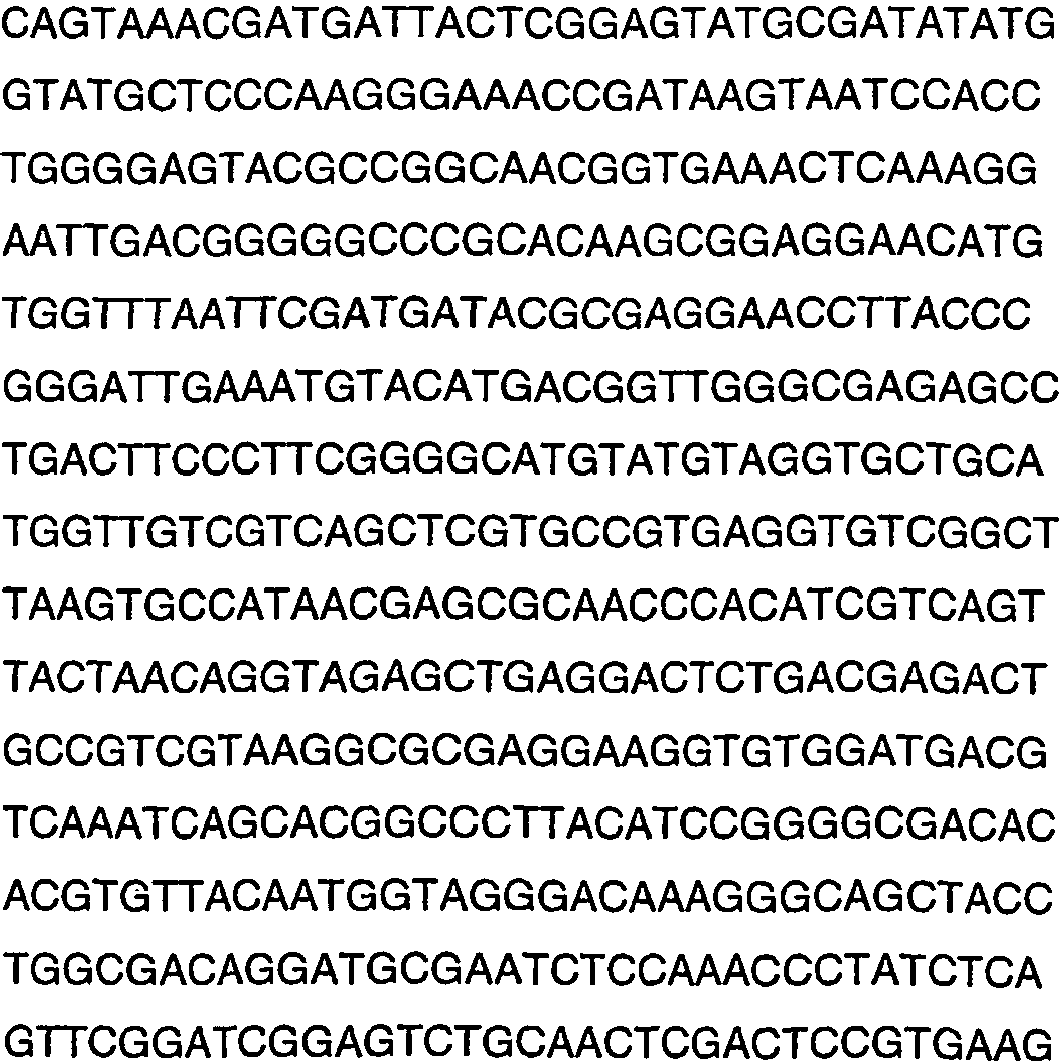

92 P. salivosa B104 16S rRNA polynucleotide sequence NA 
93 O. denticanis B106 16S rRNA polynucleotide sequence NA 
94 P. endodontalis B114 16S rRNA polynucleotide sequence NA 
95 P. gulae B43 fimA polynucleotide sequence NA 

96 P. circumdentaria B52 fimA polynucleotide sequence NA 
97 P. gulae B69 fimA polynucleotide sequence NA 
98 P. circumdentaria B97 fimA polynucleotide sequence NA 

99 P. cangingivalis B98 fimA polynucleotide sequence NA 

100 P. salivosa B104 fimA polynucleotide sequence NA 
101 O. denticanis B106 fimA polynucleotide sequence NA 
102 P. endodontalis B114 fimA polynucleotide sequence NA 

103 P. gulae B43 FimA polypeptide sequence NA 
104 P. circumdentaria B52 FimA polypeptide sequence NA 
105 P. gulae B69 FimA AA NA 
106 P. circumdentaria B97 FimA polypeptide sequence NA 
107 P. cangingivalis B98 FimA AA NA 
108 P. salivosa B104 FimA polypeptide sequence NA 
109 O. denticanis B106 FimA polypeptide sequence NA 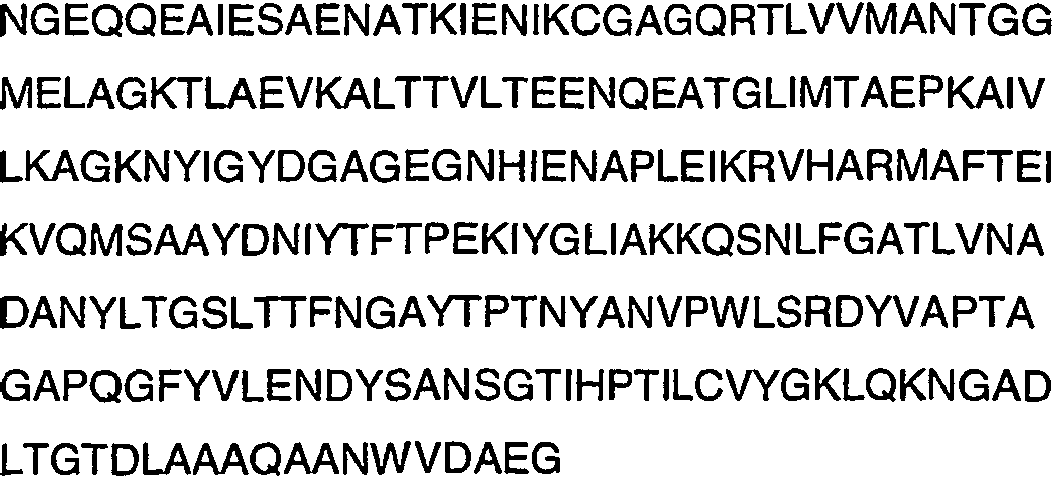
110 P. endodontalis B114 FimA polypeptide sequence NA 
111 P. gulae B43 oprF polynucleotide sequence NA 
112 P. cansulci B46 oprF polynucleotide sequence NA 
113 P. circumdentaria B52 oprF polynucleotide sequence NA 
114 P. gulae B69 oprF polynucleotide sequence NA 
115 P. circumdentaria B97 oprF polynucleotide sequence NA 
116 P. cangingivalis B98 oprF polynucleotide sequence NA 
117 P. salivosa B104 oprF polynucleotide sequence NA 

118 O. denticanis B106 oprF polynucleotide sequence NA 

119 P. endodontalis B114 oprF polynucleotide sequence NA 

120 P. gulae B43 OprF polypeptide sequence NA 
121 P. cansulci B46 OprF polypeptide sequence NA 
122 P. circumdentaria B52 OprF polypeptide sequence NA 

123 P. gulae B69 OprF polypeptide sequence NA 
124 P. circumdentaria B97 OprF polypeptide sequence NA 
125 P. cangingivalis B98 OprF polypeptide sequence NA 
126 P. salivosa B104 OprF polypeptide sequence NA 
127 O. denticanis B106 OprF polypeptide sequence NA 
128 P. endodontalis B114 OprF polypeptide sequence NA 
129 P. gulae B43 FimA polypeptide fragment sequence #1 NA ACNKDNEAEPVV 130 P. gulae B43 FimA polypeptide fragment sequence #2 NA YPVLVNFESNNYTYTGDAVEK 131 P. gulae B43 FimA polypeptide fragment sequence #3 NA TGPGTNNPENPITESA 132 P. gulae B43 OprF polypeptide fragment sequence #1 NA NDNNNKDFVDRLGA 133 P. gulae B43 OprF polypeptide fragment sequence #2 NA DLNGQINRLRREVEELSKRPVSCPECPDV 134 P. gulae B43 OprF polypeptide fragment sequence #3 NA ADPTGDTQYNERLSERRAKAV 135 pBAD-HisA Amino-terminal polypeptide sequence NA 
136 pBAD-TOPO Amino-terminal polypeptide sequence NA MGSGSGDDDDKLALM 137 I vector Amino-terminal polypeptide sequence NA MGTTTTTTSLHM 138 O. denticanis B107 16S rRNA polynucleotide sequence NA 
139 O. denticanis B113 16S rRNA polynucleotide sequence NA 
140 O. denticanis B126 16S rRNA polynucleotide sequence NA 
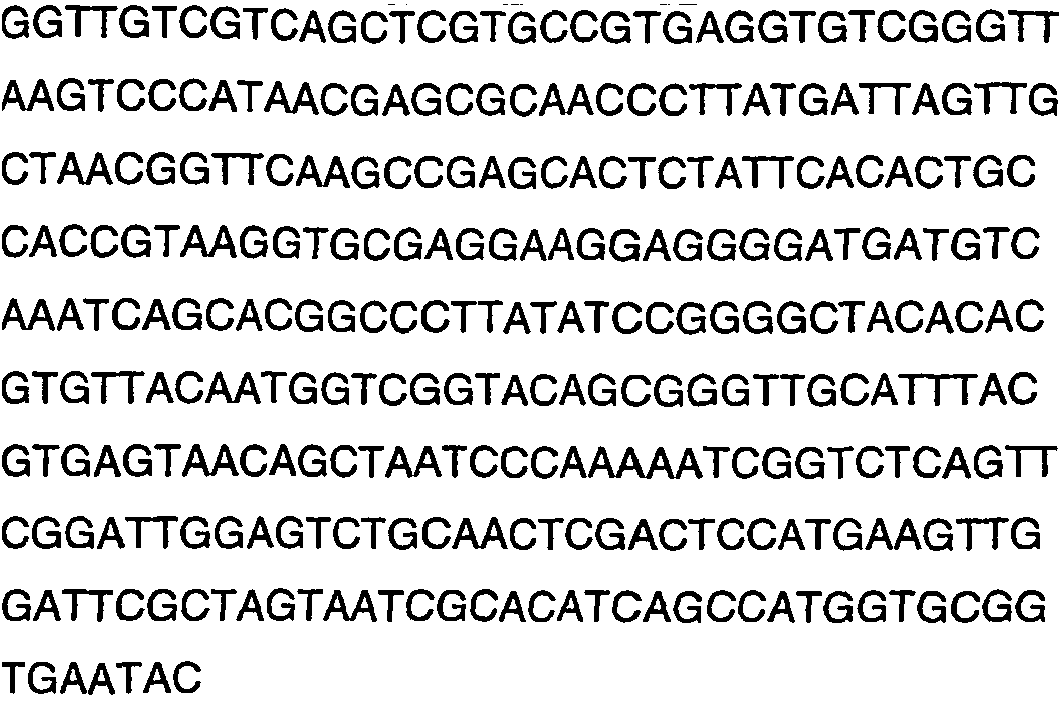
141 O. denticanis B129 16S rRNA polynucleotide sequence NA 
142 O. denticanis B135 16S rRNA polynucleotide sequence NA 

143 O. denticanis B140 16S rRNA polynucleotide sequence NA 
144 O. denticanis B150 16S rRNA polynucleotide sequence NA 
145 O. denticanis B151 16S rRNA polynucleotide sequence NA 
146 O. denticanis B152 16S rRNA polynucleotide sequence NA 
147 O. denticanis B155 16S rRNA polynucleotide sequence NA 

148 O. denticanis B163 16S rRNA polynucleotide sequence NA 
149 O. denticanis B171 16S rRNA polynucleotide sequence NA 
150 O. denticanis B172 16S rRNA NA 
polynucleotide sequence 
151 O. denticanis B174 16S rRNA polynucleotide sequence NA 
152 O. denticanis B183 16S rRNA polynucleotide sequence NA 

153 O. denticanis B264 16S rRNA polynucleotide sequence NA 
154 O. denticanis B265 16S rRNA polynucleotide sequence NA 

155 O. denticanis B267 16S rRNA polynucleotide sequence NA 
156 O. denticanis B269 16S rRNA polynucleotide sequence NA 
157 O. denticanis B363 16S rRNA polynucleotide sequence NA 
158 O. denticanis B365 16S rRNA polynucleotide sequence NA 
159 O. denticanis B366 16S rRNA polynucleotide sequence NA 

160 O. denticanis B368 16S rRNA polynucleotide sequence NA 
161 O. denticanis B456 16S rRNA polynucleotide sequence NA 

162 O. denticanis B457 16S rRNA polynucleotide sequence NA 
163 O. denticanis B381 16S rRNA polynucleotide sequence NA 

164 O. denticanis B401 16S rRNA polynucleotide sequence NA 
165 O. denticanis B41716S rRNA polynucleotide sequence NA 
166 O. denticanis B418 16S rRNA polynucleotide sequence NA 
167 O. denticanis B421 16S rRNA polynucleotide sequence NA 
168 O. denticanis B422 16S rRNA polynucleotide NA 
sequence 
169 D0134 16S rRNA GAGTTTGATCCTGGCTCAGG - Note: Lower case nucleotides are not present in the target DNA sequence. They are added to the 5' region of the primer to aid in cloning. NA, Not applicable
- The following companion animal periodontal isolates were deposited with the American Type Culture Collection (ATCC), 10801 University Blvd., Manassas, VA, 20110, USA, on August 9, 2001: P. gulae B43 (PTA-3618), P. cansulci B46 (PTA-3619), P. circumdentaria B52 (PTA-3620), P. gulae B69 (PTA-3621), P. circumdentaria B97 (PTA-3622), P. cangingivalis B98 (PTA-3623), P. salivosa B104 (PTA-3624), O. denticanis B106 (PTA-3625), and P. endodontalis B114 (PTA-3626). In a preferred embodiment of the invention, an isolated polynucleotide molecule of the present invention has a nucleotide sequence selected from the group consisting of SEQ ID NOS: 86 to 102 and 111 to 119. The preferred polypeptides of the present invention have amino acid sequences selected from the group consisting of SEQ ID NOS: 103 to 110 and 120 to 128.
- There are several known methods or techniques that can be used to clone the Porphyromonas nucleotide sequences of the present invention. For example, the sequences can be isolated as restriction fragments and cloned into cloning and/or expression vectors, the sequences can be PCR amplified and cloned into cloning and/or expression vectors, or the sequences can be cloned by a combination of these two methods.
- Standard molecular biology techniques known in the art and not specifically described can be generally followed as described in Sambrook et al., Molecular Cloning: A Laboratory Manual, Cold Spring Harbor Laboratory Press, New York (1989); Ausubel et al., Current Protocols in Molecular Biology, John Wiley and Sons, Baltimore, Maryland (1989); Perbal, A Practical Guide to Molecular Cloning, John Wiley & Sons, New York (1988); Watson et al., Recombinant DNA, Scientific American Books, New York; Birren et al (eds) Genome Analysis: A Laboratory Manual Series, Vols. 1-4 Cold Spring Harbor Laboratory Press, New York (1998); and methodology set forth in United States Patent Nos.
4,666,828 ;4,683,202 ;4,801,531 ;5,192,659 and5,272,057 . Polymerase chain reaction (PCR) is carried out generally as described in PCR Protocols: A Guide To Methods And Applications, Academic Press, San Diego, CA (1990). - Examples of methods useful in cloning and sequencing the polynucleotides of the present invention are provided in the Example.
- The present invention encompasses the use of prokaryotic and eukaryotic expression systems, including vectors and host cells, which may be used to express both truncated and full-length (native protein) forms of the recombinant polypeptides expressed by the nucleotide sequences of the present invention.
- In a preferred embodiment of the invention, an isolated polynucleotide molecule of the present invention has a nucleotide sequence selected from one of the sequences of SEQ ID NO: 95 to 102 and 111 to 119 or degenerate variants thereof; and encoding a corresponding polypeptide selected from the amino acid sequences of SEQ ID NO: 103 to 110 and 120 to 128, respectively.
- A variety of host-expression vector systems may be utilized to express the polypeptides of the present invention. Such host-expression systems also represent vehicles by which the coding sequences of interest may be cloned and subsequently purified. The present invention further provides for host cells which may, when transformed or transfected with the appropriate vector or nucleotide sequence, express the encoded polypeptide gene product of the invention. Such host cells, include but are not limited to, microorganisms such as bacteria (e.g., E. coli, B. subtilis) transformed with recombinant bacteriophage DNA, plasmid DNA or cosmid DNA expression vectors containing coding sequences; yeast (e.g., Saccharomyces, Pichia) transformed with recombinant yeast expression vectors containing the gene product coding sequences; insect cell systems infected with recombinant virus expression vectors (e.g., baculovirus) containing the coding sequences; plant cell systems infected with recombinant virus expression vectors (e.g., cauliflower mosaic virus, CaMV; tobacco mosaic virus, TMV) or transformed with recombinant plasmid expression vectors (e.g., Ti plasmid) containing coding sequences; or mammalian cell systems (e.g., COS, CHO, BHK, 293, 3T3) harboring recombinant expression constructs containing promoters derived from the genome of mammalian cells (e.g., metallothionein promoter) or from mammalian viruses (e.g., the adenovirus late promoter; the vaccinia virus 7.5K promoter).
- In a preferred embodiment, the expression system is a bacterial system. A number of expression vectors may be advantageously selected depending upon the use intended for the product being expressed. For example, when a large quantity of such a polypeptide is to be produced, for the generation of vaccine compositions or for raising antibodies, for example, vectors which direct the expression of high levels of fusion protein products that are readily purified may be desirable. Preferably, the vectors contain promoters that direct inducible gene expression. Suitable vectors include, but are not limited to, the E. coli pET expression vectors (Studier and Moffatt, 1986, J. Mol. Biol. 189:113; Rosenberg et al., 1987, Gene 56:125-135; Novagen, Madison, Wisconsin), in which the coding sequence can be fused in-frame to a sequence encoding multiple (e.g., 6) histidine residues; pBAD vectors (Guzman et al., 1995, J. Bact. 177:4121-4130), from which a heterologous protein can be expressed under the control of an arabinose inducible protein; and pGEX vectors (Pharmacia Biotech, USA), used to express heterologous polypeptides as fusion proteins with glutathione S-transferase (GST). The fimA or oprF sequences of the present invention can be cloned into a λ expression vector and expressed in λ- bacterial strains. In a preferred mode, the bacterial strain is E. coli BL21 (Gibco-BRL, USA). Preferably, the vectors that can be used include, but are not limited to, pLEX expression vectors (LaVallie et al., 1992, Bio/Technology 11:187-193; Mieschendahl et al., 1986, Bio/Technology 4:802-808; Invitrogen) and pRIT2T expression vectors (Nilsson et al., 1985, EMBO 4:1075; Zabeau and Stanley, 1982, EMBO 1:1217; Pharmacia Biotech). Other vectors and bacterial strains can be used and are known to those skilled in the art.
- Antibodies may either be monoclonal, polyclonal, or recombinant. Conveniently, the antibodies may be prepared against the immunogen or portion thereof, for example, a synthetic peptide based on the sequence, or prepared recombinantly by cloning techniques or the natural gene product and/or portions thereof may be isolated and used as the immunogen. Immunogens can be used to produce antibodies by standard antibody production technology well known to those skilled in the art as described generally in Harlow and Lane, Antibodies: A Laboratory Manual, Cold Spring Harbor Laboratory, Cold Spring Harbor, NY, 1988 and Borrebaeck, Antibody Engineering - A Practical Guide, W.H. Freeman and Co., 1992. Antibody fragments may also be prepared from the antibodies and include Fab, F(ab')2, and Fv by methods known to those skilled in the art.
- In the production of antibodies, screening for the desired antibody can be accomplished by standard methods in immunology known in the art. Techniques not specifically described are generally followed as in Stites et al.(eds), Basic and Clinical Immunology (8th Edition), Appleton & Lange, Norwalk, CT (1994) and Mishell and Shiigi (eds), Selected Methods in Cellular Immunology, W.H. Freeman and Co., New York (1980). In general, ELISAs and Western blotting are the preferred types of immunoassays. Both assays are well known to those skilled in the art. Both polyclonal and monoclonal antibodies can be used in the assays. The antibody can be bound to a solid support substrate or conjugated with a detectable moiety or be both bound and conjugated as is well known in the art (for a general discussion of conjugation of fluorescent or enzymatic moieties see Johnstone & Thorpe, Immunochemistry in Practice, Blackwell Scientific Publications, Oxford, 1982.) The binding of antibodies to a solid support substrate is also well known in the art (see for a general discussion, Harlow & Lane Antibodies: A Laboratory Manual, Cold Spring Harbor Laboratory Publications, New York, 1988 and Borrebaeck, Antibody Engineering - A Practical Guide, W.H. Freeman and Co., 1992). The detectable moieties contemplated for use in the present invention can include, but are not limited to, fluorescent, metallic, enzymatic and radioactive markers such as biotin, gold, ferritin, alkaline phosphatase, b-galactosidase, peroxidase, urease, fluorescein, rhodamine, tritium, 14C and iodination.
- Where appropriate, other immunoassays such as radioimmunoassays (RIA) can be used as known in the art. Available immunoassays are extensively described in the patent and scientific literature. See, for example, United States Patent Nos.
3,791,932 ;3,839,153 ;3,850,752 ;3,850,578 ;3,853,987 ;3,867,517 ;3,879,262 ;3,901,654 ;3,935,074 ;3,984,533 ;3,996,345 ;4,034,074 ;4,098,876 ;4,879,219 ;5,011,771 ; and5,281,521 , as well as Sambrook et al, Molecular Cloning: A Laboratory Manual, Cold Springs Harbor, New York, 1989. - The present invention further provides kits for the detection of Porphyromonas spp. The kit includes reagents for analyzing a sample for the presence of Porphyromonas organisms, polypeptides, or Porphyromonas nucleotide sequences of the present invention, wherein the presence of the nucleotide sequence is indicative of the presence of the organism. This method is valuable because disease can be diagnosed prior to the existence of symptoms and can therefore prevent the onset of the disease prior to the occurrence of damage to the patient. The presence of the Porphyromonas spp. Bacteria, polypeptides, or nucleotide sequences can be determined using antibodies, PCR, hybridization, and other detection methods known to those of skill in the art.
- In one embodiment, the kit provides reagents for the detection of antibodies against Porphyromonas. In certain embodiments, the kit can include a set of printed instructions or a label indicating that the kit is useful for the detection of Porphyromonas spp. Minimally, the kit comprises in at least one container a protein having an amino acid sequence comprising at least 30 contiguous amino acids of any of the polypeptides of SEQ ID NO: 103 to 110 and 120 to 128. In one embodiment, the kit further comprises a secondary antibody. In a preferred embodiment, the secondary antibody is conjugated to a detectable moiety, such as, e.g., an enzyme that catalyzes a colorimetric or chemiluminescent reaction, such as alkaline phosphatase or horseradish peroxidase. In a further embodiment, the kit comprises reagents for carrying out a colorimetric or chemiluminescent assay.
- In another embodiment, the kit provides reagents for the detection of Porphyromonas nucleic acids. In one embodiment, the kit provides reagents for the PCR detection of Porphyromonas nucleic acids and comprises in at least one container a first isolated DNA molecule comprising a fragment of at least about 15, 20, 25 or 30 nucleotides, which fragment hybridizes under stringent conditions to a DNA molecule encoding a polypeptide comprising a sequence of at least 5, 10, 15, 20, 25, or 30 contiguous amino acids, or the complete amino acid sequence, of any of the polypeptides of SEQ ID NO: 103-110 or 120-128, and a second isolated DNA molecule comprising a fragment of at least 15, 20,25, or 30 nucleotides, which fragment hybridizes under stringent conditions to a DNA molecule complementary to a DNA molecule encoding a polypeptide having a sequence of at least 5 10, 15, 20, 25, or 30 contiguous amino acids, or the complete amino acid sequence, of any of the polypeptides of SEQ ID NO: 103-110 or 120-128, which first and second DNA molecules can be used to specifically amplify a Porphyromonas spp. nucleic acid encoding a 16S rRNA which 16S rRNA is encoded by a DNA molecule selected from the group consisting of SEQ ID NOS: 1-9.
- In an further embodiment, the present invention provides a kit comprising in at least one container an isolated DNA molecule comprising a nucleotide sequence of at least about 15 contiguous nucleotides selected from any of SEQ ID NOS: 86 to 94, 95 to 102, and 111 to 119 which hybridizes under highly stringent conditions to the complement of any of the nucleotide sequences depicted in SEQ ID NOS: 86 to 94, 95 to 102, and 111 to 119, and a second isolated DNA molecule comprising in a second container an isolated DNA molecule comprising a nucleotide sequence of at least about 15 contiguous nucleotides selected from the complement of any of the nucleotide sequences depicted in SEQ ID NOS: 86 to 94, 95 to 102, and 111 to 119 which hybridizes under highly stringent conditions to any of the nucleotide sequences depicted in SEQ ID NOS: 86 to 94, 95 to 102, and 111 to 119, wherein the kit further comprises a set of instructions indicating that the kit is useful for the detection of Porphyromonas spp.
- The vaccine of the present invention can be is administered to a companion animal in an effective amount such that the vaccine therapeutically treats or confers resistance to or prevents periodontal disease in the companion animal. The vaccine of the present invention is useful in the control of bacteria that cause periodontal disease. The vaccines of the present invention can, in particular, be used in the field of veterinary medicine to treat companion animals and for the maintenance of public health against those bacteria described herein which are known to cause periodontal disease.
- The vaccines of the present invention are of value in the control of bacteria that are injurious to, or spread or act as vectors of disease in man and companion animals, for example those described herein. The vaccines of the present invention are particularly useful in controlling bacteria that are present in companion animals for which purpose they can be administered using any known methods of administration, including, but not limited to, oral, parenteral, intranasal, subcutaneous, or topical.
- According to a further aspect of the present invention, there is provided a composition comprising a vaccine of the present invention, in admixture with a compatible adjuvant, diluent or carrier. In a preferred embodiment, the vaccine formulation of the present invention is composed of an aqueous suspension or solution containing at least one bacteria of the present invention and/or at least one subunit protein, preferably buffered at physiological pH, in a form ready for injection. In another preferred embodiment, the vaccine formulation of the present invention is composed of inactivated whole cell preparations of at least three Porphyromonas spp., for example, P. gulae B43, P. salivosa B104 and O. denticanis B106.
- The present invention further provides a method of treating or preventing a bacterial infection, which comprises treatment with an effective amount of a vaccine or vaccine formulation of the present invention. It is to be appreciated that reference to treatment includes prophylaxis as well as the alleviation of established symptoms of a bacterial infection.
- The vaccines and vaccine formulations of the present invention can used to induce a response that prevents the pathological changes characteristic of periodontal disease caused by periodontal disease-causing bacteria. In a vaccine formulation, an immunogenic amount of the bacteria, purified protein, nucleic acid, or combinations thereof is desirably mixed with a suitable conventional vaccine adjuvants and physiologic vehicles, for use in mammals.
- A vaccine formulation for preventing periodontal disease in companion animals can be produced using at least one of the isolated and purified inactivated or attenuated bacteria, purified polypeptides (such as native proteins, subunit proteins, or polypeptides, and admixing one or more or these with a compatible adjuvant, diluent, or carrier. Preferably, the polypeptide sequences are subunit proteins selected from the group including FimA (SEQ ID NOS: 103 to 110 and OprF (SEQ ID NOS: 120 to 128).
- Examples of fragments of FimA and OprF that can be used for diagnostic polypeptides or for vaccine preparations include, but are not limited to ACNKDNEAEPVV, YPVLVNFESNNYTYTGDAVEK, TGPGTNNPENPITESA, NDNNNKDFVDRLGA, DLNGQINRLRREVEELSKRPVSCPECPDV, and ADPTGDTQYNERLSERRAKAV (SEQ ID NOS: 129-134). The subunit protein can be recombinantly expressed, either alone or fused to another polypeptide sequence or protein. The other polypeptide sequence or protein can include, but is not limited to, a poly-His tag, MBP, thioredoxin, or GST, for example. Also provided by the present invention are the polynucleotide sequences or genes that encode any of the above mentioned subunit proteins. The polynucleotide sequence of the bacteria can be selected from fimA and oprF or a fragment or variant thereof which fragment or variant exhibits at least about 90%, 95%, or 99% homology thereto, or a complementary polynucleotide sequence which hybridizes under high stringency conditions, or a combination of both. Preferably, the polynucleotide sequences of the present invention can be used to amplify a fimA or oprF DNA molecule of the present invention, or encodes an amino acid fragment than can be used to raise antibodies against FimA or OprF.
- For DNA-based therapy, a vehicle capable of delivering or transferring heterologous nucleic acid into a host cell may be used. The expression vehicle may include elements to control targeting, expression and transcription of the nucleic acid in a cell selective manner as is known in the art. The expression vehicle can include a promoter for controlling transcription of the heterologous material and can be either a constitutive or inducible promoter to allow selective transcription. Enhancers that may be required to obtain necessary transcription levels can optionally be included.
- Vectors can be introduced into cells or tissues by any one of a variety of known methods within the art. Such methods can be found generally described in Sambrook et al., Molecular Cloning: A Laboratory Manual, Cold Springs Harbor Laboratory, New York (1989, 1992); Ausubel et al., Current Protocols in Molecular Biology, John Wiley and Sons, Baltimore, Maryland (1989); Chang et al., Somatic Gene Therapy, CRC Press, Ann Arbor, MI (1995); Vega et al., Gene Targeting, CRC Press, Ann Arbor, MI (1995); R.L. Rodriguez Vectors: A Survey of Molecular Cloning Vectors and Their Uses, Butterworths, Boston MA (1988) and include, for example, stable or transient transfection, lipofection, electroporation and infection with recombinant viral vectors.
- The present invention further provides for combinations vaccines having at least one of the inactivated or attenuated bacteria, nucleotide sequences, or polypeptide sequences of the present invention, in combination with one or more additional immunogenic components. Such a combination vaccine may produce in the vaccinated animal a surprisingly greater effect than that expected by simply adding the effects of each component administered separately. Thus, a combination vaccine may stimulate a synergistic production of antibody in animals.
- In a preferred embodiment, the combination vaccine of the present invention is composed of inactivated whole cell preparations of at least three Porphyromonas spp., for example, P. gulae B43, P. salivosa B104 and O. denticanis B106, in combination with one or more additional bacterial or viral immunogenic components. Additional immunogenic components suitable for use in combination vaccines of the present invention include, but are not limited to Canine Distemper Virus (CDV), Canine Adenovirus-2 (CAV-2), Canine Parvovirus (CPV), Canine Parainfluenza Virus (CPI), and Canine Coronavirus (CCV).
- Vaccines of the present invention can be prepared by combination of at least one of the inactivated or attenuated bacteria, nucleotide sequences, or polypeptide sequences of the present invention, with a pharmaceutically acceptable carrier, an preferably, an adjuvant.
- Suitable preparations of the vaccines of the present invention include injectables, either liquid solutions or suspensions. Solid forms suitable for solution in, or suspension in, a liquid pharmaceutically acceptable carrier prior to injection may also be prepared. The vaccine preparation may be emulsified. The active immunogenic component, is preferably mixed with an adjuvant which is pharmaceutically acceptable and compatible with the active immunogenic component. Suitable adjuvants include, but are not limited to: mineral gels, e.g., aluminum hydroxide; surface active substances such as lysolecithin; glycosides, e.g., saponin derivatives such as Quil A or GPI-0100 (United States Patent No.
5,977,081 ); cationic surfactants such as DDA, pluronic polyols; polyanions; non-ionic block polymers, e.g., Pluronic F-127 (B.A.S.F., USA); peptides; mineral oils, e.g. Montanide ISA-50 (Seppic, Paris, France), carbopol, Amphigen (Hydronics, Omaha, NE USA), Alhydrogel (Superfos Biosector, Frederikssund, Denmark) oil emulsions, e.g. an emulsion of mineral oil such as BayolF/Arlacel A and water, or an emulsion of vegetable oil, water and an emulsifier such as lecithin; alum, cholesterol, rmLT, cytokines and combinations thereof. The immunogenic component may also be incorporated into liposomes, or conjugated to polysaccharides and/or other polymers for use in a vaccine formulation. Additional substances that can be included in a product for use in the present methods include, but are not limited to one or more preservatives such as disodium or tetrasodium salt of ethylenediaminetetracetic acid (EDTA), merthiolate, and the like. - The subject to which the vaccine is administered is preferably a companion animal, most preferably, a dog or cat.
- It is preferred that the vaccine of the invention, when in a vaccine formulation, be present in unit dosage form. For purposes of this invention, an immunogenic amount, when administered comprises about 1 x 10⁴ - 1
x 1013 inactivated bacterial cells, 0.1 µg - 1 mg of purified protein, or 0.1 µg - 10 mg of nucleic acid. In a vaccine formulation containing multiple components, the same or lesser immunogenic amounts can usefully be employed. - Appropriate therapeutically effective doses can be determined readily by those of skill in the art based on the above immunogenic amounts, the condition being treated and the physiological characteristics of the animal. Accordingly, a vaccine preparation provides a dosage of a sterile preparation of an immunogenic amount of the active ingredient(s), where the active ingredient is at least one bacteria, protein, nucleic acid, or any combination thereof. In the presence of additional active agents, these unit dosages can be readily adjusted by those of skill in the art.
- A desirable dosage regimen involves administration of at least one dose of desired vaccine composition, where the antigenic content of each fraction is as stated above. Effective doses (immunizing amounts) of the vaccines of the invention may also be extrapolated from dose-response curves derived from model test systems. The mode of administration of the vaccines of the invention can be any suitable route that delivers the vaccine to the host. These include but are not limited to oral, intradermal, intramuscular, intraperitoneal, subcutaneous, intranasal routes, and via scarification (scratching through the top layers of skin, e.g., using a bifurcated needle). However, the vaccine is preferably administered subcutaneously or by intramuscular injection. Other modes of administration can also be employed, where desired, such as intradermally, intravenously, intranasally, or intratonsillarly.
- Studies have shown that, for each of the above described vaccine compositions, a primary immunization of young animals (after 8 weeks of age) is desirably initiated, with booster doses administered at 12 weeks and 16 weeks of age. Annual re-vaccination is recommended.
- The vaccine of the present invention is administered and dosed in accordance with good medical practice, taking into account the clinical condition of the individual subject, the site and method of administration, scheduling of administration, subject age, sex, body weight and other factors known to medical practitioners.
- The invention further provides kits for the prevention periodontal disease in companion animals. In one embodiment, the kit provides a container comprising a therapeutically effective amount of a composition which prevents periodontal disease in companion animals. Also provided in the same or different container is a pharmaceutically acceptable carrier that may be used in the composition. The kit can additionally include an adjuvant that can be used to aid in creating the response to the composition of the present invention. Also, the kit can include a dispenser for dispensing the composition, preferably in unit dosage form. The dispenser can, for example, comprise metal or plastic foil, such as a blister pack. The kit can be accompanied by a label or printed instructions describing administration of the composition to prevent periodontal disease in a companion animal. Compositions comprising a vaccine composition of the present invention formulated in a pharmaceutically acceptable carrier can also be prepared, placed in an appropriate container, and labeled for treatment of the indicated periodontal condition.
- The specific mechanism of protection induced by the vaccines and vaccine compositions compositions of the present invention is the induction of the antibody and/or cellular immune response in vaccinated animals, as indicated by the in vivo animal tests described below.
- The bacteria, polynucleotides, polypeptides, vaccines, and vaccine compositions of the present invention may be useful in treating or preventing companion animal periodontal disease, bovine foot rot, coronary heart disease (dogs), or systemic infections (dogs). In addition, the compositions of the present invention may also be useful in treating or preventing certain illnesses in companion animals corresponding to similar illnesses in humans such as coronary heart (or vascular or artery) disease, parotitis, oral maloder, gingivitis, periodontitis, stroke, atherosclerosis, hyperlipidemia, increased incidence of pre-term delivery of low birth weight infants, bacterial vaginosis and intrauterine growth retardation (IUGR).
- In a further aspect of the present invention, methods of assessing the efficacy of a vaccine against one or more periopathogenic bacteria in an animal are provided. The present invention has shown that a vaccine against one or more periopathogenic bacteria can be assessed in animal species such as mouse or dog, particularly dog.
- According to the present invention, vaccines against a variety of periopathogenic bacteria can be assessed using the methods described hereinabove, including but not limited to, Porphyromonas, Bacteriodes, Prevotella, Tannerella (Tannerella forsythensis, formerly Bacteroides forsyfhus), and Treponema, which are designed for treating or preventing a periodontal disease in human or companion animals caused by these bacteria. The vaccines can contain inactivated or attenuated bacteria, polypeptides, or polynucleotides of any of these bacterial species.
- The efficacy of a vaccine can be assessed by introducing a challenge culture separately into a vaccinated animal and an unvaccinated animal, and comparing the clinical signs in the two animals. The challenge culture can be composed of the same periopathogenic bacteria as the vaccine. However, the challenge culture can contain bacteria different from those in the vaccine to evaluate any cross protection the vaccine may have against other bacterial species.
- According to the present invention, it is desirable to introduce the challenge culture into the root canal of teeth of the animals from which the root material has been extirpated, followed by placement of a restoration. The challenge culture typically contains about 1×10² to about 1×10¹² colony forming units (CFU) per challenge dose; preferably, 1×10⁵ to about 1×10¹¹ colony forming units (CFU) per challenge dose; even more preferably, about 5×10⁷ to about 5×10¹⁰ colony forming units (CFU) per challenge dose.
- Clinical signs of disease which can be evaluated include increased levels of one or more periopathogenic bacteria in the gingival crevicular fluid, plaque, infected bone, or gingival sulci, or changes in the amount of aveolar bone, particularly in the periapical region of the aveolar bone. The bone changes can be quantitated by, e.g., radiographic measurements.
- The present invention is further illustrated by the following non-limiting example and accompanying figures.
- Microbial samples were taken from dogs and cats examined at veterinary clinics for periodontal treatment, or dogs examined at either Pfizer Terre Haute or Pfizer Sandwich facilities for normal check-ups. Dogs with periodontal pockets >3mm and cats with periodontal pockets >2mm were included in this study. Dental indices (gingival index and periodontal index) and the periodontal pocket depths were recorded. Individual coarse absorbent paper points (Henry Schein; Melville, NY) were aseptically inserted into the periodontal pocket. Upon removal, the paper points were immediately inserted into vials containing Pre-Reduced Anaerobically Sterile (PRAS) Anaerobic Dental Transport (ADT) Medium (Anaerobe Systems; Morgan Hills, CA).
- Vials were transferred into a Bactron IV anaerobic chamber (Sheldon Manufacturing, Cornelius, OR) and processed under 90% N2, 5% H2, 5% CO2. The paper points were aseptically placed into 50 µl of PRAS Brain Heart Infusion (BHI) medium (Anaerobe Systems) and vortexed for 30 seconds. Dilutions of 1:100 and 1:1000 were prepared in BHI medium. Aliquots of 100µl of the 1:100 and 1:1000 dilutions were spread on PRAS Burcella Blood Agar (BRU) plates (Anaerobe Systems). The plates were incubated at 37°C in the anaerobic chamber for five to seven days. The total number of bacterial colonies and the number of Black Pigmented Anaerobic Bacteria (BPAB) colonies were counted. Individual BPAP colonies were transferred to new BRU plates and re-incubated as above.
- Each clinical isolate was subjected to a number of biochemical analyses and 16S rRNA DNA sequence analysis, using primers D0056 and D0057 (Seq. ID No. 1 and Seq. ID No. 2; Table 1), to determine genus and species. Individual isolates were streaked on BRU plates. Kanamycin, Vancomycin, and Colistin disks (Anaerobe Systems) were placed on the agar surface to determine the KVC resistance patterns of each isolate. Purified colonies were also subjected to the indole and catalase tests (Anaerobe Systems). Individual isolates were transferred to Egg Yolk Agar (EYA) plates (Anaerobe Systems) in order to determine lipase and lecithinase production patterns. This data is shown in Table 2.


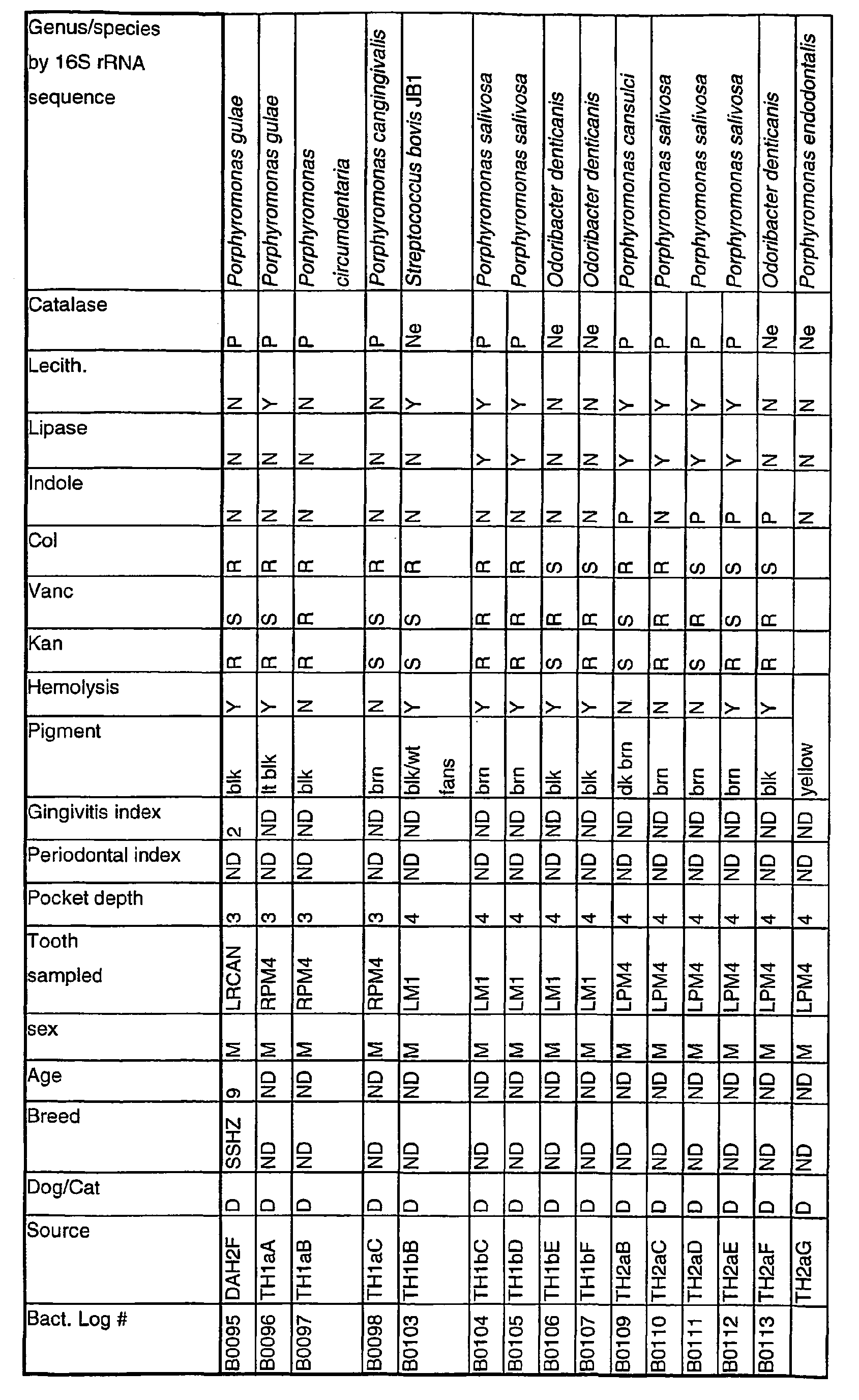


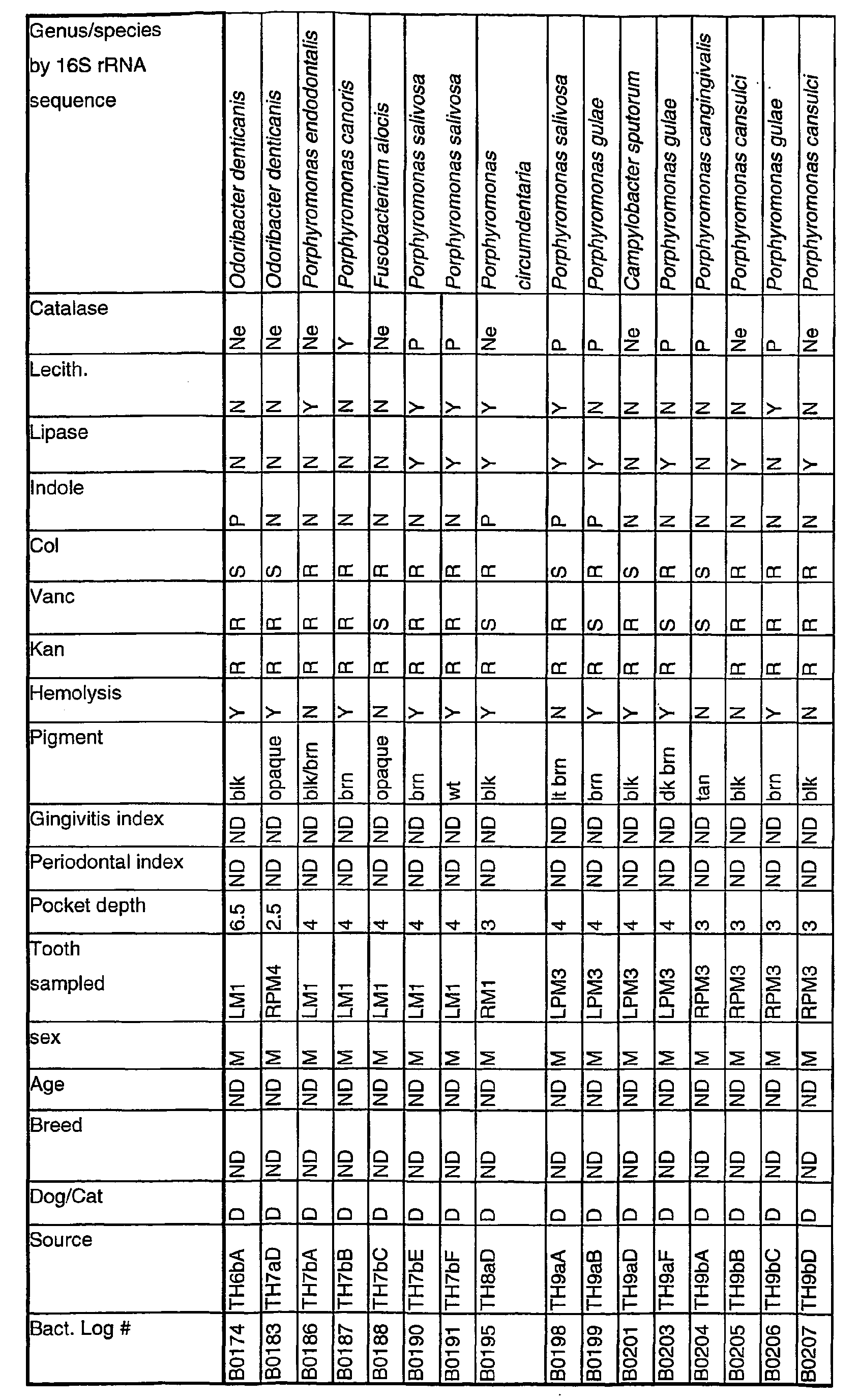

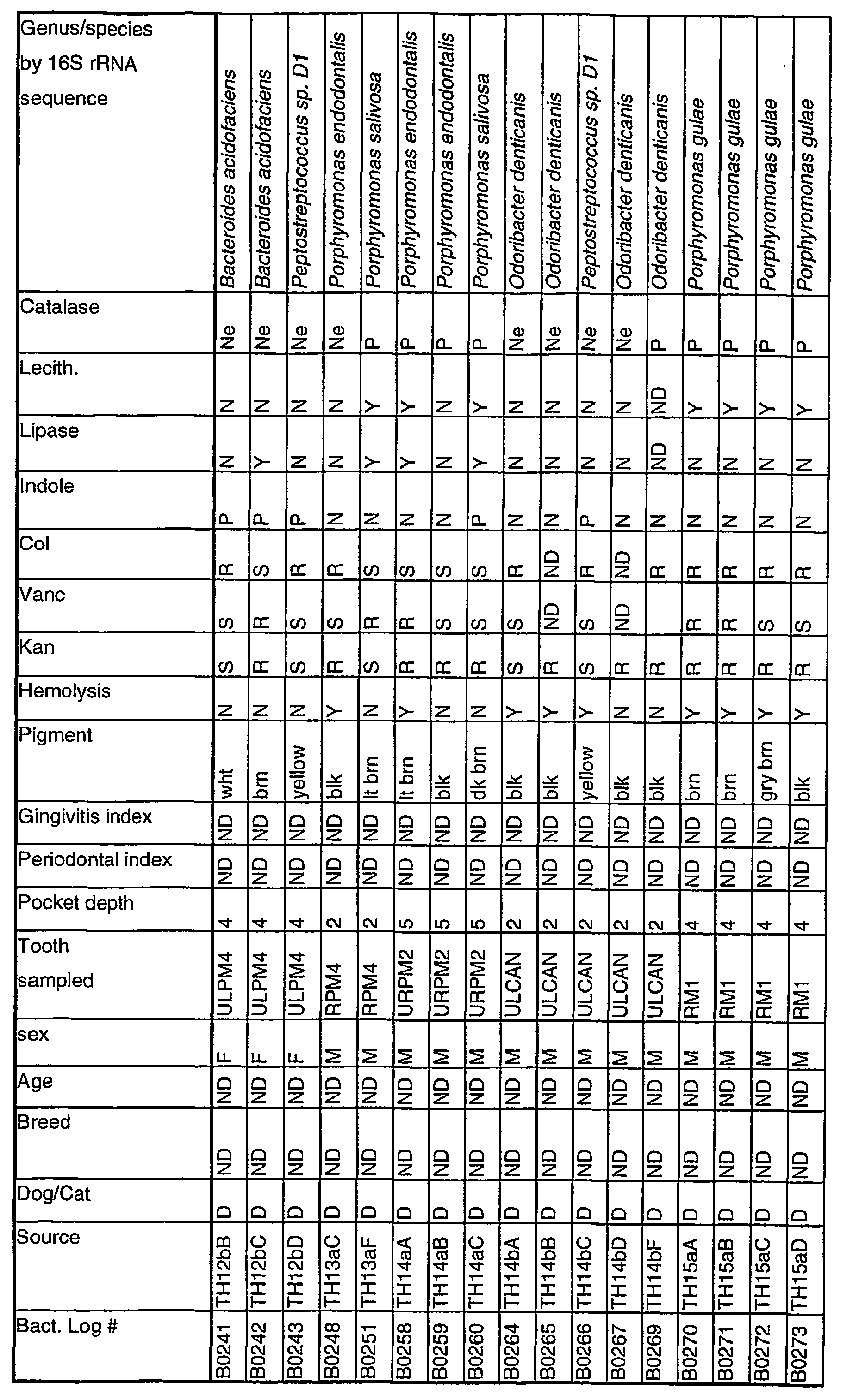


- The isolates were typed based on their 16S rRNA DNA sequence. Individual, well-isolated colonies were utilized as template for polymerase chain reactions (PCR) amplification of the 16S rRNA region using primers D0056 and D0057 (Seq. ID No. 1 and Seq. ID No. 2; Table 1) in triplicate. The PCR was carried out in 50 µl reaction volumes containing 1 x PCR buffer (Life Technologies; Rockville, MD), 1.0 mM MgCl2, 1.25 µM each primer, 300 µM each deoxy-NTP, and 2.5 U Platinum Pfx DNA Polymerase (Life Technologies). The following PCR cycle conditions were utilized: a two minute denaturation step at 94°C; 30 cycles of denaturation at 94°C for 40 seconds, annealing at 60°C for 40 seconds, and extension at 72°C for one minute; a final extension step at 72°C for two minutes; and a final cooling step to 4°C. A GeneAmp 9700 thermocycler (Perkin Elmer Applied Biosystems; Foster City, CA) was utilized for all PCR amplifications.
- The resulting PCR products were purified using the PCR preps kits (Promega Corp.; Madison, WI) and pooled by isolate. The purified PCR products were then desalted by drop analysis against 25 ml sterile water using a 0.025 µm nitrocellulose filter (Millipore Corp.; Bedford, MA). The purified, desalted PCR products were subjected to DNA sequence analysis using the DyeDeoxy termination reaction on an ABI automated DNA sequencer (University of Texas Genetics Core Facility, Houston, TX and Lark Technologies Inc., Houston, TX). Synthetic oligonucleotide primers D0056, D0057, PFZ175-AP1, PFZ175-AP2, and PFZ175-AP3 (Seq. ID No. 1-5, respectively; Table 1) were used to obtain double stranded DNA sequence. The resulting DNA sequences were used to search publicly available DNA databases using a BLAST-N program publicly available from The National Center for Biotechnology Information, USA.
- The bacterial isolates were typed based on the closest match identified by database searches. The B106 isolate did not have a precise match, suggesting that it may represent a novel bacterial genus/species. (See below.) A complete listing of all the isolates and their respective characteristics is located in Table 2. The top nine most frequently isolated strains are exemplified by the following isolates: P. gulae B43 (dog sample Sandwich 4), P. cansulci B46 (dog sample VHUP 1B), P. circumdentaria B52 (cat sample VHUP 2A), P. gulae B69 (cat sample VHUP 3A), P. circumdentaria B97 (dog sample TH 1bC), P. cangingivalis B98 (
dog sample TH 1 aC), P. salivosa B104 (dog sample TH 1 bC), O. denticanis B106 (dog sample TH 1 bE), and P. endodontalis B114 (dog sample TH 2bA). - The distribution of isolates is shown in Table 3.
Table 3. Summary of the number of dogs and cats identified to harbor indicated bacterial species. Isolate # dog isolates # dogs % positive dogs # cat isolates # cats % positive Porphyromonas gulae 27 16 31 8 6 38 Porphyromonas salivosa 27 17 33 3 2 13 (macacae) Odoribacter denticanis 26 12 23 6 3 19 Porphyromonas cansulci 12 8 15 0 0 0 Porphyromonas 11 8 15 0 0 0 endodontalis Porphyromonas 10 8 15 15 4 25 circumdendaria Bacteroides acidofaciens 10 5 10 0 0 0 Bacteroides forsythus 4 3 6 1 1 6 Porphyromonas 3 2 4 0 0 0 cangingivalis Bacteroides levii 3 2 4 0 0 0 Eubacterium brachy 3 3 6 0 0 0 ATCC33089 Peptostreptococcus sp. D1 3 4 8 1 1 6 Unidentified eubacterium 3 2 4 0 0 0 Porphyromonas canoris 2 2 4 0 0 0 Campylobacterium sputorum 2 2 4 1 1 6 Porphyromonas gingivalis 1 1 2 0 0 0 Bacteroides fragilis 1 1 2 0 0 0 Uncultured bacterium SHA- 1 1 2 0 0 0 54 Uncultured bacterium SHA- 1 1 2 0 0 0 219 Pasteurella canis 1 1 2 0 0 0 Streptococcus bovis JB1 1 1 2 0 0 0 Enterococcus gallinarum 1 1 2 0 0 0 Fusobacterium alocis 1 1 2 0 0 0 Klebsiella oxytoca 1 1 2 0 0 0 Unidentified rumen 1 1 2 0 0 0 bacterium Uncultured bacterium 0 0 0 6 3 19 AF132259 Prevotella oulora 0 1 2 0 0 0 Tessatacoccus 0 0 0 1 1 6 bendigoniensis Staphyloccus warneri 0 0 0 1 1 6 Salmonella bongori 0 0 0 1 1 6 Clostridium sp. 0 0 0 1 1 6 Globicatella sp. 0 0 0 1 1 6 Marine snow associated 0 0 0 1 1 6 bacterium Veillonella sp. oral clone 0 1 2 0 0 0 X042 Lactobacillus rimae 0 1 2 0 0 0 Streptococcus suis 0 1 2 0 0 0 Capnocytophaga sp. 0 1 2 0 0 0 - The isolates listed above represent those species that were most frequently identified and present in the highest percentages of dogs or cats.
- The following companion animal periodontal isolates were deposited with the American Type Culture Collection (ATCC), 10801 University Blvd., Manassas, VA, 20110, USA, on August 9, 2001: P. gulae B43 (PTA-3618), P. cansulci B46 (PTA-3619), P. circumdentaria B52 (PTA-3620), P. gulae B69 (PTA-3621), P. circumdentaria B97 (PTA-3622), P. cangingivalis B98 (PTA-3623), P. salivosa B104 (PTA-3624), O. denticanis B106 (PTA-3625), and P. endodontalis B114 (PTA-3626).
- During the course of this study we identified numerous clinical isolates whose 16S rRNA sequences did not have highly similar matches in the available databases, indicating that the bacteria may represent novel isolates. One group of these isolates appeared to represent a novel species. Based on the data presented herewithin, we propose that this novel species be placed into a new genus to be named Odoribacter gen. nov. The type strain of Odoribacter denticanis is strain B106T (= ATCC PTA-3625T; = CNCM I-3225T).
- Odoribacter denticanis B106T was isolated from an adult, mixed breed, male dog of unknown age with periodontal disease. A paper point sample was obtained from the mandibular first molar which had a periodontal pocket of 4 mm in depth and a gingival index of 1. The sample was processed as described above. The purified cells were subjected to biochemical analysis using the RaplD ANA II clinical test kit (Remel; Lenexa, KS) and the Vitek Anaerobe Identification (ANI) card system (BioMerieux Inc.; Durham, NC). Briefly, bacterial cells on Brucella blood agar plates grown to confluence were resuspended to
McFarland # 3 equivalency. The suspension was added to the RapID ANA II test wells or the Vitek ANI card and incubated for 4 hours at 37 °C. Following the incubation period, the results of the biochemical tests were recorded. - Table 4 shows the results of RapID ANA II testing for O. denticanis B106T as well as 6 related bacteria. Of the 18 tests performed by the RapID ANA II kit, only two (LGY and IND) were positive for O. denticanis B106T. In comparison,
Porphyromonas gingivalis ATCC 33277, Prevotella intermedia ATCC 25611, Tannerella forsythensis ATCC 43037, Bacteroides thetaiotaomicron ATCC 29148, Bacteroides fragilis ATCC 25285, and Bacteroides splanchnicus ATCC 29572 yielded 5, 4, 10, 12, 9, and 8 positive tests, respectively.
- The biochemical reaction patterns of O. denticanis B106T,
P. gingivalis ATCC 53977, and Fusobacterium nucleatum subspecies nucleatum ATCC 23726 were determined using the Vitek ANI card (Table 5). O. denticanis B106T yielded only 2 positive tests (INDOL and TTZ) whereasP. gingivalis ATCC 53977 yielded 5 positive tests (INDOL, PO4, NAG, BANA, and TTZ). Of the 12 tests that are in common between the RapID-ANA II and the Vitek ANI card, all yielded similar results. Using the database supplied by Vitek, the O. denticanis B106T isolate was incorrectly identified as F. nucleatum with a confidence level of 63% (data not shown). The misidentification may be due to a lack of veterinary PAB isolates in the Vitek database.Table 5. Vitek ANI biochemical tests* of O. denticanis B106T and related strains. Biochemical test O. denticanis B106T P. gingivalis ATCC 53977 F. nucleatum ATCC 23726 Gram Negative Negative Negative INDOL +† + + PO4 - + - PHC - - - ONPG - - - AGAL - - - BGLU - - - AGLU - - - BGUR - - - BLAC - - - AMAN - - - AFUC - - - BFUC - - - BXYL - - - AARA - - - NAG - + - BANA - + - LEU - - - PRO - - - ALA - - - LYS - - - GGT - - + TTZ + + + ADH - - - URE - - - GLU - - - TRE - - - ARA - - - RAF - - - XYL - - - TReactive ingredients in each test: IND, tryptophan; PO4, p-nitrophenyl phosphate; PHC, p-nitrophenyl phosphate choline; ONPG, o-nitrophenyl-β, D-galactopyranoside; AGAL, p-nitrophenyl-α, D-galactopyranoside; BGLU, p-nitrophenyl-β, D-glucopyranoside; AGLU, p-nitrophenyl-α, D-glucopyranoside; BGUR, p-nitrophenyl-β, D-glucuronide; BLAC, p-nitrophenyl-β, D-lactoside; AMAN, p-nitrophenyl-α, D-mannopyranoside; AFUC, p-nitrophenyl-α, L-fucopyranoside; BFUC, p-nitrophenyl-β, D-fucopyranoside; BXYL, p-nitrophenyl-β, D-xylopyranoside; AARA, p-nitrophenyl-α, L-arabinofuranoside; NAG, p-nitrophenyl-N-acetyl-glucosaminide; BANA, N-benzyl-DL-arginine p-nitroanilide; LEU, L-leucine p-nitroanilide; PRO, L-proline p-nitroanilide; ALA, L-alanine p-nitroanilide; LYS, L-lysine p-nitroanilide; GGT, gamma-glutamyl p-nitroanilide; TTZ, triphenyl tetrazolium; ADH, arginine; URE urea; GLU, glucose; TRE, trehalose; ARA, arabinose; RAF, reaffinose; XLY, xylose.
†Abbreviations: +, positive; -, negative. - The 16S rRNA gene from O. denticanis B106T was PCR amplified in triplicate using the primers D134 (SEQ ID NO. 169) and D57 (SEQ ID NO. 2) The PCR products were pooled, purified, desalted, and subjected to direct DNA sequence analysis. BLAST-N (Altschul et al., 1990) searches of the non-redundant nucleotide database at the National Center for Biotechnology Information using the O. denticanis B106T 16S rRNA gene sequence indicated that the O. denticanis B106 T isolate was related to members of the Bacteroides genus. The O. denticanis B106T 16S rRNA gene sequence was most closely related to the 16S rRNA gene sequence of Bacteroidetes sp. oral clone FX069 (accession number AY134906) showing 96.3% identity over 1,465 bp. Bacteroidetes sp. oral clone FX069 was isolated from a human patient with necrotizing ulcerative periodontitis (NUP) during a study to define the bacterial species associated with NUP in HIV-positive patients (Paster, B.J., et al., "Phylogeny of Bacteroides, Prevotella, and Porphyromonas spp. and related bacteria", J Bacteriol. (1994), 176:725-732).
- Phylogenetic analysis based on 16S rRNA gene sequences was performed using the CLUSTAL X version 1.81 software (Thompsom, J.D., et al., "CLUSTAL W: improving the sensitivity of progressive multiple sequence alignment through sequence weighting, positions-specific gap penalties and weight matrix choice", Nucleic Acids Res. (1994) 22:4673-4680). Phylogenetic trees were generated using the neighbor-joining method (Saitou, N. & Nei, M. "The neighbor-joining method: a new method for reconstructing phylogenetic trees." Mol. Biol. Evol. (1987) 4:406-425). Bootstrap values were obtained using 1000 replicates.
Fig. 1 shows the results of phylogenetic analysis for the O. denticanis B106T isolate. The placement of the major genera (Porphyromonas, Bacteroides, Prevotella, Tannerella, etc.) is in agreement with previously published phylogenetic trees for the cytophaga-flavobacter-bacteroides (CFB) group (Paster et al., 1994; Sakamoto, M., et al., "Reclassification of Bacteroides forsythus (Tanner et al. 1986) as Tannerella forsythensis corrig., gen. nov., comb.nov." Int. J Syst. Evol. Microbiol. (2002) 52:841-849; Shah, H.N. & Collins, D. "Proposal for reclassification of Bacteroides asaccharolyticus, Bacteroides gingivalis, and Bacteroides endodontalis in a new genus, Porphyromonas." Int. J Syst. Bacteriol. (1998) 36:128-131). - O. denticanis B106T is grouped in an out-group of Bacteroides that includes B. splanchnicus (Werner, H., et al., "A new butyric acid-producing Bacteroides species: B. splanchnicus n. sp." Zentralbl. Bakteriol. (1975) 231:133-144), several oral isolates, and numerous uncultured strains. A 71.0% bootstrap confidence value at the branch point of O. denticanis B106T and B. splanchnicus indicates a moderately high degree of certainty that these two organisms are related. However, there has been historical discussion about the placement of B. splanchnicus within the Bacteroides genus (Paster et al., 1994; Shah et al., 1998). Paster et al. suggested that B. splanchnicus may represent a new genus. Shah et al. indicated that B. splanchnicus shares many chemotaxonomic properties with the members of the Porphyromonas genus. Our data is in agreement with this hypothesis since the B. splanchnicuslB. denticanis B106T group branches closer to the Porphyromonas genus than that of the Bacteroides genus (
Fig. 1 ). - An approximately 580-bp region of the 16S rRNA gene from 25 additional canine clinical isolates of O. denticanis (Table 1) was PCR amplified using the D56 and D57 primers described above. The PCR products were purified and desalted. The DNA sequence of the PCR products was then determined. The partial 16S rRNA sequences from the O. denticanis isolates (SEQ ID NO. 138-162) were all found to cluster together into groups of identical or highly conserved sequences, with the largest divergence between these groups being 97% identity over the region analyzed.
Fig. 2 shows the results of phylogenetic analysis of the O. denticanis isolates partial 16S rRNA gene sequences; a representative isolate from each group of related sequences was chosen for analysis. Based on this observation, it can be concluded that all of these isolates are varying strains of the same species. - Clinical isolates of O. denticanis were also obtained from cats (Table 1). The same approximately 580-bp region of the 16S rRNA gene described above was amplified from these isolates by PCR using the D56 and D57 primers. The DNA sequences obtained from the purified PCR products (SEQ ID NO. 163-168) were aligned with the sequences obtained from the canine isolates. The alignment results indicate that the feline O. denticanis isolates are varying strains of the same species found in dogs.
- In order to further analyze the relationship of O. denticanis B106T to the Porphyromonas genus, we PCR amplified the fimA gene (in triplicate) using the degenerate PCR primers D122 (SEQ ID NO. 84) and D123 (SEQ ID NO. 85) (Invitrogen Corp.). The PCR products were purified, desalted, pooled, and subjected to direct DNA sequence analysis. BLAST-P searches (Altschul et al., 1990) of the non-redundant polypeptide database at the National Center for Biotechnology Information using the FimA amino acid sequence indicated that the O. denticanis B106T FimA protein was related to the FimA protein from members of the Porphyromonas genus.
Fig. 3 shows the phylogenetic relationship of the various FimA protein sequences. A very strong relationship exists (bootstrap value of 100%) between the O. denticanis B106T protein and several of the type I fimbrillin proteins of Porphyromonas spp. - O. denticanis B106T and Porphyromonas gulae B43 were subjected to scanning electron microscopy to determine the cellular morphology. Briefly, 36-hour liquid cultures in modified PYG medium were centrifuged at 1800 X g. The media was replaced with 3% EM grade glutaraldehyde (Polysciences, Inc., Warrington, PA) in a 0.1 M phosphate buffer (pH 7.3) and incubated at 4 °C for 1 hour. The cells were then washed twice in 0.1 M phosphate buffer (pH 7.3) and suspended in buffered 1% osmium tetroxide (Polysciences, Inc., Warrington, PA) for 1 hour at room temperature. The samples were dehydrated in a graded ethanol series with final dehydration done by immersion in hexamethyldisilazane for 15 minutes followed by air-drying for 1 hour. Samples were mounted on aluminum stubs and coated with 200 Å of gold in a Polaron SEM autocoating unit (Polaron Intruments, Inc, Hatfield, PA). Each sample was examined using an ISI, DS-130 scanning electron microscope (ISI, Inc. Tokyo, Japan). Images were captured using a Noran 4485 digital beam control interface (Noran Intruments, Inc., U.S.A.).
Figure 4 shows scanning electron micrographs of P. gulae B43 and O. denficanis B106T. The short rod-shaped morphology (average length of 1.25 µm) of P. gulae B43 (Fig. 4A ) is typical of members of the Porphyromonas genera. In contrast, O. denticanis B106T was fusiform with tapered ends and an average cell length of 5.9 µm (Fig. 4B ). The morphology of O. denticanis B106T is analogous to that of Tannerella forsythensis under these growth conditions (Tanner et al., 1986). The morphological difference between P. gulae and O. denticanis further supports the placement O. denticanis outside of the genus Porphyromonas. - Since the standard growth media for Porphyromonas sp. (Brain Heart Infusion (BHI) and Chopped Meat Carbohydrate (CMC) media) contain animal product, which are not amenable for vaccine production, a growth medium that does not contain these ingredients was sought. Various media compositions, with and without the addition of hemin and vitamin K, were tested for their ability to support growth equivalent to that of growth of BHI or CMC. Both the PYG-complete medium and ME-complete medium supported the growth of P. gulae B43 (PTA-3618) to a level equivalent to that of BHI (
Figure 5 ). The PYG-complete medium was chosen as the P. gulae B43 (PTA-3618) growth medium due to its ability to yield high density cultures during fermentation. This medium contains the following ingredients: 3% phytone (Becton Dickinson; Cockeysville, MD), 0.3% yeast extract (Becton Dickinson), 0.3% glucose (Sigma Corp.; St. Louis, MO), 0.05% sodium thioglycollate (Becton Dickinson), 0.5% sodium chloride (Sigma Corp.), 5µg/ml hemin (Sigma Corp.) (added after autoclaving), 0.5 µg/ml menadione (Sigma Corp.) (added after autoclaving), and 0.2% sodium bicarbonate (Sigma Corp.), pH 7.0. - P. gulae B43 (PTA-3618) was routinely cultivated on Brucella blood agar plates (Anaerobe Systems) or in complete PYG medium or BHI at 37°C in a Bactron IV anaerobic chamber (Shel Labs; Cornelius, OR) under 90% N2, 5% CO2 for three to five days (plates) or 24 to 48 hours (liquid cultures). For whole cell bacterin preparation, P. gulae B43 (PTA-3618) was cultivated in a BioFlo 3000 Bioreactor using 5 liters of PYG complete medium. The culture medium in the vessel was rendered anaerobic by sparging with 95 - 99.5% N2 and 0.5 - 5% CO2 immediately after autoclaving. The reduced culture medium was seeded with 0.02% of P. gulae B43 (PTA-3618) stock and cultivated at 37°C with an agitation rate of 100 rpm and the pH maintained at 7.0 by the automatic addition of NaOH. During cultivation, the vessel was periodically sparged with both N2 and CO2 The bacterial cells were collected after 36 to 48 hours at an OD600 of 2.0 to 3.5 while cells were still undergoing logarithmic growth.
- The nine isolates (P. gulae B43, P. cansulci B46, P. circumdentaria B52, P. gulae B69, P. circumdentaria 897, P. cangingivalis B98, P. salivosa B104, O. denticanis B106, and P. endodontalis B114) were tested for their pathogenicity in the mouse periodontal bone loss model. Three-week-old, age-matched male Balb/c CyJ mice (Jackson Laboratories; Bar Harbor, ME) with estimated weights of 14-15 grams were utilized for this study. The animals were housed in positive pressure, barrier cage units. Food pellets, standard for the species, and water were provided ad libitum throughout the experiment. The bedding utilized was granular Bed O'Cobbs to minimize impaction in the gingival tissues. Following receipt, all animals were acclimatized for five to seven days. To reduce competing oral flora, animals were placed on a mixture of sulfamathoxazole and trimethoprim (10 ml drinking water; approximately 2 mg and 0.4 mg/ml, respectively) for ten days followed by a five-day washout period. Serum samples were taken from each mouse tail vein bleed. The animals were infected with 0.5 ml suspension of approximately 1 X 10¹⁰ cfu/ml of the appropriate bacterial strain in 1% carboxymethylcellulose by gavage. Additional drops were placed in the oral cavity. This infection was repeated two more times for a total of three times (Monday, Wednesday, and Friday).
-
Day 1 of the experiment was defined as the Tuesday following the first infection. All animals were sacrificed onDay 2. Post-infection serum was collected, as were microbial samples. The jaws of each mouse were defleshed, stained, and scored for horizontal bone loss microscopically. The scoring was repeated three times to reduce operator error. The average bone loss is expressed as the average bone loss/sitefiaw in mm. Statistical analysis of the resulting data was done with Systat (version 9), SigmaStat (version 2), and SigmaPlot (version 2000) available from SPSS Science Inc. (Chicago, IL). Table 6 shows the numerical results for the top nine isolates.Table 6. Summary of the mouse periodontal disease pathogenicity trial. Isolate Number of mice Source of bacteria Mean Bone Loss (mm) Std. Deviation SEM Sham 32 N/A 0.0843 0.0118 0.00211 P. gingivalis 5397716 Human 0.106 0.0139 0.00347 P. gingivalis W50 16 Human 0.0948 0.0116 0.0029 P. gingivalis B40 A 16 Dog 0.106 0.0138 0.00357 P. gingivalis B40 B 16 Dog 0.115 0.0114 0.00284 P. gulae B43 16 Dog 0.112 0.0163 0.00407 P. cansulci B46 16 Dog 0.101 0.014 0.00362 P. circumdentaria B52 16 Cat 0.0924 0.00836 0.00209 P. gulae B69 16 Cat 0.114 0.0129 0.00322 P. circumdentaria B97 16 Dog 0.0855 0.0143 0.00368 P. cangingivalis B98 16 Dog 0.111 0.0136 0.0034 P. salivosa B104 16 Dog 0.102 0.0107 0.00286 O. denticanis B106 16 Dog 0.124 0.0167 0.00417 P. endodontalis B114 16 Dog 0.0994 0.0223 0.00557 - Each of these yielded statistically significant bone loss in this model.
-
Figure 6 graphically shows the net bone loss. The mean alveolar bone levels (cementoenamel junction - alveolar bone crest) were obtained at 14 maxillary sites in mm, and the mean value for each jaw was determined. For each experimental group, the mean values for each jaw were summed and the group mean derived by dividing by the total number of animals in that group. -
Figure 7 graphically shows the comparison of net bone loss. The mean alveolar bone levels (cementoenamel junctions - alveolar bone crest) were obtained at 14 maxillary sites in mm, and the mean value for each jaw was determined. For each experimental group, the mean values for each jaw were summed and the group mean derived by dividing by the total number of animals in that group. The net bone loss was determined by subtracting the sham infected mean values from each experimental groups. The data is presented as a percentage of the positive control group (P. gingivalis 53977) which is set at 100%. P. gingivalis W50 is a poorly fimbrinated strain that has reduced virulence in this animal model. - These data indicate that the following clinical isolates are capable of producing high levels of bone loss in the mouse model of periodontal disease: P. gulae B43 (PTA-3618), P. gulae B69 (PTA-3621), P. cangingivalis B98 (PTA-3623) and O. denticanis B106 (PTA-3625). The following clinical isolates yielded moderate bone loss in the mouse periodontal model: P. cansulci 846 (PTA-3619), P. salivosa B104 (PTA-3624), and P. endodontalis B114 (PTA-3626). The following clinical isolates yielded minimal bone loss in the mouse periodontal model: P. circumdentaria B52 (PTA-3620) and P. circumdentaria B97 (PTA-3622). While varying amounts of bone loss were observed between the clinical isolates, it should be noted that in each case, the amount of bone loss observed was well above what was observed in the sham infected mice. Based on these data, it can be concluded that each of the top nine clinical isolates is capable of causing periodontal disease either alone or in concert with other bacteria.
- Bacterial species were anaerobically cultivated in BHI or complete PYG at 37°C for 48 hours. Cells from a 1-3 ml culture were pelleted by centrifugation, washed once in an equal volume of anaerobic PBS, re-centrifuged, and re-suspended in 1/10 volume anaerobic PBS.
- Genomic DNA was purified from 5 ml cultures of bacterial species that were anaerobically cultivated in BHI or complete PYG at 37°C for 48 hours. The Wizard Genomic DNA Extraction kit (Promega Corp.) was utilized for all genomic DNA preparations.
- The fimA gene was PCR amplified from genomic DNA isolated from the top ten clinical isolates using combinations of the following PCR primers D0067 (forward; Seq. ID No. 6), D0078 (forward; Seq. ID No. 8), D0097 (forward; Seq. ID No. 9), D0068 (reverse; Seq. ID No. 7) and D0098 (reverse; Seq. ID No. 10). The PCR was carried out in 50 ul reaction volumes containing 1x PCR buffer (Life Technologies), 1.0 mM MgCl2, 1.25 µM each primer, 300 M each deoxy-NTP, and 2.5 U Platinum Pfx DNA Polymerase (Life Technologies). The following PCR cycle conditions were utilized: a two minute denaturation step at 94°C; 30 cycles of denaturation at 94°C for 40 seconds, annealing at 60°C for 40 seconds, and extension at 72°C for 1.5 minutes; a final extension step at 72°C for five minutes; and a final cooling step to 4°C. A GeneAmp 9700 thermocycler (Perkin Elmer Applied Biosystems; Foster City, CA) was utilized for all PCR amplifications. The amplified products were visualized on a 1.2% E-gel (Invitrogen; Carlsbad, CA).
- The PCR products were A-tailed using 10 units of KlenTaq polymerase (Ab Peptides, Inc.; St. Louis, MO) for five minutes at 72°C. The resultant products were immediately T-tail cloned into the pCR2.1-TOPO vector (Invitrogen) using the manufacturer's protocol and transformed into E. coli Top10F' (Novagen; Madison, WI). Transformants harboring recombinant plasmids with the correct insert DNA were identified by a combination of colony PCR, restriction enzyme digestion, and DNA sequence analysis using DyeDeoxy termination reactions on an ABI automated DNA sequence (Lark Technologies, Inc.). Synthetic oligonucleotide primers (Seq. ID No. 6, 7, 8, 11-42) were used to obtain double stranded DNA sequence.
- For the purpose of high-level protein expression, the P. gulae B43 (PTA-3618) fimA gene was cloned into the pBAD/HisA expression vector (Invitrogen). Genomic DNA was purified from a 5 ml culture of P. gulae B43 in BHI incubated at 37°C for two days anaerobically using the genomic DNA extraction kit (Promega Corp.). The fimA gene was PCR amplified using primers D0097 and D0098 (Seq. ID No. 9 and Seq. ID No. 10) in triplicate. The PCR was carried out in 50 ul reaction volumes containing 1 X PCR buffer (Life Technologies), 50 ng P. gulae B43 genomic DNA, 1.0 mM MgCL2, 1.25 µM each primer, 300 µM each deoxy-NTP, and 2.5 U Platinum Pfx DNA Polymerase (Life Technologies, USA).
- The following PCR cycle conditions were utilized: a two minute denaturation step at 94°C; five cycles of denaturation at 94°C for 40 seconds, annealing at 58°C for 40 seconds, and extension at 72°C for 1.5 minutes; 30 cycles of denaturation at 94°C for 40 seconds, annealing at 65°C for 40 seconds, and extension at 72°C for 1.5 minutes; a final extension step at 72°C for five minutes; and a final cooling step to 4°C. A GeneAmp 9700 thermocycler (Perkin Elmer Applied Biosystems) was utilized for all PCR amplifications. The PCR products were purified using PCR prep kits (Promega Corp.). The purified PCR products and pBAD/HisA were double digested with HindIII and XhoI for three hours at 37°C. Half way through the digestion, five units of shrimp alkaline phosphatase (SAP) (Amersham Pharmacia Biotech, Inc.: Piscataway, NJ) were added to the vector digestion. The digested DNA's were purified using the DNA Clean-Up kit (Promega Corp.). The purified HindIII/XhoI digested PCR products were ligated into HindIIIXhoI digested, SAP treated pBAD/HisA with the T4 DNA Ligase enzyme (Life Technologies) in the presence of 1 X T4 DNA ligase buffer at 16°C for 18 hours. A portion of the resulting ligation mixture was transformed into competent E. coli Top10F' cells (Novagen). A recombinant plasmid, pBAD:B43fimA4, was found to contain the fimA gene in the correct orientation. The resulting recombinant FimA contains a terminal, vector-encoded sequence
(MGGSHHHHHHGMASMTGGQMGRDLYDDDDKDRWGSELEICSQYHMGI, SEQ ID NO: 135), followed by the mature portion of FimA beginning at asparagine-20. This plasmid was transformed into competent E. coli BL21 cells (Novagen) for further protein expression analysis. - A frozen working stock of the E. coli BL21/pBAD:B43fimA4 was thawed, seeded at a 1:5000 dilution into Luria broth containing 100 µg/ml ampicillin (1% tryptone, 0.5% yeast extract, 0.5% NaCl), and grown in a 5 liter working volume BioFlo 3000 Bioreactor (New Brunswick Scientific; Edison, NJ) at 37°C with a 100 rpm agitation rate until A625 was 2.5-3.5. L-arabinose was then added to the culture at a final concentration of 0.1% to induce FimA expression. The culture was incubated for an additional three hours. Expression of the recombinant FimA was detected by SDS-PAGE and Western blot analysis using anti-Express serum (Invitrogen) (
Figure 8 ). The recombinant FimA protein had a predicted molecular mass of 45 kDa. - Wet cells of the E. coli BL21 transformant expressing recombinant FimA from the 5 liter fermentation were harvested by centrifugation and re-suspended in phosphate-buffered saline. The cells were mechanically lysed. Following centrifugation, the pellet was discarded. The supernatant was passed over a Ni2+ - affinity column, and eluted off using an imidazole gradient. Fractions containing the recombinant protein were pooled, dialyzed to remove the imidazole, and filter-sterilized using a 0.2 µm filter.
- Based on sequences of the P. gingivalis strain W50 oprF homolog, gene PG32 (Genbank accession number AF175714), oligonucleotide primers D0086 (SEQ ID No. 43), D0087 (SEQ ID NO. 44), and KWK-Pg-03 (SEQ ID NO. 45) were designed and synthesized (Life Technologies). For PCR, primer D0086 (SEQ ID NO. 43) was used in conjunction with either D0087 (SEQ ID NO. 44) or KWK-Pg-03 (SEQ ID NO. 45) in 1 X PC2 buffer (Ab Peptides), 200 µM each dNTP, 7.5 U KLenTaq1 (Ab Peptides) and 0.15 U cloned Pfu (Stratagene; La Jolla, CA) thermostable polymerases in a 50 µl final sample volume. Reactions were performed in triplicate using either a washed cell suspension or purified genomic DNA as template from P. gulae B43, P. cansulci B46, P. circumdentaria B52, P. gulae B69, P. circumdentaria B97, P. cangingivalis B98, P. salivosa B104, O. denticanis B106, and P. endodontalis B114. Amplification was carried out as follows: denaturation (94°C, 9 minutes); 30-40 cycles of denaturation (94°C, 30 seconds), annealing (55-60°C, 30 seconds), and polymerization (72°C, 1.5 minutes); followed by a final extension at 72°C for seven minutes.
- For polymerase chain amplification of the oprF homolog from P. cangingivalis B98, primer KWK-Ps-04b (SEQ ID No. 81) was used in conjunction with KWK-Ps-06b (SEQ ID No. 83). For amplification of the homolog from P. salivosa B104, primer KWK-Ps-04b (SEQ ID No. 81) was used with KWK-Ps-05b (SEQ ID No. 82). For amplification of the gene from O. denticanis B106, primer KWK-Ps-02 (SEQ ID No. 79) was used with KWK-Ps-03 (SEQ ID No. 80). Reactions were performed in triplicate using purified chromosomal DNA as template from strains P. cangingivalis B98, P. salivosa B104, and O. denticanis B106. Amplification was carried out as follows: denaturation (94°C, 9 minutes); 30-35 cycles of denaturation (94°C, 30 seconds), annealing (61-72°C, 30 seconds), and polymerization (72°C, 1.5 minutes); this was followed by a final extension at 72°C for 7 minutes.
- The PCR amplified gene products were visualized by separation on a 1.0% agarose gel (Sigma). The PCR products were purified using a QIAquick™ PCR Purification kit (Qiagen; Valancia, CA), and each set of triplicate samples pooled. These fragments were then sequenced directly in an attempt to avoid the introduction of sequence artifacts due to mutations that arise during PCR amplification and subsequent cloning steps. The pooled mixtures were then subjected to direct sequence analysis using DyeDeoxy termination reaction on an ABI automated DNA sequencer (Lark Technologies). Synthetic oligonucleotide primers (SEQ ID NO. 46-75) were used to sequence both DNA strands of the amplified products.
- The nucleotide sequences encoding the OprF homolog from P. gulae B43, P. cansulci B46, P. circumdentaria B52, P. gulae B69, P. circumdentaria B97, P. cangingivalis B98, P. salivosa B104, O. denticanis B106, P. cangingivalis B98, P. salivosa B104, O. denticanis B106, and P. endontalis B114 are depicted in SEQ ID NO. 111 to 119. Sequence corresponding the 5' and 3' primers used for PCR amplification of each gene was removed, as it may not represent the actual sequence of the gene in each of the respective strains. The ORFs encoded by SEQ ID NO.111 to 119 are shown in SEQ ID No. 120 to 128, respectively. For each of the encoded ORFs, the amino terminal sequence, even when that encoded by the 5' primer was excluded, still maintained characteristics of a prokaryotic signal sequence (von Heijne, 1985, J. Mol. Biol, 184:99-105; Nielsen, H., Engelbrecht, J., Brunak, S., and von Heijne, G., 1997 Protein Engineering, 10: 1-6). Each ORF was compared against existing nucleotide and protein databases using the Basis Local Align Search Tool (BLAST) programs (Altschul, S.F., Gish, W., Miller, W., Myers, E.W., Lipman, D.J., 1990, J. Mol. Biol. 215:403-410). The entry with which each shared the greatest homology was PG32 from P. gingivalis.
- For the purpose of recombinant protein expression, the gene encoding OprF was cloned with the sequence encoding its signal peptide. OprF was amplified from P. gulae B43 using oligonucleotide primers KWK-Pg-06 (SEQ ID NO. 76) and KWK-Pg-03 (SEQ ID NO. 45). For polymerase chain amplification, duplicate 50µl reactions were set up containing chromosomal DNA as template, 1 X PC2 buffer, 200 µM each dNTP, 50 pMol each primer, 7.5 U KlenTaq1 and 0.15 cloned Pfu thermostable polymerase. Amplification was carried out as follows: denaturation (94°C, nine minutes); 30 cycles of denaturation (94°C, 30 sec), annealing (60°C, 30 sec), and polymerization (72°C, 1.5 min), followed by a final extension at 72°C for 7 minutes. Following amplification, the samples were purified (QIAquick™ PCR Purification kit) and pooled. The purified PCR product was cloned directly into the TA cloning site of both pBAD-TOPO and pBAD/Thio-TOPO (Invitrogen). The ligand products were transformed into Max Efficiency E. coli DH5α cells. The predicted amino terminal sequence of the encoded protein expressed from pBAD-TOPO:OprF consists of the vector-encoded sequence MGSGSGDDDDKLALM (SEQ ID NO: 136) followed immediately by the sequence beginning at glutamine-13 of OprF (SEQ ID No. 120). A clone containing the appropriate plasmid was identified, and purified plasmid was isolated from a small-scale broth culture using a QIAprep Spin Miniprep kit (Qiagen). This plasmid was transformed into E. coli BL21 cells (Novagen), and a clone was identified that contained the appropriate plasmid.
- The predicted amino terminal sequence of the encoded fusion protein expressed from pBAD/Thio-TOPO: oprF should consist of the thioredoxin protein and a 14 amino acid residue linker followed immediately by the sequence beginning at glutamine-13 of OprF (SEQ ID NO. 120). A clone containing the appropriate plasmid was identified, and purified plasmid was isolated from a small-scale broth culture using a QIAprep Spin Miniprep kit. This plasmid was transformed into E. coli BL21 cells, and a clone was identified that contained the appropriate plasmid.
- The oprF gene lacking the sequence encoding the signal peptide was also cloned into two different λ expression plasmids. Both of these plasmids encode the temperature-sensitive λ repressor c/857, which inhibits expression from λ promoters at 30°C. At 42°C, the repressor is inactivated and expression from the λ promoter is enabled, yielding high-level transcription and translation. For cloning into these vectors, oprF was amplified from P. gulae B43 using oligonucleotide primers KWK-Pgu-14 (SEQ ID NO. 77) and KWK-Pgu-15 (SEQ ID NO. 78). For polymerase chain amplification, duplicate 50 µl reactions were set up containing washed P. gulae B43 cells as template, 1 X PC2 buffer, 200 µM each dNTP, 50 pMol each primer, 7.5 U KlenTaq1 and 0.15 U cloned Pfuthermostable polymerases. Amplification was carried out as follows: denaturation (94°C, nine minutes); 45 cycles of denaturation (94°C, 30 seconds), annealing (55°C, 30 seconds), and polymerization (72°C, 1.5 minutes), followed by a final extension at 72°C for seven minutes. Following amplification, the samples were pooled and digested with restriction enzymes, generating overhangs compatible with the plasmids which had also been linearized using the same enzymes. Following restriction digestion, the PCR fragment and plasmids were purified (QlAquick™ PCR Purification kit; Qiagen Corp.), ligated, and transformed into E. coli DH5α cells (Novagen). The predicted amino terminal consisted of the vector-encoded sequence MGTTTTTTSLHM (SEQ ID NO: 137) followed immediately by the sequence beginning at Glutamine-13 of OprF (SEQ ID NO. 120). The protein expressed from the second plasmid would consist only a vector-encoded Met followed by Glutamine-13 of OprF (SEQ ID NO: 120). Clones containing the appropriate plasmids were identified, and plasmids were isolated from small-scale broth cultures using QIAprep Spin Miniprep kits (Qiagen Corp.). These plasmids were transformed into E. coli BL21 cells, and separate clones were identified that contained the appropriate plasmids.
- E. coli BL21 cells that express recombinant OprF (fused at its N-terminus to SEQ ID NO: 137) were utilized for expression studies. A frozen stock was thawed, seeded at a 1:5000 dilution into 2 X YT medium containing 50 µg/ml kanamycin sulfate (1.6% tryptone, 1% yeast extract, 0.5 NaCL), and grown in a 5 liter working volume BioFlo 3000 Bioreactor (New Brunswick Scientific; Edison, NJ) at 29°C with a 100 rpm agitation rate until A625 was 2.5-3.5. The cultures were then shifted to 42°C to induce OprF expression. The culture was incubated for an additional 3 hours. Aliquots were removed at various time points, centrifuged, and re-suspended in reducing sample buffer. All samples were analyzed on a 10% NuPAGE gel (Invitrogen, USA) (
Figure 9 ). - Wet cells of the E. coli BL21 transformant expressing recombinant OprF from the 5 liter fermentation were harvested by centrifugation and re-suspended in phosphate-buffered saline. The cells were mechanically lysed. Following centrifugation, the pellet was discarded. The supernatant was passed over an ion exchange column, and eluted off using a NaCl gradient. Fractions containing the recombinant protein were pooled, dialyzed to remove the NaCl, and filter-sterilized using a 0.2 µm filter.
- A 5 liter batch of P. gulae B43 was grown in a fermentor as described above and split into 1 liter portions. The cells in each 1 liter fraction (4.4 X 10¹² total P. gulae B43 cells) were inactivated by the following treatments: exposure to 0.4% formalin for 24 hours at 23°C, exposure to 10 mM binary ethylene-imine (BEI) at pH 8.5 for 48 hours at 37°C, heating to 60°C for 30 minutes on two consecutive days, and exposure to air for 48 hours. Following the BEI treatment, the BEI was inactivated by treatment with 50 mM sodium thiosulfate. The cells were collected by centrifugation. The resultant cells pellets were re-suspended in 220 ml PBS yielding a final concentration of 2
X 1010 cells per ml. Seven ml of each of the inactivated cells was mixed with 7 ml of MPL + TDM adjuvant (Sigma Corp.) yielding a final concentration of 1.0 X 10¹⁰ cells per ml. - Whole cell bacterin preparations of the other eight top clinical isolates (P. cansulci B46, P. circumdentaria B52, P. gulae B69, P. circumdentaria B97, P. cangingivalis B98, P. salivosa B104, O. denticanis B106, and P. endodontalis B114) or other pigmented anaerobic bacteria can be prepared in an identical fashion.
- In homologous vaccine efficacy studies, mice were immunized with two injections of 0.2 ml each of the above mentioned inactivated P. gulae B43 cells in MPL + TDM adjuvant three weeks apart. The mice were infected as previously described with P. gulae B43 two weeks following the booster immunization. Forty-two days following the infection, the mice were sacrificed and processed as previously described. Table 7 shows the numerical results of bone loss measurements.
Table 7. Mouse homologous vaccine efficacy study results. Group Vaccinogen Challenge Mean bone loss Std. Dev. SEM Net bone loss % bone loss (a) % bone loss (b) A PBS with RIBI None MPL+TDM adjuvant 0.0686 0.00862 0.00216 0 NA (c) NA B PBS with RIBI Pg 53977 MPL+TDM adjuvant0.112 0.0107 0.00266 0.0434 100 NA C PBS with RIBI Pg B43 MPL+TDM adjuvant 0.093 0.0188 0.00471 0.0244 NA 100 D Formalin Pg 53977 inactivated P. gingivalis 53977 with Freunds adjuvant0.098 0.0146 0.00364 0.0294 67.7 NA E Formalin Pg 53977 inactivated P. gingivalis 53977 with RIBI MPL+TDM adjuvant0.0932 0.0109 0.00271 0.0246 56.7 NA F Formalin Pg B43 inactivated P. gulae B43 with RIBI MPL+TDM adjuvant 0.082 0.0128 0.00319 0.0134 NA 54.9 G BEI inactivated Pg B43 P. gulae B43 with RIBI MPL+TDM adjuvant 0.107 0.0151 0.0039 0.0384 NA 157.4 H Heat Pg B43 inactivated P. gulae B43 with RIBI 0.0845 0.0113 0.00281 0.0159 NA 65.2 I MPL+TDM adjuvant aeration Pg B43 inactivated P. gulae B43 with RIBI MPL+TDM adjuvant 0.0746 0.00691 0.00173 0.006 NA 24.6 (a) Percentage calculated based on group B as the positive control group.
(b) Percentage calculated based on group C as the positive control group.
(c) NA = Not applicable. -
Figures 10 ,11 , and12 graphically display these results.Figure 11 shows the percent bone loss for the control experiment. Vaccines containing formalin-inactivatedP. gingivalis 53977 and either Freund's complete/incomplete or MPL + TDM adjuvants reduced the bone loss induced by infection with P. gingivalis 53977 by approximately 32% and 43%, respectively.Figure 12 shows the percent bone loss for the test experiment. Vaccines containing either formalin-, heat-, or air-inactivated P. gulae B43 and MPL + TDM adjuvant reduced the bone loss induced by infection with P. gulae B43 by approximately 45%, 35%, and 75%, respectively. Based on these data, it can be concluded that the formalin-, air-, and heat-inactivated P. gulae B43 vaccines were efficacious in their ability to reduce bone loss induced in this superinfection model. Extrapolating this data into the clinical setting, these three vaccines would likely be efficacious in the prophylactic prevention of periodontal disease and may well prove efficacious in the therapeutic treatment of periodontal disease. - In heterologous vaccine efficacy studies, mice were immunized with two injections of 0.2 ml each of either formalin-inactivated P. gulae B43 or formalin-inactivated P. salivosa B104 and O. denticanis B106 cells in MPL + TDM adjuvant three weeks apart. The mice were infected as previously described with either P. gulae B43, P. gulae B69, P. salivosa B104, or O. denticanis B106 two weeks following the booster immunization. Forty-two days following the infection, the mice were sacrificed and processed as previously described. Table 8 shows the numerical results of bone loss measurements.
Table 8. Mouse heterologous vaccine efficacy study results. Group Vaccinogen Inactivati Challenge on method Mean bone loss Std. Dev. SEM Net bone loss % bone lossa % bone lossb % bone lossc % bone lossd A PBS NA None 0.088 0.0112 0.00299 0 0 0 0 0 B PBS NA P. gulae B43 0.101 0.0103 0.00266 0.013 100 NAθ NA NA C PBS NA P. gulae B69 0.115 0.0112 0.00289 0.027 NA 100 NA NA D PBS NA P. salivosa B104 0.101 0.0132 0.00352 0.013 NA NA 100 NA E PBS NA O. denticanis B106 0.0994 0.0135 0.0035 0.0114 NA NA NA 100 F P. gulae B43 Formalin P. gulae B43 0.0901 0.016 0.00412 0.0021 16.15 NA NA NA G P. gulae B43 Formalin P. gulae B69 0.104 0.0166 0.00443 0.016 NA 59.26 NA NA H P. gulae B43 Formalin P. salivosa B104 0.0926 0.0119 0.00319 0.0046 NA NA 35.38 NA I P. gulae B43 Formalin O. denticanis B106 0.102 0.0124 0.00333 0.014 NA NA NA 122.8 J P. salivosa B104/ Formalin P. gulae B69 0.102 0.0124 0.00333 0.014 NA 51.85 NA NA O. denticanis B106 a Percentage bone loss is calculated for the P. gulae B43 infected mice.
b Percentage bone loss is calculated for the P. gulae B69 infected mice.
c Percentage bone loss is calculated for the P. salivosa B104 infected mice.
d Percentage bone loss is calculated for the O. denticanis B106 infected mice.
e NA, not applicable. -
Figures 13 ,14 ,15 ,16 , and17 graphically display these results.Figure 9 shows the net bone loss for these experiments.Figure 14 shows the percent bone loss for the P. gulae B43 infected groups. Formalin-inactivated P. gulae B43 and MPL + TDM adjuvant reduced the bone loss induced by infection with P. gulae B43 by approximately 84%.Figure 15 shows the percent bone loss for the P. gulae B69 infected groups. The formalin-inactivated P. gulae B43 and formalin-inactivated P. salivosa B104/O. denticanis B106 vaccines containing MPL + TDM adjuvant reduced the bone loss induced by infection with P. gulae B69 by approximately 40% and 49%, respectively.Figure 16 shows the percent bone loss for the P. salivosa B104 infected groups. Formalin-inactivated P. gulae B43 and MPL + TDM adjuvant reduced the bone loss induced by P. salivosa B104 by approximately 65%.Figure 17 shows the percent bone loss for the O. denticanis B106 infected groups. Formalin-inactivated P. gulae B43 with MPL + TDM adjuvant failed to cross protect against challenge with O. denticanis B106. Based on these data, it can be concluded that the formalin-inactivated P. gulae B43 vaccine adjuvanted with MPL + TDM was capable of providing protection not only from homologous challenge, but also from heterologous challenge with P. gulae B69. Moreover, protection was observed between two Porphyromonas species as the P. gulae B43 vaccine protected against P. salivosa B104 challenge. Extrapolating this data into the clinical setting, a multi-valent vaccine would likely be efficacious in the prophylactic prevention of periodontal disease and may well prove efficacious in the therapeutic treatment of periodontal disease. - In subunit vaccine serology studies, mice were immunized with two injections of 0.2 ml each of either recombinantly expressed, purified P. gulae B43 FimA or recombinantly expressed, purified P. gulae B43 OprF in QuilA/Cholesterol adjuvant three weeks apart. The mice were bled prior to the first vaccination and two weeks following the booster immunization. Table 9 shows the numerical results while
Figures 18 and19 show the results graphically.Table 9. Mouse subunit vaccine serology study. rFimA ELISA rOprF ELISA Group Vaccinogen Pre-vaccination Post-vaccination Pre-vaccination Post-vaccination A Saline 50 50 50 50 B rFimA + QAC 50 138889 NA NA C rOprF + QAC NA NA 50 118 - Ten beagle dogs with adult dentition were used for this study. The animals were anesthetized, and an access was made to the root canal of the mandibular premolars and first molars using a pear-shaped dental burr (Midwest Dental Products Corp; Des Plaines, IL) in a Schein Ultima 2000 dental unit with a high-speed handpiece (Henry Schein Inc.; Melville, NY). Access to the root canal was confirmed by passing a veterinary barbed broach (21 mm, size #5; Roydent Dental Products; Johnson City, TN) into the canal to a depth approximating the depth of the root canal. The connective tissue, vessels and nervous tissue were removed using repeated passages of the barbed broach. Hemorrhaging was minor; hemostasis was achieved with sterile paper points ( Henry Schein Inc.) placed in the canal. It was important at this point to ensure that any inadvertent contamination of the canal during the drilling and emptying of the canal was removed. Therefore the canal was flushed with a 10% bleach solution. To create an appropriate surface for placement of the restoration, the enamel surrounding the access port was etched using a 40% sulfuric acid gel (Scotchbond Etching Gel, 3M; St. Paul, MN). In order to prevent any impact on viability of the challenge material by residual bleach solution or acid gel, the root canal was flushed from the inside out, using an endodontic needle (27ga., Dentsply Pharmaceutical; York, PA) and copious amounts of sterile saline. The access area and canal were dried with sterile paper points.
- The challenge material was prepared by growing P. gulae strain B69 on Brucella blood agar (Anaerobe Systems; Morgan Hill, CA), and incubating at 37°C in an anaerobic environment (5% H2, 5% CO2, 90% N2). Cells were harvested and resuspended in sterile SSYG media. A challenge dose of approximately 7.5 x 10⁸ colony forming units (CFU) was then introduced into the exposed root canal cavity of the selected teeth with an endodontic needle. Five animals received the challenge material (T01), while the other five received a sham challenge consisting of sterile SSYG media (T02). The access port was then sealed with a combination of glass ionomer and light-cured dental composite restorative (
Revolution 3; 3M). - Periopathogenicity of the challenge organisms was determined based on changes in the density of periodontal bone surrounding the teeth. This assessment was made by measuring pixel intensities of digital radiographs taken using Schick Computed Dental Radiography (CDR®) sensors and software at
study weeks - Analysis of radiographs using both methods suggested that the T01 group lost more periodontal bone than the T02 group (
Figure 20 ). It was concluded from this study that a feasible challenge model had been developed. However, because of difficulties in quantitating changes that occurred in a three-dimensional area (periodontal bone) based on two-dimensional measurements (radiographs), improved quantitation methods would be pursued. - Following model development, a study was conducted in dogs to test the efficacy of a trivalent vaccine preparation. The trivalent bacterin contained formalin-inactivated P. gulae (B43), P. salivosa (B104), and O. denticanis (B106), adjuvanted with Quil A and cholesterol at 50 µg of each per dose. Each bacterin strain was assembled at an approximate concentration of 1 x 10¹⁰ CFU/vaccine dose. Three groups of eight animals with adult dentition were used in this study. Dogs in the first group (T01) were vaccinated intramuscularly (IM) with 1 ml of the trivalent vaccine. The second (T02) and third (T03) groups were sham vaccinated with 1 ml of sterile saline. All dogs received three intramuscularly (IM) administrations, with a three week interval between administrations. Three weeks following the final administration, animals were anaesthetized as described above, and the challenge material was introduced into the root canal of the mandibular premolars and first molars following extirpation of the root material. Dogs in the T01 and T02 groups were challenged with 1 x 10¹⁰ CFU of a heterologous P. gulae strain (B69), prepared as described in Example 1. Dogs in the T03 group were challenged with sterile media, in an effort to measure effects of the procedure.
- Radiographs were taken using a Heliodont dental radiograph machine, Schick® CDR (computerized digital radiography) capture system, and standard techniques at three, six, nine, and twelve weeks following challenge. For this study, once the digital radiographs were obtained, sequential images from each dog were first registered against each other through ImageJ (v1.28, NIH; Bethesda, MD), using the plug-in TurboReg® with a scaled rotation technique. Registered image sets were then calibrated using an external gray scale with a 3rd -degree polynomial function. The area of bone surrounding treated teeth, excluding teeth and air, was then outlined and the mean density of that area was recorded for each image. Thus, a number representing the "whiteness" of the bone surrounding the tooth roots was derived objectively and made available for analysis. This number was termed the "bone reactivity score" and is a representation of the mean bone density.
- The results from this study are shown in
Figure 21 . The mean bone scores for animals in group T02 decreased, or became whiter, following challenge untilweek 12 post-challenge, when they returned to pre-challenge levels. Mean bone reactivity scores in group T01 and T03 also decreased initially, then appeared to recover to near normal values untilweek 12 post-challenge, when they diverged. The procedural controls in group T03 became whiter, while the vaccinated animals in group T01 maintained a mean value similar to pre-challenge levels. Thus, dogs that received the vaccine were able to recover bone density more quickly than unvaccinated dogs in the face of an endodontic challenge. Additionally, analysis of serum collected at each of the observation points indicated that animals which received vaccine generated high antibody titers against the vaccine strains and had increased antibody cross-reactivity against the challenge strain (data not shown). - The radiographs became whiter following challenge, as opposed to darker, the more intuitive direction in the case of bone infections. Bone reacts to inflammation and infection in a dual fashion, both losing bone matrix as well as increasing surrounding bone to "wall off" the spreading infection. The mixed lytic-sclerotic lesions are typical of those seen with several bone infections, but are influenced by 1) the virulence of the pathogen, 2) the age of the animal, 3) the genetics of the animal, and 4) the amount of trauma associated with the instigation of inflammation. The animals used in this study were young (10-14 months old), and there was significant trauma to the tooth and surrounding bone associated with the challenge procedure. These factors, when taken into account together with what is known regarding how bone reacts to infection and inflammation, may explain why there was an increase in the density of the surrounding bone.
- This vaccine efficacy study was similar in design to that described in Example 3. Each treatment group contained ten animals. Dogs in the T01 group were vaccinated and challenged; the T02 group received a sham vaccination prior to challenge, and the T03 group was sham vaccinated and sham challenged. Each vaccine contained formalin-inactivated P. gulae strain B43, P. salivosa strain B104, and O. denticanis strain B106, at a concentration of 1 x 10⁷ CFU of each strain per dose. The vaccination schedule was identical to that set forth in Example 3. The challenge inoculum was P. gulae strain B69, administered 3 weeks following the third vaccination. Radiographs were again taken at 3 week intervals, but only until nine weeks post-challenge, and were analyzed in a similar manner as described in Example 2.
Figure 22 indicates the results of the bone reactivity analysis. - In this study, the animals reacted to the challenge procedure with increased mean bone reactivity scores. This means that the radiographs became darker, corresponding to a decrease in bone density (
Figure 23 ). While the radiographs indicated significant lesions in both the T01 and T02 groups, the bone in the non-vaccinated animals was much less dense overall than the bone in the vaccinates. At nine weeks, mean bone reactivity scores of the non-vaccinated dogs in group T02 were significantly different than the vaccinated group T01 (p = 0.05). The dogs in this study were uniformly older than those in Example 2, and the skill of the operator had greatly improved. It is postulated that these factors contributed to reactions that were more typical of those associated with bone infections, that is, a decrease in bone density. Thus, the endodontic model of canine periodontitis is a novel and useful tool for studying periodontitis. Not only is it of value in vaccination/challenge studies associated with vaccine evaluation, but it could also be employed in antimicrobial and topical therapy studies. - An evaluation of systemic and local tissue reactions to the trivalent vaccine in combination with other vaccines administered to dogs was undertaken. Two groups of 5 dogs, approximately 6 weeks of age at the initiation of the study, were vaccinated IM at 6, 9 and 12 weeks of age. Blood samples were collected prior to each vaccination. All dogs were examined daily for systemic and local reactions for 1 week following each vaccination. Body temperatures were determined and recorded on these days as well. Group T01 was vaccinated with a combination of the trivalent bacterin (prepared as described in Examples 3 and 4) at a concentration of 3 x 10⁸ CFU of total antigen and adjuvanted with Quil A and cholesterol at 50 µg of each per dose, and the following modified live and killed viral components: Canine Distemper Virus (CDV), Canine Adenovirus-2 (CAV-2), Canine Parvovirus (CPV), Canine Parainfluenza Virus (CPI), and Canine Coronavirus (CCV). Group T02 received the trivalent bacterin at a concentration of 3 x 10⁶ CFU and the same combination of viral components. The results in
Figure 24 illustrate that the trivalent vaccine, when added to a combination of viral components typically administered to puppies, did not cause adverse systemic or local reactions in the test groups. -
- <110> Hardham, John M.
King, Kendall W.
Krishnan, Rajendra
Dreir, Kimberly J.
Haworth, John David - <120> VACCINE FOR PERIODONTAL DISEASE
- <130> PC32761A
- <140>
<141> - <160> 169
- <170> PatentIn Ver. 2.1
- <210> 1
<211> 21
<212> DNA
<213> Artificial Sequence - <220>
<223> Description of Artificial Sequence: D0056 - <400> 1
ggattagata ccctggtagt c 21 - <210> 2
<211> 19
<212> DNA
<213> Artificial Sequence - <220>
<223> Description of Artificial Sequence: D0057 - <400> 2
cccgggaacg tattcaccg 19 - <210> 3
<211> 20
<212> DNA
<213> Artificial Sequence - <220>
<223> Description of Artificial Sequence: PFZ175-AP1 - <400> 3
ggcttaagtg ccataacgag 20 - <210> 4
<211> 20
<212> DNA
<213> Artificial Sequence - <220>
<223> Description of Artificial Sequence: PFZ175-AP2 - <400> 4
ctggcgtctt acgacggctg 20 - <210> 5
<211> 20
<212> DNA
<213> Artificial Sequence - <220>
<223> Description of Artificial Sequence: PFZ175-AP3 - <400> 5
tgtcgtcagc tcgtgccgtg 20 - <210> 6
<211> 20
<212> DNA
<213> Artificial Sequence - <220>
<223> Description of Artificial Sequence:D0067 - <400> 6
gcgcagcaag gccagcccgg 20 - <210> 7
<211> 20
<212> DNA
<213> Artificial Sequence - <220>
<223> Description of Artificial Sequence:D0068 - <400> 7
gagcgaaccc cgctccctgt 20 - <210> 8
<211> 23
<212> DNA
<213> Artificial Sequence - <220>
<223> Description of Artificial Sequence:D0078 - <400> 8
gcgacgctat atgcaagaca atc 23 - <210> 9
<211> 33
<212> DNA
<213> Artificial Sequence - <220>
<223> Description of Artificial Sequence:D0097 - <400> 9
ggcctcgaga acaaagacaa cgaagcagaa ccc 33 - <210> 10
<211> 34
<212> DNA
<213> Artificial Sequence - <220>
<223> Description of Artificial Sequence:D0098 - <400> 10
ggcaagctta ccaaataaca ttttgtacaa cacc 34 - <210> 11
<211> 20
<212> DNA
<213> Artificial Sequence - <220>
<223> Description of Artificial Sequence:PFZ185-AP1 - <400> 11
tcatccgaca atcctgtgtg 20 - <210> 12
<211> 20
<212> DNA
<213> Artificial Sequence - <220>
<223> Description of Artificial Sequence:PFZ185-AP2 - <400> 12
agcagctgct aaatcggctc 20 - <210> 13
<211> 20
<212> DNA
<213> Artificial Sequence - <220>
<223> Description of Artificial Sequence:PFZ185-AP3 - <400> 13
ttggcaagac tcttgcagag 20 - <210> 14
<211> 20
<212> DNA
<213> Artificial Sequence - <220>
<223> Description of Artificial Sequence:PFZ185-AP4 - <400> 14
ctgcagtcag ttcagttgtc 20 - <210> 15
<211> 20
<212> DNA
<213> Artificial Sequence - <220>
<223> Description of Artificial Sequence:PFZ186-AP1 - <400> 15
tacgtcaaca ggctctgctg 20 - <210> 16
<211> 20
<212> DNA
<213> Artificial Sequence - <220>
<223> Description of Artificial Sequence:PFZ186-AP2 - <400> 16
gacaactgaa ctaactgcag 20 - <210> 17
<211> 20
<212> DNA
<213> Artificial Sequence - <220>
<223> Description of Artificial Sequence:PFZ186-AP3 - <400> 17
aacatagaaa ccttgtggag 20 - <210> 18
<211> 20
<212> DNA
<213> Artificial Sequence - <220>
<223> Description of Artificial Sequence:PFZ186-AP4 - <400> 18
tgtcgtctgg ttgggaagag 20 - <210> 19
<211> 20
<212> DNA
<213> Artificial Sequence - <220>
<223> Description of Artificial Sequence:PFZ186-AP5 - <400> 19
aatctgattg cctccctgag 20 - <210> 20
<211> 20
<212> DNA
<213> Artificial Sequence - <220>
<223> Description of Artificial Sequence:PFZ187-AP1 - <400> 20
gggaaccgat ttagcagcag 20 - <210> 21
<211> 20
<212> DNA
<213> Artificial Sequence - <220>
<223> Description of Artificial-Sequence:PFZ187-AP2 - <400> 21
ccaatacagg gtaataggtc 20 - <210> 22
<211> 20
<212> DNA
<213> Artificial Sequence - <220>
<223> Description of Artificial Sequence:PFZ187-AP3 - <400> 22
gttgtcaatg cttttacctc 20 - <210> 23
<211> 20
<212> DNA
<213> Artificial Sequence - <220>
<223> Description of Artificial Sequence:PFZ187-AP4 - <400> 23
gattgagaat atcaaatgtg 20 - <210> 24
<211> 20
<212> DNA
<213> Artificial Sequence - <220>
<223> Description of Artificial Sequence:PFZ187-APS - <400> 24
ttaggcgtat aaccattgtc 20 - <210> 25
<211> 20
<212> DNA
<213> Artificial Sequence - <220>
<223> Description of Artificial Sequence:PFZ187-AP6 - <400> 25
atttaacggt gcttacacac 20 - <210> 26
<211> 20
<212> DNA
<213> Artificial Sequence - <220>
<223> Description of Artificial Sequence:PFZ187-AP7 - <400> 26
ccaattggcg gcctgagctg 20 - <210> 27
<211> 20
<212> DNA
<213> Artificial Sequence - <220>
<223> Description of Artificial Sequence:PFZ187-AP8 - <400> 27
tggcatagtt ggtaggtgtg 20 - <210> 28
<211> 20
<212> DNA
<213> Artificial Sequence - <220>
<223> Description of Artificial Sequence:PFZ187-AP9 - <400> 28
tgtaagcacc gttaaatgtg 20 - <210> 29
<211> 20
<212> DNA
<213> Artificial Sequence - <220>
<223> Description of Artificial Sequence:PFZ187-AP11 - <400> 29
ctgacaggtt ctttgaccac 20 - <210> 30
<211> 20
<212> DNA
<213> Artificial Sequence - <220>
<223> Description of Artificial Sequence:PFZ187-AP12 - <400> 30
tgttccttgg ttgagccgtg 20 - <210> 31
<211> 20
<212> DNA
<213> Artificial Sequence - <220>
<223> Description of Artificial Sequence:PFZ187-AP13 - <400> 31
gtggtcaaag aacctgtcag 20 - <210> 32
<211> 20
<212> DNA
<213> Artificial Sequence - <220>
<223> Description of Artificial Sequence:PFZ187-AP14 - <400> 32
cataaacaca caggattgtc 20 - <210> 33
<211> 20
<212> DNA
<213> Artificial Sequence - <220>
<223> Description of Artificial Sequence:PFZ187-AP15 - <400> 33
ttgcttcttt gcaatgagac 20 - <210> 34
<211> 20
<212> DNA
<213> Artificial Sequence - <220>
<223> Description of Artificial Sequence:PFZ187-AP16 - <400> 34
agccatgcga gcatgtacac 20 - <210> 35
<211> 20
<212> DNA
<213> Artificial Sequence - <220>
<223> Description of Artificial Sequence:PFZ187-AP17 - <400> 35
ctgtcatgat caaacctgtg 20 - <210> 36
<211> 20
<212> DNA
<213> Artificial Sequence - <220>
<223> Description of Artificial Sequence:PFZ187-AP18 - <400> 36
accgtctgca ttcacgagtg 20 - <210> 37
<211> 20
<212> DNA
<213> Artificial Sequence - <220>
<223> Description of Artificial Sequence:PFZ188-AP1 - <400> 37
gccttccaat gatgctccac 20 - <210> 38
<211> 20
<212> DNA
<213> Artificial Sequence - <220>
<223> Description of Artificial Sequence:PFZ188-AP2 - <400> 38
ggacgtagac ctgcattctg 20 - <210> 39
<211> 20
<212> DNA
<213> Artificial Sequence - <220>
<223> Description of Artificial Sequence:PFZ188-AP3 - <400> 39
cgcaatacgg gcatgaacac 20 - <210> 40
<211> 20
<212> DNA
<213> Artificial Sequence - <220>
<223> Description of Artificial Sequence:PFZ188-AP4 - <400> 40
ttatggttat gatggacctc 20 - <210> 41
<211> 20
<212> DNA
<213> Artificial Sequence - <220>
<223> Description of Artificial Sequence:PFZ188-AP5 - <400> 41
tggtactcct ttgagttctg 20 - <210> 42
<211> 20
<212> DNA
<213> Artificial Sequence - <220>
<223> Description of Artificial Sequence:PFZ188-AP6 - <400> 42
cacacttgcg cggtaaccac 20 - <210> 43
<211> 22
<212> DNA
<213> Artificial Sequence - <220>
<223> Description of Artificial Sequence:D0086 - <400> 43
atgaaggtaa agtacttaat gc 22 - <210> 44
<211> 25
<212> DNA
<213> Artificial Sequence - <220>
<223> Description of Artificial Sequence:D0087 - <400> 44
agatgaatta cttggagcga acgat 25 - <210> 45
<211> 27
<212> DNA
<213> Artificial Sequence - <220>
<223> Description of Artificial Sequence:KWK-Pg-03 - <400> 45
ttacttggag cgaacgatta caacacg 27 - <210> 46
<211> 20
<212> DNA
<213> Artificial Sequence - <220>
<223> Description of Artificial Sequence:PFZ209-AP1 - <400> 46
ttggtgcagc tcacttcgac 20 - <210> 47
<211> 20
<212> DNA
<213> Artificial Sequence - <220>
<223> Description of Artificial Sequence:PFZ209-AP2 - <400> 47
accacatcaa acataaagtc 20 - <210> 48
<211> 20
<212> DNA
<213> Artificial Sequence - <220>
<223> Description of Artificial Sequence:PFZ209-AP3 - <400> 48
acattcgggg catgatacag 20 - <210> 49
<211> 20
<212> DNA
<213> Artificial Sequence - <220>
<223> Description of Artificial Sequence:PFZ209-AP4 - <400> 49
atgccattga gccaatggac 20 - <210> 50
<211> 20
<212> DNA
<213> Artificial Sequence - <220>
<223> Description of Artificial Sequence:PFZ210-AP1 - <400> 50
ttgacttcat gttcgatgtg 20 - <210> 51
<211> 20
<212> DNA
<213> Artificial Sequence - <220>
<223> Description of Artificial Sequence:PFZ210-AP2 - <400> 51
tgccaatgaa ttttatgctg 20 - <210> 52
<211> 20
<212> DNA
<213> Artificial Sequence - <220>
<223> Description of Artificial Sequence:PFZ210-AP3 - <400> 52
cgcttggaga gttcttcgac 20 - <210> 53
<211> 20
<212> DNA
<213> Artificial Sequence - <220>
<223> Description of Artificial Sequence:PFZ210-AP4 - <400> 53
tatcaacgat ctgaatggtc 20 - <210> 54
<211> 20
<212> DNA
<213> Artificial Sequence - <220>
<223> Description of Artificial Sequence:PFZ211-AP1 - <400> 54
aactacttca agccctacag 20 - <210> 55
<211> 20
<212> DNA
<213> Artificial Sequence - <220>
<223> Description of Artificial Sequence:PFZ211-AP2 - <400> 55
cgtaacccaa acctacccac 20 - <210> 56
<211> 20
<212> DNA
<213> Artificial Sequence - <220>
<223> Description of Artificial Sequence:PFZ211-AP3 - <400> 56
acgggacgct tgctcaactc 20 - <210> 57
<211> 20
<212> DNA
<213> Artificial Sequence - <220>
<223> Description of Artificial Sequence:PFZ211-AP4 - <400> 57
attggggctt ggtaaatgac 20 - <210> 58
<211> 20
<212> DNA
<213> Artificial Sequence - <220>
<223> Description of Artificial Sequence:PFZ211-AP5 - <400> 58
atacgctcta cacgaggctc 20 - <210> 59
<211> 20
<212> DNA
<213> Artificial Sequence - <220>
<223> Description of Artificial Sequence:PFZ212-AP1 - <400> 59
ccgccatggc tggagctcac 20 - <210> 60
<211> 20
<212> DNA
<213> Artificial Sequence - <220>
<223> Description of Artificial Sequence:PFZ212-AP2 - <400> 60
tttgaaacca tatcccacac 20 - <210> 61
<211> 20
<212> DNA
<213> Artificial Sequence - <220>
<223> Description of Artificial Sequence:PFZ212-AP3 - <400> 61
agtaacttca ggacattctg 20 - <210> 62
<211> 20
<212> DNA
<213> Artificial Sequence - <220>
<223> Description of Artificial Sequence:PFZ212-AP4 - <400> 62
acgtccagtt tcttgcccag 20 - <210> 63
<211> 20
<212> DNA
<213> Artificial Sequence - <220>
<223> Description of Artificial Sequence:PFZ213-AP1 - <400> 63
ttgacttcat gttcgatgtg 20 - <210> 64
<211> 20
<212> DNA
<213> Artificial Sequence - <220>
<223> Description of Artificial Sequence:PFZ213-AP2 - <400> 64
tttgtgttgg taaccaacac 20 - <210> 65
<211> 20
<212> DNA
<213> Artificial Sequence - <220>
<223> Description of Artificial Sequence:PFZ213-AP3 - <400> 65
acaggacgct tagagagctc 20 - <210> 66
<211> 20
<212> DNA
<213> Artificial Sequence - <220>
<223> Description of Artificial Sequence:PFZ213-AP4 - <400> 66
acgcgcttat caacgatctg 20 - <210> 67
<211> 20
<212> DNA
<213> Artificial Sequence - <220>
<223> Description of Artificial Sequence:PFZ213-AP5 - <400> 67
cttcccaagg aacgtgtgtg 20 - <210> 68
<211> 20
<212> DNA
<213> Artificial Sequence - <220>
<223> Description of Artificial Sequence:PFZ214-AP1 - <400> 68
actttatgtt tgatgttgtg 20 - <210> 69
<211> 20
<212> DNA
<213> Artificial Sequence - <220>
<223> Description of Artificial Sequence:PFZ214-AP2 - <400> 69
ccaacaccga accaaggcac 20 - <210> 70
<211> 20
<212> DNA
<213> Artificial Sequence - <220>
<223> Description of Artificial Sequence:PFZ214-AP3 - <400> 70
tctcaactca gtattctcag 20 - <210> 71
<211> 20
<212> DNA
<213> Artificial Sequence - <220>
<223> Description of Artificial Sequence:PFZ214-AP4 - <400> 71
taaccttaat tttggtcgtg 20 - <210> 72
<211> 20
<212> DNA
<213> Artificial Sequence - <220>
<223> Description of Artificial Sequence:PFZ215-AP1 - <400> 72
cacacctaca acactgccac 20 - <210> 73
<211> 20
<212> DNA
<213> Artificial Sequence - <220>
<223> Description of Artificial Sequence:PFZ215-AP2 - <400> 73
tcaaacatga aatcatagtg 20 - <210> 74
<211> 20
<212> DNA
<213> Artificial Sequence - <220>
<223> Description of Artificial Sequence:PFZ215-AP3 - <400> 74
ctcggggcag aaagcaggac 20 - <210> 75
<211> 20
<212> DNA
<213> Artificial Sequence - <220>
<223> Description of Artificial Sequence:PFZ215-AP4 - <400> 75
gacttgaact ctcagatcag 20 - <210> 76
<211> 27
<212> DNA
<213> Artificial Sequence - <220>
<223> Description of Artificial Sequence:KWK-Pg-06 - <400> 76
atgcaggaaa atactgtacc ggcaacg 27 - <210> 77
<211> 29
<212> DNA
<213> Artificial Sequence - <220>
<223> Description of Artificial Sequence:KWK-Pgu-14 - <400> 77
gtgtgtcata tgcaggaaaa tactgtacc 29 - <210> 78
<211> 31
<212> DNA
<213> Artificial Sequence - <220>
<223> Description of Artificial Sequence:KWK-Pgu-15 - <400> 78
gtgtgttcta gattattact tggagcgaac g 31 - <210> 79
<211> 22
<212> DNA
<213> Artificial Sequence - <220>
<223> Description of Artificial Sequence:KWK-Ps-02 - <400> 79
acacctgaga ctcagacatt gc 22 - <210> 80
<211> 21
<212> DNA
<213> Artificial Sequence - <220>
<223> Description of Artificial Sequence:KWK-Ps-02 - <400> 80
catgcgcgag cctcaaaaag c 21 - <210> 81
<211> 37
<212> DNA
<213> Artificial Sequence - <220>
<223> Description of Artificial Sequence:KWK-Ps-04b - <400> 81
cctgccactc aacagaaatc atatcagaag gaactcc 37 - <210> 82
<211> 34
<212> DNA
<213> Artificial Sequence - <220>
<223> Description of Artificial Sequence:KWK-Ps-05b - <400> 82
ctgctcataa gacggctttt gaccgttctg cagg 34 - <210> 83
<211> 39
<212> DNA
<213> Artificial Sequence - <220>
<223> Description of Artificial Sequence:KWK-Ps-06b - <400> 83
cttttgaccg ttctgcagga cattggttct tgactctcc 39 - <210> 84
<211> 25
<212> DNA
<213> Artificial Sequence - <220>
<223> Description of Artificial Sequence:D122 - <400> 84
tggctaaryt gacygtaatg gtyta 25 - <210> 85
<211> 25
<212> DNA
<213> Artificial Sequence - <220>
<223> Description of Artificial Sequence:D123 - <400> 85
agttyacyaa tacaggrtaa taggt 25 - <210> 86
<211> 572
<212> DNA
<213> Artificial Sequence - <220>
<223> Description of Artificial Sequence:P. gulae B43 16S rRNA polynucleotide sequence - <400> 86

- <210> 87
<211> 571
<212> DNA
<213> Artificial Sequence - <220>
<223> Description of Artificial Sequence:P. cansulci B46 16S rRNA polynucleotide sequence - <400> 87

- <210> 88
<211> 573
<212> DNA
<213> Artificial Sequence - <220>
<223> Description of Artificial Sequence:P.
circumdentaria B52 16S rRNA polynucleotide sequence - <400> 88


- <210> 89
<211> 573
<212> DNA
<213> Artificial Sequence - <220>
<223> Description of Artificial Sequence:P. gulae B69
16S rRNA polynucleotide sequence - <400> 89

- <210> 90
<211> 572
<212> DNA
<213> Artificial Sequence - <220>
<223> Description of Artificial Sequence:P.
circumdentaria B97 16S rRNA polynucleotide sequence - <400> 90

- <210> 91
<211> 571
<212> DNA
<213> Artificial Sequence - <220>
<223> Description of Artificial Sequence:P.
cangingivalis B98 16S rRNA polynucleotide sequence - <400> 91

- <210> 92
<211> 384
<212> DNA
<213> Artificial Sequence - <220>
<223> Description of Artificial Sequence:P. salivosa
B104 16S rRNA polynucleotide sequence - <400> 92

- <210> 93
<211> 571
<212> DNA
<213> Artificial Sequence - <220>
<223> Description of Artificial Sequence:P. denticanis
B106 16S rRNA polynucleotide sequence - <400> 93

- <210> 94
<211> 571
<212> DNA
<213> Artificial Sequence - <220>
<223> Description of Artificial Sequence:P. endodontalis
B114 16S rRNA polynucleotide sequence - <400> 94

- <210> 95
<211> 1024
<212> DNA
<213> Artificial Sequence - <220>
<223> Description of Artificial Sequence:P. gulae B43 fimA polynucleotide sequence - <400> 95

- <210> 96
<211> 733
<212> DNA
<213> Artificial Sequence - <220>
<223> Description of Artificial Sequence:P.
circumdentaria B52 fimA polynucleotide sequence - <400> 96


- <210> 97
<211> 1024
<212> DNA
<213> Artificial Sequence - <220>
<223> Description of Artificial Sequence:P. gulae B69
fimA polynucleotide sequence - <400> 97

- <210> 98
<211> 733
<212> DNA
<213> Artificial Sequence - <220>
<223> Description of Artificial Sequence:P.
circumdentaria B97 fimA polynucleotide sequence - <400> 98


- <210> 99
<211> 1024
<212> DNA
<213> Artificial Sequence - <220>
<223> Description of Artificial Sequence:P.
cangingivalis B98 fimA polynucleotide sequence - <400> 99

- <210> 100
<211> 783
<212> DNA
<213> Artificial Sequence - <220>
<223> Description of Artificial Sequence:P. salivosa
B104 fimA polynucleotide sequence - <400> 100

- <210> 101
<211> 733
<212> DNA
<213> Artificial Sequence - <220>
<223> Description of Artificial Sequence:P. denticanis
B106 fimA polynucleotide sequence - <400> 101
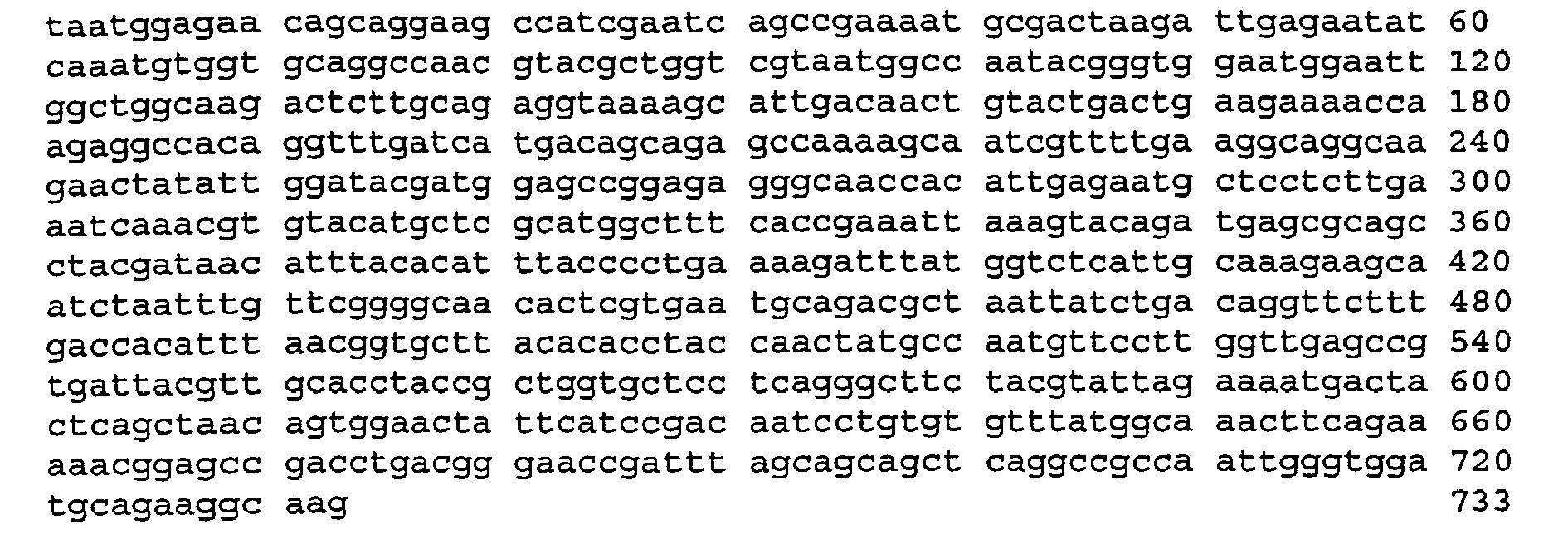
- <210> 102
<211> 742
<212> DNA
<213> Artificial Sequence - <220>
<223> Description of Artificial Sequence:P. endodontalis
B114 fimA polynucleotide sequence - <400> 102

- <210> 103
<211> 281
<212> PRT
<213> Artificial Sequence - <220>
<223> P. gulae B43 FimA polypeptide sequence - <400> 103


- <210> 104
<211> 170
<212> PRT
<213> Artificial Sequence - <220>
<223> P. circumdentaria B52 FimA polypeptide sequence - <400> 104

- <210> 105
<211> 275
<212> PRT
<213> Artificial Sequence - <220>
<223> P. gulae B69 FimA AA - <400> 105


- <210> 106
<211> 170
<212> PRT
<213> Artificial Sequence - <220>
<223> P. circumdentaria B97 FimA polypeptide sequence - <400> 106


- <210> 107
<211> 257
<212> PRT
<213> Artificial Sequence - <220>
<223> P. cangingivalis B98 FimA AA - <400> 107


- <210> 108
<211> 161
<212> PRT
<213> Artificial Sequence - <220>
<223> P. salivosa B104 FimA polypeptide sequence - <400> 108


- <210> 109
<211> 170
<212> PRT
<213> Artificial Sequence - <220>
<223> P. denticanis B106 FimA polypeptide sequence - <400> 109


- <210> 110
<211> 177
<212> PRT
<213> Artificial Sequence - <220>
<223> P. endodontalis B114 FimA polypeptide sequence - <400> 110


- <210> 111
<211> 1024
<212> DNA
<213> Artificial Sequence - <220>
<223> Description of Artificial Sequence:P. gulae B43
oprF polynucleotide sequence - <400> 111

- <210> 112
<211> 1024
<212> DNA
<213> Artificial Sequence - <220>
<223> Description of Artificial Sequence:P. cansulci B46
oprF polynucleotide sequence - <400> 112


- <210> 113
<211> 1024
<212> DNA
<213> Artificial Sequence - <220>
<223> Description of Artificial Sequence:P.
circumdentaria B52 oprF polynucleotide sequence - <400> 113
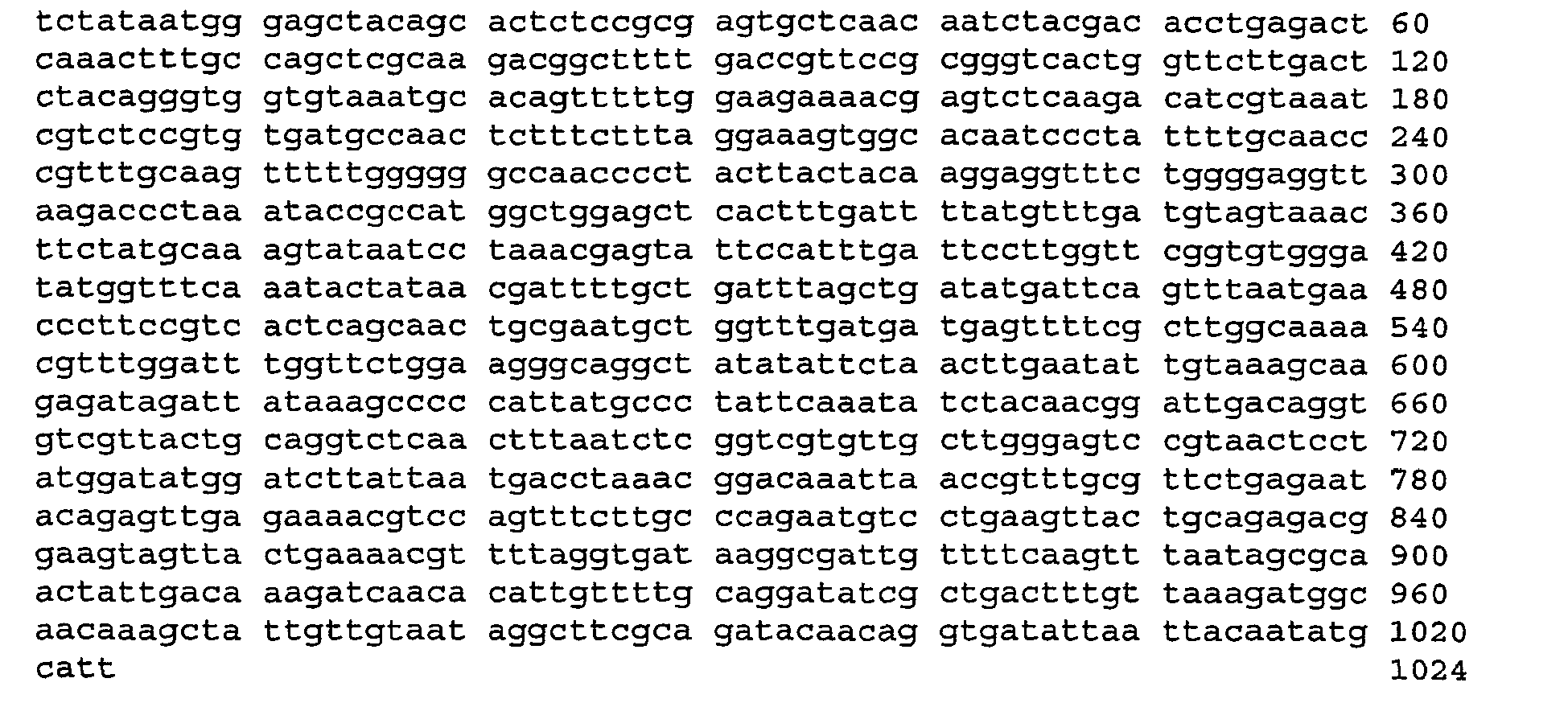
- <210> 114
<211> 1024
<212> DNA
<213> Artificial Sequence - <220>
<223> Description of Artificial Sequence:P. gulae B69
oprF polynucleotide sequence - <400> 114


- <210> 115
<211> 1024
<212> DNA
<213> Artificial Sequence - <220>
<223> Description of Artificial Sequence:P.
circumdentaria B97 oprF polynucleotide sequence - <400> 115

- <210> 116
<211> 948
<212> DNA
<213> Artificial Sequence - <220>
<223> Description of Artificial Sequence:P.
cangingivalis B98 oprF polynucleotide sequence - <400> 116


- <210> 117
<211> 969
<212> DNA
<213> Artificial Sequence - <220>
<223> Description of Artificial Sequence:P. salivosa
B104 oprF polynucleotide sequence - <400> 117

- <210> 118
<211> 1024
<212> DNA
<213> Artificial Sequence - <220>
<223> Description of Artificial Sequence:P. denticanis
B106 oprF polynucleotide sequence - <400> 118


- <210> 119
<211> 1024
<212> DNA
<213> Artificial Sequence - <220>
<223> Description of Artificial Sequence:P. endodontalis
B114 oprF polynucleotide sequence - <400> 119

- <210> 120
<211> 375
<212> PRT
<213> Artificial Sequence - <220>
<223> Description of Artificial Sequence:P. gulae B43
OprF polypeptide sequence - <400> 120


- <210> 121
<211> 366
<212> PRT
<213> Artificial Sequence - <220>
<223> Description of Artificial Sequence:P. cansulci B46
OprF polypeptide sequence - <400> 121


- <210> 122
<211> 382
<212> PRT
<213> Artificial Sequence - <220>
<223> Description of Artificial Sequence:P.
circumdentaria B52 OprF polypeptide sequence - <400> 122


- <210> 123
<211> 375
<212> PRT
<213> Artificial Sequence - <220>
<223> Description of Artificial Sequence:P. gulae B69
OprF polypeptide sequence - <400> 123


- <210> 124
<211> 382
<212> PRT
<213> Artificial Sequence - <220>
<223> Description of Artificial Sequence:P.
circumdentaria B97 OprF polypeptide sequence - <400> 124


- <210> 125
<211> 316
<212> PRT
<213> Artificial Sequence - <220>
<223> Description of Artificial Sequence:P.
cangingivalis B98 OprF polypeptide sequence - <400> 125


- <210> 126
<211> 323
<212> PRT
<213> Artificial Sequence - <220>
<223> Description of Artificial Sequence:P. salivosa
B104 OprF polypeptide sequence - <400> 126


- <210> 127
<211> 349
<212> PRT
<213> Artificial Sequence - <220>
<223> Description of Artificial Sequence:P. denticanis
B106 OprF polypeptide sequence - <400> 127


- <210> 128
<211> 395
<212> PRT
<213> Artificial Sequence - <220>
<223> Description of Artificial Sequence:P. endodontalis
B114 OprF polypeptide sequence - <400> 128


- <210> 129
<211> 12
<212> PRT
<213> Artificial Sequence - <220>
<223> Description of Artificial Sequence:P. gulae B43
FimA polypeptidefragment sequence # 1 - <400> 129

- <210> 130
<211> 21
<212> PRT
<213> Artificial Sequence - <220>
<223> Description of Artificial Sequence:P. gulae B43
FimA polypeptidefragment sequence # 2 - <400> 130

- <210> 131
<211> 16
<212> PRT
<213> Artificial Sequence - <220>
<223> Description of Artificial Sequence:P. gulae B43
FimA polypeptidefragment sequence # 3 - <400> 131

- <210> 132
<211> 14
<212> PRT
<213> Artificial Sequence - <220>
<223> Description of Artificial Sequence:P. gulae B43
OprF polypeptidefragment sequence # 1 - <400> 132

- <210> 133
<211> 29
<212> PRT
<213> Artificial Sequence - <220>
<223> Description of Artificial Sequence:P. gulae B43
OprF polypeptidefragment sequence # 2 - <400> 133

- <210> 134
<211> 21
<212> PRT
<213> Artificial Sequence - <220>
<223> Description of Artificial Sequence:P. gulae B43
OprF polypeptidefragment sequence # 3 - <400> 134

- <210> 135
<211> 47
<212> PRT
<213> Artificial Sequence - <220>
<223> Description of Artificial Sequence:pBAD-HisA
Amino-terminal polypeptide sequence - <400> 135

- <210> 136
<211> 15
<212> PRT
<213> Artificial Sequence - <220>
<223> Description of Artificial Sequence:pBAD-TOPO
Amino-terminal polypeptide sequence - <400> 136

- <210> 137
<211> 12
<212> PRT
<213> Artificial Sequence - <220>
<223> Description of Artificial Sequence:1 vector
Amino-terminal polypeptide sequence - <400> 137

- <210> 138
<211> 571
<212> DNA
<213> Artificial - <220>
<223> Description of Artificial Sequence: O. denticanis B107 16S rRNA
polynucleotide sequence - <400> 138


- <210> 139
<211> 515
<212> DNA
<213> Artificial - <220>
<223> Description of Artificial Sequence: O. denticanis B113 16S rRNA
polynucleotide sequence - <400> 139

- <210> 140
<211> 571
<212> DNA
<213> Artificial - <220>
<223> Description of Artificial Sequence: O. denticanis B126 16S rRNA
polynucleotide sequence - <400> 140


- <210> 141
<211> 571
<212> DNA
<213> Artificial - <220>
<223> Description of Artificial Sequence: O. denticanis B129 16S rRNA
polynucleotide sequence - <400> 141

- <210> 142
<211> 574
<212> DNA
<213> Artificial - <220>
<223> Description of Artificial Sequence: O. denticanis B135 16S rRNA
polynucleotide sequence - <400> 142


- <210> 143
<211> 571
<212> DNA
<213> Artificial - <220>
<223> Description of Artificial Sequence: O. denticanis B140 16S rRNA
polynucleotide sequence - <400> 143

- <210> 144
<211> 514
<212> DNA
<213> Artificial - <220>
<223> Description of Artificial Sequence: O. denticanis B150 16S rRNA
polynucleotide sequence - <400> 144

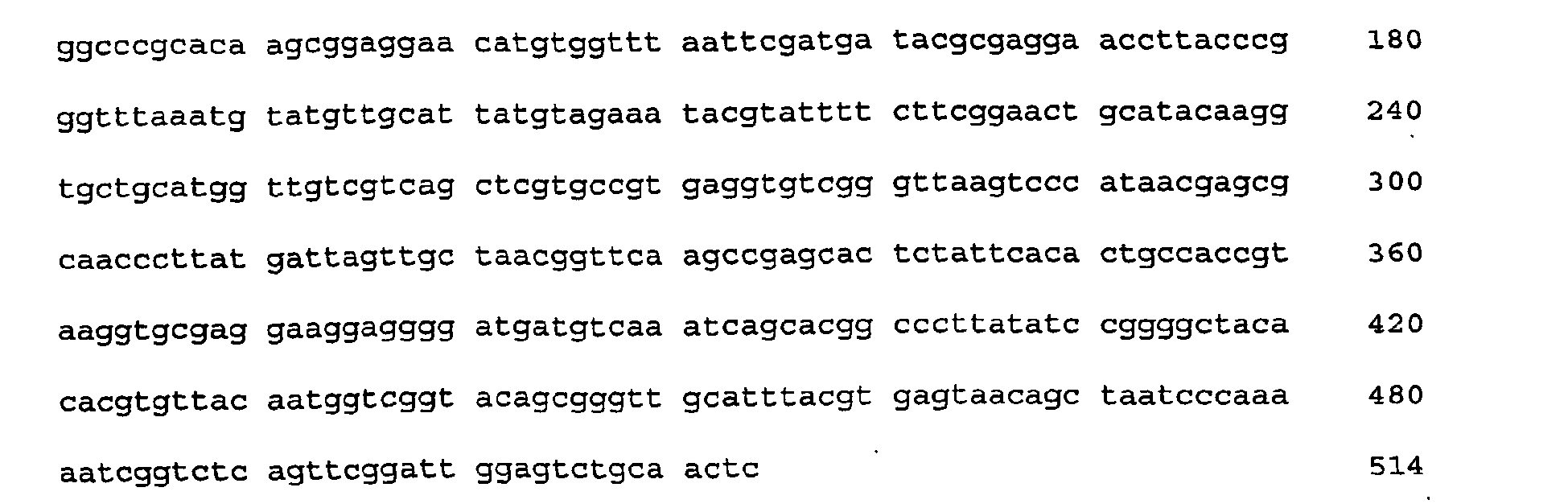
- <210> 145
<211> 514
<212> DNA
<213> Artificial - <220>
<223> Description of Artificial Sequence: O. denticanis B151 16S rRNA
polynucleotide sequence - <400> 145

- <210> 146
<211> 553
<212> DNA
<213> Artificial - <220>
<223> Description of Artificial Sequence: O. denticanis B152 16S rRNA
polynucleotide sequence - <400> 146


- <210> 147
<211> 568
<212> DNA
<213> Artificial - <220>
<223> Description of Artificial Sequence: O. denticanis B155 16S rRNA
polynucleotide sequence - <220>
<221> misc_feature
<222> (209)..(209)
<223> n is a, c, g, or t - <400> 147

- <210> 148
<211> 569
<212> DNA
<213> Artificial - <220>
<223> Description of Artificial Sequence: O. denticanis B163 16S rRNA
polynucleotide sequence - <400> 148

- <210> 149
<211> 353
<212> DNA
<213> Artificial - <220>
<223> Description of Artificial Sequence: O. denticanis B171 16S rRNA
polynucleotide sequence - <220>
<221> misc_feature
<222> (197)..(197)
<223> n is a, c, g, or t - <220>
<221> misc_feature
<222> (225)..(225)
<223> n is a, c, g, or t - <220>
<221> misc_feature
<222> (264)..(264)
<223> n is a, c, g, or t - <220>
<221> misc_feature
<222> (280) .. (280)
<223> n is a, c, g, or t - <220>
<221> misc_feature
<222> (289)..(289)
<223> n is a, c, g, or t - <220>
<221> misc_feature
<222> (297)..(297)
<223> n is a, c, g, or t - <220>
<221> misc_feature
<222> (336) .. (336)
<223> n is a, c, g, or t - <220>
<221> misc_feature
<222> (338)..(338)
<223> n is a, c, g, or t - <400> 149

- <210> 150
<211> 570
<212> DNA
<213> Artificial - <220>
<223> Description of Artificial Sequence: O. denticanis B172 16S rRNA
polynucleotide sequence - <220>
<221> misc_feature
<222> (195)..(195)
<223> n is a, c, g, or t - <220>
<221> misc_feature
<222> (278)..(278)
<223> n is a, c, g, or t - <220>
<221> misc_feature
<222> (287)..(287)
<223> n is a, c, g, or t - <220>
<221> misc_feature
<222> (295)..(295)
<223> n is a, c, g, or t - <220>
<221> misc_feature
<222> (334) .. (334)
<223> n is a, c, g, or t - <220>
<221> misc_feature
<222> (353)..(353)
<223> n is a, c, g, or t - <220>
<221> misc_feature
<222> (355)..(355)
<223> n is a, c, g, or t - <220>
<221> misc_feature
<222> (367)..(367)
<223> n is a, c, g, or t - <220>
<221> misc_feature
<222> (373)..(373)
<223> n is a, c, g, or t - <220>
<221> misc_feature
<222> (387)..(387)
<223> n is a, c, g, or t - <220>
<221> misc_feature
<222> (409)..(409)
<223> n is a, c, g, or t - <220>
<221> misc_feature
<222> (486)..(486)
<223> n is a, c, g, or t - <220>
<221> misc_feature
<222> (540)..(540)
<223> n is a, c, g, or t - <220>
<221> misc_feature
<222> (550)..(550)
<223> n is a, c, g, or t - <220>
<221> misc_feature
<222> (562)..(562)
<223> n is a, c, g, or t - <220>
<221> misc_feature
<222> (564)..(564)
<223> n is a, c, g, or t - <400> 150
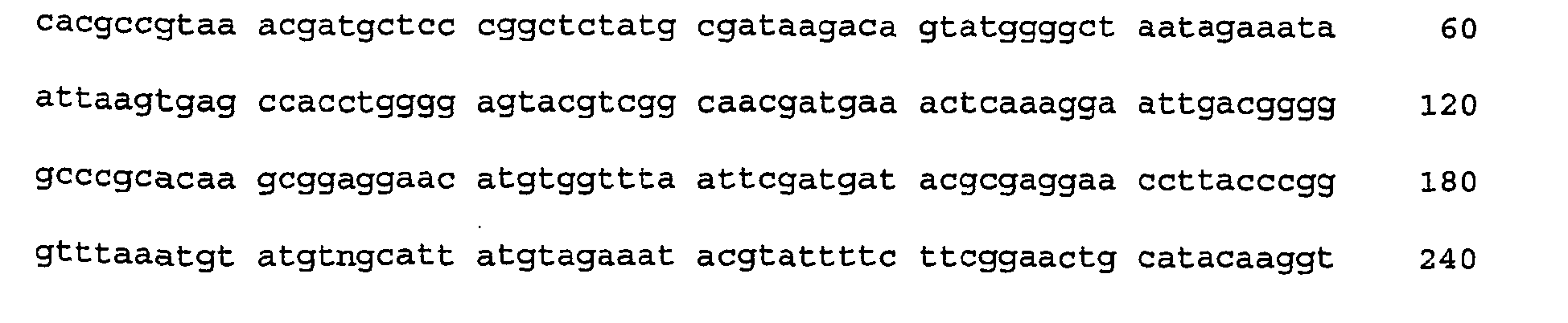

- <210> 151
<211> 514
<212> DNA
<213> Artificial - <220>
<223> Description of Artificial Sequence: O. denticanis B174 16S rRNA
polynucleotide sequence - <400> 151

- <210> 152
<211> 572
<212> DNA
<213> Artificial - <220>
<223> Description of Artificial Sequence: O. denticanis B183 16S rRNA
polynucleotide sequence - <220>
<221> misc_feature
<222> (56)..(56)
<223> n is a, c, g, or t - <220>
<221> misc_feature
<222> (127)..(127)
<223> n is a, c, g, or t - <220>
<221> misc_feature
<222> (197)..(197)
<223> n is a, c, g, or t - <220>
<221> misc_feature
<222> (225)..(225)
<223> n is a, c, g, or t - <220>
<221> misc_feature
<222> (265)..(265)
<223> n is a, c, g, or t - <220>
<221> misc_feature
<222> (278) .. (278)
<223> n is a, c, g, or t - <220>
<221> misc_feature
<222> (289)..(289)
<223> n is a, c, g, or t - <220>
<221> misc_feature
<222> (336)..(336)
<223> n is a, c, g, or t - <220>
<221> misc_feature
<222> (357)..(357)
<223> n is a, c, g, or t - <220>
<221> misc_feature
<222> (369) .. (369)
<223> n is a, c, g, or t - <220>
<221> misc_feature
<222> (375)..(375)
<223> n is a, c, g, or t - <220>
<221> misc_feature
<222> (389)..(389)
<223> n is a, c, g, or t - <220>
<221> misc_feature
<222> (425)..(425)
<223> n is a, c, g, or t - <220>
<221> misc_feature
<222> (453)..(453)
<223> n is a, c, g, or t - <220>
<221> misc_feature
<222> (488)..(488)
<223> n is a, c, g, or t - <220>
<221> misc_feature
<222> (516)..(516)
<223> n is a, c, g, or t - <220>
<221> misc_feature
<222> (527) .. (527)
<223> n is a, c, g, or t - <220>
<221> misc_feature
<222> (547)..(547)
<223> n is a, c, g, or t - <220>
<221> misc_feature
<222> (552)..(552)
<223> n is a, c, g, or t - <400> 152

- <210> 153
<211> 572
<212> DNA
<213> Artificial - <220>
<223> Description of Artificial Sequence: O. denticanis B264 16S rRNA
polynucleotide sequence - <220>
<221> misc_feature
<222> (70)..(70)
<223> n is a, c, g, or t - <220>
<221> misc_feature
<222> (343)..(343)
<223> n is a, c, g, or t - <220>
<221> misc_feature
<222> (345) .. (345)
<223> n is a, c, g, or t - <220>
<221> misc_feature
<222> (389)..(389)
<223> n is a, c, g, or t - <220>
<221> misc_feature
<222> (462)..(462)
<223> n is a, c, g, or t - <220>
<221> misc_feature
<222> (493)..(493)
<223> n is a, c, g, or t - <220>
<221> misc_feature
<222> (505)..(505)
<223> n is a, c, g, or t - <220>
<221> misc_feature
<222> (515)..(515)
<223> n is a, c, g, or t - <220>
<221> misc_feature
<222> (517)..(517)
<223> n is a, c, g, or t - <220>
<221> misc_feature
<222> (554)..(554)
<223> n is a, c, g, or t - <400> 153


- <210> 154
<211> 570
<212> DNA
<213> Artificial - <220>
<223> Description of Artificial Sequence: O. denticanis B265 16S rRNA
polynucleotide sequence - <400> 154

- <210> 155
<211> 570
<212> DNA
<213> Artificial - <220>
<223> Description of Artificial Sequence: O. denticanis B267 16S rRNA
polynucleotide sequence - <400> 155
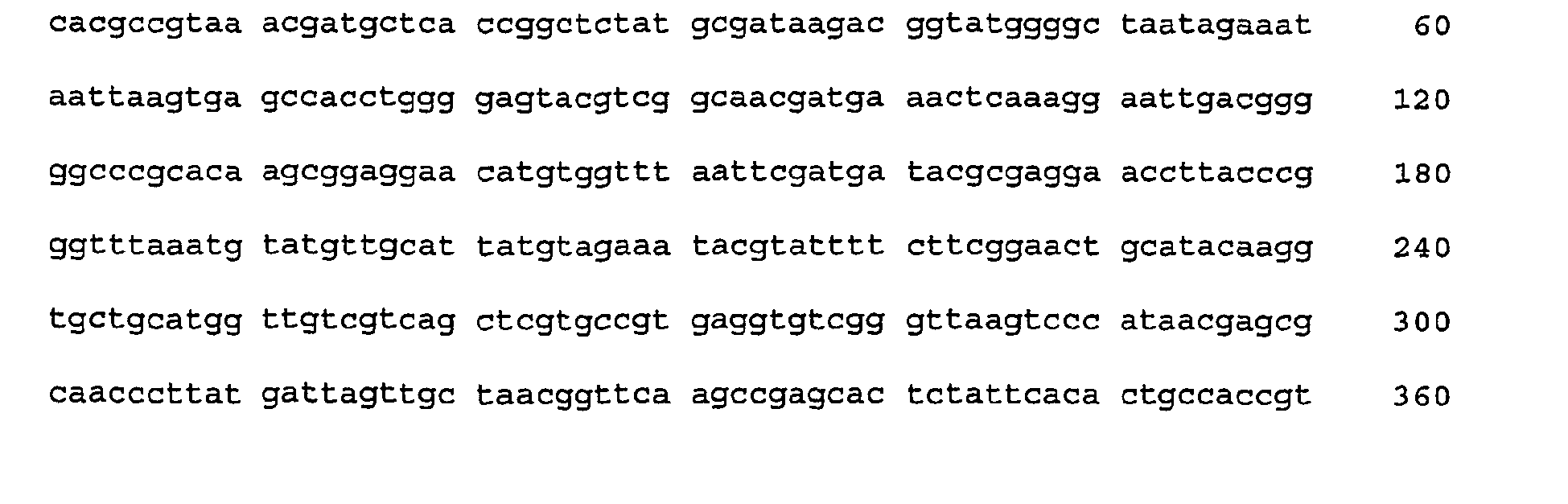

- <210> 156
<211> 570
<212> DNA
<213> Artificial - <220>
<223> Description of Artificial Sequence: O. denticanis B269 16S rRNA
polynucleotide sequence - <400> 156

- <210> 157
<211> 571
<212> DNA
<213> Artificial - <220>
<223> Description of Artificial Sequence: O. denticanis B363 16S rRNA
polynucleotide sequence - <400> 157
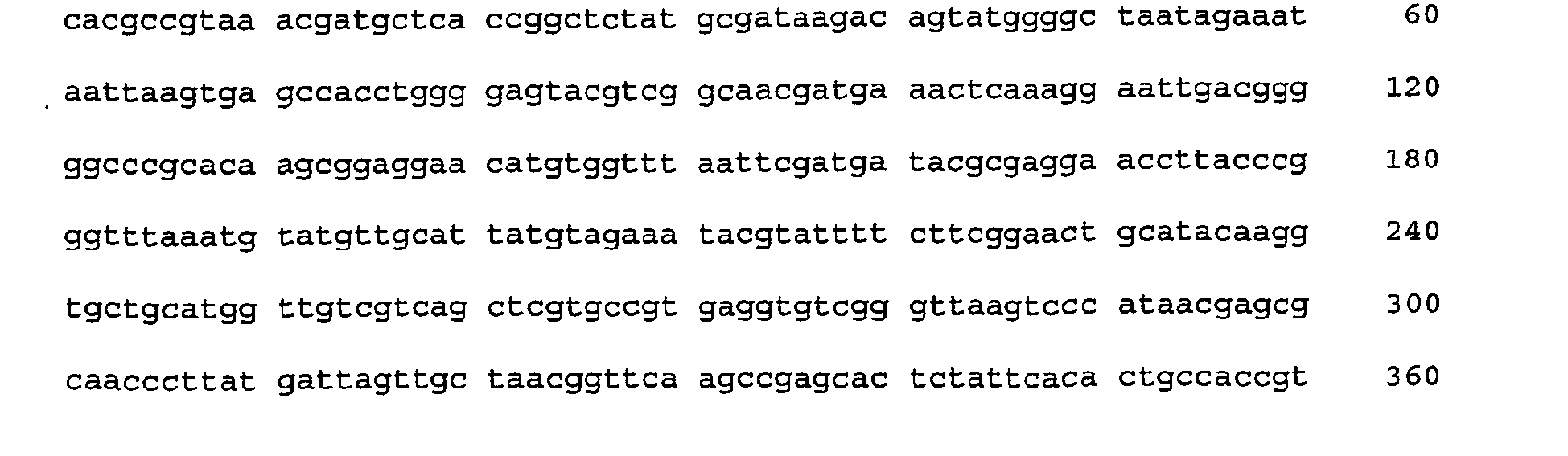

- <210> 158
<211> 571
<212> DNA
<213> Artificial - <220>
<223> Description of Artificial Sequence: O. denticanis B365 16S rRNA
polynucleotide sequence - <400> 158

- <210> 159
<211> 571
<212> DNA
<213> Artificial - <220>
<223> Description of Artificial Sequence: O. denticanis B366 16S rRNA
polynucleotide sequence - <400> 159


- <210> 160
<211> 571
<212> DNA
<213> Artificial - <220>
<223> Description of Artificial Sequence: O. denticanis B368 16S rRNA
polynucleotide sequence - <400> 160

- <210> 161
<211> 572
<212> DNA
<213> Artificial - <220>
<223> Description of Artificial Sequence: O. denticanis B456 16S rRNA
polynucleotide sequence - <400> 161
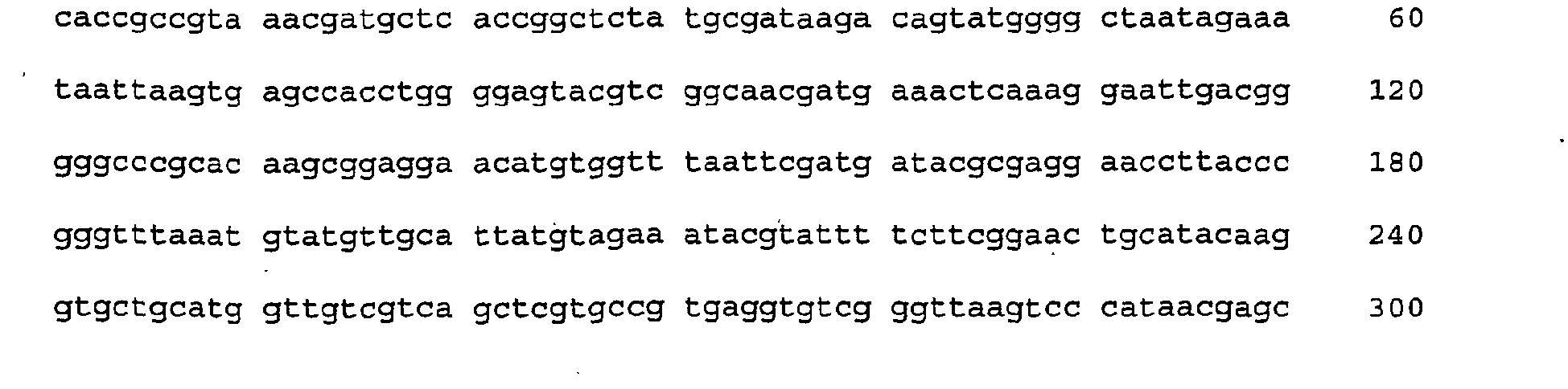

- <210> 162
<211> 571
<212> DNA
<213> Artificial - <220>
<223> Description of Artificial Sequence: O. denticanis B457 16S rRNA
polynucleotide sequence - <400> 162

- <210> 163
<211> 567
<212> DNA
<213> Artificial - <220>
<223> Description of Artificial Sequence: O. denticanis B381 16S rRNA
polynucleotide sequence - <400> 163

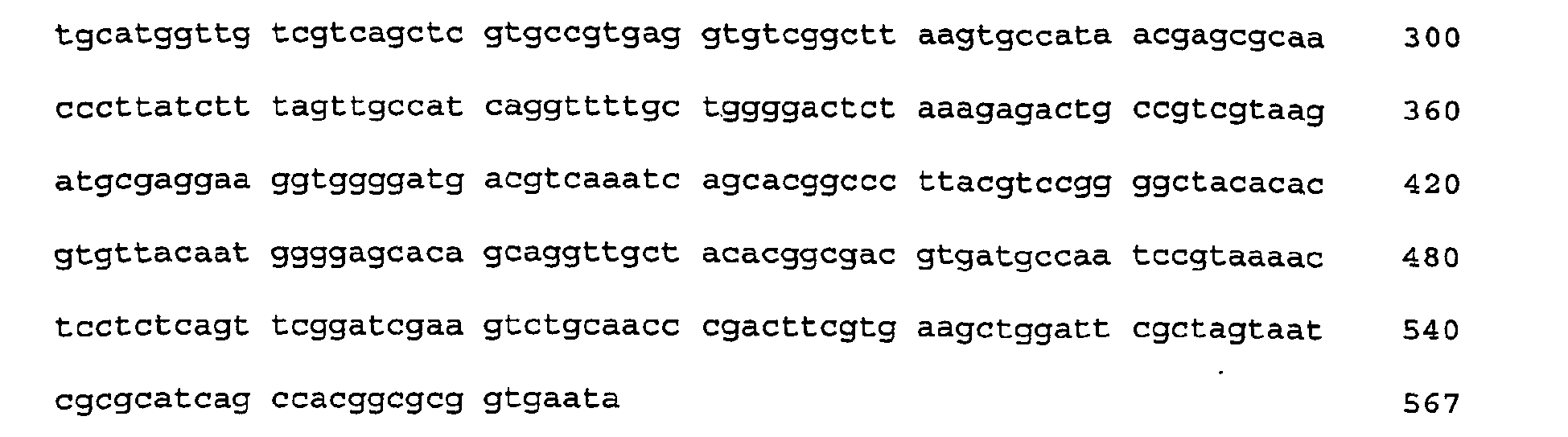
- <210> 164
<211> 564
<212> DNA
<213> Artificial - <220>
<223> Description of Artificial Sequence: O. denticanis B401 16S rRNA
polynucleotide sequence - <220>
<221> misc_feature
<222> (12) .. (12)
<223> n is a, c, g, or t - <220>
<221> misc_feature
<222> (20)..(20)
<223> n is a, c, g, or t - <220>
<221> misc_feature
<222> (545)..(545)
<223> n is a, c, g, or t - <400> 164

- <210> 165
<211> 564
<212> DNA
<213> Artificial - <220>
<223> Description of Artificial Sequence: O. denticanis B417 16S rRNA
polynucleotide sequence - <400> 165

- <210> 166
<211> 567
<212> DNA
<213> Artificial - <220>
<223> Description of Artificial Sequence: O. denticanis B418 16S rRNA
polynucleotide sequence - <220>
<221> misc feature
<222> (2)..(2)
<223> n is a, c, g, or t - <400> 166


- <210> 167
<211> 567
<212> DNA
<213> Artificial - <220>
<223> Description of Artificial Sequence: O. denticanis B421 16S rRNA
polynucleotide sequence - <400> 167

- <210> 168
<211> 565
<212> DNA
<213> Artificial - <220>
<223> Description of Artificial Sequence: O. denticanis B422 16S rRNA
polynucleotide sequence - <400> 168


- <210> 169
<211> 20
<212> DNA
<213> Artificial - <220>
<223> primer - <400> 169
gagtttgatc ctggctcagg 20
Claims (5)
- A vaccine for treating or preventing periodontal disease in companion animals comprising inactivated whole cell preparations of P. gulae B43, P. salivosa B104 and O. denticanis BI 06 and a pharmaceutically acceptable carrier.
- The vaccine of claim 1, wherein the bacteria were inactivated by formalin.
- The vaccine of claim 1, further comprising at least one of Canine Distemper Virus (CDV), Canine Adenovirus-2 (CAV-2), Canine Parvovirus (CPV), Canine Parainfluenza Virus (CPI), or Canine Coronavirus (CCV).
- Use of a vaccine according to any one of claims 1-3 in the manufacture of a medicament for treating or preventing periodontal disease in companion animals in need thereof.
- A kit comprising, in at least one container, a composition for treating and preventing periodontal disease in companion animals comprising a pharmaceutically acceptable carrier and inactivated whole cell preparations of P. gulae B43, P. salivosa B104 and O. denticanis B106; wherein the kit further comprises a set of printed instructions indicating that the kit is useful for treating or preventing periodontal disease in companion animals.
Applications Claiming Priority (2)
| Application Number | Priority Date | Filing Date | Title |
|---|---|---|---|
| US10/851,965 US7378101B2 (en) | 2001-12-21 | 2004-05-21 | Vaccine for periodontal disease |
| PCT/IB2005/000822 WO2005112993A1 (en) | 2004-05-21 | 2005-03-21 | Vaccine for periodontal disease |
Publications (2)
| Publication Number | Publication Date |
|---|---|
| EP1753454A1 EP1753454A1 (en) | 2007-02-21 |
| EP1753454B1 true EP1753454B1 (en) | 2009-05-27 |
Family
ID=35058733
Family Applications (1)
| Application Number | Title | Priority Date | Filing Date |
|---|---|---|---|
| EP05718305A Expired - Lifetime EP1753454B1 (en) | 2004-05-21 | 2005-03-21 | Vaccine for periodontal disease |
Country Status (19)
| Country | Link |
|---|---|
| US (2) | US7378101B2 (en) |
| EP (1) | EP1753454B1 (en) |
| JP (1) | JP4099213B2 (en) |
| CN (1) | CN101014363A (en) |
| AR (1) | AR048347A1 (en) |
| AT (1) | ATE432082T1 (en) |
| AU (1) | AU2005244663A1 (en) |
| BR (1) | BRPI0510148A (en) |
| CA (1) | CA2565925C (en) |
| DE (1) | DE602005014635D1 (en) |
| ES (1) | ES2325737T3 (en) |
| IL (1) | IL178971A0 (en) |
| MX (1) | MXPA06013471A (en) |
| NO (1) | NO20065064L (en) |
| NZ (1) | NZ550981A (en) |
| RU (1) | RU2364417C2 (en) |
| TW (1) | TW200538152A (en) |
| WO (1) | WO2005112993A1 (en) |
| ZA (1) | ZA200609105B (en) |
Families Citing this family (21)
| Publication number | Priority date | Publication date | Assignee | Title |
|---|---|---|---|---|
| US8129500B2 (en) * | 1997-12-10 | 2012-03-06 | Csl Limited | Porphyromonas gingivalis polypeptides and nucleotides |
| US7378101B2 (en) * | 2001-12-21 | 2008-05-27 | Pfizer, Inc. | Vaccine for periodontal disease |
| US7682619B2 (en) | 2006-04-06 | 2010-03-23 | Cornell Research Foundation, Inc. | Canine influenza virus |
| US9181592B2 (en) * | 2007-03-30 | 2015-11-10 | Case Western Reserve University | Method for detecting a bacterial pathogen |
| WO2008137506A2 (en) * | 2007-05-01 | 2008-11-13 | Mars Incorporated | Methods and kits for dog plaque disease |
| JP2009173558A (en) * | 2008-01-22 | 2009-08-06 | Gen Corp:Kk | Anti-canine periodontal disease composition |
| US8691502B2 (en) | 2008-10-31 | 2014-04-08 | Tremrx, Inc. | T-cell vaccination with viral vectors via mechanical epidermal disruption |
| SG179037A1 (en) * | 2009-09-10 | 2012-04-27 | Merial Ltd | New vaccine formulations comprising saponin-containing adjuvants |
| CN102639148A (en) * | 2009-12-01 | 2012-08-15 | 英特维特国际股份有限公司 | Inactivated poultry vaccine |
| WO2012151272A2 (en) * | 2011-05-02 | 2012-11-08 | Tremrx, Inc. | T-cell vaccination with viral vectors via mechanical epidermal disruption |
| EP2586461A1 (en) | 2011-10-27 | 2013-05-01 | Christopher L. Parks | Viral particles derived from an enveloped virus |
| JP6108553B2 (en) * | 2011-12-13 | 2017-04-05 | 学校法人麻布獣医学園 | Porphyromonas gulae pili type |
| US9347065B2 (en) | 2012-03-29 | 2016-05-24 | International Aids Vaccine Initiative | Methods to improve vector expression and genetic stability |
| WO2015190589A1 (en) * | 2014-06-13 | 2015-12-17 | 学校法人麻布獣医学園 | Risk diagnosis of canine mitral insufficiency |
| JP2018154574A (en) * | 2017-03-16 | 2018-10-04 | 合同会社チューモス | Eye drop vaccine and immune induction method |
| MA50363A (en) | 2017-10-12 | 2020-08-19 | Vaxcyte Inc | PERIODONTITIS VACCINE AND RELATED COMPOSITIONS AND METHOD OF USE |
| US12403187B2 (en) | 2018-12-31 | 2025-09-02 | Bellevacc As | Bacterial vaccine |
| CN112533623A (en) | 2019-07-04 | 2021-03-19 | 株式会社索辛 | Oral composition for animal, and agent for preventing periodontal disease, infectious disease, and halitosis for animal using the same |
| US10973908B1 (en) | 2020-05-14 | 2021-04-13 | David Gordon Bermudes | Expression of SARS-CoV-2 spike protein receptor binding domain in attenuated salmonella as a vaccine |
| US12537071B1 (en) | 2020-07-22 | 2026-01-27 | David Gordon Bermudes | Bacteria having boolean control pathways expressing therapeutic proteins including immunotherapeutic cytotoxins |
| CN116751292B (en) * | 2023-07-31 | 2024-05-14 | 河南大学 | Monoclonal antibody against Porphyromonas gingivalis Mfa1 and its application |
Family Cites Families (11)
| Publication number | Priority date | Publication date | Assignee | Title |
|---|---|---|---|---|
| JPS59128338A (en) * | 1982-12-08 | 1984-07-24 | Kitasato Inst:The | Vaccine for preventing periodontitis |
| JPH0662431B2 (en) | 1984-12-14 | 1994-08-17 | ライオン株式会社 | Oral vaccine for periodontitis prevention |
| US5536497A (en) * | 1992-12-21 | 1996-07-16 | The Research Foundation Of State University Of New York | Fimbrial polypeptides useful in the prevention of periodontitis |
| JPH0797395A (en) | 1993-09-28 | 1995-04-11 | Kyowa Medex Co Ltd | Peptides containing sequences of Porphyromonas gingivalis pilus protein and uses thereof |
| EP0726314A4 (en) | 1993-10-08 | 1998-04-22 | Lion Corp | FIMBRILLIN PROTEIN OF -i(PORPHYROMONAS GINGIVALIS) |
| US5563063A (en) | 1995-08-30 | 1996-10-08 | Nihon University (Educational Foundation) | Porphyromonas crevioricanis species of microorganism |
| US5710039A (en) | 1995-08-30 | 1998-01-20 | Nihon University (Educational Foundationn) | Porphyromonas gingivicanis strain ATCC 55562 |
| AUPQ137699A0 (en) * | 1999-07-02 | 1999-07-22 | University Of New England, The | Control of acidosis |
| AUPQ718200A0 (en) | 2000-04-28 | 2000-05-25 | Csl Limited | Porphyromonas gingivalis recombinant proteins and truncations |
| US7378101B2 (en) * | 2001-12-21 | 2008-05-27 | Pfizer, Inc. | Vaccine for periodontal disease |
| US7468185B2 (en) * | 2001-12-21 | 2008-12-23 | Pfizer Inc. | Vaccine for periodontal disease |
-
2004
- 2004-05-21 US US10/851,965 patent/US7378101B2/en not_active Expired - Fee Related
-
2005
- 2005-03-21 BR BRPI0510148-4A patent/BRPI0510148A/en not_active IP Right Cessation
- 2005-03-21 EP EP05718305A patent/EP1753454B1/en not_active Expired - Lifetime
- 2005-03-21 MX MXPA06013471A patent/MXPA06013471A/en active IP Right Grant
- 2005-03-21 RU RU2006140984/13A patent/RU2364417C2/en not_active IP Right Cessation
- 2005-03-21 AT AT05718305T patent/ATE432082T1/en not_active IP Right Cessation
- 2005-03-21 AU AU2005244663A patent/AU2005244663A1/en not_active Abandoned
- 2005-03-21 CA CA2565925A patent/CA2565925C/en not_active Expired - Fee Related
- 2005-03-21 WO PCT/IB2005/000822 patent/WO2005112993A1/en not_active Ceased
- 2005-03-21 ES ES05718305T patent/ES2325737T3/en not_active Expired - Lifetime
- 2005-03-21 DE DE602005014635T patent/DE602005014635D1/en not_active Expired - Lifetime
- 2005-03-21 CN CNA2005800230182A patent/CN101014363A/en active Pending
- 2005-03-21 JP JP2007517471A patent/JP4099213B2/en not_active Expired - Lifetime
- 2005-03-21 NZ NZ550981A patent/NZ550981A/en not_active IP Right Cessation
- 2005-03-30 AR ARP050101226A patent/AR048347A1/en not_active Application Discontinuation
- 2005-03-30 TW TW094109998A patent/TW200538152A/en unknown
-
2006
- 2006-10-31 IL IL178971A patent/IL178971A0/en unknown
- 2006-11-01 ZA ZA200609105A patent/ZA200609105B/en unknown
- 2006-11-02 NO NO20065064A patent/NO20065064L/en not_active Application Discontinuation
-
2008
- 2008-05-12 US US12/119,136 patent/US20080311151A1/en not_active Abandoned
Also Published As
| Publication number | Publication date |
|---|---|
| IL178971A0 (en) | 2007-03-08 |
| AR048347A1 (en) | 2006-04-19 |
| MXPA06013471A (en) | 2007-01-23 |
| WO2005112993A1 (en) | 2005-12-01 |
| JP2008500379A (en) | 2008-01-10 |
| JP4099213B2 (en) | 2008-06-11 |
| NZ550981A (en) | 2009-07-31 |
| ES2325737T3 (en) | 2009-09-15 |
| DE602005014635D1 (en) | 2009-07-09 |
| CA2565925A1 (en) | 2005-12-01 |
| TW200538152A (en) | 2005-12-01 |
| CA2565925C (en) | 2011-01-18 |
| EP1753454A1 (en) | 2007-02-21 |
| BRPI0510148A (en) | 2007-10-02 |
| RU2364417C2 (en) | 2009-08-20 |
| AU2005244663A1 (en) | 2005-12-01 |
| US7378101B2 (en) | 2008-05-27 |
| RU2006140984A (en) | 2008-05-27 |
| ATE432082T1 (en) | 2009-06-15 |
| NO20065064L (en) | 2006-12-01 |
| CN101014363A (en) | 2007-08-08 |
| US20080311151A1 (en) | 2008-12-18 |
| ZA200609105B (en) | 2008-12-31 |
| US20050010032A1 (en) | 2005-01-13 |
Similar Documents
| Publication | Publication Date | Title |
|---|---|---|
| US20080311151A1 (en) | Vaccine For Periodontal Disease | |
| US7468185B2 (en) | Vaccine for periodontal disease | |
| KR102768038B1 (en) | Senecavirus A immunogenic composition and method thereof | |
| US8986704B2 (en) | Mutant fragments of OspA and methods and uses relating thereto | |
| KR20200068756A (en) | Compositions comprising chimeric ospa molecules and methods of use thereof | |
| KR19990087436A (en) | Porphyromonas gingivalis antigen for diagnosis and treatment of periodontitis | |
| CA2870179C (en) | Vaccines and methods to treat lyme disease in dogs | |
| KR100843443B1 (en) | Periodontal Disease Vaccine | |
| HK1106434A (en) | Vaccine for periodontal disease | |
| TWI912376B (en) | Attenuated porcine epidemic diarrhea virus | |
| US20060257429A1 (en) | Vaccine for periodontal disease | |
| KR100930881B1 (en) | Swine Bodetella Bronchiceptica Vaccine Strain of New Antigen | |
| US6767713B2 (en) | Pasteurella neuraminidase diagnostic methods and immunoassay kit |
Legal Events
| Date | Code | Title | Description |
|---|---|---|---|
| PUAI | Public reference made under article 153(3) epc to a published international application that has entered the european phase |
Free format text: ORIGINAL CODE: 0009012 |
|
| 17P | Request for examination filed |
Effective date: 20061221 |
|
| AK | Designated contracting states |
Kind code of ref document: A1 Designated state(s): AT BE BG CH CY CZ DE DK EE ES FI FR GB GR HU IE IS IT LI LT LU MC NL PL PT RO SE SI SK TR |
|
| DAX | Request for extension of the european patent (deleted) | ||
| 17Q | First examination report despatched |
Effective date: 20071026 |
|
| GRAP | Despatch of communication of intention to grant a patent |
Free format text: ORIGINAL CODE: EPIDOSNIGR1 |
|
| GRAS | Grant fee paid |
Free format text: ORIGINAL CODE: EPIDOSNIGR3 |
|
| GRAA | (expected) grant |
Free format text: ORIGINAL CODE: 0009210 |
|
| AK | Designated contracting states |
Kind code of ref document: B1 Designated state(s): AT BE BG CH CY CZ DE DK EE ES FI FR GB GR HU IE IS IT LI LT LU MC NL PL PT RO SE SI SK TR |
|
| REG | Reference to a national code |
Ref country code: GB Ref legal event code: FG4D |
|
| REG | Reference to a national code |
Ref country code: CH Ref legal event code: EP |
|
| REG | Reference to a national code |
Ref country code: IE Ref legal event code: FG4D |
|
| REF | Corresponds to: |
Ref document number: 602005014635 Country of ref document: DE Date of ref document: 20090709 Kind code of ref document: P |
|
| REG | Reference to a national code |
Ref country code: ES Ref legal event code: FG2A Ref document number: 2325737 Country of ref document: ES Kind code of ref document: T3 |
|
| PG25 | Lapsed in a contracting state [announced via postgrant information from national office to epo] |
Ref country code: AT Free format text: LAPSE BECAUSE OF FAILURE TO SUBMIT A TRANSLATION OF THE DESCRIPTION OR TO PAY THE FEE WITHIN THE PRESCRIBED TIME-LIMIT Effective date: 20090527 Ref country code: PT Free format text: LAPSE BECAUSE OF FAILURE TO SUBMIT A TRANSLATION OF THE DESCRIPTION OR TO PAY THE FEE WITHIN THE PRESCRIBED TIME-LIMIT Effective date: 20090927 Ref country code: FI Free format text: LAPSE BECAUSE OF FAILURE TO SUBMIT A TRANSLATION OF THE DESCRIPTION OR TO PAY THE FEE WITHIN THE PRESCRIBED TIME-LIMIT Effective date: 20090527 Ref country code: LT Free format text: LAPSE BECAUSE OF FAILURE TO SUBMIT A TRANSLATION OF THE DESCRIPTION OR TO PAY THE FEE WITHIN THE PRESCRIBED TIME-LIMIT Effective date: 20090527 |
|
| NLV1 | Nl: lapsed or annulled due to failure to fulfill the requirements of art. 29p and 29m of the patents act | ||
| PG25 | Lapsed in a contracting state [announced via postgrant information from national office to epo] |
Ref country code: IS Free format text: LAPSE BECAUSE OF FAILURE TO SUBMIT A TRANSLATION OF THE DESCRIPTION OR TO PAY THE FEE WITHIN THE PRESCRIBED TIME-LIMIT Effective date: 20090927 Ref country code: SI Free format text: LAPSE BECAUSE OF FAILURE TO SUBMIT A TRANSLATION OF THE DESCRIPTION OR TO PAY THE FEE WITHIN THE PRESCRIBED TIME-LIMIT Effective date: 20090527 Ref country code: NL Free format text: LAPSE BECAUSE OF FAILURE TO SUBMIT A TRANSLATION OF THE DESCRIPTION OR TO PAY THE FEE WITHIN THE PRESCRIBED TIME-LIMIT Effective date: 20090527 Ref country code: PL Free format text: LAPSE BECAUSE OF FAILURE TO SUBMIT A TRANSLATION OF THE DESCRIPTION OR TO PAY THE FEE WITHIN THE PRESCRIBED TIME-LIMIT Effective date: 20090527 Ref country code: SE Free format text: LAPSE BECAUSE OF FAILURE TO SUBMIT A TRANSLATION OF THE DESCRIPTION OR TO PAY THE FEE WITHIN THE PRESCRIBED TIME-LIMIT Effective date: 20090827 |
|
| PG25 | Lapsed in a contracting state [announced via postgrant information from national office to epo] |
Ref country code: CZ Free format text: LAPSE BECAUSE OF FAILURE TO SUBMIT A TRANSLATION OF THE DESCRIPTION OR TO PAY THE FEE WITHIN THE PRESCRIBED TIME-LIMIT Effective date: 20090527 Ref country code: DK Free format text: LAPSE BECAUSE OF FAILURE TO SUBMIT A TRANSLATION OF THE DESCRIPTION OR TO PAY THE FEE WITHIN THE PRESCRIBED TIME-LIMIT Effective date: 20090527 Ref country code: RO Free format text: LAPSE BECAUSE OF FAILURE TO SUBMIT A TRANSLATION OF THE DESCRIPTION OR TO PAY THE FEE WITHIN THE PRESCRIBED TIME-LIMIT Effective date: 20090527 Ref country code: EE Free format text: LAPSE BECAUSE OF FAILURE TO SUBMIT A TRANSLATION OF THE DESCRIPTION OR TO PAY THE FEE WITHIN THE PRESCRIBED TIME-LIMIT Effective date: 20090527 |
|
| PG25 | Lapsed in a contracting state [announced via postgrant information from national office to epo] |
Ref country code: SK Free format text: LAPSE BECAUSE OF FAILURE TO SUBMIT A TRANSLATION OF THE DESCRIPTION OR TO PAY THE FEE WITHIN THE PRESCRIBED TIME-LIMIT Effective date: 20090527 Ref country code: BE Free format text: LAPSE BECAUSE OF FAILURE TO SUBMIT A TRANSLATION OF THE DESCRIPTION OR TO PAY THE FEE WITHIN THE PRESCRIBED TIME-LIMIT Effective date: 20090527 |
|
| PG25 | Lapsed in a contracting state [announced via postgrant information from national office to epo] |
Ref country code: BG Free format text: LAPSE BECAUSE OF FAILURE TO SUBMIT A TRANSLATION OF THE DESCRIPTION OR TO PAY THE FEE WITHIN THE PRESCRIBED TIME-LIMIT Effective date: 20090827 |
|
| PLBE | No opposition filed within time limit |
Free format text: ORIGINAL CODE: 0009261 |
|
| STAA | Information on the status of an ep patent application or granted ep patent |
Free format text: STATUS: NO OPPOSITION FILED WITHIN TIME LIMIT |
|
| 26N | No opposition filed |
Effective date: 20100302 |
|
| PG25 | Lapsed in a contracting state [announced via postgrant information from national office to epo] |
Ref country code: MC Free format text: LAPSE BECAUSE OF NON-PAYMENT OF DUE FEES Effective date: 20100331 Ref country code: GR Free format text: LAPSE BECAUSE OF FAILURE TO SUBMIT A TRANSLATION OF THE DESCRIPTION OR TO PAY THE FEE WITHIN THE PRESCRIBED TIME-LIMIT Effective date: 20090828 |
|
| REG | Reference to a national code |
Ref country code: CH Ref legal event code: PL |
|
| PG25 | Lapsed in a contracting state [announced via postgrant information from national office to epo] |
Ref country code: LI Free format text: LAPSE BECAUSE OF NON-PAYMENT OF DUE FEES Effective date: 20100331 Ref country code: CH Free format text: LAPSE BECAUSE OF NON-PAYMENT OF DUE FEES Effective date: 20100331 |
|
| PGFP | Annual fee paid to national office [announced via postgrant information from national office to epo] |
Ref country code: FR Payment date: 20120328 Year of fee payment: 8 Ref country code: IE Payment date: 20120228 Year of fee payment: 8 |
|
| PGFP | Annual fee paid to national office [announced via postgrant information from national office to epo] |
Ref country code: GB Payment date: 20120227 Year of fee payment: 8 Ref country code: IT Payment date: 20120319 Year of fee payment: 8 |
|
| PGFP | Annual fee paid to national office [announced via postgrant information from national office to epo] |
Ref country code: DE Payment date: 20120330 Year of fee payment: 8 |
|
| PG25 | Lapsed in a contracting state [announced via postgrant information from national office to epo] |
Ref country code: CY Free format text: LAPSE BECAUSE OF FAILURE TO SUBMIT A TRANSLATION OF THE DESCRIPTION OR TO PAY THE FEE WITHIN THE PRESCRIBED TIME-LIMIT Effective date: 20090527 |
|
| PG25 | Lapsed in a contracting state [announced via postgrant information from national office to epo] |
Ref country code: HU Free format text: LAPSE BECAUSE OF FAILURE TO SUBMIT A TRANSLATION OF THE DESCRIPTION OR TO PAY THE FEE WITHIN THE PRESCRIBED TIME-LIMIT Effective date: 20091128 Ref country code: LU Free format text: LAPSE BECAUSE OF NON-PAYMENT OF DUE FEES Effective date: 20100321 |
|
| PG25 | Lapsed in a contracting state [announced via postgrant information from national office to epo] |
Ref country code: TR Free format text: LAPSE BECAUSE OF FAILURE TO SUBMIT A TRANSLATION OF THE DESCRIPTION OR TO PAY THE FEE WITHIN THE PRESCRIBED TIME-LIMIT Effective date: 20090527 |
|
| PGFP | Annual fee paid to national office [announced via postgrant information from national office to epo] |
Ref country code: ES Payment date: 20120326 Year of fee payment: 8 |
|
| GBPC | Gb: european patent ceased through non-payment of renewal fee |
Effective date: 20130321 |
|
| REG | Reference to a national code |
Ref country code: FR Ref legal event code: ST Effective date: 20131129 |
|
| REG | Reference to a national code |
Ref country code: IE Ref legal event code: MM4A |
|
| REG | Reference to a national code |
Ref country code: DE Ref legal event code: R119 Ref document number: 602005014635 Country of ref document: DE Effective date: 20131001 |
|
| PG25 | Lapsed in a contracting state [announced via postgrant information from national office to epo] |
Ref country code: FR Free format text: LAPSE BECAUSE OF NON-PAYMENT OF DUE FEES Effective date: 20130402 Ref country code: GB Free format text: LAPSE BECAUSE OF NON-PAYMENT OF DUE FEES Effective date: 20130321 Ref country code: DE Free format text: LAPSE BECAUSE OF NON-PAYMENT OF DUE FEES Effective date: 20131001 Ref country code: IE Free format text: LAPSE BECAUSE OF NON-PAYMENT OF DUE FEES Effective date: 20130321 |
|
| PG25 | Lapsed in a contracting state [announced via postgrant information from national office to epo] |
Ref country code: IT Free format text: LAPSE BECAUSE OF NON-PAYMENT OF DUE FEES Effective date: 20130321 |
|
| REG | Reference to a national code |
Ref country code: ES Ref legal event code: FD2A Effective date: 20140606 |
|
| PG25 | Lapsed in a contracting state [announced via postgrant information from national office to epo] |
Ref country code: ES Free format text: LAPSE BECAUSE OF NON-PAYMENT OF DUE FEES Effective date: 20130322 |