EP1753418B1 - Compositions comprising nebivolol - Google Patents
Compositions comprising nebivolol Download PDFInfo
- Publication number
- EP1753418B1 EP1753418B1 EP05804863A EP05804863A EP1753418B1 EP 1753418 B1 EP1753418 B1 EP 1753418B1 EP 05804863 A EP05804863 A EP 05804863A EP 05804863 A EP05804863 A EP 05804863A EP 1753418 B1 EP1753418 B1 EP 1753418B1
- Authority
- EP
- European Patent Office
- Prior art keywords
- nebivolol
- treatment
- agents
- compositions
- composition
- Prior art date
- Legal status (The legal status is an assumption and is not a legal conclusion. Google has not performed a legal analysis and makes no representation as to the accuracy of the status listed.)
- Expired - Lifetime
Links
Images


Classifications
-
- A—HUMAN NECESSITIES
- A61—MEDICAL OR VETERINARY SCIENCE; HYGIENE
- A61K—PREPARATIONS FOR MEDICAL, DENTAL OR TOILETRY PURPOSES
- A61K31/00—Medicinal preparations containing organic active ingredients
- A61K31/33—Heterocyclic compounds
- A61K31/335—Heterocyclic compounds having oxygen as the only ring hetero atom, e.g. fungichromin
- A61K31/35—Heterocyclic compounds having oxygen as the only ring hetero atom, e.g. fungichromin having six-membered rings with one oxygen as the only ring hetero atom
- A61K31/352—Heterocyclic compounds having oxygen as the only ring hetero atom, e.g. fungichromin having six-membered rings with one oxygen as the only ring hetero atom condensed with carbocyclic rings, e.g. methantheline
-
- A—HUMAN NECESSITIES
- A61—MEDICAL OR VETERINARY SCIENCE; HYGIENE
- A61K—PREPARATIONS FOR MEDICAL, DENTAL OR TOILETRY PURPOSES
- A61K31/00—Medicinal preparations containing organic active ingredients
- A61K31/33—Heterocyclic compounds
- A61K31/335—Heterocyclic compounds having oxygen as the only ring hetero atom, e.g. fungichromin
- A61K31/35—Heterocyclic compounds having oxygen as the only ring hetero atom, e.g. fungichromin having six-membered rings with one oxygen as the only ring hetero atom
-
- A—HUMAN NECESSITIES
- A61—MEDICAL OR VETERINARY SCIENCE; HYGIENE
- A61K—PREPARATIONS FOR MEDICAL, DENTAL OR TOILETRY PURPOSES
- A61K45/00—Medicinal preparations containing active ingredients not provided for in groups A61K31/00 - A61K41/00
- A61K45/06—Mixtures of active ingredients without chemical characterisation, e.g. antiphlogistics and cardiaca
-
- A—HUMAN NECESSITIES
- A61—MEDICAL OR VETERINARY SCIENCE; HYGIENE
- A61K—PREPARATIONS FOR MEDICAL, DENTAL OR TOILETRY PURPOSES
- A61K31/00—Medicinal preparations containing organic active ingredients
- A61K31/13—Amines
- A61K31/155—Amidines (), e.g. guanidine (H2N—C(=NH)—NH2), isourea (N=C(OH)—NH2), isothiourea (—N=C(SH)—NH2)
-
- A—HUMAN NECESSITIES
- A61—MEDICAL OR VETERINARY SCIENCE; HYGIENE
- A61K—PREPARATIONS FOR MEDICAL, DENTAL OR TOILETRY PURPOSES
- A61K31/00—Medicinal preparations containing organic active ingredients
- A61K31/33—Heterocyclic compounds
- A61K31/335—Heterocyclic compounds having oxygen as the only ring hetero atom, e.g. fungichromin
- A61K31/35—Heterocyclic compounds having oxygen as the only ring hetero atom, e.g. fungichromin having six-membered rings with one oxygen as the only ring hetero atom
- A61K31/352—Heterocyclic compounds having oxygen as the only ring hetero atom, e.g. fungichromin having six-membered rings with one oxygen as the only ring hetero atom condensed with carbocyclic rings, e.g. methantheline
- A61K31/353—3,4-Dihydrobenzopyrans, e.g. chroman, catechin
-
- A—HUMAN NECESSITIES
- A61—MEDICAL OR VETERINARY SCIENCE; HYGIENE
- A61K—PREPARATIONS FOR MEDICAL, DENTAL OR TOILETRY PURPOSES
- A61K31/00—Medicinal preparations containing organic active ingredients
- A61K31/33—Heterocyclic compounds
- A61K31/395—Heterocyclic compounds having nitrogen as a ring hetero atom, e.g. guanethidine or rifamycins
- A61K31/40—Heterocyclic compounds having nitrogen as a ring hetero atom, e.g. guanethidine or rifamycins having five-membered rings with one nitrogen as the only ring hetero atom, e.g. sulpiride, succinimide, tolmetin, buflomedil
- A61K31/401—Proline; Derivatives thereof, e.g. captopril
-
- A—HUMAN NECESSITIES
- A61—MEDICAL OR VETERINARY SCIENCE; HYGIENE
- A61K—PREPARATIONS FOR MEDICAL, DENTAL OR TOILETRY PURPOSES
- A61K31/00—Medicinal preparations containing organic active ingredients
- A61K31/33—Heterocyclic compounds
- A61K31/395—Heterocyclic compounds having nitrogen as a ring hetero atom, e.g. guanethidine or rifamycins
- A61K31/40—Heterocyclic compounds having nitrogen as a ring hetero atom, e.g. guanethidine or rifamycins having five-membered rings with one nitrogen as the only ring hetero atom, e.g. sulpiride, succinimide, tolmetin, buflomedil
- A61K31/403—Heterocyclic compounds having nitrogen as a ring hetero atom, e.g. guanethidine or rifamycins having five-membered rings with one nitrogen as the only ring hetero atom, e.g. sulpiride, succinimide, tolmetin, buflomedil condensed with carbocyclic rings, e.g. carbazole
Definitions
- compositions comprising nebivolol or a pharmaceutically, acceptable salt therof and an angiotens in II receptor antagonist as the only pharmacologically active agents and the use thereof for the treatment and/or prevention of cardiovascular diseases.
- Hypertension is a major health concern in the US. Approximately 50 million Americans have elevated blood pressure defined as a systolic blood pressure (SBP) ⁇ 140 mmHg or a diastolic blood pressure (DBP) ⁇ 90 mmHg. In addition, individuals with blood pressure of 120/80 mmHg or higher are at increased risk of developing hypertension and are considered to be in a "pre-hypertension" state. Severity of hypertension is currently classified by stage, with Stage 1 hypertension spanning blood pressure ranges from 140/90 to 159/99 mmHg and Stage 2 including blood pressures ⁇ 160/100 mmHg.
- SBP systolic blood pressure
- DBP diastolic blood pressure
- Onset of hypertension typically occurs between 25 and 55 years of age. The risk of developing hypertension increases more dramatically with increasing age.
- 68.3% of men aged 65-74 have hypertension in the U.S. (Health United States, 2003, CDC/National Center for Health Statistics) and 70.7% of men aged over 75 have hypertension in the U.S. (Health United States, 2003, CDC/National Center for Health Statistics).
- 73.4% of women aged 65-74 have hypertension in the US (Health United States, 2003, CDC/National Center for Health Statistics) and 84.9 % of women aged over 75 have hypertension in the US (Health United States, 2003, CDC/National Center for Health Statistics).
- the present invention features a pharmaceutical composition
- the ARB selected from the group consisting of candesartan, eprosartan, irbesartan, losartan, valsartan.
- the pharmaceutical composition may comprise an amount of nebivolol in the range of between about 0.125 mg and about 40 mg.
- the amount of ARB may be in the range of between about 1 mg and about 1200 mg.
- the present invention features the use of the composition according to the invention for the preparation of a medicament for treating and/or preventing a cardiovascular disorder.
- nebivolol has ⁇ -blocking properties
- nebivolol is different from other classic ⁇ -blockers in that it is highly selective to the ⁇ 1 adrenergic receptors and also has vasodilating effects related to its effect on endothelial nitric oxide. It is believed that nebivolol increases the levels of nitric oxide within the vascular endothelium through the L-arginine-nitric oxide pathway and has been shown to improve endothelial dysfunction and improve compliance of blood vessels. Nebivolol has also been shown to have antioxidant characteristics which are favorable to the normal functioning of the vascular endothelium.
- nebivolol an effective antihypertensive agent with favorable effects on the vascular endothelium and cardiovascular system.
- Nebivolol has been shown to be beneficial in the treatment of cardiovascular diseases such as hypertension, congestive heart failure, arterial stiffness and endothelial dysfunction.
- the present invention features a composition comprising nebivolol and an ARB that is believed to work via a different mechanism:
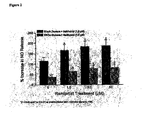
- Figure 1 depicts a comparison of NO release from Black and White donor endothelial cells after chronic treatment with ramprilat followed by treatment with nebivolol (1 ⁇ M).
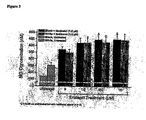
- Figure 2 depicts a comparison of the increase in NO release from Black and White donor endothelial cells after chronic treatment with ramiprilat followed by treatment with nebivolol (1 ⁇ M).
- Figure 3 depicts comparison of NO release from Black and White donor endothelial cells after chronic treatment with enalapril followed by treatment with nebivolol (1 ⁇ M).
- Figure 4 depicts a comparison of the increase in NO release from Black and White donor endothelial cells after chronic treatment with enalapril followed by treatment with nebivolol (1 ⁇ M).
- an element means one element or more than one element.
- angiotensin converting enzyme inhibitor or "ACE inhibitor” as used herein refers to a compound that inhibits any enzyme from converting angiotensin to any other form.
- angiotensin II receptor antagonist refers to a compound that binds to a receptor site on angiotensin II but does not cause any physiological changes unless another receptor ligand is present.
- antagonist refers to a compound that binds to a receptor site, but does not cause a physiological change unless another receptor ligand is present.
- bioavailable is art-recognized and refers to a form of the subject invention that allows for it, or a portion of the amount administered, to be absorbed by, incorporated to, or otherwise physiologically available to a subject or patient to whom it is administered.
- cardiovascular agent refers to a therapeutic compound that is useful for treating or preventing a cardiovascular disease.
- cardiovascular agents include ACE inhibitors (angiotensin II converting enzyme inhibitors), ARB's (angiotensin II receptor antagonists), adrenergic blockers, adrenergic agonists, agents for pheochromocytoma, antianginal agents, antiarrhythmics, antiplatelet agents, anticoagulants, antihypertensives, antilipemic agents, antidiabetics, antiinflammatory agents, calcium channel blockers, CETP inhibitors, COX-2 inhibitors, direct thrombin inhibitors, diuretics, endothelin receptor antagonists, HMG Co-A reductase inhibitors, inotropic agents, rennin inhibitors, vasodialators, vasopressors, AGE crosslink breakers (advanced glycosylation end-product crosslink breakers, such as alagebrium, see US
- Cardiovascular disease or disorder refers to any cardiovascular disease or disorder known in the art, wherein the cardiovascular disease is selected from the group consisting of congestive heart failure, hypertension, pulmonary hypertension, myocardial and cerebral infarctions, atherosclerosis, atherogenesis, thrombosis, ischemic heart disease, post-angioplasty restenosis, coronary artery diseases, renal failure, stable, unstable and variant (Prinzmetal) angina, cardiac edema, renal insufficiency, nephrotic edema, hepatic edema, stroke, transient ischemic attacks, cerebrovascular accidents, restenosis, controlling blood pressure in hypertension, platelet adhesion, platelet aggregation, smooth muscle cell proliferation, pulmonary edema, and vascular complications associated with the use of medical devices.
- congestive heart failure hypertension
- pulmonary hypertension myocardial and cerebral infarctions
- atherosclerosis atherogenesis
- thrombosis ischemic heart disease
- combination refers to two or more different active agents which are administered at roughly about the same time (for example, where the active agents are in a single pharmaceutical preparation) or at different times (for example, one agent is administered to the subject before the other).
- drug pharmaceutically active agent
- bioactive agent biological agent
- therapeutic agent active agent
- active agent refers to a substance, such as a chemical compound or complex, that has a measurable beneficial physiological effect on the body, such as a therapeutic effect in treatment of a disease or disorder, when administered in an effective amount.
- a particular active agent is specifically identified by name or category, it is understood that such recitation is intended to include the active agent per se, as well as compounds significantly related thereto, including salts, pharmaceutically acceptable salts, N-oxides, isomers, solvates, hydrates and radioisotopes.
- the phrase "effective amount” refers to that amount of a substance that produces some desired local or systemic effect at a reasonable benefit/risk ratio applicable to any treatment.
- the effective amount of such substance will vary depending upon the subject and disease condition being treated, the weight and age of the subject, the severity of the disease condition, the manner of administration and the like, which can readily be determined by one of ordinary skill in the art.
- Endothelial dysfunction refers to the impaired ability of in any physiological processes carried out by the endothelium, in particular, production of nitric oxide regardless of cause. It may be evaluated by, such as, for example, invasive techniques, such as, for example, coronary artery reactivity to acetylcholine or methacholine, and the like, or by noninvasive techniques, such as, for example, blood flow measurements, brachial artery flow dilation using cuff occlusion of the arm above or below the elbow, brachial artery ultrasonography, imaging techniques, measurement of circulating biomarkers, such as, asymmetric dimethylarginine (ADMA), and the like. For the latter measurement the endothelial-dependent now-mediated dialation will be lower in patients diagnosed with an endothelial dysfunction.
- invasive techniques such as, for example, coronary artery reactivity to acetylcholine or methacholine, and the like
- noninvasive techniques such as, for example, blood flow measurements, brachi
- endothelial nitric oxide synthase or "eNOS” refers to enzymes that produce nitric oxide
- Nebivolol composition refers to a composition comprising nebivolol.
- Nebivolol is a mixture of d and l isomers of ⁇ , ⁇ '-[iminobismethylene]bis[6-fluoro-3,4-dihydro-2H-1-benzopyran-2-methanol].
- the composition may include at least one other cardiovascular agent or at least one pharmaceutically acceptable carrier or both.
- a "patient,” “subject” or “host” may be a human or non-human animal.
- pharmaceutically acceptable salts refers to the relatively non-toxic, inorganic and organic acid addition salts of compounds, including, for example, those contained in compositions of the present invention.
- pharmaceutically acceptable carrier refers to a pharmaceutically acceptable material, composition or vehicle, such as a liquid or solid filler, diluent, excipient, solvent or encapsulating material, involved in carrying or transporting any subject composition or component thereof from one organ, or portion of the body, to another organ, or portion of the body.
- a pharmaceutically acceptable material such as a liquid or solid filler, diluent, excipient, solvent or encapsulating material, involved in carrying or transporting any subject composition or component thereof from one organ, or portion of the body, to another organ, or portion of the body.
- Each carrier must be acceptable in the sense of being compatible with the subject composition and its components and not injurious to the patient.
- materials which may serve as pharmaceutically acceptable excipients include: (1) sugars, such as lactose, glucose and sucrose; (2) starches, such as com starch and potato starch; (3) cellulose, and its derivatives, such as sodium carboxymethyl cellulose, ethyl cellulose and cellulose acetate; (4) powdered tragacanth; (5) malt; (6) gelatin; (7) talc; (8) excipients, such as cocoa butter and suppository waxes; (9) oils, such as peanut oil, cottonseed oil, safflower oil, sesame oil, olive oil, corn oil and soybean oil; (10) glycols, such as propylene glycol; (11) polyols, such as glycerin, sorbitol, mannitol and polyethylene glycol; (12) esters, such as ethyl oleate and ethyl laurate; (13) agar, (14) buffering agents, such as magnesium hydroxide and aluminum
- prophylactic or therapeutic treatment refers to administration to the host of one or more of the subject compositions. If it is administered prior to clinical manifestation of the unwanted condition (e.g., disease or other unwanted state of the host animal) then the treatment is prophylactic, i.e., it protects the host against developing the unwanted condition, whereas if administered after manifestation of the unwanted condition, the treatment is therapeutic (i.e., it is intended to diminish, ameliorate or maintain the existing unwanted condition or side effects therefrom).
- structure-activity relationship or "(SAR)” is art-recognized and refers to the way in which altering the molecular structure of a drug or other compound alters its interaction with a receptor, enzyme, nucleic acid or other target and the like.
- substitution or “substituted with” includes the implicit proviso that such substitution is in accordance with permitted valence of the substituted atom and the substituent, and that the substitution results in a stable compound, e.g., which does not spontaneously undergo transformation such as by rearrangement, cyclization, elimination, or other reaction.
- substituted is also contemplated to include all permissible substituents of organic compounds.
- the permissible substituents include acyclic and cyclic, branched and unbranched, carbocyclic and heterocyclic, aromatic and nonaromatic substituents of organic compounds.
- Illustrative substituents include, for example, those described herein above.
- the permissible substituents may be one or more and the same or different for appropriate organic compounds.
- the heteroatoms such as nitrogen may have hydrogen substituents and/or any permissible substituents of organic compounds described herein which satisfy the valences of the heteroatoms.
- therapeutic effect is art-recognized and refers to a local or systemic effect in animals, particularly mammals, and more particularly humans caused by a pharmacologically active substance.
- the term thus means any substance intended for use in the diagnosis, cure, mitigation, treatment or prevention of disease or in the enhancement of desirable physical or mental development and/or conditions in an animal or human.
- therapeutically-effective amount means that amount of such a substance that produces some desired local or systemic effect at a reasonable benefit/risk ratio applicable to any treatment.
- the therapeutically effective amount of such substance will vary depending upon the subject and disease condition being treated, the weight and age of the subject, the severity of the disease condition, the manner of administration and the like, which can readily be determined by one of ordinary skill in the art.
- treating is art-recognized and refers to curing as well as ameliorating at least one symptom of any condition or disease.
- Nebivolol is a ⁇ -receptor blocking drug that is a mixture of d - and l- enantiomers, of which d -nebivolol is a highly selective ⁇ 1 -receptor antagonist.
- nebivolol has been shown to cause endothelium-dependent vasodilation in both normotensive and hypertensive subjects.
- Broeders MA Doevendans PA, Bekkers BC, Bronsaer R, van Gorsel E, Heemskerk JW, Egbrink MG, van Breda E, Reneman RS, van Der Zee R., Circulation, 2000;102:677-684 ; Kalinowski L, Dobrucki LW, Szczepanska-Konkel M, Jankowski M, Martyniec L, Angielski S, Malinski T., Circulation, 2003;107:2747-2752 . It has also been reported that nebivolol inhibits NO synthase uncoupling and produces systemic antioxidant effects.
- compositions Comprising Nebivolol
- the present invention features compositions comprising nebivolol and an ARB as cardiovascular agents as the only pharmacologically active agents.
- the amount of said cardiovascular agent present in the compositions may vary depending on a number of variables such as age, weight, gender, and health related issues.
- the dosage of the cardiovascular agent will generally be in the range of about 0.01 ng to about 10 g per kg body weight, specifically in the range of about 1 ng to about 0.1 g per kg, and more specifically in the range of about 100 ng to about 10 mg per kg.
- the amount ofnebivolol in the compositions of the present invention may be anywhere from about 0.125 mg to about 40 mg.
- the amount of ARB may be anywhere from about 1 mg to about 1200 mg.
- Angiotensin II receptor antagonists are compounds which interfere with the activity of angiotensin II by binding to angiotensin II receptors and interfering with its activity.
- Angiotensin I and angiotensin II are synthesized by the enzymatic renin-angiotensin pathway. The synthetic process is initiated when the enzyme renin acts on angiotensinogen, a pseudoglobulin in blood plasma, to produce the decapeptide angiotensin L
- Angiotensin I is converted by angiotensin converting enzyme (ACE) to angiotensin II (angiotensin-[1-8] octapeptide).
- ACE angiotensin converting enzyme
- angiotensin II angiotensin-[1-8] octapeptide
- Angiotensin II receptor antagonists are well known and include peptide compounds and non-peptide compounds. Most angiotensin II receptor antagonists are slightly modified congeners in which agonist activity is attenuated by replacement of phenylalanine in position 8 with some other amino acid; stability can be enhanced by other replacements that slow degeneration in vivo.
- angiotensin II receptor antagonists include: peptidic compounds (e.g., saralasin and related analogs); N-substituted imidazole-2-one ( U.S. Pat. No. 5,087,634 ); imidazole acetate derivatives including 2-N-butyl-4-chloro-1-(2-chlorobenzile) imidazole-5-acetic acid (see Long et al., J. Pharmacol. Exp. Ther. 247(1), 1-7 (1988 )); 4,5,6,7-tetrahydro-1H-imidazo [4,5-c]pyridine-6-carboxylic acid and analog derivatives ( U.S. Pat. No.
- N2-tetrazole beta-glucuronide analogs U.S. Pat. No. 5,085,992
- substituted pyrroles, pyrazoles, and tryazoles U.S. Pat. No. 5,081,127
- phenol and heterocyclic derivatives such as 1,3-imidazoles ( U.S. Pat. No. 5,073,566 ); imidazo-fused 7-member ring heterocycles ( U.S. Pat. No. 5,064,825 ); peptides (e.g., U.S. Pat. No. 4,772,684 ); antibodies to angiotensin II (e.g., U.S. Pat. No.
- aralkyl imidazole compounds such as biphenyl-methyl substituted imidazoles (e.g., EP 253,310, Jan. 20, 1988 ); ES8891 (N-morpholinoacetyl-(-1-naphthyl)-L-alanyl-(4, thiazolyl)-L-alanyl (35, 45)-4-amino-3-hydroxy-5-cyclo-hexapentanoyl-N-hexylamide, Sankyo Company, Ltd., Tokyo, Japan); SKF108566 (E-alpha-2-[2-butyl-1-(carboxy phenyl) methyl] 1H-imidazole-5-yl[methylane]-2-thiophenepropanoic acid, Smith Kline Beecham Pharmaceuticals, Pa); Losartan (DUP753/MK954, DuPont Merck Pharmaceutical Company); Remikirin (RO42-5892, F.
- biphenyl-methyl substituted imidazoles
- ARBs include candesartan, eprosartan, irbesartan, losartan, and valsartan.
- Other ARBs may be identified using standard assaying techniques known to one of ordinary skill in the art.
- compositions of the present invention may be administered by various means, depending on their intended use, as is well known in the art.
- compositions of the present invention may be formulated as tablets, capsules, granules, powders, suspensions or syrups.
- formulations of the present invention may be administered parenterally as injections (intravenous, intramuscular or subcutaneous), drop infusion preparations or suppositories.
- compositions of the present invention may be formulated as eyedrops or eye ointments.
- compositions may be prepared by conventional means, and, if desired, the compositions may be mixed with any conventional additive, such as an excipient, a binder, a disintegrating agent, a lubricant, a corrigent, a solubilizing agent, a suspension aid, an emulsifying agent or a coating agent.
- any conventional additive such as an excipient, a binder, a disintegrating agent, a lubricant, a corrigent, a solubilizing agent, a suspension aid, an emulsifying agent or a coating agent.
- wetting agents such as sodium lauryl sulfate and magnesium stearate, as well as coloring agents, release agents, coating agents, sweetening, flavoring and perfuming agents, preservatives and antioxidants may be present in the formulated agents.
- compositions may be suitable for oral, nasal, topical (including buccal and sublingual), rectal, vaginal, aerosol and/or parenteral administration.
- the formulations may conveniently be presented in unit dosage form and may be prepared by any methods well known in the art of pharmacy.
- the amount of composition that may be combined with a carrier material to produce a single dose vary depending upon the subject being treated, and the particular mode of administration.
- Methods of preparing these formulations include the step of bringing into association compositions of the present invention with the carrier and, optionally, one or more accessory ingredients.
- the formulations are prepared by uniformly and intimately bringing into association agents with liquid carriers, or finely divided solid carriers, or both, and then, if necessary, shaping the product.
- Formulations suitable for oral administration may be in the form of capsules, cachets, pills, tablets, lozenges (using a flavored basis, usually sucrose and acacia or tragacanth), powders, granules, or as a solution or a suspension in an aqueous or non-aqueous liquid, or as an oil-in-water or water-in-oil liquid emulsion, or as an elixir or syrup, or as pastilles (using an inert base, such as gelatin and glycerin, or sucrose and acacia), each containing a predetermined amount of a subject composition thereof as an active ingredient.
- Compositions of the present invention may also be administered as a bolus, electuary, or paste.
- the subject composition is mixed with one or more pharmaceutically acceptable carriers, such as sodium citrate or dicalcium phosphate, and/or any of the following: (1) fillers or extenders, such as starches, lactose, sucrose, glucose, mannitol, and/or silicic acid; (2) blinders, such as, for example, carboxymethylcellulose, alginates, gelatin, polyvinyl pyrrolidone, sucrose and/or acacia; (3) humectants, such as glycerol; (4) disintegrating agents, such as agar-agar, calcium carbonate, potato or tapioca starch, alginic acid, certain silicates, and sodium carbonate; (5) solution retarding agents, such as paraffin; (6) absorption accelerators, such as quaternary ammonium compounds; (7) wetting agents, such as, for example, acetyl alcohol
- compositions may also comprise buffering agents.
- Solid compositions of a similar type may also be employed as fillers in soft and hard-filled gelatin capsules using such excipients as lactose or milk sugars, as well as high molecular weight polyethylene glycols and the like.
- a tablet may be made by compression or molding, optionally with one or more accessory ingredients.
- Compressed tablets may be prepared using binder (for example, gelatin or hydroxypropylmethyl cellulose), lubricant, inert diluent, preservative, disintegrant (for example, sodium starch glycolate or cross-linked sodium carboxymethyl cellulose), surface-active or dispersing agent.
- Molded tablets may be made by molding in a suitable machine a mixture of the subject composition moistened with an inert liquid diluent. Tablets, and other solid dosage forms, such as dragees, capsules, pills and granules, may optionally be scored or prepared with coatings and shells, such as enteric coatings and other coatings well known in the pharmaceutical-formulating art.
- Liquid dosage forms for oral administration include pharmaceutically acceptable emulsions, microemulsions, solutions, suspensions, syrups and elixirs.
- the liquid dosage forms may contain inert diluents commonly used in the art, such as, for example, water or other solvents, solubilizing agents and emulsifiers, such as ethyl alcohol, isopropyl alcohol, ethyl carbonate, ethyl acetate, benzyl alcohol, benzyl benzoate, propylene glycol, 1,3-butylene glycol, oils (in particular, cottonseed, groundnut, corn, germ, olive, castor and sesame oils), glycerol, tetrahydrofuryl alcohol, polyethylene glycols and fatty acid esters of sorbitan, and mixtures thereof.
- inert diluents commonly used in the art, such as, for example, water or other solvents, solubilizing agents and emulsifiers
- Suspensions in addition to the subject composition, may contain suspending agents such as, for example, ethoxylated isostearyl alcohols, polyoxyethylene sorbitol and sorbitan esters, microcrystalline cellulose, aluminum metahydroxide, bentonite, agar-agar and tragacanth, and mixtures thereof.
- suspending agents such as, for example, ethoxylated isostearyl alcohols, polyoxyethylene sorbitol and sorbitan esters, microcrystalline cellulose, aluminum metahydroxide, bentonite, agar-agar and tragacanth, and mixtures thereof.
- Formulations for rectal or vaginal administration may be presented as a suppository, which may be prepared by mixing a subject composition with one or more suitable non-irritating excipients or carriers comprising, for example, cocoa butter, polyethylene glycol, a suppository wax or a salicylate, and which is solid at room temperature, but liquid at body temperature and, therefore, will melt in the body cavity and release the active agent.
- suitable non-irritating excipients or carriers comprising, for example, cocoa butter, polyethylene glycol, a suppository wax or a salicylate, and which is solid at room temperature, but liquid at body temperature and, therefore, will melt in the body cavity and release the active agent.
- Formulations which are suitable for vaginal administration also include pessaries, tampons, creams, gels, pastes, foams or spray formulations containing such carriers as are known in the art to be appropriate.
- Dosage forms for transdermal administration of a subject composition includes powders, sprays, ointments, pastes, creams, lotions, gels, solutions, patches and inhalants.
- the active component may be mixed under sterile conditions with a pharmaceutically acceptable carrier, and with any preservatives, buffers, or propellants which may be required.
- the ointments, pastes, creams and gels may contain, in addition to a subject composition, excipients, such as animal and vegetable fats, oils, waxes, paraffins, starch, tragacanth, cellulose derivatives, polyethylene glycols, silicones, bentonites, silicic acid, talc and zinc oxide, or mixtures thereof.
- excipients such as animal and vegetable fats, oils, waxes, paraffins, starch, tragacanth, cellulose derivatives, polyethylene glycols, silicones, bentonites, silicic acid, talc and zinc oxide, or mixtures thereof.
- Powders and sprays may contain, in addition to a subject composition, excipients such as lactose, talc, silicic acid, aluminum hydroxide, calcium silicates and polyamide powder, or mixtures of these substances.
- Sprays may additionally contain customary propellants, such as chlorofluorohydrocarbons and volatile unsubstituted hydrocarbons, such as butane and propane.
- compositions of the present invention may alternatively be administered by aerosol. This is accomplished by preparing an aqueous aerosol, liposomal preparation or solid particles containing the compound(s).
- a non-aqueous (e.g., fluorocarbon propellant) suspension could be used.
- Sonic nebulizers may be used because they minimize exposing the agent to shear, which may result in degradation of the compounds contained in the subject compositions.
- an aqueous aerosol is made by formulating an aqueous solution or suspension of a subject composition together with conventional pharmaceutically acceptable carriers and stabilizers.
- the carriers and stabilizers vary with the requirements of the particular subject composition, but typically include non-ionic surfactants (Tweens, Pluronics, or polyethylene glycol), innocuous proteins like serum albumin, sorbitan esters, oleic acid, lecithin, amino acids such as glycine, buffers, salts, sugars or sugar alcohols.
- Aerosols generally are prepared from isotonic solutions.
- compositions of this invention suitable for parenteral administration comprise a subject composition in combination with one or more pharmaceutically-acceptable sterile isotonic aqueous or non-aqueous solutions, dispersions, suspensions or emulsions, or sterile powders which may be reconstituted into sterile injectable solutions or dispersions just prior to use, which may contain antioxidants, buffers, bacteriostats, solutes which render the formulation isotonic with the blood of the intended recipient or suspending or thickening agents.
- aqueous and non-aqueous carriers examples include water, ethanol, polyols (such as glycerol, propylene glycol, polyethylene glycol, and the like), and suitable mixtures thereof, vegetable oils, such as olive oil, and injectable organic esters, such as ethyl oleate.
- polyols such as glycerol, propylene glycol, polyethylene glycol, and the like
- vegetable oils such as olive oil
- injectable organic esters such as ethyl oleate.
- Proper fluidity may be maintained, for example, by the use of coating materials, such as lecithin, by the maintenance of the required particle size in the case of dispersions, and by the use of surfactants.
- compositions may also be extended or delayed release formulations where the active agents are released over an extended period of time.
- compositions of the present invention will be in an amount sufficient to achieve a therapeutic effect as recognized by one of ordinary skill in the art.
- any compositions of the present invention will vary depending on the symptoms, age and body weight of the patient, the nature and severity of the disorder to be treated or prevented, the route of administration, and the form of the subject composition. Any of the subject formulations may be administered in a single dose or in divided doses. Dosages for the compositions of the present invention may be readily determined by techniques known to those of skill in the art or as taught herein.
- the dosage of the subject compounds will generally be in the range of about 0.01 ng to about 10 g per kg body weight, specifically in the range of about 1 ng to about 0.1 g per kg, and more specifically in the range of about 100 ng to about 10 mg per kg.
- An effective dose or amount, and any possible affects on the timing of administration of the formulation may need to be identified for any particular composition of the present invention. This may be accomplished by routine experiment as described herein, using one or more groups of animals (preferably at least 5 animals per group), or in human trials if appropriate.
- the effectiveness of any subject composition and method of treatment or prevention may be assessed by administering the composition and assessing the effect of the administration by measuring one or more applicable indices, and comparing the post-treatment values of these indices to the values of the same indices prior to treatment.
- the precise time of administration and amount of any particular subject composition that will yield the most effective treatment in a given patient will depend upon the activity, pharmacokinetics, and bioavailability of a subject composition, physiological condition of the patient (including age, sex, disease type and stage, general physical condition, responsiveness to a given dosage and type of medication), route of administration, and the like.
- the guidelines presented herein may be used to optimize the treatment, e.g., determining the optimum time and/or amount of administration, which will require no more than routine experimentation consisting of monitoring the subject and adjusting the dosage and/or timing.
- the health of the patient may be monitored by measuring one or more of the relevant indices at predetermined times during the treatment period.
- Treatment including composition, amounts, times of administration and formulation, may be optimized according to the results of such monitoring.
- the patient may be periodically reevaluated to determine the extent of improvement by measuring the same parameters. Adjustments to the amount(s) of subject composition administered and possibly to the time of administration may be made based on these reevaluations.
- Treatment may be initiated with smaller dosages which are less than the optimum dose of the compound. Thereafter, the dosage may be increased by small increments until the optimum therapeutic effect is attained.
- compositions may reduce the required dosage for any individual agent contained in the compositions (e.g., the steroidal anti inflammatory drug) because the onset and duration of effect of the different agents may be complimentary.
- any individual agent contained in the compositions e.g., the steroidal anti inflammatory drug
- Toxicity and therapeutic efficacy of subject compositions may be determined by standard pharmaceutical procedures in cell cultures or experimental animals, e.g., for determining the LD 50 and the ED 50 .
- the data obtained from the cell culture assays and animal studies may be used in formulating a range of dosage for use in humans.
- the dosage of any subject composition lies preferably within a range of circulating concentrations that include the ED 50 with little or no toxicity.
- the dosage may vary within this range depending upon the dosage form employed and the route of administration utilized.
- the therapeutically effective dose may be estimated initially from cell culture assays.
- the doses of an active agent will be chosen by a physician based on the age, physical condition, weight and other factors known in the medical arts.
- the efficacy of treatment with the subject compositions may be determined in a number of fashions known to those of skill in the art.
- the median rate of decrease in inflammation for treatment with a subject composition may be compared to other forms of treatment with the particular cardiovascular agent contained in the subject composition, or with other cardiovascular agents.
- the decrease in inflammation for treatment with a subject composition as compared to treatment with another method may be 10, 25, 50, 75,100, 150, 200, 300, 400% greater or even more.
- the period of time for observing any such decrease may be about 1, 3, 5, 10, 15, 30, 60 or 90 or more hours.
- the comparison may be made against treatment with the particular cardiovascular agent contained in the subject composition, or with other cardiovascular agents, or administration of the same or different agents by a different method, or administration as part of a different drug delivery device than a subject composition.
- the comparison may be made against the same or a different effective dosage of the various agents.
- a comparison of the different treatment regimens described above may be based on the effectiveness of the treatment, using standard indices known to those of skill in the art.
- One method of treatment may be 10%, 20%, 30%, 50%, 75%, 100%, 150%, 200%, 300% more effective, than another method.
- the different treatment regimens may be analyzed by comparing the therapeutic index for each of them, with treatment with a subject composition as compared to another regimen having a therapeutic index two, three, five or seven times that of, or even one, two, three or more orders of magnitude greater than, treatment with another method using the same or different cardiovascular agents.
- HUVEC cells from Black and White donors were grown in Ham's F12K medium with 2 mM L-glutamine adjusted to contain 1.5g/L sodium bicarbonate and supplemented with 0.1 mg/ml heparin and 0.03-0.05mg/ml endothelial cell growth supplement (ECGS) + 10% fetal bovine serum.
- ECGS endothelial cell growth supplement
- the HUVEC cells were kept in an atmosphere of elevated CO2 concentration (5%).
- Nebivolol was obtained from Mylan Laboratories (Morgantown,
- test compounds were injected with a nanoinjector onto the surface of the cells following solubilization in buffer.
- Cells were incubated with the test compounds for a 24-hour period. The compounds were then washed out of the system before being immediately reintroduced in order to evaluate the consequences of chronic treatment on NO release from the cells.
- ACE inhibitor for additive experiments, cells were incubated with ACE inhibitor for 24 hours, the inhibitor was washed out of the system, nebivolol was added and the NO release measured.
- the current proportional to the NO concentration was measured with the sensor, which operated in amperometric mode at a constant potential of 0.63V. Data were acquired with the use of an IBM computer with custom software and amperograms (current vs.
- Nanosensors were prepared from carbon fibers. The size of the tip of carbon fiber was reduced from 6 ⁇ m to less than 1 ⁇ m by temperature controlled burning. The sensors were sensitized to NO by deposition of electrically conductive polymeric porphyrin and covered with a thin layer of Nafion. The porphyrinic microsensor has a response time of 0.1 ms at a micromolar NO concentration and 10 ms at the detection limit of 1 nM.
- the nanosensor for NO was calibrated using saturated solution (concentration 1.82 mM verified with the coulometric method).
- Linear calibration curves were constructed for each sensor from 5 x 10⁻⁹ to 3 x 10 -6 M NO before and after measurements of cell activity.
- concentration-dependent effects ofnebivolol and certain ACE-inhibitors on NO releasing capacity were tested using a calcium ionophore (A23187) that stimulates NO release, independently of G-protein-coupled receptors.
- the data were presented as the mean ⁇ SEM for each of the triplicate measurements.
- the data (calculation and plotting) were transferred to Microcal Origin Software (OriginLab Corp., Northampton, MA).
- the HUVEC preparation is stable over the course of these experiments with the cells remaining viable in culture for >24 hours. Under non-stimulating conditions, basal levels of NO release are very low ( ⁇ 30 nM). Measurement of NO release as a function of treatment was conducted in individual endothelial cells. Multiple measurements of NO release can be conducted on single cells following a brief refractory period. For robust statistical analysis, separate cells were used for each concentration and type of drug used in these analyses.
- nebivolol may have distinct pharmacologic benefits through modulation of endothelial function and NO metabolism.
Landscapes
- Health & Medical Sciences (AREA)
- Chemical & Material Sciences (AREA)
- Medicinal Chemistry (AREA)
- Pharmacology & Pharmacy (AREA)
- Epidemiology (AREA)
- Life Sciences & Earth Sciences (AREA)
- Animal Behavior & Ethology (AREA)
- General Health & Medical Sciences (AREA)
- Public Health (AREA)
- Veterinary Medicine (AREA)
- Pharmaceuticals Containing Other Organic And Inorganic Compounds (AREA)
- Medicines That Contain Protein Lipid Enzymes And Other Medicines (AREA)
Abstract
Description
- This invention relates to compositions comprising nebivolol or a pharmaceutically, acceptable salt therof and an angiotens in II receptor antagonist as the only pharmacologically active agents and the use thereof for the treatment and/or prevention of cardiovascular diseases.
- Hypertension is a major health concern in the US. Approximately 50 million Americans have elevated blood pressure defined as a systolic blood pressure (SBP) ≥140 mmHg or a diastolic blood pressure (DBP) ≥ 90 mmHg. In addition, individuals with blood pressure of 120/80 mmHg or higher are at increased risk of developing hypertension and are considered to be in a "pre-hypertension" state. Severity of hypertension is currently classified by stage, with Stage 1 hypertension spanning blood pressure ranges from 140/90 to 159/99 mmHg and Stage 2 including blood pressures ≥160/100 mmHg.
- Onset of hypertension (diastolic alone or in combination with systolic) typically occurs between 25 and 55 years of age. The risk of developing hypertension increases more dramatically with increasing age. According to the CDC, 68.3% of men aged 65-74 have hypertension in the U.S. (Health United States, 2003, CDC/National Center for Health Statistics) and 70.7% of men aged over 75 have hypertension in the U.S. (Health United States, 2003, CDC/National Center for Health Statistics). In addition, 73.4% of women aged 65-74 have hypertension in the US (Health United States, 2003, CDC/National Center for Health Statistics) and 84.9 % of women aged over 75 have hypertension in the US (Health United States, 2003, CDC/National Center for Health Statistics).
[0003a] B. Gremmler al, "Effects of AT1 receptor antagonist therapy in patients with severe heart failure pretreated with angiotensin-converting enzyme inhibitors", Exp Clin Cardiol Vol. 7 No 4 (2003), pp. 193 to 198, describe the administration of an ACE inhibitor in conjuction with nebivolol and eprosartan or telmisartan (ARB's) to some of the patients being treated. U.Vertolli et al, "Eccentric LHV healing after starting renal replacement therapy", Nephrol. 2002, Vol.15, pp. 403-405, disclose the co-administration of furosemide, doxazosin, nebivolol, amlodipine, candesartan and EPO to a patient undergoing renal replacement therapy. - Pharmaceutical formulations that stimulate, agonize, or potentiate endothelial nitric oxide production, particularly formulations that produce increased nitric oxide levels in African Americans, are needed.
- In one aspect, the present invention features a pharmaceutical composition comprising nebivolol or a pharmaceutically acceptable salt thereof and an ARB (angiotensin II receptor antagonists), as the only pharmacologically agents. In one embodiment, the ARB selected from the group consisting of candesartan, eprosartan, irbesartan, losartan, valsartan.
- The pharmaceutical composition may comprise an amount of nebivolol in the range of between about 0.125 mg and about 40 mg. The amount of ARB may be in the range of between about 1 mg and about 1200 mg.
- In another aspect, the present invention features the use of the composition according to the invention for the preparation of a medicament for treating and/or preventing a cardiovascular disorder.
- Even though nebivolol has β-blocking properties, nebivolol is different from other classic β-blockers in that it is highly selective to the β1 adrenergic receptors and also has vasodilating effects related to its effect on endothelial nitric oxide. It is believed that nebivolol increases the levels of nitric oxide within the vascular endothelium through the L-arginine-nitric oxide pathway and has been shown to improve endothelial dysfunction and improve compliance of blood vessels. Nebivolol has also been shown to have antioxidant characteristics which are favorable to the normal functioning of the vascular endothelium. These characteristics make nebivolol an effective antihypertensive agent with favorable effects on the vascular endothelium and cardiovascular system. Nebivolol has been shown to be beneficial in the treatment of cardiovascular diseases such as hypertension, congestive heart failure, arterial stiffness and endothelial dysfunction. The present invention features a composition comprising nebivolol and an ARB that is believed to work via a different mechanism:
- These embodiments of the present invention, other embodiments, and their features and characteristics, will be apparent from the description, drawings and claims that follow.
-
Figure 1 depicts a comparison of NO release from Black and White donor endothelial cells after chronic treatment with ramprilat followed by treatment with nebivolol (1µM). -
Figure 2 depicts a comparison of the increase in NO release from Black and White donor endothelial cells after chronic treatment with ramiprilat followed by treatment with nebivolol (1µM). -
Figure 3 depicts comparison of NO release from Black and White donor endothelial cells after chronic treatment with enalapril followed by treatment with nebivolol (1µM). -
Figure 4 depicts a comparison of the increase in NO release from Black and White donor endothelial cells after chronic treatment with enalapril followed by treatment with nebivolol (1µM). - For convenience, before further description of the present invention, certain terms employed in the specification, examples and appended claims are collected here. These definitions should be read in light of the remainder of the disclosure and understood as by a person of skill in the art. Unless defined otherwise, all technical and scientific terms used herein have the same meaning as commonly understood by a person of ordinary skill in the art.
- The articles "a" and "an" are used herein to refer to one or to more than one (i.e., to at least one) of the grammatical object of the article. By way of example, "an element" means one element or more than one element.
- The phrase "angiotensin converting enzyme inhibitor" or "ACE inhibitor" as used herein refers to a compound that inhibits any enzyme from converting angiotensin to any other form.
- The phrase "angiotensin II receptor antagonist" or "ARB" refers to a compound that binds to a receptor site on angiotensin II but does not cause any physiological changes unless another receptor ligand is present.
- The term "antagonist" is art-recognized and refers to a compound that binds to a receptor site, but does not cause a physiological change unless another receptor ligand is present.
- The term "bioavailable" is art-recognized and refers to a form of the subject invention that allows for it, or a portion of the amount administered, to be absorbed by, incorporated to, or otherwise physiologically available to a subject or patient to whom it is administered.
- The phrase "cardiovascular agent" or "cardiovascular drug" refers to a therapeutic compound that is useful for treating or preventing a cardiovascular disease. Examples of cardiovascular agents include ACE inhibitors (angiotensin II converting enzyme inhibitors), ARB's (angiotensin II receptor antagonists), adrenergic blockers, adrenergic agonists, agents for pheochromocytoma, antianginal agents, antiarrhythmics, antiplatelet agents, anticoagulants, antihypertensives, antilipemic agents, antidiabetics, antiinflammatory agents, calcium channel blockers, CETP inhibitors, COX-2 inhibitors, direct thrombin inhibitors, diuretics, endothelin receptor antagonists, HMG Co-A reductase inhibitors, inotropic agents, rennin inhibitors, vasodialators, vasopressors, AGE crosslink breakers (advanced glycosylation end-product crosslink breakers, such as alagebrium, see
USP 6,458,819 ), and AGE formation inhibitors (advanced glycosylation end-product formation inhibitors, such as pimagedine). - Cardiovascular disease or disorder refers to any cardiovascular disease or disorder known in the art, wherein the cardiovascular disease is selected from the group consisting of congestive heart failure, hypertension, pulmonary hypertension, myocardial and cerebral infarctions, atherosclerosis, atherogenesis, thrombosis, ischemic heart disease, post-angioplasty restenosis, coronary artery diseases, renal failure, stable, unstable and variant (Prinzmetal) angina, cardiac edema, renal insufficiency, nephrotic edema, hepatic edema, stroke, transient ischemic attacks, cerebrovascular accidents, restenosis, controlling blood pressure in hypertension, platelet adhesion, platelet aggregation, smooth muscle cell proliferation, pulmonary edema, and vascular complications associated with the use of medical devices.
- The term "combination" refers to two or more different active agents which are administered at roughly about the same time (for example, where the active agents are in a single pharmaceutical preparation) or at different times (for example, one agent is administered to the subject before the other).
- The terms "drug," "pharmaceutically active agent," "bioactive agent," "therapeutic agent," and "active agent" may be used interchangeably and refer to a substance, such as a chemical compound or complex, that has a measurable beneficial physiological effect on the body, such as a therapeutic effect in treatment of a disease or disorder, when administered in an effective amount. Further, when these terms are used, or when a particular active agent is specifically identified by name or category, it is understood that such recitation is intended to include the active agent per se, as well as
compounds significantly related thereto, including salts, pharmaceutically acceptable salts, N-oxides, isomers, solvates, hydrates and radioisotopes. - The phrase "effective amount" refers to that amount of a substance that produces some desired local or systemic effect at a reasonable benefit/risk ratio applicable to any treatment. The effective amount of such substance will vary depending upon the subject and disease condition being treated, the weight and age of the subject, the severity of the disease condition, the manner of administration and the like, which can readily be determined by one of ordinary skill in the art.
- "Endothelial dysfunction" refers to the impaired ability of in any physiological processes carried out by the endothelium, in particular, production of nitric oxide regardless of cause. It may be evaluated by, such as, for example, invasive techniques, such as, for example, coronary artery reactivity to acetylcholine or methacholine, and the like, or by noninvasive techniques, such as, for example, blood flow measurements, brachial artery flow dilation using cuff occlusion of the arm above or below the elbow, brachial artery ultrasonography, imaging techniques, measurement of circulating biomarkers, such as, asymmetric dimethylarginine (ADMA), and the like. For the latter measurement the endothelial-dependent now-mediated dialation will be lower in patients diagnosed with an endothelial dysfunction.
- The phrase "endothelial nitric oxide synthase" or "eNOS" refers to enzymes that produce nitric oxide
- The phrase "nebivolol composition" refers to a composition comprising nebivolol. Nebivolol is a mixture of d and l isomers of α,α'-[iminobismethylene]bis[6-fluoro-3,4-dihydro-2H-1-benzopyran-2-methanol]. The composition may include at least one other cardiovascular agent or at least one pharmaceutically acceptable carrier or both.
A "patient," "subject" or "host" may be a human or non-human animal. - The term "pharmaceutically acceptable salts" is art-recognized and refers to the relatively non-toxic, inorganic and organic acid addition salts of compounds, including, for example, those contained in compositions of the present invention.
- The term "pharmaceutically acceptable carrier" is art-recognized and refers to a pharmaceutically acceptable material, composition or vehicle, such as a liquid or solid filler, diluent, excipient, solvent or encapsulating material, involved in carrying or transporting any subject composition or component thereof from one organ, or portion of the body, to another organ, or portion of the body. Each carrier must be acceptable in the sense of being compatible with the subject composition and its components and not injurious to the patient. Some examples of materials which may serve as pharmaceutically acceptable excipients include: (1) sugars, such as lactose, glucose and sucrose; (2) starches, such as com starch and potato starch; (3) cellulose, and its derivatives, such as sodium carboxymethyl cellulose, ethyl cellulose and cellulose acetate; (4) powdered tragacanth; (5) malt; (6) gelatin; (7) talc; (8) excipients, such as cocoa butter and suppository waxes; (9) oils, such as peanut oil, cottonseed oil, safflower oil, sesame oil, olive oil, corn oil and soybean oil; (10) glycols, such as propylene glycol; (11) polyols, such as glycerin, sorbitol, mannitol and polyethylene glycol; (12) esters, such as ethyl oleate and ethyl laurate; (13) agar, (14) buffering agents, such as magnesium hydroxide and aluminum hydroxide; (15) alginic acid; (16) pyrogen-free water, (17) isotonic saline; (18) IV fluids, including but not limited to Ringer's solution, 5% dextrose in water, and half normalsaline; (19) ethyl alcohol; (20) phosphate buffer solutions; and (21) other non-toxic compatible substances employed in pharmaceutical formulations.
- The term "prophylactic" or "therapeutic" treatment is art-recognized and refers to administration to the host of one or more of the subject compositions. If it is administered prior to clinical manifestation of the unwanted condition (e.g., disease or other unwanted state of the host animal) then the treatment is prophylactic, i.e., it protects the host against developing the unwanted condition, whereas if administered after manifestation of the unwanted condition, the treatment is therapeutic (i.e., it is intended to diminish, ameliorate or maintain the existing unwanted condition or side effects therefrom).
- The term "structure-activity relationship" or "(SAR)" is art-recognized and refers to the way in which altering the molecular structure of a drug or other compound alters its interaction with a receptor, enzyme, nucleic acid or other target and the like.
- It will be understood that "substitution" or "substituted with" includes the implicit proviso that such substitution is in accordance with permitted valence of the substituted atom and the substituent, and that the substitution results in a stable compound, e.g., which does not spontaneously undergo transformation such as by rearrangement, cyclization, elimination, or other reaction.
- The term "substituted" is also contemplated to include all permissible substituents of organic compounds. In a broad aspect, the permissible substituents include acyclic and cyclic, branched and unbranched, carbocyclic and heterocyclic, aromatic and nonaromatic substituents of organic compounds. Illustrative substituents include, for example, those described herein above. The permissible substituents may be one or more and the same or different for appropriate organic compounds. For purposes of this invention, the heteroatoms such as nitrogen may have hydrogen substituents and/or any permissible substituents of organic compounds described herein which satisfy the valences of the heteroatoms.
- The term "synthetic" is art-recognized and refers to production by in vitro chemical or enzymatic synthesis.
- The phrase "therapeutic effect" is art-recognized and refers to a local or systemic effect in animals, particularly mammals, and more particularly humans caused by a pharmacologically active substance. The term thus means any substance intended for use in the diagnosis, cure, mitigation, treatment or prevention of disease or in the enhancement of desirable physical or mental development and/or conditions in an animal or human. The phrase "therapeutically-effective amount" means that amount of such a substance that produces some desired local or systemic effect at a reasonable benefit/risk ratio applicable to any treatment. The therapeutically effective amount of such substance will vary depending upon the subject and disease condition being treated, the weight and age of the subject, the severity of the disease condition, the manner of administration and the like, which can readily be determined by one of ordinary skill in the art.
- The term "treating" is art-recognized and refers to curing as well as ameliorating at least one symptom of any condition or disease.
- Nebivolol is a β-receptor blocking drug that is a mixture of d- and l-enantiomers, of which d-nebivolol is a highly selective β1-receptor antagonist.


- In addition to its β-receptor blocking properties, nebivolol has been shown to cause endothelium-dependent vasodilation in both normotensive and hypertensive subjects. Cockcroft JR, Chowienczyk PJ, Brett SE, Chen CP, Dupont AG, Nueten LV, Wooding SJ, Ritter JM., Journal of Pharmacology and Experimental Therapeutics. 1995;274:1067-1071; Tzemos N, Lim PO, MacDonald TM., Circulation, 2001;104:511-514; Broeders MA, Doevendans PA, Bekkers BC, Bronsaer R, van Gorsel E, Heemskerk JW, Egbrink MG, van Breda E, Reneman RS, van Der Zee R., Circulation. 2000;102:677-684. In experimental models, nebivolol has been demonstrated to stimulate NO release through β2-adrenergic receptor-mediated NO production and/or ATP efflux with consequent stimulation of P2Y-purinoceptor-mediated NO release. Broeders MA, Doevendans PA, Bekkers BC, Bronsaer R, van Gorsel E, Heemskerk JW, Egbrink MG, van Breda E, Reneman RS, van Der Zee R., Circulation, 2000;102:677-684; Kalinowski L, Dobrucki LW, Szczepanska-Konkel M, Jankowski M, Martyniec L, Angielski S, Malinski T., Circulation, 2003;107:2747-2752. It has also been reported that nebivolol inhibits NO synthase uncoupling and produces systemic antioxidant effects. Mollnau H, Schulz E, Daiber A, Baldus S, Oelze M, August M. Wendt M, Walter U, Geiger C, Agrawal R, Kleschyov AL, Meinertz T, Thomas Minzel T., Arteriosclerosis, Thrombosis, and Vascular Biology. 2003;23:615-621; Troost R, Schwedhelm E, Rojczyk S, Tsikas D, Frolich JC., British Journal of Clinical Pharmacology, 2000;50:377-379.
- the present invention features compositions comprising nebivolol and an ARB as cardiovascular agents as the only pharmacologically active agents. The amount of said cardiovascular agent present in the compositions may vary depending on a number of variables such as age, weight, gender, and health related issues. In general, the dosage of the cardiovascular agent will generally be in the range of about 0.01 ng to about 10 g per kg body weight, specifically in the range of about 1 ng to about 0.1 g per kg, and more specifically in the range of about 100 ng to about 10 mg per kg. In another embodiment, the amount ofnebivolol in the compositions of the present invention may be anywhere from about 0.125 mg to about 40 mg. The amount of ARB may be anywhere from about 1 mg to about 1200 mg.
- "Angiotensin II receptor antagonists"(ARB's) are compounds which interfere with the activity of angiotensin II by binding to angiotensin II receptors and interfering with its activity. Angiotensin I and angiotensin II are synthesized by the enzymatic renin-angiotensin pathway. The synthetic process is initiated when the enzyme renin acts on angiotensinogen, a pseudoglobulin in blood plasma, to produce the decapeptide angiotensin L Angiotensin I is converted by angiotensin converting enzyme (ACE) to angiotensin II (angiotensin-[1-8] octapeptide). The latter is an active pressor substance which has been implicated as a causative agent in several forms of hypertension in various mammalian species, e.g., humans.
- Angiotensin II receptor antagonists (ARB's) are well known and include peptide compounds and non-peptide compounds. Most angiotensin II receptor antagonists are slightly modified congeners in which agonist activity is attenuated by replacement of phenylalanine in
position 8 with some other amino acid; stability can be enhanced by other replacements that slow degeneration in vivo. - Examples of angiotensin II receptor antagonists include: peptidic compounds (e.g., saralasin and related analogs); N-substituted imidazole-2-one (
U.S. Pat. No. 5,087,634 ); imidazole acetate derivatives including 2-N-butyl-4-chloro-1-(2-chlorobenzile) imidazole-5-acetic acid (see Long et al., J. Pharmacol. Exp. Ther. 247(1), 1-7 (1988)); 4,5,6,7-tetrahydro-1H-imidazo [4,5-c]pyridine-6-carboxylic acid and analog derivatives (U.S. Pat. No. 4,816,463 ); N2-tetrazole beta-glucuronide analogs (U.S. Pat. No. 5,085,992 ); substituted pyrroles, pyrazoles, and tryazoles (U.S. Pat. No. 5,081,127 ); phenol and heterocyclic derivatives such as 1,3-imidazoles (U.S. Pat. No. 5,073,566 ); imidazo-fused 7-member ring heterocycles (U.S. Pat. No. 5,064,825 ); peptides (e.g.,U.S. Pat. No. 4,772,684 ); antibodies to angiotensin II (e.g.,U.S. Pat. No. 4,302,386 ); and aralkyl imidazole compounds such as biphenyl-methyl substituted imidazoles (e.g.,EP 253,310, Jan. 20, 1988 - The nebivolol compositions of the present invention may be administered by various means, depending on their intended use, as is well known in the art. For example, if compositions of the present invention are to be administered orally, they may be formulated as tablets, capsules, granules, powders, suspensions or syrups. Alternatively, formulations of the present invention may be administered parenterally as injections (intravenous, intramuscular or subcutaneous), drop infusion preparations or suppositories. For application by the ophthalmic mucous membrane route, compositions of the present invention may be formulated as eyedrops or eye ointments. These formulations may be prepared by conventional means, and, if desired, the compositions may be mixed with any conventional additive, such as an excipient, a binder, a disintegrating agent, a lubricant, a corrigent, a solubilizing agent, a suspension aid, an emulsifying agent or a coating agent.
- In formulations of the subject invention, wetting agents, emulsifiers and lubricants, such as sodium lauryl sulfate and magnesium stearate, as well as coloring agents, release agents, coating agents, sweetening, flavoring and perfuming agents, preservatives and antioxidants may be present in the formulated agents.
- Subject compositions may be suitable for oral, nasal, topical (including buccal and sublingual), rectal, vaginal, aerosol and/or parenteral administration. The formulations may conveniently be presented in unit dosage form and may be prepared by any methods well known in the art of pharmacy. The amount of composition that may be combined with a carrier material to produce a single dose vary depending upon the subject being treated, and the particular mode of administration.
- Methods of preparing these formulations include the step of bringing into association compositions of the present invention with the carrier and, optionally, one or more accessory ingredients. In general, the formulations are prepared by uniformly and intimately bringing into association agents with liquid carriers, or finely divided solid carriers, or both, and then, if necessary, shaping the product.
- Formulations suitable for oral administration may be in the form of capsules, cachets, pills, tablets, lozenges (using a flavored basis, usually sucrose and acacia or tragacanth), powders, granules, or as a solution or a suspension in an aqueous or non-aqueous liquid, or as an oil-in-water or water-in-oil liquid emulsion, or as an elixir or syrup, or as pastilles (using an inert base, such as gelatin and glycerin, or sucrose and acacia), each containing a predetermined amount of a subject composition thereof as an active ingredient. Compositions of the present invention may also be administered as a bolus, electuary, or paste.
- In solid dosage forms for oral administration (capsules, tablets, pills, dragees, powders, granules and the like), the subject composition is mixed with one or more pharmaceutically acceptable carriers, such as sodium citrate or dicalcium phosphate, and/or any of the following: (1) fillers or extenders, such as starches, lactose, sucrose, glucose, mannitol, and/or silicic acid; (2) blinders, such as, for example, carboxymethylcellulose, alginates, gelatin, polyvinyl pyrrolidone, sucrose and/or acacia; (3) humectants, such as glycerol; (4) disintegrating agents, such as agar-agar, calcium carbonate, potato or tapioca starch, alginic acid, certain silicates, and sodium carbonate; (5) solution retarding agents, such as paraffin; (6) absorption accelerators, such as quaternary ammonium compounds; (7) wetting agents, such as, for example, acetyl alcohol and glycerol monostearate; (8) absorbents, such as kaolin and bentonite clay; (9) lubricants, such a talc, calcium stearate, magnesium stearate, solid polyethylene glycols, sodium lauryl sulfate, and mixtures thereof; and (10) coloring agents. In the case of capsules, tablets and pills, the compositions may also comprise buffering agents. Solid compositions of a similar type may also be employed as fillers in soft and hard-filled gelatin capsules using such excipients as lactose or milk sugars, as well as high molecular weight polyethylene glycols and the like.
- A tablet may be made by compression or molding, optionally with one or more accessory ingredients. Compressed tablets may be prepared using binder (for example, gelatin or hydroxypropylmethyl cellulose), lubricant, inert diluent, preservative, disintegrant (for example, sodium starch glycolate or cross-linked sodium carboxymethyl cellulose), surface-active or dispersing agent. Molded tablets may be made by molding in a suitable machine a mixture of the subject composition moistened with an inert liquid diluent. Tablets, and other solid dosage forms, such as dragees, capsules, pills and granules, may optionally be scored or prepared with coatings and shells, such as enteric coatings and other coatings well known in the pharmaceutical-formulating art.
- Liquid dosage forms for oral administration include pharmaceutically acceptable emulsions, microemulsions, solutions, suspensions, syrups and elixirs. In addition to the subject composition, the liquid dosage forms may contain inert diluents commonly used in the art, such as, for example, water or other solvents, solubilizing agents and emulsifiers, such as ethyl alcohol, isopropyl alcohol, ethyl carbonate, ethyl acetate, benzyl alcohol, benzyl benzoate, propylene glycol, 1,3-butylene glycol, oils (in particular, cottonseed, groundnut, corn, germ, olive, castor and sesame oils), glycerol, tetrahydrofuryl alcohol, polyethylene glycols and fatty acid esters of sorbitan, and mixtures thereof.
- Suspensions, in addition to the subject composition, may contain suspending agents such as, for example, ethoxylated isostearyl alcohols, polyoxyethylene sorbitol and sorbitan esters, microcrystalline cellulose, aluminum metahydroxide, bentonite, agar-agar and tragacanth, and mixtures thereof.
- Formulations for rectal or vaginal administration may be presented as a suppository, which may be prepared by mixing a subject composition with one or more suitable non-irritating excipients or carriers comprising, for example, cocoa butter, polyethylene glycol, a suppository wax or a salicylate, and which is solid at room temperature, but liquid at body temperature and, therefore, will melt in the body cavity and release the active agent. Formulations which are suitable for vaginal administration also include pessaries, tampons, creams, gels, pastes, foams or spray formulations containing such carriers as are known in the art to be appropriate.
- Dosage forms for transdermal administration of a subject composition includes powders, sprays, ointments, pastes, creams, lotions, gels, solutions, patches and inhalants. The active component may be mixed under sterile conditions with a pharmaceutically acceptable carrier, and with any preservatives, buffers, or propellants which may be required.
- The ointments, pastes, creams and gels may contain, in addition to a subject composition, excipients, such as animal and vegetable fats, oils, waxes, paraffins, starch, tragacanth, cellulose derivatives, polyethylene glycols, silicones, bentonites, silicic acid, talc and zinc oxide, or mixtures thereof.
- Powders and sprays may contain, in addition to a subject composition, excipients such as lactose, talc, silicic acid, aluminum hydroxide, calcium silicates and polyamide powder, or mixtures of these substances. Sprays may additionally contain customary propellants, such as chlorofluorohydrocarbons and volatile unsubstituted hydrocarbons, such as butane and propane.
- Compositions of the present invention may alternatively be administered by aerosol. This is accomplished by preparing an aqueous aerosol, liposomal preparation or solid particles containing the compound(s). A non-aqueous (e.g., fluorocarbon propellant) suspension could be used. Sonic nebulizers may be used because they minimize exposing the agent to shear, which may result in degradation of the compounds contained in the subject compositions.
- Ordinarily, an aqueous aerosol is made by formulating an aqueous solution or suspension of a subject composition together with conventional pharmaceutically acceptable carriers and stabilizers. The carriers and stabilizers vary with the requirements of the particular subject composition, but typically include non-ionic surfactants (Tweens, Pluronics, or polyethylene glycol), innocuous proteins like serum albumin, sorbitan esters, oleic acid, lecithin, amino acids such as glycine, buffers, salts, sugars or sugar alcohols. Aerosols generally are prepared from isotonic solutions.
- Pharmaceutical compositions of this invention suitable for parenteral administration comprise a subject composition in combination with one or more pharmaceutically-acceptable sterile isotonic aqueous or non-aqueous solutions, dispersions, suspensions or emulsions, or sterile powders which may be reconstituted into sterile injectable solutions or dispersions just prior to use, which may contain antioxidants, buffers, bacteriostats, solutes which render the formulation isotonic with the blood of the intended recipient or suspending or thickening agents.
- Examples of suitable aqueous and non-aqueous carriers which may be employed in the pharmaceutical compositions of the invention include water, ethanol, polyols (such as glycerol, propylene glycol, polyethylene glycol, and the like), and suitable mixtures thereof, vegetable oils, such as olive oil, and injectable organic esters, such as ethyl oleate. Proper fluidity may be maintained, for example, by the use of coating materials, such as lecithin, by the maintenance of the required particle size in the case of dispersions, and by the use of surfactants.
- Pharmaceutical formulations may also be extended or delayed release formulations where the active agents are released over an extended period of time.
- Administration of the compositions of the present invention will be in an amount sufficient to achieve a therapeutic effect as recognized by one of ordinary skill in the art.
- The dosage of any compositions of the present invention will vary depending on the symptoms, age and body weight of the patient, the nature and severity of the disorder to be treated or prevented, the route of administration, and the form of the subject composition. Any of the subject formulations may be administered in a single dose or in divided doses. Dosages for the compositions of the present invention may be readily determined by techniques known to those of skill in the art or as taught herein.
- In certain embodiments, the dosage of the subject compounds will generally be in the range of about 0.01 ng to about 10 g per kg body weight, specifically in the range of about 1 ng to about 0.1 g per kg, and more specifically in the range of about 100 ng to about 10 mg per kg.
- An effective dose or amount, and any possible affects on the timing of administration of the formulation, may need to be identified for any particular composition of the present invention. This may be accomplished by routine experiment as described herein, using one or more groups of animals (preferably at least 5 animals per group), or in human trials if appropriate. The effectiveness of any subject composition and method of treatment or prevention may be assessed by administering the composition and assessing the effect of the administration by measuring one or more applicable indices, and comparing the post-treatment values of these indices to the values of the same indices prior to treatment.
- The precise time of administration and amount of any particular subject composition that will yield the most effective treatment in a given patient will depend upon the activity, pharmacokinetics, and bioavailability of a subject composition, physiological condition of the patient (including age, sex, disease type and stage, general physical condition, responsiveness to a given dosage and type of medication), route of administration, and the like. The guidelines presented herein may be used to optimize the treatment, e.g., determining the optimum time and/or amount of administration, which will require no more than routine experimentation consisting of monitoring the subject and adjusting the dosage and/or timing.
- While the subject is being treated, the health of the patient may be monitored by measuring one or more of the relevant indices at predetermined times during the treatment period. Treatment, including composition, amounts, times of administration and formulation, may be optimized according to the results of such monitoring. The patient may be periodically reevaluated to determine the extent of improvement by measuring the same parameters. Adjustments to the amount(s) of subject composition administered and possibly to the time of administration may be made based on these reevaluations.
- Treatment may be initiated with smaller dosages which are less than the optimum dose of the compound. Thereafter, the dosage may be increased by small increments until the optimum therapeutic effect is attained.
- The use of the subject compositions may reduce the required dosage for any individual agent contained in the compositions (e.g., the steroidal anti inflammatory drug) because the onset and duration of effect of the different agents may be complimentary.
- Toxicity and therapeutic efficacy of subject compositions may be determined by standard pharmaceutical procedures in cell cultures or experimental animals, e.g., for determining the LD50 and the ED50.
- The data obtained from the cell culture assays and animal studies may be used in formulating a range of dosage for use in humans. The dosage of any subject composition lies preferably within a range of circulating concentrations that include the ED50 with little or no toxicity. The dosage may vary within this range depending upon the dosage form employed and the route of administration utilized. For compositions of the present invention, the therapeutically effective dose may be estimated initially from cell culture assays.
- In general, the doses of an active agent will be chosen by a physician based on the age, physical condition, weight and other factors known in the medical arts.
- The efficacy of treatment with the subject compositions may be determined in a number of fashions known to those of skill in the art.
- In one exemplary method, the median rate of decrease in inflammation for treatment with a subject composition may be compared to other forms of treatment with the particular cardiovascular agent contained in the subject composition, or with other cardiovascular agents. The decrease in inflammation for treatment with a subject composition as compared to treatment with another method may be 10, 25, 50, 75,100, 150, 200, 300, 400% greater or even more. The period of time for observing any such decrease may be about 1, 3, 5, 10, 15, 30, 60 or 90 or more hours. The comparison may be made against treatment with the particular cardiovascular agent contained in the subject composition, or with other cardiovascular agents, or administration of the same or different agents by a different method, or administration as part of a different drug delivery device than a subject composition. The comparison may be made against the same or a different effective dosage of the various agents.
- Alternatively, a comparison of the different treatment regimens described above may be based on the effectiveness of the treatment, using standard indices known to those of skill in the art. One method of treatment may be 10%, 20%, 30%, 50%, 75%, 100%, 150%, 200%, 300% more effective, than another method.
- Alternatively, the different treatment regimens may be analyzed by comparing the therapeutic index for each of them, with treatment with a subject composition as compared to another regimen having a therapeutic index two, three, five or seven times that of, or even one, two, three or more orders of magnitude greater than, treatment with another method using the same or different cardiovascular agents.
- All measurements presented were recorded in vitro using a sensitive porphyrinic probe, as previously described. Malinski T, Taha Z., Nature. 1992;358:676-678; Malinski T, Czuchajowski L., Methods in Nitric Oxide Research. 1996:319-339. NO release was measured directly from HUVEC. HUVEC cells from Black and White donors were grown in Ham's F12K medium with 2 mM L-glutamine adjusted to contain 1.5g/L sodium bicarbonate and supplemented with 0.1 mg/ml heparin and 0.03-0.05mg/ml endothelial cell growth supplement (ECGS) + 10% fetal bovine serum. The HUVEC cells were kept in an atmosphere of elevated CO2 concentration (5%). Nebivolol was obtained from Mylan Laboratories (Morgantown,
- All measurements of endothelial NO release were conducted in Hank's balance solution at 37°C. Cell wells were transferred to a Faraday cage and a porphyrinic sensor (diameter 0.5mm) was positioned at a distance of 5±2µm from the surface of the endothelial cells using an inverted microscope (Leica Microsystems, Wetzlar, Germany) and a computer-assisted micromanipulator. The sensor operated with a three-electrode system: nanosensor (working electrode), saturated calomel electrode (reference electrode) and platinum wire (counter electrode, 0.5mm diameter). The three electrodes were connected to a potentiostat/galvanostat PAR273. The baseline was stabilized after about 20 seconds. The test compounds were injected with a nanoinjector onto the surface of the cells following solubilization in buffer. Cells were incubated with the test compounds for a 24-hour period. The compounds were then washed out of the system before being immediately reintroduced in order to evaluate the consequences of chronic treatment on NO release from the cells. For additive experiments, cells were incubated with ACE inhibitor for 24 hours, the inhibitor was washed out of the system, nebivolol was added and the NO release measured. The current proportional to the NO concentration was measured with the sensor, which operated in amperometric mode at a constant potential of 0.63V. Data were acquired with the use of an IBM computer with custom software and amperograms (current vs. time curves) were recorded with a Guniry FAS1 Femtostat (Warminster, PA). Maximum release of NO was produced using a calcium agonist (1µM). By increasing cytoplasmic levels of calcium, the ion can bind to calmodulin. The Ca2+-calmodulin complex is a cofactor for endothelial NO synthase, along with FAD, FMN, Heme and BH4.
- Nanosensors were prepared from carbon fibers. The size of the tip of carbon fiber was reduced from 6 µm to less than 1µm by temperature controlled burning. The sensors were sensitized to NO by deposition of electrically conductive polymeric porphyrin and covered with a thin layer of Nafion. The porphyrinic microsensor has a response time of 0.1 ms at a micromolar NO concentration and 10 ms at the detection limit of 1 nM.
- The nanosensor for NO was calibrated using saturated solution (concentration 1.82 mM verified with the coulometric method). Linear calibration curves were constructed for each sensor from 5 x 10⁻⁹ to 3 x 10⁻⁶M NO before and after measurements of cell activity. The concentration-dependent effects ofnebivolol and certain ACE-inhibitors on NO releasing capacity were tested using a calcium ionophore (A23187) that stimulates NO release, independently of G-protein-coupled receptors. The data were presented as the mean ± SEM for each of the triplicate measurements. The data (calculation and plotting) were transferred to Microcal Origin Software (OriginLab Corp., Northampton, MA).
- The HUVEC preparation is stable over the course of these experiments with the cells remaining viable in culture for >24 hours. Under non-stimulating conditions, basal levels of NO release are very low (<30 nM). Measurement of NO release as a function of treatment was conducted in individual endothelial cells. Multiple measurements of NO release can be conducted on single cells following a brief refractory period. For robust statistical analysis, separate cells were used for each concentration and type of drug used in these analyses.
- In
Figure 1 , the extent of NO release from Black and White donors was measured after chronic treatment with the ACE inhibitor, ramiprilat, followed by treatment with nebivolol (1 µM). At concentrations of 1, 5, and 10 µM ramiprilat, there were modest but significant effects in the ability of nebivolol to increase NO release from Black and White donor endothelial cells. The magnitude of the increase is greater in endothelial cells from Black donors. - In
Figure 3 , the extent of NO release from Black and White donors was measured with nebivolol (1µM) following chronic treatment with the ACE-inhibitor, enalapril. As observed with ramiprilat (above), enalapril significantly enhanced the ability of nebivolol to increase NO release at concentrations of 5 and 10 µM and 1, 5 and 10µM in Black and White donor cells, respectively. The magnitude of the increase is greater in endothelial cells from Blacks than Whites (Figure 4 ). - There were significant concentration dependent effects on the ability of nebivolol to enhance NO release from Black and White donor endothelial cells that had been chronically treated with ACE inhibitors. Additionally, this property of the drug appears to work independently of β1- adrenoceptor blockade. By promoting a more normal vascular physiology through an NO-dependent pathway, nebivolol treatment may have better efficacy and fewer side effects as compared to agents that only inhibit the sympathetic nervous system. These data further support the hypothesis that nebivolol may have distinct pharmacologic benefits through modulation of endothelial function and NO metabolism.
Claims (6)
- A composition comprising nebivolol or a pharmaceutically acceptable salt thereof and an angiotensin II receptor antagonist (ARB) as the only pharmacologically active agents.
- The composition of claim 1 wherein the ARB is selected from the group consisting of candesartan, irbesartan, losartan, valsartan, eprosartan, and combinations thereof.
- The composition of claim 1 wherein the ARB is losartan or a pharmaceutically acceptable salt thereof.
- The composition of claim 1 wherein the ARB is valsartan or a pharmaceutically acceptable salt thereof.
- Use of a composition comprising nebivolol or a pharmaceutically acceptable salt thereof and an angiotensin II receptor antagonist (ARB) as the only pharmaceutically active agents for the preparation of a medicament for treating and/or preventing a cardiovascular disorder.
- The use of claim 5 wherein the ARB is selected from the group consisting of candesartan, irbesartan, losartan, valsartan, eprosartan, and combinations thereof.
Applications Claiming Priority (3)
| Application Number | Priority Date | Filing Date | Title |
|---|---|---|---|
| US57742304P | 2004-06-04 | 2004-06-04 | |
| US11/141,235 US7803838B2 (en) | 2004-06-04 | 2005-05-31 | Compositions comprising nebivolol |
| PCT/US2005/019111 WO2005117858A2 (en) | 2004-06-04 | 2005-06-01 | Compositions comprising nebivolol |
Publications (2)
| Publication Number | Publication Date |
|---|---|
| EP1753418A2 EP1753418A2 (en) | 2007-02-21 |
| EP1753418B1 true EP1753418B1 (en) | 2011-05-18 |
Family
ID=35449867
Family Applications (1)
| Application Number | Title | Priority Date | Filing Date |
|---|---|---|---|
| EP05804863A Expired - Lifetime EP1753418B1 (en) | 2004-06-04 | 2005-06-01 | Compositions comprising nebivolol |
Country Status (13)
| Country | Link |
|---|---|
| US (3) | US7803838B2 (en) |
| EP (1) | EP1753418B1 (en) |
| KR (1) | KR101236166B1 (en) |
| CN (1) | CN102188708A (en) |
| AP (1) | AP2815A (en) |
| AT (1) | ATE509627T1 (en) |
| AU (1) | AU2005249514B2 (en) |
| CA (1) | CA2569881A1 (en) |
| IL (1) | IL179999A (en) |
| NZ (1) | NZ551910A (en) |
| RU (1) | RU2403037C2 (en) |
| SG (1) | SG152255A1 (en) |
| WO (1) | WO2005117858A2 (en) |
Families Citing this family (39)
| Publication number | Priority date | Publication date | Assignee | Title |
|---|---|---|---|---|
| US7838552B2 (en) | 2004-06-04 | 2010-11-23 | Forest Laboratories Holdings Limited | Compositions comprising nebivolol |
| US7803838B2 (en) | 2004-06-04 | 2010-09-28 | Forest Laboratories Holdings Limited | Compositions comprising nebivolol |
| JP2008528626A (en) * | 2005-01-31 | 2008-07-31 | マイラン ラボラトリーズ インク. | Pharmaceutical composition comprising hydroxylated nebivolol |
| EP1839658A1 (en) * | 2006-03-30 | 2007-10-03 | Hexal A/S | Pharmaceutical composition comprising micronized nebivolol |
| SI2124556T1 (en) | 2006-10-09 | 2015-01-30 | Charleston Laboratories, Inc. | Pharmaceutical compositions |
| AU2007336118A1 (en) * | 2006-12-18 | 2008-06-26 | Cardoz Ab | New combination for use in the treatment of inflammatory disorders |
| WO2008075028A1 (en) * | 2006-12-20 | 2008-06-26 | Cardoz Ab | New combination for use in the treatment of inflammatory disorders |
| US20100056552A1 (en) * | 2007-03-30 | 2010-03-04 | Johan Raud | Combination for use in the treatment of inflammatory disorders |
| ITMI20070890A1 (en) * | 2007-05-04 | 2008-11-05 | Sifi Spa | OPHTHALMIC COMPOSITIONS FOR THE TREATMENT OF OCULAR HYPERTENSION AND GLAUCOMA |
| US20080305186A1 (en) * | 2007-06-11 | 2008-12-11 | Board Of Regents, The University Of Texas System | Method and Composition for the Treatment of Cardiac Hypertrophy |
| US20090030071A1 (en) * | 2007-07-26 | 2009-01-29 | Shaw Andrew A | Treatment of Cardiovascular Disease in Mexican Americans Using Nebivolol |
| US20110015261A1 (en) * | 2007-08-03 | 2011-01-20 | Zleepax Europe ApS | Use of a composition comprising at least one beta-blocker for the treatment of sleep disorders |
| EP3090743A1 (en) | 2008-01-09 | 2016-11-09 | Charleston Laboratories, Inc. | Pharmaceutical compositions for treating headache and eliminating nausea |
| WO2009091777A1 (en) * | 2008-01-15 | 2009-07-23 | Forest Laboratories Holdings Limited | Nebivolol in the treatment of sexual dysfunction |
| US20110092463A1 (en) * | 2008-04-07 | 2011-04-21 | Johan Raud | Combination for use in the treatment of inflammatory disorders |
| US20110028510A1 (en) * | 2009-02-18 | 2011-02-03 | Combinatorx (Singapore) Pte. Ltd. | Compositions, Methods, and Kits for Treating Influenza Viral Infections |
| GB2471303A (en) | 2009-06-24 | 2010-12-29 | Bell Flavors & Fragrances Duft Und Aroma Gmbh | Microparticles and method of making microparticles |
| US20110263668A1 (en) * | 2009-07-01 | 2011-10-27 | The Johns Hopkins University | Beta 3-Adrenoreceptor Agonists for the Treatment of Cardiac Hypertrophy and Heart Failure |
| CA2767576C (en) | 2009-07-08 | 2020-03-10 | Charleston Laboratories Inc. | Pharmaceutical compositions comprising an antiemetic and an opioid analgesic |
| USD661900S1 (en) | 2010-02-22 | 2012-06-19 | Bajer Design & Marketing, Inc. | Collapsible structure |
| KR20110130872A (en) * | 2010-05-28 | 2011-12-06 | 현대약품 주식회사 | Pharmaceutical composition and preparation method comprising crystalline nebivolol |
| US9456997B2 (en) | 2010-08-26 | 2016-10-04 | The Regents Of The University Of Colorado, A Body Corporate | Selective inhibition of β1-adrenergic receptors for the treatment of pediatric heart failure |
| EP3682902A1 (en) | 2012-05-18 | 2020-07-22 | Luoda Pharma Limited | Liquid formulation |
| WO2014031161A1 (en) * | 2012-08-22 | 2014-02-27 | Forest Laboratories Holdings Limited | Chemical compositions |
| WO2014138298A1 (en) * | 2013-03-05 | 2014-09-12 | University Of Chicago | Treatment of demyelinating disorders |
| RU2682178C2 (en) * | 2013-07-26 | 2019-03-15 | Санофи | Anti-tuberculosis stable pharmaceutical composition in a form of a coated tablet comprising granules of isoniazid and granules of rifapentine and its process of preparation |
| WO2016069717A1 (en) * | 2014-10-28 | 2016-05-06 | MiRagen Therapeutics, Inc. | Inhibitors of mirnas in regulation of arterial stiffness and uses thereof |
| CA3055170A1 (en) | 2016-03-04 | 2017-09-08 | Charleston Laboratories, Inc. | Pharmaceutical compositions |
| US10736905B1 (en) | 2016-09-09 | 2020-08-11 | Shahin Fatholahi | Nefopam dosage forms and methods of treatment |
| US10736874B1 (en) | 2017-09-08 | 2020-08-11 | Shahin Fatholahi | Methods for treating pain associated with sickle cell disease |
| US11446311B2 (en) | 2017-09-08 | 2022-09-20 | Shahin Fatholahi | Methods for treating pain associated with sickle cell disease |
| US10744087B2 (en) | 2018-03-22 | 2020-08-18 | Incarda Therapeutics, Inc. | Method to slow ventricular rate |
| WO2020236631A1 (en) * | 2019-05-17 | 2020-11-26 | Alsar Ltd Partnership | Flecainide combination and controlled-release formulations for treating heart diseases |
| US11007185B2 (en) | 2019-08-01 | 2021-05-18 | Incarda Therapeutics, Inc. | Antiarrhythmic formulation |
| AU2020323594B2 (en) | 2019-08-01 | 2022-02-03 | Incarda Therapeutics, Inc. | Antiarrhythmic formulation |
| CN112341397B (en) * | 2019-08-09 | 2023-05-23 | 成都苑东生物制药股份有限公司 | Pyrazine derivatives or salts, isomers, preparation method and application thereof |
| US12576026B2 (en) * | 2020-07-08 | 2026-03-17 | Extrovis Ag | Formulations of nebivolol |
| CN117357504A (en) * | 2022-07-08 | 2024-01-09 | 深圳市人民医院 | Application of propionate in the preparation of vascular calcification inhibitors |
| EP4649946A1 (en) * | 2024-05-16 | 2025-11-19 | Alba Research S.r.l. | Compositions for treating arterial hypertension |
Family Cites Families (179)
| Publication number | Priority date | Publication date | Assignee | Title |
|---|---|---|---|---|
| US4302386A (en) * | 1978-08-25 | 1981-11-24 | The Ohio State University | Antigenic modification of polypeptides |
| US4105776A (en) * | 1976-06-21 | 1978-08-08 | E. R. Squibb & Sons, Inc. | Proline derivatives and related compounds |
| US4316906A (en) * | 1978-08-11 | 1982-02-23 | E. R. Squibb & Sons, Inc. | Mercaptoacyl derivatives of substituted prolines |
| IL58849A (en) * | 1978-12-11 | 1983-03-31 | Merck & Co Inc | Carboxyalkyl dipeptides and derivatives thereof,their preparation and pharmaceutical compositions containing them |
| US4231938A (en) * | 1979-06-15 | 1980-11-04 | Merck & Co., Inc. | Hypocholesteremic fermentation products and process of preparation |
| US4508729A (en) * | 1979-12-07 | 1985-04-02 | Adir | Substituted iminodiacids, their preparation and pharmaceutical compositions containing them |
| US4444784A (en) * | 1980-08-05 | 1984-04-24 | Merck & Co., Inc. | Antihypercholesterolemic compounds |
| DK149080C (en) * | 1980-06-06 | 1986-07-28 | Sankyo Co | METHOD FOR PREPARING ML-236B CARBOXYLIC ACID DERIVATIVES |
| US4344949A (en) * | 1980-10-03 | 1982-08-17 | Warner-Lambert Company | Substituted acyl derivatives of 1,2,3,4-tetrahydroisoquinoline-3-carboxylic acids |
| ZA817261B (en) * | 1980-10-23 | 1982-09-29 | Schering Corp | Carboxyalkyl dipeptides,processes for their production and pharmaceutical compositions containing them |
| US4337201A (en) * | 1980-12-04 | 1982-06-29 | E. R. Squibb & Sons, Inc. | Phosphinylalkanoyl substituted prolines |
| US4410520A (en) * | 1981-11-09 | 1983-10-18 | Ciba-Geigy Corporation | 3-Amino-[1]-benzazepin-2-one-1-alkanoic acids |
| GB2128984B (en) * | 1982-05-12 | 1985-05-22 | Hoffmann La Roche | Diaza-bicyclic compounds |
| US4739073A (en) * | 1983-11-04 | 1988-04-19 | Sandoz Pharmaceuticals Corp. | Intermediates in the synthesis of indole analogs of mevalonolactone and derivatives thereof |
| US4780401A (en) * | 1984-04-09 | 1988-10-25 | Ciba-Geigy Corporation | Novel monoclonal antibodies to human renin and hybridoma cells, processes for their preparation and their applications |
| US4845079A (en) * | 1985-01-23 | 1989-07-04 | Luly Jay R | Peptidylaminodiols |
| US5066643A (en) * | 1985-02-19 | 1991-11-19 | Sandoz Ltd. | Fluorine and chlorine statine or statone containing peptides and method of use |
| US5387413A (en) * | 1985-06-14 | 1995-02-07 | The Research Foundation Of State University Of New York | Method of inhibiting thrombus formation by the 7E3 monoclonal antibody |
| US4894437A (en) * | 1985-11-15 | 1990-01-16 | The Upjohn Company | Novel renin inhibiting polypeptide analogs containing S-aryl-D- or L- or DL-cysteinyl, 3-(arylthio)lactic acid or 3-(arylthio)alkyl moieties |
| US4885292A (en) * | 1986-02-03 | 1989-12-05 | E. R. Squibb & Sons, Inc. | N-heterocyclic alcohol renin inhibitors |
| US4816463A (en) * | 1986-04-01 | 1989-03-28 | Warner-Lambert Company | Substituted diimidazo [1,5-a: 4',5'-d]pyridines having antihypertensive activity |
| US5116870A (en) * | 1986-06-23 | 1992-05-26 | Merck & Co., Inc. | HMG-CoA reductase inhibitors |
| US4940727A (en) * | 1986-06-23 | 1990-07-10 | Merck & Co., Inc. | Novel HMG-CoA reductase inhibitors |
| US4772684A (en) * | 1987-01-20 | 1988-09-20 | Triton Biosciences, Inc. | Peptides affecting blood pressure regulation |
| US5017716A (en) * | 1987-05-22 | 1991-05-21 | E.R. Squibb & Sons, Inc. | Phosphorous-containing HMG-CoA reductase inhibitors, new intermediates and method |
| US5091378A (en) * | 1987-05-22 | 1992-02-25 | E. R. Squibb & Sons, Inc. | Phosphorus-containing HMG-CoA reductase inhibitors, new intermediates and method |
| US4904646A (en) * | 1987-05-22 | 1990-02-27 | E. R. Squibb & Sons, Inc. | Phosphorus-containing HMG-COA reductase inhibitors |
| US4997837A (en) * | 1987-09-08 | 1991-03-05 | Warner-Lambert Company | 6-(((substituted)pyridin-3-yl)alkyl)-and alkenyl)-tetrahydro-4-hydroxypyran-2-one inhibitors of cholesterol biosynthesis |
| US4906624A (en) * | 1987-09-08 | 1990-03-06 | Warner-Lambert Company | 6-(((Substituted)pyridin-3-yl)alkyl)-and alkenyl)-tetrahydro-4-hydroxypyran-2-one inhibitors of cholesterol biosynthesis |
| US5089471A (en) * | 1987-10-01 | 1992-02-18 | G. D. Searle & Co. | Peptidyl beta-aminoacyl aminodiol carbamates as anti-hypertensive agents |
| US4980283A (en) * | 1987-10-01 | 1990-12-25 | Merck & Co., Inc. | Renin-inhibitory pepstatin phenyl derivatives |
| US5034512A (en) * | 1987-10-22 | 1991-07-23 | Warner-Lambert Company | Branched backbone renin inhibitors |
| US5063207A (en) * | 1987-10-26 | 1991-11-05 | Warner-Lambert Company | Renin inhibitors, method for using them, and compositions containing them |
| US5055466A (en) * | 1987-11-23 | 1991-10-08 | E. R. Squibb & Sons, Inc. | N-morpholino derivatives and their use as anti-hypertensive agents |
| US4929620A (en) * | 1987-12-10 | 1990-05-29 | Warner-Lambert Company | 5-pyrimidinyl-3,5-dihydroxy-6-heptenoic acid compounds useful as inhibitors of cholesterol biosynthesis |
| US5001144A (en) * | 1987-12-21 | 1991-03-19 | Rhone-Poulenc Rorer Pharmaceuticals Inc. | Substituted cyclohexene derivatives as HMG-CoA reductase inhibitors |
| US4939143A (en) * | 1987-12-21 | 1990-07-03 | Rorer Pharmaceutical Corporation | Substituted cyclohexene derivatives as HMG-CoA reductase inhibitors |
| US4900754A (en) * | 1987-12-21 | 1990-02-13 | Rorer Pharmaceutical Corp. | HMG-COA reductase inhibitors |
| US5001128A (en) * | 1987-12-21 | 1991-03-19 | Rhone-Poulenc Rorer Pharmaceuticals Inc. | HMG-COA reductase inhibitors |
| US4994494A (en) * | 1987-12-21 | 1991-02-19 | Rhone-Poulenc Rorer Pharmaceuticals Inc. | HMG-COA reductase inhibitors |
| US5081127A (en) * | 1988-01-07 | 1992-01-14 | E. I. Du Pont De Nemours And Company | Substituted 1,2,3-triazole angiotensin II antagonists |
| US4946864A (en) * | 1988-02-01 | 1990-08-07 | Merck & Co., Inc. | Novel HMG-CoA reductase inhibitors |
| US5036054A (en) * | 1988-02-11 | 1991-07-30 | Warner-Lambert Company | Renin inhibitors containing alpha-heteroatom amino acids |
| DE68914495T2 (en) * | 1988-03-02 | 1994-10-27 | Merck & Co Inc | Antihypercholesterolemic agent. |
| US5021453A (en) * | 1988-03-02 | 1991-06-04 | Merck & Co., Inc. | 3-keto HMG-CoA reductase inhibitors |
| US6545040B1 (en) | 1988-03-23 | 2003-04-08 | Janssen Pharmaceutica N.V. | Method of lowering the blood pressure |
| US4920109A (en) * | 1988-04-18 | 1990-04-24 | Merck & Co., Inc. | Antifungal compositions and method of controlling mycotic infections |
| US5166171A (en) * | 1988-05-13 | 1992-11-24 | Hoechst Aktiengesellschaft | 6-phenoxymethyl-4-hydroxytetrahydropyran-2-ones and 6-thiphenoxymethyl-4-hydroxytetrahydropyran-2-ones and the corresponding dihydroxycarboxylic acid derivatives, salts and esters, and in treating hypercholesterolemia |
| US5036053A (en) * | 1988-05-27 | 1991-07-30 | Warner-Lambert Company | Diol-containing renin inhibitors |
| US4963538A (en) * | 1988-06-29 | 1990-10-16 | Merck & Co., Inc. | 5-oxygenated HMG-CoA reductase inhibitors |
| US4897402A (en) * | 1988-06-29 | 1990-01-30 | Merck & Co., Inc. | 5-oxa, 5-thia, 5-aza HmG-CoA reductase inhibitors |
| IT1226726B (en) * | 1988-07-29 | 1991-02-05 | Zambon Spa | ACTIVE COMPOUNDS AS CHOLESTEROL BIOSYNTHESIS INHIBITORS. |
| US5196440A (en) * | 1988-07-29 | 1993-03-23 | Zambon Group S.P.A. | Compounds active as inhibitors of the cholesterol biosynthesis |
| DE3832570A1 (en) * | 1988-09-24 | 1990-03-29 | Hoechst Ag | 7-SUBSTITUTED DERIVATIVES OF 3,5-DIHYDROXYHEPT-6-ACID, METHODS FOR THE PRODUCTION THEREOF, THEIR USE AS MEDICINAL PRODUCTS AND INTERMEDIATE PRODUCTS |
| DE3841520A1 (en) * | 1988-12-09 | 1990-06-13 | Hoechst Ag | ENZYME-INFRINGING DERIVATIVES OF DIPEPTIDES, METHOD FOR THE PRODUCTION THEREOF, METHODS CONTAINING THEM AND THEIR USE |
| US4957940A (en) * | 1988-12-21 | 1990-09-18 | Warner-Lambert Company | Bicyclo heptane and bicyclo octane substituted inhibitors of cholesterol synthesis |
| US4906657A (en) * | 1988-12-21 | 1990-03-06 | Warner-Lambert Company | Bicyclo heptane and bicyclo octane substituted inhibitors of cholesterol synthesis |
| US4950675A (en) * | 1988-12-21 | 1990-08-21 | Warner-Lambert Company | Pyridine di-mevalono-lactones as inhibitors of cholesterol biosynthesis |
| US5106835A (en) * | 1988-12-27 | 1992-04-21 | American Cyanamid Company | Renin inhibitors |
| US4923861A (en) * | 1989-02-07 | 1990-05-08 | Warner-Lambert Company | 6-(2-(2-(Substituted amino)-3-quinolinyl) ethenyl and ethyl) tetrahydro-4-hydroxypyran-2-one inhibitors of cholesterol biosynthesis |
| US5130306A (en) * | 1989-03-13 | 1992-07-14 | Merck & Co., Inc. | 5-Oxygenated HMG-COA reductase inhibitors |
| US5132312A (en) * | 1989-03-27 | 1992-07-21 | Rhone-Poulenc Rorer Pharmaceuticals Inc. | Substituted cyclohexene derivatives as HMG-CoA reductase inhibitors |
| DE4004820A1 (en) * | 1989-08-05 | 1991-04-25 | Bayer Ag | RENININHIBITORS, METHOD FOR THE PREPARATION AND THEIR USE IN MEDICINAL PRODUCTS |
| US5064825A (en) * | 1989-06-01 | 1991-11-12 | Merck & Co., Inc. | Angiotensin ii antagonists |
| US5102911A (en) * | 1989-06-09 | 1992-04-07 | Merck & Co, Inc. | 4-Substituted HMG-CoA reductase inhibitors |
| US4970231A (en) * | 1989-06-09 | 1990-11-13 | Merck & Co., Inc. | 4-substituted HMG-CoA reductase inhibitors |
| US5063208A (en) * | 1989-07-26 | 1991-11-05 | Abbott Laboratories | Peptidyl aminodiol renin inhibitors |
| US4992429A (en) * | 1989-08-24 | 1991-02-12 | Rhone-Poulenc Rorer Pharmaceuticals Inc. | Novel HMG-COA reductase inhibitors |
| US5098931A (en) * | 1989-08-31 | 1992-03-24 | Merck & Co., Inc. | 7-substituted HMG-CoA reductase inhibitors |
| US5098924A (en) * | 1989-09-15 | 1992-03-24 | E. R. Squibb & Sons, Inc. | Diol sulfonamide and sulfinyl renin inhibitors |
| US5104869A (en) * | 1989-10-11 | 1992-04-14 | American Cyanamid Company | Renin inhibitors |
| US4946860A (en) * | 1989-11-03 | 1990-08-07 | Rorer Pharmaceutical Corporation | Benzothiopyranyl derivatives as HMG-CoA reductase inhibitors |
| US5114937A (en) * | 1989-11-28 | 1992-05-19 | Warner-Lambert Company | Renin inhibiting nonpeptides |
| IT1237793B (en) * | 1989-12-21 | 1993-06-17 | Zambon Spa | ACTIVE COMPOUNDS AS INHIBITORS OF THE HMG-COA REDUCTASE ENZYME |
| US5025000A (en) * | 1990-03-02 | 1991-06-18 | E. R. Squibb & Sons, Inc. | Phosphorus-containing HMG-CoA reductase inhibitor compounds |
| US5064965A (en) * | 1990-03-08 | 1991-11-12 | American Home Products Corporation | Renin inhibitors |
| US5095119A (en) * | 1990-03-08 | 1992-03-10 | American Home Products Corporation | Renin inhibitors |
| US5622985A (en) * | 1990-06-11 | 1997-04-22 | Bristol-Myers Squibb Company | Method for preventing a second heart attack employing an HMG CoA reductase inhibitor |
| US5085992A (en) * | 1990-07-19 | 1992-02-04 | Merck & Co., Inc. | Microbial transformation process for antihypertensive products |
| US5112857A (en) * | 1990-09-04 | 1992-05-12 | Merck & Co., Inc. | Hmg-coa reductase inhibitor metabolites |
| US5087634A (en) * | 1990-10-31 | 1992-02-11 | G. D. Searle & Co. | N-substituted imidazol-2-one compounds for treatment of circulatory disorders |
| US5071837A (en) * | 1990-11-28 | 1991-12-10 | Warner-Lambert Company | Novel renin inhibiting peptides |
| US5182298A (en) * | 1991-03-18 | 1993-01-26 | Merck & Co., Inc. | Cholesterol lowering agents |
| US5256689A (en) * | 1991-05-10 | 1993-10-26 | Merck & Co., Inc. | Cholesterol lowering compounds |
| US5135935A (en) * | 1991-05-17 | 1992-08-04 | Merck & Co., Inc. | Squalene synthetase inhibitors |
| US5250435A (en) * | 1991-06-04 | 1993-10-05 | Merck & Co., Inc. | Mutant strains of Aspergillus terreus for producing 7-[1,2,6,7,8,8a(R)-hexa-hydro-2(S),6(R)-dimethyl-8(S)-hydroxy-1(S)-naphthyl]-3(R),5(R)-dihydroxyheptanoic acid (triol acid),I) |
| US5202327A (en) * | 1991-07-10 | 1993-04-13 | E. R. Squibb & Sons, Inc. | Phosphorus-containing hmg-coa reductase inhibitors |
| HU9203780D0 (en) * | 1991-12-12 | 1993-03-29 | Sandoz Ag | Stabilized pharmaceutical products of hmg-coa reductase inhibitor and method for producing them |
| US5260332A (en) * | 1992-02-07 | 1993-11-09 | Merci & Co., Inc. | Cholesterol lowering compounds |
| US5262435A (en) * | 1992-02-10 | 1993-11-16 | Merck & Co., Inc. | Cholesterol lowering compounds |
| US5286895A (en) * | 1992-02-19 | 1994-02-15 | Merck & Co., Inc. | Cholesterol lowering compounds |
| US5302604A (en) * | 1992-03-09 | 1994-04-12 | Merck & Co., Inc. | Cholesterol lowering compounds produced by directed biosynthesis |
| US5369125A (en) * | 1992-07-17 | 1994-11-29 | Merck & Co., Inc. | Cholesterol-lowering agents |
| US5283256A (en) * | 1992-07-22 | 1994-02-01 | Merck & Co., Inc. | Cholesterol-lowering agents |
| US5317031A (en) * | 1992-10-19 | 1994-05-31 | Merck & Co., Inc. | Cholesterol lowering compounds |
| US5543297A (en) * | 1992-12-22 | 1996-08-06 | Merck Frosst Canada, Inc. | Human cyclooxygenase-2 cDNA and assays for evaluating cyclooxygenase-2 activity |
| TW355683B (en) * | 1994-02-17 | 1999-04-11 | Janssen Pharmaceutica Nv | Composition containing micronized nebivolol |
| EP0801564B1 (en) | 1994-12-28 | 2002-03-27 | Janssen Pharmaceutica N.V. | Use of nebivolol as an anti-atherogenic |
| US20010044584A1 (en) | 1997-08-28 | 2001-11-22 | Kensey Kenneth R. | In vivo delivery methods and compositions |
| US6228864B1 (en) | 1997-10-28 | 2001-05-08 | Vivus, Inc. | Administration of 5-HT receptor agonists and antagonists, to treat premature ejaculation |
| US5922341A (en) | 1997-10-28 | 1999-07-13 | Vivus, Incorporated | Local administration of pharmacologically active agents to treat premature ejaculation |
| US6541479B1 (en) | 1997-12-02 | 2003-04-01 | Massachusetts College Of Pharmacy | Calcium channel blockers |
| US6136804A (en) * | 1998-03-13 | 2000-10-24 | Merck & Co., Inc. | Combination therapy for treating, preventing, or reducing the risks associated with acute coronary ischemic syndrome and related conditions |
| WO2001017528A1 (en) | 1999-09-08 | 2001-03-15 | Nitromed, Inc. | Methods of treating and preventing congestive heart failure with hydralazine compounds and isosorbide dinitrate or isosorbide mononitrate |
| US6635273B1 (en) | 1999-10-29 | 2003-10-21 | Trustees Of Boston University | Methods of treating vascular diseases characterized by nitric oxide insufficiency |
| US7235237B2 (en) | 1999-10-29 | 2007-06-26 | Nitromed, Inc. | Methods of treating vascular diseases characterized by nitric oxide insufficiency |
| US7708989B2 (en) | 1999-10-29 | 2010-05-04 | Nitromed, Inc. | Methods of treating vascular diseases characterized by nitric oxide insufficiency |
| US20050074487A1 (en) | 1999-12-16 | 2005-04-07 | Tsung-Min Hsu | Transdermal and topical administration of drugs using basic permeation enhancers |
| GB9930688D0 (en) | 1999-12-24 | 2000-02-16 | Smithkline Beecham Plc | Novel method of treatment |
| NZ520573A (en) * | 2000-02-23 | 2004-05-28 | Alteon Inc | Thiazolium compounds and treatments of disorders associated with protein aging |
| GB2361185A (en) | 2000-04-10 | 2001-10-17 | Nicholas J Wald | Pharmaceutical formulation for the prevention of cardiovascular disease |
| US20030176426A1 (en) | 2000-07-13 | 2003-09-18 | Alteon, Inc. | Method for treating fibrotic diseases or other indications with imidazolium agents |
| US20020068729A1 (en) | 2000-07-13 | 2002-06-06 | Alteon, Inc. | Method for treating fibrotic diseases or other indications IC |
| WO2002009760A2 (en) | 2000-07-27 | 2002-02-07 | Pharmacia Corporation | Epoxy-steroidal aldosterone antagonist and beta-adrenergic antagonist combination therapy for treatment of congestive heart failure |
| US6632180B1 (en) | 2000-09-07 | 2003-10-14 | John H. Laragh | Method for evaluating and treating hypertension |
| US6595926B1 (en) | 2000-09-07 | 2003-07-22 | John H. Laragh | Method for evaluating and treating hypertension |
| US6495154B1 (en) | 2000-11-21 | 2002-12-17 | Vivus Inc. | On demand administration of clomipramine and salts thereof to treat premature ejaculation |
| IT1320176B1 (en) | 2000-12-22 | 2003-11-26 | Nicox Sa | SOLID DISPERSIONS OF NITRATED ACTIVE INGREDIENTS. |
| ATE431830T1 (en) | 2000-12-28 | 2009-06-15 | Kissei Pharmaceutical | GLUCOPYRANOSYLPYRAZOLE DERIVATIVES AND THEIR USE IN MEDICINAL PRODUCTS |
| AU2002232919A1 (en) | 2000-12-29 | 2002-07-16 | Alteon, Inc. | Method for treating fibrotic diseases or other indications |
| MXPA03005954A (en) | 2000-12-29 | 2004-05-24 | Alteon Inc | Method for treating fibrotic diseases or other indications iiic. |
| WO2002053161A1 (en) | 2000-12-29 | 2002-07-11 | Alteon, Inc. | Method for treating fibrotic diseases or other indications |
| AU2002241956A1 (en) | 2001-01-26 | 2002-08-06 | Schering Corporation | Combinations of bile acid sequestrant(s) and sterol absorption inhibitor(s) and treatments for vascular indications |
| IL156585A0 (en) | 2001-01-26 | 2004-01-04 | Schering Corp | Combinations of sterol absorption inhibitor(s) with cardiovascular agent(s) for the treatment of vascular conditions |
| DK1355644T3 (en) | 2001-01-26 | 2006-10-23 | Schering Corp | Use of substituted azetidinone compounds for the treatment of sitosterolemia |
| US20020183305A1 (en) | 2001-01-26 | 2002-12-05 | Schering Corporation | Combinations of nicotinic acid and derivatives thereof and sterol absorption inhibitor(s) and treatments for vascular indications |
| US7071181B2 (en) | 2001-01-26 | 2006-07-04 | Schering Corporation | Methods and therapeutic combinations for the treatment of diabetes using sterol absorption inhibitors |
| PL364178A1 (en) | 2001-01-26 | 2004-12-13 | Schering Corporation | Combinations of sterol absorption inhibitor(s) with blood modifier(s) for treating vascular conditions |
| HU230253B1 (en) | 2001-01-26 | 2015-11-30 | Merck Sharp & Dohme Corp | Combinations of peroxisome proliferator-activated receptor (ppar) activator(s) and sterol absorption inhibitor(s) and their use in the treatment of vascular indications |
| US7087579B2 (en) | 2001-02-26 | 2006-08-08 | Kissei Pharmaceutical Co., Ltd. | Glucopyranosyloxypyrazole derivatives and medicinal use thereof |
| WO2002087508A2 (en) | 2001-05-02 | 2002-11-07 | Nitromed, Inc. | Nitrosated and nitrosylated nebivolol and its metabolites, compositions and methods of use |
| JP2004532868A (en) | 2001-05-25 | 2004-10-28 | シェーリング コーポレイション | Use of azetidinone-substituted derivatives in the treatment of Alzheimer's disease |
| US20030078190A1 (en) * | 2001-05-25 | 2003-04-24 | Weinberg Marc S. | Methods for tissue protection using highly effective inhibition of the renin-angiotensin system |
| JP2004532862A (en) | 2001-05-30 | 2004-10-28 | アルテオン インコーポレイテッド | Methods of treating fibrotic diseases or other indications |
| JP4399251B2 (en) | 2001-05-30 | 2010-01-13 | キッセイ薬品工業株式会社 | Glucopyranosyloxypyrazole derivative, pharmaceutical composition containing the same, pharmaceutical use thereof and production intermediate thereof |
| EP1406611A2 (en) | 2001-05-30 | 2004-04-14 | Alteon, Inc. | Method for treating fibrotic diseases or other indications |
| US7271153B2 (en) | 2001-06-20 | 2007-09-18 | Kissei Pharmaceutical Co., Ltd. | Nitrogenous heterocyclic derivatives, medicinal compositions containing the same, medicinal uses thereof, and intermediates therefor |
| AU2002335770B2 (en) | 2001-09-21 | 2005-08-18 | Merck Sharp & Dohme Corp. | Methods for treating or preventing vascular inflammation using sterol absorption inhibitor(s) |
| US20030119808A1 (en) | 2001-09-21 | 2003-06-26 | Schering Corporation | Methods of treating or preventing cardiovascular conditions while preventing or minimizing muscular degeneration side effects |
| US7053080B2 (en) | 2001-09-21 | 2006-05-30 | Schering Corporation | Methods and therapeutic combinations for the treatment of obesity using sterol absorption inhibitors |
| US7056906B2 (en) | 2001-09-21 | 2006-06-06 | Schering Corporation | Combinations of hormone replacement therapy composition(s) and sterol absorption inhibitor(s) and treatments for vascular conditions in post-menopausal women |
| JP2005504091A (en) | 2001-09-21 | 2005-02-10 | シェーリング コーポレイション | Treatment of xanthomas with azetidinone as a sterol absorption inhibitor |
| FR2830856B1 (en) | 2001-10-15 | 2004-07-30 | Pechiney Aluminium | COATING PRECURSOR AND METHOD FOR COATING A SUBSTRATE WITH A REFRACTORY LAYER |
| US20030162824A1 (en) | 2001-11-12 | 2003-08-28 | Krul Elaine S. | Methods of treating or preventing a cardiovascular condition using a cyclooxygenase-1 inhibitor |
| JP2005531558A (en) * | 2002-05-17 | 2005-10-20 | ノバルティス アクチエンゲゼルシャフト | Combination of angiotensin II receptor blocker and beta blocker for secondary prevention of myocardial infarction |
| AU2003241464A1 (en) | 2002-05-17 | 2003-12-02 | Eisai Co., Ltd. | Compositions and methods using proton pump inhibitors |
| US7105526B2 (en) | 2002-06-28 | 2006-09-12 | Banyu Pharmaceuticals Co., Ltd. | Benzimidazole derivatives |
| GB0215579D0 (en) | 2002-07-05 | 2002-08-14 | Astrazeneca Ab | Chemical compounds |
| JP4595542B2 (en) | 2002-07-30 | 2010-12-08 | 萬有製薬株式会社 | Melanin-concentrating hormone receptor antagonist containing benzimidazole derivative as active ingredient |
| EP1558252B1 (en) | 2002-08-02 | 2007-10-10 | Merck & Co., Inc. | Substituted furo [2,3-b]pyridine derivatives |
| RU2356906C2 (en) | 2002-08-08 | 2009-05-27 | Киссеи Фармасьютикал Ко., Лтд. | Pyrazole derivatieves, medical compositions, containing said derivatives, their application in medicine and intermediate compounds for their obtaining |
| JP2004137245A (en) | 2002-08-23 | 2004-05-13 | Kissei Pharmaceut Co Ltd | Pyrazole derivative, pharmaceutical composition containing the same, its pharmaceutical use and production intermediate |
| US6869966B2 (en) | 2002-09-30 | 2005-03-22 | Banyu Pharmaceutical Co., Ltd. | N-substituted-2-oxodihydropyridine derivatives |
| US7576063B2 (en) | 2002-10-04 | 2009-08-18 | Kissei Pharmaceutical Co., Ltd. | Pyrazole derivative, medicinal composition containing the same, medicinal use thereof and intermediate in producing the same |
| DE60328035D1 (en) | 2002-11-29 | 2009-07-30 | Banyu Pharma Co Ltd | NEW AZOL DERIVATIVES |
| US7670627B2 (en) | 2002-12-09 | 2010-03-02 | Salvona Ip Llc | pH triggered targeted controlled release systems for the delivery of pharmaceutical active ingredients |
| US20050031651A1 (en) | 2002-12-24 | 2005-02-10 | Francine Gervais | Therapeutic formulations for the treatment of beta-amyloid related diseases |
| EP1595867A4 (en) | 2003-02-10 | 2008-05-21 | Banyu Pharma Co Ltd | MELANINE RECEPTOR ANTAGONISTS CONTAINING PIPERIDINE DERIVATIVES AS THE ACTIVE INGREDIENT |
| CA2517571C (en) | 2003-03-07 | 2011-07-05 | Schering Corporation | Substituted azetidinone compounds, processes for preparing the same, formulations and uses thereof |
| JP2006519869A (en) | 2003-03-07 | 2006-08-31 | シェーリング コーポレイション | Substituted azetidinone compounds, processes for preparing substituted azetidinone compounds, their formulations and uses |
| JP4589919B2 (en) | 2003-03-07 | 2010-12-01 | シェーリング コーポレイション | Substituted azetidinone compounds, their formulations and uses for the treatment of hypercholesterolemia |
| JP4408197B2 (en) * | 2003-04-07 | 2010-02-03 | パイオニア株式会社 | Display screen seizure prevention device and seizure prevention method |
| WO2004089918A1 (en) | 2003-04-09 | 2004-10-21 | Japan Tobacco Inc. | Heteroaromatic pentacyclic compound and medicinal use thereof |
| EP1615647B1 (en) | 2003-04-11 | 2010-01-20 | High Point Pharmaceuticals, LLC | Pharmaceutical use of fused 1,2,4-triazoles |
| US20060100235A1 (en) | 2003-04-11 | 2006-05-11 | Novo Nordisk A/S | Pharmaceutical use of substituted 1,2,4-triazoles |
| US7501405B2 (en) | 2003-04-11 | 2009-03-10 | High Point Pharmaceuticals, Llc | Combination therapy using an 11β-hydroxysteroid dehydrogenase type 1 inhibitor and an antihypertensive agent for the treatment of metabolic syndrome and related diseases and disorders |
| US7700583B2 (en) | 2003-04-11 | 2010-04-20 | High Point Pharmaceuticals, Llc | 11β-hydroxysteroid dehydrogenase type 1 active compounds |
| US20060094699A1 (en) | 2003-04-11 | 2006-05-04 | Kampen Gita Camilla T | Combination therapy using an 11beta-hydroxysteroid dehydrogenase type 1 inhibitor and a glucocorticoid receptor agonist to minimize the side effects associated with glucocorticoid receptor agonist therapy |
| US20050014747A1 (en) | 2003-04-18 | 2005-01-20 | Emily Reinhard | Dihydrothiazine prodrugs of thiazolium agents |
| WO2005000217A2 (en) | 2003-06-06 | 2005-01-06 | Merck & Co., Inc. | Combination therapy for the treatment of dyslipidemia |
| CA2529878C (en) | 2003-06-20 | 2012-11-20 | Kissei Pharmaceutical Co., Ltd. | Pyrazole derivative, drug composition containing the same and production intermediate therefor |
| US20050032879A1 (en) | 2003-08-07 | 2005-02-10 | Temple Okarter | Formulations and use of a beta-blocker and an ACE-inhibitor for the treatment of cardiovascular diseases |
| CA2540984C (en) | 2003-10-10 | 2011-02-08 | Lifecycle Pharma A/S | A solid dosage form comprising a fibrate |
| EP1680189A2 (en) | 2003-11-05 | 2006-07-19 | Schering Corporation | Combinations of lipid modulating agents and substituted azetidinones and treatments for vascular conditions |
| WO2005099699A1 (en) | 2004-04-07 | 2005-10-27 | Sepracor Inc. | Combination of (s)-amlodipine and a beta-blocker, and methods for reducing hypertension |
| US7803838B2 (en) | 2004-06-04 | 2010-09-28 | Forest Laboratories Holdings Limited | Compositions comprising nebivolol |
| EP1778267A4 (en) | 2004-07-16 | 2010-01-06 | Nitromed Inc | COMPOSITIONS AND METHODS ASSOCIATED WITH HEART FAILURE |
| EP1807070A1 (en) | 2004-09-29 | 2007-07-18 | Schering Corporation | Combinations of substituted azetidinones and cb1 antagonists |
| US20060142288A1 (en) | 2004-12-07 | 2006-06-29 | Stephen Peroutka | Combinations and methods for headaches |
-
2005
- 2005-05-31 US US11/141,235 patent/US7803838B2/en active Active
- 2005-06-01 AT AT05804863T patent/ATE509627T1/en not_active IP Right Cessation
- 2005-06-01 RU RU2006147220/15A patent/RU2403037C2/en not_active IP Right Cessation
- 2005-06-01 CN CN2011101071246A patent/CN102188708A/en active Pending
- 2005-06-01 EP EP05804863A patent/EP1753418B1/en not_active Expired - Lifetime
- 2005-06-01 AU AU2005249514A patent/AU2005249514B2/en not_active Ceased
- 2005-06-01 WO PCT/US2005/019111 patent/WO2005117858A2/en not_active Ceased
- 2005-06-01 CA CA002569881A patent/CA2569881A1/en not_active Withdrawn
- 2005-06-01 AP AP2007003870A patent/AP2815A/en active
- 2005-06-01 KR KR1020077000042A patent/KR101236166B1/en not_active Expired - Fee Related
- 2005-06-01 NZ NZ551910A patent/NZ551910A/en not_active IP Right Cessation
- 2005-06-01 SG SG200902721-0A patent/SG152255A1/en unknown
-
2006
- 2006-12-12 IL IL179999A patent/IL179999A/en not_active IP Right Cessation
-
2009
- 2009-02-06 US US12/366,931 patent/US20090227646A1/en not_active Abandoned
- 2009-02-06 US US12/366,866 patent/US20090215844A1/en not_active Abandoned
Also Published As
| Publication number | Publication date |
|---|---|
| KR20070044833A (en) | 2007-04-30 |
| AU2005249514B2 (en) | 2011-04-07 |
| ATE509627T1 (en) | 2011-06-15 |
| WO2005117858A2 (en) | 2005-12-15 |
| WO2005117858A3 (en) | 2006-03-02 |
| CN102188708A (en) | 2011-09-21 |
| AP2815A (en) | 2013-12-31 |
| IL179999A (en) | 2013-08-29 |
| CA2569881A1 (en) | 2005-12-15 |
| US20090227646A1 (en) | 2009-09-10 |
| NZ551910A (en) | 2010-05-28 |
| AU2005249514A1 (en) | 2005-12-15 |
| RU2403037C2 (en) | 2010-11-10 |
| AP2007003870A0 (en) | 2007-02-28 |
| SG152255A1 (en) | 2009-05-29 |
| KR101236166B1 (en) | 2013-02-22 |
| RU2006147220A (en) | 2008-07-20 |
| US20090215844A1 (en) | 2009-08-27 |
| US7803838B2 (en) | 2010-09-28 |
| EP1753418A2 (en) | 2007-02-21 |
| US20050272810A1 (en) | 2005-12-08 |
Similar Documents
| Publication | Publication Date | Title |
|---|---|---|
| EP1753418B1 (en) | Compositions comprising nebivolol | |
| Hoffman | Therapy of hypertension | |
| EP2411006B1 (en) | Compositions and methods for treatment of renal disease | |
| JP2018507244A (en) | Angiotensin II receptor agonists for the treatment of pulmonary fibrosis | |
| US5962500A (en) | Insulin sensitivity with angiotensin II receptor blocking imidazoles | |
| Zhang et al. | AdipoRon, an adiponectin receptor agonist, attenuates cardiac remodeling induced by pressure overload | |
| KR20080016527A (en) | Pharmaceutical Compositions Containing Hydroxylated Nebivolol | |
| NO326231B1 (en) | Use of inhibitors of the renin-angiotensin system | |
| US6218414B1 (en) | Use of an angiotensin II antagonist and a benzofuran derivative in the treatment of cardiovascular complaints | |
| HK1204570A1 (en) | Compositions comprising nebivolol | |
| Bruce et al. | ACE2 activator diminazene aceturate reduces adiposity but preserves lean mass in young and old rats | |
| KR20080027219A (en) | Glucuronized Navivolol | |
| EP0641218B2 (en) | Use of angiotensin antagonist (at1) for reducing post myocardial infarct mobidity and mortality | |
| US11730746B2 (en) | 17beta-heterocyclyl-digitalis like compounds for the treatment of heart failure | |
| Chen et al. | Integrative metabolome and transcriptome analyses provide insights into PHGDH in colon cancer organoids | |
| PT1587584E (en) | Pharmaceutical combination for the prophylaxis or treatment of cardiovascular, cardiopulmonary, pulmonary or renal diseases | |
| Annetta et al. | Use of corticosteroids in critically ill septic patients: a review of mechanisms of adrenal insufficiency in sepsis and treatment | |
| US20090030071A1 (en) | Treatment of Cardiovascular Disease in Mexican Americans Using Nebivolol | |
| Olsen | A possible link between endothelial dysfunction and insulin resistance in hypertension. A LIFE substudy | |
| Lee et al. | Effect of sildenafil on ventricular arrhythmias in post-infarcted rat hearts | |
| Kim et al. | Evidence for enhanced eNOS function in coronary microvessels during the second window of protection | |
| Bălan et al. | Comparing different treatment schedules of Zomen (zofenopril) | |
| CN100477995C (en) | Fortifier | |
| Liang et al. | Additive effects of combined valsartan and spironolactone on cardiac aldosterone escape in spontaneously hypertensive rats | |
| Lu et al. | Therapeutic Potential of 20E in Pulmonary Arterial Hypertension: Involvement of Mas Receptor and PI3K/Akt Pathway |
Legal Events
| Date | Code | Title | Description |
|---|---|---|---|
| PUAI | Public reference made under article 153(3) epc to a published international application that has entered the european phase |
Free format text: ORIGINAL CODE: 0009012 |
|
| 17P | Request for examination filed |
Effective date: 20061213 |
|
| AK | Designated contracting states |
Kind code of ref document: A2 Designated state(s): AT BE BG CH CY CZ DE DK EE ES FI FR GB GR HU IE IS IT LI LT LU MC NL PL PT RO SE SI SK TR |
|
| REG | Reference to a national code |
Ref country code: HK Ref legal event code: DE Ref document number: 1094774 Country of ref document: HK |
|
| 17Q | First examination report despatched |
Effective date: 20070724 |
|
| DAX | Request for extension of the european patent (deleted) | ||
| RAP1 | Party data changed (applicant data changed or rights of an application transferred) |
Owner name: MYLAN LABORATORIES, INC |
|
| GRAP | Despatch of communication of intention to grant a patent |
Free format text: ORIGINAL CODE: EPIDOSNIGR1 |
|
| GRAS | Grant fee paid |
Free format text: ORIGINAL CODE: EPIDOSNIGR3 |
|
| GRAA | (expected) grant |
Free format text: ORIGINAL CODE: 0009210 |
|
| AK | Designated contracting states |
Kind code of ref document: B1 Designated state(s): AT BE BG CH CY CZ DE DK EE ES FI FR GB GR HU IE IS IT LI LT LU MC NL PL PT RO SE SI SK TR |
|
| REG | Reference to a national code |
Ref country code: GB Ref legal event code: FG4D |
|
| REG | Reference to a national code |
Ref country code: CH Ref legal event code: EP |
|
| REG | Reference to a national code |
Ref country code: IE Ref legal event code: FG4D |
|
| REG | Reference to a national code |
Ref country code: DE Ref legal event code: R096 Ref document number: 602005028112 Country of ref document: DE Effective date: 20110630 |
|
| REG | Reference to a national code |
Ref country code: NL Ref legal event code: VDEP Effective date: 20110518 |
|
| PG25 | Lapsed in a contracting state [announced via postgrant information from national office to epo] |
Ref country code: LT Free format text: LAPSE BECAUSE OF FAILURE TO SUBMIT A TRANSLATION OF THE DESCRIPTION OR TO PAY THE FEE WITHIN THE PRESCRIBED TIME-LIMIT Effective date: 20110518 Ref country code: SE Free format text: LAPSE BECAUSE OF FAILURE TO SUBMIT A TRANSLATION OF THE DESCRIPTION OR TO PAY THE FEE WITHIN THE PRESCRIBED TIME-LIMIT Effective date: 20110518 Ref country code: PT Free format text: LAPSE BECAUSE OF FAILURE TO SUBMIT A TRANSLATION OF THE DESCRIPTION OR TO PAY THE FEE WITHIN THE PRESCRIBED TIME-LIMIT Effective date: 20110919 |
|
| PG25 | Lapsed in a contracting state [announced via postgrant information from national office to epo] |
Ref country code: CY Free format text: LAPSE BECAUSE OF FAILURE TO SUBMIT A TRANSLATION OF THE DESCRIPTION OR TO PAY THE FEE WITHIN THE PRESCRIBED TIME-LIMIT Effective date: 20110518 Ref country code: BE Free format text: LAPSE BECAUSE OF FAILURE TO SUBMIT A TRANSLATION OF THE DESCRIPTION OR TO PAY THE FEE WITHIN THE PRESCRIBED TIME-LIMIT Effective date: 20110518 Ref country code: ES Free format text: LAPSE BECAUSE OF FAILURE TO SUBMIT A TRANSLATION OF THE DESCRIPTION OR TO PAY THE FEE WITHIN THE PRESCRIBED TIME-LIMIT Effective date: 20110829 Ref country code: GR Free format text: LAPSE BECAUSE OF FAILURE TO SUBMIT A TRANSLATION OF THE DESCRIPTION OR TO PAY THE FEE WITHIN THE PRESCRIBED TIME-LIMIT Effective date: 20110819 Ref country code: IS Free format text: LAPSE BECAUSE OF FAILURE TO SUBMIT A TRANSLATION OF THE DESCRIPTION OR TO PAY THE FEE WITHIN THE PRESCRIBED TIME-LIMIT Effective date: 20110918 Ref country code: AT Free format text: LAPSE BECAUSE OF FAILURE TO SUBMIT A TRANSLATION OF THE DESCRIPTION OR TO PAY THE FEE WITHIN THE PRESCRIBED TIME-LIMIT Effective date: 20110518 Ref country code: FI Free format text: LAPSE BECAUSE OF FAILURE TO SUBMIT A TRANSLATION OF THE DESCRIPTION OR TO PAY THE FEE WITHIN THE PRESCRIBED TIME-LIMIT Effective date: 20110518 Ref country code: SI Free format text: LAPSE BECAUSE OF FAILURE TO SUBMIT A TRANSLATION OF THE DESCRIPTION OR TO PAY THE FEE WITHIN THE PRESCRIBED TIME-LIMIT Effective date: 20110518 |
|
| PG25 | Lapsed in a contracting state [announced via postgrant information from national office to epo] |
Ref country code: NL Free format text: LAPSE BECAUSE OF FAILURE TO SUBMIT A TRANSLATION OF THE DESCRIPTION OR TO PAY THE FEE WITHIN THE PRESCRIBED TIME-LIMIT Effective date: 20110518 |
|
| PG25 | Lapsed in a contracting state [announced via postgrant information from national office to epo] |
Ref country code: EE Free format text: LAPSE BECAUSE OF FAILURE TO SUBMIT A TRANSLATION OF THE DESCRIPTION OR TO PAY THE FEE WITHIN THE PRESCRIBED TIME-LIMIT Effective date: 20110518 Ref country code: CZ Free format text: LAPSE BECAUSE OF FAILURE TO SUBMIT A TRANSLATION OF THE DESCRIPTION OR TO PAY THE FEE WITHIN THE PRESCRIBED TIME-LIMIT Effective date: 20110518 |
|
| REG | Reference to a national code |
Ref country code: CH Ref legal event code: PL |
|
| PG25 | Lapsed in a contracting state [announced via postgrant information from national office to epo] |
Ref country code: RO Free format text: LAPSE BECAUSE OF FAILURE TO SUBMIT A TRANSLATION OF THE DESCRIPTION OR TO PAY THE FEE WITHIN THE PRESCRIBED TIME-LIMIT Effective date: 20110518 Ref country code: DK Free format text: LAPSE BECAUSE OF FAILURE TO SUBMIT A TRANSLATION OF THE DESCRIPTION OR TO PAY THE FEE WITHIN THE PRESCRIBED TIME-LIMIT Effective date: 20110518 Ref country code: SK Free format text: LAPSE BECAUSE OF FAILURE TO SUBMIT A TRANSLATION OF THE DESCRIPTION OR TO PAY THE FEE WITHIN THE PRESCRIBED TIME-LIMIT Effective date: 20110518 Ref country code: PL Free format text: LAPSE BECAUSE OF FAILURE TO SUBMIT A TRANSLATION OF THE DESCRIPTION OR TO PAY THE FEE WITHIN THE PRESCRIBED TIME-LIMIT Effective date: 20110518 |
|
| PLBE | No opposition filed within time limit |
Free format text: ORIGINAL CODE: 0009261 |
|
| REG | Reference to a national code |
Ref country code: FR Ref legal event code: ST Effective date: 20120229 |
|
| STAA | Information on the status of an ep patent application or granted ep patent |
Free format text: STATUS: NO OPPOSITION FILED WITHIN TIME LIMIT |
|
| REG | Reference to a national code |
Ref country code: IE Ref legal event code: MM4A |
|
| REG | Reference to a national code |
Ref country code: DE Ref legal event code: R119 Ref document number: 602005028112 Country of ref document: DE Effective date: 20120103 |
|
| 26N | No opposition filed |
Effective date: 20120221 |
|
| GBPC | Gb: european patent ceased through non-payment of renewal fee |
Effective date: 20110818 |
|
| PG25 | Lapsed in a contracting state [announced via postgrant information from national office to epo] |
Ref country code: IE Free format text: LAPSE BECAUSE OF NON-PAYMENT OF DUE FEES Effective date: 20110601 Ref country code: FR Free format text: LAPSE BECAUSE OF NON-PAYMENT OF DUE FEES Effective date: 20110718 Ref country code: DE Free format text: LAPSE BECAUSE OF NON-PAYMENT OF DUE FEES Effective date: 20120103 Ref country code: CH Free format text: LAPSE BECAUSE OF NON-PAYMENT OF DUE FEES Effective date: 20110630 Ref country code: LI Free format text: LAPSE BECAUSE OF NON-PAYMENT OF DUE FEES Effective date: 20110630 |
|
| PG25 | Lapsed in a contracting state [announced via postgrant information from national office to epo] |
Ref country code: IT Free format text: LAPSE BECAUSE OF FAILURE TO SUBMIT A TRANSLATION OF THE DESCRIPTION OR TO PAY THE FEE WITHIN THE PRESCRIBED TIME-LIMIT Effective date: 20110518 |
|
| PG25 | Lapsed in a contracting state [announced via postgrant information from national office to epo] |
Ref country code: GB Free format text: LAPSE BECAUSE OF NON-PAYMENT OF DUE FEES Effective date: 20110818 |
|
| REG | Reference to a national code |
Ref country code: HK Ref legal event code: WD Ref document number: 1094774 Country of ref document: HK |
|
| PG25 | Lapsed in a contracting state [announced via postgrant information from national office to epo] |
Ref country code: MC Free format text: LAPSE BECAUSE OF NON-PAYMENT OF DUE FEES Effective date: 20110630 |
|
| PG25 | Lapsed in a contracting state [announced via postgrant information from national office to epo] |
Ref country code: LU Free format text: LAPSE BECAUSE OF NON-PAYMENT OF DUE FEES Effective date: 20110601 |
|
| PG25 | Lapsed in a contracting state [announced via postgrant information from national office to epo] |
Ref country code: BG Free format text: LAPSE BECAUSE OF FAILURE TO SUBMIT A TRANSLATION OF THE DESCRIPTION OR TO PAY THE FEE WITHIN THE PRESCRIBED TIME-LIMIT Effective date: 20110818 |
|
| PG25 | Lapsed in a contracting state [announced via postgrant information from national office to epo] |
Ref country code: TR Free format text: LAPSE BECAUSE OF FAILURE TO SUBMIT A TRANSLATION OF THE DESCRIPTION OR TO PAY THE FEE WITHIN THE PRESCRIBED TIME-LIMIT Effective date: 20110518 |
|
| PG25 | Lapsed in a contracting state [announced via postgrant information from national office to epo] |
Ref country code: HU Free format text: LAPSE BECAUSE OF FAILURE TO SUBMIT A TRANSLATION OF THE DESCRIPTION OR TO PAY THE FEE WITHIN THE PRESCRIBED TIME-LIMIT Effective date: 20110518 |