EP1753111A2 - Monolithic alternator regulator with configurable regulation modes - Google Patents
Monolithic alternator regulator with configurable regulation modes Download PDFInfo
- Publication number
- EP1753111A2 EP1753111A2 EP06016533A EP06016533A EP1753111A2 EP 1753111 A2 EP1753111 A2 EP 1753111A2 EP 06016533 A EP06016533 A EP 06016533A EP 06016533 A EP06016533 A EP 06016533A EP 1753111 A2 EP1753111 A2 EP 1753111A2
- Authority
- EP
- European Patent Office
- Prior art keywords
- circuit
- alternator
- integrated circuit
- mode
- stand
- Prior art date
- Legal status (The legal status is an assumption and is not a legal conclusion. Google has not performed a legal analysis and makes no representation as to the accuracy of the status listed.)
- Withdrawn
Links
Images



Classifications
-
- H—ELECTRICITY
- H02—GENERATION; CONVERSION OR DISTRIBUTION OF ELECTRIC POWER
- H02J—ELECTRIC POWER NETWORKS; CIRCUIT ARRANGEMENTS OR SYSTEMS FOR SUPPLYING OR DISTRIBUTING ELECTRIC POWER; SYSTEMS FOR STORING ELECTRIC ENERGY
- H02J7/00—Circuit arrangements for charging or discharging batteries or for supplying loads from batteries
- H02J7/14—Circuit arrangements for charging or discharging batteries or for supplying loads from batteries for charging batteries from dynamo-electric generators driven at varying speed, e.g. on vehicle
- H02J7/16—Regulation of the charging current or voltage by variation of field
- H02J7/24—Regulation of the charging current or voltage by variation of field using discharge tubes or semiconductor devices
Definitions
- the present invention relates to an alternator regulator and more particularly to an alternator regulator that can be configured to operate in configurable regulation modes.
- Automotive alternator regulators incorporate several requirements and features that are customized for specific applications. Because of the high cost and concerns about robustness of a more flexible solution, such as a microprocessor design, the design architecture of the automotive alternator regulators typically utilizes an Application Specific Integrated Circuit (ASIC).
- ASIC Application Specific Integrated Circuit
- the integrated circuit includes a first circuit for performing core regulation functions; a second circuit having a mask selectable operation circuit that allows the integrated circuit to select an operational mode thereof, the mode being selectable from one of a stand-alone mode, a remote controlled mode wherein the first circuit is controlled by an external circuit, and a combination of the stand-alone mode and the remote controlled mode; and a third circuit having an output driver circuit for controlling a field winding of the alternator circuit.
- An alternator regulator capable of operation in configurable modes is also disclosed.
- Figure 1 is a diagram of the architecture of an ASIC Alternator Regulator Charging System in accordance with one embodiment of the present invention
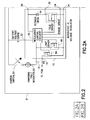
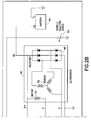
- Figure 2 is a system level integration diagram of a stand-alone Alternator Regulator Charging System design in accordance with one embodiment of the present invention
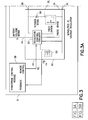
- Figure 3 is a system level integration diagram of a remote controlled Alternator Regulator Charging System design in accordance with one embodiment of the present invention.
- Figure 4 shows a combination stand-alone and remote controlled system.
- a feature set for an Application Specific Integrated Circuit is determined.
- the invention provides a method of incorporation of the feature set into a monolithic ASIC that could be used for stand-alone, remotely controlled, and combinational designs for automotive charging system applications.
- Core ASIC architecture is determined such that specific system interface pins are shared and provide the necessary flexibility, while limiting the cost of the IC by eliminating excess Input/Output connections.
- FIG. 1 shows a monolithic ASIC 10 designed and used for an Alternator Regulator Charging System in accordance with the present invention.
- the ASIC 10 includes regulation control circuitry and a plurality of pins for providing and receiving input and output signals.
- monolithic ASIC 10 comprises a regulation control circuit 20 for performing monolithic ASIC core regulation functions.
- the circuit 20 receives battery voltage sense signal from pin 22 and alternator winding phase voltage sense signal from pin 24.
- the monolithic ASIC 10 further comprises a circuit 12 for performing a mask selectable operation.
- circuit 12 When the monolithic ASIC 10 is used in a stand-alone Alternator Regulator Charging System, circuit 12 is provided with an ignition/activation signal at pin 16 from the automotive ignition switch. However, when the monolithic ASIC 10 is used in a remote-control Alternator Regulator Charging System, circuit 12 will provide a feedback output signal to pin 14, and receives remote control signals at pin 18.
- the remote control interface may comprise a two line PWM interface (chassis ground being the second line) that provides asynchronous communication between the PCM and the ASIC. Other features include 0mV/°C temperature compensation, and optionally RC input command for Z-curve mode.
- line 16 provides ignition line power-up to the ASIC.
- other features include -10mV/° C temperature compensation, z curve temperature compensation and lamp driver capability for charging fault indication.
- the monolithic ASIC 10 comprises a circuit 26 that includes a flyback diode for the field winding current when the regulator output driver switch is turned off. The cathode of the flyback diode is connected to the alternator voltage sense at pin 28.
- the monolithic ASIC 10 comprises an output driver circuit 30 that includes the regulator output field driver switch. The drain and source of the switch, if a FET, are connected between the anode of the diode of circuit 26 and the ground at pin 34. The gate of the field driver switch is controlled by the core circuit 20. The field driver switch controls the alternator field winding via pin 32.
- FIG. 2 shows a stand-alone Alternator Regulator Charging System 8.
- the stand-alone Alternator Regulator Charging System 8 includes the monolithic ASIC voltage regulator 10, an alternator circuit 40, a battery 44, an ignition switch 50, a charging fault indicator 52 such as a lamp, and vehicle electric loads 54.
- the alternator circuit 40 includes alternator field rotor 41, a three phase stator 42, and a three phase full wave diode rectifier bridge 48.
- the alternator circuit 40 is coupled to a battery 44 via the cathode terminals of the six diode rectifier 48 and to the ground via the anode terminals. It is further connected to the monolithic ASIC 10, wherein the rotor 41 is parallel connected to the flyback diode 56 at pins 28 and 32 and a stator 42 winding is connected to pin 24 to provide a phase voltage sense.
- the monolithic ASIC 10 is further shown to include a lamp driver switch 46 for driving the charging fault indicator 52.
- Switch 56 can optionally provide a feedback signal on the state of the charging system to the PCM via FB pin 14, even in the stand-alone system.
- Figure 3 shows a remote-controlled Alternator Regulator Charging System 6.
- the remote-controlled Alternator Regulator Charging System 6 includes the monolithic ASIC voltage regulator 10, an alternator circuit 40, a battery 44, and vehicle electric loads 54.
- the powertrain control module 58 which receives feedback from pin 14, the feedback being provided by the circuit 20, and provides remote control signals via PWM to pin 18 to control the regulator.
- the alternator circuit 40 includes a field rotor 41, a three phase stator 42, and a six diode rectifier bridge 48.
- the alternator circuit 40 is coupled to a battery 44 via the cathode terminals of the six diode rectifier 48 and to the ground via the anode terminals. It is further connected to the monolithic ASIC 10, wherein the rotor winding 41 is parallel connected to the flyback diode at pins 28 and 32 and a stator 42 winding is connected to pin 24 to provide a phase voltage sense.
- the remote-controlled Alternator Regulator Charging System 6 does not include a charging indicator, so the lamp driver 46 of Figure 2 is not used.
- the powertrain control module 58 receives the feedback signal 14 regarding charging system operation and generates remote control signals 18 to control regulation.
- Figure 4 shows a combinational Alternator Regulator Charging System 6, which can be used in both a stand-alone mode and in a remote controlled mode.
- the remote-controlled Alternator Regulator Charging System 6 includes the monolithic ASIC voltage regulator 10, an alternator circuit 40, a battery 44, and vehicle electric loads 54.
- the powertrain control module 58 which receives feedback from pin 14, the feedback being provided by the circuit 20, and provides remote control signals via PWM to pin 18 to control the regulator.
- the alternator circuit 40 includes a field rotor 41, a three phase stator 42, and a six diode rectifier bridge 48.
- the alternator circuit 40 is coupled to a battery 44 via the cathode terminals of the six diode rectifier 48 and to the ground via the anode terminals. It is further connected to the monolithic ASIC 10, wherein the rotor winding 41 is parallel connected to the flyback diode at pins 28 and 32 and a stator 42 winding is connected to pin 24 to provide a phase voltage sense.
- the combination Alternator Regulator Charging System 6 includes an ignition switch 50, a charging fault indicator 52, and a lamp driver 46. Also included is a powertrain control module 58 that receives, through switch 56, feedback signals 14 regarding the charging system's operation and generates remote control signals 18 to control regulation.
- Table 1 illustrates an example of three feature set implementations achievable in a single monolithic ASIC.
- An integrated circuit for controlling an alternator circuit in an alternator regulator charging system includes a first circuit for performing core regulation functions; a second circuit having a mask selectable operation circuit that allows the integrated circuit to select an operational mode thereof, the mode being selectable from one of a stand-alone mode, a remote controlled mode wherein the first circuit is controlled by an external circuit, and a combination of the stand-alone mode and the remote controlled mode; and a third circuit having an output driver circuit for controlling a field winding of the alternator circuit.
Landscapes
- Engineering & Computer Science (AREA)
- Power Engineering (AREA)
- Control Of Eletrric Generators (AREA)
- Control Of Charge By Means Of Generators (AREA)
- Charge And Discharge Circuits For Batteries Or The Like (AREA)
Abstract
Description
- This application is based on and claims the benefit of
United States Provisional Application Serial No. 60/706,498, filed on August 8, 2005 - The present invention relates to an alternator regulator and more particularly to an alternator regulator that can be configured to operate in configurable regulation modes.
- Automotive alternator regulators incorporate several requirements and features that are customized for specific applications. Because of the high cost and concerns about robustness of a more flexible solution, such as a microprocessor design, the design architecture of the automotive alternator regulators typically utilizes an Application Specific Integrated Circuit (ASIC).
- Typically, to reduce integrated circuit cost and complexity, certain ASIC features are excluded from specific design types. This results in the problem of development of distinct IC designs intended to target specific automotive charging system applications. Those applications may include separate stand-alone or remotely controlled operation instead of one 1C solution covering both types of applications and possibly even a combination of the two. In a remotely controlled alternator regulator, typically control is performed by a separate module, e.g., the powertrain control module (PCM).
- Prior art methods use distinct stand-alone and remote controlled alternator regulators that do not provide the capability to configure/combine the features of the two systems into a single solution. The disadvantages of this approach include separate development and qualification of each system and associated components as well as higher overall manufacturing cost.
- It is an object of the present invention to provide an alternator regulator and an alternator regulator control integrated circuit with a feature set that can be used for stand-alone, remote controlled and combinational design alternator regulator charging systems.
- An integrated circuit for controlling an alternator circuit in an alternator regulator charging system is provided. The integrated circuit includes a first circuit for performing core regulation functions; a second circuit having a mask selectable operation circuit that allows the integrated circuit to select an operational mode thereof, the mode being selectable from one of a stand-alone mode, a remote controlled mode wherein the first circuit is controlled by an external circuit, and a combination of the stand-alone mode and the remote controlled mode; and a third circuit having an output driver circuit for controlling a field winding of the alternator circuit.
- An alternator regulator capable of operation in configurable modes is also disclosed.
- Other features and advantages of the present invention will become apparent from the following description of the invention that refers to the accompanying drawings.
- Figure 1 is a diagram of the architecture of an ASIC Alternator Regulator Charging System in accordance with one embodiment of the present invention;
- Figure 2 is a system level integration diagram of a stand-alone Alternator Regulator Charging System design in accordance with one embodiment of the present invention;
- Figure 3 is a system level integration diagram of a remote controlled Alternator Regulator Charging System design in accordance with one embodiment of the present invention; and
- Figure 4 shows a combination stand-alone and remote controlled system.
- According to the invention, a feature set for an Application Specific Integrated Circuit (ASIC) is determined. The invention provides a method of incorporation of the feature set into a monolithic ASIC that could be used for stand-alone, remotely controlled, and combinational designs for automotive charging system applications.
- Core ASIC architecture is determined such that specific system interface pins are shared and provide the necessary flexibility, while limiting the cost of the IC by eliminating excess Input/Output connections.
- Figure 1 shows a monolithic ASIC 10 designed and used for an Alternator Regulator Charging System in accordance with the present invention. The ASIC 10 includes regulation control circuitry and a plurality of pins for providing and receiving input and output signals.
- In particular, monolithic ASIC 10 comprises a
regulation control circuit 20 for performing monolithic ASIC core regulation functions. Thecircuit 20 receives battery voltage sense signal frompin 22 and alternator winding phase voltage sense signal frompin 24. - The
monolithic ASIC 10 further comprises acircuit 12 for performing a mask selectable operation. When the monolithic ASIC 10 is used in a stand-alone Alternator Regulator Charging System,circuit 12 is provided with an ignition/activation signal atpin 16 from the automotive ignition switch. However, when the monolithic ASIC 10 is used in a remote-control Alternator Regulator Charging System,circuit 12 will provide a feedback output signal topin 14, and receives remote control signals atpin 18. In the remote-control Alternator Regulator Charging System, the remote control interface may comprise a two line PWM interface (chassis ground being the second line) that provides asynchronous communication between the PCM and the ASIC. Other features include 0mV/°C temperature compensation, and optionally RC input command for Z-curve mode. - In stand-alone operation,
line 16 provides ignition line power-up to the ASIC. In addition, other features include -10mV/° C temperature compensation, z curve temperature compensation and lamp driver capability for charging fault indication. - Additionally, the
monolithic ASIC 10 comprises acircuit 26 that includes a flyback diode for the field winding current when the regulator output driver switch is turned off. The cathode of the flyback diode is connected to the alternator voltage sense atpin 28. Finally, themonolithic ASIC 10 comprises anoutput driver circuit 30 that includes the regulator output field driver switch. The drain and source of the switch, if a FET, are connected between the anode of the diode ofcircuit 26 and the ground atpin 34. The gate of the field driver switch is controlled by thecore circuit 20. The field driver switch controls the alternator field winding viapin 32. - Figure 2 shows a stand-alone Alternator
Regulator Charging System 8. The stand-alone AlternatorRegulator Charging System 8 includes the monolithicASIC voltage regulator 10, analternator circuit 40, abattery 44, anignition switch 50, acharging fault indicator 52 such as a lamp, and vehicleelectric loads 54. Thealternator circuit 40 includesalternator field rotor 41, a threephase stator 42, and a three phase full wavediode rectifier bridge 48. - The
alternator circuit 40 is coupled to abattery 44 via the cathode terminals of the sixdiode rectifier 48 and to the ground via the anode terminals. It is further connected to themonolithic ASIC 10, wherein therotor 41 is parallel connected to theflyback diode 56 atpins stator 42 winding is connected topin 24 to provide a phase voltage sense. - The
monolithic ASIC 10 is further shown to include alamp driver switch 46 for driving thecharging fault indicator 52. Switch 56 can optionally provide a feedback signal on the state of the charging system to the PCM via FBpin 14, even in the stand-alone system. - Figure 3 shows a remote-controlled Alternator
Regulator Charging System 6. As in Figure 2, the remote-controlled AlternatorRegulator Charging System 6 includes the monolithicASIC voltage regulator 10, analternator circuit 40, abattery 44, and vehicleelectric loads 54. In addition, it includes apowertrain control module 58, which receives feedback frompin 14, the feedback being provided by thecircuit 20, and provides remote control signals via PWM topin 18 to control the regulator. - As in Figure 2, the
alternator circuit 40 includes afield rotor 41, a threephase stator 42, and a sixdiode rectifier bridge 48. Thealternator circuit 40 is coupled to abattery 44 via the cathode terminals of the sixdiode rectifier 48 and to the ground via the anode terminals. It is further connected to themonolithic ASIC 10, wherein the rotor winding 41 is parallel connected to the flyback diode atpins stator 42 winding is connected topin 24 to provide a phase voltage sense. - The remote-controlled Alternator Regulator Charging System 6 does not include a charging indicator, so the
lamp driver 46 of Figure 2 is not used. Thepowertrain control module 58 receives thefeedback signal 14 regarding charging system operation and generatesremote control signals 18 to control regulation. - Both Alternator Regulator Charging Systems discussed above, with reference to Figures 2 and 3, the stand-alone and remote controlled respectively, include the following common functions:
- 1. A configurable feedback pin;
- 2. System specific self excitation;
- 3. System specific default regulation for stand alone/fault mode operation;
- 4. Configurable load regulation;
- 5. Configurable Load Response Control;
- 6. Configurable fault detection;
- 7. Overvoltage and short circuit protection;
- 8. alternator phase voltage sensing; and
- 9. Optional battery voltage sensing.
- Figure 4 shows a combinational Alternator
Regulator Charging System 6, which can be used in both a stand-alone mode and in a remote controlled mode. The same reference numbers as in Figures 2 and 3 are used for the same elements. As in Figure 2, the remote-controlled AlternatorRegulator Charging System 6 includes the monolithicASIC voltage regulator 10, analternator circuit 40, abattery 44, and vehicle electric loads 54. In addition, it includes apowertrain control module 58, which receives feedback frompin 14, the feedback being provided by thecircuit 20, and provides remote control signals via PWM to pin 18 to control the regulator. - The
alternator circuit 40 includes afield rotor 41, a threephase stator 42, and a sixdiode rectifier bridge 48. Thealternator circuit 40 is coupled to abattery 44 via the cathode terminals of the sixdiode rectifier 48 and to the ground via the anode terminals. It is further connected to themonolithic ASIC 10, wherein the rotor winding 41 is parallel connected to the flyback diode atpins stator 42 winding is connected to pin 24 to provide a phase voltage sense. - The combination Alternator
Regulator Charging System 6 includes anignition switch 50, a chargingfault indicator 52, and alamp driver 46. Also included is apowertrain control module 58 that receives, throughswitch 56, feedback signals 14 regarding the charging system's operation and generates remote control signals 18 to control regulation. - Table 1 illustrates an example of three feature set implementations achievable in a single monolithic ASIC.
Feature Stand Alone Remote Controlled Combination LRC Ramp Rate 8.4s Disabled 8.4s LR Cut Off Speed 3000 RPM N/A 3000 RPM LRC Low Battery Disable Yes N/A Yes Temperature Compensation -10mV/°C 0mV/°C 0mV/°C or Z curve Loss of Battery Sense fault indication Yes Yes Yes Load Regulation Range 300mV 300mV 200mV Default Regulation N/A 13.5V 14.3V Feedback Polarity Negative Positive Positive Feedback Max Duty Cycle 100% 97% 97% Feedback Fault Indication No Yes Yes Thermal Fault Indication No Yes No Phase Frequency Detection 12 pole 14 pole 16 pole RC pulse > Field Drive Period N/A Max Set-point Stand alone regulation - Although the present invention has been described in relation to particular embodiments thereof, many other variations and modifications and other uses will become apparent to those skilled in the art. It is preferred, therefore, that the present invention not be limited by the specific disclosure herein.
An integrated circuit for controlling an alternator circuit in an alternator regulator charging system. The integrated circuit includes a first circuit for performing core regulation functions; a second circuit having a mask selectable operation circuit that allows the integrated circuit to select an operational mode thereof, the mode being selectable from one of a stand-alone mode, a remote controlled mode wherein the first circuit is controlled by an external circuit, and a combination of the stand-alone mode and the remote controlled mode; and a third circuit having an output driver circuit for controlling a field winding of the alternator circuit.
Claims (18)
- An integrated circuit for controlling an alternator circuit in an alternator regulator charging system, the integrated circuit comprising:a first circuit for performing core regulation functions;a second circuit having a mask selectable operation circuit that allows the integrated circuit to select an operational mode thereof, the mode being selectable from one of a stand-alone mode, a remote controlled mode wherein the first circuit is controlled by an external circuit, and a combination of the stand-alone mode and the remote controlled mode; anda third circuit comprising an output driver circuit for controlling a field winding of the alternator circuit.
- The integrated circuit of claim 1, wherein the integrated circuit is capable of performing functions selected from one of a configurable feedback pin; system specific self excitation; system specific default regulation for stand alone/fault mode operation; configurable load regulation; configurable Load Response Control; configurable fault detection; overvoltage and short circuit protection; machine voltage sensing; and optional battery voltage sensing.
- The integrated circuit of claim 2, wherein an optimal feature set for the integrated circuit is determined and the feature set is incorporated into a monolithic ASIC that could be used for a stand alone, remotely controlled, or combinational designs automotive charging system applications.
- The integrated circuit of claim 1, wherein the first circuit for performing core regulation functions receives battery voltage and phase voltage sense signals.
- The integrated circuit of claim 1, further comprising a remote control terminal on said integrated circuit comprising a two line PWM interface for providing asynchronous communication between the external circuit and the integrated circuit.
- The integrated circuit of claim 1, wherein the integrated circuit further comprises a lamp driver switch for driving the charging fault indicator.
- An alternator regulator circuit comprising:an integrated circuit comprising:a first circuit for performing core regulation functions;a second circuit having a mask selectable operation circuit that allows the integrated circuit to select an operational mode thereof, the mode being selectable from one of a stand-alone mode, a remote controlled mode wherein the first circuit is controlled by an external circuit, and a combination of the stand-alone mode and the remote controlled mode;a third circuit comprising an output driver circuit for controlling a field winding of the alternator circuit; andan alternator circuit having a field winding coupled for control by the output driver circuit and a stator winding coupled to a battery and a load circuit.
- The alternator regulator circuit of claim 7, wherein the alternator circuit includes a field rotor winding, a three phase stator, and a rectifier bridge, wherein each phase of the stator is connected to a respective two diode bridge of the rectifier bridge.
- The alternator regulator circuit of claim 8, wherein the alternator circuit is coupled to the battery and load circuit via a cathode terminal of the rectifier bridge and to ground via an anode terminal of the bridge.
- The alternator regulator circuit of claim 9, wherein the alternator field winding is coupled to the integrated circuit for control by a field driver switch across a flyback diode and the stator winding is connected to a phase voltage sense circuit of the integrated circuit.
- The alternator regulator circuit of claim 7, wherein the circuit for performing core regulation functions receives battery voltage and phase voltage sense signals.
- The alternator regulator circuit of claim 7, further comprising an ignition switch and a charging fault indicator coupled to said integrated circuit.
- The alternator regulator circuit of claim 7, further comprising a remote control terminal on said integrated circuit comprising a two line PWM interface for providing asynchronous communication between the external circuit and the integrated circuit.
- The alternator regulator circuit of claim 7, wherein the external circuit comprises a Powertrain Control Module for receiving feedback from the integrated circuit and providing remote control signals to the integrated circuit to control the alternator circuit.
- The alternator regulator circuit of claim 12, wherein the integrated circuit further comprises a lamp driver switch for driving the charging fault indicator.
- The alternator regulator circuit of claim 12, further comprising a Powertrain Control Module for receiving feedback from the integrated circuit and providing remote control signals.
- The alternator regulator circuit of claim 14, wherein the integrated circuit is capable of performing functions selected from one of a configurable feedback pin; system specific self excitation; system specific default regulation for stand alone/fault mode operation; configurable load regulation; configurable Load Response Control; configurable fault detection; overvoltage and short circuit protection; machine voltage sensing; and optional battery voltage sensing.
- The alternator regulator circuit of claim 17, wherein an optimal feature set for the integrated circuit is determined and the feature set is incorporated into a monolithic ASIC that could be used for a stand alone, remotely controlled, or combinational designs automotive charging system applications.
Applications Claiming Priority (2)
| Application Number | Priority Date | Filing Date | Title |
|---|---|---|---|
| US70649805P | 2005-08-08 | 2005-08-08 | |
| US11/462,060 US7521903B2 (en) | 2005-08-08 | 2006-08-03 | Monolithic alternator regulator with configurable regulation modes |
Publications (2)
| Publication Number | Publication Date |
|---|---|
| EP1753111A2 true EP1753111A2 (en) | 2007-02-14 |
| EP1753111A3 EP1753111A3 (en) | 2010-06-09 |
Family
ID=37101889
Family Applications (1)
| Application Number | Title | Priority Date | Filing Date |
|---|---|---|---|
| EP06016533A Withdrawn EP1753111A3 (en) | 2005-08-08 | 2006-08-08 | Monolithic alternator regulator with configurable regulation modes |
Country Status (3)
| Country | Link |
|---|---|
| US (1) | US7521903B2 (en) |
| EP (1) | EP1753111A3 (en) |
| JP (1) | JP2007053897A (en) |
Cited By (1)
| Publication number | Priority date | Publication date | Assignee | Title |
|---|---|---|---|---|
| DE102007060222B4 (en) | 2007-12-14 | 2024-08-01 | Seg Automotive Germany Gmbh | Generator device with current discharge elements |
Families Citing this family (8)
| Publication number | Priority date | Publication date | Assignee | Title |
|---|---|---|---|---|
| US20090283389A1 (en) * | 2008-05-16 | 2009-11-19 | Tyco Electronics Brasil Ltda | Battery saving circuit |
| FR2949914B1 (en) * | 2009-09-07 | 2014-11-21 | Valeo Equip Electr Moteur | SYNCHRONOUS RECTIFIER ALTERNATOR FOR A MOTOR VEHICLE EQUIPPED WITH ELECTRONIC MEANS FOR MANAGING DEFECTS |
| US10268805B2 (en) * | 2010-01-26 | 2019-04-23 | At&T Intellectual Property I, L.P. | System and method for providing multimedia digital rights transfer |
| US8773080B2 (en) * | 2010-12-16 | 2014-07-08 | Kohler Co. | Resonant commutation system for exciting a three-phase alternator |
| US8836292B1 (en) * | 2011-04-15 | 2014-09-16 | Kevin Mark Klughart | Electric power generation system and method |
| WO2013142493A1 (en) | 2012-03-19 | 2013-09-26 | Mayo Foundation For Medical Education And Research | Analyzing and answering questions |
| WO2013166267A1 (en) | 2012-05-02 | 2013-11-07 | Remy Technologies, Llc | Alternator with lockout mode |
| FR3030152B1 (en) * | 2014-12-15 | 2018-10-12 | Valeo Equipements Electriques Moteur | METHOD FOR CONTROLLING A DEVICE FOR CONTROLLING A MOTOR VEHICLE ALTERNATOR, CORRESPONDING REGULATION DEVICE AND ALTERNATOR |
Family Cites Families (16)
| Publication number | Priority date | Publication date | Assignee | Title |
|---|---|---|---|---|
| DE2610137A1 (en) * | 1976-03-11 | 1977-09-29 | Bosch Gmbh Robert | GENERATOR WITH FREEWHEELING DIODE AND VOLTAGE REGULATOR |
| JP2793303B2 (en) * | 1989-12-16 | 1998-09-03 | ダイハツ工業株式会社 | Alternator control method |
| JP3256260B2 (en) * | 1992-03-10 | 2002-02-12 | ダイハツ工業株式会社 | A method for detecting the power generation work of an alternator for idle speed control |
| US5734255A (en) * | 1996-03-13 | 1998-03-31 | Alaska Power Systems Inc. | Control system and circuits for distributed electrical power generating stations |
| US6137247A (en) * | 1997-12-08 | 2000-10-24 | Denso Corporation | Electric power generation control for vehicles using a plurality of control signals |
| JP2000092754A (en) * | 1998-09-14 | 2000-03-31 | Toshiba Corp | Power supply circuit for electrical equipment |
| US6215277B1 (en) * | 2000-02-17 | 2001-04-10 | Ford Global Tech. Inc | Electrical charging system |
| KR100376131B1 (en) * | 2000-09-22 | 2003-03-15 | 삼성전자주식회사 | Consumption power saving apparatus and controlling method in a stand-by mode |
| JP4314751B2 (en) * | 2001-04-16 | 2009-08-19 | 株式会社デンソー | Charging system and vehicle power generation control device |
| JP2003033092A (en) | 2001-07-18 | 2003-01-31 | Mitsubishi Electric Corp | Control device for vehicle generator |
| US6670792B1 (en) * | 2001-09-07 | 2003-12-30 | International Rectifier Corporation | Alternator regulation circuit having parallel field coil current re-circulation |
| US6573689B1 (en) * | 2001-09-28 | 2003-06-03 | International Rectifier Corporation | Programmable alternator regulation circuitry |
| JP2003224935A (en) * | 2002-01-29 | 2003-08-08 | Fuji Heavy Ind Ltd | Power generation control device for vehicle generator |
| EP1401081A3 (en) * | 2002-09-17 | 2008-02-13 | International Rectifier Corporation | Intelligent automotive voltage regulation system |
| WO2005050332A2 (en) * | 2003-11-17 | 2005-06-02 | Ballard Commercial Industries, Inc. | Improved regulator system for alternator |
| JP4232693B2 (en) * | 2004-06-08 | 2009-03-04 | 株式会社デンソー | Vehicle power generation control system |
-
2006
- 2006-08-03 US US11/462,060 patent/US7521903B2/en not_active Expired - Fee Related
- 2006-08-08 EP EP06016533A patent/EP1753111A3/en not_active Withdrawn
- 2006-08-08 JP JP2006215271A patent/JP2007053897A/en not_active Ceased
Cited By (1)
| Publication number | Priority date | Publication date | Assignee | Title |
|---|---|---|---|---|
| DE102007060222B4 (en) | 2007-12-14 | 2024-08-01 | Seg Automotive Germany Gmbh | Generator device with current discharge elements |
Also Published As
| Publication number | Publication date |
|---|---|
| JP2007053897A (en) | 2007-03-01 |
| US20070029978A1 (en) | 2007-02-08 |
| EP1753111A3 (en) | 2010-06-09 |
| US7521903B2 (en) | 2009-04-21 |
Similar Documents
| Publication | Publication Date | Title |
|---|---|---|
| US5889392A (en) | Switch-mode regulators and methods providing transient response speed-up | |
| EP2083497B1 (en) | Electronic control system and power supply unit of the system | |
| US7129681B2 (en) | Power supply apparatus having parallel connected switching and series regulators and method of operation | |
| US7586296B2 (en) | Power supply apparatus | |
| US20050110469A1 (en) | Power supply circuit | |
| EP1411406B1 (en) | Power supply unit with two or more power supplies | |
| CN101164220B (en) | Power source control method and structure thereof | |
| US7274577B2 (en) | Electronic instrument having booster circuit | |
| EP1753111A2 (en) | Monolithic alternator regulator with configurable regulation modes | |
| JP2008511277A (en) | Voltage controller with overvoltage protection | |
| EP1879284B1 (en) | DC-DC converter and power supply apparatus | |
| US6028373A (en) | Power supply distributed load startup system | |
| CN108649663A (en) | Pressure limiting power supply circuit and electronic equipment | |
| EP0911941A2 (en) | Power supply unit for vehicles | |
| EP1209792A2 (en) | Voltage controller for automotive alternator | |
| EP1215797A2 (en) | Shunt automatically controlled output circuit incorporating stored voltage or counter electromotive force loading | |
| EP1848101A1 (en) | Power supply circuit and portable apparatus | |
| CN101238637B (en) | Electronic control unit for controlling an external half-bridge power output stage and electromotive drive having an electronic control unit | |
| JP2007053897A5 (en) | ||
| US20200161983A1 (en) | Power converter and power converter control method | |
| US20130021020A1 (en) | Power source monitoring device, lens barrel, camera, and power source monitoring method | |
| US12015342B2 (en) | DC-DC converter and method for operating a DC-DC converter | |
| KR100682034B1 (en) | Charge and voltage regulator | |
| CN223514791U (en) | A Boost converter circuit capable of forced startup under undervoltage protection | |
| JP3123869B2 (en) | Control device for DC shunt motor |
Legal Events
| Date | Code | Title | Description |
|---|---|---|---|
| PUAI | Public reference made under article 153(3) epc to a published international application that has entered the european phase |
Free format text: ORIGINAL CODE: 0009012 |
|
| 17P | Request for examination filed |
Effective date: 20060808 |
|
| AK | Designated contracting states |
Kind code of ref document: A2 Designated state(s): AT BE BG CH CY CZ DE DK EE ES FI FR GB GR HU IE IS IT LI LT LU LV MC NL PL PT RO SE SI SK TR |
|
| AX | Request for extension of the european patent |
Extension state: AL BA HR MK YU |
|
| RIN1 | Information on inventor provided before grant (corrected) |
Inventor name: MERSMANN, ANDREAS Inventor name: GRABOWSKI, FRANZ Inventor name: SOMMERFELD, PETER Inventor name: RENEHAN, JOHN |
|
| RAP1 | Party data changed (applicant data changed or rights of an application transferred) |
Owner name: SILICONIX TECHNOLOGY C.V. |
|
| PUAL | Search report despatched |
Free format text: ORIGINAL CODE: 0009013 |
|
| STAA | Information on the status of an ep patent application or granted ep patent |
Free format text: STATUS: THE APPLICATION HAS BEEN WITHDRAWN |
|
| AK | Designated contracting states |
Kind code of ref document: A3 Designated state(s): AT BE BG CH CY CZ DE DK EE ES FI FR GB GR HU IE IS IT LI LT LU LV MC NL PL PT RO SE SI SK TR |
|
| AX | Request for extension of the european patent |
Extension state: AL BA HR MK RS |
|
| 18W | Application withdrawn |
Effective date: 20100528 |