EP1750208A1 - Translating data objects - Google Patents
Translating data objects Download PDFInfo
- Publication number
- EP1750208A1 EP1750208A1 EP05016663A EP05016663A EP1750208A1 EP 1750208 A1 EP1750208 A1 EP 1750208A1 EP 05016663 A EP05016663 A EP 05016663A EP 05016663 A EP05016663 A EP 05016663A EP 1750208 A1 EP1750208 A1 EP 1750208A1
- Authority
- EP
- European Patent Office
- Prior art keywords
- target language
- content
- data
- object type
- data object
- Prior art date
- Legal status (The legal status is an assumption and is not a legal conclusion. Google has not performed a legal analysis and makes no representation as to the accuracy of the status listed.)
- Granted
Links
Images

Classifications
-
- G—PHYSICS
- G06—COMPUTING OR CALCULATING; COUNTING
- G06F—ELECTRIC DIGITAL DATA PROCESSING
- G06F9/00—Arrangements for program control, e.g. control units
- G06F9/06—Arrangements for program control, e.g. control units using stored programs, i.e. using an internal store of processing equipment to receive or retain programs
- G06F9/44—Arrangements for executing specific programs
- G06F9/451—Execution arrangements for user interfaces
- G06F9/454—Multi-language systems; Localisation; Internationalisation
-
- G—PHYSICS
- G06—COMPUTING OR CALCULATING; COUNTING
- G06F—ELECTRIC DIGITAL DATA PROCESSING
- G06F40/00—Handling natural language data
- G06F40/40—Processing or translation of natural language
- G06F40/42—Data-driven translation
- G06F40/47—Machine-assisted translation, e.g. using translation memory
-
- G—PHYSICS
- G06—COMPUTING OR CALCULATING; COUNTING
- G06F—ELECTRIC DIGITAL DATA PROCESSING
- G06F40/00—Handling natural language data
- G06F40/40—Processing or translation of natural language
- G06F40/58—Use of machine translation, e.g. for multi-lingual retrieval, for server-side translation for client devices or for real-time translation
Definitions
- This patent application relates generally to translating data objects, such as business objects, from one language into another language.
- a data object is a self-contained entity that includes both data and procedures to manipulate the data.
- a business object is a special type of data object that stores data relating to a business or aspect of a business.
- This patent application describes methods and apparatus, including computer program products, for translating data objects, such as business objects, from one language into another language.
- the invention is directed to translating information in a first data object from an initial language into a target language.
- the information includes an object type and content.
- This aspect includes searching a database to locate a second data object having the object type, attempting to obtain, from the second data object, the object type and the content in the target language, and storing, in the first data object, the object type and content in the target language.
- One of the advantages of the foregoing aspect of the invention is that it leverages translations of existing business objects to perform much of the translation automatically. This reduces the need for manual intervention during translation, thereby making it possible to translate large numbers of business objects relatively quickly.
- the foregoing aspect may also include one or more of the following features.
- the content may include at least one attribute and at least one attribute value that corresponds to the attribute.
- the at least one attribute contains data that relates to a subject of the data object and the at least one attribute value contains data that specifies the attribute.
- the invention may include obtaining, from the second data object, the object type and the content in a second target language, and storing, in the first data object, the object type and the content in the second target language.
- the second data object may include a language identifier that corresponds to the target language, and searching may include using the language identifier to locate the second data object.
- the invention may include receiving data corresponding to the target language. Searching may include using data corresponding to the target language to locate the second data object. If at least one of the object type and the content in the target language cannot be obtained from the second data object, a request may be issued to an external source for at least one of the object type and the content in the target language.
- the invention may include requesting confirmation of at least one of the object type and the content in the target language prior to storing, in the first data object, the object type and the content in the target language, and/or before searching, attempting to obtain, from the first data object, the object type and content in the target language. If the object type and the content in the target language is obtained from the first data object, the following may be skipped: searching the database to locate a second data object having the object type, and attempting to obtain, from the second data object, the object type and the content in the target language.
- a method for translating business objects comprising receiving a business object comprising a dedicated object type, and at least one object data set in at least one language, searching within at least one database for stored business objects having at least a matching object type, and at least one matching object data set, obtaining from found business objects a translation of at least the object type and at least the matching object data set into at least one other language, and storing within the received business object the found translations into the at least one other language for the object type, and the matching object data set.
- Embodiments provide storing within the received business object a language identifier of each stored translation for the object type and the object data set.
- Embodiments provide receiving a target language, and searching for stored business objects having a corresponding translation for the object type and at least one object data set into the target language.
- Embodiments also provide requesting a user to input a translation for the object type and at least one object data set into the target language in case a translation into the target language could not be found.
- Embodiments also provide requesting a user confirmation for a found translation for the object type and at least one object data set before the found translation is stored within the received business object.
- Embodiments provide checking the received business object for already stored translations for the object type and the object data set and obtaining from found business objects only those translations which are not stored in the received business object.
- Another aspect is a computer program, and a computer program product tangibly embodied in an information carrier, the computer program product comprising instructions that, when executed, cause at least one processor to perform operations comprising receiving a business object comprising a dedicated object type and at least one object data set in at least one language, searching within at least one database for stored business objects having at least a matching object type and at least one matching object data set, obtaining from found business objects a translation of at least the object type and at least the matching object data set into at least one other language, and storing within the received business object the found translations into the at least one other language for the object type and the matching object data set.
- the computer program can be implemented to carry out all method steps.
- a further aspect is a computer system comprising an interface arranged for receiving a business object comprising a dedicated object type and at least one object data set in at least one language, a search unit arranged for searching within at least one database for stored business objects having at least a matching object type and at least one matching object data set, a mining unit arranged for obtaining from found business objects a translation of at least the object type and at least the matching object data set into at least one other language, and a storage unit arranged storing within the received business object the found translations into the at least one other language for the object type and the matching object data set.
- ERP software such as SAP ® R/3, mySAP.com, and SAP ® Netweaver ® , store data in business objects.
- the data may relate to various aspects of an organization, such as client data, factory structures, machine structures, production sequences, and materials (or other) lists.
- the structure of the business objects may be dictated by real-world conditions of an organization, such as required maintenance.
- the business objects may simulate real-world structures of an organization, and may include content, such as attributes and attribute values.
- the business objects may also facilitate computer-aided planning, maintenance, and operation via ERP software.
- Described herein is a process, and variations thereof, for translating objects from one language (e.g., English) to another language (e.g., German).
- the process may be used to translate elements of a business objects, such as its attributes or attribute values (described below).
- the process is described herein in the context of business objects; however, the process may be used to translate any type of data object.
- Fig. 1 shows representations of business objects 102, 104, 106 and 108. These business objects may be stored in a memory area of a computer, e.g., in a database, and may contain both data and computer executable code/instructions. As shown in Fig. 1, each business object 102, 104, 106 and 108 contains distinguishing name(s) and identifier(s). In this example, each business object contains a language identifier: EN for English, DE for German, and FR for French. These language identifiers may comply with International Organization for Standardization (ISO) rule 639, which provides standardized identification of languages using two character identifiers. The language identifiers in the business objects are used in translation of the objects, as described below.
- ISO International Organization for Standardization
- Business object 102 is an example of a business object that describes a video monitor. As shown in Fig. 1, business object 102 contains attributes and attribute values that describe the video monitor. The attributes correspond to a feature of the video monitor and attribute values correspond to a specific type of that feature. For example, business object 102 has an object type "product", a first attribute "description” having an attribute value "monitor”, a second attribute “color” having an attribute value “grey”, a third attribute "video mode” having an attribute value "color”, and fourth attribute "language” having an attribute value "German”. Thus, business object 102 describes a video monitor that is grey in color, that has a color display, and that provides audio/video in German. Business object 102 may also include other attributes and attribute values not shown in Fig. 1. Likewise, different attributes may be substituted for those shown in Fig. 1. Business objects having different structures may also be used.
- Fig. 1 also shows other business objects, as follows.
- Business object 104 describes a person.
- Business object 104 thus has an object type "person”, and has an attribute (its sole attribute) "description” having a corresponding attribute value "male”.
- Business object 106 describes a product.
- Business object 106 thus has an object type "product”.
- Business object 106 has an attribute "video mode” having an attribute value "color”, and an attribute "language” having an attribute value "German”.
- Business object 108 also describes a product.
- Business object 108 has an object type "product”, and also includes various attributes and corresponding attribute values.
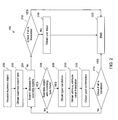
- Fig. 2 shows a process 199 for use in translating business objects from one language to one or more other languages.
- Process 199 is described below with respect to business objects 102, 104, 106 and 108.
- process 199 receives (200) business object 102.
- Process 199 examines business object 102 and extracts data therefrom.
- process 199 obtains (202) the object type from business object 102.
- business object 102 has an object type "product.
- Process 199 searches (204) one or more databases for business objects.
- the database(s) can be stored in several computers or in only one computer.
- Business object(s) that are located via this searching (204) are processed to determine (206) whether those business object(s) have object types that match the object type of business object 102.
- business object 104 may be located.
- Process 199 examines (206) business object 104 to determine if business object 104 has an object type that matches the object type of business object 102. In this case, business object 104 has the object type "person”. This object type does not match the object type of business object 102. Thus, business object 104 is not used to translate business object 102, and process 199 continues its search (204).
- process 199 continues to search (204) database(s) for business objects having an object type that matches the object type of business object 102.
- Process 199 may locate business object 106.
- Process 199 examines (206) business object 106 to determine if its object type matches that of business object 102. In this case, business object 106 has the object type "product", which matches the object type of business object 102.
- process 199 determines whether business object 106 includes a translation for the object type "product". This may be done by examining the language identifier associated with business object 106. That is, if process 199 knows that the desired translation is from, e.g., English to German, and process 199 determines that business object 106 is in German based on its language identifier, process 199 obtains (208) the appropriate German-language text from business object 106. For example, process 199 obtains a German translation of object type "product", namely "Help”. Process 199 stores the translation of the object type -- in this case, the German text -- in business object 102.
- Process 199 also examines business object 106 to determine whether any attributes or attribute values of business object 106 match the attributes or attribute values of business object 102. For those that match, process 199 may also obtain, from business object 106, translations of such attributes or attribute values. For example, process 199 obtains (210), from business object 106, a German translation of the attribute "video mode” and attribute value "color”, and for the attribute "language” and attribute value "German”.
- Business object 106 also provides translations, into French, of the attribute "language” and attribute value "German”.
- Process 199 may also obtain, from business object 106, French-language translations of attributes and their values in business object 102.
- Process 199 may store these translations in business object 102, as above.
- Process 199 may be configured to obtain (212) user confirmation of the translations before storing the translations in business object 102. For example, process 199 may present obtained translations to a user, and may ask the user to confirm that the translation(s) should be stored in business object 102. Assuming that the user confirms that the translations are accurate (or should be stored), process 199 stores the translations in business object 102, as described above. If the user does not confirm that the translations are accurate or should be stored in business object 102, process 199 may disregard the translations and not store them in business object 102.
- process 199 determines (214), whether the business object type, all attribute names, and all attribute values of business object 102 have been translated into target language(s). As described below, a target language is a language into which the business object is to be translated. If all of business object 102 has not been translated, process 199 continues searching (204) for business objects containing translations of elements of business object 102 that have not already been translated.
- Process 199 may locate business object 108 during its search (204).
- Process 199 examines business object 108 and determines that the object type of business object 108 matches (206) the object type of business object 102.
- Business object 108 provides a French translation of the object type "product", which process 199 obtains (208) for storage in business object 102.
- Business object 108 also provides translations into German and French for the attribute "description” and its attribute value "monitor", and into French only for the attribute "color” its attribute value “grey”.
- Business object 108 provides a translation of the attribute "video mode” and its attribute value "color” into French.
- Process 199 obtains (210) the appropriate attribute and attribute value translations for storage in business object 102.
- the attribute "Weight” and attribute value "5kg” of business object 108 are not used in the translation of business object 102 because business object 102 has no corresponding attributes and attribute values.
- process 199 may request confirmation (212) of any translations by the user. Following confirmation, if necessary, process 199 may determine (214) if all of business object 102, including its type, attributes, and attribute values, has been translated. In this example, the attribute "color” and the attribute value "grey” of business object 102 have not been translated into German. This is because neither business object 106 nor business object 108 provided corresponding translations.
- Process 199 may therefore continue to search (204) for additional business objects having the same object type as business object 102. However, in this case, no other business objects are located as a result of this searching. Accordingly, process 199 proceeds to check (216) if all of business object 102 has been translated. Because the attribute name "color” and the attribute value "grey” of business object 102 have not been translated into German, process 199 cannot confirm the check (216). Accordingly, process 199 requests and receives (218) a user input for a German translation of the attribute name "color” and the attribute value "grey", whereafter process 199 ends (220). Alternatively, the user may decline to input the translations, in which case process 199 also ends (220). In some implementations, process 199 may be configured to obtain the required translations from business objects having different object types in the same manner described above.
- Process 199 may be configured to provide an indication of the language into which the business object is translated. This is the target language. In this case, in 214, 216 process 199 determines only if the appropriate translations for the target language have been obtained and stored in the business object 102 (as opposed to checking to determine whether all translations, e.g., both French and German, have been obtained). Further, if a target language has been provided, in 208, 210 process 199 may be configured to obtain translations only in the appropriate target language, and to ignore any other available translations in the business objects located during searching (204).
- process 199 may be configured to examine business object 102 to determine whether such translations are available directly from business object 102. If a translation is available from business object 102, process 199 will obtain the translation from business object 102 and skip the remainder of the process for that translation. Otherwise, process 199 will obtain the translation from another business object, as described above.
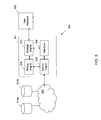
- Figure 3 shows a computer system 300 for obtaining translations of business objects automatically using process 199.
- computer system 300 includes a computer 301, which may include a processor that is capable of executing instructions to perform process 199.
- the instructions may be stored, e.g., on a machine-readable medium, such as a compact disk or other memory.
- Computer 301 include a user interface 302 (e.g., keyboard, monitor, etc.), a data interface 304 for receiving a business object, a search engine 306 for searching business objects, a mining engine 308 for obtaining translations from business objects obtained by the search engine, and a storage engine 310.
- the various engines may be implemented by the processor and the instructions noted above.
- Fig. 3 also shows a computer network 312, which may be a distributed network containing various computers and/or one or more databases 314a, 314b.
- Interface 304 receives a business object and determines whether the business object, or a portion thereof, requires translation into another language. Interface 304 may also receive a target language (into which the business object, or portion thereof, is to be translated). Data identifying the target language may be received either directly from a user at user interface 302 or from a database or other storage area. This data may be used to locate business objects during searching, e.g., business objects having language identifiers that correspond to the target language.
- search engine 306 searches computer 301 and/or other locations, such as distributed databases 314a, 314b, for business objects having object types that match the object type of the business object to be translated.
- Mining engine 308 processes any business object(s) identified by search engine 306. In particular, mining engine 308 extracts translations of the business objects' types, attribute names, and corresponding attribute values, as described above with respect to process 199.
- Resulting translations may be presented to a user via user-interface 302, e.g., for approval.
- the user may confirm the translation or reject the translation.
- Storage engine 310 stores, in memory, confirmed translations or, if confirmation is not required, any translations obtained by mining engine 308.
- user interface 302 may be controlled to request that the user provide such translations.
- a user may ignore this request or respond. If a user responds by providing the requested translations, storage engine 310 stores any user-provided translations in memory along with any translations obtained by mining engine 308.
- the translated business object may be made available for future use through interface 304.
- the business object may be stored in database 314a or 314b, and may be used in the translation of other business objects.
- All or part of process 199, and its various modifications described herein, can be implemented as a computer program product, i.e., a computer program tangibly embodied in an information carrier, e.g., in a machine-readable storage device or in a propagated signal, for execution by, or to control the operation of, data processing apparatus, e.g., a programmable processor, a computer, or multiple computers.
- a computer program can be written in any form of programming language, including compiled or interpreted languages, and it can be deployed in any form, including as a stand-alone program or as a module, component, subroutine, or other unit suitable for use in a computing environment.
- a computer program can be deployed to be executed on one computer or on multiple computers at one site or distributed across multiple sites and interconnected by a communication network.
- Actions associated with the processes can be performed by one or more programmable processors executing one or more computer programs to perform the functions of the processes.
- the actions can also be performed by, and the processes can be implemented as, special purpose logic circuitry, e.g., an FPGA (field programmable gate array) and/or an ASIC (application-specific integrated circuit).
- special purpose logic circuitry e.g., an FPGA (field programmable gate array) and/or an ASIC (application-specific integrated circuit).
- processors suitable for the execution of a computer program include, by way of example, both general and special purpose microprocessors, and any one or more processors of any kind of digital computer.
- a processor will receive instructions and data from a read-only storage area or a random access storage area or both.
- Elements of a computer include a processor for executing instructions and one or more storage area devices for storing instructions and data.
- a computer will also include, or be operatively coupled to receive data from, or transfer data to, or both, one or more mass storage devices for storing data, e.g., magnetic, magneto-optical disks, or optical disks.
- Information carriers suitable for embodying computer program instructions and data include all forms of non-volatile storage area, including by way of example, semiconductor storage area devices, e.g., EPROM, EEPROM, and flash storage area devices; magnetic disks, e.g., internal hard disks or removable disks; magneto-optical disks; and CD-ROM and DVD-ROM disks.
- semiconductor storage area devices e.g., EPROM, EEPROM, and flash storage area devices
- magnetic disks e.g., internal hard disks or removable disks
- magneto-optical disks e.g., CD-ROM and DVD-ROM disks.
- All or part of the processes can be implemented in a computing system that includes a back-end component, e.g., as a data server, or that includes a middleware component, e.g., an application server, or that includes a front-end component, e.g., a client computer having a graphical user interface, or any combination of such back-end, middleware, or front-end components.
- the components of the system can be interconnected by any form or medium of digital data communication, e.g., a communication network. Examples of communication networks include a LAN and a WAN, e.g., the Internet.
- Actions associated with the processes can be rearranged and/or one or more such actions can be omitted to achieve the same, or similar, results to those described herein.
Landscapes
- Engineering & Computer Science (AREA)
- Theoretical Computer Science (AREA)
- Physics & Mathematics (AREA)
- Software Systems (AREA)
- General Engineering & Computer Science (AREA)
- General Physics & Mathematics (AREA)
- Health & Medical Sciences (AREA)
- Artificial Intelligence (AREA)
- Audiology, Speech & Language Pathology (AREA)
- Computational Linguistics (AREA)
- General Health & Medical Sciences (AREA)
- Human Computer Interaction (AREA)
- Machine Translation (AREA)
Abstract
Description
- This patent application relates generally to translating data objects, such as business objects, from one language into another language.
- In object-oriented programming, a data object is a self-contained entity that includes both data and procedures to manipulate the data. A business object is a special type of data object that stores data relating to a business or aspect of a business.
- Increasing globalization requires that data objects, such as business objects, be available in various languages, such as German, French and English. Manual translation of business objects can be a tedious and time-consuming task, however. Accordingly, automatic translation mechanisms have been developed to facilitate translation.
- This patent application describes methods and apparatus, including computer program products, for translating data objects, such as business objects, from one language into another language.
- In general, in one aspect, the invention is directed to translating information in a first data object from an initial language into a target language. The information includes an object type and content. This aspect includes searching a database to locate a second data object having the object type, attempting to obtain, from the second data object, the object type and the content in the target language, and storing, in the first data object, the object type and content in the target language.
- One of the advantages of the foregoing aspect of the invention is that it leverages translations of existing business objects to perform much of the translation automatically. This reduces the need for manual intervention during translation, thereby making it possible to translate large numbers of business objects relatively quickly.
- The foregoing aspect may also include one or more of the following features. The content may include at least one attribute and at least one attribute value that corresponds to the attribute. The at least one attribute contains data that relates to a subject of the data object and the at least one attribute value contains data that specifies the attribute.
- In one aspect, the invention may include obtaining, from the second data object, the object type and the content in a second target language, and storing, in the first data object, the object type and the content in the second target language. The second data object may include a language identifier that corresponds to the target language, and searching may include using the language identifier to locate the second data object.
- In another aspect, the invention may include receiving data corresponding to the target language. Searching may include using data corresponding to the target language to locate the second data object. If at least one of the object type and the content in the target language cannot be obtained from the second data object, a request may be issued to an external source for at least one of the object type and the content in the target language.
- In other aspects, the invention may include requesting confirmation of at least one of the object type and the content in the target language prior to storing, in the first data object, the object type and the content in the target language, and/or before searching, attempting to obtain, from the first data object, the object type and content in the target language. If the object type and the content in the target language is obtained from the first data object, the following may be skipped: searching the database to locate a second data object having the object type, and attempting to obtain, from the second data object, the object type and the content in the target language.
- According to another aspect, there is provided a method for translating business objects comprising receiving a business object comprising a dedicated object type, and at least one object data set in at least one language, searching within at least one database for stored business objects having at least a matching object type, and at least one matching object data set, obtaining from found business objects a translation of at least the object type and at least the matching object data set into at least one other language, and storing within the received business object the found translations into the at least one other language for the object type, and the matching object data set.
- Storing within the received business object translations for the object type and the object data set in all languages, which are available in found business objects is also provided according to embodiments. Embodiments provide storing within the received business object a language identifier of each stored translation for the object type and the object data set. Embodiments provide receiving a target language, and searching for stored business objects having a corresponding translation for the object type and at least one object data set into the target language. Embodiments also provide requesting a user to input a translation for the object type and at least one object data set into the target language in case a translation into the target language could not be found. Embodiments also provide requesting a user confirmation for a found translation for the object type and at least one object data set before the found translation is stored within the received business object. Embodiments provide checking the received business object for already stored translations for the object type and the object data set and obtaining from found business objects only those translations which are not stored in the received business object.
- Another aspect is a computer program, and a computer program product tangibly embodied in an information carrier, the computer program product comprising instructions that, when executed, cause at least one processor to perform operations comprising receiving a business object comprising a dedicated object type and at least one object data set in at least one language, searching within at least one database for stored business objects having at least a matching object type and at least one matching object data set, obtaining from found business objects a translation of at least the object type and at least the matching object data set into at least one other language, and storing within the received business object the found translations into the at least one other language for the object type and the matching object data set. The computer program can be implemented to carry out all method steps.
- A further aspect is a computer system comprising an interface arranged for receiving a business object comprising a dedicated object type and at least one object data set in at least one language, a search unit arranged for searching within at least one database for stored business objects having at least a matching object type and at least one matching object data set, a mining unit arranged for obtaining from found business objects a translation of at least the object type and at least the matching object data set into at least one other language, and a storage unit arranged storing within the received business object the found translations into the at least one other language for the object type and the matching object data set.
- The details of one or more examples are set forth in the accompanying drawings and the description below. Further features, aspects, and advantages of the invention will become apparent from the description, the drawings, and the claims.
-
- Fig. 1
- includes diagrams showing representations of four business objects.
- Fig. 2
- is a flowchart showing a process for translating a business object from one language into another language.
- Fig. 3
- is a block diagram of a computer system on which the process of Fig. 2 may be executed.
- Like reference numerals in different figures indicate like elements.
- Enterprise Resource Planning (ERP) software, such as SAP® R/3, mySAP.com, and SAP® Netweaver®, store data in business objects. The data may relate to various aspects of an organization, such as client data, factory structures, machine structures, production sequences, and materials (or other) lists. The structure of the business objects may be dictated by real-world conditions of an organization, such as required maintenance. The business objects may simulate real-world structures of an organization, and may include content, such as attributes and attribute values. The business objects may also facilitate computer-aided planning, maintenance, and operation via ERP software.
- Described herein is a process, and variations thereof, for translating objects from one language (e.g., English) to another language (e.g., German). For example, the process may be used to translate elements of a business objects, such as its attributes or attribute values (described below). The process is described herein in the context of business objects; however, the process may be used to translate any type of data object.
- Fig. 1 shows representations of
business objects business object -
Business object 102 is an example of a business object that describes a video monitor. As shown in Fig. 1,business object 102 contains attributes and attribute values that describe the video monitor. The attributes correspond to a feature of the video monitor and attribute values correspond to a specific type of that feature. For example,business object 102 has an object type "product", a first attribute "description" having an attribute value "monitor", a second attribute "color" having an attribute value "grey", a third attribute "video mode" having an attribute value "color", and fourth attribute "language" having an attribute value "German". Thus,business object 102 describes a video monitor that is grey in color, that has a color display, and that provides audio/video in German.Business object 102 may also include other attributes and attribute values not shown in Fig. 1. Likewise, different attributes may be substituted for those shown in Fig. 1. Business objects having different structures may also be used. - Fig. 1 also shows other business objects, as follows.
Business object 104 describes a person.Business object 104 thus has an object type "person", and has an attribute (its sole attribute) "description" having a corresponding attribute value "male".Business object 106 describes a product.Business object 106 thus has an object type "product".Business object 106 has an attribute "video mode" having an attribute value "color", and an attribute "language" having an attribute value "German".Business object 108 also describes a product.Business object 108 has an object type "product", and also includes various attributes and corresponding attribute values. - Fig. 2 shows a
process 199 for use in translating business objects from one language to one or more other languages.Process 199 is described below with respect tobusiness objects - Referring to Fig. 2,
process 199 receives (200)business object 102.Process 199 examinesbusiness object 102 and extracts data therefrom. In particular,process 199 obtains (202) the object type frombusiness object 102. In this example,business object 102 has an object type "product. - Process 199 searches (204) one or more databases for business objects. The database(s) can be stored in several computers or in only one computer. Business object(s) that are located via this searching (204) are processed to determine (206) whether those business object(s) have object types that match the object type of
business object 102. For example, during the search (204),business object 104 may be located.Process 199 examines (206)business object 104 to determine ifbusiness object 104 has an object type that matches the object type ofbusiness object 102. In this case,business object 104 has the object type "person". This object type does not match the object type ofbusiness object 102. Thus,business object 104 is not used to translatebusiness object 102, andprocess 199 continues its search (204). - In particular,
process 199 continues to search (204) database(s) for business objects having an object type that matches the object type ofbusiness object 102.Process 199 may locatebusiness object 106.Process 199 examines (206)business object 106 to determine if its object type matches that ofbusiness object 102. In this case,business object 106 has the object type "product", which matches the object type ofbusiness object 102. - Because
business object 106 has the same object type asbusiness object 102,process 199 determines whetherbusiness object 106 includes a translation for the object type "product". This may be done by examining the language identifier associated withbusiness object 106. That is, ifprocess 199 knows that the desired translation is from, e.g., English to German, andprocess 199 determines thatbusiness object 106 is in German based on its language identifier,process 199 obtains (208) the appropriate German-language text frombusiness object 106. For example,process 199 obtains a German translation of object type "product", namely "Produkt".Process 199 stores the translation of the object type -- in this case, the German text -- inbusiness object 102. -
Process 199 also examinesbusiness object 106 to determine whether any attributes or attribute values ofbusiness object 106 match the attributes or attribute values ofbusiness object 102. For those that match,process 199 may also obtain, frombusiness object 106, translations of such attributes or attribute values. For example,process 199 obtains (210), frombusiness object 106, a German translation of the attribute "video mode" and attribute value "color", and for the attribute "language" and attribute value "German". -
Business object 106 also provides translations, into French, of the attribute "language" and attribute value "German".Process 199 may also obtain, frombusiness object 106, French-language translations of attributes and their values inbusiness object 102.Process 199 may store these translations inbusiness object 102, as above. -
Process 199 may be configured to obtain (212) user confirmation of the translations before storing the translations inbusiness object 102. For example,process 199 may present obtained translations to a user, and may ask the user to confirm that the translation(s) should be stored inbusiness object 102. Assuming that the user confirms that the translations are accurate (or should be stored),process 199 stores the translations inbusiness object 102, as described above. If the user does not confirm that the translations are accurate or should be stored inbusiness object 102,process 199 may disregard the translations and not store them inbusiness object 102. - After all attribute names and attribute values of
business object 106 have been checked for use in translatingbusiness object 102,process 199 determines (214), whether the business object type, all attribute names, and all attribute values ofbusiness object 102 have been translated into target language(s). As described below, a target language is a language into which the business object is to be translated. If all ofbusiness object 102 has not been translated,process 199 continues searching (204) for business objects containing translations of elements ofbusiness object 102 that have not already been translated. -
Process 199 may locatebusiness object 108 during its search (204).Process 199 examinesbusiness object 108 and determines that the object type ofbusiness object 108 matches (206) the object type ofbusiness object 102.Business object 108 provides a French translation of the object type "product", which process 199 obtains (208) for storage inbusiness object 102.Business object 108 also provides translations into German and French for the attribute "description" and its attribute value "monitor", and into French only for the attribute "color" its attribute value "grey".Business object 108 provides a translation of the attribute "video mode" and its attribute value "color" into French.Process 199 obtains (210) the appropriate attribute and attribute value translations for storage inbusiness object 102. The attribute "Weight" and attribute value "5kg" ofbusiness object 108 are not used in the translation ofbusiness object 102 becausebusiness object 102 has no corresponding attributes and attribute values. - As noted above,
process 199 may request confirmation (212) of any translations by the user. Following confirmation, if necessary,process 199 may determine (214) if all ofbusiness object 102, including its type, attributes, and attribute values, has been translated. In this example, the attribute "color" and the attribute value "grey" ofbusiness object 102 have not been translated into German. This is because neitherbusiness object 106 norbusiness object 108 provided corresponding translations. -
Process 199 may therefore continue to search (204) for additional business objects having the same object type asbusiness object 102. However, in this case, no other business objects are located as a result of this searching. Accordingly,process 199 proceeds to check (216) if all ofbusiness object 102 has been translated. Because the attribute name "color" and the attribute value "grey" ofbusiness object 102 have not been translated into German,process 199 cannot confirm the check (216). Accordingly,process 199 requests and receives (218) a user input for a German translation of the attribute name "color" and the attribute value "grey", whereafterprocess 199 ends (220). Alternatively, the user may decline to input the translations, in whichcase process 199 also ends (220). In some implementations,process 199 may be configured to obtain the required translations from business objects having different object types in the same manner described above. -
Process 199 may be configured to provide an indication of the language into which the business object is translated. This is the target language. In this case, in 214, 216process 199 determines only if the appropriate translations for the target language have been obtained and stored in the business object 102 (as opposed to checking to determine whether all translations, e.g., both French and German, have been obtained). Further, if a target language has been provided, in 208, 210process 199 may be configured to obtain translations only in the appropriate target language, and to ignore any other available translations in the business objects located during searching (204). - When obtaining (208, 210) the appropriate translations,
process 199 may be configured to examinebusiness object 102 to determine whether such translations are available directly frombusiness object 102. If a translation is available frombusiness object 102,process 199 will obtain the translation frombusiness object 102 and skip the remainder of the process for that translation. Otherwise,process 199 will obtain the translation from another business object, as described above. - Figure 3 shows a
computer system 300 for obtaining translations of business objects automatically usingprocess 199. In this implementation,computer system 300 includes acomputer 301, which may include a processor that is capable of executing instructions to performprocess 199. The instructions may be stored, e.g., on a machine-readable medium, such as a compact disk or other memory.Computer 301 include a user interface 302 (e.g., keyboard, monitor, etc.), adata interface 304 for receiving a business object, asearch engine 306 for searching business objects, amining engine 308 for obtaining translations from business objects obtained by the search engine, and astorage engine 310. The various engines may be implemented by the processor and the instructions noted above. - Fig. 3 also shows a computer network 312, which may be a distributed network containing various computers and/or one or
more databases -
Interface 304 receives a business object and determines whether the business object, or a portion thereof, requires translation into another language.Interface 304 may also receive a target language (into which the business object, or portion thereof, is to be translated). Data identifying the target language may be received either directly from a user atuser interface 302 or from a database or other storage area. This data may be used to locate business objects during searching, e.g., business objects having language identifiers that correspond to the target language. - In accordance with
process 199,search engine 306 searchescomputer 301 and/or other locations, such as distributeddatabases Mining engine 308 processes any business object(s) identified bysearch engine 306. In particular,mining engine 308 extracts translations of the business objects' types, attribute names, and corresponding attribute values, as described above with respect toprocess 199. - Resulting translations may be presented to a user via user-
interface 302, e.g., for approval. In response, the user may confirm the translation or reject the translation.Storage engine 310 stores, in memory, confirmed translations or, if confirmation is not required, any translations obtained bymining engine 308. As described above, if translations into particular languages are not available and/or cannot be obtained bymining engine 308,user interface 302 may be controlled to request that the user provide such translations. As noted above, a user may ignore this request or respond. If a user responds by providing the requested translations,storage engine 310 stores any user-provided translations in memory along with any translations obtained bymining engine 308. - Following translation, the translated business object may be made available for future use through
interface 304. For example, the business object may be stored indatabase - All or part of
process 199, and its various modifications described herein, (hereinafter, "the processes") can be implemented as a computer program product, i.e., a computer program tangibly embodied in an information carrier, e.g., in a machine-readable storage device or in a propagated signal, for execution by, or to control the operation of, data processing apparatus, e.g., a programmable processor, a computer, or multiple computers. A computer program can be written in any form of programming language, including compiled or interpreted languages, and it can be deployed in any form, including as a stand-alone program or as a module, component, subroutine, or other unit suitable for use in a computing environment. A computer program can be deployed to be executed on one computer or on multiple computers at one site or distributed across multiple sites and interconnected by a communication network. - Actions associated with the processes can be performed by one or more programmable processors executing one or more computer programs to perform the functions of the processes. The actions can also be performed by, and the processes can be implemented as, special purpose logic circuitry, e.g., an FPGA (field programmable gate array) and/or an ASIC (application-specific integrated circuit).
- Processors suitable for the execution of a computer program include, by way of example, both general and special purpose microprocessors, and any one or more processors of any kind of digital computer. Generally, a processor will receive instructions and data from a read-only storage area or a random access storage area or both. Elements of a computer include a processor for executing instructions and one or more storage area devices for storing instructions and data. Generally, a computer will also include, or be operatively coupled to receive data from, or transfer data to, or both, one or more mass storage devices for storing data, e.g., magnetic, magneto-optical disks, or optical disks. Information carriers suitable for embodying computer program instructions and data include all forms of non-volatile storage area, including by way of example, semiconductor storage area devices, e.g., EPROM, EEPROM, and flash storage area devices; magnetic disks, e.g., internal hard disks or removable disks; magneto-optical disks; and CD-ROM and DVD-ROM disks.
- All or part of the processes can be implemented in a computing system that includes a back-end component, e.g., as a data server, or that includes a middleware component, e.g., an application server, or that includes a front-end component, e.g., a client computer having a graphical user interface, or any combination of such back-end, middleware, or front-end components. The components of the system can be interconnected by any form or medium of digital data communication, e.g., a communication network. Examples of communication networks include a LAN and a WAN, e.g., the Internet.
- Actions associated with the processes can be rearranged and/or one or more such actions can be omitted to achieve the same, or similar, results to those described herein.
- Elements of different embodiments described herein may be combined to form other embodiments not specifically set forth above. Other embodiments not specifically described herein are also within the scope of the following claims.
Claims (11)
- A method for use in translating information in a first data object from an initial language into a target language, the information comprising an object type and content, the method comprising:- searching a database to locate a second data object having the object type;- attempting to obtain, from the second data object, the object type and the content in the target language; and- storing, in the first data object, the object type and content in the target language.
- The method of claim 1, wherein the content comprises at least one attribute and at least one attribute value that corresponds to the attribute, the at least one attribute containing data that relates to a subject of the data object and the at least one attribute value containing data that specifies the attribute.
- The method of claim 1, further comprising:- obtaining, from the second data object, the object type and the content in a second target language; and- storing, in the first data object, the object type and the content in the second target language.
- The method of claim 1, wherein the second data object comprises a language identifier that corresponds to the target language; and- wherein searching comprises using the language identifier to locate the second data object.
- The method of claim 1, further comprising:- receiving data corresponding to the target language;- wherein searching comprises using the data corresponding to the target language to locate the second data object.
- The method of claim 1, wherein if at least one of the object type and the content in the target language cannot be obtained from the second data object, the method further comprises:- requesting, from an external source, at least one of the object type and the content in the target language.
- The method of claim 1, further comprising:- requesting confirmation of at least one of the object type and the content in the target language prior to storing, in the first data object, the object type and the content in the target language.
- The method of claim 1, further comprising:- before searching, attempting to obtain, from the first data object, the object type and content in the target language.
- The method of claim 8, wherein, if the object type and the content in the target language is obtained from the first data object, the method comprises skipping searching the database to locate a second data object having the object type, and skipping attempting to obtain, from the second data object, the object type and the content in the target language.
- A computer program product tangibly embodied in an information carrier, the computer program product comprising instructions for use in translating information in a first data object from an initial language into a target language, the information comprising an object type and content, wherein the instructions, when executed, cause at least one processor to perform operations comprising:- searching a database to locate a second data object having the object type;- attempting to obtain, from the second data object, the object type and the content in the target language; and- storing, in the first data object, the object type and content in the target language.
- A system for use in translating information in a first data object from an initial language into a target language, the information comprising an object type and content, the system comprising:- a search engine configured to search a database to locate a second data object having the object type;- a mining engine configured to obtain, from the second data object, the object type and the content in the target language; and- a storage engine configured to store, in the first data object, the object type and content in the target language.
Priority Applications (2)
| Application Number | Priority Date | Filing Date | Title |
|---|---|---|---|
| EP05016663A EP1750208B1 (en) | 2005-08-01 | 2005-08-01 | Translating data objects |
| AT05016663T ATE527607T1 (en) | 2005-08-01 | 2005-08-01 | TRANSLATION OF DATA OBJECTS |
Applications Claiming Priority (1)
| Application Number | Priority Date | Filing Date | Title |
|---|---|---|---|
| EP05016663A EP1750208B1 (en) | 2005-08-01 | 2005-08-01 | Translating data objects |
Publications (2)
| Publication Number | Publication Date |
|---|---|
| EP1750208A1 true EP1750208A1 (en) | 2007-02-07 |
| EP1750208B1 EP1750208B1 (en) | 2011-10-05 |
Family
ID=35311137
Family Applications (1)
| Application Number | Title | Priority Date | Filing Date |
|---|---|---|---|
| EP05016663A Expired - Lifetime EP1750208B1 (en) | 2005-08-01 | 2005-08-01 | Translating data objects |
Country Status (2)
| Country | Link |
|---|---|
| EP (1) | EP1750208B1 (en) |
| AT (1) | ATE527607T1 (en) |
Cited By (1)
| Publication number | Priority date | Publication date | Assignee | Title |
|---|---|---|---|---|
| US10430521B2 (en) | 2016-09-02 | 2019-10-01 | Sap Se | Translatable texts in cloud applications |
Citations (2)
| Publication number | Priority date | Publication date | Assignee | Title |
|---|---|---|---|---|
| US6092036A (en) * | 1998-06-02 | 2000-07-18 | Davox Corporation | Multi-lingual data processing system and system and method for translating text used in computer software utilizing an embedded translator |
| US20030009323A1 (en) * | 2001-07-06 | 2003-01-09 | Max Adeli | Application platform for developing mono-lingual and multi-lingual systems and generating user presentations |
-
2005
- 2005-08-01 EP EP05016663A patent/EP1750208B1/en not_active Expired - Lifetime
- 2005-08-01 AT AT05016663T patent/ATE527607T1/en not_active IP Right Cessation
Patent Citations (2)
| Publication number | Priority date | Publication date | Assignee | Title |
|---|---|---|---|---|
| US6092036A (en) * | 1998-06-02 | 2000-07-18 | Davox Corporation | Multi-lingual data processing system and system and method for translating text used in computer software utilizing an embedded translator |
| US20030009323A1 (en) * | 2001-07-06 | 2003-01-09 | Max Adeli | Application platform for developing mono-lingual and multi-lingual systems and generating user presentations |
Cited By (1)
| Publication number | Priority date | Publication date | Assignee | Title |
|---|---|---|---|---|
| US10430521B2 (en) | 2016-09-02 | 2019-10-01 | Sap Se | Translatable texts in cloud applications |
Also Published As
| Publication number | Publication date |
|---|---|
| ATE527607T1 (en) | 2011-10-15 |
| EP1750208B1 (en) | 2011-10-05 |
Similar Documents
| Publication | Publication Date | Title |
|---|---|---|
| US10303465B1 (en) | Computing system for managing software dependencies in a private data store | |
| US6237144B1 (en) | Use of relational databases for software installation | |
| JP5367947B2 (en) | Method and system for terminology database expansion | |
| US7644099B2 (en) | Dynamic generation and automated distribution of user interface from database model | |
| US7624092B2 (en) | Concept-based content architecture | |
| US9632756B2 (en) | Determination of a set of candidate code insertions for insertion in program code | |
| US10534624B2 (en) | Generating and storing translation information as package metadata | |
| US20110144972A1 (en) | Method and System for Generating a Localized Software Product | |
| US11301221B2 (en) | Rapid code compiling system | |
| WO1998020432A1 (en) | Automatic transmission of legacy system data | |
| JP2009545077A (en) | Reuse of available source data and localization | |
| CN114064696B (en) | Plug-in BIM model checking method and device | |
| US8126702B2 (en) | Translating data objects | |
| US20100145746A1 (en) | Vertical Process Merging By Reconstruction Of Equivalent Models And Hierarchical Process Merging | |
| AU2010241304A1 (en) | Systems, methods, and software for retrieving information using multiple query languages | |
| US7555716B2 (en) | Terminology customization in a processing environment | |
| EP1293913A2 (en) | Information retrieving method | |
| US20060010112A1 (en) | Using a rowset as a query parameter | |
| US20080312908A1 (en) | Systems and methods for normalization of linguistic structures | |
| JP7170004B2 (en) | Standardized database access system and method | |
| EP1909170B1 (en) | Method and system for automatically generating a communication interface | |
| US20040039743A1 (en) | Message analysis tool | |
| EP1750208B1 (en) | Translating data objects | |
| US20080082516A1 (en) | System for and method of searching distributed data base, and information management device | |
| US20020184609A1 (en) | Method and apparatus to produce software |
Legal Events
| Date | Code | Title | Description |
|---|---|---|---|
| PUAI | Public reference made under article 153(3) epc to a published international application that has entered the european phase |
Free format text: ORIGINAL CODE: 0009012 |
|
| AK | Designated contracting states |
Kind code of ref document: A1 Designated state(s): AT BE BG CH CY CZ DE DK EE ES FI FR GB GR HU IE IS IT LI LT LU LV MC NL PL PT RO SE SI SK TR |
|
| AX | Request for extension of the european patent |
Extension state: AL BA HR MK YU |
|
| 17P | Request for examination filed |
Effective date: 20070403 |
|
| 17Q | First examination report despatched |
Effective date: 20070508 |
|
| AKX | Designation fees paid |
Designated state(s): AT BE BG CH CY CZ DE DK EE ES FI FR GB GR HU IE IS IT LI LT LU LV MC NL PL PT RO SE SI SK TR |
|
| AXX | Extension fees paid |
Extension state: YU Payment date: 20070403 Extension state: BA Payment date: 20070403 Extension state: AL Payment date: 20070403 Extension state: MK Payment date: 20070403 Extension state: HR Payment date: 20070403 |
|
| GRAP | Despatch of communication of intention to grant a patent |
Free format text: ORIGINAL CODE: EPIDOSNIGR1 |
|
| RIC1 | Information provided on ipc code assigned before grant |
Ipc: G06F 17/30 20060101ALN20110404BHEP Ipc: G06F 9/44 20060101ALI20110404BHEP Ipc: G06F 17/28 20060101AFI20110404BHEP |
|
| GRAS | Grant fee paid |
Free format text: ORIGINAL CODE: EPIDOSNIGR3 |
|
| GRAA | (expected) grant |
Free format text: ORIGINAL CODE: 0009210 |
|
| AK | Designated contracting states |
Kind code of ref document: B1 Designated state(s): AT BE BG CH CY CZ DE DK EE ES FI FR GB GR HU IE IS IT LI LT LU LV MC NL PL PT RO SE SI SK TR |
|
| AX | Request for extension of the european patent |
Extension state: AL BA HR MK YU |
|
| REG | Reference to a national code |
Ref country code: GB Ref legal event code: FG4D |
|
| REG | Reference to a national code |
Ref country code: CH Ref legal event code: EP |
|
| REG | Reference to a national code |
Ref country code: IE Ref legal event code: FG4D |
|
| REG | Reference to a national code |
Ref country code: DE Ref legal event code: R096 Ref document number: 602005030324 Country of ref document: DE Effective date: 20120105 |
|
| REG | Reference to a national code |
Ref country code: NL Ref legal event code: VDEP Effective date: 20111005 |
|
| PG25 | Lapsed in a contracting state [announced via postgrant information from national office to epo] |
Ref country code: SI Free format text: LAPSE BECAUSE OF FAILURE TO SUBMIT A TRANSLATION OF THE DESCRIPTION OR TO PAY THE FEE WITHIN THE PRESCRIBED TIME-LIMIT Effective date: 20111005 |
|
| LTIE | Lt: invalidation of european patent or patent extension |
Effective date: 20111005 |
|
| REG | Reference to a national code |
Ref country code: AT Ref legal event code: MK05 Ref document number: 527607 Country of ref document: AT Kind code of ref document: T Effective date: 20111005 |
|
| PG25 | Lapsed in a contracting state [announced via postgrant information from national office to epo] |
Ref country code: LT Free format text: LAPSE BECAUSE OF FAILURE TO SUBMIT A TRANSLATION OF THE DESCRIPTION OR TO PAY THE FEE WITHIN THE PRESCRIBED TIME-LIMIT Effective date: 20111005 Ref country code: IS Free format text: LAPSE BECAUSE OF FAILURE TO SUBMIT A TRANSLATION OF THE DESCRIPTION OR TO PAY THE FEE WITHIN THE PRESCRIBED TIME-LIMIT Effective date: 20120205 Ref country code: BE Free format text: LAPSE BECAUSE OF FAILURE TO SUBMIT A TRANSLATION OF THE DESCRIPTION OR TO PAY THE FEE WITHIN THE PRESCRIBED TIME-LIMIT Effective date: 20111005 |
|
| PG25 | Lapsed in a contracting state [announced via postgrant information from national office to epo] |
Ref country code: SE Free format text: LAPSE BECAUSE OF FAILURE TO SUBMIT A TRANSLATION OF THE DESCRIPTION OR TO PAY THE FEE WITHIN THE PRESCRIBED TIME-LIMIT Effective date: 20111005 Ref country code: GR Free format text: LAPSE BECAUSE OF FAILURE TO SUBMIT A TRANSLATION OF THE DESCRIPTION OR TO PAY THE FEE WITHIN THE PRESCRIBED TIME-LIMIT Effective date: 20120106 Ref country code: PT Free format text: LAPSE BECAUSE OF FAILURE TO SUBMIT A TRANSLATION OF THE DESCRIPTION OR TO PAY THE FEE WITHIN THE PRESCRIBED TIME-LIMIT Effective date: 20120206 Ref country code: NL Free format text: LAPSE BECAUSE OF FAILURE TO SUBMIT A TRANSLATION OF THE DESCRIPTION OR TO PAY THE FEE WITHIN THE PRESCRIBED TIME-LIMIT Effective date: 20111005 Ref country code: LV Free format text: LAPSE BECAUSE OF FAILURE TO SUBMIT A TRANSLATION OF THE DESCRIPTION OR TO PAY THE FEE WITHIN THE PRESCRIBED TIME-LIMIT Effective date: 20111005 |
|
| PG25 | Lapsed in a contracting state [announced via postgrant information from national office to epo] |
Ref country code: CY Free format text: LAPSE BECAUSE OF FAILURE TO SUBMIT A TRANSLATION OF THE DESCRIPTION OR TO PAY THE FEE WITHIN THE PRESCRIBED TIME-LIMIT Effective date: 20111005 |
|
| PG25 | Lapsed in a contracting state [announced via postgrant information from national office to epo] |
Ref country code: DK Free format text: LAPSE BECAUSE OF FAILURE TO SUBMIT A TRANSLATION OF THE DESCRIPTION OR TO PAY THE FEE WITHIN THE PRESCRIBED TIME-LIMIT Effective date: 20111005 Ref country code: SK Free format text: LAPSE BECAUSE OF FAILURE TO SUBMIT A TRANSLATION OF THE DESCRIPTION OR TO PAY THE FEE WITHIN THE PRESCRIBED TIME-LIMIT Effective date: 20111005 Ref country code: BG Free format text: LAPSE BECAUSE OF FAILURE TO SUBMIT A TRANSLATION OF THE DESCRIPTION OR TO PAY THE FEE WITHIN THE PRESCRIBED TIME-LIMIT Effective date: 20120105 Ref country code: EE Free format text: LAPSE BECAUSE OF FAILURE TO SUBMIT A TRANSLATION OF THE DESCRIPTION OR TO PAY THE FEE WITHIN THE PRESCRIBED TIME-LIMIT Effective date: 20111005 Ref country code: CZ Free format text: LAPSE BECAUSE OF FAILURE TO SUBMIT A TRANSLATION OF THE DESCRIPTION OR TO PAY THE FEE WITHIN THE PRESCRIBED TIME-LIMIT Effective date: 20111005 |
|
| PLBE | No opposition filed within time limit |
Free format text: ORIGINAL CODE: 0009261 |
|
| STAA | Information on the status of an ep patent application or granted ep patent |
Free format text: STATUS: NO OPPOSITION FILED WITHIN TIME LIMIT |
|
| PG25 | Lapsed in a contracting state [announced via postgrant information from national office to epo] |
Ref country code: RO Free format text: LAPSE BECAUSE OF FAILURE TO SUBMIT A TRANSLATION OF THE DESCRIPTION OR TO PAY THE FEE WITHIN THE PRESCRIBED TIME-LIMIT Effective date: 20111005 Ref country code: PL Free format text: LAPSE BECAUSE OF FAILURE TO SUBMIT A TRANSLATION OF THE DESCRIPTION OR TO PAY THE FEE WITHIN THE PRESCRIBED TIME-LIMIT Effective date: 20111005 Ref country code: IT Free format text: LAPSE BECAUSE OF FAILURE TO SUBMIT A TRANSLATION OF THE DESCRIPTION OR TO PAY THE FEE WITHIN THE PRESCRIBED TIME-LIMIT Effective date: 20111005 |
|
| 26N | No opposition filed |
Effective date: 20120706 |
|
| REG | Reference to a national code |
Ref country code: DE Ref legal event code: R097 Ref document number: 602005030324 Country of ref document: DE Effective date: 20120706 |
|
| PG25 | Lapsed in a contracting state [announced via postgrant information from national office to epo] |
Ref country code: AT Free format text: LAPSE BECAUSE OF FAILURE TO SUBMIT A TRANSLATION OF THE DESCRIPTION OR TO PAY THE FEE WITHIN THE PRESCRIBED TIME-LIMIT Effective date: 20111005 |
|
| REG | Reference to a national code |
Ref country code: CH Ref legal event code: PL |
|
| PG25 | Lapsed in a contracting state [announced via postgrant information from national office to epo] |
Ref country code: MC Free format text: LAPSE BECAUSE OF NON-PAYMENT OF DUE FEES Effective date: 20120831 |
|
| PG25 | Lapsed in a contracting state [announced via postgrant information from national office to epo] |
Ref country code: ES Free format text: LAPSE BECAUSE OF FAILURE TO SUBMIT A TRANSLATION OF THE DESCRIPTION OR TO PAY THE FEE WITHIN THE PRESCRIBED TIME-LIMIT Effective date: 20120116 Ref country code: CH Free format text: LAPSE BECAUSE OF NON-PAYMENT OF DUE FEES Effective date: 20120831 Ref country code: LI Free format text: LAPSE BECAUSE OF NON-PAYMENT OF DUE FEES Effective date: 20120831 |
|
| REG | Reference to a national code |
Ref country code: IE Ref legal event code: MM4A |
|
| PG25 | Lapsed in a contracting state [announced via postgrant information from national office to epo] |
Ref country code: FI Free format text: LAPSE BECAUSE OF FAILURE TO SUBMIT A TRANSLATION OF THE DESCRIPTION OR TO PAY THE FEE WITHIN THE PRESCRIBED TIME-LIMIT Effective date: 20111005 |
|
| PG25 | Lapsed in a contracting state [announced via postgrant information from national office to epo] |
Ref country code: IE Free format text: LAPSE BECAUSE OF NON-PAYMENT OF DUE FEES Effective date: 20120801 |
|
| PG25 | Lapsed in a contracting state [announced via postgrant information from national office to epo] |
Ref country code: TR Free format text: LAPSE BECAUSE OF FAILURE TO SUBMIT A TRANSLATION OF THE DESCRIPTION OR TO PAY THE FEE WITHIN THE PRESCRIBED TIME-LIMIT Effective date: 20111005 |
|
| PG25 | Lapsed in a contracting state [announced via postgrant information from national office to epo] |
Ref country code: LU Free format text: LAPSE BECAUSE OF NON-PAYMENT OF DUE FEES Effective date: 20120801 |
|
| PG25 | Lapsed in a contracting state [announced via postgrant information from national office to epo] |
Ref country code: HU Free format text: LAPSE BECAUSE OF FAILURE TO SUBMIT A TRANSLATION OF THE DESCRIPTION OR TO PAY THE FEE WITHIN THE PRESCRIBED TIME-LIMIT Effective date: 20050801 |
|
| PGFP | Annual fee paid to national office [announced via postgrant information from national office to epo] |
Ref country code: DE Payment date: 20140722 Year of fee payment: 10 |
|
| PGFP | Annual fee paid to national office [announced via postgrant information from national office to epo] |
Ref country code: GB Payment date: 20140725 Year of fee payment: 10 Ref country code: FR Payment date: 20140822 Year of fee payment: 10 |
|
| REG | Reference to a national code |
Ref country code: DE Ref legal event code: R082 Ref document number: 602005030324 Country of ref document: DE Representative=s name: MUELLER-BORE & PARTNER PATENTANWAELTE PARTG MB, DE |
|
| REG | Reference to a national code |
Ref country code: DE Ref legal event code: R081 Ref document number: 602005030324 Country of ref document: DE Owner name: SAP SE, DE Free format text: FORMER OWNER: SAP AG, 69190 WALLDORF, DE Effective date: 20111116 Ref country code: DE Ref legal event code: R081 Ref document number: 602005030324 Country of ref document: DE Owner name: SAP SE, DE Free format text: FORMER OWNER: SAP AG, 69190 WALLDORF, DE Effective date: 20141210 Ref country code: DE Ref legal event code: R082 Ref document number: 602005030324 Country of ref document: DE Representative=s name: MUELLER-BORE & PARTNER PATENTANWAELTE PARTG MB, DE Effective date: 20141210 |
|
| REG | Reference to a national code |
Ref country code: DE Ref legal event code: R119 Ref document number: 602005030324 Country of ref document: DE |
|
| GBPC | Gb: european patent ceased through non-payment of renewal fee |
Effective date: 20150801 |
|
| REG | Reference to a national code |
Ref country code: FR Ref legal event code: ST Effective date: 20160429 |
|
| PG25 | Lapsed in a contracting state [announced via postgrant information from national office to epo] |
Ref country code: DE Free format text: LAPSE BECAUSE OF NON-PAYMENT OF DUE FEES Effective date: 20160301 Ref country code: GB Free format text: LAPSE BECAUSE OF NON-PAYMENT OF DUE FEES Effective date: 20150801 |
|
| PG25 | Lapsed in a contracting state [announced via postgrant information from national office to epo] |
Ref country code: FR Free format text: LAPSE BECAUSE OF NON-PAYMENT OF DUE FEES Effective date: 20150831 |