EP1748075B1 - Recombinant chemokine-antigen vaccine - Google Patents
Recombinant chemokine-antigen vaccine Download PDFInfo
- Publication number
- EP1748075B1 EP1748075B1 EP05745450A EP05745450A EP1748075B1 EP 1748075 B1 EP1748075 B1 EP 1748075B1 EP 05745450 A EP05745450 A EP 05745450A EP 05745450 A EP05745450 A EP 05745450A EP 1748075 B1 EP1748075 B1 EP 1748075B1
- Authority
- EP
- European Patent Office
- Prior art keywords
- gene
- sequence
- fragment
- seq
- antigen
- Prior art date
- Legal status (The legal status is an assumption and is not a legal conclusion. Google has not performed a legal analysis and makes no representation as to the accuracy of the status listed.)
- Expired - Lifetime
Links
- 229960005486 vaccine Drugs 0.000 title claims abstract description 42
- 239000000427 antigen Substances 0.000 title description 20
- 108090000623 proteins and genes Proteins 0.000 claims abstract description 121
- 239000012634 fragment Substances 0.000 claims abstract description 67
- 108091007433 antigens Proteins 0.000 claims abstract description 61
- 238000011144 upstream manufacturing Methods 0.000 claims abstract description 10
- 108010042407 Endonucleases Proteins 0.000 claims description 24
- 102100031780 Endonuclease Human genes 0.000 claims description 22
- 101150029707 ERBB2 gene Proteins 0.000 claims description 21
- 125000003275 alpha amino acid group Chemical group 0.000 claims description 20
- 102100025064 Cellular tumor antigen p53 Human genes 0.000 claims description 19
- 108010072866 Prostate-Specific Antigen Proteins 0.000 claims description 10
- 101100243447 Arabidopsis thaliana PER53 gene Proteins 0.000 claims description 7
- 101150080074 TP53 gene Proteins 0.000 claims description 7
- FWMNVWWHGCHHJJ-SKKKGAJSSA-N 4-amino-1-[(2r)-6-amino-2-[[(2r)-2-[[(2r)-2-[[(2r)-2-amino-3-phenylpropanoyl]amino]-3-phenylpropanoyl]amino]-4-methylpentanoyl]amino]hexanoyl]piperidine-4-carboxylic acid Chemical group C([C@H](C(=O)N[C@H](CC(C)C)C(=O)N[C@H](CCCCN)C(=O)N1CCC(N)(CC1)C(O)=O)NC(=O)[C@H](N)CC=1C=CC=CC=1)C1=CC=CC=C1 FWMNVWWHGCHHJJ-SKKKGAJSSA-N 0.000 claims description 5
- 241000700605 Viruses Species 0.000 claims description 5
- 102000004169 proteins and genes Human genes 0.000 claims description 5
- LKKMLIBUAXYLOY-UHFFFAOYSA-N 3-Amino-1-methyl-5H-pyrido[4,3-b]indole Chemical compound N1C2=CC=CC=C2C2=C1C=C(N)N=C2C LKKMLIBUAXYLOY-UHFFFAOYSA-N 0.000 claims description 3
- 102100030310 5,6-dihydroxyindole-2-carboxylic acid oxidase Human genes 0.000 claims description 3
- 101710163881 5,6-dihydroxyindole-2-carboxylic acid oxidase Proteins 0.000 claims description 3
- 102100035526 B melanoma antigen 1 Human genes 0.000 claims description 3
- 101150049556 Bcr gene Proteins 0.000 claims description 3
- 102100025570 Cancer/testis antigen 1 Human genes 0.000 claims description 3
- 102100026548 Caspase-8 Human genes 0.000 claims description 3
- 108090000538 Caspase-8 Proteins 0.000 claims description 3
- 108010025464 Cyclin-Dependent Kinase 4 Proteins 0.000 claims description 3
- 102000013701 Cyclin-Dependent Kinase 4 Human genes 0.000 claims description 3
- 102100039717 G antigen 1 Human genes 0.000 claims description 3
- 101000874316 Homo sapiens B melanoma antigen 1 Proteins 0.000 claims description 3
- 101000856237 Homo sapiens Cancer/testis antigen 1 Proteins 0.000 claims description 3
- 101000914324 Homo sapiens Carcinoembryonic antigen-related cell adhesion molecule 5 Proteins 0.000 claims description 3
- 101000914321 Homo sapiens Carcinoembryonic antigen-related cell adhesion molecule 7 Proteins 0.000 claims description 3
- 101000886137 Homo sapiens G antigen 1 Proteins 0.000 claims description 3
- 101001005728 Homo sapiens Melanoma-associated antigen 1 Proteins 0.000 claims description 3
- 101001005718 Homo sapiens Melanoma-associated antigen 2 Proteins 0.000 claims description 3
- 101001005719 Homo sapiens Melanoma-associated antigen 3 Proteins 0.000 claims description 3
- 101001057131 Homo sapiens Melanoma-associated antigen D4 Proteins 0.000 claims description 3
- 101000617725 Homo sapiens Pregnancy-specific beta-1-glycoprotein 2 Proteins 0.000 claims description 3
- 108010043496 Immunoglobulin Idiotypes Proteins 0.000 claims description 3
- 102100031413 L-dopachrome tautomerase Human genes 0.000 claims description 3
- 101710093778 L-dopachrome tautomerase Proteins 0.000 claims description 3
- 108010010995 MART-1 Antigen Proteins 0.000 claims description 3
- 102000016200 MART-1 Antigen Human genes 0.000 claims description 3
- 102100025050 Melanoma-associated antigen 1 Human genes 0.000 claims description 3
- 102100025081 Melanoma-associated antigen 2 Human genes 0.000 claims description 3
- 102100025082 Melanoma-associated antigen 3 Human genes 0.000 claims description 3
- 108010008707 Mucin-1 Proteins 0.000 claims description 3
- 102100034256 Mucin-1 Human genes 0.000 claims description 3
- 102100022019 Pregnancy-specific beta-1-glycoprotein 2 Human genes 0.000 claims description 3
- 101710173693 Short transient receptor potential channel 1 Proteins 0.000 claims description 3
- 101710173694 Short transient receptor potential channel 2 Proteins 0.000 claims description 3
- 101800001271 Surface protein Proteins 0.000 claims description 3
- LVTKHGUGBGNBPL-UHFFFAOYSA-N Trp-P-1 Chemical compound N1C2=CC=CC=C2C2=C1C(C)=C(N)N=C2C LVTKHGUGBGNBPL-UHFFFAOYSA-N 0.000 claims description 3
- 102000003425 Tyrosinase Human genes 0.000 claims description 3
- 108060008724 Tyrosinase Proteins 0.000 claims description 3
- -1 gp75 Proteins 0.000 claims description 3
- 244000000010 microbial pathogen Species 0.000 claims description 3
- 102000016914 ras Proteins Human genes 0.000 claims description 3
- 108010014186 ras Proteins Proteins 0.000 claims description 3
- 101100268648 Mus musculus Abl1 gene Proteins 0.000 claims description 2
- 102100024003 Arf-GAP with SH3 domain, ANK repeat and PH domain-containing protein 1 Human genes 0.000 claims 1
- 102100021768 Phosphoserine aminotransferase Human genes 0.000 claims 1
- 102100031770 SH2B adapter protein 1 Human genes 0.000 claims 1
- 108050003189 SH2B adapter protein 1 Proteins 0.000 claims 1
- 108040000983 polyphosphate:AMP phosphotransferase activity proteins Proteins 0.000 claims 1
- 238000002360 preparation method Methods 0.000 abstract description 4
- 108010083702 Chemokine CCL21 Proteins 0.000 description 35
- 206010028980 Neoplasm Diseases 0.000 description 30
- 210000004027 cell Anatomy 0.000 description 28
- 239000013612 plasmid Substances 0.000 description 28
- 102000006435 Chemokine CCL21 Human genes 0.000 description 22
- 108700026244 Open Reading Frames Proteins 0.000 description 21
- 238000000034 method Methods 0.000 description 20
- 239000013598 vector Substances 0.000 description 20
- 102000036639 antigens Human genes 0.000 description 19
- 102000037865 fusion proteins Human genes 0.000 description 19
- 108020001507 fusion proteins Proteins 0.000 description 19
- 241000699670 Mus sp. Species 0.000 description 17
- 230000003399 chemotactic effect Effects 0.000 description 17
- 230000000694 effects Effects 0.000 description 16
- 101000605431 Mus musculus Phospholipid phosphatase 1 Proteins 0.000 description 15
- 108020004414 DNA Proteins 0.000 description 13
- 210000004443 dendritic cell Anatomy 0.000 description 13
- 210000001151 cytotoxic T lymphocyte Anatomy 0.000 description 12
- 230000002441 reversible effect Effects 0.000 description 12
- 238000012163 sequencing technique Methods 0.000 description 12
- 238000010367 cloning Methods 0.000 description 10
- 150000007523 nucleic acids Chemical group 0.000 description 10
- 101000892862 Homo sapiens Glutamate carboxypeptidase 2 Proteins 0.000 description 9
- 241000699666 Mus <mouse, genus> Species 0.000 description 9
- 238000001962 electrophoresis Methods 0.000 description 9
- 230000004927 fusion Effects 0.000 description 9
- 239000011521 glass Substances 0.000 description 9
- 239000008267 milk Substances 0.000 description 9
- 210000004080 milk Anatomy 0.000 description 9
- 235000013336 milk Nutrition 0.000 description 9
- 108010012236 Chemokines Proteins 0.000 description 8
- 102000018071 Immunoglobulin Fc Fragments Human genes 0.000 description 8
- 108010091135 Immunoglobulin Fc Fragments Proteins 0.000 description 8
- 150000001413 amino acids Chemical class 0.000 description 8
- 102100041003 Glutamate carboxypeptidase 2 Human genes 0.000 description 7
- 102000007066 Prostate-Specific Antigen Human genes 0.000 description 7
- 238000001727 in vivo Methods 0.000 description 7
- 210000002966 serum Anatomy 0.000 description 7
- 230000004083 survival effect Effects 0.000 description 7
- 102000019034 Chemokines Human genes 0.000 description 6
- 238000010276 construction Methods 0.000 description 6
- 238000001514 detection method Methods 0.000 description 6
- 108700020302 erbB-2 Genes Proteins 0.000 description 6
- 230000003053 immunization Effects 0.000 description 6
- 108020004707 nucleic acids Proteins 0.000 description 6
- 102000039446 nucleic acids Human genes 0.000 description 6
- 108090000765 processed proteins & peptides Proteins 0.000 description 6
- 201000011510 cancer Diseases 0.000 description 5
- 238000002649 immunization Methods 0.000 description 5
- 239000000047 product Substances 0.000 description 5
- 230000028327 secretion Effects 0.000 description 5
- 210000004881 tumor cell Anatomy 0.000 description 5
- 102000009109 Fc receptors Human genes 0.000 description 4
- 108010087819 Fc receptors Proteins 0.000 description 4
- 108091092195 Intron Proteins 0.000 description 4
- 108091028043 Nucleic acid sequence Proteins 0.000 description 4
- 206010060862 Prostate cancer Diseases 0.000 description 4
- 208000000236 Prostatic Neoplasms Diseases 0.000 description 4
- 238000000338 in vitro Methods 0.000 description 4
- 210000004698 lymphocyte Anatomy 0.000 description 4
- 210000005087 mononuclear cell Anatomy 0.000 description 4
- 239000013642 negative control Substances 0.000 description 4
- 239000002773 nucleotide Substances 0.000 description 4
- 125000003729 nucleotide group Chemical group 0.000 description 4
- 210000003819 peripheral blood mononuclear cell Anatomy 0.000 description 4
- 238000003757 reverse transcription PCR Methods 0.000 description 4
- 108091032973 (ribonucleotides)n+m Proteins 0.000 description 3
- 102100035703 Prostatic acid phosphatase Human genes 0.000 description 3
- 230000003321 amplification Effects 0.000 description 3
- 230000000259 anti-tumor effect Effects 0.000 description 3
- 230000005809 anti-tumor immunity Effects 0.000 description 3
- 230000005975 antitumor immune response Effects 0.000 description 3
- 230000001413 cellular effect Effects 0.000 description 3
- 230000002401 inhibitory effect Effects 0.000 description 3
- 238000002347 injection Methods 0.000 description 3
- 239000007924 injection Substances 0.000 description 3
- 239000002609 medium Substances 0.000 description 3
- 238000003199 nucleic acid amplification method Methods 0.000 description 3
- 108010043671 prostatic acid phosphatase Proteins 0.000 description 3
- 239000000243 solution Substances 0.000 description 3
- 238000002255 vaccination Methods 0.000 description 3
- 238000001262 western blot Methods 0.000 description 3
- 101100314454 Caenorhabditis elegans tra-1 gene Proteins 0.000 description 2
- 102000004127 Cytokines Human genes 0.000 description 2
- 108090000695 Cytokines Proteins 0.000 description 2
- 102000004533 Endonucleases Human genes 0.000 description 2
- DHMQDGOQFOQNFH-UHFFFAOYSA-N Glycine Chemical compound NCC(O)=O DHMQDGOQFOQNFH-UHFFFAOYSA-N 0.000 description 2
- 102000025850 HLA-A2 Antigen Human genes 0.000 description 2
- 108010074032 HLA-A2 Antigen Proteins 0.000 description 2
- 101000605534 Homo sapiens Prostate-specific antigen Proteins 0.000 description 2
- 101000592517 Homo sapiens Puromycin-sensitive aminopeptidase Proteins 0.000 description 2
- 101000707152 Homo sapiens SH2B adapter protein 1 Proteins 0.000 description 2
- 102000007056 Recombinant Fusion Proteins Human genes 0.000 description 2
- 108010008281 Recombinant Fusion Proteins Proteins 0.000 description 2
- 210000001744 T-lymphocyte Anatomy 0.000 description 2
- 239000013592 cell lysate Substances 0.000 description 2
- 238000011081 inoculation Methods 0.000 description 2
- 239000002502 liposome Substances 0.000 description 2
- 238000004519 manufacturing process Methods 0.000 description 2
- 230000007246 mechanism Effects 0.000 description 2
- 230000035772 mutation Effects 0.000 description 2
- 108700025694 p53 Genes Proteins 0.000 description 2
- 210000005259 peripheral blood Anatomy 0.000 description 2
- 239000011886 peripheral blood Substances 0.000 description 2
- 230000008884 pinocytosis Effects 0.000 description 2
- 238000009021 pre-vaccination Methods 0.000 description 2
- 230000008569 process Effects 0.000 description 2
- 230000002035 prolonged effect Effects 0.000 description 2
- 238000005215 recombination Methods 0.000 description 2
- 230000006798 recombination Effects 0.000 description 2
- 238000000926 separation method Methods 0.000 description 2
- 210000004989 spleen cell Anatomy 0.000 description 2
- 230000001629 suppression Effects 0.000 description 2
- 238000001890 transfection Methods 0.000 description 2
- 230000004614 tumor growth Effects 0.000 description 2
- 230000005760 tumorsuppression Effects 0.000 description 2
- 241001430294 unidentified retrovirus Species 0.000 description 2
- 238000005406 washing Methods 0.000 description 2
- GEYOCULIXLDCMW-UHFFFAOYSA-N 1,2-phenylenediamine Chemical compound NC1=CC=CC=C1N GEYOCULIXLDCMW-UHFFFAOYSA-N 0.000 description 1
- 102100036301 C-C chemokine receptor type 7 Human genes 0.000 description 1
- 238000011740 C57BL/6 mouse Methods 0.000 description 1
- 241000283707 Capra Species 0.000 description 1
- 241000702421 Dependoparvovirus Species 0.000 description 1
- 238000002965 ELISA Methods 0.000 description 1
- 238000012286 ELISA Assay Methods 0.000 description 1
- 101150063074 HP gene Proteins 0.000 description 1
- 102000008949 Histocompatibility Antigens Class I Human genes 0.000 description 1
- 101000716065 Homo sapiens C-C chemokine receptor type 7 Proteins 0.000 description 1
- 108010001336 Horseradish Peroxidase Proteins 0.000 description 1
- 206010062016 Immunosuppression Diseases 0.000 description 1
- 102100037850 Interferon gamma Human genes 0.000 description 1
- 108010074328 Interferon-gamma Proteins 0.000 description 1
- 108010050904 Interferons Proteins 0.000 description 1
- 102000014150 Interferons Human genes 0.000 description 1
- 102000013462 Interleukin-12 Human genes 0.000 description 1
- 108010065805 Interleukin-12 Proteins 0.000 description 1
- 231100000416 LDH assay Toxicity 0.000 description 1
- 108091054437 MHC class I family Proteins 0.000 description 1
- 102000043131 MHC class II family Human genes 0.000 description 1
- 108091054438 MHC class II family Proteins 0.000 description 1
- 101001035658 Mus musculus 28 kDa heat- and acid-stable phosphoprotein Proteins 0.000 description 1
- 101000785917 Mus musculus Arf-GAP with SH3 domain, ANK repeat and PH domain-containing protein 2 Proteins 0.000 description 1
- 101000735426 Mus musculus Poly(A) RNA polymerase, mitochondrial Proteins 0.000 description 1
- 101001001271 Mus musculus Prostatic acid phosphatase Proteins 0.000 description 1
- 108091034117 Oligonucleotide Proteins 0.000 description 1
- 229920002538 Polyethylene Glycol 20000 Polymers 0.000 description 1
- 108010076504 Protein Sorting Signals Proteins 0.000 description 1
- 239000012980 RPMI-1640 medium Substances 0.000 description 1
- 241000700584 Simplexvirus Species 0.000 description 1
- FAPWRFPIFSIZLT-UHFFFAOYSA-M Sodium chloride Chemical compound [Na+].[Cl-] FAPWRFPIFSIZLT-UHFFFAOYSA-M 0.000 description 1
- 230000024932 T cell mediated immunity Effects 0.000 description 1
- 108010006785 Taq Polymerase Proteins 0.000 description 1
- 229920006355 Tefzel Polymers 0.000 description 1
- 102000004887 Transforming Growth Factor beta Human genes 0.000 description 1
- 108090001012 Transforming Growth Factor beta Proteins 0.000 description 1
- 108010019530 Vascular Endothelial Growth Factors Proteins 0.000 description 1
- 102000005789 Vascular Endothelial Growth Factors Human genes 0.000 description 1
- JLCPHMBAVCMARE-UHFFFAOYSA-N [3-[[3-[[3-[[3-[[3-[[3-[[3-[[3-[[3-[[3-[[3-[[5-(2-amino-6-oxo-1H-purin-9-yl)-3-[[3-[[3-[[3-[[3-[[3-[[5-(2-amino-6-oxo-1H-purin-9-yl)-3-[[5-(2-amino-6-oxo-1H-purin-9-yl)-3-hydroxyoxolan-2-yl]methoxy-hydroxyphosphoryl]oxyoxolan-2-yl]methoxy-hydroxyphosphoryl]oxy-5-(5-methyl-2,4-dioxopyrimidin-1-yl)oxolan-2-yl]methoxy-hydroxyphosphoryl]oxy-5-(6-aminopurin-9-yl)oxolan-2-yl]methoxy-hydroxyphosphoryl]oxy-5-(6-aminopurin-9-yl)oxolan-2-yl]methoxy-hydroxyphosphoryl]oxy-5-(6-aminopurin-9-yl)oxolan-2-yl]methoxy-hydroxyphosphoryl]oxy-5-(6-aminopurin-9-yl)oxolan-2-yl]methoxy-hydroxyphosphoryl]oxyoxolan-2-yl]methoxy-hydroxyphosphoryl]oxy-5-(5-methyl-2,4-dioxopyrimidin-1-yl)oxolan-2-yl]methoxy-hydroxyphosphoryl]oxy-5-(4-amino-2-oxopyrimidin-1-yl)oxolan-2-yl]methoxy-hydroxyphosphoryl]oxy-5-(5-methyl-2,4-dioxopyrimidin-1-yl)oxolan-2-yl]methoxy-hydroxyphosphoryl]oxy-5-(5-methyl-2,4-dioxopyrimidin-1-yl)oxolan-2-yl]methoxy-hydroxyphosphoryl]oxy-5-(6-aminopurin-9-yl)oxolan-2-yl]methoxy-hydroxyphosphoryl]oxy-5-(6-aminopurin-9-yl)oxolan-2-yl]methoxy-hydroxyphosphoryl]oxy-5-(4-amino-2-oxopyrimidin-1-yl)oxolan-2-yl]methoxy-hydroxyphosphoryl]oxy-5-(4-amino-2-oxopyrimidin-1-yl)oxolan-2-yl]methoxy-hydroxyphosphoryl]oxy-5-(4-amino-2-oxopyrimidin-1-yl)oxolan-2-yl]methoxy-hydroxyphosphoryl]oxy-5-(6-aminopurin-9-yl)oxolan-2-yl]methoxy-hydroxyphosphoryl]oxy-5-(4-amino-2-oxopyrimidin-1-yl)oxolan-2-yl]methyl [5-(6-aminopurin-9-yl)-2-(hydroxymethyl)oxolan-3-yl] hydrogen phosphate Polymers Cc1cn(C2CC(OP(O)(=O)OCC3OC(CC3OP(O)(=O)OCC3OC(CC3O)n3cnc4c3nc(N)[nH]c4=O)n3cnc4c3nc(N)[nH]c4=O)C(COP(O)(=O)OC3CC(OC3COP(O)(=O)OC3CC(OC3COP(O)(=O)OC3CC(OC3COP(O)(=O)OC3CC(OC3COP(O)(=O)OC3CC(OC3COP(O)(=O)OC3CC(OC3COP(O)(=O)OC3CC(OC3COP(O)(=O)OC3CC(OC3COP(O)(=O)OC3CC(OC3COP(O)(=O)OC3CC(OC3COP(O)(=O)OC3CC(OC3COP(O)(=O)OC3CC(OC3COP(O)(=O)OC3CC(OC3COP(O)(=O)OC3CC(OC3COP(O)(=O)OC3CC(OC3COP(O)(=O)OC3CC(OC3COP(O)(=O)OC3CC(OC3CO)n3cnc4c(N)ncnc34)n3ccc(N)nc3=O)n3cnc4c(N)ncnc34)n3ccc(N)nc3=O)n3ccc(N)nc3=O)n3ccc(N)nc3=O)n3cnc4c(N)ncnc34)n3cnc4c(N)ncnc34)n3cc(C)c(=O)[nH]c3=O)n3cc(C)c(=O)[nH]c3=O)n3ccc(N)nc3=O)n3cc(C)c(=O)[nH]c3=O)n3cnc4c3nc(N)[nH]c4=O)n3cnc4c(N)ncnc34)n3cnc4c(N)ncnc34)n3cnc4c(N)ncnc34)n3cnc4c(N)ncnc34)O2)c(=O)[nH]c1=O JLCPHMBAVCMARE-UHFFFAOYSA-N 0.000 description 1
- 210000001015 abdomen Anatomy 0.000 description 1
- 238000001042 affinity chromatography Methods 0.000 description 1
- 230000033115 angiogenesis Effects 0.000 description 1
- 244000309466 calf Species 0.000 description 1
- 238000002619 cancer immunotherapy Methods 0.000 description 1
- 239000006285 cell suspension Substances 0.000 description 1
- 238000005119 centrifugation Methods 0.000 description 1
- 230000008859 change Effects 0.000 description 1
- 230000000295 complement effect Effects 0.000 description 1
- 239000003636 conditioned culture medium Substances 0.000 description 1
- 231100000433 cytotoxic Toxicity 0.000 description 1
- 231100000135 cytotoxicity Toxicity 0.000 description 1
- 230000003013 cytotoxicity Effects 0.000 description 1
- 238000002784 cytotoxicity assay Methods 0.000 description 1
- 231100000263 cytotoxicity test Toxicity 0.000 description 1
- 239000005546 dideoxynucleotide Substances 0.000 description 1
- 201000010099 disease Diseases 0.000 description 1
- 208000037265 diseases, disorders, signs and symptoms Diseases 0.000 description 1
- 230000012202 endocytosis Effects 0.000 description 1
- QHSJIZLJUFMIFP-UHFFFAOYSA-N ethene;1,1,2,2-tetrafluoroethene Chemical compound C=C.FC(F)=C(F)F QHSJIZLJUFMIFP-UHFFFAOYSA-N 0.000 description 1
- 210000003527 eukaryotic cell Anatomy 0.000 description 1
- 238000012637 gene transfection Methods 0.000 description 1
- PCHJSUWPFVWCPO-UHFFFAOYSA-N gold Chemical compound [Au] PCHJSUWPFVWCPO-UHFFFAOYSA-N 0.000 description 1
- 239000010931 gold Substances 0.000 description 1
- 229910052737 gold Inorganic materials 0.000 description 1
- 239000001963 growth medium Substances 0.000 description 1
- 210000002443 helper t lymphocyte Anatomy 0.000 description 1
- 102000046689 human FOLH1 Human genes 0.000 description 1
- 108010071652 human kallikrein-related peptidase 3 Proteins 0.000 description 1
- 102000007579 human kallikrein-related peptidase 3 Human genes 0.000 description 1
- 230000028996 humoral immune response Effects 0.000 description 1
- 230000001900 immune effect Effects 0.000 description 1
- 230000028993 immune response Effects 0.000 description 1
- 230000036039 immunity Effects 0.000 description 1
- 230000036046 immunoreaction Effects 0.000 description 1
- 230000001506 immunosuppresive effect Effects 0.000 description 1
- 238000009169 immunotherapy Methods 0.000 description 1
- 238000011534 incubation Methods 0.000 description 1
- 238000009776 industrial production Methods 0.000 description 1
- 230000002452 interceptive effect Effects 0.000 description 1
- 229940079322 interferon Drugs 0.000 description 1
- 238000002955 isolation Methods 0.000 description 1
- 238000002843 lactate dehydrogenase assay Methods 0.000 description 1
- 210000001165 lymph node Anatomy 0.000 description 1
- 201000001441 melanoma Diseases 0.000 description 1
- 108020004999 messenger RNA Proteins 0.000 description 1
- 239000000203 mixture Substances 0.000 description 1
- 230000009149 molecular binding Effects 0.000 description 1
- 230000036961 partial effect Effects 0.000 description 1
- 239000002245 particle Substances 0.000 description 1
- 229940023041 peptide vaccine Drugs 0.000 description 1
- 229920000515 polycarbonate Polymers 0.000 description 1
- 239000004417 polycarbonate Substances 0.000 description 1
- 239000011148 porous material Substances 0.000 description 1
- 239000013641 positive control Substances 0.000 description 1
- 210000002307 prostate Anatomy 0.000 description 1
- 229940030749 prostate cancer vaccine Drugs 0.000 description 1
- 229940023143 protein vaccine Drugs 0.000 description 1
- 239000012264 purified product Substances 0.000 description 1
- 238000003908 quality control method Methods 0.000 description 1
- 230000004044 response Effects 0.000 description 1
- 239000000523 sample Substances 0.000 description 1
- 239000012679 serum free medium Substances 0.000 description 1
- 239000011780 sodium chloride Substances 0.000 description 1
- 238000010186 staining Methods 0.000 description 1
- 230000002195 synergetic effect Effects 0.000 description 1
- 230000009897 systematic effect Effects 0.000 description 1
- ZRKFYGHZFMAOKI-QMGMOQQFSA-N tgfbeta Chemical compound C([C@H](NC(=O)[C@H](C(C)C)NC(=O)CNC(=O)[C@H](CCC(O)=O)NC(=O)[C@H](CCCNC(N)=N)NC(=O)[C@H](CC(N)=O)NC(=O)[C@H](CC(C)C)NC(=O)[C@H]([C@@H](C)O)NC(=O)[C@H](CCC(O)=O)NC(=O)[C@H]([C@@H](C)O)NC(=O)[C@H](CC(C)C)NC(=O)CNC(=O)[C@H](C)NC(=O)[C@H](CO)NC(=O)[C@H](CCC(N)=O)NC(=O)[C@@H](NC(=O)[C@H](C)NC(=O)[C@H](C)NC(=O)[C@@H](NC(=O)[C@H](CC(C)C)NC(=O)[C@@H](N)CCSC)C(C)C)[C@@H](C)CC)C(=O)N[C@@H]([C@@H](C)O)C(=O)N[C@@H](C(C)C)C(=O)N[C@@H](CC=1C=CC=CC=1)C(=O)N[C@@H](C)C(=O)N1[C@@H](CCC1)C(=O)N[C@@H]([C@@H](C)O)C(=O)N[C@@H](CC(N)=O)C(=O)N[C@@H](CCC(O)=O)C(=O)N[C@@H](C)C(=O)N[C@@H](CC=1C=CC=CC=1)C(=O)N[C@@H](CCCNC(N)=N)C(=O)N[C@@H](C)C(=O)N[C@@H](CC(C)C)C(=O)N1[C@@H](CCC1)C(=O)N1[C@@H](CCC1)C(=O)N[C@@H](CCCNC(N)=N)C(=O)N[C@@H](CCC(O)=O)C(=O)N[C@@H](CCCNC(N)=N)C(=O)N[C@@H](CO)C(=O)N[C@@H](CCCNC(N)=N)C(=O)N[C@@H](CC(C)C)C(=O)N[C@@H](CC(C)C)C(O)=O)C1=CC=C(O)C=C1 ZRKFYGHZFMAOKI-QMGMOQQFSA-N 0.000 description 1
- 230000001225 therapeutic effect Effects 0.000 description 1
- 210000001519 tissue Anatomy 0.000 description 1
- 230000009261 transgenic effect Effects 0.000 description 1
- 241000701161 unidentified adenovirus Species 0.000 description 1
Images




Classifications
-
- C—CHEMISTRY; METALLURGY
- C07—ORGANIC CHEMISTRY
- C07K—PEPTIDES
- C07K14/00—Peptides having more than 20 amino acids; Gastrins; Somatostatins; Melanotropins; Derivatives thereof
- C07K14/435—Peptides having more than 20 amino acids; Gastrins; Somatostatins; Melanotropins; Derivatives thereof from animals; from humans
- C07K14/52—Cytokines; Lymphokines; Interferons
- C07K14/521—Chemokines
-
- A—HUMAN NECESSITIES
- A61—MEDICAL OR VETERINARY SCIENCE; HYGIENE
- A61P—SPECIFIC THERAPEUTIC ACTIVITY OF CHEMICAL COMPOUNDS OR MEDICINAL PREPARATIONS
- A61P35/00—Antineoplastic agents
-
- A—HUMAN NECESSITIES
- A61—MEDICAL OR VETERINARY SCIENCE; HYGIENE
- A61P—SPECIFIC THERAPEUTIC ACTIVITY OF CHEMICAL COMPOUNDS OR MEDICINAL PREPARATIONS
- A61P37/00—Drugs for immunological or allergic disorders
- A61P37/02—Immunomodulators
- A61P37/04—Immunostimulants
-
- A—HUMAN NECESSITIES
- A61—MEDICAL OR VETERINARY SCIENCE; HYGIENE
- A61P—SPECIFIC THERAPEUTIC ACTIVITY OF CHEMICAL COMPOUNDS OR MEDICINAL PREPARATIONS
- A61P43/00—Drugs for specific purposes, not provided for in groups A61P1/00-A61P41/00
-
- A—HUMAN NECESSITIES
- A61—MEDICAL OR VETERINARY SCIENCE; HYGIENE
- A61K—PREPARATIONS FOR MEDICAL, DENTAL OR TOILETRY PURPOSES
- A61K39/00—Medicinal preparations containing antigens or antibodies
- A61K2039/51—Medicinal preparations containing antigens or antibodies comprising whole cells, viruses or DNA/RNA
- A61K2039/53—DNA (RNA) vaccination
-
- A—HUMAN NECESSITIES
- A61—MEDICAL OR VETERINARY SCIENCE; HYGIENE
- A61K—PREPARATIONS FOR MEDICAL, DENTAL OR TOILETRY PURPOSES
- A61K39/00—Medicinal preparations containing antigens or antibodies
-
- C—CHEMISTRY; METALLURGY
- C07—ORGANIC CHEMISTRY
- C07K—PEPTIDES
- C07K2319/00—Fusion polypeptide
- C07K2319/30—Non-immunoglobulin-derived peptide or protein having an immunoglobulin constant or Fc region, or a fragment thereof, attached thereto
-
- C—CHEMISTRY; METALLURGY
- C07—ORGANIC CHEMISTRY
- C07K—PEPTIDES
- C07K2319/00—Fusion polypeptide
- C07K2319/31—Fusion polypeptide fusions, other than Fc, for prolonged plasma life, e.g. albumin
-
- Y—GENERAL TAGGING OF NEW TECHNOLOGICAL DEVELOPMENTS; GENERAL TAGGING OF CROSS-SECTIONAL TECHNOLOGIES SPANNING OVER SEVERAL SECTIONS OF THE IPC; TECHNICAL SUBJECTS COVERED BY FORMER USPC CROSS-REFERENCE ART COLLECTIONS [XRACs] AND DIGESTS
- Y10—TECHNICAL SUBJECTS COVERED BY FORMER USPC
- Y10S—TECHNICAL SUBJECTS COVERED BY FORMER USPC CROSS-REFERENCE ART COLLECTIONS [XRACs] AND DIGESTS
- Y10S530/00—Chemistry: natural resins or derivatives; peptides or proteins; lignins or reaction products thereof
- Y10S530/806—Antigenic peptides or proteins
Definitions
- the invention relates to a new recombinant gene sequence, a fusion protein expressed from the gene, and vaccines produced with the gene, as well as to different gene vaccines produced by replacing the antigen gene in the recombinant sequence, or to use of the expression products as fusion peptide vaccines.
- SLC Human secondary lymphoid tissue chemokine
- anti-tumor immunoreaction can be enhanced by immunizing mice with DCs that are transfected with recombinant retrovirus vector containing genes encoding IgG Fc fragment and tumor antigen.
- the mechanism is that the fusion protein secreted and expressed from DC is re-captured by DCs through the Fc receptor (FcR), and then the fusion protein epitope is presented to T helper cells (Th) through MHC class II molecules and cross presented to cytotoxic T lymphocytes (CTL) through MHC class I molecules, through which anti-tumor humoral-and-cellular immunity is induced systematically.
- FcR Fc receptor
- Th T helper cells
- CTL cytotoxic T lymphocytes
- one aim of the invention is to provide a new recombinant gene sequence.
- Another aim of the invention is to provide a fusion protein expressed by the recombinant gene sequence.
- Another aim of the invention is to provide a gene vaccine of the fusion protein encoded by the recombinant gene sequence according to the invention.
- the aim of the invention is to provide a recombinant tumor chemotactic antigen gene vaccine.
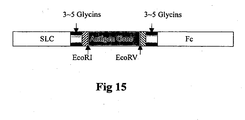
- EcoRI restrictive endonuclease sites and genes of three glycins are present between SLC gene and antigen gene, and EcoRV restrictive endonuclease sites and genes of five glycins are present between antigen gene and IgG1-Fc fragment gene.
- the recombinant gene sequence of the invention comprises SEQ ID NO: 1 and SEQ ID NO: 12.
- the invention also relates to an amino acid sequence encoded by the recombinant gene sequence according to the invention.
- the said amino acid sequence comprises SEQ ID NO: 2.
- the invention also relates to an amino acid sequence encoded by SEQ ID NO: 12.
- the said amino acid sequence is SEQ ID NO: 13.
- the invention also relates to a gene vaccine, comprising the recombinant gene sequence of the invention.
- the invention also relates to a gene vaccine.
- the gene vaccine comprises SEQ ID NO: 1, SEQ ID NO: 12 and the corresponding amino acid sequences.
- the invention relates to a recombinant gene sequence, comprising human SLC gene, antigen gene, and IgG1-Fc fragment gene, wherein the SLC gene is linked upstream to the antigen gene, and the IgG1-Fc fragment gene is linked downstream to the antigen gene.
- the said antigen gene comprises Her2/neu, P53, PSA, PAP, PSM, MAGE1, MAGE2, MAGE3, BAGE, GAGE1, GAGE 2, CAG3, RAGE, NY-ESO-1, Tyrosinase, CEA, Ig idiotype, gp100, melan A, gp75, TRP-1, TRP-2, CDK4, CASP-8, ras, bcr/abl, MUC-1, and other genes encoding the proteins related with the viruses of HCV, HIV and other pathogenic microorganisms.
- EcoRI restrictive endonuclease sites and genes of three glycins are present between SLC gene and antigen gene of the invention, and EcoRV restrictive endonuclease sites and genes of five glycins are present between antigen gene and IgG1-Fc fragment gene.
- This invention also relates to the use of the recombinant gene sequence of the invention in preparing gene vaccines.
- a gene vaccine comprising the gene sequence of the invention, in particular, SEQ ID NO: 1, SEQ ID NO: 12 and the corresponding amino acid sequences of SEQ ID NO: 2 and SEQ ID NO: 13.
- this invention relates to a recombinant gene sequence, comprising human SLC gene, antigen gene and IgG1-Fc fragment gene (See Figure 13 ).
- SLC gene is linked upstream to the antigen gene, and the EcoRI restrictive endonuclease sites and genes of three glycins are introduced.
- IgG1-Fc fragment gene is linked downstream to the antigen gene, and EcoRV restrictive endonuclease sites and genes of five glycins are introduced.
- this invention relates to a recombinant gene comprising the nucleic aicd sequence of SEQ ID NO: 1.
- the nucleic acid sequence of SEQ ID NO: 1 is the artificially ligated sequence of SLC-Her2/P53-Fc, wherein, the SLC gene locates from position 1 to position 402 of the nucleic acid; the Her2 ligating gene locates from position 418 to position 711 of the nucleic acid.
- the nucleic acids from position 418 to position 444 in the recombinant gene are corresponding to those from position 1105 to position 1131 in the open reading frame (ORF) of Her2/neu gene.
- the nucleic acids from position 445 to position 546 in the recombinant gene are corresponding to those from position 244 to position 345 in the open reading frame (ORF) of Her2/neu gene, wherein a mutation from G to C at position 250 is introduced.
- the nucleic acids from position 547 to position 711 in the recombinant gene are corresponding to those from position 1333 to position 1479 in the ORF of Her2/neu gene.
- part of P53 gene locates from position 712 to position 1113, corresponding to the nucleic acids from position 475 to position 876 of p53 ORF.
- the IgG Fc gene (including introns) locates from position 1147 to position 2057 in the recombinant gene, wherein the two introns locates from position 1189 to position 1309, and from position 1640 to position 1739, respectively.
- the nucleic acid sequence from position 1147 to position 1189 is the C-region hinge sequence.
- the nucleic acid sequence from position 1310 to position 1369 is for CH2, and nucleic acid sequence from position 1740 to position 2057 is for CH3.
- Three genes of glycins and EcoRI restrictive endonuclease sites are introduced upstream to Her2/P53 fragment, and five genes of glycins and EcoRV restrictive endonuclease sites are introduced downstream to Her2/P53.
- 3 ⁇ 5 genes of glycins are introduced upstream and downstream to the antigen gene. The effect of the glycin genes is to prevent the recombinant antigen from interfering the three-dimensional structure.
- This invention also relates to an amino acid sequence (612aa ⁇ mat589aa ⁇ of SEQ ID NO: 2 encoded by nucleotide sequence of SEQ ID NO: 1, wherein SEQ ID NO: 1 is an artificially recombinant SLC-Her2/P53-Fc gene.
- SLC fragment locates from position 1 to position 134
- three glycins locate from position 135 to position 137
- part of Her2 peptide locates from position 140 to position 237.
- the amino acids from position 140 to position 148 in the fusion protein are corresponding to those from position 369 to position 377 in Her2/neu.
- the amino acids from position 149 to position 182 in the fusion protein are corresponding to those from position 82 to position 115 in Her2/neu, wherein a mutation from V to L is introduced at position 84.
- the amino acids from position 183 to position 238 in the fusion protein are corresponding to those from position 445 to position 499 in Her2/neu.
- Part of P53 peptide locates from position 238 to position 371 in the fusion protein (corresponding to the amino acids from position 159 to position 292 in P53 natural form).
- the five glycins locate from position 374 to position 378.
- the IgG Fc locates from position 383 to position 612, wherein the sequence from position 383 to position 396 is for C-region hinge, the sequence from position 397 to position 506 is for CH2, and the sequence from position 507 to position 612 is for CH3.
- This invention also relates to another recombinant gene for prostate cancer vaccine, the sequence of which is shown by SEQ ID NO: 12.
- the nucleotide sequence of SEQ ID NO: 12 is a sequence of artificially ligated SLC-PSM-mPAP-PSA-Fc (SLC-3P-Fc) gene, wherein only partial sequences of PSM (human Prostate Specific Membrane Antigen), mPAP ⁇ mouse Prostatic Acid Phosphatase ⁇ , and PSA (human Prostate Specific Antigen) are introduced.
- SLC gene locates from position 1 to position 402; Part of PSM gene locates from position 418 to position 603, corresponding to the sequence from position 1987 to position 2172 in the PSM open reading frame (ORF);
- the mPAP gene locates from position 604 to position 759, corresponding to the sequence from position 328 to position 484 in mPAP ORF;
- PSA gene locates from position 760 to position 981, corresponding to the sequence from position 151 to position 372 in PSA ORF;
- the IgG Fc gene (including introns) locates from position 1003 to position 1925, wherein the two introns locate from position 1057 to position 1177 and from position 1508 to position 1607, respectively.
- Genes for three glycins and EcoRI restrictive endonuclease sites are introduced upstream to 3P, and genes for five glycins and EcoRV restrictive endonuclease sites are introduced downstream to 3P.
- This invention also relates to the amino acid sequence of SEQ ID NO: 13 encoded by nucleotide sequence of SEQ ID NO: 12. Namely, the invention relates to the amino acid sequence (568aa) corresponding to the artificially recombinant SLC-3P-Fc gene.
- SLC locates from position 1 to position 134
- three glycins locates from position 135 to position 137
- PSM locates from position 140 to position 201
- part of mPAP peptide locates from position 202 to position 253
- part of PSA peptide locates from position 254 to position 327
- five glycins locates from position 374 to position 378
- IgG1-Fc locates from position 335 to position 568.
- This invention also relates to the use of the recombinant gene sequence of the invention, including SEQ ID NO: 1, in preparing vaccines.
- the strategy for the chemotactic antigen of the invention is as follow: linking the chemokine of SLC upstream to the antigen and linking the Fc of IgG downstream to the antigen; introducing the three parts-fused gene directly into healthy or tumor tissues for expression and secretion; and forming a two-part conjoined body through Fc hinge region.
- the said recombinant protein actively attracts DC and T cells through the chemoatactic activity of SLC in vivo.
- DC captures the fusion protein with high efficiency through pinocytosis, especially with the help of Fc receptor and SLC receptor CCR7. Meanwhile, DC carries the antigen into the cell.
- DC can be activated by the combination of Fc fragment with Fc receptor of DC.
- SLC can actively abstract DC and T lymphocytes, as well as promotes the secretion of cytokines such as IL-12, IFN- ⁇ , and interferon-induced protein (IP-10), promotes the development of Th1, down-regulats the production of TGF- ⁇ and VEGF.
- cytokines such as IL-12, IFN- ⁇ , and interferon-induced protein (IP-10)
- IP-10 interferon-induced protein
- recombinant genes are used, but not intending to restrict the invention.
- the study for control has revealed that either in the form of plasmid or in the form fusion protein, the recombinant chemokine antigen can be produced industrially.
- the step of preparation of DC has been omitted in the application.
- DC can be targeted with high efficiency in vivo.
- introduction of restrictive endonuclease sites into the two ends of antigen gene makes it possible to replace the antigen to produce various chemokine antigen vaccines against tumorous or non-tumorous diseases.
- a new chemokine antigen vaccine can be produced by replacing the HP antigen in SLC-HP-Fc with prostate cancer-relating antigen.
- the recombinant gene can be constructed into the eukaryotic vectors by using direct injection of the plasmid into the body or tumor. Other techniques such as gene gun and electrical pulse can enhance the transfection rate and expression efficiency. Constructed recombinant virus, such as retrovirus, adenovirus, adeno-associated virus, vaccine virus, herpes simplex virus and so on, can also be used as vaccine for in vivo injection.
- the plasmid can be transfected into Eukaryotic cell (for example, CHO) and cultured in vitro for secretion and expression. Through the Fc fragment, the fusion protein can be easily and efficiently isolated and purified by Affinity Chromatography method, and can be used as protein vaccine.
- the mRNA was extracted from the lymph node of patients suffering from cancer.
- the KpnI restrictive endonuclease site was added to the SLC forward primer ( 5'-c ggtacc acagacatggctcagtcac-3') and the sequence encoding three glycins and EcoRI restrictive endonuclease site was added to the SLC reverse primer ( 5'-t gaattc tcctcctctggccctttagg-3').
- the SLC gene was acquired by RT-PCR amplification.
- the acquired fragment was purified and inserted into pUCmT vector (pUC-SLC) for sequencing. The result shows that the sequence of the acquired fragment was in accordance with the designed sequence (the underlined fragment).
- sequencing of the PCR products was performed by using 377 DNA sequencer (ABI company) by four-colored fluorescence terminator sequencing method based on SANGER dideoxynucleotide chain termination method.
- the sequence from position 36 to position 464 is the sequence of the cloned fragment of the invention (Refer to SEQ ID NO: 3).
- the used forward primer is 5'-a gaattc aagatctttgggagcctggcatttctgggctacctgctcatcgctca c-3', having EcoRI restrictive endonuclease site
- the used reverse primer is 5'-gatgcccagcccttgca gggccagggcatagttgtc-3'.
- the plasmid containing extra cellular segment of neu gene was adopted as template and the fragment corresponding to amino acid sequence from position 82 to position 115 was amplified, wherein the amino acid V at position 103 was replaced by amino acid L.
- the second fragment was acquired as follows: the forward primer was 5'-ctgcaagggctgggcatc-3', and the reverse primer having NcoI restrictive endonuclease site was 5'-t ccatgg cccggttggcagtgtggag-3'.
- the fragment corresponding to amino acid sequence from position 445 to position 499 was amplified.
- the two PCR products were collected and linked together in a PCR system. Further, the resulted fragment was used as template, by using the forward primer of the first fragment and the reverse primer of the second fragment; a fusion gene with 294bp in size was amplified. Then the resulted fusion gene was inserted into pUCmT vector (pUC-Her2P) and sequenced. The result indicates that the sequence of the obtained fusion gene is in accordance with the designed sequence (the underlined sequence).
- a 402bp gene fragment encoding the amino acids from position 156 to position 289 in p53 protein was cloned from the plasmid containing the whole length of p53 gene.
- the primers used were as follows: forward primer with one NcoI restrictive endonuclease site was 5'-acc atg gcc atc tac aag cag tca cag cac atg ac-3'; reverse primer with one EcoRV restrictive endonuclease site was 5'-tga tat ctt tct tgc gga gat tct ctt c-3'.
- the obtained fragment was inserted into pUCmT vector (pUC-p53P) for sequencing. The result indicates that the sequence of the obtained fragment is in accordance with the expected sequence (the underlined segment).
- the smaller fragment cut from pUC-Her2P by EcoRI/NcoI and the smaller fragment cut from pUC-p53P by NcoI/EcoRV were ligated with the larger fragment cut from pcDNA3z by EcoRI/EcoRV to construct a plasmid of pcDNA-Her2/p53, also called pcDNA-HP.
- HP means a gene ligated by Her2/neu and p53.
- the artificially ligated Her2/neu-p53 fragment contains genes encoding HLA-I and HLA-II molecule-binding peptide.
- the last 15 bases at the 3' ends of each primer are complementary to each other.
- the PCR product was obtained in a system with the mixture of the two primers at the ratio of 1:1, Taq DNA polymerase and dNTP at 45 °C for renaturing and elongation.
- the purified product was inserted into pUCmT vector for sequencing. The result shows that the sequence of the obtained product is in accordance with the designed sequence.
- the underlined sequence indicates the synthesized multiple cloning sites.
- the final resulting multiple cloning sites were: "NheI-HindIII-Kpn1 -BamHI-EcoRl-EcoRV-Glysinex5 -Xbal- Xho1- Apa1-Sma1- Hpa1-Pme1".
- NheI/PmeI cut the cloned plasmid and a fragment about 100bp in size was obtained. Then, the fragment was ligated with the larger fragment cut from pcDNA3. 1 by NheI/PmeI to construct a new vector named pcDNAf.
- the Fc fragment was cut from IgG1 Fc-containing plasmid by XbaI/ApaI restrictive endonucleases and inserted into pcDNAf vector, wherein the pcDNAf vector was treated with the same endonuclease.
- the resulted construction was named as PcDNA-Fc.
- the sequence of IgG1 Fc was confirmed by sequencing the resulted plasmid.
- the Fc fragment with 900bp in size was amplified from plasmid containing IgG1 Fc gene by PCR and inserted into pUCmT vector for sequencing.
- the primers used in the amplification were: forward primer: 5'-gaattcggagttaacgagcccaaatcttg-3'; reverse primer: 5'-gggccctcatttacccggagac-3'.
- the result of sequencing reveals that the plasmid contained the hinge region, CH2 and CH3 of IgG1. That is to say, the plasmid contained Fc fragment (See the underlined sequence). The result is indicated in SEQ ID NO: 7, wherein the sequence from position 78 to position 991 is the inventive sequence.
- the larger fragment cut from pcDNA-HP with KpnI/EcoRI was linked with the smaller fragment cut from pUC-SLC with KpnI/EcoRI to construct pcDNA-SLC-HP.
- the smaller fragment cut from pcDNA-SLC-HP by KpnI/EcoRV was linked with the larger fragment cut from pcDNA-Fc by KpnI/EcoRV to construct pcDNA-SLC-HP-Fc (also named as pSLC-HP-Fc).
- Example 7 Detection of cellular and secreted recombinant protein in cells transfected with gene vaccine by Western Blot
- the recombinant plasmid of pSLC-HP-Fc was transfected into B16-F10 cells by using the method of liposome.
- the positive clones were selected by G418. Cultured the cells in serum-free 1640 medium for 24 hours, and then collected and concentrated the supernant.
- the method of Western Blot was used to detect the expression of the fusion protein.
- the used primary antibody was rabbit-anti-human p53 polyclonal antibody, and the second antibody was HRP-conjugated goat-anti-rabbit antibody.
- the blots were visualized with ECL-Plus chemiluminescent detection kit (Amersham Pharmacia Biotech). Finally, the film was exposed to X-ray.
- the result indicates that the expression of fusion protein can be detected in the supernant and cell lysate of B 16-F10 cells transfected with pSLC-HP-Fc.
- the molecular weight is in accordance with what expected (See Figure 4 ). It has been verified that the sequence of fusion protein is SEQ ID NO: 2.
- RT-PCR was performed by using a forward primer (5'-ACTCGAGAT GAAGACATACAGTGTATC-3') and a reverse primer (5'-TGATATCTTAGGCTAC TTCACTCAAAG-3').
- the fragment was purified and recovered by the method of Glass Milk.
- the purified fragment was ligated with pUCm-T vector to construct pUCm-hPSM.
- the positive clone was picked up and sequenced. The result is in accordance with what is expected. Please refer to SEQ ID NO: 8, the obtained gene fragment is corresponding to the sequence from position 1864 to position 2253 in human PSM ORF.
- the sequence from position 229 to position 618 in the obtained sequence is the inventive sequence.
- RT-PCR was performed by using a forward primer (5'-TCTCGAGGGC GGTGTTCTGGTGCA-3') and a reverse primer (5'-AGATATCATGTCC AGCGTCCAGCAC-3'). After electrophoresis, the band with about 600bp in size was cut out. The fragment was purified and recovered by the method of Glass Milk. The obtained fragment was inserted into pUCm-T to construct pUCm-PSA. The positive clone was picked up and sequenced. The result is indicated in SEQ ID NO: 9. The obtained gene fragment is corresponding to the sequence from position 151 to position 609 of human PSA ORF. The sequence from position 45 to position 503 in the obtained sequence is the inventive sequence.
- the hPSM gene fragment was cloned from pUCm-hPSM plasmid by PCR with the following primers: forward primer corresponding to the sequence from position 1987 to position 2007 of hPSM ORF (EcoRI restrictive endonuclease site was introduced) was 5'-AGAATTCATGATGAATGATCAACTCATG-3'; reverse primer was 5'- AGCACTCATCAAAGTCCT GGCCTTGGAAGGGTCCAC-3' ⁇ the underlined section was corresponding to the sequence from position 328 to position 345 of mPAP ORF, and the remains section was corresponding to the sequence from position 2155 to position 2172 of hPSM ORF ⁇ .
- the obtained hPSM fragment was cut out and purified by the method of Glass Milk.
- the mPAP gene fragment was cloned from pUCm- mPAP plasmid by PCR with the following primers: forward primer corresponding to the sequence from position 328 to position 348 of mPAP ORF was 5'-AGGACTTTGATGAGTGCTATG-3'; the reverse primer corresponding to the sequence from position 463 to position 483 of mPAP ORF was 5'-AGGGCAGTCTCTGAAAGGCAG-3'.
- the obtained mPAP fragment was cut out and purified by the method of Glass Milk.
- the hPSA gene fragment was cloned from pUCm-hPSA plasmid by PCR with the following primers: the forward primer was 5'- CCTTTCAGAGACTGCCCT GGCGGTGTTC TGGTGCAC-3' (the underlined section was corresponding to the sequence from position 466 to position 483 of mPAP ORF, and the remain section was corresponding to the sequence from position 151 to position 168 of hPSA ORF); the reverse primer was 5'-AGATATCGAGCAGCATGAGGTCGT-3'. After electrophoresis, the obtained hPSA fragment was cut out and purified by the method of Glass Milk.
- the primer of 5'-AGAATTCATGATGAATGATCAACTCATG-3' was used to amplify hPSM and the primer of 5'-AGGGCAGTCTCTGAAAGGCAG-3' was used to amplify mPAP individually in a 25 ⁇ l system for 10 cycles to rich the single chains. Then, the two systems were mixed to further perform PCR in a 50 ⁇ l system for 18 cycles. After electrophoresis, the obtained hPSM-mPAP fragment with 352bp in size was cut out and purified by the method of Glass Milk.
- the primer of 5'-AGGACTTTGATGAGTGCTATG -3' ⁇ corresponding to the sequence from position 328 to position 348 of mPAP ORF ⁇ was used to amplify mPAP and use the primer of 5'-AGATATCGAGCAGCATGAGGTCGTG-3' ⁇ corresponding to the sequence from position 355 to position 372 of PSA ORF ⁇ to amplify hPSA individually in a 25 ⁇ l system for 10 cycles to rich the single chains. Then, the two systems were mixed to further perform PCR in the 50 ⁇ l system for 18 cycles. After electrophoresis, the obtained mPAP-hPSA fragment with 378bp in size was cut out and purified by the method of Glass Milk.
- the primer of 5'-AGAATTCATGATGAATGATCAACTCATG-3' was used to amplify hPSM-mPAP and the primer of 5'-AGATATCGAGCAGCATGAGGTCGTG-3' was used to amplify mPAP-hPSA individually in a 25 ⁇ l system for 10 cycles to rich the single chains. Then, the two systems were mixed to further perform PCR in the 50ul system for 18 cycles. After electrophoresis, the obtained hPSM-mPAP-hPSA fragment with 564bp in size was cut out and purified by the method of Glass Milk. The resulted fragment was inserted into pUCm-TV vector for sequencing. The result was in accordance with what was expected. See SEQ ID NO: 11, wherein the sequence from position 54 to position 629 is the inventive sequence.
- the plasmid containing correct 3P gene sequence (3P means a PSM-PAP-PSA fusion gene with 564bp in size encoding 188 amino acids) was cut by EcoRI/EcoRV restrictive endonucleases. The obtained smaller 3P fragment was ligated with EcoRI/EcoRV-cut pSLC-HP-Fc vector to construct pSLC-3P-Fc (See Figure 12 ).
- the sequence of recombinant SLC-3P-Fc gene is shown in SEQ ID NO: 12, which is corresponding to amino acid sequence shown in SEQ ID NO: 13.
- Test 1 Detection of the immune cells-chemoatactic activity of fusion protein by Boyden chamber
- the level of the chemoatactic activity of serum-free supernant from cells transfected with pSLC-HP-Fc is significantly higher than others, indicating that after transfection, the plasmid can be expressed and the expressed protein has activity.
- the level of chemoatactic ability of pSLC-HP-Fc transfecting cells is similar to that of pSLC transfecting cells, indicating that the fusion protein does affect the activity of SLC.
- the plasmids (nude gene) were loaded on gold particles and coated onto the inner surface of Tefzel tubing that was cut into proper segments as bullet to deliver 1 ⁇ g DNA according to the BioRad's manual.
- control vector pSLC-Fc
- psig-HP the plasmid expressing HP containing the SLC signal peptide
- pSLC-HP the plasmid expressing HP containing the SLC signal peptide
- mice 14 days and 7 days before tumor inoculation, the mice were vaccinated twice with pSLC-HP-Fc or control vectors at the abdomen skin. On day 0, each mouse was inoculated with 5 ⁇ 10 4 B 16F 10 tumor cells (The B 16F 10 cells were transfected with HP gene and selected by G418) in 0.2ml solution. The tumor sizes were recorded 2-3 times per week. The tumor size was calculated as length (cm)xwidth (cm 2 ).
- the therapeutic effect of pSLC-HP-Fc is significantly better than any other vectors ( p ⁇ 0. 05 ), indicating the synergistic immune effect of SLC and Fc fragments.
- each mouse was inoculated with 5 ⁇ 10 4 B16F10 tumor cells in 0.2 ml solution.
- the mice were vaccinated by Gene Gun System.
- the tumor sizes were recorded 2 ⁇ 3 times per week. The tumor sizes were evaluated as mentioned above.
- the pSLC-HP-Fc vaccine displays the most effective suppression of tumor growth.
- the difference between pSLC-HP-Fc and psig-HP-Fc groups is significant ( P ⁇ 0. 05 ).
- the average survival period of mice is prolonged by pSLC-HP-Fc immunization.
- the mice in B160 ⁇ pSLC-HP-Fc ⁇ group are inoculated with wild type B16 cells.
- the B16 group displays no tumor suppression effect, suggesting that pSLC-HP-Fc induced immune response is specific to HP antigen.
- HP-specific antibodies in the serum of the immunized mice group was detected by ELISA, 2 and 4 weeks after immunization (pSLC-HP-Fc). Briefly, microtitre plates coated with recombinant p53 proteins were incubated overnight, blocked with 20% Calf Serum, and incubated with primary antibody (serially diluted mouse serum) and secondary antibody (horseradish peroxidase-conjugated goat antimouse IgG) in turn. After washing and visualizing by OPD ⁇ O-Phenylene diamine ⁇ , the OD value was read at 490nm. A monoclonal antibody against p53 was used as a positive control and normal mouse serum was used as a negative control.
- MNCs mononuclear cells
- Half of the MNCs were transfected with the plasmid pSLC-HP-Fc using liposome and incubated with untreated MNCs at the ratio of 1:1 at 37 ⁇ with 5% CO2.
- the viable cells were counted, re-suspended and cultured with different target cells at different E:T ratios in 96-well microplates.
- the LDH assay (Promega Kits) was used to analyze the cytotoxicity.
- the pSLC-HP-Fc transfects MNC induced specific CTL to kill tumor cells that overexpress Her2/neu or p53 in a MHC-restricted manner (See Fig 11 ). That is to say, the specific CTL only significantly kills HLA-A2 + tumor cells that express Her2/neu or p53, indicating the specificity of CTL induced by the chemotactic antigen gene vaccine.
- mice 5 ⁇ 10 4 B16-3P cancer cells ⁇ pcDNA-3P transfected B16 cancer cells by G418 selection ⁇ were inoculated on the flank of C57BL/6 mice (eight mice each group). The mice were immunized on third, eighth and thirteen day after tumor cell inoculation.
- the control vector, pSLC-Fc, psig-3P (the plasmid containing with a SLC signal peptide gene upstream to 3P gene) were used as control groups. The tumor sizes and survival periods of mice were observed.
Landscapes
- Health & Medical Sciences (AREA)
- Chemical & Material Sciences (AREA)
- Organic Chemistry (AREA)
- Life Sciences & Earth Sciences (AREA)
- General Health & Medical Sciences (AREA)
- Medicinal Chemistry (AREA)
- General Chemical & Material Sciences (AREA)
- Pharmacology & Pharmacy (AREA)
- Nuclear Medicine, Radiotherapy & Molecular Imaging (AREA)
- Animal Behavior & Ethology (AREA)
- Chemical Kinetics & Catalysis (AREA)
- Public Health (AREA)
- Veterinary Medicine (AREA)
- Immunology (AREA)
- Bioinformatics & Cheminformatics (AREA)
- Genetics & Genomics (AREA)
- Toxicology (AREA)
- Zoology (AREA)
- Gastroenterology & Hepatology (AREA)
- Biochemistry (AREA)
- Biophysics (AREA)
- Engineering & Computer Science (AREA)
- Molecular Biology (AREA)
- Proteomics, Peptides & Aminoacids (AREA)
- Medicines Containing Antibodies Or Antigens For Use As Internal Diagnostic Agents (AREA)
- Micro-Organisms Or Cultivation Processes Thereof (AREA)
- Peptides Or Proteins (AREA)
- Medicines That Contain Protein Lipid Enzymes And Other Medicines (AREA)
Abstract
Description
- The invention relates to a new recombinant gene sequence, a fusion protein expressed from the gene, and vaccines produced with the gene, as well as to different gene vaccines produced by replacing the antigen gene in the recombinant sequence, or to use of the expression products as fusion peptide vaccines.
- Human secondary lymphoid tissue chemokine (SLC) has been paid much attention since its discovery. SLC regulates the secretion of cytokines, alters the immunosuppression states of the microenvironment of tumor, and promotes the development of Th1. Thus, SLC is useful in anti-tumor immunity. Further, SLC has effect in attracting the lymphocytes and dendritic cells (DC). The intratumor injection induces the local and systematic anti-tumor immune responses. SLC can also regulate the suppression of angiogenesis in the tumors. Thus, SLC is very useful in cancer immunotherapy. However, use of SLC protein alone or transgenic method did not show satisfactory results in anti-tumor immunity. Si-Yi Chen et al. have suggested that anti-tumor immunoreaction can be enhanced by immunizing mice with DCs that are transfected with recombinant retrovirus vector containing genes encoding IgG Fc fragment and tumor antigen. The mechanism is that the fusion protein secreted and expressed from DC is re-captured by DCs through the Fc receptor (FcR), and then the fusion protein epitope is presented to T helper cells (Th) through MHC class II molecules and cross presented to cytotoxic T lymphocytes (CTL) through MHC class I molecules, through which anti-tumor humoral-and-cellular immunity is induced systematically. Serre K et al. have reported that capacity of DC in capturing antigens through FcR-mediating endocytosis is 10,000 times higher than that through pinocytosis. However, the isolation, amplification and gene transfection of DC increase the complexity of the vaccine production. In this case, the DCs have to be prepared individually, which hampered the quality control and industrial production.
- To overcome the disadvantage of the prior arts, one aim of the invention is to provide a new recombinant gene sequence.
- Another aim of the invention is to provide a fusion protein expressed by the recombinant gene sequence.
- Another aim of the invention is to provide a gene vaccine of the fusion protein encoded by the recombinant gene sequence according to the invention.
- Furthermore, the aim of the invention is to provide a recombinant tumor chemotactic antigen gene vaccine.
- To accomplish the aims of the invention, the following technique solutions are adopted:
- The invention relates to a recombinant gene sequence, comprising human SLC gene, antigen gene, and IgG1-Fc fragment gene, wherein the SLC gene is linked upstream to the antigen gene, and the IgG1-Fc fragment gene is linked downstream to the antigen gene. The said antigen gene comprises Her2/neu, P53, PSA, PAP, PSM, MAGE1, MAGE2, MAGE3, BAGE, GAGE1, GAGE 2, CAG3, RAGE, NY-ESO-1, Tyrosinase, CEA, Ig idiotype, gp100, melan A, gp75, TRP-1, TRP-2, CDK4, CASP-8, ras, bcr/abl, MUC-1, and genes encoding the proteins related with the viruses of HCV, HIV and pathogenic microorganisms.
- In the recombinant gene sequence according to the invention, EcoRI restrictive endonuclease sites and genes of three glycins are present between SLC gene and antigen gene, and EcoRV restrictive endonuclease sites and genes of five glycins are present between antigen gene and IgG1-Fc fragment gene.
- The recombinant gene sequence of the invention comprises SEQ ID NO: 1 and SEQ ID NO: 12.
- The invention also relates to an amino acid sequence encoded by the recombinant gene sequence according to the invention. The said amino acid sequence comprises SEQ ID NO: 2.
- The invention also relates to an amino acid sequence encoded by SEQ ID NO: 12. The said amino acid sequence is SEQ ID NO: 13.
- The invention also relates to a gene vaccine, comprising the recombinant gene sequence of the invention.
- In addition, the invention also relates to a gene vaccine. Preferably, the gene vaccine comprises SEQ ID NO: 1, SEQ ID NO: 12 and the corresponding amino acid sequences.
- In other words, the invention relates to a recombinant gene sequence, comprising human SLC gene, antigen gene, and IgG1-Fc fragment gene, wherein the SLC gene is linked upstream to the antigen gene, and the IgG1-Fc fragment gene is linked downstream to the antigen gene. The said antigen gene comprises Her2/neu, P53, PSA, PAP, PSM, MAGE1, MAGE2, MAGE3, BAGE, GAGE1, GAGE 2, CAG3, RAGE, NY-ESO-1, Tyrosinase, CEA, Ig idiotype, gp100, melan A, gp75, TRP-1, TRP-2, CDK4, CASP-8, ras, bcr/abl, MUC-1, and other genes encoding the proteins related with the viruses of HCV, HIV and other pathogenic microorganisms. EcoRI restrictive endonuclease sites and genes of three glycins are present between SLC gene and antigen gene of the invention, and EcoRV restrictive endonuclease sites and genes of five glycins are present between antigen gene and IgG1-Fc fragment gene.
- This invention also relates to the use of the recombinant gene sequence of the invention in preparing gene vaccines. Namely, a gene vaccine, comprising the gene sequence of the invention, in particular, SEQ ID NO: 1, SEQ ID NO: 12 and the corresponding amino acid sequences of SEQ ID NO: 2 and SEQ ID NO: 13.
- In other words, this invention relates to a recombinant gene sequence, comprising human SLC gene, antigen gene and IgG1-Fc fragment gene (See
Figure 13 ). SLC gene is linked upstream to the antigen gene, and the EcoRI restrictive endonuclease sites and genes of three glycins are introduced. IgG1-Fc fragment gene is linked downstream to the antigen gene, and EcoRV restrictive endonuclease sites and genes of five glycins are introduced. - According to the invention, replacing the antigen gene in the said genes through the restrictive endonuclease sites can produce various chemotactic antigen fusion genes . In particular, this invention relates to a recombinant gene comprising the nucleic aicd sequence of SEQ ID NO: 1. The nucleic acid sequence of SEQ ID NO: 1 is the artificially ligated sequence of SLC-Her2/P53-Fc, wherein, the SLC gene locates from
position 1 to position 402 of the nucleic acid; the Her2 ligating gene locates from position 418 to position 711 of the nucleic acid. The nucleic acids from position 418 to position 444 in the recombinant gene are corresponding to those from position 1105 to position 1131 in the open reading frame (ORF) of Her2/neu gene. The nucleic acids from position 445 to position 546 in the recombinant gene are corresponding to those from position 244 to position 345 in the open reading frame (ORF) of Her2/neu gene, wherein a mutation from G to C at position 250 is introduced. The nucleic acids from position 547 to position 711 in the recombinant gene are corresponding to those from position 1333 to position 1479 in the ORF of Her2/neu gene. In the recombinant gene, part of P53 gene locates from position 712 to position 1113, corresponding to the nucleic acids from position 475 to position 876 of p53 ORF. The IgG Fc gene (including introns) locates from position 1147 to position 2057 in the recombinant gene, wherein the two introns locates from position 1189 to position 1309, and from position 1640 to position 1739, respectively. The nucleic acid sequence from position 1147 to position 1189 is the C-region hinge sequence. The nucleic acid sequence from position 1310 to position 1369 is for CH2, and nucleic acid sequence from position 1740 to position 2057 is for CH3. Three genes of glycins and EcoRI restrictive endonuclease sites are introduced upstream to Her2/P53 fragment, and five genes of glycins and EcoRV restrictive endonuclease sites are introduced downstream to Her2/P53. According to this invention, to make the biology function of expressed factors normal, 3∼5 genes of glycins are introduced upstream and downstream to the antigen gene. The effect of the glycin genes is to prevent the recombinant antigen from interfering the three-dimensional structure. - This invention also relates to an amino acid sequence (612aa□mat589aa□of SEQ ID NO: 2 encoded by nucleotide sequence of SEQ ID NO: 1, wherein SEQ ID NO: 1 is an artificially recombinant SLC-Her2/P53-Fc gene. In the said amino acid sequence, SLC fragment locates from
position 1 to position 134, three glycins locate from position 135 to position 137, and part of Her2 peptide locates from position 140 to position 237. The amino acids from position 140 to position 148 in the fusion protein are corresponding to those from position 369 to position 377 in Her2/neu. The amino acids from position 149 to position 182 in the fusion protein are corresponding to those fromposition 82 to position 115 in Her2/neu, wherein a mutation from V to L is introduced at position 84. The amino acids from position 183 to position 238 in the fusion protein are corresponding to those from position 445 to position 499 in Her2/neu. Part of P53 peptide locates from position 238 to position 371 in the fusion protein (corresponding to the amino acids from position 159 to position 292 in P53 natural form). The five glycins locate from position 374 to position 378. The IgG Fc locates from position 383 to position 612, wherein the sequence from position 383 to position 396 is for C-region hinge, the sequence from position 397 to position 506 is for CH2, and the sequence from position 507 to position 612 is for CH3. - This invention also relates to another recombinant gene for prostate cancer vaccine, the sequence of which is shown by SEQ ID NO: 12. The nucleotide sequence of SEQ ID NO: 12 is a sequence of artificially ligated SLC-PSM-mPAP-PSA-Fc (SLC-3P-Fc) gene, wherein only partial sequences of PSM (human Prostate Specific Membrane Antigen), mPAP□mouse Prostatic Acid Phosphatase□, and PSA (human Prostate Specific Antigen) are introduced. In the fusion gene, SLC gene locates from
position 1 to position 402; Part of PSM gene locates from position 418 to position 603, corresponding to the sequence from position 1987 to position 2172 in the PSM open reading frame (ORF); The mPAP gene locates from position 604 to position 759, corresponding to the sequence from position 328 to position 484 in mPAP ORF; PSA gene locates from position 760 to position 981, corresponding to the sequence from position 151 to position 372 in PSA ORF; The IgG Fc gene (including introns) locates from position 1003 to position 1925, wherein the two introns locate from position 1057 to position 1177 and from position 1508 to position 1607, respectively. Genes for three glycins and EcoRI restrictive endonuclease sites are introduced upstream to 3P, and genes for five glycins and EcoRV restrictive endonuclease sites are introduced downstream to 3P. - This invention also relates to the amino acid sequence of SEQ ID NO: 13 encoded by nucleotide sequence of SEQ ID NO: 12. Namely, the invention relates to the amino acid sequence (568aa) corresponding to the artificially recombinant SLC-3P-Fc gene. In this fusion amino acid sequence, SLC locates from
position 1 to position 134, three glycins locates from position 135 to position 137, PSM locates from position 140 to position 201, part of mPAP peptide locates from position 202 to position 253, part of PSA peptide locates from position 254 to position 327, five glycins locates from position 374 to position 378, and IgG1-Fc locates from position 335 to position 568. - This invention also relates to the use of the recombinant gene sequence of the invention, including SEQ ID NO: 1, in preparing vaccines.
- As can be seen from above, the strategy for the chemotactic antigen of the invention is as follow: linking the chemokine of SLC upstream to the antigen and linking the Fc of IgG downstream to the antigen; introducing the three parts-fused gene directly into healthy or tumor tissues for expression and secretion; and forming a two-part conjoined body through Fc hinge region. The said recombinant protein actively attracts DC and T cells through the chemoatactic activity of SLC in vivo. DC captures the fusion protein with high efficiency through pinocytosis, especially with the help of Fc receptor and SLC receptor CCR7. Meanwhile, DC carries the antigen into the cell. After being processed and treated, the antigen is presented to Th and CTL through MHC-II or MHC-I molecule. Finally, specific anti-tumor humoral and cellular immune response is induced completely. In addition, DC can be activated by the combination of Fc fragment with Fc receptor of DC. SLC can actively abstract DC and T lymphocytes, as well as promotes the secretion of cytokines such as IL-12, IFN-γ, and interferon-induced protein (IP-10), promotes the development of Th1, down-regulats the production of TGF-β and VEGF. Thus, SLC is very useful in anti-tumor immunity. For the reason mentioned above, such combination has synergistical effect and can induce stronger anti-tumor immune response (See
Figure 1 ). - In this invention, different recombinant genes are used, but not intending to restrict the invention. The study for control has revealed that either in the form of plasmid or in the form fusion protein, the recombinant chemokine antigen can be produced industrially. The step of preparation of DC has been omitted in the application. However, DC can be targeted with high efficiency in vivo. Moreover, introduction of restrictive endonuclease sites into the two ends of antigen gene makes it possible to replace the antigen to produce various chemokine antigen vaccines against tumorous or non-tumorous diseases. For example, a new chemokine antigen vaccine can be produced by replacing the HP antigen in SLC-HP-Fc with prostate cancer-relating antigen.
- The recombinant gene can be constructed into the eukaryotic vectors by using direct injection of the plasmid into the body or tumor. Other techniques such as gene gun and electrical pulse can enhance the transfection rate and expression efficiency. Constructed recombinant virus, such as retrovirus, adenovirus, adeno-associated virus, vaccine virus, herpes simplex virus and so on, can also be used as vaccine for in vivo injection. The plasmid can be transfected into Eukaryotic cell (for example, CHO) and cultured in vitro for secretion and expression. Through the Fc fragment, the fusion protein can be easily and efficiently isolated and purified by Affinity Chromatography method, and can be used as protein vaccine.
-
-
Figure 1 shows a scheme for the mechanism of the chemotactic antigen gene vaccine of the present invention. -
Figure 2 shows the construction of the plasmids. HP indicates Her2/neu-p53 fusion gene; sig indicates SLC secreted peptide gene. -
Figure 3 shows the recombination of SLC-Her2/neu-Fc of the present invention. -
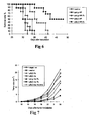
Figure 4 shows the Western Blot detection for the cellular expression and secretion of fusion protein in the pSLC-HP-Fc gene vaccine transfected cells. A indicates pSLC-HP-Fc transfected cell lysates; B indicates the culture supernant from pSLC-HP-Fc transfected cells; C indicates the culture supernant from pcDNA transfected cells. - Figure 5 shows the tumor-inhibiting effect in vivo by pre-vaccination of the tumor chemotactic antigen gene vaccine (pSLC-HP-Fc).
-
Figure 6 shows the survival period of tumor-burden mice by pre-vaccination of the tumor chemotactic antigen gene vaccine (pSLC-HP-Fc). -
Figure 7 shows the tumor-inhibiting effect in vivo by treatment of the tumor chemotactic antigen gene vaccine (pSLC-HP-Fc). -
Figure 8 shows the survival period by treatment of the tumor chemotactic antigen gene vaccine (pSLC-HP-Fc). -
Figure 9 shows the activity of CTL after immunization with the tumor chemotactic antigen gene vaccine (pSLC-HP-Fc). -
Figure 10 shows the amounts of specific anti-HP antibody in theserum -
Figure 11 shows that the pSLC-HP-Fc vaccine can induce CTL specifically against Her2/neu and p53 in vitro. -
Figure 12 shows the construction of the pSLC-3P-Fc plasmid. -
Figure 13 shows the tumor-inhibiting effect in vivo after the treatment of the tumor chemotactic antigen gene vaccine (pSLC-3P-Fc). - Figure 14 shows the survival period after the treatment of the tumor chemotactic antigen gene vaccine (pSLC-3P-Fc).
-
Figure 15 shows the characteristic structure of the recombinant gene of the invention. - The invention will be described in details with the illustration of the invention. It should be apprehended that the aim of the relating embodiments is only to give an explanation, but not intending to restrict the invention.
- The mRNA was extracted from the lymph node of patients suffering from cancer. By using the methods well known for those skilled in the art, the KpnI restrictive endonuclease site was added to the SLC forward primer ( 5'-cggtaccacagacatggctcagtcac-3') and the sequence encoding three glycins and EcoRI restrictive endonuclease site was added to the SLC reverse primer ( 5'-tgaattctcctcctcctggccctttagg-3'). The SLC gene was acquired by RT-PCR amplification. The acquired fragment was purified and inserted into pUCmT vector (pUC-SLC) for sequencing. The result shows that the sequence of the acquired fragment was in accordance with the designed sequence (the underlined fragment).
- In this invention, sequencing of the PCR products was performed by using 377 DNA sequencer (ABI company) by four-colored fluorescence terminator sequencing method based on SANGER dideoxynucleotide chain termination method. The sequence from position 36 to position 464 is the sequence of the cloned fragment of the invention (Refer to SEQ ID NO: 3).
- First, two fragments of Her-2/neu gene were cloned by PCR method. The first fragment was acquired as follows: The used forward primer is 5'-agaattcaagatctttgggagcctggcatttctgggctacctgctcatcgctca c-3', having EcoRI restrictive endonuclease site, and the used reverse primer is 5'-gatgcccagcccttgca gggccagggcatagttgtc-3'. The plasmid containing extra cellular segment of neu gene was adopted as template and the fragment corresponding to amino acid sequence from
position 82 to position 115 was amplified, wherein the amino acid V at position 103 was replaced by amino acid L. The second fragment was acquired as follows: the forward primer was 5'-ctgcaagggctgggcatc-3', and the reverse primer having NcoI restrictive endonuclease site was 5'-tccatggcccggttggcagtgtggag-3'. The fragment corresponding to amino acid sequence from position 445 to position 499 was amplified. - The two PCR products were collected and linked together in a PCR system. Further, the resulted fragment was used as template, by using the forward primer of the first fragment and the reverse primer of the second fragment; a fusion gene with 294bp in size was amplified. Then the resulted fusion gene was inserted into pUCmT vector (pUC-Her2P) and sequenced. The result indicates that the sequence of the obtained fusion gene is in accordance with the designed sequence (the underlined sequence).
- The result is indicated in SEQ ID NO: 4, wherein the sequence from position 121 to position 465 is the sequence of the cloned fragment of the invention.
- A 402bp gene fragment encoding the amino acids from position 156 to position 289 in p53 protein was cloned from the plasmid containing the whole length of p53 gene. The primers used were as follows: forward primer with one NcoI restrictive endonuclease site was 5'-acc atg gcc atc tac aag cag tca cag cac atg ac-3'; reverse primer with one EcoRV restrictive endonuclease site was 5'-tga tat ctt tct tgc gga gat tct ctt c-3'. The obtained fragment was inserted into pUCmT vector (pUC-p53P) for sequencing. The result indicates that the sequence of the obtained fragment is in accordance with the expected sequence (the underlined segment).
- The result is indicated in SEQ ID NO: 5, wherein the sequence from position 39 to position 445 is the sequence of the inventive fragment.
- As shown in
Figure 3 , the smaller fragment cut from pUC-Her2P by EcoRI/NcoI and the smaller fragment cut from pUC-p53P by NcoI/EcoRV were ligated with the larger fragment cut from pcDNA3z by EcoRI/EcoRV to construct a plasmid of pcDNA-Her2/p53, also called pcDNA-HP. HP means a gene ligated by Her2/neu and p53. The artificially ligated Her2/neu-p53 fragment contains genes encoding HLA-I and HLA-II molecule-binding peptide. - First, the chemically synthesized multiple cloning sites were used to replace the multiple cloning sites of pcDNA3. 1.
- The process of construction was as follows: Chemically synthesize two oligonucleotides.


- The last 15 bases at the 3' ends of each primer are complementary to each other. The PCR product was obtained in a system with the mixture of the two primers at the ratio of 1:1, Taq DNA polymerase and dNTP at 45 °C for renaturing and elongation. The purified product was inserted into pUCmT vector for sequencing. The result shows that the sequence of the obtained product is in accordance with the designed sequence. The underlined sequence indicates the synthesized multiple cloning sites. The final resulting multiple cloning sites were: "NheI-HindIII-Kpn1 -BamHI-EcoRl-EcoRV-Glysinex5 -Xbal- Xho1- Apa1-Sma1- Hpa1-Pme1". In this sequence, a small gene fragment□GGCGGTGGAGGAGGC□ encoding for five glycins was inserted between EcoRV and XbaI sites. NheI/PmeI cut the cloned plasmid and a fragment about 100bp in size was obtained. Then, the fragment was ligated with the larger fragment cut from pcDNA3. 1 by NheI/PmeI to construct a new vector named pcDNAf.
- The result of sequencing the chemically synthesized multiple cloning site is indicated in SEQ ID NO: 6, wherein the sequence from
position 3 toposition 100 is the sequence of the inventive fragment. - The Fc fragment was cut from IgG1 Fc-containing plasmid by XbaI/ApaI restrictive endonucleases and inserted into pcDNAf vector, wherein the pcDNAf vector was treated with the same endonuclease. The resulted construction was named as PcDNA-Fc. The sequence of IgG1 Fc was confirmed by sequencing the resulted plasmid.
- The Fc fragment with 900bp in size was amplified from plasmid containing IgG1 Fc gene by PCR and inserted into pUCmT vector for sequencing. The primers used in the amplification were: forward primer: 5'-gaattcggagttaacgagcccaaatcttg-3'; reverse primer: 5'-gggccctcatttacccggagac-3'. The result of sequencing reveals that the plasmid contained the hinge region, CH2 and CH3 of IgG1. That is to say, the plasmid contained Fc fragment (See the underlined sequence). The result is indicated in SEQ ID NO: 7, wherein the sequence from position 78 to position 991 is the inventive sequence.
- As shown in
Figure 3 , the larger fragment cut from pcDNA-HP with KpnI/EcoRI was linked with the smaller fragment cut from pUC-SLC with KpnI/EcoRI to construct pcDNA-SLC-HP. Then, the smaller fragment cut from pcDNA-SLC-HP by KpnI/EcoRV was linked with the larger fragment cut from pcDNA-Fc by KpnI/EcoRV to construct pcDNA-SLC-HP-Fc (also named as pSLC-HP-Fc). - The construction of control plasmid is indicated in
Figure 2 - The recombinant plasmid of pSLC-HP-Fc was transfected into B16-F10 cells by using the method of liposome. The positive clones were selected by G418. Cultured the cells in serum-free 1640 medium for 24 hours, and then collected and concentrated the supernant. The method of Western Blot was used to detect the expression of the fusion protein. The used primary antibody was rabbit-anti-human p53 polyclonal antibody, and the second antibody was HRP-conjugated goat-anti-rabbit antibody. The blots were visualized with ECL-Plus chemiluminescent detection kit (Amersham Pharmacia Biotech). Finally, the film was exposed to X-ray. The result indicates that the expression of fusion protein can be detected in the supernant and cell lysate of B 16-F10 cells transfected with pSLC-HP-Fc. The molecular weight is in accordance with what expected (See
Figure 4 ). It has been verified that the sequence of fusion protein is SEQ ID NO: 2. - Total RNA was extracted from human prostate cancer cell line LNCaP. RT-PCR was performed by using a forward primer (5'-ACTCGAGAT GAAGACATACAGTGTATC-3') and a reverse primer (5'-TGATATCTTAGGCTAC TTCACTCAAAG-3'). After electrophoresis, the hPSM band with 390bp in size was cut out. The fragment was purified and recovered by the method of Glass Milk. The purified fragment was ligated with pUCm-T vector to construct pUCm-hPSM. The positive clone was picked up and sequenced. The result is in accordance with what is expected. Please refer to SEQ ID NO: 8, the obtained gene fragment is corresponding to the sequence from position 1864 to position 2253 in human PSM ORF. The sequence from position 229 to position 618 in the obtained sequence is the inventive sequence.
- Total RNA was extracted from human prostate cancer cell line LNCaP. RT-PCR was performed by using a forward primer (5'-TCTCGAGGGC GGTGTTCTGGTGCA-3') and a reverse primer (5'-AGATATCATGTCC AGCGTCCAGCAC-3'). After electrophoresis, the band with about 600bp in size was cut out. The fragment was purified and recovered by the method of Glass Milk. The obtained fragment was inserted into pUCm-T to construct pUCm-PSA. The positive clone was picked up and sequenced. The result is indicated in SEQ ID NO: 9. The obtained gene fragment is corresponding to the sequence from position 151 to position 609 of human PSA ORF. The sequence from
position 45 to position 503 in the obtained sequence is the inventive sequence. - Total RNA was extracted from mouse prostate tissue. RT-PCR was performed by using a forward primer (5'-TCTAGATGAGAGCTGTTCCTCTG-3') and a reverse primer (5'-GGGCCCTTAATTCCGTCCTTGGTG-3'). After electrophoresis, the band with 1146bp in size was cut out. The fragment was purified and recovered by the method of Glass Milk. The obtained fragment was inserted into pUCm-T to construct pUCm-mPAP. The positive clone was picked up and sequenced. The result is indicated in SEQ ID NO: 10. The sequence from position 48 to position 1193 in the obtained sequence is the inventive sequence.
- The hPSM gene fragment was cloned from pUCm-hPSM plasmid by PCR with the following primers: forward primer corresponding to the sequence from position 1987 to position 2007 of hPSM ORF (EcoRI restrictive endonuclease site was introduced) was 5'-AGAATTCATGATGAATGATCAACTCATG-3'; reverse primer was 5'-AGCACTCATCAAAGTCCTGGCCTTGGAAGGGTCCAC-3'□the underlined section was corresponding to the sequence from position 328 to position 345 of mPAP ORF, and the remains section was corresponding to the sequence from position 2155 to position 2172 of hPSM ORF□. After electrophoresis, the obtained hPSM fragment was cut out and purified by the method of Glass Milk. The mPAP gene fragment was cloned from pUCm- mPAP plasmid by PCR with the following primers: forward primer corresponding to the sequence from position 328 to position 348 of mPAP ORF was 5'-AGGACTTTGATGAGTGCTATG-3'; the reverse primer corresponding to the sequence from position 463 to position 483 of mPAP ORF was 5'-AGGGCAGTCTCTGAAAGGCAG-3'. After electrophoresis, the obtained mPAP fragment was cut out and purified by the method of Glass Milk. The hPSA gene fragment was cloned from pUCm-hPSA plasmid by PCR with the following primers: the forward primer was 5'-CCTTTCAGAGACTGCCCTGGCGGTGTTC TGGTGCAC-3' (the underlined section was corresponding to the sequence from position 466 to position 483 of mPAP ORF, and the remain section was corresponding to the sequence from position 151 to position 168 of hPSA ORF); the reverse primer was 5'-AGATATCGAGCAGCATGAGGTCGT-3'. After electrophoresis, the obtained hPSA fragment was cut out and purified by the method of Glass Milk.
- The primer of 5'-AGAATTCATGATGAATGATCAACTCATG-3' was used to amplify hPSM and the primer of 5'-AGGGCAGTCTCTGAAAGGCAG-3' was used to amplify mPAP individually in a 25µl system for 10 cycles to rich the single chains. Then, the two systems were mixed to further perform PCR in a 50µl system for 18 cycles. After electrophoresis, the obtained hPSM-mPAP fragment with 352bp in size was cut out and purified by the method of Glass Milk.
- The primer of 5'-AGGACTTTGATGAGTGCTATG -3' □corresponding to the sequence from position 328 to position 348 of mPAP ORF□was used to amplify mPAP and use the primer of 5'-AGATATCGAGCAGCATGAGGTCGTG-3' □ corresponding to the sequence from position 355 to position 372 of PSA ORF□to amplify hPSA individually in a 25µl system for 10 cycles to rich the single chains. Then, the two systems were mixed to further perform PCR in the 50µl system for 18 cycles. After electrophoresis, the obtained mPAP-hPSA fragment with 378bp in size was cut out and purified by the method of Glass Milk.
- The primer of 5'-AGAATTCATGATGAATGATCAACTCATG-3' was used to amplify hPSM-mPAP and the primer of 5'-AGATATCGAGCAGCATGAGGTCGTG-3' was used to amplify mPAP-hPSA individually in a 25µl system for 10 cycles to rich the single chains. Then, the two systems were mixed to further perform PCR in the 50ul system for 18 cycles. After electrophoresis, the obtained hPSM-mPAP-hPSA fragment with 564bp in size was cut out and purified by the method of Glass Milk. The resulted fragment was inserted into pUCm-TV vector for sequencing. The result was in accordance with what was expected. See SEQ ID NO: 11, wherein the sequence from position 54 to position 629 is the inventive sequence.
- After sequencing, the plasmid containing correct 3P gene sequence (3P means a PSM-PAP-PSA fusion gene with 564bp in size encoding 188 amino acids) was cut by EcoRI/EcoRV restrictive endonucleases. The obtained smaller 3P fragment was ligated with EcoRI/EcoRV-cut pSLC-HP-Fc vector to construct pSLC-3P-Fc (See
Figure 12 ). The sequence of recombinant SLC-3P-Fc gene is shown in SEQ ID NO: 12, which is corresponding to amino acid sequence shown in SEQ ID NO: 13. -
- A. The Melanoma cell line B16F10 was transfected with the purified plasmid pcDNA3z-SLC-HP-Fc and the control plasmid. 48 hours after incubation, the culture medium was harvested and concentrated by PEG20000 (the supernant from untransfected B16-F10 cells was used as negative control).
- B. Peripheral blood mononuclear cells (PBMC) were collected from the 5 ml of healthy whole peripheral blood by Lymphocyte Separation Medium, washed twice with saline, and re-suspended in RPMI-1640 serum-free medium. The PBMC were counted and diluted at the concentration of 1 × 10⁶/ml.
- C. Preparation of the Boyden Chamber: the Chamber was purchased from Neuro Probe Co. The lower wells of the chamber were filled with 27 µl conditioned culture medium, whereas the upper wells were filled with 50 µl of 1 × 10⁶/ml PBMC cell suspension. The lower and upper wells were separated by a polycarbonate filter (Neuro Probe) with 5 µm pore size. The chamber was incubated at 37°C with 5% CO2 for 4 h.
- D. The filter was unloaded and the cells were scraped off from the upper side of filter, following by washing, fixing and staining the filter. The migrated cells in five randomly selected high power (x200) fields were counted. The CI (Chemotactic Index) was calculated by the following: CI=the cell number of five high power field in the studied wells/cell number of five high power field in the control wells. The value of CI of negative group was 1.
- Result□ The level of the chemoatactic activity of serum-free supernant from cells transfected with pSLC-HP-Fc is significantly higher than others, indicating that after transfection, the plasmid can be expressed and the expressed protein has activity. The level of chemoatactic ability of pSLC-HP-Fc transfecting cells is similar to that of pSLC transfecting cells, indicating that the fusion protein does affect the activity of SLC.
- The plasmids (nude gene) were loaded on gold particles and coated onto the inner surface of Tefzel tubing that was cut into proper segments as bullet to deliver 1µg DNA according to the BioRad's manual. Several groups were divided as controls: control vector, pSLC-Fc, psig-HP (the plasmid expressing HP containing the SLC signal peptide), pSLC-HP and psig-HP-Fc.
- 14 days and 7 days before tumor inoculation, the mice were vaccinated twice with pSLC-HP-Fc or control vectors at the abdomen skin. On
day 0, each mouse was inoculated with 5 × 10⁴ B 16F 10 tumor cells (TheB 16F 10 cells were transfected with HP gene and selected by G418) in 0.2ml solution. The tumor sizes were recorded 2-3 times per week. The tumor size was calculated as length (cm)xwidth (cm2). - Result□Vaccination of pSLC-HP-Fc twice significantly improves the tumor suppression effect (See Figure 5,
6 ) and the average survival period of mice is significantly prolonged. The therapeutic effect of pSLC-HP-Fc is significantly better than any other vectors (p<0. 05), indicating the synergistic immune effect of SLC and Fc fragments. - On
day 0, the each mouse was inoculated with 5×10⁴ B16F10 tumor cells in 0.2 ml solution. Onday - Result□As shown in
Figure 7 and8 , the pSLC-HP-Fc vaccine displays the most effective suppression of tumor growth. Onday 28, the difference between pSLC-HP-Fc and psig-HP-Fc groups is significant (P<0. 05). The average survival period of mice is prolonged by pSLC-HP-Fc immunization. The mice in B160□pSLC-HP-Fc□group are inoculated with wild type B16 cells. After three-time pSLC-HP-Fc immunization, the B16 group displays no tumor suppression effect, suggesting that pSLC-HP-Fc induced immune response is specific to HP antigen. - Two weeks after three times of vaccination by Gene Gun System, tumor-bearing mice were killed and cytotoxicity assay of CTL was performed with the use of spleen cells by the LDH Kits (Promega). The ratio of spleen cell and target cell (E:T ratio) was 40:1, 20:1 and 10:1, respectively.
- Result□ The lymphocytes derived from chemokine nucleotide vaccine immunized mice showed significant cytotoxicity effect on B 16F 10-HP cells (See
Figure 9 ). When the E:T ratios was 40:1 or 20:1, there was still significant difference between the studied vaccine and control vectors (P<0. 05), suggesting that the vaccine was more powerful to induce CTL activity. - The amount HP-specific antibodies in the serum of the immunized mice group was detected by ELISA, 2 and 4 weeks after immunization (pSLC-HP-Fc). Briefly, microtitre plates coated with recombinant p53 proteins were incubated overnight, blocked with 20% Calf Serum, and incubated with primary antibody (serially diluted mouse serum) and secondary antibody (horseradish peroxidase-conjugated goat antimouse IgG) in turn. After washing and visualizing by OPD□O-Phenylene diamine□, the OD value was read at 490nm. A monoclonal antibody against p53 was used as a positive control and normal mouse serum was used as a negative control.
- Result□The level of p53 antibody of SLC-HP-Fc immunized mice is the highest and significantly higher than that of other vectors (See
Figure 10 ). - By centrifugation using Lymphocyte Separation Medium, mononuclear cells (MNCs) were collected from the whole peripheral blood of healthy HLA-A2+ donors. Half of the MNCs were transfected with the plasmid pSLC-HP-Fc using liposome and incubated with untreated MNCs at the ratio of 1:1 at 37□ with 5% CO2. On
day 6, the viable cells were counted, re-suspended and cultured with different target cells at different E:T ratios in 96-well microplates. The LDH assay (Promega Kits) was used to analyze the cytotoxicity. - Result□After mixed culture, the pSLC-HP-Fc transfects MNC induced specific CTL to kill tumor cells that overexpress Her2/neu or p53 in a MHC-restricted manner (See
Fig 11 ). That is to say, the specific CTL only significantly kills HLA-A2+ tumor cells that express Her2/neu or p53, indicating the specificity of CTL induced by the chemotactic antigen gene vaccine. - 5×10⁴ B16-3P cancer cells□pcDNA-3P transfected B16 cancer cells by G418 selection□were inoculated on the flank of C57BL/6 mice (eight mice each group). The mice were immunized on third, eighth and thirteen day after tumor cell inoculation. The control vector, pSLC-Fc, psig-3P (the plasmid containing with a SLC signal peptide gene upstream to 3P gene) were used as control groups. The tumor sizes and survival periods of mice were observed.
- Result□As shown in
Figure 13 and 14, the chemokine antigen gene vaccine□pSLC-3P-Fc□significantly inhibits the tumor growth (vs control groups P<0. 05), and significantly prolongs the survival period (vs control groups P<0. 05), suggesting change of the antigen in the chemotactic antigen gene vaccine can produce different vaccine against the associated antigen. -
- <110> DONGGUAN HAOFA BIO-ENGINEERING DEVELOPMENT CO., LTD
- <120> RECOMBINANT CHEMOTACTIC ANTIGEN GENE VACCINE
- <130> CGCNC41111
- <160> 13
- <170> PatentIn version 3.1
- <210> 1
<211> 2060
<212> DNA
<213> human - <400> 1


- <210> 2
<211> 612
<212> PRT
<213> human - <400> 2


- <210> 3
<211> 512
<212> DNA
<213> human - <400> 3

- <210> 4
<211> 498
<212> DNA
<213> human - <400> 4

- <210> 5
<211> 721
<212> DNA
<213> human - <400> 5
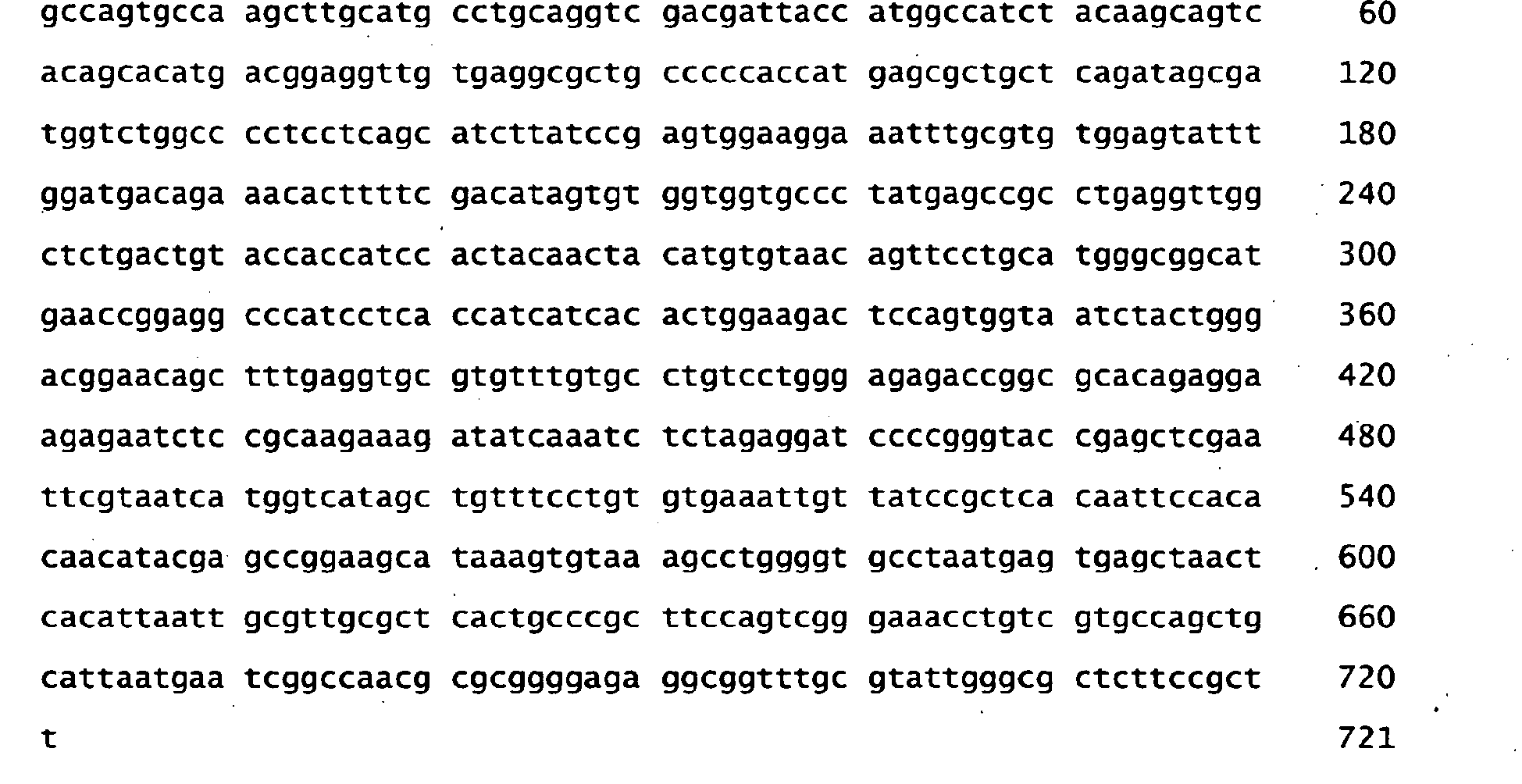
- <210> 6
<211> 335
<212> DNA
<213> human - <400> 6

- <210> 7
<211> 1077
<212> DNA
<213> human - <400> 7


- <210> 8
<211> 651
<212> DNA
<213> human - <400> 8

- <210> 9
<211> 643
<212> DNA
<213> human - <400> 9

- <210> 10
<211> 1257
<212> DNA
<213> mouse - <400> 10


- <210> 11
<211> 652
<212> DNA
<213> human and mouse - <400> 11

- <210> 12
<211> 1928
<212> DNA
<213> human and mouse - <400> 12


- <210> 13
<211> 568
<212> PRT
<213> human and mouse - <400> 13


| Groups | Counts of chemoatactic cells | CI | P value |
| Negative control | 34±10.4 | 1 | |
| Control vector | 44. 6±11. 9 | 1. 31 | >0. 05* |
| psig-HP | 68. 6±9. 5 | 2. 02 | <0. 05* |
| pSLC-HP-Fc | 157. 4±19. 2 | 4.63 | <0. 01* <0. 05** |
| pSLC | 156. 6±20. 3 | 4.61 | <0. 01* <0. 05** |
| * vs negative control. ** vs psig-HP. |
Claims (10)
- A recombinant gene sequence comprising human SLC gene, antigen gene, and IgG1-Fc fragment gene, wherein the SLC gene is linked upstream to the antigen gene, and the IgG1-Fc fragment gene is linked downstream to the antigen gene.
- The recombinant gene sequence according to claim 1 wherein the said antigen gene includes Her2/neu, P53, PSA, PAP, PSM, MAGE1, MAGE2, MAGE3, BAGE, GAGE1, GAGE 2, CAG3, RAGE, NY-ESO-1, Tyrosinase, CEA, Ig idiotype, gp100, melan A, gp75, TRP-1, TRP-2, CDK4, CASP-8, ras, bcr/abl, MUC-1, and genes encoding the proteins related with the viruses of HCV, HIV and pathogenic microorganisms.
- The recombinant gene sequence according to claim1 or 2 wherein EcoRI restrictive endonuclease sites and genes of three glycins are present between SLC gene and antigen gene, and EcoRV restrictive endonuclease sites and genes of five glycins are present between antigen gene and IgG1-Fc fragment gene.
- The recombinant gene sequence according to claim 1, wherein the sequence is SEQ ID NO: 1.
- The recombinant gene sequence according to claim 1, wherein the sequence is SEQ ID NO: 12.
- The amino acid sequence encoded by recombinant gene sequence of SEQ ID NO: 1.
- The amino acid sequence according to claim 6, wherein the amino acid sequence is SEQ ID NO: 2.
- The amino acid sequence encoded by recombinant gene of SEQ ID NO: 12 of claim 5, wherein the amino acid sequence is SEQ ID NO: 13.
- A gene vaccine comprising the recombinant gene sequence according to any of the claims 1-5.
- The gene vaccine according to claim 9, wherein the said gene sequence is represented by SEQ ID NO: 1, SEQ ID NO:12, or the corresponding amino acid sequence thereof.
Priority Applications (1)
| Application Number | Priority Date | Filing Date | Title |
|---|---|---|---|
| PL05745450T PL1748075T3 (en) | 2004-05-10 | 2005-05-09 | Recombinant chemokine-antigen vaccine |
Applications Claiming Priority (2)
| Application Number | Priority Date | Filing Date | Title |
|---|---|---|---|
| CNB2004100379103A CN100342017C (en) | 2004-05-10 | 2004-05-10 | Gene recombined chemotaxis antigen vaccine |
| PCT/CN2005/000639 WO2005108584A1 (en) | 2004-05-10 | 2005-05-09 | Recombinant chemokine-antigen vaccine |
Publications (4)
| Publication Number | Publication Date |
|---|---|
| EP1748075A1 EP1748075A1 (en) | 2007-01-31 |
| EP1748075A8 EP1748075A8 (en) | 2007-09-26 |
| EP1748075A4 EP1748075A4 (en) | 2008-01-02 |
| EP1748075B1 true EP1748075B1 (en) | 2010-03-31 |
Family
ID=35320238
Family Applications (1)
| Application Number | Title | Priority Date | Filing Date |
|---|---|---|---|
| EP05745450A Expired - Lifetime EP1748075B1 (en) | 2004-05-10 | 2005-05-09 | Recombinant chemokine-antigen vaccine |
Country Status (12)
| Country | Link |
|---|---|
| US (1) | US8133873B2 (en) |
| EP (1) | EP1748075B1 (en) |
| JP (1) | JP4838238B2 (en) |
| CN (1) | CN100342017C (en) |
| AT (1) | ATE462792T1 (en) |
| AU (1) | AU2005240691B2 (en) |
| CA (1) | CA2566299C (en) |
| DE (1) | DE602005020272D1 (en) |
| ES (1) | ES2343419T3 (en) |
| PL (1) | PL1748075T3 (en) |
| RU (1) | RU2396348C2 (en) |
| WO (1) | WO2005108584A1 (en) |
Families Citing this family (6)
| Publication number | Priority date | Publication date | Assignee | Title |
|---|---|---|---|---|
| CN1993378A (en) | 2004-08-03 | 2007-07-04 | 转化技术制药公司 | Rage fusion proteins and methods of use |
| CN102803292A (en) | 2009-04-20 | 2012-11-28 | 辉瑞公司 | Control of protein glycosylation and related compositions and methods |
| CN104877969A (en) * | 2014-12-14 | 2015-09-02 | 刘滨磊 | Recombinant oncolytic II-type herpes simplex virus (HSV) and pharmaceutical composition thereof |
| WO2016149643A2 (en) * | 2015-03-18 | 2016-09-22 | Omnicyte | Fusion proteins comprising modified alpha virus surface glycoproteins and tumor associated antigen and methods thereof |
| CN113171448A (en) * | 2015-11-11 | 2021-07-27 | 固安鼎泰海规生物科技有限公司 | Prostate cancer nucleic acid vaccine |
| CN107281475B (en) * | 2017-06-15 | 2020-12-25 | 杭州贝罗康生物技术有限公司 | Gene vaccine for preventing and treating tumor and preparation method and application thereof |
Family Cites Families (10)
| Publication number | Priority date | Publication date | Assignee | Title |
|---|---|---|---|---|
| US6534482B1 (en) * | 1998-05-13 | 2003-03-18 | Epimmune, Inc. | Expression vectors for stimulating an immune response and methods of using the same |
| EP0974357A1 (en) * | 1998-07-16 | 2000-01-26 | Schering-Plough | Chemokines as adjuvants of immune response |
| EP1156823B1 (en) * | 1999-02-12 | 2008-10-29 | The Scripps Research Institute | Methods for treatment of tumors and metastases using a combination of anti-angiogenic and immuno therapies |
| CA2387018C (en) * | 1999-10-12 | 2008-02-12 | Chemocentryx, Inc. | Chemokine receptor |
| WO2001040311A1 (en) * | 1999-11-30 | 2001-06-07 | Shionogi & Co., Ltd. | Chemokine slc-il2 fused protein and gene thereof |
| EP1118331A1 (en) * | 2000-01-21 | 2001-07-25 | I.D.M. Immuno-Designed Molecules | Method for enhancing the presentation of exogenous antigen by human antigen-presenting cells and opsonized micro particle complexes for applying this method |
| AU2002210407A1 (en) * | 2000-10-27 | 2002-05-06 | Pharmexa A/S | Therapeutic vaccine formulations containing chitosan |
| CA2434320A1 (en) * | 2001-01-24 | 2002-08-01 | Schering Corporation | Chemokines as adjuvants of immune response |
| EP1256354A1 (en) * | 2001-05-11 | 2002-11-13 | Schering Corporation | Methods for treating cancer |
| WO2003055439A2 (en) * | 2001-07-18 | 2003-07-10 | The Regents Of The University Of California | Her2/neu target antigen and use of same to stimulate an immune response |
-
2004
- 2004-05-10 CN CNB2004100379103A patent/CN100342017C/en not_active Expired - Fee Related
-
2005
- 2005-05-09 PL PL05745450T patent/PL1748075T3/en unknown
- 2005-05-09 AT AT05745450T patent/ATE462792T1/en not_active IP Right Cessation
- 2005-05-09 US US11/596,100 patent/US8133873B2/en not_active Expired - Fee Related
- 2005-05-09 JP JP2007511835A patent/JP4838238B2/en not_active Expired - Fee Related
- 2005-05-09 AU AU2005240691A patent/AU2005240691B2/en not_active Ceased
- 2005-05-09 CA CA2566299A patent/CA2566299C/en not_active Expired - Fee Related
- 2005-05-09 DE DE602005020272T patent/DE602005020272D1/en not_active Expired - Lifetime
- 2005-05-09 RU RU2006142760/13A patent/RU2396348C2/en not_active IP Right Cessation
- 2005-05-09 WO PCT/CN2005/000639 patent/WO2005108584A1/en not_active Ceased
- 2005-05-09 EP EP05745450A patent/EP1748075B1/en not_active Expired - Lifetime
- 2005-05-09 ES ES05745450T patent/ES2343419T3/en not_active Expired - Lifetime
Also Published As
| Publication number | Publication date |
|---|---|
| US20090209729A1 (en) | 2009-08-20 |
| RU2006142760A (en) | 2008-06-20 |
| CN1696293A (en) | 2005-11-16 |
| AU2005240691A1 (en) | 2005-11-17 |
| EP1748075A4 (en) | 2008-01-02 |
| DE602005020272D1 (en) | 2010-05-12 |
| EP1748075A8 (en) | 2007-09-26 |
| CN100342017C (en) | 2007-10-10 |
| CA2566299A1 (en) | 2005-11-17 |
| RU2396348C2 (en) | 2010-08-10 |
| JP2007535949A (en) | 2007-12-13 |
| AU2005240691B2 (en) | 2009-06-04 |
| ATE462792T1 (en) | 2010-04-15 |
| CA2566299C (en) | 2011-12-06 |
| HK1102076A1 (en) | 2007-11-02 |
| PL1748075T3 (en) | 2010-09-30 |
| ES2343419T3 (en) | 2010-07-30 |
| US8133873B2 (en) | 2012-03-13 |
| JP4838238B2 (en) | 2011-12-14 |
| EP1748075A1 (en) | 2007-01-31 |
| WO2005108584A1 (en) | 2005-11-17 |
Similar Documents
| Publication | Publication Date | Title |
|---|---|---|
| KR100689739B1 (en) | Fc fusion protein enhances immunogenicity of protein and peptide antigens | |
| AU606046B2 (en) | Vaccines against melanoma | |
| EP1037927B1 (en) | Heterodimeric fusion proteins useful for targeted immune therapy and general immune stimulation | |
| EP0870022B1 (en) | Immunostimulatory composition and method | |
| CA2517054C (en) | Use of nucleic acids encoding antibody-like molecules for use in medical treatment | |
| MXPA02001417A (en) | Multiple cytokine-antibody complexes. | |
| US20200354458A1 (en) | Bifunctional Fusion Protein Targeting CD47 and PD-L1 | |
| JPH08505878A (en) | Immunogen lysosomal targets | |
| JP2008523818A (en) | Use of flagellin in tumor immunotherapy | |
| AT500650B1 (en) | IMMUNOGENIC RECOMBINANT ANTIBODY | |
| CN113088495A (en) | Engineered T cells, their preparation and use | |
| CN116284419B (en) | Monoclonal antibodies targeting human GUCY2C protein and their applications | |
| US8133873B2 (en) | Recombinant chemokine-antigen vaccine | |
| JP2006525787A (en) | Rhesus monkey HER2 / neu, nucleotide encoding the same and use thereof | |
| AU754505B2 (en) | Biological material for preparing pharmaceutical compositions for treating mammals | |
| EP1496937B1 (en) | Dna vaccine combined with an inducer of tumor cell apoptosis | |
| HK1102076B (en) | Recombinant chemokine-antigen vaccine | |
| CN101094686A (en) | Use of flagellin in tumor immunotherapy | |
| CN109593137B (en) | Construction and application of a novel CD20-CAR vector for anti-CD20 antibody | |
| FI104424B (en) | Process for the preparation of an oncostatin M mutant | |
| JP2007505601A (en) | vaccine | |
| CA2518383A1 (en) | Il-2 transmembrane constructs | |
| IE59597B1 (en) | Vaccines against melanoma | |
| HK40086477A (en) | Method for improving survival and anti-tumor activity of nk cells and use thereof | |
| CN114369581A (en) | A kind of recombinant adenovirus with anti-tumor immune function, preparation method and application |
Legal Events
| Date | Code | Title | Description |
|---|---|---|---|
| PUAI | Public reference made under article 153(3) epc to a published international application that has entered the european phase |
Free format text: ORIGINAL CODE: 0009012 |
|
| 17P | Request for examination filed |
Effective date: 20061110 |
|
| AK | Designated contracting states |
Kind code of ref document: A1 Designated state(s): AT BE BG CH CY CZ DE DK EE ES FI FR GB GR HU IE IS IT LI LT LU MC NL PL PT RO SE SI SK TR |
|
| RIN1 | Information on inventor provided before grant (corrected) |
Inventor name: MA, WENBO Inventor name: SUN, WENXIN Inventor name: FU, MING Inventor name: LIN, CHEN Inventor name: LIANG, XIAO Inventor name: ZHANG, SHUREN Inventor name: WANG, DONGMEI Inventor name: ZHOU, CHUNXIA Inventor name: ZHANG, XUEYAN Inventor name: QIN, HANJUN |
|
| DAX | Request for extension of the european patent (deleted) | ||
| REG | Reference to a national code |
Ref country code: HK Ref legal event code: DE Ref document number: 1102076 Country of ref document: HK |
|
| RAP1 | Party data changed (applicant data changed or rights of an application transferred) |
Owner name: CANCER INSTITUTE, CHINESE ACADEMY OF MEDICAL SCIEN |
|
| A4 | Supplementary search report drawn up and despatched |
Effective date: 20071130 |
|
| 17Q | First examination report despatched |
Effective date: 20080401 |
|
| GRAP | Despatch of communication of intention to grant a patent |
Free format text: ORIGINAL CODE: EPIDOSNIGR1 |
|
| GRAS | Grant fee paid |
Free format text: ORIGINAL CODE: EPIDOSNIGR3 |
|
| GRAA | (expected) grant |
Free format text: ORIGINAL CODE: 0009210 |
|
| AK | Designated contracting states |
Kind code of ref document: B1 Designated state(s): AT BE BG CH CY CZ DE DK EE ES FI FR GB GR HU IE IS IT LI LT LU MC NL PL PT RO SE SI SK TR |
|
| REG | Reference to a national code |
Ref country code: GB Ref legal event code: FG4D Ref country code: CH Ref legal event code: EP |
|
| REG | Reference to a national code |
Ref country code: IE Ref legal event code: FG4D |
|
| REF | Corresponds to: |
Ref document number: 602005020272 Country of ref document: DE Date of ref document: 20100512 Kind code of ref document: P |
|
| REG | Reference to a national code |
Ref country code: NL Ref legal event code: VDEP Effective date: 20100331 |
|
| REG | Reference to a national code |
Ref country code: HK Ref legal event code: GR Ref document number: 1102076 Country of ref document: HK |
|
| PG25 | Lapsed in a contracting state [announced via postgrant information from national office to epo] |
Ref country code: LT Free format text: LAPSE BECAUSE OF FAILURE TO SUBMIT A TRANSLATION OF THE DESCRIPTION OR TO PAY THE FEE WITHIN THE PRESCRIBED TIME-LIMIT Effective date: 20100331 |
|
| REG | Reference to a national code |
Ref country code: ES Ref legal event code: FG2A Ref document number: 2343419 Country of ref document: ES Kind code of ref document: T3 |
|
| LTIE | Lt: invalidation of european patent or patent extension |
Effective date: 20100331 |
|
| PG25 | Lapsed in a contracting state [announced via postgrant information from national office to epo] |
Ref country code: SI Free format text: LAPSE BECAUSE OF FAILURE TO SUBMIT A TRANSLATION OF THE DESCRIPTION OR TO PAY THE FEE WITHIN THE PRESCRIBED TIME-LIMIT Effective date: 20100331 Ref country code: FI Free format text: LAPSE BECAUSE OF FAILURE TO SUBMIT A TRANSLATION OF THE DESCRIPTION OR TO PAY THE FEE WITHIN THE PRESCRIBED TIME-LIMIT Effective date: 20100331 Ref country code: AT Free format text: LAPSE BECAUSE OF FAILURE TO SUBMIT A TRANSLATION OF THE DESCRIPTION OR TO PAY THE FEE WITHIN THE PRESCRIBED TIME-LIMIT Effective date: 20100331 |
|
| REG | Reference to a national code |
Ref country code: PL Ref legal event code: T3 |
|
| PG25 | Lapsed in a contracting state [announced via postgrant information from national office to epo] |
Ref country code: CY Free format text: LAPSE BECAUSE OF FAILURE TO SUBMIT A TRANSLATION OF THE DESCRIPTION OR TO PAY THE FEE WITHIN THE PRESCRIBED TIME-LIMIT Effective date: 20100331 Ref country code: SE Free format text: LAPSE BECAUSE OF FAILURE TO SUBMIT A TRANSLATION OF THE DESCRIPTION OR TO PAY THE FEE WITHIN THE PRESCRIBED TIME-LIMIT Effective date: 20100331 Ref country code: BE Free format text: LAPSE BECAUSE OF FAILURE TO SUBMIT A TRANSLATION OF THE DESCRIPTION OR TO PAY THE FEE WITHIN THE PRESCRIBED TIME-LIMIT Effective date: 20100331 Ref country code: RO Free format text: LAPSE BECAUSE OF FAILURE TO SUBMIT A TRANSLATION OF THE DESCRIPTION OR TO PAY THE FEE WITHIN THE PRESCRIBED TIME-LIMIT Effective date: 20100331 Ref country code: NL Free format text: LAPSE BECAUSE OF FAILURE TO SUBMIT A TRANSLATION OF THE DESCRIPTION OR TO PAY THE FEE WITHIN THE PRESCRIBED TIME-LIMIT Effective date: 20100331 Ref country code: EE Free format text: LAPSE BECAUSE OF FAILURE TO SUBMIT A TRANSLATION OF THE DESCRIPTION OR TO PAY THE FEE WITHIN THE PRESCRIBED TIME-LIMIT Effective date: 20100331 |
|
| PG25 | Lapsed in a contracting state [announced via postgrant information from national office to epo] |
Ref country code: CZ Free format text: LAPSE BECAUSE OF FAILURE TO SUBMIT A TRANSLATION OF THE DESCRIPTION OR TO PAY THE FEE WITHIN THE PRESCRIBED TIME-LIMIT Effective date: 20100331 Ref country code: IS Free format text: LAPSE BECAUSE OF FAILURE TO SUBMIT A TRANSLATION OF THE DESCRIPTION OR TO PAY THE FEE WITHIN THE PRESCRIBED TIME-LIMIT Effective date: 20100731 Ref country code: SK Free format text: LAPSE BECAUSE OF FAILURE TO SUBMIT A TRANSLATION OF THE DESCRIPTION OR TO PAY THE FEE WITHIN THE PRESCRIBED TIME-LIMIT Effective date: 20100331 |
|
| PG25 | Lapsed in a contracting state [announced via postgrant information from national office to epo] |
Ref country code: MC Free format text: LAPSE BECAUSE OF NON-PAYMENT OF DUE FEES Effective date: 20100531 |
|
| REG | Reference to a national code |
Ref country code: CH Ref legal event code: PL |
|
| PG25 | Lapsed in a contracting state [announced via postgrant information from national office to epo] |
Ref country code: DK Free format text: LAPSE BECAUSE OF FAILURE TO SUBMIT A TRANSLATION OF THE DESCRIPTION OR TO PAY THE FEE WITHIN THE PRESCRIBED TIME-LIMIT Effective date: 20100331 Ref country code: PT Free format text: LAPSE BECAUSE OF FAILURE TO SUBMIT A TRANSLATION OF THE DESCRIPTION OR TO PAY THE FEE WITHIN THE PRESCRIBED TIME-LIMIT Effective date: 20100802 |
|
| PLBE | No opposition filed within time limit |
Free format text: ORIGINAL CODE: 0009261 |
|
| STAA | Information on the status of an ep patent application or granted ep patent |
Free format text: STATUS: NO OPPOSITION FILED WITHIN TIME LIMIT |
|
| PG25 | Lapsed in a contracting state [announced via postgrant information from national office to epo] |
Ref country code: CH Free format text: LAPSE BECAUSE OF NON-PAYMENT OF DUE FEES Effective date: 20100531 Ref country code: LI Free format text: LAPSE BECAUSE OF NON-PAYMENT OF DUE FEES Effective date: 20100531 |
|
| 26N | No opposition filed |
Effective date: 20110104 |
|
| PG25 | Lapsed in a contracting state [announced via postgrant information from national office to epo] |
Ref country code: IE Free format text: LAPSE BECAUSE OF NON-PAYMENT OF DUE FEES Effective date: 20100509 |
|
| PG25 | Lapsed in a contracting state [announced via postgrant information from national office to epo] |
Ref country code: LU Free format text: LAPSE BECAUSE OF NON-PAYMENT OF DUE FEES Effective date: 20100509 Ref country code: BG Free format text: LAPSE BECAUSE OF FAILURE TO SUBMIT A TRANSLATION OF THE DESCRIPTION OR TO PAY THE FEE WITHIN THE PRESCRIBED TIME-LIMIT Effective date: 20100331 Ref country code: HU Free format text: LAPSE BECAUSE OF FAILURE TO SUBMIT A TRANSLATION OF THE DESCRIPTION OR TO PAY THE FEE WITHIN THE PRESCRIBED TIME-LIMIT Effective date: 20101001 |
|
| PG25 | Lapsed in a contracting state [announced via postgrant information from national office to epo] |
Ref country code: TR Free format text: LAPSE BECAUSE OF FAILURE TO SUBMIT A TRANSLATION OF THE DESCRIPTION OR TO PAY THE FEE WITHIN THE PRESCRIBED TIME-LIMIT Effective date: 20100331 |
|
| PGFP | Annual fee paid to national office [announced via postgrant information from national office to epo] |
Ref country code: ES Payment date: 20120523 Year of fee payment: 8 |
|
| PGFP | Annual fee paid to national office [announced via postgrant information from national office to epo] |
Ref country code: DE Payment date: 20130524 Year of fee payment: 9 Ref country code: GB Payment date: 20130426 Year of fee payment: 9 |
|
| PGFP | Annual fee paid to national office [announced via postgrant information from national office to epo] |
Ref country code: PL Payment date: 20130502 Year of fee payment: 9 Ref country code: FR Payment date: 20130621 Year of fee payment: 9 Ref country code: IT Payment date: 20130527 Year of fee payment: 9 |
|
| PG25 | Lapsed in a contracting state [announced via postgrant information from national office to epo] |
Ref country code: BG Free format text: LAPSE BECAUSE OF FAILURE TO SUBMIT A TRANSLATION OF THE DESCRIPTION OR TO PAY THE FEE WITHIN THE PRESCRIBED TIME-LIMIT Effective date: 20100630 |
|
| PG25 | Lapsed in a contracting state [announced via postgrant information from national office to epo] |
Ref country code: GR Free format text: LAPSE BECAUSE OF FAILURE TO SUBMIT A TRANSLATION OF THE DESCRIPTION OR TO PAY THE FEE WITHIN THE PRESCRIBED TIME-LIMIT Effective date: 20100331 |
|
| REG | Reference to a national code |
Ref country code: DE Ref legal event code: R119 Ref document number: 602005020272 Country of ref document: DE |
|
| GBPC | Gb: european patent ceased through non-payment of renewal fee |
Effective date: 20140509 |
|
| REG | Reference to a national code |
Ref country code: FR Ref legal event code: ST Effective date: 20150130 |
|
| REG | Reference to a national code |
Ref country code: DE Ref legal event code: R119 Ref document number: 602005020272 Country of ref document: DE Effective date: 20141202 |
|
| PG25 | Lapsed in a contracting state [announced via postgrant information from national office to epo] |
Ref country code: IT Free format text: LAPSE BECAUSE OF NON-PAYMENT OF DUE FEES Effective date: 20140509 Ref country code: DE Free format text: LAPSE BECAUSE OF NON-PAYMENT OF DUE FEES Effective date: 20141202 |
|
| PG25 | Lapsed in a contracting state [announced via postgrant information from national office to epo] |
Ref country code: GB Free format text: LAPSE BECAUSE OF NON-PAYMENT OF DUE FEES Effective date: 20140509 Ref country code: FR Free format text: LAPSE BECAUSE OF NON-PAYMENT OF DUE FEES Effective date: 20140602 |
|
| REG | Reference to a national code |
Ref country code: ES Ref legal event code: FD2A Effective date: 20150626 |
|
| PG25 | Lapsed in a contracting state [announced via postgrant information from national office to epo] |
Ref country code: ES Free format text: LAPSE BECAUSE OF NON-PAYMENT OF DUE FEES Effective date: 20140510 |
|
| PG25 | Lapsed in a contracting state [announced via postgrant information from national office to epo] |
Ref country code: PL Free format text: LAPSE BECAUSE OF NON-PAYMENT OF DUE FEES Effective date: 20140509 |
|
| REG | Reference to a national code |
Ref country code: PL Ref legal event code: LAPE |