EP1747200B1 - Alkaloid compounds and their use as anti-malarial drugs - Google Patents
Alkaloid compounds and their use as anti-malarial drugs Download PDFInfo
- Publication number
- EP1747200B1 EP1747200B1 EP05739715A EP05739715A EP1747200B1 EP 1747200 B1 EP1747200 B1 EP 1747200B1 EP 05739715 A EP05739715 A EP 05739715A EP 05739715 A EP05739715 A EP 05739715A EP 1747200 B1 EP1747200 B1 EP 1747200B1
- Authority
- EP
- European Patent Office
- Prior art keywords
- group
- hal
- och
- aromatic
- bond
- Prior art date
- Legal status (The legal status is an assumption and is not a legal conclusion. Google has not performed a legal analysis and makes no representation as to the accuracy of the status listed.)
- Expired - Lifetime
Links
- 0 *[C@@](C[C@](CC(CC#C)([C@@]1*O)[C@@]2*=C)(C1(C1(*)*)O)c3c2c(*)c(*)c([U])c3*)[C@@]1O Chemical compound *[C@@](C[C@](CC(CC#C)([C@@]1*O)[C@@]2*=C)(C1(C1(*)*)O)c3c2c(*)c(*)c([U])c3*)[C@@]1O 0.000 description 2
Images
Classifications
-
- C—CHEMISTRY; METALLURGY
- C07—ORGANIC CHEMISTRY
- C07D—HETEROCYCLIC COMPOUNDS
- C07D221/00—Heterocyclic compounds containing six-membered rings having one nitrogen atom as the only ring hetero atom, not provided for by groups C07D211/00 - C07D219/00
- C07D221/02—Heterocyclic compounds containing six-membered rings having one nitrogen atom as the only ring hetero atom, not provided for by groups C07D211/00 - C07D219/00 condensed with carbocyclic rings or ring systems
- C07D221/22—Bridged ring systems
- C07D221/28—Morphinans
-
- A—HUMAN NECESSITIES
- A61—MEDICAL OR VETERINARY SCIENCE; HYGIENE
- A61P—SPECIFIC THERAPEUTIC ACTIVITY OF CHEMICAL COMPOUNDS OR MEDICINAL PREPARATIONS
- A61P33/00—Antiparasitic agents
- A61P33/02—Antiprotozoals, e.g. for leishmaniasis, trichomoniasis, toxoplasmosis
- A61P33/06—Antimalarials
Definitions
- the present invention concerns alkaloid compounds and their use as a medicament. These compounds and derivatives are particularly useful against malaria in a prophylactic and/or curative treatment. Therefore, the present invention also concerns pharmaceutical compositions comprising the new compounds and the use of the compounds in a process for the preparation of anti-malarial compositions. Furthermore in another aspect of the invention, it concerns a process of preparation of these compounds.
- Malaria is a serious health care problem posing a great menace to society due to the number of patients infected and the mortality rate of patients, as evidenced by about 300 million patients attacked annually predominantly in tropical and subtropical regions, causing about 2 million deaths in these areas.
- Malaria is usually treated by administering chloroquine, pyrimethamine, quinine, proguanil, primaquine, artemisinin compounds, etc..., even combinations thereof, but effective treatments have become difficult with these conventional anti-malarial drugs because most of the malarial parasites eventually become resistant to these anti-malarial drugs.
- Most of the usual anti-malarial compounds are known to be active at the blood stage of the parasites but not at the hepatic stage.
- JP 62-263158 describes sinoccoculine as an anti-tumoral active agent and JP 62-289 565 describes tetracyclic alkaloids and their anti-tumoral activity, the compounds being extracted from Cocculus sarmentosus or Cocculus trilobus.
- the present invention thus concerns the use of the compounds of formula I or II below and their derivatives as medicaments, particularly as anti-malarial compounds.
- the invention concerns chemical compounds having the formula wherein
- the proviso is defined in that, in the compounds of formula I, (1) R 2 is not H or alcoxy when R 3 is OH or alcoxy and R 4 is H or OH and R 5 and R 6 are OH or acyloxy and R 7 is OCH 3 and R 8 and R 9 represent a double bound and R 1 is H; and (2) R 1 is not H when R 2 is H and R 3 and R 7 are OCH 3 , R 4 , R 5 and R 6 are OH and R 8 and R 9 represent a double bound and R 10 is H, but also in that in formula (I) (1) R 2 is not H or alcoxy when R 3 is OH or alcoxy and R 4 is H or OH and R 5 and R 6 are OH or acyloxy and R 7 is OCH 3 and R 8 and R 9 represent a double bound and R 1 , R 10 and R 11 are H; and (2) R 1 is not H when R 2 is H and R 3 and R 7 are OCH 3 , R 4 , R 5 and R 6 are OCH 3
- the invention concerns the compounds of formula I with the above proviso and the use of compounds of formula I without the proviso for their antimalarial activity.
- the preferred compounds are those wherein R 8 and R 9 form a double bound, and R 1 and - R 2 are H, and particularly the compounds wherein R 11 is OH.
- the invention thus concerns 4, 6, 7,10-tetrahydroxy- 8, 14- didehydro- 3, 8- dimethoxymorphinan and its derivative N -methyl-, N -propyl-, N -4-methoxybenzyl-, N -4-hydroxybenzyl-, N -4-bromobenzyl- or N -cyclopentyl- - 4, 6, 7, 10- tetrahydroxy- 8, 14- didehydro-3, 8- dimethoxy-morphinan, as well as their pharmaceutically acceptable salts, and their optical isomers including racemates, and more particularly the isomers having the optical configuration (6S, 7S, 9R, 10R, 13S).
- the invention concerns and the use of (2) as anti-malarial compounds.
- the invention concerns pharmaceutical compositions containing the compounds of formula I or II as above defined and stereoisomers and optical isomers and pharmaceutically acceptable salts thereof as an active agent together with an pharmaceutically acceptable vehicle, particularly an aqueous vehicle.
- compositions comprising a compound of formula I or formula II as above defined, without the proviso together with at least one second anti-malarial compound and a pharmaceutically acceptable vehicle.
- composition useful in the treatment of malaria
- said composition comprises at least a compound of formula I or II without the proviso and another anti-malarial compound.
- the invention further concerns the use of the compounds of formula I or II without the proviso and all the stereoisomers and optical isomers thereof, for the preparation of a pharmaceutical composition useful in the prophylactic or curative treatment of malaria.
- the invention concerns pharmaceutical compositions comprising an isolated extract of Strychnopsis thouarsii having an anti-malarial activity.
- compositions comprising an isolated extract of Strychnopsis thouarsii and at least a compound of formula I or II and a pharmaceutically acceptable vehicle.
- the invention also concerns the use of an isolated extract of Strychnopsis thouarsii in the preparation of a pharmaceutical composition comprising at least said extract of Strychnopsis thouarsii and at least a compound of formula I or II and a pharmaceutical vehicle and a pharmaceutically acceptable vehicle, the composition being useful in a prophylactic or curative treatment of the malaria.
- the compounds of the invention have an anti-malaria activity particularly drawn to the hepatic stage, which corresponds to the passage of the parasite into the liver and to the infection of the hepatic cells in which the parasites develop to form the hepatic schizonts which, when they are mature (for example in the case of P. falciparum on the 6 th day after penetration of the sporozoites) release hepatic merozoites by bursting.
- the third stage is characterized by the infection of the blood erythrocytes by the asexual forms (merozoites) of the parasite; this erythrocytic stage of development corresponds to the pathogenic phase of the disease.
- the fourth stage corresponds to the formation of the forms with sexual potential (or gametocytes) which will become extracellular sexual forms or gametes in the mosquito.
- the second stage is also called the exoerythrocytic stage of Plasmodium.
- the only known and practically used molecules that are active against the hepatic stage are primaquine and atovaquone.
- the compounds of the invention are particularly useful for prophylactic and curative treatment of the hepatic stage of malaria. Furthermore, the compounds of the present invention are shown to kill parasites just after transmission by the infected mosquitoes and before it becomes pathogenic by multiplication in the red blood cells. The invention compounds are therefore especially useful for antimalarial prophylaxis particularly as compared with the usual treatments.
- Decoction and methanolic extract of the plant were evaluated for their in vitro antimalarial activity through inhibition of Plasmodium growth in murine and human hepatocytes, according to tests as described below.
- the invention therefore also encompasses isolated extracts of bark or leaves of the plants described therein for use in a pharmaceutical compositions.
- compositions of the present invention contain a pharmaceutically acceptable carrier in addition to the invention compound(s).
- the pharmaceutically acceptable carrier depends on the dosage form.
- One of the advantages of the invention compounds is their bioavailability. Their solubility in water and aqueous vehicles is a major advantage.
- aqueous vehicle are preferred.
- compositions When used for oral administration, they may appropriately contain pharmaceutically acceptable carriers including binders such as dicalcium phosphate; disintegrants such as sucrose; dyes; and perfumes such as orange flavor; and solvents such as water, ethanol and glycerol.
- pharmaceutically acceptable carriers including binders such as dicalcium phosphate; disintegrants such as sucrose; dyes; and perfumes such as orange flavor; and solvents such as water, ethanol and glycerol.
- suitable pharmaceutically acceptable carriers include sterilized water, isotonic saline and pH buffers.
- injectable compositions of the present invention may be sterilized powder compositions or lyophilized powder compositions that can be used by simple dissolution in sterilized water.
- injectable pharmaceutical compositions of the present invention may contain sugars (glucose, mannitol and dextran, etc.), polyhydric alcohols (glycerol, etc.), and inorganic salts (sodium salts and magnesium salts, etc.).
- compositions of the present invention When administered by intravenous injection or infusion, they may contain nutrients such as glucose, vitamins, amino acids and lipids.
- compositions for other administration modes such as nasal administration, inhalation and transdermal administration are also well-known to those skilled in the art.
- compositions of the present invention When orally administered, they may be in the form of controlled- or sustained-release formulations.
- sustained-release formulations include ordinary sustained- or controlled-release formulations such as gel-coated formulations and multicoated formulations as well as site-specific delivery formulations (e.g., burst release at pyloric regions or effervescent delivery to the duodenum).
- Oral compositions include, for example, tablets, pills, capsules, ampoules, sachet, elixir, suspensions, syrups, etc.
- compositions or unit dose systems of the present invention can be administered via various other routes such as transmucosal (sublingual, nasal, buccal), enteral, dermal administration, suppositories or intravenous infusion. These administration modes depend on the amount of the active compound to be administered, the condition of the patient and other factors.
- oral administration is especially preferred as well as any mode where the use of aqueous vehicle is of interest.
- the inventive compound is present in an amount of between 0,001 and 50% by weight of the pharmaceutical composition.
- the inventive compound When present in combination with a second anti-malarial compound or as an enhancer of the anti-malarial activity of another anti-malarial compound, the inventive compound is present in an amount between 0,0001 and 20% by weight of the pharmaceutical composition.
- the effective amount of inventive compound used for the treatment of malaria is normally 1-1,000 mg/kg weight daily, preferably 5-500 mg/kg weight daily depending on the age, body weight and condition of the patient and the administration mode.
- the compounds of the invention can be obtained by synthesis.
- the derivatives of (1) and (2) can be prepared according to usual chemical procedures. Particularly alkylation procedures are carried out on products (1) and (2) under suitable alkylation conditions with the corresponding suitable alkylating agents.
- suitable alkylating agents are the corresponding aldehydes or dialdehydes. Suitable conditions can be reductive alkylation conditions.
- oxidation and subsequent alkylation can be carried out by usual procedures, and protection of the substituants previously performed, if necessary.
- stem bark has been treated to extract the compounds from the plant.
- other parts of the plant might be treated, as well as other species able to produce similar extracts.
- the leaves of Strychopsis thouarsii can also be used, as well as other plants and species. The person skilled in the art can adapt the separation process to the species or part of the plant to be treated.
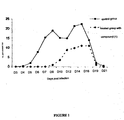
- Figure 1 is a graph indicating the percentage parasitemia days post-infection.
- the control group is indicated by an •, while the treated group with compound (1) is indicated with ⁇ .
- This extract was dissolved in 2 I H 2 O and centrifugated at 10,000 rpm for 1 hour. A residue of 10 g was removed, while the supernatant was partitioned three times between H 2 O and CH 2 Cl 2 (500 mL).
- aqueous extract of 11.7 g was chromatographed on a reversed phase silica gel column (RP-2), eluted with a discontinuous gradient of H 2 O-MeOH in the proportion of (100 - 0, 90 - 10, 80 - 20, 0 - 100).
- fractions were pooled according to their TLC profiles into 3 fractions F1 to F3.
- fraction F1 (9.4 g) was further separated on a silica gel column, eluted with CH 2 Cl 2 -MeOH-NH 4 OH (85-15-0.5) leading to 10 fractions F1-1 to F1-10.
- the fraction F1-6 was determined to be the most active amongst the obtained fraction, by an evaluation of the biological activity carried out according to the method as described below.
- fraction F1-6 (0.850 g) was chromatographed on a sephadex gel column (LH-20) eluted with MeOH, leading to 4 fractions, F1-6-1 to F1-6-4.
- fraction F1-6-3 (0.368 g) was purified on a silica gel column eluted with CH 2 Cl 2 -MeOH-NH 4 OH (87-13-1), leading to 6 fractions, F1-6-3-1 to F1-6-3-6.
- the fraction F1-6-3-4 (0.122 g) was shown to be a mixture of the two compounds (1) and (2).
- F1-6-3-4 (0.045 g) was further submitted to a preparative silica gel TLC migrating in CHCl 3 -NH(C 2 H 5 ) 2 (70-30), leading to 2 fractions, F1-6-3-4-1 (0.01 g) and F1-6-3-4-2 (0.028 g).
- the first fraction was submitted to a silica gel column filtration with CH 2 Cl 2 -MeOH-NH 4 OH (70-30-3), providing pure compound (2) (0.004 g), while the second fraction, under the same conditions, afforded pure compound (1) (0.019 g).
- fraction F1-6 (0.22 g) was straightly subjected to a preparative silica gel TLC migrating in CHCl 3 -MeOH-NH 4 OH (75-25-3.5), providing compound (1) (0.04 g), while bands corresponding to less polar products were pooled and submitted to a second preparative TLC migrating in CHCl 3 -MeOH-CH 3 COOH-H 2 O (75-18-4-3), leading to 3 fractions, F1-6-1' to F1-6-3'.
- fraction F1-6-1'(0.012 g) was subjected to a silica gel column filtration with CH 2 Cl 2 -MeOH-NH 4 OH (90-10-1), providing pure compound (2) (0.004 g).
- compounds (1) and (2) exhibited similar CD spectra (positive maxima at 216 nm and 242 nm, negative maximum at 227 nm), in agreement with this of sinococuline described in literature, allowing us to conclude that the absolute configuration of compound (1) and compound (2) is (6 S , 7 S , 9 R , 10 R , 13 S ) and (6 S , 7 S , 9 R , 13 S ) respectively.
- A- Murine model Hepatic Stage of Plasmodium yoelii yoelii 265BY.
- mice Primary cultures of mouse hepatocytes were isolated from livers of Swiss mice which were 6 to 8 weeks old by perfusion with collagenase (1g /L) and purified through a 60% Percoll gradient.
- the hepatocytes were cultured in sterile chambers (Lab-Tek) at the rate of 90,000 cells in 0.3 mL of complete culture medium as defined thereafter per well and incubated overnight at 37°C under a 4% CO 2 atmosphere.
- the hepatocytes' complet culture medium was Williams' E culture medium supplemented with 10% of decomplemented foetal calf serum, 1% glutamine, 1% Na pyruvate, 1% of a mixture of insulin, transferrine and selenium, 1% of non-essential amino-acids and with an antibiotic mixture comprising 1% of a solution of penicillin and streptomycine, 1% augmentin and 2.5 pg/ml flucytosine.
- the parasites infecting the hepatocytes i.e. the sporozoites, were recovered by dissection of infected anopheles mosquitoes salivary glands.
- the hepatocytes were infected by the above sporozoites from salivary glands of infected anopheles mosquitoes at the rate of 100,000 sporozoites per well in the presence or absence of the product to be tested.
- the medium was supplemented with 10 -7 M dexamethasone.
- the products were first solubilized in DMSO.
- the infected hepatocytes were washed and fed with culture medium containing the test product, 3 hours and then 24 hours after the infection.
- the cultures were stopped by treatment with a cold fixative methanol solution, 48 hours after the infection.
- Parasites obtained in schizont stage were immunomarked firstly, with a serum isolated from BALB/c mice immunized with a recombinant fragment from the N-terminal of the recombinant protein 172 that reacted against HSP70 of Plasmodium [4] and secondly with an antibody- a mouse anti-immunoglobulin- conjugated to FITC. Evans Blue and DAPI, a nucleic acid marker, were added to the hepatocytes simultaneously. The schizonts were then counted with a fluorescent microscope.
- Extracts and purified products exhibiting a significant inhibition effect on P. yoelii yoelii 265BY growth in murine hepatocytes were tested on human hepatocyte cultures infected with P. falciparum NF54.
- Human hepatocytes were obtained by enzymatic perfusion of fragments of liver of human adults which were submitted to partial hepatectomy.
- the hepatocytes were infected at 24 hours of their culture by sporozoites obtained from salivary glands of P. falciparum infecting anopheles mosquitoes stephensi (Lab. of Pr. W. Eling,Univ. Of Nijmegen, NL).
- the culture medium containing the test product was changed 3 hours after infection, and then renewed at least, each 24 hours during the experiment
- the cultures were fixed 5 days after infection, with the same method as described for the murine hepatocytes [5].
- the Cl 50 value (concentration causing 50% of inhibition in the number of parasites compared to controls wells, non treated) is the mean value of 3 independent evaluations through StatView Si Graphics.
- the cytotoxicity assays were carried out in 96-well microliter plates, in triplicate, against human carcinoma KB cell line (ATCC CCL-17) (10 4 cells /mL in DMEM medium) and human colon tumor HT29 cell line (ATCC HTB-38) (10 5 cells /mL in RPMI 1640 medium), both supplemented with 10% foetal calf serum, L-glutamine (2mM), penicillin G (100 Ul/mL), streptomycin (100 ⁇ g/mM) and gentamycin (10 ⁇ g/mL).
- human carcinoma KB cell line ATCC CCL-17
- human colon tumor HT29 cell line ATCC HTB-38
- Cell growth was estimated by colorimetric measurement of stained living cells, incorporating neutral red. Optical density was determined at 540 nm on a Titertek Multiskan photometer.
- the Cl 50 value was defined as the concentration of compound necessary to inhibit the cell growth to 50% of the control.
- Table 2 represents in vitro activities of natural compounds (1) and (2) and N- substituted derivatives of (1), compounds (3)-(8), on growth inhibition of P. yoelii yoelii 265 BY in murine hepatocytes and their cytotoxicity on human tumor cell lines.
- R represents the group introduced on the nitrogen atom by chemical modification of (1) as defined in formula I.
- the selectivity index ( ratio between Cl 50 of cytotoxicity and Cl 50 of anti-malarial activity) that was calculated, should the real effect of the compounds on Plasmodium parasites with respect to mammalian cells.
- Table 3 represents in vitro activities of natural compounds (1) and (2), on P. falciparum NF54 in human hepatocytes. Table 3 CI 50 activity P. falciparum NF54 in ⁇ g/mL, ( ⁇ M) (1) 1.51 [1.01-0.34] 4.3 (2) 3.36 [1.35-0.92] 10.1
- the infection has been performed by retro-orbital injection of 4,000 sporozoites of Plasmodium yoelii yoelii 265BY in 100 ⁇ l phospate-buffered saline per mouse.
- the parasitemia was monitored from the third day after the infection D3 when the parasites are liberated from the liver and enter into the blood circulation and each day until the 23rd day D23 after infection.
- the monitoring was performed by blood smears taken from the tail vein of the mice. The smears were stained with Giemsa and parasited red blood cells were counted with a microscope.
- the parasitemia was calculated according to the following formula: Parasited red blood cell number x 100 / total red blood cell number .
- mice None of the treated mice were parasited at the fifth day after the infection whereas 100% of the control mice were parasited as soon as the third day.
- the first mouse was parasited at the sixth day after infection with a delay of 3 days compared to the control group mice.
- the assay On the 23 rd day, only 6 of the 20 treated mice were parasited, whereas 100% of the control mice were parasited.
- the results are set forth in Figure 1 .
- the treatment with compound (1) at 100 mg/kg allows a 70% total protection against malaria infection in mice, but also it allows a minimum 3 days delay for the 30% of treated mice, which were not protected.
- the treatment with compound (1) at 100 mg/kg allows a better survival of mice at D23 in the treated group (90%) compared to the control group (75%).
- the treatment with compound (1) at 100 mg / kg allows a significant decrease of the number of parasited red blood cells.
- the in vivo results confirm the in vitro results concerning the efficiency of compound (1) on the protection against Plasmodium yoelii 265BY and Plasmodium falciparum NF54.
- Compound (1) in oral administration protects mice against infection by P. yoelii 265BY (70%), reduces parasitemia, delays apparition of the parasites and improves mice survival.
- This prophylactic treatment differs from the usual treatments which mainly target the blood forms of the parasite.
Landscapes
- Chemical & Material Sciences (AREA)
- Organic Chemistry (AREA)
- Health & Medical Sciences (AREA)
- Tropical Medicine & Parasitology (AREA)
- Veterinary Medicine (AREA)
- Chemical Kinetics & Catalysis (AREA)
- General Chemical & Material Sciences (AREA)
- Medicinal Chemistry (AREA)
- Nuclear Medicine, Radiotherapy & Molecular Imaging (AREA)
- Pharmacology & Pharmacy (AREA)
- Life Sciences & Earth Sciences (AREA)
- Animal Behavior & Ethology (AREA)
- General Health & Medical Sciences (AREA)
- Public Health (AREA)
- Pharmaceuticals Containing Other Organic And Inorganic Compounds (AREA)
- Other In-Based Heterocyclic Compounds (AREA)
- Medicines Containing Plant Substances (AREA)
- Agricultural Chemicals And Associated Chemicals (AREA)
Abstract
Description
- The present invention concerns alkaloid compounds and their use as a medicament. These compounds and derivatives are particularly useful against malaria in a prophylactic and/or curative treatment. Therefore, the present invention also concerns pharmaceutical compositions comprising the new compounds and the use of the compounds in a process for the preparation of anti-malarial compositions. Furthermore in another aspect of the invention, it concerns a process of preparation of these compounds.
- Malaria is a serious health care problem posing a great menace to society due to the number of patients infected and the mortality rate of patients, as evidenced by about 300 million patients attacked annually predominantly in tropical and subtropical regions, causing about 2 million deaths in these areas.
- Malaria is usually treated by administering chloroquine, pyrimethamine, quinine, proguanil, primaquine, artemisinin compounds, etc..., even combinations thereof, but effective treatments have become difficult with these conventional anti-malarial drugs because most of the malarial parasites eventually become resistant to these anti-malarial drugs. Most of the usual anti-malarial compounds are known to be active at the blood stage of the parasites but not at the hepatic stage.
- Some of the known chemical compounds to treat malaria are not free of side effects, this rendering their long-term use deleterious in some aspects and limiting the use of these compounds.
- There is therefore still a need for compounds having an efficiency against malaria, without their usual drawbacks, and not only at the blood stage but also at the hepatic stage, this conferring to the compounds a prophylactic effect. Furthermore, there is a need for anti-malarial drugs which are easy to formulate in pharmaceutical compositions.
- The applicants have now found that some compounds isolated from Strychnopsis thouarsii and also synthetic derivatives thereof have good anti-malarial activity, particularly on the hepatic stage (also call exoerythrocytic stage) of Plasmodium, contrary to most of conventional antimalarial drugs which are only active on the erythrocytic cycle.
-
JP 62-263158 JP 62-289 565 - The present invention thus concerns the use of the compounds of formula I or II below and their derivatives as medicaments, particularly as anti-malarial compounds.
- Amongst them, most are new. In another aspect, the invention concerns chemical compounds having the formula

- R1 is H or OCiH21+1 with i between 0 and 6;
- R2 is H or OCjH2j+1 with j between 0 and 6;
- R3 is H or OCkH2k+1 with k between 0 and 6;
- R4 is H or OH;
- R5 is OH or OCmH2m+1 with m between 1 and 6 or an acetoxy group or an oxo group;
- R6 is OH or OCnH2n+1 with n between 1 and 6 or an acetoxy group or an oxo group;
- R7 is OCpH2p+1 with p between 0 and 6;
- R8 and R9 may be similar or different and represent H or OCqH2q+1 with q between 0 and 6, or Hal where Hal is Cl, Br, F or I, or form together a covalent bond whereby the bond is a double bond or form with an oxygen atom an ether bond (epoxy group);
- R10 is H or CrH2r+1 with r between 1 and 12 or an unsaturated alkyl group or a cycloalkyl group (tri- to hexa-) unsaturated or not, with or without heteroatoms; or an aromatic or a polycyclic aromatic group with or without heteroatoms; or CsH2s-A with s between 1 and 12 and whereby A is a saturated or (tri- to hexa-) unsaturated cycloalkyl group, with or without heteroatoms or an aromatic or a polycyclic aromatic group with or without heteroatoms or A is C6H5-t -(Hal)t with t between 1 to 5 or C6H5-u-(O-CvH2v+1)u with u between 1 to 5 and v between 0 and 6; or R10 represents two substituents similar or different rendering the nitrogen atom quaternized, or an oxygen atom (nitrone group) and in which case the bond between the nitrogen atom and C9 is a double bond; or R10 represents CH2CH2[OCH2CH2]wOCH2CH2-B with w between 0 and 10 and where B is OH, O-D or NH-D where D is a C1-C12 alkyl group bearing an electrophilic function such as an isothiocyanate;
- R11 is H or OH or OCxH2x+1 with x between 1 and 6 or Hal where Hal is Cl, Br, F or I; or an acetoxy group or a sulfonate ester group or an oxo group;
or R10 and R11 may represent an isoalkylidene group;
or
- R4 is H or OH or OC1H2i+1 with I between 2 and 6;
- R10 is CyH2y with y between 1 and 12 or CH2CH2[OCH2CH2]zOCH2CH2 with z between 0 and 10; and
- In the following, the proviso is defined in that, in the compounds of formula I, (1) R2 is not H or alcoxy when R3 is OH or alcoxy and R4 is H or OH and R5 and R6 are OH or acyloxy and R7 is OCH3 and R8 and R9 represent a double bound and R1 is H; and (2) R1 is not H when R2 is H and R3 and R7 are OCH3, R4, R5 and R6 are OH and R8 and R9 represent a double bound and R10 is H, but also in that in formula (I) (1) R2 is not H or alcoxy when R3 is OH or alcoxy and R4 is H or OH and R5 and R6 are OH or acyloxy and R7 is OCH3 and R8 and R9 represent a double bound and R1, R10 and R11 are H; and (2) R1 is not H when R2 is H and R3 and R7 are OCH3, R4, R5 and R6 are OH and R8 and R9 represent a double bound and R10 and R11 are H;
as well as (3) R10 is not CH3 when R1 and R2 are H, R4, R5 and R6 are OH, R3 and R7 are OCH3, R8 and R9 represent a double bond and R11 is H; - (4) R10 is not CH3 when R1 and R2 are H, R4 is OH, R5 and R6 are OAc, R3 and R7 are OCH3, R8 and R9 represent a double bond and R11 is H; and
- (5) R11 is not OH, when R1, R2 and R10 are H, R3 and R7 are OCH3, R4 is OH, R5 and R6 are OAc, and R8 and R9 represent a double bond, which correspond to compounds known from Kashiwaba et al., Chem. Pharm. Bull. 45(3), 545-548 (1997), and Ogino et al., Heterocycles, Vol. 48, No.2 (1998).
- Particularly, the invention concerns the compounds of formula I with the above proviso and the use of compounds of formula I without the proviso for their antimalarial activity. Amongst them, the preferred compounds are those wherein R8 and R9 form a double bound, and R1 and - R2 are H, and particularly the compounds wherein R11 is OH.
- According to an aspect of the invention, R10 can represent H or CrH2r-A with r between 1 and 12 and whereby A is H or a cycle CsH2s-1 with s between 3 and 6 or an aromatic cycle or an aromatic polycycle or an aromatic cycle substituted as C6H5-r(Hal)t with t between 1 to 5 and where Hal is Cl, Br, F or I, or as C6H5-u-(O-CvH2v+1)u with u between 1 to 5 and v between 0 to 6, or as C6H5-w-(NH2)w with w between 1 to 2; or R10 represents two substituents similar or different rendering the nitrogen atom quaternized, or an oxygen atom; or R10 represents CH2-CH2-[O-CH2-CH2]xO-CH2-CH2-B with x between 0 and 10 and whereby B is H or OH or NH2 or N=C=S.
- The preferred compounds are described hereafter namely in the examples and the detailed description.
- More particularly, the invention thus concerns 4, 6, 7,10-tetrahydroxy- 8, 14- didehydro- 3, 8- dimethoxymorphinan and its derivative N-methyl-, N-propyl-, N-4-methoxybenzyl-, N-4-hydroxybenzyl-, N-4-bromobenzyl- or N-cyclopentyl- - 4, 6, 7, 10- tetrahydroxy- 8, 14- didehydro-3, 8- dimethoxy-morphinan, as well as their pharmaceutically acceptable salts, and their optical isomers including racemates, and more particularly the isomers having the optical configuration (6S, 7S, 9R, 10R, 13S).
- More particularly, the invention concerns


- Furthermore, the invention concerns pharmaceutical compositions containing the compounds of formula I or II as above defined and stereoisomers and optical isomers and pharmaceutically acceptable salts thereof as an active agent together with an pharmaceutically acceptable vehicle, particularly an aqueous vehicle.
- It also concerns pharmaceutical compositions comprising a compound of formula I or formula II as above defined, without the proviso together with at least one second anti-malarial compound and a pharmaceutically acceptable vehicle.
- It also concerns the use of these compounds for the preparation of a pharmaceutical composition useful in the treatment of malaria, said composition comprises at least a compound of formula I or II without the proviso and another anti-malarial compound.
- The invention further concerns the use of the compounds of formula I or II without the proviso and all the stereoisomers and optical isomers thereof, for the preparation of a pharmaceutical composition useful in the prophylactic or curative treatment of malaria.
- According to a further aspect, the invention concerns pharmaceutical compositions comprising an isolated extract of Strychnopsis thouarsii having an anti-malarial activity.
- It also concerns pharmaceutical compositions comprising an isolated extract of Strychnopsis thouarsii and at least a compound of formula I or II and a pharmaceutically acceptable vehicle.
- The invention also concerns the use of an isolated extract of Strychnopsis thouarsii in the preparation of a pharmaceutical composition comprising at least said extract of Strychnopsis thouarsii and at least a compound of formula I or II and a pharmaceutical vehicle and a pharmaceutically acceptable vehicle, the composition being useful in a prophylactic or curative treatment of the malaria.
- The compounds of the invention have an anti-malaria activity particularly drawn to the hepatic stage, which corresponds to the passage of the parasite into the liver and to the infection of the hepatic cells in which the parasites develop to form the hepatic schizonts which, when they are mature (for example in the case of P. falciparum on the 6th day after penetration of the sporozoites) release hepatic merozoites by bursting. The third stage is characterized by the infection of the blood erythrocytes by the asexual forms (merozoites) of the parasite; this erythrocytic stage of development corresponds to the pathogenic phase of the disease. The fourth stage corresponds to the formation of the forms with sexual potential (or gametocytes) which will become extracellular sexual forms or gametes in the mosquito. The second stage is also called the exoerythrocytic stage of Plasmodium.
- The only known and practically used molecules that are active against the hepatic stage are primaquine and atovaquone.
- Their use is however limited due to the very toxic nature of primaquine, and due to the rapid development of resistance for atovaquone which is therefore only used in combination with other anti-malarial drugs.
- The compounds of the invention are particularly useful for prophylactic and curative treatment of the hepatic stage of malaria. Furthermore, the compounds of the present invention are shown to kill parasites just after transmission by the infected mosquitoes and before it becomes pathogenic by multiplication in the red blood cells. The invention compounds are therefore especially useful for antimalarial prophylaxis particularly as compared with the usual treatments.
- Decoction and methanolic extract of the plant were evaluated for their in vitro antimalarial activity through inhibition of Plasmodium growth in murine and human hepatocytes, according to tests as described below.
- A bioassay-guided fractionation of the plant extract, linking this in vitro test to chromatographic separation techniques was carried out and led to the isolation of active compounds, as described below.
- The invention therefore also encompasses isolated extracts of bark or leaves of the plants described therein for use in a pharmaceutical compositions.
- The pharmaceutical compositions of the present invention contain a pharmaceutically acceptable carrier in addition to the invention compound(s). The pharmaceutically acceptable carrier depends on the dosage form.
- One of the advantages of the invention compounds is their bioavailability. Their solubility in water and aqueous vehicles is a major advantage.
- Amongst the pharmaceutically acceptable vehicle, aqueous vehicle are preferred.
- When the pharmaceutical compositions are used for oral administration, they may appropriately contain pharmaceutically acceptable carriers including binders such as dicalcium phosphate; disintegrants such as sucrose; dyes; and perfumes such as orange flavor; and solvents such as water, ethanol and glycerol.
- When pharmaceutical compositions of the present invention are injectable compositions, suitable pharmaceutically acceptable carriers include sterilized water, isotonic saline and pH buffers. Alternatively, injectable compositions of the present invention may be sterilized powder compositions or lyophilized powder compositions that can be used by simple dissolution in sterilized water. Injectable pharmaceutical compositions of the present invention may contain sugars (glucose, mannitol and dextran, etc.), polyhydric alcohols (glycerol, etc.), and inorganic salts (sodium salts and magnesium salts, etc.).
- When pharmaceutical compositions of the present invention are administered by intravenous injection or infusion, they may contain nutrients such as glucose, vitamins, amino acids and lipids.
- Pharmaceutical carriers to be added to dosage forms for other administration modes such as nasal administration, inhalation and transdermal administration are also well-known to those skilled in the art.
- When pharmaceutical compositions of the present invention are orally administered, they may be in the form of controlled- or sustained-release formulations. Well-known sustained-release formulations include ordinary sustained- or controlled-release formulations such as gel-coated formulations and multicoated formulations as well as site-specific delivery formulations (e.g., burst release at pyloric regions or effervescent delivery to the duodenum). Oral compositions include, for example, tablets, pills, capsules, ampoules, sachet, elixir, suspensions, syrups, etc.
- The dosage forms and pharmaceutical carriers mentioned above are described in Remington's Pharmaceutical Sciences, 16th ed. (1980), Mack Publishing Company, which is incorporated herein by reference.
- Pharmaceutical compositions or unit dose systems of the present invention can be administered via various other routes such as transmucosal (sublingual, nasal, buccal), enteral, dermal administration, suppositories or intravenous infusion. These administration modes depend on the amount of the active compound to be administered, the condition of the patient and other factors.
- Among these administration modes, oral administration is especially preferred as well as any mode where the use of aqueous vehicle is of interest.
- According to the invention the inventive compound is present in an amount of between 0,001 and 50% by weight of the pharmaceutical composition.
- When present in combination with a second anti-malarial compound or as an enhancer of the anti-malarial activity of another anti-malarial compound, the inventive compound is present in an amount between 0,0001 and 20% by weight of the pharmaceutical composition.
- In the present invention, the effective amount of inventive compound used for the treatment of malaria is normally 1-1,000 mg/kg weight daily, preferably 5-500 mg/kg weight daily depending on the age, body weight and condition of the patient and the administration mode.
- Apart from their obtention by the extraction process, the compounds of the invention can be obtained by synthesis. As it appears from the following examples, the derivatives of (1) and (2) can be prepared according to usual chemical procedures. Particularly alkylation procedures are carried out on products (1) and (2) under suitable alkylation conditions with the corresponding suitable alkylating agents. For example suitable alkylating agents are the corresponding aldehydes or dialdehydes. Suitable conditions can be reductive alkylation conditions.
- Furthermore, oxidation and subsequent alkylation can be carried out by usual procedures, and protection of the substituants previously performed, if necessary.
- In the following examples, stem bark has been treated to extract the compounds from the plant. However, other parts of the plant might be treated, as well as other species able to produce similar extracts. The leaves of Strychopsis thouarsii can also be used, as well as other plants and species. The person skilled in the art can adapt the separation process to the species or part of the plant to be treated.
-
Figure 1 is a graph indicating the percentage parasitemia days post-infection. The control group is indicated by an •, while the treated group with compound (1) is indicated with ◇. - 500 g powdered Strychnopsis thouarsii stem bark was soaked under stirring in MeOH at room temperature for six days, according to the following procedure.
- Each 24 hours, the solute was filtrated and the solid residue was treated with 2 l MeOH. The resulting six solutes were pooled and evaporated to dryness under reduced pressure, providing 22 g of methanolic extract.
- This extract was dissolved in 2 I H2O and centrifugated at 10,000 rpm for 1 hour. A residue of 10 g was removed, while the supernatant was partitioned three times between H2O and CH2Cl2 (500 mL).
- The resulting aqueous extract of 11.7 g was chromatographed on a reversed phase silica gel column (RP-2), eluted with a discontinuous gradient of H2O-MeOH in the proportion of (100 - 0, 90 - 10, 80 - 20, 0 - 100).
- The fractions were pooled according to their TLC profiles into 3 fractions F1 to F3.
- The fraction F1 (9.4 g) was further separated on a silica gel column, eluted with CH2Cl2-MeOH-NH4OH (85-15-0.5) leading to 10 fractions F1-1 to F1-10.
- The fraction F1-6 was determined to be the most active amongst the obtained fraction, by an evaluation of the biological activity carried out according to the method as described below.
- Compound (1) = 4, 6, 7,10- tetrahydroxy- 8, 14- didehydro- 3, 8-dimethoxy-morphinan C18H23NO6
- Compound (2) = 4, 6, 7- trihydroxy- 8, 14- didehydro- 3, 8-dimethoxy-morphinan (Sinococuline or FK1000) [CAS Registry Number: 109351-36-2] C18H23NO5
- An aliquot of fraction F1-6 (0.850 g) was chromatographed on a sephadex gel column (LH-20) eluted with MeOH, leading to 4 fractions, F1-6-1 to F1-6-4.
- The fraction F1-6-3 (0.368 g) was purified on a silica gel column eluted with CH2Cl2-MeOH-NH4OH (87-13-1), leading to 6 fractions, F1-6-3-1 to F1-6-3-6.
- The fraction F1-6-3-4 (0.122 g) was shown to be a mixture of the two compounds (1) and (2).
- An aliquot of F1-6-3-4 (0.045 g) was further submitted to a preparative silica gel TLC migrating in CHCl3-NH(C2H5)2 (70-30), leading to 2 fractions, F1-6-3-4-1 (0.01 g) and F1-6-3-4-2 (0.028 g).
- The first fraction was submitted to a silica gel column filtration with CH2Cl2-MeOH-NH4OH (70-30-3), providing pure compound (2) (0.004 g), while the second fraction, under the same conditions, afforded pure compound (1) (0.019 g).
- An aliquot of fraction F1-6 (0.22 g) was straightly subjected to a preparative silica gel TLC migrating in CHCl3-MeOH-NH4OH (75-25-3.5), providing compound (1) (0.04 g), while bands corresponding to less polar products were pooled and submitted to a second preparative TLC migrating in CHCl3-MeOH-CH3COOH-H2O (75-18-4-3), leading to 3 fractions, F1-6-1' to F1-6-3'.
- The fraction F1-6-1'(0.012 g) was subjected to a silica gel column filtration with CH2Cl2-MeOH-NH4OH (90-10-1), providing pure compound (2) (0.004 g).
-

a) NMR data of (1) in CD3OD and its attribution by 2D NMR (400 MHz):Carbon number δH (multiplicity, J in Hz) δC 1 6.86 (d, 8.4) 121.93 2 6.90 (d, 8.4) 110.67 3 - 149.18 4 - 145.07 5 1 2.95 (dd, 3.3, 13.4) 36.51 5 2 2.19 (dd,13.4, 13.4) 6 3.86 (m, 2.7, 3.3, 13.4) 68.60 7 4.28 (d, 2.7) 66.91 8 - 148.49 9 4.33 (d, 2.2) 53.13 10 4.53 (d, 2.2) 73.31 11 - 132.91 12 - 129.78 13 - 40.05 14 - 121.09 15 1 1.99 (dd, 3.6, 12.5) 37.50 15 2 1.84 (ddd, 4.7, 12.5, 12.5) 16 1 2.64 (dd, 4.7, 14.3) 40.85 16 2 2.42 (ddd, 3.6, 14.3) 3-OCH3 3.86 (s) 56.57 8-OCH3 3.69 (s) 57.06
b) Physico-chemical data of (1)
Mass Spectroscopy (ESI-TOF+): m/z 350.1 [M+H]+
Mass calculated for C18H24NO6: 350.1604
High Resolution MS (DCI+): m/z 350.1604 [M+H]+
UV (λmaxnm (ε), MeOH) : 282 (3318), 242sh (9926), 207 (57483)
[α]20 D - 46° (c 0.5, MeOH)
Circular Dichroism (λext nm, θ): (216, +66324), (227, -15949), (242, +16864)
(c =1.15 ×10⁻³ M, MeOH) -

- a) NMR data of (2)
1H-NMR (300 MHz, CD3OD): δ 6.85 (d, 1H, J = 8.3 Hz), 6.62 (dd, 1H, J = 1.2, 8.3 Hz), 4.96 (dd, 1H, J = 1.7, 6.2 Hz), 4.39 (dd, 1H, J = 1.1, 3.1 Hz), 3.87 (ddd, 1H, J = 3.1, 3.9, 13.5 Hz), 3.84 (s,3H), 3.78 (s, 3H), 3.31 (ddd, 3H, J = 1.2, 6.2, 19.1 Hz), 3.14 (dd, 1H, J = 4.6, 13.1 Hz), 3.10 (dd, 1H, J = 1.7, 19.1 Hz), 3.03 (ddd, 1H, J = 1.1, 3.9, 13.5 Hz), 2.84 (ddd, 1H, J = 4.1, 13.1, 13.2 Hz), 2.24 (dd, 1H, J = 13.5, 13.5 Hz), 2.19 (dd, 1H, J = 4.1, 13.2 Hz), 2.06 (ddd, 1H, J = 4.6, 13.2, 13.2 Hz)
13C-NMR (300 MHz, CD3OD): δ 33.53, 34.08, 36.0, 38.46, 40.67, 47.96, 56.22, 56.67, 65.38, 68.11, 111.30, 113.92, 119.48, 127.90, 128.56, 145.79, 148.09, 150.66
The NMR data of (2) were similar to those previously described in litterature [1, 2]. - b) Physico-chemical data of (2)
Mass Spectroscopy (ESI-TOF+): m/z 334.1 [M+H]+
Mass calculated for C18H24NO5: 334.1654
High Resolution MS calculated for C18H23NO5: 334.1655
UV (MeOH) λmaxnm (ε) : 282 (2856), 242sh (6984), 207 (59602)
[α]20 D - 143°(c 0.25, MeOH) cf. [3] [α]20 D - 137.4° (c 0.12, MeOH)
Circular Dichroism (λextnm, θ): (216, +63340), (227, -15231), (242, +16105).
(c = 1.20 × 10⁻³ M, MeOH)
cf. [1] CD (λextnm, θ): (238, +62100) (c = 9.67 × 10 -5 M, MeOH) - Specific rotation values of compound (2) and sinococuline were closely the same.
- Compounds (1) and (2) showed the same Nuclear Overhauser Effect SpectroscopY (NOESY) correlations (cf. table 1) as sinococuline. Consequently compounds (1) and (2) have been assigned with the same relative configuration (6S*, 7S*, 9R*, 13S*) as sinococuline.
- Moreover, compounds (1) and (2) exhibited similar CD spectra (positive maxima at 216 nm and 242 nm, negative maximum at 227 nm), in agreement with this of sinococuline described in literature, allowing us to conclude that the absolute configuration of compound (1) and compound (2) is (6S, 7S, 9R, 10R, 13S) and (6S, 7S, 9R, 13S) respectively.
Table 1: NOESY (2D-NMR, 400 MHz, MeOH) Proton n° Compound (1) Compound (2) Correlated protons Correlated protons 1 H10 H2, H101, H102 2 3-OCH3 H1, 3-OCH3 3 - - 4 - - 5 1 H151, H52, H6, H7 H52, H6 5 2 H51, H6 H51, H6 6 H152, H52, H51, H7 H51, H52, H7, H152 7 8-OCH3, H6 3-OCH3, H52, 8-OCH3 8 - 9 8-OCH3, H10 8-OCH3, H101, H10 210 1 H162, H9, H1 H1, H9, H10 210 2 H1, H9, H101 11 - - 12 - - 13 - - 14 - - 15 1 H152, H162, H161, H51 H51, H152, H16 215 2 H151, H161, H6 H6, H151, H161 16 1 H151, H152, H162 H151, H152, H162 16 2 H151, H161, H10 H151, H161 3-OCH3 H2 H2 8-OCH3 H7, H9 H7 - To a solution of (1) (10.9 mg, 0.031 mmol) in 1 mL MeOH was added 100 µl of a solution of formaldehyde (37 % in water). After stirring for 1 hour at room temperature, 3 mg of NaBH4 was added and the mixture was stirred for additional 3 hours.
- After removal of the solvent under reduced pressure, the residue was acidified with 1 N HCl, then basified with 20% aqueous NH4OH and was further submitted to a silica gel column eluted with CH2Cl2-MeOH-NH4OH (85-15-1), leading to compound (3) as a .white solid (8 mg, 0.022mmol), 71 % yield.
-

Mass Spectroscopy (ESI-TOF+): m/z 364.1 [M+H]+
Mass calculated for C19H26NO6: 364.1760
High Resolution MS (DCI+): m/z 364.1764 [M+H]+
[α]20D - 41 ° (c 0.5, MeOH) - To a solution of (1) (3.05 mg, 0.0087 mmol) in 300 µl MeOH, was added 1 µl, 0.014 mmol of propionaldehyde and 0.6 mg, 0.0095 mmol of sodium cyanoborohydride NaBH3CN. The mixture was stirring for 4 hours at room temperature.
- After removal of the solvent under reduced pressure, the residue was acidified with HCl 1 N, then basified with 20% aqueous NH4OH and was submitted to a preparative TLC eluted twice with CH2Cl2-MeOH-NH4OH (90-10-1) to provide (4) as a white solid (2.3 mg, 0.0059 mmol), 68% yield.
-

Mass Spectroscopy (ESI-TOF+): m/z 392.2 [M+H]+
Mass calculated for C21H30NO6: 392.2073
High Resolution MS (DCI+): m/z 392.2064 [M+H]+
[a]20 D -18° (c 0.1, MeOH) - To a solution of (1) (5.7 mg, 0.016 mmol) in 500 µl MeOH, was added 200 µl, 1.6 mmol of anisaldehyde. After stirring for 1 hour at room temperature, 3 mg of NaBH4 was added and the mixture was stirred for additional 3 hours at room temperature.
- After removal of the solvent under reduced pressure, the residue was acidified with HCl 1N, then basified with 20% aqueous NH4OH and was submitted to a preparative TLC, eluted twice with CH2Cl2-MeOH-NH4OH (90-10-1.5) to provide (5) as a white solid (3.0 mg, 0.0064mmol), 40% yield.
-

MS (ESI-TOF+): m/z 470.2 [M+H]+
Mass calculated for C26H32NO7: 470.2179
High Resolution MS (DCI+): m/z 470.2170 [M+H]+
[α]20D -12° (c 0.1, MeOH) - To a solution of (1) (4.85 mg, 0.014 mmol) in 500 µl of MeOH was added 4-hydroxy-benzaldehyde (1.7 mg, 1eq). After stirring for 4 hours at room temperature, 0.9 mg, 1 eq of NaBH3CN was added and the mixture was stirred for additional 3 hours at room temperature.
- After removal of the solvent under reduced pressure, the residue was acidified with HCl 1 N, then basified with 20% aqueous NH4OH and was submitted to a preparative TLC, eluted twice with CH2Cl2-MeOH-NH4OH (90-10-1) to provide (6) as a white solid (3.5 mg, 0.0077mmol), 55% yield.
-

Mass Spectroscopy (ESI-TOF+): m/z 456.2 [M+H]+
Mass calculated for C25H30NO7: 456.2022
High Resolution MS (DCI+): m/z 456.2018 [M+H]+
[α]20D -10° (c 0.03, MeOH) - To a solution of (1) (3.3 mg, 0.0095 mmol) in 300 µl MeOH was added 2 mg, 0.011 mmol of 4-bromo-benzaldehyde and 3 mg of NaBH3CN. The mixture was stirred 20 hours at room temperature.
- After removal of the solvent under reduced pressure, the residue was acidified with HCl 1 N, then basified with 20% aqueous NH4OH and was submitted to a preparative TLC eluted twice with CH2Cl2-MeOH-NH4OH (95-5-0.5) to provide (7) as a white solid (3.0 mg, 0.0058 mmol), 61% yield.
-

Mass Spectroscopy (ESI-TOF+): m/z 519.1 and 521.1 [M+H]+
Mass calculated for C25H29NO6Br: 519.1035 and 521.1055
High Resolution MS (DCI+): m/z 519.1037 and 521.1058 [M+H]+
[α]20 D -0.5° (c 0.5, MeOH) - To a solution of (1) (4.95 mg, 0.014 mmol) in 300 µl of MeOH was added 2 µl, 0.023 mmol of cyclopentanone and 3 mg of NaBH3CN. The mixture was stirred for 6 hours at room temperature.
- After removal of the solvent under reduced pressure, the residue was acidified with 1 N HCl, then basified with 20% aqueous NH4OH and was submitted to a preparative TLC eluted twice with CH2Cl2-MeOH-NH4OH (90-10-1) to provide (8) as a white solid (4.75 mg, 0:011 mmol), 81% yield.
-

Mass Spectroscopy (ESI-TOF+): m/z 418.2 [M+H]+
Mass calculated for C23H32NO6: 418.2230
High Resolution MS (DCI+): m/z 418.2239 [M+H]+
[α]20 D -30° (c 0.03, MeOH) - ●● In vitro evaluation of the antimalarial activity of plant extracts and pure compounds (1)-(8)
- Primary cultures of mouse hepatocytes were isolated from livers of Swiss mice which were 6 to 8 weeks old by perfusion with collagenase (1g /L) and purified through a 60% Percoll gradient.
- The hepatocytes were cultured in sterile chambers (Lab-Tek) at the rate of 90,000 cells in 0.3 mL of complete culture medium as defined thereafter per well and incubated overnight at 37°C under a 4% CO2 atmosphere. The hepatocytes' complet culture medium was Williams' E culture medium supplemented with 10% of decomplemented foetal calf serum, 1% glutamine, 1% Na pyruvate, 1% of a mixture of insulin, transferrine and selenium, 1% of non-essential amino-acids and with an antibiotic mixture comprising 1% of a solution of penicillin and streptomycine, 1% augmentin and 2.5 pg/ml flucytosine.
- The parasites infecting the hepatocytes; i.e. the sporozoites, were recovered by dissection of infected anopheles mosquitoes salivary glands.
- After grinding them in a Potter grinder with culture medium, the suspension was filtered on a 40 µm mesh filter and centrifuged (15,000 rpm) at 4°C for 2 mn. The pellet was reintroduced in the complete culture medium. The sporozoites were then counted in a "Cell Vu" counter (CML) and the concentration was adjusted at 100,000 sporozoites per 70 µL, concentration needed for infection.
- One day after, the hepatocytes were infected by the above sporozoites from salivary glands of infected anopheles mosquitoes at the rate of 100,000 sporozoites per well in the presence or absence of the product to be tested. When the infection had appeared, the medium was supplemented with 10-7 M dexamethasone. The products were first solubilized in DMSO.
- The infected hepatocytes were washed and fed with culture medium containing the test product, 3 hours and then 24 hours after the infection.
- The cultures were stopped by treatment with a cold fixative methanol solution, 48 hours after the infection.
- Parasites obtained in schizont stage were immunomarked firstly, with a serum isolated from BALB/c mice immunized with a recombinant fragment from the N-terminal of the recombinant protein 172 that reacted against HSP70 of Plasmodium [4] and secondly with an antibody- a mouse anti-immunoglobulin- conjugated to FITC. Evans Blue and DAPI, a nucleic acid marker, were added to the hepatocytes simultaneously. The schizonts were then counted with a fluorescent microscope.
- Extracts and purified products exhibiting a significant inhibition effect on P. yoelii yoelii 265BY growth in murine hepatocytes were tested on human hepatocyte cultures infected with P. falciparum NF54.
- Human hepatocytes were obtained by enzymatic perfusion of fragments of liver of human adults which were submitted to partial hepatectomy.
- The hepatocytes were infected at 24 hours of their culture by sporozoites obtained from salivary glands of P. falciparum infecting anopheles mosquitoes stephensi (Lab. of Pr. W. Eling,Univ. Of Nijmegen, NL).
- The culture medium containing the test product was changed 3 hours after infection, and then renewed at least, each 24 hours during the experiment
- The cultures were fixed 5 days after infection, with the same method as described for the murine hepatocytes [5].
- The Cl50 value (concentration causing 50% of inhibition in the number of parasites compared to controls wells, non treated) is the mean value of 3 independent evaluations through StatView Si Graphics.
- The cytotoxicity assays were carried out in 96-well microliter plates, in triplicate, against human carcinoma KB cell line (ATCC CCL-17) (104 cells /mL in DMEM medium) and human colon tumor HT29 cell line (ATCC HTB-38) (105 cells /mL in RPMI 1640 medium), both supplemented with 10% foetal calf serum, L-glutamine (2mM), penicillin G (100 Ul/mL), streptomycin (100 µg/mM) and gentamycin (10 µg/mL).
- Stock solutions of testing compounds were prepared in H2O/DMSO (9/1).
- After an incubation of 72 hours at 37°C under a 5% CO2 atmosphere, 0.02% of neutral red in PBS was added.
- 24 hours later, culture media were eliminated and cell membranes were lysed by addition of 1% of SDS in water.
- Cell growth was estimated by colorimetric measurement of stained living cells, incorporating neutral red. Optical density was determined at 540 nm on a Titertek Multiskan photometer.
- The Cl50 value was defined as the concentration of compound necessary to inhibit the cell growth to 50% of the control.
- Table 2 represents in vitro activities of natural compounds (1) and (2) and N-substituted derivatives of (1), compounds (3)-(8), on growth inhibition of P. yoelii yoelii 265 BY in murine hepatocytes and their cytotoxicity on human tumor cell lines.
- In Table 2, R represents the group introduced on the nitrogen atom by chemical modification of (1) as defined in formula I.
- The selectivity index ( = ratio between Cl50 of cytotoxicity and Cl50 of anti-malarial activity) that was calculated, should the real effect of the compounds on Plasmodium parasites with respect to mammalian cells.
- Primaquine and atovaquone were tested as references for their inhibiting activities on hepatic stage of Plasmodium, while 5-fluorouracile and vinblastine were tested as references for their cytotoxic activities on KB and HT29 cells.
Table 2 Compound - R10 CI50 activity P. yoelii 265BY in µg/mL, (µM) CI50 cytotoxicity KB in µg/mL, (µM) CI50 cytotoxicity HT29 in µg/mL, (µM) Selectivity index CI50 KB/ CI50 yoelii (1) -H 1.08
[0.15 -0.32]
3.11.99±1.3
5.722.0 ± 12.5
63.01.8 (2) -H 1.50
[0.25- 0.45
4.51.30±0.6
3.912.24 ± 8.59
36.80.9 (3) - CH3 2.09
[0.87 -0.67]
5.832.31±7.1
89.0> 80
> 22015.5 (4) - CH2-CH2-CH3 4.93
[0.69 -0.60]
12.640.37± 13.9
103.2> 80
> 2048.2 
11.4
[0.75 -0.64]
24.221.23 ± 6.2
45.3> 80
> 1701.9 
6.44
[0.92 -0.80]
14.29.53 ± 3.3
20.948.96 ± 1.8
107.61.5 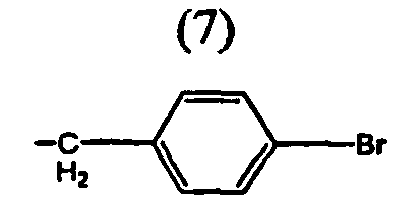
2.19
[0.92 -0.71]
4.215.81 ± 6.4
30.5> 80
> 1547.3 
1.46
[1.01-0.89]
3.527.64 ± 9.0
66.28> 80
> 19218.9 primaquine 0.16
[0.11-0.28]
0.62.0 ± 0.9
7.020.12 ± 2.1
70.5111.7 Atovaquone 0.021
[.003-.009]
0.05718.60 ± 8.7
50.844.60 ± 10.3
122891.2 5-fluorouracile / 0.047 ± 0.03
0.3654.88 ± 2.4
422/ -R CI50 activity P. yoelii 265BY in µg/mL, (µM) CI50 cytotoxicity KB in µg/mL, (µM) CI50 cytotoxicity HT29 in µg/mL, (µM) Selectivity index CI50KB/CI50 yoelii Vinblastine / 0.018 ± 0.006
0.0220.0080 ± 0.004
0.0099/ - Table 3 represents in vitro activities of natural compounds (1) and (2), on P. falciparum NF54 in human hepatocytes.
Table 3 CI50 activity P. falciparum NF54 in µg/mL, (µM) (1) 1.51 [1.01-0.34]
4.3(2) 3.36 [1.35-0.92]
10.1 - 40 Swiss mice (six week old) have been subjected to the in vivo assay. They have been allotted in two groups:
- a group of 20 mice were fed with compound (1) diluted in sterile water at a dose of 100 mg/kg four times; 24 hours and 1 hour before infection, 24 hours and 40 hours after infection during the hepatic stage period.
- a control group of 20 mice were fed with sterile water at the same times.
- The infection has been performed by retro-orbital injection of 4,000 sporozoites of Plasmodium yoelii yoelii 265BY in 100 µl phospate-buffered saline per mouse.
- The parasitemia was monitored from the third day after the infection D3 when the parasites are liberated from the liver and enter into the blood circulation and each day until the 23rd day D23 after infection. The monitoring was performed by blood smears taken from the tail vein of the mice. The smears were stained with Giemsa and parasited red blood cells were counted with a microscope.
- The parasitemia was calculated according to the following formula:

- The following table presents the obtained results.
Days post-infection Number of parasited mice/20 total mice D3 D4 D5 D6 D7 D8 D23 Control Group 20/20 20/20 20/20 20/20 20/20 20/20 15/15 Treated group with compound (1) 0/20 0/20 0/20 1/20 4/20 6/20 6/18 - None of the treated mice were parasited at the fifth day after the infection whereas 100% of the control mice were parasited as soon as the third day.
- In the treated group, the first mouse was parasited at the sixth day after infection with a delay of 3 days compared to the control group mice. At the end of the assay, on the 23rd day, only 6 of the 20 treated mice were parasited, whereas 100% of the control mice were parasited. The results are set forth in
Figure 1 . - As a first conclusion the treatment with compound (1) at 100 mg/kg allows a 70% total protection against malaria infection in mice, but also it allows a minimum 3 days delay for the 30% of treated mice, which were not protected.
- As a second conclusion, the treatment with compound (1) at 100 mg/kg allows a better survival of mice at D23 in the treated group (90%) compared to the control group (75%).
- Furthermore, the mean percentage of parasitemia was lower for mice parasited in the treated group compared to mice parasited in the control group (
Figure 1 ). - As a third conclusion, the treatment with compound (1) at 100 mg / kg allows a significant decrease of the number of parasited red blood cells.
- The in vivo results confirm the in vitro results concerning the efficiency of compound (1) on the protection against Plasmodium yoelii 265BY and Plasmodium falciparum NF54. Compound (1) in oral administration, protects mice against infection by P. yoelii 265BY (70%), reduces parasitemia, delays apparition of the parasites and improves mice survival.
- This prophylactic treatment differs from the usual treatments which mainly target the blood forms of the parasite.
-
- [1] Itokawa H., Tsuruoka S., Takeya K., Mori N., Sonobe T., Kosemura S., Hamanaka T. An Antitumor Morphinane Alkaloid, Sinococuline, from Cocculus trilobus. Chem. Pharm. Bull., 1987, 35, 1660-1662.
- [2] Deng J.-Z., Zhao S.-X., Miao Z.-C. A Morphinan Alkaloid from roots of Stephania cepharantha. Phytochemistry, 1992, 31 (4), 1448-1450.
- [3] Hitotsuyanagi Y., Nishimura K., Ikuta H., Takeya K., Itokawa H. Synthesis of Antitumor morphinane Alkaloids, Sinococuline and 6-epi-, 7-epi-, and 6-epi-7-epi-Sinococuline, from Sinomenine. J. Org. Chem., 1995, 60, 4549-4558.
- [4] Motard A., Marussig M., Renia L., Baccam D., Landau I., Mattei D., Targett G., Mazier D. Immunization with the malaria heat shock like protein hsp70-1 enhances transmission to the mosquito. Int. Immunol., 1995 , 7(1), 147-50.
- [5] Mazier D., Beaudoin R.L., Mellouk S., Druilhe P., Texier B., Trosper J., Miltgen F., Landau I., Paul C., Brandicourt O., et al. Complete development of hepatic stages of Plasmodium falciparum in vitro. Science, 1985, 227(4685), 440-2.
and all stereoisomers and optical isomers thereof,
with the proviso that in formula (I) (1) R2 is not H or alcoxy when R3 is OH or alcoxy and R4 is H or OH and R5 and R6 are OH or acyloxy and R7 is OCH3 and R8 and R9 represent a double bound and R1 is H; and (2) R1 is not H when R2 is H and R3 and R7 are OCH3, R4, R5 and R6 are OH and R8 and R9 represent a double bound and R10 is H, and particularly with the proviso that in formula (I) (1) R2 is not H or alcoxy when R3 is OH or alcoxy and R4 is H or OH and R5 and R6 are OH or acyloxy and R7 is OCH3 and R8 and R9 represent a double bound and R1, R10 and R11 are H; and (2) R1 is not H when R2 is H and R3 and R7 are OCH3, R4, R5 and R6 are OH and R8 and R9 represent a double bound and R10 and R11 are H, which are known from
Claims (25)
- Chemical compound having the following formula
 - R1 is H or OCiH2i+1 with i between 0 and 6;- R2 is H or OCjH2j+1 with j between 0 and 6;- R3 is H or OCkH2k+1 with k between 0 and 6;- R4 is H or OH;- R5 is OH or OCmH2m+1 with m between 1 and 6 or an acetoxy group or an oxo group;- R6 is OH or OCnH2n+1 with n between 1 and 6 or an acetoxy group or an oxo group;- R7 is OCpH2p+1 with p between 0 and 6;- R8 and R9 may be similar or different and represent H or OCqH2q+1 with q between 0 and 6, or Hal where Hal is Cl, Br, F or I, or form together a covalent bond whereby the bond is a double bond or an ether bond (epoxy group);- R10 is H or CrH2r+1 with r between 1 and 12 or an unsaturated alkyl group or a cycloalkyl group (tri- to hexa-) unsaturated or not, with or without heteroatoms; or an aromatic or a polycyclic aromatic group with or without heteroatoms; or CsH2s-A with s between 1 and 12 and whereby A is a saturated or (tri- to hexa-) unsaturated cycloalkyl group, with or without heteroatoms or an aromatic or a polycyclic aromatic group with or without heteroatoms or A is C6H5-t -(Hal)t with t between 1 to 5 or C6H5-u-(O-CvH2v+1)u with u between 1 to 5 and v between 0 and 6; or R10 represents two substituents similar or different rendering the nitrogen atom quaternized, or an oxygen atom (nitrone group) and in which case the bond between the nitrogen atom and C9 is a double bond; or R10 represents CH2CH2[OCH2CH2]wOCH2CH2-B with w between 0 and 10 and where B is OH, O-D or NH-D where D is a C1-C12 alkyl group bearing an electrophilic function such as an isothiocyanate;- R11 is H or OH or OCxH2x+1 with x between 1 and 6 or Hal where Hal is Cl, Br, F or I; or an acetoxy group or a sulfonate ester group or an oxo group; or R10 and R11 may represent an isoalkylidene group;or formula (II)
 - R4 is H or OH or OClH2l+1 with I between 2 and 6;- R10 is CyH2y with y between 1 and 12 or CH2CH2[OCH2CH2]zOCH2CH2 with z between 0 and 10; and- R11 is H or OH or OCxH2x+1 with x between 1 and 6 or Hal where Hal is Cl, Br, F or I; or an acetoxy group or a sulfonate ester group or an oxo group;with the proviso that in formula (I) (1) R2 is not H or alcoxy when R3 is OH or alcoxy and R4 is H or OH and R5 and R6 are OH or acyloxy and R7 is OCH3 and R8 and R9 represent a double bond and R1, R10 and R11 are H;
and all stereoisomers and optical isomers thereof,(2) R1 is not H when R2 is H and R3 and R7 are OCH3, R4, R5 and R6 are OH and R8 and R9 represent a double bond and R10 and R11 are H;(3) R10 is not CH3 when R1 and R2 are H, R4, R5 and R6 are OH, R3 and R7 are OCH3, R8 and R9 represent a double bond and R11 is H;(4) R10 is not CH3 when R1 and R2 are H, R4 is OH, R5 and R6 are OAc, R3 and R7 are OCH3, R8 and R9 represent a double bond and R11 is H; and(5) R11 is not OH, when R1, R2 and R10 are H, R3 and R7 are OCH3, R4 is OH, R5 and R6 are OAc, and R8 and R9 represent a double bond. - Chemical compound
 - R1 is H or OCiH2i+1 with i between 0 and 6;- R2 is H or OCjH2j+1 with j between 0 and 6;- R3 is H or OCkH2k+1 with k between 0 and 6;- R4 is H or OH;- R5 is OH or OCmH2m+1 with m between 1 and 6 or an acetoxy group or an oxo group;- R6 is OH or OCnH2n+1 with n between 1 and 6 or an acetoxy group or an oxo group;- R7 is OCpH2p+1 with p between 0 and 6;- R8 and R9 may be similar or different and represent H or OCqH2q+, with q between 0 and 6, or Hal where Hal is Cl, Br, F or I, or form together a covalent bond whereby the bond is a double bond or an ether bond (epoxy group);- R10 is H or CrH2r+1 with r between 1 and 12 or an unsaturated alkyl group or a cycloalkyl group (tri- to hexa-) unsaturated or not, with or without heteroatoms; or an aromatic or a polycyclic aromatic group with or without heteroatoms; or CsH2s-A with s between 1 and 12 and whereby A is a saturated or (tri- to hexa-) unsaturated cycloalkyl group, with or without heteroatoms or an aromatic or a polycyclic aromatic group with or without heteroatoms or A is C6H5-t -(Hal)t with t between 1 to 5 or C6H5-u-(O-CvH2v+1)u with u between 1 to 5 and v between 0 and 6; or R10 represents two substituents similar or different rendering the nitrogen atom quaternized, or an oxygen atom (nitrone group) and in which case the bond between the nitrogen atom and C9 is a double bond; or R10 represents CH2CH2[OCH2CH2]wOCH2CH2-B with w between 0 and 10 and where B is OH, O-D or NH-D where D is a C1-C12 alkyl group bearing an electrophilic function such as an isothiocyanate;- R11 is H or OH or OCxH2x1 with x between 1 and 6 or Hal where Hal is Cl, Br, F or I; or an acetoxy group or a sulfonate ester group or an oxo group; or R10 and R11 may represent an isoalkylidene group;or formula (II)
 - R4 is H or OH or OClH2l+1 with I between 2 and 6;- R10 is CyH2y with y between 1 and 12 or CH2CH2[OCH2CH2]zOCH2CH2 with z between 0 and 10; and- R11 is H or OH or OCxH2x+1 with x between 1 and 6 or Hal where Hal is Cl, Br, F or I; or an acetoxy group or a sulfonate ester group or an oxo group ;and all stereoisomers and optical isomers thereof,
with the proviso that in formula (I) (1) R2 is not H or alcoxy when R3 is OH or alcoxy and R4 is H or OH and R5 and R6 are OH or acyloxy and R7 is OCH3 and R8 and R9 represent a double bond and R1 is H; and (2) R1 is not H when R2 is H and R3 and R7 are OCH3, R4, R5 and R6 are OH and R8 and R9 represent a double bond and R10 is H. - Chemical compound of claim 1 or 2 with formula (I).
- Chemical compound of claim 1, 2 or 3, wherein R11 is OH.
- Chemical compound of one of claims 1 to 4, wherein R8 and R9 form a covalent bond.
- Chemical compound of one of claims 1 to 5, wherein R11 is OH and R1 and R2 are H.
- Chemical compound of claim 1 to 6, wherein R10 is H or CrH2r-A with r between 1 and 12 and whereby A is H or a cycle CsH2s-l with s between 3 and 6 or an aromatic cycle or an aromatic polycycle or an aromatic cycle substituted as C6H5-t-(Hal)t with t between 1 to 5 and where Hal is Cl, Br, F or I, or as C6H5-u-(O-CvH2v+1)u with u between 1 to 5 and v between 0 to 6, or as C6H5-w-(NH2)w with w between 1 to 2; or R10 represents two substituents similar or different rendering the nitrogen atom quaternized, or an oxygen atom; or R10 represents CH2-CH2-[O-CH2-CH2]xO-CH2-CH2-B with x between 0 and 10 and whereby B is H or OH or NH2 or N=C=S.
- Chemical compound selected from the group comprising 4, 6, 7,10- tetrahydroxy- 8, 14- didehydro- 3, 8-dimethoxymorphinan and N-methyl-, N-propyl-, N-4-methoxybenzyl-, N-4-hydroxybenzyl-, N-4-bromobenzyl- or N-cyclopentyl- 4, 6, 7, 10-tetrahydroxy- 8, 14- didehydro- 3, 8- dimethoxy-morphinan, particularly N-cyclopentyl- 4, 6, 7, 10- tetrahydroxy- 8, 14- didehydro- 3, 8- dimethoxy-morphinan or 4, 6, 7,10- tetrahydroxy- 8, 14- didehydro- 3, 8-dimethoxymorphinan, as well as their pharmaceutically acceptable salts.
- The 4, 6, 7, 10- tetrahydroxy- 8, 14- didehydro- 3, 8-dimethoxymorphinan and all stereoisomers and optical isomers thereof, as well as its pharmaceutically acceptable salts.
- Chemical compound of claim 8 or 9 having the optical configuration (6S, 7S, 9R, 10R, 13S).
- Anti-malarial compound of formula
 - R1 is H or OCiH2i+1 with i between 0 and 6;- R2 is H or OCjH2j+1 with j between 0 and 6;- R3 is H or OCkH2k+1 with k between 0 and 6;- R4 is H or OH;- R5 is OH or OCmH2m+1 with m between 1 and 6 or an acetoxy group or an oxo group;- R6 is OH or OCnH2n+1 with n between 1 and 6 or an acetoxy group or an oxo group;- R7 is OCpH2p+1 with p between 0 and 6;- R8 and R9 may be similar or different and represent H or OCqH2q+1 with q between 0 and 6, or Hal where Hal is Cl, Br, F or I, or form together a covalent bond whereby the bond is a double bond or an ether bond;- R10 is H or CrH2r+1 with r between 1 and 12 or an unsaturated alkyl group or a cycloalkyl group (tri- to hexa-) unsaturated or not, with or without heteroatoms; or an aromatic or a polycyclic aromatic group with or without heteroatoms; or CsH2s-A with s between 1 and 12 and whereby A is a saturated or (tri- to hexa-) unsaturated cycloalkyl group, with or without heteroatoms or an aromatic or a polycyclic aromatic group with or without heteroatoms or A is C6H5-t -(Hal)t with t between 1 to 5 or C6H5-u-(O-CvH2v+1)u with u between 1 to 5 and v between 0 and 6; or R10 represents two substituents similar or different rendering the nitrogen atom quaternized, or an oxygen atom (nitrone group) and in which case the bond between the nitrogen atom and C9 is a double bond; or R10 represents CH2CH2[OCH2CH2]wOCH2CH2-B with w between 0 and 10 and where B is OH, O-D or NH-D where D is a C1-C12 alkyl group bearing an electrophilic function such as an isothiocyanate;- R11 is H or OH or OCxH2x+1 with x between 1 and 6 or Hal where Hal is Cl, Br, F or I; or an acetoxy group or a sulfonate ester group or an oxo group; or R10 and R11 may represent an isoalkylidene group;or formula (II)
 - R4 is H or OH or OClH2l+1 with I between 2 and 6;- R10 is CyH2y with y between 1 and 12 or CH2CH2[OCH2CH2]zOCH2CH2 with z between 0 and 10; and- R11 is H or OH or OCxH2x+1 with x between 1 and 6 or Hal where Hal is Cl, Br, F or I; or an acetoxy group or a sulfonate ester group or an oxo group ;with the proviso that in formula (I) (1) R2 is not H or alcoxy when R3 is OH or alcoxy and R4 is H or OH and R5 and R6 are OH or acyloxy and R7 is OCH3 and R8 and R9 represent a double bond and R1, R10 and R11 are H;(2) R1 is not H when R2 is H and R3 and R7 are OCH3, R4, R5 and R6 are OH and R8 and R9 represent a double bond and R10 and R11 are H;(3) R10 is not CH3 when R1 and R2 are H, R4, R5 and R6 are OH, R3 and R7 are OCH3, R8 and R9 represent a double bond and R11 is H;(4) R10 is not CH3 when R1 and R2 are H, R4 is OH, R5 and R6 are OAc, R3 and R7 are OCH3, R8 and R9 represent a double bond and R11 is H; and(5) R11 is not OH, when R1, R2 and R10 are H, R3 and R7 are OCH3, R4 is OH, R5 and R6 are OAc, and R8 and R9 represent a double bond,and all stereoisomers and optical isomers thereof as well as their pharmaceutically acceptable salts.
 - Antimalarial compound of claim 11, where the compound is of formula (I), wherein R11 is OH and/or R8 and R9 form a covalent bond and/or R11 is OH and R1 and R2 are H and/or R10 is H or CrH2r-A with r between 1 and 12 and whereby A is H or a cycle CsH2s-l with s between 3 and 6 or an aromatic cycle or an aromatic polycycle or an aromatic cycle substituted as C6H5-t-(Hal)t with t between 1 to 5 and where Hal is Cl, Br, F or I, or as C6H5-u-(O-CvH2v+1)u with u between 1 to 5 and v between 0 to 6, or as C6H5-w-(NH2)w with w between 1 to 2; or R10 represents two substituents similar or different rendering the nitrogen atom quaternized, or an oxygen atom; or R10 represents CH2-CH2-[O-CH2-CH2]xO-CH2-CH2-B with x between 0 and 10 and whereby B is H or OH or NH2 or N=C=S, and all stereoisomers and optical isomers thereof as well as their pharmaceutically acceptable salts.
- Use of compound of formula I
 - R1 is H or OCiH2i+1 with i between 0 and 6;- R2 is H or OCjH2j+1 with j between 0 and 6;- R3 is H or OCkH2k+1 with k between 0 and 6;- R4 is H or OH;- R5 is OH or OCmH2m+1 with m between 1 and 6 or an acetoxy group or an oxo group;- R6 is OH or OCnH2n+1 with n between 1 and 6 or an acetoxy group or an oxo group;- R7 is OCpH2p+1 with p between 0 and 6;- R8 and R9 may be similar or different and represent H or OCqH2q+1 with q between 0 and 6, or Hal where Hal is Cl, Br, F or I, or form together a covalent bond whereby the bond is a double bond or an ether bond;- R10 is H or CrH2r+1 with r between 1 and 12 or an unsaturated alkyl group or a cycloalkyl group (tri- to hexa-) unsaturated or not, with or without heteroatoms; or an aromatic or a polycyclic aromatic group with or without heteroatoms; or CsH2s-A with s between 1 and 12 and whereby A is a saturated or (tri- to hexa-) unsaturated cycloalkyl group, with or without heteroatoms or an aromatic or a polycyclic aromatic group with or without heteroatoms or A is C6H5-t -(Hal)t with t between 1 to 5 or C6H5-u-(O-CvH2v+1)u with u between 1 to 5 and v between 0 and 6; or R10 represents two substituents similar or different rendering the nitrogen atom quaternized, or an oxygen atom (nitrone group) and in which case the bond between the nitrogen atom and C9 is a double bond; or R10 represents CH2CH2[OCH2CH2]wOCH2CH2-B with w between 0 and 10 and where B is OH, O-D or NH-D where D is a C1-C12 alkyl group bearing an electrophilic function such as an isothiocyanate;- R11 is H or OH or OCxH2x+1 with x between 1 and 6 or Hal where Hal is Cl, Br, F or I; or an acetoxy group or a sulfonate ester group or an oxo group; or R10 and R11 may represent an isoalkylidene group;or formula (II)
 - R4 is H or OH or OClH2l+1 with I between 2 and 6;- R10 is CyH2y with y between 1 and 12 or CH2CH2[OCH2CH2]2OCH2CH2 with z between 0 and 10; and- R11 is H or OH or OCxH2x+1 with x between 1 and 6 or Hal where Hal is Cl, Br, F or I; or an acetoxy group or a sulfonate ester group or an oxo group ;all stereoisomers and optical isomers thereof,
and their pharmaceutically acceptable salts in the preparation of a pharmaceutical composition useful in an anti-malarial prophylactic or curative treatment. - Use of claim 13, where the compound is of formula (I), wherein R11 is OH and/or R8 and R9 form a covalent bond and/or R11 is OH and R1 and R2 are H and/or R10 is H or CrH2r-A with r between 1 and 12 and whereby A is H or a cycle CsH2s-t with s between 3 and 6 or an aromatic cycle or an aromatic polycycle or an aromatic cycle substituted as C6H5-t-(Hal)t with t between 1 to 5 and where Hal is Cl, Br, F or I, or as C6H5-u-(O-CvH2v+1)u with u between 1 to 5 and v between 0 to 6, or as C6H5-w-(NH2)w with w between 1 to 2; or R10 represents two substituents similar or different rendering the nitrogen atom quaternized, or an oxygen atom; or R10 represents CH2-CH2-[O-CH2-CH2]xO-CH2-CH2-B with x between 0 and 10 and whereby B is H or OH or NH2 or N=C=S, particularly where the compound is N-cyclopentyl- 4, 6, 7, 10- tetrahydroxy- 8, 14- didehydro- 3, 8- dimethoxy-morphinan or 4, 6, 7,10- tetrahydroxy- 8, 14- didehydro- 3, 8-dimethoxymorphinan.
- Use of compound of formula I
 - R1 is H or OCiH2i+1 with i between 0 and 6;- R2 is H or OCjH2j+1 with j between 0 and 6;- R3 is H or OCkH2k+1 with k between 0 and 6;- R4 is H or OH;- R5 is OH or OCmH2m+1 with m between 1 and 6 or an acetoxy group or an oxo group;- R6 is OH or OCnH2n+1 with n between 1 and 6 or an acetoxy group or an oxo group;- R7 is OCpH2p+1 with p between 0 and 6;- R8 and R9 may be similar or different and represent H or OCqH2q+1 with q between 0 and 6, or Hal where Hal is Cl, Br, F or I, or form together a covalent bond whereby the bond is a double bond or an ether bond;- R10 is H or CrH2r+1 with r between 1 and 12 or an unsaturated alkyl group or a cycloalkyl group (tri- to hexa-) unsaturated or not, with or without heteroatoms; or an aromatic or a polycyclic aromatic group with or without heteroatoms; or CsH2s-A with s between 1 and 12 and whereby A is a saturated or (tri- to hexa-) unsaturated cycloalkyl group, with or without heteroatoms or an aromatic or a polycyclic aromatic group with or without heteroatoms or A is C6H5-t -(Hal)t with t between 1 to 5 or C6H5-u-(O-CvH2v+1)u with u between 1 to 5 and v between 0 and 6; or R10 represents two substituents similar or different rendering the nitrogen atom quaternized, or an oxygen atom (nitrone group) and in which case the bond between the nitrogen atom and C9 is a double bond; or R10 represents CH2CH2[OCH2CH2]wOCH2CH2-B with w between 0 and 10 and where B is OH, O-D or NH-D where D is a C1-C12 alkyl group bearing an electrophilic function such as an isothiocyanate;- R11 is H or OH or OCxH2x+1 with x between 1 and 6 or Hal where Hal is Cl, Br, F or I; or an acetoxy group or a sulfonate ester group or an oxo group; or R10 and R11 may represent an isoalkylidene group;or formula (II)
 - R4 is H or OH or OClH2l+1 with I between 2 and 6;- R10 is CyH2y with y between 1 and 12 or CH2CH2[OCH2CH2]zOCH2CH2 with z between 0 and 10; and- R11 is H or OH or OCxH2x+1 with x between 1 and 6 or Hal where Hal is Cl, Br, F or I; or an acetoxy group or a sulfonate ester group or an oxo group ;and all stereoisomers and optical isomers thereof,
or their pharmaceutically acceptable salts, in the preparation of a pharmaceutical composition useful in a prophylactic or curative treatment of the malaria in the hepatic stage. - Use of claim 15, where the compound is of formula (I) wherein R11 is OH and/or R8 and R9 form a covalent bond and/or R11 is OH and R1 and R2 are H and/or R10 is H or CrH2r-A with r between 1 and 12 and whereby A is H or a cycle CsH2s-l with s between 3 and 6 or an aromatic cycle or an aromatic polycycle or an aromatic cycle substituted as C6H5-t-(Hal)t with t between 1 to 5 and where Hal is Cl, Br, F or I, or as C6H5-u-(O-CvH2v+1)u with u between 1 to 5 and v between 0 to 6, or as C6H5-w-(NH2)w with w between 1 to 2; or R10 represents two substituents similar or different rendering the nitrogen atom quaternized, or an oxygen atom; or R10 represents CH2-CH2-[O-CH2-CH2]xO-CH2-CH2-B with x between 0 and 10 and whereby B is H or OH or NH2 or N=C=S, particularly N-cyclopentyl- 4, 6, 7, 10- tetrahydroxy- 8, 14- didehydro- 3, 8- dimethoxy-morphinan or 4, 6, 7,10- tetrahydroxy- 8, 14- didehydro- 3, 8- dimethoxymorphinan.
- Pharmaceutical composition comprising at least one compound as defined in claim 13, or their pharmaceutically acceptable salts, together with at least one second anti-malarial compound and a pharmaceutically acceptable vehicle.
- Pharmaceutical composition comprising at least one compound as defined in claim 1 to 10, or their pharmaceutically acceptable salts and a pharmaceutically acceptable vehicle.
- Pharmaceutical composition of 17 or 18, wherein said compound is of formula (I) wherein R11 is OH and/or R8 and R9 form a covalent bond and/or R11 is OH and R1 and R2 are H and/or R10 is H or CrH2r-A with r between 1 and 12 and whereby A is H or a cycle CsH2s-l with s between 3 and 6 or an aromatic cycle or an aromatic polycycle or an aromatic cycle substituted as C6H5-t-(Hal)t with t between 1 to 5 and where Hal is Cl, Br, F or I, or as C6H5-u-(O-CvH2v+1)u with u between 1 to 5 and v between 0 to 6, or as C6Hs-w-(NH2)w with w between 1 to 2; or R10 represents two substituents similar or different rendering the nitrogen atom quaternized, or an oxygen atom; or R10 represents CH2-CH2-[O-CH2-CH2]xO-CH2-CH2-B with x between 0 and 10 and whereby B is H or OH or NH2 or N=C=S, particularly N-cyclopentyl- 4, 6, 7, 10- tetrahydroxy- 8, 14-didehydro- 3, 8- dimethoxy-morphinan or 4, 6, 7,10- tetrahydroxy- 8, 14-didehydro- 3, 8- dimethoxymorphinan.
- Pharmaceutical composition according to claims 17 to 19, wherein the compound of formula I or II is present in an amount of between 0,001 and 50% by weight of the composition.
- Pharmaceutical composition according to claims 17 to 20, wherein the vehicle is aqueous.
- Pharmaceutical composition according to claims 17 to 21, comprising an isolated extract of Strychnopsis thouarsii having an anti-malarial activity.
- Pharmaceutical composition comprising an isolated extract of Strychnopsis thouarsii comprising at least a compound of formula I or II as defined in one of claims 1 to 10 and a pharmaceutically acceptable vehicle.
- Use of an isolated extract of Strychnopsis thouarsii in the preparation of a pharmaceutical composition comprising at least said extract of Strychnopsis thouarsii and comprising at least one compound as defined is in claim 13, and a pharmaceutically acceptable vehicle, the composition being useful in a prophylactic or curative treatment of the malaria, particularly in the hepatic stage.
- Compound of formula I
 - R1 is H or OCiH2i+1 with i between 0 and 6;- R2 is H or OCjH2j+1 with j between 0 and 6;- R3 is H or OCkH2k+1 with k between 0 and 6;- R4 is H or OH;- R5 is OH or OCmH2m+1 with m between 1 and 6 or an acetoxy group or an oxo group;- R6 is OH or OCnH2n+1 with n between 1 and 6 or an acetoxy group or an oxo group;- R7 is OCpH2p+1 with p between 0 and 6;- R8 and R9 may be similar or different and represent H or OCqH2q+1 with q between 0 and 6, or Hal where Hal is Cl, Br, F or I, or form together a covalent bond whereby the bond is a double bond or an ether bond;- R10 is H or CrH2r+1 with r between 1 and 12 or an unsaturated alkyl group or a cycloalkyl group (tri- to hexa-) unsaturated or not, with or without heteroatoms; or an aromatic or a polycyclic aromatic group with or without heteroatoms; or CsH2s-A with s between 1 and 12 and whereby A is a saturated or (tri- to hexa-) unsaturated cycloalkyl group, with or without heteroatoms or an aromatic or a polycyclic aromatic group with or without heteroatoms or A is C6H5-t -(Hal)t with t between 1 to 5 or C6H5-u-(O-CvH2v+1)u with u between 1 to 5 and v between 0 and 6; or R10 represents two substituents similar or different rendering the nitrogen atom quaternized, or an oxygen atom (nitrone group) and in which case the bond between the nitrogen atom and C9 is a double bond; or R10 represents CH2CH2[OCH2CH2]wOCH2CH2-B with w between 0 and 10 and where B is OH, O-D or NH-D where D is a C1-C12 alkyl group bearing an electrophilic function such as an isothiocyanate;- R11 is H or OH or OCxH2x+1 with x between 1 and 6 or Hal where Hal is Cl, Br, F or I; or an acetoxy group or a sulfonate ester group or an oxo group; or R10 and R11 may represent an isoalkylidene group;or formula (II)
 - R4 is H or OH or OClH2l+1 with I between 2 and 6;- R10 is CyH2y with y between 1 and 12 or CH2CH2[OCH2CH2]zOCH2CH2 with z between 0 and 10; and- R11 is H or OH or OCxH2x+1 with x between 1 and 6 or Hal where Hal is CI, Br, F or I; or an acetoxy group or a sulfonate ester group or an oxo group ;all stereoisomers and optical isomers thereof and their pharmaceutically acceptable salts for use as an anti-malarial prophylactic or curative drug, particularly in the hepatic stage.
Priority Applications (1)
| Application Number | Priority Date | Filing Date | Title |
|---|---|---|---|
| EP05739715A EP1747200B8 (en) | 2004-04-22 | 2005-04-21 | Alkaloid compounds and their use as anti-malarial drugs |
Applications Claiming Priority (3)
| Application Number | Priority Date | Filing Date | Title |
|---|---|---|---|
| EP04291055A EP1589004A1 (en) | 2004-04-22 | 2004-04-22 | Alkaloid compounds and their use as anti-malarial drugs |
| EP05739715A EP1747200B8 (en) | 2004-04-22 | 2005-04-21 | Alkaloid compounds and their use as anti-malarial drugs |
| PCT/EP2005/005239 WO2005103009A1 (en) | 2004-04-22 | 2005-04-21 | Alkaloid compounds and their use as anti-malarial drugs |
Publications (3)
| Publication Number | Publication Date |
|---|---|
| EP1747200A1 EP1747200A1 (en) | 2007-01-31 |
| EP1747200B1 true EP1747200B1 (en) | 2010-08-04 |
| EP1747200B8 EP1747200B8 (en) | 2010-09-08 |
Family
ID=34931048
Family Applications (2)
| Application Number | Title | Priority Date | Filing Date |
|---|---|---|---|
| EP04291055A Withdrawn EP1589004A1 (en) | 2004-04-22 | 2004-04-22 | Alkaloid compounds and their use as anti-malarial drugs |
| EP05739715A Expired - Lifetime EP1747200B8 (en) | 2004-04-22 | 2005-04-21 | Alkaloid compounds and their use as anti-malarial drugs |
Family Applications Before (1)
| Application Number | Title | Priority Date | Filing Date |
|---|---|---|---|
| EP04291055A Withdrawn EP1589004A1 (en) | 2004-04-22 | 2004-04-22 | Alkaloid compounds and their use as anti-malarial drugs |
Country Status (8)
| Country | Link |
|---|---|
| US (1) | US7943633B2 (en) |
| EP (2) | EP1589004A1 (en) |
| JP (1) | JP4999678B2 (en) |
| AT (1) | ATE476420T1 (en) |
| CA (1) | CA2581488A1 (en) |
| DE (1) | DE602005022698D1 (en) |
| ES (1) | ES2349750T3 (en) |
| WO (2) | WO2005103008A1 (en) |
Families Citing this family (4)
| Publication number | Priority date | Publication date | Assignee | Title |
|---|---|---|---|---|
| JP4892744B2 (en) | 2005-02-28 | 2012-03-07 | 国立大学法人 奈良先端科学技術大学院大学 | Methods for reducing nicotine-related alkaloid levels in plants |
| US9551003B2 (en) | 2006-09-13 | 2017-01-24 | 22Nd Century Limited, Llc | Increasing levels of nicotinic alkaloids in plants |
| CN111187303B (en) * | 2020-01-17 | 2022-10-04 | 玉林师范学院 | Platinum (II) complex with high antitumor activity of cryptolepine, and synthetic method and application thereof |
| US12485329B2 (en) | 2023-03-01 | 2025-12-02 | Cobra Golf Incorporated | Smart tag for a golf club |
Family Cites Families (4)
| Publication number | Priority date | Publication date | Assignee | Title |
|---|---|---|---|---|
| JPS62263158A (en) * | 1986-05-09 | 1987-11-16 | Toubishi Yakuhin Kogyo Kk | Novel tetracyclic alkaloid fk separated from cocculus trilobus belonging to menispermaceae family and production thereof |
| JPS62289565A (en) * | 1986-06-09 | 1987-12-16 | Toubishi Yakuhin Kogyo Kk | Novel tetracyclic alkaloid fk and production thereof |
| GB9914763D0 (en) * | 1998-09-08 | 1999-08-25 | Ufc Limited | Antimalarial compounds |
| GB9904419D0 (en) * | 1999-02-25 | 1999-04-21 | Univ Liverpool | 4-aminoquinolines |
-
2004
- 2004-04-22 EP EP04291055A patent/EP1589004A1/en not_active Withdrawn
-
2005
- 2005-04-20 WO PCT/EP2005/005215 patent/WO2005103008A1/en not_active Ceased
- 2005-04-21 ES ES05739715T patent/ES2349750T3/en not_active Expired - Lifetime
- 2005-04-21 WO PCT/EP2005/005239 patent/WO2005103009A1/en not_active Ceased
- 2005-04-21 EP EP05739715A patent/EP1747200B8/en not_active Expired - Lifetime
- 2005-04-21 CA CA002581488A patent/CA2581488A1/en not_active Abandoned
- 2005-04-21 JP JP2007508874A patent/JP4999678B2/en not_active Expired - Fee Related
- 2005-04-21 AT AT05739715T patent/ATE476420T1/en not_active IP Right Cessation
- 2005-04-21 DE DE602005022698T patent/DE602005022698D1/en not_active Expired - Lifetime
-
2006
- 2006-10-20 US US11/583,729 patent/US7943633B2/en not_active Expired - Fee Related
Also Published As
| Publication number | Publication date |
|---|---|
| ATE476420T1 (en) | 2010-08-15 |
| US7943633B2 (en) | 2011-05-17 |
| JP4999678B2 (en) | 2012-08-15 |
| ES2349750T3 (en) | 2011-01-11 |
| CA2581488A1 (en) | 2005-11-03 |
| WO2005103008A1 (en) | 2005-11-03 |
| JP2007533704A (en) | 2007-11-22 |
| EP1589004A1 (en) | 2005-10-26 |
| DE602005022698D1 (en) | 2010-09-16 |
| US20080038390A1 (en) | 2008-02-14 |
| EP1747200B8 (en) | 2010-09-08 |
| WO2005103009A1 (en) | 2005-11-03 |
| EP1747200A1 (en) | 2007-01-31 |
Similar Documents
| Publication | Publication Date | Title |
|---|---|---|
| EP0796849B1 (en) | Novel polycyclic aminopyridine compounds as acetylcholinesterase inhibitors, preparation process and use thereof | |
| Samoylenko et al. | Antimicrobial, antiparasitic and cytotoxic spermine alkaloids from Albizia schimperiana | |
| US7626044B2 (en) | Triptolide derivatives and their uses | |
| WO2007038868A2 (en) | Novel enediyne compound and uses thereof | |
| WO2008046109A2 (en) | Conjugates of artemisinin-related endoperoxides and hydrazone derivatives for the treatment of cancer | |
| Carraz et al. | Isolation and antimalarial activity of new morphinan alkaloids on Plasmodium yoelii liver stage | |
| AU677696B2 (en) | New bis-naphthalimides for the treatment of cancer | |
| US7943633B2 (en) | Alkaloid compounds and their use as anti-malarial drugs | |
| Dostál et al. | Some aspects of the chemistry of quaternary benzo [c] phenanthridine alkaloids | |
| KR100203456B1 (en) | Alzheimer's disease treatment agent for Alzheimer's disease containing dihydroebodiamine-HC1 as an active ingredient | |
| DE60012750T2 (en) | NEW XANTHON DERIVATIVES, THEIR MANUFACTURE AND THEIR USE AS DRUGS | |
| US20100227877A1 (en) | New camptothecin derivatives and uses thereof | |
| Ozawa et al. | Erythrinan alkaloids from seeds of Erythrina velutina | |
| DE60132981T2 (en) | DUAL MOLECULES CONTAIN A PEROXIDE DERIVATIVES, THEIR SYNTHESIS, AND THEIR USE AS CEREALS | |
| JP3543196B2 (en) | 6-ethoxy-2- [2 '-(dimethylamino) ethyl] -1,2-dihydro-3H-dibenz (deh) -isoquinoline-1,3-dione | |
| US8703790B2 (en) | Bis [O-(14-benzoylaconine-8-yl)] esters | |
| US8604220B2 (en) | Isolation of Simalikalactone E and use thereof as a medicament, in the treatment of malaria | |
| CN100360529C (en) | A kind of sesquiterpene gonadolinone and its preparation method and application | |
| Seebacher et al. | Structural Requirements for the Antiprotozoal Activity of 4-Aminobicyclo [2.2. 2] octan-2-ols | |
| JP3740284B2 (en) | Novel compound having antimalarial activity or salt thereof | |
| JP2005247767A (en) | Arcangelia Extract Anti-Babecia Agent | |
| AU2019329879B2 (en) | Bioactive compound | |
| US5798381A (en) | Biologically active bistramides, process for their production and their applications in therapy | |
| US20100087469A1 (en) | Natural product derivatives with antimalarial activity | |
| KR100466522B1 (en) | Extracts of Paecilomyces sp. J300 having antitumor activity and pharmaceutical composition containing the same |
Legal Events
| Date | Code | Title | Description |
|---|---|---|---|
| PUAI | Public reference made under article 153(3) epc to a published international application that has entered the european phase |
Free format text: ORIGINAL CODE: 0009012 |
|
| 17P | Request for examination filed |
Effective date: 20061108 |
|
| AK | Designated contracting states |
Kind code of ref document: A1 Designated state(s): AT BE BG CH CY CZ DE DK EE ES FI FR GB GR HU IE IS IT LI LT LU MC NL PL PT RO SE SI SK TR |
|
| DAX | Request for extension of the european patent (deleted) | ||
| 17Q | First examination report despatched |
Effective date: 20071122 |
|
| GRAP | Despatch of communication of intention to grant a patent |
Free format text: ORIGINAL CODE: EPIDOSNIGR1 |
|
| GRAC | Information related to communication of intention to grant a patent modified |
Free format text: ORIGINAL CODE: EPIDOSCIGR1 |
|
| GRAS | Grant fee paid |
Free format text: ORIGINAL CODE: EPIDOSNIGR3 |
|
| GRAA | (expected) grant |
Free format text: ORIGINAL CODE: 0009210 |
|
| AK | Designated contracting states |
Kind code of ref document: B1 Designated state(s): AT BE BG CH CY CZ DE DK EE ES FI FR GB GR HU IE IS IT LI LT LU MC NL PL PT RO SE SI SK TR |
|
| REG | Reference to a national code |
Ref country code: GB Ref legal event code: FG4D |
|
| REG | Reference to a national code |
Ref country code: CH Ref legal event code: EP |
|
| RAP2 | Party data changed (patent owner data changed or rights of a patent transferred) |
Owner name: CENTRE NATIONAL DE LA RECHERCHE SCIENTIFIQUE Owner name: INSTITUT MALGACHE DE RECHERCHES APPLIQUEES (MRA) Owner name: UNIVERSITE PIERRE ET MARIE CURIE (PARIS VI) Owner name: MUSEUM NATIONAL D'HISTOIRE NATURELLE |
|
| REG | Reference to a national code |
Ref country code: IE Ref legal event code: FG4D |
|
| REF | Corresponds to: |
Ref document number: 602005022698 Country of ref document: DE Date of ref document: 20100916 Kind code of ref document: P |
|
| REG | Reference to a national code |
Ref country code: NL Ref legal event code: VDEP Effective date: 20100804 |
|
| REG | Reference to a national code |
Ref country code: ES Ref legal event code: FG2A Effective date: 20101228 |
|
| LTIE | Lt: invalidation of european patent or patent extension |
Effective date: 20100804 |
|
| PG25 | Lapsed in a contracting state [announced via postgrant information from national office to epo] |
Ref country code: NL Free format text: LAPSE BECAUSE OF FAILURE TO SUBMIT A TRANSLATION OF THE DESCRIPTION OR TO PAY THE FEE WITHIN THE PRESCRIBED TIME-LIMIT Effective date: 20100804 Ref country code: FI Free format text: LAPSE BECAUSE OF FAILURE TO SUBMIT A TRANSLATION OF THE DESCRIPTION OR TO PAY THE FEE WITHIN THE PRESCRIBED TIME-LIMIT Effective date: 20100804 Ref country code: LT Free format text: LAPSE BECAUSE OF FAILURE TO SUBMIT A TRANSLATION OF THE DESCRIPTION OR TO PAY THE FEE WITHIN THE PRESCRIBED TIME-LIMIT Effective date: 20100804 Ref country code: AT Free format text: LAPSE BECAUSE OF FAILURE TO SUBMIT A TRANSLATION OF THE DESCRIPTION OR TO PAY THE FEE WITHIN THE PRESCRIBED TIME-LIMIT Effective date: 20100804 |
|
| PG25 | Lapsed in a contracting state [announced via postgrant information from national office to epo] |
Ref country code: BG Free format text: LAPSE BECAUSE OF FAILURE TO SUBMIT A TRANSLATION OF THE DESCRIPTION OR TO PAY THE FEE WITHIN THE PRESCRIBED TIME-LIMIT Effective date: 20101104 Ref country code: SI Free format text: LAPSE BECAUSE OF FAILURE TO SUBMIT A TRANSLATION OF THE DESCRIPTION OR TO PAY THE FEE WITHIN THE PRESCRIBED TIME-LIMIT Effective date: 20100804 Ref country code: PT Free format text: LAPSE BECAUSE OF FAILURE TO SUBMIT A TRANSLATION OF THE DESCRIPTION OR TO PAY THE FEE WITHIN THE PRESCRIBED TIME-LIMIT Effective date: 20101206 Ref country code: PL Free format text: LAPSE BECAUSE OF FAILURE TO SUBMIT A TRANSLATION OF THE DESCRIPTION OR TO PAY THE FEE WITHIN THE PRESCRIBED TIME-LIMIT Effective date: 20100804 Ref country code: IS Free format text: LAPSE BECAUSE OF FAILURE TO SUBMIT A TRANSLATION OF THE DESCRIPTION OR TO PAY THE FEE WITHIN THE PRESCRIBED TIME-LIMIT Effective date: 20101204 Ref country code: CY Free format text: LAPSE BECAUSE OF FAILURE TO SUBMIT A TRANSLATION OF THE DESCRIPTION OR TO PAY THE FEE WITHIN THE PRESCRIBED TIME-LIMIT Effective date: 20100804 |
|
| PG25 | Lapsed in a contracting state [announced via postgrant information from national office to epo] |
Ref country code: SE Free format text: LAPSE BECAUSE OF FAILURE TO SUBMIT A TRANSLATION OF THE DESCRIPTION OR TO PAY THE FEE WITHIN THE PRESCRIBED TIME-LIMIT Effective date: 20100804 Ref country code: BE Free format text: LAPSE BECAUSE OF FAILURE TO SUBMIT A TRANSLATION OF THE DESCRIPTION OR TO PAY THE FEE WITHIN THE PRESCRIBED TIME-LIMIT Effective date: 20100804 Ref country code: GR Free format text: LAPSE BECAUSE OF FAILURE TO SUBMIT A TRANSLATION OF THE DESCRIPTION OR TO PAY THE FEE WITHIN THE PRESCRIBED TIME-LIMIT Effective date: 20101105 |
|
| PG25 | Lapsed in a contracting state [announced via postgrant information from national office to epo] |
Ref country code: DK Free format text: LAPSE BECAUSE OF FAILURE TO SUBMIT A TRANSLATION OF THE DESCRIPTION OR TO PAY THE FEE WITHIN THE PRESCRIBED TIME-LIMIT Effective date: 20100804 |
|
| PG25 | Lapsed in a contracting state [announced via postgrant information from national office to epo] |
Ref country code: CZ Free format text: LAPSE BECAUSE OF FAILURE TO SUBMIT A TRANSLATION OF THE DESCRIPTION OR TO PAY THE FEE WITHIN THE PRESCRIBED TIME-LIMIT Effective date: 20100804 Ref country code: IT Free format text: LAPSE BECAUSE OF FAILURE TO SUBMIT A TRANSLATION OF THE DESCRIPTION OR TO PAY THE FEE WITHIN THE PRESCRIBED TIME-LIMIT Effective date: 20100804 Ref country code: RO Free format text: LAPSE BECAUSE OF FAILURE TO SUBMIT A TRANSLATION OF THE DESCRIPTION OR TO PAY THE FEE WITHIN THE PRESCRIBED TIME-LIMIT Effective date: 20100804 Ref country code: EE Free format text: LAPSE BECAUSE OF FAILURE TO SUBMIT A TRANSLATION OF THE DESCRIPTION OR TO PAY THE FEE WITHIN THE PRESCRIBED TIME-LIMIT Effective date: 20100804 Ref country code: SK Free format text: LAPSE BECAUSE OF FAILURE TO SUBMIT A TRANSLATION OF THE DESCRIPTION OR TO PAY THE FEE WITHIN THE PRESCRIBED TIME-LIMIT Effective date: 20100804 |
|
| PLBE | No opposition filed within time limit |
Free format text: ORIGINAL CODE: 0009261 |
|
| STAA | Information on the status of an ep patent application or granted ep patent |
Free format text: STATUS: NO OPPOSITION FILED WITHIN TIME LIMIT |
|
| 26N | No opposition filed |
Effective date: 20110506 |
|
| REG | Reference to a national code |
Ref country code: DE Ref legal event code: R097 Ref document number: 602005022698 Country of ref document: DE Effective date: 20110506 |
|
| PG25 | Lapsed in a contracting state [announced via postgrant information from national office to epo] |
Ref country code: MC Free format text: LAPSE BECAUSE OF NON-PAYMENT OF DUE FEES Effective date: 20110430 |
|
| REG | Reference to a national code |
Ref country code: CH Ref legal event code: PL |
|
| PG25 | Lapsed in a contracting state [announced via postgrant information from national office to epo] |
Ref country code: CH Free format text: LAPSE BECAUSE OF NON-PAYMENT OF DUE FEES Effective date: 20110430 Ref country code: LI Free format text: LAPSE BECAUSE OF NON-PAYMENT OF DUE FEES Effective date: 20110430 |
|
| REG | Reference to a national code |
Ref country code: IE Ref legal event code: MM4A |
|
| PG25 | Lapsed in a contracting state [announced via postgrant information from national office to epo] |
Ref country code: IE Free format text: LAPSE BECAUSE OF NON-PAYMENT OF DUE FEES Effective date: 20110421 |
|
| PGFP | Annual fee paid to national office [announced via postgrant information from national office to epo] |
Ref country code: ES Payment date: 20120425 Year of fee payment: 8 |
|
| PG25 | Lapsed in a contracting state [announced via postgrant information from national office to epo] |
Ref country code: LU Free format text: LAPSE BECAUSE OF NON-PAYMENT OF DUE FEES Effective date: 20110421 |
|
| PGFP | Annual fee paid to national office [announced via postgrant information from national office to epo] |
Ref country code: DE Payment date: 20130409 Year of fee payment: 9 Ref country code: GB Payment date: 20130415 Year of fee payment: 9 |
|
| PGFP | Annual fee paid to national office [announced via postgrant information from national office to epo] |
Ref country code: FR Payment date: 20130527 Year of fee payment: 9 |
|
| PG25 | Lapsed in a contracting state [announced via postgrant information from national office to epo] |
Ref country code: TR Free format text: LAPSE BECAUSE OF FAILURE TO SUBMIT A TRANSLATION OF THE DESCRIPTION OR TO PAY THE FEE WITHIN THE PRESCRIBED TIME-LIMIT Effective date: 20100804 |
|
| PG25 | Lapsed in a contracting state [announced via postgrant information from national office to epo] |
Ref country code: HU Free format text: LAPSE BECAUSE OF FAILURE TO SUBMIT A TRANSLATION OF THE DESCRIPTION OR TO PAY THE FEE WITHIN THE PRESCRIBED TIME-LIMIT Effective date: 20100804 |
|
| REG | Reference to a national code |
Ref country code: DE Ref legal event code: R119 Ref document number: 602005022698 Country of ref document: DE |
|
| GBPC | Gb: european patent ceased through non-payment of renewal fee |
Effective date: 20140421 |
|
| REG | Reference to a national code |
Ref country code: FR Ref legal event code: ST Effective date: 20141231 |
|
| PG25 | Lapsed in a contracting state [announced via postgrant information from national office to epo] |
Ref country code: GB Free format text: LAPSE BECAUSE OF NON-PAYMENT OF DUE FEES Effective date: 20140421 Ref country code: DE Free format text: LAPSE BECAUSE OF NON-PAYMENT OF DUE FEES Effective date: 20141101 |
|
| REG | Reference to a national code |
Ref country code: DE Ref legal event code: R119 Ref document number: 602005022698 Country of ref document: DE Effective date: 20141101 |
|
| PG25 | Lapsed in a contracting state [announced via postgrant information from national office to epo] |
Ref country code: FR Free format text: LAPSE BECAUSE OF NON-PAYMENT OF DUE FEES Effective date: 20140430 |
|
| REG | Reference to a national code |
Ref country code: ES Ref legal event code: FD2A Effective date: 20150527 |
|
| PG25 | Lapsed in a contracting state [announced via postgrant information from national office to epo] |
Ref country code: ES Free format text: LAPSE BECAUSE OF NON-PAYMENT OF DUE FEES Effective date: 20140422 |