EP1742935B1 - Polycyclic pyrazines as potassium ion channel modulators - Google Patents
Polycyclic pyrazines as potassium ion channel modulators Download PDFInfo
- Publication number
- EP1742935B1 EP1742935B1 EP05779464A EP05779464A EP1742935B1 EP 1742935 B1 EP1742935 B1 EP 1742935B1 EP 05779464 A EP05779464 A EP 05779464A EP 05779464 A EP05779464 A EP 05779464A EP 1742935 B1 EP1742935 B1 EP 1742935B1
- Authority
- EP
- European Patent Office
- Prior art keywords
- pyridin
- substituted
- unsubstituted
- pyrazin
- amine
- Prior art date
- Legal status (The legal status is an assumption and is not a legal conclusion. Google has not performed a legal analysis and makes no representation as to the accuracy of the status listed.)
- Expired - Lifetime
Links
- -1 Polycyclic pyrazines Chemical class 0.000 title claims abstract description 92
- 102000004257 Potassium Channel Human genes 0.000 title claims abstract description 56
- 108020001213 potassium channel Proteins 0.000 title claims abstract description 56
- 150000001875 compounds Chemical class 0.000 claims abstract description 96
- 125000001424 substituent group Chemical group 0.000 claims abstract description 52
- 125000006570 (C5-C6) heteroaryl group Chemical group 0.000 claims abstract description 6
- 125000006582 (C5-C6) heterocycloalkyl group Chemical group 0.000 claims abstract description 6
- 125000000217 alkyl group Chemical group 0.000 claims description 57
- 125000001072 heteroaryl group Chemical group 0.000 claims description 57
- 125000004404 heteroalkyl group Chemical group 0.000 claims description 54
- 125000003118 aryl group Chemical group 0.000 claims description 50
- 108091006146 Channels Proteins 0.000 claims description 38
- 210000004027 cell Anatomy 0.000 claims description 35
- 125000000592 heterocycloalkyl group Chemical group 0.000 claims description 35
- 238000000034 method Methods 0.000 claims description 34
- 229910052736 halogen Inorganic materials 0.000 claims description 32
- 150000002367 halogens Chemical class 0.000 claims description 28
- 125000002496 methyl group Chemical group [H]C([H])([H])* 0.000 claims description 25
- 150000003839 salts Chemical class 0.000 claims description 23
- 125000004076 pyridyl group Chemical group 0.000 claims description 19
- 125000000753 cycloalkyl group Chemical group 0.000 claims description 18
- 150000002500 ions Chemical class 0.000 claims description 18
- 125000000449 nitro group Chemical group [O-][N+](*)=O 0.000 claims description 18
- 125000005842 heteroatom Chemical group 0.000 claims description 17
- 208000019901 Anxiety disease Diseases 0.000 claims description 16
- 230000036506 anxiety Effects 0.000 claims description 16
- 208000037265 diseases, disorders, signs and symptoms Diseases 0.000 claims description 16
- 208000028017 Psychotic disease Diseases 0.000 claims description 15
- 125000004432 carbon atom Chemical group C* 0.000 claims description 15
- 229910052757 nitrogen Inorganic materials 0.000 claims description 15
- 125000003373 pyrazinyl group Chemical group 0.000 claims description 13
- IJGRMHOSHXDMSA-UHFFFAOYSA-N Atomic nitrogen Chemical compound N#N IJGRMHOSHXDMSA-UHFFFAOYSA-N 0.000 claims description 12
- 229910052739 hydrogen Inorganic materials 0.000 claims description 12
- 229910052760 oxygen Inorganic materials 0.000 claims description 12
- 229910052717 sulfur Inorganic materials 0.000 claims description 12
- 208000015114 central nervous system disease Diseases 0.000 claims description 11
- 208000027232 peripheral nervous system disease Diseases 0.000 claims description 11
- 229910001414 potassium ion Inorganic materials 0.000 claims description 11
- 206010010904 Convulsion Diseases 0.000 claims description 10
- NPYPAHLBTDXSSS-UHFFFAOYSA-N Potassium ion Chemical compound [K+] NPYPAHLBTDXSSS-UHFFFAOYSA-N 0.000 claims description 10
- 125000004429 atom Chemical group 0.000 claims description 10
- 125000004093 cyano group Chemical group *C#N 0.000 claims description 10
- 201000010099 disease Diseases 0.000 claims description 10
- ZLMJMSJWJFRBEC-UHFFFAOYSA-N Potassium Chemical compound [K] ZLMJMSJWJFRBEC-UHFFFAOYSA-N 0.000 claims description 9
- 230000003247 decreasing effect Effects 0.000 claims description 9
- 239000001257 hydrogen Substances 0.000 claims description 9
- 125000004435 hydrogen atom Chemical class [H]* 0.000 claims description 9
- 239000011591 potassium Substances 0.000 claims description 9
- 208000024827 Alzheimer disease Diseases 0.000 claims description 8
- 208000000044 Amnesia Diseases 0.000 claims description 8
- 208000011897 Deaf-Blind disease Diseases 0.000 claims description 8
- 208000026139 Memory disease Diseases 0.000 claims description 8
- 208000030886 Traumatic Brain injury Diseases 0.000 claims description 8
- 230000007812 deficiency Effects 0.000 claims description 8
- 206010015037 epilepsy Diseases 0.000 claims description 8
- 230000006984 memory degeneration Effects 0.000 claims description 8
- 208000023060 memory loss Diseases 0.000 claims description 8
- 208000005264 motor neuron disease Diseases 0.000 claims description 8
- 201000003631 narcolepsy Diseases 0.000 claims description 8
- 229910052700 potassium Inorganic materials 0.000 claims description 8
- 230000009529 traumatic brain injury Effects 0.000 claims description 8
- 125000006272 (C3-C7) cycloalkyl group Chemical group 0.000 claims description 7
- 206010003591 Ataxia Diseases 0.000 claims description 7
- 208000020925 Bipolar disease Diseases 0.000 claims description 7
- 208000003174 Brain Neoplasms Diseases 0.000 claims description 7
- 206010012289 Dementia Diseases 0.000 claims description 7
- 208000005171 Dysmenorrhea Diseases 0.000 claims description 7
- 206010013935 Dysmenorrhoea Diseases 0.000 claims description 7
- 208000019695 Migraine disease Diseases 0.000 claims description 7
- 208000019022 Mood disease Diseases 0.000 claims description 7
- 208000008238 Muscle Spasticity Diseases 0.000 claims description 7
- 206010028632 Myokymia Diseases 0.000 claims description 7
- 208000018737 Parkinson disease Diseases 0.000 claims description 7
- 208000032257 benign familial neonatal 1 seizures Diseases 0.000 claims description 7
- 230000006735 deficit Effects 0.000 claims description 7
- 239000003814 drug Substances 0.000 claims description 7
- 206010027599 migraine Diseases 0.000 claims description 7
- 208000018198 spasticity Diseases 0.000 claims description 7
- 206010044652 trigeminal neuralgia Diseases 0.000 claims description 7
- 125000004178 (C1-C4) alkyl group Chemical group 0.000 claims description 6
- 208000012902 Nervous system disease Diseases 0.000 claims description 6
- 125000004122 cyclic group Chemical group 0.000 claims description 6
- 208000035475 disorder Diseases 0.000 claims description 6
- 229910052731 fluorine Inorganic materials 0.000 claims description 6
- 125000001153 fluoro group Chemical group F* 0.000 claims description 6
- 125000000956 methoxy group Chemical group [H]C([H])([H])O* 0.000 claims description 6
- 239000008194 pharmaceutical composition Substances 0.000 claims description 6
- 229910052710 silicon Inorganic materials 0.000 claims description 6
- 125000004434 sulfur atom Chemical group 0.000 claims description 6
- 125000003710 aryl alkyl group Chemical group 0.000 claims description 5
- 239000003937 drug carrier Substances 0.000 claims description 5
- MLXWGUNHHVAQCF-UHFFFAOYSA-N n-(5-fluoropyridin-2-yl)-6-pyridin-2-ylpyrazin-2-amine Chemical compound N1=CC(F)=CC=C1NC1=CN=CC(C=2N=CC=CC=2)=N1 MLXWGUNHHVAQCF-UHFFFAOYSA-N 0.000 claims description 5
- 125000003226 pyrazolyl group Chemical group 0.000 claims description 5
- 229920006395 saturated elastomer Polymers 0.000 claims description 5
- 125000000335 thiazolyl group Chemical group 0.000 claims description 5
- 229910006074 SO2NH2 Inorganic materials 0.000 claims description 4
- 125000003545 alkoxy group Chemical group 0.000 claims description 4
- 125000000499 benzofuranyl group Chemical group O1C(=CC2=C1C=CC=C2)* 0.000 claims description 4
- 125000004196 benzothienyl group Chemical group S1C(=CC2=C1C=CC=C2)* 0.000 claims description 4
- 125000000623 heterocyclic group Chemical group 0.000 claims description 4
- IXEYROKKXWOIEM-UHFFFAOYSA-N n-(3-phenylmethoxypyridin-2-yl)-6-pyridin-2-ylpyrazin-2-amine Chemical compound C=1C=CC=CC=1COC1=CC=CN=C1NC(N=1)=CN=CC=1C1=CC=CC=N1 IXEYROKKXWOIEM-UHFFFAOYSA-N 0.000 claims description 4
- QJGQUHMNIGDVPM-UHFFFAOYSA-N nitrogen group Chemical group [N] QJGQUHMNIGDVPM-UHFFFAOYSA-N 0.000 claims description 4
- RWRDLPDLKQPQOW-UHFFFAOYSA-N tetrahydropyrrole Natural products C1CCNC1 RWRDLPDLKQPQOW-UHFFFAOYSA-N 0.000 claims description 4
- 125000001544 thienyl group Chemical group 0.000 claims description 4
- 125000005309 thioalkoxy group Chemical group 0.000 claims description 4
- 125000000229 (C1-C4)alkoxy group Chemical group 0.000 claims description 3
- CGADKYAGHFZCTD-UHFFFAOYSA-N 2,6-bis(6-methoxypyridin-2-yl)pyrazine Chemical compound COC1=CC=CC(C=2N=C(C=NC=2)C=2N=C(OC)C=CC=2)=N1 CGADKYAGHFZCTD-UHFFFAOYSA-N 0.000 claims description 3
- LFDRDSQYROVGPM-UHFFFAOYSA-N 6-(6-methoxypyridin-2-yl)-n-pyridin-2-ylpyrazin-2-amine Chemical compound COC1=CC=CC(C=2N=C(NC=3N=CC=CC=3)C=NC=2)=N1 LFDRDSQYROVGPM-UHFFFAOYSA-N 0.000 claims description 3
- DUAXQQDXOHHAPK-UHFFFAOYSA-N 6-pyridin-2-yl-n-pyrimidin-4-ylpyrazin-2-amine Chemical compound C=1N=CC(C=2N=CC=CC=2)=NC=1NC1=CC=NC=N1 DUAXQQDXOHHAPK-UHFFFAOYSA-N 0.000 claims description 3
- 239000000460 chlorine Substances 0.000 claims description 3
- 229910052801 chlorine Inorganic materials 0.000 claims description 3
- 125000002541 furyl group Chemical group 0.000 claims description 3
- 125000002883 imidazolyl group Chemical group 0.000 claims description 3
- 229910052740 iodine Inorganic materials 0.000 claims description 3
- RBIXLTNQPHZKJM-UHFFFAOYSA-N n-(5-bromopyridin-2-yl)-6-pyridin-2-ylpyrazin-2-amine Chemical compound N1=CC(Br)=CC=C1NC1=CN=CC(C=2N=CC=CC=2)=N1 RBIXLTNQPHZKJM-UHFFFAOYSA-N 0.000 claims description 3
- NIOPVOCMCIGSED-UHFFFAOYSA-N n-[5-(3-fluorophenyl)pyridin-2-yl]-6-pyridin-2-ylpyrazin-2-amine Chemical compound FC1=CC=CC(C=2C=NC(NC=3N=C(C=NC=3)C=3N=CC=CC=3)=CC=2)=C1 NIOPVOCMCIGSED-UHFFFAOYSA-N 0.000 claims description 3
- SLECMIQBQAEMBQ-UHFFFAOYSA-N n-[5-(5-chlorothiophen-2-yl)pyridin-2-yl]-6-pyridin-2-ylpyrazin-2-amine Chemical compound S1C(Cl)=CC=C1C(C=N1)=CC=C1NC1=CN=CC(C=2N=CC=CC=2)=N1 SLECMIQBQAEMBQ-UHFFFAOYSA-N 0.000 claims description 3
- FVCJNCCPQFTJAZ-UHFFFAOYSA-N n-[5-[4-(dimethylamino)phenyl]pyridin-2-yl]-6-pyridin-2-ylpyrazin-2-amine Chemical compound C1=CC(N(C)C)=CC=C1C(C=N1)=CC=C1NC1=CN=CC(C=2N=CC=CC=2)=N1 FVCJNCCPQFTJAZ-UHFFFAOYSA-N 0.000 claims description 3
- AQVMFNNOGZSUAG-UHFFFAOYSA-N n-pyrazin-2-yl-6-pyridin-2-ylpyrazin-2-amine Chemical compound C=1N=CC(C=2N=CC=CC=2)=NC=1NC1=CN=CC=N1 AQVMFNNOGZSUAG-UHFFFAOYSA-N 0.000 claims description 3
- CCXQVUQFFWRMNF-UHFFFAOYSA-N n-pyridin-2-yl-6-(4-pyrrolidin-1-ylpyridin-2-yl)pyrazin-2-amine Chemical compound C1CCCN1C1=CC=NC(C=2N=C(NC=3N=CC=CC=3)C=NC=2)=C1 CCXQVUQFFWRMNF-UHFFFAOYSA-N 0.000 claims description 3
- 125000001997 phenyl group Chemical group [H]C1=C([H])C([H])=C(*)C([H])=C1[H] 0.000 claims description 3
- 125000003386 piperidinyl group Chemical group 0.000 claims description 3
- 125000000547 substituted alkyl group Chemical group 0.000 claims description 3
- PVOAHINGSUIXLS-UHFFFAOYSA-N 1-Methylpiperazine Chemical compound CN1CCNCC1 PVOAHINGSUIXLS-UHFFFAOYSA-N 0.000 claims description 2
- UESHILFORAHDIT-UHFFFAOYSA-N 1-[6-[(6-pyridin-2-ylpyrazin-2-yl)amino]pyridin-3-yl]pyrrolidin-2-one Chemical compound O=C1CCCN1C(C=N1)=CC=C1NC1=CN=CC(C=2N=CC=CC=2)=N1 UESHILFORAHDIT-UHFFFAOYSA-N 0.000 claims description 2
- RYPHEZLKTAJSQH-UHFFFAOYSA-N 2-[(6-pyridin-2-ylpyrazin-2-yl)amino]pyridin-3-ol Chemical compound OC1=CC=CN=C1NC1=CN=CC(C=2N=CC=CC=2)=N1 RYPHEZLKTAJSQH-UHFFFAOYSA-N 0.000 claims description 2
- ADCRDYKNCXVCAI-UHFFFAOYSA-N 2-n-(6-pyridin-2-ylpyrazin-2-yl)pyridine-2,5-diamine Chemical compound N1=CC(N)=CC=C1NC1=CN=CC(C=2N=CC=CC=2)=N1 ADCRDYKNCXVCAI-UHFFFAOYSA-N 0.000 claims description 2
- FSRPRDLYJFLBES-UHFFFAOYSA-N 6-(4-methylpyridin-2-yl)-n-pyridin-2-ylpyrazin-2-amine Chemical compound CC1=CC=NC(C=2N=C(NC=3N=CC=CC=3)C=NC=2)=C1 FSRPRDLYJFLBES-UHFFFAOYSA-N 0.000 claims description 2
- MTMKBPKDORKREK-UHFFFAOYSA-N 6-(5-methylpyridin-2-yl)-n-pyridin-2-ylpyrazin-2-amine Chemical compound N1=CC(C)=CC=C1C1=CN=CC(NC=2N=CC=CC=2)=N1 MTMKBPKDORKREK-UHFFFAOYSA-N 0.000 claims description 2
- ZHTSTHOTSCSHBN-UHFFFAOYSA-N 6-[(6-pyridin-2-ylpyrazin-2-yl)amino]pyridine-3-carboxamide Chemical compound N1=CC(C(=O)N)=CC=C1NC1=CN=CC(C=2N=CC=CC=2)=N1 ZHTSTHOTSCSHBN-UHFFFAOYSA-N 0.000 claims description 2
- SBICEVBGYPQLEO-UHFFFAOYSA-N 6-pyridin-2-yl-n-(5-pyrrolidin-1-ylpyridin-2-yl)pyrazin-2-amine Chemical compound C1CCCN1C(C=N1)=CC=C1NC1=CN=CC(C=2N=CC=CC=2)=N1 SBICEVBGYPQLEO-UHFFFAOYSA-N 0.000 claims description 2
- PTZUXFQBTOSIHX-UHFFFAOYSA-N 6-pyridin-2-yl-n-(5-thiophen-2-ylpyridin-2-yl)pyrazin-2-amine Chemical compound C=1N=CC(C=2N=CC=CC=2)=NC=1NC(N=C1)=CC=C1C1=CC=CS1 PTZUXFQBTOSIHX-UHFFFAOYSA-N 0.000 claims description 2
- XTUXXCIMGFUPHD-UHFFFAOYSA-N 6-pyridin-2-yl-n-(5-thiophen-3-ylpyridin-2-yl)pyrazin-2-amine Chemical compound C=1N=CC(C=2N=CC=CC=2)=NC=1NC(N=C1)=CC=C1C=1C=CSC=1 XTUXXCIMGFUPHD-UHFFFAOYSA-N 0.000 claims description 2
- 201000004384 Alopecia Diseases 0.000 claims description 2
- 206010002383 Angina Pectoris Diseases 0.000 claims description 2
- 206010003225 Arteriospasm coronary Diseases 0.000 claims description 2
- 206010048994 Bladder spasm Diseases 0.000 claims description 2
- 201000006474 Brain Ischemia Diseases 0.000 claims description 2
- 206010008120 Cerebral ischaemia Diseases 0.000 claims description 2
- 208000006545 Chronic Obstructive Pulmonary Disease Diseases 0.000 claims description 2
- 208000003890 Coronary Vasospasm Diseases 0.000 claims description 2
- 201000003883 Cystic fibrosis Diseases 0.000 claims description 2
- 206010012735 Diarrhoea Diseases 0.000 claims description 2
- 206010052105 Gastrointestinal hypomotility Diseases 0.000 claims description 2
- 206010060378 Hyperinsulinaemia Diseases 0.000 claims description 2
- 206010020772 Hypertension Diseases 0.000 claims description 2
- 206010022562 Intermittent claudication Diseases 0.000 claims description 2
- 206010028980 Neoplasm Diseases 0.000 claims description 2
- 206010061876 Obstruction Diseases 0.000 claims description 2
- 208000006399 Premature Obstetric Labor Diseases 0.000 claims description 2
- 206010036600 Premature labour Diseases 0.000 claims description 2
- 208000036071 Rhinorrhea Diseases 0.000 claims description 2
- 206010039101 Rhinorrhoea Diseases 0.000 claims description 2
- 206010046543 Urinary incontinence Diseases 0.000 claims description 2
- 206010047163 Vasospasm Diseases 0.000 claims description 2
- 206010003119 arrhythmia Diseases 0.000 claims description 2
- 230000006793 arrhythmia Effects 0.000 claims description 2
- 208000006673 asthma Diseases 0.000 claims description 2
- 201000011510 cancer Diseases 0.000 claims description 2
- 206010008118 cerebral infarction Diseases 0.000 claims description 2
- 230000036461 convulsion Effects 0.000 claims description 2
- 208000029078 coronary artery disease Diseases 0.000 claims description 2
- 201000011634 coronary artery vasospasm Diseases 0.000 claims description 2
- 206010012601 diabetes mellitus Diseases 0.000 claims description 2
- 125000002147 dimethylamino group Chemical group [H]C([H])([H])N(*)C([H])([H])[H] 0.000 claims description 2
- 230000003676 hair loss Effects 0.000 claims description 2
- 230000003451 hyperinsulinaemic effect Effects 0.000 claims description 2
- 201000008980 hyperinsulinism Diseases 0.000 claims description 2
- 230000008629 immune suppression Effects 0.000 claims description 2
- 238000000338 in vitro Methods 0.000 claims description 2
- 208000021156 intermittent vascular claudication Diseases 0.000 claims description 2
- 208000002551 irritable bowel syndrome Diseases 0.000 claims description 2
- 208000028867 ischemia Diseases 0.000 claims description 2
- 125000000842 isoxazolyl group Chemical group 0.000 claims description 2
- 208000017169 kidney disease Diseases 0.000 claims description 2
- 125000002757 morpholinyl group Chemical group 0.000 claims description 2
- 210000003205 muscle Anatomy 0.000 claims description 2
- 208000031225 myocardial ischemia Diseases 0.000 claims description 2
- 230000003274 myotonic effect Effects 0.000 claims description 2
- KWPUKYJRDUHACW-UHFFFAOYSA-N n,6-dipyridin-2-ylpyrazin-2-amine Chemical compound C=1N=CC(C=2N=CC=CC=2)=NC=1NC1=CC=CC=N1 KWPUKYJRDUHACW-UHFFFAOYSA-N 0.000 claims description 2
- HJGBDLDAMLZMAE-UHFFFAOYSA-N n,n-diethyl-6-[(6-pyridin-2-ylpyrazin-2-yl)amino]pyridine-3-carboxamide Chemical compound N1=CC(C(=O)N(CC)CC)=CC=C1NC1=CN=CC(C=2N=CC=CC=2)=N1 HJGBDLDAMLZMAE-UHFFFAOYSA-N 0.000 claims description 2
- ZAZUVWDCMSJPEW-UHFFFAOYSA-N n-(3-pentoxypyridin-2-yl)-6-pyridin-2-ylpyrazin-2-amine Chemical compound CCCCCOC1=CC=CN=C1NC1=CN=CC(C=2N=CC=CC=2)=N1 ZAZUVWDCMSJPEW-UHFFFAOYSA-N 0.000 claims description 2
- XGZDUAXHWHGUDC-UHFFFAOYSA-N n-(4-methylpyridin-2-yl)-6-(4-pyrrolidin-1-ylpyridin-2-yl)pyrazin-2-amine Chemical compound CC1=CC=NC(NC=2N=C(C=NC=2)C=2N=CC=C(C=2)N2CCCC2)=C1 XGZDUAXHWHGUDC-UHFFFAOYSA-N 0.000 claims description 2
- BIZYDNRQNSMWJM-UHFFFAOYSA-N n-(4-methylpyridin-2-yl)-6-pyridin-2-ylpyrazin-2-amine Chemical compound CC1=CC=NC(NC=2N=C(C=NC=2)C=2N=CC=CC=2)=C1 BIZYDNRQNSMWJM-UHFFFAOYSA-N 0.000 claims description 2
- VEMXLCRKHAIYBS-UHFFFAOYSA-N n-(5-chloropyridin-2-yl)-6-(4-pyrrolidin-1-ylpyridin-2-yl)pyrazin-2-amine Chemical compound N1=CC(Cl)=CC=C1NC1=CN=CC(C=2N=CC=C(C=2)N2CCCC2)=N1 VEMXLCRKHAIYBS-UHFFFAOYSA-N 0.000 claims description 2
- IWWPWPHLFCKIBT-UHFFFAOYSA-N n-(5-chloropyridin-2-yl)-6-(6-methoxypyridin-2-yl)pyrazin-2-amine Chemical compound COC1=CC=CC(C=2N=C(NC=3N=CC(Cl)=CC=3)C=NC=2)=N1 IWWPWPHLFCKIBT-UHFFFAOYSA-N 0.000 claims description 2
- UXKXHQSMGZHRMU-UHFFFAOYSA-N n-(5-chloropyridin-2-yl)-6-pyridin-2-ylpyrazin-2-amine Chemical compound N1=CC(Cl)=CC=C1NC1=CN=CC(C=2N=CC=CC=2)=N1 UXKXHQSMGZHRMU-UHFFFAOYSA-N 0.000 claims description 2
- UZJXHKYRYTYHHX-UHFFFAOYSA-N n-(5-fluoropyridin-2-yl)-6-(4-methylpyridin-2-yl)pyrazin-2-amine Chemical compound CC1=CC=NC(C=2N=C(NC=3N=CC(F)=CC=3)C=NC=2)=C1 UZJXHKYRYTYHHX-UHFFFAOYSA-N 0.000 claims description 2
- HGUOLYBXQQOEHJ-UHFFFAOYSA-N n-(5-fluoropyridin-2-yl)-6-(4-pyrrolidin-1-ylpyridin-2-yl)pyrazin-2-amine Chemical compound N1=CC(F)=CC=C1NC1=CN=CC(C=2N=CC=C(C=2)N2CCCC2)=N1 HGUOLYBXQQOEHJ-UHFFFAOYSA-N 0.000 claims description 2
- MCAOQPRSYQUOSJ-UHFFFAOYSA-N n-(5-fluoropyridin-2-yl)-6-(5-methylpyridin-2-yl)pyrazin-2-amine Chemical compound N1=CC(C)=CC=C1C1=CN=CC(NC=2N=CC(F)=CC=2)=N1 MCAOQPRSYQUOSJ-UHFFFAOYSA-N 0.000 claims description 2
- MEOZLGBDTCSQGR-UHFFFAOYSA-N n-(5-morpholin-4-ylpyridin-2-yl)-6-pyridin-2-ylpyrazin-2-amine Chemical compound C1COCCN1C(C=N1)=CC=C1NC1=CN=CC(C=2N=CC=CC=2)=N1 MEOZLGBDTCSQGR-UHFFFAOYSA-N 0.000 claims description 2
- HZIPMDPSTMPLQF-UHFFFAOYSA-N n-(5-nitropyridin-2-yl)-6-pyridin-2-ylpyrazin-2-amine Chemical compound N1=CC([N+](=O)[O-])=CC=C1NC1=CN=CC(C=2N=CC=CC=2)=N1 HZIPMDPSTMPLQF-UHFFFAOYSA-N 0.000 claims description 2
- AONUEQKAXDZGFT-UHFFFAOYSA-N n-(5-phenylpyridin-2-yl)-6-pyridin-2-ylpyrazin-2-amine Chemical compound C=1N=CC(C=2N=CC=CC=2)=NC=1NC(N=C1)=CC=C1C1=CC=CC=C1 AONUEQKAXDZGFT-UHFFFAOYSA-N 0.000 claims description 2
- HEEAWLCMEPPJRP-UHFFFAOYSA-N n-(5-piperidin-1-ylpyridin-2-yl)-6-pyridin-2-ylpyrazin-2-amine Chemical compound C1CCCCN1C(C=N1)=CC=C1NC1=CN=CC(C=2N=CC=CC=2)=N1 HEEAWLCMEPPJRP-UHFFFAOYSA-N 0.000 claims description 2
- JSSVOBVCXJYDPN-UHFFFAOYSA-N n-(6-fluoropyridin-2-yl)-6-pyridin-2-ylpyrazin-2-amine Chemical compound FC1=CC=CC(NC=2N=C(C=NC=2)C=2N=CC=CC=2)=N1 JSSVOBVCXJYDPN-UHFFFAOYSA-N 0.000 claims description 2
- DJFPEQHRMYJCIQ-UHFFFAOYSA-N n-[3-chloro-5-(trifluoromethyl)pyridin-2-yl]-6-pyridin-2-ylpyrazin-2-amine Chemical compound ClC1=CC(C(F)(F)F)=CN=C1NC1=CN=CC(C=2N=CC=CC=2)=N1 DJFPEQHRMYJCIQ-UHFFFAOYSA-N 0.000 claims description 2
- GZVXEIWUBKWNTR-UHFFFAOYSA-N n-[5-(2-methoxyphenyl)pyridin-2-yl]-6-pyridin-2-ylpyrazin-2-amine Chemical compound COC1=CC=CC=C1C(C=N1)=CC=C1NC1=CN=CC(C=2N=CC=CC=2)=N1 GZVXEIWUBKWNTR-UHFFFAOYSA-N 0.000 claims description 2
- GYJJVKDBJVWHKE-UHFFFAOYSA-N n-[5-(4-methylpiperazin-1-yl)pyridin-2-yl]-6-pyridin-2-ylpyrazin-2-amine Chemical compound C1CN(C)CCN1C(C=N1)=CC=C1NC1=CN=CC(C=2N=CC=CC=2)=N1 GYJJVKDBJVWHKE-UHFFFAOYSA-N 0.000 claims description 2
- HRCFQUIQUXONAH-UHFFFAOYSA-N n-[5-(4-methylpiperidin-1-yl)pyridin-2-yl]-6-pyridin-2-ylpyrazin-2-amine Chemical compound C1CC(C)CCN1C(C=N1)=CC=C1NC1=CN=CC(C=2N=CC=CC=2)=N1 HRCFQUIQUXONAH-UHFFFAOYSA-N 0.000 claims description 2
- IAALEWFZXRDCSH-UHFFFAOYSA-N n-[5-(5-methylfuran-2-yl)pyridin-2-yl]-6-pyridin-2-ylpyrazin-2-amine Chemical compound O1C(C)=CC=C1C(C=N1)=CC=C1NC1=CN=CC(C=2N=CC=CC=2)=N1 IAALEWFZXRDCSH-UHFFFAOYSA-N 0.000 claims description 2
- FEOXVHOSEJKUNY-UHFFFAOYSA-N phenyl-[3-[(6-pyridin-2-ylpyrazin-2-yl)amino]pyrazin-2-yl]methanone Chemical compound N=1C=CN=C(NC=2N=C(C=NC=2)C=2N=CC=CC=2)C=1C(=O)C1=CC=CC=C1 FEOXVHOSEJKUNY-UHFFFAOYSA-N 0.000 claims description 2
- 208000030761 polycystic kidney disease Diseases 0.000 claims description 2
- 208000026440 premature labor Diseases 0.000 claims description 2
- 125000000714 pyrimidinyl group Chemical group 0.000 claims description 2
- 150000003235 pyrrolidines Chemical class 0.000 claims description 2
- 238000010992 reflux Methods 0.000 claims description 2
- 201000009881 secretory diarrhea Diseases 0.000 claims description 2
- 125000005346 substituted cycloalkyl group Chemical group 0.000 claims description 2
- 208000011580 syndromic disease Diseases 0.000 claims description 2
- 238000004519 manufacturing process Methods 0.000 claims 2
- YKCNHWHFJGYDSL-UHFFFAOYSA-N n-(4-methyl-3-nitropyridin-2-yl)-6-pyridin-2-ylpyrazin-2-amine Chemical compound CC1=CC=NC(NC=2N=C(C=NC=2)C=2N=CC=CC=2)=C1[N+]([O-])=O YKCNHWHFJGYDSL-UHFFFAOYSA-N 0.000 claims 1
- QLDRWYBSZRQLJL-UHFFFAOYSA-N n-(5-phenylpyridin-2-yl)-6-(4-pyrrolidin-1-ylpyridin-2-yl)pyrazin-2-amine Chemical compound C1CCCN1C1=CC=NC(C=2N=C(NC=3N=CC(=CC=3)C=3C=CC=CC=3)C=NC=2)=C1 QLDRWYBSZRQLJL-UHFFFAOYSA-N 0.000 claims 1
- 230000001225 therapeutic effect Effects 0.000 abstract description 6
- 238000002560 therapeutic procedure Methods 0.000 abstract description 2
- 238000002405 diagnostic procedure Methods 0.000 abstract 1
- 238000005160 1H NMR spectroscopy Methods 0.000 description 75
- HEDRZPFGACZZDS-MICDWDOJSA-N Trichloro(2H)methane Chemical compound [2H]C(Cl)(Cl)Cl HEDRZPFGACZZDS-MICDWDOJSA-N 0.000 description 52
- 239000000243 solution Substances 0.000 description 40
- XEKOWRVHYACXOJ-UHFFFAOYSA-N Ethyl acetate Chemical compound CCOC(C)=O XEKOWRVHYACXOJ-UHFFFAOYSA-N 0.000 description 39
- IAZDPXIOMUYVGZ-WFGJKAKNSA-N Dimethyl sulfoxide Chemical compound [2H]C([2H])([2H])S(=O)C([2H])([2H])[2H] IAZDPXIOMUYVGZ-WFGJKAKNSA-N 0.000 description 32
- CSNNHWWHGAXBCP-UHFFFAOYSA-L Magnesium sulfate Chemical compound [Mg+2].[O-][S+2]([O-])([O-])[O-] CSNNHWWHGAXBCP-UHFFFAOYSA-L 0.000 description 32
- 239000000203 mixture Substances 0.000 description 30
- 238000002360 preparation method Methods 0.000 description 30
- OKKJLVBELUTLKV-UHFFFAOYSA-N Methanol Chemical compound OC OKKJLVBELUTLKV-UHFFFAOYSA-N 0.000 description 24
- YXFVVABEGXRONW-UHFFFAOYSA-N Toluene Chemical compound CC1=CC=CC=C1 YXFVVABEGXRONW-UHFFFAOYSA-N 0.000 description 24
- 230000002829 reductive effect Effects 0.000 description 23
- KDLHZDBZIXYQEI-UHFFFAOYSA-N palladium Substances [Pd] KDLHZDBZIXYQEI-UHFFFAOYSA-N 0.000 description 20
- VYPSYNLAJGMNEJ-UHFFFAOYSA-N Silicium dioxide Chemical compound O=[Si]=O VYPSYNLAJGMNEJ-UHFFFAOYSA-N 0.000 description 19
- 238000004440 column chromatography Methods 0.000 description 16
- 229910052943 magnesium sulfate Inorganic materials 0.000 description 16
- 239000000741 silica gel Substances 0.000 description 15
- 229910002027 silica gel Inorganic materials 0.000 description 15
- FAPWRFPIFSIZLT-UHFFFAOYSA-M Sodium chloride Chemical class [Na+].[Cl-] FAPWRFPIFSIZLT-UHFFFAOYSA-M 0.000 description 14
- 230000000694 effects Effects 0.000 description 13
- 235000019439 ethyl acetate Nutrition 0.000 description 13
- XLYOFNOQVPJJNP-UHFFFAOYSA-N water Substances O XLYOFNOQVPJJNP-UHFFFAOYSA-N 0.000 description 13
- HEDRZPFGACZZDS-UHFFFAOYSA-N Chloroform Chemical compound ClC(Cl)Cl HEDRZPFGACZZDS-UHFFFAOYSA-N 0.000 description 10
- 150000001412 amines Chemical class 0.000 description 10
- 238000003556 assay Methods 0.000 description 10
- 239000011575 calcium Substances 0.000 description 10
- 229910052791 calcium Inorganic materials 0.000 description 10
- 238000006243 chemical reaction Methods 0.000 description 10
- 150000003216 pyrazines Chemical class 0.000 description 10
- LSEAAPGIZCDEEH-UHFFFAOYSA-N 2,6-dichloropyrazine Chemical compound ClC1=CN=CC(Cl)=N1 LSEAAPGIZCDEEH-UHFFFAOYSA-N 0.000 description 9
- OYPRJOBELJOOCE-UHFFFAOYSA-N Calcium Chemical compound [Ca] OYPRJOBELJOOCE-UHFFFAOYSA-N 0.000 description 9
- KYQCOXFCLRTKLS-UHFFFAOYSA-N Pyrazine Natural products C1=CN=CC=N1 KYQCOXFCLRTKLS-UHFFFAOYSA-N 0.000 description 9
- 239000012528 membrane Substances 0.000 description 9
- 239000012074 organic phase Substances 0.000 description 9
- 239000011541 reaction mixture Substances 0.000 description 9
- LFQSCWFLJHTTHZ-UHFFFAOYSA-N Ethanol Chemical compound CCO LFQSCWFLJHTTHZ-UHFFFAOYSA-N 0.000 description 8
- PCNDJXKNXGMECE-UHFFFAOYSA-N Phenazine Natural products C1=CC=CC2=NC3=CC=CC=C3N=C21 PCNDJXKNXGMECE-UHFFFAOYSA-N 0.000 description 8
- 239000002253 acid Substances 0.000 description 8
- 239000003112 inhibitor Substances 0.000 description 8
- 229910021645 metal ion Inorganic materials 0.000 description 8
- 238000011282 treatment Methods 0.000 description 8
- 230000015572 biosynthetic process Effects 0.000 description 7
- 239000012043 crude product Substances 0.000 description 7
- 238000007429 general method Methods 0.000 description 7
- 150000003254 radicals Chemical class 0.000 description 7
- 229910001419 rubidium ion Inorganic materials 0.000 description 7
- 239000003826 tablet Substances 0.000 description 7
- 125000002023 trifluoromethyl group Chemical group FC(F)(F)* 0.000 description 7
- 102000000584 Calmodulin Human genes 0.000 description 6
- 108010041952 Calmodulin Proteins 0.000 description 6
- RTZKZFJDLAIYFH-UHFFFAOYSA-N Diethyl ether Chemical compound CCOCC RTZKZFJDLAIYFH-UHFFFAOYSA-N 0.000 description 6
- 239000012594 Earle’s Balanced Salt Solution Substances 0.000 description 6
- XEEYBQQBJWHFJM-UHFFFAOYSA-N Iron Chemical compound [Fe] XEEYBQQBJWHFJM-UHFFFAOYSA-N 0.000 description 6
- ZMANZCXQSJIPKH-UHFFFAOYSA-N Triethylamine Chemical compound CCN(CC)CC ZMANZCXQSJIPKH-UHFFFAOYSA-N 0.000 description 6
- 125000002947 alkylene group Chemical group 0.000 description 6
- 208000002854 epidermolysis bullosa simplex superficialis Diseases 0.000 description 6
- NOESYZHRGYRDHS-UHFFFAOYSA-N insulin Chemical compound N1C(=O)C(NC(=O)C(CCC(N)=O)NC(=O)C(CCC(O)=O)NC(=O)C(C(C)C)NC(=O)C(NC(=O)CN)C(C)CC)CSSCC(C(NC(CO)C(=O)NC(CC(C)C)C(=O)NC(CC=2C=CC(O)=CC=2)C(=O)NC(CCC(N)=O)C(=O)NC(CC(C)C)C(=O)NC(CCC(O)=O)C(=O)NC(CC(N)=O)C(=O)NC(CC=2C=CC(O)=CC=2)C(=O)NC(CSSCC(NC(=O)C(C(C)C)NC(=O)C(CC(C)C)NC(=O)C(CC=2C=CC(O)=CC=2)NC(=O)C(CC(C)C)NC(=O)C(C)NC(=O)C(CCC(O)=O)NC(=O)C(C(C)C)NC(=O)C(CC(C)C)NC(=O)C(CC=2NC=NC=2)NC(=O)C(CO)NC(=O)CNC2=O)C(=O)NCC(=O)NC(CCC(O)=O)C(=O)NC(CCCNC(N)=N)C(=O)NCC(=O)NC(CC=3C=CC=CC=3)C(=O)NC(CC=3C=CC=CC=3)C(=O)NC(CC=3C=CC(O)=CC=3)C(=O)NC(C(C)O)C(=O)N3C(CCC3)C(=O)NC(CCCCN)C(=O)NC(C)C(O)=O)C(=O)NC(CC(N)=O)C(O)=O)=O)NC(=O)C(C(C)CC)NC(=O)C(CO)NC(=O)C(C(C)O)NC(=O)C1CSSCC2NC(=O)C(CC(C)C)NC(=O)C(NC(=O)C(CCC(N)=O)NC(=O)C(CC(N)=O)NC(=O)C(NC(=O)C(N)CC=1C=CC=CC=1)C(C)C)CC1=CN=CN1 NOESYZHRGYRDHS-UHFFFAOYSA-N 0.000 description 6
- 229910052751 metal Inorganic materials 0.000 description 6
- 239000002184 metal Substances 0.000 description 6
- VLKZOEOYAKHREP-UHFFFAOYSA-N n-Hexane Chemical compound CCCCCC VLKZOEOYAKHREP-UHFFFAOYSA-N 0.000 description 6
- 239000002904 solvent Substances 0.000 description 6
- 238000003786 synthesis reaction Methods 0.000 description 6
- 238000012360 testing method Methods 0.000 description 6
- NLXLAEXVIDQMFP-UHFFFAOYSA-N Ammonia chloride Chemical class [NH4+].[Cl-] NLXLAEXVIDQMFP-UHFFFAOYSA-N 0.000 description 5
- MZRVEZGGRBJDDB-UHFFFAOYSA-N N-Butyllithium Chemical compound [Li]CCCC MZRVEZGGRBJDDB-UHFFFAOYSA-N 0.000 description 5
- 102100037446 Small conductance calcium-activated potassium channel protein 2 Human genes 0.000 description 5
- 230000033228 biological regulation Effects 0.000 description 5
- 239000002775 capsule Substances 0.000 description 5
- 238000006880 cross-coupling reaction Methods 0.000 description 5
- 230000007423 decrease Effects 0.000 description 5
- 125000004474 heteroalkylene group Chemical group 0.000 description 5
- 239000007788 liquid Substances 0.000 description 5
- 230000008018 melting Effects 0.000 description 5
- 238000002844 melting Methods 0.000 description 5
- 229910052763 palladium Inorganic materials 0.000 description 5
- 239000000843 powder Substances 0.000 description 5
- 239000007787 solid Substances 0.000 description 5
- 241000894007 species Species 0.000 description 5
- 239000000126 substance Substances 0.000 description 5
- RYGMFSIKBFXOCR-UHFFFAOYSA-N Copper Chemical compound [Cu] RYGMFSIKBFXOCR-UHFFFAOYSA-N 0.000 description 4
- 238000005481 NMR spectroscopy Methods 0.000 description 4
- PXHVJJICTQNCMI-UHFFFAOYSA-N Nickel Chemical compound [Ni] PXHVJJICTQNCMI-UHFFFAOYSA-N 0.000 description 4
- NFHFRUOZVGFOOS-UHFFFAOYSA-N Pd(PPh3)4 Substances [Pd].C1=CC=CC=C1P(C=1C=CC=CC=1)C1=CC=CC=C1.C1=CC=CC=C1P(C=1C=CC=CC=1)C1=CC=CC=C1.C1=CC=CC=C1P(C=1C=CC=CC=1)C1=CC=CC=C1.C1=CC=CC=C1P(C=1C=CC=CC=1)C1=CC=CC=C1 NFHFRUOZVGFOOS-UHFFFAOYSA-N 0.000 description 4
- 239000012190 activator Substances 0.000 description 4
- 239000007864 aqueous solution Substances 0.000 description 4
- WGQKYBSKWIADBV-UHFFFAOYSA-N benzylamine Chemical compound NCC1=CC=CC=C1 WGQKYBSKWIADBV-UHFFFAOYSA-N 0.000 description 4
- 229940125782 compound 2 Drugs 0.000 description 4
- 150000004696 coordination complex Chemical class 0.000 description 4
- 229910052802 copper Inorganic materials 0.000 description 4
- 239000010949 copper Substances 0.000 description 4
- 238000001914 filtration Methods 0.000 description 4
- 230000002401 inhibitory effect Effects 0.000 description 4
- 125000005647 linker group Chemical group 0.000 description 4
- 230000000269 nucleophilic effect Effects 0.000 description 4
- 239000000651 prodrug Substances 0.000 description 4
- 229940002612 prodrug Drugs 0.000 description 4
- 239000000047 product Substances 0.000 description 4
- LPXPTNMVRIOKMN-UHFFFAOYSA-M sodium nitrite Chemical compound [Na+].[O-]N=O LPXPTNMVRIOKMN-UHFFFAOYSA-M 0.000 description 4
- 125000003107 substituted aryl group Chemical group 0.000 description 4
- 239000000725 suspension Substances 0.000 description 4
- RIOQSEWOXXDEQQ-UHFFFAOYSA-N triphenylphosphine Chemical compound C1=CC=CC=C1P(C=1C=CC=CC=1)C1=CC=CC=C1 RIOQSEWOXXDEQQ-UHFFFAOYSA-N 0.000 description 4
- SZUVGFMDDVSKSI-WIFOCOSTSA-N (1s,2s,3s,5r)-1-(carboxymethyl)-3,5-bis[(4-phenoxyphenyl)methyl-propylcarbamoyl]cyclopentane-1,2-dicarboxylic acid Chemical compound O=C([C@@H]1[C@@H]([C@](CC(O)=O)([C@H](C(=O)N(CCC)CC=2C=CC(OC=3C=CC=CC=3)=CC=2)C1)C(O)=O)C(O)=O)N(CCC)CC(C=C1)=CC=C1OC1=CC=CC=C1 SZUVGFMDDVSKSI-WIFOCOSTSA-N 0.000 description 3
- RYHBNJHYFVUHQT-UHFFFAOYSA-N 1,4-Dioxane Chemical compound C1COCCO1 RYHBNJHYFVUHQT-UHFFFAOYSA-N 0.000 description 3
- CXUCKELNYMZTRT-UHFFFAOYSA-N 1-Ethyl-2-benzimidazolinone Chemical compound C1=CC=C2NC(=O)N(CC)C2=C1 CXUCKELNYMZTRT-UHFFFAOYSA-N 0.000 description 3
- ONBQEOIKXPHGMB-VBSBHUPXSA-N 1-[2-[(2s,3r,4s,5r)-3,4-dihydroxy-5-(hydroxymethyl)oxolan-2-yl]oxy-4,6-dihydroxyphenyl]-3-(4-hydroxyphenyl)propan-1-one Chemical compound O[C@@H]1[C@H](O)[C@@H](CO)O[C@H]1OC1=CC(O)=CC(O)=C1C(=O)CCC1=CC=C(O)C=C1 ONBQEOIKXPHGMB-VBSBHUPXSA-N 0.000 description 3
- QTBSBXVTEAMEQO-UHFFFAOYSA-N Acetic acid Chemical compound CC(O)=O QTBSBXVTEAMEQO-UHFFFAOYSA-N 0.000 description 3
- 102000004877 Insulin Human genes 0.000 description 3
- 108090001061 Insulin Proteins 0.000 description 3
- 102100037441 Intermediate conductance calcium-activated potassium channel protein 4 Human genes 0.000 description 3
- DNIAPMSPPWPWGF-UHFFFAOYSA-N Propylene glycol Chemical compound CC(O)CO DNIAPMSPPWPWGF-UHFFFAOYSA-N 0.000 description 3
- HEMHJVSKTPXQMS-UHFFFAOYSA-M Sodium hydroxide Chemical compound [OH-].[Na+] HEMHJVSKTPXQMS-UHFFFAOYSA-M 0.000 description 3
- 238000005700 Stille cross coupling reaction Methods 0.000 description 3
- HCHKCACWOHOZIP-UHFFFAOYSA-N Zinc Chemical compound [Zn] HCHKCACWOHOZIP-UHFFFAOYSA-N 0.000 description 3
- 230000004913 activation Effects 0.000 description 3
- 150000001408 amides Chemical class 0.000 description 3
- 125000003277 amino group Chemical group 0.000 description 3
- GDTBXPJZTBHREO-UHFFFAOYSA-N bromine Chemical compound BrBr GDTBXPJZTBHREO-UHFFFAOYSA-N 0.000 description 3
- 239000003054 catalyst Substances 0.000 description 3
- 229910017052 cobalt Inorganic materials 0.000 description 3
- 239000010941 cobalt Substances 0.000 description 3
- GUTLYIVDDKVIGB-UHFFFAOYSA-N cobalt atom Chemical compound [Co] GUTLYIVDDKVIGB-UHFFFAOYSA-N 0.000 description 3
- 229940126543 compound 14 Drugs 0.000 description 3
- 229940126142 compound 16 Drugs 0.000 description 3
- 230000008878 coupling Effects 0.000 description 3
- 238000010168 coupling process Methods 0.000 description 3
- 238000005859 coupling reaction Methods 0.000 description 3
- UAOMVDZJSHZZME-UHFFFAOYSA-N diisopropylamine Chemical compound CC(C)NC(C)C UAOMVDZJSHZZME-UHFFFAOYSA-N 0.000 description 3
- 239000002552 dosage form Substances 0.000 description 3
- 239000000796 flavoring agent Substances 0.000 description 3
- 230000006870 function Effects 0.000 description 3
- 230000005764 inhibitory process Effects 0.000 description 3
- 229940125396 insulin Drugs 0.000 description 3
- 230000003834 intracellular effect Effects 0.000 description 3
- 229910052742 iron Inorganic materials 0.000 description 3
- 239000007937 lozenge Substances 0.000 description 3
- 239000000463 material Substances 0.000 description 3
- 230000001404 mediated effect Effects 0.000 description 3
- 125000001570 methylene group Chemical group [H]C([H])([*:1])[*:2] 0.000 description 3
- 210000002569 neuron Anatomy 0.000 description 3
- 230000007935 neutral effect Effects 0.000 description 3
- 125000004433 nitrogen atom Chemical group N* 0.000 description 3
- 238000012402 patch clamp technique Methods 0.000 description 3
- 125000002924 primary amino group Chemical group [H]N([H])* 0.000 description 3
- 229910000104 sodium hydride Inorganic materials 0.000 description 3
- 238000005797 stannylation reaction Methods 0.000 description 3
- QAOWNCQODCNURD-UHFFFAOYSA-N sulfuric acid Substances OS(O)(=O)=O QAOWNCQODCNURD-UHFFFAOYSA-N 0.000 description 3
- 238000004809 thin layer chromatography Methods 0.000 description 3
- 229910052725 zinc Inorganic materials 0.000 description 3
- 239000011701 zinc Substances 0.000 description 3
- AOSZTAHDEDLTLQ-AZKQZHLXSA-N (1S,2S,4R,8S,9S,11S,12R,13S,19S)-6-[(3-chlorophenyl)methyl]-12,19-difluoro-11-hydroxy-8-(2-hydroxyacetyl)-9,13-dimethyl-6-azapentacyclo[10.8.0.02,9.04,8.013,18]icosa-14,17-dien-16-one Chemical compound C([C@@H]1C[C@H]2[C@H]3[C@]([C@]4(C=CC(=O)C=C4[C@@H](F)C3)C)(F)[C@@H](O)C[C@@]2([C@@]1(C1)C(=O)CO)C)N1CC1=CC=CC(Cl)=C1 AOSZTAHDEDLTLQ-AZKQZHLXSA-N 0.000 description 2
- CYPYTURSJDMMMP-WVCUSYJESA-N (1e,4e)-1,5-diphenylpenta-1,4-dien-3-one;palladium Chemical compound [Pd].[Pd].C=1C=CC=CC=1\C=C\C(=O)\C=C\C1=CC=CC=C1.C=1C=CC=CC=1\C=C\C(=O)\C=C\C1=CC=CC=C1.C=1C=CC=CC=1\C=C\C(=O)\C=C\C1=CC=CC=C1 CYPYTURSJDMMMP-WVCUSYJESA-N 0.000 description 2
- GLGNXYJARSMNGJ-VKTIVEEGSA-N (1s,2s,3r,4r)-3-[[5-chloro-2-[(1-ethyl-6-methoxy-2-oxo-4,5-dihydro-3h-1-benzazepin-7-yl)amino]pyrimidin-4-yl]amino]bicyclo[2.2.1]hept-5-ene-2-carboxamide Chemical compound CCN1C(=O)CCCC2=C(OC)C(NC=3N=C(C(=CN=3)Cl)N[C@H]3[C@H]([C@@]4([H])C[C@@]3(C=C4)[H])C(N)=O)=CC=C21 GLGNXYJARSMNGJ-VKTIVEEGSA-N 0.000 description 2
- IWZSHWBGHQBIML-ZGGLMWTQSA-N (3S,8S,10R,13S,14S,17S)-17-isoquinolin-7-yl-N,N,10,13-tetramethyl-2,3,4,7,8,9,11,12,14,15,16,17-dodecahydro-1H-cyclopenta[a]phenanthren-3-amine Chemical compound CN(C)[C@H]1CC[C@]2(C)C3CC[C@@]4(C)[C@@H](CC[C@@H]4c4ccc5ccncc5c4)[C@@H]3CC=C2C1 IWZSHWBGHQBIML-ZGGLMWTQSA-N 0.000 description 2
- 125000003837 (C1-C20) alkyl group Chemical group 0.000 description 2
- 125000004169 (C1-C6) alkyl group Chemical group 0.000 description 2
- 125000004209 (C1-C8) alkyl group Chemical group 0.000 description 2
- 0 *C(*1)=CC=CC1=C(*C(C(*1)=C2C=CC=C(*)*2)=C2C=CC=C(*)*2)C1=C1C=CC=C(*)*1 Chemical compound *C(*1)=CC=CC1=C(*C(C(*1)=C2C=CC=C(*)*2)=C2C=CC=C(*)*2)C1=C1C=CC=C(*)*1 0.000 description 2
- MZMKDOFLXIVJBH-UHFFFAOYSA-N 1-(6-aminopyridin-3-yl)-4-methylpiperazin-2-one Chemical compound O=C1CN(C)CCN1C1=CC=C(N)N=C1 MZMKDOFLXIVJBH-UHFFFAOYSA-N 0.000 description 2
- UNILWMWFPHPYOR-KXEYIPSPSA-M 1-[6-[2-[3-[3-[3-[2-[2-[3-[[2-[2-[[(2r)-1-[[2-[[(2r)-1-[3-[2-[2-[3-[[2-(2-amino-2-oxoethoxy)acetyl]amino]propoxy]ethoxy]ethoxy]propylamino]-3-hydroxy-1-oxopropan-2-yl]amino]-2-oxoethyl]amino]-3-[(2r)-2,3-di(hexadecanoyloxy)propyl]sulfanyl-1-oxopropan-2-yl Chemical compound O=C1C(SCCC(=O)NCCCOCCOCCOCCCNC(=O)COCC(=O)N[C@@H](CSC[C@@H](COC(=O)CCCCCCCCCCCCCCC)OC(=O)CCCCCCCCCCCCCCC)C(=O)NCC(=O)N[C@H](CO)C(=O)NCCCOCCOCCOCCCNC(=O)COCC(N)=O)CC(=O)N1CCNC(=O)CCCCCN\1C2=CC=C(S([O-])(=O)=O)C=C2CC/1=C/C=C/C=C/C1=[N+](CC)C2=CC=C(S([O-])(=O)=O)C=C2C1 UNILWMWFPHPYOR-KXEYIPSPSA-M 0.000 description 2
- HLJPTESCSBLQIL-UHFFFAOYSA-N 1-methyl-n-(6-pyridin-2-ylpyrazin-2-yl)benzimidazol-2-amine Chemical compound N=1C2=CC=CC=C2N(C)C=1NC(N=1)=CN=CC=1C1=CC=CC=N1 HLJPTESCSBLQIL-UHFFFAOYSA-N 0.000 description 2
- 125000004214 1-pyrrolidinyl group Chemical group [H]C1([H])N(*)C([H])([H])C([H])([H])C1([H])[H] 0.000 description 2
- ICSNLGPSRYBMBD-UHFFFAOYSA-N 2-aminopyridine Chemical compound NC1=CC=CC=N1 ICSNLGPSRYBMBD-UHFFFAOYSA-N 0.000 description 2
- GRJOASWQVNUFQI-UHFFFAOYSA-N 2-methyl-n-(6-pyridin-2-ylpyrazin-2-yl)quinolin-4-amine Chemical compound C=12C=CC=CC2=NC(C)=CC=1NC(N=1)=CN=CC=1C1=CC=CC=N1 GRJOASWQVNUFQI-UHFFFAOYSA-N 0.000 description 2
- BZCVRPAWZAPXII-UHFFFAOYSA-N 3,4-dimethyl-n-(6-pyridin-2-ylpyrazin-2-yl)-1,2-oxazol-5-amine Chemical compound CC1=NOC(NC=2N=C(C=NC=2)C=2N=CC=CC=2)=C1C BZCVRPAWZAPXII-UHFFFAOYSA-N 0.000 description 2
- QCQCHGYLTSGIGX-GHXANHINSA-N 4-[[(3ar,5ar,5br,7ar,9s,11ar,11br,13as)-5a,5b,8,8,11a-pentamethyl-3a-[(5-methylpyridine-3-carbonyl)amino]-2-oxo-1-propan-2-yl-4,5,6,7,7a,9,10,11,11b,12,13,13a-dodecahydro-3h-cyclopenta[a]chrysen-9-yl]oxy]-2,2-dimethyl-4-oxobutanoic acid Chemical compound N([C@@]12CC[C@@]3(C)[C@]4(C)CC[C@H]5C(C)(C)[C@@H](OC(=O)CC(C)(C)C(O)=O)CC[C@]5(C)[C@H]4CC[C@@H]3C1=C(C(C2)=O)C(C)C)C(=O)C1=CN=CC(C)=C1 QCQCHGYLTSGIGX-GHXANHINSA-N 0.000 description 2
- HPWVWSAGMSAEGP-UHFFFAOYSA-N 5-bromo-n-(5-bromopyridin-2-yl)-6-pyridin-2-ylpyrazin-2-amine Chemical compound N1=CC(Br)=CC=C1NC1=CN=C(Br)C(C=2N=CC=CC=2)=N1 HPWVWSAGMSAEGP-UHFFFAOYSA-N 0.000 description 2
- NCHNSYCFQNPBTR-UHFFFAOYSA-N 5-pyridin-2-yl-3-(pyridin-2-ylamino)pyrazine-2-carboxamide Chemical compound NC(=O)C1=NC=C(C=2N=CC=CC=2)N=C1NC1=CC=CC=N1 NCHNSYCFQNPBTR-UHFFFAOYSA-N 0.000 description 2
- QBOJENWMTRIVBC-UHFFFAOYSA-N 6-(1-benzofuran-2-yl)-n-pyridin-2-ylpyrazin-2-amine Chemical compound C=1N=CC(C=2OC3=CC=CC=C3C=2)=NC=1NC1=CC=CC=N1 QBOJENWMTRIVBC-UHFFFAOYSA-N 0.000 description 2
- ILCDUBLBWJVAEZ-UHFFFAOYSA-N 6-(1-benzothiophen-2-yl)-n-pyridin-2-ylpyrazin-2-amine Chemical compound C=1N=CC(C=2SC3=CC=CC=C3C=2)=NC=1NC1=CC=CC=N1 ILCDUBLBWJVAEZ-UHFFFAOYSA-N 0.000 description 2
- TUPBWMTYLOPEBK-UHFFFAOYSA-N 6-pyridin-2-yl-n-(1h-1,2,4-triazol-5-yl)pyrazin-2-amine Chemical compound C=1N=CC(C=2N=CC=CC=2)=NC=1NC=1N=CNN=1 TUPBWMTYLOPEBK-UHFFFAOYSA-N 0.000 description 2
- XTUUGEZCQFEWLJ-UHFFFAOYSA-N 6-pyridin-2-yl-n-pyrimidin-2-ylpyrazin-2-amine Chemical compound N=1C=CC=NC=1NC(N=1)=CN=CC=1C1=CC=CC=N1 XTUUGEZCQFEWLJ-UHFFFAOYSA-N 0.000 description 2
- XKRFYHLGVUSROY-UHFFFAOYSA-N Argon Chemical compound [Ar] XKRFYHLGVUSROY-UHFFFAOYSA-N 0.000 description 2
- 108091007914 CDKs Proteins 0.000 description 2
- AVFZOVWCLRSYKC-UHFFFAOYSA-N CN1CCCC1 Chemical compound CN1CCCC1 AVFZOVWCLRSYKC-UHFFFAOYSA-N 0.000 description 2
- 108010045489 Calcium-Activated Potassium Channels Proteins 0.000 description 2
- 102000005702 Calcium-Activated Potassium Channels Human genes 0.000 description 2
- 229940126657 Compound 17 Drugs 0.000 description 2
- 229910021595 Copper(I) iodide Inorganic materials 0.000 description 2
- 102000003903 Cyclin-dependent kinases Human genes 0.000 description 2
- 108090000266 Cyclin-dependent kinases Proteins 0.000 description 2
- YLQBMQCUIZJEEH-UHFFFAOYSA-N Furan Chemical compound C=1C=COC=1 YLQBMQCUIZJEEH-UHFFFAOYSA-N 0.000 description 2
- 101001026236 Homo sapiens Intermediate conductance calcium-activated potassium channel protein 4 Proteins 0.000 description 2
- 101001026230 Homo sapiens Small conductance calcium-activated potassium channel protein 2 Proteins 0.000 description 2
- DGAQECJNVWCQMB-PUAWFVPOSA-M Ilexoside XXIX Chemical compound C[C@@H]1CC[C@@]2(CC[C@@]3(C(=CC[C@H]4[C@]3(CC[C@@H]5[C@@]4(CC[C@@H](C5(C)C)OS(=O)(=O)[O-])C)C)[C@@H]2[C@]1(C)O)C)C(=O)O[C@H]6[C@@H]([C@H]([C@@H]([C@H](O6)CO)O)O)O.[Na+] DGAQECJNVWCQMB-PUAWFVPOSA-M 0.000 description 2
- 101710087467 Intermediate conductance calcium-activated potassium channel protein 4 Proteins 0.000 description 2
- 108090000862 Ion Channels Proteins 0.000 description 2
- 102000004310 Ion Channels Human genes 0.000 description 2
- PCLIMKBDDGJMGD-UHFFFAOYSA-N N-bromosuccinimide Chemical compound BrN1C(=O)CCC1=O PCLIMKBDDGJMGD-UHFFFAOYSA-N 0.000 description 2
- YLFMCMWKHSDUCT-UHFFFAOYSA-N NS 1619 Chemical compound OC1=CC=C(C(F)(F)F)C=C1N1C(=O)NC2=CC(C(F)(F)F)=CC=C21 YLFMCMWKHSDUCT-UHFFFAOYSA-N 0.000 description 2
- 102000004022 Protein-Tyrosine Kinases Human genes 0.000 description 2
- 108090000412 Protein-Tyrosine Kinases Proteins 0.000 description 2
- 101100073486 Rattus norvegicus Kcnn2 gene Proteins 0.000 description 2
- 108091082572 SK family Proteins 0.000 description 2
- CDBYLPFSWZWCQE-UHFFFAOYSA-L Sodium Carbonate Chemical compound [Na+].[Na+].[O-]C([O-])=O CDBYLPFSWZWCQE-UHFFFAOYSA-L 0.000 description 2
- YGCODSQDUUUKIV-UHFFFAOYSA-N Zoxazolamine Chemical compound ClC1=CC=C2OC(N)=NC2=C1 YGCODSQDUUUKIV-UHFFFAOYSA-N 0.000 description 2
- LNUFLCYMSVYYNW-ZPJMAFJPSA-N [(2r,3r,4s,5r,6r)-2-[(2r,3r,4s,5r,6r)-6-[(2r,3r,4s,5r,6r)-6-[(2r,3r,4s,5r,6r)-6-[[(3s,5s,8r,9s,10s,13r,14s,17r)-10,13-dimethyl-17-[(2r)-6-methylheptan-2-yl]-2,3,4,5,6,7,8,9,11,12,14,15,16,17-tetradecahydro-1h-cyclopenta[a]phenanthren-3-yl]oxy]-4,5-disulfo Chemical compound O([C@@H]1[C@@H](COS(O)(=O)=O)O[C@@H]([C@@H]([C@H]1OS(O)(=O)=O)OS(O)(=O)=O)O[C@@H]1[C@@H](COS(O)(=O)=O)O[C@@H]([C@@H]([C@H]1OS(O)(=O)=O)OS(O)(=O)=O)O[C@@H]1[C@@H](COS(O)(=O)=O)O[C@H]([C@@H]([C@H]1OS(O)(=O)=O)OS(O)(=O)=O)O[C@@H]1C[C@@H]2CC[C@H]3[C@@H]4CC[C@@H]([C@]4(CC[C@@H]3[C@@]2(C)CC1)C)[C@H](C)CCCC(C)C)[C@H]1O[C@H](COS(O)(=O)=O)[C@@H](OS(O)(=O)=O)[C@H](OS(O)(=O)=O)[C@H]1OS(O)(=O)=O LNUFLCYMSVYYNW-ZPJMAFJPSA-N 0.000 description 2
- DPXJVFZANSGRMM-UHFFFAOYSA-N acetic acid;2,3,4,5,6-pentahydroxyhexanal;sodium Chemical compound [Na].CC(O)=O.OCC(O)C(O)C(O)C(O)C=O DPXJVFZANSGRMM-UHFFFAOYSA-N 0.000 description 2
- 230000002378 acidificating effect Effects 0.000 description 2
- 150000007513 acids Chemical class 0.000 description 2
- 125000002252 acyl group Chemical group 0.000 description 2
- 210000001367 artery Anatomy 0.000 description 2
- QVGXLLKOCUKJST-UHFFFAOYSA-N atomic oxygen Chemical compound [O] QVGXLLKOCUKJST-UHFFFAOYSA-N 0.000 description 2
- 229910052788 barium Inorganic materials 0.000 description 2
- DSAJWYNOEDNPEQ-UHFFFAOYSA-N barium atom Chemical compound [Ba] DSAJWYNOEDNPEQ-UHFFFAOYSA-N 0.000 description 2
- MUALRAIOVNYAIW-UHFFFAOYSA-N binap Chemical compound C1=CC=CC=C1P(C=1C(=C2C=CC=CC2=CC=1)C=1C2=CC=CC=C2C=CC=1P(C=1C=CC=CC=1)C=1C=CC=CC=1)C1=CC=CC=C1 MUALRAIOVNYAIW-UHFFFAOYSA-N 0.000 description 2
- 230000027455 binding Effects 0.000 description 2
- 229910052794 bromium Inorganic materials 0.000 description 2
- 229910052793 cadmium Inorganic materials 0.000 description 2
- BDOSMKKIYDKNTQ-UHFFFAOYSA-N cadmium atom Chemical compound [Cd] BDOSMKKIYDKNTQ-UHFFFAOYSA-N 0.000 description 2
- FJDQFPXHSGXQBY-UHFFFAOYSA-L caesium carbonate Chemical compound [Cs+].[Cs+].[O-]C([O-])=O FJDQFPXHSGXQBY-UHFFFAOYSA-L 0.000 description 2
- 229910052799 carbon Inorganic materials 0.000 description 2
- 239000001768 carboxy methyl cellulose Substances 0.000 description 2
- 239000000969 carrier Substances 0.000 description 2
- 150000001768 cations Chemical class 0.000 description 2
- 230000001413 cellular effect Effects 0.000 description 2
- 230000008859 change Effects 0.000 description 2
- 239000003153 chemical reaction reagent Substances 0.000 description 2
- 239000003795 chemical substances by application Substances 0.000 description 2
- TZFWDZFKRBELIQ-UHFFFAOYSA-N chlorzoxazone Chemical compound ClC1=CC=C2OC(O)=NC2=C1 TZFWDZFKRBELIQ-UHFFFAOYSA-N 0.000 description 2
- 229960003633 chlorzoxazone Drugs 0.000 description 2
- 229940110456 cocoa butter Drugs 0.000 description 2
- 235000019868 cocoa butter Nutrition 0.000 description 2
- 239000003086 colorant Substances 0.000 description 2
- 229940125758 compound 15 Drugs 0.000 description 2
- 229940125810 compound 20 Drugs 0.000 description 2
- LSXDOTMGLUJQCM-UHFFFAOYSA-M copper(i) iodide Chemical compound I[Cu] LSXDOTMGLUJQCM-UHFFFAOYSA-M 0.000 description 2
- 125000000392 cycloalkenyl group Chemical group 0.000 description 2
- 125000000113 cyclohexyl group Chemical group [H]C1([H])C([H])([H])C([H])([H])C([H])(*)C([H])([H])C1([H])[H] 0.000 description 2
- 230000001419 dependent effect Effects 0.000 description 2
- 230000004069 differentiation Effects 0.000 description 2
- 230000010339 dilation Effects 0.000 description 2
- VYFYYTLLBUKUHU-UHFFFAOYSA-N dopamine Chemical compound NCCC1=CC=C(O)C(O)=C1 VYFYYTLLBUKUHU-UHFFFAOYSA-N 0.000 description 2
- 229940079593 drug Drugs 0.000 description 2
- 239000000975 dye Substances 0.000 description 2
- 239000003792 electrolyte Substances 0.000 description 2
- 239000000839 emulsion Substances 0.000 description 2
- 235000019634 flavors Nutrition 0.000 description 2
- 238000009472 formulation Methods 0.000 description 2
- JAXFJECJQZDFJS-XHEPKHHKSA-N gtpl8555 Chemical compound OC(=O)C[C@H](N)C(=O)N[C@@H](CCC(O)=O)C(=O)N[C@@H](C(C)C)C(=O)N[C@@H](C(C)C)C(=O)N1CCC[C@@H]1C(=O)N[C@H](B1O[C@@]2(C)[C@H]3C[C@H](C3(C)C)C[C@H]2O1)CCC1=CC=C(F)C=C1 JAXFJECJQZDFJS-XHEPKHHKSA-N 0.000 description 2
- 125000001188 haloalkyl group Chemical group 0.000 description 2
- 125000005843 halogen group Chemical group 0.000 description 2
- 238000004128 high performance liquid chromatography Methods 0.000 description 2
- 239000005556 hormone Substances 0.000 description 2
- 229940088597 hormone Drugs 0.000 description 2
- 150000002430 hydrocarbons Chemical group 0.000 description 2
- 238000005984 hydrogenation reaction Methods 0.000 description 2
- 238000000099 in vitro assay Methods 0.000 description 2
- 238000005462 in vivo assay Methods 0.000 description 2
- 239000012442 inert solvent Substances 0.000 description 2
- 238000002347 injection Methods 0.000 description 2
- 239000007924 injection Substances 0.000 description 2
- 239000000543 intermediate Substances 0.000 description 2
- 239000006166 lysate Substances 0.000 description 2
- HQKMJHAJHXVSDF-UHFFFAOYSA-L magnesium stearate Chemical compound [Mg+2].CCCCCCCCCCCCCCCCCC([O-])=O.CCCCCCCCCCCCCCCCCC([O-])=O HQKMJHAJHXVSDF-UHFFFAOYSA-L 0.000 description 2
- WPBNNNQJVZRUHP-UHFFFAOYSA-L manganese(2+);methyl n-[[2-(methoxycarbonylcarbamothioylamino)phenyl]carbamothioyl]carbamate;n-[2-(sulfidocarbothioylamino)ethyl]carbamodithioate Chemical compound [Mn+2].[S-]C(=S)NCCNC([S-])=S.COC(=O)NC(=S)NC1=CC=CC=C1NC(=S)NC(=O)OC WPBNNNQJVZRUHP-UHFFFAOYSA-L 0.000 description 2
- 229920000609 methyl cellulose Polymers 0.000 description 2
- 239000001923 methylcellulose Substances 0.000 description 2
- 235000010981 methylcellulose Nutrition 0.000 description 2
- 239000002480 mineral oil Substances 0.000 description 2
- 235000010446 mineral oil Nutrition 0.000 description 2
- 125000004573 morpholin-4-yl group Chemical group N1(CCOCC1)* 0.000 description 2
- 230000004118 muscle contraction Effects 0.000 description 2
- FTRZOBLJLOULDH-UHFFFAOYSA-N n-(6-pyridin-2-ylpyrazin-2-yl)-1,3,4-thiadiazol-2-amine Chemical compound C=1N=CC(C=2N=CC=CC=2)=NC=1NC1=NN=CS1 FTRZOBLJLOULDH-UHFFFAOYSA-N 0.000 description 2
- XPEWMNWYIJYMDV-UHFFFAOYSA-N n-(6-pyridin-2-ylpyrazin-2-yl)quinolin-2-amine Chemical compound C=1C=C2C=CC=CC2=NC=1NC(N=1)=CN=CC=1C1=CC=CC=N1 XPEWMNWYIJYMDV-UHFFFAOYSA-N 0.000 description 2
- WYHXNQXDQQMTQI-UHFFFAOYSA-N n-benzylpyridin-2-amine Chemical compound C=1C=CC=CC=1CNC1=CC=CC=N1 WYHXNQXDQQMTQI-UHFFFAOYSA-N 0.000 description 2
- 229910052759 nickel Inorganic materials 0.000 description 2
- 150000002828 nitro derivatives Chemical class 0.000 description 2
- 231100000252 nontoxic Toxicity 0.000 description 2
- 230000003000 nontoxic effect Effects 0.000 description 2
- 150000007524 organic acids Chemical class 0.000 description 2
- 235000005985 organic acids Nutrition 0.000 description 2
- 239000001301 oxygen Substances 0.000 description 2
- 125000004430 oxygen atom Chemical group O* 0.000 description 2
- 230000000144 pharmacologic effect Effects 0.000 description 2
- 230000035790 physiological processes and functions Effects 0.000 description 2
- 239000006187 pill Substances 0.000 description 2
- 230000010287 polarization Effects 0.000 description 2
- 239000011148 porous material Substances 0.000 description 2
- 239000002244 precipitate Substances 0.000 description 2
- 230000008569 process Effects 0.000 description 2
- 230000002285 radioactive effect Effects 0.000 description 2
- 229910052701 rubidium Inorganic materials 0.000 description 2
- IGLNJRXAVVLDKE-UHFFFAOYSA-N rubidium atom Chemical compound [Rb] IGLNJRXAVVLDKE-UHFFFAOYSA-N 0.000 description 2
- 239000011734 sodium Substances 0.000 description 2
- 229910052708 sodium Inorganic materials 0.000 description 2
- 235000019812 sodium carboxymethyl cellulose Nutrition 0.000 description 2
- 229920001027 sodium carboxymethylcellulose Polymers 0.000 description 2
- 239000003381 stabilizer Substances 0.000 description 2
- 238000003756 stirring Methods 0.000 description 2
- 229910052712 strontium Inorganic materials 0.000 description 2
- 235000000346 sugar Nutrition 0.000 description 2
- 239000000829 suppository Substances 0.000 description 2
- 229940124597 therapeutic agent Drugs 0.000 description 2
- 239000002562 thickening agent Substances 0.000 description 2
- 230000032258 transport Effects 0.000 description 2
- 229940086542 triethylamine Drugs 0.000 description 2
- LWIHDJKSTIGBAC-UHFFFAOYSA-K tripotassium phosphate Chemical compound [K+].[K+].[K+].[O-]P([O-])([O-])=O LWIHDJKSTIGBAC-UHFFFAOYSA-K 0.000 description 2
- 229910000404 tripotassium phosphate Inorganic materials 0.000 description 2
- 230000001549 tubercolostatic effect Effects 0.000 description 2
- 239000000814 tuberculostatic agent Substances 0.000 description 2
- 125000004417 unsaturated alkyl group Chemical group 0.000 description 2
- 229950006967 zoxazolamine Drugs 0.000 description 2
- GHYOCDFICYLMRF-UTIIJYGPSA-N (2S,3R)-N-[(2S)-3-(cyclopenten-1-yl)-1-[(2R)-2-methyloxiran-2-yl]-1-oxopropan-2-yl]-3-hydroxy-3-(4-methoxyphenyl)-2-[[(2S)-2-[(2-morpholin-4-ylacetyl)amino]propanoyl]amino]propanamide Chemical compound C1(=CCCC1)C[C@@H](C(=O)[C@@]1(OC1)C)NC([C@H]([C@@H](C1=CC=C(C=C1)OC)O)NC([C@H](C)NC(CN1CCOCC1)=O)=O)=O GHYOCDFICYLMRF-UTIIJYGPSA-N 0.000 description 1
- QFLWZFQWSBQYPS-AWRAUJHKSA-N (3S)-3-[[(2S)-2-[[(2S)-2-[5-[(3aS,6aR)-2-oxo-1,3,3a,4,6,6a-hexahydrothieno[3,4-d]imidazol-4-yl]pentanoylamino]-3-methylbutanoyl]amino]-3-(4-hydroxyphenyl)propanoyl]amino]-4-[1-bis(4-chlorophenoxy)phosphorylbutylamino]-4-oxobutanoic acid Chemical compound CCCC(NC(=O)[C@H](CC(O)=O)NC(=O)[C@H](Cc1ccc(O)cc1)NC(=O)[C@@H](NC(=O)CCCCC1SC[C@@H]2NC(=O)N[C@H]12)C(C)C)P(=O)(Oc1ccc(Cl)cc1)Oc1ccc(Cl)cc1 QFLWZFQWSBQYPS-AWRAUJHKSA-N 0.000 description 1
- 125000006552 (C3-C8) cycloalkyl group Chemical group 0.000 description 1
- WSLDOOZREJYCGB-UHFFFAOYSA-N 1,2-Dichloroethane Chemical compound ClCCCl WSLDOOZREJYCGB-UHFFFAOYSA-N 0.000 description 1
- ZOPXSJUCIFFYMP-UHFFFAOYSA-N 1-(6-aminopyridin-3-yl)piperidin-2-one Chemical compound C1=NC(N)=CC=C1N1C(=O)CCCC1 ZOPXSJUCIFFYMP-UHFFFAOYSA-N 0.000 description 1
- HZHQLENXGFLKCG-UHFFFAOYSA-N 1-(6-aminopyridin-3-yl)piperidin-4-ol Chemical compound C1=NC(N)=CC=C1N1CCC(O)CC1 HZHQLENXGFLKCG-UHFFFAOYSA-N 0.000 description 1
- CTPYSIBFHAXDIM-UHFFFAOYSA-N 1-(6-aminopyridin-3-yl)pyrrolidin-2-one Chemical compound C1=NC(N)=CC=C1N1C(=O)CCC1 CTPYSIBFHAXDIM-UHFFFAOYSA-N 0.000 description 1
- NFBDRCQORMDYJG-UHFFFAOYSA-N 1-[4-methyl-2-[(6-pyridin-2-ylpyrazin-2-yl)amino]-1,3-thiazol-5-yl]ethanone Chemical compound CC1=C(C(=O)C)SC(NC=2N=C(C=NC=2)C=2N=CC=CC=2)=N1 NFBDRCQORMDYJG-UHFFFAOYSA-N 0.000 description 1
- LGHDCLBJVQVHCN-UHFFFAOYSA-N 1-[6-[[6-(1,3-thiazol-2-yl)pyrazin-2-yl]amino]pyridin-3-yl]pyrrolidin-2-one Chemical compound O=C1CCCN1C(C=N1)=CC=C1NC1=CN=CC(C=2SC=CN=2)=N1 LGHDCLBJVQVHCN-UHFFFAOYSA-N 0.000 description 1
- RRNJVYOWZGAELC-UHFFFAOYSA-N 1-[6-[[6-(4-methylpyrazol-1-yl)pyrazin-2-yl]amino]pyridin-3-yl]pyrrolidin-2-one Chemical compound C1=C(C)C=NN1C1=CN=CC(NC=2N=CC(=CC=2)N2C(CCC2)=O)=N1 RRNJVYOWZGAELC-UHFFFAOYSA-N 0.000 description 1
- AUILZYBLVOCLDX-UHFFFAOYSA-N 1-methylpyrrolidin-2-one;toluene Chemical compound CN1CCCC1=O.CC1=CC=CC=C1 AUILZYBLVOCLDX-UHFFFAOYSA-N 0.000 description 1
- 125000001637 1-naphthyl group Chemical group [H]C1=C([H])C([H])=C2C(*)=C([H])C([H])=C([H])C2=C1[H] 0.000 description 1
- AVARQHAPUHLUSJ-UHFFFAOYSA-N 1-phenyl-5-[(6-pyridin-2-ylpyrazin-2-yl)amino]pyrazole-4-carboxamide Chemical compound NC(=O)C=1C=NN(C=2C=CC=CC=2)C=1NC(N=1)=CN=CC=1C1=CC=CC=N1 AVARQHAPUHLUSJ-UHFFFAOYSA-N 0.000 description 1
- 125000001462 1-pyrrolyl group Chemical group [*]N1C([H])=C([H])C([H])=C1[H] 0.000 description 1
- XXMFJKNOJSDQBM-UHFFFAOYSA-N 2,2,2-trifluoroacetic acid;hydrate Chemical compound [OH3+].[O-]C(=O)C(F)(F)F XXMFJKNOJSDQBM-UHFFFAOYSA-N 0.000 description 1
- 125000004206 2,2,2-trifluoroethyl group Chemical group [H]C([H])(*)C(F)(F)F 0.000 description 1
- VDUVHXHOKHIBIM-UHFFFAOYSA-N 2,6-bis(furan-2-yl)pyrazine Chemical compound C1=COC(C=2N=C(C=NC=2)C=2OC=CC=2)=C1 VDUVHXHOKHIBIM-UHFFFAOYSA-N 0.000 description 1
- IYKMYFQSVZSAPH-UHFFFAOYSA-N 2-(1-benzothiophen-2-yl)-6-chloropyrazine Chemical compound ClC1=CN=CC(C=2SC3=CC=CC=C3C=2)=N1 IYKMYFQSVZSAPH-UHFFFAOYSA-N 0.000 description 1
- 125000004174 2-benzimidazolyl group Chemical group [H]N1C(*)=NC2=C([H])C([H])=C([H])C([H])=C12 0.000 description 1
- MWZSJTIJQVUACR-UHFFFAOYSA-N 2-bromo-5-(4-fluorophenyl)pyridine Chemical compound C1=CC(F)=CC=C1C1=CC=C(Br)N=C1 MWZSJTIJQVUACR-UHFFFAOYSA-N 0.000 description 1
- BZUUVQCSPHPUQA-UHFFFAOYSA-N 2-bromo-5-chloropyridine Chemical compound ClC1=CC=C(Br)N=C1 BZUUVQCSPHPUQA-UHFFFAOYSA-N 0.000 description 1
- TXWIGYSUCHCHPW-UHFFFAOYSA-N 2-chloro-6-(4-methylpyridin-2-yl)pyrazine Chemical compound CC1=CC=NC(C=2N=C(Cl)C=NC=2)=C1 TXWIGYSUCHCHPW-UHFFFAOYSA-N 0.000 description 1
- RLDBAMRLNHIZPY-UHFFFAOYSA-N 2-chloro-6-(4-pyrrolidin-1-ylpyridin-2-yl)pyrazine Chemical compound ClC1=CN=CC(C=2N=CC=C(C=2)N2CCCC2)=N1 RLDBAMRLNHIZPY-UHFFFAOYSA-N 0.000 description 1
- YLVRUSRSWHHKHE-UHFFFAOYSA-N 2-chloro-6-(5-methylpyridin-2-yl)pyrazine Chemical compound N1=CC(C)=CC=C1C1=CN=CC(Cl)=N1 YLVRUSRSWHHKHE-UHFFFAOYSA-N 0.000 description 1
- CIRAXCCUAYPYQV-UHFFFAOYSA-N 2-chloro-6-pyridin-2-ylpyrazine Chemical compound ClC1=CN=CC(C=2N=CC=CC=2)=N1 CIRAXCCUAYPYQV-UHFFFAOYSA-N 0.000 description 1
- 125000002941 2-furyl group Chemical group O1C([*])=C([H])C([H])=C1[H] 0.000 description 1
- 125000001622 2-naphthyl group Chemical group [H]C1=C([H])C([H])=C2C([H])=C(*)C([H])=C([H])C2=C1[H] 0.000 description 1
- 125000000094 2-phenylethyl group Chemical group [H]C1=C([H])C([H])=C(C([H])=C1[H])C([H])([H])C([H])([H])* 0.000 description 1
- 125000003903 2-propenyl group Chemical group [H]C([*])([H])C([H])=C([H])[H] 0.000 description 1
- 125000000389 2-pyrrolyl group Chemical group [H]N1C([*])=C([H])C([H])=C1[H] 0.000 description 1
- 125000000175 2-thienyl group Chemical group S1C([*])=C([H])C([H])=C1[H] 0.000 description 1
- BMYNFMYTOJXKLE-UHFFFAOYSA-N 3-azaniumyl-2-hydroxypropanoate Chemical compound NCC(O)C(O)=O BMYNFMYTOJXKLE-UHFFFAOYSA-N 0.000 description 1
- UWPABEDEUUIBCF-UHFFFAOYSA-N 3-bromo-n,6-dipyridin-2-ylpyrazin-2-amine Chemical compound BrC1=NC=C(C=2N=CC=CC=2)N=C1NC1=CC=CC=N1 UWPABEDEUUIBCF-UHFFFAOYSA-N 0.000 description 1
- 125000000474 3-butynyl group Chemical group [H]C#CC([H])([H])C([H])([H])* 0.000 description 1
- 125000003682 3-furyl group Chemical group O1C([H])=C([*])C([H])=C1[H] 0.000 description 1
- 125000001397 3-pyrrolyl group Chemical group [H]N1C([H])=C([*])C([H])=C1[H] 0.000 description 1
- 125000001541 3-thienyl group Chemical group S1C([H])=C([*])C([H])=C1[H] 0.000 description 1
- UBOZPGSRZLSVSU-UHFFFAOYSA-N 4,6-dimethoxy-n-(6-pyridin-2-ylpyrazin-2-yl)pyrimidin-2-amine Chemical compound COC1=CC(OC)=NC(NC=2N=C(C=NC=2)C=2N=CC=CC=2)=N1 UBOZPGSRZLSVSU-UHFFFAOYSA-N 0.000 description 1
- IOKXRJJVGOGKMB-UHFFFAOYSA-N 4-(6-aminopyridin-3-yl)-1-benzyl-1,4-diazepan-5-one Chemical compound C1=NC(N)=CC=C1N1C(=O)CCN(CC=2C=CC=CC=2)CC1 IOKXRJJVGOGKMB-UHFFFAOYSA-N 0.000 description 1
- JRRFCUJHICKIQI-UHFFFAOYSA-N 4-(6-aminopyridin-3-yl)-1-methyl-1,4-diazepan-5-one Chemical compound O=C1CCN(C)CCN1C1=CC=C(N)N=C1 JRRFCUJHICKIQI-UHFFFAOYSA-N 0.000 description 1
- SEQMGMOZOPSBFM-UHFFFAOYSA-N 4-[(6-pyridin-2-ylpyrazin-2-yl)amino]pyrimidine-5-carbonitrile Chemical compound N#CC1=CN=CN=C1NC1=CN=CC(C=2N=CC=CC=2)=N1 SEQMGMOZOPSBFM-UHFFFAOYSA-N 0.000 description 1
- DGHCIKWTTIBVRY-UHFFFAOYSA-N 4-methyl-1-[6-[(6-pyridin-2-ylpyrazin-2-yl)amino]pyridin-3-yl]piperazin-2-one Chemical compound O=C1CN(C)CCN1C(C=N1)=CC=C1NC1=CN=CC(C=2N=CC=CC=2)=N1 DGHCIKWTTIBVRY-UHFFFAOYSA-N 0.000 description 1
- YPHNOVSXCMMRFX-UHFFFAOYSA-N 4-methyl-1-[6-[(6-pyridin-2-ylpyrazin-2-yl)amino]pyridin-3-yl]piperazin-2-one;hydrochloride Chemical compound Cl.O=C1CN(C)CCN1C(C=N1)=CC=C1NC1=CN=CC(C=2N=CC=CC=2)=N1 YPHNOVSXCMMRFX-UHFFFAOYSA-N 0.000 description 1
- OWBKATUZGDVNIN-UHFFFAOYSA-N 4-phenyl-n-(6-pyridin-2-ylpyrazin-2-yl)-1,3-thiazol-2-amine Chemical compound C=1N=CC(C=2N=CC=CC=2)=NC=1NC(SC=1)=NC=1C1=CC=CC=C1 OWBKATUZGDVNIN-UHFFFAOYSA-N 0.000 description 1
- KDDQRKBRJSGMQE-UHFFFAOYSA-N 4-thiazolyl Chemical group [C]1=CSC=N1 KDDQRKBRJSGMQE-UHFFFAOYSA-N 0.000 description 1
- CXXRVEHULLUXQQ-UHFFFAOYSA-N 5-(2,4,5-trimethylpiperazin-1-yl)pyridin-2-amine Chemical compound CC1CN(C)C(C)CN1C1=CC=C(N)N=C1 CXXRVEHULLUXQQ-UHFFFAOYSA-N 0.000 description 1
- PQDCKSAJBIUHSZ-UHFFFAOYSA-N 5-(2-methoxyphenyl)pyridin-2-amine Chemical compound COC1=CC=CC=C1C1=CC=C(N)N=C1 PQDCKSAJBIUHSZ-UHFFFAOYSA-N 0.000 description 1
- NNUBGGSINAPTAB-UHFFFAOYSA-N 5-(2-phenylmethoxyethyl)pyridin-2-amine Chemical compound C1=NC(N)=CC=C1CCOCC1=CC=CC=C1 NNUBGGSINAPTAB-UHFFFAOYSA-N 0.000 description 1
- UXPVYPKUBZTKIP-UHFFFAOYSA-N 5-(3,5-dimethylpiperazin-1-yl)pyridin-2-amine Chemical compound C1C(C)NC(C)CN1C1=CC=C(N)N=C1 UXPVYPKUBZTKIP-UHFFFAOYSA-N 0.000 description 1
- FNNYVLPUTIYSSV-UHFFFAOYSA-N 5-(3-fluorophenyl)pyridin-2-amine Chemical compound C1=NC(N)=CC=C1C1=CC=CC(F)=C1 FNNYVLPUTIYSSV-UHFFFAOYSA-N 0.000 description 1
- GLKGSJVNUCTAFW-UHFFFAOYSA-N 5-(3-methylpiperazin-1-yl)pyridin-2-amine Chemical compound C1CNC(C)CN1C1=CC=C(N)N=C1 GLKGSJVNUCTAFW-UHFFFAOYSA-N 0.000 description 1
- AZOZRLAGCSWAAH-UHFFFAOYSA-N 5-(4-fluorophenyl)-4-methylpyridin-2-amine Chemical compound CC1=CC(N)=NC=C1C1=CC=C(F)C=C1 AZOZRLAGCSWAAH-UHFFFAOYSA-N 0.000 description 1
- JQGTYCOGGJMOQF-UHFFFAOYSA-N 5-(4-methoxypiperidin-1-yl)pyridin-2-amine Chemical compound C1CC(OC)CCN1C1=CC=C(N)N=C1 JQGTYCOGGJMOQF-UHFFFAOYSA-N 0.000 description 1
- BHUYASDXLJHAEN-UHFFFAOYSA-N 5-(4-methyl-1,4-diazepan-1-yl)pyridin-2-amine Chemical compound C1CN(C)CCCN1C1=CC=C(N)N=C1 BHUYASDXLJHAEN-UHFFFAOYSA-N 0.000 description 1
- QDMPMBFLXOWHRY-UHFFFAOYSA-N 5-(4-methylpiperazin-1-yl)pyridin-2-amine Chemical compound C1CN(C)CCN1C1=CC=C(N)N=C1 QDMPMBFLXOWHRY-UHFFFAOYSA-N 0.000 description 1
- RTXJEYGVDAMLMZ-UHFFFAOYSA-N 5-(4-methylpiperidin-1-yl)pyridin-2-amine Chemical compound C1CC(C)CCN1C1=CC=C(N)N=C1 RTXJEYGVDAMLMZ-UHFFFAOYSA-N 0.000 description 1
- GAPKLZRRWLERHL-UHFFFAOYSA-N 5-(4-propan-2-ylpiperazin-1-yl)pyridin-2-amine Chemical compound C1CN(C(C)C)CCN1C1=CC=C(N)N=C1 GAPKLZRRWLERHL-UHFFFAOYSA-N 0.000 description 1
- WYRSCURBLWDKTN-UHFFFAOYSA-N 5-N-(2-methoxyethyl)-5-N-methyl-2-N-(6-pyridin-2-ylpyrazin-2-yl)pyridine-2,5-diamine trihydrochloride Chemical compound Cl.Cl.Cl.COCCN(C)c1ccc(Nc2cncc(n2)-c2ccccn2)nc1 WYRSCURBLWDKTN-UHFFFAOYSA-N 0.000 description 1
- WODSESXPHDWRII-UHFFFAOYSA-N 5-bromo-n,6-dipyridin-2-ylpyrazin-2-amine Chemical compound N1=C(C=2N=CC=CC=2)C(Br)=NC=C1NC1=CC=CC=N1 WODSESXPHDWRII-UHFFFAOYSA-N 0.000 description 1
- XKOPAAPDPAENOP-UHFFFAOYSA-N 5-chloro-3-(pyridin-2-ylamino)pyrazine-2-carboxamide Chemical compound NC(=O)C1=NC=C(Cl)N=C1NC1=CC=CC=N1 XKOPAAPDPAENOP-UHFFFAOYSA-N 0.000 description 1
- KJLGAOHYSAVDOW-UHFFFAOYSA-N 5-hexylpyridin-2-amine Chemical compound CCCCCCC1=CC=C(N)N=C1 KJLGAOHYSAVDOW-UHFFFAOYSA-N 0.000 description 1
- 125000006163 5-membered heteroaryl group Chemical group 0.000 description 1
- UULIDMITRCXQOD-UHFFFAOYSA-N 5-methyl-n-(6-pyridin-2-ylpyrazin-2-yl)-1,3,4-thiadiazol-2-amine Chemical compound S1C(C)=NN=C1NC1=CN=CC(C=2N=CC=CC=2)=N1 UULIDMITRCXQOD-UHFFFAOYSA-N 0.000 description 1
- HWUMGKUHVKDMQD-UHFFFAOYSA-N 5-n-(2-methoxyethyl)-5-n-methyl-2-n-(6-pyridin-2-ylpyrazin-2-yl)pyridine-2,5-diamine Chemical compound N1=CC(N(C)CCOC)=CC=C1NC1=CN=CC(C=2N=CC=CC=2)=N1 HWUMGKUHVKDMQD-UHFFFAOYSA-N 0.000 description 1
- NEUQZUUDMLYGQM-UHFFFAOYSA-N 5-piperidin-1-ylpyridin-2-amine Chemical compound C1=NC(N)=CC=C1N1CCCCC1 NEUQZUUDMLYGQM-UHFFFAOYSA-N 0.000 description 1
- CYPQOKFUBWWAET-UHFFFAOYSA-N 5-pyridin-3-ylpyridin-2-amine Chemical compound C1=NC(N)=CC=C1C1=CC=CN=C1 CYPQOKFUBWWAET-UHFFFAOYSA-N 0.000 description 1
- KMKUWRIYMJKJNX-UHFFFAOYSA-N 5-tert-butyl-n-(6-pyridin-2-ylpyrazin-2-yl)-1,3,4-thiadiazol-2-amine Chemical compound S1C(C(C)(C)C)=NN=C1NC1=CN=CC(C=2N=CC=CC=2)=N1 KMKUWRIYMJKJNX-UHFFFAOYSA-N 0.000 description 1
- MKEUSJZGHJDRHG-UHFFFAOYSA-N 5-tert-butylpyridin-2-amine Chemical compound CC(C)(C)C1=CC=C(N)N=C1 MKEUSJZGHJDRHG-UHFFFAOYSA-N 0.000 description 1
- CWDWFSXUQODZGW-UHFFFAOYSA-N 5-thiazolyl Chemical group [C]1=CN=CS1 CWDWFSXUQODZGW-UHFFFAOYSA-N 0.000 description 1
- KNJGVOPPASUVMZ-UHFFFAOYSA-N 5-thiophen-2-ylpyridin-2-amine Chemical compound C1=NC(N)=CC=C1C1=CC=CS1 KNJGVOPPASUVMZ-UHFFFAOYSA-N 0.000 description 1
- UYBMECOORXBQNJ-UHFFFAOYSA-N 6-(4-methylpyrazol-1-yl)-n-(5-phenylpyridin-2-yl)pyrazin-2-amine Chemical compound C1=C(C)C=NN1C1=CN=CC(NC=2N=CC(=CC=2)C=2C=CC=CC=2)=N1 UYBMECOORXBQNJ-UHFFFAOYSA-N 0.000 description 1
- QEXBQLXWOXHOTQ-UHFFFAOYSA-N 6-(4-methylpyrazol-1-yl)-n-(5-pyrrolidin-1-ylpyridin-2-yl)pyrazin-2-amine Chemical compound C1=C(C)C=NN1C1=CN=CC(NC=2N=CC(=CC=2)N2CCCC2)=N1 QEXBQLXWOXHOTQ-UHFFFAOYSA-N 0.000 description 1
- TUGHDVMIAHFTIG-UHFFFAOYSA-N 6-chloro-n-(5-fluoropyridin-2-yl)pyrazin-2-amine Chemical compound N1=CC(F)=CC=C1NC1=CN=CC(Cl)=N1 TUGHDVMIAHFTIG-UHFFFAOYSA-N 0.000 description 1
- LEWAJTDRWOUGHZ-UHFFFAOYSA-N 6-chloro-n-pyridin-2-ylpyrazin-2-amine Chemical compound ClC1=CN=CC(NC=2N=CC=CC=2)=N1 LEWAJTDRWOUGHZ-UHFFFAOYSA-N 0.000 description 1
- VXUQCPOXXIATOW-UHFFFAOYSA-N 6-pyridin-2-yl-n-(2h-tetrazol-5-yl)pyrazin-2-amine Chemical compound C=1N=CC(C=2N=CC=CC=2)=NC=1NC1=NN=NN1 VXUQCPOXXIATOW-UHFFFAOYSA-N 0.000 description 1
- RVCZLTDBZPDLMJ-UHFFFAOYSA-N 6-pyridin-2-yl-n-(5-pyridin-3-ylpyridin-2-yl)pyrazin-2-amine Chemical compound C=1N=CC(C=2N=CC=CC=2)=NC=1NC(N=C1)=CC=C1C1=CC=CN=C1 RVCZLTDBZPDLMJ-UHFFFAOYSA-N 0.000 description 1
- KOAXXTHOYRRIFL-UHFFFAOYSA-N 6-pyridin-2-yl-n-(5-pyrrolidin-1-ylpyridin-2-yl)pyrazin-2-amine;dihydrochloride Chemical compound Cl.Cl.C1CCCN1C(C=N1)=CC=C1NC1=CN=CC(C=2N=CC=CC=2)=N1 KOAXXTHOYRRIFL-UHFFFAOYSA-N 0.000 description 1
- ZSCVIFJOWUPAGI-UHFFFAOYSA-N 6-pyridin-2-yl-n-(5-thiophen-2-yl-1h-pyrazol-3-yl)pyrazin-2-amine Chemical compound C=1N=CC(C=2N=CC=CC=2)=NC=1NC(NN=1)=CC=1C1=CC=CS1 ZSCVIFJOWUPAGI-UHFFFAOYSA-N 0.000 description 1
- WXEGIYLLCBEKIY-UHFFFAOYSA-N 6-pyridin-2-yl-n-(5-thiophen-2-ylpyridin-2-yl)pyrazin-2-amine;dihydrochloride Chemical compound Cl.Cl.C=1N=CC(C=2N=CC=CC=2)=NC=1NC(N=C1)=CC=C1C1=CC=CS1 WXEGIYLLCBEKIY-UHFFFAOYSA-N 0.000 description 1
- ZCYVEMRRCGMTRW-UHFFFAOYSA-N 7553-56-2 Chemical group [I] ZCYVEMRRCGMTRW-UHFFFAOYSA-N 0.000 description 1
- 206010001497 Agitation Diseases 0.000 description 1
- 108700028369 Alleles Proteins 0.000 description 1
- QGZKDVFQNNGYKY-UHFFFAOYSA-O Ammonium Chemical compound [NH4+] QGZKDVFQNNGYKY-UHFFFAOYSA-O 0.000 description 1
- VHUUQVKOLVNVRT-UHFFFAOYSA-N Ammonium hydroxide Chemical compound [NH4+].[OH-] VHUUQVKOLVNVRT-UHFFFAOYSA-N 0.000 description 1
- 101710126338 Apamin Proteins 0.000 description 1
- 241000416162 Astragalus gummifer Species 0.000 description 1
- YXSLJKQTIDHPOT-UHFFFAOYSA-N Atracurium Dibesylate Chemical compound C1=C(OC)C(OC)=CC=C1CC1[N+](CCC(=O)OCCCCCOC(=O)CC[N+]2(C)C(C3=CC(OC)=C(OC)C=C3CC2)CC=2C=C(OC)C(OC)=CC=2)(C)CCC2=CC(OC)=C(OC)C=C21 YXSLJKQTIDHPOT-UHFFFAOYSA-N 0.000 description 1
- 102100028728 Bone morphogenetic protein 1 Human genes 0.000 description 1
- 108090000654 Bone morphogenetic protein 1 Proteins 0.000 description 1
- WKBOTKDWSSQWDR-UHFFFAOYSA-N Bromine atom Chemical compound [Br] WKBOTKDWSSQWDR-UHFFFAOYSA-N 0.000 description 1
- COVZYZSDYWQREU-UHFFFAOYSA-N Busulfan Chemical compound CS(=O)(=O)OCCCCOS(C)(=O)=O COVZYZSDYWQREU-UHFFFAOYSA-N 0.000 description 1
- HMVFITKXZCNKSS-UHFFFAOYSA-N CN(C)CCOC Chemical compound CN(C)CCOC HMVFITKXZCNKSS-UHFFFAOYSA-N 0.000 description 1
- SECXISVLQFMRJM-UHFFFAOYSA-N CN(CCC1)C1=O Chemical compound CN(CCC1)C1=O SECXISVLQFMRJM-UHFFFAOYSA-N 0.000 description 1
- PAMIQIKDUOTOBW-UHFFFAOYSA-N CN1CCCCC1 Chemical compound CN1CCCCC1 PAMIQIKDUOTOBW-UHFFFAOYSA-N 0.000 description 1
- SJRJJKPEHAURKC-UHFFFAOYSA-N CN1CCOCC1 Chemical compound CN1CCOCC1 SJRJJKPEHAURKC-UHFFFAOYSA-N 0.000 description 1
- BHPQYMZQTOCNFJ-UHFFFAOYSA-N Calcium cation Chemical compound [Ca+2] BHPQYMZQTOCNFJ-UHFFFAOYSA-N 0.000 description 1
- 102000005701 Calcium-Binding Proteins Human genes 0.000 description 1
- 108010045403 Calcium-Binding Proteins Proteins 0.000 description 1
- OKTJSMMVPCPJKN-NJFSPNSNSA-N Carbon-14 Chemical compound [14C] OKTJSMMVPCPJKN-NJFSPNSNSA-N 0.000 description 1
- 102000034573 Channels Human genes 0.000 description 1
- VEXZGXHMUGYJMC-UHFFFAOYSA-M Chloride anion Chemical compound [Cl-] VEXZGXHMUGYJMC-UHFFFAOYSA-M 0.000 description 1
- KZBUYRJDOAKODT-UHFFFAOYSA-N Chlorine Chemical compound ClCl KZBUYRJDOAKODT-UHFFFAOYSA-N 0.000 description 1
- 229920002307 Dextran Polymers 0.000 description 1
- 239000004375 Dextrin Substances 0.000 description 1
- 229920001353 Dextrin Polymers 0.000 description 1
- 102000004190 Enzymes Human genes 0.000 description 1
- 108090000790 Enzymes Proteins 0.000 description 1
- CWYNVVGOOAEACU-UHFFFAOYSA-N Fe2+ Chemical class [Fe+2] CWYNVVGOOAEACU-UHFFFAOYSA-N 0.000 description 1
- PXGOKWXKJXAPGV-UHFFFAOYSA-N Fluorine Chemical compound FF PXGOKWXKJXAPGV-UHFFFAOYSA-N 0.000 description 1
- 108010010803 Gelatin Proteins 0.000 description 1
- VEXZGXHMUGYJMC-UHFFFAOYSA-N Hydrochloric acid Chemical compound Cl VEXZGXHMUGYJMC-UHFFFAOYSA-N 0.000 description 1
- UFHFLCQGNIYNRP-UHFFFAOYSA-N Hydrogen Chemical compound [H][H] UFHFLCQGNIYNRP-UHFFFAOYSA-N 0.000 description 1
- 229920001612 Hydroxyethyl starch Polymers 0.000 description 1
- 102000009855 Inwardly Rectifying Potassium Channels Human genes 0.000 description 1
- 108010009983 Inwardly Rectifying Potassium Channels Proteins 0.000 description 1
- GUBGYTABKSRVRQ-QKKXKWKRSA-N Lactose Natural products OC[C@H]1O[C@@H](O[C@H]2[C@H](O)[C@@H](O)C(O)O[C@@H]2CO)[C@H](O)[C@@H](O)[C@H]1O GUBGYTABKSRVRQ-QKKXKWKRSA-N 0.000 description 1
- 102000016469 Large-Conductance Calcium-Activated Potassium Channels Human genes 0.000 description 1
- 108010092555 Large-Conductance Calcium-Activated Potassium Channels Proteins 0.000 description 1
- FYYHWMGAXLPEAU-UHFFFAOYSA-N Magnesium Chemical compound [Mg] FYYHWMGAXLPEAU-UHFFFAOYSA-N 0.000 description 1
- 241001465754 Metazoa Species 0.000 description 1
- OPFJDXRVMFKJJO-ZHHKINOHSA-N N-{[3-(2-benzamido-4-methyl-1,3-thiazol-5-yl)-pyrazol-5-yl]carbonyl}-G-dR-G-dD-dD-dD-NH2 Chemical compound S1C(C=2NN=C(C=2)C(=O)NCC(=O)N[C@H](CCCN=C(N)N)C(=O)NCC(=O)N[C@H](CC(O)=O)C(=O)N[C@H](CC(O)=O)C(=O)N[C@H](CC(O)=O)C(N)=O)=C(C)N=C1NC(=O)C1=CC=CC=C1 OPFJDXRVMFKJJO-ZHHKINOHSA-N 0.000 description 1
- 241000772415 Neovison vison Species 0.000 description 1
- 238000000636 Northern blotting Methods 0.000 description 1
- 229910003849 O-Si Inorganic materials 0.000 description 1
- 229910003872 O—Si Inorganic materials 0.000 description 1
- 239000002202 Polyethylene glycol Substances 0.000 description 1
- 108010039918 Polylysine Proteins 0.000 description 1
- 229940127315 Potassium Channel Openers Drugs 0.000 description 1
- 102000001253 Protein Kinase Human genes 0.000 description 1
- 240000004808 Saccharomyces cerevisiae Species 0.000 description 1
- 229910007161 Si(CH3)3 Inorganic materials 0.000 description 1
- XUIMIQQOPSSXEZ-UHFFFAOYSA-N Silicon Chemical compound [Si] XUIMIQQOPSSXEZ-UHFFFAOYSA-N 0.000 description 1
- KEAYESYHFKHZAL-UHFFFAOYSA-N Sodium Chemical compound [Na] KEAYESYHFKHZAL-UHFFFAOYSA-N 0.000 description 1
- 229920002472 Starch Polymers 0.000 description 1
- 208000006011 Stroke Diseases 0.000 description 1
- NINIDFKCEFEMDL-UHFFFAOYSA-N Sulfur Chemical compound [S] NINIDFKCEFEMDL-UHFFFAOYSA-N 0.000 description 1
- 238000006069 Suzuki reaction reaction Methods 0.000 description 1
- 230000006044 T cell activation Effects 0.000 description 1
- 229920001615 Tragacanth Polymers 0.000 description 1
- GCTFWCDSFPMHHS-UHFFFAOYSA-M Tributyltin chloride Chemical compound CCCC[Sn](Cl)(CCCC)CCCC GCTFWCDSFPMHHS-UHFFFAOYSA-M 0.000 description 1
- 229940123445 Tricyclic antidepressant Drugs 0.000 description 1
- YZCKVEUIGOORGS-NJFSPNSNSA-N Tritium Chemical compound [3H] YZCKVEUIGOORGS-NJFSPNSNSA-N 0.000 description 1
- 208000005946 Xerostomia Diseases 0.000 description 1
- WJTALNLBIZQUDB-UHFFFAOYSA-N [3-[(6-pyridin-2-ylpyrazin-2-yl)amino]pyrazin-2-yl]-pyrrolidin-1-ylmethanone Chemical compound N=1C=CN=C(NC=2N=C(C=NC=2)C=2N=CC=CC=2)C=1C(=O)N1CCCC1 WJTALNLBIZQUDB-UHFFFAOYSA-N 0.000 description 1
- KPCZJLGGXRGYIE-UHFFFAOYSA-N [C]1=CC=CN=C1 Chemical group [C]1=CC=CN=C1 KPCZJLGGXRGYIE-UHFFFAOYSA-N 0.000 description 1
- 230000009471 action Effects 0.000 description 1
- 229940121359 adenosine receptor antagonist Drugs 0.000 description 1
- 150000001335 aliphatic alkanes Chemical class 0.000 description 1
- 125000003342 alkenyl group Chemical group 0.000 description 1
- 125000003282 alkyl amino group Chemical group 0.000 description 1
- 125000004414 alkyl thio group Chemical group 0.000 description 1
- 125000005237 alkyleneamino group Chemical group 0.000 description 1
- 125000005238 alkylenediamino group Chemical group 0.000 description 1
- 125000005530 alkylenedioxy group Chemical group 0.000 description 1
- 125000005529 alkyleneoxy group Chemical group 0.000 description 1
- 125000000304 alkynyl group Chemical group 0.000 description 1
- HSFWRNGVRCDJHI-UHFFFAOYSA-N alpha-acetylene Natural products C#C HSFWRNGVRCDJHI-UHFFFAOYSA-N 0.000 description 1
- 150000001413 amino acids Chemical class 0.000 description 1
- 229960000836 amitriptyline Drugs 0.000 description 1
- KRMDCWKBEZIMAB-UHFFFAOYSA-N amitriptyline Chemical compound C1CC2=CC=CC=C2C(=CCCN(C)C)C2=CC=CC=C21 KRMDCWKBEZIMAB-UHFFFAOYSA-N 0.000 description 1
- 210000004102 animal cell Anatomy 0.000 description 1
- 230000002924 anti-infective effect Effects 0.000 description 1
- 229960005475 antiinfective agent Drugs 0.000 description 1
- 239000008346 aqueous phase Substances 0.000 description 1
- 239000007900 aqueous suspension Substances 0.000 description 1
- 229910052786 argon Inorganic materials 0.000 description 1
- 235000021311 artificial sweeteners Nutrition 0.000 description 1
- 125000005165 aryl thioxy group Chemical group 0.000 description 1
- 125000004104 aryloxy group Chemical group 0.000 description 1
- 229960001862 atracurium Drugs 0.000 description 1
- WPYMKLBDIGXBTP-UHFFFAOYSA-N benzoic acid group Chemical group C(C1=CC=CC=C1)(=O)O WPYMKLBDIGXBTP-UHFFFAOYSA-N 0.000 description 1
- 125000001797 benzyl group Chemical group [H]C1=C([H])C([H])=C(C([H])=C1[H])C([H])([H])* 0.000 description 1
- 239000011230 binding agent Substances 0.000 description 1
- 238000002306 biochemical method Methods 0.000 description 1
- 230000005540 biological transmission Effects 0.000 description 1
- 125000000319 biphenyl-4-yl group Chemical group [H]C1=C([H])C([H])=C([H])C([H])=C1C1=C([H])C([H])=C([*])C([H])=C1[H] 0.000 description 1
- ZADPBFCGQRWHPN-UHFFFAOYSA-N boronic acid Chemical compound OBO ZADPBFCGQRWHPN-UHFFFAOYSA-N 0.000 description 1
- 210000004556 brain Anatomy 0.000 description 1
- 239000012267 brine Substances 0.000 description 1
- 239000000872 buffer Substances 0.000 description 1
- 210000004899 c-terminal region Anatomy 0.000 description 1
- 229910000024 caesium carbonate Inorganic materials 0.000 description 1
- 229910001424 calcium ion Inorganic materials 0.000 description 1
- 239000003710 calcium ionophore Substances 0.000 description 1
- 229960000623 carbamazepine Drugs 0.000 description 1
- FFGPTBGBLSHEPO-UHFFFAOYSA-N carbamazepine Chemical compound C1=CC2=CC=CC=C2N(C(=O)N)C2=CC=CC=C21 FFGPTBGBLSHEPO-UHFFFAOYSA-N 0.000 description 1
- 238000001460 carbon-13 nuclear magnetic resonance spectrum Methods 0.000 description 1
- 238000010531 catalytic reduction reaction Methods 0.000 description 1
- 230000010261 cell growth Effects 0.000 description 1
- 230000004663 cell proliferation Effects 0.000 description 1
- 230000019522 cellular metabolic process Effects 0.000 description 1
- 210000003169 central nervous system Anatomy 0.000 description 1
- 229940125400 channel inhibitor Drugs 0.000 description 1
- 239000002738 chelating agent Substances 0.000 description 1
- WYKYKTKDBLFHCY-UHFFFAOYSA-N chloridazon Chemical class O=C1C(Cl)=C(N)C=NN1C1=CC=CC=C1 WYKYKTKDBLFHCY-UHFFFAOYSA-N 0.000 description 1
- ZPEIMTDSQAKGNT-UHFFFAOYSA-N chlorpromazine Chemical compound C1=C(Cl)C=C2N(CCCN(C)C)C3=CC=CC=C3SC2=C1 ZPEIMTDSQAKGNT-UHFFFAOYSA-N 0.000 description 1
- 229960001076 chlorpromazine Drugs 0.000 description 1
- 239000003593 chromogenic compound Substances 0.000 description 1
- 239000000306 component Substances 0.000 description 1
- 229940125904 compound 1 Drugs 0.000 description 1
- 229940125797 compound 12 Drugs 0.000 description 1
- 229940126086 compound 21 Drugs 0.000 description 1
- 229940126208 compound 22 Drugs 0.000 description 1
- 229940126214 compound 3 Drugs 0.000 description 1
- 238000003271 compound fluorescence assay Methods 0.000 description 1
- 230000002153 concerted effect Effects 0.000 description 1
- 239000013078 crystal Substances 0.000 description 1
- WZHCOOQXZCIUNC-UHFFFAOYSA-N cyclandelate Chemical compound C1C(C)(C)CC(C)CC1OC(=O)C(O)C1=CC=CC=C1 WZHCOOQXZCIUNC-UHFFFAOYSA-N 0.000 description 1
- 125000000582 cycloheptyl group Chemical group [H]C1([H])C([H])([H])C([H])([H])C([H])([H])C([H])(*)C([H])([H])C1([H])[H] 0.000 description 1
- 125000001511 cyclopentyl group Chemical group [H]C1([H])C([H])([H])C([H])([H])C([H])(*)C1([H])[H] 0.000 description 1
- 125000004186 cyclopropylmethyl group Chemical group [H]C([H])(*)C1([H])C([H])([H])C1([H])[H] 0.000 description 1
- JJCFRYNCJDLXIK-UHFFFAOYSA-N cyproheptadine Chemical compound C1CN(C)CCC1=C1C2=CC=CC=C2C=CC2=CC=CC=C21 JJCFRYNCJDLXIK-UHFFFAOYSA-N 0.000 description 1
- 229960001140 cyproheptadine Drugs 0.000 description 1
- 230000001086 cytosolic effect Effects 0.000 description 1
- 238000006264 debenzylation reaction Methods 0.000 description 1
- 230000002999 depolarising effect Effects 0.000 description 1
- 235000019425 dextrin Nutrition 0.000 description 1
- 238000003745 diagnosis Methods 0.000 description 1
- 238000006193 diazotization reaction Methods 0.000 description 1
- 235000014113 dietary fatty acids Nutrition 0.000 description 1
- 229940043279 diisopropylamine Drugs 0.000 description 1
- 239000003085 diluting agent Substances 0.000 description 1
- 239000000539 dimer Substances 0.000 description 1
- 239000002270 dispersing agent Substances 0.000 description 1
- 229960003638 dopamine Drugs 0.000 description 1
- 206010013781 dry mouth Diseases 0.000 description 1
- 238000002001 electrophysiology Methods 0.000 description 1
- 230000007831 electrophysiology Effects 0.000 description 1
- 239000003480 eluent Substances 0.000 description 1
- 210000000981 epithelium Anatomy 0.000 description 1
- 210000003743 erythrocyte Anatomy 0.000 description 1
- ZMDQHLJKODQJNB-UHFFFAOYSA-N ethyl 1-phenyl-5-[(6-pyridin-2-ylpyrazin-2-yl)amino]pyrazole-4-carboxylate Chemical compound CCOC(=O)C=1C=NN(C=2C=CC=CC=2)C=1NC(N=1)=CN=CC=1C1=CC=CC=N1 ZMDQHLJKODQJNB-UHFFFAOYSA-N 0.000 description 1
- CJAONIOAQZUHPN-KKLWWLSJSA-N ethyl 12-[[2-[(2r,3r)-3-[2-[(12-ethoxy-12-oxododecyl)-methylamino]-2-oxoethoxy]butan-2-yl]oxyacetyl]-methylamino]dodecanoate Chemical compound CCOC(=O)CCCCCCCCCCCN(C)C(=O)CO[C@H](C)[C@@H](C)OCC(=O)N(C)CCCCCCCCCCCC(=O)OCC CJAONIOAQZUHPN-KKLWWLSJSA-N 0.000 description 1
- HZLYLDSCAJBDFI-UHFFFAOYSA-N ethyl 4-phenyl-2-[(6-pyridin-2-ylpyrazin-2-yl)amino]-1,3-thiazole-5-carboxylate Chemical compound N=1C(C=2C=CC=CC=2)=C(C(=O)OCC)SC=1NC(N=1)=CN=CC=1C1=CC=CC=N1 HZLYLDSCAJBDFI-UHFFFAOYSA-N 0.000 description 1
- QDDBXIVGVCMZCP-UHFFFAOYSA-N ethyl 5-[(6-pyridin-2-ylpyrazin-2-yl)amino]-1h-pyrazole-4-carboxylate Chemical compound CCOC(=O)C1=CNN=C1NC1=CN=CC(C=2N=CC=CC=2)=N1 QDDBXIVGVCMZCP-UHFFFAOYSA-N 0.000 description 1
- 125000001495 ethyl group Chemical group [H]C([H])([H])C([H])([H])* 0.000 description 1
- 125000002534 ethynyl group Chemical group [H]C#C* 0.000 description 1
- 238000001704 evaporation Methods 0.000 description 1
- 230000008020 evaporation Effects 0.000 description 1
- 239000000194 fatty acid Substances 0.000 description 1
- 229930195729 fatty acid Natural products 0.000 description 1
- 239000000706 filtrate Substances 0.000 description 1
- 238000003818 flash chromatography Methods 0.000 description 1
- 239000007850 fluorescent dye Substances 0.000 description 1
- 239000011737 fluorine Substances 0.000 description 1
- 238000000806 fluorine-19 nuclear magnetic resonance spectrum Methods 0.000 description 1
- 230000004907 flux Effects 0.000 description 1
- 235000013355 food flavoring agent Nutrition 0.000 description 1
- HQVFCQRVQFYGRJ-UHFFFAOYSA-N formic acid;hydrate Chemical compound O.OC=O HQVFCQRVQFYGRJ-UHFFFAOYSA-N 0.000 description 1
- 239000008273 gelatin Substances 0.000 description 1
- 229920000159 gelatin Polymers 0.000 description 1
- 235000019322 gelatine Nutrition 0.000 description 1
- 235000011852 gelatine desserts Nutrition 0.000 description 1
- 230000002068 genetic effect Effects 0.000 description 1
- 230000000762 glandular Effects 0.000 description 1
- 239000008187 granular material Substances 0.000 description 1
- 230000012010 growth Effects 0.000 description 1
- 239000001963 growth medium Substances 0.000 description 1
- 230000026030 halogenation Effects 0.000 description 1
- 238000005658 halogenation reaction Methods 0.000 description 1
- 125000004446 heteroarylalkyl group Chemical group 0.000 description 1
- 125000004366 heterocycloalkenyl group Chemical group 0.000 description 1
- 239000008240 homogeneous mixture Substances 0.000 description 1
- 102000053013 human KCNN4 Human genes 0.000 description 1
- 210000005260 human cell Anatomy 0.000 description 1
- 150000003840 hydrochlorides Chemical class 0.000 description 1
- 230000002209 hydrophobic effect Effects 0.000 description 1
- 229940050526 hydroxyethylstarch Drugs 0.000 description 1
- BCGWQEUPMDMJNV-UHFFFAOYSA-N imipramine Chemical compound C1CC2=CC=CC=C2N(CCCN(C)C)C2=CC=CC=C21 BCGWQEUPMDMJNV-UHFFFAOYSA-N 0.000 description 1
- 229960004801 imipramine Drugs 0.000 description 1
- 230000002779 inactivation Effects 0.000 description 1
- 239000002198 insoluble material Substances 0.000 description 1
- 230000026045 iodination Effects 0.000 description 1
- 238000006192 iodination reaction Methods 0.000 description 1
- ZCYVEMRRCGMTRW-YPZZEJLDSA-N iodine-125 Chemical compound [125I] ZCYVEMRRCGMTRW-YPZZEJLDSA-N 0.000 description 1
- 229940044173 iodine-125 Drugs 0.000 description 1
- PGHMRUGBZOYCAA-ADZNBVRBSA-N ionomycin Chemical compound O1[C@H](C[C@H](O)[C@H](C)[C@H](O)[C@H](C)/C=C/C[C@@H](C)C[C@@H](C)C(/O)=C/C(=O)[C@@H](C)C[C@@H](C)C[C@@H](CCC(O)=O)C)CC[C@@]1(C)[C@@H]1O[C@](C)([C@@H](C)O)CC1 PGHMRUGBZOYCAA-ADZNBVRBSA-N 0.000 description 1
- PGHMRUGBZOYCAA-UHFFFAOYSA-N ionomycin Natural products O1C(CC(O)C(C)C(O)C(C)C=CCC(C)CC(C)C(O)=CC(=O)C(C)CC(C)CC(CCC(O)=O)C)CCC1(C)C1OC(C)(C(C)O)CC1 PGHMRUGBZOYCAA-UHFFFAOYSA-N 0.000 description 1
- 239000002555 ionophore Substances 0.000 description 1
- 230000000236 ionophoric effect Effects 0.000 description 1
- 125000000959 isobutyl group Chemical group [H]C([H])([H])C([H])(C([H])([H])[H])C([H])([H])* 0.000 description 1
- 125000001449 isopropyl group Chemical group [H]C([H])([H])C([H])(*)C([H])([H])[H] 0.000 description 1
- 230000000155 isotopic effect Effects 0.000 description 1
- 239000008101 lactose Substances 0.000 description 1
- 239000003446 ligand Substances 0.000 description 1
- 238000004895 liquid chromatography mass spectrometry Methods 0.000 description 1
- DLEDOFVPSDKWEF-UHFFFAOYSA-N lithium butane Chemical compound [Li+].CCC[CH2-] DLEDOFVPSDKWEF-UHFFFAOYSA-N 0.000 description 1
- 238000011068 loading method Methods 0.000 description 1
- 210000004698 lymphocyte Anatomy 0.000 description 1
- 239000011777 magnesium Substances 0.000 description 1
- 229910052749 magnesium Inorganic materials 0.000 description 1
- ZLNQQNXFFQJAID-UHFFFAOYSA-L magnesium carbonate Chemical compound [Mg+2].[O-]C([O-])=O ZLNQQNXFFQJAID-UHFFFAOYSA-L 0.000 description 1
- 239000001095 magnesium carbonate Substances 0.000 description 1
- 229910000021 magnesium carbonate Inorganic materials 0.000 description 1
- 235000014380 magnesium carbonate Nutrition 0.000 description 1
- 159000000003 magnesium salts Chemical class 0.000 description 1
- 235000019359 magnesium stearate Nutrition 0.000 description 1
- 210000004962 mammalian cell Anatomy 0.000 description 1
- 150000002739 metals Chemical class 0.000 description 1
- MYWUZJCMWCOHBA-VIFPVBQESA-N methamphetamine Chemical compound CN[C@@H](C)CC1=CC=CC=C1 MYWUZJCMWCOHBA-VIFPVBQESA-N 0.000 description 1
- HRDXJKGNWSUIBT-UHFFFAOYSA-N methoxybenzene Chemical group [CH2]OC1=CC=CC=C1 HRDXJKGNWSUIBT-UHFFFAOYSA-N 0.000 description 1
- 150000007522 mineralic acids Chemical class 0.000 description 1
- YVIIHEKJCKCXOB-STYWVVQQSA-N molport-023-276-178 Chemical compound C([C@H](NC(=O)[C@H](CCC(N)=O)NC(=O)[C@H](CCC(N)=O)NC(=O)[C@@H]1CSSC[C@H]2C(=O)N[C@@H](CCCCN)C(=O)N[C@@H](C)C(=O)N3CCC[C@H]3C(=O)N[C@@H](CCC(O)=O)C(=O)N[C@H](C(=O)N[C@@H](C)C(=O)N[C@H](C(N[C@@H](CSSC[C@H](N)C(=O)N[C@@H](CC(N)=O)C(=O)N2)C(=O)N[C@@H](C)C(=O)N[C@@H](CCCNC(N)=N)C(=O)N[C@@H](CCCNC(N)=N)C(=O)N1)=O)CC(C)C)[C@@H](C)O)C(N)=O)C1=CNC=N1 YVIIHEKJCKCXOB-STYWVVQQSA-N 0.000 description 1
- 125000006682 monohaloalkyl group Chemical group 0.000 description 1
- 239000000178 monomer Substances 0.000 description 1
- 125000004572 morpholin-3-yl group Chemical group N1C(COCC1)* 0.000 description 1
- 230000003387 muscular Effects 0.000 description 1
- 239000003158 myorelaxant agent Substances 0.000 description 1
- PZQYTCGKXJUPRA-UHFFFAOYSA-N n-(5-iodopyridin-2-yl)-6-(4-methylpyrazol-1-yl)pyrazin-2-amine Chemical compound C1=C(C)C=NN1C1=CN=CC(NC=2N=CC(I)=CC=2)=N1 PZQYTCGKXJUPRA-UHFFFAOYSA-N 0.000 description 1
- IGCRVSYJGWUMNT-UHFFFAOYSA-N n-(5-methyl-1h-pyrazol-3-yl)-6-pyridin-2-ylpyrazin-2-amine Chemical compound N1N=C(C)C=C1NC1=CN=CC(C=2N=CC=CC=2)=N1 IGCRVSYJGWUMNT-UHFFFAOYSA-N 0.000 description 1
- JZOGGWGLSYFRNY-UHFFFAOYSA-N n-(5-methylfuran-2-yl)pyridin-2-amine Chemical compound O1C(C)=CC=C1NC1=CC=CC=N1 JZOGGWGLSYFRNY-UHFFFAOYSA-N 0.000 description 1
- MJLUSOFCWHXFFX-UHFFFAOYSA-N n-(5-morpholin-4-ylpyridin-2-yl)-6-pyridin-2-ylpyrazin-2-amine;dihydrochloride Chemical compound Cl.Cl.C1COCCN1C(C=N1)=CC=C1NC1=CN=CC(C=2N=CC=CC=2)=N1 MJLUSOFCWHXFFX-UHFFFAOYSA-N 0.000 description 1
- IWCQZTKJGITXLF-UHFFFAOYSA-N n-(5-phenylpyridin-2-yl)-6-(1,3-thiazol-2-yl)pyrazin-2-amine Chemical compound C=1N=CC(C=2SC=CN=2)=NC=1NC(N=C1)=CC=C1C1=CC=CC=C1 IWCQZTKJGITXLF-UHFFFAOYSA-N 0.000 description 1
- FNRJMDIATDAPRO-UHFFFAOYSA-N n-(5-piperidin-1-ylpyridin-2-yl)-6-pyridin-2-ylpyrazin-2-amine;trihydrochloride Chemical compound Cl.Cl.Cl.C1CCCCN1C(C=N1)=CC=C1NC1=CN=CC(C=2N=CC=CC=2)=N1 FNRJMDIATDAPRO-UHFFFAOYSA-N 0.000 description 1
- TZZWDGXPXDEOGP-UHFFFAOYSA-N n-(6-pyridin-2-ylpyrazin-2-yl)-1,2,4-triazin-3-amine Chemical compound N=1C=CN=NC=1NC(N=1)=CN=CC=1C1=CC=CC=N1 TZZWDGXPXDEOGP-UHFFFAOYSA-N 0.000 description 1
- LZFDXRGCDYAJSW-UHFFFAOYSA-N n-(6-pyridin-2-ylpyrazin-2-yl)-1,3,5-triazin-2-amine Chemical compound N=1C=NC=NC=1NC(N=1)=CN=CC=1C1=CC=CC=N1 LZFDXRGCDYAJSW-UHFFFAOYSA-N 0.000 description 1
- NPMZLHQLJZCGPP-UHFFFAOYSA-N n-(6-pyridin-2-ylpyrazin-2-yl)-1,3-thiazol-2-amine Chemical compound C=1N=CC(C=2N=CC=CC=2)=NC=1NC1=NC=CS1 NPMZLHQLJZCGPP-UHFFFAOYSA-N 0.000 description 1
- VQSRKMNBWMHJKY-YTEVENLXSA-N n-[3-[(4ar,7as)-2-amino-6-(5-fluoropyrimidin-2-yl)-4,4a,5,7-tetrahydropyrrolo[3,4-d][1,3]thiazin-7a-yl]-4-fluorophenyl]-5-methoxypyrazine-2-carboxamide Chemical compound C1=NC(OC)=CN=C1C(=O)NC1=CC=C(F)C([C@@]23[C@@H](CN(C2)C=2N=CC(F)=CN=2)CSC(N)=N3)=C1 VQSRKMNBWMHJKY-YTEVENLXSA-N 0.000 description 1
- OLJZQYVTKJBMDC-UHFFFAOYSA-N n-[5-(4-methylpiperazin-1-yl)pyridin-2-yl]-6-pyridin-2-ylpyrazin-2-amine;trihydrochloride Chemical compound Cl.Cl.Cl.C1CN(C)CCN1C(C=N1)=CC=C1NC1=CN=CC(C=2N=CC=CC=2)=N1 OLJZQYVTKJBMDC-UHFFFAOYSA-N 0.000 description 1
- GNSSAEQZQFUHPY-UHFFFAOYSA-N n-[5-(furan-2-yl)-1h-pyrazol-3-yl]-6-pyridin-2-ylpyrazin-2-amine Chemical compound C=1N=CC(C=2N=CC=CC=2)=NC=1NC(NN=1)=CC=1C1=CC=CO1 GNSSAEQZQFUHPY-UHFFFAOYSA-N 0.000 description 1
- QQJHGOZWRQXBFV-UHFFFAOYSA-N n-[5-(furan-2-yl)pyridin-2-yl]-6-pyridin-2-ylpyrazin-2-amine Chemical compound C=1N=CC(C=2N=CC=CC=2)=NC=1NC(N=C1)=CC=C1C1=CC=CO1 QQJHGOZWRQXBFV-UHFFFAOYSA-N 0.000 description 1
- 125000004108 n-butyl group Chemical group [H]C([H])([H])C([H])([H])C([H])([H])C([H])([H])* 0.000 description 1
- 125000003136 n-heptyl group Chemical group [H]C([H])([H])C([H])([H])C([H])([H])C([H])([H])C([H])([H])C([H])([H])C([H])([H])* 0.000 description 1
- 125000001280 n-hexyl group Chemical group C(CCCCC)* 0.000 description 1
- 125000000740 n-pentyl group Chemical group [H]C([H])([H])C([H])([H])C([H])([H])C([H])([H])C([H])([H])* 0.000 description 1
- 125000004123 n-propyl group Chemical group [H]C([H])([H])C([H])([H])C([H])([H])* 0.000 description 1
- 235000021096 natural sweeteners Nutrition 0.000 description 1
- 210000005036 nerve Anatomy 0.000 description 1
- 210000000653 nervous system Anatomy 0.000 description 1
- 230000000926 neurological effect Effects 0.000 description 1
- 230000002232 neuromuscular Effects 0.000 description 1
- 230000010353 neuronal integration Effects 0.000 description 1
- 239000004090 neuroprotective agent Substances 0.000 description 1
- FEMOMIGRRWSMCU-UHFFFAOYSA-N ninhydrin Chemical compound C1=CC=C2C(=O)C(O)(O)C(=O)C2=C1 FEMOMIGRRWSMCU-UHFFFAOYSA-N 0.000 description 1
- 239000012038 nucleophile Substances 0.000 description 1
- 238000005935 nucleophilic addition reaction Methods 0.000 description 1
- 230000003287 optical effect Effects 0.000 description 1
- 239000006186 oral dosage form Substances 0.000 description 1
- 210000000056 organ Anatomy 0.000 description 1
- 125000001820 oxy group Chemical group [*:1]O[*:2] 0.000 description 1
- 229960005457 pancuronium Drugs 0.000 description 1
- GVEAYVLWDAFXET-XGHATYIMSA-N pancuronium Chemical compound C[N+]1([C@@H]2[C@@H](OC(C)=O)C[C@@H]3CC[C@H]4[C@@H]5C[C@@H]([C@@H]([C@]5(CC[C@@H]4[C@@]3(C)C2)C)OC(=O)C)[N+]2(C)CCCCC2)CCCCC1 GVEAYVLWDAFXET-XGHATYIMSA-N 0.000 description 1
- 239000006201 parenteral dosage form Substances 0.000 description 1
- 239000002245 particle Substances 0.000 description 1
- 239000001814 pectin Substances 0.000 description 1
- 229920001277 pectin Polymers 0.000 description 1
- 235000010987 pectin Nutrition 0.000 description 1
- KHIWWQKSHDUIBK-UHFFFAOYSA-N periodic acid Chemical compound OI(=O)(=O)=O KHIWWQKSHDUIBK-UHFFFAOYSA-N 0.000 description 1
- 239000000825 pharmaceutical preparation Substances 0.000 description 1
- GFNAXQJAAAXIQF-UHFFFAOYSA-N phenyl-[1-(2-phenylphosphanylnaphthalen-1-yl)naphthalen-2-yl]phosphane Chemical group C=1C=C2C=CC=CC2=C(C=2C3=CC=CC=C3C=CC=2PC=2C=CC=CC=2)C=1PC1=CC=CC=C1 GFNAXQJAAAXIQF-UHFFFAOYSA-N 0.000 description 1
- OJMIONKXNSYLSR-UHFFFAOYSA-N phosphorous acid Chemical class OP(O)O OJMIONKXNSYLSR-UHFFFAOYSA-N 0.000 description 1
- 230000000704 physical effect Effects 0.000 description 1
- 230000004962 physiological condition Effects 0.000 description 1
- 125000000587 piperidin-1-yl group Chemical group [H]C1([H])N(*)C([H])([H])C([H])([H])C([H])([H])C1([H])[H] 0.000 description 1
- 125000004483 piperidin-3-yl group Chemical group N1CC(CCC1)* 0.000 description 1
- 239000002798 polar solvent Substances 0.000 description 1
- 229920001223 polyethylene glycol Polymers 0.000 description 1
- 125000006684 polyhaloalkyl group Polymers 0.000 description 1
- 229920000656 polylysine Polymers 0.000 description 1
- 239000012286 potassium permanganate Substances 0.000 description 1
- 230000003389 potentiating effect Effects 0.000 description 1
- 239000003755 preservative agent Substances 0.000 description 1
- 230000000069 prophylactic effect Effects 0.000 description 1
- 238000000159 protein binding assay Methods 0.000 description 1
- 108060006633 protein kinase Proteins 0.000 description 1
- 108090000623 proteins and genes Proteins 0.000 description 1
- 102000004169 proteins and genes Human genes 0.000 description 1
- 238000000425 proton nuclear magnetic resonance spectrum Methods 0.000 description 1
- 238000000746 purification Methods 0.000 description 1
- 239000000296 purinergic P1 receptor antagonist Substances 0.000 description 1
- 125000000561 purinyl group Chemical group N1=C(N=C2N=CNC2=C1)* 0.000 description 1
- XFTQRUTUGRCSGO-UHFFFAOYSA-N pyrazin-2-amine Chemical class NC1=CN=CC=N1 XFTQRUTUGRCSGO-UHFFFAOYSA-N 0.000 description 1
- 125000005344 pyridylmethyl group Chemical group [H]C1=C([H])C([H])=C([H])C(=N1)C([H])([H])* 0.000 description 1
- 238000000163 radioactive labelling Methods 0.000 description 1
- 239000000700 radioactive tracer Substances 0.000 description 1
- 230000035484 reaction time Effects 0.000 description 1
- 230000001105 regulatory effect Effects 0.000 description 1
- 230000001850 reproductive effect Effects 0.000 description 1
- 239000011347 resin Substances 0.000 description 1
- 229920005989 resin Polymers 0.000 description 1
- 238000012552 review Methods 0.000 description 1
- FGDZQCVHDSGLHJ-UHFFFAOYSA-M rubidium chloride Inorganic materials [Cl-].[Rb+] FGDZQCVHDSGLHJ-UHFFFAOYSA-M 0.000 description 1
- 229930195734 saturated hydrocarbon Natural products 0.000 description 1
- 125000002914 sec-butyl group Chemical group [H]C([H])([H])C([H])([H])C([H])(*)C([H])([H])[H] 0.000 description 1
- 230000028327 secretion Effects 0.000 description 1
- 230000018448 secretion by cell Effects 0.000 description 1
- 230000035945 sensitivity Effects 0.000 description 1
- 239000010703 silicon Substances 0.000 description 1
- 229910000029 sodium carbonate Inorganic materials 0.000 description 1
- 239000012312 sodium hydride Substances 0.000 description 1
- 235000010288 sodium nitrite Nutrition 0.000 description 1
- AKHNMLFCWUSKQB-UHFFFAOYSA-L sodium thiosulfate Chemical class [Na+].[Na+].[O-]S([O-])(=O)=S AKHNMLFCWUSKQB-UHFFFAOYSA-L 0.000 description 1
- HPALAKNZSZLMCH-UHFFFAOYSA-M sodium;chloride;hydrate Chemical compound O.[Na+].[Cl-] HPALAKNZSZLMCH-UHFFFAOYSA-M 0.000 description 1
- 239000007909 solid dosage form Substances 0.000 description 1
- 230000019100 sperm motility Effects 0.000 description 1
- 239000008107 starch Substances 0.000 description 1
- 235000019698 starch Nutrition 0.000 description 1
- 239000007858 starting material Substances 0.000 description 1
- CIOAGBVUUVVLOB-UHFFFAOYSA-N strontium atom Chemical compound [Sr] CIOAGBVUUVVLOB-UHFFFAOYSA-N 0.000 description 1
- 150000008163 sugars Chemical class 0.000 description 1
- 239000011593 sulfur Substances 0.000 description 1
- 239000000375 suspending agent Substances 0.000 description 1
- YLJREFDVOIBQDA-UHFFFAOYSA-N tacrine Chemical compound C1=CC=C2C(N)=C(CCCC3)C3=NC2=C1 YLJREFDVOIBQDA-UHFFFAOYSA-N 0.000 description 1
- 229960001685 tacrine Drugs 0.000 description 1
- 239000000454 talc Substances 0.000 description 1
- 229910052623 talc Inorganic materials 0.000 description 1
- 235000012222 talc Nutrition 0.000 description 1
- RRCJBVSTRMKBGB-UHFFFAOYSA-N tert-butyl 4-(6-aminopyridin-3-yl)-3-oxopiperazine-1-carboxylate Chemical compound O=C1CN(C(=O)OC(C)(C)C)CCN1C1=CC=C(N)N=C1 RRCJBVSTRMKBGB-UHFFFAOYSA-N 0.000 description 1
- FQLFLTDHELNXEX-UHFFFAOYSA-N tert-butyl 4-(6-aminopyridin-3-yl)-5-oxo-1,4-diazepane-1-carboxylate Chemical compound O=C1CCN(C(=O)OC(C)(C)C)CCN1C1=CC=C(N)N=C1 FQLFLTDHELNXEX-UHFFFAOYSA-N 0.000 description 1
- RMULRXHUNOVPEI-UHFFFAOYSA-N tert-butyl 4-(6-aminopyridin-3-yl)piperazine-1-carboxylate Chemical compound C1CN(C(=O)OC(C)(C)C)CCN1C1=CC=C(N)N=C1 RMULRXHUNOVPEI-UHFFFAOYSA-N 0.000 description 1
- 125000000999 tert-butyl group Chemical group [H]C([H])([H])C(*)(C([H])([H])[H])C([H])([H])[H] 0.000 description 1
- 125000004192 tetrahydrofuran-2-yl group Chemical group [H]C1([H])OC([H])(*)C([H])([H])C1([H])[H] 0.000 description 1
- ARYHTUPFQTUBBG-UHFFFAOYSA-N thiophen-2-ylboronic acid Chemical compound OB(O)C1=CC=CS1 ARYHTUPFQTUBBG-UHFFFAOYSA-N 0.000 description 1
- 210000001519 tissue Anatomy 0.000 description 1
- 239000006208 topical dosage form Substances 0.000 description 1
- 230000024033 toxin binding Effects 0.000 description 1
- 239000000196 tragacanth Substances 0.000 description 1
- 235000010487 tragacanth Nutrition 0.000 description 1
- 229940116362 tragacanth Drugs 0.000 description 1
- 230000035897 transcription Effects 0.000 description 1
- 238000013518 transcription Methods 0.000 description 1
- 230000002103 transcriptional effect Effects 0.000 description 1
- 229910052723 transition metal Inorganic materials 0.000 description 1
- 150000003624 transition metals Chemical class 0.000 description 1
- 238000011277 treatment modality Methods 0.000 description 1
- SHMPGQWVDZTZBX-UHFFFAOYSA-N tributyl-(4-methylpyridin-2-yl)stannane Chemical compound CCCC[Sn](CCCC)(CCCC)C1=CC(C)=CC=N1 SHMPGQWVDZTZBX-UHFFFAOYSA-N 0.000 description 1
- HBAZKIDNTCCSFT-UHFFFAOYSA-N tributyl-(4-pyrrolidin-1-ylpyridin-2-yl)stannane Chemical compound C1=NC([Sn](CCCC)(CCCC)CCCC)=CC(N2CCCC2)=C1 HBAZKIDNTCCSFT-UHFFFAOYSA-N 0.000 description 1
- MVOHAZAWWAXIDR-UHFFFAOYSA-N tributyl-(5-methylpyridin-2-yl)stannane Chemical compound CCCC[Sn](CCCC)(CCCC)C1=CC=C(C)C=N1 MVOHAZAWWAXIDR-UHFFFAOYSA-N 0.000 description 1
- ZJZZSOSLPVDQJO-UHFFFAOYSA-N tributyl-(6-chloropyrazin-2-yl)stannane Chemical compound CCCC[Sn](CCCC)(CCCC)C1=CN=CC(Cl)=N1 ZJZZSOSLPVDQJO-UHFFFAOYSA-N 0.000 description 1
- IEIMCQVOGICOFA-UHFFFAOYSA-N tributyl-(6-methoxypyridin-2-yl)stannane Chemical compound CCCC[Sn](CCCC)(CCCC)C1=CC=CC(OC)=N1 IEIMCQVOGICOFA-UHFFFAOYSA-N 0.000 description 1
- DBGVGMSCBYYSLD-UHFFFAOYSA-N tributylstannane Chemical compound CCCC[SnH](CCCC)CCCC DBGVGMSCBYYSLD-UHFFFAOYSA-N 0.000 description 1
- 239000003029 tricyclic antidepressant agent Substances 0.000 description 1
- ZEWQUBUPAILYHI-UHFFFAOYSA-N trifluoperazine Chemical compound C1CN(C)CCN1CCCN1C2=CC(C(F)(F)F)=CC=C2SC2=CC=CC=C21 ZEWQUBUPAILYHI-UHFFFAOYSA-N 0.000 description 1
- 229960002324 trifluoperazine Drugs 0.000 description 1
- 239000013638 trimer Substances 0.000 description 1
- 229910052722 tritium Inorganic materials 0.000 description 1
- JFJZZMVDLULRGK-URLMMPGGSA-O tubocurarine Chemical compound C([C@H]1[N+](C)(C)CCC=2C=C(C(=C(OC3=CC=C(C=C3)C[C@H]3C=4C=C(C(=CC=4CCN3C)OC)O3)C=21)O)OC)C1=CC=C(O)C3=C1 JFJZZMVDLULRGK-URLMMPGGSA-O 0.000 description 1
- 229960001844 tubocurarine Drugs 0.000 description 1
- 239000005483 tyrosine kinase inhibitor Substances 0.000 description 1
- 125000000391 vinyl group Chemical group [H]C([*])=C([H])[H] 0.000 description 1
- 229920002554 vinyl polymer Polymers 0.000 description 1
- 239000011345 viscous material Substances 0.000 description 1
Classifications
-
- C—CHEMISTRY; METALLURGY
- C07—ORGANIC CHEMISTRY
- C07D—HETEROCYCLIC COMPOUNDS
- C07D401/00—Heterocyclic compounds containing two or more hetero rings, having nitrogen atoms as the only ring hetero atoms, at least one ring being a six-membered ring with only one nitrogen atom
- C07D401/14—Heterocyclic compounds containing two or more hetero rings, having nitrogen atoms as the only ring hetero atoms, at least one ring being a six-membered ring with only one nitrogen atom containing three or more hetero rings
-
- A—HUMAN NECESSITIES
- A61—MEDICAL OR VETERINARY SCIENCE; HYGIENE
- A61P—SPECIFIC THERAPEUTIC ACTIVITY OF CHEMICAL COMPOUNDS OR MEDICINAL PREPARATIONS
- A61P43/00—Drugs for specific purposes, not provided for in groups A61P1/00-A61P41/00
-
- C—CHEMISTRY; METALLURGY
- C07—ORGANIC CHEMISTRY
- C07D—HETEROCYCLIC COMPOUNDS
- C07D213/00—Heterocyclic compounds containing six-membered rings, not condensed with other rings, with one nitrogen atom as the only ring hetero atom and three or more double bonds between ring members or between ring members and non-ring members
- C07D213/02—Heterocyclic compounds containing six-membered rings, not condensed with other rings, with one nitrogen atom as the only ring hetero atom and three or more double bonds between ring members or between ring members and non-ring members having three double bonds between ring members or between ring members and non-ring members
- C07D213/04—Heterocyclic compounds containing six-membered rings, not condensed with other rings, with one nitrogen atom as the only ring hetero atom and three or more double bonds between ring members or between ring members and non-ring members having three double bonds between ring members or between ring members and non-ring members having no bond between the ring nitrogen atom and a non-ring member or having only hydrogen or carbon atoms directly attached to the ring nitrogen atom
- C07D213/60—Heterocyclic compounds containing six-membered rings, not condensed with other rings, with one nitrogen atom as the only ring hetero atom and three or more double bonds between ring members or between ring members and non-ring members having three double bonds between ring members or between ring members and non-ring members having no bond between the ring nitrogen atom and a non-ring member or having only hydrogen or carbon atoms directly attached to the ring nitrogen atom with hetero atoms or with carbon atoms having three bonds to hetero atoms with at the most one bond to halogen, e.g. ester or nitrile radicals, directly attached to ring carbon atoms
- C07D213/72—Nitrogen atoms
- C07D213/73—Unsubstituted amino or imino radicals
-
- C—CHEMISTRY; METALLURGY
- C07—ORGANIC CHEMISTRY
- C07D—HETEROCYCLIC COMPOUNDS
- C07D401/00—Heterocyclic compounds containing two or more hetero rings, having nitrogen atoms as the only ring hetero atoms, at least one ring being a six-membered ring with only one nitrogen atom
- C07D401/02—Heterocyclic compounds containing two or more hetero rings, having nitrogen atoms as the only ring hetero atoms, at least one ring being a six-membered ring with only one nitrogen atom containing two hetero rings
- C07D401/04—Heterocyclic compounds containing two or more hetero rings, having nitrogen atoms as the only ring hetero atoms, at least one ring being a six-membered ring with only one nitrogen atom containing two hetero rings directly linked by a ring-member-to-ring-member bond
-
- C—CHEMISTRY; METALLURGY
- C07—ORGANIC CHEMISTRY
- C07D—HETEROCYCLIC COMPOUNDS
- C07D405/00—Heterocyclic compounds containing both one or more hetero rings having oxygen atoms as the only ring hetero atoms, and one or more rings having nitrogen as the only ring hetero atom
- C07D405/02—Heterocyclic compounds containing both one or more hetero rings having oxygen atoms as the only ring hetero atoms, and one or more rings having nitrogen as the only ring hetero atom containing two hetero rings
- C07D405/04—Heterocyclic compounds containing both one or more hetero rings having oxygen atoms as the only ring hetero atoms, and one or more rings having nitrogen as the only ring hetero atom containing two hetero rings directly linked by a ring-member-to-ring-member bond
-
- C—CHEMISTRY; METALLURGY
- C07—ORGANIC CHEMISTRY
- C07D—HETEROCYCLIC COMPOUNDS
- C07D405/00—Heterocyclic compounds containing both one or more hetero rings having oxygen atoms as the only ring hetero atoms, and one or more rings having nitrogen as the only ring hetero atom
- C07D405/14—Heterocyclic compounds containing both one or more hetero rings having oxygen atoms as the only ring hetero atoms, and one or more rings having nitrogen as the only ring hetero atom containing three or more hetero rings
-
- C—CHEMISTRY; METALLURGY
- C07—ORGANIC CHEMISTRY
- C07D—HETEROCYCLIC COMPOUNDS
- C07D409/00—Heterocyclic compounds containing two or more hetero rings, at least one ring having sulfur atoms as the only ring hetero atoms
- C07D409/02—Heterocyclic compounds containing two or more hetero rings, at least one ring having sulfur atoms as the only ring hetero atoms containing two hetero rings
- C07D409/04—Heterocyclic compounds containing two or more hetero rings, at least one ring having sulfur atoms as the only ring hetero atoms containing two hetero rings directly linked by a ring-member-to-ring-member bond
-
- C—CHEMISTRY; METALLURGY
- C07—ORGANIC CHEMISTRY
- C07D—HETEROCYCLIC COMPOUNDS
- C07D409/00—Heterocyclic compounds containing two or more hetero rings, at least one ring having sulfur atoms as the only ring hetero atoms
- C07D409/14—Heterocyclic compounds containing two or more hetero rings, at least one ring having sulfur atoms as the only ring hetero atoms containing three or more hetero rings
-
- C—CHEMISTRY; METALLURGY
- C07—ORGANIC CHEMISTRY
- C07D—HETEROCYCLIC COMPOUNDS
- C07D413/00—Heterocyclic compounds containing two or more hetero rings, at least one ring having nitrogen and oxygen atoms as the only ring hetero atoms
- C07D413/14—Heterocyclic compounds containing two or more hetero rings, at least one ring having nitrogen and oxygen atoms as the only ring hetero atoms containing three or more hetero rings
-
- C—CHEMISTRY; METALLURGY
- C07—ORGANIC CHEMISTRY
- C07D—HETEROCYCLIC COMPOUNDS
- C07D417/00—Heterocyclic compounds containing two or more hetero rings, at least one ring having nitrogen and sulfur atoms as the only ring hetero atoms, not provided for by group C07D415/00
- C07D417/14—Heterocyclic compounds containing two or more hetero rings, at least one ring having nitrogen and sulfur atoms as the only ring hetero atoms, not provided for by group C07D415/00 containing three or more hetero rings
Definitions
- Ion channels are cellular proteins that regulate the flow of ions, including calcium, potassium, sodium and chloride into and out of cells. These channels are present in all human cells and affect such physiological processes as nerve transmission, muscle contraction, cellular secretion, regulation of heartbeat, dilation of arteries, release of insulin, and regulation of renal electrolyte transport.
- potassium ion channels are the most ubiquitous and diverse, being found in a variety of animal cells such as nervous, muscular, glandular, immune, reproductive, and epithelial tissue. These channels allow the flow of potassium in and/or out of the cell under certain conditions. For example, the outward flow of potassium ions upon opening of these channels makes the interior of the cell more negative, counteracting depolarizing voltages applied to the cell.
- These channels are regulated, e.g., by calcium sensitivity, voltage-gating, second messengers, extracellular ligands, and ATP-sensitivity.
- Potassium ion channels are typically formed by four alpha subunits, and can be homomeric (made of identical alpha subunits) or heteromeric (made of two or more distinct types of alpha subunits).
- certain potassium ion channels (those made from Kv, KQT and Slo or BK subunits) have often been found to contain additional, structurally distinct auxiliary, or beta subunits. These subunits do not form potassium ion channels themselves, but instead they act as auxiliary subunits to modify the functional properties of channels formed by alpha subunits.
- the Kv beta subunits are cytoplasmic and are known to increase the surface expression of Kv channels and/or modify inactivation kinetics of the channel ( Heinemann et al., J.
- KQT family beta subunit, minK primarily changes activation kinetics ( Sanguinetti et al., Nature 384: 80-83 (1996 )).
- the alpha subunits of potassium ion channels fall into at least 8 families, based on predicted structural and functional similarities ( Wei et al., Neuropharmacology 35(7): 805-829 (1997 )). Three of these families (Kv, eag-related, and KQT) share a common motif of six transmembrane domains and are primarily gated by voltage. Two other families, CNG and SK/IK, also contain this motif but are gated by cyclic nucleotides and calcium, respectively. Small (SK) and intermediate (IK) conductance calcium-activated potassium ion channels possess unit conductances of 2-20 and 20-85 pS, respectively, and are more sensitive to calcium than are BK channels discussed below. For a review of calcium-activated potassium channels see Latorre et al., Ann. Rev. Phys. 51: 385-399 (1989 ).
- Slo or BK family potassium channels have seven transmembrane domains ( Meera et al., Proc. Natl. Acad. Sci. U.S.A. 94(25):14066-14071 (1997 )) and are gated by both voltage and calcium or pH ( Schreiber et al., J. Biol. Chem. 273: 3509-3516 (1998 )). Slo or BK potassium ion channels are large conductance potassium ion channels found in a wide variety of tissues, both in the central nervous system and periphery.
- Potassium ion channels have been associated with a number of physiological processes, including regulation of heartbeat, dilation of arteries, release of insulin, excitability of nerve cells, and regulation of renal electrolyte transport.
- potassium ion channels are a therapeutic target in the treatment of a number of diseases including central or peripheral nervous system disorders (e.g ., migraine, ataxia, Parkinson's disease, bipolar disorders, trigeminal neuralgia, spasticity, mood disorders, brain tumors, psychotic disorders, myokymia, seizures, epilepsy, hearing and vision loss, psychosis, anxiety, depression, dementia, memory and attention deficits, Alzheimer's disease, age-related memory loss, learning deficiencies, anxiety, traumatic brain injury, dysmenorrhea, narcolepsy and motor neuron diseases), as well as targets for neuroprotective agents (e.g ., to prevent stroke and the like); as well as disease states such as gastroesophogeal reflux disorder and gastrointestinal hypomotility disorders, irritable bowel syndrome, secretory diarrhea, asthma, cystic fibrosis, chronic obstructive pulmonary disease and rhinorrhea, convulsions, vascular spasms, coronary artery
- central or peripheral nervous system disorders
- SK channels have been shown to have distinct pharmacological profiles.
- the evaluated compounds are structurally related to tricyclic antidepressants and include amitriptyline, carbamazepine, chlorpromazine, cyproheptadine, imipramine, tacrine and trifluperazine.
- Each of the compounds tested was found to block SK2 channel currents with micromolar affinity.
- SK4 also known as hlK1 or hKCa4
- the effects of metal cations on the activation of recombinant human SK4 (also known as hlK1 or hKCa4) channels has also been studied ( Cao and Houamed, FEBS Lett. 446: 137-41 (1999 )).
- the ion channels were expressed in HEK 293 cells and tested using patch clamp recording.
- cobalt, iron, magnesium, and zinc did not activate the SK4 channels when applied to the inside of SK4 channel-expressing membrane patches.
- Barium, cadmium, calcium, lead, and strontium activated SK4 channels in a concentration-dependent manner. Calcium was the most potent metal, followed by lead, cadmium, strontium, and barium.
- the SK channels are heteromeric complexes that comprise pore-forming ⁇ -subunits and the calcium binding protein calmodulin (CaM).
- CaM binds to the SK channel through the CaM-binding domain (CaMBD), which is located in an intracellular region of an ⁇ -subunit close to the pore.
- CaMBD CaM-binding domain
- CaMBD CaM-binding domain
- WO 2004/004730 discloses pyrazine derivatives that have activities as inhibitors of cyclin dependent kinases and useful in the treatment of disease and conditions mediated cyclin dependent kinases.
- the compounds have the formula: where R1 is hydrogen, cycloalkyl, cycloalkenyl or a group R 4 -A-CH 2 ; R 2 can be heteroaryl; R 3 can be N-linked monocyclic nitrogen-containing heterocyclic groups having from 3-7 ring members and containing up to three heteroatoms.
- WO 02/079200 relates to inhibitors of procollagen C-proteinase.
- Example 47 of WO 02/079200 discloses a pyrazine derivative having imidazoly and oxadiazoly groups bonded directly to the 2 and 6 positions of the pyrazine ring.
- WO 02/060492 discloses inhibitors of protein tyrosine kinases. It discloses pyrazone derivatives having heteroaryl-alkyl bonded to the 2 position of the pyrazine ring through a-NH- linker.
- Miyake F, et al (Organic Letters, 2002, 4, 941-943 , relating to the synthesis of marine sponge alkaloids, discloses compound 15 having the formula:
- Reid W et al, Tetrahedron 1988, 44, 3399-3404 relating to the synthesis of cyclophanes, discloses pyrazine derivatives having tetrazoly and pyridyl substituents directly bonded at the 1, 2, 5 and 6 positions of the pyrazine ring
- EP 0192328 discloses chromogenic compounds, including a compound of formula:
- WO 03/094861 discloses the use of bis-benzimidazoles and related compounds as potassium channel modulators.
- WO 02/074388 discloses the use of bisarylamines as potassium channel openers.
- WO 2005/058876 relating to anti-infectives, discloses a compound of the formula: where R 3 can be substituted or unsubstituted heteroaryl, R 4 is -H or C 1-6 alkyl and R 5 can be heteroaryl.
- WO 2005/054230 relating to protein tyrosine kinase inhibitors, discloses a compound of the formula: where D is a heterocyclic ring selected from an imidazole ring fused with a substituted aryl or heteroaryl ring or a pyrazole ring fused with a substituted aryl or heteroaryl ring; R 1 is -H, C 1-4 alkyl, C 1-6 cycloalkyl, or may form a 5-8 membered ring onto the ortho position of ring A; Q is a bond, CH 2 , C 1-4 alkyl; and A is aryl or optionally substituted heteroaryl.
- WO 2005/040151 relating to adenosine receptor antagonists, discloses a compound of the formula: where R 3 and R 4 are independently hydrogen, lower alkyl or acyl; R 5 can be optionally substituted aryl or heteroaryl.
- Darabantu M et al, Tetrahedron, 2005, 61, 2897-2905 relating to the synthesis of polyaza heterocycles, discloses pyrazine derivatives having heteroaryl substituents bonded directly to the 2 and 6 positions of the pyrazine ring.
- WO 2004/084813 relating to inhibitors of protein kinases, discloses pyrazine derivatives having heteroaryl substituents bonded directly to the 2 and 6 positions of the pyrazine ring.
- WO 2005/066156 relating to inhibitors of protein tyrosine kinases, discloses pyrazine derivatives having heteroaryl substituents bonded directly to the 2 and 6 positions of the pyrazine ring.
- New classes of compounds that act to modulate the opening of potassium ion channels would represent a significant advance in the art and provide the opportunity to develop treatment modalities for numerous diseases associated with these channels.
- the present invention provides a new class of potassium ion channel modulators and methods of using the modulators.
- the present invention provides polycyclic pyrazines, complexes, and pharmaceutically acceptable salts thereof, which are useful in the treatment of diseases through the modulation of potassium ion flow through potassium ion channels.
- the invention resides in a compound for treating a central or peripheral nervous system disorder selected from migraine, ataxia, Parkinson's disease, bipolar disorders, trigeminal neuralgia, spasticity, mood disorders, brain tumors, psychotic disorders, myokymia, seizures, epilepsy, hearing and vision loss, psychosis, anxiety, depression, dementia, memory and attention deficits, Alzheimer's disease, age-related memory loss, learning deficiencies, anxiety, traumatic brain injury, dysmenorrheal, narcolepsy or motor neuron diseases, the compound being of Formula (I):
- A is substituted or unsubstituted 5- or 6- membered heterocycloalkyl, or substituted or unsubstituted 5- or 6- membered heteroaryl.
- s and t are independently integers from 1 to 4.
- R 1 , R 2A , R 2B , and R 3 are independently H, -OH, -NH 2 , -NO 2 , -SO 2 NH 2 , halogen, substituted or unsubstituted alkyl, substituted or unsubstituted heteroalkyl, substituted or unsubstituted 3- to 7- membered cycloalkyl, substituted or unsubstituted 5- to 7- membered heterocycloalkyl, substituted or unsubstituted aryl, or substituted or unsubstituted heteroaryl.
- R 5 is H, substituted or unsubstituted alkyl, substituted or unsubstituted heteroalkyl, substituted or unsubstituted 3- to 7- membered cycloalkyl, substituted or unsubstituted 5- to 7- membered heterocycloalkyl, substituted or unsubstituted aryl, or substituted or unsubstituted heteroaryl.
- each R 1 and/or R 3 group is optionally different.
- R 1 and R 3 may optionally form part of a fused ring system.
- the present invention provides a method for decreasing ion flow through potassium ion channels in a cell, comprising contacting the cell in vitro with a potassium ion channel modulating amount of a modulator of the present invention.
- the present invention provides a compound having the formula: wherein A has the formula and R 1 and R 3 are is independently H, halogen, substituted or unsubstituted alkyl, substituted or unsubstituted heteroalkyl, substituted or unsubstituted aryl, or substituted or unsubstituted heteroaryl, and wherein the terms "alkyl”, “heteroalkyl” and “heteroaryl” mean the following:
- the present invention provides a pharmaceutical composition comprising a pharmaceutically acceptable carrier and a modulator of the present invention.
- alkyl by itself or as part of another substituent, means, unless otherwise stated, a straight or branched chain, or cyclic hydrocarbon radical, or combination thereof, which may be fully saturated, mono- or polyunsaturated and can include di- and multivalent radicals, having the number of carbon atoms designated ( i.e . C 1 -C 10 or 1- to 10- membered means one to ten carbons).
- saturated hydrocarbon radicals include, but are not limited to, groups such as methyl, ethyl, n-propyl, isopropyl, n-butyl, t-butyl, isobutyl, sec-butyl, cyclohexyl, (cyclohexyl)methyl, cyclopropylmethyl, homologs and isomers of, for example, n-pentyl, n-hexyl, n-heptyl, n-octyl, and the like.
- An unsaturated alkyl group is one having one or more double bonds or triple bonds.
- alkyl groups examples include, but are not limited to, vinyl, 2-propenyl, crotyl, 2-isopentenyl, 2-(butadienyl), 2,4-pentadienyl, 3-(1,4-pentadienyl), ethynyl, 1- and 3-propynyl, 3-butynyl, and the higher homologs and isomers.
- alkyl unless otherwise noted, is also meant to include those derivatives of alkyl defined in more detail below, such as “heteroalkyl.”
- Alkyl groups which are limited to hydrocarbon groups are termed "homoalkyl".
- alkylene by itself or as part of another substituent means a divalent radical derived from an alkane, as exemplified, but not limited, by-CH 2 CH 2 CH 2 CH 2 -, and further includes those groups described below as “heteroalkylene.”
- an alkyl (or alkylene) group will have from 1 to 24 carbon atoms, with those groups having 10 or fewer carbon atoms being preferred in the present invention.
- a “lower alkyl” or “lower alkylene” is a shorter chain alkyl or alkylene group, generally having eight or fewer carbon atoms.
- alkoxy alkylamino and “alkylthio” (or thioalkoxy) are used in their conventional sense, and refer to those alkyl groups attached to the remainder of the molecule via an oxygen atom, an amino group, or a sulfur atom, respectively.
- heteroalkyl by itself or in combination with another term, means, unless otherwise stated, a stable straight or branched chain, or cyclic hydrocarbon radical, or combinations thereof, consisting of the stated number of carbon atoms and at least one heteroatom selected from the group consisting of O, N, Si and S, and wherein the nitrogen and sulfur atoms may optionally be oxidized and the nitrogen heteroatom may optionally be quaternized.
- the heteroatom(s) O, N and S and Si may be placed at any interior position of the heteroalkyl group or at the position at which the alkyl group is attached to the remainder of the molecule.
- heteroalkylene by itself or as part of another substituent means a divalent radical derived from heteroalkyl, as exemplified, but not limited by, -CH 2 -CH 2 -S-CH 2 -CH 2 - and -CH 2 -S-CH 2 -CH 2 -NH-CH 2 -.
- heteroatoms can also occupy either or both of the chain termini (e.g ., alkyleneoxy, alkylenedioxy, alkyleneamino, alkylenediamino, and the like). Still further, for alkylene and heteroalkylene linking groups, no orientation of the linking group is implied by the direction in which the formula of the linking group is written. For example, the formula - C(O) 2 R'- represents both -C(O) 2 R'- and -R'C(O) 2 -.
- cycloalkyl and heterocycloalkyl represent, unless otherwise stated, cyclic versions of “alkyl” and “heteroalkyl”, respectively.
- a cycloalkyl or heterocycloalkyl include saturated and unsaturated ring linkages.
- a heteroatom can occupy the position at which the heterocycle is attached to the remainder of the molecule.
- Examples of cycloalkyl include, but are not limited to, cyclopentyl, cyclohexyl, 1-cyclohexenyl, 3-cyclohexenyl, cycloheptyl, and the like.
- heterocycloalkyl examples include, but are not limited to, 1-(1,2,5,6-tetrahydropyridyl), 1-piperidinyl, 2-piperidinyl, 3-piperidinyl, 4-morpholinyl, 3-morpholinyl, tetrahydrofuran-2-yl, tetrahydrofuran-3-yl, tetrahydrothien-2-yl, tetrahydrothien-3-yl, 1-piperazinyl, 2-piperazinyl, and the like.
- halo or halogen
- haloalkyl by themselves or as part of another substituent, mean, unless otherwise stated, a fluorine, chlorine, bromine, or iodine atom.
- terms such as “haloalkyl,” are meant to include monohaloalkyl and polyhaloalkyl.
- halo(C 1 -C 4 )alkyl is mean to include, but not be limited to, trifluoromethyl, 2,2,2-trifluoroethyl, 4-chlorobutyl, 3-bromopropyl, and the like.
- aryl means, unless otherwise stated, a polyunsaturated, aromatic, hydrocarbon substituent which can be a single ring or multiple rings (preferably from 1 to 3 rings) which are fused together or linked covalently.
- heteroaryl refers to aryl groups (or rings) that contain from one to four heteroatoms selected from N, O, and S, wherein the nitrogen and sulfur atoms are optionally oxidized, and the nitrogen atom(s) are optionally quaternized.
- a heteroaryl group can be attached to the remainder of the molecule through a heteroatom.
- Non-limiting examples of aryl and heteroaryl groups include phenyl, 1-naphthyl, 2-naphthyl, 4-biphenyl, 1-pyrrolyl, 2-pyrrolyl, 3-pyrrolyl, 3-pyrazolyl, 2-imidazolyl, 4-imidazolyl, pyrazinyl, 2-oxazolyl, 4-oxazolyl, 2-phenyl-4-oxazolyl, 5-oxazolyl, 3-isoxazolyl, 4-isoxazolyl, 5-isoxazolyl, 2-thiazolyl, 4-thiazolyl, 5-thiazolyl, 2-furyl, 3-furyl, 2-thienyl, 3-thienyl, 2-pyridinyl, 3-pyridinyl, 4-pyridinyl, 2-pyrimidyl, 4-pyrimidyl, 5-benzothiazolyl, purinyl, 2-benzimidazolyl, 5-indolyl, 1-isoquinoly
- aryl when used in combination with other terms (e.g., aryloxy, arylthioxy, arylalkyl) includes both aryl and heteroaryl rings as defined above.
- arylalkyl is meant to include those radicals in which an aryl group is attached to an alkyl group (e.g., benzyl, phenethyl, pyridylmethyl and the like) including those alkyl groups in which a carbon atom (e.g., a methylene group) has been replaced by, for example, an oxygen atom (e.g., phenoxymethyl, 2-pyridyloxymethyl, 3-(1-naphthyloxy)propyl, and the like).
- oxo as used herein means an oxygen that is double bonded to a carbon atom.
- R', R", R"' and R" each preferably independently refer to hydrogen, substituted or unsubstituted heteroalkyl, substituted or unsubstituted aryl, e.g., aryl substituted with 1 to 3 halogens, substituted or unsubstituted alkyl, alkoxy or thioalkoxy groups, or arylalkyl groups.
- a modulator of the invention includes more than one R group, for example, each of the R groups is independently selected as are each R', R", R"' and R"" groups when more than one of these groups is present.
- R' and R" When R' and R" are attached to the same nitrogen atom, they can be combined with the nitrogen atom to form a 5-, 6-, or 7-membered ring.
- -NR'R is meant to include, but not be limited to, 1-pyrrolidinyl and 4-morpholinyl.
- alkyl is meant to include groups including carbon atoms bound to groups other than hydrogen groups, such as haloalkyl (e.g., -CF 3 and -CH 2 CF 3 ) and acyl ( e.g., -C(O)CH 3 , - C(O)CF 3 , -C(O)CH 2 OCH 3 , and the like).
- haloalkyl e.g., -CF 3 and -CH 2 CF 3
- acyl e.g., -C(O)CH 3 , - C(O)CF 3 , -C(O)CH 2 OCH 3 , and the like.
- Two of the substituents on adjacent atoms of the aryl or heteroaryl ring may optionally be replaced with a substituent of the formula -T-C(O)-(CRR') q -U-, wherein T and U are independently -NR-, -O-, -CRR'- or a single bond, and q is an integer of from 0 to 3.
- two of the substituents on adjacent atoms of the aryl or heteroaryl ring may optionally be replaced with a substituent of the formula -A-(CH 2 ) r -B-, wherein A and B are independently -CRR'-, -O-, -NR-, -S-, -S(O)-, -S(O) 2 -, -S(O) 2 NR'- or a single bond, and r is an integer of from 1 to 4.
- One of the single bonds of the new ring so formed may optionally be replaced with a double bond.
- two of the substituents on adjacent atoms of the aryl or heteroaryl ring may optionally be replaced with a substituent of the formula -(CRR') s -X-(CR"R"') d -, where s and d are independently integers of from 0 to 3, and X is -O-, -NR'-, -S-, -S(O)-, -S(O) 2 -, or -S(O) 2 NR'-.
- the substituents R, R', R" and R"' are preferably independently selected from hydrogen or substituted or unsubstituted (C 1 -C 6 )alkyl.
- heteroatom is meant to include oxygen (O), nitrogen (N), sulfur (S) and silicon (Si).
- a “substituent group,” as used herein, means a group selected from the following moieties:
- a “size-limited substituent” or “size-limited substituent group,” as used herein means a group selected from all of the substituents described above for a “substituent group,” wherein each substituted or unsubstituted alkyl is a substituted or unsubstituted C 1 -C 20 alkyl, each substituted or unsubstituted heteroalkyl is a substituted or unsubstituted 2-to 20- membered heteroalkyl, each substituted or unsubstituted cycloalkyl is a substituted or unsubstituted C 3 -C 8 cycloalkyl, and each substituted or unsubstituted heterocycloalkyl is a substituted or unsubstituted 3 to 8 membered heterocycloalkyl.
- a “lower substituent” or “lower substituent group,” as used herein means a group selected from all of the substituents described above for a “substituent group,” wherein each substituted or unsubstituted alkyl is a substituted or unsubstituted C 1 -C 8 alkyl, each substituted or unsubstituted heteroalkyl is a substituted or unsubstituted 2 to 8 membered heteroalkyl, each substituted or unsubstituted cycloalkyl is a substituted or unsubstituted C 5 -C 7 cycloalkyl, and each substituted or unsubstituted heterocycloalkyl is a substituted or unsubstituted 5 to 7 membered heterocycloalkyl.
- salts of the active modulators which are prepared with relatively nontoxic acids or bases, depending on the particular substituents found on the modulators described herein.
- base addition salts can be obtained by contacting the neutral form of such modulators with a sufficient amount of the desired base, either neat or in a suitable inert solvent.
- pharmaceutically acceptable base addition salts include sodium, potassium, calcium, ammonium, organic amino, or magnesium salt, or a similar salt.
- acid addition salts can be obtained by contacting the neutral form of such modulators with a sufficient amount of the desired acid, either neat or in a suitable inert solvent.
- Examples of pharmaceutically acceptable acid addition salts include those derived from inorganic acids like hydrochloric, hydrobromic, nitric, carbonic, monohydrogencarbonic, phosphoric, monohydrogenphosphoric, dihydrogenphosphoric, sulfuric, monohydrogensulfuric, hydriodic, or phosphorous acids and the like, as well as the salts derived from relatively nontoxic organic acids like acetic, propionic, isobutyric, maleic, malonic, benzoic, succinic, suberic, fumaric, lactic, mandelic, phthalic, benzenesulfonic, p-tolylsulfonic, citric, tartaric, methanesulfonic, and the like.
- inorganic acids like hydrochloric, hydrobromic, nitric, carbonic, monohydrogencarbonic, phosphoric, monohydrogenphosphoric, dihydrogenphosphoric, sulfuric, monohydrogensulfuric, hydriodic, or phosphorous acids and
- salts of amino acids such as arginate and the like, and salts of organic acids like glucuronic or galactunoric acids and the like (see , for example, Berge et al., "Pharmaceutical Salts", Journal of Pharmaceutical Science 66:1-19 (1977 )).
- Certain specific modulators of the present invention contain both basic and acidic functionalities that allow the modulators to be converted into either base or acid addition salts.
- the neutral forms of the modulators are preferably regenerated by contacting the salt with a base or acid and isolating the parent modulator in the conventional manner.
- the parent form of the modulator differs from the various salt forms in certain physical properties, such as solubility in polar solvents.
- the present invention provides modulators, which are in a prodrug form.
- Prodrugs of the modulators described herein are those compounds or complexes that readily undergo chemical changes under physiological conditions to provide the modulators of the present invention.
- prodrugs can be converted to the modulators of the present invention by chemical or biochemical methods in an ex vivo environment. For example, prodrugs can be slowly converted to the modulators of the present invention when placed in a transdermal patch reservoir with a suitable enzyme or chemical reagent.
- ring as used herein means a substituted or unsubstituted cycloalkyl, substituted or unsubstituted heterocycloalkyl, substituted or unsubstituted aryl, or substituted or unsubstituted heteroaryl.
- a ring includes fused ring moities. The number of atoms in a ring are typically defined by the number of members in the ring. For example, a "5- to 7- membered ring” means there are 5-7 atoms in the encircling arrangement. The ring optionally includes a heteroatom.
- the term “5- to 7- membered ring” includes, for example pyridinyl, piperidinyl and thiazolyl rings.
- poly as used herein means at least 2.
- a polyvalent metal ion is a metal ion having a valency of at least 2.
- Moiety refers to the radical of a molecule that is attached to another moiety.
- the symbol whether utilized as a bond or displayed perpendicular to a bond indicates the point at which the displayed moiety is attached to the remainder of the molecule.
- modulators of the present invention can exist in unsolvated forms as well as solvated forms, including hydrated forms. In general, the solvated forms are equivalent to unsolvated forms and are encompassed within the scope of the present invention. Certain modulators of the present invention may exist in multiple crystalline or amorphous forms. In general, all physical forms are equivalent for the uses contemplated by the present invention and are intended to be within the scope of the present invention.
- modulators of the present invention possess asymmetric carbon atoms (optical centers) or double bonds; the racemates, diastereomers, geometric isomers and individual isomers are encompassed within the scope of the present invention.
- the modulators of the present invention may also contain unnatural proportions of atomic isotopes at one or more of the atoms that constitute such modulators.
- the modulators may be radiolabeled with radioactive isotopes, such as for example tritium ( 3 H), iodine-125 ( 125 I) or carbon-14 ( 14 C). All isotopic variations of the modulators of the present invention, whether radioactive or not, are encompassed within the scope of the present invention.
- the invention provides potassium ion channel modulators that include a pyrazinyl moiety and a first and a second ring, each of said rings being attached, either directly or through a linker, to the pyrazinyl moiety.
- a potassium ion channel modulator of the present invention (“modulator of the present invention”) may be a compound (also referred to herein as a "compound of the present invention”) or metal ion complex (also referred to herein as a "complex of the present invention”), as described below.
- the potassium ion channel modulator is a compound according to Formula (I):
- A is substituted or unsubstituted 5- or 6- membered heterocycloalkyl, or substituted or unsubstituted 5- or 6- membered heteroaryl.
- s and t are independently integers from 1 to 4.
- A is a 5- membered heterocycloalkyl or 5- membered heteroaryl
- s is an integer from 1 to 3
- A is a 6- membered heterocycloalkyl or 6- membered heteroaryl
- s is an integer from 1 to 4.
- t is an integer from 1 to 4.
- R 1 , R 2A , R 2B , and R 3 are independently H, -OH, -NH 2 , -NO 2 , -SO 2 NH 2 , -C(O)NH 2 , halogen, substituted or unsubstituted alkyl, substituted or unsubstituted heteroalkyl, substituted or unsubstituted 3- to 7- membered cycloalkyl, substituted or unsubstituted 5- to 7- membered heterocycloalkyl, substituted or unsubstituted aryl, or substituted or unsubstituted heteroaryl.
- R 5 is H, substituted or unsubstituted alkyl, substituted or unsubstituted heteroalkyl, substituted or unsubstituted 3- to 7- membered cycloalkyl, substituted or unsubstituted 5- to 7- membered heterocycloalkyl, substituted or unsubstituted aryl, or substituted or unsubstituted heteroaryl.
- each R 1 and/or R 3 group is optionally different. For example, where s is greater than one, then each R 1 is optionally different; and where t is greater than one, then each R 3 is optionally different.
- R 1 and R 3 may optionally form part of a fused ring system.
- two R 1 groups are optionally joined together with the atoms to which they are attached to form a substituted or unsubstituted 5- to 7- membered ring; and two R 3 groups are optionally joined together with the atoms to which they are attached to form a substituted or unsubstituted 5- to 7- membered ring.
- A is substituted or unsubstituted pyridinyl, substituted or unsubstituted pyrazolyl, substituted or unsubstituted benzothiophenyl, substituted or unsubstituted benzofuranyl, substituted or unsubstituted benzopyridinyl, substituted or unsubstituted benzoimidazolyl, substituted or unsubstituted pyrimidinyl, substituted or unsubstituted pyrazinyl, substituted or unsubstituted imidazolyl, substituted or unsubstituted thiophenyl, substituted or unsubstituted isoxazolyl, substituted or unsubstituted 4-azathiazolyl, substituted or unsubstituted 4-azapyrazolyl, substituted or unsubstituted 4-azapyrimidinyl, or substituted or unsubstituted thiazolyl.
- A may be substituted or unsubstituted pyridinyl, substituted or unsubstituted pyrazolyl, substituted or unsubstituted thiazolyl, substituted or unsubstituted benzothiophenyl, or substituted or unsubstituted benzofuranyl.
- A has the formula In Formula (II), R 1 and s are as defined above in the description of Formula (I).
- R 1 is a substituted or unsubstituted 5- or 6- membered heterocycloalkyl, or substituted or unsubstituted 5- or 6- membered heteroaryl.
- R 1 is H,
- R 1 is substituted or unsubstituted alkyl (e.g. methyl).
- A is wherein R 1 is as defined above in the description of Formula (I) or Formula (II).
- A is substituted or unsubstituted pyridinyl.
- R 3 is a substituted or unsubstituted 5- or 6- membered heterocycloalkyl, or substituted or unsubstituted 5- or 6- membered heteroaryl.
- R 3 is H,
- R 3 is substituted or unsubstituted alkyl (e.g. methyl).
- R 3 is H, F, or methyl.
- the pyridyl moitety substituted by R 3 is or Wherein R 3 is as defined above in the description of Formula (I).
- R 1 , R 2A , R 2B , and R 3 may independently be H, -OH, -NH 2 , -NO 2 , halogen, substituted or unsubstituted alkyl, substituted or unsubstituted heteroalkyl, substituted or unsubstituted 5- to 7- membered heterocycloalkyl, substituted or unsubstituted aryl, or substituted or unsubstituted heteroaryl.
- R 1 may be H, substituted or unsubstituted alkyl, substituted or unsubstituted heteroalkyl, or substituted or unsubstituted 5- to 7- membered heterocycloalkyl.
- R 1 may also be H, -OCH 3 , methyl, unsubstituted pyrrolidine, or dimethylamino.
- R 2A and R 2B may independently be H, halogen, or substituted or unsubstituted heteroalkyl.
- R 2A and R 28 may also independently be H, halogen, or -C(O)NH 2 .
- R 3 may be H, -NH 2 , -NO 2 , halogen, substituted or unsubstituted alkyl, substituted or unsubstituted heteroalkyl, substituted or unsubstituted 5- to 7- membered heterocycloalkyl, substituted or unsubstituted aryl, or substituted or unsubstituted heteroaryl.
- R 3 may also be H, -NH 2 , -NO 2 , Cl, F, I, -OCH 3 , substituted or unsubstituted phenyl, flurophenyl, methyl, substituted or unsubstituted pyridinyl, substituted or unsubstituted thiophenyl, substituted or unsubstituted furanyl, substituted or unsubstituted pyrrolidinonyl, n-methyl piperizine, substituted or unsubstituted piperidinyl, or substituted or unsubstituted morpholinyl.
- R 2A and R 2B are H; Y is -NH-; the pyridyl moitety substituted by R 3 is s and t are 1; and R 1 and R 3 are independently H, halogen, substituted or unsubstituted alkyl, substituted or unsubstituted heteroalkyl, substituted or unsubstituted aryl, or substituted or unsubstituted heteroaryl.
- A is where R 1 is methyl or In another related embodiment, A is substituted or unsubstituted pyridinyl.
- the pyridyl moitety substituted by R 3 is in a further related embodiment, R 3 is or Alternativley, the pyridyl moitety substituted by R 3 is or wherein R 3 is H, F, or methyl. The pyridyl moitety substituted by R 3 may also be wherein R 3 is methyl.
- A is and the pyridyl moitety substituted by R 3 is
- each substituted moiety described above for the compounds of the present invention is substituted with at least one substituent group.
- substituent group is defined in detail above in the "Abbreviations and Definitions" section. More specifically, in some embodiments, each substituted alkyl, substituted heteroalkyl, substituted cycloalkyl, substituted heterocycloalkyl, substituted aryl, and/or substituted heteroaryl described above are substituted with at least one substituent group. Each substituent group is optionally different. In other embodiments, at least one or all of these groups are substituted with at least one size-limited substituent group. Alternatively, at least one or all of these groups are substituted with at least one lower substituent group. Size-limited substituent groups and lower substituent groups are both defined in detail above in the "Abbreviations and Definitions" section.
- each substituted or unsubstituted alkyl is a substituted or unsubstituted C 1 -C 20 alkyl
- each substituted or unsubstituted heteroalkyl is a substituted or unsubstituted 2- to 20- membered heteroalkyl.
- each substituted or unsubstituted alkyl is a substituted or unsubstituted C 1 -C 8 alkyl
- each substituted or unsubstituted heteroalkyl is a substituted or unsubstituted 2- to 8- membered heteroalkyl.
- the modulator has the formula
- This disclosure also provides a metal complex modulator, comprising a polyvalent metal ion (e.g. iron, zinc, copper, cobalt, manganese, and nickel) and a polydentate component of a metal ion chelator.
- the polydentate component is a compound of the present invention (e.g. a compound of Formula (I)).
- the metal complexes of the disclosure are potassium ion channel modulators.
- the disclosure also provides compounds of the invention that function as poly- or multi-valent species, including, for example, species such as dimers, trimers, tetramers and higher homologs of the compounds of the invention or reactive analogues thereof.
- the poly- and multi-valent species can be assembled from a single species or more than one species of the invention.
- a dimeric construct can be "homo-dimeric" or "heterodimeric.”
- poly- and multi-valent constructs in which a compound of the invention or reactive analogues thereof are attached to an oligomeric or polymeric framework e.g., polylysine, dextran, hydroxyethyl starch and the like
- the framework is preferably polyfunctional ( i.e. having an array of reactive sites for attaching compounds of the invention).
- the framework can be derivatized with a single species of the invention or more than one species of the invention.
- the following exemplary schemes illustrate methods of preparing the modulators of the present invention. These methods are not limited to producing the compounds shown, but can be used to prepare a variety of modulators such as the compounds and complexes described above.
- the modulators of the invention can also be produced by methods not explicitly illustrated in the schemes but are well within the skill of one in the art.
- the modulators can be prepared using readily available starting materials or known intermediates.
- the symbol Y is independently selected from CH 2 , N, S, and O.
- the symbol D is independently selected from H, -OH, -NH 2 , -NO 2 , -SO 2 NH 2 , halogen, substituted or unsubstituted alkyl, substituted or unsubstituted heteroalkyl, substituted or unsubstituted 3- to 7- membered cycloalkyl, substituted or unsubstituted 5- to 7- membered heterocycloalkyl, substituted or unsubstituted aryl, and substituted or unsubstituted heteroaryl.
- the symbol p is an integer independently selected from 1-5.
- the symbol q is an integer independently selected from 0-5.
- the substituents of the invention comprise amino-substituted heteroaryl moieties as shown in Schemes 1-6.
- Substituents can be added to the amino-substituted heteroaryl moieties as described in Schemes 3-6.
- compound 4 is iodinated to produce a halosubstituted 2-amino-aza-heterocycle 5.
- This compound is reacted with a boronic acid 6 in the presence of tris(dibenzylideneacetone)dipalladium(0) (Pd 2 (dba) 3 ), and PPh 3 in toluene, ethanol, and water to produce 2.
- amino substituents can be added to the heteroaryl moieties in the following manner.
- a bromo-substituted 2-nitro-aza-heterocycle 9 is reacted with an amine 7 or amide using palladium-catalyzed coupling chemistry to generate an aminosubstituted 2-nitro-aza-heterocycle 10.
- the nitro adduct is reduced to an amino adduct 8 by a palladium catalyzed hydrogenation.
- the substituents of the invention comprise halo-substituted heteroaryl moieties as shown in Scheme 7.
- the substituents of the invention comprise stannyl-substituted heteroaryl moieties as shown in Scheme 8.
- Stannyl-substituted heteroaryl moieties can be added to a pyrazine compound of the invention through the methods outlined in Scheme 9.
- Halo-substituted heteroaryl moieties can be added to a pyrazine compound of the invention through the methods outlined in Scheme 10.
- Amino-substituted heteroaryl moieties can be added to a pyrazine compound of the invention through the methods outlined in Scheme 12.
- Stannyl-substituted heteroaryl moieties can be added to a substituted pyrazine compound of the invention through the methods outlined in Scheme 13.
- Amino-substituted heteroaryl moieties can be added to a substituted pyrazine compound of the invention through the methods outlined in Scheme 14.
- a method of adding an amino-substituted aromatic moiety to a substituted pyrazine compound of the invention can be accomplished through the method outlined in Scheme 15.
- the compounds of the disclosure also include metal complexes. These metal complexes comprise a polyvalent metal ion and a pyrazinyl compound of the invention.
- the polyvalent metal ion can be a transition metal.
- the polyvalent metal ion is a member selected from iron, zinc, copper, cobalt, manganese, and nickel.
- SK monomers as well as SK alleles and polymorphic variants are subunits of potassium ion channels.
- the activity of a potassium ion channel comprising SK subunits can be assessed using a variety of in vitro and in vivo assays, e.g., measuring current, measuring membrane potential, measuring ion flow, e.g., potassium or rubidium, measuring potassium concentration, measuring second messengers and transcription levels, using potassium-dependent yeast growth assays, and using e.g., voltage-sensitive dyes, radioactive tracers, and patch-clamp electrophysiology.
- Such assays can be used to test for inhibitors and activators of channels comprising SK.
- the SK family of channels is implicated in a number of disorders that are targets for a therapeutic or prophylactic regimen, which functions by blockade or inhibition of one or more members of the SK channel family.
- the modulators and methods of the invention are useful to treat central or peripheral nervous system disorders (e.g., migraine, ataxia, Parkinson's disease, bipolar disorders, trigeminal neuralgia, spasticity, mood disorders, brain tumors, psychotic disorders, myokymia, seizures, epilepsy, hearing and vision loss, psychosis, anxiety, depression, dementia, memory and attention deficits, Alzheimer's disease, age-related memory loss, learning deficiencies, anxiety, traumatic brain injury, dysmenorrhea, narcolepsy and motor neuron diseases).
- central or peripheral nervous system disorders e.g., migraine, ataxia, Parkinson's disease, bipolar disorders, trigeminal neuralgia, spasticity, mood disorders, brain tumors, psychotic disorders, myokymia, seizures, epilepsy, hearing and vision loss, psychosis, anxiety, depression, dementia, memory and attention deficits, Alzheimer's disease, age-related memory loss, learning deficiencies, anxiety, traumatic brain injury, dysmenorrhea, n
- Modulators of the potassium ion channels are tested using biologically active SK, either recombinant or naturally occurring, or by using native cells, like cells from the nervous system expressing an SK channel.
- SK channels can be isolated, co-expressed or expressed in a cell, or expressed in a membrane derived from a cell.
- SK is expressed alone to form a homomeric potassium ion channel or is co-expressed with a second subunit (e.g., another SK family member) so as to form a heteromeric potassium ion channel. Modulation is tested using one of the in vitro or in vivo assays described above.
- Samples or assays that are treated with a potential potassium ion channel inhibitor or activator are compared to control samples without the test modulator, to examine the extent of modulation.
- Control samples (untreated with activators or inhibitors) are assigned a relative potassium ion channel activity value of 100.
- Inhibition of channels comprising SK is achieved when the potassium ion channel activity value relative to the control is less than 70%, preferably less than 40% and still more preferably, less than 30%.
- Modulators that decrease the flow of ions will cause a detectable decrease in the ion current density by decreasing the probability of a channel comprising SK being open, by decreasing conductance through the channel, and decreasing the number or expression of channels.
- Changes in ion flow may be assessed by determining changes in polarization (i.e., electrical potential) of the cell or membrane expressing the potassium ion channel.
- a preferred means to determine changes in cellular polarization is by measuring changes in current or voltage with the voltage-clamp and patch-clamp techniques, using the "cell-attached” mode, the "inside-out” mode, the “outside-out” mode, the “perforated cell” mode, the "one or two electrode” mode, or the “whole cell” mode ( see, e.g., Ackerman et al., New Engl. J. Med. 336: 1575-1595 (1997 )).
- Assays for modulators capable of inhibiting or increasing potassium flow through the channel proteins can be performed by application of the modulators to a bath solution in contact with and comprising cells having a channel of the present invention (see, e.g., Blatz et al., Nature 323: 718-720 (1986 ); Park, J. Physiol. 481: 555-570 (1994 )).
- the modulators to be tested are present in the range from about 1 pM to about 100 mM, preferably from about 1 pM to about 1 ⁇ M.
- the effects of the test modulators upon the function of the channels can be measured by changes in the electrical currents or ionic flow or by the consequences of changes in currents and flow. Changes in electrical current or ionic flow are measured by either increases or decreases in flow of ions such as potassium or rubidium ions.
- the cations can be measured in a variety of standard ways. They can be measured directly by concentration changes of the ions or indirectly by membrane potential or by radio-labeling of the ions. Consequences of the test modulator on ion flow can be quite varied. Accordingly, any suitable physiological change can be used to assess the Influence of a test modulator on the channels of this invention.
- the effects of a test modulator can be measured by a toxin-binding assay.
- transmitter release e.g., dopamine
- hormone release e.g., insulin
- transcriptional changes to both known and uncharacterized genetic markers e.g., northern blots
- cell volume changes e.g., in red blood cells
- immunoresponses e.g., T cell activation
- changes in cell metabolism such as cell growth or pH changes
- changes in intracellular second messengers such as calcium, or cyclic nucleotides.
- the present invention provides pharmaceutical compositions comprising a pharmaceutically acceptable carrier and a modulator of the present invention (e.g. a compound of the present invention or a complex of the present invention).
- a modulator of the present invention e.g. a compound of the present invention or a complex of the present invention.
- the modulators of the present invention can be prepared and administered in a wide variety of oral, parenteral and topical dosage forms.
- the modulators of the present invention can be administered by injection, that is, intravenously, intramuscularly, intracutaneously, subcutaneously, intraduodenally, or intraperitoneally.
- the modulators described herein can be administered by inhalation, for example, intranasally.
- the modulators of the present invention can be administered transdermally.
- the present invention also provides pharmaceutical compositions comprising a pharmaceutically acceptable carrier and either a modulator, or a pharmaceutically acceptable salt of a modulator.
- pharmaceutically acceptable carriers can be either solid or liquid.
- Solid form preparations include powders, tablets, pills, capsules, cachets, suppositories, and dispersible granules.
- a solid carrier can be one or more substances, which may also act as diluents, flavoring agents, binders, preservatives, tablet disintegrating agents, or an encapsulating material.
- the carrier is a finely divided solid, which is in a mixture with the finely divided active component.
- the active component is mixed with the carrier having the necessary binding properties in suitable proportions and compacted in the shape and size desired.
- the powders and tablets preferably contain from 5% or 10% to 70% of the active modulator.
- Suitable carriers are magnesium carbonate, magnesium stearate, talc, sugar, lactose, pectin, dextrin, starch, gelatin, tragacanth, methylcellulose, sodium carboxymethylcellulose, a low melting wax, cocoa butter, and the like.
- the term "preparation" is intended to include the formulation of the active modulator with encapsulating material as a carrier providing a capsule in which the active component with or without other carriers, is surrounded by a carrier, which is thus in association with it.
- cachets and lozenges are included. Tablets, powders, capsules, pills, cachets, and lozenges can be used as solid dosage forms suitable for oral administration.
- a low melting wax such as a mixture of fatty acid glycerides or cocoa butter
- the active component is dispersed homogeneously therein, as by stirring.
- the molten homogeneous mixture is then poured into convenient sized molds, allowed to cool, and thereby to solidify.
- Liquid form preparations include solutions, suspensions, and emulsions, for example, water or water/propylene glycol solutions.
- liquid preparations can be formulated in solution in aqueous polyethylene glycol solution.
- Aqueous solutions suitable for oral use can be prepared by dissolving the active component in water and adding suitable colorants, flavors, stabilizers, and thickening agents as desired.
- Aqueous suspensions suitable for oral use can be made by dispersing the finely divided active component in water with viscous material, such as natural or synthetic gums, resins, methylcellulose, sodium carboxymethylcellulose, and other well-known suspending agents.
- solid form preparations which are intended to be converted, shortly before use, to liquid form preparations for oral administration.
- liquid forms include solutions, suspensions, and emulsions.
- These preparations may contain, in addition to the active component, colorants, flavors, stabilizers, buffers, artificial and natural sweeteners, dispersants, thickeners, solubilizing agents, and the like.
- the pharmaceutical preparation is preferably in unit dosage form.
- the preparation is subdivided into unit doses containing appropriate quantities of the active component.
- the unit dosage form can be a packaged preparation, the package containing discrete quantities of preparation, such as packeted tablets, capsules, and powders in vials or ampoules.
- the unit dosage form can be a capsule, tablet, cachet, or lozenge itself, or it can be the appropriate number of any of these in packaged form.
- the quantity of active component in a unit dose preparation may be varied or adjusted from 0.1 mg to 10000 mg, more typically 1.0 mg to 1000 mg, most typically 10 mg to 500 mg, according to the particular application and the potency of the active component.
- the composition can, if desired, also contain other compatible therapeutic agents.
- the present invention provides a method for decreasing ion flow through potassium ion channels in a cell, comprising contacting the cell with a potassium ion channel modulating amount of a modulator of the present invention.
- the potassium ion channels comprise at least one SK subunit.
- the methods provided in this aspect of the invention are useful in the therapy of conditions mediated through potassium ion flow, as well as for the diagnosis of conditions that can be treated by decreasing ion flow through potassium ion channels. Additionally the methods are useful for determining if a patient will be responsive to therapeutic agents which act by modulating potassium ion channels.
- a patient's cell sample can be obtained and contacted with a potassium ion channel modulator described above and the ion flow can be measured relative to a cell's ion flow in the absence of the modulator. A decrease in ion flow will typically indicate that the patient will be responsive to a therapeutic regiment of the modulator.
- the present invention provides a method for treating a disease through the modulation of potassium ion flow through potassium ion channels.
- the modulation may be activation or inhibition of the potassium ion flow.
- the modulators of the present invention may be inhibitors of potassium ion flow through potassium ion channels (i.e. decrease the flow relative to the absence of the modulator) or activators of potassium ion flow through potassium ion channels (i.e. increase the flow relative to the absence of the modulator).
- the modulators are useful in the treatment of central or peripheral nervous system disorders (e.g., migraine, ataxia, Parkinson's disease, bipolar disorders, trigeminal neuralgia, spasticity, mood disorders, brain tumors, psychotic disorders, myokymia, seizures, epilepsy, hearing and vision loss, psychosis, anxiety, depression, dementia, memory and attention deficits, Alzheimer's disease, age-related memory loss, learning deficiencies, anxiety, traumatic brain injury, dysmenorrhea, narcolepsy and motor neuron diseases).
- This method involves administering, to a patient, an effective amount (e.g. a therapeutically effective amount) of a modulator of the present invention (a compound or complex of the present invention).
- the present invention provides a method of decreasing ion flow through potassium ion channels in a cell.
- the method includes contacting the cell with a potassium ion channel-modulating amount of a modulator of the present invention.
- the potassium ion channel includes at least one SK subunit.
- the cell may be isolated or form part of a organ or organism.
- the modulators provided herein find therapeutic utility via modulation of potassium ion channels in the treatment of diseases or conditions.
- the potassium ion channels that are typically modulated are described herein. As noted above, these channels may include homomultimers and heteromultimers.
- the modulators utilized in the pharmaceutical method of the invention are administered at the initial dosage of about 0.001 mg/kg to about 1000 mg/kg daily.
- a daily dose range of about 0.1 mg/kg to about 100 mg/kg is more typical.
- the dosages may be varied depending upon the requirements of the patient, the severity of the condition being treated, and the modulator being employed. Determination of the proper dosage for a particular situation is within the skill of the practitioner. Generally, treatment is initiated with smaller dosages, which are less than the optimum dose of the modulator. Thereafter, the dosage is increased by small increments until the optimum effect under the circumstances is reached. For convenience, the total daily dosage may be divided and administered in portions during the day.
- temperatures are given in degrees Celsius (°C); operations were carried out at room or ambient temperature, "rt,” or “RT,” (typically a range of from about 18-25 °C); evaporation of solvent was carried out using a rotary evaporator under reduced pressure (typically, 4.5-30 mm Hg) with a bath temperature of up to 60°C; the course of reactions was typically followed by thin layer chromatography (TLC) and reaction times are provided for illustration only; melting points are uncorrected; products exhibited satisfactory 1 H-NMR and/or microanalytical data; yields are provided for illustration only; and the following conventional abbreviations are also used: mp (melting point), L (liter(s)), mL (milliliters), mmol (millimoles), g (grams), mg (milligrams), min (minutes), and h (hours).
- This example is directed towards the preparation of a metal complex of a compound of the present invention.
- Cells expressing small conductance, calcium activated potassium channels, such as SK-like channels were loaded with 86 Rb + by culture in media containing 86 RbCl. Following loading, the culture media was removed and the cells were washed in EBSS to remove residual traces of 86 Rb + . Cells were preincubated with the drug (0.01 to 30 ⁇ M in EBSS) and then 86 Rb + efflux was stimulated by exposing cells to EBSS solution supplemented with a calcium ionophore, such as ionomycin, in the continued presence of the drug.
- a calcium ionophore such as ionomycin
- Table 1 Compound Name hSK2 Inhibitory Activity (4-Methyl-pyridin-2-yl)-(6-pyridin-2-yl-pyrazin-2-yl)-amine ++++ 1-[6-(6-Pyridin-2-yl-pyrazin-2-ylamino)-pyridin-3-yl]-pyrrolidin-2-one ++++ (6-Pyridin-2-yl-pyrazin-2-yl)-(5-pyrrolidin-1-yl-pyridin-2-yl)-amine ++++ Pyridin-2-yt-(6-pyridin-2-yl-pyrazin-2-yl)-amine ++++ (5-Morpholin-4-yl-pyridi n-2-yl)-(6-pyridin-2-yl-pyrazin-2-yl)-amine ++++ (6-Pyridin
Landscapes
- Organic Chemistry (AREA)
- Chemical & Material Sciences (AREA)
- Health & Medical Sciences (AREA)
- Nuclear Medicine, Radiotherapy & Molecular Imaging (AREA)
- Life Sciences & Earth Sciences (AREA)
- Chemical Kinetics & Catalysis (AREA)
- General Chemical & Material Sciences (AREA)
- Medicinal Chemistry (AREA)
- Engineering & Computer Science (AREA)
- Pharmacology & Pharmacy (AREA)
- Bioinformatics & Cheminformatics (AREA)
- Animal Behavior & Ethology (AREA)
- General Health & Medical Sciences (AREA)
- Public Health (AREA)
- Veterinary Medicine (AREA)
- Pharmaceuticals Containing Other Organic And Inorganic Compounds (AREA)
- Amplifiers (AREA)
- Discharge Lamp (AREA)
- Plural Heterocyclic Compounds (AREA)
Abstract
Description
- Ion channels are cellular proteins that regulate the flow of ions, including calcium, potassium, sodium and chloride into and out of cells. These channels are present in all human cells and affect such physiological processes as nerve transmission, muscle contraction, cellular secretion, regulation of heartbeat, dilation of arteries, release of insulin, and regulation of renal electrolyte transport. Among the ion channels, potassium ion channels are the most ubiquitous and diverse, being found in a variety of animal cells such as nervous, muscular, glandular, immune, reproductive, and epithelial tissue. These channels allow the flow of potassium in and/or out of the cell under certain conditions. For example, the outward flow of potassium ions upon opening of these channels makes the interior of the cell more negative, counteracting depolarizing voltages applied to the cell. These channels are regulated, e.g., by calcium sensitivity, voltage-gating, second messengers, extracellular ligands, and ATP-sensitivity.
- Potassium ion channels are typically formed by four alpha subunits, and can be homomeric (made of identical alpha subunits) or heteromeric (made of two or more distinct types of alpha subunits). In addition, certain potassium ion channels (those made from Kv, KQT and Slo or BK subunits) have often been found to contain additional, structurally distinct auxiliary, or beta subunits. These subunits do not form potassium ion channels themselves, but instead they act as auxiliary subunits to modify the functional properties of channels formed by alpha subunits. For example, the Kv beta subunits are cytoplasmic and are known to increase the surface expression of Kv channels and/or modify inactivation kinetics of the channel (Heinemann et al., J. Physiol. 493: 625-633 (1996); Shi et al., Neuron 16(4): 843-852 (1996)). In another example, the KQT family beta subunit, minK, primarily changes activation kinetics (Sanguinetti et al., Nature 384: 80-83 (1996)).
- The alpha subunits of potassium ion channels fall into at least 8 families, based on predicted structural and functional similarities (Wei et al., Neuropharmacology 35(7): 805-829 (1997)). Three of these families (Kv, eag-related, and KQT) share a common motif of six transmembrane domains and are primarily gated by voltage. Two other families, CNG and SK/IK, also contain this motif but are gated by cyclic nucleotides and calcium, respectively. Small (SK) and intermediate (IK) conductance calcium-activated potassium ion channels possess unit conductances of 2-20 and 20-85 pS, respectively, and are more sensitive to calcium than are BK channels discussed below. For a review of calcium-activated potassium channels see Latorre et al., Ann. Rev. Phys. 51: 385-399 (1989).
- Three other families of potassium channel alpha subunits have distinct patterns of transmembrane domains. Slo or BK family potassium channels have seven transmembrane domains (Meera et al., Proc. Natl. Acad. Sci. U.S.A. 94(25):14066-14071 (1997)) and are gated by both voltage and calcium or pH (Schreiber et al., J. Biol. Chem. 273: 3509-3516 (1998)). Slo or BK potassium ion channels are large conductance potassium ion channels found in a wide variety of tissues, both in the central nervous system and periphery. These channels are gated by the concerted actions of internal calcium ions and membrane potential, and have a unit conductance between 100 and 220 pS. They play a key role in the regulation of processes such as neuronal integration, muscular contraction and hormone secretion. They may also be involved in processes such as lymphocyte differentiation and cell proliferation, spermatocyte differentiation and sperm motility. Members of the BK (Atkinson et al., Science 253: 551-555 (1991); Adelman et al., Neuron 9: 209-216 (1992); Butler, Science 261: 221-224 (1993)) subfamily have been cloned and expressed in heterologous cell types where they recapitulate the fundamental properties of their native counterparts. Finally, the inward rectifier potassium channels (Kir), belong to a structural family containing two transmembrane domains, and an eighth functionally diverse family (TP, or "two-pore") contains two tandem repeats of this inward rectifier motif.
- Each type of potassium ion channel shows a distinct pharmacological profile. These classes are widely expressed, and their activity hyperpolarizes the membrane potential. Potassium ion channels have been associated with a number of physiological processes, including regulation of heartbeat, dilation of arteries, release of insulin, excitability of nerve cells, and regulation of renal electrolyte transport. Moreover, studies have indicated that potassium ion channels are a therapeutic target in the treatment of a number of diseases including central or peripheral nervous system disorders (e.g., migraine, ataxia, Parkinson's disease, bipolar disorders, trigeminal neuralgia, spasticity, mood disorders, brain tumors, psychotic disorders, myokymia, seizures, epilepsy, hearing and vision loss, psychosis, anxiety, depression, dementia, memory and attention deficits, Alzheimer's disease, age-related memory loss, learning deficiencies, anxiety, traumatic brain injury, dysmenorrhea, narcolepsy and motor neuron diseases), as well as targets for neuroprotective agents (e.g., to prevent stroke and the like); as well as disease states such as gastroesophogeal reflux disorder and gastrointestinal hypomotility disorders, irritable bowel syndrome, secretory diarrhea, asthma, cystic fibrosis, chronic obstructive pulmonary disease and rhinorrhea, convulsions, vascular spasms, coronary artery spasms, renal disorders, polycystic kidney disease, bladder spasms, urinary incontinence, bladder outflow obstruction, ischemia, cerebral ischemia, ischemic heart disease, angina pectoris, coronary heart disease, Reynaud's disease, intermittent claudication, Sjorgren's syndrome, arrhythmia, hypertension, myotonic muscle dystrophia, xerostomia, diabetes type II, hyperinsulinemia, premature labor, baldness, cancer, and immune suppression.
- Specifically, SK channels have been shown to have distinct pharmacological profiles. For example, using patch clamp techniques, the effects of eight clinically relevant psychoactive compounds on SK2 subtype channels were investigated (Dreixler et al., Eur. J. Pharmacol. 401: 1-7 (2000)). The evaluated compounds are structurally related to tricyclic antidepressants and include amitriptyline, carbamazepine, chlorpromazine, cyproheptadine, imipramine, tacrine and trifluperazine. Each of the compounds tested was found to block SK2 channel currents with micromolar affinity. A number of neuromuscular inhibiting agents exist that affect SK channels, e.g. apamin, atracurium, pancuronium and tubocurarine (Shah et al., Br J Pharmacol 129: 627-30 (2000)).
- Moreover, patch clamp techniques have also been used to study the effect of the centrally acting muscle relaxant chlorzoxazone and three structurally related compounds, 1-ethyl-2-benzimidazolinone (1-EBIO), zoxazolamine, and 1,3-dihydro-1-[2-hydroxy-5-(trifluoromethyl)phenyl]-5-(trifluoromethyl)-2H-benzimidazol-2-one (NS 1619) on recombinant rat brain SK2 channels (rSK2 channels) expressed in HEK293 mammalian cells (Cao et al., J Pharmacol. Exp. Ther. 296: 683-689 (2001)). When applied externally, chlorzoxazone, 1-EBIO, and zoxazolamine activated rSK2 channel currents in cells dialyzed with a nominally calcium-free intracellular solution.
- The effects of metal cations on the activation of recombinant human SK4 (also known as hlK1 or hKCa4) channels has also been studied (Cao and Houamed, FEBS Lett. 446: 137-41 (1999)). The ion channels were expressed in HEK 293 cells and tested using patch clamp recording. Of the nine metals tested, cobalt, iron, magnesium, and zinc did not activate the SK4 channels when applied to the inside of SK4 channel-expressing membrane patches. Barium, cadmium, calcium, lead, and strontium activated SK4 channels in a concentration-dependent manner. Calcium was the most potent metal, followed by lead, cadmium, strontium, and barium.
- The SK channels are heteromeric complexes that comprise pore-forming α-subunits and the calcium binding protein calmodulin (CaM). CaM binds to the SK channel through the CaM-binding domain (CaMBD), which is located in an intracellular region of an α-subunit close to the pore. Based on a recently published crystal structure, calcium binding to the N-lobe of the CaM proteins on each of the four subunits initiates a structural change that allows a hydrophobic portion of the CaM protein to interact with a CaMBD on an adjacent subunit. As each N-lobe on an adjacent subunit grabs the other CaMBD C-terminal region, a rotary force is thought to be created between them which would drive open the channel.
-
WO 2004/004730 discloses pyrazine derivatives that have activities as inhibitors of cyclin dependent kinases and useful in the treatment of disease and conditions mediated cyclin dependent kinases. The compounds have the formula:
-
WO 02/079200 - Example 47 of
WO 02/079200 -
WO 02/060492 - Miyake F, et al, (Organic Letters, 2002, 4, 941-943, relating to the synthesis of marine sponge alkaloids, discloses compound 15 having the formula:

- Rodriguez-Ubis J C et al, Helvetica Chimica Acta, 1977, 80 86-96, relating to the synthesis of luminescent lanthamide complexes, discloses pyrazine derivatives having pyrazoly groups bonded directly to the 2 and 6 positions of the pyrazine ring.
- Reid W et al, Tetrahedron 1988, 44, 3399-3404, relating to the synthesis of cyclophanes, discloses pyrazine derivatives having tetrazoly and pyridyl substituents directly bonded at the 1, 2, 5 and 6 positions of the pyrazine ring
-
EP 0192328 discloses chromogenic compounds, including a compound of formula:
- Foks H et al, Acta Polon. Pharm. 1982, Nr 1-3, 79-82, relating to the synthesis of tuberculostatic compounds, discloses a compound of formula FD8-VIII:

- Foks H et al, Acta Polon. Pharm. 1978, Nr 3, 281-88, relating to the synthesis of tuberculostatic compounds, discloses a compound of the formula:

- Goodwin G et al, Inorganica Chimica Acta, 1970, 4, 197-202 relating to monoligand complexes, discloses a compound of the formula:

- Langhalls, H et al, Chem Ber. 1986, 118, 4674-81 relating to fluorescent dyes, discloses pyrazine derivatives having heteroaryl substituents bonded directly to the 2, 3, 5 and 6 positions of the pyrazine rings
- Ho K, Food Sci. Technol. Res. 2004, 10, 199-204, relating to the formation of pyrazines in aqueous sugars, discloses 2,6-bis-(2-furyl)pyrazine.
- Elhaik et al, Dalton Trans., 2003, 2053-60, relating to the spin states of iron(II) complexes, discloses compounds of formulae below:

- Saikachi H et al, Yakugaku Zasshi, 1966, 86, 927-32, relating to the synthesis of furan derivataives, discloses compound XVII, where the heteroaryl groups, furyl and pyrazinyl are bonded directly to the pyrazine ring.
- Nakamura H et al, Synlett, 1995, 12, 1227-8, relating to the synthesis of substituted 2-aminopyrazines, discloses a compound of the formula:

-
WO 03/094861 -
WO 02/074388 -
WO 2005/058876 , relating to anti-infectives, discloses a compound of the formula:
-
WO 2005/054230 relating to protein tyrosine kinase inhibitors, discloses a compound of the formula:
-
WO 2005/040151 , relating to adenosine receptor antagonists, discloses a compound of the formula:
- Darabantu M et al, Tetrahedron, 2005, 61, 2897-2905, relating to the synthesis of polyaza heterocycles, discloses pyrazine derivatives having heteroaryl substituents bonded directly to the 2 and 6 positions of the pyrazine ring.
-
WO 2004/084813 , relating to inhibitors of protein kinases, discloses pyrazine derivatives having heteroaryl substituents bonded directly to the 2 and 6 positions of the pyrazine ring. -
WO 2005/066156 , relating to inhibitors of protein tyrosine kinases, discloses pyrazine derivatives having heteroaryl substituents bonded directly to the 2 and 6 positions of the pyrazine ring. - New classes of compounds that act to modulate the opening of potassium ion channels would represent a significant advance in the art and provide the opportunity to develop treatment modalities for numerous diseases associated with these channels. The present invention provides a new class of potassium ion channel modulators and methods of using the modulators.
- The present invention provides polycyclic pyrazines, complexes, and pharmaceutically acceptable salts thereof, which are useful in the treatment of diseases through the modulation of potassium ion flow through potassium ion channels.
- In a first aspect, the invention resides in a compound for treating a central or peripheral nervous system disorder selected from migraine, ataxia, Parkinson's disease, bipolar disorders, trigeminal neuralgia, spasticity, mood disorders, brain tumors, psychotic disorders, myokymia, seizures, epilepsy, hearing and vision loss, psychosis, anxiety, depression, dementia, memory and attention deficits, Alzheimer's disease, age-related memory loss, learning deficiencies, anxiety, traumatic brain injury, dysmenorrheal, narcolepsy or motor neuron diseases, the compound being of Formula (I):

- W1 is

- The symbols s and t are independently integers from 1 to 4.
- R1, R2A, R2B, and R3 are independently H, -OH, -NH2, -NO2, -SO2NH2, halogen, substituted or unsubstituted alkyl, substituted or unsubstituted heteroalkyl, substituted or unsubstituted 3- to 7- membered cycloalkyl, substituted or unsubstituted 5- to 7- membered heterocycloalkyl, substituted or unsubstituted aryl, or substituted or unsubstituted heteroaryl.
- R5 is H, substituted or unsubstituted alkyl, substituted or unsubstituted heteroalkyl, substituted or unsubstituted 3- to 7- membered cycloalkyl, substituted or unsubstituted 5- to 7- membered heterocycloalkyl, substituted or unsubstituted aryl, or substituted or unsubstituted heteroaryl.
- Where a plurality of R1 and/or R3 groups are present, each R1 and/or R3 group is optionally different.
- R1 and R3 may optionally form part of a fused ring system.
- In a second aspect, the present invention provides a method for decreasing ion flow through potassium ion channels in a cell, comprising contacting the cell in vitro with a potassium ion channel modulating amount of a modulator of the present invention.
- In a third aspect, the present invention provides a compound having the formula:


R1 and R3 are is independently H, halogen, substituted or unsubstituted alkyl, substituted or unsubstituted heteroalkyl, substituted or unsubstituted aryl, or substituted or unsubstituted heteroaryl,
and wherein the terms "alkyl", "heteroalkyl" and "heteroaryl" mean the following: - "alkyl," by itself or as part of another substituent, means a straight or branched chain, or cyclic hydrocarbon radical, or combination thereof, which may be fully saturated, mono- or polyunsaturated;
- "heteroalkyl" by itself or in combination with another term, means, a stable straight or branched chain, or cyclic hydrocarbon radical, or combinations thereof, consisting of carbon atoms and at least one heteroatom selected from the group consisting of O, N, Si and S, and wherein the nitrogen and sulfur atoms may optionally be oxidized and the nitrogen heteroatom may optionally be quaternized
- "heteroaryl" refers to aryl groups (or rings) that contain from one to four heteroatoms selected from N, O, and S.
- In a fourth aspect, the present invention provides a pharmaceutical composition comprising a pharmaceutically acceptable carrier and a modulator of the present invention.
- These and other aspects and embodiments of the invention will be apparent from the detailed description that follows.
- The abbreviations used herein have their conventional meaning within the chemical and biological arts.
- Where moieties are specified by their conventional chemical formulae, written from left to right, they equally encompass the chemically identical substituents that would result from writing the structure from right to left, e.g., -CH2O- is equivalent to -OCH2-.
- The term "alkyl," by itself or as part of another substituent, means, unless otherwise stated, a straight or branched chain, or cyclic hydrocarbon radical, or combination thereof, which may be fully saturated, mono- or polyunsaturated and can include di- and multivalent radicals, having the number of carbon atoms designated (i.e. C1-C10 or 1- to 10- membered means one to ten carbons). Examples of saturated hydrocarbon radicals include, but are not limited to, groups such as methyl, ethyl, n-propyl, isopropyl, n-butyl, t-butyl, isobutyl, sec-butyl, cyclohexyl, (cyclohexyl)methyl, cyclopropylmethyl, homologs and isomers of, for example, n-pentyl, n-hexyl, n-heptyl, n-octyl, and the like. An unsaturated alkyl group is one having one or more double bonds or triple bonds. Examples of unsaturated alkyl groups include, but are not limited to, vinyl, 2-propenyl, crotyl, 2-isopentenyl, 2-(butadienyl), 2,4-pentadienyl, 3-(1,4-pentadienyl), ethynyl, 1- and 3-propynyl, 3-butynyl, and the higher homologs and isomers. The term "alkyl," unless otherwise noted, is also meant to include those derivatives of alkyl defined in more detail below, such as "heteroalkyl." Alkyl groups which are limited to hydrocarbon groups are termed "homoalkyl".
- The term "alkylene" by itself or as part of another substituent means a divalent radical derived from an alkane, as exemplified, but not limited, by-CH2CH2CH2CH2-, and further includes those groups described below as "heteroalkylene." Typically, an alkyl (or alkylene) group will have from 1 to 24 carbon atoms, with those groups having 10 or fewer carbon atoms being preferred in the present invention. A "lower alkyl" or "lower alkylene" is a shorter chain alkyl or alkylene group, generally having eight or fewer carbon atoms.
- The terms "alkoxy," "alkylamino" and "alkylthio" (or thioalkoxy) are used in their conventional sense, and refer to those alkyl groups attached to the remainder of the molecule via an oxygen atom, an amino group, or a sulfur atom, respectively.
- The term "heteroalkyl," by itself or in combination with another term, means, unless otherwise stated, a stable straight or branched chain, or cyclic hydrocarbon radical, or combinations thereof, consisting of the stated number of carbon atoms and at least one heteroatom selected from the group consisting of O, N, Si and S, and wherein the nitrogen and sulfur atoms may optionally be oxidized and the nitrogen heteroatom may optionally be quaternized. The heteroatom(s) O, N and S and Si may be placed at any interior position of the heteroalkyl group or at the position at which the alkyl group is attached to the remainder of the molecule. Examples include, but are not limited to, -CH2-CH2-O-CH3, - CH2-C(=O)-CH3, -CH2-CH2-CH2-C(=O)-O-C(CH3)-CH3, -CH2-CH2-CH2-C(=O)-N-CH(CH3), - CH2-CH2-CH2-NH-CH3, -CH2-CH2-N(CH3)-CH3, -CH2-S-CH2-CH3, -CH2-CH2,-S(O)-CH3, - CH2-CH2-S(O)2-CH3, -CH=CH-O-CH3, -Si(CH3)3, -CH2-CH=N-OCH3, and -CH=CH-N(CH3)-CH3. Up to two heteroatoms may be consecutive, such as, for example, -CH2-NH-OCH3 and -CH2-O-Si(CH3)3. Similarly, the term "heteroalkylene" by itself or as part of another substituent means a divalent radical derived from heteroalkyl, as exemplified, but not limited by, -CH2-CH2-S-CH2-CH2- and -CH2-S-CH2-CH2-NH-CH2-. For heteroalkylene groups, heteroatoms can also occupy either or both of the chain termini (e.g., alkyleneoxy, alkylenedioxy, alkyleneamino, alkylenediamino, and the like). Still further, for alkylene and heteroalkylene linking groups, no orientation of the linking group is implied by the direction in which the formula of the linking group is written. For example, the formula - C(O)2R'- represents both -C(O)2R'- and -R'C(O)2-.
- The terms "cycloalkyl" and "heterocycloalkyl", by themselves or in combination with other terms, represent, unless otherwise stated, cyclic versions of "alkyl" and "heteroalkyl", respectively. Thus, a cycloalkyl or heterocycloalkyl include saturated and unsaturated ring linkages. Additionally, for heterocycloalkyl, a heteroatom can occupy the position at which the heterocycle is attached to the remainder of the molecule. Examples of cycloalkyl include, but are not limited to, cyclopentyl, cyclohexyl, 1-cyclohexenyl, 3-cyclohexenyl, cycloheptyl, and the like. Examples of heterocycloalkyl include, but are not limited to, 1-(1,2,5,6-tetrahydropyridyl), 1-piperidinyl, 2-piperidinyl, 3-piperidinyl, 4-morpholinyl, 3-morpholinyl, tetrahydrofuran-2-yl, tetrahydrofuran-3-yl, tetrahydrothien-2-yl, tetrahydrothien-3-yl, 1-piperazinyl, 2-piperazinyl, and the like.
- The terms "halo" or "halogen," by themselves or as part of another substituent, mean, unless otherwise stated, a fluorine, chlorine, bromine, or iodine atom. Additionally, terms such as "haloalkyl," are meant to include monohaloalkyl and polyhaloalkyl. For example, the term "halo(C1-C4)alkyl" is mean to include, but not be limited to, trifluoromethyl, 2,2,2-trifluoroethyl, 4-chlorobutyl, 3-bromopropyl, and the like.
- The term "aryl" means, unless otherwise stated, a polyunsaturated, aromatic, hydrocarbon substituent which can be a single ring or multiple rings (preferably from 1 to 3 rings) which are fused together or linked covalently. The term "heteroaryl" refers to aryl groups (or rings) that contain from one to four heteroatoms selected from N, O, and S, wherein the nitrogen and sulfur atoms are optionally oxidized, and the nitrogen atom(s) are optionally quaternized. A heteroaryl group can be attached to the remainder of the molecule through a heteroatom. Non-limiting examples of aryl and heteroaryl groups include phenyl, 1-naphthyl, 2-naphthyl, 4-biphenyl, 1-pyrrolyl, 2-pyrrolyl, 3-pyrrolyl, 3-pyrazolyl, 2-imidazolyl, 4-imidazolyl, pyrazinyl, 2-oxazolyl, 4-oxazolyl, 2-phenyl-4-oxazolyl, 5-oxazolyl, 3-isoxazolyl, 4-isoxazolyl, 5-isoxazolyl, 2-thiazolyl, 4-thiazolyl, 5-thiazolyl, 2-furyl, 3-furyl, 2-thienyl, 3-thienyl, 2-pyridinyl, 3-pyridinyl, 4-pyridinyl, 2-pyrimidyl, 4-pyrimidyl, 5-benzothiazolyl, purinyl, 2-benzimidazolyl, 5-indolyl, 1-isoquinolyl, 5-isoquinolyl, 2-quinoxalinyl, 5-quinoxalinyl, 3-quinolyl, and 6-quinolyl. Substituents for each of the above noted aryl and heteroaryl ring systems are selected from the group of acceptable substituents described below.
- For brevity, the term "aryl" when used in combination with other terms (e.g., aryloxy, arylthioxy, arylalkyl) includes both aryl and heteroaryl rings as defined above.
Thus, the term "arylalkyl" is meant to include those radicals in which an aryl group is attached to an alkyl group (e.g., benzyl, phenethyl, pyridylmethyl and the like) including those alkyl groups in which a carbon atom (e.g., a methylene group) has been replaced by, for example, an oxygen atom (e.g., phenoxymethyl, 2-pyridyloxymethyl, 3-(1-naphthyloxy)propyl, and the like). - The term "oxo" as used herein means an oxygen that is double bonded to a carbon atom.
- Substituents for the alkyl and heteroalkyl radicals (including those groups often referred to as alkylene, alkenyl, heteroalkylene, heteroalkenyl, alkynyl, cycloalkyl, heterocycloalkyl, cycloalkenyl, and heterocycloalkenyl) can be one or more of a variety of groups selected from, but not limited to: -OR', =O, =NR', =N-OR', -NR'R", -SR', -halogen, -SiR'R"R"', -OC(O)R', -C(O)R', -CO2R', -CONR'R", -OC(O)NR'R", -NR"C(O)R', -NR'-C(O)N R"R"', -NR"C(O)2R', -NR-C(NR'R"R"')=NR"", -NR-C(NR'R")=NR'", -S(O)R', -S(O)2R', -S(O)2NR'R", -NRSO2R', -CN and -NO2 in a number ranging from zero to (2m'+1), where m' is the total number of carbon atoms in such radical. R', R", R"' and R"" each preferably independently refer to hydrogen, substituted or unsubstituted heteroalkyl, substituted or unsubstituted aryl, e.g., aryl substituted with 1 to 3 halogens, substituted or unsubstituted alkyl, alkoxy or thioalkoxy groups, or arylalkyl groups. When a modulator of the invention includes more than one R group, for example, each of the R groups is independently selected as are each R', R", R"' and R"" groups when more than one of these groups is present. When R' and R" are attached to the same nitrogen atom, they can be combined with the nitrogen atom to form a 5-, 6-, or 7-membered ring. For example, -NR'R" is meant to include, but not be limited to, 1-pyrrolidinyl and 4-morpholinyl. From the above discussion of substituents, one of skill in the art will understand that the term "alkyl" is meant to include groups including carbon atoms bound to groups other than hydrogen groups, such as haloalkyl (e.g., -CF3 and -CH2CF3) and acyl (e.g., -C(O)CH3, - C(O)CF3, -C(O)CH2OCH3, and the like).
- Similar to the substituents described for the alkyl radical, substituents for the aryl and heteroaryl groups are varied and are selected from, for example: halogen, -OR', =O, =NR', =N-OR', -NR'R", -SR', -halogen, -SiR'R"R"', -OC(O)R', -C(O)R', -CO2R', -CONR'R", -OC(O)NR'R", -NR"C(O)R', -NR'-C(O)NR"R"', -NR"C(O)2R', -NR-C(NR'R"R"')=NR"", -NR-C(NR'R")=NR"', -S(O)R', -S(O)2R', -S(O)2NR'R", -NRSO2R', -CN and -NO2, -R', -N3, -CH(Ph)2, fluoro(C1-C4)alkoxy, and fluoro(C1-C4)alkyl, in a number ranging from zero to the total number of open valences on the aromatic ring system; and where R', R", R"' and R"" are preferably independently selected from hydrogen, alkyl, heteroalkyl, aryl and heteroaryl. When a modulator of the invention includes more than one R group, for example, each of the R groups is independently selected as are each R', R", R"' and R"" groups when more than one of these groups is present.
- Two of the substituents on adjacent atoms of the aryl or heteroaryl ring may optionally be replaced with a substituent of the formula -T-C(O)-(CRR')q-U-, wherein T and U are independently -NR-, -O-, -CRR'- or a single bond, and q is an integer of from 0 to 3. Alternatively, two of the substituents on adjacent atoms of the aryl or heteroaryl ring may optionally be replaced with a substituent of the formula -A-(CH2)r-B-, wherein A and B are independently -CRR'-, -O-, -NR-, -S-, -S(O)-, -S(O)2-, -S(O)2NR'- or a single bond, and r is an integer of from 1 to 4. One of the single bonds of the new ring so formed may optionally be replaced with a double bond. Alternatively, two of the substituents on adjacent atoms of the aryl or heteroaryl ring may optionally be replaced with a substituent of the formula -(CRR')s-X-(CR"R"')d-, where s and d are independently integers of from 0 to 3, and X is -O-, -NR'-, -S-, -S(O)-, -S(O)2-, or -S(O)2NR'-. The substituents R, R', R" and R"' are preferably independently selected from hydrogen or substituted or unsubstituted (C1-C6)alkyl.
- As used herein, the term "heteroatom" is meant to include oxygen (O), nitrogen (N), sulfur (S) and silicon (Si).
- A "substituent group," as used herein, means a group selected from the following moieties:
- (A) -OH, -NH2, -SH, -CN, -CF3, oxy, halogen, unsubstituted alkyl, unsubstituted heteroalkyl, unsubstituted cycloalkyl, unsubstituted heterocycloalkyl, unsubstituted aryl, unsubstituted heteroaryl, and
- (B) alkyl, heteroalkyl, cycloalkyl, heterocycloalkyl, aryl, and heteroaryl, substituted with at least one substituent selected from:
- (i) oxy, -OH, -NH2, -SH, -CN, -CF3, halogen, unsubstituted alkyl, unsubstituted heteroalkyl, unsubstituted cycloalkyl, unsubstituted heterocycloalkyl, unsubstituted aryl, unsubstituted heteroaryl, and
- (ii) alkyl, heteroalkyl, cycloalkyl, heterocycloalkyl, aryl, and heteroaryl, substituted with at least one substituent selected from:
- (a) oxy, -OH, -NH2, -SH, -CN, -CF3, halogen, unsubstituted alkyl, unsubstituted heteroalkyl, unsubstituted cycloalkyl, unsubstituted heterocycloalkyl, unsubstituted aryl, unsubstituted heteroaryl, and
- (b) alkyl, heteroalkyl, cycloalkyl, heterocycloalkyl, aryl, or heteroaryl, substituted with at least one substituent selected from oxy, -OH, -NH2, -SH, -CN, -CF3, halogen, unsubstituted alkyl, unsubstituted heteroalkyl, unsubstituted cycloalkyl, unsubstituted heterocycloalkyl, unsubstituted aryl, and unsubstituted heteroaryl.
- A "size-limited substituent" or "size-limited substituent group," as used herein means a group selected from all of the substituents described above for a "substituent group," wherein each substituted or unsubstituted alkyl is a substituted or unsubstituted C1-C20 alkyl, each substituted or unsubstituted heteroalkyl is a substituted or unsubstituted 2-to 20- membered heteroalkyl, each substituted or unsubstituted cycloalkyl is a substituted or unsubstituted C3-C8 cycloalkyl, and each substituted or unsubstituted heterocycloalkyl is a substituted or unsubstituted 3 to 8 membered heterocycloalkyl.
- A "lower substituent" or "lower substituent group," as used herein means a group selected from all of the substituents described above for a "substituent group," wherein each substituted or unsubstituted alkyl is a substituted or unsubstituted C1-C8 alkyl, each substituted or unsubstituted heteroalkyl is a substituted or unsubstituted 2 to 8 membered heteroalkyl, each substituted or unsubstituted cycloalkyl is a substituted or unsubstituted C5-C7 cycloalkyl, and each substituted or unsubstituted heterocycloalkyl is a substituted or unsubstituted 5 to 7 membered heterocycloalkyl.
- The term "pharmaceutically acceptable salts" is meant to include salts of the active modulators which are prepared with relatively nontoxic acids or bases, depending on the particular substituents found on the modulators described herein. When modulators of the present invention contain relatively acidic functionalities, base addition salts can be obtained by contacting the neutral form of such modulators with a sufficient amount of the desired base, either neat or in a suitable inert solvent. Examples of pharmaceutically acceptable base addition salts include sodium, potassium, calcium, ammonium, organic amino, or magnesium salt, or a similar salt. When modulators of the present invention contain relatively basic functionalities, acid addition salts can be obtained by contacting the neutral form of such modulators with a sufficient amount of the desired acid, either neat or in a suitable inert solvent. Examples of pharmaceutically acceptable acid addition salts include those derived from inorganic acids like hydrochloric, hydrobromic, nitric, carbonic, monohydrogencarbonic, phosphoric, monohydrogenphosphoric, dihydrogenphosphoric, sulfuric, monohydrogensulfuric, hydriodic, or phosphorous acids and the like, as well as the salts derived from relatively nontoxic organic acids like acetic, propionic, isobutyric, maleic, malonic, benzoic, succinic, suberic, fumaric, lactic, mandelic, phthalic, benzenesulfonic, p-tolylsulfonic, citric, tartaric, methanesulfonic, and the like. Also included are salts of amino acids such as arginate and the like, and salts of organic acids like glucuronic or galactunoric acids and the like (see, for example, Berge et al., "Pharmaceutical Salts", Journal of Pharmaceutical Science 66:1-19 (1977)). Certain specific modulators of the present invention contain both basic and acidic functionalities that allow the modulators to be converted into either base or acid addition salts.
- The neutral forms of the modulators are preferably regenerated by contacting the salt with a base or acid and isolating the parent modulator in the conventional manner.
The parent form of the modulator differs from the various salt forms in certain physical properties, such as solubility in polar solvents. - In addition to salt forms, the present invention provides modulators, which are in a prodrug form. Prodrugs of the modulators described herein are those compounds or complexes that readily undergo chemical changes under physiological conditions to provide the modulators of the present invention. Additionally, prodrugs can be converted to the modulators of the present invention by chemical or biochemical methods in an ex vivo environment. For example, prodrugs can be slowly converted to the modulators of the present invention when placed in a transdermal patch reservoir with a suitable enzyme or chemical reagent.
- The term "ring" as used herein means a substituted or unsubstituted cycloalkyl, substituted or unsubstituted heterocycloalkyl, substituted or unsubstituted aryl, or substituted or unsubstituted heteroaryl. A ring includes fused ring moities. The number of atoms in a ring are typically defined by the number of members in the ring. For example, a "5- to 7- membered ring" means there are 5-7 atoms in the encircling arrangement. The ring optionally includes a heteroatom. Thus, the term "5- to 7- membered ring" includes, for example pyridinyl, piperidinyl and thiazolyl rings.
- The term "poly" as used herein means at least 2. For example, a polyvalent metal ion is a metal ion having a valency of at least 2.
- "Moiety" refers to the radical of a molecule that is attached to another moiety.
- The symbol, whether utilized as a bond or displayed perpendicular to a bond indicates the point at which the displayed moiety is attached to the remainder of the molecule.

- Certain modulators of the present invention can exist in unsolvated forms as well as solvated forms, including hydrated forms. In general, the solvated forms are equivalent to unsolvated forms and are encompassed within the scope of the present invention. Certain modulators of the present invention may exist in multiple crystalline or amorphous forms. In general, all physical forms are equivalent for the uses contemplated by the present invention and are intended to be within the scope of the present invention.
- Certain modulators of the present invention possess asymmetric carbon atoms (optical centers) or double bonds; the racemates, diastereomers, geometric isomers and individual isomers are encompassed within the scope of the present invention.
- The modulators of the present invention may also contain unnatural proportions of atomic isotopes at one or more of the atoms that constitute such modulators. For example, the modulators may be radiolabeled with radioactive isotopes, such as for example tritium (3H), iodine-125 (125I) or carbon-14 (14C). All isotopic variations of the modulators of the present invention, whether radioactive or not, are encompassed within the scope of the present invention.
- The invention provides potassium ion channel modulators that include a pyrazinyl moiety and a first and a second ring, each of said rings being attached, either directly or through a linker, to the pyrazinyl moiety. A potassium ion channel modulator of the present invention ("modulator of the present invention") may be a compound (also referred to herein as a "compound of the present invention") or metal ion complex (also referred to herein as a "complex of the present invention"), as described below.
- In one aspect, the potassium ion channel modulator is a compound according to Formula (I):
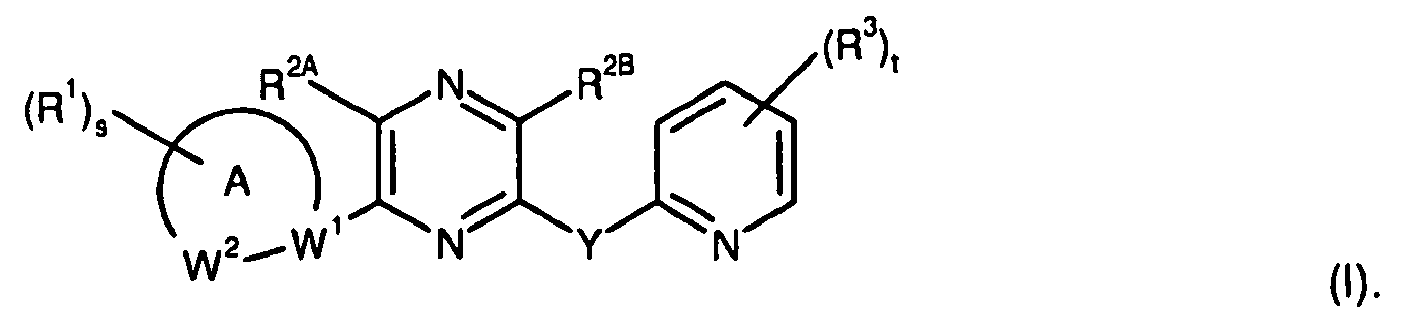
- W1 is

- The symbols s and t are independently integers from 1 to 4. One of skill in the art will immediately recognize that where A is a 5- membered heterocycloalkyl or 5- membered heteroaryl, then s is an integer from 1 to 3; and where A is a 6- membered heterocycloalkyl or 6- membered heteroaryl, then s is an integer from 1 to 4. Likewise, t is an integer from 1 to 4.
- R1, R2A, R2B, and R3 are independently H, -OH, -NH2, -NO2, -SO2NH2, -C(O)NH2, halogen, substituted or unsubstituted alkyl, substituted or unsubstituted heteroalkyl, substituted or unsubstituted 3- to 7- membered cycloalkyl, substituted or unsubstituted 5- to 7- membered heterocycloalkyl, substituted or unsubstituted aryl, or substituted or unsubstituted heteroaryl.
- R5 is H, substituted or unsubstituted alkyl, substituted or unsubstituted heteroalkyl, substituted or unsubstituted 3- to 7- membered cycloalkyl, substituted or unsubstituted 5- to 7- membered heterocycloalkyl, substituted or unsubstituted aryl, or substituted or unsubstituted heteroaryl.
- Where a plurality of R1 and/or R3 groups are present, each R1 and/or R3 group is optionally different. For example, where s is greater than one, then each R1 is optionally different; and where t is greater than one, then each R3 is optionally different.
- R1 and R3 may optionally form part of a fused ring system. For example, two R1 groups are optionally joined together with the atoms to which they are attached to form a substituted or unsubstituted 5- to 7- membered ring; and two R3 groups are optionally joined together with the atoms to which they are attached to form a substituted or unsubstituted 5- to 7- membered ring.
- In some embodiment, A is substituted or unsubstituted pyridinyl, substituted or unsubstituted pyrazolyl, substituted or unsubstituted benzothiophenyl, substituted or unsubstituted benzofuranyl, substituted or unsubstituted benzopyridinyl, substituted or unsubstituted benzoimidazolyl, substituted or unsubstituted pyrimidinyl, substituted or unsubstituted pyrazinyl, substituted or unsubstituted imidazolyl, substituted or unsubstituted thiophenyl, substituted or unsubstituted isoxazolyl, substituted or unsubstituted 4-azathiazolyl, substituted or unsubstituted 4-azapyrazolyl, substituted or unsubstituted 4-azapyrimidinyl, or substituted or unsubstituted thiazolyl.
- A may be substituted or unsubstituted pyridinyl, substituted or unsubstituted pyrazolyl, substituted or unsubstituted thiazolyl, substituted or unsubstituted benzothiophenyl, or substituted or unsubstituted benzofuranyl. In some embodiments, A has the formula


- In a related embodiment, A is

- In other embodiments, A is substituted or unsubstituted pyridinyl.
- In some embodiments, R3 is a substituted or unsubstituted 5- or 6- membered heterocycloalkyl, or substituted or unsubstituted 5- or 6- membered heteroaryl. In other related emobodiments, R3 is H,


- In other embodiments, the pyridyl moitety substituted by R3 is


- R1, R2A, R2B, and R3 may independently be H, -OH, -NH2, -NO2, halogen, substituted or unsubstituted alkyl, substituted or unsubstituted heteroalkyl, substituted or unsubstituted 5- to 7- membered heterocycloalkyl, substituted or unsubstituted aryl, or substituted or unsubstituted heteroaryl.
- R1 may be H, substituted or unsubstituted alkyl, substituted or unsubstituted heteroalkyl, or substituted or unsubstituted 5- to 7- membered heterocycloalkyl. R1 may also be H, -OCH3, methyl, unsubstituted pyrrolidine, or dimethylamino.
- R2A and R2B may independently be H, halogen, or substituted or unsubstituted heteroalkyl. R2A and R28 may also independently be H, halogen, or -C(O)NH2.
- R3 may be H, -NH2, -NO2, halogen, substituted or unsubstituted alkyl, substituted or unsubstituted heteroalkyl, substituted or unsubstituted 5- to 7- membered heterocycloalkyl, substituted or unsubstituted aryl, or substituted or unsubstituted heteroaryl. R3 may also be H, -NH2, -NO2, Cl, F, I, -OCH3, substituted or unsubstituted phenyl, flurophenyl, methyl, substituted or unsubstituted pyridinyl, substituted or unsubstituted thiophenyl, substituted or unsubstituted furanyl, substituted or unsubstituted pyrrolidinonyl, n-methyl piperizine, substituted or unsubstituted piperidinyl, or substituted or unsubstituted morpholinyl.
- In some embodiments, R2A and R2B are H; Y is -NH-; the pyridyl moitety substituted by R3 is


- In another related embodiment, the pyridyl moitety substituted by R3 is




- In some embodiments, A is


- In some embodiments, each substituted moiety described above for the compounds of the present invention is substituted with at least one substituent group. The term "substituent group," as used herein, is defined in detail above in the "Abbreviations and Definitions" section. More specifically, in some embodiments, each substituted alkyl, substituted heteroalkyl, substituted cycloalkyl, substituted heterocycloalkyl, substituted aryl, and/or substituted heteroaryl described above are substituted with at least one substituent group. Each substituent group is optionally different. In other embodiments, at least one or all of these groups are substituted with at least one size-limited substituent group. Alternatively, at least one or all of these groups are substituted with at least one lower substituent group. Size-limited substituent groups and lower substituent groups are both defined in detail above in the "Abbreviations and Definitions" section.
- In other embodiments, each substituted or unsubstituted alkyl is a substituted or unsubstituted C1-C20 alkyl, and each substituted or unsubstituted heteroalkyl is a substituted or unsubstituted 2- to 20- membered heteroalkyl.
- Alternatively, each substituted or unsubstituted alkyl is a substituted or unsubstituted C1-C8 alkyl, and each substituted or unsubstituted heteroalkyl is a substituted or unsubstituted 2- to 8- membered heteroalkyl.
- In some embodiments, the modulator has the formula

- This disclosure also provides a metal complex modulator, comprising a polyvalent metal ion (e.g. iron, zinc, copper, cobalt, manganese, and nickel) and a polydentate component of a metal ion chelator. The polydentate component is a compound of the present invention (e.g. a compound of Formula (I)). The metal complexes of the disclosure are potassium ion channel modulators.
- The disclosure also provides compounds of the invention that function as poly- or multi-valent species, including, for example, species such as dimers, trimers, tetramers and higher homologs of the compounds of the invention or reactive analogues thereof. The poly- and multi-valent species can be assembled from a single species or more than one species of the invention. For example, a dimeric construct can be "homo-dimeric" or "heterodimeric." Moreover, poly- and multi-valent constructs in which a compound of the invention or reactive analogues thereof are attached to an oligomeric or polymeric framework (e.g., polylysine, dextran, hydroxyethyl starch and the like) are within the scope of the present invention. The framework is preferably polyfunctional (i.e. having an array of reactive sites for attaching compounds of the invention). Moreover, the framework can be derivatized with a single species of the invention or more than one species of the invention.
- The following exemplary schemes illustrate methods of preparing the modulators of the present invention. These methods are not limited to producing the compounds shown, but can be used to prepare a variety of modulators such as the compounds and complexes described above. The modulators of the invention can also be produced by methods not explicitly illustrated in the schemes but are well within the skill of one in the art. The modulators can be prepared using readily available starting materials or known intermediates.
- In the following schemes, the symbol Y is independently selected from CH2, N, S, and O. The symbol D is independently selected from H, -OH, -NH2, -NO2, -SO2NH2, halogen, substituted or unsubstituted alkyl, substituted or unsubstituted heteroalkyl, substituted or unsubstituted 3- to 7- membered cycloalkyl, substituted or unsubstituted 5- to 7- membered heterocycloalkyl, substituted or unsubstituted aryl, and substituted or unsubstituted heteroaryl. The symbol p is an integer independently selected from 1-5. The symbol q is an integer independently selected from 0-5.
- The substituents of the pyrazine compounds of the invention can be produced through the methods outlined in Schemes 1-8.
- In one embodiment, the substituents of the invention comprise amino-substituted heteroaryl moieties as shown in Schemes 1-6.

- In Scheme 1, compound 1 is reacted with benzylamine, followed by debenzylation in concentrated sulfuric acid to produce 2.
- An alternative route to producing compound 2 is shown in Scheme 2.

- In Scheme 2, a compound 3 is reduced to form compound 2.
- Substituents can be added to the amino-substituted heteroaryl moieties as described in Schemes 3-6.

- In Scheme 3, compound 4 is iodinated to produce a halosubstituted 2-amino-aza-heterocycle 5. This compound is reacted with a boronic acid 6 in the presence of tris(dibenzylideneacetone)dipalladium(0) (Pd2(dba)3), and PPh3 in toluene, ethanol, and water to produce 2.
- In another example, amino substituents can be added to the heteroaryl moieties in the following manner.

- In Scheme 4, an iodo-substituted 2-amino-aza-heterocycle 5 is reacted with an amine 7 or amide using copper catalyzed coupling chemistry to generate a 2-amino-aza-heterocycle 8.

- In Scheme 5, a bromo-substituted 2-nitro-aza-heterocycle 9 is reacted with an amine 7 or amide using palladium-catalyzed coupling chemistry to generate an aminosubstituted 2-nitro-aza-heterocycle 10. The nitro adduct is reduced to an amino adduct 8 by a palladium catalyzed hydrogenation.

- In Scheme 6, a bromo-substituted 2-nitro-aza-heterocycle 9 is reacted with an amine 7 or amide using copper catalyzed coupling chemistry to generate an aminosubstituted 2-nitro-aza-heterocycle 10. The nitro adduct is reduced to an amino adduct 8 by a palladium catalyzed hydrogenation.
- In one embodiment, the substituents of the invention comprise halo-substituted heteroaryl moieties as shown in Scheme 7.

- In Scheme 7, compound 11 or 2 or 8 is halogenated by diazotization followed by sodium nitrite in the presence of acid containing halogen at 0°C to produce compound 12.
- In another embodiment, the substituents of the invention comprise stannyl-substituted heteroaryl moieties as shown in Scheme 8.

- In Scheme 8, compound 13 is stannylated with n-butyllithium to produce compound 14.
- Stannyl-substituted heteroaryl moieties can be added to a pyrazine compound of the invention through the methods outlined in Scheme 9.

- In Scheme 9, compound 14 is next reacted with 2,6-dichloropyrazine 15 in the presence of a palladium catalyst to produce the product 16.
- Halo-substituted heteroaryl moieties can be added to a pyrazine compound of the invention through the methods outlined in Scheme 10.

- In Scheme 10, the 2,6-dichloropyrazine 15 is converted into a strong nucleophile through stannylation to create compound 17. Compound 17 is next reacted with compound 13 in the presence of a palladium catalyst to produce the product 16.
- An alternative method of producing substituted pyrazine compounds is outlined in Scheme 11.

- In Scheme 11, compound 15 is reacted with compound 18, which is commercially available, in order to produce compound 16. An example of a commercially available version of compound 18 is 2-thiophenyl boronic acid.
- Amino-substituted heteroaryl moieties can be added to a pyrazine compound of the invention through the methods outlined in Scheme 12.

- In Scheme 12, compound 15 is reacted with compound 2 or 8 in order to produce compound 19.
- Stannyl-substituted heteroaryl moieties can be added to a substituted pyrazine compound of the invention through the methods outlined in Scheme 13.

- In Scheme 13, compound 14 is added to compound 19 in the presence of a palladium catalyst to produce the hydrochloride salt of a bis-substituted pyrazine 20.
- Amino-substituted heteroaryl moieties can be added to a substituted pyrazine compound of the invention through the methods outlined in Scheme 14.

- In Scheme 14, compound 2 or 8 is mixed with sodium hydride to facilitate the nucleophilic addition of 2 or 8 to compound 16. The product is a hydrochloride salt of a bis-substituted pyrazine 20.
- A method of adding an amino-substituted aromatic moiety to a substituted pyrazine compound of the invention can be accomplished through the method outlined in Scheme 15.

- In Scheme 15, compound 16 is mixed with an amino-substituted aromatic moiety to produce 21.
- Pyrazine compounds can be modified as described in Scheme 16.

- In Scheme 16, compound 20 is reacted with a halogen in order to produce compound 22.
- The compounds of the disclosure also include metal complexes. These metal complexes comprise a polyvalent metal ion and a pyrazinyl compound of the invention. In an exemplary embodiment, the polyvalent metal ion can be a transition metal. In another exemplary embodiment, the polyvalent metal ion is a member selected from iron, zinc, copper, cobalt, manganese, and nickel.
- A method of creating metal-pyrazinyl complexes of compounds of the invention is outlined in Scheme 17.

- In Scheme 17, compound 20 or 21 or 22, or combinations thereof, are first mixed with FeClO4 in ether. To this mixture is added triethylamine which then forms metal complex 23.
- SK monomers as well as SK alleles and polymorphic variants are subunits of potassium ion channels. The activity of a potassium ion channel comprising SK subunits can be assessed using a variety of in vitro and in vivo assays, e.g., measuring current, measuring membrane potential, measuring ion flow, e.g., potassium or rubidium, measuring potassium concentration, measuring second messengers and transcription levels, using potassium-dependent yeast growth assays, and using e.g., voltage-sensitive dyes, radioactive tracers, and patch-clamp electrophysiology.
- Furthermore, such assays can be used to test for inhibitors and activators of channels comprising SK. The SK family of channels is implicated in a number of disorders that are targets for a therapeutic or prophylactic regimen, which functions by blockade or inhibition of one or more members of the SK channel family. The modulators and methods of the invention are useful to treat central or peripheral nervous system disorders (e.g., migraine, ataxia, Parkinson's disease, bipolar disorders, trigeminal neuralgia, spasticity, mood disorders, brain tumors, psychotic disorders, myokymia, seizures, epilepsy, hearing and vision loss, psychosis, anxiety, depression, dementia, memory and attention deficits, Alzheimer's disease, age-related memory loss, learning deficiencies, anxiety, traumatic brain injury, dysmenorrhea, narcolepsy and motor neuron diseases).
- Modulators of the potassium ion channels are tested using biologically active SK, either recombinant or naturally occurring, or by using native cells, like cells from the nervous system expressing an SK channel. SK channels can be isolated, co-expressed or expressed in a cell, or expressed in a membrane derived from a cell. In such assays, SK is expressed alone to form a homomeric potassium ion channel or is co-expressed with a second subunit (e.g., another SK family member) so as to form a heteromeric potassium ion channel. Modulation is tested using one of the in vitro or in vivo assays described above. Samples or assays that are treated with a potential potassium ion channel inhibitor or activator are compared to control samples without the test modulator, to examine the extent of modulation. Control samples (untreated with activators or inhibitors) are assigned a relative potassium ion channel activity value of 100. Inhibition of channels comprising SK is achieved when the potassium ion channel activity value relative to the control is less than 70%, preferably less than 40% and still more preferably, less than 30%. Modulators that decrease the flow of ions will cause a detectable decrease in the ion current density by decreasing the probability of a channel comprising SK being open, by decreasing conductance through the channel, and decreasing the number or expression of channels.
- Changes in ion flow may be assessed by determining changes in polarization (i.e., electrical potential) of the cell or membrane expressing the potassium ion channel. A preferred means to determine changes in cellular polarization is by measuring changes in current or voltage with the voltage-clamp and patch-clamp techniques, using the "cell-attached" mode, the "inside-out" mode, the "outside-out" mode, the "perforated cell" mode, the "one or two electrode" mode, or the "whole cell" mode (see, e.g., Ackerman et al., New Engl. J. Med. 336: 1575-1595 (1997)). Whole cell currents are conveniently determined using the standard methodology (see, e.g., Hamil et al., Pflugers. Archiv. 391: 85 (1981)). Other known assays include: radiolabeled rubidium flux assays and fluorescence assays using voltage-sensitive dyes (see, e.g., Vestergarrd-Bogind et al., J. Membrane Biol. 88: 67-75 (1988); Daniel et al., J. Pharmacol. Meth. 25: 185-193 (1991); Holevinsky et al., J. Membrane Biology 137: 59-70 (1994)). Assays for modulators capable of inhibiting or increasing potassium flow through the channel proteins can be performed by application of the modulators to a bath solution in contact with and comprising cells having a channel of the present invention (see, e.g., Blatz et al., Nature 323: 718-720 (1986); Park, J. Physiol. 481: 555-570 (1994)). Generally, the modulators to be tested are present in the range from about 1 pM to about 100 mM, preferably from about 1 pM to about 1 µM.
- The effects of the test modulators upon the function of the channels can be measured by changes in the electrical currents or ionic flow or by the consequences of changes in currents and flow. Changes in electrical current or ionic flow are measured by either increases or decreases in flow of ions such as potassium or rubidium ions. The cations can be measured in a variety of standard ways. They can be measured directly by concentration changes of the ions or indirectly by membrane potential or by radio-labeling of the ions. Consequences of the test modulator on ion flow can be quite varied. Accordingly, any suitable physiological change can be used to assess the Influence of a test modulator on the channels of this invention. The effects of a test modulator can be measured by a toxin-binding assay. When the functional consequences are determined using intact cells or animals, one can also measure a variety of effects such as transmitter release (e.g., dopamine), hormone release (e.g., insulin), transcriptional changes to both known and uncharacterized genetic markers (e.g., northern blots), cell volume changes (e.g., in red blood cells), immunoresponses (e.g., T cell activation), changes in cell metabolism such as cell growth or pH changes, and changes in intracellular second messengers such as calcium, or cyclic nucleotides.
- In another aspect, the present invention provides pharmaceutical compositions comprising a pharmaceutically acceptable carrier and a modulator of the present invention (e.g. a compound of the present invention or a complex of the present invention).
- The modulators of the present invention can be prepared and administered in a wide variety of oral, parenteral and topical dosage forms. Thus, the modulators of the present invention can be administered by injection, that is, intravenously, intramuscularly, intracutaneously, subcutaneously, intraduodenally, or intraperitoneally. Also, the modulators described herein can be administered by inhalation, for example, intranasally. Additionally, the modulators of the present invention can be administered transdermally. Accordingly, the present invention also provides pharmaceutical compositions comprising a pharmaceutically acceptable carrier and either a modulator, or a pharmaceutically acceptable salt of a modulator.
- For preparing pharmaceutical compositions from the modulators of the present invention, pharmaceutically acceptable carriers can be either solid or liquid. Solid form preparations include powders, tablets, pills, capsules, cachets, suppositories, and dispersible granules. A solid carrier can be one or more substances, which may also act as diluents, flavoring agents, binders, preservatives, tablet disintegrating agents, or an encapsulating material.
- In powders, the carrier is a finely divided solid, which is in a mixture with the finely divided active component. In tablets, the active component is mixed with the carrier having the necessary binding properties in suitable proportions and compacted in the shape and size desired.
- The powders and tablets preferably contain from 5% or 10% to 70% of the active modulator. Suitable carriers are magnesium carbonate, magnesium stearate, talc, sugar, lactose, pectin, dextrin, starch, gelatin, tragacanth, methylcellulose, sodium carboxymethylcellulose, a low melting wax, cocoa butter, and the like. The term "preparation" is intended to include the formulation of the active modulator with encapsulating material as a carrier providing a capsule in which the active component with or without other carriers, is surrounded by a carrier, which is thus in association with it. Similarly, cachets and lozenges are included. Tablets, powders, capsules, pills, cachets, and lozenges can be used as solid dosage forms suitable for oral administration.
- For preparing suppositories, a low melting wax, such as a mixture of fatty acid glycerides or cocoa butter, is first melted and the active component is dispersed homogeneously therein, as by stirring. The molten homogeneous mixture is then poured into convenient sized molds, allowed to cool, and thereby to solidify.
- Liquid form preparations include solutions, suspensions, and emulsions, for example, water or water/propylene glycol solutions. For parenteral injection, liquid preparations can be formulated in solution in aqueous polyethylene glycol solution.
- Aqueous solutions suitable for oral use can be prepared by dissolving the active component in water and adding suitable colorants, flavors, stabilizers, and thickening agents as desired. Aqueous suspensions suitable for oral use can be made by dispersing the finely divided active component in water with viscous material, such as natural or synthetic gums, resins, methylcellulose, sodium carboxymethylcellulose, and other well-known suspending agents.
- Also included are solid form preparations, which are intended to be converted, shortly before use, to liquid form preparations for oral administration. Such liquid forms include solutions, suspensions, and emulsions. These preparations may contain, in addition to the active component, colorants, flavors, stabilizers, buffers, artificial and natural sweeteners, dispersants, thickeners, solubilizing agents, and the like.
- The pharmaceutical preparation is preferably in unit dosage form. In such form the preparation is subdivided into unit doses containing appropriate quantities of the active component. The unit dosage form can be a packaged preparation, the package containing discrete quantities of preparation, such as packeted tablets, capsules, and powders in vials or ampoules. Also, the unit dosage form can be a capsule, tablet, cachet, or lozenge itself, or it can be the appropriate number of any of these in packaged form.
- The quantity of active component in a unit dose preparation may be varied or adjusted from 0.1 mg to 10000 mg, more typically 1.0 mg to 1000 mg, most typically 10 mg to 500 mg, according to the particular application and the potency of the active component. The composition can, if desired, also contain other compatible therapeutic agents.
- In yet another aspect, the present invention provides a method for decreasing ion flow through potassium ion channels in a cell, comprising contacting the cell with a potassium ion channel modulating amount of a modulator of the present invention.
- In an exemplary embodiment, the potassium ion channels comprise at least one SK subunit.
- The methods provided in this aspect of the invention are useful in the therapy of conditions mediated through potassium ion flow, as well as for the diagnosis of conditions that can be treated by decreasing ion flow through potassium ion channels. Additionally the methods are useful for determining if a patient will be responsive to therapeutic agents which act by modulating potassium ion channels. In particular, a patient's cell sample can be obtained and contacted with a potassium ion channel modulator described above and the ion flow can be measured relative to a cell's ion flow in the absence of the modulator.
A decrease in ion flow will typically indicate that the patient will be responsive to a therapeutic regiment of the modulator. - In still another aspect, the present invention provides a method for treating a disease through the modulation of potassium ion flow through potassium ion channels. The modulation may be activation or inhibition of the potassium ion flow. Thus, the modulators of the present invention may be inhibitors of potassium ion flow through potassium ion channels (i.e. decrease the flow relative to the absence of the modulator) or activators of potassium ion flow through potassium ion channels (i.e. increase the flow relative to the absence of the modulator).
- The modulators are useful in the treatment of central or peripheral nervous system disorders (e.g., migraine, ataxia, Parkinson's disease, bipolar disorders, trigeminal neuralgia, spasticity, mood disorders, brain tumors, psychotic disorders, myokymia, seizures, epilepsy, hearing and vision loss, psychosis, anxiety, depression, dementia, memory and attention deficits, Alzheimer's disease, age-related memory loss, learning deficiencies, anxiety, traumatic brain injury, dysmenorrhea, narcolepsy and motor neuron diseases). This method involves administering, to a patient, an effective amount (e.g. a therapeutically effective amount) of a modulator of the present invention (a compound or complex of the present invention).
- Thus, the present invention provides a method of decreasing ion flow through potassium ion channels in a cell. The method includes contacting the cell with a potassium ion channel-modulating amount of a modulator of the present invention. In some embodiments, the potassium ion channel includes at least one SK subunit. The cell may be isolated or form part of a organ or organism.
- The modulators provided herein find therapeutic utility via modulation of potassium ion channels in the treatment of diseases or conditions. The potassium ion channels that are typically modulated are described herein. As noted above, these channels may include homomultimers and heteromultimers.
- In therapeutic use for the treatment of neurological conditions, the modulators utilized in the pharmaceutical method of the invention are administered at the initial dosage of about 0.001 mg/kg to about 1000 mg/kg daily. A daily dose range of about 0.1 mg/kg to about 100 mg/kg is more typical. The dosages, however, may be varied depending upon the requirements of the patient, the severity of the condition being treated, and the modulator being employed. Determination of the proper dosage for a particular situation is within the skill of the practitioner. Generally, treatment is initiated with smaller dosages, which are less than the optimum dose of the modulator. Thereafter, the dosage is increased by small increments until the optimum effect under the circumstances is reached. For convenience, the total daily dosage may be divided and administered in portions during the day.
- The materials and methods of the present invention are further illustrated by the examples which follow. These examples are offered to illustrate, but not to limit, the claimed invention.
- In the examples below, unless otherwise stated, temperatures are given in degrees Celsius (°C); operations were carried out at room or ambient temperature, "rt," or "RT," (typically a range of from about 18-25 °C); evaporation of solvent was carried out using a rotary evaporator under reduced pressure (typically, 4.5-30 mm Hg) with a bath temperature of up to 60°C; the course of reactions was typically followed by thin layer chromatography (TLC) and reaction times are provided for illustration only; melting points are uncorrected; products exhibited satisfactory 1H-NMR and/or microanalytical data; yields are provided for illustration only; and the following conventional abbreviations are also used: mp (melting point), L (liter(s)), mL (milliliters), mmol (millimoles), g (grams), mg (milligrams), min (minutes), and h (hours).
- Unless otherwise specified, all solvents (HPLC grade) and reagents were purchased from suppliers and used without further purification. Reactions were conducted under a blanket of argon unless otherwise stated. Analytical TLC was performed on Whatman Inc. 60 silica gel plates (0.25 mm thickness). Compounds were visualized under UV lamp (254 nM) or by developing with KMnO4/KOH,ninhydrin or Hanessian's solution. Flash chromatography was done using silica gel from Selectro Scientific (particle size 32-63). 1H NMR, 19F NMR and 13C NMR spectra were recorded on a Varian 300 machine at 300 MHz, 282 MHz and 75.7 MHz, respectively. Melting points were recorded on a Electrothermal IA9100 apparatus and were uncorrected.
- A mixture of 14.7 mmol of 1 and 75 mmol of benzylamine was heated at 220°C for 6 h in a sealed tube. The reaction mixture was concentrated in vacuo and the residue was purified by column chromatography on silica gel to give 7.0 mmol of N-benzyl pyridine-2-amine.
- A solution of 6.9 mmol of N-benzyl pyridin-2-amine in 15 mL of conc. H2SO4 was stirred at 80°C for 1 h. The reaction mixture was poured into crushed ice and neutralized with 28% NH4OH. The mixture was extracted with AcOEt and the organic phase was washed with brine, dried over MgSO4, and concentrated in vacuo. The residue was purified by column chromatography on silica gel to give 5.0 mmol of 2.
- Analytical data for exemplary compounds of structure 2 are provided below.
- 1H NMR (300 MHz, CDCl3) □ 7.88 (d, J = 2.2 Hz, 1H), 7.26 (dd, J1 = 8.4 Hz, J2 = 2.2 Hz, 1H), 6.45 (d, J = 8.4 Hz, 1H), 4.27 (br s, 2H), 2.45 (d, J = 6.6 Hz, 1H), 1.48-1.56 (m, 2H),1.27-1.35 (m, 6H), 0.88 (t, J = 6.6 Hz, 3H); MS m/z: 178 (M+1).
- 1H NMR (300 MHz, CDCl3) □ 8.08 (d, J = 2.6 Hz, 1H), 7.47 (dd, J1 = 8.6 Hz, J2 = 2.6 Hz, 1H), 6.47 (dd, J1 = 8.6 Hz, J2 = 0.7 Hz, 1H), 1.28 (s, 9H); MS m/z: 151 (M+1).
- 1H NMR (300MHz,CDCl3) □ 7.94 (d, J = 1.8Hz, 1H), 7.25-7.37(m,6H), 6.45 (dd, J1 = 8.4 Hz, J2 = 0.7 Hz, 1H), 4.51 (s, 2H), 4.31 (br s, 2H), 3.62 (t, J = 6.9 Hz, 2H), 2.78 (t, J = 6.9 Hz, 2H); MS m/z: 228 (M+1).
- 1H NMR (300 MHz, DMSO-d6) □ 7.80 (d, J = 2.4 Hz, 1H), 7.28 (dd, J1 = 8.7 Hz, J2 = 2.7 Hz, 1H), 6.43 (d, J = 8.8 Hz, 1H), 5.97 (br s, 2H), 3.53 (t, J = 5.4 Hz, 2H), 3.06 (s, 2H), 2.68 (t, J = 5.4 Hz, 2H), 2.26 (s, 3H); MS m/z: 279 (M + 1).
- A solution or a suspension of 15 mmol of 3 and 0.5 g of Pd/C (10%) in 150 mL of methanol was stirred overnight under H2 (1 atm). After filtering through celite, the solution was concentrated under a reduced pressure to give 15 mmol of 2.
- A mixture of 240 mmol of 4, 58 mmol of HIO4, and 240 mmol of I2 in 60 mL of water, 4 mL of concentrated H2SO4, and 200 mL of acetic acid was stirred at 80°C for 4 h. Excess I2 was neutralized by the addition of 200 mL of saturated Na2S2O3 solution. The resulting aqueous solution was extracted with EtOAc. The organic phase was washed with saturated NaCl, dried over MgSO4, and concentrated under a reduced pressure. The residue was purified by column chromatography on silica gel to give 136 mmol of 5.
- A mixture of 15 mmol of 5, 15 mmol of 6, 0.35 mmol of Pd2(dba)3, and 2.4 mmol of PPh3 in 40 mL of toluene, 20 mL of ethanol, and 20 mL of water was refluxed overnight under N2. The reaction mixture was diluted with 300 mL of ethyl acetate and the organic solution was washed with saturated NaCl, dried over MgSO4, and concentrated under a reduced pressure. The residue was purified by column chromatography on silica gel to give 13.1 mmol of 2.
- Analytical data for exemplary compounds of structure 2 are provided below.
- 1H NMR (300 MHz, DMSO-d6) □ 7.99 (d, J = 2.0 Hz, 1H), 7.48 (dd, J1 = 8.6 Hz, J2 = 2.3 Hz, 1H), 7.26 (d, J = 7.5 Hz, 1H), 7.21 (d, J = 6.1 Hz, 1H), 7.03 (d, J = 8.0 Hz, 1H), 6.96 (t, J = 7.3 Hz, 1H), 6.44 (d, J = 8.5 Hz, 1H), 5.94 (s, 2H), 3.73 (s, 3H); MS m/z: 201 (M+1).
- 1H NMR (300 MHz, DMSO-d6 ) □ 8.17 (d, J = 2.0 Hz, 1H), 7.63-7.52 (m, 2H), 6.48 (d, J = 3.2 Hz, 1H), 6.43 (d, J = 8.7 Hz, 1H), 6.08 (s, 2H), 2.27 (s, 3H); MS m/z: 175 (M + 1).
- 1H NMR (300 MHz, DMSO-d6 ) □ 8.78 (d, J = 2.1 Hz, 1H), 8.44 (dd, J1 = 4.9 Hz, J2 = 1.6 Hz, 1H), 8.27 (d, J = 2.2 Hz, 1H), 7.94 (dt, J1 = 8.0 Hz, J2 = 1.9 Hz, 1H), 7.73 (dd, J1= 8.7 Hz, J2 = 2.6 Hz, 1H), 7.38 (dd, J1 = 8.7 Hz, J2 = 2.6 Hz, 1H), 6.52 (d, J = 8.7 Hz, 1H), 6.17 (s, 2H); MS m/z: 172 (M + 1).
- 1H NMR (300 MHz, DMSO-d6 ) □ 7.68 (s, 1H), 7.30 (dd, J1 = 8.5 Hz, J2 = 5.7 Hz, 2H), 7.19 (t, J = 8.9 Hz, 2H), 6.33 (s, 1H), 5.87 (s, 2H), 2.07 (s, 3H); MS m/z: 203 (M+1).
- 1H NMR (300 MHz, DMSO-d6 ) □ 8.27 (d, J = 2.3 Hz, 1H), 7.71 (d, J = 8.6 Hz, 1H), 7.42-7.38 (m, 3H), 7.08-7.01 (m, 1H), 6.49 (d, J = 8.6 Hz, 1H), 6.15 (s, 2H); MS m/z: 189 (M+1).
- 1H NMR (300 MHz, DMSO-d6 ) □ 8.19 (d, J = 2.3 Hz, 1H), 7.61 (d, J = 8.5 Hz, 1H), 7.37 (d, J = 5.1 Hz, 1H), 7.25 (d, J = 3.3 Hz, 1H), 7.04 (t, J = 4.7 Hz, 1H), 6.45 (d, J = 8.7 Hz, 1H), 6.14 (s, 2H); MS m/z: 177 (M + 1).
- To a solution of 50.0 mmol of 5 and 60.0 mmol of 7 in 50.0 mL of 1,4-dioxane was added 0.500 mmol of copper (I) iodide followed by the addition of 100 mmol of K3PO4 and 5 mmol of trans-cyclohexanediamine, then the resulting mixture was stirred at 100°C for 16 h. The reaction mixture was cooled to rt and diluted with 500 mL of H2O. The resulting aqueous solution was extracted with CHCl3. The organic phase was washed with saturated NaCl, dried over MgSO4 and concentrated in vacuo. The crude product was purified by column chromatography to give 43.4 mmol of 8.
- Analytical data for exemplary compounds of structure 8 are provided below.
- 1H NMR (400 MHz, CDCl3) □ 7.97-8.00 (m, 1H), 7.35-7.40 (m, 1H), 6.50-6.54 (m, 1H), 4.54 (br s, 2H), 4.24 (s, 2H), 3.65-3.69 (m, 2H), 3.75-3.80 (m, 2H), 1.50 (s, 9H); MS m/z: 293 (M+1).
- 1H NMR (400 MHz, DMSQ-d6) □ 7.46 (d, J= 3.5 Hz, 1H), 6.95 (dd, J1 = 8.8 Hz, J2 = 3.5 Hz, 1H), 6.38 (d, J = 8.8Hz, 1H), 5.04 (br s, 2H), 3.26-3.40 (m, 4H), 2.53-2.59 (m, 2H), 2.41-2.47 (m, 2H), 2.24 (s, 3H), 1.78-1.90 (m, 2H); MS m/z: 207 (M+1).
- 1H NMR (400 MHz, DMSO-d6) □ 7.71 (d, J = 2.9 Hz, 1H), 7.18 (dd, J1 = 8.8 Hz, J2 = 2.9 Hz, 1H), 6.41 (d, J = 8.8 Hz, 1H), 5.90 (br s, 2H), 3.64-3.71 (m, 2H), 2.51-2.62 (m, 4H), 2.26 (s, 3H); MS m/z: 221 (M+1).
- 1H NMR (400 MHz, CDCl3) □ 7.90 (d, J = 2.8 Hz, 1H), 7.29 (dd, J1 = 8.8 Hz, J2 = 2.8 Hz, 1H), 6.50 (d, J = 8.8 Hz, 1H), 4.54 (br s, 2H), 3.71-3.75 (m, 6H), 2.80-2.83 (m, 2H), 1.49 (s, 9H); MS m/z 307 (M+1).
- A mixture of 30 mmol of 9, 30 mmol of 7,0.04 mmol of Pd2(dba)3, 0.08 mmol of rac-2,2'-bis(phenylphosphino)-1,1'-binaphthyl (BINAP), and 42 mmol of Cs2CO3 in 100 mL of dry toluene was stirred at 80°C for two days under N2. The reaction mixture was diluted with 400 mL of ethyl acetate and the organic solution was washed with saturated NaCl, dried over MgSO4, and concentrated under reduced pressure. The residue was crystallized in ethyl acetate to yield 15.8 mmol of 10.
- A solution or a suspension of 15 mmol of 10 and 0.5 g of Pd/C (10%) in 150 mL of methanol was stirred overnight under H2 (1 atm). After filtering through celite, the solution was concentrated under a reduced pressure to give 15 mmol of 8.
- Analytical data for exemplary compounds of structure 8 are provided below.
- 1H NMR (300 MHz, DMSO-d 6) □ 7.56 (d, J = 2.7 Hz, 1H), 7.13 (dd, J1 = 8.9 Hz, J2 = 2.9 Hz, 1H), 6.36 (d, J = 8.8 Hz, 1H), 5.36 (s, 2H), 2.89 (t, J = 5.0 Hz, 4H), 2.40 (t, J = 5.0 Hz, 4H), 2.18 (s, 3H); MS m/z: 193 (M + 1).
- 1H NMR (300 MHz, DMSO-d 6) □ 7.56 (d, J = 2.8 Hz, 1H), 7.11 (dd, J1 = 8.9 Hz, J2 = 3.0 Hz, 1H), 6.35 (d, J = 8.8 Hz, 1H), 5.34 (s, 2H), 3.26 (d, J = 12.0 Hz, 2H), 2.45 (dt, J1= 9.3 Hz, J2 = 4.2 Hz, 2H), 1.64 (d, J = 12.5 Hz, 2H), 1.4-1.3 (m, 1H), 1.44-1.28 (m, 2H), 0.90 (d, J = 6.5 Hz, 3H); MS m/z: 192 (M + 1).
- 1H NMR (300 MHz, DMSO-d6 ) □ 8.03 (d, J=2.6 Hz, 1H), 7.63 (dd, J1 =8.9 Hz, J2 =2.6 Hz, 1H), 6.42 (d, J = 8.9 Hz, 1H), 5.83 (s, 2H), 3.70 (t, J = 7.0 Hz, 2H), 2.39 (t, J1= 7.8 Hz, 2H), 2.01 (dd, J1 = 7.1 Hz, J2 = 7.9 Hz, 2H); MS m/z: 178 (M + 1).
- 1H NMR (400 MHz, DMSO-d 6) □ 7.76(d, J=2.4 Hz, 1H), 7.24 (dd, J1 =8.8 Hz, J2 = 2.4 Hz, 1H), 6.42 (d, J = 8.8 Hz, 1H), 5.90 (br s, 2H), 3.49 (t, J = 6.0 Hz, 2H), 2.34 (t, J = 6.0 Hz, 2H), 1.77-1.85 (m, 4H),; MS m/z:192 (M + 1).
- 1H NMR (400 MHz, DMSO-d 6) □ 7.59 (d, J = 2.4 Hz, 1H), 7.14 (dd, J1 = 9.2 Hz, J2 = 2.4 Hz, 2H), 6.38 (d, J = 9.2 Hz, 1H), 5.34 (br s, 2H), 4.63 (1H, d, J = 4.4 Hz), 3.50-3.57 (m, 1H), 3.18-3.23 (m, 2H), 2.59-2.65 (m, 2H), 1.76-1.83 (m, 2H), 1.44-1.54 (m, 2H); MS m/z: 194 (M + 1).
- 1H NMR (400 MHz, CDCl3) □ 7.79 (d, J = 2.8 Hz, 1H), 7.17 (dd, J1 = 8.8 Hz, J2 = 2.8Hz, 1H), 6.47(dd, J1 =8.0Hz, J2=0.8Hz, 1H), 4.11 (br s, 2H), 2.98 (d, J = 5.2 Hz, 2H), 2.97 (d, J = 5.2 Hz, 2H), 1.68-1.74 (m, 4H), 1.51-1.57 (m, 2H); MS m/z: 178 (M + 1).
- 1H NMR (300 MHz, DMSO-d6) □ 7.55-7.60 (m, 1H), 7.10-7.17 (m, 1H), 6.35-6.42 (m, 1H), 5.34 (br s, 2H), 2.85-2.94 (m, 4H), 2.50-2.70 (m, 5H), 0.95-1.02 (m, 6H); MS m/z: 221 (M+1).
- 1H NMR (400 MHz, CDCl3) □ 7.78 (d, J = 2.8 Hz, 1H), 7.17 (dd, J1 = 8.8 Hz, J2 = 2.8 Hz, 1H), 6.49 (d, J = 8.8 Hz, 1H), 4.21 (br s, 2H), 3.57 (t, J = 5.2 Hz, 4H), 2.96 (t, J = 5.2 Hz, 4H), 1.48 (s, 9H); MS m/z: 279 (M+1).
- 1H NMR (300 MHz, DMSO-d6) □ 7.80 (d, J = 2.4 Hz, 1H), 7.28 (dd, J1 = 8.7 Hz, J2 = 2.7 Hz, 1H), 6.43 (d, J = 8.8 Hz, 1H), 5.97 (br s, 2H), 3.53 (t, J = 5.4 Hz, 2H), 3.06 (s, 2H), 2.68 (t, J = 5.4 Hz, 2H),2.26 (s, 3H); MS m/z: 207 (M + 1).
- 1H NMR (400 MHz, CDCl3) □ 7.78 (d, J = 2.8 Hz, 1H), 6.83 (dd, J1 = 8.8 Hz, J2 = 2.8 Hz, 1H), 6.49 (d, J = 8.8 Hz, 1H), 3.96 (br s, 2H), 3.24-3.41 (m, 3H), 3.09 (t, J = 8.0 Hz, 1H), 2.82-2.90 (m, 1H), 2.35 (s, 6H), 2.14-2.22 (m, 1H), 1.86-1.96 (m, 1H); MS m/z: 206 (M +1).
- 1H NMR (400 MHz, CDCl3) □ 7.56 (d, J = 2.8 Hz, 1H), 6.86 (dd, J1 = 8.4 Hz, J2 = 2.8 Hz, 1H), 6.44 (d, J = 8.4 Hz, 1H), 4.00 (br s, 2H), 3.34-3.37 (m, 1H), 2.80-2.90 (m, 4H), 2.50-2.53 (m, 1H), 1.23-1.97 (m, 6H); MS m/z: 218 (M + 1).
- 1H NMR (400 MHz, CDCl3) □ 7.91 (d, J = 2.8 Hz, 1H), 7.30 (dd, J1 = 8.8 Hz, J2 = 2.8 Hz, 1H), 6.49 (d, J = 8.8 Hz, 1H), 4.29 (br s, 2H), 3.06 (m, 1H), 2.86 (dd, J1 = 11.2 Hz, J2 = 3.2 Hz, 2H), 2.66 (m, 1H), 2.33 (m, 4H), 2.12 (t, J = 10.8 Hz, 1H), 1.07 (d, J = 6.4 Hz, 3H), 0.85 (d, J = 6.4 Hz, 3H); MS m/z. 221 (M + 1).
- H NMR (400 MHz, CDCL3) □ 7.78 (d, J = 2.8 Hz, 1H), 7.16 (dd, J1 = 8.8 Hz, J2 = 2.8 Hz, 1H), 6.47 (d, J = 8.8 Hz, 1H), 4.12 (br s, 2H), 3.97-4.04 (m, 1H), 2.72 (s, 3H), 2.60-2.70 (m, 2H), 2.50-2.56 (m, 2H), 2.34 (s, 3H), 2.04-2.10 (m, 1H), 1.77-1.83 (m, 1H); MS m/z 207 (M + 1).
- 1H NMR (400 MHz, CDCl3) □ 7.74 (d, J = 2.8 Hz, 1H). 7.15 (dd, J1 = 8.8 Hz, J2 = 2.8 Hz, 1H), 6.48 (d, J = 8.8 Hz, 1H), 4.33 (m, 1H), 4.21 (br s, 2H), 3.92-3.96 (m, 1H), 3.19-3.26 (m, 2H), 3.08-3.11 (m, 1H), 2.82 (dd, J1 = 11.6 Hz, J2 = 4.0 Hz, 1H), 2.61-2.68 (m, 1H), 1.48 (s, 9H), 1.32 (d, J = 6.8 Hz, 3H); MS m/z. 293 (M + 1).
- 1H NMR (400 MHz, CDCl3) □ 7.76 (d, J = 2.8 Hz, 1H). 7.16 (dd. J1 = 8.8 Hz, J2 = 2.8 Hz, 1H), 6.50 (d, J = 8.8 Hz, 1H), 4.18-4.24 (m, 2H), 3.08-3.11 (m, 2H), 2.80 (dd, J1 = 11.6 Hz, J2 = 4.0 Hz, 1H), 1.49 (s, 9H), 1.37 (d, J = 6.8 Hz, 6H); MS m/z: 307 (M+1).
- MS m/z: 182 (M+1).
- MS m/z 208 (M+1).
- To a solution of 24.6 mmol of 9 and 27.3 mmol of 7 in 50 mL of 1,4-dioxane was added 4.92 mmol of copper (I) iodide followed by the addition of 49.2 mmol of K3PO4 and 4.92 mmol of trans-cyclohexanediamine, then the resulting mixture was stirred at 100°C for 12 h. The reaction mixture was cooled to room temperature and concentrated in vacuo. The residue was diluted with CHCl3, poured into water, and insoluble material was removed by celite filtration. The filtrate was extracted with CHCl3, dried over MgSO4 and concentrated in vacuo. The crude product was purified by column chromatography to give 7.87 mmol of nitro derivative.
- A solution of 7.66 mmol of nitro derivative and 0.5 g of Pd/C (10%) in 150 mL of methanol was stirred overnight under H2 (1 atm). After filtering through celite, the solution was concentrated under reduced pressure to give 4.75 mmol of 8.
- Analytical data for an exemplary compound of structure 8 are provided below.
- 1H NMR (400 MHz, DMSO-d 6) □ 7.70 (d, J = 2.4. Hz, 1H), 7.17 (dd, J1 = 8.8 Hz, J2 = 2.4 Hz, 1H), 7.30-7.36 (m, 5H), 6.40 (d, J = 8.8 Hz, 1H), 5.90 (br s, 2H), 3.66-3.72 (m, 2H), 3.59 (br s, 2H), 2.59-2.71 (m, 6H); MS m/z: 327 (M+1).
- To a solution of 30.7 mmol of 11 and 5 mL of bromine in 48 mL of hydrobromic acid (48%) at 0 °C was added 24 mL (25 M) of aqueous NaNO2. The mixture was stirred for 1 h at rt before it was neutralized by 145 mL of 3M NaOH. The aqueous solution was extracted with ethyl acetate, and the organic phase was washed with saturated NaCl, dried over MgSO4. and concentrated under a reduced pressure. The crude product was purified by column chromatography to give 24.6 mmol of 12.
- Analytical data for exemplary compounds of structure 12 are provided below.
- 1H NMR (300 MHz, DMSO-d 6) □ 8.47 (d, J = 2.8 Hz, 1H), 7.89 (dd, J1 = 8.5 Hz, J2 = 2.7 Hz, 1H), 7.69 (d, J = 8.5 Hz, 1H); MS m/z: 192 (M + 1).
- 1H NMR (300 MHz, DMSQ-d 6) □ 8.68 (d, J = 2.4 Hz, 1H). 8.03 (dd, J1 = 8.3 Hz, J2 = 2.6 Hz, 1H), 7.80-7.70 (m, 3H), 7.34 (d, J = 6.6 Hz, 1H), 7.32 (d, J = 6.8 Hz, 1H); MS mlz. 252 (M+1).
- To a solution of 17.4 mmol of 13 in 60 mL of dry THF at -78 °C under N2 was added 19.2 mmol of n-BuLi (2.5 M in hexane), and the resulting brown solution was stirred for 30 min before 20.9 mmol of Bu3SnCl was added. The reaction mixture was allowed to warm to room temperature overnight. After the reaction was quenched with saturated NH4Cl and the mixture was extracted with ethyl acetate, the combined organic phase was washed with saturated NaCl, dried over MgSO4, and concentrated under reduced pressure. The crude product was purified by column chromatography on silica gel to give 10.5 mmol of 14.
- Analytical data for exemplary compounds of structure 14 are provided below.
- 1H NMR (300 MHz, CDCl3) □ 8.57 (d, J = 5.0 Hz, 1H). 7.21 (s, 1H), 6.93 (d, J = 4.7 Hz, 1H), 2.29 (s, 3H), 1.61-1.47 (m, 6H), 1.39-1.29 (m, 6H), 1.16-1.08 (m, 6H), 0.87 (t, J = 7.3 Hz, 9H); MS m/z: 384 (M + 1).
- H NMR (300 MHz, CDCl3) □ 7.39 (dd, J1 = 8.3 Hz, J2 = 6.9 Hz, 1H), 6.98 (d, J = 6.1 Hz, 1H), 6.55 (d, J = 8.4 Hz, 1H), 3.93 (s, 3H), 1.62-1.53 (m, 6H), 1.38-1.27 (m, 6H), 1.12-1.05 (m, 6H), 0.89 (t, J = 5.9 Hz, 9H); MS m/z: 400 (M + 1).
- 1H NMR (300 MHz, CDCl3) □ 8.56 (s, 1H), 7.30-7.24 (m, 2H), 2.25 (s, 3H), 1.58-1.44 (m, 6H), 1.36-1.25 (m, 6H), 1.11-1.04 (m, 6H), 0.86 (t, J = 7.1 Hz; 9H); MS m/z. 384 (M+1).
- 1H NMR (300 MHz, DMSO-d6 ) □ 8.14 (d, J = 4.5 Hz, 1H), 6.68-6.64 (m, 1H), 6.59 (d, J = 2.4 Hz, 1H), 3.41 to 3.39 (m, 4H), 1.97 (bs, 4H), 1.58-1.41 (m, 6H), 1.38-1.22 (m, 6H), 1.20-1.00 (m, 6H), 0.83 (t, J = 7.3 Hz, 9H); MS m/z: 439 (M + 1).
- A mixture of 3.66 mmol of 14, 3.66 mmol of 15, and 0.18 mmol of Pd(PPh3)4 in 30 mL of dry toluene was stirred at 70°C for 2 days under N2. The reaction was quenched with 100 mL of saturated NH4Cl. After the mixture was extracted with ethyl acetate, the organic phase was washed with saturated NaCl, dried over MgSO4, and concentrated under reduced pressure. The residue was purified by column chromatography on silica gel to give 2.31 mmol of 16.
- Analytical data for exemplary compounds of structure 16 are provided below.
- 1H NMR (300 MHz, DMSO-d6 ) □ 9.44 (s, 1H), 8.83 (s, 1H), 8.72 (d, J = 4.7 Hz, 1H), 8.22 (d, J = 7.9 Hz, 1H), 7.98 (dt, J1 = 1.4 Hz, J2 = 7.6 Hz, 1H), 7.53 (dd, J1 = 7.3 Hz, J2 = 4.7 Hz, 1H); MS m/z: 192 (M + 1).
- 1H NMR (300 MHz, DMSO-d6 ) □ 9.42 (s, 1H), 8.82 (s, 1H), 8.56 (d, J = 4.9 Hz, 1H), 8.05 (s, 1H), 7.35 (d, J = 4.5 Hz, 1H), 2.41 (s, 3H); MS m/z: 206 (M + 1).
- 1H NMR (300 MHz, DMSO-d6 ) □ 9.42 (s, 1H), 8.80 (s, 1H), 8.56 (s, 1H), 8.13 (d, J = 8.0 Hz, 1H), 7.80 (dd, J1 = 8.0 Hz, J2 = 1.5 Hz, 1H), 2.37 (s, 3H); MS m/z: 206 (M + 1).
- 1H NMR (300 MHz, DMSO-d6 ) □ 9.43 (s, 1H), 8.80 (s, 1H), 8.23 (d, J = 5.7 Hz, 1H), 7.31 (d, J = 2.5 Hz, 1H), 6.57 (dd, J1 = 5.7 Hz, J2 = 2.4 Hz, 1H), 3.37-3.33 (m, 4H), 1.99-1.94 (m, 4H); MS m/z: 261 (M + 1).
- To a solution of 8.1 mmol of diisopropylamine in 50 mL of dry THF at -78°C was added 8.1 mmol of n-butyllithium (2.5 M, in hexane) and the solution was stirred for 30 min before the slow introduction of 7.4 mmol of Bu3SnH. After 30 min of stirring, a solution of 6.21 mmol of 15 in THF was added and the resulting solution was allowed to warm to rt overnight. The reaction was quenched with saturated NH4Cl. The two layers were separated and the aqueous phase was extracted with ether. The combined organic phase was washed with saturated NaCl, dried over MgSO4, and concentrated under reduced pressure. The residue was purified by column chromatography on silica gel to give 4.96 mmol of 17.
- Analytical data for an exemplary compound of structure 17 is provided below.
- 1H NMR (300 MHz, CDCl3) □ 8.52 (s, 1H), 8.29 (s, 1H), 1.68-1.45 (m, 6H), 1.38-1.20 (m, 6H), 1.12 (t, J = 8.3 Hz, 6H), 0.87 (t, J = 7.3 Hz, 9H); MS m/z: 405 (M + 1).
- A mixture of 1.27 mmol of 17, 1.27 mmol of 13, and 0.064 mmol of Pd(PPh3)4 in 15 mL of dry toluene was stirred at 70°C for 2 days under N2. The reaction was quenched with 100 mL of saturated NH4Cl. After the mixture was extracted with ethyl acetate, the organic phase was washed with saturated NaCl, dried over MgSO4, and concentrated under reduced pressure. The residue was purified by column chromatography on silica gel to give 0.53 mmol of 16.
- Analytical data for exemplary compounds of structure 16 are provided in Section 9.2.
- A mixture of 6.71 mmol of 15, 6.71 mmol of 18, 20.1 mmol of Na2CO3, and 0.335 mmol of Pd(PPh3)4 in 30 mL of toluene and 15 ml of water was stirred at 80°C for 5 h under Ar. The reaction mixture was diluted with 100 mL of ethyl acetate and the organic solution was washed with saturated NaCl, dried over MgSO4, and concentrated under a reduced pressure. The residue was purified by column chromatography on silica gel to give 3.15 mmol of 16.
- Analytical data for an exemplary compound of structure 16 is provided below.
- 1H NMR (400 MHz, CDCl3) □ 8.93 (s, 1H), 8.46 (s, 1H), 8.01 (s, 1H), 7.84-7.89 (m, 2H), 7.39-7.42 (m, 2H); MS m/z: 249 (M + 1).
- To a solution of 7.69 mmol of 2 or 8 in 20 mL of anhydrous THF was added 15.4 mmol of NaH (60% in mineral oil) and the solution was stirred for 20 min before the addition of 7.69 mmol of 15. The resulting mixture was stirred at 60 °C overnight under N2. After the reaction was quenched with methanol, the solvents were removed under reduced pressure. The residue was dissolved in 100 mL of ethyl acetate and the organic solution was washed with saturated NaCl, dried over MgSO4, and concentrated under reduced pressure: The crude product was purified by column chromatography on silica gel to give 3.46 mmol of 19.
- Analytical data for exemplary compounds of structure 19 are provided below.
- 1H NMR (300 MHz, DMSO-d 6) □ 10.40 (s, 1H). 9.11 (s, 1H). 8.28 (dd, J, = 4.9 Hz, J2 = 0.9 Hz, 1H), 8.13 (s, 1H), 7.73 (ddd, J1 = 9.2 Hz, J2 = 8.5 Hz, J3 = 1.9 Hz, 1H), 7.50 (d, J = 8.4 Hz, 1H), 6.97 (ddd, J1 = 5.9 Hz, J2 = 5.0 Hz, J3 = 0.9 Hz, 1H); MS m/z. 207 (M + 1).
- 1H NMR (300 MHz, DMSO-d 6) □ 10.49 (s, 1H), 8.96 (s, 1H), 8.28 (d, J = 2.9 Hz, 1H), 8.13 (s, 1H), 7.73 (dt, J1 = 9.0 Hz, J2 = 2.9 Hz, 1H), 7.60 (dd, J1 = 9.2 Hz, J2 = 4.0 Hz, 1H); MS m/z. 225 (M + 1).
- 1H NMR (300 MHz, DMSO-d 6) □ 7.11 (t, J = 6.0 Hz, 1H), 7.88 (d, J = 6.0 Hz, 1H), 8.09 (br s, 1H), 8.20 (s. 1H), 8.23 (d, J = 8.4 Hz, 1H), 8.34 (t, J = 4.0 Hz, 1H), 8.46 (br s, 1H), 11.90 (br s, 1H); MS m/z: 252 (M + 1).
- A mixture of 1.15 mmol of 19, 1.15 mmol of 14, and 0.057 mmol of Pd(PPh3)4 in 50 mL of dry toluene was stirred at 70°C for 2 days under N2. The reaction was quenched with 20 mL of saturated NH4Cl. After the mixture was extracted with ethyl acetate, the organic phase was washed with saturated NaCl, dried over MgSO4, and concentrated under reduced pressure. The residue was purified by column chromatography on silica gel to give 0.22 mmol of 20.
- Analytical data for exemplary compounds of structure 20 are provided in Section 14.2 below.
- To a solution of 1.0 mmol of 2 or 8 in 20 mL of anhydrous THF was added 3.0 mmol of NaH (60% in mineral oil) and the solution was stirred for 20 min before the addition of 1.0 mmol of 16. The resulting mixture was stirred at 60°C overnight under N2. After the reaction was quenched with methanol, the solvents were removed under reduced pressure. The residue was dissolved in 100 mL of ethyl acetate and the organic solution was washed with saturated NaCl, dried over MgSO4, and concentrated under reduced pressure. The crude product was purified by column chromatography on silica gel to give 0.45 mmol of 20.
- Most of 20 was converted to the HCl salt by adding excess 4 M of HCl in 1,4-dioxane to a solution of 20 in MeOH. The pure salts were obtained by removing the solvents under reduced pressure or crystallizing in ethyl acetate.
- Analytical data for exemplary compounds of structure 20 are provided below.
- 1HNMR (300 MHz, DMSO-d 6) □ 10.73 (s, 1H), 9.02 (s, 1H), 8.96 (s, 1H), 8.75 (d, J = 4.9 Hz, 1H), 8.66 (d, J = 2.3 Hz, 1H), 8.37 (d, J = 8.0 Hz, 1H), 8.15-8.06 (m, 2H), 8.01 (d, J = 8.9 Hz, 1H), 7.59-7.51 (m, 3H), 7.51 (dd, J1 = 5.0 Hz, J2 = 3.8 Hz, 1H); MS m/z: 332 (M+1).
- 1H NMR (300 MHz, DMSO-d 6) □ 9.70 (s, 1H), 9.01 (s, 1H), 8.74 (d, J = 4.9 Hz, 1H), 8.61 (s, 1H), 8.30 (d, J = 8.0 Hz, 1H), 8.18 (dt, J1 = 7.8 Hz, J2 = 1.7 Hz, 1H), 7.76 (d, J = 9.2 Hz, 1H), 7.71 (s, 1H), 7.56-7.51 (m, 2H), 3.29-3.27 (m, 4H), 1.98-1.92 (m, 4H); MS m/z: 319 (M+1).
- H NMR (300 MHz, DMSO-d 6) □ 10.13 (s, 1H), 8.98 (s, 1H), 8.91 (s, 1H), 8.29 (d, J = 3.8 Hz, 1H), 8.21 (d, J = 5.7Hz, 1H), 7.89 (d, J = 8.3 Hz, 1H), 7.75 (dt, J1 = 8.9 Hz, J2 = 1.9 Hz, 1H), 7.42 (d, J = 2.4 Hz, 1H), 6.96 (dd, J1 = 7.1 Hz, J2 = 5.1 Hz, 1H), 6.54 (dd, J1 = 5.7 Hz, J2 = 2.4 Hz, 1H), 3.36-3.33 (m, 4H), 2.02-1.89 (m, 4H); MS m/z: 319 (M + 1).
- 1H NMR (300 MHz, DMSO-d 6) □ 10.54 (s, 1H), 8.99 (d, J = 7.4 Hz, 1H), 8.73 (d, J = 5.3 Hz, 1H), 8.60 (d, J =1.9 Hz, 1H), 8.34 (d, J = 8.0 Hz, 1H), 8.10-7.98 (m, 3H), 7.56-7.52 (m, 2H), 7.42-7.38 (m, 1H), 7.19-7.15 (m, 1H); MS m/z: 366 (M + 1).
- 1H NMR (300 MHz, DMSO-d 6) □ 10.56 (s, 1H), 9.04 (s, 1H), 9.01 (s, 1H), 8.74-8.71 (m, 2H), 8.34 (d, J = 7.8 Hz, 1H). 8.20 (dd, J1 = 6.3 Hz, J2 = 2.4 Hz, 1H), 8.04-7.98 (m, 2H), 7.62-7.49 (m, 4H), 7.20-7.16 (m, 1H); MS m/z: 344 (M + 1).
- 1H NMR (300 MHz, DMSO-d 6) □ 10.17 (s, 1H), 8.97 (s, 2H), 8.29 (d, J = 3.3 Hz, 1H), 7.94-7.86 (m, 3H), 7.79 (dt, J1 = 8.8 Hz, J2 = 1.7 Hz, 1H), 6.97 (dd, J1 = 7.0 Hz, J2 = 5.1 Hz, 1H), 6.92 (t, J = 4.5 Hz, 1H), 3.97 (s, 3H); MS m/z: 280 (M + 1).
- 1H NMR (300 MHz, DMSO-d 6) □ 9.12 (s, 1H), 8.97 (s, 1H), 8.79 (d, J = 4.2 Hz, 1H), 8.75 (d, J = 2.1 Hz, 1H), 8.43 (d, J = 7.8 Hz, 1H), 8.37 (d, J = 9.0 Hz, 1H), 8.14 (t, J = 7.8 Hz, 1H), 7.99 (d, J = 9.0 Hz, 1H), 7.74 (d, J = 7.5 Hz, 2H), 7.63 (dd, J1 = 5.2 Hz, J2 = 7.0 Hz, 1H), 7.50 (m, 2H), 7.41 (d, J = 7.5 Hz, 1H); MS m/z: 326 (M + 1).
- 1H NMR (300 MHz, DMSO-d 6) □ 10.67 (s, 1H), 9.30 (s, 1H). 9.05 (d, J = 8.5 Hz, 2H), 8.89-8.83 (m, 3H), 8.75 (d, J = 4.0 Hz, 1H), 8.37-8.32 (m, 2H), 8.11-8.03 (m, 3H), 7.55 (dd, J1 = 6.6 Hz, J2 = 4.9 Hz, 1H); MS m/z: 327 (M + 1).
- 1H NMR (400 MHz, CDCl3) □ 6.96 (t, J = 8.0 Hz, 1H), 7.35 (t, J = 8.0 Hz, 1H), 7.50 (s, 1H), 7.68-7.75 (m, 2H), 7.86 (t, J = 8.0 Hz, 1H), 8.28 (d, J = 8.0 Hz, 1H), 8.34 (d, J = 4.0 Hz, 1H), 8.73 (d, J = 4.0 Hz, 1H), 8.91 (s, 1H), 9.15 (s, 1H); MS m/z 350 (M + 1).
- 1H NMR (400 MHz, CDCl3) □ 7.34-7.42 (m, 3H), 7.67 (t, J = 8.0 Hz, 2H), 7.73 (d, J = 8.0 Hz, 1H), 7.84 (t, J = 8.0 Hz, 1H), 7.91 (d, J = 8.0 Hz, 1H), 8.08 (d, J = 8.0 Hz, 1H), 8.27 (d, J = 8.0 Hz, 1H), 8.74 (d, J = 4.0 Hz, 1H), 9.22 (s, 1H), 9.77 (s, 1H); MS m/z 300 (M+1).
- 1H NMR (400 MHz, CDCl3) □ 7.65 (t, J = 8.0 Hz, 1H), 7.85 (t, J = 8.0 Hz, 1H), 7.94 (t, J = 8.0 Hz, 1H), 8.21 (d, J = 8.0 Hz, 1H), 8.67-8.71 (m, 2H), 9.13 (s, 1H), 9.28 (d, J = 8.0 Hz, 2H), 9.83 (s, 1H); MS m/z. 251 (M + 1).
- 1H NMR (400 MHz, CDCl3) □ 7.40 (dd, J1 = 6.2 Hz, J2 = 3.2 Hz, 4H), 7.87 (dd, J1 = 6.2 Hz, J2 = 3.2 Hz, 2H), 7.91 (dd, J1 = 6.2 Hz, J2 = 3.2 Hz, 2H), 8.02 (s, 2H), 8.94 (s, 2H); MS m/z: 345 (M + 1).
- 1H NMR (400 MHz, DMSO-d 6) □ 7.02 (dd, J1 = 7.2 Hz, J2 = 4.8 Hz, 1H), 7.41-7.46 (m, 2H), 7.83 (t, J = 7.2 Hz, 1H), 7.93 (t, J = 7.2 Hz, 1H), 8.03-8.06 (m, 2H), 8.28 (s, 1H), 8.32-8.34 (m, 1H), 8.81 (s, 1H), 8.83 (s, 1H), 10.20 (br s,1H); MS m/z: 305 (M +1).
- H NMR (400 MHz, CDCl3) □ 5.20 (s, 2H), 6.82 (dd, J1 = 7.6 Hz, J2 = 4.8 Hz, 1H). 7.12 (d, J = 7.6 Hz, 1H), 7.33 (dd, J1 = 7.6 Hz, J2 = 4.8 Hz, 1H), 7.36-7.47 (5H, m), 7.81 (dd, J = 7.6 Hz, 1 H), 7.91 (s, 1H), 7.94 (d, J = 4.8 Hz, 1H), 8.25 (d, J = 7.6 Hz, 1H), 8.72 (d, J = 4.8 Hz, 1H), 9.16 (s, 1H), 9.96 (s, 1H); MS m/z: 356 (M + 1).
- 1H NMR (400 MHz, DMSO-d 6) □ 7.54 (dd, J1 = 7.6 Hz, J2 = 4.8 Hz, 1H), 7.88 (d, J = 6.0 Hz, 1H), 8.04 (t, J = 7.6 Hz, 1H), 8.32 (d, J = 7.6 Hz, 1H), 8.58 (d, J = 6.0 Hz, 1H), 8.75 (d, J = 4.8 Hz, 1H), 8.82 (s, 1H), 9.07 (s, 1H), 9.12 (s, 1H), 10.70 (br s, 1H); MS m/z. 251 (M + 1).
- 1H NMR (400 MHz, COCl3) □ 7.48 (dd, J1 = 7.6 Hz, J2 = 4.8 Hz, 1H), 7.49 (br s, 1H), 7.37 (t, J = 7.6 Hz, 1H), 8.24 (s, 1H), 8.27 (br s, 1H), 8.31 (d, J = 7.2 Hz, 1H), 8.73 (d, J = 4.8 Hz, 1H), 8.89 (s, 1H), 9.23 (s, 1H), 9.28 (s, 1H), MS m/z. 251 (M + 1).
- 1H NMR (400 MHz, CDCl3) □ 1.91 (s, 3H), 2.25 (s, 3H), 7.28 (br s, 1H), 7.34 (dd, J1 = 7.6 Hz, J2 = 4.8 Hz, 1H), 7.81 (t, J = 7.6 Hz, 1H), 8.18 (d, J = 7.6 Hz, 1H), 8.49 (s, 1H), 8.71 (d, J = 4.8 Hz, 1H), 9.16 (s, 1H); MS m/z. 268 (M + 1).
- 1H NMR (400 MHz, CDCl3) □ 12.71 (s, 1H), 7.36 (dd, J, = 7.6 Hz, J2 = 4.8 Hz, 1H), 7.45 (t, J = 7.6 Hz, 1H), 7.65 (t, J = 7.6 Hz, 1H), 7.84 (t, J = 7.6 Hz, 1H), 8.01 (s, 1H), 8.03 (s, 1H), 8.26 (d, J = 7.6 Hz, 1H), 8.53 (s, 1H), 8.72 (d, J = 4.8 Hz, 1H); MS m/z: 314 (M+1).
- 1H NMR (400 MHz, DMSO-d 6) □ 7.55 (dd, J1 = 8.0 Hz, J2 = 4.0 Hz, 1H), 8.08 (t, J = 8.0 Hz, 1H), 8.48 (d, J = 8.0 Hz, 1H), 8.54 (s, 1H), 8.57 (br s, 1H), 8.76 (d, J = 4.0 Hz, 1H), 9.08 (s, 1H), 9.15 (s, 1H); MS m/z: 257 (M + 1).
- 1H NMR (400 MHz, CDCl3) □ 3.69(s, 3H), 7.14-7.28 (m, 4H), 7.38 (dd, J, = 7.6 Hz, J2 = 4.8 Hz, 1H), 7.89 (t, J = 7.6 Hz, 1H), 8.07 (d, J = 7.6 Hz, 1H), 8.47 (br s, 1H), 8.80 (d, J = 4.8 Hz, 1H), 8.84 (s, 1H); MS m/s: 303 (M + 1).
- 1H NMR (400 MHz, CDCl3) □ 6.97 (d, J = 5.6 Hz, 1H), 7.28 (t, J = 7.6 Hz, 1H), 7.37 (t, J = 7.6 Hz, 1H), 7.45 (s, 1H), 7.58-7.80 (m, 5H), 8.34 (d, J = 4.8 Hz, 1H), 8.70 (s, 1H), 8.82 (s, 1H); MS m/z. 289 (M + 1).
- 1H NMR (400 MHz, DMSO-d 6) □ 6.05 (br s, 1H), 7.55-7.59 (m, 2H), 7.76 (s, 0.2H), 8.04 (t, J = 7.6 Hz, 1H), 8.31 (d, J = 7.6 Hz, 0.2H), 8.58 (d, J = 7.6 Hz, 0.8H), 8.76-8.79 (m, 1H), 8.90 (s, 0.8H), 9.13 (s, 0.2H), 9.28 (s, 0.8H), 9.39 (s, 0.2H), 9.43 (s, 0.8H); MS m/z 240 (M + 1).
- 1H NMR (400 MHz, DMSO-d 6) □ 7.08-7.11 (m, 1H), 7.56-7.59 (m, 1H), 7.90 (t, J = 8.0 Hz, 1H), 8.08 (t, J = 8.0 Hz, 2H), 8.35 (t, J = 8.0 Hz. 2H), 8.51 (d, J = 8.0 Hz, 1H), 8:55 (s, 1H), 8.79 (d, J = 4.4 Hz, 1H), 9.02 (s, 1H), 11.8 (s, 1H); MS m/z: 293 (M + 1).
- 1H NMR (400 MHz, DMSO-d 6) 0 7.51 (dd, J1 = 8.0 Hz, J2 = 4.8 Hz, 1H), 7.77 (t, J = 4.4 Hz, 1H), 7.99-8.03 (m, 2H), 8.30 (d, J = 8.0 Hz, 1H), 8.32 (d, J = 2.8 Hz, 1H), 8.73 (d, J = 4.4 Hz, 1H), 8.92 (s, 1H), 8.98 (s, 1H), 10.27 (s, 1H); MS m/z: 268 (M + 1).
- 1H NMR (400 MHz, DMSO-d 6) □ 3.32 (s, 6H), 6.82 (d, J = 8.0 Hz, 2H), 7.50-7.57 (m, 3H), 7.96-8.05 (m, 3H), 8.34 (d, J = 8.0 Hz, 1H), 8.58 (s, 1H), 8.74 (d, J = 3.2 Hz, 1H), 8.97 (s, 1H). 9.02 (s, 1H), 10.22 (s, 1H); MS m/z: 369 (M + 1).
- 1H NMR (400 MHz, DMSO-d 6) □ 3.24 (t, J = 4.8 Hz, 4H), 3.81 (t, J = 4.8 Hz, 4H), 7.65 (t, J = 5.2 Hz, 1H), 7.86 (d, J = 8.8 Hz, 1H). 8.10-8.17 (m, 3H), 8.42 (d, J = 8.8 Hz, 1H), 8.77 (s, 1H), 8.82 (d, J = 4.4 Hz, 1H). 9.12 (s, 1H), 12.00 (s, 1H); MS m/z: 335 (M + 1).
- 1H NMR (400 MHz, DMSO-d 6) □ 2.82 (s, 3H), 3.10-3.36 (m, 8H), 7.81 (t, J = 6.0 Hz, 1H), 7.92 (d, J = 8.8 Hz, 1H), 8.18 (d, J = 2.8 Hz, 1H), 8.23 (dd, J1 = 8.8 Hz, J2 = 2.8 Hz, 1H), 8.33 (t, J = 7.6 Hz, 1H), 8.56 (d, J = 7.6 Hz, 1H), 8.86 (s, 1H), 8.89 (d, J = 4.4 Hz, 1H), 9.18 (s, 1H), 12.80 (s, 1H); MS m/z. 348 (M+1).
- 1H NMR (400 MHz, DMSO-d 6) □ 1.65 (br s, 2H), 1.95 (br s, 4H), 3.48 (br s, 4H), 7.69 (t, J = 5.2 Hz, 1H), 8.03 (d, J = 9.2 Hz, 1H), 8.22 (t, J = 7.6 Hz, 1H), 8.35 (dd, J, = 9.2 Hz, J2 = 2.8 Hz, 1H), 8.43 (d, J = 7.6 Hz, 1H), 8.69 (br s, 1H), 8.83 (d, J = 5.2 Hz, 1H), 8.95 (s, 1H), 9.11 (s, 1H), 11.25 (br s, 1H); MS m/z: 333 (M + 1).
- 1H NMR (400 MHz, DMSO-d 6) □ 3.02 (s, 3H), 3.26 (s, 3H), 3.54 (t, J = 4.8 Hz, 2H), 3.63 (t, J = 4.8 Hz, 2H), 7.73 (t, J = 6.0 Hz, 1H), 7.82 (d, J = 9.6 Hz, 1H), 8.01 (dd, J1= 9.6 Hz, J2 = 2.8 Hz, 1H), 8.24 (t, J = 7.6 Hz, 1H), 8.47 (d, J = 7.6 Hz, 1H), 8.74 (s, 1H), 8.85 (d, J = 4.4 Hz, 1H), 9.19 (s, 1H), 12.28 (br s, 1H); MS m/z: 337 (M + 1).
- 1H NMR (400 MHz, DMSO-d 6) □ 2.92 (s, 3H), 3.30-4.15 (m, 6H), 7.49-7.55 (m, 1H), 7.81 (dd, J1 = 8.8 Hz, J2 = 2.4 Hz, 1H), 7.99-8.06 (m, 2H), 8.30-8.35 (m, 2H), 8.71-8.76 (m, 1H), 8.98 (s, 1H), 9.01 (s, 1H), 10.40 (s, 1H), 11.64 (br s, 1H); MS m/z 362 (M + 1).
- A mixture of 1.0 mmol of Pd2(dba)3 and 2.0 mmol of BINAP in 10 mL of freshly opened toluene was stirred at room temperature for 30 min prior to the addition. A mixture of 0.05 mmol of 16, 0.1 mmol of amine and 0.01 mmol of the aforementioned Pd-BINAP complex In 1 mL of toluene-NMP (9:1) was stirred at 80 °C for 21 h. The reaction was quenched by passing through Chem-Elute column containing 0.8 mL of water. After the column was washed with 1 mL of CHCl3 (twice), eluent was evaporated and purified by LC/MS (eluted by MeOH - 0.1% formic acid water) to give 21.
- HPLC condition: Wakosil-II 5C18 AR 4.6*30 mm MeOH/5 mM TFA-H2O=10/90 (0 min) -100/0 (4.0 min) - 100/0 (4.5 min). MS: ESI(+).
- A mixture of 0.8 mmol of 20 and 0.8 mmol of N-bromosuccinimide in 10 mL of ethylene dichloride was stirred at room temperature for 1 h. The reaction mixture was diluted with chloroform and the organic solution was washed with water, saturated NaCl, dried over MgSO4, and concentrated under reduced pressure. The crude product was purified by column chromatography on silica gel to give 0.13 mmol of 22a, 0.16 mmol of 22b, and 0.18 mmol of 22c.
- Analytical data for an exemplary compound of structure 22a are provided below.
- 1H NMR (400 MHz, DMSO-d 6) □ 10.56 (s, 1H), 8.99 (s, 1H), 8.73 (d, J = 4.0 Hz, 1H), 8.41 (s, 1H), 8.00 (t, J = 8.0 Hz, 1H), 7.92 (d, J = 8.0 Hz, 1H), 7.80 (d, J = 8.0 Hz, 1H), 7.54 (s, 1H), 7.53 (s, 1H); MS m/z: 408 (M + 1).
- Analytical data for an exemplary compound of structure 22b are provided below.
- 1H NMR (400 MHz, DMSO-d 6) □ 10.39 (s, 1H), 9.09 (s, 1H), 8.73 (d, J = 4.0 Hz, 1H), 8.31 (d, J = 4.0 Hz, 1H), 8.00 (t, J = 8.0 Hz, 1H), 7.81 (d, J = 8.0 Hz, 1H), 7.72 (t, J = 8.0 Hz, 1H), 7.52-7.54 (m, 2H), 6.98 (1H, t, J = 8.0 Hz); MS m/z. 329 (M + 1).
- Analytical data for an exemplary compound of structure 22c are provided below.
- 1H NMR (400 MHz, DMSO-d 6) □ 9.01 (s, 1H), 8.96 (s, 1H), 8.73 (d, J = 4.6 Hz, 1H), 8.42 (d, J = 2.4 Hz, 1H), 8.30 (d, J = 8.0 Hz, 1H), 7.99-8.03 (m, 2H), 7.91 (d, J = 8.4 Hz, 1H), 7.52 (dd, J1 = 8.0 Hz, J2 = 4.6 Hz, 1H); MS m/z: 329 (M + 1).
- This example is directed towards the preparation of a metal complex of a compound of the present invention.
- 0.1 mL of 1.0 M FeClO4 in ether is added to a solution of 0.2 mmol of 20 in EtOH at 60 °C. A white precipitate forms immediately. To this mixture is added 0.06 mL of triethyl amine and the resulting mixture is stirred for 20 min. After the mixture is cooled to rt, the white precipitate is filtered to yield 23.
- Cells expressing small conductance, calcium activated potassium channels, such as SK-like channels were loaded with 86Rb+ by culture in media containing 86RbCl. Following loading, the culture media was removed and the cells were washed in EBSS to remove residual traces of 86Rb+. Cells were preincubated with the drug (0.01 to 30 µM in EBSS) and then 86Rb+ efflux was stimulated by exposing cells to EBSS solution supplemented with a calcium ionophore, such as ionomycin, in the continued presence of the drug. After a suitable efflux period, the EBSS/ionophore solution was removed from the cells and the 86Rb+ content was determined by Cherenkov counting (Wallac Trilux). Cells were then lysed with a SDS solution and the 86Rb+ content of the lysate was determined. Percent 86Rb+ efflux was calculated according to the following equation:

- Compounds tested in this assay, along with their hSK2 inhibitory activity, are provided in Table 1.
Table 1 Compound Name hSK2 Inhibitory Activity (4-Methyl-pyridin-2-yl)-(6-pyridin-2-yl-pyrazin-2-yl)-amine ++++ 1-[6-(6-Pyridin-2-yl-pyrazin-2-ylamino)-pyridin-3-yl]-pyrrolidin-2-one ++++ (6-Pyridin-2-yl-pyrazin-2-yl)-(5-pyrrolidin-1-yl-pyridin-2-yl)-amine ++++ Pyridin-2-yt-(6-pyridin-2-yl-pyrazin-2-yl)-amine ++++ (5-Morpholin-4-yl-pyridi n-2-yl)-(6-pyridin-2-yl-pyrazin-2-yl)-amine ++++ (6-Pyridin-2-yl-pyrazin-2-yl)-(3,4,5,6-tetrahydro-2H-[1,3']bipyridinyl-6'-yl)-amine ++++ N5-(2-Methoxy-ethyl)-N5-methyl-N2-(6-pyridin-2-yl-pyrazin-2-yl)-pyridine-2,5-diamine ++++ [6-(6-Methoxy-pyridin-2-yl)-pyrazin-2-yl]-pyridin-2-yl-amine +++ Pyridin-2-yl-[6-(4-pyrrolidin-1-yl-pyridin-2-yl)-pyrazin-2-yl]-amine +++ (5-Fluoro-pyridin-2-yl)-(6-pyridin-2-yl-pyrazin-2-yl)-amine +++ (5-Chloro-pyridin-2-yl)-(6-pyridin-2-yl-pyrazin-2-yl)-amine +++ (5-Phenyl-pyridin-2-yl)-(6-pyridin-2-yl-pyrazin-2-yl)-amine +++ (4-Methyl-pyridin-2-yl)-[6-(4-pyrrolidin-1-yl-pyridin-2-yl)-pyrazin-2-yl]-amine +++ [6-(4-Methyl-pyridin-2-yl)-pyrazin-2-yl]-pyridin-2-yl-amine +++ (5-Fluoro-pyridin-2-yl)-[6-(4-methyl-pyridin-2-yl)-pyrazin-2-yl]-amine +++ [6-(5-Methyl-pyridin-2-yl)-pyrazin-2-yl]-pyridin-2-yl-amine +++ N2-(6-Pyridin-2-yl-pyrazin-2-yl)-pyridine-2,5-diamine +++ [3,3']Bipyridinyl-6-yl-(6-pyridin-2-yl-pyrazin-2-yl)-amine +++ (6-Pyridin-2-yl-pyrazin-2-yl)-(5-thiophen-2-yl-pyridin-2-yl)-amine +++ [5-(5-Chloro-thiophen-2-yl)-pyridin-2-yl]-(6-pyridi n-2-yl-pyrazin-2-yl)-amine +++ [5-(5-Methyl-furan-2-yl)-pyridin-2-yl]-(6-pyridin-2-yl-pyrazin-2-yl)-amine +++ (6-Pyridin-2-yl-pyrazin-2-yl)-(5-thiophen-3-yl-pyridin-2-yl)-amine +++ (5-Furan-2-yl-pyridin-2-yl)-(6-pyridin-2-yl-pyrazin-2-yl)-amine +++ [5-(3-Fluoro-phenyl)-pyridin-2-yl]-(6-pyridin-2-yl-pyrazin-2-yl)-amine +++ [5-(2-Methoxy-phenyl)-pyridin-2-yl]-(6-pyridin-2-yl-pyrazin-2-yl)-amine +++ [6-(4-Methyl-pyrazol-1-yl)-pyrazin-2-yl]-(5-pyrrolidin-1-yl-pyridin-2-yl)-amine +++ 1-{6-[6-(4-Methyl-pyrazol-1-yl)-pyrazin-2-ylamino]-pyridin-3-yl}-pyrrolidin-2-one +++ 1-[6-(6-Thiazol-2-yl-pyrazin-2-ylamino)-pyridin-3-yl]-pyrrolidin-2-one +++ (4-Methyl-3,4,5,6-tetrahydro-2H-[1,3']bipyridinyl-6'-yl)-(6-pyridin-2-yl-pyrazin-2-yl)-amine +++ Pyrazin-2-yl-(6-pyridin-2-yl-pyrazin-2-yl)-amine +++ (5-Bromo-pyridin-2-yl)-(6-pyridin-2-yl-pyrazin-2-yl)-amine +++ (5-Methyl-2H-pyrazol-3-yl)-(6-pyridin-2-yl-pyrazin-2-yl)-amine +++ [5-(4-Dimethylamino-phenyl)-pyridin-2-yl]-(6-pyridin-2-yl-pyrazin-2-yl)-amine +++ (5-Chloro-pyridin-2-yl)-[6-(4-pyrrolidin-1-yl-pyridin-2-yl)-pyrazin-2-yl]-amine ++ (6-Fluoro-pyridin-2-yl)-(6-pyridin-2-yl-pyrazin-2-yl)-amine ++ [5-(4-Methyl-piperazin-1-yl)-pyridin-2-yl]-(6-pyridin-2-yl-pyrazin-2-yl)-amine ++ (5-Fluoro-pyridin-2-yl)-(6-pyridin-2-yl-pyrazin-2-yl)-amine ++ (3-Bromo-6-pyridin-2-yl-pyrazin-2-yl)-pyridin-2-yl-amine ++ 2,6-Bis-(6-methoxy-pyridin-2-yl)-pyrazine + (5-Chloro-pyridin-2-yl)-[6-(6-methoxy-pyridin-2-yl)-pyrazin-2-yl]-amine + (5-Fluoro-pyridin-2-yl)-[6-(4-pyrrolidin-1-yl-pyridin-2-yl)-pyrazin-2-yl]-amine + (5-Phenyl-pyridln-2-yl)-[6-(4-pyrrolidin-1-yl-pyridin-2-yl)-pyrazin-2-yl]-amine + (5-Nitro-pyridin-2-yl)-(6-pyridin-2-yl-pyrazin-2-yl)-amine + (5-Fluoro-pyridin-2-yl)-[6-(5-methyl-pyridin-2-yl)-pyrazin-2-yl]-amine + (5-Iodo-pyridin-2-yl)-[6-(4-methyl-pyrazol-1-yl)-pyrazin-2-yl]-amine + (5-Phenyl-pyridin-2-yl)-(6-thiazol-2-yl-pyrazin-2-yl)-amine + [6-(4-Methyl-pyrazol-1-yl)-pyrazin-2-yl]-(5-phenyl-pyridin-2-yl)-amine + N,N-Diethyl-6-(6-pyridin-2-yl-pyrazin-2-ylamino)-nicotinamide + (6-Pyridin-2-yl-pyrazin-2-yl)-quinolin-2-yl-amine + (6-Pyridin-2-yl-pyrazin-2-yl)-pyrimidin-2-yl-amine + (6-Benzo[b]thiophen-2-yl-pyrazin-2-yl)-pyridin-2-yl-amine + (3-Benzyloxy-pyridin-2-yl)-(6-pyridin-2-yl-pyrazin-2-yl)-amine + (6-Pyridin-2-yl-pyrazin-2-yl)-pyrimidin-4-yl-amine + (3,4-Dimethyl-isoxazol-5-yl)-(6-pyridin-2-yl-pyrazin-2-yl)-amine + (2-Methyl-quinolin-4-yl)-(6-pyridin-2-yl-pyrazin-2-yl)-amine + (6-Pyridin-2-yl-pyrazin-2-yl)-[1,3,4]thiadiazol-2-yl-amine + (1-Methyl-1H-benzoimidazol-2-yl)-(6-pyridin-2-yl-pyrazin-2-yl)-amine + (6-Benzofuran-2-yl-pyrazin-2-yl)-pyridin-2-yl-amine + (6-Pyridin-2-yl-pyrazin-2-yl)-(1H-[1,2,4]triazol-3-yl)-amine + 5-Pyridin-2-yl-3-(pyridin-2-ylamino)-pyrazine-2-carboxylic acid amide + (5-Bromo-pyridin-2-yl)-(5-bromo-6-pyridin-2-yl-pyrazin-2-yl)-amine + (1-Oxy-pyridin-2-yl)-(6-pyridin-2-yl-pyrazin-2-yl)-amine + (6-Pyridin-2-yl-pyrazin-2-yl)-thiazol-2-yl-amine + (3-Pentyloxy-pyridin-2-yl)-(6-pyridin-2-yl-pyrazin-2-yl)-amine + 6-(6-Pyridin-2-yl-pyrazin-2-ylamino)-nicotinamide + (6-Pyridin-2-yl-pyrazin-2-yl)-[1,2,4]triazin-3-yl-amine + 4-Methyl-1-[6-(6-pyridin-2-yl-pyrazin-2-ylamino)-pyridin-3-yl]-piperazin-2-one + 4-Phenyl-2-(6-pyridin-2-yl-pyrazin-2-ylamino)-thiazole-5-carboxylic acid ethyl ester + 1-[4-Methyl-2-(6-pyridin-2-yl-pyrazin-2-ylamino)-thiazol-5-yl]-ethanone + (5-tert-Butyl-[1,3,4]thiadiazol-2-yl)-(6-pyridin-2-yl-pyrazin-2-yl)-amine + (5-Methyl-[1,3,4]thiadiazol-2-yl)-(6-pyridin-2-yl-pyrazin-2-yl)-amine + 3-(6-Pyridin-2-yl-pyrazin-2-ylamino)-1H-pyrazole-4-carboxylic acid ethyl ester + (6-Pyridin-2-yl-pyrazin-2-yl)-(5-thiophen-2-yl-2H-pyrazol-3-yl)-amine + (5-Furan-2-yl-2H-pyrazol-3-yl)-(6-pyridin-2-yl-pyrazin-2-yl)-amine + (6-Pyridin-2-yl-pyrazin-2-yl)-(1H-tetrazol-5-yl)-amine + 2-(6-Pyridin-2-yl-pyrazin-2-ylamino)-pyridin-3-ol + (3-Chloro-5-trifluoromethyl-pyridin-2-yl)-(6-pyridin-2-yl-pyrazin-2-yl)-amine + (4-Methyl-3-nitro-pyridin-2-yl)-(6-pyridin-2-yl-pyrazi n-2-yl)-am ine + (3-Benzyloxy-pyridin-2-yl)-(6-pyridin-2-yl-pyrazin-2-yl)-amine + [3-(6-Pyridin-2-yl-pyrazin-2-ylamino)-pyrazin-2-yl]-pyrrolidin-1-yl-methanone + (4,6-Dimethoxy-pyrimidin-2-yl)-(6-pyridin-2-yl-pyrazin-2-yl)-amine + (6-Pyridin-2-yl-pyrazin-2-yl)-[1,3,5]triazin-2-yl-amine + 4-(6-Pyridin-2-yl-pyrazin-2-ylamino)-pyrimidine-5-carbonitrile + Phenyl-[3-(6-pyridin-2-yl-pyrazin-2-ylamino)-pyrazin-2-yl]-methanone + 1-Phenyl-5-(6-pyridin-2-yl-pyrazin-2-ylamino)-1H-pyrazole-4-carboxylic acid ethyl ester + 1-Phenyl-5-(6-pyridin-2-yl-pyrazin-2-ylamino)-1H-pyrazole-4-carboxylic acid amide + (4-Phenyl-thiazol-2-yl)-(6-pyridin-2-yl-pyrazin-2-yl)-amine + Key: + indicates 30 uM>IC50>3.0 µM; ++ indicates 3.0 uM>IC50>1.0 µM;
+++ indicates 1.0 µM>IC50>0.05 µM; ++++ indicates 0.05 µM>IC50>0.0 µM.
Claims (24)
- A compound for treating a central or peripheral nervous system disorder selected from migraine, ataxia, Parkinson's disease, bipolar disorders, trigeminal neuralgia, spasticity, mood disorders, brain tumors, psychotic disorders, myokymia, seizures, epilepsy, hearing and vision loss, psychosis, anxiety, depression, dementia, memory and attention deficits, Alzheimer's disease, age-related memory loss, learning deficiencies, anxiety, traumatic brain injury, dysmenorrhea, narcolepsy or motor neuron diseases, wherein said compound has a structure according to Formula I:

wherein
A is substituted or unsubstituted 5- or 6- membered heterocycloalkyl, or substituted or unsubstituted 5- or 6- membered heteroaryl;
W1 is
Y is a bond, -CH=N-NH-, -NH-CH2-, or -NR5-;
s and t are independently integers from 1 to 4;
R1 , R2A, R2B, and R3 are independently H, -OH, -NH2, -NO2, -SO2NH2, -C(O)NH2, halogen, substituted or unsubstituted alkyl, substituted or unsubstituted heteroalkyl, substituted or unsubstituted 3- to 7- membered cycloalkyl, substituted or unsubstituted 5- to 7- membered heterocycloalkyl, substituted or unsubstituted aryl, or substituted or unsubstituted heteroaryl; and
R5 is H, substituted or unsubstituted alkyl, substituted or unsubstituted heteroalkyl, substituted or unsubstituted 3- to 7- membered cycloalkyl, substituted or unsubstituted 5- to 7- membered heterocycloalkyl, substituted or unsubstituted aryl, or substituted or unsubstituted heteroaryl; wherein if s is greater than one, then each R1 is optionally different; wherein if t is greater than one, then each R3 is optionally different; wherein two R1 groups are optionally joined together with the atoms to which
they are attached to form a substituted or unsubstituted ring; wherein two R3 groups are optionally joined together with the atoms to which
they are attached to form a substituted or unsubstituted ring,
and wherein the terms "alkyl", "heteroalkyl", "cycloalkyl", "heterocycloalkyl" and "heteroaryl" mean the following:"alkyl," by itself or as part of another substituent, means a straight or branched chain, or cyclic hydrocarbon radical, or combination thereof, which may be fully saturated, mono- or polyunsaturated;"heteroalkyl" by itself or in combination with another term, means, a stable straight or branched chain, or cyclic hydrocarbon radical, or combinations thereof, consisting of carbon atoms and at least one heteroatom selected from the group consisting of O, N, Si and S, and wherein the nitrogen and sulfur atoms may optionally be oxidized and the nitrogen heteroatom may optionally be quaternized"cycloalkyl" and "heterocycloalkyl", by themselves or in combination with other terms, represent cyclic versions of "alkyl" and "heteroalkyl", respectively, optionally in which a heteroatom occupies the position at which the heterocycle is attached to the remainder of the molecule;"heteroaryl" refers to aryl groups (or rings) that contain from one to four heteroatoms selected from N, O, and S;and wherein:the substituents of the substituted alkyl, substituted heteroalkyl, substituted cycloalkyl and substituted heterocycloalkyl radicals are selected from: - OR', =O =NR', =N-OR', -NR'R", -SR',
halogen, -SiR'R"R"', -OC(O)R', -C(O)R', -CO2R', -CONR'R", -OC(O)NR'R", -NR"C(O)R', -NR'-C(O)NR"R"', -NR"C(O)2R', -NR-C(NR'R"R"')=NR"", -NR-C(NR'R")=NR"', -S(O)R', -S(O)2R', -S(O)2NR'R", -NRSO2R', -CN and -NO2 in a number ranging from zero to (2m'+1), where m' is the total number of carbon atoms in such radical and R', R", R'" and R"" each refer to hydrogen, heteroalkyl, aryl, alkyl, alkoxy, thioalkoxy or arylalkyl; andsubstituents for the aryl and heteroaryl groups are selected from halogen, -OR', -NR'R", -SR', -halogen, -SiR'R"R"', -OC(O)R', -C(O)R', -CO2R', -CONR'R", -OC(O)NR'R", -NR"C(O)R', -NR'-C(O)NR"R"', -NR"C(O)2R', -NR-C(NR'R"R"')=NR"", -NR-C(NR'R")=NR''', -S(O)R', - S(O)2R', -S(O)2NR'R", -NRSO2R', -CN and -NO2, -R', -N3, -CH(Ph)2, fluoro(C1-C4)alkoxy, and fluoro(C1-C4)alkyl, in a number ranging from zero to the total number of open valences on the aromatic ring system; and where R', R", R"' and R"" are independently selected from hydrogen, alkyl, heteroalkyl, aryl and heteroaryl. - The compound of claim 1, wherein said central or peripheral nervous system disorder comprises seizures, epilepsy, hearing and vision loss or psychosis.
- The compound of claim 1, wherein said central or peripheral nervous system disorder comprises anxiety or depression.
- The compound of claim 1, wherein said central or peripheral nervous system disorder comprises Alzheimer's disease, age-related memory loss, learning deficiencies, anxiety, traumatic brain injury, dysmenorrhea, narcolepsy or motor neuron diseases.
- The compound of any preceding claim, wherein A is substituted or unsubstituted pyridinyl, substituted or unsubstituted pyrazolyl, substituted or unsubstituted benzothiophenyl, substituted or unsubstituted benzofuranyl, substituted or unsubstituted benzopyridinyl, substituted or unsubstituted benzoimidazolyl, substituted or unsubstituted pyrimidinyl, substituted or unsubstituted pyrazinyl, substituted or unsubstituted imidazolyl, substituted or unsubstituted thiophenyl, substituted or unsubstituted isoxazolyl, substituted or unsubstituted 4-azathiazolyl, substituted or unsubstituted 4-azapyrazolyl, substituted or unsubstituted 4-azapyrimidinyl, or substituted or unsubstituted thiazolyl.
- The compound of claim 5, wherein
A is substituted or unsubstituted pyridinyl, substituted or unsubstituted pyrazolyl, substituted or unsubstituted thiazolyl, substituted or unsubstituted benzothiophenyl, or substituted or unsubstituted benzofuranyl. - The compound of any preceding claim, wherein
R1, R2A, R2B, and R3 are independently H, -OH, -NH2, -NO2, halogen, substituted or unsubstituted alkyl, substituted or unsubstituted heteroalkyl, substituted or unsubstituted 5- to 7- membered heterocycloalkyl, substituted or unsubstituted aryl, or substituted or unsubstituted heteroaryl. - The compound of claim 7, wherein
R1 is H, substituted or unsubstituted alkyl, substituted or unsubstituted heteroalkyl, or substituted or unsubstituted 5- to 7- membered heterocycloalkyl;
R2A and R2B are independently H, halogen, or substituted or unsubstituted heteroalkyl; and
R3 is H, -NH2, -NO2, halogen, substituted or unsubstituted alkyl, substituted or unsubstituted heteroalkyl, substituted or unsubstituted 5- to 7- membered heterocycloalkyl, substituted or unsubstituted aryl, or substituted or unsubstituted heteroaryl. - The compound of claim 8, wherein
R1 is H, -OCH3, methyl, unsubstituted pyrrolidine, or dimethylamino;
R2A and R2B are independently H, halogen, or -C(=O)-NH2; and
R3 is H, -NH2, -NO2, Cl, F, I, -OCH3, unsubstituted phenyl, flurophenyl, methyl, unsubstituted pyridinyl, unsubstituted thiophenyl, unsubstituted furanyl, unsubstituted pyrrolidinonyl, n-methyl piperizine, unsubstituted piperidinyl, or unsubstituted morpholinyl. - A compound having the formula:

A is
and wherein the terms "alkyl", "heteroalkyl" and "heteroaryl" mean the following:"alkyl," by itself or as part of another substituent, means a straight or branched chain, or cyclic hydrocarbon radical, or combination thereof, which may be fully saturated, mono- or polyunsaturated;"heteroalkyl" by itself or in combination with another term, means, a stable straight or branched chain, or cyclic hydrocarbon radical, or combinations thereof, consisting of carbon atoms and at least one heteroatom selected from the group consisting of O, N, Si and S, and wherein the nitrogen and sulfur atoms may optionally be oxidized and the nitrogen heteroatom may optionally be quaternized"heteroaryl" refers to aryl groups (or rings) that contain from one to four heteroatoms selected from N, O, and S;and whereinthe substituents of the substituted alkyl and substituted heteroalkyl, radicals are selected from: -OR', =O =NR', =N-OR', -NR'R", -SR', halogen, -SiR'R"R"', -OC(O)R', -C(O)R', -CO2R', -CONR'R", -OC(O)NR'R", -NR"C(O)R', -NR'-C(O)NR"R"', -NR"C(O)2R', -NR-C(NR'R"R"')=NR"", -NR-C(NR'R")=NR"', -S(O)R', -S(O)2R', -S(O)2NR'R", -NRSO2R', -CN and -NO2 in a number ranging from zero to (2m'+1), where m' is the total number of carbon atoms in such radical and R', R", R"' and R"" each refer to hydrogen, heteroalkyl, aryl, alkyl, alkoxy, thioalkoxy or arylalkyl; andsubstituents for the aryl and heteroaryl groups are selected from halogen, -OR', -NR'R", -SR', -halogen, -SiR'R"R"', -OC(O)R', -C(O)R', -CO2R', -CONR'R", -OC(O)NR'R", -NR"C(O)R', -NR'-C(O)NR"R"', -NR"C(O)2R', -NR-C(NR'R"R"')=NR"", -NR-C(NR'R")=NR"', -S(O)R', -S(O)2R', -S(O)2NR'R", -NRSO2R', -CN and -NO2, -R', -N3, -CH(Ph)2, fluoro(C1-C4)alkoxy, and fluoro(C1-C4)alkyl, in a number ranging from zero to the total number of open valences on the aromatic ring system; and where R', R", R"' and R"" are independently selected from hydrogen, alkyl, heteroalkyl, aryl and heteroaryl,the compound optionally being in the form of a pharmaceutically acceptable salt thereof. - The compound of claim 10, wherein the pyridyl moiety substituted by
R3 is
R3 is H,
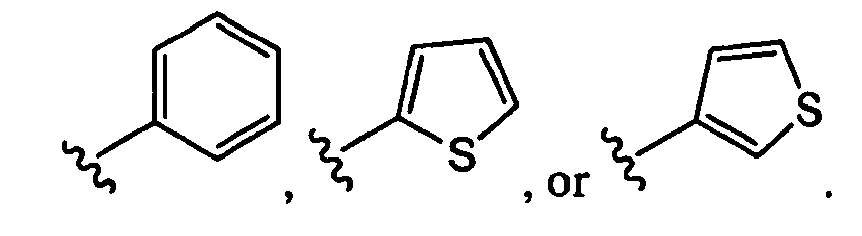
- The compound of claim 10, wherein the pyridyl moiety substituted by R3 is

R3 is methyl. - The compound of claim 10, wherein A is

R1 is methyl or

- The compound of claim 12, wherein
A is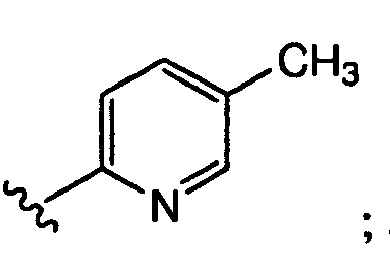

- A compound of claim 10, having the formula:
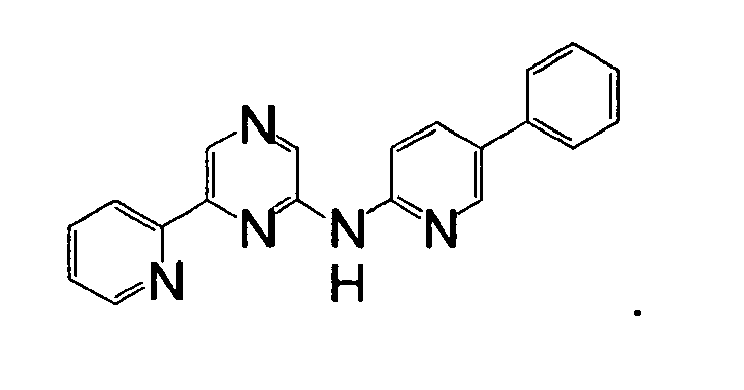
- A compound of claim 10, wherein the compound is selected from:(4-Methyl-pyridin-2-yl)-(6-pyridin-2-yl-pyrazin-2-yl)-amine,1-[6-(6-Pyridin-2-yl-pyrazin-2-ylamino)-pyridin-3-yl]-pyrrolidin-2-one,(6-Pyridin-2-yl-pyrazin-2-yl)-(5-pyrrolidin-1-yl-pyridin-2-yl)-amine,Pyridin-2-yl-(6-pyridin-2-yl-pyrazin-2-yl)-amine,(5-Morpholin-4-yl-pyridin-2-yl)-(6-pyridin-2-yl-pyrazin-2-yl)-amine,(6-Pyridin-2-yl-pyrazin-2-yl)-(3,4,5,6-tetrahydro-2H-[1,3']bipyridinyl-6'-yl)-amine,[6-(6-Methoxy-pyridin-2-yl)-pyrazin-2-yl]-pyridin-2-yl-amine,Pyridin-2-yl-[6-(4-pyrrolidin-l-yl-pyridin-2-yl)-pyrazin-2-yl]-amine,(5-Fluoro-pyridin-2-yl)-(6-pyridin-2-yl-pyrazin-2-yl)-amine,(5-Chloro-pyridin-2-yl)-(6-pyridin-2-yl-pyrazin-2-yl)-amine,(5-Phenyl-pyridin-2-yl)-(6-pyridin-2-yl-pyrazin-2-yl)-amine,(4-Methyl-pyridin-2-yl)-[6-(4-pyrrolidin-1-yl-pyridin-2-yl)-pyrazin-2-yl]-amine,[6-(4-Methyl-pyridin-2-yl)-pyrazin-2-yl]-pyridin-2-yl-amine,(5-Fluoro-pyridin-2-yl)-[6-(4-methyl-pyridin-2-yl)-pyrazin-2-yl]-amine,[6-(5-Methyl-pyridin-2-yl)-pyrazin-2-yl]-pyridin-2-yl-amine,N2-(6-Pyridin-2-yl-pyrazin-2-yl)-pyridine-2,5-diamine,[3,3']Hipyridinyl-6-yl-(6-pyridin-2-yl-pyrazin-2-yl)-amine,(6-Pyridin-2-yl-pyrazin-2-yl)-(5-thiophen-2-yl-pyridin-2-yl)-amine,[5-(5-Chloro-thiophen-2-yl)-pyridin-2-yl]-(6-pyridin-2-yl-pyrazin-2-yl)-amine,[5-(5-Methyl-furan-2-yl)-pyridin-2-yl]-(6-pyridin-2-yl-pyrazin-2-yl)-amine,(6-Pyridin-2-yl-pyrazin-2-yl)-(5-thiophen-3-yl-pyridin-2-yl)-amine,(5-Furan-2-yl-pyridin-2-yl)g6-pyridin-2-yl-pyrazin-2-yl)-amine,[5-(3-Fluoro-phenyl)-pyridin-2-yl]-(6-pyridin-2-yl-pyrazin-2-yl)-amine,[5-(2-Methoxy-phenyl)-pyridin-2-yl]-(6-pyridin-2-yl-pyrazin-2-yl)-amine,(4-Methyl-3,4,5,6-tetrahydro-2H-[1,3']bipyridinyl-6'-yl)-(6-pyridin-2-yl-pyrazin-2-yl)-amine,Pyrazin-2-yl-(6-pyridin-2-yl-pyrazin-2-yl)-amine,(5-Bromo-pyridin-2-yl)-(6-pyridin-2-yl-pyrazin-2-yl)-amine,[5-(4-Dimethylamino-phenyl)-pyridin-2-yl]-(6-pyridin-2-yl-pyrazin-2-yl)-amine,(5-Chloro-pyridin-2-yl)-[6-(4-pyrrolidin-1-yl-pyridin-2-yl)-pyrazin-2-yl]-amine,(6-Fluoro-pyridin-2-yl)-(6-pyridin-2-yl-pyrazin-2-yl)-amine,[5-(4-Methyl-piperazin-1-yl)-pyridin-2-yl]-(6-pyridin-2-yl-pyrazin-2-yl)-amine,(5-Fluoro-pyridin-2-yl)-(6-pyridin-2-yl-pyrazin-2-yl)-amine,2,6-Bis-(6-methoxy-pyridin-2-yl)-pyrazine,(5-Chloro-pyridin-2-yl)-[6-(6-methoxy-pyridin-2-yl)-pyrazin-2-yl]-amine,(5-Fluoro-pyridin-2-yl)-[6-(4-pyrrolidin-1-yl-pyridin-2-yl)-pyrazin-2-yl]-amine,(5-Phenyl-pyridin-2-yl)-[6-(4-pyrrolidin-1-yl-pyridin-2-yl)-pyrazin-2-yl]-amine,(5-Nitro-pyridin-2-yl)-(6-pyridin-2-yl-pyrazin-2-yl)-amine,(5-Fluoro-pyridin-2-yl)-[6-(5-methyl-pyridin-2-yl)-pyrazin-2-yl]-amine,N,N-Diethyl-6-(6-pyridin-2-yl-pyrazin-2-ylamino)-nicotinamide,(3-Benzyloxy-pyridin-2-yl)-(6-pyridin-2-yl-pyrazin-2-yl)-amine(5-Bromo-pyridin-2-yl)-(5-bromo-6-pyridin-2-yl-pyrazin-2-yl)-amine,(1-Oxy-pyridin-2-yl)-(6-pyridin-2-yl-pyrazin-2-yl)-amine,(3-Pentyloxy-pyridin-2-yl)-(6-pyridin-2-yl-pyrazin-2-yl)-amine,6-(6-Pyridin-2-yl-pyrazin-2-ylamino)-nicotinamide,4-Methyl-1-[6-(6-pyridin-2-yl-pyrazin-2-ylamino)-pyridin-3-.yl]-piperazin-2-one,2-(6-Pyridin-2-yl-pyrazin-2-ylamino)-pyridin-3-ol,(3-Benzyloxy-pyridin-2-yl)-(6-pyridin-2-yl-pyrazin-2-yl)-amine,
- A compound of claim 1, wherein the compound is selected from:2,6-Bis-(6-methoxy-pyridin-2-yl)-pyrazine,(6-Pyridin-2-yl-pyrazin-2-yl)-pyrimidin-4-yl-amine,(3-Chloro-5-trifluoromethyl-pyridin-2-yl)-(6-pyridin-2-yl-pyrazin-2-yl)-amine,(4-Methyl-3-nitro-pyridin-2-yl)-(6-pyridin-2-yl-pyrazin-2-yl)-amine,Phenyl-[3-(6-pyridin-2-yl-pyrazin-2-ylamino)-pyrazin-2-yl]-methanone.
- A method of decreasing ion flow through potassium ion channels in a cell, said method comprising contacting said cell in vitro with a potassium ion channel-modulating amount of a compound having the structure of Formula I as defined in any of claims 1, 5 to 9 and 18 or of a compound of any of claims 10 to 16, the compound optionally being in the form of a pharmaceutically acceptable salt thereof.
- The method according to claim 18, wherein said potassium ion channel comprises at least one SK subunit.
- A compound of any of claims 10-16 or having a structure as defined in claim 17 for use as a medicament, the compound optionally being in the form of a pharmaceutically acceptable salt thereof.
- A compound according to any one of claims 10-16 or having a structure as defined in claim 17 for the manufacture of a medicament for modulating potassium ino channels, the compound optionally being in the form of a pharmaceutically acceptable salt thereof.
- A compound according to any of claims 10-16 or having a structure as defined in claim 17 for the manufacture of a medicament for treating a disorder or condition selected from central or peripheral nervous system disorders, gastroesophogeal reflux disorder, gastrointestinal hypomotility disorders, irritable bowel syndrome, secretory diarrhea, asthma, cystic fibrosis, chronic obstructive pulmonary disease, rhinorrhea, convulsions, vascular spasms, coronary artery spasms, renal disorders, polycystic kidney disease, bladder spasms, urinary incontinence, bladder outflow obstruction, ischemia, cerebral ischemia, ischemic heart disease, angina pectoris, coronary heart disease, Reynaud's disease, intermittent claudication, Sjorgren's syndrome, arrhythmia, hypertension, myotonic muscle dystrophia, xerostomi, diabetes type II, hyperinsulinemia, premature labor, baldness, cancer, and immune suppression.
- A compound according to claim 21, wherein said central or peripheral nervous system disorder comprises migraine, ataxia, Parkinson's disease, bipolar disorders, trigeminal neuralgia, spasticity, mood disorders, brain tumors, psychotic disorders, myokymia, seizures, epilepsy, hearing and vision loss, psychosis, anxiety, depression, dementia, memory and attention deficits, Alzheimer's disease, age-related memory loss, learning deficiencies, anxiety, traumatic brain injury, dysmenorrhea, narcolepsy and motor neuron diseases.
- A pharmaceutical composition comprising a pharmaceutically acceptable carrier and a compound of one of claims 10-22.
Applications Claiming Priority (2)
| Application Number | Priority Date | Filing Date | Title |
|---|---|---|---|
| US56214904P | 2004-04-13 | 2004-04-13 | |
| PCT/US2005/012525 WO2005121126A1 (en) | 2004-04-13 | 2005-04-13 | Polycyclic pyrazines as potassium ion channel modulators |
Publications (2)
| Publication Number | Publication Date |
|---|---|
| EP1742935A1 EP1742935A1 (en) | 2007-01-17 |
| EP1742935B1 true EP1742935B1 (en) | 2010-02-24 |
Family
ID=35079213
Family Applications (1)
| Application Number | Title | Priority Date | Filing Date |
|---|---|---|---|
| EP05779464A Expired - Lifetime EP1742935B1 (en) | 2004-04-13 | 2005-04-13 | Polycyclic pyrazines as potassium ion channel modulators |
Country Status (7)
| Country | Link |
|---|---|
| US (1) | US7642354B2 (en) |
| EP (1) | EP1742935B1 (en) |
| AT (1) | ATE458730T1 (en) |
| AU (1) | AU2005252160A1 (en) |
| CA (1) | CA2561831A1 (en) |
| DE (1) | DE602005019556D1 (en) |
| WO (1) | WO2005121126A1 (en) |
Families Citing this family (22)
| Publication number | Priority date | Publication date | Assignee | Title |
|---|---|---|---|---|
| BRPI0607062A2 (en) * | 2005-02-28 | 2009-08-04 | Japan Tobacco Inc | aminopyridine compound with syk inhibitory activity, pharmaceutical composition and therapeutic agent comprising the same |
| WO2007042571A1 (en) * | 2005-10-14 | 2007-04-19 | Neurosearch A/S | Novel pyrimidine-2,4-diamine derivatives and their use as modulators of small-conductance calcium-activated potassium channels |
| WO2007107442A2 (en) * | 2006-03-17 | 2007-09-27 | Universite De Liege | Bis1,2,3,4-tetrahydroisoquinoline derivatives and their uses as pharmaceuticals |
| EP2038261A2 (en) * | 2006-06-22 | 2009-03-25 | Mallinckrodt Inc. | Pyrazine derivatives with extended conjugation and uses thereof |
| EP2203436A1 (en) * | 2007-09-17 | 2010-07-07 | Neurosearch A/S | Pyrazine derivatives and their use as potassium channel modulators |
| EP2573087A1 (en) | 2007-09-21 | 2013-03-27 | Array Biopharma, Inc. | Pyridin-2-yl-amino-1,2,4-thiadiazole derivatives as glucokinase activators for the treatment of diabetes mellitus |
| GB0719644D0 (en) | 2007-10-05 | 2007-11-14 | Cancer Rec Tech Ltd | Therapeutic compounds and their use |
| FR2925906B1 (en) * | 2008-01-02 | 2010-08-20 | Sanofi Aventis | N-PHENYL-IMIDAZO-1,2-α-PYRIDINE-2-CARBOXAMIDE COMPOUNDS, THEIR PREPARATION AND THERAPEUTIC USE THEREOF |
| US20090270418A1 (en) * | 2008-01-09 | 2009-10-29 | Marianne Sloss | Pyrazole pyrazine amine compounds as kinase inhibitors, compositions thereof and methods of treatment therewith |
| MX2010007973A (en) | 2008-02-01 | 2010-11-09 | Akinion Pharmaceuticals Ab | Pyrazine derivatives and their use as protein kinase inhbitors. |
| GB0803018D0 (en) | 2008-02-19 | 2008-03-26 | Cancer Rec Tech Ltd | Therapeutic compounds and their use |
| WO2009119528A1 (en) * | 2008-03-24 | 2009-10-01 | 武田薬品工業株式会社 | Heterocyclic compound |
| GB0821307D0 (en) * | 2008-11-21 | 2008-12-31 | Summit Corp Plc | Compounds for treatment of duchenne muscular dystrophy |
| JP6073910B2 (en) | 2011-11-09 | 2017-02-01 | キャンサー・リサーチ・テクノロジー・リミテッド | 5- (Pyridin-2-yl-amino) -pyrazine-2-carbonitrile compound and therapeutic use thereof |
| ES2624307T3 (en) | 2012-05-15 | 2017-07-13 | Cancer Research Technology Ltd | 5 - [[4 - [[Morpholin-2-yl] methylamino] -5- (trifluoromethyl) -2-pyridyl] amino] pyrazin-2-carbonitrile and therapeutic uses thereof |
| CA2897279C (en) | 2013-01-23 | 2020-12-29 | Astrazeneca Ab | Aminopyrazine derivatives and pharmaceutical compositions thereof for use in the treatment of cancer |
| CN106103421B (en) | 2014-02-14 | 2019-04-09 | 武田药品工业株式会社 | Pyrazine modulators of GPR6 |
| WO2015138273A1 (en) * | 2014-03-13 | 2015-09-17 | Merck Sharp & Dohme Corp. | 2-pyrazine carboxamides as spleen tyrosine kinase inhibitors |
| CN108690006B (en) * | 2017-04-12 | 2022-02-18 | 中国药科大学 | Compound and application thereof in anti-AML (AML) drugs |
| TW202204348A (en) | 2020-04-07 | 2022-02-01 | 美商西爾拉癌症醫學公司 | Methods for synthesis of chk1 inhibitors |
| TW202317105A (en) | 2021-08-27 | 2023-05-01 | 南韓商柳韓洋行 | 6-membered heteroaryl-containing aminopyridine compounds as egfr inhibitors |
| TW202317106A (en) | 2021-08-27 | 2023-05-01 | 南韓商柳韓洋行 | Substituted aminopyridine compounds as egfr inhibitors |
Family Cites Families (12)
| Publication number | Priority date | Publication date | Assignee | Title |
|---|---|---|---|---|
| GB8504631D0 (en) | 1985-02-22 | 1985-03-27 | Ici Plc | Chromogenic compounds |
| US20040102455A1 (en) | 2001-01-30 | 2004-05-27 | Burns Christopher John | Method of inhibiting kinases |
| US6593349B2 (en) | 2001-03-19 | 2003-07-15 | Icagen, Inc. | Bisarylamines as potassium channel openers |
| GB0108102D0 (en) | 2001-03-30 | 2001-05-23 | Pfizer Ltd | Compounds |
| EP1511744A4 (en) | 2002-05-13 | 2009-10-21 | Icagen Inc | Bis-benzimidazoles and related compounds as potassium channel modulators |
| GB0215775D0 (en) | 2002-07-06 | 2002-08-14 | Astex Technology Ltd | Pharmaceutical compounds |
| US7459454B2 (en) | 2003-03-21 | 2008-12-02 | Smithkline Beecham Corporation | Aminopyrazine derivatives and compositions |
| GB2400101A (en) * | 2003-03-28 | 2004-10-06 | Biofocus Discovery Ltd | Compounds capable of binding to the active site of protein kinases |
| CA2543644A1 (en) | 2003-10-27 | 2005-05-06 | Astellas Pharma Inc. | Pyrazine derivatives and pharmaceutical use thereof |
| NZ545694A (en) | 2003-12-03 | 2010-04-30 | Ym Bioscience Australia Pty Lt | Azole-based kinase inhibitors |
| US20080194574A1 (en) | 2003-12-16 | 2008-08-14 | Axxima Pharmaceuticals Ag | Pyrazine Derivatives As Effective Compounds Against Infectious Diseases |
| DK1704145T3 (en) | 2004-01-12 | 2012-09-24 | Ym Biosciences Australia Pty | Selective kinase inhibitors |
-
2005
- 2005-04-13 CA CA002561831A patent/CA2561831A1/en not_active Abandoned
- 2005-04-13 DE DE602005019556T patent/DE602005019556D1/en not_active Expired - Lifetime
- 2005-04-13 AT AT05779464T patent/ATE458730T1/en not_active IP Right Cessation
- 2005-04-13 WO PCT/US2005/012525 patent/WO2005121126A1/en not_active Ceased
- 2005-04-13 US US11/105,668 patent/US7642354B2/en not_active Expired - Fee Related
- 2005-04-13 AU AU2005252160A patent/AU2005252160A1/en not_active Abandoned
- 2005-04-13 EP EP05779464A patent/EP1742935B1/en not_active Expired - Lifetime
Also Published As
| Publication number | Publication date |
|---|---|
| EP1742935A1 (en) | 2007-01-17 |
| US7642354B2 (en) | 2010-01-05 |
| ATE458730T1 (en) | 2010-03-15 |
| CA2561831A1 (en) | 2005-12-22 |
| AU2005252160A1 (en) | 2005-12-22 |
| DE602005019556D1 (en) | 2010-04-08 |
| WO2005121126A1 (en) | 2005-12-22 |
| US20050239800A1 (en) | 2005-10-27 |
Similar Documents
| Publication | Publication Date | Title |
|---|---|---|
| EP1742634B1 (en) | Polycyclic pyrimidines as potassium ion channel modulators | |
| EP1742935B1 (en) | Polycyclic pyrazines as potassium ion channel modulators | |
| US20080108600A1 (en) | Polycyclic Pyridines as Potassium Ion Channel Modulators | |
| US20050227989A1 (en) | Polycyclic thiazoles as potassium ion channel modulators | |
| US7482373B2 (en) | Bis-benzimidazoles and related compounds as potassium channel modulators | |
| WO2002074388A1 (en) | Bisarylamines as potassium channel openers | |
| CA2463822A1 (en) | Heteroaryl amines as glycogen synthase kinase 3beta inhibitors (gsk3 inhibitors) | |
| EP1208085A2 (en) | Benzanilides as potassium channel openers | |
| EP1363884A2 (en) | Pyridine-substituted benzanilides as potassium ion channel openers | |
| US7459457B2 (en) | Polycyclic pyridines as potassium ion channel modulators | |
| WO2005002503A2 (en) | Asymmetric benzimidazoles and related compounds as potassium channel modulators | |
| EP1483259A1 (en) | Pyrimidines as novel openers of potassium ion channels | |
| AU2002238023A1 (en) | Pyridine-substituted benzanilides as potassium ion channel openers |
Legal Events
| Date | Code | Title | Description |
|---|---|---|---|
| PUAI | Public reference made under article 153(3) epc to a published international application that has entered the european phase |
Free format text: ORIGINAL CODE: 0009012 |
|
| 17P | Request for examination filed |
Effective date: 20061106 |
|
| AK | Designated contracting states |
Kind code of ref document: A1 Designated state(s): AT BE BG CH CY CZ DE DK EE ES FI FR GB GR HU IE IS IT LI LT LU MC NL PL PT RO SE SI SK TR |
|
| 17Q | First examination report despatched |
Effective date: 20070510 |
|
| DAX | Request for extension of the european patent (deleted) | ||
| GRAP | Despatch of communication of intention to grant a patent |
Free format text: ORIGINAL CODE: EPIDOSNIGR1 |
|
| GRAC | Information related to communication of intention to grant a patent modified |
Free format text: ORIGINAL CODE: EPIDOSCIGR1 |
|
| GRAC | Information related to communication of intention to grant a patent modified |
Free format text: ORIGINAL CODE: EPIDOSCIGR1 |
|
| GRAS | Grant fee paid |
Free format text: ORIGINAL CODE: EPIDOSNIGR3 |
|
| GRAA | (expected) grant |
Free format text: ORIGINAL CODE: 0009210 |
|
| AK | Designated contracting states |
Kind code of ref document: B1 Designated state(s): AT BE BG CH CY CZ DE DK EE ES FI FR GB GR HU IE IS IT LI LT LU MC NL PL PT RO SE SI SK TR |
|
| REG | Reference to a national code |
Ref country code: GB Ref legal event code: FG4D |
|
| REG | Reference to a national code |
Ref country code: CH Ref legal event code: EP |
|
| REG | Reference to a national code |
Ref country code: IE Ref legal event code: FG4D |
|
| REF | Corresponds to: |
Ref document number: 602005019556 Country of ref document: DE Date of ref document: 20100408 Kind code of ref document: P |
|
| REG | Reference to a national code |
Ref country code: NL Ref legal event code: VDEP Effective date: 20100224 |
|
| LTIE | Lt: invalidation of european patent or patent extension |
Effective date: 20100224 |
|
| PG25 | Lapsed in a contracting state [announced via postgrant information from national office to epo] |
Ref country code: PT Free format text: LAPSE BECAUSE OF FAILURE TO SUBMIT A TRANSLATION OF THE DESCRIPTION OR TO PAY THE FEE WITHIN THE PRESCRIBED TIME-LIMIT Effective date: 20100625 Ref country code: LT Free format text: LAPSE BECAUSE OF FAILURE TO SUBMIT A TRANSLATION OF THE DESCRIPTION OR TO PAY THE FEE WITHIN THE PRESCRIBED TIME-LIMIT Effective date: 20100224 Ref country code: IS Free format text: LAPSE BECAUSE OF FAILURE TO SUBMIT A TRANSLATION OF THE DESCRIPTION OR TO PAY THE FEE WITHIN THE PRESCRIBED TIME-LIMIT Effective date: 20100624 |
|
| PG25 | Lapsed in a contracting state [announced via postgrant information from national office to epo] |
Ref country code: SI Free format text: LAPSE BECAUSE OF FAILURE TO SUBMIT A TRANSLATION OF THE DESCRIPTION OR TO PAY THE FEE WITHIN THE PRESCRIBED TIME-LIMIT Effective date: 20100224 Ref country code: AT Free format text: LAPSE BECAUSE OF FAILURE TO SUBMIT A TRANSLATION OF THE DESCRIPTION OR TO PAY THE FEE WITHIN THE PRESCRIBED TIME-LIMIT Effective date: 20100224 Ref country code: FI Free format text: LAPSE BECAUSE OF FAILURE TO SUBMIT A TRANSLATION OF THE DESCRIPTION OR TO PAY THE FEE WITHIN THE PRESCRIBED TIME-LIMIT Effective date: 20100224 Ref country code: PL Free format text: LAPSE BECAUSE OF FAILURE TO SUBMIT A TRANSLATION OF THE DESCRIPTION OR TO PAY THE FEE WITHIN THE PRESCRIBED TIME-LIMIT Effective date: 20100224 |
|
| PG25 | Lapsed in a contracting state [announced via postgrant information from national office to epo] |
Ref country code: SE Free format text: LAPSE BECAUSE OF FAILURE TO SUBMIT A TRANSLATION OF THE DESCRIPTION OR TO PAY THE FEE WITHIN THE PRESCRIBED TIME-LIMIT Effective date: 20100224 Ref country code: GR Free format text: LAPSE BECAUSE OF FAILURE TO SUBMIT A TRANSLATION OF THE DESCRIPTION OR TO PAY THE FEE WITHIN THE PRESCRIBED TIME-LIMIT Effective date: 20100525 Ref country code: NL Free format text: LAPSE BECAUSE OF FAILURE TO SUBMIT A TRANSLATION OF THE DESCRIPTION OR TO PAY THE FEE WITHIN THE PRESCRIBED TIME-LIMIT Effective date: 20100224 Ref country code: RO Free format text: LAPSE BECAUSE OF FAILURE TO SUBMIT A TRANSLATION OF THE DESCRIPTION OR TO PAY THE FEE WITHIN THE PRESCRIBED TIME-LIMIT Effective date: 20100224 Ref country code: ES Free format text: LAPSE BECAUSE OF FAILURE TO SUBMIT A TRANSLATION OF THE DESCRIPTION OR TO PAY THE FEE WITHIN THE PRESCRIBED TIME-LIMIT Effective date: 20100604 Ref country code: BE Free format text: LAPSE BECAUSE OF FAILURE TO SUBMIT A TRANSLATION OF THE DESCRIPTION OR TO PAY THE FEE WITHIN THE PRESCRIBED TIME-LIMIT Effective date: 20100224 Ref country code: CY Free format text: LAPSE BECAUSE OF FAILURE TO SUBMIT A TRANSLATION OF THE DESCRIPTION OR TO PAY THE FEE WITHIN THE PRESCRIBED TIME-LIMIT Effective date: 20100224 Ref country code: EE Free format text: LAPSE BECAUSE OF FAILURE TO SUBMIT A TRANSLATION OF THE DESCRIPTION OR TO PAY THE FEE WITHIN THE PRESCRIBED TIME-LIMIT Effective date: 20100224 |
|
| PG25 | Lapsed in a contracting state [announced via postgrant information from national office to epo] |
Ref country code: BG Free format text: LAPSE BECAUSE OF FAILURE TO SUBMIT A TRANSLATION OF THE DESCRIPTION OR TO PAY THE FEE WITHIN THE PRESCRIBED TIME-LIMIT Effective date: 20100524 Ref country code: SK Free format text: LAPSE BECAUSE OF FAILURE TO SUBMIT A TRANSLATION OF THE DESCRIPTION OR TO PAY THE FEE WITHIN THE PRESCRIBED TIME-LIMIT Effective date: 20100224 Ref country code: MC Free format text: LAPSE BECAUSE OF NON-PAYMENT OF DUE FEES Effective date: 20100430 Ref country code: CZ Free format text: LAPSE BECAUSE OF FAILURE TO SUBMIT A TRANSLATION OF THE DESCRIPTION OR TO PAY THE FEE WITHIN THE PRESCRIBED TIME-LIMIT Effective date: 20100224 |
|
| REG | Reference to a national code |
Ref country code: CH Ref legal event code: PL |
|
| PLBE | No opposition filed within time limit |
Free format text: ORIGINAL CODE: 0009261 |
|
| STAA | Information on the status of an ep patent application or granted ep patent |
Free format text: STATUS: NO OPPOSITION FILED WITHIN TIME LIMIT |
|
| PG25 | Lapsed in a contracting state [announced via postgrant information from national office to epo] |
Ref country code: IE Free format text: LAPSE BECAUSE OF NON-PAYMENT OF DUE FEES Effective date: 20100413 Ref country code: DK Free format text: LAPSE BECAUSE OF FAILURE TO SUBMIT A TRANSLATION OF THE DESCRIPTION OR TO PAY THE FEE WITHIN THE PRESCRIBED TIME-LIMIT Effective date: 20100224 |
|
| 26N | No opposition filed |
Effective date: 20101125 |
|
| PG25 | Lapsed in a contracting state [announced via postgrant information from national office to epo] |
Ref country code: LI Free format text: LAPSE BECAUSE OF NON-PAYMENT OF DUE FEES Effective date: 20100430 Ref country code: CH Free format text: LAPSE BECAUSE OF NON-PAYMENT OF DUE FEES Effective date: 20100430 |
|
| PG25 | Lapsed in a contracting state [announced via postgrant information from national office to epo] |
Ref country code: IT Free format text: LAPSE BECAUSE OF FAILURE TO SUBMIT A TRANSLATION OF THE DESCRIPTION OR TO PAY THE FEE WITHIN THE PRESCRIBED TIME-LIMIT Effective date: 20100224 |
|
| PGFP | Annual fee paid to national office [announced via postgrant information from national office to epo] |
Ref country code: GB Payment date: 20120327 Year of fee payment: 8 |
|
| PGFP | Annual fee paid to national office [announced via postgrant information from national office to epo] |
Ref country code: DE Payment date: 20120430 Year of fee payment: 8 |
|
| PGFP | Annual fee paid to national office [announced via postgrant information from national office to epo] |
Ref country code: FR Payment date: 20120503 Year of fee payment: 8 |
|
| PG25 | Lapsed in a contracting state [announced via postgrant information from national office to epo] |
Ref country code: HU Free format text: LAPSE BECAUSE OF FAILURE TO SUBMIT A TRANSLATION OF THE DESCRIPTION OR TO PAY THE FEE WITHIN THE PRESCRIBED TIME-LIMIT Effective date: 20100825 Ref country code: LU Free format text: LAPSE BECAUSE OF NON-PAYMENT OF DUE FEES Effective date: 20100413 |
|
| PG25 | Lapsed in a contracting state [announced via postgrant information from national office to epo] |
Ref country code: TR Free format text: LAPSE BECAUSE OF FAILURE TO SUBMIT A TRANSLATION OF THE DESCRIPTION OR TO PAY THE FEE WITHIN THE PRESCRIBED TIME-LIMIT Effective date: 20100224 |
|
| GBPC | Gb: european patent ceased through non-payment of renewal fee |
Effective date: 20130413 |
|
| PG25 | Lapsed in a contracting state [announced via postgrant information from national office to epo] |
Ref country code: DE Free format text: LAPSE BECAUSE OF NON-PAYMENT OF DUE FEES Effective date: 20131101 Ref country code: GB Free format text: LAPSE BECAUSE OF NON-PAYMENT OF DUE FEES Effective date: 20130413 |
|
| REG | Reference to a national code |
Ref country code: FR Ref legal event code: ST Effective date: 20131231 |
|
| REG | Reference to a national code |
Ref country code: DE Ref legal event code: R119 Ref document number: 602005019556 Country of ref document: DE Effective date: 20131101 |
|
| PG25 | Lapsed in a contracting state [announced via postgrant information from national office to epo] |
Ref country code: FR Free format text: LAPSE BECAUSE OF NON-PAYMENT OF DUE FEES Effective date: 20130430 |