EP1740579B1 - Tricyclic pyrazole kinase inhibitors - Google Patents
Tricyclic pyrazole kinase inhibitors Download PDFInfo
- Publication number
- EP1740579B1 EP1740579B1 EP05742125.7A EP05742125A EP1740579B1 EP 1740579 B1 EP1740579 B1 EP 1740579B1 EP 05742125 A EP05742125 A EP 05742125A EP 1740579 B1 EP1740579 B1 EP 1740579B1
- Authority
- EP
- European Patent Office
- Prior art keywords
- group
- hydrogen
- methyl
- alkyl
- mmol
- Prior art date
- Legal status (The legal status is an assumption and is not a legal conclusion. Google has not performed a legal analysis and makes no representation as to the accuracy of the status listed.)
- Expired - Lifetime
Links
- WTKZEGDFNFYCGP-UHFFFAOYSA-N Pyrazole Chemical compound C=1C=NNC=1 WTKZEGDFNFYCGP-UHFFFAOYSA-N 0.000 title claims 2
- 229940043355 kinase inhibitor Drugs 0.000 title description 2
- 239000003757 phosphotransferase inhibitor Substances 0.000 title description 2
- -1 ethylenedioxy Chemical group 0.000 claims description 495
- 229910052739 hydrogen Inorganic materials 0.000 claims description 234
- 239000001257 hydrogen Substances 0.000 claims description 234
- 150000001875 compounds Chemical class 0.000 claims description 208
- 125000000217 alkyl group Chemical group 0.000 claims description 158
- 125000001072 heteroaryl group Chemical group 0.000 claims description 79
- UFHFLCQGNIYNRP-UHFFFAOYSA-N Hydrogen Chemical compound [H][H] UFHFLCQGNIYNRP-UHFFFAOYSA-N 0.000 claims description 77
- 125000000623 heterocyclic group Chemical group 0.000 claims description 74
- 125000004446 heteroarylalkyl group Chemical group 0.000 claims description 64
- 125000003118 aryl group Chemical group 0.000 claims description 61
- 125000000753 cycloalkyl group Chemical group 0.000 claims description 50
- 125000004183 alkoxy alkyl group Chemical group 0.000 claims description 45
- 125000003545 alkoxy group Chemical group 0.000 claims description 43
- 125000005081 alkoxyalkoxyalkyl group Chemical group 0.000 claims description 40
- 125000001997 phenyl group Chemical group [H]C1=C([H])C([H])=C(*)C([H])=C1[H] 0.000 claims description 36
- 125000002915 carbonyl group Chemical group [*:2]C([*:1])=O 0.000 claims description 31
- 125000004448 alkyl carbonyl group Chemical group 0.000 claims description 29
- 208000037265 diseases, disorders, signs and symptoms Diseases 0.000 claims description 28
- 229910052736 halogen Inorganic materials 0.000 claims description 28
- 150000002367 halogens Chemical class 0.000 claims description 28
- 150000003839 salts Chemical class 0.000 claims description 28
- 125000002485 formyl group Chemical group [H]C(*)=O 0.000 claims description 27
- 125000004453 alkoxycarbonyl group Chemical group 0.000 claims description 24
- 125000003178 carboxy group Chemical group [H]OC(*)=O 0.000 claims description 24
- 125000005083 alkoxyalkoxy group Chemical group 0.000 claims description 23
- 125000005223 heteroarylcarbonyl group Chemical group 0.000 claims description 23
- 229910052757 nitrogen Inorganic materials 0.000 claims description 22
- 239000008194 pharmaceutical composition Substances 0.000 claims description 22
- 238000011282 treatment Methods 0.000 claims description 20
- 241000282414 Homo sapiens Species 0.000 claims description 17
- 201000010099 disease Diseases 0.000 claims description 17
- 125000005078 alkoxycarbonylalkyl group Chemical group 0.000 claims description 16
- 125000004391 aryl sulfonyl group Chemical group 0.000 claims description 16
- 125000004966 cyanoalkyl group Chemical group 0.000 claims description 16
- 125000004438 haloalkoxy group Chemical group 0.000 claims description 16
- 125000001188 haloalkyl group Chemical group 0.000 claims description 16
- 125000002768 hydroxyalkyl group Chemical group 0.000 claims description 16
- 229910003827 NRaRb Inorganic materials 0.000 claims description 15
- 102000001253 Protein Kinase Human genes 0.000 claims description 15
- 102000005789 Vascular Endothelial Growth Factors Human genes 0.000 claims description 15
- 108010019530 Vascular Endothelial Growth Factors Proteins 0.000 claims description 15
- 125000004414 alkyl thio group Chemical group 0.000 claims description 15
- 125000004093 cyano group Chemical group *C#N 0.000 claims description 15
- 125000004858 cycloalkoxyalkyl group Chemical group 0.000 claims description 15
- 108060006633 protein kinase Proteins 0.000 claims description 15
- 206010028980 Neoplasm Diseases 0.000 claims description 14
- 125000003342 alkenyl group Chemical group 0.000 claims description 14
- 125000005138 alkoxysulfonyl group Chemical group 0.000 claims description 14
- 125000005196 alkyl carbonyloxy group Chemical group 0.000 claims description 14
- 125000006350 alkyl thio alkyl group Chemical group 0.000 claims description 14
- 125000000304 alkynyl group Chemical group 0.000 claims description 14
- 125000004181 carboxyalkyl group Chemical group 0.000 claims description 14
- 125000004994 halo alkoxy alkyl group Chemical group 0.000 claims description 14
- 125000002887 hydroxy group Chemical group [H]O* 0.000 claims description 14
- 125000000449 nitro group Chemical group [O-][N+](*)=O 0.000 claims description 14
- 125000005093 alkyl carbonyl alkyl group Chemical group 0.000 claims description 13
- 125000001316 cycloalkyl alkyl group Chemical group 0.000 claims description 13
- 125000001424 substituent group Chemical group 0.000 claims description 13
- 125000004390 alkyl sulfonyl group Chemical group 0.000 claims description 12
- 125000005243 carbonyl alkyl group Chemical group 0.000 claims description 12
- 125000005160 aryl oxy alkyl group Chemical group 0.000 claims description 11
- 125000005164 aryl thioalkyl group Chemical group 0.000 claims description 11
- 208000001969 capillary hemangioma Diseases 0.000 claims description 11
- 229910052799 carbon Inorganic materials 0.000 claims description 11
- 125000005102 carbonylalkoxy group Chemical group 0.000 claims description 11
- 208000035475 disorder Diseases 0.000 claims description 11
- 239000003814 drug Substances 0.000 claims description 11
- 125000005326 heteroaryloxy alkyl group Chemical group 0.000 claims description 11
- 125000005553 heteroaryloxy group Chemical group 0.000 claims description 11
- 206010001052 Acute respiratory distress syndrome Diseases 0.000 claims description 10
- 206010030113 Oedema Diseases 0.000 claims description 10
- 208000013616 Respiratory Distress Syndrome Diseases 0.000 claims description 10
- 208000011341 adult acute respiratory distress syndrome Diseases 0.000 claims description 10
- 201000000028 adult respiratory distress syndrome Diseases 0.000 claims description 10
- 125000002619 bicyclic group Chemical group 0.000 claims description 10
- 230000001404 mediated effect Effects 0.000 claims description 10
- 125000004122 cyclic group Chemical group 0.000 claims description 9
- 125000005114 heteroarylalkoxy group Chemical group 0.000 claims description 9
- 125000004433 nitrogen atom Chemical group N* 0.000 claims description 8
- 229910052701 rubidium Inorganic materials 0.000 claims description 8
- 125000002496 methyl group Chemical group [H]C([H])([H])* 0.000 claims description 7
- 230000002062 proliferating effect Effects 0.000 claims description 7
- 206010003445 Ascites Diseases 0.000 claims description 6
- 208000023275 Autoimmune disease Diseases 0.000 claims description 6
- 206010006187 Breast cancer Diseases 0.000 claims description 6
- 208000026310 Breast neoplasm Diseases 0.000 claims description 6
- 208000005590 Choroidal Neovascularization Diseases 0.000 claims description 6
- 206010060823 Choroidal neovascularisation Diseases 0.000 claims description 6
- 206010009944 Colon cancer Diseases 0.000 claims description 6
- 206010012689 Diabetic retinopathy Diseases 0.000 claims description 6
- 206010063045 Effusion Diseases 0.000 claims description 6
- 201000004681 Psoriasis Diseases 0.000 claims description 6
- 206010038933 Retinopathy of prematurity Diseases 0.000 claims description 6
- 206010064930 age-related macular degeneration Diseases 0.000 claims description 6
- 125000003710 aryl alkyl group Chemical group 0.000 claims description 6
- 210000001072 colon Anatomy 0.000 claims description 6
- 210000000416 exudates and transudate Anatomy 0.000 claims description 6
- 208000024908 graft versus host disease Diseases 0.000 claims description 6
- 210000000987 immune system Anatomy 0.000 claims description 6
- 230000002401 inhibitory effect Effects 0.000 claims description 6
- 208000002780 macular degeneration Diseases 0.000 claims description 6
- 238000004519 manufacturing process Methods 0.000 claims description 6
- 230000001613 neoplastic effect Effects 0.000 claims description 6
- 125000004043 oxo group Chemical group O=* 0.000 claims description 6
- 229910052760 oxygen Inorganic materials 0.000 claims description 6
- 206010005003 Bladder cancer Diseases 0.000 claims description 5
- 206010048962 Brain oedema Diseases 0.000 claims description 5
- 208000011231 Crohn disease Diseases 0.000 claims description 5
- 208000009329 Graft vs Host Disease Diseases 0.000 claims description 5
- 208000002250 Hematologic Neoplasms Diseases 0.000 claims description 5
- 208000022559 Inflammatory bowel disease Diseases 0.000 claims description 5
- 206010058467 Lung neoplasm malignant Diseases 0.000 claims description 5
- 206010025323 Lymphomas Diseases 0.000 claims description 5
- 208000001344 Macular Edema Diseases 0.000 claims description 5
- 206010025415 Macular oedema Diseases 0.000 claims description 5
- 206010033128 Ovarian cancer Diseases 0.000 claims description 5
- 206010061535 Ovarian neoplasm Diseases 0.000 claims description 5
- 206010061902 Pancreatic neoplasm Diseases 0.000 claims description 5
- 206010060862 Prostate cancer Diseases 0.000 claims description 5
- 208000000236 Prostatic Neoplasms Diseases 0.000 claims description 5
- 208000015634 Rectal Neoplasms Diseases 0.000 claims description 5
- 208000005718 Stomach Neoplasms Diseases 0.000 claims description 5
- 208000001435 Thromboembolism Diseases 0.000 claims description 5
- 206010052779 Transplant rejections Diseases 0.000 claims description 5
- 206010067584 Type 1 diabetes mellitus Diseases 0.000 claims description 5
- 208000007097 Urinary Bladder Neoplasms Diseases 0.000 claims description 5
- 206010069351 acute lung injury Diseases 0.000 claims description 5
- 208000006752 brain edema Diseases 0.000 claims description 5
- 210000000481 breast Anatomy 0.000 claims description 5
- 208000029742 colonic neoplasm Diseases 0.000 claims description 5
- 206010017758 gastric cancer Diseases 0.000 claims description 5
- 208000005017 glioblastoma Diseases 0.000 claims description 5
- 230000009033 hematopoietic malignancy Effects 0.000 claims description 5
- 210000003734 kidney Anatomy 0.000 claims description 5
- 208000032839 leukemia Diseases 0.000 claims description 5
- 210000004072 lung Anatomy 0.000 claims description 5
- 201000005202 lung cancer Diseases 0.000 claims description 5
- 208000020816 lung neoplasm Diseases 0.000 claims description 5
- 201000010230 macular retinal edema Diseases 0.000 claims description 5
- 208000015486 malignant pancreatic neoplasm Diseases 0.000 claims description 5
- 201000006417 multiple sclerosis Diseases 0.000 claims description 5
- 206010028417 myasthenia gravis Diseases 0.000 claims description 5
- 210000000056 organ Anatomy 0.000 claims description 5
- 230000002611 ovarian Effects 0.000 claims description 5
- 201000002528 pancreatic cancer Diseases 0.000 claims description 5
- 208000008443 pancreatic carcinoma Diseases 0.000 claims description 5
- 210000002307 prostate Anatomy 0.000 claims description 5
- 208000002815 pulmonary hypertension Diseases 0.000 claims description 5
- 206010038038 rectal cancer Diseases 0.000 claims description 5
- 201000001275 rectum cancer Diseases 0.000 claims description 5
- 206010039073 rheumatoid arthritis Diseases 0.000 claims description 5
- 201000000306 sarcoidosis Diseases 0.000 claims description 5
- 210000002784 stomach Anatomy 0.000 claims description 5
- 201000011549 stomach cancer Diseases 0.000 claims description 5
- 201000000596 systemic lupus erythematosus Diseases 0.000 claims description 5
- 206010043778 thyroiditis Diseases 0.000 claims description 5
- 210000003932 urinary bladder Anatomy 0.000 claims description 5
- 201000005112 urinary bladder cancer Diseases 0.000 claims description 5
- YNAVUWVOSKDBBP-UHFFFAOYSA-N Morpholine Chemical group C1COCCN1 YNAVUWVOSKDBBP-UHFFFAOYSA-N 0.000 claims description 4
- NQRYJNQNLNOLGT-UHFFFAOYSA-N Piperidine Chemical group C1CCNCC1 NQRYJNQNLNOLGT-UHFFFAOYSA-N 0.000 claims description 4
- 125000005127 aryl alkoxy alkyl group Chemical group 0.000 claims description 4
- 125000004193 piperazinyl group Chemical group 0.000 claims description 3
- GLUUGHFHXGJENI-UHFFFAOYSA-N diethylenediamine Natural products C1CNCCN1 GLUUGHFHXGJENI-UHFFFAOYSA-N 0.000 claims description 2
- 150000002431 hydrogen Chemical class 0.000 claims 12
- FTMQTSXFOUMBLM-UHFFFAOYSA-N 1-[[3-[5-[3-(cyclopropylmethoxy)prop-1-ynyl]thiophen-3-yl]-1,4-dihydroindeno[1,2-c]pyrazol-6-yl]methyl]-4-methylpiperazin-2-one Chemical compound O=C1CN(C)CCN1CC1=CC=C2C(NN=C3C=4C=C(SC=4)C#CCOCC4CC4)=C3CC2=C1 FTMQTSXFOUMBLM-UHFFFAOYSA-N 0.000 claims 1
- WMVLONIKSRCCKB-UHFFFAOYSA-N 3-[4-[3-(2-methoxyethoxy)prop-1-ynyl]thiophen-2-yl]-6-[(4-methylpiperazin-1-yl)methyl]-2,4-dihydroindeno[1,2-c]pyrazole Chemical compound COCCOCC#CC1=CSC(C=2C3=C(C4=CC=C(CN5CCN(C)CC5)C=C4C3)NN=2)=C1 WMVLONIKSRCCKB-UHFFFAOYSA-N 0.000 claims 1
- XLHAPHBDYPCNNZ-UHFFFAOYSA-N 3-[4-[3-(2-methoxyethoxy)prop-1-ynyl]thiophen-2-yl]-7-(1,2,4-triazol-1-ylmethyl)-2,4-dihydroindeno[1,2-c]pyrazole Chemical compound COCCOCC#CC1=CSC(C=2C3=C(C4=CC(CN5N=CN=C5)=CC=C4C3)NN=2)=C1 XLHAPHBDYPCNNZ-UHFFFAOYSA-N 0.000 claims 1
- XYEAQAZUOLOKRZ-UHFFFAOYSA-N 3-[5-[3-(1-methoxypropan-2-yloxy)prop-1-ynyl]thiophen-3-yl]-6-[(4-methylpiperazin-1-yl)methyl]-1,4-dihydroindeno[1,2-c]pyrazole Chemical compound S1C(C#CCOC(C)COC)=CC(C=2C3=C(C4=CC=C(CN5CCN(C)CC5)C=C4C3)NN=2)=C1 XYEAQAZUOLOKRZ-UHFFFAOYSA-N 0.000 claims 1
- DTWVITCVMPVZTG-UHFFFAOYSA-N 3-[5-[3-(2-ethoxyethoxy)prop-1-ynyl]thiophen-2-yl]-6-[(4-methylpiperazin-1-yl)methyl]-2,4-dihydroindeno[1,2-c]pyrazole Chemical compound S1C(C#CCOCCOCC)=CC=C1C1=NNC2=C1CC1=CC(CN3CCN(C)CC3)=CC=C21 DTWVITCVMPVZTG-UHFFFAOYSA-N 0.000 claims 1
- MICAQJHNPYMPFV-UHFFFAOYSA-N 3-[5-[3-(2-ethoxyethoxy)prop-1-ynyl]thiophen-3-yl]-6-[(4-methylpiperazin-1-yl)methyl]-1,4-dihydroindeno[1,2-c]pyrazole Chemical compound S1C(C#CCOCCOCC)=CC(C=2C3=C(C4=CC=C(CN5CCN(C)CC5)C=C4C3)NN=2)=C1 MICAQJHNPYMPFV-UHFFFAOYSA-N 0.000 claims 1
- RVKYCKPLYRIQEM-UHFFFAOYSA-N 3-[5-[3-(2-ethoxyethoxy)prop-1-ynyl]thiophen-3-yl]-7-(1,2,4-triazol-1-ylmethyl)-1,4-dihydroindeno[1,2-c]pyrazole Chemical compound S1C(C#CCOCCOCC)=CC(C=2C3=C(C4=CC(CN5N=CN=C5)=CC=C4C3)NN=2)=C1 RVKYCKPLYRIQEM-UHFFFAOYSA-N 0.000 claims 1
- ZQAAOPZGDVVWQV-UHFFFAOYSA-N 3-[5-[3-(2-methoxyethoxy)prop-1-ynyl]thiophen-3-yl]-6-(1,2,4-triazol-1-ylmethyl)-1,4-dihydroindeno[1,2-c]pyrazole Chemical compound S1C(C#CCOCCOC)=CC(C=2C3=C(C4=CC=C(CN5N=CN=C5)C=C4C3)NN=2)=C1 ZQAAOPZGDVVWQV-UHFFFAOYSA-N 0.000 claims 1
- RCYHOLUDUHCVPD-UHFFFAOYSA-N 3-[5-[3-(2-methoxyethoxy)prop-1-ynyl]thiophen-3-yl]-6-[(4-methylpiperazin-1-yl)methyl]-1,4-dihydroindeno[1,2-c]pyrazole Chemical compound S1C(C#CCOCCOC)=CC(C=2C3=C(C4=CC=C(CN5CCN(C)CC5)C=C4C3)NN=2)=C1 RCYHOLUDUHCVPD-UHFFFAOYSA-N 0.000 claims 1
- YSGTXYVSAWAOLQ-UHFFFAOYSA-N 3-[5-[3-(2-methoxyethoxy)prop-1-ynyl]thiophen-3-yl]-6-[(4-propan-2-ylpiperazin-1-yl)methyl]-1,4-dihydroindeno[1,2-c]pyrazole Chemical compound S1C(C#CCOCCOC)=CC(C=2C3=C(C4=CC=C(CN5CCN(CC5)C(C)C)C=C4C3)NN=2)=C1 YSGTXYVSAWAOLQ-UHFFFAOYSA-N 0.000 claims 1
- UVNBMNWTGOQKQF-UHFFFAOYSA-N 3-[5-[3-(2-methoxyethoxy)prop-1-ynyl]thiophen-3-yl]-7-(1,2,4-triazol-1-ylmethyl)-1,4-dihydroindeno[1,2-c]pyrazole Chemical compound S1C(C#CCOCCOC)=CC(C=2C3=C(C4=CC(CN5N=CN=C5)=CC=C4C3)NN=2)=C1 UVNBMNWTGOQKQF-UHFFFAOYSA-N 0.000 claims 1
- BFOAUCMLYYUSJH-UHFFFAOYSA-N 3-[5-[3-(2-methoxyethoxy)prop-1-ynyl]thiophen-3-yl]-7-[(4-methylpiperazin-1-yl)methyl]-1,4-dihydroindeno[1,2-c]pyrazole Chemical compound S1C(C#CCOCCOC)=CC(C=2C3=C(C4=CC(CN5CCN(C)CC5)=CC=C4C3)NN=2)=C1 BFOAUCMLYYUSJH-UHFFFAOYSA-N 0.000 claims 1
- FCCOKPXYZRBSTO-UHFFFAOYSA-N 3-[5-[3-(2-propan-2-yloxyethoxy)prop-1-ynyl]thiophen-3-yl]-7-(triazol-1-ylmethyl)-1,4-dihydroindeno[1,2-c]pyrazole Chemical compound S1C(C#CCOCCOC(C)C)=CC(C=2C3=C(C4=CC(CN5N=NC=C5)=CC=C4C3)NN=2)=C1 FCCOKPXYZRBSTO-UHFFFAOYSA-N 0.000 claims 1
- CZHJOVSHIYMIKB-UHFFFAOYSA-N 3-[5-[3-(2-propan-2-yloxyethoxy)prop-1-ynyl]thiophen-3-yl]-7-(triazol-2-ylmethyl)-1,4-dihydroindeno[1,2-c]pyrazole Chemical compound S1C(C#CCOCCOC(C)C)=CC(C=2C3=C(C4=CC(CN5N=CC=N5)=CC=C4C3)NN=2)=C1 CZHJOVSHIYMIKB-UHFFFAOYSA-N 0.000 claims 1
- OLGJDIXLOFUJBZ-UHFFFAOYSA-N 3-[5-[3-(cyclopropylmethoxy)prop-1-ynyl]thiophen-3-yl]-7-fluoro-6-(4-methylpiperazin-1-yl)-1,4-dihydroindeno[1,2-c]pyrazole Chemical compound C1CN(C)CCN1C(C(=C1)F)=CC2=C1C(NN=C1C=3C=C(SC=3)C#CCOCC3CC3)=C1C2 OLGJDIXLOFUJBZ-UHFFFAOYSA-N 0.000 claims 1
- MHOOSKDVAUPJMS-UHFFFAOYSA-N 3-[5-[3-[2-(difluoromethoxy)ethoxy]prop-1-ynyl]thiophen-3-yl]-6-[(4-methylpiperazin-1-yl)methyl]-1,4-dihydroindeno[1,2-c]pyrazole Chemical compound C1CN(C)CCN1CC1=CC=C2C(NN=C3C=4C=C(SC=4)C#CCOCCOC(F)F)=C3CC2=C1 MHOOSKDVAUPJMS-UHFFFAOYSA-N 0.000 claims 1
- IKZFFTYYOGTPLF-UHFFFAOYSA-N 6-(4-cyclopropylpiperazin-1-yl)-3-[5-(3-propan-2-yloxyprop-1-ynyl)thiophen-3-yl]-1,4-dihydroindeno[1,2-c]pyrazole Chemical compound S1C(C#CCOC(C)C)=CC(C=2C3=C(C4=CC=C(C=C4C3)N3CCN(CC3)C3CC3)NN=2)=C1 IKZFFTYYOGTPLF-UHFFFAOYSA-N 0.000 claims 1
- DDWRCQATMJACFW-UHFFFAOYSA-N 6-(4-cyclopropylpiperazin-1-yl)-3-[5-[3-(2-fluoroethoxy)prop-1-ynyl]thiophen-3-yl]-1,4-dihydroindeno[1,2-c]pyrazole Chemical compound S1C(C#CCOCCF)=CC(C=2C3=C(C4=CC=C(C=C4C3)N3CCN(CC3)C3CC3)NN=2)=C1 DDWRCQATMJACFW-UHFFFAOYSA-N 0.000 claims 1
- UGPQKKXASQWHSP-UHFFFAOYSA-N 6-(4-methylpiperazin-1-yl)-3-[5-(3-propan-2-yloxyprop-1-ynyl)thiophen-3-yl]-1,4-dihydroindeno[1,2-c]pyrazole Chemical compound S1C(C#CCOC(C)C)=CC(C=2C3=C(C4=CC=C(C=C4C3)N3CCN(C)CC3)NN=2)=C1 UGPQKKXASQWHSP-UHFFFAOYSA-N 0.000 claims 1
- SUFVPLNHXNLYHB-UHFFFAOYSA-N 6-(imidazol-1-ylmethyl)-3-[5-[3-(2-methoxyethoxy)prop-1-ynyl]thiophen-3-yl]-1,4-dihydroindeno[1,2-c]pyrazole Chemical compound S1C(C#CCOCCOC)=CC(C=2C3=C(C4=CC=C(CN5C=NC=C5)C=C4C3)NN=2)=C1 SUFVPLNHXNLYHB-UHFFFAOYSA-N 0.000 claims 1
- MMAXYRNPSNEZSK-UHFFFAOYSA-N 6-[(4-ethylpiperazin-1-yl)methyl]-3-[5-[3-(2-methoxyethoxy)prop-1-ynyl]thiophen-3-yl]-1,4-dihydroindeno[1,2-c]pyrazole Chemical compound C1CN(CC)CCN1CC1=CC=C2C(NN=C3C=4C=C(SC=4)C#CCOCCOC)=C3CC2=C1 MMAXYRNPSNEZSK-UHFFFAOYSA-N 0.000 claims 1
- QLNRTHBMZMNAEW-UHFFFAOYSA-N 6-[(4-methylpiperazin-1-yl)methyl]-3-[5-[3-(2-propan-2-yloxyethoxy)prop-1-ynyl]thiophen-2-yl]-2,4-dihydroindeno[1,2-c]pyrazole Chemical compound S1C(C#CCOCCOC(C)C)=CC=C1C1=NNC2=C1CC1=CC(CN3CCN(C)CC3)=CC=C21 QLNRTHBMZMNAEW-UHFFFAOYSA-N 0.000 claims 1
- AKMPMRAFTRNOGA-UHFFFAOYSA-N 6-[(4-methylpiperazin-1-yl)methyl]-3-[5-[3-[2-(2-methylpropoxy)ethoxy]prop-1-ynyl]thiophen-3-yl]-1,4-dihydroindeno[1,2-c]pyrazole Chemical compound S1C(C#CCOCCOCC(C)C)=CC(C=2C3=C(C4=CC=C(CN5CCN(C)CC5)C=C4C3)NN=2)=C1 AKMPMRAFTRNOGA-UHFFFAOYSA-N 0.000 claims 1
- JUWRLCNYMQQMMB-UHFFFAOYSA-N 7-(imidazol-1-ylmethyl)-3-[5-[3-(2-methoxyethoxy)prop-1-ynyl]thiophen-3-yl]-1,4-dihydroindeno[1,2-c]pyrazole Chemical compound S1C(C#CCOCCOC)=CC(C=2C3=C(C4=CC(CN5C=NC=C5)=CC=C4C3)NN=2)=C1 JUWRLCNYMQQMMB-UHFFFAOYSA-N 0.000 claims 1
- IAZDPXIOMUYVGZ-WFGJKAKNSA-N Dimethyl sulfoxide Chemical compound [2H]C([2H])([2H])S(=O)C([2H])([2H])[2H] IAZDPXIOMUYVGZ-WFGJKAKNSA-N 0.000 description 186
- XEKOWRVHYACXOJ-UHFFFAOYSA-N Ethyl acetate Chemical compound CCOC(C)=O XEKOWRVHYACXOJ-UHFFFAOYSA-N 0.000 description 171
- 239000000203 mixture Substances 0.000 description 158
- 125000004435 hydrogen atom Chemical class [H]* 0.000 description 146
- YMWUJEATGCHHMB-UHFFFAOYSA-N Dichloromethane Chemical compound ClCCl YMWUJEATGCHHMB-UHFFFAOYSA-N 0.000 description 141
- OKKJLVBELUTLKV-MZCSYVLQSA-N Deuterated methanol Chemical compound [2H]OC([2H])([2H])[2H] OKKJLVBELUTLKV-MZCSYVLQSA-N 0.000 description 140
- 239000000243 solution Substances 0.000 description 118
- OKKJLVBELUTLKV-UHFFFAOYSA-N Methanol Chemical compound OC OKKJLVBELUTLKV-UHFFFAOYSA-N 0.000 description 114
- 239000000047 product Substances 0.000 description 110
- PXGOKWXKJXAPGV-UHFFFAOYSA-N Fluorine Chemical group FF PXGOKWXKJXAPGV-UHFFFAOYSA-N 0.000 description 96
- 229910052731 fluorine Chemical group 0.000 description 96
- 239000011737 fluorine Chemical group 0.000 description 96
- WYURNTSHIVDZCO-UHFFFAOYSA-N Tetrahydrofuran Chemical compound C1CCOC1 WYURNTSHIVDZCO-UHFFFAOYSA-N 0.000 description 84
- VLKZOEOYAKHREP-UHFFFAOYSA-N n-Hexane Chemical compound CCCCCC VLKZOEOYAKHREP-UHFFFAOYSA-N 0.000 description 79
- ZMXDDKWLCZADIW-UHFFFAOYSA-N N,N-Dimethylformamide Chemical compound CN(C)C=O ZMXDDKWLCZADIW-UHFFFAOYSA-N 0.000 description 77
- XLYOFNOQVPJJNP-UHFFFAOYSA-N water Substances O XLYOFNOQVPJJNP-UHFFFAOYSA-N 0.000 description 73
- BYHQTRFJOGIQAO-GOSISDBHSA-N 3-(4-bromophenyl)-8-[(2R)-2-hydroxypropyl]-1-[(3-methoxyphenyl)methyl]-1,3,8-triazaspiro[4.5]decan-2-one Chemical compound C[C@H](CN1CCC2(CC1)CN(C(=O)N2CC3=CC(=CC=C3)OC)C4=CC=C(C=C4)Br)O BYHQTRFJOGIQAO-GOSISDBHSA-N 0.000 description 71
- 125000001570 methylene group Chemical group [H]C([H])([*:1])[*:2] 0.000 description 71
- CSNNHWWHGAXBCP-UHFFFAOYSA-L Magnesium sulfate Chemical compound [Mg+2].[O-][S+2]([O-])([O-])[O-] CSNNHWWHGAXBCP-UHFFFAOYSA-L 0.000 description 60
- 238000000034 method Methods 0.000 description 58
- QTBSBXVTEAMEQO-UHFFFAOYSA-N Acetic acid Chemical compound CC(O)=O QTBSBXVTEAMEQO-UHFFFAOYSA-N 0.000 description 57
- WEVYAHXRMPXWCK-UHFFFAOYSA-N Acetonitrile Chemical compound CC#N WEVYAHXRMPXWCK-UHFFFAOYSA-N 0.000 description 57
- VYPSYNLAJGMNEJ-UHFFFAOYSA-N Silicium dioxide Chemical compound O=[Si]=O VYPSYNLAJGMNEJ-UHFFFAOYSA-N 0.000 description 57
- 235000019439 ethyl acetate Nutrition 0.000 description 57
- LFQSCWFLJHTTHZ-UHFFFAOYSA-N Ethanol Chemical compound CCO LFQSCWFLJHTTHZ-UHFFFAOYSA-N 0.000 description 51
- RTZKZFJDLAIYFH-UHFFFAOYSA-N Diethyl ether Chemical compound CCOCC RTZKZFJDLAIYFH-UHFFFAOYSA-N 0.000 description 48
- HEDRZPFGACZZDS-MICDWDOJSA-N Trichloro(2H)methane Chemical compound [2H]C(Cl)(Cl)Cl HEDRZPFGACZZDS-MICDWDOJSA-N 0.000 description 48
- 238000003818 flash chromatography Methods 0.000 description 48
- 239000000741 silica gel Substances 0.000 description 48
- 229910002027 silica gel Inorganic materials 0.000 description 48
- 238000006243 chemical reaction Methods 0.000 description 46
- 238000005160 1H NMR spectroscopy Methods 0.000 description 44
- NNKPHNTWNILINE-UHFFFAOYSA-N n-cyclopropyl-3-fluoro-4-methyl-5-[3-[[1-[2-[2-(methylamino)ethoxy]phenyl]cyclopropyl]amino]-2-oxopyrazin-1-yl]benzamide Chemical compound CNCCOC1=CC=CC=C1C1(NC=2C(N(C=3C(=C(F)C=C(C=3)C(=O)NC3CC3)C)C=CN=2)=O)CC1 NNKPHNTWNILINE-UHFFFAOYSA-N 0.000 description 44
- ZMANZCXQSJIPKH-UHFFFAOYSA-N Triethylamine Chemical compound CCN(CC)CC ZMANZCXQSJIPKH-UHFFFAOYSA-N 0.000 description 42
- YLQBMQCUIZJEEH-UHFFFAOYSA-N tetrahydrofuran Natural products C=1C=COC=1 YLQBMQCUIZJEEH-UHFFFAOYSA-N 0.000 description 41
- VEXZGXHMUGYJMC-UHFFFAOYSA-N Hydrochloric acid Chemical compound Cl VEXZGXHMUGYJMC-UHFFFAOYSA-N 0.000 description 39
- 239000000284 extract Substances 0.000 description 37
- CSCPPACGZOOCGX-UHFFFAOYSA-N Acetone Chemical compound CC(C)=O CSCPPACGZOOCGX-UHFFFAOYSA-N 0.000 description 33
- 229910052943 magnesium sulfate Inorganic materials 0.000 description 30
- 239000011541 reaction mixture Substances 0.000 description 30
- UHOVQNZJYSORNB-UHFFFAOYSA-N Benzene Chemical compound C1=CC=CC=C1 UHOVQNZJYSORNB-UHFFFAOYSA-N 0.000 description 27
- 239000003480 eluent Substances 0.000 description 27
- BWHMMNNQKKPAPP-UHFFFAOYSA-L potassium carbonate Chemical compound [K+].[K+].[O-]C([O-])=O BWHMMNNQKKPAPP-UHFFFAOYSA-L 0.000 description 26
- DTQVDTLACAAQTR-UHFFFAOYSA-N Trifluoroacetic acid Chemical compound OC(=O)C(F)(F)F DTQVDTLACAAQTR-UHFFFAOYSA-N 0.000 description 25
- 239000010410 layer Substances 0.000 description 25
- 238000010992 reflux Methods 0.000 description 24
- 239000012071 phase Substances 0.000 description 23
- 239000002904 solvent Substances 0.000 description 22
- 239000000725 suspension Substances 0.000 description 22
- HEMHJVSKTPXQMS-UHFFFAOYSA-M Sodium hydroxide Chemical compound [OH-].[Na+] HEMHJVSKTPXQMS-UHFFFAOYSA-M 0.000 description 21
- 238000003556 assay Methods 0.000 description 21
- 229960000583 acetic acid Drugs 0.000 description 20
- CYJRNFFLTBEQSQ-UHFFFAOYSA-N 8-(3-methyl-1-benzothiophen-5-yl)-N-(4-methylsulfonylpyridin-3-yl)quinoxalin-6-amine Chemical compound CS(=O)(=O)C1=C(C=NC=C1)NC=1C=C2N=CC=NC2=C(C=1)C=1C=CC2=C(C(=CS2)C)C=1 CYJRNFFLTBEQSQ-UHFFFAOYSA-N 0.000 description 19
- 229920006395 saturated elastomer Polymers 0.000 description 19
- 102100033177 Vascular endothelial growth factor receptor 2 Human genes 0.000 description 18
- 239000002245 particle Substances 0.000 description 18
- 239000007832 Na2SO4 Substances 0.000 description 17
- PMZURENOXWZQFD-UHFFFAOYSA-L Sodium Sulfate Chemical compound [Na+].[Na+].[O-]S([O-])(=O)=O PMZURENOXWZQFD-UHFFFAOYSA-L 0.000 description 17
- 238000002953 preparative HPLC Methods 0.000 description 17
- 229910052938 sodium sulfate Inorganic materials 0.000 description 17
- 239000003643 water by type Substances 0.000 description 17
- 108010053099 Vascular Endothelial Growth Factor Receptor-2 Proteins 0.000 description 16
- 239000003112 inhibitor Substances 0.000 description 15
- SOCAXRLFGRNEPK-IFZYUDKTSA-N (1r,3s,5r)-2-n-[1-carbamoyl-5-(cyanomethoxy)indol-3-yl]-3-n-[(3-chloro-2-fluorophenyl)methyl]-2-azabicyclo[3.1.0]hexane-2,3-dicarboxamide Chemical compound O=C([C@@H]1C[C@H]2C[C@H]2N1C(=O)NC1=CN(C2=CC=C(OCC#N)C=C21)C(=O)N)NCC1=CC=CC(Cl)=C1F SOCAXRLFGRNEPK-IFZYUDKTSA-N 0.000 description 14
- MZRVEZGGRBJDDB-UHFFFAOYSA-N N-Butyllithium Chemical compound [Li]CCCC MZRVEZGGRBJDDB-UHFFFAOYSA-N 0.000 description 14
- JUJWROOIHBZHMG-UHFFFAOYSA-N Pyridine Chemical compound C1=CC=NC=C1 JUJWROOIHBZHMG-UHFFFAOYSA-N 0.000 description 14
- 238000001914 filtration Methods 0.000 description 14
- 239000002244 precipitate Substances 0.000 description 14
- 230000008569 process Effects 0.000 description 14
- 210000001519 tissue Anatomy 0.000 description 14
- 125000004195 4-methylpiperazin-1-yl group Chemical group [H]C([H])([H])N1C([H])([H])C([H])([H])N(*)C([H])([H])C1([H])[H] 0.000 description 13
- IJGRMHOSHXDMSA-UHFFFAOYSA-N Atomic nitrogen Chemical compound N#N IJGRMHOSHXDMSA-UHFFFAOYSA-N 0.000 description 13
- 239000002585 base Substances 0.000 description 13
- 210000004027 cell Anatomy 0.000 description 13
- 238000009472 formulation Methods 0.000 description 13
- 125000004573 morpholin-4-yl group Chemical group N1(CCOCC1)* 0.000 description 13
- 125000000587 piperidin-1-yl group Chemical group [H]C1([H])N(*)C([H])([H])C([H])([H])C([H])([H])C1([H])[H] 0.000 description 13
- 229910000027 potassium carbonate Inorganic materials 0.000 description 13
- 235000011181 potassium carbonates Nutrition 0.000 description 13
- 238000003756 stirring Methods 0.000 description 13
- IAZDPXIOMUYVGZ-UHFFFAOYSA-N Dimethylsulphoxide Chemical compound CS(C)=O IAZDPXIOMUYVGZ-UHFFFAOYSA-N 0.000 description 12
- FAPWRFPIFSIZLT-UHFFFAOYSA-M Sodium chloride Chemical compound [Na+].[Cl-] FAPWRFPIFSIZLT-UHFFFAOYSA-M 0.000 description 12
- 239000000843 powder Substances 0.000 description 12
- JOXIMZWYDAKGHI-UHFFFAOYSA-N toluene-4-sulfonic acid Chemical compound CC1=CC=C(S(O)(=O)=O)C=C1 JOXIMZWYDAKGHI-UHFFFAOYSA-N 0.000 description 12
- RIOQSEWOXXDEQQ-UHFFFAOYSA-N triphenylphosphine Chemical compound C1=CC=CC=C1P(C=1C=CC=CC=1)C1=CC=CC=C1 RIOQSEWOXXDEQQ-UHFFFAOYSA-N 0.000 description 12
- CDBYLPFSWZWCQE-UHFFFAOYSA-L Sodium Carbonate Chemical compound [Na+].[Na+].[O-]C([O-])=O CDBYLPFSWZWCQE-UHFFFAOYSA-L 0.000 description 11
- 239000000706 filtrate Substances 0.000 description 11
- 102000004022 Protein-Tyrosine Kinases Human genes 0.000 description 10
- 108090000412 Protein-Tyrosine Kinases Proteins 0.000 description 10
- UIIMBOGNXHQVGW-UHFFFAOYSA-M Sodium bicarbonate Chemical compound [Na+].OC([O-])=O UIIMBOGNXHQVGW-UHFFFAOYSA-M 0.000 description 10
- 239000004480 active ingredient Substances 0.000 description 10
- 239000012267 brine Substances 0.000 description 10
- VFRSADQPWYCXDG-LEUCUCNGSA-N ethyl (2s,5s)-5-methylpyrrolidine-2-carboxylate;2,2,2-trifluoroacetic acid Chemical compound OC(=O)C(F)(F)F.CCOC(=O)[C@@H]1CC[C@H](C)N1 VFRSADQPWYCXDG-LEUCUCNGSA-N 0.000 description 10
- 125000004430 oxygen atom Chemical group O* 0.000 description 10
- HPALAKNZSZLMCH-UHFFFAOYSA-M sodium;chloride;hydrate Chemical compound O.[Na+].[Cl-] HPALAKNZSZLMCH-UHFFFAOYSA-M 0.000 description 10
- VZQHRKZCAZCACO-PYJNHQTQSA-N (2s)-2-[[(2s)-2-[2-[[(2s)-2-[[(2s)-2-amino-5-(diaminomethylideneamino)pentanoyl]amino]propanoyl]amino]prop-2-enoylamino]-3-methylbutanoyl]amino]propanoic acid Chemical compound OC(=O)[C@H](C)NC(=O)[C@H](C(C)C)NC(=O)C(=C)NC(=O)[C@H](C)NC(=O)[C@@H](N)CCCNC(N)=N VZQHRKZCAZCACO-PYJNHQTQSA-N 0.000 description 9
- WSFSSNUMVMOOMR-UHFFFAOYSA-N Formaldehyde Chemical compound O=C WSFSSNUMVMOOMR-UHFFFAOYSA-N 0.000 description 9
- KEAYESYHFKHZAL-UHFFFAOYSA-N Sodium Chemical compound [Na] KEAYESYHFKHZAL-UHFFFAOYSA-N 0.000 description 9
- RAXXELZNTBOGNW-UHFFFAOYSA-N imidazole Natural products C1=CNC=N1 RAXXELZNTBOGNW-UHFFFAOYSA-N 0.000 description 9
- 108090000765 processed proteins & peptides Proteins 0.000 description 9
- 239000012312 sodium hydride Substances 0.000 description 9
- 229910000104 sodium hydride Inorganic materials 0.000 description 9
- 239000000758 substrate Substances 0.000 description 9
- 239000003826 tablet Substances 0.000 description 9
- JKMHFZQWWAIEOD-UHFFFAOYSA-N 2-[4-(2-hydroxyethyl)piperazin-1-yl]ethanesulfonic acid Chemical compound OCC[NH+]1CCN(CCS([O-])(=O)=O)CC1 JKMHFZQWWAIEOD-UHFFFAOYSA-N 0.000 description 8
- 239000007995 HEPES buffer Substances 0.000 description 8
- 239000002246 antineoplastic agent Substances 0.000 description 8
- UQLDLKMNUJERMK-UHFFFAOYSA-L di(octadecanoyloxy)lead Chemical compound [Pb+2].CCCCCCCCCCCCCCCCCC([O-])=O.CCCCCCCCCCCCCCCCCC([O-])=O UQLDLKMNUJERMK-UHFFFAOYSA-L 0.000 description 8
- IKDUDTNKRLTJSI-UHFFFAOYSA-N hydrazine hydrate Chemical compound O.NN IKDUDTNKRLTJSI-UHFFFAOYSA-N 0.000 description 8
- 239000002480 mineral oil Substances 0.000 description 8
- 235000010446 mineral oil Nutrition 0.000 description 8
- 239000002953 phosphate buffered saline Substances 0.000 description 8
- RYHBNJHYFVUHQT-UHFFFAOYSA-N 1,4-Dioxane Chemical compound C1COCCO1 RYHBNJHYFVUHQT-UHFFFAOYSA-N 0.000 description 7
- PJUPKRYGDFTMTM-UHFFFAOYSA-N 1-hydroxybenzotriazole;hydrate Chemical compound O.C1=CC=C2N(O)N=NC2=C1 PJUPKRYGDFTMTM-UHFFFAOYSA-N 0.000 description 7
- NUFBIAUZAMHTSP-UHFFFAOYSA-N 3-(n-morpholino)-2-hydroxypropanesulfonic acid Chemical compound OS(=O)(=O)CC(O)CN1CCOCC1 NUFBIAUZAMHTSP-UHFFFAOYSA-N 0.000 description 7
- KCBWAFJCKVKYHO-UHFFFAOYSA-N 6-(4-cyclopropyl-6-methoxypyrimidin-5-yl)-1-[[4-[1-propan-2-yl-4-(trifluoromethyl)imidazol-2-yl]phenyl]methyl]pyrazolo[3,4-d]pyrimidine Chemical compound C1(CC1)C1=NC=NC(=C1C1=NC=C2C(=N1)N(N=C2)CC1=CC=C(C=C1)C=1N(C=C(N=1)C(F)(F)F)C(C)C)OC KCBWAFJCKVKYHO-UHFFFAOYSA-N 0.000 description 7
- VHUUQVKOLVNVRT-UHFFFAOYSA-N Ammonium hydroxide Chemical compound [NH4+].[OH-] VHUUQVKOLVNVRT-UHFFFAOYSA-N 0.000 description 7
- 102000004190 Enzymes Human genes 0.000 description 7
- 108090000790 Enzymes Proteins 0.000 description 7
- 241001465754 Metazoa Species 0.000 description 7
- UIIMBOGNXHQVGW-DEQYMQKBSA-M Sodium bicarbonate-14C Chemical compound [Na+].O[14C]([O-])=O UIIMBOGNXHQVGW-DEQYMQKBSA-M 0.000 description 7
- 239000000908 ammonium hydroxide Substances 0.000 description 7
- 235000011114 ammonium hydroxide Nutrition 0.000 description 7
- 201000011510 cancer Diseases 0.000 description 7
- 125000004432 carbon atom Chemical group C* 0.000 description 7
- 239000012043 crude product Substances 0.000 description 7
- 229940088598 enzyme Drugs 0.000 description 7
- NPZTUJOABDZTLV-UHFFFAOYSA-N hydroxybenzotriazole Substances O=C1C=CC=C2NNN=C12 NPZTUJOABDZTLV-UHFFFAOYSA-N 0.000 description 7
- 239000012044 organic layer Substances 0.000 description 7
- UMJSCPRVCHMLSP-UHFFFAOYSA-N pyridine Natural products COC1=CC=CN=C1 UMJSCPRVCHMLSP-UHFFFAOYSA-N 0.000 description 7
- 230000002829 reductive effect Effects 0.000 description 7
- 210000004291 uterus Anatomy 0.000 description 7
- 239000003981 vehicle Substances 0.000 description 7
- YBJHBAHKTGYVGT-ZKWXMUAHSA-N (+)-Biotin Chemical compound N1C(=O)N[C@@H]2[C@H](CCCCC(=O)O)SC[C@@H]21 YBJHBAHKTGYVGT-ZKWXMUAHSA-N 0.000 description 6
- GQHTUMJGOHRCHB-UHFFFAOYSA-N 2,3,4,6,7,8,9,10-octahydropyrimido[1,2-a]azepine Chemical compound C1CCCCN2CCCN=C21 GQHTUMJGOHRCHB-UHFFFAOYSA-N 0.000 description 6
- JJYPMNFTHPTTDI-UHFFFAOYSA-N 3-methylaniline Chemical compound CC1=CC=CC(N)=C1 JJYPMNFTHPTTDI-UHFFFAOYSA-N 0.000 description 6
- NLXLAEXVIDQMFP-UHFFFAOYSA-N Ammonia chloride Chemical compound [NH4+].[Cl-] NLXLAEXVIDQMFP-UHFFFAOYSA-N 0.000 description 6
- LYCAIKOWRPUZTN-UHFFFAOYSA-N Ethylene glycol Chemical compound OCCO LYCAIKOWRPUZTN-UHFFFAOYSA-N 0.000 description 6
- PEDCQBHIVMGVHV-UHFFFAOYSA-N Glycerine Chemical compound OCC(O)CO PEDCQBHIVMGVHV-UHFFFAOYSA-N 0.000 description 6
- YXFVVABEGXRONW-UHFFFAOYSA-N Toluene Chemical compound CC1=CC=CC=C1 YXFVVABEGXRONW-UHFFFAOYSA-N 0.000 description 6
- WGLPBDUCMAPZCE-UHFFFAOYSA-N Trioxochromium Chemical compound O=[Cr](=O)=O WGLPBDUCMAPZCE-UHFFFAOYSA-N 0.000 description 6
- 229940034982 antineoplastic agent Drugs 0.000 description 6
- 239000007864 aqueous solution Substances 0.000 description 6
- YNHIGQDRGKUECZ-UHFFFAOYSA-L bis(triphenylphosphine)palladium(ii) dichloride Chemical compound [Cl-].[Cl-].[Pd+2].C1=CC=CC=C1P(C=1C=CC=CC=1)C1=CC=CC=C1.C1=CC=CC=C1P(C=1C=CC=CC=1)C1=CC=CC=C1 YNHIGQDRGKUECZ-UHFFFAOYSA-L 0.000 description 6
- KRKNYBCHXYNGOX-UHFFFAOYSA-N citric acid Chemical compound OC(=O)CC(O)(C(O)=O)CC(O)=O KRKNYBCHXYNGOX-UHFFFAOYSA-N 0.000 description 6
- 238000000576 coating method Methods 0.000 description 6
- QJGQUHMNIGDVPM-UHFFFAOYSA-N nitrogen group Chemical group [N] QJGQUHMNIGDVPM-UHFFFAOYSA-N 0.000 description 6
- 150000003217 pyrazoles Chemical class 0.000 description 6
- 239000011780 sodium chloride Substances 0.000 description 6
- PUZPDOWCWNUUKD-UHFFFAOYSA-M sodium fluoride Chemical compound [F-].[Na+] PUZPDOWCWNUUKD-UHFFFAOYSA-M 0.000 description 6
- 239000007787 solid Substances 0.000 description 6
- FYSNRJHAOHDILO-UHFFFAOYSA-N thionyl chloride Chemical compound ClS(Cl)=O FYSNRJHAOHDILO-UHFFFAOYSA-N 0.000 description 6
- 241000701447 unidentified baculovirus Species 0.000 description 6
- CURLTUGMZLYLDI-UHFFFAOYSA-N Carbon dioxide Chemical compound O=C=O CURLTUGMZLYLDI-UHFFFAOYSA-N 0.000 description 5
- 241000699670 Mus sp. Species 0.000 description 5
- 108091000080 Phosphotransferase Proteins 0.000 description 5
- 239000002253 acid Substances 0.000 description 5
- 230000022131 cell cycle Effects 0.000 description 5
- 239000003153 chemical reaction reagent Substances 0.000 description 5
- 239000003795 chemical substances by application Substances 0.000 description 5
- 239000011248 coating agent Substances 0.000 description 5
- 230000000694 effects Effects 0.000 description 5
- 239000012065 filter cake Substances 0.000 description 5
- 239000005457 ice water Substances 0.000 description 5
- 238000001727 in vivo Methods 0.000 description 5
- 238000007912 intraperitoneal administration Methods 0.000 description 5
- 239000000463 material Substances 0.000 description 5
- 102000020233 phosphotransferase Human genes 0.000 description 5
- 238000000746 purification Methods 0.000 description 5
- 229910000030 sodium bicarbonate Inorganic materials 0.000 description 5
- 235000017557 sodium bicarbonate Nutrition 0.000 description 5
- 229910000029 sodium carbonate Inorganic materials 0.000 description 5
- PVOAHINGSUIXLS-UHFFFAOYSA-N 1-Methylpiperazine Chemical compound CN1CCNCC1 PVOAHINGSUIXLS-UHFFFAOYSA-N 0.000 description 4
- GYMACIQGUHXSLT-UHFFFAOYSA-N 2-chloro-n-(3-methylphenyl)acetamide Chemical compound CC1=CC=CC(NC(=O)CCl)=C1 GYMACIQGUHXSLT-UHFFFAOYSA-N 0.000 description 4
- HCDMJFOHIXMBOV-UHFFFAOYSA-N 3-(2,6-difluoro-3,5-dimethoxyphenyl)-1-ethyl-8-(morpholin-4-ylmethyl)-4,7-dihydropyrrolo[4,5]pyrido[1,2-d]pyrimidin-2-one Chemical compound C=1C2=C3N(CC)C(=O)N(C=4C(=C(OC)C=C(OC)C=4F)F)CC3=CN=C2NC=1CN1CCOCC1 HCDMJFOHIXMBOV-UHFFFAOYSA-N 0.000 description 4
- OKTJSMMVPCPJKN-UHFFFAOYSA-N Carbon Chemical compound [C] OKTJSMMVPCPJKN-UHFFFAOYSA-N 0.000 description 4
- 102000001301 EGF receptor Human genes 0.000 description 4
- 108060006698 EGF receptor Proteins 0.000 description 4
- 239000005909 Kieselgur Substances 0.000 description 4
- BAVYZALUXZFZLV-UHFFFAOYSA-N Methylamine Chemical compound NC BAVYZALUXZFZLV-UHFFFAOYSA-N 0.000 description 4
- 101100481410 Mus musculus Tek gene Proteins 0.000 description 4
- ISWSIDIOOBJBQZ-UHFFFAOYSA-N Phenol Chemical compound OC1=CC=CC=C1 ISWSIDIOOBJBQZ-UHFFFAOYSA-N 0.000 description 4
- 239000012083 RIPA buffer Substances 0.000 description 4
- 229920002472 Starch Polymers 0.000 description 4
- VSCWAEJMTAWNJL-UHFFFAOYSA-K aluminium trichloride Chemical compound Cl[Al](Cl)Cl VSCWAEJMTAWNJL-UHFFFAOYSA-K 0.000 description 4
- 239000011230 binding agent Substances 0.000 description 4
- 230000015572 biosynthetic process Effects 0.000 description 4
- 239000002775 capsule Substances 0.000 description 4
- 239000013592 cell lysate Substances 0.000 description 4
- 239000006071 cream Substances 0.000 description 4
- NXQGGXCHGDYOHB-UHFFFAOYSA-L cyclopenta-1,4-dien-1-yl(diphenyl)phosphane;dichloropalladium;iron(2+) Chemical compound [Fe+2].Cl[Pd]Cl.[CH-]1C=CC(P(C=2C=CC=CC=2)C=2C=CC=CC=2)=C1.[CH-]1C=CC(P(C=2C=CC=CC=2)C=2C=CC=CC=2)=C1 NXQGGXCHGDYOHB-UHFFFAOYSA-L 0.000 description 4
- 239000003085 diluting agent Substances 0.000 description 4
- 238000010790 dilution Methods 0.000 description 4
- 239000012895 dilution Substances 0.000 description 4
- 239000012530 fluid Substances 0.000 description 4
- 230000006870 function Effects 0.000 description 4
- 239000008187 granular material Substances 0.000 description 4
- 238000002868 homogeneous time resolved fluorescence Methods 0.000 description 4
- 150000002430 hydrocarbons Chemical class 0.000 description 4
- 238000000338 in vitro Methods 0.000 description 4
- 239000007924 injection Substances 0.000 description 4
- 238000002347 injection Methods 0.000 description 4
- NNPPMTNAJDCUHE-UHFFFAOYSA-N isobutane Chemical compound CC(C)C NNPPMTNAJDCUHE-UHFFFAOYSA-N 0.000 description 4
- 239000007788 liquid Substances 0.000 description 4
- 239000012280 lithium aluminium hydride Substances 0.000 description 4
- 239000000314 lubricant Substances 0.000 description 4
- 230000004060 metabolic process Effects 0.000 description 4
- 125000000956 methoxy group Chemical group [H]C([H])([H])O* 0.000 description 4
- 239000003921 oil Substances 0.000 description 4
- 239000000546 pharmaceutical excipient Substances 0.000 description 4
- 230000026731 phosphorylation Effects 0.000 description 4
- 238000006366 phosphorylation reaction Methods 0.000 description 4
- SCVFZCLFOSHCOH-UHFFFAOYSA-M potassium acetate Chemical compound [K+].CC([O-])=O SCVFZCLFOSHCOH-UHFFFAOYSA-M 0.000 description 4
- 238000002360 preparation method Methods 0.000 description 4
- 229940002612 prodrug Drugs 0.000 description 4
- 239000000651 prodrug Substances 0.000 description 4
- 235000018102 proteins Nutrition 0.000 description 4
- 102000004169 proteins and genes Human genes 0.000 description 4
- 108090000623 proteins and genes Proteins 0.000 description 4
- 125000004076 pyridyl group Chemical group 0.000 description 4
- 230000035484 reaction time Effects 0.000 description 4
- 239000008107 starch Substances 0.000 description 4
- 235000019698 starch Nutrition 0.000 description 4
- 125000000472 sulfonyl group Chemical group *S(*)(=O)=O 0.000 description 4
- 229910052717 sulfur Inorganic materials 0.000 description 4
- 238000003786 synthesis reaction Methods 0.000 description 4
- 238000002560 therapeutic procedure Methods 0.000 description 4
- NAWXUBYGYWOOIX-SFHVURJKSA-N (2s)-2-[[4-[2-(2,4-diaminoquinazolin-6-yl)ethyl]benzoyl]amino]-4-methylidenepentanedioic acid Chemical compound C1=CC2=NC(N)=NC(N)=C2C=C1CCC1=CC=C(C(=O)N[C@@H](CC(=C)C(O)=O)C(O)=O)C=C1 NAWXUBYGYWOOIX-SFHVURJKSA-N 0.000 description 3
- VEEXBQLWMFMATJ-UHFFFAOYSA-N 2-(2-carboxyethyl)benzoic acid Chemical compound OC(=O)CCC1=CC=CC=C1C(O)=O VEEXBQLWMFMATJ-UHFFFAOYSA-N 0.000 description 3
- CKSCMRNFDBWFND-UHFFFAOYSA-N 4-hydroxy-2,3-dihydroinden-1-one Chemical compound OC1=CC=CC2=C1CCC2=O CKSCMRNFDBWFND-UHFFFAOYSA-N 0.000 description 3
- YYROPELSRYBVMQ-UHFFFAOYSA-N 4-toluenesulfonyl chloride Chemical compound CC1=CC=C(S(Cl)(=O)=O)C=C1 YYROPELSRYBVMQ-UHFFFAOYSA-N 0.000 description 3
- QTBSBXVTEAMEQO-UHFFFAOYSA-M Acetate Chemical compound CC([O-])=O QTBSBXVTEAMEQO-UHFFFAOYSA-M 0.000 description 3
- FERIUCNNQQJTOY-UHFFFAOYSA-N Butyric acid Natural products CCCC(O)=O FERIUCNNQQJTOY-UHFFFAOYSA-N 0.000 description 3
- 239000004215 Carbon black (E152) Substances 0.000 description 3
- 101100481408 Danio rerio tie2 gene Proteins 0.000 description 3
- 239000006144 Dulbecco’s modified Eagle's medium Substances 0.000 description 3
- KCXVZYZYPLLWCC-UHFFFAOYSA-N EDTA Chemical compound OC(=O)CN(CC(O)=O)CCN(CC(O)=O)CC(O)=O KCXVZYZYPLLWCC-UHFFFAOYSA-N 0.000 description 3
- WMFOQBRAJBCJND-UHFFFAOYSA-M Lithium hydroxide Chemical compound [Li+].[OH-] WMFOQBRAJBCJND-UHFFFAOYSA-M 0.000 description 3
- SJRJJKPEHAURKC-UHFFFAOYSA-N N-Methylmorpholine Chemical compound CN1CCOCC1 SJRJJKPEHAURKC-UHFFFAOYSA-N 0.000 description 3
- 206010029113 Neovascularisation Diseases 0.000 description 3
- KDLHZDBZIXYQEI-UHFFFAOYSA-N Palladium Chemical compound [Pd] KDLHZDBZIXYQEI-UHFFFAOYSA-N 0.000 description 3
- KWYUFKZDYYNOTN-UHFFFAOYSA-M Potassium hydroxide Chemical compound [OH-].[K+] KWYUFKZDYYNOTN-UHFFFAOYSA-M 0.000 description 3
- 102100037787 Protein-tyrosine kinase 2-beta Human genes 0.000 description 3
- 229920004890 Triton X-100 Polymers 0.000 description 3
- 239000013504 Triton X-100 Substances 0.000 description 3
- 108091008605 VEGF receptors Proteins 0.000 description 3
- 239000013543 active substance Substances 0.000 description 3
- 125000005085 alkoxycarbonylalkoxy group Chemical group 0.000 description 3
- 125000002947 alkylene group Chemical group 0.000 description 3
- 235000019270 ammonium chloride Nutrition 0.000 description 3
- 230000002491 angiogenic effect Effects 0.000 description 3
- 238000011319 anticancer therapy Methods 0.000 description 3
- 125000002102 aryl alkyloxo group Chemical group 0.000 description 3
- 125000005135 aryl sulfinyl group Chemical group 0.000 description 3
- 125000005110 aryl thio group Chemical group 0.000 description 3
- 125000004104 aryloxy group Chemical group 0.000 description 3
- 125000004429 atom Chemical group 0.000 description 3
- 125000001797 benzyl group Chemical group [H]C1=C([H])C([H])=C(C([H])=C1[H])C([H])([H])* 0.000 description 3
- 229960002685 biotin Drugs 0.000 description 3
- 235000020958 biotin Nutrition 0.000 description 3
- 239000011616 biotin Substances 0.000 description 3
- 239000000872 buffer Substances 0.000 description 3
- 229910002092 carbon dioxide Inorganic materials 0.000 description 3
- 239000003054 catalyst Substances 0.000 description 3
- 230000003197 catalytic effect Effects 0.000 description 3
- 230000004663 cell proliferation Effects 0.000 description 3
- 230000001413 cellular effect Effects 0.000 description 3
- GBRBMTNGQBKBQE-UHFFFAOYSA-L copper;diiodide Chemical compound I[Cu]I GBRBMTNGQBKBQE-UHFFFAOYSA-L 0.000 description 3
- 239000003937 drug carrier Substances 0.000 description 3
- 229940011871 estrogen Drugs 0.000 description 3
- 239000000262 estrogen Substances 0.000 description 3
- DQYBDCGIPTYXML-UHFFFAOYSA-N ethoxyethane;hydrate Chemical compound O.CCOCC DQYBDCGIPTYXML-UHFFFAOYSA-N 0.000 description 3
- 125000001495 ethyl group Chemical group [H]C([H])([H])C([H])([H])* 0.000 description 3
- 230000004927 fusion Effects 0.000 description 3
- 239000012362 glacial acetic acid Substances 0.000 description 3
- 229930195733 hydrocarbon Natural products 0.000 description 3
- 230000005764 inhibitory process Effects 0.000 description 3
- 230000003834 intracellular effect Effects 0.000 description 3
- ZSYJMXLJNPEAGP-UHFFFAOYSA-N methyl n-cyanocarbamate Chemical compound COC(=O)NC#N ZSYJMXLJNPEAGP-UHFFFAOYSA-N 0.000 description 3
- 235000013336 milk Nutrition 0.000 description 3
- 239000008267 milk Substances 0.000 description 3
- 210000004080 milk Anatomy 0.000 description 3
- 108091008046 non-receptor tyrosine kinases Proteins 0.000 description 3
- 102000037979 non-receptor tyrosine kinases Human genes 0.000 description 3
- 239000002773 nucleotide Substances 0.000 description 3
- 125000003729 nucleotide group Chemical group 0.000 description 3
- 235000019198 oils Nutrition 0.000 description 3
- 229920000642 polymer Polymers 0.000 description 3
- 229920000136 polysorbate Polymers 0.000 description 3
- NLKNQRATVPKPDG-UHFFFAOYSA-M potassium iodide Chemical compound [K+].[I-] NLKNQRATVPKPDG-UHFFFAOYSA-M 0.000 description 3
- 125000004289 pyrazol-3-yl group Chemical group [H]N1N=C(*)C([H])=C1[H] 0.000 description 3
- 102000005962 receptors Human genes 0.000 description 3
- 108020003175 receptors Proteins 0.000 description 3
- 230000004044 response Effects 0.000 description 3
- XGVXKJKTISMIOW-ZDUSSCGKSA-N simurosertib Chemical compound N1N=CC(C=2SC=3C(=O)NC(=NC=3C=2)[C@H]2N3CCC(CC3)C2)=C1C XGVXKJKTISMIOW-ZDUSSCGKSA-N 0.000 description 3
- 239000012279 sodium borohydride Substances 0.000 description 3
- 229910000033 sodium borohydride Inorganic materials 0.000 description 3
- 239000011775 sodium fluoride Substances 0.000 description 3
- 235000013024 sodium fluoride Nutrition 0.000 description 3
- CMZUMMUJMWNLFH-UHFFFAOYSA-N sodium metavanadate Chemical compound [Na+].[O-][V](=O)=O CMZUMMUJMWNLFH-UHFFFAOYSA-N 0.000 description 3
- 239000007858 starting material Substances 0.000 description 3
- 239000006188 syrup Substances 0.000 description 3
- 235000020357 syrup Nutrition 0.000 description 3
- 238000011200 topical administration Methods 0.000 description 3
- CYPYTURSJDMMMP-WVCUSYJESA-N (1e,4e)-1,5-diphenylpenta-1,4-dien-3-one;palladium Chemical compound [Pd].[Pd].C=1C=CC=CC=1\C=C\C(=O)\C=C\C1=CC=CC=C1.C=1C=CC=CC=1\C=C\C(=O)\C=C\C1=CC=CC=C1.C=1C=CC=CC=1\C=C\C(=O)\C=C\C1=CC=CC=C1 CYPYTURSJDMMMP-WVCUSYJESA-N 0.000 description 2
- UKGJZDSUJSPAJL-YPUOHESYSA-N (e)-n-[(1r)-1-[3,5-difluoro-4-(methanesulfonamido)phenyl]ethyl]-3-[2-propyl-6-(trifluoromethyl)pyridin-3-yl]prop-2-enamide Chemical compound CCCC1=NC(C(F)(F)F)=CC=C1\C=C\C(=O)N[C@H](C)C1=CC(F)=C(NS(C)(=O)=O)C(F)=C1 UKGJZDSUJSPAJL-YPUOHESYSA-N 0.000 description 2
- MOWXJLUYGFNTAL-DEOSSOPVSA-N (s)-[2-chloro-4-fluoro-5-(7-morpholin-4-ylquinazolin-4-yl)phenyl]-(6-methoxypyridazin-3-yl)methanol Chemical compound N1=NC(OC)=CC=C1[C@@H](O)C1=CC(C=2C3=CC=C(C=C3N=CN=2)N2CCOCC2)=C(F)C=C1Cl MOWXJLUYGFNTAL-DEOSSOPVSA-N 0.000 description 2
- BDNKZNFMNDZQMI-UHFFFAOYSA-N 1,3-diisopropylcarbodiimide Chemical compound CC(C)N=C=NC(C)C BDNKZNFMNDZQMI-UHFFFAOYSA-N 0.000 description 2
- MJUVRTYWUMPBTR-MRXNPFEDSA-N 1-(2,2-difluoro-1,3-benzodioxol-5-yl)-n-[1-[(2r)-2,3-dihydroxypropyl]-6-fluoro-2-(1-hydroxy-2-methylpropan-2-yl)indol-5-yl]cyclopropane-1-carboxamide Chemical compound FC=1C=C2N(C[C@@H](O)CO)C(C(C)(CO)C)=CC2=CC=1NC(=O)C1(C=2C=C3OC(F)(F)OC3=CC=2)CC1 MJUVRTYWUMPBTR-MRXNPFEDSA-N 0.000 description 2
- MSSDTZLYNMFTKN-UHFFFAOYSA-N 1-Piperazinecarboxaldehyde Chemical compound O=CN1CCNCC1 MSSDTZLYNMFTKN-UHFFFAOYSA-N 0.000 description 2
- JJFOBACUIRKUPN-UHFFFAOYSA-N 2-bromoethoxybenzene Chemical compound BrCCOC1=CC=CC=C1 JJFOBACUIRKUPN-UHFFFAOYSA-N 0.000 description 2
- FPQQSJJWHUJYPU-UHFFFAOYSA-N 3-(dimethylamino)propyliminomethylidene-ethylazanium;chloride Chemical compound Cl.CCN=C=NCCCN(C)C FPQQSJJWHUJYPU-UHFFFAOYSA-N 0.000 description 2
- PBOOZQFGWNZNQE-UHFFFAOYSA-N 3-bromobenzoyl chloride Chemical compound ClC(=O)C1=CC=CC(Br)=C1 PBOOZQFGWNZNQE-UHFFFAOYSA-N 0.000 description 2
- VHYFNPMBLIVWCW-UHFFFAOYSA-N 4-Dimethylaminopyridine Chemical compound CN(C)C1=CC=NC=C1 VHYFNPMBLIVWCW-UHFFFAOYSA-N 0.000 description 2
- YCIVJGQMXZZPAB-UHFFFAOYSA-N 4-methylthiophene-2-carboxylic acid Chemical compound CC1=CSC(C(O)=O)=C1 YCIVJGQMXZZPAB-UHFFFAOYSA-N 0.000 description 2
- KSONICAHAPRCMV-UHFFFAOYSA-N 5-bromo-2,3-dihydroinden-1-one Chemical compound BrC1=CC=C2C(=O)CCC2=C1 KSONICAHAPRCMV-UHFFFAOYSA-N 0.000 description 2
- SJVCRLDOTXBTIA-UHFFFAOYSA-N 5-bromo-2-(2-carboxyethyl)benzoic acid Chemical compound OC(=O)CCC1=CC=C(Br)C=C1C(O)=O SJVCRLDOTXBTIA-UHFFFAOYSA-N 0.000 description 2
- ZRKQOVXGDIZYDS-UHFFFAOYSA-N 5-hydroxy-2,3-dihydroinden-1-one Chemical compound OC1=CC=C2C(=O)CCC2=C1 ZRKQOVXGDIZYDS-UHFFFAOYSA-N 0.000 description 2
- UNQYAAAWKOOBFQ-UHFFFAOYSA-N 7-[(4-chlorophenyl)methyl]-8-[4-chloro-3-(trifluoromethoxy)phenoxy]-1-(3-hydroxypropyl)-3-methylpurine-2,6-dione Chemical compound C=1C=C(Cl)C=CC=1CN1C=2C(=O)N(CCCO)C(=O)N(C)C=2N=C1OC1=CC=C(Cl)C(OC(F)(F)F)=C1 UNQYAAAWKOOBFQ-UHFFFAOYSA-N 0.000 description 2
- 229920001817 Agar Polymers 0.000 description 2
- 102100022014 Angiopoietin-1 receptor Human genes 0.000 description 2
- WKBOTKDWSSQWDR-UHFFFAOYSA-N Bromine atom Chemical compound [Br] WKBOTKDWSSQWDR-UHFFFAOYSA-N 0.000 description 2
- 101100381481 Caenorhabditis elegans baz-2 gene Proteins 0.000 description 2
- VTYYLEPIZMXCLO-UHFFFAOYSA-L Calcium carbonate Chemical compound [Ca+2].[O-]C([O-])=O VTYYLEPIZMXCLO-UHFFFAOYSA-L 0.000 description 2
- 229920002134 Carboxymethyl cellulose Polymers 0.000 description 2
- VGCXGMAHQTYDJK-UHFFFAOYSA-N Chloroacetyl chloride Chemical compound ClCC(Cl)=O VGCXGMAHQTYDJK-UHFFFAOYSA-N 0.000 description 2
- 102000011022 Chorionic Gonadotropin Human genes 0.000 description 2
- 108010062540 Chorionic Gonadotropin Proteins 0.000 description 2
- 108091026890 Coding region Proteins 0.000 description 2
- 108020004635 Complementary DNA Proteins 0.000 description 2
- XDTMQSROBMDMFD-UHFFFAOYSA-N Cyclohexane Chemical compound C1CCCCC1 XDTMQSROBMDMFD-UHFFFAOYSA-N 0.000 description 2
- QOSSAOTZNIDXMA-UHFFFAOYSA-N Dicylcohexylcarbodiimide Chemical compound C1CCCCC1N=C=NC1CCCCC1 QOSSAOTZNIDXMA-UHFFFAOYSA-N 0.000 description 2
- XTHFKEDIFFGKHM-UHFFFAOYSA-N Dimethoxyethane Chemical compound COCCOC XTHFKEDIFFGKHM-UHFFFAOYSA-N 0.000 description 2
- AOJJSUZBOXZQNB-TZSSRYMLSA-N Doxorubicin Chemical compound O([C@H]1C[C@@](O)(CC=2C(O)=C3C(=O)C=4C=CC=C(C=4C(=O)C3=C(O)C=21)OC)C(=O)CO)[C@H]1C[C@H](N)[C@H](O)[C@H](C)O1 AOJJSUZBOXZQNB-TZSSRYMLSA-N 0.000 description 2
- YNQLUTRBYVCPMQ-UHFFFAOYSA-N Ethylbenzene Chemical compound CCC1=CC=CC=C1 YNQLUTRBYVCPMQ-UHFFFAOYSA-N 0.000 description 2
- 108010010803 Gelatin Proteins 0.000 description 2
- WQZGKKKJIJFFOK-GASJEMHNSA-N Glucose Natural products OC[C@H]1OC(O)[C@H](O)[C@@H](O)[C@@H]1O WQZGKKKJIJFFOK-GASJEMHNSA-N 0.000 description 2
- 101710088172 HTH-type transcriptional regulator RipA Proteins 0.000 description 2
- 102100021866 Hepatocyte growth factor Human genes 0.000 description 2
- 241000238631 Hexapoda Species 0.000 description 2
- 101000753291 Homo sapiens Angiopoietin-1 receptor Proteins 0.000 description 2
- 101000851007 Homo sapiens Vascular endothelial growth factor receptor 2 Proteins 0.000 description 2
- OAKJQQAXSVQMHS-UHFFFAOYSA-N Hydrazine Chemical compound NN OAKJQQAXSVQMHS-UHFFFAOYSA-N 0.000 description 2
- QNAYBMKLOCPYGJ-REOHCLBHSA-N L-alanine Chemical compound C[C@H](N)C(O)=O QNAYBMKLOCPYGJ-REOHCLBHSA-N 0.000 description 2
- TWRXJAOTZQYOKJ-UHFFFAOYSA-L Magnesium chloride Chemical compound [Mg+2].[Cl-].[Cl-] TWRXJAOTZQYOKJ-UHFFFAOYSA-L 0.000 description 2
- AFVFQIVMOAPDHO-UHFFFAOYSA-N Methanesulfonic acid Chemical compound CS(O)(=O)=O AFVFQIVMOAPDHO-UHFFFAOYSA-N 0.000 description 2
- 239000012359 Methanesulfonyl chloride Substances 0.000 description 2
- 241000699666 Mus <mouse, genus> Species 0.000 description 2
- NWIBSHFKIJFRCO-WUDYKRTCSA-N Mytomycin Chemical compound C1N2C(C(C(C)=C(N)C3=O)=O)=C3[C@@H](COC(N)=O)[C@@]2(OC)[C@@H]2[C@H]1N2 NWIBSHFKIJFRCO-WUDYKRTCSA-N 0.000 description 2
- JGFZNNIVVJXRND-UHFFFAOYSA-N N,N-Diisopropylethylamine (DIPEA) Chemical compound CCN(C(C)C)C(C)C JGFZNNIVVJXRND-UHFFFAOYSA-N 0.000 description 2
- IMNFDUFMRHMDMM-UHFFFAOYSA-N N-Heptane Chemical compound CCCCCCC IMNFDUFMRHMDMM-UHFFFAOYSA-N 0.000 description 2
- LQZMLBORDGWNPD-UHFFFAOYSA-N N-iodosuccinimide Chemical compound IN1C(=O)CCC1=O LQZMLBORDGWNPD-UHFFFAOYSA-N 0.000 description 2
- 229910019501 NaVO3 Inorganic materials 0.000 description 2
- PXHVJJICTQNCMI-UHFFFAOYSA-N Nickel Chemical compound [Ni] PXHVJJICTQNCMI-UHFFFAOYSA-N 0.000 description 2
- GRYLNZFGIOXLOG-UHFFFAOYSA-N Nitric acid Chemical compound O[N+]([O-])=O GRYLNZFGIOXLOG-UHFFFAOYSA-N 0.000 description 2
- 108091008606 PDGF receptors Proteins 0.000 description 2
- OFBQJSOFQDEBGM-UHFFFAOYSA-N Pentane Chemical compound CCCCC OFBQJSOFQDEBGM-UHFFFAOYSA-N 0.000 description 2
- NBIIXXVUZAFLBC-UHFFFAOYSA-N Phosphoric acid Chemical compound OP(O)(O)=O NBIIXXVUZAFLBC-UHFFFAOYSA-N 0.000 description 2
- 102000011653 Platelet-Derived Growth Factor Receptors Human genes 0.000 description 2
- 239000002202 Polyethylene glycol Substances 0.000 description 2
- 239000004793 Polystyrene Substances 0.000 description 2
- XBDQKXXYIPTUBI-UHFFFAOYSA-M Propionate Chemical compound CCC([O-])=O XBDQKXXYIPTUBI-UHFFFAOYSA-M 0.000 description 2
- 101100372762 Rattus norvegicus Flt1 gene Proteins 0.000 description 2
- MUMGGOZAMZWBJJ-DYKIIFRCSA-N Testostosterone Chemical compound O=C1CC[C@]2(C)[C@H]3CC[C@](C)([C@H](CC4)O)[C@@H]4[C@@H]3CCC2=C1 MUMGGOZAMZWBJJ-DYKIIFRCSA-N 0.000 description 2
- YTPLMLYBLZKORZ-UHFFFAOYSA-N Thiophene Chemical compound C=1C=CSC=1 YTPLMLYBLZKORZ-UHFFFAOYSA-N 0.000 description 2
- LXRZVMYMQHNYJB-UNXOBOICSA-N [(1R,2S,4R)-4-[[5-[4-[(1R)-7-chloro-1,2,3,4-tetrahydroisoquinolin-1-yl]-5-methylthiophene-2-carbonyl]pyrimidin-4-yl]amino]-2-hydroxycyclopentyl]methyl sulfamate Chemical compound CC1=C(C=C(S1)C(=O)C1=C(N[C@H]2C[C@H](O)[C@@H](COS(N)(=O)=O)C2)N=CN=C1)[C@@H]1NCCC2=C1C=C(Cl)C=C2 LXRZVMYMQHNYJB-UNXOBOICSA-N 0.000 description 2
- 125000002777 acetyl group Chemical group [H]C([H])([H])C(*)=O 0.000 description 2
- 230000001154 acute effect Effects 0.000 description 2
- 239000000443 aerosol Substances 0.000 description 2
- 235000010419 agar Nutrition 0.000 description 2
- 235000004279 alanine Nutrition 0.000 description 2
- 150000001298 alcohols Chemical class 0.000 description 2
- 150000001345 alkine derivatives Chemical class 0.000 description 2
- 208000026935 allergic disease Diseases 0.000 description 2
- 150000001412 amines Chemical class 0.000 description 2
- 229960002684 aminocaproic acid Drugs 0.000 description 2
- 238000004458 analytical method Methods 0.000 description 2
- 230000008901 benefit Effects 0.000 description 2
- WPYMKLBDIGXBTP-UHFFFAOYSA-N benzoic acid Chemical compound OC(=O)C1=CC=CC=C1 WPYMKLBDIGXBTP-UHFFFAOYSA-N 0.000 description 2
- 125000001584 benzyloxycarbonyl group Chemical group C(=O)(OCC1=CC=CC=C1)* 0.000 description 2
- 230000000903 blocking effect Effects 0.000 description 2
- 239000008280 blood Substances 0.000 description 2
- 210000004369 blood Anatomy 0.000 description 2
- 230000037396 body weight Effects 0.000 description 2
- ILAHWRKJUDSMFH-UHFFFAOYSA-N boron tribromide Chemical compound BrB(Br)Br ILAHWRKJUDSMFH-UHFFFAOYSA-N 0.000 description 2
- GDTBXPJZTBHREO-UHFFFAOYSA-N bromine Substances BrBr GDTBXPJZTBHREO-UHFFFAOYSA-N 0.000 description 2
- 229910052794 bromium Inorganic materials 0.000 description 2
- 150000001649 bromium compounds Chemical class 0.000 description 2
- 125000001246 bromo group Chemical group Br* 0.000 description 2
- 239000007853 buffer solution Substances 0.000 description 2
- 150000001721 carbon Chemical group 0.000 description 2
- 239000011203 carbon fibre reinforced carbon Substances 0.000 description 2
- PFKFTWBEEFSNDU-UHFFFAOYSA-N carbonyldiimidazole Chemical compound C1=CN=CN1C(=O)N1C=CN=C1 PFKFTWBEEFSNDU-UHFFFAOYSA-N 0.000 description 2
- 239000001768 carboxy methyl cellulose Substances 0.000 description 2
- 235000010948 carboxy methyl cellulose Nutrition 0.000 description 2
- 239000008112 carboxymethyl-cellulose Substances 0.000 description 2
- 238000000423 cell based assay Methods 0.000 description 2
- 230000024245 cell differentiation Effects 0.000 description 2
- 239000003638 chemical reducing agent Substances 0.000 description 2
- 230000000973 chemotherapeutic effect Effects 0.000 description 2
- HVYWMOMLDIMFJA-DPAQBDIFSA-N cholesterol Chemical compound C1C=C2C[C@@H](O)CC[C@]2(C)[C@@H]2[C@@H]1[C@@H]1CC[C@H]([C@H](C)CCCC(C)C)[C@@]1(C)CC2 HVYWMOMLDIMFJA-DPAQBDIFSA-N 0.000 description 2
- MOCKWYUCPREFCZ-UHFFFAOYSA-N chondroitin sulfate E (GalNAc4,6diS-GlcA), precursor 5a Chemical compound NNC(=O)NC1=CC=CC=C1 MOCKWYUCPREFCZ-UHFFFAOYSA-N 0.000 description 2
- 239000003426 co-catalyst Substances 0.000 description 2
- 238000012761 co-transfection Methods 0.000 description 2
- 239000003086 colorant Substances 0.000 description 2
- 238000002648 combination therapy Methods 0.000 description 2
- 125000000000 cycloalkoxy group Chemical group 0.000 description 2
- 125000005112 cycloalkylalkoxy group Chemical group 0.000 description 2
- 229940127089 cytotoxic agent Drugs 0.000 description 2
- 125000002576 diazepinyl group Chemical group N1N=C(C=CC=C1)* 0.000 description 2
- HPNMFZURTQLUMO-UHFFFAOYSA-N diethylamine Chemical compound CCNCC HPNMFZURTQLUMO-UHFFFAOYSA-N 0.000 description 2
- MKRTXPORKIRPDG-UHFFFAOYSA-N diphenylphosphoryl azide Chemical compound C=1C=CC=CC=1P(=O)(N=[N+]=[N-])C1=CC=CC=C1 MKRTXPORKIRPDG-UHFFFAOYSA-N 0.000 description 2
- 229940079593 drug Drugs 0.000 description 2
- 239000000839 emulsion Substances 0.000 description 2
- MVMPKHJUPNWMDZ-UHFFFAOYSA-N ethyl 1,3-thiazole-2-carboxylate Chemical compound CCOC(=O)C1=NC=CS1 MVMPKHJUPNWMDZ-UHFFFAOYSA-N 0.000 description 2
- 238000011049 filling Methods 0.000 description 2
- 239000000796 flavoring agent Substances 0.000 description 2
- 239000006260 foam Substances 0.000 description 2
- 235000013355 food flavoring agent Nutrition 0.000 description 2
- 239000000499 gel Substances 0.000 description 2
- 239000008273 gelatin Substances 0.000 description 2
- 229920000159 gelatin Polymers 0.000 description 2
- 235000019322 gelatine Nutrition 0.000 description 2
- 235000011852 gelatine desserts Nutrition 0.000 description 2
- 239000008103 glucose Substances 0.000 description 2
- 229940084986 human chorionic gonadotropin Drugs 0.000 description 2
- 239000007943 implant Substances 0.000 description 2
- 208000015181 infectious disease Diseases 0.000 description 2
- 239000004615 ingredient Substances 0.000 description 2
- 150000004694 iodide salts Chemical class 0.000 description 2
- INQOMBQAUSQDDS-UHFFFAOYSA-N iodomethane Chemical compound IC INQOMBQAUSQDDS-UHFFFAOYSA-N 0.000 description 2
- GURKHSYORGJETM-WAQYZQTGSA-N irinotecan hydrochloride (anhydrous) Chemical compound Cl.C1=C2C(CC)=C3CN(C(C4=C([C@@](C(=O)OC4)(O)CC)C=4)=O)C=4C3=NC2=CC=C1OC(=O)N(CC1)CCC1N1CCCCC1 GURKHSYORGJETM-WAQYZQTGSA-N 0.000 description 2
- 230000007794 irritation Effects 0.000 description 2
- 239000003446 ligand Substances 0.000 description 2
- 239000002502 liposome Substances 0.000 description 2
- ZCSHNCUQKCANBX-UHFFFAOYSA-N lithium diisopropylamide Chemical compound [Li+].CC(C)[N-]C(C)C ZCSHNCUQKCANBX-UHFFFAOYSA-N 0.000 description 2
- HQKMJHAJHXVSDF-UHFFFAOYSA-L magnesium stearate Chemical compound [Mg+2].CCCCCCCCCCCCCCCCCC([O-])=O.CCCCCCCCCCCCCCCCCC([O-])=O HQKMJHAJHXVSDF-UHFFFAOYSA-L 0.000 description 2
- 108010082117 matrigel Proteins 0.000 description 2
- 239000002609 medium Substances 0.000 description 2
- 229910052751 metal Inorganic materials 0.000 description 2
- 239000002184 metal Substances 0.000 description 2
- QARBMVPHQWIHKH-UHFFFAOYSA-N methanesulfonyl chloride Chemical compound CS(Cl)(=O)=O QARBMVPHQWIHKH-UHFFFAOYSA-N 0.000 description 2
- BDAGIHXWWSANSR-UHFFFAOYSA-N methanoic acid Natural products OC=O BDAGIHXWWSANSR-UHFFFAOYSA-N 0.000 description 2
- 125000004170 methylsulfonyl group Chemical group [H]C([H])([H])S(*)(=O)=O 0.000 description 2
- 238000002156 mixing Methods 0.000 description 2
- 239000013642 negative control Substances 0.000 description 2
- 231100000252 nontoxic Toxicity 0.000 description 2
- 230000003000 nontoxic effect Effects 0.000 description 2
- RNVCVTLRINQCPJ-UHFFFAOYSA-N o-toluidine Chemical compound CC1=CC=CC=C1N RNVCVTLRINQCPJ-UHFFFAOYSA-N 0.000 description 2
- QIQXTHQIDYTFRH-UHFFFAOYSA-N octadecanoic acid Chemical compound CCCCCCCCCCCCCCCCCC(O)=O QIQXTHQIDYTFRH-UHFFFAOYSA-N 0.000 description 2
- 239000002674 ointment Substances 0.000 description 2
- KJIFKLIQANRMOU-UHFFFAOYSA-N oxidanium;4-methylbenzenesulfonate Chemical compound O.CC1=CC=C(S(O)(=O)=O)C=C1 KJIFKLIQANRMOU-UHFFFAOYSA-N 0.000 description 2
- 229910052763 palladium Inorganic materials 0.000 description 2
- NFHFRUOZVGFOOS-UHFFFAOYSA-N palladium;triphenylphosphane Chemical compound [Pd].C1=CC=CC=C1P(C=1C=CC=CC=1)C1=CC=CC=C1.C1=CC=CC=C1P(C=1C=CC=CC=1)C1=CC=CC=C1.C1=CC=CC=C1P(C=1C=CC=CC=1)C1=CC=CC=C1.C1=CC=CC=C1P(C=1C=CC=CC=1)C1=CC=CC=C1 NFHFRUOZVGFOOS-UHFFFAOYSA-N 0.000 description 2
- 239000006072 paste Substances 0.000 description 2
- BUCUTHKQTIKRHI-UHFFFAOYSA-N phenyl thiophene-2-carboxylate Chemical compound C=1C=CSC=1C(=O)OC1=CC=CC=C1 BUCUTHKQTIKRHI-UHFFFAOYSA-N 0.000 description 2
- YBYRMVIVWMBXKQ-UHFFFAOYSA-N phenylmethanesulfonyl fluoride Chemical compound FS(=O)(=O)CC1=CC=CC=C1 YBYRMVIVWMBXKQ-UHFFFAOYSA-N 0.000 description 2
- 125000003170 phenylsulfonyl group Chemical group C1(=CC=CC=C1)S(=O)(=O)* 0.000 description 2
- 235000011007 phosphoric acid Nutrition 0.000 description 2
- BASFCYQUMIYNBI-UHFFFAOYSA-N platinum Chemical compound [Pt] BASFCYQUMIYNBI-UHFFFAOYSA-N 0.000 description 2
- 229920001223 polyethylene glycol Polymers 0.000 description 2
- 229920002223 polystyrene Polymers 0.000 description 2
- 239000001267 polyvinylpyrrolidone Substances 0.000 description 2
- 235000013855 polyvinylpyrrolidone Nutrition 0.000 description 2
- 229920000036 polyvinylpyrrolidone Polymers 0.000 description 2
- 235000011056 potassium acetate Nutrition 0.000 description 2
- 239000003755 preservative agent Substances 0.000 description 2
- 238000003825 pressing Methods 0.000 description 2
- 125000002924 primary amino group Chemical group [H]N([H])* 0.000 description 2
- 125000006239 protecting group Chemical group 0.000 description 2
- 238000010814 radioimmunoprecipitation assay Methods 0.000 description 2
- 238000011160 research Methods 0.000 description 2
- SQGYOTSLMSWVJD-UHFFFAOYSA-N silver(1+) nitrate Chemical compound [Ag+].[O-]N(=O)=O SQGYOTSLMSWVJD-UHFFFAOYSA-N 0.000 description 2
- 238000009491 slugging Methods 0.000 description 2
- DAEPDZWVDSPTHF-UHFFFAOYSA-M sodium pyruvate Chemical compound [Na+].CC(=O)C([O-])=O DAEPDZWVDSPTHF-UHFFFAOYSA-M 0.000 description 2
- 239000012321 sodium triacetoxyborohydride Substances 0.000 description 2
- 239000007921 spray Substances 0.000 description 2
- 230000000638 stimulation Effects 0.000 description 2
- 239000012089 stop solution Substances 0.000 description 2
- 235000000346 sugar Nutrition 0.000 description 2
- 125000000475 sulfinyl group Chemical group [*:2]S([*:1])=O 0.000 description 2
- 125000004434 sulfur atom Chemical group 0.000 description 2
- QAOWNCQODCNURD-UHFFFAOYSA-N sulfuric acid Substances OS(O)(=O)=O QAOWNCQODCNURD-UHFFFAOYSA-N 0.000 description 2
- 239000000454 talc Substances 0.000 description 2
- 229910052623 talc Inorganic materials 0.000 description 2
- 235000012222 talc Nutrition 0.000 description 2
- DYHSDKLCOJIUFX-UHFFFAOYSA-N tert-butoxycarbonyl anhydride Chemical compound CC(C)(C)OC(=O)OC(=O)OC(C)(C)C DYHSDKLCOJIUFX-UHFFFAOYSA-N 0.000 description 2
- SJMDMGHPMLKLHQ-UHFFFAOYSA-N tert-butyl 2-aminoacetate Chemical compound CC(C)(C)OC(=O)CN SJMDMGHPMLKLHQ-UHFFFAOYSA-N 0.000 description 2
- 125000005931 tert-butyloxycarbonyl group Chemical group [H]C([H])([H])C(OC(*)=O)(C([H])([H])[H])C([H])([H])[H] 0.000 description 2
- 238000012360 testing method Methods 0.000 description 2
- 229940124597 therapeutic agent Drugs 0.000 description 2
- 230000001225 therapeutic effect Effects 0.000 description 2
- 125000001544 thienyl group Chemical group 0.000 description 2
- 231100000419 toxicity Toxicity 0.000 description 2
- 230000001988 toxicity Effects 0.000 description 2
- VZCYOOQTPOCHFL-UHFFFAOYSA-N trans-butenedioic acid Natural products OC(=O)C=CC(O)=O VZCYOOQTPOCHFL-UHFFFAOYSA-N 0.000 description 2
- 238000001890 transfection Methods 0.000 description 2
- 239000012096 transfection reagent Substances 0.000 description 2
- 238000012546 transfer Methods 0.000 description 2
- 230000009466 transformation Effects 0.000 description 2
- 238000000844 transformation Methods 0.000 description 2
- 230000014616 translation Effects 0.000 description 2
- 125000002221 trityl group Chemical group [H]C1=C([H])C([H])=C([H])C([H])=C1C([*])(C1=C(C(=C(C(=C1[H])[H])[H])[H])[H])C1=C([H])C([H])=C([H])C([H])=C1[H] 0.000 description 2
- 239000002691 unilamellar liposome Substances 0.000 description 2
- 239000013598 vector Substances 0.000 description 2
- 238000010792 warming Methods 0.000 description 2
- 239000001993 wax Substances 0.000 description 2
- 238000001262 western blot Methods 0.000 description 2
- LSPHULWDVZXLIL-UHFFFAOYSA-N (+/-)-Camphoric acid Chemical compound CC1(C)C(C(O)=O)CCC1(C)C(O)=O LSPHULWDVZXLIL-UHFFFAOYSA-N 0.000 description 1
- VCGRFBXVSFAGGA-UHFFFAOYSA-N (1,1-dioxo-1,4-thiazinan-4-yl)-[6-[[3-(4-fluorophenyl)-5-methyl-1,2-oxazol-4-yl]methoxy]pyridin-3-yl]methanone Chemical compound CC=1ON=C(C=2C=CC(F)=CC=2)C=1COC(N=C1)=CC=C1C(=O)N1CCS(=O)(=O)CC1 VCGRFBXVSFAGGA-UHFFFAOYSA-N 0.000 description 1
- KJZLJGZZDNGGCA-UHFFFAOYSA-N (1-methylpiperidin-4-yl)methanol Chemical compound CN1CCC(CO)CC1 KJZLJGZZDNGGCA-UHFFFAOYSA-N 0.000 description 1
- UIZQLMOWEQCIML-UHFFFAOYSA-N (1-oxo-2,3-dihydroinden-5-yl)methyl methanesulfonate Chemical compound CS(=O)(=O)OCC1=CC=C2C(=O)CCC2=C1 UIZQLMOWEQCIML-UHFFFAOYSA-N 0.000 description 1
- DOMQFIFVDIAOOT-ROUUACIJSA-N (2S,3R)-N-[4-(2,6-dimethoxyphenyl)-5-(5-methylpyridin-3-yl)-1,2,4-triazol-3-yl]-3-(5-methylpyrimidin-2-yl)butane-2-sulfonamide Chemical compound COC1=C(C(=CC=C1)OC)N1C(=NN=C1C=1C=NC=C(C=1)C)NS(=O)(=O)[C@@H](C)[C@H](C)C1=NC=C(C=N1)C DOMQFIFVDIAOOT-ROUUACIJSA-N 0.000 description 1
- JWZPPAQMKDCYJG-QMMMGPOBSA-N (2s)-2-bromo-n-(3-methylphenyl)propanamide Chemical compound C[C@H](Br)C(=O)NC1=CC=CC(C)=C1 JWZPPAQMKDCYJG-QMMMGPOBSA-N 0.000 description 1
- MONMFXREYOKQTI-REOHCLBHSA-N (2s)-2-bromopropanoic acid Chemical compound C[C@H](Br)C(O)=O MONMFXREYOKQTI-REOHCLBHSA-N 0.000 description 1
- IXSBKOAQUWLUFP-UHFFFAOYSA-N (3-oxo-1,2-dihydroinden-5-yl)methyl methanesulfonate Chemical compound CS(=O)(=O)OCC1=CC=C2CCC(=O)C2=C1 IXSBKOAQUWLUFP-UHFFFAOYSA-N 0.000 description 1
- MAYZWDRUFKUGGP-VIFPVBQESA-N (3s)-1-[5-tert-butyl-3-[(1-methyltetrazol-5-yl)methyl]triazolo[4,5-d]pyrimidin-7-yl]pyrrolidin-3-ol Chemical compound CN1N=NN=C1CN1C2=NC(C(C)(C)C)=NC(N3C[C@@H](O)CC3)=C2N=N1 MAYZWDRUFKUGGP-VIFPVBQESA-N 0.000 description 1
- ZUDDQVZKQGEWDM-UHFFFAOYSA-N (4-methylpiperazin-1-yl)-(7-nitrospiro[1,2-dihydroindene-3,2'-1,3-dioxolane]-5-yl)methanone Chemical compound C1CN(C)CCN1C(=O)C(C=C1[N+]([O-])=O)=CC2=C1CCC21OCCO1 ZUDDQVZKQGEWDM-UHFFFAOYSA-N 0.000 description 1
- ITAXSPDKTAZSEK-UHFFFAOYSA-N (7-aminospiro[1,2-dihydroindene-3,2'-1,3-dioxolane]-5-yl)-(4-methylpiperazin-1-yl)methanone Chemical compound C1CN(C)CCN1C(=O)C(C=C1N)=CC2=C1CCC21OCCO1 ITAXSPDKTAZSEK-UHFFFAOYSA-N 0.000 description 1
- RLVMFOWOHQWQDY-KOEQRZSOSA-N (E)-2-(2-methylphenyl)-3-[5-[6-[(4-methylpiperazin-1-yl)methyl]-2,4-dihydroindeno[1,2-c]pyrazol-3-yl]thiophen-2-yl]prop-2-enamide Chemical compound CC1=C(C=CC=C1)/C(/C(=O)N)=C\C=1SC(=CC=1)C=1C2=C(NN=1)C1=CC=C(C=C1C2)CN1CCN(CC1)C RLVMFOWOHQWQDY-KOEQRZSOSA-N 0.000 description 1
- FDKXTQMXEQVLRF-ZHACJKMWSA-N (E)-dacarbazine Chemical compound CN(C)\N=N\c1[nH]cnc1C(N)=O FDKXTQMXEQVLRF-ZHACJKMWSA-N 0.000 description 1
- LKJPYSCBVHEWIU-KRWDZBQOSA-N (R)-bicalutamide Chemical compound C([C@@](O)(C)C(=O)NC=1C=C(C(C#N)=CC=1)C(F)(F)F)S(=O)(=O)C1=CC=C(F)C=C1 LKJPYSCBVHEWIU-KRWDZBQOSA-N 0.000 description 1
- KBXIJIPYZKPDRU-UHFFFAOYSA-N (aminooxy)acetic acid hemihydrochloride Chemical compound Cl.NOCC(O)=O.NOCC(O)=O KBXIJIPYZKPDRU-UHFFFAOYSA-N 0.000 description 1
- ZGYIXVSQHOKQRZ-COIATFDQSA-N (e)-n-[4-[3-chloro-4-(pyridin-2-ylmethoxy)anilino]-3-cyano-7-[(3s)-oxolan-3-yl]oxyquinolin-6-yl]-4-(dimethylamino)but-2-enamide Chemical compound N#CC1=CN=C2C=C(O[C@@H]3COCC3)C(NC(=O)/C=C/CN(C)C)=CC2=C1NC(C=C1Cl)=CC=C1OCC1=CC=CC=N1 ZGYIXVSQHOKQRZ-COIATFDQSA-N 0.000 description 1
- FIARMZDBEGVMLV-UHFFFAOYSA-N 1,1,2,2,2-pentafluoroethanolate Chemical group [O-]C(F)(F)C(F)(F)F FIARMZDBEGVMLV-UHFFFAOYSA-N 0.000 description 1
- WSLDOOZREJYCGB-UHFFFAOYSA-N 1,2-Dichloroethane Chemical compound ClCCCl WSLDOOZREJYCGB-UHFFFAOYSA-N 0.000 description 1
- JPRPJUMQRZTTED-UHFFFAOYSA-N 1,3-dioxolanyl Chemical group [CH]1OCCO1 JPRPJUMQRZTTED-UHFFFAOYSA-N 0.000 description 1
- FTNDYEUWDAITKI-UHFFFAOYSA-N 1,4-dihydroindeno[1,2-c]pyrazole-6-carbaldehyde Chemical compound O=CC1=CC=C2C(NN=C3)=C3CC2=C1 FTNDYEUWDAITKI-UHFFFAOYSA-N 0.000 description 1
- HBDHMPRWWTUUEM-UHFFFAOYSA-N 1,4-dihydroindeno[1,2-c]pyrazole-7-carbaldehyde Chemical compound C12=CC(C=O)=CC=C2CC2=C1NN=C2 HBDHMPRWWTUUEM-UHFFFAOYSA-N 0.000 description 1
- 125000005940 1,4-dioxanyl group Chemical group 0.000 description 1
- APWRZPQBPCAXFP-UHFFFAOYSA-N 1-(1-oxo-2H-isoquinolin-5-yl)-5-(trifluoromethyl)-N-[2-(trifluoromethyl)pyridin-4-yl]pyrazole-4-carboxamide Chemical compound O=C1NC=CC2=C(C=CC=C12)N1N=CC(=C1C(F)(F)F)C(=O)NC1=CC(=NC=C1)C(F)(F)F APWRZPQBPCAXFP-UHFFFAOYSA-N 0.000 description 1
- HUXJXNSHCKHFIL-UHFFFAOYSA-N 1-(2-bromoethoxy)-2-methoxyethane Chemical compound COCCOCCBr HUXJXNSHCKHFIL-UHFFFAOYSA-N 0.000 description 1
- NFZNHUNPIJPRMP-UHFFFAOYSA-N 1-(4-methylthiophen-2-yl)ethanone Chemical compound CC(=O)C1=CC(C)=CS1 NFZNHUNPIJPRMP-UHFFFAOYSA-N 0.000 description 1
- FZWRUVFZORCTLX-UHFFFAOYSA-N 1-(ethoxymethyl)-4-methylpiperazine Chemical compound CCOCN1CCN(C)CC1 FZWRUVFZORCTLX-UHFFFAOYSA-N 0.000 description 1
- DGLIOWSKNOCHEX-UHFFFAOYSA-N 1-(furan-2-yl)-n-methylmethanamine Chemical compound CNCC1=CC=CO1 DGLIOWSKNOCHEX-UHFFFAOYSA-N 0.000 description 1
- ABDDQTDRAHXHOC-QMMMGPOBSA-N 1-[(7s)-5,7-dihydro-4h-thieno[2,3-c]pyran-7-yl]-n-methylmethanamine Chemical compound CNC[C@@H]1OCCC2=C1SC=C2 ABDDQTDRAHXHOC-QMMMGPOBSA-N 0.000 description 1
- FCXRSCKFYIXZFI-UHFFFAOYSA-N 1-[5-[6-[(4-methylpiperazin-1-yl)methyl]-2,4-dihydroindeno[1,2-c]pyrazol-3-yl]thiophen-2-yl]-N-phenylmethoxymethanimine Chemical compound C1CN(C)CCN1CC1=CC=C2C(NN=C3C=4SC(C=NOCC=5C=CC=CC=5)=CC=4)=C3CC2=C1 FCXRSCKFYIXZFI-UHFFFAOYSA-N 0.000 description 1
- YXOMWGPGGXZCKU-UHFFFAOYSA-N 1-[chloro-(4-methoxyphenyl)methyl]-4-methoxybenzene Chemical compound C1=CC(OC)=CC=C1C(Cl)C1=CC=C(OC)C=C1 YXOMWGPGGXZCKU-UHFFFAOYSA-N 0.000 description 1
- MMYKTRPLXXWLBC-UHFFFAOYSA-N 1-bromo-2-ethoxyethane Chemical group CCOCCBr MMYKTRPLXXWLBC-UHFFFAOYSA-N 0.000 description 1
- YZUPZGFPHUVJKC-UHFFFAOYSA-N 1-bromo-2-methoxyethane Chemical compound COCCBr YZUPZGFPHUVJKC-UHFFFAOYSA-N 0.000 description 1
- YLRBJYMANQKEAW-UHFFFAOYSA-N 1-bromo-4-(bromomethyl)benzene Chemical compound BrCC1=CC=C(Br)C=C1 YLRBJYMANQKEAW-UHFFFAOYSA-N 0.000 description 1
- 125000004972 1-butynyl group Chemical group [H]C([H])([H])C([H])([H])C#C* 0.000 description 1
- VFWCMGCRMGJXDK-UHFFFAOYSA-N 1-chlorobutane Chemical class CCCCCl VFWCMGCRMGJXDK-UHFFFAOYSA-N 0.000 description 1
- IXPNQXFRVYWDDI-UHFFFAOYSA-N 1-methyl-2,4-dioxo-1,3-diazinane-5-carboximidamide Chemical compound CN1CC(C(N)=N)C(=O)NC1=O IXPNQXFRVYWDDI-UHFFFAOYSA-N 0.000 description 1
- UEZFIXMZVFIHGO-UHFFFAOYSA-N 1-oxo-2,3-dihydroindene-4-carboxylic acid Chemical compound OC(=O)C1=CC=CC2=C1CCC2=O UEZFIXMZVFIHGO-UHFFFAOYSA-N 0.000 description 1
- PKDPUENCROCRCH-UHFFFAOYSA-N 1-piperazin-1-ylethanone Chemical group CC(=O)N1CCNCC1 PKDPUENCROCRCH-UHFFFAOYSA-N 0.000 description 1
- 125000000530 1-propynyl group Chemical group [H]C([H])([H])C#C* 0.000 description 1
- DGHHQBMTXTWTJV-BQAIUKQQSA-N 119413-54-6 Chemical compound Cl.C1=C(O)C(CN(C)C)=C2C=C(CN3C4=CC5=C(C3=O)COC(=O)[C@]5(O)CC)C4=NC2=C1 DGHHQBMTXTWTJV-BQAIUKQQSA-N 0.000 description 1
- VOXZDWNPVJITMN-UHFFFAOYSA-N 13-methyl-6,7,8,9,11,12,14,15,16,17-decahydrocyclopenta[a]phenanthrene-3,17-diol Chemical compound OC1=CC=C2C3CCC(C)(C(CC4)O)C4C3CCC2=C1 VOXZDWNPVJITMN-UHFFFAOYSA-N 0.000 description 1
- VOXZDWNPVJITMN-ZBRFXRBCSA-N 17β-estradiol Chemical compound OC1=CC=C2[C@H]3CC[C@](C)([C@H](CC4)O)[C@@H]4[C@@H]3CCC2=C1 VOXZDWNPVJITMN-ZBRFXRBCSA-N 0.000 description 1
- 125000003287 1H-imidazol-4-ylmethyl group Chemical group [H]N1C([H])=NC(C([H])([H])[*])=C1[H] 0.000 description 1
- YBYIRNPNPLQARY-UHFFFAOYSA-N 1H-indene Natural products C1=CC=C2CC=CC2=C1 YBYIRNPNPLQARY-UHFFFAOYSA-N 0.000 description 1
- LTMRRSWNXVJMBA-UHFFFAOYSA-L 2,2-diethylpropanedioate Chemical compound CCC(CC)(C([O-])=O)C([O-])=O LTMRRSWNXVJMBA-UHFFFAOYSA-L 0.000 description 1
- 125000003562 2,2-dimethylpentyl group Chemical group [H]C([H])([H])C([H])([H])C([H])([H])C(C([H])([H])[H])(C([H])([H])[H])C([H])([H])* 0.000 description 1
- 125000003660 2,3-dimethylpentyl group Chemical group [H]C([H])([H])C([H])([H])C([H])(C([H])([H])[H])C([H])(C([H])([H])[H])C([H])([H])* 0.000 description 1
- LXFQSRIDYRFTJW-UHFFFAOYSA-M 2,4,6-trimethylbenzenesulfonate Chemical compound CC1=CC(C)=C(S([O-])(=O)=O)C(C)=C1 LXFQSRIDYRFTJW-UHFFFAOYSA-M 0.000 description 1
- DQXRNJOFIYWUBI-UHFFFAOYSA-N 2-(4-methylpiperazin-1-yl)-n-(3-thiophen-3-yl-1,4-dihydroindeno[1,2-c]pyrazol-5-yl)acetamide Chemical compound C1CN(C)CCN1CC(=O)NC1=CC=CC2=C1CC1=C2NN=C1C1=CSC=C1 DQXRNJOFIYWUBI-UHFFFAOYSA-N 0.000 description 1
- OPPRLSONSGULSP-UHFFFAOYSA-N 2-(4-methylpiperazin-1-yl)-n-[3-[5-(3-phenoxyprop-1-ynyl)thiophen-3-yl]-1,4-dihydroindeno[1,2-c]pyrazol-5-yl]acetamide Chemical compound C1CN(C)CCN1CC(=O)NC1=CC=CC2=C1CC1=C2NN=C1C1=CSC(C#CCOC=2C=CC=CC=2)=C1 OPPRLSONSGULSP-UHFFFAOYSA-N 0.000 description 1
- XXTICJCISXSXOC-UHFFFAOYSA-N 2-[6-[(4-methylpiperazin-1-yl)methyl]-2,4-dihydroindeno[1,2-c]pyrazol-3-yl]-1,3-thiazole Chemical compound C1CN(C)CCN1CC1=CC=C2C(NN=C3C=4SC=CN=4)=C3CC2=C1 XXTICJCISXSXOC-UHFFFAOYSA-N 0.000 description 1
- PCDHRPVVYXZIJV-UHFFFAOYSA-N 2-[[7-(4-methylpiperazine-1-carbonyl)-3-thiophen-3-yl-1,4-dihydroindeno[1,2-c]pyrazole-5-carbonyl]amino]acetic acid Chemical compound C1CN(C)CCN1C(=O)C(C=C1C(=O)NCC(O)=O)=CC2=C1CC1=C2NN=C1C1=CSC=C1 PCDHRPVVYXZIJV-UHFFFAOYSA-N 0.000 description 1
- NJTNSZDDDJXKPD-UHFFFAOYSA-N 2-[[7-[(4-methylpiperazin-1-yl)methyl]-3-thiophen-3-yl-1,4-dihydroindeno[1,2-c]pyrazol-5-yl]methylamino]ethanol Chemical compound C1CN(C)CCN1CC(C=C1CNCCO)=CC2=C1CC1=C2NN=C1C1=CSC=C1 NJTNSZDDDJXKPD-UHFFFAOYSA-N 0.000 description 1
- QKNYBSVHEMOAJP-UHFFFAOYSA-N 2-amino-2-(hydroxymethyl)propane-1,3-diol;hydron;chloride Chemical compound Cl.OCC(N)(CO)CO QKNYBSVHEMOAJP-UHFFFAOYSA-N 0.000 description 1
- VOXBZHOHGGBLCQ-UHFFFAOYSA-N 2-amino-3,7-dihydropurine-6-thione;hydrate Chemical compound O.N1C(N)=NC(=S)C2=C1N=CN2.N1C(N)=NC(=S)C2=C1N=CN2 VOXBZHOHGGBLCQ-UHFFFAOYSA-N 0.000 description 1
- 125000000022 2-aminoethyl group Chemical group [H]C([*])([H])C([H])([H])N([H])[H] 0.000 description 1
- 125000000143 2-carboxyethyl group Chemical group [H]OC(=O)C([H])([H])C([H])([H])* 0.000 description 1
- XLRBXVFYSXNWRC-UHFFFAOYSA-N 2-chloro-n-(3-thiophen-3-yl-1,4-dihydroindeno[1,2-c]pyrazol-5-yl)acetamide Chemical compound ClCC(=O)NC1=CC=CC(C=2NN=3)=C1CC=2C=3C=1C=CSC=1 XLRBXVFYSXNWRC-UHFFFAOYSA-N 0.000 description 1
- UNCQVRBWJWWJBF-UHFFFAOYSA-N 2-chloropyrimidine Chemical compound ClC1=NC=CC=N1 UNCQVRBWJWWJBF-UHFFFAOYSA-N 0.000 description 1
- 125000001731 2-cyanoethyl group Chemical group [H]C([H])(*)C([H])([H])C#N 0.000 description 1
- IGXUZNXGBNWSTB-UHFFFAOYSA-N 2-diethoxyphosphoryl-n-(2-methylphenyl)acetamide Chemical compound CCOP(=O)(OCC)CC(=O)NC1=CC=CC=C1C IGXUZNXGBNWSTB-UHFFFAOYSA-N 0.000 description 1
- 125000004777 2-fluoroethyl group Chemical group [H]C([H])(F)C([H])([H])* 0.000 description 1
- 125000000954 2-hydroxyethyl group Chemical group [H]C([*])([H])C([H])([H])O[H] 0.000 description 1
- AFVDPIUVABNYHU-UHFFFAOYSA-N 2-methoxy-2-[5-[(4-methylpiperazin-1-yl)methyl]-1-oxo-2,3-dihydroinden-4-yl]acetic acid Chemical compound COC(C(O)=O)c1c2CCC(=O)c2ccc1CN1CCN(C)CC1 AFVDPIUVABNYHU-UHFFFAOYSA-N 0.000 description 1
- JJKWHOSQTYYFAE-UHFFFAOYSA-N 2-methoxyacetyl chloride Chemical compound COCC(Cl)=O JJKWHOSQTYYFAE-UHFFFAOYSA-N 0.000 description 1
- 125000004200 2-methoxyethyl group Chemical group [H]C([H])([H])OC([H])([H])C([H])([H])* 0.000 description 1
- 125000006022 2-methyl-2-propenyl group Chemical group 0.000 description 1
- 229940080296 2-naphthalenesulfonate Drugs 0.000 description 1
- 125000000094 2-phenylethyl group Chemical group [H]C1=C([H])C([H])=C(C([H])=C1[H])C([H])([H])C([H])([H])* 0.000 description 1
- WMPPDTMATNBGJN-UHFFFAOYSA-N 2-phenylethylbromide Chemical class BrCCC1=CC=CC=C1 WMPPDTMATNBGJN-UHFFFAOYSA-N 0.000 description 1
- 125000003903 2-propenyl group Chemical group [H]C([*])([H])C([H])=C([H])[H] 0.000 description 1
- 125000001494 2-propynyl group Chemical group [H]C#CC([H])([H])* 0.000 description 1
- OANLWIQYRRVBPY-UHFFFAOYSA-N 2-thiophen-3-ylethanamine Chemical compound NCCC=1C=CSC=1 OANLWIQYRRVBPY-UHFFFAOYSA-N 0.000 description 1
- NDMPLJNOPCLANR-UHFFFAOYSA-N 3,4-dihydroxy-15-(4-hydroxy-18-methoxycarbonyl-5,18-seco-ibogamin-18-yl)-16-methoxy-1-methyl-6,7-didehydro-aspidospermidine-3-carboxylic acid methyl ester Natural products C1C(CC)(O)CC(CC2(C(=O)OC)C=3C(=CC4=C(C56C(C(C(O)C7(CC)C=CCN(C67)CC5)(O)C(=O)OC)N4C)C=3)OC)CN1CCC1=C2NC2=CC=CC=C12 NDMPLJNOPCLANR-UHFFFAOYSA-N 0.000 description 1
- QBAUXHLFPCHTQH-UHFFFAOYSA-N 3-(2-methoxyethoxy)prop-1-yne Chemical compound COCCOCC#C QBAUXHLFPCHTQH-UHFFFAOYSA-N 0.000 description 1
- QTLHLKFBASPIAV-UHFFFAOYSA-N 3-(3,4-dimethylthieno[2,3-b]thiophen-5-yl)-6-[(4-methylpiperazin-1-yl)methyl]-2,4-dihydroindeno[1,2-c]pyrazole Chemical compound C1CN(C)CCN1CC1=CC=C2C(NN=C3C4=C(C=5C(C)=CSC=5S4)C)=C3CC2=C1 QTLHLKFBASPIAV-UHFFFAOYSA-N 0.000 description 1
- NCSTWHYWOVZDOC-UHFFFAOYSA-N 3-(4-bromophenyl)propanoic acid Chemical compound OC(=O)CCC1=CC=C(Br)C=C1 NCSTWHYWOVZDOC-UHFFFAOYSA-N 0.000 description 1
- XWCUIZRBMOVAJC-UHFFFAOYSA-N 3-(5-bromothiophen-2-yl)-6-methoxy-2,4-dihydroindeno[1,2-c]pyrazole Chemical compound C=1C(OC)=CC=C(C=2NN=3)C=1CC=2C=3C1=CC=C(Br)S1 XWCUIZRBMOVAJC-UHFFFAOYSA-N 0.000 description 1
- YGYGASJNJTYNOL-CQSZACIVSA-N 3-[(4r)-2,2-dimethyl-1,1-dioxothian-4-yl]-5-(4-fluorophenyl)-1h-indole-7-carboxamide Chemical compound C1CS(=O)(=O)C(C)(C)C[C@@H]1C1=CNC2=C(C(N)=O)C=C(C=3C=CC(F)=CC=3)C=C12 YGYGASJNJTYNOL-CQSZACIVSA-N 0.000 description 1
- BKLSHYMRBHFIAN-HNQUOIGGSA-N 3-[(e)-2-nitroethenyl]thiophene Chemical compound [O-][N+](=O)\C=C\C=1C=CSC=1 BKLSHYMRBHFIAN-HNQUOIGGSA-N 0.000 description 1
- WNEODWDFDXWOLU-QHCPKHFHSA-N 3-[3-(hydroxymethyl)-4-[1-methyl-5-[[5-[(2s)-2-methyl-4-(oxetan-3-yl)piperazin-1-yl]pyridin-2-yl]amino]-6-oxopyridin-3-yl]pyridin-2-yl]-7,7-dimethyl-1,2,6,8-tetrahydrocyclopenta[3,4]pyrrolo[3,5-b]pyrazin-4-one Chemical compound C([C@@H](N(CC1)C=2C=NC(NC=3C(N(C)C=C(C=3)C=3C(=C(N4C(C5=CC=6CC(C)(C)CC=6N5CC4)=O)N=CC=3)CO)=O)=CC=2)C)N1C1COC1 WNEODWDFDXWOLU-QHCPKHFHSA-N 0.000 description 1
- SRVXSISGYBMIHR-UHFFFAOYSA-N 3-[3-[3-(2-amino-2-oxoethyl)phenyl]-5-chlorophenyl]-3-(5-methyl-1,3-thiazol-2-yl)propanoic acid Chemical compound S1C(C)=CN=C1C(CC(O)=O)C1=CC(Cl)=CC(C=2C=C(CC(N)=O)C=CC=2)=C1 SRVXSISGYBMIHR-UHFFFAOYSA-N 0.000 description 1
- XMMHZPDPVOKDCN-UHFFFAOYSA-N 3-[5-(3-phenoxyprop-1-ynyl)thiophen-3-yl]-1,4-dihydroindeno[1,2-c]pyrazol-5-amine Chemical compound NC1=CC=CC(C=2NN=3)=C1CC=2C=3C(C=1)=CSC=1C#CCOC1=CC=CC=C1 XMMHZPDPVOKDCN-UHFFFAOYSA-N 0.000 description 1
- LSROXAYPMFICCA-UHFFFAOYSA-N 3-aminocyclopent-2-en-1-one Chemical compound NC1=CC(=O)CC1 LSROXAYPMFICCA-UHFFFAOYSA-N 0.000 description 1
- 125000004975 3-butenyl group Chemical group C(CC=C)* 0.000 description 1
- 125000000474 3-butynyl group Chemical group [H]C#CC([H])([H])C([H])([H])* 0.000 description 1
- RBIGKSZIQCTIJF-UHFFFAOYSA-N 3-formylthiophene Chemical compound O=CC=1C=CSC=1 RBIGKSZIQCTIJF-UHFFFAOYSA-N 0.000 description 1
- QOXOZONBQWIKDA-UHFFFAOYSA-N 3-hydroxypropyl Chemical group [CH2]CCO QOXOZONBQWIKDA-UHFFFAOYSA-N 0.000 description 1
- XMSQOPFJOHCUMD-UHFFFAOYSA-N 3-iodo-2,4-dihydroindeno[1,2-c]pyrazole-6-carbaldehyde Chemical compound C1C2=CC(C=O)=CC=C2C2=C1C(I)=NN2 XMSQOPFJOHCUMD-UHFFFAOYSA-N 0.000 description 1
- BANJDAPAKRBYOX-UHFFFAOYSA-N 3-iodo-2,4-dihydroindeno[1,2-c]pyrazole-7-carbaldehyde Chemical compound C1C2=CC=C(C=O)C=C2C2=C1C(I)=NN2 BANJDAPAKRBYOX-UHFFFAOYSA-N 0.000 description 1
- 125000003469 3-methylhexyl group Chemical group [H]C([H])([H])C([H])([H])C([H])([H])C([H])(C([H])([H])[H])C([H])([H])C([H])([H])* 0.000 description 1
- BIABIACQHKYEEB-UHFFFAOYSA-N 3-oxo-1,2-dihydroindene-5-carboxylic acid Chemical compound OC(=O)C1=CC=C2CCC(=O)C2=C1 BIABIACQHKYEEB-UHFFFAOYSA-N 0.000 description 1
- 125000006201 3-phenylpropyl group Chemical group [H]C1=C([H])C([H])=C(C([H])=C1[H])C([H])([H])C([H])([H])C([H])([H])* 0.000 description 1
- YEEVIOSNBWPLGL-UHFFFAOYSA-N 3-thiophen-3-yl-1,4-dihydroindeno[1,2-c]pyrazol-5-amine Chemical compound NC1=CC=CC(C=2NN=3)=C1CC=2C=3C=1C=CSC=1 YEEVIOSNBWPLGL-UHFFFAOYSA-N 0.000 description 1
- SYUYZJKSTIKFHC-UHFFFAOYSA-N 3-thiophen-3-yl-1,4-dihydroindeno[1,2-c]pyrazole-7-carbaldehyde Chemical compound N=1NC=2C3=CC(C=O)=CC=C3CC=2C=1C=1C=CSC=1 SYUYZJKSTIKFHC-UHFFFAOYSA-N 0.000 description 1
- AOJJSUZBOXZQNB-VTZDEGQISA-N 4'-epidoxorubicin Chemical compound O([C@H]1C[C@@](O)(CC=2C(O)=C3C(=O)C=4C=CC=C(C=4C(=O)C3=C(O)C=21)OC)C(=O)CO)[C@H]1C[C@H](N)[C@@H](O)[C@H](C)O1 AOJJSUZBOXZQNB-VTZDEGQISA-N 0.000 description 1
- HXNOEHIMWZDRTK-UHFFFAOYSA-N 4,5,6,7-tetrahydrothieno[2,3-c]pyridine Chemical compound C1NCCC2=C1SC=C2 HXNOEHIMWZDRTK-UHFFFAOYSA-N 0.000 description 1
- NBJHDLKSWUDGJG-UHFFFAOYSA-N 4-(2-chloroethyl)morpholin-4-ium;chloride Chemical compound Cl.ClCCN1CCOCC1 NBJHDLKSWUDGJG-UHFFFAOYSA-N 0.000 description 1
- OSWFIVFLDKOXQC-UHFFFAOYSA-N 4-(3-methoxyphenyl)aniline Chemical compound COC1=CC=CC(C=2C=CC(N)=CC=2)=C1 OSWFIVFLDKOXQC-UHFFFAOYSA-N 0.000 description 1
- VBEKWUXPAUHYGX-UHFFFAOYSA-N 4-(chloromethyl)-1-methylpiperidine Chemical compound CN1CCC(CCl)CC1 VBEKWUXPAUHYGX-UHFFFAOYSA-N 0.000 description 1
- QDSFNOHWQKVVEB-UHFFFAOYSA-N 4-(diethoxyphosphorylmethyl)morpholine Chemical compound CCOP(=O)(OCC)CN1CCOCC1 QDSFNOHWQKVVEB-UHFFFAOYSA-N 0.000 description 1
- NABZMZGVNFJSGQ-UHFFFAOYSA-N 4-(dimethylamino)-2,3-dihydroinden-1-one Chemical compound CN(C)C1=CC=CC2=C1CCC2=O NABZMZGVNFJSGQ-UHFFFAOYSA-N 0.000 description 1
- VJPPLCNBDLZIFG-ZDUSSCGKSA-N 4-[(3S)-3-(but-2-ynoylamino)piperidin-1-yl]-5-fluoro-2,3-dimethyl-1H-indole-7-carboxamide Chemical compound C(C#CC)(=O)N[C@@H]1CN(CCC1)C1=C2C(=C(NC2=C(C=C1F)C(=O)N)C)C VJPPLCNBDLZIFG-ZDUSSCGKSA-N 0.000 description 1
- YFCIFWOJYYFDQP-PTWZRHHISA-N 4-[3-amino-6-[(1S,3S,4S)-3-fluoro-4-hydroxycyclohexyl]pyrazin-2-yl]-N-[(1S)-1-(3-bromo-5-fluorophenyl)-2-(methylamino)ethyl]-2-fluorobenzamide Chemical compound CNC[C@@H](NC(=O)c1ccc(cc1F)-c1nc(cnc1N)[C@H]1CC[C@H](O)[C@@H](F)C1)c1cc(F)cc(Br)c1 YFCIFWOJYYFDQP-PTWZRHHISA-N 0.000 description 1
- DXKYTZPBMGRPGB-UHFFFAOYSA-N 4-[6-[(4-methylpiperazin-1-yl)methyl]-1,4-dihydroindeno[1,2-c]pyrazol-3-yl]thiophene-2-carbaldehyde Chemical compound C1CN(C)CCN1CC1=CC=C2C(NN=C3C=4C=C(C=O)SC=4)=C3CC2=C1 DXKYTZPBMGRPGB-UHFFFAOYSA-N 0.000 description 1
- NQPDGCYNMKUYKO-UHFFFAOYSA-N 4-[7-[(4-methylpiperazin-1-yl)methyl]-1,4-dihydroindeno[1,2-c]pyrazol-3-yl]thiophene-2-carbaldehyde Chemical compound C1CN(C)CCN1CC1=CC=C(CC2=C3NN=C2C=2C=C(C=O)SC=2)C3=C1 NQPDGCYNMKUYKO-UHFFFAOYSA-N 0.000 description 1
- XYWIPYBIIRTJMM-IBGZPJMESA-N 4-[[(2S)-2-[4-[5-chloro-2-[4-(trifluoromethyl)triazol-1-yl]phenyl]-5-methoxy-2-oxopyridin-1-yl]butanoyl]amino]-2-fluorobenzamide Chemical compound CC[C@H](N1C=C(OC)C(=CC1=O)C1=C(C=CC(Cl)=C1)N1C=C(N=N1)C(F)(F)F)C(=O)NC1=CC(F)=C(C=C1)C(N)=O XYWIPYBIIRTJMM-IBGZPJMESA-N 0.000 description 1
- PDONIKHDXYHTLS-UHFFFAOYSA-N 4-bromothiophene-2-carbaldehyde Chemical compound BrC1=CSC(C=O)=C1 PDONIKHDXYHTLS-UHFFFAOYSA-N 0.000 description 1
- HJZFPRVFLBBAMU-UHFFFAOYSA-N 4-bromothiophene-2-carboxylic acid Chemical compound OC(=O)C1=CC(Br)=CS1 HJZFPRVFLBBAMU-UHFFFAOYSA-N 0.000 description 1
- WZPCHFVAZFFJMX-UHFFFAOYSA-N 4-hydroxy-5-[(4-methylpiperazin-1-yl)methyl]-2,3-dihydroinden-1-one Chemical compound C1CN(C)CCN1CC1=CC=C(C(=O)CC2)C2=C1O WZPCHFVAZFFJMX-UHFFFAOYSA-N 0.000 description 1
- NJAKCIUOTIPYED-UHFFFAOYSA-N 4-iodobenzoyl chloride Chemical group ClC(=O)C1=CC=C(I)C=C1 NJAKCIUOTIPYED-UHFFFAOYSA-N 0.000 description 1
- ZQABKMBXKCJTPM-UHFFFAOYSA-N 4-nitro-2,3-dihydro-1h-indene Chemical compound [O-][N+](=O)C1=CC=CC2=C1CCC2 ZQABKMBXKCJTPM-UHFFFAOYSA-N 0.000 description 1
- QIIWEVWPOBNGLP-UHFFFAOYSA-N 4-nitro-2,3-dihydroinden-1-one Chemical compound [O-][N+](=O)C1=CC=CC2=C1CCC2=O QIIWEVWPOBNGLP-UHFFFAOYSA-N 0.000 description 1
- KPTQUFFGBQHGDD-UHFFFAOYSA-N 4-propoxy-2,3-dihydroinden-1-one Chemical compound CCCOC1=CC=CC2=C1CCC2=O KPTQUFFGBQHGDD-UHFFFAOYSA-N 0.000 description 1
- JYCQQPHGFMYQCF-UHFFFAOYSA-N 4-tert-Octylphenol monoethoxylate Chemical compound CC(C)(C)CC(C)(C)C1=CC=C(OCCO)C=C1 JYCQQPHGFMYQCF-UHFFFAOYSA-N 0.000 description 1
- WMDAUVLSCBKCBO-UHFFFAOYSA-N 5,6-dihydroxy-2,3-dihydroinden-1-one Chemical compound C1=C(O)C(O)=CC2=C1C(=O)CC2 WMDAUVLSCBKCBO-UHFFFAOYSA-N 0.000 description 1
- IHMQOBPGHZFGLC-UHFFFAOYSA-N 5,6-dimethoxy-2,3-dihydroinden-1-one Chemical compound C1=C(OC)C(OC)=CC2=C1C(=O)CC2 IHMQOBPGHZFGLC-UHFFFAOYSA-N 0.000 description 1
- RWHVKFTUUXHAST-UHFFFAOYSA-N 5-(2-morpholin-4-ylethoxy)-2,3-dihydroinden-1-one Chemical compound C=1C=C2C(=O)CCC2=CC=1OCCN1CCOCC1 RWHVKFTUUXHAST-UHFFFAOYSA-N 0.000 description 1
- FNOZCEQRXKPZEZ-UHFFFAOYSA-N 5-(chloromethyl)-1,3-oxazolidin-2-one Chemical compound ClCC1CNC(=O)O1 FNOZCEQRXKPZEZ-UHFFFAOYSA-N 0.000 description 1
- UQIAUOXNGRZQNP-UHFFFAOYSA-N 5-(hydroxymethyl)-2,3-dihydroinden-1-one Chemical compound OCC1=CC=C2C(=O)CCC2=C1 UQIAUOXNGRZQNP-UHFFFAOYSA-N 0.000 description 1
- OOZNVXOYRBTUDO-UHFFFAOYSA-N 5-(imidazol-1-ylmethyl)-2,3-dihydroinden-1-one Chemical compound C=1C=C2C(=O)CCC2=CC=1CN1C=CN=C1 OOZNVXOYRBTUDO-UHFFFAOYSA-N 0.000 description 1
- GAYUAOSZJKSXRN-UHFFFAOYSA-N 5-[(1-oxo-2,3-dihydroinden-4-yl)oxymethyl]-1,3-oxazolidin-2-one Chemical compound O1C(=O)NCC1COC1=CC=CC2=C1CCC2=O GAYUAOSZJKSXRN-UHFFFAOYSA-N 0.000 description 1
- IRPVABHDSJVBNZ-RTHVDDQRSA-N 5-[1-(cyclopropylmethyl)-5-[(1R,5S)-3-(oxetan-3-yl)-3-azabicyclo[3.1.0]hexan-6-yl]pyrazol-3-yl]-3-(trifluoromethyl)pyridin-2-amine Chemical compound C1=C(C(F)(F)F)C(N)=NC=C1C1=NN(CC2CC2)C(C2[C@@H]3CN(C[C@@H]32)C2COC2)=C1 IRPVABHDSJVBNZ-RTHVDDQRSA-N 0.000 description 1
- WJHDOLKZFGFUFO-UHFFFAOYSA-N 5-[1-[bis(4-methoxyphenyl)methyl]-6-(imidazol-1-ylmethyl)-4h-indeno[1,2-c]pyrazol-3-yl]thiophene-2-carbaldehyde Chemical compound C1=CC(OC)=CC=C1C(N1C=2C3=CC=C(CN4C=NC=C4)C=C3CC=2C(=N1)C=1SC(C=O)=CC=1)C1=CC=C(OC)C=C1 WJHDOLKZFGFUFO-UHFFFAOYSA-N 0.000 description 1
- VYBWJWGWVHUGJQ-UHFFFAOYSA-N 5-[1-[bis(4-methoxyphenyl)methyl]-6-[(4-methylpiperazin-1-yl)methyl]-4h-indeno[1,2-c]pyrazol-3-yl]thiophene-2-carbaldehyde Chemical compound C1=CC(OC)=CC=C1C(N1C=2C3=CC=C(CN4CCN(C)CC4)C=C3CC=2C(=N1)C=1SC(C=O)=CC=1)C1=CC=C(OC)C=C1 VYBWJWGWVHUGJQ-UHFFFAOYSA-N 0.000 description 1
- XDWSBUJZRDWIFN-UHFFFAOYSA-N 5-[6-[(4-methylpiperazin-1-yl)methyl]-2,4-dihydroindeno[1,2-c]pyrazol-3-yl]thiophene-2-carbaldehyde Chemical compound C1CN(C)CCN1CC1=CC=C2C(NN=C3C=4SC(C=O)=CC=4)=C3CC2=C1 XDWSBUJZRDWIFN-UHFFFAOYSA-N 0.000 description 1
- ARZGFCVRPATZHA-UHFFFAOYSA-N 5-[7-[(4-methylpiperazin-1-yl)methyl]-2,4-dihydroindeno[1,2-c]pyrazol-3-yl]thiophene-2-carbaldehyde Chemical compound C1CN(C)CCN1CC1=CC=C(CC2=C3NN=C2C=2SC(C=O)=CC=2)C3=C1 ARZGFCVRPATZHA-UHFFFAOYSA-N 0.000 description 1
- LMOUYDONTKBBOX-UHFFFAOYSA-N 5-[furan-2-ylmethyl(methyl)amino]-2,3-dihydroinden-1-one Chemical compound C=1C=C2C(=O)CCC2=CC=1N(C)CC1=CC=CO1 LMOUYDONTKBBOX-UHFFFAOYSA-N 0.000 description 1
- HGFACNZKELSKHM-UHFFFAOYSA-N 5-bromospiro[1,2-dihydroindene-3,2'-1,3-dioxolane] Chemical compound C12=CC(Br)=CC=C2CCC21OCCO2 HGFACNZKELSKHM-UHFFFAOYSA-N 0.000 description 1
- YCNXGPMGMAKDPM-UHFFFAOYSA-N 5-bromothiophene-3-carboxylic acid Chemical compound OC(=O)C1=CSC(Br)=C1 YCNXGPMGMAKDPM-UHFFFAOYSA-N 0.000 description 1
- WVPPBVAMKNQXJA-UHFFFAOYSA-N 5-fluoro-2,3-dihydroinden-1-one Chemical compound FC1=CC=C2C(=O)CCC2=C1 WVPPBVAMKNQXJA-UHFFFAOYSA-N 0.000 description 1
- 125000006043 5-hexenyl group Chemical group 0.000 description 1
- QOPRWBRNMPANKN-UHFFFAOYSA-N 5-methoxy-2,3-dihydroinden-1-one Chemical group COC1=CC=C2C(=O)CCC2=C1 QOPRWBRNMPANKN-UHFFFAOYSA-N 0.000 description 1
- LHOJHUJQWBMSDV-UHFFFAOYSA-N 5-pyrimidin-2-yloxy-2,3-dihydroinden-1-one Chemical compound C=1C=C2C(=O)CCC2=CC=1OC1=NC=CC=N1 LHOJHUJQWBMSDV-UHFFFAOYSA-N 0.000 description 1
- DFJWZRFJYGQPEA-UHFFFAOYSA-N 6-(hydroxymethyl)-2,3-dihydroinden-1-one Chemical compound OCC1=CC=C2CCC(=O)C2=C1 DFJWZRFJYGQPEA-UHFFFAOYSA-N 0.000 description 1
- XPPZNFAFYNTOOI-UHFFFAOYSA-N 6-(imidazol-1-ylmethyl)-2,3-dihydroinden-1-one Chemical compound C1=C2C(=O)CCC2=CC=C1CN1C=CN=C1 XPPZNFAFYNTOOI-UHFFFAOYSA-N 0.000 description 1
- WYWHKKSPHMUBEB-UHFFFAOYSA-N 6-Mercaptoguanine Natural products N1C(N)=NC(=S)C2=C1N=CN2 WYWHKKSPHMUBEB-UHFFFAOYSA-N 0.000 description 1
- FMXNLUVFVPLYPC-UHFFFAOYSA-N 6-[(2-methylpropan-2-yl)oxycarbonyl]-5,7-dihydro-4h-thieno[2,3-c]pyridine-2-carboxylic acid Chemical compound C1N(C(=O)OC(C)(C)C)CCC2=C1SC(C(O)=O)=C2 FMXNLUVFVPLYPC-UHFFFAOYSA-N 0.000 description 1
- UCQRCPOLKKXYSW-UHFFFAOYSA-N 6-[(4-methylpiperazin-1-yl)methyl]-2,3-dihydroinden-1-one Chemical compound C1CN(C)CCN1CC1=CC=C(CCC2=O)C2=C1 UCQRCPOLKKXYSW-UHFFFAOYSA-N 0.000 description 1
- PYZJVRBLOZTSMS-UHFFFAOYSA-N 6-[(4-methylpiperazin-1-yl)methyl]-3-(4-methylthiophen-2-yl)-2,4-dihydroindeno[1,2-c]pyrazole Chemical compound C1CN(C)CCN1CC1=CC=C2C(NN=C3C=4SC=C(C)C=4)=C3CC2=C1 PYZJVRBLOZTSMS-UHFFFAOYSA-N 0.000 description 1
- YZQUGDNNFDVLER-UHFFFAOYSA-N 6-bromo-1,4-dihydroindeno[1,2-c]pyrazole Chemical compound BrC1=CC=C2C(NN=C3)=C3CC2=C1 YZQUGDNNFDVLER-UHFFFAOYSA-N 0.000 description 1
- BWIOURVJVDKDOC-UHFFFAOYSA-N 6-bromo-1-(chloromethyl)-2-methoxynaphthalene Chemical compound C1=C(Br)C=CC2=C(CCl)C(OC)=CC=C21 BWIOURVJVDKDOC-UHFFFAOYSA-N 0.000 description 1
- OIDIHMHLTYUHPH-UHFFFAOYSA-N 6-bromo-1-oxo-2,3-dihydroindene-4-carboxylic acid Chemical compound OC(=O)C1=CC(Br)=CC2=C1CCC2=O OIDIHMHLTYUHPH-UHFFFAOYSA-N 0.000 description 1
- SEQHEDQNODAFIU-UHFFFAOYSA-N 6-bromo-2,3-dihydroinden-1-one Chemical compound BrC1=CC=C2CCC(=O)C2=C1 SEQHEDQNODAFIU-UHFFFAOYSA-N 0.000 description 1
- BJWJKWOAVQRCHQ-UHFFFAOYSA-N 6-bromo-4-nitro-2,3-dihydroinden-1-one Chemical compound [O-][N+](=O)C1=CC(Br)=CC2=C1CCC2=O BJWJKWOAVQRCHQ-UHFFFAOYSA-N 0.000 description 1
- FEUMSMHGLKFCLZ-UHFFFAOYSA-N 6-hydroxy-5-methoxy-2,3-dihydroinden-1-one Chemical compound C1=C(O)C(OC)=CC2=C1C(=O)CC2 FEUMSMHGLKFCLZ-UHFFFAOYSA-N 0.000 description 1
- FHVDTGUDJYJELY-UHFFFAOYSA-N 6-{[2-carboxy-4,5-dihydroxy-6-(phosphanyloxy)oxan-3-yl]oxy}-4,5-dihydroxy-3-phosphanyloxane-2-carboxylic acid Chemical compound O1C(C(O)=O)C(P)C(O)C(O)C1OC1C(C(O)=O)OC(OP)C(O)C1O FHVDTGUDJYJELY-UHFFFAOYSA-N 0.000 description 1
- STQGQHZAVUOBTE-UHFFFAOYSA-N 7-Cyan-hept-2t-en-4,6-diinsaeure Natural products C1=2C(O)=C3C(=O)C=4C(OC)=CC=CC=4C(=O)C3=C(O)C=2CC(O)(C(C)=O)CC1OC1CC(N)C(O)C(C)O1 STQGQHZAVUOBTE-UHFFFAOYSA-N 0.000 description 1
- JNTQAPUBKPACAT-UHFFFAOYSA-N 7-[(4-methylpiperazin-1-yl)methyl]-3-thiophen-2-yl-2,4-dihydroindeno[1,2-c]pyrazole Chemical compound C1CN(C)CCN1CC1=CC=C(CC2=C3NN=C2C=2SC=CC=2)C3=C1 JNTQAPUBKPACAT-UHFFFAOYSA-N 0.000 description 1
- IIIJQZOSLLAVTL-UHFFFAOYSA-N 7-bromo-1,4-dihydroindeno[1,2-c]pyrazole Chemical compound C12=CC(Br)=CC=C2CC2=C1NN=C2 IIIJQZOSLLAVTL-UHFFFAOYSA-N 0.000 description 1
- FUXVKZWTXQUGMW-FQEVSTJZSA-N 9-Aminocamptothecin Chemical compound C1=CC(N)=C2C=C(CN3C4=CC5=C(C3=O)COC(=O)[C@]5(O)CC)C4=NC2=C1 FUXVKZWTXQUGMW-FQEVSTJZSA-N 0.000 description 1
- ZRPZPNYZFSJUPA-UHFFFAOYSA-N ARS-1620 Chemical compound Oc1cccc(F)c1-c1c(Cl)cc2c(ncnc2c1F)N1CCN(CC1)C(=O)C=C ZRPZPNYZFSJUPA-UHFFFAOYSA-N 0.000 description 1
- 239000005995 Aluminium silicate Substances 0.000 description 1
- 108010039627 Aprotinin Proteins 0.000 description 1
- BFYIZQONLCFLEV-DAELLWKTSA-N Aromasine Chemical compound O=C1C=C[C@]2(C)[C@H]3CC[C@](C)(C(CC4)=O)[C@@H]4[C@@H]3CC(=C)C2=C1 BFYIZQONLCFLEV-DAELLWKTSA-N 0.000 description 1
- 241000416162 Astragalus gummifer Species 0.000 description 1
- GUBGYTABKSRVRQ-DCSYEGIMSA-N Beta-Lactose Chemical compound OC[C@H]1O[C@@H](O[C@H]2[C@H](O)[C@@H](O)[C@H](O)O[C@@H]2CO)[C@H](O)[C@@H](O)[C@H]1O GUBGYTABKSRVRQ-DCSYEGIMSA-N 0.000 description 1
- BVKZGUZCCUSVTD-UHFFFAOYSA-M Bicarbonate Chemical compound OC([O-])=O BVKZGUZCCUSVTD-UHFFFAOYSA-M 0.000 description 1
- COVZYZSDYWQREU-UHFFFAOYSA-N Busulfan Chemical compound CS(=O)(=O)OCCCCOS(C)(=O)=O COVZYZSDYWQREU-UHFFFAOYSA-N 0.000 description 1
- FERIUCNNQQJTOY-UHFFFAOYSA-M Butyrate Chemical compound CCCC([O-])=O FERIUCNNQQJTOY-UHFFFAOYSA-M 0.000 description 1
- ZYUZLEUJKZZXNN-UHFFFAOYSA-N C1=CC(CC(N)C(O)=O)=CC=C1OS(=O)(=O)C1=CC=C(C=CC=C2)C2=C1 Chemical group C1=CC(CC(N)C(O)=O)=CC=C1OS(=O)(=O)C1=CC=C(C=CC=C2)C2=C1 ZYUZLEUJKZZXNN-UHFFFAOYSA-N 0.000 description 1
- UXVMQQNJUSDDNG-UHFFFAOYSA-L Calcium chloride Chemical compound [Cl-].[Cl-].[Ca+2] UXVMQQNJUSDDNG-UHFFFAOYSA-L 0.000 description 1
- 208000005623 Carcinogenesis Diseases 0.000 description 1
- DLGOEMSEDOSKAD-UHFFFAOYSA-N Carmustine Chemical compound ClCCNC(=O)N(N=O)CCCl DLGOEMSEDOSKAD-UHFFFAOYSA-N 0.000 description 1
- ZAMOUSCENKQFHK-UHFFFAOYSA-N Chlorine atom Chemical compound [Cl] ZAMOUSCENKQFHK-UHFFFAOYSA-N 0.000 description 1
- KRKNYBCHXYNGOX-UHFFFAOYSA-K Citrate Chemical compound [O-]C(=O)CC(O)(CC([O-])=O)C([O-])=O KRKNYBCHXYNGOX-UHFFFAOYSA-K 0.000 description 1
- 108010024986 Cyclin-Dependent Kinase 2 Proteins 0.000 description 1
- 108010025464 Cyclin-Dependent Kinase 4 Proteins 0.000 description 1
- 102100036239 Cyclin-dependent kinase 2 Human genes 0.000 description 1
- 102100036252 Cyclin-dependent kinase 4 Human genes 0.000 description 1
- CMSMOCZEIVJLDB-UHFFFAOYSA-N Cyclophosphamide Chemical compound ClCCN(CCCl)P1(=O)NCCCO1 CMSMOCZEIVJLDB-UHFFFAOYSA-N 0.000 description 1
- UHDGCWIWMRVCDJ-CCXZUQQUSA-N Cytarabine Chemical compound O=C1N=C(N)C=CN1[C@H]1[C@@H](O)[C@H](O)[C@@H](CO)O1 UHDGCWIWMRVCDJ-CCXZUQQUSA-N 0.000 description 1
- FBPFZTCFMRRESA-FSIIMWSLSA-N D-Glucitol Natural products OC[C@H](O)[C@H](O)[C@@H](O)[C@H](O)CO FBPFZTCFMRRESA-FSIIMWSLSA-N 0.000 description 1
- FBPFZTCFMRRESA-KVTDHHQDSA-N D-Mannitol Chemical compound OC[C@@H](O)[C@@H](O)[C@H](O)[C@H](O)CO FBPFZTCFMRRESA-KVTDHHQDSA-N 0.000 description 1
- 108020004414 DNA Proteins 0.000 description 1
- WEAHRLBPCANXCN-UHFFFAOYSA-N Daunomycin Natural products CCC1(O)CC(OC2CC(N)C(O)C(C)O2)c3cc4C(=O)c5c(OC)cccc5C(=O)c4c(O)c3C1 WEAHRLBPCANXCN-UHFFFAOYSA-N 0.000 description 1
- FEWJPZIEWOKRBE-JCYAYHJZSA-N Dextrotartaric acid Chemical compound OC(=O)[C@H](O)[C@@H](O)C(O)=O FEWJPZIEWOKRBE-JCYAYHJZSA-N 0.000 description 1
- 235000019739 Dicalciumphosphate Nutrition 0.000 description 1
- ZQZFYGIXNQKOAV-OCEACIFDSA-N Droloxifene Chemical compound C=1C=CC=CC=1C(/CC)=C(C=1C=C(O)C=CC=1)\C1=CC=C(OCCN(C)C)C=C1 ZQZFYGIXNQKOAV-OCEACIFDSA-N 0.000 description 1
- 101100224482 Drosophila melanogaster PolE1 gene Proteins 0.000 description 1
- 238000002965 ELISA Methods 0.000 description 1
- 238000012286 ELISA Assay Methods 0.000 description 1
- 241000792859 Enema Species 0.000 description 1
- HTIJFSOGRVMCQR-UHFFFAOYSA-N Epirubicin Natural products COc1cccc2C(=O)c3c(O)c4CC(O)(CC(OC5CC(N)C(=O)C(C)O5)c4c(O)c3C(=O)c12)C(=O)CO HTIJFSOGRVMCQR-UHFFFAOYSA-N 0.000 description 1
- 229910052693 Europium Inorganic materials 0.000 description 1
- 108010037362 Extracellular Matrix Proteins Proteins 0.000 description 1
- 102000010834 Extracellular Matrix Proteins Human genes 0.000 description 1
- 206010015866 Extravasation Diseases 0.000 description 1
- 108091008794 FGF receptors Proteins 0.000 description 1
- GISRWBROCYNDME-PELMWDNLSA-N F[C@H]1[C@H]([C@H](NC1=O)COC1=NC=CC2=CC(=C(C=C12)OC)C(=O)N)C Chemical compound F[C@H]1[C@H]([C@H](NC1=O)COC1=NC=CC2=CC(=C(C=C12)OC)C(=O)N)C GISRWBROCYNDME-PELMWDNLSA-N 0.000 description 1
- 102100024785 Fibroblast growth factor 2 Human genes 0.000 description 1
- 108090000379 Fibroblast growth factor 2 Proteins 0.000 description 1
- 101150048336 Flt1 gene Proteins 0.000 description 1
- GHASVSINZRGABV-UHFFFAOYSA-N Fluorouracil Chemical compound FC1=CNC(=O)NC1=O GHASVSINZRGABV-UHFFFAOYSA-N 0.000 description 1
- BDAGIHXWWSANSR-UHFFFAOYSA-M Formate Chemical compound [O-]C=O BDAGIHXWWSANSR-UHFFFAOYSA-M 0.000 description 1
- VZCYOOQTPOCHFL-OWOJBTEDSA-N Fumaric acid Chemical compound OC(=O)\C=C\C(O)=O VZCYOOQTPOCHFL-OWOJBTEDSA-N 0.000 description 1
- 241000237858 Gastropoda Species 0.000 description 1
- 241000206672 Gelidium Species 0.000 description 1
- 108010086677 Gonadotropins Proteins 0.000 description 1
- 102000006771 Gonadotropins Human genes 0.000 description 1
- 108010069236 Goserelin Proteins 0.000 description 1
- 102000001554 Hemoglobins Human genes 0.000 description 1
- 108010054147 Hemoglobins Proteins 0.000 description 1
- 108090000100 Hepatocyte Growth Factor Proteins 0.000 description 1
- 101001005128 Homo sapiens LIM domain kinase 1 Proteins 0.000 description 1
- 101000904173 Homo sapiens Progonadoliberin-1 Proteins 0.000 description 1
- 101000818543 Homo sapiens Tyrosine-protein kinase ZAP-70 Proteins 0.000 description 1
- 101000808011 Homo sapiens Vascular endothelial growth factor A Proteins 0.000 description 1
- 108010001336 Horseradish Peroxidase Proteins 0.000 description 1
- CPELXLSAUQHCOX-UHFFFAOYSA-N Hydrogen bromide Chemical compound Br CPELXLSAUQHCOX-UHFFFAOYSA-N 0.000 description 1
- XDXDZDZNSLXDNA-TZNDIEGXSA-N Idarubicin Chemical compound C1[C@H](N)[C@H](O)[C@H](C)O[C@H]1O[C@@H]1C2=C(O)C(C(=O)C3=CC=CC=C3C3=O)=C3C(O)=C2C[C@@](O)(C(C)=O)C1 XDXDZDZNSLXDNA-TZNDIEGXSA-N 0.000 description 1
- XDXDZDZNSLXDNA-UHFFFAOYSA-N Idarubicin Natural products C1C(N)C(O)C(C)OC1OC1C2=C(O)C(C(=O)C3=CC=CC=C3C3=O)=C3C(O)=C2CC(O)(C(C)=O)C1 XDXDZDZNSLXDNA-UHFFFAOYSA-N 0.000 description 1
- HQMLIDZJXVVKCW-REOHCLBHSA-N L-alaninamide Chemical compound C[C@H](N)C(N)=O HQMLIDZJXVVKCW-REOHCLBHSA-N 0.000 description 1
- CKLJMWTZIZZHCS-REOHCLBHSA-N L-aspartic acid Chemical compound OC(=O)[C@@H](N)CC(O)=O CKLJMWTZIZZHCS-REOHCLBHSA-N 0.000 description 1
- WHUUTDBJXJRKMK-VKHMYHEASA-N L-glutamic acid Chemical compound OC(=O)[C@@H](N)CCC(O)=O WHUUTDBJXJRKMK-VKHMYHEASA-N 0.000 description 1
- ZDXPYRJPNDTMRX-VKHMYHEASA-N L-glutamine Chemical compound OC(=O)[C@@H](N)CCC(N)=O ZDXPYRJPNDTMRX-VKHMYHEASA-N 0.000 description 1
- 229930182816 L-glutamine Natural products 0.000 description 1
- FBOZXECLQNJBKD-ZDUSSCGKSA-N L-methotrexate Chemical compound C=1N=C2N=C(N)N=C(N)C2=NC=1CN(C)C1=CC=C(C(=O)N[C@@H](CCC(O)=O)C(O)=O)C=C1 FBOZXECLQNJBKD-ZDUSSCGKSA-N 0.000 description 1
- KZSNJWFQEVHDMF-BYPYZUCNSA-N L-valine Chemical compound CC(C)[C@H](N)C(O)=O KZSNJWFQEVHDMF-BYPYZUCNSA-N 0.000 description 1
- 102100026023 LIM domain kinase 1 Human genes 0.000 description 1
- JVTAAEKCZFNVCJ-UHFFFAOYSA-M Lactate Chemical compound CC(O)C([O-])=O JVTAAEKCZFNVCJ-UHFFFAOYSA-M 0.000 description 1
- 240000007472 Leucaena leucocephala Species 0.000 description 1
- 235000010643 Leucaena leucocephala Nutrition 0.000 description 1
- GDBQQVLCIARPGH-UHFFFAOYSA-N Leupeptin Natural products CC(C)CC(NC(C)=O)C(=O)NC(CC(C)C)C(=O)NC(C=O)CCCN=C(N)N GDBQQVLCIARPGH-UHFFFAOYSA-N 0.000 description 1
- YHBTXTFFTYXOFV-UHFFFAOYSA-N Liquid thiophthene Chemical compound C1=CSC2=C1C=CS2 YHBTXTFFTYXOFV-UHFFFAOYSA-N 0.000 description 1
- GQYIWUVLTXOXAJ-UHFFFAOYSA-N Lomustine Chemical compound ClCCN(N=O)C(=O)NC1CCCCC1 GQYIWUVLTXOXAJ-UHFFFAOYSA-N 0.000 description 1
- 241000124008 Mammalia Species 0.000 description 1
- 229910021380 Manganese Chloride Inorganic materials 0.000 description 1
- GLFNIEUTAYBVOC-UHFFFAOYSA-L Manganese chloride Chemical compound Cl[Mn]Cl GLFNIEUTAYBVOC-UHFFFAOYSA-L 0.000 description 1
- 229930195725 Mannitol Natural products 0.000 description 1
- 229920000715 Mucilage Polymers 0.000 description 1
- 101100268066 Mus musculus Zap70 gene Proteins 0.000 description 1
- FXHOOIRPVKKKFG-UHFFFAOYSA-N N,N-Dimethylacetamide Chemical compound CN(C)C(C)=O FXHOOIRPVKKKFG-UHFFFAOYSA-N 0.000 description 1
- BTDCSLHTNZCGAR-KBVAKVRCSA-N N-(3-methylphenyl)-2-[(E)-[5-[6-[(4-methylpiperazin-1-yl)methyl]-2,4-dihydroindeno[1,2-c]pyrazol-3-yl]thiophen-2-yl]methylideneamino]oxyacetamide Chemical compound C1CN(C)CCN1CC1=CC=C2C(NN=C3C=4SC(\C=N\OCC(=O)NC=5C=C(C)C=CC=5)=CC=4)=C3CC2=C1 BTDCSLHTNZCGAR-KBVAKVRCSA-N 0.000 description 1
- FEYNFHSRETUBEM-UHFFFAOYSA-N N-[3-(1,1-difluoroethyl)phenyl]-1-(4-methoxyphenyl)-3-methyl-5-oxo-4H-pyrazole-4-carboxamide Chemical compound COc1ccc(cc1)N1N=C(C)C(C(=O)Nc2cccc(c2)C(C)(F)F)C1=O FEYNFHSRETUBEM-UHFFFAOYSA-N 0.000 description 1
- ZDZOTLJHXYCWBA-VCVYQWHSSA-N N-debenzoyl-N-(tert-butoxycarbonyl)-10-deacetyltaxol Chemical compound O([C@H]1[C@H]2[C@@](C([C@H](O)C3=C(C)[C@@H](OC(=O)[C@H](O)[C@@H](NC(=O)OC(C)(C)C)C=4C=CC=CC=4)C[C@]1(O)C3(C)C)=O)(C)[C@@H](O)C[C@H]1OC[C@]12OC(=O)C)C(=O)C1=CC=CC=C1 ZDZOTLJHXYCWBA-VCVYQWHSSA-N 0.000 description 1
- 150000001204 N-oxides Chemical class 0.000 description 1
- PVNIIMVLHYAWGP-UHFFFAOYSA-N Niacin Chemical compound OC(=O)C1=CC=CN=C1 PVNIIMVLHYAWGP-UHFFFAOYSA-N 0.000 description 1
- 229910021586 Nickel(II) chloride Inorganic materials 0.000 description 1
- IDRGFNPZDVBSSE-UHFFFAOYSA-N OCCN1CCN(CC1)c1ccc(Nc2ncc3cccc(-c4cccc(NC(=O)C=C)c4)c3n2)c(F)c1F Chemical compound OCCN1CCN(CC1)c1ccc(Nc2ncc3cccc(-c4cccc(NC(=O)C=C)c4)c3n2)c(F)c1F IDRGFNPZDVBSSE-UHFFFAOYSA-N 0.000 description 1
- REYJJPSVUYRZGE-UHFFFAOYSA-N Octadecylamine Chemical compound CCCCCCCCCCCCCCCCCCN REYJJPSVUYRZGE-UHFFFAOYSA-N 0.000 description 1
- 108700020796 Oncogene Proteins 0.000 description 1
- MUBZPKHOEPUJKR-UHFFFAOYSA-N Oxalic acid Chemical compound OC(=O)C(O)=O MUBZPKHOEPUJKR-UHFFFAOYSA-N 0.000 description 1
- 229910019142 PO4 Inorganic materials 0.000 description 1
- 229930012538 Paclitaxel Natural products 0.000 description 1
- 229930040373 Paraformaldehyde Natural products 0.000 description 1
- 229920003171 Poly (ethylene oxide) Polymers 0.000 description 1
- 229920001710 Polyorthoester Polymers 0.000 description 1
- 229920001213 Polysorbate 20 Polymers 0.000 description 1
- 102100033237 Pro-epidermal growth factor Human genes 0.000 description 1
- 102100024028 Progonadoliberin-1 Human genes 0.000 description 1
- 229940124158 Protease/peptidase inhibitor Drugs 0.000 description 1
- 229920002684 Sepharose Polymers 0.000 description 1
- 229920001800 Shellac Polymers 0.000 description 1
- DWAQJAXMDSEUJJ-UHFFFAOYSA-M Sodium bisulfite Chemical compound [Na+].OS([O-])=O DWAQJAXMDSEUJJ-UHFFFAOYSA-M 0.000 description 1
- 239000005708 Sodium hypochlorite Substances 0.000 description 1
- BCKXLBQYZLBQEK-KVVVOXFISA-M Sodium oleate Chemical compound [Na+].CCCCCCCC\C=C/CCCCCCCC([O-])=O BCKXLBQYZLBQEK-KVVVOXFISA-M 0.000 description 1
- 235000021355 Stearic acid Nutrition 0.000 description 1
- 108010090804 Streptavidin Proteins 0.000 description 1
- NINIDFKCEFEMDL-UHFFFAOYSA-N Sulfur Chemical compound [S] NINIDFKCEFEMDL-UHFFFAOYSA-N 0.000 description 1
- 101000996723 Sus scrofa Gonadotropin-releasing hormone receptor Proteins 0.000 description 1
- 229920001615 Tragacanth Polymers 0.000 description 1
- DTQVDTLACAAQTR-UHFFFAOYSA-M Trifluoroacetate Chemical compound [O-]C(=O)C(F)(F)F DTQVDTLACAAQTR-UHFFFAOYSA-M 0.000 description 1
- OKJPEAGHQZHRQV-UHFFFAOYSA-N Triiodomethane Natural products IC(I)I OKJPEAGHQZHRQV-UHFFFAOYSA-N 0.000 description 1
- 239000007983 Tris buffer Substances 0.000 description 1
- 102100021125 Tyrosine-protein kinase ZAP-70 Human genes 0.000 description 1
- 102000004504 Urokinase Plasminogen Activator Receptors Human genes 0.000 description 1
- 108010042352 Urokinase Plasminogen Activator Receptors Proteins 0.000 description 1
- KZSNJWFQEVHDMF-UHFFFAOYSA-N Valine Natural products CC(C)C(N)C(O)=O KZSNJWFQEVHDMF-UHFFFAOYSA-N 0.000 description 1
- 102000016549 Vascular Endothelial Growth Factor Receptor-2 Human genes 0.000 description 1
- 102000009484 Vascular Endothelial Growth Factor Receptors Human genes 0.000 description 1
- JXLYSJRDGCGARV-WWYNWVTFSA-N Vinblastine Natural products O=C(O[C@H]1[C@](O)(C(=O)OC)[C@@H]2N(C)c3c(cc(c(OC)c3)[C@]3(C(=O)OC)c4[nH]c5c(c4CCN4C[C@](O)(CC)C[C@H](C3)C4)cccc5)[C@@]32[C@H]2[C@@]1(CC)C=CCN2CC3)C JXLYSJRDGCGARV-WWYNWVTFSA-N 0.000 description 1
- 229940122803 Vinca alkaloid Drugs 0.000 description 1
- 240000008042 Zea mays Species 0.000 description 1
- 235000005824 Zea mays ssp. parviglumis Nutrition 0.000 description 1
- 235000002017 Zea mays subsp mays Nutrition 0.000 description 1
- SORGEQQSQGNZFI-UHFFFAOYSA-N [azido(phenoxy)phosphoryl]oxybenzene Chemical compound C=1C=CC=CC=1OP(=O)(N=[N+]=[N-])OC1=CC=CC=C1 SORGEQQSQGNZFI-UHFFFAOYSA-N 0.000 description 1
- 230000001594 aberrant effect Effects 0.000 description 1
- 230000002159 abnormal effect Effects 0.000 description 1
- 238000010521 absorption reaction Methods 0.000 description 1
- 125000001539 acetonyl group Chemical group [H]C([H])([H])C(=O)C([H])([H])* 0.000 description 1
- WETWJCDKMRHUPV-UHFFFAOYSA-N acetyl chloride Chemical compound CC(Cl)=O WETWJCDKMRHUPV-UHFFFAOYSA-N 0.000 description 1
- 239000012346 acetyl chloride Substances 0.000 description 1
- 230000002378 acidificating effect Effects 0.000 description 1
- 150000007513 acids Chemical class 0.000 description 1
- 230000004913 activation Effects 0.000 description 1
- 239000000853 adhesive Substances 0.000 description 1
- WNLRTRBMVRJNCN-UHFFFAOYSA-L adipate(2-) Chemical compound [O-]C(=O)CCCCC([O-])=O WNLRTRBMVRJNCN-UHFFFAOYSA-L 0.000 description 1
- 238000001261 affinity purification Methods 0.000 description 1
- 239000008272 agar Substances 0.000 description 1
- 239000000556 agonist Substances 0.000 description 1
- 229940072056 alginate Drugs 0.000 description 1
- 235000010443 alginic acid Nutrition 0.000 description 1
- 229920000615 alginic acid Polymers 0.000 description 1
- 229940100198 alkylating agent Drugs 0.000 description 1
- 239000002168 alkylating agent Substances 0.000 description 1
- OFCNXPDARWKPPY-UHFFFAOYSA-N allopurinol Chemical compound OC1=NC=NC2=C1C=NN2 OFCNXPDARWKPPY-UHFFFAOYSA-N 0.000 description 1
- 229960003459 allopurinol Drugs 0.000 description 1
- AWUCVROLDVIAJX-UHFFFAOYSA-N alpha-glycerophosphate Natural products OCC(O)COP(O)(O)=O AWUCVROLDVIAJX-UHFFFAOYSA-N 0.000 description 1
- 229960000473 altretamine Drugs 0.000 description 1
- 229910000147 aluminium phosphate Inorganic materials 0.000 description 1
- 235000012211 aluminium silicate Nutrition 0.000 description 1
- 235000001014 amino acid Nutrition 0.000 description 1
- 229940024606 amino acid Drugs 0.000 description 1
- 150000001413 amino acids Chemical class 0.000 description 1
- 125000003277 amino group Chemical group 0.000 description 1
- 229960002932 anastrozole Drugs 0.000 description 1
- YBBLVLTVTVSKRW-UHFFFAOYSA-N anastrozole Chemical compound N#CC(C)(C)C1=CC(C(C)(C#N)C)=CC(CN2N=CN=C2)=C1 YBBLVLTVTVSKRW-UHFFFAOYSA-N 0.000 description 1
- 239000005557 antagonist Substances 0.000 description 1
- 125000002178 anthracenyl group Chemical group C1(=CC=CC2=CC3=CC=CC=C3C=C12)* 0.000 description 1
- 239000003242 anti bacterial agent Substances 0.000 description 1
- 230000002280 anti-androgenic effect Effects 0.000 description 1
- 229940124650 anti-cancer therapies Drugs 0.000 description 1
- 229940046836 anti-estrogen Drugs 0.000 description 1
- 230000001833 anti-estrogenic effect Effects 0.000 description 1
- 230000000340 anti-metabolite Effects 0.000 description 1
- 230000000118 anti-neoplastic effect Effects 0.000 description 1
- 230000000259 anti-tumor effect Effects 0.000 description 1
- 239000000051 antiandrogen Substances 0.000 description 1
- 229940030495 antiandrogen sex hormone and modulator of the genital system Drugs 0.000 description 1
- 229940088710 antibiotic agent Drugs 0.000 description 1
- 229940100197 antimetabolite Drugs 0.000 description 1
- 239000002256 antimetabolite Substances 0.000 description 1
- 239000003963 antioxidant agent Substances 0.000 description 1
- 235000006708 antioxidants Nutrition 0.000 description 1
- 229960004405 aprotinin Drugs 0.000 description 1
- 239000008346 aqueous phase Substances 0.000 description 1
- 239000003125 aqueous solvent Substances 0.000 description 1
- 239000003886 aromatase inhibitor Substances 0.000 description 1
- 229940046844 aromatase inhibitors Drugs 0.000 description 1
- 206010003246 arthritis Diseases 0.000 description 1
- 239000008122 artificial sweetener Substances 0.000 description 1
- 235000021311 artificial sweeteners Nutrition 0.000 description 1
- 229940009098 aspartate Drugs 0.000 description 1
- 239000012131 assay buffer Substances 0.000 description 1
- QVGXLLKOCUKJST-UHFFFAOYSA-N atomic oxygen Chemical compound [O] QVGXLLKOCUKJST-UHFFFAOYSA-N 0.000 description 1
- VSRXQHXAPYXROS-UHFFFAOYSA-N azanide;cyclobutane-1,1-dicarboxylic acid;platinum(2+) Chemical compound [NH2-].[NH2-].[Pt+2].OC(=O)C1(C(O)=O)CCC1 VSRXQHXAPYXROS-UHFFFAOYSA-N 0.000 description 1
- 125000003725 azepanyl group Chemical group 0.000 description 1
- 150000001538 azepines Chemical class 0.000 description 1
- 150000001539 azetidines Chemical class 0.000 description 1
- 125000002393 azetidinyl group Chemical group 0.000 description 1
- 150000001541 aziridines Chemical class 0.000 description 1
- 125000004069 aziridinyl group Chemical group 0.000 description 1
- 125000003828 azulenyl group Chemical group 0.000 description 1
- 230000009286 beneficial effect Effects 0.000 description 1
- 229940077388 benzenesulfonate Drugs 0.000 description 1
- SRSXLGNVWSONIS-UHFFFAOYSA-M benzenesulfonate Chemical compound [O-]S(=O)(=O)C1=CC=CC=C1 SRSXLGNVWSONIS-UHFFFAOYSA-M 0.000 description 1
- 229940050390 benzoate Drugs 0.000 description 1
- 125000004196 benzothienyl group Chemical group S1C(=CC2=C1C=CC=C2)* 0.000 description 1
- 125000003236 benzoyl group Chemical group [H]C1=C([H])C([H])=C(C([H])=C1[H])C(*)=O 0.000 description 1
- WQZGKKKJIJFFOK-VFUOTHLCSA-N beta-D-glucose Chemical compound OC[C@H]1O[C@@H](O)[C@H](O)[C@@H](O)[C@@H]1O WQZGKKKJIJFFOK-VFUOTHLCSA-N 0.000 description 1
- 229960000997 bicalutamide Drugs 0.000 description 1
- 229920002988 biodegradable polymer Polymers 0.000 description 1
- 239000004621 biodegradable polymer Substances 0.000 description 1
- 230000004071 biological effect Effects 0.000 description 1
- ZODAOVNETBTTJX-UHFFFAOYSA-N bis(4-methoxyphenyl)methanol Chemical compound C1=CC(OC)=CC=C1C(O)C1=CC=C(OC)C=C1 ZODAOVNETBTTJX-UHFFFAOYSA-N 0.000 description 1
- 229920001400 block copolymer Polymers 0.000 description 1
- 210000004204 blood vessel Anatomy 0.000 description 1
- NNTOJPXOCKCMKR-UHFFFAOYSA-N boron;pyridine Chemical compound [B].C1=CC=NC=C1 NNTOJPXOCKCMKR-UHFFFAOYSA-N 0.000 description 1
- 201000008275 breast carcinoma Diseases 0.000 description 1
- 229960002092 busulfan Drugs 0.000 description 1
- KBBYDIAARZPTRQ-UHFFFAOYSA-N butyl 3,4-dimethylthieno[2,3-b]thiophene-5-carboxylate Chemical group S1C=C(C)C2=C1SC(C(=O)OCCCC)=C2C KBBYDIAARZPTRQ-UHFFFAOYSA-N 0.000 description 1
- FJDQFPXHSGXQBY-UHFFFAOYSA-L caesium carbonate Chemical compound [Cs+].[Cs+].[O-]C([O-])=O FJDQFPXHSGXQBY-UHFFFAOYSA-L 0.000 description 1
- 229910000024 caesium carbonate Inorganic materials 0.000 description 1
- 229910000019 calcium carbonate Inorganic materials 0.000 description 1
- 239000001110 calcium chloride Substances 0.000 description 1
- 229910001628 calcium chloride Inorganic materials 0.000 description 1
- 239000001506 calcium phosphate Substances 0.000 description 1
- CJZGTCYPCWQAJB-UHFFFAOYSA-L calcium stearate Chemical compound [Ca+2].CCCCCCCCCCCCCCCCCC([O-])=O.CCCCCCCCCCCCCCCCCC([O-])=O CJZGTCYPCWQAJB-UHFFFAOYSA-L 0.000 description 1
- 235000013539 calcium stearate Nutrition 0.000 description 1
- 239000008116 calcium stearate Substances 0.000 description 1
- MIOPJNTWMNEORI-UHFFFAOYSA-N camphorsulfonic acid Chemical compound C1CC2(CS(O)(=O)=O)C(=O)CC1C2(C)C MIOPJNTWMNEORI-UHFFFAOYSA-N 0.000 description 1
- 229940127093 camptothecin Drugs 0.000 description 1
- 230000036952 cancer formation Effects 0.000 description 1
- 125000003917 carbamoyl group Chemical group [H]N([H])C(*)=O 0.000 description 1
- 150000001720 carbohydrates Chemical class 0.000 description 1
- 235000014633 carbohydrates Nutrition 0.000 description 1
- 239000001569 carbon dioxide Substances 0.000 description 1
- 235000011089 carbon dioxide Nutrition 0.000 description 1
- 239000011545 carbonate/bicarbonate buffer Substances 0.000 description 1
- 229960004562 carboplatin Drugs 0.000 description 1
- 125000002057 carboxymethyl group Chemical group [H]OC(=O)C([H])([H])[*] 0.000 description 1
- 229940105329 carboxymethylcellulose Drugs 0.000 description 1
- 231100000504 carcinogenesis Toxicity 0.000 description 1
- 229960005243 carmustine Drugs 0.000 description 1
- 239000000969 carrier Substances 0.000 description 1
- 230000020411 cell activation Effects 0.000 description 1
- 238000004113 cell culture Methods 0.000 description 1
- 230000019522 cellular metabolic process Effects 0.000 description 1
- 210000003679 cervix uteri Anatomy 0.000 description 1
- DGLFSNZWRYADFC-UHFFFAOYSA-N chembl2334586 Chemical compound C1CCC2=CN=C(N)N=C2C2=C1NC1=CC=C(C#CC(C)(O)C)C=C12 DGLFSNZWRYADFC-UHFFFAOYSA-N 0.000 description 1
- 210000000038 chest Anatomy 0.000 description 1
- JCKYGMPEJWAADB-UHFFFAOYSA-N chlorambucil Chemical compound OC(=O)CCCC1=CC=C(N(CCCl)CCCl)C=C1 JCKYGMPEJWAADB-UHFFFAOYSA-N 0.000 description 1
- 229960004630 chlorambucil Drugs 0.000 description 1
- 239000000460 chlorine Substances 0.000 description 1
- 229910052801 chlorine Inorganic materials 0.000 description 1
- 150000001805 chlorine compounds Chemical class 0.000 description 1
- 125000004218 chloromethyl group Chemical group [H]C([H])(Cl)* 0.000 description 1
- 235000012000 cholesterol Nutrition 0.000 description 1
- 125000000259 cinnolinyl group Chemical group N1=NC(=CC2=CC=CC=C12)* 0.000 description 1
- DQLATGHUWYMOKM-UHFFFAOYSA-L cisplatin Chemical compound N[Pt](N)(Cl)Cl DQLATGHUWYMOKM-UHFFFAOYSA-L 0.000 description 1
- 229960004316 cisplatin Drugs 0.000 description 1
- 229940001468 citrate Drugs 0.000 description 1
- 239000008119 colloidal silica Substances 0.000 description 1
- 239000002299 complementary DNA Substances 0.000 description 1
- 239000003636 conditioned culture medium Substances 0.000 description 1
- 210000002808 connective tissue Anatomy 0.000 description 1
- 238000013270 controlled release Methods 0.000 description 1
- 238000007796 conventional method Methods 0.000 description 1
- 229920001577 copolymer Polymers 0.000 description 1
- 235000005822 corn Nutrition 0.000 description 1
- 238000005520 cutting process Methods 0.000 description 1
- 125000000392 cycloalkenyl group Chemical group 0.000 description 1
- 125000001995 cyclobutyl group Chemical group [H]C1([H])C([H])([H])C([H])(*)C1([H])[H] 0.000 description 1
- 125000000582 cycloheptyl group Chemical group [H]C1([H])C([H])([H])C([H])([H])C([H])([H])C([H])(*)C([H])([H])C1([H])[H] 0.000 description 1
- 125000000113 cyclohexyl group Chemical group [H]C1([H])C([H])([H])C([H])([H])C([H])(*)C([H])([H])C1([H])[H] 0.000 description 1
- 125000004210 cyclohexylmethyl group Chemical group [H]C([H])(*)C1([H])C([H])([H])C([H])([H])C([H])([H])C([H])([H])C1([H])[H] 0.000 description 1
- 125000000640 cyclooctyl group Chemical group [H]C1([H])C([H])([H])C([H])([H])C([H])([H])C([H])(*)C([H])([H])C([H])([H])C1([H])[H] 0.000 description 1
- 125000001511 cyclopentyl group Chemical group [H]C1([H])C([H])([H])C([H])([H])C([H])(*)C1([H])[H] 0.000 description 1
- 125000004851 cyclopentylmethyl group Chemical group C1(CCCC1)C* 0.000 description 1
- 229960004397 cyclophosphamide Drugs 0.000 description 1
- 125000001559 cyclopropyl group Chemical group [H]C1([H])C([H])([H])C1([H])* 0.000 description 1
- 125000004186 cyclopropylmethyl group Chemical group [H]C([H])(*)C1([H])C([H])([H])C1([H])[H] 0.000 description 1
- UWFYSQMTEOIJJG-FDTZYFLXSA-N cyproterone acetate Chemical compound C1=C(Cl)C2=CC(=O)[C@@H]3C[C@@H]3[C@]2(C)[C@@H]2[C@@H]1[C@@H]1CC[C@@](C(C)=O)(OC(=O)C)[C@@]1(C)CC2 UWFYSQMTEOIJJG-FDTZYFLXSA-N 0.000 description 1
- 229960000978 cyproterone acetate Drugs 0.000 description 1
- 229960000684 cytarabine Drugs 0.000 description 1
- 231100000433 cytotoxic Toxicity 0.000 description 1
- 230000001472 cytotoxic effect Effects 0.000 description 1
- 229960003901 dacarbazine Drugs 0.000 description 1
- STQGQHZAVUOBTE-VGBVRHCVSA-N daunorubicin Chemical compound O([C@H]1C[C@@](O)(CC=2C(O)=C3C(=O)C=4C=CC=C(C=4C(=O)C3=C(O)C=21)OC)C(C)=O)[C@H]1C[C@H](N)[C@H](O)[C@H](C)O1 STQGQHZAVUOBTE-VGBVRHCVSA-N 0.000 description 1
- 125000002704 decyl group Chemical group [H]C([H])([H])C([H])([H])C([H])([H])C([H])([H])C([H])([H])C([H])([H])C([H])([H])C([H])([H])C([H])([H])C([H])([H])* 0.000 description 1
- 230000002939 deleterious effect Effects 0.000 description 1
- CFCUWKMKBJTWLW-UHFFFAOYSA-N deoliosyl-3C-alpha-L-digitoxosyl-MTM Natural products CC=1C(O)=C2C(O)=C3C(=O)C(OC4OC(C)C(O)C(OC5OC(C)C(O)C(OC6OC(C)C(O)C(C)(O)C6)C5)C4)C(C(OC)C(=O)C(O)C(C)O)CC3=CC2=CC=1OC(OC(C)C1O)CC1OC1CC(O)C(O)C(C)O1 CFCUWKMKBJTWLW-UHFFFAOYSA-N 0.000 description 1
- 230000008021 deposition Effects 0.000 description 1
- 238000011161 development Methods 0.000 description 1
- 230000018109 developmental process Effects 0.000 description 1
- WMKGGPCROCCUDY-PHEQNACWSA-N dibenzylideneacetone Chemical compound C=1C=CC=CC=1\C=C\C(=O)\C=C\C1=CC=CC=C1 WMKGGPCROCCUDY-PHEQNACWSA-N 0.000 description 1
- NEFBYIFKOOEVPA-UHFFFAOYSA-K dicalcium phosphate Chemical compound [Ca+2].[Ca+2].[O-]P([O-])([O-])=O NEFBYIFKOOEVPA-UHFFFAOYSA-K 0.000 description 1
- 229940038472 dicalcium phosphate Drugs 0.000 description 1
- 229910000390 dicalcium phosphate Inorganic materials 0.000 description 1
- 125000004177 diethyl group Chemical group [H]C([H])([H])C([H])([H])* 0.000 description 1
- 239000012897 dilution medium Substances 0.000 description 1
- 125000000118 dimethyl group Chemical group [H]C([H])([H])* 0.000 description 1
- XHFGWHUWQXTGAT-UHFFFAOYSA-N dimethylamine hydrochloride Natural products CNC(C)C XHFGWHUWQXTGAT-UHFFFAOYSA-N 0.000 description 1
- IQDGSYLLQPDQDV-UHFFFAOYSA-N dimethylazanium;chloride Chemical compound Cl.CNC IQDGSYLLQPDQDV-UHFFFAOYSA-N 0.000 description 1
- GAFRWLVTHPVQGK-UHFFFAOYSA-N dipentyl sulfate Chemical class CCCCCOS(=O)(=O)OCCCCC GAFRWLVTHPVQGK-UHFFFAOYSA-N 0.000 description 1
- LOKCTEFSRHRXRJ-UHFFFAOYSA-I dipotassium trisodium dihydrogen phosphate hydrogen phosphate dichloride Chemical compound P(=O)(O)(O)[O-].[K+].P(=O)(O)([O-])[O-].[Na+].[Na+].[Cl-].[K+].[Cl-].[Na+] LOKCTEFSRHRXRJ-UHFFFAOYSA-I 0.000 description 1
- 208000037765 diseases and disorders Diseases 0.000 description 1
- 239000007884 disintegrant Substances 0.000 description 1
- 239000002270 dispersing agent Substances 0.000 description 1
- 150000004141 diterpene derivatives Chemical class 0.000 description 1
- 125000005883 dithianyl group Chemical group 0.000 description 1
- 229960003668 docetaxel Drugs 0.000 description 1
- 125000003438 dodecyl group Chemical group [H]C([H])([H])C([H])([H])C([H])([H])C([H])([H])C([H])([H])C([H])([H])C([H])([H])C([H])([H])C([H])([H])C([H])([H])C([H])([H])C([H])([H])* 0.000 description 1
- 239000002552 dosage form Substances 0.000 description 1
- 229960004679 doxorubicin Drugs 0.000 description 1
- 229950004203 droloxifene Drugs 0.000 description 1
- 239000006196 drop Substances 0.000 description 1
- 239000003995 emulsifying agent Substances 0.000 description 1
- 210000002889 endothelial cell Anatomy 0.000 description 1
- 239000007920 enema Substances 0.000 description 1
- 229940079360 enema for constipation Drugs 0.000 description 1
- 238000005516 engineering process Methods 0.000 description 1
- 210000002615 epidermis Anatomy 0.000 description 1
- 229960001904 epirubicin Drugs 0.000 description 1
- 229960005309 estradiol Drugs 0.000 description 1
- 229930182833 estradiol Natural products 0.000 description 1
- 239000000328 estrogen antagonist Substances 0.000 description 1
- FRYHCSODNHYDPU-UHFFFAOYSA-N ethanesulfonyl chloride Chemical compound CCS(Cl)(=O)=O FRYHCSODNHYDPU-UHFFFAOYSA-N 0.000 description 1
- 125000001301 ethoxy group Chemical group [H]C([H])([H])C([H])([H])O* 0.000 description 1
- 125000003754 ethoxycarbonyl group Chemical group C(=O)(OCC)* 0.000 description 1
- JWXOOQCMGJBSML-UHFFFAOYSA-N ethyl 1-methylpiperidine-4-carboxylate Chemical compound CCOC(=O)C1CCN(C)CC1 JWXOOQCMGJBSML-UHFFFAOYSA-N 0.000 description 1
- HMFLBGNCDZYITR-UHFFFAOYSA-N ethyl 2-formyl-3-oxopropanoate Chemical compound CCOC(=O)C(C=O)C=O HMFLBGNCDZYITR-UHFFFAOYSA-N 0.000 description 1
- RIFGWPKJUGCATF-UHFFFAOYSA-N ethyl chloroformate Chemical compound CCOC(Cl)=O RIFGWPKJUGCATF-UHFFFAOYSA-N 0.000 description 1
- JMIOJQUOOYRYBK-UHFFFAOYSA-N ethyl n-(1-oxo-2,3-dihydroinden-4-yl)carbamate Chemical compound CCOC(=O)NC1=CC=CC2=C1CCC2=O JMIOJQUOOYRYBK-UHFFFAOYSA-N 0.000 description 1
- RUJPPJYDHHAEEK-UHFFFAOYSA-N ethyl piperidine-4-carboxylate Chemical compound CCOC(=O)C1CCNCC1 RUJPPJYDHHAEEK-UHFFFAOYSA-N 0.000 description 1
- 125000006125 ethylsulfonyl group Chemical group 0.000 description 1
- VJJPUSNTGOMMGY-MRVIYFEKSA-N etoposide Chemical compound COC1=C(O)C(OC)=CC([C@@H]2C3=CC=4OCOC=4C=C3[C@@H](O[C@H]3[C@@H]([C@@H](O)[C@@H]4O[C@H](C)OC[C@H]4O3)O)[C@@H]3[C@@H]2C(OC3)=O)=C1 VJJPUSNTGOMMGY-MRVIYFEKSA-N 0.000 description 1
- 229960005420 etoposide Drugs 0.000 description 1
- OGPBJKLSAFTDLK-UHFFFAOYSA-N europium atom Chemical compound [Eu] OGPBJKLSAFTDLK-UHFFFAOYSA-N 0.000 description 1
- 230000005284 excitation Effects 0.000 description 1
- 230000029142 excretion Effects 0.000 description 1
- 229960000255 exemestane Drugs 0.000 description 1
- 239000013604 expression vector Substances 0.000 description 1
- 210000002744 extracellular matrix Anatomy 0.000 description 1
- 238000000605 extraction Methods 0.000 description 1
- 230000036251 extravasation Effects 0.000 description 1
- 239000003889 eye drop Substances 0.000 description 1
- 229940012356 eye drops Drugs 0.000 description 1
- 102000052178 fibroblast growth factor receptor activity proteins Human genes 0.000 description 1
- DBEPLOCGEIEOCV-WSBQPABSSA-N finasteride Chemical compound N([C@@H]1CC2)C(=O)C=C[C@]1(C)[C@@H]1[C@@H]2[C@@H]2CC[C@H](C(=O)NC(C)(C)C)[C@@]2(C)CC1 DBEPLOCGEIEOCV-WSBQPABSSA-N 0.000 description 1
- 229960004039 finasteride Drugs 0.000 description 1
- 239000010419 fine particle Substances 0.000 description 1
- ODKNJVUHOIMIIZ-RRKCRQDMSA-N floxuridine Chemical compound C1[C@H](O)[C@@H](CO)O[C@H]1N1C(=O)NC(=O)C(F)=C1 ODKNJVUHOIMIIZ-RRKCRQDMSA-N 0.000 description 1
- 125000003983 fluorenyl group Chemical group C1(=CC=CC=2C3=CC=CC=C3CC12)* 0.000 description 1
- 150000005699 fluoropyrimidines Chemical class 0.000 description 1
- 229960002949 fluorouracil Drugs 0.000 description 1
- 229960002074 flutamide Drugs 0.000 description 1
- MKXKFYHWDHIYRV-UHFFFAOYSA-N flutamide Chemical compound CC(C)C(=O)NC1=CC=C([N+]([O-])=O)C(C(F)(F)F)=C1 MKXKFYHWDHIYRV-UHFFFAOYSA-N 0.000 description 1
- 235000003599 food sweetener Nutrition 0.000 description 1
- 235000019253 formic acid Nutrition 0.000 description 1
- WBJINCZRORDGAQ-UHFFFAOYSA-N formic acid ethyl ester Natural products CCOC=O WBJINCZRORDGAQ-UHFFFAOYSA-N 0.000 description 1
- 239000012634 fragment Substances 0.000 description 1
- 125000000524 functional group Chemical group 0.000 description 1
- 125000004612 furopyridinyl group Chemical group O1C(=CC2=C1C=CC=N2)* 0.000 description 1
- 125000002541 furyl group Chemical group 0.000 description 1
- 239000007789 gas Substances 0.000 description 1
- 239000011521 glass Substances 0.000 description 1
- 229930195712 glutamate Natural products 0.000 description 1
- XLXSAKCOAKORKW-UHFFFAOYSA-N gonadorelin Chemical compound C1CCC(C(=O)NCC(N)=O)N1C(=O)C(CCCN=C(N)N)NC(=O)C(CC(C)C)NC(=O)CNC(=O)C(NC(=O)C(CO)NC(=O)C(CC=1C2=CC=CC=C2NC=1)NC(=O)C(CC=1NC=NC=1)NC(=O)C1NC(=O)CC1)CC1=CC=C(O)C=C1 XLXSAKCOAKORKW-UHFFFAOYSA-N 0.000 description 1
- 239000002622 gonadotropin Substances 0.000 description 1
- 229960003690 goserelin acetate Drugs 0.000 description 1
- 239000003102 growth factor Substances 0.000 description 1
- 229940093915 gynecological organic acid Drugs 0.000 description 1
- 125000005843 halogen group Chemical group 0.000 description 1
- MNWFXJYAOYHMED-UHFFFAOYSA-N heptanoic acid Chemical compound CCCCCCC(O)=O MNWFXJYAOYHMED-UHFFFAOYSA-N 0.000 description 1
- 125000005842 heteroatom Chemical group 0.000 description 1
- UUVWYPNAQBNQJQ-UHFFFAOYSA-N hexamethylmelamine Chemical compound CN(C)C1=NC(N(C)C)=NC(N(C)C)=N1 UUVWYPNAQBNQJQ-UHFFFAOYSA-N 0.000 description 1
- FUZZWVXGSFPDMH-UHFFFAOYSA-N hexanoic acid Chemical compound CCCCCC(O)=O FUZZWVXGSFPDMH-UHFFFAOYSA-N 0.000 description 1
- 125000003707 hexyloxy group Chemical group [H]C([H])([H])C([H])([H])C([H])([H])C([H])([H])C([H])([H])C([H])([H])O* 0.000 description 1
- 125000000487 histidyl group Chemical group [H]N([H])C(C(=O)O*)C([H])([H])C1=C([H])N([H])C([H])=N1 0.000 description 1
- 230000003054 hormonal effect Effects 0.000 description 1
- 229940088597 hormone Drugs 0.000 description 1
- 239000005556 hormone Substances 0.000 description 1
- 102000055590 human KDR Human genes 0.000 description 1
- 102000058223 human VEGFA Human genes 0.000 description 1
- 239000000017 hydrogel Substances 0.000 description 1
- XMBWDFGMSWQBCA-UHFFFAOYSA-N hydrogen iodide Chemical compound I XMBWDFGMSWQBCA-UHFFFAOYSA-N 0.000 description 1
- QAOWNCQODCNURD-UHFFFAOYSA-M hydrogensulfate Chemical compound OS([O-])(=O)=O QAOWNCQODCNURD-UHFFFAOYSA-M 0.000 description 1
- 230000007062 hydrolysis Effects 0.000 description 1
- 238000006460 hydrolysis reaction Methods 0.000 description 1
- XNXVOSBNFZWHBV-UHFFFAOYSA-N hydron;o-methylhydroxylamine;chloride Chemical compound Cl.CON XNXVOSBNFZWHBV-UHFFFAOYSA-N 0.000 description 1
- 239000008309 hydrophilic cream Substances 0.000 description 1
- 125000004029 hydroxymethyl group Chemical group [H]OC([H])([H])* 0.000 description 1
- 229960000908 idarubicin Drugs 0.000 description 1
- 150000002460 imidazoles Chemical class 0.000 description 1
- 125000002632 imidazolidinyl group Chemical group 0.000 description 1
- 125000002636 imidazolinyl group Chemical group 0.000 description 1
- 125000002883 imidazolyl group Chemical group 0.000 description 1
- 230000028993 immune response Effects 0.000 description 1
- 238000011534 incubation Methods 0.000 description 1
- 125000003392 indanyl group Chemical group C1(CCC2=CC=CC=C12)* 0.000 description 1
- 125000003453 indazolyl group Chemical group N1N=C(C2=C1C=CC=C2)* 0.000 description 1
- 125000003454 indenyl group Chemical group C1(C=CC2=CC=CC=C12)* 0.000 description 1
- 125000001041 indolyl group Chemical group 0.000 description 1
- ZPNFWUPYTFPOJU-LPYSRVMUSA-N iniprol Chemical compound C([C@H]1C(=O)NCC(=O)NCC(=O)N[C@H]2CSSC[C@H]3C(=O)N[C@@H](CCCCN)C(=O)N[C@@H](C)C(=O)N[C@@H](CCCNC(N)=N)C(=O)N[C@H](C(N[C@H](C(=O)N[C@@H](CCCNC(N)=N)C(=O)N[C@@H](CC=4C=CC(O)=CC=4)C(=O)N[C@@H](CC=4C=CC=CC=4)C(=O)N[C@@H](CC=4C=CC(O)=CC=4)C(=O)N[C@@H](CC(N)=O)C(=O)N[C@@H](C)C(=O)N[C@@H](CCCCN)C(=O)N[C@@H](C)C(=O)NCC(=O)N[C@@H](CC(C)C)C(=O)N[C@@H](CSSC[C@H](NC(=O)[C@H](CC(O)=O)NC(=O)[C@H](CCC(O)=O)NC(=O)[C@H](C)NC(=O)[C@H](CO)NC(=O)[C@H](CCCCN)NC(=O)[C@H](CC=4C=CC=CC=4)NC(=O)[C@H](CC(N)=O)NC(=O)[C@H](CC(N)=O)NC(=O)[C@H](CCCNC(N)=N)NC(=O)[C@H](CCCCN)NC(=O)[C@H](C)NC(=O)[C@H](CCCNC(N)=N)NC2=O)C(=O)N[C@@H](CCSC)C(=O)N[C@@H](CCCNC(N)=N)C(=O)N[C@@H]([C@@H](C)O)C(=O)N[C@@H](CSSC[C@H](NC(=O)[C@H](CC=2C=CC=CC=2)NC(=O)[C@H](CC(O)=O)NC(=O)[C@H]2N(CCC2)C(=O)[C@@H](N)CCCNC(N)=N)C(=O)N[C@@H](CC(C)C)C(=O)N[C@@H](CCC(O)=O)C(=O)N2[C@@H](CCC2)C(=O)N2[C@@H](CCC2)C(=O)N[C@@H](CC=2C=CC(O)=CC=2)C(=O)N[C@@H]([C@@H](C)O)C(=O)NCC(=O)N2[C@@H](CCC2)C(=O)N3)C(=O)NCC(=O)NCC(=O)N[C@@H](C)C(O)=O)C(=O)N[C@@H](CCC(N)=O)C(=O)N[C@H](C(=O)N[C@@H](CC=2C=CC=CC=2)C(=O)N[C@H](C(=O)N1)C(C)C)[C@@H](C)O)[C@@H](C)CC)=O)[C@@H](C)CC)C1=CC=C(O)C=C1 ZPNFWUPYTFPOJU-LPYSRVMUSA-N 0.000 description 1
- 238000007918 intramuscular administration Methods 0.000 description 1
- 238000001990 intravenous administration Methods 0.000 description 1
- 229960004768 irinotecan Drugs 0.000 description 1
- SUMDYPCJJOFFON-UHFFFAOYSA-N isethionic acid Chemical compound OCCS(O)(=O)=O SUMDYPCJJOFFON-UHFFFAOYSA-N 0.000 description 1
- 125000000959 isobutyl group Chemical group [H]C([H])([H])C([H])(C([H])([H])[H])C([H])([H])* 0.000 description 1
- 239000012948 isocyanate Substances 0.000 description 1
- 150000002513 isocyanates Chemical class 0.000 description 1
- 238000002955 isolation Methods 0.000 description 1
- 125000001972 isopentyl group Chemical group [H]C([H])([H])C([H])(C([H])([H])[H])C([H])([H])C([H])([H])* 0.000 description 1
- 125000001449 isopropyl group Chemical group [H]C([H])([H])C([H])(*)C([H])([H])[H] 0.000 description 1
- 125000002183 isoquinolinyl group Chemical group C1(=NC=CC2=CC=CC=C12)* 0.000 description 1
- 125000001786 isothiazolyl group Chemical group 0.000 description 1
- 125000000842 isoxazolyl group Chemical group 0.000 description 1
- NLYAJNPCOHFWQQ-UHFFFAOYSA-N kaolin Chemical compound O.O.O=[Al]O[Si](=O)O[Si](=O)O[Al]=O NLYAJNPCOHFWQQ-UHFFFAOYSA-N 0.000 description 1
- 238000000021 kinase assay Methods 0.000 description 1
- 229960003881 letrozole Drugs 0.000 description 1
- HPJKCIUCZWXJDR-UHFFFAOYSA-N letrozole Chemical compound C1=CC(C#N)=CC=C1C(N1N=CN=C1)C1=CC=C(C#N)C=C1 HPJKCIUCZWXJDR-UHFFFAOYSA-N 0.000 description 1
- GDBQQVLCIARPGH-ULQDDVLXSA-N leupeptin Chemical compound CC(C)C[C@H](NC(C)=O)C(=O)N[C@@H](CC(C)C)C(=O)N[C@H](C=O)CCCN=C(N)N GDBQQVLCIARPGH-ULQDDVLXSA-N 0.000 description 1
- 108010052968 leupeptin Proteins 0.000 description 1
- 238000012417 linear regression Methods 0.000 description 1
- XGZVUEUWXADBQD-UHFFFAOYSA-L lithium carbonate Chemical compound [Li+].[Li+].[O-]C([O-])=O XGZVUEUWXADBQD-UHFFFAOYSA-L 0.000 description 1
- 229910052808 lithium carbonate Inorganic materials 0.000 description 1
- WGOPGODQLGJZGL-UHFFFAOYSA-N lithium;butane Chemical compound [Li+].CC[CH-]C WGOPGODQLGJZGL-UHFFFAOYSA-N 0.000 description 1
- 229960002247 lomustine Drugs 0.000 description 1
- 239000006210 lotion Substances 0.000 description 1
- 239000007937 lozenge Substances 0.000 description 1
- 239000008176 lyophilized powder Substances 0.000 description 1
- 239000006166 lysate Substances 0.000 description 1
- 239000012139 lysis buffer Substances 0.000 description 1
- 229910001629 magnesium chloride Inorganic materials 0.000 description 1
- 235000019359 magnesium stearate Nutrition 0.000 description 1
- VZCYOOQTPOCHFL-UPHRSURJSA-N maleic acid Chemical compound OC(=O)\C=C/C(O)=O VZCYOOQTPOCHFL-UPHRSURJSA-N 0.000 description 1
- 230000003211 malignant effect Effects 0.000 description 1
- 239000011565 manganese chloride Substances 0.000 description 1
- 239000000594 mannitol Substances 0.000 description 1
- 235000010355 mannitol Nutrition 0.000 description 1
- 239000004579 marble Substances 0.000 description 1
- OCSMOTCMPXTDND-OUAUKWLOSA-N marimastat Chemical compound CNC(=O)[C@H](C(C)(C)C)NC(=O)[C@H](CC(C)C)[C@H](O)C(=O)NO OCSMOTCMPXTDND-OUAUKWLOSA-N 0.000 description 1
- 229950008959 marimastat Drugs 0.000 description 1
- 239000011159 matrix material Substances 0.000 description 1
- 230000007246 mechanism Effects 0.000 description 1
- HAWPXGHAZFHHAD-UHFFFAOYSA-N mechlorethamine Chemical compound ClCCN(C)CCCl HAWPXGHAZFHHAD-UHFFFAOYSA-N 0.000 description 1
- 229960004961 mechlorethamine Drugs 0.000 description 1
- SGDBTWWWUNNDEQ-LBPRGKRZSA-N melphalan Chemical compound OC(=O)[C@@H](N)CC1=CC=C(N(CCCl)CCCl)C=C1 SGDBTWWWUNNDEQ-LBPRGKRZSA-N 0.000 description 1
- 229960001924 melphalan Drugs 0.000 description 1
- 239000001525 mentha piperita l. herb oil Substances 0.000 description 1
- GLVAUDGFNGKCSF-UHFFFAOYSA-N mercaptopurine Chemical compound S=C1NC=NC2=C1NC=N2 GLVAUDGFNGKCSF-UHFFFAOYSA-N 0.000 description 1
- 229960001428 mercaptopurine Drugs 0.000 description 1
- 108020004999 messenger RNA Proteins 0.000 description 1
- 229960000485 methotrexate Drugs 0.000 description 1
- HRDXJKGNWSUIBT-UHFFFAOYSA-N methoxybenzene Chemical group [CH2]OC1=CC=CC=C1 HRDXJKGNWSUIBT-UHFFFAOYSA-N 0.000 description 1
- 125000001160 methoxycarbonyl group Chemical group [H]C([H])([H])OC(*)=O 0.000 description 1
- 125000004184 methoxymethyl group Chemical group [H]C([H])([H])OC([H])([H])* 0.000 description 1
- SRXOJMOGPYFZKC-UHFFFAOYSA-N methyl 4-chloro-4-oxobutanoate Chemical compound COC(=O)CCC(Cl)=O SRXOJMOGPYFZKC-UHFFFAOYSA-N 0.000 description 1
- SAJVXPVBVRJSSC-UHFFFAOYSA-N methyl 4-oxo-4-[(3-thiophen-3-yl-1,4-dihydroindeno[1,2-c]pyrazol-5-yl)amino]butanoate Chemical compound COC(=O)CCC(=O)NC1=CC=CC(C=2NN=3)=C1CC=2C=3C=1C=CSC=1 SAJVXPVBVRJSSC-UHFFFAOYSA-N 0.000 description 1
- 229920000609 methyl cellulose Polymers 0.000 description 1
- 239000001923 methylcellulose Substances 0.000 description 1
- 235000010981 methylcellulose Nutrition 0.000 description 1
- 125000004092 methylthiomethyl group Chemical group [H]C([H])([H])SC([H])([H])* 0.000 description 1
- 210000004088 microvessel Anatomy 0.000 description 1
- 150000007522 mineralic acids Chemical class 0.000 description 1
- CFCUWKMKBJTWLW-BKHRDMLASA-N mithramycin Chemical compound O([C@@H]1C[C@@H](O[C@H](C)[C@H]1O)OC=1C=C2C=C3C[C@H]([C@@H](C(=O)C3=C(O)C2=C(O)C=1C)O[C@@H]1O[C@H](C)[C@@H](O)[C@H](O[C@@H]2O[C@H](C)[C@H](O)[C@H](O[C@@H]3O[C@H](C)[C@@H](O)[C@@](C)(O)C3)C2)C1)[C@H](OC)C(=O)[C@@H](O)[C@@H](C)O)[C@H]1C[C@@H](O)[C@H](O)[C@@H](C)O1 CFCUWKMKBJTWLW-BKHRDMLASA-N 0.000 description 1
- 229960004857 mitomycin Drugs 0.000 description 1
- 230000004048 modification Effects 0.000 description 1
- 238000012986 modification Methods 0.000 description 1
- 150000004682 monohydrates Chemical class 0.000 description 1
- XMWFMEYDRNJSOO-UHFFFAOYSA-N morpholine-4-carbonyl chloride Chemical compound ClC(=O)N1CCOCC1 XMWFMEYDRNJSOO-UHFFFAOYSA-N 0.000 description 1
- 150000002780 morpholines Chemical class 0.000 description 1
- 125000002757 morpholinyl group Chemical group 0.000 description 1
- 239000002324 mouth wash Substances 0.000 description 1
- 125000001421 myristyl group Chemical group [H]C([*])([H])C([H])([H])C([H])([H])C([H])([H])C([H])([H])C([H])([H])C([H])([H])C([H])([H])C([H])([H])C([H])([H])C([H])([H])C([H])([H])C([H])([H])C([H])([H])[H] 0.000 description 1
- UDGSVBYJWHOHNN-UHFFFAOYSA-N n',n'-diethylethane-1,2-diamine Chemical compound CCN(CC)CCN UDGSVBYJWHOHNN-UHFFFAOYSA-N 0.000 description 1
- RZGHCSCSACBGGA-UHFFFAOYSA-N n,n-dimethyl-1-[(3-thiophen-3-yl-1,4-dihydroindeno[1,2-c]pyrazol-7-yl)methyl]pyrrolidin-3-amine Chemical compound C1C(N(C)C)CCN1CC1=CC=C(CC2=C3NN=C2C2=CSC=C2)C3=C1 RZGHCSCSACBGGA-UHFFFAOYSA-N 0.000 description 1
- UUACYFYVIKZYOR-UHFFFAOYSA-N n,n-dimethyl-1-oxo-2,3-dihydroindene-4-carboxamide Chemical compound CN(C)C(=O)C1=CC=CC2=C1CCC2=O UUACYFYVIKZYOR-UHFFFAOYSA-N 0.000 description 1
- AVAWMINJNRAQFS-UHFFFAOYSA-N n,n-dimethylpyrrolidin-3-amine Chemical group CN(C)C1CCNC1 AVAWMINJNRAQFS-UHFFFAOYSA-N 0.000 description 1
- JFPFHRDYVUHAAY-UHFFFAOYSA-N n,n-dimethylspiro[1,3-dioxolane-2,1'-2,3-dihydroindene]-4'-amine Chemical compound CN(C)C1=CC=CC2=C1CCC21OCCO1 JFPFHRDYVUHAAY-UHFFFAOYSA-N 0.000 description 1
- DEKMZWJFQSJULY-UHFFFAOYSA-N n-(1-oxo-2,3-dihydroinden-4-yl)acetamide Chemical compound CC(=O)NC1=CC=CC2=C1CCC2=O DEKMZWJFQSJULY-UHFFFAOYSA-N 0.000 description 1
- MVGPBANDNDDRNQ-UHFFFAOYSA-N n-(1-oxo-2,3-dihydroinden-4-yl)ethanesulfonamide Chemical compound CCS(=O)(=O)NC1=CC=CC2=C1CCC2=O MVGPBANDNDDRNQ-UHFFFAOYSA-N 0.000 description 1
- VJHMYVKKWXWDEM-UHFFFAOYSA-N n-(2-methylphenyl)-3-[5-[6-[(4-methylpiperazin-1-yl)methyl]-2,4-dihydroindeno[1,2-c]pyrazol-3-yl]thiophen-2-yl]propanamide Chemical compound C1CN(C)CCN1CC1=CC=C2C(NN=C3C=4SC(CCC(=O)NC=5C(=CC=CC=5)C)=CC=4)=C3CC2=C1 VJHMYVKKWXWDEM-UHFFFAOYSA-N 0.000 description 1
- FKJOGAVPPXNSNV-UHFFFAOYSA-N n-(2-thiophen-3-ylethyl)methanimine Chemical compound C=NCCC=1C=CSC=1 FKJOGAVPPXNSNV-UHFFFAOYSA-N 0.000 description 1
- WELSKCKXBPOFEG-UHFFFAOYSA-N n-(3-thiophen-3-yl-1,4-dihydroindeno[1,2-c]pyrazol-5-yl)morpholine-4-carboxamide Chemical compound C1COCCN1C(=O)NC1=CC=CC(C=2NN=3)=C1CC=2C=3C=1C=CSC=1 WELSKCKXBPOFEG-UHFFFAOYSA-N 0.000 description 1
- FMASTMURQSHELY-UHFFFAOYSA-N n-(4-fluoro-2-methylphenyl)-3-methyl-n-[(2-methyl-1h-indol-4-yl)methyl]pyridine-4-carboxamide Chemical compound C1=CC=C2NC(C)=CC2=C1CN(C=1C(=CC(F)=CC=1)C)C(=O)C1=CC=NC=C1C FMASTMURQSHELY-UHFFFAOYSA-N 0.000 description 1
- BLCLNMBMMGCOAS-UHFFFAOYSA-N n-[1-[[1-[[1-[[1-[[1-[[1-[[1-[2-[(carbamoylamino)carbamoyl]pyrrolidin-1-yl]-5-(diaminomethylideneamino)-1-oxopentan-2-yl]amino]-4-methyl-1-oxopentan-2-yl]amino]-3-[(2-methylpropan-2-yl)oxy]-1-oxopropan-2-yl]amino]-3-(4-hydroxyphenyl)-1-oxopropan-2-yl]amin Chemical compound C1CCC(C(=O)NNC(N)=O)N1C(=O)C(CCCN=C(N)N)NC(=O)C(CC(C)C)NC(=O)C(COC(C)(C)C)NC(=O)C(NC(=O)C(CO)NC(=O)C(CC=1C2=CC=CC=C2NC=1)NC(=O)C(CC=1NC=NC=1)NC(=O)C1NC(=O)CC1)CC1=CC=C(O)C=C1 BLCLNMBMMGCOAS-UHFFFAOYSA-N 0.000 description 1
- MTCWBNRBRIIREY-UHFFFAOYSA-N n-[2-(diethylamino)ethyl]-3-oxo-1,2-dihydroindene-5-carboxamide Chemical compound CCN(CC)CCNC(=O)C1=CC=C2CCC(=O)C2=C1 MTCWBNRBRIIREY-UHFFFAOYSA-N 0.000 description 1
- 125000004108 n-butyl group Chemical group [H]C([H])([H])C([H])([H])C([H])([H])C([H])([H])* 0.000 description 1
- 125000003136 n-heptyl group Chemical group [H]C([H])([H])C([H])([H])C([H])([H])C([H])([H])C([H])([H])C([H])([H])C([H])([H])* 0.000 description 1
- 125000001280 n-hexyl group Chemical group C(CCCCC)* 0.000 description 1
- NVNCMIWGXICLNX-UHFFFAOYSA-N n-methoxy-1-[5-[6-[(4-methylpiperazin-1-yl)methyl]-2,4-dihydroindeno[1,2-c]pyrazol-3-yl]thiophen-2-yl]methanamine Chemical compound S1C(CNOC)=CC=C1C1=C(CC=2C3=CC=C(CN4CCN(C)CC4)C=2)C3=NN1 NVNCMIWGXICLNX-UHFFFAOYSA-N 0.000 description 1
- 125000000740 n-pentyl group Chemical group [H]C([H])([H])C([H])([H])C([H])([H])C([H])([H])C([H])([H])* 0.000 description 1
- 125000004123 n-propyl group Chemical group [H]C([H])([H])C([H])([H])C([H])([H])* 0.000 description 1
- PVWOIHVRPOBWPI-UHFFFAOYSA-N n-propyl iodide Chemical compound CCCI PVWOIHVRPOBWPI-UHFFFAOYSA-N 0.000 description 1
- KVBGVZZKJNLNJU-UHFFFAOYSA-M naphthalene-2-sulfonate Chemical compound C1=CC=CC2=CC(S(=O)(=O)[O-])=CC=C21 KVBGVZZKJNLNJU-UHFFFAOYSA-M 0.000 description 1
- 125000001624 naphthyl group Chemical group 0.000 description 1
- 125000004593 naphthyridinyl group Chemical group N1=C(C=CC2=CC=CN=C12)* 0.000 description 1
- 239000007923 nasal drop Substances 0.000 description 1
- 229940100662 nasal drops Drugs 0.000 description 1
- 229940097496 nasal spray Drugs 0.000 description 1
- 239000007922 nasal spray Substances 0.000 description 1
- 235000021096 natural sweeteners Nutrition 0.000 description 1
- 125000001971 neopentyl group Chemical group [H]C([*])([H])C(C([H])([H])[H])(C([H])([H])[H])C([H])([H])[H] 0.000 description 1
- 230000003472 neutralizing effect Effects 0.000 description 1
- 229910052759 nickel Inorganic materials 0.000 description 1
- QMMRZOWCJAIUJA-UHFFFAOYSA-L nickel dichloride Chemical compound Cl[Ni]Cl QMMRZOWCJAIUJA-UHFFFAOYSA-L 0.000 description 1
- 235000001968 nicotinic acid Nutrition 0.000 description 1
- 239000011664 nicotinic acid Substances 0.000 description 1
- XWXYUMMDTVBTOU-UHFFFAOYSA-N nilutamide Chemical compound O=C1C(C)(C)NC(=O)N1C1=CC=C([N+]([O-])=O)C(C(F)(F)F)=C1 XWXYUMMDTVBTOU-UHFFFAOYSA-N 0.000 description 1
- 229960002653 nilutamide Drugs 0.000 description 1
- 229910017604 nitric acid Inorganic materials 0.000 description 1
- LYGJENNIWJXYER-UHFFFAOYSA-N nitromethane Chemical compound C[N+]([O-])=O LYGJENNIWJXYER-UHFFFAOYSA-N 0.000 description 1
- XYEOALKITRFCJJ-UHFFFAOYSA-N o-benzylhydroxylamine Chemical group NOCC1=CC=CC=C1 XYEOALKITRFCJJ-UHFFFAOYSA-N 0.000 description 1
- OQCDKBAXFALNLD-UHFFFAOYSA-N octadecanoic acid Natural products CCCCCCCC(C)CCCCCCCCC(O)=O OQCDKBAXFALNLD-UHFFFAOYSA-N 0.000 description 1
- 239000003883 ointment base Substances 0.000 description 1
- 150000007524 organic acids Chemical class 0.000 description 1
- 235000005985 organic acids Nutrition 0.000 description 1
- 239000003960 organic solvent Substances 0.000 description 1
- 229960003552 other antineoplastic agent in atc Drugs 0.000 description 1
- 210000003101 oviduct Anatomy 0.000 description 1
- 125000001715 oxadiazolyl group Chemical group 0.000 description 1
- DWAFYCQODLXJNR-BNTLRKBRSA-L oxaliplatin Chemical compound O1C(=O)C(=O)O[Pt]11N[C@@H]2CCCC[C@H]2N1 DWAFYCQODLXJNR-BNTLRKBRSA-L 0.000 description 1
- 229960001756 oxaliplatin Drugs 0.000 description 1
- 125000000160 oxazolidinyl group Chemical group 0.000 description 1
- 125000002971 oxazolyl group Chemical group 0.000 description 1
- 239000007800 oxidant agent Substances 0.000 description 1
- 230000001590 oxidative effect Effects 0.000 description 1
- 239000001301 oxygen Substances 0.000 description 1
- 229960001592 paclitaxel Drugs 0.000 description 1
- 239000012188 paraffin wax Substances 0.000 description 1
- 229920002866 paraformaldehyde Polymers 0.000 description 1
- 238000007911 parenteral administration Methods 0.000 description 1
- 239000011236 particulate material Substances 0.000 description 1
- 235000010603 pastilles Nutrition 0.000 description 1
- 239000008188 pellet Substances 0.000 description 1
- 125000006340 pentafluoro ethyl group Chemical group FC(F)(F)C(F)(F)* 0.000 description 1
- 235000019477 peppermint oil Nutrition 0.000 description 1
- 239000000137 peptide hydrolase inhibitor Substances 0.000 description 1
- 230000035699 permeability Effects 0.000 description 1
- JRKICGRDRMAZLK-UHFFFAOYSA-L peroxydisulfate Chemical compound [O-]S(=O)(=O)OOS([O-])(=O)=O JRKICGRDRMAZLK-UHFFFAOYSA-L 0.000 description 1
- JFJLAOYJOOQVBK-UHFFFAOYSA-N phenyl 3-(3-phenoxyprop-1-ynyl)benzoate Chemical compound C=1C=CC(C#CCOC=2C=CC=CC=2)=CC=1C(=O)OC1=CC=CC=C1 JFJLAOYJOOQVBK-UHFFFAOYSA-N 0.000 description 1
- DPXSFDIOGXVWPF-UHFFFAOYSA-N phenyl 3-bromobenzoate Chemical compound BrC1=CC=CC(C(=O)OC=2C=CC=CC=2)=C1 DPXSFDIOGXVWPF-UHFFFAOYSA-N 0.000 description 1
- FCYZTAVXYRNUSO-UHFFFAOYSA-N phenyl 4-(2-ethoxyethoxy)benzoate Chemical compound C1=CC(OCCOCC)=CC=C1C(=O)OC1=CC=CC=C1 FCYZTAVXYRNUSO-UHFFFAOYSA-N 0.000 description 1
- RLDHGZNEPQIWEZ-UHFFFAOYSA-N phenyl 4-(2-phenoxyethoxy)benzoate Chemical compound C=1C=C(OCCOC=2C=CC=CC=2)C=CC=1C(=O)OC1=CC=CC=C1 RLDHGZNEPQIWEZ-UHFFFAOYSA-N 0.000 description 1
- KFDBADDPBZGXFE-QGZVFWFLSA-N phenyl 4-[(2r)-1-(3-methylanilino)-1-oxopropan-2-yl]oxybenzoate Chemical compound O([C@H](C)C(=O)NC=1C=C(C)C=CC=1)C(C=C1)=CC=C1C(=O)OC1=CC=CC=C1 KFDBADDPBZGXFE-QGZVFWFLSA-N 0.000 description 1
- MQFDQCZASYHTMT-UHFFFAOYSA-N phenyl 4-[2-(2-methoxyethoxy)ethoxy]benzoate Chemical compound C1=CC(OCCOCCOC)=CC=C1C(=O)OC1=CC=CC=C1 MQFDQCZASYHTMT-UHFFFAOYSA-N 0.000 description 1
- HBJXAJZCVZIYNH-UHFFFAOYSA-N phenyl 4-[2-(3-methylanilino)-2-oxoethoxy]benzoate Chemical compound CC1=CC=CC(NC(=O)COC=2C=CC(=CC=2)C(=O)OC=2C=CC=CC=2)=C1 HBJXAJZCVZIYNH-UHFFFAOYSA-N 0.000 description 1
- WVQZVAZPZUPZOG-UHFFFAOYSA-N phenyl 4-iodobenzoate Chemical compound C1=CC(I)=CC=C1C(=O)OC1=CC=CC=C1 WVQZVAZPZUPZOG-UHFFFAOYSA-N 0.000 description 1
- XUGUARYNXLGMRH-UHFFFAOYSA-N phenyl 5-(3-phenoxyprop-1-ynyl)thiophene-3-carboxylate Chemical compound C=1SC(C#CCOC=2C=CC=CC=2)=CC=1C(=O)OC1=CC=CC=C1 XUGUARYNXLGMRH-UHFFFAOYSA-N 0.000 description 1
- IEWPKCKDICZYOI-UHFFFAOYSA-N phenyl 5-[3-(2-methoxyethoxy)prop-1-ynyl]thiophene-3-carboxylate Chemical compound S1C(C#CCOCCOC)=CC(C(=O)OC=2C=CC=CC=2)=C1 IEWPKCKDICZYOI-UHFFFAOYSA-N 0.000 description 1
- KSUPOQXLCHINQX-UHFFFAOYSA-N phenyl 5-bromothiophene-3-carboxylate Chemical compound S1C(Br)=CC(C(=O)OC=2C=CC=CC=2)=C1 KSUPOQXLCHINQX-UHFFFAOYSA-N 0.000 description 1
- NHKJPPKXDNZFBJ-UHFFFAOYSA-N phenyllithium Chemical compound [Li]C1=CC=CC=C1 NHKJPPKXDNZFBJ-UHFFFAOYSA-N 0.000 description 1
- UYWQUFXKFGHYNT-UHFFFAOYSA-N phenylmethyl ester of formic acid Natural products O=COCC1=CC=CC=C1 UYWQUFXKFGHYNT-UHFFFAOYSA-N 0.000 description 1
- 125000003356 phenylsulfanyl group Chemical group [*]SC1=C([H])C([H])=C([H])C([H])=C1[H] 0.000 description 1
- 239000010452 phosphate Substances 0.000 description 1
- NBIIXXVUZAFLBC-UHFFFAOYSA-K phosphate Chemical compound [O-]P([O-])([O-])=O NBIIXXVUZAFLBC-UHFFFAOYSA-K 0.000 description 1
- 150000003016 phosphoric acids Chemical class 0.000 description 1
- 229940075930 picrate Drugs 0.000 description 1
- OXNIZHLAWKMVMX-UHFFFAOYSA-M picrate anion Chemical compound [O-]C1=C([N+]([O-])=O)C=C([N+]([O-])=O)C=C1[N+]([O-])=O OXNIZHLAWKMVMX-UHFFFAOYSA-M 0.000 description 1
- 150000004885 piperazines Chemical class 0.000 description 1
- 150000003053 piperidines Chemical class 0.000 description 1
- 125000003386 piperidinyl group Chemical group 0.000 description 1
- 229950010765 pivalate Drugs 0.000 description 1
- IUGYQRQAERSCNH-UHFFFAOYSA-N pivalic acid Chemical compound CC(C)(C)C(O)=O IUGYQRQAERSCNH-UHFFFAOYSA-N 0.000 description 1
- 210000002826 placenta Anatomy 0.000 description 1
- 229910052697 platinum Inorganic materials 0.000 description 1
- 229960003171 plicamycin Drugs 0.000 description 1
- 229920000747 poly(lactic acid) Polymers 0.000 description 1
- 229920002721 polycyanoacrylate Polymers 0.000 description 1
- 239000004626 polylactic acid Substances 0.000 description 1
- 239000000256 polyoxyethylene sorbitan monolaurate Substances 0.000 description 1
- 235000010486 polyoxyethylene sorbitan monolaurate Nutrition 0.000 description 1
- 229920006324 polyoxymethylene Polymers 0.000 description 1
- LZMJNVRJMFMYQS-UHFFFAOYSA-N poseltinib Chemical compound C1CN(C)CCN1C(C=C1)=CC=C1NC1=NC(OC=2C=C(NC(=O)C=C)C=CC=2)=C(OC=C2)C2=N1 LZMJNVRJMFMYQS-UHFFFAOYSA-N 0.000 description 1
- 230000004481 post-translational protein modification Effects 0.000 description 1
- 230000002335 preservative effect Effects 0.000 description 1
- 230000001023 pro-angiogenic effect Effects 0.000 description 1
- 230000002035 prolonged effect Effects 0.000 description 1
- TVDSBUOJIPERQY-UHFFFAOYSA-N prop-2-yn-1-ol Chemical compound OCC#C TVDSBUOJIPERQY-UHFFFAOYSA-N 0.000 description 1
- AIQRJSXKXVZCJO-UHFFFAOYSA-N prop-2-ynoxybenzene Chemical compound C#CCOC1=CC=CC=C1 AIQRJSXKXVZCJO-UHFFFAOYSA-N 0.000 description 1
- UFUASNAHBMBJIX-UHFFFAOYSA-N propan-1-one Chemical group CC[C]=O UFUASNAHBMBJIX-UHFFFAOYSA-N 0.000 description 1
- 125000001436 propyl group Chemical group [H]C([*])([H])C([H])([H])C([H])([H])[H] 0.000 description 1
- 239000011253 protective coating Substances 0.000 description 1
- 125000004309 pyranyl group Chemical group O1C(C=CC=C1)* 0.000 description 1
- 125000003373 pyrazinyl group Chemical group 0.000 description 1
- 125000004497 pyrazol-5-yl group Chemical group N1N=CC=C1* 0.000 description 1
- 125000003226 pyrazolyl group Chemical group 0.000 description 1
- 125000002098 pyridazinyl group Chemical group 0.000 description 1
- 125000000714 pyrimidinyl group Chemical group 0.000 description 1
- 150000003233 pyrroles Chemical class 0.000 description 1
- 150000003235 pyrrolidines Chemical class 0.000 description 1
- 125000000719 pyrrolidinyl group Chemical group 0.000 description 1
- 125000001422 pyrrolinyl group Chemical group 0.000 description 1
- 125000000168 pyrrolyl group Chemical group 0.000 description 1
- 125000002943 quinolinyl group Chemical group N1=C(C=CC2=CC=CC=C12)* 0.000 description 1
- 238000001959 radiotherapy Methods 0.000 description 1
- GZUITABIAKMVPG-UHFFFAOYSA-N raloxifene Chemical compound C1=CC(O)=CC=C1C1=C(C(=O)C=2C=CC(OCCN3CCCCC3)=CC=2)C2=CC=C(O)C=C2S1 GZUITABIAKMVPG-UHFFFAOYSA-N 0.000 description 1
- 229960004622 raloxifene Drugs 0.000 description 1
- 239000011535 reaction buffer Substances 0.000 description 1
- 108091008598 receptor tyrosine kinases Proteins 0.000 description 1
- 102000027426 receptor tyrosine kinases Human genes 0.000 description 1
- 230000009467 reduction Effects 0.000 description 1
- 230000001105 regulatory effect Effects 0.000 description 1
- 238000002390 rotary evaporation Methods 0.000 description 1
- 235000019204 saccharin Nutrition 0.000 description 1
- CVHZOJJKTDOEJC-UHFFFAOYSA-N saccharin Chemical compound C1=CC=C2C(=O)NS(=O)(=O)C2=C1 CVHZOJJKTDOEJC-UHFFFAOYSA-N 0.000 description 1
- 229940081974 saccharin Drugs 0.000 description 1
- 239000000901 saccharin and its Na,K and Ca salt Substances 0.000 description 1
- 238000012216 screening Methods 0.000 description 1
- 238000007789 sealing Methods 0.000 description 1
- 125000002914 sec-butyl group Chemical group [H]C([H])([H])C([H])([H])C([H])(*)C([H])([H])[H] 0.000 description 1
- XIIOFHFUYBLOLW-UHFFFAOYSA-N selpercatinib Chemical compound OC(COC=1C=C(C=2N(C=1)N=CC=2C#N)C=1C=NC(=CC=1)N1CC2N(C(C1)C2)CC=1C=NC(=CC=1)OC)(C)C XIIOFHFUYBLOLW-UHFFFAOYSA-N 0.000 description 1
- 210000002966 serum Anatomy 0.000 description 1
- 239000004208 shellac Substances 0.000 description 1
- 229940113147 shellac Drugs 0.000 description 1
- ZLGIYFNHBLSMPS-ATJNOEHPSA-N shellac Chemical compound OCCCCCC(O)C(O)CCCCCCCC(O)=O.C1C23[C@H](C(O)=O)CCC2[C@](C)(CO)[C@@H]1C(C(O)=O)=C[C@@H]3O ZLGIYFNHBLSMPS-ATJNOEHPSA-N 0.000 description 1
- 235000013874 shellac Nutrition 0.000 description 1
- 230000019491 signal transduction Effects 0.000 description 1
- 230000011664 signaling Effects 0.000 description 1
- 229910001961 silver nitrate Inorganic materials 0.000 description 1
- 210000003491 skin Anatomy 0.000 description 1
- AWUCVROLDVIAJX-GSVOUGTGSA-N sn-glycerol 3-phosphate Chemical compound OC[C@@H](O)COP(O)(O)=O AWUCVROLDVIAJX-GSVOUGTGSA-N 0.000 description 1
- 235000010413 sodium alginate Nutrition 0.000 description 1
- 239000000661 sodium alginate Substances 0.000 description 1
- 229940005550 sodium alginate Drugs 0.000 description 1
- BEOOHQFXGBMRKU-UHFFFAOYSA-N sodium cyanoborohydride Chemical compound [Na+].[B-]C#N BEOOHQFXGBMRKU-UHFFFAOYSA-N 0.000 description 1
- FHHPUSMSKHSNKW-SMOYURAASA-M sodium deoxycholate Chemical compound [Na+].C([C@H]1CC2)[C@H](O)CC[C@]1(C)[C@@H]1[C@@H]2[C@@H]2CC[C@H]([C@@H](CCC([O-])=O)C)[C@@]2(C)[C@@H](O)C1 FHHPUSMSKHSNKW-SMOYURAASA-M 0.000 description 1
- 238000002415 sodium dodecyl sulfate polyacrylamide gel electrophoresis Methods 0.000 description 1
- 235000010267 sodium hydrogen sulphite Nutrition 0.000 description 1
- SUKJFIGYRHOWBL-UHFFFAOYSA-N sodium hypochlorite Chemical compound [Na+].Cl[O-] SUKJFIGYRHOWBL-UHFFFAOYSA-N 0.000 description 1
- 229940054269 sodium pyruvate Drugs 0.000 description 1
- 239000000600 sorbitol Substances 0.000 description 1
- 239000012086 standard solution Substances 0.000 description 1
- 239000008117 stearic acid Substances 0.000 description 1
- 238000007920 subcutaneous administration Methods 0.000 description 1
- 239000000126 substance Substances 0.000 description 1
- 229940086735 succinate Drugs 0.000 description 1
- KDYFGRWQOYBRFD-UHFFFAOYSA-L succinate(2-) Chemical compound [O-]C(=O)CCC([O-])=O KDYFGRWQOYBRFD-UHFFFAOYSA-L 0.000 description 1
- 150000008163 sugars Chemical class 0.000 description 1
- PXQLVRUNWNTZOS-UHFFFAOYSA-N sulfanyl Chemical compound [SH] PXQLVRUNWNTZOS-UHFFFAOYSA-N 0.000 description 1
- 239000011593 sulfur Substances 0.000 description 1
- 239000000829 suppository Substances 0.000 description 1
- 239000000375 suspending agent Substances 0.000 description 1
- 239000003765 sweetening agent Substances 0.000 description 1
- 238000010189 synthetic method Methods 0.000 description 1
- 229940095064 tartrate Drugs 0.000 description 1
- RCINICONZNJXQF-MZXODVADSA-N taxol Chemical compound O([C@@H]1[C@@]2(C[C@@H](C(C)=C(C2(C)C)[C@H](C([C@]2(C)[C@@H](O)C[C@H]3OC[C@]3([C@H]21)OC(C)=O)=O)OC(=O)C)OC(=O)[C@H](O)[C@@H](NC(=O)C=1C=CC=CC=1)C=1C=CC=CC=1)O)C(=O)C1=CC=CC=C1 RCINICONZNJXQF-MZXODVADSA-N 0.000 description 1
- 230000002123 temporal effect Effects 0.000 description 1
- NRUKOCRGYNPUPR-QBPJDGROSA-N teniposide Chemical compound COC1=C(O)C(OC)=CC([C@@H]2C3=CC=4OCOC=4C=C3[C@@H](O[C@H]3[C@@H]([C@@H](O)[C@@H]4O[C@@H](OC[C@H]4O3)C=3SC=CC=3)O)[C@@H]3[C@@H]2C(OC3)=O)=C1 NRUKOCRGYNPUPR-QBPJDGROSA-N 0.000 description 1
- 229960001278 teniposide Drugs 0.000 description 1
- DYYPOMDIQAWYHX-UHFFFAOYSA-N tert-butyl 2-[(1-oxo-2,3-dihydroindene-4-carbonyl)amino]acetate Chemical compound CC(C)(C)OC(=O)CNC(=O)C1=CC=CC2=C1CCC2=O DYYPOMDIQAWYHX-UHFFFAOYSA-N 0.000 description 1
- ZIMCGIBCFZSHDS-UHFFFAOYSA-N tert-butyl 2-[(6-bromo-1-oxo-2,3-dihydroindene-4-carbonyl)amino]acetate Chemical compound CC(C)(C)OC(=O)CNC(=O)C1=CC(Br)=CC2=C1CCC2=O ZIMCGIBCFZSHDS-UHFFFAOYSA-N 0.000 description 1
- XGRXZFUDUUFJEM-UHFFFAOYSA-N tert-butyl 2-[[2-[(2-methylpropan-2-yl)oxy]-2-oxoethyl]-(1-oxo-2,3-dihydroindene-4-carbonyl)amino]acetate Chemical compound CC(C)(C)OC(=O)CN(CC(=O)OC(C)(C)C)C(=O)C1=CC=CC2=C1CCC2=O XGRXZFUDUUFJEM-UHFFFAOYSA-N 0.000 description 1
- SMXMBXPLRFTROI-UHFFFAOYSA-N tert-butyl 2-[[2-[(2-methylpropan-2-yl)oxy]-2-oxoethyl]amino]acetate Chemical compound CC(C)(C)OC(=O)CNCC(=O)OC(C)(C)C SMXMBXPLRFTROI-UHFFFAOYSA-N 0.000 description 1
- ARIXDMKUEBQESN-UHFFFAOYSA-N tert-butyl 2-formyl-5,7-dihydro-4h-thieno[2,3-c]pyridine-6-carboxylate Chemical compound C1N(C(=O)OC(C)(C)C)CCC2=C1SC(C=O)=C2 ARIXDMKUEBQESN-UHFFFAOYSA-N 0.000 description 1
- WSFBIDRTNUEVBV-UHFFFAOYSA-N tert-butyl 5,7-dihydro-4h-thieno[2,3-c]pyridine-6-carboxylate Chemical compound C1N(C(=O)OC(C)(C)C)CCC2=C1SC=C2 WSFBIDRTNUEVBV-UHFFFAOYSA-N 0.000 description 1
- 125000000999 tert-butyl group Chemical group [H]C([H])([H])C(*)(C([H])([H])[H])C([H])([H])[H] 0.000 description 1
- 229960003604 testosterone Drugs 0.000 description 1
- 125000003718 tetrahydrofuranyl group Chemical group 0.000 description 1
- 125000001712 tetrahydronaphthyl group Chemical group C1(CCCC2=CC=CC=C12)* 0.000 description 1
- 125000005958 tetrahydrothienyl group Chemical group 0.000 description 1
- 125000003831 tetrazolyl group Chemical group 0.000 description 1
- 125000001113 thiadiazolyl group Chemical group 0.000 description 1
- 125000000335 thiazolyl group Chemical group 0.000 description 1
- 239000002562 thickening agent Substances 0.000 description 1
- 125000004568 thiomorpholinyl group Chemical group 0.000 description 1
- QNMBSXGYAQZCTN-UHFFFAOYSA-N thiophen-3-ylboronic acid Chemical compound OB(O)C=1C=CSC=1 QNMBSXGYAQZCTN-UHFFFAOYSA-N 0.000 description 1
- 229930192474 thiophene Natural products 0.000 description 1
- QERYCTSHXKAMIS-UHFFFAOYSA-N thiophene-2-carboxylic acid Chemical compound OC(=O)C1=CC=CS1 QERYCTSHXKAMIS-UHFFFAOYSA-N 0.000 description 1
- YNVOMSDITJMNET-UHFFFAOYSA-N thiophene-3-carboxylic acid Chemical compound OC(=O)C=1C=CSC=1 YNVOMSDITJMNET-UHFFFAOYSA-N 0.000 description 1
- 229960003087 tioguanine Drugs 0.000 description 1
- JOXIMZWYDAKGHI-UHFFFAOYSA-M toluene-4-sulfonate Chemical compound CC1=CC=C(S([O-])(=O)=O)C=C1 JOXIMZWYDAKGHI-UHFFFAOYSA-M 0.000 description 1
- 125000005147 toluenesulfonyl group Chemical group C=1(C(=CC=CC1)S(=O)(=O)*)C 0.000 description 1
- 229940100611 topical cream Drugs 0.000 description 1
- 230000000699 topical effect Effects 0.000 description 1
- 229940100615 topical ointment Drugs 0.000 description 1
- 229960000303 topotecan Drugs 0.000 description 1
- XFCLJVABOIYOMF-QPLCGJKRSA-N toremifene Chemical compound C1=CC(OCCN(C)C)=CC=C1C(\C=1C=CC=CC=1)=C(\CCCl)C1=CC=CC=C1 XFCLJVABOIYOMF-QPLCGJKRSA-N 0.000 description 1
- 229960005026 toremifene Drugs 0.000 description 1
- 125000005490 tosylate group Chemical group 0.000 description 1
- 235000010487 tragacanth Nutrition 0.000 description 1
- 239000000196 tragacanth Substances 0.000 description 1
- 229940116362 tragacanth Drugs 0.000 description 1
- 125000004306 triazinyl group Chemical group 0.000 description 1
- 150000003852 triazoles Chemical class 0.000 description 1
- 125000001425 triazolyl group Chemical group 0.000 description 1
- 229940066528 trichloroacetate Drugs 0.000 description 1
- YNJBWRMUSHSURL-UHFFFAOYSA-N trichloroacetic acid Chemical compound OC(=O)C(Cl)(Cl)Cl YNJBWRMUSHSURL-UHFFFAOYSA-N 0.000 description 1
- 125000004044 trifluoroacetyl group Chemical group FC(C(=O)*)(F)F 0.000 description 1
- 125000000876 trifluoromethoxy group Chemical group FC(F)(F)O* 0.000 description 1
- 125000002023 trifluoromethyl group Chemical group FC(F)(F)* 0.000 description 1
- LENZDBCJOHFCAS-UHFFFAOYSA-N tris Chemical compound OCC(N)(CO)CO LENZDBCJOHFCAS-UHFFFAOYSA-N 0.000 description 1
- 210000004881 tumor cell Anatomy 0.000 description 1
- 229940121358 tyrosine kinase inhibitor Drugs 0.000 description 1
- 239000005483 tyrosine kinase inhibitor Substances 0.000 description 1
- 125000001493 tyrosinyl group Chemical group [H]OC1=C([H])C([H])=C(C([H])=C1[H])C([H])([H])C([H])(N([H])[H])C(*)=O 0.000 description 1
- ZDPHROOEEOARMN-UHFFFAOYSA-N undecanoic acid Chemical compound CCCCCCCCCCC(O)=O ZDPHROOEEOARMN-UHFFFAOYSA-N 0.000 description 1
- 238000003828 vacuum filtration Methods 0.000 description 1
- 239000004474 valine Substances 0.000 description 1
- 230000002792 vascular Effects 0.000 description 1
- 229940124676 vascular endothelial growth factor receptor Drugs 0.000 description 1
- 210000005166 vasculature Anatomy 0.000 description 1
- 229960003048 vinblastine Drugs 0.000 description 1
- JXLYSJRDGCGARV-XQKSVPLYSA-N vincaleukoblastine Chemical compound C([C@@H](C[C@]1(C(=O)OC)C=2C(=CC3=C([C@]45[C@H]([C@@]([C@H](OC(C)=O)[C@]6(CC)C=CCN([C@H]56)CC4)(O)C(=O)OC)N3C)C=2)OC)C[C@@](C2)(O)CC)N2CCC2=C1NC1=CC=CC=C21 JXLYSJRDGCGARV-XQKSVPLYSA-N 0.000 description 1
- OGWKCGZFUXNPDA-XQKSVPLYSA-N vincristine Chemical compound C([N@]1C[C@@H](C[C@]2(C(=O)OC)C=3C(=CC4=C([C@]56[C@H]([C@@]([C@H](OC(C)=O)[C@]7(CC)C=CCN([C@H]67)CC5)(O)C(=O)OC)N4C=O)C=3)OC)C[C@@](C1)(O)CC)CC1=C2NC2=CC=CC=C12 OGWKCGZFUXNPDA-XQKSVPLYSA-N 0.000 description 1
- 229960004528 vincristine Drugs 0.000 description 1
- OGWKCGZFUXNPDA-UHFFFAOYSA-N vincristine Natural products C1C(CC)(O)CC(CC2(C(=O)OC)C=3C(=CC4=C(C56C(C(C(OC(C)=O)C7(CC)C=CCN(C67)CC5)(O)C(=O)OC)N4C=O)C=3)OC)CN1CCC1=C2NC2=CC=CC=C12 OGWKCGZFUXNPDA-UHFFFAOYSA-N 0.000 description 1
- UGGWPQSBPIFKDZ-KOTLKJBCSA-N vindesine Chemical compound C([C@@H](C[C@]1(C(=O)OC)C=2C(=CC3=C([C@]45[C@H]([C@@]([C@H](O)[C@]6(CC)C=CCN([C@H]56)CC4)(O)C(N)=O)N3C)C=2)OC)C[C@@](C2)(O)CC)N2CCC2=C1N=C1[C]2C=CC=C1 UGGWPQSBPIFKDZ-KOTLKJBCSA-N 0.000 description 1
- 229960004355 vindesine Drugs 0.000 description 1
- GBABOYUKABKIAF-GHYRFKGUSA-N vinorelbine Chemical compound C1N(CC=2C3=CC=CC=C3NC=22)CC(CC)=C[C@H]1C[C@]2(C(=O)OC)C1=CC([C@]23[C@H]([C@]([C@H](OC(C)=O)[C@]4(CC)C=CCN([C@H]34)CC2)(O)C(=O)OC)N2C)=C2C=C1OC GBABOYUKABKIAF-GHYRFKGUSA-N 0.000 description 1
- 229960002066 vinorelbine Drugs 0.000 description 1
- 125000000391 vinyl group Chemical group [H]C([*])=C([H])[H] 0.000 description 1
- 230000000007 visual effect Effects 0.000 description 1
- 239000008215 water for injection Substances 0.000 description 1
- 238000005303 weighing Methods 0.000 description 1
- 238000009736 wetting Methods 0.000 description 1
- 239000000230 xanthan gum Substances 0.000 description 1
- 235000010493 xanthan gum Nutrition 0.000 description 1
- 229920001285 xanthan gum Polymers 0.000 description 1
- 229940082509 xanthan gum Drugs 0.000 description 1
- 229930195724 β-lactose Natural products 0.000 description 1
- PAPBSGBWRJIAAV-UHFFFAOYSA-N ε-Caprolactone Chemical compound O=C1CCCCCO1 PAPBSGBWRJIAAV-UHFFFAOYSA-N 0.000 description 1
Classifications
-
- C—CHEMISTRY; METALLURGY
- C07—ORGANIC CHEMISTRY
- C07D—HETEROCYCLIC COMPOUNDS
- C07D471/00—Heterocyclic compounds containing nitrogen atoms as the only ring hetero atoms in the condensed system, at least one ring being a six-membered ring with one nitrogen atom, not provided for by groups C07D451/00 - C07D463/00
- C07D471/02—Heterocyclic compounds containing nitrogen atoms as the only ring hetero atoms in the condensed system, at least one ring being a six-membered ring with one nitrogen atom, not provided for by groups C07D451/00 - C07D463/00 in which the condensed system contains two hetero rings
- C07D471/04—Ortho-condensed systems
-
- A—HUMAN NECESSITIES
- A61—MEDICAL OR VETERINARY SCIENCE; HYGIENE
- A61P—SPECIFIC THERAPEUTIC ACTIVITY OF CHEMICAL COMPOUNDS OR MEDICINAL PREPARATIONS
- A61P1/00—Drugs for disorders of the alimentary tract or the digestive system
- A61P1/04—Drugs for disorders of the alimentary tract or the digestive system for ulcers, gastritis or reflux esophagitis, e.g. antacids, inhibitors of acid secretion, mucosal protectants
-
- A—HUMAN NECESSITIES
- A61—MEDICAL OR VETERINARY SCIENCE; HYGIENE
- A61P—SPECIFIC THERAPEUTIC ACTIVITY OF CHEMICAL COMPOUNDS OR MEDICINAL PREPARATIONS
- A61P11/00—Drugs for disorders of the respiratory system
-
- A—HUMAN NECESSITIES
- A61—MEDICAL OR VETERINARY SCIENCE; HYGIENE
- A61P—SPECIFIC THERAPEUTIC ACTIVITY OF CHEMICAL COMPOUNDS OR MEDICINAL PREPARATIONS
- A61P13/00—Drugs for disorders of the urinary system
- A61P13/08—Drugs for disorders of the urinary system of the prostate
-
- A—HUMAN NECESSITIES
- A61—MEDICAL OR VETERINARY SCIENCE; HYGIENE
- A61P—SPECIFIC THERAPEUTIC ACTIVITY OF CHEMICAL COMPOUNDS OR MEDICINAL PREPARATIONS
- A61P13/00—Drugs for disorders of the urinary system
- A61P13/10—Drugs for disorders of the urinary system of the bladder
-
- A—HUMAN NECESSITIES
- A61—MEDICAL OR VETERINARY SCIENCE; HYGIENE
- A61P—SPECIFIC THERAPEUTIC ACTIVITY OF CHEMICAL COMPOUNDS OR MEDICINAL PREPARATIONS
- A61P17/00—Drugs for dermatological disorders
- A61P17/02—Drugs for dermatological disorders for treating wounds, ulcers, burns, scars, keloids, or the like
-
- A—HUMAN NECESSITIES
- A61—MEDICAL OR VETERINARY SCIENCE; HYGIENE
- A61P—SPECIFIC THERAPEUTIC ACTIVITY OF CHEMICAL COMPOUNDS OR MEDICINAL PREPARATIONS
- A61P17/00—Drugs for dermatological disorders
- A61P17/06—Antipsoriatics
-
- A—HUMAN NECESSITIES
- A61—MEDICAL OR VETERINARY SCIENCE; HYGIENE
- A61P—SPECIFIC THERAPEUTIC ACTIVITY OF CHEMICAL COMPOUNDS OR MEDICINAL PREPARATIONS
- A61P19/00—Drugs for skeletal disorders
- A61P19/02—Drugs for skeletal disorders for joint disorders, e.g. arthritis, arthrosis
-
- A—HUMAN NECESSITIES
- A61—MEDICAL OR VETERINARY SCIENCE; HYGIENE
- A61P—SPECIFIC THERAPEUTIC ACTIVITY OF CHEMICAL COMPOUNDS OR MEDICINAL PREPARATIONS
- A61P21/00—Drugs for disorders of the muscular or neuromuscular system
- A61P21/04—Drugs for disorders of the muscular or neuromuscular system for myasthenia gravis
-
- A—HUMAN NECESSITIES
- A61—MEDICAL OR VETERINARY SCIENCE; HYGIENE
- A61P—SPECIFIC THERAPEUTIC ACTIVITY OF CHEMICAL COMPOUNDS OR MEDICINAL PREPARATIONS
- A61P25/00—Drugs for disorders of the nervous system
-
- A—HUMAN NECESSITIES
- A61—MEDICAL OR VETERINARY SCIENCE; HYGIENE
- A61P—SPECIFIC THERAPEUTIC ACTIVITY OF CHEMICAL COMPOUNDS OR MEDICINAL PREPARATIONS
- A61P27/00—Drugs for disorders of the senses
- A61P27/02—Ophthalmic agents
-
- A—HUMAN NECESSITIES
- A61—MEDICAL OR VETERINARY SCIENCE; HYGIENE
- A61P—SPECIFIC THERAPEUTIC ACTIVITY OF CHEMICAL COMPOUNDS OR MEDICINAL PREPARATIONS
- A61P29/00—Non-central analgesic, antipyretic or antiinflammatory agents, e.g. antirheumatic agents; Non-steroidal antiinflammatory drugs [NSAID]
-
- A—HUMAN NECESSITIES
- A61—MEDICAL OR VETERINARY SCIENCE; HYGIENE
- A61P—SPECIFIC THERAPEUTIC ACTIVITY OF CHEMICAL COMPOUNDS OR MEDICINAL PREPARATIONS
- A61P3/00—Drugs for disorders of the metabolism
- A61P3/08—Drugs for disorders of the metabolism for glucose homeostasis
- A61P3/10—Drugs for disorders of the metabolism for glucose homeostasis for hyperglycaemia, e.g. antidiabetics
-
- A—HUMAN NECESSITIES
- A61—MEDICAL OR VETERINARY SCIENCE; HYGIENE
- A61P—SPECIFIC THERAPEUTIC ACTIVITY OF CHEMICAL COMPOUNDS OR MEDICINAL PREPARATIONS
- A61P35/00—Antineoplastic agents
-
- A—HUMAN NECESSITIES
- A61—MEDICAL OR VETERINARY SCIENCE; HYGIENE
- A61P—SPECIFIC THERAPEUTIC ACTIVITY OF CHEMICAL COMPOUNDS OR MEDICINAL PREPARATIONS
- A61P35/00—Antineoplastic agents
- A61P35/02—Antineoplastic agents specific for leukemia
-
- A—HUMAN NECESSITIES
- A61—MEDICAL OR VETERINARY SCIENCE; HYGIENE
- A61P—SPECIFIC THERAPEUTIC ACTIVITY OF CHEMICAL COMPOUNDS OR MEDICINAL PREPARATIONS
- A61P37/00—Drugs for immunological or allergic disorders
-
- A—HUMAN NECESSITIES
- A61—MEDICAL OR VETERINARY SCIENCE; HYGIENE
- A61P—SPECIFIC THERAPEUTIC ACTIVITY OF CHEMICAL COMPOUNDS OR MEDICINAL PREPARATIONS
- A61P37/00—Drugs for immunological or allergic disorders
- A61P37/02—Immunomodulators
- A61P37/06—Immunosuppressants, e.g. drugs for graft rejection
-
- A—HUMAN NECESSITIES
- A61—MEDICAL OR VETERINARY SCIENCE; HYGIENE
- A61P—SPECIFIC THERAPEUTIC ACTIVITY OF CHEMICAL COMPOUNDS OR MEDICINAL PREPARATIONS
- A61P43/00—Drugs for specific purposes, not provided for in groups A61P1/00-A61P41/00
-
- A—HUMAN NECESSITIES
- A61—MEDICAL OR VETERINARY SCIENCE; HYGIENE
- A61P—SPECIFIC THERAPEUTIC ACTIVITY OF CHEMICAL COMPOUNDS OR MEDICINAL PREPARATIONS
- A61P5/00—Drugs for disorders of the endocrine system
- A61P5/14—Drugs for disorders of the endocrine system of the thyroid hormones, e.g. T3, T4
-
- A—HUMAN NECESSITIES
- A61—MEDICAL OR VETERINARY SCIENCE; HYGIENE
- A61P—SPECIFIC THERAPEUTIC ACTIVITY OF CHEMICAL COMPOUNDS OR MEDICINAL PREPARATIONS
- A61P9/00—Drugs for disorders of the cardiovascular system
- A61P9/12—Antihypertensives
-
- C—CHEMISTRY; METALLURGY
- C07—ORGANIC CHEMISTRY
- C07D—HETEROCYCLIC COMPOUNDS
- C07D231/00—Heterocyclic compounds containing 1,2-diazole or hydrogenated 1,2-diazole rings
- C07D231/54—Heterocyclic compounds containing 1,2-diazole or hydrogenated 1,2-diazole rings condensed with carbocyclic rings or ring systems
-
- C—CHEMISTRY; METALLURGY
- C07—ORGANIC CHEMISTRY
- C07D—HETEROCYCLIC COMPOUNDS
- C07D409/00—Heterocyclic compounds containing two or more hetero rings, at least one ring having sulfur atoms as the only ring hetero atoms
- C07D409/02—Heterocyclic compounds containing two or more hetero rings, at least one ring having sulfur atoms as the only ring hetero atoms containing two hetero rings
- C07D409/04—Heterocyclic compounds containing two or more hetero rings, at least one ring having sulfur atoms as the only ring hetero atoms containing two hetero rings directly linked by a ring-member-to-ring-member bond
-
- C—CHEMISTRY; METALLURGY
- C07—ORGANIC CHEMISTRY
- C07D—HETEROCYCLIC COMPOUNDS
- C07D409/00—Heterocyclic compounds containing two or more hetero rings, at least one ring having sulfur atoms as the only ring hetero atoms
- C07D409/14—Heterocyclic compounds containing two or more hetero rings, at least one ring having sulfur atoms as the only ring hetero atoms containing three or more hetero rings
-
- C—CHEMISTRY; METALLURGY
- C07—ORGANIC CHEMISTRY
- C07D—HETEROCYCLIC COMPOUNDS
- C07D413/00—Heterocyclic compounds containing two or more hetero rings, at least one ring having nitrogen and oxygen atoms as the only ring hetero atoms
- C07D413/14—Heterocyclic compounds containing two or more hetero rings, at least one ring having nitrogen and oxygen atoms as the only ring hetero atoms containing three or more hetero rings
-
- C—CHEMISTRY; METALLURGY
- C07—ORGANIC CHEMISTRY
- C07D—HETEROCYCLIC COMPOUNDS
- C07D495/00—Heterocyclic compounds containing in the condensed system at least one hetero ring having sulfur atoms as the only ring hetero atoms
- C07D495/02—Heterocyclic compounds containing in the condensed system at least one hetero ring having sulfur atoms as the only ring hetero atoms in which the condensed system contains two hetero rings
- C07D495/04—Ortho-condensed systems
-
- C—CHEMISTRY; METALLURGY
- C07—ORGANIC CHEMISTRY
- C07D—HETEROCYCLIC COMPOUNDS
- C07D495/00—Heterocyclic compounds containing in the condensed system at least one hetero ring having sulfur atoms as the only ring hetero atoms
- C07D495/12—Heterocyclic compounds containing in the condensed system at least one hetero ring having sulfur atoms as the only ring hetero atoms in which the condensed system contains three hetero rings
- C07D495/14—Ortho-condensed systems
Definitions
- the present invention relates to compounds which are useful for inhibiting protein tyrosine kinases, methods of making the compounds, compositions containing the compounds, and the compounds, for use in methods of treatment.
- PTKs Protein tyrosine kinases
- Endothelial-cell specific receptor PTKs such as KDR and Tie-2 mediate the angiogenic process, and are thus involved in supporting the progression of cancers and other diseases involving inappropriate vascularization (e.g., diabetic retinopathy, choroidal neovascularization due to age-related macular degeneration, psoriasis, arthritis, retinopathy of prematurity, and infantile hemangiomas).
- inappropriate vascularization e.g., diabetic retinopathy, choroidal neovascularization due to age-related macular degeneration, psoriasis, arthritis, retinopathy of prematurity, and infantile hemangiomas.
- the non-receptor tyrosine kinases represent a collection of cellular enzymes which lack extracellular and transmembrane sequences. At present, over twenty-four individual non-receptor tyrosine kinases, comprising eleven subfamilies (Src, Frk, Btk, Csk, Abl, Zap70, Fes/Fps, Fak, Jak, Ack and LIMK) have been identified. At present, the Src subfamily of non-receptor tyrosine kinases is comprised of the largest number of PTKs and includes Src, Yes, Fyn, Lyn, Lck, Blk, Hck, Fgr and Yrk. The Src subfamily of enzymes has been linked to oncogenesis and immune responses.
- the identification of effective small compounds which specifically inhibit signal transduction and cellular proliferation by modulating the activity of tyrosine kinases to regulate and modulate abnormal or inappropriate cell proliferation, differentiation, or metabolism is therefore desirable.
- the identification of methods and compounds that specifically inhibit the function of a tyrosine kinase which is essential for angiogenic processes or the formation of vascular hyperpermeability leading to edema, ascites, effusions, exudates, and macromolecular extravasation and matrix deposition as well as associated disorders would be beneficial.
- WO 0027822 (A2 ) relates to certain 3-aryl or 3-heteroaryl pyrazoles with 4,5 (3,4)-bicyclic ring fusion which are inhibitors of protein kinases.
- WO 0187846 (A2 ) relates likewise to certain 3-aryl or 3-heteroaryl pyrazoles with 4,5 (3,4)bicyclic ring fusion which are inhibitors of protein kinases.
- WO 03070236 (A2 ) relates to tricyclic pyrazole derivatives active as kinase inhibitors and, more in particular, it relates to tricyclic pyrazoles and analogues tricyclic heterocyclic derivatives, to a process for their preparation, to pharmaceutical compositions comprising them and to their use as therapeutic agents, particularly in the treatment of diseases linked to disregulated protein kinases.
- WO 0059901 (A1 ) relates to certain 3-aryl pyrazoles with 4,5 (3,4)-bicyclic ring fusion which are inhibitors of protein kinases.
- the present invention provides compounds of formula (I) or a therapeutically acceptable salt thereof, wherein
- R B and R C is heteroaryl, heteroarylalkyl, heterocycle, or heterocyclealkyl, and the other of R B and R C is hydrogen or fluorine.
- substituents for R B and R C include, but are not limited to, 4-acetylpiperazin-1-ylmethyl, 4-cyclopropylpiperazin-1-yl, 4-cyclopropylpiperazin-1-ylmethyl, 4-formylpiperazin-1-ylmethyl, 4-methanesulfonylpiperazin-1-yl, 4-methanesulfonylpiperazin-1-ylmethyl, 4-methylpiperazin-1-yl, 4-methylpiperazin-1-ylmethyl, 2-(4-methylpiperazin-1-yl)ethyl, 4-methyl-2-oxopiperazin-1-ylmethyl, 5-methyl-2,5-diazabicyclo[2.2.1]hept- 2-ylmethyl, morpholin-4-yl, hexahydropyr
- the present invention relates to a compound of formula (I) wherein R 4 is heteroaryl and R A , R B , R C , R D , X 1 , and X 2 are as defined in formula (I).
- the present invention relates to a compound of formula (I) wherein R 4 is heteroaryl wherein the heteroaryl is pyridinyl; one of R B and R C is heteroaryl, heteroarylalkyl, heterocycle, or heterocyclealkyl and the other of R B and R C is independently hydrogen or fluorine; R A is hydrogen; R D is hydrogen or fluorine; X 1 is C; and X 2 is CH 2 .
- the present invention relates to a compound of formula (I) wherein R 4 is heteroaryl wherein the heteroaryl is pyridinyl; one of R B and R C is heteroaryl, heteroarylalkyl, heterocycle, or heterocyclealkyl and the other of R B and R C is hydrogen or fluorine; R A is hydrogen; R D is absent; X 1 is N; and X 2 is CH 2 .
- the present invention relates to a compound of formula (I) wherein R 4 is heteroaryl wherein the heteroaryl is pyridinyl; one of R B and R C is heteroaryl, heteroarylalkyl, heterocycle, or heterocyclealkyl and the other of R B and R C is hydrogen or fluorine; R A is hydrogen; R D is hydrogen or fluorine; X 1 is C; and X 2 is O.
- the present invention relates to a compound of formula (I) wherein R 4 is (CH 2 ) n NR 6 C(O)NR 7 R 8 and n, R A , R B , R C , R D , X 1 , X 2 , R 6 , R 7 and R 8 are as defined in formula (I).
- the present invention relates to a compound of formula (I) wherein R 4 is (CH 2 ) n NR 6 C(O)NR 7 R 8 ; n is 1; R 6 is hydrogen, alkoxy, alkoxyalkyl, alkyl, or cycloalkyl; R 7 is hydrogen; R 8 is alkyl, cycloalkyl, or aryl wherein the aryl is an optionally substituted phenyl; one of R B and R C is heteroaryl, heteroarylalkyl, heterocycle, or heterocyclealkyl and the other of R B and R C is hydrogen or fluorine; R A is hydrogen; R D is hydrogen or fluorine; X 1 is C; and X 2 is CH 2 .
- the present invention relates to a compound of formula (I) wherein R 4 is (CH 2 ) n NR 6 C(O)NR 7 R 8 ; n is 1; R 6 is hydrogen, alkoxy, alkoxyalkyl, alkyl, or cycloalkyl; R 7 is hydrogen; R 8 is alkyl, cycloalkyl, or aryl wherein the aryl is an optionally substituted phenyl; one of R B and R C is heteroaryl, heteroarylalkyl, heterocycle, or heterocyclealkyl and the other of R B and R C is hydrogen or fluorine; R A is hydrogen; R D is absent; X 1 is N; and X 2 is CH 2 .
- the present invention relates to a compound of formula (I) wherein R 4 is (CH 2 ) n NR 6 C(O)NR 7 R 8 ; n is 1; R 6 is hydrogen, alkoxy, alkoxyalkyl, alkyl, or cycloalkyl; R 7 is hydrogen; R 8 is alkyl, cycloalkyl, or aryl wherein the aryl is an optionally substituted phenyl; one of R B and R C is heteroaryl, heteroarylalkyl, heterocycle, or heterocyclealkyl and the other of R B and R C is hydrogen or fluorine; R A is hydrogen; R D is hydrogen or fluorine; X 1 is C; and X 2 is O.
- the present invention relates to a compound of formula (I) wherein R 4 is (CH 2 ) n NR 6 C(O)OR 8 ; and n, R A , R B , R C , R D , X 1 , X 2 , R 6 , and R 8 are as defined in formula (I).
- the present invention relates to a compound of formula (I) wherein R 4 is (CH 2 ) n NR 6 C(O)OR 8 ; n is 1; R 6 is hydrogen or alkyl; R 8 is alkyl, cycloalkyl, or aryl wherein the aryl is an optionally substituted phenyl; one of R B and R C is heteroaryl, heteroarylalkyl, heterocycle, or heterocyclealkyl and the other of R B and R C is hydrogen or fluorine; R A is hydrogen; R D is hydrogen or fluorine; X 1 is C; and X 2 is CH 2 .
- the present invention relates to a compound of formula (I) wherein R 4 is (CH 2 ) n NR 6 C(O)OR 8 ; n is 1; R 6 is hydrogen or alkyl; R 8 is alkyl, cycloalkyl, or aryl wherein the aryl is an optionally substituted phenyl; one of R B and R C is heteroaryl, heteroarylalkyl, heterocycle, or heterocyclealkyl and the other of R B and R C is hydrogen or fluorine; R A is hydrogen; R D is absent; X 1 is N; and X 2 is CH 2 .
- the present invention relates to a compound of formula (I) wherein R 4 is (CH 2 ) n NR 6 C(O)OR 8 ; n is 1; R 6 is hydrogen or alkyl; R 8 is alkyl, cycloalkyl, or aryl wherein the aryl is an optionally substituted phenyl; one of R B and R C is heteroaryl, heteroarylalkyl, heterocycle, or heterocyclealkyl and the other of R B and R C is hydrogen or fluorine; R A is hydrogen; R D is hydrogen or fluorine; X 1 is C; and X 2 is O.
- the present invention relates to a compound of formula (I) wherein (CH 2 ) n NR 6 C(NCN)NR 7 R 8 ; and n, R A , R B , R C , R D , X 1 , X 2 , R 6 , R 7 , and R 8 are as defined in formula (I).
- the present invention relates to a compound of formula (I) wherein R 4 is (CH 2 ) n NR 6 C(NCN)NR 7 R 8 ; n is 1; R 6 is hydrogen or alkyl; R 7 is hydrogen or alkyl; R 8 is alkyl, cycloalkyl, or aryl wherein the aryl is an optionally substituted phenyl; one of R B and R C is heteroaryl, heteroarylalkyl, heterocycle, or heterocyclealkyl and the other of R B and R C is hydrogen or fluorine; R A is hydrogen; R D is hydrogen or fluorine; X 1 is C; and X 2 is CH 2 .
- the present invention relates to a compound of formula (I) wherein R 4 is (CH 2 ) n NR 6 C(NCN)NR 7 R 8 ; n is 1; R 6 is hydrogen or alkyl; R 7 is hydrogen or alkyl; R 8 is alkyl, cycloalkyl, or aryl wherein the aryl is an optionally substituted phenyl; one of R B and R C is heteroaryl, heteroarylalkyl, heterocycle, or heterocyclealkyl and the other of R B and R C is hydrogen or fluorine; R A is hydrogen; R D is absent; X 1 is N; and X 2 is CH 2 .
- the present invention relates to a compound of formula (I) wherein R 4 is (CH 2 ) n NR 6 C(NCN)NR 7 R 8 ; n is 1; R 6 is hydrogen or alkyl; R 7 is hydrogen or alkyl; R 8 is alkyl, cycloalkyl, or aryl wherein the aryl is an optionally substituted phenyl; one of R B and R C is heteroaryl, heteroarylalkyl, heterocycle, or heterocyclealkyl and the other of R B and R C is hydrogen or fluorine; R A is hydrogen; R D is hydrogen or fluorine; X 1 is C; and X 2 is O.
- the present invention relates to a compound of formula (I) wherein (CH 2 ) nO C(O)NR 7 R 8 ; and n, R A , R B , R C , R D , X 1 , X 2 , R 7 , and R 8 are as defined in formula (I).
- the present invention relates to a compound of formula (I) wherein R 4 is (CH 2 ) n OC(O)NR 7 R 8 ; n is 1; R 7 is hydrogen or alkyl; R 8 is alkyl, cycloalkyl, or aryl wherein the aryl is an optionally substituted phenyl; one of R B and R C is heteroaryl, heteroarylalkyl, heterocycle, or heterocyclealkyl and the other of R B and R C is hydrogen or fluorine; R A is hydrogen; R D is hydrogen or fluorine; X 1 is C; and X 2 is CH 2 .
- the present invention relates to a compound of formula (I) wherein R 4 is (CH 2 ) n OC(O)NR 7 R 8 ; n is 1; R 7 is hydrogen or alkyl; R 8 is alkyl, cycloalkyl, or aryl wherein the aryl is an optionally substituted phenyl; one of R B and R C is heteroaryl, heteroarylalkyl, heterocycle, or heterocyclealkyl and the other of R B and R C is hydrogen or halogen; R A is hydrogen; R D is absent; X 1 is N; and X 2 is CH 2 .
- the present invention relates to a compound of formula (I) wherein R 4 is (CH 2 ) n OC(O)NR 7 R 8 ; n is 1; R 7 is hydrogen or alkyl; R 8 is alkyl, cycloalkyl, or aryl wherein the aryl is an optionally substituted phenyl; one of R B and R C is heteroaryl, heteroarylalkyl, heterocycle, or heterocyclealkyl and the other of R B and R C is hydrogen or fluorine; R A is hydrogen; R D is hydrogen or fluorine; X 1 is C; and X 2 is O.
- R 6 is hydrogen or alkyl;
- R 7 is hydrogen or alkyl;
- R 8 is alkyl, cycloalkyl, or aryl wherein the aryl is an optionally substituted phenyl;
- one of R B and R C is heteroaryl, heteroarylalkyl, heterocycle, or heterocyclealkyl and the other of R B and R C is hydrogen or fluorine;
- R A is hydrogen;
- R D is hydrogen or fluorine;
- X 1 is C; and
- X 2 is CH 2 .
- R 6 is hydrogen or alkyl;
- R 7 is hydrogen or alkyl;
- R 8 is alkyl, cycloalkyl, or aryl wherein the aryl is an optionally substituted phenyl;
- one of R B and R C is heteroaryl, heteroarylalkyl, heterocycle, or heterocyclealkyl and the other of R B and R C is hydrogen or fluorine;
- R A is hydrogen;
- R D is absent;
- X 1 is N; and
- X 2 is CH 2 .
- R 6 is hydrogen or alkyl;
- R 7 is hydrogen or alkyl;
- R 8 is alkyl, cycloalkyl, or aryl wherein the aryl is an optionally substituted phenyl;
- one of R B and R C is heteroaryl, heteroarylalkyl, heterocycle, or heterocyclealkyl and the other of R B and R C is hydrogen or fluorine;
- R A is hydrogen;
- R D is hydrogen or fluorine;
- X 1 is C; and
- X 2 is O.
- R 8 is hydrogen, alkyl, cycloalkyl, or aryl wherein the aryl is an optionally substituted phenyl; one of R B and R C is heteroaryl, heteroarylalkyl, heterocycle, or heterocyclealkyl and the other of R B and R C is hydrogen or fluorine;
- R A is hydrogen;
- R D is hydrogen or fluorine;
- R 8 is hydrogen, alkyl, cycloalkyl, or aryl wherein the aryl is an optionally substituted phenyl; one of R B and R C is heteroaryl, heteroarylalkyl, heterocycle, or heterocyclealkyl and the other of R B and R C is hydrogen or fluorine;
- R A is hydrogen;
- R D is absent;
- R 8 is hydrogen, alkyl, cycloalkyl, or aryl wherein the aryl is an optionally substituted phenyl; one of R B and R C is heteroaryl, heteroarylalkyl, heterocycle, or heterocyclealkyl and the other of R B and R C is hydrogen or fluorine;
- R A is hydrogen;
- R D is hydrogen or fluorine;
- X 1 is C; and X 2 is O.
- R 7 is hydrogen or alkyl;
- R 8 is alkyl, cycloalkyl, or aryl wherein the aryl is an optionally substituted phenyl; one of R B and R C is heteroaryl, heteroarylalkyl, heterocycle, or heterocyclealkyl and the other of R B and R C is hydrogen or fluorine;
- R A is hydrogen;
- R D is hydrogen or fluorine;
- X 1 is C; and
- X 2 is O.
- the present invention relates to a compound of formula (I) wherein C ⁇ CR 5 ; and R A , R B , R C , R D , X 1 , X 2 , and R 5 are as defined in formula (I).
- the present invention relates to a compound of formula (I) wherein R 4 is C ⁇ CR 5 ; and R 5 is selected from the group consisting-of alkoxyalkoxyalkyl and haloalkoxyalkoxyalkyl.
- the present invention relates to a compound of formula (I) wherein R 4 is C ⁇ CR 5 ; R 5 is selected from the group consisting of alkoxyalkoxyalkyl and haloalkoxyalkoxyalkyl; R B is selected from the group consisting of heteroarylalkyl and heterocyclealkyl; and R A , R C , R D , R 2 , and R 3 are hydrogen.
- the present invention relates to a compound of formula (I) wherein R 4 is C ⁇ CR 5 ;
- R 5 is of alkoxyalkoxyalkyl, alkoxyalkyl, alkoxycarbonylalkoxyalkyl, aryl, aryloxyalkyl, arylthioalkyl, arylsulfinylalkyl, arylsulfonylalkyl, cycloalkyl, cycloalkylalkoxyalkyl, cycloalkylalkyl, cycloalkyloxyalkyl, haloalkoxyalkoxyalkyl, haloalkoxyalkyl, heteroaryl, heteroarylalkoxyalkyl, heteroarylalkyl, heteroaryloxyalkyl, heterocyclealkoxyalkyl, heterocyclealkyl, heterocycleoxyalkyl, heterocycleoxyalkyl, heterocycleoxyalkyl, heterocycleoxyalkyl, (NR a R b )carbon
- the present invention relates to a compound of formula (I) wherein R 4 is C ⁇ CR 5 ; R 5 is alkoxyalkyl, alkoxyalkoxyalkyl, aryloxyalkyl, cycloalkylalkoxyalkyl, cycloalkyloxyalkyl, haloalkoxyalkyl, or haloalkoxyalkoxyalkyl; and R A , R B , R C , R D , X 1 , X 2 , R 6 , R 7 , and R 8 are as defined in formula (I).
- the present invention relates to a compound of formula (I) wherein R 4 is C ⁇ CR 5 ;
- R 5 is alkoxyalkyl, alkoxyalkoxyalkyl, aryloxyalkyl, cycloalkylalkoxyalkyl, cycloalkyloxyalkyl, haloalkoxyalkyl, or haloalkoxyalkoxyalkyl;
- one of R B and R C is heteroaryl, heteroarylalkyl, heterocycle, or heterocyclealkyl and the other of R B and R C is hydrogen or fluorine;
- R A is hydrogen;
- R D is hydrogen or fluorine;
- X 1 is C; and
- X 2 is CH 2 .
- the present invention relates to a compound of formula (I) wherein R 4 is C ⁇ CR 5 ;
- R 5 is alkoxyalkyl, alkoxyalkoxyalkyl, aryloxyalkyl, cycloalkylalkoxyalkyl, cycloalkyloxyalkyl, haloalkoxyalkyl, or haloalkoxyalkoxyalkyl;
- one of R B and R C is heteroaryl, heteroarylalkyl, heterocycle, or heterocyclealkyl and the other of R B and R C is hydrogen or fluorine;
- R A is hydrogen;
- R D is absent;
- X 1 is N; and
- X 2 is CH 2 .
- the present invention relates to a compound of formula (I) wherein R 4 is C ⁇ CR 5 ;
- R 5 is alkoxyalkyl, alkoxyalkoxyalkyl, aryloxyalkyl, cycloalkylalkoxyalkyl, cycloalkyloxyalkyl, haloalkoxyalkyl, or haloalkoxyalkoxyalkyl;
- one of R B and R C is heteroaryl, heteroarylalkyl, heterocycle, or heterocyclealkyl and the other of R B and R C is hydrogen or fluorine;
- R A is hydrogen;
- R D is hydrogen or fluorine;
- X 1 is C; and
- X 2 is O.
- the present invention relates to a compound of formula (I) wherein R 4 is C ⁇ CR 5 ;
- R 5 is alkoxyalkoxyalkyl wherein the alkoxyalkoxyalkyl is (2-methoxyethoxy)methyl, (2-ethoxyethoxy)methyl, (2-isopropoxyethoxy)methyl, (2-isobutoxyethoxy)methy, or (2-methoxy-1-methylethoxy)methyl;
- one of R B and R C is heteroaryl, heteroarylalkyl, heterocycle, or heterocyclealkyl and the other of R B and R C is hydrogen or fluorine;
- R A is hydrogen;
- R D is hydrogen or fluorine;
- X 1 is C; and
- X 2 is CH 2 .
- the present invention relates to a compound of formula (I) wherein R 4 is C ⁇ CR 5 ;
- R 5 is alkoxyalkoxyalkyl wherein the alkoxyalkoxyalkyl is (2-methoxyethoxy)methyl, (2-ethoxyethoxy)methyl, (2-isopropoxyethoxy)methyl, (2-isobutoxyethoxy)methy, or (2-methoxy-1-methylethoxy)methyl;
- one of R B and R C is heteroaryl, heteroarylalkyl, heterocycle, or heterocyclealkyl and the other of R B and R C is hydrogen or fluorine;
- R A is hydrogen;
- R D is absent;
- X 1 is N; and
- X 2 is CH 2 .
- the present invention relates to a compound of formula (I) wherein R 4 is C ⁇ CR 5 ;
- R 5 is alkoxyalkoxyalkyl wherein the alkoxyalkoxyalkyl is (2-methoxyethoxy)methyl, (2-ethoxyethoxy)methyl, (2-isopropoxyethoxy)methyl, (2-isobutoxyethoxy)methy, or (2-methoxy-1-methylethoxy)methyl;
- one of R B and R C is heteroaryl, heteroarylall.yl, heterocycle, or heterocyclealkyl and the other of R B and R C is hydrogen or fluorine;
- R A is hydrogen;
- R D is hydrogen or fluorine;
- X 1 is C; and
- X 2 is O.
- the present invention relates to a compound of formula (I) wherein R 4 is C ⁇ CR 5 ;
- R 5 is alkoxyalkoxyalkyl wherein the alkoxyalkoxyalkyl is (2-methoxyethoxy)methyl, (2-ethoxyethoxy)methyl, (2-isopropoxyethoxy)methyl, (2-isobutoxyethoxy)methy, (2-methoxy-1-methylethoxy)methyl;
- R B and R C is 4-acetylpiperazin-1-ylmethyl, 4-cyclopropylpiperazin-1-yl, 4-cyclopropylpiperazin-1-ylmethyl, 4-formylpiperazin-1-ylmethyl, 4-methanesulfonylpiperazin-1-yl, 4-methanesulfonylpiperazin-1-ylmethyl, 4-methylpiperazin-1-yl, 4-methylpiperazin-1-ylmethyl, 2-(4-methylpiperazin-1-yl)ethyl
- the present invention relates to a compound of formula (I) wherein R 4 is C ⁇ CR 5 ;
- R 5 is alkoxyalkoxyalkyl wherein the alkoxyalkoxyalkyl is (2-methoxyethoxy)methyl, (2-ethoxyethoxy)methyl, (2-isopropoxyethoxy)methyl, (2-isobutoxyethoxy)methy, (2-methoxy-1-methylethoxy)methyl;
- R B and R C is 4-acetylpiperazin-1-ylmethyl, 4-cyclopropylpiperazin-1-yl, 4-cyclopropylpiperazin-1-ylmethyl, 4-formylpiperazin-1-ylmethyl, 4-methanesulfonylpiperazin-1-yl, 4-methanesulfonylpiperazin-1-ylmethyl, 4-methylpiperazin-1-yl, 4-methylpiperazin-1-ylmethyl, 2-(4-methylpiperazin-1-yl)ethyl
- the present invention relates to a compound of formula (1) wherein R 4 is C ⁇ CR 5 ;
- R 5 is alkoxyalkoxyalkyl wherein the alkoxyalkoxyalkyl is (2-methoxyethoxy)methyl, (2-ethoxyethoxy)methyl, (2-isopropoxyethoxy)methyl, (2-isobutoxyethoxy)methy, (2-methoxy-1-methylethoxy)methyl;
- R B and R C is 4-acetylpiperazin-1-ylmethyl, 4-cyclopropylpiperazin-1-yl, 4-cyclopropylpiperazin-1-ylmethyl, 4-formylpiperazin-1-ylmethyl, 4-methanesulfonylpiperazin-1-yl, 4-methanesulfonylpiperazin-1-ylmethyl, 4-methylpiperazin-1-yl, 4-methylpiperazin-1-ylmethyl, 2-(4-methylpiperazin-1-yl)ethyl, 4-
- the present invention relates to a compound of formula (I) wherein R 4 is C ⁇ CR 5 ; R 5 is haloalkoxyalkoxyalkyl wherein the haloalkoxyalkoxyalkyl is (2-difluoromethoxyethoxy)methyl or (2-trifluoromethoxyethoxy)methyl; one of R B and R C is heteroaryl, heteroarylalkyl, heterocycle, or heterocyclealkyl and the other of R B and R C is hydrogen or fluorine; R A is hydrogen; R D is hydrogen or fluorine; X 1 is C; and X 2 is CH 2 .
- the present invention relates to a compound of formula (I) wherein R 4 is C ⁇ CR 5 ; R 5 is haloalkoxyalkoxyalkyl wherein the haloalkoxyalkoxyalkyl is (2-difluoromethoxyethoxy)methyl or (2-trifluoromethoxyethoxy)methyl; one of R B and R C is heteroaryl, heteroarylalkyl, heterocycle, or heterocyclealkyl and the other of R B and R C is hydrogen or fluorine; R A is hydrogen; R D is absent; X 1 is N; and X 2 is CH 2 .
- the present invention relates to a compound of formula (I) wherein R 4 is C ⁇ CR 5 ; R 5 is haloalkoxyalkoxyalkyl wherein the haloalkoxyalkoxyalkyl is (2-difluoromethoxyethoxy)methyl or (2-trifluoromethoxyethoxy)methyl; one of R B and R C is heteroaryl, heteroarylalkyl, heterocycle, or heterocyclealkyl and the other of R B and R C is hydrogen or fluorine; R A is hydrogen; R D is hydrogen or fluorine; X 1 is C; and X 2 is O.
- the present invention relates to a compound of formula (I) wherein R 4 is C ⁇ CR 5 ; R 5 is haloalkoxyalkoxyalkyl wherein the haloalkoxyalkoxyalkyl is (2-difluoromethoxyethoxy)methyl or (2-trifluoromethoxyethoxy)methyl; one of R B and R C is 4-acetylpiperazin-1-yhnethyl, 4-cyclopropylpiperazin-1-yl, 4-cyclopropylpiperazin-1-ylmethyl, 4-formylpiperazin-1-ylmethyl, 4-methanesulfonylpiperazin-1-yl, 4-methanesulfonylpiperazin-1-ylmethyl, 4-methylpiperazin-1-yl, 4-methylpiperazin-1-ylmethyl, 2-(4-methylpiperazin-1-yl)ethyl, 4-methyl-2-oxopiperazin-1-ylmethyl, 5-methyl-2,5-di
- the present invention relates to a compound of formula (I) wherein R 4 is C ⁇ CR 5 ; R 5 is haloalkoxyalkoxyalkyl wherein the haloalkoxyalkoxyalkyl is (2-difluoromethoxyethoxy)methyl or (2-trifluoromethoxyethoxy)methyl; one of R B and R C is 4-acetylpiperazin-1-ylmethyl, 4-cyclopropylpiperazin-1-yl, 4-cyclopropylpiperazin-1-ylmethyl, 4-formylpiperazin-1-ylmethyl, 4-methanesulfonylpiperazin-1-yl, 4-methanesulfonylpiperazin-1-ylmethyl, 4-methylpiperazin-1-yl, 4-methylpiperazin-1-ylmethyl, 2-(4-methylpiperazin-1-yl)ethyl, 4-methyl-2-oxopiperazin-1-ylmethyl, 5-methyl-2,5-diazabic
- the present invention relates to a compound of formula (I) wherein R 4 is C ⁇ CR 5 ; R 5 is haloalkoxyalkoxyalkyl wherein the haloalkoxyalkoxyalkyl is (2-difluoromethoxyethoxy)methyl or (2-trifluoromethoxyethoxy)methyl; one of R B and R C is 4-acetylpiperazin-1-ylmethyl, 4-cyclopropylpiperazin-1-yl, 4-cyclopropylpiperazin-1-ylmethyl, 4-formylpiperazin-1-ylmethyl, 4-methanesulfonylpiperazin-1-yl, 4-methanesulfonylpiperazin-1-ylmethyl, 4-methylpiperazin-1-yl, 4-methylpiperazin-1-ylmethyl, 2-(4-methylpiperazin-1-yl)ethyl, 4-methyl-2-oxopiperazin-1-ylmethyl, 5-methyl-2,5-diazabic
- the present invention relates to a compound of formula (I) wherein R 4 is C ⁇ CR 5 ; R 5 is cycloalkylalkoxyalkyl or cycloalkyloxyalkyl; one of R B and R C is heteroaryl, heteroarylalkyl, heterocycle, or heterocyclealkyl and the other of R B and R C is hydrogen or fluorine; R A is hydrogen; R D is hydrogen or fluorine; X 1 is C; and X 2 is CH 2 .
- the present invention relates to a compound of formula (I) wherein R 4 is C ⁇ CR 5 ; R 5 is cycloalkylalkoxyalkyl or cycloalkyloxyalkyl; one of R B and R C is heteroaryl, heteroarylalkyl, heterocycle, or heterocyclealkyl and the other of R B and R C is hydrogen or fluorine; R A is hydrogen; R D is absent; X 1 is N; and X 2 is CH 2 .
- the present invention relates to a compound of formula (I) wherein R 4 is C ⁇ CR 5 ; R 5 is cycloalkylalkoxyalkyl or cycloalkyloxyalkyl; one of R B and R C is heteroaryl, heteroarylalkyl, heterocycle, or heterocyclealkyl and the other of R B and R C is hydrogen or fluorine; R A is hydrogen; R D is hydrogen or fluorine; X 1 is C; and X 2 is O.
- the present invention relates to a compound of formula (I) wherein R 4 is C ⁇ CR 5 ; R 5 is cyclobutyloxymethyl, cyclohexyloxymethyl, cyclopentyloxymethyl, or cyclopropylmethoxymethyl; one of R B and R C is 4-acetylpiperazin-1-ylmethyl, 4-cyclopropylpiperazin-1-yl, 4-cyclopropylpiperazin-1-ylmethyl, 4-formylpiperazin-1-ylmethyl, 4-methanesulfonylpiperazin-1-yl, 4-methanesulfonylpiperazin-1-ylmethyl, 4-methylpiperazin-1-yl, 4-methylpiperazin-1-ylmethyl, 2-(4-methylpiperazin-1-yl)ethyl, 4-methyl-2-oxopiperazin-1-ylmethyl, 5-methyl-2,5-diazabicyclo[2.2.1]hept-2-ylmethyl, morpholin
- the present invention relates to a compound of formula (I) wherein R 4 is C ⁇ CR 5 ; R 5 is cyclobutyloxymethyl, cyclohexyloxymethyl, cyclopentyloxymethyl, or cyclopropylmethoxymethyl; one of R B and R C is 4-acetylpiperazin-1-ylmethyl, 4-cyclopropylpiperazin-1-yl, 4-cyclopropylpiperazin-1-ylmethyl, 4-formylpiperazin-1-ylmethyl, 4-methanesulfonylpiperazin-1-yl, 4-methanesulfonylpiperazin-1-ylmethyl, 4-methylpiperazin-1-yl, 4-methylpiperazin-1-ylmethyl, 2-(4-methylpiperazin-1-yl)ethyl, 4-methyl-2-oxopiperazin-1-ylmethyl, 5-methyl-2,5-diazabicyclo[2.2.1]hept-2-ylmethyl, morpholin
- the present invention relates to a compound of formula (I) wherein R 4 is C ⁇ CR 5 ; R 5 is cyclobutyloxymethyl, cyclohexyloxymethyl, cyclopentyloxymethyl, or cyclopropylmethoxymethyl; one of R B and R C is 4-acetylpiperazin-.
- the present invention relates to a compound of formula (I) wherein R 4 is C ⁇ CR 5 ; R 5 is (NR c R d )alkyl; R c is hydrogen; R d is arylsulfonyl; one of R B and R C is heteroaryl, heteroarylalkyl, heterocycle, or heterocyclealkyl and the other of R B and R C is hydrogen or fluorine; R A is hydrogen; R D is hydrogen or fluorine; X 1 is C; and X 2 is CH 2 .
- the present invention relates to a compound of formula (I) wherein R 4 is C ⁇ CR 5 ; R 5 is (NR c R d )alkyl; R c is hydrogen; R d is arylsulfonyl; one of R B and R C is heteroaryl, heteroarylalkyl, heterocycle, or heterocyclealkyl and the other of R B and R C is hydrogen or fluorine; R A is hydrogen; R D is absent; X 1 is N; and X 2 is CH 2 .
- the present invention relates to a compound of formula (I) wherein R 4 is C ⁇ CR 5 ; R 5 is (NR c R d )alkyl; R c is hydrogen; R d is arylsulfonyl; one of R B and R C is heteroaryl, heteroarylalkyl, heterocycle, or heterocyclealkyl and the other of R B and R C is hydrogen or fluorine; R A is hydrogen; R D is hydrogen or fluorine; X 1 is C; and X 2 is O.
- the present invention relates to a compound of formula (I) wherein R 4 is C ⁇ CR 5 ; R 5 is (NR c R d )alkyl; R c is hydrogen; R d is arylsulfonyl; one of R B and R C is 4-acetylpiperazin-1-ylmethyl, 4-cyclopropylpiperazin-1-yl, 4-cyclopropylpiperazin-1-ylmethyl, 4-formylpiperazin-1-ylmethyl, 4-methanesulfonylpiperazin-1-yl, 4-methanesulfonylpiperazin-1-ylmethyl, 4-methylpiperazin-1-yl, 4-methylpiperazin-1-ylmethyl, 2-(4-methylpiperazin-1-yl)ethyl, 4-methyl-2-oxopiperazin-1-ylmethyl, 5-methyl-2,5-diazabicyclo[2.2.1]hept-2-ylmethyl, morpholin-4-yl, he
- the present invention relates to a compound of formula (I) wherein R 4 is C ⁇ CR 5 ; R 5 is (NR c R d )alkyl; R c is hydrogen; R d is arylsulfonyl; one of R B and R C is 4-acetylpiperazin-1-ylmethyl, 4-cyclopropylpiperazin-1-yl, 4-cyclopropylpiperazin-1-ylmethyl, 4-formylpiperazin-1-ylmethyl, 4-methanesulfonylpiperazin-1-yl, 4-methanesulfonylpiperazin-1-ylmethyl, 4-methylpiperazin-1-yl, 4-methylpiperazin-1-ylmethyl, 2-(4-methylpiperazin-1-yl)ethyl, 4-methyl-2-oxopiperazin-1-ylmethyl, 5-methyl-2,5-diazabicyclo[2.2.1]hept-2-ylmethyl, morpholin-4-yl, he
- the present invention relates to a compound of formula (I) wherein R 4 is C ⁇ CR 5 ; R 5 is (NR c R d )alkyl; R c is hydrogen; R d is arylsulfonyl; one of R B and R C is 4-acetylpiperazin-1-ylmethyl, 4-cyclopropylpiperazin-1-yl, 4-cyclopropylpiperazin-1-ylmethyl, 4-formylpiperazin-1-ylmethyl, 4-methanesulfonylpiperazin-1-yl, 4-methanesulfonylpiperazin-1-ylmethyl, 4-methylpiperazin-1-yl, 4-methylpiperazin-1-ylmethyl, 2-(4-methylpiperazin-1-yl)ethyl, 4-methyl-2-oxopiperazin-1-ylmethyl, 5-methyl-2,5-diazabicyclo[2.2.1]hept-2-ylmethyl, morpholin-4-yl, he
- the present invention relates to a compound of formula (I) wherein R 4 is C ⁇ CR 5 ; R 5 is haloalkoxyalkyl; one of R B and R C is 4-cyclopropylpiperazin-1-yl and the other of R B and R C is hydrogen or fluorine; R A is hydrogen; R D is hydrogen or fluorine; X 1 is C; and X 2 is CH 2 .
- the present invention relates to a compound of formula (I) wherein R 4 is C ⁇ CR 5 ; R 5 is haloalkoxyalkyl; one of R B and R C is 4-cyclopropylpiperazin-1-yl and the other of R B and R C is hydrogen or fluorine; R A is hydrogen; R D is absent; X 1 is N; and X 2 is CH 2 .
- the present invention relates to a compound of formula (I) wherein R 4 is C ⁇ CR 5 ; R 5 is haloalkoxyalkyl; one of R B and R C is 4-cyclopropylpiperazin-1-yl and the other of R B and R C is hydrogen or fluorine; R A is hydrogen; R D is hydrogen or fluorine; X 1 is C; and X 2 is O.
- the present invention relates to a compound of formula (I) wherein R 4 is C ⁇ CR 5 ; R 5 is alkoxyalkyl; one of R B and R C is 4-cyclopropylpiperazin-1-yl and the other of R B and R C is hydrogen or fluorine; R A is hydrogen; R D is hydrogen or fluorine; X 1 is C; and X 2 is CH 2 .
- the present invention relates to a compound of formula (I) wherein R 4 is C ⁇ CR 5 ; R 5 is alkoxyalkyl; one of R B and R C is 4-cyclopropylpiperazin-1-yl and the other of R B and R C is hydrogen or fluorine; R A is hydrogen; R D is absent; X 1 is N; and X 2 is CH 2 .
- the present invention relates to a compound of formula (I) wherein R 4 is C ⁇ CR 5 ; R 5 is alkoxyalkyl; one of R B and R C is 4-cyclopropylpiperazin-1-yl and the other of R B and R C is hydrogen or fluorine; R A is hydrogen; R D is hydrogen or fluorine; X 1 is C; and X 2 is O.
- the present invention relates to a compound of formula (I) wherein X 1 is selected from the group consisting of C and N; X 2 is selected from the group consisting of CH 2 and O; R A is hydrogen; R B is selected from the group consisting of heteroaryl, heteroarylalkoxy, heteroarylalkyl, heteroarylcarbonyl, heteroaryloxy, heterocycle, heterocyclealkoxy, heterocyclealkyl, heterocyclecarbonyl, heterocycleoxy, R a R b N-, (R a R b N)alkoxy, (R a R b N)alkyl, (R a R b N)carbonyl, (NR a R b N)carbonylalkoxy, and (R a R b N)carbonylalkyl; R C is selected from the group consisting of hydrogen, alkoxyalkoxy, alkoxyalkoxyalkyl, alkoxyalkyl, alkoxycarbonyl, carboxy, and halogen; R D
- the present invention relates to a compound of formula (I) wherein X 1 is selected from the group consisting of C and N; X 2 is selected from the group consisting of CH 2 and O; R A is hydrogen; R B is selected from the group consisting of hydrogen, alkoxyalkoxy, alkoxyalkoxyalkyl, alkoxyalkyl, alkoxycarbonyl, carboxy, and halogen; R C is selected from the group consisting of heteroaryl, heteroarylalkoxy, heteroarylalkyl, heteroarylcarbonyl, heteroaryloxy, heterocycle, heterocyclealkoxy, heterocyclealkyl, heterocyclecarbonyl, heterocycleoxy, R a R b N-, (R a R b N)alkoxy, (R a R b N)alkyl, (R a R b N)carbonyl, (NR a R b N)carbonylalkoxy, and (R a R b N)carbonylalkyl; R D
- the present invention relates to a pharmaceutical composition
- a pharmaceutical composition comprising a compound of formula (I) or a therapeutically acceptable salt thereof, in combination with a therapeutically acceptable carrier.
- the present invention relates to the use of a compound of formula (I), or of a therapeutically acceptable salt thereof, for manufacturing a medicament for inhibiting protein kinase in a patient in recognized need of treatment of protein- kinase mediated conditions, such as benign and neoplastic proliferative diseases, human cancers such as lung, breast, stomach, bladder, colon, pancreatic, ovarian, prostate and rectal cancer and hematopoietic malignancies (leukemia and lymphoma), glioblastoma, and infantile hemangioma, disorders of the immune system, including autoimmune diseases, such as rheumatoid arthritis, thyroiditis, type 1 diabetes, multiple sclerosis, sarcoidosis, inflammatory bowel disease, Crohn's disease, myasthenia gravis and systemic lupus erythematosus; psoriasis, and organ transplant rejection, such as kidney rejection and graft versus host disease, diseases involving inappropriate
- the present invention relates to a compound of formula (I), or of a therapeutically acceptable salt thereof, for use as a medicament for inhibiting protein kinase in a patient in recognized need of treatment of protein- kinase mediated conditions, such as benign and neoplastic proliferative diseases, human cancers such as lung, breast, stomach, bladder, colon, pancreatic, ovarian, prostate and rectal cancer and hematopoietic malignancies (leukemia and lymphoma), glioblastoma, and infantile hemangioma, disorders of the immune system, including autoimmune diseases, such as rheumatoid arthritis, thyroiditis, type 1 diabetes, multiple sclerosis, sarcoidosis, inflammatory bowel disease, Crohn's disease, myasthenia gravis and systemic lupus erythematosus; psoriasis, and organ transplant rejection, such as kidney rejection and graft versus host disease, diseases involving inappropriate
- the present invention relates to the use of a compound of formula (I), or of a therapeutically acceptable salt thereof, for manufacturing a medicament for treating cancer in a patient in recognized need of treatment of cancer, by administration to the patient of a therapeutically acceptable amount.
- the present invention relates to a compound of formula (I), or of a therapeutically acceptable salt thereof, for use as a medicament for treating cancer in a patient in recognized need of treatment of cancer, by administration to the patient of a therapeutically acceptable amount.
- alkoxy as used herein, means an alkyl group, as defined herein, appended to the parent molecular moiety through an oxygen atom.
- Representative examples of alkoxy include, but are not limited to, methoxy, ethoxy, propoxy, 2-propoxy, butoxy, tert-butoxy, pentyloxy, and hexyloxy.
- alkoxyalkoxy means an alkoxy group, as defined herein, appended to the parent molecular moiety through another alkoxy group, as defined herein.
- Representative examples of alkoxyalkoxy include, but are not limited to, tert-butoxymethoxy, 2-ethoxyethoxy, 2-methoxyethoxy, and methoxymethoxy.
- alkoxyalkoxyalkyl as used herein, means an alkoxyalkoxy group, as defined herein, appended to the parent molecular moiety through an alkyl group, as defined herein.
- Representative examples of alkoxyalkoxyalkyl include, but are not limited to, tert-butoxymethoxymethyl, ethoxymethoxymethyl, (2-methoxyethoxy)methyl, and 2-(2-methoxyethoxy)ethyl.
- alkoxyalkyl as used herein, means an alkoxy group, as defined herein, appended to the parent molecular moiety through an alkyl group, as defined herein.
- Representative examples of alkoxyalkyl include, but are not limited to, tert-butoxymethyl, 2-ethoxyethyl, 2-methoxyethyl, and methoxymethyl.
- alkoxycarbonyl as used herein, means an alkoxy group, as defined herein, appended to the parent molecular moiety through a carbonyl group, as defined herein.
- Representative examples of alkoxycarbonyl include, but are not limited to, methoxycarbonyl, ethoxycarbonyl, and tert-butoxycarbonyl.
- alkoxycarbonylalkoxy means an alkoxycarbonyl group, as defined herein, appended to the parent molecular moiety through an alkoxy group, as defined herein.
- Representative examples of alkoxycarbonylalkoxy include, but are not limited to, 3-(methoxycarbonyl)propoxy, 4-(ethoxycarbonyl)butoxy, and 2-(tert-butoxycarbonyl)ethoxy.
- alkoxycarbonylalkoxyalkyl as used herein, means an alkoxycarbonylalkoxy group, as defined herein, appended to the parent molecular moiety through an alkyl group, as defined herein.
- Representative examples of alkoxycarbonylalkoxyalkyl include, but are not limited to, 2-(3-(methoxycarbonyl)propoxy)ethyl, 2-(4-(ethoxycarbonyl)butoxy)ethyl, and 2-(2-(tert-butoxycarbonyl)ethoxy)ethyl.
- alkoxycarbonylalkyl as used herein, means an alkoxycarbonyl group, as defined herein, appended to the parent molecular moiety through an alkyl group, as defined herein.
- alkoxycarbonylalkyl include, but are not limited to, 3-methoxycarbonylpropyl, 4-ethoxycarbonylbutyl, and 2-tert-butoxycarbonylethyl.
- alkoxysulfonyl as used herein, means an alkoxy group, as defined herein, appended appended to the parent molecular moiety through a sulfonyl group, as defined herein.
- Representative examples of alkoxysulfonyl include, but are not limited to, methoxysulfonyl, ethoxysulfonyl and propoxysulfonyl.
- alkyl as used herein, means a straight or branched chain hydrocarbon containing from 1 to 10 carbon atoms.
- Representative examples of alkyl include, but are not limited to, methyl, ethyl, n-propyl, iso-propyl, n-butyl, sec-butyl, iso-butyl, tert-butyl, n-pentyl, isopentyl, neopentyl, n-hexyl, 3-methylhexyl, 2,2-dimethylpentyl, 2,3-dimethylpentyl, n-heptyl, n-octyl, n-nonyl, and n-decyl.
- alkylcarbonyl as used herein, means an alkyl group, as defined herein, appended to the parent molecular moiety through a carbonyl group, as defined herein.
- Representative examples of alkylcarbonyl include, but are not limited to, acetyl, 1-oxopropyl, 2,2-dimethyl-1-oxopropyl, 1-oxobutyl, and 1-oxopentyl.
- alkylcarbonylalkyl as used herein, means an alkylcarbonyl group, as defined herein, appended to the parent molecular moiety through an alkyl group, as defined herein.
- Representative examples of alkylcarbonylalkyl include, but are not limited to, 2-oxopropyl, 3,3-dimethyl-2-oxopropyl, 3-oxobutyl, and 3-oxopentyl.
- alkylcarbonyloxy means an alkylcarbonyl group, as defined herein, appended to the parent molecular moiety through an oxygen atom.
- Representative examples of alkylcarbonyloxy include, but are not limited to, acetyloxy, ethylcarbonyloxy, and tert-butylcarbonyloxy.
- alkylene means a divalent group derived from a straight or branched chain hydrocarbon of from 1 to 8 carbon atoms.
- Representative examples of alkylene include, but are not limited to, -CH 2 -, -CH(CH 3 )-, -C(CH 3 ) 2 -, -CH 2 CH 2 -, -CH 2 CH 2 CH 2 -, -CH 2 C(CH 3 ) 2 CH 2 -, -CH 2 CH 2C H 2 CH 2 -, and -CH 2 CH(CH 3 )CH 2 -.
- alkylsulfonyl as used herein, means an alkyl group, as defined herein, appended to the parent molecular moiety through a sulfonyl group, as defined herein.
- Representative examples of alkylsulfonyl include, but are not limited to, methylsulfonyl and ethylsulfonyl.
- alkylthio as used herein, means an alkyl group, as defined herein, appended to the parent molecular moiety through a sulfur atom.
- Representative examples of alkylthio include, but are not limited, methylthio, ethylthio, tert-butylthio, and hexylthio.
- alkylthioalkyl as used herein, means an alkylthio group, as defined herein, appended to the parent molecular moiety through an alkyl group, as defined herein.
- Representative examples of alkylthioalkyl include, but are not limited, methylthiomethyl and 2-(ethylthio)ethyl.
- alkynyl as used herein, means a straight or branched chain hydrocarbon group containing from 2 to 10 carbon atoms and containing at least one carbon-carbon triple bond.
- Representative examples of alkynyl include, but are not limited, to acetylenyl, 1-propynyl, 2-propynyl, 3-butynyl, 2-pentynyl, and 1-butynyl.
- aryl as used herein, means a phenyl group, or a bicyclic or a tricyclic fused ring system wherein one or more of the fused rings is a phenyl group.
- Bicyclic fused ring systems are understood as a phenyl group fused to a cycloalkyl, group, as defined herein, or another phenyl group.
- Tricyclic fused ring systems are understood as a bicyclic fused ring system fused to a cycloalkyl group, as defined herein, or another phenyl group.
- aryl include, but are not limited to, anthracenyl, azulenyl, fluorenyl, indanyl, indenyl, naphthyl, phenyl and tetrahydronaphthyl.
- the aryl groups of this invention can be substituted with 0, 1, 2, 3, 4, or 5 substituents independently selected from alkenyl, alkoxy, alkoxyalkoxy, alkoxyalkyl, alkoxycarbonyl, alkoxycarbonylalkyl, alkoxysulfonyl, alkyl, alkylcarbonyl, alkylcarbonylalkyl, alkylcarbonyloxy, alkylthio, alkylthioalkyl, alkynyl, carboxy, carboxyalkyl, cyano, cyanoalkyl, ethylenedioxy, formyl, haloalkoxy, haloalkyl, halogen, hydroxy, hydroxyalkyl, mercapto, methylenedioxy, nitro, R a R b N-, and (R a R b N)carbonyl.
- substituents independently selected from alkenyl, alkoxy, alkoxyalkoxy, alkoxyalkyl, alkoxy
- arylalkoxy as used herein, means an aryl group, as defined herein, appended to the parent molecular moiety through an alkoxy group, as defined herein.
- Representative examples of arylalkoxy include, but are not limited to, 2-phenylethoxy, 3-naphth-2-ylpropoxy, and 5-phenylpentyloxy.
- arylalkoxyalkyl as used herein, means an arylalkoxy group, as defined herein, appended to the parent molecular moiety through an alkyl group, as defined herein.
- Representative examples of arylalkoxyalkyl include, but are not limited to, 2-phenylethoxymethyl, 3-naphth-2-ylpropoxymethyl, and 5-phenylpentyloxymethyl.
- arylalkyl as used herein, means an aryl group, as defined herein, appended to the parent molecular moiety through an alkyl group, as defined herein.
- Representative examples of arylalkyl include, but are not limited to, benzyl, 2-phenylethyl, 3-phenylpropyl, and 2-naphth-2-ylethyl.
- aryloxy as used herein, means an aryl group, as defined herein, appended to the parent molecular moiety through an oxygen atom.
- Representative examples of aryloxy include, but are not limited to, phenoxy, naphthyloxy, 3-bromophenoxy, 4-chlorophenoxy, 4-methylphenoxy, and 3,5-dimethoxyphenoxy.
- aryloxyalkyl as used herein, means an aryloxy group, as defined herein, appended to the parent molecular moiety through an alkyl group, as defined herein.
- Representative examples of aryloxyalkyl include, but are not limited to, phenoxymethyl, 2-phenoxyethyl, 3-naphth-2-yloxypropyl and 3-bromophenoxymethyl.
- arylsulfinyl as used herein, means an aryl group, as defined herein, appended to the parent molecular moiety through a sulfinyl group.
- Representative examples of arylsulfinyl include, but are not limited to, phenylsulfinyl and 2-naphthylsulfinyl.
- arylsulfinylalkyl as used herein, means an arylsulfinyl group, as defined herein, appended to the parent molecular moiety through an alkyl group.
- Representative examples of arylsulfinylalkyl include, but are not limited to, 2-(phenylsulfinyl)ethyl and 2-(2-naphthylsulfinyl)ethyl.
- arylsulfonyl as used herein, means an aryl group, as defined herein, appended to the parent molecular moiety through a sulfonyl group.
- Representative examples of arylsulfonyl include, but are not limited to, phenylsulfonyl and 2-naphthylsulfonyl.
- arylsulfonylalkyl as used herein, means an arylsulfonyl group, as defined herein, appended to the parent molecular moiety through an alkyl group.
- Representative examples of arylsulfonylalkyl include, but are not limited to, 2-(phenylsulfonyl)ethyl and 2-(2-naphthylsulfonyl)ethyl.
- arylthio as used herein, means an aryl group, as defined herein, appended to the parent molecular moiety through a sulfur atom.
- Representative examples of arylthio include, but are not limited to, phenylthio and 2-naphthylthio.
- arylthioalkyl as used herein, means an arylthio group, as defined herein, appended to the parent molecular moiety through an alkyl group, as defined herein.
- Representative examples of arylthioalkyl include, but are not limited to, phenylthiomethyl, 2-naphth-2-ylthioethyl, and 5-phenylhexylthiomethyl.
- carbonyl as used herein, means a -C(O)- group.
- carboxyalkyl as used herein, means a carboxy group, as defined herein, appended to the parent molecular moiety through an alkyl group, as defined herein.
- Representative examples of carboxyalkyl include, but are not limited to, carboxymethyl, 2-carboxyethyl, and 3-carboxypropyl.
- cyano as used herein, means a -CN group.
- cyanoalkyl as used herein, means a cyano group, as defined herein, appended to the parent molecular moiety through an alkyl group, as defined herein.
- Representative examples of cyanoalkyl include, but are not limited to, cyanomethyl, 2-cyanoethyl, and 3-cyanopropyl.
- cycloalkyl as used herein, means a saturated cyclic hydrocarbon group containing from 3 to 8 carbons, examples of cycloalkyl include cyclopropyl, cyclobutyl, cyclopentyl, cyclohexyl, cycloheptyl, and cyclooctyl.
- the cycoalkyl groups of the present invention are optionally substituted with 1, 2, 3, or 4 substituents selected from alkenyl, alkoxy, alkoxyalkoxy, alkoxyalkyl, alkoxycarbonyl, alkoxycarbonylalkyl, alkoxysulfonyl, alkyl, alkylcarbonyl, alkylcarbonylalkyl, alkylcarbonyloxy, alkylthio, alkylthioalkyl, alkynyl, carboxy, carboxyalkyl, cyano, cyanoalkyl, ethylenedioxy, formyl, haloalkoxy, haloalkyl, halogen, hydroxy, hydroxyalkyl, mercapto, methylenedioxy, nitro, oxo, R a R b N- and (R a R b N)carbonyl.
- substituents selected from alkenyl, alkoxy, alkoxyalkoxy, alkoxyal
- cycloalkylalkoxy means a cycloalkyl group, as defined herein, appended to the parent molecular moiety through an alkoxy group, as defined herein.
- cycloalkylalkoxyalkyl as used herein, means a cycloalkylalkoxy group, as defined herein, appended to the parent molecular moiety through an alkyl group, as defined herein.
- cycloalkylalkyl as used herein, means a cycloalkyl group, as defined herein, appended to the parent molecular moiety through an alkyl group, as defined herein.
- Representative examples of cycloalkylalkyl include, but are not limited to, cyclopropylmethyl, 2-cyclobutylethyl, cyclopentylmethyl, cyclohexylmethyl, and 4-cycloheptylbutyl.
- cycloalkyloxy means a cycloalkyl group, as defined herein, appended to the parent molecular moiety through an oxygen atom.
- cycloalkyloxyalkyl as used herein, means a cycloalkyloxy group, as defined herein, appended to the parent molecular moiety through an alkylgroup.
- ethylenedioxy means a -O(CH 2 ) 2 O- group wherein the oxygen atoms of the ethylenedioxy group are attached to the parent molecular moiety through one carbon atom forming a 5 membered ring or the oxygen atoms of the ethylenedioxy group are attached to the parent molecular moiety through two adjacent carbon atoms forming a six membered ring.
- halo or halogen as used herein, means -Cl, -Br, -I or -F.
- haloalkoxy means at least one halogen, as defined herein, appended to the parent molecular moiety through an alkoxy group, as defined herein.
- Representative examples of haloalkoxy include, but are not limited to, chloromethoxy, 2-fluoroethoxy, difluoromethoxy, trifluoromethoxy, and pentafluoroethoxy.
- haloalkoxyalkoxy means a haloalkoxy group, as defined herein, appended to the parent molecular moiety through an alkoxy group, as defined herein.
- Representative examples of haloalkoxyalkoxy include, but are not limited to, 2-(chloromethoxy)ethoxy, 2-(2-fluoroethoxy)ethoxy, 2-(trifluoromethoxy)ethoxy, and 2-(pentafluoroethoxy)ethoxy.
- haloalkoxyalkoxyalkyl as used herein, means a haloalkoxyalkoxy group, as defined herein, appended to the parent molecular moiety through an alkyl group, as defined herein.
- Representative examples of haloalkoxyalkoxyalkyl include, but are not limited to, (2-(chloromethoxy)ethoxy)methyl, (2-(2-fluoroethoxy)ethoxy)methyl, (2-(trifluoromethoxy)ethoxy)methyl, (2-(pentafluoroethoxy)ethoxy)methyl, (2-(difluoromethoxy)ethoxy)methyl, 2-(2-(chloromethoxy)ethoxy)ethyl, 2-(2-(2-fluoroethoxy)ethoxy)ethyl, 2-(2-(trifluoromethoxy)ethoxy)ethyl, 2-(2-(difluoromethoxy)ethyl, and 2-(2-(p
- haloalkoxyalkyl as used herein, means a haloalkoxy group, as defined herein, appended to the parent molecular moiety through an alkyl group, as defined herein.
- Representative examples of haloalkoxyalkyl include, but are not limited to, (2-(chloromethoxy)ethoxy)methyl, (2-(2-fluoroethoxy)ethoxy)methyl, (2-(trifluoromethoxy)ethoxy)methyl, and (2-(pentafluoroethoxy)ethoxy)methyl.
- haloalkyl as used herein, means at least one halogen, as defined herein, appended to the parent molecular moiety through an alkyl group, as defined herein.
- Representative examples of haloalkyl include, but are not limited to, chloromethyl, 2-fluoroethyl, trifluoromethyl, pentafluoroethyl, and 2-chloro-3-fluoropentyl.
- heteroaryl means an aromatic monocyclic ring or an aromatic bicyclic ring.
- the aromatic monocyclic rings are five or six membered rings containing at least one heteroatom independently selected from the group consisting of N, O, and S.
- the five membered aromatic monocyclic rings have two double bonds and the six membered aromatic monocyclic rings have three double bonds.
- the aromatic bicyclic rings consist of an aromatic monocyclic ring fused to a phenyl group or fused to an additional aromatic monocyclic ring. Nitrogen heteroatoms contained within the heteroaryl can be optionally oxidized to the N-oxide or optionally protected with a nitrogen protecting group known to those in the art.
- heteroaryl rings are connected to the parent molecular moiety through a carbon or nitrogen atom.
- Representative examples of heteroaryl include, but are not limited to, benzothienyl, benzoxadiazolyl, cinnolinyl, furopyridinyl, furyl, imidazolyl, indazolyl, indolyl, isoxazolyl, isoquinolinyl, isothiazolyl, naphthyridinyl, oxadiazolyl, oxazolyl, pyridinyl, pyridazinyl, pyrimidinyl, pyrazinyl, pyrazolyl, pyrrolyl, pyridinium N-oxide, quinolinyl, tetrazolyl, thiadiazolyl, thiazolyl, thieno[2,3-b]thiophene, thienopyridinyl, thienyl, triazolyl, and tri
- heteroaryl groups of the present invention are substituted with 0, 1, 2, 3, or 4 substituents independently selected from alkenyl, alkoxy, alkoxyalkoxy, alkoxyalkyl, alkoxycarbonyl, alkoxycarbonylalkyl, alkoxysulfonyl, alkyl, alkylcarbonyl, alkylcarbonylalkyl, alkylcarbonyloxy, alkylthio, alkylthioalkyl, alkynyl, carboxy, carboxyalkyl, cyano, cyanoalkyl, ethylenedioxy, formyl, haloalkoxy, haloalkyl, halogen, hydroxy, hydroxyalkyl, mercapto, methylenedioxy, nitro, R a R b N- and (R a R b N)carbonyl.
- substituents independently selected from alkenyl, alkoxy, alkoxyalkoxy, alkoxyalkyl, alkoxycarbonyl
- heteroarylalkoxy means a heteroaryl group, as defined herein, appended to the parent molecular moiety through an alkoxy group, as defined herein.
- heteroarylalkoxyalkyl as used herein, means a heteroarylalkoxy group, as defined herein, appended to the parent molecular moiety through an alkyl group, as defined herein.
- heteroarylalkyl means a heteroaryl, as defined herein, appended to the parent molecular moiety through an alkyl group, as defined herein.
- Representative examples of heteroarylalkyl include, but are not limited to, fur-3-ylmethyl, 1H-imidazol-2-ylmethyl, 1H-imidazol-4-ylmethyl, 1-(pyridin-4-yl)ethyl, pyridin-3-ylmethyl, 6-chloropyridin-3-ylmethyl, pyridin-4-ylmethyl, (6-(trifluoromethyl)pyridin-3-yl)methyl, (6-(cyano)pyridin-3-yl)methyl, (2-(cyano)pyridin-4-yl)methyl, (5-(cyano)pyridin-2-yl)methyl, (2-(chloro)pyridin-4-yl)methyl, pyrimidin-5-ylmethyl, 2-(pyrimidin-2-yl)propy
- heteroarylcarbonyl means a heteroaryl group, as defined herein, appended to the parent molecular moiety through a carbonyl group, as defined herein.
- Representative examples of heteroarylcarbonyl include, but are not limited to, fur-3-ylcarbonyl, 1H-imidazol-2-ylcarbonyl, 1H-imidazol-4-ylcarbonyl, pyridin-3-ylcarbonyl, 6-chloropyridin-3-ylcarbonyl, pyridin-4-ylcarbonyl, (6-(trifluoromethyl)pyridin-3-yl)carbonyl, (6-(cyano)pyridin-3-yl)carbonyl, (2-(cyano)pyridin-4-yl)carbonyl, (5-(cyano)pyridin-2-yl)carbonyl, (2-(chloro)pyridin-4-yl)carbonyl, pyrimidin-5-ylcarbonyl,
- heteroaryloxy means a heteroaryl group, as defined herein, appended to the parent molecular moiety through an oxygen atom.
- Representative examples of heteroaryloxy include, but are not limited to, fur-3-yloxy, 1H-imidazol-2-yloxy, 1H-imidazol-4-yloxy, pyridin-3-yloxy, 6-chloropyridin-3-yloxy, pyridin-4-yloxy, (6-(trifluoromethyl)pyridin-3-yl) oxy, (6-(cyano)pyridin-3-yl) oxy, (2-(cyano)pyridin-4-yl)oxy, (5-(cyano)pyridin-2-yl)oxy, (2-(chloro)pyridin-4-yl)oxy, pyrimidin-5-yloxy, pyrimidin-2-yloxy, thien-2-yloxy, and thien-3-yloxy.
- heteroaryloxyalkyl as used herein, means a heteroaryloxy group, as defined herein, appended to the parent molecular moiety through an alkyl group, as defined herein.
- Representative examples of heteroaryloxyalkyl include, but are not limited to, pyridin-3-yloxymethyl and 2-quinolin-3-yloxyethyl.
- heterocycle means a cyclic, non-aromatic, saturated or partially unsaturated three-, four-, five-, six-, or seven-membered ring where at least one atom is selected from the group consisting of oxygen, nitrogen, and sulfur.
- heterocycle also includes bicyclic systems where a heterocycle ring is fused to a phenyl group, a cycloalkenyl group, a cycloalkyl group, or an additional heterocycle.
- Bicyclic systems also include a heterocyclic ring in which two non-adjacent atoms (wherein the non-adjacent atoms are both carbon atoms or are one carbon atom and one nitrogen atom or are both nitrogen atoms) are linked by an alkylene of between one and eight carbon atoms.
- the heterocycles of the present invention are attached to the parent molecular group through any substitutable carbon or nitrogen atom in the group.
- heterocycle include, but are not limited to, azetidinyl, azepanyl, aziridinyl, 2,5-diazabicyclo[2.2.1]heptyl, diazepinyl, 1,3-dioxolanyl, 1,4-dioxanyl, dithianyl, imidazolinyl, imidazolidinyl, morpholinyl, oxazolidinyl, piperazinyl, piperidinyl, pyranyl, hexahydropyrrolo[1,2-a]pyrazinyl, pyrrolinyl, pyrrolidinyl, tetrahydrofuranyl, tetrahydrothienyl, thienyl, thiomorpholinyl, 1,1-dioxidothiomorpholinyl (thiomorpholine sulfone), and thiopyranyl.
- the heterocycles of the present invention can be optionally substituted with one, two, three, four, or five substituents independently selected from the group consisting of alkenyl, alkoxy, alkoxyalkoxy, alkoxyalkyl, alkoxycarbonyl, alkoxycarbonylalkyl, alkoxysulfonyl, alkyl, alkylcarbonyl, alkylcarbonylalkyl, alkylcarbonyloxy, alkylsulfonyl, alkylthio, alkylthioalkyl, alkynyl, carboxy, carboxyalkyl, cyano, cyanoalkyl, cycloalkyl, ethylenedioxy, formyl, haloalkoxy, haloalkyl, halogen, hydroxy, hydroxyalkyl, mercapto, methylenedioxy, nitro, oxo, R a R b N-, and (R a R b N)carbonyl.
- heterocyclealkoxy means a heterocycle group, as defined herein, appended to the parent molecular moiety through an alkoxy group, as defined herein.
- Representative examples of heterocyclealkoxy include, but are not limited to, 2-pyridin-3-ylethoxy, 3-quinolin-3-ylpropoxy, and 5-pyridin-4-ylpentyloxy.
- heterocyclealkoxyalkyl as used herein, means a heterocyclealkoxy group, as defined herein, appended to the parent molecular moiety through an alkyl group, as defined herein.
- Representative examples of heterocyclealkoxyalkyl include, but are not limited to, 2-(2-pyridin-3-ylethoxy)ethyl, 2-(3-quinolin-3-ylpropoxy)ethyl, and 2-(5-pyridin-4-ylpentyloxy)ethyl.
- heterocyclealkyl as used herein, means a heterocycle, as defined herein, appended to the parent molecular moiety through an alkyl group, as defined herein.
- Representative examples of heterocyclealkyl include, but are not limited to, pyridin-3-ylmethyl and 2-pyrimidin-2-ylpropyl.
- heterocyclecarbonyl means a heterocycle, as defined herein, appended to the parent molecular moiety through a carbonyl group, as defined herein.
- Representative examples of heterocyclecarbonyl include, but are not limited to, pyridin-3-ylcarbonyl and quinolin-3-ylcarbonyl.
- heterocyclecarbonylalkyl as used herein, means a heterocyclecarbonyl, as defined herein, appended to the parent molecular moiety through an alkyl group, as defined herein.
- Representative examples of heterocyclecarbonylalkyl include, but are not limited to, pyridin-3-ylcarbonylmethyl and quinolin-3-ylcarbonylmethyl.
- heterocyclecarbonyloxy means a heterocyclecarbonyl group, as defined herein, appended to the parent molecular moiety through an oxygen atom.
- Representative examples of heterocyclecarbonyloxy include, but are not limited to, pyridin-3-ylcarbonyloxy and quinolin-3-ylcarbonyloxy.
- heterocyclecarbonyloxyalkyl as used herein, means a heterocyclecarbonyloxy group, as defined herein, appended to the parent molecular moiety through an alkyl group, as defined herein.
- Representative examples of heterocyclecarbonyloxyalkyl include, but are not limited to, 2-(pyridin-3-ylcarbonyloxy)ethyl and 2-(quinolin-3-ylcarbonyloxy)ethyl.
- heterocyclecarbonylalkyl as used herein, means a heterocyclecarbonyl group, as defined herein, appended to the parent molecular moiety through an alkyl group, as defined herein.
- Representative examples of heterocyclecarbonylalkyl include, but are not limited to, 2-(pyridin-3-ylcarbonyl)ethyl and 2-(quinolin-3-ylcarbonyl)ethyl.
- heterocycleoxy means a heterocycle group, as defined herein, appended to the parent molecular moiety through an oxygen atom.
- Representative examples of heterocycleoxy include, but are not limited to, pyridin-3-yloxy and quinolin-3-yloxy.
- heterocycleoxyalkyl as used herein, means a heterocycleoxy group, as defined herein, appended to the parent molecular moiety through an alkyl group, as defined herein.
- Representative examples of heterocycleoxyalkyl include, but are not limited to, pyridin-3-yloxymethyl and 2-quinolin-3-yloxyethyl.
- hydroxy as used herein, means an -OH group.
- hydroxyalkyl as used herein, means at least one hydroxy group, as defined herein, is appended to the parent molecular moiety through an alkyl group, as defined herein.
- Representative examples of hydroxyalkyl include, but are not limited to, hydroxymethyl, 2-hydroxyethyl, 3-hydroxypropyl, 2,3-dihydroxypentyl, and 2-ethyl-4-hydroxyheptyl.
- mercapto as used herein, means a -SH group.
- methylenedioxy as used herein, means a -OCH 2 O- group wherein the oxygen atoms of the methylenedioxy are attached to the parent molecular moiety through two adjacent carbon atoms.
- nitrogen protecting group means those groups intended to protect an amino group against undesirable reactions during synthetic procedures.
- Preferred nitrogen protecting groups are acetyl, benzoyl, benzyl, benzyloxycarbonyl (Cbz), formyl, phenylsulfonyl, tert-butoxycarbonyl (Boc), tert-butylacetyl, trifluoroacetyl, and triphenylmethyl (trityl).
- nitro as used herein, means a -NO 2 group.
- R a R b N- means two groups, R a and R b , which are appended to the parent molecular moiety through a nitrogen atom.
- R a and R b are each independently hydrogen, alkyl, alkylcarbonyl, or formyl.
- Representative examples of R a R b N- include, but are not limited to, amino, methylamino, acetylamino, and acetylmethylamino.
- (R a R b N)alkoxy means a R a R b N- group, as defined herein, appended to the parent molecular moiety through an alkoxy group, as defined herein.
- Representative examples of (R a R b N)alkoxy include, but are not limited to, 2-aminoethoxy, 2-(dimethylamino)ethoxy, 3-(dimethylamino)propoxy, and 2-(ethylmethylamino)ethoxy.
- (R a R b N)alkyl as used herein, means a R a R b N- group, as defined herein, appended to the parent molecular moiety through an alkyl group, as defined herein.
- Representative examples of (R a R b N)alkyl include, but are not limited to, 2-aminoethyl, 2-(dimethylamino)ethyl, 3-(dimethylamino)propyl, and 2-(ethylmethylamino)ethyl.
- (RaR b N)carbonyl as used herein, means a R a R b N- group, as defined herein, appended to the parent molecular moiety through a carbonyl group, as defined herein.
- Representative examples of (R a R b N)carbonyl include, but are not limited to, aminocarbonyl, (methylamino)carbonyl, (dimethylamino)carbonyl, and (ethylmethylamino)carbonyl.
- (R a R b N)carbonylalkoxy means a (R a R b N)carbonyl group, as defined herein, appended to the parent molecular moiety through an alkoxy group, as defined herein.
- Representative examples of (R a R b N)carbonylalkoxy include, but are not limited to, 2-(aminocarbonyl)ethoxy, 2-(methylaminocarbonyl)ethoxy, 2-(dimethylaminocarbonyl)ethoxy, and 2-(ethylmethylaminocarbonyl)ethoxy.
- (R a R b N)carbonylalkoxyalkyl means a (R a R b N)carbonylalkoxy group, as defined herein, appended to the parent molecular moiety through an alkyl group, as defined herein.
- Representative examples of (R a R b N)carbonylalkoxyalkyl include, but are not limited to, 2-(2-(aminocarbonyl)ethoxy)ethoxy, 2-2-(methylaminocarbonyl)ethoxy)ethyl, 2-(2-(dimethylaminocarbonyl)ethoxy)ethyl, and 2-(2-(ethylmethylaminocarbonyl)ethoxy)ethyl.
- (R a R b N)carbonylalkyl as used herein, means a (R a R b N)carbonyl group, as defined herein, appended to the parent molecular moiety through an alkyl group, as defined herein.
- Representative examples of (R a R b N)carbonylalkyl include, but are not limited to, 2-(aminocarbonyl)ethyl, 2-(methylaminocarbonyl)ethyl, 2-(dimethylaminocarbonyl)ethyl, and 2-(ethylmethylaminocarbonyl)ethyl.
- R c R d N- means two groups, R c and R d , which are appended to the parent molecular moiety through a nitrogen atom.
- R c is selected from the group consisting of hydrogen and alkyl.
- R d is selected from the group consisting of alkylsulfonyl, arylsulfonyl, and heteroarylcarbonyl.
- Representative examples of R c R d N- include, but are not limited to, methylsulfonylamino, phenylsulfonylamino, and fur-2-ylcarbonylamino.
- (R c R d N)alkyl as used herein, means a R c R d N- group, as defined herein, appended to the parent molecular moiety through an alkyl group, as defined herein.
- Representative examples of (R c R d N)alkyl include, but are not limited to, (methylsulfonylamino)methyl, phenylsulfonylaminomethyl, and fur-2-ylcarbonylaminomethyl.
- sulfinyl as used herein, means a -S(O)- group.
- sulfonyl as used herein, means a -SO 2 - group.
- the compounds of the present invention can exist as therapeutically acceptable salts.
- therapeutically acceptable salt represents salts or zwitterionic forms of the compounds of the present invention which are water or oil-soluble or dispersible, which are suitable for treatment of diseases without undue toxicity, irritation, and allergic response; which are commensurate with a reasonable benefit/risk ratio, and which are effective for their intended use.
- the salts can be prepared during the final isolation and purification of the compounds or separately by reacting an R a R b N- or an R c R d N- group with a suitable acid.
- Representative acid addition salts include acetate, adipate, alginate, citrate, aspartate, benzoate, benzenesulfonate, bisulfate, butyrate, camphorate, camphorsulfonate, digluconate, glycerophosphate, hemisulfate, heptanoate, hexanoate, formate, fumarate, hydrochloride, hydrobromide, hydroiodide, 2-hydroxyethansulfonate, lactate, maleate, mesitylenesulfonate, methanesulfonate, naphthylenesulfonate, nicotinate, 2-naphthalenesulfonate, oxalate, pamoate, pectinate, persulfate, 3-phenylproprionate, picrate, pivalate, propionate, succinate, tartrate, trichloroacetate,trifluoroacetate, phosphate, glutamate, bicarbon
- R a R b N- or R c R a N-groups in the compounds of the present invention can be quaternized with methyl, ethyl, propyl, and butyl chlorides, bromides, and iodides; dimethyl, diethyl, dibutyl, and diamyl sulfates; decyl, lauryl, myristyl, and steryl chlorides, bromides, and iodides; and benzyl and phenethyl bromides.
- acids which can be employed to form therapeutically acceptable addition salts include inorganic acids such as hydrochloric, hydrobromic, sulfuric, and phosphoric, and organic acids such as oxalic, maleic, succinic, and citric.
- the present compounds can also exist as therapeutically acceptable prodrugs.
- therapeutically acceptable prodrug refers to those prodrugs or zwitterions which are suitable for use in contact with the tissues of patients without undue toxicity, irritation, and allergic response, are commensurate with a reasonable benefit/risk ratio, and are effective for their intended use.
- prodrug refers to compounds which are rapidly transformed in vivo to parent compounds of formula (I) for example, by hydrolysis in blood.
- the invention further provides pharmaceutical compositions, which include therapeutically effective amounts of compounds of formula (I), or therapeutically acceptable salts thereof, and one or more pharmaceutically acceptable carriers, diluents, or excipients.
- the compounds of formula (I) and therapeutically acceptable salts thereof are as described above.
- the carrier(s), diluent(s), or excipient(s) must be acceptable in the sense of being compatible with the other ingredients of the formulation and not deleterious to the recepient thereof.
- a process for the preparation of a pharmaceutical formulation including admixing a compound of formula (I), or a therapeutically acceptable salt thereof, with one or more pharmaceutically acceptable carriers, diluents, or excipients.
- compositions may be presented in unit dose forms containing a predetermined amount of active ingredient per unit dose.
- a unit may contain, for example, 0.5mg to 1g, preferably 1mg to 700mg, more preferably 5mg to 100mg of a compound of formula (I), depending on the condition being treated, the severity of the condition, the time of administration, the route of administration, the rate of excretion of the compound employed, the duration of treatment, and the age, gender, weight, and condition of the patient, or pharmaceutical formulations may be presented in unit dose forms containing a predetermined amount of an active ingredient per dose.
- Preferred unit dosage formulations are those containing a daily dose or sub-dose, as herein above recited, or an appropriate fraction thereof, of an active ingredient.
- such pharmaceutical formulations may be prepared by any of the methods well known in the pharmacy art.
- compositions may be adapted for administration by any appropriate route, for example by the oral (including buccal or sublingual), rectal, nasal, topical (including buccal, sublingual, or transdermal), vaginal, or parenteral (including subcutaneous, intramuscular, intravenous, or intradermal) route.
- Such formulations may be prepared by any method known in the art of pharmacy, for example by bringing into association the active ingredient with the carrier(s) or excipient(s).
- compositions adapted for oral administration may be presented as discrete units such as capsules or tablets; powders or granules; solutions or suspensions in aqueous or non-aqueous liquids; edible foams or whips; or oil-in-water liquid emulsions or water-in-oil emulsions.
- the active drug component can be combined with an oral, non-toxic pharmaceutically acceptable inert carrier such as ethanol, glycerol, water, and the like.
- an oral, non-toxic pharmaceutically acceptable inert carrier such as ethanol, glycerol, water, and the like.
- Powders are prepared by cumminuting the compound to a suitable fine size and mixing with a similarly comminuted pharmaceutical cerrier such as an edible carbohydrate, as, for example, starch or mannitol. Flavoring, preservative, dispersing, and coloring agent can also be present.
- Capsules are made by preparing a powder mixture, as described above, and filling formed gelatin sheaths.
- Glidants and lubricants such as colloidal silica, talc, magnesium stearate, calcium stearate, or solid polyethylene glycol can be added to the powder mixture before the filling operation.
- a disintegrating or solubilizing agent such as agar-agar, calcium carbonate, or sodium carbonate can also be added to improve the availability of the medicament when the capsule is ingested.
- suitable binders include starch, gelatin, natural sugars such as glucose or beta-lactose, corn sweeteners, natural and synthetic gums such as acacia, tragacanth or sodium alginate, carboxymethylcellulose, polyethylene glycol, wasces, and the like.
- Lubricants used in these dosage forms include sodium oleate, sodium chloride, and the like.
- Disintegrators include, without limitation, starch, methyl cellulose, agar, betonite, xanthan gum, and the like.
- Tablets are formulated, for example, by preparing a powder mixture, granulating or slugging, adding a lubricant and disintegrant, and pressing into tablets.
- a powder mixture is prepared by mixing the compound, suitable comminuted, with a diluent or base as described above, and optionally, with a binder such as carboxymethylcellulose, an aliginate, gelating, or polyvinyl pyrrolidone, a solution retardant such as paraffin, a resorption accelerator such as a quaternary salt and/or and absorption agent such as betonite, kaolin, or dicalcium phosphate.
- a binder such as carboxymethylcellulose, an aliginate, gelating, or polyvinyl pyrrolidone
- a solution retardant such as paraffin
- a resorption accelerator such as a quaternary salt and/or
- absorption agent such as betonite, kaolin, or dicalcium phosphate.
- the powder mixture can be granulated by wetting with a binder such as syrup, starch paste, acadia mucilage, or solutions of cellulosic or polymeric materials and forcing through a screen.
- a binder such as syrup, starch paste, acadia mucilage, or solutions of cellulosic or polymeric materials and forcing through a screen.
- the powder mixture can be run through the tablet machine and the result is imperfectly formed slugs broken into granules.
- the granules can be lubricated to prevent sticking to the tablet forming dies by means of the addition of stearic acid, a stearate salt, talc, or mineral oil. The lubricated mixture is then compressed into tablets.
- the compounds of the present invention can also be combined ith a free flowing inert carrier and compressed into tablets directly without going through the granulating or slugging steps.
- a clear or opaque protective coating consisting of a sealing coat of shellac, a coating of sugar or polymeric material, and a polish coating of wax can be provided.
- Dyestuffs can be added ot these coatings to distinguis different unit dosages.
- Oral fluids such as solution, syrups, and elixirs can be prepared in dosage unit form so that a given quantity contains a predetermined amount of the compound.
- Syrups can be prepared by dissolving the compound in a suitably flavored aqueous solution, while elixirs are prepared through the use of a non-toxic vehicle.
- Solubilizers and emulsifiers such as ethoxylated isostearyl alcohols and polyoxy ethylene sorbitol ethers, preservatives, flavor additive such as peppermint oil or natural sweeteners, or saccharin or other artificial sweeteners, and the like can also be added.
- dosage unit formulations for oral administration can be microencapsulated.
- the formulation can also be prepared to prolong or susain the release as for example by coating or embedding particulate material in polymers, wax, or the like.
- the compounds of formula (I), and therapeutically acceptable salts thereof can also be administered in the form of liposome delivery systems, such as small unilamellar vesicles, large unilamellar vesicles, and multilamellar vesicles.
- liposomes can be formed from a variety of phopholipids, such as cholesterol, stearylamine, or phophatidylcholines.
- the compounds of formula (I), and therapeutically acceptable salts thereof may also be delivered by the use of monoclonal antibodies as individual carriers to which the compound molecules are coupled.
- the compounds may also be coupled with soluble polymers as targetable drug carriers.
- Such polymers can include polyvinylpyrrolidone, pyran copolymer, polyhydroxypropylmethacrylamidephenol, polyhydroxyethylaspartamidephenol, or polyethyleneoxidepolylysine substituted with palitoyl residues.
- the compounds may be coupled to a class of biodegradable polymers useful in achieving controlled release of a drug, for example, polylactic acid, polepsilon caprolactone, polyhydroxy butyric acid, polyorthoesters, polyacetals, polydihydropyrans, polycyanoacrylates, and cross-linked or amphipathic block copolymers of hydrogels.
- a class of biodegradable polymers useful in achieving controlled release of a drug, for example, polylactic acid, polepsilon caprolactone, polyhydroxy butyric acid, polyorthoesters, polyacetals, polydihydropyrans, polycyanoacrylates, and cross-linked or amphipathic block copolymers of hydrogels.
- compositions adapted for transdermal administration may be presented as discrete patches intended to remain in intimate contact with the epidermis of the recipient for a prolonged period of time.
- the active ingredient may be delivered from the patch by iontophoresis as generally described in Pharmaceutical Research, 3(6), 318 (1986 ).
- compositions adapted for topical administration may be formulated as ointments, creams, suspensions, lotions, powders, solutions, pastes, gels, sprays, aerosols, or oils.
- the formulations are preferably applied as a topical ointment or cream.
- the active ingredient may be employed with either a paraffinic or a water-miscible ointment base.
- the active ingredient may be formulated in a cream with an oil-in-water cream base or a water-in oil base.
- compositions adapted for topical administrations to the eye include eye drops wherein the active ingredient is dissolved or suspended in a suitable carrier, especially an aqueous solvent.
- compositions adapted for topical administration in the mouth include lozenges, pastilles, and mouth washes.
- compositions adapted for rectal administration may be presented as suppositories or as enemas.
- compositions adapted for nasal administration wherein the carrier is a solid include a course powder having a particle size for example in the range 20 to 500 microns which is administered in the manner in which snuff is taken, i.e., by rapid inhalation through the nasal passage from a container of the powder held close up to the nose.
- suitable formulations wherein the carrier is a liquid, for administration as a nasal spray or nasal drops, include aqueous or oil solutions of the active ingredient.
- Fine particle dusts or mists which may be generated by means of various types of metered, dose pressurized aerosols, nebulizers, or insufflators.
- compositions adapted for vaginal administration may be presented as pessaries, tampons, creams, gels, pastes, foams, or spray formulations.
- compositions adapted for parenteral administration include aqueous and non-aqueous sterile injection solutions which may contain anti-oxidants, buffers, bacteriostats, and soutes which render the formulation isotonic with the blood of the intended recipient; and aqueous and non-aqueous sterile suspensions which may include suspending agents and thickening agents.
- the formulations may be presented in unit-dose or multi-dose containers, for example sealed ampoules and vials, and may be stored in a freeze-dried (lyophilized) condition requiring only the addition of the sterile liquid carrier, for example water for injections, immediately prior to use.
- Extemporaneous injection solutions and suspensions maybe prepared from sterile powders, granules, and tablets.
- formulations may include other agents conventional in the art having regard to the type of formulation in question, for example those suitable for oral administration may include flavoring agents.
- a therapeutically effective amount of a compound of the present invention will depend upon a number of factors including, for example, the age and weight of the animal, the precise condition requiring treatment and its severity, the nature of the formulation, and the route of administration, and will ultimately be at the discretion of the attendant physician or veterinarian.
- an effective amount of a compound of formula (I) for the treatment of neoplastic growth, for example colon or breast carcinoma will generally be in the range of 0.1 to 100 mg/kg body weight of recipient (mammal) per day and more usually in the range of 1 to 10 mg/kg body weight per day.
- Combination therapies according to the present invention thus comprise at least one compound of formula (I), or a therapeutically acceptable salt thereof for use, and at least one other cancer treatment method.
- combination therapies according to the present invention comprise the administration of at least one other pharmaceutically active agent, preferably an anti-neoplastic agent.
- the compound(s) of formula (I) and the other pharmaceutically active agent(s) may be administered together or separately and when administered separately this may occur simultaneously or sequentially in any order.
- the amounts of the compound(s) of formula (I) and the other pharmaceutically active agent(s) and the relative timings of administration will be selected in order to achieve the desired combined therapeutic effect.
- the compounds of formula (I), or therapeutically acceptable salts thereof, and at least one additional cancer treatment therapy may be employed in combination concomitantly or sequentially in any therapeutically appropriate combination with such other anti-cancer therapies.
- the other anti-cancer therapy is at least one additional chemotherapeutic therapy including administration of at least one anti-neoplastic agent.
- the administration in combination of a compound of formula (I), or therapeutically acceptable salts thereof, with other anti-neoplastic agents may be in combination in accordance with the invention by administration concomitantly in (1) a unitary pharmaceutical composition including both compounds or (2) separate pharmaceutical compositions each including one of the compounds.
- the combination may be administered separately in a sequential manner wherein one anti-neoplastic agent is administered first and the other second or vice versa. Such sequential administration may be close in time or remote in time.
- Anti-neoplastic agents may incdue anti-neoplastic effects in a cell-cycle specific manner, i.e., are phase specific and act at a specific phase of the cell cycle, or bind DNA and act in a non cell-cycle specific manner, i.e., are non-cell cycle specific and operate by other mechanisms.
- Anti-neoplastic agents useful in combination with the compounds and salts of formula (I) include the following:
- the potency of compounds can be determined by the amount of inhibition of the phosphorylation of an exogenous substrate, such as a synthetic peptide, relative to control ( Z. Songyang et al., Nature. 373:536-539 ).
- the coding sequence for the human KDR intra-cellular domain was generated through PCR using cDNAs isolated from HUVEC cells. A poly-His6 sequence was introduced at the N-terminus of this protein as well. This fragment was cloned into transfection vector pVL1393 at the Xba 1 and Not 1 site. Recombinant baculovirus (BV) was generated through co-transfection using the BaculoGold Transfection reagent (PharMingen). Recombinant BV was plaque purified and verified through Western analysis. For protein production, SF-9 cells were grown in SF-900-II medium at 2 x 10⁶/ml, and were infected at 0.5 plaque forming units per cell (MOI). Cells were harvested at 48 hours post infection.
- MOI plaque forming units per cell
- SF-9 cells expressing (His) 6 KDR(aa789-1354) were lysed by adding 50 ml of Triton X-100 lysis buffer (20 mM Tris, pH 8.0, 137 mM NaCl, 10% glycerol, 1% Triton X-100, 1mM PMSF, 10 ⁇ g/ml aprotinin, 1 ⁇ g/ml leupeptin) to the cell pellet from 1L of cell culture.
- the lysate was centrifuged at 19,000 rpm in a Sorval SS-34 rotor for 30 min at 4 °C.
- the cell lysate was applied to a 5 ml NiCl 2 chelating sepharose column, equilibrated with 50 mM HEPES, pH7.5, 0.3 M NaCl.
- KDR was eluted using the same buffer containing 0.25 M imidazole.
- Column fractions were analyzed using SDS-PAGE and an ELISA assay (below) which measures kinase activity.
- the purified KDR was exchanged into 25mM HEPES, pH7.5, 25mM NaCl, 5 mM DTT buffer and stored at -80 °C.
- the coding sequence for the human Tie-2 intra-cellular domain was generated through PCR using cDNAs isolated from human placenta as a template. A poly-His 6 sequence was introduced at the N-terminus and this construct was cloned into transfection vector pVL 1939 at the Xba 1 and Not 1 site. Recombinant BV was generated through co-transfection using the BaculoGold Transfection reagent (PharMingen). Recombinant BV was plaque purified and verified through Western analysis. For protein production, SF-9 insect cells were grown in SF-900-II medium at 2 x 10⁶/ml, and were infected at MOI of 0.5. Purification of the His-tagged kinase used in screening was analogous to that described for KDR.
- the baculoviral expression vector pVL1393 (Phar Mingen, Los Angeles, CA) was used. A nucleotide sequence encoding poly-His6 was placed 5' to the nucleotide region encoding the entire intracellular kinase domain of human Flt-1 (amino acids 786-1338). The nucleotide sequence encoding the kinase domain was generated through PCR using cDNA libraries isolated from HUVEC cells. The histidine residues enabled affinity purification of the protein as a manner analogous to that for KDR and ZAP70. SF-9 insect cells were infected at a 0.5 multiplicity and harvested 48 hours post infection.
- EGFR was purchased from Sigma (500 units/50 ⁇ L) and the EGF ligand was acquired from Oncogene Research Products/Calbiochem.
- Lck, Fyn, Src, Blk, Csk, and Lyn, and truncated forms thereof may be commercially obtained (e.g., from Upstate Biotechnology Inc. and Santa Cruz Biotechnology Inc.) or purified from known natural or recombinant sources using conventional methods.
- HTRF Homogenous time-resolved fluorescence
- Table 1 HTRF ASSAYS Enzyme Construct MW (kD) Enz. Reaction Cone. (ng/well) Assay Buffer Substrate Peptide Substrate Cone. ( ⁇ M) ATP Cone. (mM) DMSO Conc.
- Bio-FGFR peptide means biotin-(6-aminohexanoic acid)-FGFR peptide wherein the FGFR peptide is as described in Z. Songyang et. al., Nature, 373:536-539 (1995 ) except that alanine amide was added to the carboxy end.
- Bio-LCK peptide means biotin-(6-aminohexanoic acid)-Lck peptide wherein the Lck peptide is as described in Z. Songyang et. al., Nature, 373:536-539 (1995 ) except that glycine-alanine was added to the amino end, valine was substituted for alanine at the +2 position, and alanine was truncated.
- One well contains a total of 40 ⁇ L reagents.
- Compounds of the present invention have therapeutic utility in the treatment of diseases involving both identified, including those not mentioned herein, and as yet unidentified protein tyrosine kinases which are inhibited by compounds of the present invention.
- KDR transfected 3T3 embryonic mouse cells added to 96-well tissue culture plates at 20,000 cells/well. Plates were covered and placed in a 37 °C humidified incubator with 5% CO 2 overnight, to allow cells to adhere.
- tissue culture plates 25 ⁇ l/well.
- Each pair of tissue culture plates was prepared with the same compounds, solutions, and layout; and will be combined later; Tissue culture plates were covered and placed in the 37°C microplate chamber for 20 min.
- VEGF solution or DM (for reference wells) was added to the tissue culture plates, 25 ⁇ l/well.Tissue culture plates were covered and placed in the 37 °C microplate chamber for 10 min.
- This assay measures the capacity of compounds to inhibit the acute increase in uterine weight in mice which occurs in the first few hours following estrogen stimulation.
- This early onset of uterine weight increase is known to be due to edema caused by increased permeability of uterine vasculature.
- Cullinan-Bove and Koss demonstrated a close temporal relationship of estrogen-stimulated uterine edema with increased expression of VEGF mRNA in the uterus.
- All hormones can be purchased from Sigma (St. Louis, MO) or Cal Biochem (La Jolla, CA) as lyophilized powders and prepared according to supplier instructions.
- Vehicle components DMSO, Cremaphor EL
- Mice can be purchased from Taconic (Germantown, NY) and housed in a pathogen-free animal facility in accordance with institutional Animal Care and Use Committee Guidelines.
- the difference between wet and blotted weights is taken as the fluid content of the uterus.
- Mean fluid content of treated groups is compared to untreated or vehicle treated groups. Significance is determined by Student's test. Non-stimulated control group is used to monitor estradiol response.
- Certain compounds of this invention which are inhibitors of angiogenic receptor tyrosine kinases can also be shown active in a Matrigel implant model of neovascularization.
- the Matrigel neovascularization model involves the formation of new blood vessels within a clear marble of extracellular matrix implanted subcutaneously which is induced by the presence of proangiogenic factor producing tumor cells (for examples see: Passaniti, A., et al, Lab. Investig. (1992), 67(4), 519-528 ; Anat. Rec. (1997), 249(1), 63-73 ; Int. J. Cancer (1995), 63(5), 694-701 ; Vasc. Biol. (1995), 15(11), 1857-6 ).
- the model preferably runs over 3-4 days and endpoints include macroscopic visual/image scoring of neovascularization, microscopic microvessel density determinations, and hemoglobin quantitation (Drabkin method) following removal of the implant versus controls from animals untreated with inhibitors.
- the model may alternatively employ bFGF or HGF as the stimulus.
- the compounds of the present invention may be used in the treatment of protein kinase-mediated conditions, such as benign and neoplastic proliferative diseases and disorders of the immune system.
- diseases include autoimmune diseases, such as rheumatoid arthritis, thyroiditis, type 1 diabetes, multiple sclerosis, sarcoidosis, inflammatory bowel disease, Crohn's disease, myasthenia gravis and systemic lupus erythematosus; psoriasis, organ transplant rejection (e.g,.
- kidney rejection, graft versus host disease benign and neoplastic proliferative diseases
- human cancers such as lung, breast, stomach, bladder, colon, pancreatic, ovarian, prostate and rectal cancer and hematopoietic malignancies (leukemia and lymphoma), glioblastoma, infantile hemangioma, and diseases involving inappropriate vascularization (for example diabetic retinopathy, retinopathy of prematurity, choroidal neovascularization due to age-related macular degeneration, and infantile hemangiomas in human beings).
- diseases vascularization for example diabetic retinopathy, retinopathy of prematurity, choroidal neovascularization due to age-related macular degeneration, and infantile hemangiomas in human beings.
- Such inhibitors may be useful in the treatment of disorders involving VEGF mediated edema, ascites, effusions, and exudates, including for example macular edema, cerebral edema, acute lung injury and adult respiratory distress syndrome (ARDS).
- the compounds of the invention may be useful in the treatment of pulmonary hypertension, particularly in patients with thromboembolic disease ( J. Thorac. Cardiovasc. Surg. 2001, 122 (1), 65-73 ).
- Ts for toluenesulfonyl
- THF for tetrahydrofuran
- DMF for N,N-dimethylformamide
- Ms for methanesulfonyl
- DPPA diphenylphosphoryl azide
- DBU 1,8-diazabicyclo[5.4.0]undec-7-ene
- PPh 3 for triphenylphosphine
- dba dibenzylideneacetone.
- This invention is intended to encompass compounds having formula (I) when prepared by synthetic processes or by metabolic processes. Preparation of the compounds of the invention by metabolic processes include those occurring in the human or animal body (in vivo) or processes occurring in vitro.
- This invention is intended to encompass compounds having formula (I) when prepared by synthetic processes or by metabolic processes. Preparation of the compounds of the invention by metabolic processes include those occurring in the human or animal body (in vivo) or processes occurring in vitro.
- Tricyclic pyrazoles of formula (4) can be prepared as described in Scheme 1.
- Compounds of formula (1) purchased or prepared using chemistry known to those of the art, are treated with a base, such as sodium hydride, and a thiophene of formula (2), purchased or prepared using chemistry known to those in the art, to provide compounds of formula (3).
- a base such as sodium hydride
- a thiophene of formula (2) purchased or prepared using chemistry known to those in the art
- the reaction is conducted in benzene at temperatures of about 80 °C for about 2.5 hours.
- Compounds of formula (3) can be treated with hydrazine, typically in the form of its monohydrate, and an acid such as acetic acid to provide compounds of formula (4).
- the reaction is conducted in ethanol at temperatures of about 78 °C for about 4 hours.
- Tricyclic pyrazoles of formula (14) and (15), wherein R B or R C is (R a R b N)alkyl, heterocyclealkyl,or heteroarylalkyl, are prepared as described in Scheme 1.
- Compounds of formula (5), purchased or prepared using chemistry known in the art, are treated with ethylene glycol in the presence of an acidic catalyst such as p-toluenesulfonic acid monohydrate to provide ketals of formula (6).
- an acidic catalyst such as p-toluenesulfonic acid monohydrate to provide ketals of formula (6).
- the reaction is conducted in benzene under azeotropic conditions at temperatures of about 70 °C to about 80 °C for about 24 hours.
- Compounds of formula (6) are treated with an alkyllithium, such as n-butyllithium, and N,N-dimethylformamide to provide compounds of formula (7).
- the reaction is conducted in tetrahydrofuran at about -78 °C with warming to about 25 °C with total reaction times about 1 to about 4 hours.
- Compounds of formula (7) are treated with a reducing agent such as sodium borohydride to provide alcohols of formula (8).
- the reductions are conducted in a mixture of tetrahydrofuran and methanol at temperatures of about 25 °C in about 2 hours.
- Alcohols of formula (8) can be treated with p-toluenesulfonic acid monohydroate to provide compounds of formula (9).
- reaction is carried out in a mixture of acetone and water at temperatures of about 56 °C to about 100 °C with reaction time of about 1 hour.
- Compounds of formula (9) are treated with methanesulfonyl chloride (or p-toluenesulfonyl chloride) in the presence of a base such as triethylamine to provide mesylates of formula (10) (or tosylates).
- a base such as triethylamine
- the reaction is conducted in tetrahedrofuran at temperature of about 0 °C for about 30 minutes to about 1 hour.
- Compounds of formula (10) are treated with amines (R a R b NH) of formula (11) to provide compounds of formula (12).
- Compounds of formula (14) are treated to the conditions described in Scheme 1 to provide compounds of formula (15) substituted in the R B or R C position with at least one nitrogen containing heterocycle including, but not limited to, piperidines, piperazines, morpholines, pyrrolidines, azepines, diazepines, azetidines, or aziridines) or at least one nitrogen containing heteroaryl group including, but not limited to triazoles, pyrroles, or imidazoles.
- the reactions are conducted in ethanol in the presence of a base such as potassium carbonate at about 25 °C for are about 3 hours to about 16 hours.
- Compounds of formula (17) are treated with an alkyllithium, such as n-butyllithium, and N,N-dimethylformamide to provide compounds of formula (18).
- an alkyllithium such as n-butyllithium
- N,N-dimethylformamide to provide compounds of formula (18).
- the reaction is conducted in tetrahydrofuran at temperatures of about -78 °C for about 1 hour.
- Compounds of formula (18) are treated with 4,4'-dimethoxybenzhydryl chloride in the presence of a base, typically triethylamine to provide compounds of formula (19).
- a base typically triethylamine
- the reaction is conducted in tetrahydrofuran at temperatures of about 50 °C for about 2.5 hours.
- Compounds of formula (19) are treated with a reducing agent such as sodium borohydride to provide compounds of formula (20).
- reaction is conducted in a mixture of tetrahydrofuran and methanol at temperatures from about 0 °C to about 25 °C for about 3 hours.
- Compounds of formula (20) are treated with diphenylphosphoryl azide in the presence of a base such as 1,8-diazabicyclo[5.4.0]undec-7ene to provide compounds of formula (21).
- the reaction is carried out in tetrahedrofuran in the dark.
- the reaction temperature typically is about 0 °C to about 25 °C and the reaction time is about 2 hours.
- Compounds of formula (21) are treated with triphenylphosphine in tetrahydrofuran at temperatures of about 40 °C for about 12 hours, water is added to the reaction mixture, and the mixture is heated to about 40 °C for about 6 hours to provide amines of formula (22).
- Compounds of formula (22) are treated with substituted isocyanates in a solvent such as tetrahydrofuran or dichloromethane to provide compounds of formula (23).
- the reaction is conducted at about 25 °C for about 4 to about 12 hours.
- Tricyclic pyrazoles of formula (26) are prepared as described in Scheme 4. Bromo compounds of formula (25) are treated with a substituted alkyne to provide compounds of formula (26). Typically, the reaction is conducted in the presence of a metal catalyst such as dichlorobis(triphenylphosphine)palladium(II) or tris(dibenzylideneacetone)dipalladium(0), a co-catalyst such as copper iodide, a base such as triethylamine or diethylamine, and triphenylphosphine. The reaction is typically conducted in N,N-dimethylformamide either at temperatures of about 80 °C for about 2 hours or in a microwave oven at temperatures of about 120 °C for about 25 minutes.
- a metal catalyst such as dichlorobis(triphenylphosphine)palladium(II) or tris(dibenzylideneacetone)dipalladium(0)
- Example 1 A suspension of Example 1 (23.5 g, 91 mmol) in toluene (10 mL) was treated thionyl chloride (10 mL, 137 mmol) and the mixture was stirred at about 60 °C for about 1 hour. The mixture was concentrated under reduced pressure and was slowly added to a mixture of aluminum chloride (13.4 g, 100 mmol) in 1,2-dichloroethane (90 mL) at about 5 °C,. The reaction mixture was stirred at room temperature for about 1 hour, poured into ice water and was extracted with dichloromethane. The combined organic extracts were washed successively with water, 5% aqueous sodium bicarbonate and brine, dried (MgSO 4 ), filtered and concentrated under vacuum.
- Fuming nitric acid (20 mL, 476 mmol) was cooled to about 0 °C and treated slowly with Example 3 (4 g, 18.95 mmol) over a period of about 30 minutes.
- the reaction mixture was allowed to warm to about 10 °C over about 30 minutes and then the mixture was poured into ice water (100 mL).
- the white precipitate was collected by filtration and was washed with water.
- the solid was dissolved in dichloromethane and the solution was washed with 5% aqueous sodium hydroxide and water.
- the organic layer was dried (Na 2 SO 4 ), filtered and concentrated.
- the desired product was prepared by substituting 5-bromo-2-(2-carboxyethyl)benzoic acid for 2-(2-carboxyethyl)benzoic acid in Example 5.
- Example 9 To a solution of Example 9 (100 mg, 0.38 mmol) in pyridine (1 mL) was added methoxyacetyl chloride (40 mg, 0.38 mmol) under vigorous stirring. The mixture was shaken for about 1 hour and then the solvent was removed under vacuum. The residue was purified by flash column chromatography on silica gel using hexane/ethyl acetate (1:1) as the mobile phase to provide the desired product. MS (APCI): m/z 333 (M+H) + .
- Example 3 A mixture of Example 3 (13.0 g, 61.8 mmol), p-toluenesulfonic acid (23 mg, 0.12 mmol) and ethylene glycol (27.6 mL, 494.6 mmol) in benzene (140 mL) was heated to reflux for about 24 hours, using a Dean-Stark trap to separate the forming water. The mixture was cooled, poured into excess 5% aqueous sodium bicarbonate and was extracted with toluene. The combined organic extracts were washed with brine, dried (MgSO 4 ), filtered and concentrated under vacuum. The residue was purified by flash column chromatography on silica gel using dichloromethane as the mobile phase to provide the desired product.
- Example 23 (1.1 g, 0.81 mmol) was treated with triethylamine (20 mL, 143.5 mmol), 1-methylpiperazine (0.73 mL, 6.6 mmol) and [1,1'bis(diphenylphosphino) ferrocene]dichloropalladium(II) complex with dichloromethane (1:1) (150 mg, 0.18 mmol). The mixture was carbonylated at 897.000 Pa(130psi) and about 110 °C for about 20 hours.
- Example 22 A solution of Example 22 (10.1 g, 45.6 mmol) in ethyl acetate (120 mL) and ethanol (120 mL) was treated with 10 wt.% palladium on activated carbon (1.0 g) and the mixture was hydrogenated at 414.000 Pa (60 psi) and ambient temperature for about 1 hour.
- the reaction mixture was filtered through diatomaceous earth (Celite ® ) and was concentrated under vacuum to provide the desired product MS (ESI): m/z 192 (M+H) + .
- Example 20 To a solution of Example 20 (1.0 g, 3.92 mmol) in tetrahydrofuran (10 mL) at -78 °C was added dropwise 2.5M solution of n-butyllithium in hexanes (2.35 mL, 5.88 mmol). Carbon dioxide gas was bubbled through the reaction mixture for about 5 minutes and the reaction mixture was warmed to 0 °C. Cold water was added and the pH was adjusted to about 2 using 1N hydrochloric acid. The tetrahydrofuran was removed by rotary evaporation, the precipitate was collected by vacuum filtration and was washed with cold water to provide the desired product MS (DCI-NH 3 ): m/z 194 (M+NH 4 ) + .
- Example 24 To a solution of Example 24 (300 mg, 0.86 mmol) in ethanol (10 mL) was added Raney ® Nickel (300 mg) and the mixture was hydrogenated at 414.000 Pa (60 psi) at room temperature for about 2 hours. The mixture was filtered through diatomaceous earth (Celite ® ) and the filtrate was concentrated under vacuum to provide Example 27. MS (ESI): m/z 318 (M+H) + .
- Example 20 To a solution of Example 20 (13 g, 50.9 mmol) in tetrahydrofuran (150 mL) was added a 2.5M solution of n-butyllithium in hexanes (30.5 mL, 76.4 mmol) dropwise at about - 78 °C. The mixture was treated dropwise with a solution of N,N-dimethylformamide (39.4 mL, 509.0 mmol) in tetrahydrofuran (40 mL), warmed to ambient temperature, poured into water, and extracted with ethyl acetate. The combined organic extracts were washed with brine, dried (MgSO 4 ), filtered and concentrated under vacuum.
- Example 25 To a solution of Example 25 (100 mg, 0.52 mmol) in N,N-dimethylformamide (1 mL) was added acetic acid (0.1 mL) and a 37% aqueous solution of formaldehyde (0.5 mL, 5.23 mmol) and the mixture was stirred at room temperature for about 1 hour. Then sodium cyanoborohydride (330 mg, 5.23 mmol) was added and stirring at room temperature was continued overnight. The reaction was quenched by addition of saturated aqueous sodium bicarbonate and the mixture was extracted with dichloromethane. The combined organic extracts were dried (MgSO 4 ), filtered, and concentrated under vacuum to provide the desired product. MS (ESI): m/z 220 (M+H) + .
- Example 25 To a vigorously stirred solution of Example 25 (3.9 g, 20.6 mmol) in pyridine (40 mL) was slowly added acetyl chloride (1.6 mL, 22.6 mmol). The reaction was stirred at room temperature for about 15 minutes and then the solvent was removed under vacuum. The residue was dissolved in acetone (38 mL) and water (12 mL) and p-toluenesulfonic acid (3.9 g, 20.6 mmol) was added. The mixture was heated to reflux for about 1 hour, cooled, and concentrated under vacuum.
- Example 25 To a vigorously stirred solution of Example 25 (500 mg, 2.61 mmol) in pyridine (15 mL) was slowly added ethyl chloroformate (0.27 mL, 2.87 mmol). The reaction was stirred at room temperature for about 3 hours and then the solvent was removed under vacuum. The residue was dissolved in acetone (4 mL) and water (1 mL) and p-toluenesulfonic acid (494 mg, 2.61 mmol) was added. The mixture was heated to reflux for about 1 hour, cooled, and concentrated under vacuum.
- Example 25 To a vigorously stirred solution of Example 25 (500 mg, 2.61 mmol) in pyridine (15 mL) was slowly added ethyl sulfonyl chloride (0.27 mL, 2.87 mmol). The reaction was stirred at room temperature for about 3 hours and then the solvent was removed under vacuum. The residue was dissolved in acetone (4 mL) and water (1 mL) and p-toluenesulfonic acid (494 mg, 2.61 mmol) was added. The mixture was heated to reflux for about 1 hour, cooled, and concentrated under vacuum.
- Example 5 To a solution of Example 5 (500 mg, 2.84 mmol) in dichloromethane (10 mL) was added 1,3-diisopropylcarbodiimide (0.44 mL, 2.84 mmol), 1-hydroxybenzotriazole hydrate (115 mg, 0.85 mmol), and di-t-butyl iminodiacetate (1.04 g, 4.26 mmol). The mixture was stirred at room temperature for about 24 hours, quenched with water, and extracted with diethyl ether. The combined organic extracts were washed with brine and saturated aqueous sodium bicarbonate, dried (Na 2 SO 4 ), filtered and concentrated under vacuum.
- Example 5 To a solution of Example 5 (250 mg, 1.42 mmol) in N,N-dimethylformamide (4 mL) was added 1,3-diisopropylcarbodiimide (0.268 mL, 1.70 mmol), 1-hydroxybenzotriazole hydrate (58 mg, 0.4 mmol), and t-butyl glycinate (223 mg, 1.7 mmol). The mixture was stirred at room temperature overnight, quenched with saturated aqueous sodium bicarbonate, and extracted with ethyl acetate. The combined organic extracts were washed with brine, dried (Na 2 SO 4 ), filtered, and concentrated under vacuum.
- 1,3-diisopropylcarbodiimide 0.268 mL, 1.70 mmol
- 1-hydroxybenzotriazole hydrate 58 mg, 0.4 mmol
- t-butyl glycinate 223 mg, 1.7 mmol
- Example 5 To a solution of Example 5 (300 mg, 1.70 mmol) in N,N-dimethylformamide (3 mL) was added dimethyl amine hydrochloride (139 mg, 1.70 mmol), 1-hydroxybenzotriazole hydrate (253 mg, 1.87 mmol), triethylamine (0.48 mL, 3.4 mmol) and 1-(3-dimethylaminopropyl)-3-ethylcarbodiimide hydrochloride (358 mg, 1.87 mmol). The reaction mixture was stirred at room temperature overnight, quenched by addition of saturated aqueous sodium bicarbonate, and extracted with ethyl acetate. The combined organic extracts were dried (Na 2 SO 4 ), filtered, and concentrated under vacuum. The residue was purified by flash column chromatography on silica gel using dichloromethane/methanol (20:1) as the mobile phase to provide the desired product. MS (APCI): m/z 204 (M+H) + .
- Example 6 To a solution of Example 6 (250 mg, 0.98 mmol) in N,N-dimethylformamide (5 mL) was added N-cyclohexylcarbodiimide-N'-methyl polystyrene (761 mg, 1.5 mmol) and 1-hydroxybenzotriazole hydrate (255 mg, 1.7 mmol). The mixture was agitated at room temperature for about 5 minutes, treated with t-butyl glycinate (150 mg, 1.2 mmol), shaken for about 15 hours, and filtered. The filtrate was concentrated under vacuum and the residue was purified by flash column chromatography on silica gel using hexane/ethyl acetate (1:1) as the mobile phase to provide the desired product.
- Example 26 To a solution of Example 26 (100 mg, 0.57 mmol) in N,N-dimethylformamide (2.8 mL) was added 1-hydroxybenzotriazole hydrate (115 mg, 0.85 mmol). The reaction mixture was cooled to 0 °C and N-methyl morpholine (187 ⁇ L, 1.7 mmol) and 1-(3-dimethylaminopropyl)-3-ethylcarbodiimide hydrochloride (163 mg, 0.85 mmol) were added. The reaction mixture was stirred at about 0 °C for about 15 minutes and then at about 23 °C for about 1 hour before N,N-diethylethylenediamine (88 ⁇ L, 0.62 mmol) was added.
- N-methyl morpholine 187 ⁇ L, 1.7 mmol
- 1-(3-dimethylaminopropyl)-3-ethylcarbodiimide hydrochloride (163 mg, 0.85 mmol) were added.
- Example 28 A solution of Example 28 (8.0 g, 38.7 mmol) and p-toluenesulfonic acid (7.4 g, 38.7 mmol) in a mixture of water (20 mL) and acetone (85 mL) was heated to reflux for about 1 hour. The mixture was concentrated under vacuum, diluted with water, and neutralized by careful addition of potassium carbonate (2.7 g, 19.4 mmol). The precipitate was collected by filtration, washed with minimal water and diethyl ether, and dried under vacuum to provide the desired product. MS (DCI-NH 3 ): m/z 180 (M+NH 4 ) + .
- the desired product was prepared by substituting Example 30 for Example 28 in Example 51.
- the crude product was purified by flash chromatography on silica gel using dichloromethane/methanol (50:1) as eluent to provide the desired product MS (ESI): m/z 176(M+H) + .
- Example 51 To a mixture of Example 51 (3.8 g, 23.6 mmol) and triethylamine (4.3 mL, 30.7 mmol) in tetrahydrofuran (50 mL) was added methanesulfonyl chloride (2.2 mL, 28.3 mmol) dropwise at about 0 °C. After about 30 minutes stirring at about 0 °C, the reaction mixture was diluted with water and was extracted with ethyl acetate. The combined organic extracts were washed with brine, dried (MgSO 4 ), filtered, and evaporated under reduced pressure to provide the desired product. MS (DCI-NH 3 ): m/z 258 (M+NH 4 ) + .
- Example 52 The desired product was prepared by substituting Example 52 for Example 51 in Example 54.
- Example 54 To a suspension of Example 54 (5.6 g, 23.3 mmol) and potassium carbonate (6.4 g, 46.6 mmol) in ethanol (200 mL) was added 1-methylpiperazine (5.2 mL, 46.6 mmol) dropwise at about 0 °C. The mixture was stirred at room temperature for about 3 hours, concentrated under vacuum, diluted with water, and was extracted with ethyl acetate. The combined organic extracts were dried (MgSO 4 ), filtered, and evaporated under reduced pressure. The residue was purified by flash column chromatography on silica gel using dichloromethane/methanol (5:1) as the mobile phase to provide the desired product. MS (DCI-NH 3 ): m/z 245 (M+H) + .
- Example 54 To a solution of Example 54 (3.2 g, 13.3 mmol) in N,N-dimethylformamide (60 mL) was added imidazole (4.5 g, 65.95 mmol) and the solution was stirred at room temperature overnight. The reaction mixture was poured into water and was extracted with ethyl acetate. The combined organic extracts were washed with brine, dried (MgSO 4 ), filtered and evaporated under reduced pressure. The residue was purified by flash column chromatography on silica gel using dicbloromethane/methanol (15:1) as the mobile phase to provide the desired product. MS (DCI-NH 3 ): m/z 213 (M+H) + .
- ethyl isonipecotate (10 g, 64 mmol) was slowly added a 37% aqueous solution of formaldehyde (10 mL, 128 mmol) followed by formic acid (10 mL, 233 mmol) and the mixture was heated to reflux for about 3 days.
- the mixture was allowed to cool to room temperature, the pH was adjusted to 2 by addition of concentrated hydrochloric acid and the mixture was extracted with ethyl acetate.
- the pH of the aqueous layer was then adjusted to 11 by addition of 2N aqueous sodium hydroxide, and the aqueous layer was extracted with ethyl acetate.
- Example 59 (1.03 g, 6 mmol) in tetrahydrofuran (10 mL) was added dropwise. After stirring for about 10 minutes at room temperature, the mixture was filtered, the filter cake was washed with tetrahydrofuran and the combined filtrates were dried (Na 2 SO 4 ), filtered and concentrated under vacuum to provide the desired product.
- Example 60 To Example 60 (0.78 g, 6 mmol) was added thionyl chloride (10 mL) and the mixture was heated to reflux for about 2 hours. The mixture was cooled and concentrated to dryness. The residue was washed with acetone, suspended in saturated aqueous sodium carbonate and extracted with dichloromethane. The combined organic extracts were dried (Na 2 SO 4 ), filtered and concentrated under vacuum to provide the desired product. MS (ESI): m/z 148 (M+H) + .
- Example 63 A mixture of Example 63 (2.0 g, 12 mmol), iodomethane (1.9 mL, 30 mmol), and lithium carbonate (2.2 g, 30 mmol) in N,N-dimethylformamide (40 mL) was heated to 55 °C for 24 hours. The solution was concentrated under vacuum and was diluted with a 2% solution of hydrochloric acid in water. The precipitate was collected by filtration and was dried under high vacuum to provide the desired product.
- Example 80 A mixture of Example 80 (1.0 g, 4.09 mmol) and methyl iodide (1.0 mL, 16.3 mmol) in N,N-dimethylformamide (10 mL) was stirred at room temperature for about 17 hours. The reaction mixture was concentrated under vacuum, a solution of imidazole (0.83 g, 8.18 mmol) and triethylamine (1.14 mL, 8.18 mmol) in N,N-dimethylformamide (10 mL) was added and the mixture heated to about 80 °C for about 5 hours. The reaction was quenched by addition of saturated aqueous ammonium chloride, the layers were separated and the aqueous layer was extracted with dichloromethane. The combined organic extracts were dried (MgSO 4 ), filtered, and concentrated under vacuum to provide the desired product. MS (ESI): m/z 213 (M+H) + .
- Example 100 To Example 100 (24.0 g, 157.9 mmol) was added dropwise a solution of concentrated hydrochloric acid (17.4 mL) in water (21 mL) and the mixture was stirred at room temperature for about 2 hours. The solution was evaporated to dryness, the residue was dissolved in methanol (300 mL), cooled with an ice bath, and was neutralized by addition of triethylamine (22.0 mL, 157.9 mmol). After stirring for about 30 minutes, the solvents were concentrated under vacuum, the residue was dissolved in water and was extracted with ethyl acetate. The combined organic extracts were dried (MgSO 4 ), filtered, and concentrated under vacuum. The residue was purified by flash chromatography on silica gel using dichloromethane/methanol (15:1) as eluent to provide the desired product. MS (DCI-NH 3 ): m/z 140 (M+H) + .
- Example 101 To a solution of Example 101 (1.0 g, 7.2 mmol) in tetrahydrofuran (10 mL) was added triethylamine (1.1 mL, 7.9 mmol) and di-tert-butyl dicarbonate (2.0 mL, 8.62 mmol) and the mixture was stirred at ambient temperature overnight. The mixture was poured into water and was extracted with ethyl acetate. The combined organic extracts were dried (MgSO 4 ), filtered, and concentrated under vacuum. The residue was purified by flash chromatography on silica gel using hexane/ethyl acetate (2:1) as eluent to provide the desired product. MS (DCI-NH 3 ): m/z 240 (M+H) + .
- Example 102 To a solution of Example 102 (250 mg, 1.04 mmol) in tetrahydrofuran (8.0 mL) was added a 1.6M solution of n-butyllithium in hexanes (3.3 mL, 5.22 mmol) dropwise at about - 78 °C. The mixture was stirred at about -78 °C for about 1 hour and then a solution of N,N-dimethylformamide (0.4 mL, 5.22 mmol) in tetrahydrofuran (2.0 mL) was added dropwise. The mixture was stirred at about -78 °C for about 1 hour and then the reaction was quenched by addition of aqueous ammonium chloride.
- Example 103 A solution of Example 103 (190 mg, 0.71 mmol) in ethanol (3.0 mL) was sequentially treated with a solution of silver nitrate (241 mg, 1.42 mmol) in water (0.5 mL) and a solution of potassium hydroxide (159 mg, 2.84 mmol) in water (3.0 mL). The suspension was stirred at room temperature for about 1 hour and filtered. The filter cake was washed with water and diethyl ether and the combined filtrates were acidified by addition of citric acid. The layers were separated and the aqueous layer was extracted with diethyl ether. The combined organic extracts were dried (MgSO 4 ), filtered and concentrated under vacuum. The residue was purified by flash chromatography on silica gel using dichloromethane/methanol (5:1) as eluent to provide the desired product. MS (DCI-NH 3 ): m/z 283 (M) + .
- Phenol (5.0 g, 39.0 mmol), a 1M solution of 1,3-dicyclohexylcarbodiimide in dichloromethane (39.0 mL, 39.0 mmol) and 4-dimethylaminopyridine (0.5 g, 3.9 mmol) were added to a solution of thiophene-2-carboxylic acid (5.0 g, 39.0 mmol) in diethyl ether (400 mL) at about 0 °C. The reaction mixture was stirred overnight while being allowed to warm to room temperature. The precipitate was collected by filtration and was washed with diethyl ether.
- Example 127 was prepared by substituting Example 127 for phenyl propargyl ether in Example 126.
- Example 108 was prepared by substituting Example 108 for Example 113 in Example 126.
- Example 132 2-chloro-N-m-tolyl-acetamide in Example 133.
- Example 56 250 mg, 1.02 mmol
- Example 110 208 mg, 1.02 mmol
- a 60% suspension of sodium hydride in mineral oil 102 mg, 2.56 mmol
- benzene 5 mL
- the reaction was cooled and quenched by dropwise addition of 50% aqueous acetic acid.
- the solvents were evaporated and the residue was dried under high vacuum for about 1 hour.
- the residue was dissolved in ethanol (5 mL), hydrazine monohydrate (74 ⁇ L, 1.53 mmol) and acetic acid (176 ⁇ L, 3.07 mmol) were added and the mixture was heated to reflux for about 4 hours.
- Example 138 The procedure for Example 138 was used, substituting 5-methoxy-1-indanone for Example 56 and Example 112 for Example 110.
- the crude product was triturated with 1N hydrochloric acid, the precipitate was collected by filtration and was dried under high vacuum to provide 1.15 g (85%) of the desired product as the hydrochloric acid salt.
- Example 138 The procedure for Example 138 was used, substituting Example 115 for Example 110.
- the crude product was purified by preparative HPLC on a Waters Symmetry C8 column (25 mm x 100 mm, 7 ⁇ m particle size) using a gradient of 10% to 100% acetonitrile:0.1% aqueous TFA over about 8 minutes (10 minutes run time) at a flow rate of 40 mL/minute to provide 125 mg (13%) of the desired product as the trifluoroacetic acid salt.
- Example 80 A mixture of Example 80 (170 mg, 0.70 mmol), thiazole-2-carboxylic acid ethyl ester (166 mg, 1.05 mmol), and a 60% suspension of sodium hydride in mineral oil (127 mg, 3.17 mmol) in benzene (3 mL) was heated to reflux for about 2.5 hours. The reaction was cooled and quenched by dropwise addition of 50% aqueous acetic acid. The solvents were evaporated and the residue was dried under high vacuum for about 1 hour. The residue was dissolved in ethanol (3 mL), hydrazine monohydrate (60 ⁇ L, 1.23 mmol) and acetic acid (75 ⁇ L, 1.31 mmol) were added and the mixture was heated to reflux for about 4 hours.
- Example 141 The procedure for Example 141 was used, substituting butyl 3,4-dimethylthieno[2,3-b]thiophene-2-carboxylate for thiazole-2-carboxylic acid ethyl ester.
- the crude product was purified by preparative HPLC on a Waters Symmetry C8 column (25 mm x 100 mm, 7 ⁇ m particle size) using a gradient of 10% to 100% acetonitrile:0.1% aqueous TFA over 8 minutes (10 minutes run time) at a flow rate of 40 mL/minute to provide 33 mg (10%) of the desired product as the trifluoroacetic acid salt.
- the reaction mixture was kept at about 80 °C for about an additional 30 minutes, then 5 drops of acetic acid were added and the mixture was concentrated to dryness in high vacuum. The residue was dissolved in ethanol (3 mL), acetic acid (41 ⁇ L, 0.72 mmol) was added, followed by hydrazine monohydrate (30 ⁇ L, 0.62 mmol), and the mixture was heated to about 80 °C overnight.
- the mixture was concentrated under vacuum and the residue was purified by preparative HPLC on a Waters Symmetry C8 column (25 mm x 100 mm, 7 ⁇ m particle size) using a gradient of 10% to 100% acetonitrile:0.1% aqueous TFA over 8 minutes (10 minutes run time) at a flow rate of 40 mL/minute to provide 75 mg (44%) of the desired product as the trifluoroacetic acid salt.
- Example 199 A suspension of Example 199 (1 g, 3.4 mmol) and concentrated hydrochloric acid (10 mL) in methanol (30 mL) was heated to reflux for about 5 hours. The solvents were concentrated under vacuum and to the residue was added 5% aqueous sodium hydroxide. The mixture was extracted with dichloromethane, the combined organic extracts were dried (Na 2 SO 4 ), filtered, and concentrated under vacuum.
- the residue was purified by preparative HPLC on a Waters Symmetry C8 column (25 mm x 100 mm, 7 ⁇ m particle size) using a gradient of 10% to 100% acetonitrile:0.1% aqueous TFA over 8 minutes (10 minutes run time) at a flow rate of 40 mL/minute to provide 700 mg (82%) of the desired product as the trifluoroacetic acid salt.
- Example 266 To a solution of Example 266 (31 mg, 0.12 mmol) in pyridine (1 mL) was added 4-morpholinecarbonyl chloride (20 mg, 0.13 mmol) and the mixture was stirred at room temperature for about 10 minutes. The solvent was removed under vacuum and the residue was purified by preparative HPLC on a Waters Symmetry C8 column (25 mm x 100 mm, 7 ⁇ m particle size) using a gradient of 10% to 100% acetonitrile: 0.1 % aqueous TFA over 8 minutes (10 minutes run time) at a flow rate of 40 mL/minute to provide 2 mg (2 %) of the desired product as the trifluoroacetic acid salt.
- Example 266 The procedure for Example 266 was used, substituting Example 201 for Example 199.
- the crude product was purified by flash chromatography on silica gel using dichloromethane/methanol (10:1) as eluent to provide the desired product.
- Example 266 To a solution of Example 266 (30 mg, 0.12 mmol) in pyridine (1 mL) was added 3-(carbomethoxy)propionyl chloride (15 ⁇ L, 0.12 mmol) and the mixture was stirred at room temperature for about 30 minutes. The solvent was removed under vacuum and the residue was purified by preparative HPLC on a Waters Symmetry C8 column (25 mm x 100 mm, 7 ⁇ m particle size) using a gradient of 10% to 100% acetonitrile:0.1% aqueous TFA over 8 minutes (10 minutes run time) at a flow rate of 40 mL/minute to provide 12 mg (20%) of the desired product as the trifluoroacetic acid salt.
- Example 266 To a solution of Example 266 (70 mg, 0.15 mmol) in acetone (1 mL) was added a saturated aqueous solution of sodium bicarbonate (0.5 mL) and chloroacetyl chloride (0.012 mL, 0.15 mmol) and the mixture was heated at about 50 °C for about 1.5 hours. The solvents were concentrated under vacuum and the residue was purified by preparative HPLC on a Waters Symmetry C8 column (25 mm x 100 mm, 7 ⁇ m particle size) using a gradient of 10% to 100% acetonitrile:0.1% aqueous TFA over 8 minutes (10 minutes run time) at a flow rate of 40 mL/minute to provide the desired product as the trifluoroacetate salt.
- Example 230 A solution of Example 230 (106 mg, 0.25 mmol) in tetrahydrofuran (0.5 mL) was treated with a 1:1 mixture of 1M aqueous lithium hydroxide and methanol (1 mL) at ambient temperature for about 2.5 hours. The solvents were evaporated and the residue was purified by preparative HPLC on a Waters Symmetry C8 column (25 mm x 100 mm, 7 ⁇ m particle size) using a gradient of 10% to 100% acetonitrile:0.1% aqueous TFA over 8 minutes (10 minutes run time) at a flow rate of 40 mL/minute to provide 30 mg (29%) of the desired product as the trifluoroacetate salt.
- Example 207 A solution of Example 207 (9 mg, 0.01 mmol) in dichloromethane (0.5 mL) was treated with trifluoroacetic acid (0.5 mL) and the mixture was agitated at room temperature for about 2 hours. The solvent was concentrated under vacuum to provide 4 mg (58%) of the desired product as the trifluoroacetate salt.
- Example 207 To a solution of Example 207 (20 mg, 0.04 mmol) in tetrahydrofuran (2 mL) was added a 1M solution of lithium aluminum hydride in tetrahydrofuran (0.23 mL, 0.23 mmol) and the mixture was heated to reflux for about 30 minutes. The mixture was cooled to room temperature, the reaction was quenched with water and the mixture was extracted with ethyl acetate. The combined organic extracts were washed with saturated aqueous potassium carbonate, dried (Na 2 SO 4 ), filtered and evaporated to dryness.
- the residue was purified by preparative HPLC on a Waters Symmetry C8 column (25 mm x 100 mm, 7 ⁇ m particle size) using a gradient of 10% to 100% acetonitrile:0.1% aqueous TFA over 8 minutes (10 minutes run time) at a flow rate of 40 mL/minute to provide 4 mg (11%) of the desired product as the trifluoroacetate salt.
- Example 311 Example 302
- Example 270 To a solution of Example 270 (8 mg, 0.017 mmol) in ethanol (1 mL) was added 1-methylpiperazine (1 mL) and the mixture was stirred at ambient temperature for about 2 hours. The solvents were concentrated under vacuum and the residue was recrystallized from methanol to provide 4 mg (51%) of the desired product.
- 1 H NMR 500 MHz, CD 3 OD
- Example 312 The procedure for Example 312 was used, substituting Example 290 for Example 270 to provide 26 mg (99%) of the desired product.
- 1 H NMR 500 MHz, CD 3 OD
- Example 314 The procedure for Example 314 was used, substituting Example 3 for 5-bromo-1-indanone to provide the desired product.
- Example 314 To a solution of Example 314 (9.0 g, 38.3 mmol) in tetrahydrofuran (200 mL) at about -78 °C was slowly added a 1.9M solution of phenyllithium in cyclohexane/diethyl ether (50.4 mL, 95.7 mmol), followed by a 1.4M solution of sec-butyllithium in cyclohexane (68.4 mL, 95.7 mmol). The reaction was stirred at about -78 °C for about 30 minutes before N,N-dimethylformamide (23.7 mL, 30.6 mmol) was added. The mixture was allowed to warm to room temperature and the reaction was then quenched by addition of water.
- Example 316 The procedure for Example 316 was used, substituting Example 315 for Example 314 to provide the desired product. MS (DCI-NH 3 ): m/z 185 (M+H) + .
- Example 316 A solution of Example 316 (2.13 g, 11.6 mmol) and N-iodosuccinimide (3.13 g, 13.9 mmol) in N,N-dimethylformamide (45 mL) was heated to about 80 °C for about 5 hours. The reaction mixture was cooled to room temperature and was concentrated in high vacuum. The residue was partitioned between water and ethyl acetate, the layers were separated and the aqueous layer was extracted with ethyl acetate. The combined organic extracts were dried (MgSO 4 ), filtered and concentrated under vacuum.
- Example 318 The procedure for Example 318 was used, substituting Example 317 for Example 316 to provide the desired product.
- Example 319 A mixture of Example 319 (930 mg, 3.0 mmol), 3-thienylboronic acid (384 mg, 3.0 mmol), tetrakis(triphenylphosphine)palladium(0) (240 mg, 0.21 mmol) and sodium bicarbonate (630 mg, 7.5 mmol) in 1,2-dimethoxyethane (18 mL) and water (6 mL) was stirred under nitrogen in a heavy walled process vial in a microwave synthesizer at about 160 °C for about 10 minutes. The mixture was concentrated under vacuum and the residue was purified by flash chromatography on silica gel using hexane/ethyl acetate (3:1) as eluent to provide 240 mg (30%) of the desired product. MS (ESI): m/z 267 (M+H) + .
- Example 320 A mixture of Example 320 (67 mg, 0.25 mmol), 1-piperazinecarboxaldehyde (114 mg, 1.0 mmol) and acetic acid (60 mg, 1.0 mmol) in dichloromethane (1.5 mL) was stirred at room temperature for about 5 hours. Then sodium triacetoxyborohydride (210 mg, 1.0 mmol) was added, followed by methanol (1 mL) and the mixture was stirred at room temperature overnight.
- the mixture was concentrated under vacuum and the residue was purified by preparative HPLC on a Waters Symmetry C8 column (25 mm x 100 mm, 7 ⁇ m particle size) using a gradient of 10% to 100% acetonitrile:0.1% aqueous TFA over 8 minutes (10 minutes run time) at a flow rate of 40 mL/minute to provide 54 mg (37%) of the desired product as the trifluoroacetate salt.
- Example 321 The procedure for Example 321 was used, substituting 3-(dimethylamino)pyrrolidine for 1-piperazinecarboxaldehyde.
- the crude product was purified by flash chromatography on silica gel using dichloromethane/methanol (10:1) + 1% ammonium hydroxide as eluent to provide 64 mg (70%) of the desired product.
- Example 146 To a solution of Example 146 (10.4 g, 29.6 mmol) in tetrahydrofuran (200 mL) was slowly added a 2.5M solution of n-butyllithium in hexanes (83.0 mL, 207.1 mmol) at -78 °C. The mixture was stirred for about 1 hour before a solution of N,N-dimethylformamide (16.0 mL, 207.1 mmol) in tetrahydrofuran (50 mL) was added dropwise. After stirring for about 1 hour, the reaction was quenched by addition of 10% hydrochloric acid (244 mL) and was gradually warmed to ambient temperature.
- reaction mixture was diluted with water and was washed with ethyl acetate.
- the aqueous layer was basified with potassium carbonate and the product was extracted with ethyl acetate.
- the combined organic extracts were dried (MgSO 4 ), filtered and evaporated to dryness.
- the residue was purified by flash chromatography on silica gel using dichloromethane/methanol (5:1) as eluent to provide the desired product.
- Example 326 The procedure for Example 326 was used, substituting Example 138 for Example 146 to provide the desired product.
- Example 148 A solution of Example 148 (6.25 g, 14.6 mmol) in tetrahydrofuran (100 mL) was cooled to about 0 °C and sodium hydride (870 mg, 21.8 mmol) was added. After about 5 minutes stirring, the mixture was cooled to about -78 °C and a 2.5M solution of n-butyllithium in hexanes (8.7 mL, 21.8 mmol) was slowly added. The mixture was stirred for about 1 hour before a solution of N,N-dimethylformamide (11.3 mL, 145.6 mmol) in tetrahydrofuran (20 mL) was added dropwise.
- Example 328 The procedure for Example 328 was used, substituting Example 149 for Example 148 to provide the desired product.
- Example 147 To Example 147 (50 mg, 0.116 mmol) in methylamine (12 mL) was added [1,1'bis(diphenylphosphino)ferrocene]-dichloropalladium(II) complex with dichloromethane (1:1) (5.2 mg, 0.006 mmol) and the mixture was carbonylated at 3.450.000 Pa (500 psi) and about 120°C for about 16 hours.
- the mixture was concentrated under vacuum and the residue was purified by preparative HPLC on a Waters Symmetry C8 column (25 mm x 100 mm, 7 ⁇ m particle size) using a gradient of 10% to 100% acetonitrile:0.1% aqueous TFA over 8 minutes (10 minutes run time) at a flow rate of 40 mL/minute to provide 44 mg (51 %) of the desired product as the trifluoroacetate salt.
- Example 57 The procedure for Example 57 was used, substituting Example 331 for Example 54 to provide Example 335. MS (ESI): m/z 573 (M+H) + .
- Example 331 To a solution of Example 331 (1.2 g, 2.0 mmol) in methanol (10 mL) and tetrahydrofuran (5 mL) was added a 2M solution of methylamine in tetrahydrofuran (5 mL) and acetic acid (0.6 mL, 10 mmol). Then sodium triacetoxyborohydride (1.25 g, 6 mmol) was added and the mixture was stirred at room temperature for about 5 hours. The mixture was diluted with ethyl acetate, washed with saturated aqueous sodium carbonate and the aqueous phase was extracted with ethyl acetate. The combined organic layers were dried (Na 2 SO 4 ), filtered and concentrated under vacuum.
- Example 331 To Example 331 (1.2 g, 2.0 mmol) in methanol (5 mL) was added O-methylhydroxylamine hydrochloride (0.42 g, 5.0 mmol) and pyridine (0.43 mL, 5.4 mmol) and the mixture was stirred at about 70 °C overnight. The mixture was cooled to about 0 °C, borane-pyridine complex (0.8 mL, 7.0 mmol) was added, followed by concentrated hydrochloric acid (2.5 mL). The mixture was stirred at room temperature overnight and was then concentrated under vacuum. The residue was purified by flash chromatography on silica gel using dichloromethane/methanol (5:1) + 2% ammonium hydroxide as eluent to provide the desired product. MS (ESI): m/z 410 (M+H) + .
- Example 331 To a solution of Example 331 (60 mg, 0.1 mmol) in 1,4-dioxane (2 mL) was added 4-phenylsemicarbazide (19 mg, 0.12 mmol) and potassium acetate (1 mg, 0.12 mmol) and the mixture was agitated at room temperature for about 6 hours. The solvent was concentrated under vacuum and to the residue was added a 4M solution of hydrochloric acid in 1,4-dioxane (2 mL).
- Example 347 The procedure for Example 347 was used, substituting O-benzylhydroxylamine for 4-phenylsemicarbazide to provide 17 mg (21%) of the desired product as the trifluoroacetate salt.
- Example 331 A mixture of Example 331 (175 mg, 0.23 mmol), (aminooxy)acetic acid hemihydrochloride (52 mg, 0.23 mmol), and potassium acetate (22 mg, 0.23 mmol) in a 1:1:1 mixture of water/methanol/1,4-dioxane (6 mL) was stirred at room temperature for about 16 hours. The mixture was diluted with water and was extracted with dichloromethane. The combined organic extracts were dried (MgSO 4 ), filtered and evaporated to dryness to provide the desired product. MS (ESI): m/z 678 (M+H) + .
- Example 349 To a solution of Example 349 (70 mg, 0.1 mmol) in dichloromethane (3 mL) and N,N-dimethylacetamide (0.5 mL) was added 1-hydroxybenzotriazole hydrate (20 mg, 0.15 mmol), m-toluidine (22 ⁇ L, 0.2 mmol) and N-cyclohexylcarbodiimide-N'-methyl polystyrene (1.0 g, 1.3 mmol) and the mixture was agitated at room temperature for about 20 hours. The mixture was filtered and the filtrate was concentrated under vacuum.
- 1-hydroxybenzotriazole hydrate 20 mg, 0.15 mmol
- m-toluidine 22 ⁇ L, 0.2 mmol
- N-cyclohexylcarbodiimide-N'-methyl polystyrene 1.0 g, 1.3 mmol
- Example 353 To a solution of Example 353 (235 mg, 0.825 mmol) in tetrahydrofuran (10 mL) was added a 2M solution of lithium diisopropylamide in heptane/tetrahydrofuran/ethylbenzene (0.83 mL, 1.65 mmol) dropwise at room temperature. The mixture was stirred for about 20 minutes and then a solution of Example 331 (100 mg, 0.165 mmol) in tetrahydrofuran (5 mL) was added. The reaction was stirred at room temperature overnight and was quenched by addition of saturated aqueous ammonium chloride. The layers were separated and the aqueous layer was extracted with dichloromethane.
- Example 364 To a solution of Example 364 (10 mg, 0.02 mmol) in tetrahydrofuran (1 mL) and methanol (1 mL) was added 10 wt.% palladium on activated carbon (30 mg) and ammonium formate (120 mg, 1.9 mmol) and the mixture was heated to about 60 °C for about 5 hours.
- the mixture was cooled, filtered through Celite, concentrated under vacuum and the residue was purified by preparative HPLC on a Waters Symmetry C8 column (25 mm x 100 mm, 7 ⁇ m particle size) using a gradient of 10% to 100% acetonitrile:0.1% aqueous TFA over 8 minutes (10 minutes run time) at a flow rate of 40 mL/minute to provide 3 mg (4%) of the desired product as the trifluoroacetate salt.
- Example 331 To a solution of Example 331 (8.5 g, 14.1 mmol) in methanol (150 mL) and tetrahydrofuran (80 mL) was added sodium borohydride (530 mg, 14.1 mmol) at about 0 °C. The mixture was stirred for about 3 hours while being allowed to warm to room temperature and was then concentrated under vacuum. The residue was diluted with water, extracted with ethyl acetate and the combined organic extracts were dried (MgSO 4 ), filtered, and concentrated. The residue was purified by flash chromatography on silica gel using dichloromethane/methanol (10:1) as eluent to provide the desired product. MS (ESI): m/z 607 (M+H) + .
- Example 382 A suspension of Example 382 (61 mg, 0.10 mmol) in a 4M solution of hydrochloric acid in 1,4-dioxane (10 mL, 40.0 mmol) was agitated at room temperature for about 4 hours. The mixture was evaporated to dryness and the residue was purified by preparative HPLC on a Waters Symmetry C8 column (25 mm x 100 mm, 7 ⁇ m particle size) using a gradient of 10% to 100% acetonitrile:0.1% aqueous TFA over 8 minutes (10 minutes run time) at a flow rate of 40 mL/minute to provide 32 mg (44%) of the desired product as the trifluoroacetate salt
- Example 386 The procedure for Example 386 was used, substituting Example 384 for Example 382 to provide 14 mg (23%) of the desired product as the trifluoroacetate salt.
- Example 382 120 mg, 0.2 mmol in dichloromethane (0.8 mL) was added o-tolyl isocyanate (30 mg, 0.22 mmol) in dichloromethane (1.0 mL) and the mixture was shaken at room temperature for about 16 hours. The mixture was concentrated under vacuum and the residue was purified by preparative HPLC on a Waters Symmetry C8 column (25 mm x 100 mm, 7 ⁇ m particle size) using a gradient of 10% to 100% acetonitrile:0.1% aqueous TFA over 8 minutes (10 minutes run time) at a flow rate of 40 mL/minute to provide 11 mg (7%) of the desired product as the trifluoroacetate salt.
- Example 382 A solution of Example 382 (8.0 g, 13.2 mmol) in tetrahydrofuran (100 mL) was cooled to about 0 °C and diphenylphosphoryl azide (7.1 mL, 33.0 mmol) followed by 1,8-diazabicyclo[5.4.0]undec-7ene (4.9 mL, 33.0 mmol) were added slowly in the dark. After the addition was complete, the mixture was stirred for about 2 hours at ambient temperature in the dark. The mixture was basified by addition of potassium carbonate and concentrated under vacuum. The residue was diluted with water, extracted with ethyl acetate and the combined organic extracts were dried (MgSO 4 ), filtered, and concentrate.
- Example 391 To a solution of Example 391 (7.1 g, 11.2 mmol) in tetrahydrofuran (150 mL) was added triphenylphosine (4.4 g, 16.9 mmol) and the mixture was heated to about 40 °C overnight. Water (15.2 mL) was added and heating to about 40 °C was continued for about 6 hours. The mixture was concentrated under vacuum, diluted with water, basified by addition of potassium carbonate and extracted with ethyl acetate. The combined organic extracts were washed with water and brine, dried (MgSO 4 ), filtered, and concentrated under vacuum.
- triphenylphosine 4.4 g, 16.9 mmol
- Example 386 The procedure for Example 386 was used, substituting Example 397 for Example 382 to provide 27 mg (3%) of the desired product as the trifluoroacetate salt.
- Example 395 To o-tolyl isocyanate (20 mg, 0.11 mmol) was added a solution of Example 395 (60.5 mg, 0.10 mmol) in dichloromethane (1 mL) and the mixture was agitated at room temperature for about 5 hours. The mixture was concentrated under vacuum, the residue was dissolved in ethyl acetate (0.6 mL) and 37% hydrochloric acid in ethanol (0.7 mL) and the mixture was agitated at room temperature overnight.
- the mixture was concentrated under vacuum and the residue was purified by preparative HPLC on a Waters Symmetry C8 column (25 mm x 100 mm, 7 ⁇ m particle size) using a gradient of 10% to 100% acetonitrile:0.1% aqueous TFA over 8 minutes (10 minutes run time) at a flow rate of 40 mL/minute to provide 17 mg (20%) of the desired product as the trifluoroacetate salt.
- Example 346 (41 mg, 0.1 mmol) in dichloromethane (1 mL) and the mixture was shaken at room temperature for about 4 hours. The mixture was concentrated under vacuum and the residue was purified by preparative HPLC on a Waters Symmetry C8 column (25 mm x 100 mm, 7 ⁇ m particle size) using a gradient of 10% to 100% acetonitrile:0.1% aqueous TFA over 8 minutes (10 minutes run time) at a flow rate of 40 mL/minute to provide 6 mg (8%) of the desired product as the trifluoroacetate salt.
- Example 396 To phenyl isocyanate (13.1 mg, 0.11 mmol) was added a solution of Example 396 (60.5 mg, 0.10 mmol) in tetrahydrofuran (1 mL) and the mixture was agitated at room temperature overnight. The mixture was concentrated under vacuum, the residue was suspended in 4M hydrochloric acid in 1,4-dioxane (2 mL) and the mixture was agitated at room temperature overnight.
- the mixture was concentrated under vacuum and the residue was purified by preparative HPLC on a Waters Symmetry C8 column (25 mm x 100 mm, 7 ⁇ m particle size) using a gradient of 10% to 100% acetonitrile:0.1% aqueous TFA over 8 minutes (10 minutes run time) at a flow rate of 40 mL/minute to provide 30 mg (36%) of the desired product as the trifluoroacetate salt.
Landscapes
- Organic Chemistry (AREA)
- Chemical & Material Sciences (AREA)
- Health & Medical Sciences (AREA)
- Medicinal Chemistry (AREA)
- Animal Behavior & Ethology (AREA)
- Veterinary Medicine (AREA)
- Chemical Kinetics & Catalysis (AREA)
- General Chemical & Material Sciences (AREA)
- Public Health (AREA)
- Nuclear Medicine, Radiotherapy & Molecular Imaging (AREA)
- General Health & Medical Sciences (AREA)
- Pharmacology & Pharmacy (AREA)
- Life Sciences & Earth Sciences (AREA)
- Engineering & Computer Science (AREA)
- Bioinformatics & Cheminformatics (AREA)
- Immunology (AREA)
- Diabetes (AREA)
- Hematology (AREA)
- Neurology (AREA)
- Physical Education & Sports Medicine (AREA)
- Orthopedic Medicine & Surgery (AREA)
- Dermatology (AREA)
- Urology & Nephrology (AREA)
- Endocrinology (AREA)
- Rheumatology (AREA)
- Heart & Thoracic Surgery (AREA)
- Obesity (AREA)
- Neurosurgery (AREA)
- Ophthalmology & Optometry (AREA)
- Pain & Pain Management (AREA)
- Oncology (AREA)
- Cardiology (AREA)
- Biomedical Technology (AREA)
- Transplantation (AREA)
- Emergency Medicine (AREA)
- Pulmonology (AREA)
- Pharmaceuticals Containing Other Organic And Inorganic Compounds (AREA)
- Nitrogen Condensed Heterocyclic Rings (AREA)
- Plural Heterocyclic Compounds (AREA)
- Heterocyclic Carbon Compounds Containing A Hetero Ring Having Oxygen Or Sulfur (AREA)
Description
- The present invention relates to compounds which are useful for inhibiting protein tyrosine kinases, methods of making the compounds, compositions containing the compounds, and the compounds, for use in methods of treatment.
- Protein tyrosine kinases (PTKs) are enzymes which catalyse the phosphorylation of specific tyrosine residues in cellular proteins. This post-translational modification of these substrate proteins, often enzymes themselves, acts as a molecular switch regulating cell proliferation, activation, or differentiation. Aberrant or excessive PTK activity has been observed in many disease states including benign and malignant proliferative disorders as well as diseases resulting from inappropriate activation of the immune system (e.g., autoimmune disorders), allograft rejection, and graft vs. host disease.
- Endothelial-cell specific receptor PTKs such as KDR and Tie-2 mediate the angiogenic process, and are thus involved in supporting the progression of cancers and other diseases involving inappropriate vascularization (e.g., diabetic retinopathy, choroidal neovascularization due to age-related macular degeneration, psoriasis, arthritis, retinopathy of prematurity, and infantile hemangiomas).
- The non-receptor tyrosine kinases represent a collection of cellular enzymes which lack extracellular and transmembrane sequences. At present, over twenty-four individual non-receptor tyrosine kinases, comprising eleven subfamilies (Src, Frk, Btk, Csk, Abl, Zap70, Fes/Fps, Fak, Jak, Ack and LIMK) have been identified. At present, the Src subfamily of non-receptor tyrosine kinases is comprised of the largest number of PTKs and includes Src, Yes, Fyn, Lyn, Lck, Blk, Hck, Fgr and Yrk. The Src subfamily of enzymes has been linked to oncogenesis and immune responses.
- The identification of effective small compounds which specifically inhibit signal transduction and cellular proliferation by modulating the activity of tyrosine kinases to regulate and modulate abnormal or inappropriate cell proliferation, differentiation, or metabolism is therefore desirable. In particular, the identification of methods and compounds that specifically inhibit the function of a tyrosine kinase which is essential for angiogenic processes or the formation of vascular hyperpermeability leading to edema, ascites, effusions, exudates, and macromolecular extravasation and matrix deposition as well as associated disorders would be beneficial.
-
WO 0027822 (A2 -
WO 0187846 (A2 -
WO 03070236 (A2 -
WO 0059901 (A1 - In its principle embodiment, the present invention provides compounds of formula (I)

- X1 is selected from the group consisting of C and N;
- X2 is selected from the group consisting of CH2, C=O, and O;
- RA, RB, and RC are independently selected from the group consisting of hydrogen, alkoxyalkoxy, alkoxyalkoxyalkyl, alkoxyalkyl, alkoxycarbonyl, carboxy, halogen, heteroaryl, heteroarylalkoxy, heteroarylalkyl, heteroarylcarbonyl, heteroaryloxy, heterocycle, heterocycleallcoxy, heterocyclealkyl, heterocyclecarbonyl, heterocycleoxy, RaRbN-, (RaRbN)alkoxy, (RaRbN)alkyl, (RaRbN)carbonyl, and (NRaRbN)carbonylalkoxy, and (RaRbN)carbonylalkyl;
- RD is absent or selected from the group consisting of hydrogen, alkoxyalkoxy, alkoxyalkoxyalkyl, alkoxyalkyl, alkoxycarbonyl, carboxy, halogen, heteroaryl, heteroarylalkoxy, heteroarylalkyl, heteroarylcarbonyl, heteroaryloxy, heterocycle, heterocyclealkoxy, heterocyclealkyl, heterocyclecarbonyl, heterocycleoxy, RaRbN-, (RaRbN)alkoxy, (RaRbN)alkyl, (RaRbN)carbonyl, and (NRaRbN)carbonylalkoxy, and (RaRbN)carbonylalkyl;
- Ra and Rb are independently selected from the group consisting of hydrogen, alkoxyalkyl, alkyl, alkylcarbonyl, formyl, heteroarylalkyl, heterocyclealkyl, and (Z1Z2N)alkyl;
- Z1 and Z2 are independently selected from the group consisting of hydrogen, alkyl, formyl, and alkylcarbonyl;
- R4 is selected from the group consisting of heteroaryl, C≡CR5, (CH2)nNR6C(O)NR7R8, (CH2)nNR6C(O)OR8, (CH2)nNR6C(NCN)NR7R8, (CH2)nOC(O)NR7R8, CH=NNR6C(O)NR7R8, CH=NOR8, and CH=NOCH2C(O)NR7R8;
- n is 1, 2, 3, 4, or 5;
- R5 is selected from the group consisting of alkoxyalkoxyalkyl, alkoxyalkyl, alkoxycarbonylalkoxyalkyl, alkyl, aryl, aryloxyalkyl, arylthioalkyl, arylsulfinylalkyl, arylsulfonylalkyl, cycloallryl, cycloalkylalkoxyalkyl, cycloalkylalkyl, cycloalkyloxyalkyl, haloalkoxyalkyl, haloalkoxyalkoxyalkyl, heteroaryl, heteroarylallcoxyalkyl, heteroarylalkyl, heteroaryloxyalkyl, heterocycle, heterocyclealkoxyalkyl, heterocyclealkyl, heterocyclecarbonylalkyl, heterocyclecarbonyloxyalkyl, heterocycleoxyalkyl, (NRaRb)carbonylalkoxyalkyl, (NRcRd)alkyl, (CH2)nNR6C(O)NR7R8, (CH2)nNR6C(O)OR8, (CH2)nNR6C(NCN)NR7R8, (CH2)nOC(O)NR7R8, and CH=NNR6C(O)NR7R8;
- Rc is selected from the group consisting of hydrogen and alkyl;
- Rd is selected from the group consisting of alkylsulfonyl, arylsulfonyl, heteroarylcarbonyl, and heteroarylcarbonyl;
- R6 and R7 are each independently selected from the group consisting of hydrogen, alkoxy, alkoxyalkyl, alkyl, aryl, arylalkyl, cycloalkyl, and cycloalkylalkyl; and
- R8 is selected from the group consisting of hydrogen, alkoxyalkoxyalkyl, alkoxyalkyl, alkoxycarbonylalkoxyalkyl, alkoxycarbonylalkyl, alkyl, aryl, arylalkoxyalkyl, arylalkyl, aryloxyalkyl, arylthioalkyl, arylsulfinylalkyl, arylsulfonylalkyl, cyanoalkyl, cycloalkyl, cycloalkylalkyl, haloalkoxyalkoxyalkyl, haloalkoxyalkyl, haloalkyl, heteroaryl, heteroarylalkoxyalkyl, heteroarylalkyl, heteroaryloxyalkyl, heterocycle, heterocyclealkoxjralkyl, heterocyclecarbonylalkyl, heterocyclecarbonyloxyalkyl, heterocycleoxyalkyl, heterocyclealkyl, hydroxyalkyl, (RaRbN)alkyl, (RaRbN)carbonylalkoxyalkyl, and (RaRbN)carbonylalkyl; or
- R7 and R8, together with the nitrogen atom to which they are attached, form a heterocycle ring selected from the group consisting of piperazine, piperidine, and morpholine,
- Typically, one of RB and RC is heteroaryl, heteroarylalkyl, heterocycle, or heterocyclealkyl, and the other of RB and RC is hydrogen or fluorine. Examples of specific substituents for RB and RC include, but are not limited to, 4-acetylpiperazin-1-ylmethyl, 4-cyclopropylpiperazin-1-yl, 4-cyclopropylpiperazin-1-ylmethyl, 4-formylpiperazin-1-ylmethyl, 4-methanesulfonylpiperazin-1-yl, 4-methanesulfonylpiperazin-1-ylmethyl, 4-methylpiperazin-1-yl, 4-methylpiperazin-1-ylmethyl, 2-(4-methylpiperazin-1-yl)ethyl, 4-methyl-2-oxopiperazin-1-ylmethyl, 5-methyl-2,5-diazabicyclo[2.2.1]hept- 2-ylmethyl, morpholin-4-yl, hexahydropyrrolo[1,2-a]pyrazin-2-yl, 4-hydroxy-4-methylpiperidin-1-yl, piperidin-1-yl, 1H-1,2,3-triazol-1-ylmethyl, 2H-1,2,3-triazol-2-ylmethyl, 1H-1,2,4-triazol-1-yhnethyl, and 1H-imidazol-1-ylmethyl. RA is hydrogen and RD, when present, is typically hydrogen or fluorine. X1 is typically C and X2 is typically CH2.
- In another embodiment, the present invention relates to a compound of formula (I) wherein R4 is heteroaryl and RA, RB, RC, RD, X1, and X2 are as defined in formula (I).
- In another embodiment, the present invention relates to a compound of formula (I) wherein R4 is heteroaryl wherein the heteroaryl is pyridinyl; one of RB and RC is heteroaryl, heteroarylalkyl, heterocycle, or heterocyclealkyl and the other of RB and RC is independently hydrogen or fluorine; RA is hydrogen; RD is hydrogen or fluorine; X1 is C; and X2 is CH2.
- In another embodiment, the present invention relates to a compound of formula (I) wherein R4 is heteroaryl wherein the heteroaryl is pyridinyl; one of RB and RC is heteroaryl, heteroarylalkyl, heterocycle, or heterocyclealkyl and the other of RB and RC is hydrogen or fluorine; RA is hydrogen; RD is absent; X1 is N; and X2 is CH2.
- In another embodiment, the present invention relates to a compound of formula (I) wherein R4 is heteroaryl wherein the heteroaryl is pyridinyl; one of RB and RC is heteroaryl, heteroarylalkyl, heterocycle, or heterocyclealkyl and the other of RB and RC is hydrogen or fluorine; RA is hydrogen; RD is hydrogen or fluorine; X1 is C; and X2 is O.
- In another embodiment, the present invention relates to a compound of formula (I) wherein R4 is (CH2)nNR6C(O)NR7R8 and n, RA, RB, RC, RD, X1, X2, R6, R7 and R8 are as defined in formula (I).
- In another embodiment, the present invention relates to a compound of formula (I) wherein R4 is (CH2)nNR6C(O)NR7R8; n is 1; R6 is hydrogen, alkoxy, alkoxyalkyl, alkyl, or cycloalkyl; R7 is hydrogen; R8 is alkyl, cycloalkyl, or aryl wherein the aryl is an optionally substituted phenyl; one of RB and RC is heteroaryl, heteroarylalkyl, heterocycle, or heterocyclealkyl and the other of RB and RC is hydrogen or fluorine; RA is hydrogen; RD is hydrogen or fluorine; X1 is C; and X2 is CH2.
- In another embodiment, the present invention relates to a compound of formula (I) wherein R4 is (CH2)nNR6C(O)NR7R8; n is 1; R6 is hydrogen, alkoxy, alkoxyalkyl, alkyl, or cycloalkyl; R7 is hydrogen; R8 is alkyl, cycloalkyl, or aryl wherein the aryl is an optionally substituted phenyl; one of RB and RC is heteroaryl, heteroarylalkyl, heterocycle, or heterocyclealkyl and the other of RB and RC is hydrogen or fluorine; RA is hydrogen; RD is absent; X1 is N; and X2 is CH2.
- In another embodiment, the present invention relates to a compound of formula (I) wherein R4 is (CH2)nNR6C(O)NR7R8; n is 1; R6 is hydrogen, alkoxy, alkoxyalkyl, alkyl, or cycloalkyl; R7 is hydrogen; R8 is alkyl, cycloalkyl, or aryl wherein the aryl is an optionally substituted phenyl; one of RB and RC is heteroaryl, heteroarylalkyl, heterocycle, or heterocyclealkyl and the other of RB and RC is hydrogen or fluorine; RA is hydrogen; RD is hydrogen or fluorine; X1 is C; and X2 is O.
- In another embodiment, the present invention relates to a compound of formula (I) wherein R4 is (CH2)nNR6C(O)OR8; and n, RA, RB, RC, RD, X1, X2, R6, and R8 are as defined in formula (I).
- In another embodiment, the present invention relates to a compound of formula (I) wherein R4 is (CH2)nNR6C(O)OR8; n is 1; R6 is hydrogen or alkyl; R8 is alkyl, cycloalkyl, or aryl wherein the aryl is an optionally substituted phenyl; one of RB and RC is heteroaryl, heteroarylalkyl, heterocycle, or heterocyclealkyl and the other of RB and RC is hydrogen or fluorine; RA is hydrogen; RD is hydrogen or fluorine; X1 is C; and X2 is CH2.
- In another embodiment, the present invention relates to a compound of formula (I) wherein R4 is (CH2)nNR6C(O)OR8; n is 1; R6 is hydrogen or alkyl; R8 is alkyl, cycloalkyl, or aryl wherein the aryl is an optionally substituted phenyl; one of RB and RC is heteroaryl, heteroarylalkyl, heterocycle, or heterocyclealkyl and the other of RB and RC is hydrogen or fluorine; RA is hydrogen; RD is absent; X1 is N; and X2 is CH2.
- In another embodiment, the present invention relates to a compound of formula (I) wherein R4 is (CH2)nNR6C(O)OR8; n is 1; R6 is hydrogen or alkyl; R8 is alkyl, cycloalkyl, or aryl wherein the aryl is an optionally substituted phenyl; one of RB and RC is heteroaryl, heteroarylalkyl, heterocycle, or heterocyclealkyl and the other of RB and RC is hydrogen or fluorine; RA is hydrogen; RD is hydrogen or fluorine; X1 is C; and X2 is O.
- In another embodiment, the present invention relates to a compound of formula (I) wherein (CH2)nNR6C(NCN)NR7R8; and n, RA, RB, RC, RD, X1, X2, R6, R7, and R8 are as defined in formula (I).
- In another embodiment, the present invention relates to a compound of formula (I) wherein R4 is (CH2)nNR6C(NCN)NR7R8; n is 1; R6 is hydrogen or alkyl; R7 is hydrogen or alkyl; R8 is alkyl, cycloalkyl, or aryl wherein the aryl is an optionally substituted phenyl; one of RB and RC is heteroaryl, heteroarylalkyl, heterocycle, or heterocyclealkyl and the other of RB and RC is hydrogen or fluorine; RA is hydrogen; RD is hydrogen or fluorine; X1 is C; and X2 is CH2.
- In another embodiment, the present invention relates to a compound of formula (I) wherein R4 is (CH2)nNR6C(NCN)NR7R8; n is 1; R6 is hydrogen or alkyl; R7 is hydrogen or alkyl; R8 is alkyl, cycloalkyl, or aryl wherein the aryl is an optionally substituted phenyl; one of RB and RC is heteroaryl, heteroarylalkyl, heterocycle, or heterocyclealkyl and the other of RB and RC is hydrogen or fluorine; RA is hydrogen; RD is absent; X1 is N; and X2 is CH2.
- In another embodiment, the present invention relates to a compound of formula (I) wherein R4 is (CH2)nNR6C(NCN)NR7R8; n is 1; R6 is hydrogen or alkyl; R7 is hydrogen or alkyl; R8 is alkyl, cycloalkyl, or aryl wherein the aryl is an optionally substituted phenyl; one of RB and RC is heteroaryl, heteroarylalkyl, heterocycle, or heterocyclealkyl and the other of RB and RC is hydrogen or fluorine; RA is hydrogen; RD is hydrogen or fluorine; X1 is C; and X2 is O.
- In another embodiment, the present invention relates to a compound of formula (I) wherein (CH2)nOC(O)NR7R8; and n, RA, RB, RC, RD, X1, X2, R7, and R8 are as defined in formula (I).
- In another embodiment, the present invention relates to a compound of formula (I) wherein R4 is (CH2)nOC(O)NR7R8; n is 1; R7 is hydrogen or alkyl; R8 is alkyl, cycloalkyl, or aryl wherein the aryl is an optionally substituted phenyl; one of RB and RC is heteroaryl, heteroarylalkyl, heterocycle, or heterocyclealkyl and the other of RB and RC is hydrogen or fluorine; RA is hydrogen; RD is hydrogen or fluorine; X1 is C; and X2 is CH2.
- In another embodiment, the present invention relates to a compound of formula (I) wherein R4 is (CH2)nOC(O)NR7R8; n is 1; R7 is hydrogen or alkyl; R8 is alkyl, cycloalkyl, or aryl wherein the aryl is an optionally substituted phenyl; one of RB and RC is heteroaryl, heteroarylalkyl, heterocycle, or heterocyclealkyl and the other of RB and RC is hydrogen or halogen; RA is hydrogen; RD is absent; X1 is N; and X2 is CH2.
- In another embodiment, the present invention relates to a compound of formula (I) wherein R4 is (CH2)nOC(O)NR7R8; n is 1; R7 is hydrogen or alkyl; R8 is alkyl, cycloalkyl, or aryl wherein the aryl is an optionally substituted phenyl; one of RB and RC is heteroaryl, heteroarylalkyl, heterocycle, or heterocyclealkyl and the other of RB and RC is hydrogen or fluorine; RA is hydrogen; RD is hydrogen or fluorine; X1 is C; and X2 is O.
- In another embodiment, the present invention relates to a compound of formula (I) wherein CH=NNR6C(O)NR7R8; and RA, RB, RC, RD, X1, X2, R6, R7, and R8 are as defined in formula (I).
- In another embodiment, the present invention relates to a compound of formula (I) wherein R4 is CH=NNR6C(O)NR7R8; R6 is hydrogen or alkyl; R7 is hydrogen or alkyl; R8 is alkyl, cycloalkyl, or aryl wherein the aryl is an optionally substituted phenyl; one of RB and RC is heteroaryl, heteroarylalkyl, heterocycle, or heterocyclealkyl and the other of RB and RC is hydrogen or fluorine; RA is hydrogen; RD is hydrogen or fluorine; X1 is C; and X2 is CH2.
- In another embodiment, the present invention relates to a compound of formula (I) wherein R4 is CH=NNR6C(O)NR7R8; R6 is hydrogen or alkyl; R7 is hydrogen or alkyl; R8 is alkyl, cycloalkyl, or aryl wherein the aryl is an optionally substituted phenyl; one of RB and RC is heteroaryl, heteroarylalkyl, heterocycle, or heterocyclealkyl and the other of RB and RC is hydrogen or fluorine; RA is hydrogen; RD is absent; X1 is N; and X2 is CH2.
- In another embodiment, the present invention relates to a compound of formula (I) wherein R4 is CH=NNR6C(O)NR7R8; R6 is hydrogen or alkyl; R7 is hydrogen or alkyl; R8 is alkyl, cycloalkyl, or aryl wherein the aryl is an optionally substituted phenyl; one of RB and RC is heteroaryl, heteroarylalkyl, heterocycle, or heterocyclealkyl and the other of RB and RC is hydrogen or fluorine; RA is hydrogen; RD is hydrogen or fluorine; X1 is C; and X2 is O.
- In another embodiment, the present invention relates to a compound of formula (I) wherein CH=NOR8; and RA, RB, RC, RD, X1, X2, and R8 are as defined in formula (I).
- In another embodiment, the present invention relates to a compound of formula (I) wherein R4 is CH=NOR8; R8 is hydrogen, alkyl, cycloalkyl, or aryl wherein the aryl is an optionally substituted phenyl; one of RB and RC is heteroaryl, heteroarylalkyl, heterocycle, or heterocyclealkyl and the other of RB and RC is hydrogen or fluorine; RA is hydrogen; RD is hydrogen or fluorine; X1 is C; and X2 is CH2.
- In another embodiment, the present invention relates to a compound of formula (I) wherein R4 is CH=NOR8; R8 is hydrogen, alkyl, cycloalkyl, or aryl wherein the aryl is an optionally substituted phenyl; one of RB and RC is heteroaryl, heteroarylalkyl, heterocycle, or heterocyclealkyl and the other of RB and RC is hydrogen or fluorine; RA is hydrogen; RD is absent; X1 is N; and X2 is CH2.
- In another embodiment, the present invention relates to a compound of formula (I) wherein R4 is CH=NOR8; R8 is hydrogen, alkyl, cycloalkyl, or aryl wherein the aryl is an optionally substituted phenyl; one of RB and RC is heteroaryl, heteroarylalkyl, heterocycle, or heterocyclealkyl and the other of RB and RC is hydrogen or fluorine; RA is hydrogen; RD is hydrogen or fluorine; X1 is C; and X2 is O.
- In another embodiment, the present invention relates to a compound of formula (I) wherein CH=NOCH2C(O)NR7R8; and RA, RB, RC, RD, X1, X2, R7, and R8 are as defined in formula (I).
- In another embodiment, the present invention relates to a compound of formula (I) wherein R4 is CH=NOCH2C(O)NR7R8; R7 is hydrogen or alkyl; R8 is alkyl, cycloalkyl, or aryl wherein the aryl is an optionally substituted phenyl; one of RB and RC is heteroaryl, heteroarylalkyl, heterocycle, or heterocyclealkyl and the other of RB and RC is hydrogen or fluorine; and RA is hydrogen; RD is hydrogen or fluorine; X1 is C; and X2 is CH2.
- In another embodiment, the present invention relates to a compound of formula (I) wherein R4 is CH=NOCH2C(O)NR7R8; R7 is hydrogen or alkyl; R8 is alkyl, cycloalkyl, or aryl wherein the aryl is an optionally substituted phenyl; one of RB and RC is heteroaryl, heteroarylalkyl, heterocycle, or heterocyclealkyl and the other of RB and RC is hydrogen or fluorine; RA is hydrogen; RD absent; X1 is N; and X2 is CH2.
- In another embodiment, the present invention relates to a compound of formula (I) wherein R4 is CH=NOCH2C(O)NR7R8; R7 is hydrogen or alkyl; R8 is alkyl, cycloalkyl, or aryl wherein the aryl is an optionally substituted phenyl; one of RB and RC is heteroaryl, heteroarylalkyl, heterocycle, or heterocyclealkyl and the other of RB and RC is hydrogen or fluorine; RA is hydrogen; RD is hydrogen or fluorine; X1 is C; and X2 is O.
- In another embodiment, the present invention relates to a compound of formula (I) wherein C≡CR5; and RA, RB, RC, RD, X1, X2, and R5 are as defined in formula (I).
- In another embodiment, the present invention relates to a compound of formula (I) wherein R4 is C≡CR5; and R5 is selected from the group consisting-of alkoxyalkoxyalkyl and haloalkoxyalkoxyalkyl.
- In another embodiment, the present invention relates to a compound of formula (I) wherein R4 is C≡CR5; R5 is selected from the group consisting of alkoxyalkoxyalkyl and haloalkoxyalkoxyalkyl; RB is selected from the group consisting of heteroarylalkyl and heterocyclealkyl; and RA, RC, RD, R2, and R3 are hydrogen.
- In another embodiment, the present invention relates to a compound of formula (I) wherein R4 is C≡CR5; R5 is of alkoxyalkoxyalkyl, alkoxyalkyl, alkoxycarbonylalkoxyalkyl, aryl, aryloxyalkyl, arylthioalkyl, arylsulfinylalkyl, arylsulfonylalkyl, cycloalkyl, cycloalkylalkoxyalkyl, cycloalkylalkyl, cycloalkyloxyalkyl, haloalkoxyalkoxyalkyl, haloalkoxyalkyl, heteroaryl, heteroarylalkoxyalkyl, heteroarylalkyl, heteroaryloxyalkyl, heterocyclealkoxyalkyl, heterocyclealkyl, heterocycleoxyalkyl, (NRaRb)carbonylalkoxyalkyl, (NRcRd)alkyl, (CH2)nNR6C(O)NR7R8, (CH2)nNR6C(O)OR8, (CH2)nNR6C(NCN)NR7R8, (CH2)nOC(O)NR7R8, and CH=NNR6C(O)NR7R8; and n, Ra, Rb, Rc, Rd, RA RB, RC, RD, X1, X2, R6, R7, and R8 are as defined in formula (I).
- In another embodiment, the present invention relates to a compound of formula (I) wherein R4 is C≡CR5; R5 is alkoxyalkyl, alkoxyalkoxyalkyl, aryloxyalkyl, cycloalkylalkoxyalkyl, cycloalkyloxyalkyl, haloalkoxyalkyl, or haloalkoxyalkoxyalkyl; and RA, RB, RC, RD, X1, X2, R6, R7, and R8 are as defined in formula (I).
- In another embodiment, the present invention relates to a compound of formula (I) wherein R4 is C≡CR5; R5 is alkoxyalkyl, alkoxyalkoxyalkyl, aryloxyalkyl, cycloalkylalkoxyalkyl, cycloalkyloxyalkyl, haloalkoxyalkyl, or haloalkoxyalkoxyalkyl; one of RB and RC is heteroaryl, heteroarylalkyl, heterocycle, or heterocyclealkyl and the other of RB and RC is hydrogen or fluorine; RA is hydrogen; RD is hydrogen or fluorine; X1 is C; and X2 is CH2.
- In another embodiment, the present invention relates to a compound of formula (I) wherein R4 is C≡CR5; R5 is alkoxyalkyl, alkoxyalkoxyalkyl, aryloxyalkyl, cycloalkylalkoxyalkyl, cycloalkyloxyalkyl, haloalkoxyalkyl, or haloalkoxyalkoxyalkyl; one of RB and RC is heteroaryl, heteroarylalkyl, heterocycle, or heterocyclealkyl and the other of RB and RC is hydrogen or fluorine; RA is hydrogen; RD is absent; X1 is N; and X2 is CH2.
- In another embodiment, the present invention relates to a compound of formula (I) wherein R4 is C≡CR5; R5 is alkoxyalkyl, alkoxyalkoxyalkyl, aryloxyalkyl, cycloalkylalkoxyalkyl, cycloalkyloxyalkyl, haloalkoxyalkyl, or haloalkoxyalkoxyalkyl; one of RB and RC is heteroaryl, heteroarylalkyl, heterocycle, or heterocyclealkyl and the other of RB and RC is hydrogen or fluorine; RA is hydrogen; RD is hydrogen or fluorine; X1 is C; and X2 is O.
- In another embodiment, the present invention relates to a compound of formula (I) wherein R4 is C≡CR5; R5 is alkoxyalkoxyalkyl wherein the alkoxyalkoxyalkyl is (2-methoxyethoxy)methyl, (2-ethoxyethoxy)methyl, (2-isopropoxyethoxy)methyl, (2-isobutoxyethoxy)methy, or (2-methoxy-1-methylethoxy)methyl; one of RB and RC is heteroaryl, heteroarylalkyl, heterocycle, or heterocyclealkyl and the other of RB and RC is hydrogen or fluorine; RA is hydrogen; RD is hydrogen or fluorine; X1 is C; and X2 is CH2.
- In another embodiment, the present invention relates to a compound of formula (I) wherein R4 is C≡CR5; R5 is alkoxyalkoxyalkyl wherein the alkoxyalkoxyalkyl is (2-methoxyethoxy)methyl, (2-ethoxyethoxy)methyl, (2-isopropoxyethoxy)methyl, (2-isobutoxyethoxy)methy, or (2-methoxy-1-methylethoxy)methyl; one of RB and RC is heteroaryl, heteroarylalkyl, heterocycle, or heterocyclealkyl and the other of RB and RC is hydrogen or fluorine; RA is hydrogen; RD is absent; X1 is N; and X2 is CH2.
- In another embodiment, the present invention relates to a compound of formula (I) wherein R4 is C≡CR5; R5 is alkoxyalkoxyalkyl wherein the alkoxyalkoxyalkyl is (2-methoxyethoxy)methyl, (2-ethoxyethoxy)methyl, (2-isopropoxyethoxy)methyl, (2-isobutoxyethoxy)methy, or (2-methoxy-1-methylethoxy)methyl; one of RB and RC is heteroaryl, heteroarylall.yl, heterocycle, or heterocyclealkyl and the other of RB and RC is hydrogen or fluorine; RA is hydrogen; RD is hydrogen or fluorine; X1 is C; and X2 is O.
- In another embodiment, the present invention relates to a compound of formula (I) wherein R4 is C≡CR5; R5 is alkoxyalkoxyalkyl wherein the alkoxyalkoxyalkyl is (2-methoxyethoxy)methyl, (2-ethoxyethoxy)methyl, (2-isopropoxyethoxy)methyl, (2-isobutoxyethoxy)methy, (2-methoxy-1-methylethoxy)methyl; one of RB and RC is 4-acetylpiperazin-1-ylmethyl, 4-cyclopropylpiperazin-1-yl, 4-cyclopropylpiperazin-1-ylmethyl, 4-formylpiperazin-1-ylmethyl, 4-methanesulfonylpiperazin-1-yl, 4-methanesulfonylpiperazin-1-ylmethyl, 4-methylpiperazin-1-yl, 4-methylpiperazin-1-ylmethyl, 2-(4-methylpiperazin-1-yl)ethyl, 4-methyl-2-oxopiperazin-1-ylmethyl, 5-methyl-2,5-diazabicyclo[2.2.1]hept-2-ylmethyl, morpholin-4-yl, hexahydropyrrolo[1,2-a]pyrazin-2-yl, 4-hydroxy-4-methylpiperidin-l-yl, piperidin-1-yl, 1H-1,2,3-triazol-1-ylmethyl, 2H-1,2,3-triazol-2-ylmethyl, 1H-1,2,4-triazol-1-ylmethyl, or 1H-imidazol-1-ylmethyl and the other of RB and RC is hydrogen or fluorine; RA is hydrogen; RD is hydrogen or fluorine; X1 is C; and X2 is CH2.
- In another embodiment, the present invention relates to a compound of formula (I) wherein R4 is C≡CR5; R5 is alkoxyalkoxyalkyl wherein the alkoxyalkoxyalkyl is (2-methoxyethoxy)methyl, (2-ethoxyethoxy)methyl, (2-isopropoxyethoxy)methyl, (2-isobutoxyethoxy)methy, (2-methoxy-1-methylethoxy)methyl; one of RB and RC is 4-acetylpiperazin-1-ylmethyl, 4-cyclopropylpiperazin-1-yl, 4-cyclopropylpiperazin-1-ylmethyl, 4-formylpiperazin-1-ylmethyl, 4-methanesulfonylpiperazin-1-yl, 4-methanesulfonylpiperazin-1-ylmethyl, 4-methylpiperazin-1-yl, 4-methylpiperazin-1-ylmethyl, 2-(4-methylpiperazin-1-yl)ethyl, 4-methyl-2-oxopiperazin-1-ylmethyl, 5-methyl-2,5-diazabicyclo[2.2.1]hept-2-ylmethyl, morpholin-4-yl, hexahydropyrrolo[1,2-a]pyrazin-2-yl, 4-hydroxy-4-methylpiperidin-1-yl, piperidin-1-yl, 1H-1,2,3-triazol-1-ylmethyl, 2H-1,2,3-triazol-2-ylmethyl, 1H-1,2,4-triazol-1-ylmethyl, or 1H-imidazol-1-ylmethyl and the other of RB and RC is hydrogen or fluorine; RA is hydrogen; RD is absent; X1 is N; and X2 is CH2.
- In another embodiment, the present invention relates to a compound of formula (1) wherein R4 is C≡CR5; R5 is alkoxyalkoxyalkyl wherein the alkoxyalkoxyalkyl is (2-methoxyethoxy)methyl, (2-ethoxyethoxy)methyl, (2-isopropoxyethoxy)methyl, (2-isobutoxyethoxy)methy, (2-methoxy-1-methylethoxy)methyl; one of RB and RC is 4-acetylpiperazin-1-ylmethyl, 4-cyclopropylpiperazin-1-yl, 4-cyclopropylpiperazin-1-ylmethyl, 4-formylpiperazin-1-ylmethyl, 4-methanesulfonylpiperazin-1-yl, 4-methanesulfonylpiperazin-1-ylmethyl, 4-methylpiperazin-1-yl, 4-methylpiperazin-1-ylmethyl, 2-(4-methylpiperazin-1-yl)ethyl, 4-methyl-2-oxopiperazin-1-ylmethyl, 5-methyl-2,5-diazabicyclo[2.2.1]hept-2-ylmethyl, morpholin-4-yl, hexahydropyrrolo[1,2-a]pyrazin-2-yl, 4-hydroxy-4-methylpiperidin-1-yl, piperidin-1-yl, 1H-1,2,3-triazol-1-ylmethyl, 2H-1,2,3-triazol-2-ylmethyl, 1H-1,2,4-triazol-1-ylmethyl, or 1H-imidazol-1-yhnethyl and the other of RB and RC is hydrogen or fluorine; RA is hydrogen; RD is hydrogen or fluorine; X1 is C; and X2 is O.
- In another embodiment, the present invention relates to a compound of formula (I) wherein R4 is C≡CR5; R5 is haloalkoxyalkoxyalkyl wherein the haloalkoxyalkoxyalkyl is (2-difluoromethoxyethoxy)methyl or (2-trifluoromethoxyethoxy)methyl; one of RB and RC is heteroaryl, heteroarylalkyl, heterocycle, or heterocyclealkyl and the other of RB and RC is hydrogen or fluorine; RA is hydrogen; RD is hydrogen or fluorine; X1 is C; and X2 is CH2.
- In another embodiment, the present invention relates to a compound of formula (I) wherein R4 is C≡CR5; R5 is haloalkoxyalkoxyalkyl wherein the haloalkoxyalkoxyalkyl is (2-difluoromethoxyethoxy)methyl or (2-trifluoromethoxyethoxy)methyl; one of RB and RC is heteroaryl, heteroarylalkyl, heterocycle, or heterocyclealkyl and the other of RB and RC is hydrogen or fluorine; RA is hydrogen; RD is absent; X1 is N; and X2 is CH2.
- In another embodiment, the present invention relates to a compound of formula (I) wherein R4 is C≡CR5; R5 is haloalkoxyalkoxyalkyl wherein the haloalkoxyalkoxyalkyl is (2-difluoromethoxyethoxy)methyl or (2-trifluoromethoxyethoxy)methyl; one of RB and RC is heteroaryl, heteroarylalkyl, heterocycle, or heterocyclealkyl and the other of RB and RC is hydrogen or fluorine; RA is hydrogen; RD is hydrogen or fluorine; X1 is C; and X2 is O.
- In another embodiment, the present invention relates to a compound of formula (I) wherein R4 is C≡CR5; R5 is haloalkoxyalkoxyalkyl wherein the haloalkoxyalkoxyalkyl is (2-difluoromethoxyethoxy)methyl or (2-trifluoromethoxyethoxy)methyl; one of RB and RC is 4-acetylpiperazin-1-yhnethyl, 4-cyclopropylpiperazin-1-yl, 4-cyclopropylpiperazin-1-ylmethyl, 4-formylpiperazin-1-ylmethyl, 4-methanesulfonylpiperazin-1-yl, 4-methanesulfonylpiperazin-1-ylmethyl, 4-methylpiperazin-1-yl, 4-methylpiperazin-1-ylmethyl, 2-(4-methylpiperazin-1-yl)ethyl, 4-methyl-2-oxopiperazin-1-ylmethyl, 5-methyl-2,5-diazabicyclo[2.2.1]hept-2-ylmethyl, morpholin-4-yl, hexahydropyrrolo[1,2-a]pyrazin-2-yl, 4-hydroxy-4-methylpiperidin-1-yl, piperidin-1-yl, 1H-1,2,3-triazol-1-ylmethyl, 2H-1,2,3-triazol-2-ylmethyl, 1H-1,2,4-triazol-1-ylmethyl, or 1H-imidazol-1-ylmethyl and the other of RB and RC is hydrogen or fluorine; RA is hydrogen; RD is hydrogen or fluorine; X1 is C; and X2 is CH2.
- In another embodiment, the present invention relates to a compound of formula (I) wherein R4 is C≡CR5; R5 is haloalkoxyalkoxyalkyl wherein the haloalkoxyalkoxyalkyl is (2-difluoromethoxyethoxy)methyl or (2-trifluoromethoxyethoxy)methyl; one of RB and RC is 4-acetylpiperazin-1-ylmethyl, 4-cyclopropylpiperazin-1-yl, 4-cyclopropylpiperazin-1-ylmethyl, 4-formylpiperazin-1-ylmethyl, 4-methanesulfonylpiperazin-1-yl, 4-methanesulfonylpiperazin-1-ylmethyl, 4-methylpiperazin-1-yl, 4-methylpiperazin-1-ylmethyl, 2-(4-methylpiperazin-1-yl)ethyl, 4-methyl-2-oxopiperazin-1-ylmethyl, 5-methyl-2,5-diazabicyclo[2.2.1]hept-2-ylmethyl, morpholin-4-yl, hexahydropyrrolo[1,2-a]pyrazin-2-yl, 4-hydroxy-4-methylpiperidin-1-yl, piperidin-1-yl, 1H-1,2,3-triazol-1-ylmethyl, 2H-1,2,3-triazol-2-ylmethyl, 1H-1,2,4-triazol-1-ylmethyl, or 1H-imidazol-1-ylmethyl and the other of RB and RC is hydrogen or fluorine; RA is hydrogen; RD is absent; X1 is N; and X2 is CH2.
- In another embodiment, the present invention relates to a compound of formula (I) wherein R4 is C≡CR5; R5 is haloalkoxyalkoxyalkyl wherein the haloalkoxyalkoxyalkyl is (2-difluoromethoxyethoxy)methyl or (2-trifluoromethoxyethoxy)methyl; one of RB and RC is 4-acetylpiperazin-1-ylmethyl, 4-cyclopropylpiperazin-1-yl, 4-cyclopropylpiperazin-1-ylmethyl, 4-formylpiperazin-1-ylmethyl, 4-methanesulfonylpiperazin-1-yl, 4-methanesulfonylpiperazin-1-ylmethyl, 4-methylpiperazin-1-yl, 4-methylpiperazin-1-ylmethyl, 2-(4-methylpiperazin-1-yl)ethyl, 4-methyl-2-oxopiperazin-1-ylmethyl, 5-methyl-2,5-diazabicyclo[2.2.1]hept-2-ylmethyl, morpholin-4-yl, hexahydropyrrolo[1,2-a]pyrazin-2-yl, 4-hydroxy-4-methylpiperidin-1-yl, piperidin-1-yl, 1H-1,2,3-triazol-1-ylmethyl, 2H-1,2,3-triazol-2-ylmethyl, 1H-1,2,4-triazol-1-ylmethyl, or 1H-imidazol-1-ylmethyl and the other of RB and RC is hydrogen or fluorine; RA is hydrogen; RD is hydrogen or fluorine; X1 is C; and X2 is O.
- In another embodiment, the present invention relates to a compound of formula (I) wherein R4 is C≡CR5; R5 is cycloalkylalkoxyalkyl or cycloalkyloxyalkyl; one of RB and RC is heteroaryl, heteroarylalkyl, heterocycle, or heterocyclealkyl and the other of RB and RC is hydrogen or fluorine; RA is hydrogen; RD is hydrogen or fluorine; X1 is C; and X2 is CH2.
- In another embodiment, the present invention relates to a compound of formula (I) wherein R4 is C≡CR5; R5 is cycloalkylalkoxyalkyl or cycloalkyloxyalkyl; one of RB and RC is heteroaryl, heteroarylalkyl, heterocycle, or heterocyclealkyl and the other of RB and RC is hydrogen or fluorine; RA is hydrogen; RD is absent; X1 is N; and X2 is CH2.
- In another embodiment, the present invention relates to a compound of formula (I) wherein R4 is C≡CR5; R5 is cycloalkylalkoxyalkyl or cycloalkyloxyalkyl; one of RB and RC is heteroaryl, heteroarylalkyl, heterocycle, or heterocyclealkyl and the other of RB and RC is hydrogen or fluorine; RA is hydrogen; RD is hydrogen or fluorine; X1 is C; and X2 is O.
- In another embodiment, the present invention relates to a compound of formula (I) wherein R4 is C≡CR5; R5 is cyclobutyloxymethyl, cyclohexyloxymethyl, cyclopentyloxymethyl, or cyclopropylmethoxymethyl; one of RB and RC is 4-acetylpiperazin-1-ylmethyl, 4-cyclopropylpiperazin-1-yl, 4-cyclopropylpiperazin-1-ylmethyl, 4-formylpiperazin-1-ylmethyl, 4-methanesulfonylpiperazin-1-yl, 4-methanesulfonylpiperazin-1-ylmethyl, 4-methylpiperazin-1-yl, 4-methylpiperazin-1-ylmethyl, 2-(4-methylpiperazin-1-yl)ethyl, 4-methyl-2-oxopiperazin-1-ylmethyl, 5-methyl-2,5-diazabicyclo[2.2.1]hept-2-ylmethyl, morpholin-4-yl, hexahydropyrrolo[1,2-a]pyrazin-2-yl, 4-hydroxy-4-methylpiperidin-1-yl, piperidin-1-yl, 1H-1,2,3-triazol-1-ylmethyl, 2H-1,2,3-triazol-2-ylmethyl, 1H-1,2,4-triazol-1-ylmethyl, or 1H-imidazol-1-ylmethyl and the other of RB and RC is hydrogen or fluorine; RA is hydrogen; RD is hydrogen or fluorine; X1 is C; and X2 is CH2.
- In another embodiment, the present invention relates to a compound of formula (I) wherein R4 is C≡CR5; R5 is cyclobutyloxymethyl, cyclohexyloxymethyl, cyclopentyloxymethyl, or cyclopropylmethoxymethyl; one of RB and RC is 4-acetylpiperazin-1-ylmethyl, 4-cyclopropylpiperazin-1-yl, 4-cyclopropylpiperazin-1-ylmethyl, 4-formylpiperazin-1-ylmethyl, 4-methanesulfonylpiperazin-1-yl, 4-methanesulfonylpiperazin-1-ylmethyl, 4-methylpiperazin-1-yl, 4-methylpiperazin-1-ylmethyl, 2-(4-methylpiperazin-1-yl)ethyl, 4-methyl-2-oxopiperazin-1-ylmethyl, 5-methyl-2,5-diazabicyclo[2.2.1]hept-2-ylmethyl, morpholin-4-yl, hexahydropyrrolo[1,2-a]pyrazin-2-yl, 4-hydroxy-4-methylpiperidin-1-yl, piperidin-1-yl, 1H-1,2,3-triazol-1-ylmethyl, 2H-1,2,3-triazol-2-ylmethyl, 1H-1,2,4-triazol-1-ylmethyl, or 1H-imidazol-1-ylmethyl and the other of RB and RC is hydrogen or fluorine; RA is hydrogen; RD is absent; X1 is N; and X2 is CH2.
- In another embodiment, the present invention relates to a compound of formula (I) wherein R4 is C≡CR5; R5 is cyclobutyloxymethyl, cyclohexyloxymethyl, cyclopentyloxymethyl, or cyclopropylmethoxymethyl; one of RB and RC is 4-acetylpiperazin-. 1-ylmethyl, 4-cyclopropylpiperazin-1-yl, 4-cyclopropylpiperazin-1-ylmethyl, 4-formylpiperazin-1-ylmethyl, 4-methanesulfonylpiperazin-1-yl, 4-methanesulfonylpiperazin-1-ylmethyl, 4-methylpiperazin-1-yl, 4-methylpiperazin-1-ylmethyl, 2-(4-methylpiperazin-1-yl)ethyl, 4-methyl-2-oxopiperazin-1-ylmethyl, 5-methyl-2,5-diazabicyclo[2.2.1]hept-2-ylmethyl, morpholin-4-yl, hexahydropyrrolo[1,2-a]pyrazin-2-yl, 4-hydroxy-4-methylpiperidin-1-yl, piperidin-1-yl, 1H-1,2,3-triazol-1-ylmethyl, 2H-1,2,3-triazol-2-ylmethyl, 1H-1,2,4-triazol-1-ylmethyl, or 1H-imidazol-1-ylmethyl and the other of RB and RC is hydrogen or fluorine; RA is hydrogen; RD is hydrogen or fluorine; X1 is C; and X2 is O.
- In another embodiment, the present invention relates to a compound of formula (I) wherein R4 is C≡CR5; R5 is (NRcRd)alkyl; Rc is hydrogen; Rd is arylsulfonyl; one of RB and RC is heteroaryl, heteroarylalkyl, heterocycle, or heterocyclealkyl and the other of RB and RC is hydrogen or fluorine; RA is hydrogen; RD is hydrogen or fluorine; X1 is C; and X2 is CH2.
- In another embodiment, the present invention relates to a compound of formula (I) wherein R4 is C≡CR5; R5 is (NRcRd)alkyl; Rc is hydrogen; Rd is arylsulfonyl; one of RB and RC is heteroaryl, heteroarylalkyl, heterocycle, or heterocyclealkyl and the other of RB and RC is hydrogen or fluorine; RA is hydrogen; RD is absent; X1 is N; and X2 is CH2.
- In another embodiment, the present invention relates to a compound of formula (I) wherein R4 is C≡CR5; R5 is (NRcRd)alkyl; Rc is hydrogen; Rd is arylsulfonyl; one of RB and RC is heteroaryl, heteroarylalkyl, heterocycle, or heterocyclealkyl and the other of RB and RC is hydrogen or fluorine; RA is hydrogen; RD is hydrogen or fluorine; X1 is C; and X2 is O.
- In another embodiment, the present invention relates to a compound of formula (I) wherein R4 is C≡CR5; R5 is (NRcRd)alkyl; Rc is hydrogen; Rd is arylsulfonyl; one of RB and RC is 4-acetylpiperazin-1-ylmethyl, 4-cyclopropylpiperazin-1-yl, 4-cyclopropylpiperazin-1-ylmethyl, 4-formylpiperazin-1-ylmethyl, 4-methanesulfonylpiperazin-1-yl, 4-methanesulfonylpiperazin-1-ylmethyl, 4-methylpiperazin-1-yl, 4-methylpiperazin-1-ylmethyl, 2-(4-methylpiperazin-1-yl)ethyl, 4-methyl-2-oxopiperazin-1-ylmethyl, 5-methyl-2,5-diazabicyclo[2.2.1]hept-2-ylmethyl, morpholin-4-yl, hexahydropyrrolo[1,2-a]pyrazin-2-yl, 4-hydroxy-4-methylpiperidin-1-yl, piperidin-1-yl, 1H-1,2,3-triazol-1-ylmethyl, 2H-1,2,3-triazol-2-ylmethyl, 1H-1,2,4-triazol-1-ylmethyl, or 1H-imidazol-1-ylmethyl and the other of RB and RC is hydrogen or fluorine; RA is hydrogen; RD is hydrogen or fluorine; X1 is C; and X2 is CH2.
- In another embodiment, the present invention relates to a compound of formula (I) wherein R4 is C≡CR5; R5 is (NRcRd)alkyl; Rc is hydrogen; Rd is arylsulfonyl; one of RB and RC is 4-acetylpiperazin-1-ylmethyl, 4-cyclopropylpiperazin-1-yl, 4-cyclopropylpiperazin-1-ylmethyl, 4-formylpiperazin-1-ylmethyl, 4-methanesulfonylpiperazin-1-yl, 4-methanesulfonylpiperazin-1-ylmethyl, 4-methylpiperazin-1-yl, 4-methylpiperazin-1-ylmethyl, 2-(4-methylpiperazin-1-yl)ethyl, 4-methyl-2-oxopiperazin-1-ylmethyl, 5-methyl-2,5-diazabicyclo[2.2.1]hept-2-ylmethyl, morpholin-4-yl, hexahydropyrrolo[1,2-a]pyrazin-2-yl, 4-hydroxy-4-methylpiperidin-1-yl, piperidin-1-yl, 1H-1,2,3-triazol-1-ylmethyl, 2H-1,2,3-triazol-2-ylmethyl, 1H-1,2,4-triazol-1-ylmethyl, or 1H-imidazol-1-ylmethyl and the other of RB and RC is hydrogen or fluorine; RA is hydrogen; RD is absent; X1 is N; and X2 is CH2.
- In another embodiment, the present invention relates to a compound of formula (I) wherein R4 is C≡CR5; R5 is (NRcRd)alkyl; Rc is hydrogen; Rd is arylsulfonyl; one of RB and RC is 4-acetylpiperazin-1-ylmethyl, 4-cyclopropylpiperazin-1-yl, 4-cyclopropylpiperazin-1-ylmethyl, 4-formylpiperazin-1-ylmethyl, 4-methanesulfonylpiperazin-1-yl, 4-methanesulfonylpiperazin-1-ylmethyl, 4-methylpiperazin-1-yl, 4-methylpiperazin-1-ylmethyl, 2-(4-methylpiperazin-1-yl)ethyl, 4-methyl-2-oxopiperazin-1-ylmethyl, 5-methyl-2,5-diazabicyclo[2.2.1]hept-2-ylmethyl, morpholin-4-yl, hexahydropyrrolo[1,2-a]pyrazin-2-yl, 4-hydroxy-4-methylpiperidin-1-yl, piperidin-1-yl, 1H-1,2,3-triazol-1-ylmethyl, 2H-1,2,3-triazol-2-ylmethyl, 1H-1,2,4-triazol-1-ylmethyl, or 1H-imidazol-1-ylmethyl and the other of RB and RC is hydrogen or fluorine; RA is hydrogen; RD is hydrogen or fluorine; X1 is C; and X2 is O.
- In another embodiment, the present invention relates to a compound of formula (I) wherein R4 is C≡CR5; R5 is haloalkoxyalkyl; one of RB and RC is 4-cyclopropylpiperazin-1-yl and the other of RB and RC is hydrogen or fluorine; RA is hydrogen; RD is hydrogen or fluorine; X1 is C; and X2 is CH2.
- In another embodiment, the present invention relates to a compound of formula (I) wherein R4 is C≡CR5; R5 is haloalkoxyalkyl; one of RB and RC is 4-cyclopropylpiperazin-1-yl and the other of RB and RC is hydrogen or fluorine; RA is hydrogen; RD is absent; X1 is N; and X2 is CH2.
- In another embodiment, the present invention relates to a compound of formula (I) wherein R4 is C≡CR5; R5 is haloalkoxyalkyl; one of RB and RC is 4-cyclopropylpiperazin-1-yl and the other of RB and RC is hydrogen or fluorine; RA is hydrogen; RD is hydrogen or fluorine; X1 is C; and X2 is O.
- In another embodiment, the present invention relates to a compound of formula (I) wherein R4 is C≡CR5; R5 is alkoxyalkyl; one of RB and RC is 4-cyclopropylpiperazin-1-yl and the other of RB and RC is hydrogen or fluorine; RA is hydrogen; RD is hydrogen or fluorine; X1 is C; and X2 is CH2.
- In another embodiment, the present invention relates to a compound of formula (I) wherein R4 is C≡CR5; R5 is alkoxyalkyl; one of RB and RC is 4-cyclopropylpiperazin-1-yl and the other of RB and RC is hydrogen or fluorine; RA is hydrogen; RD is absent; X1 is N; and X2 is CH2.
- In another embodiment, the present invention relates to a compound of formula (I) wherein R4 is C≡CR5; R5 is alkoxyalkyl; one of RB and RC is 4-cyclopropylpiperazin-1-yl and the other of RB and RC is hydrogen or fluorine; RA is hydrogen; RD is hydrogen or fluorine; X1 is C; and X2 is O.
- In another embodiment, the present invention relates to a compound of formula (I) wherein X1 is selected from the group consisting of C and N; X2 is selected from the group consisting of CH2 and O; RA is hydrogen; RB is selected from the group consisting of heteroaryl, heteroarylalkoxy, heteroarylalkyl, heteroarylcarbonyl, heteroaryloxy, heterocycle, heterocyclealkoxy, heterocyclealkyl, heterocyclecarbonyl, heterocycleoxy, RaRbN-, (RaRbN)alkoxy, (RaRbN)alkyl, (RaRbN)carbonyl, (NRaRbN)carbonylalkoxy, and (RaRbN)carbonylalkyl; RC is selected from the group consisting of hydrogen, alkoxyalkoxy, alkoxyalkoxyalkyl, alkoxyalkyl, alkoxycarbonyl, carboxy, and halogen; RD is absent or selected from the group consisting of hydrogen and halogen; Ra and Rb are independently selected from the group consisting of hydrogen, alkoxyalkyl, alkyl, alkylcarbonyl, formyl, heteroarylalkyl, heterocyclealkyl, and (Z1Z2N)alkyl; Z1 and Z2 are independently selected from the group consisting of hydrogen, alkyl, formyl, and alkylcarbonyl; R4 is C≡CR5; R5 is selected from the group consisting of alkoxyalkoxyalkyl, alkoxycarbonylalkoxyalkyl, arylthioalkyl, arylsulfinylalkyl, arylsulfonylalkyl, cycloalkyl, cycloalkylalkoxyalkyl, cycloalkylalkyl, cycloalkyloxyalkyl, haloalkoxyalkoxyalkyl, heteroaryl, heteroaryloxyalkyl, heterocycle, heterocyclecarbonylalkyl, heterocyclecarbonyloxyalkyl, heterocycleoxyalkyl, (NRaRb)carbonylalkoxyalkyl, (NRcRd)alkyl; Rc is selected from the group consisting of hydrogen and alkyl; and Rd is selected from the group consisting of alkylsulfonyl, arylsulfonyl, heteroarylcarbonyl, and heteroarylcarbonyl.
- In another embodiment, the present invention relates to a compound of formula (I) wherein X1 is selected from the group consisting of C and N; X2 is selected from the group consisting of CH2 and O; RA is hydrogen; RB is selected from the group consisting of hydrogen, alkoxyalkoxy, alkoxyalkoxyalkyl, alkoxyalkyl, alkoxycarbonyl, carboxy, and halogen; RC is selected from the group consisting of heteroaryl, heteroarylalkoxy, heteroarylalkyl, heteroarylcarbonyl, heteroaryloxy, heterocycle, heterocyclealkoxy, heterocyclealkyl, heterocyclecarbonyl, heterocycleoxy, RaRbN-, (RaRbN)alkoxy, (RaRbN)alkyl, (RaRbN)carbonyl, (NRaRbN)carbonylalkoxy, and (RaRbN)carbonylalkyl; RD is absent or selected from the group consisting of hydrogen and halogen; Ra and Rb are independently selected from the group consisting of hydrogen, alkoxyalkyl, alkyl, alkylcarbonyl, formyl, heteroarylalkyl, heterocyclealkyl, and (Z1Z2N)alkyl; Z1 and Z2 are independently selected from the group consisting of hydrogen, alkyl, formyl, and alkylcarbonyl; R4 is C≡CR5; R5 is selected from the group consisting of alkoxyalkoxyalkyl, alkoxycarbonylalkoxyalkyl, arylthioalkyl, arylsulfinylalkyl, arylsulfonylalkyl, cycloalkyl, cycloalkylalkoxyalkyl, cycloalkylalkyl, cycloalkyloxyalkyl, haloalkoxyalkoxyalkyl, heteroaryl, heteroaryloxyalkyl, heterocycle, heterocyclecarbonylalkyl, heterocyclecarbonyloxyalkyl, heterocycleoxyalkyl, (NRaRb)carbonylalkoxyalkyl, (NRcRd)alkyl; Rc is selected from the group consisting of hydrogen and alkyl; and Rd is selected from the group consisting of alkylsulfonyl, arylsulfonyl, heteroarylcarbonyl, and heteroarylcarbonyl.
- In another embodiment, the present invention relates to a pharmaceutical composition comprising a compound of formula (I) or a therapeutically acceptable salt thereof, in combination with a therapeutically acceptable carrier.
- In another embodiment, the present invention relates to the use of a compound of formula (I), or of a therapeutically acceptable salt thereof, for manufacturing a medicament for inhibiting protein kinase in a patient in recognized need of treatment of protein- kinase mediated conditions, such as benign and neoplastic proliferative diseases, human cancers such as lung, breast, stomach, bladder, colon, pancreatic, ovarian, prostate and rectal cancer and hematopoietic malignancies (leukemia and lymphoma), glioblastoma, and infantile hemangioma,
disorders of the immune system, including autoimmune diseases, such as rheumatoid arthritis, thyroiditis, type 1 diabetes, multiple sclerosis, sarcoidosis, inflammatory bowel disease, Crohn's disease, myasthenia gravis and systemic lupus erythematosus; psoriasis, and organ transplant rejection, such as kidney rejection and graft versus host disease,
diseases involving inappropriate vascularization, such as diabetic retinopathy, retinopathy of prematurity, choroidal neovascularization due to age-related macular degeneration, and infantile hemangiomas in human beings,
disorders involving VEGF mediated edema, ascites, effusions, and exudates, such as mac ular edema, cerebral edema, acute lung injury and adult respiratory distress syndrome (ARDS), and pulmonary hypertension, such as in patients with thromboembolic disease,
by administration to the patient of a therapeutically acceptable amount. - In a further embodiment, the present invention relates to a compound of formula (I), or of a therapeutically acceptable salt thereof, for use as a medicament for inhibiting protein kinase in a patient in recognized need of treatment of protein- kinase mediated conditions, such as benign and neoplastic proliferative diseases, human cancers such as lung, breast, stomach, bladder, colon, pancreatic, ovarian, prostate and rectal cancer and hematopoietic malignancies (leukemia and lymphoma), glioblastoma, and infantile hemangioma,
disorders of the immune system, including autoimmune diseases, such as rheumatoid arthritis, thyroiditis, type 1 diabetes, multiple sclerosis, sarcoidosis, inflammatory bowel disease, Crohn's disease, myasthenia gravis and systemic lupus erythematosus; psoriasis, and organ transplant rejection, such as kidney rejection and graft versus host disease,
diseases involving inappropriate vascularization, such as diabetic retinopathy, retinopathy of prematurity, choroidal neovascularization due to age-related macular degeneration, and infantile hemangiomas in human beings,
disorders involving VEGF mediated edema, ascites, effusions, and exudates, such as mac ular edema, cerebral edema, acute lung injury and adult respiratory distress syndrome (ARDS), and pulmonary hypertension, such as in patients with thromboembolic disease,
by administration to the patient of a therapeutically acceptable amount. - In another embodiment, the present invention relates to the use of a compound of formula (I), or of a therapeutically acceptable salt thereof, for manufacturing a medicament for treating cancer in a patient in recognized need of treatment of cancer, by administration to the patient of a therapeutically acceptable amount. In a further embodiment, the present invention relates to a compound of formula (I), or of a therapeutically acceptable salt thereof, for use as a medicament for treating cancer in a patient in recognized need of treatment of cancer, by administration to the patient of a therapeutically acceptable amount.
- As used in the present specification the following terms have the meanings indicated:
- The term "alkenyl" as used herein, means a straight or branched chain hydrocarbon containing from 2 to 10 carbons and containing at least one carbon-carbon double bond formed by the removal of two hydrogens. Representative examples of alkenyl include, but are not limited to, ethenyl, 2-propenyl, 2-methyl-2-propenyl, 3-butenyl, 4-pentenyl, 5-hexenyl, 2-heptenyl, 2-methyl-1-heptenyl, and 3-decenyl.
- The term "alkoxy" as used herein, means an alkyl group, as defined herein, appended to the parent molecular moiety through an oxygen atom. Representative examples of alkoxy include, but are not limited to, methoxy, ethoxy, propoxy, 2-propoxy, butoxy, tert-butoxy, pentyloxy, and hexyloxy.
- The term "alkoxyalkoxy" as used herein, means an alkoxy group, as defined herein, appended to the parent molecular moiety through another alkoxy group, as defined herein. Representative examples of alkoxyalkoxy, include, but are not limited to, tert-butoxymethoxy, 2-ethoxyethoxy, 2-methoxyethoxy, and methoxymethoxy.
- The term "alkoxyalkoxyalkyl" as used herein, means an alkoxyalkoxy group, as defined herein, appended to the parent molecular moiety through an alkyl group, as defined herein. Representative examples of alkoxyalkoxyalkyl include, but are not limited to, tert-butoxymethoxymethyl, ethoxymethoxymethyl, (2-methoxyethoxy)methyl, and 2-(2-methoxyethoxy)ethyl.
- The term "alkoxyalkyl" as used herein, means an alkoxy group, as defined herein, appended to the parent molecular moiety through an alkyl group, as defined herein. Representative examples of alkoxyalkyl include, but are not limited to, tert-butoxymethyl, 2-ethoxyethyl, 2-methoxyethyl, and methoxymethyl.
- The term "alkoxycarbonyl" as used herein, means an alkoxy group, as defined herein, appended to the parent molecular moiety through a carbonyl group, as defined herein. Representative examples of alkoxycarbonyl include, but are not limited to, methoxycarbonyl, ethoxycarbonyl, and tert-butoxycarbonyl.
- The term "alkoxycarbonylalkoxy" as used herein, means an alkoxycarbonyl group, as defined herein, appended to the parent molecular moiety through an alkoxy group, as defined herein. Representative examples of alkoxycarbonylalkoxy include, but are not limited to, 3-(methoxycarbonyl)propoxy, 4-(ethoxycarbonyl)butoxy, and 2-(tert-butoxycarbonyl)ethoxy.
- The term "alkoxycarbonylalkoxyalkyl" as used herein, means an alkoxycarbonylalkoxy group, as defined herein, appended to the parent molecular moiety through an alkyl group, as defined herein. Representative examples of alkoxycarbonylalkoxyalkyl include, but are not limited to, 2-(3-(methoxycarbonyl)propoxy)ethyl, 2-(4-(ethoxycarbonyl)butoxy)ethyl, and 2-(2-(tert-butoxycarbonyl)ethoxy)ethyl.
- The term "alkoxycarbonylalkyl" as used herein, means an alkoxycarbonyl group, as defined herein, appended to the parent molecular moiety through an alkyl group, as defined herein. Representative examples of alkoxycarbonylalkyl include, but are not limited to, 3-methoxycarbonylpropyl, 4-ethoxycarbonylbutyl, and 2-tert-butoxycarbonylethyl.
- The term "alkoxysulfonyl" as used herein, means an alkoxy group, as defined herein, appended appended to the parent molecular moiety through a sulfonyl group, as defined herein. Representative examples of alkoxysulfonyl include, but are not limited to, methoxysulfonyl, ethoxysulfonyl and propoxysulfonyl.
- The term "alkyl" as used herein, means a straight or branched chain hydrocarbon containing from 1 to 10 carbon atoms. Representative examples of alkyl include, but are not limited to, methyl, ethyl, n-propyl, iso-propyl, n-butyl, sec-butyl, iso-butyl, tert-butyl, n-pentyl, isopentyl, neopentyl, n-hexyl, 3-methylhexyl, 2,2-dimethylpentyl, 2,3-dimethylpentyl, n-heptyl, n-octyl, n-nonyl, and n-decyl.
- The term "alkylcarbonyl" as used herein, means an alkyl group, as defined herein, appended to the parent molecular moiety through a carbonyl group, as defined herein. Representative examples of alkylcarbonyl include, but are not limited to, acetyl, 1-oxopropyl, 2,2-dimethyl-1-oxopropyl, 1-oxobutyl, and 1-oxopentyl.
- The term "alkylcarbonylalkyl" as used herein, means an alkylcarbonyl group, as defined herein, appended to the parent molecular moiety through an alkyl group, as defined herein. Representative examples of alkylcarbonylalkyl include, but are not limited to, 2-oxopropyl, 3,3-dimethyl-2-oxopropyl, 3-oxobutyl, and 3-oxopentyl.
- The term "alkylcarbonyloxy" as used herein, means an alkylcarbonyl group, as defined herein, appended to the parent molecular moiety through an oxygen atom. Representative examples of alkylcarbonyloxy include, but are not limited to, acetyloxy, ethylcarbonyloxy, and tert-butylcarbonyloxy.
- The term "alkylene" means a divalent group derived from a straight or branched chain hydrocarbon of from 1 to 8 carbon atoms. Representative examples of alkylene include, but are not limited to, -CH2-, -CH(CH3)-, -C(CH3)2-, -CH2CH2-, -CH2CH2CH2-, -CH2C(CH3)2CH2-, -CH2CH2CH2CH2-, and -CH2CH(CH3)CH2-.
- The term "alkylsulfonyl" as used herein, means an alkyl group, as defined herein, appended to the parent molecular moiety through a sulfonyl group, as defined herein. Representative examples of alkylsulfonyl include, but are not limited to, methylsulfonyl and ethylsulfonyl.
- The term "alkylthio" as used herein, means an alkyl group, as defined herein, appended to the parent molecular moiety through a sulfur atom. Representative examples of alkylthio include, but are not limited, methylthio, ethylthio, tert-butylthio, and hexylthio.
- The term "alkylthioalkyl" as used herein, means an alkylthio group, as defined herein, appended to the parent molecular moiety through an alkyl group, as defined herein. Representative examples of alkylthioalkyl include, but are not limited, methylthiomethyl and 2-(ethylthio)ethyl.
- The term "alkynyl" as used herein, means a straight or branched chain hydrocarbon group containing from 2 to 10 carbon atoms and containing at least one carbon-carbon triple bond. Representative examples of alkynyl include, but are not limited, to acetylenyl, 1-propynyl, 2-propynyl, 3-butynyl, 2-pentynyl, and 1-butynyl.
- The term "aryl" as used herein, means a phenyl group, or a bicyclic or a tricyclic fused ring system wherein one or more of the fused rings is a phenyl group. Bicyclic fused ring systems are understood as a phenyl group fused to a cycloalkyl, group, as defined herein, or another phenyl group. Tricyclic fused ring systems are understood as a bicyclic fused ring system fused to a cycloalkyl group, as defined herein, or another phenyl group. Representative examples of aryl include, but are not limited to, anthracenyl, azulenyl, fluorenyl, indanyl, indenyl, naphthyl, phenyl and tetrahydronaphthyl.
- The aryl groups of this invention can be substituted with 0, 1, 2, 3, 4, or 5 substituents independently selected from alkenyl, alkoxy, alkoxyalkoxy, alkoxyalkyl, alkoxycarbonyl, alkoxycarbonylalkyl, alkoxysulfonyl, alkyl, alkylcarbonyl, alkylcarbonylalkyl, alkylcarbonyloxy, alkylthio, alkylthioalkyl, alkynyl, carboxy, carboxyalkyl, cyano, cyanoalkyl, ethylenedioxy, formyl, haloalkoxy, haloalkyl, halogen, hydroxy, hydroxyalkyl, mercapto, methylenedioxy, nitro, RaRbN-, and (RaRbN)carbonyl.
- The term "arylalkoxy" as used herein, means an aryl group, as defined herein, appended to the parent molecular moiety through an alkoxy group, as defined herein. Representative examples of arylalkoxy include, but are not limited to, 2-phenylethoxy, 3-naphth-2-ylpropoxy, and 5-phenylpentyloxy.
- The term "arylalkoxyalkyl" as used herein, means an arylalkoxy group, as defined herein, appended to the parent molecular moiety through an alkyl group, as defined herein. Representative examples of arylalkoxyalkyl include, but are not limited to, 2-phenylethoxymethyl, 3-naphth-2-ylpropoxymethyl, and 5-phenylpentyloxymethyl.
- The term "arylalkyl" as used herein, means an aryl group, as defined herein, appended to the parent molecular moiety through an alkyl group, as defined herein. Representative examples of arylalkyl include, but are not limited to, benzyl, 2-phenylethyl, 3-phenylpropyl, and 2-naphth-2-ylethyl.
- The term "aryloxy" as used herein, means an aryl group, as defined herein, appended to the parent molecular moiety through an oxygen atom. Representative examples of aryloxy include, but are not limited to, phenoxy, naphthyloxy, 3-bromophenoxy, 4-chlorophenoxy, 4-methylphenoxy, and 3,5-dimethoxyphenoxy.
- The term "aryloxyalkyl" as used herein, means an aryloxy group, as defined herein, appended to the parent molecular moiety through an alkyl group, as defined herein. Representative examples of aryloxyalkyl include, but are not limited to, phenoxymethyl, 2-phenoxyethyl, 3-naphth-2-yloxypropyl and 3-bromophenoxymethyl.
- The term "arylsulfinyl" as used herein, means an aryl group, as defined herein, appended to the parent molecular moiety through a sulfinyl group. Representative examples of arylsulfinyl include, but are not limited to, phenylsulfinyl and 2-naphthylsulfinyl.
- The term "arylsulfinylalkyl" as used herein, means an arylsulfinyl group, as defined herein, appended to the parent molecular moiety through an alkyl group. Representative examples of arylsulfinylalkyl include, but are not limited to, 2-(phenylsulfinyl)ethyl and 2-(2-naphthylsulfinyl)ethyl.
- The term "arylsulfonyl" as used herein, means an aryl group, as defined herein, appended to the parent molecular moiety through a sulfonyl group. Representative examples of arylsulfonyl include, but are not limited to, phenylsulfonyl and 2-naphthylsulfonyl.
- The term "arylsulfonylalkyl" as used herein, means an arylsulfonyl group, as defined herein, appended to the parent molecular moiety through an alkyl group. Representative examples of arylsulfonylalkyl include, but are not limited to, 2-(phenylsulfonyl)ethyl and 2-(2-naphthylsulfonyl)ethyl.
- The term "arylthio" as used herein, means an aryl group, as defined herein, appended to the parent molecular moiety through a sulfur atom. Representative examples of arylthio include, but are not limited to, phenylthio and 2-naphthylthio.
- The term "arylthioalkyl" as used herein, means an arylthio group, as defined herein, appended to the parent molecular moiety through an alkyl group, as defined herein. Representative examples of arylthioalkyl include, but are not limited to, phenylthiomethyl, 2-naphth-2-ylthioethyl, and 5-phenylhexylthiomethyl.
- The term "carbonyl" as used herein, means a -C(O)- group.
- The term "carboxy" as used herein, means a -CO2H group.
- The term "carboxyalkyl" as used herein, means a carboxy group, as defined herein, appended to the parent molecular moiety through an alkyl group, as defined herein. Representative examples of carboxyalkyl include, but are not limited to, carboxymethyl, 2-carboxyethyl, and 3-carboxypropyl.
- The term "cyano" as used herein, means a -CN group.
- The term "cyanoalkyl" as used herein, means a cyano group, as defined herein, appended to the parent molecular moiety through an alkyl group, as defined herein. Representative examples of cyanoalkyl include, but are not limited to, cyanomethyl, 2-cyanoethyl, and 3-cyanopropyl.
- The term "cycloalkyl" as used herein, means a saturated cyclic hydrocarbon group containing from 3 to 8 carbons, examples of cycloalkyl include cyclopropyl, cyclobutyl, cyclopentyl, cyclohexyl, cycloheptyl, and cyclooctyl.
- The cycoalkyl groups of the present invention are optionally substituted with 1, 2, 3, or 4 substituents selected from alkenyl, alkoxy, alkoxyalkoxy, alkoxyalkyl, alkoxycarbonyl, alkoxycarbonylalkyl, alkoxysulfonyl, alkyl, alkylcarbonyl, alkylcarbonylalkyl, alkylcarbonyloxy, alkylthio, alkylthioalkyl, alkynyl, carboxy, carboxyalkyl, cyano, cyanoalkyl, ethylenedioxy, formyl, haloalkoxy, haloalkyl, halogen, hydroxy, hydroxyalkyl, mercapto, methylenedioxy, nitro, oxo, RaRbN- and (RaRbN)carbonyl.
- The term "cycloalkylalkoxy" as used herein, means a cycloalkyl group, as defined herein, appended to the parent molecular moiety through an alkoxy group, as defined herein.
- The term "cycloalkylalkoxyalkyl" as used herein, means a cycloalkylalkoxy group, as defined herein, appended to the parent molecular moiety through an alkyl group, as defined herein.
- The term "cycloalkylalkyl" as used herein, means a cycloalkyl group, as defined herein, appended to the parent molecular moiety through an alkyl group, as defined herein. Representative examples of cycloalkylalkyl include, but are not limited to, cyclopropylmethyl, 2-cyclobutylethyl, cyclopentylmethyl, cyclohexylmethyl, and 4-cycloheptylbutyl.
- The term "cycloalkyloxy" as used herein, means a cycloalkyl group, as defined herein, appended to the parent molecular moiety through an oxygen atom.
- The term "cycloalkyloxyalkyl" as used herein, means a cycloalkyloxy group, as defined herein, appended to the parent molecular moiety through an alkylgroup.
- The term "ethylenedioxy" as used herein, means a -O(CH2)2O- group wherein the oxygen atoms of the ethylenedioxy group are attached to the parent molecular moiety through one carbon atom forming a 5 membered ring or the oxygen atoms of the ethylenedioxy group are attached to the parent molecular moiety through two adjacent carbon atoms forming a six membered ring.
- The term "formyl" as used herein, means a -C(O)H group.
- The term "halo" or "halogen" as used herein, means -Cl, -Br, -I or -F.
- The term "haloalkoxy" as used herein, means at least one halogen, as defined herein, appended to the parent molecular moiety through an alkoxy group, as defined herein. Representative examples of haloalkoxy include, but are not limited to, chloromethoxy, 2-fluoroethoxy, difluoromethoxy, trifluoromethoxy, and pentafluoroethoxy.
- The term "haloalkoxyalkoxy" as used herein, means a haloalkoxy group, as defined herein, appended to the parent molecular moiety through an alkoxy group, as defined herein. Representative examples of haloalkoxyalkoxy include, but are not limited to, 2-(chloromethoxy)ethoxy, 2-(2-fluoroethoxy)ethoxy, 2-(trifluoromethoxy)ethoxy, and 2-(pentafluoroethoxy)ethoxy.
- The term "haloalkoxyalkoxyalkyl" as used herein, means a haloalkoxyalkoxy group, as defined herein, appended to the parent molecular moiety through an alkyl group, as defined herein. Representative examples of haloalkoxyalkoxyalkyl include, but are not limited to, (2-(chloromethoxy)ethoxy)methyl, (2-(2-fluoroethoxy)ethoxy)methyl, (2-(trifluoromethoxy)ethoxy)methyl, (2-(pentafluoroethoxy)ethoxy)methyl, (2-(difluoromethoxy)ethoxy)methyl, 2-(2-(chloromethoxy)ethoxy)ethyl, 2-(2-(2-fluoroethoxy)ethoxy)ethyl, 2-(2-(trifluoromethoxy)ethoxy)ethyl, 2-(2-(difluoromethoxy)ethoxy)ethyl, and 2-(2-(pentafluoroethoxy)ethoxy)ethyl.
- The term "haloalkoxyalkyl" as used herein, means a haloalkoxy group, as defined herein, appended to the parent molecular moiety through an alkyl group, as defined herein. Representative examples of haloalkoxyalkyl include, but are not limited to, (2-(chloromethoxy)ethoxy)methyl, (2-(2-fluoroethoxy)ethoxy)methyl, (2-(trifluoromethoxy)ethoxy)methyl, and (2-(pentafluoroethoxy)ethoxy)methyl.
- The term "haloalkyl" as used herein, means at least one halogen, as defined herein, appended to the parent molecular moiety through an alkyl group, as defined herein. Representative examples of haloalkyl include, but are not limited to, chloromethyl, 2-fluoroethyl, trifluoromethyl, pentafluoroethyl, and 2-chloro-3-fluoropentyl.
- The term "heteroaryl," as used herein, means an aromatic monocyclic ring or an aromatic bicyclic ring. The aromatic monocyclic rings are five or six membered rings containing at least one heteroatom independently selected from the group consisting of N, O, and S. The five membered aromatic monocyclic rings have two double bonds and the six membered aromatic monocyclic rings have three double bonds. The aromatic bicyclic rings consist of an aromatic monocyclic ring fused to a phenyl group or fused to an additional aromatic monocyclic ring. Nitrogen heteroatoms contained within the heteroaryl can be optionally oxidized to the N-oxide or optionally protected with a nitrogen protecting group known to those in the art. The heteroaryl rings are connected to the parent molecular moiety through a carbon or nitrogen atom. Representative examples of heteroaryl include, but are not limited to, benzothienyl, benzoxadiazolyl, cinnolinyl, furopyridinyl, furyl, imidazolyl, indazolyl, indolyl, isoxazolyl, isoquinolinyl, isothiazolyl, naphthyridinyl, oxadiazolyl, oxazolyl, pyridinyl, pyridazinyl, pyrimidinyl, pyrazinyl, pyrazolyl, pyrrolyl, pyridinium N-oxide, quinolinyl, tetrazolyl, thiadiazolyl, thiazolyl, thieno[2,3-b]thiophene, thienopyridinyl, thienyl, triazolyl, and triazinyl.
- The heteroaryl groups of the present invention are substituted with 0, 1, 2, 3, or 4 substituents independently selected from alkenyl, alkoxy, alkoxyalkoxy, alkoxyalkyl, alkoxycarbonyl, alkoxycarbonylalkyl, alkoxysulfonyl, alkyl, alkylcarbonyl, alkylcarbonylalkyl, alkylcarbonyloxy, alkylthio, alkylthioalkyl, alkynyl, carboxy, carboxyalkyl, cyano, cyanoalkyl, ethylenedioxy, formyl, haloalkoxy, haloalkyl, halogen, hydroxy, hydroxyalkyl, mercapto, methylenedioxy, nitro, RaRbN- and (RaRbN)carbonyl.
- The term "heteroarylalkoxy" as used herein, means a heteroaryl group, as defined herein, appended to the parent molecular moiety through an alkoxy group, as defined herein.
- The term "heteroarylalkoxyalkyl" as used herein, means a heteroarylalkoxy group, as defined herein, appended to the parent molecular moiety through an alkyl group, as defined herein.
- The term "heteroarylalkyl" as used herein, means a heteroaryl, as defined herein, appended to the parent molecular moiety through an alkyl group, as defined herein. Representative examples of heteroarylalkyl include, but are not limited to, fur-3-ylmethyl, 1H-imidazol-2-ylmethyl, 1H-imidazol-4-ylmethyl, 1-(pyridin-4-yl)ethyl, pyridin-3-ylmethyl, 6-chloropyridin-3-ylmethyl, pyridin-4-ylmethyl, (6-(trifluoromethyl)pyridin-3-yl)methyl, (6-(cyano)pyridin-3-yl)methyl, (2-(cyano)pyridin-4-yl)methyl, (5-(cyano)pyridin-2-yl)methyl, (2-(chloro)pyridin-4-yl)methyl, pyrimidin-5-ylmethyl, 2-(pyrimidin-2-yl)propyl, thien-2-ylmethyl, thien-3-ylmethyl, [1,2,3]triazolylmethyl, and [1,2,4]triazolylmethyl.
- The term "heteroarylcarbonyl" as used herein, means a heteroaryl group, as defined herein, appended to the parent molecular moiety through a carbonyl group, as defined herein. Representative examples of heteroarylcarbonyl include, but are not limited to, fur-3-ylcarbonyl, 1H-imidazol-2-ylcarbonyl, 1H-imidazol-4-ylcarbonyl, pyridin-3-ylcarbonyl, 6-chloropyridin-3-ylcarbonyl, pyridin-4-ylcarbonyl, (6-(trifluoromethyl)pyridin-3-yl)carbonyl, (6-(cyano)pyridin-3-yl)carbonyl, (2-(cyano)pyridin-4-yl)carbonyl, (5-(cyano)pyridin-2-yl)carbonyl, (2-(chloro)pyridin-4-yl)carbonyl, pyrimidin-5-ylcarbonyl, pyrimidin-2-ylcarbonyl, thien-2-ylcarbonyl, and thien-3-ylcarbonyl.
- The term "heteroaryloxy" as used herein, means a heteroaryl group, as defined herein, appended to the parent molecular moiety through an oxygen atom. Representative examples of heteroaryloxy include, but are not limited to, fur-3-yloxy, 1H-imidazol-2-yloxy, 1H-imidazol-4-yloxy, pyridin-3-yloxy, 6-chloropyridin-3-yloxy, pyridin-4-yloxy, (6-(trifluoromethyl)pyridin-3-yl) oxy, (6-(cyano)pyridin-3-yl) oxy, (2-(cyano)pyridin-4-yl)oxy, (5-(cyano)pyridin-2-yl)oxy, (2-(chloro)pyridin-4-yl)oxy, pyrimidin-5-yloxy, pyrimidin-2-yloxy, thien-2-yloxy, and thien-3-yloxy.
- The term "heteroaryloxyalkyl" as used herein, means a heteroaryloxy group, as defined herein, appended to the parent molecular moiety through an alkyl group, as defined herein. Representative examples of heteroaryloxyalkyl include, but are not limited to, pyridin-3-yloxymethyl and 2-quinolin-3-yloxyethyl.
- The term "heterocycle," as used herein, means a cyclic, non-aromatic, saturated or partially unsaturated three-, four-, five-, six-, or seven-membered ring where at least one atom is selected from the group consisting of oxygen, nitrogen, and sulfur. The term "heterocycle" also includes bicyclic systems where a heterocycle ring is fused to a phenyl group, a cycloalkenyl group, a cycloalkyl group, or an additional heterocycle. Bicyclic systems also include a heterocyclic ring in which two non-adjacent atoms (wherein the non-adjacent atoms are both carbon atoms or are one carbon atom and one nitrogen atom or are both nitrogen atoms) are linked by an alkylene of between one and eight carbon atoms. The heterocycles of the present invention are attached to the parent molecular group through any substitutable carbon or nitrogen atom in the group. Representative examples of heterocycle include, but are not limited to, azetidinyl, azepanyl, aziridinyl, 2,5-diazabicyclo[2.2.1]heptyl, diazepinyl, 1,3-dioxolanyl, 1,4-dioxanyl, dithianyl, imidazolinyl, imidazolidinyl, morpholinyl, oxazolidinyl, piperazinyl, piperidinyl, pyranyl, hexahydropyrrolo[1,2-a]pyrazinyl, pyrrolinyl, pyrrolidinyl, tetrahydrofuranyl, tetrahydrothienyl, thienyl, thiomorpholinyl, 1,1-dioxidothiomorpholinyl (thiomorpholine sulfone), and thiopyranyl.
- The heterocycles of the present invention can be optionally substituted with one, two, three, four, or five substituents independently selected from the group consisting of alkenyl, alkoxy, alkoxyalkoxy, alkoxyalkyl, alkoxycarbonyl, alkoxycarbonylalkyl, alkoxysulfonyl, alkyl, alkylcarbonyl, alkylcarbonylalkyl, alkylcarbonyloxy, alkylsulfonyl, alkylthio, alkylthioalkyl, alkynyl, carboxy, carboxyalkyl, cyano, cyanoalkyl, cycloalkyl, ethylenedioxy, formyl, haloalkoxy, haloalkyl, halogen, hydroxy, hydroxyalkyl, mercapto, methylenedioxy, nitro, oxo, RaRbN-, and (RaRbN)carbonyl.
- The term "heterocyclealkoxy" as used herein, means a heterocycle group, as defined herein, appended to the parent molecular moiety through an alkoxy group, as defined herein. Representative examples of heterocyclealkoxy include, but are not limited to, 2-pyridin-3-ylethoxy, 3-quinolin-3-ylpropoxy, and 5-pyridin-4-ylpentyloxy.
- The term "heterocyclealkoxyalkyl" as used herein, means a heterocyclealkoxy group, as defined herein, appended to the parent molecular moiety through an alkyl group, as defined herein. Representative examples of heterocyclealkoxyalkyl include, but are not limited to, 2-(2-pyridin-3-ylethoxy)ethyl, 2-(3-quinolin-3-ylpropoxy)ethyl, and 2-(5-pyridin-4-ylpentyloxy)ethyl.
- The term "heterocyclealkyl" as used herein, means a heterocycle, as defined herein, appended to the parent molecular moiety through an alkyl group, as defined herein. Representative examples of heterocyclealkyl include, but are not limited to, pyridin-3-ylmethyl and 2-pyrimidin-2-ylpropyl.
- The term "heterocyclecarbonyl" as used herein, means a heterocycle, as defined herein, appended to the parent molecular moiety through a carbonyl group, as defined herein. Representative examples of heterocyclecarbonyl include, but are not limited to, pyridin-3-ylcarbonyl and quinolin-3-ylcarbonyl.
- The term "heterocyclecarbonylalkyl" as used herein, means a heterocyclecarbonyl, as defined herein, appended to the parent molecular moiety through an alkyl group, as defined herein. Representative examples of heterocyclecarbonylalkyl include, but are not limited to, pyridin-3-ylcarbonylmethyl and quinolin-3-ylcarbonylmethyl.
- The term "heterocyclecarbonyloxy" as used herein, means a heterocyclecarbonyl group, as defined herein, appended to the parent molecular moiety through an oxygen atom. Representative examples of heterocyclecarbonyloxy include, but are not limited to, pyridin-3-ylcarbonyloxy and quinolin-3-ylcarbonyloxy.
- The term "heterocyclecarbonyloxyalkyl" as used herein, means a heterocyclecarbonyloxy group, as defined herein, appended to the parent molecular moiety through an alkyl group, as defined herein. Representative examples of heterocyclecarbonyloxyalkyl include, but are not limited to, 2-(pyridin-3-ylcarbonyloxy)ethyl and 2-(quinolin-3-ylcarbonyloxy)ethyl.
- The term "heterocyclecarbonylalkyl" as used herein, means a heterocyclecarbonyl group, as defined herein, appended to the parent molecular moiety through an alkyl group, as defined herein. Representative examples of heterocyclecarbonylalkyl include, but are not limited to, 2-(pyridin-3-ylcarbonyl)ethyl and 2-(quinolin-3-ylcarbonyl)ethyl.
- The term "heterocycleoxy" as used herein, means a heterocycle group, as defined herein, appended to the parent molecular moiety through an oxygen atom. Representative examples of heterocycleoxy include, but are not limited to, pyridin-3-yloxy and quinolin-3-yloxy.
- The term "heterocycleoxyalkyl" as used herein, means a heterocycleoxy group, as defined herein, appended to the parent molecular moiety through an alkyl group, as defined herein. Representative examples of heterocycleoxyalkyl include, but are not limited to, pyridin-3-yloxymethyl and 2-quinolin-3-yloxyethyl.
- The term "hydroxy" as used herein, means an -OH group.
- The term "hydroxyalkyl" as used herein, means at least one hydroxy group, as defined herein, is appended to the parent molecular moiety through an alkyl group, as defined herein. Representative examples of hydroxyalkyl include, but are not limited to, hydroxymethyl, 2-hydroxyethyl, 3-hydroxypropyl, 2,3-dihydroxypentyl, and 2-ethyl-4-hydroxyheptyl.
- The term "mercapto" as used herein, means a -SH group.
- The term "methylenedioxy" as used herein, means a -OCH2O- group wherein the oxygen atoms of the methylenedioxy are attached to the parent molecular moiety through two adjacent carbon atoms.
- The term "nitrogen protecting group" as used herein, means those groups intended to protect an amino group against undesirable reactions during synthetic procedures. Preferred nitrogen protecting groups are acetyl, benzoyl, benzyl, benzyloxycarbonyl (Cbz), formyl, phenylsulfonyl, tert-butoxycarbonyl (Boc), tert-butylacetyl, trifluoroacetyl, and triphenylmethyl (trityl).
- The term "nitro" as used herein, means a -NO2 group.
- The term "RaRbN-" as used herein, means two groups, Ra and Rb, which are appended to the parent molecular moiety through a nitrogen atom. Ra and Rb are each independently hydrogen, alkyl, alkylcarbonyl, or formyl. Representative examples of RaRbN- include, but are not limited to, amino, methylamino, acetylamino, and acetylmethylamino.
- The term "(RaRbN)alkoxy" as used herein, means a RaRbN- group, as defined herein, appended to the parent molecular moiety through an alkoxy group, as defined herein. Representative examples of (RaRbN)alkoxy include, but are not limited to, 2-aminoethoxy, 2-(dimethylamino)ethoxy, 3-(dimethylamino)propoxy, and 2-(ethylmethylamino)ethoxy.
- The term "(RaRbN)alkyl" as used herein, means a RaRbN- group, as defined herein, appended to the parent molecular moiety through an alkyl group, as defined herein. Representative examples of (RaRbN)alkyl include, but are not limited to, 2-aminoethyl, 2-(dimethylamino)ethyl, 3-(dimethylamino)propyl, and 2-(ethylmethylamino)ethyl.
- The term "(RaRbN)carbonyl" as used herein, means a RaRbN- group, as defined herein, appended to the parent molecular moiety through a carbonyl group, as defined herein. Representative examples of (RaRbN)carbonyl include, but are not limited to, aminocarbonyl, (methylamino)carbonyl, (dimethylamino)carbonyl, and (ethylmethylamino)carbonyl.
- The term "(RaRbN)carbonylalkoxy" as used herein, means a (RaRbN)carbonyl group, as defined herein, appended to the parent molecular moiety through an alkoxy group, as defined herein. Representative examples of (RaRbN)carbonylalkoxy include, but are not limited to, 2-(aminocarbonyl)ethoxy, 2-(methylaminocarbonyl)ethoxy, 2-(dimethylaminocarbonyl)ethoxy, and 2-(ethylmethylaminocarbonyl)ethoxy.
- The term "(RaRbN)carbonylalkoxyalkyl" as used herein, means a (RaRbN)carbonylalkoxy group, as defined herein, appended to the parent molecular moiety through an alkyl group, as defined herein. Representative examples of (RaRbN)carbonylalkoxyalkyl include, but are not limited to, 2-(2-(aminocarbonyl)ethoxy)ethoxy, 2-2-(methylaminocarbonyl)ethoxy)ethyl, 2-(2-(dimethylaminocarbonyl)ethoxy)ethyl, and 2-(2-(ethylmethylaminocarbonyl)ethoxy)ethyl.
- The term "(RaRbN)carbonylalkyl" as used herein, means a (RaRbN)carbonyl group, as defined herein, appended to the parent molecular moiety through an alkyl group, as defined herein. Representative examples of (RaRbN)carbonylalkyl include, but are not limited to, 2-(aminocarbonyl)ethyl, 2-(methylaminocarbonyl)ethyl, 2-(dimethylaminocarbonyl)ethyl, and 2-(ethylmethylaminocarbonyl)ethyl.
- The term "RcRdN-" as used herein, means two groups, Rc and Rd, which are appended to the parent molecular moiety through a nitrogen atom. Rc is selected from the group consisting of hydrogen and alkyl. Rd is selected from the group consisting of alkylsulfonyl, arylsulfonyl, and heteroarylcarbonyl. Representative examples of RcRdN- include, but are not limited to, methylsulfonylamino, phenylsulfonylamino, and fur-2-ylcarbonylamino.
- The term "(RcRdN)alkyl" as used herein, means a RcRdN- group, as defined herein, appended to the parent molecular moiety through an alkyl group, as defined herein. Representative examples of (RcRdN)alkyl include, but are not limited to, (methylsulfonylamino)methyl, phenylsulfonylaminomethyl, and fur-2-ylcarbonylaminomethyl.
- The term "oxo" as used herein, means a =O moiety.
- The term "sulfinyl" as used herein, means a -S(O)- group.
- The term "sulfonyl" as used herein, means a -SO2- group.
- The compounds of the present invention can exist as therapeutically acceptable salts. The term "therapeutically acceptable salt," as used herein, represents salts or zwitterionic forms of the compounds of the present invention which are water or oil-soluble or dispersible, which are suitable for treatment of diseases without undue toxicity, irritation, and allergic response; which are commensurate with a reasonable benefit/risk ratio, and which are effective for their intended use. The salts can be prepared during the final isolation and purification of the compounds or separately by reacting an RaRbN- or an RcRdN- group with a suitable acid. Representative acid addition salts include acetate, adipate, alginate, citrate, aspartate, benzoate, benzenesulfonate, bisulfate, butyrate, camphorate, camphorsulfonate, digluconate, glycerophosphate, hemisulfate, heptanoate, hexanoate, formate, fumarate, hydrochloride, hydrobromide, hydroiodide, 2-hydroxyethansulfonate, lactate, maleate, mesitylenesulfonate, methanesulfonate, naphthylenesulfonate, nicotinate, 2-naphthalenesulfonate, oxalate, pamoate, pectinate, persulfate, 3-phenylproprionate, picrate, pivalate, propionate, succinate, tartrate, trichloroacetate,trifluoroacetate, phosphate, glutamate, bicarbonate, para-toluenesulfonate, and undecanoate. Also, RaRbN- or RcRaN-groups in the compounds of the present invention can be quaternized with methyl, ethyl, propyl, and butyl chlorides, bromides, and iodides; dimethyl, diethyl, dibutyl, and diamyl sulfates; decyl, lauryl, myristyl, and steryl chlorides, bromides, and iodides; and benzyl and phenethyl bromides. Examples of acids which can be employed to form therapeutically acceptable addition salts include inorganic acids such as hydrochloric, hydrobromic, sulfuric, and phosphoric, and organic acids such as oxalic, maleic, succinic, and citric.
- The present compounds can also exist as therapeutically acceptable prodrugs. The term "therapeutically acceptable prodrug," refers to those prodrugs or zwitterions which are suitable for use in contact with the tissues of patients without undue toxicity, irritation, and allergic response, are commensurate with a reasonable benefit/risk ratio, and are effective for their intended use. The term "prodrug," refers to compounds which are rapidly transformed in vivo to parent compounds of formula (I) for example, by hydrolysis in blood.
- When it is possible that, for use in therapy, therapeutically effective amounts of a compound of formula (I), as well as therapeutically acceptable salts thereof, may be administered as the raw chemical, it is possible to present the active ingredient as a pharmaceutical composition. Accordingly, the invention further provides pharmaceutical compositions, which include therapeutically effective amounts of compounds of formula (I), or therapeutically acceptable salts thereof, and one or more pharmaceutically acceptable carriers, diluents, or excipients. The compounds of formula (I) and therapeutically acceptable salts thereof are as described above. The carrier(s), diluent(s), or excipient(s) must be acceptable in the sense of being compatible with the other ingredients of the formulation and not deleterious to the recepient thereof. In accordance with another aspect of the invention there is also provided a process for the preparation of a pharmaceutical formulation including admixing a compound of formula (I), or a therapeutically acceptable salt thereof, with one or more pharmaceutically acceptable carriers, diluents, or excipients.
- Pharmaceutical formulations may be presented in unit dose forms containing a predetermined amount of active ingredient per unit dose. Such a unit may contain, for example, 0.5mg to 1g, preferably 1mg to 700mg, more preferably 5mg to 100mg of a compound of formula (I), depending on the condition being treated, the severity of the condition, the time of administration, the route of administration, the rate of excretion of the compound employed, the duration of treatment, and the age, gender, weight, and condition of the patient, or pharmaceutical formulations may be presented in unit dose forms containing a predetermined amount of an active ingredient per dose. Preferred unit dosage formulations are those containing a daily dose or sub-dose, as herein above recited, or an appropriate fraction thereof, of an active ingredient. Furthermore, such pharmaceutical formulations may be prepared by any of the methods well known in the pharmacy art.
- Pharmaceutical formulations may be adapted for administration by any appropriate route, for example by the oral (including buccal or sublingual), rectal, nasal, topical (including buccal, sublingual, or transdermal), vaginal, or parenteral (including subcutaneous, intramuscular, intravenous, or intradermal) route. Such formulations may be prepared by any method known in the art of pharmacy, for example by bringing into association the active ingredient with the carrier(s) or excipient(s).
- Pharmaceutical formulations adapted for oral administration may be presented as discrete units such as capsules or tablets; powders or granules; solutions or suspensions in aqueous or non-aqueous liquids; edible foams or whips; or oil-in-water liquid emulsions or water-in-oil emulsions.
- For instance, for oral administration in the form of a tablet or capsule, the active drug component can be combined with an oral, non-toxic pharmaceutically acceptable inert carrier such as ethanol, glycerol, water, and the like. Powders are prepared by cumminuting the compound to a suitable fine size and mixing with a similarly comminuted pharmaceutical cerrier such as an edible carbohydrate, as, for example, starch or mannitol. Flavoring, preservative, dispersing, and coloring agent can also be present.
- Capsules are made by preparing a powder mixture, as described above, and filling formed gelatin sheaths. Glidants and lubricants such as colloidal silica, talc, magnesium stearate, calcium stearate, or solid polyethylene glycol can be added to the powder mixture before the filling operation. A disintegrating or solubilizing agent such as agar-agar, calcium carbonate, or sodium carbonate can also be added to improve the availability of the medicament when the capsule is ingested.
- Moreover, when desired or necessary, suitable binders, lubricants, disintegrating agents, and coloring agents can also be incorporated into the mixture. Suitable binders include starch, gelatin, natural sugars such as glucose or beta-lactose, corn sweeteners, natural and synthetic gums such as acacia, tragacanth or sodium alginate, carboxymethylcellulose, polyethylene glycol, wasces, and the like. Lubricants used in these dosage forms include sodium oleate, sodium chloride, and the like. Disintegrators include, without limitation, starch, methyl cellulose, agar, betonite, xanthan gum, and the like. Tablets are formulated, for example, by preparing a powder mixture, granulating or slugging, adding a lubricant and disintegrant, and pressing into tablets. A powder mixture is prepared by mixing the compound, suitable comminuted, with a diluent or base as described above, and optionally, with a binder such as carboxymethylcellulose, an aliginate, gelating, or polyvinyl pyrrolidone, a solution retardant such as paraffin, a resorption accelerator such as a quaternary salt and/or and absorption agent such as betonite, kaolin, or dicalcium phosphate. The powder mixture can be granulated by wetting with a binder such as syrup, starch paste, acadia mucilage, or solutions of cellulosic or polymeric materials and forcing through a screen. As an altenative to granulating, the powder mixture can be run through the tablet machine and the result is imperfectly formed slugs broken into granules. The granules can be lubricated to prevent sticking to the tablet forming dies by means of the addition of stearic acid, a stearate salt, talc, or mineral oil. The lubricated mixture is then compressed into tablets. The compounds of the present invention can also be combined ith a free flowing inert carrier and compressed into tablets directly without going through the granulating or slugging steps. A clear or opaque protective coating consisting of a sealing coat of shellac, a coating of sugar or polymeric material, and a polish coating of wax can be provided. Dyestuffs can be added ot these coatings to distinguis different unit dosages.
- Oral fluids such as solution, syrups, and elixirs can be prepared in dosage unit form so that a given quantity contains a predetermined amount of the compound. Syrups can be prepared by dissolving the compound in a suitably flavored aqueous solution, while elixirs are prepared through the use of a non-toxic vehicle. Solubilizers and emulsifiers such as ethoxylated isostearyl alcohols and polyoxy ethylene sorbitol ethers, preservatives, flavor additive such as peppermint oil or natural sweeteners, or saccharin or other artificial sweeteners, and the like can also be added.
- Where appropriate, dosage unit formulations for oral administration can be microencapsulated. The formulation can also be prepared to prolong or susain the release as for example by coating or embedding particulate material in polymers, wax, or the like.
- The compounds of formula (I), and therapeutically acceptable salts thereof, can also be administered in the form of liposome delivery systems, such as small unilamellar vesicles, large unilamellar vesicles, and multilamellar vesicles. Liposomes can be formed from a variety of phopholipids, such as cholesterol, stearylamine, or phophatidylcholines.
- The compounds of formula (I), and therapeutically acceptable salts thereof, may also be delivered by the use of monoclonal antibodies as individual carriers to which the compound molecules are coupled. The compounds may also be coupled with soluble polymers as targetable drug carriers. Such polymers can include polyvinylpyrrolidone, pyran copolymer, polyhydroxypropylmethacrylamidephenol, polyhydroxyethylaspartamidephenol, or polyethyleneoxidepolylysine substituted with palitoyl residues. Furthermore, the compounds may be coupled to a class of biodegradable polymers useful in achieving controlled release of a drug, for example, polylactic acid, polepsilon caprolactone, polyhydroxy butyric acid, polyorthoesters, polyacetals, polydihydropyrans, polycyanoacrylates, and cross-linked or amphipathic block copolymers of hydrogels.
- Pharmaceutical formulations adapted for transdermal administration may be presented as discrete patches intended to remain in intimate contact with the epidermis of the recipient for a prolonged period of time. For example, the active ingredient may be delivered from the patch by iontophoresis as generally described in Pharmaceutical Research, 3(6), 318 (1986).
- Pharmaceutical formulations adapted for topical administration may be formulated as ointments, creams, suspensions, lotions, powders, solutions, pastes, gels, sprays, aerosols, or oils.
- For treatments of the eye or other external tissues, for example mouth and skin, the formulations are preferably applied as a topical ointment or cream. When formulated in an ointment, the active ingredient may be employed with either a paraffinic or a water-miscible ointment base. Alternatively, the active ingredient may be formulated in a cream with an oil-in-water cream base or a water-in oil base.
- Pharmaceutical formulations adapted for topical administrations to the eye include eye drops wherein the active ingredient is dissolved or suspended in a suitable carrier, especially an aqueous solvent.
- Pharmaceutical formulations adapted for topical administration in the mouth include lozenges, pastilles, and mouth washes.
- Pharmaceutical formulations adapted for rectal administration may be presented as suppositories or as enemas.
- Pharmaceutical formulations adapted for nasal administration wherein the carrier is a solid include a course powder having a particle size for example in the range 20 to 500 microns which is administered in the manner in which snuff is taken, i.e., by rapid inhalation through the nasal passage from a container of the powder held close up to the nose. Suitable formulations wherein the carrier is a liquid, for administration as a nasal spray or nasal drops, include aqueous or oil solutions of the active ingredient.
- Pharmaceutical formulations adapted for administration by inhalation include fine particle dusts or mists, which may be generated by means of various types of metered, dose pressurized aerosols, nebulizers, or insufflators.
- Pharmaceutical formulations adapted for vaginal administration may be presented as pessaries, tampons, creams, gels, pastes, foams, or spray formulations.
- Pharmaceutical formulations adapted for parenteral administration include aqueous and non-aqueous sterile injection solutions which may contain anti-oxidants, buffers, bacteriostats, and soutes which render the formulation isotonic with the blood of the intended recipient; and aqueous and non-aqueous sterile suspensions which may include suspending agents and thickening agents. The formulations may be presented in unit-dose or multi-dose containers, for example sealed ampoules and vials, and may be stored in a freeze-dried (lyophilized) condition requiring only the addition of the sterile liquid carrier, for example water for injections, immediately prior to use. Extemporaneous injection solutions and suspensions maybe prepared from sterile powders, granules, and tablets.
- It should be understood that in addition to the ingredients particularly mentioned above, the formulations may include other agents conventional in the art having regard to the type of formulation in question, for example those suitable for oral administration may include flavoring agents.
- A therapeutically effective amount of a compound of the present invention will depend upon a number of factors including, for example, the age and weight of the animal, the precise condition requiring treatment and its severity, the nature of the formulation, and the route of administration, and will ultimately be at the discretion of the attendant physician or veterinarian. However, an effective amount of a compound of formula (I) for the treatment of neoplastic growth, for example colon or breast carcinoma, will generally be in the range of 0.1 to 100 mg/kg body weight of recipient (mammal) per day and more usually in the range of 1 to 10 mg/kg body weight per day.
- The compounds of the present invention and therapeutically acceptable salts thereof, may be employed alone or in combination with other therapeutic agents for the treatment of the above-mentioned conditions. In particular, in anti-cancer therapy, combination with other chemotherapeutic, hormonal, or antibody agents is envisaged as well as combination with surgical therapy and radiotherapy. Combination therapies according to the present invention thus comprise at least one compound of formula (I), or a therapeutically acceptable salt thereof for use, and at least one other cancer treatment method. Preferably, combination therapies according to the present invention comprise the administration of at least one other pharmaceutically active agent, preferably an anti-neoplastic agent. The compound(s) of formula (I) and the other pharmaceutically active agent(s) may be administered together or separately and when administered separately this may occur simultaneously or sequentially in any order. The amounts of the compound(s) of formula (I) and the other pharmaceutically active agent(s) and the relative timings of administration will be selected in order to achieve the desired combined therapeutic effect.
- The compounds of formula (I), or therapeutically acceptable salts thereof, and at least one additional cancer treatment therapy may be employed in combination concomitantly or sequentially in any therapeutically appropriate combination with such other anti-cancer therapies. In one embodiment, the other anti-cancer therapy is at least one additional chemotherapeutic therapy including administration of at least one anti-neoplastic agent. The administration in combination of a compound of formula (I), or therapeutically acceptable salts thereof, with other anti-neoplastic agents may be in combination in accordance with the invention by administration concomitantly in (1) a unitary pharmaceutical composition including both compounds or (2) separate pharmaceutical compositions each including one of the compounds. Alternatively, the combination may be administered separately in a sequential manner wherein one anti-neoplastic agent is administered first and the other second or vice versa. Such sequential administration may be close in time or remote in time.
- Anti-neoplastic agents may incdue anti-neoplastic effects in a cell-cycle specific manner, i.e., are phase specific and act at a specific phase of the cell cycle, or bind DNA and act in a non cell-cycle specific manner, i.e., are non-cell cycle specific and operate by other mechanisms.
- Anti-neoplastic agents useful in combination with the compounds and salts of formula (I) include the following:
- (1) cell cycle specific anti-neoplastic agents including, but not limited to, diterpenoids such as paclitaxel and its analog docetaxel; vinca alkaloids such as vinblastine, vincristine, vindesine, and vinorelbine; epipodophyllotoxins such as etoposide and teniposide; fluoropyrimidines such as 5-fluorouracil and fluorodeoxyuridine; antimetabolites such as allopurinol, fludurabine, methotrexate, cladrabine, cytarabine, mercaptopurine, and thioguanine; and camptothecins such as 9-amino camptothecin, irinotecan, topotecan, CPT-11, and the various optial forms of 7-(-4-methylpiperazino-methylene)-10,11-ethylenedioxy-20-camptothecin;
- (2) cytotoxic chemotherapeutic agents including, but not limited to, alkylating agents such as melphalan, chlorambucil, cyclophosphamide, mechlorethamine, hexamethylmelamine, busulfan, carmustine, lomustine, and dacarbazine; anti-tumor antibiotics such as doxorubicin, daunomycin, epirubicin, idarubicin, mitomycin-C, dacttainomycin, and mithramycin; and platinum coordination complexes such as cisplatin, carboplatin, and oxaliplatin; and
- (3) other chemotherapeutic agents including, but not limited to, anti-estrogens such as tomixefen, toremifene, raloxifene, droloxifene, and iodoxyfene; progesterogens such as megastrol acetate; aromatase inhibitors such as anastrozole, letrazole, vorazole, and exemestane; antiandrogens such as flutamide, nilutamide, bicalutamide, and cyproterone acetate; LHRH agonists and antagonists such as goserelin acetate and luprolide, testosterone 5α-dihydroreductase inhibitors such as finasteride; metallopreteinase inhibitors such as marimastat; antiprogestogens; urokinase plasminogen activator receptor function inhibitors; growth factor function inhibitors such as inhibitors of the functions of hepatocyte growth factor; erb-B2, erb-B4, epidermal growth factor receptor (EGFR), platelet derived growth factor receptor (PDGFR), vascular endothelial growth factor receptor (VEGFR and TIE-2 (other than those VEGFR and TIE-2 inhibitors described in the present invention)); and other tyrosine kinase inhibitors such as inhibitors of CDK2 and CDK4 inhibitors.
- The in vitro potency of compounds of the present invention at inhibiting protein kinases was determined by the procedures detailed below.
- The potency of compounds can be determined by the amount of inhibition of the phosphorylation of an exogenous substrate, such as a synthetic peptide, relative to control (Z. Songyang et al., Nature. 373:536-539).
- The coding sequence for the human KDR intra-cellular domain (aa789-1354) was generated through PCR using cDNAs isolated from HUVEC cells. A poly-His6 sequence was introduced at the N-terminus of this protein as well. This fragment was cloned into transfection vector pVL1393 at the Xba 1 and Not 1 site. Recombinant baculovirus (BV) was generated through co-transfection using the BaculoGold Transfection reagent (PharMingen). Recombinant BV was plaque purified and verified through Western analysis. For protein production, SF-9 cells were grown in SF-900-II medium at 2 x 10⁶/ml, and were infected at 0.5 plaque forming units per cell (MOI). Cells were harvested at 48 hours post infection.
- SF-9 cells expressing (His)6KDR(aa789-1354) were lysed by adding 50 ml of Triton X-100 lysis buffer (20 mM Tris, pH 8.0, 137 mM NaCl, 10% glycerol, 1% Triton X-100, 1mM PMSF, 10µg/ml aprotinin, 1 µg/ml leupeptin) to the cell pellet from 1L of cell culture. The lysate was centrifuged at 19,000 rpm in a Sorval SS-34 rotor for 30 min at 4 °C. The cell lysate was applied to a 5 ml NiCl2 chelating sepharose column, equilibrated with 50 mM HEPES, pH7.5, 0.3 M NaCl. KDR was eluted using the same buffer containing 0.25 M imidazole. Column fractions were analyzed using SDS-PAGE and an ELISA assay (below) which measures kinase activity. The purified KDR was exchanged into 25mM HEPES, pH7.5, 25mM NaCl, 5 mM DTT buffer and stored at -80 °C.
- The coding sequence for the human Tie-2 intra-cellular domain (aa775-1124) was generated through PCR using cDNAs isolated from human placenta as a template. A poly-His6 sequence was introduced at the N-terminus and this construct was cloned into transfection vector pVL 1939 at the Xba 1 and Not 1 site. Recombinant BV was generated through co-transfection using the BaculoGold Transfection reagent (PharMingen). Recombinant BV was plaque purified and verified through Western analysis. For protein production, SF-9 insect cells were grown in SF-900-II medium at 2 x 10⁶/ml, and were infected at MOI of 0.5. Purification of the His-tagged kinase used in screening was analogous to that described for KDR.
- The baculoviral expression vector pVL1393 (Phar Mingen, Los Angeles, CA) was used. A nucleotide sequence encoding poly-His6 was placed 5' to the nucleotide region encoding the entire intracellular kinase domain of human Flt-1 (amino acids 786-1338). The nucleotide sequence encoding the kinase domain was generated through PCR using cDNA libraries isolated from HUVEC cells. The histidine residues enabled affinity purification of the protein as a manner analogous to that for KDR and ZAP70. SF-9 insect cells were infected at a 0.5 multiplicity and harvested 48 hours post infection.
- EGFR was purchased from Sigma (500 units/50 µL) and the EGF ligand was acquired from Oncogene Research Products/Calbiochem.
- Lck, Fyn, Src, Blk, Csk, and Lyn, and truncated forms thereof may be commercially obtained (e.g., from Upstate Biotechnology Inc. and Santa Cruz Biotechnology Inc.) or purified from known natural or recombinant sources using conventional methods.
- (Mathis, G., HTRF(R) Technology. J Biomol Screen, 1999. 4(6): p. 309-314; Alfred J. Kolb, Paul V. Kaplita, David J. Hayes, Young-Whan Park, Christine Pemell, John S. Major and Gérard Mathis, Drug Discovery Today, 1998, 3, 333-342.):
- For example, purified enzyme was mixed with 4 µM N-biotinylated substrate (e.g., poly(Glu4Tyr)) and various concentrations of inhibitor in reaction buffer (50 mM HEPES, pH 7.1, 10 mM MgCL2, 2 mM MnCl2, 0.1% BSA and 1 mM DTT, 40 µL final volume). The kinase reaction was initiated by addition of ATP (1 mM final conc.) in a black 96-well plate (Packard). After 30-60 minutes incubation at room temperature, the reaction was quenched by addition of a buffered EDTA solution (final approximate concentrations: 30 mM EDTA, 0.1% BSA, 0.1% Triton X-100 and 0.24M KF) and a solution of revelation agents (to give 0.084ng/well streptavidin-XL-665 (Cis-Bio) and 6.5ng/well antiphsophotyrosine mAb PT66-K Europium kryptate) was added to the reaction mixture. The quenched reaction was allowed to stand at room temperature for 3 hour and then read in a time-resolved fluorescence detector (Discovery, Packard) at 620 nm and 665 nm simultaneously. A 337 nm nitrogen laser was used for excitation. The ratio between the signal of 620 nm and 665 nm was used to determine IC50s for compounds of the present invention. Compounds of the present invention inhibited KDR at IC50's between about 50,000 nm to about 1 nM. Preferred compounds of the present invention inhibited KDR at IC50's between about 200 nM to about 1 nM.
- More specific details for the various enzymes are included below in Table 1.
Table 1 HTRF ASSAYS Enzyme Construct MW (kD) Enz. Reaction Cone. (ng/well) Assay Buffer Substrate Peptide Substrate Cone. (µM) ATP Cone. (mM) DMSO Conc. (%) Reaction Time (min) Lck (Truncated) 62-509 52 2.1 MOPSO bio-LCK peptide 4 1 5 60 Src (UBI) NA 60 0.15 U/well MOPSO bio-LCK peptide 4 1 5 60 Lyn His6-Tag 52 0.5 MOPSO bio-LCK peptide 4 1 5 60 Fyn (Catalytic Domain) His6-Tag (257-534) 34 0.15 MOPSO bio-LCK peptide 4 1 5 60 Csk His6-Tag 50 0.33 MOPSO bio-PGT 4 1 5 10 Lck (Catalytic Domain) His6-Tag 35 1 MOPSO bio-LCK peptide 4 1 5 60 Blk (Catalytic Domain) His6-Tag 60 0.15 MOPSO bio-LCK peptide 4 1 5 60 KDR His6-KDR 789-1354 63 7 HEPES bio-FGFR peptide 4 1 5 60 Tie2 His6-Tag 40 12.6 HEPES bio-PGT 10 ng/well 1 5 10 cKIT GST-Fusion 70 4* HEPES bio-FGFR peptide 0.5* 1 5 60 Flt1 His6-Tag 65 HEPES bio-FGFR peptide 4 1 5 60 CSF-1r M-His(6)-CSF-1R Q547-C972 50 10 HEPES bio-Lck peptide 4 1 5 60 - Bio-FGFR peptide means biotin-(6-aminohexanoic acid)-FGFR peptide wherein the FGFR peptide is as described in Z. Songyang et. al., Nature, 373:536-539 (1995) except that alanine amide was added to the carboxy end.
- Bio-LCK peptide means biotin-(6-aminohexanoic acid)-Lck peptide wherein the Lck peptide is as described in Z. Songyang et. al., Nature, 373:536-539 (1995) except that glycine-alanine was added to the amino end, valine was substituted for alanine at the +2 position, and alanine was truncated.
- One well contains a total of 40 µL reagents.
- Compounds of the present invention have therapeutic utility in the treatment of diseases involving both identified, including those not mentioned herein, and as yet unidentified protein tyrosine kinases which are inhibited by compounds of the present invention.
- The following cellular assay was used to determine the level of activity and effect of the different compounds of the present invention on KDR/VEGFR2. Similar receptor PTK assays employing a specific ligand stimulus can be designed along the same lines for other tyrosine kinases using techniques well known in the art.
- The ability of compounds to inhibit KDR phosphorylation in cells was measured by ELISA following the protocol outlined below.
- KDR transfected 3T3 (embryonic mouse) cells added to 96-well tissue culture plates at 20,000 cells/well. Plates were covered and placed in a 37 °C humidified incubator with 5% CO2 overnight, to allow cells to adhere. Coating solution was prepared: 500 µl/vial PBS was added to 2 vials of anti-KDR antibody, then 1 ml solubilized anti-KDR antibody into 29.0 ml bicarbonate buffer. Coating solution was added to all wells at 150 µl/well (final amount anti-KDR = 1 µg/well) and placed at 4°C overnight.
- Blocking solution (2.1 g dry milk + 42 ml PBS = 5% milk in PBS) was placed on a stir plate for 30 min. Assay plates were washed twice with PBST, and 200 µl/well blocking solution was added to all wells. Assay plates were covered with plate sealers and placed in a 37 °C microplate chamber until just before cell lysate transfer. Compound stocks were thawed or prepared in DMSO as 5 mM stocks. Dilution medium (DM, 1% DMSO in DMEM) and compounds were diluted by half-log increments for concentration response analysis. Conditioned media was dumped from the tissue culture plates, and plates were blotted dry. Standard solution in DM, compound dilutions in DM, or DM (for high control, negative control, and reference wells) were added to the tissue culture plates ,25 µl/well. Each pair of tissue culture plates was prepared with the same compounds, solutions, and layout; and will be combined later; Tissue culture plates were covered and placed in the 37°C microplate chamber for 20 min.
- VEGF solution was prepared: 110 µl VEGF stock + 10.89 ml DM = 100 ng/ml VEGF. VEGF solution or DM (for reference wells) was added to the tissue culture plates, 25 µl/well.Tissue culture plates were covered and placed in the 37 °C microplate chamber for 10 min. RIPA buffer was prepared (240 µl NaVO3 stock + 240 µl PIC stock + 24 µl NaF stock + 23.496 ml RIPA base) and added to the tissue culture plates ,50 µl/well. Tissue culture plates were covered and placed on a Labline plate shaker for 10 min (speed about 5). Assay plates were washed twice with PBST. Cell lysates from matching wells of each pair of tissue culture plates were combined to = 200 µl/weR, and were pipetted up and down to mix.
- Cell lysates were transferred to the assay plates using the same layouts, 170 µl/well. Assay plates were covered with plate sealers and placed on a Labline plate shaker for 2 hr (speed about 5). Assay plates were washed 5 times with PBST. Biotin antibody solution was prepared (16 µl biotin antibody stock + 32 ml PBST = 2000x dilution) and added to the assay plates, 150 µl/well. Assay plates were covered with plate sealers and placed on a Labline plate shaker for 90 min Assay plates were washed 5 times with PBST. Streptavidin-HRP solution was prepared(16 µl streptavidin-HRP stock + 32 ml PBST = 2000x dilution) and added to the assay plates, 150 µl/well. Assay plates were covered with plate sealers and placed on a Labline plate shaker for 60 min. Assay plates were washed 5 times with PBST. Substrate was added to the assay plates, 100 µl/well. As assay plates developed, the plates were each monitored on a Molecular Devices Spectramax set to 650 nm, until the signal in the high control wells was around 0.6 OD and the signal in the negative control wells was around 0.1-0.15 OD. Stop solution was added to the assay plates, 100 µl/well. The plates were read on a Molecular Devices Spectramax set to 450 nm.
- Data was calculated by Assay Explorer, using same-plate high control wells as 0% and reference standard wells as 100% inhibition of KDR phosphorylation. The IC50 values were calculated by non-linear regression analysis of the concentration response data.
- All reagents are reagent grade or better and are available commercially unless otherwise indicated.
- 96-well tissue culture plate : flat bottom tissue culture-treated, Costar 3599.
- PBS : 1X phosphate-buffered saline, pH 7.4, without calcium chloride, without magnesium chloride; Invitrogen/Gibco 10010 lot 1187052 + 1201198.
- Anti-KDR antibody : anti-human VEGF R2 (KDR) antibody, R&D Systems AF357 lot CUE02405A, 5 mg per vial at 2.630 mg/ml; divided into 38 µl aliquots; stored at -30 °C.
- Bicarbonate buffer : 1 packet BupH carbonate-bicarbonate buffer pack (Pierce 28382 lot DH58189B) + 500 ml nH2O, stored at room temperature.
- 96-well assay plate: EIA/RIA Easywash plate, high binding; Costar 3369.
- Dry milk : purchased from Biorad.
- PBST : 1 ml tween + 1L PBS = 1% tween in PBS, stored at room temperature.
- Tween : Tween 20, Sigma P-1379 lot 033K0711.
- DMEM 11965 : Dulbecco's modified Eagle medium, high glucose, with L-glutamine, with pyroxidine hydrochloride, without sodium pyruvate; Invitrogen/Gibco 11965 lot 1212380.
- VEGF stock : 1 ml PBSBSA (PBS + 0.1% BSA, prepared by Keith Glaser and stored at room temperature, catalog and lot numbers unknown) added to 1 vial VEGF (recombinant human VEGF, R&D Systems 293-VE lot II16311, 10 µg per vial) = 10 µg/ml; divided into 55 µl aliquots; stored at -80°C.
- NaVO3 stock: 12.19 mg/ml sodium metavanadate (Sigma S-6383 lot 092K0853, FW 121.9) in nH2O = 100 mM, heated at 37°C to solubilize, then divided into 120 µl aliquots; stored at -20°C; final concentartion 1 mM in RIPA buffer
- PIC stock : protease inhibitor cocktail (Sigma P-8340 lot 044K4106); divided into 120 µl aliquots; stored at -20°C; final dilution 100x in RIPA buffer
- NaF stock: 41.99 mg/ml sodium fluoride (Sigma S-7920 lot 070K0120, FW 41.99) in nH2O = 1 M, divided into 12 µl aliquots; stored at -20°C; final concentration 1 mM in RIPA buffer.
- RIPA base : prepared in nH2O to 500 ml final volume with components below, pH'd to 7.4; stored at 4°C.
- 3.94 g Trizma hydrochloride (Sigma T-3253 lot 108H5406, FW 157.6) = 50 mM.
- 5.0 ml Igepal CA-630 (Sigma I-3021 lot 122K0040) = 1%.
- 1.25 g deoxycholic acid, sodium salt (Sigma D-6750 lot 44F-0504, FW 414.5) = 0.25%.
- 4.383 g NaCl (Fisher S271-3 lot 005493, FW 58.44) = 150 mM.
- 226.1 mg EDTA (Sigma E-5391 lot 33H0478, FW 452.2) = 1 mM.
- Biotin antibody stock : anti-phosphotyrosine, biotin-conjugate, mouse monoclonal IgG2bκ, clone 4G10; Upstate Biotechnology 16-103 lot 23957.
- Streptavidin-HRP stock : streptavidin, horseradish peroxidase conjugate; Upstate Biotechnology 18-152 lot 26275, bottle opened 7/1/04
- Substrate : Enhanced K-blue substrate (TMB), Neogen 308177 lot 040405
- Stop solution : 14.5 ml phosphoric acid (Sigma P-5811 lot 051K3451, FW 98.00, 17.245 M) + 235.5 ml nH2O = 1 M; stored at room temperature.
- This assay measures the capacity of compounds to inhibit the acute increase in uterine weight in mice which occurs in the first few hours following estrogen stimulation. This early onset of uterine weight increase is known to be due to edema caused by increased permeability of uterine vasculature. Cullinan-Bove and Koss (Endocrinology (1993), 133:829-837) demonstrated a close temporal relationship of estrogen-stimulated uterine edema with increased expression of VEGF mRNA in the uterus. These results have been confirmed by the use of neutralizing monoclonal antibody to VEGF which significantly reduced the acute increase in uterine weight following estrogen stimulation (WO 97/42187). Hence, this system can serve as a model for in vivo inhibition of VEGF signalling and the associated hyperpermeability and edema.
- Materials: All hormones can be purchased from Sigma (St. Louis, MO) or Cal Biochem (La Jolla, CA) as lyophilized powders and prepared according to supplier instructions. Vehicle components (DMSO, Cremaphor EL) can be purchased from Sigma (St. Louis, MO). Mice (Balb/c, 8-12 weeks old) can be purchased from Taconic (Germantown, NY) and housed in a pathogen-free animal facility in accordance with institutional Animal Care and Use Committee Guidelines.
-
- Day 1: Balb/c mice are given an intraperitoneal (i.p.) injection of 12.5 units of pregnant mare's serum gonadotropin (PMSG).
- Day 3: Mice receive 15 units of human chorionic gonadotropin (hCG) i.p.
- Day 4: Mice are randomized and divided into groups of 5-10. Test compounds are administered by i.p., i.v. or p.o. routes depending on solubility and vehicle at doses ranging from 1-100 mg/kg. Vehicle control group receive vehicle only and two groups are left untreated.
- Thirty minutes later, experimental, vehicle and 1 of the untreated groups are given an i.p. injection of 17 -estradiol (500 mg/kg). After 2-3 hours, the animals are sacrificed by CO2 inhalation. Following a midline incision, each uterus was isolated and removed by cutting just below the cervix and at the junctions of the uterus and oviducts. Fat and connective tissue were removed with care not to disturb the integrity of the uterus prior to weighing (wet weight). Uteri are blotted to remove fluid by pressing between two sheets of filter paper with a one liter glass bottle filled with water. Uteri are weighed following blotting (blotted weight). The difference between wet and blotted weights is taken as the fluid content of the uterus. Mean fluid content of treated groups is compared to untreated or vehicle treated groups. Significance is determined by Student's test. Non-stimulated control group is used to monitor estradiol response.
- Certain compounds of this invention which are inhibitors of angiogenic receptor tyrosine kinases can also be shown active in a Matrigel implant model of neovascularization. The Matrigel neovascularization model involves the formation of new blood vessels within a clear marble of extracellular matrix implanted subcutaneously which is induced by the presence of proangiogenic factor producing tumor cells (for examples see: Passaniti, A., et al, Lab. Investig. (1992), 67(4), 519-528; Anat. Rec. (1997), 249(1), 63-73; Int. J. Cancer (1995), 63(5), 694-701; Vasc. Biol. (1995), 15(11), 1857-6). The model preferably runs over 3-4 days and endpoints include macroscopic visual/image scoring of neovascularization, microscopic microvessel density determinations, and hemoglobin quantitation (Drabkin method) following removal of the implant versus controls from animals untreated with inhibitors. The model may alternatively employ bFGF or HGF as the stimulus.
- The compounds of the present invention may be used in the treatment of protein kinase-mediated conditions, such as benign and neoplastic proliferative diseases and disorders of the immune system. Such diseases include autoimmune diseases, such as rheumatoid arthritis, thyroiditis, type 1 diabetes, multiple sclerosis, sarcoidosis, inflammatory bowel disease, Crohn's disease, myasthenia gravis and systemic lupus erythematosus; psoriasis, organ transplant rejection (e.g,. kidney rejection, graft versus host disease), benign and neoplastic proliferative diseases, human cancers such as lung, breast, stomach, bladder, colon, pancreatic, ovarian, prostate and rectal cancer and hematopoietic malignancies (leukemia and lymphoma), glioblastoma, infantile hemangioma, and diseases involving inappropriate vascularization (for example diabetic retinopathy, retinopathy of prematurity, choroidal neovascularization due to age-related macular degeneration, and infantile hemangiomas in human beings). Such inhibitors may be useful in the treatment of disorders involving VEGF mediated edema, ascites, effusions, and exudates, including for example macular edema, cerebral edema, acute lung injury and adult respiratory distress syndrome (ARDS). In addition, the compounds of the invention may be useful in the treatment of pulmonary hypertension, particularly in patients with thromboembolic disease (J. Thorac. Cardiovasc. Surg. 2001, 122 (1), 65-73).
- Abbreviations which have been used in the descriptions of the schemes and the examples that follow are: Ts for toluenesulfonyl; THF for tetrahydrofuran; DMF for N,N-dimethylformamide; Ms for methanesulfonyl; DPPA for diphenylphosphoryl azide; DBU for 1,8-diazabicyclo[5.4.0]undec-7-ene; PPh3 for triphenylphosphine; and dba for dibenzylideneacetone.
- The compounds and processes of the present invention will be better understood in connection with the following synthetic schemes which illustrate the methods by which the compounds of the invention may be prepared. Starting materials can be obtained from commercial sources or prepared by well-established literature methods known to those of ordinary skill in the art.
- The reactions are performed in a solvent appropriate to the reagents and materials employed and suitable for the transformations being effected. It will be understood by those skilled in the art of organic synthesis that the functionality present on the molecule should be consistent with the transformations proposed. This will sometimes require a judgment to modify the order of the synthetic steps or to select one particular process scheme over another in order to obtain a desired compound of the invention.
- It will also be recognized that another major consideration in the planning of any synthetic route in this field is the judicious choice of the protecting group used for protection of the reactive functional groups present in the compounds described in this invention. An authoritative account describing the many alternatives to the trained practitioner is Greene and Wuts (Protective Groups In Organic Synthesis, Wiley and Sons, 1999).
- This invention is intended to encompass compounds having formula (I) when prepared by synthetic processes or by metabolic processes. Preparation of the compounds of the invention by metabolic processes include those occurring in the human or animal body (in vivo) or processes occurring in vitro.
- The compounds and processes of the present invention will be better understood in connection with the following synthetic schemes, which illustrate the methods by which the compounds of the invention may be prepared. Starting materials can be obtained from commercial sources or prepared by well-established literature methods known to those of ordinary skill in the art. The groups Ra, Rb, RA, RB, RC, RD, R4, R5, and R8 are as defined above unless otherwise noted below.
- This invention is intended to encompass compounds having formula (I) when prepared by synthetic processes or by metabolic processes. Preparation of the compounds of the invention by metabolic processes include those occurring in the human or animal body (in vivo) or processes occurring in vitro.

- Tricyclic pyrazoles of formula (4) can be prepared as described in Scheme 1. Compounds of formula (1), purchased or prepared using chemistry known to those of the art, are treated with a base, such as sodium hydride, and a thiophene of formula (2), purchased or prepared using chemistry known to those in the art, to provide compounds of formula (3). Typically, the reaction is conducted in benzene at temperatures of about 80 °C for about 2.5 hours. Compounds of formula (3) can be treated with hydrazine, typically in the form of its monohydrate, and an acid such as acetic acid to provide compounds of formula (4). Typically, the reaction is conducted in ethanol at temperatures of about 78 °C for about 4 hours.

- Tricyclic pyrazoles of formula (14) and (15), wherein RB or RC is (RaRbN)alkyl, heterocyclealkyl,or heteroarylalkyl, are prepared as described in Scheme 1. Compounds of formula (5), purchased or prepared using chemistry known in the art, are treated with ethylene glycol in the presence of an acidic catalyst such as p-toluenesulfonic acid monohydrate to provide ketals of formula (6). Typically, the reaction is conducted in benzene under azeotropic conditions at temperatures of about 70 °C to about 80 °C for about 24 hours. Compounds of formula (6) are treated with an alkyllithium, such as n-butyllithium, and N,N-dimethylformamide to provide compounds of formula (7). Typically, the reaction is conducted in tetrahydrofuran at about -78 °C with warming to about 25 °C with total reaction times about 1 to about 4 hours. Compounds of formula (7) are treated with a reducing agent such as sodium borohydride to provide alcohols of formula (8). Typically, the reductions are conducted in a mixture of tetrahydrofuran and methanol at temperatures of about 25 °C in about 2 hours. Alcohols of formula (8) can be treated with p-toluenesulfonic acid monohydroate to provide compounds of formula (9). Typically the reaction is carried out in a mixture of acetone and water at temperatures of about 56 °C to about 100 °C with reaction time of about 1 hour. Compounds of formula (9) are treated with methanesulfonyl chloride (or p-toluenesulfonyl chloride) in the presence of a base such as triethylamine to provide mesylates of formula (10) (or tosylates). Typically, the reaction is conducted in tetrahedrofuran at temperature of about 0 °C for about 30 minutes to about 1 hour. Compounds of formula (10) are treated with amines (RaRbNH) of formula (11) to provide compounds of formula (12). Compounds of formula (12) are treated to conditions as described in Scheme 1 to provide compounds of formula (13) substituted in the RB or RC position with an (RaRbN)alkyl group. Additionally, compounds of formula (10) are treated with a heterocycle containing at least one nitrogen or treated with a heteroaryl group containing at least one nitrogen to provide compounds of formula (14). Compounds of formula (14) are treated to the conditions described in Scheme 1 to provide compounds of formula (15) substituted in the RB or RC position with at least one nitrogen containing heterocycle including, but not limited to, piperidines, piperazines, morpholines, pyrrolidines, azepines, diazepines, azetidines, or aziridines) or at least one nitrogen containing heteroaryl group including, but not limited to triazoles, pyrroles, or imidazoles. Typically, the reactions are conducted in ethanol in the presence of a base such as potassium carbonate at about 25 °C for are about 3 hours to about 16 hours.


- Compounds of formula (24) can be prepared as described in Scheme 3.
- Compounds of formula (17) are treated with an alkyllithium, such as n-butyllithium, and N,N-dimethylformamide to provide compounds of formula (18). Typically, the reaction is conducted in tetrahydrofuran at temperatures of about -78 °C for about 1 hour. Compounds of formula (18) are treated with 4,4'-dimethoxybenzhydryl chloride in the presence of a base, typically triethylamine to provide compounds of formula (19). Typically, the reaction is conducted in tetrahydrofuran at temperatures of about 50 °C for about 2.5 hours. Compounds of formula (19) are treated with a reducing agent such as sodium borohydride to provide compounds of formula (20). Typically the reaction is conducted in a mixture of tetrahydrofuran and methanol at temperatures from about 0 °C to about 25 °C for about 3 hours. Compounds of formula (20) are treated with diphenylphosphoryl azide in the presence of a base such as 1,8-diazabicyclo[5.4.0]undec-7ene to provide compounds of formula (21). Typically, the reaction is carried out in tetrahedrofuran in the dark. The reaction temperature typically is about 0 °C to about 25 °C and the reaction time is about 2 hours. Compounds of formula (21) are treated with triphenylphosphine in tetrahydrofuran at temperatures of about 40 °C for about 12 hours, water is added to the reaction mixture, and the mixture is heated to about 40 °C for about 6 hours to provide amines of formula (22). Compounds of formula (22) are treated with substituted isocyanates in a solvent such as tetrahydrofuran or dichloromethane to provide compounds of formula (23). Typically, the reaction is conducted at about 25 °C for about 4 to about 12 hours. Compounds of formula (23) are treated with an acid, typically hydrochloric acid, in a solvent such as 1,4-dioxane or a mixture of ethanol and ethyl acetate at about 25 °C for about 12 hours to provide tricyclic pyrazoles of formula (24).

- Tricyclic pyrazoles of formula (26) are prepared as described in Scheme 4. Bromo compounds of formula (25) are treated with a substituted alkyne to provide compounds of formula (26). Typically, the reaction is conducted in the presence of a metal catalyst such as dichlorobis(triphenylphosphine)palladium(II) or tris(dibenzylideneacetone)dipalladium(0), a co-catalyst such as copper iodide, a base such as triethylamine or diethylamine, and triphenylphosphine. The reaction is typically conducted in N,N-dimethylformamide either at temperatures of about 80 °C for about 2 hours or in a microwave oven at temperatures of about 120 °C for about 25 minutes.

- An alternative synthesis of compounds of formula (26) is shown in Scheme 5. Compounds of formula (27) are reacted with a substituted alkyne to form compounds of formula (28). Typically, the reaction is conducted in the presence of a metal catalyst such as dichlorobis(triphenylphosphine)palladium(II) a co-catalyst such as copper iodide, a base such as triethylamine or diethylamine, and triphenylphosphine. The reaction is typically conducted in N,N-dimethylformamide either at temperatures of about 80 °C for about 2 hours or in a microwave oven at temperatures of about 120 °C for about 25 minutes. Compounds of formula (28) are treated with compounds of formula (1) as described in Scheme 1 to provide compounds of formula (26).

- Compounds of formula (31), wherein RB and R4 are as defined in Formula (I), can be prepared as described in Scheme 6. Ethyl 2-formyl-3-oxopropanoate can be treated with a base such as triethylamine, para-toluenesulfonyl chloride, and 3-aminocyclopent-2-en-1-one to provide dihydrocyclopenta[b]pyridin-5-ones of formula (30). Dihydrocyclopenta[b]pyridin-5-ones of formula (30) can be treated as described in Scheme 1 to provide compounds of formula (31).
- The present invention will now be described in connection with certain preferred embodiments which are not intended to limit its scope. On the contrary, the present invention covers all alternatives, modifications, and equivalents as included within the scope of the claims. Thus, the following examples, which include preferred embodiments, will illustrate the preferred practice of the present invention, it being understood that the examples are for the purposes of illustration of certain preferred embodiments and are presented to provide what is believed to be the most useful and readily understood description of its procedures and conceptual aspects.
- Compounds of the invention were named by ACD/ChemSketch version 5.0 (developed by Advanced Chemistry Development, Inc., Toronto, ON, Canada) or were given names consistent with ACD nomenclature.
- A mixture of a 60% suspension of sodium hydride in mineral oil (4.8 g, 120 mmol) in N,N-dimethylformamide (50 mL) at about 5 °C was treated with diethyl malonate (36.4 mL, 240 mmol). The mixture was stirred for about 5 minutes, slowly treated with a solution of 4-bromobenzyl bromide (20.0 g, 80 mmol) in N,N-dimethylformamide (20 mL), stirred at room temperature overnight, diluted with water, and extracted with ethyl acetate. The combined organic extracts were dried (MgSO4), filtered, and concentrated under high vacuum. The residue was dissolved in a mixture of acetic acid (46 mL), water (30 mL), and concentrated sulfuric acid (13 mL) and was heated to reflux for 18 hours. The reaction mixture was cooled, concentrated under high vacuum, and diluted with water. The formed crystalline solid was collected by filtration, washed with water and diethyl ether, and was dried under high vacuum to provide the desired product. MS (DCI-NH3): m/z 246, 248 (M+NH4)+.
- A solution of 2-(2-carboxyethyl)benzoic acid (5 g, 25.8 mmol) in 71% nitric acid (20 mL) in an amber vial was treated with bromine (1.3 mL, 25.8 mmol). The vial was capped and heated to about 90 °C for about 20 hours. The reaction was cooled, poured into water and 1M hydrochloric acid, and extracted with ethyl acetate. The organic layer was washed with water, dried (Na2SO4), filtered, and concentrated under vacuum. The residue was purified by flash chromatography on silica gel using dichloromethane/methanol (20:1) as eluent to provide the desired product. MS (ESI): m/z 271, 273 (M-H)-.
- A suspension of Example 1 (23.5 g, 91 mmol) in toluene (10 mL) was treated thionyl chloride (10 mL, 137 mmol) and the mixture was stirred at about 60 °C for about 1 hour. The mixture was concentrated under reduced pressure and was slowly added to a mixture of aluminum chloride (13.4 g, 100 mmol) in 1,2-dichloroethane (90 mL) at about 5 °C,. The reaction mixture was stirred at room temperature for about 1 hour, poured into ice water and was extracted with dichloromethane. The combined organic extracts were washed successively with water, 5% aqueous sodium bicarbonate and brine, dried (MgSO4), filtered and concentrated under vacuum. The residue was purified by flash chromatography on silica gel using hexane/ethyl acetate (2:1) as eluent to present the desired product. MS (DCI-NH3): m/z 228, 230 (M+NH4)+.
- Fuming nitric acid (20 mL, 476 mmol) was cooled to about 0 °C and treated slowly with Example 3 (4 g, 18.95 mmol) over a period of about 30 minutes. The reaction mixture was allowed to warm to about 10 °C over about 30 minutes and then the mixture was poured into ice water (100 mL). The white precipitate was collected by filtration and was washed with water. The solid was dissolved in dichloromethane and the solution was washed with 5% aqueous sodium hydroxide and water. The organic layer was dried (Na2SO4), filtered and concentrated. The residue was purified by flash column chromatography on silica gel using hexane/ethyl acetate (2:1) as the mobile phase to provide the desired product. MS (ESI): m/z 254, 256 (M-H)-.
- A mixture of 2-(2-carboxyethyl)benzoic acid (1.0 g, 5.15 mmol), sodium chloride (320 mg, 5.41 mmol) and aluminum chloride (3.43 g, 25.75 mmol) was heated to about 160 °C for about 2 hours. The mixture was cooled with an acetone/dry ice bath and a mixture of ice and water was slowly added, followed by concentrated hydrochloric acid (AMOUNT). The mixture was filtered and the obtained solid was purified by flash chromatography on silica gel using dichloromethane/methanol (50:1) as eluent. The product was further recrystallized from methanol to provide the desired product. MS (ESI): m/z 175 (M-H)-.
- The desired product was prepared by substituting 5-bromo-2-(2-carboxyethyl)benzoic acid for 2-(2-carboxyethyl)benzoic acid in Example 5. MS (ESI): m/z 253, 255 (M-H)-.
- A suspension of chromium(VI) oxide (36.7 g, 367.7 mmol) in acetic acid (400 mL) was added slowly to a solution of 4-nitroindane (20 g, 122.6 mmol) in glacial acetic acid (500 mL). Extra acetic acid (200 mL) was used to transfer all the chromium(VI)oxide. The reaction was stirred vigorously at room temperature for about 5 hours and was then quenched with water (200 mL). Most of the acetic acid was removed under high vacuum and the crude product was extracted with ethyl acetate. The organic layer was washed with saturated aqueous sodium bicarbonate, dried (Na2SO4), filtered and concentrated. The residue was purified by flash chromatography on silica gel using first hexane/ethyl acetate (20:1) as eluent to remove unreacted starting material and then hexane%thyl acetate (10:1) to provide the desired product. MS (ESI): m/z 176 (M-H)-.
- To a suspension of paraformaldehyde and potassium carbonate in ethanol at about 0 °C was added 1-methylpiperazine dropwise. The mixture was stirred vigorously at room temperature for about 67 hours and filtered. The filter cake was washed with diethyl ether and the combined filtrates were concentrated under vacuum. The residue was distilled under reduced pressure (30°C at 333.3 Pa (2.5 Torr)) to provide the desired product. 1H NMR (500 MHz, DMSO-d6): δ 1.09 (t, J = 6:8 Hz, 3H), 2.14 (s, 3H), 2.28 (m, 4H), 2.56 (m, 4H), 3.40 (q, J = 6.8 Hz, 2H), 3.96 (s, 2H).
- A solution of 4-hydroxy-1-indanone (1.0 g, 6.75 mmol) and Example 8 (1.17 g, 7.42 mmol) in acetonitrile (15 mL) was heated to reflux for about 16 hours. The mixture was cooled, concentrated under vacuum and the residue was purified by flash column chromatography on silica gel using dichloromethane/methanol (15:1) as the mobile phase to provide the desired product. MS (DCI-NH3): m/z 261 (M+H)+.
- To a solution of Example 9 (100 mg, 0.38 mmol) in pyridine (1 mL) was added methoxyacetyl chloride (40 mg, 0.38 mmol) under vigorous stirring. The mixture was shaken for about 1 hour and then the solvent was removed under vacuum. The residue was purified by flash column chromatography on silica gel using hexane/ethyl acetate (1:1) as the mobile phase to provide the desired product. MS (APCI): m/z 333 (M+H)+.
- To a suspension of 4-hydroxy-1-indanone (1.0 g, 6.75 mmol) in acetone (30 mL) was added potassium carbonate (2.8 g, 20.24 mmol) and propyl iodide (0.72 mL, 7.42 mmol) and the reaction mixture was heated to reflux for about 7 hours. The reaction was cooled, concentrated under vacuum and partitioned between water and dichloromethane. The layers were separated and the aqueous layer was extracted with dichloromethane. The combined organic extracts were dried (Na2SO4), filtered and concentrated under vacuum and the residue was purified by flash column chromatography on silica gel using dichloromethane as the mobile phase to provide the desired product. MS (APCI): m/z 191 (M+H)+.
- A mixture of 4-hydroxy-1-indanone (500 mg, 3.37 mmol), cesium carbonate (2.0 g, 6.14 mmol) and 5-chloromethyl-2-oxazolidinone (503 mg, 3.71 mmol) in N,N-dimethylformamide (5 mL) was stirred under nitrogen in a heavy walled process vial in a microwave synthesizer at about 200 °C for about 5 minutes. The reaction mixture was cooled, concentrated under vacuum and the residue was purified by flash column chromatography on silica gel using dichloromethane/methanol (50:1) as the mobile phase to provide the desired product. MS (ESI): m/z 248 (M+H)+.

Example Number R MS (APCI): Reference Procedure 13 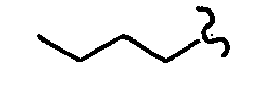
m/z 205 (M+H)+ Example 11 14 
m/z 207 (M+H)+ Example 11 15 
m/z 235 (M+H)+ Example 11 16 
m/z 287 (M+H)+ Example 12 17 
m/z 233 (M+H)+ Example 12 18 
m/z 247 (M+H)+ Example 12 19 
m/z 188 (M+H)+ Example 12 - A mixture of Example 3 (13.0 g, 61.8 mmol), p-toluenesulfonic acid (23 mg, 0.12 mmol) and ethylene glycol (27.6 mL, 494.6 mmol) in benzene (140 mL) was heated to reflux for about 24 hours, using a Dean-Stark trap to separate the forming water. The mixture was cooled, poured into excess 5% aqueous sodium bicarbonate and was extracted with toluene. The combined organic extracts were washed with brine, dried (MgSO4), filtered and concentrated under vacuum. The residue was purified by flash column chromatography on silica gel using dichloromethane as the mobile phase to provide the desired product. MS (DCI-NH3): m/z 254, 256 (M)+.

Example Number Rl1 R2 R3 1H NMR (500 MHz, CD3OD) MS (ESI) Reference Procedure 21 H Br H m/z 254, 256 (M)+ Example 20 22 H H NO2 m/z 222 (M+H)+ Example 20 23 Br H NO2 δ 2.26 (m, 2H) 2.94 (dt, J = 6.8, 1.0 Hz, 2H) 4.00 (m, 4H) 7.37 (dt, J = 8.1, 1.0 Hz, 1H) 7.70 (d, J = 8.1 Hz, 1H). Example 20 - Example 23 (1.1 g, 0.81 mmol) was treated with triethylamine (20 mL, 143.5 mmol), 1-methylpiperazine (0.73 mL, 6.6 mmol) and [1,1'bis(diphenylphosphino) ferrocene]dichloropalladium(II) complex with dichloromethane (1:1) (150 mg, 0.18 mmol). The mixture was carbonylated at 897.000 Pa(130psi) and about 110 °C for about 20 hours. The mixture was filtered through diatomaceous earth (Celite®), concentrated under vacuum and the residue was purified by flash column chromatography on silica gel using dichloromethane/methanol (20:1) as the mobile phase to provide the desired product. MS (ESI) m/z 348 (M+H)+.
- A solution of Example 22 (10.1 g, 45.6 mmol) in ethyl acetate (120 mL) and ethanol (120 mL) was treated with 10 wt.% palladium on activated carbon (1.0 g) and the mixture was hydrogenated at 414.000 Pa (60 psi) and ambient temperature for about 1 hour. The reaction mixture was filtered through diatomaceous earth (Celite®) and was concentrated under vacuum to provide the desired product MS (ESI): m/z 192 (M+H)+.
- To a solution of Example 20 (1.0 g, 3.92 mmol) in tetrahydrofuran (10 mL) at -78 °C was added dropwise 2.5M solution of n-butyllithium in hexanes (2.35 mL, 5.88 mmol). Carbon dioxide gas was bubbled through the reaction mixture for about 5 minutes and the reaction mixture was warmed to 0 °C. Cold water was added and the pH was adjusted to about 2 using 1N hydrochloric acid. The tetrahydrofuran was removed by rotary evaporation, the precipitate was collected by vacuum filtration and was washed with cold water to provide the desired product MS (DCI-NH3): m/z 194 (M+NH4)+.
- To a solution of Example 24 (300 mg, 0.86 mmol) in ethanol (10 mL) was added Raney® Nickel (300 mg) and the mixture was hydrogenated at 414.000 Pa (60 psi) at room temperature for about 2 hours. The mixture was filtered through diatomaceous earth (Celite®) and the filtrate was concentrated under vacuum to provide Example 27. MS (ESI): m/z 318 (M+H)+.
- To a solution of Example 20 (13 g, 50.9 mmol) in tetrahydrofuran (150 mL) was added a 2.5M solution of n-butyllithium in hexanes (30.5 mL, 76.4 mmol) dropwise at about - 78 °C. The mixture was treated dropwise with a solution of N,N-dimethylformamide (39.4 mL, 509.0 mmol) in tetrahydrofuran (40 mL), warmed to ambient temperature, poured into water, and extracted with ethyl acetate. The combined organic extracts were washed with brine, dried (MgSO4), filtered and concentrated under vacuum. The residue was dissolved in a mixture of tetrahydrofuran (15 mL) and methanol (150 mL), cooled to 0 °C, treated portionwise with sodium borohydride (2.6 g, 68.7 mmol), stirred at room temperature for about 2 hours, concentrated under vacuum, diluted with water, and extracted with ethyl acetate. The combined organic extracts were washed with brine, dried (MgSO4), filtered and evaporated under reduced pressure. The residue was purified by flash column chromatography on silica gel using hexane/ethyl acetate (2:1) as the mobile phase to provide the desired product. MS (DCI-NH3): m/z 207 (M+H)+.
- The desired product was prepared by substituting Example 21 for Example 20 in Example 28. MS (DCI-NH3): m/z 207 (M+H)+.
- To a solution of Example 25 (100 mg, 0.52 mmol) in N,N-dimethylformamide (1 mL) was added acetic acid (0.1 mL) and a 37% aqueous solution of formaldehyde (0.5 mL, 5.23 mmol) and the mixture was stirred at room temperature for about 1 hour. Then sodium cyanoborohydride (330 mg, 5.23 mmol) was added and stirring at room temperature was continued overnight. The reaction was quenched by addition of saturated aqueous sodium bicarbonate and the mixture was extracted with dichloromethane. The combined organic extracts were dried (MgSO4), filtered, and concentrated under vacuum to provide the desired product. MS (ESI): m/z 220 (M+H)+.
- To a vigorously stirred solution of Example 25 (3.9 g, 20.6 mmol) in pyridine (40 mL) was slowly added acetyl chloride (1.6 mL, 22.6 mmol). The reaction was stirred at room temperature for about 15 minutes and then the solvent was removed under vacuum. The residue was dissolved in acetone (38 mL) and water (12 mL) and p-toluenesulfonic acid (3.9 g, 20.6 mmol) was added. The mixture was heated to reflux for about 1 hour, cooled, and concentrated under vacuum. The aqueous layer was extracted with ethyl acetate and the combined organic layers were washed with saturated aqueous sodium bicarbonate, dried (Na2SO4), filtered, and concentrated under vacuum. The residue was purified by flash column chromatography on silica gel using hexane/ethyl acetate (1:1) as the mobile phase to provide the desired product. MS (ESI): m/z 188 (M-H)-.

Example Number R1 R2 MS (ESI): Reference Procedure 32 H 
m/z 204 (M+H)+ Example 31 33 H 
m/z 218 (M+H)+ Example 31 34 H 
m/z 220 (M+H)+ Example 31 35 

m/z 346 (M+H) Example 31 - To a vigorously stirred solution of Example 25 (500 mg, 2.61 mmol) in pyridine (15 mL) was slowly added ethyl chloroformate (0.27 mL, 2.87 mmol). The reaction was stirred at room temperature for about 3 hours and then the solvent was removed under vacuum. The residue was dissolved in acetone (4 mL) and water (1 mL) and p-toluenesulfonic acid (494 mg, 2.61 mmol) was added. The mixture was heated to reflux for about 1 hour, cooled, and concentrated under vacuum. The aqueous layer was extracted with ethyl acetate and the combined organic extracts were washed with saturated aqueous sodium bicarbonate, dried (Na2SO4), filtered, and concentrated under vacuum. The residue was purified by preparative HPLC on a Waters Symmetry C8 column (25 mm x 100 mm, 7 µm particle size) using a gradient of 10% to 100% acetonitrile:0.1% aqueous TFA over 8 minutes (10 minutes run time) at a flow rate of 40 mL/minute to provide the desired product. MS (APCI) m/z 220 (M+H)+.
- To a vigorously stirred solution of Example 25 (500 mg, 2.61 mmol) in pyridine (15 mL) was slowly added ethyl sulfonyl chloride (0.27 mL, 2.87 mmol). The reaction was stirred at room temperature for about 3 hours and then the solvent was removed under vacuum. The residue was dissolved in acetone (4 mL) and water (1 mL) and p-toluenesulfonic acid (494 mg, 2.61 mmol) was added. The mixture was heated to reflux for about 1 hour, cooled, and concentrated under vacuum. The aqueous layer was extracted with ethyl acetate and the combined organic extracts were washed with saturated aqueous sodium bicarbonate, dried (Na2SO4), filtered and concentrated under vacuum. The residue was purified by preparative HPLC on a Waters Symmetry C8 column (25 mm x 100 mm, 7 µm particle size) using a gradient of 10% to 100% acetonitrile:0.1% aqueous TFA over about 8 minutes (10 minutes run time) at a flow rate of 40 mL/minute to provide the desired product. MS (APCI) m/z 240 (M+H)+.
- To a solution of Example 5 (500 mg, 2.84 mmol) in dichloromethane (10 mL) was added 1,3-diisopropylcarbodiimide (0.44 mL, 2.84 mmol), 1-hydroxybenzotriazole hydrate (115 mg, 0.85 mmol), and di-t-butyl iminodiacetate (1.04 g, 4.26 mmol). The mixture was stirred at room temperature for about 24 hours, quenched with water, and extracted with diethyl ether. The combined organic extracts were washed with brine and saturated aqueous sodium bicarbonate, dried (Na2SO4), filtered and concentrated under vacuum. The residue was purified by flash column chromatography on silica gel using hexane/ethyl acetate (1:1) as the mobile phase to provide the desired product. MS (ESI): m/z 402 (M-H)-.
- To a solution of Example 5 (250 mg, 1.42 mmol) in N,N-dimethylformamide (4 mL) was added 1,3-diisopropylcarbodiimide (0.268 mL, 1.70 mmol), 1-hydroxybenzotriazole hydrate (58 mg, 0.4 mmol), and t-butyl glycinate (223 mg, 1.7 mmol). The mixture was stirred at room temperature overnight, quenched with saturated aqueous sodium bicarbonate, and extracted with ethyl acetate. The combined organic extracts were washed with brine, dried (Na2SO4), filtered, and concentrated under vacuum. The residue was purified by flash column chromatography on silica gel using hexane/ethyl acetate (50:1) as the mobile phase to provide the desired product. MS (APCI): m/z 290 (M+H)+.
- To a solution of Example 5 (300 mg, 1.70 mmol) in N,N-dimethylformamide (3 mL) was added dimethyl amine hydrochloride (139 mg, 1.70 mmol), 1-hydroxybenzotriazole hydrate (253 mg, 1.87 mmol), triethylamine (0.48 mL, 3.4 mmol) and 1-(3-dimethylaminopropyl)-3-ethylcarbodiimide hydrochloride (358 mg, 1.87 mmol). The reaction mixture was stirred at room temperature overnight, quenched by addition of saturated aqueous sodium bicarbonate, and extracted with ethyl acetate. The combined organic extracts were dried (Na2SO4), filtered, and concentrated under vacuum. The residue was purified by flash column chromatography on silica gel using dichloromethane/methanol (20:1) as the mobile phase to provide the desired product. MS (APCI): m/z 204 (M+H)+.
- To a solution of Example 6 (250 mg, 0.98 mmol) in N,N-dimethylformamide (5 mL) was added N-cyclohexylcarbodiimide-N'-methyl polystyrene (761 mg, 1.5 mmol) and 1-hydroxybenzotriazole hydrate (255 mg, 1.7 mmol). The mixture was agitated at room temperature for about 5 minutes, treated with t-butyl glycinate (150 mg, 1.2 mmol), shaken for about 15 hours, and filtered. The filtrate was concentrated under vacuum and the residue was purified by flash column chromatography on silica gel using hexane/ethyl acetate (1:1) as the mobile phase to provide the desired product. MS (APCI): m/z 311, 313 (M+H-tBu)+.

Example Number R1 R2 MS (APCI): Reference Procedure 42 H 
m/z 259 (M+H)+ Example 41 43 Br 
m/z 382, 384 (M+M)+ Example 41 44 H 
m/z 247 (M+H-tBu)+ Example 39 45 H 
m/z 247 (M+H-tBu)+ Example 39 46 H 
m/z 316 (M+H)+ Example 39 47 H 
m/z 316 (M+H)+ Example 39 48 H 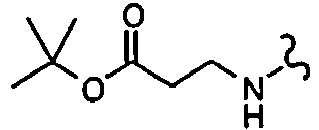
m/z 247 (M+H-tBu)+ Example 39 49 H 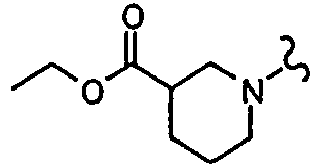
m/z 316 (M+H)+ Example 39 - To a solution of Example 26 (100 mg, 0.57 mmol) in N,N-dimethylformamide (2.8 mL) was added 1-hydroxybenzotriazole hydrate (115 mg, 0.85 mmol). The reaction mixture was cooled to 0 °C and N-methyl morpholine (187 µL, 1.7 mmol) and 1-(3-dimethylaminopropyl)-3-ethylcarbodiimide hydrochloride (163 mg, 0.85 mmol) were added. The reaction mixture was stirred at about 0 °C for about 15 minutes and then at about 23 °C for about 1 hour before N,N-diethylethylenediamine (88 µL, 0.62 mmol) was added. The reaction mixture was stirred overnight at about 23 °C and was then concentrated under vacuum. The residue was purified by flash chromatography on silica gel using dichloromethane/methanol (20:1) and 0.5% ammonium hydroxide as eluent to provide the desired product. MS (DCI-NH3): m/z 275 (M+H)+.
- A solution of Example 28 (8.0 g, 38.7 mmol) and p-toluenesulfonic acid (7.4 g, 38.7 mmol) in a mixture of water (20 mL) and acetone (85 mL) was heated to reflux for about 1 hour. The mixture was concentrated under vacuum, diluted with water, and neutralized by careful addition of potassium carbonate (2.7 g, 19.4 mmol). The precipitate was collected by filtration, washed with minimal water and diethyl ether, and dried under vacuum to provide the desired product. MS (DCI-NH3): m/z 180 (M+NH4)+.
- The desired product was prepared by substituting Example 29 for Example 28 in Example 51. MS (DCI-NH3): m/z 180 (M+NH4)+.
- The desired product was prepared by substituting Example 30 for Example 28 in Example 51. The crude product was purified by flash chromatography on silica gel using dichloromethane/methanol (50:1) as eluent to provide the desired product MS (ESI): m/z 176(M+H)+.
- To a mixture of Example 51 (3.8 g, 23.6 mmol) and triethylamine (4.3 mL, 30.7 mmol) in tetrahydrofuran (50 mL) was added methanesulfonyl chloride (2.2 mL, 28.3 mmol) dropwise at about 0 °C. After about 30 minutes stirring at about 0 °C, the reaction mixture was diluted with water and was extracted with ethyl acetate. The combined organic extracts were washed with brine, dried (MgSO4), filtered, and evaporated under reduced pressure to provide the desired product. MS (DCI-NH3): m/z 258 (M+NH4)+.
- The desired product was prepared by substituting Example 52 for Example 51 in Example 54. MS (DCI-NH3): m/z 258 (M+NH4)+.
- To a suspension of Example 54 (5.6 g, 23.3 mmol) and potassium carbonate (6.4 g, 46.6 mmol) in ethanol (200 mL) was added 1-methylpiperazine (5.2 mL, 46.6 mmol) dropwise at about 0 °C. The mixture was stirred at room temperature for about 3 hours, concentrated under vacuum, diluted with water, and was extracted with ethyl acetate. The combined organic extracts were dried (MgSO4), filtered, and evaporated under reduced pressure. The residue was purified by flash column chromatography on silica gel using dichloromethane/methanol (5:1) as the mobile phase to provide the desired product. MS (DCI-NH3): m/z 245 (M+H)+.
- To a solution of Example 54 (3.2 g, 13.3 mmol) in N,N-dimethylformamide (60 mL) was added imidazole (4.5 g, 65.95 mmol) and the solution was stirred at room temperature overnight. The reaction mixture was poured into water and was extracted with ethyl acetate. The combined organic extracts were washed with brine, dried (MgSO4), filtered and evaporated under reduced pressure. The residue was purified by flash column chromatography on silica gel using dicbloromethane/methanol (15:1) as the mobile phase to provide the desired product. MS (DCI-NH3): m/z 213 (M+H)+.
- A solution of 5-fluoro-1-indanone (1.0 g, 6.66 mmol) and N-methylfurfurylamine (2.0 g, 18.0 mmol) in ethanol (10 mL) was heated to about 80 °C for about 2 days. The reaction mixture was concentrated under vacuum and the residue was purified by flash column chromatography on silica gel using hexane/ethyl acetate (2:1) as the mobile phase to provide the desired product. MS (ESI): m/z 242 (M+H)+.
- To ethyl isonipecotate (10 g, 64 mmol) was slowly added a 37% aqueous solution of formaldehyde (10 mL, 128 mmol) followed by formic acid (10 mL, 233 mmol) and the mixture was heated to reflux for about 3 days. The mixture was allowed to cool to room temperature, the pH was adjusted to 2 by addition of concentrated hydrochloric acid and the mixture was extracted with ethyl acetate. The pH of the aqueous layer was then adjusted to 11 by addition of 2N aqueous sodium hydroxide, and the aqueous layer was extracted with ethyl acetate. The combined organic extracts of the second extraction were dried (MgSO4), filtered, and concentrated under vacuum to provide the desired product. 1H NMR (500 MHz, CDCl3-d): δ 1.25 (t, J = 6 Hz, 3H), 1.40 (m, 1H), 1.59 (m, 1H), 1.62 (m, 1H), 1.95 (m, 2H), 2.06 (m, 1H), 2.26 (s, 3H), 2.71 (m, 1H), 2.94 (m, 1H), 4.13 (dd, J = 6 Hz, 2H).
- To a suspension of lithium aluminum hydride (0.88g, 23 mmol) in tetrahydrofuran (50 mL) was added dropwise a solution of Example 59 (1.03 g, 6 mmol) in tetrahydrofuran (10 mL) and the mixture was heated to reflux for about 2 hours. The mixture was cooled to about 0 °C and saturated aqueous sodium hydroxide (3.5 mL) was added dropwise. After stirring for about 10 minutes at room temperature, the mixture was filtered, the filter cake was washed with tetrahydrofuran and the combined filtrates were dried (Na2SO4), filtered and concentrated under vacuum to provide the desired product. 1H NMR (500 MHz, CDCl3): δ 1.10 (m, 1H), 1.60-2.00 (m, 4H), 2.10 (m, 2H), 2.28 (s, 3H), 2.65 (m, 1H), 2.82 (m, 1H), 3.57 (dd, J = 8, 14 Hz, 1H), 3.63 (dd, J = 8, 14 Hz, 1H), 3.70 (m, 1H).
- To Example 60 (0.78 g, 6 mmol) was added thionyl chloride (10 mL) and the mixture was heated to reflux for about 2 hours. The mixture was cooled and concentrated to dryness. The residue was washed with acetone, suspended in saturated aqueous sodium carbonate and extracted with dichloromethane. The combined organic extracts were dried (Na2SO4), filtered and concentrated under vacuum to provide the desired product. MS (ESI): m/z 148 (M+H)+.
- To a solution of 5-hydroxy-1-indanone (610 mg, 4.1 mmol) in acetonitrile (30 mL) was added 4-(2-chloroethyl)morpholine hydrochloride (3.8 g, 20.5 mmol) and potassium carbonate (680 mg 4.9 mmol) and the mixture was heated to reflux for about 3 days. The solvent was removed under vacuum and the residue was purified by flash column chromatography on silica gel using ethyl acetate as the mobile phase to provide the desired product. MS (ESI): m/z 262 (M+H)+.
- A solution of 5,6-dimethoxy-indan-1-one (6.1 g, 31.7 mmol) in dichloromethane (150 mL) was cooled to about -78 °C and boron tribromide (7.1 mL, 75.1 mmol) was added dropwise. After the addition, the reaction was stirred for about 1 hour while being allowed to warm to room temperature. The mixture was poured into ice water under vigorous stirring. The pink precipitate was collected by filtration, washed with water, and dried under high vacuum to provide the desired product. MS (APCI): m/z 165 (M+H)+.
- A mixture of Example 63 (2.0 g, 12 mmol), iodomethane (1.9 mL, 30 mmol), and lithium carbonate (2.2 g, 30 mmol) in N,N-dimethylformamide (40 mL) was heated to 55 °C for 24 hours. The solution was concentrated under vacuum and was diluted with a 2% solution of hydrochloric acid in water. The precipitate was collected by filtration and was dried under high vacuum to provide the desired product. 1H NMR (500 MHz, CD3OD): δ 2.63 (t, J = 6 Hz, 6H), 3.05 (t, J = 6 Hz, 6H), 3.98 (s, 3H), 7.05 (s, 2H).

Example Number R1 R2 R3 MS Reference Procedure 65 H 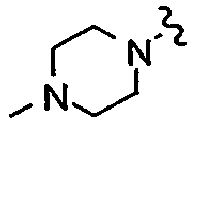
H (DCI-NH3): m/z 231 (M+H)+ Example 58 66 H 
H (DCI-NH3): m/z 218 (M+H)+ Example 58 67 
H H (DCI-NH3): m/z 259 (M+H)+ Example 56 68 
H H (DCI-NH3): m/z 259 (M+H)+ Example 56 69 
H H (DCI-NH3): m/z 216 (M+H)+ Example 56 70 
H H (DCI-NH3): m/z 244 (M+H)+ Example 56 71 
H H (DCI-NH3): m/z 259 (1\4+H)+ Example 56 72 
H H (DCI-NH3): m/z 260 (M+H)+ Example 56 73 
H H (DCI-NH3): m/z 214 (M+H)+ Example 56 74 
H H (DCI-NH3): m/z 227 (M+H)+ Example 56 75 
H H (DCI-NH3): m/z 214 (M+H)+ Example 56 76 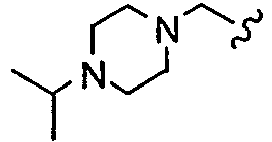
H H (DCI-NH3): m/z 273 (M+H)+ Example 56 77 
H H (DCI-NH3): m/z 259 (M+H)+ Example 24 78 H 
H (DCI-NH3): m/z 259 (M+M)+ Example 24 79 H 
H (DCI-NH3): m/z 246 (M+H)+ Example 24 80 H 
H (DCI-NH3): m/z 245 (M+H)+ Example 56 81 H 
H (DCI-NH3): m/z 214 (M+H)+ Example 56 82 H 
H Example 56 83 H 
H (DCI-NH3): m/z 260 (M+H)+ Example 56 84 H 
H Example 56 85 H 
H Example 56 86 
H 
(ESI): m/z 414 (M-H)- Example 24 87 H 
H (APCI): m/z 199 (M+H)+ Example 58 88 H 
H (APCI): m/z 259 (M+H)+ Example 56 89 H- 
H (APCI):m/z 273 (M+H)+ Example 56 90 H 
H (ESI): m/z 260 (M+H)+ Example 62 91 H 
H (APCI): m/z 220 (M+H)+ Example 62 92 H 
H (APCI): m/z 248 (M+H)+ Example 62 93 H 
H (APCI): m/z 234 (M+H)+ Example 62 94 H 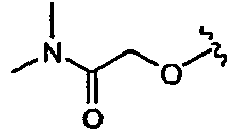
H (APCI): m/z 234 (M+H)+ Example 62 95 
OCH3 H (APCI): m/z 292 (M+H) Example 62 - A mixture of Example 80 (1.0 g, 4.09 mmol) and methyl iodide (1.0 mL, 16.3 mmol) in N,N-dimethylformamide (10 mL) was stirred at room temperature for about 17 hours. The reaction mixture was concentrated under vacuum, a solution of imidazole (0.83 g, 8.18 mmol) and triethylamine (1.14 mL, 8.18 mmol) in N,N-dimethylformamide (10 mL) was added and the mixture heated to about 80 °C for about 5 hours. The reaction was quenched by addition of saturated aqueous ammonium chloride, the layers were separated and the aqueous layer was extracted with dichloromethane. The combined organic extracts were dried (MgSO4), filtered, and concentrated under vacuum to provide the desired product. MS (ESI): m/z 213 (M+H)+.
- A mixture of 2-chloropyrimidine (220 mg, 1.9 mmol), 5-hydroxyindan-1-one (209 mg, 1.4 mmol) and potassium carbonate (250 mg, 1.8 mmol) in N,N-dimethyl formamide (5 mL) was heated to about 100 °C overnight. The reaction was cooled to room temperature and the solvent was evaporated under high vacuum. The residue was purified by flash column chromatography on silica gel using ethyl acetate/methanol (99:1) as the mobile phase to provide the desired product. 1H NMR (500 MHz, CDCl3): δ 2.75 (t, J = 7 Hz, 2H), 3.18 (t, J = 7 Hz, 2H), 7.09 (m, 1H), 7.25 (d, J = 7 Hz, 1H), 7.32 (s, 1H), 7.82 (d, J = 7 Hz, 1H), 8.62 (d, J = 7 Hz, 1H).
- To a solution of 3-thiophenecarboxaldehyde (57.0 g, 502 mmol) and nitromethane (29.9 mL, 552 mmol) in methanol (100 mL) was added a solution of sodium hydroxide (22.1 g, 552 mmol) in water (45 mL) at a rate that kept the temperature at less than 5 °C. The mixture was allowed to stand at about 0 °C for about 30 minutes. The precipitate was collected by filtration, dissolved in a minimum amount of ice-cold water and, poured into an ice-cold mixture of concentrated hydrochloric acid (96.7 mL, 1178 mmol) and water (152 mL). The precipitate was collected by filtration and was recrystallized from aqueous ethanol to provide the desired product. MS (DCI-NH3): m/z 173 (M+NH4)+.
- To a suspension of lithium aluminum hydride (25.9 g, 681.2 mmol) in diethyl ether (900 mL) was added a solution of Example 98 (39.1 g, 252.3 mmol) in diethyl ether (600 mL) and tetrahydrofuran (100 mL) at such a rate that the mixture was kept at a gentle reflux. The mixture was stirred at ambient temperature for about an hour and then excess lithium aluminum hydride was destroyed by slow addition of the minimum required amount of water. The mixture was filtered through diatomaceous earth (Celite®) and the filter cake was washed with diethyl ether. The combined filtrates were dried (MgSO4), filtered, and concentrated under vacuum. The residue was purified by flash column chromatography on silica gel using dichloromethane/methanol (10:1) + 1% ammonium hydroxide as the mobile phase to provide the desired product. MS (DCI-NH3): m/z 128 (M+H)+.
- A 37% aqueous solution of formaldehyde (11.8 mL, 157.9 mmol) was carefully added with stirring to Example 99 (20.1 g, 157.9 mmol). The reaction mixture was then stirred at about 100 °C for about 3 hours and at room temperature for about 1 hour. The mixture was diluted with dichloromethane and was washed with water. The organic layer was dried (MgSO4), filtered and concentrated under vacuum to provide the desired product. MS (DCI-NH3): m/z 140 (M+H)+.
- To Example 100 (24.0 g, 157.9 mmol) was added dropwise a solution of concentrated hydrochloric acid (17.4 mL) in water (21 mL) and the mixture was stirred at room temperature for about 2 hours. The solution was evaporated to dryness, the residue was dissolved in methanol (300 mL), cooled with an ice bath, and was neutralized by addition of triethylamine (22.0 mL, 157.9 mmol). After stirring for about 30 minutes, the solvents were concentrated under vacuum, the residue was dissolved in water and was extracted with ethyl acetate. The combined organic extracts were dried (MgSO4), filtered, and concentrated under vacuum. The residue was purified by flash chromatography on silica gel using dichloromethane/methanol (15:1) as eluent to provide the desired product. MS (DCI-NH3): m/z 140 (M+H)+.
- To a solution of Example 101 (1.0 g, 7.2 mmol) in tetrahydrofuran (10 mL) was added triethylamine (1.1 mL, 7.9 mmol) and di-tert-butyl dicarbonate (2.0 mL, 8.62 mmol) and the mixture was stirred at ambient temperature overnight. The mixture was poured into water and was extracted with ethyl acetate. The combined organic extracts were dried (MgSO4), filtered, and concentrated under vacuum. The residue was purified by flash chromatography on silica gel using hexane/ethyl acetate (2:1) as eluent to provide the desired product. MS (DCI-NH3): m/z 240 (M+H)+.
- To a solution of Example 102 (250 mg, 1.04 mmol) in tetrahydrofuran (8.0 mL) was added a 1.6M solution of n-butyllithium in hexanes (3.3 mL, 5.22 mmol) dropwise at about - 78 °C. The mixture was stirred at about -78 °C for about 1 hour and then a solution of N,N-dimethylformamide (0.4 mL, 5.22 mmol) in tetrahydrofuran (2.0 mL) was added dropwise. The mixture was stirred at about -78 °C for about 1 hour and then the reaction was quenched by addition of aqueous ammonium chloride. After warming to room temperature, water was added and the mixture was acidified by addition of citric acid. The mixture was extracted with ethyl acetate, the combined organic extracts were dried (MgSO4), filtered and concentrated under vacuum. The residue was purified by flash chromatography on silica gel using hexane/ethyl acetate (2:1) as eluent to provide the desired product. MS (DCI-NH3): m/z 268 (M+H)+.
- A solution of Example 103 (190 mg, 0.71 mmol) in ethanol (3.0 mL) was sequentially treated with a solution of silver nitrate (241 mg, 1.42 mmol) in water (0.5 mL) and a solution of potassium hydroxide (159 mg, 2.84 mmol) in water (3.0 mL). The suspension was stirred at room temperature for about 1 hour and filtered. The filter cake was washed with water and diethyl ether and the combined filtrates were acidified by addition of citric acid. The layers were separated and the aqueous layer was extracted with diethyl ether. The combined organic extracts were dried (MgSO4), filtered and concentrated under vacuum. The residue was purified by flash chromatography on silica gel using dichloromethane/methanol (5:1) as eluent to provide the desired product. MS (DCI-NH3): m/z 283 (M)+.
- To an aqueous solution of sodium hypochlorite (available chlorine 5%) (92.6 mL, 143.0 mmol) at about 0 °C was added sodium hydroxide (1.14 g, 28.6 mmol) and the mixture was stirred at about 0 °C until all of the sodium hydroxide had dissolved. To this solution was added 2-acetyl-4-methylthiophene (2.0 g, 14.3 mmol) at about 0 °C. After the addition was complete, the mixture was heated to about 70 °C for about 3 hours, then the solution was cooled and was carefully quenched by addition of a solution of sodium bisulfite (23 g) in water (150 mL). After stirring for about 20 minutes, the solution was acidified by addition of concentrated hydrochloric acid and the precipitate was collected by filtration and dried under high vacuum to provide the desired product. MS (DCI-NH3): m/z 160 (M+NH4)+.
- Thiophene-3-carboxylic acid (5.0 g, 39.0 mmol) was dissolved in glacial acetic acid (40 mL) and a solution of bromine (1.9 mL, 37.9 mmol) in glacial acetic acid (25 mL) was added dropwise. After about 2 hours, the reaction mixture was poured into ice water (200 mL) and the formed precipitate was collected by filtration. The filter cake was washed with a minimal amount of ice water and was recrystallized from water to provide the desired product. MS (DCI-NH3): m/z 206, 208 (M)+.
- To a solution of chromium(VI)oxide (1.57 g, 15.70 mmol) in water (3 mL) was added dropwise concentrated sulfuric acid (1.3 mL, 23.55 mmol). The formed precipitate was redissolved by slow addition of the minimum required amount of water and the solution was cooled with an ice bath. This solution was then added dropwise to a solution of 4-bromo-2-thiophenecarboxaldehyde (2.0 g, 10.47 mmol) in acetone (20 mL) at about 5 °C. The reaction mixture was stirred at about 5 °C for about 30 minutes and then at room temperature for about 2 hours. Methanol (30 mL) was added to the reaction mixture to destroy excess oxidant and the formed solids were collected by filtration. The filtrate was concentrated under vacuum and the residue was partitioned between diethyl ether and water. The organic extract was washed with water and brine, dried (MgSO4), filtered and concentrated under vacuum to provide the desired product. MS (DCI-NH3): m/z 206, 208 (M)+.
- To a solution of phenol (2.3 g, 24.4 mmol) and triethylamine (3.2 g, 32 mmol) in diethyl ether (150 mL) was slowly added 3-bromobenzoyl chloride (5 g, 22.8 mmol) and the mixture was heated to reflux for about 1 hour. The mixture was cooled, filtered, and the filtrate was successively washed with water, 0.2N hydrochloric acid, and saturated aqueous sodium carbonate. The organic layer was dried (MgSO4), filtered, and concentrated under vacuum. The residue was triturated with hexane and dried under vacuum to provide the desired product. 1H NMR (500 MHz, CDCl3) δ 7.22 (m, 3H), 7.42 (m, 3H), 7.79 (d, J = 8 Hz, 1H), 8.15 (d, J = 8 Hz, 1H), 8.37 (br s, 1H).
- The desired product was prepared by substituting 4-iodobenzoyl chloride for 3-bromobenzoyl chloride in Example 108. MS (ESI): m/z 325 (M+H)+.
- Phenol (5.0 g, 39.0 mmol), a 1M solution of 1,3-dicyclohexylcarbodiimide in dichloromethane (39.0 mL, 39.0 mmol) and 4-dimethylaminopyridine (0.5 g, 3.9 mmol) were added to a solution of thiophene-2-carboxylic acid (5.0 g, 39.0 mmol) in diethyl ether (400 mL) at about 0 °C. The reaction mixture was stirred overnight while being allowed to warm to room temperature. The precipitate was collected by filtration and was washed with diethyl ether. The combined filtrates were washed successively with water, 5% aqueous acetic acid, water and brine, dried (MgSO4), filtered and concentrated under vacuum. The residue was purified by flash column chromatography on silica gel using hexane/ethyl acetate (5:1) as the mobile phase to provide phenyl thiophene-2-carboxylate. MS (DCI-NH3): m/z 222 (M+NH4)+.

Example Number R MS (DCI-NH3): Synthesis Protocol 111 
m/z 222 (M+NH4)+ Example 110 112 
m/z 300, 302 (M+NH4)+ Example 110 113 
m/z 300, 302 (M+NH4)+ Example 110 114 
m/z 236 (M+NH4)+ Example 110 115 
m/z 256 (M+NH4)+ Example 110 116 
m/z 236 (M+NH4)+ Example 110 117 
m/z 256 (M+NH4)+ Example 110 118 
m/z 272 (M+NH4)+ Example 110 119 
m/z 294, 296 (M+NH4)+ Example 110 120 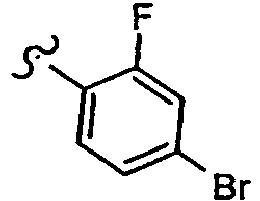
m/z 312, 314 (M+NH4)+ Example 110 121 
m/z 223 (M+NH4)+ Example 110 122 
m/z 235 (M+NH4)+ Example 110 123 
m/z 377 (M+NH4)+ Example 110 124 
m/z 282 (M+H)+ Example 110 125 
m/z 300, 302 (M+NH4)+ Example 110 - A mixture of phenyl 5-bromothiophene-3-carboxylate, Example 113 (100 mg, 0.35 mmol), (prop-2-ynyloxy)benzene (93 mg, 0.71 mmol), triphenylphosphine (19 mg, 0.071 mmol), dichlorobis(triphenylphosphine)palladium(II) (12 mg, 0.018 mmol), copper iodide (1 mg, 0.006 mmol) and triethylamine (0.74 mL, 5.30 mmol) in N,N-dimethylformamide (1 mL) was stirred under nitrogen in a heavy walled process vial in a microwave synthesizer at about 120 °C for about 25 minutes. The reaction mixture was concentrated under vacuum and the residue was purified by flash column chromatography on silica gel using hexane/ethyl acetate (2:1) as the mobile phase to provide the desired product. MS (DCI-NH3): m/z 352 (M+NH4)+.
- To a 60% suspension of sodium hydride in mineral oil (3.55 g, 89.2 mmol) was added tetrahydrofuran (100 mL) and the mixture was cooled to about 5 °C. To this suspension was added dropwise a solution of propargyl alcohol (5.0 g, 89.2 mmol) in tetrahydrofuran (20 mL) and the mixture was stirred for about 30 minutes. Then 2-bromoethyl methyl ether was added and the mixture was stirred overnight while being allowed to warm to room temperature. The reaction was quenched by addition of water and the layers were separated. The aqueous layer was extracted with diethyl ether and the combined organic extracts were dried (MgSO4) and filtered. The organic solvents were carefully distilled off at atmospheric pressure and the residue was purified by flash chromatography on silica gel using diethyl ether/n-pentane (1:3) as eluent to provide the desired product. 1H NMR (500 MHz, DMSO-d6): δ 2.44 (m, 1H), 3.39 (s, 3H), 3.57 (m, 2H), 3.70 (m, 2H), 4.21 (d, J = 3.0 Hz, 2H).
- The desired product was prepared by substituting Example 127 for phenyl propargyl ether in Example 126. 1H NMR (500 MHz, CDCl3): δ 3.42 (s, 3H), 3.60 (t, J = 5 Hz, 2H), 3.78 (d, J = 5 Hz, 2H), 4.45 (s, 2H), 7.19 (d, J = 7 Hz, 2H), 7.28 (m, 1H), 7.42 (t, J = 7 Hz, 2H), 7.82 (s, 1H), 8.19 (s, 1H).
- The desired product was prepared by substituting Example 108 for Example 113 in Example 126. 1H NMR (500 MHz, CDCl3) δ 4.97 (s, 2H), 7.01 (t, J = 8 Hz, 1H), 7.05 (d, J = 8 Hz, 2H), 7.20 (d, J = δ Hz, 2H), 7.30 (t, J = 8 Hz, 2H), 7.34 (t, J = 8 Hz, 1H), 7.42 (t, J = 8 Hz, 2H), 7.44 (t, J = 8 Hz, 1H), 7.69 (d, J = 8 Hz, 1H), 8.15 (d, J = 8 Hz, 1H), 8.28 (s, 1H).
- The desired product was prepared by substituting Example 109 for Example 113 in Example 126. MS (ESI): m/z 329 (M+H)+.
- To a suspension of potassium carbonate (773 mg, 5.59 mmol) in dichloromethane (25 mL) was added m-toluidine (0.5 mL, 4.66 mmol) followed by dropwise addition of chloroacetyl chloride (0.44 mL, 5.59 mmol) and the mixture was stirred at ambient temperature overnight. The reaction was quenched by addition of water, the layers were separated and the aqueous layer was extracted with ethyl acetate. The combined organic extracts were dried (MgSO4), filtered and concentrated under vacuum to provide 2-chloro-N-m-tolyl-acetamide. MS (DCI-NH3): m/z 201 (M+NH4)+.
- To a solution of (S)-(-)-2-bromopropionic acid (0.25 mL, 2.77 mmol), m-toluidine (0.30 mL, 2.77 mmol) and 1-hydroxybenzotriazole hydrate (560mg, 4.16 mmol) in tetrahydrofuran (25 mL) was added a 1M solution of 1,3-dicyclohexylcarbodiimide in dichloromethane (5.54 mL, 5.54 mmol). The mixture was stirred at about 0 °C for about 2 hours, then it was warmed to room temperature and filtered. The filtrate was concentrated and the residue was purified by flash chromatography on silica gel using hexane/ethyl acetate (2:1) as eluent to provide the desired product. MS (DCI-NH3): m/z 259, 261 (M+NH4)+.
- To a solution of 2-chloro-N-m-tolyl-acetamide (580 mg, 3.16 mmol) and phenyl 4-hydroxybenzoate (677 mg, 3.16 mmol) in acetone (20 mL) was added potassium carbonate (502 mg, 3.63 mmol) and potassium iodide (26 mg, 0.16 mmol) and the mixture was heated to reflux overnight. The mixture was concentrated under vacuum, water was added, and the mixture was extracted with ethyl acetate. The combined organic extracts were dried (MgSO4), filtered, and concentrated under vacuum. The residue was purified by flash chromatography on silica gel using hexane/ethyl acetate (2:1) as eluent to provide the desired product. MS (DCI-NH3): m/z 379 (M+NH4)+.
- The desired product was prepared by substituting Example 132 for 2-chloro-N-m-tolyl-acetamide in Example 133. MS (DCI-NH3): m/z 393 (M+NH4)+.
- To a solution of phenyl 4-hydroxybenzoate (2.1 g, 9.8 mmol) in tetrahydrofuran (40 mL) was added a 60% suspension of sodium hydride in mineral oil (408 mg, 10.2 mmol) and the mixture was stirred at room temperature for about 30 minutes. Then 1-bromo-2-(2-methoxyethoxy)ethane (2.5 g, 13.7 mmol) was added and stirring was continued for about 5 days. The mixture was poured into saturated aqueous sodium carbonate and was extracted with ethyl acetate, the combined organic extracts were washed with saturated aqueous sodium carbonate, dried (Na2SO4), filtered, and concentrated under vacuum. The residue was purified by flash chromatography on silica gel using hexane/ethyl acetate (10:1) as eluent to provide the desired product. 1H NMR (500 MHz, CDCl3) δ 3.40 (s, 3H), 3.60 (m, 2H), 3.76 (m, 2H), 3.92 (t, J = 8 Hz, 2H), 4.22 (t, J = 8 Hz, 2H), 7.00 (d, J = 8 Hz, 2H), 7.22 (m, 3H), 7.42 (d, J = 8 Hz, 2H), 8.17 (d, J = 8 Hz, 2H).
- A mixture of phenyl 4-hydroxybenzoate (2.14 g, 10 mmol), 2-phenoxyethyl bromide (12.1 g, 60 mmol) and potassium carbonate (4.1 g, 30 mmol) in 1,4-dioxane (60 mL) was heated to reflux for about 2 days. The mixture was cooled, filtered and concentrated under vacuum. The residue was purified by flash chromatography on silica gel using hexane/ethyl acetate (3:1) as eluent to provide the desired product. 1H NMR (500 MHz, CDCl3) δ 4.39 (m, 2H), 4.42 (m, 2H), 6.97 (d, J = 8 Hz, 2H), 6.99 (t, J = 8 Hz, 1H), 7.03 (d, J = δ Hz, 2H), 7.21 (d, J = 8 Hz, 2H), 7.25 (m, 1H), 7.35 (t, J = 8 Hz, 2H), 7.42 (t, J = 8 Hz, 2H), 8.17 (d, J = 8 Hz, 2H).
- The desired product was prepared by substituting 2-bromoethyl ethyl ether for 2-phenoxyethyl bromide in Example 136. 1H NMR (500 MHz, CDCl3) δ 1.28 (t, J = 8 Hz, 3H), 3.60 (q, J = 8 Hz, 2H), 3.82 (t, J = 8 Hz, 2H), 4.22 (t, J = 8 Hz, 2H), 7.00 (d, J = 8 Hz, 2H), 7.21 (d, J = 8 Hz, 2H), 7.25 (m, 1H), 7.42 (t, J = 8 Hz, 2H), 8.17 (d, J = δ Hz, 2H).
- A mixture of Example 56 (250 mg, 1.02 mmol), Example 110 (208 mg, 1.02 mmol) and a 60% suspension of sodium hydride in mineral oil (102 mg, 2.56 mmol) in benzene (5 mL) was heated to reflux for about 2.5 hours. The reaction was cooled and quenched by dropwise addition of 50% aqueous acetic acid. The solvents were evaporated and the residue was dried under high vacuum for about 1 hour. The residue was dissolved in ethanol (5 mL), hydrazine monohydrate (74 µL, 1.53 mmol) and acetic acid (176 µL, 3.07 mmol) were added and the mixture was heated to reflux for about 4 hours. The mixture was cooled, concentrated under vacuum and the residue was purified by flash chromatography on silica gel using dichloromethane/methanol (10:1) + 1% ammonium hydroxide as eluent to provide 284 mg (79%) of the desired product. 1H NMR (300 MHz, DMSO-d6): δ 2.15 (s, 3H), 2.28-2.46 (m, 8H), 3.53 (s, 2H), 3.73 (s, 2H), 7.17 (dd, J = 5.1, 3.4 Hz, 1H), 7.21 (dd, J = 7.8, 1.4 Hz, 1H), 7.45 (dd, J = 3.4, 1.0 Hz, 1H), 7.50 (d, J = 7.8 Hz, 1H), 7.57 (m, 2H). MS (ESI): m/z 351 (M+H)+.
- The procedure for Example 138 was used, substituting 5-methoxy-1-indanone for Example 56 and Example 112 for Example 110. The crude product was triturated with 1N hydrochloric acid, the precipitate was collected by filtration and was dried under high vacuum to provide 1.15 g (85%) of the desired product as the hydrochloric acid salt. 1H NMR (300 MHz, DMSO-d6) δ 3.71 (s, 2H), 3.81 (s, 3H), 6.95 (dd, J = 2.4, 8.5 Hz, 1H), 7.18 (d, J = 2.4 Hz, 1H), 7.24 (d, J = 4.1 Hz, 1H), 7.28 (d, J = 4.1 Hz, 1H), 7.52 (d, J = 8.5 Hz, 1H). MS (ESI): m/z 346,348 (M+H)+.
- The procedure for Example 138 was used, substituting Example 115 for Example 110. The crude product was purified by preparative HPLC on a Waters Symmetry C8 column (25 mm x 100 mm, 7 µm particle size) using a gradient of 10% to 100% acetonitrile:0.1% aqueous TFA over about 8 minutes (10 minutes run time) at a flow rate of 40 mL/minute to provide 125 mg (13%) of the desired product as the trifluoroacetic acid salt. 1H NMR (500 MHz, DMSO-d6) δ 2.80 (s, 3H), 3.00-3.50 (m, 8H), 3.84 (s, 2H), 3.91 (br s, 2H), 7.16 (d, J = 5.5 Hz, 1H), 7.31 (d, J = 7.8 Hz, 1H), 7.58 (d, J = 7.8 Hz, 1H), 7.66 (s, 1H), 7.71 (d, J = 5.5 Hz, 1H). MS (ESI): m/z 385 (M+H)+.
- A mixture of Example 80 (170 mg, 0.70 mmol), thiazole-2-carboxylic acid ethyl ester (166 mg, 1.05 mmol), and a 60% suspension of sodium hydride in mineral oil (127 mg, 3.17 mmol) in benzene (3 mL) was heated to reflux for about 2.5 hours. The reaction was cooled and quenched by dropwise addition of 50% aqueous acetic acid. The solvents were evaporated and the residue was dried under high vacuum for about 1 hour. The residue was dissolved in ethanol (3 mL), hydrazine monohydrate (60 µL, 1.23 mmol) and acetic acid (75 µL, 1.31 mmol) were added and the mixture was heated to reflux for about 4 hours. The mixture was cooled, concentrated under vacuum and the residue was purified by flash chromatography on silica gel using dichloromethane/methanol (10:1) + 1% ammonium hydroxide as eluent to provide 7 mg (3%) of the desired product. 1H NMR (500 MHz, CDCl3): δ 2.3-2.7 (m, 11H), 3.60 (s, 2H), 3.83 (s, 2H), 7.34 (d, J = 7.8 Hz, 1H), 7.43 (d, J = 3.1 Hz, 1H), 7.53 (s, 1H), 7.73 (d, J = 7.5 Hz, 1H), 7.90 (d, J = 3.1 Hz, 1H). MS (ESI): m/z 352 (M+H)+.
- The procedure for Example 141 was used, substituting butyl 3,4-dimethylthieno[2,3-b]thiophene-2-carboxylate for thiazole-2-carboxylic acid ethyl ester. The crude product was purified by preparative HPLC on a Waters Symmetry C8 column (25 mm x 100 mm, 7 µm particle size) using a gradient of 10% to 100% acetonitrile:0.1% aqueous TFA over 8 minutes (10 minutes run time) at a flow rate of 40 mL/minute to provide 33 mg (10%) of the desired product as the trifluoroacetic acid salt. 1H NMR (500 MHz, DMSO-d6): δ 2.51 (s, 3H), 2.60 (s, 3H), 2.80 (s, 3H), 3.00-3.50 (m, 8H), 3.74 (s, 2H), 3.88 (br s, 2H), 7.21 (s, 1H), 7.39 (d, J = 7.6 Hz, 1H), 7.58 (s, 1H), 7.66 (d, J = 7.6 Hz, 1H). MS (ESI): m/z 435 (M+H)+.
- To a solution of 4-methyl-thiophene-2-carboxylic acid (44 mg, 0.31 mmol) in benzene (1 mL) was added 1,1'-carbonyldiimidazole (50 mg, 0.31 mmol) and the mixture was agitated at about 80 °C for about 1 hour. To a separate solution of Example 80 (50 mg, 0.21 mmol) in benzene (1 mL) was added a 60% suspension of sodium hydride in mineral oil (16 mg, 0.68 mmol) and the mixture was agitated at about 80 °C for about 1 hour. Both solutions were combined and agitated at about 80 °C for about 1 hour before ethanol (50 µL) was added. The reaction mixture was kept at about 80 °C for about an additional 30 minutes, then 5 drops of acetic acid were added and the mixture was concentrated to dryness in high vacuum. The residue was dissolved in ethanol (3 mL), acetic acid (41 µL, 0.72 mmol) was added, followed by hydrazine monohydrate (30 µL, 0.62 mmol), and the mixture was heated to about 80 °C overnight. The mixture was concentrated under vacuum and the residue was purified by preparative HPLC on a Waters Symmetry C8 column (25 mm x 100 mm, 7 µm particle size) using a gradient of 10% to 100% acetonitrile:0.1% aqueous TFA over 8 minutes (10 minutes run time) at a flow rate of 40 mL/minute to provide 75 mg (44%) of the desired product as the trifluoroacetic acid salt. 1H NMR (300 MHz, DMSO-d6): δ 2.27 (s, 3H), 2.77 (s, 3H), 3.00-3.50 (m, 8H), 3.74 (s, 2H), 3.88 (br s, 2H), 7.16 (s, 1H), 7.28 (s, 1H), 7.35 (d, J = 7.8 Hz, 1H), 7.55 (s, 1H), 7.62 (d, J = 7.8 Hz, 1H). MS (ESI): m/z 365 (M+H)+.

R1 R2 R3 R'4 MS (ESI): Example Number (Reference Procedure) H H H 
m/z 317, 319 (M+H)+ Example 144 (Example 138) Br H H 
m/z 317, 319 (M+H)+ Example 145 (Example 138) H 
H 
m/z 351 (M+H)+ Example 146 (Example 138) H 
H 
m/z 429, 431 (M+H)+ Example 147 (Example 138) H 
H 
m/z 429, 431 (M+H)+ Example 148 (Example 138) 
H H 
m/z 429, 431 (M+H)+ Example 149 (Example 138) H 
H 
m/z 365 (M+H)+ Example 150 (Example 138) 
H H 
n]/z365 (M+H)+ Example 151 (Example 138) H 
H 
m/z 385 (M+H)+ Example 152 (Example 138) H 
H 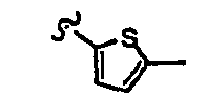
m/z 365 (M+H)+ Example 153 (Example 138) 
H H 
m/z 365 (M+H)+ Example 154 (Example 138) H 
H 
m/z 385 (M+H)+ Example 155 (Example 138) 
H H 
m/z 385 (M+H)+ Example 156 (Example 138) H 
H 
m/z 401 (M+H)+ Example 157 (Example 138) 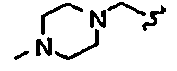
H H 
m/z401 (M+H)+ Example 158 (Example 138) H 
H 
m/z 423, 425 (M+H)+ Example 159 (Example 138) H 
H 
m/z 441, 443 (M+H)+ Example 160 (Example 138) H 
H 
m/z 388 (M+H)+ Example 161 (Example 143) H 
H 
m/z 413 (M+H)+ Example 162 (Example 143) H 
H 
m/z 451 (M+H)+ Example 163 (Example 143) H 
H 
m/z 379 (M+H)+ Example 164 (Example 143) H 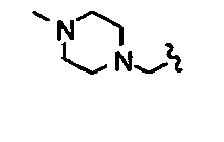
H 
m/z 414 (M+H)+ Example 165 (Example 143) H 
H 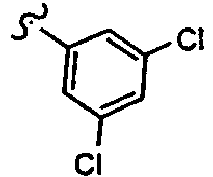
m/z 414 (M+H)+ Example 166 (Example 143) H 
H 
m/z 352 (M+H)+ Example 167 (Example 138) H 
H 
m/z 366 (M+H)+ Example 168 (Example 141) H 
H 
m/z 352 (M+H)+ Example 169 (Example 138) 
H H 
m/z 352 (M+H)+ Example 170 (Example 141) H 
H 
m/z 350 (M+H)+ Example 171 (Example 141) H 
H 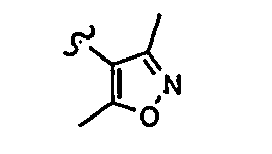
m/z 364 (M+H)+ Example 172 (Example 140) H H OMe 
m/z 269 (M+H)+ Example 173 (Example 140) H H OMe 
m/z 269 (M+H)+ Example 174 (Example 140) H H OMe 
m/z 347, 349 (M+H)+ Example 175 (Example 140) H 
H 
m/z 506 (M+H)+ Example 176 (Example 138) H 
H 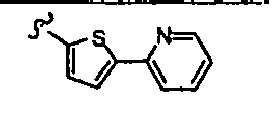
m/z 428 (M+H)+ Example 177 (Example 140) 
H H 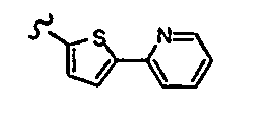
m/z 428 (M+H)+ Example 178 (Example 140) H 
H 
m/z 449 (M+H)+ Example 179 (Example 138) H 
H 
m/z 446, 448 (M+H)+ Example 180 (Example 138) H 
H 
m/z 446, 448 (M+H)+ Example 181 (Example 138) H 
H 
m/z 368 (M+H)+ Example 182 (Example 138) H 
H 
m/z 348 (M+H)+ Example 183 (Example 140) H 
H 
m/z 337 (M+H)+ Example 184 (Example 140) H 
H 
m/z 402, 404 (M+H)+ Example 185 (Example 138) 
H H 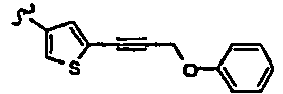
m/z 495 (M+H)+ Example 186 (Example 140) 
H H 
m/z 467 (M+H)+ Example 187 (Example 140) 
H H 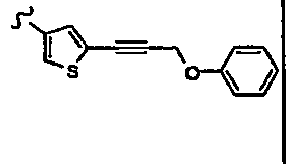
m/z 495 (M+H)+ Example 188 (Example 140) 
H H 
m/z 452 (M+H)+ Example 189 (Example 140) 
H H 
m/z 480 (M+H)+ Example 190 (Example 140) 
H H 
m/z 495 (M+H)+ Example 191 (Example 140) 
H H 
m/z 494 (M-H)- Example 192 (Example 140) 
H H 
m/z 448 (M-H)- Example 193 (Example 140) 
H H 
m/z 463 (M+H)+ Example 194 (Example 140) 
H H 
m/z 450 (M+H)+ Example 195 (Example 140) 
H H 
m/z 509 (M+H)+ Example 196 (Example 140) H H H 
m/z 369 (M+H)+ Example 197 (Example 138) H H Br 
m/z 318 (M+H)+ Example 198 (Example 140) H H 

m/z 296 (M+H)+ Example 199 (Example 140) H H 

m/z 374, 376 (M+H)+ Example 200 (Example 138) H H 

m/z 424 (M-H)- Example 201 (Example 138) H H 

m/z 282 (M+H)+ Example 202 (Example 140) H H 

m/z 310 (M+H)+ Example 203 (Example 140) H H 

m/z 324 (M+H)+ Example 204 (Example 140) H H 

m/z 326 (M+H)+ Example 205 (Example 138) H H 

m/z 404, 406 (M+H)+ Example 206 (Example 140) 
H 

m/z 522 (M+H)+ Example 207 (Example 140) H 
H 
m/z 508 (M+H)+ Example 208 (Example 140) H 
H 
m/z 522 (M+H)+ Example 209 (Example 140) H 
OH 
m/z 367 (M+H)+ Example 210 (Example 140) 
H H 
m/z 443 (M+H)+ Example 211 (Example 138) 
H H 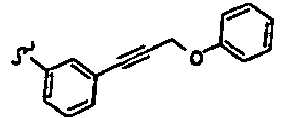
m/z 475 (M+H)+ Example 212 (Example 140) 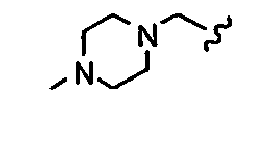
H H 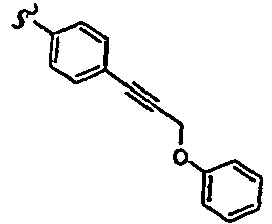
m/z 475 (M+H)+ Example 213 (Example 138) 
H H 
m/z 443 (M+H)+ Example 214 (Example 138) H 
H 
m/z 475 (M+H)+ Example 215 (Example 140) H 
H 
m/z 443 (M+H)+ Example 216 (Example 140) H 
H 
m/z 475 (M+H)+ Example 217 (Example 140) H 
H 
m/z 443 (M+H)+ Example 218 (Example 140) H 
H 
m/z 463 (M+H)+ Example 219 (Example 140) H 
H 
m/z 481 (M+H)+ Example 220 (Example 138) H 
H 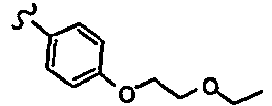
m/z 433 (M+H)+ Example 221 (Example 140) H 
H 
m/z 450 (M+H)+ Example 222 (Example 140) H H 

m/z 365 (M+H)+ Example 223 (Example 140) Br H 

m/z 474, 472 (M-H)- Example 224 (Example 140) Br H 

m/z 488, 490 (M+H)+ Example 225 (Example 140) H H 

m/z 510 (M+H)+ Example 226 (Example 140) H H 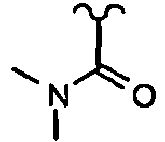

m/z 310 (M+H)+ Example 227 (Example 140) H H 

m/z 410 (M+H)+ Example 228 (Example 140) H H 

m/z 410 (M+H)+ Example 229 (Example 140) H H 

m/z 422 (M+H)+ Example 230 (Example 140) H H 

m/z 422 (M+H)+ Example 231 (Example 140) H H 

m/z 422 (M+H)+ Example 232 (Example 140) H H 

m/z 410 (M+H)+ Example 233 (Example 140) H H 

m/z 396 (M+H)+ Example 234 (Example 140) H 
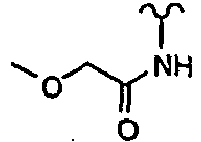

m/z 439 (M+H)+ Example 235 (Example 140) H H 

m/z 297 (M+H)4 Example 236 (Example 140) H H 

m/z 311 (M+H)+ Example 237 (Example 140) H H 

m/z 313 (M+H)+ Example 238 (Example 140) H H 

m/z 341 (M+H)+ Example 239 (Example 140) H H 

m/z 354 (M+H)4 Example 240 (Example 140) H H 

m/z 393 (M+H)+ Example 241 (Example 140) H H 

m/z 339 (M+H)+ Example 242 (Example 140) H H 

m/z 353 (M+H)+ Example 243 (Example 140) H H 

m/z 294 (M+H)+ Example 244 (Example 140) H 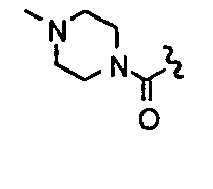
H 
m/z 365 (M+H)+ Example 245 (Example 140) H 
H 
m/z 352 (M+H)+ Example 246 (Example 140) 
H H 
m/z 495 (M+H)+ Example 247 (Example 140) H H 

m/z 326 (M+H)+ Example 248 (Example 138) H H 

m/z346 (M+H)+ Example 249 (Example 140) H 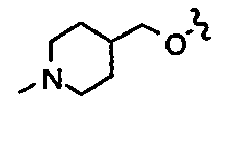
H 
m/z 496 (M+H)+ Example 250 (Example 140) H 
H 
m/z 450 (M+H)+ Example 251 (Example 140) H 
H 
m/z 539 (M+H)+ Example 252 (Example 140) H 
H 
m/z 496 (M+H)+ Example 253 (Example 140) H 
H 
m/z 480 (M+H)+ Example 254 (Example 140) 
H H 
m/z 365 (M+H)+ Example 255 (Example 140) 
H 

m/z 452 (M+H)+ Example 256 (Example 140) 
H H 
m/z 397, 399 (M+H)+ Example 257 (Example 138) 
H H 
m/z 459, 461 (M+H)+ Example 258 (Example 138) 
H H 
m/z 398, 400 (M+H)+ Example 259 (Example 138) H 
H 
m/z 398, 400 (M+H)+ Example 260 (Example 138) H 
H 
m/z 429, 431 (M+H)+ Example 261 (Example 138) 
H H 
m/z443, 445 (M+H)+ Example 262 (Example 138) H 
H 
m/z 445 (M+H)+ Example 263 (Example 138) H 
H 
m/z 446, 448 (M+H)+ Example 264 (Example 138) H 
H 
m/z 418, 420 (M+H)+ Example 265 (Example 138) Example Number 1H NMR 144 (500 MHz, DMSO-d6) δ 3.75 (s, 2H), 7.25 (br s, 1H), 7.30 (m, 2H), 7.38 (dd, J = 7.5, 7.5 Hz, 1H), 7.58 (d, J = 7.8 Hz, 1H), 7.62 (br s, 1H). 145 (300 MHz, DMSO-d6) δ 3.80 (s, 2H), 7.46 (dd, J = 1.7, 8.1 Hz, 1H), 7.53 (d, J = 13.9 Hz, 1H), 7.56 (dd, J = 1.4, 5.1 Hz, 1H), 7.72 (m, 1H), 7.80 (m, 1H), 7.86 (m, 1H). 146 (300 MHz, CDCl3) δ 2.36 (s, 3H), 3.59 (s, 2H), 3.75 (s, 2H), 7.13 (dd, J = 3.7,4.8 Hz, 1H), 7.30 (d, J = 7.8 Hz, 1H), 7.35 (m, 2H), 7.49 (s, 1H), 7.63 (d, J = 7.8 Hz, 1H). 147 (500 MHz, CDCl3) δ 2.32 (s, 3H), 2.4-2.65 (m, 8H), 3.58 (s, 2H), 3.70 (s, 2H), 7.06 (m, 2H), 7.31 (d, J = 7.5 Hz, 1H), 7.50 (s, 1H), 7.59 (d, J = 7.8 Hz, 1H). 148 (500 MHz, CDCl3) δ 2.32 (s, 3H), 2.40-2.65 (m, 8H), 3.58 (s, 2H), 3.70 (s, 2H), 7.29 (d, J = 7.8 Hz, 1H), 7.37 (d, J = 1.4 Hz, 1H), 7.40 (d, J = 1.4 Hz, 1H), 7.49 (s, 1H), 7.61 (d, J = 7.8 Hz, 1H). 149 (300 MHz, DMSO-d6) δ 2.15 (s, 3H), 2.28-2.45 (m, 8H), 3.52 (s, 2H), 3.78 (s, 2H), 7.20 (d, J = 7.5 Hz, 1H), 7.48 (d, J = 7.5 Hz, 1H), 7.58 (s, 1H), 7.64 (s, 1H), 7.84 (s, 1H). 150 (500 MHz, DMSO-d6) δ 2.15 (s, 6H), 2.25-2.50 (m, 8H), 3.50 (s, 2H), 3.70 (s, 2H), 7.01 (m, 1H), 7.28 (d, J = 7.6 Hz, 1H), 7.47 (s, 1H), 7.58 (m, 2H). 151 (500 MHz, DMSO-d6) δ 2.15 (s, 6H), 2.25-2.50 (m, 8H), 3.53 (s, 2H), 3.69 (s, 2H), 7.00 (m, 1H), 7.20 (d, J = 7.6 Hz, 1H), 7.48 (d, J = 7.6 Hz, 1H), 7.58 (m, 2H). 152 (500 MHz, DMSO-d6) δ 2.15 (s, 3H), 2.23-2.48 (m, 8H), 3.50 (s, 2H), 3.81 (s, 2H), 7.14 (d, J = 5.3 Hz, 1H), 7.29 (d, J = 7.7 Hz, 1H), 7.48 (s, 1H), 7.56 (d, J = 7.7 Hz, 1H), 7.68 (d, J = 5.3 Hz, 1H). 153 (500 MHz, DMSO-d6) δ 2.15 (s, 3H), 2.25-2.45 (m, 8H), 2.49 (s, 3H), 3.50 (s, 2H), 3.70 (s, 2H), 6.85 (s, 1H), 7.23 (s, 1H), 7.27 (d, J = 7.4 Hz, 1H), 7.48 (s, 1H), 7.55 (d, J = 7.4 Hz, 1H). 154 (500 MHz, DMSO-d6) δ 2.15 (s, 3H), 2.25-2.45 (m, 8H), 2.49 (s, 3H), 3.52 (s, 2H), 3.69 (s, 2H), 6.85 (s, 1H), 7.19 (d, J = 7.7 Hz, 1H), 7.23 (br s, 1H), 7.49 (d, J = 7.7 Hz, 1H), 7.57 (s, 1H). 155 (500 MHz, DMSO-d6) δ 2.15 (s, 3H), 2.25-2.45 (m, 8H), 3.50 (s, 2H), 3.74 (s, 2H), 7.18 (d, J = 3.7 Hz, 1H), 7.26 (br s, 1H), 7.29 (d, J = 7.3 Hz, 1H), 7.49 (s, 1H), 7.55 (d, J = 7.3 Hz, 1H). 156 (500 MHz, DMSO-d6) δ 2.15 (s, 3H), 2.25-2.45 (m, 8H), 3.52 (s, 2H), 3.72 (s, 2H), 7.17 (d, J = 2.8 Hz, 1H), 7.21 (d, J = 7.8 Hz, 1H), 7.26 (br s, 1H), 7.50 (d, J = 7.8 Hz, 1H), 7.57 (s, 1H). 157 (500 MHz, DMSO-d6) 8 2.15 (s, 3H), 2.25-2.45 (m, 8H), 3.52 (s, 2H), 3.84 (s, 2H), 7.31 (d, J = 7.8 Hz, 1H), 7.39 (m, 2H), 7.52 (s, 1H), 7.58 (d, J = 7.8 Hz, 1H), 7.73 (s, 1H), 7.89 (d, J = 7.5 Hz, 1H), 7.99 (d, J = 7.8 Hz, 1H). 158 (500 MHz, DMSO-ds) δ 2.16 (s, 3H), 2.25-2.45 (m, 8H), 3.54 (s, 2H), 3.83 (s, 2H), 7.23 (d, J = 7.8 Hz, 1H), 7.38 (m, 2H), 7.53 (d, 7.8 Hz, 1H), 7.60 (s, 1H), 7.73 (s, 1H), 7.88 (d, J = 7.5 Hz, 1H), 7.99 (d, J = 7.8 Hz, 1H). 159 (500 MHz, CDCl3) δ 2.30 (s, 3H), 2.25-2.45 (m, 8H), 3.57 (s, 2H), 3.75 (s, 2H), 7.28 (m, J = 8.4 Hz, 1H), 7.49 (s, 1H), 7.55 (m, 2H), 7.59 (m, 2H), 7.63 (d, J = 7.5 Hz, 1H). 160 (500 MHz, CDCl3) δ 2.32 (s, 3H), 2.25-2.45 (s, 8H), 3.59 (s, 2H), 3.82 (s, 2H), 7.34 (d, J = 7.8 Hz, 1H), 7.43 (m, 2H), 7.51 (s, 1H), 7.61 (t, J = 8.3 Hz, 1H), 7.74 (d, J = 7.8 Hz, 1H). 161 (500 MHz, DMSO-d6) δ 2.76 (s, 3H), 2.94 (s, 6H), 3.00-3.50 (m, 8H), 3.82 (s, 2H), 3.92 (br s, 2H), 6.71 (d, J = 8.4 Hz, 1H), 7.06 (d, J = 7.5 Hz, 1H), 7.15 (s, 1H), 7.26 (t, J = 7.8 Hz, 1H), 7.35 (d, J = 7.8 Hz, 1H), 7.55 (s, 1H), 7.64 (d, J = 7.8 Hz, 1H). 162 (500 MHz, DMSO-d6) δ 2.78 (s, 3H), 3.00-3.50 (m, 8H), 3.87 (s, 2H), 3.92 (s, 2H), 7.39 (d, J = 8.1 Hz, 1H), 7.59 (s, 1H), 7.67 (d, J = 7.8 Hz, 1H), 7.86 (m, 2H), 8.03 (m, 2H). 163 (500 MHz, DMSO-d6) δ 2.80 (s, 3H), 3.00-3.50 (m, 8H), 3.85 (s, 2H), 3.94 (s, 2H), 5.18 (s, 2H), 7.15 (m, 2H), 7.33-7.42 (m, 4H), 7.48 (m, 2H), 7.58 (s, 1H), 7.67 (d, J = 7.8 Hz, 1H), 7.75 (m, 2H). 164 (500 MHz, DMSO-d6) δ 2.79 (s, 3H), 3.00-3.50 (m, 8H), 3.91 (m, 4H), 7.39 (d, J = 7.8 Hz, 1H), 7.43 (d, J = 8.1 Hz, 1H), 7.54 (t, J = 7.9 Hz, 1H), 7.59 (s, 1H), 7.67 (d, J = 7.5 Hz, 1H), 7.78 (d, J = 7.8 Hz, 1H), 7.87 (s, 1H). 165 (500 MHz, DMSO-d6) δ 2.79 (s, 3H), 3.00-3.50 (m, 8H), 3.91 (m, 4H), 7.39 (d, J = 7.8 Hz, 1H), 7.59 (s, 1H), 7.67 (d, J = 7.5 Hz, 1H), 7.78 (m, 2H), 8.04 (s, 1H). 166 (500 MHz, DMSO-d6) δ 2.79 (s, 3H), 3.00-3.50 (m, 8H), 3.87 (br s, 2H), 3.93 (s, 2H), 7.39 (d, J = 7.5 Hz, 1H), 7.58 (s, 1H), 7.60 (t, J = 1.6 Hz, 1H), 7.67 (d, J = 7.5 Hz, 1H), 7.82 (m, 2H). 167 (500 MHz, CDCl3) δ 2.31 (s, 3H), 2.25-2.45 (m, 8H), 3.58 (s, 2H), 3.81 (s, 2H), 7.33 (d, J = 7.8 Hz, 1H), 7.52 (s, 2H), 7.77 (d, J = 7.8 Hz, 1H), 8.94 (d, J = 1.9 Hz, 1H). 168 (300 MHz, CDCl3) δ 2.34 (s, 3H), 2.25-2.45 (m, 8H), 2.79 (s, 3H), 3.59 (s, 2H), 3.77 (s, 2H), 7.28 (s, 1H), 7.33 (d, J = 8.8 Hz, 1H), 7.51 (s, 1H), 7.76 (d, J = 7.8 Hz, 1H). 169 (500 MHz, CDCl3) δ 2.29 (s, 3H), 2.25-2.45 (m, 8H), 3.53 (s, 2H), 3.69 (s, 2H), 7.26 (d, J = 7.8 Hz, 1H), 7.47 (s, 1H), 7.53 (d, J = 8.1 Hz, 1H), 8.09 (s, 1H), 8.74 (s, 1H). 170 (500 MHz, CDCl3) δ 2.44 (s, 3H), 2.65-2.85 (m, 8H), 3.65 (s, 2H), 3.82 (s, 2H), 7.26 (d, J = 7.8 Hz, 1H), 7.43 (d, J = 3.3 Hz, 1H), 7.48 (d, J = 7.8 Hz, 1H), 7.77 (s, 1H), 7.92 (d, J = 3.3 Hz, 1H). 171 (400 MHz, CDCl3) δ 2.38 (s, 3H), 2.52 (s, 3H), 2.55-2.75 (m, 8H), 3.60 (s, 2H), 3.78 (s, 2H), 6.35 (s, 1H), 7.32 (d, J = 8.0 Hz, 1H), 7.49 (s, 1H), 7.68 (d, J = 7.7 Hz, 1H). 172 (500 MHz, CDCl3) δ 2.39 (s, 3H), 2.54 (s, 3H), 2.89 (s, 3H), 3.55-3.65 (m, 8H), 3.74 (s, 2H), 4.23 (s, 2H), 7.46 (d, J = 7.8 Hz, 1H), 7.67 (s, 1H), 7.82 (d, J = 7.8 Hz, 1H). 173 (500 MHz, CDCl3) δ 3.68 (s, 2H), 3.94 (s, 3H), 6.86 (t, J = 4.5 Hz, 1H), 7.10 (dd, J = 5.1, 3.6 Hz, 1H), 7.34 (m, 4H). 174 (500 MHz, DMSO-d6) δ 3.69 (s, 2H), 3.89 (s, 3H), 6.96 (d, J = 8.1 Hz, 1H), 7.27 (d, J = 7.5 Hz, 1H), 7.36 (t, J= 7.8 Hz, 1H), 7.58 (dd, J = 5.0,1.2 Hz, 1H), 7.69 (dd, J= 5.0,2.8 Hz, 1H), 7.86 (d, J = 1.9 Hz, 1H). 175 (400 MHz, DMSO-d6) δ 3.63 (s, 2H), 3.89 (s, 3H), 6.98 (d, J = 7.7 Hz, 1H), 7.26 (m, 3H), 7.38 (t, J = 7.8 Hz, 1H). 176 (500 MHz, DMSO-d6) δ 1.44 (s, 9H), 2.15 (s, 3H), 2.25-2.45 (m, 8H), 2.68 (m, 2H), 3.50 (s, 2H), 3.62 (m, 2H), 3.70 (s, 2H), 4.58 (br s, 2H), 7.11 (s, 1H), 7.28 (d, J = 7.8 Hz, 1H), 7.48 (s, 1H), 7.55 (d, J = 7.8 Hz, 1H). 177 (500 MHz, DMSO-d6) δ 2.81 (s, 3H), 3.00-3.50 (m, 8H), 3.84 (s, 2H), 4.00 (br s, 2H), 7.30 (ddd, J = 7.5, 4.7, 1.3 Hz, 1H), 7.42 (d, J = 7.8 Hz, 1H), 7.51 (d, J = 3.7 Hz, 1H), 7.63 (s, 1H), 7.68 (d, J = 7.8 Hz, 1H), 7.86 (m, 2H), 7.97 (ddd, J = 8.1, 1.0, 1.0 Hz, 1H), 8.55 (ddd, J = 5.0, 1.9, 1.0 Hz, 1H). 178 (500 MHz, DMSO-d6) δ 2.82 (s, 3H), 3.00-3.50 (m, 8H), 3.84 (s, 2H), 4.06 (br s, 2H), 7.30 (ddd, J = 7.5, 4.7, 1.2 Hz, 1H), 7.35 (d, J = 7.5 Hz, 1H), 7.50 (d, J = 3.7 Hz, 1H), 7.63 (d, J = 7.8 Hz, 1H), 7.73 (s, 1H), 7.86 (m, 2H), 7.97 (ddd, J = 8.1, 1.0, 1.0 Hz, 1H), 8.55 (ddd, J = 5.0, 1.9, 1.0 Hz, 1H). 179 (500 MHz, DMSO-d6) δ 3.83 (s, 2H), 5.11 (s, 2H), 5.48 (s, 2H), 7.00 (m, 1H), 7.05 (m, 2H), 7.35 (m, 2H), 7.42 (d, J = 8.4 Hz, 1H), 7.63 (s, 1H), 7.69 (m, 2H), 7.73 (s, 1H), 7.81 (s, 1H), 7.89 (s, 1H), 9.23 (s, 1H). 180 (300 MHz, DMSO-d6) δ 2.72 (t, J = 7 Hz, 2H), 3.30 (m, 4H), 3.59 (t, J = 5 Hz, 4H), 3.76 (s, 2H), 4.14 (t, J = 7 Hz, 2H), 6.94 (d, J = 7 Hz, 1H), 7.17 (s, 1H), 7.54 (d, J = 7 Hz, 1H), 7.61 (s,1H), 7.81 (s, 1H). 181 (500 MHz, DMSO-d6) δ 3.20-3,55 (m, 8H), 3.60 (t, J = 4.7 Hz, 2H), 3.72 (s, 2H), 4.40 (t, J = 4.7 Hz, 2H), 7.02 (dd, J = 2.5, 8.4 Hz, 1H), 7.23 (d, J = 3.8 Hz, 1H), 7.25 (d, J=2.5 Hz, 1H), 7.27 (d, J=3.8 Hz, 1H), 7.55 (d, J = 8.4 Hz, 1H). 182 (500 MHz, DMSO-d6) δ 3.15-3.55 (m, 8H), 3.61 (t, J = 3 Hz, 2H), 3.80 (s, 2H), 4.41 (t, J = 5 Hz, 2H), 7.02 (d, J = 7 Hz, 1H), 7.26 (s, 1H), 7.55 (d, J = 5 Hz, 1H), 7.60 (d, J = 7 Hz, 1H), 7.70 (d, J = 3, 5 Hz, 1H), 7.82 (d, J = 3 Hz, 1H). 183 (300 MHz, DMSO-d6) δ 3.00 (s, 3H), 3.71 (s, 2H), 4.56 (s, 2H), 6.27 (d, J = 3 Hz, 1H), 6.37 (dd, J = 2, 3 Hz, 1H), 6.82 (d, J = 2, 8 Hz, 1H), 7.04 (s, 1H), 7.43 (d, J = 8 Hz, 1H), 7.53 (d, J = 7 Hz, 1H), 7.56 (s, 1H), 7.68 (m, 1H), 7.79 (m, 1H). 184 (500 MHz, DMSO-d6) δ 2.88 (s, 3H), 3.02 (t, J = 8 Hz, 2H), 3.19 (m, 2H), 3.54 (d, J = 8 Hz, 2H), 3.71 (s, 2H), 3.89 (d, J = 8 Hz, 2H), 7.02 (d, J = 7 Hz, 1H), 7.17 (t, J = 5 Hz, 1H), 7.28 (s, 1H), 7.44 (m, 1H), 7.51 (d, J = 7 Hz, 1H), 7.56 (m, 1H). 185 (400 MHz, DMSO-d6) δ 3.22 (m, 4H), 3.30 (s, 2H), 3.74 (m, 4H), 6.90 (s, 1H), 7.07 (d, J = 8.9 Hz, 1H), 7.32 (d, J = 4.3 Hz, 1H), 7.65 (d, J = 8.9 Hz, 1H), 7.82 (d, J = 4.3 Hz, 1H). 186 (500 MHz, DMSO-d6) δ 3.00-3.50 (m, 8H), 3.88 (s, 2H), 4.45 (s, 2H), 5.11 (s, 2H), 7.01 (m, 1H), 7.06 (m, 2H), 7.35 (m, 2H), 7.40 (d, J = 7.8 Hz, 1H), 7.67 (d, J = 7.8 Hz, 1H), 7.75 (s, 1H), 7.83 (s, 1H), 7.90 (s, 1H), 8.06 (s, 1H). 187 (500 MHz, DMSO-d6) δ 3.05-3.35 (m, 8H), 3.85 (s, 2H), 4.18 (br s, 2H), 5.11 (s, 2H), 7.01 (m, 1H), 7.05 (m, 2H), 7.35 (m, 3H), 7.62 (d, J = 8 Hz, 1H), 7.74 (s, 1H), 7.77 (br s, 1H), 7.90 (s, 1H), 8.90 (br s, 2H). 188 (500 MHz, DMSO-d6) δ 2.30 (m, 2H), 2.83 (s, 6H), 3.35-3.70 (m, 5H), 3.88 (br s, 2H), 4.47 (m, 2H), 5.12 (s, 2H), 7.01 (m, 1H), 7.06 (m, 2H), 7.37 (m, 2H), 7.42 (d, J = 8 Hz, 1H), 7.65 (d, J = 8 Hz, 1H), 7.74 (s, 1H), 7.83 (br s, 1H), 7.90 (s, 1H). 189 (500 MHz, DMSO-d6) δ 1.86 (m, 2H), 2.05 (m, 2H), 3.14 (m, 2H), 3.39 (m, 2H), 3.87 (s, 2H), 4.45 (s, 2H), 5.12 (s, 2H), 7.01 (m, 1H), 7.05 (m, 2H), 7.35 (m, 2H), 7.42 (d, J = 8 Hz, 1H), 7.65 (d, J = 8 Hz, 1H), 7.75 (s, 1H), 7.85 (br s, 1H), 7.90 (s, 1H). 190 (500 MHz, DMSO-d6) δ 0.90 (d, J = 8 Hz, 3H), 1.35 (m, 2H), 1.62 (m, 1H), 1.80 (m, 2H), 2.95 (m, 2H), 3.38 (m, 2H), 3.87 (s, 2H), 4.37 (d, J = 5 Hz, 2H), 5.11 (s, 2H), 7.01 (m, 1H), 7.06 (m, 2H), 7.35 (m, 2H), 7.39 (d, J = 8 Hz, 1H), 7.65 (d, J = 8 Hz, 1H), 7.74 (s, 1H), 7.82 (br s, 1H), 7.90 (s, 1H). 191 (500 MHz, DMSO-d6) δ 1.20 (t, J = 8 Hz, 3H), 2.90-3.70 (m, 10H), 3.82 (s, 2H), 3.89 (br s, 2H), 5.10 (s, 2H), 7.00 (m, 1H), 7.06 (m, 2H), 7.29 (d, J = 8 Hz, 1H), 7.35 (m, 2H), 7.57 (d, J = 8 Hz, 1H), 7.70 (br s, 1H), 7.74 (s, 1H), 7.89 (s, 1H). 192 (500 MHz, DMSO-d6) δ 1.13 (d, J = 8 Hz, 6H), 2.72 (m, 2H), 3.32 (m, 2H), 3.80 (m, 2H), 3.87 (s, 2H), 4.40 (br s, 2H), 5.10 (s, 2H), 7.00 (m, 1H), 7.05 (m, 2H), 7.35 (m, 2H), 7.41 (d, J = 8 Hz, 1H), 7.66 (d, J = 8 Hz, 1H), 7.74 (s, 1H), 7.82 (br s, 1H), 7.90 (s, 1H). 193 (500 MHz, DMSO-d6) δ 3.80 (br s, 2H), 5.10 (br s, 2H), 5.50 (s, 2H), 7.00 (m, 1H), 7.05 (m, 2H), 7.24 (d, J = 8 Hz, 1H), 7.34 (m, 2H), 7.54 (m, 2H), 7.72 (s, 1H), 7.87 (s,1H), 8.00 (s, 1H), 8.72 (s, 1H). 194 (500 MHz, DMSO-4) δ 2.62 (s, 3H), 3.82 (s, 2H), 5.11 (s, 2H), 5.46 (s, 2H), 7.00 (m, 1H), 7.05 (m, 2H), 7.29 (d, J = 8 Hz, 1H), 7.35 (m, 2H), 7.60 (m, 2H), 7.65 (br s, 1H), 7.72 (m, 2H), 7.89 (br s, 1H). 195 (400 MHz, DMSO-d6) δ 3.80 (s, 2H), 5.08 (s, 2H), 5.72 (s, 2H), 7.00 (m, 1H), 7.05 (m, 2H), 7.25 (d, J = 8 Hz, 1H), 7.35 (m, 2H), 7.56 (m, 2H), 7.72 (s, 1H), 7.76 (s, 1H), 7.87 (s, 1H), 8.2 (s, 1 H). 196 (400 MHz, DMSO-d6) δ 1.22 (d, J = 8 Hz, 6H), 3.05-3.60 (m, 9H), 3.84 (s, 2H), 4.06 (br s, 2H), 5.11 (s, 2H), 7.00 (m, 1H), 7.05 (m, 2H), 7.35 (m, 3H), 7.59 (d, J = 8 Hz, 1H), 7.74 (s, 2H), 7.89 (s, 1H). 197 (500 MHz, DMSO-d6) δ 3.82 (s, 2H), 5.11 (s, 2H), 7.00 (m, 1H), 7.06 (m, 2H), 7.29 (m, 1H), 7.35 (m, 3H), 7.56 (d, J = 7.8 Hz, 1H), 7.66 (m, 1H), 7.74 (s, 1H), 7.89 (s, 1H). 198 (300 MHz, DMSO-d6) δ 3.74 (s, 2H), 7.20 (dd, J = 3.7, 5.0 Hz, 1H), 7.36 (d, J = 7.8 Hz, 1H), 7.53 (m, 2H), 7,69 (m, 2H). 199 (500 MHz, CD3OD) δ 2.23 (s, 3H) 3.79 (s, 2H) 7.38 (t, J = 7.8 Hz, 1H) 7.50 (d, J = 7.8 Hz, 1H) 7.54 (d, J = 4.1 Hz, 1H) 7.57 (m, 2H) 7.75 (m, 1H). 202 (400 MHz, CD3OD) δ 3.41 (s, 6H), 4.09 (s, 2H), 7.57 (dd, J = 5.0, 1.4 Hz, 1H), 7.63 (m, 3H), 7.81 (dd, J = 2.9, 1.4 Hz, 1H), 7.86 (dd, J = 7.1,1.5 Hz, 1H). 203 (500 MHz, CD3OD) δ 1.28 (t, J = 7.6 Hz, 3H), 2.52 (q, J = 7.7 Hz, 2H), 3.79 (s, 2H), 7.38 (t, J = 7.8 Hz, 1H), 7.50 (d, J = 8.1 Hz, 1H), 7.54 (dd, J=5.1, 1.4 Hz, 1H), 7.58 (m, 2H), 7.76 (dd, J =2.8, 1.2 Hz, 1H). 204 (500 MHz, CD3OD) δ 1.08 (t, J = 7.5 Hz, 3H), 1.80 (m, 2H), 2.47 (t, J = 7.3 Hz, 2H), 3.78 (s, 2H), 7.38 (t, J = 7.8 Hz, 1H), 7.48 (m, 1H), 7.54 (m, 1H), 7.57 (m, 2H), 7.74 (m, 1H). 205 (500 MHz, CD3OD) δ 3.57 (s, 3H), 3.80 (s, 2H), 4.14 (s, 2H), 7.41 (t, J = 7.6 Hz, 1H), 7.56 (m, 3H), 7.61 (d, J = 7.8 Hz, 1H), 7.76 (m, 1H). 206 (500 MHz, CD3OD) δ 3.56 (s, 3H), 3.78 (s, 2H), 4.14 (s, 2H), 7.40 (t, J = 7.8 Hz, 1H), 7.54 (m, 3H), 7.70 (m, 1H). 207 (500 MHz, CD3OD) δ 1.53 (s, 9H), 2.93 (s, 3H), 3.10-3.50 (m, 8H), 4.09 (s, 2H), 4.15 (s, 2H), 7.55 (m, 1H), 7.60 (m, 1H), 7.70 (d, J=1.6 Hz, 1H), 7.79 (s, 1H), 7.95 (s, 1H). 208 (500 MHz, DMSO-d6) δ 2.29 (s, 3H), 2.81 (s, 3H), 3.00-3.50 (m, 8H), 3.86 (s, 2H), 4.02 (br s, 2H), 4.76 (s, 2H), 6.91 (d, J = 7.8 Hz, 1H), 7.14 (m, 2H), 7.21 (t, J = 7.8 Hz, 1H), 7.40 (d, J = 7.8 Hz, 1H), 7.43 (d, J = 7.8 Hz, 1H), 7.49 (s, 1H), 7.60 (s, 1H), 7.68 (d, J = 7.8 Hz, 1H), 7.77 (m, 2H), 10.03 (s, 1H). 209 (500 MHz, DMSO-d6) δ 1.58 (d, J = 6.4 Hz, 3H), 2.27 (s, 3H), 2.80 (s, 3H), 3.00-3.50 (m, 8H), 3.84 (s, 2H), 3.99 (br s, 2H), 4.95 (q, J = 6.4 Hz, 1H), 6.89 (d, J = 7.6 Hz, 1H), 7.09 (m, 2H), 7.19 (t, J = 7.6 Hz, 1H), 7.39 (d, J = 7.9 Hz, 1H), 7.42 (d, J = 7.9 Hz, 1H), 7.48 (s, 1H), 7.58 (s, 1H), 7.67 (d, J = 7.6 Hz, 1H), 7.74 (m, 2H), 10.10 (s, 1H). 210 (300 MHz, DMSO-d6) δ 2.81 (s, 3H), 3.00-3.50 (m, 8H), 3.72 (s, 2H), 4.04 (br s, 2H), 5.75 (s, 1H), 7.19 (d, J = 7.8 Hz, 1H), 7.27 (d, J = 7.8 Hz, 1H), 7.54 (dd, J = 5.1, 1.4 Hz, 1H), 7.73 (dd, J= 5.1, 3.1 Hz, 1H), 7.82 (dd, J= 3.1, 1.4 Hz, 1H). 211 (300 MHz, DMSO-d6) δ 3.86 (s, 2H), 5.08 (br s, 2H), 5.29 (s, 2H), 6.92 (s, 1H), 7.00 (m, 1H), 7.07 (m, 2H), 7.22 (m, 2H), 7.36 (m, 2H), 7.42 (m, 1H), 7.54 (m, 3H), 7.82 (m, 3H), 13.35 (br s, 1H). 212 (300 MHz, DMSO-d6) δ 2.80 (s, 3H), 3.10-3.50 (m, 8H), 3.84 (s, 2H), 3.92 (br s, 2H), 5.08 (s, 2H), 7.00 (m, 1H), 7.08 (m, 2H), 7.37 (m, 3H), 7.42 (d, J = 8 Hz, 1H), 7.55 (m, 1H), 7.59 (d, J = 8 Hz, 1H), 7.65 (s, 1H), 7.82 (d, J = 8 Hz, 1H), 8.90 (s, 1H). 213 (300 MHz, DMSO-d6) δ 2.15 (s, 3H), 2.20-2.45 (m, 8H), 3.53 (s, 2H), 3.85 (s, 2H), 5.08 (s, 2H), 7.00 (m, 1H), 7.05 (m, 2H), 7.22 (d, J = 8 Hz, 1H), 7.35 (m, 2H), 7.50 (d, J = 8 Hz, 1H), 7.58 (m, 3H), 7.83 (d, J = 8 Hz, 2H). 214 (300 MHz, DMSO-d6) δ 3.86 (br s, 2H), 5.06 (s, 2H), 5.28 (s, 2H), 6.92 (s, 1H), 7.00 (m, 1H), 7.06 (m, 2H), 7.22 (m, 2H), 7.34 (m, 2H), 7.56 (m, 4H), 7.80 (m, 3H), 13.35 (s, 1H). 215 (500 MHz, DMSO-d6) δ 2.78 (s, 3H), 3.00-3.50 (m, 8H), 3.86 (br s, 2H), 3.89 (s, 2H), 5.09 (s, 2H), 7.00 (m, 1H), 7.08 (m, 2H), 7.36 (m, 3H), 7.43 (d, J = 8 Hz, 1H), 7.53 (t, J = 8 Hz, 1H), 7.58 (s, 1H), 7.66 (d, J = 8 Hz, 1H), 7.84 (d, J = 8 Hz, 1H), 7.89 (s, 1H). 216 (500 MHz, DMSO-d6) δ 3.90 (s, 2H), 5.09 (s, 2H), 5.50 (s, 2H), 7.01 (m, 1H), 7.08 (m, 2H), 7.35 (m, 2H), 7.43 (d, J = 8 Hz, 2H), 7.53 (t, J = 8 Hz, 1H), 7.64 (s, 1H), 7.70 (m, 2H), 7.83 (m, 2H), 7.88 (s, 1H), 9.25 (s, 1H). 217 (500 MHz, DMSO-d6) δ 2.78 (s, 3H), 3.08 (s, 2H), 3.00-3.50 (m, 8H), 3.88 (br s, 4H), 5.05 (s, 2H), 6.98 (m, 1H), 7.03 (m, 2H), 7.34 (m, 3H), 7.56 (m, 3H), 7.65 (d, J = 8 Hz, 1H), 7.82 (d, J = 8 Hz, 2H). 218 (500 MHz, DMSO-d6) δ 3.89 (s, 2H), 5.05 (s, 2H), 5.48 (s, 2H), 6.99 (m1H), 7.05 (m, 2H), 7.33 (m, 2H), 7.42 (d, J = 8 Hz, 1H), 7.56 (d, J = 8 Hz, 2H), 7.63 (s, 1H), 7.69 (m, 2H), 7.81 (m, 3H), 9.22 (s, 1H). 219 (500 MHz, DMSO-d6) δ 2.80 (br s, 3H), 3.10-3.55 (m, 8H), 3.25 (s, 3H), 3.47 (m, 2H), 3.60 (m, 2H), 3.76 (m, 2H), 3.85 (s, 2H), 4.15 (m, 2H), 7.07 (m, 2H), 7.36 (d, J = 8 Hz, 1H), 7.56 (s, 1H), 7.66 (d, J = 8 Hz, 1H), 7.74 (m, 2H). 220 (500 MHz, DMSO-d6) δ 2.15 (s, 3H), 2.20-2.45 (m, 8H), 3.50 (s, 2H), 3.82 (s, 2H), 4.34 (m, 2H), 4.38 (m, 2H), 6.96 (m, 1H), 7.00 (m, 2H), 7.12 (m, 2H), 7.30 (m, 3H), 7.48 (s, 1H), 7.60 (br s, 1H), 7.77 (m, 2H). 221 (500 MHz, DMSO-d6) δ 1.14 (t, J = 8 Hz, 3H), 2.81 (s, 3H), 3.10-3.40 (m, 8H), 3.52 (q, J = 8 Hz, 2H), 3.72 (m, 2H), 3.86 (s, 2H), 4.00 (br s, 2H), 4.15 (m, 2H), 7.09 (m, 2H), 7.40 (d, J = 8 Hz, 1H), 7.60 (s, 1H), 7.68 (d, J = 8 Hz, 1H), 7.74 (m, 2H). 222 (500 MHz, DMSO-d6) δ 3.80 (s, 2H), 5.11 (s, 2H), 5.48 (s, 2H), 7.00 (m, 1H), 7.05 (m, 2H), 7.29 (d, J = 8 Hz, 1H), 7.35 (m, 2H), 7.48 (s, 1H), 7.63 (d, J = 8 Hz, 1H), 7.72 (s, 1H), 7.87 (s,1H), 8.00 (s,1H), 8.70 (s, 1H). 223 (500 MHz, DMSO-d6) δ 2.84 (s, 3H), 3.00-3.50 (m, 8H), 3.79 (s, 2H), 7.28 (dd, J = 7.8, 1.2 Hz, 1H), 7.48 (t, J = 7.6 Hz, 1H), 7.57 (dd, J = 5.0, 1.2 Hz, 1H), 7.71 (dd, J = 5.0, 2.8 Hz, 1H), 7.75 (d, J = 7.8 Hz, 1H), 7.86 (dd, J = 1.2, 2.8 1H). 224 (500 MHz, CD3OD) δ 1.52 (s, 9H), 4.04 (s, 2H), 4.05 (s, 2H), 7.53 (dd, J = 5.0,1.2 Hz, 1H), 7.58 (dd, J = 3.1, 5.0 Hz, 1H), 7.76 (dd, J = 2.8, 1.2 Hz, 1H), 7.78(d,J= 1.9 Hz, 1H), 7.99 (d, J = 1.9 Hz, 1H). 225 (500 MHz, CD3OD) δ 1.52 (s, 9H), 4.04 (s, 2H), 4.05 (s, 2H), 7.53 (dd, J = 5.0, 1.2 Hz, 1H), 7.58 (dd, J = 2.8, 4.8 Hz, 1H), 7.76 (dd, J = 2.8, 1.2 Hz, 1H), 7.78 (d, J = 1.6 Hz, 1H), 7.99 (d, J = 1.6 Hz, 1H). 226 (500 MHz, CD3OD) δ 1.32 (s, 9H), 1.56 (s, 9H), 3.85 (s, 2H), 4.01 (s, 2H), 4.28 (s, 2H), 7.25 (dd, J = 7.6,1.1 Hz, 1H), 7.47 (t, J = 7.6 Hz, 1H), 7.52 (dd, J = 5.0,1.2 Hz, 1H), 7.58 (dd, J = 5.0, 3.1 Hz, 1H), 7.74 (dd, J= 2.8, 1.2 Hz, 1H), 7.82 (dd, J= 7.5,1.0 Hz, 1H). 227 (400 MHz, CD3OD) δ 2.99 (s, 3H), 3.18 (s, 3H), 3.80 (s, 2H), 7.27 (dd, J = 7.7, 1.2 Hz, 1H), 7.48 (t, J = 7.7 Hz, 1H), 7.55 (m, 2H), 7.78 (m, 2H). 228 (500 MHz, CD3OD) δ 1.50 (d, J = 7.5 Hz, 3H), 1.52 (s, 9H), 4.05 (m, 2H), 4.54 (q, J = 7.5 Hz, 2H), 7.49 (t, J = 7.6 Hz, 1H), 7.54 (m, 1H), 7.57 (m, 1H), 7.61 (d, J = 7.8 Hz, 1H), 7.75 (m, 1H), 7.86 (m, 1H). 229 (500 MHz, CD3OD) 8 1.50 (d, J = 7.2 Hz, 3H), 1.52 (s, 9H), 4.05 (m, 2H), 4.54 (q, J = 7.5 Hz, 1H), 7.49 (t, J = 7.6 Hz, 1H), 7.54 (d, J = 4.1 Hz, 1H), 7.57 (m, 1H), 7.61 (m, 1H), 7.75 (m, 1H), 7.86 (d, J = 7.2 Hz, 1H). 230 (500 MHz, CD3OD) δ 1.17 (t, J = 7.2 Hz, 3H), 1.51 (m, 1H), 1.72 (m, 1H), 1.88 (m, 1H), 2.09 (m, 1H), 2.65 (m, 1H), 3.48 (m, 2H), 3.60 (q, J = 7.2 Hz, 2H), 3.67 (m, 1H), 3.82 (br s, 2H), 4.50 (m, 1H), 7.26 (m, 1H), 7.48 (t, J = 7.5 Hz, 1H), 7.54 (dd, J= 5.0, 1.2 Hz, 1H), 7.57 (dd, J = 5.0,2.8 Hz, 1H), 7.78 (dd, J = 2.8, 1.2 Hz, 1H), 7.80 (d, J = 7.8 Hz, 1H). 231 (500 MHz, CD3OD) δ 1.25 (t, J = 7.0 Hz, 3H), 1.63 (m, 1H), 1.77 (m, 1H), 1.87 (m, 1H), 2.08 (m, 1H), 2.68 (m, 1H), 3.18 (m, 2H), 3.62 (m, 1H), 3.80 (s, 2H), 4.14 (q, J = 7.0 Hz, 2H), 4.56 (m, 1H), 7.26 (d, J = 6.5 Hz, 1H), 7.49 (t, J = 7.5 Hz, 1H), 7.54 (dd, J = 1.2,5.0 Hz, 1H), 7.57 (dd, J = 2.8, 5.0 Hz, 1H), 7.77 (dd, J = 1.2, 2.8 Hz, 1H), 7.80 (d, J = 7.5 Hz, 1H). 233 (500 MHz, CD3OD) δ 1.48 (s, 9H), 2.63 (t, J = 6.7 Hz, 2H), 3.66 (t, J = 6.7 Hz, 2H), 4.05 (s, 2H), 7.47 (t, J = 7.6 Hz, 1H), 7.55 (m, 3H), 7.76 (m, 1H), 7.85 (m, 1H). 235 (500 MHz, CD3OD) δ 2.35-2.75 (m, 8H), 2.45 (s, 3H), 3.39 (s, 3H), 3.56 (s, 2H), 3.63 (s, 2H), 4.56 (s, 2H), 7.40 (d, J = 7.8 Hz, 1H), 7.58 (d, J = 7.5 Hz, 1H), 7.63 (dd, J = 5.0, 2.8 Hz, 1H), 7.74 (dd, J = 5.0, 1.2 Hz, 1H), 8.60 (dd, J = 3.1, 1.2 Hz, 1H). 236 (500 MHz, CD3OD) δ 1.10 (t, J = 7.5 Hz, 3H), 1.87 (m, 2H), 3.70 (s, 2H), 4.07 (t, J = 6.4 Hz, 2H), 6.91 (dd, J = 6.5,2.5 Hz, 1H), 7.31 (m, 2H), 7.54 (m, 2H), 7.74 (dd, J = 2.8, 1.25 Hz, 1H). 237 (500 MHz, CD3OD) δ 1.02 (t, J = 7.3 Hz, 3H), 1.57 (m, 2H), 1.83 (m, 2H), 3.71 (s, 2H), 4.12 (t, J = 6.4 Hz, 2H), 6.93 (m, 1H), 7.34 (t, J = 7.0 Hz, 2H), 7.57 (m, 2H), 7.78 (s, 1H). 238 (300 MHz, CD3OD) δ 3.47 (s, 3H), 3.77 (s, 2H), 3.83 (m, 2H), 4.27 (m, 2H), 6.97 (dd, J = 5.8, 3.0 Hz, 1H), 7.35 (m, 2H), 7.57 (m, 2H), 7.79 (dd, J = 2.7,1.4 Hz, 1H). 239 (500 MHz, CD3OD) δ 1.29 (t, J = 7.0 Hz, 3H), 3.80 (s, 2H), 4.27 (q, J = 7.2 Hz, 2H), 4.84 (s, 2H), 6.85 (d, J = 7.5 Hz, 1H), 7.35 (m, 2H), 7.56 (m, 2H), 7.77 (dd, J = 2.8, 1.2 Hz, 1H). 240 (500 MHz, CD3OD) δ 3.66 (dd, J = 9.0, 5.9 Hz, 1H), 3.76 (s, 2H), 3.82 (t, J = 9.0 Hz, 1H), 4.29 (dd, J = 10.6, 4.4 Hz, 1H), 4.36 (dd, J = 10.6, 3.1 Hz, 1H), 5.07 (m, 1H), 7.01 (m, 1H), 7.38 (m, 2H), 7.55 (dd, J = 5.1, 1.4 Hz, 1H), 7.58 (dd, J = 5.0, 2.8 Hz, 1H), 7.81 (dd, J = 2.8, 1.2 Hz, 1H). 241 (500 MHz, CD3OD) δ 3.73 (s, 2H), 3.87 (s, 3H), 5.25 (s, 2H), 6.69 (d, J = 3.4 Hz, 1H), 7.07 (dd, J = 6.9, 2.2 Hz, 1H), 7.23 (d, J = 3.4 Hz, 1H), 7.37 (m, 2H), 7.54 (m, 2H), 7.75 (m, 1H). 242 (500 MHz, CD3OD) δ 1.88 (m, 1H), 1.98 (m, 1H), 2.05 (m, 1H), 2.15 (m, 1H), 3.75 (d, J = 6.9 Hz, 2H), 3.86 (m, 1H), 3.96 (m, 1H), 4.08 (m, 1H), 4.13 (m, 1H), 4.34 (m, 1H), 6.96 (dd, J = 6.9,2.2 Hz, 1H), 7.34 (m, 2H), 7.54 (dd, J= 1.2, 5.0 Hz, 1H), 7.58 (dd, J= 3.1, 5.0 Hz, 1H), 7.79 (dd, J = 2.8, 1.2 Hz, 1H). 243 (500 MHz, CD3OD) δ 1.48-1.67 (m, 4H), 1.78 (m, 1H), 1.94 (m, 1H), 3.56 (m, 1H), 3.75 (s, 2H), 3.80 (m, 1H), 4.06 (m, 3H), 6.93 (m, 1H), 7.34 (m, 2H), 7.56 (m, 2H), 7.77 (dd, J = 2.8, 1.6 Hz, 1H). 244 (500 MHz, CD3OD) δ 3.78 (s, 2H), 5.11 (s, 2H), 7.07 (d, J = 8.1 Hz, 1H), 7.44 (m, 2H), 7.56 (m, 2H), 7.77 (dd, J = 2.8, 1.2 Hz, 1H). 245 (500 MHz, CD3OD) δ 2.96 (s, 3H), 3.10-3.60 (m, 8H), 3.89 (s, 2H), 7.51 (d, J = 7.8 Hz, 1H), 7.54 (dd, J= 5.1, 1.1 Hz, 1H), 7.58 (dd, J = 5.1, 3.1 Hz, 1H), 7.70 (s, 1H), 7.77 (dd, J= 3.0, 1.1Hz, 1H), 7.81 (d, J = 7.8 Hz, 1H). 246 (500 MHz, CD3OD) δ 3.45-3.80 (m, 8H), 3.85 (s, 2H), 7.16 (dd, J = 5.0, 3.4 Hz, 1H), 7.47 (m, 3H), 7.65 (s, 1H), 7.77 (d, J = 7.8 Hz, 1H). 247 (400 MHz, DMSO-d6) δ 2.84 (s, 3H), 3.45-3.65 (m, 8H), 3.89 (s, 2H), 5.11 (s, 2H), 7.00 (m, 1H), 7.05 (m, 2H), 7.36 (m, 3H), 7.66 (d, J = 8 Hz, 1H), 7.73 (s, 1H), 7.75 (d, J = 1 Hz, 1H), 7.91 (d, J = 1 Hz, 1H). 248 (500 MHz, CD3OD) δ 1.35 (t, J = 7.2 Hz, 3H), 3.78 (s, 2H), 4.24 (q, J = 7.0 Hz, 2H), 7.36 (t, J = 7.8 Hz, 1H), 7.51 (d, J = 7.5 Hz, 1H), 7.56 (m, 3H), 7.76 (dd, J = 2.8, 1.2 Hz, 1H). 249 (500 MHz, CD3OD) δ 1.39 (t, J = 7.3 Hz, 3H), 3.20 (q, J = 7.4 Hz, 2H), 3.89 (s, 2H), 7.39 (m, 2H), 7.57 (m, 3H), 7.77 (dd, J = 3.0, 1.4 Hz, 1H). 250 (500 MHz, DMSO-d6) δ 1.06 (m, 1H), 1.51 (m, 1H), 1.63 (m, 1H), 1.70 (m, 1H), 1.80 (m, 1H), 1.90 (m, 1H), 2.01 (m, 1H), 2.16 (s, 3H), 2.63 (m, 1H), 2.81 (m, 1H), 3.76 (s, 2H), 3.89 (m, 2H), 5.10 (s, 2H), 6.92 (m, 1H), 7.05 (m, 3H), 7.14 (s, 1H), 7.35 (m, 2H), 7.53 (m, 1H), 7.71 (m, 1H), 7.86 (m, 1H). 251 (500 MHz, DMSO-d6) δ 3.81 (s, 2H), 5.10 (s, 2H), 5.68 (s, 2H), 7.00 (m, 1H), 7.05 (m, 2H), 7.34 (m, 3H), 7.50 (s, 1H), 7.64 (m, 1H), 7.72 (s, 1H), 7.75 (s, 1H), 7.87 (m, 1H), 8.21 (s, 1H). 252 (500 MHz, DMSO-d6) δ 1.20 (t, J = 7 Hz, 3H), 3.05-3.25 (m, 8H), 3.87 (s, 2H), 4.08 (q, J = 7 Hz, 2H), 4.40 (br s, 2H), 5.11 (s, 2H), 7.01 (m, 1H), 7.05 (m, 2H), 7.35 (m, 2H), 7.48 (d, J = 8 Hz, 1H), 7.68 (s, 1H), 7.75 (m, 2H), 7.92 (s, 1H). 253 (500 MHz, DMSO-d6) δ 1.13 (d, J = 5 Hz, 6H), 2.72 (m, 2H), 3.33 (m, 2H), 3.80 (m, 2H), 3.88 (s, 2H), 4.38 (s, 2H), 5.11 (s, 2H), 7.01 (m, 1H), 7.05 (m, 2H), 7.35 (m, 2H), 7.51 (m, 1H), 7.69 (s, 1H), 7.75 (m, 2H), 7.92 (s, 1H). 254 (500 MHz, DMSO-d6) δ 0.91 (d, J = 7 Hz, 3H), 1.32 (m, 2H), 1.59 (m, 2H), 1.81 (m, 3H), 2.95 (m, 2H), 3.87 (s, 2H), 4.33 (s, 2H), 5.11 (s, 2H), 7.01 (m, 1H), 7.05 (m, 2H), 7.35 (m, 2H), 7.48 (d, J = 8 Hz, 1H), 7.68 (s, 1H), 7.75 (m, 2H), 7.91 (s, 1H). 255 (500 MHz, CD3OD) δ 2.98 (s, 3H), 3.15-3.60 (m, 8H), 3.90 (s, 2H), 7.45 (dd, J = 7.8, 1.6 Hz, 1H), 7.55 (dd, J = 5.0, 1.2 Hz, 1H), 7.59 (dd, J = 5.3, 3.1 Hz, 1H), 7.71 (d, J = 7.8 Hz, 1H), 7.78 (dd, J = 2.8, 1.2 Hz, 1H), 7.82 (s, 1H). 256 (500 MHz, CD3OD) δ 2.98 (s, 3H), 3.10-3.55 (m, 8H), 3.59 (s, 3H), 3.92 (s, 2H), 4.17 (br s, 2H), 7.32 (m, 1H), 7.54 (m, 2H), 7.59 (dd, J = 5.0, 2.8 Hz, 1H), 7.77 (dd, J = 2.8, 1.2 Hz, 1H). 263 (500 MHz, DMSO-d6) δ 3.28 (s, 3H), 3.55 (t, J = 5 Hz, 2H), 3.65 (t, J = 5 Hz, 2H), 3.88 (s, 2H), 4.48 (s, 2H), 7.10 (d, J = 7 Hz, 1H), 7.29 (d, J = 7 Hz, 1H), 7.41 (s, 1H), 7.60 (m, 2H), 7.76 (s, 1H), 7.86 (s, 1H), 8.68 (d, J = 6 Hz, 2H). - A suspension of Example 199 (1 g, 3.4 mmol) and concentrated hydrochloric acid (10 mL) in methanol (30 mL) was heated to reflux for about 5 hours. The solvents were concentrated under vacuum and to the residue was added 5% aqueous sodium hydroxide. The mixture was extracted with dichloromethane, the combined organic extracts were dried (Na2SO4), filtered, and concentrated under vacuum. The residue was purified by preparative HPLC on a Waters Symmetry C8 column (25 mm x 100 mm, 7 µm particle size) using a gradient of 10% to 100% acetonitrile:0.1% aqueous TFA over 8 minutes (10 minutes run time) at a flow rate of 40 mL/minute to provide 700 mg (82%) of the desired product as the trifluoroacetic acid salt. 1H NMR (500 MHz, CD3OD) δ 3.86 (s, 2H), 7.20 (d, J = 8.7 Hz, 1H), 7.47 (t, J = 7.8 Hz, 1H), 7.56 (dd, J = 5.0, 1.2 Hz, 1H), 7.61 (dd, J = 7.8, 5.0 Hz, 1H), 7.66 (d, J = 7.2 Hz, 1H), 7.79 (dd, J = 2.8, 1.2 Hz, 1H). MS (ESI): m/z 254 (M+H)+.
- To a solution of Example 266 (31 mg, 0.12 mmol) in pyridine (1 mL) was added 4-morpholinecarbonyl chloride (20 mg, 0.13 mmol) and the mixture was stirred at room temperature for about 10 minutes. The solvent was removed under vacuum and the residue was purified by preparative HPLC on a Waters Symmetry C8 column (25 mm x 100 mm, 7 µm particle size) using a gradient of 10% to 100% acetonitrile: 0.1 % aqueous TFA over 8 minutes (10 minutes run time) at a flow rate of 40 mL/minute to provide 2 mg (2 %) of the desired product as the trifluoroacetic acid salt. 1H NMR (500 MHz, CD3OD) δ 3.58 (m, 4H), 3.77 (m, 6H), 7.25 (dd, J = 7.8, 1.0 Hz, 1H), 7.36 (t, J = 7.8 Hz, 1H), 7.55 (m, 3H), 7.75 (dd, J = 2.5, 1.2 Hz, 1H). MS (ESI): m/z 367 (M+H)+.
- The procedure for Example 266 was used, substituting Example 201 for Example 199. The crude product was purified by flash chromatography on silica gel using dichloromethane/methanol (10:1) as eluent to provide the desired product. MS (APCI): m/z 384 (M+H)+.
- To a solution of Example 266 (30 mg, 0.12 mmol) in pyridine (1 mL) was added 3-(carbomethoxy)propionyl chloride (15 µL, 0.12 mmol) and the mixture was stirred at room temperature for about 30 minutes. The solvent was removed under vacuum and the residue was purified by preparative HPLC on a Waters Symmetry C8 column (25 mm x 100 mm, 7 µm particle size) using a gradient of 10% to 100% acetonitrile:0.1% aqueous TFA over 8 minutes (10 minutes run time) at a flow rate of 40 mL/minute to provide 12 mg (20%) of the desired product as the trifluoroacetic acid salt. 1H NMR (500 MHz, CD3OD) δ 2.76 (m, 2H), 2.81 (m, 2H), 3.72 (s, 3H), 3.78 (s, 2H), 7.38 (t, J = 7.8 Hz, 1H), 7.48 (d, J = 7.8 Hz, 1H), 7.54 (dd, J = 5.0, 1.2 Hz, 1H), 7.57 (m, 2H), 7.75 (dd, J = 2.8, 1.2 Hz, 1H). MS (ESI): m/z 368 (M+H)+.
- To a solution of Example 266 (70 mg, 0.15 mmol) in acetone (1 mL) was added a saturated aqueous solution of sodium bicarbonate (0.5 mL) and chloroacetyl chloride (0.012 mL, 0.15 mmol) and the mixture was heated at about 50 °C for about 1.5 hours. The solvents were concentrated under vacuum and the residue was purified by preparative HPLC on a Waters Symmetry C8 column (25 mm x 100 mm, 7 µm particle size) using a gradient of 10% to 100% acetonitrile:0.1% aqueous TFA over 8 minutes (10 minutes run time) at a flow rate of 40 mL/minute to provide the desired product as the trifluoroacetate salt. MS (APCI): m/z 329 (M)+.

Example Number R1 R2 1H NMR MS (ESI): Reference Procedure 271 
H (500 MHz, CD3OD) δ 3.86 (s, 2H), 6.68 (dd, J = 3.4, 1.9 Hz, 1H), 7.31 (d, J = 2.8 Hz, 1H), 7.44 (t, J = 7.5 Hz, 1H), 7.48 (m, 1H), 7.54 (m, 2H), 7.65 (m, 1H), 7.75 (m, 1H), 7.79 (dd, J =1.7, 0.8 Hz, 1H). m/z 348 (M+H)+ Example 269 272 
H (500 MHz, CD3OD) δ 3.85 (s, 2H), 3.99 (s, 3H), 7.45 (t, J = 7.8 Hz, 1H), 7.55 (m, 2H), 7.58 (dd, J = 2.8, 5.0 Hz, 1H), 7.66 (d, J = 7.2 Hz, 1H), 7.79 (dd, J = 2.8, 1.2 Hz, 1H). m/z 340 (M+H)+ Example 269 273 
H (500 MHz, CD3OD) δ 2.21 (s, 3H), 3.79 (s, 2H), 4.81 (s, 2H), 7.41 (t, J = 7.6 Hz, 1H), 7.48 (d, J = 7.5 Hz, 1H), 7.54 (dd, J = 5.0, 1.2 Hz, 1H), 7.58 (dd, J = 5.3, 3.1 Hz, 1H), 7.61 (d, J = 7.2 Hz, 1H), 7.76 (dd, J = 2.8, 1.2 Hz, 1H). m/z 354 (M+H)+ Example 269 274 
H (500 MHz, CD3OD) δ 3.88 (s, 2H), 7.47 (m, 2H), 7.54 (m, 4H), 7.62 (d, J = 7.2 Hz, 1H), 7.66 (dd, J = 6.4, 2.0 Hz, 1H), 7.75 (dd, J = 2.6, 1.4 Hz, 1H), 8.04 (d, J = 7.2 Hz, 2H). m/z 358 (M+H)+ Example 269 275 
H (500 MHz, CD3OD) δ 2.54 (s, 3H), 3.86 (s, 2H), 6.60 (s, 1H), 7.45 (t, J = 7.6 Hz, 1H), 7.57 (m, 3H), 7.67 (m, 1H), 7.76 (m, 1H), 8.55 (s, 1H). m/z 363 (M+H)+ Example 269 276 
H (500 MHz, CD3OD) δ 3.43 (s, 3H), 3.69 (m, 2H), 3.82 (s, 2H), 3.84 (m, 2H), 4.23 (s, 2H), 7.42 (t, J = 7.8 Hz, 1H), 7.54 (dd, J = 5.0, 1.2 Hz, 1H), 7.60 (m, 3H), 7.79 (dd, J = 3.1, 1.2 Hz, 1H). m/z 370 (M+H)+ Example 269 277 
H (500 MHz, CD3OD) δ 3.73 (s, 2H), 4.02 (s, 2H), 7.03 (dd, J = 5.0, 3.4 Hz, 1H), 7.10 (d, J = 2.8 Hz, 1H), 7.34 (d, J = 5.3 Hz, 1H), 7.40 (t, J = 7.6 Hz, 1H), 7.51 (d, J = 5.0 Hz, 2H), 7.59 (m, 2H), 7.74 (d, J = 1.9 Hz, 1H). m/z 378 (M+H)+ Example 269 278 
H (500 MHz, CD3OD) δ 2.06 (m, 2H), 2.50 (t, J = 7.3 Hz, 2H), 2.56 (t, J = 7.5 Hz, 2H), 3.70 (s, 3H), 3.79 (s, 2H), 7.39 (t, J = 7.6 Hz, 1H), 7.49 (d, J = 7.5 Hz, 1H), 7.55 (dd, J = 5.1, 1.4 Hz, 1H), 7.58 (m, 2H), 7.76 (dd, J = 3.1, 1.2 Hz, 1H). m/z 382 (M+M)+ Example 269 279 
H (500 MHz, CD3OD) δ 3.60 (s, 2H), 7.06 (t, J = 7.2 Hz, 1H), 7.13 (d, J = 8.1 Hz, 2H), 7.40 (m, 3H), 7.49 (m, 2H), 7.60 (m, 2H), 7.69 (dd, J = 2.5, 0.9 Hz, 1H). m/z 388 (M+H)+ Example 269 280 
H (500 MHz, CD3OD) δ 2.96 (s, 3H), 3.86 (s, 2H), 7.46 (t, J = 7.8 Hz, 1H), 7.54 (m, 3H), 7.68 (m, J = 5.9, 2.2 Hz, 1H), 7.75 (d, J = 1.6 Hz, 1H). m/z 380 (M+H)+ Example 269 281 
H (500 MHz, CD3OD) δ 3.88 (s, 2H), 7.47 (m, 2H), 7.54 (m, 2H), 7.69 (dd, J = 7.0, 1.4 Hz, 1H), 7.75 (m, 1H), 8.08 (d, J = 5.3 Hz, 2H), 8.84 (d, J = 5.6 Hz, 2H). m/z 359 (M+H)+ Example 269 282 
H (500 MHz, CD3OD) δ 3.92 (s, 2H), 7.46 (t, J = 7.8 Hz, 1H), 7.57 (d, J = 1.9 Hz, 2H), 7.64 (m, 2H), 7.79 (t, J = 2.0 Hz, 1H), 7.95 (d, J = 8.1 Hz, 1H), 8.06 (m, 1H), 8.27 (d, J = 7.8 Hz, 1H), 8.78 (d, J = 4.4 Hz, 1H). m/z 359 (M+H)+ Example 269 283 
H (500 MHz, CD3OD) δ 3.88 (s, 2H), 7.47 (m, 2H), 7.54 (m, 2H), 7.65 (dd, J = 8.4, 4.7 Hz, 1H), 7.68 (dd, J = 6.9, 1.2 Hz, 1H), 7.75 (dd, J = 2.6, 1.4 Hz, 1H), 8.46 (d, J = 8.4 Hz, 1H), 8.78 (dd, J = 4.8, 1.4 Hz, 1H), 9.19 (d, J = 1.2 Hz, 1H). m/z 359 (M+H)+ Example 269 284 
H (500 MHz, CD3OD) δ 3.85 (s, 2H), 3.93 (s, 3H), 7.43 (t, J = 7.6 Hz, 1H), 7.50 (d, J = 7.2 Hz, 1H), 7.53 (dd, J = 5.0, 1.2 Hz, 1H), 7.56 (dd, J = 5.0, 2.8 Hz, 1H), 7.64 (d, J = 7.5 Hz, 1H), 7.76 (dd, J = 2.8, 1.2 Hz, 1H), 8.12 (s, 1H). m/z 396 (M+H)+ Example 269 285 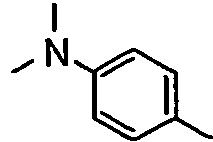
H (500 MHz, DMSO-d6) δ 3.02 (s, 6H), 3.84 (s, 2H), 6.79 (m, 2H), 7.38 (t, J = 7.8 Hz, 1H), 7.49 (m, 2H), 7.56 (d, J = 5.0 Hz, 1H), 7.68 (m, 1H), 7.83 (m, 1H), 7.92 (m, 2H). m/z 401 (M+H)+ Example 269 286 
H (500 MHz, CD3OD) δ 1.74 (m, 1H), 1.84 (m, 1H), 2.00 (m, 2H), 2.14 (s, 3H), 2.80 (m, 2H), 3.25 (m, 1H), 3.78 (s, 2H), 4.05 (m, 1H), 4.60 (m, 1H), 7.39 (t, J = 7.8 Hz, 1H), 7.47 (d, J = 7.2 Hz, 1H), 7.54 (dd, J = 5.0, 1.2 Hz, 1H), 7.58 (m, 2H), 7.76 (dd, J = 3.1, 1.2 Hz, 1H). m/z 407 (M+H)+ Example 269 287 

(500 MHz, CD3OD) δ 3.82 (s, 2H), 3.98 (m, 3H), 5.00 (s, 2H), 6.99 (m, 1H), 7.04 (m, 2H), 7.31 (m, 2H), 7.43 (t, J = 7.8 Hz, 1H), 7.53 (d, J = 7.2 Hz, 1H), 7.66 (m, 2H), 7.72 (s, 1H). m/z 470 (M+H)+ Example 269 288 

(500 MHz, CD3OD) δ 3.42 (s, 3H), 3.68 (m, 2H), 3.79 (s, 2H), 3.84 (m, 2H), 4.23 (s, 2H), 5.00 (s, 2H), 6.99 (m, 1H), 7.04 (m, 2H), 7.32 (m, 2H), 7.41 (t, J = 7.8 Hz, 1H), 7.62 (m, 3H), 7.72 (s, 1H). m/z 516 (M+H)+ Example 269 289 

(500 MHz, CD3OD) δ 1.32 (t, J = 7.0 Hz, 3H), 3.78 (s, 2H), 4.25 (q, J = 7.0 Hz, 2H), 4.57 (s, 2H), 5.00 (s, 2H), 6.99 (m, 1H), 7.04 (m, 2H), 7.31 (m, 2H), 7.39 (t,J= 7.6 Hz, 1H), 7.55 (m, 2H), 7.62 (s, 1H), 7.71 (s, 1H). m/z 498 (M+H)+ Example 269 290 

m/z 460 (M+H)+ Example 270 - A solution of Example 230 (106 mg, 0.25 mmol) in tetrahydrofuran (0.5 mL) was treated with a 1:1 mixture of 1M aqueous lithium hydroxide and methanol (1 mL) at ambient temperature for about 2.5 hours. The solvents were evaporated and the residue was purified by preparative HPLC on a Waters Symmetry C8 column (25 mm x 100 mm, 7 µm particle size) using a gradient of 10% to 100% acetonitrile:0.1% aqueous TFA over 8 minutes (10 minutes run time) at a flow rate of 40 mL/minute to provide 30 mg (29%) of the desired product as the trifluoroacetate salt. 1H NMR (500 MHz, CD3OD) δ 1.51 (m, 1H), 1.72 (m, 1H), 1.88 (m, 1H), 2.09 (m, 1H), 2.65 (m, 1H), 3.48 (m, 2H), 3.67 (m, 1H), 3.82 (br s, 2H), 4.50 (m, 1H), 7.27 (m, 1H), 7.48 (t, J = 7.5 Hz, 1H), 7.54 (d, J = 4.1 Hz, 1H), 7.57 (dd, J = 2.8, 5.0 Hz, 1H), 7.78 (s, 1H), 7.80 (d, J = 6.9 Hz, 1H). MS (ESI): m/z 394 (M+H)+.
- A solution of Example 207 (9 mg, 0.01 mmol) in dichloromethane (0.5 mL) was treated with trifluoroacetic acid (0.5 mL) and the mixture was agitated at room temperature for about 2 hours. The solvent was concentrated under vacuum to provide 4 mg (58%) of the desired product as the trifluoroacetate salt. 1H NMR (500 MHz, CD3OD) □ 2.98 (s, 3H), 3.10-3.60 (m, 8H), 4.15 (s, 2H), 4.17 (s, 2H), 7.55 (d, J = 5.0 Hz, 1H), 7.60 (dd, J = 5.1, 3.0 Hz, 1H), 7.71 (d, J = 1.2 Hz, 1H), 7.79 (dd, J = 2.8, 1.2 Hz, 1H), 7.96 (d, J = 1.2 Hz, 1H). MS (ESI): m/z 466 (M+H)+.

R1 R2 1H NMR (500 MHz, CD3OD) MS (ESI): Example Number (Reference Procedure) Br 
δ 4.05 (s, 2H), 4.14 (s, 2H), 7.53 (dd, J = 5.3, 1.2 Hz, 1H), 7.58 (dd, J = 5.3, 3.1 Hz, 1H), 7.78 (dd, J = 2.8, 1.2 Hz, 1H), 7.80 (d, J = 1.9 Hz, 1H), 8.00 (d, J = 1.9 Hz, 1H). m/z 416, 418 (M-H)- Example 293 (Example 292) Br 
δ 3.18 (s, 3H), 3.80 (s, 2H), 4.15 (s, 2H), 7.48 (d, J = 1.9 Hz, 1H), 7.53 (m, 2H), 7.74 (dd, J = 2.5, 1.6 Hz, 1H), 7.87 (d, J = 1.6 Hz, 1H). m/z 430, 432 (M-H)- Example 294 (Example 292) H 
δ 3.88 (s, 2H), 4.11 (s, 2H), 4.38 (s, 2H), 7.30 (d, J = 7.5 Hz, 1H), 7.49 (t, J = 7.6 Hz, 1H), 7.53 (dd, J = 5.0, 1.2 Hz, 1H), 7.58 (dd, J = 5.0, 2.8 Hz, 1H), 7.78 (dd, J = 2.8, 1.2 Hz, 1H), 7.83 (d, J = 7.8 Hz, 1H). m/z 398 (M+H)+ Example 295 (Example 292) H 
δ 4.09 (s, 2H), 4.15 (s, 2H), 7.50 (t, J = 7.6 Hz, 1H), 7.55 (dd, J = 5.0, 1.2 Hz, 1H), 7.58 (dd, J = 5.0, 2.8 Hz, 1H), 7.65 (d, J = 7.8 Hz, 1H), 7.77 (dd, J = 2.8, 1.6 Hz, 1H), 7.87 (d, J = 7.8 Hz, 1H). m/z 340 (M+H) Example 296 (Example 292) H 
δ 1.55 (d, J = 7.5 Hz, 3H), 4.07 (m, 2H), 4.66 (q, J = 7.2 Hz, 1H), 7.50 (t, J = 7.6 Hz, 1H), 7.55 (dd, J = 5.0, 1.2 Hz, 1H), 7.58 (dd, J = 5.0, 2.8 Hz, 1H), 7.63 (dd, J = 7.6, 1.1 Hz, 1H), 7.78 (dd, J = 2.8, 1.2Hz, 1H), 7.86 (dd, J = 7.8, 0.9 Hz, 1H). m/z 354 (M+H)+ Example 297 (Example 292) H 
δ 1.55 (d, J = 7.5 Hz, 3H), 4.06 (m, 2H), 4.66 (q, J = 7.2 Hz, 1H), 7.49 (t, J = 7.6 Hz, 1H), 7.54 (dd, J = 5.0, 1.2 Hz, 1H), 7.57 (dd, J = 5.0, 2.8 Hz, 1H), 7.62 (dd, J = 7.6, 1.1 Hz, 1H), 7.76 (dd, J = 2.8, 1.2 Hz, 1H), 7.86 (dd, J = 7.8, 0.9 Hz, 1H). m/z 354 (M+H)+ Example 298 (Example 292) H 
δ 1.62 (m, 1H), 1.78 (m, 1H), 1.88 (m, 1H), 2.10 (m, 1H), 2.66 (m, 1H), 3.19 (m, 2H), 3.64 (m, 1H), 3.81 (s, 2H), 4.56 (m, 1H), 7.27 (d, J = 6.9 Hz, 1H), 7.49 (t, J = 7.6 Hz, 1H), 7.54 (dd, J = 5.0, 1.2 Hz, 1H), 7.57 (dd, J = 5.0, 2.8 Hz, 1H), 7.78 (dd, J = 3.0, 1.4 Hz, 1H), 7.80 (d, J = 6.9 Hz, 1H). m/z 394 (M+H)+ Example 299 (Example 291) H 
δ 2.70 (t, J = 6.9 Hz, 2H), 3.69 (t, J = 6.7 Hz, 2H), 4.04 (s, 2H), 7.47 (t, J = 7.6 Hz, 1H), 7.56 (m, 3H), 7.77 (dd, J = 2.8, 1.2 Hz, 1H), 7.84 (d, J = 7.2 Hz, 1H). m/z 354 (M+H)+ Example 300 (Example 292) H 
δ 3.81 (s, 2H), 4.78 (s, 2H), 6.86 (d, J = 7.8 Hz, 1H), 7.35 (m, 2H), 7.56 (m, 2H), 7.76 (m, 1H). m/z 313 (M+H)+ Example 301 (Example 291) - To a solution of Example 207 (20 mg, 0.04 mmol) in tetrahydrofuran (2 mL) was added a 1M solution of lithium aluminum hydride in tetrahydrofuran (0.23 mL, 0.23 mmol) and the mixture was heated to reflux for about 30 minutes. The mixture was cooled to room temperature, the reaction was quenched with water and the mixture was extracted with ethyl acetate. The combined organic extracts were washed with saturated aqueous potassium carbonate, dried (Na2SO4), filtered and evaporated to dryness. The residue was purified by preparative HPLC on a Waters Symmetry C8 column (25 mm x 100 mm, 7 µm particle size) using a gradient of 10% to 100% acetonitrile:0.1% aqueous TFA over 8 minutes (10 minutes run time) at a flow rate of 40 mL/minute to provide 4 mg (11%) of the desired product as the trifluoroacetate salt. 1H NMR (500 MHz, CD3OD) δ 2.90 (s, 3H), 3.00-5.50 (m, 10H), 3.82 (s, 2H), 3.89 (m, 2H), 3.97 (s, 2H), 4.44 (s, 2H), 7.47 (s, 1H), 7.57 (dd, J = 5.0, 1.2 Hz, 1H), 7.61 (dd, J = 5.0, 2.8 Hz, 1H), 7.79 (dd, J = 2.8, 1.2 Hz, 1H), 7.84 (s, 1H). MS (ESI): m/z 424 (M+H)+.

R1 R2 1H NMR MS (ESI): Example Number (Reference Procedure) H 
(500 MHz, CD3OD) δ 1.97 (m, 2H), 3.33 (m, 2H), 3.74 (t, J = 5.6 Hz, 2H), 3.97 (s, 2H), 4.42 (s, 2H), 7.44 (d, J = 7.0 Hz, 1H), 7.53 (t, J = 7.6 Hz, 1H), 7.57 (dd, J = 5.0, 1.2 Hz, 1H), 7.61 (dd, J = 5.0, 2.8 Hz, 1H), 7.79 (dd, J = 2.8, 1.2 Hz, 1H), 7.82 (d, J = 7.0 Hz, 1H). m/z 326 (M+H)+ Example 303 (Example 302) H 
(500 MHz, CD3OD) δ 1.33 (m, 1H), 1.80 (m, 2H), 1.98 (m, 2H), 2.92 (t, J = 12.2 Hz, 1H), 3.08 (m, 1H), 3.41 (dd, J = 11.1,6.9 Hz, 1H), 3.55 (dd, J = 11.1, 4.7 Hz, 1H), 3.64 (m, 2H), 3.99 (s, 2H), 4.51 (s, 2H), 7.49 (d, J = 7.0 Hz, 1H), 7.55 (t, J = 7.5 Hz, 1H), 7.59 (dd, J = 5.0, 1.2 Hz, 1H), 7.61 (dd, J = 5.0, 2.8 Hz, 1H), 7.81 (dd, J = 2.7, 1.2 Hz, 1H), 7.85 (d, J = 7.6 Hz, 1H). m/z366 (M+H)+ Example 304 (Example 302) H 
(500 MHz, CD3OD) δ 1.51 (m, 2H), 1.80 (m, 1H), 2.00 (m, 2H), 3.19 (m, 2H), 3.45 (d, J = 6.1 Hz, 2H), 3.65 (m, 2H), 3.99 (s, 2H), 4.49 (s, 2H), 7.48 (d, J = 7.6 Hz, 1H), 7.55 (t, J = 7.6 Hz, 1H), 7.58 (dd, J = 5.0, 1.2 Hz, 1H), 7.61 (dd, J = 5.0, 2.8 Hz, 1H), 7.80 (dd, J = 2.8, 1.5 Hz, 1H), 7.85 (d, J = 7.3 Hz, 1H). m/z 366 (M+H)+ Example 305 (Example 302) H 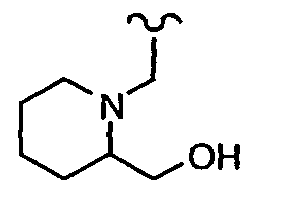
(500 MHz, CD3OD) δ 1.67 (m, 2H), 1.86 (m, 2H), 1.95 (m, 1H), 2.04 (m, 1H), 3.09 (m, 1H), 3.40 (m, 2H), 3.76 (m, 1H), 3.94 (m, 1H), 4.15 (m, 2H), 4.39 (m, 1H), 5.07 (m, 1H), 7.48 (d, J = 7.6 Hz, 1H), 7.53 (t, J = 7.6 Hz, 1H), 7.59 (m, 2H), 7.79 (dd, J = 2.7, 1.5 Hz, 1H), 7.84 (d, J = 7.6 Hz, 1H). m/z 366 (M+H)+ Example 306 (Example 302) H 
(500 MHz, CD3OD) δ 3.43 (m, 2H), 3.58 (m, 2H), 3.98 (t, J = 5.1 Hz, 4H), 4.02 (s, 2H), 4.73 (s, 2H), 7.53 (m, 2H), 7.57 (dd, J = 5.0, 1.2 Hz, 1H), 7.60 (dd, J = 5.0, 2.8 Hz, 1H), 7.79 (dd, J = 2.8, 1.2 Hz, 1H), 7.86 (dd, J = 6.9, 1.6 Hz, 1H). m/z 356 (M+H)+ Example 307 (Example 302) H 
(500 MHz, CD3OD) δ 2.80-3.05 (m, 7H), 3.34 (m, 4H), 3.91 (s, 2H), 3.93 (s, 2H), 7.34 (d, J = 7.5 Hz, 1H), 7.41 (t, J = 7.5 Hz, 1H), 7.56 (dd, J = 5.0, 1.2 Hz, 1H), 7.59 (dd, J = 5.0, 2.8 Hz, 1H), 7.71 (d, J = 7.5 Hz, 1H), 7.80 (dd, J = 2.8, 1.2 Hz, 1H). m/z 351 (M+H)+ Example 308 (Example 302) H 
(400 MHz, CD3OD) δ 2.98 (s, 6H), 3.98 (s, 2H), 4.51 (s, 2H), 7.45 (d, J = 7.7 Hz, 1H), 7.58 (m, 3H), 7.80 (dd, J = 2.8, 1.2 Hz, 1H), 7.86 (d, J = 7.4 Hz, 1H). m/z 296 (M+H)+ Example 309 (Example 302) H 
(500 MHz, CD3OD) δ 3.56 (t, J = 5.8 Hz, 2H), 3.77 (t, J = 5.8 Hz, 2H), 4.07 (s, 2H), 7.48 (t, J = 7.6 Hz, 1H), 7.55 (dd, J = 5.2, 1.2 Hz, 1H), 7.59 (dd, J = 5.0, 2.8 Hz, 1H), 7.60 (d, J = 7.6 Hz, 1H), 7.77 (dd, J = 2.9, 1.4 Hz, 1H), 7.85 (d, J = 7.6 Hz, 1H). . m/z 326 (M+H)+ Example 310 (Example 302) 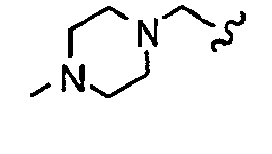

(500 MHz, CD3OD) δ 2.28 (s, 3H), 2.30-2.70 (m, 8H), 3.39 (s, 2H), 3.51 (br s, 2H), 3.61 (s, 2H), 3.76 (s, 3H), 3.78 (s, 2H), 7.03 (m, 2H), 7.54 (m, 2H), 7.72 (dd, J = 2.9, 1.2 Hz, 1H). m/z 424 (M+H)+ Example 311 (Example 302) - To a solution of Example 270 (8 mg, 0.017 mmol) in ethanol (1 mL) was added 1-methylpiperazine (1 mL) and the mixture was stirred at ambient temperature for about 2 hours. The solvents were concentrated under vacuum and the residue was recrystallized from methanol to provide 4 mg (51%) of the desired product. 1H NMR (500 MHz, CD3OD) δ 2.41 (s, 3H), 2.60-2.85 (m, 8H), 3.30 (s, 2H), 3.80 (s, 2H), 7.40 (t, J = 7.6 Hz, 1H), 7.56 (m, 3H), 7.71 (d, J = 8.4 Hz, 1H), 7.75 (m, 1H). MS (ESI): m/z 394 (M+H)+.
- The procedure for Example 312 was used, substituting Example 290 for Example 270 to provide 26 mg (99%) of the desired product. 1H NMR (500 MHz, CD3OD) δ 2.38 (s, 3H), 2.60-2.80 (m, 8H), 3.78 (s, 2H), 4.46 (s, 2H), 4.98 (s, 2H), 6.99 (m, 1H), 7.03 (m, 2H), 7.32 (m, 2H), 7.40 (t, J = 7.6 Hz, 1H), 7.61 (m, 2H), 7.70 (s, 1H), 7.77 (d, J = 7.6 Hz, 1H). MS (ESI): m/z 524 (M+H)+.
- To a mixture of a 60% suspension of sodium hydride in mineral oil (6.83 g, 284.8 mmol) and ethylformate (24.2 mL, 284.8 mmol) in benzene (100 mL) at about 0 °C was added a solution of 5-bromo-1-indanone (30.0 g, 142.4 mmol) in benzene (100 mL) over about 90 minutes. The reaction was then stirred for about 17 hours while being allowed to warm to room temperature. The formed precipitate was collected by filtration and was dissolved in ethanol (600 mL). To this solution was added hydrazine monohydrate (17 mL, 350.5 mmol) and acetic acid (19.2 mL, 335.4 mmol) and the reaction mixture was heated under reflux for about 3 hours. The mixture was cooled, concentrated under vacuum and the precipitate was collected by filtration and was dried under high vacuum to provide the desired product. MS (DCI-NH3): m/z 235,237 (M+H)+.
- The procedure for Example 314 was used, substituting Example 3 for 5-bromo-1-indanone to provide the desired product. MS (DCI-NH3): m/z 235, 237 (M+H)+.
- To a solution of Example 314 (9.0 g, 38.3 mmol) in tetrahydrofuran (200 mL) at about -78 °C was slowly added a 1.9M solution of phenyllithium in cyclohexane/diethyl ether (50.4 mL, 95.7 mmol), followed by a 1.4M solution of sec-butyllithium in cyclohexane (68.4 mL, 95.7 mmol). The reaction was stirred at about -78 °C for about 30 minutes before N,N-dimethylformamide (23.7 mL, 30.6 mmol) was added. The mixture was allowed to warm to room temperature and the reaction was then quenched by addition of water. The layers were separated and the aqueous layer was extracted with ethyl acetate. The combined organic extracts were dried (MgSO4), filtered and concentrated under vacuum. The residue was purified by flash chromatography on silica gel using hexane/ethyl acetate (2:1) as eluent to provide the desired product. 1H NMR (500 MHz, DMSO-d6): δ 3.76 (s, 2H), 7.63 (m, 1H), 7.90 (m, 2H), 8.05 (m, 1H), 10.0 (s, 1H).
- The procedure for Example 316 was used, substituting Example 315 for Example 314 to provide the desired product. MS (DCI-NH3): m/z 185 (M+H)+.
- A solution of Example 316 (2.13 g, 11.6 mmol) and N-iodosuccinimide (3.13 g, 13.9 mmol) in N,N-dimethylformamide (45 mL) was heated to about 80 °C for about 5 hours. The reaction mixture was cooled to room temperature and was concentrated in high vacuum. The residue was partitioned between water and ethyl acetate, the layers were separated and the aqueous layer was extracted with ethyl acetate. The combined organic extracts were dried (MgSO4), filtered and concentrated under vacuum. The residue was purified by flash chromatography on silica gel using hexane/ethyl acetate (2:1) as eluent to provide the desired product. MS (ESI): m/z 309 (M-H)-.
- The procedure for Example 318 was used, substituting Example 317 for Example 316 to provide the desired product. MS (ESI): m/z 309 (M-H)-.
- A mixture of Example 319 (930 mg, 3.0 mmol), 3-thienylboronic acid (384 mg, 3.0 mmol), tetrakis(triphenylphosphine)palladium(0) (240 mg, 0.21 mmol) and sodium bicarbonate (630 mg, 7.5 mmol) in 1,2-dimethoxyethane (18 mL) and water (6 mL) was stirred under nitrogen in a heavy walled process vial in a microwave synthesizer at about 160 °C for about 10 minutes. The mixture was concentrated under vacuum and the residue was purified by flash chromatography on silica gel using hexane/ethyl acetate (3:1) as eluent to provide 240 mg (30%) of the desired product. MS (ESI): m/z 267 (M+H)+.
- A mixture of Example 320 (67 mg, 0.25 mmol), 1-piperazinecarboxaldehyde (114 mg, 1.0 mmol) and acetic acid (60 mg, 1.0 mmol) in dichloromethane (1.5 mL) was stirred at room temperature for about 5 hours. Then sodium triacetoxyborohydride (210 mg, 1.0 mmol) was added, followed by methanol (1 mL) and the mixture was stirred at room temperature overnight. The mixture was concentrated under vacuum and the residue was purified by preparative HPLC on a Waters Symmetry C8 column (25 mm x 100 mm, 7 µm particle size) using a gradient of 10% to 100% acetonitrile:0.1% aqueous TFA over 8 minutes (10 minutes run time) at a flow rate of 40 mL/minute to provide 54 mg (37%) of the desired product as the trifluoroacetate salt. 1H NMR (500 MHz, DMSO-d6) δ 3.00-3.50 (m, 8H), 3.87 (s, 2H), 4.45 (s, 2H), 7.40 (d, J = 8 Hz, 1H), 7.58 (d, J = 5 Hz, 1H), 7.68 (d, J = 8 Hz, 1H), 7.73 (dd, J = 5, 3 Hz, 1H), 7.84 (s, 1H), 8.87 (br s, 1H), 8.06 (s, 1H). MS (ESI): m/z 365 (M+H)+.
- The procedure for Example 321 was used, substituting 3-(dimethylamino)pyrrolidine for 1-piperazinecarboxaldehyde. The crude product was purified by flash chromatography on silica gel using dichloromethane/methanol (10:1) + 1% ammonium hydroxide as eluent to provide 64 mg (70%) of the desired product. 1H NMR (500 MHz, CDCl3) δ 1.77 (m, 1H), 2.02 (m, 1H), 2.22 (s, 6H), 2.40 (m, 1H), 2.57 (m, 1H), 2.77-2.83 (m, 3H), 3.64 (d, J = 10 Hz, 1H), 3.71 (d, J = 10 Hz, 1H), 3.78 (s, 2H), 7.26 (d, J = 8 Hz, 1H), 7.44 (m, 3H), 7.54 (dd, J = 5, 3 Hz, 1H), 7.74 (s, 1H). MS (ESI): m/z 365 (M+H)+.
Example Number R 1H NMR (500 MHz, DMSO-d6) MS (ESI): Reference Procedure 323 
δ 2.40 (m, 2H), 2.63 (s, 3H), 2.90 (s, 3H), 3.10-3.85 (m, 5H), 3.88 (s, 2H), 4.36 (br s, 2H), 7.41 (d, J = 8 Hz, 1H), 7.58 (d, J = 5 Hz, 1H), 7.68 (d, J = 8 Hz, 1H), 7.74 (dd, J = 5, 3 Hz, 1H), 7.87 (m, 2H). m/z 365 (M+H)+. Example 321 324 
δ 2.79 (s, 3H), 3.91 (s, 3H), 2.93 (s, 3H), 3.87 (s, 2H), 4.27 (m, 2H), 4.49 (m, 2H), 7.46 (d, J = 8 Hz, 1H), 7.58 (d, J = 5 Hz, 1H), 7.67 (d, J = 8 Hz, 1H), 7.73 (dd, J = 5, 3 Hz, 1H), 7.87 (d, J = 3 Hz, 1H), 7.90 (s, 1H). m/z 367 (M+H)+. Example 321 325 
δ 1.62 (m, 3H), 3.40 (m, 4H), 3.87 (s, 2H), 4.32 (br s, 2H), 4.80 (m, 1H), 7.43 (d, J = 8 Hz, 1H), 7.58 (d, J = 5 Hz, 1H), 7.68 (d, J = 8 Hz, 1H), 7.74 (dd, J = 5, 3 Hz, 1H), 7.86 (s, 2H), 8.40 (br s, 1H). m/z 365 (M+H)+. Example 321 - To a solution of Example 146 (10.4 g, 29.6 mmol) in tetrahydrofuran (200 mL) was slowly added a 2.5M solution of n-butyllithium in hexanes (83.0 mL, 207.1 mmol) at -78 °C. The mixture was stirred for about 1 hour before a solution of N,N-dimethylformamide (16.0 mL, 207.1 mmol) in tetrahydrofuran (50 mL) was added dropwise. After stirring for about 1 hour, the reaction was quenched by addition of 10% hydrochloric acid (244 mL) and was gradually warmed to ambient temperature. The reaction mixture was diluted with water and was washed with ethyl acetate. The aqueous layer was basified with potassium carbonate and the product was extracted with ethyl acetate. The combined organic extracts were dried (MgSO4), filtered and evaporated to dryness. The residue was purified by flash chromatography on silica gel using dichloromethane/methanol (5:1) as eluent to provide the desired product. MS (APCl): m/z 378 (M)+.
- The procedure for Example 326 was used, substituting Example 138 for Example 146 to provide the desired product. MS (ESI): m/z 379 (M+H)+.
- A solution of Example 148 (6.25 g, 14.6 mmol) in tetrahydrofuran (100 mL) was cooled to about 0 °C and sodium hydride (870 mg, 21.8 mmol) was added. After about 5 minutes stirring, the mixture was cooled to about -78 °C and a 2.5M solution of n-butyllithium in hexanes (8.7 mL, 21.8 mmol) was slowly added. The mixture was stirred for about 1 hour before a solution of N,N-dimethylformamide (11.3 mL, 145.6 mmol) in tetrahydrofuran (20 mL) was added dropwise. After stirring for about 1 hour, the reaction was quenched by addition of 10% hydrochloric acid (244 mL) and was gradually warmed to ambient temperature. The reaction mixture was diluted with water and was washed with ethyl acetate. The aqueous layer was basified with potassium carbonate and the product was extracted with ethyl acetate. The combined organic extracts were dried (MgSO4), filtered and evaporated to dryness. The residue was purified by flash chromatography on silica gel using dichloromethane/methanol (5:1) as eluent to provide the desired product. MS (ESI): m/z 379 (M+H)+.
- The procedure for Example 328 was used, substituting Example 149 for Example 148 to provide the desired product. MS (ESI): m/z 379 (M+H)+.
- To Example 147 (50 mg, 0.116 mmol) in methylamine (12 mL) was added [1,1'bis(diphenylphosphino)ferrocene]-dichloropalladium(II) complex with dichloromethane (1:1) (5.2 mg, 0.006 mmol) and the mixture was carbonylated at 3.450.000 Pa (500 psi) and about 120°C for about 16 hours. The mixture was concentrated under vacuum and the residue was purified by preparative HPLC on a Waters Symmetry C8 column (25 mm x 100 mm, 7 µm particle size) using a gradient of 10% to 100% acetonitrile:0.1% aqueous TFA over 8 minutes (10 minutes run time) at a flow rate of 40 mL/minute to provide 44 mg (51 %) of the desired product as the trifluoroacetate salt. 1H NMR (400 MHz, DMSO-d6): δ 2.79 (d, J = 4.6 Hz, 3H), 2.82 (s, 3H), 3.00-3.50 (m, 8H), 3.81 (s, 2H), 4.03 (br s, 2H), 7.42 (d, J = 7.7 Hz, 1H), 7.45 (d, J = 3.9 Hz, 1H), 7.63 (s, 1H), 7.67 (d, J = 7,7 Hz, 1H), 7.73 (d, J = 3.9 Hz, 1H), 8.50 (q, J = 4.6 Hz, 1H). MS (ESI): m/z 408 (M+H)+.
- To 4,4'-dimethoxybenzhydrol (5.62 g, 23.0 mmol) was carefully added thionyl chloride (20.1 mL, 276 mmol) and the mixture was heated to reflux for about 1 hour. The solution was cooled, evaporated to dryness and the residue was dissolved in tetrahydrofuran (50 mL). This solution was then added to a solution of Example 326 (5.3 g, 14.0 mmol) and triethylamine (5.9 mL, 42.0 mmol) in tetrahydrofuran (100 mL). The reaction mixture was heated to about 50 °C for about 2.5 hours, cooled, diluted with water and extracted with ethyl acetate. The combined organic extracts were dried (Na2SO4), filtered and concentrated under vacuum, and the residue was purified by flash chromatography on silica gel using dichloromethane/methanol (10:1) as eluent to provide the desired product. MS (ESI): m/z 605 (M+H)+.

Example Number R1 R2 R'3 MS (ESI): Reference Procedure 332 
H 
m/z 605 (M+H)+. Example 331 333 H 

m/z 605 (M+H)+. Example 331 334 
H 
m/z 605 (M+H)+. Example 331 - The procedure for Example 57 was used, substituting Example 331 for Example 54 to provide Example 335. MS (ESI): m/z 573 (M+H)+.
- To a solution of Example 331 (1.2 g, 2.0 mmol) in methanol (10 mL) and tetrahydrofuran (5 mL) was added a 2M solution of methylamine in tetrahydrofuran (5 mL) and acetic acid (0.6 mL, 10 mmol). Then sodium triacetoxyborohydride (1.25 g, 6 mmol) was added and the mixture was stirred at room temperature for about 5 hours. The mixture was diluted with ethyl acetate, washed with saturated aqueous sodium carbonate and the aqueous phase was extracted with ethyl acetate. The combined organic layers were dried (Na2SO4), filtered and concentrated under vacuum. The residue was purified by flash chromatography on silica gel using dichloromethane/methanol (10:1) + 1% ammonium hydroxide as eluent to provide the desired product. MS (ESI): m/z 620 (M+H)+.

Example Number R1 R2 R3 MS (ESI): Reference Procedure 337 H 
Et m/z 634 (M+H)+ Example 336 338 H 

m/z648 (M+H)+ Example 336 339 H 

m/z648 (M+H)+ Example 336 340 H 

m/z646 (M+H)+ Example 336 341 H 

m/z 662 (M+H)+ Example 336 342 H 

m/z 676 (M+H)+ Example 336 343 H 

m/z664 (M+H)+ Example 336 344 H 
Me m/z 588 (M+H)+ Example 336 345 
H Me m/z 620 (M+H)+ Example 336 - To Example 331 (1.2 g, 2.0 mmol) in methanol (5 mL) was added O-methylhydroxylamine hydrochloride (0.42 g, 5.0 mmol) and pyridine (0.43 mL, 5.4 mmol) and the mixture was stirred at about 70 °C overnight. The mixture was cooled to about 0 °C, borane-pyridine complex (0.8 mL, 7.0 mmol) was added, followed by concentrated hydrochloric acid (2.5 mL). The mixture was stirred at room temperature overnight and was then concentrated under vacuum. The residue was purified by flash chromatography on silica gel using dichloromethane/methanol (5:1) + 2% ammonium hydroxide as eluent to provide the desired product. MS (ESI): m/z 410 (M+H)+.
- To a solution of Example 331 (60 mg, 0.1 mmol) in 1,4-dioxane (2 mL) was added 4-phenylsemicarbazide (19 mg, 0.12 mmol) and potassium acetate (1 mg, 0.12 mmol) and the mixture was agitated at room temperature for about 6 hours. The solvent was concentrated under vacuum and to the residue was added a 4M solution of hydrochloric acid in 1,4-dioxane (2 mL). The mixture was stirred at room temperature overnight, concentrated under vacuum and the residue was purified by preparative HPLC on a Waters Symmetry C8 column (25 mm x 100 mm, 7 µm particle size) using a gradient of 10% to 100% acetonitrile:0.1% aqueous TFA over 8 minutes (10 minutes run time) at a flow rate of 40 mL/minute to provide 10 mg (12%) of the desired product as the trifluoroacetate salt. 1H NMR (500 MHz, DMSO-d6): δ 2.78 (s, 3H), 3.00-3.50 (m, 8H), 3.68 (br s, 2H), 3.80 (s, 2H), 7.02 (m, 1H), 7.32 (m, 3H), 7.45 (m, 2H), 7.55 (s, 1H), 7.61 (m, 2H), 8.17 (s, 1H), 8.67 (s, 1H), 10.78 (s, 1H). MS (ESI): m/z 512 (M+H)+.
- The procedure for Example 347 was used, substituting O-benzylhydroxylamine for 4-phenylsemicarbazide to provide 17 mg (21%) of the desired product as the trifluoroacetate salt. 1H NMR (500 MHz, DMSO-d6): δ 2.76 (s, 3H), 3.00-3.50 (m, 8H), 3.71 (br s, 2H), 3.75 (s, 2H), 5.32 (s, 2H), 7.35 (m, 1H), 7.42 (m, 2H), 7.47 (m, 2H), 7.55 (s, 1H), 7.57 (d, J = 4 Hz, 1H), 7.99 (s, 1H). MS (ESI): m/z 484 (M+H)+.
- A mixture of Example 331 (175 mg, 0.23 mmol), (aminooxy)acetic acid hemihydrochloride (52 mg, 0.23 mmol), and potassium acetate (22 mg, 0.23 mmol) in a 1:1:1 mixture of water/methanol/1,4-dioxane (6 mL) was stirred at room temperature for about 16 hours. The mixture was diluted with water and was extracted with dichloromethane. The combined organic extracts were dried (MgSO4), filtered and evaporated to dryness to provide the desired product. MS (ESI): m/z 678 (M+H)+.
- To a solution of Example 349 (70 mg, 0.1 mmol) in dichloromethane (3 mL) and N,N-dimethylacetamide (0.5 mL) was added 1-hydroxybenzotriazole hydrate (20 mg, 0.15 mmol), m-toluidine (22 µL, 0.2 mmol) and N-cyclohexylcarbodiimide-N'-methyl polystyrene (1.0 g, 1.3 mmol) and the mixture was agitated at room temperature for about 20 hours. The mixture was filtered and the filtrate was concentrated under vacuum. The residue was suspended in a 4M solution of hydrochloric acid in 1,4-dioxane (1 mL, 4.0 mmol) and the mixture was agitated at room temperature overnight. The mixture was evaporated to dryness and the residue was purified by preparative HPLC on a Waters Symmetry C8 column (25 mm x 100 mm, 7 µm particle size) using a gradient of 10% to 100% acetonitrile:0.1% aqueous TFA over 8 minutes (10 minutes run time) at a flow rate of 40 mL/minute to provide 12 mg (15%) of the desired product as the trifluoroacetate salt. 1H NMR (500 MHz, DMSO-d6): δ 2.28 (s, 3H), 2.78 (s, 3H), 3.00-3.50 (m, 8H), 3.77 (s, 2H), 3.78 (s, 2H), 4.83 (s, 2H), 6.90 (d, J = 7 Hz, 1H), 7.18 (m, 1H), 7.37 (m, 1H), 7.42 (m, 1H), 7.49 (m, 1H), 7.55 (m, 1H), 7.63 (m, 1H), 8.02 (s, 1H), 8.62 (s, 1H), 9.90 (s, 1H). MS (ESI): m/z 541 (M+H)+.

Example Number R 1H NMR MS (ESI): Reference Procedure 351 
(500 MHz, DMSO-d6) δ 2.18 (s, 3H), 2.81 (s, 3H), 3.00-3.50 (m, 8H), 3.80 (s, 2H), 4.02 (br s, 2H), 4.85 (s, 2H), 7.12 (m, 1H), 7.20 (m, 2H), 7.42 (m, 1H), 7.50 (m, 2H), 7.64 (m, 2H), 8.08 (s, 1H), 8.63 (s, 1H), 9.28 (s, 1H). m/z 541 (M+H)+. Example 350 352 
(500 MHz, CDCl3) δ 2.10-2.60 (m, 8H), 2.29 (s, 3H), 2.85 (s, 3H), 3.49 (s, 2H), 3.57 (br s, 2H), 4.14 (s, 2H), 7.12 (m, 2H), 7.32 (d, J = 5 Hz, 1H), 7.43 (m, 3H), 7.54 (s, 1H), 7.67 (m, 1H), 7.82 (s, 1H), 7.92 (s, 1H), 8.44 (s, 1H). m/z 541 (M+H)+. Example 350 - A solution of diethylphosphonoacetic acid (250 mg, 1.27 mmol), o-toluidine (136 µL, 1.27 mmol), 2-(1H-benzotriazol-1-yl)-1,1,3,3-tetramethyluronium tetrafluoroborate (610 mg, 1.9 mmol) and N,N-diisopropylethylamine (0.66 mL, 3.81 mmol) in dichloromethane (5 mL) was stirred at ambient temperature for about 17 hour. The reaction was quenched with water, the layers were separated, and the aqueous layer was extracted with dichloromethane. The combined organic extracts were dried (MgSO4), filtered, concentrated under vacuum and the residue was purified by preparative HPLC on a Waters Symmetry C8 column (25 mm x 100 mm, 7 µm particle size) using a gradient of 10% to 100% acetonitrile:0.1% aqueous TFA over 8 minutes (10 minutes run time) at a flow rate of 40 mL/minute to provide the desired product. 1H NMR (500 MHz, CDCl3): δ 1.37 (t, J = 6.0 Hz, 6H), 2.31 (s, 3H), 3.08 (d, J = 20.0 Hz, 2H), 4.16-4.26 (m, 4H), 7.09 (m, 1H), 7.18 (m, 2H), 7.81 (d, J = 9.0 Hz, 1H), 8.51 (br s, 1H).

Example Number R1 R2 1H NMR (500 MHz, DMSO-d6) Reference Procedure 354 H 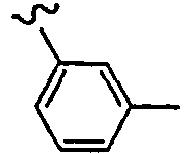
δ 1.36 (t, J = 6.0 Hz, 6H), 2.33 (s, 3H), 3.02 (d, J = 20.0 Hz, 2H), 4.14-4.24 (m, 4H), 6.93 (d, J = 9.0 Hz, 1H), 7.20 (t, J = 9.0 Hz, 1H), 7.33 (m, 2H), 8.66 (br s, 1H). Example 353 355 H 
δ 1.36 (t, J = 6.0 Hz, 6H), 2.31 (s, 3H), 3.02 (d, J = 21.0 Hz, 2H), 4.14-4.23 (m, 4H), 7.11 (d, J = 9.0 Hz, 2H), 7.39 (d, J = 9.0 Hz, 2H), 8.62 (br s, 1H). Example 353 356 Me 
δ 1.32-1.38 (m, 6H), 1.49-1.54 (m, 3H), 2.32 (s, 3H), 3.01-3.10 (m, 1H), 4.13-4.20 (m, 4H), 7.06 (m, 1H), 7.19 (m, 2H), 7.88 (d, J = 10.0 Hz, 1H), 8.61 (br s, 1H). Example 353 357 Me 
δ 1.36-1.40 (m, 6H), 1.46-1.51 (m, 3H), 3.09-3.18 (m, 1H), 4.15-4.24 (m, 4H), 7.23-7.31 (m, 2H), 7.68 (d, J = 10.0 Hz, 1H), 7.81 (s, 1H), 9.49 (br s, 1H). Example 353 358 Me 
δ 1.31-1.37 (m, 6H), 1.46-1.51 (m, 3H), 2.31 (s, 3H), 2.99-3.08 (m, 1H), 4.13-4.21 (m, 4H), 6.90 (d, J = 5.0 Hz, 1H), 7.18 (t, J = 5.0 Hz, 1H), 7.32-7.37 (m, 2H), 8.78 (br s, 1H). Example 353 359 Me 
δ 1.33-1.38 (m, 6H), 1.45-1.50 (m, 3H), 3.03-3.12 (m, 1H), 4.15-4.22 (m, 4H), 7.03 (d, J = 10.0 Hz, 1H), 7.16 (t, J = 10.0 Hz, 1H), 7.33 (d, J = 10.0 Hz, 1H), 7.66 (m, 1H), 9.11 (br s, 1H). Example 353 360 Me 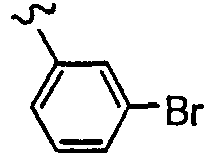
δ 1.33-1.38 (m, 6H), 1.44-1.49 (m, 3H), 3.03-3.12 (m, 1H), 4.16-4.21 (m, 4H), 7.08 (t, J = 10.0 Hz, 1H), 7.15 (d, J = 10.0 Hz, 1H), 7.40 (d, J = 10.0 Hz, 1H), 7.78 (m, 1H), 9.28 (br s, 1H). Example 353 361 Me 
δ 1.32-1.39 (m, 6H), 1.46-1.51 (m, 3H), 3.01-3.10 (m, 1H), 4.13-4.22 (m, 4H), 7.52 (d, J = 10.0 Hz, 2H), 7.64 (d, J = 10.0 Hz, 2H), 9.30 (br s, 1H). Example 353 362 Me 
δ 1.32-1.38 (m, 6H), 1.49-1.54 (m, 3H), 2.19 (s, 3H), 2.29 (s, 3H), 3.02-3.11 (m, 1H), 4.15-4.23 (m, 4H), 6.99 (d, J = 10.0 Hz, 1H), 7.08 (t, J = 5.0 Hz, 1H), 7.54 (d, J = 10.0 Hz, 1H), 8.49 (br s, 1H). Example 353 363 Me 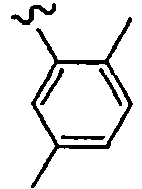
δ 1.32-1.38 (m, 6H), 1.49-1.54 (m, 3H), 2.27 (s, 3H), 2.31 (s, 3H), 3.01-3.10 (m, 1H), 4.15-4.22 (m, 4H), 6.87 (d, J = 5.0 Hz, 1H), 7.05 (d, J = 5.0 Hz, 1H), 7.72 (s, 1H), 8.52 (br s, 1H). Example 353 - To a solution of Example 353 (235 mg, 0.825 mmol) in tetrahydrofuran (10 mL) was added a 2M solution of lithium diisopropylamide in heptane/tetrahydrofuran/ethylbenzene (0.83 mL, 1.65 mmol) dropwise at room temperature. The mixture was stirred for about 20 minutes and then a solution of Example 331 (100 mg, 0.165 mmol) in tetrahydrofuran (5 mL) was added. The reaction was stirred at room temperature overnight and was quenched by addition of saturated aqueous ammonium chloride. The layers were separated and the aqueous layer was extracted with dichloromethane. The combined organic extracts were dried (MgSO4) filtered, and concentrated under vacuum. The residue was treated with a 4M solution of hydrochloric acid in 1,4-dioxane (5 mL) for about 2 hours, then the mixture was concentrated under vacuum and the residue was purified by preparative HPLC on a Waters Symmetry C8 column (25 mm x 100 mm, 7 µm particle size) using a gradient of 10% to 100% acetonitrile:0.1% aqueous TFA over 8 minutes (10 minutes run time) at a flow rate of 40 mL/minute to provide 16 mg (16%) of the desired product as the trifluoroacetate salt. 1H NMR (500 MHz, DMSO-d6): δ 2.27 (s, 3H), 2.81 (s, 3H), 3.00-3.50 (m, 8H), 3.82 (s, 2H), 3.94 (br s, 2H), 6.77 (d, J = 15.0 Hz, 1H), 7.09 (m, 1H), 7.19 (m, 1H), 7.24 (d, J = 7.5 Hz, 1H), 7.41 (d, J = 7.8 Hz, 1H), 7.48 (m, 2H), 7.62 (m, 2H), 7.67 (d, J = 7.8 Hz, 1H), 7.75 (d, J = 15.6 Hz, 1H), 9.46 (s, 1H). MS (ESI): m/z 510 (M+H)+.
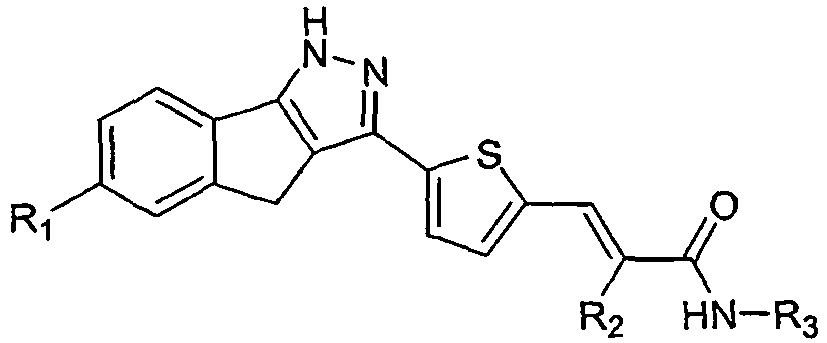
R1 R2 R3 1H NMR MS (ESI): Example Number (Reference Procedure) 
H 
(500 MHz, DMSO-d6) δ 2.31 (s, 3H), 2.85 (s, 3H), 3.00-3.50 (m, 8H), 3.83 (s, 2H), 4.16 (br s, 2H), 6.62 (d, J = 15.0 Hz, 1H), 6.89 (d, J = 5.0 Hz, 1H), 7.21 (t, J = 5.0 Hz, 1H), 7.50 (m, 5H), 7.69 (m, 2H), 7.75 (d, J = 15.0 Hz, 1H), 10.14 (s, 1H). m/z 510 (M+H)+ Example 365 (Example 364) 
H 
(400 MHz, DMSO-d6) δ 2.27 (s, 3H), 2.81 (s, 3H), 3.00-3.50 (m, 8H), 3.82 (s, 2H), 3.98 (br s, 2H), 6.60 (d, J = 15.0 Hz, 1H), 7.14 (m, 2H), 7.42 (d, J = 7.1 Hz, 1H), 7.48 (m, 2H), 7.58 (m, 2H), 7.63 (s, 1H), 7.67 (d, J = 7.7 Hz, 1H), 7.74 (d, J = 15.3 Hz, 1H), 10.12 (s, 1H). m/z 510 (M+H)+ Example 366 (Example 364) 
H 
(400 MHz, DMSO-d6) δ 2.27 (s, 3H), 3.79 (s, 2H), 5.26 (s, 2H), 6.59 (d, J = 16.0 Hz, 1H), 6.92 (s, 1H), 7.14 (m, 2H), 7.22 (s, 1H), 7.29 (m, 1H), 7.40-7.52 (m, 3H), 7.58 (m, 2H), 7.62 (m, 1H), 7.73 (d, J = 16.0 Hz, 1H), 7.79 (s, 1H), 10.11 (s, 1H). m/z 478 (M+H)+ Example 367 (Example 364) 
Me 
(500 MHz, DMSO-d6) δ 2.23 (s, 3H), 2.29 (s, 3H), 2.79 (s, 3H), 3.00-3.50 (m, 8H), 3.83 (s, 2H), 3.85 (br s, 2H), 7.14 (m 1H), 7.20 (m, 1H), 7.25 (d, J = 7.5 Hz, 1H), 7.31 (d, J = 7.2 Hz, 1H), 7.38 (d, J = 5.0 Hz, 1H), 7.44 (d, J = 3.7 Hz, 1H), 7.52 (d, J = 3.7 Hz, 1H), 7.60 (s, 1H), 7.64 (m, 2H), 9.47 (s, 1H). m/z 524 (M+H)+ Example 368 (Example 364) 
Me 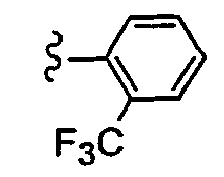
(500 MHz, DMSO-d6) δ 2.28 (s, 3H), 2.82 (s, 3H), 3.00-3.50 (m, 8H), 3.84 (s, 2H), 4.02 (br s, 2H), 7.43 (m, 2H), 7.48 (d, J = 3.7 Hz, 1H), 7.55 (d, J = 3.7 Hz, 1H), 7.58 (t, J = 7.8 Hz, 1H), 7.64 (m, 2H), 7.68 (d, J = 7.8 Hz, 1H), 8.01 (d, J = 8.7 Hz, 1H), 8.19 (s, 1H), 10.27 (s, 1H). m/z 578 (M+H)+ Example 369 (Example 364) 
Me 
(500 MHz, DMSO-d6) δ 2.26 (s, 3H), 2.30 (s, 3H), 2.81 (s, 3H), 3.00-3.50 (m, 8H), 3.83 (s, 2H), 3.94 (br s, 2H), 6.90 (d, J = 10.0 Hz, 1H), 7.21 (t, J = 10.0 Hz, 1H), 7.41 (d, J = 7.8 Hz, 1H), 7.44 (d, J = 3.7 Hz, 1H), 7.53 (m, 4H), 7.62 (s, 1H), 7.66 (d, J = 7.8 Hz, 1H), 9.84 (s, 1H). m/z 524 (M+H)+ Example 370 (Example 364) 
Me 
(300 MHz, DMSO-d6) δ 2.26 (s, 3H), 2.80 (s, 3H), 3.00-3.50 (m, 8H), 3.83 (s, 2H), 3.89 (br s, 2H), 7.14 (m, 1H), 7.39 (m, 2H), 7.47 (d, J = 3.7 Hz, 1H), 7.53 (d, J = 3.7 Hz, 1H), 7.60 (m, 2H), 7.65 (m, 2H), 7.90 (t, J = 2.0 Hz, 1H), 10.12 (s, 1H). m/z 544 (M)+ Example 371 (Example 364) 
Me 
(300 MHz, DMSO-d6) δ 2.26 (s, 3H), 2.78 (s, 3H), 3.00-3.50 (m, 8H), 3.82 (s, 2H), 4.05 (br s, 2H), 7.25-7.72 (m, 9H), 8.03 (t, J = 2.0 Hz, 1H), 10.09 (s, 1H). m/z 588, 590 (M+H)+ Example 372 (Example 364) 
Me 
(500 MHz, DMSO-d6) δ 2.09 (s, 3H), 2.80 (s, 3H), 3.00-3.50 (m, 8H), 3.62 (br s, 2H), 3.85 (s, 2H), 7.08 (m, 4H), 7.44 (d, J = 3.7 Hz, 1H), 7.55 (d, J = 3.7 Hz, 1H), 7.65 (br s, 2H), 7.72 (d, J = 7.8 Hz, 1H), 7.87 (br s, 1H), 9.56 (s, 1H). m/z 578 (M+H)+ Example 373 (Example 364) 
Me 
(500 MHz, DMSO-d6) δ 2.28 (s, 6H), 2.81 (s, 3H), 3.00-3.50 (m, 8H), 3.17 (s, 3H), 3.82 (s, 2H), 4.94 (br s, 2H), 7.41 (d, J = 7.5 Hz, 1H), 7.48 (d, J = 3.8 Hz, 1H), 7.54 (d, J = 3.7 Hz, 1H), 7.62 (m, 2H), 7.66 (d, J = 7.5 Hz, 1H), 7.70 (m, 1H), 7.95 (m, 2H), 10.29 (s, 1H). m/z 538 (M+H)+ Example 374 (Example 364) 
Me 
(500 MHz, DMSO-d6) δ 2.17 (s, 3H), 2.28 (s, 3H), 2.79 (s, 3H), 3.00-3.50 (m, 8H), 3.17 (s, 3H), 3.82 (br s, 4H), 6.96 (d, J = 7.8 Hz, 1H), 7.13 (m, 2H), 7.38 (d, = 7.5 Hz, 1H), 7.44 (d, J =4.1 Hz, 1H), 7.52 (d, J = 3.8 Hz, 1H), 7.63 (m, 3H), 9.41 (s, 1H). m/z 538 (M+H)+ Example 375 (Example 364) - To a solution of Example 364 (10 mg, 0.02 mmol) in tetrahydrofuran (1 mL) and methanol (1 mL) was added 10 wt.% palladium on activated carbon (30 mg) and ammonium formate (120 mg, 1.9 mmol) and the mixture was heated to about 60 °C for about 5 hours. The mixture was cooled, filtered through Celite, concentrated under vacuum and the residue was purified by preparative HPLC on a Waters Symmetry C8 column (25 mm x 100 mm, 7 µm particle size) using a gradient of 10% to 100% acetonitrile:0.1% aqueous TFA over 8 minutes (10 minutes run time) at a flow rate of 40 mL/minute to provide 3 mg (4%) of the desired product as the trifluoroacetate salt. 1H NMR (500 MHz, DMSO-d6): δ 2.16 (s, 3H), 2.75 (t, J = 10.0 Hz, 2H), 2.78 (s, 3H), 3.17 (t, J = 10.0 Hz, 2H), 3.00-3.50 (m, 8H), 3.72 (s, 2H), 3.80 (br s, 2H), 6.95 (d, J = 5.0 Hz, 1H), 7.07 (t, J = 5.0 Hz, 1H), 7.17 (m, 2H), 7.28 (m, 1H), 7.37 (m, 2H), 7.56 (s, 1H), 7.62 (d, J = 5.0 Hz, 1H), 9.89 (s, 1H). MS (ESI): m/z 512 (M+H)+.

Example Number R1 R2 1H NMR (500 MHz, DMSO-d6) MS (ESI): Reference Procedure 377 H 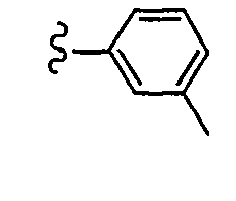
δ 2.27 (s, 3H), 2.71 (t, J = 10.0 Hz, 2H), 2.78 (s, 3H), 3.15 (t, J = 10.0 Hz, 2H), 3.00-3.50 (m, 8H), 3.71 (s, 2H), 3.84 (br s, 2H), 6.85 (d, J = 5.0 Hz, 1H), 6.93 (d, J = 5.0 Hz, 1H), 7.17 (m, 1H), 7.26 (d, J = 5.0 Hz, 1H), 7.36 (s, 1H), 7.38 (s, 1H), 7.44 (s, 1H), 7.57 (s, 1H), 7.62 (d, J = 5.0 Hz, 1H), 9.89 (s, 1H). m/z 512 (M+H)+ Example 376 378 Me 
δ 1.20 (d, J = 5.0 Hz, 3H), 2.77 (s, 3H), 2.85-2.96 (m, 2H), 3.19 (m, 1H), 3.00-3.50 (m, 8H), 3.66 (s, 2H), 3.77 (br s, 2H), 6.91 (d, J = 5.0 Hz, 1H), 7.25 (d, J = 5.0 Hz, 1H), 7.34 (d, d, J = 8.1 Hz, 1H), 7.53 (s, 1H), 7.60 (d, J = 7.8 Hz, 1H), 7.66 (m, 2H), 7.82 (m, 2H), 10.33 (s, 1H). m/z 580 (M+H)+ Example 376 379 Me 
δ 1.18 (d, J = 5.0 Hz, 3H), 2.26 (s, 3H), 2.78 (s, 3H), 2.80-2.91 (m, 2H), 3.17 (m, 1H), 3.00-3.50 (m, 8H), 3.68 (s, 2H), 3.81 (br s, 2H), 6.85 (d, J = 10.0 Hz, 1H), 6.90 (d, J = 5.0 Hz, 1H), 7.16 (t, J = 10.0 Hz, 1H), 7.25 (d, J = 5.0 Hz, 1H), 7.36 (m, 2H), 7.44 (s, 1H), 7.54 (s, 1H), 7.61 (d, J = 5.0 Hz, 1H), 9.86 (s, 1H). m/z 526 (M+H)+ Example 376 380 Me 
δ 1.18 (d, J = 5.0 Hz, 3H), 2.77 (s, 3H), 2.83-2.92 (m, 2H), 3.18 (m, 1H), 3.00-3.50 (m, 8H), 3.68 (s, 2H), 3.81 (br s, 2H), 6.90 (d, J = 5.0 Hz, 1H), 7.03 (t, J = 10.0 Hz, 1H), 7.28 (m, 3H), 7.35 (d, J = 7.8 Hz, 1H), 7.54 (s, 1H), 7.60 (m, 2H), 9.94 (s, 1H). m/z 546 (M)+ Example 376 381 Me 
δ 1.21 (d, J = 5.0 Hz, 3H), 1.98 (s, 3H), 2.21 (s, 3H), 2.78 (s, 3H), 2.88-2.93 (m, 2H), 3.17 (m, 1H), 3.00-3.50 (m, 8H), 3.72 (s, 2H), 3.81 (br s, 2H), 6.92 (d, J = 5.0 Hz, 1H), 7.03 (m, 3H), 7.28 (d, J = 5.0 Hz, 1H), 7.36 (d, J = 7.2 Hz, 1H), 7.56 (s, 1H), 7.62 (d, J = 7.2 Hz, 1H), 9.36 (s, 1H). m/z 540 (M+H)+ Example 376 - To a solution of Example 331 (8.5 g, 14.1 mmol) in methanol (150 mL) and tetrahydrofuran (80 mL) was added sodium borohydride (530 mg, 14.1 mmol) at about 0 °C. The mixture was stirred for about 3 hours while being allowed to warm to room temperature and was then concentrated under vacuum. The residue was diluted with water, extracted with ethyl acetate and the combined organic extracts were dried (MgSO4), filtered, and concentrated. The residue was purified by flash chromatography on silica gel using dichloromethane/methanol (10:1) as eluent to provide the desired product. MS (ESI): m/z 607 (M+H)+.

R1 R2 R'3 MS (ESI): Example Number (Reference Procedure) 
H 
m/z 607 (M+H)+ Example 383 (Example 382) H 

m/z 607 (M+H)+ Example 384 (Example 382) 
H 
m/z 607 (M+H)+ Example 385 (Example 382) - A suspension of Example 382 (61 mg, 0.10 mmol) in a 4M solution of hydrochloric acid in 1,4-dioxane (10 mL, 40.0 mmol) was agitated at room temperature for about 4 hours. The mixture was evaporated to dryness and the residue was purified by preparative HPLC on a Waters Symmetry C8 column (25 mm x 100 mm, 7 µm particle size) using a gradient of 10% to 100% acetonitrile:0.1% aqueous TFA over 8 minutes (10 minutes run time) at a flow rate of 40 mL/minute to provide 32 mg (44%) of the desired product as the trifluoroacetate salt 1H NMR (300 MHz, DMSO-d6): δ 2.80 (s, 3H), 3.00-3.50 (m, 8H), 3.76 (s, 2H), 3.96 (br s, 2H), 4.66 (s, 2H), 7.00 (d, J = 3.7 Hz, 1H), 7.30 (d, J = 3.7 Hz, 1H), 7.32 (s, 1H), 7.58 (s, 1H), 7.69 (s, 1H). MS (ESI): m/z 381 (M+H)+.
- The procedure for Example 386 was used, substituting Example 384 for Example 382 to provide 14 mg (23%) of the desired product as the trifluoroacetate salt. 1H NMR (300 MHz, DMSO-d6) δ 2.15 (s, 3H), 2.15-2.50 (m, 8H), 3.50 (s, 2H), 3.77 (s, 2H), 4.69 (s, 2H), 5.56 (m, 1H), 7.27 (d, J = 7.8 Hz, 1H), 7.38 (s, 1H), 7.47 (s, 1H), 7.58 (d, J = 7.8 Hz, 1H), 7.69 (s, 1H). MS (ESI): m/z 381 (M+H)+.
- To a solution of Example 382 (120 mg, 0.2 mmol) in dichloromethane (0.8 mL) was added o-tolyl isocyanate (30 mg, 0.22 mmol) in dichloromethane (1.0 mL) and the mixture was shaken at room temperature for about 16 hours. The mixture was concentrated under vacuum and the residue was purified by preparative HPLC on a Waters Symmetry C8 column (25 mm x 100 mm, 7 µm particle size) using a gradient of 10% to 100% acetonitrile:0.1% aqueous TFA over 8 minutes (10 minutes run time) at a flow rate of 40 mL/minute to provide 11 mg (7%) of the desired product as the trifluoroacetate salt. 1H NMR (500 MHz, DMSO-d6): δ 2.20 (s, 3H), 2.80 (s, 3H), 3.00-3.50 (m, 8H), 3.76 (s, 2H), 3.90 (br s, 2H), 5.35 (s, 2H), 7.08 (t, J = 7 Hz, 1H), 7.18 (m, 2H), 7.23 (d, J = 3 Hz, 1H), 7.35 (m, 2H), 7.39 (d, J = 8 Hz, 1H), 7.60 (s, 1H), 7.65 (d, J = 7 Hz, 1H), 9.00 (s, 1H). MS (ESI): m/z 514 (M+H)+.

Example Number R 1H NMR MS (ESI): Reference Procedure 389 
(400 MHz, DMSO-d6) δ 2.26 (s, 3H), 2.78 (s, 3H), 3.00-3.50 (m, 8H), 3.76 (s, 2H), 3.84 (br s, 2H), 5.34 (s, 2H), 6.82 (d, J = 6 Hz, 1H), 7.18 (t, J = 7 Hz, 1H), 7.25-7.38 (m, 5H), 7.58 (s, 1H), 7.62 (d, J = 7 Hz, 1H), 9.66 (s, 1H). m/z 514 (M+H)+ Example 388 390 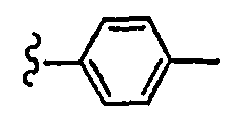
(500 MHz, DMSO-d6) δ 2.24 (s, 3H), 2.79 (s, 3H), 3.00-3.50 (m, 8H), 3.76 (s, 2H), 3.90 (br s, 2H), 5.33 (s, 2H), 7.08 (m, 2H), 7.20 (d, J = 5 Hz, 1H), 7.25 (m, 2H), 7.35 (m, 3H), 7.60 (s, 1H), 7.62 (d, J = 5 Hz, 1H), 9.65 (s, 1H). m/z 514 (M+H)+ Example 388 - A solution of Example 382 (8.0 g, 13.2 mmol) in tetrahydrofuran (100 mL) was cooled to about 0 °C and diphenylphosphoryl azide (7.1 mL, 33.0 mmol) followed by 1,8-diazabicyclo[5.4.0]undec-7ene (4.9 mL, 33.0 mmol) were added slowly in the dark. After the addition was complete, the mixture was stirred for about 2 hours at ambient temperature in the dark. The mixture was basified by addition of potassium carbonate and concentrated under vacuum. The residue was diluted with water, extracted with ethyl acetate and the combined organic extracts were dried (MgSO4), filtered, and concentrate. The residue was purified by flash chromatography on silica gel using dichloromethane/methanol (10:1) as eluent to provide the desired product. MS (ESI): m/z 632 (M+H)+.

R1 R2 R'3 MS (ESI): Example Number (Reference Procedure) 
H 
m/z 632 (M+H)+ Example 392 (Example 391) H 

m/z 632 (M+H)+ Example 393 (Example 391) 
H 
m/z 632 (M+H)+ Example 394 (Example 391) - To a solution of Example 391 (7.1 g, 11.2 mmol) in tetrahydrofuran (150 mL) was added triphenylphosine (4.4 g, 16.9 mmol) and the mixture was heated to about 40 °C overnight. Water (15.2 mL) was added and heating to about 40 °C was continued for about 6 hours. The mixture was concentrated under vacuum, diluted with water, basified by addition of potassium carbonate and extracted with ethyl acetate. The combined organic extracts were washed with water and brine, dried (MgSO4), filtered, and concentrated under vacuum. The residue was purified by flash chromatography on silica gel using dichloromethane/methanol (10:1) + 1% ammonium hydroxide as eluent to provide the desired product. MS (ESI): m/z 606 (M+H)+.

R1 R2 R'3 MS (ESI): Example Number (Reference Procedure) 
H 
m/z 606 (M+H)+ Example 396 (Example 395) H 

m/z 606 (M+H)+ Example 397 (Example 395) 
H 
m/z 606 (M+H)+ Example 398 (Example 395) - The procedure for Example 386 was used, substituting Example 397 for Example 382 to provide 27 mg (3%) of the desired product as the trifluoroacetate salt. 1H NMR (500 MHz, DMSO-d6) δ 2.81 (s, 3H), 3.00-3.50 (m, 8H), 3.79 (s, 2H), 4.00 (br s, 2H), 4.32 (d, J = 5.3 Hz, 2H), 7.41 (d, J = 7.8 Hz, 1H), 7.60 (s, 1H), 7.67 (m, 2H), 7.87 (d, J = 1.5 Hz, 1H), 8.38 (br s, 2H). MS (ESI): m/z 380 (M+H)+.
- To o-tolyl isocyanate (20 mg, 0.11 mmol) was added a solution of Example 395 (60.5 mg, 0.10 mmol) in dichloromethane (1 mL) and the mixture was agitated at room temperature for about 5 hours. The mixture was concentrated under vacuum, the residue was dissolved in ethyl acetate (0.6 mL) and 37% hydrochloric acid in ethanol (0.7 mL) and the mixture was agitated at room temperature overnight. The mixture was concentrated under vacuum and the residue was purified by preparative HPLC on a Waters Symmetry C8 column (25 mm x 100 mm, 7 µm particle size) using a gradient of 10% to 100% acetonitrile:0.1% aqueous TFA over 8 minutes (10 minutes run time) at a flow rate of 40 mL/minute to provide 17 mg (20%) of the desired product as the trifluoroacetate salt. 1H NMR (500 MHz, DMSO-d6) δ 2.19 (s, 3H), 2.79 (s, 3H), 3.00-3.50 (m, 8H), 3.76 (s, 2H), 3.85 (br s, 2H), 4.50 (d, J = 5 Hz, 2H), 6.92 (t, J = 5 Hz, 1H), 7.03 (d, J = 5 Hz, 1H), 7.11 (m, 3H), 7.32 (d, J = 5 Hz, 1H), 7.38 (d, J = 8 Hz, 1H), 7.58 (s, 1H), 7.62 (d, J = 8 Hz, 1H), 7.79 (s, 1H), 7.82 (d, J = 8 Hz, 1H). MS (ESI): m/z 513 (M+H)+.
- To o-tolyl isocyanate (20 mg, 0.1 mmol) was added a solution of Example 346 (41 mg, 0.1 mmol) in dichloromethane (1 mL) and the mixture was shaken at room temperature for about 4 hours. The mixture was concentrated under vacuum and the residue was purified by preparative HPLC on a Waters Symmetry C8 column (25 mm x 100 mm, 7 µm particle size) using a gradient of 10% to 100% acetonitrile:0.1% aqueous TFA over 8 minutes (10 minutes run time) at a flow rate of 40 mL/minute to provide 6 mg (8%) of the desired product as the trifluoroacetate salt. 1H NMR (500 MHz, DMSO-d6) δ 2.18 (s, 3H), 2.77 (s, 3H), 3.00-3.50 (m, 8H), 3.73 (s, 2H), 3.76 (s, 3H), 3.79 (br s, 2H), 4.85 (s, 2H), 7.10 (m, 2H), 7.20 (m, 2H), 7.33 (m, 3H), 7.58 (s, 1H), 7.62 (d, J = 8 Hz, 1H), 8.68 (s, 1H). MS (ESI): m/z 543 (M+H)+.
- To phenyl isocyanate (13.1 mg, 0.11 mmol) was added a solution of Example 396 (60.5 mg, 0.10 mmol) in tetrahydrofuran (1 mL) and the mixture was agitated at room temperature overnight. The mixture was concentrated under vacuum, the residue was suspended in 4M hydrochloric acid in 1,4-dioxane (2 mL) and the mixture was agitated at room temperature overnight. The mixture was concentrated under vacuum and the residue was purified by preparative HPLC on a Waters Symmetry C8 column (25 mm x 100 mm, 7 µm particle size) using a gradient of 10% to 100% acetonitrile:0.1% aqueous TFA over 8 minutes (10 minutes run time) at a flow rate of 40 mL/minute to provide 30 mg (36%) of the desired product as the trifluoroacetate salt. 1H NMR (300 MHz, DMSO-d6) δ 2.79 (s, 3H), 3.00-3.50 (m, 8H), 3.74 (s, 2H), 3.96 (s, 2H), 4.49 (d, J = 5.8 Hz, 2H), 6.79 (m, 1H), 6.91 (m, 1H), 7.03 (d, J = 3.7 Hz, 1H), 7.24 (m, 2H), 7.30 (m, 2H), 7.43 (m, 2H), 7.59 (d, J = 7.8 Hz, 1H), 7.67 (s, 1H), 8.64 (s, 1H). MS (ESI): m/z 499 (M+H)+.
- To a solution of N-methyl-m-toluidine (15 mg, 0.12 mmol) and pyridine (9.5 mg, 0.12 mmol) in dichloromethane (1.5 mL) was added triphosgene (12 mg, 0.04 mmol) in dichloromethane (0.5 mL) at about -30 °C. The mixture was stirred at about -30 °C to about-10 °C for about 50 minutes before pyridine (12 mg, 0.15 mmol) was added, followed by a solution of Example 395 (61 mg, 0.1 mmol) in dichloromethane (0.5 mL). The mixture was stirred at room temperature overnight and was then concentrated under vacuum. The residue was dissolved in ethyl acetate (0.6 mL) and hydrochloric acid (0.7 mL, 37% in ethanol) and the mixture was shaken at room temperature overnight. The mixture was concentrated under vacuum and the residue was purified by preparative HPLC on a Waters Symmetry C8 column (25 mm x 100 mm, 7 µm particle size) using a gradient of 10% to 100% acetonitrile:0.1% aqueous TFA over 8 minutes (10 minutes run time) at a flow rate of 40 mL/minute to provide 29 mg (40%) of the desired product as the trifluoroacetate salt. 1H NMR (500 MHz, DMSO-d6) δ 2.31 (s, 3H), 2.80 (s, 3H), 3.05-3.45 (m, 8H), 3.15 (s, 3H), 3.77 (s, 2H), 3.95 (br s, 2H), 4.42 (d, J = 5 Hz, 2H), 6.62 (t, J = 5 Hz, 1H), 6.94 (d, J = 5 Hz, 1H), 7.06 (m, 2H), 7.10 (s, 1H), 7.28 (m, 2H), 7.40 (d, J = 8 Hz, 1H), 7.58 (s, 1H), 7.62 (d, J = 5 Hz, 1H). MS (ESI): m/z 527 (M+H)+.

R1 R2 R'3 R'4 R'5 MS (ESI): Example Number (Reference Procedure) H 
H H 
m/z 517 (M+H)+ Example 404 (Example 400) H 
H H 
m/z 533 (M)+ Example 405 (Example 400) H 
H H 
m/z 577, 579 (M+H)+ Example 406 (Example 400) H 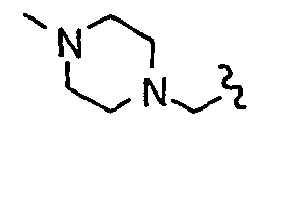
H H 
m/z 567 (M+H)+ Example 407 (Example 400) H 
H H 
m/z 575 (M+H)+ Example 408 (Example 400) H 
H H 
m/z 517 (M+H)+ Example 409 (Example 400) H 
H H 
m/z 533 (M)+ Example 410 (Example 400) H 
H H 
m/z 577, 579 (M+H)+ Example 411 (Example 400) H 
H H 
m/z 567 (M+H)+ Example 412 (Example 400) H 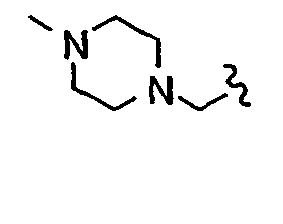
H H 
m/z 541 (M+H)+ Example 413 (Example 400) H 
H H 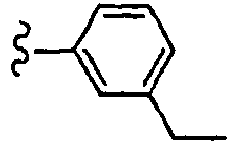
m/z 527 (M+H)+ Example 414 (Example 400) H 
H H 
m/z 591 (M+H)+ Example 415 (Example 400) H 
H H 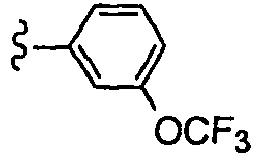
m/z 583 (M+H)+ Example 416 (Example 403) H 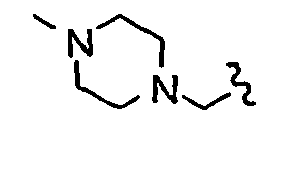
H H 
m/z 599 (M+H)+ Example 417 (Example 400) H 
H H 
m/z 513 (M+H)+ Example 418 (Example 400) H 
H H 
m/z 517 (M+H)+ Example 419 (Example 400) H 
H H 
m/z 567 (M+H)+ Example 420 (Example 400) H 
H H 
m/z 575 (M+H)+ Example 421 (Example 400) H 
H H 
m/z 527 (M+H)+ Example 422 (Example 400) H 
H H 
m/z 527 (M+H)+ Example 423 (Example 400) H 
H H 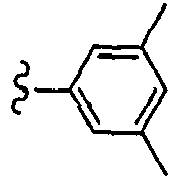
m/z 527 (M+H)+ Example 424 (Example 400) H 
H H 
m/z 567 (M)+ Example 425 (Example 400) H 
H H 
m/z 549 (M+H)+ Example 426 (Example 400) H 
H H 
m/z 585 (M+H)+ Example 427 (Example 400) H 
H H 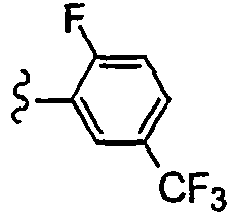
m/z 585 (M+H)+ Example 428 (Example 400) H 
H H 
m/z 601 (M)+ Example 429 (Example 403) H 
H H 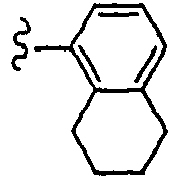
m/z 553 (M+H)+ Example 430 (Example 403) H 
H H 
m/z579 (M+H)+ Example 431 (Example 403) H 
H H 
m/z 563 (M+H)+ Example 432 (Example 403) H 
Me H 
m/z 527 (M+H)+ Example 433 (Example 400) H 
Me H 
m/z 555 (M+H)+ Example 434 (Example 400) H 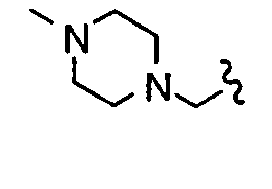
Me H 
m/z 543 (M+H)+ Example 435 (Example 400) H 
Me H 
m/z 547 (M)+ Example 436 (Example 403) H 
Me H 
m/z 538 (M+H)+ Example 437 (Example 400) H 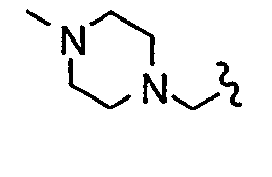
Me H 
m/z 527 (M+H)+ Example 438 (Example 400) H 
Me H 
m/z 543 (M+H)+ Example 439 (Example 400) H 
Me H 
m/z 591, 593 (M+H)+ Example 440 (Example 400) H 
Me H 
m/z 581 (M+H)+ Example 441 (Example 400) H 
Me H 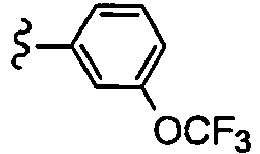
m/z 597 (M+H)+ Example 442 (Example 403) H 
Me H 
m/z 613 (M+H)+ Example 443 (Example 400) H 
Me H 
m/z 527 (M+H)+ Example 444 (Example 400) H 
Me H 
m/z 541 (M+H)+ Example 445 (Example 400) H 
Me H 
m/z 549 (M+H)+ Example 446 (Example 400) H 
Me H 
m/z 549 (M+H)+ Example 447 (Example 400) H 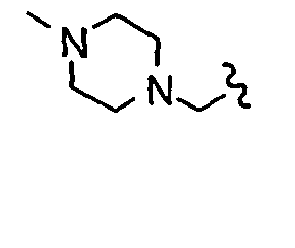
Me H 
m/z 615 (M)+ Example 448 (Example 400) H 
Me H 
m/z 561 (M+H)+ Example 449 (Example 400) H 
Me H 
m/z 599 (M+H)+ Example 450 (Example 400) H 
Me H 
m/z 545 (M+H)+ Example 451 (Example 400) H 
Me H 
m/z 562 (M+H)+ Example 452 (Example 400) H 
Me H 
m/z 545 (M+H)+ Example 453 (Example 400) H 
Me H 
m/z 562 (M+H)+ Example 454 (Example 400) H 
Me H 
m/z 599 (M+H)+ Example 455 (Example 400) H 
Me H 
m/z 593 (M+H)+ Example 456 (Example 400) H 
Et H 
m/z 541 (M+H)+ Example 457 (Example 400) H 
Et H 
m/z 557 (M+H)+ Example 458 (Example 400) H 
Et H 
m/z 562 (M+H)+ Example 459 (Example 400) H 
Et H 
m/z 541 (M+H)+ Example 460 (Example 400) H 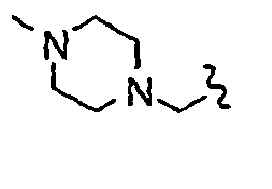
Et H 
m/z 557 (M+H)+ Example 461 (Example 400) H 
Et H 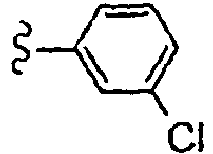
m/z 562 (M+H)+ Example 462 (Example 400) H 
Et H 
m/z 605, 607 (M+H)+ Example 463 (Example 400) H 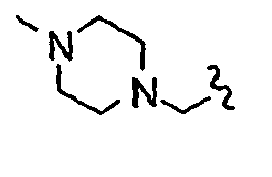
Et H 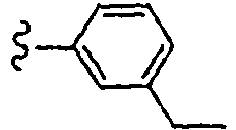
(M+H)+ m/z 555 (M+H)+ Example 464 (Example 400) H 
Et H 
m/z 595 (M+H)+ Example 465 (Example 400) H 
Et H 
m/z 559 (M+H)+ Example 466 (Example 400) H 
Et H 
m/z 613 (M+H)+ Example 467 (Example 400) H 

H 
m/z 555 (M+H)+ Example 468 (Example 400) H 

H 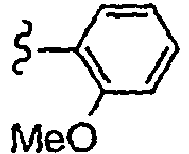
m/z 571 (M+H)+ Example 469 (Example 400) H 

H 
m/z 559 (M+H)+ Example 470 (Example 400) H 
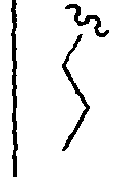
H 
m/z 555 (M+H)+ Example 471 (Example 400) H 

H 
m/z 571 (M+H)+ Example 472 (Example 400) H 

H 
m/z 555 (M+H)+ Example 473 (Example 400) H 

H 
m/z 571 (M+H)+ Example 474 (Example 400) H 

H 
m/z 555 (M+H)+ Example 475 (Example 400) H 

H 
m/z 553 (M+H)+ Example 476 (Example 400) H 

H 
m/z 569 (M+H)+ Example 477 (Example 400) H 

H 
m/z 557 (M+H)+ Example 478 (Example 400) H 

H 
m/z 553 (M+H)+ Example 479 (Example 400) H 

H 
m/z 569 (M+H)+ Example 480 (Example 400) H 

H 
m/z 583 (M+H)+ Example 481 (Example 400) H 

H 
m/z 563 (M)+ Example 482 (Example 401) 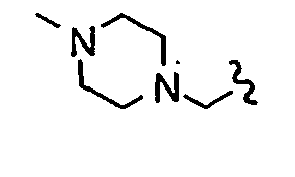

H 
m/z 543 (M+H)+ Example 483 (Example 401) H 

H 
m/z 571 (M+H)+ Example 484 (Example 400) H 
Me Me 
m/z 541 (M+H)+ Example 485 (Example 403) H 
Me H 
m/z495 (M+H)+ Example 486 (Example 400) H 
Me H 
m/z 559, 561 (M+H)+ Example 487 (Example 400) 
H H H 
m/z 513 (M+H)+ Example 488 (Example 402) 
H H H 
m/z 513 (M+H)+ Example 489 (Example 402) 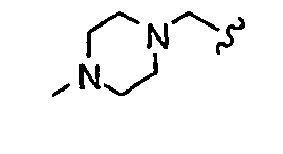
H H H 
m/z 513 (M+H)+ Example 490 (Example 402) 
H Me H 
m/z 513 (M+H)+ Example 491 (Example 402) 
H Me H 
m/z 527 (M+H)+ Example 492 (Example 402) 
H Me H 
m/z 543 (M+H)+ Example 493 (Example 402) 
H Me H 
m/z 531 (M+H)+ Example 494 (Example 402) 
H Me H 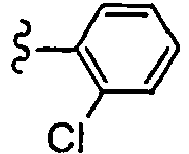
m/z 547 (M)+ Example 495 (Example 402) 
H Me H 
m/z 591, 593 (M+H)+ Example 496 (Example 402) 
H Me H 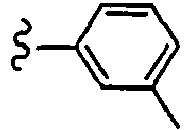
m/z 527 (M+H)+ Example 497 (Example 402) 
H Me H 
m/z 543 (M+H)+ Example 498 (Example 402) 
H Me H 
m/z 531 (M+H)+ Example 499 (Example 402) 
H Me H 
m/z 547 (M)+ Example 500 (Example 402) 
H Me H 
m/z 591, 593 (M+H)+ Example 501 (Example 402) 
H Me H 
m/z 581 (M+H)+ Example 502 (Example 402) 
H Me H 
m/z 538 (M+H)+ Example 503 (Example 402) 
H Me H 
m/z 613 (M+H)+ Example 504 (Example 402) 
H Me H 
m/z 527 (M+H)+ Example 505 (Example 402) 
H Me H 
m/z 543 (M+H)+ Example 506 (Example 402) 
H Me H 
m/z 531 (M+H)+ Example 507 (Example 402) 
H Me H 
m/z 547 (M)+ Example 508 (Example 402) 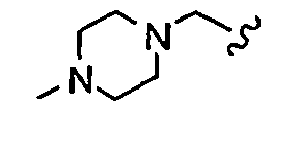
H Me H 
m/z 591, 593 (M+H)+ Example 509 (Example 402) 
H Me H 
m/z 581 (M+H)+ Example 510 (Example 402) 
H Me H 
m/z597 (M+H)+ Example 511 (Example 402) 
H Me H 
m/z 538 (M+H)+ Example 512 (Example 402) 
H Me H 
m/z 589 (M+H)+ Example 513 (Example 402) 
H Me H 
m/z 605 (M+H)+ Example 514 (Example 402) 
H Me H 
m/z 541 (M+H)+ Example 515 (Example 402) 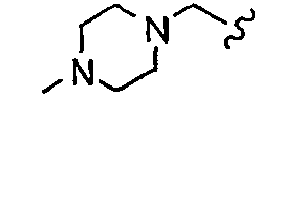
H Me H 
m/z 541 (M+H)+ Example 516 (Example 402) 
H Me H 
m/z 541 (M+H)+ Example 517 (Example 402) 
H Me H 
m/z 573 (M+H)+ Example 518 (Example 402) 
H Me H 
m/z 573 (M+H)+ Example 519 (Example 402) 
H Me H 
m/z 581 (M)+ Example 520 (Example 402) 
H Me H 
m/z 581 (M)+ Example 521 (Example 402) 
H Me H 
m/z 581 (M)+ Example 522 (Example 402) 
H Me H 
m/z 557 (M+H)+ Example 523 (Example 402) Example Number 1HNMR Example 404 (500 MHz, DMSO-d6) δ 2.79 (s, 3H), 3.00-3.50 (m, 8H), 3.76 (s, 2H), 3.84 (br s, 2H), 4.51 (d, J = 5 Hz, 2H), 6.94 (m, 1H), 7.03 (d, J = 5 Hz, 1H), 7.08 (t, J = 8 Hz, 1H), 7.18 (m, 2H), 7.30 (d, J = 5 Hz, 1H), 7.38 (d, J = 8 Hz, 1H), 7.58 (s, 1H), 7.62 (d, J = 8 Hz, 1H), 8.13 (t, J = 8 Hz, 1H), 8.42 (s, 1H). Example 405 (500 MHz, DMSO-d6) δ 2.78 (s, 3H), 3.00-3.50 (m, 2H), 3.75 (s, 2H), 3.84 (br s, 2H), 4.52 (d, J = 5 Hz, 2H), 6.96 (t, J = 8 Hz, 1H), 7.03 (d, J = 5 Hz, 1H), 7.26 (t, J = 5 Hz, 1H), 7.32 (d, J = 5 Hz, 1H), 7.38 (d, J = 8 Hz, 1H), 7.42 (d, J = 8 Hz, 1H), 7.59 (s, 1H), 7.62 (m, 2H), 8.16 (s, 1H), 8.19 (d, J = 8Hz, 1H). Example 406 (500 MHz, DMSO-d6) δ 2.79 (s, 3H), 3.00-3.50 (m, 8H), 3.75 (s, 2H), 3.82 (br s, 2H), 4.52 (d, J = 5 Hz, 2H), 6.94 (t, J = 8 Hz, 1H), 7.03 (d, J = 5 Hz, 1H), 7.32 (m, 2H), 7.38 (d, J = 8 Hz, 1H), 7.60 (m, 4H), 7.97 (s, 1H), 8.09 (d, J = 8 Hz, 1H). Example 407 (500 MHz, DMSO-d6) δ 2.79 (s, 3H), 3.00-3.50 (m, 8H), 3.76 (s, 2H), 3.87 (br s, 2H), 4.52 (d, J = 5 Hz, 2H), 7.03 (d, J = 5 Hz, 1H), 7.22 (t, J = 8 Hz, 1H), 7.30 (d, J = 5 Hz, 1H), 7.38 (d, J = 8 Hz, 1H), 7.60 (m, 5H), 7.92 (s, 1H), 7.99 (d, J = 8 Hz, 1H). Example 408 (500 MHz, DMSO-d6) δ 2.79 (s, 3H), 3.00-3.50 (m, 8H), 3.76 (s, 2H), 3.88 (br s, 2H), 4.45 (d, J = 5 Hz, 2H), 6.98 (d, J = 5 Hz, 1H), 7.12 (t, J = 8 Hz, 1H), 7.19 (m, 2H), 7.30 (m, 2H), 7.39 (m, 3H), 7.44 (m, 3H), 7.58 (s, 1H), 7.62 (d, J = 8 Hz, 1H), 7.90 (d, J = 8 Hz, 1H), 8.29 (m, 1H). Example 409 (500 MHz, DMSO-d6) δ 2.79 (s, 3H), 3.00-3.50 (m, 8H), 3.76 (s, 2H), 3.85 (br s, 2H), 4.49 (d, J = 5 Hz, 2H), 6.77 (m, 1H), 6.90 (t, J = 5 Hz, 1H), 7.03 (d, J = 5 Hz, 1H), 7.08 (d, J = 8 Hz, 1H), 7.24 (m, 2H), 7.38 (d, J = 8 Hz, 1H), 7.44 (d, J = 8 Hz, 1H), 7.58 (s, 1H), 7.62 (d, J = 8 Hz, 1H), 8.92 (s, 1H). Example 410 (500 MHz, DMSO-d6) δ 2.78 (s, 3H), 3.00-3.50 (m, 8H), 3.75 (s, 2H), 3.85 (br s, 2H), 4.48 (d, J = 5 Hz, 2H), 6.97 (m, 2H), 7.02 (d, J = 5 Hz, 1H), 7.22 (m, 2H), 7.30 (d, J = 5 Hz, 1H), 7.38 (d, J = 8 Hz, 1H), 7.58 (s, 1H), 7.62 (d, J = 8 Hz, 1H), 7.72 (s, 1H), 8.95 (s, 1H). Example 411 (500 MHz, DMSO-d6) δ 2.79 (s, 3H), 3.00-3.50 (m, 8H), 3.75 (s, 2H), 3.83 (br s, 2H), 4.50 (d, J = 5 Hz, 2H), 6.96 (t, J = 5 Hz, 1H), 7.03 (d, J = 5 Hz, 1H), 7.09 (d, J = 8 Hz, 1H), 7.20 (t, J = 8 Hz, 1H), 7.27 (m, 2H), 7.38 (d, J = 8 Hz, 1H), 7.58 (s, 1H), 7.62 (d, J = 8 Hz, 1H), 7.83 (s, 1H), 8.92 (s, 1H). Example 412 (500 MHz, DMSO-d6) δ 2.79 (s, 3H), 3.00-3.50 (m, 8H), 3.78 (s, 2H), 3.83 (br s, 2H), 4.54 (d, J = 5 Hz, 2H), 6.98 (t, J = 5 Hz, 1H), 7.03 (d, J = 5 Hz, 1H), 7.25 (d, J = 8 Hz, 1H), 7.30 (d, J = 5 Hz, 1H), 7.37 (d, J = 8 Hz, 1H), 7.47 (t, J = 8 Hz, 1H), 7.55 (m, 2H), 7.62 (d, J = 8 Hz, 1H), 8.00 (s, 1H), 9.07 (s, 1H). Example 413 (500 MHz, DMSO-d6) δ 2.55 (s, 3H), 2.77 (s, 3H), 3.00-3.50 (m, 8H), 3.73 (s, 2H), 3.80 (br s, 2H), 4.50 (d, J = 6 Hz, 2H), 6.85 (t, J = 5 Hz, 1H), 7.03 (d, J = 5 Hz, 1H), 7.28 (d, J = 5 Hz, 1H), 7.35 (d, J = 7 Hz, 1H), 7.39 (t, J = 7 Hz, 1H), 7.53 (d, J = 8 Hz, 1H), 7.55 (s, 1H), 7.62 (d, J = 7 Hz, 1H), 7.66 (d, J = 8 Hz, 1H), 8.04 (s, 1H), 8.88 (s, 1H). Example 414 (500 MHz, DMSO-d6) δ 1.15 (t, J = 5 Hz, 3H), 2.78 (m, 3H), 3.00-3.50 (m, 8H), 3.55 (q, J = 5 Hz, 2H), 3.70 (s, 2H), 3.72 (s, 2H), 4.48 (d, J = 5 Hz, 2H), 5.58 (s, 1H), 6.70 (t, J = 5 Hz, 1H), 6.78 (d, J = 5 Hz, 1H), 7.04 (d, J = 5 Hz, 1H), 7.13 (t, J = 7 Hz, 1H), 7.22 (d, J = 7 Hz, 1H), 7.29 (m, 2H), 7.50 (s, 1H), 7.61 (d, J = 7 Hz, 1H), 8.51 (s, 1H). Example 415 (500 MHz, DMSO-d6) δ 2.75 (s, 3H), 3.00-3.50 (m, 8H), 3.72 (s, 2H), 3.77 (br s, 2H), 4.47 (d, J = 5 Hz, 2H), 6.55 (d, J = 5 Hz, 1H), 6.74 (t, J = 5 Hz, 1H), 7.01 (m, 3H), 7.08 (d, J = 7 Hz, 1H), 7.12 (t, J = 7 Hz, 1H), 7.21 (m, 2H), 7.26 (d, J = 5 Hz, 1H), 7.34 (d, J = 7 Hz, 1H), 7.38 (m, 2H), 7.54 (s, 1H), 7.61 (d, J = 7 Hz, 1H), 8.74 (s, 1H). Example 416 (500 MHz, DMSO-d6) δ 2.77 (s, 3H), 3.00-3.50 (m, 8H), 3.73 (s, 2H), 3.75 (br s, 2H), 4.50 (d, J = 5 Hz, 2H), 6.85 (d, J = 7 Hz, 1H), 6.95 (t, J = 5 Hz, 1H), 7.02 (d, J = 5 Hz, 1H), 7.32 (m, 4H), 7.57 (s, 1H), 7.61 (d, J = 7 Hz, 1H), 7.65 (s, 1H), 9.02 (s, 1H). Example 417 (500 MHz, DMSO-d6) δ 2.77 (s, 3H), 3.00-3.50 (m, 8H), 3,74 (s, 2H), 3.88 (br s, 2H), 4.49 (d, J = 5 Hz, 2H), 6.95 (t, J = 5 Hz, 1H), 7.03 (d, J = 5 Hz, 1H), 7.24 (d, J = 7 Hz, 1H), 7.30 (d, J = 5 Hz, 1H), 7.37 (d, J = 7 Hz, 1H), 7.40 (t, J = 7 Hz, 1H), 7.52 (d, J = 7 Hz, 1H), 7.5 (s, 1H), 7.64 (d, J = 7 Hz, 1H), 7.97 (s, 1H), 9.02 (s, 1H). Example 418 (500 MHz, DMSO-d6) δ 2.22 (s, 3H), 2.79 (s, 3H), 3.00-3.50 (m, 8H), 3.75 (s, 2H), 3.87 (br s, 2H), 4.48 (d, J = 5 Hz, 2H), 6.77 (t, J = 5 Hz, 1H), 7.03 (m, 3H), 7.33 (m, 3H), 7.38 (d, J = 8 Hz, 1H), 7.57 (s, 1H), 7.62 (d, J = 8 Hz, 1H), 8.55 (s, 1H). Example 419 (500 MHz, DMSO-d6) δ 2.79 (s, 3H), 3.00-3.50 (m, 8H), 3.76 (s, 2H), 3.86 (br s, 2H), 4.48 (d, J = 5 Hz, 2H), 6.80 (t, J = 5 Hz, 1H), 7.03 (d, J = 5 Hz, 1H), 7.08 (t, J = 8 Hz, 2H), 7.32 (d, J = 5 Hz, 1H), 7.38 (d, J = 8 Hz, 1H), 7.42 (m, 2H), 7.58 (s, 1H), 7.62 (d, J = 8 Hz, 1H), 8.72 (s, 1H). Example 420 (500 MHz, DMSO-d6) δ 2.79 (s, 3H), 3.00-3.50 (m, 8H), 3.75 (s, 2H), 3.85 (br s, 2H), 4.53 (d, J = 5 Hz, 2H), 7.03 (m, 2H), 7.30 (d, J = 5 Hz, 1H), 7.38 (d, J = 8 Hz, 1H), 7.57 (d, J = 5 Hz, 1H), 7.59 (s, 1H), 7.63 (m, 4H), 9.18 (s, 1H). Example 421 (500 MHz, DMSO-d6) δ 2.79 (s, 3H), 3.00-3.50 (m, 8H), 3.74 (s, 2H), 3.77 (br s, 2H), 4.50 (d, J = 5 Hz, 2H), 6.82 (t, J = 5 Hz, 1H), 7.02 (d, J = 5 Hz, 1H), 7.29 (m, 2H), 7.36 (d, J = 8 Hz, 1H), 7.42 (t, J = 8 Hz, 2H), 7.58 (m, 8H), 8.78 (s, 1H). Example 422 (500 MHz, DMSO-d6) δ 2.07 (s, 3H), 2.22 (s, 3H), 2.78 (s, 3H), 3.00-3.50 (m, δH), 3.75 (s, 2H), 3.81 (br s, 2H), 4.48 (d, J = 5 Hz, 2H), 6.83 (d, J = 5 Hz, 1H), 7.00 (m, 3H), 7.32 (d, J = 5 Hz, 1H), 7.38 (d, J = 8 Hz, 1H), 7.52 (d, J = 8 Hz, 1H), 7.58 (s, 1H), 7.62 (d, J = 8 Hz, 1H), 7.79 (s, 1H). Example 423 (500 MHz, DMSO-d6) δ 2.15 (s, 3H), 2.22 (s, 3H), 2.79 (s, 3H), 3.00-3.50 (m, 8H), 3.76 (s, 2H), 3.82 (br s, 2H), 4.47 (d, J = 5 Hz, 2H), 6.75 = 5 Hz, 1H), 7.10 (t, J = 5 Hz, 1H), 7.32 (d, J = 5 Hz, 1H), 7.38 (d, J = 8 Hz, 1H), 7.58 (s, 1H), 7.63 (m, 2H), 7.67 (s, 1H). Example 424 (500 MHz, DMSO-d6) δ 2.20 (s, 6H), 2.79 (s, 3H), 3.00-3.50 (m, 8H), 3.75 (s, 2H), 3.80 (br s, 2H), 4.48 (d, J = 5 Hz, 2H), 6.58 (s, 1H), 6.77 (t, J = 5 Hz, 1H), 7.02 (d, J = 5 Hz, 1H), 7.03 (s, 2H), 7.30 (d, J = 5 Hz, 1H), 7.38 (d, J = 8 Hz, 1H), 7.58 (s, 1H), 7.62 (d, J = 8 Hz, 1H), 8.43 (s, 1H). Example 425 (500 MHz, DMSO-d6) δ 2.78 (s, 3H), 3.00-3.50 (m, 8H), 3.75 (s, 2H), 3.83 (s, 2H), 4.47 (d, J = 5 Hz, 2H), 7.02 (d, J = 5 Hz, 1H), 7.08 (s, 1H), 7.13 (t, J = 5 Hz, 1H), 7.28 (d, J = 5 Hz, 1H), 7.38 (d, J = 8 Hz, 1H), 7.54 (s, 2H), 7.58 (s, 1H), 7.62 (d, J = 8 Hz, 1H), 9.18 (s, 1H). Example 426 (400 MHz, DMSO-d6) δ 2.75 (s, 3H), 3.00-3.50 (m, 8H), 3.74 (s, 2H), 3.77 (br s, 2H), 4.56 (d, J = 5 Hz, 2H), 7.08 (d, J = 5 Hz, 1H), 7.15 (t, J = 5 Hz, 1H), 7.31 (d, J = 5 Hz, 1H), 7.35 (d, J = 7 Hz, 1H), 7.45 (t, J = 7 Hz, 1H), 7.58 (m, 4H), 7.91 (d, J = 7 Hz, 1H), 8.00 (d, J = 7 Hz, 1H), 8.10 (d, J = 7 Hz, 1H), 8.65 (s, 1H). Example 427 (400 MHz, DMSO-d6) δ 2.78 (s, 3H), 3.00-3.50 (m, 8H), 3.73 (s, 2H), 3.82 (br s, 2H), 4.48 (d, J = 5 Hz, 2H), 6.99 (t, J = 5 Hz, 1H), 7.03 (d, J = 5 Hz, 1H), 7.30 (d, J = 5 Hz, 1H), 7.38 (m, 2H), 7.57 (s, 1H), 7.62 (m, 2H), 8.00 (dd, J= 6, 3 Hz, 1H), 9.08 (s, 1H). Example 428 (400 MHz, DMSO-d6) δ 2.80 (s, 3H), 3.00-3.50 (m, 8H), 3.75 (s, 2H), 3.95 (br s, 2H), 4.53 (d, J = 5 Hz, 2H), 7.06 (d, J = 5 Hz, 1H), 7.41 (m, 5H), 7.60 (s, 1H), 7.65 (d, J = 7 Hz, 1H), 8.62 (d, J = 7 Hz, 1H), 8.82 (s, 1H). Example 429 (400 MHz, DMSO-d6) δ 2.75 (s, 3H), 3.00-3.50 (m, 8H), 3.75 (s, 2H), 3.76 (br s, 2H), 4.54 (d, J = 5 Hz, 2H), 7.05 (d, J = 5 Hz, 1H), 7.32 (m, 2H), 7.52 (s, 1H), 7.60 (m, 1H), 7.68 (d, J = 7 Hz, 1H), 7.78 (m, 1H), 7.98 (s, 1H), 8.45 (s, 1H), 8.65 (s, 1H). Example 430 (400 MHz, DMSO-d6) δ 1.68 (m, 2H), 1.75 (m, 2H), 2.52 (m, 2H), 2.70 (m, 2H), 2.78 (s, 3H), 3.00-3.50 (m, 8H), 3.75 (s, 2H), 3.80 (br s, 2H), 4.48 (d, J = 5 Hz, 2H), 6.73 (d, J = 7 Hz, 1H), 7.00 (t, J= 7 Hz, 1H), 7.04 (d, J = 5 Hz, 1H), 7.10 (t, J = 5 Hz, 1H), 7.30 (d, J = 5 Hz, 1H), 7.36 (d, J = 7 Hz, 1H), 7.56 (s, 1H), 7.62 (m, 3H). Example 431 (500 MHz, DMSO-d6) δ 2.75 (s, 3H), 3.00-3.50 (m, 8H), 3.69 (br s, 2H), 3.75 (s, 2H), 4.52 (d, J = 5 Hz, 2H), 7.01 (d, J = 5 Hz, 1H), 7.04 (d, J = 5 Hz, 1H), 7.07 (m, 1H), 7.11 (t, J = 7 Hz, 1H), 7.29 (m, 1H), 7.35 (d, J = 7 Hz, 1H), 7.52 (s, 1H), 7.60 (d, J = 7 Hz, 1H), 7.76 (d, J = 7 Hz, 1H), 8.79 (s, 1H). Example 432 (500 MHz, DMSO-d6) δ 2.60 (s, 3H), 3.00-3.50 (m, 8H), 3.61 (br s, 2H), 3.72 (s, 2H), 3.81 (s, 3H), 4.50 (d, J = 5 Hz, 2H), 7.03 (s, 1H), 7.30 (d, J = 5 Hz, 2H), 7.50 (s, 1H), 7.58 (br s, 1H), 7.80 (d, J = 5 Hz, 1H), 7.97 (d, J = 5 Hz, 1H), 8.32 (br s, 1H), 9.32 (s, 1H). Example 433 (500 MHz, DMSO-d6) δ 2.20 (s, 3H), 2.79 (s, 3H), 3.00 (s, 3H), 3.00-3.50 (m, 8H), 3.77 (s, 2H), 3.91 (br s, 2H), 4.70 (s, 2H), 7.10 (m, 2H), 7.17 (t, J = 8 Hz, 1H), 7.20 (d, J = 8 Hz, 1H), 7.24 (d, J = 8 Hz, 1H), 7.33 (d, J = 5 Hz, 1H), 7.39 (d, J = 8 Hz, 1H), 7.59 (s, 1H), 7.62 (d, J = 8 Hz, 1H), 7.99 (br s, 1H). Example 434 (500 MHz, DMSO-d6) δ 1.15 (d, J = 8 Hz, 6H), 2.78 (s, 3H), 3.98 (s, 3H), 3.00-3.50 (m, 8H), 3.16 (m, 1H), 3.73 (s, 2H), 3.87 (br s, 2H), 4.70 (s, 2H), 7.10 (d, J = 5 Hz, 1H), 7.20 (m, 3H), 7.31 (d, J = 8 Hz, 1H), 7.35 (d, J = 5 Hz, 1H), 7.40 (d, J = 8 Hz, 1H), 7.58 (s, 1H), 7.62 (d, J = 8 Hz, 1H), 8.03 (s, 1H). Example 435 (500 MHz, DMSO-d6) δ 2.78 (s, 3H), 3.00 (s, 3H), 3.00-3.50 (m, 8H), 3.77 (s, 2H), 3.81 (s, 3H), 3.88 (br s, 2H), 4.72 (s, 2H), 6.90 (m, 1H), 7.00 (m, 2H), 7.13 (d, J = 5 Hz, 1H), 7.33 (d, J = 5 Hz, 1H), 7.39 (d, J = 8 Hz, 1H), 7.55 (s, 1H), 7.59 (br s, 1H), 7.63 (d, J = 8 Hz, 1H), 7.81 (d, J = 8 Hz, 1H). Example 436 (500 MHz, DMSO-d6) δ 2.80 (s, 3H), 3.00 (s, 3H), 3.00-3.50 (m, 8H), 3.77 (s, 2H), 3.84 (br s, 2H), 4.73 (s, 2H), 7.13 (d, J = 5 Hz, 1H), 7.18 (t, J = 8 Hz, 1H), 7.34 (m, 2H), 7.40 (d, J = 8 Hz, 1H), 7.48 (d, J = 8 Hz, 1H), 7.59 (s, 1H), 7.65 (m, 2H), 8.09 (br s, 1H). Example 437 (500 MHz, DMSO-d6) δ 2.78 (s, 3H), 3.00 (s, 3H), 3.00-3.50 (m, 8H), 3.74 (s, 2H), 3.86 (br s, 2H), 4.72 (s, 2H), 7.12 (d, J = 5 Hz, 1H), 7.32 (d, J = 5 Hz, 1H), 7.36 (d, J = 8 Hz, 1H), 7.42 (d, J = 8 Hz, 1H), 7.48 (t, J = 8 Hz, 1H), 7.56 (s, 1H), 7.63 (d, J = 8 Hz, 1H), 7.81 (d, J = 8 Hz, 1H), 8.01 (s, 1H), 8.83 (s, 1H). Example 438 (500 MHz, DMSO-d6) δ 2.27 (s, 3H), 2.79 (s, 3H), 2.98 (s, 3H), 3.00-3.50 (m, 8H), 3.73 (s, 2H), 3.81 (br s, 2H), 4.70 (s, 2H), 6.80 (d, J = 8 Hz, 1H), 7.09 (d, J = 5 Hz, 1H), 7.14 (t, J = 8 Hz, 1H), 7.31 (m, 2H), 7.35 (m, 2H), 7.55 (s, 1H), 7.62 (d, J= 5 Hz, 1H), 8.35 (s, 1H). Example 439 (500 MHz, DMSO-d6) δ 2.79 (s, 3H), 3.00 (s, 3H), 3.00-3.50 (m, 8H), 3.75 (s, 3H), 3.78 (br s, 2H), 4.75 (s, 2H), 6.56 (d, J = 8 Hz, 1H), 7.10 (m, 2H), 7.15 (t, J = 8 Hz, 1H), 7.21 (m, 1H), 7.31 (d, , J = 5 Hz, 1H), 7.36 (d, J = 8 Hz, 1H), 7.57 (s, 1H), 7.62 (d, J = 5 Hz, 1H), 8.41 (s, 1H). Example 440 (500 MHz, DMSO-d6) δ 2.77 (s, 3H), 3.00 (s, 3H), 3.00-3.50 (m, 8H), 3.73 (s, 2H), 3.78 (br s, 2H), 4.70 (s, 2H), 7.10 (d, J = 5 Hz, 1H), 7.14 (d, J = 8 Hz, 1H), 7.22 (t, J = 8 Hz, 1H), 7.31 (d, J = 5 Hz, 1H), 7.35 (d, J = 8 Hz, 1H), 7.52 (bd, J = 8 Hz, 1H), 7.54 (s, 1H), 7.62 (d, J = 5 Hz, 1H), 7.85 (s, 1H), 8.62 (s, 1H). Example 441 (500 MHz, DMSO-d6) δ 2.77 (s, 3H), 3.00 (s, 3H), 3.00-3.50 (m, 8H), 3.73 (s, 2H), 3.78 (br s, 2H), 4.73 (s, 2H), 7.10 (d, J = 5 Hz, 1H), 7.31 (m, 2H), 7.38 (d, J = 8 Hz, 1H), 7.50 (t, J = 8 Hz, 1H), 7.57 (s, 1H), 7.62 (d, J = 5 Hz, 1H), 7.80 (d, J = 5 Hz, 1H), 8.00 (s, 1H), 8.80 (s, 1H). Example 442 (400 MHz, DMSO-d6) δ 2.78 (s, 3H), 2.99 (s, 3H), 3.00-3.50 (m, 8H), 3.73 (s, 2H), 3.85 (br s, 2H), 4.72 (s, 2H), 6.95 (d, J = 7 Hz, 1H), 7.10 (d, J = 5 Hz, 1H), 7.32 (d, J = 5 Hz, 1H), 7.38 (t, J = 7 Hz, 2H), 7.55 (m, 2H), 7.62 (d, J = 7 Hz, 1H), 7.68 (s, 1H), 8.75 (s, 1H). Example 443 (500 MHz, DMSO-d6) δ 2.77 (s, 3H), 2.98 (s, 3H), 3.00-3.50 (m, 8H), 3.78 (s, 2H), 3.90 (br s, 2H), 4.75 (s, 2H), 7.08 (d, J = 5 Hz, 1H), 7.28 (m, 2H), 7.35 (d, J = 7 Hz, 1H), 7.42 (t, J = 7 Hz, 1H), 7.57 (s, 1H), 7.61 (d, J = 7 Hz, 1H), 7.75 (d, J = 7 Hz, 1H), 8.00 (s, 1H), 8.78 (s, 1H). Example 444 (500 MHz, DMSO-d6) δ 2.22 (s, 3H), 2.79 (s, 3H), 2.99 (s, 3H), 3.00-3.50 (m, 8H), 3.73 (s, 2H), 3.79 (br s, 2H), 4.69 (s, 2H), 7.06 (m, 2H), 7.09 (d, J = 5 Hz, 1H), 7.30 (d, J = 5 Hz, 1H), 7.34 (d, J = 8 Hz, 1H), 7.39 (m, 2H), 7.54 (s, 1H), 7.61 (d, J = 8 Hz, 1H), 8.33 (br s, 1H). Example 445 (500 MHz, DMSO-d6) δ 2.15 (s, 3H), 2.26 (s, 3H), 2.78 (s, 3H), 3.00 (s, 3H), 3.00-3.50 (m, 8H), 3.74 (s, 2H), 3.83 (br s, 2H), 4.68 (s, 2H), 6.89 (d, J = 5 Hz, 1H), 7.08 (m, 3H), 7.35 (d, J = 5 Hz, 1H), 7.38 (d, J= 8 Hz, 1H), 7.57 (s, 1H), 7.63 (d, J = 8 Hz, 1H), 7.92 (s, 1H). Example 446 (500 MHz, DMSO-d6) δ 2.78 (s, 3H), 2.98 (s, 3H), 3.00-3.50 (m, 8H), 3.78 (s, 4H), 4.74 (s, 2H), 6.95 (m, 1H), 7.08 (d, J = 3 Hz, 1H), 7.26 (m, 1H), 7.31 (s, 1H), 7.35 (d, J = 8 Hz, 1H), 7.50 (m, 1H), 7.55 (s, 1H), 7.63 (d, J = 5 Hz, 1H), 8.34 (s, 1H). Example 447 (500 MHz, DMSO-d6) δ 2.78 (s, 3H), 2.99 (s, 3H), 3.00-3.50 (m, 8H), 3.74 (s, 2H), 3.78 (s, 2H), 4.70 (s, 2H), 7.10 (d, J = 5 Hz, 1H), 7.15 (t, J = 7 Hz, 2H), 7.32 (m, 3H), 7.55 (s, 1H), 7.61 (d, J = 7 Hz, 1H), 8.25 (s, 1H). Example 448 (500 MHz, DMSO-d6) δ 2.78 (s, 3H), 3.00 (s, 3H), 3.00-3.50 (m, 8H), 3.77 (s, 2H), 3.83 (br s, 2H), 4.76 (s, 2H), 7.15 (d, J = 5 Hz, 1H), 7.35 (d, J = 5 Hz, 1H), 7.38 (d, J = 8 Hz, 1H), 7.52 (d, J = 8 Hz, 1H), 7.58 (s, 1H), 7.62 (d, J = 8 Hz, 1H), 7.74 (d, J = 8 Hz, 1H), 8.05 (s, 1H), 8.32 (s, 1H). Example 449 (500 MHz, DMSO-d6) δ 2.20 (s, 3H), 2.80 (s, 3H), 3.00 (s, 3H), 3.00-3.50 (m, 8H), 3.77 (s, 2H), 3.87 (br s, 2H), 4.72 (s, 2H), 7.12 (m, 2H), 7.21 (d, J = 8 Hz, 1H), 7.35 (d, J = 5 Hz, 1H), 7.39 (m, 2H), 7.59 (s, 1H), 7.63 (d, J = 8 Hz, 1H), 8.04 (br s, 1H). Example 450 (400 MHz, DMSO-d6) δ 2.78 (s, 3H), 3.00 (s, 3H), 3.00-3.50 (m, 8H), 3.74 (s, 2H), 3.89 (br s, 2H), 4.72 (s, 2H), 7.12 (d, J = 4 Hz, 1H), 7.32 (d, J = 4 Hz, 1H), 7.40 (d, J = 8 Hz, 1H), 7.50 (m, 2H), 7.58 (s, 1H), 7.65 (d, J = 8 Hz, 1H), 7.98 (d, J = 8 Hz, 1H), 8.50 (s, 1H). Example 451 (500 MHz, DMSO-d6) δ 2.18 (s, 3H), 2.77 (s, 3H), 2.98 (s, 3H), 3.00-3.50 (m, 8H), 3.73 (s, 2H), 3.82 (br s, 2H), 4.70 (s, 2H), 6.90 (t, J = 7 Hz, 1H), 7.10 (d, J = 5 Hz, 1H), 7.21 (m, 2H), 7.32 (m, 2H), 7.55 (m, 1H), 7.61 (m, 1H), 8.00 (s, 1H). Example 452 (500 MHz, DMSO-d6) δ 2.30 (s, 3H), 2.77 (s, 3H), 2.98 (s, 3H), 3.00-3.50 (m, 8H), 3.73 (s, 4H), 4.70 (s, 2H), 6.95 (d, J = 7 Hz, 1H), 7.10 (d, J = 5 Hz, 1H), 7.35 (m, 2H), 7.45 (s, 1H), 7.55 (m, 2H), 7.61 (m, 1H), 8.02 (s, 1H). Example 453 (500 MHz, DMSO-d6) δ 2.28 (s, 3H), 2.78 (s, 3H), 2.98 (s, 3H), 3.00-3.50 (m, 8H), 3.74 (s, 4H), 4.69 (s, 2H), 6.95 (m, 1H), 7.08 (m, 2H), 7.32 (m, 3H), 7.55 (s, 1H), 7.61 (d, J = 7 Hz, 1H), 8.18 (s, 1H). Example 454 (500 MHz, DMSO-d6) δ 2.25 (s, 3H), 2.77 (s, 3H), 2.98 (s, 3H), 3.00-3.50 (m, 8H), 3.72 (s, 2H), 3.75 (br s, 2H), 4.68 (s, 2H), 7.08 (d, J = 5 Hz, 1H), 7.19 (t, J = 7 Hz, 1H), 7.25 (d, J = 7 Hz, 1H), 7.35 (m, 2H), 7.55 (s, 1H), 7.65 (m, 1H), 8.12 (s, 1H). Example 455 (500 MHz, DMSO-d6) δ 2.78 (s, 3H), 2.99 (s, 3H), 3.00-3.50 (m, 8H), 3.73 (s, 4H), 4.75 (s, 2H), 7.11 (d, J = 4 Hz, 1H), 7.21 (d, J = 7 Hz, 1H), 7.32 (m, 2H), 7.52 (s, 1H), 7.61 (d, J = 7 Hz, 1H), 7.80 (m, 2H), 9.00 (s, 1H). Example 456 (500 MHz, DMSO-d6) δ 2.78 (s, 3H), 3.00 (s, 3H), 3.00-3.50 (m, 8H), 3.73 (s, 4H), 4.70 (s, 2H), 7.16 (m, 4H), 7.32 (d, J = 5 Hz, 1H), 7.38 (d, J = 7 Hz, 1H), 7.55 (s, 1H), 7.62 (d, J = 7 Hz, 1H), 8.75 (s, 1H). Example 457 (500 MHz, DMSO-d6) δ 1.18 (t, J = 7 Hz, 3H), 2.10 (s, 3H), 2.79 (s, 3H), 3.00-3.50 (m, 8H), 3.42 (q, J = 7 Hz, 2H), 3.73 (s, 2H), 3.86 (br s, 2H), 4.71 (s, 2H), 7.08 (t, J = 7 Hz, 1H), 7.10 (d, J = 5 Hz, 1H), 7.15 (t, J = 7Hz, 1H), 7.20 (d, J = 5 Hz, 1H), 7.23 (d, J = 5 Hz, 1H), 7.30 (d, J = 5 Hz, 1H), 7.38 (d, J = 7 Hz, 1H), 7.58 (s, 1H), 7.65 (d, J = 7 Hz, 1H), 7.95 (s, 1H). Example 458 (500 MHz, DMSO-d6) δ 1.19 (t, J = 7 Hz, 3H), 2.79 (s, 3H), 3.00-3.50 (m, 8H), 3.42 (q, J = 7 Hz, 2H), 3.74 (s, 2H), 3.80 (s, 3H), 3.82 (br s, 2H), 4.72 (s, 2H), 6.89 (m, 1H), 7.00 (m, 2H), 7.18 (d, J = 5 Hz, 1H), 7.30 (d, J = 5 Hz, 1H), 7.35 (d, J = 7 Hz, 1H), 7.48 (s, 1H), 7.58 (s, 1H), 7.63 (d, J = 7 Hz, 1H), 7.82 (d, J = 7 Hz, 1H). Example 459 (500 MHz, DMSO-d6) δ 1.19 (t, J = 7 Hz, 3H), 2.78 (s, 3H), 3.00-3.50 (m, 8H), 3.42 (q, J = 7 Hz, 2H), 3.73 (s, 2H), 3.79 (br s, 2H), 4.72 (s, 2H), 7.15 (m, 2H), 7.35 (m, 3H), 7.45 (d, J = 7 Hz, 1H), 7.55 (s, 1H), 7.65 (d, J = 7 Hz, 2H), 8.00 (s, 1H). Example 460 (500 MHz, DMSO-d6) δ 1.10 (t, J = 8 Hz, 3H), 2.28 (s, 3H), 2.78 (s, 3H), 3.00-3.50 (m, 8H), 3.42 (q, J = 8 Hz, 2H), 3.73 (s, 2H), 3.87 (br s, 2H), 4.73 (s, 2H), 6.80 (d, J = 8 Hz, 1H), 7.13 (m, 2H), 7.35 (m, 4H), 7.58 (s, 1H), 7.62 (d, J = 8 Hz, 1H), 8.33 (s, 1H). Example 461 (500 MHz, DMSO-d6) δ 1.19 (t, J = 7 Hz, 3H), 2.80 (s, 3H), 3.00-3.50 (m, 8H), 3.42 (q, J = 7 Hz, 2H), 3.73 (s, 5H), 3.88 (br s, 2H), 4.72 (s, 2H), 6.55 (d, J = 7 Hz, 1H), 7.15 (m, 3H), 7.25 (s, 1H), 7.31 (d, J = 5 Hz, 1H), 7.38 (d, J = 7 Hz, 1H), 7.58 (s, 1H), 7.63 (d, J = 7 Hz, 1H), 8.38 (s, 1H). Example 462 (500 MHz, DMSO-d6) δ 1.11 (t, J = 7 Hz, 3H), 2.79 (s, 3H), 3.00-3.50 (m, 8H), 3.42 (q, J = 7 Hz, 2H), 3.73 (s, 2H), 3.87 (br s, 2H), 4.73 (s, 2H), 7.02 (d, J = 7 Hz, 1H), 7.12 (d, J = 5 Hz, 1H), 7.29 (m, 2H), 7.35 (d, J = 7 Hz, 1H), 7.48 (d, J = 7 Hz, 1H), 7.55 (s, 1H), 7.62 (d, J = 7 Hz, 1H), 7.73 (s, 1H), 8.60 (s, 1H). Example 463 (500 MHz, DMSO-d6) δ 1.11 (t, J = 7 Hz, 3H), 2.79 (s, 3H), 3.00-3.50 (m, 8H), 3.42 (q, J = 7 Hz, 2H), 3.73 (s, 2H), 3.89 (br s, 2H), 4.73 (s, 2H), 7.12 (m, 2H), 7.25 (t, J = 7 Hz, 1H), 7.30 (d, J = 5 Hz, 1H), 7.38 (d, J = 7 Hz, 1H), 7.55 (d, J = 7 Hz, 1H), 7.59 (s, 1H), 7.62 (d, J = 7 Hz, 1H), 8.85 (s, 1H), 8.59 (s, 1H). Example 464 (500 MHz, DMSO-d6) δ 1.10 (t, J = 7 Hz, 3H), 1.19 (t, J = 7 Hz, 3H), 2.58 (q, J = 7 Hz, 2H), 2.78 (s, 3H), 3.00-3.50 (m, 8H), 3.42 (q, J = 7 Hz, 2H), 3.73 (s, 2H), 3.85 (br s, 2H), 4.76 (s, 2H), 6.82 (d, J = 7 Hz, 1H), 7.11 (d, J = 5 Hz, 1H), 7.18 (t, J = 7 Hz, 1H), 7.31 (d, J = 5 Hz, 1H), 7.38 (m, 3H), 7.58 (s, 1H), 7.63 (d, J = 7 Hz, 1H), 8.35 (s, 1H). Example 465 (500 MHz, DMSO-d6) δ 1.11 (t, J = 7 Hz, 3H), 2.79 (s, 3H), 3.00-3.50 (m, 8H), 3.42 (q, J = 7 Hz, 2H), 3.72 (s, 2H), 3.77 (br s, 2H), 4.76 (s, 2H), 7.12 (d, J = 5 Hz, 1H), 7.31 (m, 2H), 7.35 (d, J = 7 Hz, 1H), 7.52 (t, J = 7 Hz, 1H), 7.55 (s, 1H), 7.61 (d, J = 7 Hz, 1H), 7.83 (d, J = 7 Hz, 1H), 8.00 (s, 1H), 8.75 (s, 1H). Example 466 (500 MHz, DMSO-d6) δ 1.12 (t, J = 7 Hz, 3H), 2.31 (s, 3H), 2.79 (s, 3H), 3.00-3.50 (m, 8H), 3.42 (q, J = 7 Hz, 2H), 3.75 (s, 2H), 3.83 (br s, 2H), 4.72 (s, 2H), 6.95 (m, 1H), 7.08 (t, J = 7 Hz, 1H), 7.12 (d, J = 5 Hz, 1H), 7.35 (m, 2H), 7.38 (d, J = 7 Hz, 1H), 7.58 (s, 1H), 7.62 (d, J = 7 Hz, 1H), 8.08 (s, 1H). Example 467 (500 MHz, DMSO-d6) δ 1.13 (t, J = 7 Hz, 3H), 2.79 (s, 3H), 3.00-3.50 (m, 8H), 3.42 (q, J = 7 Hz, 2H), 3.75 (s, 2H), 3.92 (br s, 2H), 4.75 (s, 2H), 7.12 (d, J = 5 Hz, 1H), 7.20 (d, J = 7 Hz, 1H), 7.30 (d, J = 5 Hz, 1H), 7.38 (d, J = 7 Hz, 1H), 7.58 (s, 1H), 7.62 (d, J = 7 Hz, 1H), 8.82 (m, 2H), 8.95 (s, 1H). Example 468 (500 MHz, DMSO-d6) δ 0.86 (t, J = 8 Hz, 3H), 1.60 (m, 2H), 2.18 (s, 3H), 2.79 (s, 3H), 3.00-3.50 (m, 8H), 3.35 (t, J = 8 Hz, 2H), 3.75 (s, 2H), 3.87 (br s, 2H), 4.70 (s, 2H), 7.07 (t, J = 8 Hz, 1H), 7.10 (d, J = 5 Hz, 1H), 7.16 (t, J = 8 Hz, 1H), 7.19 (d, J = 8 Hz, 1H), 7.22 (d, J = 8 Hz, 1H), 7.30 (d, J = 5 Hz, 1H), 7.39 (d, J = 8 Hz, 1H), 7.58 (s, 1H), 7.62 (d, J = 8 Hz, 1H), 7.95 (s, 1H). Example 469 (500 MHz, DMSO-d6) δ 0.91 (t, J = 8 Hz, 3H), 1.60 (m, 2H), 2.79 (s, 3H), 3.00-3.50 (m, 8H), 3.37 (t, J = 8 Hz, 2H), 3.75 (s, 2H), 3.80 (s, 3H), 3.88 (br s, 2H), 4.75 (s, 2H), 6.90 (m, 1H), 7.00 (m, 2H), 7.16 (d, J = 5 Hz, 1H), 7.36 (d, J = 5 Hz, 1H), 7.40 (d, J = 8 Hz, 1H), 7.48 (s, 1H), 7.58 (s, 1H), 7.62 (d, J = 8Hz, 1H), 7.82 (d, J = 8Hz, 1H). Example 470 (500 MHz, DMSO-d6) δ 0.86 (t, J = 8 Hz, 3H), 1.60 (m, 2H), 2.80 (s, 3H), 3.00-3.50 (m, 8H), 3.36 (t, J = 8 Hz, 2H), 3.75 (s, 2H), 3.92 (br s, 2H), 4.75 (s, 2H), 7.18 (m, 4H), 7.28 (d, J = 5 Hz, 1H), 7.40 (d, J = 8 Hz, 1H), 7.48 (m, 1H), 7.58 (s, 1H), 7.62 (d, J = 8 Hz, 1H), 8.18 (s, 1H). Example 471 (500 MHz, DMSO-d6) δ 0.86 (t, J = 8 Hz, 3H), 1.57 (m, 2H), 2.28 (s, 3H), 2.79 (s, 3H), 3.00-3.50 (m, 8H), 3.35 (t, J = 8 Hz, 2H), 3.75 (s, 2H), 3.89 (br s, 2H), 4.72 (s, 2H), 6.80 (d, J = 8 Hz, 1H), 7.10 (d, J = 5 Hz, 1H), 7.13 (t, J = 8 Hz, 1H), 7.31 (m, 2H), 7.40 (d, J = 8 Hz, 1H), 7.58 (s, 1H), 7.62 (d, J = 8 Hz, 1H), 8.30 (s, 1H). Example 472 (500 MHz, DMSO-d6) δ 0.86 (t, J = 8 Hz, 3H), 1.57 (m, 2H), 2.79 (s, 3H), 3.00-3.50 (m, 8H), 3.35 (t, J = 8 Hz, 2H), 3.75 (s, 5H), 3.87 (br s, 2H), 4.76 (s, 2H), 6.57 (d, J = 8 Hz, 1H), 7.10 (m, 2H), 7.13 (t, J = 8 Hz, 1H), 7.20 (m, 1H), 7.30 (d, J = 5 Hz, 1H), 7.40 (d, J = 8 Hz, 1H), 7.58 (s, 1H), 7.62 (d, J = 8 Hz, 1H), 8.36 (s, 1H). Example 473 (500 MHz, DMSO-d6) δ 1.20 (d, J = 8 Hz, 6H), 2.18 (s, 3H), 2.79 (s, 3H), 3.00-3.50 (m, 8H), 3.75 (s, 2H), 3.88 (br s, 2H), 4.43 (m, 1H), 4.70 (s, 2H), 7.04 (t, J = 8 Hz, 1H), 7.15 (m, 3H), 7.28 (m, 2H), 7.40 (d, J = 8 Hz, 1H), 7.58 (s, 1H), 7.62 (d, J = 8 Hz, 1H), 7.82 (s, 1H). Example 474 (500 MHz, DMSO-d6) δ 1.22 (d, J = 8 Hz, 6H), 2.79 (s, 3H), 3.00-3.50 (m, 8H), 3.75 (s, 2H), 3.78 (s, 3H), 3.82 (br s, 2H), 4.43 (m, 1H), 4.70 (s, 2H), 6.85 (m, 1H), 6.92 (m, 2H), 7.20 (d, J = 5 Hz, 1H), 7.36 (m, 2H), 7.41 (s, 1H), 7.58 (s, 1H), 7.62 (d, J = 8 Hz, 1H), 7.92 (d, J = 8 Hz, 1H). Example 475 (500 MHz, DMSO-d6) δ 1.1 (d, J = 8 Hz, 6H), 2.26 (s, 3H), 2.79 (s, 3H), 3.00-3.50 (m, 8H), 3.74 (s, 2H), 3.84 (br s, 2H), 4.43 (m, 1H), 4.70 (s, 2H), 6.79 (d, J = 8 Hz, 1H), 7.08 (d, J = 5 Hz, 1H), 7.12 (t, J = 8 Hz, 1H), 7.26 (m, 2H), 7.33 (s, 1H), 7.36 (d, J = 5 Hz, 1H), 7.57 (s, 1H), 7.62 (d, J = 8 Hz, 1H), 8.32 (s, 1H). Example 476 (500 MHz, DMSO-d6) δ 0.81 (m, 2H), 0.95 (m, 2H), 2.28 (s, 3H), 2.63 (m, 1H), 2.77 (s, 3H), 3.00-3.50 (m, 8H), 3.73 (s, 2H), 3.77 (br s, 2H), 4.67 (s, 2H), 6.81 (d, J = 8 Hz, 1H), 7.05 (m, J = 5 Hz, 1H), 7.15 (t, J = 8 Hz, 1H), 7.29 (d, J = 5 Hz, 1H), 7.35 (m, 3H), 7.54 (s, 1H), 7.61 (d, J = 8 Hz, 1H), 8.20 (s, 1H). Example 477 (500 MHz, DMSO-d6) δ 0.90 (m, 2H), 1.02 (m, 2H), 2.63 (m, 1H), 2.79 (s, 3H), 3.00-3.50 (m, 8H), 3.73 (s, 2H), 3.78 (br s, 2H), 3.85 (s, 3H), 4.68 (s, 2H), 6.92 (t, J = 8 Hz, 1H), 6.98 (t, J = 8 Hz, 1H), 7.04 (d, J = 8 Hz, 1H), 7.07 (d, J = 5 Hz, 1H), 7.31 (d, J = 5 Hz, 1H), 7.38 (d, J = 8 Hz, 1H), 7.57 (s, 1H), 7.62 (d, J = 8 Hz, 1H), 8.16 (d, J = 8 Hz, 1H), 8.21 (s, 1H). Example 478 (500 MHz, DMSO-d6) δ 0.90 (m, 2H), 0.98 (m, 2H), 2.63 (m, 1H), 2.79 (s, 3H), 3.00-3.50 (m, 8H), 3.74 (s, 2H), 3.79 (br s, 2H), 4.68 (s, 2H), 7.08 (d, J = 5 Hz, 1H), 7.12 (m, 1H), 7.17 (t, J = 8 Hz, 1H), 7.24 (m, 1H), 7.32 (m, 1H), 7.35 (d, J = 8 Hz, 1H), 7.54 (s, 1H), 7.62 (d, J = 8 Hz, 1H), 7.82 (t, J = 8 Hz, 1H), 8.08 (s, 1H). Example 479 (500 MHz, DMSO-d6) δ 0.88 (m, 2H), 0.96 (m, 2H), 2.26 (s, 3H), 2.63 (m, 1H), 2.79 (s, 3H), 3.00-3.50 (m, 8H), 3.74 (s, 2H), 3.78 (br s, 2H), 4.68 (s, 2H), 7.05 (t, J = 8 Hz, 1H), 7.06 (d, J = 5 Hz, 1H), 7.17 (t, J = 8 Hz, 1H), 7.20 (d, J = 8 Hz, 1H), 7.31 (d, J = 5 Hz, 1H), 7.35 (d, J = 8 Hz, 1H), 7.55 (s, 1H), 7.62 (m, 2H), 7.85 (s, 1H). Example 480 (500 MHz, DMSO-d6) δ 0.92 (d, J = 8 Hz, 6H), 2.00 (m, 1H), 2.25 (s, 3H), 2.78 (s, 3H), 3.00-3.50 (m, 8H), 3.21 (d, J = 8 Hz, 2H), 3.76 (s, 2H), 3.80 (br s, 2H), 4.74 (s, 2H), 6.80 (d, J = 8 Hz, 1H), 7.09 (d, J = 5 Hz, 1H), 7.13 (t, J = 8 Hz, 1H), 7.30 (m, 3H), 7.37 (d, J = 8 Hz, 1H), 7.58 (s, 1H), 7.61 (d, J = 8 Hz, 1H), 8.28 (s, 1H). Example 481 (500 MHz, DMSO-d6) δ 0.90 (d, J = 8 Hz, 6H), 1.43 (m, 2H), 1.58 (m, 1H), 2.26 (s, 3H), 2.78 (s, 3H), 3.00-3.50 (m, 8H), 3.37 (t, J = 8 Hz, 2H), 3.72 (s, 2H), 3.79 (br s, 2H), 4.74 (s, 2H), 6.80 (d, J = 8 Hz, 1H), 7.09 (d, J = 5 Hz, 1H), 7.13 (t, J = 8 Hz, 1H), 7.30 (m, 3H), 7.36 (d, J = 8 Hz, 1H), 7.58 (s, 1H), 7.62 (d, J = 8 Hz, 1H), 8.32 (s, 1H). Example 482 (500 MHz, DMSO-d6) δ 2.80 (s, 3H), 3.00-3.50 (m, 8H), 3.75 (s, 2H), 3.78 (br s, 2H), 3.80 (s, 3H), 4.88 (s, 2H), 7.13 (d, J = 5 Hz, 1H), 7.19 (t, J = 8 Hz, 1H), 7.31 (d, J = 5 Hz, 1H), 7.37 (m, 2H), 7.52 (d, J= 8 Hz, 1H), 7.58 (s, 1H), 7.62 (d, J = 8 Hz, 1H), 7.82 (d, J = 8 Hz, 1H), 8.72 (s, 1H). Example 483 (500 MHz, DMSO-d6) δ 2.23 (s, 3H), 2.80 (s, 3H), 3.00-3.50 (m, 8H), 3.75 (s, 3H), 3.78 (s, 2H), 3.84 (br s, 2H), 4.85 (s, 2H), 6.82 (d, J = 8 Hz, 1H), 7.12 (d, J = 5 Hz, 1H), 7.17 (t, J = 8 Hz, 1H), 7.30 (m, 1H), 7.38 (m, 2H), 7.43 (s, 1H), 7.58 (s, 1H), 7.62 (d, J = 8 Hz, 1H), 9.02 (s, 1H). Example 484 (500 MHz, DMSO-d6) δ 2.26 (s, 3H), 2.80 (s, 3H), 3.00-3.50 (m, 8H), 3.32 (s, 3H), 3.53 (s, 4H), 3.73 (s, 2H), 3.78 (br s, 2H), 4.76 (s, 2H), 6.80 (d, J = 8 Hz, 1H), 7.10 (d, J = 5 Hz, 1H), 7.14 (t, J = 8 Hz, 1H), 7.25 (d, J = 8 Hz, 1H), 7.29 (m, 2H), 7.38 (d, J = 8 Hz, 1H), 7.58 (s, 1H), 7.62 (d, J = 8 Hz, 1H), 8.41 (s, 1H). Example 485 (500 MHz, DMSO-d6) δ 2.24 (s, 3H), 2.79 (s, 3H), 3.00-3.50 (m, 11H), 3.11 (s, 3H), 3.73 (br s, 2H), 3.75 (s, 2H), 4.52 (s, 2H), 6.83 (t, J = 8 Hz, 1H), 6.94 (m, 2H), 7.03 (d, J = 5 Hz, 1H), 7.22-7.32 (m, 2H), 7.38 (d, J = 8 Hz, 1H), 7.58 (s, 1H), 7.62 (d, J = 8 Hz, 1H). Example 486 (500 MHz, DMSO-d6) δ 2.27 (s, 3H), 2.98 (s, 3H), 3.75 (s, 2H), 4.70 (s, 2H), 5.49 (s, 2H), 6.78 (d, J = 3.7 Hz, 1H), 7.08 (d, J = 5.0 Hz, 1H), 7.13 (t, J = 7.8 Hz, 1H), 7.31 (m, 2H), 7.35 (s, 1H), 7.42 (d, J = 8.1 Hz, 1H), 7.63 (s, 1H), 7.66 (d, J = 7.8 Hz, 1H), 7.70 (s, 1H), 7.82 (s, 1H), 8.36 (s, 1H), 9.27 (s, 1H). Example 487 (400 MHz, DMSO-d6) δ 2.99 (s, 3H), 3.74 (s, 2H), 4.71 (s, 2H), 5.49 (s, 2H), 7.09 (d, J = 4.0 Hz, 1H), 7.14 (m, 1H), 7.22 (t, J = 8.0 Hz, 1H), 7.31 (d, J = 3.4 Hz, 1H), 7.43 (d, J = 7.7 Hz, 1H), 7.51 (m, 1H), 7.62 (s, 1H), 7.66 (d, J = 7.7 Hz, 1H), 7.70 (t, J = 1.5 Hz, 1H), 7.81 (t, J = 1.5 Hz, 1H), 7.85 (t, J = 1.5 Hz, 1H), 8.63 (s, 1H), 9.26 (s, 1H). Example 488 (300 MHz, DMSO-d6) δ 2.19 (s, 3H), 2.78 (s, 3H), 3.00-3.50 (m, 8H), 3.74 (s, 2H), 3.96 (s, 2H), 4.50 (d, J = 5.8 Hz, 2H), 6.90 (t, J = 7.5 Hz, 1H), 7.04 (d, J = 3.4 Hz, 1H), 7.12 (m, 3H), 7.30 (m, 2H), 7.58 (d, J = 7.8 Hz, 1H), 7.66 (s, 1H), 7.77 (s, 1H), 7.82 (d, J = 8.1 Hz, 1H). Example 489 (300 MHz, DMSO-d6) δ 2.25 (s, 3H), 2.79 (s, 3H), 3.00-3.50 (m, 8H), 3.74 (s, 2H), 3.96 (s, 2H), 4.48 (d, J = 5.8 Hz, 2H), 6.74 (m, 2H), 7.02 (d, J = 3.4 Hz, 1H), 7.11 (t, J = 7.5 Hz, 1H), 7.19 (d, J = 8.8 Hz, 1H), 7.29 (m, 3H), 7.58 (d, J = 7.8 Hz, 1H), 7.66 (s, 1H), 8.55 (s, 1H). Example 490 (300 MHz, DMSO-d6) δ 2.22 (s, 3H), 2.78 (s, 3H), 3.00-3.50 (m, 8H), 3.73 (2, 2H), 3.88 (br s, 2H), 4.47 (d, J = 5.9 Hz, 2H), 6.72 (t, J = 5.9 Hz, 1H), 7.03 (m, 3H), 7.29 (m, 4H), 7.57 (d, J = 7.8 Hz, 1H), 7.65 (s, 1H), 8.52 (s, 1H). Example 491 (500 MHz, DMSO-d6) δ 2.78 (s, 3H), 2.99 (s, 3H), 3.00-3.50 (m, 8H), 3.73 (s, 2H), 3.89 (br s, 2H), 4.71 (s, 2H), 6.96 (m, 1H), 7.10 (d, J = 3.7 Hz, 1H), 7.24-7.32 (m, 4H), 7.52 (m, 2H), 7.57 (d, J = 7.8 Hz, 1H), 7.65 (s, 1H), 8.44 (s, 1H). Example 492 (500 MHz, DMSO-d6) δ 2.21 (s, 3H), 2.79 (s, 3H), 2.99 (s, 3H), 3.00-3.50 (m, 8H), 3.74 (s, 2H), 3.92 (br s, 2H), 4.69 (s, 2H), 7.07 (t, J = 7.4 Hz, 1H), 7.10 (d, 3.4 Hz, 1H), 7.15 (t, J = 7.1 Hz, 1H), 7.20 (d, J = 7.5 Hz, 1H), 7.26 (d, J = 6.8 Hz), 7.32 (m, 2H), 7.59 (d, J = 7.8 Hz, 1H), 7.67 (s, 1H), 7.98 (s, 1H). Example 493 (500 MHz, DMSO-d6) δ 2.79 (s, 3H), 3.00 (s, 3H), 3.00-3.70 (m, 8H), 3.74 (s, 2H), 3.82 (s, 3H), 3.91 (br s, 2H), 4.71 (s, 2H), 6.90 (m, 1H), 7.01 (m, 2H), 7.13 (d, J = 3.4 Hz, 1H), 7.30 (d, J = 10.3 Hz, 1H), 7.33 (d, J = 3.7 Hz, 1H), 7.53 (s, 1H), 7.58 (d, J = 7.8 Hz, 1H), 7.66 (s, 1H), 7.81 (d, J = 7.8 Hz, 1H). Example 494 (500 MHz, DMSO-d6) δ 2.79 (s, 3H), 2.99 (s, 3H), 3.00-3.50 (m, 8H), 3.74 (s, 2H), 3.92 (br s, 2H), 4.70 (s, 2H), 7.10 (d, J = 3.4 Hz, 1H), 7.14 (m, 2H), 7.21 (m, 1H), 7.32 (m, 2H), 7.50 (m, 1H), 7.59 (d, J = 7.8 Hz, 1H), 7.67 (s, 1H), 8.21 (s, 1H). Example 495 (500 MHz, DMSO-d6) δ 2.79 (s, 3H), 3.00 (s, 3H), 3.00-3.50 (m, 8H), 3.74 (s, 2H), 3.89 (br s, 2H), 4.71 (s, 2H), 7.12 (d, J = 3.7 Hz, 1H), 7.15 (t, J = 7.6 Hz, 1H), 7.29-7.33 (m, 3H), 7.47 (d, J = 8.1 Hz, 1H), 7.58 (d, J = 7.5 Hz, 1H), 7.63 (d, J = 8.1 Hz, 1H), 7.66 (s, 1H), 8.06 (s, 1H). Example 496 (500 MHz, DMSO-d6) δ 2.78 (s, 3H), 3.00 (s, 3H), 3.00-3.50 (m, 8H), 3.74 (s, 2H), 3.88 (br s, 2H), 4.71 (s, 2H), 7.09 (t, J = 7.6 Hz, 1H), 7.12 (d, J = 3.7 Hz, 1H), 7.25-7.38 (m, 3H), 7.53-7.66 (m, 3H), 7.79 (s, 1H), 8.02 (s, 1H). Example 497 (300 MHz, DMSO-d6) δ 2.27 (s, 3H), 2.79 (s, 3H), 2.98 (s, 3H), 3.00-3.50 (m, 8H), 3.73 (s, 2H), 3.88 (br s, 2H), 4.70 (s, 2H), 6.79 (d, J = 7.4 Hz, 1H), 7.11 (m, 2H), 7.29-7.40 (m, 4H), 7.57 (d, J = 7.8 Hz, 1H), 7.66 (s, 1H), 8.35 (s, 1H). Example 498 (500 MHz, DMSO-d6) δ 2.78 (s, 3H), 2.99 (s, 3H), 3.00-3.50 (m, 8H), 3.73 (s, 5H), 3.89 (br s, 2H), 4.70 (s, 2H), 6.55 (d, J = 9.1 Hz, 1H), 7.10 (d, J = 3.7 Hz, 1H), 7.12 (dt, J = 8.4, 1.5 Hz, 1H), 7.15 (t, J = 7.6 Hz, 1H), 7.21 (t, J = 1.5 Hz, 1H), 7.29 (d, J = 7.8 Hz, 1H), 7.32 (d, J = 3.7 Hz, 1H), 7.57 (d, J = 7.8 Hz, 1H), 7.65 (s, 1H), 8.41 (s, 1H). Example 499 (500 MHz, DMSO-d6) δ 2.79 (s, 3H), 3.00 (s, 3H), 3.00-3.50 (m, 8H), 3.73 (s, 2H), 3.90 (br s, 2H), 4.71 (s, 2H), 6.77 (t, J = 9.7 Hz, 1H), 7.11 (d, J = 3.4 Hz, 1H), 7.31 (m, 4H), 7.51 (d, J = 12.2 Hz, 1H), 7.57 (d, J = 7.8 Hz, 1H), 7.66 (s, 1H), 8.65 (s, 1H). Example 500 (500 MHz, DMSO-d6) δ 2.78 (s, 3H), 2.99 (s, 3H), 3.00-3.50 (m, 8H), 3.73 (s, 2H), 3.89 (br s, 2H), 4.71 (s, 2H), 7.01 (d, J = 9.0 Hz, 1H), 7.11 (d, J = 3.7 Hz, 1H), 7.25 (m, 4H), 7.46 (d, J = 7.5 Hz, 1H), 7.57 (d, J = 7.5 Hz, 1H), 7.66 (s, 1H), 7.72 (s, 1H), 8.64 (s, 1H). Example 501 (500 MHz, DMSO-d6) δ 2.78 (s, 3H), 2.99 (s, 3H), 3.00-3.50 (m, 8H), 3.73 (s, 2H), 3.87 (br s, 2H), 4.71 (s, 2H), 7.10 (d, J = 3.4 Hz, 1H), 7.15 (m, 1H), 7.23 (t, J = 7.6 Hz, 1H), 7.29 (d, J = 7.8 Hz, 1H), 7.32 (d, J = 3.4 Hz, 1H), 7.51 (d, J = 8.2 Hz, 1H), 7.57 (d, J = 7.8 Hz, 1H), 7.65 (s, 1H), 7.85 (s, 1H), 8.63 (s, 1H). Example 502 (500 MHz, DMSO-d6) δ 2.78 (s, 3H), 3.00 (s, 3H), 3.00-3.50 (m, 8H), 3.73 (s, 2H), 3.88 (br s, 2H), 4.73 (s, 2H), 7.11 (d, J = 3.4 Hz, 1H), 7.30 (m, 3H), 7.50 (t, J = 7.9 Hz, 1H), 7.57 (d, J = 7.5 Hz, 1H), 7.65 (s, 1H), 7.82 (d, J = 8.1 Hz, 1H), 7.99 (s, 1H), 8.80 (s, 1H). Example 503 (500 MHz, DMSO-d6) δ 2.79 (s, 3H), 3.00 (s, 3H), 3.00-3.50 (m, 8H), 3.73 (s, 2H), 3.90 (br s, 2H), 4.72 (s, 2H), 7.11 (d, J = 3.4 Hz, 1H), 7.30 (m, 2H), 7.41 (d, J = 9.1, 1H), 7.48 (t, J = 7.8 Hz, 1H), 7.58 (d, J = 7.8 Hz, 1H), 7.66 (s, 1H), 7.82 (d, J = 8.1 Hz, 1H), 8.01 (s, 1H), 8.82 (s, 1H). Example 504 (500 MHz, DMSO-d6) δ 2.78 (s, 3H), 3.00 (s, 3H), 3.00-3.50 (m, 8H), 3.73 (s, 2H), 3.87 (br s, 2H), 4.72 (s, 2H), 7.11 (d, J = 3.7 Hz, 1H), 7.30 (m, 3H), 7.43 (t, J = 8.0 Hz, 1H), 7.56 (d, 7.8 Hz, 1H), 7.65 (s, 1H), 7.76 (d, J = 7.5 Hz, 1H), 7.99 (s, 1H), 8.75 (s, 1H). Example 505 (500 MHz, DMSO-d6) δ 2.24 (s, 3H), 2.79 (s, 3H), 2.98 (s, 3H), 3.00-3.50 (m, 8H), 3.73 (s, 2H), 3.91 (br s, 2H), 4.69 (s, 2H), 7.06 (m, 2H), 7.09 (d, J = 3.4 Hz, 1H), 7.31 (m, 2H), 7.39 (m, 2H), 7.58 (d, J = 7.8 Hz, 1H), 7.66 (s, 1H), 8.34 (s, 1H). Example 506 (500 MHz, DMSO-d6) δ 2.79 (s, 3H), 2.97 (s, 3H), 3.00-3.50 (m, 8H), 3.72 (s, 3H), 3.74 (s, 2H), 3.91 (br s, 2H), 4.69 (s, 2H), 6.85 (m, 2H), 7.09 (d, J = 3.4 Hz, 1H), 7.29 (m, 2H), 7.39 (m, 2H), 7.58 (d, J = 7.8 Hz, 1H), 7.66 (s, 1H), 8.29 (s, 1H). Example 507 (500 MHz, DMSO-d6) δ 2.78 (s, 3H), 2.98 (s, 3H), 3.00-3.50 (m, 8H), 3.73 (s, 2H), 3.89 (br s, 2H), 4.70 (s, 2H), 7.11 (m, 3H), 7.30 (m, 2H), 7.51 (m, 2H), 7.57 (d, J = 8.1 Hz, 1H), 7.65 (s, 1H), 8.49 (s, 1H). Example 508 (500 MHz, DMSO-d6) δ 2.79 (s, 3H), 2.99 (s, 3H), 3.00-3.50 (m, 8H), 3.73 (s, 2H), 3.91 (br s, 2H), 4.70 (s, 2H), 7.10 (d, J = 3.4 Hz, 1H), 7.24 (m, 2H), 7.31 (m, 2H), 7.42 (m, 2H), 7.56 (m, 1H), 7.66 (s, 1H), 8.59 (s, 1H). Example 509 (500 MHz, DMSO-d6) δ 2.79 (s, 3H), 2.99 (s, 3H), 3.00-3.50 (m, 8H), 3.73 (s, 2H), 3.90 (br s, 2H), 4.70 (s, 2H), 7.10 (d, J = 3.7 Hz, 1H), 7.30 (m, 2H), 7.43 (m, 2H), 7.51 (m, 2H), 7.58 (d, J = 7.8 Hz, 1H), 7.65 (s, 1H), 8.59 (s, 1H). Example 510 (500 MHz, DMSO-d6) δ 2.79 (s, 3H), 3.00 (s, 3H), 3.00-3.50 (m, 8H), 3.73 (s, 2H), 3.91 (br s, 2H), 4.73 (s, 2H), 7.11 (d, J = 3.7 Hz, 1H), 7.31 (m, 2H), 7.57 (d, J = 7.8 Hz, 1H), 7.62 (m, 2H), 7.66 (s, 1H), 7.76 (m, 2H), 8.85 (s, 1H). Example 511 (500 MHz, DMSO-d6) δ 2.78 (s, 3H), 3.00 (s, 3H), 3.00-3.70 (m, 8H), 3.73 (s, 2H), 3.88 (br s, 2H), 4.71 (s, 2H), 7.10 (d, J = 3.7 Hz, 1H), 7.30 (m, 4H), 7.57 (d, J = 7.8 Hz, 1H), 7.63 (m, 3H), 8.66 (s, 1H). Example 512 (500 MHz, DMSO-d6) δ 2.78 (s, 3H), 3.00 (s, 3H), 3.00-3.50 (m, 8H), 3.72 (s, 2H), 3.88 (br s, 2H), 4.73 (s, 2H), 7.11 (d, J = 3.8 Hz, 1H), 7.29 (d, J = 8.4 Hz, 1H), 7.31 (d, J = 3.7 Hz, 1H), 7.57 (d, J = 8.7 Hz, 1H), 7.65 (s, 1H), 7.71 (m, 2H), 7.74 (m, 2H), 8.95 (s, 1H). Example 513 (500 MHz, DMSO-d6) δ 2.78 (s, 3H), 3.00 (s, 3H), 3.00-3.50 (m, 8H), 3.74 (s, 2H), 3.89 (br s, 2H), 4.73 (s, 2H), 7.11 (d, J = 3.4 Hz, 1H), 7.29 (d, J = 7.8 Hz, 1H), 7.32 (m, 2H), 7.44 (m, 2H), 7.56 (d, J = 8.1 Hz, 1H), 7.59 (m, 2H), 7.63 (m, 5H), 8.56 (s, 1H). Example 514 (500 MHz, DMSO-d6) δ 2.78 (s, 3H), 2.99 (s, 3H), 3.00-3.50 (m, 8H), 3.74 (s, 2H), 3.88 (br s, 2H), 4.71 (s, 2H), 6.96 (m, 4H), 7.09 (m, 2H), 7.29 (d, J = 7.8 Hz, 1H), 7.32 (d, J = 3.5 Hz, 1H), 7.36 (m, 2H), 7.53 (m, 2H), 7.56 (d, J = 7.8 Hz, 1H), 7.65 (s, 1H), 8.48 (s, 1H). Example 515 (500 MHz, DMSO-d6) δ 2.07 (s, 3H), 2.26 (s, 3H), 2.79 (s, 3H), 2.99 (s, 3H), 3.00-3.50 (m, 8H), 3.74 (s, 2H), 3.89 (m, 2H), 4.68 (s, 2H), 6.99 . (m, 1H), 7.04 (m, 2H), 7.09 (d, J = 3.4 Hz, 1H), 7.31 (m, 2H), 7.59 (d, J = 7.8, 1H), 7.66 (s, 1H), 8.03 (s, 1H). Example 516 (500 MHz, DMSO-d6) δ 2.15 (s, 3H), 2.26 (s, 3H), 2.79 (s, 3H), 2.98 (s, 3H), 3.00-3.50 (m, 8H), 3.74 (s, 2H), 3.89 (m, 2H), 4.68 (s, 2H), 6.88 (d, J = 7.5 Hz, 1H), 7.08 (m, 3H), 7.30 (d, J = 8.2 Hz, 1H), 7.32 (d, J = 3.5 Hz, 1H), 7.58 (d, J = 7.7 Hz, 1H), 7.66 (s, 1H), 7.91 (s, 1H). Example 517 (500 MHz, DMSO-d6) δ 2.23 (s, 6H), 2.78 (s, 3H), 2.97 (s, 3H), 3.00-3.50 (m, 8H), 3.73 (s, 2H), 3.90 (br s, 2H), 4.69 (s, 2H), 6.61 (s, 1H), 7.09 (d, J = 3.8 Hz, 1H), 7.15 (s, 2H), 7.30 (m, 2H), 7.57 (d, J = 7.8 Hz, 1H), 7.66 (s, 1H), 8.27 (s, 1H). Example 518 (500 MHz, DMSO-d6) δ 2.79 (s, 3H), 2.97 (s, 3H), 3.00-3.50 (m, 8H), 3.74 (s, 6H), 3.79 (s, 2H), 3.89 (m, 2H), 4.68 (s, 2H), 6.48 (dd, J = 2.8, 8.7 Hz, 1H), 6.60 (d, J = 2.5 Hz, 1H), 7.10 (d, J = 3.5 Hz, 1H), 7.29 (d, J = 8.1 Hz, 1H), 7.32 (d, J = 3.7 Hz, 1H), 7.45 (s, 1H), 7.48 (d, J = 8.8 Hz, 1H), 7.58 (d, J = 7.8 Hz, 1H), 7.66 (s, 1H). Example 519 (500 MHz, DMSO-d6) δ 2.79 (s, 3H), 2.98 (s, 3H), 3.00-3.50 (m, 8H), 3.71 (s, 6H), 3.73 (s, 2H), 3.89 (br s, 2H), 4.70 (s, 2H), 6.13 (t, J = 2.2 Hz, 1H), 6.84 (m, 2H), 7.09 (d, J = 3.8 Hz, 1H), 7.29 (d, J = 8.5 Hz, 1H), 7.31 (d, J = 3.7 Hz, 1H), 7.57 (d, J = 7.8 Hz, 1H), 7.66 (s, 1H), 8.37 (s, 1H). Example 520 (500 MHz, DMSO-d6) δ 2.79 (s, 3H), 3.00 (s, 3H), 3.00-3.50 (m, 8H), 3.74 (s, 2H), 3.89 (br s, 2H), 4.71 (s, 2H), 7.11 (d, J = 3.4 Hz, 1H), 7.30 (d, J = 9.8 Hz, 1H), 7.32 (d, J = 3.5 Hz, 1H), 7.40 , (dd, J = 2.5, 8.8 Hz, 1H), 7.58 (d, J = 7.7 Hz, 1H), 7.63 (m, 2H), 7.66 (s, 1H), 8.16 (s, 1H). Example 521 (500 MHz, DMSO-d6) δ 2.78 (s, 3H), 2.99 (s, 3H), 3.00-3.50 (m, 8H), 3.73 (s, 2H), 3.88 (br s, 2H), 4.71 (s, 2H), 7.11 (d, J = 3.4 Hz, 1H), 7.30 (d, J = 9.8 Hz, 1H), 7.32 (d, J = 3.5 Hz, 1H), 7.51 (m, 2H), 7.57 (d, J = 7.8 Hz, 1H), 7.65 (s, 1H), 7.91 (s, 1H), 8.75 (s, 1H). Example 522 (500 MHz, DMSO-d6) δ 2.78 (s, 3H), 3.00 (s, 3H), 3.00-3.50 (m, 8H), 3.73 (s, 2H), 3.87 (br s, 2H), 4.71 (s, 2H), 7.11 (d, J = 3.4 Hz, 1H), 7.15 (t, J = 1.9 Hz, 1H), 7.29 (d, J = 7.5 Hz, 1H), 7.32 (d, J = 3.5 Hz, 1H), 7.57 (d, J = 7.8 Hz, 1H), 7.65 (s, 1H), 7.67 (s, 2H), 8.81 (s, 1H). Example 523 (500 MHz, DMSO-d6) δ 2.79 (s, 3H), 2.96 (s, 3H), 3.00-3.50 (m, 8H), 3.74 (s, 2H), 3.89 (br s, 2H), 4.68 (s, 2H), 5.96 (s, 2H), 6.81 (d, J = 8.1 Hz, 1H), 6.89 (dd, J = 8.4,1.9 Hz, 1H), 7.09 (d, J = 3.4 Hz, 1H), 7.18 (d, J = 1.9 Hz, 1H), 7.30 (m, 2H), 7.57 (d, J = 7.8 Hz, 1H), 7.66 (s, 1H), 8.33 (s, 1H). - To phenyl isocyanate (13.1 mg, 0.11 mmol) was added a solution of Example 397 (60.5 mg, 0.10 mmol) in tetrahydrofuran (1 mL) and the mixture was agitated at room temperature overnight. The mixture was concentrated under vacuum, the residue was suspended in ethanol (1 mL) and 50% aqueous hydrochloric acid (1 mL), and was agitated at room temperature overnight. The mixture was concentrated under vacuum and the residue was purified by preparative HPLC on a Waters Symmetry C8 column (25 mm x 100 mm, 7 µm particle size) using a gradient of 10% to 100% acetonitrile:0.1% aqueous TFA over 8 minutes (10 minutes run time) at a flow rate of 40 mL/minute to provide 30 mg (36%) of the desired product as the trifluoroacetate salt. 1H NMR (400 MHz, DMSO-d6) δ 2.77 (s, 3H), 3.00-3.50 (m, 8H), 3.78 (s, 2H), 3.81 (br s, 2H), 4.51 (d, J = 5.8 Hz, 2H), 6.77 (t, J = 6.1 Hz, 1H), 6.91 (m, 1H), 7.23 (m, 2H), 7.34 (d, J = 8.3 Hz, 1H), 7.42 (m, 3H), 7.54 (s, 1H), 7.64 (d, J = 7.7 Hz, 1H), 7.67 (d, J = 1.5 Hz, 1H), 8.62 (s, 1H). MS (ESI): m/z 499 (M+H)+.

R1 R2 R3 1H NMR (500 MHz, DMSO-d6) MS (ESI): Example # (synthesis protocol) H 

δ 2.77 (s, 3H), 3.00-3.50 (m, 8H), 3.71 (s, 2H), 3.79 (s, 2H), 4.54 (d, J = 5.6 Hz, 2H), 6.95 (m, 1H), 7.09 (m, 1H), 7.18 (m, 2H), 7.34 (m, 1H), 7.43 (d, J = 1.2 Hz, 1H), 7.54 (s, 1H), 7.64 (d, J = 7.8 Hz, 1H), 7.69 (s, 1H), 8.13 (m, 1H), 8.42 (d, J = 2.5 Hz, 1H). m/z 517 (M+H)+ Example 525 (Example 524) H 

δ 2.77 (s, 3H), 3.00-3.50 (m, 8H), 3.71 (s, 2H), 3.79 (s, 2H), 4.54 (d, J = 5.9 Hz, 2H), 6.98 (m, 1H), 7.26 (m, 1H), 7.34 (m, 1H), 7.41 (dd, J = 8.0, 1.4 Hz, 1H), 7.45 (s, 1H), 7.53 (s, 1H), 7.61 (m, 2H), 7.69 (s, 1H), 8.13 (s, 1H), 8.16 (dd, J = 8.4, 1.6 Hz, 1H). m/z 533 (M)+ Example 526 (Example 524) H 

□ 2.25 (s, 3H), 2.77 (s, 3H), 3.00-3.50 (m, 8H), 3.78 (s, 2H), 3.84 (s, 2H), 4.50 (d, J = 5.9 Hz, 2H), 6.74 (m, 2H), 7.11 (t, J = 7.8 Hz, 1H), 7.20 (d, J = 8.3 Hz, 1H), 7.26 (s, 1H), 7.34 (d, J = 7.8 Hz, 1H), 7.42 (s, 1H), 7.54 (s, 1H), 7.64 (d, J = 7.8 Hz, 1H), 7.67 (s, 1H), 8.53 (s, 1H). m/z 513 (M+H)+ Example 527 (Example 524) H 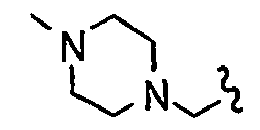

□ 2.80 (s, 3H), 3.00-3.50 (m, 8H), 3.71 (d, 3H), 3.79 (s, 2H), 3.94 (s, 2H), 4.51 (d, J = 5.6 Hz, 2H), 6.49 (dd, J = 8.1, 1.9 Hz, 1H), 6.81 (t, J = 5.9 Hz, 1H), 6.91 (d, J = 8.1 Hz, 1H), 7.13 (t, J = 8.1 Hz, 1H), 7.17 (t, J = 2.2 Hz, 1H), 7.38 (d, J = 7.8 Hz, 1H), 7.43 (s, 1H), 7.58 (s, 1H), 7.66 (d, J = 7.8 Hz, 1H), 7.68 (d, J = 1.3 Hz, 1H), 8.68 (s, 1H). m/z 529 (M+H)+ Example 528 (Example 524) H 

□ 2.78 (s, 3H), 3.00-3.50 (m, 8H), 3.78 (s, 2H), 3.81 (s, 2H), 4.51 (d, J = 5.6 Hz, 2H), 6.71 (td, J = 8.3, 2.2 Hz, 1H), 6.90 (t, J = 6.1 Hz, 1H), 7.07 (dd, J = 8.1, 1.25 Hz, 1H), 7.25 (m, 1H), 7.35 (d, J = 6.9 Hz, 1H), 7.42 (s, 1H), 7.48 (m, 1H), 7.55 (s, 1H), 7.64 (d, J = 7.5 Hz, 1H), 7.68 (d, J = 1.3 Hz, 1H), 8.91 (s, 1H). m/z 517 (M+H)+ Example 529 (Example 524) H 

□ 2.78 (s, 3H), 3.00-3.50 (m, 8H), 3.71 (s, 2H), 3.78 (s, 2H), 4.51 (d, J = 5.9 Hz, 2H), 6.91 (t, J = 6.1 Hz, 1H), 6.95 (dt, J = 7.3, 2.0 Hz, 1H), 7.24 (m, 2H), 7.35 (d, J = 7.2 Hz, 1H), 7.42 (d, J = 1.2 Hz, 1H), 7.55 (s, 1H), 7.64 (d, J = 7.5 Hz, 1H), 7.68 (d, J = 1.2 Hz, 1H), 7.70 (t, J = 1.9 Hz, 1H), 8.89 (s, 1H). m/z 533 (M)+. Example 530 (Example 524) H 

□ 2.43 (s, 3H), 2.78 (s, 3H), 3.00-3.50 (m, 8H), 3.79 (s, 2H), 3.96 (s, 2H), 4.51 (d, J = 5.9 Hz, 2H), 6.81 (m, 2H), 7.12 (m, 1H), 7.17 (t, J = 7.8 Hz, 1H), 7.36 (d, J = 7.5 Hz, 1H), 7.42 (d, J = 1.2 Hz, 1H), 7.46 (t, J = 2.0 Hz, 1H), 7.55 (s, 1H), 7.65 (d, J = 7.8 Hz, 1H), 7.68 (d, J = 1.6 Hz, 1H), 8.70 (s, 1H). m/z 545 (M+H)+ Example 531 (Example 524) H 

□ 2.22 (s, 3H), 2.79 (s, 3H), 3.00-3.50 (m, 8H), 3.79 (s, 2H), 3.97 (s, 2H), 4.50 (d, J = 5.3 Hz, 2H), 6.70 (t, J = 5.8 Hz, 1H), 7.04 (m, 2H), 7.30 (m, 2H), 7.34 (m, 1H), 7.42 (s, 1H), 7.52 (s, 1H), 7.63 (d, J = 7.8 Hz, 1H), 7.66 (d, J = 1.6 Hz, 1H), 8.48 (s, 1H). m/z 513 (M+H)+ . Example 532 (Example 524) H 

□ 2.78 (s, 3H), 3.00-3.50 (m, 8H), 3.70 (m, 3H), 3.78 (s, 2H), 3.84 (s, 2H), 4.50 (d, J = 5.6 Hz, 2H), 6.67 (t, J = 6.1 Hz, 1H), 6.82 (m, 2H), 7.32 (m, 2H), 7.35 (d, J = 7.2 Hz, 1H), 7.41 (d, J = 1.2 Hz, 1H), 7.55 (s, 1H), 7.64 (d, J = 7.8 Hz, 1H), 7.67 (s, 1H), 8.42 (s, 1H). m/z 529 (M+H)+ . Example 533 (Example 524) H 

□ 2.77 (s, 3H), 3.00-3.50 (m, 8H), 3.72 (s, 2H), 3.78 (s, 2H), 4.51 (d, J = 5.6 Hz, 2H), 6.77 (t, J = 5.9 Hz, 1H), 7.07 (m, 2H), 7.34 (d, J = 7.8 Hz, 1H), 7.43 (m, 3H), 7.54 (s, 1H), 7.63 (d, J = 7.2 Hz, 1H), 7.67 (s, 1H), 8.66 (s, 1H). m/z 517 (M+H)+ Example 534 (Example 524) H 

□ 2.77 (s, 3H), 3.00-3.50 (m, 8H), 3.69 (s, 2H), 3.78 (s, 2H), 4.51 (d, J = 5.9 Hz, 2H), 6.83 (m, 1H), 7.27 (m, 2H), 7.34 (d, J = 7.5 Hz, 1H), 7.42 (s, 1H), 7.45 (m, 2H), 7.54 (s, 1H), 7.64 (d, J = 8.1 Hz, 1H), 7.67 (d, J = 1.2 Hz, 1H), 8.79 (s, 1H). m/z 533 (M)+. Example 535 (Example 524) H 

□ 2.42 (s, 3H), 2.77 (s, 3H), 3.00-3.50 (m, 8H), 3.69 (s, 2H), 3.78 (s, 2H), 4.51 (d, J = 5.6 Hz, 2H), 6.77 (t, J = 5.9 Hz, 1H), 7.18 (m, 2H), 7.33 (d, J = 6.6 Hz, 1H), 7.39 (m, 2H), 7.42 (s, 1H), 7.54 (s, 1H), 7.64 (d, J = 7.8 Hz, 1H), 7.67 (s, 1H), 8.65 (s, 1H). m/z 545 (M+H)+ . Example 536 (Example 524) H 

□ 2.78 (s, 3H), 3.00-3.50 (m, 8H), 3.78 (s, 2H), 3.83 (br s, 2H), 4.53 (d, J = 5.9 Hz, 2H), 7.08 (t, J = 6.1 Hz, 1H), 7.36 (d, J = 8.1 Hz, 1H), 7.43 (s, 1H), 7.56 (s, 1H), 7.65 (m, 6H), 9.26 (s, 1H). m/z 524 (M+H)+ Example 537 (Example 524) H 

□ 2.09 (s, 3H), 2.23 (s, 3H), 2.79 (s, 3H), 3.00-3.50 (m, 8H), 3.79 (s, 2H), 3.88 (s, 2H), 4.51 (d, J = 5.6 Hz, 2H), 6.86 (d, J = 7.2 Hz, 1H), 6.99 (m, 2H), 7.37 (d, J = 7.5 Hz, 1H), 7.42 (s, 1H), 7.48 (d, J = 7.8 Hz, 1H), 7.57 (s, 1H), 7.66 (d, J = 7.8 Hz, 1H), 7.69 (d, J = 1.2 Hz, 1H), 7.82 (s, 1H). m/z 527 (M+H)+ Example 538 (Example 524) H 

□ 2.14 (s, 3H), 2.23 (s, 3H), 2.78 (s, 3H), 3.00-3.50 (m, 8H), 3.79 (s, 2H), 3.86 (br s, 2H), 4.52 (d, J = 5.6 Hz, 2H), 6.72 (d, J = 7.5 Hz, 1H), 7.00 (d, J = 7.5 Hz, 1H), 7.11 (t, J = 5.9 Hz, 1H), 7.37 (d, J = 7.5 Hz, 1H), 7.43 (d, J = 1.2 Hz, 1H), 7.56 (s, 1H), 7.63 (s, 1H), 7.65 (d, J = 7.8 Hz, 1H), 7.69 (d, J = 1.2 Hz, 1H), 7.71 (s, 1H). m/z 527 (M+H)+ Example 539 (Example 524) H 

□ 2.20 (s, 6H), 2.77 (m, 3H), 3.00-3.50 (m, 8H), 3.70 (br s, 2H), 3.78 (s, 2H), 4.50 (d, J = 5.9 Hz, 2H), 6.56 (s, 1H), 6.71 (t, J = 5.9 Hz, 1H), 7.04 (s, 2H), 7.33 (d, J = 6.2 Hz, 1H), 7.41 (d, J = 1.2 Hz, 1H), 7.53 (d, J = 1.2 Hz, 1H), 7.63 (d, J = 7.5 Hz, 1H), 7.67 (s, 1H), 8.43 (s, 1H). m/z 527 (M+H)+ . Example 540 (Example 524) H 

□ 2.77 (s, 3H), 3.00-3.50 (m, 8H), 3.72 (s, 3H), 3.78 (s, 2H), 3.81 (s, 5H), 4.49 (d, J = 5.6 Hz, 2H), 6.44 (dd, J = 8.9, 2.6 Hz, 1H), 6.58 (d, J = 2.5 Hz, 1H), 7.24 (t, J = 5.8 Hz, 1H), 7.34 (d, J = 8.4 Hz, 1H), 7.42 (s, 1H), 7.54 (s, 1H), 7.64 (d, J = 7.8 Hz, 1H), 7.68 (s, 1H), 7.78 (s, 1H), 7.88 (d, J = 8.7 Hz, 1H). m/z 559 (M+H)+ Example 541 (Example 524) H 

□ 2.78 (s, 3H), 3.00-3.50 (m, 8H), 3.69 (s, 6H), 3.79 (s, 2H), 3.83 (br s, 2H), 4.50 (d, J = 5.6 Hz, 2H), 6.09 (t, J = 2.0 Hz, 1H), 6.65 (m, 2H), 6.76 (t, J = 6.2 Hz, 1H), 7.36 (d, J = 7.2 Hz, 1H), 7.42 (s, 1H), 7.56 (s, 1H), 7.65 (d, J = 7.5 Hz, 1H), 7.67 (s, 1H), 8.65 (s, 1H). m/z 559 (M+H)+ Example 542 (Example 524) H 
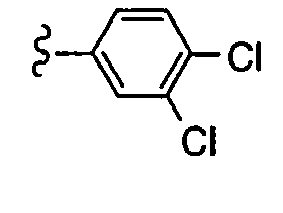
□ 2.77 (m, 3H), 3.00-3.50 (m, 8H), 3.69 (s, 2H), 3.77 (s, 2H), 4.51 (d, J = 5.9 Hz, 2H), 6.96 (t, J = 5.8 Hz, 1H), 7.29 (dd, J = 8.7, 2.5 Hz, 1H), 7.33 (d, J = 7.8 Hz, 1H), 7.42 (s, 1H), 7.47 (d, J = 9.0 Hz, 1H), 7.52 (s, 1H), 7.63 (d, J = 7.5 Hz, 1H), 7.67 (s, 1H), 7.87 (d, J = 2.5 Hz, 1H), 9.00 (s, 1H). m/z 567 (M)+. Example 543 (Example 524) H 

□ 2.77 (s, 3H), 3.00-3.50 (m, 8H), 3.70 (s, 2H), 3.79 (s, 2H), 4.54 (d, J = 5.6 Hz, 2H), 7.35 (m, 2H), 7.45 (d, J = 1.2 Hz, 1H), 7.54 (s, 1H), 7.57 (d, J = 2.5 Hz, 1H), 7.64 (m, 2H), 7.70 (d, J = 1.2 Hz, 1H), 8.20 (d, J = 9.0 Hz, 1H), 8.23 (s, 1H). m/z 567 (M)+. Example 544 (Example 524) H 

□ 2.79 (s, 3H), 3.00-3.50 (m, 8H), 3.79 (s, 2H), 3.84 (br s, 2H), 4.51 (d, J = 5.9 Hz, 2H), 6.86 (m, 1H), 7.03 (d, J = 8.7 Hz, 1H), 7.10 (m, 1H), 7.36 (m, 1H), 7.42 (s, 1H), 7.52 (d, J = 1.9 Hz, 1H), 7.56 (s, 1H), 7.65 (d, J = 7.5 Hz, 1H), 7.68 (d, J = 1.2 Hz, 1H), 9.12 (s, 1H). m/z 567 (M)+. Example 545 (Example 524) H 

□ 1.01 (t, J = 7.0 Hz, 3H), 2.80 (s, 3H), 3.04 (q, J = 7.2 Hz, 2H), 3.00-3.50 (m, 8H), 3.79 (s, 2H), 3.97 (s, 2H), 4.40 (s, 2H), 5.97 (br s, 1H), 6.44 (br s, 1H), 7.36 (s, 1H), 7.39 (d, J = 8.1 Hz, 1H), 7.59 (s, 1H), 7.65 (d, J = 1.2 Hz, 1H), 7.67 (d, J = 7.8 Hz, 1H). m/z 451 (M+H)+ Example 546 (Example 524) H 

□ 0.85 (t, J = 7.3 Hz, 3H), 1.40 (m, 2H), 2.81 (s, 3H), 2.98 (t, J = 6.9 Hz, 2H), 3.00-3.50 (m, 8H), 3.79 (s, 2H), 4.00 (s, 2H), 4.41 (s, 2H), 6.00 (br s, 1H), 6.43 (br s, 1H), 7.36 (d, J = 1.6 Hz, 1H), 7.40 (d, J = 7.8 Hz, 1H), 7.59 (s, 1H), 7.66 (d, J = 1.6 Hz, 1H), 7.67 (d, J = 7.8 Hz, 1H). m/z 465 (M+H)+ . Example 547 (Example 524) H 

□ 1.05 (d, J = 6.5 Hz, 6H), 2.81 (s, 3H), 3.00-3.50 (m, 8H), 3.69 (m, 1H), 3.79 (s, 2H), 3.97 (s, 2H), 4.40 (s, 2H), 5.84 (s, 1H), 6.32 (s, 1H), 7.35 (s, 1H), 7.39 (d, J = 7.8 Hz, 1H), 7.59 (s, 1H), 7.66 (d, J =1.6 Hz, 1H), 7.67 (d, J = 7.8 Hz, 1H). m/z 465 (M+H)+ . Example 548 (Example 524) H 

□ 1.31 (m, 2H), 1.50 (m, 2H), 1.61 (m, 2H), 1.80 (m, 2H), 2.80 (s, 3H), 3.00-3.50 (m, 8H), 3.79 (s, 2H), 3.89 (m, 1H), 3.97 (s, 2H), 4.40 (s, 2H), 6.01 (br s, 1H), 6.31 (s, 1H), 7.36 (d, J = 1.2 Hz, 1H), 7.39 (d, J = 7.5 Hz, 1H), 7.59 (s, 1H), 7.66 (d, J = 1.6 Hz, 2H), 7.67 (d, J = 7.5 Hz, 1H). m/z 491 (M+H)+ Example 549 (Example 524) H 

□ 1.14 (m, 4H), 1.27 (m, 2H), 1.51 (m, 1H), 1.64 (m, 2H), 1.76 (m, 2H), 2.77 (s, 3H), 3.00-3.50 (m, 8H), 3.71 (s, 2H), 3.77 (s, 2H), 4.40 (d, J = 5.3 Hz, 2H), 5.88 (m, 1H), 6.31 (s, 1H), 7.34 (m, 2H), 7.53 (s, 1H), 7.64 (m, 2H). m/z 505 (M+H)+ Example 550 (Example 524) H 

□ 2.78 (s, 3H), 3.00-3.50 (m, 8H), 3.77 (s, 2H), 3.87 (br s, 2H), 4.25 (d, J = 4.4 Hz, 2H), 4.45 (d, J = 4.4 Hz, 2H), .52 (m, 1H), 6.60 (m, 1H), 7.22 (m, 1H), 7.27 (m, 2H), 7.30 (m, 2H), 7.37 (m, 2H), 7.56 (s, 1H), 7.65 (m, 2H). m/z 513 (M+H)+ . Example 551 (Example 524) 
H 
□ 2.25 (s, 3H), 2.79 (s, 3H), 3.00-3.50 (m, 8H), 3.79 (s, 2H), 3.97 (s, 2H), 4.50 (d, J = 5.6 Hz, 2H), 6.73 (d, J = 7.5 Hz, 1H), 6.79 (t, J = 5.6 Hz, 1H), 7.11 (dd, J = 7.5, 7.5 Hz, 1H), 7.18 (m, 1H), 7.26 (s, 1H), 7.30 (d, J = 7.8 Hz, 1H), 7.33 (m, 1H), 7.42 (s, 1H), 7.57 (d, J = 7.8 Hz, 1H), 7.68 (s, 1H), 8.57 (s, 1H). m/z 513 (M+H). Example 552 (Example 402) 
H 
□ 2.80 (s, 3H), 3.00-3.50 (m, 8H), 3.81 (s, 2H), 3.93 (br s, 2H), 4.51 (d, J = 5.9 Hz, 2H), 6.95 (m, 2H), 7.23 (m, 3H), 7.30 (d, J = 7.5 Hz, 1H), 7.34 (m, 1H), 7.42 (s, 1H), 7.58 (d, J = 7.5 H, 1H), 7.69 (s, 1H), 8.91 (s, 1H). m/z 533 (M)+. Example 553 (Example 402) 
H 
□ 2.80 (s, 3H), 3.00-3.50 (m, 8H), 3.80 (s, 2H), 3.97 (s, 2H), 4.50 (d, J = 5.6 Hz, 2H), 6.96 (t, J = 5.6 Hz, 1H), 7.08 (d, J = 7.8 Hz, 1H), 7.18 (m, 2H), 7.26 (m, 1H), 7.33 (m, 2H), 7.42 (s, 1H), 7.58 (d, J = 7.5 Hz, 1H), 7.68 (s, 1H), 8.92 (s, 1H). m/z 577, 579 (M+H)+ Example 554 (Example 402) 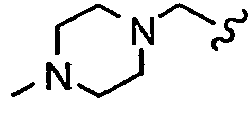
H 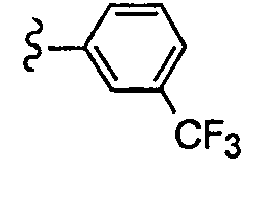
□ 2.80 (s, 3H), 3.00-3.50 (m, 8H), 3.81 (s, 2H), 3.97 (s, 2H), 4.52 (d, J = 5.9 Hz, 2H), 7.02 (t, J = 5.9 Hz, 1H), 7.18 (d, J = 8.7 Hz, 1H), 7.25 (d, J = 7.5 Hz, 1H), 7.31 (d, J = 8.1 Hz, 1H), 7.35 (m, 1H), 7.43 (s, 1H), 7.46 (m, 1H), 7.54 (m, 1H), 7.58 (d, J = 7.5 Hz, 1H), 7.68 (s, 1H), 8.00 (s, 1H). m/z 567 (M+H)+ . Example 555 (Example 402) 
H 
□ 2.79 (s, 3H), 3.00-3.50 (m, 8H), 3.79 (s, 2H), 3.95 (bs 2H), 4.53 (d, J = 5.9 Hz, 2H), 7.06 (t, J = 5.9 Hz, 1H), 7.30 (d, J = 6.6 Hz, 2H), 7.36 (d, J = 7.6 Hz, 1H), 7.45 (m, 2H), 7.58 (d, J = 7.6 Hz, 1H), 7.63 (m, 1H), 7.69 (m, 2H), 7.97 (s, 1H). m/z 524 (M+H)+ . Example 556 (Example 402) 
H 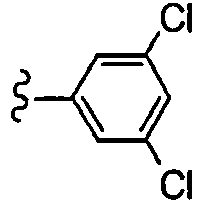
□ 2.80 (s, 3H), 3.00-3.50 (m, 8H), 3.80 (s, 2H), 3.97 (s, 2H), 4.51 (d, J = 5.9 Hz, 2H), 7.15 (m, 1H), 7.31 (d, J = 7.8 Hz, 1H), 7.34 (s, 1H), 7.42 (s, 1H), 7.49 (m, 1H), 7.52 (m, 2H), 7.58 (d, J = 7.8 Hz, 1H), 7.68 (s, 1H), 9.17 (s, 1H). m/z 567 (M+H)+ . Example 557 (Example 402) 
- To a solution of Example 176 (100 mg, 0.2 mmol) in dichloromethane (1 mL) was added trifluoroacetic acid (760 µl, 9.9 mmol) and the mixture was stirred at ambient temperature for about 90 min. The mixture was concentrated under vacuum and the residue was purified by flash column chromatography on silica gel using dichloromethane/methanol (10:1) + 1% ammonium hydroxide as the mobile phase to provide Example 558. MS (ESI): m/z 406 (M+H)+.
- The procedure for Example 402 was used, substituting Example 558 for Example 396 and 2-methoxyphenyl isocyanate for phenyl isocyanate. The crude product was purified by flash column chromatography on silica gel using dichloromethane/methanol (10:1) + 1% ammonium hydroxide as the mobile phase to provide 32 mg (36%) of Example 559. 1H NMR (400 MHz, DMSO-d6) □ 2.17 (s, 3H), 2.25-3.45 (m, 8H), 2.76 (m, 2H), 3.51 (s, 2H), 3.72 (s, 2H), 3.76 (m, 2H), 3.82 (s, 3H), 4.72 (br s, 2H), 6.88 (m, 1H), 7.02 (m, 2H), 7.29 (m, 1H), 7.49 (s, 1H), 7.59 (m, 2H), 7.85 (m, 1H), 8.21 (s, 1H). MS (ESI): m/z 555 (M+H)+.

R 1H NMR (500 MHz, DMSO-d6) MS (ESI): Example # (synthesis protocol) Obtained amt (yield) 
□ 2.76 (m, 2H), 2.80 (s, 3H), 3.00-3.50 (m, 8H), 3.75 (s, 2H), 3.79 (m, 2H), 3.94 (br s, 2H), 4.73 (s, 2H), 6.95 (m, 1H), 7.21 (s, 1H), 7.25 (m, 2H), 7.39 (d, J = 7.8 Hz, 1H), 7.48 (m, 2H), 7.59 (s, 1H), 7.64 (d, J = 7.8 Hz, 1H), 8.68 (s, 1H). m/z 525 (M+H)+. Example 560 (Example 402) 27 mg (20%) 
□ 2.17 (s, 3H), 2.77 (m, 2H), 2.81 (s, 3H), 3.00-3.50 (m, 8H), 3.75 (s, 2H), 3.78 (m, 2H), 3.97 (br s, 2H), 4.72 (s, 2H), 7.05 (m, 1H), 7.13 (m, 1H), 7.19 (m, 3H), 7.40 (d, J = 7.7 Hz, 1H), 7.60 (s, 1H), 7.65 (d, J = 7.7 Hz, 1H), 8.23 (s, 1H). m/z 539 (M+H)+. Example 561 (Example 402) 60 mg (43%) 
□ 2.26 (s, 3H), 2.75 (m, 2H), 2.80 (s, 3H), 3.00-3.50 (m, 8H), 3.75 (s, 2H), 3.78 (m, 2H), 3.95 (br s, 2H), 4.72 (s, 2H), 6.77 (d, J = 7.5 Hz, 1H), 7.12 (t, J = 7.5 Hz, 1H), 7.21 (s, 1H), 7.28 (d, J = 8.1 Hz, 1H), 7.31 (s, 1H), 7.39 (d, J = 7.8 Hz, 1H), 7.60 (s, 1H), 7.64 (d, J = 7.8 Hz, 1H), 8.61 (s, 1H). m/z 539 (M+H)+. Example 562 (Example 402) 55 mg (31 %) 
□ 2.76 (m, 2H), 2.79 (s, 3H), 3.00-3.50 (m, 8H), 3.71 (s, 3H), 3.75 (s, 2H), 3.78 (m, 2H), 3.88 (br s, 2H), 4.72 (s, 2H), 6.53 (dd, J = 7.8, 1.6 Hz, 1H), 7.08 (d, J = 8.1 Hz, 1H), 7.14 (t, J = 8.4 Hz, 1H), 7.17 (t J = 2.2 Hz, 1H), 7.20 (s, 1H), 7.38 (d, J = 7.8 Hz, 1H), 7.58 (s, 1H), 7.63 (d, J = 7.8 Hz, 1H), 8.66 (s, 1H). m/z 555 (M+H)+. Example 563 (Example 402) 46 mg (32%) 
□ 2.78 (m, 2H), 2.80 (s, 3H), 3.00-3.50 (m, 8H), 3.75 (s, 2H), 3.81 (m, 2H), 3.91 (br s, 2H), 4.76 (s, 2H), 7.21 (s, 1H), 7.29 (d, J = 7.8 Hz, 1H), 7.39 (d, J = 7.8 Hz, 1H), 7.49 (t, J = 8.1 Hz, 1H), 7.59 (s, 1H), 7.64 (d, J = 7.8 Hz, 1H), 7.78 (d, J = 8.1 Hz, 1H), 7.94 (s, 1H), 9.03 (s, 1H). m/z 593 (M+H)+. Example 564 (Example 402) 117 mg (78%) 
□ 2.23 (s, 3H), 2.75 (m, 2H), 2.79 (s, 3H), 3.00-3.50 (m, 8H), 3.75 (s, 2H), 3.77 (m, 2H), 3.89 (br s, 2H), 4.71 (s, 2H), 7.05 (m, 2H), 7.20 (s, 1H), 7.35 (m, 2H), 7.38 (d, J = 7.7 Hz, 1H), 7.58 (s, 1H), 7.64 (d, J = 7.7 Hz, 1H), 8.58 (s, 1H). m/z 539 (M+H)+. Example 565 (Example 402) 58 mg (41%) 
□ 2.75 (m, 2H), 2.80 (s, 3H), 3.00-3.50 (m, 8H), 3.71 (s, 3H), 3.75 (s, 2H), 3.77 (m, 2H), 3.97 (br s, 2H), 4.71 (s, 2H), 6.84 (m, 2H), 7.20 (s, 1H), 7.36 (m, 2H), 7.40 (d, J = 7.7 Hz, 1H), 7.60 (s, 1H), 7.65 (d, J = 7.7 Hz, 1H), 8.52 (s, 1H). m/z 555 (M+H)+. Example 566 (Example 402) 54 mg (38%) 
□ 2.03 (s, 3H), 2.16 (s, 3H), 2.24 (s, 3H), 2.25-2.45 (m, 8H), 2.76 (m, 2H), 3.51 (s, 2H), 3.72 (s, 2H), 3.77 (m, 2H), 4.71 (br s, 2H), 6.96-7.13 (m, 4H), 7.28 (d, J = 7.8 Hz, 1H), 7.49 (s, 1H), 7.58 (d, J = 7.8 Hz, 1H), 8.25 (s, 1H). m/z 553 (M+H)+. Example 567 (Example 559) 47 mg (53%) 
□ 2.21 (s, 6H), 2.75 (m, 2H), 2.80 (s, 3H), 3.00-3.50 (m, 8H), 3.75 (s, 2H), 3.77 (m, 2H), 3.94 (br s, 2H), 4.71 (s, 2H), 6.60 (s, 1H), 7.11 (s, 2H), 7.20 (s, 1H), 7.39 (d, J = 7.8 Hz, 1H), 7.59 (s, 1H), 7.64 (d, J = 7.8 Hz, 1H), 8.53 (s, 1H). m/z 553 (M+H)+. Example 568 (Example 402) 72 mg (50%) - A mixture of o-toluic acid (15 mg, 0.11 mmol), 1-hydroxybenzotriazole hydrate (15 mg, 0.11 mmol) and N-cyclohexylcarbodiimide-N'-methyl polystyrene (240 mg, 0.35 mmol) in N,N-dimethylacetamide/dichloromethane (1:1) (1.5 mL) was shaken at room temperature for about 20 min. Example 395 (58 mg, 0.095 mmol) in dichloromethane (0.7 mL) was added and the mixture was shaken at room temperature overnight. The mixture was filtered and concentrated under vacuum. The residue was dissolved in ethyl acetate (0.6 mL), a 37% solution of hydrochloric acid in ethanol (0.7 mL) was added and the mixture was shaken at room temperature overnight. The mixture was concentrated under vacuum and the residue was purified by preparative HPLC on a Waters Symmetry C8 column (25 mm x 100 mm, 7 µm particle size) using a gradient of 10% to 100% acetonitrile:0.1% aqueous TFA over 8 minutes (10 minutes run time) at a flow rate of 40 mL/minute to provide 34 mg (49%) of Example 569 as the trifluoroacetate salt.
- 1H NMR (500 MHz, DMSO-d6) δ 2.38 (s, 3H), 2.80 (s, 3H), 3.00-3.50 (m, 8H), 3.75 (s, 2H), 3.88 (m, 2H), 4.62 (d, J = 5 Hz, 2H), 7.04 (d, J = 5 Hz, 1H), 7.22-7.38 (m, 6H), 7.58 (s, 1H), 7.62 (d, J = 8 Hz, 1H), 8.96 (t, J = 5 Hz, 1H). MS (ESI): m/z 498 (M+H)+.

R 1H NMR (500 MHz, DMSO-d6) MS (ESI): Example # (synthesis protocol) Obtained amount (yield) 
δ 2.38 (s, 3H), 2.79 (s, 3H), 3.00-3.50 (m, 8H), 3.75 (s, 2H), 3.88 (br s, 2H), 4.62 (d, J = 5 Hz, 2H), 7.04 (d, J = 5 Hz, 1H), 7.26 (d, J = 5 Hz, 1H), 7.38 (m, 3H), 7.58 (s, 1H), 7.62 (d, J = 8 Hz, 1H), 7.67 (m, 1H), 7.70 (s, 1H), 9.12 (t, J = 5 Hz, 1H) m/z 498 (M+H)+. Example 570 (Example 569) 41 mg (60%) 
δ 2.38 (s, 3H), 2.79 (s, 3H), 3.00-3.50 (m, 8H), 3.75 (s, 2H), 3.88 (m, 2H), 4.62 (d, J = 5 Hz, 2H), 7.04 (d, J = 5 Hz, 1H), 7.27 (m, 3H), 7.37 (d, J = 8 Hz, 1H), 7.58 (br s, 1H), 7.62 (d, J = 8 Hz, 1H), 7.80 (m, 2H), 9.09 (t, J = 5 Hz, 1H). m/z 498 (M+H)+. Example 571 (Example 569) 49 mg (71%) 
δ 2.26 (s, 3H), 2.79 (s, 3H), 3.00-3.50 (m, 8H), 3.50 (s, 2H), 3.74 (s, 2H), 3.87 (m, 2H), 4.44 (d, J = 5 Hz, 2H), 6.98 (d, J = 5 Hz, 1H), 7.14 (m, 3H), 7.20 (m, 1H), 7.28 (d, J = 5 Hz, 1H), 7.39 (d, J = 8 Hz, 1H), 7.58 (s, 1H), 7.62 (d, J = 8 Hz, 1H), 8.61 (t, J = 5 Hz, 1H). m/z 512 (M+H)+. Example 572 (Example 569) 52 mg (74%) 
δ 2.26 (s, 3H), 2.79 (s, 3H), 3.00-3.50 (m, 8H), 3.48 (s, 2H), 3.74 (s, 2H), 3.82 (br s, 2H), 4.44 (d, J = 5 Hz, 2H), 6.97 (d, J = 5 Hz, 1H), 7.07 (m, 3H), 7.20 (t, J = 8 Hz, 1H), 7.26 (d, J = 5 Hz, 1H), 7.39 (d, J = 8 Hz, 1H), 7.58 (s, 1H), 7.62 (d, J = 8 Hz, 1H), 8.64 (t, J = 5 Hz, 1H). m/z 512 (M+H)+. Example 573 (Example 569) 54 mg (77%) 
δ 2.26 (s, 3H), 2.79 (s, 3H), 3.00-3.50 (m, 8H), 3.44 (s, 2H), 3.74 (s, 2H), 3.85 (m, 2H), 4.44 (d, J = 5 Hz, 2H), 6.97 (d, J = 5 Hz, 1H), 7.14 (m, 2H), 7.19 (m, 2H), 7.26 (d, J = 5 Hz, 1H), 7.38 (d, J = 8 Hz, 1H), 7.58 (s, 1H), 7.62 (d, J = 8 Hz, 1H), 8.64 (t, J = 5 Hz, 1H). m/z 512 (M+H)+. Example 574 (Example 569) 52 mg (74%) - To a solution of Example 396 (320 mg, 0.53 mmol) in dichloromethane (10 mL) was added successively N-(t-butoxycarbonyl)sarcosine (125 mg, 0.66 mmol), 1-(3-dimethylaminopropyl)-3-ethylcarbodiimide hydrochloride (253 mg, 1.32 mmol) and 4-(dimethylamino)pyridine (32 mg, 0.26 mmol) and the mixture was stirred at ambient temperature overnight. The mixture was concentrated under vacuum and the residue was purified by flash chromatography on silica gel using dichloromethane/methanol + 1% ammonium hydroxide (10:1) as eluent to provide Example 575. MS (DCI-NH3): m/z 777 (M+H)+.
- To a solution of Example 575 (310 mg, 0.40 mmol) in dichloromethane was added dropwise trifluoroacetic acid (0.31 mL, 4.0 mmol) and the mixture was stirred at room temperature for about 3 hours. Triethylamine (1.0 mL, 7.2 mmol) was added dropwise and the mixture was evaporated to dryness. The residue was purified by preparative HPLC on a Waters Symmetry C8 column (25 mm x 100 mm, 7 µm particle size) using a gradient of 10% to 100% acetonitrile:0.1% aqueous TFA over 8 minutes (10 minutes run time) at a flow rate of 40 mL/minute to provide 219 mg (60%) of Example 576 as the trifluoroacetate salt. 1H NMR (300 MHz, DMSO-d6): δ 2.59 (m, 3H), 2.80 (s, 3H), 3.00-3.50 (m, 8H), 3.73 (s, 2H), 3.76 (m, 2H), 3.95 (br s, 2H), 4.55 (d, J = 5.4 Hz, 2H), 7.06 (d, J = 3.4 Hz, 1H), 7.31 (m, 2H), 7.59 (d, J = 7.5 Hz, 1H), 7.67 (s, 1H), 8.77 (br s, 1H), 9.08 (t, J = 8.1 Hz, 1H). MS (ESI): m/z 451 (M+H)+.
- To a solution of Example 576 (60 mg, 0.066 mmol) in tetrahydrofuran (4 mL) was added triethylamine (46 µl, 0.331 mmol) and 1,1'-carbonyldiimidazole (13.4 mg, 0.083 mmol) and the solution was stirred at ambient temperature overnight. The mixture was evaporated to dryness and the residue was purified by preparative HPLC on a Waters Symmetry C8 column (25 mm x 100 mm, 7 µm particle size) using a gradient of 10% to 100% acetonitrile:0.1% aqueous TFA over 8 minutes (10 minutes run time) at a flow rate of 40 mL/minute to provide 18 mg (33%) of Example 577 as the trifluoroacetate salt.
- 1H NMR (500 MHz, DMSO-d6): δ 2.79 (s, 3H), 2.87 (s, 3H), 3.00-3.50 (m, 8H), 3.74 (s, 2H), 3.97 (s, 2H), 4.02 (s, 2H), 4.73 (s, 2H), 7.08 (d, J = 3.4 Hz, 1H), 7.28 (d, J = 3.4 Hz, 1H), 7.30 (d, J = 7.8 Hz, 1H), 7.58 (d, J = 7.8 Hz, 1H), 7.66 (s, 1H). MS (ESI): m/z 477 (M+H)+.
- To 1-hydroxybenzotriazole-6-sulfonamidomethyl polystyrene (78 mg, 0.094 mmol) in dichloromethane (1 mL) was added 4-(dimethylamino)pyridine (6.9 mg, 0.056 mmol), followed by a solution of o-toluic acid (19 mg, 0.141 mmol) in N,N-dimethylacetamide. The mixture was agitated at room temperature for about 5 minutes and then a solution of 1,3-diisopropylcarbodiimide (53 mg, 0.423 mmol) in dichloromethane (1 mL) was added. The mixture was agitated for about 2 hour, the solvents were collected by filtration and the resin was washed with N,N-dimethylacetamide and dichloromethane. To the resin was then added a solution of Example 397 (34 mg, 0.056 mmol) and triethylamine (13 µl, 0.094 mmol) in dichloromethane (2 mL) and the mixture was heated to about 55 °C overnight. The resin was collected by filtration and to the filtrate was added polystyrene methylisocyanate (117.5 mg, 0.188 mmol) and methanol (1 mL). The mixture was agitated for about 5 min, then the resin was collected by filtration and the filtrate was evaporated to dryness. The residue was suspended in a 4M solution of hydrochloric acid in 1,4-dioxane (2 mL, 8.0 mmol) and the mixture was agitated at room temperature for about 4 hours. The mixture was evaporated to dryness and the residue was purified by preparative HPLC on a Waters Symmetry C8 column (25 mm x 100 mm, 7 µm particle size) using a gradient of 10% to 100% acetonitrile:0.1% aqueous TFA over 8 minutes (10 minutes run time) at a flow rate of 40 mL/minute to provide 21 mg (45%) of Example 578 as the trifluoroacetate salt.
- 1H NMR (500 MHz, DMSO-d6) δ 2.37 (s, 3H), 2.77 (s, 3H), 3.00-3.50 (m, 8H), 3,74 (br s, 2H), 3.79 (s, 2H), 4.65 (d, J = 5.9 Hz, 2H), 7.25 (m, 2H), 7.35 (m, 3H), 7.45 (s, 1H), 7.54 (s, 1H), 7.63 (d, J = 7.5 Hz, 1H), 7.69 (s, 1H), 8.96 (t, J = 5.9 Hz, 1H). MS (ESI): m/z 498 (M+H)+.

R 1H NMR (500 MHz, DMSO-d6) MS (ESI): Example # (synthesis protocol) Ob-tained amt (yield) 
□ 2.37 (s, 3H), 2.77 (s, 3H), 3.00-3.50 (m, 8H), 3,74 (br s, 2H), 3.78 (s, 2H), 4.66 (d, J = 5.9 Hz, 2H), 7.33 (m, 3H), 7.45 (s, 1H), 7.54 (s, 1H), 7.63 (d, J = 7.5 Hz, 1H), 7.68 (m, 2H), 7.72 (s, 1H), 9.14 (t, J = 5.9 Hz, 1H). m/z 498 (M+H)+ . Example 579 (Example 578) 23 mg (86%) 
□ 2.36 (s, 3H), 2.77 (s, 3H), 3.00-3.50 (m, 8H), 3,74 (br s, 2H), 3.78 (s, 2H), 4.66 (d, J = 5.9 Hz, 2H), 7.29 (m, 2H), 7.33 (d, J = 7.5 Hz, 1H), 7.45 (s, 1H), 7.54 (s, 1 H), 7.63 (d, J = 7.5 Hz, 1H), 7.66 (s, 1H), 7.80 (m, 2H), 9.12 (t, J = 5.9 Hz, 1H). m/z 498 (M+H)+ . Example 580 (Example 578) 19 mg (74%) 
□ 2.77 (s, 3H), 3.00-3.50 (m, 8H), 3.78 (s, 2H), 3.80 (br s, 2H), 4.67 (d, J = 5.9 Hz, 2H), 7.06 (m, 4H), 7.22 (t, J = 7.5 Hz, 1H), 7.34 (d, J = 7.5 Hz, 1H), 7.44 (m, 3H), 7.54 (s, 1H), 7.64 (d, J = 7.5 Hz, 1H), 7.67 (s, 1H), 7.93 (m, 2H), 9.15 (t, J = 5.9 Hz, 1H). m/z 574 (M-H)+. Example 581 (Example 578) 24 mg (77%) 
□ 2.77 (s, 3H), 3.00-3.50 (m, 8H), 3.78 (s, 5H), 3.83 (s, 5H), 4.68 (d, J = 5.9 Hz, 2H), 7.16 (m, 3H), 7.34 (d, J = 7.5 Hz, 1H), 7.46 (s, 1H), 7.54 (s, 1H), 7.64 (d, J = 7.8 Hz, 1H), 7.69 (s, 1H), 8.87 (t, J = 5.9 Hz, 1H). m/z 544 (M+H)+ . Example 582 (Example 578) 22 mg (76%) 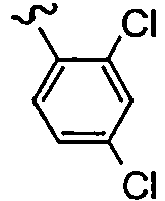
□ 2.77 (s, 3H), 3.00-3.50 (m, 8H), 3.71 (br s, 2H), 3.78 (s, 2H), 4.66 (d, J = 5.9 Hz, 2H), 7.33 (d, J = 6.9 Hz, 1H), 7.50 (m, 4H), 7.63 (d, J = 7.2 Hz, 1H), 7.71 (s, 2H), 9.20 (t, J = 6.1 Hz, 1H). m/z 552 (M)+. Example 583 (Example 578) 16 mg (56%) 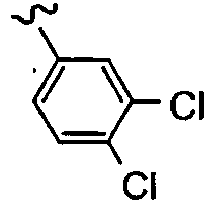
□ 2.77 (s, 3H), 3.00-3.50 (m, 8H), 3.68 (br s, 2H), 3.78 (s, 2H), 4.68 (d, J = 5.6 Hz, 2H), 7.32 (d, J = 7.5 Hz, 1H), 7.47 (s, 1H), 7.52 (s, 1H), 7.62 (d, J = 6.9 Hz, 1H), 7.68 (s, 1H), 7.79 (d, J = 8.4 Hz, 1H), 7.88 (dd, J = 8.4,2.2 Hz, 1H), 8.13 (d, J = 1.9 Hz, 1H), 9.40 (t, J = 5.8 Hz, 1H). m/z 552 (M)+. Example 584 (Example 578) 11 mg (39%) - To m-toluenesulfonyl chloride (16 µl, 0.11 mmol) was added a solution of Example 395 (58 mg, 0.095 mmol) and triethylamine (50 □l) in dichloromethane (0.7 mL) and the mixture was shaken at room temperature overnight. The mixture was concentrated under vacuum and the residue was dissolved in ethyl acetate (0.6 mL). A 37% solution of hydrochloric acid in ethanol (0.7 mL) was added and the mixture was shaken at room temperature overnight. The mixture was concentrated under vacuum and the residue was purified by preparative HPLC on a Waters Symmetry C8 column (25 mm x 100 mm, 7 µm particle size) using a gradient of 10% to 100% acetonitrile:0.1% aqueous TFA over 8 minutes (10 minutes run time) at a flow rate of 40 mL/minute to provide 25 mg (30%) of Example 585 as the trifluoroacetate salt.
- 1H NMR (500 MHz, DMSO-d6) δ 2.39 (s, 3H), 2.79 (s, 3H), 3.00-3.50 (m, 8H), 3.73 (s, 2H), 3.90 (br s, 2H), 4.20 (d, J = 5 Hz, 2H), 6.96 (d, J = 5 Hz, 1H), 7.23 (d, J = 5 Hz, 1H), 7.40 (m, 3H), 7.58 (br s, 1H), 7.62 (d, J = 8 Hz, 1H), 7.72 (m, 2H), 8.24 (t, J = 5 Hz, 1H). MS (ESI): m/z 534 (M+H)+.
- The procedure for Example 585 was used, substituting p-toluenesulfonyl chloride for m-toluenesulfonyl chloride to provide 22 mg (26%) of Example 586 as the trifluoroacetate salt.
1H NMR (500 MHz, DMSO-d6) δ 2.39 (s, 3H), 2.79 (s, 3H), 3.00-3.50 (m, 8H), 3.70 (s, 2H), 3.80 (br s, 2H), 4.22 (d, J = 5 Hz, 2H), 6.96 (d, J = 5 Hz, 1H), 7.23 (d, J = 5 Hz, 1H), 7.39 (d, J = 5 Hz, 1H), 7.42 (m, 2H), 7.58 (br s, 1H), 7.62 (m, 3H), 8.29 (d, J = 5 Hz, 1H). MS (ESI): m/z 534 (M+H)+. - To methanesulfonyl chloride (8 µl, 0.1 mmol) was added a solution of Example 397 (60.6 mg, 0.1 mmol) in pyridine (1 mL) and the mixture was agitated at room temperature for about 1 hour. The mixture was concentrated under vacuum, the residue was suspended in ethanol (1 mL) and 50% aqueous hydrochloric acid (1 mL), and was agitated at room temperature overnight. The mixture was concentrated under vacuum and the residue was purified by preparative HPLC on a Waters Symmetry C8 column (25 mm x 100 mm, 7 µm particle size) using a gradient of 10% to 100% acetonitrile:0.1% aqueous TFA over 8 minutes (10 minutes run time) at a flow rate of 40 mL/minute to provide 30 mg (38%) of Example 587 as the trifluoroacetate salt.
- 1H NMR (500 MHz, DMSO-d6) δ 2.79 (s, 3H), 2.93 (s, 3H), 3.00-3.50 (m, 8H), 3.80 (s, 2H), 3.97 (s, 2H), 4.40 (d, J = 6.2 Hz, 2H), 7.38 (d, J = 7.8 Hz, 1H), 7.47 (d, J = 1.2 Hz, 1H), 7.58 (s, 1H), 7.66 (d, J = 7.8 Hz, 1H), 7.74 (d, J = 1.6 Hz, 1H), 7.77 (m, 1H). MS (ESI): m/z 458 (M+H)+.

R 1H NMR (500 MHz, DMSO-d6) MS (ESI): Example # (synthesis protocol) Obtained amt (yield) 
□ 2.80 (s, 3H), 3.00-3.50 (m, 8H), 3.76 (s, 2H), 3.94 (br s, 2H), 4.24 (d, J = 5.9 Hz, 2H), 7.35 (s, 1H), 7.39 (d, J = 7.5 Hz, 1H), 7.58-7.67 (m, 5H), 7.69 (s, 1H), 7.84 (m, 2H), 8.36 (t, J = 5.9 Hz, 1H). m/z 520 (M+H)+ . Example 588 (Example 587) 24 mg (47%) 
□ 2.36 (s, 3H), 2.78 (s, 3H), 3.00-3.50 (m, 8H), 3.75 (s, 2H), 3.84 (br s, 2H), 4.24 (d, J = 5.9 Hz, 2H), 7.35 (s, 1H), 7.37 (d, J = 7.5 Hz, 1H), 7.43 (m, 1H), 7.47 (m, 1H), 7.56 (s, 1H), 7.64 (m, 3H), 7.67 (s, 1H), 8.30 (t, J = 5.9 Hz, 1H). m/z 534 (M+H)+ . Example 589 (Example 587) 12 mg (12%) 
□ 2.35 (s, 3H), 2.82 (s, 3H), 3.00-3.50 (m, 8H), 3.76 (s, 2H), 4.08 (br s, 2H), 4.20 (d, J = 5.9 Hz, 2H), 7.32 (s, 1H), 7.38 (m, 2H), 7.42 (d, J = 7.5 Hz, 1H), 7.62 (s, 1H), 7.68 (d, J = 7.5 Hz, 1H), 7.70 (s, 1H), 7.71 (m, 2H), 8.27 (t, J = 5.9 Hz, 1H). m/z 534 (M+H)+ . Example 590 (Example 587) 24 mg (24%) 
□ 2.79 (s, 3H), 3.00-3.50 (m, 8H), 3.79 (s, 2H), 3.88 (br s, 2H), 4.30 (d, J = 5.9 Hz, 2H), 4.37 (s, 2H), 7.38 (m, 6H), 7.43 (s, 1H), 7.57 (s, 1H), 7.65 (d, J = 7.5 Hz, 1H), 7.73 (s, 1H), 7.87 (t, J = 5.9 Hz, 1H). m/z 534 (M+H)+ Example 591 (Example 587) 9 mg (9%) 
□ 2.33 (s, 3H), 2.56 (s, 3H), 2.80 (s, 3H), 3.00-3.50 (m, 8H), 3.77 (s, 2H), 3.97 (br s, 2H), 4.35 (d, J = 6.2 Hz, 2H), 7.37 (s, 1H), 7.39 (d, J = 7.8 Hz, 1H), 7.59 (s, 1H), 7.66 (d, J = 7.8 Hz, 1H), 7.70 (s, 1H), 8.65 (t, J = 6.2 Hz, 1H). m/z 539 (M+H)+ Example 592 (Example 587) 28 mg (28%) - To dimethylsulfamoyl chloride (11 µl, 0.1 mmol) was added a solution of Example 397 (60.6 mg, 0.1 mmol) in pyridine (1 mL) and the mixture was agitated at room temperature for about 1 hour. The mixture was concentrated under vacuum, the residue was suspended in ethanol (1 mL) and 50% aqueous hydrochloric acid (1 mL), and was agitated at room temperature overnight. The mixture was concentrated under vacuum and the residue was purified by preparative HPLC on a Waters Symmetry C8 column (25 mm x 100 mm, 7 µm particle size) using a gradient of 10% to 100% acetonitrile:0.1% aqueous TFA over 8 minutes (10 minutes run time) at a flow rate of 40 mL/minute to provide 6 mg (6%) of Example 593 as the trifluoroacetate salt.
- 1H NMR (500 MHz, DMSO-d6) δ 2.68 (s, 6H), 2.77 (s, 3H), 3.00-3.50 (m, 8H), 3.76 (br s, 2H), 3.78 (s, 2H), 4.34 (d, J = 5.9 Hz, 2H), 7.34 (d, J = 7.2 Hz, 1H), 7.45 (s, 1H), 7.54 (s, 1H), 7.63 (d, J = 7.2 Hz, 1H), 7.73 (s, 1H), 7.86 (t, J = 5.9 Hz, 1H). MS (ESI): m/z 467 (M+H)+.
- To phenyl chloroformate (14 µl, 0.11 mmol) was added a solution of Example 395 (58 mg, 0.095 mmol) and triethylamine (50 µl) in dichloromethane (0.7 mL) and the mixture was shaken at room temperature overnight. The mixture was concentrated under vacuum and the residue was dissolved in ethyl acetate (0.6 mL). A 37% solution of hydrochloric acid in ethanol (0.7 mL) was added and the mixture was shaken at room temperature overnight. The mixture was concentrated under vacuum and the residue was purified by preparative HPLC on a Waters Symmetry C8 column (25 mm x 100 mm, 7 µm particle size) using a gradient of 10% to 100% acetonitrile:0.1% aqueous TFA over 8 minutes (10 minutes run time) at a flow rate of 40 mL/minute to provide 33 mg (48%) of Example 594 as the trifluoroacetate salt.
- 1H NMR (500 MHz, DMSO-d6) δ 2.79 (s, 3H), 3.00-3.50 (m, 8H), 3.78 (s, 2H), 3.97 (s, 2H), 4.44 (d, J = 5 Hz, 2H), 7.06 (d, J = 5 Hz, 1H), 7.16 (m, 2H), 7.22 (t, J = 8 Hz, 1H), 7.31 (d, J = 5 Hz, 1H), 7.38 (m, 3H), 7.58 (s, 1H), 7.62 (d, J = 8 Hz, 1H), 8.42 (t, J = 5 Hz, 1H). MS (ESI): m/z 500 (M+H)+.
- The procedure for Example 594 was used, substituting p-tolyl chloroformate for phenyl chloroformate to provide 36 mg (51 %) of Example 595 as the trifluoroacetate salt.
1H NMR (500 MHz, DMSO-d6) δ 2.27 (s, 3H), 2.79 (s, 3H), 3.00-3.50 (m, 8H), 3.78 (s, 2H), 3.82 (br s, 2H), 4.50 (d, J = 5 Hz, 2H), 7.00 (m, 2H), 7.06 (d, J = 5 Hz, 1H), 7.20 (m, 2H), 7.33 (d, J = 5 Hz, 1H), 7.38 (d, J = 8 Hz, 1H), 7.58 (s, 1H), 7.62 (d, J = 8 Hz, 1H), 8.40 (t, J = 5 Hz, 1H). MS (ESI): m/z 514 (M+H)+. - To phenyl 2-chloro-N-o-tolyl-acetamide (17.5 mg, 0.095 mmol) was added a solution of Example 395 (58 mg, 0.095 mmol) in dichloromethane (0.7 mL) and N,N-dimethylformamide (0.7 mL), followed by sodium carbonate (60 mg, 0.57 mmol) and the mixture was shaken at room temperature overnight. The mixture was concentrated under vacuum and the residue was suspended in ethyl acetate (0.6 mL). A 37% solution of hydrochloric acid in ethanol (1.0 mL) was added and the mixture was shaken at room temperature overnight. The mixture was concentrated under vacuum and the residue was purified by preparative HPLC on a Waters Symmetry C8 column (25 mm x 100 mm, 7 µm particle size) using a gradient of 10% to 100% acetonitrile:0.1% aqueous TFA over 8 minutes (10 minutes run time) at a flow rate of 40 mL/minute to provide 25 mg (30%) of Example 596 as the trifluoroacetate salt.
- 1H NMR (500 MHz, DMSO-d6) δ 2.21 (s, 3H), 2.79 (s, 3H), 3.00-3.50 (m, 8H), 3.73 (br s, 2H), 3.78 (s, 2H), 3.99 (s, 2H), 4.50 (s, 2H), 7.15 (t, J = 8 Hz, 1H), 7.21 (t, J = 8 Hz, 1H), 7.24 (d, J = 8 Hz, 1H), 7.37 (m, 4H), 7.59 (s, 1H), 7.62 (d, J = 8 Hz, 1H), 9.47 (br s, 2H), 9.83 (s, 1H). MS (ESI): m/z 527 (M+H)+.
- To a slurry of m-toluidine (15.5 mL, 140 mmol) in a 2N aqueous solution of sodium hydroxide (75 mL) was added dropwise a solution of bromoacetyl chloride (11.6 mL, 140 mmol) in dichloromethane (50 mL) and the reaction mixture was stirred at room temperature for about 30 min. The layers were separated and the organic layer was washed with 1N aqueous hydrochloric acid, dried (MgSO4), filtered and concentrated under vacuum. The residue was triturated twice from dichloromethane/hexane (1:4) to provide 2-bromo-N-m-tolyl-acetamide. MS (DCI-NH3): m/z 245, 247 (M+NH3)+.
- The procedure for Example 596 was used, substituting 2-bromo-N-m-tolyl-acetamide for 2-chloro-N-o-tolyl-acetamide to provide 29 mg (35%) of Example 598 as the trifluoroacetate salt.
- 1H NMR (500 MHz, DMSO-d6) δ 2.28 (s, 3H), 2.79 (s, 3H), 3.00-3.50 (m, 8H), 3.78 (s, 2H), 3.85 (br s, 2H), 3.96 (s, 2H), 4.50 (s, 2H), 6.94 (d, J = 5 Hz, 1H), 7.22 (t, J = 8 Hz, 1H), 7.33 (d, J = 5 Hz, 1H), 7.39 (m, 3H), 7.60 (s, 1H), 7.63 (d, J = 8 Hz, 1H), 9.47 (br s, 2H), 10.20 (s, 1H). MS (ESI): m/z 527 (M+H)+.
- A mixture of o-toluidine (14 mg, 0.13 mmol) and diphenyl cyanocarbonimidate (29 mg, 0.12 mmol) in isopropanol (0.5 mL) was shaken for about 3 days. The solvent was removed and the remaining solid was washed with isopropanol and was dried under vacuum. To the solid was added a solution of Example 395 (55 mg, 0.09 mmol) in tetrahydrofuran (0.8 mL) and the mixture was stirred under nitrogen in a heavy walled process vial at about 160 C for about 15 minutes in a microwave synthesizer. The mixture was concentrated under vacuum, the residue was suspended in a 4M solution of hydrochloric acid in 1,4-dioxane (1 mL) and the mixture was shaken at room temperature for about 3.5 hours. The mixture was concentrated under vacuum and the residue was purified by preparative HPLC on a Waters Symmetry C8 column (25 mm x 100 mm, 7 µm particle size) using a gradient of 10% to 100% acetonitrile:0.1% aqueous TFA over 8 minutes (10 minutes run time) at a flow rate of 40 mL/minute to provide 25 mg (32%) of Example 599 as the trifluoroacetate salt. 1H NMR (500 MHz, DMSO-d6) δ 2.38 (s, 3H), 2.80 (s, 3H), 3.00-3.50 (m, 8H), 3.79 (s, 2H), 3.90 (br s, 2H), 4.60 (d, J = 5 Hz, 2H), 7.02 (m, 1H), 7.16 (m, 2H), 7.24 (d, J = 8 Hz, 1H), 7.29 (d, J = 5 Hz, 1H), 7.33-7.42 (m, 3H), 7.58 (s, 1H), 7.62 (d, J = 5 Hz, 1H), 10.42 (s, 1H). MS (ESI): m/z 537 (M+H)+.

Example # (synthesis protocol) Obtained amount (yield) R1 R2 1H NMR (500 MHz, DMSO-d6) MS (ESI): H 
δ 2.20 (s, 3H), 2.80 (s, 3H), 3.00-3.50 (m, 8H), 3.79 (s, 2H), 3.82 (s, 2H), 4.52 (d, J = 5 Hz, 2H), 6.99 (d, J = 5 Hz, 1H), 7.14 (m, 1H), 7.24 (m, 1H), 7.29 (d, J = 5 Hz, 1H), 7.33-7.42 (m, 3H), 7.58 (m, 1H), 7.62 (m, 1H), 8.92 (s, 1H). m/z 537 (M+H)+ Example 600 40 mg (51%) (Example 599) H 
δ 2.38 (s, 3H), 2.80 (s, 3H), 3.00-3.50 (m, 8H), 3.79 (s, 2H), 3.86 (br s, 2H), 4.58 (d, J = 5 Hz, 2H), 7.02 (d, J = 5 Hz, 1H), 7.12 (d, J = 8 Hz, 1H), 7.22 (d, J = 8 Hz, 1H), 7.29 (d, J = 8 Hz, 2H), 7.35-7.40 (m, 3H), 7.58 (s, 1H), 7.62 (d, J = 5 Hz, 1H), 10.42 (s, 1H). m/z 537 (M+H)+ Example 601 20 mg (25%) (Example 599) Me 
δ 2.22 (s, 3H), 2.79 (s, 3H), 3.00-3.50 (m, 8H), 3.02 (s, 3H), 3.78 (s, 2H), 3.82 (br s, 2H), 4.80 (s, 2H), 7.09 (d, J = 5 Hz, 1H), 7.17 (m, 3H), 7.24 (d, J = 8 Hz, 1H), 7.34 (d, J = 5 Hz, 1H), 7.39 (d, J = 8 Hz, 1H), 7.59 (s, 1H), 7.62 (d, J = 5 Hz, 1H), 8.91 (s, 1H). m/z 551 (M+H)+ Example 602 21 mg (30%) (Example 599) Me 
δ 2.28 (s, 3H), 2.79 (s, 3H), 3.00-3.50 (m, 8H), 3.07 (s, 3H), 3.76 (s, 2H), 3.82 (br s, 2H), 4.98 (s, 2H), 6.97 (m, 2H), 7.08 (d, J = 8 Hz, 1H), 7.24 (d, J = 5 Hz, 1H), 7.29 (t, J = 8 Hz, 1H), 7.39 (m, 2H), 7.58 (s, 1H), 7.62 (d, J = 5 Hz, 1H), 10.04 (s, 1H). m/z 551 (M+H)+ Example 603 24 mg (34%) (Example 599) Me 
δ 2.25 (s, 3H), 2.80 (s, 3H), 2.98 (s, 3H), 3.00-3.50 (m, 8H), 3.79 (s, 2H), 3.83 (br s, 2H), 4.80 (s, 2H), 6.99 (m, 2H), 7.16 (m, 3H), 7.37 (d, J = 5 Hz, 1H), 7.39 (d, J = 8 Hz, 1H), 7.58 (s, 1H), 7.62 (d, J = 5 Hz, 1H), 9.22 (s, 1H). m/z 551 (M+H)+ Example 604 20 mg (29%) (Example 599) - A solution of 1,1'-thiocarbonyldiimidazole (26 mg, 0.13 mmol) in acetonitrile (1 mL) and pyridine (1 mL) was cooled to about -20 C and a solution of Example 395 (60 mg, 0.09 mmol) in acetonitrile (1 mL) and pyridine (1 mL) was added dropwise. The reaction mixture was stirred for about 2.5 hours while being allowed to warm to room temperature, then 3,4-diaminotoluene (25 mg, 0.2 mmol) was added and the solution was stirred at about 35 C for about 2 days. The mixture was evaporated to dryness and the residue was purified by flash column chromatography on silica gel using dichloromethane/methanol (10:1) as eluent to provide Example 605. MS (ESI): m/z 771 (M+H)+.
- To a solution of Example 605 (60 mg, 0.08 mmol) in dichloromethane (0.2 mL) and ethanol (4 mL) was added sulfur (5 mg, 0.16 mmol) and mercury(II)oxide (40 mg, 0.18 mmol) and the mixture was heated to reflux for about 2.5 hours. The mixture was cooled to room temperature, filtered through Celite and was concentrated under vacuum. To the residue was added a 4M solution of hydrochloric acid in 1,4-dioxane (2 mL) and the mixture was agitated at room temperature overnight. The solution was concentrated under vacuum and the residue was purified by preparative HPLC on a Waters Symmetry C8 column (25 mm x 100 mm, 7 µm particle size) using a gradient of 10% to 100% acetonitrile:0.1% aqueous TFA over 8 minutes (10 minutes run time) at a flow rate of 40 mL/minute to provide 5 mg (13%) of Example 606 as the trifluoroacetate salt.
- 1H NMR (500 MHz, DMSO-d6): □ 2.39 (s, 3H), 2.79 (s, 3H), 3.00-3.50 (m, 8H), 3.61 (s, 2H), 3.72 (s, 2H), 4.81 (s, 2H), 7.05 (m, 3H), 7.22 (m, 2H), 7.32 (m, 3H), 7.55 (m, 1H), 7.98 (s, 1H). MS (ESI): m/z 510 (M+H)+.
- To a solution of Example 318 (980 mg, 3.16 mmol) in dichloromethane was added 1-methylpiperazine (0.83 mL, 7.5 mmol) and acetic acid (0.43 mL, 7.5 mmol) and the mixture was stirred at room temperature overnight. To this mixture was added sodium triacetoxyborohydride (1.0 g, 4.7 mmol) followed by methanol (5 mL) and stirring at room temperature was continued for about 2 days. The mixture was evaporated to dryness and the residue was purified by flash chromatography on silica gel using dichloromethane/methanol (9:1) + 1% ammonium hydroxide as eluent to provide Example 607. MS (ESI): m/z 395 (M+H)+.
- To o-tolyl isocyanate (30 mg, 0.15 mmol) was added propargylamine (7.7 mg, 0.14 mmol) in N,N-dimethylformamide (1 mL) and the mixture was stirred at room temperature for about 4 hours. To this solution was added Example 607 (40 mg, 0.1 mmol) followed by dichlorobis(triphenylphosphine)palladium(II) (7 mg, 0.01mmol), copper iodide (1 mg, 0.005 mmol), triphenylphosphine (8 mg, 0.03 mmol) and triethylamine (0.18 mL, 1.29 mmol) and the mixture was stirred under nitrogen in a heavy walled process vial in a microwave synthesizer at about 120 C for about 25 min. The reaction mixture was filtered through Celite, the filtrate was concentrated under vacuum and the residue was purified by preparative HPLC on a Waters Symmetry C8 column (25 mm x 100 mm, 7 µm particle size) using a gradient of 10% to 100% acetonitrile:0.1% aqueous TFA over 8 minutes (10 minutes run time) at a flow rate of 40 mL/minute to provide 27 mg (34%) of Example 608 as the trifluoroacetate salt.
- 1H NMR (500 MHz, DMSO-d6) 8 2.20 (s, 3H), 2.80 (s, 3H), 3.00-3.50 (m, 8H), 3.67 (s, 2H), 3.81 (br s, 2H), 4.23 (d, J = 5 Hz, 2H), 6.90 (t, J = 8 Hz, 1H), 7.00 (t, J = 6 Hz, 1H), 7.11 (t, J = 8 Hz, 1H), 7.14 (d, J = 7 Hz, 1H), 7.38 (d, J = 8 Hz, 1H), 7.57 (s, 1H), 7.62 (d, J = 8 Hz, 1H), 7.82 (m, 2H). MS (ESI): m/z 455 (M+H)+.

R1 R2 1H NMR (500 MHz, DMSO-d6) MS (ESI): Example # (synthesis protocol) Obtained amt (yield) H 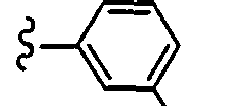
δ 2.22 (s, 3H), 2.80 (s, 3H), 3.00-3.50 (m, 8H), 3.65 (s, 2H), 3.88 (br s, 2H), 4.23 (d, J = 5 Hz, 2H), 6.63 (t, J = 8 Hz, 1H), 6.78 (d, J = 8 Hz, 1H), 7.11 (t, J = 8 Hz, 1H), 7.20 (d, J = 8 Hz, 1H), 7.23 (s, 1H), 7.38 (d, J = 8 Hz, 1H), 7.57 (s, 1H), 7.63 (d, J = 8 Hz, 1H), 8.62 (s, 1H). m/z 455 (M+H)+. Example 609 26 mg (33%) (Example 608) H 
δ 2.22 (s, 3H), 2.80 (s, 3H), 3.00-3.50 (m, 8H), 3.65 (s, 2H), 3.83 (br s, 2H), 4.23 (d, J = 5 Hz, 2H), 6.60 (t, J = 8 Hz, 1H), 7.03 (m, 2H), 7.33 (m, 2H), 7.38 (d, J = 8 Hz, 1H), 7.57 (s, 1H), 7.63 (d, J = 8 Hz, 1H), 8.58 (s, 1H). m/z 455 (M+H)+. Example 610 30 mg (38%) (Example 608) Me 
δ 2.22 (s, 3H), 2.80 (s, 3H), 3.00-3.50 (m, 8H), 3.08 (s, 3H), 3.64 (s, 2H), 3.83 (br s, 2H), 4.75 (s, 2H), 6.26 (t, J = 8 Hz, 1H), 7.02 (t, J = 8 Hz, 1H), 7.16 (t, J = 8 Hz, 1H), 7.20 (d, J = 8 Hz, 1H), 7.33 (d, J = 8 Hz, 1H), 7.52 (s, 1H), 7.61 (d, J = 8 Hz, 1H), 8.07 (s, 1H). m/z469 (M+H)+. Example 611 5 mg (7%) (Example 608) Me 
δ 2.24 (s, 3H), 2.79 (s, 3H), 3.00-3.50 (m, 8H), 3.08 (s, 3H), 3.64 (s, 2H), 3.75 (br s, 2H), 4.46 (s, 2H), 6.79 (d, J = 8 Hz, 1H), 7.15 (t, J = 8 Hz, 1H), 7.30 (d, J = 8 Hz, 1H), 7.34 (m, 2H), 7.54 (s, 1H), 7.61 (d, J = 8 Hz, 1H), 8.42 (s, 1H). m/z 469 (M+H)+. Example 612 15 mg (22%) (Example 608) - To a 60% suspension of sodium hydride in mineral oil (2.3 g, 57.6 mmol) in tetrahydrofuran (65 mL) was added 2-isopropoxyethanol (3.0 g, 28.8 mmol) dropwise at about 0 C. The mixture was stirred for about 30 min, then propargyl bromide (3.2 mL, 28.8 mmol) was added dropwise and the mixture was stirred overnight while being allowed to warm to room temperature. The reaction was quenched by addition of water and the product was extracted with diethyl ether. The combined organic extracts were dried (MgSO4), filtered and the organic solvents were carefully distilled off at atmospheric pressure. The residue was purified by flash chromatography on silica gel using diethyl ether/n-pentane (1:6) as eluent to provide Example 613. 1H NMR (500 MHz, CDCl3): δ 1.17 (d, J = 6.0 Hz, 6H), 2.42 (t, J = 3.0 Hz, 1H), 3.57-3.76 (m, 5H), 4.21 (d, J = 3.0 Hz, 2H).
- A mixture of propargyl benzenesulfonate (1.0 g, 5.1 mmol), m-cresol (0.55 mL, 5.1 mmol) and potassium carbonate (1.1 g, 7.65 mmol) in acetone (40 mL) was stirred at about 56 C for about 2 days. The mixture was cooled, filtered and the solvent was carefully distilled off at atmospheric pressure. The residue was purified by flash chromatography on silica gel using diethyl ether/n-pentane (1:9) as eluent to provide Example 614. 1H NMR (500 MHz, CDCl3): □ 2.33 (s, 3H), 2.50 (t, J = 3.0 Hz, 1H), 4.66 (d, J = 3.0 Hz, 2H), 6.77-6.82 (m, 3H), 7.15-7.21 (m, 1H).

R 1H NMR (500 MHz, DMSO-d6) Example # (synthesis protocol) 
δ 2.52 (t, J = 3.0 Hz, 1H), 3.79 (s, 3H), 4.67 (d, J = 3.0 Hz, 2H), 6.54-6.59 (m, 3H), 7.17-7.23 (m, 1H). Example 615 (Example 614) 
δ 2.54 (t, J = 3.0 Hz, 1H), 4.68 (d, J = 3.0 Hz, 2H), 6.85-6.99 (m, 3H), 7.19-7.26 (m, 1H). Example 616 (Example 614) 
δ 2.52 (t, J = 3.0 Hz, 1H), 4.66 (d, J = 3.0 Hz, 2H), 6.90 (d, J = 9.0 Hz, 2H), 7.25 (d, J = 9.0 Hz, 2H). Example 617 (Example 614) 
δ 2.55 (t, J = 3.0 Hz, 1H), 4.73 (d, J = 3.0 Hz, 2H), 7.14-7.27 (m, 3H), 7.42 (m, 1H). Example 618 (Example 614) 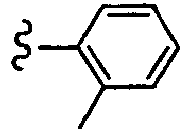
δ 2.24 (s, 3H), 2.47 (t, J = 3.0 Hz, 1H), 4.68 (d, J = 3.0 Hz, 2H), 6.88-6.94 (m, 2H), 7.13-7.17 (m, 2H). Example 619 (Example 614) 
δ 2.51 (t, J = 3.0 Hz, 1H), 4.63 (d, J = 3.0 Hz, 2H), 6.90-7.00 (m, 4H). Example 620 (Example 614) 
δ 2.53 (t, J = 3.0 Hz, 1H), 4.76 (d, J = 3.0 Hz, 2H), 6.92-6.96 (m, 1H), 7.07 (dd, J = 4.0, 12.0 Hz, 1H), 7.20-7.24 (m, 1H), 7.36 (dd, J = 4.0, 12.0 Hz, 1H). Example 621 (Example 614) 
8 2.54 (t, J = 3.0 Hz, 1H), 4.69 (d, J = 3.0 Hz, 2H), 6.85-6.92 (m, 3H), 7.28-7.32 (m, 1H). Example 622 (Example 614) 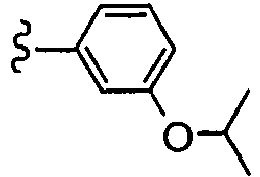
δ 1.35 (d, J = 3.0 Hz, 6H), 2.47 (t, J = 3.0 Hz, 1H), 4.50 (m, 1H), 4.74 (d, J = 3.0 Hz, 2H), 6.81-6.96 (m, 3H), 7.06 (m, 1H). Example 623 (Example 614) 
δ 1.58-1.69 (m, 1H), 1.84-2.03 (m, 3H), 2.43 (t, J = 3.0 Hz, 1H), 3.48-3.61 (m, 2H), 3.73-3.92 (m, 2H), 4.08 (m, 1H), 4.21 (d, J = 3.0 Hz, 2H). Example 624 (Example 613) 
δ 1.22 (t, J = 6.0 Hz, 3H), 2.43 (t, J = 3.0 Hz, 1H), Example 625 3.50-3.70 (m, 6H), 4.21 (d, J = 3.0 Hz, 2H). (Example 613) 
δ 0.90 (d, J = 6.0 Hz, 6H), 1.88 (m, 1H), 2.42 (t, J = Example 626 3.0 Hz, 1H), 3.23 (d, J = 6.0 Hz, 2H), 3.62 (m, 2H), 3.68 (m, 2H), 4.21 (d, J = 3.0 Hz, 2H). (Example 613) 
δ 1.18 (d, J = 6.0 Hz, 3H), 2.41 (t, J = 3.0 Hz, 1H), Example 627 3.34-3.45 (m, 2H), 3.37 (s, 3H), 3.85 (m, 1H), 4.25 (d, J = 3.0 Hz, 2H). (Example 613) 
δ 2.46 (t, J = 3.0 Hz, 1H), 4.15 (d, J = 3.0 Hz, 2H), Example 628 4.56 (s, 2H), 6.34-6.39 (m, 2H), 7.42 (m, 1H). (Example 613) 
δ 1.57-1.68 (m, 1H), 1.97-2.08 (m, 1H), 2.44 (t, J = 3.0 Example 629 Hz, 1H), 2.54 (m, 1H), 3.41-3.61 (m, 3H), 3.69-3.77 (m, 1H), 3.81-3.88 (m, 2H), 4.14 (d, J = 3.0 Hz, 2H). (Example 613) 
δ 1.22-1.67 (m, 7H), 2.42 (t, J = 3.0 Hz, 1H), 3.41- Example 630 3.56 (m, 4H), 4.21 (d, J = 3.0 Hz, 2H). (Example 613) 
δ 1.98-2.05 (m, 2H), 2.43 (t, J = 3.0 Hz, 1H), 3.78- Example 631 3.94 (m, 4H), 4.15 (d, J = 3.0 Hz, 2H), 4.36 (m, 1H). (Example 613) 
δ 1.60 (m, 2H), 1.92 (m, 2H), 2.41 (t, J = 3.0 Hz, 1H), Example 632 3.44 (dt, J = 4.0, 7.6 Hz, 2H), 3.77 (m, 1H), 3.96 (m, 2H), 4.21 (d, J = 3.0 Hz, 2H). (Example 613) - The procedure for Example 614 was used, substituting 3-butynyl p-toluenesulfonate for propargyl benzenesulfonate and phenol for m-cresol to provide Example 633. 1H NMR (500 MHz, CDCl3) δ 2.02 (t, J = 2 Hz, 1H), 2.68 (dt, J = 8, 2 Hz, 2H), 4.08 (t, J = 8 Hz, 2H), 6.96 (m, 3H), 7.30 (m, 2H).
- To a slurry of aluminum powder (2.5 g, 93 mmol) and mercury(II) chloride (250 mg, 0.92 mmol) in tetrahydrofuran (45 mL) was added a solution of propargyl bromide (11.1 mL, 100 mmol) in tetrahydrofuran (15 mL) and the mixture was heated to about 45 C for about 30 min. The mixture was cooled to about 0 C, a solution of acetone (8.6 mL, 120 mmol) in tetrahydrofuran (15 mL) was added and the mixture was heated to about 45 C for about 30 min. The reaction mixture was poured into a mixture of ice-water and aqueous saturated ammonium chloride and was extracted with diethyl ether. The combined organic extracts were dried (Na2SO4), filtered and concentrated under vacuum to provide Example 634. MS (DCI-NH3): m/z 99 (M+H)+.
- To a solution of 4-hydroxybenzaldehyde (500 mg, 4.09 mmol) and morpholine (356 mg, 4.09 mmol) in methanol (10 mL) was added macroporous triethylammonium methylpolystyrene borohydride (2.0 g, 6.0 mmol) and the mixture was stirred at ambient temperature for about 2 days. The mixture was filtered and concentrated under vacuum. The residue was dissolved in tetrahydrofuran (20 mL) and to this solution was added propargyl alcohol (229 mg, 4.09 mmol), diphenylphosphino-polystyrene (5.1 g, 8.18 mmol) and diethyl azodicarboxylate (1.06 g, 6.13 mmol). After stirring overnight at room temperature, the mixture was filtered and the filtrate was concentrated under vacuum. The residue was purified by flash chromatography on silica gel using diethyl ether/n-pentane (1:3) as eluent to provide Example 635. MS (DCI-NH3): m/z 232 (M+H)+.
- To propargyl alcohol (14.0 mL, 240.5 mmol) was added sodium (386 mg, 16.8 mmol) in small pieces at about 0 C. When all the sodium had dissolved, 4-nitropyridine N-oxide (2.0 g, 14.28 mmol) was added in one portion and the mixture was heated to reflux for about 3 hours. The excess propargyl alcohol was evaporated in high vacuum, the residue was dissolved in water and was neutralized by addition of concentrated hydrochloric acid. The mixture was evaporated to dryness and the residue was digested with chloroform. The combined organic layers were dried (MgSO4) and concentrated under vacuum to provide Example 636. MS (DCI-NH3): m/z 150 (M+H)+.
- To a mixture of Example 636 (2.0 g, 13.61 mmol) in chloroform (25 mL) at about 0 C was added dropwise phosphorus trichloride (4 mL, 45.9 mmol). After the addition was complete, the mixture was allowed to warm to room temperature and was then refluxed for about 1 hour. The mixture was cooled, poured onto ice and was basified by addition of concentrated ammonium hydroxide. The mixture was extracted with chloroform and the combined organic extracts were dried (K2CO3) and filtered. The organic solvent was concentrated under vacuum and the residue was purified by flash chromatography on silica gel using dichloromethane/methanol (15:1) as eluent to provide Example 637. MS (DCI-NH3): m/z 134 (M+H)+.
- To a mixture of 3-hydroxypyridine (5.0 g, 52 mmol) and potassium hydroxide (8.8 g, 158 mmol) in N,N-dimethylformamide (30 mL) was added propargyl bromide (7.5 g, 63 mmol) dropwise at about 5-10 C and the mixture was stirred at room temperature for about 15 min. The reaction was quenched by addition of water and the product was extracted with dichloromethane. The combined organic extracts were washed with water and then stirred with activated charcoal for 30 min. The mixture was filtered through Celite and the filtrate was concentrated under vacuum to provide Example 638. 1H NMR (300 MHz, CDCl3): δ 2.57 (t, J = 3.0 Hz, 1H), 4.77 (d, J = 3.0 Hz, 2H), 7.30 (m, 2H), 8.27 (dd, J = 3.0, 7.6 Hz, 1H), 8.40 (d, J = 3.0Hz, 1H).
- To a mixture of morpholine (0.78 mL, 8.98 mmol) and potassium carbonate (3.7 g, 26.9 mmol) in acetonitrile (10 mL) was added propargyl bromide (1.0 mL, 8.98 mmol) and the mixture was heated to about 80 C overnight. The reaction was quenched by addition of water and the mixture was extracted with diethyl ether. The combined organic extracts were washed with water, dried (Na2SO4), filtered and concentrated under vacuum to provide Example 639. 1H NMR (300 MHz, CD3OD) δ 2.57 (m, 4H) 2.68 (t, J = 2.4 Hz, 1H) 3.29 (s, 2H) 3.70 (m, 4H).
- A solution of propargyl bromide (0.11 mL, 1 mmol) and aniline (0.46 mL, 5 mmol) in ethanol (2 mL) was stirred at room temperature for about 5 days. The solvent was concentrated under vacuum and the residue was purified by flash chromatography on silica gel using hexane/ethyl acetate (20:1) as eluent to provide Example 640. MS (ESI): m/z 132 (M+H)+.
- The procedure for Example 640 was used, substituting indoline for aniline to provide Example 641. MS (ESI): m/z 158 (M+H)+.
- A mixture of 2-aminopyrimidine (2 g, 20.67 mmol) and propargyl bromide (23 mL, 20.67 mmol) in ethanol (30 mL) was heated to reflux for about 23 hours. The formed precipitate was collected by filtration, washed with ethanol and was recrystallized from ethanol. To the vacuum dried crystals was added water (10 mL) and 10% aqueous sodium hydroxide (5 mL) and the mixture was stirred at room temperature for about 30 min. The solid was collected by filtration, washed with water and was re-crystalized from water to provide Example 642. MS (ESI): m/z 134 (M+H)+.
- To a solution of propargylamine (6 g, 109 mmol) and triethylamine (15 mL, 109 mmol) in dichloromethane (125 mL) was added dropwise benzoyl chloride (10.5 mL, 90 mmol) at about 0 °C. The ice-bath was removed and stirring was continued for about 30 min. Then the reaction mixture was concentrated under vacuum, the residue was diluted with water and was extracted with ethyl acetate. The combined organic extracts were dried (MgSO4), filtered and concentrated under vacuum to provide Example 643. MS (APCI): m/z 160 (M+H)+.
- The procedure for Example 643 was used, substituting 3-fluorobenzoyl chloride for benzoyl chloride to provide Example 644. MS (APCI): m/z 178 (M+H)+.
- The procedure for Example 41 was used, substituting 4-pentynoic acid for 6-bromo-4-carboxy-1-indanone and aniline for t-butyl glycinate to provide Example 645. MS (ESI): m/z 174(M+H)+.
- To 4-pentynoic acid (981 mg, 10 mmol) was added anhydrous 1-hydroxybenzotriazole (8.11 g, 60 mmol), followed by addition of N,N-dimethylformamide (55 mL) and the mixture was stirred at room temperature until a yellow solution resulted. A solution of 4-(2-aminoethyl)-morpholine (1.31 g, 10.1 mmol) in N,N-dimethylformamide (10 mL) was added, followed by addition of triethylamine (8.35 mL, 60 mmol). After stirring for about 10 min, 1-(3-dimethylaminopropyl)-3-ethylcarbodiimide hydrochloride (6.73 g, 35 mmol) was added and stirring at room temperature was continued overnight. The reaction mixture was diluted with water and was extracted successively with diethyl ether, ethyl acetate, dichloromethane and chloroform/i-propanol (9:1). The combined organic extracts were dried (Na2SO4), filtered and concentrated under vacuum. The solid residue was purified by silica gel flash chromatography using dichloromethane/methanol (9:1) as eluent to provide Example 646. MS (DCI-NH3): m/z 211 (M+H)+.
- To 4'-1-(1H-1, 2,4-triazol-1-yl) phenol (500 mg, 3.1 mmol) was added N,N-dimethylformamide (5 mL) followed by cesium carbonate (1.27 g, 3.9 mmol) and the brown suspension was stirred at room temperature under nitrogen atmosphere for about 30 min. An 80 wt.% solution of propargyl bromide (0.39 mL, 3.5 mmol) in toluene was added dropwise. After stirring for about 3 hours, the reaction mixture was concentrated to dryness and the residue was partitioned between ethyl acetate and water. The organic layer was separated, dried (MgSO4), filtered and concentrated under vacuum to provide Example 647. MS (DCI-NH3): m/z 200 (M+H)+, 217 (M+NH4)+.
- To a solution of 1H-benzimidazole (1.0 g, 8.46 mmol) in N,N-dimethylformamide (12 mL) was added a 1M solution of potassium tert-butoxide in tetrahydrofuran (8.04 mL, 8.04 mmol). The solution was stirred at room temperature for about 10 min, before propargyl bromide (0.940 mL, 8.46 mmol) was added dropwise. The solution was stirred at room temperature for about 30 min, poured into a cooled saturated aqueous solution of sodium bicarbonate and was extracted with dichloromethane. The combined organic extracts were washed with water and brine, dried (Na2SO4), filtered and concentrated under vacuum to provide Example 648. MS (DCI-NH3): m/z 157 (M+H)+.
- The procedure for Example 648 was used, substituting pyrrolidin-2-one for 1H-benzimidazole and sodium hydride for potassium tert-butoxide to provide Example 649. MS (ESI): m/z 124 (M+H)+.
- To a solution of indole (0.50 g, 4.67 mmol), zinc trifluoromethanesulfonate (1.02 g, 2.8 mmol) and tetrabutylammonium iodide (0.86 g, 2.34 mmol) in toluene (14 mL) was added N,N-diisopropylethylamine (0.89 mL, 5.14 mmol) and the mixture was stirred at room temperature for about 15 min. Propargyl bromide (0.26 mL, 2.34 mmol) was added and the solution was stirred at room temperature for about 4 hours. The solution was quenched by addition of aqueous ammonium chloride and the mixture was extracted with diethyl ether. The combined organic extracts were dried (MgSO4), filtered and concentrated under vacuum, the residue was purified by flash column chromatography on silica gel using hexanes/ethyl acetate (8:1) as the mobile phase to provide Example 650. 1H NMR (300 MHz, CDCl3) δ 2.13 (t, J = 2.7 Hz, 1H), 3.70 (d, J = 2.7 Hz, 2H), 6.55 (s, 1H), 7.37 (m, 2H), 7.64 (m, 2H), 7.98 (br s, 1H).
- To a solution of benzofuran (3.0 g, 25.4 mmol) in tetrahydrofuran (36 mL) at about-78 °C was added a 2.5M solution of n-butyllithium in hexanes (10.2 mL, 25.4 mmol). The solution was allowed to warm to about -10 °C and was stirred for about 2 hours. Iodine (6.41 g, 25.4 mmol) was added gradually and the mixture was stirred at about -10 °C for about 30 min. The solution was allowed to warm to room temperature, was quenched by the addition of aqueous ammonium chloride, and was extracted with diethyl ether. The combined organic extracts were washed with aqueous sodium bisulfite and brine, dried (MgSO4), filtered and concentrated under vacuum. The resulting oil was distilled (b.p. 90 °C/1.05 mm Hg) to provide Example 651. 1H NMR (300 MHz, CDCl3): δ 6.93 (s, 1H), 7.20 (m, 2H), 7.48 (m, 2H).
- A solution of Example 651 (1.00 g, 4.10 mmol), (trimethylsilyl)acetylene (0.80 mL, 5.68 mmol), dichlorobis(triphenylphosphine)palladium(II) (49 mg, 0.13 mmol), diisopropylamine (1.08 mL, 7.74 mmol) and copper iodide (3 mg, 0.258 mmol) in tetrahydrofuran (5 mL) was stirred at room temperature for about 16 h. The solution was poured into water and was extracted with dichloromethane. The combined organic extracts were washed with brine, dried (MgSO4), filtered and concentrated under vacuum. The residue was purified by flash column chromatography on silica gel using hexane/ethyl acetate (9:1) as eluent to provide Example 652. 1H NMR (300 MHz, CDCl3) δ 0.29 (m, 9H), 6.94 (s, 1H), 7.23 (m, 1H), 7.33 (m, 1H), 7.43 (m, 1H), 7.54 (d, J = 7.8 Hz, 1H).
- A solution of Example 652 (0.74 g, 3.47 mmol) and potassium carbonate (1.45 g, 10.41 mmol) in methanol (3 mL) was stirred at room temperature for about 2 hours. The solution was poured into water and was extracted with diethyl ether. The combined organic extracts were dried (MgSO4), filtered and concentrated under vacuum to provide Example 653. 1H NMR (300 MHz, CDCl3) δ 3.49 (s, 1H), 7.01 (s, 1H), 7.25 (m, 1H), 7.35 (m, 1H), 7.46 (m, 1H), 7.56 (m, 1H).
- To a solution of Example 148 (800 mg, 1.87 mmol) in N,N-dimethylformamide (180 mL) was added cesium carbonate (2 g) and the mixture was heated to about 90 °C. Air was bubbled through the vigorously stirred mixture and heating was continued overnight. The reaction mixture was cooled, filtered and the filtrate was concentrated under vacuum. The residue was purified by flash chromatography on silica gel using ethyl acetate/methanol (9:1) + 1% ammonium hydroxide as eluent to provide Example 654. MS (ESI): m/z 443, 445 (M+H).
- The procedure for Example 126 was used, substituting Example 148 for phenyl 2-bromothiophene-4-carboxylate. The crude product was filtered through Celite, the filtrate was concentrated under vacuum and the residue was purified by preparative HPLC on a Waters Symmetry C8 column (25 mm x 100 mm, 7 µm particle size) using a gradient of 10% to 100% acetonitrile:0.1% aqueous TFA over 8 minutes (10 minutes run time) at a flow rate of 40 mL/minute to provide 239 mg (62%) of Example 655 as the trifluoroacetate salt. 1H NMR (500 MHz, DMSO-d6): δ 2.79 (s, 3H), 3.00-3.50 (m, 8H), 3.82 (s, 2H), 3.89 (br s, 2H), 5.11 (s, 2H), 7.01 (m, 1H), 7.05 (m, 2H), 7.35 (m, 3H), 7.57 (s, 1H), 7.66 (d, J = 7.8 Hz, 1H), 7.74 (s, 1H), 7.89 (s, 1H). MS (ESI): m/z 481 (M+H)+.
- The procedure for Example 126 was used, substituting Example 257 for phenyl 2-bromothiophene-4-carboxylate and tris(dibenzylideneacetone)dipalladium(0) for dichlorobis(triphenylphosphine)palladium(II). The crude product was filtered through Celite, the filtrate was concentrated under vacuum and the residue was purified by preparative HPLC on a Waters Symmetry C8 column (25 mm x 100 mm, 7 µm particle size) using a gradient of 10% to 100% acetonitrile:0.1% aqueous TFA over 8 minutes (10 minutes run time) at a flow rate of 40 mL/minute to provide 35 mg (17%) of Example 656 as the trifluoroacetate salt. 1H NMR (500 MHz, DMSO-d6): δ 3.83 (s, 2H), 5.11 (s, 2H), 5.51 (s, 2H), 7.00 (m, 1H), 7.05 (m, 2H), 7.35 (m, 3H), 7.60 (d, J = 7.8 Hz, 1H), 7.70 (s, 1H), 7.73 (m, 2H), 7.84 (s, 1H), 7.89 (s, 1H), 9.28 (s, 1H). MS (ESI): m/z 449 (M+H)+.
- To a mixture of Example 260 (220 mg, 0.55 mmol) in N,N-dimethylformamide (3.5 mL) was added triphenylphosphine (29 mg, 0.11 mmol), triethylamine (1.16 mL, 8.3 mmol), copper iodide (2.0 mg, 0.12 mmol), phenyl propargyl sulfide (157 µl, 1.10 mmol) and dichlorobis(triphenylphosphine)palladium(II) (39 mg, 0.055 mmol). The mixture was stirred at about 80 °C under an argon atmosphere for about 2 hours, was diluted with water and was extracted with ethyl acetate/diethyl ether. The combined organic extracts were dried (MgSO4), filtered and evaporated in high vacuum. The residue was purified by flash chromatography on silica gel using methanol/ethyl acetate/hexane (1:4:5) as eluent to provide 13 mg (5%) of Example 657. 1H NMR (300 MHz, DMSO-d6): δ 3.80 (s, 2H), 4.19 (s, 2H), 5.47 (s, 2H), 7.24-7.83 (m, 10H), 8.00 (s, 1H), 8.71 (s, 1H), 13.18 (s, 1H). MS (ESI): m/z 466 (M+H)+.

R1 R2 R3 R'4 1H NMR MS (ESI): Example # (synthesis protocol) Obtained amt (yield) H 
H 
(500 MHz, DMSO-d6) S 2.81 (s, 3H), 3.00-3.50 (m, 8H), 3.87 (s, 2H), 4.00 (br s, 2H), 7.41 (d, J = 7.6 Hz, 1H), 7.74 (m, 3H), 7.60 (m, 3H), 7.69 (d, J = 7.6 Hz, 1H), 7.82 (s, 1H), 7.95 (s, 1H). m/z 451 (M+H)+. Example 658 (Example 655) 96 mg (52%) H 
H 
(500 MHz, DMSO-d6) δ 1.68 (m, 2H), 1.75 (m, 2H), 1.90 (m 4H), 2.77 (s, 3H), 3.00-3.50 (m, 8H), 3.81 (s, 2H), 3.91 (br s, 2H), 7.35 (d, J = 7.8 Hz, 1H), 7.54 (s, 1H), 7.62 (d, J =2.3 Hz, 1H), 7.64 (d, J = 7.8 Hz, 1H), 7.81 (d, J =1.3 Hz, 1H). m/z 459 (M+2H-OH)+. Example 659 (Example 655) 40 mg (43%) H 
H 
(500 MHz, DMSO-d6) δ 2.80 (s, 3H), 2.81 (s, 3H), 3.00-3.50 (m, 8H), 3.83 (s, 2H), 3.92 (br s, 2H), 4,17 (m, 2H), 4.38 (m, 2H), 7.39 (d, J= 7.8 Hz, 1H), 7.46 (m, 2H), 7.50 (m, 2H), 7.55 (m, 1H), 7.58 (s, 1H), 7.66 (d, J = 7.8 Hz, 1H), 7.85 (d, J = 1.3 Hz, 1H), 7.97 (d, J = 1.3 Hz, 1H). m/z 508 (M+H)+. Example 660 (Example 655) 66 mg (67%) H 
H 
(500 MHz, DMSO-d6) δ 1.60 (m, 4H), 1.72 (m, 2H), 1.99 (m, 2H), 2.78 (s, 3H), 2.93 (m, 1H), 3.00-3.50 (m, 8H), 3.82 (s, 2H), 3.86 (br s, 2H), 7.36 (d, J = 7.5 Hz, 1H), 7.56 (s, 1H), 7.58 (d, J = 1.2 Hz, 1H), 7.65 (d, J = 7.5 Hz, 1H), 7.77 (d, J = 1.2 Hz, 1H). m/z 443 (M+H)+. Example 661 (Example 655) 26 mg (28%) H 
H 
(500 MHz, DMSO-d6) δ 1.28 (t, J = 7.2 Hz, 6H), 2.78 (s, 3H), 3.00-3.50 (m, 8H), 3.27 (m, 4H), 3.82 (s, 2H), 3.86 (br s, 2H), 4.47 (s, 2H), 7.37 (d, J = 7.5 Hz, 1H), 7.56 (s, 1H), 7.65 (d, J = 7.5 Hz, 1H), 7.83 (d, J = 1.2 Hz, 1H), 7.96 (d, J = 1.2 Hz, 1H). m/z 460 (M+H)+. Example 662 (Example 655) 38 mg (40%) H 
H 
(500 MHz, DMSO-d6) δ 2.80 (s, 3H), 2.85 (m, 4H), 3.00-3.50 (m, 8H), 3.83 (s, 2H), 3.92 (br s, 2H), 7.38 (d, J = 7.5 Hz, 1H), 7.58 (s, 1H), 7.67 (m, 2H), 7.83 (d, J = 1.2 Hz, 1H). m/z 428 (M+H)+. Example 663 (Example 655) 41 mg (46%) H 
H 
(500 MHz, DMSO-d6) δ 0.89 (t, J= 6.9 Hz, 3H), 1.31 (m, 4H), 1.44 (m, 2H), 1.66 (m, 2H), 2.79 (s, 3H), 3.00-3.50 (m, 8H), 3.83 (s, 2H), 3.93 (br s, 2H), 4.48 (t, J = 6.6 Hz, 1H), 7.38 (d, J = 7.5 Hz, 1H), 7.57 (s, 1H), 7.65 (s, 1H), 7.66 (d, J = 7.5 Hz, 1H), 7.83 (s, 1H). m/z 475 (M+H)+. Example 664 (Example 655) 40 mg (43%) H 
H 
(500 MHz, DMSO-d6) δ 1.66 (s, 6H), 2.80 (s, 3H), 3.00-3.50 (m, 8H), 3.82 (s, 2H), 3.90 (br s, 2H), 7.39 (d, J = 7.8 Hz, 1H), 7.57 (s, 1H), 7.66 (d, J = 7.5 Hz, 1H), 7.74 (d, J = 1.3 Hz, 1H), 7.94 (d, J = 1.3 Hz, 1H), 8.66 (br s, 2H). m/z 432 (M+H)+. Example 665 (Example 655) 48 mg (53%) H 
H 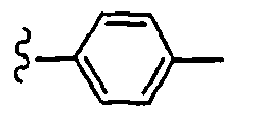
(500 MHz, DMSO-d6) δ 2.36 (s, 3H), 2.77 (s, 3H), 3.00-3.50 (m, 8H), 3.84 (s, 2H), 3.93 (br s, 2H), 7.27 (m, 2H), 7.35 (d, J = 7.8 Hz, 1H), 7.47 (m, 2H), 7.55 (s, 1H), 7.65 (d, J = 7.8 Hz, 1H), 7.78 (d, J= 1.3 Hz, 1H), 7.90 (d, J = 1.3 Hz, 1H). m/z 465 (M+H)+. Example 666 (Example 655) 13 mg (14%) H 
H 
(500 MHz, DMSO-d6) δ 2.77 (s, 3H), 2.89 (s, 6H), 3.00-3.50 (m, 8H), 3.81 (s, 4H), 4.40 (s, 2H), 7.34 (d, J = 7.8 Hz, 1H), 7.55 (s, 1H), 7.64 (d, J = 7.8 Hz, 1H), 7.83 (d, J = 1.3 Hz, 1H), 7.95 (d, J = 1.3 Hz, 1H). m/z 432 (M+H)+. Example 667 (Example 655) 45 mg (50%) H 
H 
(500 MHz, DMSO-d6) δ 2.79 (s, 3H), 3.00-3.50 (m, 8H), 3.86 (s, 2H), 3.91 (br s, 2H), 7.38 (d, J = 7.5 Hz, 1H), 7.45 (m, 1H), 7.59 (s, 1H), 7.68 (m, 2H), 7.90 (m, 2H), 8.00 (d, J = 1.2 Hz, 1H), 8.64 (m, 1H). m/z 452 (M+H)+. Example 668 (Example 655) 28 mg (30%) H 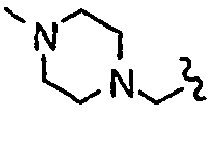
H 
(500 MHz, DMSO-d6) δ 2.79 (m, 5H), 2.88 (m, 2H), 3.00-3.50 (m, 8H), 3.81 (s, 2H), 3.89 (br s, 2H), 7.23 (m, 1H), 7.32 (m, 4H), 7.38 (d, J = 7.7 Hz, 1H), 7.57 (m, 2H), 7.67 (d, J = 7.7 Hz, 1H), 7.77 (s, 1H). m/z 479 (M+H)+. Example 669 (Example 655) 38 mg (40%) H 
H 
(500 MHz, DMSO-d6) δ 2.77 (s, 3H), 3.00-3.50 (m, 8H), 3.80 (s, 2H), 3.88 (br s, 2H), 4.70 (s, 2H), 7.33 (d, J = 7.5 Hz, 1H), 7.52 (s, 1H), 7.63 (d, J = 7.5 Hz, 1H), 7.70 (s, 1H), 7.85 (s, 1H), 7.89 (m, 2H), 7.94 (m, 2H). m/z 534 (M+H)+. Example 670 (Example 655) 10 mg (10%) H 
H 
(500 MHz, DMSO-d6) δ 2.81 (s, 3H), 3.00-3.50 (m, 8H), 3.05 (m, 4H), 3.18 (m, 4H), 3.81 (s, 2H), 3.84 (s, 2H), 3.99 (br s, 2H), 7.40 (d, J = 7.8 Hz, 1H), 7.60 (s, 1H), 7.68 (d, J = 7.8 Hz, 1H), 7.71 (d, J = 1.3 Hz, 1H), 7.86 (d, J = 1.3 Hz, 1H). m/z 522 (M+H)+. Example 671 (Example 655) 62 mg (62%) H 
H 
(500 MHz, DMSO-d6) δ 2.79 (s, 3H), 3.00-3.50 (m, 8H), 3.81 (s, 3H), 3.86 (s, 2H), 3.91 (br s, 2H), 7.01 (m, 2H), 7.38 (d, J = 7.8 Hz, 1H), 7.53 (m, 2H), 7.58 (s, 1H), 7.67 (d, J = 7.8 Hz, 1H), 7.75 (s, 1H), 7.89 (s, 1H). m/z 481 (M+H)+. Example 672 (Example 655) 36 mg (37%) H 
H 
(500 MHz, DMSO-d6) δ 2.77 (s, 3H), 3.00-3.50 (m, 8H), 3.84 (s, 2H), 3.98 (br s, 2H), 7.35 (d, J = 7.8 Hz, 1H), 7.53 (m, 2H), 7.55 (s, 1H), 7.62 (m, 2H), 7.65 (d, J = 7.8 Hz, 1H), 7.82 (d, J= 1.3 Hz, 1H), 7.94 (d, J = 1.3 Hz, 1H). m/z 485 (M)+. Example 673 (Example 655) 16 mg (17%) H 
H 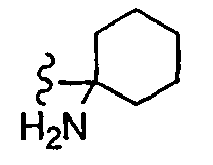
(500 MHz, DMSO-d6) δ 1.18 (m, 2H), 1.56 (m, 2H), 1.68 (m, 2H), 1.79 (m, 2H), 2.09 (m, 2H), 2.79 (s, 3H), 3.00-3.50 (m, 8H), 3.83 (s, 2H), 3.88 (br s, 2H), 7.38 (d, J = 7.8 Hz, 1H), 7.57 (s, 1H), 7.66 (d, J = 7.8 Hz, 1H), 7.78 (s, 1H), 7.94 (s, 1H), 8.69 (br s, 2H). m/z 472 (M+H)+. Example 674 (Example 655) 57 mg (60%) H 
H 
(500 MHz, DMSO-d6) δ 2.62 (t, J = 6.5 Hz, 2H), 2.79 (s, 3H), 3.00-3.50 (m, 8H), 3.60 (t, J = 6.5 Hz, 2H), 3.82 (s, 2H), 3.91 (br s, 2H), 7.37 (d, J = 7.8 Hz, 1H), 7.56 (s, 1H), 7.61 (s, 1H), 7.66 (d, J = 7.8 Hz, 1H), 7.78 (s, 1H). m/z 419 (M+H)+. Example 675 (Example 655) 25 mg (28%) H 
H 
(500 MHz, DMSO-d6) δ 1.26 (m, 2H), 1.47 (m, 2H), 1.58 (m, 2H), 1.66 (m, 2H), 1.84 (m, 2H), 2.79 (s, 3H), 3.00-3.50 (m, 8H), 3.83 (s, 2H), 3.87 (br s, 2H), 7.37 (d, J = 7.8 Hz, 1H), 7.56 (s, 1H), 7.64 (s, 1H), 7.66 (d, J = 7.8 Hz, 1H), 7.82 (s, 1H). m/z 473 (M+H)+. Example 676 (Example 655) 39 mg (41%) H 
H 
(500 MHz, DMSO-d6) δ 1.49 (s, 6H), 2.80 (s, 3H), 3.00-3.50 (m, 8H), 3.83 (s, 2H), 3.93 (br s, 2H), 7.38 (d, J = 7.6 Hz, 1H), 7.58 (s, 1H), 7.63 (d, J = 1.3 Hz, 1H), 7.67 (d, J = 7.6 Hz, 1H), 7.83 (d, J = 1.3 Hz, 1H). m/z 433 (M+H)+. Example 677 (Example 655) 46 mg (51%) H 
H 
(500 MHz, DMSO-d6) δ 0.98 (t, J = 7.5 Hz, 3H), 1.68 (m, 2H), 2.79 (s, 3H), 3.00-3.50 (m, 8H), 3.83 (d, J = 6.9 Hz, 2H), 3.90 (br s, 2H), 4.44 (t, J = 6.2 Hz, 1H), 7.37 (d, J = 7.8 Hz, 1H), 7.57 (s, 1H), 7.66 (m, 2H), 7.84 (s, 1H). m/z 433 (M+H)+. Example 678 (Example 655) 35 mg (39%) H 
H 
(400 MHz, DMSO-d6) □ 2.87 (s, 3H), 3.00-3.50 (m, 8H), 3.86 (s, 2H), 4.31 (s, 2H), 4.36 (s, 2H), 7.48 (d, J = 7.7 Hz, 1H), 7.69 (s, 1H), 7.70 (s, 1H), 7.73 (d, J = 7.7 Hz, 1H), 7.88 (s, 1H). m/z 405 (M+H)+. Example 679 (Example 655) 71 mg (97%) H 
H 
(400 MHz, DMSO-d6) □ 1.40 (d, J = 10.0 Hz, 3H), 2.84 (s, 3H), 3.00-3.50 (m, 8H), 3.85 (s, 2H), 4.14 (br s, 2H), 4.65 (q, J = 10.0 Hz, 1H), 7.44 (d, J = 7.7 Hz, 1H), 7.64 (s, 1H), 7.66 (s, 1H), 7.71 (d, J = 7.7 Hz, 1H), 7.86 (s, 1H). m/z 419 (M+H)+. Example 680 (Example 655) 18 mg (25%) H 
H 
(400 MHz, DMSO-d6) δ 2.83 (s, 3H), 3.26 (s, 3H), 3.00-3.50 (m, 8H), 3.49 (m, 2H), 3.62 (m, 2H), 3.83 (s, 2H), 4.19 (s, 2H), 4.44 (s, 2H), 7.44 (d, J = 8.0 Hz, 1H), 7.64 (s, 1H), 7.69 (d, J = 8.0 Hz, 1H), 7.73 (m, 1H), 7.88 (m, 1H). m/z 463 (M+H)+. Example 681 (Example 655) 60 mg (75%) H 
H 
(500 MHz, DMSO-d6) δ 2.31 (s, 3H), 2.80 (s, 3H), 3.00-3.50 (m, 8H), 3.83 (s, 2H), 3.96 (s, 2H), 5.08 (s, 2H), 6.84 (m, 3H), 7.22 (t, J = 7.8 Hz, 1H), 7.39 (d, J = 7.8 Hz, 1H), 7.59 (s, 1H), 7.67 (d, J = 7.8 Hz, 1H), 7.74 (s, 1H), 7.90 (s, 1H). m/z 495 (M+H)+. Example 682 (Example 655) 82 mg (49%) H 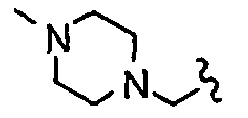
H 
(500 MHz, DMSO-d6) δ 2.79 (s, 3H), 3.00-3.50 (m, 8H), 3.76 (s, 3H), 3.82 (s, 2H), 3.90 (s, 2H), 5.09 (s, 2H), 6.62 (m, 3H), 7.24 (t, J = 7.8 Hz, 1H), 7.37 (d, J = 5.0 Hz, 1H), 7.57 (s, 1H), 7.66 (d, J = 7.8 Hz, 1H), 7.74 (s, 1H), 7.89 (s, 1H). m/z 511 (M+H)+. Example 683 (Example 655) 95 mg (55%) H 
H 
(500 MHz, DMSO-d6) δ 2.81 (s, 3H), 3.00-3.50 (m, 8H), 3.83 (s, 2H), 3.98 (s, 2H), 5.17 (s, 2H), 7.05 (m, 2H), 7.16 (m, 1H), 7.38 (m, 2H), 7.59 (s, 1H), 7.67 (d, J = 5.0 Hz, 1H), 7.75 (s, 1H), 7.91 (s, 1H). m/z 515 (M)+. Example 684 (Example 655) 78 mg (45%) H 
H 
(500 MHz, DMSO-d6) δ 2.80 (s, 3H), 3.00-3.50 (m, 8H), 3.83 (s, 2H), 3.97 (br s, 2H), 5.13 (s, 2H), 7.09 (m, 2H), 7.39 (m, 3H), 7.59 (s, 1H), 7.67 (d, J = 7.8 Hz, 1H), 7.74 (s, 1H), 7.91 (s, 1H). m/z 515 (M)+. Example 685 (Example 655) 54 mg (31%) H 
H 
(500 MHz, DMSO-d6) δ 2.80 (s, 3H), 3.00-3.50 (m, 8H), 3.82 (s, 2H), 3.92 (br s, 2H), 5.24 (s, 2H), 7.38 (m, 4H), 7.59 (m, 2H), 7.66 (d, J = 7.8 Hz, 1H), 7.73 (s, 1H), 7.91 (s, 1H). m/z 549 (M+H)+. Example 686 (Example 655) 81 mg (45%) H 
H 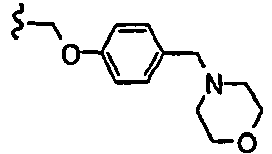
(400 MHz, DMSO-d6) δ 2.84 (s, 3H), 3.00-3.70 (m, 14H), 3.84 (s, 2H), 3.95 (m, 2H), 4.15 (br s, 2H), 4.31 (s, 2H), 5.16 (s, 2H), 7.15 (m, 2H), 7.44 (d, J = 8.0 Hz, 1H), 7.49 (m, 2H), 7.64 (s, 1H), 7.70 (d, J = 8.0 Hz, 1H), 7.76 (m, 1H), 7.92 (m, 1H). m/z 580 (M+H)+. Example 687 (Example 655) 80 mg (75%) H 
H 
(500 MHz, DMSO-d6) δ 2.80 (s, 3H), 3.00-3.50 (m, 8H), 3.82 (s, 2H), 4.11 (s, 2H), 5.53 (s, 2H), 7.39 (m, 2H), 7.58 (m, 2H), 7.67 (m, 2H), 7.72 (m, 1H), 7.85 (m, 1H), 8.82 (m, 1H). m/z 482 (M+H)+. Example 688 (Example 655) 47 mg (22%) H 
H 
(500 MHz, DMSO-d6) δ 2.80 (s, 3H), 3.00-3.50 (m, 8H), 3.82 (s, 2H), 3.87 (br s, 2H), 4.07 (s, 2H), 6.41 (br s, 1H), 7.37 (d, J = 7.8 Hz, 1H), 7.57 (s, 1H), 7.66 (m, 2H), 7.83 (d, J = 1.3 Hz, 1H). m/z 447 (M+H)+. Example 689 (Example 655) 31 mg (34%) H 
H 
(500 MHz, DMSO-d6) δ 3.24 (m, 2H), 3.52 (m, 2H), 3.60 (m, 2H), 3.72 (m, 2H), 3.78 (s, 2H), 3.98 (m, 2H), 4.41 (t, J = 5 Hz, 2H), 5.10 (s, 2H), 7.01 (m, 2H), 7.05 (m, 2H), 7.25 (s, 1H), 7.35 (m, 2H), 7.60 (d, J = 7 Hz, 1H), 7.72 (s, 1H), 7.87 (s, 1H). m/z 498 (M+H)+. Example 690 (Example 655) 50 mg (37%) H 
H 
(400 MHz, DMSO-d6) δ 1.08 (d, J = 4.0 Hz, 6H), 2.83 (s, 3H), 3.00-3.50 (m, 8H), 3.53 (m, 2H), 3.56 (m, 1H), 3.60 (m, 2H), 3.84 (s, 2H), 4.17 (s, 2H), 4.45 (s, 2H), 7.44 (d, J = 8.0 Hz, 1H), 7.63 (s, 1H), 7.70 (d, J = 8.0 Hz, 1H), 7.72 (d, J = 1.3 Hz, 1H), 7.88 (d, J = 1.3 Hz, 1H). m/z 491 (M+H)+. Example 691 (Example 655) 78 mg (94%) 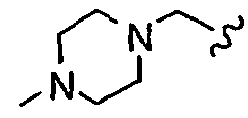
H H 
(500 MHz, DMSO-d6) δ 2.79 (s, 3H), 3.00-3.50 (m, 8H), 3.82 (s, 2H), 3.90 (br s, 2H), 5.11 (s, 2H), 7.00 (m 1H), 7.06 (m 2H), 7.29 (d, J = 7.7 Hz, 1H), 7.35 (m, 2H), 7.56 (d, J = 7.7 Hz, 1H), 7.69 (s, 1H), 7.73 (s, 1H), 7.89 (s, 1H). m/z 481 (M+H)+. Example 692 (Example 655) 75 mg (34%) H H 

(500 MHz, CD3OD) δ 3.57 (s, 3H), 3.78 (s, 2H), 4.14 (s, 2H), 5.00 (s, 2H), 6.99 (m, 1H), 7.04 (m, 2H), 7.31 (m, 2H), 7.40 (t, J = 7.8 Hz, 1H), 7.55 (d, J = 7.5 Hz, 1H), 7.59 (m, 1H), 7.63 (s, 1H), 7.72 (s, 1H). m/z 456 (M+H)+. Example 693 (Example 655) 111 mg (52%) H 
H 
(500 MHz, DMSO-d6) δ 2.79 (s, 3H), 2.99 (t, J = 8 Hz, 2H), 3.00-3.50 (m, 8H), 3.82 (s, 4H), 4.20 (t, J = 8 Hz, 2H), 6.98 (m, 1H), 7.01 (m, 2H), 7.35 (m, 2H), 7.38 (d, J = 8 Hz, 1H), 7.58 (s, 1H), 7.62 (m, 2H), 7.80 (s, 1H). m/z 495 (M+H)+. Example 694 (Example 655) 106 mg (55%) H 
H 
(500 MHz, DMSO-d6) δ 2.21 (s, 3H), 2.87 (s, 3H), 3.00-3.50 (m, 8H), 3.85 (s, 2H), 4.30 (s, 2H), 5.13 (s, 2H), 6.91 (t, J = 5.0 Hz, 1H), 7.10 (d, J= 8.1 Hz, 1H), 7.20 (m, 2H), 7.48 (d, J = 5.0 Hz, 1H), 7.68 (s, 1H), 7.72 (d, J = 8.1 Hz, 1H), 7.77 (s, 1H), 7.92 (s, 1H), 9.50 (s, 1H). m/z 495 (M+H)+. Example 695 (Example 655) 62 mg (37%) H 
H 
(500 MHz, DMSO-d6) δ 2.81 (s, 3H), 3.00-3.50 (m, 8H), 3.83 (s, 2H), 4.03 (s, 2H), 5.10 (s, 2H), 7.09 (m, 2H), 7.18 (m, 2H), 7.41 (d, J = 8.1 Hz, 1H), 7.61 (s, 1H), 7.68 (d, J = 8.1 Hz, 1H), 7.75 (s, 1H), 7.91 (s, 1H), 9.08 (s, 1H). m/z 499 (M+H)+. Example 696 (Example 655) 67 mg (40%) H 
H 
(500 MHz, DMSO-d6) δ 2.76 (s, 3H), 3.00-3.50 (m, 8H), 3.35 (s, 2H), 3.81 (s, 2H), 5.24 (s, 2H), 7.03 (m, 1H), 7.34 (m, 2H), 7.47 (d, J = 8.1 Hz, 1H), 7.53 (s, 1H), 7.63 (d, J = 8.1 Hz, 1H), 7.68 (s, 1H), 7.75 (m, 1H), 7.90 (m, 1H), 9.07 (s, 1H). m/z 515 (M)+. Example 697 (Example 655) 28 mg (16%) H 
H 
(500 MHz, DMSO-d6) δ 2.76 (s, 3H), 3.00-3.50 (m, 8H), 3.34 (s, 2H), 3.80 (s, 2H), 5.19 (s, 2H), 7.01 (d, J = 5.0 Hz, 1H), 7.11 (d, J = 5.0 Hz, 1H), 7.33 (d, J = 7.5 Hz, 1H), 7.48 (t, J = 8.4 Hz, 1H), 7.53 (s, 1H), 7.63 (d, J = 7.5 Hz, 1H), 7.69 (s, 1H), 7.73 (s, 1H), 7.90 (s, 1H), 9.08 (s, 1H). m/z 565 (M+H)+. Example 698 (Example 655) 45 mg (25%) H' 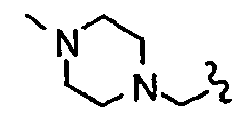
H 
(400 MHz, DMSO-d6) δ 1.28 (d, J = 4.0 Hz, 6H), 2.82 (s, 3H), 3.00-3.50 (m, 8H), 3.83 (s, 2H), 4.04 (br s, 2H), 4.56 (m, 1H), 5.08 (s, 2H), 6.95 (m, 2H), 7.02 (m, 1H), 7.12 (m, 1H), 7.41 (d, J = 8.0 Hz, 1H), 7.61 (s, 1H), 7.68 (d, J = 8.0 Hz, 1H), 7.71 (d, J = 1.5 Hz, 1H), 7.88 (d, J = 1.5 Hz, 1H). m/z 539 (M+H)+. Example 699 (Example 655) 20 mg (11%) H 
H 
(400 MHz, DMSO-d6) δ 1.55 (m, 1H), 1.79 (m, 2H), 1.89 (m, 1H), 2.86 (s, 3H), 3.00-3.50 (m, 8H), 3.36 (m, 1H), 3.46 (m, 1H), 3.48 (m, 2H), 3.63 (m, 1H), 3.72 (m, 1H), 3.84 (s, 2H), 3.96 (m, 1H), 4.37 (s, 2H), 4.45 (s, 2H), 7.49 (d, J = 8.0 Hz, 1H), 7.69 (s, 1H), 7.73 (m, 2H), 7.89 (m, 1H). m/z 489 (M+H)+. Example 700 (Example 655) 50 mg (69%) H 
H 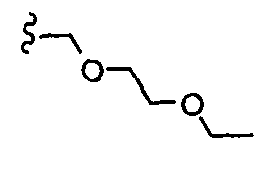
(400 MHz, DMSO-d6) δ 1.11 (t, J = 4.0 Hz, 3H), 2.86 (s, 3H), 3.00-3.50 (m, 8H), 3.44 (q, J = 8.0 Hz, 2H), 3.53 (m, 2H), 3.63 (m, 2H), 3.84 (s, 2H), 4.35 (s, 2H), 4.44 (s, 2H), 7.48 (d, J = 8.0 Hz, 1H), 7.68 (s, 1H), 7.72 (m, 2H), 7.89 (s, 1H). m/z 477 (M+H)+. Example 701 (Example 655) 71 mg (87%) H 
H 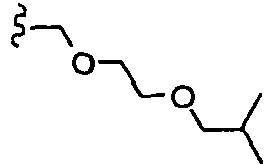
(400 MHz, DMSO-d6) δ 0.86 (d, J = 4.0 Hz, 6H), 1.80 (m, 1H), 2.85 (s, 3H), 3.00-3.50 (m, 8H), 3.19 (d, J = 8.0 Hz, 2H), 3.55 (m, 2H), 3.65 (m, 2H), 3.85 (s, 2H), 4.23 (s, 2H), 4.47 (s, 2H), 7.46 (d, J = 8.0 Hz, 1H), 7.66 (s, 1H), 7.72 (d, J = 8.0 Hz, 1H), 7.74 (s, 1H), 7.90 (s, 1H). m/z 505 (M+H)+. Example 702 (Example 655) 74 mg (87%) H 
H 
(400 MHz, DMSO-d6) δ 1.12 (d, J = 8.0 Hz, 3H), 2.85 (s, 3H), 3.00-3.50 (m, 10H), 3.29 (s, 3H), 3.79 (m, 1H), 3.85 (s, 2H), 4.23 (s, 2H), 4.49 (s, 2H), 7.46 (d, J = 8.0 Hz, 1H), 7.66 (s, 1H), 7.73 (m, 2H), 7.89 (s, 1H). m/z 477 (M+H)+. Example 703 (Example 655) 72 mg (88%) H 
H 
(400 MHz, DMSO-d6) δ 2.84 (s, 3H), 3.00-3.50 (m, 8H), 3.85 (s, 2H), 4.15 (s, 2H), 4.45 (s, 2H), 4.55 (s, 2H), 6.47(m, 1H), 6.51 (m, 1H), 7.44 (d, J = 8.0 Hz, 1H), 7.64 (s, 1H), 7.69 (m, 2H), 7.76 (s, 1H), 7.90 (s, 1H). m/z 485 (M+H)+. Example 704 (Example 655) 20 mg (20%) H 
H 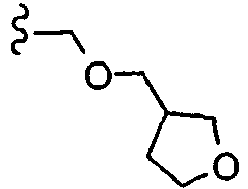
(400 MHz, DMSO-d6) δ 1.56 (m, 1H), 1.95 (m, 1H), 2.50 (m, 1H), 2.85 (s, 3H), 3.00-3.50 (m, 12H), 3.63 (m, 1H), 3.72 (m, 1H), 3.85 (s, 2H), 4.19 (s, 2H), 4.45 (s, 2H), 7.46 (d, J = 8.0 Hz, 1H), 7.65 (s, 1H), 7.71 (d, J = 8.0 Hz, 1H), 7.75 (s, 1H), 7.90 (s, 1H). m/z 489 (M+H)+. Example 705 (Example 655) 25 mg (21%) H 
H 
(400 MHz, DMSO-d6) δ 1.23 (m, 1H), 1.46 (m, 2H), 1.56 (m, 1H), 1.78 (m, 1H), 2.84 (s, 3H), 3.00-3.50 (m, 11H), 3.85 (s, 2H), 3.87 (m, 1H), 4.17 (s, 2H), 4.45 (s, 2H), 7.45 (d, J = 8.0 Hz, 1H), 7.65 (s, 1H), 7.70 (d, J = 8.0 Hz, 1H), 7.74 (s, 1H), 7.90 (m, 1H). m/z 503 (M+H)+. Example 706 (Example 655) 23 mg (22%) H 
H 
(400 MHz, DMSO-d6) δ 1.98 (m, 2H), 2.84 (s, 3H), 3.00-3.50 (m, 8H), 3.72 (m, 4H), 3.85 (s, 2H), 4.15 (s, 2H), 4.34 (m, 1H), 4.46 (s, 2H), 7.44 (d, J = 8.0 Hz, 1H), 7.64 (s, 1H), 7.70 (d, J = 8.0 Hz, 1H), 7.75 (s, 1H), 7.90 (s, 1H). m/z 475 (M+H)+. Example 707 (Example 655) 24 mg (23%) 
H H 
(400 MHz, DMSO-d6) δ 2.84 (s, 3H), 3.00-3.50 (m, 8H), 3.27 (s, 3H), 3.51 (m, 2H), 3.64 (m, 2H), 3.86 (s, 2H), 4.21 (s, 2H), 4.46 (s, 2H), 7.37 (d, J = 8.0 Hz, 1H), 7.62 (d, J = 8.0 Hz, 1H), 7.74 (s, 1H), 7.78 (s, 1H), 7.89 (s, 1H). m/z 475 (M+H)+. Example 708 (Example 655) 24 mg (23%) 
H H 
(400 MHz, DMSO-d6) δ 3.27 (s, 3H), 3.51 (m, 2H), 3.64 (m, 2H), 3.82 (s, 2H), 4.45 (s, 2H), 5.52 (s, 2H), 7.38 (d, J = 8.0 Hz, 1H), 7.61 (d, J = 8.0 Hz, 1H), 7.72 (m, 3H), 7.85 (s, 1H), 7.88 (s, 1H), 8.79 (s, 1H). m/z 431 (M+H)+. Example 709 (Example 655) 33 mg (50%) H 
H 
(500 MHz, CD3OD) δ 1.36 (s, 6H), 2.63 (s, 2H), 2.90 (s, 3H), 3.08 (m, 4H), 3.38 (s, 4H), 3.82 (s, 2H), 4.00 (s, 2H), 7.43 (d, J = 7.5 Hz, 1H), 7.54 (s, 1H), 7.63 (s, 2H), 7.73 (d, J = 7.8 Hz, 1H). m/z 447 (M+M . Example 710 (Example 655) 190 mg (60%) H H 

(500 MHz, CD3OD) δ 2.23 (s, 3H), 3.35-4.20 (m, 8H), 3.77 (s, 2H), 4.42 (s, 2H), 7.39 (t, J = 7.8 Hz, 1H), 7.45 (d, J = 7.8 Hz, 1H), 7.56 (d, J = 7.2 Hz, 1H), 7.77 (d, J =1.2 Hz, 1H), 7.82 (d, J = 1.2 Hz, 1H). m/z 419 (M+H). Example 711 (Example 655) 67 mg (13%) H 
H 
(500 MHz, CD3OD) δ 2.33 (s, 3H), 2.45-2.65 (m, 8H), 3.61 (s, 2H), 3.77 (s, 2H), 4.17 (s, 2H), 6.71 (m, 1H), 6.77 (m, 2H), 7.17 (m, 2H), 7.33 (d, J = 7.5 Hz, 1H), 7.53 (m, 2H), 7.63 (m, 2H). m/z 480 (M+H)+. Example 712 (Example 655) 24 mg ' (22%) H 
H 
(500 MHz, CD3OD) δ 2.28 (s, 3H), 2.45-2.65 (m, 8H), 2.97 (t, J = 8.4 Hz, 2H), 3.46 (t, J = 8.1 Hz, 2H), 3.60 (s, 2H), 3.77 (s, 2H), 4.24 (s, 2H), 6.72 (m, 2H), 7.09 (m, 2H), 7.33 (d, J = 8.4 Hz, 1H), 7.52 (s, 1H), 7.55 (s, 1H), 7.63 (m, 2H). m/z 506 (M+H)+. Example 713 (Example 655) 4 mg (4%) H 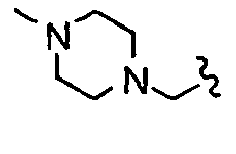
H 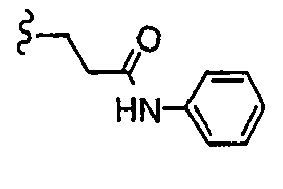
(500 MHz, CD3OD) δ 2.42 (s, 3H), 2.45-2.65 (m, 8H), 2.69 (t, J = 7.2 Hz, 2H), 2.85 (t, J = 7.2 Hz, 2H), 3.64 (s, 2H), 3.75 (s, 2H), 7.10 (m, 1H), 7.31 (m, 2H), 7.34 (d, J = 8.4 Hz, 1H), 7.48 (m, 1H), 7.55 (s, 1H), 7.57 (m, 2H), 7.60 (s, 1H), 7.68 (m, 1H). m/z 522 (M+H)+. Example 714 (Example 655) 31 mg (26%) H 
H 
(500 MHz, CD3OD) δ 2.28 (s, 3H), 2.45-2.65 (m, 8H), 3.60 (s, 2H), 3.77 (s, 2H), 4.65 (s, 2H), 7.07 (dd, J = 6.9, 4.1 Hz, 1H), 7.33 (d, J= 7.8 Hz, 1H), 7.38 (s, 1H), 7.54 (s, 1H), 7.60 (s 1H), 7.64 (d, J = 7.8 Hz, 1H), 7.71 (s, 1H), 8.58 (dd, J = 4.1, 1.9 Hz, 1H), 8.66 (dd, J = 6.9, 1.9 Hz, 1H). m/z 482 (M+H)+. Example 715 (Example 655) 12 mg (11%) 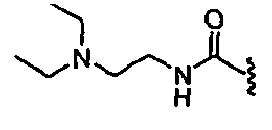
H H 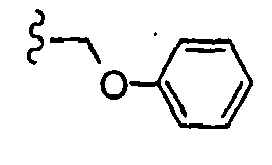
(300 MHz, DMSO-d6) δ 0.98(t, J=7.1 Hz, 6H) 2.56 (m, 4H) 3.34 (m, 4H) 3.88 (s, 2H) 5.11 (s, 2H) 7.00 (t, J = 7.5 Hz, 1H) 7.05 (dd, J = 8.8, 1.0-Hz, 2H) 7.35 (dd, J = 7.5, 1.4 Hz, 2H) 7.63 (d, J = 8.1 Hz, 1H) 7.75 (s, 1H) 7.79 (d, J = 8.8 Hz, 1H) 7.91 (s, 1H) 8.16 (s, 1H) 8.48 (t, J = 6.1 Hz, 1H) 13.25 (s, 1H). m/z 511 (M+H)+. Example 716 (Example 655) 62 mg (55%) 
H H 
(400 MHz, DMSO-d6): δ 3.72-3.83 (m, 2H), 5.18 (s, 2H), 5.49 (s, 2H), 7.20-7.27 (m, 3H), 7.49-7.58 (m, 2H), 7.73 (s, 1H), 7.78-7.86 (m, 2H), 7.88 (s, 1H), 7.99 (s, 1H), 8.18 (s, 1H), 8.69 (s, 1H), 9.17 (s, 1H), 13.17 (s, 1H). m/z 517 (M+H)+. Example 717 (Example 655) 83 mg (32%) 
H H 
(500MHz, DMSO-d6): δ 2.29-2.43 (m, 8H), 2.69 (t, 2H, J = 7.5 Hz), 3.20 (dd, 2H, J = 15, 10 Hz), 3.25-3.35 (m, 3H), 3.53 (d, 1H, J = 10 Hz), 3.73-3.83 (m, 2H), 5.50 (s, 2H), 7.24 (d, 1H, J = 10 Hz), 7.51-7.60 (m, 3H), 7.7 (s, 1H), 7.87 (t, 1H, J = 5 Hz), 7.99 (s, 1H), 8.70 (s, 1H), 13.16 (s, 1H). m/z 528 (M+H)+. Example 718 (Example 655) 74 mg (28%) 
H H 
(300 MHz, DMSO-d6): δ 3.79 (s, 2H), 4.19 (s, 2H), 5.50 (s, 2H), 7.21-7.82 (m, 10H), 8.00 (s, 1H), 8.70 (s, 1H), 13.16 (s, 1H). m/z 466 (M+H)+. Example 719 (Example 655) 40 mg (24%) 
H H 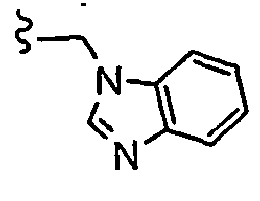
(400 MHz, DMSO-d6) δ 3.77 (s, 2H), 4.96 (s, 1H), 5.49 (s, 2H), 5.70 (s, 2H), 7.23 (d, J = 8.0 Hz, 1H), 7.52 (m, 4H), 7.73 (s, 1H), 7.83 (d, J = 8.0 Hz, 1H), 7.88 (s, 1H), 7.94 (d, J= 8.0 Hz, 1H), 7.99 (s, 1H), 8.70 (s, 1H), 9.15 (s, 1H). m/z 474 (M+H)+. Example 720 (Example 655) 60 mg (20%) H 
H 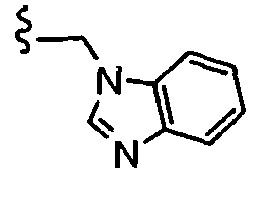
(300 MHz, DMSO-d6) δ 3.79 (s, 2H), 4.59 (s, 1H), 5.49 (s, 2H), 5.82 (s, 2H), 7.31 (d, J = 7.8 Hz, 1H), 7.48 (s, 1H), 7.67 (m, 3H), 7.78 (s, 1H), 7.92 (m, 2H), 8.04 (s, 1H), 8.09 (d, J = 8.1 Hz, 1H), 8.76 (s, 1H), 9.68 (s, 1H). m/z 474 (M+H)+. Example 721 (Example 655) 30 mg (10%) 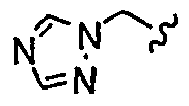
H H 
(500 MHz, DMSO-d6) δ 1.98 (m, 2H), 2.26 (t, J = 8.1 Hz, 2H), 3.45 (t, J = 7.0 Hz, 2H), 3.81 (s, 2H), 4.32 (s, 2H), 5.13 (s, 1H), 5.55 (s, 2H), 7.27 (d, J=6.8 Hz, 1H), 7.55 (d, J = 7.8 Hz, 1H), 7.58 (s, 1H), 7.72 (d, J=1.2Hz, 1H), 7.89 (d, J = 1.2 Hz, 1H), 8.27 (s, 1H), 9.09 (s, 1H). m/z 441 (M+H)+. Example 722 (Example 655) 148 mg (54%) 
H H 
(300 MHz, DMSO-d6) δ 3.79 (s, 2H), 3.85 (s, 2H), 3.99 (s, 2H), 5.50 (s, 2H), 7.04 (m, 1H), 7.12 (m, 1H), 7.23 (dd, J = 7.6, 1.9 Hz, 1H), 7.30 (d, J=2.4 Hz, 1H), 7.38 (d, J = 8.1 Hz, 1H), 7.54 (m, 2H), 7.63 (m, 2H), 7.79 (m, 1H), 8.01 (s, 1H), 8.72 (s, 1H). m/z 473 (M+H)+. Example 723 (Example 655) 53 mg (18%) 
H H 
(300 MHz, DMSO-d6) δ 2.53 (m, 2H), 5.61 (s, 2H), 7.34 (m, 2H), 7.44 (m, 2H), 7.61 (t, J = 7.5 Hz, 2H), 7.67 (s, 1H) 7.72 (d, J = 7.8 Hz, 1H) 7.96 (d,J= 1.4 Hz, 1H) 8.06 (d, J = 1.4 Hz, 1H) 8.49 (m, 1H) 9.33 (m, 1H). m/z 460 (M+H)+. Example 724 (Example 655) 12 mg (4%) H 
H 
(300 MHz, DMSO-d6) δ 3.82 (s, H), 3.85 (s, 2H), 5.49 (s, 2H), 7.32 (m, 2H), 7.43 (dd, J = 8.5, 1.4 Hz, 1H), 7.47 (d, J = 1.0 Hz, 1H), 7.50 (s, 1H), 7.63 (dd, J = 8.5, 4.4 Hz, 2H), 7.71 (m, 1H), 7.93 (d, J =1.4 Hz, 1H), 8.01 (s, 1H), 8.03 (d, J = 1.4 Hz, 1H), 8.71 (s, 1H). m/z 460 (M+H)+. Example . 725 (Example 655) 64 mg (22%) 
H H 
(500 MHz, DMSO-d6) δ 3.80 (s, 2H), 5.08 (s, 2H), 5.50 (s, 2H), 7.08 (m, 2H), 7.18 (m, 2H), 7.22 (d, J = 7.6 Hz, 1H), 7.55 (m, 2H), 7.72 (s, 1H), 7.85 (s, 1H), 8.01 (s, 1H), 8.73 (s, 1H). m/z 466 (M-H)-. Example 726 (Example 655) 50 mg (48%) 
H H 
(500 MHz, DMSO-d6) δ 3.80 (s, 2H), 5.20 (s, 2H), 5.50 (s, 2H), 7.02 (d, J = 7.6 Hz, 1H), 7.08 (m, 2H), 7.22 (d, J = 7.6 Hz, 1H), 7.50 (m, 3H), 7.73 (s, 1H), 7.88 (s, 1H), 8.01 (s, 1H), 8.74 (s, 1H). m/z 532 (M-H)-. Example 727 (Example 655) 40 mg (35%) 
H H 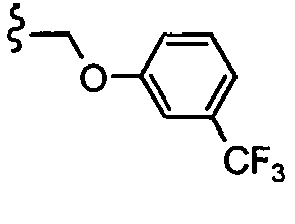
(500 MHz, DMSO-d6) δ 3.80 (s, 2H), 5.22 (s, 2H), 5.52 (s, 2H), 7.22 (d, J = 7.6 Hz, 1H), 7.38 (m, 3H), 7.55 (m, 3H), 7.73 (s, 1H), 7.89 (s, 1H), 8.00 (s, 1H), 8.72 (s, 1H). m/z 516 (M-H)-. Example 728 (Example 655) 45 mg (40%) 
H H 
(500 MHz, DMSO-d6) δ 3.80 (s, 2H), 5.21 (s, 2H), 5.50 (s, 2H), 7.02 (t, J = 7.6 Hz, 1H), 7.22 (d, J = 7.6 Hz, 1H), 7.32 (d, J = 7.6 Hz, 1H), 7.38 (t, J = 7.6 Hz, 1H), 7.48 (d, J = 7.6 Hz, 1H), 7.56 (m, 2H), 7.74 (s, 1H), 7.90 (s, 1H), 8.01 (s, 1H), 8.73 (s, 1H). m/z 484 (M+H)+. Example 729 (Example 655) 20 mg (19%) 
H H 
(500 MHz, DMSO-d6) δ 3.82 (s, 2H), 5.18 (s, 2H), 5.52 (s, 2H), 7.06 (m, 2H), 7.18 (d, J=1.6Hz, 1H), 7.23 (d, J = 7.6 Hz, 1H), 7.38 (t, J = 7.6 Hz, 1H), 7.57 (m, 2H), 7.75 (s, 1H), 7.91 (s, 1H), 8.02 (s, 1H), 8.75 (s, 1H). m/z 482 (M-H)-. Example 730 (Example 655) 45 mg (42%) 
H H 
(500 MHz, DMSO-d6) δ 3.79 (s, 2H), 5.07 (s, 2H), 5.52 (s, 2H), 7.08 (d, J = 7.6 Hz, 2H), 7.22 (d, J = 7.6 Hz, 1H), 7.40 (d, J = 7.6 Hz, 2H), 7.55 (m, 2H), 7.73 (s, 1H), 7.86 (s, 1H), 8.00 (s, 1H), 8.73 (s, 1H). m/z 482 (M-H)-. Example 731 (Example 655) 35 mg (33%) 
H H 
(500 MHz, DMSO-d6) δ 2.20 (s, 3H), 3.80 (s, 2H), 5.11 (s, 2H), 5.52 (s, 2H), 6.92 (t, J = 7.6 Hz, 1H), 7.09 (d, J = 7.6 Hz, 1H), 7.30 (m, 3H), 7.56 (m, 2H), 7.75 (s, 1H), 7.88 (s, 1H), 8.01 (s, 1H), 8.74 (s, 1H). m/z 462 (M-H)-. Example 732 (Example 655) 25 mg (24%) 
H H 
(500 MHz, DMSO-d6) δ 3.78 (s, 3H), 3.81 (s, 2H), 5.08 (s, 2H), 5.52 (s, 2H), 6.58 (d, J=7.6Hz, 1H), 6.62 (m, 2H), 7.23 (m, 2H), 7.57 (m, 2H), 7.76 (s, 1H), 7.89 (s, 1H), 8.00 (s, 1H), 8.71 (s, 1H). m/z 480 (M+H)+. Example 733 (Example 655) 30 mg (28%) 
H H 
(500 MHz, DMSO-d6) δ 3.81 (s, 2H), 4.823 (s, 2H), 4.55 (s, 2H), 5.52 (s, 2H), 6.65 (d, J = 3.6 Hz, 1H), 6.72 (d, J = 3.6 Hz, 1H), 7.23 (d, J = 7.6 Hz, 1H), 7.57 (m, 2H), 7.68 (s, 1H), 7.72 (s, 1H), 7.88 (s, 1H), 8.02 (s, 1H), 8.76 (s, 1H). m/z 454 (M+H)+. Example 734 (Example 655) 28 mg (27%) 
H H 
(500 MHz, DMSO-d6) δ 1.56 (m, 1H), 1.95 (m, 1H), 2.50 (m, 1H), 3.50 (m, 2H), 3.60 (m, 2H), 3.72 (m, 2H), 3.81 (s, 2H), 4.44 (s, 2H), 5.53 (s, 2H), 7.23 (d, J = 7.6 Hz, 1H), 7.57 (m, 2H), 7.73 (s, 1H), 7.87 (s, 1H), 8.03 (br s, 1H), 8.77 (br s, 1H). m/z 458 (M+H)+. Example 735 (Example 655) 21 mg (20%) 
H H 
(500 MHz, DMSO-d6) δ 1.57 (m, 1H), 1.80 (m, 2H), 1.90 (m, 1H), 3.50 (m, 2H), 3.70 (m, 2H), 3.81 (s, 2H), 3.98 (m, 1H), 4.44 (s, 2H), 5.54 (s, 2H), 7.23 (d, J = 7.6 Hz, 1H), 7.57 (m, 2H), 7.72 (s, 1H), 7.86 (s, 1H), 8.04 (br s, 1H), 8.78 (br s, 1H). m/z 458 (M+H)+. Example 736 (Example 655) 45 mg (44%) 
H H 
(500 MHz, DMSO-d6) δ 1.97 (m, 2H), 3.72 (m, 4H), 3.81 (s, 2H), 4.37 (m, 1H), 4.44 (s, 2H), 5.52 (s, 2H), 7.23 (d, J = 7.6 Hz, 1H), 7.58 (m, 2H), 7.73 (s, 1H), 7.87 (s, 1H), 8.04 (br s, 1H), 8.76 (br s, 1H). m/z 444 (M+H)+. Example 737 (Example 655) 38 mg (38%) 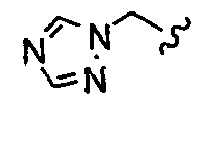
H H 
(500 MHz, DMSO-d6) δ 1.22 (m, 1H), 1.44 (m, 3H), 1.57 (m, 1H), 1.80 (m, 1H), 3.60 (m, 4H), 3.80 (s, 2H), 3.84 (m, 1H), 4.43 (s, 2H), 5.52 (s, 2H), 7.23 (d, J = 7.6 Hz, 1H), 7.57 (m, 2H), 7.73 (s, 1H), 7.87 (s, 1H), 8.01 (s, 1H), 8.76 (s, 1H). m/z 472 (M+H)+. Example 738 (Example 655) 45 mg (43%) 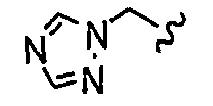
H H 
(500 MHz, DMSO-d6) δ 3.80 (s, 2H), 5.22 (s, 2H), 5.52 (s, 2H), 7.22 (d, J = 7.6 Hz, 1H), 7.56 (m, 3H), 7.71 (m, 1H), 7.75 (s, 1H), 7.88 (s, 1H), 7.99 (s, 1H), 8.34 (s, 1H), 8.51 (s, 1H), 8.72 (s, 1H). m/z451 (M+H)+. Example 739 (Example 655) 62 mg (39%) 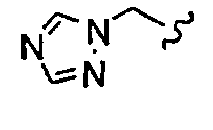
H H 
(500 MHz, DMSO-d6) δ 1.12 (t, J = 7.6 Hz, 3H), 3.53 (q, J = 7.6 Hz, 2H), 3.58 (t, J = 7.6 Hz, 2H), 3.62 (t, J = 7.6 Hz, 2H), 3.79 (s, 2H), 4.46 (s, 2H), 5.50 (s, 2H), 7.23 (d, J = 7.6 Hz, 1H), 7.57 (m, 2H), 7.73 (s, 1H), 7.86 (s, 1H), 8.01 (s, 1H), 8.75 (s, 1H). m/z 444 (M-H)-. Example 740 (Example 655) 44 mg (33%) 
H H 
(500 MHz, DMSO-d6) δ 1.09 (d, J = 7.6 Hz, 6H), 3.57 (t, J = 7.6 Hz, 2H), 3.59 (m, 1H), 3.62 (t, J = 7.6 Hz, 2H), 3.80 (s, 2H), 4.44 (s, 2H), 5.49 (s, 2H), 7.23 (d, J = 7.6 Hz, 1H), 7.57 (m, 2H), 7.72 (s, 1H), 7.85 (s, 1H), 8.00 (s, 1H), 8.74 (s, 1H). m/z 460 (M+H)+. Example 741 (Example 655) 66 mg (48%) H 
H 
(500 MHz, DMSO-d6) δ 2.78 (s, 3H), 3.00-3.50 (m, 8H), 3.80 (s, 2H), 4.02 (s, 2H), 5.22 (s, 2H), 7.38(d, J=7.6Hz, 1H), 7.50 (m, 1H), 7.58 (s, 1H), 7.62 (m, 2H), 7.77 (s, 1H), 7.92 (s, 1H), 8.30 (d, J = 1.6 Hz, 1H), 8.47 (s, 1H). m/z 482 (M+H)+. Example 742 (Example 655) 85 mg (52%) 
H H 
(500 MHz, DMSO-d6) δ 2.82 (s, 3H), 3.10-3.50 (m, 8H), 3.89 (s, 2H), 5.08 (s, 2H), 7.08 (m, 2H), 7.19(t, J=7.6Hz, 2H), 7.39 (d, J = 7.6 Hz, 1H), 7.64 (d, J = 7.6 Hz, 1H), 7.77 (d, J = 7.6 Hz, 2H), 7.92 (s, 1H), 9.85 (br s, 1H). m/z 511 (M-H)-. Example 743 (Example 655) 85 mg (57%) 
H H 
(500 MHz, DMSO-d6) δ 2.82 (s, 3H), 3.10-3.50 (m, 8H), 3.90 (s, 2H), 5.22 (s, 2H), 7.38 (m, 4H), 7.59 (t, J = 7.6 Hz, 1H), 7.64 (d, J = 7.6 Hz, 1H), 7.77 (d, J = 7.6 Hz, 2H), 7.92 (s, 1H), 9.92 (br s, 1H). m/z 563 (M+H)+. Example 744 (Example 655) 75 mg (48%) 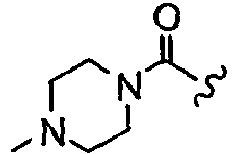
H H 
(500 MHz, DMSO-d6) δ 2.82 (s, 3H), 3.10-3.50 (m, 8H), 3.88 (s, 2H), 5.18 (s, 2H), 7.04 (m, 2H), 7.18 (br s, 1H), 7.38 (m, 2H), 7.63 (d, J = 7.6 Hz, 1H), 7.75 (s, 1H), 7.77 (s, 1H), 7.93 (s, 1H), 9.94 (br s, 1H). m/z 529 (M+H)+. Example 745 (Example 655) 89 mg (59%) 
H H 
(500 MHz, DMSO-d6) δ 2.83 (s, 3H), 3.10-3.50 (m, 8H), 3.92 (s, 2H), 4.43 (s, 2H), 4.57 (s, 2H), 6.47 (d, J = 3.6 Hz, 1H), 6.52 (d, J = 3.6 Hz, 1H), 7.39 (d, J= 7.6 Hz, 1H), 7.65 (m, 2H), 7.73 (s, 1H), 7.77 (s, 1H), 7.91 (s, 1H), 9.92 (br s, 1H). m/z 499 (M+H)+, Example 746 (Example 655) 81 mg (56%) 
H H 
(500 MHz, DMSO-d6) δ 1.44 (m, 2H), 1.92 (m, 2H), 2.83 (s, 3H), 3.10-3.50 (m, 8H), 3.40 (t, J = 7.6 Hz, 2H), 3.72 (m, 1H), 3.82 (m, 2H), 3.92 (s, 2H), 4.47 (s, 2H), 7.38 (d, J = 7.6 Hz, 1H), 7.62 (d, J = 7.6 Hz, 1H), 7.77 (br s, 2H), 7.88 (s, 1H), 9.92 (br s, 1H). m/z 503 (M+H)+. Example 747 (Example 655) 96 mg (65%) 
H H 
(500 MHz, DMSO-d6) δ 1.12 (t, J = 7.6 Hz, 3H), 2.82 (s, 3H), 3.10-3.45 (m, 8H), 3.48 (q, J = 7.6 Hz, 2H), 3.58 (t, J = 7.6 Hz, 2H), 3.62 (t, J = 7.6 Hz, 2H), 3.92 (s, 2H), 4.46 (s, 2H), 7.39 (d, J = 7.6 Hz, 1H), 7.63 (d, J = 7.6 Hz, 1H), 7.77 (m, 2H), 7.89 (s, 1H), 9.94 (s, 1H). m/z 491 (M+H)+. Example 748 (Example 655) 75 mg (52%) 
H H 
(500 MHz, DMSO-d6) δ 3.80 (s, 2H), 4.39 (d, J = 3.6 Hz, 2H), 5.50 (s, 2H), 7.22 (d, J = 7.6 Hz, 1H), 7.50 (m, 5H), 7.66 (s, 1H), 7.80 (s, 1H), 7.89 (d, J = 7.6 Hz, 2H), 7.99 (s, 1H), 8.73 (s, 1H), 9.03 (t, J = 3.6 Hz, 1H). m/z 477 (M+H)+. Example 749 (Example 655) 64 mg (39%) H 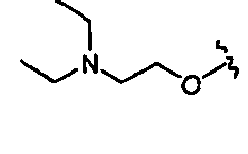
H 
(500 MHz, DMSO-d6): δ 0.98 (t, J = 7 Hz, 6H), 2.55 (dd, J = 7 Hz, 4H), 2.78 (t, J = 7 Hz, 2H), 3.25 (s, 3H), 3.48 (t, J = 6 Hz, 2H), 3.62 (t, J = 6 Hz, 2H), 3.78 (s, 2H), 4.08 (t, J = 6 Hz, 2H), 4.45 (s, 2H), 7.92 (d, J = 7 Hz, 1H), 7.15 (s, 1H), 7.52 (d, J=7Hz, 1H), 7.72 (s, 1H), 7.83 (s, 1H). m/z 466 (M+H)+. Example 750 (Example 655) 120 mg (49%) H 
H 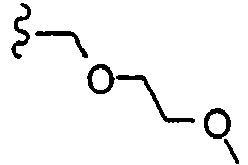
(500 MHz, DMSO-d6): δ 0.95 (d, J = 6 Hz, 6H), 2.45 (m, 4H), 2.58 (m, 1H), 3.28 (s, 3H), 3.42 (m, 4H), 3.49 (m, 4H), 3.63 (t, J = 5 Hz, 2H), 3.80 (s, 2H), 4.48 (s, 2H), 7.29 (d, J = 7 Hz, 1H), 7.48 (s, 1H), 7.58 (d, J = 7 Hz, 1H), 7.72 (s, 1H), 7.88 (s, 1H). m/z 491 (M+H)+. Example 751 (Example 655) 65 mg (39%) H 
H 
(500 MHz, DMSO-d6): δ 0.98 (t, J = 6 Hz, 3H), 2.39 (m, 6H), 3.35 (m, 4H), 3.52 (s, 2H), 3.82 (s, 2H), 3.89 (m, 2H), 5.12 (s, 2H), 7.39 (d, J = 7 Hz, 1H), 7.58 (s, 1H), 7.63 (d, J = 7 Hz, 1H), 7.72 (s, 1H), 7.88 (s, 1H). m/z 495 (M+H)+. Example 752 (Example 655) 50 mg (30%) H 
H 
(500 MHz, DMSO-d6): δ 1.19 (t, J = 6 Hz, 3H), 2.98-3.16 (m, 8H), 3.25 (s, 3H), 3.28 (s, 2H), 3.45 (t, J = 5 Hz, 2H), 3.65 (t, J = 5 Hz, 2H), 3.82 (s, 2H), 3.89 (m, 2H), 4.48 (s, 2H), 7.39 (d, J = 7 Hz, 1H), 7.58 (s, 1H), 7.63 (d, J = 7 Hz, 1H), 7.72 (s, 1H), 7.88 (s, 1H). m/z 477 (M+H)+. Example 753 (Example 655) 65 mg (30%) H 
H 
(500 MHz, DMSO-d6): δ 3.28 (s, 3H), 3.55 (t, J = 5 Hz, 2H), 3.65 (t, J = 5 Hz, 2H), 3.93 (s, 2H), 4.48 (s, 2H), 7.78 (m, 3H), 7.90 (d, J = 7 Hz, 1H), 7.95 (s, 1H), 8.00 (s, 1H), 8.25 (s, 1H), 9.48 (s, 1H). m/z 417 (M+H)+. Example 754 (Example 655) 20 mg (32%) H 
H 
(500 MHz, DMSO-d6): δ 3.28 (s, 3H), 3.55 (t, J = 5 Hz, 2H), 3.65 (t, J = 5 Hz, 2H), 3.90 (s, 2H), 4.45 (s, 2H), 5.48 (s, 2H), 7.41 (d, J = 7 Hz, 1H), 7.58 (s, 1H), 7.62 (s, 1H), 7.71 (m, 3H), 7.88 (s, 1H), 9.02 (s, 1H), 13.25 (br s, 1H). m/z 431 (M+H)+. Example 755 (Example 655) 8 mg (8%) 
H H 
(500 MHz, DMSO-d6): δ 3.28 (s, 3H), 3.52 (t, J = 5 Hz, 2H), 3.62 (t, J = 5 Hz, 2H), 3.90 (s, 2H), 4.45 (s, 2H), 5.48 (s, 2H), 7.25 (d, J = 7 Hz, 1H), 7.58 (m, 2H), 7.70 (s, 1H), 7.85 (s, 1H), 8.00 (s, 1H), 8.70 (s, 1H), 13.20 (s, 1H). m/z 432 (M+H)+. Example 756 (Example 655) 46 mg (22%) H 
H 
(500 MHz, DMSO-d6): δ 3.28 (s, 3H), 3.52 (t, J = 5 Hz, 2H), 3.62 (t, J = 5 Hz, 2H), 3.90 (s, 2H), 4.45 (s, 2H), 5.48 (s, 2H), 7.26 (d, J = 7 Hz, 1H), 7.45 (s, 1H), 7.62 (m, 1H), 7.70 (s, 1H), 7.82 (s, 1H), 8.00 (s, 1H), 8.68 (s, 1H), 13.15 (br s, 1H). m/z 432 (M+H)+. Example 757 (Example 655) 90 mg (49%) H 
H 
(500 MHz, DMSO-d6): δ 2.85 (s, 3H), 3.20 (m, 4H), 3.28 (s, 3H), 3.55 (t, J = 5 Hz, 2H), 3.65 (t, J = 5 Hz, 2H), 3.73 (s, 2H), 3.85 (m, 4H), 4.45 (s, 2H), 7.02 (d, J = 7 Hz, 1H), 7.12 (s, 1H), 7.55 (d, J = 7 Hz, 1H), 7.70 (s, 1H), 7.85 (s, 1H), 9.65 (br s, 1H). m/z 449 (M+H)+. Example 758 (Example 655) 55 mg (27%) H 
H 
(500 MHz, DMSO-d6): δ 2.85 (s, 6H), 3.28 (s, 3H), 3.52 (t, J = 5 Hz, 2H), 3.58 (m, 2H), 3.62 (t, J = 5 Hz, 2H), 3.78 (s, 2H), 4.38 (m, 2H), 4.45 (s, 2H), 7.02 (d, J = 7 Hz, 1H), 7.22 (s, 1H), 7.62 (d, J = 7 Hz, 1H), 7.72 (s, 1H), 7.83 (s, 1H), 9.65 (br s, 1H). m/z 438 (M+H)+. Example 759 (Example 655) 140 mg (83%) H 
H 
(500 MHz, DMSO-d6): δ 1.85 (t, J = 7 Hz, 2H), 2.15 (s, 6H), 2.38 (t, J = 7 Hz, 2H), 2.25 (s, 3H), 3.52 (t, J = 5 Hz, 2H), 3.62 (t, J = 5 Hz, 2H), 3.78 (s, 2H), 4.02 (t, J = 7 Hz, 1H), 4.42 (s, 2H), 6.92 (d, J = 7 Hz, 1H), 7.15 (s, 1H), 7.55 (m, 1H), 7.72 (s, 1H), 7.83 (s, 1H), 12.95 (br s, 1H). m/z 452 (M+H)+. Example 760 (Example 655) 50 mg (98%) H 
H 
(500 MHz, DMSO-d6): δ 2.85 (s, 3H), 3.03 (s, 3H), 3.25 (s, 3H), 3.55 (t, J = 5 Hz, 2H), 3.65 (t, J = 5 Hz, 2H), 3.78 (s, 2H), 4.45 (s, 2H), 4.85 (s, 2H), 6.92 (d, J = 7 Hz, 1H), 7.12 (s, 1H), 7.52 (d, J = 7 Hz, 1H), 7.72 (s, 1H), 7.85 (s, 1H). m/z 452 (M+H)+. Example 761 (Example 655) 25 mg (15%) 
OMe H 
(500 MHz, DMSO-d6): δ 3.28 (s, 3H), 3.48 (m, 8H), 3.52 (t, J = 5 Hz, 2H), 3.60 (m, 4H), 3.65 (t, J = 5 Hz, 2H), 3.73 (s, 2H), 3.85 (s, 3H), 4.05 (m, 2H), 4.40 (m, 2H), 4.49 (s, 2H), 7.30 (s, 1H), 7.42 (s, 1H), 7.72 (s, 1H), 7.88 (s, 1H). m/z 510 (M+H)+. Example 762 (Example 655) 65 mg (40%) H 
H 
(500 MHz, DMSO-d6): δ 2.75 (t, J = 5 Hz, 1H), 3.38 (m, 4H), 3.62 (m, 4H), 3.75 (t, J = 5 Hz, 1H), 4.15 (m, 2H), 4.38 (d, J = 5 Hz, 1H), 6.92 (m, 1H), 7.18 (s, 1H), 7.45 (m, 6H), 7.92 (s, 1H), 7.95 (m, 1H), 9.06 (m, 1H), 12.95 (s, 1H). m/z 525 (M+H)+. Example 763 (Example 655) 39 mg (40%) H 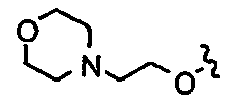
H 
(500 MHz, DMSO-d6): δ 2,75 (t, J = 5 Hz, 1H), 3.38 (m, 4H), 3.62 (m, 4H), 3.75 (t, J = 5 Hz, 1H), 4.15 (m, 2H), 4.38 (d, J = 5 Hz, 1H), 6.92 (m, 1H), 7.18 (s, 1H), 7.40-7.80 (m, 7H), 9.16 (t, J = 5 Hz, 1H), 12.95 (s, 1H). m/z 543 (M+H)+. Example 764 (Example 655) 30 mg (19%) H 
H 
(500 MHz, DMSO-d6): δ 1.85 (m, 2H), 2.85 (s, 3H), 3.03 (s, 3H), 3.50 (m, 2H), 3.61 (m, 1H), 3.75 (m, 2H), 3.78 (s, 2H), 3.98 (m, 2H), 4.45 (s, 2H), 4.85 (s, 2H), 6.96 (d, J = 7 Hz, 1H), 7.18 (s, 1H), 7.55 (d, J = 7 Hz, 1H), 7.70 (s, 1H), 7.85 (s, 1H). m/z 478 (M+H)+. Example 765 (Example 655) 12 mg (17%) H 
H 
(500 MHz, DMSO-d6): δ 2.85 (s, 3H), 3.03 (s, 3H), 3.78 (s, 2H), 4.85 (s, 2H), 5.11 (s, 2H), 6.93 (d, J = 7 Hz, 1H), 7.08 (m, 3H), 7.18 (s, 1H), 7.38 (t, J = 7 Hz, 2H), 7.55 (d, J = 7 Hz, 1H), 7.71 (s, 1H), 7.88 (s, 1H). m/z 470 (M+H)+. Example 766 (Example 655) 15 mg (21 %) H 
H 
(500 MHz, DMSO-d6): δ 2.68 (s, 3H), 2.85 (s, 3H), 3.03 (s, 3H), 3.78 (s, 2H), 4.25 (s, 2H), 4.82 (s, 2H), 6.92 (d, J = 7 Hz, 1H), 7.15 (s, 1H), 7.55 (d, J = 7 Hz, 1H), 7.75 (s, 1H), 7.92 (s, 1H). m/z 407 (M+H)+. Example 767 (Example 655) 30 mg (39%) H 
H 
(500 MHz, DMSO-d6): δ 2.18 (s, 3H), 2.38 (m, 7H), 3.28 (m, 4H), 3.55 (s, 2H), 3.65 (s, 2H), 3.80 (s, 2H), 7.28 (d, J = 7 Hz, 1H), 7.49 (s, 1H), 7.60 (m, 2H), 7.82 (s, 1H). m/z 418 (M+H)+. Example 768 (Example 655) 60 mg (65%) H 
H 
(500 MHz, DMSO-d6): δ 2.80 (s, 3H), 3.20 (m, 4H), 3.38 (s, 3H), 3.45 (m, 4H), 3.82 (s, 2H), 4.00 (s, 2H), 4.42 (s, 2H), 7.41 (d,J=7Hz, 1H), 7.62 (s, 1H), 7.71 (d, J = 7 Hz, 1H), 7.78 (s, 1H), 7.82 (s, 1H). m/z 419 (M+H)+. Example 769 (Example 655) 88 mg (54%) H 
H 
(500 MHz, DMSO-d6): δ 0.98 (t, J = 8 Hz, 3H), 1.45 (m, 2H), 1.55 (m, 2H), 2.51 (t, J = 8 Hz, 3H), 2.82 (s, 3H), 3.82 (s, 2H), 4.02 (s, 2H), 7.41 (d, J = 7 Hz, 1H), 7.61 (s, 2H), 7.68 (d, J = 7 Hz, 1H), 7.79 (s, 1H). m/z 431 (M+H)+. Example 770 (Example 655) 88 mg (49%) 
R1 R2 1H NMR MS (ESI): Example # (synthesis protocol) Obtained amt. (yield) OMe 
(500 MHz, DMSO-d6) δ 3.72 (s, 2H), 3.80 (s, 3H), 5.10 (s, 2H), 6.95 (m, 2H), 7.08 (m, 2H), 7.22 (s, 1H), 7.28-7.60 (m, 5H). m/z 399 (M+H)+ Example 771 (Example 655) 15.0 mg (13%) 

(300 MHz, DMSO-d6) δ 2.79 (s, 3H), 3.00-3.50 (m, 8H), 3.78 (s, 2H), 3.84 (br s, 2H), 5.10 (s, 2H), 6.94 (m, 1H), 7.03 (m, 2H), 7.11 (s, 1H), 7.28 (s, 1H), 7.36 (m, 3H), 7.58 (s, 1H), 7.63 (d, J = 7.8 Hz, 1H). m/z 481 (M+H)+ Example 772 (Example 655) 141 mg (74%) 

(400 MHz, DMSO-d6) δ 3.22 (m, 2H), 3.48 (m, 2H), 3.58 (m, 2H), 3.68 (m, 2H), 3.72 (s, 2H), 3.98 (m, 2H), 4.41 (t, J = 5 Hz, 2H), 5.11 (s, 2H), 7.05 (m, 4H), 7.29 (s, 1H), 7.39 (m, 3H), 7.59 (d, J = 7 Hz, 1H). m/z 498 (M+H)+ Example 773 (Example 655) 52 mg (47%) 

(500 MHz, DMSO-d6) δ 3.18 (m, 4H), 3.70 (s, 2H), 3.78 (m, 4H), 5.10 (s, 2H), 6.95 (d, J = 7 Hz, 1H), 7.01 (m, 1H), 7.08 (m, 2H), 7.21 (s, 1H), 7.36 (m, 4H), 7.45 (d, J = 7 Hz, 1H). m/z 454 (M+H)+ Example 774 (Example 655) 20 mg (41%) 

(500 MHz, DMSO-d6) δ 2.85 (s, 3H), 3.08 (t, J = 8 Hz, 2H), 3.22 (t, J=8Hz, 2H), 3.55 (d, J = 8 Hz, 2H), 3.75 (s, 2H), 3.90 (d, J = 8 Hz, 2H), 5.08 (s, 2H), 7.05 (m, 4H), 7.26 (s, 1H), 7.35 (m, 3H), 7.50 (d, J = 7 Hz, 1H). m/z 467 (M+H)+ Example 775 (Example 655) 23 mg (33%) 

(500 MHz, DMSO-d6) δ 2.79 (s, 3H), 2.99 (t, J = 8 Hz, 2H), 3.00-3.50 (m, 8H), 3.79 (s, 2H), 3.85 (br s, 2H), 4.20 (t, J = 8 Hz, 2H), 6.98 (m, 1H), 7.00 (m, 2H), 7.36 (m, 4H), 7.39 (d, J = 8 Hz, 1H), 7.59 (s, 1H), 7.62 (J = 8 Hz, 1H). m/z 495 (M+H)+ Example 776 (Example 655) 107 mg (56%) 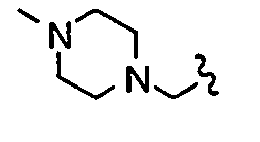

(500 MHz, DMSO-d6) δ 2.80 (s, 3H), 3.00-3.50 (m, 8H), 3.77 (s, 2H), 4.02 (s, 2H), 5.23 (s, 2H), 7.39 (m, 3H), 7.52 (m, 1H), 7.60 (s, 1H), 7.63 (m, 2H), 8.32 (br s, 1H), 8.47 (s, 1H). m/z 482 (M+H)+ Example 777 (Example 655) 88 mg (53%) 

(500 MHz, DMSO-d6) δ 2.78 (s, 3H), 3.00-3.50 (m, 8H), 3.77 (s, 2H), 3.87 (br s, 2H), 4.38 (d, J = 4.6 Hz, 2H), 7.39 (m, 3H), 7.50 (m, 2H), 7.57 (m, 2H), 7.63 (d, J = 7.6 Hz, 1H), 7.88 (d, J = 7.6 Hz, 2H), 9.02 (t, J = 4.6 Hz, 1H). m/z 508 (M+H)+ Example 778 (Example 655) 65 mg (38%) 

(500 MHz, DMSO-d6) δ 1.10 (t, J = 7.6 Hz, 3H), 2.80 (s, 3H), 3.10-3.40 (m, 8H), 3.45 (q, J = 7.6 Hz, 2H), 3.57 (t, J = 7.6 Hz, 2H), 3.63 (t, J = 7.6 Hz, 2H), 3.77 (s, 2H), 3.87 (br s, 2H), 4.43 (s, 2H), 7.38 (m, 3H), 7.58 (s, 1H), 7.62 (d, J = 7.6 Hz, 1H). m/z 477 (M+H)+ Example 779 (Example 655) 110 mg (78%) 

(500 MHz, DMSO-d6) δ 1.08 (d, J = 7.6 Hz, 6H), 2.79 (s, 3H), 3.10-3.40 (m, 8H), 3.57 (t, J = 7.6 Hz, 2H), 3.59 (m, 1H), 3.62 (t, J = 7.6 Hz, 2H), 3.77 (s, 2H), 3.85 (br s, 2H), 4.42 (s, 2H), 7.39 (m, 3H), 7.59 (s, 1H), 7.62 (d, J = 7.6 Hz, 1H). m/z 491 (M+H)+ Example 780 (Example 655) 110 mg (77%) - The procedure for Example 655 was used, substituting Example 261 for Example 148 to provide 35 mg (31%) of Example 781. 1H NMR (400 MHz, DMSO-d6) δ 2.23 (s, 3H), 2.35-2.55 (m, 8H), 3.76 (s, 2H), 4.01 (br s, 2H), 5.05 (s, 2H), 7.00 (m, 1H), 7.05 (m, 2H), 7.29 (d, J = 7.7 Hz, 1H), 7.34 (m, 3H), 7.49 (s, 1H), 7.55 (m, 1H), 7.76 (br s, 1H). MS (ESI): m/z 481 (M+H)+.
- The procedure for Example 655 was used, substituting Example 261 for Example 148 and Example 127 for phenyl propargyl ether to provide 71 mg (38%) of Example 782 as the trifluoroacetate salt. 1H NMR (400 MHz, DMSO-d6) δ 2.79 (s, 3H), 3.27 (s, 3H), 3.00-3.50 (m, 8H), 3.51 (m, 2H), 3.64 (m, 2H), 3.80 (s, 2H), 3.86 (br s, 2H), 4.40 (s, 2H), 7.38 (d, J = 7.5 Hz, 1H), 7.46 (s, 1H), 7.58 (s, 1H), 7.63 (d, J = 7.5 Hz, 1H), 7.81 (s, 1H). MS (ESI): m/z 463 (M+H)+.
- The procedure for Example 655 was used, substituting Example 654 for Example 148 and Example 127 for phenyl propargyl ether to provide 59 mg (55%) of Example 783. 1H NMR (500 MHz, DMSO-d6): δ 2.78 (s, 3H), 3.05 (m, 4H), 3.28 (s, 3H), 3.45 (m, 4H), 3.55 (t, J = 5 Hz, 2H), 3.65 (t, J = 5 Hz, 2H), 3.81 (s, 2H), 4.45 (s, 2H), 7.52 (m, 2H), 7.62 (s, 1H), 7.98 (s, 1H), 8.38 (s, 1H), 13.78 (br s, 1H). MS (ESI): m/z 477 (M+H).
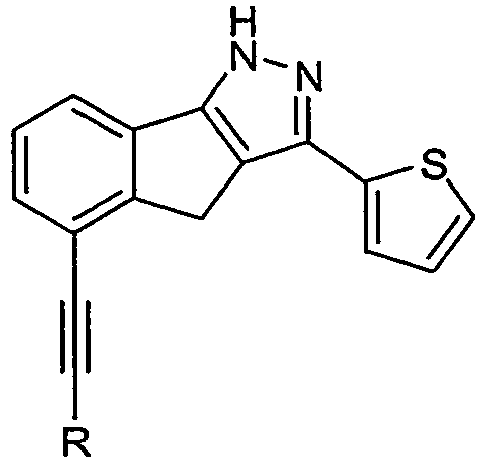
R 1H NMR (500 MHz, DMSO-d6) MS (ESI): Example # (synthesis protocol) Obtained amt (yield) 
δ 1.75 (m, 4H), 1.98 (m, 4H), 3.75 (s, 2H), 7.19 (dd, J = 3.4, 5.0 Hz, 1H), 7.31 (d, J = 7.5 Hz, 1H), 7.40 (t, J = 7.5 Hz, 1H), 7.49 (d, J = 3.4 Hz, 1H), 7.59 (d, J = 5.0 Hz, 1H), 7.64 (d, J = 7.5 Hz, 1H). m/z 347 (M+H)+. Example 784 (Example 655) 5 mg (2%) 
δ 1.05 (t, J = 7.5 Hz, 3H), 1.74 (m, 2H), 3.76 (s, 2H), 4.49 (t, J = 5.0 Hz, 1H), 7.19 (dd, J = 3.4, 5.0 Hz, 1H), 7.34 (d, J = 7.5 Hz, 1H), 7.41 (t, J = 7.5 Hz, 1H), 7.49 (d, J = 3.4 Hz, 1H), 7.59 (d, J = 5.0 Hz, 1H), 7.64 (d, J = 7.5 Hz, 1H). m/z 321 (M+H)+. Example 785 (Example 655) 13 mg (5%) 
δ 0.98 (t, J = 10.0 Hz, 3H), 1.55 (m, 2H), 1.72 (m, 2H), 3.75 (s, 2H), 4.55 (t, J = 10.0 Hz, 1H), 7.19 (dd, J = 3.4, 5.0 Hz, 1H), 7.34 (d, J = 7.5 Hz, 1H), 7.41 (t, J = 7.5 Hz, 1H), 7.49 (d, J = 3.4 Hz, 1H), 7.59 (d, J = 5.0 Hz, 1H), 7.64 (d, J = 7.5 Hz, 1H). m/z 335 (M+H)+. Example 786 (Example 655) 5 mg (2%) 
δ 0.91 (t, J = 10.0 Hz, 3H), 1.35 (m, 4H), 1.54 (m, 2H), 1.72 (m, 2H), 3.75 (s, 2H), 4.54 (t, J = 5.0 Hz, 1H), 7.19 (dd, J = 3.4, 5.0 Hz, 1H), 7.34 (d, J = 7.5 Hz, 1H), 7.41 (t, J = 7.5 Hz, 1H), 7.49 (d, J = 3.4 Hz, 1H), 7.59 (d, J = 5.0 Hz, 1H), 7.64 (d, J = 7.5 Hz, 1H). m/z 363 (M+H)+. Example 787 (Example 655) 5 mg (2%) 
δ 1.64 (m, 2H), 1.75 (m, 2H), 2.33 (t, J = 10.0 Hz, 2H), 2.55 (t, J = 10.0 Hz, 2H), 3.75 (s, 2H), 7.19 (dd, J = 3.4, 5.0 Hz, 1H), 7.34 (d, J = 7.5 Hz, 1H), 7.41 (t, J = 7.5 Hz, 1H), 7.49 (d, J = 3.4 Hz, 1H), 7.59 (d, J = 5.0 Hz, 1H), 7.64 (d, J = 7.5 Hz, 1H). m/z 363 (M+H)+. Example 788 (Example 655) 6 mg (2%) 
3.41 (s, 3H), 3.78 (s, 2H), 4.43 (s, 2H), 7.18 (dd, J = 3.4, 5.0 Hz, 1H), 7.39 (d, J = 7.5 Hz, 1H), 7.42 (t, J = 7.5 Hz, 1H), 7.50 (d, J = 3.4 Hz, 1H), 7.58 (d, J = 5.0 Hz, 1H), 7.67 (d, J = 7.5 Hz, 1H). m/z 307 (M+H)+. Example 789 (Example 655) 10 mg (4%) 
δ 1.55 (s, 6H), 3.75 (s, 2H), 7.19 (dd, J = 3.4, 5.0 Hz, 1H), 7.34 (d, J = 7.5 Hz, 1H), 7.41 (t, J = 7.5 Hz, 1H), 7.49 (d, J = 3.4 Hz, 1H), 7.59 (d, J = 5.0 Hz, 1H), 7.64 (d, J = 7.5 Hz, 1H). m/z 321 (M+H)+. Example 790 (Example 655) 13 mg (5%) 
δ 2.67 (t, J = 10.0 Hz, 2H), 3.67 (t, J = 10.0 Hz, 2H), 3.75 (s, 2H), 7.19 (dd, J = 3.4, 5.0 Hz, 1H), 7.34 (d, J = 7.5 Hz, 1H), 7.41 (t, J = 7.5 Hz, 1H), 7.49 (d, J = 3.4 Hz, 1H), 7.59 (d, J = 5.0 Hz, 1H), 7.64 (d, J = 7.5 Hz, 1H). m/z 307 (M+H)+. Example 791 (Example 655) 13 mg (5%) - The procedure for Example 331 was used, substituting Example 670 for Example 326 to provide Example 792. MS (ESI): m/z 760 (M+H)+.

- A solution of Example 791 (2.9 g, 3.8 mmol) and anhydrous hydrazine (0.53 mL, 16.9 mmol) in ethanol (30 mL) and tetrahydrofuran (30 mL) was stirred at ambient temperature overnight. Then, tetrahydrofuran (30 mL) was added and the mixture was filtered. The filtrate was concentrated under vacuum and the residue was purified by flash chromatography on silica gel using dichloromethan/methanol (10:1) + 1% ammonium hydroxide as eluent to provide Example 793. MS (ESI): m/z 630 (M+H)+.
- The procedure for Example 402 was used, substituting Example 793 for Example 396 to provide 32 mg (30%) of Example 794 as the trifluoroacetate salt. 1H NMR (500 MHz, DMSO-d6) δ 2.80 (s, 3H), 3.00-3.50 (m, 8H), 3.83 (s, 2H), 3.96 (br s, 2H), 4,20 (d. J = 5.5 Hz, 2H), 6.55 (t, J = 5.5 Hz, 1H), 6.92 (m, 1H), 7.24 (m, 2H), 7.38 (d, J = 7.6 Hz, 1H), 7.41 (m, 2H), 7.58 (s, 1H), 7.67 (m, 2H), 7.84 (s, 1H), 8.70 (s, 1H). MS (ESI): m/z 523 (M+H)+.
- The procedure for Example 559 was used, substituting Example 793 for Example 558 and 4-fluorophenyl isocyanate for 2-methoxyphenyl isocyanate to provide 24 mg (49%) of Example 795. 1H NMR (500 MHz, DMSO-d6) δ 2.29 (s, 3H), 2.35-2.65 (m, 8H), 3.54 (s, 2H), 3.80 (s, 2H), 4.20 (d, J = 5.9 Hz, 2H), 6.63 (t, J = 5.9 Hz, 1H), 7.08 (m, 2H), 7.28 (d, J = 7.5 Hz, 1H), 7.42 (m, 2H), 7.47 (s, 1H), 7.60 (d, J = 7.5 Hz, 1H), 7.67 (s, 1H), 7.83 (s, 1H), 8.73 (s, 1H). MS (ESI): m/z 541 (M+H)+.
- The procedure for Example 403 was used, substituting Example 793 for Example 395 and 2-methoxyethylamine for N-methyl-m-toluidine to provide 45 mg (33%) of Example 796 as the trifluoroacetate salt. 1H NMR (500 MHz, DMSO-d6) δ 2.80 (s, 3H), 3.00-3.50 (m, 8H), 3.19 (m, 2H), 3.25 (s, 3H), 3.33 (t, J = 5.6 Hz, 2H), 3.83 (s, 2H), 3.98 (br s, 2H), 4.11 (s, 2H), 6.10 (br s, 1H), 6.39 (br s, 1H), 7.40 (d, J = 7.6 Hz, 1H), 7.60 (s, 1H), 7.65 (d, J = 1.2 Hz, 1H), 7.68 (d, J = 7.6 Hz, 1H), 7.83 (d, J = 1.2 Hz, 1H). MS (ESI): m/z 505 (M+H)+.

R 1H NMR MS (ESI): Example # (synthesis protocol) Obtained amt (yield) 
(500 MHz, DMSO-d6) δ 2.20 (s, 3H), 2.80 (s, 3H), 3.00-3.50 (m, 8H), 3.83 (s, 2H), 3.94 (br s, 2H), 4.22 (d, J = 5.5 Hz, 2H), 6.46 (t, J = 5.5 Hz, 1H), 6.89 (m, 2H), 7.13 (m, 2H), 7.39 (d, J = 7.6 Hz, 1H), 7.59 (s, 1H), 7.68 (m, 2H), 7.81 (s, 1H), 7.86 (s, 1H). m/z 537 (M+H)+ Example 797 (Example 794) 30 mg (28%) 
(500 MHz, DMSO-d6) δ 2.81 (s, 3H), 3.00-3.50 (m, 8H), 3.84 (m, 5H), 3.96 (br s, 2H), 4.21 (d, J = 5.2 Hz, 2H), 6.44 (t, J = 5.2 Hz, 1H), 6.87 (m, 3H), 6.97 (m, 1H), 7.40 (d, J = 7.3 Hz, 1H), 7.59 (s, 1H), 7.68 (m, 2H), 7.85 (s, 1H), 8.07 (s, 1H). m/z 553 (M+H)+ Example 798 (Example 794) 26 mg (23%) 
(500 MHz, DMSO-d6) δ 2.79 (s, 3H), 3.00-3.50 (m, 8H), 3.83 (s, 2H), 3.91 (br s, 2H), 4.23 (d, J = 5.5 Hz, 2H), 6.97 (m, 1H), 7.05 (t, J = 5.5 Hz, 1H), 7.11 (m, 1H), 7.19 (m, 1H), 7.38 (d, J = 7.8 Hz, 1H), 7.57 (s, 1H), 7.66 (d, J = 7.8 Hz, 1H), 7.68 (s, 1H), 7.84 (s, 1H), 8.10 (m, 1H), 8.45 (s, 1H). m/z 541 (M+H)+ Example 799 (Example 794) 43 mg (53%) 
(500 MHz, DMSO-d6) δ 2.79 (s, 3H), 3.00-3.50 (m, 8H), 3.83 (s, 2H), 3.89 (br s, 2H), 4.25 (d, J = 5.5 Hz, 2H), 6.99 (m, 1H), 7.27 (m, 1H), 7.37 (d, J = 7.8 Hz, 1H), 7.42 (m, 1H), 7.47 (t, J = 5.5 Hz, 1H), 7.57 (s, 1H), 7.66 (d, J = 7.8 Hz, 1H), 7.69 (s, 1H), 7.85 (s, 1H), 8.13 (m, 1H), 8.16 (s, 1H). m/z 557 (M)+. Example 800 (Example 794) 41 mg (51%) 
(500 MHz, DMSO-d6) δ 2.79 (s, 3H), 3.00-3.50 (m, 8H), 3.83 (s, 2H), 3.89 (br s, 2H), 4.24 (d, J = 5.5 Hz, 2H), 6.94 (m, 1H), 7.31 (m, 1H), 7.38 (d, J = 7.8 Hz, 1H), 7.54 (t, J = 5.5 Hz, 1H), 7.57 (s, 2H), 7.66 (d, J = 7.8 Hz, 1H), 7.69 (s, 1H), 7.8s (s, 1H), 7.99 (s, 1H), 8.05 (m, 1H). 601, 603 (M+H)+ Example 801 (Example 794) 41 mg (49%) 
(400 MHz, DMSO-d6) 2.25 (s, 3H), 2.77 (s, 3H), 3.00-3.50 (m, 8H), 3.82 (s, 2H), 3.98 (br s, 2H), 4.19 (d, J = 5.8 Hz, 2H), 6.66 (t, J = 5.8 Hz, 1H), 6.74 (d, J = 7.4 Hz, 1H), 6.99 (s, 1H), 7.12 (m, 1H), 7.21 (d, J = 8.0 Hz, 1H), 7.25 (s, 1H), 7.35 (d, J = 8.0 Hz, 1H), 7.55 (s, 1H), 7.64 (d, J = 7.7 Hz, 1H), 7.66 (s, 1H), 7.83 (s, 1H), 8.61 (s, 1H). m/z 537 (M+H)+ Example 802 (Example 794) 21 mg (28%) 
(400 MHz, DMSO-d6) δ 2.77 (s, 3H), 3.00-3.50 (m, 8H), 3.70 (s, 3H), 3.81 (s, 2H), 3.94 (br s, 2H), 4.18 (d, J = 5.5 Hz, 2H), 6.50 (dd, J = 8.0, 1.8 Hz, 1H), 6.63 (t, J = 5.5 Hz, 1H), 6.90 (d, J = 8.0 Hz, 1H), 7.13 (m, 2H), 7.35 (d, J = 7.7 Hz, 1H), 7.54 (s, 1H), 7.64 (m, 2H), 7.82 (s, 1H), 8.69 (s, 1H). m/z 553 (M+H)+ Example 803 (Example 794) 34 mg (30%) 
(500 MHz, DMSO-d6) δ 2.79 (s, 3H), 3.00-3.50 (m, 8H), 3.82 (s, 2H), 3.90 (br s, 2H), 4.20 (d, J = 5.6 Hz, 2H), 6.72 (m, 1H), 6.78 (t, J = 5.6 Hz, 1H), 7.09 (m, 1H), 7.26 (m, 1H), 7.37 (d, J = 7.8 Hz, 1H), 7.47 (m, 1H), 7.57 (s, 1H), 7.66 (m, 2H), 7.84 (s, 1H), 8.97 (s, 1H). m/z 541 (M+H)+ Example 804 (Example 794) 42 mg (54%) 
(500 MHz, DMSO-d6) δ 2.78 (s, 3H), 3.00-3.50 (m, 8H), 3.82 (s, 2H), 3.90 (br s, 2H), 4.20 (d, J = 5.6 Hz, 2H), 6.79 (t, J = 5.6 Hz, 1H), 6.96 (m, 1H), 7.25 (m, 3H), 7.36 (d, J = 7.8 Hz, 1H), 7.56 (s, 1H), 7.67 (m, 2H), 7.84 (s, 1H), 8.95 (s, 1H). m/z 557 (M)+. Example 805 (Example 794) 52 mg (65%) 
(500 MHz, DMSO-d6) δ 2.79 (s, 3H), 3.00-3.50 (m, 8H), 3.82 (s, 2H), 3.90 (br s, 2H), 4.20 (d, J = 5.6 Hz, 2H), 6.79 (t, J = 5.6 Hz, 1H), 7.10 (d, J = 8.7 Hz, 1H), 7.20 (t, J = 8.1 Hz, 1H), 7.29 (d, J = 9.0 Hz, 1H), 7.37 (d, J = 7.8 Hz, 1H), 7.57 (s, 1H), 7.67 (m, 2H), 7.84 (m, 2H), 8.94 (s, 1H). m/z 601, 603 (M+H)+ Example 806 (Example 794) 43 mg (51%) 
(400 MHz, DMSO-d6) δ 2.77 (s, 3H), 3.00-3.50 (m, 8H), 3.81 (s, 2H), 3.85 (br s, 2H), 4.20 (d, J = 5.8 Hz, 2H), 6.86 (t, J = 5.8 Hz, 1H), 7.25 (d, J = 7.7 Hz, 1H), 7.35 (d, J = 7.5 Hz, 1H), 7.46 (t, J = 8.3 Hz, 1H), 7.54 (m, 2H), 7.64 (d, J = 8.0 Hz, 1H), 7.66 (d, J = 1.5 Hz, 1H), 7.82 (d, J = 1.5 Hz, 1H), 7.98 (s, 1H), 9.13 (s, 1H). m/z 591 (M+H)+ Example 807 (Example 794) 41 mg (35%) 
(400 MHz, DMSO-d6) δ 2.17 (s, 3H), 2.73 (s, 3H), 2.90-3.45 (m, 8H), 3.77 (s, 2H), 4.05 (br s, 2H), 4.14 (d, J = 5.5 Hz, 2H), 6.55 (t, J = 5.5 Hz, 1H), 6.99 (m, 2H), 7.23 (m, 2H), 7.31 (d, J = 7.7 Hz, 1H), 7.50 (s,1H), 7.60 (m, 2H), 7.78 (s, 1H), 8.51 (s, 1H). m/z 537 (M+H)+ Example 808 (Example 794) 34 mg (31%) 
(400 MHz, DMSO-d6) δ 2.80 (s, 3H), 3.00-3.50 (m, 8H), 3.70 (s, 3H), 3.83 (s, 2H), 3.96 (br s, 2H), 4,18 (d. J = 5.5 Hz, 2H), 6.55 (t, J = 5.5 Hz, 1H), 6.83 (m, 2H), 7.32 (m, 2H), 7.38 (d, J = 7.6 Hz, 1H), 7.57 (s, 1H), 7.67 (m, 2H), 7.84 (s, 1H), 8.50 (s, 1H). m/z 553 (M+H)+ Example 809 (Example 794) 30 mg (27%) 
(500 MHz, DMSO-d6) δ 2.26 (s, 3H), 2.35-2.65 (m, 8H), 3.53 (s, 2H), 3.80 (s, 2H), 4.20 (d, J = 5.9 Hz, 2H), 6.69 (t, J = 5.9 Hz, 1H), 7.29 (m, 3H), 7.44 (m, 3H), 7.60 (d, J = 7.5 Hz, 1H), 7.67 (s, 1H), 7.83 (s, 1H), 8.85 (s, 1H). m/z 557 (M)+. Example 810 (Example 794) 20 mg (40%) 
(500 MHz, DMSO-d6) δ 2.78 (s, 3H), 3.00-3.50 (m, 8H), 3.82 (s, 2H), 3.90 (br s, 2H), 4.22 (d, J = 5.6 Hz, 2H), 6.88 (t, J = 5.6 Hz, 1H), 7.38 (d, J = 6.8 Hz, 1H), 7.59 (m, 3H), 7.65 (m, 4H), 7.84 (s, 1H), 9.20 (s, 1H). m/z 591 (M+H)+ Example 811 (Example 794) 37 mg (45%) 
(500 MHz, DMSO-d6) δ 2.78 (s, 3H), 3.00 (s, 6H), 3.00-3.50 (m, 8H), 3.82 (s, 2H), 3.89 (br s, 2H), 4.20 (d, J = 5.6 Hz, 2H), 6.67 (m, 1H), 7.17 (m, 1H), 7.39 (m, 3H), 7.58 (s, 1H), 7.66 (m, 3H), 7.84 (s, 1H), 8.71 (br s, 1H). m/z 566 (M+H)+ Example 812 (Example 794) 42 mg (46%) 
(500 MHz, DMSO-d6) δ 2.79 (s, 3H), 3.00-3.50 (m, 8H), 3.82 (s, 2H), 3.88 (br s, 2H), 4.21 (d, J = 5.6 Hz, 2H), 6.82 (t, J = 5.6 Hz, 1H), 7.24 (d, J = 7.8 Hz, 1H), 7.40 (m, 2H), 7.55 (m, 2H), 7.66 (m, 2H), 7.84 (s, 1H), 7.96 (s, 1H), 9.07 (s, 1H). m/z 623 (M+H)+ Example 813 (Example 794) 27 mg (32%) 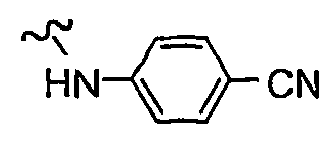
(500 MHz, DMSO-d6) δ 2.79 (s, 3H), 3.00-3.50 (m, 8H), 3.82 (s, 2H), 3.90 (br s, 2H), 4.22 (d, J = 5.6 Hz, 2H), 6.96 (t, J = 5.6 Hz, 1H), 7.39 (d, J = 7.5 Hz, 1H), 7.60 (m, 3H), 7.68 (m, 4H), 7.84 (s, 1H), 9.32 (s, 1H). m/z 548 (M+H)+ Example 814 (Example 794) 36 mg (45%) 
(500 MHz, DMSO-d6) δ 2.09 (s, 3H), 2.24 (s, 3H), 2.81 (s, 3H), 3.00-3.50 (m, 8H), 3.84 (s, 2H), 3.96 (br s, 2H), 4.20 (d, J = 5.2 Hz, 2H), 6.86 (m, 2H), 7.00 (t, J = 7.8 Hz, 1H), 7.40 (d, J = 7.8 Hz, 1H), 7.49 (d, J = 7.8 Hz, 1H), 7.59 (s, 1H), 7.68 (m, 2H), 7.86 (m, 2H). m/z 551 (M+H)+ Example 815 (Example 794) 27 mg (24%) 
(500 MHz, DMSO-d6) δ 2.16 (s, 3H), 2.21 (s, 3H), 2.79 (s, 3H), 3.00-3.50 (m, 8H), 3.83 (s, 2H), 3.91 (br s, 2H), 4.20 (d, J = 5.6 Hz, 2H), 6.88 (t, J = 5.6 Hz, 1H), 6.91 (d, J = 7.8 Hz, 1H), 6.96 (s, 1H), 7.38 (d, J = 7.8 Hz, 1H), 7.55 (m, 2H), 7.68 (m, 2H), 7.74 (s, 1H), 7.84 (s, 1H). m/z 551 (M+H)+ Example 816 (Example 794) 42 mg (53%) 
(500 MHz, DMSO-d6) δ 2.15 (s, 3H), 2.23 (s, 3H), 2.79 (s, 3H), 3.00-3.50 (m, 8H), 3.83 (s, 2H), 3.92 (br s, 2H), 4.21 (d, J = 5.6 Hz, 2H), 6.73 (d, J = 7.3 Hz, 1H), 6.97 (t, J = 5.6 Hz, 1H), 7.01 (d, J = 7.3 Hz, 1H), 7.39 (d, J = 7.8 Hz, 1H), 7.59 (s, 1H), 7.63 (s, 1H), 7.67 (m, 2H), 7.75 (s, 1H), 7.84 (s, 1H). m/z 551 (M+H)+ Example 817 (Example 794) 25 mg (32%) 
(500 MHz, DMSO-d6) δ 2.14 (s, 3H), 2.17 (s, 3H), 2.79 (s, 3H), 3.00-3.50 (m, 8H), 3.82 (s, 2H), 3.91 (br s, 2H), 4.18 (d, J = 5.6 Hz, 2H), 6.57 (t, J = 5.6 Hz, 1H), 6.98 (d, J = 8.1 Hz, 1H), 7.14 (dd, J = 8.1, 2.2 Hz, 1H), 7.18 (d, J = 2.2 Hz, 1H), 7.38 (d, J = 7.5 Hz, 1H), 7.57 (s, 1H), 7.66 (m, 2H), 7.83 (s, 1H), 8.47 (s, 1H). m/z 551 (M+H)+ Example 818 (Example 794) 41 mg (51%) 
(500 MHz, DMSO-d6) δ 2.21 (s, 6H), 2.80 (s, 3H), 3.00-3.55 (m, 8H), 3.83 (s, 2H), 3.94 (br s, 2H), 4.18 (d, J = 5.5 Hz, 2H), 6.57 (s, 1H), 6.62 (t, J = 5.5 Hz, 1H), 7.04 (s, 2H), 7.38 (d, J = 7.9 Hz, 1H), 7.58 (s, 1H), 7.67 (m, 2H), 7.84 (s, 1H), 8.53 (s, 1H). m/z 551 (M+H)+ Example 819 (Example 794) 30 mg (27%) 
(500 MHz, DMSO-d6) δ 2.79 (s, 3H), 3.00-3.50 (m, 8H), 3.72 (s, 3H), 3.82 (s, 5H), 3.90 (br s, 2H), 4.20 (d, J = 5.6 Hz, 2H), 6.45 (dd, J = 8.7, 2.6 Hz, 1H), 6.s8 (d, J = 2.6 Hz, 1H), 7.09 (t, J = 5.6 Hz, 1H), 7.38 (d, J = 7.5 Hz, 1H), 7.57 (s, 1H), 7.66 (m, 2H), 7.81 (s, 1H), 7.84 (d, J = 1.2 Hz, 1H), 7.86 (d, J = 8.7 Hz, 1H). m/z 583 (M+H)+ Example 820 (Example 794) 26 mg (32%) 
(500 MHz, DMSO-d6) δ 2.78 (s, 3H), 3.00-3.50 (m, 8H), 3.68 (s, 3H), 3.79 (s, 3H), 3.82 (s, 2H), 3.90 (br s, 2H), 4.21 (d, J = 5.6 Hz, 2H), 6.45 (dd, J = 8.8, 3.1 Hz, 1H), 6.88 (d, J = 8.8 Hz, 1H), 7.36 (m, 2H), 7.57 (s, 1H), 7.67 (m, 2H), 7.81 (d, J = 3.1 Hz, 1H), 7.84 (s, 1H), 8.08 (s, 1H). m/z 583 (M+H)+ Example 821 (Example 794) 8 mg (10%) 
(500 MHz, DMSO-d6) δ 2.79 (s, 3H), 3.00-3.50 (m, 8H), 3.70 (s, 6H), 3.82 (s, 2H), 3.88 (br s, 2H), 4.19 (d, J = 5.6 Hz, 2H), 6.10 (t, J = 2.4 Hz, 1H), 6.63 (t, J = 5.6 Hz, 1H), 6.66 (s, 1H), 6.67 (s, 1H), 7.37 (d, J = 7.5 Hz, 1H), 7.57 (s, 1H), 7.66 (m, 2H), 7.83 (d, J = 1.2 Hz, 1H), 8.70 (s, 1H). m/z 583 (M+H)+ Example 822 (Example 794) 23 mg (27%) 
(500 MHz, DMSO-d6) δ 2.29 (s, 3H), 2.35-2.65 (m, 8H), 3.54 (s, 2H), 3.80 (s, 2H), 4.25 (d, J = 5.6 Hz, 2H), 7.24 (dd, J = 7.8, 1.3 Hz, 1H), 7.29 (m, 2H), 7.48 (s, 1H), 7.57 (t, J = 5.6 Hz, 1H), 7.61 (d, J = 7.5 Hz, 1H), 7.69 (s, 1H), 7.85 (s, 1H), 8.14 (dd, J = 8.1, 1.6 Hz, 1H), 8.35 (s, 1H). m/z 591 (M)+. Example 823 (Example 794) 17 mg (32%) 
(500 MHz, DMSO-d6) δ 2.79 (s, 3H), 3.00-3.50 (m, 8H), 3.83 (s, 2H), 3.91 (br s, 2H), 4.24 (d, J = 5.3 Hz, 2H), 7.35 (dd, J = 8.9, 2.5 Hz, 1H), 7.38 (d, J = 7.8 Hz, 1H), 7.51 (t, J = 5.3 Hz, 1H), 7.57 (m, 2H), 7.66 (d, J = 7.8 Hz, 1H), 7.69 (d, J = 1.2 Hz, 1H), 7.85 (d, J= 1.2 Hz, 1H), 8.17 (d, J = 8.9 Hz, 1H), 8.27 (s, 1H). m/z 591 (M)+. Example 824 (Example 794) 37 mg (45%) 
(500 MHz, DMSO-d6) δ 2.79 (s, 3H), 3.00-3.50 (m, 8H), 3.83 (s, 2H), 3.91 (br s, 2H), 4.25 (d, J = 5.3 Hz, 2H), 7.05 (dd, J = 8.5, 2.8 Hz, 1H), 7.38 (d, J = 7.6 Hz, 1H), 7.46 (d, J = 8.5 Hz, 1H), 7.58 (s, 1H), 7.62 (t, J = 5.3 Hz, 1H), 7.66 (d, J = 7.6 Hz, 1H), 7.69 (d, J = 1.2 Hz, 1H), 7.86 (d, J = 1.2 Hz, 1H), 8.30 (d, J = 2.8 Hz, 1H), 8.34 (s, 1H). m/z 591 (M)+. Example 825 (Example 794) 36 mg (43%) 
(500 MHz, DMSO-d6) δ 2.78 (s, 3H), 3.00-3.50 (m, 8H), 3.82 (s, 2H), 3.88 (br s, 2H), 4.20 (d, J = 5.3 Hz, 2H), 7.86 (t, J = 5.3 Hz, 1H), 7.30 (dd, J = 8.7, 2.5 Hz, 1H), 7.37 (d, J = 7.2 Hz, 1H), 7.48 (d, J = 8.7 Hz, 1H), 7.56 (s, 1H), 7.66 (m, 2H), 7.84 (d, J = 1.2 Hz, 1H), 7.87 (d, J = 2.5 Hz, 1H), 9.08 (s, 1H). m/z 591 (M)+. Example 826 (Example 794) 54 mg (65%) 
(500 MHz, DMSO-d6) δ 2.78 (s, 3H), 3.00-3.50 (m, 8H), 3.82 (s, 2H), 3.88 (br s, 2H), 4.21 (d, J = 5.3 Hz, 2H), 7.00 (t, J = 5.3 Hz, 1H), 7.16 (d, J = 8.4 Hz, 1H), 7.37 (d, J = 7.8 Hz, 1H), 7.56 (s, 1H), 7.61 (d, J = 8.4 Hz, 1H), 7.66 (m, 3H), 7.84 (d, J = 1.2 Hz, 1H), 9.37 (s, 1H). m/z 609 (M+H)+ Example 827 (Example 794) 57 mg (67%) 
(500 MHz, DMSO-d6) δ 2.79 (s, 3H), 3.00-3.50 (m, 8H), 3.60 (s, 3H), 3.73 (s, 6H), 3.82 (s, 2H), 3.90 (br s, 2H), 4.19 (d, J = 5.6 Hz, 2H), 6.60 (t, J = 5.6 Hz, 1H), 6.79 (s, 2H), 7.38 (d, J = 7.5 Hz, 1H), 7.57 (s, 1H), 7.66 (m, 2H), 7.84 (s, 1H), 8.65 (s, 1 H). m/z 613 (M+H)+ Example 828 (Example 794) 38 mg (45%) 
(500 MHz, DMSO-d6) δ 2.81 (s, 3H), 2.84 (s, 3H), 3.00-3.50 (m, 8H), 3.26 (s, 3H), 3.37 (m, 2H), 3.41 (m, 2H), 3.83 (s, 2H), 3.98 (br s, 2H), 4.11 (d, J = 5.0 Hz, 2H), 6.79 (t, J = 5.0 Hz, 1H), 7.40 (d, J = 7.6 Hz, 1H), 7.60 (s, 1H), 7.65 (d, J = 1.2 Hz, 1H), 7.68 (d, J = 7.6 Hz, 1H), 7.83 (d, J = 1.2 Hz, 1H). m/z 519 (M+H)+ Example 829 (Example 796) 31 mg (23%) 
(500 MHz, DMSO-d6) δ 2.80 (s, 3H), 3.00-3.50 (m, 8H), 3.26 (s, 6H), 3.41 (m, 8H), 3.83 (s, 2H), 3.98 (br s, 2H), 4.11 (d, J = 5.0 Hz, 2H), 6.76 (t, J = 5.0 Hz, 1H), 7.40 (d, J = 7.6 Hz, 1H), 7.59 (s, 1H), 7.65 (d, J = 1.2 Hz, 1H), 7.68 (d, J = 7.6 Hz, 1H), 7.83 (d, J = 1.2 Hz, 1H). m/z 563 (M+H)+ Example 830 (Example 796) 13 mg (9%) 
(500 MHz, DMSO-d6) δ 1.81 (m, 4H), 2.81 (s, 3H), 3.00-3.50 (m, 12H), 3.83 (s, 2H), 4.01 (br s, 2H), 4.11 (br s, 2H), 6.65 (m, 1H), 7.40 (d, J = 7.5 Hz, 1H), 7.60 (s, 1H), 7.65 (d, J = 1.2 Hz, 1H), 7.68 (d, J = 7.5 Hz, 1H), 7.83 (d, J = 1.2 Hz, 1H). m/z 501 (M+H)+ Example 831 (Example 796) 18 mg (13%) 
(500 MHz, DMSO-d6) δ 1.43 (m, 4H), 1.54 (m, 2H), 2.79 (s, 3H), 3.00-3.50 (m, 12H), 3.83 (s, 2H), 3.90 (br s, 2H), 4.10 (d, J = 5.3 Hz, 2H), 6.95 (t, J = 5.3 Hz, 1H), 7.38 (d, J = 7.7 Hz, 1H), 7.58 (s, 1H), 7.65 (d, J = 1.2 Hz, 1H), 7.66 (d, J = 7.7 Hz, 1H), 7.82 (d, J = 1.2 Hz, 1H). m/z 515 (M+H)+ Example 832 (Example 796) 30 mg (35%) 
(500 MHz, DMSO-d6) δ 2.81 (s, 3H), 3.00-3.50 (m, 12H), 3.56 (m, 4H), 3.83 (s, 2H), 3.99 (br s, 2H), 4.13 (d, J = 5.3 Hz, 2H), 6.37 (t, J = 5.3 Hz, 1H), 7.40 (d, J = 7.6 Hz, 1H), 7.60 (s, 1H), 7.66 (d, J = 1.2 Hz, 1H), 7.68 (d, J = 7.6 Hz, 1H), 7.78 (d, J = 1.2 Hz, 1H). m/z 517 (M+H)+ Example 833 (Example 796) 85 mg (62%) - To methanesulfonyl chloride (7 µl, 0.087 mmol) was added a solution of Example 793 (50 mg, 0.079 mmol) in pyridine (1 mL) and the mixture was agitated at room temperature for about 2.5 hours. The mixture was concentrated under vacuum, to the residue was added a 4M solution of hydrochloric acid in 1,4-dioxane and the mixture was agitated at room temperature for about 6 hours. The mixture was concentrated under vacuum and the residue was purified by preparative HPLC on a Waters Symmetry C8 column (25 mm x 100 mm, 7 µm particle size) using a gradient of 10% to 100% acetonitrile:0.1% aqueous TFA over 8 minutes (10 minutes run time) at a flow rate of 40 mL/minute to provide 11 mg (32%) of Example 834 as the trifluoroacetate salt. 1H NMR (500 MHz, CD3OD) δ 2.28 (s, 3H), 2.40-2.65 (m, 8H), 3.08 (s, 3H), 3.61 (s, 2H), 3.80 (s, 2H), 4.18 (s, 2H), 7.34 (d, J = 7.5 Hz, 1H), 7.55 (s, 1H), 7.64 (m, 2H), 7.71 (s, 1H). MS (ESI): m/z 482 (M+H)+.
- The procedure for Example 834 was used, substituting benzenesulfonyl chloride for methanesulfonyl chloride to provide 18 mg (47%) of Example 835 as the trifluoroacetate salt. 1H NMR (500 MHz, CD3OD) δ 2.28 (s, 3H), 2.40-2.65 (m, 8H), 3.61 (s, 2H), 3.78 (s, 2H), 4.09 (s, 2H), 7.34 (d, J = 7.8 Hz, 1H), 7.38 (s, 1H), 7.59 (m, 6H), 7.93 (m, 2H). MS (ESI): m/z 544 (M+H)+.
- To acetyl chloride (6.8 mg, 0.086 mmol) was added a solution of Example 793 (50 mg, 0.079 mmol) in pyridine (1 mL) and the mixture was agitated for about 2.5 hours. The mixture was concentrated under vacuum, to the residue was added a 4M solution of hydrochloric acid in 1,4-dioxane and the mixture was agitated at room temperature for about 6 hours. The mixture was concentrated under vacuum and the residue was purified by preparative HPLC on a Waters Symmetry C8 column (25 mm x 100 mm, 7 µm particle size) using a gradient of 10% to 100% acetonitrile:0.1% aqueous TFA over 8 minutes (10 minutes run time) at a flow rate of 40 mL/minute to provide 2 mg (8%) of Example 836 as the trifluoroacetate salt. 1H NMR (500 MHz, CD3OD) δ 1.99 (s, 3H), 2.28 (s, 3H), 2.40-2.65 (m, 8H), 3.61 (s, 2H), 3.80 (s, 2H), 4.22 (s, 2H), 7.34 (d, J = 7.5 Hz, 1H), 7.56 (s, 1H), 7.60 (s, 1H), 7.66 (m, 1H), 7.68 (m, 1H). MS (ESI): m/z 446 (M+H)+.
- The procedure for Example 836 was used, substituting benzoyl chloride for acetyl chloride to provide 14 mg (39%) of Example 837 as the trifluoroacetate salt. 1H NMR (500 MHz, CD3OD) δ 2.28 (s, 3H), 2.40-2.65 (m, 8H), 3.60 (s, 2H), 3.79 (s, 2H), 4.45 (s, 2H), 7.33 (d, J = 7.8 Hz, 1H), 7.48 (m, 2H), 7.56 (m, 2H), 7.62 (s, 1H), 7.65 (m, 1H), 7.68 (s, 1H), 7.87 (m, 2H). MS (ESI): m/z 508 (M+H)+.
- The procedure for Example 594 was used, substituting Example 793 for Example 395 to provide 4 mg (11%) of Example 838 as the trifluoroacetate salt. 1H NMR (500 MHz, CD3OD) δ 2.28 (s, 3H), 2.40-2.65 (m, 8H), 3.61 (s, 2H), 3.80 (s, 2H), 4.25 (s, 2H), 7.14 (m, 2H), 7.22 (m, 1H), 7.36 (m, 3H), 7.55 (s, 1H), 7.65 (m, 2H), 7.69 (s, 1H). MS (ESI): m/z 524 (M+H)+.
- To a solution of Example 148 (100 mg, 0.23 mmol) in N,N-dimethylformamide (5 mL) was added 4-vinylpyridine (38 µl, 0.35 mmol), dichlorobis(triphenylphosphine)palladium(II) (8 mg, 0.01 mmol) and trietylamine (0.23 mL, 1.63 mmol) and the mixture was heated to reflux for about 4 hours. The reaction mixture was filtered through Celite, the filtrate was concentrated under vacuum and the residue was purified by preparative HPLC on a Waters Symmetry C8 column (25 mm x 100 mm, 7 µm particle size) using a gradient of 10% to 100% acetonitrile:0.1% aqueous TFA over 8 minutes (10 minutes run time) at a flow rate of 40 mL/minute to provide 42 mg (40%) of Example 839 as the trifluoroacetate salt. 1H NMR (500 MHz, DMSO-d6): δ 2.80 (s, 3H), 3.00-3.50 (m, 8H), 3.85 (s, 2H), 3.92 (s, 2H), 7.23 (d, J = 15.9 Hz, 1H), 7.40 (d, J = 7.8 Hz, 1H), 7.60 (s, 1H), 7.67 (d, J = 7.8 Hz, 1H), 7.88 (s, 1H), 8.01 (s, 1H), 8.11 (m, 2H), 8.17 (d, J = 15.9 Hz, 1H), 8.79 (m, 2H). MS (ESI): m/z 454 (M+H).
- To a solution of Example 147 (50 mg, 0.116 mmol) in 1,2-dimethoxyethane (1 mL) and ethanol (0.3 mL) was added 2-thiopheneboronic acid (22 mg, 0.175 mmol), tetrakis(triphenylphosphine)palladium(O) (7 mg, 0.006 mmol) and a 2M aqueous solution of sodium carbonate and the mixture was heated to about 80 C overnight. The reaction mixture was filtered through Celite, the filtrate was concentrated under vacuum and the residue was purified by preparative HPLC on a Waters Symmetry C8 column (25 mm x 100 mm, 7 µm particle size) using a gradient of 10% to 100% acetonitrile:0.1% aqueous TFA over 8 minutes (10 minutes run time) at a flow rate of 40 mL/minute to provide 12 mg (13%) of Example 840 as the trifluoroacetate salt.
- 1H NMR (500 MHz, DMSO-d6): δ 2.79 (s, 3H), 3.00-3.50 (m, 8H), 3.80 (s, 2H), 3.87 (br s, 2H), 7.13 (dd, J = 5.3, 3.7 Hz, 1H), 7.37 (m 3H), 7.41 (d, J = 4.0 Hz, 1H), 7.54 (dd, J = 5.3, 1.3 Hz, 1H), 7.58 (m, 1H), 7.64 (m, 1H). MS (ESI): m/z 433 (M+H).
- The procedure for Example 840 was used, substituting 3-thiopheneboronic acid for 2-thiopheneboronic acid to provide 32 mg (36%) of Example 841 as the trifluoroacetate salt. 1H NMR (500 MHz, DMSO-d6): δ 2.80 (s, 3H), 3.00-3.50 (m, 8H), 3.80 (s, 2H), 3.92 (br s, 2H), 7.41 (m, 2H), 7.44 (d, J = 3.4 Hz, 1H), 7.48 (dd, J = 5.0, 1.3 Hz, 1H), 7.59 (m, 1H), 7.64 (m, 1H), 7.67 (dd, J = 5.0, 2.8 Hz, 1H), 7.77 (dd, J = 2.8, 1.3 Hz, 1H). MS (ESI): m/z 433 (M+H).
- To a solution of aluminum chloride (55.0 g, 0.41 mol) in toluene (220 ml) was added 3-chloropropionyl chloride (50.0 g, 0.39 mol) at 0 °C, and the mixture was stirred at ambient temperature for 3 h. The reaction mixture was poured into iced water and extracted with AcOEt. The extract was neutralized with 10 % NaHCO3, washed with water and brine, dried over Na2SO4, and concentrated in vacuo. The residue was washed with n-heptane to give Example 842A (63.0 g, 88 %) as a pale yellow solid.
- A mixture of Example 842A (30.6 g, 0.17 mol) and N-bromosuccinimide (31.3 g, 0.17 mol) in CC14 (150 ml) was refluxed for 2.5 h. The reaction mixture was filtered and the filtrate was concentrated in vacuo. The residue was diluted with H2O and extracted with AcOEt. The extract was washed with brine, dried over Na2SO4, and concentrated in vacuo. The residue was washed with n-heptane and recrystallized from AcOEt to give Example 842B (22.5 g, 51 %) as colorless crystals.
- A mixture of Example 842B (22.5 g, 0.086 mol) and conc. H2SO4 (225ml) was stirred at 100 °C for 30 min. The reaction mixture was poured into a mixture of iced water and AcOEt, and then activated carbon powder was added. The activated carbon was filtrated off, and the layers were separated. The organic layer was washed with water, 10 % NaHCO3 and brine, dried over Na2SO4, and concentrated in vacuo. The residue was purified by column chromatography [SiO2, eluent: AcOEt] to give Example 842C (14.7 g, 76 %) as a brown crystalline solid.
- The desired product was prepared by substituting morpholine for N-methyl piperazine and Example 842C for Example 54 in Example 56.
- The desired product was prepared by substituting Example 842D for Example 56 in Example 138. m.p. 178-179°C.
- The desired product was prepared by substituting dimethylamine for N-methyl piperazine and Example 842C for Example 54 in Example 56.
- The desired product was prepared by substituting Example 843A for Example 56 in Example 138. m.p.204-206°C.
- The desired product was prepared by substituting 4-dimethylaminopiperidine for N-methyl piperazine and Example 842C for Example 54 in Example 56.
- The desired product was prepared by substituting Example 844A for Example 56 in Example 138. m.p.96-98°C.
- The desired product was prepared by substituting Example 842C for Example 54 in Example 56.
- The desired product was prepared by substituting phenyl thiophene-3-carboxylate for phenyl thiophene 2-carboxylate and Example 845 for Example 56 in Example 138. m.p. 115-117°C.
- The desired product was prepared by substituting phenyl thiophene-3-carboxylate for phenyl thiophene 2-carboxylate and Example 842D for Example 56 in Example 138. m.p. 196-198°C.
- The desired product was prepared by substituting N-ethyl piperazine for N-methyl piperazine and Example 842C for Example 54 in Example 56.
- The desired product was prepared by substituting phenyl thiophene-3-carboxylate for phenyl thiophene 2-carboxylate and Example 847A for Example 56 in Example 138. m.p. 111-112°C.
- The desired product was prepared by substituting Example 847A for Example 56 in Example 138. m.p. 169.5-170°C.
- The desired product was prepared by substituting 2-Dimethylamino-1-piperazin-1-yl-ethanone for N-methyl piperazine and Example 842C for Example 54 in Example 56.
- The desired product was prepared by substituting phenyl thiophene-3-carboxylate for phenyl thiophene 2-carboxylate and Example 849A for Example 56 in Example 138. m.p. 190-191.5°C.
- The desired product was prepared by substituting Example 849A for Example 56 in Example 138. m.p. 193-197°C.
- The desired product was prepared by substituting 2-piperazin-1-yl-pyrimidine for N-methyl piperazine and Example 842C for Example 54 in Example 56.
- The desired product was prepared by substituting phenyl thiophene-3-carboxylate for phenyl thiophene 2-carboxylate and Example 851A for Example 56 in Example 138. m.p. 245-247°C.
- The desired product was prepared by substituting diethylamine for N-methyl piperazine in Example 56.
- The desired product was prepared by substituting phenyl thiophene-3-carboxylate for phenyl thiophene 2-carboxylate and Example 852A for Example 56 in Example 138. m.p. 157-158°C.
- The desired product was prepared by substituting N-ethylpiperazine for N-methyl piperazine in Example 56.
- The desired product was prepared by substituting phenyl thiophene-3-carboxylate for phenyl thiophene 2-carboxylate and Example 853A for Example 56 in Example 138. m.p. 221-223°C.
- The desired product was prepared by substituting N-isopropylpiperazine for N-methyl piperazine in Example 56.
- The desired product was prepared by substituting phenyl thiophene-3-carboxylate for phenyl thiophene 2-carboxylate and Example 854A for Example 56 in Example 138. m.p. 182-185°C.
- The desired product was prepared by substituting 1-(2-methoxy-ethyl)-piperazine for N-methyl piperazine in Example 56.
- The desired product was prepared by substituting phenyl thiophene-3-carboxylate for phenyl thiophene 2-carboxylate and Example 855A for Example 56 in Example 138. m.p. 140.5-141.5°C.
- The desired product was prepared by substituting 1-isonicotinoylpiperazine for N-methyl piperazine and Example 842C for Example 54 in Example 56.
- The desired product was prepared by substituting phenyl thiophene-3-carboxylate for phenyl thiophene 2-carboxylate and Example 856A for Example 56 in Example 138. m.p. 218-220°C.
- The desired product was prepared by substituting piperazin-1-yl-pyrazin-2-yl-methanone for N-methyl piperazine and Example 842C for Example 54 in Example 56.
- The desired product was prepared by substituting phenyl thiophene-3-carboxylate for phenyl thiophene 2-carboxylate and Example 857A for Example 56 in Example 138. m.p. 202-204°C.
- The desired product was prepared by substituting 1-isonicotinoylpiperazine for N-methyl piperazine in Example 56.
- The desired product was prepared by substituting phenyl thiophene-3-carboxylate for phenyl thiophene 2-carboxylate and Example 858A for Example 56 in Example 138. m.p. 168-170°C.
- The desired product was prepared by substituting piperazin-1-yl-pyrazin-2-yl-methanone for N-methyl piperazine in Example 56.
- The desired product was prepared by substituting phenyl thiophene-3-carboxylate for phenyl thiophene 2-carboxylate and Example 859A for Example 56 in Example 138. m.p. 254-259°C °C (2 HCl salt).
- The desired product was prepared by substituting 2-(4-morpholino)-1-piperazin-1-yl-ethanone for N-methyl piperazine in Example 56.
- The desired product was prepared by substituting phenyl thiophene-3-carboxylate for phenyl thiophene 2-carboxylate and Example 860A for Example 56 in Example 138. m.p. 240-242°C.
- The desired product was prepared by substituting thiomorpholine for N-methyl piperazine in Example 56.
- The desired product was prepared by substituting phenyl thiophene-3-carboxylate for phenyl thiophene 2-carboxylate and Example 861A for Example 56 in Example 138. m.p. 193-195°C.
- The desired product was prepared by substituting phenyl thiophene-3-carboxylate for phenyl thiophene 2-carboxylate and Example 57 for Example 56 in Example 138. m.p. 200-204°C.
- The desired product was prepared by substituting pyrrolidine for N-methyl piperazine in Example 56.
- The desired product was prepared by substituting phenyl thiophene-3-carboxylate for phenyl thiophene 2-carboxylate and Example 863A for Example 56 in Example 138. m.p. 133-134°C.
- The desired product was prepared by substituting piperazine-1-carboxylic acid dimethylamide for N-methyl piperazine in Example 56.
- The desired product was prepared by substituting phenyl thiophene-3-carboxylate for phenyl thiophene 2-carboxylate and Example 864A for Example 56 in Example 138. m.p. 214-216°C (2 HCl salt).
- The desired product was prepared by substituting piperazin-1-yl-pyrrolidin-1-yl-methanone for N-methyl piperazine in Example 56.
- The desired product was prepared by substituting phenyl thiophene-3-carboxylate for phenyl thiophene 2-carboxylate and Example 865A for Example 56 in Example 138. m.p. 214-216°C.
- The desired product was prepared by substituting 3-piperazin-1-yl-propionitrile for N-methyl piperazine in Example 56.
- The desired product was prepared by substituting phenyl thiophene-3-carboxylate for phenyl thiophene 2-carboxylate and Example 866A for Example 56 in Example 138. m.p. 156-157°C.
- The desired product was prepared by substituting 1-(3,3,3-trifluoropropyl)-piperazine for N-methyl piperazine in Example 56.
- The desired product was prepared by substituting phenyl thiophene-3-carboxylate for phenyl thiophene 2-carboxylate and Example 867A for Example 56 in Example 138. m.p. 195-200°C (3 HCl salt).
- 7-{[4-(morpholin-4-ylcarbonyl)piperazin-1-yl]methyl}-3-thien-3-yl-1,4-dihydroindeno[1,2-c]pyrazole
- The desired product was prepared by substituting morpholin-4-yl-piperazin-1-yl-methanone for N-methyl piperazine in Example 56.
- The desired product was prepared by substituting phenyl thiophene-3-carboxylate for phenyl thiophene 2-carboxylate and Example 868A for Example 56 in Example 138. m.p. 187.5-190°C.
- The desired product was prepared by substituting 1-piperazin-1-yl-2-thiomorpholin-4-yl-ethanone for N-methyl piperazine in Example 56.
- The desired product was prepared by substituting phenyl thiophene-3-carboxylate for phenyl thiophene 2-carboxylate and Example 869A for Example 56 in Example 138. m.p. 226-228°C.
- The desired product was prepared by substituting 1-propyl piperazine for N-methyl piperazine in Example 56.
- The desired product was prepared by substituting phenyl thiophene-3-carboxylate for phenyl thiophene 2-carboxylate and Example 870A for Example 56 in Example 138. m.p. 185-187°C.
- The desired product was prepared by substituting 1-(t-butoxycarbonyl) piperazine for N-methyl piperazine in Example 56.
- The desired product was prepared by substituting phenyl thiophene-3-carboxylate for phenyl thiophene 2-carboxylate and Example 871A for Example 56 in Example 138. m.p. 218-220°C.
- A mixture of Example 866 (0.22g, 0.565mmol)) in 28% HCl/EtOH (7ml) was refluxed for 15 hours, and then concentrated in vacuo. The residue was dissolved in water, basified with potassium bicarbonate and extracted with ethyl acetate. The extract was washed with brine, dried over sodium sulfate, and then concentrated in vacuo. A mixture of this residue and 5% NaOH (1ml) in tetrahydrofuran (2ml) and methanol (1ml) was refluxed for 1 hour, and then concentrated in vacuo. The residue was poured into water and washed with ethyl acetate. The aqueous layer was acidified with 10% HCl and washed with ethyl acetate. The aqueous layer was concentrated in vacuo. The residue was crystallized by adding ethanol and concentrated in vacuo. The residue was washed with water and ethanol to give Example 872 as a pale brown crystalline solid (0.18g, 66%). m.p. 189-191°C (2 HCl salt).
- The desired product was prepared by substituting 1,2,4-triazole for N-methyl piperazine and DMF for EtOH in Example 56.
- The desired product was prepared by substituting phenyl thiophene-3-carboxylate for phenyl thiophene 2-carboxylate and Example 873A for Example 56 in Example 138. m.p. 243-245°C.
- The desired product was prepared by substituting 2-methylimidazole for N-methyl piperazine and DMF for EtOH in Example 56.
- The desired product was prepared by substituting phenyl thiophene-3-carboxylate for phenyl thiophene 2-carboxylate and Example 874A for Example 56 in Example 138. m.p. 230-234 °C (decomp.).
- The desired product was prepared by substituting 4-methylimidazole for N-methyl piperazine and DMF for EtOH in Example 56.
- The desired product was prepared by substituting phenyl thiophene-3-carboxylate for phenyl thiophene 2-carboxylate and Example 875A for Example 56 in Example 138. m.p. 122-125 °C.
- The desired product was prepared by substituting pyrazole for N-methyl piperazine and DMF for EtOH in Example 56.
- The desired product was prepared by substituting phenyl thiophene-3-carboxylate for phenyl thiophene 2-carboxylate and Example 876A for Example 56 in Example 138. m.p. 245-247 °C.

- The desired product was prepared by substituting imidazole for N-methyl piperazine, Example 842C for Example 54 and DMF for EtOH in Example 56.
- The desired product was prepared by substituting phenyl thiophene-3-carboxylate for phenyl thiophene 2-carboxylate, Example 877A for Example 56 and DMF for EtOH in Example 138. m.p. 255-260°C.
- The desired product was prepared by substituting 1,2,4-triazole for N-methyl piperazine, Example 842C for Example 54 and DMF for EtOH in Example 56.
- The desired product was prepared by substituting phenyl thiophene-3-carboxylate for phenyl thiophene 2-carboxylate and Example 878A for Example 56 in Example 138. m.p. 252-257°C.
- The desired product was prepared by substituting pyrazole for N-methyl piperazine, Example 842C for Example 54 and DMF for EtOH in Example 56.
- The desired product was prepared by substituting phenyl thiophene-3-carboxylate for phenyl thiophene 2-carboxylate and Example 879A for Example 56 in Example 138. m.p. 262-270°C.
- The desired product was prepared by substituting 3,5-dimethyl pyrazole for N-methyl piperazine, Example 842C for Example 54 and DMF for EtOH in Example 56.
- The desired product was prepared by substituting phenyl thiophene-3-carboxylate for phenyl thiophene 2-carboxylate and Example 880A for Example 56 in Example 138. m.p. 257-260 °C.
- 1,2,3-Triazole was substituted for N-methyl piperazine and DMF was substituted for EtOH in Example 56, resulting in a mixture of isomers that were separated by flash chromatography to give Example 881A (34%) and Example 881B (36%).
- The desired product was prepared by substituting phenyl thiophene-3-carboxylate for phenyl thiophene 2-carboxylate and Example 881A for Example 56 in Example 138. m.p. 249-252 °C.
- The desired product was prepared by substituting phenyl thiophene-3-carboxylate for phenyl thiophene 2-carboxylate and Example 881B for Example 56 in Example 138. m.p. 217-219 °C.
- The desired product was prepared by substituting 2-isopropylimidazole for N-methyl piperazine and DMF for EtOH in Example 56.
- The desired product was prepared by substituting phenyl thiophene-3-carboxylate for phenyl thiophene 2-carboxylate and Example 883A for Example 56 in Example 138. m.p. 128-129 °C.
- The desired product was prepared by substituting 2-ethylimidazole for N-methyl piperazine and DMF for EtOH in Example 56.
- The desired product was prepared by substituting phenyl thiophene-3-carboxylate for phenyl thiophene 2-carboxylate and Example 884A for Example 56 in Example 138. m.p. 238-239 °C.
- The desired product was prepared by substituting 2-(n-propyl)imidazole for N-methyl piperazine, Example 842C for Example 54, and DMF for EtOH in Example 56.
- The desired product was prepared by substituting phenyl thiophene-3-carboxylate for phenyl thiophene 2-carboxylate and Example 885A for Example 56 in Example 138. m.p. 113-117 °C.
- The desired product was prepared by substituting 4-methylpyrazole for N-methyl piperazine and DMF for EtOH in Example 56.
- The desired product was prepared by substituting phenyl thiophene-3-carboxylate for phenyl thiophene 2-carboxylate and Example 886A for Example 56 in Example 138. m.p. 261.5-263 °C.
- The desired product was prepared by substituting 2-isopropylimidazole for N-methyl piperazine, Example 842C for Example 54, and DMF for EtOH in Example 56.
- The desired product was prepared by substituting phenyl thiophene-3-carboxylate for phenyl thiophene 2-carboxylate and Example 887A for Example 56 in Example 138. m.p. 259.5-262 °C.
- The desired product was prepared by substituting 2-ethylimidazole for N-methyl piperazine, Example 842C for Example 54, and DMF for EtOH in Example 56.
- The desired product was prepared by substituting phenyl thiophene-3-carboxylate for phenyl thiophene 2-carboxylate and Example 888A for Example 56 in Example 138. m.p. 129-132 °C.
- 1,2,3-Triazole was substituted for N-methyl piperazine, Example 842C was substituted for Example 54 and DMF was substituted for EtOH in Example 56, resulting in a mixture of isomers that were separated by flash chromatography to give Example 889A (32%) and Example 890A (57%).
- The desired product was prepared by substituting phenyl thiophene-3-carboxylate for phenyl thiophene 2-carboxylate and Example 889A for Example 56 in Example 138. m.p. 238.5-241 °C.
- 1,2,3-Triazole was substituted for N-methyl piperazine, Example 842C was substituted for Example 54 and DMF was substituted for EtOH in Example 56, resulting in a mixture of isomers that were separated by flash chromatography to give Example 889A (32%) and Example 890A (57%).
- The desired product was prepared by substituting phenyl thiophene-3-carboxylate for phenyl thiophene 2-carboxylate and Example 890A for Example 56 in Example 138. m.p. 250-254 °C.
- A mixture of Example 842C (8.56g, 38.0mmol) and sodium azide (4.94g, 76.1mmol) in N,N-dimethylformamide (43ml) was stirred at ambient temperature for 2h. The mixture was diluted with water and extracted with ethyl acetate. The extract was washed with water and brine, dried over sodium sulfate, and concentrated in vacuo. The residue was purified by flash chromatography (1:1 ethyl acetate/ heptane) to give Example 891A as a pale yellow oil (3.68g).
- The desired product was prepared by substituting phenyl thiophene-3-carboxylate for phenyl thiophene 2-carboxylate and Example 891A for Example 56 in Example 138.
- The desired product was prepared by substituting Example 891B for Example 326 in Example 331.
- The desired product was prepared by substituting Example 891C for Example 391 in Example 395.
- A mixture of Example 891D (2.55g, 5.17 mmol) and triethylamine (0.86 mL, 6.20 mmol) in THF (25 mL) at 5 °C was treated dropwise with 3-chloropropionyl chloride (0.54 mL, 5.69 mmol). The mixture was stirred at 5°C for 2h, then diluted with H2O and extracted with EtOAc. The extract was washed with H2O and brine, dried (Na2SO4), and concentrated in vacuo. The residue was triturated with toluene to give Example 891E as a pale yellow crystalline solid (2.57g).
- A mixture of Example 891E (607 mg, 1.04 mmol), morpholine (232 mg, 2.29 mmol), NaHCO3 (640 mg, 7.62 mmol) and NaI (311 mg, 2.07 mmol) in CH3CN (13 mL) was heated to reflux for 2 d, then concentrated in vacuo. The mixture was diluted with H2O and extracted with EtOAc. The combined organic layers were washed with H2O and brine, dried (Na2SO4) and concentrated in vacuo to give Example 891F as a crude solid (437 mg).
- The desired compound was prepared by substituting Example 891F for Example 382 in Example 386. m.p. 205-207 °C.
- The desired compound was prepared by substituting chloroacetyl chloride for chloropropionyl chloride in Example 891E.
- The desired compound was prepared by substituting Example 892A for Example 891E in Example 891F.
- The desired compound was prepared by substituting Example 892B for Example 382 in Example 386. m.p. 176-179 °C.
- The desired compound was prepared by substituting Example 54 for Example 842C in Example 891A.
- The desired product was prepared by substituting phenyl thiophene-3-carboxylate for phenyl thiophene 2-carboxylate and Example 893A for Example 56 in Example 138.
- The desired product was prepared by substituting Example 893B for Example 326 in Example 331.
- The desired product was prepared by substituting Example 893C for Example 391 in Example 395.
- The desired product was prepared by substituting Example 893D for Example 891D and chloroacetyl chloride for 3-chloropropionyl chloride in Example 891E.
- The desired product was prepared by substituting Example 893E for Example 891E in Example 891F.
- The desired compound was prepared by substituting Example 893F for Example 382 in Example 386. m.p. 185-186.5 °C.
- The desired compound was prepared by substituting Example 893D for Example 891D in Example 891E.
- The desired compound was prepared by substituting Example 894A for Example 891E in Example 891F.
- The desired compound was prepared by substituting Example 894B for Example 382 in Example 386. m.p. 228-230 °C.
- To a solution of Example 891D (800 mg, 1.62 mmol) in THF (15 mL) was added 1,1'-carbonyldiimidazole (320 mg, 1.94 mmol). The mixture was stirred at rt for 2h, then a solution of 4-(2-aminoethyl)morpholine (253 mg, 1.94 mmol) in THF (3 mL) was added. The resulting mixture was stirred at rt for 6h, then concentrated in vacuo. The residue was purified by flash chromatography eluting with EtOAc to give a crude oil. (326 mg).
- The desired compound was prepared by substituting Example 895A for Example 382 in Example 386. m.p. 168-170 °C.
- The desired product was prepared by substituting Example 893D for propargylamine, nicotinoyl chloride for benzoyl chloride and THF for CH2Cl2 in Example 643.
- The desired compound was prepared by substituting Example 896A for Example 382 in Example 386. m.p. 286-286.5 °C.
- The desired product was prepared by substituting Example 893D for propargylamine, isonicotinoyl chloride for benzoyl chloride and THF for CH2C12 in Example 643.
- The desired compound was prepared by substituting Example 897A for Example 382 in Example 386. m.p. 278-281 °C.
- The desired product was prepared by substituting Example 893E for Example 891E and thiomorpholine for morpholine in Example 891F.
- The desired compound was prepared by substituting Example 898A for Example 382 in Example 386. m.p. 221-224 °C.
- The desired product was prepared by substituting Example 893E for Example 891E and pyrrolidine for morpholine in Example 891F.
- The desired compound was prepared by substituting Example 899A for Example 382 in Example 386. m.p. 201-204 °C.
- A mixture of Example 893D (500 mg, 1.01 mmol), 1H-pyrazole-1-carboxamidine hycdrochloride (155 mg, 1.06 mmol) and diisopropylethylamine (0.18 mL, 1.06 mmol) in DMF (2.5 mL) was stirred at rt for 16 h, then diluted with H2O and EtOAc and made basic with K2CO3. The resulting precipitate was collected by filtration, then washed with H2O and EtOAc to give Example 900A as a colorless crystalline solid (480 mg).
- The desired compound was prepared by substituting Example 900A for Example 382 in Example 386. m.p. 173-176 °C.
- A mixture of Example 893D (450 mg, 0.912 mmol) and succinic anhydride (100 mg, 1.00 mmol) in toluene (4 mL) was stirred at 80 °C for 2 h. The resulting precipitate was collected by filtration and washed with toluene, giving Example 901A as a pale yellow crystalline solid (510 mg).
- The desired compound was prepared by substituting Example 901A for Example 382 in Example 386. m.p. 235-236 °C.
- The desired product was prepared by substituting 1-indanone for Example 56 in Example 138.
- The desired product was prepared by substituting Example 902A for Example 146 in Example 326.
- The desired product was prepared by substituting Example 902B for Example 326 in Example 331.
- The desired product was prepared by substituting Example 902C for Example 331 in Example 382.
- The desired product was prepared by substituting Example 902D for Example 382 in Example 391.
- The desired product was prepared by substituting Example 902E for Example 391 in Example 395.
- The desired product was prepared by substituting Example 902F for Example 396 and m-tolyl isocyanate for phenyl isocyanate in Example 402.
- N-{[5-(1,4-dihydroindeno[1,2-c]pyrazol-3-yl)thien-2-yl]methyl}-N'-(3-methylphenyl)urea The desired compound was prepared by substituting Example 902G for Example 382 in Example 386. m.p. 184-187 °C.
- The desired product was obtained by substituting Example 902F for Example 891D and N-methylpiperazine for 4-(2-aminoethyl)morpholine in Example 895A.
- The desired compound was prepared by substituting Example 903A for Example 382 in Example 386. m.p. 143-145 °C.
- The desired product was obtained by substituting Example 902F for Example 891D and morpholine for 4-(2-aminoethyl)morpholine in Example 895A.
- The desired compound was prepared by substituting Example 904A for Example 382 in Example 386. m.p. 240-247 °C.
- The desired product was obtained by substituting Example 902F for Example 891D and 2-methoxyethylamine for 4-(2-aminoethyl)morpholine in Example 895A.
- The desired compound was prepared by substituting Example 905A for Example 382 in Example 386. m.p. 164-166 °C.
- The desired product was obtained by substituting Example 902F for Example 891D in Example 895A.
- The desired compound was prepared by substituting Example 906A for Example 382 in Example 386. m.p. 170-172.5 °C.
- To a solution of triphosgene (133 mg, 0.450 mmol) in THF (3 mL) was added dropwise a mixture of Example 902F (600 mg, 1.22 mmol) and diisopropylethylamine (189 mg, 1.46 mmol) in THF (6 mL). The mixture was stirred at rt for 10 min, and a solution of m-cresol (13 0mg, 1.22 mmol) and diisopropylethylamine (189 mg, 1.46 mmol) in THF (3 mL) was added in one portion. The reaction was stirred at rt for 20 h, then diluted with H2O and extracted with EtOAc. The extract was washed with H2O and brine, dried (Na2SO4) and concentrated in vacuo. The residue was purified by flash chromatography (1:1 EtOAc/ heptane) to give Example 907A as a yellow crystalline solid (500 mg).
- The desired compound was prepared by substituting Example 907A for Example 382 in Example 386. m.p. 158-160 °C.
- The desired product was obtained by substituting 1,1-dimethyl ethylenediamine for 4-(2-aminoethyl)morpholine in Example 895A.
- The desired compound was prepared by substituting Example 908A for Example 382 in Example 386. m.p. 247-249 °C.
- A mixture of Example 902F (700 mg, 1.42 mmol), triethylamine (0.40 mL, 2.84 mmol), and 2-chloropyrimidine (190 mg, 1.70 mmol) in n-BuOH (15 mL) was heated to reflux for 7 h, then concentrated in vacuo. The residue was diluted with H2O and extracted with a mixture of EtOAc and THF. The organic phase was washed with H2O and brine, then dried (Na2SO4) and concentrated in vacuo. The residue was purified by flash chromatography, eluting with 1:1 EtOAc/ heptane to give Example 909A as a pale yellow oil (430 mg).
- The desired compound was prepared by substituting Example 909A for Example 382 in Example 386. m.p. 232-233 °C.
- The desired product was obtained by substituting Example 893D for Example 902F in Example 909A.
- The desired compound was prepared by substituting Example 910A for Example 382 in Example 386. m.p. 259-260 °C.
- The desired product was prepared by substituting Example 842 for Example 146 in Example 326.
- The desired product was prepared by substituting Example 911A for Example 326 in Example 331.
- The desired product was prepared by substituting Example 911B for Example 331 in Example 382.
- The desired product was prepared by substituting Example 911C for Example 382 in Example 391.
- The desired product was prepared by substituting Example 911D for Example 391 in Example 395.
- The desired product was prepared by substituting Example 911E for Example 396 and m-tolyl isocyanate for phenyl isocyanate in Example 402.
- The desired compound was prepared by substituting Example 911F for Example 382 in Example 386. m.p. 158.5-161 °C.
- The desired product was obtained by substituting (4-bromo-3-methyl-phenyl)-methanol for Example 51 in Example 54.
- The desired product was obtained by substituting Example 912A for 4-bromobenzyl bromide in Example 1.
- A mixture of Examples 912C and 912D was obtained by substituting Example 912B for 3-(4-bromophenyl)-propionic acid in Example 3. The two isomers were separated by flash chromatography.
- A mixture of Examples 912C and 912D was obtained by substituting Example 912B for 3-(4-bromophenyl)-propionic acid in Example 3. The two isomers were separated by flash chromatography.
- The desired product was obtained by substituting Example 912C for 6-bromo-1-indanone in Example 20.
- The desired product was obtained by substituting Example 912E for Example 20 in Example 28.
- The desired product was obtained by substituting Example 912F for Example 28 in Example 51.
- The desired product was obtained by substituting Example 912G for Example 51 in Example 54.
- The desired product was obtained by substituting Example 912H for Example 54 in Example 56.
- The desired product was obtained by substituting Example 912I for Example 56 and phenyl thiophene-3-carboxylate for thiophene 2-carboxylate in Example 138. m.p. 210-212 °C.
- The desired product was obtained by substituting Example 912H for Example 54 and morpholine for N-methylpiperazine in Example 56.
- The desired product was obtained by substituting Example 913B for Example 56 and phenyl thiophene-3-carboxylate for thiophene 2-carboxylate in Example 138. m.p. 209-210 °C.
- The desired product was obtained by substituting Example 912D for 6-bromo-1-indanone in Example 20.
- The desired product was obtained by substituting Example 914A for Example 20 in Example 28.
- The desired product was obtained by substituting Example 914B for Example 28 in Example 51.
- The desired product was obtained by substituting Example 914C for Example 51 in Example 54.
- The desired product was obtained by substituting Example 914D for Example 54 and morpholine for N-methylpiperazine in Example 56.
- The desired product was obtained by substituting Example 914E for Example 56 and phenyl thiophene-3-carboxylate for thiophene 2-carboxylate in Example 138. m.p. 272-274 °C.
- The desired product was obtained by substituting (3-bromo-4-fluoro-phenyl)-methanol for Example 51 in Example 54.
- The desired product was obtained by substituting Example 915A for 4-bromobenzyl bromide in Example 1.
- The desired product was obtained by substituting Example 915B for 3-(4-bromophenyl)-propionic acid in Example 3.
- The desired product was obtained by substituting Example 915C for 6-bromo-1-indanone in Example 20.
- The desired product was obtained by substituting Example 915D for Example 20 in Example 28.
- The desired product was obtained by substituting Example 915E for Example 28 in Example 51.
- The desired product was obtained by substituting Example 915F for Example 51 in Example 54.
- The desired product was obtained by substituting Example 915G for Example 54 and morpholine for N-methypiperazine in Example 56.
- The desired product was obtained by substituting Example 915H for Example 56 and phenyl thiophene-3-carboxylate for phenyl thiophene-2-carboxylate in Example 138. m.p. 221.5-222 °C.
- The desired product was obtained by substituting Example 915G for Example 54 in Example 56.
- The desired product was obtained by substituting Example 916A for Example 56 and phenyl thiophene-3-carboxylate for phenyl thiophene-2-carboxylate in Example 138. m.p. 115-118 °C.
- The desired product was obtained by substituting (4-bromo-2-methyl-phenyl)-methanol for Example 51 in Example 54.
- The desired product was obtained by substituting Example 917A for 4-bromobenzyl bromide in Example 1.
- The desired product was obtained by substituting Example 917B for 3-(4-bromophenyl)-propionic acid in Example 3.
- The desired product was obtained by substituting Example 917C for 6-bromo-1-indanone in Example 20.
- The desired product was obtained by substituting Example 917D for Example 20 in Example 28.
- The desired product was obtained by substituting Example 917E for Example 28 in Example 51.
- The desired product was obtained by substituting Example 917F for Example 51 in Example 54.
- The desired product was obtained by substituting Example 917G for Example 54 in Example 56.
- The desired product was obtained by substituting Example 917H for Example 56 and phenyl thiophene-3-carboxylate for phenyl thiophene-2-carboxylate in Example 138. m.p. 235-236 °C.
- The desired product was obtained by substituting Example 917G for Example 54 and morpholine for N-methypiperazine in Example 56.
- The desired product was obtained by substituting Example 918A for Example 56 and phenyl thiophene-3-carboxylate for phenyl thiophene-2-carboxylate in Example 138. m.p. 232-233 °C.
- The desired product was obtained by substituting Example 917G for Example 54 and N-ethylpiperazine for N-methypiperazine in Example 56.
- The desired product was obtained by substituting Example 919A for Example 56 and phenyl thiophene-3-carboxylate for phenyl thiophene-2-carboxylate in Example 138. m.p. 230-231 °C.
- The desired product was obtained by substituting Example 917G for Example 54 and N-isopropylpiperazine for N-methypiperazine in Example 56.
- The desired product was obtained by substituting Example 920A for Example 56 and phenyl thiophene-3-carboxylate for phenyl thiophene-2-carboxylate in Example 138. m.p. 113-114 °C.
- The desired product was obtained by substituting Example 917G for Example 54, 2-methylimidazole for N-methypiperazine, and DMF for EtOH in Example 56.
- The desired product was obtained by substituting Example 921 A for Example 56 and phenyl thiophene-3-carboxylate for phenyl thiophene-2-carboxylate in Example 138. m.p. 255-265 °C (decomp.).
- A mixture of Example 922A and Example 922B was obtained by substituting Example 917G for Example 54, 4-methylimidazole for N-methypiperazine, and DMF for EtOH in Example 56. The isomers were separated by flash chromatography.
- A mixture of Example 922A and Example 922B was obtained by substituting Example 917G for Example 54, 4-methylimidazole for N-methypiperazine, and DMF for EtOH in Example 56. The isomers were separated by flash chromatography.
- The desired product was obtained by substituting Example 922A for Example 56 and phenyl thiophene-3-carboxylate for phenyl thiophene-2-carboxylate in Example 138. m.p. 240-242 °C.
- The desired product was obtained by substituting Example 922B for Example 56 and phenyl thiophene-3-carboxylate for phenyl thiophene-2-carboxylate in Example 138. m.p. 290-292 °C.
- The desired product was obtained by substituting Example 917G for Example 54, imidazole for N-methypiperazine, and DMF for EtOH in Example 56.
- The desired product was obtained by substituting Example 924A for Example 56 and phenyl thiophene-3-carboxylate for phenyl thiophene-2-carboxylate in Example 138. m.p. 260-264 °C.
- The desired product was obtained by substituting Example 917G for Example 54, pyrazole for N-methypiperazine, and DMF for EtOH in Example 56.
- The desired product was obtained by substituting Example 925A for Example 56 and phenyl thiophene-3-carboxylate for phenyl thiophene-2-carboxylate in Example 138. m.p. 271-274 °C.
- The desired product was obtained by substituting Example 917G for Example 54, 1,2,4-triazole for N-methypiperazine, and DMF for EtOH in Example 56.
- The desired product was obtained by substituting Example 926A for Example 56 and phenyl thiophene-3-carboxylate for phenyl thiophene-2-carboxylate in Example 138. m.p. 255-257 °C.
- The desired product was obtained by substituting (4-bromo-2-fluoro-phenyl)-methanol for Example 51 in Example 54.
- The desired product was obtained by substituting Example 927A for 4-bromobenzyl bromide in Example 1.
- The desired product was obtained by substituting Example 927B for 3-(4-bromophenyl)-propionic acid in Example 3.
- The desired product was obtained by substituting Example 927C for 6-bromo-1-indanone in Example 20.
- The desired product was obtained by substituting Example 927D for Example 20 in Example 28.
- The desired product was obtained by substituting Example 927E for Example 28 in Example 51.
- The desired product was obtained by substituting Example 927F for Example 51 in Example 54.
- The desired product was obtained by substituting Example 927G for Example 54, imidazole for N-methylpiperazine, and DMF for EtOH in Example 56.
- The desired product was obtained by substituting Example 927H for Example 56 and phenyl thiophene-3-carboxylate for phenyl thiophene-2-carboxylate in Example 138. m.p. 274-276 °C.
- The desired product was obtained by substituting Example 927G for Example 54, 1,2,4-triazole for N-methylpiperazine, and DMF for EtOH in Example 56.
- The desired product was obtained by substituting Example 928A for Example 56 and phenyl thiophene-3-carboxylate for phenyl thiophene-2-carboxylate in Example 138. m.p. 236-239 °C.
- A mixture of Example 54 (10.2 g, 42.5 mmol) and NaCN (4.1 g, 84.9 mmol) in DMF (100 mL) was stirred at 50 °C for 1 h. The mixture was quenched H2O and extracted with EtOAc. The extract was washed with water and brine, dried (Na2SO4) and concentrated in vacuo. The residue was washed with diisopropyl ether, giving Example 929A as brown crystals (5.6 g).
- A solution of Example 929A (5.6 g, 32.7 mmol) in 28% HCl/EtOH (56 mL) was stirred at 50 °C for 2.5 h then concentrated in vacuo. The residue was diluted with H2O and adjusted to basic pH using sat. aq. NaHCO3 solution, then extracted with EtOAc. The extract was washed with brine, dried (Na2SO4) and concentrated in vacuo. The residue was purified by flash chromatography (1:1 EtOAc/ heptane) to give Example 929B as a pale yellow oil (3.1 g)
- A mixture of Example 929B (3.0 g, 13.8 mmol) and NaBH4 (1.56 g, 41.4 mmol) in THF (30 mL) was heated to reflux for 30 min., and then MeOH (3 mL) was added to the mixture. The mixture was then heated to reflux for 2 h then concentrated in vacuo. The residue was diluted with H2O and extracted with EtOAc. The extract was washed with brine, dried (Na2SO4) and concentrated in vacuo to give Example 929C as a colorless oil (2.5 g).
- A suspension of Example 929C (2.3 g, 13 mmol) and MnO2 (16.5 mmol) in toluene (23 mL) was stirred at 40 °C for 40 h. The reaction mixture was filtered twice. The filtrate was evaporated to give Example 929D as a pale yellow oil (1.9 g).
- The desired compound was prepared by substituting Example 929D for Example 51 in Example 54.
- The desired product was prepared by substituting Example 929E for Example 54 in Example 57 and 1,2,4-triazole for imidazole, and by heating the reaction to 80 °C instead of stirring at rt.
- The desired product was prepared by substituting Example 929F for example 56 in Example 138. m.p. 167-168 °C.
- The desired product was prepared by substituting Example 929E for Example 54 in Example 57 and by heating the reaction to 80 °C instead of stirring at rt.
- The desired product was prepared by substituting Example 930A for example 56 in Example 138. m.p. 212-216 °C (HCl salt).
- The desired product was prepared by substituting Example 55 for Example 54 in Example 929A.
- The desired product was prepared by substituting Example 931A for Example 929A in Example 929B.
- The desired product was prepared by substituting Example 931B for Example 929B in Example 929C.
- The desired product was prepared by substituting Example 931C for Example 929C in Example 929D.
- The desired compound was prepared by substituting Example 931D for Example 51 in Example 54.
- The desired product was prepared by substituting Example 931E for Example 54 in Example 57 and by heating the reaction to 80 °C instead of stirring at rt.
- The desired product was prepared by substituting Example 931F for Example 56 in Example 138. m.p. 160-165 °C (HCl salt).
- A solution of Example 871A (0.83 g, 2.50 mmol) in 10% aqueous HCl (4 mL) was stirred at 60 °C for 15 min. The solution was brought to basic pH by the addition of K2CO3, then concentrated in vacuo to give a crude solid.
- A mixture of Example 932A (2.50 mmol), chloroacetonitrile (0.16 mL, 2.50 mmol) and K2CO3 (0.69 g, 5.00 mmol) in DMF (4 mL) was stirred at rt for 21 h. The reaction was quenched with H2O and extracted with EtOAc. The extract was washed with H2O and brine, dried (Na2SO4) and concentrated in vacuo to give Example 932B as a pale brown viscous oil (0.70 g).
- The desired product was prepared by substituting Example 932B for Example 56 in Example 138. m.p. 176-179 °C.
- The desired product was prepared by substituting Example 871B for Example 871A in Example 932A. m.p. 125-130 °C.
- The desired product was prepared by substituting 4-piperazin-1-yl-butyronitrile for N-methylpiperazine in Example 56.
- The desired product was prepared by substituting Example 934A for Example 56 in Example 138.
- The desired product was prepared by substituting Example 934B for Example 866 in Example 872. m.p. 195-198 °C (2 HCl salt).
- The desired product was prepared by substituting dimethylamine for 1-methylpiperazine in Example 56.
- The desired product was prepared by substituting Example 935A for Example 56 and Example 113 for phenyl thiophene-2-carboxylate in Example 138.
- The desired product was prepared by substituting Example 935B for 2-bromothiophene-4-carboxylate and Example 127 for phenyl propargyl ether in Example 126. The product was purified by preparative HPLC on a Waters Symmetry C8 column (25 mm x 100 mm, 7 □m particle size) using a gradient of 10% to 100% acetonitrile:0.1% aqueous TFA over 8 min (10 min run time) at a flow rate of 40 ml/min to give the desired product as the trifluoroacetic acid salt. 1H NMR (500 MHz, DMSO-D6) δ ppm 2.77 (d, J=4.7 Hz, 6 H) 3.27 (s, 3 H) 3.51 (dd, J=5.5, 3.9 Hz, 2 H) 3.64 (dd, J=5.5, 3.7 Hz, 2 H) 3.88 (s, 2 H) 4.37 (d, J=4.7 Hz, 2 H) 4.45 (s, 2 H) 7.40 (dd, J=7.8, 1.6 Hz, 1 H) 7.66 (d, J=7.8 Hz, 1 H) 7.74 (d, J=1.3 Hz, 1 H) 7.83 (s, 1 H) 7.89 (d, J=1.6 Hz, 1 H) 9.66 (s, 1 H) MS (ESI(+)) m/e 408.1 (M+H)+.
- The desired product was prepared by substituting Example 265 for 2-bromothiophene-4-carboxylate and Example 624 for phenyl propargyl ether in Example 126. The product was purified by preparative HPLC on a Waters Symmetry C8 column (25 mm x 100 mm, 7 µm particle size) using a gradient of 10% to 100% acetonitrile:0.1% aqueous TFA over 8 min (10 min run time) at a flow rate of 40 ml/min to give the desired product as the trifluoroacetic acid salt. 1H NMR (500 MHz, DMSO-D6) δ ppm 1.53-1.60 (m, 1 H) 1.74-1.86 (m, 2 H) 1.87-1.95 (m, 1 H) 2.86 (s, 3 H) 3.02 (s, 3 H) 3.47-3.52 (m, 2 H) 3.62-3.66 (m, 1 H) 3.73-3.77 (m, 1 H) 3.78 (s, 2 H) 3.95-4.00 (m, 1 H) 4.46 (s, 2 H) 4.84 (s, 2 H) 6.92 (dd, J=8.3, 2.3 Hz, 1 H) 7.14 (d, J=1.9 Hz, 1 H) 7.52 (d, J=8.1 Hz, 1 H) 7.59-7.96 (br s, 1H) 7.71 (d, J=1.3 Hz, 1 H) 7.84 (d, J=1.6 Hz, 1 H) MS (ESI(+)) m/e 478.0 (M+H)+.
- The desired product was prepared by substituting Example 935A for 2-bromothiophene-4-carboxylate in Example 126. The product was purified by preparative HPLC on a Waters Symmetry C8 column (25 mm x 100 mm, 7 µm particle size) using a gradient of 10% to 100% acetonitrile:0.1% aqueous TFA over 8 min (10 min run time) at a flow rate of 40 ml/min to give the desired product as the trifluoroacetic acid salt. 1H NMR (500 MHz, DMSO-D6) δ ppm 2.78 (s, 6 H) 3.87 (s, 2 H) 4.38 (d, J=4.0 Hz, 2 H) 5.11 (s, 2 H) 6.99-7.03 (m, 1 H) 7.06 (d, J=7.8 Hz, 2 H) 7.34-7.37 (m, 2 H) 7.41 (dd, J=7.8, 1.6 Hz, 1 H) 7.66 (d, J=7.8 Hz, 1 H) 7.75 (d, J=1.3 Hz, 1 H) 7.82 (s, 1 H) 7.90 (d, J=1.3 Hz, 1 H) 9.85 (s, 1 H) MS (ESI(+)) m/e 426.1 (M+H)+.
- To a solution of tetrazole (3 wt.% solution in CH3CN, 77 mL, 26.0 mmol) in CH3CN (140 mL) at room temperature was added Example 55 (5.0 g, 20.8 mmol) eq) and Et3N (3 mL, 21.0 mmol). The solution was stirred at room temperature overnight, then concentrated in vacuo. The residue was taken up in ethyl acetate, washed with saturated NaHCO3 solution and concentrated onto silica gel. The material was purified by flash chromatography on silica gel eluting with 5% MeOH/CH2C12. Two isomers co-eluted. The material was rechromatographed eluting with 1% MeOH-methylene chloride. Example 938A was isolated as the major product (1.83g, 41%). MS (ESI(+)) m/e 215.1 (M+H)+.
- The desired product was prepared by substituting Example 938A for Example 56 and Example 113 for phenyl thiophene-2-carboxylate in Example 138. 1H NMR (300 MHz, DMSO-D6) δ ppm 3.80 (s, 2 H) 5.77 (s, 2 H) 7.36 (d, J=8.1 Hz, 1 H) 7.55 (s, 1 H) 7.61 (d, J=1.4 Hz, 1 H) 7.65 (d, J=7.8 Hz, 1 H) 7.82 (s, 1 H) 9.54 (s, 1 H) 13.19 (s, 1 H).
- The desired product was prepared by substituting Example 935A for 2-bromothiophene-4-carboxylate and pent-4-ynenitrile for phenyl propargyl ether in Example 126. The product was purified by preparative HPLC on a Waters Symmetry C8 column (25 mm x 100 mm, 7 µm particle size) using a gradient of 10% to 100% acetonitrile:0.1% aqueous TFA over 8 min (10 min run time) at a flow rate of 40 ml/min to give the desired product as the trifluoroacetic acid salt. 1H NMR (400 MHz, DMSO-D6) δ ppm 2.78 (s, 6 H) 2.81-2.89 (m, 4 H) 3.88 (s, 2 H) 4.38 (s, 2 H) 7.40 (dd, J=7.7, 1.5 Hz, 1 H) 7.65-7.68 (m, 2 H) 7.83 (s, 1 H) 7.84 (d, J=1.2 Hz, 1 H) 9.65 (s, 1 H) MS (ESI(+)) m/e 373.0 (M+H)+.
- The desired product was prepared by substituting piperazine-2-one for 1-methylpiperazine in Example 56.
- The desired product was prepared by substituting Example 940A for Example 56 and Example 113 for phenyl thiophene-2-carboxylate in Example 138. MS (ESI(+)) m/e 428.9, 430.6 (M+H)+.
- The desired product was prepared by substituting Example 940B for 2-bromothiophene-4-carboxylate in Example 126. 1H NMR (400 MHz, DMSO-D6) δ ppm 2.56-2.59 (m, 2 H) 2.93 (s, 2 H) 3.14-3.17 (m, 2 H) 3.61 (s, 2 H) 3.78 (s, 2 H) 5.09 (s, 2 H) 6.99 (t, J=7.4 Hz, 1 H) 7.02-7.06 (m, 2 H) 7.22 (dd, J=7.7, 1.5 Hz, 1 H) 7.34 (dd, J=8.9, 7.2 Hz, 2 H) 7.50 (d, J=7.7 Hz, 1 H) 7.59 (s, 1 H) 7.71 (app s, 2 H) 7.86 (s, 1 H) 13.15 (s, 1 H) MS (ESI(+)) m/e 481.1 (M+H)+.
- The desired product was prepared by substituting ethyl glycolate for 2-isopropoxyethanol in Example 613.
- The desired product was obtained by substituting Example 148 for 2-bromothiophene-4-carboxylate and Example 941A for phenyl propargyl ether in Example 126. The product was purified by preparative HPLC on a Waters Symmetry C8 column (25 mm x 100 mm, 7 µm particle size) using a gradient of 10% to 100% acetonitrile:0.1% aqueous TFA over 8 min (10 min run time) at a flow rate of 40 ml/min to give Example 941B as a trifluoroacetic acid salt. 1H NMR (500 MHz, DMSO-D6) δ ppm 1.22 (t, J=7.2 Hz, 3 H) 2.81 (s, 3 H) 2.95-3.58 (m, 8 H) 3.84 (s, 2 H) 4.14 (s, 2 H) 4.15 (q, J=7.2 Hz, 2 H) 4.23 (s, 2 H) 4.54 (d, J=6.9 Hz, 2 H) 7.41 (d, J=7.8 Hz, 1 H) 7.60 (s, 1 H) 7.68 (d, J=7.8 Hz, 1 H) 7.75 (s, 1 H) 7.90 (s, 1 H) MS (ESI(+)) m/e 491.2 (M+H)+.
- A mixture of Example 941B (120 mg) and 2M NH3 / MeOH (2 mL, 4.0 mmol) was stirred at rt for 3 d, then concentrated in vacuo. The residue was purified by preparative HPLC on a Waters Symmetry C8 column (25 mm x 100 mm, 7 µm particle size) using a gradient of 10% to 100% acetonitrile:0.1% aqueous TFA over 8 min (10 min run time) at a flow rate of 40 ml/min to give Example 942 as the tris-trifluoroacetic acid salt (130 mg/ 67%). 1H NMR (500 MHz, DMSO-D6) δ ppm 2.81 (s, 3 H) 2.92-3.59 (m, 8 H) 3.84 (s, 2 H) 3.95 (s, 2 H) 4.00 (s, 2 H) 4.53 (s, 2 H) 7.23-7.27 (br. s, 1 H) 7.27-7.31 (br. s, 1 H) 7.40 (d, J=7.5 Hz, 1 H) 7.60 (s, 1 H) 7.68 (d, J=7.5 Hz, 1 H) 7.75 (d, J=1.3 Hz, 1 H) 7.90 (s, 1 H) MS (ESI(+)) m/e 462.2 (M+H)+.
- To a solution of Example 719 (110 mg, 0.24 mmol) in THF (3 mL) and MeOH (4 mL) under argon atmosphere at 0 °C was added dropwise a solution of Oxone® (280 mg, 4.5% active O; 0.78 mmol) in H2O (3 mL). The mixture was stirred for 5 min at 0 °C and at rt for 1.5 h, then extracted with THF-Et2O. The organic phase was washed with H2O while adjusting the aqueous phase to pH 7-8 by the addition of a small amount of NaHCO3, then dried (MgSO4) and concentrated. The residue was purified by preparative HPLC on a Waters Symmetry C8 column (25 mm x 100 mm, 7 µm particle size) using a gradient of 10% to 100% acetonitrile:0.1% aqueous TFA over 8 min (10 min run time) at a flow rate of 40 ml/min, and the product was further purified by recrystallization (EtOAc/ hexanes) to give Example 943 (19.1 mg, 16%). 1H NMR (300 MHz, DMSO-D6) δ ppm 3.80 (s, 2 H) 4.89 (s, 2 H) 5.51 (s, 2 H) 7.25 (d, J=7.1 Hz, 1 H) 7.55-7.57 (m, 2 H) 7.65 (s, 1 H) 7.73 (t, J=7.6 Hz, 2 H) 7.81-7.87 (m, 2 H) 7.98-8.01 (m, 3 H) 8.72 (s, 1 H) 13.24 (s, 1 H) MS (ESI(+)) m/e 498.1 (M+H)+.
- The desired product was obtained by substituting Example 259 for 2-bromothiophene-4-carboxylate and methyl propargyl ether for phenyl propargyl ether in Example 126. The product was purified by preparative HPLC on a Waters Symmetry C8 column (25 mm x 100 mm, 7 µm particle size) using a gradient of 10% to 100% acetonitrile:0.1% aqueous TFA over 8 min (10 min run time) at a flow rate of 40 ml/min to give Example 944 as a trifluoroacetic acid salt. 1H NMR (500 MHz, DMSO-D6) δ ppm 3.34 (s, 3 H) 3.81 (s, 2 H) 4.38 (s, 2 H) 5.50 (s, 2 H) 7.24 (dd, J=7.8, 1.6 Hz, 1 H) 7.53-7.59 (m, 2 H) 7.72 (s, 1 H) 7.87 (s, 1 H) 8.00 (s, 1 H) 8.70 (s, 1 H) 13.18 (s, 1 H) MS (ESI(+)) m/e 388.0 (M+H)+.
- The desired product was obtained by substituting Example 148 for 2-bromothiophene-4-carboxylate and 1-heptyne for phenyl propargyl ether in Example 126. The product was purified by preparative HPLC on a Waters Symmetry C8 column (25 mm x 100 mm, 7 µm particle size) using a gradient of 10% to 100% acetonitrile:0.1% aqueous TFA over 8 min (10 min run time) at a flow rate of 40 ml/min to give Example 945 as a trifluoroacetic acid salt. 1H NMR (500 MHz, DMSO-D6) δ ppm 0.90 (t, J=7.17 Hz, 3 H) 1.30-1.43 (m, 4 H) 1.54-1.60 (m, 2 H) 2.15 (s, 3 H) 2.23-2.45 (m, 8 H) 2.47-2.54 (m, 2 H) 3.50 (s, 2 H) 3.79 (s, 2 H) 7.27 (d, J=7.2 Hz, 1 H) 7.47 (s, 1 H) 7.50-7.62 (m, 2 H) 7.76 (s, 1 H) 13.04 (s, 1 H) MS (ESI(+)) m/e 445.2 (M+H)+.
- The desired product was obtained by substituting Example 148 for 2-bromothiophene-4-carboxylate and 1-pentyne for phenyl propargyl ether in Example 126. The product was purified by preparative HPLC on a Waters Symmetry C8 column (25 mm x 100 mm, 7 µm particle size) using a gradient of 10% to 100% acetonitrile:0.1% aqueous TFA over 8 min (10 min run time) at a flow rate of 40 ml/min to give Example 946 as a trifluoroacetic acid salt. 1H NMR (500 MHz, DMSO-D6) δ ppm 1.01 (t, J=7.33 Hz, 3 H) 1.55-1.62 (m, 2 H) 2.15 (s, 3 H) 2.28-2.44 (m, 8 H) 2.47 (t, J=7.0 Hz, 2 H) 3.50 (s, 2 H) 3.79 (s, 2 H) 7.27 (d, J=7.8 Hz, 1 H) 7.47 (s, 1 H) 7.55-7.60 (m, 2 H) 7.75 (s, 1 H) 13.05 (s, 1 H) MS (ESI(+)) m/e 417.1 (M+H)+.
- The desired product was obtained by substituting Example 148 for 2-bromothiophene-4-carboxylate and Example 632 for phenyl propargyl ether in Example 126. The product was purified by preparative HPLC on a Waters Symmetry C8 column (25 mm x 100 mm, 7 µm particle size) using a gradient of 10% to 100% acetonitrile:0.1% aqueous TFA over 8 min (10 min run time) at a flow rate of 40 ml/min to give Example 947 as the trifluoroacetic acid salt. 1H NMR (500 MHz, DMSO-D6) δ ppm 1.41-1.48 (m, 2 H) 1.87-1.93 (m, 2 H) 2.80 (s, 3 H), 3.20-3.61 (m, 10 H) 3.68-3.73 (m, 2 H) 3.79-3.81 (m, 1 H) 3.83 (s, 2 H) 3.99 (s, 2 H) 4.47 (s, 2 H) 7.39 (d, J=7.5 Hz, 1 H) 7.59 (s, 1 H) 7.67 (d, J=7.5 Hz, 1 H) 7.71 (s, 1 H) 7.87 (s, 1 H) MS (ESI(+)) m/e 489.2 (M+H)+.
- (2-Prop-2-ynyloxy)ethanol (1.3 g, 13 mmol) and Na2SO4 (370 mg, 2.6 mmol) were combined in CH3CN (1.5 mL) and treated with 2,2-difluoro-2-(fluorosulfonyl)acetic acid (2.5 g, 14 mmol). The flask was equipped with a water-cooled condenser and the condenser was equipped with a trap containing NaOH and kept at -78 °C under N2. The reaction mixture was heated at 50 °C for 2 hours, cooled to rt, diluted with saturated Na2CO3 solution (25 mL) and extracted with Et2O (100 mL). The Et2O layer was washed with H2O, dried over Na2SO4, filtered, and the filtrate was concentrated in vacuo. The residue was purified by flash chromatography (4:1 pentane:Et2O) and then further purified by a second flash column (2:1 CH2Cl2:Et2O) to give the title compound (0.125 g, 6.4%).
- The title compound was prepared by using the procedure described in Example 126 except using 3-(5-bromothien-3-yl)-6-[(4-methylpiperazin-1-yl)methyl]-1,4-dihydroindeno[1,2-c]pyrazole and 3-[2-(difluoromethoxy)ethoxy]prop-1-yne instead of phenyl 5-bromothiophene-3-carboxylate and (prop-2-ynyloxy)benzene. The product was purified by preparative HPLC on a Waters Symmetry C8 column (25 mm x 100 mm, 7 µm particle size) using a gradient of 10% to 100% acetonitrile:0.1% aqueous trifluoracetic acid (TFA) over 8 minutes (10 minute run time) at a flow rate of 40 ml/min to give the title compound as the trifluoroacetic acid salt. 1H NMR (500 MHz, DMSO-D6) δ ppm 2.82 (s, 3 H) 3.02-3.61 (m, 8 H) 3.72-3.73 (m, 2 H) 3.84 (s, 2 H) 3.96-4.05 (m, 5 H) 4.50 (s, 2 H) 7.41 (d, J=7.8 Hz, 1 H) 7.61 (s, 1 H) 7.68 (d, J=7.8 Hz, 1 H) 7.74 (d, J=1.0 Hz, 1 H) 7.89 (d, J=1.0 Hz, 1 H) MS (ESI(+)) m/e 499.1 (M+H)+.
- The desired product was prepared by substituting 4-(4-pyridinyl)phenol for 4'-1-(1H-1,2,4-triazol-1-yl) phenol in Example 647. MS (ESI(+)) m/e 209.9 (M+H)+.
- The desired product was obtained by substituting Example 260 for 2-bromothiophene-4-carboxylate and Example 949A for phenyl propargyl alcohol in Example 126. The product was purified by preparative HPLC on a C18 column using a gradient of 20% to 100% acetonitrile:0.1% aqueous TFA to give Example 949B as the trifluoroacetic acid salt. 1H NMR (300 MHz, DMSO-D6) δ ppm 8.65-8.98 (m, 3 H), 8.12 (br. s, 2 H), 8.02 (s,1 H), 7.99 (s, 1 H), 7.89 (s, 1 H), 7.74 (s, 1 H), 7.62 (d, J=9.0 Hz, 1 H,), 7.47 (s, 1 H), 7.23-7.34 (m, 3 H), 5.48 (s, 2 H), 5.25 (s, 2 H), 3.80 (s, 2 H) MS (ESI(+)) m/e 527.1 (M+H)+.
- The desired product was obtained by substituting Example 259 for 2-bromothiophene-4-carboxylate and Example 949A for phenyl propargyl alcohol in Example 126. The product was purified by preparative HPLC on a C18 column using a gradient of 30% to 100% acetonitrile:0.1% aqueous TFA to give Example 950 as the trifluoroacetic acid salt. 1H NMR (300 MHz, DMSO-D6) δ ppm 8.90-9.01 (m, 1 H), 8.73 (br s, 1 H), 8.02 (s, 1 H), 8.00 (s, 1 H), 7.89 (s, 1 H), 7.74 (s, 1 H), 8.50-8.58 (m, 2 H), 8.20-8.30 (m, 3 H), 5.50 (s, 2 H), 5.25 (s, 2 H), 3.79 (s, 2 H) MS (ESI(+)) m/e 527.1 (M+H)+.
- The desired product was prepared by substituting 4-(3-pyridinyl)phenol for 4'-1-(1H-1,2,4-triazol-1-yl) phenol in Example 647. MS (ESI(+)) m/e 209.9 (M+H)+.
- The desired product was obtained by substituting Example 260 for 2-bromothiophene-4-carboxylate and Example 951A for phenyl propargyl alcohol in Example 126. The product was purified by preparative HPLC on a C18 column using a gradient of 30% to 100% acetonitrile:0.1% aqueous TFA to give Example 951B as the trifluoroacetic acid salt. 1H NMR (300 MHz, DMSO-D6) δ ppm 8.91-9.26 (m,1 H), 8.73 (br s, 2 H), 8.27 (d, J=9.0 Hz,1 H), 7.89 (s,1 H), 7.80 (s,1 H), 7.77 (s,1 H), 7.74 (s,1 H), 7.60-7.69 (m, 2 H), 7.47 (s,1 H), 7.29 (d, J=9.0 Hz,1 H), 7.23 (s,1 H), 7.20 (s,1 H), 5.48 (s, 2 H), 5.20 (s, 2 H), 3.80 (s, 2 H) MS (ESI(+)) m/e 527.1 (M+H)+.
- The desired product was obtained by substituting Example 259 for 2-bromothiophene-4-carboxylate and Example 951A for phenyl propargyl alcohol in Example 126. The product was purified by preparative HPLC on a C18 column using a gradient of 30% to 100% acetonitrile:0.1% aqueous TFA to give Example 952 as the trifluoroacetic acid salt. 1H NMR (300 MHz, DMSO-D6) δ ppm 8.87-9.25 (m, 1 H), 8.61-8.87 (m, 2 H), 8.33 (d, J=6.0 Hz, 1 H), 8.04 (br s, 1 H), 7.89 (s, 1 H), 7.81 (s, 1 H), 7.78 (s, 1 H), 7.74 (s, 1 H), 7.66-7.72 (m, 1 H), 7.51-7.58 (m, 2 H), 7.18-7.28 (m, 3 H), 5.51 (s, 2 H), 5.20 (s, 2 H), 3.80 (s, 2 H) MS (ESI(+)) m/e 527.2 (M+H)+.
- The desired product was prepared by substituting Example 873A for Example 56 and Example 125 for phenyl thiophene-2-carboxylate in Example 138. MS (ESI(+)) m/e 397.9, 399.9 (Br pattern) (M+H)+.
- The desired product was obtained by substituting Example 953A for 2-bromothiophene-4-carboxylate in Example 126. The product was purified by preparative HPLC on a Waters Symmetry C8 column (25 mm x 100 mm, 7 µm particle size) using a gradient of 10% to 100% acetonitrile:0.1% aqueous TFA over 8 min (10 min run time) at a flow rate of 40 ml/min to give Example 953B as a trifluoroacetic acid salt. 1H NMR (500 MHz, DMSO-D6) 8 ppm 3.75 (s, 2 H) 5.03 (s, 2 H) 5.50 (s, 2 H) 6.98 (t, J=7.3 Hz, 1 H) 7.04 (d, J=7.8 Hz, 2 H) 7.24 (dd, J=7.8, 1.6 Hz, 1 H) 7.31-7.34 (m, 2 H) 7.42 (s, 1 H) 7.49 (s, 1 H) 7.55 (d, J=7.8 Hz, 1 H) 7.81 (s, 1 H) 7.99 (s, 1 H) 8.69 (s, 1 H) MS (ESI(+)) m/e 450.0 (M+H)+.
- The desired product was obtained by substituting Example 953A for 2-bromothiophene-4-carboxylate and Example 127 for phenyl propargyl ether in Example 126. The product was purified by preparative HPLC on a Waters Symmetry C8 column (25 mm x 100 mm, 7 µm particle size) using a gradient of 10% to 100% acetonitrile:0.1% aqueous TFA over 8 min (10 min run time) at a flow rate of 40 ml/min to give Example 954 as a trifluoroacetic acid salt. 1H NMR (500 MHz, DMSO-D6) δ ppm 3.26 (s, 3 H) 3.49 (dd, J=5.6, 3.7 Hz, 2 H) 3.63 (dd, J=5.5, 3.9 Hz, 2 H) 3.76 (s, 2 H) 4.38 (s, 2 H) 5.50 (s, 2 H) 7.24 (dd, J=8.0, 1.4 Hz, 1 H) 7.43 (s, 1 H) 7.50 (s, 1 H) 7.55 (d, J=7.8 Hz, 1 H) 7.79 (s, 1 H) 8.00 (s, 1 H) 8.70 (s, 1 H) MS (ESI(+)) m/e 432.0 (M+H)+.
- A mixture of Example 63 (500 mg, 3.04 mmol), 2-bromoethyl methyl ether (5.0 g, 36.0 mmol) and K2CO3 (5.0 g, 36.2 mmol) in DMF (18 mL) was heated to 100 °C for 3 h. The mixture was concentrated to dryness, taken up in EtOAc (80 mL) and MeOH (10 mL) and filtered. The filtrate was concentrated and purified by flash chromatography (1:1 EtOAc/ hexanes) to give Example 955A (554 mg, 65%).
- The desired product was prepared by substituting Example 955A for Example 56 and Example 113 for phenyl thiophene-2-carboxylate in Example 138. MS (APCI(+)) m/e 465.5 (M+H)+.
- The desired product was obtained by substituting Example 955B for 2-bromothiophene-4-carboxylate and methyl propargyl ether for phenyl propargyl ether in Example 126. The product was purified by preparative HPLC on a Waters Symmetry C8 column (25 mm x 100 mm, 7 µm particle size) using a gradient of 10% to 100% acetonitrile:0.1% aqueous TFA over 8 min (10 min run time) at a flow rate of 40 ml/min to give Example 955C as a trifluoroacetic acid salt. 1H NMR (500 MHz, DMSO-D6) δ ppm 3.34 (app. s, 9 H) 3.67-3.71 (m, 6 H) 4.14-4.18 (m, 4 H) 4.39 (s, 2 H) 7.22 (s, 1 H) 7.25 (s, 1 H) 7.70 (d, J=1.2 Hz, 1 H) 7.84 (d, J=1.5 Hz, 1 H) MS (ESI(+)) m/e 455.1 (M+H)+.
- The desired product was prepared by substituting 4-(2-hydroxyethyl)-morpholine for 2-isopropoxyethanol in Example 613. MS (APCI) m/e 170.1 (M+H)+.
- The desired product was obtained by substituting Example 259 for 2-bromothiophene-4-carboxylate and Example 956A for phenyl propargyl alcohol in Example 126. The product was purified by preparative HPLC on a C18 column using a gradient of 30% to 100% acetonitrile:0.1% aqueous TFA to give Example 956B as the trifluoroacetic acid salt. 1H NMR (300 MHz, DMSO-D6) δ ppm 9.81 (br s, 1 H), 8.77 (br s, 1 H), 8.04 (br s, 1 H), 7.89 (s, 1 H), 7.72 (s, 1 H), 7.51-7.59 (m, 2 H), 7.25 (d, J=9.0 Hz, 1 H), 5.51 (s, 2 H), 4.56 (s, 2 H), 3.77-4.03 (m, 8 H), 3.37-3.51 (m ,4 H), 3.07-3.23 (m, 2 H) MS (ESI(+)) m/e 487.1 (M+H)+.
- The desired product was obtained by substituting Example 260 for 2-bromothiophene-4-carboxylate and Example 956A for phenyl propargyl alcohol in Example 126. The product was purified by preparative HPLC on a C18 column using a gradient of 30% to 100% acetonitrile:0.1% aqueous TFA to give Example 957 as the trifluoroacetic acid salt. 1H NMR (300 MHz, DMSO-D6) δ ppm 9.80 (br s, 1 H), 8.74 (br s, 1 H), 8.00-8.07 (m, 1 H), 7.89 (s, 1 H), 7.71 (s, 1 H), 7.63 (d, J=9.0 Hz, 1 H), 7.48 (s, 1 H), 7.30 (d, J=9.0 Hz, 1 H), 5.48 (s, 2 H), 4.56 (s, 2 H), 3.65-4.06 (m, 8 H), 3.38-3.62 (m, 4 H), 3.06-3.22 (m, 2 H) MS (ESI(+)) m/e 487.1 (M+H)+.
- The desired product was prepared by substituting 4-(2-methoxyethyl)phenol for 4'-1-(1H-1, 2,4-triazol-1-yl) phenol in Example 647. Rf 0.62 (5% EtOAc/ CH2Cl2)
- The desired product was obtained by substituting Example 260 for 2-bromothiophene-4-carboxylate and Example 958A for phenyl propargyl alcohol in Example 126. The product was purified by preparative HPLC on a C18 column using a gradient of 30% to 100% acetonitrile:0.1% aqueous TFA to give Example 958B. 1H NMR (300 MHz, DMSO-D6) δ ppm 8.72 (br s, 1 H), 8.02 (br s, 1 H), 7.88 (s, 1 H), 7.72 (s, 1 H), 7.63(br d, J=9 Hz, 1 H), 7.47 (s, 1 H), 7.29 (d, J = 6 Hz, 1 H), 7.20 (s, 1 H), 7.17 (s, 1 H), 6.97 (s, 1 H), 6.95 (s, 1 H), 5.48 (s, 2 H), 5.07 (s, 2 H), 3.81 (s, 2 H), 3.50 (t, J = 6 Hz, 2 H), 3.23 (s, 3 H), 2.75 (t, J = 6 Hz, 2 H). MS (ESI(+)) m/e 530.0 (M+H)+.
- To a solution of morpholine (875 mg, 10 mmol) and triethylamine (2.53 g, 25 mmol) in CH2Cl2 (45 mL) at 0 °C was added dropwise a solution of propargyl chloroformate (1.19 g, 10 mmol) in CH2Cl2 (5 mL) over 20 min. The resulting mixture was stirred for 2 h at 0 °C then at rt overnight. The reaction was poured into H2O and the layers were separated. The organic layer was washed with brine, dried (MgSO4) and concentrated in vacuo. The residue was taken up in Et2O and filtered. The filtrate was concentrated to dryness to give Example 959A (1.14 g, 67%). MS (APCI) m/e 170.0 (M+H)+.
- The desired product was obtained by substituting Example 260 for 2-bromothiophene-4-carboxylate and Example 958A for phenyl propargyl alcohol in Example 126. The product was purified by preparative HPLC on a C18 column using a gradient of 30% to 100% acetonitrile:0.1% aqueous TFA to give Example 959B. 1H NMR (300 MHz, DMSO-D6) δ ppm 8.76 (br s, 1 H), 8.04 (br s, 1 H), 7.89 (s, 1 H), 7.70-7.84 (m, 2 H), 7.61-7.67 (m, 1 H), 7.48 (s, 1 H), 7.30 (d, J = 9 Hz, 1 H), 5.48 (s, 2 H), 5.01 (s, 2 H), 3.81 (s, 3 H), 3.73-3.79 (m, 1 H), 3.53-3.63 (m, 4 H). MS (CI) m/e 487.1 (M+H)+.
- The desired product was obtained by substituting Example 180 for 2-bromothiophene-4-carboxylate and methyl propargyl ether for phenyl propargyl ether in Example 126. 1H NMR (500 MHz, DMSO-D6) 8 ppm 2.48-2.51 (m, 4 H) 2.72 (t, J=5.6 Hz, 2 H) 3.34 (s, 3 H) 3.58-3.60 (m, 4 H) 3.78 (s, 2 H) 4.14 (t, J=5.6 Hz, 2 H) 4.38 (s, 2 H) 6.93 (d, J=8.1 Hz, 1 H) 7.17 (s, 1 H) 7.54 (d, J=7.8 Hz, 1 H) 7.71 (d, J=1.6 Hz, 1 H) 7.86 (s, 1 H) 12.95 (s, 1 H) MS (ESI(+)) m/e 436.0 (M+H)+.
- 3-fluorophenol (4.2 g, 32.5 mmol), propargyl bromide (6.5 g, 55.0 mmol) and K2CO3 (17 g) were combined in acetone (100 mL) and the mixture was heated to reflux overnight. After cooling to rt, the mixture was filtered and the filter cake was washed with Et2O. The filtrate was concentrated and the residue was purified by flash chromatography (10:1 pentane/ Et2O) to give Example 961A (5.46 g, 97%).
- The desired product was obtained by substituting Example 259 for 2-bromothiophene-4-carboxylate and Example 961A for phenyl propargyl ether in Example 126. The product was purified by preparative HPLC on a Waters Symmetry C8 column (25 mm x 100 mm, 7 µm particle size) using a gradient of 10% to 100% acetonitrile:0.1% aqueous TFA over 8 min (10 min run time) at a flow rate of 40 ml/min to give Example 961B as the trifluoroacetic acid salt. 1H NMR (500 MHz, DMSO-D6) δ ppm 3.80 (s, 2 H) 5.14 (s, 2 H) 5.50 (s, 2 H) 6.83 (td, J=8.3, 2.3 Hz, 1 H) 6.90 (dd, J=8.3, 2.0 Hz, 1 H) 6.94 (dt, J=11.2, 2.3 Hz, 1 H) 7.24 (dd, J=8.1, 1.3 Hz, 1 H) 7.34-7.49 (m, 1 H) 7.53-7.55 (m, 2 H) 7.73 (s, 1 H) 7.88 (d, J=1.3 Hz, 1 H) 8.00 (s, 1 H) 8.71 (s, 1 H) MS (ESI(+)) m/e 468.0 (M+H)+.
- The desired product was prepared by substituting 2-fluorophenol for 3-fluorophenol in Example 961A.
- The desired product was obtained by substituting Example 259 for 2-bromothiophene-4-carboxylate and Example 962A for phenyl propargyl ether in Example 126. The product was purified by preparative HPLC on a Waters Symmetry C8 column (25 mm x 100 mm, 7 µm particle size) using a gradient of 10% to 100% acetonitrile:0.1% aqueous TFA over 8 min (10 min run time) at a flow rate of 40 ml/min to give Example 962B as the trifluoroacetic acid salt. 1H NMR (500 MHz, DMSO-D6) δ ppm 3.80 (s, 2 H) 5.20 (s, 2 H) 5.50 (s, 2 H) 7.00-7.04 (m, 1 H) 7.19 (t, J=7.8 Hz, 1 H) 7.24 (dd, J=7.8, 0.9 Hz, 1 H) 7.26 (ddd, J=11.7, 8.4, 1.5 Hz, 1 H) 7.32 (td, J=8.4, 1.5 Hz, 1 H) 7.53-7.55 (m, 2 H) 7.73 (s, 1 H) 7.88 (s, 1 H) 8.00 (s, 1 H) 8.70 (s, 1 H) MS (ESI(+)) m/e 468.1 (M+H)+.
- The desired product was prepared by substituting 4-fluorophenol for 3-fluorophenol in Example 961A.
- 3-(5-bromothien-3-yl)-7-(1H-1,2,3-triazol-1-ylmethyl)-1,4-dihydroindeno[1,2-c]pyrazole The desired product was prepared by substituting Example 881A for Example 56 and Example 113 for phenyl thiophene-2-carboxylate in Example 138. MS (ESI(+)) m/e 397.9, 399.8 (M+H)+.
- The desired product was obtained by substituting Example 963B for 2-bromothiophene-4-carboxylate and Example 963A for phenyl propargyl ether in Example 126. The product was purified by preparative HPLC on a Waters Symmetry C8 column (25 mm x 100 mm, 7 µm particle size) using a gradient of 10% to 100% acetonitrile:0.1% aqueous TFA over 8 min (10 min run time) at a flow rate of 40 ml/min to give Example 963C as the trifluoroacetic acid salt. 1H NMR (500 MHz, DMSO-D6) δ ppm 3.80 (s, 2 H) 5.09 (s, 2 H) 5.71 (s, 2 H) 7.07 (dd, J=9.0, 4.4 Hz, 2 H) 7.18 (t, J=8.7 Hz, 2 H) 7.25 (dd, J=8.0, 1.0 Hz, 1 H) 7.54-7.56 (m, 2 H) 7.71 (d, J=1.0 Hz, 1 H) 7.76 (s, 1 H) 7.87 (s, 1 H) 8.22 (s, 1 H) MS (ESI(+)) m/e 468.1 (M+H)+.
- The desired product was obtained by substituting Example 963B for 2-bromothiophene-4-carboxylate and Example 961A for phenyl propargyl ether in Example 126. The product was purified by preparative HPLC on a Waters Symmetry C8 column (25 mm x 100 mm, 7 µm particle size) using a gradient of 10% to 100% acetonitrile:0.1% aqueous TFA over 8 min (10 min run time) at a flow rate of 40 ml/min to give Example 964. 1H NMR (500 MHz, DMSO-D6) δ ppm 3.80 (s, 2 H) 5.14 (s, 2 H) 5.71 (s, 2 H) 6.83 (td, J=8.3, 2.4 Hz, 1 H) 6.90 (dd, J=8.3, 2.0 Hz, 1 H) 6.94 (dt, J=11.2, 2.4 Hz, 1 H) 7.25 (dd, J=7.8, 1.3 Hz, 1 H) 7.35-7.39 (m, 1 H) 7.54-7.56 (m, 2 H) 7.73 (s, 1 H) 7.76 (s, 1 H) 7.88 (s, 1 H) 8.22 (s, 1 H) MS (ESI(+)) m/e 468.1 (M+H)+.
- The desired product was obtained by substituting Example 963B for 2-bromothiophene-4-carboxylate and Example 962A for phenyl propargyl ether in Example 126. The product was purified by preparative HPLC on a Waters Symmetry C8 column (25 mm x 100 mm, 7 µm particle size) using a gradient of 10% to 100% acetonitrile:0.1% aqueous TFA over 8 min (10 min run time) at a flow rate of 40 ml/min to give Example 965 as the trifluoroacetic acid salt. 1H NMR (500 MHz, DMSO-D6) δ ppm 3.80 (s, 2 H) 5.20 (s, 2 H) 5.71 (s, 2 H) 7.00-7.04 (m, 1 H) 7.19 (t, J=8.0 Hz, 1 H) 7.24-7.28 (m, 2 H) 7.32 (td, J=8.4, 1.5 Hz, 1 H) 7.54-7.56 (m, 2 H) 7.73 (s, 1 H) 7.76 (s, 1 H) 7.88 (d, J=1.5 Hz, 1 H) 8.22 (s, 1 H) MS (ESI(+)) m/e 468.1 (M+H)+.
- The desired product was obtained by substituting Example 148 for 2-bromothiophene-4-carboxylate and Example 961A for phenyl propargyl ether in Example 126. The product was purified by preparative HPLC on a Waters Symmetry C8 column (25 mm x 100 mm, 7 µm particle size) using a gradient of 10% to 100% acetonitrile:0.1% aqueous TFA over 8 min (10 min run time) at a flow rate of 40 ml/min to give Example 966 as the trifluoroacetic acid salt. 1H NMR (500 MHz, DMSO-D6) δ ppm 2.80 (s, 3 H) 2.96-3.52 (m, 8H) 3.83 (s, 2 H) 3.94 (s, 2 H) 5.15 (s, 2 H) 6.84 (td, J=8.2, 1.7 Hz, 1 H) 6.91 (dd, J=8.1, 1.9 Hz, 1 H) 6.93-6.96 (m, 1 H) 7.35-7.39 (m, 2 H) 7.58 (s, 1 H) 7.67 (d, J=7.8 Hz, 1 H) 7.75 (s, 1 H) 7.90 (s, 1 H) MS (ESI(+)) m/e 499.1 (M+H)+.
- The desired product was obtained by substituting Example 148 for 2-bromothiophene-4-carboxylate and Example 962A for phenyl propargyl ether in Example 126. The product was purified by preparative HPLC on a Waters Symmetry C8 column (25 mm x 100 mm, 7 µm particle size) using a gradient of 10% to 100% acetonitrile:0.1% aqueous TFA over 8 min (10 min run time) at a flow rate of 40 ml/min to give Example 967 as the trifluoroacetic acid salt. 1H NMR (500 MHz, DMSO-D6) δ ppm 2.80 (s, 3 H) 2.97-3.50 (m, 8H) 3.83 (s, 2 H) 3.92 (s, 2 H) 5.20 (s, 2 H) 7.00-7.04 (m, 1 H) 7.20 (t, J=7.8 Hz, 1 H) 7.26 (ddd, J=11.7, 8.1, 1.4 Hz, 1 H) 7.32 (td, J=8.4, 1.3 Hz, 1 H) 7.38 (d, J=7.8 Hz, 1 H) 7.58 (s, 1 H) 7.66 (d, J=7.8 Hz, 1 H) 7.75 (d, J=1.3 Hz, 1 H) 7.90 (d, J=1.3 Hz, 1 H) MS (ESI(+)) m/e 499.1 (M+H)+.
- The desired product was obtained by substituting Example 148 for 2-bromothiophene-4-carboxylate and trimethylsilylacetylene for phenyl propargyl ether in Example 126. The product was purified by preparative HPLC on a Waters Symmetry C8 column (25 mm x 100 mm, 7 µm particle size) using a gradient of 10% to 100% acetonitrile:0.1% aqueous TFA over 8 min (10 min run time) at a flow rate of 40 ml/min to give Example 968 as a trifluoroacetic acid salt. 1H NMR (500 MHz, DMSO-D6) δ ppm 0.00 (s, 9 H) 2.54 (s, 3 H) 2.70-3.30 (m, 8 H) 3.58 (s, 2 H) 3.68 (s, 2 H) 7.13 (d, J=7.8 Hz, 1 H) 7.32 (s, 1 H) 7.41 (d, J=7.8 Hz, 1 H) 7.48 (d, J=1.3 Hz, 1 H) 7.62 (d, J=1.3 Hz, 1 H) MS (ESI(+)) m/e 447.1 (M+H)+.
- A mixture Example 968 (130 mg, 0.29 mmol) and TBAF (250 mg, 0.96 mmol) in THF (3 mL) was shaken at rt for 0.5 h. The reaction was concentrated in vacuo and the product was purified by flash chromatography (9:1 EtOAc/ MeOH) to give the 77 mg (71 %) of the desired product. 1H NMR (500 MHz, DMSO-D6) δ ppm 2.00 (s, 1 H), 2.18 (m, 4 H), 2.38 (m, 4 H), 3.48 (s, 2 H), 3.79 (s, 2 H), 7.26 (d, J = 7.0 Hz, 1 H), 7.48 (s, 1 H), 7.58 (d, J = 7.0 Hz, 1 H), 7.75 (s, 1 H), 7.85 (s, 1 H), 13.05 (br s, 1 H) MS (ESI(+)) m/e 375.0 (M+H)+.
- Example 148 (800 mg, 1.87 mmol) and Cs2CO3 (2 g, 6.14 mmol) were taken up in DMF (180 mL), and a stream of air was bubbled through the mixture as it was heated to 90 °C overnight. After cooling to rt, the mixture was filtered and the filtrate was concentrated to dryness. The residue was purified by flash chromatography (EtOAc/ MeOH/ NH4OH, 90:9:1) to give Example 970A (503 mg, 60%). MS (ESI(+)) m/e 444 (M+H)+.
- The desired product was prepared by substituting Example 970A for Example 260 and methyl propargyl ether for phenyl propargyl sulfide in Example 657. The product was purified by preparative HPLC on a Waters Symmetry C8 column (25 mm x 100 mm, 7 µm particle size) using a gradient of 10% to 100% acetonitrile:0.1% aqueous TFA over 8 min (10 min run time) at a flow rate of 40 ml/min to give Example 970B as a trifluoroacetic acid salt. 1H NMR (500 MHz, DMSO-D6) δ ppm 2.77 (s, 3 H) 2.88-3.14 (m, 8 H) 3.33 (s, 3 H) 3.68 (s, 2 H) 4.38 (s, 2 H) 7.49-7.54 (m, 2 H) 7.58 (s, 1 H) 7.96 (s, 1 H) 8.35 (s, 1 H) 13.74 (s, 1 H) MS (ESI(+)) m/e 433.1 (M+H)+.
- A mixture of 5-hydroxy-1-indanone (0.87 g, 5.88 mmol), 2-bromoethyl methyl ether (1.8 g, 12.9 mmol) and K2CO3 (2.0 g, 14.5 mmol) in DMF (20 mL) was heated to 100 °C for 2 h. The solution was decanted and concentrated to dryness. The residue was purified by flash chromatography (gradient from 10% to 90% EtOAc in hexanes) to give Example 971A (1.02 g, 84%). MS (ESI(+)) m/e 207.1 (M+H)+.
- The desired product was prepared by substituting Example 971A for Example 56 and Example 113 for phenyl thiophene-2-carboxylate in Example 138. 1H NMR (300 MHz, DMSO-D6) δ ppm 3.33 (s, 3 H) 3.67-3.70 (m, 2 H) 3.76 (s, 2 H) 4.13-4.16 (m, 2 H) 6.94 (dd, J=8.5, 2.0 Hz, 1 H) 7.17 (d, J=2.0 Hz, 1 H) 7.53 (d, J=8.5 Hz, 1 H) 7.61 (s, 1 H) 7.80 (s, 1 H) 12.95 (s, 1 H) MS (ESI(+)) m/e 390.9, 392.8 (Br pattern) (M+H)+.
- A solution of propargyl amine (1.00 g, 18.2 mmol), nicotinoyl chloride hydrochloride (1.67 g, 9.08 mmol) and triethylamine (1.3 mL, 9.3 mmol) was stirred at rt for 48 h. The mixture was partitioned between H2O and THF/Et2O. The aqueous phase was treated with NaHC03 solution and extracted with Et2O, EtOAc and CH2Cl2. The combined EtOAc and CH2C12 extracts were dried (MgSO4) and concentrated to give Example 972A as a brown, crystalline solid (0.37 g, 26%). MS (ESI(+)) m/e 161.0 (M+H)+.
- The desired product was prepared by substituting Example 149 for Example 260 and Example 972A for phenyl propargyl sulfide in Example 657. The product was purified by preparative HPLC on a Waters Symmetry C8 column (25 mm x 100 mm, 7 µm particle size) using a gradient of 10% to 100% acetonitrile:0.1% aqueous TFA over 8 min (10 min run time) at a flow rate of 40 ml/min, and the purest fraction was taken up in aqueous NaHC03 solution and extracted with Et2O/THF and CH2Cl2 to give Example 972B as the free base (30 mg, 17%). 1H NMR (300 MHz, DMSO-D6) δ ppm 2.15 (s, 3 H) 2.25-2.48 (m, 8 H) 3.52 (s, 2 H) 3.78 (s, 2 H) 4.42 (d, J=5.4 Hz, 2 H) 7.20 (d, J=7.8 Hz, 1 H) 7.48 (d, J=7.5 Hz, 1 H) 7.54 (dd, J=7.8, 4.8 Hz, 1 H) 7.58 (s, 1 H) 7.68 (s, 1 H) 7.83 (s, 1 H) 8.24 (dt, J=8.0, 1.9 Hz, 1 H) 8.74 (dd, J=4.9, 1.5 Hz, 1 H) 9.05 (d, J=2.0 Hz, 1 H) 9.28 (t, J=5.4 Hz, 1 H) 13.13 (s, 1 H) MS (ESI(+)) m/e 509.1 (M+H)+.
- A solution of Example 719 (60 mg, 0.13 mmol) in THF (3 mL) and MeOH (3 mL) at 0 °C was treated with a solution of Oxone® (30 mg, 4.5% active O, 0.083 mmol) in H2O (3 mL), warmed to rt and stirred for 3 h. An additional 20 mg of Oxone® (0.056 mmol) in H2O (1 mL) was added dropwise and the reaction was stirred for another 2 h. The mixture was poured into dilute NaHCO3 solution and extracted with THF/Et2O (2:1) and CH2C12. The organic layers were dried (MgSO4) and concentrated, and the residue was crystallized from DMSO/MeOH. The crude product was dissolved in CH2Cl2/MeOH, concentrated to dryness, and triturated with Et2O to give Example 973 (12 mg, 16%). 1H NMR (300 MHz, DMSO-D6) δ ppm 3.80 (s, 2 H) 4.19 (d, J=16.5 Hz, 1 H) 4.35 (d, J=16.5 Hz, 1 H) 5.50 (s, 2 H) 7.24 (dd, J=7.8, 1.0 Hz, 1 H) 7.54-7.67 (m, 6 H) 7.72-7.78 (m, 2 H) 7.84 (s, 1 H) 8.00 (s, 1 H) 8.71 (s, 1 H) 13.19 (s, 1 H) MS (ESI(+)) m/e 482.0 (M+H)+.
- A solution of 3-chloroaniline (1.0 g, 7.8 mmol), propargyl bromide (0.95 mL, 8.6 mmol) and diisopropylethylamine (1.5 mL, 8.6 mmol) in toluene (23 mL) was heated to 90 °C for 14 h. The solution was cooled, diluted with ethyl acetate and washed with water. The organic phase was concentrated onto silica gel and purified by flash chromatography eluting with hexanes/ethyl acetate (20:1) to give Example 974A as an oil (0.71 g, 55%).
- The desired product was obtained by substituting Example 974A for phenyl propargyl ether and Example 260 for 2-bromothiophene-4-carboxylate in Example 126. The product was purified by preparative HPLC on a Waters Symmetry C8 column (25 mm x 100 mm, 7 µm particle size) using a gradient of 10% to 100% acetonitrile:0.1% aqueous TFA over 8 min (10 min run time) at a flow rate of 40 ml/min to give Example 974B as the trifluoroacetic acid salt. 1H NMR (300 MHz, DMSO-D6) δ ppm 3.79 (s, 2 H) 4.22 (s, 2 H) 5.48 (s, 2 H) 6.62-6.67 (m, 2 H) 6.72 (t, J=2.2 Hz, 1 H) 7.15 (t, J=8.0 Hz, 1 H) 7.29 (dd, J=7.8, 0.9 Hz, 1 H) 7.48 (s, 1 H) 7.62 (d, J=7.8 Hz, 1 H) 7.62 (d, J=1.4 Hz, 1 H) 7.81 (d, J=1.4 Hz, 1 H) 8.01 (s, 1 H) 8.71 (s, 1 H).
- The desired product was prepared by substituting 4'-aminoacetophenone for 3-chloroaniline in Example 974A. MS (ESI(+)) m/e 174.0 (M+H)+.
- The desired product was obtained by substituting Example 975A for phenyl propargyl ether and Example 260 for 2-bromothiophene-4-carboxylate in Example 126. The product was purified by preparative HPLC on a Waters Symmetry C8 column (25 mm x 100 mm, 7 µm particle size) using a gradient of 10% to 100% acetonitrile:0.1% aqueous TFA over 8 min (10 min run time) at a flow rate of 40 ml/min to give Example 975B as the trifluoroacetic acid salt. 1H NMR (300 MHz, DMSO-D6) δ ppm 2.43 (s, 3 H) 3.79 (s, 2 H) 4.30 (s, 2 H) 5.48 (s, 2 H) 6.74 (d, J=8.8 Hz, 2 H) 7.03 (s, 1 H) 7.29 (d, J=7.8 Hz, 1 H) 7.47 (s, 1 H) 7.61-7.64 (m, 2 H) 7.78-7.81 (m, 3 H) 8.02 (s, 1 H) 8.73 (s, 1 H) MS (CI) m/e 491.1 (M+H)+.
- The desired product was prepared by substituting m-toluidine for 3-chloroaniline in Example 974A. MS (CI) m/e 146.0 (M+H)+.
- The desired product was obtained by substituting Example 976A for phenyl propargyl ether and Example 260 for 2-bromothiophene-4-carboxylate in Example 126. The product was purified by preparative HPLC on a Waters Symmetry C8 column (25 mm x 100 mm, 7 µm particle size) using a gradient of 10% to 100% acetonitrile:0.1% aqueous TFA over 8 min (10 min run time) at a flow rate of 40 ml/min to give Example 976B as the trifluoroacetic acid salt. 1H NMR (300 MHz, DMSO-D6) δ ppm 2.22 (s, 3 H) 3.79 (s, 2 H) 4.17 (s, 2 H) 5.48 (s, 2 H) 6.44-6.52 (m, 3 H) 7.02 (t, J=7.8 Hz, 1 H) 7.29 (d, J=7.8 Hz, 1 H) 7.47 (s, 1 H) 7.61-7.64 (m, 2 H) 7.79 (d, J=1.4 Hz, 1 H) 8.01 (s, 1 H) 8.71 (s, 1 H) MS (CI) m/e 463.1 (M+H)+.
- The desired product was prepared by substituting (4-Amino-phenyl)-acetic acid ethyl ester for 3-chloroaniline in Example 974A. MS (ESI(+)) m/e 218.1 (M+H)+.
- The desired product was obtained by substituting Example 977A for phenyl propargyl ether and Example 260 for 2-bromothiophene-4-carboxylate in Example 126. The product was purified by preparative HPLC on a Waters Symmetry C8 column (25 mm x 100 mm, 7 µm particle size) using a gradient of 10% to 100% acetonitrile:0.1% aqueous TFA over 8 min (10 min run time) at a flow rate of 40 ml/min to give Example 977B as the trifluoroacetic acid salt. 1H NMR (300 MHz, DMSO-D6) δ ppm 1.17 (t, J=7.1 Hz, 3 H) 3.48 (s, 2 H) 3.79 (s, 2 H) 4.05 (q, J=7.1 Hz, 2 H) 4.17 (s, 2 H) 5.47 (s, 2 H) 6.65 (d, J=8.5 Hz, 2 H) 7.03 (d, J=8.5 Hz, 2 H) 7.29 (d, J=8.1 Hz, 1 H) 7.47 (s, 1 H) 7.62 (m, 2 H) 7.79 (d, J=1.0 Hz, 1 H) 8.00 (s, 1 H) 8.70 (s, 1 H) MS (CI) m/e 535.2 (M+H)+.
- The desired product was prepared by substituting 4-(trifluoromethyl)aniline for 3-chloroaniline in Example 974A. MS (CI) m/e 199.9 (M+H)+.
- The desired product was prepared by substituting Example 978A for phenyl propargyl ether and Example 260 for 2-bromothiophene-4-carboxylate in Example 126. The product was purified by preparative HPLC on a C18 column using a gradient of 30% to 100% acetonitrile:0.1% aqueous TFA to give Example 978B as the trifluoroacetic acid salt. 1H NMR (300 MHz, DMSO-D6) δ ppm 3.79 (s, 2 H) 4.28 (s, 2 H) 5.47 (s, 2 H) 6.81 (d, J=8.5 Hz, 2 H) 6.88 (s, 1 H) 7.29 (dd, J=7.6, 1.5 Hz, 1 H) 7.45-7.47 (m, 3 H) 7.61-7.63 (m, 2 H) 7.81 (d, J=1.4 Hz, 1 H) 8.00 (s, 1 H) 8.70 (s, 1 H) MS (CI) m/e 517.0 (M+H)+.
- The desired product was prepared by substituting benzothiophene for benzofuran in Example 651. MS (CI) m/e 259.9 (M+H)+.
- The desired product was prepared by substituting Example 979A for Example 651 in Example 652. MS (CI) m/e 230.9 (M+H)+.
- The desired product was prepared by substituting Example 979B for Example 652 in Example 653.
- The desired product was obtained by substituting Example 979C for phenyl propargyl ether and Example 259 for 2-bromothiophene-4-carboxylate in Example 126. The product was purified by preparative HPLC on a Waters Symmetry C8 column (25 mm x 100 mm, 7 µm particle size) using a gradient of 10% to 100% acetonitrile: 10 mM aq. NH4OAc over 8 min (10 min run time) at a flow rate of 40 ml/min to give Example 979D. 1H NMR (300 MHz, DMSO-D6) δ ppm 3.85 (s, 2 H) 5.49 (s, 2 H) 7.30 (d, J=6.8 Hz, 1 H) 7.43-7.50 (m, 3 H) 7.64 (d, J=6.1 Hz, 1 H) 7.85 (s, 1 H) 7.88-7.92 (m, 2 H) 7.99-8.03 (m, 3 H) 8.70 (s, 1 H) 13.14-13.32 (br s, 1H) MS (CI) m/e 517.0 (M+H)+.
- The desired product was obtained by substituting Example 971B for 2-bromothiophene-4-carboxylate in Example 126. 1H NMR (500 MHz, DMSO-D6) δ ppm 3.31 (s, 3 H) 3.66-3.68 (m, 2 H) 3.75 (s, 2 H) 4.13 (dd, J=5.5, 3.9 Hz, 2 H) 5.09 (s, 2 H) 6.92 (dd, J=8.4, 2.5 Hz, 1 H) 6.99 (t, J=7.5 Hz, 1 H) 7.04 (d, J=7.8 Hz, 2 H) 7.15-7.16 (m, 1 H) 7.31-7.35 (m, 2 H) 7.52 (d, J=8.1 Hz, 1 H) 7.69 (s, 1 H) 7.83 (s, 1 H) MS (ESI(+)) m/e 443.1 (M+H)+.
- The desired product was prepared by substituting Example 970A for Example 260 and 1-heptyne for phenyl propargyl sulfide in Example 657. 1H NMR (500 MHz, DMSO-D6) δ ppm 0.90 (t, J=7.2 Hz, 3 H) 1.30-1.43 (m, 4 H) 1.54-1.60 (m, 2 H) 2.15 (s, 3 H) 2.25-2.45 (m, 8 H) 2.48-2.51 (m, 2 H) 3.49 (s, 2 H) 7.44-7.48 (m, 2 H) 7.50 (s, 1 H) 7.84 (d, J=1.2 Hz, 1 H) 8.26 (d, J=1.2 Hz, 1 H) 13.66 (s, 1 H) MS (ESI(+)) m/e 459.1 (M+H)+.
- A solution of propargyl amine (1.00 g, 17.8 mmol) and 3,4,5-trimethoxybenzoyl chloride (2.08 g, 8.9 mmol) in THF (40 mL) was stirred at rt for 19 h. The mixture was partitioned between 1N HCl and THF-Et2O. The extracts were dried (MgSO4) and concentrated to dryness. The residue was recrystallized from THF/Et2O to give Example 982A (1.66 g, 75%). MS (ESI(+)) m/e 250.0 (M+H)+.
- The desired product was prepared by substituting Example 982A for phenyl propargyl ether and Example 149 for 2-bromothiophene-4-carboxylate in Example 126. The product was purified by preparative HPLC on a C18 column using a gradient of 30% to 100% acetonitrile:0.1% aqueous TFA to give the product as the trifluoroacetic acid salt. The salt was partitioned between NaHCO3 solution and THF/Et2O, extracting the aqueous phase further with EtOAc, then dried (MgSO4) and concentrated to give Example 982B as the free base. 1H NMR (300 MHz, DMSO-D6) δ ppm 2.15 (s, 3 H) 2.25-2.46 (m, 8 H) 3.52 (s, 2 H) 3.71 (s, 3 H) 3.78 (s, 2 H) 3.84 (s, 6 H) 4.40 (d, J=5.4 Hz, 2 H) 7.20 (d, J=8.5 Hz, 1 H) 7.25 (s, 2 H) 7.48 (d, J=7.8 Hz, 1 H) 7.58 (s, 1 H) 7.67 (s, 1 H) 7.83 (s, 1 H) 9.02 (t, J=5.4 Hz, 1 H) 13.11 (s, 1 H) MS (ESI(+)) m/e 598.2 (M+H)+.
- The desired product was prepared by substituting methoxyacetyl chloride for 3,4,5-trimethoxybenzoyl chloride in Example 982A. MS (ESI(+)) m/e 128.0 (M+H)+.
- The desired product was prepared by substituting Example 983A for phenyl propargyl ether and Example 149 for 2-bromothiophene-4-carboxylate in Example 126. The product was purified by preparative HPLC on a C18 column using a gradient of 30% to 100% acetonitrile:0.1% aqueous TFA , and the resulting product was further purified by triturating with EtOAc, followed by recrystallization from CH2C12/EtOAc/Hexanes to give Example 983B (13.8 mg, 8.2%). 1H NMR (300 MHz, DMSO-D6) δ ppm 2.15 (s, 3 H) 2.26-2.45 (m, 8 H) 3.32 (s, 3 H) 3.52 (s, 2 H) 3.78 (s, 2 H) 3.87 (s, 2 H) 4.19 (d, J=5.8 Hz, 2 H) 7.20 (dd, J=7.8, 1.4 Hz, 1 H) 7.48 (d, J=7.8 Hz, 1 H) 7.58 (s, 1 H) 7.65 (s, 1 H) 7.82 (s, 1 H) 8.39 (t, J=5.8 Hz, 1 H) 13.13 (s, 1 H) MS (ESI(+)) m/e 476.2 (M+H)+.
- The desired product was obtained by substituting Example 971B for 2-bromothiophene-4-carboxylate and trimethylsilyl acetylene for phenyl propargyl ether in Example 126.
- The desired product was prepared by substituting Example 984A for Example 968 in Example 969. 1H NMR (500 MHz, DMSO-D6) δ ppm 3.33 (s, 3 H) 3.67-3.69 (m, 2 H) 3.77 (s, 2 H) 4.13-4.15 (m, 2 H) 4.64 (s, 1 H) 6.94 (dd, J=8.4, 2.2 Hz, 1 H) 7.17 (d, J=2.2 Hz, 1 H) 7.53 (d, J=8.4 Hz, 1 H) 7.73 (d, J=1.3 Hz, 1 H) 7.83 (d, J=1.3 Hz, 1 H) MS (ESI(+)) m/e 337.0 (M+H)+.
- The desired product was prepared by substituting isopropanol for 2-isopropoxyethanol and Et2O for THF in Example 613.
- The desired product was obtained by substituting Example 985A for phenyl propargyl ether and Example 963B for 2-bromothiophene-4-carboxylate in Example 126. The product was purified by preparative HPLC on a Waters Symmetry C8 column (25 mm x 100 mm, 7 µm particle size) using a gradient of 10% to 100% acetonitrile:0.1% aqueous TFA over 8 min (10 min run time) at a flow rate of 40 ml/min to give Example 985B as the trifluoroacetic acid salt. 1H NMR (500 MHz, DMSO-D6) δ ppm 1.14 (d, J=5.9 Hz, 6 H) 3.74-3.81 (m, 1 H) 3.81 (s, 2 H) 4.40 (s, 2 H) 5.71 (s, 2 H) 7.26 (dd, J=7.8, 1.3 Hz, 1 H) 7.55-7.56 (m, 2 H) 7.70 (d, J=1.3 Hz, 1 H) 7.76 (s, 1 H) 7.85 (d, J=1.3 Hz, 1 H) 8.23 (s, 1 H) MS (ESI(+)) m/e 416.0 (M+H)+.
- The desired product was prepared by substituting 3-isopropylphenol for 3-fluorophenol in Example 961A.
- The desired product was obtained by substituting Example 986A for phenyl propargyl ether and Example 963B for 2-bromothiophene-4-carboxylate in Example 126. The product was purified by preparative HPLC on a Waters Symmetry C8 column (25 mm x 100 mm, 7 µm particle size) using a gradient of 10% to 100% acetonitrile:0.1% aqueous TFA over 8 min (10 min run time) at a flow rate of 40 ml/min to give Example 986B. 1H NMR (500 MHz, DMSO-D6) δ ppm 1.21 (d, J=6.9 Hz, 6 H) 2.84-2.92 (m, 1 H) 3.79 (s, 2 H) 5.09 (s, 2 H) 5.71 (s, 2 H) 6.85 (dd, J=8.3, 2.7 Hz, 1 H) 6.88 (d, J=7.8 Hz, 1 H) 6.91-6.92 (m, 1 H) 7.23-7.26 (m, 2 H) 7.54-7.56 (m, 2 H) 7.71 (d, J=1.3 Hz, 1 H) 7.76 (d, J=1.0 Hz, 1 H) 7.87 (d, J=1.3 Hz, 1 H) 8.22 (s, 1 H) MS (ESI(+)) m/e 492.1 (M+H)+.
- The desired product was obtained by substituting Example 985A for phenyl propargyl ether and Example 259 for 2-bromothiophene-4-carboxylate in Example 126. The product was purified by preparative HPLC on a Waters Symmetry C8 column (25 mm x 100 mm, 7 µm particle size) using a gradient of 10% to 100% acetonitrile:0.1% aqueous TFA over 8 min (10 min run time) at a flow rate of 40 ml/min to give Example 987 as the trifluoroacetic acid salt. 1H NMR (500 MHz, DMSO-D6) δ ppm 1.14 (d, J=5.9 Hz, 6 H) 3.75-3.81 (m, 1 H) 3.80 (s, 2 H) 4.40 (s, 2 H) 5.50 (s, 2 H) 7.24 (dd, J=8.0, 1.3 Hz, 1 H) 7.53-7.55 (m, 2 H) 7.70 (s, 1 H) 7.85 (d, J=1.3 Hz, 1 H) 8.01 (s, 1 H) 8.71 (s, 1 H) MS (ESI(+)) m/e 416.0 (M+H)+.
- The desired product was obtained by substituting Example 955B for 2-bromothiophene-4-carboxylate in Example 126. The product was purified by preparative HPLC on a Waters Symmetry C8 column (25 mm x 100 mm, 7 µm particle size) using a gradient of 10% to 100% acetonitrile:0.1% aqueous TFA over 8 min (10 min run time) at a flow rate of 40 ml/min to give Example 988 as a trifluoroacetic acid salt. 1H NMR (500 MHz, DMSO-D6) δ ppm 3.34 (s, 3 H) 3.34 (s, 3 H) 3.67-3.70 (m, 6 H) 4.13-4.17 (m, 4 H) 5.10 (s, 2 H) 7.00 (t, J=7.3 Hz, 1 H) 7.05 (d, J=8.1 Hz, 2 H) 7.21 (s, 1 H) 7.24 (s, 1 H) 7.35 (dd, J=8.7, 7.2 Hz, 2 H) 7.70 (d, J=1.3 Hz, 1 H) 7.84 (d, J=1.3 Hz, 1 H) MS (ESI(+)) m/e 517.1 (M+H)+.
- The desired product was prepared by substituting Example 618 and Example 963B for phenyl propargyl ether and 2-bromothiophene-4-carboxylate, respectively, in Example 126. The product was purified by preparative HPLC on a Waters Symmetry C8 column (25 mm x 100 mm, 7 µm particle size) using a gradient of 10% to 100% acetonitrile:0.1% aqueous TFA over 8 min (10 min run time) at a flow rate of 40 ml/min. 1H NMR (500 MHz, DMSO-D6) δ ppm 3.79 (s, 2 H) 5.23 (s, 2 H) 5.71 (s, 2 H) 7.25 (dd, J=7.8, 1.6 Hz, 1 H) 7.37 (m, 3 H) 7.55 (m, 2 H) 7.59 (t, J=7.8 Hz, 1 H) 7.72 (s, 1 H) 7.76 (s, 1 H) 7.88 (s, 1 H) 8.22 (s, 1 H) 12.74-13.65 (br. s., 1 H) MS (ESI(+)) m/e 518.0 (M+H)+.
- The desired product was prepared by substituting Example 613 and Example 963B for phenyl propargyl ether and 2-bromothiophene-4-carboxylate, respectively, in Example 126. The product was purified by preparative HPLC on a Waters Symmetry C8 column (25 mm x 100 mm, 7 µm particle size) using a gradient of 10% to 100% acetonitrile:0.1% aqueous TFA over 8 min (10 min run time) at a flow rate of 40 ml/min. 1H NMR (500 MHz, DMSO-D6) δ ppm 1.09 (d, J=5.9 Hz, 6 H) 3.53 (dd, J=5.9, 3.7 Hz, 2 H) 3.55-3.60 (m, 1 H) 3.61 (dd, J=5.3, 4.4 Hz, 2 H) 3.81 (s, 2 H) 4.45 (s, 2 H) 5.71 (s, 2 H) 7.26 (dd, J=7.8, 1.6 Hz, 1 H) 7.55 (d, J=7.8 Hz, 1 H) 7.56 (s, 1 H) 7.71 (s, 1 H) 7.76 (s, 1 H) 7.86 (s, 1 H) 8.23 (s, 1 H) 12.92-13.46 (br. s., 1 H) MS (ESI(+)) m/e 460.0 (M+H)+.
- The desired product was prepared by substituting Example 113 and Example 881B for phenyl thiophene-2-carboxylate and Example 56, respectively, in Example 138.
- The desired product was prepared by substituting Example 613 and Example 991A for phenyl propargyl ether and 2-bromothiophene-4-carboxylate, respectively, in Example 126. The product was purified by preparative HPLC on a Waters Symmetry C8 column (25 mm x 100 mm, 7 µm particle size) using a gradient of 10% to 100% acetonitrile:0.1% aqueous TFA over 8 min (10 min run time) at a flow rate of 40 ml/min. 1H NMR (500 MHz, DMSO-D6) δ ppm 1.09 (d, J=5.9 Hz, 6 H) 3.53 (dd, J=5.8, 3.9 Hz, 2 H) 3.55-3.60 (m, 1 H) 3.61 (dd, J=6.6, 3.1 Hz, 2 H) 3.80 (s, 2 H) 4.45 (s, 2 H) 5.74 (s, 2 H) 7.22 (br. d., J=7.8 Hz, 1 H) 7.52 (br. s., 1 H) 7.53 (d, J=7.8 Hz, 1 H) 7.71 (br. s., 1 H) 7.83 (s, 2 H) 7.86 (br. s., 1 H) 13.09-13.25 (br. s., 1 H) MS (ESI(+)) m/e 460.1 (M+H)+.
- The desired product was prepared by substituting Example 991A for 2-bromothiophene-4-carboxylate in Example 126. The product was purified by preparative HPLC on a Waters Symmetry C8 column (25 mm x 100 mm, 7 µm particle size) using a gradient of 10% to 100% acetonitrile:0.1% aqueous TFA over 8 min (10 min run time) at a flow rate of 40 ml/min. 1H NMR (500 MHz, DMSO-D6) δ ppm 3.79 (s, 2 H) 5.10 (s, 2 H) 5.74 (s, 2 H) 7.00 (t, J=7.3 Hz, 1 H) 7.05 (dd, J=8.7, 0.9 Hz, 2 H) 7.21 (dd, J=7.8, 1.6 Hz, 1 H) 7.33-7.36 (m, 2 H) 7.51 (s, 1 H) 7.53 (d, J=7.8 Hz, 1 H) 7.72 (s, 1 H) 7.83 (s, 2 H) 7.87 (s, 1 H) 12.85-13.44 (br. s., 1 H) MS (ESI(+)) m/e 450.0 (M+H)+.
- The desired product was prepared by substituting 3-chlorobenzoyl chloride for 3,4,5-trimethoxybenzoyl chloride in Example 982A. MS (ESI(+)) m/e 194.0 (M+H)+.
- The desired product was prepared by substituting Example 993A for phenyl propargyl ether and Example 149 for 2-bromothiophene-4-carboxylate in Example 126. The product was purified by preparative HPLC on a Waters Symmetry C8 column (25 mm x 100 mm, 7 µm particle size) using a gradient of 10% to 100% acetonitrile:0.1% aqueous TFA over 8 min (10 min run time) at a flow rate of 40 ml/min, and the resulting product was partitioned between NaHCO3 solution and THF/EtOAc, extracting the aqueous phase further with EtOAc, then dried (MgSO4) and concentrated to give Example 993B as the free base. 1H NMR (300 MHz, DMSO-D6) δ ppm 2.15 (s, 3 H) 2.26-2.46 (m, 8 H) 3.52 (s, 2 H) 3.78 (s, 2 H) 4.39 (d, J=5.4 Hz, 2 H) 7.20 (dd, J=7.8, 1.2 Hz, 1 H) 7.48 (d, J=7.8 Hz, 1 H) 7.54 (t, J=7.8 Hz, 1 H) 7.57 (s, 1 H) 7.64 (ddd, J=8.1, 2.0, 1.0 Hz, 1 H) 7.68 (s, 1 H) 7.83 (s, 1 H) 7.87 (ddd, J=7.6, 1.4, 1.2 Hz, 1 H) 7.95 (t, J=1.9 Hz, 1 H) 9.21 (t, J=5.4 Hz, 1 H) 13.04-13.22 (br. s., 1 H) MS (ESI(+)) m/e 542.1 (M+H)+.
- The desired product was prepared by substituting 2-fluoro-5-(trifluoromethyl)-benzoyl chloride for 3,4,5-trimethoxybenzoyl chloride in Example 982A.
- The desired product was prepared by substituting Example 994A for phenyl propargyl ether and Example 149 for 2-bromothiophene-4-carboxylate in Example 126. The product was purified by preparative HPLC on a Waters Symmetry C8 column (25 mm x 100 mm, 7 µm particle size) using a gradient of 10% to 100% acetonitrile:0.1% aqueous TFA over 8 min (10 min run time) at a flow rate of 40 ml/min, and the resulting product was partitioned between NaHCO3 solution and EtOAc, extracting the aqueous phase further with CH2C12, then dried (MgSO4), concentrated and triturated with Et2O to give Example 993B as the free base. 1H NMR (300 MHz, DMSO-D6) δ ppm 2.15 (s, 3 H) 2.26-2.46 (m, 8 H) 3.52 (s, 2 H) 3.78 (s, 2 H) 4.40 (d, J=5.1 Hz, 2 H) 7.20 (d, J=7.5 Hz, 1 H) 7.48 (d, J=7.5 Hz, 1 H) 7.56-7.62 (m, 2 H) 7.69 (s, 1 H) 7.84 (s, 1 H) 7.95-8.03 (m, 2 H) 9.13-9.17 (m, 1 H) 13.02-13.24 (br. s., 1 H) MS (ESI(+)) m/e 594.1 (M+H)+.
- The desired product was prepared by substituting isobutyryl chloride for 3,4,5-trimethoxybenzoyl chloride in Example 982A.
- The desired product was prepared by substituting Example 995A for phenyl propargyl ether and Example 149 for 2-bromothiophene-4-carboxylate in Example 126. The product was purified by preparative HPLC on a Waters Symmetry C8 column (25 mm x 100 mm, 7 µm particle size) using a gradient of 10% to 100% acetonitrile:0.1% aqueous TFA over 8 min (10 min run time) at a flow rate of 40 ml/min, and the resulting product was partitioned between NaHCO3 solution and THF/EtOAc, extracting the aqueous phase further with CH2Cl2/THF, then dried (MgSO4), concentrated and triturated with Et20 to give Example 993B as the free base. 1H NMR (500 MHz, DMSO-D6) δ ppm 1.03 (d, J=6.6 Hz, 6 H) 2.15 (s, 3 H) 2.18-2.47 (m, 9 H) 3.53 (s, 2 H) 3.78 (s, 2 H) 4.16 (d, J=5.3 Hz, 2 H) 7.20 (d, J=6.2 Hz, 1 H) 7.48 (d, J=7.8 Hz, 1 H) 7.58 (s, 1 H) 7.66 (s, 1 H) 7.82 (s, 1 H) 8.29 (s, 1 H) 12.97-13.23 (br. s., 1 H) MS (ESI(+)) m/e 474.2 (M+H)+.
- The desired product was prepared by substituting 2-bromoaniline for 3-chloroaniline in Example 974A.
- The desired product was prepared by substituting Example 996A for phenyl propargyl ether and Example 260 for 2-bromothiophene-4-carboxylate in Example 126. The product was purified by preparative HPLC on a Waters Symmetry C8 column (25 mm x 100 mm, 7 µm particle size) using a gradient of 10% to 100% acetonitrile: 10 mM aq. NH4OAc over 8 min (10 min run time) at a flow rate of 40 ml/min to give Example 996B. 1H NMR (300 MHz, DMSO-D6) δ ppm 3.80 (s, 2 H) 4.31 (d, J=6.4 Hz, 2 H) 5.47 (s, 2 H) 5.81 (t, J=6.4 Hz, 1 H) 6.62 (td, J=7.6, 1.4 Hz, 1 H) 6.88 (dd, J=8.3, 1.5 Hz, 1 H) 7.24-7.30 (m, 2 H) 7.44-7.47 (m, 2 H) 7.63-7.65 (m, 2 H) 7.81 (s, 1 H) 8.00 (s, 1 H) 8.69 (s, 1 H) 13.13 (s, 1 H) MS (ESI(+)) m/e 527.1, 529.0 (M+H)+.
- The desired product was prepared by substituting 5-fluoro-2-methylaniline for 3-chloroaniline in Example 974A.
- The desired product was prepared by substituting Example 997A for phenyl propargyl ether and Example 260 for 2-bromothiophene-4-carboxylate in Example 126. The product was purified by preparative HPLC on a Waters Symmetry C8 column (25 mm x 100 mm, 7 µm particle size) using a gradient of 10% to 100% acetonitrile: 10 mM aq. NH4OAc over 8 min (10 min run time) at a flow rate of 40 ml/min. 1H NMR (300 MHz, DMSO-D6) δ ppm 2.07 (s, 3 H) 3.80 (s, 2 H) 4.25 (d, J=6.1 Hz, 2 H) 5.47 (s, 2 H) 5.79-5.83 (m, 1 H) 6.35 (td, J=8.5, 2.7 Hz, 1 H) 6.50 (dd, J=12.2, 2.7 Hz, 1 H) 6.99 (t, J=8.0 Hz, 1 H) 7.28 (d, J=8.1 Hz, 1 H) 7.47 (s, 1 H) 7.63-7.65 (m, 2 H) 7.81 (s, 1 H) 8.00 (s, 1 H) 8.70 (s, 1 H) 13.14 (s, 1 H) MS (ESI(+)) m/e 481.1 (M+H)+.
- The desired product was obtained by substituting Example 971B for 2-bromothiophene-4-carboxylate and Example 613 for phenyl propargyl ether in Example 126. 1H NMR (500 MHz, DMSO-D6) δ ppm 1.10 (d, J=6.2 Hz, 6 H) 3.33 (s, 3 H) 3.54 (dd, J=5.8, 3.9 Hz, 2 H) 3.55-3.60 (m, 1 H) 3.62 (dd, J=6.6, 4.4 Hz, 2 H) 3.67-3.69 (m, 2 H) 3.77 (s, 2 H) 4.14 (dd, J=5.5, 3.9 Hz, 2 H) 4.45 (s, 2 H) 6.94 (dd, J=8.4, 2.2 Hz, 1 H) 7.17 (d, J=1.9 Hz, 1 H) 7.53 (d, J=8.7 Hz, 1 H) 7.70 (s, 1 H) 7.84 (s, 1 H) 12.95 (s, 1 H) MS (ESI(+)) m/e 453.1 (M+H)+.
- The desired product was obtained by substituting Example 971B for 2-bromothiophene-4-carboxylate and Example 632 for phenyl propargyl ether in Example 126. 1H NMR (500 MHz, DMSO-D6) δ ppm 1.42-1.48 (m, 2 H) 1.89-1.92 (m, 2 H) 3.33 (s, 3 H) 3.35-3.40 (m, 2 H) 3.68 (dd, J=5.2, 3.9 Hz, 2 H) 3.70-3.74 (m, 1 H) 3.77 (s, 2 H) 3.82 (td, J=11.5, 4.4 Hz, 2 H) 4.14-4.15 (m, 2 H) 4.48 (s, 2 H) 6.94 (dd, J=8.1, 2.2 Hz, 1 H) 7.17 (d, J=1.6 Hz, 1 H) 7.53 (d, J=7.8 Hz, 1 H) 7.69 (s, 1 H) 7.83 (s, 1 H) MS (ESI(+)) m/e 451.1 (M+H)+.
- A solution of 2-chlorobenzoxazole (1.53 g, 10 mmol) in CH3CN (5 mL) was added dropwise to a mixture of propargyl amine (550 mg, 9.9 mmol) and Et3N (2.09 mmol, 15 mmol) and CH3CN (10 mL) under N2, and the resulting mixture was heated to reflux for 4h, then stirred overnight at rt. The mixture was filtered, and the filtrate was partitioned between EtOAc (100 mL) and brine. The aqueous layer was extracted with EtOAc and the combined organic layers were dried (MgSO4) and concentrated to dryness. The crude solid was diluted with heptane (20 mL) and Et2O (50 mL) and the mixture was heated to boiling and filtered hot. The filtrate was concentrated to dryness, then taken up in boiling Et2O (50 mL) and the solution was cooled and filtered. The filtrate was diluted with hexane (125 mL) and cooled to -20 °C for 4h, and the crystallized product was collected by filtration (1.1 g, 64%). MS (APCI(+)) m/e 173.0 (M+H)+.
- The desired product was prepared by substituting Example 259 for 2-bromothiophene-4-carboxylate and Example 1000A for phenyl propargyl ether in Example 126. 1H NMR (300 MHz, DMSO-D6) δ ppm 8.71 (s, 1 H) 8.49 (t, J=6 Hz, 1 H) 8.01 (s, 1 H) 7.50-7.88 (m, 4 H) 6.92-7.45 (m, 6 H); 5.50 (s, 2 H); 4.45 (d, J=6 Hz, 2 H); 3.74-3.84 (m, 2 H) MS (DCI/NH3) m/e 490.1 (M+H)+.
- To a solution of 4-pentynoic acid (981 mg, 10 mmol) in THF (40 mL) and DMF (2 drops) was added dropwise oxalyl chloride (0.96 mL, 11 mmol) over 10 min. The solution was stirred for 3h at rt, then the flask was cooled in an ice bath and a solution of pyrrolidine (1.65 mL, 20 mmol) and Et3N (1.74 mL, 12.5 mmol) in THF (10 mL) was added dropwise over 17 min. The resulting suspension was stirred overnight, then filtered. The filtrate was partitioned between EtOAc (300 mL) and H2O. The layers were separated and the aqueous layer was extracted with EtOAc. The combined organic layers were dried (Na2SO4) and concentrated to dryness, giving the desired product as a brown solid (1.32 g, 87%). MS (APCI(+)) m/e 152.1 (M+H)+.
- The desired product was prepared by substituting Example 259 for 2-bromothiophene-4-carboxylate and Example 1001A for phenyl propargyl ether in Example 126. 1H NMR (300 MHz, DMSO-D6) δ ppm 13.16 (s, 1 H) 8.71 (s, 1 H) 8.00 (s, 1 H) 7.68-7.88 (m, 1 H) 7.50-7.61 (m, 3 H) 7.24 (dd, J=9.0, 1.5 Hz, 1 H) 5.50 (s, 2 H) 3.74-3.85 (m, 2 H) 3.16-3.49 (m, 4 H) 2.65-2.73 (m, 2 H) 2.54-2.72 (m, 2 H) 1.72-1.94 (m, 4 H). MS (ESI(+)) m/e 469. 1 (M+H)+.
- The desired product was prepared by substituting 4-pentynoic acid and S-(+)-2-(methoxymethyl)pyrrolidine for 4-carboxy-1-indanone and dimethylamine hydrochloride, respectively, in Example 40. MS (APCI(+)) m/e 196.1 (M+H)+.
- The desired product was prepared by substituting Example 259 for 2-bromothiophene-4-carboxylate and Example 1002A for phenyl propargyl ether in Example 126. 1H NMR (300 MHz, DMSO-D6) δ ppm 13.16 (s, 1 H); 8.71 (s, 1 H); 8.00 (s, 1 H); 7.67-7.87 (m, 1 H); 7.50-7.61 (m, 3 H); 7.24 (dd, J=9.0, 1.5 Hz, 1 H); 5.50 (s, 2 H); 4.01-4.20 (m, 1 H); 3.74-3.84 (m, 2 H); 3.40-3.53 (m, 2 H); 3.16-3.28 (m, 5 H); 2.65-2.72 (m, 2 H); 2.54-2.62 (m, 2 H); 1.73-1.97 (m, 4 H) MS (DCI/NH3)m/e 513.2(M+H)+.
- The desired product was prepared by substituting 2-methoxyethylamine for pyrrolidine in Example 1001A. MS (APCI(+)) m/e 156.1 (M+H)+.
- The desired product was prepared by substituting Example 259 for 2-bromothiophene-4-carboxylate and Example 1003A for phenyl propargyl ether in Example 126. 1H NMR (300 MHz, DMSO-D6) δ ppm 13.17 (s, 1 H) 8.71 (s, 1 H) 7.98-8.09 (m, 2 H) 7.78 (s, 1 H) 7.50-7.62 (m, 3 H) 7.24 (d, J=9.0 Hz, 1 H) 5.50 (s, 2 H) 4.73-4.84 (m, 2 H) 3.16-3.40 (m, 7 H) 2.63-2.75 (m, 2 H) 2.39 (t, J=9.0 Hz, 2 H) MS (ESI(+)) m/e 473.1 (M+H)+.
- The desired product was prepared by substituting 4-pentynoic acid and 4-aminopyridine for 4-carboxy-1-indanone and dimethylamine hydrochloride, respectively, in Example 40. MS (APCI(+))m/e 175.1 (M+H)+.
- The desired product was prepared by substituting Example 259 for 2-bromothiophene-4-carboxylate and Example 1004A for phenyl propargyl ether in Example 126. 1H NMR (300 MHz, DMSO-D6) δ ppm 10.43 (br. s., 1 H) 8.71 (s, 1 H) 8.38-8.49 (m, 2 H) 8.00 (s, 1 H) 7.76 (s, 1 H) 7.50-7.65 (m, 4 H) 7.34 (s, 2 H) 7.23 (d, J=9 Hz, 1 H) 5.50 (s, 2 H) 3.76 (s, 2 H) 3.63-3.84 (m, 4 H) MS (ESI(+)) m/e 492.0 (M+H)+.
- The desired product was prepared by substituting morpholine for pyrrolidine in Example 1001A. MS (APCI(+)) m/e 168.1 (M+H)+.
- The desired product was prepared by substituting Example 259 for 2-bromothiophene-4-carboxylate and Example 1005A for phenyl propargyl ether in Example 126. 1H NMR (300 MHz, DMSO-D6) δ ppm 13.17, (s, 1 H) 8.71 (s, 1 H) 8.00 (s, 1 H) 7.68-7.89 (m, 1 H) 7.51-7.62 (m, 3 H) 7.24 (dd, J=9.0, 1.5 Hz, 1 H) 5.50 (s, 2 H) 3.74-3.84 (m, 2 H) 3.40-3.63 (m, 8 H) 2.41-2.75 (m, 4 H) MS (ESI(+)) m/e 485.2 (M+H)+.
- The desired product was prepared by substituting 4-pentynoic acid and 2-aminopyridine for 4-carboxy-1-indanone and dimethylamine hydrochloride, respectively, in Example 40. MS (APCI(+)) m/e 175.1 (M+H)+.
- The desired product was prepared by substituting Example 259 for 2-bromothiophene-4-carboxylate and Example 1006A for phenyl propargyl ether in Example 126. 1H NMR (300 MHz, DMSO-D6) δ ppm 10.56 (s, 1 H) 8.71 (s, 1 H) 8.29-8.35 (m, 1 H) 8.10 (d, J=9.0 Hz, 1 H) 8.00 (s, 1 H) 7.84-7.96 (m, 1 H) 7.69-7.82 (m, 2 H) 7.50-7.61 (m, 3 H) 7.23 (dd, J=1.5, 9.0 Hz, 1 H) 7.05-7.13 (m, 1 H) 5.50 (s, 2 H) 3.77 (s, 2 H) 2.68-2.83 (m, 4 H) MS (ESI(+)) m/e 492.1 (M+H)+.
- The desired product was prepared by substituting p-anisoyl chloride for 3,4,5-trimethoxybenzoyl chloride in Example 982A. MS (ESI(+)) m/e 190.0 (M+H)+.
- The desired product was prepared by substituting Example 1007A for phenyl propargyl ether and Example 149 for 2-bromothiophene-4-carboxylate in Example 126. The product was purified by preparative HPLC on a Waters Symmetry C8 column (25 mm x 100 mm, 7 µm particle size) using a gradient of 10% to 100% acetonitrile:0.1% aqueous TFA over 8 min (10 min run time) at a flow rate of 40 ml/min to give Example 1007B as the trifluoroacetic acid salt. 1H NMR (300 MHz, DMSO-D6) δ ppm 2.24-2.42(m, 2 H) 2.78 (s, 3 H) 2.89-3.12 (m, 6 H) 3.65 (s, 2 H) 3.80 (s, 2 H) 3.82 (s, 3 H) 4.36 (d, J=5.4 Hz, 2 H) 7.02 (d, J=8.8 Hz, 2 H) 7.24 (d, J=7.8 Hz, 1 H) 7.53 (d, J=7.8 Hz, 1 H) 7.63 (s, 1 H) 7.67 (d, J=1.4 Hz, 1 H) 7.83 (d, J=1.4 Hz, 1 H) 7.88 (d, J=8.8 Hz, 2 H) 8.91 (t, J=5.6 Hz, 1 H) 9.33-9.50 (br. s., 1 H) MS (ESI(+)) m/e 538.2 (M+H)+.
- The desired product was prepared by substituting o-anisoyl chloride for 3,4,5-trimethoxybenzoyl chloride in Example 982A. MS (ESI(+)) m/e 190.0 (M+H)+.
- The desired product was prepared by substituting Example 1008A for phenyl propargyl ether and Example 149 for 2-bromothiophene-4-carboxylate in Example 126. The product was purified by preparative HPLC on a Waters Symmetry C8 column (25 mm x 100 mm, 7 µm particle size) using a gradient of 10% to 100% acetonitrile:0.1% aqueous TFA over 8 min (10 min run time) at a flow rate of 40 ml/min, and the resulting product was partitioned between NaHCO3 solution and THF/EtOAc, extracting the aqueous phase further with CH2C12, then dried (MgSO4), concentrated and triturated with Et2O to give Example 1008B as the free base. 1H NMR (300 MHz, DMSO-D6) δ ppm 2.15 (s, 3 H) 2.25-2.47 (m, 8 H) 3.52 (s, 2 H) 3.78 (s, 2 H) 3.92 (s, 3 H) 4.38 (d, J=5.6 Hz, 2 H) 7.06 (t, J=7.6 Hz, 1 H) 7.16 (d, J=8.1 Hz, 1 H) 7.20 (d, J=8.8 Hz, 1 H) 7.47-7.53 (m, 2 H) 7.57 (s, 1 H) 7.67 (s, 1 H) 7.82 (dd, J=7.8, 1.7 Hz, 2 H) 8.70 (t, J=5.6 Hz, 1 H) 13.12 (s, 1 H) MS (ESI(+)) m/e 538.1 (M+H)+.
- The desired product was prepared by substituting acetyl chloride for 3,4,5-trimethoxybenzoyl chloride in Example 982A. MS (ESI(+)) m/e 98.1 (M+H)+.
- The desired product was prepared by substituting Example 1009A for phenyl propargyl ether and Example 149 for 2-bromothiophene-4-carboxylate in Example 126. The product was purified by preparative HPLC on a Waters Symmetry C8 column (25 mm x 100 mm, 7 µm particle size) using a gradient of 10% to 100% acetonitrile:0.1% aqueous TFA over 8 min (10 min run time) at a flow rate of 40 ml/min, and the resulting product was partitioned between NaHCO3 solution and THF/EtOAc, extracting the aqueous phase further with CH2C12, then dried (MgSO4), concentrated and triturated with Et2O to give Example 1009B as the free base. 1H NMR (300 MHz, DMSO-D6) δ ppm 1.86 (s, 3 H) 2.15 (s, 3 H) 2.24-2.45 (m, 8 H) 3.52 (s, 2 H) 3.78 (s, 2 H) 4.16 (d, J=5.1 Hz, 2 H) 7.20 (d, J=7.8 Hz, 1 H) 7.48 (d, J=7.8 Hz, 1 H) 7.58 (s, 1 H) 7.66 (s, 1 H) 7.83 (s, 1 H) 8.37-8.45 (m, 1 H) 13.12 (s, 1 H) MS (ESI(+)) m/e 446.1 (M+H)+.
- The desired product was prepared by substituting Example 974A for phenyl propargyl ether and Example 148 for 2-bromothiophene-4-carboxylate in Example 126. The product was purified by preparative HPLC on a Waters Symmetry C8 column (25 mm x 100 mm, 7 µm particle size) using a gradient of 10% to 100% acetonitrile: 10 mM aq. NH4OAc over 8 min (10 min run time) at a flow rate of 40 ml/min. 1H NMR (300 MHz, DMSO-D6) δ ppm 2.15 (s, 3 H) 2.27-2.47 (m, 8 H) 3.50 (s, 2 H) 3.79 (s, 2 H) 4.22 (d, J=6.1 Hz, 2 H) 6.46 (t, J=6.1 Hz, 1 H) 6.62-6.67 (m, 2 H) 6.73 (t, J=2.0 Hz, 1 H) 7.15 (t, J=8.0 Hz, 1 H) 7.27 (d, J=7.1 Hz, 1 H) 7.46 (s, 1 H) 7.59 (d, J=8.1 Hz, 1 H) 7.63 (s, 1 H) 7.82 (s, 1 H) 13.07 (s, 1 H) MS (ESI(+)) m/e 514.0 (M+H)+.
- The title compound was prepared according to the procedure described in de Costa, B.R. et al. J. Med. Chem. 36 (1993) 2311.
- The title compound was prepared according to the procedure described in Gillaspy, M.L. et al. Tetrahedron Lett. 36 (1995) 7399.
- Tert-butyl piperazine-1-carboxylate (5.3 g, 28.5 mmol) and triethylamine (6 mL) were combined in dichloromethane (60 mL) and treated with methanesulfonyl chloride (2.6 mL, 33.6 mmol) at about 0 °C. The mixture was stirred at about 0 °C for about 30 min, water (100 mL) was added and the mixture was extracted with dichloromethane. The combined organic layers were dried over MgSO4, filtered and concentrated under vacuum to provide the desired product. 1H NMR (300 MHz, CDCL3): δ 1.42 (s, 9H), 2.80 (s, 3H), 3.18 (t, J=7.0 Hz, 4H), 3.56 (t, J=7.0 Hz, 4H).
- To a solution of Example 1013 (8.2g, 28.5 mmol) in dichloromethane (40 mL) was added trifluoroacetic acid (30 mL) at about 0 °C. The mixture was stirred at room temperature for about 4 h and was then concentrated under vacuum. The residue was basified with sodium carbonate and was extracted with dichloromethane. The combined organic extracts were dried over Na2SO4, filtered and concentrated under vacuum to provide the desired product. 1H NMR (300 MHz, CDCL3): δ 2.80 (s, 3H), 3.00 (t, J=7.0 Hz, 4H), 3.21 (t, J=7.0 Hz, 4H).
- The title compound was prepared according to the procedure described in van Niel, M.B. et al. J. Med. Chem. 42 (1999) 2087.
- The title compound was prepared by substituting 3,4-difluorophenylpropionic acid for Example 1 in Example 3. 1H NMR (300 MHz, CDCL3): δ 2.72 (t, J=7.0 Hz, 2H), 3.12 (t, J=7.0 Hz, 2H), 7.28 (ddt, J=6.0, 9.0, 1.0 Hz, 1H), 7.52 (ddt, J=6.0, 9.0, 1.0 Hz, 1H).
- To a solution of 3-bromo-4-fluorobenzaldehyde (35.0 g, 172.4 mmol) in methanol (400 mL) and tetrahydrofuran (200 mL) was added sodium borohydride (6.5 g, 172.4 mmol) in portions at about 0 °C. The mixture was stirred for about 3 h while being allowed to warm to ambient temperature. The solvents were removed under vacuum, the residue was diluted with water (600 mL) and was extracted with ethyl acetate. The combined organic extracts were dried (MgSO4), filtered and evaporated under reduced pressure to provide the desired product. MS (DCI-NH3): m/z 204, 206 (M)+.
- The title compound was prepared by substituting Example 1017 for Example 51 in Example 54. MS (DCI-NH3): m/z 300, 302 (M+NH4)+.
- The title compound was prepared by substituting Example 1018 for 4-bromobenzyl bromide in Example 1. MS (DCI-NH3): m/z 264,266 (M+NH4)+.
- The title compound was prepared by substituting Example 1019 for Example 1 in Example 3. MS (DCI-NH3): m/z 246, 248 (M+NH4)+.
- The title compound was prepared by substituting Example 1020 for Example 3 in Example 20. MS (DCI-NH3): m/z 273, 275 (M+H)+.
- The title compound was prepared by substituting Example 1021 for Example 20 in Example 28. MS (DCI-NH3): m/z 225 (M+H)+.
- A solution of Example 21 (470 mg, 1.84 mmol) in tetrahydrofuran (5.5 mL) was cooled to about -78 °C and a 1.6 M solution of n-butyllithium in hexanes (1.44 mL, 2.3 mmol) was added dropwise. To his mixture was added a solution of ethylene oxide (1.21 g, 27.5 mmol) in diethyl ether (2.1 mL) at about -78 °C. The mixture was warmed to about 0 °C over about 2 h and stirring at this temperature was continued for about another 2 h. The reaction was quenched by addition of water (10 mL) and the mixture was extracted with ethyl acetate. The combined organic extracts were dried (MgSO4), filtered and evaporated under reduced pressure. The residue was purified by column chromatography on silica gel using hexane/ethyl acetate (1:1) as the mobile phase to provide the desired product. MS (DCI-NH3): m/z 221 (M+H)+.
- The title compound was prepared by substituting Example 1022 for Example 28 in Example 51. MS (DCI-NH3): m/z 181 (M+H)+.
- The title compound was prepared by substituting Example 1023 for Example 28 in Example 51. MS (DCI-NH3): m/z 177 (M+H)+.
- The title compound was prepared by substituting Example 1024 for Example 51 in Example 54. MS (DCI-NH3): m/z 276 (M+NH4)+.
- The title compound was prepared by substituting Example 1025 for Example 51 in Example 54. MS (DCI-NH3): m/z 272 (M+NH4)+.
- The title compound was prepared by substituting Example 1026 for Example 54 in Example 56. MS (DCI-NH3): m/z 263 (M+H)+.
- A mixture of 5,6-difluoro-1-indanone (1.5 g, 8.92 mmol), 1-methylpiperazine (1.0 g, 10.0 mmol) and potassium carbonate (2.49 g, 18.0 mmol) in N,N-dimethylformamide (20 mL) was heated to about 110 °C for about 17 h. The reaction mixture was poured into water and was extracted with ethyl acetate. The combined organic extracts were washed with brine, dried (Na2SO4), filtered and evaporated under reduced pressure. The residue was purified by flash column chromatography on silica gel using dichloromethane/methanol/ammonium hydroxide (95:4.5:0.5) as the mobile phase to provide the desired product.

Example Number R1 R2 R3 MS Reference Procedure 1030 
H H (DCI-NH3): m/z 214 (M+H)+ Example 56 1031 
H H (DCI-NH3): m/z 214 (M+H)+ Example 56 1032 H 
H (ESI): m/z 259 (M+H)+ Example 56 1033 F 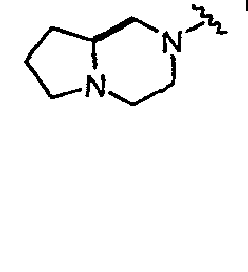
H (DCI-NH3): m/z 275 (M+H)+ Example 1029 1034 H 
H (ESI): m/z 271 (M+H)+ Example 56 1035 H 
H (DCI-NH3): m/z 257 (M+H)+ Example 56 1036 H 
H (DCI-NH3): m/z 259 (M+H)+ Example 56 1037 H 
H (DCI-NH3): m/z 257 (M+H)+ Example 1029 1038 H 
H (DCI-NH3): m/z 257 (M+H)+ Example 1029 1039 H 
H (DCI-NH3): m/z 273 (M+H)+ Example 56 1040 F 
H (DCI-NH3): m/z 275 (M+H)+ Example 1029 1041 H 
H (ESI): m/z 309 (M+H)+ Example 56 1042 F 
H (ESI): m/z 313 (M+H)+ Example 1029 1043 H 
H (DCI-NH3): m/z 246 (M+H)+ Example 1029 1044 H 
H (DCI-NH3): m/z 271 (M+H)+ Example 56 1045 H 
H (DCI-NH3): m/z 259 (M+H)+ Example 56 
Example Number R 1H NMR (300 MHz, CDCl3) Synthesis protocol 1046 
δ 1.54 (m, 2H), 1.66-1.79 (m, 6H), 2.39 (t, J=3.0 Hz, 1H), 4.10 (d, J=3.0 Hz, 3H). Example 613 1047 
δ 1.17 (d, J=6.0 Hz, 6H), 1.93 (s, 1H), 3.80 (m, 1H), 4.19 (s, 2H). Example 613 1048 
δ 0.25 (m, 2H), 0.57 (m, 2H), 1.07 (m, 1H), 2.41 (t, J=3.0 Hz, 1H), 3.37 (d, J=6.0 Hz, 2H), 4.17 (d, J=6.0 Hz, 2H) Example 613 1049 
δ 1.54 (m, 1H), 1.71 (m, 1H), 1.97 (m, 2H), 2.22 (m, 2 H), 2.39 (t, J=3.0 Hz, 1H), 4.05 (d, J=3.0 Hz, 2H), 4.11 (m, 1H). Example 613 1050 
δ 2.35 (s, 2H), 2.52 (m, 1H), 3.87 (d, J=3.0 Hz, 2H). Example 613 1051 
δ 2.46 (t, J=3.0 Hz, 1H), 3.74 (m, 1H), 3.84 (m, 1H), 4.24 (d, J=3.0 Hz, 2H), 4.51 (m, 1H), 4.67 (m, 1H). Example 613 1052 
δ 1.19-1.35 (m, 5H), 1.55 (m,1H), 1.74 (m, 2H), 1.91 (m, 2H), 2.38 (t, J=3.0Hz, 1H), 3.47 (m, 1H), 4.17 (d, J=3.0 Hz, 2H). Example 613 
Example Number R MS (DCI-NH3): Reference Procedure 1053 
m/z 318 (M+NH4)+ Example 126 1054 
m/z 330 (M+NH4)+ Example 126 1055 
m/z 330 (M+NH4)+ Example 126 1056 
m/z 358 (M+NH4)+ Example 126 1057 
m/z 322 (M+NH4)+ Example 126 1058 
m/z 358 (M+NH4)+ Example 126 
Example Number R1 R2 R3 R'4 MS (ESI): Reference Procedure 1059 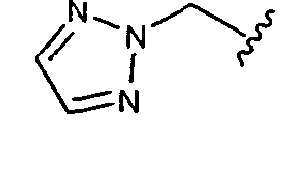
H H 
m/z 399 (M+H)+ Example 138 1060 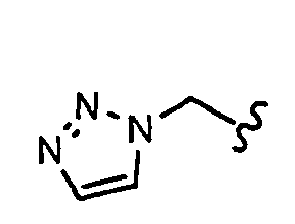
H H 
m/z 399 (M+H)+ Example 138 1061 H 
H 
(ESI): m/z 493 (M+H)+ Example 138 1062 F 
H 
(ESI): m/z 497 (M+H)+ Example 138 - The title compound was prepared by substituting Example 1059 for Example 148 and by substituting Example 127 for (prop-2-ynyloxy)benzene in Example 655. 1H NMR (300 MHz, DMSO-d6): δ 3.27 (s, 3H), 3.50 (m, 2H), 3.64 (m, 2H), 3.81 (s, 2H), 4.45 (s, 2H), 5.71 (s, 2H), 7.24-7.27 (m, 1H), 7.52-7.65 (m, 3H), 7.72 (s, 1H), 7.77 (s, 1H), 7.86 (s, 1H), 8.24 (s, 1H). MS (ESI): m/z 432 (M+H)+.
- The title compound was prepared by substituting Example 1060 for Example 148 and by substituting Example 127 for (prop-2-ynyloxy)benzene in Example 655. 1H NMR (300 MHz, DMSO-d6): δ 3.27 (s, 3H), 3.50 (m, 2H), 3.64 (m, 2H), 3.81 (s, 2H), 4.45 (s, 2H), 5.75 (s, 2H), 7.19-7.22 (m, 1H), 7.52-7.54 (m, 2H), 7.72 (d, J=3.0 Hz, 1H), 7.84 (s, 2H), 7.88 (d, J=3.0 Hz, 1H). MS (ESI): m/z 432 (M+H)+.
- The title compound was prepared by substituting Example 1032 for Example 56 and by substituting Example 126 for Example 110 in Example 138. 1H NMR (300 MHz, DMSO-d6): δ 2.33-2.42 (m, 4H), 3.35-3.41 (m, 4H), 3.56 (s, 2H), 3.81 (s, 2H), 5.11 (s, 2H), 6.98-7.07 (m, 3H), 7.29-7.38 (m, 3H), 7.49 (m, 1H), 7.62 (d, J=9.0 Hz, 1H), 7.74 (s, 1H), 7.89 (m, 1H), 7.99 (s, 1H), 13.1 (s, 1H). MS (ESI): m/z 495 (M+H)+.
- The title compound was prepared by substituting Example 1046 for (prop-2-ynyloxy)benzene in Example 655. 1H NMR (300 MHz, DMSO-d6): δ 1.48-1.73 (m, 8H), 2.79 (s, 3H), 3.02-3.25 (m, 5H), 3.30-3.52 (m, 3H), 3.83 (s, 4H), 4.11 (m, 1H), 4.38 (s, 2H), 7.36 (d, J=9.0 Hz, 1H), 7.56 (s, 1H), 7.66 (d, J=6.0 Hz, 1H), 7.72 (m, 1H), 7.87 (m, 1H). MS (ESI): m/z 473 (M+H)+.
- The title compound was prepared by substituting Example 1033 for Example 56 and by substituting Example 1053 for Example 110 in Example 138. 1H NMR (300 MHz, DMSO-d6): δ 1.15 (d, J=6.0 Hz, 6H), 3.05 (m, 2H), 3.27 (m, 2H), 3.35-3.50 (m, 4H), 3.61-3.65 (m, 2H), 3.79-3.82 (m, 5H), 3.92 (m, 1H), 4.41 (s, 2H), 7.35 (t, J=9.0 Hz, 1H), 7.45 (d, J=12.0 Hz, 1H), 7.70 (s, 1H), 7.86 (s, 1H). MS (ESI): m/z 477 (M+H)+.
- The title compound was prepared by substituting Example 1028 for Example 56 and by substituting Example 1054 for Example 110 in Example 138. 1H NMR (300 MHz, CDCl3): δ 0.27 (m, 2H), 0.58 (m, 2H), 1.12 (m, 1H), 2.38 (s, 3H), 2.50-2.80 (m, 8H), 3.43 (d, J=9.0 Hz, 2H), 3.66 (s, 2H), 3.70 (s, 2H), 4.44 (s, 2H), 7.38 (d, J=9.0 Hz, 1H), 7.43 (m, 1H), 7.47 (m, 2H). MS (ESI): m/z 477 (M+H)+.
- The title compound was prepared by substituting Example 1029 for Example 56 and by substituting Example 1054 for Example 110 in Example 138. 1H NMR (300 MHz, DMSO-d6): δ 0.22 (m, 2H), 0.50 (m, 2H), 1.04 (m, 1H), 2.89 (s, 3H), 3.00-3.50 (m, 8H), 3.55 (d, J=9.0 Hz, 2H), 3.78 (s, 2H), 4.43 (s, 2H), 7.33 (d, J=6.0 Hz, 1H), 7.44 (d, J=12.0 Hz, 1H), 7.70 (d, J=3.0 Hz, 1H), 7.86 (d, J=3.0 Hz, 1H), 9.75 (s, 1H). MS (ESI): m/z 463 (M+H)+.

- The title compound was prepared by substituting Example 80 for Example 56 and by substituting Example 1055 for Example 110 in Example 138. 1H NMR (300 MHz, CDCl3): δ 1.57 (m, 1H), 1.73 (m, 1H), 2.04 (m, 2H), 2.29 (m, 2H), 2.35 (s, 3H), 2.50-2.80 (m, 8H), 3.59 (s, 2H), 3.73 (s, 2H), 4.17 (m, 1H), 4.31 (s, 2H), 7.31 (d, J=6.0 Hz, 1H), 7.43 (m, 1H), 7.50 (m, 2H), 7.65 (d, J=6.0 Hz, 1H). MS (ESI): m/z 459 (M+H)+.
- The title compound was prepared by substituting Example 1033 for Example 56 and by substituting Example 1056 for Example 110 in Example 138. 1H NMR (300 MHz, DMSO-d6): δ 1.96-2.12 (m, 2H), 2.20 (m, 1H), 3.04 (m, 2H), 3.27 (m, 1H), 3.38-3.48 (m, 4H), 3.61-3.92 (m, 3H), 3.78 (s, 2H), 4.18 (q, J=9.0 Hz, 2H), 4.65 (s, 2H), 7.35 (t, J=9.0 Hz, 1H), 7.43 (d, J=12.0 Hz, 1H), 7.76 (s, 1H), 7.90 (s, 1H). MS (ESI): m/z 517 (M+H)+.
- The title compound was prepared by substituting Example 1034 for Example 56 and by substituting Example 1054 for Example 110 in Example 138. 1H NMR (300 MHz, CDCl3): δ 0.28 (m, 2H), 0.60 (m, 2H), 1.12 (m, 1H), 1.71-1.93 (m, 5H), 2.17 (m, 2H), 2.39 (m, 2H), 2.88 (m, 1H), 2.99-3.11 (m, 3H), 3.44 (d, J=6.0 Hz, 2H), 3.64 (d, J=9.0 Hz, 2H), 3.75 (s, 2H), 4.44 (s, 2H), 7.32 (d, J=6.0 Hz, 1H), 7.44 (m, 1H), 7.51 (m, 2H), 7.67 (d, J=9.0 Hz, 1H). MS (ESI): m/z 485 (M+H)+.
- The title compound was prepared by substituting Example 1029 for Example 56 and by substituting Example 126 for Example 110 in Example 138. 1H NMR (300 MHz, CDCl3): δ 2.44 (s, 3H), 2.73 (m, 4H), 3.23 (m, 4H), 3.64 (s, 2H), 4.95 (s, 2H), 7.02-7.12 (m, 4H), 7.31-7.41 (m, 4H), 7.46 (m, 1H). MS (ESI): m/z 485 (M+H)+.
- The title compound was prepared by substituting Example 1035 for Example 56 and by substituting Example 1054 for Example 110 in Example 138. 1H NMR (300 MHz, 1 DMSO-d6): δ 0.21 (m, 2H), 0.50 (m, 2H), 1.04 (m, 1H), 2.88 (s, 3H), 3.35 (s, 2H), 3.37 (s, 2H), 3.86 (s, 2H), 3.41-3.82 (m, 8H), 4.44 (s, 2H), 7.52 (m, 1H), 7.71 (s, 1H), 7.74 (s, 2H), 7.90 (m, 1H). MS (ESI): m/z 471 (M+H)+.
- The title compound was prepared by substituting Example 1033 for Example 56 and by substituting Example 1054 for Example 110 in Example 138. 1H NMR (300 MHz, CDCl3): δ 0.26 (m, 2H), 0.57 (m, 2H), 1.12 (m, 1H), 1.59 (m, 1H), 1.83-1.97 (m, 4H), 2.34 (m, 2H), 2.58 (m, 1H), 2.72 (m, 1H), 3.04 (m, 1H), 3.17-3.23 (m, 2H), 3.43 (d, J=9.0 Hz, 2H), 3.48-3.56 (m, 1H), 3.60 (s, 2H), 4.43 (s, 2H), 7.12 (d, J=6.0 Hz, 1H), 7.32 (d, J=12.0 Hz, 1H), 7.38 (s, 1H), 7.43 (s, 1H). MS (ESI): m/z 489 (M+H)+.
- The title compound was prepared by substituting Example 1032 for Example 56 and by substituting Example 1054 for Example 110 in Example 138. 1H NMR (300 MHz, CDCl3): δ 0.27 (m, 2H), 0.58 (m, 2H), 1.12 (m, 1H), 2.53 (m, 4H), 3.43 (s, 2H), 3.45 (s, 2H), 3.64 (m, 4H), 3.71 (s, 2H), 4.43 (s, 2H), 7.30 (d, J=6.0 Hz, 1H), 7.44 (m, 1H), 7.49 (m, 1H), 7.52 (s, 1H), 7.64 (d, J=9.0 Hz, 1H), 8.04 (s, 1H). MS (ESI): m/z 473 (M+H)+.
- The title compound was prepared by substituting Example 1036 for Example 56 and by substituting Example 1054 for Example 110 in Example 138. 1H NMR (300 MHz, DMSO-d6): δ 0.22 (m, 2H), 0.51 (m, 2H), 1.04 (m, 1H), 2.22 (s, 3H), 2.58 (t, J=6.0 Hz, 2H), 3.04 (s, 2H), 3.23 (t, J=6.0 Hz, 2H), 3.36 (d, J=6.0 Hz, 2H), 3.82 (s, 2H), 4.43 (s, 2H), 4.58 (s, 2H), 7.23 (d, J=9.0 Hz, 1H), 7.42 (s, 1H), 7.63 (d, J=9.0 Hz, 1H), 7.72 (s, 1H), 7.87 (s, 1H), 13.1 (s, 1H). MS (ESI): m/z 473 (M+H)+.
- The title compound was prepared by substituting Example 1037 for Example 56 and by substituting Example 1054 for Example 110 in Example 138. 1H NMR (300 MHz, CDCl3): δ 0.27 (m, 2H), 0.58 (m, 2H), 1.12 (m, 1H), 1.60 (m, 1H), 1.82-1.98 (m, 4H), 2.32 (m, 2H), 2.50 (m, 1H), 2.70 (t, J=12.0 Hz, 1H), 3.05 (m, 1H), 3.18 (m, 2H), 3.43 (d, J=9.0 Hz, 2H), 3.65 (s, 2H), 3.80 (m, 1H), 4.43 (s, 2H), 6.90 (dd, J=9.0, 3.0 Hz, 1H), 7.10 (m, 1H), 7.41 (m, 1H), 7.47 (m, 1H), 7.53 (d, J=9.0 Hz, 1H). MS (ESI): m/z 471 (M+H)+.
- The title compound was prepared by substituting Example 1038 for Example 56 and by substituting Example 1057 for Example 110 in Example 138. 1H NMR (300 MHz, CDCl3): δ 0.51-0.59 (m, 4H), 1.77 (m, 1H), 2.87 (t, J=6.0 Hz, 4H), 3.27 (t, J=6.0 Hz, 4H), 3.62 (s, 2H), 3.80 (t, J=3.0 Hz, 1H), 3.90 (t, J=3.0 Hz, 1H), 4.49 (s, 2H), 4.55 (t, J=6.0 Hz, 1H), 4.71 (t, J=6.0 Hz, 1H), 6.86 (dd, J=9.0, 3.0 Hz, 1H), 7.08 (m, 1H), 7.42 (m, 1H), 7.47 (m, 1H), 7.50 (d, J=9.0 Hz, 1H). MS (ESI): m/z 463 (M+H)+.
- The title compound was prepared by substituting Example 80 for Example 56 and by substituting Example 1058 for Example 110 in Example 138. 1H NMR (300 MHz, CDCl3): δ 1.22-1.39 (m, 5H), 1.55 (m, 1H), 1.76 (m, 2H), 1.96 (m, 2H), 2.36 (s, 3H), 2.50-2.80 (m, 8H), 3.53 (m, 1H), 3.58 (s, 2H), 3.70 (s, 2H), 4.43 (s, 2H), 7.29 (s, 1H), 7.43 (m, 1H), 7.49 (m, 2H), 7.63 (d, J=9.0 Hz, 1H). MS (ESI): m/z 487 (M+H)+.
- The title compound was prepared by substituting Example 1039 for Example 56 and by substituting Example 1054 for Example 110 in Example 138. 1H NMR (300 MHz, CDCl3): δ 0.27 (m, 2H), 0.60 (m, 2H), 1.12 (m, 1H), 2.10 (s, 3H), 2.50-2.80 (m, 8H), 3.44 (d, J=6.0 Hz, 2H), 3.68 (s, 4H), 4.44 (s, 2H), 7.29 (d, J=6.0 Hz, 1H), 7.45 (m, 1H), 7.50 (m, 1H), 7.53 (m, 1H), 7.63 (d, J=6.0 Hz, 1H). MS (ESI): m/z 487 (M+H)+.
- The title compound was prepared by substituting Example 1039 for Example 56 and by substituting Example 1053 for Example 110 in Example 138. 1H NMR (300 MHz, CDCl3): δ 1.24 (d, J=6.0 Hz, 6H), 2.10 (s, 3H), 2.55 (m, 4H), 3.51 (m, 4H), 3.67 (s, 4H), 3.85 (m, 1H), 4.40 (s, 2H), 7.29 (d, J=6.0 Hz, 1H), 7.45 (m, 1H), 7.49 (m, 1H), 7.53 (m, 1H), 7.63 (d, J=6.0 Hz, 1H). MS (ESI): m/z 475 (M+H)+,
- The title compound was prepared by substituting Example 1040 for Example 56 and by substituting Example 1053 for Example 110 in Example 138. 1H NMR (300 MHz, DMSO-d6): δ 0.34 (m, 2H), 0.46 (m, 2H), 1.14 (d, J=6.0 Hz, 6H), 1.70 (m, 1H), 2.71 (m, 4H), 3.01 (m, 4H), 3.32 (s, 2H), 3.75 (m, 1H), 4.41 (s, 2H), 7.21 (d, J=9.0 Hz, 1H), 7.38 (d, J=12.0 Hz, 1H), 7.70 (s, 1H), 7.85 (d, 1H), 13.0 (s, 1H). MS (ESI): m/z 477 (M+H)+.
- The title compound was prepared by substituting Example 1061 for Example 148 and by substituting Example 1048 for (prop-2-ynyloxy)benzene in Example 655. 1H NMR (400 MHz, DMSO-d6): δ 0.20 (m, 2H), 0.46 (m, 2H), 1.00 (m, 1H), 2.50 (m, 4H), 2.83 (s, 3H), 3.17 (m, 4H), 3.36 (d, J=8.0 Hz, 2H), 3.58(s, 2H), 3.80 (s, 2H), 4.40 (s, 2H), 7.28 (d, J=8.0 Hz, 1H), 7.47 (s, 1H), 7.60 (d, J=8.0 Hz, 1H), 7.68 (s, 1H), 7.82 (s, 1H), 13.10 (s, 1H). MS (ESI): m/z 523 (M+H)+.
- The title compound was prepared by substituting Example 1062 for Example 148 and by substituting Example 1048 for (prop-2-ynyloxy)benzene in Example 655. 1H NMR (500 MHz, DMSO-d6): δ 0.20 (m, 2H), 0.50 (m, 2H), 1.02 (m, 1H), 2.92 (s, 3H), 3.19 (m, 4H), 3.30 (m, 4H), 3.36 (d, J=8.0 Hz, 2H), 3.78 (s, 2H), 4.42 (s, 2H), 7.27 (d, J=8.0 Hz, 1H), 7.42 (d, J=10.0 Hz, 1H), 7.72 (s, 1H), 7.85 (s, 1H), 13.20 (s, 1H). MS (ESI): m/z 527 (M+H)+.
- The title compound was prepared by substituting Example 1028 for Example 56 and by substituting Example 126 for Example 110 in Example 138. 1H NMR (500 MHz, DMSO-d6): δ 2.15 (s, 3H), 2.26-2.47 (m, 8H), 3.54 (s, 2H), 3.79 (br s, 2H), 5.11 (s, 2H), 6.99-7.02 (m, 1H), 7.05 (m, 2H), 7.33-7.36 (m, 2H), 7.40 (d, J=6.6 Hz, 1H), 7.53 (d, J=6.6 Hz, 1H), 7.72 (s, 1H), 7.89 (s, 1H), 13.21 (br s, 1H). MS (ESI): m/z 499 (M+H)+.
- The title compound was prepared by substituting Example 1045 for Example 56 and by substituting Example 126 for Example 110 in Example 138. 1H NMR (500 MHz, DMSO-d6): δ 2.14 (s, 3H), 2.24-2.50 (m, 8H), 2.52 (dd, J=8.6, 7.2 Hz, 2H), 2.77 (dd, J=8.6, 7.2 Hz, 2H), 3.75 (br s, 2H), 5.09 (s, 2H), 6.98-7.01 (m, 1H), 7.05 (m, 2H), 7.19 (d, J=7.8, 1H), 7.32-7.35 (m, 2H), 7.39 (s, 1H), 7.53 (d, J=7.8 Hz, 1H), 7.71 (s, 1H), 7.86 (s, 1H), 13.05 (br s, 1H). MS (ESI): m/z 495 (M+H)+.
- The title compound was prepared by substituting Example 65 for Example 56 and by substituting Example 1053 for Example 110 in Example 138. 1H NMR (500 MHz, DMSO-d6): δ 1.16 (d, J=6 Hz, 1H), 2.88 (s, 2H), 3.02 (m, 2H), 3.19 (m, 2H), 3.54 (m, 2H), 3.78 (m, 3H), 4.39 (m, 2H), 4.41 (s, 2H), 7.01 (d, J=10.0 Hz, 1H), 7.24 (s, 1H), 7.53 (d, J=10.0 Hz, 1H), 7.69 (s, 1H), 7.83 (s, 1H), 9.72 (bs, 1H). MS (ESI): m/z 433 (M+H)+.
- The title compound was prepared by substituting Example 65 for Example 56 and by substituting Example 126 for Example 110 in Example 138. 1H NMR (500 MHz, DMSO-d6): δ 2.87 (s, 2H), 3.00 (m, 2H), 3.17 (m, 2H), 3.52 (m, 2H), 3.74 (s, 2H), 3.87 (m, 2H), 5.09 (s, 2H), 6.97-7.08 (m, 3H), 7.22-7.34 (m, 2H), 7.53 (m, 3H), 7.61 (m, 3H). MS (ESI): m/z 467 (M+H)+.
- The title compound was prepared by substituting Example 80 for Example 56 and by substituting Example 1054 for Example 110 in Example 138. 1H NMR (500 MHz, DMSO-d6): δ 0.22 (m, 2H), 0.50 (m, 2H), 1.05 (m, 1H), 1.18 (m, 4H), 2.67 (m, 2H), 3.08 (m, 4H), 3.35 (d, J=9 Hz, 2H), 3.69 (m, 2H), 3.82 (s, 2H), 4.43 (s, 3H), 7.30 (s, 1H), 7.60 (m, 1H), 7.63 (s, 1H), 7.70 (m, 1H), 7.88 (s, 1H), 13.11 (s, 1H). MS (ESI): m/z 459 (M+H)+.
- The title compound was prepared by substituting Example 1038 for Example 56 and by substituting Example 1054 for Example 110 in Example 138. 1H NMR (500 MHz, CD3OD): δ 0.26 (m, 2H), 0.50 (m, 2H), 0.55 (m, 4H), 1.09 (m, 1H), 1.77 (m, 1H), 2.85 (t, J=9 Hz, 4H), 3.23 (t, J=9 Hz, 4H), 3.44 (d, J=9.0 Hz, 2H), 3.74 (s, 2H), 4.44 (s, 2H), 6.98 (dd, J=9.0, 3.0 Hz, 1H), 7.21 (s, 1H), 7.54 (dd, J=9.0,3.0 Hz, 1H), 7.60 (s, 1H), 7.67 (s, 1H). MS (ESI): m/z 445 (M+H)+.
- The title compound was prepared by substituting Example 1043 for Example 56 and by substituting Example 1054 for Example 110 in Example 138. 1H NMR (500 MHz, CD3OD): δ 0.27 (m, 2H), 0.58 (m, 2H), 1.09 (m, 1H), 1.39 (s, 3H), 1.68 (m, 1H), 1.96 (m, 2H), 2.06 (m, 2H), 3.44 (t, J=9 Hz, 4H), 3.58 (d, J=14.0 Hz, 2H), 3.87 (d, J=14.0 Hz, 2H), 3.92 (s, 2H), 4.44 (s, 2H), 7.58 (m, 2H), 7.63 (s, 1H), 7.73 (s, 1H), 7.84 (m, 3H). MS (ESI): m/z 460 (M+H)+.
- The title compound was prepared by substituting Example 1044 for Example 56 and by substituting Example 1054 for Example 110 in Example 138. 1H NMR (500 MHz, DMSO-d6): δ 0.26 (m, 2H), 0.57 (m, 4H), 0.64 (m, 2H), 1.07 (m, 1H), 2.07 (m, 1H), 3.06 (m, 4H), 3.22 (m, 4H), 3.44 (m, 2H), 3.87 (s, 2H), 4.29 (s, 2H), 4.44 (s, 2H), 7.49 (s, d, J=10 Hz, 1H), 7.63 (s, 1H), 7.69 (s, 1H), 7.73 (s, 1H), 7.79 (d, J=10 Hz,1H). MS (ESI): m/z 485 (M+H)+.
- The title compound was prepared according to the procedure given in: Kikani, B.B. et al. Synthesis, 1991, 176
- Ethyl 2-formyl-3-oxopropanoate (3.2 g, 22 mmol) in diethyl ether (25 mL) was teated with triethylamine (3.5 mL, 25 mmol) at about 0 °C. The mixture was stirred at room temperature for about 1 h before the diethyl ether was removed in vacuo. To the residue was added a solution of p-toluenesulfonyl chloride (4.5 g, 23.6 mmol) in N,N-dimethylformamide (60 mL) at about 0 °C. The mixture was stirred for about 5 h while being allowed to warm to room temperature. 3-Aminocyclopent-2-en-1-one (1.75 g, 18 mmol) was added and the mixture was heated to about 85-90 °C over night. The mixture was cooled to room temperatureand was concentrated in vacuo. The residue was diluted with chloroform (200 mL), washed with sodium carbonate solution, filtered through Celite, and concentrated under vacuum. The residue was purified by flash column chromatography on silica gel using dichloromethane/methanol/ammonium hydroxide (95:4.5:0.5) as the mobile phase to provide the title compound: 1H NMR (300 MHz, CDCL3): δ 1.42 (t, J=8.0 Hz, 3H), 2.82 (t, J=8.0 Hz, 2H), 3.38 (t, J=8.0 Hz, 2H), 4.42 (q, J=8.0 Hz, 3H), 8.60 (s, 1H), 9.40 (s, 1H).
- To a mixture of Example 126 (1.5 g, 4.6 mmol) and a 60% suspension of sodium hydride in mineral oil (470 mg, 11.7 mmol) in tetrahydrofuran (10 mL) was added a solution of Example 1094B (1.0 g, 4.8 mmol) in tetrahydrofuran (15 mL) dropwise over a period of about 30 min. The mixture was stirred at room temperature for about 2 h and then the reaction was quenched by slow addition of a solution of acetic acid (0.9 g, 15 mmol) in methanol (80 mL). The solvents were evaporated to dryness under vacuum. The residue was dissolved in ethanol (100 mL), hydrazine monohydrate (0.5 g, 10 mmol) and acetic acid (0.6 g, 10 mmol) were added and the mixture was heated to reflux for about 1 hour. The mixture was cooled, concentrated under vacuum and the residue was purified by flash chromatography on silica gel using dichloromethane/methanol (10:1) + 1% ammonium hydroxide as eluent to provide the title compound. 1H NMR (300 MHz, DMSO-d6): δ 1.42 (t, J=8.0 Hz, 3H), 4.01 (s, 2H), 4.40 (q, J=8.0 Hz, 3H), 5.10 (s, 2H), 7.02 (m, 3H), 7.38 (m, 2H), 7.80 (s, 1H), 8.00 (s, 1H), 8.40 (s, 1H), 9.00 (s,1H), 13.50 (s,1H).
- To Example 1094C (88 mg, 0.2 mmol) in (1:1) methanol/tetrahydrofuran (2 mL) was added a 1N aqueous solution of sodium hydroxide (2 mL). The mixture was stirred at room temperature over night and was then acidified by slow addition of a 1N aqueous solution of hydrogen chloride. The mixture was concentrated, the precipitate was filtered, washed with water and dried in vacuum to give the title compound. 1H NMR (300 MHz, DMSO-d6): δ 4.01 (s, 2H), 5.12 (s, 2H), 7.02 (m, 3H), 7.38 (m, 2H), 7.80 (s, 1H), 8.00 (s, 1H), 8.39 (s, 1H), 8.98 (s, 1H), 13.45 (s, 1H).
- A mixture of Example 1094D (68 mg, 0.16 mmol), N-cyclohexylcarbodiimide-N'-methyl polystyrene (1.0 g, 1.28 mmol) and 1-hydroxybenzotriazole hydrate (44 mg, 0.33 mmol) in (2:1) dichloromethane/N,N-dimethylacetamide (10 mL) was agitated for about 15 min. 1-Methylpiperazine (77 mg, 0.77 mmol) was added, the mixture was agitated at room temperature for about 18 h, filtered and concentrated under vacuum. The residue was purified by flash column chromatography on silica gel using dichloromethane/methanol/ammonium hydroxide (100:8:0.1) as the mobile phase to provide the title compound. 1H NMR (500 MHz, DMSO-d6): δ 2.23 (s, 3H), 2.39 (m, 4H), 3.40 (m, 2H), 3.63 (m, 2H), 3.97 (s, 2H), 5.09 (s, 2H), 7.03 (m, 3H), 7.38 (m, 2H), 7.80 (s, 1H), 8.01 (m, 2H), 8.41 (s, 1H),, 13.41 (s, 1H). MS (ESI): m/z 496 (M+H)+.
- The title compound was prepared by substituting 2-methyl-N-prop-2-ynyl-benzenesulfonamide for (prop-2-ynyloxy)benzene and by substituting Example 260 for phenyl 5-bromothiophene-3-carboxylate in Example 126. 1H NMR (500 MHz, DMSO-D6), δ ppm 2.63 (s, 3H), 3.81 (s, 2H), 4.04 (d, J=5.61 Hz, 2H), 5.51 (s, 2H), 7.32 (d, J=7.80 Hz, 1H), 7.37 - 7.42 (m, 2H), 7.45 (d, J=1.25 Hz, 1H), 7.49 - 7.53 (m, 2H), 7.64 (d, J=7.80 Hz, 1H), 7.82 (d, J=1.56 Hz, 1H), 7.88 - 7.94 (m, 1H), 8.11 - 8.18 (m, 1H), 8.26 (t, J=5.93 Hz, 1H), 8.91 (s, 1H); MS ESI(+) m/e 527 (M+H)+.
- The title compound was prepared by substituting 3-methyl-N-prop-2-ynyl-benzenesulfonamide for (prop-2-ynyloxy)benzene and by substituting Example 260 for phenyl 5-bromothiophene-3-carboxylate in Example 126. 1H NMR (500 MHz, DMSO-D6) δ ppm 2.37 (s, 3H),3.79 (d, J=4.05 Hz, 2H),4.02 - 4.07 (m, 2H), 5.49 (s, 2H),7.30 (d, J=7.49 Hz, 1H),7.42 - 7.51 (m, 3H),7.53 - 7.58 (m, 1H),7.60 - 7.64 (m, 2H),7.65 - 7.69 (m, 1H),7.78 - 7.83 (m, 1H),8.05 (s, 1H),8.18 (t, J=5.93 Hz, 1H),8.77 (s, 1H); MS ESI(+) m/e 527 (M+H)+.
- The title compound was prepared by substituting 2-fluoro-N-prop-2-ynyl-benzenesulfonamide for (prop-2-ynyloxy)benzene and by substituting Example 260 for phenyl 5-bromothiophene-3-carboxylate in Example 126. 1H NMR (500 MHz, DMSO-D6) δ ppm 3.78 (s, 2H), 4.12 (s, 2H), 5.47 (s, 2H), 7.29 (d, J=7.80 Hz, 1H), 7.36 - 7.46 (m, 3H), 7.49 (s, 1H), 7.62 (s, 1H), 7.65 - 7.70 (m, 1H), 7.77 (s, 1H), 7.84 - 7.88 (m, 1H), 7.98 (s, 1H), 8.46 - 8.50 (m, J=1.25 Hz, 1H), 8.67 (s, 1H), 13.13 (s, 1 H); MS ESI(+) m/e 531 (M+H)+.
- The title compound was prepared by substituting 4-fluoro-N-prop-2-ynyl-benzenesulfonamide for (prop-2-ynyloxy)benzene and by substituting Example 260 for phenyl 5-bromothiophene-3-carboxylate in Example 126. 1H NMR (500 MHz, DMSO-D6) δ ppm 3.79 (s, 2H), 4.07 (d, J=6.24 Hz, 2H), 5.48 (s, 2H), 7.28 (d, J=7.49 Hz, 1H), 7.41 - 7.43 (m, 2H), 7.44 (d, J=1.87 Hz, 1H), 7.47 (s, 1H), 7.64 (m, 1H), 7.80 (s, 1H), 7.90 - 7.94 (m, 2H), 8.09 (s, 1H), 8.27 (t, J=5.77 Hz, 1H), 8.81 (s, 1H), 13.13 (s, 1 H); MS ESI(+) m/e 531 (M+H)+.
- The title compound was prepared by substituting 3-chloro-N-prop-2-ynyl-benzenesulfonamide for (prop-2-ynyloxy)benzene and by substituting Example 260 for phenyl 5-bromothiophene-3-carboxylate in Example 126. 1H NMR (500 MHz, DMSO-D6) δ ppm 3.78 (s, 2H), 4.11 (s, 2H), 5.47 (s, 2H), 7.29 (d, J=7.80 Hz, 1H), 7.42 - 7.45 (m, J=2.50 Hz, 1H), 7.49 (s, 1H), 7.63 (s, 1H), 7.64 (s, 1H), 7.68 - 7.71 (m, 1H), 7.79 (s, 1H), 7.81 - 7.84 (m, 1H), 7.87 (t, J=1.87 Hz, 1H), 7.98 (s, 1H), 8.40 (s, 1H), 8.67 (s, 1H), 13.13 (s, 1 H); MS ESI(+) m/e 547 (M+H)+.
- The title compound was prepared by substituting 4-chloro-N-prop-2-ynyl-benzenesulfonamide for (prop-2-ynyloxy)benzene and by substituting Example 260 for phenyl 5-bromothiophene-3-carboxylate in Example 126. 1H NMR (500 MHz, DMSO-D6) δ ppm 3.79 (s, 2H), 3.79 (s, 1H), 4.08 (d, J=5.93 Hz, 2H), 5.47 (s, 2H), 7.29 (d, J=7.80 Hz, 1H), 7.43 (d, J=1.56 Hz, 1H), 7.48 (s, 1H), 7.62 (d, J=7.80 Hz, 1H), 7.66 (d, J=8.73 Hz, 2H), 7.79 (d, J=1.25 Hz, 1H), 7.86 (d, J=8.73 Hz, 2H), 7.99 (s, 1H), 8.34 (t, J=6.08 Hz, 1H), 8.69 (s, 1H), 13.11 (s, 1 H); MS ESI(+) m/e 547 (M+H)+.
- The title compound was prepared by substituting 3-fluoro-N-prop-2-ynyl-benzenesulfonamide for (prop-2-ynyloxy)benzene and by substituting Example 260 for phenyl 5-bromothiophene-3-carboxylate in Example 126. 1H NMR (500 MHz, DMSO-D6) δ ppm 3.78 (s, 2H), 4.10 (s, 2H), 5.47 (s, 2H), 7.29 (d, J=7.80 Hz, 1H), 7.44 (s, 1H), 7.46 - 7.51 (m, 2H), 7.63 - 7.65 (m, 2H), 7.66 (t, J=2.18 Hz, 1H), 7.70 - 7.73 (m, 1H), 7.78 (s, 1H), 7.98 (s, 1H), 8.39 (s, 1H), 8.67 (s, 1H), 13.14 (s, 1 H); MS ESI(+) m/e 531 (M+H)+.
- The title compound was prepared by substituting 4-methyl-N-prop-2-ynyl-benzenesulfonamide for (prop-2-ynyloxy)benzene and by substituting Example 260 for phenyl 5-bromothiophene-3-carboxylate in Example 126. 1H NMR (400 MHz, DMSO-D6) δ ppm 2.33 (s, 3H), 3.79 (s, 2H), 4.03 (s, 2H), 5.48 (s, 2H), 7.30 (d, J=8.59 Hz, 1H), 7.39 (d, J=7.98 Hz, 2H), 7.44 (s, 1H), 7.49 (s, 1H), 7.63 (d, J=5.83 Hz, 1H), 7.74 (d, J=8.29 Hz, 2H), 7.79 (s, 1H), 7.99 (s, 1H), 8.13 (s, 1H), 8.69 (s, 1H), 13.15 (s, 1 H); MS ESI(+) m/e 527 (M+H)+.
- The title compound was prepared by substituting N-prop-2-ynyl-3-trifluoromethylbenzenesulfonamide for (prop-2-ynyloxy)benzene and by substituting Example 260 for phenyl 5-bromothiophene-3-carboxylate in Example 126. 1H NMR (500 MHz, DMSO-D6) δ ppm 3.75 (s, 2H), 4.14 (d, J=6.24 Hz, 2H), 5.50 (s, 2H), 7.23 (d, J=7.80 Hz, 1H), 7.39 (s, 1H), 7.51 - 7.56 (m, 2H), 7.77 (s, 1H), 7.85 (t, J=7.95 Hz, 1H), 7.99 (d, J=8.11 Hz, 1H), 8.04 - 8.11 (m, 1H), 8.14 (s, 1H), 8.17 (d, J=7.80 Hz, 1H), 8.51 (t, J=6.08 Hz, 1H), 8.81 (s, 1 H); MS ESI(+) m/e 581 (M+H)+.
- The title compound was prepared by substituting N-prop-2-ynyl-2-trifluoromethylbenzenesulfonamide for (prop-2-ynyloxy)benzene and by substituting Example 260 for phenyl 5-bromothiophene-3-carboxylate in Example 126. 1H NMR (500 MHz, DMSO-D6) δ ppm 3.78 (s, 2H), 4.13 (d, J=5.93 Hz, 2H), 5.48 (s, 2H), 7.29 (d, J=7.80 Hz, 1H), 7.41 (d, J=0.94 Hz, 1H), 7.49 (s, 1H), 7.53 - 7.58 (m, 2H), 7.62 (d, J=7.80 Hz, 1H), 7.72 - 7.76 (m, 1H), 7.77 (d, J=1.25 Hz, 1H), 8.01 (dd, J=8.11, 1.56 Hz, 1H), 8.07 (s, 1H), 8.39 (t, J=6.08 Hz, 1H), 8.80 (s, 1 H); MS ESI(+) m/e 597 (M+H)+.
- The title compound was prepared by substituting Example 149 for 2-bromothiophene-4-carboxylate and N-prop-2-ynyl-isonicotinamide for (prop-2-ynyloxy)benzene in Example 126. 1H NMR (300 MHz, DMSO-D6) δ ppm 2.15 (s, 3H), 2.20-2.48 (m, 8H), 3.52 (s, 2H), 3.78 (s, 2H), 4.42 (d, J=5.42 Hz, 2H), 7.20 (d, J=7.80 Hz, 1H), 7.48 (d, J=7.80 Hz, 1H), 7.57 (s, 1H), 7.68 (s, 1H), 7.78-7.83 (m, 3H), 8.75 (m, 2H), 9.38 (t, J=5.42 Hz, 1H), 13.12 (s, 1H); MS ESI(+) m/e 509.4 (M+H)+.
- A 0 °C solution of (2,2-dimethyl-1,3-dioxolan-4-yl)methanol (Aldrich, 1 g) in THF (20 mL)was treated with NaH (327 mg, 60% oil dispersion), then refluxed for 60 min. The resulting suspension was cooled in an ice bath, treated with nBu4NI (55 mg) and propargyl bromide (0.9 mL) then stirred at r.t. for 2h. The reaction was partitioned between water and ether(2x) and the combined ether extacts were dried (MgSO4), concentrated to give 1.3 g of the title compound. MS ESI(+) m/e 170.9 (M+H)+.
- The title compound was prepared by substituting Example 149 for 2-bromothiophene-4-carboxylate and Example 1106A for (prop-2-ynyloxy)benzene in Example 126. 1H NMR (300 MHz, DMSO-D6) δ ppm 1.28 (s, 3H), 1.34 (s, 3H), 2.21 (s, 3H), 2.41 (s, 8H), 3.56 (m, 4H), 3.62-3.67 (m, 1H), 3.80 (m, 2H), 3.99-4.04 (m, 1H), 4.20-4.28 (m, 1H), 4.49 (s, 2H), 7.21 (d, J=7.80 Hz, 1H), 7.49 (d, J=7.80 Hz, 1H), 7.50-7.90 (m, 3H), 13.15 (s, 1H); MS ESI(+) m/e 519.2 (M+H)+.
- The title compound was prepared by substituting 3-[2-fluoro-4-(4-methyl-piperazin-1-ylmethyl)-phenyl]propionic acid (J.Med. Chem. 1991,2504) for Example 1 in Example 3 then elaborating the product following the procedures of Examples 20, 28, 51, 54 and 56. MS (ESI) m/e 263(M+1)+.
- The title compound was prepared by substituting Example 1107A for Example 56 and 5-(3-phenoxy-prop-1-ynyl)-thiophene-3-carboxylic acid phenyl ester for Example 110 in Example 138. 1H NMR (300 MHz, DMSO-D6) δ ppm 2.19 (s, 3 H); 2.28 - 2.48 (m, 8 H); 3.56 (s, 2 H); 3.86 (s, 2 H); 5.11 (s, 2 H); 6.95 - 7.12 (m, 4 H); 7.35 (dd, J=8.48, 7.46 Hz, 2 H); 7.45 (s, 1 H); 7.77 (s, 1 H); 7.94 (s, 1 H); 13.27 (s, 1 H). MS (ESI) m/e 499(M+1)+, 497(M-1)-.
- The title compound was prepared by substituting Example 1107A for Example 56 and 5-(3-cyclopropylmethoxy-prop-1-ynyl)-thiophene-3-carboxylic acid phenyl ester for Example 110 in Example 138. 1H NMR (300 MHz, DMSO-D6) δ ppm 0.08 - 0.31 (m, J=6.44 Hz, 2 H); 0.35 - 0.61 (m, J=10.17 Hz, 2 H); 0.89 - 1.22 (m, 1 H); 2.79 (s, 3 H); 2.90 - 3.22 (m, 4 H); 3.36 (d, J=6.78 Hz, 2 H); 3.37 - 3.66 (m, 4 H); 3.73 (s, 2 H); 3.89 (s, 2 H); 4.40 (s, 2 H); 7.12 (d, J=9.83 Hz, 1 H); 7.51 (s, 1 H); 7.75 (s, 1 H); 7.92 (d, J=1.36 Hz, 1 H); 9.35 (s, 1 H). MS (ESI) m/e 477(M+1)+, 475(M-1)-
- A solution of 1-(4-fluoro-2-hydroxy-phenyl)-ethanone (15.4 g, Aldrich) in EtOAc (100 mL) was treated with AlCl3 (133 mg), stirred at r.t. for 30 min, treated with montmorillonite K10 (2.5 g) stirred an additional 30 min then treated with a solution of bromine(7.05 mL) in EtOAc (100 mL) (added dropwise via addition funnel over 1.5 h). The reaction was stirred at r.t. for 1h, cooled in a an ice bath and quenched with water added dropwise. The mixture was diluted with EtOAc, filtered through celite and the filtrate was extracted with EtOAc (2x). The combined organic extracts were dried (Na2SO4), concentrated and tehcrude product was purified via silica gel chromatography eluting with 5% EtOAc- hexanes to give 3.31 g of the title compound. MS (ESI) m/e 437(2M+H)+.
- CsCO3 (5.36 g) was added in portions over 10 min to an ice cold solution of Example 1109A (3.2 g) in DMF (140 mL). The resulting mixture was stirred for 30 min then diluted with water and extracted with ether (3x). the combined extracts were dried (Na2SO4), and concentrated to give 1.6 g of the title compound. MS ESI(-) m/e 151.1 (M-H)-.
- A mixture of Example 1109B (0.152 g) and 1-methylpiperazine (0.22 g) in DMSO (1 ml) was heated at 150 C for 30 min, allowed to cool to r.t. (room temperature) then partitioned between water and EtOAc. Organics were dried (Na2SO4), concentrated and purified via silica gel chromatography eluting with 5% MeOH-CH2Cl2 to give the title compound. MS ESI(+)m/e 233.0(M+H)+.
- The title compound was prepared by substituting Examples 1109C and 113 for Examples 56 and 110 respectively in Example 138. MS DCI/NH3 m/e 417.0, 419.0(M+H)+.
- The title compound was prepared by substituting Example 1109D for 2-bromothiophene-4-carboxylate and Example 1048 for (prop-2-ynyloxy)benzene in Example 126. 1H NMR (DMSO-d6, 300MHz): 13.30 (s,1/2H); 13.02 (s,1/2H); 7.85 (s,1H) ;8.65-8.74(m,1H);8.55-8.62(m,1H);7.17-7.25(m,1H);6.96-7.07(m,1H); 4.44(s,2H); 3.36(d,2H,J=6); 3.21-3.28(m,4H);2.43-2.54(m,4H);2.24(s,3H);0.99-1.10 (m,1H); 0.47-0.55(m,2H);0.19-0.26(m,2H). MS ESI(+) m/e 447.0(M+H)+.
- The title compound was prepared by substituting Example 1109D for 2-bromothiophene-4-carboxylate and Example 1046 for (prop-2-ynyloxy)benzene in Example 126. 1H NMR (300MHz,DMSO-d6):13.28 (bs,1/2H);13. (bs,1/2H); 7.84 (s,1H);7.57-7.73 (m,2H); 7.20 (s,1H); 6.96-7.05 (m,1H); 4.38 (s,2H); 4.08-4.16 (m,1H); 3.20-3.28 (m,4H); 2.45-2.54 (m,4H); 2.24 (s,3H); 1.59-1.79 (m,6H); 1.47-1.59 (m,2H). MS ESI(+)m/e 461.2(M+H)+.
- The title compound was prepared by substituting piperidine for 1-methylpiperazine in Examples 1109C and 1109D. MS ESI(+) m/e 402.0,404.0(M+H)+.
- The title compound was prepared by substituting Example 1111A for 2-bromothiophene-4-carboxylate and Example 1048 for (prop-2-ynyloxy)benzene in Example 126. 1H NMR (300MHz,DMSO-d6): 13.25 (bs,1/2H); 12.99(bs,1/2H); 7.84 (s,1H); 7.66-7.73 (m,1H);7.51-7.60 (m,1H); 7.13-7.21 (m,1H);6.93-7.05 (m,1H); 4.44 (s,2H); 3.36 (d,2H,J=6); 3.21-3.28 (m,4H); 1.51-1.70 (m,6H); 0.99-1.10 (m,1H); 0.47-0.55 (m,2H); 0.19-0.26 (c,2H). ESI(+): m/e 432.1 (M+H)+.
- The title compound was prepared by substituting Example 1111A for 2-bromothiophene-4-carboxylate and Example 1047 for (prop-2-ynyloxy)benzene in Example 126. 1H NMR (300MHz,DMSO-d6): 13.26(s,1/2H);12.99(s,1/2H); 7.81-7.86 (m,1H); 7.53-7.72 (m,2H); 7.14-7.21 (m,1H); 6.93-7.05 (m,1H); 4.42 (s,2H); 3.74-3.84 (m,1H); 3.21-3.28 (m,4H); 2.51-2.72 (m,6H); 1.15 (d,6H,J=6). ESI(+)m/e 420.2(M+H)+.
- The title compound was prepared by substituting Example 1111A for 2-bromothiophene-4-carboxylate and Example 1046 for (prop-2-ynyloxy)benzene in Example 126. 1H NMR (300MHz,DMSO-d6): 13.26(s,1/2H);12.99(s,1/2H);7.81-7.87(m,1H);7.64-7.72(m,2H);7.13-7.22(m,1H);6.94-7.04(m,1H);4.38(s,2H);4.08-4.16(m,1H);3.20-3.28(m,4H);1.44-1.79(m,14H). ESI(+) m/e 446.1(M+H)+.
- The title compound was prepared by substituting Example 1111A for 2-bromothiophene-4-carboxylate and N-(4-ethynylphenyl)-N,N-dimethylamine for (prop-2-ynyloxy)benzene in Example 126. 1H NMR (300MHz,DMSO-d6): 13.26 (s,1/2H); 12.99 (s,1/2H); 7.79-7.83 (m,1H); 7.64-7.70(m,2H);7.41(s,1H);7.38(s,1H);7.15-7.22(m,1H);6.94-7.05(m,1H);6.75(s,1H);6.72(s,1H);3.21-3.29(m,4H);2.97(s,6H);1.52-1.70(m,6H); ESI(+)m/e 467.2(M+H)+.
- The title compound was prepared by substituting morpholine for 1-methylpiperazine in Examples 1109C and 1109D. ESI(+)m/e 405.9(M+H)+.
- The title compound was prepared by substituting Example 1115A for 2-bromothiophene-4-carboxylate and Example 1046 for (prop-2-ynyloxy)benzene in Example 126. 1H NMR (300MHz,DMSO-d6): 13.31 (s,1/2H); 13.03 (s,1/2H); 7.85 (s,1H); 7.64-7.75 (m,2H); 7.19-7.27(m,1H);6.96-7.07(m,1H); 4.38 (s,2H); 4.08-4.16 (m,1H); 3.71-3.82 (m,4H);3.07-3.16(m,4H);1.41-1.79(m,8H); ESI(+) m/e 448.4(M+H)+.
- The title compound was prepared by substituting Example 1115A for 2-bromothiophene-4-carboxylate and Example 1048 for (prop-2-ynyloxy)benzene in Example 126. 1H NMR (300MHz,DMSO-d6): 13.32(s,1/2H);13.03(s 7.83-7.88 (m,1H 7.66-7.75 (m,1H);7.56-7.64(m,1H); 7.19-7.27 (m,1H); 6.96-7.07 (m,1H); 4.44 (s,2H); 3.72-3.84(m,4H); 3.36(d,2H,J=6);3.18-3.26(m,4H);0.99-1.11(m,1H);0.47-0.55 (m,2H); 0.19-0.25(m,2H); ESI(+)m/e 434.1(M+H)+.
- The title compound was prepared by substituting Example 1115A for 2-bromothiophene-4-carboxylate and 1-ethynyl-4-trifluoromethylbenzene for (prop-2-ynyloxy)benzene in Example 126. 1H NMR (300MHz,DMSO-d6): 13.37 (bs,1/2H); 13.08(bs,1/2H); 7.97(s,1H);7.80-7.88(m,5H);7.58-7.66(m,1H);7.20-7.29(m,1H);6.98-7.09(m,1H);3.74-3.82(m,4H);3.19-3.27(m,4H). ESI(+) m/e 494.1 (M+H)+, 511.3 (M+NH4)+.
- The title compound was prepared by substituting Example 1115A for 2-bromothiophene-4-carboxylate and 1-ethynyl-3-trifluoromethylbenzene for (prop-2-ynyloxy)benzene in Example 126. 1H NMR (300MHz,DMSO-d6): 13.38 (s,1/2H); 13.08 (s,1/2H); 7.89-8.01 (m,3H);7.78-7.88(m,2H);7.58-7.76(m,2H);7.19-7.28(m,1H); 6.98-7.09 (m,1H); 3.74-3.82(m,4H);3.18-3.26 (m,4H). ESI(+) m/e 494.2 (M+H)+; 511.3 (M+NH4)+.
- The title compound was prepared by substituting N-methyl-N-(pyridin-3-ylmethyl)amine for 1-methylpiperazine in Examples 1109C, D and E. 1H NMR (300MHz,DMSO-d6): 13.19 (s,1/2H);12.94 (s,1/2H);8.49(bs,2H); 7.83 (dd,1H,J=1.5,6); 7.51-7.72 (m,3H); 7.30-7.42 (m,1H); 6.98 (dd,1H,J=1.5,12); 6.75-6.87 (m,1H); 4.73 (s,2H); 4.43(s,2H); 3.36 (d,2H,J=6); 3.13 (s,3H); 0.99-1.10 (m,1H); 0.47-0.54 (m,2H); 0.19-0.25 (m,2H); ESI(+)m/e 469.2(M+H)+.
- The title compound was prepared by substituting (2-methoxy-ethyl)-methyl-amine for 1-methylpiperazine in Examples 1109C and 1109D. MS ESI(+)m/e 406.0,408.0(M+H)+.
- The title compound was prepared by substituting Example 1120A for 2-bromothiophene-4-carboxylate and Example 1048 for (prop-2-ynyloxy)benzene in Example 126. 1H NMR (300MHz,DMSO-d6): 13.17(s,1/2H);12.92(s,1/2H);7.81-7.56 (m,1H); 7.60-7.73 (m,2H); 6.91-6.98 (m,1H); 6.71-6.82 (m,1H); 4.44(s,2H); 3.50-3.63 (m,4H); 3.34-3.39 (m,2H);3.27 (s,3H);3.00(s,3H);0.99-1.10(m,1H);0.47-0.55 (m,2H); 0.19-0.26 (2H); MS ESI(+)m/e 436.1(M+H)+.
- The title compound was prepared by substituting Example 1120A for 2-bromothiophene-4-carboxylate and Example 1047 for (prop-2-ynyloxy)benzene in Example 126. 1H NMR (300MHz,DMSO-d6): 13.17(s,1/2H);12.92(s,1/2H);7.81-7.86 (m,1H); 7.60-7.73(m,2H);6.91-6.98(m,1H);6.71-6.82(m,1H);4.41(s,2H);3.72-3.85 (m,1H); 3.56-3.62(m,2H);3.49-3.56(m,2H);3.27(s,3H);3.00(s,3H);1.15(d,6H,J=6); MS ESI(+)m/e 424.2(M+H)+.
- The title compound was prepared by substituting N,N,N-trimethylethane-1,2-diamine for 1-methylpiperazine in examples 1109C, D and E. 1H NMR (300MHz, DMSO-d6): 13.16 (bs,1/2H);12.95(bs,1/2H);7.84(s,1H);7.71-7.93 (m,2H); 6.90(s,1H); 6.73(bd,1H,J=9); 4.44(s,2H); 3.50(t,2H,J=6); 3.36(d,2H,J=6);2.99(s,3H); 2.43(t,2H,J=6); 2.21(s,6H); 0.99-1.12(m,1H);0.46-0.54(m,2H);0.19-0.25(m,2H MS ESI(+)m/e 449.0(M+H)+.
- The title compound was prepared by substituting Examples 1038 and 1053 for Examples 56 and 110, respectively in Example 138. 1H NMR (300 MHz, CDCl3): δ 0.51-0.59 (m, 4H), 1.24 (d, J = 6.0 Hz, 6H), 1.72-1.79 (m, 1H), 2.85-2.88 (m, 4H), 3.25-3.28 (m, 4H), 3.65 (s, 1H), 3.80-3.93 (m, 1H), 4.40 (s, 1H), 6.88 (dd, J = 8.1, 2.0 Hz, 1H), 7.10 (d, J = 2.1 Hz, 1H), 7.40 (d, J = 1.4 Hz, 1H), 7.47 (d, J = 1.4 Hz, 1H), 7.53 (d, J = 8.1 Hz, 1H). MS (ESI): m/z 459 (M+H)+.
- It is desired that the examples be considered in all respects as illustrative and not restrictive, reference being made to the appended claims, rather than to the foregoing examples, and all changes which come within the meaning and range of equivalency of the claims are therefore intended to be embraced therein.
- Of the above, examples1-139, 140, 141, 142, 144-175, 180-185, 198-200, 202-221, 223-246, 248-249, 255-262, 264-265, 266-267, 269-286, 291-312, 314-348, 353-363, 382-387, 391-399 417, 421, 431, 443, 456, 504, 513, 514, 523, 576, 596, 597, 598, 605-654, 783-791, 839 901, 908, 910, 912-934, 938, 971 and 1011-1062 are reference examples, not encompassed by the appended claims.
with the further proviso that the heteroaryl groups as employed herein are substituted with with 0, 1, 2, 3, or 4 substituents independently selected from alkenyl, alkoxy, alkoxyalkoxy, alkoxyalkyl, alkoxycarbonyl, alkoxycarbonylalkyl, alkoxysulfonyl, alkyl, alkylcarbonyl, allcylcarbonylalkyl, alkylcarbonyloxy, alkylthio, alkylthioalkyl, alkynyl, carboxy, carboxyalkyl, cyano, cyanoalkyl, ethylenedioxy, formyl, haloalkoxy, haloalkyl, halogen, hydroxy, hydroxyalkyl, mercapto, methylenedioxy, nitro, RaRbN- and (RaRbN)carbonyl;
and with the further proviso that the heterocycles as employed herein can be optionally substituted with one, two, three, four, or five substituents independently selected from the group consisting of alkenyl, alkoxy, alkoxyalkoxy, alkoxyalkyl, alkoxycarbonyl, alkoxycarbonylalkyl, alkoxysulfonyl, alkyl, alkylcarbonyl, alkylcarbonylalkyl, alkylcarbonyloxy, alkylsulfonyl, alkylthio, alkylthioalkyl, alkynyl, carboxy, carboxyalkyl, cyano, cyanoalkyl, cycloalkyl, ethylenedioxy, formyl, haloalkoxy, haloalkyl, halogen, hydroxy, hydroxyalkyl, mercapto, methylenedioxy, nitro, oxo, RaRbN-, and (Ra RbN)carbonyl;
and with the further proviso that the cycloalkyl groups as employed herein are optionally substituted with 1, 2, 3, or 4 substituents selected from alkenyl, alkoxy, alkoxyalkoxy, alkoxyalkyl, alkoxycarbonyl, alkoxycarbonylalkyl, alkoxysulfonyl, alkyl, alkylcarbonyl, alkylcarbonylalkyl, alkylcarbonyloxy, alkylthio, alkylthioalkyl, alkynyl, carboxy, carboxyalkyl, cyano, cyanoalkyl, ethylenedioxy, formyl, haloalkoxy, haloalkyl, halogen, hydroxy, hydroxyalkyl, mercapto, methylenedioxy, nitro, oxo, RaRbN- and (RaRbN)carbonyl.
Claims (21)
- A compound of formula (I)
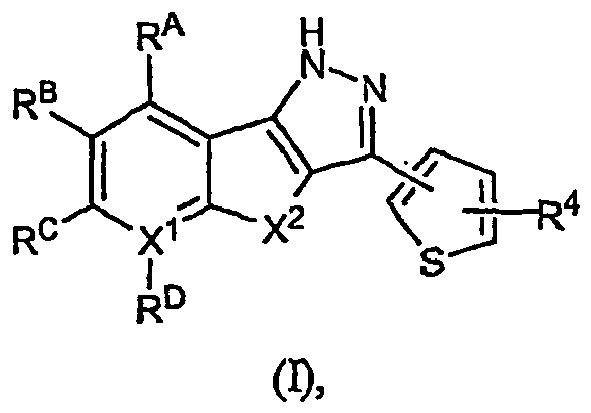 X1 is selected from the group consisting of C and N;X2 is selected from the group consisting of CH2, C=O, and O;RA, RB, and RC are independently selected from the group consisting of hydrogen, alkoxyalkoxy, alkoxyalkoxyalkyl, alkoxyalkyl, alkoxycarbonyl, carboxy, halogen, heteroaryl, heteroarylallcoxy, heteroarylalkyl, heteroarylcarbonyl, heteroaryloxy, heterocycle, heterocyclealkoxy, heterocyclealkyl, heterocyclecarbonyl, heterocycleoxy, RaRbN-, (RaRbN)alkoxy, (RaRbN)alkyl, (RaRbN)carbonyl, and (NRaRbN)carbonylalkoxy, and (RaRbN)carbonylalkyl;RD is absent or selected from the group consisting of hydrogen, alkoxyalkoxy, alkoxyalkoxyalkyl, alkoxyalkyl, alkoxycarbonyl, carboxy, halogen, heteroaryl, heteroarylalkoxy, heteroarylalkyl, heteroarylcarbonyl, heteroaryloxy, heterocycle, heterocyclealkoxy, heterocyclealkyl, heterocyclecarbonyl, heterocycleoxy, RaRbN-, (RaRbN)alkoxy, (RaRbN)alkyl, (RaRbN)carbonyl, and (NRaRbN)carbonylalkoxy, and (RaRbN)carbonylalkyl;Ra and Rb are independently selected from the group consisting of hydrogen, alkoxyalkyl, alkyl, alkylcarbonyl, formyl, heteroarylalkyl, heterocyclealkyl, and (Z1Z2N)alkyl;Z1 and Z2 are independently selected from the group consisting of hydrogen, alkyl, formyl, and alkylcarbonyl;R4 is selected from the group consisting of heteroaryl, O≡CR5, (CH2)nNR6C(O)NR7R8, (CH2)nNR6C(O)OR8, (CH2)nNR6C(NCN)NR7R8, (CH2)nOC(O)NR7R8, CH=NNR6C(O)NR7R8, CH=NOR8, and CH=NOCH2C(O)NR7R8;n is 1, 2, 3, 4, or 5;R5 is selected from the group consisting of alkoxyalkoxyalkyl, alkoxyalkyl, alkoxycarbonylalkoxyalkyl, alkyl, aryl, aryloxyalkyl, arylthioalkyl, arylsulfinylalkyl, arylsulfonylalkyl, cycloalkyl, cycloalkylalkoxyalkyl, cycloalkylalkyl, cycloalkyloxyalkyl, haloalkoxyalkyl, haloalkoxyalkoxyalkyl, heteroaryl, heteroarylalkoxyalkyl, heteroarylalkyl, heteroaryloxyalkyl, heterocycle, heterocyclealkoxyalkyl, heterocyclealkyl, heterocyclecarbonylalkyl, heterocyclecarbonyloxyalkyl, heterocycleoxyalkyl, (NRaRb)carbonylalkoxyalkyl, (NRcRd)alkyl, (CH2)nNR6C(O)NR7R8, (CH2)nNR6C(O)OR8, (CH2)nNR6C(NCN)NR7R8, (CH2)nOC(O)NR7R8, and CH=NNR6C(O)NR8;Rc is selected from the group consisting of hydrogen and alkyl;Rd is selected from the group consisting of alkylsulfonyl, arylsulfonyl, heteroarylcarbonyl, and heteroarylcarbonyl;R6 and R7 are each independently selected from the group consisting of hydrogen, alkoxy, alkoxyalkyl, alkyl, aryl, arylalkyl, cycloalkyl, and cycloalkylalkyl; andR8 is selected from the group consisting of hydrogen, alkoxyalkoxyalkyl, alkoxyalkyl, alkoxycarbonylalkoxyalkyl, alkoxycarbonylalkyl, alkyl, aryl, arylalkoxyalkyl, arylalkyl, aryloxyalkyl, arylthioalkyl, arylsulfinylalkyl, arylsulfonylalkyl, cyanoalkyl, cycloalkyl, cycloalkylalkyl, haloalkoxyalkoxyalkyl, haloalkoxyalkyl, haloalkyl, heteroaryl, heteroarylalkoxyalkyl, heteroarylalkyl, heteroaryloxyalkyl, heterocycle, heterocyclealkoxyalkyl, heterocyclecarbonylalkyl, heterocyclecarbonyloxyalkyl, heterocycleoxyalkyl, heterocyclealkyl, hydroxyalkyl, (RaRbN)alkyl, (RaRbN)carbonylalkoxyalkyl, and (RaRbN)carbonylalkyl; orR7 and R8, together with the nitrogen atom to which they are attached, form a heterocycle ring selected from the group consisting of piperazine, piperidine, and morpholine;with the proviso that the term aryl as employed herein means a phenyl group, or a bicyclic or a tricyclic fused ring system wherein one or more of the fused rings is a phenyl group and the remaining ring(s) of the fused system, if any, is/are (a) cycloalkyl group(s), and wherein the phenyl group or the bicyclic or tricyclic fused ring system can be substituted with 0, 1, 2, 3, 4, or 5 substituents independently selected from alkenyl, alkoxy, alkoxyalkoxy, alkoxyalkyl, alkoxycarbonyl, alkoxycarbonylalkyl, alkoxysulfonyl, alkyl, alkylcarbonyl, alkylcarbonylalkyl, alkylcarbonyloxy, alkylthio, alkylthioalkyl, alkynyl, carboxy, carboxyalkyl, cyano, cyanoalkyl, ethylenedioxy, formyl, haloalkoxy, haloalkyl, halogen, hydroxy, hydroxyalkyl, mercapto, methylenedioxy, nitro, RaRbN-, and (RaRbN)carbonyl;
with the further proviso that the heteroaryl groups as employed herein are substituted with with 0, 1, 2, 3, or 4 substituents independently selected from alkenyl, alkoxy, alkoxyalkoxy, alkoxyalkyl, alkoxycarbonyl, alkoxycarbonylalkyl, alkoxysulfonyl, alkyl, alkylcarbonyl, alkylcarbonylalkyl, alkylcarbonyloxy, alkylthio, alkylthioalkyl, alkynyl, carboxy, carboxyalkyl, cyano, cyanoalkyl, ethylenedioxy, formyl, haloalkoxy, haloalkyl, halogen, hydroxy, hydroxyalkyl, mercapto, methylenedioxy, nitro, RaRbN- and (Ra RbN)carbonyl;
and with the further proviso that the heterocycles as employed herein can be optionally substituted with one, two, three, four, or five substituents independently selected from the group consisting of alkenyl, alkoxy, alkoxyalkoxy, alkoxyalkyl, alkoxycarbonyl, alkoxycarbonylalkyl, alkoxysulfonyl, alkyl, alkylcarbonyl, alkylcarbonylalkyl, alkylcarbonyloxy, alkylsulfonyl, alkylthio, alkylthioalkyl, alkynyl, carboxy, carboxyalkyl, cyano, cyanoalkyl, cycloalkyl, ethylenedioxy, formyl, haloalkoxy, haloalkyl, halogen, hydroxy, hydroxyalkyl, mercapto, methylenedioxy, nitro, oxo, RaRbN-, and (RaRbN)carbonyl;
and with the further proviso that the cycloalkyl groups as employed herein are optionally substituted with 1, 2, 3, or 4 substituents selected from alkenyl, alkoxy, alkoxyalkoxy, alkoxyalkyl, alkoxycarbonyl, alkoxycarbonylalkyl, alkoxysulfonyl, alkyl, alkylcarbonyl, alkylcarbonylalkyl, alkylcarbonyloxy, alkylthio, alkylthioalkyl, alkynyl, carboxy, carboxyalkyl, cyano, cyanoalkyl, ethylenedioxy, formyl, haloalkoxy, haloalkyl, halogen, hydroxy, hydroxyalkyl, mercapto, methylenedioxy, nitro, oxo, RaRbN- and (Ra RbN)carbonyl. - The compound of claim 1 wherein R4 is (CH2)nNR6C(O)NR7R8.
- The compound of claim 1 wherein R4 is (CH2)nNR6C(O)OR8.
- The compound of claim 1 wherein R4 is (CH2)nNR6C(NCN)NR7R8.
- The compound of claim 1 wherein R4 is (CH2)nOC(O)NR7R8.
- The compound of claim 1 wherein R4 is CH=NNR6C(O)NR7R8.
- The compound of claim 1 wherein R4 is CH=NOR8.
- The compound of claim 1 wherein R4 is CH=NOCH2C(O)NR7R8.
- The compound of claim 1 wherein R4 is C≡CR5.
- The compound of claim 1 whereinX1 is selected from the group consisting of C and N;X2 is selected from the group consisting of CH2 and O;RA is hydrogen;RB is selected from the group consisting of heteroaryl, heteroarylalkoxy, heteroarylalkyl, heteroarylcarbonyl, heteroaryloxy, heterocycle, heterocyclealkoxy, heterocyclealkyl, heterocyclecarbonyl, heterocycleoxy, RaRbN-, (RaRbN)alkoxy, (RaRbN)alkyl, (RaRbN)carbonyl, (NRaRbN)carbonylalkoxy, and (RaRbN)carbonylalkyl;RC is selected from the group consisting of hydrogen, alkoxyalkoxy, alkoxyalkoxyalkyl, alkoxyalkyl, alkoxycarbonyl, carboxy, and halogen;RD is absent or selected from the group consisting of hydrogen and halogen;Ra and Rb are independently selected from the group consisting of hydrogen, alkoxyalkyl, alkyl, alkylcarbonyl, formyl, heteroarylalkyl, heterocyclealkyl, and (Z1Z2N)alkyl;Z1 and Z2 are independently selected from the group consisting of hydrogen, alkyl, formyl, and alkylcarbonyl;R4 is O≡CR5;R5 is selected from the group consisting of alkoxyalkoxyalkyl, alkoxycarbonylalkoxyalkyl, arylthioalkyl, arylsulfinylalkyl, arylsulfonylalkyl, cycloalkyl, cycloalkylalkoxyalkyl, cycloalkylalkyl, cycloalkyloxyalkyl, haloalkoxyalkoxyalkyl, heteroaryl, heteroaryloxyalkyl, heterocycle, heterocyclecarbonylalkyl, heterocyclecarbonyloxyalkyl, heterocycleoxyalkyl, (NRaRbN)carbonylalkoxyalkyl, (NRcRd)alkyl;Rc is selected from the group consisting of hydrogen and alkyl; andRd is selected from the group consisting of alkylsulfonyl, arylsulfonyl, heteroarylcarbonyl, and heteroarylcarbonyl.
- The compound of claim 1 whereinX1 is selected from the group consisting of C and N;X2 is selected from the group consisting of CH2 and O;RA is hydrogen;RB is selected from the group consisting of hydrogen, alkoxyalkoxy, alkoxyalkoxyalkyl, alkoxyalkyl, alkoxycarbonyl, carboxy, and halogen;RC is selected from the group consisting of heteroaryl, heteroarylalkoxy, heteroarylalkyl, heteroarylcarbonyl, heteroaryloxy, heterocycle, heterocyclealkoxy, heterocyclealkyl, heterocyclecarbonyl, heterocycleoxy, RaRbN-, (RaRbN)alkoxy, (RaRbN)alkyl, (RaRbN)carbonyl, (NRaRbN)carbonylalkoxy, and (RaRbN)carbonylalkyl;RD is absent or selected from the group consisting of hydrogen and halogen;Ra and Rb are independently selected from the group consisting of hydrogen, alkoxyalkyl, alkyl, alkylcarbonyl, formyl, heteroarylalkyl, heterocyclealkyl, and (Z1Z2N)alkyl;Z1 and Z2 are independently selected from the group consisting of hydrogen, alkyl, formyl, and alkylcarbonyl;R4 is O≡CR5;R5 is selected from the group consisting of alkoxyalkoxyalkyl, alkoxycarbonylalkoxyalkyl, arylthioalkyl, arylsulfinylalkyl, arylsulfonylalkyl, cycloalkyl, cycloalkylalkoxyalkyl, cycloalkylalkyl, cycloalkyloxyalkyl, haloalkoxyalkoxyalkyl, heteroaryl, heteroaryloxyalkyl, heterocycle, heterocyclecarbonylalkyl, heterocyclecarbonyloxyalkyl, heterocycleoxyalkyl, (NRaRbN)carbonylalkoxyalkyl, (NRcRd)alkyl;Rc is selected from the group consisting of hydrogen and alkyl; andRd is selected from the group consisting of alkylsulfonyl, arylsulfonyl, heteroarylcarbonyl, and heteroarylcarbonyl.
- The compound of claim 1 wherein R4 is C≡CR5; and R5 is selected from the group consisting of alkoxyalkoxyalkyl and haloalkoxyalkoxyalkyl,
- The compound of claim 1 wherein R4 is C≡CR5; R5 is selected from the group consisting of alkoxyalkoxyalkyl and haloalkoxyalkoxyalkyl; RB is selected from the group consisting of heteroarylalkyl and heterocyclealkyl; and RA, RC, RD, R2, and R3 are hydrogen.
- The compound according to claim 13 selected from the group consisting of3-{5-[3-(2-methoxyethoxy)-1-propynyl]-3-thienyl}-7-[(4-methyl-1-piperazinyl)methyl]-1,4-dihydroindeno[1,2-c]pyrazole;7-(1H-imidazol-1-ylmethyl)-3-{5-[3-(2-methoxyethoxy)-1-propynyl]-3-thienyl}-1,4-dihydroindeno[1,2-c]pyrazole;3-{5-[3-(2-ethoxyethoxy)-1-propynyl]-3-thienyl}-7-(1H-1,2,4-triazol-1-ylmethyl)-1,4-dihydroindeno[1,2-c]pyrazole;3-{5-[3-(2-isopropoxyethoxy)-1-propynyl]-3-thienyl}-7-(1H-1,2,4-triazol-1-ylmethyl)-1,4-dihydmindeno[1,2-c]pyrazole;3-{5-[3-(2-methoxyethoxy)-1-propynyl]-3-thienyl}-7-(1H-1,2,4-triazol-1-ylmethyl)-1,4-dihydroindeno[1,2-c]pyrazole;3-{4-[3-(2-methoxyethoxy)-1-propynyl]-2-thienyl}-7-(1H-1,2,4-triazol-1-ylmethyl)-1,4-dihydroindeno[1,2-c]pyrazole;3-{5-[3-(2-isopropoxyethoxy)-1-propynyl]-3-thienyl}-7-(1H-1,2,3-triazol-1-ylmethyl)-1,4-dihydroindeno[1,2-c]pyrazole; and3-{5-[3-(2-isopropoxyethoxy)-1-propynyl]-3-thienyl}-7-(2H-1,2,3-triazol-2-ylmethyl)-1,4-dihydroindeno[1,2-c]pyrazole.
- The compound of claim 1 wherein R4 is O≡CR5; R5 is selected from the group consisting of alkoxyalkoxyalkyl and haloalkoxyalkoxyalkyl; RC is selected from the group consisting of heteroarylalkyl and heterocyclealkyl; and RA, RB, RD, R2, and R3 are hydrogen.
- The compound according to claim 15 selected from the group consisting of3-{5-[3-(2-methoxyethoxy)-1-propynyl]-3-thienyl}-6-[(4-methyl-1-piperazinyl)methyl]-1,4-dihydroindeno[1,2-c]pyrazole;3-{5-[3-(2-isopiopoxyethoxy)-1-propynyl]-3-thienyl}-6-[(4-methyl-1-piperazinyl)methyl]-1,4-dihydroindeno[1,2-c]pyrazole;3-{5-[3-(2-ethoxyethoxy)-1-propynyl]-3-thienyl}-6-[(4-methyl-1-piperazinyl)methyl]-1,4-dihydroindeno[1,2-c]pyrazole;3-{5-[3-(2-isobutoxyethoxy)-1-propynyl]-3-thienyl}-6-[(4-methyl-1-piperazinyl)methyl]-1,4-dihydroindeno[1,2-c]pyrazole;3-{5-[3-(2-methoxy-1-methylethoxy)-1-propynyl]-3-thienyl}-6-[(4-methyl-1-piperazinyl)methyl]-1,4-dihydroindeno[1,2-c]pyrazole;6-[(4-isopropyl-1-piperazinyl)methyl]-3-{5-[3-(2-methoxyethoxy)-1-propynyl]-3-thienyl} -1,4-dihydroindeno[1,2-c]pyrazole;6-[(4-ethyl-1-piperazinyl)methyl]-3-{5-[3-(2-methoxyethoxy)-1-propynyl]-3-thienyl}-1,4-dihydroindeno[1,2-c]pyrazole;6-(1H-imidazol-1-ylmethyl)-3-{5-[3-(2-methoxyethoxy)-1-propynyl]-3-thienyl}-1,4-dihydroindeno[1,2-c]pyrazole;3-{5-[3-(2-methoxyethoxy)-1-propynyl]-3-thienyl}-6-(1H-1,2,4-triazol-1-ylmethyl)-1,4-dihydroindeno[1,2-c]pyrazole;3-{5-[3-(2-ethoxyethoxy)-1-propynyl]-2-thienyl}-6-[(4-methyl-1-piperazinyl)methyl]-1,4-dihydroindeno[1,2-c]pyrazole;3-{5-[3-(2-isopropoxyethoxy)-1-propynyl]-2-thienyl}-6-[(4-methyl-1-piperazinyl)methyl]-1,4-dihydroindeno[1,2-c]pyrazole; and3-{4-[3-(2-methoxyethoxy)-1-propynyl]-2-thienyl}-6-[(4-methyl-1-piperazinyl)methyl]-1,4-dihydroindeno[1,2-c]pyrazole.
- The compound according to claim 9 which is 3-(5-{3-[2-(difluoromethoxy)ethoxy]-1-propynyl}-3-thienyl)-6-[(4-methyl-1-piperazinyl)methyl]-1,4-dihydroindeno[1,2-c]pyrazole.
- The compound according to claim 1 selected from the group consisting of3-[5-(3-Cyclopropylmethoxy-prop-1-ynyl)-thiophen-3-yl]-7-fluoro-6-(4-methyl-piperazin-1-yl)-1,4-dihydro-indeno[1,2-c]pyrazole;1-{3-[5-(3-Cyclopropylmethoxy-prop-1-ynyl)-thiophen-3-yl]-1,4-dihydro-indeno[1,2-c]pyrazol-6-ylmethyl}-4-methyl-piperazin-2-one;6-(4-Cyclopropyl-piperazin-1-yl)-3-{5-[3-(2-fluoro-ethoxy)-prop-1-ynyl]-thiophen-3-yl}-1,4-dihydro-indeno[1,2-c]pyrazole;3-[5-(3-Isopropoxy-prop-1-ynyl)-thiophen-3-yl]-6-(4-methyl-piperazin-1-yl)-1,4-dihydro-indeno[1,2-c]pyrazole; and6-(4-cyclopropylpiperazin-1-yl)-3-[5-(3-isopropoxyprop-1-ynyl)thien-3-yl]-1,4-dihydroindeno[1,2-c]pyrazole.
- A pharmaceutical composition comprising a compound of formula (I) as of claim 1 or a therapeutically acceptable salt thereof, in combination with a therapeutically acceptable carrier.
- Use of a compound of formula (I) as of claim 1, or a therapeutically acceptable salt thereof, for manufacturing a medicament for inhibiting a protein kinase in a patient in recognized need of treatment of protein kinase-mediated conditions, such as benign and neoplastic proliferative diseases, human cancers such as lung, breast, stomach, bladder, colon, pancreatic, ovarian, prostate and rectal cancer and hematopoietic malignancies (leukemia and lymphoma), glioblastoma, and infantile hemangioma,
disorders of the immune system, including autoimmune diseases, such as rheumatoid arthritis, thyroiditis, type 1 diabetes, multiple sclerosis, sarcoidosis, inflammatory bowel disease, Crohn's disease, myasthenia gravis and systemic lupus erythematosus; psoriasis, and organ transplant rejection, such as kidney rejection and graft versus host disease, diseases involving inappropriate vascularization, such as diabetic retinopathy, retinopathy of prematurity, choroidal neovascularization due to age-related macular degeneration, and infantile hemangiomas in human beings,
disorders involving VEGF mediated edema, ascites, effusions, and exudates, such as macular edema, cerebral edema, acute lung injury and adult respiratory distress syndrome (ARDS), and
pulmonary hypertension, such as in patients with thromboembolic disease,
by administration to the patient of a therapeutically acceptable amount. - A compound of formula (I) as of claim 1, or a therapeutically acceptable salt thereof, for use as a medicament for inhibiting a protein kinase in a patient in recognized need of treatment of protein kinase-mediated conditions, such as benign and neoplastic proliferative diseases, human cancers such as lung, breast, stomach, bladder, colon, pancreatic, ovarian, prostate and rectal cancer and hematopoietic malignancies (leukemia and lymphoma), glioblastoma, and infantile hemangioma, disorders of the immune system, including autoimmune diseases, such as rheumatoid arthritis, thyroiditis, type 1 diabetes, multiple sclerosis, sarcoidosis, inflammatory bowel disease, Crohn's disease, myasthenia gravis and systemic lupus erythematosus; psoriasis, and organ transplant rejection, such as kidney rejection and graft versus host disease, diseases involving inappropriate vascularization, such as diabetic retinopathy, retinopathy of prematurity, choroidal neovascularization due to age-related macular degeneration, and infantile hemangiomas in human beings, disorders involving VEGF mediated edema, ascites, effusions, and exudates, such as macular edema, cerebral edema, acute lung injury and adult respiratory distress syndrome (ARDS), and pulmonary hypertension, such as in patients with thromboembolic disease.
Applications Claiming Priority (2)
| Application Number | Priority Date | Filing Date | Title |
|---|---|---|---|
| US55600504P | 2004-03-24 | 2004-03-24 | |
| PCT/US2005/009900 WO2005095387A1 (en) | 2004-03-24 | 2005-03-24 | Tricyclic pyrazole kinase inhibitors |
Publications (2)
| Publication Number | Publication Date |
|---|---|
| EP1740579A1 EP1740579A1 (en) | 2007-01-10 |
| EP1740579B1 true EP1740579B1 (en) | 2015-08-19 |
Family
ID=34967860
Family Applications (1)
| Application Number | Title | Priority Date | Filing Date |
|---|---|---|---|
| EP05742125.7A Expired - Lifetime EP1740579B1 (en) | 2004-03-24 | 2005-03-24 | Tricyclic pyrazole kinase inhibitors |
Country Status (7)
| Country | Link |
|---|---|
| US (1) | US7468371B2 (en) |
| EP (1) | EP1740579B1 (en) |
| JP (1) | JP5136929B2 (en) |
| CA (1) | CA2560691A1 (en) |
| ES (1) | ES2551293T3 (en) |
| MX (1) | MXPA06010904A (en) |
| WO (1) | WO2005095387A1 (en) |
Families Citing this family (22)
| Publication number | Priority date | Publication date | Assignee | Title |
|---|---|---|---|---|
| WO2008019284A1 (en) * | 2006-08-04 | 2008-02-14 | Decode Genetics Ehf | Phenoxymethylalkyne inhibitors of lta4h for treating inflammation |
| WO2008070994A1 (en) | 2006-12-14 | 2008-06-19 | Nps Pharmaceuticals, Inc. | Use of d-serine derivatives for the treatment of anxiety disorders |
| CA2750565C (en) * | 2009-01-30 | 2015-10-20 | Glaxosmithkline Llc | Crystalline n-{(1s)-2-amino-1-[(3-fluorophenyl)methyl]ethyl}-5-chloro-4-(4-chloro-1-methyl-1h-pyrazol-5-yl)-2-thiophenecarboxamide hydrochloride |
| TW201038572A (en) | 2009-03-25 | 2010-11-01 | Gruenenthal Gmbh | Substituted spiro-amide compounds |
| US8722014B2 (en) * | 2009-05-01 | 2014-05-13 | Washington University | 1 H-[1, 2, 3] triazole substituted amino acids and uses thereof |
| CN102686571B (en) * | 2009-10-29 | 2015-11-25 | 百时美施贵宝公司 | tricyclic heterocyclic compounds |
| TW201217312A (en) | 2010-09-22 | 2012-05-01 | Gruenenthal Gmbh | Substituted benzamide compounds |
| SG10201600077RA (en) * | 2011-01-11 | 2016-02-26 | Glaxosmithkline Llc | Combination |
| GB201121122D0 (en) * | 2011-12-08 | 2012-01-18 | Dow Corning | Hydrolysable silanes and elastomer compositions containing them |
| WO2013121436A2 (en) * | 2012-02-06 | 2013-08-22 | Megafine Pharma (P) Ltd | A process for preparation of rivaroxaban and intermediates thereof |
| US8853207B2 (en) | 2012-04-12 | 2014-10-07 | Development Center For Biotechnology | Heterocyclic pyrazole compounds, method for preparing the same and use thereof |
| WO2014039831A1 (en) * | 2012-09-07 | 2014-03-13 | Takeda Pharmaceutical Company Limited | SUBSTITUTED-1,4-DIHYDROPYRAZOLO[4,3-b]INDOLES |
| US10059674B2 (en) * | 2016-05-12 | 2018-08-28 | Act Pharma Co., Ltd. | Design, synthesis, and biological evaluation of 1-methyl-1, 4-dihyrdoindeno[1,2-C]pyrazole analogues as potential anticaner agents targeting tubulin colchicine binding site |
| ES2859478T3 (en) | 2016-09-02 | 2021-10-04 | Bristol Myers Squibb Co | Substituted tricyclic heterocyclic compounds |
| CN107382765B (en) * | 2017-07-19 | 2019-06-28 | 河北大学 | A kind of preparation method of N,N-diethylacetamide substituted p-tert-butylcalix[6]arene |
| WO2019032632A1 (en) | 2017-08-09 | 2019-02-14 | Bristol-Myers Squibb Company | Alkylphenyl compounds |
| US11059784B2 (en) | 2017-08-09 | 2021-07-13 | Bristol-Myers Squibb Company | Oxime ether compounds |
| CN114409680B (en) * | 2018-01-19 | 2023-11-21 | 上海怡立舍生物技术有限公司 | PPAR agonists and uses thereof |
| US11261192B2 (en) | 2018-03-09 | 2022-03-01 | Recurium Ip Holdings, Llc | Substituted 1,2-dihydro-3H-pyrazolo[3,4-D]pyrimidin-3-ones |
| CN114206327A (en) * | 2019-06-10 | 2022-03-18 | 华盛顿大学 | SWELL1-LRRC8 complex modulators |
| CN113956160A (en) * | 2021-12-23 | 2022-01-21 | 北京茗泽中和药物研究有限公司 | Preparation method of flurbiprofen impurity F |
| CN114573534B (en) * | 2022-03-30 | 2025-01-24 | 八叶草健康产业研究院(厦门)有限公司 | A preparation method of 5-bromobenzofuranone |
Family Cites Families (14)
| Publication number | Priority date | Publication date | Assignee | Title |
|---|---|---|---|---|
| CN1297442A (en) | 1998-04-21 | 2001-05-30 | 杜邦药品公司 | 5-aminoindeno [1,2-c] pyrazol-4-ones as anti-cancer and anti-proliferative agents |
| US6407103B2 (en) | 1998-04-21 | 2002-06-18 | Bristol-Myers Squibb Pharma Company | Indeno [1,2-c] pyrazol-4-ones and their uses |
| US6462036B1 (en) | 1998-11-06 | 2002-10-08 | Basf Aktiengesellschaft | Tricyclic pyrazole derivatives |
| WO2000027822A2 (en) | 1998-11-06 | 2000-05-18 | Basf Aktiengesellschaft | Tricyclic pyrazole derivatives |
| US6297238B1 (en) | 1999-04-06 | 2001-10-02 | Basf Aktiengesellschaft | Therapeutic agents |
| NZ514269A (en) | 1999-04-06 | 2003-10-31 | Abbott Gmbh & Co | Substituted 1,4-dihydroindeno[1,2-c]pyrazoles useful as inhibitors of tyrosine kinase |
| US6291504B1 (en) | 1999-10-20 | 2001-09-18 | Dupont Pharmaceuticals Company | Acylsemicarbazides and their uses |
| US6593356B2 (en) | 1999-10-20 | 2003-07-15 | Bristol-Myers Squibb Pharma Company | Acylsemicarbazides as cyclin dependent kinase inhibitors useful as anti-cancer and anti-proliferative agents |
| US6706718B2 (en) | 2000-12-01 | 2004-03-16 | Bristol-Myers Squibb Company | 3-(2,4-dimethylthiazol-5-yl)indeno[1,2-c]pyrazol-4-one derivatives and their uses |
| WO2002046182A1 (en) | 2000-12-08 | 2002-06-13 | Bristol-Myers Squibb Pharma Company | Semicarbazides and their uses as cyclin dependent kinase inhibitors |
| UA76977C2 (en) | 2001-03-02 | 2006-10-16 | Icos Corp | Aryl- and heteroaryl substituted chk1 inhibitors and their use as radiosensitizers and chemosensitizers |
| US20040242869A1 (en) | 2001-07-06 | 2004-12-02 | Carini David J | Semicarbazides and their uses |
| CA2463571A1 (en) | 2001-10-15 | 2003-04-24 | Gpc Biotech, Inc. | Inhibitors of cyclin-dependent kinases, compositions and uses related thereto |
| US20050176796A1 (en) | 2002-02-19 | 2005-08-11 | D'alessio Roberto | Tricyclic pyrazole derivatives, process for their preparation and their use as antitumor agents |
-
2005
- 2005-03-24 CA CA002560691A patent/CA2560691A1/en not_active Abandoned
- 2005-03-24 ES ES05742125.7T patent/ES2551293T3/en not_active Expired - Lifetime
- 2005-03-24 WO PCT/US2005/009900 patent/WO2005095387A1/en not_active Ceased
- 2005-03-24 US US11/089,473 patent/US7468371B2/en not_active Expired - Fee Related
- 2005-03-24 JP JP2007505192A patent/JP5136929B2/en not_active Expired - Fee Related
- 2005-03-24 MX MXPA06010904A patent/MXPA06010904A/en active IP Right Grant
- 2005-03-24 EP EP05742125.7A patent/EP1740579B1/en not_active Expired - Lifetime
Also Published As
| Publication number | Publication date |
|---|---|
| JP5136929B2 (en) | 2013-02-06 |
| JP2007530581A (en) | 2007-11-01 |
| MXPA06010904A (en) | 2007-06-11 |
| US7468371B2 (en) | 2008-12-23 |
| WO2005095387A1 (en) | 2005-10-13 |
| ES2551293T3 (en) | 2015-11-17 |
| CA2560691A1 (en) | 2005-10-13 |
| EP1740579A1 (en) | 2007-01-10 |
| US20060014816A1 (en) | 2006-01-19 |
Similar Documents
| Publication | Publication Date | Title |
|---|---|---|
| US7468371B2 (en) | Tricyclic pyrazole kinase inhibitors | |
| EP1537112B1 (en) | Condensed pyridines and pyrimidines with tie2 (tek) activity | |
| EP1848694B1 (en) | Heterocyclic substituted phenyl methanones as inhibitors of the glycine transporter 1 | |
| CN105102453B (en) | benzimidazolone derivatives as bromodomain inhibitors | |
| RU2296758C2 (en) | Derivatives of thiophene | |
| EP2035436B1 (en) | Fused thiazole derivatives as kinase inhibitors | |
| AU2006287766B2 (en) | Benzimidazole thiophene compounds as PLK inhibitors | |
| EP1463730B1 (en) | Pyrazolopyridazine derivatives | |
| CN107652303B (en) | Novel thienopyrimidine derivatives, preparation method and therapeutic use thereof | |
| BR102014032336B1 (en) | thienopyrimidine-derived compounds, their preparation processes, pharmaceutical compositions and their uses | |
| EP2471789A1 (en) | Fused heterocyclic ring derivative and use thereof | |
| CN115260180B (en) | Triazole condensed ring derivative, pharmaceutical composition, preparation method and application thereof | |
| EP1523485B1 (en) | 3-furanyl analogs of toxoflavine as kinase inhibitors | |
| JP2008542433A (en) | Α-Carboline as a CDK-1 inhibitor | |
| CN102643272B (en) | Novel thieno [3, 2-d] pyrimidine compound | |
| EP1608656B1 (en) | Imidazotriazine compounds for the treatment of cancer diseases | |
| EP2032563B1 (en) | Benzimidazol substituted thiophene derivatives with activity on plk | |
| CN111153891A (en) | Substituted benzimidazole PI3K α/mTOR double-target inhibitor and pharmaceutical composition and application thereof | |
| US7615643B2 (en) | Benzimidazole thiophene compounds | |
| JP2009539771A (en) | Substituted benzimidazole thiophene benzyl ether compound | |
| HK40017640B (en) | Bromodomain inhibitors | |
| HK40017640A (en) | Bromodomain inhibitors | |
| HK1117504B (en) | Benzimidazole thiophene compounds as plk inhibitors | |
| HK1179114B (en) | Tricyclic compounds and pbk inhibitors containing the same | |
| HK1179114A1 (en) | Tricyclic compounds and pbk inhibitors containing the same |
Legal Events
| Date | Code | Title | Description |
|---|---|---|---|
| PUAI | Public reference made under article 153(3) epc to a published international application that has entered the european phase |
Free format text: ORIGINAL CODE: 0009012 |
|
| 17P | Request for examination filed |
Effective date: 20061020 |
|
| AK | Designated contracting states |
Kind code of ref document: A1 Designated state(s): AT BE BG CH CY CZ DE DK EE ES FI FR GB GR HU IE IS IT LI LT LU MC NL PL PT RO SE SI SK TR |
|
| DAX | Request for extension of the european patent (deleted) | ||
| 17Q | First examination report despatched |
Effective date: 20091218 |
|
| RAP1 | Party data changed (applicant data changed or rights of an application transferred) |
Owner name: MAKOTO, AOYAMA Owner name: ABBVIE INC. |
|
| GRAP | Despatch of communication of intention to grant a patent |
Free format text: ORIGINAL CODE: EPIDOSNIGR1 |
|
| INTG | Intention to grant announced |
Effective date: 20150213 |
|
| GRAS | Grant fee paid |
Free format text: ORIGINAL CODE: EPIDOSNIGR3 |
|
| GRAA | (expected) grant |
Free format text: ORIGINAL CODE: 0009210 |
|
| AK | Designated contracting states |
Kind code of ref document: B1 Designated state(s): AT BE BG CH CY CZ DE DK EE ES FI FR GB GR HU IE IS IT LI LT LU MC NL PL PT RO SE SI SK TR |
|
| REG | Reference to a national code |
Ref country code: GB Ref legal event code: FG4D |
|
| REG | Reference to a national code |
Ref country code: CH Ref legal event code: EP |
|
| REG | Reference to a national code |
Ref country code: IE Ref legal event code: FG4D |
|
| REG | Reference to a national code |
Ref country code: AT Ref legal event code: REF Ref document number: 743725 Country of ref document: AT Kind code of ref document: T Effective date: 20150915 |
|
| REG | Reference to a national code |
Ref country code: DE Ref legal event code: R096 Ref document number: 602005047285 Country of ref document: DE |
|
| REG | Reference to a national code |
Ref country code: ES Ref legal event code: FG2A Ref document number: 2551293 Country of ref document: ES Kind code of ref document: T3 Effective date: 20151117 |
|
| REG | Reference to a national code |
Ref country code: AT Ref legal event code: MK05 Ref document number: 743725 Country of ref document: AT Kind code of ref document: T Effective date: 20150819 |
|
| REG | Reference to a national code |
Ref country code: LT Ref legal event code: MG4D |
|
| REG | Reference to a national code |
Ref country code: NL Ref legal event code: MP Effective date: 20150819 |
|
| PG25 | Lapsed in a contracting state [announced via postgrant information from national office to epo] |
Ref country code: LT Free format text: LAPSE BECAUSE OF FAILURE TO SUBMIT A TRANSLATION OF THE DESCRIPTION OR TO PAY THE FEE WITHIN THE PRESCRIBED TIME-LIMIT Effective date: 20150819 Ref country code: FI Free format text: LAPSE BECAUSE OF FAILURE TO SUBMIT A TRANSLATION OF THE DESCRIPTION OR TO PAY THE FEE WITHIN THE PRESCRIBED TIME-LIMIT Effective date: 20150819 Ref country code: GR Free format text: LAPSE BECAUSE OF FAILURE TO SUBMIT A TRANSLATION OF THE DESCRIPTION OR TO PAY THE FEE WITHIN THE PRESCRIBED TIME-LIMIT Effective date: 20151120 |
|
| REG | Reference to a national code |
Ref country code: FR Ref legal event code: PLFP Year of fee payment: 12 |
|
| PG25 | Lapsed in a contracting state [announced via postgrant information from national office to epo] |
Ref country code: AT Free format text: LAPSE BECAUSE OF FAILURE TO SUBMIT A TRANSLATION OF THE DESCRIPTION OR TO PAY THE FEE WITHIN THE PRESCRIBED TIME-LIMIT Effective date: 20150819 Ref country code: SE Free format text: LAPSE BECAUSE OF FAILURE TO SUBMIT A TRANSLATION OF THE DESCRIPTION OR TO PAY THE FEE WITHIN THE PRESCRIBED TIME-LIMIT Effective date: 20150819 Ref country code: PL Free format text: LAPSE BECAUSE OF FAILURE TO SUBMIT A TRANSLATION OF THE DESCRIPTION OR TO PAY THE FEE WITHIN THE PRESCRIBED TIME-LIMIT Effective date: 20150819 Ref country code: IS Free format text: LAPSE BECAUSE OF FAILURE TO SUBMIT A TRANSLATION OF THE DESCRIPTION OR TO PAY THE FEE WITHIN THE PRESCRIBED TIME-LIMIT Effective date: 20151219 Ref country code: PT Free format text: LAPSE BECAUSE OF FAILURE TO SUBMIT A TRANSLATION OF THE DESCRIPTION OR TO PAY THE FEE WITHIN THE PRESCRIBED TIME-LIMIT Effective date: 20151221 |
|
| PG25 | Lapsed in a contracting state [announced via postgrant information from national office to epo] |
Ref country code: NL Free format text: LAPSE BECAUSE OF FAILURE TO SUBMIT A TRANSLATION OF THE DESCRIPTION OR TO PAY THE FEE WITHIN THE PRESCRIBED TIME-LIMIT Effective date: 20150819 |
|
| PG25 | Lapsed in a contracting state [announced via postgrant information from national office to epo] |
Ref country code: EE Free format text: LAPSE BECAUSE OF FAILURE TO SUBMIT A TRANSLATION OF THE DESCRIPTION OR TO PAY THE FEE WITHIN THE PRESCRIBED TIME-LIMIT Effective date: 20150819 Ref country code: DK Free format text: LAPSE BECAUSE OF FAILURE TO SUBMIT A TRANSLATION OF THE DESCRIPTION OR TO PAY THE FEE WITHIN THE PRESCRIBED TIME-LIMIT Effective date: 20150819 Ref country code: CZ Free format text: LAPSE BECAUSE OF FAILURE TO SUBMIT A TRANSLATION OF THE DESCRIPTION OR TO PAY THE FEE WITHIN THE PRESCRIBED TIME-LIMIT Effective date: 20150819 Ref country code: SK Free format text: LAPSE BECAUSE OF FAILURE TO SUBMIT A TRANSLATION OF THE DESCRIPTION OR TO PAY THE FEE WITHIN THE PRESCRIBED TIME-LIMIT Effective date: 20150819 |
|
| PGFP | Annual fee paid to national office [announced via postgrant information from national office to epo] |
Ref country code: IT Payment date: 20160316 Year of fee payment: 12 Ref country code: ES Payment date: 20160308 Year of fee payment: 12 |
|
| REG | Reference to a national code |
Ref country code: DE Ref legal event code: R097 Ref document number: 602005047285 Country of ref document: DE |
|
| PG25 | Lapsed in a contracting state [announced via postgrant information from national office to epo] |
Ref country code: RO Free format text: LAPSE BECAUSE OF FAILURE TO SUBMIT A TRANSLATION OF THE DESCRIPTION OR TO PAY THE FEE WITHIN THE PRESCRIBED TIME-LIMIT Effective date: 20150819 |
|
| PGFP | Annual fee paid to national office [announced via postgrant information from national office to epo] |
Ref country code: GB Payment date: 20160224 Year of fee payment: 12 Ref country code: FR Payment date: 20160223 Year of fee payment: 12 |
|
| PLBE | No opposition filed within time limit |
Free format text: ORIGINAL CODE: 0009261 |
|
| STAA | Information on the status of an ep patent application or granted ep patent |
Free format text: STATUS: NO OPPOSITION FILED WITHIN TIME LIMIT |
|
| 26N | No opposition filed |
Effective date: 20160520 |
|
| PGFP | Annual fee paid to national office [announced via postgrant information from national office to epo] |
Ref country code: DE Payment date: 20160324 Year of fee payment: 12 |
|
| PG25 | Lapsed in a contracting state [announced via postgrant information from national office to epo] |
Ref country code: BE Free format text: LAPSE BECAUSE OF NON-PAYMENT OF DUE FEES Effective date: 20160331 Ref country code: SI Free format text: LAPSE BECAUSE OF FAILURE TO SUBMIT A TRANSLATION OF THE DESCRIPTION OR TO PAY THE FEE WITHIN THE PRESCRIBED TIME-LIMIT Effective date: 20150819 |
|
| PG25 | Lapsed in a contracting state [announced via postgrant information from national office to epo] |
Ref country code: MC Free format text: LAPSE BECAUSE OF FAILURE TO SUBMIT A TRANSLATION OF THE DESCRIPTION OR TO PAY THE FEE WITHIN THE PRESCRIBED TIME-LIMIT Effective date: 20150819 Ref country code: LU Free format text: LAPSE BECAUSE OF FAILURE TO SUBMIT A TRANSLATION OF THE DESCRIPTION OR TO PAY THE FEE WITHIN THE PRESCRIBED TIME-LIMIT Effective date: 20160324 |
|
| REG | Reference to a national code |
Ref country code: CH Ref legal event code: PL |
|
| REG | Reference to a national code |
Ref country code: IE Ref legal event code: MM4A |
|
| PG25 | Lapsed in a contracting state [announced via postgrant information from national office to epo] |
Ref country code: BE Free format text: LAPSE BECAUSE OF FAILURE TO SUBMIT A TRANSLATION OF THE DESCRIPTION OR TO PAY THE FEE WITHIN THE PRESCRIBED TIME-LIMIT Effective date: 20150819 |
|
| PG25 | Lapsed in a contracting state [announced via postgrant information from national office to epo] |
Ref country code: IE Free format text: LAPSE BECAUSE OF NON-PAYMENT OF DUE FEES Effective date: 20160324 Ref country code: LI Free format text: LAPSE BECAUSE OF NON-PAYMENT OF DUE FEES Effective date: 20160331 Ref country code: CH Free format text: LAPSE BECAUSE OF NON-PAYMENT OF DUE FEES Effective date: 20160331 |
|
| REG | Reference to a national code |
Ref country code: DE Ref legal event code: R119 Ref document number: 602005047285 Country of ref document: DE |
|
| GBPC | Gb: european patent ceased through non-payment of renewal fee |
Effective date: 20170324 |
|
| REG | Reference to a national code |
Ref country code: FR Ref legal event code: ST Effective date: 20171130 |
|
| PG25 | Lapsed in a contracting state [announced via postgrant information from national office to epo] |
Ref country code: DE Free format text: LAPSE BECAUSE OF NON-PAYMENT OF DUE FEES Effective date: 20171003 Ref country code: FR Free format text: LAPSE BECAUSE OF NON-PAYMENT OF DUE FEES Effective date: 20170331 |
|
| PG25 | Lapsed in a contracting state [announced via postgrant information from national office to epo] |
Ref country code: GB Free format text: LAPSE BECAUSE OF NON-PAYMENT OF DUE FEES Effective date: 20170324 Ref country code: IT Free format text: LAPSE BECAUSE OF NON-PAYMENT OF DUE FEES Effective date: 20170324 |
|
| PG25 | Lapsed in a contracting state [announced via postgrant information from national office to epo] |
Ref country code: HU Free format text: LAPSE BECAUSE OF FAILURE TO SUBMIT A TRANSLATION OF THE DESCRIPTION OR TO PAY THE FEE WITHIN THE PRESCRIBED TIME-LIMIT; INVALID AB INITIO Effective date: 20050324 Ref country code: CY Free format text: LAPSE BECAUSE OF FAILURE TO SUBMIT A TRANSLATION OF THE DESCRIPTION OR TO PAY THE FEE WITHIN THE PRESCRIBED TIME-LIMIT Effective date: 20150819 |
|
| REG | Reference to a national code |
Ref country code: ES Ref legal event code: FD2A Effective date: 20180627 |
|
| PG25 | Lapsed in a contracting state [announced via postgrant information from national office to epo] |
Ref country code: TR Free format text: LAPSE BECAUSE OF FAILURE TO SUBMIT A TRANSLATION OF THE DESCRIPTION OR TO PAY THE FEE WITHIN THE PRESCRIBED TIME-LIMIT Effective date: 20150819 |
|
| PG25 | Lapsed in a contracting state [announced via postgrant information from national office to epo] |
Ref country code: ES Free format text: LAPSE BECAUSE OF NON-PAYMENT OF DUE FEES Effective date: 20170325 Ref country code: BG Free format text: LAPSE BECAUSE OF FAILURE TO SUBMIT A TRANSLATION OF THE DESCRIPTION OR TO PAY THE FEE WITHIN THE PRESCRIBED TIME-LIMIT Effective date: 20150819 |