EP1739169A1 - Clinical diagnostic reagent comprising glucose 6-phosphate dehydrogenase (G6PDH), method for stabilizing G6PDH, and use of a stabilizer for G6PDH - Google Patents
Clinical diagnostic reagent comprising glucose 6-phosphate dehydrogenase (G6PDH), method for stabilizing G6PDH, and use of a stabilizer for G6PDH Download PDFInfo
- Publication number
- EP1739169A1 EP1739169A1 EP06013241A EP06013241A EP1739169A1 EP 1739169 A1 EP1739169 A1 EP 1739169A1 EP 06013241 A EP06013241 A EP 06013241A EP 06013241 A EP06013241 A EP 06013241A EP 1739169 A1 EP1739169 A1 EP 1739169A1
- Authority
- EP
- European Patent Office
- Prior art keywords
- group
- substituted
- unsubstituted
- g6pdh
- reagent
- Prior art date
- Legal status (The legal status is an assumption and is not a legal conclusion. Google has not performed a legal analysis and makes no representation as to the accuracy of the status listed.)
- Granted
Links
- 239000003153 chemical reaction reagent Substances 0.000 title claims abstract description 130
- 102100031126 6-phosphogluconolactonase Human genes 0.000 title claims abstract description 86
- 108010029731 6-phosphogluconolactonase Proteins 0.000 title claims abstract description 86
- 108010018962 Glucosephosphate Dehydrogenase Proteins 0.000 title claims abstract description 86
- 239000003381 stabilizer Substances 0.000 title claims abstract description 42
- 238000000034 method Methods 0.000 title claims description 11
- 230000000087 stabilizing effect Effects 0.000 title claims description 10
- 125000000217 alkyl group Chemical group 0.000 claims abstract description 15
- 125000003277 amino group Chemical group 0.000 claims abstract description 11
- 125000003545 alkoxy group Chemical group 0.000 claims abstract description 10
- 125000003118 aryl group Chemical group 0.000 claims abstract description 10
- 125000004453 alkoxycarbonyl group Chemical group 0.000 claims abstract description 9
- 125000003435 aroyl group Chemical group 0.000 claims abstract description 9
- 125000003710 aryl alkyl group Chemical group 0.000 claims abstract description 9
- 125000000623 heterocyclic group Chemical group 0.000 claims abstract description 9
- 125000002252 acyl group Chemical group 0.000 claims abstract description 8
- 229910052736 halogen Inorganic materials 0.000 claims abstract description 8
- 150000002367 halogens Chemical class 0.000 claims abstract description 8
- 239000001257 hydrogen Substances 0.000 claims abstract description 8
- 229910052739 hydrogen Inorganic materials 0.000 claims abstract description 8
- 125000002887 hydroxy group Chemical group [H]O* 0.000 claims abstract description 8
- 125000000753 cycloalkyl group Chemical group 0.000 claims abstract description 7
- 125000003342 alkenyl group Chemical group 0.000 claims abstract description 6
- 150000002431 hydrogen Chemical group 0.000 claims abstract description 6
- 125000005400 pyridylcarbonyl group Chemical group N1=C(C=CC=C1)C(=O)* 0.000 claims abstract description 6
- 230000000694 effects Effects 0.000 claims description 53
- PWKSKIMOESPYIA-BYPYZUCNSA-N L-N-acetyl-Cysteine Chemical compound CC(=O)N[C@@H](CS)C(O)=O PWKSKIMOESPYIA-BYPYZUCNSA-N 0.000 claims description 22
- 238000005259 measurement Methods 0.000 claims description 20
- DRBBFCLWYRJSJZ-UHFFFAOYSA-N N-phosphocreatine Chemical compound OC(=O)CN(C)C(=N)NP(O)(O)=O DRBBFCLWYRJSJZ-UHFFFAOYSA-N 0.000 claims description 19
- 150000001875 compounds Chemical class 0.000 claims description 19
- 229930027945 nicotinamide-adenine dinucleotide Natural products 0.000 claims description 14
- XTWYTFMLZFPYCI-KQYNXXCUSA-N 5'-adenylphosphoric acid Chemical compound C1=NC=2C(N)=NC=NC=2N1[C@@H]1O[C@H](COP(O)(=O)OP(O)(O)=O)[C@@H](O)[C@H]1O XTWYTFMLZFPYCI-KQYNXXCUSA-N 0.000 claims description 10
- XTWYTFMLZFPYCI-UHFFFAOYSA-N Adenosine diphosphate Natural products C1=NC=2C(N)=NC=NC=2N1C1OC(COP(O)(=O)OP(O)(O)=O)C(O)C1O XTWYTFMLZFPYCI-UHFFFAOYSA-N 0.000 claims description 10
- 102000005548 Hexokinase Human genes 0.000 claims description 10
- 108700040460 Hexokinases Proteins 0.000 claims description 10
- 102000030595 Glucokinase Human genes 0.000 claims description 9
- 108010021582 Glucokinase Proteins 0.000 claims description 9
- WQZGKKKJIJFFOK-GASJEMHNSA-N Glucose Natural products OC[C@H]1OC(O)[C@H](O)[C@@H](O)[C@@H]1O WQZGKKKJIJFFOK-GASJEMHNSA-N 0.000 claims description 8
- BAWFJGJZGIEFAR-NNYOXOHSSA-N NAD zwitterion Chemical compound NC(=O)C1=CC=C[N+]([C@H]2[C@@H]([C@H](O)[C@@H](COP([O-])(=O)OP(O)(=O)OC[C@@H]3[C@H]([C@@H](O)[C@@H](O3)N3C4=NC=NC(N)=C4N=C3)O)O2)O)=C1 BAWFJGJZGIEFAR-NNYOXOHSSA-N 0.000 claims description 7
- 239000008103 glucose Substances 0.000 claims description 7
- 229950006238 nadide Drugs 0.000 claims description 6
- VHJLVAABSRFDPM-QWWZWVQMSA-N dithiothreitol Chemical compound SC[C@@H](O)[C@H](O)CS VHJLVAABSRFDPM-QWWZWVQMSA-N 0.000 claims description 4
- RWSXRVCMGQZWBV-WDSKDSINSA-N glutathione Chemical compound OC(=O)[C@@H](N)CCC(=O)N[C@@H](CS)C(=O)NCC(O)=O RWSXRVCMGQZWBV-WDSKDSINSA-N 0.000 claims description 4
- 102000004420 Creatine Kinase Human genes 0.000 claims description 3
- 108010042126 Creatine kinase Proteins 0.000 claims description 3
- JLVVSXFLKOJNIY-UHFFFAOYSA-N Magnesium ion Chemical compound [Mg+2] JLVVSXFLKOJNIY-UHFFFAOYSA-N 0.000 claims description 3
- 239000005515 coenzyme Substances 0.000 claims description 3
- 229910001425 magnesium ion Inorganic materials 0.000 claims description 3
- 108010024636 Glutathione Proteins 0.000 claims description 2
- XUJNEKJLAYXESH-REOHCLBHSA-N L-Cysteine Chemical compound SC[C@H](N)C(O)=O XUJNEKJLAYXESH-REOHCLBHSA-N 0.000 claims description 2
- 108091000080 Phosphotransferase Proteins 0.000 claims description 2
- UFULAYFCSOUIOV-UHFFFAOYSA-N cysteamine Chemical compound NCCS UFULAYFCSOUIOV-UHFFFAOYSA-N 0.000 claims description 2
- 229960002433 cysteine Drugs 0.000 claims description 2
- XUJNEKJLAYXESH-UHFFFAOYSA-N cysteine Natural products SCC(N)C(O)=O XUJNEKJLAYXESH-UHFFFAOYSA-N 0.000 claims description 2
- 235000018417 cysteine Nutrition 0.000 claims description 2
- 229960003180 glutathione Drugs 0.000 claims description 2
- 229960003151 mercaptamine Drugs 0.000 claims description 2
- PJUIMOJAAPLTRJ-UHFFFAOYSA-N monothioglycerol Chemical compound OCC(O)CS PJUIMOJAAPLTRJ-UHFFFAOYSA-N 0.000 claims description 2
- 102000020233 phosphotransferase Human genes 0.000 claims description 2
- 229940035024 thioglycerol Drugs 0.000 claims description 2
- 125000003396 thiol group Chemical group [H]S* 0.000 claims 3
- 125000004191 (C1-C6) alkoxy group Chemical group 0.000 claims 1
- 125000004169 (C1-C6) alkyl group Chemical group 0.000 claims 1
- 125000000882 C2-C6 alkenyl group Chemical group 0.000 claims 1
- UFHFLCQGNIYNRP-UHFFFAOYSA-N Hydrogen Chemical compound [H][H] UFHFLCQGNIYNRP-UHFFFAOYSA-N 0.000 claims 1
- XJLXINKUBYWONI-NNYOXOHSSA-N NADP zwitterion Chemical compound NC(=O)C1=CC=C[N+]([C@H]2[C@@H]([C@H](O)[C@@H](COP([O-])(=O)OP(O)(=O)OC[C@@H]3[C@H]([C@@H](OP(O)(O)=O)[C@@H](O3)N3C4=NC=NC(N)=C4N=C3)O)O2)O)=C1 XJLXINKUBYWONI-NNYOXOHSSA-N 0.000 claims 1
- 230000000052 comparative effect Effects 0.000 description 19
- 230000000977 initiatory effect Effects 0.000 description 17
- HAMNKKUPIHEESI-UHFFFAOYSA-N aminoguanidine Chemical compound NNC(N)=N HAMNKKUPIHEESI-UHFFFAOYSA-N 0.000 description 15
- -1 4-pentenyl group Chemical group 0.000 description 13
- XJLXINKUBYWONI-DQQFMEOOSA-N [[(2r,3r,4r,5r)-5-(6-aminopurin-9-yl)-3-hydroxy-4-phosphonooxyoxolan-2-yl]methoxy-hydroxyphosphoryl] [(2s,3r,4s,5s)-5-(3-carbamoylpyridin-1-ium-1-yl)-3,4-dihydroxyoxolan-2-yl]methyl phosphate Chemical compound NC(=O)C1=CC=C[N+]([C@@H]2[C@H]([C@@H](O)[C@H](COP([O-])(=O)OP(O)(=O)OC[C@@H]3[C@H]([C@@H](OP(O)(O)=O)[C@@H](O3)N3C4=NC=NC(N)=C4N=C3)O)O2)O)=C1 XJLXINKUBYWONI-DQQFMEOOSA-N 0.000 description 11
- 238000006243 chemical reaction Methods 0.000 description 11
- OAKJQQAXSVQMHS-UHFFFAOYSA-N Hydrazine Chemical compound NN OAKJQQAXSVQMHS-UHFFFAOYSA-N 0.000 description 10
- 239000000872 buffer Substances 0.000 description 10
- 102000002281 Adenylate kinase Human genes 0.000 description 8
- 108020000543 Adenylate kinase Proteins 0.000 description 8
- VFRROHXSMXFLSN-UHFFFAOYSA-N Glc6P Natural products OP(=O)(O)OCC(O)C(O)C(O)C(O)C=O VFRROHXSMXFLSN-UHFFFAOYSA-N 0.000 description 8
- 238000011002 quantification Methods 0.000 description 7
- 239000000243 solution Substances 0.000 description 7
- 238000002835 absorbance Methods 0.000 description 5
- OFLXLNCGODUUOT-UHFFFAOYSA-N acetohydrazide Chemical compound C\C(O)=N\N OFLXLNCGODUUOT-UHFFFAOYSA-N 0.000 description 5
- 239000000203 mixture Substances 0.000 description 5
- 239000000126 substance Substances 0.000 description 5
- ZKHQWZAMYRWXGA-KQYNXXCUSA-J ATP(4-) Chemical compound C1=NC=2C(N)=NC=NC=2N1[C@@H]1O[C@H](COP([O-])(=O)OP([O-])(=O)OP([O-])([O-])=O)[C@@H](O)[C@H]1O ZKHQWZAMYRWXGA-KQYNXXCUSA-J 0.000 description 4
- ZKHQWZAMYRWXGA-UHFFFAOYSA-N Adenosine triphosphate Natural products C1=NC=2C(N)=NC=NC=2N1C1OC(COP(O)(=O)OP(O)(=O)OP(O)(O)=O)C(O)C1O ZKHQWZAMYRWXGA-UHFFFAOYSA-N 0.000 description 4
- 230000002411 adverse Effects 0.000 description 4
- 239000003795 chemical substances by application Substances 0.000 description 4
- 239000004615 ingredient Substances 0.000 description 4
- 150000003839 salts Chemical class 0.000 description 4
- 210000002966 serum Anatomy 0.000 description 4
- KIUMMUBSPKGMOY-UHFFFAOYSA-N 3,3'-Dithiobis(6-nitrobenzoic acid) Chemical compound C1=C([N+]([O-])=O)C(C(=O)O)=CC(SSC=2C=C(C(=CC=2)[N+]([O-])=O)C(O)=O)=C1 KIUMMUBSPKGMOY-UHFFFAOYSA-N 0.000 description 3
- 108010044467 Isoenzymes Proteins 0.000 description 3
- WQZGKKKJIJFFOK-VFUOTHLCSA-N beta-D-glucose Chemical compound OC[C@H]1O[C@@H](O)[C@H](O)[C@@H](O)[C@@H]1O WQZGKKKJIJFFOK-VFUOTHLCSA-N 0.000 description 3
- RAXXELZNTBOGNW-UHFFFAOYSA-N imidazole Natural products C1=CNC=N1 RAXXELZNTBOGNW-UHFFFAOYSA-N 0.000 description 3
- 239000003112 inhibitor Substances 0.000 description 3
- BOPGDPNILDQYTO-NNYOXOHSSA-N nicotinamide-adenine dinucleotide Chemical compound C1=CCC(C(=O)N)=CN1[C@H]1[C@H](O)[C@H](O)[C@@H](COP(O)(=O)OP(O)(=O)OC[C@@H]2[C@H]([C@@H](O)[C@@H](O2)N2C3=NC=NC(N)=C3N=C2)O)O1 BOPGDPNILDQYTO-NNYOXOHSSA-N 0.000 description 3
- 210000002381 plasma Anatomy 0.000 description 3
- 125000001424 substituent group Chemical group 0.000 description 3
- GANZODCWZFAEGN-UHFFFAOYSA-N 5-mercapto-2-nitro-benzoic acid Chemical compound OC(=O)C1=CC(S)=CC=C1[N+]([O-])=O GANZODCWZFAEGN-UHFFFAOYSA-N 0.000 description 2
- IJOJIVNDFQSGAB-SQOUGZDYSA-N 6-O-phosphono-D-glucono-1,5-lactone Chemical compound O[C@H]1[C@H](O)[C@@H](COP(O)(O)=O)OC(=O)[C@@H]1O IJOJIVNDFQSGAB-SQOUGZDYSA-N 0.000 description 2
- BVKZGUZCCUSVTD-UHFFFAOYSA-L Carbonate Chemical compound [O-]C([O-])=O BVKZGUZCCUSVTD-UHFFFAOYSA-L 0.000 description 2
- NBSCHQHZLSJFNQ-GASJEMHNSA-N D-Glucose 6-phosphate Chemical compound OC1O[C@H](COP(O)(O)=O)[C@@H](O)[C@H](O)[C@H]1O NBSCHQHZLSJFNQ-GASJEMHNSA-N 0.000 description 2
- KCXVZYZYPLLWCC-UHFFFAOYSA-N EDTA Chemical compound OC(=O)CN(CC(O)=O)CCN(CC(O)=O)CC(O)=O KCXVZYZYPLLWCC-UHFFFAOYSA-N 0.000 description 2
- 102000008394 Immunoglobulin Fragments Human genes 0.000 description 2
- 108010021625 Immunoglobulin Fragments Proteins 0.000 description 2
- TWRXJAOTZQYOKJ-UHFFFAOYSA-L Magnesium chloride Chemical compound [Mg+2].[Cl-].[Cl-] TWRXJAOTZQYOKJ-UHFFFAOYSA-L 0.000 description 2
- VCUFZILGIRCDQQ-KRWDZBQOSA-N N-[[(5S)-2-oxo-3-(2-oxo-3H-1,3-benzoxazol-6-yl)-1,3-oxazolidin-5-yl]methyl]-2-[[3-(trifluoromethoxy)phenyl]methylamino]pyrimidine-5-carboxamide Chemical compound O=C1O[C@H](CN1C1=CC2=C(NC(O2)=O)C=C1)CNC(=O)C=1C=NC(=NC=1)NCC1=CC(=CC=C1)OC(F)(F)F VCUFZILGIRCDQQ-KRWDZBQOSA-N 0.000 description 2
- MUBZPKHOEPUJKR-UHFFFAOYSA-N Oxalic acid Chemical compound OC(=O)C(O)=O MUBZPKHOEPUJKR-UHFFFAOYSA-N 0.000 description 2
- 229910019142 PO4 Inorganic materials 0.000 description 2
- PXIPVTKHYLBLMZ-UHFFFAOYSA-N Sodium azide Chemical compound [Na+].[N-]=[N+]=[N-] PXIPVTKHYLBLMZ-UHFFFAOYSA-N 0.000 description 2
- 239000008351 acetate buffer Substances 0.000 description 2
- UDMBCSSLTHHNCD-KQYNXXCUSA-N adenosine 5'-monophosphate Chemical compound C1=NC=2C(N)=NC=NC=2N1[C@@H]1O[C@H](COP(O)(O)=O)[C@@H](O)[C@H]1O UDMBCSSLTHHNCD-KQYNXXCUSA-N 0.000 description 2
- 125000004414 alkyl thio group Chemical group 0.000 description 2
- 125000001118 alkylidene group Chemical group 0.000 description 2
- 230000002421 anti-septic effect Effects 0.000 description 2
- 210000004369 blood Anatomy 0.000 description 2
- 239000008280 blood Substances 0.000 description 2
- 210000004556 brain Anatomy 0.000 description 2
- 239000002738 chelating agent Substances 0.000 description 2
- 230000002542 deteriorative effect Effects 0.000 description 2
- 201000010099 disease Diseases 0.000 description 2
- 208000037265 diseases, disorders, signs and symptoms Diseases 0.000 description 2
- YMAWOPBAYDPSLA-UHFFFAOYSA-N glycylglycine Chemical compound [NH3+]CC(=O)NCC([O-])=O YMAWOPBAYDPSLA-UHFFFAOYSA-N 0.000 description 2
- 125000001041 indolyl group Chemical group 0.000 description 2
- 238000012544 monitoring process Methods 0.000 description 2
- 239000010452 phosphate Substances 0.000 description 2
- 230000002829 reductive effect Effects 0.000 description 2
- VZCYOOQTPOCHFL-UHFFFAOYSA-N trans-butenedioic acid Natural products OC(=O)C=CC(O)=O VZCYOOQTPOCHFL-UHFFFAOYSA-N 0.000 description 2
- 125000003774 valeryl group Chemical group O=C([*])C([H])([H])C([H])([H])C([H])([H])C([H])([H])[H] 0.000 description 2
- OWEGMIWEEQEYGQ-UHFFFAOYSA-N 100676-05-9 Natural products OC1C(O)C(O)C(CO)OC1OCC1C(O)C(O)C(O)C(OC2C(OC(O)C(O)C2O)CO)O1 OWEGMIWEEQEYGQ-UHFFFAOYSA-N 0.000 description 1
- YQTCQNIPQMJNTI-UHFFFAOYSA-N 2,2-dimethylpropan-1-one Chemical group CC(C)(C)[C]=O YQTCQNIPQMJNTI-UHFFFAOYSA-N 0.000 description 1
- QKNYBSVHEMOAJP-UHFFFAOYSA-N 2-amino-2-(hydroxymethyl)propane-1,3-diol;hydron;chloride Chemical compound Cl.OCC(N)(CO)CO QKNYBSVHEMOAJP-UHFFFAOYSA-N 0.000 description 1
- 125000000094 2-phenylethyl group Chemical group [H]C1=C([H])C([H])=C(C([H])=C1[H])C([H])([H])C([H])([H])* 0.000 description 1
- 125000003903 2-propenyl group Chemical group [H]C([*])([H])C([H])=C([H])[H] 0.000 description 1
- 125000006043 5-hexenyl group Chemical group 0.000 description 1
- QTBSBXVTEAMEQO-UHFFFAOYSA-M Acetate Chemical compound CC([O-])=O QTBSBXVTEAMEQO-UHFFFAOYSA-M 0.000 description 1
- GUBGYTABKSRVRQ-XLOQQCSPSA-N Alpha-Lactose Chemical compound O[C@@H]1[C@@H](O)[C@@H](O)[C@@H](CO)O[C@H]1O[C@@H]1[C@@H](CO)O[C@H](O)[C@H](O)[C@H]1O GUBGYTABKSRVRQ-XLOQQCSPSA-N 0.000 description 1
- 241000589149 Azotobacter vinelandii Species 0.000 description 1
- 241000193830 Bacillus <bacterium> Species 0.000 description 1
- BVKZGUZCCUSVTD-UHFFFAOYSA-M Bicarbonate Chemical compound OC([O-])=O BVKZGUZCCUSVTD-UHFFFAOYSA-M 0.000 description 1
- BTBUEUYNUDRHOZ-UHFFFAOYSA-N Borate Chemical compound [O-]B([O-])[O-] BTBUEUYNUDRHOZ-UHFFFAOYSA-N 0.000 description 1
- WKBOTKDWSSQWDR-UHFFFAOYSA-N Bromine atom Chemical compound [Br] WKBOTKDWSSQWDR-UHFFFAOYSA-N 0.000 description 1
- ZAMOUSCENKQFHK-UHFFFAOYSA-N Chlorine atom Chemical compound [Cl] ZAMOUSCENKQFHK-UHFFFAOYSA-N 0.000 description 1
- KRKNYBCHXYNGOX-UHFFFAOYSA-K Citrate Chemical compound [O-]C(=O)CC(O)(CC([O-])=O)C([O-])=O KRKNYBCHXYNGOX-UHFFFAOYSA-K 0.000 description 1
- UDMBCSSLTHHNCD-UHFFFAOYSA-N Coenzym Q(11) Natural products C1=NC=2C(N)=NC=NC=2N1C1OC(COP(O)(O)=O)C(O)C1O UDMBCSSLTHHNCD-UHFFFAOYSA-N 0.000 description 1
- GSXOAOHZAIYLCY-UHFFFAOYSA-N D-F6P Natural products OCC(=O)C(O)C(O)C(O)COP(O)(O)=O GSXOAOHZAIYLCY-UHFFFAOYSA-N 0.000 description 1
- WQZGKKKJIJFFOK-QTVWNMPRSA-N D-mannopyranose Chemical compound OC[C@H]1OC(O)[C@@H](O)[C@@H](O)[C@@H]1O WQZGKKKJIJFFOK-QTVWNMPRSA-N 0.000 description 1
- FEWJPZIEWOKRBE-JCYAYHJZSA-N Dextrotartaric acid Chemical compound OC(=O)[C@H](O)[C@@H](O)C(O)=O FEWJPZIEWOKRBE-JCYAYHJZSA-N 0.000 description 1
- BWGNESOTFCXPMA-UHFFFAOYSA-N Dihydrogen disulfide Chemical compound SS BWGNESOTFCXPMA-UHFFFAOYSA-N 0.000 description 1
- 241000196324 Embryophyta Species 0.000 description 1
- 102000004190 Enzymes Human genes 0.000 description 1
- 108090000790 Enzymes Proteins 0.000 description 1
- PXGOKWXKJXAPGV-UHFFFAOYSA-N Fluorine Chemical compound FF PXGOKWXKJXAPGV-UHFFFAOYSA-N 0.000 description 1
- 229930091371 Fructose Natural products 0.000 description 1
- 239000005715 Fructose Substances 0.000 description 1
- RFSUNEUAIZKAJO-ARQDHWQXSA-N Fructose Chemical compound OC[C@H]1O[C@](O)(CO)[C@@H](O)[C@@H]1O RFSUNEUAIZKAJO-ARQDHWQXSA-N 0.000 description 1
- 102000027487 Fructose-Bisphosphatase Human genes 0.000 description 1
- 108010017464 Fructose-Bisphosphatase Proteins 0.000 description 1
- VZCYOOQTPOCHFL-OWOJBTEDSA-N Fumaric acid Chemical compound OC(=O)\C=C\C(O)=O VZCYOOQTPOCHFL-OWOJBTEDSA-N 0.000 description 1
- 108010073178 Glucan 1,4-alpha-Glucosidase Proteins 0.000 description 1
- 229920002527 Glycogen Polymers 0.000 description 1
- 108010008488 Glycylglycine Proteins 0.000 description 1
- 239000006173 Good's buffer Substances 0.000 description 1
- VEXZGXHMUGYJMC-UHFFFAOYSA-N Hydrochloric acid Chemical compound Cl VEXZGXHMUGYJMC-UHFFFAOYSA-N 0.000 description 1
- CPELXLSAUQHCOX-UHFFFAOYSA-N Hydrogen bromide Chemical compound Br CPELXLSAUQHCOX-UHFFFAOYSA-N 0.000 description 1
- AVXURJPOCDRRFD-UHFFFAOYSA-N Hydroxylamine Chemical compound ON AVXURJPOCDRRFD-UHFFFAOYSA-N 0.000 description 1
- 102000004195 Isomerases Human genes 0.000 description 1
- 108090000769 Isomerases Proteins 0.000 description 1
- GUBGYTABKSRVRQ-QKKXKWKRSA-N Lactose Natural products OC[C@H]1O[C@@H](O[C@H]2[C@H](O)[C@@H](O)C(O)O[C@@H]2CO)[C@H](O)[C@@H](O)[C@H]1O GUBGYTABKSRVRQ-QKKXKWKRSA-N 0.000 description 1
- 241000192130 Leuconostoc mesenteroides Species 0.000 description 1
- GUBGYTABKSRVRQ-PICCSMPSSA-N Maltose Natural products O[C@@H]1[C@@H](O)[C@H](O)[C@@H](CO)O[C@@H]1O[C@@H]1[C@@H](CO)OC(O)[C@H](O)[C@H]1O GUBGYTABKSRVRQ-PICCSMPSSA-N 0.000 description 1
- 241001465754 Metazoa Species 0.000 description 1
- XJLXINKUBYWONI-NNYOXOHSSA-O NADP(+) Chemical compound NC(=O)C1=CC=C[N+]([C@H]2[C@@H]([C@H](O)[C@@H](COP(O)(=O)OP(O)(=O)OC[C@@H]3[C@H]([C@@H](OP(O)(O)=O)[C@@H](O3)N3C4=NC=NC(N)=C4N=C3)O)O2)O)=C1 XJLXINKUBYWONI-NNYOXOHSSA-O 0.000 description 1
- ACFIXJIJDZMPPO-NNYOXOHSSA-J NADPH(4-) Chemical compound C1=CCC(C(=O)N)=CN1[C@H]1[C@H](O)[C@H](O)[C@@H](COP([O-])(=O)OP([O-])(=O)OC[C@@H]2[C@H]([C@@H](OP([O-])([O-])=O)[C@@H](O2)N2C3=NC=NC(N)=C3N=C2)O)O1 ACFIXJIJDZMPPO-NNYOXOHSSA-J 0.000 description 1
- 229910002651 NO3 Inorganic materials 0.000 description 1
- NHNBFGGVMKEFGY-UHFFFAOYSA-N Nitrate Chemical compound [O-][N+]([O-])=O NHNBFGGVMKEFGY-UHFFFAOYSA-N 0.000 description 1
- IOVCWXUNBOPUCH-UHFFFAOYSA-M Nitrite anion Chemical compound [O-]N=O IOVCWXUNBOPUCH-UHFFFAOYSA-M 0.000 description 1
- 102000009097 Phosphorylases Human genes 0.000 description 1
- 108010073135 Phosphorylases Proteins 0.000 description 1
- 241000589540 Pseudomonas fluorescens Species 0.000 description 1
- 240000004808 Saccharomyces cerevisiae Species 0.000 description 1
- 229920002472 Starch Polymers 0.000 description 1
- 229930006000 Sucrose Natural products 0.000 description 1
- CZMRCDWAGMRECN-UGDNZRGBSA-N Sucrose Chemical compound O[C@H]1[C@H](O)[C@@H](CO)O[C@@]1(CO)O[C@@H]1[C@H](O)[C@@H](O)[C@H](O)[C@@H](CO)O1 CZMRCDWAGMRECN-UGDNZRGBSA-N 0.000 description 1
- QAOWNCQODCNURD-UHFFFAOYSA-L Sulfate Chemical compound [O-]S([O-])(=O)=O QAOWNCQODCNURD-UHFFFAOYSA-L 0.000 description 1
- 108020004530 Transaldolase Proteins 0.000 description 1
- 102100028601 Transaldolase Human genes 0.000 description 1
- HSCJRCZFDFQWRP-JZMIEXBBSA-N UDP-alpha-D-glucose Chemical compound O[C@@H]1[C@@H](O)[C@H](O)[C@@H](CO)O[C@@H]1OP(O)(=O)OP(O)(=O)OC[C@@H]1[C@@H](O)[C@@H](O)[C@H](N2C(NC(=O)C=C2)=O)O1 HSCJRCZFDFQWRP-JZMIEXBBSA-N 0.000 description 1
- PGAVKCOVUIYSFO-XVFCMESISA-N UTP Chemical compound O[C@@H]1[C@H](O)[C@@H](COP(O)(=O)OP(O)(=O)OP(O)(O)=O)O[C@H]1N1C(=O)NC(=O)C=C1 PGAVKCOVUIYSFO-XVFCMESISA-N 0.000 description 1
- 108010058532 UTP-hexose-1-phosphate uridylyltransferase Proteins 0.000 description 1
- 102000006321 UTP-hexose-1-phosphate uridylyltransferase Human genes 0.000 description 1
- HSCJRCZFDFQWRP-UHFFFAOYSA-N Uridindiphosphoglukose Natural products OC1C(O)C(O)C(CO)OC1OP(O)(=O)OP(O)(=O)OCC1C(O)C(O)C(N2C(NC(=O)C=C2)=O)O1 HSCJRCZFDFQWRP-UHFFFAOYSA-N 0.000 description 1
- GSXOAOHZAIYLCY-KVQBGUIXSA-N [(2s,3r,4s)-2,3,4,6-tetrahydroxy-5-oxohexyl] dihydrogen phosphate Chemical compound OCC(=O)[C@@H](O)[C@H](O)[C@@H](O)COP(O)(O)=O GSXOAOHZAIYLCY-KVQBGUIXSA-N 0.000 description 1
- 125000002777 acetyl group Chemical group [H]C([H])([H])C(*)=O 0.000 description 1
- LNQVTSROQXJCDD-UHFFFAOYSA-N adenosine monophosphate Natural products C1=NC=2C(N)=NC=NC=2N1C1OC(CO)C(OP(O)(O)=O)C1O LNQVTSROQXJCDD-UHFFFAOYSA-N 0.000 description 1
- 150000001299 aldehydes Chemical class 0.000 description 1
- 125000006350 alkyl thio alkyl group Chemical group 0.000 description 1
- HXXFSFRBOHSIMQ-VFUOTHLCSA-N alpha-D-glucose 1-phosphate Chemical compound OC[C@H]1O[C@H](OP(O)(O)=O)[C@H](O)[C@@H](O)[C@@H]1O HXXFSFRBOHSIMQ-VFUOTHLCSA-N 0.000 description 1
- NBSCHQHZLSJFNQ-DVKNGEFBSA-N alpha-D-glucose 6-phosphate Chemical compound O[C@H]1O[C@H](COP(O)(O)=O)[C@@H](O)[C@H](O)[C@H]1O NBSCHQHZLSJFNQ-DVKNGEFBSA-N 0.000 description 1
- 102000005840 alpha-Galactosidase Human genes 0.000 description 1
- 108010030291 alpha-Galactosidase Proteins 0.000 description 1
- 229910052789 astatine Inorganic materials 0.000 description 1
- RYXHOMYVWAEKHL-UHFFFAOYSA-N astatine atom Chemical compound [At] RYXHOMYVWAEKHL-UHFFFAOYSA-N 0.000 description 1
- 125000001164 benzothiazolyl group Chemical group S1C(=NC2=C1C=CC=C2)* 0.000 description 1
- 125000001797 benzyl group Chemical group [H]C1=C([H])C([H])=C(C([H])=C1[H])C([H])([H])* 0.000 description 1
- PMTUDJVZIGZBIX-ZXXMMSQZSA-N beta-D-fructofuranose 2-phosphate Chemical compound OC[C@H]1O[C@@](CO)(OP(O)(O)=O)[C@@H](O)[C@@H]1O PMTUDJVZIGZBIX-ZXXMMSQZSA-N 0.000 description 1
- BGWGXPAPYGQALX-ARQDHWQXSA-N beta-D-fructofuranose 6-phosphate Chemical compound OC[C@@]1(O)O[C@H](COP(O)(O)=O)[C@@H](O)[C@@H]1O BGWGXPAPYGQALX-ARQDHWQXSA-N 0.000 description 1
- 108010051210 beta-Fructofuranosidase Proteins 0.000 description 1
- 102000005936 beta-Galactosidase Human genes 0.000 description 1
- 108010005774 beta-Galactosidase Proteins 0.000 description 1
- GUBGYTABKSRVRQ-QUYVBRFLSA-N beta-maltose Chemical compound OC[C@H]1O[C@H](O[C@H]2[C@H](O)[C@@H](O)[C@H](O)O[C@@H]2CO)[C@H](O)[C@@H](O)[C@@H]1O GUBGYTABKSRVRQ-QUYVBRFLSA-N 0.000 description 1
- GDTBXPJZTBHREO-UHFFFAOYSA-N bromine Substances BrBr GDTBXPJZTBHREO-UHFFFAOYSA-N 0.000 description 1
- 229910052794 bromium Inorganic materials 0.000 description 1
- 125000000484 butyl group Chemical group [H]C([*])([H])C([H])([H])C([H])([H])C([H])([H])[H] 0.000 description 1
- 125000004063 butyryl group Chemical group O=C([*])C([H])([H])C([H])([H])C([H])([H])[H] 0.000 description 1
- 125000003178 carboxy group Chemical group [H]OC(*)=O 0.000 description 1
- 230000003197 catalytic effect Effects 0.000 description 1
- 239000003093 cationic surfactant Substances 0.000 description 1
- 229910052801 chlorine Inorganic materials 0.000 description 1
- 239000000460 chlorine Substances 0.000 description 1
- 239000007979 citrate buffer Substances 0.000 description 1
- 229960003624 creatine Drugs 0.000 description 1
- CVSVTCORWBXHQV-UHFFFAOYSA-N creatine Chemical compound NC(=[NH2+])N(C)CC([O-])=O CVSVTCORWBXHQV-UHFFFAOYSA-N 0.000 description 1
- 239000006046 creatine Substances 0.000 description 1
- 125000001995 cyclobutyl group Chemical group [H]C1([H])C([H])([H])C([H])(*)C1([H])[H] 0.000 description 1
- 125000000582 cycloheptyl group Chemical group [H]C1([H])C([H])([H])C([H])([H])C([H])([H])C([H])(*)C([H])([H])C1([H])[H] 0.000 description 1
- 125000000113 cyclohexyl group Chemical group [H]C1([H])C([H])([H])C([H])([H])C([H])(*)C([H])([H])C1([H])[H] 0.000 description 1
- 125000000640 cyclooctyl group Chemical group [H]C1([H])C([H])([H])C([H])([H])C([H])([H])C([H])(*)C([H])([H])C([H])([H])C1([H])[H] 0.000 description 1
- 125000001511 cyclopentyl group Chemical group [H]C1([H])C([H])([H])C([H])([H])C([H])(*)C1([H])[H] 0.000 description 1
- 125000001559 cyclopropyl group Chemical group [H]C1([H])C([H])([H])C1([H])* 0.000 description 1
- 238000003745 diagnosis Methods 0.000 description 1
- 238000006911 enzymatic reaction Methods 0.000 description 1
- 125000001495 ethyl group Chemical group [H]C([H])([H])C([H])([H])* 0.000 description 1
- IFQUWYZCAGRUJN-UHFFFAOYSA-N ethylenediaminediacetic acid Chemical compound OC(=O)CNCCNCC(O)=O IFQUWYZCAGRUJN-UHFFFAOYSA-N 0.000 description 1
- 125000000219 ethylidene group Chemical group [H]C(=[*])C([H])([H])[H] 0.000 description 1
- 239000012530 fluid Substances 0.000 description 1
- 229910052731 fluorine Inorganic materials 0.000 description 1
- 239000011737 fluorine Substances 0.000 description 1
- 125000002485 formyl group Chemical group [H]C(*)=O 0.000 description 1
- 239000012634 fragment Substances 0.000 description 1
- 125000002541 furyl group Chemical group 0.000 description 1
- 230000002068 genetic effect Effects 0.000 description 1
- 229950010772 glucose-1-phosphate Drugs 0.000 description 1
- 229940096919 glycogen Drugs 0.000 description 1
- 229940043257 glycylglycine Drugs 0.000 description 1
- 125000005843 halogen group Chemical group 0.000 description 1
- 125000004051 hexyl group Chemical group [H]C([H])([H])C([H])([H])C([H])([H])C([H])([H])C([H])([H])C([H])([H])* 0.000 description 1
- 125000004435 hydrogen atom Chemical group [H]* 0.000 description 1
- WUJUYHMGDPTLMG-UHFFFAOYSA-N imidazol-2-ylacetic acid Chemical compound OC(=O)CC1=NC=CN1 WUJUYHMGDPTLMG-UHFFFAOYSA-N 0.000 description 1
- 125000002636 imidazolinyl group Chemical group 0.000 description 1
- 230000002779 inactivation Effects 0.000 description 1
- 230000002401 inhibitory effect Effects 0.000 description 1
- 230000005764 inhibitory process Effects 0.000 description 1
- 229910052816 inorganic phosphate Inorganic materials 0.000 description 1
- 239000001573 invertase Substances 0.000 description 1
- 235000011073 invertase Nutrition 0.000 description 1
- PNDPGZBMCMUPRI-UHFFFAOYSA-N iodine Chemical compound II PNDPGZBMCMUPRI-UHFFFAOYSA-N 0.000 description 1
- 125000000959 isobutyl group Chemical group [H]C([H])([H])C([H])(C([H])([H])[H])C([H])([H])* 0.000 description 1
- 125000000555 isopropenyl group Chemical group [H]\C([H])=C(\*)C([H])([H])[H] 0.000 description 1
- 125000001449 isopropyl group Chemical group [H]C([H])([H])C([H])(*)C([H])([H])[H] 0.000 description 1
- 125000000654 isopropylidene group Chemical group C(C)(C)=* 0.000 description 1
- 239000008101 lactose Substances 0.000 description 1
- UEGPKNKPLBYCNK-UHFFFAOYSA-L magnesium acetate Chemical compound [Mg+2].CC([O-])=O.CC([O-])=O UEGPKNKPLBYCNK-UHFFFAOYSA-L 0.000 description 1
- 239000011654 magnesium acetate Substances 0.000 description 1
- 229940069446 magnesium acetate Drugs 0.000 description 1
- 235000011285 magnesium acetate Nutrition 0.000 description 1
- 229910001629 magnesium chloride Inorganic materials 0.000 description 1
- 229940049920 malate Drugs 0.000 description 1
- VZCYOOQTPOCHFL-UPHRSURJSA-N maleic acid Chemical compound OC(=O)\C=C/C(O)=O VZCYOOQTPOCHFL-UPHRSURJSA-N 0.000 description 1
- BJEPYKJPYRNKOW-UHFFFAOYSA-N malic acid Chemical compound OC(=O)C(O)CC(O)=O BJEPYKJPYRNKOW-UHFFFAOYSA-N 0.000 description 1
- 229910021645 metal ion Inorganic materials 0.000 description 1
- 125000002496 methyl group Chemical group [H]C([H])([H])* 0.000 description 1
- 125000001570 methylene group Chemical group [H]C([H])([*:1])[*:2] 0.000 description 1
- 244000005700 microbiome Species 0.000 description 1
- 239000011259 mixed solution Substances 0.000 description 1
- 238000002156 mixing Methods 0.000 description 1
- 230000003387 muscular Effects 0.000 description 1
- 201000006938 muscular dystrophy Diseases 0.000 description 1
- 208000010125 myocardial infarction Diseases 0.000 description 1
- 210000004165 myocardium Anatomy 0.000 description 1
- 125000001624 naphthyl group Chemical group 0.000 description 1
- 125000001971 neopentyl group Chemical group [H]C([*])([H])C(C([H])([H])[H])(C([H])([H])[H])C([H])([H])[H] 0.000 description 1
- 230000007935 neutral effect Effects 0.000 description 1
- 229940101270 nicotinamide adenine dinucleotide (nad) Drugs 0.000 description 1
- 125000000449 nitro group Chemical group [O-][N+](*)=O 0.000 description 1
- QJGQUHMNIGDVPM-UHFFFAOYSA-N nitrogen group Chemical group [N] QJGQUHMNIGDVPM-UHFFFAOYSA-N 0.000 description 1
- 239000002736 nonionic surfactant Substances 0.000 description 1
- 230000001590 oxidative effect Effects 0.000 description 1
- 125000001147 pentyl group Chemical group C(CCCC)* 0.000 description 1
- 125000001997 phenyl group Chemical group [H]C1=C([H])C([H])=C(*)C([H])=C1[H] 0.000 description 1
- 125000004344 phenylpropyl group Chemical group 0.000 description 1
- NBIIXXVUZAFLBC-UHFFFAOYSA-K phosphate Chemical compound [O-]P([O-])([O-])=O NBIIXXVUZAFLBC-UHFFFAOYSA-K 0.000 description 1
- 239000008363 phosphate buffer Substances 0.000 description 1
- XNGIFLGASWRNHJ-UHFFFAOYSA-L phthalate(2-) Chemical compound [O-]C(=O)C1=CC=CC=C1C([O-])=O XNGIFLGASWRNHJ-UHFFFAOYSA-L 0.000 description 1
- 125000005543 phthalimide group Chemical group 0.000 description 1
- XAEFZNCEHLXOMS-UHFFFAOYSA-M potassium benzoate Chemical compound [K+].[O-]C(=O)C1=CC=CC=C1 XAEFZNCEHLXOMS-UHFFFAOYSA-M 0.000 description 1
- 238000002360 preparation method Methods 0.000 description 1
- 125000001501 propionyl group Chemical group O=C([*])C([H])([H])C([H])([H])[H] 0.000 description 1
- 125000001436 propyl group Chemical group [H]C([*])([H])C([H])([H])C([H])([H])[H] 0.000 description 1
- 125000000561 purinyl group Chemical group N1=C(N=C2N=CNC2=C1)* 0.000 description 1
- 125000004309 pyranyl group Chemical group O1C(C=CC=C1)* 0.000 description 1
- 125000003226 pyrazolyl group Chemical group 0.000 description 1
- 125000004076 pyridyl group Chemical group 0.000 description 1
- 125000000714 pyrimidinyl group Chemical group 0.000 description 1
- 125000000719 pyrrolidinyl group Chemical group 0.000 description 1
- 125000000168 pyrrolyl group Chemical group 0.000 description 1
- 125000005493 quinolyl group Chemical group 0.000 description 1
- 239000002516 radical scavenger Substances 0.000 description 1
- 238000010188 recombinant method Methods 0.000 description 1
- 230000002441 reversible effect Effects 0.000 description 1
- 125000002914 sec-butyl group Chemical group [H]C([H])([H])C([H])([H])C([H])(*)C([H])([H])[H] 0.000 description 1
- 210000000582 semen Anatomy 0.000 description 1
- 210000002027 skeletal muscle Anatomy 0.000 description 1
- 159000000000 sodium salts Chemical class 0.000 description 1
- 239000002904 solvent Substances 0.000 description 1
- 230000006641 stabilisation Effects 0.000 description 1
- 238000011105 stabilization Methods 0.000 description 1
- 239000008107 starch Substances 0.000 description 1
- 235000019698 starch Nutrition 0.000 description 1
- 239000000758 substrate Substances 0.000 description 1
- 239000008362 succinate buffer Substances 0.000 description 1
- KDYFGRWQOYBRFD-UHFFFAOYSA-L succinate(2-) Chemical compound [O-]C(=O)CCC([O-])=O KDYFGRWQOYBRFD-UHFFFAOYSA-L 0.000 description 1
- 239000005720 sucrose Substances 0.000 description 1
- 239000004094 surface-active agent Substances 0.000 description 1
- 229940095064 tartrate Drugs 0.000 description 1
- 125000000999 tert-butyl group Chemical group [H]C([H])([H])C(*)(C([H])([H])[H])C([H])([H])[H] 0.000 description 1
- 125000000335 thiazolyl group Chemical group 0.000 description 1
- 125000001544 thienyl group Chemical group 0.000 description 1
- 125000005033 thiopyranyl group Chemical group 0.000 description 1
- 125000003944 tolyl group Chemical group 0.000 description 1
- 125000004306 triazinyl group Chemical group 0.000 description 1
- GPRLSGONYQIRFK-MNYXATJNSA-N triton Chemical compound [3H+] GPRLSGONYQIRFK-MNYXATJNSA-N 0.000 description 1
- 229950010342 uridine triphosphate Drugs 0.000 description 1
- PGAVKCOVUIYSFO-UHFFFAOYSA-N uridine-triphosphate Natural products OC1C(O)C(COP(O)(=O)OP(O)(=O)OP(O)(O)=O)OC1N1C(=O)NC(=O)C=C1 PGAVKCOVUIYSFO-UHFFFAOYSA-N 0.000 description 1
- 210000002700 urine Anatomy 0.000 description 1
- 125000000391 vinyl group Chemical group [H]C([*])=C([H])[H] 0.000 description 1
Images

Classifications
-
- C—CHEMISTRY; METALLURGY
- C12—BIOCHEMISTRY; BEER; SPIRITS; WINE; VINEGAR; MICROBIOLOGY; ENZYMOLOGY; MUTATION OR GENETIC ENGINEERING
- C12Q—MEASURING OR TESTING PROCESSES INVOLVING ENZYMES, NUCLEIC ACIDS OR MICROORGANISMS; COMPOSITIONS OR TEST PAPERS THEREFOR; PROCESSES OF PREPARING SUCH COMPOSITIONS; CONDITION-RESPONSIVE CONTROL IN MICROBIOLOGICAL OR ENZYMOLOGICAL PROCESSES
- C12Q1/00—Measuring or testing processes involving enzymes, nucleic acids or microorganisms; Compositions therefor; Processes of preparing such compositions
- C12Q1/26—Measuring or testing processes involving enzymes, nucleic acids or microorganisms; Compositions therefor; Processes of preparing such compositions involving oxidoreductase
- C12Q1/32—Measuring or testing processes involving enzymes, nucleic acids or microorganisms; Compositions therefor; Processes of preparing such compositions involving oxidoreductase involving dehydrogenase
-
- C—CHEMISTRY; METALLURGY
- C12—BIOCHEMISTRY; BEER; SPIRITS; WINE; VINEGAR; MICROBIOLOGY; ENZYMOLOGY; MUTATION OR GENETIC ENGINEERING
- C12Q—MEASURING OR TESTING PROCESSES INVOLVING ENZYMES, NUCLEIC ACIDS OR MICROORGANISMS; COMPOSITIONS OR TEST PAPERS THEREFOR; PROCESSES OF PREPARING SUCH COMPOSITIONS; CONDITION-RESPONSIVE CONTROL IN MICROBIOLOGICAL OR ENZYMOLOGICAL PROCESSES
- C12Q1/00—Measuring or testing processes involving enzymes, nucleic acids or microorganisms; Compositions therefor; Processes of preparing such compositions
- C12Q1/48—Measuring or testing processes involving enzymes, nucleic acids or microorganisms; Compositions therefor; Processes of preparing such compositions involving transferase
- C12Q1/485—Measuring or testing processes involving enzymes, nucleic acids or microorganisms; Compositions therefor; Processes of preparing such compositions involving transferase involving kinase
Definitions
- the present invention relates to a clinical diagnostic reagent comprising glucose 6-phosphate dehydrogenase (G6PDH), a method for stabilizing G6PDH, and a use of a stabilizer for G6PDH.
- G6PDH glucose 6-phosphate dehydrogenase
- G6PDH is an enzyme catalyzing a reaction of oxidizing glucose-6-phosphate (referred to hereinafter as G6P) in the presence of a coenzyme such as nicotinamide adenine dinucleotide (NAD) or nicotinamide adenine dinucleotide phosphate (NADP) to form 6-phosphonoglucono- ⁇ -lactone and reduced NAD (NADH) or reduced NADP (NADPH), or its reverse reaction.
- G6PDH is used in various clinical examination reagents.
- G6PDH in the reagents is unstable and thus a stabilizer for G6PDH should be contained in the reagents.
- a reagent for measurement of the activity of creatine kinase (referred to hereinafter as CK) described in, for example, USP5424204 .
- This reagent contains a hydroxylamine or an aldehyde scavenger as a stabilizer for stabilizing G6PDH.
- the object of the present invention is to provide a reagent comprising a stabilizer capable of improving the storage stability of G6PDH, as compared with conventionally known stabilizers for G6PDH, as well as a method of stabilizing G6PDH which comprises using the stabilizer to stabilize G6PDH.
- a first aspect of the present invention relates to the clinical diagnostic reagent of the present invention comprising G6PDH and a stabilizer for the G6PDH.
- a second aspect of the present invention relates to the method for stabilizing G6PDH in a reagent, characterized by allowing a stabilizer to be coexistent with G6PDH in the reagent.
- a third aspect of the present invention relates to use of a stabilizer for stabilizing G6PDH.
- a reagent for clinical examination excellent in storage stability which comprises a stabilizer for stabilizing G6PDH.
- the present invention can also provide a method of stabilizing G6PDH in solution and a use of a stabilizer for G6PDH.
- the reagent that is one embodiment of the present invention comprises glucose-6-phosphate dehydrogenase (G6PDH) and a stabilizer represented by the general formula (I): wherein R1 represents a hydrogen, a halogen, a hydroxyl group, a substituted or unsubstituted lower alkyl group, a cycloalkyl group, a lower alkoxy group, a lower alkenyl group, a substituted or unsubstituted aralkyl group, a substituted or unsubstituted aryl group, a substituted or unsubstituted heterocyclic group, a lower alkanoyl group, a substituted or unsubstituted aroyl group, a pyridylcarbonyl group, a lower alkoxycarbonyl group, or a substituted or unsubstituted amino group.
- G6PDH glucose-6-phosphate dehydrogenase
- the “stabilizer” is a substance which when allowed to be coexistent with G6PDH in a reagent, can inhibit the inactivation of G6PDH and improve the storage stability of G6PDH.
- the “stabilizer” encompasses salts and derivatives of the stabilizer.
- the halogen includes fluorine, chlorine, bromine, iodine, astatine, etc.
- the alkyl moiety of the lower alkyl group, lower alkoxy group or lower alkoxycarbonyl group includes linear or branched C1 to C6 groups such as a methyl group, ethyl group, propyl group, isopropyl group, butyl group, isobutyl group, sec-butyl group, tert-butyl group, pentyl group, neopentyl group, hexyl group, etc.
- the cycloalkyl group includes C3 to C8 groups such as a cyclopropyl group, cyclobutyl group, cyclopentyl group, cyclohexyl group, cycloheptyl group, cyclooctyl group, etc.
- the lower alkenyl group includes linear or branched C2 to C6 groups such as a vinyl group, allyl group, isopropenyl group, 4-pentenyl group, 5-hexenyl group, etc.
- the aralkyl group includes C7 to C15 groups such as a benzyl group, phenethyl group, benzhydryl group, phenylpropyl group, etc.
- the aryl moiety of the aryl group or aroyl group includes a phenyl group, tolyl group, naphthyl group, etc.
- the heterocyclic group includes a furyl group, thienyl group, pyrrolyl group, pyranyl group, thiopyranyl group, pyridyl group, thiazolyl group, imidazolinyl group, pyrimidinyl group, triazinyl group, indolyl group, quinolyl group, purinyl group, benzothiazolyl group, etc.
- the lower alkanoyl group includes linear or branched C1 to C6 groups such as a formyl group, acetyl group, propionyl group, butyryl group, valeryl group, pivaloyl group, pentanoyl group, etc.
- Substituent groups on the lower alkyl group are the same or different and include, for example, a hydroxy group, lower alkoxy group, carboxy group, lower alkoxycarbonyl group, lower alkylthio group, halogen group, amino group, mono- or dialkyl substituted amino group,phthalimide group,and nitrogen-containing heterocyclic groups such as a pyrrolidinyl group, pyrazolyl group, indolyl group, etc.
- alkyl moiety of the lower alkoxy group, lower alkoxycarbonyl group, lower alkylthio group or alkyl-substituted amino group has the same meaning as defined for the lower alkyl group.
- Substituent groups on the aralkyl group, aryl group, aroyl group or heterocyclic group, the number of which is 1 or 5, are the same or different and include, for example, a lower alkyl group, hydroxy group, lower alkoxy group, halogen, nitro group, amino group, etc., and the alkyl moiety of the lower alkyl group or lower alkoxy group has the same meaning as defined for the lower alkyl group.
- Substituent groups on the substituted amino group are the same or different and include, for example, the same lower alkyl group, aralkyl group, substituted or unsubstituted aryl group, lower alkanoyl group, substituted or unsubstituted aroyl group, and alkylidene group as described above, and the alkylidene group includes linear or branched C1 to C6 groups such as a methylene group, ethylidene group, propylidene group, isopropylidene group, butylidene group, isobutylidene group, sec-butylidene group, tert-butylidene group, pentylidene group, isopentylidene group, hexylidene group, etc.
- Salts of the stabilizer include, for example, inorganic acid salts such as hydrochloride, hydrobromide, sulfate, nitrate, nitrite, phosphate etc. or organic acid salts such as oxalate, acetate, succinate, fumarate, maleate, tartrate, citrate, carbonate, bicarbonate, etc., or base addition salts such as sodium salt, potassium salt, etc.
- inorganic acid salts such as hydrochloride, hydrobromide, sulfate, nitrate, nitrite, phosphate etc.
- organic acid salts such as oxalate, acetate, succinate, fumarate, maleate, tartrate, citrate, carbonate, bicarbonate, etc.
- base addition salts such as sodium salt, potassium salt, etc.
- aminoguanidine aminoguanidine salt or aminoguanidine derivative is preferably used.
- Aminoguanidine has the structure of the general formula (I) wherein R1 is a hydrogen.
- the concentration of the stabilizer in the reagent is not particularly limited insofar as G6PDH can be stabilized.
- concentration of G6PDH in the reagent is not particularly limited, but is preferably 10 to 10000 U/L, more preferably 100 to 10000 U/L.
- G6PDH may be derived from microorganisms (for example, Leuconostoc mesenteroides, Bacillus stearothermophiolus, Azotobacter vinelandii, Pseudomonas fluorescens etc.), yeasts, animal and plants, or may be generated by using genetic recombinant techniques.
- microorganisms for example, Leuconostoc mesenteroides, Bacillus stearothermophiolus, Azotobacter vinelandii, Pseudomonas fluorescens etc.
- the pH of the reagent in solution is preferably 5.0 to 9.0, but is not particularly limited insofar as it is pH unless G6PDH is made unstable.
- a buffer agent is preferably contained in the reagent.
- the buffer agent it is possible to use, for example, Tris-HCl buffer, imidazole-acetate buffer, phosphate buffer, citrate buffer, malate buffer, oxalate buffer,phthalate buffer, glycinebuffer, acetatebuffer, succinate buffer, borate buffer, carbonate buffer, GOOD buffer etc.
- the respective ingredients may be in a lyophilized state but are preferably in the form of a solution thereof dissolved in solvent.
- the reagent is preferably a reagent kit comprising two reagents, that is, first and second reagents.
- the first reagent and/or the second reagent may be in a lyophilized state, but preferably both the reagents are in the form of a solution.
- G6PDH and the stabilizer may be contained in the first reagent and/or the second reagent.
- This reagent is used in clinical examination.
- the content or activity of a specific substance in the sample can be measured by monitoring e.g. a change in absorbance.
- the sample includes, for example, serum, plasma, blood, spinal fluid, urine, semen etc., among which plasma or serum is preferably used.
- the substance which can be quantified or measured for its activity by using the reagent in this embodiment is not particularly limited insofar as a G6PDH substrate, glucose-6-phosphate (referred to hereinafter as G6P), is used in the reaction system.
- G6P glucose-6-phosphate
- the substance which can be quantified includes, for example, neutral fat, inorganic phosphate, lactose, maltose, glycogen, starch, sucrose, glucose, fructose, mannose, creatine phosphate, G6P, fructose-6-phosphate, maltose-6-phosphate, fructose-2-phosphate, L-sorbose-6-phosphate, glucose-1-phosphate, NAD, NADP, uridine triphosphate, adenosine triphosphate (ATP), uridine diphosphate glucose, etc.
- the substance which can be measured for its activity includes, for example, CK, CKMB, ⁇ -galactosidase, ⁇ -galactosidase, amyloglucosidase, invertase, transaldolase, galactose-1-phosphate uridyl transferase, phesphoglucose isomerase, fructose diphosphatase, etc.
- CK is a dimeric phosphorylase consisting of two subunits.
- B type brain type
- M type muscle type
- Three kinds of isozymes (CK-MM, CK-MB and CK-BB) occur depending on the combination of the two subunits in CK.
- CK-MM is contained in a larger amount in the skeletal muscle
- CK-MB is contained in a larger amount in the heart muscle
- CK-BB is contained in a larger amount in the brain.
- CK isozymes occurring in causative sites of diseases such as myocardial infarction and muscular dystrophy are released into blood, and thus the activity of CK isozymes contained in a sample such as serum serves as an important indicator for diagnosis of the above diseases in clinical examination.
- the reagent for measurement of the activity of CK preferably contains a buffer agent, an SH group-comprising compound (referred to hereinafter SH compound), NAD or NADP, hexokinase (HK) or glucokinase (GK), glucose, adenosine diphosphate (ADP), magnesium ion and creatine phosphate.
- SH compound an SH group-comprising compound
- NAD or NADP NAD or NADP
- HK hexokinase
- GK glucokinase
- glucose glucose
- ADP adenosine diphosphate
- magnesium ion magnesium ion
- creatine phosphate preferably contains a buffer agent, an SH group-comprising compound (referred to hereinafter SH compound), NAD or NADP, hexokinase (HK) or glucokinase (GK), glucose, adenosine diphosphate (ADP), magnesium ion and creatine phosphat
- CK contained in the sample is activated by the SH compound.
- CK when released into blood is rapidly inactivated, and thus CK should be activated by the SH compound in order to measure the activity of CK.
- the SH compound is not particularly limited insofar as CK can be activated, and for example, N-acetyl-L-cysteine (NAC), cysteamine, dithiothreitol (DTT), cysteine, glutathione and thioglycerol can be used. These SH compounds can be used as a mixture of two or more thereof, but are preferably used alone.
- the concentration of the SH compound in the reagent is 5 to 250 mM, preferably 5 to 70 mM, more preferably 10 to 25 mM.
- the reaction system shown in Fig. 1 is constituted.
- the CK activated by the SH compound catalyzes a reaction of forming creatine and ATP from creatine phosphate (CP) and ADP (Reaction 1).
- HK or GK contained in the reagent allows G6P and ADP to be formed from glucose (Glc) contained in the reagent and ATP formed in the reaction 1 (Reaction 2).
- G6PDH contained in the reagent also allows 6-phosphoglucono- ⁇ -lactone and NADH or NADPH to be formed from the G6P formed in the reaction 2 and NAD or NADP (Reaction 3).
- NADH or NADPH is formed, the absorbance of a mixed solution of the sample and reagent in the vicinity of 340 nm is increased. By monitoring this increase in absorbance, the activity of CK in the sample can be determined.
- the reagent is preferably a reagent kit containing first and second reagents.
- the first reagent contains a buffer agent, G6PDH, the stabilizer, NAD or NADP, hexokinase (HK) or glucokinase (GK), glucose, adenosine diphosphate (ADP), magnesium ion, and SH compound
- the second reagent contains creatine phosphate.
- G6PDH is unstable, and thus a stabilizer for G6PDH can be contained in the reagent.
- any compound conventionally known as the stabilizer deteriorates the SH compound and thus cannot be added in an amount necessary to improve the storage stability of G6PDH, which results in failure to achieve sufficient stabilization of G6PDH.
- the stabilizer contained in the reagent in this embodiment can be coexistent with G6PDH to improve the storage stability of G6PDH sufficiently without deteriorating the SH compound.
- an antiseptic in addition to the ingredients described above, an antiseptic, a chelating agent etc. can be suitably used.
- the antiseptic sodium azide for example can be used.
- the chelating agent is used to suppress the inhibition of the CK activity by metal ions in the sample, and specifically EDTA, EDDA and salts thereof can be used.
- a surface-active compound can also be added to the reagent.
- a nonionic surfactant a cationic surfactant, an amphoteric surfactantandasurface-activeproteincanbeused, and specifically Triton, Emulgen series, BSA etc. can be used.
- Adenylate kinase is sometimes contained in the sample.
- Adenylate kinase is contained in a larger amount particularly in a hemolyzed sample and may exert adverse influence on measurement of the activity of CK. To avoid this adverse influence, it is preferable to add an inhibitor for inhibiting the action of adenylate kinase.
- the type of the inhibitor is not particularly limited insofar as the action of adenylate kinase is inhibited, and for example adenosine monophosphate (AMP) and PIPS diadenosine-5'-pentaphosphate (AP5A) can be used.
- AMP adenosine monophosphate
- API5A PIPS diadenosine-5'-pentaphosphate
- the double kinetic method involves first measuring the activity of adenylate kinase and then adding creatine phosphate to initiate an enzyme reaction with CK to determine the activity of the kinases (total activity of CK and adenylate kinase) contained in the sample. The difference between the two measurement results indicates the activity of CK.
- a sample containing the above-mentioned inhibitor is preferably used to measure the activity by the double kinetic method.
- anti-CK-M antibody an antibody specifically recognizing the M type subunit of CK
- the anti-CK-M antibody may be a polyclonal antibody or monoclonal antibody insofar as it is an antibody specifically recognizing the M type subunit, or a mixture thereof may also be used.
- An antibody fragment and a derivative thereof can also be used.
- antibody fragment and a derivative thereof examples include Fab, Fab', F(ab) 2 and sFv fragment ( Blazar et al., 1997, J. Immunol., 159:5821-5833 and Bird et al., 1988, Science, 242:423-426 ).
- the antibody subclass is not limited to IgG and may be IgM or the like.
- the pH of the reagent was adjusted to 6.6.
- the reagent for measurement of CK activity consists of the above reagent (first reagent) and the creatine phosphate-containing reagent (second reagent), but in this example, the reagent is subjected to heat loading analysis in order to analyze the stability of G6PDH and NAC, and thus the second reagent is not used.
- Aminoguanidine was added to the above composition to prepare three kinds of reagents different in the concentration of aminoguanidine.
- concentrations of aminoguanidine in these reagents were 10 mM, 20 mM and 40 mM respectively. After these reagents were subjected to heat loading at 37°C for 5 days, the residual activity of G6PDH was measured and the residual amount of SH group in NAC was quantified.
- the activity of G6PDH was measured in the following manner. First, a solution wherein 20 mM magnesium chloride, 0.6 mM NADP and 0.5 mM G6P were dissolved in a solution containing 0.1 M glycylglycine (pH 8.5) was prepared. When 300 ⁇ l of this solution was mixed with 1 ⁇ l of the first reagent, NADPH is formed by the activity of G6DPH. When NADPH is formed, the absorbance at a wavelength of 340 nm is increased, and thus this increase is measured to determine the activity of G6PDH.
- the quantification of SH group was carried out by using DTNB (5,5'-dithiobis(2-nitrobenzoic acid)).
- DTNB is added to the reagent where NAC is present, disulfide linkages corresponding to the amount of SH groups in the NAC are cleaved to generate 5-mercapto-2-nitrobenzoic acid.
- 5-mercapto-2-nitrobenzoic acid is generated, the absorbance at a wavelength of 412 nm is increased, and thus this increase can be measured to determine the amount of SH groups in the reagent.
- Comparative Example 1 measurement of the residual activity of G6PDH and quantification of the residual amount of SH group of NAC were carried out in the same manner as in Example 1 except that not aminoguanidine but acetohydrazine known as G6PDH stabilizer was added to the composition described above, to prepare 2 kinds of reagents different in acetohydrazine concentration. In the respective reagents, the acetohydrazine concentrations were 20 mM and 40 mM respectively.
- Comparative Example 2 measurement of the residual activity of G6PDH and quantification of the residual amount of SH group of NAC were carried out in the same manner as in Example 1 except that not aminoguanidine but hydrazine known as G6PDH stabilizer was added to the composition described above, to prepare 2 kinds of reagents different in hydrazine concentration.
- the hydrazine concentrations were 20 mM and 40 mM respectively.
- Example 1 The measurement results in Example 1 and Comparative Examples 1 to 3 are shown in Table 1 below.
- Table 1 the residual activity of G6PDH and the residual amount of SH group of NAC are expressed in percentage. These values are those relative to the activity of G6PDH and the amount of SH group of NAC in each reagent which without subjection to heat loading, was measured by the method described in Example 1.
- Example 1 the activity of G6PDH could be maintained without reducing the amount of SH group.
- Aminoguanidine was added at a concentration of 20 mM to the reagent in Example 1 and subjected to heat loading at 37°C for 30 days, followed by measuring the activity of G6PDH and quantifying the SH group of NAC. Before the heat loading and 7 days, 14 days, 20 days and 30 days after initiation of the heat loading, the activity measurement and quantification were carried out in the same manner as in Example 1.
- Example 2 As a control, the reagent prepared in Example 1 (the aminoguanidine-free control reagent (control reagent)) was subjected to heat loading at 37°C followed by measuring the activity of G6PDH and quantifying the SH group of NAC. This activity measurement and quantification were carried out in the same manner as in Example 2.
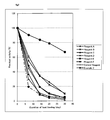
- any of the commercial reagents A to F and the control reagent upon heat loading, caused a significant reduction in G6PDH activity, while the reagent in Example 2 to which aminoguanidine was added showed 66.9% residual activity even after heat loading for 30 days.
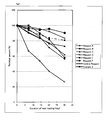
- the reagent in Example 2 had a larger amount of remaining SH groups than in the reagents A to F and the control reagent.
Landscapes
- Chemical & Material Sciences (AREA)
- Organic Chemistry (AREA)
- Life Sciences & Earth Sciences (AREA)
- Zoology (AREA)
- Wood Science & Technology (AREA)
- Proteomics, Peptides & Aminoacids (AREA)
- Health & Medical Sciences (AREA)
- Engineering & Computer Science (AREA)
- Microbiology (AREA)
- Biochemistry (AREA)
- Physics & Mathematics (AREA)
- Molecular Biology (AREA)
- Biotechnology (AREA)
- Biophysics (AREA)
- Analytical Chemistry (AREA)
- Immunology (AREA)
- Bioinformatics & Cheminformatics (AREA)
- General Engineering & Computer Science (AREA)
- General Health & Medical Sciences (AREA)
- Genetics & Genomics (AREA)
- Measuring Or Testing Involving Enzymes Or Micro-Organisms (AREA)
- Enzymes And Modification Thereof (AREA)
Abstract

Description
- The present invention relates to a clinical diagnostic reagent comprising glucose 6-phosphate dehydrogenase (G6PDH), a method for stabilizing G6PDH, and a use of a stabilizer for G6PDH.
- G6PDH is an enzyme catalyzing a reaction of oxidizing glucose-6-phosphate (referred to hereinafter as G6P) in the presence of a coenzyme such as nicotinamide adenine dinucleotide (NAD) or nicotinamide adenine dinucleotide phosphate (NADP) to form 6-phosphonoglucono-δ-lactone and reduced NAD (NADH) or reduced NADP (NADPH), or its reverse reaction. By utilizing this catalytic action, G6PDH is used in various clinical examination reagents. However, G6PDH in the reagents is unstable and thus a stabilizer for G6PDH should be contained in the reagents.
- As a reagent containing G6PDH and the stabilizer described above, there is known a reagent for measurement of the activity of creatine kinase (referred to hereinafter as CK) described in, for example,
USP5424204 . This reagent contains a hydroxylamine or an aldehyde scavenger as a stabilizer for stabilizing G6PDH. - The scope of the present invention is defined solely by the appended claims, and is not affected to any degree by the statements within this summary.
- The object of the present invention is to provide a reagent comprising a stabilizer capable of improving the storage stability of G6PDH, as compared with conventionally known stabilizers for G6PDH, as well as a method of stabilizing G6PDH which comprises using the stabilizer to stabilize G6PDH.
- A first aspect of the present invention relates to the clinical diagnostic reagent of the present invention comprising G6PDH and a stabilizer for the G6PDH.
- A second aspect of the present invention relates to the method for stabilizing G6PDH in a reagent, characterized by allowing a stabilizer to be coexistent with G6PDH in the reagent.
- A third aspect of the present invention relates to use of a stabilizer for stabilizing G6PDH.
- According to the present invention, there can be provided a reagent for clinical examination excellent in storage stability, which comprises a stabilizer for stabilizing G6PDH. The present invention can also provide a method of stabilizing G6PDH in solution and a use of a stabilizer for G6PDH.
-
- Fig. 1 shows a reaction system for measuring an activity of creatine kinase.
- Fig. 2 is a graph showing the residual activity (%) of G6PDH in Example 2 and Comparative example 4.
- Fig. 3 is a graph showing the residual activity (5) of SH group in Example 2 and Comparative example 4.
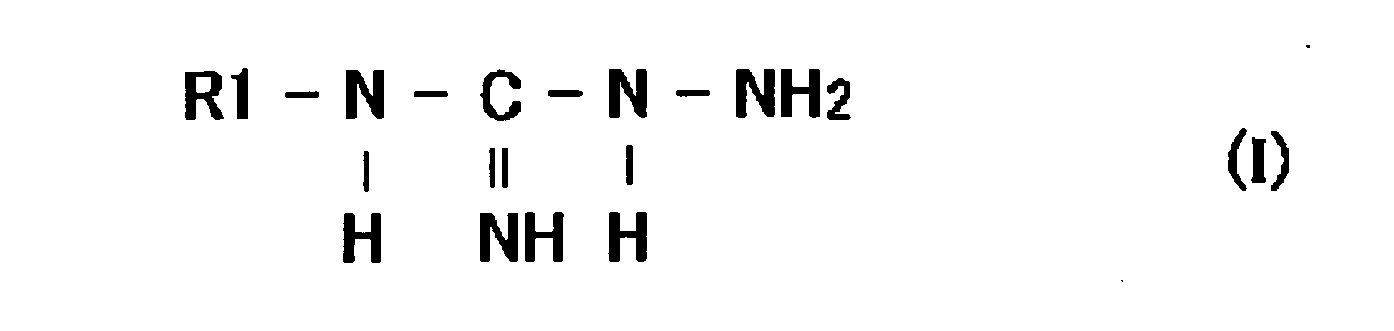
- The reagent that is one embodiment of the present invention comprises glucose-6-phosphate dehydrogenase (G6PDH) and a stabilizer represented by the general formula (I):
- The "stabilizer" is a substance which when allowed to be coexistent with G6PDH in a reagent, can inhibit the inactivation of G6PDH and improve the storage stability of G6PDH. In this specification, the "stabilizer" encompasses salts and derivatives of the stabilizer.
- As R1 in the stabilizer represented by the general formula (I), the halogen includes fluorine, chlorine, bromine, iodine, astatine, etc.
- The alkyl moiety of the lower alkyl group, lower alkoxy group or lower alkoxycarbonyl group includes linear or branched C1 to C6 groups such as a methyl group, ethyl group, propyl group, isopropyl group, butyl group, isobutyl group, sec-butyl group, tert-butyl group, pentyl group, neopentyl group, hexyl group, etc.
- The cycloalkyl group includes C3 to C8 groups such as a cyclopropyl group, cyclobutyl group, cyclopentyl group, cyclohexyl group, cycloheptyl group, cyclooctyl group, etc.
- The lower alkenyl group includes linear or branched C2 to C6 groups such as a vinyl group, allyl group, isopropenyl group, 4-pentenyl group, 5-hexenyl group, etc.
- The aralkyl group includes C7 to C15 groups such as a benzyl group, phenethyl group, benzhydryl group, phenylpropyl group, etc.
- The aryl moiety of the aryl group or aroyl group includes a phenyl group, tolyl group, naphthyl group, etc.
- The heterocyclic group includes a furyl group, thienyl group, pyrrolyl group, pyranyl group, thiopyranyl group, pyridyl group, thiazolyl group, imidazolinyl group, pyrimidinyl group, triazinyl group, indolyl group, quinolyl group, purinyl group, benzothiazolyl group, etc.
- The lower alkanoyl group includes linear or branched C1 to C6 groups such as a formyl group, acetyl group, propionyl group, butyryl group, valeryl group, pivaloyl group, pentanoyl group, etc.
- Substituent groups on the lower alkyl group, the number of which is 1 to 3, are the same or different and include, for example, a hydroxy group, lower alkoxy group, carboxy group, lower alkoxycarbonyl group, lower alkylthio group, halogen group, amino group, mono- or dialkyl substituted amino group,phthalimide group,and nitrogen-containing heterocyclic groups such as a pyrrolidinyl group, pyrazolyl group, indolyl group, etc.
- The alkyl moiety of the lower alkoxy group, lower alkoxycarbonyl group, lower alkylthio group or alkyl-substituted amino group has the same meaning as defined for the lower alkyl group.
- Substituent groups on the aralkyl group, aryl group, aroyl group or heterocyclic group, the number of which is 1 or 5, are the same or different and include, for example, a lower alkyl group, hydroxy group, lower alkoxy group, halogen, nitro group, amino group, etc., and the alkyl moiety of the lower alkyl group or lower alkoxy group has the same meaning as defined for the lower alkyl group.
- Substituent groups on the substituted amino group, the number of which is 1 or 2, are the same or different and include, for example, the same lower alkyl group, aralkyl group, substituted or unsubstituted aryl group, lower alkanoyl group, substituted or unsubstituted aroyl group, and alkylidene group as described above, and the alkylidene group includes linear or branched C1 to C6 groups such as a methylene group, ethylidene group, propylidene group, isopropylidene group, butylidene group, isobutylidene group, sec-butylidene group, tert-butylidene group, pentylidene group, isopentylidene group, hexylidene group, etc.
- Salts of the stabilizer include, for example, inorganic acid salts such as hydrochloride, hydrobromide, sulfate, nitrate, nitrite, phosphate etc. or organic acid salts such as oxalate, acetate, succinate, fumarate, maleate, tartrate, citrate, carbonate, bicarbonate, etc., or base addition salts such as sodium salt, potassium salt, etc.
- In this embodiment, aminoguanidine, aminoguanidine salt or aminoguanidine derivative is preferably used. Aminoguanidine has the structure of the general formula (I) wherein R1 is a hydrogen.
- The concentration of the stabilizer in the reagent is not particularly limited insofar as G6PDH can be stabilized. The concentration of G6PDH in the reagent is not particularly limited, but is preferably 10 to 10000 U/L, more preferably 100 to 10000 U/L.
- G6PDH may be derived from microorganisms (for example, Leuconostoc mesenteroides, Bacillus stearothermophiolus, Azotobacter vinelandii, Pseudomonas fluorescens etc.), yeasts, animal and plants, or may be generated by using genetic recombinant techniques.
- The pH of the reagent in solution is preferably 5.0 to 9.0, but is not particularly limited insofar as it is pH unless G6PDH is made unstable. To maintain this pH, a buffer agent is preferably contained in the reagent. As the buffer agent, it is possible to use, for example, Tris-HCl buffer, imidazole-acetate buffer, phosphate buffer, citrate buffer, malate buffer, oxalate buffer,phthalate buffer, glycinebuffer, acetatebuffer, succinate buffer, borate buffer, carbonate buffer, GOOD buffer etc.
- In the reagent, the respective ingredients may be in a lyophilized state but are preferably in the form of a solution thereof dissolved in solvent.
- The reagent is preferably a reagent kit comprising two reagents, that is, first and second reagents. In this case, the first reagent and/or the second reagent may be in a lyophilized state, but preferably both the reagents are in the form of a solution. G6PDH and the stabilizer may be contained in the first reagent and/or the second reagent.
- This reagent is used in clinical examination. By mixing the reagent in this embodiment with a sample, the content or activity of a specific substance in the sample can be measured by monitoring e.g. a change in absorbance. The sample includes, for example, serum, plasma, blood, spinal fluid, urine, semen etc., among which plasma or serum is preferably used.
- The substance which can be quantified or measured for its activity by using the reagent in this embodiment is not particularly limited insofar as a G6PDH substrate, glucose-6-phosphate (referred to hereinafter as G6P), is used in the reaction system. The substance which can be quantified includes, for example, neutral fat, inorganic phosphate, lactose, maltose, glycogen, starch, sucrose, glucose, fructose, mannose, creatine phosphate, G6P, fructose-6-phosphate, maltose-6-phosphate, fructose-2-phosphate, L-sorbose-6-phosphate, glucose-1-phosphate, NAD, NADP, uridine triphosphate, adenosine triphosphate (ATP), uridine diphosphate glucose, etc. The substance which can be measured for its activity includes, for example, CK, CKMB, β-galactosidase, α-galactosidase, amyloglucosidase, invertase, transaldolase, galactose-1-phosphate uridyl transferase, phesphoglucose isomerase, fructose diphosphatase, etc.
- Hereinafter, the measurement of the activity of CK with the reagent in this embodiment is described in detail.
- CK is a dimeric phosphorylase consisting of two subunits. In the CK subunits, there are two types of subunits, that is, B type (brain type) and M type (muscular type). Three kinds of isozymes (CK-MM, CK-MB and CK-BB) occur depending on the combination of the two subunits in CK. CK-MM is contained in a larger amount in the skeletal muscle, CK-MB is contained in a larger amount in the heart muscle, and CK-BB is contained in a larger amount in the brain. CK isozymes occurring in causative sites of diseases such as myocardial infarction and muscular dystrophy are released into blood, and thus the activity of CK isozymes contained in a sample such as serum serves as an important indicator for diagnosis of the above diseases in clinical examination.
- Hereinafter, the reagent for measurement of the activity of CK, that is, the reagent according to one embodiment of the present invention, is described in detail.
- The reagent for measurement of the activity of CK preferably contains a buffer agent, an SH group-comprising compound (referred to hereinafter SH compound), NAD or NADP, hexokinase (HK) or glucokinase (GK), glucose, adenosine diphosphate (ADP), magnesium ion and creatine phosphate. As the sample subjected to measurement in this case, serum or plasma can be used.
- When a sample is mixed with the reagent, CK contained in the sample is activated by the SH compound. CK when released into blood is rapidly inactivated, and thus CK should be activated by the SH compound in order to measure the activity of CK. The SH compound is not particularly limited insofar as CK can be activated, and for example, N-acetyl-L-cysteine (NAC), cysteamine, dithiothreitol (DTT), cysteine, glutathione and thioglycerol can be used. These SH compounds can be used as a mixture of two or more thereof, but are preferably used alone. The concentration of the SH compound in the reagent is 5 to 250 mM, preferably 5 to 70 mM, more preferably 10 to 25 mM.
- By adding the reagent containing the ingredients described above to the CK-containing sample, the reaction system shown in Fig. 1 is constituted. In Fig. 1, the CK activated by the SH compound catalyzes a reaction of forming creatine and ATP from creatine phosphate (CP) and ADP (Reaction 1). HK or GK contained in the reagent allows G6P and ADP to be formed from glucose (Glc) contained in the reagent and ATP formed in the reaction 1 (Reaction 2). G6PDH contained in the reagent also allows 6-phosphoglucono-δ-lactone and NADH or NADPH to be formed from the G6P formed in the
reaction 2 and NAD or NADP (Reaction 3). When NADH or NADPH is formed, the absorbance of a mixed solution of the sample and reagent in the vicinity of 340 nm is increased. By monitoring this increase in absorbance, the activity of CK in the sample can be determined. - The reagent is preferably a reagent kit containing first and second reagents. Preferably, the first reagent contains a buffer agent, G6PDH, the stabilizer, NAD or NADP, hexokinase (HK) or glucokinase (GK), glucose, adenosine diphosphate (ADP), magnesium ion, and SH compound, and the second reagent contains creatine phosphate.
- As described above, G6PDH is unstable, and thus a stabilizer for G6PDH can be contained in the reagent. However, any compound conventionally known as the stabilizer deteriorates the SH compound and thus cannot be added in an amount necessary to improve the storage stability of G6PDH, which results in failure to achieve sufficient stabilization of G6PDH. The stabilizer contained in the reagent in this embodiment can be coexistent with G6PDH to improve the storage stability of G6PDH sufficiently without deteriorating the SH compound.
- In addition to the ingredients described above, an antiseptic, a chelating agent etc. can be suitably used. As the antiseptic, sodium azide for example can be used. The chelating agent is used to suppress the inhibition of the CK activity by metal ions in the sample, and specifically EDTA, EDDA and salts thereof can be used.
- A surface-active compound can also be added to the reagent. For example, a nonionic surfactant, a cationic surfactant, an amphoteric surfactantandasurface-activeproteincanbeused, and specifically Triton, Emulgen series, BSA etc. can be used.
- Adenylate kinase is sometimes contained in the sample. Adenylate kinase is contained in a larger amount particularly in a hemolyzed sample and may exert adverse influence on measurement of the activity of CK. To avoid this adverse influence, it is preferable to add an inhibitor for inhibiting the action of adenylate kinase. The type of the inhibitor is not particularly limited insofar as the action of adenylate kinase is inhibited, and for example adenosine monophosphate (AMP) and PIPS diadenosine-5'-pentaphosphate (AP5A) can be used.
- By measuring the activity by a double kinetic method, the adverse influence of adenylate kinase can also be avoided. The double kinetic method involves first measuring the activity of adenylate kinase and then adding creatine phosphate to initiate an enzyme reaction with CK to determine the activity of the kinases (total activity of CK and adenylate kinase) contained in the sample. The difference between the two measurement results indicates the activity of CK.
- To avoid the adverse influence of adenylate kinase, a sample containing the above-mentioned inhibitor is preferably used to measure the activity by the double kinetic method.
- By incorporating an antibody specifically recognizing the M type subunit of CK (referred to hereinafter as anti-CK-M antibody) into the above-described reagent for measurement of the activity of CK, the activity of CK-MB in a sample can be measured (Wurzburg et al. , 1977, J. Clin. Chem. Clin. Biochem., 15:131-135). The anti-CK-M antibody may be a polyclonal antibody or monoclonal antibody insofar as it is an antibody specifically recognizing the M type subunit, or a mixture thereof may also be used. An antibody fragment and a derivative thereof can also be used. Examples of the antibody fragment and a derivative thereof include Fab, Fab', F(ab)2 and sFv fragment (Blazar et al., 1997, J. Immunol., 159:5821-5833 and Bird et al., 1988, Science, 242:423-426). The antibody subclass is not limited to IgG and may be IgM or the like.
- Compounds shown below were mixed to prepare a reagent for measurement of CK activity. The shown concentration of each ingredient is the concentration thereof in the reagent.
Imidazole 125 mM EDTA 2.5 mM Magnesium acetate 12.5 mM ADP 2.5 mM AMP 6.25 mM AP5A 12.5 µM Glucose 25 mM NADP 2.5 mM NAC 25 mM G6PDH 1875 U/L Hexokinase 3750 U/L - The pH of the reagent was adjusted to 6.6.
- The reagent for measurement of CK activity consists of the above reagent (first reagent) and the creatine phosphate-containing reagent (second reagent), but in this example, the reagent is subjected to heat loading analysis in order to analyze the stability of G6PDH and NAC, and thus the second reagent is not used.
- Aminoguanidine was added to the above composition to prepare three kinds of reagents different in the concentration of aminoguanidine. The concentrations of aminoguanidine in these reagents were 10 mM, 20 mM and 40 mM respectively. After these reagents were subjected to heat loading at 37°C for 5 days, the residual activity of G6PDH was measured and the residual amount of SH group in NAC was quantified.
- The activity of G6PDH was measured in the following manner. First, a solution wherein 20 mM magnesium chloride, 0.6 mM NADP and 0.5 mM G6P were dissolved in a solution containing 0.1 M glycylglycine (pH 8.5) was prepared. When 300 µl of this solution was mixed with 1 µl of the first reagent, NADPH is formed by the activity of G6DPH. When NADPH is formed, the absorbance at a wavelength of 340 nm is increased, and thus this increase is measured to determine the activity of G6PDH.
- The quantification of SH group was carried out by using DTNB (5,5'-dithiobis(2-nitrobenzoic acid)). When DTNB is added to the reagent where NAC is present, disulfide linkages corresponding to the amount of SH groups in the NAC are cleaved to generate 5-mercapto-2-nitrobenzoic acid. When 5-mercapto-2-nitrobenzoic acid is generated, the absorbance at a wavelength of 412 nm is increased, and thus this increase can be measured to determine the amount of SH groups in the reagent.
- In Comparative Example 1, measurement of the residual activity of G6PDH and quantification of the residual amount of SH group of NAC were carried out in the same manner as in Example 1 except that not aminoguanidine but acetohydrazine known as G6PDH stabilizer was added to the composition described above, to prepare 2 kinds of reagents different in acetohydrazine concentration. In the respective reagents, the acetohydrazine concentrations were 20 mM and 40 mM respectively.
- In Comparative Example 2, measurement of the residual activity of G6PDH and quantification of the residual amount of SH group of NAC were carried out in the same manner as in Example 1 except that not aminoguanidine but hydrazine known as G6PDH stabilizer was added to the composition described above, to prepare 2 kinds of reagents different in hydrazine concentration. In the respective reagents, the hydrazine concentrations were 20 mM and 40 mM respectively.
- In Comparative Example 3, measurement of the residual activity of G6PDH and quantification of the residual amount of SH group of NAC were carried out without adding any stabilizer.
- The measurement results in Example 1 and Comparative Examples 1 to 3 are shown in Table 1 below. In Table 1, the residual activity of G6PDH and the residual amount of SH group of NAC are expressed in percentage. These values are those relative to the activity of G6PDH and the amount of SH group of NAC in each reagent which without subjection to heat loading, was measured by the method described in Example 1.
Table 1 stabilizer concentration (mM) G6PDH residual activity (%) SH group residual amount (%) aminoguanidine Example1 10 88.2 92.2 20 92.6 95.4 40 94.8 94.1 acetohydrazine Comparative example1 20 84.3 78.4 40 87.8 77.7 hydrazine Comparative example2 20 87.8 54.7 40 91.9 56.2 no stabilizer Comparative example3 0 63.2 95.2 - In Comparative Example 1, it was revealed that by heat loading, the activity of G6PDH was lost, and NAC was deteriorated to reduce the amount of SH group.
- In Comparative Example 2, the reduction of G6PDH activity was suppressed to a certain degree, but NAC was deteriorated thus significantly reducing the amount of SH group.
- In Comparative Example 3, NAC was not deteriorated and thus the amount of SH group was not reduced, but because no stabilizer was added, the activity of G6PDH was lost.
- In Example 1, the activity of G6PDH could be maintained without reducing the amount of SH group.
- From the foregoing, it was revealed that when aminoguanidine is added as stabilizer to the reagent, the storage stability of G6PDH can be improved without deteriorating NAC.
- Aminoguanidine was added at a concentration of 20 mM to the reagent in Example 1 and subjected to heat loading at 37°C for 30 days, followed by measuring the activity of G6PDH and quantifying the SH group of NAC. Before the heat loading and 7 days, 14 days, 20 days and 30 days after initiation of the heat loading, the activity measurement and quantification were carried out in the same manner as in Example 1.
- Firstreagents (Reagents A, B, C, D, EandF) for CK activity measurement available from A, B, C, D, E and F companies respectively were subjected to heat loading at 37°C, followed by measuring the activity of G6PDH and quantifying the SH group of NAC. This activity measurement and quantification were carried out in the same manner as in Example 2.
- As a control, the reagent prepared in Example 1 (the aminoguanidine-free control reagent (control reagent)) was subjected to heat loading at 37°C followed by measuring the activity of G6PDH and quantifying the SH group of NAC. This activity measurement and quantification were carried out in the same manner as in Example 2.
- The results of measurement of the activity of G6PDH in Example 2 and Comparative Example 4 are shown in Table 2 and Fig. 2. In Fig. 2, the residual activity (%) of G6PDH is shown on the ordinate and the period of heat loading (number of days) is shown on the abscissa.
- The results of quantifying the SH group in Example 2 and Comparative Example 4 are shown in Table 3 and Fig. 3. In Fig. 3, the residual amount (%) of SH group is shown on the ordinate and the period of heat loading (number of days) is shown on the abscissa.
[Table 2] Residual acthrity of G6PDH (%) Reagent A Reagent B Reagent C Reagent D Reagent E Reagent F Control Reagent Example 2 Before heat loading 100.0 100.0 100.0 100.0 100.0 100.0 100.0 100.0 7days after the initiation of heat loading 55.0 60.9 37.0 44.8 48.5 19.5 29.9 90.5 14days after the initiation of heat loading 34.1 34.7 8.7 19.3 19.3 9.1 11.0 83.9 20days after the initiation of heat loading 26.0 22.2 4.3 9.4 10.5 5.7 6.2 78.9 30days after the initiation of heat loading 9.6 10.3 1.7 4.6 4.2 5.4 3.1 66.9 [Table 3] Residual amount of SH group (%) Reagent A Reagent B Reagent C Reagent D Reagent E Reagent F Control Reagent Example 2 Before heat loading 100.0 100.0 100.0 100.0 100.0 100.0 100.0 100.0 7days after the initiation of heat loading 95.3 90.4 91.2 98.3 100.3 93.9 67.0 96.4 14days after the initiation of heat loading 85.3 83.3 83.7 95.8 90.1 88.0 53.9 94.3 20days after the initiation of heat loading 71.1 77.1 76.4 92.2 81.7 83.8 40.2 95.5 30days after the initiation of heat loading 56.1 61.7 72.9 83.3 58.0 80.7 26.3 90.3 - As can be seen from Table 2 and Fig. 2, any of the commercial reagents A to F and the control reagent, upon heat loading, caused a significant reduction in G6PDH activity, while the reagent in Example 2 to which aminoguanidine was added showed 66.9% residual activity even after heat loading for 30 days. As can be seen from Table 3 and Fig. 3, the reagent in Example 2 had a larger amount of remaining SH groups than in the reagents A to F and the control reagent.
- From the foregoing, it was found that the reagent to which aminoguanidine was added as a stabilizer provides higher storage stability for G6PDH and NAC than the aminoguanidine-free reagent and the commercial reagents.
table 1 stabilizer concentration (mM) G6PDH residual activity (%) SH group residual amount (%) aminoguanidine Example1 10 88,2 92,2 20 92,6 95,4 40 94,8 94,1 acetohydrazine Comparative example1 20 84,3 78,4 40 87,8 77,7 hydrazine Comparative example2 20 87.8 54,7 40 91,9 56,2 no stabilizer Comparative example3 0 63,2 95,2 table2 Residual activity of G6PDH (%) Reagent A Reagent B Reagent C Reagent D Reagent E Reagent F Control Reagent Example 2 Before heat loading 100,0 100,0 100,0 100,0 100,0 100,0 100,0 100,0 7days after the initiation of heat loading 55,0 60,9 37,0 44,8 48,5 19,5 29,9 90,5 14days after the initiation of heat loading 34,1 34,7 8,7 19,3 19,3 9,1 11,0 83,9 20days after the initiation of heat loading 26,0 22,2 4,3 9,4 10,5 5,7 6,2 78,9 30days after the initiation of heat loading 9,6 10,3 1,7 4,6 4,2 5,4 3,1 66,9 table3 Residual amount of SH group (%) Reagent A Reagent B Reagent C Reagent D Reagent E Reagent F Control Reagent Example 2 Before heat loading 100.0 100,0 100,0 100,0 100,0 100,0 100,0 100,0 7days after the initiation of heat loading 95,3 90,4 91,2 98,3 100,3 93,9 67,0 96,4 14days after the initiation of heat loading 85,3 83,3 83,7 95,8 90,1 88,0 53,9 94,3 20days after the initiation of heat loading 71,1 77,1 76,4 92,2 81,7 83,8 40,2 95,5 30days after the initiation of heat loading 56,1 61,7 72,9 83,3 58,0 80,7 26,3 90,3
Claims (11)
- A clinical diagnostic reagent, comprising glucose 6-phosphate dehydrogenase (G6PDH) and a stabilizer for the G6PDH represented by formula (I):
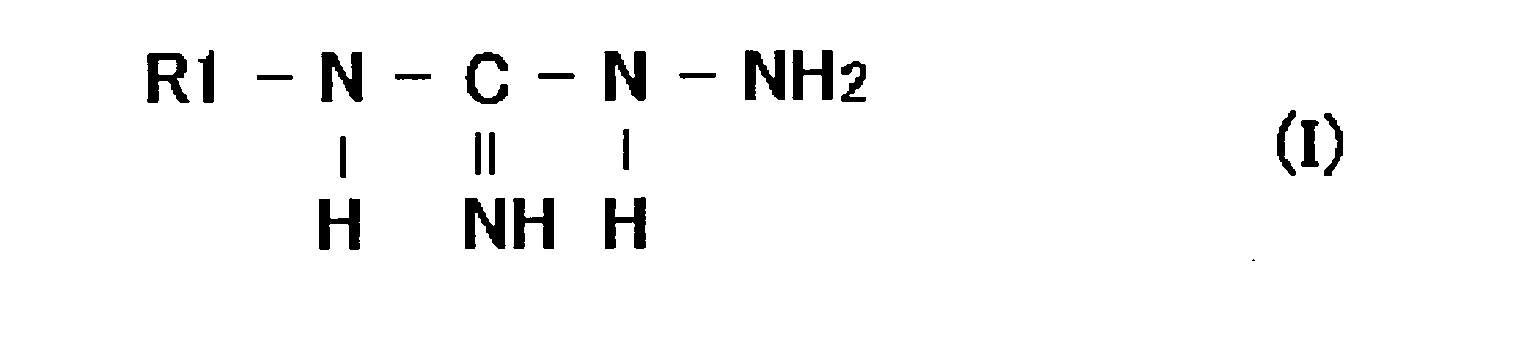
- The reagent according to claim 1, wherein R1 represents a hydrogen, a halogen, a hydroxyl group, a substituted or unsubstituted C1 to C6 alkyl group, a cycloalkyl group, a C1 to C6 alkoxy group, a C2 to C6 alkenyl group, a substituted or unsubstituted aralkyl group, a substituted or unsubstituted aryl group, a substituted or unsubstituted heterocyclic group, a C1 to C6 alkanoyl group, a substituted or unsubstituted aroyl group, a pyridylcarbonyl group, a C1 to C6 alkoxycarbonyl group, or a substituted or unsubstituted amino group.
- The reagent according to claim 1 or 2, wherein the R1 is the hydrogen.
- The reagent according to any of claims 1 to 3, further comprising at least one compound selected from the group consisting of a coenzyme corresponding to the G6PDH, a glucokinase, a hexokinase, a glucose, an adenosine diphosphate, a magnesium ion, a SH compound containing a thiol group, and a creatine phosphate.
- The reagent according to claim 4, wherein the coenzyme is selected from the group consisting of nicotinamide adenine dinucleotide and nicotinamide adenine dinucleotide phosphate.
- The reagent according to claim 4 or 5, wherein the kinase is selected from the group consisting of hexokinase and glucokinase.
- The reagent according to any of claims 4 to 6, wherein the SH compound is selected from the group consisting of N-acetyl-L-cysteine (NAC), cysteamine, dithiothreitol (DTT), cysteine, glutathione and thioglycerol.
- The reagent according to any of claims 1 to 7, wherein the reagent is used for the measurement of activity of creatine kinase in a sample, and further comprises a SH compound containing a thiol group, a hexokinase (HK) or a glucokinase (GK), a glucose, an adenosine diphosphate (ADP), and a creatine phosphate.
- A method for stabilizing glucose 6-phosphate dehydrogenase (G6PDH) in a clinical diagnostic reagent, characterized by allowing a stabilizer to be coexistent with the G6PDH, wherein the stabilizer is represented by formula (I):

- The method according to claim 9, wherein the reagent comprises a SH compound containing a thiol group, and the stabilizer further stabilizes the SH compound.
- Use of a stabilizer for stabilizing glucose 6-phosphate dehydrogenase (G6PDH), wherein the stabilizer is represented by formula (I):

Applications Claiming Priority (1)
| Application Number | Priority Date | Filing Date | Title |
|---|---|---|---|
| JP2005189835A JP4746926B2 (en) | 2005-06-29 | 2005-06-29 | Glucose-6-phosphate dehydrogenase-containing reagent and glucose-6-phosphate dehydrogenase stabilization method |
Publications (2)
| Publication Number | Publication Date |
|---|---|
| EP1739169A1 true EP1739169A1 (en) | 2007-01-03 |
| EP1739169B1 EP1739169B1 (en) | 2009-10-21 |
Family
ID=36968245
Family Applications (1)
| Application Number | Title | Priority Date | Filing Date |
|---|---|---|---|
| EP06013241A Not-in-force EP1739169B1 (en) | 2005-06-29 | 2006-06-27 | Clinical diagnostic reagent comprising glucose 6-phosphate dehydrogenase (G6PDH), method for stabilizing G6PDH, and use of a stabilizer for G6PDH |
Country Status (5)
| Country | Link |
|---|---|
| EP (1) | EP1739169B1 (en) |
| JP (1) | JP4746926B2 (en) |
| CN (1) | CN1892221B (en) |
| AT (1) | ATE446361T1 (en) |
| DE (1) | DE602006009872D1 (en) |
Cited By (1)
| Publication number | Priority date | Publication date | Assignee | Title |
|---|---|---|---|---|
| TWI454455B (en) * | 2011-01-14 | 2014-10-01 | Univ Nat Taipei Technology | Salicylic acid derivates with fluorophores and method of making and using the same |
Families Citing this family (8)
| Publication number | Priority date | Publication date | Assignee | Title |
|---|---|---|---|---|
| WO2011024862A1 (en) * | 2009-08-31 | 2011-03-03 | 三洋化成工業株式会社 | Stabilizer for aqueous protein solution, aqueous protein solution and liquid detergent composition each containing the stabilizer, and method for stabilization of protein using the stabilizer |
| JP5323036B2 (en) * | 2009-12-24 | 2013-10-23 | 三洋化成工業株式会社 | Storage method of protein aqueous solution |
| CN102925424A (en) * | 2012-08-10 | 2013-02-13 | 刘和录 | Stable preparation of glucose-6-phosphate dehydrogenase in hemolysate |
| JP6362005B2 (en) * | 2014-01-30 | 2018-07-25 | 国立研究開発法人農業・食品産業技術総合研究機構 | Silk fibroin aqueous solution and method for producing the same |
| CN104374905B (en) * | 2014-11-28 | 2016-03-30 | 山东博科生物产业有限公司 | A kind of serum creatine kinase detection reagent |
| CN109724933A (en) * | 2018-12-30 | 2019-05-07 | 山东博科生物产业有限公司 | A kind of reproducible aspartate amino transferase detection kit |
| CN110174363A (en) * | 2019-01-09 | 2019-08-27 | 北京九强生物技术股份有限公司 | Glucose-6-phosphate dehydrogenase mutant and its purposes in preparation detection reagent |
| CN112379091A (en) * | 2020-11-02 | 2021-02-19 | 上海科华生物工程股份有限公司 | Creatine kinase isoenzyme CK-MB detection kit resistant to heparin interference |
Citations (3)
| Publication number | Priority date | Publication date | Assignee | Title |
|---|---|---|---|---|
| US5424204A (en) | 1993-08-26 | 1995-06-13 | Kyowa Medex Co., Ltd. | Method for stabilizing glucose 6-phosphate dehydrogenase with hydroxylamines, aldehyde scavengers, dimethylthiocarbamoyl chloride or 2-(2-aminoethylamino) ethanol |
| WO2004058958A1 (en) * | 2002-12-24 | 2004-07-15 | Ikeda Food Research Co., Ltd. | Coenzyme-binding glucose dehydrogenase |
| WO2004076656A1 (en) * | 2003-02-26 | 2004-09-10 | Biotools Biotechnological & Medical Laboratories, S.A. | Stabilised composition for fluorimetric, colorimetric or chemoluminescent assays, kits containing same and production method thereof |
Family Cites Families (4)
| Publication number | Priority date | Publication date | Assignee | Title |
|---|---|---|---|---|
| JPH11350385A (en) * | 1998-06-10 | 1999-12-21 | Sumitomo Chem Co Ltd | Paper size stabilizer and size stabilization method |
| JP3722627B2 (en) * | 1998-10-08 | 2005-11-30 | 旭化成建材株式会社 | Aqueous latex composition for capturing formaldehyde |
| DE10220494A1 (en) * | 2002-05-07 | 2003-11-20 | Basf Ag | Process for the preparation of an aqueous alkali acrylate solution |
| JP4643212B2 (en) * | 2003-11-28 | 2011-03-02 | シスメックス株式会社 | Cholesterol dehydrogenase stabilization method, cholesterol dehydrogenase-containing composition, and cholesterol measurement reagent |
-
2005
- 2005-06-29 JP JP2005189835A patent/JP4746926B2/en not_active Expired - Fee Related
-
2006
- 2006-06-27 AT AT06013241T patent/ATE446361T1/en not_active IP Right Cessation
- 2006-06-27 CN CN2006100941513A patent/CN1892221B/en not_active Expired - Fee Related
- 2006-06-27 DE DE602006009872T patent/DE602006009872D1/en active Active
- 2006-06-27 EP EP06013241A patent/EP1739169B1/en not_active Not-in-force
Patent Citations (5)
| Publication number | Priority date | Publication date | Assignee | Title |
|---|---|---|---|---|
| US5424204A (en) | 1993-08-26 | 1995-06-13 | Kyowa Medex Co., Ltd. | Method for stabilizing glucose 6-phosphate dehydrogenase with hydroxylamines, aldehyde scavengers, dimethylthiocarbamoyl chloride or 2-(2-aminoethylamino) ethanol |
| WO2004058958A1 (en) * | 2002-12-24 | 2004-07-15 | Ikeda Food Research Co., Ltd. | Coenzyme-binding glucose dehydrogenase |
| EP1584675A1 (en) * | 2002-12-24 | 2005-10-12 | Ikeda Food Research Co. Ltd. | Coenzyme-binding glucose dehydrogenase |
| WO2004076656A1 (en) * | 2003-02-26 | 2004-09-10 | Biotools Biotechnological & Medical Laboratories, S.A. | Stabilised composition for fluorimetric, colorimetric or chemoluminescent assays, kits containing same and production method thereof |
| EP1598418A1 (en) * | 2003-02-26 | 2005-11-23 | BIOTOOLS BIOTECHNOLOGICAL & MEDICAL LABORATORIES, S.A. | Stabilised composition for fluorimetric, colorimetric or chemoluminescent assays, kits containing same and production method thereof |
Non-Patent Citations (3)
| Title |
|---|
| BIRD, SCIENCE, vol. 242, 1988, pages 423 - 426 |
| BLAZAR, J. IMMUNOL., vol. 159, 1997, pages 5821 - 5833 |
| WURZBURG, J. CLIN. CHEM. CLIN. BIOCHEM., vol. 15, 1977, pages 131 - 135 |
Cited By (1)
| Publication number | Priority date | Publication date | Assignee | Title |
|---|---|---|---|---|
| TWI454455B (en) * | 2011-01-14 | 2014-10-01 | Univ Nat Taipei Technology | Salicylic acid derivates with fluorophores and method of making and using the same |
Also Published As
| Publication number | Publication date |
|---|---|
| EP1739169B1 (en) | 2009-10-21 |
| JP2007006746A (en) | 2007-01-18 |
| JP4746926B2 (en) | 2011-08-10 |
| CN1892221B (en) | 2010-11-10 |
| DE602006009872D1 (en) | 2009-12-03 |
| ATE446361T1 (en) | 2009-11-15 |
| CN1892221A (en) | 2007-01-10 |
Similar Documents
| Publication | Publication Date | Title |
|---|---|---|
| Hohorst | D-Glucose-6-phosphate and D-fructose-6-phosphate: determination with glucose-6-phosphate dehydrogenase and phosphoglucose isomerase | |
| JP3203108B2 (en) | Method for stabilizing glucose-6-phosphate dehydrogenase | |
| Blair et al. | Hepatic pyruvate kinase. Regulation by glucagon, cyclic adenosine 3'-5'-monophosphate, and insulin in the perfused rat liver. | |
| EP0973938B1 (en) | The use of nadph and nadh analogs in the measurement of enzyme activities and metabolites | |
| Malaisse et al. | The stimulus-secretion coupling of glucose-induced insulin release. Fasting-induced adaptation of key glycolytic enzymes in isolated islets. | |
| EP1739169B1 (en) | Clinical diagnostic reagent comprising glucose 6-phosphate dehydrogenase (G6PDH), method for stabilizing G6PDH, and use of a stabilizer for G6PDH | |
| Stalmans et al. | The catalytic activity of phosphorylase b in the liver. With a note on the assay in the glycogenolytic direction | |
| EP3072975A1 (en) | Method for detecting fluorescence or absorbance, method for suppressing background, method for measuring adp, method for measuring activity of adp-synthesizing enzyme, and method for measuring activity of glucosyltransferase | |
| Eichner | Rat adipose tissue glycogen synthase. Evidence for multiple discrete kinetic species and their interconversion. | |
| JP4723311B2 (en) | Reagent for measuring creatine kinase activity | |
| Salerno et al. | Human hypoxanthine-guanine phosphoribosyltransferase. IMP-GMP exchange stoichiometry and steady state kinetics of the reaction. | |
| JP4781742B2 (en) | Reagent for measuring creatine kinase activity | |
| US5817467A (en) | Method for quantitatively determining creatinine kinase and a reagent therefor | |
| US5834227A (en) | Kit for assaying creatine kinase | |
| JPH0368678B2 (en) | ||
| Gruber et al. | Analytical Differentiation of Purine and Pyrimidine Nucleotides Determination of ADP, ATP, and Sum of GTP+ ITP in Biological Material | |
| EP0721986A2 (en) | Creatine kinase reagent | |
| Passonneau et al. | A collection of enzyme assays | |
| JP2003517264A (en) | Stabilized reagents and methods for quantifying creatine kinase | |
| US4220714A (en) | Composition for inhibiting adenylate-kinase and its use | |
| JP3161316B2 (en) | Liquid reagent for measuring creatine kinase activity | |
| JPH10179195A (en) | Liquid reagent for measuring creatine kinase activity | |
| JP2000032980A (en) | Stabilization of glucose-6-phosphate dehydrogenase and composition containing the same | |
| JP3936976B2 (en) | Enzymatic degradation of AMP | |
| Meldolesi et al. | Regulation of the Embden-Meyerhof pathway in a transplantable rat thyroid tumor |
Legal Events
| Date | Code | Title | Description |
|---|---|---|---|
| PUAI | Public reference made under article 153(3) epc to a published international application that has entered the european phase |
Free format text: ORIGINAL CODE: 0009012 |
|
| AK | Designated contracting states |
Kind code of ref document: A1 Designated state(s): AT BE BG CH CY CZ DE DK EE ES FI FR GB GR HU IE IS IT LI LT LU LV MC NL PL PT RO SE SI SK TR |
|
| AX | Request for extension of the european patent |
Extension state: AL BA HR MK YU |
|
| 17P | Request for examination filed |
Effective date: 20070703 |
|
| AKX | Designation fees paid |
Designated state(s): AT BE BG CH CY CZ DE DK EE ES FI FR GB GR HU IE IS IT LI LT LU LV MC NL PL PT RO SE SI SK TR |
|
| 17Q | First examination report despatched |
Effective date: 20071217 |
|
| GRAP | Despatch of communication of intention to grant a patent |
Free format text: ORIGINAL CODE: EPIDOSNIGR1 |
|
| GRAS | Grant fee paid |
Free format text: ORIGINAL CODE: EPIDOSNIGR3 |
|
| GRAA | (expected) grant |
Free format text: ORIGINAL CODE: 0009210 |
|
| AK | Designated contracting states |
Kind code of ref document: B1 Designated state(s): AT BE BG CH CY CZ DE DK EE ES FI FR GB GR HU IE IS IT LI LT LU LV MC NL PL PT RO SE SI SK TR |
|
| REG | Reference to a national code |
Ref country code: GB Ref legal event code: FG4D |
|
| REG | Reference to a national code |
Ref country code: CH Ref legal event code: EP |
|
| REG | Reference to a national code |
Ref country code: IE Ref legal event code: FG4D |
|
| REF | Corresponds to: |
Ref document number: 602006009872 Country of ref document: DE Date of ref document: 20091203 Kind code of ref document: P |
|
| LTIE | Lt: invalidation of european patent or patent extension |
Effective date: 20091021 |
|
| NLV1 | Nl: lapsed or annulled due to failure to fulfill the requirements of art. 29p and 29m of the patents act | ||
| PG25 | Lapsed in a contracting state [announced via postgrant information from national office to epo] |
Ref country code: LT Free format text: LAPSE BECAUSE OF FAILURE TO SUBMIT A TRANSLATION OF THE DESCRIPTION OR TO PAY THE FEE WITHIN THE PRESCRIBED TIME-LIMIT Effective date: 20091021 Ref country code: IS Free format text: LAPSE BECAUSE OF FAILURE TO SUBMIT A TRANSLATION OF THE DESCRIPTION OR TO PAY THE FEE WITHIN THE PRESCRIBED TIME-LIMIT Effective date: 20100221 Ref country code: SE Free format text: LAPSE BECAUSE OF FAILURE TO SUBMIT A TRANSLATION OF THE DESCRIPTION OR TO PAY THE FEE WITHIN THE PRESCRIBED TIME-LIMIT Effective date: 20091021 Ref country code: PT Free format text: LAPSE BECAUSE OF FAILURE TO SUBMIT A TRANSLATION OF THE DESCRIPTION OR TO PAY THE FEE WITHIN THE PRESCRIBED TIME-LIMIT Effective date: 20100222 Ref country code: ES Free format text: LAPSE BECAUSE OF FAILURE TO SUBMIT A TRANSLATION OF THE DESCRIPTION OR TO PAY THE FEE WITHIN THE PRESCRIBED TIME-LIMIT Effective date: 20100201 Ref country code: FI Free format text: LAPSE BECAUSE OF FAILURE TO SUBMIT A TRANSLATION OF THE DESCRIPTION OR TO PAY THE FEE WITHIN THE PRESCRIBED TIME-LIMIT Effective date: 20091021 |
|
| PG25 | Lapsed in a contracting state [announced via postgrant information from national office to epo] |
Ref country code: LV Free format text: LAPSE BECAUSE OF FAILURE TO SUBMIT A TRANSLATION OF THE DESCRIPTION OR TO PAY THE FEE WITHIN THE PRESCRIBED TIME-LIMIT Effective date: 20091021 Ref country code: PL Free format text: LAPSE BECAUSE OF FAILURE TO SUBMIT A TRANSLATION OF THE DESCRIPTION OR TO PAY THE FEE WITHIN THE PRESCRIBED TIME-LIMIT Effective date: 20091021 Ref country code: SI Free format text: LAPSE BECAUSE OF FAILURE TO SUBMIT A TRANSLATION OF THE DESCRIPTION OR TO PAY THE FEE WITHIN THE PRESCRIBED TIME-LIMIT Effective date: 20091021 |
|
| PG25 | Lapsed in a contracting state [announced via postgrant information from national office to epo] |
Ref country code: AT Free format text: LAPSE BECAUSE OF FAILURE TO SUBMIT A TRANSLATION OF THE DESCRIPTION OR TO PAY THE FEE WITHIN THE PRESCRIBED TIME-LIMIT Effective date: 20091021 Ref country code: BE Free format text: LAPSE BECAUSE OF FAILURE TO SUBMIT A TRANSLATION OF THE DESCRIPTION OR TO PAY THE FEE WITHIN THE PRESCRIBED TIME-LIMIT Effective date: 20091021 |
|
| PG25 | Lapsed in a contracting state [announced via postgrant information from national office to epo] |
Ref country code: BG Free format text: LAPSE BECAUSE OF FAILURE TO SUBMIT A TRANSLATION OF THE DESCRIPTION OR TO PAY THE FEE WITHIN THE PRESCRIBED TIME-LIMIT Effective date: 20100121 Ref country code: RO Free format text: LAPSE BECAUSE OF FAILURE TO SUBMIT A TRANSLATION OF THE DESCRIPTION OR TO PAY THE FEE WITHIN THE PRESCRIBED TIME-LIMIT Effective date: 20091021 Ref country code: EE Free format text: LAPSE BECAUSE OF FAILURE TO SUBMIT A TRANSLATION OF THE DESCRIPTION OR TO PAY THE FEE WITHIN THE PRESCRIBED TIME-LIMIT Effective date: 20091021 Ref country code: DK Free format text: LAPSE BECAUSE OF FAILURE TO SUBMIT A TRANSLATION OF THE DESCRIPTION OR TO PAY THE FEE WITHIN THE PRESCRIBED TIME-LIMIT Effective date: 20091021 |
|
| PLBE | No opposition filed within time limit |
Free format text: ORIGINAL CODE: 0009261 |
|
| STAA | Information on the status of an ep patent application or granted ep patent |
Free format text: STATUS: NO OPPOSITION FILED WITHIN TIME LIMIT |
|
| PG25 | Lapsed in a contracting state [announced via postgrant information from national office to epo] |
Ref country code: SK Free format text: LAPSE BECAUSE OF FAILURE TO SUBMIT A TRANSLATION OF THE DESCRIPTION OR TO PAY THE FEE WITHIN THE PRESCRIBED TIME-LIMIT Effective date: 20091021 Ref country code: CZ Free format text: LAPSE BECAUSE OF FAILURE TO SUBMIT A TRANSLATION OF THE DESCRIPTION OR TO PAY THE FEE WITHIN THE PRESCRIBED TIME-LIMIT Effective date: 20091021 |
|
| 26N | No opposition filed |
Effective date: 20100722 |
|
| PG25 | Lapsed in a contracting state [announced via postgrant information from national office to epo] |
Ref country code: GR Free format text: LAPSE BECAUSE OF FAILURE TO SUBMIT A TRANSLATION OF THE DESCRIPTION OR TO PAY THE FEE WITHIN THE PRESCRIBED TIME-LIMIT Effective date: 20100122 |
|
| PG25 | Lapsed in a contracting state [announced via postgrant information from national office to epo] |
Ref country code: MC Free format text: LAPSE BECAUSE OF NON-PAYMENT OF DUE FEES Effective date: 20100630 |
|
| REG | Reference to a national code |
Ref country code: CH Ref legal event code: PL |
|
| REG | Reference to a national code |
Ref country code: FR Ref legal event code: ST Effective date: 20110228 |
|
| PG25 | Lapsed in a contracting state [announced via postgrant information from national office to epo] |
Ref country code: IT Free format text: LAPSE BECAUSE OF FAILURE TO SUBMIT A TRANSLATION OF THE DESCRIPTION OR TO PAY THE FEE WITHIN THE PRESCRIBED TIME-LIMIT Effective date: 20091021 |
|
| PG25 | Lapsed in a contracting state [announced via postgrant information from national office to epo] |
Ref country code: CH Free format text: LAPSE BECAUSE OF NON-PAYMENT OF DUE FEES Effective date: 20100630 Ref country code: LI Free format text: LAPSE BECAUSE OF NON-PAYMENT OF DUE FEES Effective date: 20100630 Ref country code: IE Free format text: LAPSE BECAUSE OF NON-PAYMENT OF DUE FEES Effective date: 20100627 |
|
| PG25 | Lapsed in a contracting state [announced via postgrant information from national office to epo] |
Ref country code: FR Free format text: LAPSE BECAUSE OF NON-PAYMENT OF DUE FEES Effective date: 20100630 |
|
| PG25 | Lapsed in a contracting state [announced via postgrant information from national office to epo] |
Ref country code: CY Free format text: LAPSE BECAUSE OF FAILURE TO SUBMIT A TRANSLATION OF THE DESCRIPTION OR TO PAY THE FEE WITHIN THE PRESCRIBED TIME-LIMIT Effective date: 20091021 |
|
| PG25 | Lapsed in a contracting state [announced via postgrant information from national office to epo] |
Ref country code: HU Free format text: LAPSE BECAUSE OF FAILURE TO SUBMIT A TRANSLATION OF THE DESCRIPTION OR TO PAY THE FEE WITHIN THE PRESCRIBED TIME-LIMIT Effective date: 20100422 Ref country code: NL Free format text: LAPSE BECAUSE OF FAILURE TO SUBMIT A TRANSLATION OF THE DESCRIPTION OR TO PAY THE FEE WITHIN THE PRESCRIBED TIME-LIMIT Effective date: 20091021 Ref country code: LU Free format text: LAPSE BECAUSE OF NON-PAYMENT OF DUE FEES Effective date: 20100627 |
|
| PG25 | Lapsed in a contracting state [announced via postgrant information from national office to epo] |
Ref country code: TR Free format text: LAPSE BECAUSE OF FAILURE TO SUBMIT A TRANSLATION OF THE DESCRIPTION OR TO PAY THE FEE WITHIN THE PRESCRIBED TIME-LIMIT Effective date: 20091021 |
|
| PGFP | Annual fee paid to national office [announced via postgrant information from national office to epo] |
Ref country code: DE Payment date: 20200617 Year of fee payment: 15 |
|
| PGFP | Annual fee paid to national office [announced via postgrant information from national office to epo] |
Ref country code: GB Payment date: 20200618 Year of fee payment: 15 |
|
| REG | Reference to a national code |
Ref country code: DE Ref legal event code: R119 Ref document number: 602006009872 Country of ref document: DE |
|
| GBPC | Gb: european patent ceased through non-payment of renewal fee |
Effective date: 20210627 |
|
| PG25 | Lapsed in a contracting state [announced via postgrant information from national office to epo] |
Ref country code: GB Free format text: LAPSE BECAUSE OF NON-PAYMENT OF DUE FEES Effective date: 20210627 Ref country code: DE Free format text: LAPSE BECAUSE OF NON-PAYMENT OF DUE FEES Effective date: 20220101 |