EP1736571A1 - Method of manufacturing thin crystal films - Google Patents
Method of manufacturing thin crystal films Download PDFInfo
- Publication number
- EP1736571A1 EP1736571A1 EP06252157A EP06252157A EP1736571A1 EP 1736571 A1 EP1736571 A1 EP 1736571A1 EP 06252157 A EP06252157 A EP 06252157A EP 06252157 A EP06252157 A EP 06252157A EP 1736571 A1 EP1736571 A1 EP 1736571A1
- Authority
- EP
- European Patent Office
- Prior art keywords
- parameters
- film
- extrema
- films
- mixture
- Prior art date
- Legal status (The legal status is an assumption and is not a legal conclusion. Google has not performed a legal analysis and makes no representation as to the accuracy of the status listed.)
- Withdrawn
Links
Images


Classifications
-
- C—CHEMISTRY; METALLURGY
- C30—CRYSTAL GROWTH
- C30B—SINGLE-CRYSTAL GROWTH; UNIDIRECTIONAL SOLIDIFICATION OF EUTECTIC MATERIAL OR UNIDIRECTIONAL DEMIXING OF EUTECTOID MATERIAL; REFINING BY ZONE-MELTING OF MATERIAL; PRODUCTION OF A HOMOGENEOUS POLYCRYSTALLINE MATERIAL WITH DEFINED STRUCTURE; SINGLE CRYSTALS OR HOMOGENEOUS POLYCRYSTALLINE MATERIAL WITH DEFINED STRUCTURE; AFTER-TREATMENT OF SINGLE CRYSTALS OR A HOMOGENEOUS POLYCRYSTALLINE MATERIAL WITH DEFINED STRUCTURE; APPARATUS THEREFOR
- C30B29/00—Single crystals or homogeneous polycrystalline material with defined structure characterised by the material or by their shape
- C30B29/54—Organic compounds
-
- H—ELECTRICITY
- H10—SEMICONDUCTOR DEVICES; ELECTRIC SOLID-STATE DEVICES NOT OTHERWISE PROVIDED FOR
- H10P—GENERIC PROCESSES OR APPARATUS FOR THE MANUFACTURE OR TREATMENT OF DEVICES COVERED BY CLASS H10
- H10P95/00—Generic processes or apparatus for manufacture or treatments not covered by the other groups of this subclass
-
- C—CHEMISTRY; METALLURGY
- C09—DYES; PAINTS; POLISHES; NATURAL RESINS; ADHESIVES; COMPOSITIONS NOT OTHERWISE PROVIDED FOR; APPLICATIONS OF MATERIALS NOT OTHERWISE PROVIDED FOR
- C09K—MATERIALS FOR MISCELLANEOUS APPLICATIONS, NOT PROVIDED FOR ELSEWHERE
- C09K19/00—Liquid crystal materials
-
- C—CHEMISTRY; METALLURGY
- C30—CRYSTAL GROWTH
- C30B—SINGLE-CRYSTAL GROWTH; UNIDIRECTIONAL SOLIDIFICATION OF EUTECTIC MATERIAL OR UNIDIRECTIONAL DEMIXING OF EUTECTOID MATERIAL; REFINING BY ZONE-MELTING OF MATERIAL; PRODUCTION OF A HOMOGENEOUS POLYCRYSTALLINE MATERIAL WITH DEFINED STRUCTURE; SINGLE CRYSTALS OR HOMOGENEOUS POLYCRYSTALLINE MATERIAL WITH DEFINED STRUCTURE; AFTER-TREATMENT OF SINGLE CRYSTALS OR A HOMOGENEOUS POLYCRYSTALLINE MATERIAL WITH DEFINED STRUCTURE; APPARATUS THEREFOR
- C30B7/00—Single-crystal growth from solutions using solvents which are liquid at normal temperature, e.g. aqueous solutions
- C30B7/02—Single-crystal growth from solutions using solvents which are liquid at normal temperature, e.g. aqueous solutions by evaporation of the solvent
Definitions
- the present invention relates to the field of molecular engineering aimed at obtaining molecularly ordered organic materials for various applications.
- the possible applications include display devices, optic-electronics, various optical elements, and the like.
- a special feature of the molecules of a number of organic dyes is the ability to form supramolecular liquid crystal mesophases. Containing peripheral functional groups, the mesophases of organic dyes are characterized by specific structures, phase diagrams, optical properties, and dissolving capabilities [ J.-M. Lehn, Supramolecular Chemistry (New York, 1998 )].
- anisotropic films possessing a high degree of optical anisotropy.
- Such films exhibit the properties of E-type polarizers, which are related to peculiarities of the optical absorption of supramolecular complexes, and behave as retarders (phase-shifting devices) in the spectral regions where the optical absorption is insignificant
- the phase-retarding properties of these anisotropic films are related to their birefringence that is, to a difference in refractive indices measured in the direction of application of the liquid crystal solution onto a substrate and in the perpendicular direction.
- TCFs Thin Crystal Films
- Selection of the base material for such a film is determined by the required optical and electrical properties. Other necessary conditions are the presence of a developed system of ⁇ -conjugated bonds in conjugated aromatic rings of the molecules and the presence of groups (such as amine, phenol, ketone, etc.) lying in the plane of the molecule and entering into the aromatic system of bonds.
- the molecules and/or their molecular fragments possess a planar structure and are capable of forming a stable lyotropic liquid crystal phase. Further description is found in United Sates Patent Nos. 5,739,296 and 6,174,394 , which are incorporated herein by reference in their entirety.
- colloidal system (lyotropic liquid crystal solution) in which molecules are aggregated into supramolecular complexes constituting kinetic units of the system.
- This liquid crystal phase is essentially a precursor of the ordered state of the system, from which a solid optically anisotropic crystal film (that is, TCF) is formed in the course of subsequent alignment of the supramolecular complexes and removal of the solvent
- TCF solid optically anisotropic crystal film
- the molecules are arranged so that their planes are parallel to each other and form a three-dimensional crystal, at least in a part of the layer.
- the film thickness usually does not exceed 1 ⁇ m.
- mixed colloidal systems capable of forming joint supramolecular complexes in solution. Upon removal of the solvent, such system forms a common three-dimensional crystal structure.
- the present invention provides a method configured to selectively optimize technology and composition of a liquid crystal system for the obtaining of TCFs possessing preset physical properties which are then used to manufacture thin crystal films.
- the Cascade Crystallization Process is used to manufacture the thin crystal films.
- the method of the present invention includes the steps of:
- the present invention provides TCFs, possessing preset physical properties, manufactured from standard, commercially available liquid crystal mixtures.
- a computer readable media containing a software program that, when executed on a computer, carries out the instructions of:
- the present invention provides a method configured to selectively optimize technology and composition of a liquid crystal system for the obtaining of TCFs possessing preset physical properties which are then used in the Cascade Crystallization Process to manufacture thin crystal films
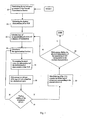
- Fig. 1 One embodiment of the method of the present invention is illustrated in the flowchart shown in Fig. 1.
- the method is carried out as follows: At step 10 technological parameters are established. Physical characteristics of the TCF are measured at step 20. Selection of the type of approximating function and simplex of visualization are performed at step 30. The approximating function is calculated at step 40. The initial values for optimization and the desired physical characteristics of the TCF are determined at step 50. Next the extreme of the approximating functions in n-dimensional space is determined at step 60. The stability of the determined extreme is the tested at step 70. If the determined extreme is not stable the method is executed again at step 40. If the determined extreme is stable, at step 80 the TCF is manufactured wherein the technological parameters correspond to the selected extremum. Finally, at step 90 it is determined whether the physical characteristics of the manufactured TCF corresponds to the desired characteristics. If yes, the method is ended. If no, the method is executed again at step 30.
- the method of the present invention involves creating a data base containing measured physical characteristics of TCFs obtained by Cascade Crystallization Process and the corresponding technological parameters of the process, including characteristics of the initial liquid crystal system used for the TCF production.
- the parameters may vary within a certain working interval of parameters of technology operations.
- the number of measurements used to create the database has to be sufficient for subsequent approximations, and one of ordinary skill in the art will recognize that generally, the accuracy of the resulted characteristics of the manufactured film is of the order of, or is approximately equal to, the accuracy of the measured parameters of the technological operations.
- the database can be complete (comprehensive), including all properties of the initial liquid crystal system, all parameters of each technological operation, and all required physical properties (selected physical characteristics) of TCFs.
- the properties of the initial liquid crystal system include composition, concentrations of components, types and concentrations of additives, etc.
- Selected physical characteristics of TCFs include optical (contrast, anisotropy coefficient, absorption spectrum. etc.), electrical (conductivity, anisotropy of conductivity, bandgap width, etc.), and magnetic.
- the database can be created as partial, that is, containing separate required characteristics of TCFs, some properties of the initial liquid crystal system (e.g., percentages of organic components), and/or most significant parameters of the technological process.
- a partial database can be used for the optimization of TCFs intended for particular applications such as polarizing films, birefringent films for displays, etc.
- the database also includes a model represented by an approximating function reflecting the dependence of selected physical characteristics, y ( ⁇ ) , on the parameters, x ( ⁇ ) , for example, on the percentages of the organic compounds, some parameters of technological operations, etc.
- the approximating fimction is a vector, since the optimization can be performed simultaneously with respect to several selected physical characteristics.
- the approximation can be performed by various methods, in particular, using polynomial interpolation or radial basis functions (RBFs).
- RBFs radial basis functions
- the most attractive property of the RBF approximation procedure is the possibility of constructing the approximating function by linear methods.
- the RBF fitting points can be either preliminarily set (i.e., arranged on a regular grid) or determined in the course of data preparation (e.g., using clusterization procedures).
- the variance is a quadratic function of unknown approximation parameters, which makes the numerical model less complicated and simplifies the calculation routine.
- There exist a point of global minimum that can be found by solving the problem of minimization of the variance by least squares or using some method of descent.
- the approximation with RBFs requires setting properties of the model, such as the RBF type and the number of these functions, specifying a set of fit points (centers) ⁇ c m ⁇ determining the positions of RHFs, and defining the weights ⁇ w m ⁇ .
- properties of the model such as the RBF type and the number of these functions, specifying a set of fit points (centers) ⁇ c m ⁇ determining the positions of RHFs, and defining the weights ⁇ w m ⁇ .
- Each of these properties depends on the complexity and type of data modeled.
- the main tasks are to determine the type of RBFs and their parameters, to define weights, and to select the fitting points (centers).
- the main problems are to choose a local or global function ⁇ ( ⁇ ) and to select the free parameters. These parameters can be determined through nonlinear optimization or set arbitrarily.
- RBFs in this form provide for a local representation, their effective radius being determined by the parameter r that can be either in common for all RBFs or determined separately for each of these functions.
- the Gaussian RBF is characterized by a limited "effective range" around the center of the function, which is proportional to the radius r. Outside this region of sensitivity, a contribution of each separate RBF to the total sum is small. This local character of the Gaussian RBF is a very useful property making the effect of each RBF localized in small vicinity around the center, not significantly influencing the presentation of data outside this region.
- the solution can be found by regularization of the procedure of obtaining a normal solution for unfaithfully known vector in the right-hand part.
- RBF fitting points Various methods are used for selecting the aforementioned centers (the RBF fitting points) in the space of measurements. Such points can be arranged on a regular grid, randomly distributed, or defined using clusterization algorithms or nonlinear optimization procedures.
- the extrema of this function are determined in the space of measurements by means of a maximization procedure.
- the method of the present invention selectively determines and optimizes several parameters which are then used in the Cascade Crystallization Process by finding the points of extrema for each of the scalar approximating functions, after which the equilibrium point is determined according to Nash or Pareto. All extrema (or at least one selected) are analyzed with respect to stability. For this purpose, additional measurements of all physical characteristics are performed for the films obtained from the same liquid crystal system with admissible technological parameters. If the results of these measurements, being included into the data base, do not alter the position of a selected maximum of the approximating function, this maximum is considered as stable.
- Supramolecular materials utilized in TCF manufacturing are based on watersoluble modified organic blue (B), violet (V), and red (R) dyes, which are the products of sulfonation of indanthrone and dibenzimidazole derivatives of perylenetetracarboxylic and naphthalenetetracarboxylic acids. Individual dyes, as well as their mixtures, can be used for the preparation of LLC materials.
- the samples of TCF polarizers for testing were produced by direct deposition of an LLC material onto poly(ethylene terephthalate) (PET) film.
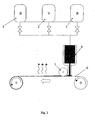
- Various components were delivered from containers 1, 2, and 3 to a mixer vessel 4, where a composition for TCF manufacturing was prepared.
- This mixture was supplied via a special channel to an application device.
- the coating was applied by means of a Mayer wire-wound rod 5, with the wire size depending on the thickness of a polarizer film required.
- the mixture was deposited onto PET film 6 using roll-to-roll process.
- a uniform wet coating 7-15 ⁇ m thick provides for the obtaining of 100 to 900 nm thick polarizers upon evaporation of aqueous solvent.
- the measured optical and color characteristics of TCF polarizers are the optical transmission of samples oriented parallel and perpendicular to the polarization axes of the polarizer and analyzer (Tpar and Tper, respectively) and the color coordinates of the polarizer.
- the following parameters have been calculated:
- the physical property of TCFs for optimization was the contrast ratio (CR).
- the optimization parameters were the percentage contents of the modified organic blue dye components.
- This composition may contain di-, tri-, and tetrasulfoderivatives, trisulfochloride derivative, etc. (up to eleven components).
- CR contrast ratio
- the initial data base contained the results of more than 400 measurements of the physical parameters of TCFs, in which the percentage composition of the mixture was varied from one film to another.
- the optimization procedure is based upon selection of the approximation function and its parameters, the initial point for the function section with a hyperplane, and the visualization simplex.
- This function was constructed using the experimental data base mentioned above and the program package developed by the Optiva Inc. which carries out the method steps as described herein.
- the approximation function was visualized and the extrema of this function were determined for an intersection with a hyperplane.
- the initial point for constructing a hyperplane was chosen in the vicinity of a point corresponding to the maximum experimental value of the physical parameter selected for optimization.
- Figure 3 shows the resulting section of the function with a hyperplane at the point corresponding to a B-dye composition containing 10.7% tetra-sulfoderivative, 34.6% tri-sulfoderivative, and 22.5% di-sulfoderivative.
- the initial conditions for determining the extremum of the approximation function in the n-dimensional space were represented by an arbitrary point 7 (Fig. 3) in the aforementioned three-dimensional surface.
- the optimization procedure yielded a point of maximum 8 that corresponded to an extremum of the initial approximation function.
- the next step in the proposed algorithm consists in the passage to a new section of the approximation function by a hyperplane at the point of maximum obtained in the preceding step. This section (representing a surface on the simplex) is depicted in Fig. 4.
- the optimization (maximization) procedure can be terminated. Should the extrema be unstable, additional iterations have to e performed.
- point 8 corresponding to the maximum value of the contrast function CR has the following coordinates (percentage B-dye composition): tetrasulfoderivative, 16,6%; trisulfoderivative, 39,1%; disulfoderivative, 13,8%; other components, 30,5%.
- the contrast ratio of a TCF with this composition, obtained by Cascade Crystallization Process, was CR 162 and this parameter was stably reproduced in all experiments.
Landscapes
- Chemical & Material Sciences (AREA)
- Engineering & Computer Science (AREA)
- Crystallography & Structural Chemistry (AREA)
- Materials Engineering (AREA)
- Organic Chemistry (AREA)
- Metallurgy (AREA)
- Liquid Crystal (AREA)
- Physical Or Chemical Processes And Apparatus (AREA)
- Application Of Or Painting With Fluid Materials (AREA)
- Organic Low-Molecular-Weight Compounds And Preparation Thereof (AREA)
- Analysing Materials By The Use Of Radiation (AREA)
Abstract
Description
- The present invention relates to the field of molecular engineering aimed at obtaining molecularly ordered organic materials for various applications. The possible applications include display devices, optic-electronics, various optical elements, and the like.
- A special feature of the molecules of a number of organic dyes is the ability to form supramolecular liquid crystal mesophases. Containing peripheral functional groups, the mesophases of organic dyes are characterized by specific structures, phase diagrams, optical properties, and dissolving capabilities [J.-M. Lehn, Supramolecular Chemistry (New York, 1998)].
- By using dichroic dyes capable of forming lyotropic liquid crystals, it is possible to obtain anisotropic films possessing a high degree of optical anisotropy. Such films exhibit the properties of E-type polarizers, which are related to peculiarities of the optical absorption of supramolecular complexes, and behave as retarders (phase-shifting devices) in the spectral regions where the optical absorption is insignificant The phase-retarding properties of these anisotropic films are related to their birefringence that is, to a difference in refractive indices measured in the direction of application of the liquid crystal solution onto a substrate and in the perpendicular direction. Films formed from the liquid crystal systems based on strong (light-fast) dye molecules are characterized by high thermal stability and light resistance. Such anisotropic crystalline films, referred to below as Thin Crystal Films (TCFs), can be obtained by a method developed by Optiva Technology and generally described in [P. Lazarev and M. Paukshto, Proceeding of the 7th International Workshop "Displays, Materials and Components" (Kobe, Japan, November 29-December 1, 2000, pp. 1159-1160) and in United States Published Patent Application No.
US 2003/0154909 , the disclosure of which is incorporated by reference in its entirety. This method is generally called the Cascade Crystallization Process and it is characterized by the sequence of steps involving various technological operations. - Selection of the base material for such a film is determined by the required optical and electrical properties. Other necessary conditions are the presence of a developed system of π-conjugated bonds in conjugated aromatic rings of the molecules and the presence of groups (such as amine, phenol, ketone, etc.) lying in the plane of the molecule and entering into the aromatic system of bonds. The molecules and/or their molecular fragments possess a planar structure and are capable of forming a stable lyotropic liquid crystal phase. Further description is found in United Sates Patent Nos.
5,739,296 and6,174,394 , which are incorporated herein by reference in their entirety. - When dissolved in an appropriate solvent, such an organic compound forms a colloidal system (lyotropic liquid crystal solution) in which molecules are aggregated into supramolecular complexes constituting kinetic units of the system. This liquid crystal phase is essentially a precursor of the ordered state of the system, from which a solid optically anisotropic crystal film (that is, TCF) is formed in the course of subsequent alignment of the supramolecular complexes and removal of the solvent In this film, the molecules are arranged so that their planes are parallel to each other and form a three-dimensional crystal, at least in a part of the layer. The film thickness usually does not exceed 1 µm. In order to obtain the films possessing desired optical and electrical characteristics, is it possible to use mixed colloidal systems capable of forming joint supramolecular complexes in solution. Upon removal of the solvent, such system forms a common three-dimensional crystal structure.
- Various applications require the films possessing different optical and electrical properties. Being a multistage process, Cascade Crystallization depends on numerous technological parameters influencing the final properties of TCFs. Obtaining TCFs with preset properties requires optimization of these technological parameters. The present invention is aimed at solving this task.
- The present invention provides a method configured to selectively optimize technology and composition of a liquid crystal system for the obtaining of TCFs possessing preset physical properties which are then used to manufacture thin crystal films. Preferably the Cascade Crystallization Process is used to manufacture the thin crystal films.
- In one embodiment, the method of the present invention includes the steps of:
- (a) producing a number of TCFs, wherein an initial mixture of organic compounds are the same for all films and the percentage composition of the mixture of organic compounds varies from film to film;
- (b) measuring one or more physical characteristic for each of said films;
- (c) choosing representation of said physical characteristics in the form of an approximating fimction of these physical characteristics as dependent on the percentages of organic compounds;
- (d) determining extrema of the approximating function;
- (e) testing stability of determined extrema and selecting one of these extrema; and
- (f) manufacturing a TCF having a composition corresponding to the selected extremum for said physical characteristics.
- In another aspect, the present invention provides TCFs, possessing preset physical properties, manufactured from standard, commercially available liquid crystal mixtures.
- In another aspect of the present invention, a computer readable media containing a software program is provided that, when executed on a computer, carries out the instructions of:
- measuring at least one physical characteristic of a number of thin crystal films produced by a Cascade Crystallization Process, the Cascade Crystallization Process parameters associated with technological operations;
- choosing a representation of the physical characteristic in the form of an approximating function of the physical characteristic as dependent on the parameters of said technological operations;.
- determining extrema of the approximating function;
- testing stability of the determined extrema; and selecting one extemum of the extrema to be used in manufacture of said thin crystal film.
- Objects and advantages of the present invention will become apparent upon reading the detailed description of the invention and the appended claims provided below, and upon reference to the drawings, in which:
- Figure 1 shows a flowchart illustrating the method steps according to one embodiment of the present invention.
- Figure 2 presents a block schematic diagram generally illustrating the Cascade Crystallization Process.
- Figures 3-4 gives an example of the approximating function projected onto a simplex.
- The present invention provides a method configured to selectively optimize technology and composition of a liquid crystal system for the obtaining of TCFs possessing preset physical properties which are then used in the Cascade Crystallization Process to manufacture thin crystal films
- The Cascade Crystallization Process is characterized by the following sequence of main stages involving various technological operations:
- (i) Formation of a colloidal system (liquid crystal solution);
- (ii) Application of this system onto a substrate with simultaneous or subsequent external aligning action; and
- (iii) Removal of the solvent and the formation of a TCF. This process is further described in detail in
United States Patent Nos. 6,174,394 and5,739,296 and in PCT Patent application no.PCT/US02/03800 , publishedWO 02/063660 - One embodiment of the method of the present invention is illustrated in the flowchart shown in Fig. 1. In general the method is carried out as follows: At
step 10 technological parameters are established. Physical characteristics of the TCF are measured atstep 20. Selection of the type of approximating function and simplex of visualization are performed atstep 30. The approximating function is calculated atstep 40. The initial values for optimization and the desired physical characteristics of the TCF are determined atstep 50. Next the extreme of the approximating functions in n-dimensional space is determined atstep 60. The stability of the determined extreme is the tested atstep 70. If the determined extreme is not stable the method is executed again atstep 40. If the determined extreme is stable, atstep 80 the TCF is manufactured wherein the technological parameters correspond to the selected extremum. Finally, atstep 90 it is determined whether the physical characteristics of the manufactured TCF corresponds to the desired characteristics. If yes, the method is ended. If no, the method is executed again atstep 30. - The method of the present invention is now described in more detail. The disclosed method involves creating a data base containing measured physical characteristics of TCFs obtained by Cascade Crystallization Process and the corresponding technological parameters of the process, including characteristics of the initial liquid crystal system used for the TCF production. The parameters may vary within a certain working interval of parameters of technology operations. The number of measurements used to create the database has to be sufficient for subsequent approximations, and one of ordinary skill in the art will recognize that generally, the accuracy of the resulted characteristics of the manufactured film is of the order of, or is approximately equal to, the accuracy of the measured parameters of the technological operations.
- The database can be complete (comprehensive), including all properties of the initial liquid crystal system, all parameters of each technological operation, and all required physical properties (selected physical characteristics) of TCFs. The properties of the initial liquid crystal system include composition, concentrations of components, types and concentrations of additives, etc. Selected physical characteristics of TCFs include optical (contrast, anisotropy coefficient, absorption spectrum. etc.), electrical (conductivity, anisotropy of conductivity, bandgap width, etc.), and magnetic.
- On different steps of the Cascade Crystallization Process the following technological operations are characterized by the following parameters.
- (i) On the step of formation of a colloidal system (liquid crystal solution):
chemical composition of the liquid crystal system, component concentrations, temperature, additives, solvents, and the like; - (ii) On the step of application of this system onto a substrate: viscosity, application velocity, geometry of the application device, and the like;
- (iii) On the step of subsequent external aligning action: amount and rate of mechanical shear (for the mechanical alignment), electric field strength and direction (for the electromagnetic alignment), and the like.;
- (iv) On the step of solvent removal: drying speed, humidity and temperature of the medium, and the like.
- This list is not intended to be a complete list of the parameters of the technological operations under review but it has shown the most typical examples of these parameters.
- The database can be created as partial, that is, containing separate required characteristics of TCFs, some properties of the initial liquid crystal system (e.g., percentages of organic components), and/or most significant parameters of the technological process. Such a partial database can be used for the optimization of TCFs intended for particular applications such as polarizing films, birefringent films for displays, etc.
- The database also includes a model represented by an approximating function reflecting the dependence of selected physical characteristics, y (µ), on the parameters, x (µ), for example, on the percentages of the organic compounds, some parameters of technological operations, etc. In the general case, the approximating fimction is a vector, since the optimization can be performed simultaneously with respect to several selected physical characteristics.
- The approximation can be performed by various methods, in particular, using polynomial interpolation or radial basis functions (RBFs). The most attractive property of the RBF approximation procedure is the possibility of constructing the approximating function by linear methods. The RBF fitting points can be either preliminarily set (i.e., arranged on a regular grid) or determined in the course of data preparation (e.g., using clusterization procedures). In this situation, the variance is a quadratic function of unknown approximation parameters, which makes the numerical model less complicated and simplifies the calculation routine. There exist a point of global minimum that can be found by solving the problem of minimization of the variance by least squares or using some method of descent.
- Thus, the approximation of experimental data is aimed at constructing a function

establishing a relationship within set P of input and output parameters (elements) (x), which is constructed using the available body of data. The interpolation condition (1) can be met either exactly or approximately, depending on the amount of data (set P) used to describe function
 (x). In the latter case, the procedure is aimed at minimizing an error function representing, for example, the mean square deviation of an approximating function from the exact value:

- A formula setting the radial basis vector functions is as follows,

where f̃(x), w m ∈ Rm, x, cm ∈ Rn, and W are the weighing coefficients of the function\ that are determined using the experimental data. Background description is further described in M.Kirby, Geometric Data Analysis (New York, 2001), which is incorporated herein by reference. - When the optimization is performed with respect to some selected physical characteristic of TCFs, the approximating function is scalar and condition (3) for each


where µ =1,..., P. Writing these conditions in the form of a system of linear equations, we obtain
where
- In a more compact writing,

where Φ is the interpolation matrix defined as
with vectors w=(w 1,w 2,...,w Nc ) T and f=(f (1) ,f (2) ,...,f (P)) T. - The approximation with RBFs requires setting properties of the model, such as the RBF type and the number of these functions, specifying a set of fit points (centers) {c m } determining the positions of RHFs, and defining the weights {w m }. Each of these properties depends on the complexity and type of data modeled. Here, the main tasks are to determine the type of RBFs and their parameters, to define weights, and to select the fitting points (centers).
- The approximation can be performed using RBFs of various types. Some of these are presented in Table 1.
Table 1 φ(ξ) Type Local / global Parameter exp(-ξ2/r 2) Gaussian local r ξ Linear global None ξ3 Cubic global None ξ2 Inξ Thin plate spline global None (ξ2+r 2)1/2 Multiquadric global r (ξ2 +r 2)-1/2 Inverse multiquadric local r - Selecting the RBF type presents rather a difficult task. The main problems are to choose a local or global function φ(ξ) and to select the free parameters. These parameters can be determined through nonlinear optimization or set arbitrarily.
- It was experimentally established that a function most suited for the optimization of Cascade Crystallization Process is of the type:

- RBFs in this form provide for a local representation, their effective radius being determined by the parameter r that can be either in common for all RBFs or determined separately for each of these functions.
- In the case of a Euclidean norm, the RBFs are expressed as

- Using the multiplicative property of the exponent, we can pass to the following form,

- The Gaussian RBF is characterized by a limited "effective range" around the center of the function, which is proportional to the radius r. Outside this region of sensitivity, a contribution of each separate RBF to the total sum is small. This local character of the Gaussian RBF is a very useful property making the effect of each RBF localized in small vicinity around the center, not significantly influencing the presentation of data outside this region.
- The problem of determining the weighing coefficients reduces to the problem of least squares for overdetermined systems of linear algebraic equations.

- In the general case, this system either has no solutions or possesses the infinite number of solutions. It is a usual practice to find a normal solution of such a system of linear equations that minimizes the variance

- The solution can be found by regularization of the procedure of obtaining a normal solution for unfaithfully known vector in the right-hand part.
- Various methods are used for selecting the aforementioned centers (the RBF fitting points) in the space of measurements. Such points can be arranged on a regular grid, randomly distributed, or defined using clusterization algorithms or nonlinear optimization procedures.
- After constructing the approximating function, the extrema of this function are determined in the space of measurements by means of a maximization procedure. The method of the present invention selectively determines and optimizes several parameters which are then used in the Cascade Crystallization Process by finding the points of extrema for each of the scalar approximating functions, after which the equilibrium point is determined according to Nash or Pareto. All extrema (or at least one selected) are analyzed with respect to stability. For this purpose, additional measurements of all physical characteristics are performed for the films obtained from the same liquid crystal system with admissible technological parameters. If the results of these measurements, being included into the data base, do not alter the position of a selected maximum of the approximating function, this maximum is considered as stable. If, however, the position of a selected maximum exhibits a change, several sequential iterations can be performed to calculate the modified approximating function and determine the refined extrema. Once the optimization procedure is terminated, subsequent fabrication of TCFs by Cascade Crystallization Process is carried out by processing appropriate liquid crystal systems using the technological parameters determined as described above.
- In order to obtain TCFs possessing desired physical properties, it is necessary to use liquid crystal systems with properly selected compositions of select chemical compounds reproduced for all batches of TCFs.
- Commercial batches of colloidal systems possess a standard composition of chemical compounds. In order to obtain the systems possessing optimum compositions in each particular case, it is necessary to mix the commercial colloidal systems in certain proportions. The mass or volume fractions of standard mixtures are usually determined empirically or calculated based on a certain model. Such a calculation is possible only provided that the process of mixing is additive, whereby there is no chemical or other interactions between components. Most of the liquid crystal systems used in the aforementioned applications exhibit additivity on mixing.
- Natural limitations on the problem solutions are as follows:
- all components of the initial mixture must be contained in the standard systems;
- the fraction of any component has to fall within the interval (0,1);
- the sum of fractions of all components has to be unity.
- According to the method of the present invention, we have developed an algorithm and wrote the corresponding software code for determining the fractions of standard additive systems to be mixed in order to obtain a mixture with desired composition. Given the method steps and teaching of the present invention, software can be written by those of ordinary skill to carry out the method.
- If there are M standard systems including n components and we are seeking for an n-component mixture of a certain composition, the general equation can be written in the following form:

where (a11, ..., am1) are the fractions of the corresponding components (xl, ..., xn) in the first standard mixture and so on, (f1, ..., fn) are the fractions of the corresponding components in the desired (optimum) mixture, and
is a stochastic matrix. - The greater the number of standard systems, the higher the possible quality of the desired final mixture. It is also necessary that the fractions of components in various standard systems would cover the entire interval (0, 1).
- A solution to the above system of linear equations is obtained through minimization of ∥Ax-f∥ (with optimization of ∥x∥).
- The examples described below are presented for illustration purposes only, and are not intended to limit the scope of the present invention in any way.
- Supramolecular materials utilized in TCF manufacturing are based on watersoluble modified organic blue (B), violet (V), and red (R) dyes, which are the products of sulfonation of indanthrone and dibenzimidazole derivatives of perylenetetracarboxylic and naphthalenetetracarboxylic acids. Individual dyes, as well as their mixtures, can be used for the preparation of LLC materials. The samples of TCF polarizers for testing were produced by direct deposition of an LLC material onto poly(ethylene terephthalate) (PET) film.
- Various components (see Fig. 2) were delivered from
containers mixer vessel 4, where a composition for TCF manufacturing was prepared. This mixture was supplied via a special channel to an application device. The coating was applied by means of a Mayer wire-wound rod 5, with the wire size depending on the thickness of a polarizer film required. The mixture was deposited ontoPET film 6 using roll-to-roll process. A uniform wet coating 7-15 µm thick provides for the obtaining of 100 to 900 nm thick polarizers upon evaporation of aqueous solvent. - The measured optical and color characteristics of TCF polarizers are the optical transmission of samples oriented parallel and perpendicular to the polarization axes of the polarizer and analyzer (Tpar and Tper, respectively) and the color coordinates of the polarizer. The following parameters have been calculated:
- (i) transmission of a single polarizer for an unpolarized light

- (ii) transmission of two parallel polarizers

- (iii) transmission of two crossed polarizers H 90 = Tpar × Tper ;
- (iv) contrast ratio
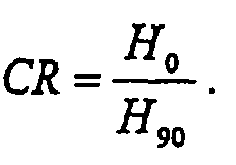
- The physical property of TCFs for optimization was the contrast ratio (CR). The optimization parameters were the percentage contents of the modified organic blue dye components. This composition may contain di-, tri-, and tetrasulfoderivatives, trisulfochloride derivative, etc. (up to eleven components). Thus, we have optimized the CR function in the 11-dimensional space of percentage B-dye composition.
- The initial data base contained the results of more than 400 measurements of the physical parameters of TCFs, in which the percentage composition of the mixture was varied from one film to another. The optimization procedure is based upon selection of the approximation function and its parameters, the initial point for the function section with a hyperplane, and the visualization simplex.
- In the given case, the most appropriate approximation function is as follows:

- This function was constructed using the experimental data base mentioned above and the program package developed by the Optiva Inc. which carries out the method steps as described herein. The approximation function was visualized and the extrema of this function were determined for an intersection with a hyperplane. This was followed by graphical representation of the section as a surface on a simplex (representing a surface in the three-dimensional space). Coordinates of this simplex were the concentrations of di-, tri-, and tetrasulfoderivatives. The initial point for constructing a hyperplane was chosen in the vicinity of a point corresponding to the maximum experimental value of the physical parameter selected for optimization.
- Figure 3 shows the resulting section of the function with a hyperplane at the point corresponding to a B-dye composition containing 10.7% tetra-sulfoderivative, 34.6% tri-sulfoderivative, and 22.5% di-sulfoderivative.
- The initial conditions for determining the extremum of the approximation function in the n-dimensional space were represented by an arbitrary point 7 (Fig. 3) in the aforementioned three-dimensional surface. The optimization procedure yielded a point of maximum 8 that corresponded to an extremum of the initial approximation function. The next step in the proposed algorithm consists in the passage to a new section of the approximation function by a hyperplane at the point of maximum obtained in the preceding step. This section (representing a surface on the simplex) is depicted in Fig. 4.
- In the case when the extrema determined in this way are stable (i.e., in dependent of the initial conditions), the optimization (maximization) procedure can be terminated. Should the extrema be unstable, additional iterations have to e performed.
- In this example,
point 8 corresponding to the maximum value of the contrast function CR has the following coordinates (percentage B-dye composition):
tetrasulfoderivative, 16,6%; trisulfoderivative, 39,1%; disulfoderivative, 13,8%; other components, 30,5%. The contrast ratio of a TCF with this composition, obtained by Cascade Crystallization Process, was CR =162 and this parameter was stably reproduced in all experiments.
Claims (13)
- A method of manufacturing thin crystal film of at least one desired physical characteristic, the film is manufactured by Cascade Crystallization Process from a mixture of organic compounds, and the method comprising the steps of:(a) producing a number of thin crystal films by the Cascade Crystallization Process from mixtures of organic compounds,
wherein the organic compounds in the mixture are the same for all said films and percentage composition of the mixture varies from the one produced film to another ;(b) measuring said at lest one physical characteristic for each of said produced films;(c) choosing a representation of said at least one physical characteristic in the form of an approximating function of said physical characteristic as dependent on the percentage composition of said mixture of organic compounds;(d) determining extrema of the approximating function;(e) testing stability of the determined extrema and selecting one extremum of said extrema and the corresponding composition of the mixture;(f) manufacturing the thin crystal film of the desired physical characteristic,wherein the composition corresponding to the selected extremum is used for the mixture of organic compounds for the manufacturing of the film of said physical characteristic. - The method according to Claim 1, wherein the steps (a) through (e) are repeated more than one time before the step of the film manufacturing.
- The method according to Claim 1, wherein the Cascade Crystallization Process comprises technological operations of application of a film of lyotropic liquid crystal, external alignment action upon the lyotropic liquid crystal film, and removal of a solvent, and wherein each said technological operation has at least one characteristic parameter.
- The method according to Claim 3, wherein at least one of the characteristic parameters of said technological operations varies from the one produced film to another, and representation is made in the form of approximating function of at least one of the physical characteristics as dependent on the percentages of the mixture of organic compounds and the parameters of technological operations.
- The method according to Claim 4, wherein the characteristic parameters of said technological operations are selected from the group consisting of chemical composition of lyotropic liquid crystal, its concentration, temperature, and viscosity; velocity of the lyotropic liquid crystal application, intensity and direction of the external alignment action and speed of the solvent removal.
- The method according to Claim 3, wherein lyotropic liquid crystal is formed by rodlike supramolecules composed of the molecules of the organic compounds.
- The method according to Claim 6, wherein the rodlike supramolecules have an intermolecular spacing of 3.4±0.3 Å in the direction of one of main optical axes.
- The method according to Claim 1, wherein at least one of said organic compounds is a polycyclic organic compound with conjugated π-system of bonds.
- The method according to Claim 8, wherein said polycyclic organic compound contains heterocycles.
- The method of claim 1 wherein the approximating function is comprised of polynomial interpolation or radial basis functions.
- A method of manufacturing thin crystal film of at least one desired physical characteristics, the thin crystal film is manufactured by Cascade Crystallization Process from a mixture of organic compounds, wherein the Cascade Crystallization Process comprises technological operations of application of a film of a lyotropic liquid crystal, external alignment action upon the lyotropic liquid crystal film, and removal of a solvent, and wherein each technological operation has at least one parameter, the method comprising the steps of:(a) producing a number of thin crystal films by said Cascade Crystallization Process, wherein the mixture of organic compounds is the same for all produced films and the parameters of said technological operations vary from one produced film to another;(b) measuring said physical characteristic for each of said films;(c) choosing of a representation of said physical characteristics in the form of an approximating function of said physical characteristics as dependent on the parameters of said technological operations;(d) determining extrema of the approximating function;(e) testing stability of the determined extrema and selecting one extremum of said extrema; and(f) manufacturing of the thin crystal film of the desired physical characteristic by using selected parameters of the technological operations corresponding to the selected extremum for said physical characteristics.
- A method of selecting a mixture of organic compounds having specific parameters that will produce a thin crystal film having one or more desired physical characteristics, comprising the steps of:(a) producing a number of thin crystal films by said Cascade Crystallization Process, wherein the mixture of organic compounds is the same for all produced films and the parameters vary from one produced film to another;(b) measuring said physical characteristic for each of said films;(c) choosing a representation of said physical characteristics in the form of an approximating function of said physical characteristics as dependent on the parameters ;(d) determining extrema of the approximating function;(e) testing stability of the determined extrema and(f) selecting one extremum of said extrema, the selected extremum corresponding to the specific parameters that will produce a thin crystal film of desired physical characteristic.
- A computer readable media containing a software program that, when executed on a computer, carries out the instructions of:measuring at least one physical characteristic of a number of thin crystal films produced by a Cascade Crystallization Process, the Cascade Crystallization Process parameters associated with technological operations;choosing a representation of said physical characteristic in the form of an approximating function of said physical characteristic as dependent on the parameters of said technological operations;determining extrema of the approximating function;testing stability of the determined extrema;and selecting one extemum of said extrema to be used in manufacture of said thin crystal film.
Applications Claiming Priority (1)
| Application Number | Priority Date | Filing Date | Title |
|---|---|---|---|
| JP2005181766A JP4485420B2 (en) | 2005-06-22 | 2005-06-22 | Method for producing a crystalline thin film |
Publications (1)
| Publication Number | Publication Date |
|---|---|
| EP1736571A1 true EP1736571A1 (en) | 2006-12-27 |
Family
ID=37307248
Family Applications (1)
| Application Number | Title | Priority Date | Filing Date |
|---|---|---|---|
| EP06252157A Withdrawn EP1736571A1 (en) | 2005-06-22 | 2006-04-21 | Method of manufacturing thin crystal films |
Country Status (5)
| Country | Link |
|---|---|
| EP (1) | EP1736571A1 (en) |
| JP (1) | JP4485420B2 (en) |
| KR (1) | KR20060134799A (en) |
| CN (1) | CN1885068A (en) |
| TW (1) | TW200727519A (en) |
Citations (2)
| Publication number | Priority date | Publication date | Assignee | Title |
|---|---|---|---|---|
| WO2002063660A1 (en) * | 2001-02-07 | 2002-08-15 | Optiva, Inc. | Method of obtaining anisotropic crystalline films and devices for implementation of the method |
| US20050146671A1 (en) * | 2003-12-24 | 2005-07-07 | Khavrounyak Igor V. | Method of manufacturing thin crystal films |
Family Cites Families (4)
| Publication number | Priority date | Publication date | Assignee | Title |
|---|---|---|---|---|
| JPS63289090A (en) * | 1987-05-21 | 1988-11-25 | Canon Inc | Chiral smectic liquid crystal composition |
| CA2111150C (en) * | 1991-06-12 | 2001-10-30 | Yong Cao | Processible forms of electrically conductive polyaniline and conductive products formed therefrom |
| DE10232482A1 (en) * | 2002-07-17 | 2004-01-29 | Basf Ag | Process for the safe operation of a continuous heterogeneously catalyzed gas phase partial oxidation of at least one organic compound |
| US7166161B2 (en) * | 2003-01-17 | 2007-01-23 | Nitto Denko Corporation | Anisotropic film manufacturing |
-
2005
- 2005-06-22 JP JP2005181766A patent/JP4485420B2/en not_active Expired - Fee Related
-
2006
- 2006-04-21 EP EP06252157A patent/EP1736571A1/en not_active Withdrawn
- 2006-04-24 TW TW095114553A patent/TW200727519A/en unknown
- 2006-06-08 KR KR1020060051346A patent/KR20060134799A/en not_active Withdrawn
- 2006-06-22 CN CNA2006100865581A patent/CN1885068A/en active Pending
Patent Citations (2)
| Publication number | Priority date | Publication date | Assignee | Title |
|---|---|---|---|---|
| WO2002063660A1 (en) * | 2001-02-07 | 2002-08-15 | Optiva, Inc. | Method of obtaining anisotropic crystalline films and devices for implementation of the method |
| US20050146671A1 (en) * | 2003-12-24 | 2005-07-07 | Khavrounyak Igor V. | Method of manufacturing thin crystal films |
Non-Patent Citations (2)
| Title |
|---|
| IGNATOV L ET AL: "MOLECULAR ALIGNMENT IN NANO-FILM CRYSTAL POLARIZERS AND RETARDERS", PROCEEDINGS OF THE SPIE, SPIE, BELLINGHAM, VA, US, vol. 4807, 7 July 2002 (2002-07-07), pages 177 - 188, XP001202104, ISSN: 0277-786X * |
| NAZAROV V ET AL: "ELECTRONIC SPECTRA OF AQUEOUS SOLUTIONS AND FILMS MADE OF LIQUID CRYSTAL INK FOR THIN FILM POLARIZERS", MOLECULAR MATERIALS (ONLINE), GORDON AND BREACH, LAUSANNE, CH, vol. 14, 2001, pages 153 - 163, XP008034689, ISSN: 1563-5295 * |
Also Published As
| Publication number | Publication date |
|---|---|
| CN1885068A (en) | 2006-12-27 |
| JP2007000729A (en) | 2007-01-11 |
| TW200727519A (en) | 2007-07-16 |
| JP4485420B2 (en) | 2010-06-23 |
| KR20060134799A (en) | 2006-12-28 |
Similar Documents
| Publication | Publication Date | Title |
|---|---|---|
| Tam-Chang et al. | Chromonic liquid crystals: properties and applications as functional materials | |
| Fowlie et al. | Thickness-dependent perovskite octahedral distortions at heterointerfaces | |
| Hansen et al. | Systematic investigation of protein phase behavior with a microfluidic formulator | |
| Otón et al. | Orientation control of ideal blue phase photonic crystals | |
| US20060292372A1 (en) | Retardation films for the elimination of leakage of light through cross polarizers in LCD | |
| Meng et al. | Holographic photopolymerization-induced phase separation in reference to the phase diagram of a mixture of photocurable monomer and nematic liquid crystal | |
| Otón et al. | Fast self-assembly of macroscopic blue phase 3D photonic crystals | |
| US20050146671A1 (en) | Method of manufacturing thin crystal films | |
| Köhler et al. | Real structure influencing the hydrogen defect chemistry in congruent LiNbO3 and LiTaO3 | |
| Zhou et al. | Tailor-made additives for melt-grown molecular crystals: why or why not? | |
| Thirunavukkarsu et al. | Synthesis, growth, structural, optical, thermal and mechanical properties of bis-benzotriazole trichloroacetic acid single crystals | |
| EP1736571A1 (en) | Method of manufacturing thin crystal films | |
| Nakajima et al. | Slanted structure of blue phase ii self-aligned on one-dimensional patterned surfaces | |
| Zhao et al. | Chiroptical Signal Inversion of Peptido‐Coassemblies in Confined Parallel‐Laminar Microfluidics | |
| Khatun et al. | Diisopropylammonium-halide (dipaHal) ferroelectric molecular crystals: prospects, developments and controversies | |
| Choi et al. | The structure of ND4NO3 phase V by neutron powder diffraction | |
| Baran et al. | Vibrational investigation of phase transitions in CsHSO4 crystal | |
| Akishige et al. | Optical properties of hexagonal BaTiO3 around the 222 K structural phase transition | |
| Manaka et al. | Re-examination of successive structural phase transitions in (C3H7NH3) 2CuCl4 using birefringence imaging and electron paramagnetic resonance spectroscopy | |
| Tsukanova et al. | Microscopic organization of long-chain rhodamine molecules in monolayers at the air/water interface | |
| Kyrychenko et al. | Photochemistry of bis-methacrylic polymers and alignment of liquid crystals | |
| Kondo et al. | Mechanoresponsive behavior of rod-like liquid crystalline luminophores on an alignment layer | |
| Gholizadeh Arashti et al. | Theoretical investigation of optical properties of Aluminum zig-zag thin films | |
| Lin et al. | Micellar structures of block‐copolymers with ordered cores in dilute solution as studied by polarized and depolarized light scattering | |
| Van Valkenburg | High pressure optics |
Legal Events
| Date | Code | Title | Description |
|---|---|---|---|
| PUAI | Public reference made under article 153(3) epc to a published international application that has entered the european phase |
Free format text: ORIGINAL CODE: 0009012 |
|
| AK | Designated contracting states |
Kind code of ref document: A1 Designated state(s): AT BE BG CH CY CZ DE DK EE ES FI FR GB GR HU IE IS IT LI LT LU LV MC NL PL PT RO SE SI SK TR |
|
| AX | Request for extension of the european patent |
Extension state: AL BA HR MK YU |
|
| 17P | Request for examination filed |
Effective date: 20070404 |
|
| 17Q | First examination report despatched |
Effective date: 20070706 |
|
| AKX | Designation fees paid |
Designated state(s): DE FR GB NL PL |
|
| STAA | Information on the status of an ep patent application or granted ep patent |
Free format text: STATUS: THE APPLICATION IS DEEMED TO BE WITHDRAWN |
|
| 18D | Application deemed to be withdrawn |
Effective date: 20071117 |