EP1733628A1 - Process for granulation of high lipid content processed foods and product thereof - Google Patents
Process for granulation of high lipid content processed foods and product thereof Download PDFInfo
- Publication number
- EP1733628A1 EP1733628A1 EP06115307A EP06115307A EP1733628A1 EP 1733628 A1 EP1733628 A1 EP 1733628A1 EP 06115307 A EP06115307 A EP 06115307A EP 06115307 A EP06115307 A EP 06115307A EP 1733628 A1 EP1733628 A1 EP 1733628A1
- Authority
- EP
- European Patent Office
- Prior art keywords
- enclosure
- food
- processed food
- compressed air
- lipid
- Prior art date
- Legal status (The legal status is an assumption and is not a legal conclusion. Google has not performed a legal analysis and makes no representation as to the accuracy of the status listed.)
- Granted
Links
Images



Classifications
-
- B—PERFORMING OPERATIONS; TRANSPORTING
- B02—CRUSHING, PULVERISING, OR DISINTEGRATING; PREPARATORY TREATMENT OF GRAIN FOR MILLING
- B02C—CRUSHING, PULVERISING, OR DISINTEGRATING IN GENERAL; MILLING GRAIN
- B02C19/00—Other disintegrating devices or methods
- B02C19/06—Jet mills
- B02C19/061—Jet mills of the cylindrical type
-
- A—HUMAN NECESSITIES
- A23—FOODS OR FOODSTUFFS; TREATMENT THEREOF, NOT COVERED BY OTHER CLASSES
- A23P—SHAPING OR WORKING OF FOODSTUFFS, NOT FULLY COVERED BY A SINGLE OTHER SUBCLASS
- A23P10/00—Shaping or working of foodstuffs characterised by the products
- A23P10/20—Agglomerating; Granulating; Tabletting
-
- B—PERFORMING OPERATIONS; TRANSPORTING
- B02—CRUSHING, PULVERISING, OR DISINTEGRATING; PREPARATORY TREATMENT OF GRAIN FOR MILLING
- B02C—CRUSHING, PULVERISING, OR DISINTEGRATING IN GENERAL; MILLING GRAIN
- B02C23/00—Auxiliary methods or auxiliary devices or accessories specially adapted for crushing or disintegrating not provided for in preceding groups or not specially adapted to apparatus covered by a single preceding group
- B02C23/08—Separating or sorting of material, associated with crushing or disintegrating
- B02C23/10—Separating or sorting of material, associated with crushing or disintegrating with separator arranged in discharge path of crushing or disintegrating zone
- B02C23/12—Separating or sorting of material, associated with crushing or disintegrating with separator arranged in discharge path of crushing or disintegrating zone with return of oversize material to crushing or disintegrating zone
Definitions
- the invention generally relates to a process for grinding of low-moisture, high-lipid content processed foods for re-use in food manufacture.
- Farinaceous (starch-containing) foods can be subject to gelatinization or other significant physico-chemical transformations upon heat treatment or exposure to heat associated with conventional grinding or milling operations.
- control of gelatinization of farinaceous material in some food systems is important as it may have a direct impact on final product quality, particularly product texture.
- the degree of gelatinization of farinaceous material in food systems also impacts the processing rheology of a starch melt/dough or similar foodstuff. This may affect the expansion and bubble growth kinetics of the food product.
- a farinaceous food material may not be economically and/or functionally useful in further processed food production if the original starch content becomes unduly degraded.
- Arrangements are needed for reforming dry or low moisture, high-lipid content processed foods at a high recovery rate in a shelf-stable, food grade, functional form for re-use.
- the invention addresses the above and other needs in an efficient and economically feasible manner.
- This invention provides a process for grinding high lipid content processed foods into re-usable food grade, functional granular forms.
- This process executes the treatment in a short-duration operation that substantially preserves desirable functional aspects of the processed foods which are useful for further food manufacture. Grinding may be effected without the need to contact the high lipid processed food with any moving mechanical parts. Essentially all the high lipid processed food material of certain processes may be incorporated into food products.
- low-moisture, high-lipid processed foods which may be reformed via single-stage treatment include filled food products, for example, foods containing a grain-based ingredient in one portion and a lipid-containing filling ingredient in another portion thereof.
- the lipid content of the processed foods treatable by processes herein is at least about 15 wt.%, and particularly about 15 wt.% to about 60 wt.%.
- filled products may include, for example, snack, baked goods or pastry products in encapsulated, sandwich, co-extruded forms.
- Non-limiting examples include, for instance, flavored cream-filled dough products, cheese-filled dough products, and peanut butter-filled dough products, and so forth.
- the filled products may include filled sandwich dough products, enrobed-filling dough products, such as filled or enrobed cookies, snack bars, and/or crackers, and the like.
- processed foods encompasses finished process foods as well as partly processed raw food materials such as cocoa nibs.
- the single-stage grinding treatment effectively granulates low-moisture, high-lipid processed foods containing farinaceous material without inducing significant or uncontrolled transformations in the lipid or farinaceous content.
- Lipid and starch content of the low-moisture, high-lipid foods is substantially maintained through the grinding process, and thus is available for re-use in subsequent food production. They also may be re-used at relatively high levels in further food production lines.
- the single-stage grinding treatment of low-moisture, high-lipid processed food is conducted as a grinding process in which compressed air and low-moisture, high-lipid processed food are separately introduced into an enclosure that includes a truncated conical shaped section. After introduction, the compressed air travels generally along a downward path through the enclosure until it reaches a lower end thereof. The air flows back up from the lower end of the enclosure in a central region thereof until exiting the enclosure via an exhaust duct. The low-moisture, high-lipid processed food is separately introduced into an upper end of the enclosure, and the food becomes entrained in the air traveling downward through the enclosure until reaching the lower end of the enclosure.
- the processed food is at least physically processed.
- the food also may be further dehydrated by use of heated compressed air in which it is suspended in the dynamic air flow system generated within the enclosure, to the extent the air temperature is maintained below the melting temperature of lipid content of the food being processed.
- the food is disintegrated into small particles in an extremely short period of time.
- Significant amounts of the introduced low-moisture, high-lipid processed food can be ground before reaching a lower end of the enclosure. As such, this attrition of the low-moisture, high-lipid processed food into granular form may be achieved without using a grinding device with moving mechanical parts.
- the enclosure is a two-part structure including an upper cylindrical shaped enclosure in which the compressed air and low-moisture, high-lipid processed food are separately introduced, and the cylindrical enclosure adjoins and fluidly communicates with a lower enclosure having the truncated conical shape that includes the lower end of the overall structure from which the processed feed material is dispensed.
- the grinding treatment makes it possible to produce a granular food product from low-moisture, high-lipid processed food at a relatively low temperature, short duration procedure.
- the grinding treatment preferably may be achieved as a single-stage operation without impairing the desirable functional attributes of the food material, and without requiring different processes be performed in different equipment.
- the process can be operated in a continuous mode as the compressed air is continuously exhausted from the system after entraining the food downward through the enclosure to its lower end, and ground food product material can be withdrawn from the lower end of the enclosure. Relatively little if any food residue is left on the inner walls of the processing unit, making it easy to clean and facilitating switching to a different type of processed food for processing within the unit.
- FIG. 1 is a flow chart of a method for processing and re-using low-moisture, high-lipid processed food according to an embodiment of this invention.
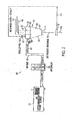
- FIG. 2 is a schematic view of a system useful for processing low-moisture, high-lipid processed food according to an embodiment of this invention.
- FIG. 3 is a cross sectional view of the cyclone unit used in the processing system illustrated in FIG. 2.
- FIG. 4 is a schematic view of a system useful for processing low-moisture, high lipid processed food according to another embodiment of this invention.
- low-moisture as used to characterize a food material means food material containing less than about 14 wt.% total water content, as liquid, frozen and/or vapor.
- high-lipid as used to characterize a food material means food material containing no less than about 15 wt.% total lipid content.
- processed foods encompasses finished process foods as well as partly processed raw food materials such as cocoa nibs.
- low-moisture, high-lipid processed food is subjected to grinding into a small particle size within a short period of time in a grinding process performed in one unit operation.
- the grinding process is implemented on a cyclonic type system that may be operated in a manner whereby the low-moisture, high-lipid processed food may be physically acted upon in a beneficial manner.
- a ground food product is obtained in a granulated form (e.g., a solid fine particulate).
- grinding a particle means crushing, pulverizing, abrading, wearing, or rubbing the particle to break it down into smaller particles and/or liberate smaller particles, and includes mechanisms involving contact between moving particles, and/or between a moving particle and a static surface; and “drying” means dehydrating, i.e., reducing moisture content.
- low-moisture, high-lipid processed food is collected in process or from finished food product (step 1), optionally is chilled (step 2) and/or the processing air is chilled (step 3), then the food is subjected to a grinding treatment (step 4), and the resulting granular food product thereof or "rework" is made available for re-use as a food ingredient (step 5).
- the processed food-product may be pre-chilled before introduction into the cyclonic processing unit described herein to further inhibit melting from occurring with respect to the lipid content of the processed food.
- the processed food is chilled to a temperature sufficient to cool the lipid content of the food to a temperature below the melting temperature of the lipid, particularly the lipid present having the lowest melting temperature. This helps to protect the integrity of the lipid portion and prevent agglomeration or sticking of the food material to interior walls of the process unit during the grinding processing. If ambient air temperature conditions are below the melting point of the lipid content of the processed food, the need to chill the air or feed may be reduced or eliminated.
- the temperature of the high lipid processed feed material (step 2), and/or the processing air (step 3) which will be used in the granulation process, as described in more detail below, is/are cooled to about 70°F or less before introduction into the cyclonic processing unit.
- a granular food product is obtained which is suitable for use in comestibles.
- the granulated food product obtained substantially retains its flavor and functional attributes through the grinding treatment.
- the low-moisture, high-lipid food is a farinaceous-containing foodstuff
- residual starch content of the low-moisture, high-lipid foods that remains after any prior cooking or other thermal treatments are performed on the processed food is substantially maintained through the grinding process according to the present invention, and thus is functionally available for re-use. It also may be re-used at relatively high levels in further food production lines.
- the granular food product also may be stably stored until re-used in subsequent food production.
- the granulated food product may be used as a food ingredient in the same type ofprocessed food production line from which it was collected as an unused product material, or in a different type of processed food production line in which its flavor or functional attributes may be desirable or useful.
- the low-moisture, high-lipid processed food that is introduced into the cyclonic system for treatment in the process of this invention may be derived from commercial food manufacture or other sources of low-moisture, high-lipid processed food materials.
- the low-moisture, high-lipid processed food may be in the form of discrete whole pieces as originally manufactured, or as portions, parts, fragments, shreds, fragments, and so forth thereof.
- Cyclone 101 is a structural enclosure comprised of two fluidly communicating sections: an upper cylindrical enclosure 103 defining a chamber 104; and a lower truncated conical shaped enclosure 105 that defines a cavity 106.
- Both the upper and lower enclosures are annular structures in which a solid wall or shell encloses an interior space.
- the upper enclosure 103 has a generally uniform cross-sectional diameter, while the lower enclosure 105 tapers inward towards its lower end 112.
- the taper angle ⁇ of lower enclosure 105 may range from about 66 to about 70 degrees (see FIG. 3).
- the terminology "enclosure” means a structure that encloses a chamber, cavity, or space from more than one side.
- Compressed air 116 and low-moisture, high-lipid processed food 102 are separately introduced into the cyclone 101 at the upper enclosure 103.
- the processed low-moisture, high-lipid processed food is discharged as a solid particulate 113 from the lower end 112 of the cyclone 101.
- An optional valve mechanism 111 such as a rotary valve or rotary air-lock, is shown that permits extraction of dried, ground food from the cyclone without interrupting continuous operation of the system and which minimizes leakage of the introduced air from the cyclone 101.
- a hollow cylindrical extension shaft (not shown), optionally may be installed on the lower end 112 of the cyclone 101 to help direct granulated product into a receptacle or the like situated below the cyclone.
- the pressurized air introduced into the cyclone also will escape from the cyclone 101 via opening 111 at the cyclone's lower end 112.
- This additional air loss may need to be need to be compensated for in the inlet air feed rate to sustain a desired air pressure condition inside the cyclone, such as by increasing it sufficient to offset air loss occurring from both the bottom of the cyclone as well as the exhaust gas stream 114.
- the exhaust gas stream 114 optionally may be particle filtered, and/or scrubbed to strip out volatile compounds or other compounds, such as using a separate scrubber module, e.g. a packed bed type scrubber, before it is vented to the atmosphere (e.g., see FIG. 4, feature 1141).
- Sieving device 115 is described in more detail later herein.
- an air pressurizing mechanism 121 such as a blower or air compressor, generates a high volume, high velocity compressed air stream that is conducted via air ducting 125 through a cooling unit 123, and from there is introduced into upper enclosure 103 of cyclone 101.
- compressed air refers to air compressed to a pressure above atmospheric pressure, e.g., above 14.7 psia (lb./inch 2 absolute). Heating the compressed air before its introduction into the cyclone 101 ordinarily is not desirable or necessary for embodiments herein, although in certain situations, such as described hereinafter, it may be useful.
- Heating the compressed air generally is undesired as it may induce melting of any heat-sensitive portion of the processed food material being processed in the cyclone.
- the compressed air is cooled to a temperature below the glass-transition temperature of a heat-sensitive portion of the edible feed material before it is introduced into cyclone 101.
- the air is cooled to a temperature of about 35 to about 75°F, particularly about 40 to about 70°F, and more particularly about 60 to about 70°F.
- air may be introduced into the cyclone at ambient temperatures without being heated to the extent the air temperature is below the melting temperature of the lipid portion of the food being processed.
- the air cooler 123 may be a heat exchanger device.
- the air cooler 123 may be a commercial or industrial heat exchanger unit, or a refrigeration unit or other suitable cooling device, e.g. a cooling unit capable of reducing the temperature of continuous flow process air to within about 10°F (about 6°C) of the coolant temperature.
- the compressed air 116 is introduced into chamber 104 substantially tangentially to an inner wall 108 of the upper enclosure 103. This can be done, for example, by directing the air stream 116 to a plurality of holes 120 (e.g., 2 to 8 holes) circumferentially spaced around and provided through the wall 108 of the upper enclosure 103 through which the air stream is introduced.
- Deflection plates 122 can be mounted on inner wall 108 of upper enclosure 103 for deflecting the incoming stream of air into a direction substantially tangential to the inner wall 108 according to an arrangement that has been described, for example, in U.S. patent application publication no. 2002/0027173 A1 , which descriptions are incorporated herein by reference.
- the compressed air may be introduced into the upper enclosure 103 of cyclone 101 in a counter-clockwise or a clockwise direction.
- the introduced air 10 generally may be further pressurized cyclonically in the chamber 104 and cavity 106. Due to the centrifugal forces present in the cyclonic environment, it is thought that the pressure nearer the outer extremities of the cavity 106 is substantially greater than atmospheric pressure, while the pressure nearer the central axis of the cavity 106 is less than atmospheric pressure. As shown in FIG. 3, as a non-limiting illustration, after being introduced into upper enclosure 103, the compressed air 116 spirals or otherwise travels generally along a large downward path as a vortex 13 through the upper enclosure 103 and the lower conical shaped enclosure 105 until it reaches a lower end 112 thereof.
- the downward direction of the air movement is reversed, and the air (and any moisture vapor released from the food during treatment within the cyclone 101) whirls back upwardly as a smaller vortex 15 generally inside the larger vortex 13.
- the smaller vortex 15 flows back up from the lower end 112 of the lower enclosure 105 in a central region 128 located proximately near the central axis 129 of the cyclone 101 and generally inside the larger vortex 13.
- the smaller vortex 15 flows upward until exiting the enclosure via sleeve 107 and then exhaust duct 109.
- a vortex breaking means (not shown) optionally can be interposed below or inside the lower end 112 to encourage the transition of the larger vortex 13 to the smaller vortex 15.
- Various vortex breaking arrangements for cyclones are known, such as the introduction of a box-shaped enclosure at the bottom of the conical enclosure.
- the low-moisture, high-lipid processed food 102 is separately introduced into upper enclosure 103.
- the introduced low-moisture, high-lipid processed food drops gravitationally downward into chamber 104 until they become entrained in the vortex 13 within cyclone 101.
- the low-moisture, high-lipid processed food is introduced into upper enclosure 103 in an orientation such that they will fall into the cyclonic vortex 13 generated within cyclone 101, where located in the space between the sleeve 107, and inner wall 108 of the upper enclosure 103.
- This feed technique serves to minimize the amount of low-moisture, high-lipid processed food that may initially fall into extreme inner or outer radial portions of the vortex where the cyclonic forces that the food experiences may be lower.
- the feed material 102 may be prechilled before it is introduced into the cyclone 101 by pre-storing or conveying the feed material in or through any suitable chilling device 1020 suitable for that purpose, e.g., such as a commercial or industrial heat exchanger or refrigeration unit.
- the entrained food travels in the vortex 13 of air spiraling or otherwise traveling downward through the lower enclosure 105 until reaching the lower end 112 of the lower enclosure 105.
- the grinding effects on the food may occur at different times respective times and at different places during the downward flow path of the food through the cyclone.
- the discharged solid particulate product 113 can be screened, such as using a sieve, such as a screen sieve or other suitable particulate separation/classifying mechanism 115, to sort and separate the finer fraction of ground food 1130 in the solid particulate product 113 that have particle sizes meeting a size criterion, such as being less than a predetermined size, which are suitable for post-grinding processing, from the coarser product fraction 1131.
- the coarser (oversize) product fraction 1131 can be redirected into the upper enclosure of the cyclone for additional processing therein.
- feed introducing means 127 may be an inclined conveyor, screw feeder, etc. (e.g., see FIG. 4, feature 1270), which transports feed material into chamber 104 of the cyclone 101 at the upper enclosure 103.
- sleeve 107 can be controllably moved up and down to different vertical positions within cyclone 101.
- the lower sleeve 107 is spaced relative to the cavity 106, the smaller the combined total volume of the cyclone 101 which is available for air circulation. Since the volume of air being introduced remains constant, this reduction in volume causes a faster flow of air, causing greater cyclonic effect throughout cavity 106 and consequently causing the food to be ground to circulate longer in the chamber 104 and the cavity 106.
- Raising the sleeve 107 generally has the opposite effect For a given feed and operating conditions, the vertical position of sleeve 107 can be adjusted to improve process efficiency and yield.
- a damper 126 can be provided on exhaust duct 109 to control the volume of air permitted to escape from the central, low-pressure region of cavity 106 into the ambient atmosphere, which can affect the cyclonic velocities and force gradients within cyclone 101.
- the unit 101 generally requires no moving parts for operation, and particularly with respect to effecting the grinding action which occurs within the unit.
- a continuous throughput of ground food product material 113 is obtained.
- a non-limiting example of a commercial apparatus that can be operated in a continuous manner while processing food according to processes of this invention is a WINDHEXE apparatus, manufactured by Vortex Dehydration Systems, LLC, Hanover Maryland, U.S.A. Descriptions of that type of apparatus are set forth in U.S. patent application publication no. 2002/0027173 A1 , which descriptions are incorporated in their entirety herein by reference.
- the cyclonic system 100 provides mechanical energy to disintegrate and granulate the processed food.
- the food exiting the cyclone 101 exhibits a flowable solid particulate type form, which may be a flour-like or powdery material.
- the processing unit 101 may be left relatively clean and tidy, as low-moisture, high-lipid processed material does not tend to cling as residue to the interior walls of the process unit used to grind the material into granular form. This can facilitate any desired change-over for processing a different type of feed material within the same unit.
- the introduction of the compressed air into the cyclone comprises supplying compressed air at a pressure within the range of from about 10 psig to about 100 psig, particularly from about 20 psig to about 35 psig, and more particularly from about 26 psig to about 32 psig.
- the volumetric introduction rate of the compressed air into the cyclone is within the range of from about 500 cubic feet per minute (CFM) to about 10,000 cfm, particularly from about 1,000 CFM to about 6,000 CFM, and more particularly from about 1,500 cubic feet per minute to about 3,000 cubic feet per minute.
- CFM cubic feet per minute
- the feed rate of the low-moisture, high-lipid processed food can vary, but generally may be in the range of about I to about 300 pounds per minute, particularly about 50 to about 150 lbs./min, for about a 1 to about 10 foot diameter (maximum) cyclone.
- the cyclone diameter may be, for example, from about 1 to about 10 feet in diameter, particularly about 1 to about 6 feet in diameter.
- the low-moisture, high-lipid processed food may be processed within the above-noted cyclone arrangement within a very short period of time.
- a granulated product thereof is discharged from the processing unit within about 15 seconds, and particularly within about 1 to about 5 seconds.
- Volatile components also may be handled by conducting the cyclone exhaust through a scrubber unit and the like after it exits the cyclone unit.
- Substantially all the introduced low-moisture, high-lipid processed food may be discharged as processed product within such a short period of time.
- the above-noted processing temperatures and durations applied during grinding of the low-moisture, high-lipid processed food generally are low enough to help prevent any significant undesired changes in the starch structure, or other physico-chemical attributes relevant to food-processing, from occurring during the grinding treatment such as described herein.
- Any starch content present in the low-moisture, high-lipid food (before granulation) is preserved substantially intact through the grinding treatment performed in accordance with this invention on the low-moisture, high-lipid processed food.
- Conventional milling generally employs moving parts to effect attrition of a material, which tends to generate localized heat. Intense or unduly elevated heat may increase the risk of degradation of desirable food functional features.
- the low-moisture, high-lipid processed food used as the feed material of a grinding process generally contains at least about 15 wt.%, and particularly about 15 wt.% to about 60 wt.% lipid content, and less than 14 wt.% moisture, and generally from about I wt.% to about 14 wt.% moisture when introduced into the cyclone 101 of system 100.
- the compressed air fed into the cyclone normally ordinarily is unheated, or at least is not heated to a temperature that closely approximates or exceeds a melting temperature of a lipid component of the food material being processed.
- the food material is processed at a cooled or at least at a nonheated temperature, such as at a tempemturl of about 65 to about 75°F (about 18 to about 24°C), or lower temperatures.
- the ground (granulated) portion of the food product obtained from the process generally contains about I wt.% to about 14 wt.% moisture content.
- the air may be dehumidified using a conventional cooling coil unit or similar device used for dehumidification of process air (e.g., see FIG. 4, feature 1231).
- the dehumidifier or air dryer 1231 may be a commercial unit for the general purpose, e.g., a Model MDX 1000 air dryer from Motivair, Amherst, NJ.
- the heat exchanger (cooler) 123, dehumidifier 1231, and a heater 1232 that typically is not used in practicing embodiments of this invention, are units of a subsystem represented as air treatment module 1233 in FIG. 4. As indicated in FIG. 4, control valves and the like may be used to selectively control and manage air flow through the various air treatment units in module 1233.
- Ground food product obtained by a grinding process preferably has commercially useful particle sizes.
- the dried, ground food product obtained by processing low-moisture, high-lipid processed food according to an embodiment of this invention generally may have an average particle size of about 1 micron to about 1,000 microns, particularly about 2 to about 1,000 microns.
- the solid particulate product obtained as the bottoms of the cyclone comprise at least about 50% ground food product having an average particle size of about 1 micron to about 1,000 microns.
- the granular food product obtained in accordance with embodiments of this invention is edible and may be used in a wide variety of foodstuffs for a variety of purposes.
- the granulated food product preferably does not have an unpleasant taste or odor, and may be easily processed with doughs, processed meats, and other processed foods without loss of quality.
- the granulated food product of embodiments of this invention serves as an economical replacement for original ingredients used in such food products.
- the granulated food product has ability to contribute flavor and function without adversely impacting such food products.
- the granulated food product obtained generally is shelf stable, and may be used to impart flavor and/or functional properties to a food product being manufactured after many months of storage of the granulated food product, such as up to about twelve months storage/shelf life or more.
- the low-moisture, high-lipid processed food that can be used as the feed material in the process of this invention can be derived from commercial food manufacture or other sources of low-moisture, high-lipid processed food product.
- the low-moisture, high-lipid processed foods that may treated comprise filled products including a lipid-containing filling portion and a grain-based portion used in a sandwich, encapsulating, wrapping, sheathing or enrobing portion.
- the lipid-containing filling portion may include a filler cream containing a fat or oleaginous composition which is both edible and soft or "spreadable" at ordinary storage temperatures.
- a filler cream containing a fat or oleaginous composition which is both edible and soft or "spreadable" at ordinary storage temperatures.
- filler creams have been used in baked goods in a variety ways, which may be present in processed foods granulated according to embodiments herein.
- a filler cream may be used as a laminate or "sandwich" filler material between two cookies or crackers, or alternatively it may be inserted into a baked pastry or other food product by injection or co-extrusion, or encapsulation.
- Filler creams of this type may comprise a fat or oleaginous composition, sugar, and flavoring as primary ingredients.
- the fats and oleaginous compositions can be obtained from numerous edible lipid sources and can comprise numerous mixtures of oils, both fractionated and unfractionated, and having various degrees of hydrogenation.
- the fat or oleaginous composition component of the filler cream may include animal and/or vegetable fats or oils.
- the fat or oleaginous composition may comprise, for example, a fat index of from about 15 to about 34 percent solid material at 70°F, and from about 0.7 to about 6 percent solid material at 92°F.
- a filler cream composition may contain about 30 to about 60 wt.% fat or oleaginous content, and the remainder may include one or more of sugar, sugar substitute, flavoring, dairy product, processing aids, and so forth, sufficient to provide a spreadable creamy composition.
- Suitable flavorings and extracts are commercially available, and include, for example, vanilla, chocolate, coffee, peanut butter, mint, cheese, and so forth.
- the dairy product may be, for example, nonfat dry milk. Emulsifiers, flow improvers (e.g. lecithin), and/or other processing aids may be used.
- the filler composition may comprise a spreadable creamy formulation having a of about 0.7 to about 0.85. Other lipid-containing filler compositions can exist and be used.
- the filled products may include grain-based portions, for example, dough based-materials, such as base cake to sandwich or enrobe a filling portion of the filled products.
- the grain-based materials may include one or more principal parts of cereal grain, such as the pericarp or bran (extemal layer of grain), the endosperm (farinaceous albumen containing starch), or the germ (seed embryo).
- cereal grains, meals, flours, starches, or glutens obtained from grinding cereal grains, such as wheat, corn, oats, barley, rice, rye, sorghum, milo, rape seed, legumes, soy beans, triticali, and mixtures thereof, as well as various milling materials of such cereal grains, such as bran.
- the low-moisture, high-lipid processed food generally may contain, on a dry basis, a grain-based portion containing about 1 to about 99 wt.%, and particularly about 5 to about 95 wt.% grain-based ingredient, and the remainder thereof may be comprised of non-grain based agricultural food materials, and/or food additives.
- the grain-based portion comprises a farinaceous material, and particularly a farinaceous material obtained or derived from cereal grain(s).
- Farinaceous materials include the above-noted cereal grains, meals or flours, as well as tuberous foodstuffs, such as potatoes, tapioca, or the like, and flours thereof. These starch-containing materials can be processed without incurring undue gelatinization or other undesirable changes.
- the grinding unit described herein permits relatively short duration, low temperature processing to be used, which is thought to help inhibit and avoid starch transformations (e.g., gelatinization) during processing.
- the grain-based portion comprises cooked dough
- base cake it need not be prepared from a special formula, and may include flour, water, fat or shortening, sugar, and other standard dough ingredients.
- the base cake may be prepared to be relatively harder than the filling, although this is not required.
- the filled products are collected from a processed food production line as whole pieces, or broken and/or rejected parts thereof. These materials may be ground in a single-stage grinding procedure in accordance with an embodiment of this invention to yield a re-usable food grade granular product.
- the granular product substantially retains significant original (i.e., pretreatment) lipid and starch structure in the processed food remaining after any cooking of the processed food, such that it is still suitable for a fresh food product manufacture. It may provide at least in part a stable functional substitute for fresh dough ingredients such as flour (base cake) and/or filling ingredients.
- the filed food products suitable for single-stage treatment may include those produced by co-extruding a dough-like mixture with non-dough lipid-containing filler materials.
- the co-extrudate may be formed by the use of a concentric die or tube inserted within the die orifice. Filled products may also be produced by transporting the dough-like mixture extrudate to a conventional enrobing or encrusting machine for post-extrusion filling with a filler material. The extrudate pieces may be leavened and further browned.
- the low-moisture, high-lipid materials thereof may be collected as part of food manufacture processing performed on finished food products.
- lipid-containing fillers which may be present and processed include vanilla-flavored cream fillings, chocolate-flavored cream fillings, milk chocolate, cheese, peanut butter, mint, and so forth.
- the filling material may also be a separately produced dough-like mixture for the production of multi-flavored, multi-colored, or multi-textured cookie products.
- the filled products may be, for example, cheese-filled or cream-filled cookies, crackers, snack foods, and so forth.
- Filled food products which may be treated include those such as described in U.S. Pat. Nos. 5,612,078 ; 5,374,438 ; 4,711,788 ; 5,015,466 ; and 5,000,968 ; which descriptions are incorporated herein by reference.
- filled products that may be processed include, for example, Nabisco OREO® sandwich cookies, Nabisco NUTTER BUTTER® sandwich cookies, Nabisco CHIPS AHOY® CREMEWICHES cookies, Nabisco CHIPS AHOY® COOKIE BARZ®, Nabisco RITZ BITZ® cheese sandwich crackers, and Nabisco RITZ BITZ® peanut butter sandwich crackers, and the like.
- the granulated product obtained by the single-stage treatment of filled food products may be used as a replacement for fresh ingredients in a food production line at substantially unrestricted levels.
- the granulated product obtained from low-moisture, high-lipid dough may be used at levels of 0.1 wt.% or more, and more particularly about 1 to about 99 wt.%, in place of fresh flour in a dough batch for base cake, or alternatively, as a lipid-containing filling ingredient.
- Nabisco® OREO® sandwich cookies (1.5-3.5 wt.% moisture) were fed into a WINDHEXE apparatus for circular vortex air-flow material grinding.
- the WINDHEXE apparatus was manufactured by Vortex Dehydration Systems, LLC, Hanover, Maryland, U.S.A. The basic configuration of that type of apparatus is described in U.S. patent application publication no. 2002/0027173 A1 , and reference is made thereto.
- the process unit had four inlet ports equidistantly spaced around the upper portion of the apparatus through which the compressed air stream was concurrently introduced in a counter-clockwise direction.
- a two-foot diameter WINDHEXE apparatus was tested.
- the diameter size refers to the chamber size of the enclosure into which air and low-moisture, high-lipid processed food introductions were made. The conditions of this experiment are described below.
- the feed rate of the low-moisture, high-lipid cookies was set for an approximate discharge of three pounds solid product per minute, and approximately 20 pounds of food material was tested in the apparatus.
- the low-moisture, high-lipid processed food was loaded into a hopper that directly fed onto a three-inch belt conveyor that fed into the WINDHEXE apparatus. Testing was performed in the 2-foot diameter WINDHEXE apparatus with compressed air introduced at 65°F, an air introduction rate of 1,000 cubic feet per minute (cfm) and pressure of 20-35 psig.
- a food product exiting the apparatus was in finely ground form. This granulated food product was discharged from the bottom of the cyclone in about two seconds after the low-moisture, high-lipid processed food had been introduced into the processing unit.
- the granulated food product obtained had an average particle size of about 5 to about 50 microns, and a moisture content of about 1.5-3.5 wt.%. It was shelf stable, well-retained flavor through the grinding treatment.
- the granulated product obtained did not substantially lose flavor or functionality during the grinding treatment, and was suitable as an edible ingredient for preparation of processed foods.
- the granular product also was a shelf stable powder and suitable for re-use as a batch ingredient in the same or different processed food production line.
- feed rate and air temperature variation may be used to control the low-moisture, high-lipid product granulation and moisture content.
- Cocoa nibs ordinarily refers to roasted cocoa beans, separated from their husks and broken into smaller bits. However, as noted above, a separate run was conducted for this example in which the cocoa nibs were composed of cocoa beans that had not been pre-roasted.
- the WINDHEXE apparatus was the same basic configuration as that described for Example 1, and reference is made thereto. A three-foot diameter WINDHEXE apparatus was tested.
- the diameter size refers to the chamber size of the enclosure into which air and low-moisture, high-lipid processed food introductions were made. The conditions of this experiment are described below.
- the feed rate of the cocoa nibs was set for an approximate discharge of three pounds solid product per minute, and approximately 20 pounds of food material was tested in the apparatus for each batch of cocoa nibs. Cocoa nibs were loaded into a hopper that directly fed a screw feeder that fed into the WINDHEXE apparatus. Testing was performed in the three-foot diameter WINDHEXE apparatus with compressed air introduced at 65°F, an air introduction rate of 1,000 cubic feet per minute (cfm) and pressure of 40-55 psig. Respective finely ground product streams were discharged from the bottom of the cyclone in about 2 seconds.
- Granulated product material of each test run was collected and subjected to particle size sieving to determine the particle size distribution.
- the results of the particle size sieving operations are provided in Table 1 below, wherein the entries indicate the percentage of the product material of the particular batch which remained on a given screening surface having the indicated mesh size opening as oversize or "plus" material.
- Table 1 show that both the unroasted and roasted cocoa nibs were significantly ground by the cyclone processing as compared to the untreated material.
- the respective granulated products were shelf stable and well-retained sensory attributes such as flavor through the grinding treatment.
Landscapes
- Engineering & Computer Science (AREA)
- Food Science & Technology (AREA)
- Life Sciences & Earth Sciences (AREA)
- Chemical & Material Sciences (AREA)
- Polymers & Plastics (AREA)
- General Preparation And Processing Of Foods (AREA)
- Confectionery (AREA)
- Formation And Processing Of Food Products (AREA)
- Seeds, Soups, And Other Foods (AREA)
- Seasonings (AREA)
- Edible Seaweed (AREA)
- Bakery Products And Manufacturing Methods Therefor (AREA)
Abstract
Description
- The invention generally relates to a process for grinding of low-moisture, high-lipid content processed foods for re-use in food manufacture.
- In the production of many types of food products, some unused processed food portions are sometimes left as trimmings, shreds, offcuts, fragments, and so forth, after a batch run or other production run. Also, small quantities of processed food product that may not conform to a desired shape or configuration may be rejected and not used in a commercial product. Ideally, such unused portions and/or small quantities are combined with larger quantities for use as rework in subsequent food production. This often requires heating, mechanical grinding, milling or other processing steps to reform the processed food into a more convenient or stable form, which can lead to difficulties.
- Farinaceous (starch-containing) foods can be subject to gelatinization or other significant physico-chemical transformations upon heat treatment or exposure to heat associated with conventional grinding or milling operations. For commercial reasons, control of gelatinization of farinaceous material in some food systems is important as it may have a direct impact on final product quality, particularly product texture. In addition, the degree of gelatinization of farinaceous material in food systems also impacts the processing rheology of a starch melt/dough or similar foodstuff. This may affect the expansion and bubble growth kinetics of the food product. A farinaceous food material may not be economically and/or functionally useful in further processed food production if the original starch content becomes unduly degraded.
- Arrangements are needed for reforming dry or low moisture, high-lipid content processed foods at a high recovery rate in a shelf-stable, food grade, functional form for re-use. The invention addresses the above and other needs in an efficient and economically feasible manner.
- This invention provides a process for grinding high lipid content processed foods into re-usable food grade, functional granular forms. This process executes the treatment in a short-duration operation that substantially preserves desirable functional aspects of the processed foods which are useful for further food manufacture. Grinding may be effected without the need to contact the high lipid processed food with any moving mechanical parts. Essentially all the high lipid processed food material of certain processes may be incorporated into food products.
- In some embodiments, low-moisture, high-lipid processed foods which may be reformed via single-stage treatment include filled food products, for example, foods containing a grain-based ingredient in one portion and a lipid-containing filling ingredient in another portion thereof. In one embodiment, the lipid content of the processed foods treatable by processes herein is at least about 15 wt.%, and particularly about 15 wt.% to about 60 wt.%. Such filled products may include, for example, snack, baked goods or pastry products in encapsulated, sandwich, co-extruded forms. Non-limiting examples include, for instance, flavored cream-filled dough products, cheese-filled dough products, and peanut butter-filled dough products, and so forth. The filled products may include filled sandwich dough products, enrobed-filling dough products, such as filled or enrobed cookies, snack bars, and/or crackers, and the like. For purposes of this invention, processed foods" encompasses finished process foods as well as partly processed raw food materials such as cocoa nibs.
- In one particular embodiment, the single-stage grinding treatment effectively granulates low-moisture, high-lipid processed foods containing farinaceous material without inducing significant or uncontrolled transformations in the lipid or farinaceous content. Lipid and starch content of the low-moisture, high-lipid foods is substantially maintained through the grinding process, and thus is available for re-use in subsequent food production. They also may be re-used at relatively high levels in further food production lines.
- In some embodiments, the single-stage grinding treatment of low-moisture, high-lipid processed food is conducted as a grinding process in which compressed air and low-moisture, high-lipid processed food are separately introduced into an enclosure that includes a truncated conical shaped section. After introduction, the compressed air travels generally along a downward path through the enclosure until it reaches a lower end thereof. The air flows back up from the lower end of the enclosure in a central region thereof until exiting the enclosure via an exhaust duct. The low-moisture, high-lipid processed food is separately introduced into an upper end of the enclosure, and the food becomes entrained in the air traveling downward through the enclosure until reaching the lower end of the enclosure.
- During this movement of the processed food from the upper end of the enclosure down to the lower end thereof, the processed food is at least physically processed. The food also may be further dehydrated by use of heated compressed air in which it is suspended in the dynamic air flow system generated within the enclosure, to the extent the air temperature is maintained below the melting temperature of lipid content of the food being processed. During the same unit operation, the food is disintegrated into small particles in an extremely short period of time. Significant amounts of the introduced low-moisture, high-lipid processed food can be ground before reaching a lower end of the enclosure. As such, this attrition of the low-moisture, high-lipid processed food into granular form may be achieved without using a grinding device with moving mechanical parts.
- Consequently, in these embodiments, a solid particulate product including ground food is discharged and recovered from the lower end of the enclosure, while air and any moisture vapor released from the food during processing within the unit is exhausted from the system via the exhaust duct In one particular embodiment, the enclosure is a two-part structure including an upper cylindrical shaped enclosure in which the compressed air and low-moisture, high-lipid processed food are separately introduced, and the cylindrical enclosure adjoins and fluidly communicates with a lower enclosure having the truncated conical shape that includes the lower end of the overall structure from which the processed feed material is dispensed.
- Grinding low-moisture, high-lipid processed foods in accordance with embodiments of this invention offers numerous advantages over conventional schemes for disposal of low-moisture, high-lipid processed food. For one, costs associated with transporting and disposing of a food product are reduced or eliminated. The grinding treatment makes it possible to produce a granular food product from low-moisture, high-lipid processed food at a relatively low temperature, short duration procedure. The grinding treatment preferably may be achieved as a single-stage operation without impairing the desirable functional attributes of the food material, and without requiring different processes be performed in different equipment. Additionally, the process can be operated in a continuous mode as the compressed air is continuously exhausted from the system after entraining the food downward through the enclosure to its lower end, and ground food product material can be withdrawn from the lower end of the enclosure. Relatively little if any food residue is left on the inner walls of the processing unit, making it easy to clean and facilitating switching to a different type of processed food for processing within the unit. These advantages reduce process complexity, production time, and production and service costs.
- Other features and advantages of the invention will become apparent from the following detailed description of preferred embodiments of the invention with reference to the drawings, in which:
- FIG. 1 is a flow chart of a method for processing and re-using low-moisture, high-lipid processed food according to an embodiment of this invention.
- FIG. 2 is a schematic view of a system useful for processing low-moisture, high-lipid processed food according to an embodiment of this invention.
- FIG. 3 is a cross sectional view of the cyclone unit used in the processing system illustrated in FIG. 2.
- FIG. 4 is a schematic view of a system useful for processing low-moisture, high lipid processed food according to another embodiment of this invention.
- The features depicted in the figures are not necessarily drawn to scale. Similarly numbered elements in different figures represent similar components unless indicated otherwise.
- Preferred embodiments of the invention will be described below with specific reference to unique processing of high-lipid processed foods, and particularly low-moisture, high-lipid content processed foods. For purposes herein, the term "low-moisture" as used to characterize a food material means food material containing less than about 14 wt.% total water content, as liquid, frozen and/or vapor. The term "high-lipid" as used to characterize a food material means food material containing no less than about 15 wt.% total lipid content. As indicated, "processed foods" encompasses finished process foods as well as partly processed raw food materials such as cocoa nibs.
- Generally, low-moisture, high-lipid processed food is subjected to grinding into a small particle size within a short period of time in a grinding process performed in one unit operation. In general, the grinding process is implemented on a cyclonic type system that may be operated in a manner whereby the low-moisture, high-lipid processed food may be physically acted upon in a beneficial manner. A ground food product is obtained in a granulated form (e.g., a solid fine particulate).
- For purposes herein, "grinding" a particle means crushing, pulverizing, abrading, wearing, or rubbing the particle to break it down into smaller particles and/or liberate smaller particles, and includes mechanisms involving contact between moving particles, and/or between a moving particle and a static surface; and "drying" means dehydrating, i.e., reducing moisture content.
- Referring to FIG. 1, in this non-limiting illustrated embodiment low-moisture, high-lipid processed food is collected in process or from finished food product (step 1), optionally is chilled (step 2) and/or the processing air is chilled (step 3), then the food is subjected to a grinding treatment (step 4), and the resulting granular food product thereof or "rework" is made available for re-use as a food ingredient (step 5).
- In an optional step (step 2), the processed food-product may be pre-chilled before introduction into the cyclonic processing unit described herein to further inhibit melting from occurring with respect to the lipid content of the processed food. The processed food is chilled to a temperature sufficient to cool the lipid content of the food to a temperature below the melting temperature of the lipid, particularly the lipid present having the lowest melting temperature. This helps to protect the integrity of the lipid portion and prevent agglomeration or sticking of the food material to interior walls of the process unit during the grinding processing. If ambient air temperature conditions are below the melting point of the lipid content of the processed food, the need to chill the air or feed may be reduced or eliminated. In one embodiment, the temperature of the high lipid processed feed material (step 2), and/or the processing air (step 3) which will be used in the granulation process, as described in more detail below, is/are cooled to about 70°F or less before introduction into the cyclonic processing unit.
- Upon completing
step 4, a granular food product is obtained which is suitable for use in comestibles. For instance, the granulated food product obtained substantially retains its flavor and functional attributes through the grinding treatment. For instance, when the low-moisture, high-lipid food is a farinaceous-containing foodstuff, residual starch content of the low-moisture, high-lipid foods that remains after any prior cooking or other thermal treatments are performed on the processed food is substantially maintained through the grinding process according to the present invention, and thus is functionally available for re-use. It also may be re-used at relatively high levels in further food production lines. - The granular food product also may be stably stored until re-used in subsequent food production. The granulated food product may be used as a food ingredient in the same type ofprocessed food production line from which it was collected as an unused product material, or in a different type of processed food production line in which its flavor or functional attributes may be desirable or useful.
- Referring now to FIGS. 2 and 3, details of an exemplary equipment arrangement and process of operating it for conducting the grinding of the low-moisture, high-lipid processed food in
step 4 of FIG. 1 is discussed hereinafter. The low-moisture, high-lipid processed food that is introduced into the cyclonic system for treatment in the process of this invention may be derived from commercial food manufacture or other sources of low-moisture, high-lipid processed food materials. The low-moisture, high-lipid processed food may be in the form of discrete whole pieces as originally manufactured, or as portions, parts, fragments, shreds, fragments, and so forth thereof. - Referring to FIG. 2, an
exemplary system 100 for performing grinding of low-moisture, high-lipid processed food according to a process embodiment of this invention is shown.Cyclone 101 is a structural enclosure comprised of two fluidly communicating sections: an uppercylindrical enclosure 103 defining achamber 104; and a lower truncated conical shapedenclosure 105 that defines acavity 106. Both the upper and lower enclosures are annular structures in which a solid wall or shell encloses an interior space. In this illustration, theupper enclosure 103 has a generally uniform cross-sectional diameter, while thelower enclosure 105 tapers inward towards itslower end 112. In a non-limiting embodiment, the taper angle α oflower enclosure 105 may range from about 66 to about 70 degrees (see FIG. 3). For purposes herein, the terminology "enclosure" means a structure that encloses a chamber, cavity, or space from more than one side. -
Compressed air 116 and low-moisture, high-lipid processedfood 102 are separately introduced into thecyclone 101 at theupper enclosure 103. The processed low-moisture, high-lipid processed food is discharged as a solid particulate 113 from thelower end 112 of thecyclone 101. Anoptional valve mechanism 111, such as a rotary valve or rotary air-lock, is shown that permits extraction of dried, ground food from the cyclone without interrupting continuous operation of the system and which minimizes leakage of the introduced air from thecyclone 101. Alternatively, a hollow cylindrical extension shaft (not shown), optionally may be installed on thelower end 112 of thecyclone 101 to help direct granulated product into a receptacle or the like situated below the cyclone. In the absence of a valve mechanism at thelower end 112 of thecyclone 101, the pressurized air introduced into the cyclone also will escape from thecyclone 101 via opening 111 at the cyclone'slower end 112. This additional air loss may need to be need to be compensated for in the inlet air feed rate to sustain a desired air pressure condition inside the cyclone, such as by increasing it sufficient to offset air loss occurring from both the bottom of the cyclone as well as theexhaust gas stream 114. - Air, and possibly some small amount of moisture vapor released from the low-moisture, high-lipid food during treatment within the
cyclone 101, is exhausted asexhaust gases 114 from the cyclone viasleeve 107 andexhaust duct 109. Some nominal amount of light debris may be liberated from the food during processing in the cyclone, and may be eliminated with theexhaust gas stream 114. Theexhaust gas stream 114 optionally may be particle filtered, and/or scrubbed to strip out volatile compounds or other compounds, such as using a separate scrubber module, e.g. a packed bed type scrubber, before it is vented to the atmosphere (e.g., see FIG. 4, feature 1141).Sieving device 115 is described in more detail later herein. - To introduce the
compressed air 116 intocyclone 101, anair pressurizing mechanism 121, such as a blower or air compressor, generates a high volume, high velocity compressed air stream that is conducted viaair ducting 125 through acooling unit 123, and from there is introduced intoupper enclosure 103 ofcyclone 101. The term "compressed air" refers to air compressed to a pressure above atmospheric pressure, e.g., above 14.7 psia (lb./inch2 absolute). Heating the compressed air before its introduction into thecyclone 101 ordinarily is not desirable or necessary for embodiments herein, although in certain situations, such as described hereinafter, it may be useful. Heating the compressed air generally is undesired as it may induce melting of any heat-sensitive portion of the processed food material being processed in the cyclone. In one embodiment, the compressed air is cooled to a temperature below the glass-transition temperature of a heat-sensitive portion of the edible feed material before it is introduced intocyclone 101. In one particular embodiment, the air is cooled to a temperature of about 35 to about 75°F, particularly about 40 to about 70°F, and more particularly about 60 to about 70°F. In another embodiment, air may be introduced into the cyclone at ambient temperatures without being heated to the extent the air temperature is below the melting temperature of the lipid portion of the food being processed. That is, if the air temperature of the air as discharged from thecompressor 121 is below the melting temperature of the lipid components of the food being processed, it may not be necessary to conduct the air throughair cooler 123 in an operating mode before the air is fed into the cyclone. The ambient air temperature and any air temperature changes associated with compression preferably is monitored before running air without use of the air cooler. Theair cooler 123 may be a heat exchanger device. Theair cooler 123 may be a commercial or industrial heat exchanger unit, or a refrigeration unit or other suitable cooling device, e.g. a cooling unit capable of reducing the temperature of continuous flow process air to within about 10°F (about 6°C) of the coolant temperature. - The
compressed air 116 is introduced intochamber 104 substantially tangentially to aninner wall 108 of theupper enclosure 103. This can be done, for example, by directing theair stream 116 to a plurality of holes 120 (e.g., 2 to 8 holes) circumferentially spaced around and provided through thewall 108 of theupper enclosure 103 through which the air stream is introduced.Deflection plates 122 can be mounted oninner wall 108 ofupper enclosure 103 for deflecting the incoming stream of air into a direction substantially tangential to theinner wall 108 according to an arrangement that has been described, for example, inU.S. patent application publication no. 2002/0027173 A1 , which descriptions are incorporated herein by reference. The compressed air may be introduced into theupper enclosure 103 ofcyclone 101 in a counter-clockwise or a clockwise direction. - The introduced
air 10 generally may be further pressurized cyclonically in thechamber 104 andcavity 106. Due to the centrifugal forces present in the cyclonic environment, it is thought that the pressure nearer the outer extremities of thecavity 106 is substantially greater than atmospheric pressure, while the pressure nearer the central axis of thecavity 106 is less than atmospheric pressure. As shown in FIG. 3, as a non-limiting illustration, after being introduced intoupper enclosure 103, thecompressed air 116 spirals or otherwise travels generally along a large downward path as avortex 13 through theupper enclosure 103 and the lower conical shapedenclosure 105 until it reaches alower end 112 thereof. In this illustration, near thelower end 112 of thecavity 106 defined by theinner walls 123 oflower enclosure 105, the downward direction of the air movement is reversed, and the air (and any moisture vapor released from the food during treatment within the cyclone 101) whirls back upwardly as asmaller vortex 15 generally inside thelarger vortex 13. Thesmaller vortex 15 flows back up from thelower end 112 of thelower enclosure 105 in acentral region 128 located proximately near thecentral axis 129 of thecyclone 101 and generally inside thelarger vortex 13. Thesmaller vortex 15 flows upward until exiting the enclosure viasleeve 107 and then exhaustduct 109. - A vortex breaking means (not shown) optionally can be interposed below or inside the
lower end 112 to encourage the transition of thelarger vortex 13 to thesmaller vortex 15. Various vortex breaking arrangements for cyclones are known, such as the introduction of a box-shaped enclosure at the bottom of the conical enclosure. - The low-moisture, high-lipid processed
food 102 is separately introduced intoupper enclosure 103. The introduced low-moisture, high-lipid processed food drops gravitationally downward intochamber 104 until they become entrained in thevortex 13 withincyclone 101. Preferably, the low-moisture, high-lipid processed food is introduced intoupper enclosure 103 in an orientation such that they will fall into thecyclonic vortex 13 generated withincyclone 101, where located in the space between thesleeve 107, andinner wall 108 of theupper enclosure 103. This feed technique serves to minimize the amount of low-moisture, high-lipid processed food that may initially fall into extreme inner or outer radial portions of the vortex where the cyclonic forces that the food experiences may be lower. As indicated, thefeed material 102 may be prechilled before it is introduced into thecyclone 101 by pre-storing or conveying the feed material in or through any suitablechilling device 1020 suitable for that purpose, e.g., such as a commercial or industrial heat exchanger or refrigeration unit. The entrained food travels in thevortex 13 of air spiraling or otherwise traveling downward through thelower enclosure 105 until reaching thelower end 112 of thelower enclosure 105. During this downward flow path, the grinding effects on the food may occur at different times respective times and at different places during the downward flow path of the food through the cyclone. While not desiring to be bound to any theory, it is thought that pressure-gradient and coriolis forces aoross, cavitation explosions, and the collision interaction between the food particles entrained in the high-velocity cyclonically pressurized air may be violently disruptive to the physical structure of that food material. Alternatively, or in addition thereto, the centrifugal force of the vortex may move the food material forcefully againstinner walls upper enclosure 103 down to thelower end 112 of thelower enclosure 105, the processed food is physically processed in beneficial ways. Theunit 101 requires no mechanical moving parts for effecting grinding of the processed food. - In a further embodiment of the invention, the discharged solid
particulate product 113 can be screened, such as using a sieve, such as a screen sieve or other suitable particulate separation/classifying mechanism 115, to sort and separate the finer fraction ofground food 1130 in the solidparticulate product 113 that have particle sizes meeting a size criterion, such as being less than a predetermined size, which are suitable for post-grinding processing, from thecoarser product fraction 1131. The coarser (oversize)product fraction 1131 can be redirected into the upper enclosure of the cyclone for additional processing therein. A conveyor (not shown) could be used to mechanically transport the redirected coarser material back to feed introducing means 127 or other introduction means inupper enclosure 103 ofcyclone 101. Also, feed introducing means 127 may be an inclined conveyor, screw feeder, etc. (e.g., see FIG. 4, feature 1270), which transports feed material intochamber 104 of thecyclone 101 at theupper enclosure 103. - It will be appreciated that
sleeve 107 can be controllably moved up and down to different vertical positions withincyclone 101. In general, thelower sleeve 107 is spaced relative to thecavity 106, the smaller the combined total volume of thecyclone 101 which is available for air circulation. Since the volume of air being introduced remains constant, this reduction in volume causes a faster flow of air, causing greater cyclonic effect throughoutcavity 106 and consequently causing the food to be ground to circulate longer in thechamber 104 and thecavity 106. Raising thesleeve 107 generally has the opposite effect For a given feed and operating conditions, the vertical position ofsleeve 107 can be adjusted to improve process efficiency and yield. - Also, a
damper 126 can be provided onexhaust duct 109 to control the volume of air permitted to escape from the central, low-pressure region ofcavity 106 into the ambient atmosphere, which can affect the cyclonic velocities and force gradients withincyclone 101. Other than the optional damper, theunit 101 generally requires no moving parts for operation, and particularly with respect to effecting the grinding action which occurs within the unit. - By continually feeding processed food into
cyclone 101, a continuous throughput of groundfood product material 113 is obtained. A non-limiting example of a commercial apparatus that can be operated in a continuous manner while processing food according to processes of this invention is a WINDHEXE apparatus, manufactured by Vortex Dehydration Systems, LLC, Hanover Maryland, U.S.A. Descriptions of that type of apparatus are set forth inU.S. patent application publication no. 2002/0027173 A1 , which descriptions are incorporated in their entirety herein by reference. - The
cyclonic system 100 provides mechanical energy to disintegrate and granulate the processed food. The food exiting thecyclone 101 exhibits a flowable solid particulate type form, which may be a flour-like or powdery material. - The
processing unit 101 may be left relatively clean and tidy, as low-moisture, high-lipid processed material does not tend to cling as residue to the interior walls of the process unit used to grind the material into granular form. This can facilitate any desired change-over for processing a different type of feed material within the same unit. In one process scheme for processing low-moisture, high-lipid processed food, the introduction of the compressed air into the cyclone comprises supplying compressed air at a pressure within the range of from about 10 psig to about 100 psig, particularly from about 20 psig to about 35 psig, and more particularly from about 26 psig to about 32 psig. - The volumetric introduction rate of the compressed air into the cyclone is within the range of from about 500 cubic feet per minute (CFM) to about 10,000 cfm, particularly from about 1,000 CFM to about 6,000 CFM, and more particularly from about 1,500 cubic feet per minute to about 3,000 cubic feet per minute.
- The feed rate of the low-moisture, high-lipid processed food can vary, but generally may be in the range of about I to about 300 pounds per minute, particularly about 50 to about 150 lbs./min, for about a 1 to about 10 foot diameter (maximum) cyclone. The cyclone diameter may be, for example, from about 1 to about 10 feet in diameter, particularly about 1 to about 6 feet in diameter.
- The low-moisture, high-lipid processed food may be processed within the above-noted cyclone arrangement within a very short period of time. In one embodiment, upon introducing the low-moisture, high-lipid processed food into the cyclone, a granulated product thereof is discharged from the processing unit within about 15 seconds, and particularly within about 1 to about 5 seconds. Volatile components also may be handled by conducting the cyclone exhaust through a scrubber unit and the like after it exits the cyclone unit.
- Substantially all the introduced low-moisture, high-lipid processed food may be discharged as processed product within such a short period of time. The above-noted processing temperatures and durations applied during grinding of the low-moisture, high-lipid processed food generally are low enough to help prevent any significant undesired changes in the starch structure, or other physico-chemical attributes relevant to food-processing, from occurring during the grinding treatment such as described herein. Any starch content present in the low-moisture, high-lipid food (before granulation) is preserved substantially intact through the grinding treatment performed in accordance with this invention on the low-moisture, high-lipid processed food. Conventional milling generally employs moving parts to effect attrition of a material, which tends to generate localized heat. Intense or unduly elevated heat may increase the risk of degradation of desirable food functional features.
- In one embodiment, the low-moisture, high-lipid processed food used as the feed material of a grinding process generally contains at least about 15 wt.%, and particularly about 15 wt.% to about 60 wt.% lipid content, and less than 14 wt.% moisture, and generally from about I wt.% to about 14 wt.% moisture when introduced into the
cyclone 101 ofsystem 100. The compressed air fed into the cyclone normally ordinarily is unheated, or at least is not heated to a temperature that closely approximates or exceeds a melting temperature of a lipid component of the food material being processed. In one embodiment, the food material is processed at a cooled or at least at a nonheated temperature, such as at a tempemturl of about 65 to about 75°F (about 18 to about 24°C), or lower temperatures. The ground (granulated) portion of the food product obtained from the process generally contains about I wt.% to about 14 wt.% moisture content. - It may be necessary to dehumidify the compressed air before it is introduced into the cyclone unit in high relative humidity (RH) conditions (e.g. RH greater than about 50%) to ensure that the feed material can be attrited into granular form and does not build-up into a sticky or pasty mass inside the cyclone. The air may be dehumidified using a conventional cooling coil unit or similar device used for dehumidification of process air (e.g., see FIG. 4, feature 1231). The dehumidifier or air dryer 1231 may be a commercial unit for the general purpose, e.g., a Model MDX 1000 air dryer from Motivair, Amherst, NJ.
- The heat exchanger (cooler) 123, dehumidifier 1231, and a heater 1232 that typically is not used in practicing embodiments of this invention, are units of a subsystem represented as
air treatment module 1233 in FIG. 4. As indicated in FIG. 4, control valves and the like may be used to selectively control and manage air flow through the various air treatment units inmodule 1233. - Ground food product obtained by a grinding process preferably has commercially useful particle sizes. In one embodiment, the dried, ground food product obtained by processing low-moisture, high-lipid processed food according to an embodiment of this invention generally may have an average particle size of about 1 micron to about 1,000 microns, particularly about 2 to about 1,000 microns. In one embodiment, the solid particulate product obtained as the bottoms of the cyclone comprise at least about 50% ground food product having an average particle size of about 1 micron to about 1,000 microns.
- The granular food product obtained in accordance with embodiments of this invention is edible and may be used in a wide variety of foodstuffs for a variety of purposes. The granulated food product preferably does not have an unpleasant taste or odor, and may be easily processed with doughs, processed meats, and other processed foods without loss of quality. For example, the granulated food product of embodiments of this invention serves as an economical replacement for original ingredients used in such food products. The granulated food product has ability to contribute flavor and function without adversely impacting such food products. The granulated food product obtained generally is shelf stable, and may be used to impart flavor and/or functional properties to a food product being manufactured after many months of storage of the granulated food product, such as up to about twelve months storage/shelf life or more.
- The low-moisture, high-lipid processed food that can be used as the feed material in the process of this invention can be derived from commercial food manufacture or other sources of low-moisture, high-lipid processed food product.
- In some preferred embodiments, the low-moisture, high-lipid processed foods that may treated comprise filled products including a lipid-containing filling portion and a grain-based portion used in a sandwich, encapsulating, wrapping, sheathing or enrobing portion.
- The lipid-containing filling portion may include a filler cream containing a fat or oleaginous composition which is both edible and soft or "spreadable" at ordinary storage temperatures. For example, filler creams have been used in baked goods in a variety ways, which may be present in processed foods granulated according to embodiments herein. A filler cream may be used as a laminate or "sandwich" filler material between two cookies or crackers, or alternatively it may be inserted into a baked pastry or other food product by injection or co-extrusion, or encapsulation.
- Filler creams of this type, for example, may comprise a fat or oleaginous composition, sugar, and flavoring as primary ingredients. The fats and oleaginous compositions can be obtained from numerous edible lipid sources and can comprise numerous mixtures of oils, both fractionated and unfractionated, and having various degrees of hydrogenation. The fat or oleaginous composition component of the filler cream may include animal and/or vegetable fats or oils. The fat or oleaginous composition may comprise, for example, a fat index of from about 15 to about 34 percent solid material at 70°F, and from about 0.7 to about 6 percent solid material at 92°F.
- A filler cream composition, for example, may contain about 30 to about 60 wt.% fat or oleaginous content, and the remainder may include one or more of sugar, sugar substitute, flavoring, dairy product, processing aids, and so forth, sufficient to provide a spreadable creamy composition. Suitable flavorings and extracts are commercially available, and include, for example, vanilla, chocolate, coffee, peanut butter, mint, cheese, and so forth. The dairy product may be, for example, nonfat dry milk. Emulsifiers, flow improvers (e.g. lecithin), and/or other processing aids may be used. The filler composition may comprise a spreadable creamy formulation having a of about 0.7 to about 0.85. Other lipid-containing filler compositions can exist and be used.
- The filled products may include grain-based portions, for example, dough based-materials, such as base cake to sandwich or enrobe a filling portion of the filled products. The grain-based materials may include one or more principal parts of cereal grain, such as the pericarp or bran (extemal layer of grain), the endosperm (farinaceous albumen containing starch), or the germ (seed embryo). Examples are cereal grains, meals, flours, starches, or glutens, obtained from grinding cereal grains, such as wheat, corn, oats, barley, rice, rye, sorghum, milo, rape seed, legumes, soy beans, triticali, and mixtures thereof, as well as various milling materials of such cereal grains, such as bran. In one embodiment, the low-moisture, high-lipid processed food generally may contain, on a dry basis, a grain-based portion containing about 1 to about 99 wt.%, and particularly about 5 to about 95 wt.% grain-based ingredient, and the remainder thereof may be comprised of non-grain based agricultural food materials, and/or food additives.
- In one embodiment, the grain-based portion comprises a farinaceous material, and particularly a farinaceous material obtained or derived from cereal grain(s). Farinaceous materials include the above-noted cereal grains, meals or flours, as well as tuberous foodstuffs, such as potatoes, tapioca, or the like, and flours thereof. These starch-containing materials can be processed without incurring undue gelatinization or other undesirable changes. The grinding unit described herein permits relatively short duration, low temperature processing to be used, which is thought to help inhibit and avoid starch transformations (e.g., gelatinization) during processing. Where the grain-based portion comprises cooked dough, for example base cake, it need not be prepared from a special formula, and may include flour, water, fat or shortening, sugar, and other standard dough ingredients. In filled sandwich products, the base cake may be prepared to be relatively harder than the filling, although this is not required.
- In one embodiment, the filled products are collected from a processed food production line as whole pieces, or broken and/or rejected parts thereof. These materials may be ground in a single-stage grinding procedure in accordance with an embodiment of this invention to yield a re-usable food grade granular product. For example, the granular product substantially retains significant original (i.e., pretreatment) lipid and starch structure in the processed food remaining after any cooking of the processed food, such that it is still suitable for a fresh food product manufacture. It may provide at least in part a stable functional substitute for fresh dough ingredients such as flour (base cake) and/or filling ingredients.
- The filed food products suitable for single-stage treatment may include those produced by co-extruding a dough-like mixture with non-dough lipid-containing filler materials. The co-extrudate may be formed by the use of a concentric die or tube inserted within the die orifice. Filled products may also be produced by transporting the dough-like mixture extrudate to a conventional enrobing or encrusting machine for post-extrusion filling with a filler material. The extrudate pieces may be leavened and further browned. The low-moisture, high-lipid materials thereof may be collected as part of food manufacture processing performed on finished food products.
- Examples of lipid-containing fillers which may be present and processed include vanilla-flavored cream fillings, chocolate-flavored cream fillings, milk chocolate, cheese, peanut butter, mint, and so forth. The filling material may also be a separately produced dough-like mixture for the production of multi-flavored, multi-colored, or multi-textured cookie products.
- The filled products may be, for example, cheese-filled or cream-filled cookies, crackers, snack foods, and so forth. Filled food products which may be treated include those such as described in
U.S. Pat. Nos. 5,612,078 ;5,374,438 ;4,711,788 ;5,015,466 ; and5,000,968 ; which descriptions are incorporated herein by reference. Commercial examples of filled products that may be processed include, for example, Nabisco OREO® sandwich cookies, Nabisco NUTTER BUTTER® sandwich cookies, Nabisco CHIPS AHOY® CREMEWICHES cookies, Nabisco CHIPS AHOY® COOKIE BARZ®, Nabisco RITZ BITZ® cheese sandwich crackers, and Nabisco RITZ BITZ® peanut butter sandwich crackers, and the like. - The granulated product obtained by the single-stage treatment of filled food products may be used as a replacement for fresh ingredients in a food production line at substantially unrestricted levels. In some embodiments, the granulated product obtained from low-moisture, high-lipid dough may be used at levels of 0.1 wt.% or more, and more particularly about 1 to about 99 wt.%, in place of fresh flour in a dough batch for base cake, or alternatively, as a lipid-containing filling ingredient.
- The Examples that follow are intended to illustrate, and not limit, the invention. All percentages are by weight, unless indicated otherwise.
- Example 1
- Nabisco® OREO® sandwich cookies (1.5-3.5 wt.% moisture) were fed into a WINDHEXE apparatus for circular vortex air-flow material grinding. The WINDHEXE apparatus was manufactured by Vortex Dehydration Systems, LLC, Hanover, Maryland, U.S.A. The basic configuration of that type of apparatus is described in
U.S. patent application publication no. 2002/0027173 A1 , and reference is made thereto. The process unit had four inlet ports equidistantly spaced around the upper portion of the apparatus through which the compressed air stream was concurrently introduced in a counter-clockwise direction. - A two-foot diameter WINDHEXE apparatus was tested. The diameter size refers to the chamber size of the enclosure into which air and low-moisture, high-lipid processed food introductions were made. The conditions of this experiment are described below. The feed rate of the low-moisture, high-lipid cookies was set for an approximate discharge of three pounds solid product per minute, and approximately 20 pounds of food material was tested in the apparatus. The low-moisture, high-lipid processed food was loaded into a hopper that directly fed onto a three-inch belt conveyor that fed into the WINDHEXE apparatus. Testing was performed in the 2-foot diameter WINDHEXE apparatus with compressed air introduced at 65°F, an air introduction rate of 1,000 cubic feet per minute (cfm) and pressure of 20-35 psig.
- A food product exiting the apparatus was in finely ground form. This granulated food product was discharged from the bottom of the cyclone in about two seconds after the low-moisture, high-lipid processed food had been introduced into the processing unit. The granulated food product obtained had an average particle size of about 5 to about 50 microns, and a moisture content of about 1.5-3.5 wt.%. It was shelf stable, well-retained flavor through the grinding treatment.
- REWORK STUDIES:
- Rework studies were performed to compare the processability and sensory attributes of cookies prepared with reground base cake derived from the cookies subjected to the cyclonic grinding operation as described above, as compared to cookies prepared with a similar amount of base cake rework which instead was obtained from mechanically grinding OREO® sandwich cookies to similar particle sizes. For the exemplary cookie dough and the comparison cookie dough, the base cake doughs were formulated with addition of 5 parts rework per hundred parts base cake. To prepare the respective doughs, sugar, hot water, cocoa, salt, flavors and the rework base cake component were combined and mixed for about four minutes. Then, liquid vegetable shortening was added with mixing for two minutes, followed by addition of flour with an additional six minutes of mixing. The doughs were cut into circular shapes and baked. The resulting cookies prepared with the rework obtained via the inventive processing scheme were comparable in terms of processability and sensory attributes to the cookies prepared with mechanically grind rework. It will be appreciated that the rework also may be useful in different food product lines.
- The granulated product obtained did not substantially lose flavor or functionality during the grinding treatment, and was suitable as an edible ingredient for preparation of processed foods. The granular product also was a shelf stable powder and suitable for re-use as a batch ingredient in the same or different processed food production line.
- Additional studies have shown that feed rate and air temperature variation may be used to control the low-moisture, high-lipid product granulation and moisture content.
- Example 2
- Separate batches of roasted cocoa nibs (1.5-3.5 wt.% moisture, 54% lipid content) and unroasted cocoa nibs 1.5-3.5 wt.% moisture, 54% lipid content were fed into a WINDHEXE apparatus for circular vortex air-flow material grinding. Cocoa nibs ordinarily refers to roasted cocoa beans, separated from their husks and broken into smaller bits. However, as noted above, a separate run was conducted for this example in which the cocoa nibs were composed of cocoa beans that had not been pre-roasted. The WINDHEXE apparatus was the same basic configuration as that described for Example 1, and reference is made thereto. A three-foot diameter WINDHEXE apparatus was tested. The diameter size refers to the chamber size of the enclosure into which air and low-moisture, high-lipid processed food introductions were made. The conditions of this experiment are described below. The feed rate of the cocoa nibs was set for an approximate discharge of three pounds solid product per minute, and approximately 20 pounds of food material was tested in the apparatus for each batch of cocoa nibs. Cocoa nibs were loaded into a hopper that directly fed a screw feeder that fed into the WINDHEXE apparatus. Testing was performed in the three-foot diameter WINDHEXE apparatus with compressed air introduced at 65°F, an air introduction rate of 1,000 cubic feet per minute (cfm) and pressure of 40-55 psig. Respective finely ground product streams were discharged from the bottom of the cyclone in about 2 seconds.
- Granulated product material of each test run was collected and subjected to particle size sieving to determine the particle size distribution. A batch of unroasted and untreated cocoa nibs, i.e., it was not processed in the cyclone, also was sieved. The results of the particle size sieving operations are provided in Table 1 below, wherein the entries indicate the percentage of the product material of the particular batch which remained on a given screening surface having the indicated mesh size opening as oversize or "plus" material.
-
Table 1 Cocoa Nibs Batch Type SIEVING PARTICLE SIZE (µm) +6300 +4000 +3150 +1000 +500 +250 +150 +125 +100 Unroasted/ Untreated 4.47 44.38 72.39 98.99 - - - - - Unroasted/Cyclone Treated - - - 0.08 29.17 76.29 98.56 99.58 99.69 Roasted/Cyclone Treated - - - 0.66 43.55 96.15 99.82 100 100 - The results in Table 1 show that both the unroasted and roasted cocoa nibs were significantly ground by the cyclone processing as compared to the untreated material. The respective granulated products were shelf stable and well-retained sensory attributes such as flavor through the grinding treatment.
- While the invention has been particularly described with specific reference to particular process and product embodiments, it will be appreciated that various alterations, modifications and adaptations may be based on the present disclosure, and are intended to be within the spirit and scope of the present invention as defined by the following claims.
Claims (20)
- A process for reworking high-lipid content processed food in processed food manufacture, comprising:introducing compressed air into an enclosure that includes a truncated conical shaped section, wherein the introduced air travels along a downward path through the enclosure, including the conical section, to a lower end thereof, and the air reaching the lower end flows back up and exits the enclosure via an exhaust outlet;introducing into the enclosure processed food containing at least about 15 wt.% lipid content, which is entrained in the introduced air traveling downward through the enclosure, wherein at least a portion of the processed food is ground before reaching the lower end of the enclosure;discharging a granular product including ground food product from the lower end of the enclosure;combining at least a portion of the granular product and at least one different processed food ingredient; andpreparing a processed food product therewith.
- The process of Claim 1, wherein the granular product has an average particle size of about 1 micron to about 1,000 microns.
- The process of Claim 1 or 2, wherein the introduced processed food comprises less than about 14% water.
- The process of any one of Claims 1 to 3, wherein the processed food comprises outer layers comprising a grain-based ingredient and an intermediate layer disposed between the outer layers comprising lipid.
- The process of any one of Claims 1 to 4, wherein the processed food is selected from the group consisting of cookies, crackers, confectionaries, and desserts.
- The process of any one of Claims 1 to 5, wherein the introducing of the compressed air comprises supplying compressed air at a pressure within the range of from about 10 psig to about 100 psig.
- The process of any one of Claims 1 to 6, wherein the introducing of the compressed air comprises supplying compressed air at a pressure within the range of from about 20 psig to about 35 psig.
- The process of any one of Claims 1 to 7, wherein the introducing of the compressed air comprises supplying the compressed air at a temperature not exceeding 75°F.
- The process of any one of Claims 1 to 7, wherein the introducing of the compressed air comprises supplying the compressed air at a temperature not exceeding a melting temperature of the lipid content.
- The process of any one of Claims 1 to 7, wherein the introducing of the compressed air comprises (a) compressing ambient air which is at a first temperature exceeding about 75°F before compression, (b) cooling the compressed air to a second temperature, lower than the first temperature, which is below about 75°F, and feeding the cooled compressed air into the enclosure.
- The process of any one of Claims 1 to 10, wherein the introducing of the compressed air comprises supplying the compressed air at a rate of within the range of from about 500 cubic feet per minute to about 10,000 cubic feet per minute.
- The process of any one of Claims 1 to 11, wherein the introducing of the compressed air comprises supplying the compressed air at a rate within the range of from about 1,500 cubic feet per minute to about 3,000 cubic feet per minute.
- The process of any one of Claims 1 to 12, wherein the introducing of the compressed air into the upper cylindrical enclosure occurs in a direction oriented generally tangentially to inner walls of the cylindrical enclosure.
- The process of any one of Claims 1 to 13, wherein the upper cylindrical enclosure has a substantially constant diameter of about 1 to about 10 feet, and the lower enclosure comprises a truncated conical shape having a maximum diameter size where the lower enclosure adjoins the cylindrical enclosure and the maximum diameter of the lower enclosure is substantially the same as the diameter of the cylindrical enclosure.
- The process of any one of Claims 1 to 14, wherein the processed food contains about 15 to about 60 wt.% lipid content.
- A processed food material, comprising a combination of a granular product and at least one different processed food ingredient, wherein the granular product is obtained from introducing compressed air into an enclosure that includes a truncated conical shaped section, wherein the air travels along a downward path through the enclosure, including the conical section, to a lower end thereof, and the air reaching the lower end flows back up and exits the enclosure via an exhaust outlet, and introducing into the enclosure processed food containing at least about 15 wt.% lipid content which is entrained in the air traveling downward through the enclosure, wherein at least a portion of the high-lipid processed food is ground before reaching the lower end of the enclosure; discharging from the lower end of the enclosure a granular product.
- The granular food product of Claim 16, wherein the processed food comprises outer layers comprising a grain-based ingredient and a central layer disposed between the outer layers comprising lipid.
- The granular food product of Claim 16 or 17, wherein the processed food is selected from the group consisting of cookies, crackers, confectionaries, and desserts.
- The granular food product of any one of Claims 16 to 18, wherein the processed food contains about 15 to about 60wt.% water.
- The granular food product of any one of Claims 16 to 19, wherein the processed food comprises less than about 14wt.% water.
Priority Applications (2)
| Application Number | Priority Date | Filing Date | Title |
|---|---|---|---|
| PL06115307T PL1733628T3 (en) | 2005-06-15 | 2006-06-12 | Process for granulation of high lipid content processed foods and product thereof |
| SI200630222T SI1733628T1 (en) | 2005-06-15 | 2006-06-12 | Process for granulation of high lipid content processed foods and product thereof |
Applications Claiming Priority (1)
| Application Number | Priority Date | Filing Date | Title |
|---|---|---|---|
| US11/152,387 US20060286232A1 (en) | 2005-06-15 | 2005-06-15 | Process for granulation of low-moisture, high-lipid content processed foods and re-use thereof |
Publications (2)
| Publication Number | Publication Date |
|---|---|
| EP1733628A1 true EP1733628A1 (en) | 2006-12-20 |
| EP1733628B1 EP1733628B1 (en) | 2009-01-14 |
Family
ID=36660182
Family Applications (1)
| Application Number | Title | Priority Date | Filing Date |
|---|---|---|---|
| EP06115307A Expired - Lifetime EP1733628B1 (en) | 2005-06-15 | 2006-06-12 | Process for granulation of high lipid content processed foods and product thereof |
Country Status (17)
| Country | Link |
|---|---|
| US (1) | US20060286232A1 (en) |
| EP (1) | EP1733628B1 (en) |
| CN (1) | CN1895099A (en) |
| AT (1) | ATE420564T1 (en) |
| AU (1) | AU2006202567B2 (en) |
| CA (1) | CA2549696A1 (en) |
| DE (1) | DE602006004795D1 (en) |
| DK (1) | DK1733628T3 (en) |
| ES (1) | ES2318678T3 (en) |
| IL (1) | IL176204A (en) |
| NO (1) | NO330770B1 (en) |
| OA (1) | OA13340A (en) |
| PL (1) | PL1733628T3 (en) |
| PT (1) | PT1733628E (en) |
| RU (1) | RU2401620C2 (en) |
| SI (1) | SI1733628T1 (en) |
| UA (1) | UA90663C2 (en) |
Cited By (2)
| Publication number | Priority date | Publication date | Assignee | Title |
|---|---|---|---|---|
| US9357791B2 (en) | 2010-07-16 | 2016-06-07 | Kraft Foods R & D, Inc. | Coffee products and related processes |
| US10645945B2 (en) | 2010-07-16 | 2020-05-12 | Intercontinental Great Brands Llc | Methods and devices for forming beverages from powders with enhanced dispersibility |
Families Citing this family (5)
| Publication number | Priority date | Publication date | Assignee | Title |
|---|---|---|---|---|
| US8067051B2 (en) * | 2006-06-19 | 2011-11-29 | Kraft Foods R & D, Inc. | Process for milling cocoa shells |
| US10575548B2 (en) | 2014-05-22 | 2020-03-03 | General Mills, Inc. | Continuous coating method |
| CN106455595A (en) * | 2014-05-22 | 2017-02-22 | 通用磨坊公司 | Continuous coating method |
| DE102015002683A1 (en) * | 2014-08-14 | 2016-02-18 | Repa Boltersdorf Gmbh | Method for treating a mixture of different materials, apparatus for carrying out this method and a cyclone |
| US11375727B2 (en) | 2019-07-09 | 2022-07-05 | Intercontinental Great Brands Llc | Heat tolerant filling base for high temperature, high-pressure cooking co-extrusion |
Citations (5)
| Publication number | Priority date | Publication date | Assignee | Title |
|---|---|---|---|---|
| GB1243396A (en) * | 1967-08-16 | 1971-08-18 | Grun K G Maschinenfabrik Geb | A method and apparatus for distribution of liquids into pulverulent materials or granulates |
| US20020027173A1 (en) * | 1999-03-23 | 2002-03-07 | Polifka Francis D. | Apparatus and method for circular vortex air flow material grinding |
| JP2003080297A (en) * | 2001-09-12 | 2003-03-18 | Kankyo Gijutsu Kaihatsu Kk | Method and apparatus for recovering useful particulate matter from waste |
| US20030155454A1 (en) * | 2002-02-20 | 2003-08-21 | Super Fine Ltd. | Vortex mill for controlled milling of particulate solids |
| US20050132893A1 (en) * | 2003-12-17 | 2005-06-23 | Kraft Foods Holdings, Inc. | Process for single-stage heat treatment and grinding of coffee beans |
Family Cites Families (71)
| Publication number | Priority date | Publication date | Assignee | Title |
|---|---|---|---|---|
| US2316207A (en) * | 1941-04-08 | 1943-04-13 | Atlantic Res Associates Inc | Method and apparatus for rapidly drying casein curd and like substances |
| US2958472A (en) * | 1956-11-23 | 1960-11-01 | Commercial Solvents Corp | Fine particle pulverizer and classifier |
| US3821450A (en) * | 1968-02-29 | 1974-06-28 | Osswald E F | Method for roasting and cooling granular matter such as coffee |
| US3595668A (en) * | 1969-12-22 | 1971-07-27 | Hills Bros Coffee | Continuous coffee roasting process |
| AT299817B (en) * | 1970-03-10 | 1972-07-10 | Battenfeld Maschfab | Device for the treatment of granular goods |
| DE2138165A1 (en) * | 1971-07-30 | 1973-02-08 | Siemens Ag | ROTARY FLOW WHIRLERS FOR THE TREATMENT OF FINE-GRAIN OR GRANULATE PRODUCTS |
| US3840188A (en) * | 1973-07-31 | 1974-10-08 | Du Pont | Fluid energy drying and grinding mill |
| US3964175A (en) * | 1974-11-11 | 1976-06-22 | Michael Sivetz | Coffee roasting system |
| FR2390202A1 (en) * | 1977-05-11 | 1978-12-08 | Anvar | PROCESS AND DEVICE FOR TREATING A PRODUCT IN THE FORM OF BEANS AND APPLICATION TO ROASTING |
| US4390131A (en) * | 1981-02-09 | 1983-06-28 | Pickrel Jack D | Method of and apparatus for comminuting material |
| US4859473A (en) * | 1983-03-30 | 1989-08-22 | Nabisco Brands, Inc. | Process for making low sodium baked crackers |
| US4988590A (en) * | 1983-07-22 | 1991-01-29 | The Procter & Gamble Company | Ultrafast roasted coffee |
| US4553704A (en) * | 1984-02-21 | 1985-11-19 | James Howden & Company Limited | Pulverizing apparatus |
| US4582264A (en) * | 1984-03-05 | 1986-04-15 | Stephanoff Nicholas N | Jet-type grinding systems for large particles |
| US4711788A (en) * | 1984-09-17 | 1987-12-08 | Nabisco Brands | Cookie filler compositions |
| US5223292A (en) * | 1984-11-09 | 1993-06-29 | Nabisco, Inc. | Method and dough compositions for making shelf-stable soft or chewy cookies |
| US4722849A (en) * | 1985-10-10 | 1988-02-02 | Nabisco Brands, Inc. | Process for preparing chocolate chip cookies containing low melting fat and product |
| DE3714594C2 (en) * | 1987-04-28 | 1995-01-05 | Novopack Maschinenbau Gmbh | Coffee bean roaster |
| JPH01215271A (en) * | 1988-02-19 | 1989-08-29 | Potsuka Corp:Kk | Coffee bean roasting device |
| DE3818915A1 (en) * | 1988-06-03 | 1989-12-14 | Kohlensaeurewerk Deutschland | METHOD FOR EXPLOSION CRUSHING OF CELL MATERIAL |
| US5000968A (en) * | 1988-09-06 | 1991-03-19 | Nabisco Brands, Inc. | Process for making filled crackers |
| US4997671A (en) * | 1988-09-09 | 1991-03-05 | Nabisco Brands, Inc. | Chewy dog snacks |
| IE65900B1 (en) * | 1988-10-15 | 1995-11-29 | Satake Eng Co Ltd | Apparatus for evaluating quality of raw coffee beans |
| DE3839723C1 (en) * | 1988-11-24 | 1989-07-20 | Herbert 7853 Steinen De Huettlin | |
| US5000943A (en) * | 1989-05-30 | 1991-03-19 | Nabisco Brands, Inc. | Canine biscuits containing an inorganic pyrophosphate |
| US5071668A (en) * | 1989-06-07 | 1991-12-10 | Nabisco Brands, Inc. | Extrusion baking of cookies containing heat and shear sensitive additives |
| KR950001890B1 (en) * | 1989-12-21 | 1995-03-06 | 가부시끼가이샤 도토오루 커피 | Distribution device of coffee bean |
| US5155923A (en) * | 1990-01-11 | 1992-10-20 | Blaw Knox Food & Chemical Equipment Company | Apparatus and process for conditioning particulate material |
| US5015466A (en) * | 1990-06-26 | 1991-05-14 | The Procter & Gamble Company | Anticalculus compositions using tartrate-succinates |
| US5230281A (en) * | 1991-07-10 | 1993-07-27 | Blaw Knox Food & Chemical Equipment Co. | Apparatus for roasting coffee beans or the like |
| US5372826A (en) * | 1991-08-16 | 1994-12-13 | The Quaker Oats Company | Ready-to-eat cereal flakes and process for making same |
| US5236132A (en) * | 1992-01-03 | 1993-08-17 | Vortec, Inc. | Gradient-force comminuter/dehydrator apparatus and method |
| TW218915B (en) * | 1992-05-15 | 1994-01-11 | Mitsui Petroleum Chemicals Ind | |
| US5423132A (en) * | 1992-09-30 | 1995-06-13 | Graber; David A. | Dryer apparatus using hot gases in free standing vortex |
| US5374438A (en) * | 1992-10-21 | 1994-12-20 | Nabisco, Inc. | Quick-setting sandwich biscuit cream fillings |
| DE4319176A1 (en) * | 1993-05-18 | 1994-11-24 | Wilhelm Bormann | Heating method and heater |
| US5394623A (en) * | 1993-10-12 | 1995-03-07 | Sewell; Richard C. | Fluidized bed coffee roaster |
| EP0659484A1 (en) * | 1993-12-27 | 1995-06-28 | Masuko Sangyo Co.,Ltd. | High-speed pulverizing method and equipment |
| US5894029A (en) * | 1994-03-21 | 1999-04-13 | Purebred Pet Products, Inc. | Method of making pet snack food |
| US5436023A (en) * | 1994-04-29 | 1995-07-25 | Pbfb Licensing Corporation | Process for roasting food slurries |
| US5612078A (en) * | 1994-08-08 | 1997-03-18 | Nabisco, Inc. | Filler cream compositions for reduced fat sandwich cookies |
| US5567048A (en) * | 1994-10-14 | 1996-10-22 | Hammonds Technical Services, Inc. | Apparatus and method for injecting dry particulate material in a fluid flow line |
| SI0722671T1 (en) * | 1994-12-21 | 2000-12-31 | Societe Des Produits Nestle S.A. | Food product powder |
| US5598979A (en) * | 1995-04-20 | 1997-02-04 | Vortec, Inc. | Closed loop gradient force comminuting and dehydrating system |
| US5609097A (en) * | 1995-04-24 | 1997-03-11 | Newnan; Brian D. | Coffee bean roaster with visual display column |
| DE19520228A1 (en) * | 1995-06-01 | 1996-12-05 | Gimborn Probat Werke | Arrangement for roasting bulk plant material, in particular coffee beans |
| DE19611112C2 (en) * | 1996-03-21 | 2002-04-18 | Jackering Altenburger Masch | Method and device for producing extremely fine powders |
| US5725898A (en) * | 1996-04-24 | 1998-03-10 | Kraft Foods, Inc. | Method of making densified flowable roasted and ground coffee |
| US5915814A (en) * | 1996-08-30 | 1999-06-29 | Hydrofuser Technologies, Inc. | Cyclonic dryer |
| US5791066A (en) * | 1996-08-30 | 1998-08-11 | Hydrofuser Technologies, Inc. | Cyclonic dryer |
| US5958494A (en) * | 1997-01-17 | 1999-09-28 | Don S. Welch | Roasting system with heat recycler |
| US5855326A (en) * | 1997-05-23 | 1999-01-05 | Super Fine Ltd. | Process and device for controlled cominution of materials in a whirl chamber |
| US6405948B1 (en) * | 1997-07-18 | 2002-06-18 | Pulsewave Llc | Liberating intracellular matter from biological material |
| AU752347B2 (en) * | 1997-07-18 | 2002-09-19 | C.A. Arnold & Associates, Inc. | Pulverizing materials into small particles |
| US6395051B1 (en) * | 1997-07-18 | 2002-05-28 | Soil Enhancement Technologies Llc | Small particle polyacrylamide for soil conditioning |
| US6010732A (en) * | 1997-11-04 | 2000-01-04 | General Mills, Inc. | Grain based extruded product and process of making |
| US5899391A (en) * | 1997-11-17 | 1999-05-04 | Hudnut Industries Inc. | Cyclonic processing system |
| WO2000028831A1 (en) * | 1998-11-19 | 2000-05-25 | Praxis Werke, Inc. | Coffee roasting method and apparatus |
| US6270708B1 (en) * | 1999-03-12 | 2001-08-07 | Tamer International, Ltd. | Agglomerating and drying apparatus |
| US6207211B1 (en) * | 1999-03-22 | 2001-03-27 | Kraft Foods, Inc. | Roasted coffee and coffee roasting method |
| US6971594B1 (en) * | 1999-03-23 | 2005-12-06 | Vortex Dehydration Technology, Llc | Apparatus and method for circular vortex air flow material grinding |
| CA2267608A1 (en) * | 1999-03-31 | 2000-09-30 | Raymond Lemaire | Method and apparatus for roasting coffee |
| US6764700B2 (en) * | 1999-05-17 | 2004-07-20 | Kraft Foods Holdings, Inc. | Deep dish pizza crust |
| US6530534B1 (en) * | 1999-09-13 | 2003-03-11 | Lee McGrath | Pneumatic comminution and drying system |
| US6517015B2 (en) * | 2000-03-21 | 2003-02-11 | Frank F. Rowley, Jr. | Two-stage comminuting and dehydrating system and method |
| DE20005577U1 (en) * | 2000-03-24 | 2000-06-29 | Alfred C. G. Nolte KG, 21465 Reinbek | Roasting machine with integrated swirl separator and fan |
| US6572910B2 (en) * | 2000-05-27 | 2003-06-03 | The Procter & Gamble Co. | Process for making tortilla chips with controlled surface bubbling |
| US20020046475A1 (en) * | 2000-08-23 | 2002-04-25 | Vortex Aircon | Drying process with vortex tube |
| US6715705B2 (en) * | 2001-03-16 | 2004-04-06 | Frank F. Rowley, Jr. | Two-stage comminuting and dehydrating system and method |
| AUPR635001A0 (en) * | 2001-07-13 | 2001-08-02 | Rmg Services Pty. Ltd. | Final additions to vortex comminution and drying system |
| RU2232628C1 (en) * | 2003-04-23 | 2004-07-20 | Общество с ограниченной ответственностью Лаборатория РМ НПО СОКБА | Method of granulation of liquid material and device for realization of this method |
-
2005
- 2005-06-15 US US11/152,387 patent/US20060286232A1/en not_active Abandoned
-
2006
- 2006-06-07 CA CA002549696A patent/CA2549696A1/en not_active Abandoned
- 2006-06-08 IL IL176204A patent/IL176204A/en not_active IP Right Cessation
- 2006-06-12 DE DE602006004795T patent/DE602006004795D1/en not_active Expired - Lifetime
- 2006-06-12 SI SI200630222T patent/SI1733628T1/en unknown
- 2006-06-12 ES ES06115307T patent/ES2318678T3/en not_active Expired - Lifetime
- 2006-06-12 EP EP06115307A patent/EP1733628B1/en not_active Expired - Lifetime
- 2006-06-12 DK DK06115307T patent/DK1733628T3/en active
- 2006-06-12 PL PL06115307T patent/PL1733628T3/en unknown
- 2006-06-12 AT AT06115307T patent/ATE420564T1/en active
- 2006-06-12 PT PT06115307T patent/PT1733628E/en unknown
- 2006-06-13 OA OA1200600197A patent/OA13340A/en unknown
- 2006-06-14 CN CNA2006101060683A patent/CN1895099A/en active Pending
- 2006-06-14 NO NO20062775A patent/NO330770B1/en not_active IP Right Cessation
- 2006-06-14 UA UAA200606644A patent/UA90663C2/en unknown
- 2006-06-14 RU RU2006121169/13A patent/RU2401620C2/en not_active IP Right Cessation
- 2006-06-15 AU AU2006202567A patent/AU2006202567B2/en not_active Ceased
Patent Citations (5)
| Publication number | Priority date | Publication date | Assignee | Title |
|---|---|---|---|---|
| GB1243396A (en) * | 1967-08-16 | 1971-08-18 | Grun K G Maschinenfabrik Geb | A method and apparatus for distribution of liquids into pulverulent materials or granulates |
| US20020027173A1 (en) * | 1999-03-23 | 2002-03-07 | Polifka Francis D. | Apparatus and method for circular vortex air flow material grinding |
| JP2003080297A (en) * | 2001-09-12 | 2003-03-18 | Kankyo Gijutsu Kaihatsu Kk | Method and apparatus for recovering useful particulate matter from waste |
| US20030155454A1 (en) * | 2002-02-20 | 2003-08-21 | Super Fine Ltd. | Vortex mill for controlled milling of particulate solids |
| US20050132893A1 (en) * | 2003-12-17 | 2005-06-23 | Kraft Foods Holdings, Inc. | Process for single-stage heat treatment and grinding of coffee beans |
Non-Patent Citations (1)
| Title |
|---|
| PATENT ABSTRACTS OF JAPAN vol. 2003, no. 07 3 July 2003 (2003-07-03) * |
Cited By (2)
| Publication number | Priority date | Publication date | Assignee | Title |
|---|---|---|---|---|
| US9357791B2 (en) | 2010-07-16 | 2016-06-07 | Kraft Foods R & D, Inc. | Coffee products and related processes |
| US10645945B2 (en) | 2010-07-16 | 2020-05-12 | Intercontinental Great Brands Llc | Methods and devices for forming beverages from powders with enhanced dispersibility |
Also Published As
| Publication number | Publication date |
|---|---|
| UA90663C2 (en) | 2010-05-25 |
| CA2549696A1 (en) | 2006-12-15 |
| DE602006004795D1 (en) | 2009-03-05 |
| IL176204A0 (en) | 2006-10-05 |
| US20060286232A1 (en) | 2006-12-21 |
| SI1733628T1 (en) | 2009-06-30 |
| DK1733628T3 (en) | 2009-02-09 |
| EP1733628B1 (en) | 2009-01-14 |
| ATE420564T1 (en) | 2009-01-15 |
| RU2401620C2 (en) | 2010-10-20 |
| AU2006202567B2 (en) | 2012-11-01 |
| ES2318678T3 (en) | 2009-05-01 |
| NO20062775L (en) | 2006-12-18 |
| PL1733628T3 (en) | 2009-06-30 |
| AU2006202567A1 (en) | 2007-01-11 |
| NO330770B1 (en) | 2011-07-11 |
| IL176204A (en) | 2010-12-30 |
| OA13340A (en) | 2007-04-13 |
| RU2006121169A (en) | 2007-12-27 |
| PT1733628E (en) | 2009-04-03 |
| CN1895099A (en) | 2007-01-17 |
Similar Documents
| Publication | Publication Date | Title |
|---|---|---|
| US20060286269A1 (en) | Process for granulation of edible seeds | |
| EP1733625B1 (en) | Process for producing granular chocolate base materials for chocolate production and products thereof | |
| US8067051B2 (en) | Process for milling cocoa shells | |
| US20060029703A1 (en) | Process for single-stage heat treatment and grinding of mustard bran, and product and its uses | |
| RU2237419C2 (en) | Method for obtaining of extrusion products | |
| EP1733628B1 (en) | Process for granulation of high lipid content processed foods and product thereof | |
| US7445806B2 (en) | Process for selective grinding and recovery of dual-density foods | |
| AU2007214252A1 (en) | Method for processing material to produce particles of a desired size | |
| US20060088634A1 (en) | Process for granulation of low-moisture processed foods and use thereof | |
| EP1733624B1 (en) | Process for milling cocoa shells and granular edible product thereof | |
| EP1733811B1 (en) | Process for packaging separation and granulation of processed food content thereof, and products and uses thereof | |
| US20060083834A1 (en) | Process for granulation of wet processed foods and use thereof | |
| US20060286246A1 (en) | Preparation of bakery mixes | |
| US20070237882A1 (en) | Method and system of preventing rancidity in whole grain corn products | |
| IES75752B2 (en) | A process for producing a food product |
Legal Events
| Date | Code | Title | Description |
|---|---|---|---|
| PUAI | Public reference made under article 153(3) epc to a published international application that has entered the european phase |
Free format text: ORIGINAL CODE: 0009012 |
|
| AK | Designated contracting states |
Kind code of ref document: A1 Designated state(s): AT BE BG CH CY CZ DE DK EE ES FI FR GB GR HU IE IS IT LI LT LU LV MC NL PL PT RO SE SI SK TR |
|
| AX | Request for extension of the european patent |
Extension state: AL BA HR MK YU |
|
| 17P | Request for examination filed |
Effective date: 20070618 |
|
| 17Q | First examination report despatched |
Effective date: 20070801 |
|
| AKX | Designation fees paid |
Designated state(s): AT BE BG CH CY CZ DE DK EE ES FI FR GB GR HU IE IS IT LI LT LU LV MC NL PL PT RO SE SI SK TR |
|
| AXX | Extension fees paid |
Extension state: HR Payment date: 20070618 |
|
| GRAP | Despatch of communication of intention to grant a patent |
Free format text: ORIGINAL CODE: EPIDOSNIGR1 |
|
| GRAS | Grant fee paid |
Free format text: ORIGINAL CODE: EPIDOSNIGR3 |
|
| GRAA | (expected) grant |
Free format text: ORIGINAL CODE: 0009210 |
|
| RAP1 | Party data changed (applicant data changed or rights of an application transferred) |
Owner name: KRAFT FOODS GLOBAL BRANDS LLC |
|
| AK | Designated contracting states |
Kind code of ref document: B1 Designated state(s): AT BE BG CH CY CZ DE DK EE ES FI FR GB GR HU IE IS IT LI LT LU LV MC NL PL PT RO SE SI SK TR |
|
| AX | Request for extension of the european patent |
Extension state: HR |
|
| REG | Reference to a national code |
Ref country code: GB Ref legal event code: FG4D |
|
| REG | Reference to a national code |
Ref country code: CH Ref legal event code: EP |
|
| REG | Reference to a national code |
Ref country code: CH Ref legal event code: NV Representative=s name: WILLIAM BLANC & CIE CONSEILS EN PROPRIETE INDUSTRI |
|
| REG | Reference to a national code |
Ref country code: DK Ref legal event code: T3 |
|
| REG | Reference to a national code |
Ref country code: IE Ref legal event code: FG4D |
|
| REF | Corresponds to: |
Ref document number: 602006004795 Country of ref document: DE Date of ref document: 20090305 Kind code of ref document: P |
|
| REG | Reference to a national code |
Ref country code: GR Ref legal event code: EP Ref document number: 20090400560 Country of ref document: GR |
|
| REG | Reference to a national code |
Ref country code: PT Ref legal event code: SC4A Free format text: AVAILABILITY OF NATIONAL TRANSLATION Effective date: 20090325 |
|
| REG | Reference to a national code |
Ref country code: RO Ref legal event code: EPE |
|
| REG | Reference to a national code |
Ref country code: ES Ref legal event code: FG2A Ref document number: 2318678 Country of ref document: ES Kind code of ref document: T3 |
|
| REG | Reference to a national code |
Ref country code: PL Ref legal event code: T3 |
|
| PGFP | Annual fee paid to national office [announced via postgrant information from national office to epo] |
Ref country code: EE Payment date: 20090522 Year of fee payment: 4 Ref country code: LT Payment date: 20090519 Year of fee payment: 4 Ref country code: MC Payment date: 20090519 Year of fee payment: 4 Ref country code: RO Payment date: 20090408 Year of fee payment: 4 Ref country code: SI Payment date: 20090603 Year of fee payment: 4 |
|
| REG | Reference to a national code |
Ref country code: EE Ref legal event code: FG4A Ref document number: E003209 Country of ref document: EE Effective date: 20090614 |
|
| PG25 | Lapsed in a contracting state [announced via postgrant information from national office to epo] |
Ref country code: SE Free format text: LAPSE BECAUSE OF FAILURE TO SUBMIT A TRANSLATION OF THE DESCRIPTION OR TO PAY THE FEE WITHIN THE PRESCRIBED TIME-LIMIT Effective date: 20090414 |
|
| PGFP | Annual fee paid to national office [announced via postgrant information from national office to epo] |
Ref country code: LV Payment date: 20090526 Year of fee payment: 4 Ref country code: PT Payment date: 20090521 Year of fee payment: 4 Ref country code: TR Payment date: 20090527 Year of fee payment: 4 |
|
| PGFP | Annual fee paid to national office [announced via postgrant information from national office to epo] |
Ref country code: SK Payment date: 20090526 Year of fee payment: 4 |
|
| REG | Reference to a national code |
Ref country code: SE Ref legal event code: TRGR |
|
| PLBE | No opposition filed within time limit |
Free format text: ORIGINAL CODE: 0009261 |
|
| STAA | Information on the status of an ep patent application or granted ep patent |
Free format text: STATUS: NO OPPOSITION FILED WITHIN TIME LIMIT |
|
| PGFP | Annual fee paid to national office [announced via postgrant information from national office to epo] |
Ref country code: HU Payment date: 20090528 Year of fee payment: 4 |
|
| 26N | No opposition filed |
Effective date: 20091015 |
|
| REG | Reference to a national code |
Ref country code: HU Ref legal event code: AG4A Ref document number: E006185 Country of ref document: HU |
|
| PGFP | Annual fee paid to national office [announced via postgrant information from national office to epo] |
Ref country code: CY Payment date: 20090601 Year of fee payment: 4 |
|
| REG | Reference to a national code |
Ref country code: CH Ref legal event code: PFA Owner name: KRAFT FOODS GLOBAL BRANDS LLC Free format text: KRAFT FOODS GLOBAL BRANDS LLC#THREE LAKES DRIVE#NORTHFIELD, ILLINOIS 60093 (US) -TRANSFER TO- KRAFT FOODS GLOBAL BRANDS LLC#THREE LAKES DRIVE#NORTHFIELD, ILLINOIS 60093 (US) |
|
| PGFP | Annual fee paid to national office [announced via postgrant information from national office to epo] |
Ref country code: FI Payment date: 20100629 Year of fee payment: 5 Ref country code: IE Payment date: 20100625 Year of fee payment: 5 Ref country code: IS Payment date: 20100519 Year of fee payment: 5 |
|
| REG | Reference to a national code |
Ref country code: PT Ref legal event code: MM4A Free format text: LAPSE DUE TO NON-PAYMENT OF FEES Effective date: 20101213 |
|
| LTLA | Lt: lapse of european patent or patent extension |
Effective date: 20100612 |
|
| PG25 | Lapsed in a contracting state [announced via postgrant information from national office to epo] |
Ref country code: LT Free format text: LAPSE BECAUSE OF NON-PAYMENT OF DUE FEES Effective date: 20100612 Ref country code: MC Free format text: LAPSE BECAUSE OF NON-PAYMENT OF DUE FEES Effective date: 20100630 |
|
| REG | Reference to a national code |
Ref country code: EE Ref legal event code: MM4A Ref document number: E003209 Country of ref document: EE Effective date: 20100630 |
|
| PG25 | Lapsed in a contracting state [announced via postgrant information from national office to epo] |
Ref country code: CY Free format text: LAPSE BECAUSE OF NON-PAYMENT OF DUE FEES Effective date: 20100612 Ref country code: PT Free format text: LAPSE BECAUSE OF NON-PAYMENT OF DUE FEES Effective date: 20101213 |
|
| REG | Reference to a national code |
Ref country code: SI Ref legal event code: KO00 Effective date: 20110125 |
|
| REG | Reference to a national code |
Ref country code: SK Ref legal event code: MM4A Ref document number: E 5398 Country of ref document: SK Effective date: 20100612 |
|
| PG25 | Lapsed in a contracting state [announced via postgrant information from national office to epo] |
Ref country code: LV Free format text: LAPSE BECAUSE OF NON-PAYMENT OF DUE FEES Effective date: 20100612 |
|
| PG25 | Lapsed in a contracting state [announced via postgrant information from national office to epo] |
Ref country code: HU Free format text: LAPSE BECAUSE OF NON-PAYMENT OF DUE FEES Effective date: 20100613 |
|
| PG25 | Lapsed in a contracting state [announced via postgrant information from national office to epo] |
Ref country code: SK Free format text: LAPSE BECAUSE OF NON-PAYMENT OF DUE FEES Effective date: 20100612 Ref country code: EE Free format text: LAPSE BECAUSE OF NON-PAYMENT OF DUE FEES Effective date: 20100630 Ref country code: RO Free format text: LAPSE BECAUSE OF NON-PAYMENT OF DUE FEES Effective date: 20100612 Ref country code: SI Free format text: LAPSE BECAUSE OF NON-PAYMENT OF DUE FEES Effective date: 20100613 |
|
| PG25 | Lapsed in a contracting state [announced via postgrant information from national office to epo] |
Ref country code: GR Free format text: LAPSE BECAUSE OF NON-PAYMENT OF DUE FEES Effective date: 20110104 |
|
| REG | Reference to a national code |
Ref country code: CH Ref legal event code: PCAR Free format text: NOVAGRAAF SWITZERLAND SA;CHEMIN DE L'ECHO 3;1213 ONEX (CH) |
|
| PGFP | Annual fee paid to national office [announced via postgrant information from national office to epo] |
Ref country code: LU Payment date: 20110706 Year of fee payment: 6 |
|
| PG25 | Lapsed in a contracting state [announced via postgrant information from national office to epo] |
Ref country code: FI Free format text: LAPSE BECAUSE OF NON-PAYMENT OF DUE FEES Effective date: 20110612 Ref country code: IS Free format text: LAPSE BECAUSE OF FAILURE TO SUBMIT A TRANSLATION OF THE DESCRIPTION OR TO PAY THE FEE WITHIN THE PRESCRIBED TIME-LIMIT Effective date: 20111231 |
|
| PGRI | Patent reinstated in contracting state [announced from national office to epo] |
Ref country code: SE Effective date: 20091012 |
|
| REG | Reference to a national code |
Ref country code: IE Ref legal event code: MM4A |
|
| PG25 | Lapsed in a contracting state [announced via postgrant information from national office to epo] |
Ref country code: IE Free format text: LAPSE BECAUSE OF NON-PAYMENT OF DUE FEES Effective date: 20110612 |
|
| REG | Reference to a national code |
Ref country code: DE Ref legal event code: R082 Ref document number: 602006004795 Country of ref document: DE Representative=s name: W.P.THOMPSON & CO., GB |
|
| PGFP | Annual fee paid to national office [announced via postgrant information from national office to epo] |
Ref country code: ES Payment date: 20120626 Year of fee payment: 7 |
|
| PG25 | Lapsed in a contracting state [announced via postgrant information from national office to epo] |
Ref country code: TR Free format text: LAPSE BECAUSE OF NON-PAYMENT OF DUE FEES Effective date: 20100612 |
|
| PGFP | Annual fee paid to national office [announced via postgrant information from national office to epo] |
Ref country code: DE Payment date: 20130627 Year of fee payment: 8 Ref country code: CH Payment date: 20130627 Year of fee payment: 8 Ref country code: DK Payment date: 20130625 Year of fee payment: 8 Ref country code: GB Payment date: 20130627 Year of fee payment: 8 Ref country code: SE Payment date: 20130627 Year of fee payment: 8 |
|
| PGFP | Annual fee paid to national office [announced via postgrant information from national office to epo] |
Ref country code: BG Payment date: 20130627 Year of fee payment: 8 Ref country code: BE Payment date: 20130627 Year of fee payment: 8 |
|
| PGFP | Annual fee paid to national office [announced via postgrant information from national office to epo] |
Ref country code: NL Payment date: 20130626 Year of fee payment: 8 |
|
| REG | Reference to a national code |
Ref country code: DE Ref legal event code: R082 Ref document number: 602006004795 Country of ref document: DE Representative=s name: W.P.THOMPSON & CO., GB |
|
| REG | Reference to a national code |
Ref country code: CH Ref legal event code: PFA Owner name: INTERCONTINENTAL GREAT BRANDS LLC, US Free format text: FORMER OWNER: KRAFT FOODS GLOBAL BRANDS LLC, US |
|
| REG | Reference to a national code |
Ref country code: NL Ref legal event code: TD Effective date: 20131119 |
|
| REG | Reference to a national code |
Ref country code: ES Ref legal event code: PC2A Owner name: INTERCONTINENTAL GREAT BRANDS LLC Effective date: 20131213 |
|
| REG | Reference to a national code |
Ref country code: DE Ref legal event code: R081 Ref document number: 602006004795 Country of ref document: DE Owner name: INTERCONTINENTAL GREAT BRANDS LLC, EAST HANOVE, US Free format text: FORMER OWNER: KRAFT FOODS GLOBAL BRANDS LLC, 60093 NORTHFIELD, ILL., US Effective date: 20131112 Ref country code: DE Ref legal event code: R082 Ref document number: 602006004795 Country of ref document: DE Representative=s name: W.P.THOMPSON & CO., GB Effective date: 20120523 Ref country code: DE Ref legal event code: R082 Ref document number: 602006004795 Country of ref document: DE Representative=s name: W.P.THOMPSON & CO., GB Effective date: 20131112 Ref country code: DE Ref legal event code: R081 Ref document number: 602006004795 Country of ref document: DE Owner name: INTERCONTINENTAL GREAT BRANDS LLC, US Free format text: FORMER OWNER: KRAFT FOODS GLOBAL BRANDS LLC, 60093 NORTHFIELD, US Effective date: 20131112 |
|
| REG | Reference to a national code |
Ref country code: FR Ref legal event code: CD Owner name: INTERCONTINENTAL GREAT BRANDS LLC, US Effective date: 20140110 |
|
| PGFP | Annual fee paid to national office [announced via postgrant information from national office to epo] |
Ref country code: IT Payment date: 20140623 Year of fee payment: 9 Ref country code: CZ Payment date: 20140523 Year of fee payment: 9 Ref country code: AT Payment date: 20140521 Year of fee payment: 9 |
|
| REG | Reference to a national code |
Ref country code: AT Ref legal event code: HC Ref document number: 420564 Country of ref document: AT Kind code of ref document: T Owner name: INTERCONTINENTAL GREAT BRANDS LLC, US Effective date: 20140717 |
|
| PGFP | Annual fee paid to national office [announced via postgrant information from national office to epo] |
Ref country code: FR Payment date: 20140617 Year of fee payment: 9 |
|
| REG | Reference to a national code |
Ref country code: DE Ref legal event code: R119 Ref document number: 602006004795 Country of ref document: DE |
|
| REG | Reference to a national code |
Ref country code: DK Ref legal event code: EBP Effective date: 20140630 |
|
| REG | Reference to a national code |
Ref country code: NL Ref legal event code: V1 Effective date: 20150101 |
|
| PG25 | Lapsed in a contracting state [announced via postgrant information from national office to epo] |
Ref country code: SE Free format text: LAPSE BECAUSE OF FAILURE TO SUBMIT A TRANSLATION OF THE DESCRIPTION OR TO PAY THE FEE WITHIN THE PRESCRIBED TIME-LIMIT Effective date: 20140613 |
|
| REG | Reference to a national code |
Ref country code: CH Ref legal event code: PL |
|
| REG | Reference to a national code |
Ref country code: SE Ref legal event code: EUG |
|
| GBPC | Gb: european patent ceased through non-payment of renewal fee |
Effective date: 20140612 |
|
| REG | Reference to a national code |
Ref country code: DE Ref legal event code: R119 Ref document number: 602006004795 Country of ref document: DE Effective date: 20150101 |
|
| PG25 | Lapsed in a contracting state [announced via postgrant information from national office to epo] |
Ref country code: NL Free format text: LAPSE BECAUSE OF NON-PAYMENT OF DUE FEES Effective date: 20150101 |
|
| PG25 | Lapsed in a contracting state [announced via postgrant information from national office to epo] |
Ref country code: DE Free format text: LAPSE BECAUSE OF NON-PAYMENT OF DUE FEES Effective date: 20150101 Ref country code: BG Free format text: LAPSE BECAUSE OF NON-PAYMENT OF DUE FEES Effective date: 20150331 Ref country code: CH Free format text: LAPSE BECAUSE OF NON-PAYMENT OF DUE FEES Effective date: 20140630 Ref country code: LI Free format text: LAPSE BECAUSE OF NON-PAYMENT OF DUE FEES Effective date: 20140630 |
|
| PG25 | Lapsed in a contracting state [announced via postgrant information from national office to epo] |
Ref country code: GB Free format text: LAPSE BECAUSE OF NON-PAYMENT OF DUE FEES Effective date: 20140612 |
|
| PGFP | Annual fee paid to national office [announced via postgrant information from national office to epo] |
Ref country code: PL Payment date: 20140521 Year of fee payment: 9 |
|
| REG | Reference to a national code |
Ref country code: ES Ref legal event code: FD2A Effective date: 20150724 |
|
| PG25 | Lapsed in a contracting state [announced via postgrant information from national office to epo] |
Ref country code: LU Free format text: LAPSE BECAUSE OF NON-PAYMENT OF DUE FEES Effective date: 20130612 Ref country code: DK Free format text: LAPSE BECAUSE OF NON-PAYMENT OF DUE FEES Effective date: 20140630 |
|
| PG25 | Lapsed in a contracting state [announced via postgrant information from national office to epo] |
Ref country code: ES Free format text: LAPSE BECAUSE OF NON-PAYMENT OF DUE FEES Effective date: 20140613 |
|
| PG25 | Lapsed in a contracting state [announced via postgrant information from national office to epo] |
Ref country code: IT Free format text: LAPSE BECAUSE OF NON-PAYMENT OF DUE FEES Effective date: 20150612 |
|
| REG | Reference to a national code |
Ref country code: AT Ref legal event code: MM01 Ref document number: 420564 Country of ref document: AT Kind code of ref document: T Effective date: 20150612 |
|
| PG25 | Lapsed in a contracting state [announced via postgrant information from national office to epo] |
Ref country code: CZ Free format text: LAPSE BECAUSE OF NON-PAYMENT OF DUE FEES Effective date: 20150612 |
|
| REG | Reference to a national code |
Ref country code: GR Ref legal event code: ML Ref document number: 20090400560 Country of ref document: GR Effective date: 20110104 |
|
| REG | Reference to a national code |
Ref country code: FR Ref legal event code: ST Effective date: 20160229 |
|
| PG25 | Lapsed in a contracting state [announced via postgrant information from national office to epo] |
Ref country code: AT Free format text: LAPSE BECAUSE OF NON-PAYMENT OF DUE FEES Effective date: 20150612 Ref country code: FR Free format text: LAPSE BECAUSE OF NON-PAYMENT OF DUE FEES Effective date: 20150630 |
|
| PG25 | Lapsed in a contracting state [announced via postgrant information from national office to epo] |
Ref country code: PL Free format text: LAPSE BECAUSE OF NON-PAYMENT OF DUE FEES Effective date: 20150612 |
|
| PG25 | Lapsed in a contracting state [announced via postgrant information from national office to epo] |
Ref country code: BE Free format text: LAPSE BECAUSE OF NON-PAYMENT OF DUE FEES Effective date: 20140630 |