EP1731502A1 - Novel crystal of triterpene derivative - Google Patents
Novel crystal of triterpene derivative Download PDFInfo
- Publication number
- EP1731502A1 EP1731502A1 EP05727181A EP05727181A EP1731502A1 EP 1731502 A1 EP1731502 A1 EP 1731502A1 EP 05727181 A EP05727181 A EP 05727181A EP 05727181 A EP05727181 A EP 05727181A EP 1731502 A1 EP1731502 A1 EP 1731502A1
- Authority
- EP
- European Patent Office
- Prior art keywords
- crystals
- compound
- solution
- crystal
- acid
- Prior art date
- Legal status (The legal status is an assumption and is not a legal conclusion. Google has not performed a legal analysis and makes no representation as to the accuracy of the status listed.)
- Withdrawn
Links
- 239000013078 crystal Substances 0.000 title claims abstract description 117
- 150000003648 triterpenes Chemical class 0.000 title abstract description 3
- 150000001875 compounds Chemical class 0.000 claims abstract description 78
- 239000000825 pharmaceutical preparation Substances 0.000 claims abstract description 14
- 238000004519 manufacturing process Methods 0.000 claims abstract description 11
- WEVYAHXRMPXWCK-UHFFFAOYSA-N Acetonitrile Chemical compound CC#N WEVYAHXRMPXWCK-UHFFFAOYSA-N 0.000 claims description 48
- HEMHJVSKTPXQMS-UHFFFAOYSA-M Sodium hydroxide Chemical compound [OH-].[Na+] HEMHJVSKTPXQMS-UHFFFAOYSA-M 0.000 claims description 36
- 239000002904 solvent Substances 0.000 claims description 11
- 238000000634 powder X-ray diffraction Methods 0.000 claims description 8
- 239000000203 mixture Substances 0.000 claims description 6
- 238000001035 drying Methods 0.000 claims description 4
- 238000002156 mixing Methods 0.000 claims description 2
- 239000000243 solution Substances 0.000 description 41
- ZMXDDKWLCZADIW-UHFFFAOYSA-N N,N-Dimethylformamide Chemical compound CN(C)C=O ZMXDDKWLCZADIW-UHFFFAOYSA-N 0.000 description 32
- XEKOWRVHYACXOJ-UHFFFAOYSA-N Ethyl acetate Chemical compound CCOC(C)=O XEKOWRVHYACXOJ-UHFFFAOYSA-N 0.000 description 21
- XLYOFNOQVPJJNP-UHFFFAOYSA-N water Substances O XLYOFNOQVPJJNP-UHFFFAOYSA-N 0.000 description 13
- WMFOQBRAJBCJND-UHFFFAOYSA-M Lithium hydroxide Chemical compound [Li+].[OH-] WMFOQBRAJBCJND-UHFFFAOYSA-M 0.000 description 12
- 238000000034 method Methods 0.000 description 11
- 239000000126 substance Substances 0.000 description 11
- 239000000725 suspension Substances 0.000 description 11
- VEXZGXHMUGYJMC-UHFFFAOYSA-N Hydrochloric acid Chemical compound Cl VEXZGXHMUGYJMC-UHFFFAOYSA-N 0.000 description 10
- RTZKZFJDLAIYFH-UHFFFAOYSA-N Diethyl ether Chemical compound CCOCC RTZKZFJDLAIYFH-UHFFFAOYSA-N 0.000 description 9
- 238000003860 storage Methods 0.000 description 9
- 229940126062 Compound A Drugs 0.000 description 8
- NLDMNSXOCDLTTB-UHFFFAOYSA-N Heterophylliin A Natural products O1C2COC(=O)C3=CC(O)=C(O)C(O)=C3C3=C(O)C(O)=C(O)C=C3C(=O)OC2C(OC(=O)C=2C=C(O)C(O)=C(O)C=2)C(O)C1OC(=O)C1=CC(O)=C(O)C(O)=C1 NLDMNSXOCDLTTB-UHFFFAOYSA-N 0.000 description 8
- 239000002253 acid Substances 0.000 description 8
- 239000007864 aqueous solution Substances 0.000 description 7
- 238000001914 filtration Methods 0.000 description 7
- 239000003960 organic solvent Substances 0.000 description 7
- XTHFKEDIFFGKHM-UHFFFAOYSA-N Dimethoxyethane Chemical compound COCCOC XTHFKEDIFFGKHM-UHFFFAOYSA-N 0.000 description 6
- KWYUFKZDYYNOTN-UHFFFAOYSA-M Potassium hydroxide Chemical compound [OH-].[K+] KWYUFKZDYYNOTN-UHFFFAOYSA-M 0.000 description 6
- WYURNTSHIVDZCO-UHFFFAOYSA-N Tetrahydrofuran Chemical compound C1CCOC1 WYURNTSHIVDZCO-UHFFFAOYSA-N 0.000 description 6
- 125000000217 alkyl group Chemical group 0.000 description 6
- 239000011541 reaction mixture Substances 0.000 description 6
- 239000011369 resultant mixture Substances 0.000 description 6
- 238000002441 X-ray diffraction Methods 0.000 description 5
- 238000006243 chemical reaction Methods 0.000 description 5
- -1 ethylenedioxy moiety Chemical group 0.000 description 5
- 239000002202 Polyethylene glycol Substances 0.000 description 4
- 238000002425 crystallisation Methods 0.000 description 4
- 230000008025 crystallization Effects 0.000 description 4
- 229940088679 drug related substance Drugs 0.000 description 4
- 125000001495 ethyl group Chemical group [H]C([H])([H])C([H])([H])* 0.000 description 4
- 239000007924 injection Substances 0.000 description 4
- 238000002347 injection Methods 0.000 description 4
- 229920001223 polyethylene glycol Polymers 0.000 description 4
- 239000000843 powder Substances 0.000 description 4
- 239000008174 sterile solution Substances 0.000 description 4
- FBPFZTCFMRRESA-KVTDHHQDSA-N D-Mannitol Chemical compound OC[C@@H](O)[C@@H](O)[C@H](O)[C@H](O)CO FBPFZTCFMRRESA-KVTDHHQDSA-N 0.000 description 3
- FXHOOIRPVKKKFG-UHFFFAOYSA-N N,N-Dimethylacetamide Chemical compound CN(C)C(C)=O FXHOOIRPVKKKFG-UHFFFAOYSA-N 0.000 description 3
- MUBZPKHOEPUJKR-UHFFFAOYSA-N Oxalic acid Chemical compound OC(=O)C(O)=O MUBZPKHOEPUJKR-UHFFFAOYSA-N 0.000 description 3
- 239000004480 active ingredient Substances 0.000 description 3
- 235000001014 amino acid Nutrition 0.000 description 3
- 150000001413 amino acids Chemical class 0.000 description 3
- 208000037265 diseases, disorders, signs and symptoms Diseases 0.000 description 3
- 229910052739 hydrogen Inorganic materials 0.000 description 3
- 239000001257 hydrogen Substances 0.000 description 3
- 239000012155 injection solvent Substances 0.000 description 3
- 229960001855 mannitol Drugs 0.000 description 3
- 125000002496 methyl group Chemical group [H]C([H])([H])* 0.000 description 3
- 239000012044 organic layer Substances 0.000 description 3
- 238000002360 preparation method Methods 0.000 description 3
- 239000002002 slurry Substances 0.000 description 3
- 159000000000 sodium salts Chemical class 0.000 description 3
- YLQBMQCUIZJEEH-UHFFFAOYSA-N tetrahydrofuran Natural products C=1C=COC=1 YLQBMQCUIZJEEH-UHFFFAOYSA-N 0.000 description 3
- 0 C*(C1C=CC(*)=C[C@]1C=CC(OC)=O)C(C=C*)=O Chemical compound C*(C1C=CC(*)=C[C@]1C=CC(OC)=O)C(C=C*)=O 0.000 description 2
- DHMQDGOQFOQNFH-UHFFFAOYSA-N Glycine Chemical compound NCC(O)=O DHMQDGOQFOQNFH-UHFFFAOYSA-N 0.000 description 2
- QNAYBMKLOCPYGJ-REOHCLBHSA-N L-alanine Chemical compound C[C@H](N)C(O)=O QNAYBMKLOCPYGJ-REOHCLBHSA-N 0.000 description 2
- 229930195725 Mannitol Natural products 0.000 description 2
- AFVFQIVMOAPDHO-UHFFFAOYSA-N Methanesulfonic acid Chemical compound CS(O)(=O)=O AFVFQIVMOAPDHO-UHFFFAOYSA-N 0.000 description 2
- JLTDJTHDQAWBAV-UHFFFAOYSA-N N,N-dimethylaniline Chemical compound CN(C)C1=CC=CC=C1 JLTDJTHDQAWBAV-UHFFFAOYSA-N 0.000 description 2
- KDLHZDBZIXYQEI-UHFFFAOYSA-N Palladium on carbon Substances [Pd] KDLHZDBZIXYQEI-UHFFFAOYSA-N 0.000 description 2
- NBIIXXVUZAFLBC-UHFFFAOYSA-N Phosphoric acid Chemical compound OP(O)(O)=O NBIIXXVUZAFLBC-UHFFFAOYSA-N 0.000 description 2
- QAOWNCQODCNURD-UHFFFAOYSA-N Sulfuric acid Chemical compound OS(O)(=O)=O QAOWNCQODCNURD-UHFFFAOYSA-N 0.000 description 2
- DTQVDTLACAAQTR-UHFFFAOYSA-N Trifluoroacetic acid Chemical compound OC(=O)C(F)(F)F DTQVDTLACAAQTR-UHFFFAOYSA-N 0.000 description 2
- 238000010306 acid treatment Methods 0.000 description 2
- 239000008186 active pharmaceutical agent Substances 0.000 description 2
- 235000004279 alanine Nutrition 0.000 description 2
- 208000026106 cerebrovascular disease Diseases 0.000 description 2
- 238000001816 cooling Methods 0.000 description 2
- 239000012043 crude product Substances 0.000 description 2
- 208000035475 disorder Diseases 0.000 description 2
- 238000004108 freeze drying Methods 0.000 description 2
- 238000004128 high performance liquid chromatography Methods 0.000 description 2
- 125000004435 hydrogen atom Chemical group [H]* 0.000 description 2
- 238000001802 infusion Methods 0.000 description 2
- 239000000594 mannitol Substances 0.000 description 2
- 235000010355 mannitol Nutrition 0.000 description 2
- BDAGIHXWWSANSR-UHFFFAOYSA-N methanoic acid Natural products OC=O BDAGIHXWWSANSR-UHFFFAOYSA-N 0.000 description 2
- MSKBUVDLWGTLAC-UHFFFAOYSA-N methyl 2-(1,3-dioxoisoindol-2-yl)oxyacetate Chemical compound C1=CC=C2C(=O)N(OCC(=O)OC)C(=O)C2=C1 MSKBUVDLWGTLAC-UHFFFAOYSA-N 0.000 description 2
- 239000007787 solid Substances 0.000 description 2
- JOXIMZWYDAKGHI-UHFFFAOYSA-N toluene-4-sulfonic acid Chemical compound CC1=CC=C(S(O)(=O)=O)C=C1 JOXIMZWYDAKGHI-UHFFFAOYSA-N 0.000 description 2
- OWEGMIWEEQEYGQ-UHFFFAOYSA-N 100676-05-9 Natural products OC1C(O)C(O)C(CO)OC1OCC1C(O)C(O)C(O)C(OC2C(OC(O)C(O)C2O)CO)O1 OWEGMIWEEQEYGQ-UHFFFAOYSA-N 0.000 description 1
- 125000003229 2-methylhexyl group Chemical group [H]C([H])([H])C([H])([H])C([H])([H])C([H])([H])C([H])(C([H])([H])[H])C([H])([H])* 0.000 description 1
- BMYNFMYTOJXKLE-UHFFFAOYSA-N 3-azaniumyl-2-hydroxypropanoate Chemical compound NCC(O)C(O)=O BMYNFMYTOJXKLE-UHFFFAOYSA-N 0.000 description 1
- OSWFIVFLDKOXQC-UHFFFAOYSA-N 4-(3-methoxyphenyl)aniline Chemical compound COC1=CC=CC(C=2C=CC(N)=CC=2)=C1 OSWFIVFLDKOXQC-UHFFFAOYSA-N 0.000 description 1
- GUBGYTABKSRVRQ-XLOQQCSPSA-N Alpha-Lactose Chemical compound O[C@@H]1[C@@H](O)[C@@H](O)[C@@H](CO)O[C@H]1O[C@@H]1[C@@H](CO)O[C@H](O)[C@H](O)[C@H]1O GUBGYTABKSRVRQ-XLOQQCSPSA-N 0.000 description 1
- 206010048962 Brain oedema Diseases 0.000 description 1
- 206010065929 Cardiovascular insufficiency Diseases 0.000 description 1
- IAZDPXIOMUYVGZ-WFGJKAKNSA-N Dimethyl sulfoxide Chemical compound [2H]C([2H])([2H])S(=O)C([2H])([2H])[2H] IAZDPXIOMUYVGZ-WFGJKAKNSA-N 0.000 description 1
- 229940118365 Endothelin receptor antagonist Drugs 0.000 description 1
- 229930091371 Fructose Natural products 0.000 description 1
- 239000005715 Fructose Substances 0.000 description 1
- RFSUNEUAIZKAJO-ARQDHWQXSA-N Fructose Chemical compound OC[C@H]1O[C@](O)(CO)[C@@H](O)[C@@H]1O RFSUNEUAIZKAJO-ARQDHWQXSA-N 0.000 description 1
- WQZGKKKJIJFFOK-GASJEMHNSA-N Glucose Natural products OC[C@H]1OC(O)[C@H](O)[C@@H](O)[C@@H]1O WQZGKKKJIJFFOK-GASJEMHNSA-N 0.000 description 1
- 239000004471 Glycine Substances 0.000 description 1
- UFHFLCQGNIYNRP-UHFFFAOYSA-N Hydrogen Chemical compound [H][H] UFHFLCQGNIYNRP-UHFFFAOYSA-N 0.000 description 1
- 206010020772 Hypertension Diseases 0.000 description 1
- GUBGYTABKSRVRQ-QKKXKWKRSA-N Lactose Natural products OC[C@H]1O[C@@H](O[C@H]2[C@H](O)[C@@H](O)C(O)O[C@@H]2CO)[C@H](O)[C@@H](O)[C@H]1O GUBGYTABKSRVRQ-QKKXKWKRSA-N 0.000 description 1
- GUBGYTABKSRVRQ-PICCSMPSSA-N Maltose Natural products O[C@@H]1[C@@H](O)[C@H](O)[C@@H](CO)O[C@@H]1O[C@@H]1[C@@H](CO)OC(O)[C@H](O)[C@H]1O GUBGYTABKSRVRQ-PICCSMPSSA-N 0.000 description 1
- GRYLNZFGIOXLOG-UHFFFAOYSA-N Nitric acid Chemical compound O[N+]([O-])=O GRYLNZFGIOXLOG-UHFFFAOYSA-N 0.000 description 1
- 239000004698 Polyethylene Substances 0.000 description 1
- 229920001030 Polyethylene Glycol 4000 Polymers 0.000 description 1
- OFOBLEOULBTSOW-UHFFFAOYSA-N Propanedioic acid Natural products OC(=O)CC(O)=O OFOBLEOULBTSOW-UHFFFAOYSA-N 0.000 description 1
- 208000006011 Stroke Diseases 0.000 description 1
- 229930006000 Sucrose Natural products 0.000 description 1
- CZMRCDWAGMRECN-UGDNZRGBSA-N Sucrose Chemical compound O[C@H]1[C@H](O)[C@@H](CO)O[C@@]1(CO)O[C@@H]1[C@H](O)[C@@H](O)[C@H](O)[C@@H](CO)O1 CZMRCDWAGMRECN-UGDNZRGBSA-N 0.000 description 1
- 230000001154 acute effect Effects 0.000 description 1
- XAGFODPZIPBFFR-UHFFFAOYSA-N aluminium Chemical compound [Al] XAGFODPZIPBFFR-UHFFFAOYSA-N 0.000 description 1
- 229910052782 aluminium Inorganic materials 0.000 description 1
- 229910000147 aluminium phosphate Inorganic materials 0.000 description 1
- 238000004458 analytical method Methods 0.000 description 1
- 208000006673 asthma Diseases 0.000 description 1
- WQZGKKKJIJFFOK-VFUOTHLCSA-N beta-D-glucose Chemical compound OC[C@H]1O[C@@H](O)[C@H](O)[C@@H](O)[C@@H]1O WQZGKKKJIJFFOK-VFUOTHLCSA-N 0.000 description 1
- GUBGYTABKSRVRQ-QUYVBRFLSA-N beta-maltose Chemical compound OC[C@H]1O[C@H](O[C@H]2[C@H](O)[C@@H](O)[C@H](O)O[C@@H]2CO)[C@H](O)[C@@H](O)[C@@H]1O GUBGYTABKSRVRQ-QUYVBRFLSA-N 0.000 description 1
- 208000006752 brain edema Diseases 0.000 description 1
- 239000000872 buffer Substances 0.000 description 1
- 239000002775 capsule Substances 0.000 description 1
- 125000004432 carbon atom Chemical group C* 0.000 description 1
- 230000002490 cerebral effect Effects 0.000 description 1
- 206010008118 cerebral infarction Diseases 0.000 description 1
- 229940125904 compound 1 Drugs 0.000 description 1
- 229940125782 compound 2 Drugs 0.000 description 1
- 229940126214 compound 3 Drugs 0.000 description 1
- LBJNMUFDOHXDFG-UHFFFAOYSA-N copper;hydrate Chemical compound O.[Cu].[Cu] LBJNMUFDOHXDFG-UHFFFAOYSA-N 0.000 description 1
- 238000011161 development Methods 0.000 description 1
- 201000010099 disease Diseases 0.000 description 1
- 239000002552 dosage form Substances 0.000 description 1
- 230000000694 effects Effects 0.000 description 1
- 239000002308 endothelin receptor antagonist Substances 0.000 description 1
- 238000000605 extraction Methods 0.000 description 1
- 235000019253 formic acid Nutrition 0.000 description 1
- 239000008103 glucose Substances 0.000 description 1
- 239000008187 granular material Substances 0.000 description 1
- 125000004051 hexyl group Chemical group [H]C([H])([H])C([H])([H])C([H])([H])C([H])([H])C([H])([H])C([H])([H])* 0.000 description 1
- 230000000302 ischemic effect Effects 0.000 description 1
- 125000000959 isobutyl group Chemical group [H]C([H])([H])C([H])(C([H])([H])[H])C([H])([H])* 0.000 description 1
- 125000004491 isohexyl group Chemical group C(CCC(C)C)* 0.000 description 1
- 125000001972 isopentyl group Chemical group [H]C([H])([H])C([H])(C([H])([H])[H])C([H])([H])C([H])([H])* 0.000 description 1
- 125000001449 isopropyl group Chemical group [H]C([H])([H])C([H])(*)C([H])([H])[H] 0.000 description 1
- 208000017169 kidney disease Diseases 0.000 description 1
- 239000008101 lactose Substances 0.000 description 1
- 239000010410 layer Substances 0.000 description 1
- VZCYOOQTPOCHFL-UPHRSURJSA-N maleic acid Chemical compound OC(=O)\C=C/C(O)=O VZCYOOQTPOCHFL-UPHRSURJSA-N 0.000 description 1
- 239000011976 maleic acid Substances 0.000 description 1
- 238000005259 measurement Methods 0.000 description 1
- 229940098779 methanesulfonic acid Drugs 0.000 description 1
- 125000004108 n-butyl group Chemical group [H]C([H])([H])C([H])([H])C([H])([H])C([H])([H])* 0.000 description 1
- 125000003136 n-heptyl group Chemical group [H]C([H])([H])C([H])([H])C([H])([H])C([H])([H])C([H])([H])C([H])([H])C([H])([H])* 0.000 description 1
- 125000000740 n-pentyl group Chemical group [H]C([H])([H])C([H])([H])C([H])([H])C([H])([H])C([H])([H])* 0.000 description 1
- 125000004123 n-propyl group Chemical group [H]C([H])([H])C([H])([H])C([H])([H])* 0.000 description 1
- 125000001971 neopentyl group Chemical group [H]C([*])([H])C(C([H])([H])[H])(C([H])([H])[H])C([H])([H])[H] 0.000 description 1
- 230000007935 neutral effect Effects 0.000 description 1
- 229910017604 nitric acid Inorganic materials 0.000 description 1
- 210000000056 organ Anatomy 0.000 description 1
- 235000006408 oxalic acid Nutrition 0.000 description 1
- 229920000573 polyethylene Polymers 0.000 description 1
- 229940068918 polyethylene glycol 400 Drugs 0.000 description 1
- 229940057838 polyethylene glycol 4000 Drugs 0.000 description 1
- 229940057847 polyethylene glycol 600 Drugs 0.000 description 1
- 230000000069 prophylactic effect Effects 0.000 description 1
- 230000035484 reaction time Effects 0.000 description 1
- 238000001953 recrystallisation Methods 0.000 description 1
- 238000011160 research Methods 0.000 description 1
- 238000005070 sampling Methods 0.000 description 1
- 125000002914 sec-butyl group Chemical group [H]C([H])([H])C([H])([H])C([H])(*)C([H])([H])[H] 0.000 description 1
- RPACBEVZENYWOL-XFULWGLBSA-M sodium;(2r)-2-[6-(4-chlorophenoxy)hexyl]oxirane-2-carboxylate Chemical compound [Na+].C=1C=C(Cl)C=CC=1OCCCCCC[C@]1(C(=O)[O-])CO1 RPACBEVZENYWOL-XFULWGLBSA-M 0.000 description 1
- 239000012453 solvate Substances 0.000 description 1
- 239000007921 spray Substances 0.000 description 1
- 238000001694 spray drying Methods 0.000 description 1
- 239000005720 sucrose Substances 0.000 description 1
- 239000003826 tablet Substances 0.000 description 1
- 125000000999 tert-butyl group Chemical group [H]C([H])([H])C(*)(C([H])([H])[H])C([H])([H])[H] 0.000 description 1
- 230000001225 therapeutic effect Effects 0.000 description 1
- VZCYOOQTPOCHFL-UHFFFAOYSA-N trans-butenedioic acid Natural products OC(=O)C=CC(O)=O VZCYOOQTPOCHFL-UHFFFAOYSA-N 0.000 description 1
- 238000001291 vacuum drying Methods 0.000 description 1
- 238000005406 washing Methods 0.000 description 1
Classifications
-
- C—CHEMISTRY; METALLURGY
- C07—ORGANIC CHEMISTRY
- C07C—ACYCLIC OR CARBOCYCLIC COMPOUNDS
- C07C231/00—Preparation of carboxylic acid amides
- C07C231/22—Separation; Purification; Stabilisation; Use of additives
-
- C—CHEMISTRY; METALLURGY
- C07—ORGANIC CHEMISTRY
- C07C—ACYCLIC OR CARBOCYCLIC COMPOUNDS
- C07C231/00—Preparation of carboxylic acid amides
- C07C231/10—Preparation of carboxylic acid amides from compounds not provided for in groups C07C231/02 - C07C231/08
-
- A—HUMAN NECESSITIES
- A61—MEDICAL OR VETERINARY SCIENCE; HYGIENE
- A61K—PREPARATIONS FOR MEDICAL, DENTAL OR TOILETRY PURPOSES
- A61K31/00—Medicinal preparations containing organic active ingredients
- A61K31/21—Esters, e.g. nitroglycerine, selenocyanates
- A61K31/215—Esters, e.g. nitroglycerine, selenocyanates of carboxylic acids
- A61K31/216—Esters, e.g. nitroglycerine, selenocyanates of carboxylic acids of acids having aromatic rings, e.g. benactizyne, clofibrate
-
- A—HUMAN NECESSITIES
- A61—MEDICAL OR VETERINARY SCIENCE; HYGIENE
- A61P—SPECIFIC THERAPEUTIC ACTIVITY OF CHEMICAL COMPOUNDS OR MEDICINAL PREPARATIONS
- A61P11/00—Drugs for disorders of the respiratory system
- A61P11/06—Antiasthmatics
-
- A—HUMAN NECESSITIES
- A61—MEDICAL OR VETERINARY SCIENCE; HYGIENE
- A61P—SPECIFIC THERAPEUTIC ACTIVITY OF CHEMICAL COMPOUNDS OR MEDICINAL PREPARATIONS
- A61P13/00—Drugs for disorders of the urinary system
- A61P13/12—Drugs for disorders of the urinary system of the kidneys
-
- A—HUMAN NECESSITIES
- A61—MEDICAL OR VETERINARY SCIENCE; HYGIENE
- A61P—SPECIFIC THERAPEUTIC ACTIVITY OF CHEMICAL COMPOUNDS OR MEDICINAL PREPARATIONS
- A61P25/00—Drugs for disorders of the nervous system
-
- A—HUMAN NECESSITIES
- A61—MEDICAL OR VETERINARY SCIENCE; HYGIENE
- A61P—SPECIFIC THERAPEUTIC ACTIVITY OF CHEMICAL COMPOUNDS OR MEDICINAL PREPARATIONS
- A61P25/00—Drugs for disorders of the nervous system
- A61P25/28—Drugs for disorders of the nervous system for treating neurodegenerative disorders of the central nervous system, e.g. nootropic agents, cognition enhancers, drugs for treating Alzheimer's disease or other forms of dementia
-
- A—HUMAN NECESSITIES
- A61—MEDICAL OR VETERINARY SCIENCE; HYGIENE
- A61P—SPECIFIC THERAPEUTIC ACTIVITY OF CHEMICAL COMPOUNDS OR MEDICINAL PREPARATIONS
- A61P43/00—Drugs for specific purposes, not provided for in groups A61P1/00-A61P41/00
-
- A—HUMAN NECESSITIES
- A61—MEDICAL OR VETERINARY SCIENCE; HYGIENE
- A61P—SPECIFIC THERAPEUTIC ACTIVITY OF CHEMICAL COMPOUNDS OR MEDICINAL PREPARATIONS
- A61P9/00—Drugs for disorders of the cardiovascular system
-
- A—HUMAN NECESSITIES
- A61—MEDICAL OR VETERINARY SCIENCE; HYGIENE
- A61P—SPECIFIC THERAPEUTIC ACTIVITY OF CHEMICAL COMPOUNDS OR MEDICINAL PREPARATIONS
- A61P9/00—Drugs for disorders of the cardiovascular system
- A61P9/10—Drugs for disorders of the cardiovascular system for treating ischaemic or atherosclerotic diseases, e.g. antianginal drugs, coronary vasodilators, drugs for myocardial infarction, retinopathy, cerebrovascula insufficiency, renal arteriosclerosis
-
- A—HUMAN NECESSITIES
- A61—MEDICAL OR VETERINARY SCIENCE; HYGIENE
- A61P—SPECIFIC THERAPEUTIC ACTIVITY OF CHEMICAL COMPOUNDS OR MEDICINAL PREPARATIONS
- A61P9/00—Drugs for disorders of the cardiovascular system
- A61P9/12—Antihypertensives
-
- C—CHEMISTRY; METALLURGY
- C07—ORGANIC CHEMISTRY
- C07C—ACYCLIC OR CARBOCYCLIC COMPOUNDS
- C07C233/00—Carboxylic acid amides
- C07C233/01—Carboxylic acid amides having carbon atoms of carboxamide groups bound to hydrogen atoms or to acyclic carbon atoms
- C07C233/45—Carboxylic acid amides having carbon atoms of carboxamide groups bound to hydrogen atoms or to acyclic carbon atoms having the nitrogen atom of at least one of the carboxamide groups bound to a carbon atom of a hydrocarbon radical substituted by carboxyl groups
- C07C233/53—Carboxylic acid amides having carbon atoms of carboxamide groups bound to hydrogen atoms or to acyclic carbon atoms having the nitrogen atom of at least one of the carboxamide groups bound to a carbon atom of a hydrocarbon radical substituted by carboxyl groups with the substituted hydrocarbon radical bound to the nitrogen atom of the carboxamide group by a carbon atom of a six-membered aromatic ring
- C07C233/55—Carboxylic acid amides having carbon atoms of carboxamide groups bound to hydrogen atoms or to acyclic carbon atoms having the nitrogen atom of at least one of the carboxamide groups bound to a carbon atom of a hydrocarbon radical substituted by carboxyl groups with the substituted hydrocarbon radical bound to the nitrogen atom of the carboxamide group by a carbon atom of a six-membered aromatic ring having the carbon atom of the carboxamide group bound to a carbon atom of an unsaturated carbon skeleton
-
- C—CHEMISTRY; METALLURGY
- C07—ORGANIC CHEMISTRY
- C07J—STEROIDS
- C07J63/00—Steroids in which the cyclopenta(a)hydrophenanthrene skeleton has been modified by expansion of only one ring by one or two atoms
- C07J63/008—Expansion of ring D by one atom, e.g. D homo steroids
Definitions
- the present invention relates to a novel crystal of a triterpene derivative, a method for producing the crystals, and a pharmaceutical preparation obtained by using the crystals.
- Compound A is an endothelin receptor antagonist, and is useful for treating various circulatory system diseases such as hypertension, ischemic disorders, cerebral circulatory disorders, renal disorders, circulatory insufficiency of various organs, asthma, stroke, cerebral infarction, cerebral edema and the like (see Patent Literatures 1 and 2). Further, a free compound of Compound A of the formula (I) : (hereinafter, the compound will be referred to as “Compound (I)”) has been already isolated as pale yellow needle crystals by using ethyl acetate as a solvent for recrystallization (see Non-patent Literature 1).
- Patent Literature 3 discloses a pharmaceutical preparation obtained by freeze-drying a solution or suspension prepared by adding a basic substance to Compound A or Compound (I).
- Patent Literature 4 discloses a process for isolating Compound (I) as crystals from a solution prepared by adding an organic solvent and water to a reaction mixture containing Compound (I).
- Patent Literature 4 only ethyl acetate is mentioned as a specific example of the organic solvent, and there is no reference made to a form II crystal of Compound (I) of the present invention.
- Non-Patent Literature 1 Organic Process Research & Development, 1999, vol. 3, pp.347-351
- Patent Literature 1 Japanese Patent Laid-open No. H7-53484
- Patent Literature 2 Japanese Patent Laid-open No. H7-316188
- Patent Literature 3 WO 03/007967
- Patent Literature 4 WO 03/080643
- an object of the present invention is to provide a novel crystal of Compound (I) having excellent storage stability.
- the present invention provides the followings:
- the form II crystals of Compound (I) of the present invention are superior to other form of crystals in storage stability, thereby suppressing a reduction in the amount of Compound (I) contained in a drug substance during storage. This makes it possible to maintain the quality of the drug substance.
- a method for producing the above-mentioned form II crystals is not particularly limited, but such form II crystals are preferably produced in accordance with the following method.
- Step I Method A
- the above-mentioned Compound (II) disclosed in, for example, Non-patent Literature 1 is dissolved or suspended in an appropriate organic solvent, and is then treated with an acid to obtain Compound (I).
- the organic solvent include, but are not limited to, N,N-dimethylformamide, diethyl ether, tetrahydrofuran, N,N-dimethylacetamide, and ethylene glycol dimethyl ether.
- the acid is not particularly limited as long as it can deprotect an ethylenedioxy moiety of Compound (II).
- Examples of such an acid include hydrochloric acid, hydrobromic acid, sulfuric acid, nitric acid, phosphoric acid, p-toluenesulfonic acid, methanesulfonic acid, formic acid, trifluoroacetic acid, maleic acid, and oxalic acid.
- Hydrochloric acid is preferably used.
- the amount of the acid to be used is in the range of about 0.1 to 15.0 mole equivalents, preferably in the range of about 1.0 to 3.0 mole equivalents, per mole equivalent of Compound (II).
- the temperature for acid treatment is usually in the range of about 0 to 80°C, preferably in the range of about 40 to 50°C.
- the time for acid treatment is usually in the range of 0.1 to 20 hours, preferably in the range of about 30 minutes to 2 hours. It is not necessary to isolate the thus obtained Compound (I), and the solution containing Compound (I) can be used as it is in Step 2.
- Compound (I) may be produced by reacting Compound (III) with Compound (IV).
- Compound (I) is produced in accordance with a method disclosed in Patent Literature 4. wherein R 1 represents lower alkyl, and R 2 represents hydrogen or lower alkyl.
- Compound (III) is reacted with Compound (IV) in the presence of a base, an organic solvent, and water to obtain a solution containing Compound (II). It is not necessary to isolate Compound (II) from the solution, and an acid is added to the solution containing Compound (II) to produce Compound (I).
- the base include lithium hydroxide, sodium hydroxide, potassium hydroxide, and the like. Lithium hydroxide is preferably used.
- the amount of the base to be used is in the range of about 3.0 to 10.0 mole equivalents, preferably in the range of about 2.0 to 5.0 mole equivalents, relative to Compound (I).
- the organic solvent include N,N-dimethylformamide, diethyl ether, tetrahydrofuran, N,N-dimethylacetamide, ethylene glycol dimethyl ether, and the like. N,N-dimethylformamide is preferably used.
- the amount of water to be added is not particularly limited.
- the base may be used as a 0.1 %(w/w) to 30 % (w/w), preferably 1 %(w/w) to 10 %(w/w) aqueous solution of the base for the reaction.
- the reaction temperature is usually in the range of about -40 to 60°C, preferably in the range of about -10 to 0°C.
- the reaction time is usually in the range of about 15 minutes to 10 hours, preferably in the range of about 30 minutes to 4 hours. Examples of the acid to be added, the amount of the acid to be added, the temperature, and the time are the same as those described with reference to the step 1 by Method A. It is not necessary to isolate Compound (I) from the solution, and the solution containing Compound (I) can be used as it is in the next step 2.
- Examples of lower alkyl represented by R 1 or R 2 include straight or branched alkyls having 1 to 8 carbon atoms, such as methyl, ethyl, n-propyl, isopropyl, n-butyl, isobutyl, sec-butyl, tert-butyl, n-pentyl, isopentyl, neopentyl, hexyl, isohexyl, n-heptyl, isoheptyl, n-octyl, and isooctyl.
- R 1 is preferably methyl or ethyl, particularly preferably ethyl
- R 2 is preferably methyl.
- a solution containing a compound of the formula (I)" in the step 1 in the above (4) includes a reaction mixture obtained in the step 1 by Method A or in the step 1 by Method B, and more specifically refers to a "solution of N,N-dimethylformamide, diethyl ether, tetrahydrofuran, N,N-dimethylacetamide, or ethylene glycol dimethyl ether containing a compound of the formula (I)", preferably a "solution of N,N-dimethylformamide containing a compound of the formula (I)".
- the solution containing Compound (I) is cooled to about room temperature, and then an appropriate amount of ethyl acetate is added to the solution. If necessary, an appropriate amount of water is also added to the solution. At this time, the pH of the solution may be adjusted to about 5 to 6 with a base.
- the amount of ethyl acetate and the amount of water are not particularly limited, but is each preferably 5 to 20 mL per gram of Compound (I).
- the base to be used is not particularly limited as long as it is generally used. Examples of such a base include sodium hydroxide, potassium hydroxide, and lithium hydroxide.
- Such dry crystals may be used in the next step, but the crystals containing the solvent (form I wet crystals) may be used as they are in the next step.
- the phrase "the crystals containing the solvent” includes both crystals of solvate and crystals to which the solvent is adhered.
- the form I crystals obtained in the step 2 are suspended or dissolved in an appropriate amount of acetonitrile, and are then treated at room temperature to about 80°C, preferably about 40 to 50°C for about 15 minutes to 10 hours, preferably about 30 minutes to 2 hours to change their crystal form.
- the amount of acetonitrile to be used is not particularly limited, but is preferably in the range of 10 to 50 mole equivalents per mole equivalent of the form I dry crystals or the form I wet crystals.
- the suspension or solution is cooled to about -10°C to close to room temperature, and is stirred for about 15 minutes to 5 hours, preferably about 15 minutes to 1 hour to obtain crystals.
- crystallization is carried out to obtain form I crystals of Compound (I), and crystallization is further carried out to obtain form II crystals of Compound (I). Therefore, the thus obtained crystals are highly-purified crystals.
- the diffraction pattern thereof has main peaks at diffraction angles (2 ⁇ ) of 6.0, 6.5, 12.6, 13.6, and 15.4 (degree).
- These powder X-ray diffraction values indicate representative peaks selected from the X-ray diffraction peaks of the crystals, and therefore the structure of the crystals is not necessarily limited only by these values. That is, the powder X-ray diffraction pattern of the crystals of the present invention may have other peaks in addition to these peaks.
- any crystals characterized by having X-ray diffraction patterns substantially similar to the above described X-ray diffraction pattern are all included in the present invention.
- the form II crystals are superior in storage stability to the form I crystals, and are therefore prevented from being deteriorated in quality during storage.
- the form I crystals needed to be kept cold when stored for a long period of time, whereas the form II crystals of the present invention do not need to be kept cold when stored for a long period of time, which is advantageous in facilitating storage and transport.
- the form II crystals have an improved stability against light.
- the total amount of related substances of Compound (I) is increased, whereas in the case of the form II crystals, the total amount of related substances of Compound (I) is hardly changed.
- the present invention also provides a pharmaceutical preparation produced using the form II crystals and use of the form II crystals for producing a pharmaceutical preparation.
- the pharmaceutical preparation may be one containing Compound (I) as an active ingredient, and is preferably one containing Compound A, i.e. , a sodium salt of Compound (I), as a pharmaceutically active ingredient.
- Examples of a dosage form of a pharmaceutical preparation include tablets, granules, capsules, and injections. Injections are preferably used.
- An injectable pharmaceutical preparation containing Compound A, i.e., a sodium salt of Compound (I), as an active ingredient, can be produced by a method disclosed in Patent Literature 3.
- conversion of Compound (I) into its sodium salt and production of a pharmaceutical preparation are carried out at the same time using the form II crystals of the present invention.
- a solvent and sodium hydroxide are mixed with the form II crystals of the present invention.
- sodium hydroxide is further added to adjust the pH of the mixture to 8.5 or higher, preferably about 9.5 to prepare a solution.
- the amount of sodium hydroxide to be added is in the range of 5 to 20 mg, preferably in the range of 10 to 20 mg, more preferably in the range of 12 to 18 mg, per 100 mg of the form II crystals.
- the solvent include water, infusions, buffers, injection solvents, and the like. Injection solvents or infusions are preferably used.
- the solution may further contain sugar (e.g., glucose, maltose, lactose, sucrose, fructose mannitol, preferably mannitol) or an amino acid (preferably a neutral amino acid, more preferably glycine or alanine, and most preferably alanine).
- sugar e.g., glucose, maltose, lactose, sucrose, fructose mannitol, preferably mannitol
- an amino acid preferably a neutral amino acid, more preferably glycine or alanine, and most preferably alanine.
- the amount of sugar or an amino acid to be added is preferably in the range of 25 %(w/w) or higher, more preferably in the range of 40 to 60 %(w/w), and most preferably 50 %(w/w) of Compound A.
- the solvent is further added to the solution to adjust the concentration of the solution to an appropriate value.
- the solution is sterilized by, for example
- a sterilized drying device e.g., a spray drier, a fluidized-bed granulator
- a dry powder is packed in sterilized vials.
- the dry powder is dissolved for use as an injection before use.
- a resultant dry powder is electrically charged, and is therefore adhered to devices and containers, thereby significantly impairing operability.
- polyethylene glycol may be added to the solution in advance.
- polyethylene glycol examples include polyethylene glycol 400, polyethylene glycol 600, polyethylene glycol 4000, and the mixture of two or more selected from them.
- PEG 4000 is preferably used.
- the lower limit of the amount of polyethylene glycol to be added is 0.01 mg, preferably 0.03 mg, per milligram of the form II crystals, and the upper limit of the amount of polyethylene glycol to be added is 0.5 mg, preferably 0.4 mg, more preferably 0.2 mg, per milligram of the form II crystals.
- the solution was heated to 5°C, 35 % hydrochloric acid (9.1 g) was added thereto, and the resultant mixture was stirred at 45°C for 1.5. hours.
- the reaction mixture was cooled to room temperature, and then ethyl acetate (105 mL) and water (93 g) were added to the reaction mixture.
- the pH of the reaction mixture was adjusted to about 5.5 with a 10 % aqueous solution of sodium hydroxide, and an organic layer was separated. An aqueous layer was subjected to extraction with ethyl acetate, and then all of the organic layers were combined after washed with water.
- the form I crystals (wet crystals) (7.8 g) were suspended in 216 mL of acetonitrile, and the resultant suspension was heated to 45°C. The suspension changed to a white slurry from a yellow slurry in about 1 hour. The white slurry was further stirred for 30 minutes, and then the crude product (I) (7.7 g) was added thereto. After the completion of the step of changing crystal form, the suspension was cooled to room temperature, and was then stirred at -5°C for 30 minutes. A white solid was collected by filtration, and was then washed with acetonitrile to obtain 6.9 g of form II crystals of Compound (I) (yield: 73 %).
- Form I crystal dry crystal
- diffraction angle (2 ⁇ ) 4.7, 8.0, 12.0, 12.7, and 15.9
- Form I crystal wet crystal
- diffraction angle (2 ⁇ ) 4.6, 7.7, 12.7, 16.7, 19.1, and 21.1
- the form I dry crystals and the form II crystals of Compound (I) were used as samples. About 3 g of each of the samples was placed in a double polyethylene bag, and the bag containing the sample was stored in an aluminum can at 40°C and 75 %RH. After storage for 6 months, the amount of Compound (I) and the total amount of related substances of Compound (I) were measured by HPLC. As shown in Table 1, the total amount of related substances of Compound (I) was increased in the case of the form I dry crystals. On the other hand, the total amount of related substances of Compound (I) was hardly changed in the case of the form II crystals and the form II crystals are stable.
Landscapes
- Health & Medical Sciences (AREA)
- Chemical & Material Sciences (AREA)
- Organic Chemistry (AREA)
- General Health & Medical Sciences (AREA)
- Veterinary Medicine (AREA)
- Public Health (AREA)
- Medicinal Chemistry (AREA)
- Pharmacology & Pharmacy (AREA)
- Life Sciences & Earth Sciences (AREA)
- Animal Behavior & Ethology (AREA)
- Bioinformatics & Cheminformatics (AREA)
- Engineering & Computer Science (AREA)
- Nuclear Medicine, Radiotherapy & Molecular Imaging (AREA)
- General Chemical & Material Sciences (AREA)
- Chemical Kinetics & Catalysis (AREA)
- Neurology (AREA)
- Neurosurgery (AREA)
- Cardiology (AREA)
- Heart & Thoracic Surgery (AREA)
- Biomedical Technology (AREA)
- Epidemiology (AREA)
- Emergency Medicine (AREA)
- Pulmonology (AREA)
- Urology & Nephrology (AREA)
- Vascular Medicine (AREA)
- Psychiatry (AREA)
- Hospice & Palliative Care (AREA)
- Pharmaceuticals Containing Other Organic And Inorganic Compounds (AREA)
- Steroid Compounds (AREA)
- Medicinal Preparation (AREA)
- Organic Low-Molecular-Weight Compounds And Preparation Thereof (AREA)
Abstract
Disclosed herein are a novel crystal of a novel triterpene derivative, a method for producing the crystals, and a pharmaceutical preparation obtained by using the crystals.
The novel crystal is a crystal of a compound (I) of the formula (I):
Description
- The present invention relates to a novel crystal of a triterpene derivative, a method for producing the crystals, and a pharmaceutical preparation obtained by using the crystals.
- It is known that a compound of the formula:

Further, a free compound of Compound A of the formula (I) :

Patent Literature 3 discloses a pharmaceutical preparation obtained by freeze-drying a solution or suspension prepared by adding a basic substance to Compound A or Compound (I).
Patent Literature 4 discloses a process for isolating Compound (I) as crystals from a solution prepared by adding an organic solvent and water to a reaction mixture containing Compound (I). However, in Patent Literature 4, only ethyl acetate is mentioned as a specific example of the organic solvent, and there is no reference made to a form II crystal of Compound (I) of the present invention.
[Non-Patent Literature 1] Organic Process Research & Development, 1999, vol. 3, pp.347-351
[Patent Literature 1]Japanese Patent Laid-open No. H7-53484
[Patent Literature 2]Japanese Patent Laid-open No. H7-316188
[Patent Literature 3]WO 03/007967
[Patent Literature 4]WO 03/080643 - In general, drug substances for use in pharmaceutical preparations are required to have very high quality, and therefore it is necessary to prevent the quality of such drug substances from being deteriorated with the passage of time as much as possible. It is therefore an object of the present invention is to provide a novel crystal of Compound (I) having excellent storage stability.
- The present invention provides the followings:
- (1) a crystal of a compound of the formula (I):

- (2) a method for producing the crystals as described in the above (1) comprising suspending or dissolving crystals of a compound of the formula (I):


- (3) a method for producing a pharmaceutical preparation comprising mixing the crystals as described in the above (1), a solvent and sodium hydroxide, and drying the mixture.
Further, the present invention provides the followings: - (4) a method for producing the crystals as described in the above (1) comprising:
- (step 1) a step of adding ethyl acetate to a solution containing a compound of the formula (I):

- (step 2) a step of suspending or dissolving the obtained crystals in acetonitrile to change their crystal form;
- (step 1) a step of adding ethyl acetate to a solution containing a compound of the formula (I):
- (5) a method for producing the crystals as described in the above (1), wherein the compound of the formula (I) according to the above (4) is obtained by treating a compound of the formula (II):

- (6) a method for producing the crystals as described in the above (1), wherein the compound of the formula (II) according to the above (5) is obtained by reacting a compound of the formula (III):

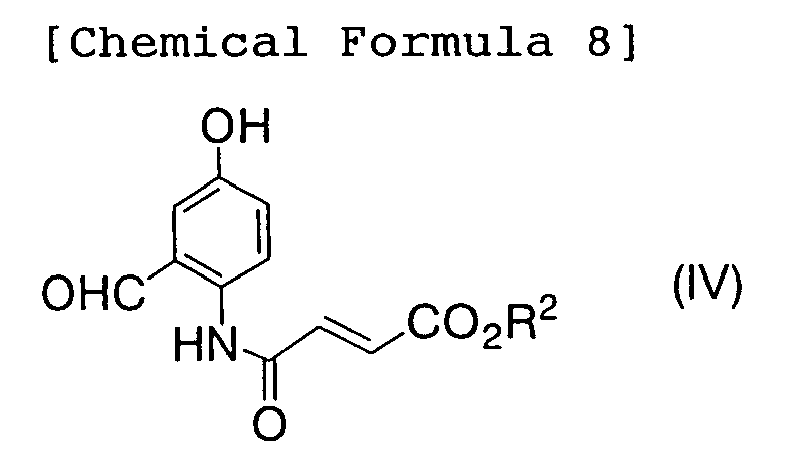
- (7) use of the crystals as described in the above (1) for producing a therapeutic and/or prophylactic pharmaceutical preparation for acute cerebrovascular disease.
- The form II crystals of Compound (I) of the present invention are superior to other form of crystals in storage stability, thereby suppressing a reduction in the amount of Compound (I) contained in a drug substance during storage. This makes it possible to maintain the quality of the drug substance.
- A method for producing the above-mentioned form II crystals is not particularly limited, but such form II crystals are preferably produced in accordance with the following method.
(Step I: Method A)
The above-mentioned Compound (II) disclosed in, for example, Non-patent Literature 1 is dissolved or suspended in an appropriate organic solvent, and is then treated with an acid to obtain Compound (I).
Examples of the organic solvent include, but are not limited to, N,N-dimethylformamide, diethyl ether, tetrahydrofuran, N,N-dimethylacetamide, and ethylene glycol dimethyl ether.
The acid is not particularly limited as long as it can deprotect an ethylenedioxy moiety of Compound (II). Examples of such an acid include hydrochloric acid, hydrobromic acid, sulfuric acid, nitric acid, phosphoric acid, p-toluenesulfonic acid, methanesulfonic acid, formic acid, trifluoroacetic acid, maleic acid, and oxalic acid. Hydrochloric acid is preferably used. The amount of the acid to be used is in the range of about 0.1 to 15.0 mole equivalents, preferably in the range of about 1.0 to 3.0 mole equivalents, per mole equivalent of Compound (II).
The temperature for acid treatment is usually in the range of about 0 to 80°C, preferably in the range of about 40 to 50°C.
The time for acid treatment is usually in the range of 0.1 to 20 hours, preferably in the range of about 30 minutes to 2 hours.
It is not necessary to isolate the thus obtained Compound (I), and the solution containing Compound (I) can be used as it is in Step 2. - Alternatively, Compound (I) may be produced by reacting Compound (III) with Compound (IV). Specifically, Compound (I) is produced in accordance with a method disclosed in Patent Literature 4.

Compound (III) is reacted with Compound (IV) in the presence of a base, an organic solvent, and water to obtain a solution containing Compound (II). It is not necessary to isolate Compound (II) from the solution, and an acid is added to the solution containing Compound (II) to produce Compound (I).
Examples of the base include lithium hydroxide, sodium hydroxide, potassium hydroxide, and the like. Lithium hydroxide is preferably used. The amount of the base to be used is in the range of about 3.0 to 10.0 mole equivalents, preferably in the range of about 2.0 to 5.0 mole equivalents, relative to Compound (I).
Examples of the organic solvent include N,N-dimethylformamide, diethyl ether, tetrahydrofuran, N,N-dimethylacetamide, ethylene glycol dimethyl ether, and the like. N,N-dimethylformamide is preferably used.
The amount of water to be added is not particularly limited. For example, the base may be used as a 0.1 %(w/w) to 30 % (w/w), preferably 1 %(w/w) to 10 %(w/w) aqueous solution of the base for the reaction.
The reaction temperature is usually in the range of about -40 to 60°C, preferably in the range of about -10 to 0°C. The reaction time is usually in the range of about 15 minutes to 10 hours, preferably in the range of about 30 minutes to 4 hours.
Examples of the acid to be added, the amount of the acid to be added, the temperature, and the time are the same as those described with reference to the step 1 by Method A.
It is not necessary to isolate Compound (I) from the solution, and the solution containing Compound (I) can be used as it is in the next step 2. - Examples of lower alkyl represented by R1 or R2 include straight or branched alkyls having 1 to 8 carbon atoms, such as methyl, ethyl, n-propyl, isopropyl, n-butyl, isobutyl, sec-butyl, tert-butyl, n-pentyl, isopentyl, neopentyl, hexyl, isohexyl, n-heptyl, isoheptyl, n-octyl, and isooctyl. R1 is preferably methyl or ethyl, particularly preferably ethyl, and R2 is preferably methyl.
The phrase "a solution containing a compound of the formula (I)" in the step 1 in the above (4) includes a reaction mixture obtained in the step 1 by Method A or in the step 1 by Method B, and more specifically refers to a "solution of N,N-dimethylformamide, diethyl ether, tetrahydrofuran, N,N-dimethylacetamide, or ethylene glycol dimethyl ether containing a compound of the formula (I)", preferably a "solution of N,N-dimethylformamide containing a compound of the formula (I)". - The solution containing Compound (I) is cooled to about room temperature, and then an appropriate amount of ethyl acetate is added to the solution. If necessary, an appropriate amount of water is also added to the solution. At this time, the pH of the solution may be adjusted to about 5 to 6 with a base.
The amount of ethyl acetate and the amount of water are not particularly limited, but is each preferably 5 to 20 mL per gram of Compound (I).
The base to be used is not particularly limited as long as it is generally used. Examples of such a base include sodium hydroxide, potassium hydroxide, and lithium hydroxide.
Then, moisture is removed from an organic layer by, for example, vacuum concentration, and crystallization is carried out at about 40 to 80°C, preferably about 65 to 75°C.
If necessary, acetonitrile may be further added thereto. In this case, the resultant mixture is cooled to about -10 to 0°C, and is then stirred for about 30 minutes to 2 hours to precipitate crystals. By doing so, it is possible to obtain crystals that can be easily treated in the next step.
If the crystals obtained in this step are sufficiently dried, thus obtained dry crystals are the same as pale yellow needle crystals defined as Compound 7 in Non-patent Literature 1 (form I dry crystals). Such dry crystals may be used in the next step, but the crystals containing the solvent (form I wet crystals) may be used as they are in the next step. Here, the phrase "the crystals containing the solvent" includes both crystals of solvate and crystals to which the solvent is adhered. - The form I crystals obtained in the step 2 are suspended or dissolved in an appropriate amount of acetonitrile, and are then treated at room temperature to about 80°C, preferably about 40 to 50°C for about 15 minutes to 10 hours, preferably about 30 minutes to 2 hours to change their crystal form.
The amount of acetonitrile to be used is not particularly limited, but is preferably in the range of 10 to 50 mole equivalents per mole equivalent of the form I dry crystals or the form I wet crystals.
Then, the suspension or solution is cooled to about -10°C to close to room temperature, and is stirred for about 15 minutes to 5 hours, preferably about 15 minutes to 1 hour to obtain crystals. It is possible to improve the purity of the crystals by washing the obtained crystals with an appropriate amount of acetonitrile. The thus obtained crystals are sufficiently dried to remove the solvent. In this way, form II crystals are obtained.
According to the method of the present invention, crystallization is carried out to obtain form I crystals of Compound (I), and crystallization is further carried out to obtain form II crystals of Compound (I). Therefore, the thus obtained crystals are highly-purified crystals. - When the form II crystals are analyzed by powder X-ray diffraction, the diffraction pattern thereof has main peaks at diffraction angles (2θ) of 6.0, 6.5, 12.6, 13.6, and 15.4 (degree).
These powder X-ray diffraction values indicate representative peaks selected from the X-ray diffraction peaks of the crystals, and therefore the structure of the crystals is not necessarily limited only by these values. That is, the powder X-ray diffraction pattern of the crystals of the present invention may have other peaks in addition to these peaks. In general, when crystals are analyzed by X-ray diffraction, measurement errors may occur in peaks to some extent depending on a measuring instrument, measuring conditions, or the presence or absence of a solvent adhered to the crystals. Therefore, any crystals characterized by having X-ray diffraction patterns substantially similar to the above described X-ray diffraction pattern are all included in the present invention.
As is clear from the experimental results described later, the form II crystals are superior in storage stability to the form I crystals, and are therefore prevented from being deteriorated in quality during storage. The form I crystals needed to be kept cold when stored for a long period of time, whereas the form II crystals of the present invention do not need to be kept cold when stored for a long period of time, which is advantageous in facilitating storage and transport. - In addition, the form II crystals have an improved stability against light. For example, in the case that the form I crystals are stored under light, the total amount of related substances of Compound (I) is increased, whereas in the case of the form II crystals, the total amount of related substances of Compound (I) is hardly changed.
- The present invention also provides a pharmaceutical preparation produced using the form II crystals and use of the form II crystals for producing a pharmaceutical preparation. Here, the pharmaceutical preparation may be one containing Compound (I) as an active ingredient, and is preferably one containing Compound A, i.e. , a sodium salt of Compound (I), as a pharmaceutically active ingredient.
Examples of a dosage form of a pharmaceutical preparation include tablets, granules, capsules, and injections. Injections are preferably used.
An injectable pharmaceutical preparation containing Compound A, i.e., a sodium salt of Compound (I), as an active ingredient, can be produced by a method disclosed in Patent Literature 3. In this case, conversion of Compound (I) into its sodium salt and production of a pharmaceutical preparation are carried out at the same time using the form II crystals of the present invention.
Specifically, a solvent and sodium hydroxide are mixed with the form II crystals of the present invention. Then sodium hydroxide is further added to adjust the pH of the mixture to 8.5 or higher, preferably about 9.5 to prepare a solution. The amount of sodium hydroxide to be added is in the range of 5 to 20 mg, preferably in the range of 10 to 20 mg, more preferably in the range of 12 to 18 mg, per 100 mg of the form II crystals.
Examples of the solvent include water, infusions, buffers, injection solvents, and the like. Injection solvents or infusions are preferably used.
The solution may further contain sugar (e.g., glucose, maltose, lactose, sucrose, fructose mannitol, preferably mannitol) or an amino acid (preferably a neutral amino acid, more preferably glycine or alanine, and most preferably alanine). The amount of sugar or an amino acid to be added is preferably in the range of 25 %(w/w) or higher, more preferably in the range of 40 to 60 %(w/w), and most preferably 50 %(w/w) of Compound A.
If necessary, the solvent is further added to the solution to adjust the concentration of the solution to an appropriate value. Then, the solution is sterilized by, for example, aseptic filtration to obtain a sterile solution. The thus obtained sterile solution is dried by freeze-drying, spray-drying, or vacuum drying to obtain Compound A-containing preparation to be dissolved for use as an injection before use. - In a case where the sterile solution is spray-dried, a sterilized drying device (e.g., a spray drier, a fluidized-bed granulator) is used and thus obtained dry powder is packed in sterilized vials. The dry powder is dissolved for use as an injection before use.
When the sterile solution is spray-dried, there is a case where a resultant dry powder is electrically charged, and is therefore adhered to devices and containers, thereby significantly impairing operability. In order to suppress electrification of the dry powder to improve operability, polyethylene glycol may be added to the solution in advance.
Examples of such polyethylene glycol include polyethylene glycol 400, polyethylene glycol 600, polyethylene glycol 4000, and the mixture of two or more selected from them. PEG 4000 is preferably used. The lower limit of the amount of polyethylene glycol to be added is 0.01 mg, preferably 0.03 mg, per milligram of the form II crystals, and the upper limit of the amount of polyethylene glycol to be added is 0.5 mg, preferably 0.4 mg, more preferably 0.2 mg, per milligram of the form II crystals. - Hereinbelow, Example and Experimental Examples will be described, and they are not intended to be limiting the invention .
The conditions for X-ray diffraction analysis are as follows: - CuKα ray: λ= 1.54 Å
- Tube voltage: 40 kV
- Tube current: 40 mA
- Scanning speed: 2.000°/min
- Sampling width: 0.020°
-

Compound (III-1) (9.3 g) and Compound (IV-1) (4.0 g) were suspended in N,N-dimethylformamide (65 mL), and the resultant suspension was cooled to -5°C or less. Into the suspension, a 5.6 % aqueous solution of lithium hydroxide (28.8 g) was dropped, and the resultant mixture was reacted for 3.5 hours to obtain a solution containing Compound (II) in N,N-dimethylformamide. Then, the solution was heated to 5°C, 35 % hydrochloric acid (9.1 g) was added thereto, and the resultant mixture was stirred at 45°C for 1.5. hours. After the completion of the reaction, the reaction mixture was cooled to room temperature, and then ethyl acetate (105 mL) and water (93 g) were added to the reaction mixture. The pH of the reaction mixture was adjusted to about 5.5 with a 10 % aqueous solution of sodium hydroxide, and an organic layer was separated. An aqueous layer was subjected to extraction with ethyl acetate, and then all of the organic layers were combined after washed with water. The combined solution was concentrated under a reduced pressure to remove moisture, and crystallization was carried out at 70°C. After acetonitrile (51 mL) was added thereto, the resultant mixture was gradually cooled to room temperature, further cooled to 0°C, and stirred for 1 hour. A precipitated yellow solid was collected by filtration, and was then washed with acetonitrile to obtain 15.8 g of form I crystals (wet crystals) of Compound (I). Then, 15.5 g of the thus obtained form I crystals (wet crystals) was used for the next step of changing crystal form. It is possible to obtain form I dry crystals by sufficiently drying thus obtained wet crystals.
The form I crystals (wet crystals) (7.8 g) were suspended in 216 mL of acetonitrile, and the resultant suspension was heated to 45°C. The suspension changed to a white slurry from a yellow slurry in about 1 hour. The white slurry was further stirred for 30 minutes, and then the crude product (I) (7.7 g) was added thereto. After the completion of the step of changing crystal form, the suspension was cooled to room temperature, and was then stirred at -5°C for 30 minutes. A white solid was collected by filtration, and was then washed with acetonitrile to obtain 6.9 g of form II crystals of Compound (I) (yield: 73 %).
The results of powder X-ray diffraction are shown below.
Form I crystal (dry crystal) : diffraction angle (2θ) = 4.7, 8.0, 12.0, 12.7, and 15.9 (degree)
Form I crystal (wet crystal) : diffraction angle (2θ) = 4.6, 7.7, 12.7, 16.7, 19.1, and 21.1 (degree)
Form II crystal: diffraction angle(2θ)= 6.0, 6.5, 12.6, 13.6, and 15.4 (degree) - The form I dry crystals and the form II crystals of Compound (I) were used as samples. About 3 g of each of the samples was placed in a double polyethylene bag, and the bag containing the sample was stored in an aluminum can at 40°C and 75 %RH. After storage for 6 months, the amount of Compound (I) and the total amount of related substances of Compound (I) were measured by HPLC. As shown in Table 1, the total amount of related substances of Compound (I) was increased in the case of the form I dry crystals. On the other hand, the total amount of related substances of Compound (I) was hardly changed in the case of the form II crystals and the form II crystals are stable. Particularly, in the case of the form I crystals, the amount of an analogue B of the formula was significantly increased.

[Table 1] Crystal Form Amount of Compound (I) (%) Amount of analogue B Total amount of related substances( %) Form I dry crystal Initial value 99.8% <0.05% 0.16% 6 months 97.8% 0.21% 0.43% Form II crystal Initial value 98.9% <0.05% 0.21% 6 months 98.6% <0.05% 0.17%
Stability against light
The form I dry crystals and the form II crystals of Compound (I) were used as samples. About 3 g of each of the samples was placed in each petri dish, and was then stored at an average temperature of 30 ± 2°C under light of 1,200,000 Lux·hr or 3,600,000 Lux·hr. After storage, the amount of Compound (I) and the total amount of related substances of Compound (I) were measured by HPLC. As shown in Table 2, the total amount of related substances of Compound (I) was increased in the case of the form I dry crystals. On the other hand, the total amount of related substances of Compound (I) was hardly changed in the case of the form II crystals and the form II crystals are stable against light.[Table 2] Crystal Form Amount of Compound (I)(%) Total amount of related substances(%) Form I dry crystal Initial value 99.8% 0.16% 1,200,000 Lux·hr 99.2% 0.27% Form II crystal Initial value 100.3% 0.15% 1,200,000 Lux·hr 99.4% 0.17% 3,600,000 Lux·hr 99.3% 0.18% -

Elementary analysis (%): for C11H9NO5 · 4H2O
Theoretical value: C 54.51; H 4.08; N 5.77
Analytical value: C 54.31; H 3.94; N 5.79
Moisture content (KF) (%): for C11H9NO5 · 4H2O
Theoretical value: H2O 2.97
Analytical value: H2O 3.15
NMR (d6-DMSO) δ: 6.66 (d, 1H, J= 15.3 Hz), 7.07 (dd, 1H, J= 3.0 Hz, 9.0 Hz), 7.13 (d, 1H, J= 15.3 Hz), 7.19 (d, 1H, J= 3.0 Hz), 7.61 (d, 1H, J= 9.0 Hz)
IR (cm-1): 3420(br), 1713, 1678, 1666, 1621, 1541, 1541, 1302, 1160 - To 3.81 g of the form II crystals of Compound (I), 2.00 g of d-mannitol and 64 g of a 0.16 mol/L aqueous solution of sodium hydroxide are added to prepare a solution. To the solution, a 1 mol/L aqueous solution in sodium hydroxide is added to adjust the pH of the solution to 9.5 (the amount of the aqueous solution of sodium hydroxide is 4.79 g). An injection solvent is added to the solution so that the total amount is 80.0 g to adjust the concentration of the solution to 50.0 mg/g. The thus prepared solution is subjected to aseptic filtration, separated into fractions of 2.00 g, and freeze-dried. The thus obtained freeze-dried preparation contains 100 mg of Compound A (calculated as a 2 Na salt).
INDUSTRIAL APPLICABILITY
The form II crystals of Compound (I) of the present invention are highly stable, which makes it possible to provide high-quality pharmaceutical preparations.
Claims (3)
- A crystal of a compound of the formula (I):

- A method for producing the crystals as claimed in claim 1 comprising suspending or dissolving crystals of a compound of the formula (I):

- A method for producing a pharmaceutical preparation comprising mixing the crystals as claimed in claim 1, a solvent, and sodium hydroxide, and drying the mixture.
Applications Claiming Priority (2)
| Application Number | Priority Date | Filing Date | Title |
|---|---|---|---|
| JP2004085884 | 2004-03-24 | ||
| PCT/JP2005/005317 WO2005090285A1 (en) | 2004-03-24 | 2005-03-24 | Novel crystal of triterpene derivative |
Publications (2)
| Publication Number | Publication Date |
|---|---|
| EP1731502A1 true EP1731502A1 (en) | 2006-12-13 |
| EP1731502A4 EP1731502A4 (en) | 2008-03-26 |
Family
ID=34993613
Family Applications (1)
| Application Number | Title | Priority Date | Filing Date |
|---|---|---|---|
| EP05727181A Withdrawn EP1731502A4 (en) | 2004-03-24 | 2005-03-24 | Novel crystal of triterpene derivative |
Country Status (8)
| Country | Link |
|---|---|
| US (1) | US7612225B2 (en) |
| EP (1) | EP1731502A4 (en) |
| JP (1) | JP4707115B2 (en) |
| KR (1) | KR101089076B1 (en) |
| CN (1) | CN100509758C (en) |
| CA (1) | CA2560767A1 (en) |
| TW (1) | TWI335335B (en) |
| WO (1) | WO2005090285A1 (en) |
Cited By (1)
| Publication number | Priority date | Publication date | Assignee | Title |
|---|---|---|---|---|
| EP1964556A4 (en) * | 2005-12-21 | 2010-03-24 | Shionogi & Co | Therapeutic agent or therapeutic method for ischemic stroke |
Family Cites Families (6)
| Publication number | Priority date | Publication date | Assignee | Title |
|---|---|---|---|---|
| ES2116663T3 (en) * | 1993-06-11 | 1998-07-16 | Shionogi & Co | INTERMEDIARY COMPOUNDS FOR THE PREPARATION OF ANTAGONIST TRITERPEN DERIVATIVES OF THE ENDOTHELIN RECEPTOR. |
| JP3453188B2 (en) | 1994-05-23 | 2003-10-06 | 塩野義製薬株式会社 | Method for producing oleanolic acid derivative |
| WO1997027314A1 (en) * | 1996-01-23 | 1997-07-31 | Shionogi & Co., Ltd. | Process for producing oleanolic acid analogs by culturing hairy root |
| WO1998018497A2 (en) | 1996-10-28 | 1998-05-07 | Nycomed Imaging As | Contrast agents |
| TWI232102B (en) | 2001-07-17 | 2005-05-11 | Shionogi & Co | A pharmaceutical formulation for injection |
| CA2480096A1 (en) | 2002-03-22 | 2003-10-02 | Shionogi & Co., Ltd. | Process for producing triterpene derivatives |
-
2005
- 2005-03-22 TW TW094108711A patent/TWI335335B/en not_active IP Right Cessation
- 2005-03-24 EP EP05727181A patent/EP1731502A4/en not_active Withdrawn
- 2005-03-24 KR KR1020067018411A patent/KR101089076B1/en not_active Expired - Fee Related
- 2005-03-24 WO PCT/JP2005/005317 patent/WO2005090285A1/en not_active Ceased
- 2005-03-24 US US10/592,540 patent/US7612225B2/en not_active Expired - Fee Related
- 2005-03-24 JP JP2006511314A patent/JP4707115B2/en not_active Expired - Fee Related
- 2005-03-24 CN CNB2005800092341A patent/CN100509758C/en not_active Expired - Fee Related
- 2005-03-24 CA CA002560767A patent/CA2560767A1/en not_active Abandoned
Non-Patent Citations (2)
| Title |
|---|
| No further relevant documents disclosed * |
| See also references of WO2005090285A1 * |
Cited By (1)
| Publication number | Priority date | Publication date | Assignee | Title |
|---|---|---|---|---|
| EP1964556A4 (en) * | 2005-12-21 | 2010-03-24 | Shionogi & Co | Therapeutic agent or therapeutic method for ischemic stroke |
Also Published As
| Publication number | Publication date |
|---|---|
| TWI335335B (en) | 2011-01-01 |
| US20070282126A1 (en) | 2007-12-06 |
| KR20070022660A (en) | 2007-02-27 |
| KR101089076B1 (en) | 2011-12-05 |
| WO2005090285A1 (en) | 2005-09-29 |
| CA2560767A1 (en) | 2005-09-29 |
| TW200533678A (en) | 2005-10-16 |
| EP1731502A4 (en) | 2008-03-26 |
| CN1934073A (en) | 2007-03-21 |
| JP4707115B2 (en) | 2011-06-22 |
| US7612225B2 (en) | 2009-11-03 |
| CN100509758C (en) | 2009-07-08 |
| JPWO2005090285A1 (en) | 2008-01-31 |
Similar Documents
| Publication | Publication Date | Title |
|---|---|---|
| TWI472515B (en) | Novel solid forms of bendamustine hydrochloride | |
| US20030017992A1 (en) | Crystalline forms | |
| TWI822666B (en) | Crystalline forms of a janus kinase inhibitor | |
| US20230167156A1 (en) | Solid state forms of voclosporin | |
| KR100679904B1 (en) | Determination of Pyrimidine Nucleoside Derivatives | |
| RU2476440C2 (en) | Crystalline forms of monosodium salt of d-isoglutamyl-d-tryptophan | |
| JP5878864B2 (en) | {[(2S, 5R, 8S, 11S) -5-Benzyl-11- (3-guanidino-propyl) -8-isopropyl-7-methyl-3,6,9,12,15-pentaoxo-1,4, Novel solid material of 7,10,13-pentaaza-cyclopentadec-2-yl] -acetic acid} and method for obtaining them | |
| US7612225B2 (en) | Crystal of triterpene derivative | |
| KR20160118358A (en) | Solid forms of an ion channel modulator | |
| US11066401B2 (en) | Pyrimidine compound, chloride salt thereof, and manufacturing and application of same | |
| WO2017215521A1 (en) | Plx3397 hydrochloride crystal form, preparation method therefor and use thereof | |
| US20250059202A1 (en) | Crystal form of fused ring derivative, and preparation method therefor and use thereof | |
| US20250066319A1 (en) | NOVEL ACID ADDITION SALT AND CRYSTALLINE FORM OF (2R, 3S)-2-(3-(4,5-DICHLORO-1H-BENZO[d]IMIDAZOL-1-YL)PROPYL)PIPERIDIN-3-OL | |
| HK40112039A (en) | Crystal form of fused ring derivative, and preparation method therefor and use thereof | |
| WO2023222103A1 (en) | Crystal forms of triazine dione derivative and preparation method therefor | |
| BR122024025362A2 (en) | CRYSTALLINE FORMS OF A JANUS KINASE INHIBITOR, PHARMACEUTICAL COMPOSITION COMPRISING SAID CRYSTALLINE FORMS, THEIR USE AND MEASUREMENT METHODS |
Legal Events
| Date | Code | Title | Description |
|---|---|---|---|
| PUAI | Public reference made under article 153(3) epc to a published international application that has entered the european phase |
Free format text: ORIGINAL CODE: 0009012 |
|
| 17P | Request for examination filed |
Effective date: 20060925 |
|
| AK | Designated contracting states |
Kind code of ref document: A1 Designated state(s): AT BE BG CH CY CZ DE DK EE ES FI FR GB GR HU IE IS IT LI LT LU MC NL PL PT RO SE SI SK TR |
|
| DAX | Request for extension of the european patent (deleted) | ||
| A4 | Supplementary search report drawn up and despatched |
Effective date: 20080225 |
|
| GRAP | Despatch of communication of intention to grant a patent |
Free format text: ORIGINAL CODE: EPIDOSNIGR1 |
|
| STAA | Information on the status of an ep patent application or granted ep patent |
Free format text: STATUS: THE APPLICATION IS DEEMED TO BE WITHDRAWN |
|
| 18D | Application deemed to be withdrawn |
Effective date: 20121201 |