EP1730179B1 - Novel mannose-specific adhesins and their use - Google Patents
Novel mannose-specific adhesins and their use Download PDFInfo
- Publication number
- EP1730179B1 EP1730179B1 EP05722070A EP05722070A EP1730179B1 EP 1730179 B1 EP1730179 B1 EP 1730179B1 EP 05722070 A EP05722070 A EP 05722070A EP 05722070 A EP05722070 A EP 05722070A EP 1730179 B1 EP1730179 B1 EP 1730179B1
- Authority
- EP
- European Patent Office
- Prior art keywords
- sequence
- mannose
- nucleic acid
- nucleotide
- amino acid
- Prior art date
- Legal status (The legal status is an assumption and is not a legal conclusion. Google has not performed a legal analysis and makes no representation as to the accuracy of the status listed.)
- Expired - Lifetime
Links
- WQZGKKKJIJFFOK-QTVWNMPRSA-N D-mannopyranose Chemical compound OC[C@H]1OC(O)[C@@H](O)[C@@H](O)[C@@H]1O WQZGKKKJIJFFOK-QTVWNMPRSA-N 0.000 title claims abstract description 209
- 150000007523 nucleic acids Chemical group 0.000 claims abstract description 97
- 102000039446 nucleic acids Human genes 0.000 claims abstract description 61
- 108020004707 nucleic acids Proteins 0.000 claims abstract description 61
- 241000894006 Bacteria Species 0.000 claims abstract description 53
- 239000000203 mixture Substances 0.000 claims abstract description 47
- 238000000034 method Methods 0.000 claims abstract description 46
- 208000035143 Bacterial infection Diseases 0.000 claims abstract description 6
- 208000022362 bacterial infectious disease Diseases 0.000 claims abstract description 6
- 108090000623 proteins and genes Proteins 0.000 claims description 151
- 108010037896 heparin-binding hemagglutinin Proteins 0.000 claims description 69
- 108091028043 Nucleic acid sequence Proteins 0.000 claims description 55
- 239000002773 nucleotide Substances 0.000 claims description 47
- 125000003729 nucleotide group Chemical group 0.000 claims description 47
- 239000013598 vector Substances 0.000 claims description 41
- 108090000765 processed proteins & peptides Proteins 0.000 claims description 35
- 125000003275 alpha amino acid group Chemical group 0.000 claims description 31
- 102000004196 processed proteins & peptides Human genes 0.000 claims description 31
- 230000027455 binding Effects 0.000 claims description 30
- 229920001184 polypeptide Polymers 0.000 claims description 29
- 235000013305 food Nutrition 0.000 claims description 28
- 239000012634 fragment Substances 0.000 claims description 22
- 238000009396 hybridization Methods 0.000 claims description 20
- 210000001035 gastrointestinal tract Anatomy 0.000 claims description 17
- 230000002068 genetic effect Effects 0.000 claims description 12
- 230000000295 complement effect Effects 0.000 claims description 11
- 239000003814 drug Substances 0.000 claims description 9
- 238000002360 preparation method Methods 0.000 claims description 7
- 210000001215 vagina Anatomy 0.000 claims description 7
- 210000001635 urinary tract Anatomy 0.000 claims description 6
- 239000002417 nutraceutical Substances 0.000 abstract description 12
- 235000021436 nutraceutical agent Nutrition 0.000 abstract description 12
- 230000000529 probiotic effect Effects 0.000 abstract description 11
- 238000012216 screening Methods 0.000 abstract description 7
- 210000004027 cell Anatomy 0.000 description 221
- 102000004169 proteins and genes Human genes 0.000 description 76
- 240000006024 Lactobacillus plantarum Species 0.000 description 52
- 230000004520 agglutination Effects 0.000 description 47
- 238000012360 testing method Methods 0.000 description 44
- JVTAAEKCZFNVCJ-UHFFFAOYSA-N lactic acid Chemical compound CC(O)C(O)=O JVTAAEKCZFNVCJ-UHFFFAOYSA-N 0.000 description 36
- 244000185256 Lactobacillus plantarum WCFS1 Species 0.000 description 33
- 235000014680 Saccharomyces cerevisiae Nutrition 0.000 description 32
- 108020004414 DNA Proteins 0.000 description 31
- 240000004808 Saccharomyces cerevisiae Species 0.000 description 30
- 230000001580 bacterial effect Effects 0.000 description 29
- 230000001105 regulatory effect Effects 0.000 description 25
- 238000013518 transcription Methods 0.000 description 25
- 230000035897 transcription Effects 0.000 description 25
- 244000005700 microbiome Species 0.000 description 22
- 230000014509 gene expression Effects 0.000 description 20
- 235000014655 lactic acid Nutrition 0.000 description 18
- 239000004310 lactic acid Substances 0.000 description 18
- 230000001717 pathogenic effect Effects 0.000 description 18
- FWMNVWWHGCHHJJ-SKKKGAJSSA-N 4-amino-1-[(2r)-6-amino-2-[[(2r)-2-[[(2r)-2-[[(2r)-2-amino-3-phenylpropanoyl]amino]-3-phenylpropanoyl]amino]-4-methylpentanoyl]amino]hexanoyl]piperidine-4-carboxylic acid Chemical compound C([C@H](C(=O)N[C@H](CC(C)C)C(=O)N[C@H](CCCCN)C(=O)N1CCC(N)(CC1)C(O)=O)NC(=O)[C@H](N)CC=1C=CC=CC=1)C1=CC=CC=C1 FWMNVWWHGCHHJJ-SKKKGAJSSA-N 0.000 description 17
- 244000052769 pathogen Species 0.000 description 17
- 241000894007 species Species 0.000 description 17
- 208000015181 infectious disease Diseases 0.000 description 14
- 239000013612 plasmid Substances 0.000 description 14
- 241000186604 Lactobacillus reuteri Species 0.000 description 13
- 150000001413 amino acids Chemical class 0.000 description 13
- 108091026890 Coding region Proteins 0.000 description 12
- 108010076504 Protein Sorting Signals Proteins 0.000 description 12
- 230000002018 overexpression Effects 0.000 description 12
- 230000006870 function Effects 0.000 description 11
- 229940001882 lactobacillus reuteri Drugs 0.000 description 11
- 102000004190 Enzymes Human genes 0.000 description 10
- 108090000790 Enzymes Proteins 0.000 description 10
- ULGZDMOVFRHVEP-RWJQBGPGSA-N Erythromycin Chemical compound O([C@@H]1[C@@H](C)C(=O)O[C@@H]([C@@]([C@H](O)[C@@H](C)C(=O)[C@H](C)C[C@@](C)(O)[C@H](O[C@H]2[C@@H]([C@H](C[C@@H](C)O2)N(C)C)O)[C@H]1C)(C)O)CC)[C@H]1C[C@@](C)(OC)[C@@H](O)[C@H](C)O1 ULGZDMOVFRHVEP-RWJQBGPGSA-N 0.000 description 10
- 241000186660 Lactobacillus Species 0.000 description 10
- 108010052285 Membrane Proteins Proteins 0.000 description 10
- 102000018697 Membrane Proteins Human genes 0.000 description 10
- 241000588724 Escherichia coli Species 0.000 description 9
- 210000002421 cell wall Anatomy 0.000 description 9
- HOVAGTYPODGVJG-VEIUFWFVSA-N methyl alpha-D-mannoside Chemical compound CO[C@H]1O[C@H](CO)[C@@H](O)[C@H](O)[C@@H]1O HOVAGTYPODGVJG-VEIUFWFVSA-N 0.000 description 9
- 210000003097 mucus Anatomy 0.000 description 9
- 239000006041 probiotic Substances 0.000 description 9
- 235000018291 probiotics Nutrition 0.000 description 9
- 241001465754 Metazoa Species 0.000 description 8
- 230000009286 beneficial effect Effects 0.000 description 8
- 238000010790 dilution Methods 0.000 description 8
- 239000012895 dilution Substances 0.000 description 8
- 238000004519 manufacturing process Methods 0.000 description 8
- 230000001737 promoting effect Effects 0.000 description 8
- 239000000523 sample Substances 0.000 description 8
- 238000012546 transfer Methods 0.000 description 8
- 210000005253 yeast cell Anatomy 0.000 description 8
- 108091032973 (ribonucleotides)n+m Proteins 0.000 description 7
- 244000052616 bacterial pathogen Species 0.000 description 7
- 239000011324 bead Substances 0.000 description 7
- 238000010276 construction Methods 0.000 description 7
- 210000002919 epithelial cell Anatomy 0.000 description 7
- 210000003743 erythrocyte Anatomy 0.000 description 7
- 210000003527 eukaryotic cell Anatomy 0.000 description 7
- 230000012010 growth Effects 0.000 description 7
- 229940039696 lactobacillus Drugs 0.000 description 7
- 230000001404 mediated effect Effects 0.000 description 7
- 239000000725 suspension Substances 0.000 description 7
- 230000009466 transformation Effects 0.000 description 7
- 238000013519 translation Methods 0.000 description 7
- 241000192125 Firmicutes Species 0.000 description 6
- 235000013965 Lactobacillus plantarum Nutrition 0.000 description 6
- 238000003556 assay Methods 0.000 description 6
- 238000010367 cloning Methods 0.000 description 6
- 239000013604 expression vector Substances 0.000 description 6
- 210000005260 human cell Anatomy 0.000 description 6
- 229940072205 lactobacillus plantarum Drugs 0.000 description 6
- 239000003550 marker Substances 0.000 description 6
- 101150087718 srtA gene Proteins 0.000 description 6
- 238000011282 treatment Methods 0.000 description 6
- 241000186606 Lactobacillus gasseri Species 0.000 description 5
- 241000192132 Leuconostoc Species 0.000 description 5
- 241000194017 Streptococcus Species 0.000 description 5
- 244000057717 Streptococcus lactis Species 0.000 description 5
- 238000007818 agglutination assay Methods 0.000 description 5
- 238000004873 anchoring Methods 0.000 description 5
- 102000023732 binding proteins Human genes 0.000 description 5
- 108091008324 binding proteins Proteins 0.000 description 5
- 239000000969 carrier Substances 0.000 description 5
- 229960005091 chloramphenicol Drugs 0.000 description 5
- WIIZWVCIJKGZOK-RKDXNWHRSA-N chloramphenicol Chemical compound ClC(Cl)C(=O)N[C@H](CO)[C@H](O)C1=CC=C([N+]([O-])=O)C=C1 WIIZWVCIJKGZOK-RKDXNWHRSA-N 0.000 description 5
- 230000021615 conjugation Effects 0.000 description 5
- 229960003276 erythromycin Drugs 0.000 description 5
- 108091008053 gene clusters Proteins 0.000 description 5
- 230000001976 improved effect Effects 0.000 description 5
- 150000008146 mannosides Chemical class 0.000 description 5
- 238000000386 microscopy Methods 0.000 description 5
- 238000002156 mixing Methods 0.000 description 5
- 210000001236 prokaryotic cell Anatomy 0.000 description 5
- 230000028327 secretion Effects 0.000 description 5
- 239000007787 solid Substances 0.000 description 5
- 238000011144 upstream manufacturing Methods 0.000 description 5
- 241000186000 Bifidobacterium Species 0.000 description 4
- 241000194036 Lactococcus Species 0.000 description 4
- 230000002776 aggregation Effects 0.000 description 4
- 238000004220 aggregation Methods 0.000 description 4
- 210000004899 c-terminal region Anatomy 0.000 description 4
- 230000000694 effects Effects 0.000 description 4
- 238000004520 electroporation Methods 0.000 description 4
- 238000001727 in vivo Methods 0.000 description 4
- 230000001965 increasing effect Effects 0.000 description 4
- 230000000670 limiting effect Effects 0.000 description 4
- 230000007246 mechanism Effects 0.000 description 4
- 108020004999 messenger RNA Proteins 0.000 description 4
- 238000010369 molecular cloning Methods 0.000 description 4
- 239000002243 precursor Substances 0.000 description 4
- 230000008569 process Effects 0.000 description 4
- 239000000047 product Substances 0.000 description 4
- 230000002829 reductive effect Effects 0.000 description 4
- 239000004460 silage Substances 0.000 description 4
- 239000000126 substance Substances 0.000 description 4
- 235000000346 sugar Nutrition 0.000 description 4
- 210000002925 A-like Anatomy 0.000 description 3
- 229920001817 Agar Polymers 0.000 description 3
- 229920000936 Agarose Polymers 0.000 description 3
- 241000193830 Bacillus <bacterium> Species 0.000 description 3
- 101100478373 Bacillus subtilis (strain 168) srtD gene Proteins 0.000 description 3
- 241000206594 Carnobacterium Species 0.000 description 3
- 101100437498 Escherichia coli (strain K12) uidA gene Proteins 0.000 description 3
- 108091029865 Exogenous DNA Proteins 0.000 description 3
- 241000282326 Felis catus Species 0.000 description 3
- 241000233866 Fungi Species 0.000 description 3
- 108010053775 Nisin Proteins 0.000 description 3
- NVNLLIYOARQCIX-MSHCCFNRSA-N Nisin Chemical compound N1C(=O)[C@@H](CC(C)C)NC(=O)C(=C)NC(=O)[C@@H]([C@H](C)CC)NC(=O)[C@@H](NC(=O)C(=C/C)/NC(=O)[C@H](N)[C@H](C)CC)CSC[C@@H]1C(=O)N[C@@H]1C(=O)N2CCC[C@@H]2C(=O)NCC(=O)N[C@@H](C(=O)N[C@H](CCCCN)C(=O)N[C@@H]2C(NCC(=O)N[C@H](C)C(=O)N[C@H](CC(C)C)C(=O)N[C@H](CCSC)C(=O)NCC(=O)N[C@H](CS[C@@H]2C)C(=O)N[C@H](CC(N)=O)C(=O)N[C@H](CCSC)C(=O)N[C@H](CCCCN)C(=O)N[C@@H]2C(N[C@H](C)C(=O)N[C@@H]3C(=O)N[C@@H](C(N[C@H](CC=4NC=NC=4)C(=O)N[C@H](CS[C@@H]3C)C(=O)N[C@H](CO)C(=O)N[C@H]([C@H](C)CC)C(=O)N[C@H](CC=3NC=NC=3)C(=O)N[C@H](C(C)C)C(=O)NC(=C)C(=O)N[C@H](CCCCN)C(O)=O)=O)CS[C@@H]2C)=O)=O)CS[C@@H]1C NVNLLIYOARQCIX-MSHCCFNRSA-N 0.000 description 3
- 238000000636 Northern blotting Methods 0.000 description 3
- 108020004511 Recombinant DNA Proteins 0.000 description 3
- 238000002105 Southern blotting Methods 0.000 description 3
- 239000008272 agar Substances 0.000 description 3
- 230000001332 colony forming effect Effects 0.000 description 3
- 235000013365 dairy product Nutrition 0.000 description 3
- 230000003247 decreasing effect Effects 0.000 description 3
- 230000001419 dependent effect Effects 0.000 description 3
- 238000001514 detection method Methods 0.000 description 3
- 230000029087 digestion Effects 0.000 description 3
- 238000005516 engineering process Methods 0.000 description 3
- 238000002474 experimental method Methods 0.000 description 3
- 238000000855 fermentation Methods 0.000 description 3
- 230000004151 fermentation Effects 0.000 description 3
- 235000021001 fermented dairy product Nutrition 0.000 description 3
- 235000012041 food component Nutrition 0.000 description 3
- 239000005417 food ingredient Substances 0.000 description 3
- 238000011990 functional testing Methods 0.000 description 3
- 108020001507 fusion proteins Proteins 0.000 description 3
- 102000037865 fusion proteins Human genes 0.000 description 3
- 238000012405 in silico analysis Methods 0.000 description 3
- 230000005764 inhibitory process Effects 0.000 description 3
- 230000003993 interaction Effects 0.000 description 3
- 239000007788 liquid Substances 0.000 description 3
- 239000002609 medium Substances 0.000 description 3
- 244000000010 microbial pathogen Species 0.000 description 3
- 150000002772 monosaccharides Chemical class 0.000 description 3
- 239000004309 nisin Substances 0.000 description 3
- 235000010297 nisin Nutrition 0.000 description 3
- 238000007747 plating Methods 0.000 description 3
- 230000002265 prevention Effects 0.000 description 3
- 230000010076 replication Effects 0.000 description 3
- 230000003362 replicative effect Effects 0.000 description 3
- 150000003839 salts Chemical class 0.000 description 3
- 239000013605 shuttle vector Substances 0.000 description 3
- 238000006467 substitution reaction Methods 0.000 description 3
- 230000001225 therapeutic effect Effects 0.000 description 3
- 229960005486 vaccine Drugs 0.000 description 3
- 235000014469 Bacillus subtilis Nutrition 0.000 description 2
- 108010062877 Bacteriocins Proteins 0.000 description 2
- 241000206600 Carnobacterium maltaromaticum Species 0.000 description 2
- 238000002965 ELISA Methods 0.000 description 2
- 241000196324 Embryophyta Species 0.000 description 2
- WQZGKKKJIJFFOK-GASJEMHNSA-N Glucose Natural products OC[C@H]1OC(O)[C@H](O)[C@@H](O)[C@@H]1O WQZGKKKJIJFFOK-GASJEMHNSA-N 0.000 description 2
- 108010043121 Green Fluorescent Proteins Proteins 0.000 description 2
- 102000004144 Green Fluorescent Proteins Human genes 0.000 description 2
- 240000001046 Lactobacillus acidophilus Species 0.000 description 2
- 240000001929 Lactobacillus brevis Species 0.000 description 2
- 240000002605 Lactobacillus helveticus Species 0.000 description 2
- 241000186612 Lactobacillus sakei Species 0.000 description 2
- GUBGYTABKSRVRQ-QKKXKWKRSA-N Lactose Natural products OC[C@H]1O[C@@H](O[C@H]2[C@H](O)[C@@H](O)C(O)O[C@@H]2CO)[C@H](O)[C@@H](O)[C@H]1O GUBGYTABKSRVRQ-QKKXKWKRSA-N 0.000 description 2
- 101000956739 Limosilactobacillus reuteri ATP-dependent RNA helicase CshA Proteins 0.000 description 2
- 241000192001 Pediococcus Species 0.000 description 2
- 241000235648 Pichia Species 0.000 description 2
- 108700008625 Reporter Genes Proteins 0.000 description 2
- 241000295644 Staphylococcaceae Species 0.000 description 2
- 241000194026 Streptococcus gordonii Species 0.000 description 2
- 241000251539 Vertebrata <Metazoa> Species 0.000 description 2
- 239000000427 antigen Substances 0.000 description 2
- 108091007433 antigens Proteins 0.000 description 2
- 102000036639 antigens Human genes 0.000 description 2
- 238000013459 approach Methods 0.000 description 2
- 230000008901 benefit Effects 0.000 description 2
- WQZGKKKJIJFFOK-VFUOTHLCSA-N beta-D-glucose Chemical compound OC[C@H]1O[C@@H](O)[C@H](O)[C@@H](O)[C@@H]1O WQZGKKKJIJFFOK-VFUOTHLCSA-N 0.000 description 2
- 230000003115 biocidal effect Effects 0.000 description 2
- 230000008436 biogenesis Effects 0.000 description 2
- 229940088623 biologically active substance Drugs 0.000 description 2
- 238000004422 calculation algorithm Methods 0.000 description 2
- 230000001413 cellular effect Effects 0.000 description 2
- 239000001913 cellulose Chemical class 0.000 description 2
- 229920002678 cellulose Chemical class 0.000 description 2
- 235000010980 cellulose Nutrition 0.000 description 2
- 230000008859 change Effects 0.000 description 2
- 239000013611 chromosomal DNA Substances 0.000 description 2
- 239000013599 cloning vector Substances 0.000 description 2
- 230000004186 co-expression Effects 0.000 description 2
- 230000002860 competitive effect Effects 0.000 description 2
- 238000004132 cross linking Methods 0.000 description 2
- 238000012258 culturing Methods 0.000 description 2
- 238000012217 deletion Methods 0.000 description 2
- 230000037430 deletion Effects 0.000 description 2
- 201000010099 disease Diseases 0.000 description 2
- 208000037265 diseases, disorders, signs and symptoms Diseases 0.000 description 2
- 230000000369 enteropathogenic effect Effects 0.000 description 2
- 230000007717 exclusion Effects 0.000 description 2
- 235000003869 genetically modified organism Nutrition 0.000 description 2
- 239000005090 green fluorescent protein Substances 0.000 description 2
- 239000001963 growth medium Substances 0.000 description 2
- 230000035931 haemagglutination Effects 0.000 description 2
- 230000036541 health Effects 0.000 description 2
- 238000002744 homologous recombination Methods 0.000 description 2
- 230000006801 homologous recombination Effects 0.000 description 2
- 230000006872 improvement Effects 0.000 description 2
- 230000006698 induction Effects 0.000 description 2
- 230000010354 integration Effects 0.000 description 2
- 230000002452 interceptive effect Effects 0.000 description 2
- 210000000936 intestine Anatomy 0.000 description 2
- 229960000318 kanamycin Drugs 0.000 description 2
- 229930027917 kanamycin Natural products 0.000 description 2
- SBUJHOSQTJFQJX-NOAMYHISSA-N kanamycin Chemical compound O[C@@H]1[C@@H](O)[C@H](O)[C@@H](CN)O[C@@H]1O[C@H]1[C@H](O)[C@@H](O[C@@H]2[C@@H]([C@@H](N)[C@H](O)[C@@H](CO)O2)O)[C@H](N)C[C@@H]1N SBUJHOSQTJFQJX-NOAMYHISSA-N 0.000 description 2
- 229930182823 kanamycin A Natural products 0.000 description 2
- 239000008101 lactose Substances 0.000 description 2
- 239000003446 ligand Substances 0.000 description 2
- HQKMJHAJHXVSDF-UHFFFAOYSA-L magnesium stearate Chemical compound [Mg+2].CCCCCCCCCCCCCCCCCC([O-])=O.CCCCCCCCCCCCCCCCCC([O-])=O HQKMJHAJHXVSDF-UHFFFAOYSA-L 0.000 description 2
- 238000012423 maintenance Methods 0.000 description 2
- 239000011159 matrix material Substances 0.000 description 2
- 210000004379 membrane Anatomy 0.000 description 2
- 239000012528 membrane Substances 0.000 description 2
- 230000004048 modification Effects 0.000 description 2
- 238000012986 modification Methods 0.000 description 2
- 238000001823 molecular biology technique Methods 0.000 description 2
- 238000002703 mutagenesis Methods 0.000 description 2
- 231100000350 mutagenesis Toxicity 0.000 description 2
- 230000035772 mutation Effects 0.000 description 2
- 101150064613 pepN gene Proteins 0.000 description 2
- 230000002688 persistence Effects 0.000 description 2
- 239000013600 plasmid vector Substances 0.000 description 2
- 239000000843 powder Substances 0.000 description 2
- 230000000069 prophylactic effect Effects 0.000 description 2
- 238000011321 prophylaxis Methods 0.000 description 2
- 238000012340 reverse transcriptase PCR Methods 0.000 description 2
- 230000003248 secreting effect Effects 0.000 description 2
- 210000001519 tissue Anatomy 0.000 description 2
- 241001515965 unidentified phage Species 0.000 description 2
- 235000020125 yoghurt-based beverage Nutrition 0.000 description 2
- HOVAGTYPODGVJG-BWSJPXOBSA-N (2r,3s,4s,5s)-2-(hydroxymethyl)-6-methoxyoxane-3,4,5-triol Chemical compound COC1O[C@H](CO)[C@@H](O)[C@H](O)[C@@H]1O HOVAGTYPODGVJG-BWSJPXOBSA-N 0.000 description 1
- HBOMLICNUCNMMY-KJFJCRTCSA-N 1-[(4s,5s)-4-azido-5-(hydroxymethyl)oxolan-2-yl]-5-methylpyrimidine-2,4-dione Chemical compound O=C1NC(=O)C(C)=CN1C1O[C@H](CO)[C@@H](N=[N+]=[N-])C1 HBOMLICNUCNMMY-KJFJCRTCSA-N 0.000 description 1
- 108020005065 3' Flanking Region Proteins 0.000 description 1
- 108020005029 5' Flanking Region Proteins 0.000 description 1
- 241000589158 Agrobacterium Species 0.000 description 1
- GUBGYTABKSRVRQ-XLOQQCSPSA-N Alpha-Lactose Chemical class O[C@@H]1[C@@H](O)[C@@H](O)[C@@H](CO)O[C@H]1O[C@@H]1[C@@H](CO)O[C@H](O)[C@H](O)[C@H]1O GUBGYTABKSRVRQ-XLOQQCSPSA-N 0.000 description 1
- 244000105975 Antidesma platyphyllum Species 0.000 description 1
- 244000063299 Bacillus subtilis Species 0.000 description 1
- 208000034309 Bacterial disease carrier Diseases 0.000 description 1
- 229920002498 Beta-glucan Polymers 0.000 description 1
- 108700038091 Beta-glucanases Proteins 0.000 description 1
- 241001134770 Bifidobacterium animalis Species 0.000 description 1
- 241000186016 Bifidobacterium bifidum Species 0.000 description 1
- 241001312342 Bifidobacterium gallinarum Species 0.000 description 1
- 241001608472 Bifidobacterium longum Species 0.000 description 1
- 241000186015 Bifidobacterium longum subsp. infantis Species 0.000 description 1
- 241000186153 Bifidobacterium magnum Species 0.000 description 1
- 241001468229 Bifidobacterium thermophilum Species 0.000 description 1
- 240000007124 Brassica oleracea Species 0.000 description 1
- 235000003899 Brassica oleracea var acephala Nutrition 0.000 description 1
- 235000011301 Brassica oleracea var capitata Nutrition 0.000 description 1
- 235000001169 Brassica oleracea var oleracea Nutrition 0.000 description 1
- 241000589876 Campylobacter Species 0.000 description 1
- 108020004705 Codon Proteins 0.000 description 1
- 108091035707 Consensus sequence Proteins 0.000 description 1
- FBPFZTCFMRRESA-KVTDHHQDSA-N D-Mannitol Chemical class OC[C@@H](O)[C@@H](O)[C@H](O)[C@H](O)CO FBPFZTCFMRRESA-KVTDHHQDSA-N 0.000 description 1
- SHZGCJCMOBCMKK-UHFFFAOYSA-N D-mannomethylose Natural products CC1OC(O)C(O)C(O)C1O SHZGCJCMOBCMKK-UHFFFAOYSA-N 0.000 description 1
- 102000012410 DNA Ligases Human genes 0.000 description 1
- 108010061982 DNA Ligases Proteins 0.000 description 1
- 238000000018 DNA microarray Methods 0.000 description 1
- 108010092160 Dactinomycin Proteins 0.000 description 1
- 208000032163 Emerging Communicable disease Diseases 0.000 description 1
- 108010067770 Endopeptidase K Proteins 0.000 description 1
- 241000588921 Enterobacteriaceae Species 0.000 description 1
- 241000194033 Enterococcus Species 0.000 description 1
- 102000016359 Fibronectins Human genes 0.000 description 1
- 108010067306 Fibronectins Proteins 0.000 description 1
- 108700028146 Genetic Enhancer Elements Proteins 0.000 description 1
- 108700007698 Genetic Terminator Regions Proteins 0.000 description 1
- 102000003886 Glycoproteins Human genes 0.000 description 1
- 108090000288 Glycoproteins Proteins 0.000 description 1
- 101710154606 Hemagglutinin Proteins 0.000 description 1
- 206010023424 Kidney infection Diseases 0.000 description 1
- 241000588748 Klebsiella Species 0.000 description 1
- SHZGCJCMOBCMKK-PQMKYFCFSA-N L-Fucose Natural products C[C@H]1O[C@H](O)[C@@H](O)[C@@H](O)[C@@H]1O SHZGCJCMOBCMKK-PQMKYFCFSA-N 0.000 description 1
- SHZGCJCMOBCMKK-DHVFOXMCSA-N L-fucopyranose Chemical compound C[C@@H]1OC(O)[C@@H](O)[C@H](O)[C@@H]1O SHZGCJCMOBCMKK-DHVFOXMCSA-N 0.000 description 1
- PNNNRSAQSRJVSB-UHFFFAOYSA-N L-rhamnose Natural products CC(O)C(O)C(O)C(O)C=O PNNNRSAQSRJVSB-UHFFFAOYSA-N 0.000 description 1
- 101100454398 Lactiplantibacillus plantarum (strain ATCC BAA-793 / NCIMB 8826 / WCFS1) ldh1 gene Proteins 0.000 description 1
- 241000186713 Lactobacillus amylovorus Species 0.000 description 1
- 244000199885 Lactobacillus bulgaricus Species 0.000 description 1
- 241000218492 Lactobacillus crispatus Species 0.000 description 1
- 241001134659 Lactobacillus curvatus Species 0.000 description 1
- 241000186673 Lactobacillus delbrueckii Species 0.000 description 1
- 241000186840 Lactobacillus fermentum Species 0.000 description 1
- 241000509544 Lactobacillus gallinarum Species 0.000 description 1
- 241001561398 Lactobacillus jensenii Species 0.000 description 1
- 241001468157 Lactobacillus johnsonii Species 0.000 description 1
- 241000186871 Lactobacillus murinus Species 0.000 description 1
- 241000186605 Lactobacillus paracasei Species 0.000 description 1
- 235000011227 Lactobacillus plantarum WCFS1 Nutrition 0.000 description 1
- 241001495404 Lactobacillus pontis Species 0.000 description 1
- 241000186869 Lactobacillus salivarius Species 0.000 description 1
- 241000186868 Lactobacillus sanfranciscensis Species 0.000 description 1
- 101100460474 Lactococcus lactis subsp. lactis nisR gene Proteins 0.000 description 1
- 108090001090 Lectins Proteins 0.000 description 1
- 102000004856 Lectins Human genes 0.000 description 1
- 241000192129 Leuconostoc lactis Species 0.000 description 1
- 241000192130 Leuconostoc mesenteroides Species 0.000 description 1
- 229920000057 Mannan Polymers 0.000 description 1
- 229930195725 Mannitol Chemical class 0.000 description 1
- 241000699670 Mus sp. Species 0.000 description 1
- OVRNDRQMDRJTHS-UHFFFAOYSA-N N-acelyl-D-glucosamine Natural products CC(=O)NC1C(O)OC(CO)C(O)C1O OVRNDRQMDRJTHS-UHFFFAOYSA-N 0.000 description 1
- OVRNDRQMDRJTHS-FMDGEEDCSA-N N-acetyl-beta-D-glucosamine Chemical compound CC(=O)N[C@H]1[C@H](O)O[C@H](CO)[C@@H](O)[C@@H]1O OVRNDRQMDRJTHS-FMDGEEDCSA-N 0.000 description 1
- MBLBDJOUHNCFQT-LXGUWJNJSA-N N-acetylglucosamine Natural products CC(=O)N[C@@H](C=O)[C@@H](O)[C@H](O)[C@H](O)CO MBLBDJOUHNCFQT-LXGUWJNJSA-N 0.000 description 1
- 241000202223 Oenococcus Species 0.000 description 1
- 108091034117 Oligonucleotide Proteins 0.000 description 1
- 241000283973 Oryctolagus cuniculus Species 0.000 description 1
- 101710093908 Outer capsid protein VP4 Proteins 0.000 description 1
- 101710135467 Outer capsid protein sigma-1 Proteins 0.000 description 1
- 238000012408 PCR amplification Methods 0.000 description 1
- 238000010222 PCR analysis Methods 0.000 description 1
- 241000191996 Pediococcus pentosaceus Species 0.000 description 1
- 108090000279 Peptidyltransferases Proteins 0.000 description 1
- 241000186429 Propionibacterium Species 0.000 description 1
- 101710176177 Protein A56 Proteins 0.000 description 1
- 241000588769 Proteus <enterobacteria> Species 0.000 description 1
- 206010037596 Pyelonephritis Diseases 0.000 description 1
- 238000012341 Quantitative reverse-transcriptase PCR Methods 0.000 description 1
- 240000003085 Quassia amara Species 0.000 description 1
- 241000700159 Rattus Species 0.000 description 1
- 241000235070 Saccharomyces Species 0.000 description 1
- 241000607142 Salmonella Species 0.000 description 1
- 241000293869 Salmonella enterica subsp. enterica serovar Typhimurium Species 0.000 description 1
- 102100027287 Serpin H1 Human genes 0.000 description 1
- 108050008290 Serpin H1 Proteins 0.000 description 1
- 241000191967 Staphylococcus aureus Species 0.000 description 1
- 241000191963 Staphylococcus epidermidis Species 0.000 description 1
- 229920002472 Starch Chemical class 0.000 description 1
- 235000021355 Stearic acid Nutrition 0.000 description 1
- 241000194020 Streptococcus thermophilus Species 0.000 description 1
- CZMRCDWAGMRECN-UGDNZRGBSA-N Sucrose Chemical class O[C@H]1[C@H](O)[C@@H](CO)O[C@@]1(CO)O[C@@H]1[C@H](O)[C@@H](O)[C@H](O)[C@@H](CO)O1 CZMRCDWAGMRECN-UGDNZRGBSA-N 0.000 description 1
- 229930006000 Sucrose Chemical class 0.000 description 1
- 239000004098 Tetracycline Substances 0.000 description 1
- 101150115929 Usp45 gene Proteins 0.000 description 1
- 241000700605 Viruses Species 0.000 description 1
- 240000008042 Zea mays Species 0.000 description 1
- 235000016383 Zea mays subsp huehuetenangensis Nutrition 0.000 description 1
- 235000002017 Zea mays subsp mays Nutrition 0.000 description 1
- 239000002253 acid Substances 0.000 description 1
- 238000005903 acid hydrolysis reaction Methods 0.000 description 1
- 230000002378 acidificating effect Effects 0.000 description 1
- 229930183665 actinomycin Natural products 0.000 description 1
- 239000004480 active ingredient Substances 0.000 description 1
- 239000013543 active substance Substances 0.000 description 1
- 208000005652 acute fatty liver of pregnancy Diseases 0.000 description 1
- 230000006978 adaptation Effects 0.000 description 1
- 208000009956 adenocarcinoma Diseases 0.000 description 1
- 239000002671 adjuvant Substances 0.000 description 1
- WQZGKKKJIJFFOK-PHYPRBDBSA-N alpha-D-galactose Chemical compound OC[C@H]1O[C@H](O)[C@H](O)[C@@H](O)[C@H]1O WQZGKKKJIJFFOK-PHYPRBDBSA-N 0.000 description 1
- 238000004458 analytical method Methods 0.000 description 1
- 210000004102 animal cell Anatomy 0.000 description 1
- 244000037640 animal pathogen Species 0.000 description 1
- 239000003242 anti bacterial agent Substances 0.000 description 1
- 230000000844 anti-bacterial effect Effects 0.000 description 1
- 230000003466 anti-cipated effect Effects 0.000 description 1
- 230000000845 anti-microbial effect Effects 0.000 description 1
- 229940088710 antibiotic agent Drugs 0.000 description 1
- 235000013361 beverage Nutrition 0.000 description 1
- 230000002457 bidirectional effect Effects 0.000 description 1
- 230000004071 biological effect Effects 0.000 description 1
- 239000007853 buffer solution Substances 0.000 description 1
- 239000006172 buffering agent Substances 0.000 description 1
- 235000015155 buttermilk Nutrition 0.000 description 1
- 239000002775 capsule Substances 0.000 description 1
- 150000001720 carbohydrates Chemical class 0.000 description 1
- 235000014633 carbohydrates Nutrition 0.000 description 1
- 101150055766 cat gene Proteins 0.000 description 1
- 230000021164 cell adhesion Effects 0.000 description 1
- 230000006037 cell lysis Effects 0.000 description 1
- 230000005859 cell recognition Effects 0.000 description 1
- 239000006285 cell suspension Substances 0.000 description 1
- RKLXDNHNLPUQRB-TVJUEJKUSA-N chembl564271 Chemical compound C([C@@H](C(=O)N[C@@H](CC(C)C)C(=O)N[C@@H](CCC(N)=O)C(=O)N[C@@H]1C(=O)N[C@@H](CC(C)C)C(=O)N[C@@H]2C(C)SC[C@H](N[C@@H](CC(N)=O)C(=O)NC(=O)[C@@H](NC2=O)CSC1C)C(=O)N[C@@H](CCCCN)C(=O)N[C@@H]([C@@H](C)CC)C(=O)NC(=C)C(=O)N[C@@H](CCCCN)C(O)=O)NC(=O)[C@H]1NC(=O)C(=C\C)/NC(=O)[C@H](CCC(N)=O)NC(=O)[C@H](CC(C)C)NC(=O)[C@H](C)NC(=O)CNC(=O)[C@@H](NC(=O)[C@@H](NC(=O)[C@H]2NC(=O)CNC(=O)[C@@H]3CCCN3C(=O)[C@@H](NC(=O)[C@H]3N[C@@H](CC(C)C)C(=O)NC(=O)C(=C)NC(=O)CC[C@H](NC(=O)[C@H](NC(=O)[C@H](CCCCN)NC(=O)[C@@H](N)CC=4C5=CC=CC=C5NC=4)CSC3)C(O)=O)C(C)SC2)C(C)C)C(C)SC1)C1=CC=CC=C1 RKLXDNHNLPUQRB-TVJUEJKUSA-N 0.000 description 1
- 239000007795 chemical reaction product Substances 0.000 description 1
- 239000003153 chemical reaction reagent Substances 0.000 description 1
- 230000000112 colonic effect Effects 0.000 description 1
- 150000001875 compounds Chemical class 0.000 description 1
- 238000007796 conventional method Methods 0.000 description 1
- 210000004748 cultured cell Anatomy 0.000 description 1
- 201000003146 cystitis Diseases 0.000 description 1
- 210000000172 cytosol Anatomy 0.000 description 1
- 230000002950 deficient Effects 0.000 description 1
- 230000001934 delay Effects 0.000 description 1
- 230000003111 delayed effect Effects 0.000 description 1
- 238000011161 development Methods 0.000 description 1
- 235000015872 dietary supplement Nutrition 0.000 description 1
- 239000002270 dispersing agent Substances 0.000 description 1
- 230000009977 dual effect Effects 0.000 description 1
- -1 elixirs Substances 0.000 description 1
- 239000003623 enhancer Substances 0.000 description 1
- 230000007613 environmental effect Effects 0.000 description 1
- 238000011156 evaluation Methods 0.000 description 1
- 239000013613 expression plasmid Substances 0.000 description 1
- 235000021107 fermented food Nutrition 0.000 description 1
- 238000009472 formulation Methods 0.000 description 1
- 238000010230 functional analysis Methods 0.000 description 1
- 230000002538 fungal effect Effects 0.000 description 1
- 230000004927 fusion Effects 0.000 description 1
- 229930182830 galactose Natural products 0.000 description 1
- 230000002496 gastric effect Effects 0.000 description 1
- 239000007903 gelatin capsule Substances 0.000 description 1
- 238000010353 genetic engineering Methods 0.000 description 1
- 238000003205 genotyping method Methods 0.000 description 1
- 239000008103 glucose Substances 0.000 description 1
- 150000004676 glycans Chemical class 0.000 description 1
- 235000009424 haa Nutrition 0.000 description 1
- 230000007407 health benefit Effects 0.000 description 1
- 229910001385 heavy metal Inorganic materials 0.000 description 1
- 244000052637 human pathogen Species 0.000 description 1
- 230000002209 hydrophobic effect Effects 0.000 description 1
- 210000000987 immune system Anatomy 0.000 description 1
- 238000000126 in silico method Methods 0.000 description 1
- 238000000338 in vitro Methods 0.000 description 1
- 238000011065 in-situ storage Methods 0.000 description 1
- 239000005414 inactive ingredient Substances 0.000 description 1
- 238000011534 incubation Methods 0.000 description 1
- 230000001939 inductive effect Effects 0.000 description 1
- 230000006749 inflammatory damage Effects 0.000 description 1
- 238000013383 initial experiment Methods 0.000 description 1
- 230000000977 initiatory effect Effects 0.000 description 1
- 238000003780 insertion Methods 0.000 description 1
- 230000037431 insertion Effects 0.000 description 1
- 230000000968 intestinal effect Effects 0.000 description 1
- 210000002490 intestinal epithelial cell Anatomy 0.000 description 1
- 230000009545 invasion Effects 0.000 description 1
- 238000002955 isolation Methods 0.000 description 1
- 210000003734 kidney Anatomy 0.000 description 1
- 108010093128 lactacin F Proteins 0.000 description 1
- 101150104734 ldh gene Proteins 0.000 description 1
- 239000002523 lectin Substances 0.000 description 1
- 239000008297 liquid dosage form Substances 0.000 description 1
- 235000021056 liquid food Nutrition 0.000 description 1
- 238000011068 loading method Methods 0.000 description 1
- 230000004807 localization Effects 0.000 description 1
- 210000003750 lower gastrointestinal tract Anatomy 0.000 description 1
- 101150082581 lytA gene Proteins 0.000 description 1
- 101150011415 lytH gene Proteins 0.000 description 1
- 230000002101 lytic effect Effects 0.000 description 1
- ZLNQQNXFFQJAID-UHFFFAOYSA-L magnesium carbonate Chemical compound [Mg+2].[O-]C([O-])=O ZLNQQNXFFQJAID-UHFFFAOYSA-L 0.000 description 1
- 239000001095 magnesium carbonate Substances 0.000 description 1
- 229910000021 magnesium carbonate Inorganic materials 0.000 description 1
- 235000014380 magnesium carbonate Nutrition 0.000 description 1
- 235000019359 magnesium stearate Nutrition 0.000 description 1
- 230000014759 maintenance of location Effects 0.000 description 1
- 235000009973 maize Nutrition 0.000 description 1
- LUEWUZLMQUOBSB-GFVSVBBRSA-N mannan Chemical class O[C@H]1[C@@H](O)[C@H](O)[C@@H](CO)O[C@H]1O[C@@H]1[C@@H](CO)O[C@@H](O[C@@H]2[C@H](O[C@@H](O[C@H]3[C@H](O[C@@H](O)[C@@H](O)[C@H]3O)CO)[C@@H](O)[C@H]2O)CO)[C@H](O)[C@H]1O LUEWUZLMQUOBSB-GFVSVBBRSA-N 0.000 description 1
- 239000000594 mannitol Chemical class 0.000 description 1
- 235000010355 mannitol Nutrition 0.000 description 1
- 125000000311 mannosyl group Chemical group C1([C@@H](O)[C@@H](O)[C@H](O)[C@H](O1)CO)* 0.000 description 1
- 239000000463 material Substances 0.000 description 1
- 230000035800 maturation Effects 0.000 description 1
- 238000005259 measurement Methods 0.000 description 1
- 238000002844 melting Methods 0.000 description 1
- 230000008018 melting Effects 0.000 description 1
- HOVAGTYPODGVJG-ZFYZTMLRSA-N methyl alpha-D-glucopyranoside Chemical compound CO[C@H]1O[C@H](CO)[C@@H](O)[C@H](O)[C@H]1O HOVAGTYPODGVJG-ZFYZTMLRSA-N 0.000 description 1
- 230000000813 microbial effect Effects 0.000 description 1
- 244000005706 microflora Species 0.000 description 1
- 230000009456 molecular mechanism Effects 0.000 description 1
- 210000004877 mucosa Anatomy 0.000 description 1
- 210000004400 mucous membrane Anatomy 0.000 description 1
- 229950006780 n-acetylglucosamine Drugs 0.000 description 1
- 210000001989 nasopharynx Anatomy 0.000 description 1
- 231100000252 nontoxic Toxicity 0.000 description 1
- 230000003000 nontoxic effect Effects 0.000 description 1
- 238000001668 nucleic acid synthesis Methods 0.000 description 1
- QIQXTHQIDYTFRH-UHFFFAOYSA-N octadecanoic acid Chemical compound CCCCCCCCCCCCCCCCCC(O)=O QIQXTHQIDYTFRH-UHFFFAOYSA-N 0.000 description 1
- OQCDKBAXFALNLD-UHFFFAOYSA-N octadecanoic acid Natural products CCCCCCCC(C)CCCCCCCCC(O)=O OQCDKBAXFALNLD-UHFFFAOYSA-N 0.000 description 1
- 238000002515 oligonucleotide synthesis Methods 0.000 description 1
- 238000012261 overproduction Methods 0.000 description 1
- 239000002245 particle Substances 0.000 description 1
- 230000037361 pathway Effects 0.000 description 1
- 230000007030 peptide scission Effects 0.000 description 1
- 239000008194 pharmaceutical composition Substances 0.000 description 1
- 108010010613 plantaricin A Proteins 0.000 description 1
- 108091033319 polynucleotide Proteins 0.000 description 1
- 102000040430 polynucleotide Human genes 0.000 description 1
- 239000002157 polynucleotide Substances 0.000 description 1
- 229920001282 polysaccharide Polymers 0.000 description 1
- 239000005017 polysaccharide Substances 0.000 description 1
- 239000011253 protective coating Substances 0.000 description 1
- 238000002331 protein detection Methods 0.000 description 1
- 238000001742 protein purification Methods 0.000 description 1
- 230000006337 proteolytic cleavage Effects 0.000 description 1
- 210000001938 protoplast Anatomy 0.000 description 1
- 238000000746 purification Methods 0.000 description 1
- 230000018612 quorum sensing Effects 0.000 description 1
- 238000010188 recombinant method Methods 0.000 description 1
- 230000006798 recombination Effects 0.000 description 1
- 238000005215 recombination Methods 0.000 description 1
- 238000011084 recovery Methods 0.000 description 1
- 210000000664 rectum Anatomy 0.000 description 1
- 108091008146 restriction endonucleases Proteins 0.000 description 1
- 238000007894 restriction fragment length polymorphism technique Methods 0.000 description 1
- 230000000717 retained effect Effects 0.000 description 1
- JQXXHWHPUNPDRT-WLSIYKJHSA-N rifampicin Chemical compound O([C@](C1=O)(C)O/C=C/[C@@H]([C@H]([C@@H](OC(C)=O)[C@H](C)[C@H](O)[C@H](C)[C@@H](O)[C@@H](C)\C=C\C=C(C)/C(=O)NC=2C(O)=C3C([O-])=C4C)C)OC)C4=C1C3=C(O)C=2\C=N\N1CC[NH+](C)CC1 JQXXHWHPUNPDRT-WLSIYKJHSA-N 0.000 description 1
- 229960001225 rifampicin Drugs 0.000 description 1
- 108010038196 saccharide-binding proteins Proteins 0.000 description 1
- CVHZOJJKTDOEJC-UHFFFAOYSA-N saccharin Chemical compound C1=CC=C2C(=O)NS(=O)(=O)C2=C1 CVHZOJJKTDOEJC-UHFFFAOYSA-N 0.000 description 1
- 210000003296 saliva Anatomy 0.000 description 1
- 101150030355 scrB gene Proteins 0.000 description 1
- 230000035945 sensitivity Effects 0.000 description 1
- 239000007909 solid dosage form Substances 0.000 description 1
- 235000021055 solid food Nutrition 0.000 description 1
- 239000000243 solution Substances 0.000 description 1
- 230000009870 specific binding Effects 0.000 description 1
- 239000003381 stabilizer Substances 0.000 description 1
- 238000010561 standard procedure Methods 0.000 description 1
- 239000008107 starch Chemical class 0.000 description 1
- 235000019698 starch Nutrition 0.000 description 1
- 239000007858 starting material Substances 0.000 description 1
- 239000008117 stearic acid Substances 0.000 description 1
- 239000008223 sterile water Substances 0.000 description 1
- 210000002784 stomach Anatomy 0.000 description 1
- 239000000758 substrate Substances 0.000 description 1
- 108010082567 subtilin Proteins 0.000 description 1
- 239000005720 sucrose Chemical class 0.000 description 1
- 150000008163 sugars Chemical class 0.000 description 1
- 230000004083 survival effect Effects 0.000 description 1
- 238000003786 synthesis reaction Methods 0.000 description 1
- 239000006188 syrup Substances 0.000 description 1
- 235000020357 syrup Nutrition 0.000 description 1
- 239000003826 tablet Substances 0.000 description 1
- 239000000454 talc Substances 0.000 description 1
- 235000012222 talc Nutrition 0.000 description 1
- 229910052623 talc Inorganic materials 0.000 description 1
- 235000019364 tetracycline Nutrition 0.000 description 1
- 229940040944 tetracyclines Drugs 0.000 description 1
- 150000003522 tetracyclines Chemical class 0.000 description 1
- 230000005030 transcription termination Effects 0.000 description 1
- 238000011426 transformation method Methods 0.000 description 1
- 230000001131 transforming effect Effects 0.000 description 1
- 230000014621 translational initiation Effects 0.000 description 1
- 230000005945 translocation Effects 0.000 description 1
- 210000002438 upper gastrointestinal tract Anatomy 0.000 description 1
- 210000002700 urine Anatomy 0.000 description 1
- 238000002255 vaccination Methods 0.000 description 1
- 238000010200 validation analysis Methods 0.000 description 1
- 230000035899 viability Effects 0.000 description 1
- XLYOFNOQVPJJNP-UHFFFAOYSA-N water Chemical compound O XLYOFNOQVPJJNP-UHFFFAOYSA-N 0.000 description 1
- 238000001262 western blot Methods 0.000 description 1
- 235000008924 yoghurt drink Nutrition 0.000 description 1
- 235000013618 yogurt Nutrition 0.000 description 1
Images

Classifications
-
- C—CHEMISTRY; METALLURGY
- C07—ORGANIC CHEMISTRY
- C07K—PEPTIDES
- C07K14/00—Peptides having more than 20 amino acids; Gastrins; Somatostatins; Melanotropins; Derivatives thereof
- C07K14/195—Peptides having more than 20 amino acids; Gastrins; Somatostatins; Melanotropins; Derivatives thereof from bacteria
- C07K14/335—Peptides having more than 20 amino acids; Gastrins; Somatostatins; Melanotropins; Derivatives thereof from bacteria from Lactobacillus (G)
-
- A—HUMAN NECESSITIES
- A61—MEDICAL OR VETERINARY SCIENCE; HYGIENE
- A61P—SPECIFIC THERAPEUTIC ACTIVITY OF CHEMICAL COMPOUNDS OR MEDICINAL PREPARATIONS
- A61P31/00—Antiinfectives, i.e. antibiotics, antiseptics, chemotherapeutics
- A61P31/04—Antibacterial agents
-
- A—HUMAN NECESSITIES
- A61—MEDICAL OR VETERINARY SCIENCE; HYGIENE
- A61K—PREPARATIONS FOR MEDICAL, DENTAL OR TOILETRY PURPOSES
- A61K38/00—Medicinal preparations containing peptides
Definitions
- the introduced copy or copies of the gene(s) leads to a significant change of the phenotype of the host cell. If no copy was present in the non-recombinant cell, the conjugative transfer leads to the desired gain-of-function phenotype (e.g. mannose-specific adhesion) due to the expression of the transferred gene. If one or more copies were already present, the additional copy (or copies) leads to a enhancement of the desired function (e.g. enhanced mannose-specific adhesion) due to the enhanced production of the protein encoded by said gene.
- the desired gain-of-function phenotype e.g. mannose-specific adhesion
- the additional copy leads to a enhancement of the desired function (e.g. enhanced mannose-specific adhesion) due to the enhanced production of the protein encoded by said gene.
- Variants of the mannose-specific adhesin as defined herein include peptides with amino acid sequences with at least, 60%, 75%, 80%, 90%, 95% or 99% sequence identity to SEQ ID NO: 1 (as determined using the GAP program and default parameters), which retain the ability to confer or improve mannose-specific adhesion, as well as the nucleic acid sequences encoding these.
- the invention provides a (expression) vector comprising at least one nucleic acid sequence encoding the mannose-specific adhesin, or a functional variant thereof as described above.
- the nucleic acid molecule encoding mannose-specific adhesin, or a functional variant thereof is operatively linked to at least one regulatory DNA element allowing the expression of said nucleic acid in a prokaryotic or a eukaryotic cell.
- the nucleic acid vectors of the invention will consist of DNA.
- the nucleic acid sequence encoding the mannose-specific adhesion, or functional variant thereof, is operably linked to the nucleic acid molecules required for transcription and translation of the mannose-specific adhesin in a suitable host cell, such as a (homologous or heterologous) transcription regulatory sequence upstream (5') of the coding sequence and (optionally) a 3' non-translated region.
- a suitable host cell such as a (homologous or heterologous) transcription regulatory sequence upstream (5') of the coding sequence and (optionally) a 3' non-translated region.
- Suitable 3'nontranslated region may be those naturally associated with the coding sequence or may be identified as described by Ermolaeva et al. (J. Mol. Biol. 2000, 301: 27-33 .).
- nucleic acid elements needed for efficient transcription or translation, or suitable to enhance transcription and/or translation may be operably linked.
- the putative N-terminal secretion signal sequence of amino acids 1-45 of SEQ ID NO: 1 may be replaced by a different signal sequence or may be removed completely.
- the mannose-specific adhesin may be operably linked to its own, natural transcription regulatory sequence and 3'non-translated sequence, that is to say that the complete gene, as naturally present in L. plantarum, may be incorporated in the vector.
- the upstream and downstream genomic sequences of the mannose-specific adhesin coding sequence are also available to the skilled person and can be used per se or be used to isolate or identify similar sequences.
- vector elements such as for example the choice of the transcription regulatory sequence, vector backbone, selectable marker encoding sequences, origin of replication, enhancer elements, etc.
- any transcription regulatory element that is active in the host cell may be used, and it may be homologous or heterologous to the host cell.
- prokaryotic transcription regulatory sequences should be used, while for transcription and translation in eukaryotic host cells preferably elements of eukaryotic origin are used.
- a promoter which is homologous to the host cell is used. For example, L.
- plantarum transcription regulatory sequences which are either constitutively active or which are inducible, e.g. induced in the gastrointestinal tract of a subject (or in a specific part of the gastrointestinal tract), may be used.
- Such regulatory sequences are available in the art (Kleerebezem et al., supra).
- nucleic acid sequences from food-grade bacteria such as lactic acid bacteria, are preferred. Strong constitutive promoters and promoters which are strongly induced following induction are especially preferred.
- Suitable constitutive promoters are the usp45 promoter ( van Asseldonk et al., 1990, Gene, 95: 155-160 ), the nisR promoter ( de Ruyter et al., 1997, J. Bacteriol., 178: 3434-3439 ), the pepN promoter ( Tan et al., 1992, FEBS Lett., 306: 9-16 ) and the promoters mentioned in de Vos and Simons in "Genetics and Biotechnology of Lactic Acid Bacteria", Gasson and de Vos, eds., pp. 52-106, Chapman and Hall, 1994 .
- thermophilus and lac ABCDFEGX operon of L . lactis see, e.g., Simons et al., 1993, J. Bact. 175:5186-5175 ; Mollet et al., 1993, J. Bact. 175:4315-4324 ), and the salt-inducible promoters of L. lactis that are disclosed in U.S. Patent No. 6,140,078 .
- nucleic acid molecules of the invention are reviewed by de Vos (1999, Int. Dairy J. 9:3-10 ; 1999, Curr. Opin. Microbiol. 2:289-295 ).
- the vector may comprise a nucleic acid sequence encoding a sortase enzyme, preferably srtA of L. plantarum, which is co-transferred and co-expressed in the host cell.
- a sortase enzyme preferably srtA of L. plantarum
- the host cell already produces a functional sortase enzyme, i.e. a sortase enzyme which enables correct biogenesis of the mannose-specific adhesin of SEQ ID NO: 2 or a variant thereof, it is not necessary to co-express a sortase enzyme in the host.
- a sortase enzyme which enables correct biogenesis of the mannose-specific adhesin of SEQ ID NO: 2 or a variant thereof
- it is not necessary to co-express a sortase enzyme in the host for example for expression in other lactic acid bacteria or other gram-positive bacteria most likely the introduction of mannose-specific adhesin alone will be sufficient to modify the phenotype of the cell
- the host cell does not comprise a functional sortase enzyme
- co-expression of a functional sortase may be required, as sortase is required for cross linking of the protein to the cell-wall of the host cell.
- sortase gene is introduced together with the mannose-specific adhesion (e.g. on one vector or on separate vectors) or is introduced independently, as long as the mannose-specific adhesion can be cross-linked to the cell wall of the host cell so that it can mediate mannose-specific adhesion of the host cell.
- the localisation of the protein may not be of importance.
- the protein may be isolated by cell lysis and optionally subsequent purification steps prior to making a suitable pharmaceutical or nutraceutical composition.
- Bacteria often comprise natural plasmids, which have the ability to be transferred between bacteria by conjugal transfer. Such plasmids or derivatives or parts thereof are often utilised as cloning and expression vectors.
- Lactobacillus plantarum species often harbour several natural plasmids (Ruiz-Barba et al. 1991) of which some have been characterised and sequenced (Bates and Gilbert, 1989, Danielsen, 2002, Eguchi et al., 2000, Kanakeo et al., 2000, Leer et al., 1992, Skaugen, 1989, Vujcic and Topisirovic, 1993). It is understood that the use of such plasmids or vectors derived therefrom may also be used as vectors for expressing the mannose-specific adhesin (or variant thereof) in a host cell according to the invention.
- one or more biologically active proteins and the mannose-specific adhesin according to the invention are co-expressed in a single host cell, so that the host cell may be used as a vehicle to deliver these proteins to the location where the host cell binds, for example the human intestine.
- Co-expression may be achieved by various means, for example co-transformation of several vectors or a single vector comprising two genes, or the vector may comprise one or more nucleotide sequences encoding different (or identical) proteins under control of a single regulatory sequence, providing bicistronic or multicistronic transcripts.
- the biologically active protein(s) may in this way be secreted by the host cell, while the mannose-specific adhesin binds the host cell to receptors found on the epithelial cells of a subject.
- nucleic acid constructs or vectors of the invention may further comprise additional sequence elements for various functions known in the art per se.
- sequence element include e.g.: autonomously replicating sequences or origins of replication for extrachromosomal multiplication and maintenance of the vector; sequences for promoting integration of the vector or chimeric gene into the host's genome; sequences for homologous recombination; sequences for site-specific integration and/or recombination; selection marker genes; reporter or indicator genes; sequences for promoting conjugation or other means of transfer of genetic material etc.
- a host cell comprising a nucleic acid sequence encoding a mannose-specific adhesin or variant thereof as described above is provided, or a vector as described above.
- the expression of the nucleic acid sequence in the host cells confers either mannose-specific adhesion to the host cell, in cases where the host cell lacks this phenotype, or enhances mannose-specific adhesion of the host cell, in cases where the host cell already shows the ability to adhere in a mannose-specific manner.
- the nucleic acid sequence encoding the mannose-specific adhesin need not be integrated into the genome of the host cell, as long as the phenotype conferred by the expression of the nucleic acid sequence remains stable.
- a host of the invention is constructed through genetic engineering such that the resulting recombinant host comprises only sequences derived from the same species as the host is, albeit in recombined form, the host is said to be obtained through "self-cloning".
- Hosts obtained through self-cloning have the advantage that there application in food (or pharmaceuticals) is more readily accepted by the public and regulatory authorities as compared hosts comprising foreign (i.e. heterologous) nucleic acid sequences.
- the present invention thus allows the construction of self-cloned L. plantarum and other lactobacillus hosts for food, pharmaceutical or nutraceutical applications (see also de Vos, 1999, Int. Dairy J. 9: 3-10 ) and such self-cloned hosts are one further aspect of the invention.
- the host cell may in principle be any prokaryotic or eukaryotic cell, such as human or animal cell lines, gram positive or gram negative bacteria, fungi, viruses, or other microorganisms.
- the host cell is a bacterial cell, such as a gram positive bacterium, preferably a food-grade bacterium.
- a host or host cells may also be a mutant, generated by classical (X-ray or chemical) mutagenesis or the host may already have been transformed previously.
- Other hosts are food-grade fungi and yeasts, such as bakers or brewers yeast, such as species of the genus Saccharomyces, Pichia, or Hansenula.
- the host cell is a probiotic bacterium, which in itself has a beneficial effect when ingested by a subject.
- the host cell may be a gram-positive bacterium that belongs to a genus selected from the group consisting of Lactobacillus, Lactococcus, Leuconostoc, Carnobacterium, Bifidobacterium, Bacillus, Streptococcus. More preferably, the host cell is selected from a Gram-positive bacterium that belongs to a species selected from the group consisting of L. acidophilus, L. amylovorus, L. bavaricus, L. brevis, L. caseii, L. crispatus, L. curvatus, L. delbrueckii, L. delbrueckii subsp. bulgaricus, L. fermentum, L. gallinarum, L.
- the nucleotide sequence encoding the mannose-specific adhesion may be homologous or heterologous to the host cell.
- the host cell originally lacks the ability to bind mannose specifically and the transfer of one or more copies of the adhesin according to confers this novel phenotype onto the host cell.
- the modified host cell thereby has acquired a number of novel, testable properties, namely it can bind mannose (e.g. mannose coated agarose beads), it can bind to cells comprising mannose (e.g. oligomannose chains exposed on the cell surface), e.g.
- human colonic cell lines and it can agglutinate mannose comprising cells, such as yeast cells or erythrocytes in a mannose-specific manner.
- a positive score in these tests indicates that the adhesin protein is functionally exposed on the outside of the modified cell. This is an indication that the cell also has novel properties which are useful for a variety of pharmaceutical and/or nutraceutical uses.
- the host cell already possesses the ability to bind mannose.
- the wild type L. plantarum strain WCFS1 already has this ability, as demonstrated in the tests used.
- the introduction of at least one further copy of the adhesin coding sequence results in a significant improvement of the strain's of mannose-specific adhesion. It is thus possible to significantly enhance the phenotype by introducing additional functional copies of the mannose-specific adhesin into host cells.
- Such modified host cells have thus improved properties compared to the unmodified cells, as can be determined using the same test, as further described below.
- a host cell comprising one or more additional copies of the gene can be easily distinguished from an unmodified host cell using common molecular methods, such as PCR, hybridisation, molecular markers, etc. Also quantitative reverse transcriptase PCR (RT-PCR) or Northern blots may indicate the mRNA abundance. It is presumed that the additional copy or copies enhance the phenotype by displaying more mannose-specific adhesin proteins on the cell surface. Hence, a similar effect may be expected when the expression of a single copy is increased. Quantitative RT-PCR may therefore be used to quantify transcript levels and to select host cells which produce more mRNA transcripts of the mannose-specific adhesin (or variant) gene.
- strain collections may be screened for strains with increased transcript levels, which may as a result show an enhanced mannose-specific adhesion phenotype.
- This may also be done following for example mutation of strains or following transformation as described above or conjugation between strains, whereby a copy of the mannose-specific adhesion encoding gene may be transferred from one strain to another.
- strains which produce at least 10%, 20%, 30%, preferably at least 50, 70, 90 or 100% more mannose-specific adhesin mRNA transcript (or of a variant thereof) and which additionally show a newly acquired or significantly improved mannose-specific adhesion phenotype in at least the yeast agglutination test are an embodiment of the invention.
- the hosts or host cells (1) express, or are able to express (e.g. upon induction), the mannose-specific adhesion sequence according to the invention, (2) expression either confers or enhances the mannose-specific adhesion properties as testable in the test described.
- the cell is capable of surviving passage through a subject's gastrointestinal tract and preferably has an improved capability of adhering to and colonizing a mucosal surface lining a subjects gastrointestinal tract compared to the non-modified cell.
- administration of the cells or compositions comprising these preferably, reduces, prevents or delays infections caused by pathogens, especially bacterial pathogens which are members of the Enterobacteriaceae, such as e.g. E. coli, Eneterobacter, Klebsiella, Proteus.
- pathogens especially bacterial pathogens which are members of the Enterobacteriaceae, such as e.g. E. coli, Eneterobacter, Klebsiella, Proteus.
- the cells or compositions of the invention reduce, prevent or delay infections caused by pathogenic bacteria comprising type 1 fimbriae, such as e.g. Salmonella, Closteridium, Campylobacter and Streptococcus.
- the administered cells of the invention may for example compete for mannose-containing binding-sites with the pathogen or they may compete fro growth limiting substrates, or lead to a decrease in translocation of pathogenic or potentially pathogenic bacteria over the intact epithelial surface, it may inhibit or reduce adherence of pathogenic bacteria to the epithelial cell surface, it may influence the immune system or decrease inflammatory damage, or any combination thereof, etc.
- test which are suitable for determining whether a cell, especially a bacterial cell, displays mannose-specific adhesion properties. All test measure mannose binding. The use of one or more of these test will allow to determine whether a cell which has been modified by introducing at least one mannose-specific adhesin encoding nucleic acid sequence according to the invention has acquired a mannose-specific adhesion phenotype (while lacking this phenotype before) or has acquired a significantly enhanced mannose-specific adhesion phenotype compared to the phenotype displayed prior to modification.
- a cell is defined to display mannose-specific adhesion properties, i.e. has the ability to bind mannose, if it agglutinates yeast cells in the yeast agglutination test (see below) at the highest bacterial cell density at which agglutination can be detected by light microscopy.
- agglutination of yeast cells occurs in a mannose-specific manner as may be established by inhibition of agglutination by e.g. methyl- ⁇ -D-mannoside (see below). Maximal cell densities at which yeast agglutination can still be assessed using light microscopy are approximately 6* 10 9 colony forming units per ml in the final agglutination assay (see below).
- yeast agglutination efficiency can be quantitatively expressed as the mean agglutination titre and standard deviation, which can also be applied to other materials, like purified mannose adhesion protein or (sub)cellular fractions of mannose adhesion producing cells.
- An "enhanced mannose-specific adhesion” phenotype refers to an improvement of mannose-specific adhesion of at least 20%, 30%, 40% or 50% or more of the agglutination titre in the yeast-agglutination test.
- a suitable cell line which is known to comprise mannose moieties on its surface, such as human adenocarcinoma cell line HT-29, is mixed with the cells to be tested, either in the presence or absence of selected monosaccharides.
- the number of cells attached to at least 40 HT-29 cells is determined using interference-contrast microscopy at a magnification of about x500.
- the specific ability of mannose to significantly reduce adherence of the test cells to HT-29 cells shows that the test cells exhibit a mannose-specific adherence phenotype.
- L. plantarum strain 299v has been described to adhere to HT-29 cells at about 10 bacteria per cell in the absence of mannose. In the presence of methyl- ⁇ -D mannoside adherence was reduced by 45-73%.
- the invention relates to method, in particular screening methods, for determining whether a bacterium has probiotic properties, is capable of adhering to human cells and/or has the ability to bind mannose.
- the method preferably comprises determining the presence or absence of a nucleotide sequence comprised in SEQ ID NO: 2 or parts or variants.
- the presence of the nucleotide sequence, or more preferably its expression is indicative of probiotic properties.
- the bacterium preferably is a bacterial strain or (single colony) isolate from a genus selected from the group consisting of Lactobacillus, Lactococcus, Leuconostoc, Camobacterium, Bifidobacterium, Bacillus, Streptococcus.
- PCR primers and probes for detecting the mannose-specific adhisin DNA and/or RNA sequences are provided.
- PCR primers which pair to amplify SEQ ID NO: 2 or parts or variants thereof can be synthesised based on SEQ ID NO: 2 as known in the art (see Dieffenbach and Dveksler 1995, PCR Primer: A laboratory manual, Cold Spring Harbor Lab. Press , or McPherson et al. 2000, PCR-Basics: From background to bench, first edition, Springer Verlag, Germany ).
- PCR primers may, for example, comprise at least 18, 19, 20 or more nucleotides identical to part of SEQ ID NO: 2 (or to its complementary strand), or they may be degenerate and not match 100% to SEQ ID NO: 2 (or its complementary strand).
- SEQ ID NO: 2 can be used as hybridisation probe.
- a detection kit may comprise either mannose-specific adhesin primers or probes, an associated protocol to use these and optionally other reagents required.
- the primers, probes or kits may be used to a) quickly identify cells which comprise one or more nucleic acid sequence according to the invention and may as a result have a mannose-specific adhesion phenotype or b) isolate variants of the nucleic acid sequence encoding the mannose-specific adhesin according to the invention from suitable cells.
- Step a) may for example involve PCR amplification or nucleic acid hybridisation, or fingerprinting methods, such as AFLP, RFLP, RAPD, or other methods, as known in the art.
- the cells are grown and harvested, DNA or RNA is isolated from them and the specific DNA or RNA is detected using direct or indirect detection methods as known.
- the cells screened are preferably bacteria, especially Gram-positive bacteria that belong to a genus selected from the group consisting of Lactobacillus, Lactococcus, Leuconostoc, Carnobacterium, Bifidobacterium, Bacillus, Streptococcus.
- the screening method may also make use of protein detection methods, wherein for example bacterial collections are screened for the presence / absence of the mannose-specific adhesin protein, or variants thereof.
- the protein may be detected directly or indirectly, using for example immunihostochemical methods, Enzyme-linked immunosorbent assay (ELISA) or Western blotting, and other methods known in the art.
- the assays may use a wide variety of labels, such as radioisotopes, enzymes, fluorescers, chemiluminescers, spin labels, and the like.
- Antibodies e.g. monoclonal antibodies
- for use in such detection assays may be raised against the mannose-specific adhesin (or a variant thereof) using known methods.
- the expression of the nucleic acid molecule encoding the mannose-specific adhesin according to the invention confers to the host cell, or significantly improves, the ability to adhere to human cells in vitro (e.g. cultured cell lines) and/or is vivo, especially to cells found in the human gastrointestinal tract, such as epithelial cells (e.g. intestinal epithelial cells, vaginal epithelial cells, urethral epithelial cells, etc.). Especially attachment and colonisation of the cell to mucosal surface are preferably improved. Also persistence within the subject is preferably longer.
- epithelial cells e.g. intestinal epithelial cells, vaginal epithelial cells, urethral epithelial cells, etc.
- the ability to adhere can, for example, be tested using the human cell binding test above.
- the adherence of pathogen cells e.g. pathogenic E. coli, Salmonella typhimurium, etc.
- pathogen cells e.g. pathogenic E. coli, Salmonella typhimurium, etc.
- addition of the recombinant host cells to the pathogen cells will significantly reduce adherence of the pathogen cells.
- Especially addition of the recombinant host cells prior to the addition of the pathogen may have a significant effect on reducing pathogen adherence.
- compositions according to the invention and their use
- compositions which comprise the host cells as described above and one or more pharmaceutically or physiologically acceptable carriers. How such compositions are made is generally known in the art.
- a method for producing the pharmaceutical and/or nutraceutical composition comprising a host cell, said host cell having been modified to comprising at least one nucleic acid sequences encoding a mannose specific-adhesin' of SEQ ID NO: 1, or a functional variant thereof, whereby the host cell has an acquired a mannose-specific adhesion phenotype or has an enhanced mannose-specific adhesion phenotype compared to the unmodified host cell, the method comprising the steps of a) culturing the host cell in a suitable medium and b) mixing the host cell with one or more pharmaceutically (physiologically) acceptable carriers. It is clear that the host cells may be purified from the culture medium prior to mixing these with additional components.
- compositions will usually be used for enteral, for example oral, nasal/inhalation, vaginal or rectal administration or tube feeding.
- Pharmaceutical compositions will usually comprise a pharmaceutical/physiologically acceptable carrier in addition to an effective amount of the host cells of the invention.
- An "effective amount" refers to the minimal dosage of host cells which is able to significantly reduce or prevent infection of at least one species of pathogenic microorganisms, such as an enteropathogenic bacterium comprising type 1 fimbriae. The effective amount can easily be determined by a skilled person.
- the preferred form of the composition depends on the intended mode of administration and therapeutic, prophylactic or health-beneficial application.
- the carrier can be any compatible, nontoxic substance suitable to deliver the host cells to the desired body cavity, e.g.
- the concentration of host cells will vary, depending on the formulation and application of the composition.
- the compositions will contain the host cells in amounts that allow for convenient (oral) administration of the host cells, e.g. as or in one or more doses per day or per week.
- the preparations may contain a unit dose of the host cells.
- compositions will either be in liquid, e.g. a stabilised suspension of the host cells, or in solid forms, e.g. a powder, or in semi-solid form.
- the host cells can be administered in solid dosage forms, such as capsules, tablets, and powders, or in liquid dosage forms, such as elixirs, syrups, and suspensions.
- the host cells can be encapsulated in gelatin capsules together with inactive ingredients and powdered carriers, such as e.g. glucose, lactose, sucrose, mannitol, starch, cellulose or cellulose derivatives, magnesium stearate, stearic acid, sodium saccharin, talcum, magnesium carbonate and the like.
- the polypeptide is an antigen from a human or animal pathogen.
- the in situ production of the pathogen's antigen(s) allows for the vaccination of the human or animal to which the composition is administered.
- the polypeptide or the biologically active substance is a health-promoting factor.
- a method for treating or preventing a pathogen infection of the gastrointestinal tract, the urinary tract, and/or the vagina comprising administering to a patient in need of such treatment an effective amount of a composition comprising host cells as described above or comprising a suitable amount of the mannose-specific adhesin, as described.
- a composition comprising host cells as described above or comprising a suitable amount of the mannose-specific adhesin, as described.
- infection of a mucosal surface in a subject caused by a pathogenic bacterium which expresses type 1 fimbriae can be prevented or significantly reduced by administration of a composition according to the invention.
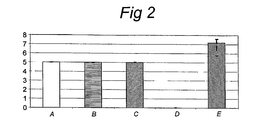
- FIG. 2 Agglutination of Saccharomyces cerevisiae mediated by L. plantarum WCFS1 mutant strains. Mean agglutination titres (log 2) +/- SD calculated from 3 independent experiments are displayed. Wildtype (A) and lp_0373 mutant strains (B and C) show the same capacity to agglutinate yeast cells. In contrast, cat -replacement of lp_1229 (D) leads to a complete loss of this ability, whereas overexpression of lp_1229 (E) results in enhanced agglutination.
Landscapes
- Chemical & Material Sciences (AREA)
- Health & Medical Sciences (AREA)
- Organic Chemistry (AREA)
- General Health & Medical Sciences (AREA)
- Medicinal Chemistry (AREA)
- Life Sciences & Earth Sciences (AREA)
- Proteomics, Peptides & Aminoacids (AREA)
- Molecular Biology (AREA)
- Genetics & Genomics (AREA)
- Biophysics (AREA)
- Biochemistry (AREA)
- Gastroenterology & Hepatology (AREA)
- Veterinary Medicine (AREA)
- Animal Behavior & Ethology (AREA)
- Pharmacology & Pharmacy (AREA)
- Nuclear Medicine, Radiotherapy & Molecular Imaging (AREA)
- General Chemical & Material Sciences (AREA)
- Chemical Kinetics & Catalysis (AREA)
- Oncology (AREA)
- Communicable Diseases (AREA)
- Public Health (AREA)
- Micro-Organisms Or Cultivation Processes Thereof (AREA)
- Medicines Containing Material From Animals Or Micro-Organisms (AREA)
- Compounds Of Unknown Constitution (AREA)
- Medicines That Contain Protein Lipid Enzymes And Other Medicines (AREA)
- Peptides Or Proteins (AREA)
- Measuring Or Testing Involving Enzymes Or Micro-Organisms (AREA)
- Preparation Of Compounds By Using Micro-Organisms (AREA)
- Solid-Sorbent Or Filter-Aiding Compositions (AREA)
Abstract
Description
- The present invention relates to novel mannose-specific adhesins, and variants thereof, as well as nucleic acid sequences encoding these. The invention also relates to host cells comprising one or more mannose-specific adhesins (or variants thereof), as well as foods, food ingredients, and pharmaceutical or nutraceutical compositions comprising one or more of the mannose-specific adhesins (or variants thereof) and/or comprising host cells capable of expressing these, and their use in treating, preventing or delaying bacterial infection. Further, screening methods suitable for identifying bacteria strains with probiotic properties are provided.
- Harmless commensal or even beneficial microorganisms (referred to as probiotic microorganisms) such as lactobacilli and other lactic acid bacteria commonly populate human and animal body cavities. For example, many strains of Lactobacillus, and related genera of lactic acid bacteria with a longstanding tradition in food industry, are present in large numbers on gastrointestinal mucosa together with other intestinal organisms (Mitsuoka, 1992 in The Lactic Acid Bacteria in Health and Disease, Volume I., E.B.J.B.Wood, Elsevier Science Publishing Ltd. pp 69-114; Ahrne et al. J Appl Microbiol. 1998 Jul;85(1): 88-94; Vaughan EE, et al. Antonie Van Leeuwenhoek. 2002 Aug;82(1-4):341-52; Reid et al. Clin Microbiol Rev. 2003 Oct; 16(4):658-72; Reid et al. J Clin Gastroenterol. 2003 Aug;37(2):105-18; Mercenier et al. Curr Pharm Des. 2003;9(2):175-91). These beneficial microorganisms are believed to play an important role in human and animal health by interfering with the invasion and colonisation of potential pathogens of the gastrointestinal tract. One of the mechanisms by which interference is believed to be achieved is competitive exclusion of pathogens by the beneficial microorganisms through occupation of common receptors on the mucosal surfaces. However, little is still known about the exact mechanisms through which beneficial bacterial species become established and persist in the indigenous microflora and how they inhibit or reduce attachment and colonisation of pathogenic bacteria.
- Bacterial colonisation of mucosal tissue is generally mediated by adhesins, which are proteins present on the surface of both pathogenic and beneficial bacteria. Adhesins are thought to be responsible for the recognition and binding to specific receptors on the host cells, thereby playing a role in bacterial attachment and colonisation. In many instances, adhesins are localised on hair-like appendages of bacteria (pili or fimbriae), although they may also be directly associated with the bacterial cell surface (non-pilus adhesins) (see for example Soto and Hultgren, J. of Bacteriology 1999, Vol. 181(4), p1059-1071).
- Various pathogenic Gram-negative bacteria, including enteropathogenic Escherichia coli (EPEC), display mannose-specific adhesion properties that play a role during the infection process. For example, the
type 1 fimbriae of uropathogenic E. coli strains comprise the adhesin FimH, which binds to mannose ligands present on the host tissue surfaces and appears to be involved in the establishment of kidney and bladder infections (Krogfelt et al. 1990 Infect. Immun. 58:1995-1998). - Mannose-specific adhesion is a phenotype which is also found in several lactic acid bacteria. Notably, it has been shown that certain strains of Lactobacillus plantarum (in particular strain 299v) are capable of adhering specifically to mannoside containing sugar moieties on the surface of human epithelial cells (Adlerberth et al., 1996, Applied and Environmental Microbiology, p2244-2251 and
WO96/29083 - Despite the observed phenotypic effect (mannose-specific adhesion), no molecular data are available to explain the mannose-specific adhesion properties of L. plantarum and therefore, it remains unknown whether indeed one or more proteins are involved in this interaction, and if so, which protein or proteins (and which gene or genes) of L. plantarum is (are) involved in this phenotypic trait. Moreover, although the complete 3.3 Mbp genome sequence of L. plantarum strain WCFS1 has been determined (Kleerebezem et al., Proc. Natl. Acad. Sci. USA, 2003, 18:1990-5), in silico analysis does not allow for the identification of the gene involved in this function. The inability to correlate gene sequences data with in vivo function is a common problem faced nowadays, as sequence homology or similarity to sequences with known function (if these are available at all) can at best provide a hypothetical function. Moreover, it is common knowledge that a significant fraction of sequenced genomes (usually about one third) cannot even be functionally annotated since these sequences are either unique, or only have homologues of unknown function. This is clearly exemplified by the finding that for the L. plantarum WCFS1 genome, 588 genes (~19 %) were annotated as conserved hypothetical proteins of unknown function, while 344 genes (~11 %) were annotated that do not have a homologue in public sequence databases (Kleerebezem et al. 2003, supra).
- An understanding of which protein(s) are involved in determining mannose-specific adhesion in L. plantarum is essential for a) transferring this beneficial property to other prokaryotic or eukaryotic cells, b) improving or modulating the adhesion efficiency and/or specificity of microorganisms, c) developing pharmaceutical or nutraceutical compositions which reduce or prevent pathogen infection (e.g. vaccines) and d) for setting up easier methods for screening microorganisms, in particular bacterial collections, for the presence/absence of mannose-specific adhesion.
- Microorganisms, especially probiotic bacteria, which have an improved ability to colonise human body cavities and thereby are more efficient in excluding or reducing colonisation by pathogenic microorganism, clearly have great medical value in the treatment and prophylaxis of diseases caused by pathogen infections. Similarly, the purified protein responsible for mannose-specific adhesion may in itself be of great value for the development of novel vaccines (see Wizemann et al. 1999, Emerging Infectious Diseases Vol. 5(3), p395-403) and therapeutic or prophylactic pharmaceuticals / nutraceuticals.
- The elucidation of the gene(s) and protein(s) responsible for mannose-specific adhesion is also useful for improving the attachment and persistence of microorganisms which are used as delivery vehicles for e.g. vaccines, such as lactic acid bacteria as reviewed by Wells et al. (1996 Antonie Van Leeuwenhoek 70: 317-330) and Pouwels et al. (1998 Int. J. Food Microbiol. 41: 155-167).
- "Mannose-specific adhesion" or "mannose-sensitive adhesion" refers to the ability of a cell, in particular a microorganism, especially a bacterium, to adhere to mannose comprising ligands, such as D-mannose or methyl-α-D-mannoside. Mannose-specific adhesion can be determined by various tests, such as the yeast agglutination test, the hemagglutination test, the binding of cells to immobilised mannose (e.g. mannose coated beads), the mannose-sensitive binding to human cell lines, and others as available in the art and as described herein. When referring to a protein or polypeptide "mannose-specific adhesion" refers to the ability of the protein to confer, or to significantly enhance, this phenotype when the nucleic acid encoding the protein is expressed in a host cell, especially a bacterial cell.
- "Lactic acid bacteria" and "lactic acid producing bacteria", is used herein interchangeably and refers to bacteria, which produce lactic acid as an end product of fermentation, such as, but not limited to, bacteria of the genus Lactobacillus, Streptococcus, Lactococcus, Oenococcus, Leuconostoc, Pediococcus, Carnobacterium, Propionibacterium, Enterococcus and Bifidobacterium.
- "Probiotics" or "probiotic strain(s)" refers to strains of live microorganisms, preferably bacteria, which have a beneficial effect on the host when ingested (e.g. enterally or by inhalation) by a subject. A "subject" refers herein to a human or non-human animal, in particular a vertebrate.
- The term "LPXTG-like anchoring motif' refers to a cell wall anchoring region commonly found in surface-anchored proteins of Gram-positive bacteria. These motifs can be used to attach proteins or hybrid proteins (e.g. covalently) to the cell surface of Gram-positive bacteria, as described by Leenhouts et al. (Antonie van Leeuwenhoek 1999, 76(1-4):367-76). The L. plantarum srtA gene encodes a sortase, which is involved in maturation and anchoring of proteins comprising an LPXTG-like anchoring motif to the cell wall (Navarre and Schneewind, 1999, Microbial Mol. Biol. Rev. 63:174-229).
- The term "gene" means a DNA fragment comprising a region (transcribed region), which is transcribed into an RNA molecule (e.g. an mRNA) in a cell, operably linked to suitable regulatory regions (e.g. a promoter). A gene may thus comprise several operably linked fragments, such as a promoter, a 5' leader sequence comprising e.g. sequences involved in translation intitiation, a (protein) coding region and a 3'non-translated sequence comprising e.g. transcription termination sites. "Expression of a gene" refers to the process wherein a DNA region which is operably linked to appropriate regulatory regions, particularly a promoter, is transcribed into an RNA, which is biologically active, i.e. which is capable of being translated into a biologically active protein or peptide. In one embodiment the coding sequence is preferably preceded by a nucleic acid sequence encoding a secretion signal, so that the encoded protein or peptide is secreted out of the cell. The coding sequence is preferably in sense-orientation and encodes a desired, biologically active protein or peptide.
- A "chimeric" (or recombinant) gene refers to any gene, which is not normally found in nature in a species, in particular a gene in which one or more parts of the nucleic acid sequence are present that are not associated with each other in nature. For example the promoter is not associated in nature with part or all of the transcribed region or with another regulatory region. The term "chimeric gene" is understood to include expression constructs in which a promoter or transcription regulatory sequence is operably linked to one or more coding sequences.
- A "transcription regulatory sequence" is herein defined as a nucleic acid sequence that is capable of regulating the rate of transcription of a (coding) sequence operably linked to the transcription regulatory sequence. A transcription regulatory sequence as herein defined will thus comprise all of the sequence elements necessary for initiation of transcription (promoter elements), for maintaining and for regulating transcription, including e.g. attenuators or enhancers. Although mostly the upstream (5') transcription regulatory sequences of a coding sequence are referred to, regulatory sequences found downstream (3') of a coding sequence are also encompassed by this definition.
- As used herein, the term "operably linked" refers to a linkage of polynucleotide elements in a functional relationship. A nucleic acid is "operably linked" when it is placed into a functional relationship with another nucleic acid sequence. For instance, a promoter, or rather a transcription regulatory sequence, is operably linked to a coding sequence if it affects the transcription of the coding sequence. Operably linked means that the DNA sequences being linked are typically contiguous and, where necessary to join two protein encoding regions, contiguous and in reading frame.
- The terms "signal sequence", "signal peptide" and "secretory leader" are used interchangeably and refer to a short (usually about 15-60 amino acids), continuous stretch of amino acids at the amino-terminus of secreted and membrane-bound polypeptides, which directs their delivery to various locations outside the cytosol. Signal sequences usually contain a hydrophobic core of about 4-15 amino acids, which is often immediately preceded by a basic amino acid. At the carboxyl-terminal end of the signal peptide there are a pair of small, uncharged amino acids separated by a single intervening amino acid that defines the signal peptide cleavage site (von Heijne, 1990). Despite their overall structural and functional similarities, native signal peptides do not have a consensus sequence.
- The term "body cavity of a subject" is understood to mean a cavity in the body of a subject, in particular a vertebrate, that is externally accessible and that is usually lined with a mucosal surface. Examples of such cavities include the mouth, the nasopharynx, the upper and lower gastrointestinal tract, the rectum, the vagina and the non-mammalian counterparts of these mammalian cavities.
- A "nucleic acid construct" is herein understood to mean a man-made nucleic acid molecule resulting from the use of recombinant DNA technology. The term "nucleic acid construct" therefore does not include naturally occurring nucleic acid molecules although a nucleic acid construct may comprise (parts of) naturally occurring nucleic acid molecules. A chimeric gene as defined above is an example of a nucleic acid construct, in particular it is an example of an expression construct. The term "vector" as used herein refers to a nucleic acid construct used for introducing exogenous DNA into host cells, such as for example bacterial cells. A plasmid vector thus at least comprises a replicon and a DNA segment that may be used for insertion of the exogenous DNA into the vector by recombinant techniques, preferably without interfering with the plasmids capability to replicate. Vectors usually comprise further genetic elements to facilitate their use in molecular cloning, such as e.g. selectable markers, multiple cloning sites and the like (see below). An "expression vector" as used herein refers to any cloning vector, in which a promoter and other regulatory elements are present to enable transcription of inserted exogenous DNA (e.g. one or more chimeric genes) when the expression vector is present in a suitable environment. The expression vector may be a plasmid-based vector. A "shuttle vector" refers to a plasmid vector that is capable of replication and stable maintenance in at least two different host organism, e.g. two organisms of different species or different genera. For this capability the shuttle vector may rely on a single broad host-range replicon but usually a shuttle vector will comprise different replicons for different host-organisms or different groups of host-organisms.
- A "host cell" or a "recombinant host cell" are terms referring to a new individual cell (or organism) arising as a result of at least one nucleic acid molecule, especially comprising a gene encoding a desired protein, having been introduced into said cell. The host cell differs from naturally occurring cell in that they comprise one or more nucleic acid molecules, which have been introduced by either recombinant DNA techniques or by "natural" DNA transfer techniques, such as bacterial conjugation, followed by selection of recombinants at a molecular, a phenotypic and/or a functional level. The recombinant host cell may thus comprising a (man made) nucleic acid construct within its cell(s), in particular one or more chimeric genes. The host cell preferably contains the nucleic acid construct as an extrachromosomally (episomal) replicating molecule, or alternatively and more preferably, integrated into its genome. The latter has the advantage of greater genetic stability of the introduced DNA. It is immaterial by what method the nucleic acid construct is introduced into the host cell(s). Suitable transformation methods for introducing nucleic acid constructs into cells (prokaryotic or eukaryotic cells), such as e.g. electroporation, are available to a skilled person. Alternatively, the recombinant host cell may comprise one or more additional nucleic acid molecules, which were introduced by "natural" DNA transfer methods, such as bacterial conjugation, followed by targeted selection of cells in which the nucleic acid molecule(s) are introduced (and either integrated into the genome by e.g. homologous or non-homologous recombination or present on extrachromosomally replicating molecules, such as plasmids). Such a host cell is distinguished from a natural occurring cell by either the presence of additional copies of a specific gene (e.g. a change from 1 copy to more than one copy) compared to the non-recombinant cell or by the presence of one or more genes which were not previously present in the non-recombinant cell. In both cases, the introduced copy or copies of the gene(s) leads to a significant change of the phenotype of the host cell. If no copy was present in the non-recombinant cell, the conjugative transfer leads to the desired gain-of-function phenotype (e.g. mannose-specific adhesion) due to the expression of the transferred gene. If one or more copies were already present, the additional copy (or copies) leads to a enhancement of the desired function (e.g. enhanced mannose-specific adhesion) due to the enhanced production of the protein encoded by said gene. The recombinant host cell may be a eukaryotic or prokaryotic cell, in particular a microorganism (referred to as a "recombinant microorganism"), especially a bacterium (referred to as a "recombinant bacterium").
- "Food-grade" micro-organisms are in particular organisms, which are considered as not harmful, when ingested by a human or animal subject, and which are acceptable as food ingredient.
- The term "selectable marker" is a term familiar to one of ordinary skill in the art and is used herein to describe any genetic entity which, when expressed, can be used to select for a cell or cells containing the selectable marker. Selectable marker gene products confer for example antibiotic resistance. Genes conferring resistance to antibiotics such as kanamycin, rifampicin, erythromycin, actinomycin, chloramphenicol, tetracyclines, or other antimicrobial compounds like nisin and lactacin F are generally known in the art. The term "reporter" may be used interchangeably with marker, although it is mainly used to refer to visible markers, such as green fluorescent protein (GFP). Selectable markers may be dominant or recessive and they may further be bidirectional.
- The term "homologous" when used to indicate the relation between a given (recombinant) nucleic acid or polypeptide molecule and a given host organism or host cell, is understood to mean that in nature the nucleic acid or polypeptide molecule is produced by a host cell or organisms of the same species, preferably of the same variety or strain. If homologous to a host cell, a nucleic acid sequence encoding a polypeptide will typically (but not necessarily) be operably linked to another (heterologous) promoter sequence or, if applicable, another (heterologous) secretory signal sequence and/or terminator sequence than in its natural environment. Such regulatory sequences may also be homologous to the host cell. In this context, the use of only "homologous" sequence elements allows the construction of "self-cloned" genetically modified organisms (GMO's) (self-cloning is defined herein as in European Directive 98/81/EC Annex II; see also below herein). When used to indicate the relatedness of two nucleic acid sequences the term "homologous" means that one single-stranded nucleic acid sequence may hybridise to a complementary single-stranded nucleic acid sequence. The degree of hybridisation may depend on a number of factors including the amount of identity between the sequences and the hybridisation conditions such as temperature and salt concentration as discussed later.
- "Stringent hybridisation conditions" can also be used to identify nucleotide sequences, which are substantially identical to a given nucleotide sequence. Stringent conditions are sequence dependent and will be different in different circumstances. Generally, stringent conditions are selected to be about 5°C lower than the thermal melting point (Tm) for the specific sequences at a defined ionic strength and pH. The Tm is the temperature (under defined ionic strength and pH) at which 50% of the target sequence hybridises to a perfectly matched probe. Typically stringent conditions will be chosen in which the salt concentration is about 0.02 molar at pH 7 and the temperature is at least 60°C. Lowering the salt concentration and/or increasing the temperature increases stringency. Stringent conditions for RNA-DNA hybridisations (Northern blots using a probe of e.g. 100nt) are for example those which include at least one wash in 0.2X SSC at 63°C for 20min, or equivalent conditions. Stringent conditions for DNA-DNA hybridisation (Southern blots using a probe of e.g. 100nt) are for example those which include at least one wash (usually 2) in 0.2X SSC at a temperature of at least 50°C, usually about 55°C, for 20 min, or equivalent conditions.
- The term "substantially identical", "substantial identity" or "essentially similar" or "essential similarity" means that two peptide or two nucleotide sequences, when optimally aligned, such as by the programs GAP or BESTFIT using default parameters, share at least a certain minimal percentage of sequence identity, as defined herein below. GAP uses the Needleman and Wunsch global alignment algorithm to align two sequences over their entire length, maximizing the number of matches and minimises the number of gaps. Generally, the GAP default parameters are used, with a gap creation penalty = 50 (nucleotides) / 8 (proteins) and gap extension penalty = 3 (nucleotides) / 2 (proteins). For nucleotides the default scoring matrix used is nwsgapdna and for proteins the default scoring matrix is Blosum62 (Henikoff & Henikoff, 1992).
- In this document and in its claims, the verb "to comprise" and its conjugations is used in its non-limiting sense to mean that items following the word are included, but items not specifically mentioned are not excluded. In addition, reference to an element by the indefinite article "a" or "an" does not exclude the possibility that more than one of the element is present, unless the context clearly requires that there be one and only one of the elements. The indefinite article "a" or "an" thus usually means "at least one". Sequences according to the invention
- The present inventors were able to identify and isolate the nucleic acid sequence (SEQ ID NO: 2) from L. plantarum, which encodes a protein (SEQ ID NO: 1) responsible for mannose-specific adhesion of L. plantarum. This protein is referred to as "mannose-specific adhesin". This is the first mannose-specific adhesin isolated and characterised from a gram-positive bacterium. Knock-out mutants of L. plantarum WCFS1 (lacking a functional copy of the mannose-specific adhesion gene) completely lost the ability to agglutinate yeast in the yeast agglutination test. In contrast, overexpression of the mannose-specific adhesion gene in the wild type WCFS1 strain resulted in a significant enhancement of the mannose-specific agglutination of the recombinant strain. The experiments prove that the mannose-specific adhesin is responsible for conferring mannose-specific agglutination and adherence to cells comprising mannose molecules on the cell surface.
- The mannose-specific adhesin is 1010 amino acids in length and comprises several repeated domains at the N- and C-terminal parts (residues 120-220, and residues 700-915, respectively). According to signaIP-HMM prediction, the amino acid sequence has a predicted N-terminal signal peptide for secretion by the Sec-dependent pathway, from
residue 1 to 45 (http://www.cbs.dtu.dk/services/SignalP). Moreover, at the C-terminal the motif LPQTN is present, which is an LPXTG-like anchoring motif typically found in gram-positive cell-wall anchored surface proteins. This motif comprises a proteolytic cleavage site recognised and cleaved by the sortase enzyme (or surface protein transpeptidase), in L. plantarum encoded by the srtA gene (SEQ ID NO: 3 and SEQ ID NO: 4). However, enzymes performing similar function are also found in other gram-positive bacteria (see Navarre and Schneewind, 1999, supra). - Homology searches reveals domain-specific similiarity of mannose-specific adhesin (lp_1229) to several surface proteins of different lactobacilli and staphylococci, and includes a protein of Lactobacillus reuteri that has been shown to be involved in mucus binding properties displayed by this species (Roos and Jonsson, Microbiology. 2002, 148:433-42). The sequence similarities to L.reuteri are limited to the C-terminal repeat region of the lp_1229 mannose-specific adhesin. Residues 265-515 have strong similarity to a domain of large multi-domain surface proteins of Staphylococcus aureus (NCBI codes Q8NUJ3, Q8VQ99, Q99QY4) and S. epidermidis (NCBI code Q8CMU7; hemagglutinin protein), which also have a signal peptide, LPxTG-anchor and very large repeat regions. This domain is a member of the concanavalin A-like lectin/glucanase family (Interpro code IPR008985; structure superfamily code SSF49899), for which several 3-dimensional structures are known. Members of this family are found in a wide range of species, but exhibit the common property of reversibly binding to specific complex carbohydrates. Some bacterial and fungal beta-glucanases have this Con A-like domain, and carry out the acid hydrolysis of beta-glucans found in microorganisms and plants. There are many Con A-like domains found in proteins involved in cell recognition and adhesion. Hence, the presence of a carbohydrate-binding domain and additional similarity to a mucus-binding protein corroborate the role of this lp_1229 mannose-specific adhesin in interactions with the host or host-derived molecules.
- In one embodiment, the invention provides isolated mannose-specific adhesin proteins and nucleic acid sequences encoding these. Provided is the mannose-specific adhesin of SEQ ID NO: 1 and the nucleic acid sequence encoding it, SEQ ID NO: 2. The protein or nucleic acid (DNA or RNA) may be either isolated from natural sources (such as various L. plantarum strains), or may be synthetically made de novo using chemical amino acid or nucleic acid synthesis. The mannose-specific adhesin, or functional variants thereof, may also be obtained from recombinant host cells overexpressing the mannose-specific adhesin (or a functional variant thereof), as described below.
- Also provided are active variants of the mannose-specific adhesin protein of SEQ ID NO: 1, as well as nucleic acid sequences encoding these variants. Variants can be easily generated using methods known in the art, such as but not limited to amino acid substitutions or deletions (generating for example functional fragments), de novo chemical synthesis of peptides or mutagenesis- or gene-shuffling techniques, and the like. Variants may be tested for retention of functionality (mannose adhesion in the various assays described herein). Variants can also be identified and isolated from natural sources, such as other bacterial strains, using for example nucleic acid hybridisation techniques (e.g. Southern blot, Northern blot), and especially encompasses DNA sequences which hybridise to SEQ ID NO: 2 under stringent hybridisation conditions (defined above). It is clear that there are many approaches in the art to isolate variants of SEQ ID NO: 1 or SEQ ID NO: 2. An alternative to the use of nucleic acid hybridisation is for example the use of specific or degenerate PCR primers, designed to hybridise to specific regions of SEQ ID NO: 2 (or its complement strand) and to amplify variants using PCR technology. Substantially identical sequences can also be identified in silico, by using publicly available algorithms and databases such as BLAST, FASTA and the like, using SEQ ID No's 1 or 2 (or fragments or variants thereof) as input sequence. Sequences identified in this way can then either be cloned using standard molecular biology techniques or synthesised chemically using for example an oligonucleotide synthesiser as supplied e.g. by Applied Biosystems Inc. (Fosters, CA, USA).
- Variants of the mannose-specific adhesin as defined herein include peptides with amino acid sequences with at least, 60%, 75%, 80%, 90%, 95% or 99% sequence identity to SEQ ID NO: 1 (as determined using the GAP program and default parameters), which retain the ability to confer or improve mannose-specific adhesion, as well as the nucleic acid sequences encoding these.
- It is clear that due to the degeneracy of the genetic code various nucleic acid sequences may encode the same amino acid sequence. Thus, codons may be replaced, without changing the amino acid sequence of the protein. Similarly, some amino acids can be substituted by other equivalent amino acids without significantly changing the activity of the protein (at least not in a negative way). For example conservative amino acid substitutions within the categories basic (e.g. Arg, His, Lys), acidic (e.g. Asp, Glu), nonpolar (e.g. Ala, Val, Trp, Leu, Ile, Pro, Met, Phe) or polar (e.g. Gly, Ser, Thr, Tyr, Cys, Asn, Gln) fall within the scope of the invention as long as the mannose-specific adhesion property of the protein is not decreased by such changes. In addition non-conservative amino acid substitutions fall within the scope of the invention as long as the mannose-specific adhesion property of the protein is not decreased by such changes.
- Variants of SEQ ID NO: 2 comprise nucleic acid sequences which have at least , 60%, 75%, 80%, 90%, 95%, or 99% sequence identity to SEQ ID NO: 2 (as determined using the GAP program and default parameters) and encode a protein which retains the ability to bind mannose specifically, i.e. to confer a mannose-specific adhesion phenotype to the host cell in which it is expressed or, if the host cell already shows mannose-specific adhesion, to significantly enhance the mannose-specific adhesion phenotype of a cell.
- Variants of SEQ ID NO: 2 include nucleic acid sequences which hybridise to SEQ ID NO: 2, or variants of SEQ ID NO: 2 as described above, under stringent hybridisation conditions and encode a protein which retains the ability to bind mannose specifically, i.e. to confer a mannose-specific adhesion phenotype to the host cell in which it is expressed or, if the host cell already shows mannose-specific adhesion, to significantly enhance the mannose-specific adhesion phenotype of a cell.
- Specific binding to mannose refers to the ability of the protein (or variant) to confer a mannose-specific adhesion phenotype to a cell in which the protein is expressed or, if the host cell already shows mannose-specific adhesion, to significantly enhance the mannose-specific adhesion phenotype of a cell. This can be tested by various tests known in the art. One suitable test for determining whether the ability to bind mannose is retained by a variant is the overexpression of the nucleic acid sequence encoding the variant in a suitable host cell, such as a knock-out mutant of L. plantarum, which comprises no functional mannose-specific adhesin (SEQ ID NO: 1), followed by a test suitable for determining mannose-specific adhesion of the recombinant host cell (such as the yeast agglutination test, etc., as described elsewhere herein).
- For expression in eukaryotic cells it may de desirable to modify one or more amino acids at the N-terminal of the protein, in order to create an optimal translation initiation context in eukaryotic cells.
- In one embodiment, the invention provides a (expression) vector comprising at least one nucleic acid sequence encoding the mannose-specific adhesin, or a functional variant thereof as described above. Thus, the nucleic acid molecule encoding mannose-specific adhesin, or a functional variant thereof, is operatively linked to at least one regulatory DNA element allowing the expression of said nucleic acid in a prokaryotic or a eukaryotic cell. Usually the nucleic acid vectors of the invention will consist of DNA. These nucleic acid vectors may be provided using techniques known per se, for which reference is made to standard handbooks such as e.g. Sambrook et al. (1989) and Sambrook and Russell (2001).
- The nucleic acid sequence encoding the mannose-specific adhesion, or functional variant thereof, is operably linked to the nucleic acid molecules required for transcription and translation of the mannose-specific adhesin in a suitable host cell, such as a (homologous or heterologous) transcription regulatory sequence upstream (5') of the coding sequence and (optionally) a 3' non-translated region. Suitable 3'nontranslated region (comprising a transcription terminator) may be those naturally associated with the coding sequence or may be identified as described by Ermolaeva et al. (J. Mol. Biol. 2000, 301: 27-33.).
- Other nucleic acid elements needed for efficient transcription or translation, or suitable to enhance transcription and/or translation, may be operably linked.
- Optionally, the putative N-terminal secretion signal sequence of amino acids 1-45 of SEQ ID NO: 1 may be replaced by a different signal sequence or may be removed completely. Alternatively, the mannose-specific adhesin may be operably linked to its own, natural transcription regulatory sequence and 3'non-translated sequence, that is to say that the complete gene, as naturally present in L. plantarum, may be incorporated in the vector. As the complete genome sequence is available, the upstream and downstream genomic sequences of the mannose-specific adhesin coding sequence are also available to the skilled person and can be used per se or be used to isolate or identify similar sequences.
- The choice of vector elements, such as for example the choice of the transcription regulatory sequence, vector backbone, selectable marker encoding sequences, origin of replication, enhancer elements, etc., depends on the host cell in which transcription and translation are to be achieved and is easily determined by the skilled person. In principle, any transcription regulatory element that is active in the host cell may be used, and it may be homologous or heterologous to the host cell. For efficient transcription in prokaryotic cells, such as gram-positive bacteria, preferably prokaryotic transcription regulatory sequences should be used, while for transcription and translation in eukaryotic host cells preferably elements of eukaryotic origin are used. In one embodiment preferably a promoter which is homologous to the host cell is used. For example, L. plantarum transcription regulatory sequences which are either constitutively active or which are inducible, e.g. induced in the gastrointestinal tract of a subject (or in a specific part of the gastrointestinal tract), may be used. Such regulatory sequences are available in the art (Kleerebezem et al., supra). For expression of the mannose-specific adhesin or any variant thereof in a bacterial host cell in general nucleic acid sequences from food-grade bacteria, such as lactic acid bacteria, are preferred. Strong constitutive promoters and promoters which are strongly induced following induction are especially preferred.
- Other suitable constitutive promoters are the usp45 promoter (van Asseldonk et al., 1990, Gene, 95: 155-160), the nisR promoter (de Ruyter et al., 1997, J. Bacteriol., 178: 3434-3439), the pepN promoter (Tan et al., 1992, FEBS Lett., 306: 9-16) and the promoters mentioned in de Vos and Simons in "Genetics and Biotechnology of Lactic Acid Bacteria", Gasson and de Vos, eds., pp. 52-106, Chapman and Hall, 1994. Examples of suitable regulated promoters are the bacteriophage 31 middle promoter and ori-based expression system (O'Sullivan et al., 1996, Biotechnology, 14: 82-87), the xylA promoter (Lokman et al., 1994, Mol. Gen. Genet., 245: 117-125), the repressor/operator system of bacteriophage rlt (Nauta et al., 1996, Mol. Microbiol., 19: 1331-1341), the acid-inducible or acid-responsive F1 F0-ATPase promoter of L. acidophilus (
U.S. Patent No. 6,242,194 ), the promoters of the lactose operon of S. thermophilus and lac ABCDFEGX operon of L. lactis (see, e.g., Simons et al., 1993, J. Bact. 175:5186-5175; Mollet et al., 1993, J. Bact. 175:4315-4324), and the salt-inducible promoters of L. lactis that are disclosed inU.S. Patent No. 6,140,078 . - Another suitable class of promoters are the auto-inducible promoters as described in e.g. Kuipers et al. (1997, Tibtech, 15: 135-140). Non-limiting examples are the promoters from the bacteriocin gene cluster of Carnobacterium piscicola, the Sakaricin gene cluster from L. sake, as well as (presumably) the Subtilin gene cluster from Bacillus subtilis. According to the invention these also include promoters for similar, non-bactericidal signal proteins involved in the quorum sensing process in microorganisms, such as the promoter for Plantaricin A from the bacteriocin gene cluster of L. plantarum. Reference is made to Kleerebezem et al. (1997, Mol. Microbiol. 24: 895-904) and the references mentioned therein. Suitable promoters used are the auto-inducible promoters from the nisin gene cluster of L. lactis, especially the nisA and nisF promoters, as described in the
EP 0 712 935 (nis A) and also in De Ruyter et al. (1996, Appl. Environ. Microbiol. 62: 3662-3667; and Kuipers et al., supra and the references given therein). These promoters have already been used for the controlled (over-) expression of homologous and heterologous polypeptides (such as the gusA reporter gene from E. coli, pepN, and the lytic genes lytH and lytA) in lactic acid bacteria and for the nisin-induced expression in heterologous hosts such as L. helveticus and Leuconostoc lactis. Further suitable promoters for use in the nucleic acid molecules of the invention are reviewed by de Vos (1999, Int. Dairy J. 9:3-10; 1999, Curr. Opin. Microbiol. 2:289-295). - The vector may further comprise one or more genes encoding selectable markers, such as genes encoding antibiotic resistance, heavy metal resistance or the ability to utilise certain sugars. As in one embodiment host cells comprising the vectors are ingested by human subjects, all genetic elements used are preferably food grade, such as sugar utilisation genes as markers or food grade auxotrophic markers. Examples of sugar utilisation genes are xylRAB from Lb. pentosus (Posno et al., 1991, Appl. Environ. Microbiol. 57: 2764-2766), levA from Lb. plantarum (Wanker et al., 1994, Appl. Environ. Microbiol. 60: 1401-1413) or Lb. casei (Wanker et al., 1995, Appl. Microbiol. Biotechnol. 43: 297-303) and scrA/scrB from P. pentosaceus (Leenhouts et al., 1998, Appl. Microbiol. Biotechnol. 49: 417-423). Examples of suitable food grade auxotrophic markers are tRNA (gln) of L. lactis (Dickely et al., 1995, Mol. Microbiol. 15: 839-847) and alr of L. lactis or Lb plantarum (Bron et al., 2002, Appl. Environ. Microbiol. 68: 5663-5670).
- Likewise, the vector may comprise a nucleic acid sequence encoding a sortase enzyme, preferably srtA of L. plantarum, which is co-transferred and co-expressed in the host cell. If the host cell already produces a functional sortase enzyme, i.e. a sortase enzyme which enables correct biogenesis of the mannose-specific adhesin of SEQ ID NO: 2 or a variant thereof, it is not necessary to co-express a sortase enzyme in the host. For example for expression in other lactic acid bacteria or other gram-positive bacteria most likely the introduction of mannose-specific adhesin alone will be sufficient to modify the phenotype of the cell as desired. However, if the host cell does not comprise a functional sortase enzyme, co-expression of a functional sortase may be required, as sortase is required for cross linking of the protein to the cell-wall of the host cell. It is irrelevant whether the sortase gene is introduced together with the mannose-specific adhesion (e.g. on one vector or on separate vectors) or is introduced independently, as long as the mannose-specific adhesion can be cross-linked to the cell wall of the host cell so that it can mediate mannose-specific adhesion of the host cell. Obviously, where the protein is to be secreted, for example for manufacturing compositions comprising the (purified) protein or for in vivo secretion in the gastrointestinal tract, cell wall anchorage is not desired and can be prevented by choosing a host which does not mediate cell-wall anchorage (e.g. a functional sortase deficient host cell) or by modifying or deleting the LPXTG-like motif which is part of the mannose-specific adhesin sequence. In such instances, the existing signal peptide may be replaced by a suitable secretion signal (see above).
- For other uses the localisation of the protein may not be of importance. For example, if the protein is localised within the cell or within a specific cellular compartment, it may be isolated by cell lysis and optionally subsequent purification steps prior to making a suitable pharmaceutical or nutraceutical composition.
- Bacteria often comprise natural plasmids, which have the ability to be transferred between bacteria by conjugal transfer. Such plasmids or derivatives or parts thereof are often utilised as cloning and expression vectors. Lactobacillus plantarum species often harbour several natural plasmids (Ruiz-Barba et al. 1991) of which some have been characterised and sequenced (Bates and Gilbert, 1989, Danielsen, 2002, Eguchi et al., 2000, Kanakeo et al., 2000, Leer et al., 1992, Skaugen, 1989, Vujcic and Topisirovic, 1993). It is understood that the use of such plasmids or vectors derived therefrom may also be used as vectors for expressing the mannose-specific adhesin (or variant thereof) in a host cell according to the invention.
- Also fusion proteins comprising the mannose-specific adhesin, or a fragment or variant thereof which retains the ability to bind mannose, linked in frame to another coding sequence (or part thereof) is an embodiment of the invention. Fusion proteins comprising various functional domains can be generated by in frame fusion of the nucleic acid sequences encoding the domains, so that upon transcription and translation in a host cell a fusion protein is generated. In this way, different functional domains can be combined in one protein, which may be advantageous. For example, domains of biologically active proteins (or whole proteins), such as proteins with known therapeutic properties, may be added so that these are displayed on the cell surface of the host cell.
- In another embodiment one or more biologically active proteins and the mannose-specific adhesin according to the invention are co-expressed in a single host cell, so that the host cell may be used as a vehicle to deliver these proteins to the location where the host cell binds, for example the human intestine. Co-expression may be achieved by various means, for example co-transformation of several vectors or a single vector comprising two genes, or the vector may comprise one or more nucleotide sequences encoding different (or identical) proteins under control of a single regulatory sequence, providing bicistronic or multicistronic transcripts. The biologically active protein(s) may in this way be secreted by the host cell, while the mannose-specific adhesin binds the host cell to receptors found on the epithelial cells of a subject.
- It is understood that the nucleic acid constructs or vectors of the invention may further comprise additional sequence elements for various functions known in the art per se. Such sequence element include e.g.: autonomously replicating sequences or origins of replication for extrachromosomal multiplication and maintenance of the vector; sequences for promoting integration of the vector or chimeric gene into the host's genome; sequences for homologous recombination; sequences for site-specific integration and/or recombination; selection marker genes; reporter or indicator genes; sequences for promoting conjugation or other means of transfer of genetic material etc.
- In another aspect of the invention a host cell comprising a nucleic acid sequence encoding a mannose-specific adhesin or variant thereof as described above is provided, or a vector as described above. The expression of the nucleic acid sequence in the host cells confers either mannose-specific adhesion to the host cell, in cases where the host cell lacks this phenotype, or enhances mannose-specific adhesion of the host cell, in cases where the host cell already shows the ability to adhere in a mannose-specific manner. As mentioned, the nucleic acid sequence encoding the mannose-specific adhesin need not be integrated into the genome of the host cell, as long as the phenotype conferred by the expression of the nucleic acid sequence remains stable.
- It also does not matter how the mannose-specific adhesin encoding sequence is introduced into the host cell, as long as the phenotype of the host cell is modified in the desired way and remains stable during subsequent multiplication of the host cell. There are, therefore, various methods available in the art for introducing the nucleic acid sequences or vector(s) encoding the mannose-specific adhesin or variants thereof into a host cell, such as transformation of cells or conjugative transfer between bacteria. Methods for transforming bacterial cells are for example described in "Genetics and Biotechnology of Lactic Acid Bacteria", Gasson and de Vos, eds., Chapman and Hall, 1994. Similarly, methods for introducing recombinant DNA into fungi, plants and animals are well known, such as particle gun transformation, protoplast transformation, electroporation, Agrobacterium mediated transformation and the like.
- In case a host of the invention is constructed through genetic engineering such that the resulting recombinant host comprises only sequences derived from the same species as the host is, albeit in recombined form, the host is said to be obtained through "self-cloning". Hosts obtained through self-cloning have the advantage that there application in food (or pharmaceuticals) is more readily accepted by the public and regulatory authorities as compared hosts comprising foreign (i.e. heterologous) nucleic acid sequences. The present invention thus allows the construction of self-cloned L. plantarum and other lactobacillus hosts for food, pharmaceutical or nutraceutical applications (see also de Vos, 1999, Int. Dairy J. 9: 3-10) and such self-cloned hosts are one further aspect of the invention.
- The host cell may in principle be any prokaryotic or eukaryotic cell, such as human or animal cell lines, gram positive or gram negative bacteria, fungi, viruses, or other microorganisms. In one preferred embodiment the host cell is a bacterial cell, such as a gram positive bacterium, preferably a food-grade bacterium. A host or host cells may also be a mutant, generated by classical (X-ray or chemical) mutagenesis or the host may already have been transformed previously. Other hosts are food-grade fungi and yeasts, such as bakers or brewers yeast, such as species of the genus Saccharomyces, Pichia, or Hansenula. In a preferred embodiment the host cell is a probiotic bacterium, which in itself has a beneficial effect when ingested by a subject.
- The host cell may be a gram-positive bacterium that belongs to a genus selected from the group consisting of Lactobacillus, Lactococcus, Leuconostoc, Carnobacterium, Bifidobacterium, Bacillus, Streptococcus. More preferably, the host cell is selected from a Gram-positive bacterium that belongs to a species selected from the group consisting of L. acidophilus, L. amylovorus, L. bavaricus, L. brevis, L. caseii, L. crispatus, L. curvatus, L. delbrueckii, L. delbrueckii subsp. bulgaricus, L. fermentum, L. gallinarum, L. gasseri, L. helveticus, L. jensenii, L. johnsonii, L. minutis, , L. murinus L. paracasei, L. plantarum, L. pontis, L. reuteri, L. sacei, L. salivarius, L. sanfrancisco, Lactobacillus ssp., Pediococcus spp., Camobacterium spp. C. piscicola, B. subtilis, Leuconostoc mesenteroides, Leuconoctoc lactis, Leuconostoc ssp, B. bifidum, B. longum, B. infantis, B. breve, B. adolescente, B. animalis, B. gallinarum, B. magnum, and B. thermophilum.
- As variants of the nucleic acid sequence may be obtained from any other organism, the nucleotide sequence encoding the mannose-specific adhesion may be homologous or heterologous to the host cell. In one embodiment the host cell originally lacks the ability to bind mannose specifically and the transfer of one or more copies of the adhesin according to confers this novel phenotype onto the host cell. The modified host cell thereby has acquired a number of novel, testable properties, namely it can bind mannose (e.g. mannose coated agarose beads), it can bind to cells comprising mannose (e.g. oligomannose chains exposed on the cell surface), e.g. human colonic cell lines and it can agglutinate mannose comprising cells, such as yeast cells or erythrocytes in a mannose-specific manner. A positive score in these tests indicates that the adhesin protein is functionally exposed on the outside of the modified cell. This is an indication that the cell also has novel properties which are useful for a variety of pharmaceutical and/or nutraceutical uses.
- In another embodiment, the host cell already possesses the ability to bind mannose. For example the wild type L. plantarum strain WCFS1 already has this ability, as demonstrated in the tests used. However, it was surprisingly found that the introduction of at least one further copy of the adhesin coding sequence results in a significant improvement of the strain's of mannose-specific adhesion. It is thus possible to significantly enhance the phenotype by introducing additional functional copies of the mannose-specific adhesin into host cells. Such modified host cells have thus improved properties compared to the unmodified cells, as can be determined using the same test, as further described below. A host cell comprising one or more additional copies of the gene can be easily distinguished from an unmodified host cell using common molecular methods, such as PCR, hybridisation, molecular markers, etc. Also quantitative reverse transcriptase PCR (RT-PCR) or Northern blots may indicate the mRNA abundance. It is presumed that the additional copy or copies enhance the phenotype by displaying more mannose-specific adhesin proteins on the cell surface. Hence, a similar effect may be expected when the expression of a single copy is increased. Quantitative RT-PCR may therefore be used to quantify transcript levels and to select host cells which produce more mRNA transcripts of the mannose-specific adhesin (or variant) gene. In this way existing strain collections may be screened for strains with increased transcript levels, which may as a result show an enhanced mannose-specific adhesion phenotype. This may also be done following for example mutation of strains or following transformation as described above or conjugation between strains, whereby a copy of the mannose-specific adhesion encoding gene may be transferred from one strain to another. Especially strains which produce at least 10%, 20%, 30%, preferably at least 50, 70, 90 or 100% more mannose-specific adhesin mRNA transcript (or of a variant thereof) and which additionally show a newly acquired or significantly improved mannose-specific adhesion phenotype in at least the yeast agglutination test are an embodiment of the invention.
- Following introduction of at least one sequence encoding a mannose-specific adhesin according to the invention the hosts or host cells (1) express, or are able to express (e.g. upon induction), the mannose-specific adhesion sequence according to the invention, (2) expression either confers or enhances the mannose-specific adhesion properties as testable in the test described. Preferably, the cell is capable of surviving passage through a subject's gastrointestinal tract and preferably has an improved capability of adhering to and colonizing a mucosal surface lining a subjects gastrointestinal tract compared to the non-modified cell. Further, administration of the cells or compositions comprising these preferably, reduces, prevents or delays infections caused by pathogens, especially bacterial pathogens which are members of the Enterobacteriaceae, such as e.g. E. coli, Eneterobacter, Klebsiella, Proteus. In particular the cells or compositions of the invention reduce, prevent or delay infections caused by pathogenic
bacteria comprising type 1 fimbriae, such as e.g. Salmonella, Closteridium, Campylobacter and Streptococcus. - It is in this respect irrelevant by which precise mechanism pathogen infection is prevented, reduced or delayed following administration of the recombinant host cells according to the invention. The administered cells of the invention may for example compete for mannose-containing binding-sites with the pathogen or they may compete fro growth limiting substrates, or lead to a decrease in translocation of pathogenic or potentially pathogenic bacteria over the intact epithelial surface, it may inhibit or reduce adherence of pathogenic bacteria to the epithelial cell surface, it may influence the immune system or decrease inflammatory damage, or any combination thereof, etc.
- It is understood that any derivatives of the (modified) host cells described herein, which retain the desired phenotype, such as obtained through bacterial multiplication/growth are also encompassed herein.
- There are a number of known test which are suitable for determining whether a cell, especially a bacterial cell, displays mannose-specific adhesion properties. All test measure mannose binding. The use of one or more of these test will allow to determine whether a cell which has been modified by introducing at least one mannose-specific adhesin encoding nucleic acid sequence according to the invention has acquired a mannose-specific adhesion phenotype (while lacking this phenotype before) or has acquired a significantly enhanced mannose-specific adhesion phenotype compared to the phenotype displayed prior to modification.
- A cell is defined to display mannose-specific adhesion properties, i.e. has the ability to bind mannose, if it agglutinates yeast cells in the yeast agglutination test (see below) at the highest bacterial cell density at which agglutination can be detected by light microscopy. Preferably agglutination of yeast cells occurs in a mannose-specific manner as may be established by inhibition of agglutination by e.g. methyl-α-D-mannoside (see below). Maximal cell densities at which yeast agglutination can still be assessed using light microscopy are approximately 6* 109 colony forming units per ml in the final agglutination assay (see below). In analogy, yeast agglutination efficiency can be quantitatively expressed as the mean agglutination titre and standard deviation, which can also be applied to other materials, like purified mannose adhesion protein or (sub)cellular fractions of mannose adhesion producing cells.
- An "enhanced mannose-specific adhesion" phenotype refers to an improvement of mannose-specific adhesion of at least 20%, 30%, 40% or 50% or more of the agglutination titre in the yeast-agglutination test.
- The "Yeast agglutination test" is a test suitable for testing mannose-specific adhesion of cells, especially microorganisms. The cell-wall of Saccharomyces cerevisiae comprises mannose containing polysaccharides (mannans). In this test S. cervisiae cells are contacted with cells to be tested (especially bacteria), at various concentrations, in the presence or in the absence of a selected monosaccharide, one of which is mannose. Bacterial strains are grown overnight in appropriate media, washed and suspended in 0.1 culture volume PBS (pH 7,4). The cell number was recorded by plating out tenfold dilutions of the bacterial suspensions on appropriate agar plates and determining CFU/ml after 48 hours growth at 37°C. 50 µl of twofold dilutions of the bacterial suspensions in PBS were prepared in microtitre plates (96-well u-shaped, Greiner bio-one, Alphen a/d Rijn, The Netherlands). 50 µl PBS (pH 7.4) or PBS with methyl-α-D-mannopyranoside (final concentration: 25 mM; Sigma-Aldrich Chemie BV, Zwijndrecht, The Netherlands) were added as well as 100 µl of 1 % (w/v) Saccharomyces cerevisiae suspended in PBS after growth in malt extract medium (Oxoid, Haarlem, The Netherlands). The plate was shaken for 10 minutes at room temperature and volumes of 50 µl were taken from each well to examine agglutination by bright-light microscopy (200-fold magnification, inverted microscope Nikon Eclipse TS100). The reciprocal of the highest dilution that still resulted in visible agglutination was recorded as the agglutination titre. Mean agglutination titre and standard deviation of three independent assays were calculated. This procedure is a slight adaptation of the method previously described on pages 2244 and 2245 of Adlerberth et al., supra). Erythrocyte agglutination test (Hemagglutination test)
- The glycoproteins of erythrocytes comprise mannose and it is known that certain E. coli and some L. plantarum strains agglutinate erythrocytes in a mannose-sensitive manner. This test involves mixing various dilutions of cells to be tested with an equal volume erythrocyte suspensions, either in a normal buffer solution or in a solution supplemented with D-mannose or methyl-D-mannoside. After about 15 minutes agglutination is assessed visually, using for example a light microscope at a x250 magnification. The reciprocal of the highest dilution of cell suspension which results in visible agglutination within the incubation period is recorded as the agglutination titre. If agglutination of cells and erythrocytes is significantly reduced or completely inhibited by the presence of D-mannose or methyl-α-D-mannoside, the cells exhibit a mannose-specific adhesion phenotype. Details of this test are found for example in Adlerberth et al. (supra).
- In this test D-mannose coated agarose beads and non-coated beads are mixed with the cells to be tested and binding is measured microscopically at about 500x magnification. If the cells adhere to the D-mannose coated beads but not to the non-coated beads the test is positive and the cells show a mannose-specific adherence phenotype. Obviously, mannose may be immobilised by other means and adherence may be assessed in other ways. Again, details can be found in Adlerberth et al., supra.
- A suitable cell line, which is known to comprise mannose moieties on its surface, such as human adenocarcinoma cell line HT-29, is mixed with the cells to be tested, either in the presence or absence of selected monosaccharides. The number of cells attached to at least 40 HT-29 cells is determined using interference-contrast microscopy at a magnification of about x500. The specific ability of mannose to significantly reduce adherence of the test cells to HT-29 cells shows that the test cells exhibit a mannose-specific adherence phenotype. In particular, other monosaccharides such as D-glucose, methyl-α-D-glucoside, L-fucose, N-acetyl-glucosamine, galactose, etc. are not able to inhibit or reduce adherence. L. plantarum strain 299v has been described to adhere to HT-29 cells at about 10 bacteria per cell in the absence of mannose. In the presence of methyl-α-D mannoside adherence was reduced by 45-73%.
- These above tests are non-limiting, and alternative or modified tests can be easily devised by a skilled person.
- In a further aspect the invention relates to method, in particular screening methods, for determining whether a bacterium has probiotic properties, is capable of adhering to human cells and/or has the ability to bind mannose. The method preferably comprises determining the presence or absence of a nucleotide sequence comprised in SEQ ID NO: 2 or parts or variants. Preferably the presence of the nucleotide sequence, or more preferably its expression is indicative of probiotic properties. The bacterium preferably is a bacterial strain or (single colony) isolate from a genus selected from the group consisting of Lactobacillus, Lactococcus, Leuconostoc, Camobacterium, Bifidobacterium, Bacillus, Streptococcus.
- In one embodiment of the invention PCR primers and probes, as well as kits comprising these, for detecting the mannose-specific adhisin DNA and/or RNA sequences are provided. PCR primers which pair to amplify SEQ ID NO: 2 or parts or variants thereof can be synthesised based on SEQ ID NO: 2 as known in the art (see Dieffenbach and Dveksler 1995, PCR Primer: A laboratory manual, Cold Spring Harbor Lab. Press, or McPherson et al. 2000, PCR-Basics: From background to bench, first edition, Springer Verlag, Germany). PCR primers may, for example, comprise at least 18, 19, 20 or more nucleotides identical to part of SEQ ID NO: 2 (or to its complementary strand), or they may be degenerate and not match 100% to SEQ ID NO: 2 (or its complementary strand).
- Likewise, SEQ ID NO: 2, or fragments thereof, can be used as hybridisation probe. A detection kit may comprise either mannose-specific adhesin primers or probes, an associated protocol to use these and optionally other reagents required.
- The primers, probes or kits may be used to a) quickly identify cells which comprise one or more nucleic acid sequence according to the invention and may as a result have a mannose-specific adhesion phenotype or b) isolate variants of the nucleic acid sequence encoding the mannose-specific adhesin according to the invention from suitable cells.
- The screening method for determining whether one or more cells, especially bacteria, are capable of mannose-specific adherence involves the steps of a) determining the presence or absence, within the DNA or RNA of the cell, of at least one nucleotide sequence according to the invention, b) selecting the cell which comprises the nucleotide sequence(s) and c) optionally testing the mannose-specific phenotype of the cell using for example the yeast agglutination test described.
- Step a) may for example involve PCR amplification or nucleic acid hybridisation, or fingerprinting methods, such as AFLP, RFLP, RAPD, or other methods, as known in the art. Generally, the cells are grown and harvested, DNA or RNA is isolated from them and the specific DNA or RNA is detected using direct or indirect detection methods as known. The cells screened are preferably bacteria, especially Gram-positive bacteria that belong to a genus selected from the group consisting of Lactobacillus, Lactococcus, Leuconostoc, Carnobacterium, Bifidobacterium, Bacillus, Streptococcus.
- The screening method may also make use of protein detection methods, wherein for example bacterial collections are screened for the presence / absence of the mannose-specific adhesin protein, or variants thereof. The protein may be detected directly or indirectly, using for example immunihostochemical methods, Enzyme-linked immunosorbent assay (ELISA) or Western blotting, and other methods known in the art. The assays may use a wide variety of labels, such as radioisotopes, enzymes, fluorescers, chemiluminescers, spin labels, and the like. Antibodies (e.g. monoclonal antibodies) for use in such detection assays may be raised against the mannose-specific adhesin (or a variant thereof) using known methods.
- In a preferred embodiment, the expression of the nucleic acid molecule encoding the mannose-specific adhesin according to the invention confers to the host cell, or significantly improves, the ability to adhere to human cells in vitro (e.g. cultured cell lines) and/or is vivo, especially to cells found in the human gastrointestinal tract, such as epithelial cells (e.g. intestinal epithelial cells, vaginal epithelial cells, urethral epithelial cells, etc.). Especially attachment and colonisation of the cell to mucosal surface are preferably improved. Also persistence within the subject is preferably longer.
- The ability to adhere can, for example, be tested using the human cell binding test above. In this test the adherence of pathogen cells (e.g. pathogenic E. coli, Salmonella typhimurium, etc.), which are known to bind to the cells in a mannose-sensitive manner, may be compared to the adherence of the recombinant host cells and to mixtures of the pathogen cells and the recombinant host cells. Preferably, addition of the recombinant host cells to the pathogen cells will significantly reduce adherence of the pathogen cells. Especially addition of the recombinant host cells prior to the addition of the pathogen may have a significant effect on reducing pathogen adherence.
- In vivo test may be carried out in test animals, such as rats, mice, rabbits and the like. In such test compositions comprising the recombinant host cells are administered to the subject's gastrointestinal tract (e.g. orally or rectally) for several days (while not being administered to a control group), followed or concomitantly with administration of a pathogenic bacterium. Tissue samples may then be taken from the gastrointestinal tract are analysed to determine whether the prior or concomitant administration of the host cell has decreased attachment and colonisation by the pathogen.
- In a further embodiment compositions (pharmaceutical and/or nutraceutical compositions and/or foods and/or food ingredients and/or probiotics) are provided which comprise the host cells as described above and one or more pharmaceutically or physiologically acceptable carriers. How such compositions are made is generally known in the art.
- Additionally, a method for producing the pharmaceutical and/or nutraceutical composition comprising a host cell, said host cell having been modified to comprising at least one nucleic acid sequences encoding a mannose specific-adhesin' of SEQ ID NO: 1, or a functional variant thereof, whereby the host cell has an acquired a mannose-specific adhesion phenotype or has an enhanced mannose-specific adhesion phenotype compared to the unmodified host cell, the method comprising the steps of a) culturing the host cell in a suitable medium and b) mixing the host cell with one or more pharmaceutically (physiologically) acceptable carriers. It is clear that the host cells may be purified from the culture medium prior to mixing these with additional components.
- Pharmaceutical/nutraceutical compositions will usually be used for enteral, for example oral, nasal/inhalation, vaginal or rectal administration or tube feeding. Pharmaceutical compositions will usually comprise a pharmaceutical/physiologically acceptable carrier in addition to an effective amount of the host cells of the invention. An "effective amount" refers to the minimal dosage of host cells which is able to significantly reduce or prevent infection of at least one species of pathogenic microorganisms, such as an enteropathogenic
bacterium comprising type 1 fimbriae. The effective amount can easily be determined by a skilled person. The preferred form of the composition depends on the intended mode of administration and therapeutic, prophylactic or health-beneficial application. The carrier can be any compatible, nontoxic substance suitable to deliver the host cells to the desired body cavity, e.g. the intestine of a subject. E.g. sterile water, or inert solids may be used as the carrier usually complemented with pharmaceutically acceptable adjuvants, buffering agents, dispersing agents, stabilisers and the like. The compositions may further comprise additional biologically or pharmaceutically/physiologically active ingredients, such as additional microorganisms (e.g. additional probiotic bacteria), biologically active proteins, etc.. - The concentration of host cells will vary, depending on the formulation and application of the composition. Preferably, the compositions will contain the host cells in amounts that allow for convenient (oral) administration of the host cells, e.g. as or in one or more doses per day or per week. In particular, the preparations may contain a unit dose of the host cells. For enteral application the dose of host cells is preferably at least 1x10⁶cfu, preferably between about 1x10⁶ - 1x10¹² cfu (colony forming units) per day, more preferably between about 1x10⁷ - 1x10¹¹ cfu/day, more preferably about 1x10⁸ - 5x10¹⁰ cfu/day, most preferably between 1x10⁹-2x10¹⁰ cfu/day and can be fine-tuned empirically, without undue experimentation. The host cells are preferably live or viable cells (e.g. lyophilised cells). The effective dose may be subdivided into several smaller dosages and administered for example in two, three or more portions per day. The cells may be protected by a protective coating, in order to increase survival during passage through the stomach.
- In a further embodiment dead or non-viable bacterial cells of the strain(s) are used in the above compositions, instead of or in addition to live (or viable) bacteria, as for example described in
WO01/95741 - The host cells may also be present in the composition in the form of viable, lyophilised (freeze dried) cells, which become active again after administration or reconstitution with liquid.
- The compositions will either be in liquid, e.g. a stabilised suspension of the host cells, or in solid forms, e.g. a powder, or in semi-solid form. E.g. for oral administration, the host cells can be administered in solid dosage forms, such as capsules, tablets, and powders, or in liquid dosage forms, such as elixirs, syrups, and suspensions. The host cells can be encapsulated in gelatin capsules together with inactive ingredients and powdered carriers, such as e.g. glucose, lactose, sucrose, mannitol, starch, cellulose or cellulose derivatives, magnesium stearate, stearic acid, sodium saccharin, talcum, magnesium carbonate and the like.
- In one embodiment a composition according to the invention is suitable for consumption by a subject, preferably a human or an animal. Such compositions may be in the form of a food supplement or a food or food composition, which besides the host cells of the invention also contains a suitable food base. A food or food composition is herein understood to include liquids for human or animal consumption, i.e. a drink or beverage. The food or food composition may be a solid, semi-solid and/or liquid food or food composition, and in particular may be a dairy product, such as a fermented dairy product, including but not limited to yoghurt, a yoghurt-based drink or buttermilk. Such foods or food compositions may be prepared in a manner known per se, e.g. by adding the host cells of the invention to a suitable food or food base, in a suitable amount. In a further preferred embodiment, the host cells are micro-organisms that are used in or for the preparation of a food or food composition, e.g. by fermentation. Examples of such micro-organisms include baker's or brewer's yeast and lactic acid bacteria, such as probiotic lactic acid strains. In doing so, the host cells of the invention may be used in a manner known per se for the preparation of such fermented foods or food compositions, e.g. in a manner known per se for the preparation of fermented dairy products using lactic acid bacteria. In such methods, the host cells of the invention may be used in addition to the micro-organism usually used, and/or may replace one or more or part of the micro-organism usually used. For example, in the preparation of fermented dairy products such as yoghurt or yoghurt-based drinks, a food grade lactic acid bacterium of the invention may be added to or used as part of a starter culture or may be suitably added during such a fermentation.
- In another aspect the invention relates to a method for (site-specific) production of a polypeptide or a biologically active substance at a mucosal surface of a subject. The method comprises the step of administering to the subject a composition comprising the host cells as described above. As the host cells are particularly suited to attach to and colonise mucosal surfaces, they can be used effectively to deliver other biologically active substances to the mucosal surface of subject. This can be achieved by either pre-loading the cells with such substances, or by co-expressing biologically active proteins or polypeptides in such cells, which are then produced and/or released locally at the site of host-cell colonisation. These may be membrane bound or secreted proteins or protein fragments with biological activity. In one embodiment, the polypeptide is an antigen from a human or animal pathogen. The in situ production of the pathogen's antigen(s) allows for the vaccination of the human or animal to which the composition is administered. In another embodiment the polypeptide or the biologically active substance is a health-promoting factor.
- In another embodiment of the invention a pharmaceutical and/or nutraceutical composition comprising a mannose-specific adhesin, or a variant thereof, as described, and one or more pharmaceutically (physiologically) acceptable carriers is provided. In another embodiment a method for producing a polypeptide according to the invention is provided, the method comprising the steps of:
- a) culturing a host cell which has been modified to comprise at least one (newly introduced or additional) nucleic acid sequence encoding a mannose-specific adhesin, or a variant thereof, under condition conducive to the expression of the polypeptide; and, b) recovery of the polypeptide.
- Also provided is a method for producing the pharmaceutical (and/or nutraceutical) composition, the method comprising the steps a) and b) here above and further comprising the step of mixing the polypeptide with a pharmaceutically (physiologically) acceptable carrier. Prior to mixing the polypeptide with the carriers, it may optionally be purified using protein purification methods known in the art. Preferably, the polypeptide is secreted from the cultured host cell and can be easily recovered from the culture medium.
- The embodiments described above for compositions comprising host cells apply analogously to compositions comprising the mannose-specific adhesin or variant(s) thereof.
- Provided is also a method for treating or preventing a pathogen infection of the gastrointestinal tract, the urinary tract, and/or the vagina comprising administering to a patient in need of such treatment an effective amount of a composition comprising host cells as described above or comprising a suitable amount of the mannose-specific adhesin, as described. Especially, infection of a mucosal surface in a subject caused by a pathogenic bacterium which expresses
type 1 fimbriae can be prevented or significantly reduced by administration of a composition according to the invention. - The host cells or mannose-specific adhesin polypeptide as described can, thus, be used for the manufacture of a medicament for the treatment or prevention (prophylactic treatment) of a pathogen infection of the gastrointestinal tract, the urinary tract, and/or the vagina, in particular for the treatment or prevention of infections of a mucosal surface caused by one or more bacterial species which express
type 1 fimbriae. - In particular, the compositions may be used for the treatment, prevention or delay of infections caused by the pathogenic microorganisms as indicated above.
- The following non-limiting Examples describe the identification and isolation of mannose-specific adhesin. Unless stated otherwise, the practice of the invention will employ standard conventional methods of molecular biology, virology, microbiology or biochemistry. Such techniques are described in Sambrook et al. (1989) Molecular Cloning, A Laboratory Manual (2nd edition), Cold Spring Harbor Laboratory, Cold Spring Harbor Laboratory Press; in Sambrook and Russell (2001) Molecular Cloning: A Laboratory Manual, Third Edition, Cold Spring Harbor Laboratory Press, NY; in
Volumes - Top left: only yeast; Top right: yeast cells and L. plantarum WCFS1; Bottom left: L. plantarum WCFS1 and methyl-mannoside; Bottom right: L. plantarum WCFS1 ΔsrtA
-
Figure 2 : Agglutination of Saccharomyces cerevisiae mediated by L. plantarum WCFS1 mutant strains. Mean agglutination titres (log 2) +/- SD calculated from 3 independent experiments are displayed. Wildtype (A) and lp_0373 mutant strains (B and C) show the same capacity to agglutinate yeast cells. In contrast, cat-replacement of lp_1229 (D) leads to a complete loss of this ability, whereas overexpression of lp_1229 (E) results in enhanced agglutination. A: L. plantarum WCFS1 wildtype; B: L. plantarum WCFS1 lp_0373::cat; C: L. plantarum WCFS1 lp_0373 overexpression; D: L. plantarum WCFS1 lp_1229::cat; E: L. plantarum WCFS1 lp_1229 overexpression. - It was found that in silico analysis was not suitable to identify which gene or genes of L. plantarum is responsible for the mannose-specific adhesion phenotype described. To illustrate this, a list of L. plantarum genes which display sequence homology to genes identified in other bacterial species and which in those other species potentially play a role in adherence to mucosal surfaces is listed below.
- The format is given as follows: lp_xxxx : gene name of the hit from homology search [species of origin of the hit]. Lp_xxxx refers to the L. plantarum gene as designated by Kleerbezem et al. (2003) and EMBL database accession no. AL935263.
-
- lp_0304: aggregation promoting protein [Lactobacillus gasseri]
- lp_0520: autoaggregation-mediating protein [Lactobacillus reuteri]
- lp_1229: mucus binding protein precursor; Mub [Lactobacillus reuteri]
- lp_1643: mucus binding protein precursor; Mub [Lactobacillus reuteri]
- lp_1793: fibronectin-binding protein-like protein A [Streptococcus gordonii]
- lp_1873: aggregation-relevant adhesin [Streptococcus gordonii]
- lp_2278: autoaggregation-mediating protein [Lactobacillus reuteri]
- lp_2845: aggregation promoting protein [Lactobacillus gasseri]
- lp_2847: aggregation promoting protein [Lactobacillus gasseri]
- lp_3050: aggregation promoting protein [Lactobacillus gasseri]
- lp_3059: mucus binding protein precursor; Mub [Lactobacillus reuteri]
- lp_3114: mucus binding protein precursor; Mub [Lactobacillus reuteri]
- lp_3209: mucus adhesion promoting protein [Lactobacillus reuteri]
- lp_3214: collagen binding protein [Lactobacillus reuteri] / mucus adhesion promoting protein [Lactobacillus reuteri].
- This list is non-exhaustive and homology may also be due to homology in only a limited, specific domain. Such regional homology in many cases does not allow function annotation and merely indicates that certain domains are conserved.
- This list illustrates the impossibility of predicting which gene or genes of L. plantarum are responsible for mannose-specific adhesion, despite the availability of the complete genome sequence of L. plantarum.
- Mannose specific adhesion properties of L. plantarum strains were evaluated in a simple assay that is based on L. plantarum mediated yeast (Sacharomyces cerevisiae) agglutination, which can be inhibited by the addition of specific mannosides, as described in Adlerberth et al. (1996) with slight modifications. In brief, bacterial strains were grown overnight in appropriate media, washed and suspended in 0.1 culture volume PBS (pH 7.4). The cell number was recorded by plating out tenfold dilutions of the bacterial suspensions on appropriate agar plates and determining CFU/ml after 48 hours growth at 37°C. 50 µl of twofold dilutions of the bacterial suspensions in PBS were prepared in microtitre plates (96-well u-shaped, Greiner bio-one, Alphen a/d Rijn, The Netherlands). 50 µl PBS (pH 7.4) or PBS with methyl-α-D-mannopyranoside (final concentration: 25 mM; Sigma-Aldrich Chemie BV, Zwijndrecht, The Netherlands) were added as well as 100 µl of 1 % (w/v) Saccharomyces cerevisiae suspended in PBS after growth in malt extract medium (Oxoid, Haarlem, The Netherlands). The plate was shaken for 10 minutes at room temperature and volumes of 50 µl were taken from each well to examine agglutination by bright-light microscopy (200fold magnification, inverted microscope Nikon Eclipse TS100). The reciprocal of the highest dilution that still resulted in visible agglutination was recorded as the agglutination titre. Mean agglutination titre and standard deviation of three independent assays were calculated.
- Initial experiments using
L. plantarum WCFS 1 have indicated that this strain can mediate yeast-agglutination in a mannoside specific manner (Figure 1 ). Next to WCFS1, various L. plantaraum strains were tested on their capacity to agglutinate Saccharomyces cerevisiae. Under the applied conditions reproducible agglutination titres were obtained for individual strains. In addition, yeast cells did not agglutinate without the addition of bacteria, verifying that this process is induced by bacteria (Figure 1 ). Finally, it could be concluded that the yeast agglutination titres differed between the L. plantarum strains, showing diversity in this capacity between the strains (Table 1). Importantly, several strain lacked the capacity to agglutinate yeast cells. For all strains that displayed yeast agglutination, this agglutination could be completely inhibited by addition of methyl-α-D-mannopyranoside, demonstrating a mannose-specific mechanism (data not shown).Table 1: Agglutination of Saccharomyces cerevisiae mediated by various L. plantarum strains. Mean agglutination titres (log 2) +/- SD calculated from 3 independent experiments are shown. The third column provides information on the source of the L. plantarum strains. L. plantarum strain Mean titre (log 2) ± SD Source; reference ATCC 14917 6.0 ± 0.0 Prickled cabbage, ATCC ATCC 8014 0±0.0 Maize ensilage, ATCC CIP 104440 0 ± 0.0 Human stool, ref. 1 CIP 104441 0±0.0 Human stool, ref. 1 CIP 104450 0 ± 0.0 Human stool, ref. 1 CIP 104451 0 ± 0.0 Human urine, ref. 1 CIP 104452 7.7 ± 0.6 Human tooth abcess, ref. 1 299 7.3 ± 0.6 Human GI tract, ref. 2 299v 6.7 ± 0.6 Human GI tract, ref. 2 NC8 4.0 ± 0.0 Silage, ref. 3 LM3 5.3 ± 0.6 Silage, ref. 4 LP80 6.7 ± 0.6 Silage, ref. 5 LP 85-2 0 ± 0,0 Silage, NCIMB collection WCFS1 4.8 ± 0.6 Human saliva, sequenced strain References in Table 1:
1: Gasser and Sebald 1966, Ann Inst Pasteur (Paris) 110:261-275.
2: Adlerberth et al. AEM
3: Aukrust, T., and H. Blom. 1992. Food Res. Int. 25:253-261.
4: K. Thompson, K. McConville, L. McNeilly, C. Nicholson, and M. Collins, Abstr. 6th Symp. Lactic Acid Bacteria Genet. Metab. Appl., p. E5, 1999
5: Scheirlinck T, et al. Appl Environ Microbiol. 1989 55:2130-2137. - This information was matched to the L. plantarum genotype-diversity database that was constructed previously on basis of L. plantarum strain-genotyping using the L. plantarum WCFS1 clone-based DNA microarrays (unpublished). This matching revealed a list of 10 L. plantarum WCFS1 genes of which the presence / absence score in the diversity database consistently coincides with the observed phenotypic variation observed in the yeast agglutination assay. Notably, two of these genes (lp_0373, lp_1229) encode LPXTG-containing surface proteins and were therefore considered highly likely candidates for the mannoside specific adhesin function.
- Correct biogenesis of these LPXTG-containing surface proteins is strictly dependent on the sortase enzyme (encoded by the srtA gene; lp_0514) that catalyzes the cross-linking of these proteins to the cell-wall. In contrast to several other Gram-positive species, the L. plantarum genome encodes only a single sortase enzyme. Previously, srtA mutants of L. plantarum have been constructed in the inventors laboratory (unpublished). Evaluation of the srtA mutant derivatives of L. plantarum strains WCFS1 and 299v in the yeast agglutination assay revealed that these mutant had completely lost the capability to mediate yeast agglutination (
Figure 1 ). These findings strongly supported the postulated mannose-specific adhesion properties of the two (either one of the two, or both) LPXTG-containing surface proteins identified using the biodiversity database (lp_0373, lp_1229). - The experimental approach to validate the potential role of lp_0373 and / or lp_1229 encompassed both the construction of knock-out mutant strains and overexpression mutants in L. plantarum WCFS1. Mutant derivatives of L. plantarum WCFS1 that lack a functional copy of either lp_0373 or lp_1229 were constructed by double-cross over gene replacement strategy. Knock-out suicide plasmid constructions were performed with E. coli as cloning host. Molecular biology techniques such as DNA manipulations and transformation of E. coli were essentially performed according to standard procedures (Sambrook, J., Fritsch, E.F., and Maniatis, T. (1989) Molecular cloning: a laboratory manual, 2nd ed. Cold Spring Harbor, NY: Cold Spring Harbor Laboratory Press.). Transformation of plasmid DNA to L. plantarum was performed using electroporation (Ferain, T., Garmyn, D., Bernard, N., Hols, P., and Delcour, J. (1994) Lactobacillus plantarum ldhL gene: overexpression and deletion. J Bacteriol 176: 596-601.) Plasmid DNA was isolated from E. coli using Jetstar columns following the manufacturer's instructions (Genomed GmbH, Bad Oeynhausen, Germany).
- Primers used in this study are listed in Table 2 and were purchased from Proligo France SAS (Paris, France). Restriction endonucleases, Taq and Pfx polymerase and T4 DNA ligase were used as recommended by the manufacturer (Gibco BRL Life Technologies, Gaithersburg, Maryland, USA; Invitrogen, Breda, The Netherlands; New England BioLabs, Beverly, MA, USA). Plasmids used or constructed in this study are listed in Table 3.
- Lactobacillus plantarum WCFS1 chromosomal DNA was used as a template to amplify the 5'- and 3'- flanking regions of the two candidate genes, using the primer combinations lp_0372F / lp_0372R, lp_0374F / lp_0374R, lp_1227F / lp_1227R and lp_1230F / lp_1230R, respectively (Table 2). If necessary, PCR-products were digested with BsaHI (sites introduced in primers). These PCR-products (~0.8 kb) were ligated into the mutagenesis vector pNZ7101 after digestion with SmaI or PvuII and BsaHI, respectively. The resulting plasmids contain a chloramphenicol resistance cassette (cat) between the flanking regions of lp_0373 or lp_1229, respectively, as well as a erythromycin resistance gene. These vectors, designated pAL0373 and pAL1229, were used for stable double cross-over gene replacements in the chromosomal DNA of L. plantarum. Therefore, they were introduced into L. plantarum WCFS1 by electroporation. Integrants were selected primarily by plating on MRS agar containing 7 µg/ml chloramphenicol and double cross over candidate colonies were identified by selection of erythromycin sensitivity, as evaluated by transfer of colonies to MRS plates containing 25 µg/ml erythromycin. The anticipated double cross over gene replacement of lp_1229 and lp_0373 by the chloramphenicol resistance encoding cat gene was verified by PCR and Southern blot analysis.
- The two candidate genes lp_9373 and lp_1229 were amplified by PCR using L. plantarum WCFS1 genomic DNA and the primer combinations lp_0373F / lp_0373R or lp_1229F / lp_1229R. PCR-products of approximately 3.1 and 3.7 kb, respectively, were cloned into a pCR-Blunt vector (Invitrogen, Breda, The Netherlands) which subsequently was digested with XhoI and NotI (sites integrated in primers). Fragments consisting of lp_0373 and lp_1229, respectively, were subsequently ligated into expression vector pJL22. This vector contains a constitutive promoter, located within the 100bp fragment upstream of lp_1144 of L. plantarum WCFS1 cloned into the pNZ273 gusA promoter probe vector (Platteeuw C, Simons G, de Vos WM. Appl Environ Microbiol. 1994 60:587-593). The gusA gene of this expression plasmid was removed by digestion with XhoI and NotI digestion and replaced by lp_0373 or lp_1229, which were obtained as NotI-XhoI fragments from the corresponding PCR-BLUNT clones, yielding pAW002 and pAW005, respectively. These high-copy plasmids were transformed into L. plantarum WCFS1, resulting in constitutive overexpression of the genes cloned.
- The constructed mutant derivatives of strain WCFS1 displayed no obvious changes in bacterial phenotype nor in apparent growth or viability differences as compared to the wildtype strain.
- To investigate the importance of the two candidate genes for mannose-specific adhesion, the constructed mutant strains of L. plantarum WCFS1 were subsequently again tested on their agglutination capacity. Results are shown in
Figure 2 . Concerning lp_0373, no involvement in mannose-specific adhesion could be concluded as both mutant strains of L. plantarum WCFS1 either lacking or overexpressing lp_0373 showed the same behaviour in the agglutination assay as the wildtype strain. In conclusion, the protein encoded by this gene is not necessary for the capacity to agglutinate S. cerevisiae. In contrast, results obtained with the lp_1229 knock-out and overexpression mutants in the agglutination assay establish the involvement of lp_1229 in mannose-specific adhesion. The knock-out mutation of this gene resulted in a complete loss of the ability of L. plantarum WCFS1 to agglutinate S. cerevisiae. Moreover, overproduction of lp_1229 resulted in a significant increase of the yeast agglutination titre. Similar to what had been observed before, this increased agglutination efficiency displayed by the lp_1229 overproducing mutant could be completely abolished by the addition of methyl-α-D-mannopyranoside. These results clearly establish a direct role of the protein encoded by lp_1229 in mannose specific agglutination of yeast cells. These results show that lp_1229 encodes the mannoside-specific adhesin of L. plantarum, which is involved in the reported L. plantarum mediated inhibition of EPEC infection.Table 2: primers used for knock-out and overexpression constructs of Ip_1229, and lp_0373. lp_0372F 5'-AAGGAACTTCTGATTGGGCC-3' lp_0372R 5'-CCATTACGATGATGTTTCCC-3' lp_0374F 
lp_0374R 5'-CGTGTTTCTTGGAAGACTTC-3' lp_1227F 5'-TATGCAGAACTCCATGACTG-3' lp_1227R 5'-TAGTGTGTTTTATGCTCTCC-3' lp_1230F 
lp_1230R 5'-CATCACTCGACATGTCTTGC-3' lp_0373F 
lp_0373R 
lp_1229F 
lp_1229R 5'-ACGGGCCTCGAGGCCCTACTCTTTGTGCT-3' Table 3: plasmids used in this study pNZ7101 CmR EryR, vector for construction of L. plantarum gene replacement mutants, dual selection suicide vector for L. plantarum, Peter Bron, unpublished pAL0373 CmR EryR, pNZ7101 derivative containing flanking regions of L. plantarum WCFS 1 lp_0373this work pAL1229 CmR EryR, pNZ7101 derivative containing flanking regions of L. plantarum WCFS1 lp_1229 this work pCR-Blunt KanR, cloning vector Invitrogen pCR-Blunt 0373 KanR, pCR-Blunt derivative containing L. plantarum WCFS1 1p_0373 this work pCR-Blunt 1229 KanR, pCR-Blunt derivative containing L. plantarum WCFS1 lp_1229 this work pJL22 CmR, vector containing constitutive promoter upstream of GUS reporter gene; expression vector for L. plantarum, derived from pNZ123 unpublished pAW002 CmR, pJL22 derivative containing L. plantarum WCFS1 lp_0373 this work pAW005 CmR, pJL22 derivative containing L. plantarum WCFS1 lp_1229 this work CmR, chloramphenicol resistant; EryR, erythromycin resistant; KanR, kanamycin resistant - LP_1229 is a high molecular weight surface protein (1010 amino acids) that has a multi-domain structure, which is typical for cell-surface proteins. Moreover, LP_1229 contains several repeated domains, present in both the N- and C-terminal parts of the protein. Homology searches reveals the similarity of LP_1229 to several surface proteins of different lactobacilli and staphylococci, and includes a protein of Lactobacillus reuteri that has been shown to be involved in mucus binding properties displayed by this species (Roos and Jonsson 2002). However, the similarities found are limited to specific domains of the LP_1229 protein and are particularly prominent in the aforementioned repeated domains.
- These results show that 1p_1229 is responsible for the mannose-specific adhesion phenotype and therefore elucidates the underlying molecular mechanism of a specific health-benefit mediated by L. plantarum and the mutants constructed (both knock-out and overexpression) and provides the tools to modify and exploit this gene, protein and phenotype in vivo. The findings also allow for the first time to screen strains and strain collections for the presence and or expression of this functional property and the selection of probiotic strains.
-
- <110> Wageningen Centre for Food Sciences
- <120> Novel mannose-specific adhesins and their use
- <130> P212925EP
- <140> P212925EP
- <141> 2003-03-23
- <160> 16
- <170> PatentIn version 3.1
- <210> 1
<211> 1010
<212> PRT
<213> Lactobacillus plantarum - <400> 1


- <210> 2
<211> 3030
<212> DNA
<213> Lactobacillus plantarum - <400> 2


- <210> 3
<211> 234
<212> PRT
<213> Lactobacillus plantarum - <400> 3


- <210> 4
<211> 702
<212> DNA
<213> Lactobacillus plantarum - <400> 4

- <210> 5
<211> 20
<212> DNA
<213> Artificial - <400> 5

- <210> 6
<211> 20
<212> DNA
<213> Artificial - <400> 6

- <210> 7
<211> 32
<212> DNA
<213> Artificial - <400> 7

- <210> 8
<211> 20
<212> DNA
<213> Artificial - <400> 8

- <210> 9
<211> 20
<212> DNA
<213> Artificial - <400> 9

- <210> 10
<211> 20
<212> DNA
<213> Artificial - <400> 10

- <210> 11
<211> 32
<212> DNA
<213> Artificial - <400> 11

- <210> 12
<211> 20
<212> DNA
<213> Artificial - <400> 12

- <210> 13
<211> 39
<212> DNA
<213> Artificial - <400> 13

- <210> 14
<211> 31
<212> DNA
<213> Artificial - <400> 14

- <210> 15
<211> 36
<212> DNA
<213> Artificial - <400> 15

- <210> 16
<211> 29
<212> DNA
<213> Artificial - <400> 16

Claims (12)
- An isolated polypeptide having an amino acid sequence that has at least 60% sequence identity with the amino acid sequence of SEQ ID NO. 1 and is capable of binding mannose, or a fragment thereof capable of binding mannose, for use as a medicament.
- A host cell comprising a nucleic acid molecule comprising a nucleotide sequence encoding a functional mannose-specific adhesin, whereby the nucleotide sequence is selected from the group consisting of:(a) nucleotide sequences encoding a polypeptide comprising an amino acid sequence that has at least 60 % sequence identity with the amino acid sequence of SEQ ID NO. 1;(b) nucleotide sequences comprising a nucleotide sequence that has at least 60% sequence identity with the nucleotide sequence of SEQ ID NO. 2;(c) nucleotide sequences the complementary strand of which hybridises to a nucleic acid molecule sequence of (a) or (b) under stringent hybridisation conditions;(d) nucleotide sequences the sequence of which differs from the sequence of a nucleic acid molecule of (c) due to the degeneracy of the genetic code,or a nucleotide sequence as defined in a)-d) encoding a fragment of the mannose-specific adhesin capable of binding mannose, or a chimeric gene or a vector comprising such nucleic acid molecule, for use as a medicament.
- An isolated polypeptide having an amino acid sequence that has at least 60% sequence identity with the amino acid sequence of SEQ ID NO. 1 and is capable of_binding mannose, or a fragment thereof capable of binding mannose, for use as a medicament for treating or preventing a bacterial infection of the gastrointestinal tract, the urinary tract, or the vagina.
- A host cell comprising a nucleic acid molecule comprising a nucleotide sequence encoding a functional mannose-specific adhesin, whereby the nucleotide sequence is selected from the group consisting of:(a) nucleotide sequences encoding a polypeptide comprising an amino acid sequence that has at least 60 % sequence identity with the amino acid sequence of SEQ ID NO. 1;(b) nucleotide sequences comprising a nucleotide sequence that has at least 60% sequence identity with the nucleotide sequence of SEQ ID NO. 2;(c) nucleotide sequences the complementary strand of which hybridises to a nucleic acid molecule sequence of (a) or (b) under stringent hybridisation conditions;(d) nucleotide sequences the sequence of which differs from the sequence of a nucleic acid molecule of (c) due to the degeneracy of the genetic code,or a nucleotide sequence as defined in a)-d) encoding a fragment of the mannose-specific adhesin capable of binding mannose, or a chimeric gene or vector comprising such nucleic acid molecule, for use as a medicament for treating or preventing a bacterial infection of the gastrointestinal tract, the urinary tract, or the vagina.
- Use of an isolated polypeptide having an amino acid sequence that has at least 60% sequence identity with the amino acid sequence of SEQ ID NO. 1 and is capable of binding mannose, or a fragment thereof capable of binding mannose, in the preparation of a medicament for treating or preventing a bacterial infection of the gastrointestinal tract, the urinary tract, or the vagina.
- Use of a host cell comprising a nucleic acid molecule comprising a nucleotide sequence encoding a functional mannose-specific adhesin, whereby the nucleotide sequence is selected from the group consisting of:(a) nucleotide sequences encoding a polypeptide comprising an amino acid sequence that has at least 60 % sequence identity with the amino acid sequence of SEQ ID NO. 1;(b) nucleotide sequences comprising a nucleotide sequence that has at least 60% sequence identity with the nucleotide sequence of SEQ ID NO. 2;(c) nucleotide sequences the complementary strand of which hybridises to a nucleic acid molecule sequence of (a) or (b) under stringent hybridisation conditions;(d) nucleotide sequences the sequence of which differs from the sequence of a nucleic acid molecule of (c) due to the degeneracy of the genetic code,or a nucleotide sequence as defined in a)-d) encoding a fragment of the mannose-specific adhesin capable of binding mannose, or a chimeric gene or a vector comprising such nucleic acid molecule, in the preparation of a medicament for treating or preventing a bacterial infection of the gastrointestinal tract, the urinary tract, or the vagina.
- Composition comprising an isolated polypeptide having an amino acid sequence that has at least 60% sequence identity with the amino acid sequence of SEQ ID NO. 1 and is capable of binding mannose, or a fragment thereof capable of binding mannose, or a host cell comprising a nucleic acid molecule comprising a nucleotide sequence encoding a mannose-specific adhesin, whereby the nucleotide sequence is selected from the group consisting of:(a) nucleotide sequences encoding a polypeptide comprising an amino acid sequence that has at least 60 % sequence identity with the amino acid sequence of SEQ ID NO. 1;(b) nucleotide sequences comprising a nucleotide sequence that has at least 60% sequence identity with the nucleotide sequence of SEQ ID NO. 2;(c) nucleotide sequences the complementary strand of which hybridises to a nucleic acid molecule sequence of (a) or (b) under stringent hybridisation conditions;(d) nucleotide sequences the sequence of which differs from the sequence of a nucleic acid molecule of (c) due to the degeneracy of the genetic code,
or a nucleotide sequence as defined in a)-d) encoding a fragment of the mannose-specific adhesin capable of binding mannose, or a chimeric gene or a vector comprising such nucleic acid molecule, and a pharmaceutically or physiologically acceptable carrier. - Food composition comprising an isolated polypeptide having an amino acid sequence that has at least 60% sequence identity with the amino acid sequence of SEQ ID NO. 1 and is capable of binding mannose, or a fragment thereof capable of binding mannose, or a host cell comprising a nucleic acid molecule comprising a nucleotide sequence encoding a mannose-specific adhesin, whereby the nucleotide sequence is selected from the group consisting of:(e) nucleotide sequences encoding a polypeptide comprising an amino acid sequence that has at least 60 % sequence identity with the amino acid sequence of SEQ ID NO. 1;(f) nucleotide sequences comprising a nucleotide sequence that has at least 60% sequence identity with the nucleotide sequence of SEQ ID NO. 2;(g) nucleotide sequences the complementary strand of which hybridises to a nucleic acid molecule sequence of (a) or (b) under stringent hybridisation conditions;(h) nucleotide sequences the sequence of which differs from the sequence of a nucleic acid molecule of (c) due to the degeneracy of the genetic code,
or a nucleotide sequence as defined in a)-d) encoding a fragment of the mannose-specific adhesin capable of binding mannose, or a chimeric gene or a vector comprising such nucleic acid molecule. - Chimeric gene comprising a nucleic acid molecule comprising a nucleotide sequence encoding a mannose-specific adhesion capable of blinding mannose, whereby the nucleotide sequence is selected from the group consisting of:(a) nucleotide sequences encoding a polypeptide comprising an amino acid sequence that has at least 60 % sequence identity with the amino acid sequence of SEQ ID NO. 1;(b) nucleotide sequences comprising a nucleotide sequence that has at least 60% sequence identity with the nucleotide sequence of SEQ ID NO. 2;(c) nucleotide sequences the complementary strand of which hybridises to a nucleic acid molecule sequence of (a) or (b) under stringent hybridisation conditions;(d) nucleotide sequences the sequence of which differs from the sequence of a nucleic acid molecule of (c) due to the degeneracy of the genetic code,
or a nucleotide sequence as defined in a)-d) encoding a fragment of the mannose-specific adhesin capable of binding mannose. - A vector comprising a chimeric gene according to claim 8.
- A recombinant host cell comprising a nucleic acid molecule comprising a nucleotide sequence encoding a functional mannose-specific adhesin, whereby the nucleotide sequence is selected from the group consisting of:(a) nucleotide sequences encoding a polypeptide comprising an amino acid sequence that has at least 60 % sequence identity with the amino acid sequence of SEQ ID NO. 1;(b) nucleotide sequences comprising a nucleotide sequence that has at least 60% sequence identity with the nucleotide sequence of SEQ ID NO. 2;(c) nucleotide sequences the complementary strand of which hybridises to a nucleic acid molecule sequence of (a) or (b) under stringent hybridisation conditions;(d) nucleotide sequences the sequence of which differs from the sequence of a nucleic acid molecule of (c) due to the degeneracy of the genetic code,or a nucleotide sequence as defined in a)-d) encoding a fragment of the mannose-specific adhesin capable of binding mannose, or a chimeric gene according to claim 9 or a vector according to claim 10.
- A method for determining whether a bacterium has the ability to bind mannose, the method comprising determining the presence or absence of a nucleotide sequence as defined in claim 2, the presence of the nucleotide sequence being indicative of the ability to bind mannose.
Priority Applications (1)
| Application Number | Priority Date | Filing Date | Title |
|---|---|---|---|
| EP05722070A EP1730179B1 (en) | 2004-03-23 | 2005-03-22 | Novel mannose-specific adhesins and their use |
Applications Claiming Priority (3)
| Application Number | Priority Date | Filing Date | Title |
|---|---|---|---|
| EP04075945 | 2004-03-23 | ||
| PCT/NL2005/000216 WO2005090396A1 (en) | 2004-03-23 | 2005-03-22 | Novel mannose-specific adhesins and their use |
| EP05722070A EP1730179B1 (en) | 2004-03-23 | 2005-03-22 | Novel mannose-specific adhesins and their use |
Publications (2)
| Publication Number | Publication Date |
|---|---|
| EP1730179A1 EP1730179A1 (en) | 2006-12-13 |
| EP1730179B1 true EP1730179B1 (en) | 2010-04-28 |
Family
ID=34928124
Family Applications (1)
| Application Number | Title | Priority Date | Filing Date |
|---|---|---|---|
| EP05722070A Expired - Lifetime EP1730179B1 (en) | 2004-03-23 | 2005-03-22 | Novel mannose-specific adhesins and their use |
Country Status (6)
| Country | Link |
|---|---|
| US (1) | US20090214476A1 (en) |
| EP (1) | EP1730179B1 (en) |
| JP (1) | JP2007530034A (en) |
| AT (1) | ATE466023T1 (en) |
| DE (1) | DE602005020915D1 (en) |
| WO (1) | WO2005090396A1 (en) |
Families Citing this family (5)
| Publication number | Priority date | Publication date | Assignee | Title |
|---|---|---|---|---|
| EP2693887B1 (en) | 2011-04-06 | 2020-10-28 | The Board of Regents of the University of Texas System | Modulating bacterial mam polypeptides in pathogenic disease |
| KR102469701B1 (en) * | 2016-09-13 | 2022-11-22 | 인트랙슨 액토바이오틱스 엔.브이. | Mucoadhesive microorganism |
| US10738338B2 (en) | 2016-10-18 | 2020-08-11 | The Research Foundation for the State University | Method and composition for biocatalytic protein-oligonucleotide conjugation and protein-oligonucleotide conjugate |
| US10973908B1 (en) | 2020-05-14 | 2021-04-13 | David Gordon Bermudes | Expression of SARS-CoV-2 spike protein receptor binding domain in attenuated salmonella as a vaccine |
| US12537071B1 (en) | 2020-07-22 | 2026-01-27 | David Gordon Bermudes | Bacteria having boolean control pathways expressing therapeutic proteins including immunotherapeutic cytotoxins |
Family Cites Families (1)
| Publication number | Priority date | Publication date | Assignee | Title |
|---|---|---|---|---|
| SE9501056D0 (en) * | 1995-03-23 | 1995-03-23 | Probi Ab | Epithelial adherent lactobacilli |
-
2005
- 2005-03-22 WO PCT/NL2005/000216 patent/WO2005090396A1/en not_active Ceased
- 2005-03-22 JP JP2007504900A patent/JP2007530034A/en active Pending
- 2005-03-22 EP EP05722070A patent/EP1730179B1/en not_active Expired - Lifetime
- 2005-03-22 US US10/594,258 patent/US20090214476A1/en not_active Abandoned
- 2005-03-22 AT AT05722070T patent/ATE466023T1/en not_active IP Right Cessation
- 2005-03-22 DE DE602005020915T patent/DE602005020915D1/en not_active Expired - Lifetime
Also Published As
| Publication number | Publication date |
|---|---|
| JP2007530034A (en) | 2007-11-01 |
| ATE466023T1 (en) | 2010-05-15 |
| US20090214476A1 (en) | 2009-08-27 |
| WO2005090396A1 (en) | 2005-09-29 |
| DE602005020915D1 (en) | 2010-06-10 |
| EP1730179A1 (en) | 2006-12-13 |
Similar Documents
| Publication | Publication Date | Title |
|---|---|---|
| Vinderola et al. | Lactic acid bacteria: microbiological and functional aspects | |
| Ainsworth et al. | The Lactococcus lactis plasmidome: much learnt, yet still lots to discover | |
| CA2738781C (en) | Reduced colonization of microbes at the mucosa | |
| Mayo et al. | Genome analysis of food grade lactic acid-producing bacteria: from basics to applications | |
| US7824894B2 (en) | Lactobacillus acidophilus nucleic acids encoding fructo-oligosaccharide utilization compounds and uses thereof | |
| Veljović et al. | Novel aggregation promoting factor AggE contributes to the probiotic properties of Enterococcus faecium BGGO9-28 | |
| AU2006236629B2 (en) | Methods and compositions to modulate adhesion and stress tolerance in bacteria | |
| WO2010012972A2 (en) | Novel bacterial cells and uses thereof | |
| US20220220489A1 (en) | Inducible plasmid-self-destruction assited recombination | |
| US20090214476A1 (en) | Novel mannose-specific adhesins and their use | |
| US20060018879A1 (en) | Expression vectors for treating bacterial infections | |
| KR102038714B1 (en) | Hydrogen peroxide resistance-imparting gene and method for using same | |
| EP1680508B1 (en) | Site-specific intestinal delivery and/or production of biologically active substances | |
| WO2011059332A2 (en) | Improved immunomodulation by probiotics | |
| Cataloluk | Molecular characterization of the gene encoding for the salivaricin B activity and its flanking sequences | |
| CA2592344A1 (en) | Expression vectors for treating bacterial infections | |
| Mullekom et al. | Genetic Characterization of the Bile Salt | |
| Gross | Mannose-specific interactions of Lactobacillus plantarum in the intestine: bacterial genes, molecular host responses and potential probiotic effects | |
| CN116367726A (en) | Protein having effect of enhancing immune activation activity of exopolysaccharide of lactic acid bacteria, fermented milk using the same, and production method thereof | |
| Ahmed | Genetically modified probiotics | |
| Pfeiler | The Genomic Basis of Bile Tolerance in Lactobacillus acidophilus | |
| Russell | Development of molecular tools for the study of intestinal and probiotic lactobacilli | |
| Mayo et al. | Update on Basic and Applied Aspects of Genome Analysis of Lactic Acid-Producing Bacteria, Including Bifidobacteria | |
| Bron et al. | The role of sortase and its target proteins in Lactobacillus plantarum agglutination and persistence in the gastrointestinal tract of mice. The molecular response of Lactobacillus plantarum to intestinal passage and conditions | |
| Douglas | Application of Integration Tools for Functional Genomic Analysis of Lactobacilli |
Legal Events
| Date | Code | Title | Description |
|---|---|---|---|
| PUAI | Public reference made under article 153(3) epc to a published international application that has entered the european phase |
Free format text: ORIGINAL CODE: 0009012 |
|
| 17P | Request for examination filed |
Effective date: 20061023 |
|
| AK | Designated contracting states |
Kind code of ref document: A1 Designated state(s): AT BE BG CH CY CZ DE DK EE ES FI FR GB GR HU IE IS IT LI LT LU MC NL PL PT RO SE SI SK TR |
|
| DAX | Request for extension of the european patent (deleted) | ||
| 17Q | First examination report despatched |
Effective date: 20070810 |
|
| RAP1 | Party data changed (applicant data changed or rights of an application transferred) |
Owner name: FRIESLAND BRANDS B.V. |
|
| GRAP | Despatch of communication of intention to grant a patent |
Free format text: ORIGINAL CODE: EPIDOSNIGR1 |
|
| GRAS | Grant fee paid |
Free format text: ORIGINAL CODE: EPIDOSNIGR3 |
|
| GRAA | (expected) grant |
Free format text: ORIGINAL CODE: 0009210 |
|
| AK | Designated contracting states |
Kind code of ref document: B1 Designated state(s): AT BE BG CH CY CZ DE DK EE ES FI FR GB GR HU IE IS IT LI LT LU MC NL PL PT RO SE SI SK TR |
|
| REG | Reference to a national code |
Ref country code: GB Ref legal event code: FG4D |
|
| REG | Reference to a national code |
Ref country code: CH Ref legal event code: EP |
|
| REG | Reference to a national code |
Ref country code: IE Ref legal event code: FG4D |
|
| REF | Corresponds to: |
Ref document number: 602005020915 Country of ref document: DE Date of ref document: 20100610 Kind code of ref document: P |
|
| REG | Reference to a national code |
Ref country code: NL Ref legal event code: T3 |
|
| REG | Reference to a national code |
Ref country code: GR Ref legal event code: EP Ref document number: 20100401751 Country of ref document: GR |
|
| LTIE | Lt: invalidation of european patent or patent extension |
Effective date: 20100428 |
|
| PG25 | Lapsed in a contracting state [announced via postgrant information from national office to epo] |
Ref country code: LT Free format text: LAPSE BECAUSE OF FAILURE TO SUBMIT A TRANSLATION OF THE DESCRIPTION OR TO PAY THE FEE WITHIN THE PRESCRIBED TIME-LIMIT Effective date: 20100428 Ref country code: SE Free format text: LAPSE BECAUSE OF FAILURE TO SUBMIT A TRANSLATION OF THE DESCRIPTION OR TO PAY THE FEE WITHIN THE PRESCRIBED TIME-LIMIT Effective date: 20100428 Ref country code: ES Free format text: LAPSE BECAUSE OF FAILURE TO SUBMIT A TRANSLATION OF THE DESCRIPTION OR TO PAY THE FEE WITHIN THE PRESCRIBED TIME-LIMIT Effective date: 20100808 |
|
| PG25 | Lapsed in a contracting state [announced via postgrant information from national office to epo] |
Ref country code: FI Free format text: LAPSE BECAUSE OF FAILURE TO SUBMIT A TRANSLATION OF THE DESCRIPTION OR TO PAY THE FEE WITHIN THE PRESCRIBED TIME-LIMIT Effective date: 20100428 Ref country code: IS Free format text: LAPSE BECAUSE OF FAILURE TO SUBMIT A TRANSLATION OF THE DESCRIPTION OR TO PAY THE FEE WITHIN THE PRESCRIBED TIME-LIMIT Effective date: 20100828 Ref country code: SI Free format text: LAPSE BECAUSE OF FAILURE TO SUBMIT A TRANSLATION OF THE DESCRIPTION OR TO PAY THE FEE WITHIN THE PRESCRIBED TIME-LIMIT Effective date: 20100428 Ref country code: AT Free format text: LAPSE BECAUSE OF FAILURE TO SUBMIT A TRANSLATION OF THE DESCRIPTION OR TO PAY THE FEE WITHIN THE PRESCRIBED TIME-LIMIT Effective date: 20100428 |
|
| PG25 | Lapsed in a contracting state [announced via postgrant information from national office to epo] |
Ref country code: PL Free format text: LAPSE BECAUSE OF FAILURE TO SUBMIT A TRANSLATION OF THE DESCRIPTION OR TO PAY THE FEE WITHIN THE PRESCRIBED TIME-LIMIT Effective date: 20100428 Ref country code: CY Free format text: LAPSE BECAUSE OF FAILURE TO SUBMIT A TRANSLATION OF THE DESCRIPTION OR TO PAY THE FEE WITHIN THE PRESCRIBED TIME-LIMIT Effective date: 20100505 |
|
| PG25 | Lapsed in a contracting state [announced via postgrant information from national office to epo] |
Ref country code: DK Free format text: LAPSE BECAUSE OF FAILURE TO SUBMIT A TRANSLATION OF THE DESCRIPTION OR TO PAY THE FEE WITHIN THE PRESCRIBED TIME-LIMIT Effective date: 20100428 Ref country code: PT Free format text: LAPSE BECAUSE OF FAILURE TO SUBMIT A TRANSLATION OF THE DESCRIPTION OR TO PAY THE FEE WITHIN THE PRESCRIBED TIME-LIMIT Effective date: 20100830 Ref country code: EE Free format text: LAPSE BECAUSE OF FAILURE TO SUBMIT A TRANSLATION OF THE DESCRIPTION OR TO PAY THE FEE WITHIN THE PRESCRIBED TIME-LIMIT Effective date: 20100428 |
|
| PG25 | Lapsed in a contracting state [announced via postgrant information from national office to epo] |
Ref country code: RO Free format text: LAPSE BECAUSE OF FAILURE TO SUBMIT A TRANSLATION OF THE DESCRIPTION OR TO PAY THE FEE WITHIN THE PRESCRIBED TIME-LIMIT Effective date: 20100428 Ref country code: CZ Free format text: LAPSE BECAUSE OF FAILURE TO SUBMIT A TRANSLATION OF THE DESCRIPTION OR TO PAY THE FEE WITHIN THE PRESCRIBED TIME-LIMIT Effective date: 20100428 Ref country code: SK Free format text: LAPSE BECAUSE OF FAILURE TO SUBMIT A TRANSLATION OF THE DESCRIPTION OR TO PAY THE FEE WITHIN THE PRESCRIBED TIME-LIMIT Effective date: 20100428 |
|
| PLBE | No opposition filed within time limit |
Free format text: ORIGINAL CODE: 0009261 |
|
| STAA | Information on the status of an ep patent application or granted ep patent |
Free format text: STATUS: NO OPPOSITION FILED WITHIN TIME LIMIT |
|
| PG25 | Lapsed in a contracting state [announced via postgrant information from national office to epo] |
Ref country code: IT Free format text: LAPSE BECAUSE OF FAILURE TO SUBMIT A TRANSLATION OF THE DESCRIPTION OR TO PAY THE FEE WITHIN THE PRESCRIBED TIME-LIMIT Effective date: 20100428 |
|
| 26N | No opposition filed |
Effective date: 20110131 |
|
| BERE | Be: lapsed |
Owner name: FRIESLAND BRANDS B.V. Effective date: 20110331 |
|
| REG | Reference to a national code |
Ref country code: NL Ref legal event code: V1 Effective date: 20111001 |
|
| PG25 | Lapsed in a contracting state [announced via postgrant information from national office to epo] |
Ref country code: MC Free format text: LAPSE BECAUSE OF NON-PAYMENT OF DUE FEES Effective date: 20110331 |
|
| REG | Reference to a national code |
Ref country code: CH Ref legal event code: PL |
|
| GBPC | Gb: european patent ceased through non-payment of renewal fee |
Effective date: 20110322 |
|
| REG | Reference to a national code |
Ref country code: FR Ref legal event code: ST Effective date: 20111130 |
|
| PG25 | Lapsed in a contracting state [announced via postgrant information from national office to epo] |
Ref country code: BE Free format text: LAPSE BECAUSE OF NON-PAYMENT OF DUE FEES Effective date: 20110331 |
|
| REG | Reference to a national code |
Ref country code: IE Ref legal event code: MM4A |
|
| PG25 | Lapsed in a contracting state [announced via postgrant information from national office to epo] |
Ref country code: LI Free format text: LAPSE BECAUSE OF NON-PAYMENT OF DUE FEES Effective date: 20110331 Ref country code: CH Free format text: LAPSE BECAUSE OF NON-PAYMENT OF DUE FEES Effective date: 20110331 Ref country code: FR Free format text: LAPSE BECAUSE OF NON-PAYMENT OF DUE FEES Effective date: 20110331 Ref country code: DE Free format text: LAPSE BECAUSE OF NON-PAYMENT OF DUE FEES Effective date: 20111001 Ref country code: NL Free format text: LAPSE BECAUSE OF NON-PAYMENT OF DUE FEES Effective date: 20111001 Ref country code: IE Free format text: LAPSE BECAUSE OF NON-PAYMENT OF DUE FEES Effective date: 20110322 |
|
| REG | Reference to a national code |
Ref country code: DE Ref legal event code: R119 Ref document number: 602005020915 Country of ref document: DE Effective date: 20111001 |
|
| PG25 | Lapsed in a contracting state [announced via postgrant information from national office to epo] |
Ref country code: GR Free format text: LAPSE BECAUSE OF NON-PAYMENT OF DUE FEES Effective date: 20111004 Ref country code: GB Free format text: LAPSE BECAUSE OF NON-PAYMENT OF DUE FEES Effective date: 20110322 |
|
| PG25 | Lapsed in a contracting state [announced via postgrant information from national office to epo] |
Ref country code: LU Free format text: LAPSE BECAUSE OF NON-PAYMENT OF DUE FEES Effective date: 20110322 |
|
| PG25 | Lapsed in a contracting state [announced via postgrant information from national office to epo] |
Ref country code: BG Free format text: LAPSE BECAUSE OF FAILURE TO SUBMIT A TRANSLATION OF THE DESCRIPTION OR TO PAY THE FEE WITHIN THE PRESCRIBED TIME-LIMIT Effective date: 20100728 Ref country code: TR Free format text: LAPSE BECAUSE OF FAILURE TO SUBMIT A TRANSLATION OF THE DESCRIPTION OR TO PAY THE FEE WITHIN THE PRESCRIBED TIME-LIMIT Effective date: 20100428 |
|
| PG25 | Lapsed in a contracting state [announced via postgrant information from national office to epo] |
Ref country code: HU Free format text: LAPSE BECAUSE OF FAILURE TO SUBMIT A TRANSLATION OF THE DESCRIPTION OR TO PAY THE FEE WITHIN THE PRESCRIBED TIME-LIMIT Effective date: 20100428 |