EP1730117B1 - Thiourea compositions and uses thereof - Google Patents
Thiourea compositions and uses thereof Download PDFInfo
- Publication number
- EP1730117B1 EP1730117B1 EP05732549.0A EP05732549A EP1730117B1 EP 1730117 B1 EP1730117 B1 EP 1730117B1 EP 05732549 A EP05732549 A EP 05732549A EP 1730117 B1 EP1730117 B1 EP 1730117B1
- Authority
- EP
- European Patent Office
- Prior art keywords
- aryl
- mhz
- cdcl
- nmr
- thiourea
- Prior art date
- Legal status (The legal status is an assumption and is not a legal conclusion. Google has not performed a legal analysis and makes no representation as to the accuracy of the status listed.)
- Expired - Lifetime
Links
- 239000000203 mixture Substances 0.000 title claims description 9
- UMGDCJDMYOKAJW-UHFFFAOYSA-N thiourea Chemical compound NC(N)=S UMGDCJDMYOKAJW-UHFFFAOYSA-N 0.000 title description 48
- XSQUKJJJFZCRTK-UHFFFAOYSA-N Urea Natural products NC(N)=O XSQUKJJJFZCRTK-UHFFFAOYSA-N 0.000 title description 22
- KDLHZDBZIXYQEI-UHFFFAOYSA-N palladium Substances [Pd] KDLHZDBZIXYQEI-UHFFFAOYSA-N 0.000 claims description 50
- 239000003446 ligand Substances 0.000 claims description 35
- -1 N,N'-disubstituted thiourea Chemical class 0.000 claims description 27
- 238000007341 Heck reaction Methods 0.000 claims description 20
- 239000003054 catalyst Substances 0.000 claims description 19
- 238000000034 method Methods 0.000 claims description 19
- 229910052763 palladium Inorganic materials 0.000 claims description 17
- 150000001336 alkenes Chemical class 0.000 claims description 16
- 125000000217 alkyl group Chemical group 0.000 claims description 12
- 125000003118 aryl group Chemical group 0.000 claims description 12
- 125000003710 aryl alkyl group Chemical group 0.000 claims description 9
- 150000001502 aryl halides Chemical class 0.000 claims description 7
- HBAQYPYDRFILMT-UHFFFAOYSA-N 8-[3-(1-cyclopropylpyrazol-4-yl)-1H-pyrazolo[4,3-d]pyrimidin-5-yl]-3-methyl-3,8-diazabicyclo[3.2.1]octan-2-one Chemical class C1(CC1)N1N=CC(=C1)C1=NNC2=C1N=C(N=C2)N1C2C(N(CC1CC2)C)=O HBAQYPYDRFILMT-UHFFFAOYSA-N 0.000 claims description 4
- 229910002666 PdCl2 Inorganic materials 0.000 claims description 3
- 125000004172 4-methoxyphenyl group Chemical group [H]C1=C([H])C(OC([H])([H])[H])=C([H])C([H])=C1* 0.000 claims description 2
- RDOXTESZEPMUJZ-UHFFFAOYSA-N methyl phenyl ether Natural products COC1=CC=CC=C1 RDOXTESZEPMUJZ-UHFFFAOYSA-N 0.000 claims description 2
- 125000000999 tert-butyl group Chemical group [H]C([H])([H])C(*)(C([H])([H])[H])C([H])([H])[H] 0.000 claims description 2
- 125000001072 heteroaryl group Chemical group 0.000 claims 5
- 229910004749 OS(O)2 Inorganic materials 0.000 claims 4
- 229910019142 PO4 Inorganic materials 0.000 claims 4
- NBIIXXVUZAFLBC-UHFFFAOYSA-K phosphate Chemical compound [O-]P([O-])([O-])=O NBIIXXVUZAFLBC-UHFFFAOYSA-K 0.000 claims 4
- 239000010452 phosphate Substances 0.000 claims 4
- 229910052723 transition metal Inorganic materials 0.000 claims 4
- 150000003624 transition metals Chemical class 0.000 claims 4
- 125000005270 trialkylamine group Chemical group 0.000 claims 4
- 229910005948 SO2Cl Inorganic materials 0.000 claims 3
- JRTIUDXYIUKIIE-KZUMESAESA-N (1z,5z)-cycloocta-1,5-diene;nickel Chemical compound [Ni].C\1C\C=C/CC\C=C/1.C\1C\C=C/CC\C=C/1 JRTIUDXYIUKIIE-KZUMESAESA-N 0.000 claims 2
- QTBSBXVTEAMEQO-UHFFFAOYSA-M Acetate Chemical compound CC([O-])=O QTBSBXVTEAMEQO-UHFFFAOYSA-M 0.000 claims 2
- BVKZGUZCCUSVTD-UHFFFAOYSA-L Carbonate Chemical compound [O-]C([O-])=O BVKZGUZCCUSVTD-UHFFFAOYSA-L 0.000 claims 2
- 229910021586 Nickel(II) chloride Inorganic materials 0.000 claims 2
- 150000001242 acetic acid derivatives Chemical class 0.000 claims 2
- 150000004703 alkoxides Chemical class 0.000 claims 2
- 150000001408 amides Chemical class 0.000 claims 2
- 150000004649 carbonic acid derivatives Chemical class 0.000 claims 2
- 239000002184 metal Substances 0.000 claims 2
- 229910052751 metal Inorganic materials 0.000 claims 2
- QMMRZOWCJAIUJA-UHFFFAOYSA-L nickel dichloride Chemical compound Cl[Ni]Cl QMMRZOWCJAIUJA-UHFFFAOYSA-L 0.000 claims 2
- PIBWKRNGBLPSSY-UHFFFAOYSA-L palladium(II) chloride Chemical compound Cl[Pd]Cl PIBWKRNGBLPSSY-UHFFFAOYSA-L 0.000 claims 2
- YJVFFLUZDVXJQI-UHFFFAOYSA-L palladium(ii) acetate Chemical compound [Pd+2].CC([O-])=O.CC([O-])=O YJVFFLUZDVXJQI-UHFFFAOYSA-L 0.000 claims 2
- KRHYYFGTRYWZRS-UHFFFAOYSA-M Fluoride anion Chemical compound [F-] KRHYYFGTRYWZRS-UHFFFAOYSA-M 0.000 claims 1
- RBYGDVHOECIAFC-UHFFFAOYSA-L acetonitrile;palladium(2+);dichloride Chemical compound [Cl-].[Cl-].[Pd+2].CC#N.CC#N RBYGDVHOECIAFC-UHFFFAOYSA-L 0.000 claims 1
- 150000002222 fluorine compounds Chemical class 0.000 claims 1
- 150000004679 hydroxides Chemical class 0.000 claims 1
- 150000002739 metals Chemical class 0.000 claims 1
- 125000002950 monocyclic group Chemical group 0.000 claims 1
- 125000002924 primary amino group Chemical group [H]N([H])* 0.000 claims 1
- 125000004665 trialkylsilyl group Chemical group 0.000 claims 1
- HEDRZPFGACZZDS-MICDWDOJSA-N Trichloro(2H)methane Chemical compound [2H]C(Cl)(Cl)Cl HEDRZPFGACZZDS-MICDWDOJSA-N 0.000 description 116
- 238000005160 1H NMR spectroscopy Methods 0.000 description 47
- XEKOWRVHYACXOJ-UHFFFAOYSA-N Ethyl acetate Chemical compound CCOC(C)=O XEKOWRVHYACXOJ-UHFFFAOYSA-N 0.000 description 38
- 239000000243 solution Substances 0.000 description 17
- 238000006243 chemical reaction Methods 0.000 description 16
- LQNUZADURLCDLV-UHFFFAOYSA-N nitrobenzene Chemical compound [O-][N+](=O)C1=CC=CC=C1 LQNUZADURLCDLV-UHFFFAOYSA-N 0.000 description 16
- 238000001644 13C nuclear magnetic resonance spectroscopy Methods 0.000 description 15
- 235000019439 ethyl acetate Nutrition 0.000 description 13
- HXITXNWTGFUOAU-UHFFFAOYSA-N phenylboronic acid Chemical compound OB(O)C1=CC=CC=C1 HXITXNWTGFUOAU-UHFFFAOYSA-N 0.000 description 12
- 239000007787 solid Substances 0.000 description 11
- 125000000753 cycloalkyl group Chemical group 0.000 description 10
- 238000006069 Suzuki reaction reaction Methods 0.000 description 9
- 239000012267 brine Substances 0.000 description 9
- HPALAKNZSZLMCH-UHFFFAOYSA-M sodium;chloride;hydrate Chemical compound O.[Na+].[Cl-] HPALAKNZSZLMCH-UHFFFAOYSA-M 0.000 description 9
- CDBYLPFSWZWCQE-UHFFFAOYSA-L Sodium Carbonate Chemical compound [Na+].[Na+].[O-]C([O-])=O CDBYLPFSWZWCQE-UHFFFAOYSA-L 0.000 description 8
- 238000003818 flash chromatography Methods 0.000 description 8
- 238000002360 preparation method Methods 0.000 description 8
- 238000003786 synthesis reaction Methods 0.000 description 8
- YMWUJEATGCHHMB-UHFFFAOYSA-N Dichloromethane Chemical compound ClCCl YMWUJEATGCHHMB-UHFFFAOYSA-N 0.000 description 6
- LFQSCWFLJHTTHZ-UHFFFAOYSA-N Ethanol Chemical compound CCO LFQSCWFLJHTTHZ-UHFFFAOYSA-N 0.000 description 6
- OKKJLVBELUTLKV-UHFFFAOYSA-N Methanol Chemical compound OC OKKJLVBELUTLKV-UHFFFAOYSA-N 0.000 description 6
- BAPJBEWLBFYGME-UHFFFAOYSA-N Methyl acrylate Chemical compound COC(=O)C=C BAPJBEWLBFYGME-UHFFFAOYSA-N 0.000 description 6
- PPBRXRYQALVLMV-UHFFFAOYSA-N Styrene Chemical compound C=CC1=CC=CC=C1 PPBRXRYQALVLMV-UHFFFAOYSA-N 0.000 description 6
- 230000015572 biosynthetic process Effects 0.000 description 6
- 150000001649 bromium compounds Chemical class 0.000 description 6
- 125000004122 cyclic group Chemical group 0.000 description 6
- 238000011068 loading method Methods 0.000 description 6
- XLYOFNOQVPJJNP-UHFFFAOYSA-N water Substances O XLYOFNOQVPJJNP-UHFFFAOYSA-N 0.000 description 6
- 150000001499 aryl bromides Chemical class 0.000 description 5
- 230000003197 catalytic effect Effects 0.000 description 5
- 238000005859 coupling reaction Methods 0.000 description 5
- 239000012044 organic layer Substances 0.000 description 5
- JRMUNVKIHCOMHV-UHFFFAOYSA-M tetrabutylammonium bromide Chemical compound [Br-].CCCC[N+](CCCC)(CCCC)CCCC JRMUNVKIHCOMHV-UHFFFAOYSA-M 0.000 description 5
- ZWZVWGITAAIFPS-UHFFFAOYSA-N thiophosgene Chemical compound ClC(Cl)=S ZWZVWGITAAIFPS-UHFFFAOYSA-N 0.000 description 5
- XYFCBTPGUUZFHI-UHFFFAOYSA-N Phosphine Chemical compound P XYFCBTPGUUZFHI-UHFFFAOYSA-N 0.000 description 4
- 125000002015 acyclic group Chemical group 0.000 description 4
- 150000001503 aryl iodides Chemical class 0.000 description 4
- 238000012552 review Methods 0.000 description 4
- 229910000029 sodium carbonate Inorganic materials 0.000 description 4
- VYPSYNLAJGMNEJ-UHFFFAOYSA-N Silicium dioxide Chemical compound O=[Si]=O VYPSYNLAJGMNEJ-UHFFFAOYSA-N 0.000 description 3
- YXFVVABEGXRONW-UHFFFAOYSA-N Toluene Chemical compound CC1=CC=CC=C1 YXFVVABEGXRONW-UHFFFAOYSA-N 0.000 description 3
- 238000004458 analytical method Methods 0.000 description 3
- 235000010338 boric acid Nutrition 0.000 description 3
- CQEYYJKEWSMYFG-UHFFFAOYSA-N butyl acrylate Chemical class CCCCOC(=O)C=C CQEYYJKEWSMYFG-UHFFFAOYSA-N 0.000 description 3
- 150000001805 chlorine compounds Chemical class 0.000 description 3
- 230000008878 coupling Effects 0.000 description 3
- 238000010168 coupling process Methods 0.000 description 3
- 239000000741 silica gel Substances 0.000 description 3
- 229910002027 silica gel Inorganic materials 0.000 description 3
- 239000002904 solvent Substances 0.000 description 3
- 239000012258 stirred mixture Substances 0.000 description 3
- 150000003585 thioureas Chemical class 0.000 description 3
- CZGCEKJOLUNIFY-UHFFFAOYSA-N 4-Chloronitrobenzene Chemical compound [O-][N+](=O)C1=CC=C(Cl)C=C1 CZGCEKJOLUNIFY-UHFFFAOYSA-N 0.000 description 2
- WEVYAHXRMPXWCK-UHFFFAOYSA-N Acetonitrile Chemical compound CC#N WEVYAHXRMPXWCK-UHFFFAOYSA-N 0.000 description 2
- 0 CC(*)CC*(C)(C)N Chemical compound CC(*)CC*(C)(C)N 0.000 description 2
- KSSJBGNOJJETTC-UHFFFAOYSA-N COC1=C(C=CC=C1)N(C1=CC=2C3(C4=CC(=CC=C4C=2C=C1)N(C1=CC=C(C=C1)OC)C1=C(C=CC=C1)OC)C1=CC(=CC=C1C=1C=CC(=CC=13)N(C1=CC=C(C=C1)OC)C1=C(C=CC=C1)OC)N(C1=CC=C(C=C1)OC)C1=C(C=CC=C1)OC)C1=CC=C(C=C1)OC Chemical compound COC1=C(C=CC=C1)N(C1=CC=2C3(C4=CC(=CC=C4C=2C=C1)N(C1=CC=C(C=C1)OC)C1=C(C=CC=C1)OC)C1=CC(=CC=C1C=1C=CC(=CC=13)N(C1=CC=C(C=C1)OC)C1=C(C=CC=C1)OC)N(C1=CC=C(C=C1)OC)C1=C(C=CC=C1)OC)C1=CC=C(C=C1)OC KSSJBGNOJJETTC-UHFFFAOYSA-N 0.000 description 2
- VMHLLURERBWHNL-UHFFFAOYSA-M Sodium acetate Chemical compound [Na+].CC([O-])=O VMHLLURERBWHNL-UHFFFAOYSA-M 0.000 description 2
- ZMANZCXQSJIPKH-UHFFFAOYSA-N Triethylamine Chemical compound CCN(CC)CC ZMANZCXQSJIPKH-UHFFFAOYSA-N 0.000 description 2
- 239000002253 acid Substances 0.000 description 2
- 150000001500 aryl chlorides Chemical class 0.000 description 2
- 238000006254 arylation reaction Methods 0.000 description 2
- YCOXTKKNXUZSKD-UHFFFAOYSA-N as-o-xylenol Natural products CC1=CC=C(O)C=C1C YCOXTKKNXUZSKD-UHFFFAOYSA-N 0.000 description 2
- HUMNYLRZRPPJDN-UHFFFAOYSA-N benzaldehyde Chemical compound O=CC1=CC=CC=C1 HUMNYLRZRPPJDN-UHFFFAOYSA-N 0.000 description 2
- UORVGPXVDQYIDP-UHFFFAOYSA-N borane Chemical compound B UORVGPXVDQYIDP-UHFFFAOYSA-N 0.000 description 2
- 125000000392 cycloalkenyl group Chemical group 0.000 description 2
- 229910052739 hydrogen Inorganic materials 0.000 description 2
- SNHMUERNLJLMHN-UHFFFAOYSA-N iodobenzene Chemical compound IC1=CC=CC=C1 SNHMUERNLJLMHN-UHFFFAOYSA-N 0.000 description 2
- 239000002608 ionic liquid Substances 0.000 description 2
- JRZJOMJEPLMPRA-UHFFFAOYSA-N olefin Natural products CCCCCCCC=C JRZJOMJEPLMPRA-UHFFFAOYSA-N 0.000 description 2
- 125000002524 organometallic group Chemical group 0.000 description 2
- 229910000073 phosphorus hydride Inorganic materials 0.000 description 2
- BWHMMNNQKKPAPP-UHFFFAOYSA-L potassium carbonate Chemical compound [K+].[K+].[O-]C([O-])=O BWHMMNNQKKPAPP-UHFFFAOYSA-L 0.000 description 2
- 230000009257 reactivity Effects 0.000 description 2
- 238000001953 recrystallisation Methods 0.000 description 2
- 150000003839 salts Chemical class 0.000 description 2
- 239000001632 sodium acetate Substances 0.000 description 2
- 235000017281 sodium acetate Nutrition 0.000 description 2
- 125000003107 substituted aryl group Chemical group 0.000 description 2
- 239000000758 substrate Substances 0.000 description 2
- 238000002366 time-of-flight method Methods 0.000 description 2
- GNUFQJQCEBFWDQ-UHFFFAOYSA-N (3,5-difluorophenoxy)boronic acid Chemical compound OB(O)OC1=CC(F)=CC(F)=C1 GNUFQJQCEBFWDQ-UHFFFAOYSA-N 0.000 description 1
- DPLSPECGBKTIFT-UHFFFAOYSA-N (4-tert-butylphenyl)-(4-phenylpiperazin-1-yl)methanethione Chemical compound C1=CC(C(C)(C)C)=CC=C1C(=S)N1CCN(C=2C=CC=CC=2)CC1 DPLSPECGBKTIFT-UHFFFAOYSA-N 0.000 description 1
- SYSZENVIJHPFNL-UHFFFAOYSA-N (alpha-D-mannosyl)7-beta-D-mannosyl-diacetylchitobiosyl-L-asparagine, isoform B (protein) Chemical compound COC1=CC=C(I)C=C1 SYSZENVIJHPFNL-UHFFFAOYSA-N 0.000 description 1
- FWIROFMBWVMWLB-UHFFFAOYSA-N 1-bromo-3-nitrobenzene Chemical compound [O-][N+](=O)C1=CC=CC(Br)=C1 FWIROFMBWVMWLB-UHFFFAOYSA-N 0.000 description 1
- SRXJYTZCORKVNA-UHFFFAOYSA-N 1-bromoethenylbenzene Chemical compound BrC(=C)C1=CC=CC=C1 SRXJYTZCORKVNA-UHFFFAOYSA-N 0.000 description 1
- MHGIMBOAHLGZQQ-UHFFFAOYSA-N 2-(2-amino-6-methoxyphenyl)-3-methoxyaniline Chemical group COC1=CC=CC(N)=C1C1=C(N)C=CC=C1OC MHGIMBOAHLGZQQ-UHFFFAOYSA-N 0.000 description 1
- HIXDQWDOVZUNNA-UHFFFAOYSA-N 2-(3,4-dimethoxyphenyl)-5-hydroxy-7-methoxychromen-4-one Chemical compound C=1C(OC)=CC(O)=C(C(C=2)=O)C=1OC=2C1=CC=C(OC)C(OC)=C1 HIXDQWDOVZUNNA-UHFFFAOYSA-N 0.000 description 1
- NYPYPOZNGOXYSU-UHFFFAOYSA-N 3-bromopyridine Chemical compound BrC1=CC=CN=C1 NYPYPOZNGOXYSU-UHFFFAOYSA-N 0.000 description 1
- QJPJQTDYNZXKQF-UHFFFAOYSA-N 4-bromoanisole Chemical class COC1=CC=C(Br)C=C1 QJPJQTDYNZXKQF-UHFFFAOYSA-N 0.000 description 1
- CPELXLSAUQHCOX-UHFFFAOYSA-M Bromide Chemical compound [Br-] CPELXLSAUQHCOX-UHFFFAOYSA-M 0.000 description 1
- RMSGACVDMOLUPL-UHFFFAOYSA-N C(c1ccccc1)=C/c1cnccc1 Chemical compound C(c1ccccc1)=C/c1cnccc1 RMSGACVDMOLUPL-UHFFFAOYSA-N 0.000 description 1
- WSNMPAVSZJSIMT-UHFFFAOYSA-N COc1c(C)c2COC(=O)c2c(O)c1CC(O)C1(C)CCC(=O)O1 Chemical compound COc1c(C)c2COC(=O)c2c(O)c1CC(O)C1(C)CCC(=O)O1 WSNMPAVSZJSIMT-UHFFFAOYSA-N 0.000 description 1
- 238000010485 C−C bond formation reaction Methods 0.000 description 1
- 241001198553 Genetta servalina Species 0.000 description 1
- OAKJQQAXSVQMHS-UHFFFAOYSA-N Hydrazine Chemical compound NN OAKJQQAXSVQMHS-UHFFFAOYSA-N 0.000 description 1
- 239000007832 Na2SO4 Substances 0.000 description 1
- PMZURENOXWZQFD-UHFFFAOYSA-L Sodium Sulfate Chemical compound [Na+].[Na+].[O-]S([O-])(=O)=O PMZURENOXWZQFD-UHFFFAOYSA-L 0.000 description 1
- 229910000085 borane Inorganic materials 0.000 description 1
- 125000005619 boric acid group Chemical class 0.000 description 1
- MCQRPQCQMGVWIQ-UHFFFAOYSA-N boron;methylsulfanylmethane Chemical compound [B].CSC MCQRPQCQMGVWIQ-UHFFFAOYSA-N 0.000 description 1
- QARVLSVVCXYDNA-UHFFFAOYSA-N bromobenzene Chemical compound BrC1=CC=CC=C1 QARVLSVVCXYDNA-UHFFFAOYSA-N 0.000 description 1
- 238000006555 catalytic reaction Methods 0.000 description 1
- 239000003153 chemical reaction reagent Substances 0.000 description 1
- MVPPADPHJFYWMZ-UHFFFAOYSA-N chlorobenzene Chemical compound ClC1=CC=CC=C1 MVPPADPHJFYWMZ-UHFFFAOYSA-N 0.000 description 1
- 150000001875 compounds Chemical class 0.000 description 1
- 238000001816 cooling Methods 0.000 description 1
- 238000006880 cross-coupling reaction Methods 0.000 description 1
- 230000003247 decreasing effect Effects 0.000 description 1
- RAFNCPHFRHZCPS-UHFFFAOYSA-N di(imidazol-1-yl)methanethione Chemical compound C1=CN=CN1C(=S)N1C=CN=C1 RAFNCPHFRHZCPS-UHFFFAOYSA-N 0.000 description 1
- 150000004985 diamines Chemical class 0.000 description 1
- RAABOESOVLLHRU-UHFFFAOYSA-N diazene Chemical compound N=N RAABOESOVLLHRU-UHFFFAOYSA-N 0.000 description 1
- 229910000071 diazene Inorganic materials 0.000 description 1
- 230000000694 effects Effects 0.000 description 1
- RTZKZFJDLAIYFH-UHFFFAOYSA-N ether Substances CCOCC RTZKZFJDLAIYFH-UHFFFAOYSA-N 0.000 description 1
- 125000004435 hydrogen atom Chemical group [H]* 0.000 description 1
- 239000000543 intermediate Substances 0.000 description 1
- AUHZEENZYGFFBQ-UHFFFAOYSA-N mesitylene Substances CC1=CC(C)=CC(C)=C1 AUHZEENZYGFFBQ-UHFFFAOYSA-N 0.000 description 1
- 125000001827 mesitylenyl group Chemical group [H]C1=C(C(*)=C(C([H])=C1C([H])([H])[H])C([H])([H])[H])C([H])([H])[H] 0.000 description 1
- 125000001160 methoxycarbonyl group Chemical group [H]C([H])([H])OC(*)=O 0.000 description 1
- 238000006063 methoxycarbonylation reaction Methods 0.000 description 1
- 150000002940 palladium Chemical class 0.000 description 1
- WXHIJDCHNDBCNY-UHFFFAOYSA-N palladium dihydride Chemical compound [PdH2] WXHIJDCHNDBCNY-UHFFFAOYSA-N 0.000 description 1
- QNGNSVIICDLXHT-UHFFFAOYSA-N para-ethylbenzaldehyde Natural products CCC1=CC=C(C=O)C=C1 QNGNSVIICDLXHT-UHFFFAOYSA-N 0.000 description 1
- 239000003208 petroleum Substances 0.000 description 1
- 150000003003 phosphines Chemical class 0.000 description 1
- AQSJGOWTSHOLKH-UHFFFAOYSA-N phosphite(3-) Chemical class [O-]P([O-])[O-] AQSJGOWTSHOLKH-UHFFFAOYSA-N 0.000 description 1
- 229910052700 potassium Inorganic materials 0.000 description 1
- 239000011591 potassium Substances 0.000 description 1
- 229910000027 potassium carbonate Inorganic materials 0.000 description 1
- 239000011541 reaction mixture Substances 0.000 description 1
- 238000012216 screening Methods 0.000 description 1
- 150000003335 secondary amines Chemical class 0.000 description 1
- 239000011734 sodium Substances 0.000 description 1
- 229910052938 sodium sulfate Inorganic materials 0.000 description 1
- 238000003756 stirring Methods 0.000 description 1
- 239000000725 suspension Substances 0.000 description 1
- USFPINLPPFWTJW-UHFFFAOYSA-N tetraphenylphosphonium Chemical class C1=CC=CC=C1[P+](C=1C=CC=CC=1)(C=1C=CC=CC=1)C1=CC=CC=C1 USFPINLPPFWTJW-UHFFFAOYSA-N 0.000 description 1
Images
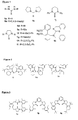

Classifications
-
- C—CHEMISTRY; METALLURGY
- C07—ORGANIC CHEMISTRY
- C07D—HETEROCYCLIC COMPOUNDS
- C07D233/00—Heterocyclic compounds containing 1,3-diazole or hydrogenated 1,3-diazole rings, not condensed with other rings
- C07D233/04—Heterocyclic compounds containing 1,3-diazole or hydrogenated 1,3-diazole rings, not condensed with other rings having one double bond between ring members or between a ring member and a non-ring member
- C07D233/28—Heterocyclic compounds containing 1,3-diazole or hydrogenated 1,3-diazole rings, not condensed with other rings having one double bond between ring members or between a ring member and a non-ring member with hetero atoms or with carbon atoms having three bonds to hetero atoms with at the most one bond to halogen, e.g. ester or nitrile radicals, directly attached to ring carbon atoms
- C07D233/30—Oxygen or sulfur atoms
- C07D233/42—Sulfur atoms
-
- C—CHEMISTRY; METALLURGY
- C07—ORGANIC CHEMISTRY
- C07C—ACYCLIC OR CARBOCYCLIC COMPOUNDS
- C07C1/00—Preparation of hydrocarbons from one or more compounds, none of them being a hydrocarbon
- C07C1/32—Preparation of hydrocarbons from one or more compounds, none of them being a hydrocarbon starting from compounds containing hetero-atoms other than or in addition to oxygen or halogen
- C07C1/321—Preparation of hydrocarbons from one or more compounds, none of them being a hydrocarbon starting from compounds containing hetero-atoms other than or in addition to oxygen or halogen the hetero-atom being a non-metal atom
-
- C—CHEMISTRY; METALLURGY
- C07—ORGANIC CHEMISTRY
- C07C—ACYCLIC OR CARBOCYCLIC COMPOUNDS
- C07C2/00—Preparation of hydrocarbons from hydrocarbons containing a smaller number of carbon atoms
- C07C2/86—Preparation of hydrocarbons from hydrocarbons containing a smaller number of carbon atoms by condensation between a hydrocarbon and a non-hydrocarbon
- C07C2/861—Preparation of hydrocarbons from hydrocarbons containing a smaller number of carbon atoms by condensation between a hydrocarbon and a non-hydrocarbon the non-hydrocarbon contains only halogen as hetero-atoms
-
- C—CHEMISTRY; METALLURGY
- C07—ORGANIC CHEMISTRY
- C07C—ACYCLIC OR CARBOCYCLIC COMPOUNDS
- C07C201/00—Preparation of esters of nitric or nitrous acid or of compounds containing nitro or nitroso groups bound to a carbon skeleton
- C07C201/06—Preparation of nitro compounds
- C07C201/12—Preparation of nitro compounds by reactions not involving the formation of nitro groups
-
- C—CHEMISTRY; METALLURGY
- C07—ORGANIC CHEMISTRY
- C07C—ACYCLIC OR CARBOCYCLIC COMPOUNDS
- C07C227/00—Preparation of compounds containing amino and carboxyl groups bound to the same carbon skeleton
- C07C227/04—Formation of amino groups in compounds containing carboxyl groups
- C07C227/10—Formation of amino groups in compounds containing carboxyl groups with simultaneously increasing the number of carbon atoms in the carbon skeleton
-
- C—CHEMISTRY; METALLURGY
- C07—ORGANIC CHEMISTRY
- C07C—ACYCLIC OR CARBOCYCLIC COMPOUNDS
- C07C335/00—Thioureas, i.e. compounds containing any of the groups, the nitrogen atoms not being part of nitro or nitroso groups
- C07C335/04—Derivatives of thiourea
- C07C335/16—Derivatives of thiourea having nitrogen atoms of thiourea groups bound to carbon atoms of six-membered aromatic rings of a carbon skeleton
-
- C—CHEMISTRY; METALLURGY
- C07—ORGANIC CHEMISTRY
- C07C—ACYCLIC OR CARBOCYCLIC COMPOUNDS
- C07C41/00—Preparation of ethers; Preparation of compounds having groups, groups or groups
- C07C41/01—Preparation of ethers
- C07C41/18—Preparation of ethers by reactions not forming ether-oxygen bonds
- C07C41/30—Preparation of ethers by reactions not forming ether-oxygen bonds by increasing the number of carbon atoms, e.g. by oligomerisation
-
- C—CHEMISTRY; METALLURGY
- C07—ORGANIC CHEMISTRY
- C07C—ACYCLIC OR CARBOCYCLIC COMPOUNDS
- C07C45/00—Preparation of compounds having >C = O groups bound only to carbon or hydrogen atoms; Preparation of chelates of such compounds
- C07C45/61—Preparation of compounds having >C = O groups bound only to carbon or hydrogen atoms; Preparation of chelates of such compounds by reactions not involving the formation of >C = O groups
- C07C45/67—Preparation of compounds having >C = O groups bound only to carbon or hydrogen atoms; Preparation of chelates of such compounds by reactions not involving the formation of >C = O groups by isomerisation; by change of size of the carbon skeleton
- C07C45/68—Preparation of compounds having >C = O groups bound only to carbon or hydrogen atoms; Preparation of chelates of such compounds by reactions not involving the formation of >C = O groups by isomerisation; by change of size of the carbon skeleton by increase in the number of carbon atoms
-
- C—CHEMISTRY; METALLURGY
- C07—ORGANIC CHEMISTRY
- C07C—ACYCLIC OR CARBOCYCLIC COMPOUNDS
- C07C67/00—Preparation of carboxylic acid esters
- C07C67/30—Preparation of carboxylic acid esters by modifying the acid moiety of the ester, such modification not being an introduction of an ester group
- C07C67/333—Preparation of carboxylic acid esters by modifying the acid moiety of the ester, such modification not being an introduction of an ester group by isomerisation; by change of size of the carbon skeleton
- C07C67/343—Preparation of carboxylic acid esters by modifying the acid moiety of the ester, such modification not being an introduction of an ester group by isomerisation; by change of size of the carbon skeleton by increase in the number of carbon atoms
-
- C—CHEMISTRY; METALLURGY
- C07—ORGANIC CHEMISTRY
- C07D—HETEROCYCLIC COMPOUNDS
- C07D239/00—Heterocyclic compounds containing 1,3-diazine or hydrogenated 1,3-diazine rings
- C07D239/02—Heterocyclic compounds containing 1,3-diazine or hydrogenated 1,3-diazine rings not condensed with other rings
- C07D239/06—Heterocyclic compounds containing 1,3-diazine or hydrogenated 1,3-diazine rings not condensed with other rings having one double bond between ring members or between a ring member and a non-ring member
- C07D239/08—Heterocyclic compounds containing 1,3-diazine or hydrogenated 1,3-diazine rings not condensed with other rings having one double bond between ring members or between a ring member and a non-ring member with hetero atoms directly attached in position 2
- C07D239/10—Oxygen or sulfur atoms
-
- C—CHEMISTRY; METALLURGY
- C07—ORGANIC CHEMISTRY
- C07D—HETEROCYCLIC COMPOUNDS
- C07D243/00—Heterocyclic compounds containing seven-membered rings having two nitrogen atoms as the only ring hetero atoms
- C07D243/04—Heterocyclic compounds containing seven-membered rings having two nitrogen atoms as the only ring hetero atoms having the nitrogen atoms in positions 1 and 3
-
- C—CHEMISTRY; METALLURGY
- C07—ORGANIC CHEMISTRY
- C07C—ACYCLIC OR CARBOCYCLIC COMPOUNDS
- C07C2531/00—Catalysts comprising hydrides, coordination complexes or organic compounds
- C07C2531/16—Catalysts comprising hydrides, coordination complexes or organic compounds containing coordination complexes
- C07C2531/22—Organic complexes
Definitions
- This invention relates to thiourea ligands and more particularly to thiourea-palladium complexes useful as catalysts for palladium catalyzed arylation of alkenes in a chemical reaction known as the Heck reaction, and as catalysts for palladium catalyzed Suzuki reactions of organoboric compounds and aryl halides.
- the palladium catalyzed arylation of olefins is one of the most versatile tools for C-C bond formation in organic synthesis.
- Phosphine ligands are generally used to stabilize the reactive palladium intermediates, and excellent results have been reported for Pd-catalyzed Heck reactions when sterically bulky mono-phosphines, diphosphines, cyclometalated phosphines, or phosphites are used as the ligands.
- the air-sensitivity of phosphine ligands places significant limits on their synthetic applications. Therefore, the development of phosphine-free palladium catalysts is a topic of enormous interest.
- Dai et al. also reported the development of thiourea-based ligands for the palladium-catalyzed bis(methoxycarbonylation) of terminal olefins (Eur. J. Org. Chem. 2003, 4346-4348 ).
- a reference bis-thiourea ligand represented by generic structure III: wherein n is an integer in the range of 1 to 8 inclusive; R 1 and R 2 are selected, independently for each occurrence, from the groups consisting of alkyl, cycloalkyl, aryl, aralkyl, and -(CH 2 ) m -R 80 ; R 3 , R 4 , R 5 , R 6 , R 3 , R 5 , R 6 , R 7 , R 8 , R 9 , R 10 , R 11 , R 12 , R 13 are selected, independently for each occurrence, from the groups consisting of H, alkyl, halogenated alkyl, cycloalkyl, aryl, aralkyl,-(CH 2 ) m -R 80 , COOR v (where R v alkyl, cycloalkyl, aryl, aralkyl, and -(CH 2 ) m -R 80 ), and CONR
- the invention provides acyclic and cyclic thioureas 1a-q ( Figures 1-3 ) and complexes thereof with Pd(0) or Pd(II) ( Figure 4 ), which serve as catalysts for the Heck reaction between iodobenzene and methyl acrylate at 100 °C (Table 1). Table 1.
- each thiourea ligand has a great influence on the catalytic efficacy of its palladium complex.
- Acyclic thioureas 1 a-c were almost completely inactive, as was also the case for the cyclic thiourea 1d featuring an NH moiety.
- Good activity was observed, however, when using the N,N' -disubstituted bulky thioureas 1e-1q of different ring sizes as the ligands (Table 1 entries 1-8); the catalyst loading could be lowered down to 0.0001 mol%.
- the reaction also could be conducted at high temperature under solvent-free conditions without affecting the catalytic efficacy (entries 12 and 13).
- TONs and TOFs were achieved in the coupling reactions (TONs up to 1,000,000, TOFs up to 200,000, for the reaction of Phl and n-butyl acrylate).
- the yield of coupling product was determined by 1 H NMR (400 MHz or 300 MHz) analysis, by comparing the peak intensities of the ⁇ / ⁇ -H of the product and the ortho -H of nitrobenzene (internal standard).
- Aryliodide or bromide (0.5 mmol), arylboric acid (0.6 mmol), K 2 CO 3 (1.0 mmol), bis-thiourea-Pd(dba) 2 1q complex in NMP (2.5 ⁇ 10 -3 M solution) and NMP/H 2 O (0.75 ml/0.25 ml) were added to a flask under aerobic conditions. The flask was sealed with rubber septa and heated at the desired temperature. The reaction mixture was diluted with ethyl acetate, washed with brine, and dried over Na 2 SO 4 . The solvent was removed and the residue was purified by a flash chromatography on silica gel to give the product.
Landscapes
- Chemical & Material Sciences (AREA)
- Organic Chemistry (AREA)
- Chemical Kinetics & Catalysis (AREA)
- Organic Low-Molecular-Weight Compounds And Preparation Thereof (AREA)
- Low-Molecular Organic Synthesis Reactions Using Catalysts (AREA)
Description
- This application claims priority of provisional application
u.s. serial no. 60/556,570, filed March 26, 2004 - This invention relates to thiourea ligands and more particularly to thiourea-palladium complexes useful as catalysts for palladium catalyzed arylation of alkenes in a chemical reaction known as the Heck reaction, and as catalysts for palladium catalyzed Suzuki reactions of organoboric compounds and aryl halides.
- The palladium catalyzed arylation of olefins (the Heck reaction) is one of the most versatile tools for C-C bond formation in organic synthesis. [1] Phosphine ligands are generally used to stabilize the reactive palladium intermediates, and excellent results have been reported for Pd-catalyzed Heck reactions when sterically bulky mono-phosphines, diphosphines, cyclometalated phosphines, or phosphites are used as the ligands.[2-5] The air-sensitivity of phosphine ligands, however, places significant limits on their synthetic applications. Therefore, the development of phosphine-free palladium catalysts is a topic of enormous interest.[6-8] Thioureas are air and moisture stable solids and have recently been employed as ligands in Ru-, Rh-, or Pd-catalyzed reactions.[9,10] Very recently, Z. Yang[11] and coworkers reported the Heck and Suzuki reactions of highly active arenediazonium salts catalyzed by a chiral thiourea -Pd complex. Dai et al. discloses a thiourea ligand applied in the Pd-catalyzed Heck, Suzuki and Suzuki carbonylative reactions (Adv. Synth. Catal. 2004, 346, 1669-1673) as well as in Pd-catalyzed cross-coupling reactions with arenediazonium salts (Org. Lett. 2004, 6, 221-224). Dai et al. also reported the development of thiourea-based ligands for the palladium-catalyzed bis(methoxycarbonylation) of terminal olefins (Eur. J. Org. Chem. 2003, 4346-4348).
- The invention provides thiourea-Pd(0) complexes that are air and moisture stable, highly active catalysts for the Heck reactions of aryl halides. More particularly, the invention provides the N,N'-disubstituted monothiourea ligand represented by generic structure I:

occurrence 
- A reference bis-thiourea ligand represented by generic structure II:

- A reference bis-thiourea ligand represented by generic structure III:

-
-
Figure 1 shows some representative structures of thiourea ligands I andreference ligands 1a to 1d and 1k. -
Figure 2 shows some representative structures of reference thiourea ligands II. -
Figure 3 shows some representative structures of reference thiourea ligands III. -
Figure 4 shows structures of cis- and trans-PdCl2·(1g)2. (Hydrogen atoms have been omitted for clarity. Thermal ellipsoids are shown at 30% probability). - The invention provides acyclic and
cyclic thioureas 1a-q (Figures 1-3 ) and complexes thereof with Pd(0) or Pd(II) (Figure 4 ), which serve as catalysts for the Heck reaction between iodobenzene and methyl acrylate at 100 °C (Table 1).Table 1. Screening thiourea ligands for the Pd-catalyzed Heck reaction of iodobenzene with methyl acrylatea 
entry ligand Pd (mol%) time (h) yield b TON 1 1e 0.1 1 >99 103 2 1g 0.01 2 >99 104 3 1h 0.01 2 >99 104 4 1i 0.01 1.5 >99 104 5 1l 0.01 6 86 8.6x10³ 6 1n 0.01 4 95 9.5x10³ 7 1o 0.01 4 45 4.5 x10 38 1p 0.01 4 99 104 9 1q 0.01 2 99 104 10 1i 0.0001 48 50 5x10⁵ 11c 1n 0.001 0.5 99 105 12d 1q 0.0002 5 99 5x10⁵ 13d 1n 0.0001 12 99 106 a Reactions were conducted under aerobic conditions. b Yield was determined by 1H NMR spectroscopy using nitrobenzene as the internal standard. c At 150°C. d At 180°C under solvent-free condition - The reactions were conducted in air and that all the reagents were used directly as received. The structure of each thiourea ligand has a great influence on the catalytic efficacy of its palladium complex.
Acyclic thioureas 1 a-c were almost completely inactive, as was also the case for thecyclic thiourea 1d featuring an NH moiety. Good activity was observed, however, when using the N,N'-disubstitutedbulky thioureas 1e-1q of different ring sizes as the ligands (Table 1 entries 1-8); the catalyst loading could be lowered down to 0.0001 mol%. The reaction also could be conducted at high temperature under solvent-free conditions without affecting the catalytic efficacy (entries 12 and 13). - The catalytic efficacy of the
thiourea 1g-Pd(0) and 1q-Pd(0) complex in the Heck reaction was studied further with a number of aryl halides and olefins at 100-130°C. Table 2 indicates that high yields were obtained using 0.01 mol% Pd catalyst for olefins such as butyl acrylates (entries 1-2), Olefins that are α- or β-substituted are also suitable substrates and give trisubstituted olefins,[12] but higher catalyst loadings and reaction temperatures were required (entries 3-4). In general, higher catalyst loadings and temperatures were required to force the completion of the reactions of the aryl bromides compared to the case of aryl iodides (entries 5-8). 3-Bromopyridine was also efficiently coupled with styrene in 90% yield in the presence of 0.1 mol% of Pd (entry 9). The deactivated bromide could be coupled at higher temperature (entry 10, 160°C).Table 2. Heck reaction of aryl iodides and bromides with olefins a 
entry ligand Arl 
Pd (mol%) time (h) yield (%) b 1 1g Phl 
0.01 2 99 2 1q 

0.01 3 99 3 1g Phl 
1 10 88 4 1q 

0.5 5 68 5 1g 
COOMe 0.1 15 92 6 1g 
Ph 0.1 15 99 7 1g PhBr Ph 0.1 24 74 8 1q 

0.1 10 99 9 1g 
Ph 0.1 24 90 10 1q 

0.5 24 76 - Beller[13] reported that the Heck reactions of aryl chlorides could be greatly improved when using Bu4NBr as an ionic liquid solvent.[14] In fact, this system is also suitable for the
thiourea 1g-Pd(0)-catalyzed Heck reactions of deactivated bromides and activated chlorides, when the reaction temperature is elevated slightly. The results were summarized in Table 3. Excellent yields were achieved for deactivated bromides after their reaction for 24 h in the presence of 0.5 mol% of Pd (entries 1-3), but incomplete conversion occurred when using 0.2 mol% Pd catalyst (entry 4). Under the same conditions, activated aryl chlorides were coupled successfully with styrene within 24 h when using 1 mol% of the Pd catalyst (entries 5-7). n-Butyl acrylate displayed reactivity that was slightly lower than that of styrene, but good yields were also obtained (entries 8-10). Chorobenzene itself, however, was completely inert, even when we used a higher loading of the Pd catalyst (2 mol%) (entry 11).Table 3. Heck reactions of deactivated bromides and activated chlorides with olefins 
entry ArX R Pd (mol%) time (h) yield (%) b 1 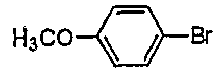
Ph 0.5 24 99 2 
COOnBu 0.5 24 99 3 
COOnBu 0.5 24 97 4 
Ph 0.2 30 80 5 
Ph 1 24 96 6 
Ph 0.5 30 67 7 
Ph 1 24 99 8 
COOnBu 2 24 77 9 
COOnBu 1 24 80 10 
COOnBu 1 24 90 11 
Ph 2 24 <5 - The Pd-catalysed Suzuki cross-coupling reaction of aryl halides with aryl boric acids provides a general and efficient synthetic route to biaryl compounds and has found wide application in many areas of organic synthesis.[15] The operationally simple and air-stable catalytic system of thiourea-Pd catalyst inspired us to investigate its scope in Suzuki reaction. As revealed in Table 4 using 1q as the ligand, for p-iodoanisole, excellent isolated yield was obtained at a loading of 0.01 mol% Pd at 100°C after 3h under aerobic conditions (Table 3, entry 1).
- Encouraged by the result, we began to evaluate the coupling reaction of aryl bromides with aryl boric acids. For activated bromides, almost quantitative yields were achieved within 3h in the presence of 0.1 mol% Pd under the same conditions (entries 2-6 ). On the other hand, low yield was obtained when deactivated p-bromoanisole was applied at 0.5 mol% Pd at 120°C (entry 7), and similar results were gained when a bulky monodentate 1i was used (entry 8). However, the yield could be increased adding 20 mol% TBAB (entry 9). For 3,5-difluorophenylboric acid, better result could be obtained when the reaction was conducted in neat TBAB (entry 10). Acceptable yield was achieved for p-nitrochlorobenzene at 1 mol% Pd adding 20 mol% TBAB (
entry 11 vs 12). Notably 1-bromostyrene also displayed high reactivity to phenylboric acid in thiourea-Pd system (entry 13). Moreover, potassium aryl trifluoroborates[16] have been found to be more reactive than the corresponding organoboric acid, and high yields were obtained at only 0.1 mol% Pd at 100°C (entries 14 and 15). We also conducted the Suzuki reaction at further decreased catalyst loading (0.01 mol%), and quantitative yield was obtained for 3-nitro-bromobenzene at 120°C in 3h (entry 16).Table 4. Suzuki coupling reaction catalyzed by 1q-Pd(dba)2 
Entry Ar1X Ar2B(OH)2 Pd (mol%) T (°C) t (h) Yield (%) 1 
PhB(OH)2 0.01 100 3 92 2 
PhB(OH)2 0.1 100 3 92 c 3 
PhB(OH)2 0.1 100 3 90 4 
PhB(OH)2 0.1 100 3 99 5 

0.1 100 2 97 6 

0.1 100 2 99 7 
PhB(OH)2 0.5 120 10 33 8 c 
PhB(OH)2 0.5 120 10 27 9 d 
PhB(OH)2 0.5 120 12 67 10 e 

0.5 130 12 51 11 f 
PhB(OH)2 1 130 40 10 12 d,f 
PhB(OH)2 1 130 24 49 13 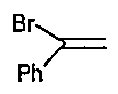
PhB(OH)2 0.1 100 1 80 14 
PhBF3K 0.1 100 1 99 15 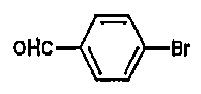
PhBF3K 0.1 100 1.5 87 16 
PhB(OH)2 0.01 120 3 99 - In conclusion, the palladium complexes of cyclic and acyclic thiourea demonstrated high thermal stability and excellent catalytic activity in Heck and Suzuki coupling reactions under aerobic conditions. Remarkable TONs and TOFs were achieved in the coupling reactions (TONs up to 1,000,000, TOFs up to 200,000, for the reaction of Phl and n-butyl acrylate).
-

- Two methods were used for the synthesis of cyclic thiourea ligands (Scheme 1).
- To a N,N'-diaryl diamine solution in dry toluene was added 1,1'-thiocarbonyl diimidazole (1.2 equiv). Then the solution was stirred at 100°C and the reaction was monitored by TLC. After completion, the solution was diluted with ethyl acetate and washed with dilute HCl and brine. The organic layer was concentrated under vacuum. The pure thiourea was obtained through flash chromatography or recrystallization from 95% ethanol.
- To a stirred mixture of N,N'-diaryl diamine and Na2CO3 (1.5 equiv) in dry THF was added a solution of thiophosgene (1.2 equiv) in THF dropwise at room temperature. After stirring at room temperature overnight, water and ethyl acetate were added. The organic layer was washed with dilute HCl and brine, dried and concentrated. The pure thiourea was obtained through flash chromatography or recrystallization from 95% ethanol.
- Using method A; 75% yield. M.p. 167-168 °C; 1H NMR (300 MHz, CDCl3) δ 7.42 (d, J = 9.0 Hz, 4H), 6.95 (d, J = 9.0 Hz, 4H), 4.08 (s, 4H), 3.81 (s, 6H); 13C NMR (75 MHz, CDCl3) δ 182.2, 158.1, 138.8, 127.5, 114.2, 55.4, 49.8; IR (cm-1): 1511, 1443, 1285; LRMS (EI): 314 (M+, 100); HRMS (EI): calcd for C17H18N2O2S (M+) 314.1089, found 314.1088.
- Using method B; 85% yield. M.p. 218-218.5 °C; 1H NMR (400 MHz, CDCl3) δ 6.91 (s, 4H), 3.94 (s, 4H), 2.26 (s, 6H), 2.24 (s, 12H); 13C NMR (75 MHz, CDCl3) δ 181.1, 138.2, 136.6, 134.5, 129.5, 47.6, 21.1, 17.8; IR (cm-1): 1488, 1331, 1271; LRMS (FAB): 339 (M++1, 100); HRMS (FAB): calcd for C21H26N2S (M++1) 339.1894, found 339.1879.
- Using method B; 70% yield. M.p. 152-153 °C; 1H NMR (300 MHz, CDCl3) δ 7.32 (t, J = 6.6 Hz, 2H), 7.20 (d, J = 7.5 Hz, 4H), 4.02 (s, 4H), 2.80-2.70 (m, 4H), 2.69-2.60 (m, 4H), 1.33 (t, J = 7.5 Hz, 12H); 13C NMR (75 MHz, CDCl3) δ 182.6, 142.5, 136.1, 128.8, 126.5, 49.1, 24.0, 14.4; IR (cm-1): 1484, 1285; LRMS (EI): 366 (M+, 39), 337 (100); HRMS (EI): calcd for C23H30N2S (M+) 366.2130, found 366.2120.
- Diimine: 92% yield. 1H NMR (300 MHz, CDCl3) δ 8.27 (s, 2H), 7.35 (d, J = 8.3 Hz, 2H), 7.25 (d, J = 8.3 Hz, 2H), 6.86 (s, 2H), 1.43 (s, 18H), 1.34 (s, 18H); 13C NMR (75 MHz, CDCl3) δ 158.6, 150.1, 150.0, 140.4, 126.0, 123.8, 116.0, 35.3, 34.4, 31.3, 30.5; IR (cm-1): 1609, 1492, 1265; LRMS (EI): 432 (M+, 100); HRMS (EI): calcd for C30H44N2 (M+) 432.3504, found 432.3504.
- Diamine: 90% yield. 1H NMR (300 MHz, CDCl3) δ 7.18 (d, J = 6.1 Hz, 2H), 6.80 (s, 2H), 6.75 (d, J = 6.1 Hz, 2H), 4.18 (br s, 2H, NH), 3.57 (s, 4H), 1.39 (s, 18H), 1.32 (s, 18H); 13C NMR (75 MHz, CDCl3) δ 149.9, 146.2, 131.2, 126.0, 114.6, 110.0, 45.0, 34.4, 33.8, 31.4, 30.2; IR (cm-1): 3688, 3601, 1561, 1265; LRMS (EI): 436 (M+, 20), 219 (100); HRMS (EI): calcd for C30H48N2 (M+) 436.3817, found 436.3817.
- Thiourea li was prepared using method B. A solution of Thiophosgene in dilute THF must be dropped very slowly. 1i was isolated as a white solid (75% yield) after flash chromatography on silica gel. M.p. 212-214 °C; 1H NMR (400 MHz, CDCl3) δ 7.45 (d, J = 8.5 Hz, 2H), 7.32 (d, J = 8.5 Hz, 2H), 7.02 (s, 2H), 4.06-4.03 (m, 2H), 3.93-3.91 (m, 2H), 1.50 (s, 18H), 1.30 (s, 18H); 13C NMR (100 MHz, CDCl3) δ 183.5, 150.4, 145.0, 140.8, 128.0, 127.8, 125.3, 53.4, 35.4, 34.3, 32.1, 31.3; IR (cm-1): 1418, 1275; LRMS (FAB): 479 (M+ + H); FAB-HRMS: calcd for C31H46N2S (M+ + H) 479.3460, found 479.3460.
- Using method A, 75% yield. M.p. 173-174 °C; 1H NMR (300 MHz, CDCl3) δ 7.41-7.15 (m, 10H), 3.82-3.77 (m, 4H), 2.32-2.24 (m, 2H); 13C NMR (75 MHz, CDCl3) δ 180.7, 147.4, 129.2, 127.4, 125.8, 51.4, 22.3; IR (cm-1): 1494, 1285; LRMS (EI): 268 (M+, 73); EI-HRMS: calcd for C16H16N2S (M+) 268.1034, found 268.1015.
- To a stirred suspension of racemic 2,2'-diamino-6,6'-dimethoxy-biphenyl2 (60mg, 0.25 mmol) and NaBH(OAc)3 (212 mg, 1 mmol) in dichloromethane (10 mL) was added a solution of benzaldehyde (0.06 ml, 0.58 mmol) in dichloromethane (2 mL) dropwise at room temperature. Then the mixture was stirred overnight. Flash chromatography on silica gel gave N,N'-dibenzyl diamine as a white solid (94 mg, 90%). 1H NMR (300 MHz, CDCl3) δ 7.26-7.11 (m, 12H), 6.38 (d, J = 8.2 Hz, 2H), 6.32 (d, J = 7.7 Hz, 2H), 4.32 (s, 4H), 4.17 (br s 2H), 3.70 (s, 6H); 13C NMR (75 MHz, CDCl3) δ 158.1, 147.3, 139.9, 129.6, 128.4, 126.7, 126.6, 107.2, 104.2, 100.6, 55.7, 47.5; IR (cm-1): 3432, 3086, 3051, 2938, 1586, 496, 1472, 1422, 1282, 1131; LRMS (EI): 424 (M+, 33), 333 (100); HRMS (EI): calcd for C28H28N2O2S (M+) 424.2151, found 424.2138.
-
Thiourea 1k was prepared using method B, 85% yield. M.p. 179-180 °C; 1H NMR (400 MHz, CDCl3) δ 7.27 (t, J = 8.2 Hz, 2H), 7.04-7.00 (m, 6H), 6.88 (d, J = 8.2 Hz, 2H), 6.83-6.80 (m, 6H), 5.72 (d, J = 15.3 Hz, 2H), 4.81 (d, J = 15.3 Hz, 2H), 3.75 (s, 6H); 13C NMR (75 MHz, CDCl3) δ 199.6, 157.2, 147.7, 137.1, 128.7, 127.9, 127.5, 126.7, 121.8, 113.9, 108.8, 56.8, 55.9; IR (cm-1): 3051, 1592, 1579, 1464, 1420, 1245, 1190; LRMS (EI): 466 (M+, 100), 375 (86); HRMS (EI): calcd for C29H26N2O2S (M+) 466.1715, found 466.1718. -

- A solution of N,N'-diaryl diamine (1.0 mmol) and NEt3 (3 equiv) in THF was dropped to a stirred solution of thiophosgene (3.0 equiv) in dry THF at 0 °C. After stirred at room temperature overnight, the organic layer was washed with water, dried and concentrated.
- For the synthesis of acyclic bis-thiourea, the dichloride obtained above and excess secondary amine were heated at 100 °C in a sealed pressure tube for 24 hours. Then the solution was diluted with EtOAc and washed with dilute HCl and brine. The organic layer was dried and concentrated. Flash chromatography gave the pure bis-thiourea as a white solid.
1l: White solid, 95 % yield; m.p 225-226 °C; 1H NMR (400 MHz, CDCl3) δ 7.37-7.34 (m, 2H), 7.21-7.18 (m, 2H), 7.18-7.00 (m, 2H), 4.87-4.79 (m, 2H), 4.15-4.11 (m, 2H), 3.54-3.35 (m, 8H), 1.44-1.19 (m, 48H); 13C NMR (100 MHz, CDCl3) δ 190.0, 149.1, 142.9, 141.3, 129.8, 127.4, 124.1, 54.0, 52.5, 34.0, 32.0, 31.1, 25.2, 24.2; IR (cm-1): 2958, 2865, 1609, 1440, 1397, 1362, 1244, 1185, 1133, 1026; ESI LRMS: 690(M, 2), 359(100); EI HRMS: calcd for C42H66N4S2690.4729, found 690.4717.
1m: White solid, 40 % yield for two steps; m.p 222-224 °C; 1H NMR (400 MHz, CDCl3) δ 6.83 (s, 4H), 4.29 (s, 4H), 3.30-3.27 (m, 8H), 2.25 (s, 6H), 2.18 (s, 12H), 1.39-1.36 (m, 4H), 1.17-1.15 (m, 8H); 13C NMR (100 MHz, CDCl3) δ 188.3, 141.3, 136.1, 134.3, 130.0, 51.9, 50.9, 25.2, 24.2, 20.7, 19.1; IR (cm-1): 2934, 2851, 1609, 1473, 1422, 1369, 1245, 1185, 1159, 1131, 1027; EI LRMS: 550 (M, 34), 152 (100); EI HRMS: calcd for C32H46N4S2550.3164, found 550.3158.
1n: White solid, 38 % yield for two steps; m.p 197-199 °C; 1H NMR (400 MHz, CDCl3) δ 6.82 (s, 4H), 4.29 (s, 4H), 3.30 (q, J = 6.8 Hz, 8H), 2.24 (s, 6H), 2.21 (s, 12H), 0.73 (t, J = 6.8 Hz, 12H); 13C NMR (100 MHz, CDCl3) δ 189.9, 141.6, 136.4, 135.0, 51.3, 46.0, 20.8, 19.2, 11.7; IR (cm-'): 2963, 2929, 1651, 1486, 1441, 1411, 1370, 1348, 1274, 1223, 1185, 1152, 1120, 1081, 1013; EI LRMS: 526 (M, 42), 277 (100); EI HRMS: calcd for C30H46N4S2526.3164, found 526.3168. -

- To a stirred mixture of diamine salt (2.0g, 9.2mmol) and Na2CO3 (0.85g, 8mmol) in CH3CN (15 ml) was added slowly a solution of Bis(bromomethy)mesitylene (0.72g, 2.3mmol) in CH3CN (10 ml) at 81 °C. The resulting mixture was refluxed for 24h. Then the mixture was diluted with ethyl acetate and washed with brine, dried and concentrated. The resulting oil was dissolved in THF (30ml) and Na2CO3 (1.27g, 12mmol) was added. Thiophosgene (0.7ml, 9mmol) in THF (10 ml) was dropped very slowly at room temperature. After stirred overnight, THF was removed, and water (20 ml) and ethyl acetate (40 ml) were added. The organic layer was washed with dilute HCl and brine, dried and concentrated. The pure bis-thiourea 1o was obtained through flash chromatography (20% ethyl acetate/petroleum ether) as a white solid (150mg, 11 %).
1o: m.p >230 °C; 1H NMR (400 MHz, CDCl3) δ 6.97 (s, 1H), 6.95 (s, 4H), 4.97 (s, 4H), 3.66 (t, J=8.4 Hz, 4H), 3.41 (t, J = 8.4 Hz, 4H), 2.43 (s, 3H), 2.40 (s, 6H), 2.29 (s, 6H), 2.22 (s, 12H); 13C NMR (100 MHz, CDCl3) δ 181.7, 138.6, 138.1, 137.8, 136.5, 134.7, 130.8, 130.7, 129.4, 46.9, 46.3, 45.5, 21.0, 20.4, 17.7, 16.2; IR (cm-1): 2917, 1609, 1489, 1437, 1408, 1326, 1309, 1273, 1233, 1033; ESI LRMS: 585 (M+1, 100); ESI HRMS: calcd for C35H44N4S2+Na 607.2905, found 607.2883. -

- Borane-dimethylsulfide (2M in THF) (3.6ml 7.2mmol, 8equiv.) was added to a solution of diamide (0.9 mmol) in THF (20ml) at 0 °C. Then the solution was refluxed overnight. After cooling to room temperature, methanol was added very slowly to destroy the excess borane. The solvent was removed. Methanol (10 ml) was added and removed again under reduced pressure. The resulting tetraamine was directly used in the next step.
- To a stirred mixture of tetraamine obtained above and Na2CO3 (6 equiv.) in dry THF was added a dilute solution of thiophosgene in THF. Then the mixture was stirred at room temperature overnight. The pure cyclic bis-thiourea was obtained as a white solid through flash chromatography and recrystalyzation from ethanol.
1p: White solid, 45% yield for two steps; m.p >230 °C; 1H NMR (400 MHz, CDCl3) δ 8.20 (s, 1 H), 7.51-7.44 (m, 3H), 6.97 (s, 4H), 4.29 (t, J = 8.4Hz, 4H), 3.91 (t, J = 8.4 Hz, 4H), 2.31 (s, 6H), 2.28 (s, 12H); 13C NMR (100 MHz, CDCl3) δ 180.7, 141.0, 138.3, 136.3, 134.7, 129.4, 128.6, 121.1, 120.2, 49.3, 47.2, 21.0, 17.8; IR (cm-1): 2917, 1604, 1489, 1421, 1306, 1277, 1076; ESI LRMS: 515 (M+1, 100); ESI HRMS: calcd for C30H34N4O4S2+H 515.2303, found 515.2294.
1q: White solid, 41% yield for two steps; m.p >230°C; 1HNMR (400 MHz, CDCl3) δ 8.24-8.22 (m, 1 H), 7.53-7.43 (m, 3H), 7.38 (d, J = 2.0 Hz, 2H), 7.35 (d, J = 2.0 Hz, 2H), 7.11 (s, 2H), 4.29-4.18 (m, 4H), 4.13-4.07 (m, 2H), 4.01-3.93 (m, 2H), 1.48 (s, 18H), 1.34 (s, 18H); 13C NMR (100MHz, CDCl3) δ 184.1, 150.5, 145.0, 141.2, 139.6, 128.8, 128.7, 128.2, 127.5, 125.5, 121.8, 121.6, 121.2, 52.6, 49.4, 35.4, 34.3, 31.9, 31.2; IR (cm-1): 2960, 1604, 1559, 1475, 1414, 1297, 1084; ESI LRMS: 655 (M+1, 37), 639 (100); ESI HRMS: calcd for C40H54N4S2+H 655.3868, found 655.3864 -

- Pd(dba)2 (1.5 mg, 0. 0025 mmol) and thiourea (4 equiv) were stirred in DMF (0.5 mL) for 0.5 h at rt. lodobenzene (0.28 mL, 2.5 mmol, substrate/catalyst ratio = 1000:1) and methyl acrylate (0.27 mL, 3.0 mmol) and TEA (0.42 mL, 3.0 mmol) were then added. The flask was sealed with rubber septa and heated at 100°C (the same result was obtained when the reaction was conducted with a condenser in open air). After the indicated time, the solution was diluted with ethyl acetate (20 mL) and washed with water and brine. Ethyl acetate was removed under vacuum and nitrobenzene (0.128 mL) was added as an internal standard. The yield of coupling product was determined by 1H NMR (400 MHz or 300 MHz) analysis, by comparing the peak intensities of the α/β-H of the product and the ortho-H of nitrobenzene (internal standard).


-

- Pd(dba)2 (1.5 mg, 0. 0025 mmol) and
thiourea 1g (3.4 mg, 0.01mmol) were stirred in NMP (0.5 mL) for 0.5 h at rt. Aryl bromide (2.5 mmol, S/C = 1000), olefin (3.8 mmol) and sodium acetate 330 mg (3.8 mmol) were added in turn. Then the flask was sealed with a septa and heated at 130°C. After indicated time, the solution was dilute with ethyl acetate (20 mL) and washed with water and brine. Ethyl acetate was removed under vacuum and nitrobenzene (0.128 mL) was added as internal standard. The yield of coupling product was determined by 1H NMR (400 MHz or 300 MHz) analysis, by comparing the peak intensities of the α/β-H of the product and the ortho-H of nitrobenzene (internal standard).


-

- Pd(dba)2 (1.5 mg, 0. 0025 mmol),
thiourea 1g (3.4mg, 0.01 mmol) and sodium acetate (33 mg, 3.8 mmol) were stirred in molten TBAB (0.5 g) for 10 min at 100°C. Aryl halide (0.25 mmol, S/C=100) and olefin (0.38 mmol) were added in turn. Then the flask was sealed with a septa and heated at 135°C. After indicated time, the solution was dilute with ethyl acetate (20 mL) and washed with water and brine. Ethyl acetate was removed under vacuum and nitrobenzene (0.0128 mL) was added as internal standard. The yield of coupling product was determined by 1H NMR (400 MHz or 300 MHz) analysis, by comparing the peak intensities of the α/β-H of the product and the ortho-H of nitrobenzene (internal standard).


-

- Aryliodide or bromide (0.5 mmol), arylboric acid (0.6 mmol), K2CO3 (1.0 mmol), bis-thiourea-Pd(dba)2 1q complex in NMP (2.5×10⁻³ M solution) and NMP/H2O (0.75 ml/0.25 ml) were added to a flask under aerobic conditions. The flask was sealed with rubber septa and heated at the desired temperature. The reaction mixture was diluted with ethyl acetate, washed with brine, and dried over Na2SO4. The solvent was removed and the residue was purified by a flash chromatography on silica gel to give the product.


- The following notes correspond to the superscripts contained in the application. Each of the references listed below are incorporated by reference herein.
- (1) (a) Heck, R. F. Acc. Chem. Res. 1979, 12, 146. (b) De Meijere, A.; Meyer, F. E. Angew. Chem., Int. Ed. 1994, 33, 2379. (c) Cabri, W.; Candiani, I. Acc. Chem. Res. 1995, 28, 2. (d) Negishi, E.; Coperet, C.; Ma, S.; Liou, S.; Liu, F. Chem. Rev. 1996, 96, 365. (e) Crisp, G. T. Chem. Soc. Rev. 1998, 27, 427. (f) Beletskaya, I. P.; Cheprakov, A. V. Chem. Rev. 2000, 100, 3009. (g) Whitcombe, N. J.; Kuok Hii, K.; Gibson, S. E. Tetrahedron 2001, 57, 7449. (h) Dounay, A. B.; Overman, L. E. Chem Rev. 2003, 103, 2945
- (2) (a) Littke, A. F.; Fu, G. C. J. Org. Chem. 1999, 64, 10. (b) Littke, A. F.; Fu, G. C. J. Am. Chem. Soc. 2001, 123, 6989. (c) Shaughnessy, K. H.; Kim, P.; Hartwig, J. F. J. Am. Chem. Soc. 1999, 121, 2123. (d) Stambuli, J. P.; Stauffer, S. R.; Shaughnessy, K. H.; Hartwig, J. F. J. Am. Chem. Soc. 1999, 121, 2677. (e) Ehrentraut, A.; Zapf, A.; Beller, M. Synlett 2000, 1589.
- (3) (a) Ben-David, Y.; Portnoy, M.; Gozin, M., Milstein, . (b) Portnoy, M.; Milstein, . (c) Portnoy, M.; Ben-David, Y.; Milstein, . (d) Portnoy, M.; Ben-Dvid, Y.; Rousso, I.; Milstein, . (e) Shaw, B. L.; Perera, S. D. Chem. Commun. 1998, 1863.
- (4) For recent reviews on palladacycles for Heck reactions, see: (a) Dupont, J.; Pfeffer, M.; Spencer, J. Eur. J. Inorg. Chem. 2001, 1917. (b) Benford, R. B. Chem. Commun. 2003, 1787.
- (5) For the use of tetraphenylphosphonium salts in Heck reactions, see: Reetz, M. T.; Lohmer, G.; Schwickardi, R. Angew. Chem., Int. Ed., 1998, 37, 481.
- (6) For phosphorus-free palladacycles as catalysts, see Ref. 4.
- (7) For recent reviews on N-heterocyclic carbene-palladium catalysts, see: (a) Herrmann, W. A. Angew. Chem., Int. Ed. 2002, 41, 1290. (b) Yong, B. S.; Nolan, S. P. Chemtracts-Organic Chemistry 2003, 205.
- (8) For recent reports on Heck reactions using catalysts that are air and moisture stable, see: (a) Buchmeiser, M. R.; Wurst, K. J. Am. Chem. Soc. 1999, 121, 11101. (b) Silberg, J.; Schareina, T.; Kempe, R.; Wurst, K.; Buchmeiser, M. R. J. Organomet. Chem. 2001, 622, 6. (c) Masllorens, J.; Moreno-Manas, M.; Pla-Quintana, A.; Roglans, A. Org. Lett. 2003, 5, 1559.
- (9) (a) Touchard, F.; Fache, F.; Lemaire, M. Tetrahedron: . (b) Touchard, F.; Gamez, P.; Fache, F.; Lemaire, M. Tetrahedron Lett. 1997, 38, 2275. (c) Touchard, F.; Bernard, M.; Fache, F.; Delbecq, F.; Guiral, V.; Sautet, P.; Lemaire, M. J. Organomet. Chem. 1998, 567, 133. (d) Tommasino, M. L.; Casalta, M.; Breuzard, J. A. J.; Lemaire, M. Tetrahedron: . (e) Breuzard, J. A. J.; Tommasino, M. L.; Touchard, F.; Lemaire, M.; Bonnet, M. C. J. Mol. Catal. A: Chem. 2000, 156, 223. (f) Touchard, F.; Bernard, M.; Fache, F.; Lemaire, M. J. Mol. Catal. A: Chem. 1999, 140, 1.
- (10) (a) De Munno, G.; Gabriele, B.; Salerno, G. Inorg. Chim. Acta 1995, 234, 181. (b) Gabriele, B.; Salerno, G.; Costa, M.; Chiusoli, G. P. J. Organomet. Chem. 1995, 503, 21. (c) Zhang, T. Y.; Allen, M. J. Tetrahedron Lett. 1999, 40, 5813. (d) Nan, Y.; Miao, H.; Yang, Z. Org. Lett. 2000, 2, 297. (e) Miao, H.; Yang, Z. Org. Lett. 2000, 2, 1765. (f) Hu, Y.; Yang, Z. Org. Lett. 2001, 3, 1387.
- (11) Dai, M.; Liang, B.; Wang, C.; Chen, J.; Yang, Z. Org. Lett. 2004, 6, 221.
- (12) Gurtler, C.; Buchwald, S. L. Chem. Eur. J. 1999, 5, 3107 and references therein.
- (13) Selvakumar, K.; Zapf, A.; Beller, M. Org. Lett. 2002, 4, 3031.
- (14) For recent reviews on the use of ionic liquids as solvents, see: (a) Olivier-Bourbigou, H.; Magna, L. J. Mol. Catal. A: Chem. 2002, 182-183, 419. (b) Dupont, J.; de Souza, R. F.; Suarez, P. A. Z. Chem. Rev. 2002, 102, 3667. (c) Davis, J. H. Jr.; Fox, P. A. Chem. Commun. 2003, 1209.
- (15) For recent reviews on Suzuki coupling, see: (a) Hassan, J.; Sévignon, M.; Gozzi, C.; Schulz, E.; Lemaire, M. Chem. Rev. 2002, 102, 1359. (b) Miura, M. Angew. Chem. Int. Ed. 2004, 43, 2201.
- (16) (a) Darses, S.; Michaud, G.; Genet, J.-P. Eur. J. Org. Chem. 1999, 1875; (b) Molander, G. A.; Katona, B. W.; Machrouhi, F. J. Org. Chem. 2002, 67, 8416. (b) Darses, S. Genet, J.-P. Eur. J. Org. Chem. 2003, 4313.
Claims (7)
- A Pd(0) complex containing the N,N'-disubstituted thiourea ligand represented by structure I:
 n = 1 and 2;R1 and R2 are independently for each occurrence 2,4,6-trimethylphenyl, 2,5-di-t-butylphenyl, 2,6-diethylphenyl or t-butyl;R3, R4, R5, and R6 are absent;or
the N,N'-disubstituted thiourea ligand represented by structure I has the following formula:
the N,N'-disubstituted thiourea compound, when chiral, is a mixture of enantiomers or a single enantiomer. - A method of producing aryl substituted olefins from aryl halides and olefins by a Heck reaction using a palladium catalyst and a N,N'-disubstituted thiourea ligand under conditions effective to generate aryl olefins (Scheme 1):

 Ar is an unsubstituted and substituted monocyclic aromatic moiety, or polycyclic aromatic or heteroaromatic moiety;X is Cl, Br, I, -OS(O)2alkyl, -OS(O)2aryl or -SO2Cl;R is H, alkyl, aryl, heteroaryl, aralkyl, alkyoxyl, amino, or trialkylsilyl;the transition metal is a Group VIIIA metals (Pd(dba)2, Pd(OAc)2, PdCl2, PdCl2 (CH3CN)2, or NiCl2, Ni(COD)2);the base is a carbonate, an acetate, a fluoride, a trialkylamine, a phosphate, an alkoxide, or an amide; andthe N,N'-disubstituted thiourea ligand is the N,N'-disubstituted thiourea ligand according to claim 1.
 - The method of claim 2, wherein
the transition metal is palladium; and
the base is trialkylamine, acetates, fluorides, carbonates, phosphate, hydroxides, and amides. - The method of claim 3, wherein
X represents I, Br, or Cl; R represents alkyl, aryl, heteroaryl. - The method depicted in Scheme 2:
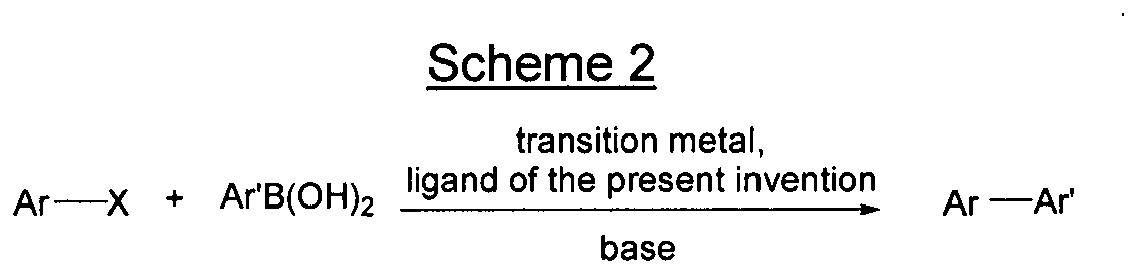 Ar and Ar' are independently selected from the group consisting of unsubstituted or substituted monocyclic or polycyclic aromatic or heteroaromatic moieties;X is Cl, Br, I, -OS(O)2alkyl, -OS(O)2aryl, or -SO2Cl ;the transition metal is a Group VIIIA metal (Pd(dba)2, Pd(OAc)2, PdCl2 and NiCl2, Ni(COD)2);the base is a carbonate, an acetate, a trialkylamine, a phosphate, or an alkoxide; andthe N,N'-disubstituted thiourea ligand is the N,N'-disubstituted thiourea ligand according to claim 1.
 - The method of claim 5, wherein
the transition metal is palladium; and
the base is trialkylamine, acetates, carbonates or phosphate. - The method of claim 6, wherein
X represents I, Br, or SO2Cl; and Ar and Ar' represent aryl, or heteroaryl.
Applications Claiming Priority (2)
| Application Number | Priority Date | Filing Date | Title |
|---|---|---|---|
| US55657004P | 2004-03-26 | 2004-03-26 | |
| PCT/CN2005/000391 WO2005091697A2 (en) | 2004-03-26 | 2005-03-28 | Thiourea compositions and uses thereof |
Publications (3)
| Publication Number | Publication Date |
|---|---|
| EP1730117A2 EP1730117A2 (en) | 2006-12-13 |
| EP1730117A4 EP1730117A4 (en) | 2008-07-02 |
| EP1730117B1 true EP1730117B1 (en) | 2015-12-02 |
Family
ID=35056596
Family Applications (1)
| Application Number | Title | Priority Date | Filing Date |
|---|---|---|---|
| EP05732549.0A Expired - Lifetime EP1730117B1 (en) | 2004-03-26 | 2005-03-28 | Thiourea compositions and uses thereof |
Country Status (5)
| Country | Link |
|---|---|
| US (1) | US7501510B2 (en) |
| EP (1) | EP1730117B1 (en) |
| JP (1) | JP5047777B2 (en) |
| CN (1) | CN1938280B (en) |
| WO (1) | WO2005091697A2 (en) |
Families Citing this family (7)
| Publication number | Priority date | Publication date | Assignee | Title |
|---|---|---|---|---|
| DE102006033091A1 (en) * | 2006-07-14 | 2008-01-24 | Bayer Cropscience Ag | Process for preparing alkenylnitrobenzene derivatives which are unbranched in the 1'-position |
| CA2963784A1 (en) | 2007-06-08 | 2008-12-18 | Mannkind Corporation | Ire-1.alpha. inhibitors |
| WO2011018790A1 (en) * | 2009-08-12 | 2011-02-17 | Technion Research & Development Foundation Ltd. | Polycyclic compounds, termed calixurenes, and uses thereof |
| CN102471186B (en) * | 2009-08-18 | 2015-09-23 | 日本曹达株式会社 | Process for the preparation of aryl, heteroaryl or alkenyl substituted unsaturated hydrocarbons |
| CN103254245A (en) * | 2012-12-26 | 2013-08-21 | 苏州大学 | Synthesis method of metallic nickel, copper and zinc complexes of thiourea derivatives |
| CN103664747A (en) * | 2013-12-06 | 2014-03-26 | 刘雷芳 | Preparation method for heterocyclic biphenyl compound |
| CN108344719B (en) * | 2018-01-03 | 2020-05-05 | 江西理工大学 | A sensor based on iridium complex for detection of halogenated alkanes and its application |
Family Cites Families (11)
| Publication number | Priority date | Publication date | Assignee | Title |
|---|---|---|---|---|
| US3976625A (en) * | 1974-12-26 | 1976-08-24 | The B.F. Goodrich Company | Vulcanizable compositions containing diene/nitrile polymers having active halogen sites |
| FR2342853A1 (en) * | 1976-03-01 | 1977-09-30 | Eastman Kodak Co | TREATMENT SHEET FOR FORMING A COLOR IMAGE BY DECOLORATION OF COLORANTS IN THE PRESENCE OF SILVER BY DRY HEAT TREATMENT, PHOTOGRAPHIC PRODUCTS AND METHOD USING THIS TREATMENT SHEET |
| JPS58181040A (en) * | 1982-04-16 | 1983-10-22 | Fuji Photo Film Co Ltd | Method for processing direct positive photosensitive silver halide material |
| JPS6080840A (en) * | 1983-10-07 | 1985-05-08 | Fuji Photo Film Co Ltd | Manufacture of photographic silver halide emulsion, and photosensitive silver halide material |
| EP0228085B1 (en) * | 1985-12-26 | 1993-06-09 | Fuji Photo Film Co., Ltd. | Light-sensitive material containing silver halide, reducing agent and polymerizable compound, and image-forming method employing the same |
| JPS63208843A (en) * | 1987-02-26 | 1988-08-30 | Mitsubishi Paper Mills Ltd | Negative image forming method |
| US5035969A (en) * | 1989-02-09 | 1991-07-30 | Fuji Photo Film Co., Ltd. | Electrophotographic photoreceptor containing phthalocyanine |
| JPH09160251A (en) * | 1995-12-12 | 1997-06-20 | Mitsubishi Paper Mills Ltd | Plate making method of lithographic printing plate |
| US5935913A (en) * | 1998-10-16 | 1999-08-10 | Uniroyal Chemical Company, Inc. | Cyclic thiourea additives for lubricants |
| US6368779B1 (en) * | 2000-09-21 | 2002-04-09 | Eastman Kodak Company | High speed photothermographic materials and methods of making and using same |
| CN1738797A (en) * | 2002-11-19 | 2006-02-22 | 阿基里昂药品公司 | Substituted aryl thioureas and related compounds, inhibitors of viral replication |
-
2005
- 2005-03-24 US US11/089,197 patent/US7501510B2/en active Active
- 2005-03-28 WO PCT/CN2005/000391 patent/WO2005091697A2/en not_active Ceased
- 2005-03-28 EP EP05732549.0A patent/EP1730117B1/en not_active Expired - Lifetime
- 2005-03-28 CN CN2005800097133A patent/CN1938280B/en not_active Expired - Lifetime
- 2005-03-28 JP JP2007504240A patent/JP5047777B2/en not_active Expired - Fee Related
Also Published As
| Publication number | Publication date |
|---|---|
| EP1730117A4 (en) | 2008-07-02 |
| WO2005091697A3 (en) | 2006-03-09 |
| US20050215783A1 (en) | 2005-09-29 |
| JP2007530461A (en) | 2007-11-01 |
| JP5047777B2 (en) | 2012-10-10 |
| CN1938280B (en) | 2010-06-02 |
| CN1938280A (en) | 2007-03-28 |
| US7501510B2 (en) | 2009-03-10 |
| WO2005091697A2 (en) | 2005-10-06 |
| EP1730117A2 (en) | 2006-12-13 |
Similar Documents
| Publication | Publication Date | Title |
|---|---|---|
| Peng et al. | Room-temperature highly efficient Suzuki–Miyaura reactions in water in the presence of Stilbazo | |
| CN101952298B (en) | Ligands for transition-metal-catalyzed cross-couplings, and methods of use thereof | |
| Jin et al. | Highly Active, Well‐Defined (Cyclopentadiene)(N‐heterocyclic carbene) palladium Chloride Complexes for Room‐Temperature Suzuki–Miyaura and Buchwald–Hartwig Cross‐Coupling Reactions of Aryl Chlorides and Deboronation Homocoupling of Arylboronic Acids | |
| CN1075050C (en) | Process for preparing atomatic olefins | |
| JP2006503085A (en) | Ruthenium complexes as (preliminary) catalysts for metathesis reactions | |
| Consorti et al. | On the Use of Non‐Symmetrical Mixed PCN and SCN Pincer Palladacycles as Catalyst Precursors for the Heck Reaction | |
| Li | Highly Active, Air-Stable Palladium Catalysts for the C− C and C− S Bond-Forming Reactions of Vinyl and Aryl Chlorides: Use of Commercially Available [(t-Bu) 2P (OH)] 2PdCl2,[(t-Bu) 2P (OH) PdCl2] 2, and [[(t-Bu) 2PO⊙⊙⊙ H⊙⊙⊙ OP (t-Bu) 2] PdCl] 2 as Catalysts | |
| Iranpoor et al. | 1, 3, 2, 4-Diazadiphosphetidines as new P–N ligands for palladium-catalyzed Heck reaction in water | |
| EP2583958B1 (en) | Ligands for metals and improved metal-catalyzed processes based thereon | |
| US20070073055A1 (en) | Transition metal complexes of N-heterocyclic carbenes, method of preparation and use in transition metal catalyzed organic transformations | |
| Zhao et al. | Suzuki cross-coupling mediated by tetradentate N-heterocyclic carbene (NHC)–palladium complexes in an environmentally benign solvent | |
| US20030008768A1 (en) | Catalyst for aromatic C-O, C-N, and C-C bond formation | |
| Ren et al. | Study on the Heck reaction promoted by carbene adduct of cyclopalladated ferrocenylimine and the related reaction mechanism | |
| Mamidala et al. | Synthesis of a cyclometalated 1, 3, 5-triphenylpyrazole palladium dimer and its activity towards cross coupling reactions | |
| Zhang et al. | Palladacycle as highly efficient catalyst for ring opening of oxabicyclic alkenes with organozinc halides | |
| US7501510B2 (en) | Thiourea compositions and uses thereof | |
| Srinivas et al. | Thiopseudourea ligated palladium complexes: synthesis, characterization and application as catalysts for Suzuki–Miyaura, Sonogashira, Heck and Hiyama reactions | |
| KR20170070042A (en) | Method for coupling a first compound to a second compound | |
| Peng et al. | Unexpectedly superior efficiency of chloride-directed double Suzuki–Miyaura cross-coupling reactions to bromide-directed reactions for the synthesis of sterically hindered 2, 7-diaryl fluorenes | |
| US6066766A (en) | Process for the preparation of 4-chlorobiphenyls | |
| CN112469690B (en) | Method for producing arylamines | |
| US7485744B2 (en) | Iron-catalyzed allylic alkylation | |
| US20040143139A1 (en) | Process for the production of aminodiphenylamines | |
| EP3303353B1 (en) | Process | |
| JP2019011286A (en) | Phosphine compound and coupling catalyst using the same as a ligand |
Legal Events
| Date | Code | Title | Description |
|---|---|---|---|
| PUAI | Public reference made under article 153(3) epc to a published international application that has entered the european phase |
Free format text: ORIGINAL CODE: 0009012 |
|
| 17P | Request for examination filed |
Effective date: 20060918 |
|
| AK | Designated contracting states |
Kind code of ref document: A2 Designated state(s): AT BE BG CH CY CZ DE DK EE ES FI FR GB GR HU IE IS IT LI LT LU MC NL PL PT RO SE SI SK TR |
|
| DAX | Request for extension of the european patent (deleted) | ||
| RIC1 | Information provided on ipc code assigned before grant |
Ipc: C07C 335/16 20060101ALI20080515BHEP Ipc: C07F 15/00 20060101ALI20080515BHEP Ipc: C07D 233/14 20060101ALI20080515BHEP Ipc: C07D 403/10 20060101ALI20080515BHEP Ipc: C07D 245/04 20060101ALI20080515BHEP Ipc: C07D 243/04 20060101ALI20080515BHEP Ipc: C07D 239/70 20060101ALI20080515BHEP Ipc: C07D 235/02 20060101ALI20080515BHEP Ipc: C07D 233/16 20060101AFI20061009BHEP |
|
| A4 | Supplementary search report drawn up and despatched |
Effective date: 20080529 |
|
| 17Q | First examination report despatched |
Effective date: 20080915 |
|
| GRAP | Despatch of communication of intention to grant a patent |
Free format text: ORIGINAL CODE: EPIDOSNIGR1 |
|
| INTG | Intention to grant announced |
Effective date: 20150625 |
|
| GRAS | Grant fee paid |
Free format text: ORIGINAL CODE: EPIDOSNIGR3 |
|
| GRAA | (expected) grant |
Free format text: ORIGINAL CODE: 0009210 |
|
| AK | Designated contracting states |
Kind code of ref document: B1 Designated state(s): AT BE BG CH CY CZ DE DK EE ES FI FR GB GR HU IE IS IT LI LT LU MC NL PL PT RO SE SI SK TR |
|
| REG | Reference to a national code |
Ref country code: GB Ref legal event code: FG4D |
|
| REG | Reference to a national code |
Ref country code: AT Ref legal event code: REF Ref document number: 763553 Country of ref document: AT Kind code of ref document: T Effective date: 20151215 Ref country code: CH Ref legal event code: EP |
|
| REG | Reference to a national code |
Ref country code: IE Ref legal event code: FG4D |
|
| REG | Reference to a national code |
Ref country code: DE Ref legal event code: R096 Ref document number: 602005048006 Country of ref document: DE |
|
| REG | Reference to a national code |
Ref country code: CH Ref legal event code: NV Representative=s name: PATENTANWALTSKANZLEI NUECKEL, CH |
|
| REG | Reference to a national code |
Ref country code: NL Ref legal event code: MP Effective date: 20160302 |
|
| REG | Reference to a national code |
Ref country code: LT Ref legal event code: MG4D |
|
| REG | Reference to a national code |
Ref country code: AT Ref legal event code: MK05 Ref document number: 763553 Country of ref document: AT Kind code of ref document: T Effective date: 20151202 |
|
| PG25 | Lapsed in a contracting state [announced via postgrant information from national office to epo] |
Ref country code: LT Free format text: LAPSE BECAUSE OF FAILURE TO SUBMIT A TRANSLATION OF THE DESCRIPTION OR TO PAY THE FEE WITHIN THE PRESCRIBED TIME-LIMIT Effective date: 20151202 Ref country code: ES Free format text: LAPSE BECAUSE OF FAILURE TO SUBMIT A TRANSLATION OF THE DESCRIPTION OR TO PAY THE FEE WITHIN THE PRESCRIBED TIME-LIMIT Effective date: 20151202 |
|
| PG25 | Lapsed in a contracting state [announced via postgrant information from national office to epo] |
Ref country code: FI Free format text: LAPSE BECAUSE OF FAILURE TO SUBMIT A TRANSLATION OF THE DESCRIPTION OR TO PAY THE FEE WITHIN THE PRESCRIBED TIME-LIMIT Effective date: 20151202 Ref country code: AT Free format text: LAPSE BECAUSE OF FAILURE TO SUBMIT A TRANSLATION OF THE DESCRIPTION OR TO PAY THE FEE WITHIN THE PRESCRIBED TIME-LIMIT Effective date: 20151202 Ref country code: PL Free format text: LAPSE BECAUSE OF FAILURE TO SUBMIT A TRANSLATION OF THE DESCRIPTION OR TO PAY THE FEE WITHIN THE PRESCRIBED TIME-LIMIT Effective date: 20151202 Ref country code: GR Free format text: LAPSE BECAUSE OF FAILURE TO SUBMIT A TRANSLATION OF THE DESCRIPTION OR TO PAY THE FEE WITHIN THE PRESCRIBED TIME-LIMIT Effective date: 20160303 Ref country code: NL Free format text: LAPSE BECAUSE OF FAILURE TO SUBMIT A TRANSLATION OF THE DESCRIPTION OR TO PAY THE FEE WITHIN THE PRESCRIBED TIME-LIMIT Effective date: 20151202 Ref country code: SE Free format text: LAPSE BECAUSE OF FAILURE TO SUBMIT A TRANSLATION OF THE DESCRIPTION OR TO PAY THE FEE WITHIN THE PRESCRIBED TIME-LIMIT Effective date: 20151202 |
|
| PG25 | Lapsed in a contracting state [announced via postgrant information from national office to epo] |
Ref country code: IS Free format text: LAPSE BECAUSE OF FAILURE TO SUBMIT A TRANSLATION OF THE DESCRIPTION OR TO PAY THE FEE WITHIN THE PRESCRIBED TIME-LIMIT Effective date: 20151202 |
|
| PG25 | Lapsed in a contracting state [announced via postgrant information from national office to epo] |
Ref country code: IT Free format text: LAPSE BECAUSE OF FAILURE TO SUBMIT A TRANSLATION OF THE DESCRIPTION OR TO PAY THE FEE WITHIN THE PRESCRIBED TIME-LIMIT Effective date: 20151202 Ref country code: CZ Free format text: LAPSE BECAUSE OF FAILURE TO SUBMIT A TRANSLATION OF THE DESCRIPTION OR TO PAY THE FEE WITHIN THE PRESCRIBED TIME-LIMIT Effective date: 20151202 |
|
| PG25 | Lapsed in a contracting state [announced via postgrant information from national office to epo] |
Ref country code: SK Free format text: LAPSE BECAUSE OF FAILURE TO SUBMIT A TRANSLATION OF THE DESCRIPTION OR TO PAY THE FEE WITHIN THE PRESCRIBED TIME-LIMIT Effective date: 20151202 Ref country code: PT Free format text: LAPSE BECAUSE OF FAILURE TO SUBMIT A TRANSLATION OF THE DESCRIPTION OR TO PAY THE FEE WITHIN THE PRESCRIBED TIME-LIMIT Effective date: 20160404 Ref country code: BE Free format text: LAPSE BECAUSE OF NON-PAYMENT OF DUE FEES Effective date: 20160331 Ref country code: RO Free format text: LAPSE BECAUSE OF FAILURE TO SUBMIT A TRANSLATION OF THE DESCRIPTION OR TO PAY THE FEE WITHIN THE PRESCRIBED TIME-LIMIT Effective date: 20151202 Ref country code: EE Free format text: LAPSE BECAUSE OF FAILURE TO SUBMIT A TRANSLATION OF THE DESCRIPTION OR TO PAY THE FEE WITHIN THE PRESCRIBED TIME-LIMIT Effective date: 20151202 Ref country code: IS Free format text: LAPSE BECAUSE OF FAILURE TO SUBMIT A TRANSLATION OF THE DESCRIPTION OR TO PAY THE FEE WITHIN THE PRESCRIBED TIME-LIMIT Effective date: 20160402 |
|
| REG | Reference to a national code |
Ref country code: DE Ref legal event code: R097 Ref document number: 602005048006 Country of ref document: DE |
|
| REG | Reference to a national code |
Ref country code: DE Ref legal event code: R119 Ref document number: 602005048006 Country of ref document: DE |
|
| PLBE | No opposition filed within time limit |
Free format text: ORIGINAL CODE: 0009261 |
|
| STAA | Information on the status of an ep patent application or granted ep patent |
Free format text: STATUS: NO OPPOSITION FILED WITHIN TIME LIMIT |
|
| PG25 | Lapsed in a contracting state [announced via postgrant information from national office to epo] |
Ref country code: MC Free format text: LAPSE BECAUSE OF FAILURE TO SUBMIT A TRANSLATION OF THE DESCRIPTION OR TO PAY THE FEE WITHIN THE PRESCRIBED TIME-LIMIT Effective date: 20151202 Ref country code: DK Free format text: LAPSE BECAUSE OF FAILURE TO SUBMIT A TRANSLATION OF THE DESCRIPTION OR TO PAY THE FEE WITHIN THE PRESCRIBED TIME-LIMIT Effective date: 20151202 Ref country code: LU Free format text: LAPSE BECAUSE OF FAILURE TO SUBMIT A TRANSLATION OF THE DESCRIPTION OR TO PAY THE FEE WITHIN THE PRESCRIBED TIME-LIMIT Effective date: 20160328 |
|
| REG | Reference to a national code |
Ref country code: CH Ref legal event code: PL |
|
| 26N | No opposition filed |
Effective date: 20160905 |
|
| GBPC | Gb: european patent ceased through non-payment of renewal fee |
Effective date: 20160328 |
|
| PG25 | Lapsed in a contracting state [announced via postgrant information from national office to epo] |
Ref country code: SI Free format text: LAPSE BECAUSE OF FAILURE TO SUBMIT A TRANSLATION OF THE DESCRIPTION OR TO PAY THE FEE WITHIN THE PRESCRIBED TIME-LIMIT Effective date: 20151202 |
|
| REG | Reference to a national code |
Ref country code: IE Ref legal event code: MM4A |
|
| PG25 | Lapsed in a contracting state [announced via postgrant information from national office to epo] |
Ref country code: BE Free format text: LAPSE BECAUSE OF FAILURE TO SUBMIT A TRANSLATION OF THE DESCRIPTION OR TO PAY THE FEE WITHIN THE PRESCRIBED TIME-LIMIT Effective date: 20151202 |
|
| REG | Reference to a national code |
Ref country code: FR Ref legal event code: ST Effective date: 20161130 |
|
| PG25 | Lapsed in a contracting state [announced via postgrant information from national office to epo] |
Ref country code: DE Free format text: LAPSE BECAUSE OF NON-PAYMENT OF DUE FEES Effective date: 20161001 Ref country code: CH Free format text: LAPSE BECAUSE OF NON-PAYMENT OF DUE FEES Effective date: 20160331 Ref country code: IE Free format text: LAPSE BECAUSE OF NON-PAYMENT OF DUE FEES Effective date: 20160328 Ref country code: GB Free format text: LAPSE BECAUSE OF NON-PAYMENT OF DUE FEES Effective date: 20160328 Ref country code: FR Free format text: LAPSE BECAUSE OF NON-PAYMENT OF DUE FEES Effective date: 20160331 Ref country code: LI Free format text: LAPSE BECAUSE OF NON-PAYMENT OF DUE FEES Effective date: 20160331 |
|
| PG25 | Lapsed in a contracting state [announced via postgrant information from national office to epo] |
Ref country code: CY Free format text: LAPSE BECAUSE OF FAILURE TO SUBMIT A TRANSLATION OF THE DESCRIPTION OR TO PAY THE FEE WITHIN THE PRESCRIBED TIME-LIMIT Effective date: 20151202 Ref country code: HU Free format text: LAPSE BECAUSE OF FAILURE TO SUBMIT A TRANSLATION OF THE DESCRIPTION OR TO PAY THE FEE WITHIN THE PRESCRIBED TIME-LIMIT; INVALID AB INITIO Effective date: 20050328 |
|
| PG25 | Lapsed in a contracting state [announced via postgrant information from national office to epo] |
Ref country code: TR Free format text: LAPSE BECAUSE OF FAILURE TO SUBMIT A TRANSLATION OF THE DESCRIPTION OR TO PAY THE FEE WITHIN THE PRESCRIBED TIME-LIMIT Effective date: 20151202 |
|
| PG25 | Lapsed in a contracting state [announced via postgrant information from national office to epo] |
Ref country code: BG Free format text: LAPSE BECAUSE OF FAILURE TO SUBMIT A TRANSLATION OF THE DESCRIPTION OR TO PAY THE FEE WITHIN THE PRESCRIBED TIME-LIMIT Effective date: 20151202 |