EP1729534A2 - Mobile communication system, compressed-mode controlling method for the system, and base and mobile stations in the system - Google Patents
Mobile communication system, compressed-mode controlling method for the system, and base and mobile stations in the system Download PDFInfo
- Publication number
- EP1729534A2 EP1729534A2 EP05255453A EP05255453A EP1729534A2 EP 1729534 A2 EP1729534 A2 EP 1729534A2 EP 05255453 A EP05255453 A EP 05255453A EP 05255453 A EP05255453 A EP 05255453A EP 1729534 A2 EP1729534 A2 EP 1729534A2
- Authority
- EP
- European Patent Office
- Prior art keywords
- mobile station
- base station
- distance
- compressed
- station
- Prior art date
- Legal status (The legal status is an assumption and is not a legal conclusion. Google has not performed a legal analysis and makes no representation as to the accuracy of the status listed.)
- Granted
Links
Images






Classifications
-
- H—ELECTRICITY
- H04—ELECTRIC COMMUNICATION TECHNIQUE
- H04W—WIRELESS COMMUNICATION NETWORKS
- H04W36/00—Hand-off or reselection arrangements
- H04W36/0005—Control or signalling for completing the hand-off
- H04W36/0083—Determination of parameters used for hand-off, e.g. generation or modification of neighbour cell lists
- H04W36/0085—Hand-off measurements
- H04W36/0094—Definition of hand-off measurement parameters
-
- H—ELECTRICITY
- H04—ELECTRIC COMMUNICATION TECHNIQUE
- H04W—WIRELESS COMMUNICATION NETWORKS
- H04W36/00—Hand-off or reselection arrangements
- H04W36/24—Reselection being triggered by specific parameters
- H04W36/32—Reselection being triggered by specific parameters by location or mobility data, e.g. speed data
- H04W36/322—Reselection being triggered by specific parameters by location or mobility data, e.g. speed data by location data
-
- H—ELECTRICITY
- H04—ELECTRIC COMMUNICATION TECHNIQUE
- H04W—WIRELESS COMMUNICATION NETWORKS
- H04W36/00—Hand-off or reselection arrangements
- H04W36/24—Reselection being triggered by specific parameters
- H04W36/32—Reselection being triggered by specific parameters by location or mobility data, e.g. speed data
- H04W36/328—Reselection being triggered by specific parameters by location or mobility data, e.g. speed data by altitude
-
- H—ELECTRICITY
- H04—ELECTRIC COMMUNICATION TECHNIQUE
- H04W—WIRELESS COMMUNICATION NETWORKS
- H04W76/00—Connection management
- H04W76/20—Manipulation of established connections
Definitions
- the present invention relates to a mobile communication system, a compressed-mode controlling method for the same system, and base and mobile stations in the same system.
- the invention relates particularly, but not exclusively, to a technique for use in controlling a compressed mode defined by 3GPP (3rd Generation Partnership Project) when different frequency hand over is performed.
- 3GPP 3rd Generation Partnership Project
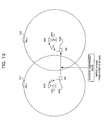
- FIG. 13 is a block diagram showing an example of a W-CDMA (Wideband-Code Division Multiple Access) mobile communication system.
- the system of FIG. 13 includes, for example, two base stations (BTS) 100 and 200 and one mobile station (MS) 300.
- the mobile station 300 accesses, via a radio channel, the base stations 100 and 200 in cells 101 and 102, which are formed by the base stations 100 and 200, respectively.
- BTS base stations
- MS mobile station
- the mobile station 300 which is in communication with the base station 100, moves from the cell 101 to the adjacent cell 102, the so-called hand over is performed. That is, if the mobile station 300 moves into an overlap area between the cell 101 and the cell 102, or the area where not only a signal from the base station 100 but also a signal from the base station 200 can be received, the mobile station 300 receives a signal from the base station 200, thereby detecting the presence of the base station 200, and switches the target of communication from the base station 100 to the base station 200 at a certain timing (for example, when the signal reception level from the base station 200 exceeds the signal reception level from the base station 100).
- 3GPP defines that communication processing called a "compressed mode" is to be performed at the time of "hand over”. That is, during the communication performed between the base station 100 and the mobile station 300, the base station 100 notifies the mobile station 300 of the activation of the "compressed mode", and then compresses at least a part of the transmit data (slot) to the mobile station 300, to make a gap (a transmission gap period in which data transmission is not performed) in the transmission slot, and the mobile station 300 measures the signal reception level of a different frequency from the base station 200 during a transmission gap period.
- the mobile station 300 carries out hand over, switching to the frequency used in the cell 102.
- the frequency is switched, not only the base station 200 (100) but also the mobile station 300 can compress a part of the uplink slot to the base station 200 (100), to make a gap (transmission gap period) therein.
- the details of the "compressed mode" are described in the following non-patent document 1.
- Non-Patent Document 1 3rd Generation Partnership Project (3GPP); Technical Specification Group Radio Access Network; "TS 25.212 V6.4.0 (2005-03) Multiplexing and channel coding (FDD)(Release 6)".
- a "compressed mode” is activated when the mobile station 300 comes apart from the base station 100 (cell 101), coming closer to the base station 200 (cell 102).
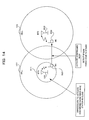
- the mobile station 300 is located close to the base station [for example, when the mobile station 300 is close to the base station 100 (in a base station vicinity area 111 in FIG. 14)], which the mobile station 300 is currently in communication with, it is not necessary to activate a "compressed mode".
- a "compressed mode" can be erroneously activated even in the above circumstance, so that useless processing is performed by the base station 100, the base station 200, and the mobile station 300.
- the present invention provides the following mobile communication system, a compressed-mode controlling method for the system, and base and mobile stations for use in the same system.
- the present invention provides means for evaluating the distances between base stations and a mobile station. If the evaluation result reveals that at least one of the distances is small, the activation of a compressed mode is restrained (prohibited), so that an unnecessary activation of the compressed mode is prevented, whereby unnecessary processing, such as detection of the adjacent cell and hand over, will also be prevented. Thus, unnecessary use of resources and load on the system is reduced.
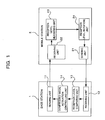
- FIG. 1 is a block diagram showing a construction of a W-CDMA (Wideband-Code Division Multiple Access) mobile communication system according to a first embodiment of the present invention.
- the system of FIG. 1 includes a base station 1 and a mobile station 2, which can access the base station 1 via a radio channel for communication when located in a cell formed by the base station 1.
- the important part of the base station 1 includes a sending unit 11, a receiving unit 12, a reception level comparing unit 13, and a compressed-mode activation controlling unit 14.
- the important part of the mobile station includes a sending unit 21, a receiving unit 22, a reception level measuring unit 23, and a reception level notifying unit 24.
- the sending unit 11 sends data to the mobile station 2 at a specific radio frequency, and provides necessary transmission processing functions such as encoding, modulating, and up-converting of the transmit data.
- the receiving unit 12 receives data sent from the mobile station 2 via a radio channel, and provides necessary reception functions such as down-converting, demodulating, and decoding of the received data.
- the reception level comparing unit 13 compares reception level information, which is measured by the reception level measuring unit 23 of the mobile station 2 and is received via the receiving unit 12, with a specific threshold value for the reception level information. If the comparison result obtained by the reception level comparing unit 13 reveals that the reception level information received from the mobile station 2 is smaller than the specific threshold value, and the compressed-mode activation controlling unit 14 hereby makes a decision that the distance between the base station 1 and the mobile station 2 is larger than a specific distance, the compressed-mode activation controlling unit 14 activates a compressed mode (specifically, a part of a transmission slot is compressed, thereby generating a transmission gap period, in which data transmission is not performed).
- a compressed mode specifically, a part of a transmission slot is compressed, thereby generating a transmission gap period, in which data transmission is not performed.
- the compressed-mode activation controlling unit 14 hereby makes a decision that the distance between the base station 1 and the mobile station 2 is smaller than the specific distance, it suppresses (prohibits) the activation of the compressed mode.
- the receiving unit 12 functions as a distance measuring means for measuring the distance between the base station 1 and the mobile station 2, in particular, as a signal reception level distance-estimating unit, which estimates the distance between the base station 1 and the mobile station 2 based on the reception level information from the mobile station 2, i.e., a result of measurement of the signal level of a received signal from the base station 1 on the mobile station 2.
- the above-mentioned reception level comparing unit 13 and the compressed-mode activation controlling unit 14 serve as a control means for controlling the activation of a compressed mode in accordance with the measured distance between the base station 1 and the mobile station 2.
- the compressed-mode activation controlling unit 14 also functions as a compressed mode activation prohibiting unit for prohibiting the activation of the compressed mode if a result of comparison by the reception level comparing unit 13 reveals that the measured distance is smaller than the threshold value.
- the sending unit 21 sends uplink transmit data to the base station 1 at a specific radio frequency, and it also provides necessary transmission processing functions such as encoding, modulating, and up-converting to a radio frequency, of the transmit data.
- the receiving unit 22 receives downlink data sent from the mobile station 2 through a radio channel, and it also provides necessary reception processing functions such as down-converting, demodulating, and decoding, of the received signal.
- the reception level measuring unit 23 measures the signal reception level on the receiving unit 22, i.e., the downlink signal reception level from the base station 1.
- the reception level notifying unit 24 generates from the measurement result obtained by the reception level measuring unit 23, the above-mentioned reception level information, and the reception level information is sent to the base station 1 via the sending unit 21.
- the subject of the reception level measurement is preferably a channel, e.g., a common pilot channel (CPICH), on which power control is not to be performed irrespective of the distance between the base station 1 and the mobile station 2.
- CPICH common pilot channel
- the reception level on the mobile station 2 is high when the mobile station 2 is close to the base station 1, while it is low when the mobile station 2 is far from the base station.
- the reception level on the mobile station 2 which is used in controlling in the present example, is, for example, CPICH-RSCP (Received Signal Code Power) and CPICH-Ec/No.
- RSCP means desired wave reception power for use in evaluating the strength of a received wave from the base station 1
- Ec/No is a ratio of the energy per one-chip desired wave to the in-band received power density.
- the measurement result obtained by the reception level measuring unit 23 is notified to the base station 1 via the reception level notifying unit 24 and the sending unit 21 at specific periods or at random.
- the reception level comparing unit 13 compares the reception level information with the above-mentioned threshold value, and the compressed-mode activation controlling unit 14 evaluates whether or not the distance between the base station 1 and the mobile station 2 is larger than a specific distance (step S2).
- the compressed-mode activation controlling unit 14 decides that the distance between the base station 1 and the mobile station 2 is larger than the specific distance, and then activates a compressed mode (from Yes-route of step S2 to step S3).
- the compressed-mode activation controlling unit 14 decides that the distance between the base station 1 and the mobile station 2 is smaller than the specific distance, and does not activate a compressed mode (prohibits the activation; No route of step S2).
- the present embodiment evaluates the distance between the base station 1 and the mobile station 2, and the activation of the compressed mode is restrained in cases where the distance therebetween is smaller than the specific distance. This will prevent an unnecessary activation of a compressed mode, so that unnecessary processing, such as detection of the adjacent cell and hand over, will be prevented.
- FIG. 3 is a block diagram showing a modified example of the above-described W-CDMA mobile communication system of FIG. 1.
- the system of FIG. 3 differs from the construction already described with reference to FIG. 1 in that the base station 1 has a compressed-mode activation control information receiving unit 15 in place of the reception level comparing unit 13, and in that the mobile station 2 has a comparing unit 25 and a compressed-mode activation control information generating unit 26 in place of the reception level notifying unit 24.
- Like reference numbers and characters designate similar parts or elements throughout several views of the present embodiments unless otherwise described.
- the comparing unit 25 compares a downlink signal reception level, which is measured by the reception level measuring unit 23, with a specific threshold value for the signal reception level. If the comparison result obtained by the comparing unit 25 reveals that the reception level is not smaller than the above threshold value, and a decision is thereby made that the distance between the base station 1 and the mobile station 2 is smaller than the specific distance, the compressed-mode activation control information generating unit (control information generating means, compressed-mode activation prohibiting information generating unit) 26 generates control information (compressed-mode activation prohibiting control information) for prohibiting the activation of the compressed mode. The generated control information is sent to the base station 1 via the sending unit 21, which serves as a control information sending means.
- control information for activating a compressed mode may be generated, or alternatively, such control information may not be generated.
- the compressed-mode activation control information receiving unit 15 receives, via the receiving unit 12, the above control information sent from the base station 1.
- the compressed-mode activation controlling unit 14 controls the activation of a compressed mode in accordance with the control information received by the compressed-mode activation control information receiving unit 15. More precisely, if control information for activating a compressed mode is received as the above-mentioned control information (or while no control information is received), the compressed-mode activation controlling unit 14 activates a compressed mode. On the other hand, if the above-mentioned compressed-mode activation prohibiting control information is received, the compressed-mode activation controlling unit 14 does not activate the compressed mode.
- the base station 1 makes a decision about the activation of a compressed mode based on the distance between the base station 1 and the mobile station 2, while in this modified example the mobile station 2 takes charge of making an equivalent decision and notifies the base station 1 of the decision as control information.
- this modified arrangement will also prevent an unnecessary activation of a compressed mode, so that unnecessary processing, such as detection of the adjacent cell and hand over, will be prevented.
- FIG. 4 is a block diagram showing a construction of a W-CDMA mobile communication system according to a second embodiment of the present invention.
- the system of FIG. 4 also includes a base station 1 and a mobile station 2, which can access the base station 1 via a radio channel for communication when located in a cell formed by the base station 1.
- the important part of the base station 1 includes a sending unit 11, a receiving unit 12, a compressed-mode activation controlling unit 14, and a transmission delay amount measuring unit 16.
- the important part of the mobile station includes a sending unit 21 and a receiving unit 22.
- the system of FIG. 4 differs from the construction already described with reference to FIG. 1 in that the base station 1 of the present embodiment has a transmission delay amount measuring unit 16 in place of the reception level comparing unit 13, and in that the mobile station 2 no longer needs the reception level measuring unit 23 and the reception level notifying unit 24.
- Like reference numbers and characters designate similar parts or elements throughout several views of the present embodiment and the conventional art unless otherwise described.
- the transmission delay amount measuring unit (a distance measuring means, a propagation delay amount distance-estimating unit) 16 of the base station 1 measures (estimates) the distance between the base station 1 and the mobile station 2 based on a difference in transceiving timing in data communication performed between the base station 1 and the mobile station 2.
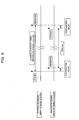
- 3GPP defines that the reception timing of the dedicated channel (DCH) of the mobile station 2 should be apart from its DCH transmission timing by 1024 chips. This means that the smaller the distance between the base station 1 and the mobile station 2, the closer to 1024 chips the transceiving timing difference of DCH of the base station 1, i.e. the less affected by the propagation delay (see FIG. 5 and FIG. 6).
- FIG. 5 shows the transceiving timing in a case where the distance between the base station 1 and the mobile station 2 is large
- FIG. 6 shows the transceiving timing in a case where the distance between the base station 1 and the mobile station 2 is small.
- the amount of propagation delay can be obtained in the following way. Assuming that the velocity of a radio wave is 3xE8 (m/s) and the chip rate is 3.84M (chip/s), the amount of propagation delay due to the distance obtained by calculation is about 1.28 chips per 100 m. Accordingly, the transmission delay amount measuring unit 16 obtains the amount of propagation delay between the base station 1 and the mobile station 2 from the difference between the DCH sending timing from the base station 1 and the DCH receiving timing from the mobile station 2, whereby the distance between the base station 1 and the mobile station 2 is measured (estimated).
- the compressed-mode activation controlling unit (control means) 14 compares the measured propagation delay amount with a threshold for the propagation delay amount. If the measured propagation delay amount is not larger than the threshold, the compressed-mode activation controlling unit 14 decides that the distance between the base station 1 and the mobile station 2 is small, and does not activate a compressed mode. On the other hand, if the measured propagation delay amount exceeds the threshold value, the compressed-mode activation controlling unit 14 decides that the distance between the base station 1 and the mobile station 2 is large, and activates a compressed mode.
- the compressed-mode activation controlling unit 14 serves both a function of a comparing unit, which performs the above-described threshold comparison, and a function of a compressed-mode activation prohibiting unit, which prohibits the activation of a compressed mode when the comparison result reveals that the distance between the base station 1 and the mobile station 2 is small.
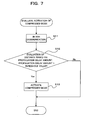
- the transmission delay amount measuring unit 16 obtains the amount of propagation delay between the base station 1 and the mobile station 2 based on the difference between the DCH sending timing from the base station 1 and the DCH receiving timing from the mobile station 2, and then compares and evaluates the thus obtained propagation delay amount with a threshold value (step S12).
- DCH dedicated channel
- the compressed-mode activation controlling unit 14 activates a compressed mode (Yes route of step S12 and step S13). In contrast, if the measured propagation delay amount is not larger than the threshold value, a decision is made that the distance between the base station 1 and the mobile station 2 is small. In response to the thus made decision, the compressed-mode activation controlling unit 14 does not activate a compressed mode (No route of step S12).
- the present embodiment evaluates the distance between the base station 1 and the mobile station 2 based on the difference in the transceiving timing (the amount of propagation delay) between the base station 1 and the mobile station 2, and the activation of the compressed mode is inhibited in cases where the distance therebetween is smaller than a specific distance. This will prevent an unnecessary activation of a compressed mode, so that unnecessary processing, such as detection of the adjacent cell and hand over, will be prevented more reliably than in the first embodiment.
- the distance evaluation based on the propagation delay amount in the present example can be combined with the distance evaluation of the first embodiment and its modification, using the AND condition and/or the OR condition. With this arrangement, further prevention of unnecessary processing, such as detection of the adjacent cell and hand over, will be available.
- FIG. 8 is a block diagram of a construction of a W-CDMA mobile communication system according to a third embodiment of the present invention.
- the system of FIG. 8 also includes a base station 1 and a mobile station 2, which can access the base station 1 via a radio channel for communication when located in a cell formed by the base station 1.
- the important part of the base station 1 includes a sending unit 11, a receiving unit 12, a compressed-mode activation controlling unit 14, and a mobile station's GPS location information receiving unit 17.
- the important part of the mobile station includes a sending unit 21, a receiving unit 22, a GPS location information obtaining unit 27, and a GPS location information sending unit 28.
- the system of the present embodiment differs from the construction already described with reference to FIG. 1 in that the base station 1 of the present embodiment has a mobile station's GPS location information receiving unit 17 in place of the reception level comparing unit 13, and in that the mobile station 2 has a GPS location information obtaining unit 27 and a GPS location information sending unit 28 in place of the reception level measuring unit 23 and the reception level notifying unit 24.
- the base station 1 of the present embodiment has a mobile station's GPS location information receiving unit 17 in place of the reception level comparing unit 13, and in that the mobile station 2 has a GPS location information obtaining unit 27 and a GPS location information sending unit 28 in place of the reception level measuring unit 23 and the reception level notifying unit 24.
- Like reference numbers and characters designate similar parts or elements throughout several views of the present embodiment and the conventional art unless otherwise described.
- the GPS location information obtaining unit 27 pinpoints and obtains the location of the mobile station 2 by the GPS (Global Positioning System).
- the GPS location information sending unit 28 sends the location information obtained by the GPS location information obtaining unit 27 to the base station 1 via the sending unit 21.
- the mobile station's GPS location information receiving unit 17 receives, via the receiving unit 12, the above location information sent from the GPS location information sending unit 28 of the mobile station 2.
- the compressed-mode activation controlling unit 14 obtains the distance between the base station 1 and the mobile station 2 based on the received location information, and then controls the activation or the prohibition (restraining) of a compressed mode based on the obtained distance. That is, the mobile station's GPS location information receiving unit 17 serves a function of a GPS distance estimating unit for estimating the distance between the base station 1 and the mobile station 2 based on the result of pinpointing by the GPS.
- the GPS location information obtaining unit 27 of the mobile station 2 obtains the current location information (latitude, longitude, altitude, etc.) of the base station 1 using the GPS, and then the GPS location information sending unit 28 of the mobile station 2 sends the thus obtained location information to the base station 1 via the sending unit 21.
- This location information is received by the mobile station's GPS location information receiving unit 17 of the base station 1.
- step S22 it is evaluated whether or not the current transmission power exceeds a specific threshold value (step S22). If the evaluation result is negative, the processing ends (No route of step S22). On the other hand, if the evaluation result is positive, the distance between the base station 1 and the mobile station 2 is obtained based on the location information received by the mobile station's GPS location information receiving unit 17, and distance evaluation by comparing the obtained distance and a specific threshold value is performed (from Yes route of step S22 to step S23).
- the compressed-mode activation controlling unit 14 activates a compressed mode in response to the thus made decision (from Yes route of step S23 to step S24). If a decision is made that the distance between the base station 1 and the mobile station 2 is small, the compressed-mode activation controlling unit 14 prohibits (restrains) the activation of a compressed mode (No route of step S23).
- the present embodiment makes it possible to accurately evaluate the distance between the base station 1 and the mobile station 2 by means of the GPS.
- the distance is smaller than a specific distance, the activation of a compressed mode can be restrained.
- it is possible with higher accuracy to prevent unnecessary processing, such as detection of the adjacent cell and hand over.
- the location information obtained by the mobile station 2 is notified to the base station 1, and the base station 1 evaluates the distance between the base station 1 and the mobile station 2, and activates or prohibits a compressed mode based on the evaluation result.
- location information may be obtained by the base station 1 and notified to the mobile station 2.
- the mobile station 2 may evaluate the distance between the base station 1 and the mobile station 2, and notify the base station 1 of the activation/prohibition of a compressed mode.
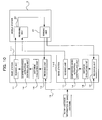
- FIG. 10 is a block diagram showing a construction of a W-CDMA mobile communication system according to a fourth embodiment of the present invention.
- the system of FIG. 10 includes at least two base stations 1-1, 1-2, and at least one mobile station 2 simultaneously communicable with the two base stations 1-1, 1-2.
- Each of the base stations 1-1, 1-2 includes a sending unit 11, a receiving unit 12, a compressed-mode activation controlling unit 14, and a distance evaluating unit 18, and the mobile station 2 includes a sending unit 21 and a receiving unit 22.
- the sending unit 21 and the receiving unit 22 are the same as those already described.
- the sending unit 11 and the receiving unit 12 are the same as those already described.
- the distance evaluating unit 18 evaluates the distance between the base station 1-1 or 1-2 and the mobile station 2.
- the evaluation result is communicated between the base stations 1 and 2, so that all the base stations 1-1, 1-2 are capable of acknowledging the distances between the base stations 1-1, 1-2 and the mobile station 2 (see line 19 of FIG. 10).
- the distance evaluating unit 18 of the present example serves a function of a more-than-one distance measuring unit, which measures the distance between the base stations 1-1, 1-2 and the mobile station 2 during communication performed between the mobile station 2 and two or more base stations 1-1, 1-2.
- the compressed-mode activation controlling unit (controlling means, compressed-mode activation prohibiting unit) 14 controls the activation of a compressed mode according to the evaluation result of the distance evaluating unit 18. In the present example, if it is decided that the distance between the mobile station 2 and each of the base stations 1-1, 1-2 is large, a compressed mode is activated, and otherwise (if the distance between the mobile station 2 and at least one of the base stations 1-1, 1-2, is smaller than a threshold value and the distance is decided to be small) the compressed mode is not activated (restrained).
- the base stations 1-1, 1-2 and the mobile station 2 are equipped with necessary functions already described although their illustrations are omitted for simplification of the illustration.
- the distance evaluating unit 18 of the base station 1-1 evaluates whether or not the distance between the mobile station 2 and each of the base stations 1-1, 1-2 is larger (more distant) than a specific distance (step S32). As a result, if it is evaluated that the distance between the mobile station 2 and every base station 1-1, 1-2 is large, more concretely, if the mobile station 2 is located in neither of the cells 101 and 102, which are formed by the base stations 1-1 and 1-2, respectively (as shown in FIG.
- the distance evaluating unit 18 activates a compressed mode (from Yes route of step S32 to step S33), or otherwise it ends its processing, so that a compressed mode is not activated (No route of step S32).
- the mobile station 2 when the mobile station 2 is located in the base station vicinity area 111 or 121, the activation of a compressed mode is prohibited (restrained).
- the distance between the mobile station 2 and each of the base stations 1-1 and 1-2 is evaluated by means of any one of the methods described in the first through third embodiments. If it is decided that any of the base stations 1-1, 1-2 is close to the mobile station 2, the activation of a compressed mode is restrained, so that more efficient prevention of unnecessary processing, such as detection of the adjacent cell and hand over, will be available.
Landscapes
- Engineering & Computer Science (AREA)
- Computer Networks & Wireless Communication (AREA)
- Signal Processing (AREA)
- Mobile Radio Communication Systems (AREA)
Abstract
Description
- This application is based on and hereby claims priority to
Japanese Application No. 2005-157019 filed on May 30, 2005 - The present invention relates to a mobile communication system, a compressed-mode controlling method for the same system, and base and mobile stations in the same system. The invention relates particularly, but not exclusively, to a technique for use in controlling a compressed mode defined by 3GPP (3rd Generation Partnership Project) when different frequency hand over is performed.
- FIG. 13 is a block diagram showing an example of a W-CDMA (Wideband-Code Division Multiple Access) mobile communication system. The system of FIG. 13 includes, for example, two base stations (BTS) 100 and 200 and one mobile station (MS) 300. The
mobile station 300 accesses, via a radio channel, thebase stations cells base stations - Here, when the
mobile station 300, which is in communication with thebase station 100, moves from thecell 101 to theadjacent cell 102, the so-called hand over is performed. That is, if themobile station 300 moves into an overlap area between thecell 101 and thecell 102, or the area where not only a signal from thebase station 100 but also a signal from thebase station 200 can be received, themobile station 300 receives a signal from thebase station 200, thereby detecting the presence of thebase station 200, and switches the target of communication from thebase station 100 to thebase station 200 at a certain timing (for example, when the signal reception level from thebase station 200 exceeds the signal reception level from the base station 100). - At this time, if the frequency used in the
cell 101 differs from the frequency used in thecell 102, 3GPP defines that communication processing called a "compressed mode" is to be performed at the time of "hand over". That is, during the communication performed between thebase station 100 and themobile station 300, thebase station 100 notifies themobile station 300 of the activation of the "compressed mode", and then compresses at least a part of the transmit data (slot) to themobile station 300, to make a gap (a transmission gap period in which data transmission is not performed) in the transmission slot, and themobile station 300 measures the signal reception level of a different frequency from thebase station 200 during a transmission gap period. As a result, when the signal reception level from thebase station 200 exceeds the signal reception level from thebase station 100, themobile station 300 carries out hand over, switching to the frequency used in thecell 102. Here, in such a "compressed mode", as the frequency is switched, not only the base station 200 (100) but also themobile station 300 can compress a part of the uplink slot to the base station 200 (100), to make a gap (transmission gap period) therein. The details of the "compressed mode" are described in the followingnon-patent document 1. - [Non-Patent Document 1] 3rd Generation Partnership Project (3GPP); Technical Specification Group Radio Access Network; "TS 25.212 V6.4.0 (2005-03) Multiplexing and channel coding (FDD)(Release 6)".
- As already described, when the
mobile station 300 moves into theadjacent cell 102, control needs to be performed so that a "compressed mode" is activated when themobile station 300 comes apart from the base station 100 (cell 101), coming closer to the base station 200 (cell 102). In contrast, when themobile station 300 is located close to the base station [for example, when themobile station 300 is close to the base station 100 (in a basestation vicinity area 111 in FIG. 14)], which themobile station 300 is currently in communication with, it is not necessary to activate a "compressed mode". However, in currently used systems, a "compressed mode" can be erroneously activated even in the above circumstance, so that useless processing is performed by thebase station 100, thebase station 200, and themobile station 300. - With the foregoing problems in view, it is desirable to make it possible to evaluate the distance between base stations and a mobile station, to control the activation of a "compressed mode" according to the distance.
- The present invention provides the following mobile communication system, a compressed-mode controlling method for the system, and base and mobile stations for use in the same system.
- (1) As a first aspect, there is provided a communication system including a plurality of base stations and a mobile station communicable with the plurality of base stations, in which mobile communication system a compressed mode can be activated at the time of hand over, or when a base station which the mobile station is in communication with is switched to another base station, the mobile communication system comprising: a distance measuring means for measuring the distance between the mobile station and at least one of the plurality of base stations which is currently in communication with the mobile station; and a control means for controlling the activation of the compressed mode according to the distance measured by the distance measuring means.
- (2) As a preferred feature, the control means includes: a comparing unit for comparing the distance measured by the distance measuring means with a specific threshold value; and a compressed-mode activation prohibiting unit for prohibiting the activation of the compressed mode if the measured distance is smaller than the threshold value as a result of comparison by the comparing unit.
- (3) As another preferred feature, the distance measuring means acts as a signal reception level distance-estimating unit for estimating the distance between the above-mentioned base station and the mobile station based on a result of measurement of a signal reception level from the base station, the measurement being performed on the mobile station.
- 4) As yet another preferred feature, the distance measuring means acts as a propagation delay amount distance-estimating unit for estimating the distance between the above-mentioned base station and the mobile station based on a result of measurement of the amount of propagation delay in data communication between the base station and the mobile station.
- (5) As a further preferred feature, the distance measuring means acts as a distance-estimating unit using a satellite-based positioning system such as the GPS (Global Positioning System), for estimating the distance between the above-mentioned base station and the mobile station based on a result of measurement of the locations of the base station and the mobile station by means of the GPS or the like.
- (6) As a still further preferred feature, the distance measuring means acts as a more-than-one distance measuring unit for measuring, during communication performed in parallel between the mobile station and two or more of the base stations, the distances between the mobile station and the two or more base stations respectively, and the compressed-mode activation prohibiting unit prohibits the activation of the compressed mode if at least one of the distances measured by the more-than-one distance measuring unit is smaller than the threshold value.
- (7) According to a second aspect, there is provided a compressed-mode controlling method for a mobile communication system which includes a plurality of base stations and a mobile station communicable with the plurality of base stations, in which mobile communication system a compressed mode can be activated at the time of hand over or when a base station which the mobile station is in communication with is switched to another base station, the method comprising: measuring the distance between the mobile station and at least one of the plurality of base stations which is currently in communication with the mobile station; and controlling the activation of the compressed mode according to the distance measured.
- (8) As a preferred feature, the method further comprises prohibiting the activation of the compressed mode if the measured distance is smaller than a specific threshold value.
- (9) As another preferred feature, the distance between the above-mentioned base station and the mobile station is estimated based on a result of measurement of a signal reception level from the base station, the measurement being performed on the mobile station.
- (10) As yet another preferred feature, the distance between the base station and the mobile station is estimated based on a result of measurement of the amount of propagation delay in data communication between the base station and the mobile station.
- (11) As a further preferred feature, the distance between the base station and the mobile station is estimated based on a result of measurement of the locations of the base station and the mobile station by means of the GPS (Global Positioning System).
- (12) As a still further preferred feature, during communication performed in parallel between the mobile station and two or more of the base stations, the distances between the mobile station and the two or more base stations are measured respectively, and the activation of the compressed mode is prohibited if at least one of the distances measured is smaller than the threshold value.
- (13) According to a third aspect, there is provided a base station in a mobile communication system which includes a plurality of base stations and a mobile station communicable with the plurality of base stations, in which mobile communication system a compressed mode can be activated at the time of hand over or when a base station which the mobile station is in communication with is switched to another base station, the base station comprising: a distance measuring means for measuring at least the distance between the mobile station and the said base station when in communication with the mobile station; and a control means for controlling the activation of the compressed mode according to the distance measured by the distance measuring means.
- (14) As a preferred feature, the control means includes: a comparing unit for comparing the distance measured by the distance measuring means with a specific threshold value; and a compressed-mode activation prohibiting unit for prohibiting the activation of the compressed mode if the measured distance is smaller than the threshold value as a result of comparison by the comparing unit.
- (15) As another preferred feature, the distance measuring means provides a function of a signal reception level distance-estimating unit for estimating the distance between the said base station and the mobile station based on a result of measurement of a signal reception level from the base station, the measurement being performed on the mobile station.
- (16) As yet another preferred feature, the distance measuring means provides a function of a propagation delay amount distance-estimating unit for estimating the distance between the said base station and the mobile station based on a result of measurement of the amount of propagation delay in data communication between the base station and the mobile station.
- (17) As a further preferred feature, the distance measuring means provides a function of a GPS distance-estimating unit for estimating the distance between the said base station and the mobile station based on a result of measurement of the locations of the base station and the mobile station by means of the GPS (Global Positioning System).
- (18) As a still further preferred feature, the distance measuring means provides a function of a more-than-one distance measuring unit for measuring, during communication performed in parallel between the mobile station and the base station and another base station, the distances between the mobile station and the base stations respectively, and the compressed-mode activation prohibiting unit prohibits the activation of the compressed mode if at least one of the distances measured by the more-than-one distance measuring unit is smaller than the threshold value.
- (19) According to a fourth aspect, there is provided a mobile station for use in a mobile communication system which includes a plurality of base stations and the mobile station communicable with the plurality of base stations, in which mobile communication system a compressed mode can be activated at the time of hand over, or when a base station which the mobile station is in communication with is switched to another base station, the mobile station comprising: a distance measuring means for measuring the distance between the mobile station and at least one of the plurality of base stations in communication with the mobile station; a control information generating means for generating control information for controlling the activation of the compressed mode according to the distance measured by the distance measuring means; and a control information sending means for sending the control information generated by the control information generating means to the base station in communication with the mobile station.
- (20) As a preferred feature, the control information generating means includes: a comparing unit for comparing the distance measured by the distance measuring means with a specific threshold value; and a compressed-mode activation prohibiting control information generating unit for generating compressed-mode activation prohibiting control information for prohibiting the activation of the compressed mode if the measured distance is smaller than the threshold value as a result of comparison by the comparing unit.
- The present invention provides means for evaluating the distances between base stations and a mobile station. If the evaluation result reveals that at least one of the distances is small, the activation of a compressed mode is restrained (prohibited), so that an unnecessary activation of the compressed mode is prevented, whereby unnecessary processing, such as detection of the adjacent cell and hand over, will also be prevented. Thus, unnecessary use of resources and load on the system is reduced.
- Other features of the present invention will be apparent from the following detailed description when read in conjunction with the accompanying drawings, in which:
- FIG. 1 is a block diagram showing a construction of a W-CDMA mobile communication system according to a first embodiment of the present invention;
- FIG. 2 is a flowchart indicating an operation (compressed mode control method) of the system of FIG. 1;
- FIG. 3 is a block diagram showing a modified example of the system of FIG. 1;
- FIG. 4 is a block diagram showing a construction of a W-CDMA mobile communication system according to a second embodiment of the present invention;
- FIG. 5 is a diagram showing an example of sending/receiving timing between a base station and a mobile station in the system of FIG. 4 (in a case where the distance therebetween is large);
- FIG. 6 is a diagram showing an example of sending/receiving timing between a base station and a mobile station in the system of FIG. 4 (in a case where the distance therebetween is small);
- FIG. 7 is a flowchart indicating an operation (compressed mode control method) of the system of FIG. 4;
- FIG. 8 is a block diagram of a construction of a W-CDMA mobile communication system according to a third embodiment of the present invention;
- FIG. 9 is a flowchart indicating an operation (compressed mode control method) of the system of FIG. 8;
- FIG. 10 is a block diagram showing a construction of a W-CDMA mobile communication system according to a fourth embodiment of the present invention;
- FIG. 11 is a flowchart indicating an operation (compressed mode control method) of the system of FIG. 10;
- FIG. 12 is a conceptual rendering of an operation (compressed mode control method) of the system of FIG. 10;
- FIG. 13 is a block diagram showing an example of a W-CDMA mobile communication system; and
- FIG. 14 is block diagram showing an example of a conventional W-CDMA for describing issues to be solved in the conventional art.
- FIG. 1 is a block diagram showing a construction of a W-CDMA (Wideband-Code Division Multiple Access) mobile communication system according to a first embodiment of the present invention. The system of FIG. 1 includes a
base station 1 and amobile station 2, which can access thebase station 1 via a radio channel for communication when located in a cell formed by thebase station 1. The important part of thebase station 1 includes asending unit 11, areceiving unit 12, a receptionlevel comparing unit 13, and a compressed-modeactivation controlling unit 14. On the other hand, the important part of the mobile station includes a sendingunit 21, areceiving unit 22, a receptionlevel measuring unit 23, and a receptionlevel notifying unit 24. - In the
base station 1, the sendingunit 11 sends data to themobile station 2 at a specific radio frequency, and provides necessary transmission processing functions such as encoding, modulating, and up-converting of the transmit data. Thereceiving unit 12 receives data sent from themobile station 2 via a radio channel, and provides necessary reception functions such as down-converting, demodulating, and decoding of the received data. - The reception
level comparing unit 13 compares reception level information, which is measured by the receptionlevel measuring unit 23 of themobile station 2 and is received via the receivingunit 12, with a specific threshold value for the reception level information. If the comparison result obtained by the receptionlevel comparing unit 13 reveals that the reception level information received from themobile station 2 is smaller than the specific threshold value, and the compressed-modeactivation controlling unit 14 hereby makes a decision that the distance between thebase station 1 and themobile station 2 is larger than a specific distance, the compressed-modeactivation controlling unit 14 activates a compressed mode (specifically, a part of a transmission slot is compressed, thereby generating a transmission gap period, in which data transmission is not performed). On the other hand, if the comparison result reveals that the above reception level information is not smaller than the above threshold value, and the compressed-modeactivation controlling unit 14 hereby makes a decision that the distance between thebase station 1 and themobile station 2 is smaller than the specific distance, it suppresses (prohibits) the activation of the compressed mode. - That is, the receiving
unit 12 functions as a distance measuring means for measuring the distance between thebase station 1 and themobile station 2, in particular, as a signal reception level distance-estimating unit, which estimates the distance between thebase station 1 and themobile station 2 based on the reception level information from themobile station 2, i.e., a result of measurement of the signal level of a received signal from thebase station 1 on themobile station 2. The above-mentioned receptionlevel comparing unit 13 and the compressed-modeactivation controlling unit 14 serve as a control means for controlling the activation of a compressed mode in accordance with the measured distance between thebase station 1 and themobile station 2. Further, the compressed-modeactivation controlling unit 14 also functions as a compressed mode activation prohibiting unit for prohibiting the activation of the compressed mode if a result of comparison by the receptionlevel comparing unit 13 reveals that the measured distance is smaller than the threshold value. - On the
mobile station 2, the sendingunit 21 sends uplink transmit data to thebase station 1 at a specific radio frequency, and it also provides necessary transmission processing functions such as encoding, modulating, and up-converting to a radio frequency, of the transmit data. The receivingunit 22 receives downlink data sent from themobile station 2 through a radio channel, and it also provides necessary reception processing functions such as down-converting, demodulating, and decoding, of the received signal. - The reception
level measuring unit 23 measures the signal reception level on the receivingunit 22, i.e., the downlink signal reception level from thebase station 1. The receptionlevel notifying unit 24 generates from the measurement result obtained by the receptionlevel measuring unit 23, the above-mentioned reception level information, and the reception level information is sent to thebase station 1 via the sendingunit 21. - The subject of the reception level measurement is preferably a channel, e.g., a common pilot channel (CPICH), on which power control is not to be performed irrespective of the distance between the
base station 1 and themobile station 2. In such a common channel, the reception level on themobile station 2 is high when themobile station 2 is close to thebase station 1, while it is low when themobile station 2 is far from the base station. Hence, it is possible to decide the distance between thebase station 1 and themobile station 2 based on the reception level. In cases where a common pilot channel is subjected to the reception level measurement, the reception level on themobile station 2 which is used in controlling in the present example, is, for example, CPICH-RSCP (Received Signal Code Power) and CPICH-Ec/No. Here, "RSCP" means desired wave reception power for use in evaluating the strength of a received wave from thebase station 1; "Ec/No" is a ratio of the energy per one-chip desired wave to the in-band received power density. - Now, an operation of a system with the above construction will be described with reference to FIG. 2.
- For example, while the
mobile station 2 is communicating with thebase station 1 over a dedicated channel (DCH)(step S1), the measurement result obtained by the receptionlevel measuring unit 23 is notified to thebase station 1 via the receptionlevel notifying unit 24 and the sendingunit 21 at specific periods or at random. Upon reception of the notification information (reception level information) on thebase station 1, the receptionlevel comparing unit 13 compares the reception level information with the above-mentioned threshold value, and the compressed-modeactivation controlling unit 14 evaluates whether or not the distance between thebase station 1 and themobile station 2 is larger than a specific distance (step S2). - As a result, when the reception level, which is notified by the
mobile station 2, is smaller than the threshold value, the compressed-modeactivation controlling unit 14 decides that the distance between thebase station 1 and themobile station 2 is larger than the specific distance, and then activates a compressed mode (from Yes-route of step S2 to step S3). In contrast, if the reception level information, which is sent from themobile station 2, is not smaller than the above threshold value, the compressed-modeactivation controlling unit 14 decides that the distance between thebase station 1 and themobile station 2 is smaller than the specific distance, and does not activate a compressed mode (prohibits the activation; No route of step S2). - As described above, the present embodiment evaluates the distance between the
base station 1 and themobile station 2, and the activation of the compressed mode is restrained in cases where the distance therebetween is smaller than the specific distance. This will prevent an unnecessary activation of a compressed mode, so that unnecessary processing, such as detection of the adjacent cell and hand over, will be prevented. - FIG. 3 is a block diagram showing a modified example of the above-described W-CDMA mobile communication system of FIG. 1. The system of FIG. 3 differs from the construction already described with reference to FIG. 1 in that the
base station 1 has a compressed-mode activation controlinformation receiving unit 15 in place of the receptionlevel comparing unit 13, and in that themobile station 2 has a comparingunit 25 and a compressed-mode activation controlinformation generating unit 26 in place of the receptionlevel notifying unit 24. Like reference numbers and characters designate similar parts or elements throughout several views of the present embodiments unless otherwise described. - Here, in the
mobile station 2, the comparingunit 25 compares a downlink signal reception level, which is measured by the receptionlevel measuring unit 23, with a specific threshold value for the signal reception level. If the comparison result obtained by the comparingunit 25 reveals that the reception level is not smaller than the above threshold value, and a decision is thereby made that the distance between thebase station 1 and themobile station 2 is smaller than the specific distance, the compressed-mode activation control information generating unit (control information generating means, compressed-mode activation prohibiting information generating unit) 26 generates control information (compressed-mode activation prohibiting control information) for prohibiting the activation of the compressed mode. The generated control information is sent to thebase station 1 via the sendingunit 21, which serves as a control information sending means. Here, if the reception level is smaller than the specific threshold, thereby indicating that the distance between thebase station 1 and themobile station 2 is larger than the specific distance, control information for activating a compressed mode may be generated, or alternatively, such control information may not be generated. - On the other hand, in the
base station 1, the compressed-mode activation controlinformation receiving unit 15 receives, via the receivingunit 12, the above control information sent from thebase station 1. In the present example, the compressed-modeactivation controlling unit 14 controls the activation of a compressed mode in accordance with the control information received by the compressed-mode activation controlinformation receiving unit 15. More precisely, if control information for activating a compressed mode is received as the above-mentioned control information (or while no control information is received), the compressed-modeactivation controlling unit 14 activates a compressed mode. On the other hand, if the above-mentioned compressed-mode activation prohibiting control information is received, the compressed-modeactivation controlling unit 14 does not activate the compressed mode. - That is, in the first embodiment described with reference to FIG. 1 and FIG. 2, the
base station 1 makes a decision about the activation of a compressed mode based on the distance between thebase station 1 and themobile station 2, while in this modified example themobile station 2 takes charge of making an equivalent decision and notifies thebase station 1 of the decision as control information. - As with the first embodiment, this modified arrangement will also prevent an unnecessary activation of a compressed mode, so that unnecessary processing, such as detection of the adjacent cell and hand over, will be prevented.
- FIG. 4 is a block diagram showing a construction of a W-CDMA mobile communication system according to a second embodiment of the present invention. The system of FIG. 4 also includes a
base station 1 and amobile station 2, which can access thebase station 1 via a radio channel for communication when located in a cell formed by thebase station 1. The important part of thebase station 1 includes a sendingunit 11, a receivingunit 12, a compressed-modeactivation controlling unit 14, and a transmission delayamount measuring unit 16. On the other hand, the important part of the mobile station includes a sendingunit 21 and a receivingunit 22. - That is, the system of FIG. 4 differs from the construction already described with reference to FIG. 1 in that the
base station 1 of the present embodiment has a transmission delayamount measuring unit 16 in place of the receptionlevel comparing unit 13, and in that themobile station 2 no longer needs the receptionlevel measuring unit 23 and the receptionlevel notifying unit 24. Like reference numbers and characters designate similar parts or elements throughout several views of the present embodiment and the conventional art unless otherwise described. - Here, the transmission delay amount measuring unit (a distance measuring means, a propagation delay amount distance-estimating unit) 16 of the
base station 1 measures (estimates) the distance between thebase station 1 and themobile station 2 based on a difference in transceiving timing in data communication performed between thebase station 1 and themobile station 2. For example, as shown in FIG. 5 and FIG. 6, 3GPP defines that the reception timing of the dedicated channel (DCH) of themobile station 2 should be apart from its DCH transmission timing by 1024 chips. This means that the smaller the distance between thebase station 1 and themobile station 2, the closer to 1024 chips the transceiving timing difference of DCH of thebase station 1, i.e. the less affected by the propagation delay (see FIG. 5 and FIG. 6). Here, FIG. 5 shows the transceiving timing in a case where the distance between thebase station 1 and themobile station 2 is large; FIG. 6 shows the transceiving timing in a case where the distance between thebase station 1 and themobile station 2 is small. - More specifically, the amount of propagation delay can be obtained in the following way. Assuming that the velocity of a radio wave is 3xE8 (m/s) and the chip rate is 3.84M (chip/s), the amount of propagation delay due to the distance obtained by calculation is about 1.28 chips per 100 m. Accordingly, the transmission delay
amount measuring unit 16 obtains the amount of propagation delay between thebase station 1 and themobile station 2 from the difference between the DCH sending timing from thebase station 1 and the DCH receiving timing from themobile station 2, whereby the distance between thebase station 1 and themobile station 2 is measured (estimated). - In the present example, the compressed-mode activation controlling unit (control means) 14 compares the measured propagation delay amount with a threshold for the propagation delay amount. If the measured propagation delay amount is not larger than the threshold, the compressed-mode
activation controlling unit 14 decides that the distance between thebase station 1 and themobile station 2 is small, and does not activate a compressed mode. On the other hand, if the measured propagation delay amount exceeds the threshold value, the compressed-modeactivation controlling unit 14 decides that the distance between thebase station 1 and themobile station 2 is large, and activates a compressed mode. - In other words, the compressed-mode
activation controlling unit 14 serves both a function of a comparing unit, which performs the above-described threshold comparison, and a function of a compressed-mode activation prohibiting unit, which prohibits the activation of a compressed mode when the comparison result reveals that the distance between thebase station 1 and themobile station 2 is small. - Now, an operation of a system with the above construction will be described with reference to FIG. 7.
- For example, while the
mobile station 2 is communicating with thebase station 1 over a dedicated channel (DCH)(step S11), the transmission delayamount measuring unit 16 obtains the amount of propagation delay between thebase station 1 and themobile station 2 based on the difference between the DCH sending timing from thebase station 1 and the DCH receiving timing from themobile station 2, and then compares and evaluates the thus obtained propagation delay amount with a threshold value (step S12). - As a result, if it is found that the measured propagation delay amount is larger than the threshold value, a decision is made that the distance between the
base station 1 and themobile station 2 is large. In response to the thus made decision, the compressed-modeactivation controlling unit 14 activates a compressed mode (Yes route of step S12 and step S13). In contrast, if the measured propagation delay amount is not larger than the threshold value, a decision is made that the distance between thebase station 1 and themobile station 2 is small. In response to the thus made decision, the compressed-modeactivation controlling unit 14 does not activate a compressed mode (No route of step S12). - As described above, the present embodiment evaluates the distance between the
base station 1 and themobile station 2 based on the difference in the transceiving timing (the amount of propagation delay) between thebase station 1 and themobile station 2, and the activation of the compressed mode is inhibited in cases where the distance therebetween is smaller than a specific distance. This will prevent an unnecessary activation of a compressed mode, so that unnecessary processing, such as detection of the adjacent cell and hand over, will be prevented more reliably than in the first embodiment. - Here, the distance evaluation based on the propagation delay amount in the present example can be combined with the distance evaluation of the first embodiment and its modification, using the AND condition and/or the OR condition. With this arrangement, further prevention of unnecessary processing, such as detection of the adjacent cell and hand over, will be available.
- FIG. 8 is a block diagram of a construction of a W-CDMA mobile communication system according to a third embodiment of the present invention. The system of FIG. 8 also includes a
base station 1 and amobile station 2, which can access thebase station 1 via a radio channel for communication when located in a cell formed by thebase station 1. The important part of thebase station 1 includes a sendingunit 11, a receivingunit 12, a compressed-modeactivation controlling unit 14, and a mobile station's GPS locationinformation receiving unit 17. On the other hand, the important part of the mobile station includes a sendingunit 21, a receivingunit 22, a GPS locationinformation obtaining unit 27, and a GPS locationinformation sending unit 28. - That is, the system of the present embodiment differs from the construction already described with reference to FIG. 1 in that the
base station 1 of the present embodiment has a mobile station's GPS locationinformation receiving unit 17 in place of the receptionlevel comparing unit 13, and in that themobile station 2 has a GPS locationinformation obtaining unit 27 and a GPS locationinformation sending unit 28 in place of the receptionlevel measuring unit 23 and the receptionlevel notifying unit 24. Like reference numbers and characters designate similar parts or elements throughout several views of the present embodiment and the conventional art unless otherwise described. - Here, in the
mobile station 2, the GPS locationinformation obtaining unit 27 pinpoints and obtains the location of themobile station 2 by the GPS (Global Positioning System). The GPS locationinformation sending unit 28 sends the location information obtained by the GPS locationinformation obtaining unit 27 to thebase station 1 via the sendingunit 21. - On the other hand, in the
base station 1, the mobile station's GPS locationinformation receiving unit 17 receives, via the receivingunit 12, the above location information sent from the GPS locationinformation sending unit 28 of themobile station 2. In this case, the compressed-modeactivation controlling unit 14 obtains the distance between thebase station 1 and themobile station 2 based on the received location information, and then controls the activation or the prohibition (restraining) of a compressed mode based on the obtained distance. That is, the mobile station's GPS locationinformation receiving unit 17 serves a function of a GPS distance estimating unit for estimating the distance between thebase station 1 and themobile station 2 based on the result of pinpointing by the GPS. - Now, a specific operation will be described with reference to FIG. 9. For example, while the
mobile station 2 is communicating with thebase station 1 over a dedicated channel (DCH)(step S21), the GPS locationinformation obtaining unit 27 of themobile station 2 obtains the current location information (latitude, longitude, altitude, etc.) of thebase station 1 using the GPS, and then the GPS locationinformation sending unit 28 of themobile station 2 sends the thus obtained location information to thebase station 1 via the sendingunit 21. This location information is received by the mobile station's GPS locationinformation receiving unit 17 of thebase station 1. - In the
base station 1, it is evaluated whether or not the current transmission power exceeds a specific threshold value (step S22). If the evaluation result is negative, the processing ends (No route of step S22). On the other hand, if the evaluation result is positive, the distance between thebase station 1 and themobile station 2 is obtained based on the location information received by the mobile station's GPS locationinformation receiving unit 17, and distance evaluation by comparing the obtained distance and a specific threshold value is performed (from Yes route of step S22 to step S23). - As a result, if a decision is made that the distance between the
base station 1 and themobile station 2 is large, the compressed-modeactivation controlling unit 14 activates a compressed mode in response to the thus made decision (from Yes route of step S23 to step S24). If a decision is made that the distance between thebase station 1 and themobile station 2 is small, the compressed-modeactivation controlling unit 14 prohibits (restrains) the activation of a compressed mode (No route of step S23). - As described above, the present embodiment makes it possible to accurately evaluate the distance between the
base station 1 and themobile station 2 by means of the GPS. When the distance is smaller than a specific distance, the activation of a compressed mode can be restrained. Hence, in comparison with the first and second embodiments, it is possible with higher accuracy to prevent unnecessary processing, such as detection of the adjacent cell and hand over. - Here, in the present example, the location information obtained by the
mobile station 2 is notified to thebase station 1, and thebase station 1 evaluates the distance between thebase station 1 and themobile station 2, and activates or prohibits a compressed mode based on the evaluation result. However, such location information may be obtained by thebase station 1 and notified to themobile station 2. Themobile station 2 may evaluate the distance between thebase station 1 and themobile station 2, and notify thebase station 1 of the activation/prohibition of a compressed mode. - FIG. 10 is a block diagram showing a construction of a W-CDMA mobile communication system according to a fourth embodiment of the present invention. The system of FIG. 10 includes at least two base stations 1-1, 1-2, and at least one
mobile station 2 simultaneously communicable with the two base stations 1-1, 1-2. Each of the base stations 1-1, 1-2 includes a sendingunit 11, a receivingunit 12, a compressed-modeactivation controlling unit 14, and adistance evaluating unit 18, and themobile station 2 includes a sendingunit 21 and a receivingunit 22. - Here, in the
mobile station 2, the sendingunit 21 and the receivingunit 22 are the same as those already described. In the base stations 1-1, 1-2, the sendingunit 11 and the receivingunit 12 are the same as those already described. Using any of the methods already described in the first through the third embodiment (or in combination), thedistance evaluating unit 18 evaluates the distance between the base station 1-1 or 1-2 and themobile station 2. In the present embodiment, the evaluation result is communicated between thebase stations line 19 of FIG. 10). That is, thedistance evaluating unit 18 of the present example serves a function of a more-than-one distance measuring unit, which measures the distance between the base stations 1-1, 1-2 and themobile station 2 during communication performed between themobile station 2 and two or more base stations 1-1, 1-2. - Further, the compressed-mode activation controlling unit (controlling means, compressed-mode activation prohibiting unit) 14 controls the activation of a compressed mode according to the evaluation result of the
distance evaluating unit 18. In the present example, if it is decided that the distance between themobile station 2 and each of the base stations 1-1, 1-2 is large, a compressed mode is activated, and otherwise (if the distance between themobile station 2 and at least one of the base stations 1-1, 1-2, is smaller than a threshold value and the distance is decided to be small) the compressed mode is not activated (restrained). - Here, in FIG. 10, according to the applied method among the first to the third embodiment (or their combination), the base stations 1-1, 1-2 and the
mobile station 2 are equipped with necessary functions already described although their illustrations are omitted for simplification of the illustration. - Referring to FIG. 11 and FIG. 12, a description will be made hereinbelow of an operation of a system of the present embodiment.
- As shown in FIG. 11, for example, while the
mobile station 2 is communicating with the base station 1-1 over a dedicated channel (DCH)(step S31), thedistance evaluating unit 18 of the base station 1-1 evaluates whether or not the distance between themobile station 2 and each of the base stations 1-1, 1-2 is larger (more distant) than a specific distance (step S32). As a result, if it is evaluated that the distance between themobile station 2 and every base station 1-1, 1-2 is large, more concretely, if themobile station 2 is located in neither of thecells distance evaluating unit 18 activates a compressed mode (from Yes route of step S32 to step S33), or otherwise it ends its processing, so that a compressed mode is not activated (No route of step S32). In the example of FIG. 12, when themobile station 2 is located in the basestation vicinity area - As already described above, according to the present embodiment, while the
mobile station 2 is simultaneously communicating with more than one base station 1-1, 1-2, the distance between themobile station 2 and each of the base stations 1-1 and 1-2 is evaluated by means of any one of the methods described in the first through third embodiments. If it is decided that any of the base stations 1-1, 1-2 is close to themobile station 2, the activation of a compressed mode is restrained, so that more efficient prevention of unnecessary processing, such as detection of the adjacent cell and hand over, will be available. - Further, the present invention should by no means be limited to the above-illustrated embodiments, but various changes or modifications may be suggested within the scope of the appended claims.
Claims (23)
- A mobile communication system including a plurality of base stations (1) and a mobile station (2) communicable with the plurality of base stations (1), in which mobile communication system a compressed mode can be activated at the time of hand over or when a base station (1) which the mobile station (2) is in communication with is switched to another base station (1), said mobile communication system comprising:distance measuring means for measuring the distance between the mobile station (2) and at least one of the plurality of base stations (1) in communication with the mobile station (2); andcontrol means for controlling the activation of the compressed mode according to the distance measured by said distance measuring means.
- A mobile communication system as set forth in claim 1, wherein said control means includes:a comparing unit (13) for comparing the distance measured by said distance measuring means with a specific threshold value; anda compressed-mode activation prohibiting unit (14) for prohibiting the activation of the compressed mode if the measured distance is smaller than the threshold value as a result of comparison by said comparing unit (13).
- A mobile communication system as set forth in claim 1 or claim 2, wherein said distance measuring means serves a function of a signal reception level distance-estimating unit for estimating the distance between the above-mentioned base station (1) and the mobile station (2) based on a result of measurement of a signal reception level from the base station (1), said measurement being performed on the mobile station (2).
- A mobile communication system as set forth in claim 3, wherein the subject of the signal reception level measurement is a common channel which is not to be subjected to power control performed between the base station (1) and the mobile station (2).
- A mobile communication system as set forth in claim 1 or claim 2, wherein said distance measuring means serves a function of a propagation delay amount distance-estimating unit (16) for estimating the distance between the above-mentioned base station (1) and the mobile station (2) based on a result of measurement of the amount of propagation delay in data communication between the base station (1) and the mobile station (2).
- A mobile communication system as set forth in claim 1 or claim 2, wherein said distance measuring means serves a function of a GPS-type distance-estimating unit (17) for estimating the distance between the above-mentioned base station (1) and the mobile station (2) based on a result of measurement of the locations of the base station (1) and the mobile station (2) by means of a satellite-based positioning system.
- A mobile communication system as set forth in claim 2 or any one of claims 3 to 6 when appended to claim 2,
wherein said distance measuring means serves a function of a more-than-one distance measuring unit (18) for measuring, during communication performed in parallel between the mobile station (2) and two or more of the base stations (1), the distances between the mobile station (2) and the two or more base stations (1) respectively, and
wherein said compressed-mode activation prohibiting unit (14) prohibits the activation of the compressed mode if at least one of the distances measured by said more-than-one distance measuring unit (18) is smaller than the threshold value. - A compressed-mode controlling method for a mobile communication system which includes a plurality of base stations (1) and a mobile station (2) communicable with the plurality of base stations (1), in which mobile communication system a compressed mode can be activated at the time of hand over, or when a base station (1) which the mobile station (2) is in communication with is switched to another base station (1), said method comprising steps of:measuring the distance between the mobile station (2) and at least one of the plurality of base stations (1) in communication with the mobile station (2); andcontrolling the activation of the compressed mode according to the distance measured.
- A compressed-mode controlling method as set forth in claim 8, wherein the controlling step comprises:prohibiting the activation of the compressed mode if the measured distance is smaller than a specific threshold value against which it is compared.
- A compressed-mode controlling method as set forth in claim 8 or claim 9, wherein the distance between the above-mentioned base station (1) and the mobile station (2) is estimated based on a result of measurement of a signal reception level from the base station (1), said measurement being performed on the mobile station (2).
- A compressed-mode controlling method as set forth in claim 10, wherein the subject of the signal reception level measurement is a common channel which is not to be subjected to power control performed between the base station (1) and the mobile station (2).
- A compressed-mode controlling method as set forth in claim 8 or claim 9, wherein the distance between the base station (1) and the mobile station (2) is estimated based on a result of measurement of the amount of propagation delay in data communication between the base station (1) and the mobile station (2).
- A compressed-mode controlling method as set forth in claim 8 or claim 9, wherein the distance between the base station (1) and the mobile station (2) is estimated based on a result of measurement of the locations of the base station (1) and the mobile station (2) by means of a satellite-based positioning system.
- A compressed-mode controlling method as set forth in claim 9 or any one of claims 10 to 13 when appended to claim 9,
wherein during communication performed in parallel between the mobile station (2) and two or more of the base stations (1), the distances between the mobile station (2) and the two or more base stations (1) are measured respectively, and
wherein the activation of the compressed mode is prohibited if at least one of the distances measured is smaller than the specific threshold value. - A base station (1) in a mobile communication system which includes a plurality of base stations (1) and a mobile station (2) communicable with the plurality of base stations (1), in which mobile communication system a compressed mode can be activated at the time of hand over or when a base station (1) which the mobile station (2) is in communication with is switched to another base station (1), said base station comprising:distance measuring means for measuring the distance between the mobile station (2) and the said base station (1) when in communication with the mobile station (2); andcontrol means for controlling the activation of the compressed mode according to the distance measured by said distance measuring means.
- A base station as set forth in claim 15, wherein said control means includes:a comparing unit (13) for comparing the distance measured by said distance measuring means with a specific threshold value; andcompressed-mode activation prohibiting unit (14) for prohibiting the activation of the compressed mode if the measured distance is smaller than the threshold value as a result of comparison by said comparing unit (13).
- A base station as set forth in claim 15 or claim 16, wherein said distance measuring means serves a function of a signal reception level distance-estimating unit for estimating the distance between the said base station (1) and the mobile station (2) based on a result of measurement of a signal reception level from the base station (2), said measurement of the signal reception level being performed on the mobile station (2).
- A base station as set forth in claim 17, wherein the subject of the signal reception level measurement is a common channel which is not to be subjected to power control performed between the base station (1) and the mobile station (2).
- A base station as set forth in claim 15 or claim 16, wherein said distance measuring means serves a function of a propagation delay amount distance-estimating unit (16) for estimating the distance between the said base station (1) and the mobile station (2) based on a result of measurement of the amount of propagation delay in data communication between the base station (1) and the mobile station (2).
- A base station as set forth in claim 15 or claim 16, wherein said distance measuring means serves a function of a GPS-type distance-estimating unit (17) for estimating the distance between the said base station (1) and the mobile station (2) based on a result of measurement of the locations of the base station (1) and the mobile station (2) by means of a satellite-based positioning system.
- A base station as set forth in claim 16 or any one of claims 17 to 20 when appended to claim 16,
wherein said distance measuring means serves a function of a more-than-one distance measuring unit (18) for measuring, during communication performed in parallel between the mobile station (2) and the said base station (1) and another base station (1), the distances between the mobile station (2) and the said base station and the another base station respectively, and
wherein said compressed-mode activation prohibiting unit (14) prohibits the activation of the compressed mode if at least one of the distances measured by said more-than-one distance measuring unit (18) is smaller than the threshold value. - A mobile station for use in a mobile communication system which includes a plurality of base stations (1) and the mobile station (2) communicable with the plurality of base stations (1), in which mobile communication system a compressed mode can be activated at the time of hand over, or when a base station (1) which the mobile station (2) is in communication with is switched to another base station (1), said mobile station comprising:distance measuring means (23) for measuring the distance between the mobile station (2) and at least one of the plurality of base stations (1) in communication with the mobile station (2);control information generating means (26) for generating control information for controlling the activation of the compressed mode according to the distance measured by said distance measuring means; andcontrol information sending means (21) for sending the control information generated by said control information generating means (26) to the base station (1) which is in communication with the mobile station (2).
- A mobile station as set forth in claim 22, wherein said control information generating means (26) includes:a comparing unit (25) for comparing the distance measured by said distance measuring means (23) with a specific threshold value; anda compressed-mode activation prohibiting control information generating unit (26) for generating compressed-mode activation prohibiting control information for prohibiting the activation of the compressed mode if the measured distance is smaller than the threshold value as a result of comparison by said comparing unit (25).
Applications Claiming Priority (1)
| Application Number | Priority Date | Filing Date | Title |
|---|---|---|---|
| JP2005157019A JP4787544B2 (en) | 2005-05-30 | 2005-05-30 | Mobile communication system, compressed mode control method in the system, and base station and mobile station in the system |
Publications (3)
| Publication Number | Publication Date |
|---|---|
| EP1729534A2 true EP1729534A2 (en) | 2006-12-06 |
| EP1729534A3 EP1729534A3 (en) | 2008-05-07 |
| EP1729534B1 EP1729534B1 (en) | 2011-11-09 |
Family
ID=36939229
Family Applications (1)
| Application Number | Title | Priority Date | Filing Date |
|---|---|---|---|
| EP05255453A Expired - Lifetime EP1729534B1 (en) | 2005-05-30 | 2005-09-06 | Mobile communication system, compressed-mode controlling method for the system, and base and mobile stations in the system |
Country Status (4)
| Country | Link |
|---|---|
| US (1) | US7542766B2 (en) |
| EP (1) | EP1729534B1 (en) |
| JP (1) | JP4787544B2 (en) |
| CN (1) | CN1874597B (en) |
Families Citing this family (13)
| Publication number | Priority date | Publication date | Assignee | Title |
|---|---|---|---|---|
| US8014329B2 (en) * | 2007-07-03 | 2011-09-06 | Cisco Technology, Inc. | Path selection and power management in mesh networks |
| JP4843625B2 (en) * | 2008-01-24 | 2011-12-21 | 株式会社東芝 | Wireless communication system, wireless base station control device, and program for wireless base station control device |
| JP4901800B2 (en) * | 2008-04-14 | 2012-03-21 | 株式会社日立製作所 | Wireless terminal, base station control station, and handoff control method in wireless communication system |
| US8675634B2 (en) * | 2008-10-06 | 2014-03-18 | Viasat, Inc. | Terminal measurement based synchronization for mesh satellite communications |
| US20130121205A1 (en) * | 2009-01-26 | 2013-05-16 | Floyd Backes | Method for Selecting an Optimum Access Point in a Wireless Network on a Common Channel |
| US8732338B2 (en) * | 2009-06-26 | 2014-05-20 | Digi International Inc. | Mesh network bridge routing |
| EP2288201B1 (en) * | 2009-08-18 | 2012-10-03 | Alcatel Lucent | UE measurements for hot spot detection |
| JP5345160B2 (en) | 2010-02-12 | 2013-11-20 | 株式会社エヌ・ティ・ティ・ドコモ | Signal sequence assignment apparatus and signal sequence assignment method |
| WO2012000207A1 (en) * | 2010-07-02 | 2012-01-05 | 中兴通讯股份有限公司 | Method, system and radio network controller for compressed mode control |
| CN102316511A (en) * | 2010-07-06 | 2012-01-11 | 中兴通讯股份有限公司 | Method for starting compression mode, terminal and communication system |
| CN102960027B (en) * | 2010-07-20 | 2015-12-16 | 中兴通讯股份有限公司 | A kind of processing method of transmission gap pattern sequence and system |
| WO2013129419A1 (en) * | 2012-02-29 | 2013-09-06 | 京セラ株式会社 | Mobile communication system, mobile communication method, wireless base station and wireless terminal |
| CN102802193B (en) * | 2012-08-27 | 2014-12-10 | 中国联合网络通信集团有限公司 | Compression mode opening method and radio network controller |
Citations (1)
| Publication number | Priority date | Publication date | Assignee | Title |
|---|---|---|---|---|
| US20030031143A1 (en) | 2000-02-01 | 2003-02-13 | Michael Faerber | Method for transferring intersystem connections |
Family Cites Families (24)
| Publication number | Priority date | Publication date | Assignee | Title |
|---|---|---|---|---|
| US5293645A (en) * | 1991-10-04 | 1994-03-08 | Sharp Microelectronics Technology, Inc. | Apparatus and method for locating mobile and portable radio terminals in a radio network |
| US6067460A (en) | 1996-05-23 | 2000-05-23 | Nokia Mobile Phones Limited | Mobile station having enhanced standby mode |
| KR100256957B1 (en) * | 1997-12-26 | 2000-05-15 | 윤종용 | A Hard Handoff Method Between Frequencies in the Same Cell in Code Division Multiple Access Systems |
| US6327471B1 (en) * | 1998-02-19 | 2001-12-04 | Conexant Systems, Inc. | Method and an apparatus for positioning system assisted cellular radiotelephone handoff and dropoff |
| DE69942403D1 (en) * | 1998-04-23 | 2010-07-01 | Mitsubishi Electric Corp | A receiver for monitoring a control channel of another system during a sleep period in a CDMA cellular communication system |
| JP3204213B2 (en) * | 1998-05-21 | 2001-09-04 | 三菱電機株式会社 | Wireless communication device and mobile wireless communication system |
| GB2338866B (en) | 1998-06-26 | 2003-05-28 | Nokia Mobile Phones Ltd | Radio telephones and methods of operation |
| FI107773B (en) * | 1998-12-11 | 2001-09-28 | Nokia Mobile Phones Ltd | Determination of rate adjustment for transmission |
| JP2000278734A (en) * | 1999-03-19 | 2000-10-06 | Nec Corp | Mobile terminal for mobile communication, base station for mobile communication and method for assigning spread code |
| WO2000069199A1 (en) * | 1999-05-05 | 2000-11-16 | Nokia Corporation | A method for positioning a mobile station |
| KR100680070B1 (en) * | 1999-06-29 | 2007-02-09 | 유티스타콤코리아 유한회사 | Method of data transmission during frequency-to-system handover in mobile communication system |
| US6757319B1 (en) * | 1999-11-29 | 2004-06-29 | Golden Bridge Technology Inc. | Closed loop power control for common downlink transport channels |
| US6597679B1 (en) * | 1999-12-01 | 2003-07-22 | Telefonaktiebolat Lm Ericsson | Control of compressed mode transmission in WCDMA |
| DE60104243T2 (en) * | 2000-08-09 | 2006-06-14 | Sk Telecom Co | Handover procedure in wireless telecommunication systems with USTS support |
| JP2002199428A (en) | 2000-12-27 | 2002-07-12 | Toshiba Corp | Mobile communication terminal device and handover control method and control program therefor |
| US6615044B2 (en) * | 2001-06-06 | 2003-09-02 | Nokia Mobile Phones, Ltd. | Method of WCDMA coverage based handover triggering |
| JP3918477B2 (en) * | 2001-09-03 | 2007-05-23 | 日本電気株式会社 | Handover system |
| JP3906981B2 (en) * | 2001-12-28 | 2007-04-18 | 日本電気株式会社 | Mobile communication processing method and mobile communication terminal |
| JP3904951B2 (en) * | 2002-03-11 | 2007-04-11 | 松下電器産業株式会社 | Base station apparatus, terminal apparatus and communication method |
| US20050227732A1 (en) * | 2002-05-07 | 2005-10-13 | Mitsubishi Denki Kabushiki Kaisha | Base station for radio communication, radio communication method and mobile station |
| CN1324828C (en) | 2002-06-11 | 2007-07-04 | 华为技术有限公司 | Method for switching between different systems in CDMA communication system |
| JP2004104349A (en) * | 2002-09-06 | 2004-04-02 | Toshiba Corp | Wireless terminal device and wireless communication system |
| CN100512071C (en) * | 2003-09-11 | 2009-07-08 | 华为技术有限公司 | A method of hard switching in WCDMA system |
| FI20045375A0 (en) * | 2004-10-06 | 2004-10-06 | Nokia Corp | Hard handoff, controller and communication system |
-
2005
- 2005-05-30 JP JP2005157019A patent/JP4787544B2/en not_active Expired - Fee Related
- 2005-08-24 US US11/211,042 patent/US7542766B2/en not_active Expired - Fee Related
- 2005-09-06 EP EP05255453A patent/EP1729534B1/en not_active Expired - Lifetime
- 2005-09-21 CN CN2005101035653A patent/CN1874597B/en not_active Expired - Fee Related
Patent Citations (1)
| Publication number | Priority date | Publication date | Assignee | Title |
|---|---|---|---|---|
| US20030031143A1 (en) | 2000-02-01 | 2003-02-13 | Michael Faerber | Method for transferring intersystem connections |
Also Published As
| Publication number | Publication date |
|---|---|
| JP2006333314A (en) | 2006-12-07 |
| CN1874597A (en) | 2006-12-06 |
| EP1729534A3 (en) | 2008-05-07 |
| US7542766B2 (en) | 2009-06-02 |
| JP4787544B2 (en) | 2011-10-05 |
| US20060270408A1 (en) | 2006-11-30 |
| CN1874597B (en) | 2013-01-23 |
| EP1729534B1 (en) | 2011-11-09 |
Similar Documents
| Publication | Publication Date | Title |
|---|---|---|
| US11943706B2 (en) | Selecting a non-terrestrial network based public land mobile network | |
| EP1757147B1 (en) | Improving intersystem cell reselection from geran to utran | |
| US9713025B2 (en) | Method of correlating measurement result | |
| US8463271B2 (en) | Apparatus and method for improving transmitting/receiving performance based on location information of mobile station in communication system | |
| EP1729534B1 (en) | Mobile communication system, compressed-mode controlling method for the system, and base and mobile stations in the system | |
| US8442513B2 (en) | Measurement report reliability in wireless communication systems | |
| JP5693741B2 (en) | Method for detecting loss of service availability affecting communications user equipment, in particular jamming radiation sources and / or outages, user equipment and evaluation unit comprising an interface to the user equipment | |
| US20120314604A1 (en) | Methods and Arrangements for Performing Measurements in a Wireless Communication Network for Positioning or for Enabling Location-Based Services | |
| EP1294206B1 (en) | A method for reducing power consumption of a mobile station and a mobile station | |
| US8463270B2 (en) | Method and apparatus for providing adjusted handoff parameters based on receiver classification | |
| EP3878200B1 (en) | Measurement adaptation based on channel hardening | |
| CN102640536A (en) | Mobile station, network and handover control method | |
| US6269087B1 (en) | Handover type judgement scheme for CDMA mobile communication system | |
| EP2272275B1 (en) | Method for determining the round trip time | |
| JPH0974378A (en) | Base station transmission power control system | |
| EP1859293B1 (en) | Enhanced mobile location method and system | |
| EP2595324A1 (en) | Method of detecting a jamming transmitter affecting a communication user equipment, device and user equipment and system with the user equipment | |
| EP1863309B1 (en) | Mobile terminal of cdma system, mobile communication method of cdma system, and communication quality estimating method | |
| JP4167536B2 (en) | Base station device, base station control device | |
| CN101873684A (en) | Communication terminal and method used in wireless communication system | |
| US7395092B2 (en) | Radio network controller and mobile communication control method | |
| AU2023200194A1 (en) | Triggering of cell reselection evaluation process in non-terrestrial network | |
| EP1694090A1 (en) | Mobile station for performing handoff using position information and method therof | |
| CN118828635A (en) | Beam failure detection method, device and equipment for auxiliary link | |
| Santi et al. | On the Feasibility of Location-based Discovery and Vertical Handover in IEEE 802.11 ah |
Legal Events
| Date | Code | Title | Description |
|---|---|---|---|
| PUAI | Public reference made under article 153(3) epc to a published international application that has entered the european phase |
Free format text: ORIGINAL CODE: 0009012 |
|
| AK | Designated contracting states |
Kind code of ref document: A2 Designated state(s): AT BE BG CH CY CZ DE DK EE ES FI FR GB GR HU IE IS IT LI LT LU LV MC NL PL PT RO SE SI SK TR |
|
| AX | Request for extension of the european patent |
Extension state: AL BA HR MK YU |
|
| PUAL | Search report despatched |
Free format text: ORIGINAL CODE: 0009013 |
|
| AK | Designated contracting states |
Kind code of ref document: A3 Designated state(s): AT BE BG CH CY CZ DE DK EE ES FI FR GB GR HU IE IS IT LI LT LU LV MC NL PL PT RO SE SI SK TR |
|
| AX | Request for extension of the european patent |
Extension state: AL BA HR MK YU |
|
| 17P | Request for examination filed |
Effective date: 20081030 |
|
| AKX | Designation fees paid |
Designated state(s): DE FR GB IT |
|
| GRAP | Despatch of communication of intention to grant a patent |
Free format text: ORIGINAL CODE: EPIDOSNIGR1 |
|
| REG | Reference to a national code |
Ref country code: DE Ref legal event code: R079 Ref document number: 602005031081 Country of ref document: DE Free format text: PREVIOUS MAIN CLASS: H04Q0007380000 Ipc: H04W0036000000 |
|
| RIC1 | Information provided on ipc code assigned before grant |
Ipc: H04W 36/00 20090101AFI20110304BHEP |
|
| GRAS | Grant fee paid |
Free format text: ORIGINAL CODE: EPIDOSNIGR3 |
|
| GRAA | (expected) grant |
Free format text: ORIGINAL CODE: 0009210 |
|
| AK | Designated contracting states |
Kind code of ref document: B1 Designated state(s): DE FR GB IT |
|
| REG | Reference to a national code |
Ref country code: GB Ref legal event code: FG4D |
|
| REG | Reference to a national code |
Ref country code: DE Ref legal event code: R096 Ref document number: 602005031081 Country of ref document: DE Effective date: 20120119 |
|
| PLBE | No opposition filed within time limit |
Free format text: ORIGINAL CODE: 0009261 |
|
| STAA | Information on the status of an ep patent application or granted ep patent |
Free format text: STATUS: NO OPPOSITION FILED WITHIN TIME LIMIT |
|
| 26N | No opposition filed |
Effective date: 20120810 |
|
| REG | Reference to a national code |
Ref country code: DE Ref legal event code: R097 Ref document number: 602005031081 Country of ref document: DE Effective date: 20120810 |
|
| PGFP | Annual fee paid to national office [announced via postgrant information from national office to epo] |
Ref country code: IT Payment date: 20150925 Year of fee payment: 11 |
|
| REG | Reference to a national code |
Ref country code: FR Ref legal event code: PLFP Year of fee payment: 12 |
|
| REG | Reference to a national code |
Ref country code: FR Ref legal event code: PLFP Year of fee payment: 13 |
|
| PG25 | Lapsed in a contracting state [announced via postgrant information from national office to epo] |
Ref country code: IT Free format text: LAPSE BECAUSE OF NON-PAYMENT OF DUE FEES Effective date: 20160906 |
|
| PGFP | Annual fee paid to national office [announced via postgrant information from national office to epo] |
Ref country code: FR Payment date: 20170810 Year of fee payment: 13 Ref country code: GB Payment date: 20170906 Year of fee payment: 13 Ref country code: DE Payment date: 20170830 Year of fee payment: 13 |
|
| REG | Reference to a national code |
Ref country code: DE Ref legal event code: R119 Ref document number: 602005031081 Country of ref document: DE |
|
| GBPC | Gb: european patent ceased through non-payment of renewal fee |
Effective date: 20180906 |
|
| PG25 | Lapsed in a contracting state [announced via postgrant information from national office to epo] |
Ref country code: DE Free format text: LAPSE BECAUSE OF NON-PAYMENT OF DUE FEES Effective date: 20190402 |
|
| PG25 | Lapsed in a contracting state [announced via postgrant information from national office to epo] |
Ref country code: FR Free format text: LAPSE BECAUSE OF NON-PAYMENT OF DUE FEES Effective date: 20180930 |
|
| PG25 | Lapsed in a contracting state [announced via postgrant information from national office to epo] |
Ref country code: GB Free format text: LAPSE BECAUSE OF NON-PAYMENT OF DUE FEES Effective date: 20180906 |