EP1724963A2 - Data processing apparatus - Google Patents
Data processing apparatus Download PDFInfo
- Publication number
- EP1724963A2 EP1724963A2 EP05023143A EP05023143A EP1724963A2 EP 1724963 A2 EP1724963 A2 EP 1724963A2 EP 05023143 A EP05023143 A EP 05023143A EP 05023143 A EP05023143 A EP 05023143A EP 1724963 A2 EP1724963 A2 EP 1724963A2
- Authority
- EP
- European Patent Office
- Prior art keywords
- data
- data set
- encrypted
- unit
- encryption
- Prior art date
- Legal status (The legal status is an assumption and is not a legal conclusion. Google has not performed a legal analysis and makes no representation as to the accuracy of the status listed.)
- Withdrawn
Links
- 238000007689 inspection Methods 0.000 claims 1
- 238000000034 method Methods 0.000 description 8
- 238000010586 diagram Methods 0.000 description 3
- 230000003287 optical effect Effects 0.000 description 2
- 230000002093 peripheral effect Effects 0.000 description 2
- 238000013500 data storage Methods 0.000 description 1
- 238000007726 management method Methods 0.000 description 1
Images



Classifications
-
- H—ELECTRICITY
- H04—ELECTRIC COMMUNICATION TECHNIQUE
- H04L—TRANSMISSION OF DIGITAL INFORMATION, e.g. TELEGRAPHIC COMMUNICATION
- H04L12/00—Data switching networks
- H04L12/02—Details
- H04L12/22—Arrangements for preventing the taking of data from a data transmission channel without authorisation
-
- H—ELECTRICITY
- H04—ELECTRIC COMMUNICATION TECHNIQUE
- H04L—TRANSMISSION OF DIGITAL INFORMATION, e.g. TELEGRAPHIC COMMUNICATION
- H04L9/00—Cryptographic mechanisms or cryptographic arrangements for secret or secure communications; Network security protocols
- H04L9/32—Cryptographic mechanisms or cryptographic arrangements for secret or secure communications; Network security protocols including means for verifying the identity or authority of a user of the system or for message authentication, e.g. authorization, entity authentication, data integrity or data verification, non-repudiation, key authentication or verification of credentials
-
- H—ELECTRICITY
- H04—ELECTRIC COMMUNICATION TECHNIQUE
- H04L—TRANSMISSION OF DIGITAL INFORMATION, e.g. TELEGRAPHIC COMMUNICATION
- H04L9/00—Cryptographic mechanisms or cryptographic arrangements for secret or secure communications; Network security protocols
- H04L9/08—Key distribution or management, e.g. generation, sharing or updating, of cryptographic keys or passwords
-
- H—ELECTRICITY
- H04—ELECTRIC COMMUNICATION TECHNIQUE
- H04L—TRANSMISSION OF DIGITAL INFORMATION, e.g. TELEGRAPHIC COMMUNICATION
- H04L9/00—Cryptographic mechanisms or cryptographic arrangements for secret or secure communications; Network security protocols
- H04L9/30—Public key, i.e. encryption algorithm being computationally infeasible to invert or user's encryption keys not requiring secrecy
-
- H—ELECTRICITY
- H04—ELECTRIC COMMUNICATION TECHNIQUE
- H04L—TRANSMISSION OF DIGITAL INFORMATION, e.g. TELEGRAPHIC COMMUNICATION
- H04L2209/00—Additional information or applications relating to cryptographic mechanisms or cryptographic arrangements for secret or secure communication H04L9/00
- H04L2209/20—Manipulating the length of blocks of bits, e.g. padding or block truncation
Definitions
- the present invention relates to a data processing apparatus, which handle data whose secrecy must be maintained.
- a data encryption technique is applied to various data processing apparatuses which handle data whose secrecy must be maintained. For example, when information is recorded on a recording medium such as an optical disk, it is required to record information after it is encrypted.
- a copyright protection method content as a work are encrypted using an encryption key to obtain encrypted content, and the encryption key used in encryption is encrypted using another encryption key to obtain an encrypted key so as to keep it secret.
- the encrypted key and encrypted content are recorded on a recording medium together, thus preventing an unauthorized copy.
- a padding area used to match data with the block size of the encryption algorithm is embedded with padding data of a predetermined bit sequence (e.g., all zeros).
- the present invention has been made in consideration of the above situation, and has as its object to provide a data processing apparatus, which can efficiently execute encryption processing and decryption processing.
- a data processing apparatus which handles a data set including first data, at least one second data calculated from the first data, and third data having an one-to-one correspondence with the second data.
- This data processing apparatus comprises: a data set generation unit configured to generate an encrypted data set by encrypting the second and third data by associating the third data with the second data; and a recording unit configured to record the encrypted data set generated by the data set generation unit.
- encryption processing and decryption processing can be efficiently executed by taking the aforementioned steps.
- FIG. 1 shows the structure of a data set to be handled by the present invention.
- This data set includes first data, at least one second data calculated based on this first data, and third data which has an one-to-one correspondence with the second data.
- the first data is indicated by data A
- the second data is indicated by data B
- the third data is indicated by data C.
- (n+1) data B (B0, B1, ..., Bn) are calculated from one data A as a data B group.
- Unique data C (C0, C1, ..., Cn) are provided in correspondence with the data (B0, B1, ..., Bn) of this data B group.
- data C (C0, C1, ..., Cn) are key data used to encrypt or decrypt predetermined data (e.g., audiovisual content data and the like) which is to be encrypted and must be kept secret.
- Data B (B0, B1, ..., Bn) indicate the coordinates of corresponding data C (C0, C1, ..., Cn), and are required when data C are used.
- data A one or a plurality of data
- data (C0, C1, ..., Cn) of a data C group corresponding to this data are saved in advance as, e.g., a management data file at a predetermined storage location on a system. Or these data are externally given and are saved at the predetermined storage location.
- the data (B0, B1, ..., Bn) of the data B group are acquired by applying arithmetic processing to the data A.
- the data B is embedded in a padding area for this size adjustment.
- the data B embedded in this padding area is encrypted in correspondence with the data C.
- the size of this encrypted data set is an integer multiple of the block size of the encryption algorithm.
- FIG. 2 shows an example of the data structure of the data set in which data B is embedded in each padding area.
- FIG. 2 shows an example of the structure of the data set when data B and parity data are partially embedded in the padding area in place of known padding data (all zeros).
- FIG. 3 shows an example of the arrangement of a data processing apparatus which generates an encrypted data set by embedding the data B in each padding area and encrypting that data set together with the corresponding data C.
- the data processing apparatus shown in FIG. 3 comprises a controller 11, data encryption processor 12, data recording processor 13, and data recording unit 14.
- the controller 11 controls the overall apparatus.
- the data encryption processor 12 executes processing for embedding data B in a padding area of a data set, and encrypting the data set together with corresponding data C under the control of the controller 11.
- the data recording processor 13 executes processing for recording the data set encrypted by the data encryption processor 12 in the data recording unit 14 under the control of the controller 11.
- FIG. 4 shows the processing sequence of this data processing apparatus.
- the controller 11 acquires data A and a data C group corresponding to this data A as elements of the data set shown in FIG. 1 from a predetermined data storage unit or the like on the system. Furthermore, the controller 11 calculates data (B0, B1, ..., Bn) of a data B group corresponding to data (C0, C1, ..., Cn) of the data C group from the acquired data A (step S11).
- step S13 For each of the calculated data (B0, B1, ..., Bn) of the data B group, data B of interest and data C corresponding to the data B of interest are combined (step S13), and the controller 11 passes this data set to the data encryption processor 12.
- the data encryption processor 12 encrypts the data set received from the controller 11 in accordance with a predetermined encryption algorithm, inserts the encrypted data C into a data area, and inserts the encrypted data B into a padding area (step S14). With this processing, data encryption processor 12 generates a data set having a size as an integer multiple of the block size of the encryption algorithm.
- the data encryption processor 12 passes this encrypted data set to the data recording processor 13.
- the data recording processor 13 records the data set passed from the data encryption processor 12 in the data recording unit 14 under the control of the controller 11 (step S15). This processing is repeated for each of the data (B0, B1, ..., Bn) of the data B group (steps S12 and S16). As a result, (n+1) encrypted data sets shown in FIG. 2 are recorded in the data recording unit 14.
- FIG. 5 shows an example of the arrangement of a data processing apparatus which decrypts the encrypted data sets with the structure shown in FIG. 2, and uses decrypted data B and C in subsequent processing.
- the data processing apparatus shown in FIG. 5 comprises a controller 21, data decryption unit 22, data read processor 23, and data recording unit 24.
- the data recording unit 24 stores (n+1) encrypted data sets with the structure shown in FIG. 2.
- the controller 21 controls the overall apparatus.
- the data read processor 23 reads an encrypted data set one by one from the data recording unit 24 under the control of the controller 21.
- the data decryption unit 22 decrypts the data set read by the data read processor 23 under the control of the controller 21.
- FIG. 6 shows the processing sequence of this data processing apparatus.
- the controller 21 calculates data B' corresponding to one data B in the data B group on the basis of data A shown in FIG. 1 and a predetermined decryption condition (step S31).
- the data read processor 23 reads one of (n+1) data sets recorded in the data recording unit 24 under the control of the controller 21, and passes the read data set to the data decryption unit 22 (step S32).
- the data decryption unit 22 decrypts the data set received from the data read processor 23 under the control of the controller 21 (step S33).
- the data decryption unit 22 compares the decrypted data B with the data B' (step S34). If the data B matches the data B' (YES in step S34), data decryption unit 22 executes subsequent processing using the decrypted data B and C (step S35).
- key data used to encrypt or decrypt predetermined data is generated using data C (decrypted simultaneously with data B) corresponding to the data B, and encryption or decryption processing is executed using this key data.
- data B indicating the coordinates of data C can be obtained simultaneously with decryption of the data C without being calculated from data A.
- the next data set is read from the (n+1) data sets recorded in the data recording unit 24 to repeat the aforementioned processing.
- FIG. 7 shows another processing sequence of the data processing apparatus shown in FIG. 5.
- the processing shown in FIG. 7 is effective when respective data (B0 B1, ..., Bn) of the data B group are associated with the storage addresses of the data recording unit 24.
- the controller 21 calculates the storage address of data B to be used on the basis of data A shown in FIG. 1 and a predetermined decryption condition, and passes it as data B' to the data read processor 23 (step S41).
- the data read processor 23 reads one data set stored at the storage address indicated by the data B' from the (n+1) data sets recorded in the data recording unit 24 in accordance with the data B' received from the controller 21 under the control of the controller 21, and passes it to the data decryption unit 22 (step S42).
- the data decryption unit 22 decrypts the data set passed from the data read processor 23 under the control of the controller 21 (step S43), and executes subsequent process using the decrypted data B and C (step S44).
- key data used to encrypt or decrypt predetermined data e.g., content data
- data C decrypted simultaneously with data B
- encryption or decryption processing is executed using this key data.
- data B indicating the coordinates of data C can be obtained simultaneously with decryption of the data C without being calculated from data A.
- FIG. 8 shows an example of the arrangement of a data recording apparatus and data playback apparatus using the data sets with the data structure shown in FIG. 2.
- a data recording unit 40 as a building component of the data recording apparatus and a data playback unit 50 as a building component of the data playback apparatus are illustrated on the identical figure.
- the data recording apparatus need only be provided with the data recording unit 40, and the data playback apparatus need only be provided with the data playback unit 50.
- the data recording unit 40 has a ROM 41 which stores data sets with the data structure shown in FIG. 2, an encryption key generator 42 which generates an encryption key using each data set stored in the ROM 41, and an encryption processor 43 which encrypts content data (DATA) to be recorded on a recording medium 30 such as an optical disk or the like using the encryption key generated by the encryption key generator 42.
- a ROM 41 which stores data sets with the data structure shown in FIG. 2
- an encryption key generator 42 which generates an encryption key using each data set stored in the ROM 41
- an encryption processor 43 which encrypts content data (DATA) to be recorded on a recording medium 30 such as an optical disk or the like using the encryption key generated by the encryption key generator 42.
- DATA content data
- the data playback unit 50 has a ROM 51 which stores data sets with the data structure shown in FIG. 2, a decryption key generator 52 which generates a decryption key using each data set stored in the ROM 51, and a decryption processor 53 which decrypts encrypted content data (DATA) read from the recording medium 30 using the decryption key generated by the decryption key generator 52.
- a ROM 51 which stores data sets with the data structure shown in FIG. 2
- a decryption key generator 52 which generates a decryption key using each data set stored in the ROM 51
- a decryption processor 53 which decrypts encrypted content data (DATA) read from the recording medium 30 using the decryption key generated by the decryption key generator 52.
- FIG. 9 shows the processing sequence of the data recording unit 40 and the data playback unit 50 with the above arrangement.
- the encryption key generator 42 of the data recording unit 40 reads key data K B recorded on the recording medium 30 from it, and calculates data B' corresponding to one data B of the data B group on the basis of this key data K B and data A shown in FIG. 1 (step S50). Then, one data set is read from the ROM 51 (step S51) and is decrypted (step S52). The decrypted data B is compared with the data B' (step S53). If the data B matches the data B' (YES in step S54), the subsequent processing is executed using the decrypted data B and C (step S55). In this case, an encryption key K C is generated using the data C corresponding to the data B, and is passed to the encryption processor 43.
- the encryption processor 43 encrypts content data (DATA) to be recorded on the recording medium 30 using the encryption key K C received from the encryption key generator 42.
- This encrypted content data (D E ) is recorded on the recording medium 30 by a drive (not shown) which drives the recording medium 30.
- step S53 Upon comparison between the decrypted data B and the data B' (step S53), if these data do not match (NO in step S54), the next data set is read from the ROM 41 and the same processing as described above is executed. In this case, if (n+1) data sets have already been read, and data B do not match data B' (NO in step S54), the processing ends without generating any encryption key K C (YES in step S56).
- the encryption key generator 52 of the data recording unit 50 reads key data K B recorded on the recording medium 30 from it, and calculates data B' corresponding to one data B of the data B group on the basis of this key data K B and data A shown in FIG. 1 (step S50). Then, one data set is read from the ROM 51 (step S51) and is decrypted (step S52). The decrypted data B is compared with the data B' (step S53). If the data B matches the data B' (YES in step S54), the subsequent processing is executed using the decrypted data B and C (step S55). In this case, a decryption key K D is generated using the data C corresponding to the data B, and is passed to the decryption processor 53.
- the decryption processor 53 decrypts encrypted content data (D E ) read from the recording medium 30 using the decryption key K D received from the decryption key generator 52, and outputs the decrypted content data (DATA) to a data playback apparatus (not shown).
- step S53 upon comparison between the decrypted data B and the data B' (step S53), if these data do not match (NO in step S54), the next data set is read from the ROM 51 and the same processing as described above is executed. In this case, if (n+1) data sets have already been read, and data B do not match data B' (NO in step S54), the processing ends without generating any decryption key K D (YES in step S56).
- the apparatus which can use data sets according to the present invention is not limited to the aforementioned data recording apparatus and data playback apparatus. Also, the present invention can also be applied to various other apparatuses and systems such as a communication apparatus and the like which must keep data secret.
Landscapes
- Engineering & Computer Science (AREA)
- Computer Security & Cryptography (AREA)
- Computer Networks & Wireless Communication (AREA)
- Signal Processing (AREA)
- Computing Systems (AREA)
- Theoretical Computer Science (AREA)
- Storage Device Security (AREA)
- Signal Processing For Digital Recording And Reproducing (AREA)
Abstract
Description
- The present invention relates to a data processing apparatus, which handle data whose secrecy must be maintained.
- A data encryption technique is applied to various data processing apparatuses which handle data whose secrecy must be maintained. For example, when information is recorded on a recording medium such as an optical disk, it is required to record information after it is encrypted. In a copyright protection method, content as a work are encrypted using an encryption key to obtain encrypted content, and the encryption key used in encryption is encrypted using another encryption key to obtain an encrypted key so as to keep it secret. The encrypted key and encrypted content are recorded on a recording medium together, thus preventing an unauthorized copy.
- In such data encryption technique, upon encrypting and storing data, the data must be adjusted to a block size of an encryption algorithm. Conventionally, a padding area used to match data with the block size of the encryption algorithm is embedded with padding data of a predetermined bit sequence (e.g., all zeros).
- As a conventional apparatus technique that handles data whose secrecy must be kept, for example, as disclosed in Japanese Pat. Appln. KOKAI Publication No. 2001-318600, a message authentication technique that inserts key data into a padding area of a message data block is known.
- However, conventionally, in every data encryption process and decryption process of the encrypted data, advanced arithmetic processing is required.
- The present invention has been made in consideration of the above situation, and has as its object to provide a data processing apparatus, which can efficiently execute encryption processing and decryption processing.
- According to an embodiment of the present invention, there is disclosed a data processing apparatus which handles a data set including first data, at least one second data calculated from the first data, and third data having an one-to-one correspondence with the second data. This data processing apparatus comprises: a data set generation unit configured to generate an encrypted data set by encrypting the second and third data by associating the third data with the second data; and a recording unit configured to record the encrypted data set generated by the data set generation unit.
- According to the present invention, encryption processing and decryption processing can be efficiently executed by taking the aforementioned steps.
- This summary of the invention does not necessarily describe all necessary features so that the invention may also be a sub-combination of these described features.
- The invention can be more fully understood from the following detailed description when taken in conjunction with the accompanying drawings, in which:
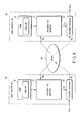
- FIG. 1 is a view showing the structure of a data set according to an embodiment of the present invention;
- FIG. 2 is a view showing an example of an encrypted data set according to the embodiment of the present invention;
- FIG. 3 is a block diagram showing a data set encryption processor and its peripheral components of a data processing apparatus according to the embodiment of the present invention;
- FIG. 4 is a flowchart showing the processing sequence of the data processing apparatus shown in FIG. 3;
- FIG. 5 is a block diagram showing a data set decryption processor and its peripheral components of a data processing apparatus according to the embodiment of the present invention;
- FIG. 6 is a flowchart showing the processing sequence of the data processing apparatus shown in FIG. 5;
- FIG. 7 is a flowchart showing the processing sequence of the data processing apparatus shown in FIG. 5;
- FIG. 8 is a block diagram showing an example of the arrangement of a data recording apparatus and data playback apparatus according to the embodiment of the present invention; and
- FIG. 9 is a flowchart showing the processing sequence of the data recording apparatus and data playback apparatus shown in FIG. 8.
- FIG. 1 shows the structure of a data set to be handled by the present invention. This data set includes first data, at least one second data calculated based on this first data, and third data which has an one-to-one correspondence with the second data. In FIG. 1, the first data is indicated by data A, the second data is indicated by data B, and the third data is indicated by data C. In the structure shown in FIG. 1, (n+1) data B (B0, B1, ..., Bn) are calculated from one data A as a data B group. Unique data C (C0, C1, ..., Cn) are provided in correspondence with the data (B0, B1, ..., Bn) of this data B group. These (n+1) data C (C0, C1, ..., Cn) are key data used to encrypt or decrypt predetermined data (e.g., audiovisual content data and the like) which is to be encrypted and must be kept secret. Data B (B0, B1, ..., Bn) indicate the coordinates of corresponding data C (C0, C1, ..., Cn), and are required when data C are used.
- In the data sets with the data structure shown in FIG. 1, data A (one or a plurality of data) and data (C0, C1, ..., Cn) of a data C group corresponding to this data are saved in advance as, e.g., a management data file at a predetermined storage location on a system. Or these data are externally given and are saved at the predetermined storage location. The data (B0, B1, ..., Bn) of the data B group are acquired by applying arithmetic processing to the data A.
- Upon encrypting the respective data (C0, C1, ..., Cn) of the data C group and storing them on a predetermined recording medium, their data size must be adjusted to a block size of an encryption algorithm. In the embodiment of the present invention, the data B is embedded in a padding area for this size adjustment. The data B embedded in this padding area is encrypted in correspondence with the data C. The size of this encrypted data set is an integer multiple of the block size of the encryption algorithm.
- FIG. 2 shows an example of the data structure of the data set in which data B is embedded in each padding area. FIG. 2 shows an example of the structure of the data set when data B and parity data are partially embedded in the padding area in place of known padding data (all zeros).
- FIG. 3 shows an example of the arrangement of a data processing apparatus which generates an encrypted data set by embedding the data B in each padding area and encrypting that data set together with the corresponding data C. The data processing apparatus shown in FIG. 3 comprises a
controller 11,data encryption processor 12,data recording processor 13, anddata recording unit 14. Thecontroller 11 controls the overall apparatus. Thedata encryption processor 12 executes processing for embedding data B in a padding area of a data set, and encrypting the data set together with corresponding data C under the control of thecontroller 11. Thedata recording processor 13 executes processing for recording the data set encrypted by thedata encryption processor 12 in thedata recording unit 14 under the control of thecontroller 11. - FIG. 4 shows the processing sequence of this data processing apparatus. The
controller 11 acquires data A and a data C group corresponding to this data A as elements of the data set shown in FIG. 1 from a predetermined data storage unit or the like on the system. Furthermore, thecontroller 11 calculates data (B0, B1, ..., Bn) of a data B group corresponding to data (C0, C1, ..., Cn) of the data C group from the acquired data A (step S11). - For each of the calculated data (B0, B1, ..., Bn) of the data B group, data B of interest and data C corresponding to the data B of interest are combined (step S13), and the
controller 11 passes this data set to thedata encryption processor 12. Thedata encryption processor 12 encrypts the data set received from thecontroller 11 in accordance with a predetermined encryption algorithm, inserts the encrypted data C into a data area, and inserts the encrypted data B into a padding area (step S14). With this processing,data encryption processor 12 generates a data set having a size as an integer multiple of the block size of the encryption algorithm. Thedata encryption processor 12 passes this encrypted data set to thedata recording processor 13. Thedata recording processor 13 records the data set passed from thedata encryption processor 12 in thedata recording unit 14 under the control of the controller 11 (step S15). This processing is repeated for each of the data (B0, B1, ..., Bn) of the data B group (steps S12 and S16). As a result, (n+1) encrypted data sets shown in FIG. 2 are recorded in thedata recording unit 14. - FIG. 5 shows an example of the arrangement of a data processing apparatus which decrypts the encrypted data sets with the structure shown in FIG. 2, and uses decrypted data B and C in subsequent processing. The data processing apparatus shown in FIG. 5 comprises a
controller 21,data decryption unit 22, data readprocessor 23, anddata recording unit 24. Thedata recording unit 24 stores (n+1) encrypted data sets with the structure shown in FIG. 2. Thecontroller 21 controls the overall apparatus. The data readprocessor 23 reads an encrypted data set one by one from thedata recording unit 24 under the control of thecontroller 21. Thedata decryption unit 22 decrypts the data set read by the data readprocessor 23 under the control of thecontroller 21. - FIG. 6 shows the processing sequence of this data processing apparatus.
- The
controller 21 calculates data B' corresponding to one data B in the data B group on the basis of data A shown in FIG. 1 and a predetermined decryption condition (step S31). - The data read
processor 23 reads one of (n+1) data sets recorded in thedata recording unit 24 under the control of thecontroller 21, and passes the read data set to the data decryption unit 22 (step S32). Thedata decryption unit 22 decrypts the data set received from the data readprocessor 23 under the control of the controller 21 (step S33). Thedata decryption unit 22 compares the decrypted data B with the data B' (step S34). If the data B matches the data B' (YES in step S34),data decryption unit 22 executes subsequent processing using the decrypted data B and C (step S35). - For example, key data used to encrypt or decrypt predetermined data (e.g., content data) is generated using data C (decrypted simultaneously with data B) corresponding to the data B, and encryption or decryption processing is executed using this key data. In the processing in step S35, data B indicating the coordinates of data C can be obtained simultaneously with decryption of the data C without being calculated from data A. Upon comparison between the decrypted data B and the data B' (step S34), if the data B does not match the data B' (NO in step S34), the next data set is read from the (n+1) data sets recorded in the
data recording unit 24 to repeat the aforementioned processing. - FIG. 7 shows another processing sequence of the data processing apparatus shown in FIG. 5. The processing shown in FIG. 7 is effective when respective data (B0 B1, ..., Bn) of the data B group are associated with the storage addresses of the
data recording unit 24. - The
controller 21 calculates the storage address of data B to be used on the basis of data A shown in FIG. 1 and a predetermined decryption condition, and passes it as data B' to the data read processor 23 (step S41). - The data read
processor 23 reads one data set stored at the storage address indicated by the data B' from the (n+1) data sets recorded in thedata recording unit 24 in accordance with the data B' received from thecontroller 21 under the control of thecontroller 21, and passes it to the data decryption unit 22 (step S42). Thedata decryption unit 22 decrypts the data set passed from the data readprocessor 23 under the control of the controller 21 (step S43), and executes subsequent process using the decrypted data B and C (step S44). For example, key data used to encrypt or decrypt predetermined data (e.g., content data) is generated using data C (decrypted simultaneously with data B) corresponding to the data B, and encryption or decryption processing is executed using this key data. In the processing in step S44, data B indicating the coordinates of data C can be obtained simultaneously with decryption of the data C without being calculated from data A. - FIG. 8 shows an example of the arrangement of a data recording apparatus and data playback apparatus using the data sets with the data structure shown in FIG. 2. Note that a
data recording unit 40 as a building component of the data recording apparatus and adata playback unit 50 as a building component of the data playback apparatus are illustrated on the identical figure. However, the data recording apparatus need only be provided with thedata recording unit 40, and the data playback apparatus need only be provided with thedata playback unit 50. - The
data recording unit 40 has aROM 41 which stores data sets with the data structure shown in FIG. 2, anencryption key generator 42 which generates an encryption key using each data set stored in theROM 41, and anencryption processor 43 which encrypts content data (DATA) to be recorded on arecording medium 30 such as an optical disk or the like using the encryption key generated by theencryption key generator 42. - The
data playback unit 50 has aROM 51 which stores data sets with the data structure shown in FIG. 2, adecryption key generator 52 which generates a decryption key using each data set stored in theROM 51, and adecryption processor 53 which decrypts encrypted content data (DATA) read from therecording medium 30 using the decryption key generated by thedecryption key generator 52. - FIG. 9 shows the processing sequence of the
data recording unit 40 and thedata playback unit 50 with the above arrangement. - The
encryption key generator 42 of thedata recording unit 40 reads key data KB recorded on therecording medium 30 from it, and calculates data B' corresponding to one data B of the data B group on the basis of this key data KB and data A shown in FIG. 1 (step S50). Then, one data set is read from the ROM 51 (step S51) and is decrypted (step S52). The decrypted data B is compared with the data B' (step S53). If the data B matches the data B' (YES in step S54), the subsequent processing is executed using the decrypted data B and C (step S55). In this case, an encryption key KC is generated using the data C corresponding to the data B, and is passed to theencryption processor 43. Theencryption processor 43 encrypts content data (DATA) to be recorded on therecording medium 30 using the encryption key KC received from theencryption key generator 42. This encrypted content data (DE) is recorded on therecording medium 30 by a drive (not shown) which drives therecording medium 30. - Upon comparison between the decrypted data B and the data B' (step S53), if these data do not match (NO in step S54), the next data set is read from the
ROM 41 and the same processing as described above is executed. In this case, if (n+1) data sets have already been read, and data B do not match data B' (NO in step S54), the processing ends without generating any encryption key KC (YES in step S56). - The
encryption key generator 52 of thedata recording unit 50 reads key data KB recorded on therecording medium 30 from it, and calculates data B' corresponding to one data B of the data B group on the basis of this key data KB and data A shown in FIG. 1 (step S50). Then, one data set is read from the ROM 51 (step S51) and is decrypted (step S52). The decrypted data B is compared with the data B' (step S53). If the data B matches the data B' (YES in step S54), the subsequent processing is executed using the decrypted data B and C (step S55). In this case, a decryption key KD is generated using the data C corresponding to the data B, and is passed to thedecryption processor 53. Thedecryption processor 53 decrypts encrypted content data (DE) read from therecording medium 30 using the decryption key KD received from thedecryption key generator 52, and outputs the decrypted content data (DATA) to a data playback apparatus (not shown). - In the processing of the
decryption key generator 52 as well, upon comparison between the decrypted data B and the data B' (step S53), if these data do not match (NO in step S54), the next data set is read from theROM 51 and the same processing as described above is executed. In this case, if (n+1) data sets have already been read, and data B do not match data B' (NO in step S54), the processing ends without generating any decryption key KD (YES in step S56). - Note that the apparatus which can use data sets according to the present invention is not limited to the aforementioned data recording apparatus and data playback apparatus. Also, the present invention can also be applied to various other apparatuses and systems such as a communication apparatus and the like which must keep data secret.
Claims (7)
- A data processing apparatus which handles a data set including first data (A), at least one second data (B) calculated from the first data, and third data (C) having an one-to-one correspondence with the second data, characterized by comprising:a data set generation unit (12) configured to generate an encrypted data set by encrypting the second and third data by associating the third data with the second data; anda recording unit (13) configured to record the encrypted data set generated by the data set generation unit.
- An apparatus according to claim 1, characterized in that the data set generation unit generates the encrypted data set using a predetermined number of block sizes having, as a unit, a block size of an encryption algorithm used in the encryption.
- An apparatus according to claim 2, characterized in that the encrypted data set has a padding area, and the second data is embedded in the padding area.
- An apparatus according to claim 3, characterized in that the third data is data to be kept secret as an object to be encrypted, and the second data is data indispensable to use the third data.
- An apparatus according to claim 4, characterized in that the third data is key data, and the second data is data indicating coordinates of the key data.
- An apparatus according to claim 1, characterized by further comprising:a recording medium (24) configured to record the encrypted data set;a decryption unit (22) configured to read the encrypted data set from the recording medium, and decrypt the read data set; andan inspection unit (22) configured to compare the second data decrypted by the decryption unit and the second data calculated from the first data and verify if the decrypted data set includes authentic data.
- An apparatus according to claim 1, characterized by further comprising:a recording medium (24) configured to record the encrypted data set;a decryption unit (22) configured to read the encrypted data set from the recording medium, and decrypt the read data set; anda processing unit (22) configured to execute subsequent processing using the second and third data decrypted by the decryption unit.
Applications Claiming Priority (1)
| Application Number | Priority Date | Filing Date | Title |
|---|---|---|---|
| JP2005031915A JP2006220748A (en) | 2005-02-08 | 2005-02-08 | Data processing apparatus, data recording apparatus, data reproducing apparatus, and data storage method |
Publications (2)
| Publication Number | Publication Date |
|---|---|
| EP1724963A2 true EP1724963A2 (en) | 2006-11-22 |
| EP1724963A3 EP1724963A3 (en) | 2006-11-29 |
Family
ID=36779956
Family Applications (1)
| Application Number | Title | Priority Date | Filing Date |
|---|---|---|---|
| EP05023143A Withdrawn EP1724963A3 (en) | 2005-02-08 | 2005-10-24 | Data processing apparatus |
Country Status (5)
| Country | Link |
|---|---|
| US (1) | US20060177053A1 (en) |
| EP (1) | EP1724963A3 (en) |
| JP (1) | JP2006220748A (en) |
| KR (1) | KR20060090562A (en) |
| CN (1) | CN1818991A (en) |
Families Citing this family (3)
| Publication number | Priority date | Publication date | Assignee | Title |
|---|---|---|---|---|
| US7506176B1 (en) | 2008-03-10 | 2009-03-17 | International Business Machines Corporation | Encryption mechanism on multi-core processor |
| JP2012169753A (en) * | 2011-02-10 | 2012-09-06 | Sony Corp | Information processor, information processing method, and program |
| US9397833B2 (en) * | 2014-08-27 | 2016-07-19 | International Business Machines Corporation | Receipt, data reduction, and storage of encrypted data |
Family Cites Families (7)
| Publication number | Priority date | Publication date | Assignee | Title |
|---|---|---|---|---|
| US6226742B1 (en) * | 1998-04-20 | 2001-05-01 | Microsoft Corporation | Cryptographic technique that provides fast encryption and decryption and assures integrity of a ciphertext message through use of a message authentication code formed through cipher block chaining of the plaintext message |
| CA2267395C (en) * | 1999-03-30 | 2002-07-09 | Ibm Canada Limited-Ibm Canada Limitee | Method and system for managing keys for encrypted data |
| US6971022B1 (en) * | 1999-06-15 | 2005-11-29 | Matsushita Electric Industrial Co., Ltd. | Cryptographic apparatus for performing cryptography on a specified area of content data |
| US6832316B1 (en) * | 1999-12-22 | 2004-12-14 | Intertrust Technologies, Corp. | Systems and methods for protecting data secrecy and integrity |
| JP2001318600A (en) * | 2000-05-11 | 2001-11-16 | Mitsubishi Heavy Ind Ltd | Message authentication method |
| JP3965126B2 (en) * | 2002-03-20 | 2007-08-29 | 松下電器産業株式会社 | Playback device for playing content |
| KR100583635B1 (en) * | 2003-01-24 | 2006-05-26 | 삼성전자주식회사 | Encryption device supporting multiple modes of operation |
-
2005
- 2005-02-08 JP JP2005031915A patent/JP2006220748A/en active Pending
- 2005-10-24 KR KR1020050100243A patent/KR20060090562A/en not_active Ceased
- 2005-10-24 EP EP05023143A patent/EP1724963A3/en not_active Withdrawn
- 2005-11-02 US US11/264,005 patent/US20060177053A1/en not_active Abandoned
- 2005-11-11 CN CNA2005101194363A patent/CN1818991A/en active Pending
Also Published As
| Publication number | Publication date |
|---|---|
| JP2006220748A (en) | 2006-08-24 |
| EP1724963A3 (en) | 2006-11-29 |
| CN1818991A (en) | 2006-08-16 |
| KR20060090562A (en) | 2006-08-14 |
| US20060177053A1 (en) | 2006-08-10 |
Similar Documents
| Publication | Publication Date | Title |
|---|---|---|
| US7373506B2 (en) | Data authentication system | |
| CN1160900C (en) | Self authentication ciphertext chaining | |
| US8392723B2 (en) | Information processing apparatus and computer readable medium for preventing unauthorized operation of a program | |
| JPWO2011152065A1 (en) | Controller, control method, computer program, program recording medium, recording apparatus, and manufacturing method of recording apparatus | |
| US20070276756A1 (en) | Recording/Reproducing Device, Recording Medium Processing Device, Reproducing Device, Recording Medium, Contents Recording/Reproducing System, And Contents Recording/Reproducing Method | |
| EP1612988A1 (en) | Apparatus and/or method for encryption and/or decryption for multimedia data | |
| JP4596256B2 (en) | Transmission / reception system and method, transmission device and method, reception device and method, and program | |
| US20070033141A1 (en) | Information transmission system, and information sending apparatus and information receiving apparatus used therein | |
| US20050129243A1 (en) | Encryption key hiding and recovering method and system | |
| US6272225B1 (en) | Key recovery condition encryption and decryption apparatuses | |
| CN101641701A (en) | Device and method for digital processing management of content so as to enable an imposed work flow | |
| US20070014398A1 (en) | Generating a secret key from an asymmetric private key | |
| CN119155028B (en) | Data Trust Management Method and Device Based on Data Security | |
| WO2007001075A1 (en) | Encryption device, encryption method, decryption device, decryption method, and data structure | |
| JP4734324B2 (en) | Access authorization across multiple devices | |
| WO2000004549A2 (en) | Copy protection by ticket encryption | |
| US20060177053A1 (en) | Data processing apparatus, data recording apparatus, data playback apparatus, and data storage method | |
| JPH02110491A (en) | Storage device | |
| EP1724962A2 (en) | Data processing apparatus | |
| CN101167301B (en) | Confidential information processing host device and confidential information processing method | |
| JP2007521676A (en) | Generation and verification of Diffie-Hellman digital signatures | |
| US6992797B1 (en) | Systems and methods for embedding messages in look-up tables | |
| JP7466791B2 (en) | ENCRYPTION DEVICE, DEC ... POSSIBLE VERIFICATION DEVICE, CRYPTOSYSTEM, ENCRYPTION METHOD, AND ENCRYPTION PROGRAM | |
| US20250038951A1 (en) | Encryption device, decryption device, cryptographic system, encryption method, and decryption method | |
| JP5136234B2 (en) | Decryption program, decryption apparatus, decryption method, and encryption system |
Legal Events
| Date | Code | Title | Description |
|---|---|---|---|
| PUAI | Public reference made under article 153(3) epc to a published international application that has entered the european phase |
Free format text: ORIGINAL CODE: 0009012 |
|
| PUAL | Search report despatched |
Free format text: ORIGINAL CODE: 0009013 |
|
| 17P | Request for examination filed |
Effective date: 20051024 |
|
| AK | Designated contracting states |
Kind code of ref document: A2 Designated state(s): AT BE BG CH CY CZ DE DK EE ES FI FR GB GR HU IE IS IT LI LT LU LV MC NL PL PT RO SE SI SK TR |
|
| AX | Request for extension of the european patent |
Extension state: AL BA HR MK YU |
|
| AK | Designated contracting states |
Kind code of ref document: A3 Designated state(s): AT BE BG CH CY CZ DE DK EE ES FI FR GB GR HU IE IS IT LI LT LU LV MC NL PL PT RO SE SI SK TR |
|
| AX | Request for extension of the european patent |
Extension state: AL BA HR MK YU |
|
| STAA | Information on the status of an ep patent application or granted ep patent |
Free format text: STATUS: THE APPLICATION HAS BEEN WITHDRAWN |
|
| 18W | Application withdrawn |
Effective date: 20061129 |