EP1724871A1 - Composition for Preparing Polymer Electrolyte for use in Dye-Sensitized Solar Cell - Google Patents
Composition for Preparing Polymer Electrolyte for use in Dye-Sensitized Solar Cell Download PDFInfo
- Publication number
- EP1724871A1 EP1724871A1 EP06113997A EP06113997A EP1724871A1 EP 1724871 A1 EP1724871 A1 EP 1724871A1 EP 06113997 A EP06113997 A EP 06113997A EP 06113997 A EP06113997 A EP 06113997A EP 1724871 A1 EP1724871 A1 EP 1724871A1
- Authority
- EP
- European Patent Office
- Prior art keywords
- polymer electrolyte
- dye
- solar cell
- electrolyte composition
- sensitized solar
- Prior art date
- Legal status (The legal status is an assumption and is not a legal conclusion. Google has not performed a legal analysis and makes no representation as to the accuracy of the status listed.)
- Granted
Links
Images




Classifications
-
- H—ELECTRICITY
- H01—ELECTRIC ELEMENTS
- H01G—CAPACITORS; CAPACITORS, RECTIFIERS, DETECTORS, SWITCHING DEVICES, LIGHT-SENSITIVE OR TEMPERATURE-SENSITIVE DEVICES OF THE ELECTROLYTIC TYPE
- H01G9/00—Electrolytic capacitors, rectifiers, detectors, switching devices, light-sensitive or temperature-sensitive devices; Processes of their manufacture
- H01G9/20—Light-sensitive devices
- H01G9/2004—Light-sensitive devices characterised by the electrolyte, e.g. comprising an organic electrolyte
- H01G9/2009—Solid electrolytes
-
- H—ELECTRICITY
- H10—SEMICONDUCTOR DEVICES; ELECTRIC SOLID-STATE DEVICES NOT OTHERWISE PROVIDED FOR
- H10F—INORGANIC SEMICONDUCTOR DEVICES SENSITIVE TO INFRARED RADIATION, LIGHT, ELECTROMAGNETIC RADIATION OF SHORTER WAVELENGTH OR CORPUSCULAR RADIATION
- H10F10/00—Individual photovoltaic cells, e.g. solar cells
-
- H—ELECTRICITY
- H01—ELECTRIC ELEMENTS
- H01M—PROCESSES OR MEANS, e.g. BATTERIES, FOR THE DIRECT CONVERSION OF CHEMICAL ENERGY INTO ELECTRICAL ENERGY
- H01M10/00—Secondary cells; Manufacture thereof
- H01M10/05—Accumulators with non-aqueous electrolyte
- H01M10/056—Accumulators with non-aqueous electrolyte characterised by the materials used as electrolytes, e.g. mixed inorganic/organic electrolytes
- H01M10/0564—Accumulators with non-aqueous electrolyte characterised by the materials used as electrolytes, e.g. mixed inorganic/organic electrolytes the electrolyte being constituted of organic materials only
- H01M10/0565—Polymeric materials, e.g. gel-type or solid-type
-
- H—ELECTRICITY
- H01—ELECTRIC ELEMENTS
- H01M—PROCESSES OR MEANS, e.g. BATTERIES, FOR THE DIRECT CONVERSION OF CHEMICAL ENERGY INTO ELECTRICAL ENERGY
- H01M14/00—Electrochemical current or voltage generators not provided for in groups H01M6/00 - H01M12/00; Manufacture thereof
- H01M14/005—Photoelectrochemical storage cells
-
- H—ELECTRICITY
- H01—ELECTRIC ELEMENTS
- H01G—CAPACITORS; CAPACITORS, RECTIFIERS, DETECTORS, SWITCHING DEVICES, LIGHT-SENSITIVE OR TEMPERATURE-SENSITIVE DEVICES OF THE ELECTROLYTIC TYPE
- H01G9/00—Electrolytic capacitors, rectifiers, detectors, switching devices, light-sensitive or temperature-sensitive devices; Processes of their manufacture
- H01G9/20—Light-sensitive devices
- H01G9/2027—Light-sensitive devices comprising an oxide semiconductor electrode
- H01G9/2031—Light-sensitive devices comprising an oxide semiconductor electrode comprising titanium oxide, e.g. TiO2
-
- H—ELECTRICITY
- H01—ELECTRIC ELEMENTS
- H01G—CAPACITORS; CAPACITORS, RECTIFIERS, DETECTORS, SWITCHING DEVICES, LIGHT-SENSITIVE OR TEMPERATURE-SENSITIVE DEVICES OF THE ELECTROLYTIC TYPE
- H01G9/00—Electrolytic capacitors, rectifiers, detectors, switching devices, light-sensitive or temperature-sensitive devices; Processes of their manufacture
- H01G9/20—Light-sensitive devices
- H01G9/2059—Light-sensitive devices comprising an organic dye as the active light absorbing material, e.g. adsorbed on an electrode or dissolved in solution
-
- H—ELECTRICITY
- H01—ELECTRIC ELEMENTS
- H01M—PROCESSES OR MEANS, e.g. BATTERIES, FOR THE DIRECT CONVERSION OF CHEMICAL ENERGY INTO ELECTRICAL ENERGY
- H01M2300/00—Electrolytes
- H01M2300/0085—Immobilising or gelification of electrolyte
-
- Y—GENERAL TAGGING OF NEW TECHNOLOGICAL DEVELOPMENTS; GENERAL TAGGING OF CROSS-SECTIONAL TECHNOLOGIES SPANNING OVER SEVERAL SECTIONS OF THE IPC; TECHNICAL SUBJECTS COVERED BY FORMER USPC CROSS-REFERENCE ART COLLECTIONS [XRACs] AND DIGESTS
- Y02—TECHNOLOGIES OR APPLICATIONS FOR MITIGATION OR ADAPTATION AGAINST CLIMATE CHANGE
- Y02E—REDUCTION OF GREENHOUSE GAS [GHG] EMISSIONS, RELATED TO ENERGY GENERATION, TRANSMISSION OR DISTRIBUTION
- Y02E10/00—Energy generation through renewable energy sources
- Y02E10/50—Photovoltaic [PV] energy
- Y02E10/542—Dye sensitized solar cells
-
- Y—GENERAL TAGGING OF NEW TECHNOLOGICAL DEVELOPMENTS; GENERAL TAGGING OF CROSS-SECTIONAL TECHNOLOGIES SPANNING OVER SEVERAL SECTIONS OF THE IPC; TECHNICAL SUBJECTS COVERED BY FORMER USPC CROSS-REFERENCE ART COLLECTIONS [XRACs] AND DIGESTS
- Y02—TECHNOLOGIES OR APPLICATIONS FOR MITIGATION OR ADAPTATION AGAINST CLIMATE CHANGE
- Y02E—REDUCTION OF GREENHOUSE GAS [GHG] EMISSIONS, RELATED TO ENERGY GENERATION, TRANSMISSION OR DISTRIBUTION
- Y02E60/00—Enabling technologies; Technologies with a potential or indirect contribution to GHG emissions mitigation
- Y02E60/10—Energy storage using batteries
-
- Y—GENERAL TAGGING OF NEW TECHNOLOGICAL DEVELOPMENTS; GENERAL TAGGING OF CROSS-SECTIONAL TECHNOLOGIES SPANNING OVER SEVERAL SECTIONS OF THE IPC; TECHNICAL SUBJECTS COVERED BY FORMER USPC CROSS-REFERENCE ART COLLECTIONS [XRACs] AND DIGESTS
- Y02—TECHNOLOGIES OR APPLICATIONS FOR MITIGATION OR ADAPTATION AGAINST CLIMATE CHANGE
- Y02P—CLIMATE CHANGE MITIGATION TECHNOLOGIES IN THE PRODUCTION OR PROCESSING OF GOODS
- Y02P70/00—Climate change mitigation technologies in the production process for final industrial or consumer products
- Y02P70/50—Manufacturing or production processes characterised by the final manufactured product
Definitions
- the present invention relates to a dye-sensitized solar cell, and more particularly, to a dye-sensitized solar cell with improved photoelectrical conversion efficiency by using a polymer electrolyte.
- Dye-sensitized solar cells are photoelectrochemical solar cells using photosensitive dye molecules capable of generating electron-holes pairs by absorbing visible rays and an oxide semiconductor electrode that transfers the generated electrons and is formed of titanium oxide.
- a conventional silicon solar cell the absorption of solar energy and the generation of an electromotive force by the separation of electron-hole pairs occurs simultaneously in a silicon semiconductor. Meanwhile, in a dye-sensitized solar cell, the absorption of solar energy and the transfer of charges occur separately. In particular, in the dye-sensitized solar cell, a dye absorbs the solar energy, and a semiconductor electrode transfers the charges.
- Such dye-sensitized solar cells have low manufacturing costs, are environmentally friendly, and can be manufactured to be flexible. However, due to low energy conversion efficiency, there is a limit to the practical application of dye-sensitized solar cells.
- the energy conversion efficiency of a solar cell is in proportion to the amount of electrons generated by the absorption of solar light.
- the energy conversion efficiency can be increased by increasing the absorption of solar light, by increasing the absorbed amount of dye to generate more electrons, or by preventing the loss of excited electrons by the recombination with holes.
- a solar cell presented by Gratzel et al. from Switzerland in 1991 is a representative example of conventional dye-sensitized solar cells.
- the solar cell presented by Gratzel et al. is a photoelectrochemical solar cell using photosensitive dye molecules and an oxide semiconductor composed of titanium dioxide nanoparticles.
- the manufacturing costs of the solar cell are lower than silicon solar cells.
- Currently available dye-sensitized solar cells include a nanoparticle oxide semiconductor cathode, a platinum anode, a dye coated on the cathode, and an oxidation/reduction electrolyte using an organic solvent.
- Korean Patent Publication No. 2003-65957 discloses a dye-sensitized solar cell containing polyvinylidene fluoride-containing gel type polymer electrolyte in which the volatility of an electrolyte solvent is reduced to increase the photoelectric conversion efficiency.
- the energy conversion efficiency of the solar cell is lower than when an organic solvent-containing electrolyte is used. Therefore, there is a need to develop a polymer electrolyte with long-term stability and high energy conversion efficiency.
- the present invention provides a polymer electrolyte composition for a dye-sensitized solar cell with improved energy conversion efficiency and stable photoelectrochemical properties against environmental changes, such as a rise in the external temperature of the solar cell, by minimizing the volatilization of a solvent of a polymer electrolyte.
- the present invention also provides a dye-sensitized solar cell employing the polymer electrolyte.
- compositions for preparing a polymer electrolyte for use in a dye-sensitized solar cell comprising: a mono-functional monomer or a multi-functional monomer having at least one ethylene glycol moiety in a side chain; a polymerization initiator; a lithium salt; and an organic solvent.
- a polymer electrolyte for the dye-sensitized solar cell that is obtained by polymerizing the above-described polymer electrolyte composition.
- a dye-sensitized solar cell comprising: first and second electrodes facing each other; a dye-adsorbed porous film interposed between the first and second electrodes; and the above-described polymer electrolyte interposed between the first and second electrodes.
- a method of manufacturing a dye-sensitized solar cell comprising: preparing a first electrode and forming a porous film on an upper surface of the first electrode; defining a cell space by covering the porous film with glass disposed a predetermined distance above the porous film; injecting a polymer electrolyte composition including a mono-functional monomer or a multi-functional monomer having at least one ethylene glycol moiety in a side chain, a polymerization initiator, a lithium salt, and an organic solvent into the cell space between the porous film and the glass and polymerizing the polymer electrolyte composition to obtain a polymer electrolyte; removing the glass and forming a second electrode a predetermined distance above the porous film and the polymerized polymer electrolyte; and forming a fine hole in the second electrode and injecting a liquid electrolyte through the fine hole.
- the polymer electrolyte according to the present invention provides stable photoelectrochemical properties against environmental changes and can be used in a dye-sensitized solar cell having a high voltage and high efficiency.
- FIG. 1 illustrates the operating principles of a common dye-sensitized solar cell.
- dye molecules 1 absorb solar light, electrons of the dye molecules transit from a base state to an excited state and form electron-hole pairs.
- the electrons in the excited state enter a conduction band at the interface between titanium oxide particles 2 and are transferred to a transparent conductor (indium or fluorine-doped tin oxide) 3 through the interface of the transparent conductor and to a Pt counter electrode 6 through an external circuit 4.
- a transparent conductor indium or fluorine-doped tin oxide
- the dye oxidized as a result of the transition of electrons is reduced by iodine ions (I - ) of a redox couple 5 in an electrolyte, and the oxidized iodine ions (I 3 - ) are reduced through the reaction with the electrons reaching the interface of the Pt counter electrode to achieve charge neutrality.
- the dye-sensitized solar cell operates through the interfacial reactions based on the electrochemical principles through the interfacial reactions. Therefore, there is a technical requirement for interfacial characteristic improvement.
- the present invention provides a composition for preparing a polymer electrolyte (which is also referred to herein as a "polymer electrolyte composition”) for a dye-sensitized solar cell that includes a mono-functional monomer or a multi-functional monomer having at least one ethylene glycol moiety in a side chain, a polymerization initiator, a lithium salt, and an organic solvent.
- a polymer electrolyte composition for a polymer electrolyte for a dye-sensitized solar cell that includes a mono-functional monomer or a multi-functional monomer having at least one ethylene glycol moiety in a side chain, a polymerization initiator, a lithium salt, and an organic solvent.
- the amount of the mono-functional or multi-functional monomer is in a range of 1-10 parts by weight based on 100 parts by weight of the polymer electrolyte composition. Generally, when the amount of the mono-functional or multi-functional monomer exceeds 10 parts by weight based on 100 parts by weight of the polymer electrolyte composition, a liquid electrolyte cannot pass through the polymerized electrolyte. Generally, when the amount of the mono-functional or multi-functional monomer is less than 1 part by weight, iodide ions I 3 - cannot be sufficiently blocked.
- Examples of the mono-functional or multi-functional monomer that can be used in embodiments of the present invention include alkyl or alkoxy(meth)acrylates, such as methyl(meth)acrylate, ethyl(meth)acrylate, ethylhexyl ether acrylate, methoxyethyl(meth)acrylate, ethoxyethyl (meth)acrylate, etc., vinyl acetates, such as vinylpivalate, vinylpropionate, etc., vinylpyridine, vinylpyrrolidone, polyethyleneglycol diacrylate, polyethyleneglycol dimethacrylate, diethylene glycol-2-ethylhexyl ether acrylate, vinyl acrylate, trimethylolpropane tri(meth)acrylate and derivatives thereof, pentraerythritol tetra(meth)acrylate and derivatives thereof, dipentaerythriotol hexa(meth)acrylate and derivatives thereof, etc.
- the mono-functional or multi-functional monomer may have a weight average molecular weight of 100-1,000.
- the melting viscosity is generally too high.
- the mono-functional or multi-functional monomer has a weight average molecular weight smaller than 100, desirable polymer characteristics generally cannot be obtained. The flowability of a side chain responsible for the plasticizing function is significant.
- the mono-functional monomer or multi-functional monomer having at least one ethylene glycol moiety in a side chain is diethylene glycol-2-ethylhexyl ether acrylate.
- the amount of the mono-functional or multi-functional monomer may be in a range of 1-10 parts by weight based on 100 parts by weight of the polymer electrolyte composition.
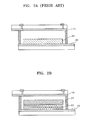
- FIG. 2A illustrates the basic structure of a conventional dye-sensitized solar cell.
- the conventional dye-sensitized solar cell has a sandwich structure with two planar electrodes, i.e., a first electrode 20 and a second electrode 21, facing each other.
- a porous film 22 is coated on a surface of the first electrode 20.
- a photosensitive dye to excite electrons by absorbing visible light is adsorbed onto a surface of the porous film 22.
- the first and second electrodes 20 and 21 are bound together and supported by supports.
- a space between the first and second electrodes is filled with an electrolyte to induce oxidation and reduction.
- FIG. 2B illustrates a structure of a dye-sensitized solar cell according to an embodiment of the present invention.
- a polymer layer 24 containing a liquid electrolyte is formed on and in the porous film 23.
- the polymer layer 24 prevents vaporization of the liquid electrolyte on and in the porous film 23 and holds the liquid electrolyte.
- the polymer electrolyte is illustrated as being between the porous film 24 and the second electrode 25 in FIG. 2B, this structure is for explaining a process of manufacturing the solar cell, and thus the present invention is not limited thereto.
- the electrolyte may fill the space between the first and second electrodes 25 and 26 and be uniformly distributed in the porous film.
- the electrolyte accepts electrons generated by the oxidation/reduction of I -1 /I -3 in a counter electrode and transfers the electrons to the dye.
- the open-circuit voltage is determined according to a difference between the Fermi energy level of the porous film and a redox level of the electrolyte.
- the polymerization initiator is at least one selected from the group consisting of benzoylperoxide, azobisisobutyronitrile, benzophenone, acetophenone, benzoin methyl ether, and benzoin ethyl ether.
- the amount of the polymerization initiator may be in a range of 0.05-0.2 parts by weight based on 100 parts by weight of the polymer electrolyte composition.
- the lithium salt in the polymer electrolyte composition according to an embodiment of the present invention is one selected from the group consisting of LiPF 6 , LiClO 4 , , LiBF 4 , LiCF 3 SO 3 , LiN(CF 3 SO 2 ) 2 , LiC(CF 3 SO 2 ) 3 , LiSCN, LiSbF 6 , LiAsF 6 , and any combination of two or more.
- the concentration of the lithium salt may be in a range of 0.4-1.5M.
- the polymer electrolyte composition according to an embodiment of the present invention further includes an organic solvent.
- the organic solvent may be at least one selected from the group consisting of acetonitrile (AN), ethyleneglycol, butanol, isobutylalcohol, isopentylalcohol, isopropylalcohol, ethylether, dioxane, tetrahydrobutane, tetrahydrofuran, n-butylether, propylether, isopropylether, acetone, methylethylketone, methylbutylketone, methyl isobutylketone, ethylene carbonate (EC), diethyl carbonate (DEC), propylene carbonate (PC), dimethyl carbonate (DMC), ethyl methyl carbonate (EMC), ⁇ -butylrolactone (GBL), N-methyl-2-pyrrolidone, and 3-methoxypropionitrile (MP), but is not
- the amount of the organic solvent may be in a range of 10-90 parts by weight based on 100 parts by weight of the polymer electrolyte composition.
- a separate solvent may be unnecessary when, for example, an imidazolium-based iodide in liquid state, is used.
- the polymer electrolyte composition further includes a carbonate-based plasticizer, for example, ethylene carbonate, propylene carbonate, etc.
- a carbonate-based plasticizer for example, ethylene carbonate, propylene carbonate, etc.
- the polymer electrolyte composition for a dye-sensitized solar cell includes diethylene glycol-2-ethylhexyl ether acrylate, benzoin ethyl ether, LiClO 4 , and ethylene carbonate.
- the polymer electrolyte composition for a dye-sensitized solar cell according to an embodiment of the present invention includes at least two electrolytes in different phases.
- the polymer electrolyte composition according to the present invention suppresses the volatilization of liquid electrolyte through oxidation/reduction and increases the photoelectric conversion efficiency and the lifetime of the solar cell.
- An embodiment of the present invention provides a dye-sensitized solar cell including: first and second electrodes facing each other; a dye-adsorbed porous film interposed between the first and second electrolytes; and a polymer electrolyte obtained by the polymerization of the above-described polymer electrolyte composition.
- the dye-sensitized solar cell Due to the use of the polymer electrolyte between the first and second electrodes, the dye-sensitized solar cell according to aspects of the present invention, provides higher energy conversion efficiency than conventional dye-sensitized solar cells. In addition, due to the suppressed volatilization of a solvent in the polymer electrolyte, the dye-sensitized solar cell has stable photoelectric chemical properties against environmental changes, such as a rise in the external temperature of the solar cell.
- a method of manufacturing a dye-sensitized solar cell including: preparing a first electrode and forming a porous film on an upper surface of the first electrode; defining a cell space by covering the porous film with glass disposed a predetermined distance above the porous film; injecting a polymer electrolyte composition including a mono-functional or a multi-functional monomer having at least one ethylene glycol in a side chain, a polymerization initiator, a lithium salt, and an organic solvent into the cell space between the porous film and the glass and polymerizing the polymer electrolyte composition to obtain a polymer electrolyte; removing the glass and forming a second electrode a predetermined distance above the porous film and the polymerized polymer electrolyte; and forming a fine hole in the second electrode and injecting a liquid electrolyte through the fine hole.
- the first electrode can be a product obtained by coating a conductive film containing at least one of indium tin oxide, indium oxide, tin oxide, zinc oxide, sulfur oxide, fluorine oxide, and a combination thereof, on a transparent plastic substrate including at least one of polyethylene terephthalate (PET), polyethylene naphthalate (PEN), polycarbonate (PC), polypropylene (PP), polyimide (PI), and triacetate cellulose (TAC), or a glass substrate.
- PET polyethylene terephthalate
- PEN polyethylene naphthalate
- PC polycarbonate
- PP polypropylene
- PI polyimide
- TAC triacetate cellulose
- the porous film 23 can include nano-sized particles uniformly distributed to provide porosity and suitable surface roughness.
- the porous film 23 may be formed of a metallic material, such as Ti, Zr, Sr, Zn, In, Yr, La, V, Mo, W, Sn, Nb, Mg, Al, Y, Sc, Sm, Ga, SrTi, etc.
- the porous film 23 may further include conductive particles, such as indium tin oxide (ITO), to facilitate the movement of electrons.
- ITO indium tin oxide
- the porous film 23 may further include an optical scatterer to provide an extended optical path and improved efficiency.
- the porous film 23 may further include both conductive particles and an optical scatterer.
- the dye adsorbed on the porous film can be a material containing a Ru complex and absorbs visible light.
- Ru is an element which belongs to the platinum group and can form various organic metal composites. Examples of Ru composites include metal composites containing Al, Pt, Pd, Eu, Pb, Ir, etc.
- dyes examples include "N3 dye” which is [cis-bis(isothiocyanato)bis(2,2'-bipyridyl- 4,4'-dicarboxylato)-ruthenium(II)], "N719 dye” which is [cis-bis(isothiocyanato)bis(2,2'- bipyridyl-4,4'-dicarboxylato)-ruthenium(II)-bis tetrabutylammonium]), etc.
- organic colorants of various colors that have various applications and provide high efficiency are currently being researched.
- organic colorants include Coumarin, , pheophorbide a, which is a kind of porphyrin, etc., which can be used alone or in combinations with a Ru composite to improve the absorption of long-wavelength visible light and efficiency.
- Such a dye is spontaneously adsorbed onto the porous film in about 12 hours after the porous film is immersed in an alcoholic solution in which the dye is dissolved.
- he second electrode can be a product obtained by coating a first conductive film on a transparent plastic substrate including at least one of PET, PEN, PC, PP, PI, and TAC, or a glass substrate and coating a second conductive film including Pt or a precious material on the first conductive film.
- Pt is used due to high reflectivity.
- the first and second electrodes may be bound together using a support, such as an adhesive film, a thermoplastic polymer film, for example, SURLYN®, etc., so that the space between the first and second electrodes is sealed.
- a support such as an adhesive film, a thermoplastic polymer film, for example, SURLYN®, etc.
- a fine hole is formed through the first or second electrode, an electrolyte solution is injected into the space between the first and second electrodes through the fine hole, and the fine hole is blocked using an adhesive to seal the space.
- an adhesive such as an epoxy resin, a UV curable agent, etc.
- an adhesive such as an epoxy resin, a UV curable agent, etc.
- a curing process is also performed after a heat treatment or a UV treatment.
- the polymer electrolyte according to the present invention can be used in a cell using a polymer electrolyte, in addition to a dye-sensitized solar cell.
- a glass substrate coated with a fluorine-containing tin oxide (FTO) was prepared as a first electrode.
- FTO fluorine-containing tin oxide
- a TiO 2 layer having a thickness of about 18 ⁇ m was formed on the first electrode using a doctor blade method, thermally treated at 450°C for 30 minutes, and immersed in a dye solution of 0.3mM Ru(4,4'-dicarboxy-2,2'-bipyridine) 2 (NCS) 2 in ethanol for 24 hours or longer to allow dye adsorption.
- FIG. 3 is a schematic view illustrating polymerization in the porous film.
- a sandwich-like cell structure was manufactured by covering the dye-adsorbed TiO 2 layer 33 having an area of 0.25cm 2 with glass while a spacer 31 having a thickness of 25 ⁇ m was disposed between the dye-adsorbed TiO 2 layer and the glass.
- a polymer electrolyte composition containing 4.5 parts by weight of di(ethylene glycol)-2-ethyl hexyl ether acrylate as a monomer, 0.09 parts by weight of benzoin ethyl ether as a polymerization initiator, 4.33 parts by weight of LiClO 4 as a lithium salt, and 0.45 parts by weight of ethylene carbonate as a plasticizer was prepared.
- the polymer electrolyte composition was injected between the TiO 2 layer 33 and the glass and irradiated using a Xenon lamp (ORIEL, 300W, 10mW/cm 2 ) as a light source through the glass to induce photopolymerization.
- ORIEL Xenon lamp
- the sandwich-like cell structure was dissembled to remove an excess of the polymer, and the cell was washed with ethanol.
- the first electrode had a structure of polydiethylene glycol-2-ethyl hexyl ether acrylate (PDEA)/dye/TiO 2 electrode.
- PDEA polydiethylene glycol-2-ethyl hexyl ether acrylate
- FIGS. 4A, 4B, and 4C are photographs of cross-sections of TiO 2 layers obtained through an FE-SEM analysis after coating with the polymer.
- FIG. 5 is an IR spectrum of the dye-sensitized solar cell manufactured in Example.
- a second electrode was manufactured by depositing a Pt electrode on a transparent, indium-doped tin oxide (ITO) conductor through spin coating. A fine hole for electrolyte injection was formed in the second electrode.
- the first electrode having the structure of PDEA/dye/TiO 2 and the Pt counter electrode, i.e., the second electrode were thermally pressed to bind together with a thermoplastic polymer film. A redox electrolyte was injected through the fine hole in the second electrode, and the fine hole was sealed using a thermoplastic polymer film, thereby resulting in a complete dye-sensitized solar cell.
- the redox electrolyte used was prepared by dissolving 0.6 M 1-hexyl-2,3-dimethyl imidazolium iodide, 0.1M lithium iodide, 0.05M 4-tert-buyl pyridine in 3-methoxypropiononitrile solvent.
- the short current, open voltage, fill factor (FF), efficiency, etc., of the dye-sensitized solar cell manufactured in Example were read from a current-voltage curve obtained using a light source having an intensity of 100mW/cm 2 and a Si standard cell.
- a glass substrate coated with a fluorine-containing tin oxide (FTO) was prepared as a first electrode.
- FTO fluorine-containing tin oxide
- a TiO 2 layer having a thickness of about 18 ⁇ m was formed on the first electrode using a doctor blade method, thermally treated at 450°C for 30 minutes, and immersed in a dye solution of 0.3mM Ru(4,4'-dicarboxy-2,2'-bipyridine) 2 (NCS) 2 in ethanol for 24 hours or longer to allow dye adsorption.
- a second electrode was manufactured by depositing a Pt electrode on a transparent, indium-doped tin oxide (ITO) conductor through spin coating. A fine hole for electrolyte injection was formed in the second electrode.
- the first electrode having the structure of PDEA/dye/TiO 2 and the Pt counter electrode, i.e., the second electrode were thermally pressed to bind together with a thermoplastic polymer film. A redox electrolyte was injected through the fine hole in the second electrode, and the fine hole was sealed using a thermoplastic polymer film, thereby resulting in a complete dye-sensitized solar cell. The same electrolyte used in Example above was used as the redox electrolyte in the Comparative Example.
- the short current (Jsc), open voltage (Voc), fill factor (FF), efficiency, etc., of the dye-sensitized solar cell manufactured in Comparative Example were read from a current-voltage curve obtained using a light source having an intensity of 100mW/cm 2 and a Si standard cell.
- Table 1 is the results of comparing the characteristics of the dye-sensitized solar cells manufactured in Example and Comparative Example.
- Table 1 Current Voltage Fill Factor (FF) Efficiency Example 10.4 0.75 0.63 4.9 Comparative Example 7.5 0.7 0.76 4.0
- FF Current Voltage Fill Factor
- the dye-sensitized solar cell according to an embodiment of the present invention includes a polymer electrolyte and a liquid electrolyte between the first and second electrodes.
- the dye-sensitized solar cell according to Example provides improved energy conversion efficiency over the conventional dye-sensitized solar cell.
- the dye-sensitized solar cell according to an embodiment of the present invention has a larger Jsc value than the conventional dye-sensitized solar cell for the following reason.
- references [ Ana F Nogueira, Durrant J. R and Marco A De Paoli., Adv. Mater. 13 (2001) 826 and Ana F Nogueira, Marco A De Paoli., Montanari I, Monkbouse R, Nelso J and Durrant J R,J. Phys. Cem. B, 105 (2001) 7517], ionic mobility is expected to decrease in a PDEA-filled TiO 2 layer. In addition, low ionic mobility leads to a lower photocurrent by suppressing the reaction between dye cations and I - ions.
- FIG. 6 is a J-V curve of the dye-sensitized solar cell manufactured in Example according to aspects of the present invention
- the photocurrent increases in the cell with the PDEA-filled TiO 2 layer, indicating that the PDEA-filled TiO 2 layer does not affect the ionic mobility and just holds the I 3 -1 /I -1 electrolyte like a sponge.
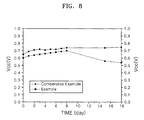
- FIGS. 7 and 8 are respectively, a graph of current versus time and a graph of voltage versus time of the dye-sensitized solar cell manufactured in Example according to aspects of the present invention, obtained through daily cell efficiency measurements over 18 days.
- the current decreases faster in the conventional cell than in the PDEA-filled cell. This is because PDEA reduces the leakage of the redox electrolyte in the cell.
- the voltage of the PDEA-filled cell according to an embodiment of the present invention is higher than the voltage of the conventional cell.
- the presence of more electrons in the PDEA-filled TiO 2 layer than in the conventional cell can be confirmed through electrochromic characteristics of a TiO 2 layer in a Li + -containing solution.
- the absorbance of the PDEA-filled cell is greater than the absorbance of the conventional cell at a negative potential of a flat band potential (Vfb) or less, indicating that the PDEA-filled TiO 2 layer contains more free electrons than the conventional cell.
- Vfb flat band potential
- the volatilization of the solvent of the polymer electrolyte is minimized, and thus stable photoelectrochemical characteristics against environmental changes, such as a rise in the external temperature of the solar cell, can be obtained.
- a highly efficient dye-sensitized solar cell with a higher voltage can be manufactured.
Landscapes
- Chemical & Material Sciences (AREA)
- Chemical Kinetics & Catalysis (AREA)
- Electrochemistry (AREA)
- Engineering & Computer Science (AREA)
- Power Engineering (AREA)
- General Chemical & Material Sciences (AREA)
- Physics & Mathematics (AREA)
- Condensed Matter Physics & Semiconductors (AREA)
- Dispersion Chemistry (AREA)
- General Physics & Mathematics (AREA)
- Inorganic Chemistry (AREA)
- Manufacturing & Machinery (AREA)
- Microelectronics & Electronic Packaging (AREA)
- Hybrid Cells (AREA)
- Photovoltaic Devices (AREA)
Abstract
Description
- The present invention relates to a dye-sensitized solar cell, and more particularly, to a dye-sensitized solar cell with improved photoelectrical conversion efficiency by using a polymer electrolyte.
- Dye-sensitized solar cells are photoelectrochemical solar cells using photosensitive dye molecules capable of generating electron-holes pairs by absorbing visible rays and an oxide semiconductor electrode that transfers the generated electrons and is formed of titanium oxide.
- In a conventional silicon solar cell, the absorption of solar energy and the generation of an electromotive force by the separation of electron-hole pairs occurs simultaneously in a silicon semiconductor. Meanwhile, in a dye-sensitized solar cell, the absorption of solar energy and the transfer of charges occur separately. In particular, in the dye-sensitized solar cell, a dye absorbs the solar energy, and a semiconductor electrode transfers the charges.
- Such dye-sensitized solar cells have low manufacturing costs, are environmentally friendly, and can be manufactured to be flexible. However, due to low energy conversion efficiency, there is a limit to the practical application of dye-sensitized solar cells.
- The energy conversion efficiency of a solar cell is in proportion to the amount of electrons generated by the absorption of solar light. The energy conversion efficiency can be increased by increasing the absorption of solar light, by increasing the absorbed amount of dye to generate more electrons, or by preventing the loss of excited electrons by the recombination with holes.
- To increase the absorption of a dye in a unit area, a method of preparing nano-sized oxide semiconductor particles, a method of increasing the reflectivity of a platinum electrode to increase the absorption of solar light, a method of adding micro-sized optical scatterers of semiconductor oxide, etc., have been suggested.
- A solar cell presented by Gratzel et al. from Switzerland in 1991 is a representative example of conventional dye-sensitized solar cells. The solar cell presented by Gratzel et al. is a photoelectrochemical solar cell using photosensitive dye molecules and an oxide semiconductor composed of titanium dioxide nanoparticles. The manufacturing costs of the solar cell are lower than silicon solar cells. Currently available dye-sensitized solar cells include a nanoparticle oxide semiconductor cathode, a platinum anode, a dye coated on the cathode, and an oxidation/reduction electrolyte using an organic solvent. In such a conventional dye-sensitized solar cell comprising an electrolyte prepared using an organic solvent, the organic solvent of the electrolyte is likely to volatilize when the external temperature of the solar cell rises due to solar light. Thus, the long-term stability and practicality of the dye-sensitized solar cell deteriorate.
-
Korean Patent Publication No. 2003-65957 - The present invention provides a polymer electrolyte composition for a dye-sensitized solar cell with improved energy conversion efficiency and stable photoelectrochemical properties against environmental changes, such as a rise in the external temperature of the solar cell, by minimizing the volatilization of a solvent of a polymer electrolyte.
- The present invention also provides a dye-sensitized solar cell employing the polymer electrolyte.
- According to an aspect of the present invention, there is provided a composition for preparing a polymer electrolyte for use in a dye-sensitized solar cell, the composition comprising: a mono-functional monomer or a multi-functional monomer having at least one ethylene glycol moiety in a side chain; a polymerization initiator; a lithium salt; and an organic solvent.
- According to another aspect of the present invention, there is provided a polymer electrolyte for the dye-sensitized solar cell that is obtained by polymerizing the above-described polymer electrolyte composition.
- According to another aspect of the present invention, there is provided a dye-sensitized solar cell comprising: first and second electrodes facing each other; a dye-adsorbed porous film interposed between the first and second electrodes; and the above-described polymer electrolyte interposed between the first and second electrodes.
- According to another aspect of the present invention, there is provided a method of manufacturing a dye-sensitized solar cell, the method comprising: preparing a first electrode and forming a porous film on an upper surface of the first electrode; defining a cell space by covering the porous film with glass disposed a predetermined distance above the porous film; injecting a polymer electrolyte composition including a mono-functional monomer or a multi-functional monomer having at least one ethylene glycol moiety in a side chain, a polymerization initiator, a lithium salt, and an organic solvent into the cell space between the porous film and the glass and polymerizing the polymer electrolyte composition to obtain a polymer electrolyte; removing the glass and forming a second electrode a predetermined distance above the porous film and the polymerized polymer electrolyte; and forming a fine hole in the second electrode and injecting a liquid electrolyte through the fine hole.
- The polymer electrolyte according to the present invention provides stable photoelectrochemical properties against environmental changes and can be used in a dye-sensitized solar cell having a high voltage and high efficiency.
- These and other features and advantages of the invention will become apparent and more readily appreciated from the following description of specific embodiments, taken in conjunction with the accompanying drawings of which:
- FIG. 1 is a schematic view illustrating the operating principles of a common dye-sensitized solar cell;
- FIG. 2A is a view illustrating a structure of a conventional dye-sensitized solar cell;
- FIG. 2B is a view illustrating a structure of a dye-sensitized solar cell according to an embodiment of the present invention;
- FIG. 3 is a schematic view illustrating polymerization in a dye-sensitized solar cell according to an aspect of the present invention;
- FIGS. 4A through 4C are field emission scanning electron microscope (FE-SEM) photographs of a dye-sensitized solar cell manufactured in Example according to aspects of the present invention;
- FIG. 5 is an infrared (IR) spectrum of the dye-sensitized solar cell manufactured in Example according to aspects of the present invention;
- FIG. 6 is a current density-voltage (J-V) curve of the dye-sensitized solar cell manufactured in Example according to aspects of the present invention and a dye-sensitized solar cell manufactured in Comparative Example
- FIG. 7 is a graph of current density (Jsc) versus time of the dye-sensitized solar cell manufacture in Example according to aspects of the present invention and the dye-sensitized solar cell manufactured in Comparative Example;
- FIG. 8 is a graph of voltage (Voc) versus time of the dye-sensitized solar cell manufactured in Example according to aspects of the present invention and the dye-sensitized solar cell manufactured in Comparative Example; and
- FIG. 9 is a graph of absorbance at 800 nm of the dye-sensitized solar cell manufactured in Example according to aspects of the present invention and the dye-sensitized solar cell manufactured in Comparative Example.
- Reference will now be made in detail to the present embodiments of the present invention, examples of which are illustrated in the accompanying drawings, wherein like reference numerals refer to the like elements throughout. The embodiments are described below in order to explain the present invention by referring to the figures.
- FIG. 1 illustrates the operating principles of a common dye-sensitized solar cell. Referring to FIG. 1, as
dye molecules 1 absorb solar light, electrons of the dye molecules transit from a base state to an excited state and form electron-hole pairs. The electrons in the excited state enter a conduction band at the interface betweentitanium oxide particles 2 and are transferred to a transparent conductor (indium or fluorine-doped tin oxide) 3 through the interface of the transparent conductor and to aPt counter electrode 6 through anexternal circuit 4. On the other hand, the dye oxidized as a result of the transition of electrons is reduced by iodine ions (I-) of aredox couple 5 in an electrolyte, and the oxidized iodine ions (I3 -) are reduced through the reaction with the electrons reaching the interface of the Pt counter electrode to achieve charge neutrality. As described above, unlike p-n junction type Si solar cells, the dye-sensitized solar cell operates through the interfacial reactions based on the electrochemical principles through the interfacial reactions. Therefore, there is a technical requirement for interfacial characteristic improvement. - The present invention provides a composition for preparing a polymer electrolyte (which is also referred to herein as a "polymer electrolyte composition") for a dye-sensitized solar cell that includes a mono-functional monomer or a multi-functional monomer having at least one ethylene glycol moiety in a side chain, a polymerization initiator, a lithium salt, and an organic solvent.
- In an embodiment of the present invention, the amount of the mono-functional or multi-functional monomer is in a range of 1-10 parts by weight based on 100 parts by weight of the polymer electrolyte composition. Generally, when the amount of the mono-functional or multi-functional monomer exceeds 10 parts by weight based on 100 parts by weight of the polymer electrolyte composition, a liquid electrolyte cannot pass through the polymerized electrolyte. Generally, when the amount of the mono-functional or multi-functional monomer is less than 1 part by weight, iodide ions I3 - cannot be sufficiently blocked.
- Examples of the mono-functional or multi-functional monomer that can be used in embodiments of the present invention include alkyl or alkoxy(meth)acrylates, such as methyl(meth)acrylate, ethyl(meth)acrylate, ethylhexyl ether acrylate, methoxyethyl(meth)acrylate, ethoxyethyl (meth)acrylate, etc., vinyl acetates, such as vinylpivalate, vinylpropionate, etc., vinylpyridine, vinylpyrrolidone, polyethyleneglycol diacrylate, polyethyleneglycol dimethacrylate, diethylene glycol-2-ethylhexyl ether acrylate, vinyl acrylate, trimethylolpropane tri(meth)acrylate and derivatives thereof, pentraerythritol tetra(meth)acrylate and derivatives thereof, dipentaerythriotol hexa(meth)acrylate and derivatives thereof, etc.
- In addition, the mono-functional or multi-functional monomer may have a weight average molecular weight of 100-1,000. When the mono-functional or multi-functional monomer has a weight average molecular weight greater than 1,000, the melting viscosity is generally too high. When the mono-functional or multi-functional monomer has a weight average molecular weight smaller than 100, desirable polymer characteristics generally cannot be obtained. The flowability of a side chain responsible for the plasticizing function is significant.
- In an embodiment of the present invention, the mono-functional monomer or multi-functional monomer having at least one ethylene glycol moiety in a side chain is diethylene glycol-2-ethylhexyl ether acrylate. The amount of the mono-functional or multi-functional monomer may be in a range of 1-10 parts by weight based on 100 parts by weight of the polymer electrolyte composition.
- FIG. 2A illustrates the basic structure of a conventional dye-sensitized solar cell. The conventional dye-sensitized solar cell has a sandwich structure with two planar electrodes, i.e., a
first electrode 20 and asecond electrode 21, facing each other. Aporous film 22 is coated on a surface of thefirst electrode 20. A photosensitive dye to excite electrons by absorbing visible light is adsorbed onto a surface of theporous film 22. The first andsecond electrodes - FIG. 2B illustrates a structure of a dye-sensitized solar cell according to an embodiment of the present invention. A
polymer layer 24 containing a liquid electrolyte is formed on and in theporous film 23. Thepolymer layer 24 prevents vaporization of the liquid electrolyte on and in theporous film 23 and holds the liquid electrolyte. - Although the polymer electrolyte is illustrated as being between the
porous film 24 and thesecond electrode 25 in FIG. 2B, this structure is for explaining a process of manufacturing the solar cell, and thus the present invention is not limited thereto. Alternatively, the electrolyte may fill the space between the first andsecond electrodes - The electrolyte accepts electrons generated by the oxidation/reduction of I-1/I-3 in a counter electrode and transfers the electrons to the dye. The open-circuit voltage is determined according to a difference between the Fermi energy level of the porous film and a redox level of the electrolyte.
- In an embodiment of the present invention, the polymerization initiator is at least one selected from the group consisting of benzoylperoxide, azobisisobutyronitrile, benzophenone, acetophenone, benzoin methyl ether, and benzoin ethyl ether. The amount of the polymerization initiator may be in a range of 0.05-0.2 parts by weight based on 100 parts by weight of the polymer electrolyte composition.
- The lithium salt in the polymer electrolyte composition according to an embodiment of the present invention is one selected from the group consisting of LiPF6, LiClO4, , LiBF4, LiCF3SO3, LiN(CF3SO2)2, LiC(CF3SO2)3, LiSCN, LiSbF6, LiAsF6, and any combination of two or more. The concentration of the lithium salt may be in a range of 0.4-1.5M.
- The polymer electrolyte composition according to an embodiment of the present invention further includes an organic solvent. The organic solvent may be at least one selected from the group consisting of acetonitrile (AN), ethyleneglycol, butanol, isobutylalcohol, isopentylalcohol, isopropylalcohol, ethylether, dioxane, tetrahydrobutane, tetrahydrofuran, n-butylether, propylether, isopropylether, acetone, methylethylketone, methylbutylketone, methyl isobutylketone, ethylene carbonate (EC), diethyl carbonate (DEC), propylene carbonate (PC), dimethyl carbonate (DMC), ethyl methyl carbonate (EMC), γ-butylrolactone (GBL), N-methyl-2-pyrrolidone, and 3-methoxypropionitrile (MP), but is not limited thereto.
- The amount of the organic solvent may be in a range of 10-90 parts by weight based on 100 parts by weight of the polymer electrolyte composition. A separate solvent may be unnecessary when, for example, an imidazolium-based iodide in liquid state, is used.
- In an embodiment of the present invention, the polymer electrolyte composition further includes a carbonate-based plasticizer, for example, ethylene carbonate, propylene carbonate, etc.
- In an embodiment of the present invention, the polymer electrolyte composition for a dye-sensitized solar cell includes diethylene glycol-2-ethylhexyl ether acrylate, benzoin ethyl ether, LiClO4, and ethylene carbonate.
- The polymer electrolyte composition for a dye-sensitized solar cell according to an embodiment of the present invention includes at least two electrolytes in different phases. The polymer electrolyte composition according to the present invention suppresses the volatilization of liquid electrolyte through oxidation/reduction and increases the photoelectric conversion efficiency and the lifetime of the solar cell.
- An embodiment of the present invention provides a dye-sensitized solar cell including: first and second electrodes facing each other; a dye-adsorbed porous film interposed between the first and second electrolytes; and a polymer electrolyte obtained by the polymerization of the above-described polymer electrolyte composition.
- Due to the use of the polymer electrolyte between the first and second electrodes, the dye-sensitized solar cell according to aspects of the present invention, provides higher energy conversion efficiency than conventional dye-sensitized solar cells. In addition, due to the suppressed volatilization of a solvent in the polymer electrolyte, the dye-sensitized solar cell has stable photoelectric chemical properties against environmental changes, such as a rise in the external temperature of the solar cell.
- According to another aspect of the present invention, there is provided a method of manufacturing a dye-sensitized solar cell, the method including: preparing a first electrode and forming a porous film on an upper surface of the first electrode; defining a cell space by covering the porous film with glass disposed a predetermined distance above the porous film; injecting a polymer electrolyte composition including a mono-functional or a multi-functional monomer having at least one ethylene glycol in a side chain, a polymerization initiator, a lithium salt, and an organic solvent into the cell space between the porous film and the glass and polymerizing the polymer electrolyte composition to obtain a polymer electrolyte; removing the glass and forming a second electrode a predetermined distance above the porous film and the polymerized polymer electrolyte; and forming a fine hole in the second electrode and injecting a liquid electrolyte through the fine hole.
- The first electrode can be a product obtained by coating a conductive film containing at least one of indium tin oxide, indium oxide, tin oxide, zinc oxide, sulfur oxide, fluorine oxide, and a combination thereof, on a transparent plastic substrate including at least one of polyethylene terephthalate (PET), polyethylene naphthalate (PEN), polycarbonate (PC), polypropylene (PP), polyimide (PI), and triacetate cellulose (TAC), or a glass substrate.
- The
porous film 23 can include nano-sized particles uniformly distributed to provide porosity and suitable surface roughness. Theporous film 23 may be formed of a metallic material, such as Ti, Zr, Sr, Zn, In, Yr, La, V, Mo, W, Sn, Nb, Mg, Al, Y, Sc, Sm, Ga, SrTi, etc. Theporous film 23 may further include conductive particles, such as indium tin oxide (ITO), to facilitate the movement of electrons. Alternatively, theporous film 23 may further include an optical scatterer to provide an extended optical path and improved efficiency. Alternatively, theporous film 23 may further include both conductive particles and an optical scatterer. - The dye adsorbed on the porous film can be a material containing a Ru complex and absorbs visible light. Ru is an element which belongs to the platinum group and can form various organic metal composites. Examples of Ru composites include metal composites containing Al, Pt, Pd, Eu, Pb, Ir, etc. Examples of commonly available dyes include "N3 dye" which is [cis-bis(isothiocyanato)bis(2,2'-bipyridyl- 4,4'-dicarboxylato)-ruthenium(II)], "N719 dye" which is [cis-bis(isothiocyanato)bis(2,2'- bipyridyl-4,4'-dicarboxylato)-ruthenium(II)-bis tetrabutylammonium]), etc.
- The availability of inexpensive organic colorants of various colors that have various applications and provide high efficiency is currently being researched. Examples of such organic colorants include Coumarin, , pheophorbide a, which is a kind of porphyrin, etc., which can be used alone or in combinations with a Ru composite to improve the absorption of long-wavelength visible light and efficiency.
- Such a dye is spontaneously adsorbed onto the porous film in about 12 hours after the porous film is immersed in an alcoholic solution in which the dye is dissolved.
- he second electrode can be a product obtained by coating a first conductive film on a transparent plastic substrate including at least one of PET, PEN, PC, PP, PI, and TAC, or a glass substrate and coating a second conductive film including Pt or a precious material on the first conductive film. In an embodiment of the present invention, Pt is used due to high reflectivity.
- The first and second electrodes may be bound together using a support, such as an adhesive film, a thermoplastic polymer film, for example, SURLYN®, etc., so that the space between the first and second electrodes is sealed. A fine hole is formed through the first or second electrode, an electrolyte solution is injected into the space between the first and second electrodes through the fine hole, and the fine hole is blocked using an adhesive to seal the space.
- Instead of using the support, an adhesive, such as an epoxy resin, a UV curable agent, etc., may be used to directly bind the first and second electrodes and seal the space. In this case, a curing process is also performed after a heat treatment or a UV treatment.
- The polymer electrolyte according to the present invention can be used in a cell using a polymer electrolyte, in addition to a dye-sensitized solar cell.
- Hereinafter, aspects of the present invention will be described in more detail with reference to the following examples and comparative examples. The following examples and comparative examples are for illustrative purposes only and are not intended to limit the scope of the present invention.
- A glass substrate coated with a fluorine-containing tin oxide (FTO) was prepared as a first electrode. Next, a TiO2 layer having a thickness of about 18µm was formed on the first electrode using a doctor blade method, thermally treated at 450°C for 30 minutes, and immersed in a dye solution of 0.3mM Ru(4,4'-dicarboxy-2,2'-bipyridine)2(NCS)2 in ethanol for 24 hours or longer to allow dye adsorption.
- FIG. 3 is a schematic view illustrating polymerization in the porous film. A sandwich-like cell structure was manufactured by covering the dye-adsorbed TiO2 layer 33 having an area of 0.25cm2 with glass while a
spacer 31 having a thickness of 25µm was disposed between the dye-adsorbed TiO2 layer and the glass. - A polymer electrolyte composition containing 4.5 parts by weight of di(ethylene glycol)-2-ethyl hexyl ether acrylate as a monomer, 0.09 parts by weight of benzoin ethyl ether as a polymerization initiator, 4.33 parts by weight of LiClO4 as a lithium salt, and 0.45 parts by weight of ethylene carbonate as a plasticizer was prepared.
- The polymer electrolyte composition was injected between the TiO2 layer 33 and the glass and irradiated using a Xenon lamp (ORIEL, 300W, 10mW/cm2) as a light source through the glass to induce photopolymerization. After the polymerization, the sandwich-like cell structure was dissembled to remove an excess of the polymer, and the cell was washed with ethanol. Here, the first electrode had a structure of polydiethylene glycol-2-ethyl hexyl ether acrylate (PDEA)/dye/TiO2 electrode.
- FIGS. 4A, 4B, and 4C are photographs of cross-sections of TiO2 layers obtained through an FE-SEM analysis after coating with the polymer. FIG. 5 is an IR spectrum of the dye-sensitized solar cell manufactured in Example.
- Next, a second electrode was manufactured by depositing a Pt electrode on a transparent, indium-doped tin oxide (ITO) conductor through spin coating. A fine hole for electrolyte injection was formed in the second electrode. Next, the first electrode having the structure of PDEA/dye/TiO2 and the Pt counter electrode, i.e., the second electrode, were thermally pressed to bind together with a thermoplastic polymer film. A redox electrolyte was injected through the fine hole in the second electrode, and the fine hole was sealed using a thermoplastic polymer film, thereby resulting in a complete dye-sensitized solar cell.
- The redox electrolyte used was prepared by dissolving 0.6 M 1-hexyl-2,3-dimethyl imidazolium iodide, 0.1M lithium iodide, 0.05M 4-tert-buyl pyridine in 3-methoxypropiononitrile solvent.
- The short current, open voltage, fill factor (FF), efficiency, etc., of the dye-sensitized solar cell manufactured in Example were read from a current-voltage curve obtained using a light source having an intensity of 100mW/cm2 and a Si standard cell.
- A glass substrate coated with a fluorine-containing tin oxide (FTO) was prepared as a first electrode. Next, a TiO2 layer having a thickness of about 18µm was formed on the first electrode using a doctor blade method, thermally treated at 450°C for 30 minutes, and immersed in a dye solution of 0.3mM Ru(4,4'-dicarboxy-2,2'-bipyridine)2(NCS)2 in ethanol for 24 hours or longer to allow dye adsorption.
- Next, a second electrode was manufactured by depositing a Pt electrode on a transparent, indium-doped tin oxide (ITO) conductor through spin coating. A fine hole for electrolyte injection was formed in the second electrode. Next, the first electrode having the structure of PDEA/dye/TiO2 and the Pt counter electrode, i.e., the second electrode, were thermally pressed to bind together with a thermoplastic polymer film. A redox electrolyte was injected through the fine hole in the second electrode, and the fine hole was sealed using a thermoplastic polymer film, thereby resulting in a complete dye-sensitized solar cell. The same electrolyte used in Example above was used as the redox electrolyte in the Comparative Example.
- The short current (Jsc), open voltage (Voc), fill factor (FF), efficiency, etc., of the dye-sensitized solar cell manufactured in Comparative Example were read from a current-voltage curve obtained using a light source having an intensity of 100mW/cm2 and a Si standard cell.
- Table 1 is the results of comparing the characteristics of the dye-sensitized solar cells manufactured in Example and Comparative Example.
Table 1 Current Voltage Fill Factor (FF) Efficiency Example 10.4 0.75 0.63 4.9 Comparative Example 7.5 0.7 0.76 4.0 - As described above, the dye-sensitized solar cell according to an embodiment of the present invention includes a polymer electrolyte and a liquid electrolyte between the first and second electrodes. The dye-sensitized solar cell according to Example provides improved energy conversion efficiency over the conventional dye-sensitized solar cell.
- The dye-sensitized solar cell according to an embodiment of the present invention has a larger Jsc value than the conventional dye-sensitized solar cell for the following reason. According to references [Ana F Nogueira, Durrant J.R and Marco A De Paoli., Adv. Mater. 13 (2001) 826 and Ana F Nogueira, Marco A De Paoli., Montanari I, Monkbouse R, Nelso J and Durrant J R,J. Phys. Cem. B, 105 (2001) 7517], ionic mobility is expected to decrease in a PDEA-filled TiO2 layer. In addition, low ionic mobility leads to a lower photocurrent by suppressing the reaction between dye cations and I- ions.
- However, referring to FIG. 6, which is a J-V curve of the dye-sensitized solar cell manufactured in Example according to aspects of the present invention, the photocurrent increases in the cell with the PDEA-filled TiO2 layer, indicating that the PDEA-filled TiO2 layer does not affect the ionic mobility and just holds the I3 -1/I-1 electrolyte like a sponge.
- This characteristic affects the lifetime of the cell. FIGS. 7 and 8 are respectively, a graph of current versus time and a graph of voltage versus time of the dye-sensitized solar cell manufactured in Example according to aspects of the present invention, obtained through daily cell efficiency measurements over 18 days.
- Referring to FIG. 7, the current decreases faster in the conventional cell than in the PDEA-filled cell. This is because PDEA reduces the leakage of the redox electrolyte in the cell.
- Referring to FIG. 8, the voltage of the PDEA-filled cell according to an embodiment of the present invention, is higher than the voltage of the conventional cell. The presence of more electrons in the PDEA-filled TiO2 layer than in the conventional cell can be confirmed through electrochromic characteristics of a TiO2 layer in a Li+-containing solution.
- Referring to FIG. 9, the absorbance of the PDEA-filled cell according to an embodiment of the present invention, is greater than the absorbance of the conventional cell at a negative potential of a flat band potential (Vfb) or less, indicating that the PDEA-filled TiO2 layer contains more free electrons than the conventional cell.
- As described above, according to aspects of the present invention, the volatilization of the solvent of the polymer electrolyte is minimized, and thus stable photoelectrochemical characteristics against environmental changes, such as a rise in the external temperature of the solar cell, can be obtained. In addition, a highly efficient dye-sensitized solar cell with a higher voltage can be manufactured.
- Although a few specific embodiments of the present invention have been shown and described, it will be appreciated by those skilled in the art that changes may be made in such embodiments without departing from the principles and spirit of the invention.
Claims (18)
- A composition for preparing a polymer electrolyte for use in a dye-sensitized solar cell, the composition comprising:a mono-functional monomer or a multi-functional monomer having at least one ethylene glycol moiety in a side chain;a polymerization initiator;a lithium salt; andan organic solvent.
- The polymer electrolyte composition of claim 1, wherein the mono-functional or multi-functional monomer is selected from the group consisting of alkyl or alkoxy(meth)acrylates selected from the group of methyl(meth)acrylate, ethyl(meth)acrylate, ethylhexyl ether acrylate, methoxyethyl(meth)acrylate, and ethoxyethyl (meth)acrylate, vinyl acetates selected from the group consisting of vinylpivalate, and vinylpropionate, vinylpyridine, vinylpyrrolidone, polyethyleneglycol diacrylate, polyethyleneglycol dimethacrylate, diethylene glycol-2-ethylhexyl ether acrylate, vinyl acrylate, trimethylolpropane tri(meth)acrylate and a derivative thereof, pentraerythritol tetra(meth)acrylate and a derivative thereof, and dipentaerythritol hexa(meth)acrylate and a derivative thereof.
- The polymer electrolyte composition of claim 1 or claim 2, wherein the amount of the mono-functional or multi-functional monomer is in the range of 1 and 10 parts by weight based on 100 parts by weight of the polymer electrolyte composition.
- The polymer electrolyte composition of claim 2 or claim 3, wherein the amount of the diethylene glycol-2-ethylhexyl ether acrylate is in the range of 1 and 10 parts by weight based on 100 parts by weight of the polymer electrolyte composition.
- The polymer electrolyte composition of any one of claims 1 to 4, wherein the mono-functional or multi-functional monomer has a weight average molecular weight of 100 to 1,000.
- The polymer electrolyte composition of any one of the preceding claims, wherein the polymerization initiator is at least one selected from the group consisting of benzoylperoxide, azobisisobutyronitrile, benzophenone, acetophenone, benzoin methyl ether, and benzoin ethyl ether.
- The polymer electrolyte composition of any one of the preceding claims, wherein the amount of the polymerization initiator is in the range of 0.05 and 0.2 parts by weight based on 100 parts by weight of the polymer electrolyte composition.
- The polymer electrolyte composition of any one of the preceding claims, wherein the lithium salt is selected from the group consisting of LiPF6, LiClO4, LiBF4, LiCF3SO3, LiN(CF3SO2)2, LiC(CF3SO2)3, LiSCN, LiSbF6, LiAsF6, and any combination thereof.
- The polymer electrolyte composition of any one of the preceding claims, wherein the concentration of the lithium salt is in the range of 0.4 and 1.5M.
- The polymer electrolyte composition of any one of the preceding claims, wherein the organic solvent is at least one selected from the group consisting of acetonitrile (AN), ethyleneglycol, butanol, isobutylalcohol, isopentylalcohol, isopropylalcohol, ethylether, dioxane, tetrahydrobutane, tetrahydrofuran, n-butylether, propylether, isopropylether, acetone, methylethylketone, methylbutylketone, methyl isobutylketone, ethylene carbonate (EC), diethyl carbonate (DEC), propylene carbonate (PC), dimethyl carbonate (DMC), ethyl methyl carbonate (EMC), γ-butylrolactone (GBL), N-methyl-2-pyrrolidone, and 3-methoxypropionitrile (MP), and the amount of the organic solvent is in the range of 10 and 90 parts by weight based on 100 parts by weight of the polymer electrolyte composition.
- The polymer electrolyte composition of any one of the preceding claims, further comprising a plasticizer selected from the group consisting of ethylene carbonate and propylene carbonate.
- The polymer electrolyte composition of claim 1, wherein diethylene glycol-2-ethylhexyl ether acrylate is the mono-functional or multi-functional monomer, benzoin ethyl ether is the polymerization initiator, LiClO4 is the lithium salt, and further comprising ethylene carbonate as a plasticizer.
- A polymer electrolyte for a dye-sensitized solar cell obtainable by polymerizing the polymer electrolyte composition of any one of claims 1 to 12.
- The polymer electrolyte of claim 13, further comprising a liquid electrolyte.
- The polymer electrolyte of claim 14, wherein the liquid electrolyte comprises a lithium salt or an organic solvent.
- A method of manufacturing a dye-sensitized solar cell, the method comprising:preparing a first electrode and forming a porous film on a surface of the first electrode;defining a cell space by covering the porous film with a glass disposed a predetermined distance from the porous film;injecting a polymer electrolyte composition including a mono-functional monomer or a multi-functional monomer having at least one ethylene glycol moiety in a side chain, a polymerization initiator, a lithium salt, and an organic solvent into the cell space between the porous film and the glass and polymerizing the polymer electrolyte composition to obtain a polymer electrolyte;removing the glass and forming a second electrode a predetermined distance from the porous film and the polymerized polymer electrolyte; andforming a fine hole in the second electrode and injecting a liquid electrolyte through the fine hole.
- A dye-sensitized solar cell comprising:first and second electrodes facing each other;a dye-adsorbed porous film interposed between the first and second electrodes; andthe polymer electrolyte of any one of claims 13 to 15 interposed between the first and second electrodes.
- Use of a polymer electrolyte composition as claimed in any one of claims 1 to 12 for the manufacture of a cell.
Applications Claiming Priority (1)
| Application Number | Priority Date | Filing Date | Title |
|---|---|---|---|
| KR1020050040524A KR100751331B1 (en) | 2005-05-16 | 2005-05-16 | Polymer electrolyte and dye-sensitized solar cell comprising the same |
Publications (2)
| Publication Number | Publication Date |
|---|---|
| EP1724871A1 true EP1724871A1 (en) | 2006-11-22 |
| EP1724871B1 EP1724871B1 (en) | 2009-03-04 |
Family
ID=36676581
Family Applications (1)
| Application Number | Title | Priority Date | Filing Date |
|---|---|---|---|
| EP06113997A Not-in-force EP1724871B1 (en) | 2005-05-16 | 2006-05-16 | Composition for Preparing Polymer Electrolyte for use in Dye-Sensitized Solar Cell |
Country Status (6)
| Country | Link |
|---|---|
| US (1) | US7592540B2 (en) |
| EP (1) | EP1724871B1 (en) |
| JP (1) | JP2006324247A (en) |
| KR (1) | KR100751331B1 (en) |
| CN (1) | CN1872910B (en) |
| DE (1) | DE602006005414D1 (en) |
Families Citing this family (12)
| Publication number | Priority date | Publication date | Assignee | Title |
|---|---|---|---|---|
| KR20100056552A (en) * | 2007-09-10 | 2010-05-27 | 다이솔 인더스트리즈 피티와이 엘티디 | A method for manufacturing solar cells |
| KR101034618B1 (en) * | 2007-12-13 | 2011-05-12 | 한국에너지기술연구원 | Gel-type polymer electrolyte for dye-sensitized solar cell containing UV-curable urethane acrylate, method for producing dye-sensitized solar cell and dye-sensitized solar cell comprising same |
| US8795905B2 (en) * | 2008-07-10 | 2014-08-05 | Uchicago Argonne, Llc | Electrolytes for lithium ion batteries |
| CN102024569A (en) * | 2010-09-29 | 2011-04-20 | 大连七色光太阳能科技开发有限公司 | A kind of solar battery electrolyte and its application |
| KR101406985B1 (en) | 2011-03-29 | 2014-06-17 | 에스케이종합화학 주식회사 | Polymer electrolytes composition and dye-sensitized solar cells containing the same |
| JP5785030B2 (en) | 2011-08-18 | 2015-09-24 | 株式会社Screenホールディングス | Manufacturing method of all solid state battery |
| CN103489645B (en) * | 2013-09-02 | 2016-08-17 | 常州大学 | A kind of used by dye sensitization solar battery gel electrolyte and preparation method thereof |
| US10100171B2 (en) * | 2013-12-16 | 2018-10-16 | Mitsubishi Chemical Corporation | Resin composition, resin sheet, and resin laminate |
| KR101532421B1 (en) * | 2013-12-23 | 2015-06-29 | (주)에나인더스트리 | Quasi-solid electrolyte for dye-sensitized solar cell and dye-sensitized solar cell containing the electrolyte |
| CN110998769B (en) * | 2017-07-21 | 2022-07-01 | 日本精工株式会社 | Dye-sensitized photoelectric conversion element |
| KR102294924B1 (en) | 2019-09-09 | 2021-08-27 | 동국대학교 산학협력단 | Electrolyte having high transmittance and high stability and sensitized solar cell comprising the same |
| EP3916065A1 (en) * | 2020-05-25 | 2021-12-01 | 3M Innovative Properties Company | Curable precursor of a structural adhesive composition |
Citations (3)
| Publication number | Priority date | Publication date | Assignee | Title |
|---|---|---|---|---|
| EP0720189A2 (en) * | 1994-12-29 | 1996-07-03 | Ishihara Sangyo Kaisha, Ltd. | Porous material-polymeric solid electrolyte composite, method for producing same and photoelectric conversion device using same |
| EP0823744A2 (en) * | 1996-08-07 | 1998-02-11 | Mitsui Petrochemical Industries, Ltd. | Ionically conductive polymeric gel electrolyte and solid battery containing the same |
| EP1526159A1 (en) * | 2002-07-29 | 2005-04-27 | Mitsubishi Paper Mills Limited | Organic dye, photoelectric transducing material, semiconductor electrode, and photoelectric transducing device |
Family Cites Families (12)
| Publication number | Priority date | Publication date | Assignee | Title |
|---|---|---|---|---|
| JPH09245848A (en) * | 1996-03-14 | 1997-09-19 | Shin Etsu Chem Co Ltd | Light charging type thin power supply element |
| JPH11345629A (en) * | 1998-03-31 | 1999-12-14 | Canon Inc | Secondary battery and method of manufacturing the same |
| DE69939147D1 (en) * | 1998-09-30 | 2008-09-04 | Fujifilm Corp | Semiconductor particles sensitized with a methine dye |
| JP4812055B2 (en) * | 1999-04-14 | 2011-11-09 | 日本化薬株式会社 | Method for producing polymer electrolyte and photoelectric conversion element |
| JP4439619B2 (en) | 1999-07-09 | 2010-03-24 | 富士フイルム株式会社 | Semiconductor fine particles, photoelectric conversion material, and photoelectric conversion element |
| EP1075005B1 (en) | 1999-08-04 | 2006-04-26 | Fuji Photo Film Co., Ltd. | Electrolyte composition, and photo-electro-chemical cell |
| JP4414036B2 (en) * | 1999-12-27 | 2010-02-10 | シャープ株式会社 | Method for producing dye-sensitized solar cell |
| KR100424584B1 (en) | 2001-12-28 | 2004-03-27 | 주식회사 엘지이아이 | Device for mounting canopy for microwave oven |
| KR20030065957A (en) | 2002-02-02 | 2003-08-09 | 한국전자통신연구원 | Dye-sensitized solar cells including polymer electrolyte gel containing poly(vinylidene fluoride) |
| TWI340763B (en) | 2003-02-20 | 2011-04-21 | Nippon Kayaku Kk | Seal agent for photoelectric conversion elements and photoelectric conversion elements using such seal agent |
| US20050016578A1 (en) * | 2003-04-11 | 2005-01-27 | Sony Corporation | Photoelectric conversion device fabrication method, photoelectric conversion device, electronic apparatus manufacturing method, electronic apparatus, metal film formation method and layer structure, and semiconductor fine particle layer and layer structure |
| KR100540157B1 (en) * | 2003-10-01 | 2006-01-10 | 한국과학기술연구원 | Solid-state dye-sensitized solar cell containing composite polymer electrolyte |
-
2005
- 2005-05-16 KR KR1020050040524A patent/KR100751331B1/en not_active Expired - Fee Related
-
2006
- 2006-05-15 US US11/433,462 patent/US7592540B2/en not_active Expired - Fee Related
- 2006-05-16 JP JP2006136844A patent/JP2006324247A/en not_active Ceased
- 2006-05-16 DE DE602006005414T patent/DE602006005414D1/en active Active
- 2006-05-16 CN CN2006100998530A patent/CN1872910B/en not_active Expired - Fee Related
- 2006-05-16 EP EP06113997A patent/EP1724871B1/en not_active Not-in-force
Patent Citations (3)
| Publication number | Priority date | Publication date | Assignee | Title |
|---|---|---|---|---|
| EP0720189A2 (en) * | 1994-12-29 | 1996-07-03 | Ishihara Sangyo Kaisha, Ltd. | Porous material-polymeric solid electrolyte composite, method for producing same and photoelectric conversion device using same |
| EP0823744A2 (en) * | 1996-08-07 | 1998-02-11 | Mitsui Petrochemical Industries, Ltd. | Ionically conductive polymeric gel electrolyte and solid battery containing the same |
| EP1526159A1 (en) * | 2002-07-29 | 2005-04-27 | Mitsubishi Paper Mills Limited | Organic dye, photoelectric transducing material, semiconductor electrode, and photoelectric transducing device |
Also Published As
| Publication number | Publication date |
|---|---|
| CN1872910A (en) | 2006-12-06 |
| DE602006005414D1 (en) | 2009-04-16 |
| KR100751331B1 (en) | 2007-08-22 |
| US7592540B2 (en) | 2009-09-22 |
| JP2006324247A (en) | 2006-11-30 |
| US20060254640A1 (en) | 2006-11-16 |
| CN1872910B (en) | 2011-02-23 |
| EP1724871B1 (en) | 2009-03-04 |
| KR20060118068A (en) | 2006-11-23 |
Similar Documents
| Publication | Publication Date | Title |
|---|---|---|
| JP5404058B2 (en) | Ionic liquid electrolyte | |
| CN101182384B (en) | Electrolyte composition for dye-sensitized solar cell, dye-sensitized solar cell including same, and method of preparing same | |
| EP1180774B1 (en) | Photoelectric conversion device and method for producing same | |
| EP1562206B1 (en) | Dye-sensitized solar cell having enlarged wavelength range for light absorption and method of fabricating same | |
| EP2530779B1 (en) | Electrolyte solution for dye sensitized solar cell, and dye sensitized solar cell using same | |
| KR100702859B1 (en) | Solid electrolyte comprising a liquid crystal material and dye-sensitized solar cell device using the same | |
| EP1976051A1 (en) | Dye sensitized solar cell and dye sensitized solar cell module | |
| EP1870913A2 (en) | Method for modifying surface of counter electrode and surface-modified counter electrode | |
| EP1724871B1 (en) | Composition for Preparing Polymer Electrolyte for use in Dye-Sensitized Solar Cell | |
| US20230104362A1 (en) | Dye sensitized photovoltaic cells | |
| EP2272920B1 (en) | Dye for dye-sensitized solar cell and dye-sensitized solar cell including the same | |
| KR101058101B1 (en) | Electrolytic solution composition and solar cell using same | |
| KR101088676B1 (en) | Electrolyte solution for dye-sensitized solar cell containing pyrrolidinium iodide-based ionic liquid, dye-sensitized solar cell and dye-sensitized solar cell comprising same | |
| EP1667275A1 (en) | Dye-sensitized solar cell and dye-sensitized solar cell module | |
| KR101532421B1 (en) | Quasi-solid electrolyte for dye-sensitized solar cell and dye-sensitized solar cell containing the electrolyte | |
| KR101088675B1 (en) | Electrolyte solution for dye-sensitized solar cell containing pyridinium iodide-based ionic liquid, dye-sensitized solar cell and dye-sensitized solar cell comprising same | |
| JP2000191729A (en) | Electrolyte, photoelectric converting element, photoelectrochemical cell or battery and polymer | |
| KR101294704B1 (en) | Dye-sensitized solar cell comprising multilayer electrolyte and preparation method thereof | |
| KR101619465B1 (en) | Dye-sensitized solar cells including block copolymer by photoelectrochemical polimerization and method for preparing the same | |
| KR101538972B1 (en) | Block copolymer and method for preparing the same by photoelectrochemical polimerization | |
| WO2025049890A1 (en) | Bifacial photovoltaic cells | |
| KR20130005918A (en) | Gel type electrolyte for dye-sensitized solarcell |
Legal Events
| Date | Code | Title | Description |
|---|---|---|---|
| PUAI | Public reference made under article 153(3) epc to a published international application that has entered the european phase |
Free format text: ORIGINAL CODE: 0009012 |
|
| 17P | Request for examination filed |
Effective date: 20060516 |
|
| AK | Designated contracting states |
Kind code of ref document: A1 Designated state(s): AT BE BG CH CY CZ DE DK EE ES FI FR GB GR HU IE IS IT LI LT LU LV MC NL PL PT RO SE SI SK TR |
|
| AX | Request for extension of the european patent |
Extension state: AL BA HR MK YU |
|
| AKX | Designation fees paid |
Designated state(s): DE FR GB |
|
| GRAP | Despatch of communication of intention to grant a patent |
Free format text: ORIGINAL CODE: EPIDOSNIGR1 |
|
| GRAS | Grant fee paid |
Free format text: ORIGINAL CODE: EPIDOSNIGR3 |
|
| GRAA | (expected) grant |
Free format text: ORIGINAL CODE: 0009210 |
|
| AK | Designated contracting states |
Kind code of ref document: B1 Designated state(s): DE FR GB |
|
| REG | Reference to a national code |
Ref country code: GB Ref legal event code: FG4D |
|
| REF | Corresponds to: |
Ref document number: 602006005414 Country of ref document: DE Date of ref document: 20090416 Kind code of ref document: P |
|
| PLBE | No opposition filed within time limit |
Free format text: ORIGINAL CODE: 0009261 |
|
| STAA | Information on the status of an ep patent application or granted ep patent |
Free format text: STATUS: NO OPPOSITION FILED WITHIN TIME LIMIT |
|
| 26N | No opposition filed |
Effective date: 20091207 |
|
| PGFP | Annual fee paid to national office [announced via postgrant information from national office to epo] |
Ref country code: GB Payment date: 20140326 Year of fee payment: 9 |
|
| PGFP | Annual fee paid to national office [announced via postgrant information from national office to epo] |
Ref country code: FR Payment date: 20140327 Year of fee payment: 9 Ref country code: DE Payment date: 20140327 Year of fee payment: 9 |
|
| REG | Reference to a national code |
Ref country code: DE Ref legal event code: R119 Ref document number: 602006005414 Country of ref document: DE |
|
| GBPC | Gb: european patent ceased through non-payment of renewal fee |
Effective date: 20150516 |
|
| REG | Reference to a national code |
Ref country code: FR Ref legal event code: ST Effective date: 20160129 |
|
| PG25 | Lapsed in a contracting state [announced via postgrant information from national office to epo] |
Ref country code: DE Free format text: LAPSE BECAUSE OF NON-PAYMENT OF DUE FEES Effective date: 20151201 Ref country code: GB Free format text: LAPSE BECAUSE OF NON-PAYMENT OF DUE FEES Effective date: 20150516 |
|
| PG25 | Lapsed in a contracting state [announced via postgrant information from national office to epo] |
Ref country code: FR Free format text: LAPSE BECAUSE OF NON-PAYMENT OF DUE FEES Effective date: 20150601 |