EP1722522A1 - Transmission rate control in an enhanced uplink mobile communication system - Google Patents
Transmission rate control in an enhanced uplink mobile communication system Download PDFInfo
- Publication number
- EP1722522A1 EP1722522A1 EP06009642A EP06009642A EP1722522A1 EP 1722522 A1 EP1722522 A1 EP 1722522A1 EP 06009642 A EP06009642 A EP 06009642A EP 06009642 A EP06009642 A EP 06009642A EP 1722522 A1 EP1722522 A1 EP 1722522A1
- Authority
- EP
- European Patent Office
- Prior art keywords
- transmission rate
- user data
- power offset
- uplink user
- mobile station
- Prior art date
- Legal status (The legal status is an assumption and is not a legal conclusion. Google has not performed a legal analysis and makes no representation as to the accuracy of the status listed.)
- Withdrawn
Links
Images




Classifications
-
- H—ELECTRICITY
- H04—ELECTRIC COMMUNICATION TECHNIQUE
- H04L—TRANSMISSION OF DIGITAL INFORMATION, e.g. TELEGRAPHIC COMMUNICATION
- H04L1/00—Arrangements for detecting or preventing errors in the information received
- H04L1/12—Arrangements for detecting or preventing errors in the information received by using return channel
- H04L1/16—Arrangements for detecting or preventing errors in the information received by using return channel in which the return channel carries supervisory signals, e.g. repetition request signals
- H04L1/18—Automatic repetition systems, e.g. Van Duuren systems
-
- H—ELECTRICITY
- H04—ELECTRIC COMMUNICATION TECHNIQUE
- H04W—WIRELESS COMMUNICATION NETWORKS
- H04W28/00—Network traffic management; Network resource management
- H04W28/16—Central resource management; Negotiation of resources or communication parameters, e.g. negotiating bandwidth or QoS [Quality of Service]
- H04W28/18—Negotiating wireless communication parameters
- H04W28/22—Negotiating communication rate
-
- H—ELECTRICITY
- H04—ELECTRIC COMMUNICATION TECHNIQUE
- H04L—TRANSMISSION OF DIGITAL INFORMATION, e.g. TELEGRAPHIC COMMUNICATION
- H04L1/00—Arrangements for detecting or preventing errors in the information received
- H04L1/0001—Systems modifying transmission characteristics according to link quality, e.g. power backoff
- H04L1/0006—Systems modifying transmission characteristics according to link quality, e.g. power backoff by adapting the transmission format
- H04L1/0007—Systems modifying transmission characteristics according to link quality, e.g. power backoff by adapting the transmission format by modifying the frame length
-
- H—ELECTRICITY
- H04—ELECTRIC COMMUNICATION TECHNIQUE
- H04L—TRANSMISSION OF DIGITAL INFORMATION, e.g. TELEGRAPHIC COMMUNICATION
- H04L1/00—Arrangements for detecting or preventing errors in the information received
- H04L1/0001—Systems modifying transmission characteristics according to link quality, e.g. power backoff
- H04L1/0023—Systems modifying transmission characteristics according to link quality, e.g. power backoff characterised by the signalling
- H04L1/0025—Transmission of mode-switching indication
-
- H—ELECTRICITY
- H04—ELECTRIC COMMUNICATION TECHNIQUE
- H04L—TRANSMISSION OF DIGITAL INFORMATION, e.g. TELEGRAPHIC COMMUNICATION
- H04L1/00—Arrangements for detecting or preventing errors in the information received
- H04L1/12—Arrangements for detecting or preventing errors in the information received by using return channel
- H04L1/16—Arrangements for detecting or preventing errors in the information received by using return channel in which the return channel carries supervisory signals, e.g. repetition request signals
- H04L1/18—Automatic repetition systems, e.g. Van Duuren systems
- H04L1/1825—Adaptation of specific ARQ protocol parameters according to transmission conditions
-
- H—ELECTRICITY
- H04—ELECTRIC COMMUNICATION TECHNIQUE
- H04L—TRANSMISSION OF DIGITAL INFORMATION, e.g. TELEGRAPHIC COMMUNICATION
- H04L1/00—Arrangements for detecting or preventing errors in the information received
- H04L1/12—Arrangements for detecting or preventing errors in the information received by using return channel
- H04L1/16—Arrangements for detecting or preventing errors in the information received by using return channel in which the return channel carries supervisory signals, e.g. repetition request signals
- H04L1/18—Automatic repetition systems, e.g. Van Duuren systems
- H04L1/1867—Arrangements specially adapted for the transmitter end
-
- H—ELECTRICITY
- H04—ELECTRIC COMMUNICATION TECHNIQUE
- H04L—TRANSMISSION OF DIGITAL INFORMATION, e.g. TELEGRAPHIC COMMUNICATION
- H04L1/00—Arrangements for detecting or preventing errors in the information received
- H04L1/0001—Systems modifying transmission characteristics according to link quality, e.g. power backoff
- H04L1/0002—Systems modifying transmission characteristics according to link quality, e.g. power backoff by adapting the transmission rate
-
- H—ELECTRICITY
- H04—ELECTRIC COMMUNICATION TECHNIQUE
- H04L—TRANSMISSION OF DIGITAL INFORMATION, e.g. TELEGRAPHIC COMMUNICATION
- H04L1/00—Arrangements for detecting or preventing errors in the information received
- H04L1/0001—Systems modifying transmission characteristics according to link quality, e.g. power backoff
- H04L1/0023—Systems modifying transmission characteristics according to link quality, e.g. power backoff characterised by the signalling
- H04L1/0028—Formatting
-
- H—ELECTRICITY
- H04—ELECTRIC COMMUNICATION TECHNIQUE
- H04L—TRANSMISSION OF DIGITAL INFORMATION, e.g. TELEGRAPHIC COMMUNICATION
- H04L1/00—Arrangements for detecting or preventing errors in the information received
- H04L1/12—Arrangements for detecting or preventing errors in the information received by using return channel
- H04L1/16—Arrangements for detecting or preventing errors in the information received by using return channel in which the return channel carries supervisory signals, e.g. repetition request signals
- H04L1/18—Automatic repetition systems, e.g. Van Duuren systems
- H04L1/1812—Hybrid protocols; Hybrid automatic repeat request [HARQ]
-
- H—ELECTRICITY
- H04—ELECTRIC COMMUNICATION TECHNIQUE
- H04L—TRANSMISSION OF DIGITAL INFORMATION, e.g. TELEGRAPHIC COMMUNICATION
- H04L1/00—Arrangements for detecting or preventing errors in the information received
- H04L1/12—Arrangements for detecting or preventing errors in the information received by using return channel
- H04L1/16—Arrangements for detecting or preventing errors in the information received by using return channel in which the return channel carries supervisory signals, e.g. repetition request signals
- H04L1/18—Automatic repetition systems, e.g. Van Duuren systems
- H04L1/1822—Automatic repetition systems, e.g. Van Duuren systems involving configuration of automatic repeat request [ARQ] with parallel processes
-
- H—ELECTRICITY
- H04—ELECTRIC COMMUNICATION TECHNIQUE
- H04W—WIRELESS COMMUNICATION NETWORKS
- H04W28/00—Network traffic management; Network resource management
- H04W28/02—Traffic management, e.g. flow control or congestion control
- H04W28/06—Optimizing the usage of the radio link, e.g. header compression, information sizing, discarding information
-
- H—ELECTRICITY
- H04—ELECTRIC COMMUNICATION TECHNIQUE
- H04W—WIRELESS COMMUNICATION NETWORKS
- H04W48/00—Access restriction; Network selection; Access point selection
- H04W48/08—Access restriction or access information delivery, e.g. discovery data delivery
Definitions
- the present invention relates to a transmission rate control method, and a mobile station.
- EUL Enhanced Uplink
- AG Absolute Grant
- One of the AG is a "Common Absolute Grant transmission rate control signal (Common Absolute Grant)" which is received at every mobile stations UE having the same ID (a common ID) located in the cell.
- Common Absolute Grant transmission rate control signal
- the AG is transmitted from a radio base station Node B to the mobile station UE through an "E-DCH AG Channel (E-AGCH)".
- E-AGCH E-DCH AG Channel
- Each of the Common AG and the Dedicared AG can be paired with the different E-AGCH respectively, or can be paired with the same E-AGCH.
- Non-Patent Literature 2 3GPP TSG-RAN TS25.309 v6.2.0
- TTI Transmission Time Interval
- E-DCH Enhanced Dedicated Channel
- the TTI When the TTI is set to "2ms", it is possible to perform a detailed scheduled transmission. When the TTI is set to "10ms”, it is possible to decrease an impact to downlink capacity by decreasing a downlink transmission power.
- the frequency of transmitting the layer-1 channel in downlink which relates to the EUL is decreased, and it is possible to decrease the impact to downlink capacity.
- the transmission rate control uses a method of designating, at a radio base station Node B, a transmission power offset (transmission power of Enhanced Dedicated Physical Data Channel /transmission power of Dedicated Physical Control Channel, i.e., a transmission power offset of the E-DPDCH to the DPCCH) to the mobile station using the AG, and determining, at the mobile station UE, a Transport Block Size (TBS) for transmitting uplink user data, based on a correspondence table associating the transmission power offset indicated by the received AG with the TBS.
- a transmission power offset transmission power of Enhanced Dedicated Physical Data Channel /transmission power of Dedicated Physical Control Channel, i.e., a transmission power offset of the E-DPDCH to the DPCCH
- the TTI of the E-DCH are set to "2ms" or "10ms”
- the minimum TBS is set to 200bits
- the transmission power offset which corresponds to 60kbps is notified as a scheduling signal through the Common AG, will be studied.
- an amount of user data which can be transmitted at each TTI is 120bit (60kbps ⁇ 2ms), and does not reach to the minimum TBS (200bit). Accordingly, when the TTI of the E-DCH is set to "2ms", the mobile station UE cannot transmit uplink user data at each TTI (each HARQ process).
- the mobile station UE can transmit uplink user data using the longer TTI.
- the mobile station UE cannot transmit uplink user data using the shorter TTI as the amount of data which can be transmitted does not reach to the minimum TBS.
- the present invention has been made considering the problems, and its object is to provide a transmission rate control method and a mobile station, which can transmit uplink user data at any TTI when a transmission power offset is indicated by a common Absolute Grant in a system where the mobile station UE performs a transmission using different TTI.
- a first aspect of the present invention is summarized as a transmission rate control method for controlling a transmission rate of uplink user data which is transmitted from a mobile station located in a predetermined cell to a radio base station: including, notifying, from the radio base station to the mobile station, a transmission power offset of an Enhanced Dedicated Physical Data Channel to a Dedicated Physical Control Channel using a Common Absolute Grant transmission rate control signal which is transmitted through an E-DCH Absolute Grant Channel; determining, at the mobile station, the transmission rate which corresponds to the received transmission power offset: and transmitting uplink user data at a transmission rate which is less than or equal to the determined transmission rate by decreasing the number of HARQ processes to be used and transmitting the uplink user data at the mobile station, when the determined transmission rate is below a transmission rate in the case of the uplink user data is transmitted using a minimum Transport Block Size at every HARQ process.
- uplink user data can be transmitted at the transmission rate which is less than or equal to the determined transmission rate by adding a transmission power offset of decreased HARQ processes to a transmission power offset of remaining HARQ processes, and decreasing the number of HARQ processes to be used and transmitting the uplink user data until the added transmission power offset corresponds to the minimum Transport Block Size.
- a second aspect of the present invention is summarized as a mobile station which controls a transmission rate of uplink user data: including, a receiver section configured to receive a Common Absolute Grant transmission rate control signal which includes information relating to a transmission power offset of an Enhanced Dedicated Physical Data Channel to a Dedicated Physical Control Channel through an E-DCH Absolute Grant Channel transmitted from a radio base station to a mobile station located in a predetermined cell; a determiner section configured to determine the transmission rate which corresponds to the received transmission power offset; and a transmitter section configured to transmit the uplink user data at a transmission rate which is less than or equal to the determined transmission rate by decreasing the number of HARQ processes to be used and transmitting the uplink user data, when the determined transmission rate is below a transmission rate in the case of the uplink user data is transmitted using a minimum Transport Block Size at every HARQ process.
- the transmitter section can be configured to transmit the uplink user data at the transmission rate which is less than or equal to the determined transmission, by adding a transmission power offset of decreased HARQ processes to a transmission power offset of remaining HARQ processes, and decreasing the number of HARQ processes to be used and transmitting the uplink user data until the added transmission power offset corresponds to the minimum Transport Block Size.
- a third aspect of the present invention is summarized as a transmission rate control method for controlling a transmission rate of uplink user data which is transmitted from a mobile station located in a predetermined cell to a radio base station: including, notifying, from the radio base station to the mobile station, a transmission power offset of an Enhanced Dedicated Physical Data Channel to a Dedicated Physical Control Channel using a Common Absolute Grant transmission rate control signal which is transmitted through an E-DCH Absolute Grant channel; determining, at the mobile station, a Transport Block Size which corresponds to the received transmission power offset as well as the number of HARQ processes which corresponds to the received transmission power offset using a correspondence table which makes correspondence between the transmission power offset, the Transport Block Size, and the number of HARQ processes; and transmitting the uplink user data using the determined number of HARQ processes and the determined Transport Block Size; and wherein a minimum Transport Block Size is associated with one or more patterns of the number of HARQ processes in the correspondence table.
- a fourth aspect of the present invention is summarized as a mobile station which controls a transmission rate of uplink user data: including, a receiver section configured to receive a common Absolute Grant transmission rate control signal which includes information relating to a transmission power offset of an Enhanced Dedicated Physical Data Channel to a Dedicated Physical Control Channel through an E-DCH Absolute Grant Channel transmitted from a radio base station to a mobile station located in a predetermined cell; a determiner section configured to determine a Transport Block Size which corresponds to the received transmission power offset as well as the number of HARQ processes which corresponds to the received transmission power offset using a correspondence cable which makes correspondence between the transmission power offset, the Transport Block Size, and the number of HARQ processes; and a transmitter section configured to transmit the uplink user data using the determined number of HARQ processes and the determined Transport Block Size; and wherein a minimum Transport Block Size is associated with one or more patterns of the number of HARQ processes in the correspondence table.
- FIGs. 3 to 10 a configuration of a mobile communication system according to a first embodiment of the present invention will be described.
- the mobile communication system is provided with a plurality of radio base stations Node B #1 to Node B #5 and a radio network controller RNC.
- the mobile station UE is configured to control a transmission rate of uplink user data which is transmitted from the mobile station UE located in a predetermined cell to the radio base station Node B.
- a "High Speed Downlink Packet Access (HSDPA)" is used in a downlink
- an “Enhanced Uplink (EUL)” is used in an uplink.
- HSDPA High Speed Downlink Packet Access
- EUL Enhanced Uplink
- E-DPCH Enhanced Dedicated Physical Channel
- E-DPDCH Enhanced Dedicated Physical Data Channel
- E-DPCCH Enhanced Dedicated Physical Control Channel
- DPCH Dedicated Physical Channel
- the E-DPCCH transmits control data for the EUL such as a transmission format number for defining a transmission format (transmission block size, or the like) of the EDPDCH, HARQ related information (the number of retransmission, or the like), and scheduling related information (transmission power, buffer residence-volume, or the like in the mobile station UE) .
- control data for the EUL such as a transmission format number for defining a transmission format (transmission block size, or the like) of the EDPDCH, HARQ related information (the number of retransmission, or the like), and scheduling related information (transmission power, buffer residence-volume, or the like in the mobile station UE) .
- the E-DPDCH is paired with the E-DPCCH, and transmits user data for the mobile station UE based on the control data for the EUL transmitted through the E-DPCCH.
- the DPCCH transmits control data such as a pilot symbol that is used for RAKE combining, SIR measurement, or the like, a Transport Format Combination Indicator (TFCI) for identifying a transmission format of uplink DPDCH, and a transmission power control bit in a downlink.
- control data such as a pilot symbol that is used for RAKE combining, SIR measurement, or the like, a Transport Format Combination Indicator (TFCI) for identifying a transmission format of uplink DPDCH, and a transmission power control bit in a downlink.
- TFCI Transport Format Combination Indicator
- the DPDCH is paired with the DPCCH, and transmits user data for the mobile station UE based on the control data transmitted through the DPCCH.
- the DPDCH can be configured not to be transmitted.
- HS-DPCCH High Speed Dedicated Physical Control Channel
- RACH Random Access Channel
- the HS-DPCCH transmits a Channel Quality Indicator (CQI) in a downlink and an acknowledge signal (Ack or Nack) for the HS-DPCCH.
- CQI Channel Quality Indicator
- Ack or Nack acknowledge signal
- the mobile station UE As shown in FIG. 3, the mobile station UE according to this embodiment is provided with a bus interface 31, a call processing section 32, a baseband processing section 33, a radio frequency (RF) section 34, and a transmission - reception antenna 35.
- a bus interface 31 a call processing section 32, a baseband processing section 33, a radio frequency (RF) section 34, and a transmission - reception antenna 35.
- RF radio frequency
- these functions can be independently present as hardware, and can be partly or entirely integrated, or can be configured through a process of software.
- the bus interface 31 is configured to forward the user data output from the call processing section 32 to another functional section (for example, an application related functional section). In addition, the bus interface 31 is configured to forward the user data transmitted from another functional section (for example, the application related functional section) to the call processing section 32.
- another functional section for example, the application related functional section
- the call processing section 32 is configured to perform a call control processing for transmitting and receiving the user data.
- the baseband signal processing section 33 is configured to transmit the user data to the call processing section 32, the user data acquired by performing, against the baseband signals transmitted from the RF section 34, a layer-1 processing including a despreading processing, a RAKE combining processing, and a "Forward Error Correction (FEC)" decode processing, a "Media Access Control (MAC)” processing including a MAC-e processing and a MAC-d processing, and a "Radio Link Control (RLC)” processing.
- a layer-1 processing including a despreading processing, a RAKE combining processing, and a "Forward Error Correction (FEC)" decode processing
- FEC Forward Error Correction
- MAC Media Access Control
- RLC Radio Link Control
- the baseband signal processing section 33 is configured to generate the baseband signals by performing the RLC processing, the MAC processing, or the layer-1 processing against the user data transmitted from the call processing section 32 so as to transmit the baseband signals to the RF section 34.
- the RF section 34 is configured to generate baseband signals by performing the detection processing, the filtering processing, the quantization processing, or the like against radio frequency signals received through the transmission - reception antenna 35, so as to transmit the generated baseband signals to the baseband signal processing section 33.
- the RF section 34 is configured to convert the baseband signals transmitted from the baseband signal processing section 33 to the radio frequency signals.
- the baseband signal processing section 33 is provided with a RLC processing section 33a, a MAC-d processing section 33b, a MAC-e processing section 33c, and a layer-1 processing section 33d.
- the RLC processing section 33a is configured to transmit, to the MAC-d processing section 33b, the user data transmitted from the call processing section 32 by performing a processing (RLC processing) in an upper layer of a layer-2 against the user data.
- the MAC-d processing section 33b is configured to grant a channel identifier header, and to create a transmission format in the uplink based on the limitation of transmission power.
- the MAC-e processing section 33c is provided with an Enhanced Transport Format Combination (E-TFC) selecting section 33c1 and an HARQ processing section 33c2.
- E-TFC Enhanced Transport Format Combination
- the E-TFC selecting section 33c1 is configured to determine a transmission format (E-TFC) of the E-DPDCH, based on scheduling signals (the AG, a Relative Grant (RG) and the like) transmitted from the radio base station Node B.
- E-TFC transmission format
- the E-TFC selecting section 33c1 is configured to determine a transmission format (E-TFC) of the E-DPDCH, based on scheduling signals (the AG, a Relative Grant (RG) and the like) transmitted from the radio base station Node B.
- the E-TFC selecting section 33c1 is configured to transmit transmission format information on the determined transmission format (that is, a transmission data block size, an transmission power ratio between the E-DPDCH and the DPCCH, or the like) to the layer-1 processing section 33d, and also to transmit the determined transmission format information to the HARQ processing section 33c2.
- the determined transmission format that is, a transmission data block size, an transmission power ratio between the E-DPDCH and the DPCCH, or the like
- Such a scheduling signal is information that is signaled in the cell where the mobile station UE is located, and includes control information for all the mobile stations located in the cell, or a specific group of the mobile stations located in the cell.
- the E-TFC selecting section 33c1 is configured to determine the transmission rate which corresponds to the received transmission power offset.
- the E-TFC selecting section 33c1 is configured to transmit the uplink user data at a transmission rate which is less than or equal to the determined transmission rate, by decreasing the number of HARQ processes to be used and transmitting the uplink user data at the mobile station.
- the E-TFC selecting section 33c1 can be configured to transmit the uplink user data at a transmission rate which is less than or equal to the determined transmission, by adding the transmission power offset of decreased HARQ processes to the transmission power offset of remaining HARQ processes, and decreasing the number of HARQ processes to be used and transmitting the uplink user data until the added transmission power offset corresponds to the minimum Transport Block Size.
- the HARQ processing section 33c2 is configured to perform process control for the "N-process stop-and-wait", so as to transmit, at each HARQ process, the user data in the uplink (uplink user data) based on an acknowledge signal (Ack/Nack for uplink data) transmitted from the radio base station Node B and the transmission format information determined by the E-TFC selecting section 33c1.
- the radio base station Node B is provided with an HWY interface 11, a baseband signal processing section 12, a call control section 13, at least one transmitter-receiver section 14, at least one amplifier section 15, and at least one transmission - reception antenna 16.
- the HWY interface 11 is an interface with a radio network controller RNC. Specifically, the HWY interface 11 is configured to receive user data transmitted from the radio network controller RNC to a mobile station UE via a downlink, so as to enter the user data to the baseband signal processing section 12.
- the HWY interface 11 is configured to receive control data for the radio base station Node B from the radio network controller RNC, so as to enter the received control data to the call control section 13.
- the HWY interface 11 is configured to acquire, from the baseband signal processing section 12, the user data included in the uplink signals which are received from a mobile station UE via an uplink, so as to transmit the acquired user data to the radio network controller RNC.
- the HWY interface 11 is configured to acquire the control data for the radio network controller RNC from the call control section 13, so as to transmit the acquired control data to the radio network controller RNC.
- the baseband signal processing section 12 is configured to generate baseband signals by performing the MAC-e processing and/or the layer-1 processing against the user data acquired from the HWY interface 11, so as to forward the generated baseband signals to the transmitter-receiver section 14.
- the MAC-e processing in the downlink includes an HARQ processing, a scheduling processing, a transmission rate control processing, or the like.
- the layer-1 processing in the downlink includes a channel coding processing of user data, a spreading processing, or the like.
- the baseband signal processing section 12 is configured to extract user data by performing the layer-1 processing and/or the MAC-e processing against the baseband signals acquired from the transmitter-receiver section 14, so as to forward the extracted user data to the HWY interface 11.
- the MAC-e processing in the uplink includes the HARQ processing, the scheduling processing, the transmission rate control processing, a header disposal processing, or the like.
- the layer-1 processing in the uplink includes the despreading processing, the RAKE combining processing, the error correction decode processing, or the like.
- the call control section 13 is configured to perform call control processing based on the control data acquired from the HWY interface 11.
- the transmitter-receiver section 14 is configured to perform processing of converting baseband signals, which are acquired from the baseband signal processing section 12, to radio frequency signals (downlink signals), so as to transmit the radio frequency signals to the amplifier section 15.
- the transmitter-receiver 14 is configured to perform processing of converting the radio frequency signals (uplink signals), which are acquired from the amplifier section 15, to the baseband signals, so as to transmit the baseband signals to the baseband signal processing section 12.
- the amplifier section 15 is configured to amplify the downlink signals acquired from the transmitter-receiver section 14, so as to transmit the amplified downlink signals to the mobile station UE via the transmission - reception antenna 16.
- the amplifier 15 is configured to amplify the uplink signals received by the transmission - reception antenna 16, so as to transmit the amplified uplink signals to the transmitter-receiver section 14.
- the baseband signal processing section 12 is provided with a MAC-e and layer-1 processing section 123.
- the MAC-e and layer-1 processing section 123 is configured to perform, against the baseband signals acquired from the transmitter-receiver section 14, the despreading processing, the RAKE combining processing, the error correction decode processing, the HARQ processing, or the like.
- the MAC-e and layer-1 processing section (configuration for the uplink) 123 is provided with a DPCCH RAKE section 123a, a DPDCH RAKE section 123b, an E-DPCCH RAKE section 123c, an E-DPDCH RAKE section 123d, an HS-DPCCH RAKE section 123e, a RACH processing section 123f, a Transport Format Combination Indicator (TFCI) decoder section 123g, buffers 123h and 123m, re-despreading sections 123i and 123n, FEC decoder sections 123j and 123p, an E-DPCCH decoder section 123k, a MAC-e functional section 1231, an HARQ buffer 123o, and a MAC-hs functional section 123q.
- TFCI Transport Format Combination Indicator
- the E-DPCCH RAKE section 123c is configured to perform, against the E-DPCCH in the baseband signals transmitted from the transmitter-receiver section 14, the despreading processing and the RAKE combining processing using a pilot symbol included in the DPCCH.
- the E-DPCCH decoder section 123k is configured to acquire transmission format number related information, HARQ related information, scheduling related information, or the like, by performing the decode processing against the RAKE combining outputs of the E-DPCCH RAKE section 123c, so as to enter the information to the MAC-e functional section 1231.
- the E-DPDCH RAKE section 123d is configured to perform, against the E-DPDCH in the baseband signals transmitted from the transmitter-receiver section 14, the despreading processing using the transmission format information (the number of codes) transmitted from the MAC-e functional section 1231 and the RAKE combining processing using the pilot symbol included in the DPCCH.
- the buffer 123m is configured to store the RAKE combining outputs of the E-DPDCH RAKE section 123d based on the transmission format information (the number of symbols) transmitted from the MAC-e functional section 1231.
- the re-despreading section 123n is configured to perform the despreading processing against the RAKE combining outputs of the E-DPDCH RAKE section 123d stored in the buffer 123m, based on the transmission format information (spreading factor) transmitted from the MAC-e functional section 1231.
- the HARQ buffer 123o is configured to store the despreading processing outputs of the re-despreading section 123n, based on the transmission format information transmitted from the MAC-e functional section 1231.
- the FEC decoder section 123p is configured to perform an error correction decoding processing (the FEC decode processing) against the despreading processing outputs of the re-despreading section 123n, which is stored in the HARQ buffer 123o, based on the transmission format information (transmission data block size) transmitted from the MAC-e functional section 1231.
- the MAC-e functional section 1231 is configured to calculate and output the transmission format information (the number of codes, the number of symbols, spreading factor, transmission data block size, and the like) based on the transmission format number related information, the HARQ related information, the scheduling related information, and the like, which are acquired from the E-DPCCH decoder section 123k.
- the MAC-e functional section 1231 is provided with a receive processing command section 12311, an HARQ controlling section 12312, and a scheduling section 12313.
- the receive processing command section 12311 is configured to transmit the transmission format number related information, the HARQ related information, and the scheduling related information, which are entered from the E-DPCCH decoder section 123k, to the HARQ controlling section 12312.
- the receive processing command section 12311 is configured to transmit, to the scheduling section 12313, the scheduling related information entered from the E-DPCCH decoder 123k.
- the receive processing command section 12311 is configured to output the transmission format information corresponding to the transmission format number entered from the E-DPCCH decoder section 123k.
- the HARQ controlling section 12312 is configured to determine whether or not the receive processing of uplink user data has been successful, based on the result of CRC entered from the FEC decoder section 123p.
- the HARQ controlling section 12312 is configured to generate an acknowledge signal (Ack or Nack), based on the determination result, so as to transmit the generated acknowledge signal to the configuration for the downlink of the baseband signal processing section 12.
- Ack or Nack an acknowledge signal
- the HARQ controlling section 12312 is configured to transmit the uplink user data entered from the FEC decoder section 123p to the radio network controller RNC, when the above determination result has been successful.
- the HARQ controlling section 12312 is configured to clear soft decision values stored in the HARQ buffer 123o, when the above determination result has been successful.
- the HARQ controlling section 12312 is configured to store, in the HARQ buffer 123o, the uplink user data, when the above determination result has not been successful.
- the HARQ controlling section 12312 is configured to forward the above determination result to the receive processing command section 12311.
- the receive processing control command section 12311 is configured to notify the E-DPDCH RAKE section 123d and the buffer 123m of an hardware resource that should be prepared for the following transmission time interval (TTI) based on the determination result, so as to perform notification for reserving the resource in the HARQ buffer 123o.
- TTI transmission time interval
- the receive processing command section 12311 is configured to designate the HARQ buffer 123o and the FEC decoder section 123p to perform the FEC decode processing after adding the uplink user data, which is stored in the HARQ buffer 123o, in a process corresponding to the TTI and a newly received uplink user data, per TTI.
- the scheduling section 12313 is configured to transmit the scheduling signals (the RGCH, and the like) via the configuration for the downlink.
- the radio network controller RNC is an apparatus provided at an upper level of the radio base station Node B, and is configured to control a radio communication between the radio base station Node B and the mobile station UE.
- the radio network controller RNC As shown in FIG. 10, the radio network controller RNC according to this embodiment is provided with an exchange interface 51, a Radio Link Control (RLC) layer processing section 52, a MAC layer processing section 53, a media signal processing section 54, a radio base station interface 55, and a call control section 56.
- RLC Radio Link Control
- the exchange interface 51 is an interface with an exchange 1, and is configured to forward the downlink signals transmitted from the exchange 1 to the RLC layer processing section 52, and to forward the uplink signals transmitted from the RLC layer processing section 52 to the exchange 1.
- the RLC layer processing section 52 is configured to perform an RLC sub-layer processing such as a combining processing of a header such as a sequence number or a trailer.
- the RLC layer processing section 52 is also configured to transmit the uplink signals to the exchange interface 51 and to transmit the downlink signals to the MAC layer processing section 53, after the RLC sub-layer processing is performed.
- the MAC layer processing section 53 is configured to perform a MAC layer processing such as a priority control processing or a header granting processing.
- the MAC layer processing section 53 is also configured to transmit the uplink signals to the RLC layer processing section 52 and to transmit the downlink signals to the radio base station interface 55 (or a media signal processing section 54), after the MAC layer processing is performed.
- the media signal processing section 54 is configured to perform a media signal processing against voice signals or real time image signals.
- the media signal processing section 54 is also configured to transmit the uplink signals to the MAC layer processing section 53 and to transmit the downlink signals to the radio base station interface 55, after the media signal processing is performed.
- the radio base station interface 55 is an interface with the radio base station Node B.
- the radio base station interface 55 is configured to forward the uplink signals transmitted from the radio base station Node B to the MAC layer processing section 53 (or the media signal processing section 54) and to forward the downlink signals transmitted from the MAC layer processing section 53 (or the media signal processing section 54) to the radio base station Node B.
- the call control section 56 is configured to perform a radio resource control processing for controlling radio resources such as call admission control processing, handover processing, and the like, a channel setup by the layer-3 signaling, and open processing, or the like.
- FIG. 12 a flowchart showing one method for determining the number of HARQ processes to be used at the mobile station UE according to this embodiment of the present invention is shown.
- step S101 the mobile station UE receives the transmission power offset by the common AG.
- step S102 the mobile station UE determines the transmission rate (Rate) which corresponds to the received transmission power offset using a correspondence table as shown in FIG. 11.
- the mobile station UE determines whether or not "(the transmission rate) ⁇ (TTI which is currently used)" is below the minimum TBS.
- the mobile station UE determines whether or not the transmission rate (Rate) determined in step S102 is below the transmission rate in the case of the uplink user data is transmitted using the minimum TBS at every HARQ process.
- step S106 the mobile station UE decreases the number of HARQ processes to be used from the maximum value N of HARQ processes one by one.
- the mobile station UE calculates "(the transmissiom rate) ⁇ (TTI which is currently used) ⁇ (n/N)" so as to compare the calculated value with the minimum TBS (step S104).
- the mobile station UE terminates the above operations, and transmits the uplink user data using the HARQ process of the calculated process number "n".
- a mobile station when a transmission rate which corresponds to a transmission power offset notified in an Absolute Grant is below a transmission rate in the case of the uplink user data is transmitted using a minimum Transport Block Size at every HARQ process, a mobile station performs a transmission by not using every HARQ processes and by limiting the number of HARQ processes to be used, so that it becomes possible to perform a communication without problems even when different TTI are used.
- the transmission power offset corresponds to 60kbps is notified by the common AG.
- the TTI of the E-DCH is set to "2ms”
- the transmission rate for the uplink user data becomes 100kbps even when the minimum TBS (200bit) is used as the TBS used for transmitting the uplink user data at each TTI. Therefore, in this situation, the transmission rate exceeds the notified transmission rate of 60kbps, and the mobile station UE cannot transmit uplink user data.
- the uplink user data of 200bit is transmitted in 3 TTI and the uplink user data is not transmitted in 2 TTI. Therefore, a transmission rate averaged during a period of "10ms" becomes the notified transmission rate (60kbps) in average.
- the embodiment of the present invention it is possible to transmit the uplink user data using as many HARQ processes as possible, without decreasing the transmission rate below the transmission rate which is notified by the common AG, and to spread the interference to the other users by time, by adding a transmission power offset of decreased HARQ processes to a transmission power offset of remaining HARQ processes, decreasing the number of HARQ processes until the added transmissionpower offset corresponds to the minimum Transport Block Size, and transmitting uplink user data using the remaining HARQ processes only.
- the present invention can provide a transmission rate control method and a mobile station, which can transmit uplink user data at any TTI, when a transmission power offset is indicated by a common Absolute Grant in a system where the mobile station UE performs a transmission using different TTI.
- FIG. 13 and FIG. 14 a mobile communication system according to a modified example 1 of the present invention will be described.
- the difference between the mobile communication system according to the first embodiment of the present invention and the modified example of the present invention will be mainly described.
- the E-TFC selecting section 33c1 of the mobile station UE is configured to determine a Transport Block Size which corresponds to the transmission power offset received from the radio base station Node B through the common AG as well as the number of HARQ processes which corresponds to the received transmission power offset, by using a correspondence table which makes correspondence between the TBS and the number of HARQ processes.
- the E-TFC selecting section 33c1 is configured to transmit the uplink user data using the determined number of HARQ processes and the determined TBS.
- the minimum TBS (200bit) is associated with one or more patterns of the number of HARQ processes (1-5).
- the maximum value of the number of HARQ processes to be used is set to "5".
- the radio base station Node B transmits the transmission power offset of the E-DPDCH to the DPCCH using the common AG which is transmitted through the E-AGCH, to the mobile station UE, and in step S201, the mobile station UE receives the transmission power offset PO.
- step S202 the mobile station UE determines determine the Transport Block size which corresponds to the received transmission power as well as the number of HARQ processes which corresponds to the received transmission power offset, by using the correspondence table (refer to FIG. 13) which makes correspondence between the transmission power offset and the TBS and the number of HARQ processes.
- step S203 the mobile station UE transmits the uplink user data using the determined number of HARQ processes and the determined TBS.
Landscapes
- Engineering & Computer Science (AREA)
- Computer Networks & Wireless Communication (AREA)
- Signal Processing (AREA)
- Quality & Reliability (AREA)
- Mobile Radio Communication Systems (AREA)
Abstract
Description
- This application is based upon and claims, the benefit of priority from the prior
Japanese Patent Application No. P2005-137918, filed on May 10, 2005 - The present invention relates to a transmission rate control method, and a mobile station.
- In a field of "Enhanced Uplink (EUL)", a transmission rate control method, which can perform both of a common transmission rate control and a dedicated transmission rate control by using two "Absolute Grant (AG)", is proposed.
- One of the AG is a "Common Absolute Grant transmission rate control signal (Common Absolute Grant)" which is received at every mobile stations UE having the same ID (a common ID) located in the cell.
- Other AG is a "Dedicated Absolute Grant transmission rate control signal (Dedicated Absolute Grant)" which is received at each mobile station having different ID respectively (See, Non-Patent Literature 1: 3GPP TSG-RAN R2-050929).
- The AG is transmitted from a radio base station Node B to the mobile station UE through an "E-DCH AG Channel (E-AGCH)". Each of the Common AG and the Dedicared AG can be paired with the different E-AGCH respectively, or can be paired with the same E-AGCH.
- On the other hand, as shown in Non-Patent Literature 2 (3GPP TSG-RAN TS25.309 v6.2.0), a Transmission Time Interval (herein after, TTI) of an "Enhanced Dedicated Channel (E-DCH) " can be selected from "2ms" and "10ms".
- When the TTI is set to "2ms", it is possible to perform a detailed scheduled transmission. When the TTI is set to "10ms", it is possible to decrease an impact to downlink capacity by decreasing a downlink transmission power.
- In other words, when the TTI of the E-DCH is set to "2ms", a frame length of layer-1 channel (E-AGCH/E-RGCH/E-HICH) in downlink which relates to the EUL becomes "2ms" .
- When the TTI of the E-DCH is set to "10ms", a frame length of the E-AGCH which relates to the EUL becomes "10ms", and a frame length of the E-RGCH and the E-HICH which relate to the EUL becomes "8ms".
- Therefore, when the TTI of the E-DCH is set to "10ms", the frequency of transmitting the layer-1 channel in downlink which relates to the EUL is decreased, and it is possible to decrease the impact to downlink capacity.
- As shown in Non-Patent
Literature 2, the transmission rate control uses a method of designating, at a radio base station Node B, a transmission power offset (transmission power of Enhanced Dedicated Physical Data Channel /transmission power of Dedicated Physical Control Channel, i.e., a transmission power offset of the E-DPDCH to the DPCCH) to the mobile station using the AG, and determining, at the mobile station UE, a Transport Block Size (TBS) for transmitting uplink user data, based on a correspondence table associating the transmission power offset indicated by the received AG with the TBS. - However, when the E-DCH which has different TTI is controlled using the Common AG, the following problem can be occurred.
- Here, an example of case that the TTI of the E-DCH are set to "2ms" or "10ms", the minimum TBS is set to 200bits, and the transmission power offset which corresponds to 60kbps is notified as a scheduling signal through the Common AG, will be studied.
- In this situation, when the TTI of the E-DCH is set to "10ms", the mobile station UE can transmit 600bit (= 60kbps × 10ms) of uplink user data at each TTI (each HARQ process).
- However, when the TTI of the E-DCH is set to "2ms", an amount of user data which can be transmitted at each TTI (each HARQ process) is 120bit (60kbps × 2ms), and does not reach to the minimum TBS (200bit). Accordingly, when the TTI of the E-DCH is set to "2ms", the mobile station UE cannot transmit uplink user data at each TTI (each HARQ process).
- As described above, in the system where the mobile station UE performs a transmission using different TTI, and when the transmission rate is indicated by the common AG, the mobile station UE can transmit uplink user data using the longer TTI.
- However, the mobile station UE cannot transmit uplink user data using the shorter TTI as the amount of data which can be transmitted does not reach to the minimum TBS.
- The present invention has been made considering the problems, and its object is to provide a transmission rate control method and a mobile station, which can transmit uplink user data at any TTI when a transmission power offset is indicated by a common Absolute Grant in a system where the mobile station UE performs a transmission using different TTI.
- A first aspect of the present invention is summarized as a transmission rate control method for controlling a transmission rate of uplink user data which is transmitted from a mobile station located in a predetermined cell to a radio base station: including, notifying, from the radio base station to the mobile station, a transmission power offset of an Enhanced Dedicated Physical Data Channel to a Dedicated Physical Control Channel using a Common Absolute Grant transmission rate control signal which is transmitted through an E-DCH Absolute Grant Channel; determining, at the mobile station, the transmission rate which corresponds to the received transmission power offset: and transmitting uplink user data at a transmission rate which is less than or equal to the determined transmission rate by decreasing the number of HARQ processes to be used and transmitting the uplink user data at the mobile station, when the determined transmission rate is below a transmission rate in the case of the uplink user data is transmitted using a minimum Transport Block Size at every HARQ process.
- In the first aspect, uplink user data can be transmitted at the transmission rate which is less than or equal to the determined transmission rate by adding a transmission power offset of decreased HARQ processes to a transmission power offset of remaining HARQ processes, and decreasing the number of HARQ processes to be used and transmitting the uplink user data until the added transmission power offset corresponds to the minimum Transport Block Size.
- A second aspect of the present invention is summarized as a mobile station which controls a transmission rate of uplink user data: including, a receiver section configured to receive a Common Absolute Grant transmission rate control signal which includes information relating to a transmission power offset of an Enhanced Dedicated Physical Data Channel to a Dedicated Physical Control Channel through an E-DCH Absolute Grant Channel transmitted from a radio base station to a mobile station located in a predetermined cell; a determiner section configured to determine the transmission rate which corresponds to the received transmission power offset; and a transmitter section configured to transmit the uplink user data at a transmission rate which is less than or equal to the determined transmission rate by decreasing the number of HARQ processes to be used and transmitting the uplink user data, when the determined transmission rate is below a transmission rate in the case of the uplink user data is transmitted using a minimum Transport Block Size at every HARQ process.
- In the second aspect, the transmitter section can be configured to transmit the uplink user data at the transmission rate which is less than or equal to the determined transmission, by adding a transmission power offset of decreased HARQ processes to a transmission power offset of remaining HARQ processes, and decreasing the number of HARQ processes to be used and transmitting the uplink user data until the added transmission power offset corresponds to the minimum Transport Block Size.
- A third aspect of the present invention is summarized as a transmission rate control method for controlling a transmission rate of uplink user data which is transmitted from a mobile station located in a predetermined cell to a radio base station: including, notifying, from the radio base station to the mobile station, a transmission power offset of an Enhanced Dedicated Physical Data Channel to a Dedicated Physical Control Channel using a Common Absolute Grant transmission rate control signal which is transmitted through an E-DCH Absolute Grant channel; determining, at the mobile station, a Transport Block Size which corresponds to the received transmission power offset as well as the number of HARQ processes which corresponds to the received transmission power offset using a correspondence table which makes correspondence between the transmission power offset, the Transport Block Size, and the number of HARQ processes; and transmitting the uplink user data using the determined number of HARQ processes and the determined Transport Block Size; and wherein a minimum Transport Block Size is associated with one or more patterns of the number of HARQ processes in the correspondence table.
- A fourth aspect of the present invention is summarized as a mobile station which controls a transmission rate of uplink user data: including, a receiver section configured to receive a common Absolute Grant transmission rate control signal which includes information relating to a transmission power offset of an Enhanced Dedicated Physical Data Channel to a Dedicated Physical Control Channel through an E-DCH Absolute Grant Channel transmitted from a radio base station to a mobile station located in a predetermined cell; a determiner section configured to determine a Transport Block Size which corresponds to the received transmission power offset as well as the number of HARQ processes which corresponds to the received transmission power offset using a correspondence cable which makes correspondence between the transmission power offset, the Transport Block Size, and the number of HARQ processes; and a transmitter section configured to transmit the uplink user data using the determined number of HARQ processes and the determined Transport Block Size; and wherein a minimum Transport Block Size is associated with one or more patterns of the number of HARQ processes in the correspondence table.
-
- FIG. 1 is diagram of an entire configuration of a general mobile communication system.
- FIGs. 2A to 2C are graphs illustrating operations at the time of burst data transmission in a conventional mobile communication system.
- FIG. 3 is a functional block diagram of a mobile station in the mobile communication system according to an embodiment of the present invention.
- FIG. 4 is a functional block diagram of a baseband signal processing section of the mobile station in the mobile communication system according to the embodiment of the present invention.
- FIG. 5 is a functional block diagram of a MAC-e processing section of the baseband signal processing section in the mobile station of the mobile communication system according to the embodiment of the present invention.
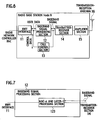
- FIG. 6 is a functional block diagram of a radio base station of the mobile communication system according to the embodiment of the present invention.
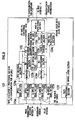
- FIG. 7 is a functional block diagram of a baseband processing section in the radio base station of the mobile communication system according to the embodiment of the present invention.
- FIG. 8 is a functional block diagram of a MAC-e and layer-1 processing section (configured for an uplink) in the baseband signal processing section in the radio base station of the communication system according to the embodiment of the present invention.
- FIG. 9 is a functional block diagram of the MAC-e functional section of the MAC-e and layer-1 processing section (configured for the uplink) in the baseband signal processing section in the radio base station of the mobile communication system according to the embodiment of the present invention.
- FIG. 10 is a functional block diagram of a radio network controller of the mobile communication system according to the embodiment of the present invention.
- FIG. 11 is a diagram showing a correspondence table which makes correspondence between a transmission power offset and a transmission rate according to the embodiment of the present invention.
- FIG. 12 is a flowchart showing operations of the mobile communication system according to the embodiment of the present invention.
- FIG. 13 is a diagram showing a correspondence table which makes correspondence between the transmission power offset and the Transport Block size and the number of HARQ processes according to the modified example 1 of the present invention.
- FIG. 14 is a flowchart explaining operations of the mobile communication system according to the modified example 1 of the present invention.
- Referring to FIGs. 3 to 10, a configuration of a mobile communication system according to a first embodiment of the present invention will be described.
- It should be noted that, as shown in FIG. 1, the mobile communication system according to this embodiment is provided with a plurality of radio base stations
Node B # 1 toNode B # 5 and a radio network controller RNC. - The mobile station UE according to this embodiment is configured to control a transmission rate of uplink user data which is transmitted from the mobile station UE located in a predetermined cell to the radio base station Node B.
- The mobile communication system according to this embodiment, a "High Speed Downlink Packet Access (HSDPA)" is used in a downlink, and an "Enhanced Uplink (EUL)" is used in an uplink.
- It should be noted that in both of the HSDPA and the EUL, retransmission control (N process stop and wait) shall be performed by a "Hybrid Automatic Repeat Request (HARQ)"
- Therefore, in an uplink, an "Enhanced Dedicated Physical Channel (E-DPCH)" configured of an "Enhanced Dedicated Physical Data Channel (E-DPDCH)" and an "Enhanced Dedicated Physical Control Channel (E-DPCCH)", and a "Dedicated Physical Channel (DPCH)" configured of a "Dedicated Physical Date Channel (DPDCH) and a "Dedicated Physical Control Channel (DPCCH)" are used.
- Here, the E-DPCCH transmits control data for the EUL such as a transmission format number for defining a transmission format (transmission block size, or the like) of the EDPDCH, HARQ related information (the number of retransmission, or the like), and scheduling related information (transmission power, buffer residence-volume, or the like in the mobile station UE) .
- In addition, the E-DPDCH is paired with the E-DPCCH, and transmits user data for the mobile station UE based on the control data for the EUL transmitted through the E-DPCCH.
- The DPCCH transmits control data such as a pilot symbol that is used for RAKE combining, SIR measurement, or the like, a Transport Format Combination Indicator (TFCI) for identifying a transmission format of uplink DPDCH, and a transmission power control bit in a downlink.
- In addition, the DPDCH is paired with the DPCCH, and transmits user data for the mobile station UE based on the control data transmitted through the DPCCH. However, if user data that should be transmitted does not exist in the mobile station UE, the DPDCH can be configured not to be transmitted.
- In addition, in the uplink, a "High Speed Dedicated Physical Control Channel (HS-DPCCH) "which are needed when the HSPDA is applied, and a "Random Access Channel (RACH) " , are also used.
- The HS-DPCCH transmits a Channel Quality Indicator (CQI) in a downlink and an acknowledge signal (Ack or Nack) for the HS-DPCCH.
- As shown in FIG. 3, the mobile station UE according to this embodiment is provided with a
bus interface 31, acall processing section 32, abaseband processing section 33, a radio frequency (RF)section 34, and a transmission -reception antenna 35. - However, these functions can be independently present as hardware, and can be partly or entirely integrated, or can be configured through a process of software.
- The
bus interface 31 is configured to forward the user data output from thecall processing section 32 to another functional section (for example, an application related functional section). In addition, thebus interface 31 is configured to forward the user data transmitted from another functional section (for example, the application related functional section) to thecall processing section 32. - The
call processing section 32 is configured to perform a call control processing for transmitting and receiving the user data. - The baseband
signal processing section 33 is configured to transmit the user data to thecall processing section 32, the user data acquired by performing, against the baseband signals transmitted from theRF section 34, a layer-1 processing including a despreading processing, a RAKE combining processing, and a "Forward Error Correction (FEC)" decode processing, a "Media Access Control (MAC)" processing including a MAC-e processing and a MAC-d processing, and a "Radio Link Control (RLC)" processing. - In addition, the baseband
signal processing section 33 is configured to generate the baseband signals by performing the RLC processing, the MAC processing, or the layer-1 processing against the user data transmitted from thecall processing section 32 so as to transmit the baseband signals to theRF section 34. - Detailed description of the functions of the baseband
signal processing section 33 will be given later. - The
RF section 34 is configured to generate baseband signals by performing the detection processing, the filtering processing, the quantization processing, or the like against radio frequency signals received through the transmission -reception antenna 35, so as to transmit the generated baseband signals to the basebandsignal processing section 33. - In addition, the
RF section 34 is configured to convert the baseband signals transmitted from the basebandsignal processing section 33 to the radio frequency signals. - As shown in FIG. 4 , the baseband
signal processing section 33 is provided with aRLC processing section 33a, a MAC-d processing section 33b, a MAC-e processing section 33c, and a layer-1processing section 33d. - The
RLC processing section 33a is configured to transmit, to the MAC-d processing section 33b, the user data transmitted from thecall processing section 32 by performing a processing (RLC processing) in an upper layer of a layer-2 against the user data. - The MAC-
d processing section 33b is configured to grant a channel identifier header, and to create a transmission format in the uplink based on the limitation of transmission power. - As shown in FIG. 5, the MAC-
e processing section 33c is provided with an Enhanced Transport Format Combination (E-TFC) selecting section 33c1 and an HARQ processing section 33c2. - The E-TFC selecting section 33c1 is configured to determine a transmission format (E-TFC) of the E-DPDCH, based on scheduling signals (the AG, a Relative Grant (RG) and the like) transmitted from the radio base station Node B.
- In addition, the E-TFC selecting section 33c1 is configured to transmit transmission format information on the determined transmission format (that is, a transmission data block size, an transmission power ratio between the E-DPDCH and the DPCCH, or the like) to the layer-1
processing section 33d, and also to transmit the determined transmission format information to the HARQ processing section 33c2. - Such a scheduling signal is information that is signaled in the cell where the mobile station UE is located, and includes control information for all the mobile stations located in the cell, or a specific group of the mobile stations located in the cell.
- In addition, when the transmission power offset of the E-DPDCH to the DPCCH is received through the E-AGCH, which is transmitted from the radio base station Node B to the mobile station UE located in the predetermined cell, the E-TFC selecting section 33c1 is configured to determine the transmission rate which corresponds to the received transmission power offset.
- In addition, when the determined transmission rate is below the transmission rate in the case of the uplink user data is transmitted using a minimum Transport Block Size at every HARQ process, the E-TFC selecting section 33c1 is configured to transmit the uplink user data at a transmission rate which is less than or equal to the determined transmission rate, by decreasing the number of HARQ processes to be used and transmitting the uplink user data at the mobile station.
- Further, the E-TFC selecting section 33c1 can be configured to transmit the uplink user data at a transmission rate which is less than or equal to the determined transmission, by adding the transmission power offset of decreased HARQ processes to the transmission power offset of remaining HARQ processes, and decreasing the number of HARQ processes to be used and transmitting the uplink user data until the added transmission power offset corresponds to the minimum Transport Block Size.
- The HARQ processing section 33c2 is configured to perform process control for the "N-process stop-and-wait", so as to transmit, at each HARQ process, the user data in the uplink (uplink user data) based on an acknowledge signal (Ack/Nack for uplink data) transmitted from the radio base station Node B and the transmission format information determined by the E-TFC selecting section 33c1.
- As shown in FIG. 6, the radio base station Node B according to this embodiment is provided with an
HWY interface 11, a basebandsignal processing section 12, acall control section 13, at least one transmitter-receiver section 14, at least oneamplifier section 15, and at least one transmission -reception antenna 16. - The
HWY interface 11 is an interface with a radio network controller RNC. Specifically, theHWY interface 11 is configured to receive user data transmitted from the radio network controller RNC to a mobile station UE via a downlink, so as to enter the user data to the basebandsignal processing section 12. - In addition, the
HWY interface 11 is configured to receive control data for the radio base station Node B from the radio network controller RNC, so as to enter the received control data to thecall control section 13. - In addition, the
HWY interface 11 is configured to acquire, from the basebandsignal processing section 12, the user data included in the uplink signals which are received from a mobile station UE via an uplink, so as to transmit the acquired user data to the radio network controller RNC. - Further, the
HWY interface 11 is configured to acquire the control data for the radio network controller RNC from thecall control section 13, so as to transmit the acquired control data to the radio network controller RNC. - The baseband
signal processing section 12 is configured to generate baseband signals by performing the MAC-e processing and/or the layer-1 processing against the user data acquired from theHWY interface 11, so as to forward the generated baseband signals to the transmitter-receiver section 14. - Here, the MAC-e processing in the downlink includes an HARQ processing, a scheduling processing, a transmission rate control processing, or the like.
- In addition, the layer-1 processing in the downlink includes a channel coding processing of user data, a spreading processing, or the like.
- In addition, the baseband
signal processing section 12 is configured to extract user data by performing the layer-1 processing and/or the MAC-e processing against the baseband signals acquired from the transmitter-receiver section 14, so as to forward the extracted user data to theHWY interface 11. - Here, the MAC-e processing in the uplink includes the HARQ processing, the scheduling processing, the transmission rate control processing, a header disposal processing, or the like.
- In addition, the layer-1 processing in the uplink includes the despreading processing, the RAKE combining processing, the error correction decode processing, or the like.
- Detailed description of the functions of the baseband
signal processing section 12 will be given later. - In addition, the
call control section 13 is configured to perform call control processing based on the control data acquired from theHWY interface 11. - The transmitter-
receiver section 14 is configured to perform processing of converting baseband signals, which are acquired from the basebandsignal processing section 12, to radio frequency signals (downlink signals), so as to transmit the radio frequency signals to theamplifier section 15. - In addition, the transmitter-
receiver 14 is configured to perform processing of converting the radio frequency signals (uplink signals), which are acquired from theamplifier section 15, to the baseband signals, so as to transmit the baseband signals to the basebandsignal processing section 12. - The
amplifier section 15 is configured to amplify the downlink signals acquired from the transmitter-receiver section 14, so as to transmit the amplified downlink signals to the mobile station UE via the transmission -reception antenna 16. - In addition, the
amplifier 15 is configured to amplify the uplink signals received by the transmission -reception antenna 16, so as to transmit the amplified uplink signals to the transmitter-receiver section 14. - As shown in FIG. 7, the baseband
signal processing section 12 is provided with a MAC-e and layer-1processing section 123. - The MAC-e and layer-1
processing section 123 is configured to perform, against the baseband signals acquired from the transmitter-receiver section 14, the despreading processing, the RAKE combining processing, the error correction decode processing, the HARQ processing, or the like. - However, these functions are not clearly divided per hardware, and can be obtained by software.
- As shown in FIG. 8, the MAC-e and layer-1 processing section (configuration for the uplink) 123 is provided with a
DPCCH RAKE section 123a, aDPDCH RAKE section 123b, anE-DPCCH RAKE section 123c, anE-DPDCH RAKE section 123d, an HS-DPCCH RAKE section 123e, aRACH processing section 123f, a Transport Format Combination Indicator (TFCI)decoder section 123g, buffers 123h and 123m, re-despreading sections 123i and 123n,FEC decoder sections 123j and 123p, anE-DPCCH decoder section 123k, a MAC-efunctional section 1231, an HARQ buffer 123o, and a MAC-hsfunctional section 123q. - The
E-DPCCH RAKE section 123c is configured to perform, against the E-DPCCH in the baseband signals transmitted from the transmitter-receiver section 14, the despreading processing and the RAKE combining processing using a pilot symbol included in the DPCCH. - The
E-DPCCH decoder section 123k is configured to acquire transmission format number related information, HARQ related information, scheduling related information, or the like, by performing the decode processing against the RAKE combining outputs of theE-DPCCH RAKE section 123c, so as to enter the information to the MAC-efunctional section 1231. - The
E-DPDCH RAKE section 123d is configured to perform, against the E-DPDCH in the baseband signals transmitted from the transmitter-receiver section 14, the despreading processing using the transmission format information (the number of codes) transmitted from the MAC-efunctional section 1231 and the RAKE combining processing using the pilot symbol included in the DPCCH. - The buffer 123m is configured to store the RAKE combining outputs of the
E-DPDCH RAKE section 123d based on the transmission format information (the number of symbols) transmitted from the MAC-efunctional section 1231. - The re-despreading section 123n is configured to perform the despreading processing against the RAKE combining outputs of the
E-DPDCH RAKE section 123d stored in the buffer 123m, based on the transmission format information (spreading factor) transmitted from the MAC-efunctional section 1231. - The HARQ buffer 123o is configured to store the despreading processing outputs of the re-despreading section 123n, based on the transmission format information transmitted from the MAC-e
functional section 1231. - The FEC decoder section 123p is configured to perform an error correction decoding processing (the FEC decode processing) against the despreading processing outputs of the re-despreading section 123n, which is stored in the HARQ buffer 123o, based on the transmission format information (transmission data block size) transmitted from the MAC-e
functional section 1231. - The MAC-e
functional section 1231 is configured to calculate and output the transmission format information (the number of codes, the number of symbols, spreading factor, transmission data block size, and the like) based on the transmission format number related information, the HARQ related information, the scheduling related information, and the like, which are acquired from theE-DPCCH decoder section 123k. - In addition, as shown in FIG. 9, the MAC-e
functional section 1231 is provided with a receiveprocessing command section 12311, anHARQ controlling section 12312, and ascheduling section 12313. - The receive
processing command section 12311 is configured to transmit the transmission format number related information, the HARQ related information, and the scheduling related information, which are entered from theE-DPCCH decoder section 123k, to theHARQ controlling section 12312. - In addition, the receive
processing command section 12311 is configured to transmit, to thescheduling section 12313, the scheduling related information entered from theE-DPCCH decoder 123k. - Further, the receive
processing command section 12311 is configured to output the transmission format information corresponding to the transmission format number entered from theE-DPCCH decoder section 123k. - The
HARQ controlling section 12312 is configured to determine whether or not the receive processing of uplink user data has been successful, based on the result of CRC entered from the FEC decoder section 123p. - Then, the
HARQ controlling section 12312 is configured to generate an acknowledge signal (Ack or Nack), based on the determination result, so as to transmit the generated acknowledge signal to the configuration for the downlink of the basebandsignal processing section 12. - In addition, the
HARQ controlling section 12312 is configured to transmit the uplink user data entered from the FEC decoder section 123p to the radio network controller RNC, when the above determination result has been successful. - In addition, the
HARQ controlling section 12312 is configured to clear soft decision values stored in the HARQ buffer 123o, when the above determination result has been successful. - On the other hand, the
HARQ controlling section 12312 is configured to store, in the HARQ buffer 123o, the uplink user data, when the above determination result has not been successful. - In addition, the
HARQ controlling section 12312 is configured to forward the above determination result to the receiveprocessing command section 12311. - The receive processing
control command section 12311 is configured to notify theE-DPDCH RAKE section 123d and the buffer 123m of an hardware resource that should be prepared for the following transmission time interval (TTI) based on the determination result, so as to perform notification for reserving the resource in the HARQ buffer 123o. - In addition, when the uplink user data is stored in the buffer 123m, the receive
processing command section 12311 is configured to designate the HARQ buffer 123o and the FEC decoder section 123p to perform the FEC decode processing after adding the uplink user data, which is stored in the HARQ buffer 123o, in a process corresponding to the TTI and a newly received uplink user data, per TTI. - The
scheduling section 12313 is configured to transmit the scheduling signals (the RGCH, and the like) via the configuration for the downlink. - The radio network controller RNC according to this embodiment is an apparatus provided at an upper level of the radio base station Node B, and is configured to control a radio communication between the radio base station Node B and the mobile station UE.
- As shown in FIG. 10, the radio network controller RNC according to this embodiment is provided with an
exchange interface 51, a Radio Link Control (RLC) layer processing section 52, a MAC layer processing section 53, a media signal processing section 54, a radiobase station interface 55, and acall control section 56. - The
exchange interface 51 is an interface with anexchange 1, and is configured to forward the downlink signals transmitted from theexchange 1 to the RLC layer processing section 52, and to forward the uplink signals transmitted from the RLC layer processing section 52 to theexchange 1. - The RLC layer processing section 52 is configured to perform an RLC sub-layer processing such as a combining processing of a header such as a sequence number or a trailer.
- The RLC layer processing section 52 is also configured to transmit the uplink signals to the
exchange interface 51 and to transmit the downlink signals to the MAC layer processing section 53, after the RLC sub-layer processing is performed. - The MAC layer processing section 53 is configured to perform a MAC layer processing such as a priority control processing or a header granting processing.
- The MAC layer processing section 53 is also configured to transmit the uplink signals to the RLC layer processing section 52 and to transmit the downlink signals to the radio base station interface 55 (or a media signal processing section 54), after the MAC layer processing is performed.
- The media signal processing section 54 is configured to perform a media signal processing against voice signals or real time image signals.
- The media signal processing section 54 is also configured to transmit the uplink signals to the MAC layer processing section 53 and to transmit the downlink signals to the radio
base station interface 55, after the media signal processing is performed. - The radio
base station interface 55 is an interface with the radio base station Node B. The radiobase station interface 55 is configured to forward the uplink signals transmitted from the radio base station Node B to the MAC layer processing section 53 (or the media signal processing section 54) and to forward the downlink signals transmitted from the MAC layer processing section 53 (or the media signal processing section 54) to the radio base station Node B. - The
call control section 56 is configured to perform a radio resource control processing for controlling radio resources such as call admission control processing, handover processing, and the like, a channel setup by the layer-3 signaling, and open processing, or the like. - Referring to FIG. 11, the relationship between a transmission power offset and a transmission rate according to this embodiment of the present invention is shown.
- Further, referring to FIG. 12, a flowchart showing one method for determining the number of HARQ processes to be used at the mobile station UE according to this embodiment of the present invention is shown.
- In step S101, the mobile station UE receives the transmission power offset by the common AG.
- In step S102, the mobile station UE determines the transmission rate (Rate) which corresponds to the received transmission power offset using a correspondence table as shown in FIG. 11.
- Then, in steps S103 and S104, the mobile station UE determines whether or not "(the transmission rate) × (TTI which is currently used)" is below the minimum TBS.
- In other words, in steps S103 and S104, the mobile station UE determines whether or not the transmission rate (Rate) determined in step S102 is below the transmission rate in the case of the uplink user data is transmitted using the minimum TBS at every HARQ process.
- When the transmission rate (Rate) determined in step S102 is below the transmission rate in the case of the uplink user data is transmitted using the minimum TBS at every HARQ process, in step S106, the mobile station UE decreases the number of HARQ processes to be used from the maximum value N of HARQ processes one by one.
- Further, each time when the mobile station UE decreases the number of HARQ processes to be used from the maximum value N of HARQ processes, the mobile station UE calculates "(the transmissiom rate) × (TTI which is currently used) × (n/N)" so as to compare the calculated value with the minimum TBS (step S104).
- When the calculated value become equal to or larger than the minimum TBS, the mobile station UE terminates the above operations, and transmits the uplink user data using the HARQ process of the calculated process number "n".
- According to the embodiment of the present invention, when a transmission rate which corresponds to a transmission power offset notified in an Absolute Grant is below a transmission rate in the case of the uplink user data is transmitted using a minimum Transport Block Size at every HARQ process, a mobile station performs a transmission by not using every HARQ processes and by limiting the number of HARQ processes to be used, so that it becomes possible to perform a communication without problems even when different TTI are used.
- For example, the transmission power offset corresponds to 60kbps is notified by the common AG. In this situation, when the TTI of the E-DCH is set to "2ms", the transmission rate for the uplink user data becomes 100kbps even when the minimum TBS (200bit) is used as the TBS used for transmitting the uplink user data at each TTI. Therefore, in this situation, the transmission rate exceeds the notified transmission rate of 60kbps, and the mobile station UE cannot transmit uplink user data.
- However, in this situation, for example, if the HARQ processes to be used for transmitting the uplink user data is limited to 3 HARQ processes out of 5 HARQ processes, the uplink user data of 200bit is transmitted in 3 TTI and the uplink user data is not transmitted in 2 TTI. Therefore, a transmission rate averaged during a period of "10ms" becomes the notified transmission rate (60kbps) in average.
- Further, according to the embodiment of the present invention, it is possible to transmit the uplink user data using as many HARQ processes as possible, without decreasing the transmission rate below the transmission rate which is notified by the common AG, and to spread the interference to the other users by time, by adding a transmission power offset of decreased HARQ processes to a transmission power offset of remaining HARQ processes, decreasing the number of HARQ processes until the added transmissionpower offset corresponds to the minimum Transport Block Size, and transmitting uplink user data using the remaining HARQ processes only.
- The present invention can provide a transmission rate control method and a mobile station, which can transmit uplink user data at any TTI, when a transmission power offset is indicated by a common Absolute Grant in a system where the mobile station UE performs a transmission using different TTI.
- Referring to FIG. 13 and FIG. 14, a mobile communication system according to a modified example 1 of the present invention will be described. Hereinafter, the difference between the mobile communication system according to the first embodiment of the present invention and the modified example of the present invention will be mainly described.
- The E-TFC selecting section 33c1 of the mobile station UE is configured to determine a Transport Block Size which corresponds to the transmission power offset received from the radio base station Node B through the common AG as well as the number of HARQ processes which corresponds to the received transmission power offset, by using a correspondence table which makes correspondence between the TBS and the number of HARQ processes.
- In addition, the E-TFC selecting section 33c1 is configured to transmit the uplink user data using the determined number of HARQ processes and the determined TBS.
- Here, in the correspondence table shown in FIG. 13, the minimum TBS (200bit) is associated with one or more patterns of the number of HARQ processes (1-5). In the modified example 1 of the present invention, the maximum value of the number of HARQ processes to be used is set to "5".
- As shown in FIG. 14, the radio base station Node B transmits the transmission power offset of the E-DPDCH to the DPCCH using the common AG which is transmitted through the E-AGCH, to the mobile station UE, and in step S201, the mobile station UE receives the transmission power offset PO.
- Then in step S202, the mobile station UE determines determine the Transport Block size which corresponds to the received transmission power as well as the number of HARQ processes which corresponds to the received transmission power offset, by using the correspondence table (refer to FIG. 13) which makes correspondence between the transmission power offset and the TBS and the number of HARQ processes.
- In step S203, the mobile station UE transmits the uplink user data using the determined number of HARQ processes and the determined TBS.
- Additional advantages and modifications will readily occur to those skilled in the art. Therefore, the invention in its broader aspects is not limited to the specific details and the representative embodiments shown and described herein. Accordingly, various modifications may be made without departing from the scope of the general inventive concept as defined by the appended claims and their equivalents.
Claims (6)
- A transmission rate control method for controlling a transmission rate of uplink user data which is transmitted from a mobile station located in a predetermined cell to a radio base station, comprising:notifying, from the radio base station to the mobile station, a transmission power offset of an Enhanced Dedicated Physical Data Channel to a Dedicated Physical Control Channel using a Common Absolure Grant transmission rate control signal which is transmitted through an E-DCH Absolute Grant Channel;determining, at the mobile station, the transmission rate which corresponds to the received transmission power offset; andtransmitting the uplink user data at a transmission rate which is less than or equal to the determined transmission rate by decreasing the number of HARQ processes to be used and transmitting the uplink user data at the mobile station, when the determined transmission rate is below a transmission rate in the case of the uplink user data is transmitted using a minimum Transport Block Size at every HARQ process.
- The transmission rate control method according to claim 1, wherein the uplink user data is transmitted at the transmission rate which is less than or equal to the determined transmission rate by adding a transmission power offset of decreased HARQ processes to a transmission power offset of remaining HARQ processes, and decreasing the number of HARQ processes to be used and transmitting the uplink user data until the added transmission power offset corresponds to the minimum Transport Block Size.
- A mobile station which controls a transmission rate of uplink user data, comprising:a receiver section configured to receive a Common Absolute Grant transmission rate control signal which includes information relating to a transmission power offset of an Enhanced Dedicated Physical Data Channel to a Dedicated Physical Control Channel through an E-DCH Absolute Grant Channel transmitted from a radio base station to the mobile station located in a predetermined cell;a determiner section configured to determine a transmission rate which corresponds to the received transmission power offset; anda transmitter section configured to transmit the uplink user data at a transmission rate which is less than or equal to the determined transmission rate by decreasing the number of HARQ processes to be used and transmitting the uplink user data, when the determined transmission rate is below a transmission rate in the case of the uplink user data is transmitted using a minimum Transport Block Size at every HARQ process.
- The mobile station according to claim 3, wherein the transmitter section is configured to transmit the uplink user data at a transmission rate which is less than or equal to the determined transmission, by adding a transmission power offset of decreased HARQ processes to a transmission power offset of remaining HARQ processes, and decreasing the number of HARQ processes to be used and transmitting the uplink user data until the added transmission power offset corresponds to the minimum Transport Block Size.
- A transmission rate control method for controlling a transmission rate of uplink user data which is transmitted from a mobile station located in a predetermined cell to a radio base station, comprising:notifying, from the radio base station to the mobile station, a transmission power offset of an Enhanced Dedicated Physical Data Channel to a Dedicated Physical Control Channel using a Common Absolute Grant transmission rate control signal which is transmitted through an E-DCH Absolute Grant Channel;determining, at the mobile station, a Transport Block Size which corresponds to the received transmission power offset as well as the number of HARQ processes which corresponds to the received transmission power offset using a correspondence table which makes correspondence between the transmission power offset, the Transport Block Size, and the number of HARQ processes; andtransmitting the uplink user data using the determined number of HARQ processes and the determined Transport Block size,and wherein a minimum Transport Block Size is associated with one or more patterns of the number of HARQ processes in the correspondence table.
- A mobile station which controls a transmission rate of uplink user data, comprising:a receiver section configured to receive a Common Absolute Grant transmission rate control signal which includes information relating to a transmission power offset of an Enhanced Dedicated Physical Data Channel to a Dedicated Physical Control Channel through an E-DCH Absolute Grant Channel transmitted from a radio base station to a mobile station located in a predetermined cell;a determiner section configured to determine a Transport Block Size which corresponds to the received transmission power offset as well as the number of HARQ processes which corresponds to the received transmission power offset using a correspondence table which makes correspondence between the transmission power offset, the Transport Block Size, and the number of HARQ processes; anda transmitter section configured to transmit the uplink user data using the determined number of HARQ processes and the determined Transport Block Size.and wherein a minimum Transport Block Size is associated with one or more patterns of the number of HARQ processes in the correspondence table.
Applications Claiming Priority (1)
| Application Number | Priority Date | Filing Date | Title |
|---|---|---|---|
| JP2005137918 | 2005-05-10 |
Publications (1)
| Publication Number | Publication Date |
|---|---|
| EP1722522A1 true EP1722522A1 (en) | 2006-11-15 |
Family
ID=36809197
Family Applications (1)
| Application Number | Title | Priority Date | Filing Date |
|---|---|---|---|
| EP06009642A Withdrawn EP1722522A1 (en) | 2005-05-10 | 2006-05-10 | Transmission rate control in an enhanced uplink mobile communication system |
Country Status (4)
| Country | Link |
|---|---|
| US (1) | US20060281417A1 (en) |
| EP (1) | EP1722522A1 (en) |
| KR (1) | KR20060116737A (en) |
| CN (1) | CN1863407A (en) |
Cited By (4)
| Publication number | Priority date | Publication date | Assignee | Title |
|---|---|---|---|---|
| WO2011123843A1 (en) * | 2010-04-01 | 2011-10-06 | Qualcomm Incorporated | Method and apparatus for adaptive mac layer fragmentation and harq channel identifier assignment |
| TWI466483B (en) * | 2007-09-27 | 2014-12-21 | 內數位專利控股公司 | Method and device for enhancing wireless resource allocation in transmitting information in RACH |
| EP2413640A4 (en) * | 2009-03-23 | 2016-05-25 | Ntt Docomo Inc | RECEPTION APPARATUS |
| WO2016160753A3 (en) * | 2015-03-31 | 2016-11-10 | Apple Inc. | Frame transmission scheme modification |
Families Citing this family (30)
| Publication number | Priority date | Publication date | Assignee | Title |
|---|---|---|---|---|
| JP4538366B2 (en) * | 2005-03-29 | 2010-09-08 | 株式会社エヌ・ティ・ティ・ドコモ | Transmission rate control method, mobile station and radio base station |
| JP4592547B2 (en) * | 2005-08-24 | 2010-12-01 | 株式会社エヌ・ティ・ティ・ドコモ | Transmission power control method and mobile communication system |
| PL2866364T3 (en) | 2006-05-19 | 2020-06-29 | Panasonic Corporation | Radio transmission device and radio transmission method |
| CN101529781B (en) * | 2006-08-21 | 2013-05-22 | 交互数字技术公司 | Method and device for dynamically allocating HARQ processes in uplink |
| KR100876715B1 (en) | 2006-08-24 | 2008-12-31 | 삼성전자주식회사 | Reverse power control method and apparatus in communication system |
| US8121692B2 (en) | 2006-08-30 | 2012-02-21 | Cardiac Pacemakers, Inc. | Method and apparatus for neural stimulation with respiratory feedback |
| WO2008038124A2 (en) | 2006-09-29 | 2008-04-03 | Nokia Corporation | Apparatus, method and computer program providing usage of e dch as rach shared channel |
| US8989082B2 (en) * | 2006-10-30 | 2015-03-24 | Nokia Corporation | Apparatus, methods, computer program products and systems providing RACH parameters in a broadcast channel for a random access procedure |
| US8897276B2 (en) * | 2007-01-25 | 2014-11-25 | Nokia Corporation | Collision detection for random access procedure |
| WO2008096407A1 (en) * | 2007-02-05 | 2008-08-14 | Fujitsu Limited | Terminal, method for transmitting random access signal, and base station |
| US8811335B2 (en) * | 2007-04-20 | 2014-08-19 | Qualcomm Incorporated | Method and apparatus for dynamic adjustment of uplink transmission time |
| CN101304545B (en) * | 2007-05-08 | 2011-06-01 | 上海摩波彼克半导体有限公司 | Method for reinforcing size collocation of special channel transmission block in the 3rd generation mobile communication |
| WO2009120001A2 (en) * | 2008-03-24 | 2009-10-01 | Lg Electronics Inc. | Method for configuring different data block formats for downlink and uplink |
| JP5022859B2 (en) * | 2007-10-22 | 2012-09-12 | 株式会社エヌ・ティ・ティ・ドコモ | Transmission rate control method, mobile communication system, and radio base station |
| KR101335793B1 (en) * | 2007-10-25 | 2013-12-12 | 노키아 코포레이션 | Method for fast transmission type selection in wcdma umts |
| JP5117837B2 (en) * | 2007-12-07 | 2013-01-16 | 株式会社エヌ・ティ・ティ・ドコモ | Wireless communication system, wireless communication method, and base station |
| US8457015B2 (en) * | 2007-12-10 | 2013-06-04 | Zte Corporation | Method of configuring the absolute grant mapping table for base station |
| EP2086263B1 (en) * | 2008-02-01 | 2017-07-12 | Lg Electronics Inc. | Method for controlling uplink load in cell_fach state |
| KR100893869B1 (en) * | 2008-03-13 | 2009-04-20 | 엘지전자 주식회사 | How to operate HARV considering the measurement interval |
| WO2009113815A2 (en) * | 2008-03-13 | 2009-09-17 | Lg Electronics Inc. | Random access method for improving scrambling efficiency |
| EP2242203A3 (en) * | 2008-03-21 | 2014-01-01 | Lg Electronics Inc. | Method of data communication in a wireless communication system |
| US9294219B2 (en) * | 2008-09-30 | 2016-03-22 | Qualcomm Incorporated | Techniques for supporting relay operation in wireless communication systems |
| US9203564B2 (en) * | 2008-10-20 | 2015-12-01 | Qualcomm Incorporated | Data transmission via a relay station in a wireless communication system |
| US9030977B2 (en) * | 2009-10-15 | 2015-05-12 | Qualcomm Incorporated | Methods and apparatus for transport block size determination |
| US9100922B2 (en) * | 2010-11-09 | 2015-08-04 | Lg Electronics Inc. | Method and terminal apparatus for transmitting a power status report in a wireless communication system |
| US20130324074A1 (en) * | 2010-12-09 | 2013-12-05 | Community Connections Australia | Mobility aid system |
| EP2829141A1 (en) * | 2012-03-19 | 2015-01-28 | Telefonaktiebolaget L M Ericsson (Publ) | Method to provide feedback to an ue about sir offset and transmission rank by using a new channel (e-roch) |
| WO2015096047A1 (en) * | 2013-12-24 | 2015-07-02 | 华为技术有限公司 | Method for uplink scheduling, user equipment and base station |
| CN109997332B (en) * | 2016-09-30 | 2022-04-29 | 瑞典爱立信有限公司 | A method, apparatus, and computer-readable storage medium for transport block size determination for short transmission time intervals |
| US11425596B2 (en) * | 2017-08-08 | 2022-08-23 | Nec Corporation | Control device, communication terminal, control method, non-transitory computer readable medium, MME, and base station for controlling a transmission resource using a communication pattern (CP) parameter |
Citations (1)
| Publication number | Priority date | Publication date | Assignee | Title |
|---|---|---|---|---|
| US20030131124A1 (en) * | 2002-01-05 | 2003-07-10 | Lg Electronics Inc. | Data transmission method for HSDPA |
Family Cites Families (3)
| Publication number | Priority date | Publication date | Assignee | Title |
|---|---|---|---|---|
| US7321780B2 (en) * | 2003-04-30 | 2008-01-22 | Motorola, Inc. | Enhanced uplink rate selection by a communication device during soft handoff |
| US7346314B2 (en) * | 2003-08-15 | 2008-03-18 | Telefonaktiebolaget Lm Ericsson (Publ) | Forward link transmit power control based on observed command response |
| US7995585B2 (en) * | 2005-01-14 | 2011-08-09 | Alcatel Lucent | Method of controlling transmission rates |
-
2006
- 2006-05-08 US US11/429,065 patent/US20060281417A1/en not_active Abandoned
- 2006-05-10 CN CNA2006100778850A patent/CN1863407A/en active Pending
- 2006-05-10 EP EP06009642A patent/EP1722522A1/en not_active Withdrawn
- 2006-05-10 KR KR1020060041978A patent/KR20060116737A/en not_active Ceased
Patent Citations (1)
| Publication number | Priority date | Publication date | Assignee | Title |
|---|---|---|---|---|
| US20030131124A1 (en) * | 2002-01-05 | 2003-07-10 | Lg Electronics Inc. | Data transmission method for HSDPA |
Non-Patent Citations (2)
| Title |
|---|
| "Universal Mobile Telecommunications System (UMTS); FDD enhanced uplink; Overall description; Stage 2 (3GPP TS 25.309 version 6.2.0 Release 6); ETSI TS 125 309", ETSI STANDARDS, EUROPEAN TELECOMMUNICATIONS STANDARDS INSTITUTE, SOPHIA-ANTIPO, FR, vol. 3-R2, no. V620, March 2005 (2005-03-01), XP014027653, ISSN: 0000-0001 * |
| ERICSSON: "Single mode scheduler - way forward; R2-050929", 3GPP TSG-RAN WG2 #46BIS, 30 March 2005 (2005-03-30), pages 1 - 6, XP002396168, Retrieved from the Internet <URL:http://www.3gpp.org/ftp/tsg_ran/WG2_RL2/TSGR2_46bis/Documents/> [retrieved on 20060822] * |
Cited By (13)
| Publication number | Priority date | Publication date | Assignee | Title |
|---|---|---|---|---|
| US11412504B2 (en) | 2007-09-27 | 2022-08-09 | Interdigital Patent Holdings, Inc. | Method and apparatus to allocate radio resources for transmitting a message part in an enhanced RACH |
| TWI466483B (en) * | 2007-09-27 | 2014-12-21 | 內數位專利控股公司 | Method and device for enhancing wireless resource allocation in transmitting information in RACH |
| US9113477B2 (en) | 2007-09-27 | 2015-08-18 | Interdigital Patent Holdings, Inc. | Method and apparatus to allocate radio resources for transmitting a message part in an enhanced RACH |
| US12550125B2 (en) | 2007-09-27 | 2026-02-10 | Interdigital Patent Holdings, Inc. | Method and apparatus to allocate radio resources for transmitting a message part in an enhanced RACH |
| US12035287B2 (en) | 2007-09-27 | 2024-07-09 | Interdigital Patent Holdings, Inc. | Method and apparatus to allocate radio resources for transmitting a message part in an enhanced RACH |
| US10624084B2 (en) | 2007-09-27 | 2020-04-14 | Interdigital Patent Holdings, Inc. | Method and apparatus to allocate radio resources for transmitting a message part in an enhanced RACH |
| EP2413640A4 (en) * | 2009-03-23 | 2016-05-25 | Ntt Docomo Inc | RECEPTION APPARATUS |
| US8553718B2 (en) | 2010-04-01 | 2013-10-08 | Qualcomm Incorporated | Method and apparatus for adaptive MAC layer fragmentation and HARQ channel identifier assignment |
| WO2011123843A1 (en) * | 2010-04-01 | 2011-10-06 | Qualcomm Incorporated | Method and apparatus for adaptive mac layer fragmentation and harq channel identifier assignment |
| US9894614B2 (en) | 2015-03-31 | 2018-02-13 | Apple Inc. | Frame transmission scheme modification |
| US10917852B2 (en) | 2015-03-31 | 2021-02-09 | Apple Inc. | Frame transmission scheme modification |
| US10412679B2 (en) | 2015-03-31 | 2019-09-10 | Apple Inc. | Frame transmission scheme modification |
| WO2016160753A3 (en) * | 2015-03-31 | 2016-11-10 | Apple Inc. | Frame transmission scheme modification |
Also Published As
| Publication number | Publication date |
|---|---|
| US20060281417A1 (en) | 2006-12-14 |
| CN1863407A (en) | 2006-11-15 |
| KR20060116737A (en) | 2006-11-15 |
Similar Documents
| Publication | Publication Date | Title |
|---|---|---|
| US20060281417A1 (en) | Transmission rate control method and mobile station | |
| EP1863311B1 (en) | Transmission rate control method, mobile station and mobile communication system | |
| EP1699144B1 (en) | Transmission power control method, mobile station and radio network controller | |
| US8804626B2 (en) | Transmission rate control method, mobile station, radio network controller, and radio base station | |
| EP1845746B1 (en) | Transmission rate control method, radio base station, and radio network controller | |
| EP1873936A1 (en) | Transmission power control method and mobile station | |
| EP1887715A1 (en) | Transmission power control method, radio base station, and radio network control station | |
| EP1708534B1 (en) | Transmission rate control method, mobile station, and radio base station | |
| EP1865735A1 (en) | Transmission rate control method and mobile station | |
| EP1720302B1 (en) | Transmission rate control method and mobile station | |
| EP1691513A1 (en) | Transmission rate control method, and mobile station | |
| KR100937371B1 (en) | Transmission method, reception method, radio base station and mobile station | |
| EP1848234B1 (en) | Wireless resource management method, wireless base station, and base station controller | |
| EP1868401B1 (en) | Transmission rate control method, mobile station and radio channel control station | |
| EP1874072A1 (en) | Transmission rate control method, mobile station and radio base station | |
| EP1848154B1 (en) | Transmission rate control method, mobile station and radio network controller | |
| EP1718009B1 (en) | Transmission rate control in a wireless network | |
| EP1879304B1 (en) | Transmission rate control method, mobile station and radio base station | |
| EP1868404A1 (en) | Transmission rate control method, mobile station and radio network control station | |
| EP1843551B1 (en) | Radio network controller, transmission control method, and mobile station | |
| EP1887826A1 (en) | Transmission rate control method, mobile station and radio base station | |
| EP1885147A1 (en) | Transmission rate control method and radio base station | |
| JP2006345501A (en) | Transmission rate control method and mobile station |
Legal Events
| Date | Code | Title | Description |
|---|---|---|---|
| PUAI | Public reference made under article 153(3) epc to a published international application that has entered the european phase |
Free format text: ORIGINAL CODE: 0009012 |
|
| 17P | Request for examination filed |
Effective date: 20060510 |
|
| AK | Designated contracting states |
Kind code of ref document: A1 Designated state(s): AT BE BG CH CY CZ DE DK EE ES FI FR GB GR HU IE IS IT LI LT LU LV MC NL PL PT RO SE SI SK TR |
|
| AX | Request for extension of the european patent |
Extension state: AL BA HR MK YU |
|
| 17Q | First examination report despatched |
Effective date: 20070412 |
|
| AKX | Designation fees paid |
Designated state(s): DE GB |
|
| STAA | Information on the status of an ep patent application or granted ep patent |
Free format text: STATUS: THE APPLICATION IS DEEMED TO BE WITHDRAWN |
|
| 18D | Application deemed to be withdrawn |
Effective date: 20071023 |