EP1719754B1 - Metal complexes of DTPA derivatives , and radiation source including the metal complexes - Google Patents
Metal complexes of DTPA derivatives , and radiation source including the metal complexes Download PDFInfo
- Publication number
- EP1719754B1 EP1719754B1 EP06075983A EP06075983A EP1719754B1 EP 1719754 B1 EP1719754 B1 EP 1719754B1 EP 06075983 A EP06075983 A EP 06075983A EP 06075983 A EP06075983 A EP 06075983A EP 1719754 B1 EP1719754 B1 EP 1719754B1
- Authority
- EP
- European Patent Office
- Prior art keywords
- dtpa
- metal complexes
- contrast agents
- metal
- radiation sources
- Prior art date
- Legal status (The legal status is an assumption and is not a legal conclusion. Google has not performed a legal analysis and makes no representation as to the accuracy of the status listed.)
- Expired - Lifetime
Links
- 0 **CN(CCN(CCN(CC(*)=O)CC(O)=O)CC(O)=O)CC(*)=O Chemical compound **CN(CCN(CCN(CC(*)=O)CC(O)=O)CC(O)=O)CC(*)=O 0.000 description 2
Images


Classifications
-
- A—HUMAN NECESSITIES
- A01—AGRICULTURE; FORESTRY; ANIMAL HUSBANDRY; HUNTING; TRAPPING; FISHING
- A01K—ANIMAL HUSBANDRY; AVICULTURE; APICULTURE; PISCICULTURE; FISHING; REARING OR BREEDING ANIMALS, NOT OTHERWISE PROVIDED FOR; NEW BREEDS OF ANIMALS
- A01K67/00—Rearing or breeding animals, not otherwise provided for; New or modified breeds of animals
- A01K67/30—Rearing or breeding invertebrates
-
- A—HUMAN NECESSITIES
- A61—MEDICAL OR VETERINARY SCIENCE; HYGIENE
- A61K—PREPARATIONS FOR MEDICAL, DENTAL OR TOILETRY PURPOSES
- A61K49/00—Preparations for testing in vivo
- A61K49/0002—General or multifunctional contrast agents, e.g. chelated agents
-
- A—HUMAN NECESSITIES
- A01—AGRICULTURE; FORESTRY; ANIMAL HUSBANDRY; HUNTING; TRAPPING; FISHING
- A01K—ANIMAL HUSBANDRY; AVICULTURE; APICULTURE; PISCICULTURE; FISHING; REARING OR BREEDING ANIMALS, NOT OTHERWISE PROVIDED FOR; NEW BREEDS OF ANIMALS
- A01K61/00—Culture of aquatic animals
- A01K61/70—Artificial fishing banks or reefs
-
- A—HUMAN NECESSITIES
- A61—MEDICAL OR VETERINARY SCIENCE; HYGIENE
- A61K—PREPARATIONS FOR MEDICAL, DENTAL OR TOILETRY PURPOSES
- A61K49/00—Preparations for testing in vivo
- A61K49/04—X-ray contrast preparations
- A61K49/0433—X-ray contrast preparations containing an organic halogenated X-ray contrast-enhancing agent
- A61K49/0438—Organic X-ray contrast-enhancing agent comprising an iodinated group or an iodine atom, e.g. iopamidol
-
- A—HUMAN NECESSITIES
- A61—MEDICAL OR VETERINARY SCIENCE; HYGIENE
- A61K—PREPARATIONS FOR MEDICAL, DENTAL OR TOILETRY PURPOSES
- A61K49/00—Preparations for testing in vivo
- A61K49/06—Nuclear magnetic resonance [NMR] contrast preparations; Magnetic resonance imaging [MRI] contrast preparations
- A61K49/08—Nuclear magnetic resonance [NMR] contrast preparations; Magnetic resonance imaging [MRI] contrast preparations characterised by the carrier
- A61K49/10—Organic compounds
- A61K49/101—Organic compounds the carrier being a complex-forming compound able to form MRI-active complexes with paramagnetic metals
- A61K49/103—Organic compounds the carrier being a complex-forming compound able to form MRI-active complexes with paramagnetic metals the complex-forming compound being acyclic, e.g. DTPA
-
- A—HUMAN NECESSITIES
- A61—MEDICAL OR VETERINARY SCIENCE; HYGIENE
- A61K—PREPARATIONS FOR MEDICAL, DENTAL OR TOILETRY PURPOSES
- A61K51/00—Preparations containing radioactive substances for use in therapy or testing in vivo
- A61K51/02—Preparations containing radioactive substances for use in therapy or testing in vivo characterised by the carrier, i.e. characterised by the agent or material covalently linked or complexing the radioactive nucleus
- A61K51/04—Organic compounds
- A61K51/0474—Organic compounds complexes or complex-forming compounds, i.e. wherein a radioactive metal (e.g. 111In3+) is complexed or chelated by, e.g. a N2S2, N3S, NS3, N4 chelating group
- A61K51/0478—Organic compounds complexes or complex-forming compounds, i.e. wherein a radioactive metal (e.g. 111In3+) is complexed or chelated by, e.g. a N2S2, N3S, NS3, N4 chelating group complexes from non-cyclic ligands, e.g. EDTA, MAG3
-
- C—CHEMISTRY; METALLURGY
- C07—ORGANIC CHEMISTRY
- C07C—ACYCLIC OR CARBOCYCLIC COMPOUNDS
- C07C237/00—Carboxylic acid amides, the carbon skeleton of the acid part being further substituted by amino groups
- C07C237/28—Carboxylic acid amides, the carbon skeleton of the acid part being further substituted by amino groups having the carbon atom of at least one of the carboxamide groups bound to a carbon atom of a non-condensed six-membered aromatic ring of the carbon skeleton
- C07C237/46—Carboxylic acid amides, the carbon skeleton of the acid part being further substituted by amino groups having the carbon atom of at least one of the carboxamide groups bound to a carbon atom of a non-condensed six-membered aromatic ring of the carbon skeleton having carbon atoms of carboxamide groups, amino groups and at least three atoms of bromine or iodine, bound to carbon atoms of the same non-condensed six-membered aromatic ring
-
- A—HUMAN NECESSITIES
- A01—AGRICULTURE; FORESTRY; ANIMAL HUSBANDRY; HUNTING; TRAPPING; FISHING
- A01K—ANIMAL HUSBANDRY; AVICULTURE; APICULTURE; PISCICULTURE; FISHING; REARING OR BREEDING ANIMALS, NOT OTHERWISE PROVIDED FOR; NEW BREEDS OF ANIMALS
- A01K2227/00—Animals characterised by species
- A01K2227/70—Invertebrates
Definitions
- the present invention relates to metal complexes of diethylenetriamine pentaacetic acid (DTPA) derivates and radiation sources including the metal complexes. More particularly, the present invention relates to metal complexes of the DTPA derivatives which contain iodine comprising 166 Ho, 90 Y, 153 Sm, 186 Re, 188 Re, or 117 Lu, which are useful as liquid radiation sources for treating vascular stenosis and contrast agents for diagnosing renal function, and radiation sources and contrast agents including the metal complexes.
- DTPA diethylenetriamine pentaacetic acid
- Stenosis is the narrowing of blood vessels, and can occur in any area of the body, in which blood vessels are present, such as the cerebral vessels, cardiac vessels, peripheral vessels, and carotid arteries, due to fatty deposits, external stressors, hypertension, and the like.
- the use of liquid radiation sources for treating such vascular stenosis has the advantages of being cost-effective and of permitting the direct delivery of the uniform distribution of radiation to a site to be treated ( Das T, Banerjee S, Samuel G, et al. [186/188Re] rhenium-ethylene dicysteine (Re-EC): preparation and evaluation for possible use in endovascular brachytherapy.
- Re-188 with chelating agents, which include 188 Re-DTPA, 188 Re-MAG 3 (mercaptoacetylglycine 3 ) and 188 Re-EC (ethylene dicysteine), have been developed.
- Re-188 is observed to be rapidly excreted in urine ( Knapp FF, Guhlke S, Beets AL, et al. Intraarterial irradiation with rhenium-188 for inhibition of restenosis after PTCA-Strategy and evaluation of species for rapid urinary excretion. J Nucl Med 1997, 38:124 ; Majali MA. Studies on the preparation of Re-188-DTPA complexes using low specific activity Re-186 for antibody labeling.
- Ho-166 which has radiochemical properties similar to those of Re-188, is advantageous in that its biodistribution can be readily imaged using a gamma camera because it emits both a maximum 1.85 MeV beta-ray and an 81 keV gamma-ray.
- Ho-166 has the main advantage of being produced in the form of having high specific radioactivity at a high yield from naturally occurring Ho-165, making up 100% of the holmium on earth, through a nuclear reaction using a small-sized atomic reactor ( Hong YD, Park KB, Jang BS, et al. Holmium-166-DTPA as a liquid source for Endovascular brachytherapy.
- Liquid radiation sources developed so far using Ho-166 include 166 Ho-DTPA, 166 Ho-DMDTPA (dimethyl diethylenetriaminepentaacetic acid), 166 Ho-OOTA (1,4,7,10-tetraazadodecane-N,N',N",N"'-tetraacetic acid) and 166 Ho-EC ( Joh CW, Park CH, Kang HJ, et al. Measurement of radiation absorbed dose in endovascular Ho-166 brachytherapy using a balloon angiocatheter. Nucl Med Comm 2000, 21:959-64 ; Majali MA, Mita,, Debnath C, Saxena S K , Sangeeta H.
- the liquid radiation source 166 Ho-DTPA is prepared through a simple procedure of mixing holmium and DTAP at pH 2-8 immediately before use. This simple procedure results in the formation of complexes having a high radiochemical purity greater than 98% ( Hong YD, Park KB, Jang BS, et al. Holmium-166-DTPA as a liquid source for Endovascular brachytherapy. Nucl Med Biol 2002, 29:833-9 ; Korean Pat. Registration No. 361091 ).
- CT contrast agents such as Hexabrix (320), Imeron (350) and Visipaque (320)
- Hexabrix 320
- Imeron 350
- Visipaque 320
- the use of CT contrast agents permits the visual observation of the balloon _ interior to determine the presence of bubbles, which interrupt the precise delivery of a radiation dose to a site of cardiac vessels where stenosis occurs, and to determine whether the balloon is accurately positioned at a site to be treated so as to have a proper shape ( Hong YD, Choi SJ, Choi SM, Jang BS.
- the availability of contrast media in the application of Holmium-166-DTPA for vascular brachytherapy Nucl Med Biol 2004, 31:225-30 ).
- contrast agents when used as diluents, they have side effects including the formation of unknown complexes through a reaction with Ho-166, resulting in delayed or almost no excretion of the radionuclide from the body.
- Radionuclides for use in the preparation of contrast agents in which a chelating agent is coordinate-bonded to a radionuclide, must satisfy the requirements of maximizing detection efficiency and minimizing a radiation dose absorbed by a patient. Thus, radionuclides emitting gamma radiation and having physical half-lives shorter than the imaging time are useful. 99m Tc (99m-technetium) is commonly used.
- DMSA dimercaptosuccinic acid
- the renal function is evaluated by assessing the excretion pattern of a radionuclide for a predetermined period of time using a gamma camera in order to obtain a renogram curve representing renal function.
- the use of complexes displaying rapid excretion patterns enhances detection efficiency and reduces detection time, thereby providing an economic benefit and ensuring accurate diagnosis.
- Iodine compounds including diatrizoate, ioxaglate, iohexol, and iodixanol, have been used as X-ray contrast agents.
- Metals including gadolinium (Gd), tungsten (W), and lead (Pb), have been also used in the form of metal complexes. Imaging of these contrast agents is achieved using a computed tomography (CT) or angiography camera ( Yu SB, Watson AD. Metal-Based X-ray Contrast Media. Chem. Rev. 1999, 99:2353-78 ).
- Metal complexes of DTPA or DOTA with, for example, gadolinium (Gd), dysprosium (Dy), and manganese (Mn) are useful as contrast agents for magnetic resonance (MR) imaging ( Caravan P, Ellison JJ, McMurry TJ, Lauffer RB. Gadolinium (III). Chelates as MRI Contrast Agents: Structure, Dynamics, and Applications. Chem. Rev. 1999, 99:2293-352 ).
- WO 94/27644 discloses an iodinated DTPA derivative which can be complexed with metals, such as Gd. D1 is to provide a contrast agent for x-ray and MRI imaging. However there is no citation and suggestion in D1 that the complex might be used as liquid radiation source for treating vascular stenosis.
- contrast agents enabling real-time imaging upon angioplasty.
- radioisotopes such as Re-188 and Ho-166
- the present inventors synthesized complex compounds, which are useful as radiation sources for treating vascular stenosis and contrast agents, by binding DTPA derivatives and radioisotopes, thereby leading to the present invention.
- the DTPA derivatives of the present invention may form complexes with gamma-emitting radionuclides, which are quickly excreted in the urine, in order to minimize the patient's exposure to radiation, which is an unlikely event.
- complexes are useful as diagnostic agents for renal function because the radionuclides used can be imaged using a gamma camera.
- the present invention aims to provide metal complexes comprising the DTPA derivatives which comprises iodine and 166 Ho, 90 Y, 153 Sm, 186 Re, 188 Re, or 177 Lu, which are useful as liquid radiation sources for treating vascular stenosis and radiation sources including the metal complexes.
- the present invention provides a DTPA derivate represented by Chemical Formula 1, below, which is a chelating agent capable of binding to a metal including radionuclides.
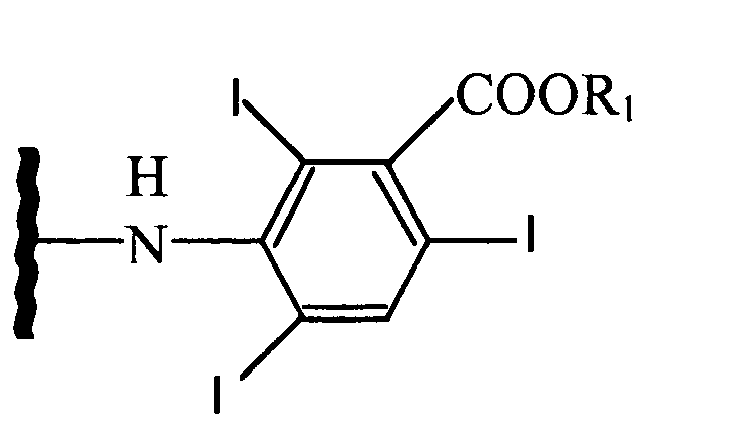
- R is selected from the group consisting of the following: and wherein, R 1 is H, CH 3 or C 2 H 5 .
- the present invention also provides a DTPA derivate represented by Chemical Formula 2, below, which is a chelating agent capable of binding to a metal including radionuclides. wherein, R and R 1 are the same as defined above.
- the present invention further provides a metal complex of the compound of Chemical Formula 1, the metal complex being represented by Chemical Formula 3, below.
- R and R 1 are the same as defined above, and M is selected from the group consisting of Y, Re, Lu, Ho, Dy and Sm.
- the present invention still further provides a metal complex of the compound of Chemical Formula 2, the metal complex being represented by Chemical Formula 4, below.
- R and R 1 are the same as defined above, and M is selected from the group consisting of Y, Re, and lanthanide metals including Lu, Ho, Dy and Sm.
- the present invention still further provides a liquid radiation source for use in the treatment of vascular stenosis, comprising a metal complex, which is prepared by reacting the DTPA derivate of Chemical Formula 1 or 2 with Y, Re, and lanthanide metals including Lu, Ho, Dy, and Sm.
- the DTPA derivates according to the present invention are able to form metal complexes due to their high bonding strength to radioactive metals through coordinate bonding, and to easily bind to physiologically active substances.
- the DTPA derivates according to the present invention have high bonding strength to metals because the carbonyl group, generated when a carboxyl group forms an amide bond with an amine group, has the ability to bind to metals, and have no risk of forming isomers between the derivatives, they do not decrease in labeling efficiency when used as contrast agents.
- the iodine contained in the DTPA derivatives can be imaged using an X-ray generation source.
- the DTPA derivates according to the present invention are metal chelating agents, which have high bonding strength to metals, they form stable bonds with metals used in contrast agents.
- the metal tetraacetate complex of Chemical Formula 3 according to the present invention is a metal complex generated when the DTPA derivative of Chemical Formula 1 is bonded to a metal. Since the carboxyl groups and carbonyl group of the DTPA derivative form stable bonds with the metal, this metal complex may be used as a contrast agent.
- the metal tetraacetate complex of Chemical Formula 4 is a metal complex generated when the DTPA derivative of Chemical Formula 2 is bonded to a metal. Since the carboxyl groups and carbonyl group of the DTPA derivative form stable bonds with the metal, this metal complex may be used as a contrast agent.
- the DTPA derivates of the present invention are prepared according to Reactions 1 and 2, below.
- An amine group is converted into an amide group through amidation between the amine group and an anhydride.
- a DTPA anhydride is allowed to react with an amine group attached to a cyclic compound made up of a benzene-like ring containing iodine to provide the DTPA derivative of Chemical Formula 1 or 2.
- Reaction 1 water is added.
- L is identical to R having primary amine, which is defined in Chemical Formulas 1 and 2.
- the amidation may be performed according to an ordinary method, including reacting a DTPA anhydrate with a compound containing an amino group under basic conditions.
- Preferred bases include triethylamine (TEA), pyridine, and potassium carbonate (K 2 CO 3 ).
- Inert solvents are suitable, and preferred solvents include dimethylformamide (DMF), and dimethylsulfoxide (DMSO).
- the DTPA derivative of Chemical Formula 1 is allowed to react with a metal, selected from the group consisting of Y, Re, and lanthanide metals including Lu, Ho, Dy and Sm, in order to form the metal complex of Chemical Formula 3.
- a metal selected from the group consisting of Y, Re, and lanthanide metals including Lu, Ho, Dy and Sm, in order to form the metal complex of Chemical Formula 3.
- the DTPA derivative of Chemical Formula 2 is allowed to react with a metal, selected from the group consisting of Y, Re, and lanthanide metals including Lu, Ho, Dy and Sm in order to form the metal complex of Chemical Formula 4.
- a metal selected from the group consisting of Y, Re, and lanthanide metals including Lu, Ho, Dy and Sm in order to form the metal complex of Chemical Formula 4.
- the present invention still further provides contrast agents comprising the DTPA derivatives of Chemical Formulas 1 and 2, or the metal complexes of Chemical Formulas 3 and 4.
- the DTPA derivatives of Chemical Formulas 1 and 2 and the metal complexes of Chemical Formulas 3 and 4 may be provided as they are or in a kit form.
- contrast agents contain aqueous media along with the DTPA derivatives or metal complexes, they may be administered through intravenous injection.
- the media include commonly used pharmaceutical additives, such as pharmaceutically acceptable salts, buffers or antiseptics.
- complexes of the DTPA derivatives with gamma-emitting radionuclides are administered to the body, their excretion patterns via the kidneys can be monitored, and their distribution in the body can be also analyzed.
- these metal complexes are useful as agents for diagnosing renal function in order to identify specific pathological conditions in the kidneys or to evaluate the severity of symptoms.
- DTPA anhydride 0.357 g (1 mmol) of the DTPA anhydride was added to 30 ml of anhydrous dimethylformamide (DMF), and mixed with stirring. This solution was supplemented with 0.13 g (2 mmol) of 3-amino-2,4,6-triiodobenzoic acid, and allowed to react at 60°C for 5 hrs with stirring. After the reaction was completed, the solvent was removed under pressure using an evaporator, and the remaining material was washed with ethanol and dried, thereby obtaining the desired product at a yield of 75%.
- DMF dimethylformamide
- the desired product was synthesized according to the same method as in Example 1 except that 2-amino-5-iodobenzoic acid (1 mmol) was used instead of the 3-amino-2,4,6-triiodobenzoic acid (1 mmol), and was obtained at a yield of 82%.
- the desired product was synthesized according to the same method as in Example 1 except that 5-amino-2,4,6-triiodoisophthalic acid (2 mmol)was used instead of the 3-amino-2,4,6-triiodobenzoic acid (2 mmol), and was obtained at a yield of 80%.
- a 166 Ho solution was developed using instant thin layer chromatography-silicic acid (ITLC-SA) as a stationary phase and a 3:1 (v/v) mixture of methanol and water as a mobile phase ( FIG. 1a ).
- HCl solution pH 2.8-3.0
- the resulting reaction solutions were developed using instant thin layer chromatography-silicic acid (ITLC-SA) as a stationary phase and a 3:1 (v/v) mixture of methanol and water as a mobile phase ( FIG. 1b ).
- ITLC-SA instant thin layer chromatography-silicic acid
- FIG. 1b The radiolabeling yield was determined using an ITLC scanner (EG&G Berthold Linear Analyzer).
- regions of interest were created around the right and left kidneys to produce time activity curves. From the time activity curves, time to maximum activity (T max ) and half time of the maximum activity (T 1/2 ) for each kidney were calculated using a computer system (SINCTRON IV, Germany), and the results are given in FIG. 3 . As shown in FIG. 3 , the radioactivity in the kidneys was found to decrease to a level near the non-specific background signal 30 min after injection, indicating that the 166 Ho-DTPA-bis(5-amido-2,4,6-triiodoisophthalic acid) was rapidly excreted in urine.
- the T max and T 1/2 values were found to be 1.5 min and 6.5 min for the left kidney and 1.75 min and 7.5 min for the right kidney. These results indicate that the 166 Ho-DTPA-bis(5-amido-2,4,6-triiodoisophthalic acid) was mostly excreted via the kidneys and bladder within 30 min from injection.
- the DTPA derivatives of the present invention form metal complexes with beta-emitting radionuclides, they display rapid excretion patterns via the kidneys.
- the metal complexes of the DTPA derivatives are safe and useful as liquid radiation sources for treating vascular stenosis.
- complexes of the DTPA derivatives with gamma-emitting radionuclides are administered to the body, their excretion patterns via the kidneys can be monitored, and their distribution in the body can be also analyzed.
- these metal complexes are useful as diagnostic agents for renal function to identify specific pathological conditions in the kidneys or to evaluate the severity of symptoms.
Landscapes
- Health & Medical Sciences (AREA)
- Life Sciences & Earth Sciences (AREA)
- Chemical & Material Sciences (AREA)
- Animal Behavior & Ethology (AREA)
- Epidemiology (AREA)
- General Health & Medical Sciences (AREA)
- Public Health (AREA)
- Veterinary Medicine (AREA)
- Organic Chemistry (AREA)
- Medicinal Chemistry (AREA)
- Nuclear Medicine, Radiotherapy & Molecular Imaging (AREA)
- Environmental Sciences (AREA)
- Optics & Photonics (AREA)
- Physics & Mathematics (AREA)
- Animal Husbandry (AREA)
- Zoology (AREA)
- Biodiversity & Conservation Biology (AREA)
- Pharmacology & Pharmacy (AREA)
- Proteomics, Peptides & Aminoacids (AREA)
- Radiology & Medical Imaging (AREA)
- Marine Sciences & Fisheries (AREA)
- Medicines Containing Antibodies Or Antigens For Use As Internal Diagnostic Agents (AREA)
- Organic Low-Molecular-Weight Compounds And Preparation Thereof (AREA)
Abstract
Description
- The present invention relates to metal complexes of diethylenetriamine pentaacetic acid (DTPA) derivates and radiation sources including the metal complexes. More particularly, the present invention relates to metal complexes of the DTPA derivatives which contain iodine comprising 166Ho, 90Y, 153Sm, 186Re, 188Re, or 117Lu, which are useful as liquid radiation sources for treating vascular stenosis and contrast agents for diagnosing renal function, and radiation sources and contrast agents including the metal complexes.
- Stenosis is the narrowing of blood vessels, and can occur in any area of the body, in which blood vessels are present, such as the cerebral vessels, cardiac vessels, peripheral vessels, and carotid arteries, due to fatty deposits, external stressors, hypertension, and the like. The use of liquid radiation sources for treating such vascular stenosis has the advantages of being cost-effective and of permitting the direct delivery of the uniform distribution of radiation to a site to be treated (Das T, Banerjee S, Samuel G, et al. [186/188Re] rhenium-ethylene dicysteine (Re-EC): preparation and evaluation for possible use in endovascular brachytherapy. Nucl Med Biol 2000, 27:189-97; Joh CW, Park CH, Kang HJ, et al. Measurement of radiation absorbed dose in endovascular Ho-166 brachytherapy using a balloon angiocatheter. Nucl Med Comm 2000, 21:959-64; Kim HS, Cho YH, Kim JS, et al. Effect of transcatheter endovascular radiation with holmium-166 on neointimal formation after balloon injury in porcine coronary artery. J Am Coll Cardiol 1998, 31(supplA):277A).
- Such therapy with liquid radiation sources, however, has the risk of balloon rupture, which is an unlikely event, but which leads to leakage of radioactive materials into the blood stream.
- In order to prevent a patient from being overexposed to radiation in the event of balloon rupture, a variety of complexes of radioisotopes and chelating agents, which are not retained in the organs or the body but are rapidly excreted via the kidneys, have been developed. In the event of balloon rupture leading to radiation leakage, radiation sources for endovascular radiation brachytherapy for stenosis must have high in vivo stability and be retained in a minimum dose in major organs, and as well, they must be rapidly and completely excreted from the body via the kidneys.
- Certain complexes of Re-188 with chelating agents, which include 188Re-DTPA, 188Re-MAG3 (mercaptoacetylglycine3) and 188Re-EC (ethylene dicysteine), have been developed. In such complex forms, Re-188 is observed to be rapidly excreted in urine (Knapp FF, Guhlke S, Beets AL, et al. Intraarterial irradiation with rhenium-188 for inhibition of restenosis after PTCA-Strategy and evaluation of species for rapid urinary excretion. J Nucl Med 1997, 38:124; Majali MA. Studies on the preparation of Re-188-DTPA complexes using low specific activity Re-186 for antibody labeling. J Radianal Nucl Chem 1993, 170:471; Lee J, Lee DS, Kim KM, et al. Dosimetry of rhenium-188 diethylene triamine penta-cetic acid for endovascular intra-balloon brachytherapy after coronary angioplasty. Eur J Nucl Med 2000, 27:76-82; Lin WY, Tsai SC, Hsieh BT, et al. Wang Evaluation of three rhenium-188 candidates for intravascular radiation therapy with liquid-filled balloons to prevent restenosis. J Nucl Cardiol 2000, 7:37-42; Das T, Banerjee S, Samuel G, et al. [186/188Re] rhenium-ethylene dicysteine (Re-EC): preparation and evaluation for possible use in endovascular brachytherapy. Nucl Med Biol 2000, 27:189-97).
- Ho-166, which has radiochemical properties similar to those of Re-188, is advantageous in that its biodistribution can be readily imaged using a gamma camera because it emits both a maximum 1.85 MeV beta-ray and an 81 keV gamma-ray. Compared to Re-188, Ho-166 has the main advantage of being produced in the form of having high specific radioactivity at a high yield from naturally occurring Ho-165, making up 100% of the holmium on earth, through a nuclear reaction using a small-sized atomic reactor (Hong YD, Park KB, Jang BS, et al. Holmium-166-DTPA as a liquid source for Endovascular brachytherapy. Nucl Med Biol 2002, 29:833-9; Majali MA, Saxena SK, Joshi SH, et al. Potential 166Ho radiopharmaceuticals for endovascular radionuclide therapy. II. Preparation and evaluation of 166Ho-DTPA. Nucl Med Comm 2001, 22:97-103). '
- Liquid radiation sources developed so far using Ho-166 include 166Ho-DTPA, 166Ho-DMDTPA (dimethyl diethylenetriaminepentaacetic acid), 166Ho-OOTA (1,4,7,10-tetraazadodecane-N,N',N",N"'-tetraacetic acid) and 166Ho-EC (Joh CW, Park CH, Kang HJ, et al. Measurement of radiation absorbed dose in endovascular Ho-166 brachytherapy using a balloon angiocatheter. Nucl Med Comm 2000, 21:959-64; Majali MA, Mita,, Debnath C, Saxena S K , Sangeeta H. Joshi Preparation and evaluation of [166Ho] holmium-dimethyl diethylenetriaminepentaacetic acid (DMDTPA) as potential radiopharmaceutical for endovascular radiation therapy(EVRT). Appl Rad Isotopes 2004, 56:863-9; Das T, Chakraborty S, Banerjee S. Preparation and animal biodistribution of 166Ho labeled DOTA for possible use in intravascular radiation therapy(IVRT). J Label Compd Radiopharm 2003, 46:197-209; Chakraborty S, Unni PR, Banerjee S, et al. Potential 166Ho radiopharmaceuticals for intravascular radiation therapy (IVRT)-I: 166Ho labeled ethylene dicysteine. Nucl Med Biol 2001, 28:309-17).
- The liquid radiation source 166Ho-DTPA is prepared through a simple procedure of mixing holmium and DTAP at pH 2-8 immediately before use. This simple procedure results in the formation of complexes having a high radiochemical purity greater than 98% (Hong YD, Park KB, Jang BS, et al. Holmium-166-DTPA as a liquid source for Endovascular brachytherapy. Nucl Med Biol 2002, 29:833-9; Korean Pat. Registration No.
361091 - Upon angioplasty for treating cardiac vascular diseases with liquid radiation sources, which is commonly performed with computed tomography (CT) and angiography, the use of CT contrast agents, such as Hexabrix (320), Imeron (350) and Visipaque (320), permits the visual observation of the balloon _ interior to determine the presence of bubbles, which interrupt the precise delivery of a radiation dose to a site of cardiac vessels where stenosis occurs, and to determine whether the balloon is accurately positioned at a site to be treated so as to have a proper shape (Hong YD, Choi SJ, Choi SM, Jang BS. The availability of contrast media in the application of Holmium-166-DTPA for vascular brachytherapy. Nucl Med Biol 2004, 31:225-30).
- However, when contrast agents are used as diluents, they have side effects including the formation of unknown complexes through a reaction with Ho-166, resulting in delayed or almost no excretion of the radionuclide from the body.
- In addition, radiation imaging involves identifying specific pathological conditions or evaluating the severity of symptoms by injecting a contrast agent containing a radioisotope into the body and detecting the biodistribution of the contrast agent. Radionuclides, for use in the preparation of contrast agents in which a chelating agent is coordinate-bonded to a radionuclide, must satisfy the requirements of maximizing detection efficiency and minimizing a radiation dose absorbed by a patient. Thus, radionuclides emitting gamma radiation and having physical half-lives shorter than the imaging time are useful. 99mTc (99m-technetium) is commonly used.
- The diagnosis of renal diseases using 99Tc is performed with dimercaptosuccinic acid (DMSA) for obtaining anatomical imaging and with GHA, DTPA, MAG3 and EC for evaluating renal function (Technetium Radiopharmaceuticals. In: Owunwanne A, Patel M, Sadek S., The handbook of Radiopharmaceuticals. Chapman & Hall Medical 1995, 57-105).
- In particular, the renal function is evaluated by assessing the excretion pattern of a radionuclide for a predetermined period of time using a gamma camera in order to obtain a renogram curve representing renal function. The use of complexes displaying rapid excretion patterns enhances detection efficiency and reduces detection time, thereby providing an economic benefit and ensuring accurate diagnosis.
- Iodine compounds, including diatrizoate, ioxaglate, iohexol, and iodixanol, have been used as X-ray contrast agents. Metals, including gadolinium (Gd), tungsten (W), and lead (Pb), have been also used in the form of metal complexes. Imaging of these contrast agents is achieved using a computed tomography (CT) or angiography camera (Yu SB, Watson AD. Metal-Based X-ray Contrast Media. Chem. Rev. 1999, 99:2353-78).
- Metal complexes of DTPA or DOTA with, for example, gadolinium (Gd), dysprosium (Dy), and manganese (Mn) are useful as contrast agents for magnetic resonance (MR) imaging (Caravan P, Ellison JJ, McMurry TJ, Lauffer RB. Gadolinium (III). Chelates as MRI Contrast Agents: Structure, Dynamics, and Applications. Chem. Rev. 1999, 99:2293-352).
-
WO 94/27644 - At present, with the recent advances in imaging equipment, such as MR imaging, CT, angiography, CT/SPECT, and CT/PET, and the development and practical use of hybrid imaging equipment, there is a need for the development of complex compounds capable of accomplishing two or more purposes at one time.
- In particular, there is a need for the development of contrast agents enabling real-time imaging upon angioplasty. In this regard, taking into account the fact that some DTPA derivatives easily react with radioisotopes, such as Re-188 and Ho-166, to form complexes, which can be used as liquid radiation sources in balloon angioplasty of vascular stenosis, and contain iodine, which is useful as a contrast agent for X-ray imaging, the present inventors synthesized complex compounds, which are useful as radiation sources for treating vascular stenosis and contrast agents, by binding DTPA derivatives and radioisotopes, thereby leading to the present invention.
- The DTPA derivatives of the present invention may form complexes with gamma-emitting radionuclides, which are quickly excreted in the urine, in order to minimize the patient's exposure to radiation, which is an unlikely event. Such complexes are useful as diagnostic agents for renal function because the radionuclides used can be imaged using a gamma camera.
- Therefore, the present invention aims to provide metal complexes comprising the DTPA derivatives which comprises iodine and 166Ho, 90Y, 153Sm, 186Re, 188Re, or 177Lu, which are useful as liquid radiation sources for treating vascular stenosis and radiation sources including the metal complexes.
- The present invention provides a DTPA derivate represented by
Chemical Formula 1, below, which is a chelating agent capable of binding to a metal including radionuclides.


- The present invention also provides a DTPA derivate represented by
Chemical Formula 2, below, which is a chelating agent capable of binding to a metal including radionuclides.

- The present invention further provides a metal complex of the compound of
Chemical Formula 1, the metal complex being represented byChemical Formula 3, below.
- The present invention still further provides a metal complex of the compound of
Chemical Formula 2, the metal complex being represented by Chemical Formula 4, below.
- The present invention still further provides a liquid radiation source for use in the treatment of vascular stenosis, comprising a metal complex, which is prepared by reacting the DTPA derivate of
Chemical Formula - The above and other objects, features and other advantages of the present invention will be more clearly understood from the following detailed description taken in conjunction with the accompanying drawings, in which:
-
FIG. 1a shows the results of ITLC for a 166Ho solution according to the present invention; -
FIG. 1b shows the labeling efficiency of a 166Ho-DTPA derivative complex according to the present invention, which was estimated using ITLC; -
FIGS. 2a and2b are images of the right and left kidneys of rabbits receiving a 166Ho-DTPA derivative complex according to the present invention, wherein the images were obtained using a gamma camera equipped with a medium-energy collimator with a window width of 20%; and -
FIG. 3 shows the Tmax and T1/2 for each kidney, which were calculated from the time activity curves ofFIGS. 2a and2b using a computer system. - Hereinafter, the present invention will be described in detail.
- The DTPA derivates according to the present invention are able to form metal complexes due to their high bonding strength to radioactive metals through coordinate bonding, and to easily bind to physiologically active substances. In detail, since the DTPA derivates according to the present invention have high bonding strength to metals because the carbonyl group, generated when a carboxyl group forms an amide bond with an amine group, has the ability to bind to metals, and have no risk of forming isomers between the derivatives, they do not decrease in labeling efficiency when used as contrast agents. Also, the iodine contained in the DTPA derivatives can be imaged using an X-ray generation source.
- Thus, since the DTPA derivates according to the present invention are metal chelating agents, which have high bonding strength to metals, they form stable bonds with metals used in contrast agents.
- The metal tetraacetate complex of
Chemical Formula 3 according to the present invention is a metal complex generated when the DTPA derivative ofChemical Formula 1 is bonded to a metal. Since the carboxyl groups and carbonyl group of the DTPA derivative form stable bonds with the metal, this metal complex may be used as a contrast agent. - In addition, the metal tetraacetate complex of Chemical Formula 4 is a metal complex generated when the DTPA derivative of
Chemical Formula 2 is bonded to a metal. Since the carboxyl groups and carbonyl group of the DTPA derivative form stable bonds with the metal, this metal complex may be used as a contrast agent. - The DTPA derivates of the present invention are prepared according to
Reactions - An amine group is converted into an amide group through amidation between the amine group and an anhydride. A DTPA anhydride is allowed to react with an amine group attached to a cyclic compound made up of a benzene-like ring containing iodine to provide the DTPA derivative of
Chemical Formula Reaction 1, water is added.

- In
Reactions Chemical Formulas - The amidation may be performed according to an ordinary method, including reacting a DTPA anhydrate with a compound containing an amino group under basic conditions.
- Preferred bases include triethylamine (TEA), pyridine, and potassium carbonate (K2CO3). Inert solvents are suitable, and preferred solvents include dimethylformamide (DMF), and dimethylsulfoxide (DMSO).
- In addition, the DTPA derivative of
Chemical Formula 1 is allowed to react with a metal, selected from the group consisting of Y, Re, and lanthanide metals including Lu, Ho, Dy and Sm, in order to form the metal complex ofChemical Formula 3. - The DTPA derivative of
Chemical Formula 2 is allowed to react with a metal, selected from the group consisting of Y, Re, and lanthanide metals including Lu, Ho, Dy and Sm in order to form the metal complex of Chemical Formula 4. - The present invention still further provides contrast agents comprising the DTPA derivatives of
Chemical Formulas Chemical Formulas 3 and 4. - For use as contrast agents, the DTPA derivatives of
Chemical Formulas Chemical Formulas 3 and 4 may be provided as they are or in a kit form. - Since the contrast agents contain aqueous media along with the DTPA derivatives or metal complexes, they may be administered through intravenous injection. The media include commonly used pharmaceutical additives, such as pharmaceutically acceptable salts, buffers or antiseptics.
- In addition, when complexes of the DTPA derivatives with gamma-emitting radionuclides are administered to the body, their excretion patterns via the kidneys can be monitored, and their distribution in the body can be also analyzed. Thus, these metal complexes are useful as agents for diagnosing renal function in order to identify specific pathological conditions in the kidneys or to evaluate the severity of symptoms.
- A better understanding of the present invention may be obtained through the following example which is set forth to illustrate the present invention.
- 10.0 g (25 mmol) of DTPA was dispersed in 20 ml of pyridine. 18 g (0.18 mol) of acetic anhydride was added to the dispersion, and a reaction was allowed to take place at 65°C for 24 hrs with stirring. After the reaction was completed, the reaction mixture was filtered to recover generated material. The recovered compound was washed with acetic anhydride and diethyl ether several times, and dried under pressure for 24 hrs, thereby obtaining a DTPA anhydride at a yield of 78%.
- IR(cm-1) 2979, 1820, 1774, 1641.
- Then, 0.357 g (1 mmol) of the DTPA anhydride was added to 30 ml of anhydrous dimethylformamide (DMF), and mixed with stirring. This solution was supplemented with 0.515 g (1 mmol) of 3-amino-2,4,6-triiodobenzoic acid, and allowed to react at 60°C for 5 hrs with stirring. After the reaction was completed, the solvent was removed under pressure using an evaporator, and the remaining material was washed with ethanol and dried, thereby obtaining the desired product at a yield of 80%.
- 1H NMR (D2O+NaOD, ppm) 2.36 (m, 8H, CH2CH2), 2.80-2.90 (d, 10H, CH2CO), 7.95 (s, 1H, Ar-H);
- 13C NMR (D2O+NaO ppm) 37.03, 52.05, 52.18, 58.89, 59.32, 74.93, 77.83, 80.44, 147.58, 153.27, 171.43, 180.04, 180.18;
- IR (cm-1) 3433, 1730, 1634, 1517, 1243.
- 0.357 g (1 mmol) of the DTPA anhydride was added to 30 ml of anhydrous dimethylformamide (DMF), and mixed with stirring. This solution was supplemented with 0.13 g (2 mmol) of 3-amino-2,4,6-triiodobenzoic acid, and allowed to react at 60°C for 5 hrs with stirring. After the reaction was completed, the solvent was removed under pressure using an evaporator, and the remaining material was washed with ethanol and dried, thereby obtaining the desired product at a yield of 75%.
- 1H NMR (D2O+NaOD, ppm) 2.34 m, 8H, CH2CH2), 2.78-2.86 (d, 10H, CH2CO), 7.92 (s, 2H, Ar-H).
- The desired product was synthesized according to the same method as in Example 1 except that 2-amino-5-iodobenzoic acid (1 mmol) was used instead of the 3-amino-2,4,6-triiodobenzoic acid (1 mmol), and was obtained at a yield of 82%.
- 1H NMR (D2O+NaOD, ppm) 2.42 (m, 8H, CH2CH2), 2.87-2.93 (d, 10H, CH2CO), 7.76-7.80 (m, 1H, Ar-H), 8.22-8.25 (m, 1H, Ar-H), 8.40 (d, 1H, Ar-H);
- IR (cm-1) 3429, 1725, 1637, 1508, 1233.
- The desired product was synthesized according to the same method as in Example 1 except that 5-amino-2,4,6-triiodoisophthalic acid (2 mmol)was used instead of the 3-amino-2,4,6-triiodobenzoic acid (2 mmol), and was obtained at a yield of 80%.
- 1H NMR (D2O+NaOD, ppm) 2.47 (m, 8H, CH2CH2), 2.97-3.05 (d, 10H, CH2CO);
- 13C NMR (D2O+NaOD, ppm) 37.03, 52.10, 52.18, 58.889, 59.31, 69.74, 75.48, 147.58, 153.98, 171.50, 177.12, 180.06, 180.19;
- IR (cm-1) 3443, 1724, 1635, 1517, 1223.
- 20 mg the DTPA derivative prepared in Example 1, DTPA-mono(3-amido-2,4,6-triiodobenzoic acid), was mixed with 5 mg of stannous chloride (SnCl2) to provide a solution. The solution was adjusted to a pH from 5 to 6. 1 ml of 188ReO4 -- (5 mCi/ml) was added to 1 ml of the prepared solution, and a labeling reaction was allowed to take place at 100°C for 30 min. The resulting reaction solution was developed using ITLC-SG paper as a stationary phase and methyethylketone (MEK) and saline as mobile phases. The radiolabeling yield was determined using an ITLC scanner (EG&G Berthold Linear Analyzer). As a result, the resulting compound was found to be labeled with 188Re at a yield of greater than 90%.
- A 166Ho solution was developed using instant thin layer chromatography-silicic acid (ITLC-SA) as a stationary phase and a 3:1 (v/v) mixture of methanol and water as a mobile phase (
FIG. 1a ). - A solution, containing 20 mg of each of the DTPA derivatives prepared in Examples 1, 3 and 4, DTPA-mono(3-amido-2,4,6-triiodobenzoic acid) (MTIBA), DTPA-mono (2-amido-5-iodobenzoic acid) (MIBA) and DTPA-bis(5-amido-2,4,6-triiodoisophthalic acid) (BTIIPA), was prepared. Each solution was adjusted pH 5 to 6. 30 mCi of 166Ho-nitrate (HCl solution (pH 2.8-3.0) was added to 1 ml of each of the prepared solutions, and a labeling reaction was allowed to take place at room temperature for 15 min. The resulting reaction solutions were developed using instant thin layer chromatography-silicic acid (ITLC-SA) as a stationary phase and a 3:1 (v/v) mixture of methanol and water as a mobile phase (
FIG. 1b ). The radiolabeling yield was determined using an ITLC scanner (EG&G Berthold Linear Analyzer). - As a result, all compounds were found to be labeled with 166Ho at a yield of greater than 98%.
TABLE 2 166Ho-complexes Radiolabeling yields Rf values [ITLC-SG & methal:water (3:1, v/v) Ho-166 solution - 0 166Ho-DTPA-BTIIPA 100% 0.9-1.0 166Ho-DTPA-MTIBA 100% 0.9-1.0 166Ho-DTPA-MIBA 100% 0.9-1.0 - Male rabbits (New Zealand White) were anesthetized by intramuscular injection of 25 mg/kg of Ketamine (Yuhan Corporation, Korea) and 6 mg/kg of Rompun (Bayer Korea), and then received through the ear vein 3.0±0.2 mCi of 166Ho-DTPA-bis(5-amido-2,4,6-triiodoisophthalic acid). The behavior of the drug was monitored for 30 min by scanning the whole body of rabbits using a gamma camera (SIMENSE, Germany). The gamma camera was equipped with a parallel hole collimator, and was set at an energy level of 81 keV. At this energy level, images were obtained using a medium-energy collimator with a window width of 20%. The results are given in
FIGS. 2a and2b . As shown inFIGS. 2a and2b , the 166Ho-DTPA-bis(5-amido-2,4,6-triiodoisophthalic acid) was mostly excreted via the kidneys and bladder within 30 min from injection. - In addition, regions of interest (ROIs) were created around the right and left kidneys to produce time activity curves. From the time activity curves, time to maximum activity (Tmax) and half time of the maximum activity (T1/2) for each kidney were calculated using a computer system (SINCTRON IV, Germany), and the results are given in
FIG. 3 . As shown inFIG. 3 , the radioactivity in the kidneys was found to decrease to a level near the non-specific background signal 30 min after injection, indicating that the 166Ho-DTPA-bis(5-amido-2,4,6-triiodoisophthalic acid) was rapidly excreted in urine. The Tmax and T1/2 values were found to be 1.5 min and 6.5 min for the left kidney and 1.75 min and 7.5 min for the right kidney. These results indicate that the 166Ho-DTPA-bis(5-amido-2,4,6-triiodoisophthalic acid) was mostly excreted via the kidneys and bladder within 30 min from injection. - As described hereinbefore, when the DTPA derivatives of the present invention form metal complexes with beta-emitting radionuclides, they display rapid excretion patterns via the kidneys. Thus, the metal complexes of the DTPA derivatives are safe and useful as liquid radiation sources for treating vascular stenosis.
- Further, when complexes of the DTPA derivatives with gamma-emitting radionuclides are administered to the body, their excretion patterns via the kidneys can be monitored, and their distribution in the body can be also analyzed. Thus, these metal complexes are useful as diagnostic agents for renal function to identify specific pathological conditions in the kidneys or to evaluate the severity of symptoms.
Claims (3)
- A liquid radiation source for treating vascular stenosis, comprising the metal complex represented by the Chemical Formula 3:


(e) (f) 

(k) (n) 

(o) and (p) - A liquid radiation source for treating vascular stenosis, comprising the metal complex being represented by Chemical Formula 4:


(e) (f) 

(k) (n) 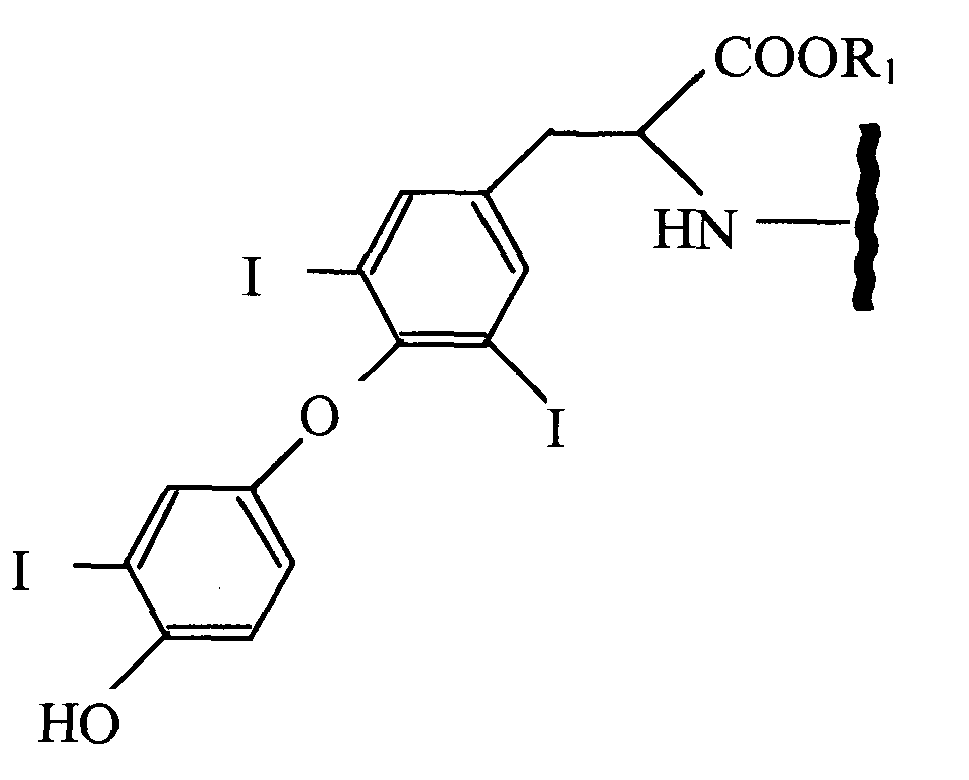

(o) and (p) - Use of the metal complex according to any one of claims 1 to 2 for the manufacture of a liquid radiation source for treating vascular stenosis.
Applications Claiming Priority (1)
| Application Number | Priority Date | Filing Date | Title |
|---|---|---|---|
| KR1020050037062A KR100695744B1 (en) | 2005-05-03 | 2005-05-03 | DTPA derivatives and metal complexes using them, radiation sources and contrast agents containing them |
Publications (2)
| Publication Number | Publication Date |
|---|---|
| EP1719754A1 EP1719754A1 (en) | 2006-11-08 |
| EP1719754B1 true EP1719754B1 (en) | 2011-12-21 |
Family
ID=36950215
Family Applications (1)
| Application Number | Title | Priority Date | Filing Date |
|---|---|---|---|
| EP06075983A Expired - Lifetime EP1719754B1 (en) | 2005-05-03 | 2006-04-28 | Metal complexes of DTPA derivatives , and radiation source including the metal complexes |
Country Status (4)
| Country | Link |
|---|---|
| US (1) | US7666390B2 (en) |
| EP (1) | EP1719754B1 (en) |
| KR (1) | KR100695744B1 (en) |
| AT (1) | ATE538083T1 (en) |
Families Citing this family (6)
| Publication number | Priority date | Publication date | Assignee | Title |
|---|---|---|---|---|
| EP2017253A1 (en) * | 2007-07-19 | 2009-01-21 | UMC Utrecht Holding B.V. | A particle comprising an organic lanthanide metal complex |
| KR102205845B1 (en) | 2013-10-28 | 2021-01-22 | 삼성전자주식회사 | Method and apparatus for modeling based on particles |
| WO2016201524A1 (en) * | 2015-06-19 | 2016-12-22 | Rr Medsciences Pty Ltd | Metal ion complexes |
| BR112021001314A2 (en) * | 2018-07-23 | 2021-05-11 | Centurion Biopharma Corporation | imaging agents for radiolabeling exogenous and endogenous albumin |
| CN109568604A (en) * | 2019-01-22 | 2019-04-05 | 天津医科大学 | A kind of preparation method of the good small molecule CT contrast medium of biocompatibility |
| CN120053643B (en) * | 2025-03-11 | 2025-12-30 | 中国医科大学附属盛京医院 | Preparation and application of radiotherapy sensitizer IR808-ATIPA |
Family Cites Families (7)
| Publication number | Priority date | Publication date | Assignee | Title |
|---|---|---|---|---|
| US4426453A (en) * | 1980-09-18 | 1984-01-17 | Amersham International Limited | Derivatives of iodothyronine compounds and their use in an assay for the free iodothyronine compounds |
| US5030417A (en) * | 1984-09-19 | 1991-07-09 | Mayo Foundation For Medical Education And Research | Method and kit to assay for steroid receptor functionality in cancerous cells |
| US5141739A (en) | 1986-07-03 | 1992-08-25 | Advanced Magnetics, Inc. | Delivery of x-ray contrast agents using receptor mediated endocytosis |
| GB8916782D0 (en) * | 1989-07-21 | 1989-09-06 | Nycomed As | Compositions |
| EP0703790B1 (en) * | 1993-06-02 | 2000-08-16 | BRACCO S.p.A. | Iodinated paramagnetic chelates, and their use as contrast agents |
| US6458337B1 (en) * | 1996-08-02 | 2002-10-01 | Dibra S.P.A | Diagnostic imaging contrast agent with improved in serum relaxivity |
| KR100361091B1 (en) | 2000-03-31 | 2002-11-23 | 한국원자력연구소 | 166Ho-DTPA as a liquid radiation source |
-
2005
- 2005-05-03 KR KR1020050037062A patent/KR100695744B1/en not_active Expired - Fee Related
-
2006
- 2006-04-25 US US11/411,643 patent/US7666390B2/en not_active Expired - Fee Related
- 2006-04-28 EP EP06075983A patent/EP1719754B1/en not_active Expired - Lifetime
- 2006-04-28 AT AT06075983T patent/ATE538083T1/en active
Non-Patent Citations (2)
| Title |
|---|
| YOUNG-DON HONG ET AL.: "Holmium-166-DTPA as a liquid source for endovascular brachytherapy", NUCLEAR MEDICINE AND BIOLOGY, vol. 29, 2002, pages 833 - 839 * |
| YUONG-DON HONG ET AL.: "The availability of contrast media in the application of Holmium-166-DTPA for vascular brachytherapy", NUCLEAR MEDICINE AND BIOLOGY, vol. 31, 2004, pages 225 - 230 * |
Also Published As
| Publication number | Publication date |
|---|---|
| KR20060114878A (en) | 2006-11-08 |
| KR100695744B1 (en) | 2007-03-19 |
| US20060251583A1 (en) | 2006-11-09 |
| EP1719754A1 (en) | 2006-11-08 |
| ATE538083T1 (en) | 2012-01-15 |
| US7666390B2 (en) | 2010-02-23 |
Similar Documents
| Publication | Publication Date | Title |
|---|---|---|
| JP7630149B2 (en) | Metal/radiometal labeled psma inhibitors for psma targeted imaging and radiotherapy - Patents.com | |
| JP2530112B2 (en) | Kit containing radiolabeled technetium chelate for measuring renal function | |
| JP6661010B2 (en) | Peptide thiourea derivative, radioisotope-labeled compound containing the same, and pharmaceutical composition containing the same as active ingredient for treating or diagnosing prostate cancer | |
| US6869590B2 (en) | Labeled macrophage scavenger receptor antagonists for imaging atherosclerosis and vulnerable plaque | |
| Boros et al. | Pycup A Bifunctional, Cage-like Ligand for 64Cu Radiolabeling | |
| US12527885B2 (en) | High purity copper radiopharmaceutical compositions and diagnostic and therapeutic uses thereof | |
| WO2013172979A1 (en) | Methods and compositions for positron emission tomography myocardial perfusion imaging | |
| CN118119581A (en) | Radiopharmaceuticals, methods for their production and use in disease treatment, diagnosis and imaging | |
| US7666390B2 (en) | DTPA derivatives and metal complexes thereof, and radiation source and contrast agent including the metal complexes | |
| US20110300073A1 (en) | 18f-labelled three-and four-carbon acids for pet imaging | |
| Faust | 4.5 Medical applications of rare earth compounds | |
| US20260137818A1 (en) | High purity copper radiopharmaceutical compositions and diagnostic and therapeutic uses thereof | |
| JP2024124308A (en) | Radioisotope-labeled therapeutic drugs | |
| KR102269315B1 (en) | A radiolabeled compound for imaging or therapy of prostate cancer | |
| WO2026037958A1 (en) | Fapi theranostic compounds assembled with tetrazine ligation | |
| Choi et al. | Holmium-166 labeled DTPA Bisamide Derivatives for Radiation Brachytherapy using Balloon Catheters | |
| Waldron | Synthesis and Evaluation of New Ligands for Gallium Radiolabelling | |
| JPS6140295A (en) | Radioactive labeled technetiumchelates for measuring kidney function | |
| HK40126032A (en) | High-purity copper radiopharmaceutical compositions and diagnostic and therapeutic uses thereof | |
| Choi et al. | The applicability of DTPA derivative for renal function diagnosis and intravascular brachytherapy | |
| Ali et al. | Research Article Development of 99m Tc-N4-NIM for Molecular Imaging of Tumor Hypoxia | |
| Foster | Tailored metal complexes for imaging applications | |
| Boros | Acyclic chelates for imaging with radiometals |
Legal Events
| Date | Code | Title | Description |
|---|---|---|---|
| PUAI | Public reference made under article 153(3) epc to a published international application that has entered the european phase |
Free format text: ORIGINAL CODE: 0009012 |
|
| AK | Designated contracting states |
Kind code of ref document: A1 Designated state(s): AT BE BG CH CY CZ DE DK EE ES FI FR GB GR HU IE IS IT LI LT LU LV MC NL PL PT RO SE SI SK TR |
|
| AX | Request for extension of the european patent |
Extension state: AL BA HR MK YU |
|
| 17P | Request for examination filed |
Effective date: 20070309 |
|
| AKX | Designation fees paid |
Designated state(s): AT BE BG CH CY CZ DE DK EE ES FI FR GB GR HU IE IS IT LI LT LU LV MC NL PL PT RO SE SI SK TR |
|
| 17Q | First examination report despatched |
Effective date: 20071115 |
|
| R17C | First examination report despatched (corrected) |
Effective date: 20090703 |
|
| GRAP | Despatch of communication of intention to grant a patent |
Free format text: ORIGINAL CODE: EPIDOSNIGR1 |
|
| RTI1 | Title (correction) |
Free format text: METAL COMPLEXES OF DTPA DERIVATIVES , AND RADIATION SOURCE INCLUDING THE METAL COMPLEXES |
|
| GRAS | Grant fee paid |
Free format text: ORIGINAL CODE: EPIDOSNIGR3 |
|
| GRAA | (expected) grant |
Free format text: ORIGINAL CODE: 0009210 |
|
| AK | Designated contracting states |
Kind code of ref document: B1 Designated state(s): AT BE BG CH CY CZ DE DK EE ES FI FR GB GR HU IE IS IT LI LT LU LV MC NL PL PT RO SE SI SK TR |
|
| REG | Reference to a national code |
Ref country code: GB Ref legal event code: FG4D |
|
| REG | Reference to a national code |
Ref country code: CH Ref legal event code: EP |
|
| REG | Reference to a national code |
Ref country code: AT Ref legal event code: REF Ref document number: 538083 Country of ref document: AT Kind code of ref document: T Effective date: 20120115 |
|
| REG | Reference to a national code |
Ref country code: IE Ref legal event code: FG4D |
|
| REG | Reference to a national code |
Ref country code: DE Ref legal event code: R096 Ref document number: 602006026471 Country of ref document: DE Effective date: 20120322 |
|
| REG | Reference to a national code |
Ref country code: NL Ref legal event code: VDEP Effective date: 20111221 |
|
| PG25 | Lapsed in a contracting state [announced via postgrant information from national office to epo] |
Ref country code: LT Free format text: LAPSE BECAUSE OF FAILURE TO SUBMIT A TRANSLATION OF THE DESCRIPTION OR TO PAY THE FEE WITHIN THE PRESCRIBED TIME-LIMIT Effective date: 20111221 |
|
| LTIE | Lt: invalidation of european patent or patent extension |
Effective date: 20111221 |
|
| PG25 | Lapsed in a contracting state [announced via postgrant information from national office to epo] |
Ref country code: SE Free format text: LAPSE BECAUSE OF FAILURE TO SUBMIT A TRANSLATION OF THE DESCRIPTION OR TO PAY THE FEE WITHIN THE PRESCRIBED TIME-LIMIT Effective date: 20111221 Ref country code: SI Free format text: LAPSE BECAUSE OF FAILURE TO SUBMIT A TRANSLATION OF THE DESCRIPTION OR TO PAY THE FEE WITHIN THE PRESCRIBED TIME-LIMIT Effective date: 20111221 Ref country code: LV Free format text: LAPSE BECAUSE OF FAILURE TO SUBMIT A TRANSLATION OF THE DESCRIPTION OR TO PAY THE FEE WITHIN THE PRESCRIBED TIME-LIMIT Effective date: 20111221 Ref country code: NL Free format text: LAPSE BECAUSE OF FAILURE TO SUBMIT A TRANSLATION OF THE DESCRIPTION OR TO PAY THE FEE WITHIN THE PRESCRIBED TIME-LIMIT Effective date: 20111221 Ref country code: GR Free format text: LAPSE BECAUSE OF FAILURE TO SUBMIT A TRANSLATION OF THE DESCRIPTION OR TO PAY THE FEE WITHIN THE PRESCRIBED TIME-LIMIT Effective date: 20120322 |
|
| PG25 | Lapsed in a contracting state [announced via postgrant information from national office to epo] |
Ref country code: BE Free format text: LAPSE BECAUSE OF FAILURE TO SUBMIT A TRANSLATION OF THE DESCRIPTION OR TO PAY THE FEE WITHIN THE PRESCRIBED TIME-LIMIT Effective date: 20111221 Ref country code: CY Free format text: LAPSE BECAUSE OF FAILURE TO SUBMIT A TRANSLATION OF THE DESCRIPTION OR TO PAY THE FEE WITHIN THE PRESCRIBED TIME-LIMIT Effective date: 20111221 |
|
| PG25 | Lapsed in a contracting state [announced via postgrant information from national office to epo] |
Ref country code: IS Free format text: LAPSE BECAUSE OF FAILURE TO SUBMIT A TRANSLATION OF THE DESCRIPTION OR TO PAY THE FEE WITHIN THE PRESCRIBED TIME-LIMIT Effective date: 20120421 Ref country code: EE Free format text: LAPSE BECAUSE OF FAILURE TO SUBMIT A TRANSLATION OF THE DESCRIPTION OR TO PAY THE FEE WITHIN THE PRESCRIBED TIME-LIMIT Effective date: 20111221 Ref country code: SK Free format text: LAPSE BECAUSE OF FAILURE TO SUBMIT A TRANSLATION OF THE DESCRIPTION OR TO PAY THE FEE WITHIN THE PRESCRIBED TIME-LIMIT Effective date: 20111221 Ref country code: BG Free format text: LAPSE BECAUSE OF FAILURE TO SUBMIT A TRANSLATION OF THE DESCRIPTION OR TO PAY THE FEE WITHIN THE PRESCRIBED TIME-LIMIT Effective date: 20120321 Ref country code: CZ Free format text: LAPSE BECAUSE OF FAILURE TO SUBMIT A TRANSLATION OF THE DESCRIPTION OR TO PAY THE FEE WITHIN THE PRESCRIBED TIME-LIMIT Effective date: 20111221 |
|
| PG25 | Lapsed in a contracting state [announced via postgrant information from national office to epo] |
Ref country code: PT Free format text: LAPSE BECAUSE OF FAILURE TO SUBMIT A TRANSLATION OF THE DESCRIPTION OR TO PAY THE FEE WITHIN THE PRESCRIBED TIME-LIMIT Effective date: 20120423 Ref country code: RO Free format text: LAPSE BECAUSE OF FAILURE TO SUBMIT A TRANSLATION OF THE DESCRIPTION OR TO PAY THE FEE WITHIN THE PRESCRIBED TIME-LIMIT Effective date: 20111221 Ref country code: PL Free format text: LAPSE BECAUSE OF FAILURE TO SUBMIT A TRANSLATION OF THE DESCRIPTION OR TO PAY THE FEE WITHIN THE PRESCRIBED TIME-LIMIT Effective date: 20111221 |
|
| REG | Reference to a national code |
Ref country code: AT Ref legal event code: MK05 Ref document number: 538083 Country of ref document: AT Kind code of ref document: T Effective date: 20111221 |
|
| PLBE | No opposition filed within time limit |
Free format text: ORIGINAL CODE: 0009261 |
|
| STAA | Information on the status of an ep patent application or granted ep patent |
Free format text: STATUS: NO OPPOSITION FILED WITHIN TIME LIMIT |
|
| PG25 | Lapsed in a contracting state [announced via postgrant information from national office to epo] |
Ref country code: DK Free format text: LAPSE BECAUSE OF FAILURE TO SUBMIT A TRANSLATION OF THE DESCRIPTION OR TO PAY THE FEE WITHIN THE PRESCRIBED TIME-LIMIT Effective date: 20111221 |
|
| 26N | No opposition filed |
Effective date: 20120924 |
|
| PG25 | Lapsed in a contracting state [announced via postgrant information from national office to epo] |
Ref country code: MC Free format text: LAPSE BECAUSE OF NON-PAYMENT OF DUE FEES Effective date: 20120430 Ref country code: IT Free format text: LAPSE BECAUSE OF FAILURE TO SUBMIT A TRANSLATION OF THE DESCRIPTION OR TO PAY THE FEE WITHIN THE PRESCRIBED TIME-LIMIT Effective date: 20111221 |
|
| REG | Reference to a national code |
Ref country code: CH Ref legal event code: PL |
|
| GBPC | Gb: european patent ceased through non-payment of renewal fee |
Effective date: 20120428 |
|
| REG | Reference to a national code |
Ref country code: DE Ref legal event code: R097 Ref document number: 602006026471 Country of ref document: DE Effective date: 20120924 |
|
| REG | Reference to a national code |
Ref country code: FR Ref legal event code: ST Effective date: 20121228 |
|
| PG25 | Lapsed in a contracting state [announced via postgrant information from national office to epo] |
Ref country code: LI Free format text: LAPSE BECAUSE OF NON-PAYMENT OF DUE FEES Effective date: 20120430 Ref country code: CH Free format text: LAPSE BECAUSE OF NON-PAYMENT OF DUE FEES Effective date: 20120430 Ref country code: AT Free format text: LAPSE BECAUSE OF FAILURE TO SUBMIT A TRANSLATION OF THE DESCRIPTION OR TO PAY THE FEE WITHIN THE PRESCRIBED TIME-LIMIT Effective date: 20111221 Ref country code: GB Free format text: LAPSE BECAUSE OF NON-PAYMENT OF DUE FEES Effective date: 20120428 |
|
| PG25 | Lapsed in a contracting state [announced via postgrant information from national office to epo] |
Ref country code: FR Free format text: LAPSE BECAUSE OF NON-PAYMENT OF DUE FEES Effective date: 20120430 |
|
| PG25 | Lapsed in a contracting state [announced via postgrant information from national office to epo] |
Ref country code: ES Free format text: LAPSE BECAUSE OF FAILURE TO SUBMIT A TRANSLATION OF THE DESCRIPTION OR TO PAY THE FEE WITHIN THE PRESCRIBED TIME-LIMIT Effective date: 20120401 Ref country code: IE Free format text: LAPSE BECAUSE OF NON-PAYMENT OF DUE FEES Effective date: 20120428 |
|
| PG25 | Lapsed in a contracting state [announced via postgrant information from national office to epo] |
Ref country code: FI Free format text: LAPSE BECAUSE OF FAILURE TO SUBMIT A TRANSLATION OF THE DESCRIPTION OR TO PAY THE FEE WITHIN THE PRESCRIBED TIME-LIMIT Effective date: 20111221 |
|
| PG25 | Lapsed in a contracting state [announced via postgrant information from national office to epo] |
Ref country code: TR Free format text: LAPSE BECAUSE OF FAILURE TO SUBMIT A TRANSLATION OF THE DESCRIPTION OR TO PAY THE FEE WITHIN THE PRESCRIBED TIME-LIMIT Effective date: 20111221 |
|
| PG25 | Lapsed in a contracting state [announced via postgrant information from national office to epo] |
Ref country code: LU Free format text: LAPSE BECAUSE OF NON-PAYMENT OF DUE FEES Effective date: 20120428 |
|
| PG25 | Lapsed in a contracting state [announced via postgrant information from national office to epo] |
Ref country code: HU Free format text: LAPSE BECAUSE OF FAILURE TO SUBMIT A TRANSLATION OF THE DESCRIPTION OR TO PAY THE FEE WITHIN THE PRESCRIBED TIME-LIMIT Effective date: 20060428 |
|
| PGFP | Annual fee paid to national office [announced via postgrant information from national office to epo] |
Ref country code: DE Payment date: 20150409 Year of fee payment: 10 |
|
| REG | Reference to a national code |
Ref country code: DE Ref legal event code: R119 Ref document number: 602006026471 Country of ref document: DE |
|
| PG25 | Lapsed in a contracting state [announced via postgrant information from national office to epo] |
Ref country code: DE Free format text: LAPSE BECAUSE OF NON-PAYMENT OF DUE FEES Effective date: 20161101 |