EP1716207B1 - Method for producing bituminous compositions - Google Patents
Method for producing bituminous compositions Download PDFInfo
- Publication number
- EP1716207B1 EP1716207B1 EP05712377.0A EP05712377A EP1716207B1 EP 1716207 B1 EP1716207 B1 EP 1716207B1 EP 05712377 A EP05712377 A EP 05712377A EP 1716207 B1 EP1716207 B1 EP 1716207B1
- Authority
- EP
- European Patent Office
- Prior art keywords
- bitumen
- emulsion
- aggregate
- alkyl
- modified
- Prior art date
- Legal status (The legal status is an assumption and is not a legal conclusion. Google has not performed a legal analysis and makes no representation as to the accuracy of the status listed.)
- Revoked
Links
- 239000000203 mixture Substances 0.000 title claims description 435
- 238000004519 manufacturing process Methods 0.000 title claims description 42
- 239000010426 asphalt Substances 0.000 claims description 351
- 239000000839 emulsion Substances 0.000 claims description 225
- 239000003995 emulsifying agent Substances 0.000 claims description 117
- 238000000034 method Methods 0.000 claims description 106
- -1 polybutylenes Polymers 0.000 claims description 51
- XLYOFNOQVPJJNP-UHFFFAOYSA-N water Substances O XLYOFNOQVPJJNP-UHFFFAOYSA-N 0.000 claims description 38
- 238000002156 mixing Methods 0.000 claims description 23
- 229920000468 styrene butadiene styrene block copolymer Polymers 0.000 claims description 21
- 229920006395 saturated elastomer Polymers 0.000 claims description 20
- FACXGONDLDSNOE-UHFFFAOYSA-N buta-1,3-diene;styrene Chemical compound C=CC=C.C=CC1=CC=CC=C1.C=CC1=CC=CC=C1 FACXGONDLDSNOE-UHFFFAOYSA-N 0.000 claims description 19
- 235000014113 dietary fatty acids Nutrition 0.000 claims description 19
- 239000000194 fatty acid Substances 0.000 claims description 19
- 229930195729 fatty acid Natural products 0.000 claims description 19
- 125000002091 cationic group Chemical group 0.000 claims description 15
- 229920000768 polyamine Polymers 0.000 claims description 15
- 229920003048 styrene butadiene rubber Polymers 0.000 claims description 13
- VZCYOOQTPOCHFL-OWOJBTEDSA-N Fumaric acid Chemical group OC(=O)\C=C\C(O)=O VZCYOOQTPOCHFL-OWOJBTEDSA-N 0.000 claims description 12
- 239000004698 Polyethylene Substances 0.000 claims description 11
- 229920000573 polyethylene Polymers 0.000 claims description 11
- 230000008569 process Effects 0.000 claims description 10
- 238000006243 chemical reaction Methods 0.000 claims description 9
- IAYPIBMASNFSPL-UHFFFAOYSA-N Ethylene oxide Chemical compound C1CO1 IAYPIBMASNFSPL-UHFFFAOYSA-N 0.000 claims description 8
- 229920003171 Poly (ethylene oxide) Polymers 0.000 claims description 8
- GOOHAUXETOMSMM-UHFFFAOYSA-N Propylene oxide Chemical compound CC1CO1 GOOHAUXETOMSMM-UHFFFAOYSA-N 0.000 claims description 8
- NIXOWILDQLNWCW-UHFFFAOYSA-N acrylic acid group Chemical group C(C=C)(=O)O NIXOWILDQLNWCW-UHFFFAOYSA-N 0.000 claims description 8
- 239000002253 acid Substances 0.000 claims description 7
- 150000007513 acids Chemical class 0.000 claims description 7
- 150000001412 amines Chemical group 0.000 claims description 7
- RSWGJHLUYNHPMX-UHFFFAOYSA-N Abietic-Saeure Chemical class C12CCC(C(C)C)=CC2=CCC2C1(C)CCCC2(C)C(O)=O RSWGJHLUYNHPMX-UHFFFAOYSA-N 0.000 claims description 6
- DGAQECJNVWCQMB-PUAWFVPOSA-M Ilexoside XXIX Chemical compound C[C@@H]1CC[C@@]2(CC[C@@]3(C(=CC[C@H]4[C@]3(CC[C@@H]5[C@@]4(CC[C@@H](C5(C)C)OS(=O)(=O)[O-])C)C)[C@@H]2[C@]1(C)O)C)C(=O)O[C@H]6[C@@H]([C@H]([C@@H]([C@H](O6)CO)O)O)O.[Na+] DGAQECJNVWCQMB-PUAWFVPOSA-M 0.000 claims description 6
- WHXSMMKQMYFTQS-UHFFFAOYSA-N Lithium Chemical compound [Li] WHXSMMKQMYFTQS-UHFFFAOYSA-N 0.000 claims description 6
- 229910019142 PO4 Inorganic materials 0.000 claims description 6
- ZLMJMSJWJFRBEC-UHFFFAOYSA-N Potassium Chemical compound [K] ZLMJMSJWJFRBEC-UHFFFAOYSA-N 0.000 claims description 6
- KHPCPRHQVVSZAH-HUOMCSJISA-N Rosin Chemical class O(C/C=C/c1ccccc1)[C@H]1[C@H](O)[C@@H](O)[C@@H](O)[C@@H](CO)O1 KHPCPRHQVVSZAH-HUOMCSJISA-N 0.000 claims description 6
- 230000007423 decrease Effects 0.000 claims description 6
- 239000001530 fumaric acid Chemical group 0.000 claims description 6
- 229910052744 lithium Inorganic materials 0.000 claims description 6
- FPYJFEHAWHCUMM-UHFFFAOYSA-N maleic anhydride Chemical group O=C1OC(=O)C=C1 FPYJFEHAWHCUMM-UHFFFAOYSA-N 0.000 claims description 6
- 239000010452 phosphate Substances 0.000 claims description 6
- 229910052700 potassium Inorganic materials 0.000 claims description 6
- 239000011591 potassium Substances 0.000 claims description 6
- 229910052708 sodium Inorganic materials 0.000 claims description 6
- 239000011734 sodium Substances 0.000 claims description 6
- 229910021653 sulphate ion Inorganic materials 0.000 claims description 6
- VZCYOOQTPOCHFL-UHFFFAOYSA-N trans-butenedioic acid Chemical group OC(=O)C=CC(O)=O VZCYOOQTPOCHFL-UHFFFAOYSA-N 0.000 claims description 6
- KHPCPRHQVVSZAH-UHFFFAOYSA-N trans-cinnamyl beta-D-glucopyranoside Chemical class OC1C(O)C(O)C(CO)OC1OCC=CC1=CC=CC=C1 KHPCPRHQVVSZAH-UHFFFAOYSA-N 0.000 claims description 6
- 229920001971 elastomer Polymers 0.000 claims description 4
- 229920001195 polyisoprene Polymers 0.000 claims description 3
- 229920005989 resin Polymers 0.000 claims description 3
- 239000011347 resin Substances 0.000 claims description 3
- 244000043261 Hevea brasiliensis Species 0.000 claims description 2
- 150000001204 N-oxides Chemical class 0.000 claims description 2
- 229920000034 Plastomer Polymers 0.000 claims description 2
- 239000004743 Polypropylene Substances 0.000 claims description 2
- DQXBYHZEEUGOBF-UHFFFAOYSA-N but-3-enoic acid;ethene Chemical compound C=C.OC(=O)CC=C DQXBYHZEEUGOBF-UHFFFAOYSA-N 0.000 claims description 2
- MTAZNLWOLGHBHU-UHFFFAOYSA-N butadiene-styrene rubber Chemical compound C=CC=C.C=CC1=CC=CC=C1 MTAZNLWOLGHBHU-UHFFFAOYSA-N 0.000 claims description 2
- 239000000806 elastomer Substances 0.000 claims description 2
- HDERJYVLTPVNRI-UHFFFAOYSA-N ethene;ethenyl acetate Chemical class C=C.CC(=O)OC=C HDERJYVLTPVNRI-UHFFFAOYSA-N 0.000 claims description 2
- 239000005038 ethylene vinyl acetate Substances 0.000 claims description 2
- 230000001747 exhibiting effect Effects 0.000 claims description 2
- 150000002462 imidazolines Chemical class 0.000 claims description 2
- 229920005610 lignin Polymers 0.000 claims description 2
- 229920003052 natural elastomer Polymers 0.000 claims description 2
- 229920001194 natural rubber Polymers 0.000 claims description 2
- 229920001568 phenolic resin Polymers 0.000 claims description 2
- 239000005011 phenolic resin Substances 0.000 claims description 2
- 229920001200 poly(ethylene-vinyl acetate) Polymers 0.000 claims description 2
- 229920000058 polyacrylate Polymers 0.000 claims description 2
- 229920001748 polybutylene Polymers 0.000 claims description 2
- 229920001155 polypropylene Polymers 0.000 claims description 2
- 239000005060 rubber Substances 0.000 claims description 2
- 229920003051 synthetic elastomer Polymers 0.000 claims description 2
- 239000005061 synthetic rubber Substances 0.000 claims description 2
- 229920001864 tannin Polymers 0.000 claims description 2
- 235000018553 tannin Nutrition 0.000 claims description 2
- 239000001648 tannin Substances 0.000 claims description 2
- 229920005992 thermoplastic resin Polymers 0.000 claims description 2
- 229920001187 thermosetting polymer Polymers 0.000 claims description 2
- 229920002554 vinyl polymer Polymers 0.000 claims description 2
- 238000005056 compaction Methods 0.000 description 41
- 239000006187 pill Substances 0.000 description 38
- 238000010276 construction Methods 0.000 description 21
- 239000003760 tallow Substances 0.000 description 19
- 239000002245 particle Substances 0.000 description 16
- 238000000576 coating method Methods 0.000 description 15
- VEXZGXHMUGYJMC-UHFFFAOYSA-N Hydrochloric acid Chemical compound Cl VEXZGXHMUGYJMC-UHFFFAOYSA-N 0.000 description 14
- 239000011248 coating agent Substances 0.000 description 14
- 150000004665 fatty acids Chemical class 0.000 description 14
- 238000011161 development Methods 0.000 description 13
- 238000003860 storage Methods 0.000 description 13
- 239000000084 colloidal system Substances 0.000 description 12
- 239000008149 soap solution Substances 0.000 description 12
- 235000008331 Pinus X rigitaeda Nutrition 0.000 description 11
- 235000011613 Pinus brutia Nutrition 0.000 description 11
- 241000018646 Pinus brutia Species 0.000 description 11
- 239000000463 material Substances 0.000 description 11
- 238000000518 rheometry Methods 0.000 description 9
- 230000000694 effects Effects 0.000 description 8
- 230000035882 stress Effects 0.000 description 8
- 239000000126 substance Substances 0.000 description 8
- 241000196324 Embryophyta Species 0.000 description 7
- 239000002174 Styrene-butadiene Substances 0.000 description 7
- 239000007864 aqueous solution Substances 0.000 description 7
- 238000009826 distribution Methods 0.000 description 7
- 238000011156 evaluation Methods 0.000 description 7
- 239000000243 solution Substances 0.000 description 7
- 239000002904 solvent Substances 0.000 description 7
- 239000000654 additive Substances 0.000 description 6
- 238000000280 densification Methods 0.000 description 6
- 238000005516 engineering process Methods 0.000 description 6
- 229910052500 inorganic mineral Inorganic materials 0.000 description 6
- 239000011707 mineral Substances 0.000 description 6
- 239000012071 phase Substances 0.000 description 6
- 125000000217 alkyl group Chemical group 0.000 description 5
- 238000004581 coalescence Methods 0.000 description 5
- 230000001419 dependent effect Effects 0.000 description 5
- 238000009472 formulation Methods 0.000 description 5
- 229910001220 stainless steel Inorganic materials 0.000 description 5
- 239000010935 stainless steel Substances 0.000 description 5
- 230000002411 adverse Effects 0.000 description 4
- 239000008346 aqueous phase Substances 0.000 description 4
- 239000011230 binding agent Substances 0.000 description 4
- 230000015572 biosynthetic process Effects 0.000 description 4
- 238000013461 design Methods 0.000 description 4
- 239000000428 dust Substances 0.000 description 4
- 125000000524 functional group Chemical group 0.000 description 4
- 238000010438 heat treatment Methods 0.000 description 4
- 230000004048 modification Effects 0.000 description 4
- 238000012986 modification Methods 0.000 description 4
- 239000003784 tall oil Substances 0.000 description 4
- 230000008859 change Effects 0.000 description 3
- 230000003247 decreasing effect Effects 0.000 description 3
- 239000000945 filler Substances 0.000 description 3
- 238000012423 maintenance Methods 0.000 description 3
- 239000003960 organic solvent Substances 0.000 description 3
- 230000035515 penetration Effects 0.000 description 3
- 230000002028 premature Effects 0.000 description 3
- 230000009467 reduction Effects 0.000 description 3
- IMNFDUFMRHMDMM-UHFFFAOYSA-N N-Heptane Chemical compound CCCCCCC IMNFDUFMRHMDMM-UHFFFAOYSA-N 0.000 description 2
- OFBQJSOFQDEBGM-UHFFFAOYSA-N Pentane Chemical compound CCCCC OFBQJSOFQDEBGM-UHFFFAOYSA-N 0.000 description 2
- 229910000831 Steel Inorganic materials 0.000 description 2
- 230000009471 action Effects 0.000 description 2
- 239000000853 adhesive Substances 0.000 description 2
- 230000001070 adhesive effect Effects 0.000 description 2
- 238000013459 approach Methods 0.000 description 2
- 230000008901 benefit Effects 0.000 description 2
- 230000015556 catabolic process Effects 0.000 description 2
- 239000003795 chemical substances by application Substances 0.000 description 2
- 230000000052 comparative effect Effects 0.000 description 2
- 230000001010 compromised effect Effects 0.000 description 2
- 238000001816 cooling Methods 0.000 description 2
- 238000005336 cracking Methods 0.000 description 2
- 230000008030 elimination Effects 0.000 description 2
- 238000003379 elimination reaction Methods 0.000 description 2
- 230000007613 environmental effect Effects 0.000 description 2
- 239000010438 granite Substances 0.000 description 2
- 229930195733 hydrocarbon Natural products 0.000 description 2
- 150000002430 hydrocarbons Chemical class 0.000 description 2
- 230000006872 improvement Effects 0.000 description 2
- 230000000977 initiatory effect Effects 0.000 description 2
- 238000002347 injection Methods 0.000 description 2
- 239000007924 injection Substances 0.000 description 2
- 229920000126 latex Polymers 0.000 description 2
- 239000004816 latex Substances 0.000 description 2
- 230000000704 physical effect Effects 0.000 description 2
- 229920001084 poly(chloroprene) Polymers 0.000 description 2
- 238000002360 preparation method Methods 0.000 description 2
- 238000012545 processing Methods 0.000 description 2
- 230000002829 reductive effect Effects 0.000 description 2
- 230000008439 repair process Effects 0.000 description 2
- 230000004044 response Effects 0.000 description 2
- 230000035945 sensitivity Effects 0.000 description 2
- 238000001179 sorption measurement Methods 0.000 description 2
- 239000010959 steel Substances 0.000 description 2
- 239000011800 void material Substances 0.000 description 2
- 235000017343 Quebracho blanco Nutrition 0.000 description 1
- 241000065615 Schinopsis balansae Species 0.000 description 1
- BLRPTPMANUNPDV-UHFFFAOYSA-N Silane Chemical compound [SiH4] BLRPTPMANUNPDV-UHFFFAOYSA-N 0.000 description 1
- 229920002472 Starch Polymers 0.000 description 1
- 230000004913 activation Effects 0.000 description 1
- 230000000996 additive effect Effects 0.000 description 1
- 239000012615 aggregate Substances 0.000 description 1
- 238000004458 analytical method Methods 0.000 description 1
- 150000008064 anhydrides Chemical class 0.000 description 1
- 125000000129 anionic group Chemical group 0.000 description 1
- 239000012298 atmosphere Substances 0.000 description 1
- 239000011449 brick Substances 0.000 description 1
- 150000005829 chemical entities Chemical class 0.000 description 1
- 239000011280 coal tar Substances 0.000 description 1
- 239000002131 composite material Substances 0.000 description 1
- 150000001875 compounds Chemical class 0.000 description 1
- 239000010779 crude oil Substances 0.000 description 1
- 230000007812 deficiency Effects 0.000 description 1
- 239000006185 dispersion Substances 0.000 description 1
- 238000004090 dissolution Methods 0.000 description 1
- 230000009429 distress Effects 0.000 description 1
- 230000001804 emulsifying effect Effects 0.000 description 1
- 238000001704 evaporation Methods 0.000 description 1
- 230000008020 evaporation Effects 0.000 description 1
- 238000002474 experimental method Methods 0.000 description 1
- 239000007888 film coating Substances 0.000 description 1
- 238000009501 film coating Methods 0.000 description 1
- 230000004907 flux Effects 0.000 description 1
- 239000000295 fuel oil Substances 0.000 description 1
- 230000003993 interaction Effects 0.000 description 1
- 230000001788 irregular Effects 0.000 description 1
- 239000003350 kerosene Substances 0.000 description 1
- 230000000670 limiting effect Effects 0.000 description 1
- 239000007788 liquid Substances 0.000 description 1
- 230000004807 localization Effects 0.000 description 1
- 238000002796 luminescence method Methods 0.000 description 1
- 230000007246 mechanism Effects 0.000 description 1
- 238000002844 melting Methods 0.000 description 1
- 230000008018 melting Effects 0.000 description 1
- 239000002480 mineral oil Substances 0.000 description 1
- 239000000025 natural resin Substances 0.000 description 1
- 239000003921 oil Substances 0.000 description 1
- 238000012856 packing Methods 0.000 description 1
- 230000000149 penetrating effect Effects 0.000 description 1
- 239000003208 petroleum Substances 0.000 description 1
- 239000011295 pitch Substances 0.000 description 1
- 229920003023 plastic Polymers 0.000 description 1
- 239000004033 plastic Substances 0.000 description 1
- 229920000642 polymer Polymers 0.000 description 1
- 239000011148 porous material Substances 0.000 description 1
- 239000000843 powder Substances 0.000 description 1
- 230000001376 precipitating effect Effects 0.000 description 1
- 239000002994 raw material Substances 0.000 description 1
- 238000009877 rendering Methods 0.000 description 1
- 150000003839 salts Chemical class 0.000 description 1
- 239000004576 sand Substances 0.000 description 1
- 229910000077 silane Inorganic materials 0.000 description 1
- 239000002893 slag Substances 0.000 description 1
- 239000002002 slurry Substances 0.000 description 1
- 238000007614 solvation Methods 0.000 description 1
- 238000003892 spreading Methods 0.000 description 1
- 230000007480 spreading Effects 0.000 description 1
- 235000019698 starch Nutrition 0.000 description 1
- 238000003756 stirring Methods 0.000 description 1
- 239000004575 stone Substances 0.000 description 1
- 239000000725 suspension Substances 0.000 description 1
- 239000002562 thickening agent Substances 0.000 description 1
- 239000003981 vehicle Substances 0.000 description 1
- 239000007762 w/o emulsion Substances 0.000 description 1
- 238000009736 wetting Methods 0.000 description 1
Images


Classifications
-
- C—CHEMISTRY; METALLURGY
- C08—ORGANIC MACROMOLECULAR COMPOUNDS; THEIR PREPARATION OR CHEMICAL WORKING-UP; COMPOSITIONS BASED THEREON
- C08L—COMPOSITIONS OF MACROMOLECULAR COMPOUNDS
- C08L95/00—Compositions of bituminous materials, e.g. asphalt, tar, pitch
- C08L95/005—Aqueous compositions, e.g. emulsions
-
- C—CHEMISTRY; METALLURGY
- C09—DYES; PAINTS; POLISHES; NATURAL RESINS; ADHESIVES; COMPOSITIONS NOT OTHERWISE PROVIDED FOR; APPLICATIONS OF MATERIALS NOT OTHERWISE PROVIDED FOR
- C09D—COATING COMPOSITIONS, e.g. PAINTS, VARNISHES OR LACQUERS; FILLING PASTES; CHEMICAL PAINT OR INK REMOVERS; INKS; CORRECTING FLUIDS; WOODSTAINS; PASTES OR SOLIDS FOR COLOURING OR PRINTING; USE OF MATERIALS THEREFOR
- C09D195/00—Coating compositions based on bituminous materials, e.g. asphalt, tar, pitch
- C09D195/005—Aqueous compositions, e.g. emulsions
-
- E—FIXED CONSTRUCTIONS
- E01—CONSTRUCTION OF ROADS, RAILWAYS, OR BRIDGES
- E01C—CONSTRUCTION OF, OR SURFACES FOR, ROADS, SPORTS GROUNDS, OR THE LIKE; MACHINES OR AUXILIARY TOOLS FOR CONSTRUCTION OR REPAIR
- E01C19/00—Machines, tools or auxiliary devices for preparing or distributing paving materials, for working the placed materials, or for forming, consolidating, or finishing the paving
- E01C19/02—Machines, tools or auxiliary devices for preparing or distributing paving materials, for working the placed materials, or for forming, consolidating, or finishing the paving for preparing the materials
- E01C19/10—Apparatus or plants for premixing or precoating aggregate or fillers with non-hydraulic binders, e.g. with bitumen, with resins, i.e. producing mixtures or coating aggregates otherwise than by penetrating or surface dressing; Apparatus for premixing non-hydraulic mixtures prior to placing or for reconditioning salvaged non-hydraulic compositions
- E01C19/1059—Controlling the operations; Devices solely for supplying or proportioning the ingredients
- E01C19/1068—Supplying or proportioning the ingredients
-
- C—CHEMISTRY; METALLURGY
- C08—ORGANIC MACROMOLECULAR COMPOUNDS; THEIR PREPARATION OR CHEMICAL WORKING-UP; COMPOSITIONS BASED THEREON
- C08L—COMPOSITIONS OF MACROMOLECULAR COMPOUNDS
- C08L2555/00—Characteristics of bituminous mixtures
- C08L2555/20—Mixtures of bitumen and aggregate defined by their production temperatures, e.g. production of asphalt for road or pavement applications
- C08L2555/26—Asphalt produced between 65°C and 100°C, e.g. half warm mix asphalt, low energy asphalt produced at 95°C or low temperature asphalt produced at 90°C
-
- C—CHEMISTRY; METALLURGY
- C08—ORGANIC MACROMOLECULAR COMPOUNDS; THEIR PREPARATION OR CHEMICAL WORKING-UP; COMPOSITIONS BASED THEREON
- C08L—COMPOSITIONS OF MACROMOLECULAR COMPOUNDS
- C08L2555/00—Characteristics of bituminous mixtures
- C08L2555/40—Mixtures based upon bitumen or asphalt containing functional additives
- C08L2555/50—Inorganic non-macromolecular ingredients
- C08L2555/52—Aggregate, e.g. crushed stone, sand, gravel or cement
-
- C—CHEMISTRY; METALLURGY
- C08—ORGANIC MACROMOLECULAR COMPOUNDS; THEIR PREPARATION OR CHEMICAL WORKING-UP; COMPOSITIONS BASED THEREON
- C08L—COMPOSITIONS OF MACROMOLECULAR COMPOUNDS
- C08L2555/00—Characteristics of bituminous mixtures
- C08L2555/40—Mixtures based upon bitumen or asphalt containing functional additives
- C08L2555/80—Macromolecular constituents
Definitions
- This invention relates to methods of producing bituminous compositions, and use of such methods in paving applications.
- the invention relates to the production of bituminous compositions formulated with solvent-free bitumen emulsions which exhibit controllable, temperature-dependent interfacial rheology.
- Cold mix paving compositions are made by mixing bitumen emulsion with aggregate at ambient temperature (i.e., temperature less than about 40°C).
- cutter stocks mineral oils and other solvents
- the use of cutter stocks can also result in decreases in the early compressive strength of compacted pavement. Dosages of cutter stocks as little as 0. 1% by weight of the emulsion often decreases the compacted pavement compressive strength until such time as the cutter stock has evaporated into the atmosphere.
- Rapid-setting emulsions do not adequately coat dense-graded aggregates commonly used in construction of dense-graded, load-bearing pavements, because such rapid-setting emulsions tend to break immediately upon contact with mineral aggregate surfaces.
- the term "rapid-setting” is a defining characteristic of such emulsions (i.e., they immediately rupture and liberate water upon contact with mineral aggregate).
- load-bearing pavements are much thicker than the non-load-bearing surfaces produced by slurry seal coatings and micro-surfacings. The thicker load-bearing pavements must be compacted to densify the mixture, as insufficient density can lead to rapid failure of load-bearing pavements due to deformation, disintegration, and pot-hole formation.
- Slow-setting emulsifiers are commonly employed in the production at ambient-temperature of emulsion-based road paving compositions for load bearing pavements.
- Slow-setting emulsifiers produce bituminous emulsions which require little or no water to completely coat the aggregate surface.
- the slow- setting nature of the emulsion yields a road paving composition with a controlled coalescence rate, so that the road paving mixture does not increase in viscosity to a point that it is unsuitable for handling, hauling, or compaction.
- With highly dense, high-fines aggregate gradations slow-setting emulsions do not break either prior to or during compaction, thereby rendering the mixture easy to compact at ambient temperatures.
- pavement compositions made at ambient-temperature with slow-setting bituminous emulsions are very slow to develop adhesion and cure to strengths sufficient to bear the stress of heavy traffic.
- hot mix paving compositions do not contain bitumen emulsions, but are instead produced by mixing non-emulsified bitumen with aggregate at elevated temperatures (usually in excess of 140°C).
- the two most common hot mix facilities, drum mix plants and batch plants heat aggregate in a rotating kiln to extremely high temperatures to drive off all water adsorbed to the aggregate, as well as all water absorbed within the surface pores of the aggregate. Quantitative removal of water is required (1) to ensure complete aggregate coating and (2) to ensure that the finished hot mixture of aggregate and bitumen shows no moisture sensitivity in the finished pavement layer once it is transported, laid down, and compacted.
- Hot, dry aggregate produced in conventional hot mix operations is mixed with bitumen (which is previously liquefied by heating to temperatures far in excess of its melting point) to produce what is known in the industry as the "hot mix asphalt".
- Hot mix asphalts generally must be produced, laid down, and compacted at temperatures in excess of about 160°C, as the compactability of the hot mix asphalt depends on the temperature. If the mix cools, the asphalt viscosity increases and the mixture cannot be compacted to the design density (known as percent air voids).
- percent air voids design density
- EP 1291391 A1 discloses a method for producing a composite layer of a traffic route.
- the method includes mixing together bitumen, water, aggregate and a hydraulic binding agent.
- Blast furnace sand and/or slag powder is used as the hydraulic binding agent to stiffen the structural layers/layer of the surfacing, resulting in a reduced plastic deformation and rutting.
- US 4,861,377 discloses a method of forming a bituminous composition that comprises a cationic aqueous bitumen emulsion and aggregate.
- the cationic aqueous bitumen emulsion is prepared by emulsifying bitumen in the presence of cation-active emulsifier that is the product of the reaction of modified polyamine with certain polycarboxylic acids and anhydrides. Then, the cationic aqueous bitumen emulsion is mixed with aggregates when the temperature of the emulsion or the aggregate is below 37.8°C (100°F) or when the aggregate surfaces are only moderately charged.
- US 4038096 discloses a bituminous composition having improved adhesion of the bitumen binder to the mineral aggregate.
- Example 1 discloses a process in which 8 parts of a 64 wt% bitumen emulsion (1.62 wt% emulsifier) is preheated to 60°C and mixed with 100 parts of silane-treated aggregate at room temperature. Elsewhere this document teaches generally that "either the emulsion or the aggregate or both can be warmed as required by the particular composition.” However there is no teaching of heating the aggregate to a specific temperature range and no suggestion that such heating would improve the physical properties of the set bituminous composition.
- Another object of the present invention is to disclose bituminous compositions which are suitable for use in paving applications and to provide a paved road.
- Yet another object of the present invention is to produce bituminous compositions at temperatures substantially below those of hot mix asphalt compositions.
- a further object of the present invention is to produce bituminous compositions, using rapid-setting and/or quick-setting emulsifiers, which exhibit substantially complete aggregate coating, compact to required densities in the field, and which rapidly develop load-bearing strength.
- the invention provides a method for producing a bituminous composition, comprising:
- Such a process can be used for paving applications, the bituminous composition resulting from the process being maintained at a temperature in a range of 50°C to 120°C during the period between production and use.
- bituminous compositions can be made by controlling temperature-dependent interfacial rheology in a broad range of solvent free, high-residue bitumen emulsions containing bitumen.
- emulsifiers are employed, preferably with structural characteristics that impart low interfacial viscosity, low Marangoni effect, and high interfacial bitumen solubility, at elevated temperatures.
- the use of bitumens in these emulsions with solubility parameters comparable with those of the emulsifier is preferred.
- the solvent-free bitumen emulsions utilised in the method of the invention exhibit controllable, temperature-dependent interfacial rheology, and fully coat aggregate, thereby producing bituminous compositions suitable for the construction of load-bearing pavements that exhibit improved compaction to densities similar or superior to those achieved in hot mix asphalt compositions and achieve cure rates to traffic-ready strengths far in excess of those achieved with compacted, conventional cold emulsion-based paving compositions and equal or superior to those of compacted, hot mix paving compositions.
- bituminous compositions When employed in paving applications, these bituminous compositions develop adhesive strength and load-bearing strength properties at rates comparable to traditional hot mix paving compositions and at rates faster than traditional cold mix paving compositions.
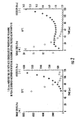
- FIGs. 1 , 2 , and 3 demonstrate the effect of exposing bitumen emulsions to increasing shear stresses, thereby illustrating the high shear stability at elevated temperature (e.g., 60°C-80°C) exhibited by the bitumen emulsions utilised in the present invention.
- bitumen emulsion comprises at least one bitumen.
- the invention includes modified bitumens, and combinations thereof.
- bitumens and “modified bitumens” are those which exhibit rheological properties that are appropriate for paving applications under specific climatic conditions, for example, those which conform to the Strategic Highway Research Program (SHRP) pavement binder specifications.
- the bitumen component may be naturally occurring bitumens (such as Trinidad Lake asphalt and the like), or derived from crude oil. Also petroleum pitches (such as asphalt) obtained by a cracking process and coal tar can be used as well as blends of bituminous materials.
- any additive which is traditionally added to bitumen to produce a modified bitumen meeting property specifications and performance standards are suitable.
- additives include, but are not limited to, natural rubbers, synthetic rubbers, plastomers, thermoplastic resins, thermosetting resins, elastomers, and combinations thereof.
- examples of these additives include styrene-butadiene-styrene (SBS), styrene-butadiene-rubber (SBR), polyisoprene, polybutylenes, butadiene-styrene rubbers, vinyl polymers, ethylene vinyl acetate, ethylene vinyl acetate derivatives, neoprene and the like.
- the modified bitumen contain at least one member selected from the group consisting of styrene-butadiene-styrene, styrene-butadiene-rubber, sulfur-modified bitumen, acid-modified bitumen and combinations thereof. It is well within the ability of a skilled artisan to produce modified bitumen containing the noted additives.
- additives traditionally employed in the production of bitumen emulsions may be incorporated into the aqueous phase of the bitumen emulsion in order to adjust the characteristics of the finished mix.
- Suitable additives include styrene-butadiene-rubber latex, polyisoprene latex, neoprene, associative thickners, starches, salts, and the like.
- bitumen emulsion utilised in the method of the present invention is comprised of at least one emulsifier.
- Suitable emulsifiers include: amphoteric emulsifiers, cationic emulsifiers, nonionic emulsifiers and combinations thereof.
- Bitumen emulsions are of the oil-in-water type; they consist of a suspension of bituminous particles dispersed in the water phase. These particles have, in the case of cationic emulsions, a positive charge.
- the pH of cationic emulsions is below pH 7.0.
- amphoteric emulsifiers are characterized by the capacity to lower interfacial tensions between dissimilar materials (e.g., bitumen and water) at pH values both above and below 7.0.
- the charge of the disperse-phase oil droplets in amphoteric emulsions may be either positive or negative. It is well within the ability of those skilled in the art to combine the bitumen and the emulsifiers taught herein to prepare the solvent-free bitumen emulsions of the present invention.
- Ionic emulsifiers which are suitable for use in the present invention include amphoteric emulsifiers, cationic emulsifiers, and combinations thereof.
- amphoteric emulsifiers includes both mono- amphoteric and polyamphoteric emulsifiers.
- Amphoteric emulsifiers which are suitable for use in the present invention include, but are not limited to, the following: C-12 to C-24 (preferably C-16 to C-18) fatty acids, rosin acids, and combinations thereof modified with acrylic acid, maleic anhydride, fumaric acid, and/or other ene-and dieneophiles and further reacted with polyethylene polyamines, lithium C-12 to C-24 alkyl amidopropyl halide methyl carboxylate betaines, sodium C-12 to C-24 alkyl amidopropyl halide methyl carboxylate betaines, potassium C-12 to C-24 alkyl amidopropyl halide methyl carboxylate betaines, lithium C-12 to C-24 alkyl amidopropyl halide phosphate betaines, sodium C-12 to C-24 alkyl amidopropyl halide phosphate be
- Cationic emulsifiers which are suitable for use in the present invention include, but are not limited to, the following: fatty imidazolines derived from C-12 to C-24 fatty acids, fatty imidoamines derived from C-12 to C-24 (preferably C-16 to C-18) fatty acids, rosin acids, and combinations thereof modified with maleic anhydride, fumaric acid, and/or other ene-and dieneophiles and further reacted with polyalkylenepolyamines; fatty amidoamines derived from C-12 to C-24 (preferably C-16 to C-18) fatty acids, rosin acids and combinations thereof modified with acrylic acid, maleic anhydride, fumaric acid, and/or other ene-and dieneophiles and further reacted with polyalkylenepolyamines; saturated C-12 to C-24 alkyl monoamines, unsaturated C-12 to C-24 alkyl monoamines, saturated C-12 to C-24 alkyl polypropylenepolyamines; unsaturated C
- the cationic emulsifier be a member selected from the group consisting of saturated C-12 to C-24 alkyl monoamines, unsaturated C-12 to C-24 alkyl monoamines, saturated C-12 to C-24 alkyl polypropylenepolyamines, unsaturated C-12 to C-24 alkyl polypropylenepolyamines, and combinations thereof. It is further preferred that the cationic emulsifier be a blend of at least one member selected from the group consisting of saturated and unsaturated C-12 to C-24 alkyl monoamines with at least one member selected from the group consisting of saturated and unsaturated C-12 to C-24 alkyl polypropylenepolyamines. As used herein, the term "cationic emulsifiers" includes the above-noted compounds and their derivatives.
- the emulsifiers of the present invention not only convey the high- temperature shear-stability needed for mixing (and subsequent compacting) of the bituminous compositions, but also impart a high viscosity to the bitumen emulsion (so that no thickener is needed for emulsion stability or for increased film coating on the aggregate) to enhance bitumen wetting of the aggregate surface, and to lower interfacial tension between the bitumen film and aggregate (so that a strong adhesive bond is maintained and water damage to the pavement is prevented).
- Emulsifier formulations are further classified as rapid-setting (i.e., spray-grade), quick-setting, and slow-setting depending on the speed with which a given emulsion, using an economical dosage of emulsifier, will break upon contact with mineral aggregate. While rapid-setting, quick-setting, and slow-setting emulsifiers are suitable for use in the present invention, it is preferred to employ rapid-setting or quick-setting emulsifiers. It is further preferred to employ rapid- setting emulsifiers with dense-graded aggregate.
- the bitumen emulsion utilised in the method of the present invention is solvent-free.
- Environmental concerns have driven the reduction, up to elimination, of organic solvents from paving bitumen emulsions. However, for technical reasons total elimination has not been available in all paving applications prior to the availability of the present invention.
- solvent-free is defined to include a minor portion of organic solvents. For example, “solvent-free” has at one time been defined in the state of Pennsylvania to include up to 4% organic solvents.
- the bitumen emulsion may contain at least one solvent (such as naphtha, kerosene, diesel, flux, and the like) at a level less than that needed to facilitate either: 1) the mixing of the bituminous composition at ambient temperature to yield fully-coated aggregate, or 2) the compaction of the bituminous composition at ambient temperatures.
- the level of solvent be less than about 1.0% by total weight of the bitumen emulsion.
- ambient temperatures means an environmental temperature of less than about 40°C.
- bitumen emulsions utilised in the method of the present invention may be stored at temperatures in the range of about 60°C to about 80°C for prolonged periods of time without adversely affecting the particle size distribution of the emulsions.
- bituminous compositions utilised in the method of the present invention are produced at a temperature in the range of 50°C to 140°C (preferably in the range of 55°C to 120°C, and more preferably in the range of 60°C to 80°C) by mixing from 2.0% to 10% by total weight of the bituminous composition of the bitumen emulsion at a temperature in the range of 25°C to 95°C (preferably in the range of 60°C to 80°C), and from 90% to 98% by total weight of the bituminous composition of aggregate at a temperature in the range of 60°C to 140°C (preferably in the range of 60°C to 120°C).
- the bitumen emulsion may be mixed cold (e.g., at ambient temperatures) and then heated.
- Aggregate used in paving materials and road construction, road rehabilitation, road repair, and road maintenance are derived from natural and synthetic sources.
- aggregate are selected for asphalt paving applications based on a number of criteria, including physical properties, compatibility with the bitumen to be used in the construction process, availability, and ability to provide a finished pavement that meets the performance specifications of the pavement layer for the traffic projected over the design life of the project.
- gradation refers to the percent of aggregate particles of a given size. For most load-bearing asphalt pavements, three gradations are common: dense-graded, gap-graded, and open-graded. Dense-graded aggregate exhibit the greatest mineral surface area (per unit of aggregate).
- Open-graded aggregate largely consist of a single, large-sized (e.g., around 9.5 to 25.4 mm (0.375 to 1.0 inch)) stone with very low levels (typically less than about two percent of the total aggregate) of fines (material less than 6.4 mm (0.25 inch)) or filler (mineral material less than 0.075 mm).
- Gap graded aggregate fall between dense-graded and open- graded classes.
- Reclaimed asphalt pavement (RAP) material generally reflects the gradation of the pavement from which the reclaimed material was obtained. If the original pavement was a dense-graded mix, the RAP will also be dense graded, although the filler content is generally observed to be lower than the design limits of the origin aggregate specifications.
- Any aggregate which is traditionally employed in the production of bituminous paving compositions is suitable for use in the present invention, including dense-graded aggregate, gap-graded aggregate, open-graded aggregate, reclaimed asphalt pavement, and mixtures thereof. Aggregate which is not fully dried can be employed in the present invention.
- bituminous compositions are applied to the surface to be paved at a temperature in the range of about 50°C to about 120°C (preferably in the range of about 55°C to about 100°C, and more preferably in the range of about 60°C to about 80°C).
- bituminous compositions can be compacted as desired using any of the compaction methods traditionally employed for paving applications. It is preferred that the applied bituminous compositions be compacted to an air void content comparable to hot mix pavement compositions made at temperatures exceeding 140°C having substantially equivalent aggregate gradation and bitumen content.
- the applied bituminous compositions be compacted to an air void content lower than comparable cold mix pavement compositions made at ambient temperatures (i.e., temperatures less than about 40°C) having substantially equivalent aggregate gradation and bitumen content.
- the applied bituminous compositions be compacted to develop load-bearing strength at a rate comparable to hot mix pavement compositions made at temperatures exceeding 140°C having substantially equivalent aggregate gradation and bitumen content.
- the applied bituminous compositions be compacted to develop load-bearing strength at a faster rate than that developed by comparable cold mix pavement compositions made at ambient temperatures having substantially equivalent aggregate gradation and bitumen content.
- Strength development in cold mix pavement compositions is a function of the development of adhesion between bitumen and aggregate. It is, therefore, preferred that the applied bituminous compositions be compacted to develop adhesion between bitumen and aggregate at a faster rate than that developed by comparable cold mix pavement compositions made at ambient temperatures having substantially equivalent aggregate gradation and bitumen content.
- the method of the present invention is suitable for use in thin lift overlay paving applications.
- Thin lift overlays is a maintenance paving technique that traditionally involves the placement of a thin lift of a bituminous composition produced according to standard hot-mix procedures at temperatures normally exceeding 165°C and applied at corresponding temperatures in the field to an existing, damaged or distressed pavement surface.
- the current thin lift technology using hot-mix bituminous compositions commonly suffers from two chief deficiencies.
- the hot bituminous compositions tend to cool quickly, making it difficult to extend (i.e., spread) onto the existing pavement surface (at ambient temperatures) that is in need of maintenance or repair.
- This rapid cooling of the thin lift of hot bituminous material can cause compaction difficulties.
- the problems that arise in construction (e.g., extension, spreading, and compaction) due to rapid cooling can be aggravated by the use of polymer-modified bitumens.
- Polymer-modified bitumens have viscosities higher than unmodified bitumens at a given temperature.
- hot-mix bituminous compositions (mixtures with aggregate) made with polymer-modified bitumens are more viscous than equivalent bituminous compositions made with unmodified bitumen at a given construction temperature.
- a thin lift bituminous composition made with polymer-modified bitumen can exhibit even greater problems in handling and construction as the material cools rapidly.
- bituminous compositions utilised in the method of the present invention can be employed in the production of bituminous paving blocks.
- bitumen emulsion and aggregate are mixed to form a bituminous composition that is cast in molds, compacted, and allowed to cure.
- the cured blocks (or bricks) are used to construct pavements.
- bituminous compositions be cast in the mold and compacted at a temperature in the range of about 50°C to about 120°C (preferably in the range of about 55°C to about 100°C, and more preferably in the range of about 60°C to about 80°C).
- bituminous compositions utilised in the method of the present invention offer improvements over the construction of these blocks using traditional cold mix paving compositions.
- Bituminous compositions utilised in the present invention should be maintained at a temperature in the range of 50°C to 120°C (preferably in the range of about 55°C to about 100°C, and more preferably in the range of about 60°C to about 80°C) for the period of time between the production of the bituminous compositions and their use in paving applications. It is preferred that the bituminous compositions be maintained at these temperatures in closed systems (such as relatively large stockpiles, storage silos, covered transport vehicles, and the like) to prevent evaporation of moisture.
- closed systems such as relatively large stockpiles, storage silos, covered transport vehicles, and the like
- Pug mills of either batch or continuous variety. Pug mills impart high shear to the emulsion as it is ground with coarse aggregate, fines, and filler.
- Hot mix asphalt compositions are typically produced in continuous or batch operations.
- Continuous plants typically use drum mixtures of either parallel flow or counter flow variety.
- These mixers are high shear mixers as aggregate (which is heated in the drum or batch mixer to the specified process temperatures) tumbles down the inclined drum and as bitumen emulsion is sprayed onto the warm aggregate.
- the emulsion treated aggregate also tumbles downward through the drum mixer.
- the interior wall of most drum mixers is lined with vanes that repeatedly catch the mix, lift it up as the drum rotates, and deposit it back to the bottom of the drum.
- Drum and batch plants are capable of throughput of many hundred tons of paving material per hour. While it is preferred to employ drum mixers or batch mixers in the method of the present invention, any method of mixing bitumen emulsion and aggregate traditionally utilized in the production of paving compositions can be used.
- a common problem associated with the high shear event of mixing has been a coarsening of the emulsion.
- the emulsifier formulations described herein impart high-temperature rheological properties to the solvent-free emulsion, which in turn stabilize the emulsion against the mechanical stresses imparted on the emulsion by the mechanical action of mixing with aggregate at elevated temperatures.
- These mechanical and shear stresses have commonly caused a coarsening of the emulsion with most traditional emulsifier formulations, leading to a reduction in the degree of aggregate coating and an increase in the viscosity of the mix, with the latter resulting in poor densification of the paving composition during compaction. Poor densification during compaction can result in a number of pavement distress problems (such as rutting, pot-hole formation, and raveling).
- the rheology of the disperse-phase droplets in the bitumen emulsions directly influences the behavior of the emulsions when mixed at elevated temperatures with heated aggregate.
- the rheology at the oil- water interface is, in turn, controlled by the structure and chemistry of the emulsifiers.
- Emulsifier structure and chemistry affect the energy required to disperse the emulsifier at the interface.
- Emulsifier structure and chemistry determine the shear stability of the oil-water droplets against coalescence under high-temperature shear conditions, such as those exhibited during mixing of emulsions and aggregate at temperatures above ambient.
- Emulsifier structure and packing affect the interfacial fluidity or viscosity. Further, proper choice of emulsifier structure affects the magnitude of the effect on the interfacial viscosity.
- bitumen emulsions which behave as desired have higher levels of shear stability than those which do not show this behavior would suggest this chemical contribution results from the emulsifier.
- strength development in the bituminous compositions is associated with better compressibility than traditional cold mixes very strongly suggests that the specific physico-chemical effect is a change in the rheology of the bitumen droplets within the emulsion.
- the early strength development exhibited by the bituminous compositions of the present invention which is more characteristic of a hot mix than a cold mix also indicates that the rheological response of the bitumen droplets is an interfacial rather than a bulk response.
- a variant of the above mechanism which is consistent with the currently available data and observations of the present invention consists of a heat dependant activation of the interfacial solubility of the ionic emulsifier.
- Interfacial solubility within the present context may be defined as localization of the emulsifier at the interface.
- the emulsifier resides not within the aqueous phase of the bitumen emulsion but at the interface with certain functional groups penetrating into the bitumen
- penetration of the interface by the emulsifier residing within the surface of the bitumen droplet with functional groups oriented towards the water and others oriented towards the interior of the bitumen phase of the bitumen emulsion
- complete residence within the bitumen phase of the bitumen emulsion but at the interface the mirror image of surface adsorption.
- the interactions of the emulsifier with the interfacial region of a dispersed bitumen droplet can influence the interfacial rheology of the bitumen in two ways.
- the emulsifier can provide a lubricity layer or slip plane between and amongst the droplets or they can disrupt the structure of the asphaltene fractions of the bitumen at and within the interface. It must be noted that the hardness and flow resistance of bitumen is to a large degree a function of the asphaltene components within a particular bitumen.
- the model of bitumen favored by those working in the area of heavy oil processing consists of asphaltenes of varying molecular weights existing as dissolved and colloidal entities within the maltene phase of the bitumen.
- the resistance to flow is referred to as viscosity.
- a foreign molecule or parts of that molecule must have similar cohesive energy density to the asphaltenes. From a thermodynamic point of view, this means that if the molecules of two different substances have similar cohesive densities and are placed in close proximity to each other and subjected to the same conditions (such as temperature, pH, ionic strength etc.) the molecules of the two will intermingle at the level of individual molecules. This is by definition solvation or dissolution.
- the substance present in greater concentration is referred to as the solvent and the other, the solute.
- solubility parameter This number is actually the square root of the cohesive energy density.
- solubility parameter a solubility parameter of 19-24 (MPa) 1 ⁇ 2 . Consequently, a substance with a solubility parameter within or slightly above this range should in principle dissolve in and disrupt the internal structure of the asphaltenes of an asphalt.
- the cohesive energy density or solubility parameter of a molecular is determined by its chemical composition or make-up. Consequently, it is also a function of the raw materials and the manufacturing process used to manufacture that substance, or more succinctly, the nature of the specific substance.
- bitumen emulsions with emulsifiers comprised of functional groups and structure, which impart the requisite solubility characteristics (as described above) for controlling temperature-dependent interfacial rheology.
- bituminous compositions of bitumen emulsion and aggregate were either mixed with an automated bucket mixer (Example 1) or by hand (Examples 2-14).
- the mixtures of bitumen emulsion and aggregate were compacted immediately after preparation while the mixtures were at production temperatures.
- a Strategic Highway Research Program (SHRP) gyratory compactor (commercially available from Pine Instruments) was used to compact the bituminous compositions into pills at a gyratory angle of 1.25° and a ram pressure of 600 kPa using 30 gyrations.
- SHRP Strategic Highway Research Program
- the bituminous composition pills were placed in a 25°C oven for curing.
- the pills were evaluated for compressive strength (i.e., Marshall stability).
- the compressive strength value obtained after four hours of curing at ambient temperature (25°C) is referred to herein as "early strength”.
- a stabilometer (commercially available from Pine Instruments) was used to measure the compressive strength of the compacted specimens.
- the mean particle sizes of each of the bitumen emulsions employed in the following examples were less than 10 microns.
- the aggregate used in the following examples was crushed granite conforming to gradation and property specifications for a dense-graded, 12.7 mm (1/2-inch) nominal paving mixture commonly used for production of pavement wearing courses. All aggregate samples were oven-dried (110°C) before usage to remove moisture. In the comparative cold mix examples, the aggregate was allowed to cool to room temperature before mixing with the bituminous emulsion. In the comparative hot mix examples, the aggregate was heated to a temperature in the range of about 140°C to 160°C before mixing with bitumen heated to an equivalent temperature. All graded aggregate samples were 1,000 grams.
- Coating was measured using a modification of the commonly known instrumental luminescence method of Deneuvillers et al. Coating values in the examples below are expressed in percentages, indicating the measured percentage of aggregate surface coated by bitumen.
- Bituminous compositions were prepared by the following procedure. Solvent-free bitumen emulsions were prepared using one of three different emulsifiers (A, B, and C) based on alkyl polyamines at dosages ranging from 0.3% to 0.5% by total weight of the respective bitumen emulsion.
- Emulsifier A was a blend of 0.4% by total weight of the bitumen emulsion (bwe) of saturated and unsaturated C16-C18 tallow tripropylenetetramines and 0.1 % bwe of saturated and unsaturated C16-C18 tallow monoamines.
- Emulsifier B was 0.3% bwe of saturated and unsaturated C 16-C 18 tallow polypropylenepolyamine blends.
- Emulsifier C was a blend of 0.45% bwe of alkyl polypropylenetetramine and 0.01%-0.05% bwe of a mixture of saturated and unsaturated C16-C18 alkyl monoamines, -diamines, and -triamines.
- the respective emulsifiers were dissolved in warm water and treated with hydrochloric acid solution to lower the pH to 2.0.
- the aqueous solution of emulsifier(s) in water (called the "soap solution”) was heated to 55°C and added to an Atomix colloid mill.
- bitumen employed in this example was of Venezuelan origin and had a performance-grade of 64-22.
- the bitumen was heated to 130°C and added to the Atomix colloid mill, wherein the soap solution and bitumen mixture was processed to produce bitumen emulsion.
- the bitumen content of the finished bitumen emulsions were about 60-63% bwe.
- the bitumen emulsions were subsequently diluted with water to 53.3% bitumen content prior to mixing with aggregate.
- the aggregate used was crushed granite conforming to gradation and property specifications for 1 ⁇ 2-inch nominal wearing course paving aggregate.
- the aggregate as received from the quarry was oven dried to remove moisture.
- the dried aggregate was separated into size fractions from particles passing the 12.5-mm sieve to particles passing the 0.075 micron sieve.
- the fractions were combined in quantities to give an aggregate gradation conforming to the standard for 12.7 mm (1 ⁇ 2-inch) nominal, dense-graded aggregate for surface and wearing course pavements.
- This combination of aggregate water-free fractions meeting the 1 ⁇ 2-nominal gradation standard is referred to as the graded aggregate.
- bituminous compositions made in this example according to the method of the present invention the graded aggregate was heated to about 80°C in an oven while the bitumen emulsion was heated to about 60°C.
- About 1,000 grams of heated graded aggregate were placed in a 3.79 litre (1-gallon) stainless steel bucket, and the bucket was placed in the automatic bucket mixer.
- To the 1,000 grams of aggregate at 80°C was added, with stirring, 90 g of 60°C bitumen emulsion.
- the mixing was continued for an additional 60 seconds to produce bituminous compositions containing about 4.8% bitumen by total weight of the graded aggregate.
- bitumen compositions having a temperature in the range of about 60°C to about 80°C
- the bitumen compositions were then compacted using 30 gyrations of a SHRP Pine gyratory compactor at 600 kPa pressure and a gyration angle of 1.25°.
- the compacted bituminous compositions were placed in a 25°C oven and allowed to cure for four hours. After four hours of curing, the physical and performance properties of the compacted and cured bituminous compositions were measured.
- bituminous compositions were produced having equivalent aggregate gradation and bitumen content.
- the procedure for the production of the bituminous composition of the present invention noted above was followed for producing these cold mix bituminous compositions with the exception that the bitumen emulsion and the graded aggregate were each at ambient room temperature (23°C) when mixed in the bucket mixer.
- the resulting cold mix bitumen compositions at ambient temperature were added immediately to a 100-mm diameter gyratory compaction mold, which was also at ambient temperature.
- the ambient-temperature bitumen compositions were then compacted using 30 gyrations of a SHRP Pine gyratory compactor at 600 kPa pressure and a gyration angle of 1.25°.
- the compacted bitumen compositions were placed in a 25°C oven and allowed to cure for four hours. After four hours of curing, the physical and performance properties of the compacted and cured cold mix bituminous compositions were measured.
- the bituminous compositions of the method of the present invention had aggregate coating levels of 94% to 99%.
- the mixes gave compacted bituminous compositions (pills) with heights ranging from 62.2 to 62.7 mm after compaction, which were substantially denser than the cold mix pills.
- the same compacted bituminous compositions made according to the method of the present invention exhibited compressive strength (lb-f) values after storage at 25°C four hours of 13.3 to 14.8 kN (3,000 - 3,235 lb-f), which was substantially stronger than that exhibited by the cold mix examples.
- this compressive strength value obtained after only four hours of curing at ambient temperature, is referred to herein as "early strength.”
- the emulsion from Example 1 used in the evaluations shown in FIG. 1 contained 0.5% by total weight of bitumen emulsion (bwe) of emulsifier (tallow polyalkylenepolyamines) at 60% residue of PG64-22 bitumen.
- the bitumen emulsions of the method of the present invention exhibit high shear stabilities at the elevated temperatures of the present invention (i.e., about 50°C to about 120°C).
- FIG. 1 shows the effect of exposing a bitumen emulsion (formulated and produced according to the teachings of this invention) to increasing shear rates using a TA Rheometer at varying temperatures. In these experiments, the shear rate was increased from 0 to 1,000 seconds-inverse in 120 seconds.
- bituminous compositions made using the method of the present invention were also compared to the properties of bitumen and aggregate mixes made according to traditional hot mix asphalt methodologies. All bituminous compositions in this example contained commercially-available, performance-grade PG70-22 bitumen, and were prepared with a bitumen content of 4.8% by total weight of the graded aggregate.
- Bituminous compositions were prepared by the following procedure. Solvent-free bitumen emulsions were prepared using tallow polyalkylenepolyamines emulsifier at 1.0% by total weight of the bitumen emulsion (bwe). The emulsifier was dissolved in warm water and treated with hydrochloric acid solution to lower the pH to 2.0. The aqueous solution of emulsifier(s) in water (called the "soap solution”) was heated to 55°C and added to an Atomix colloid mill.
- bitumen employed in this example was a commercially-available, performance-grade PG70-22.
- the bitumen was heated to 130°C and added to the Atomix colloid mill, wherein the soap solution and bitumen mixture was processed to produce bitumen emulsion.
- the bitumen content of the finished bitumen emulsion was about 60-63% bwe.
- the bitumen emulsions were subsequently diluted with water to 53.3% bitumen content prior to mixing with aggregate.
- the graded aggregate of Example 1 was heated to about 80°C in an oven while the bitumen emulsion was heated to about 60°C.
- About 1,000 grams of heated graded aggregate were placed in a 3.79 litre (1-gallon) stainless steel bucket.
- To the 1,000 grams of aggregate at 80°C was added 90 g of 60°C bitumen emulsion. The mixture was stirred by hand for approximately 60 seconds to produce the bituminous compositions containing about 4.8% bitumen by total weight of the graded aggregate.
- bitumen compositions having a temperature in the range of about 60°C to about 80°C
- the bitumen compositions were then compacted using 30 gyrations of a SHRP Pine gyratory compactor at 600 kPa pressure and a gyration angle of 1.25°.
- the compacted bituminous compositions were placed in a 25°C oven and allowed to cure for four hours. After four hours of curing, the physical and performance properties of the compacted and cured bituminous compositions were measured.
- a hot mix specimen having equivalent aggregate gradation and bitumen content was made according to standard laboratory procedures for the preparation of hot mix bituminous compositions.
- Graded aggregate was prepared as in Example 1. About 1,000 grams of graded aggregate heated to 140°C were placed in a 3.79 litre (1-gallon) stainless steel bucket. To the 1,000 grams of heated aggregate was added 48 grams of a PG70-22 bitumen, which had been previously heated to 140°C. The mixture was stirred by hand for approximately 30 seconds to distribute the bitumen over the surface of the hot aggregate. The coated aggregate was returned to the oven and heated until the temperature reached 140°C.
- the resulting hot mix bituminous composition was removed and stirred a second time by hand for 30 seconds, then transferred to a 100-mm gyratory compaction mold which had been previously heated to 140°C.
- the gyratory compaction mold and bituminous composition were returned to the 140°C oven for 20 minutes.
- the hot mix bitumen composition was then compacted using 30 gyrations of a SHRP Pine gyratory compactor at 600 kPa pressure and a gyration angle of 1.25°.
- the compacted hot mix bituminous compositions were placed in a 25°C oven and allowed to cure for four hours. After four hours of curing, the physical and performance properties of the compacted and cured hot mix bituminous compositions were measured.
- a second compacted hot mix bituminous composition was prepared according to the aforementioned hot mix procedure except that the temperature used in all mixing, heating, and compaction steps was 160°C instead of 140°C.
- bituminous composition having equivalent aggregate gradation and bitumen content.
- the procedure for the production of the bituminous composition of the present invention noted above was followed for producing these cold mix bituminous compositions with the exception that the bitumen emulsion and the graded aggregate were each at ambient room temperature (23°C) when mixed in the bucket.
- the resulting cold mix bitumen compositions at ambient temperature were added immediately to a 100-mm diameter gyratory compaction mold, which was also at ambient temperature.
- the ambient-temperature bitumen compositions were then compacted using 30 gyrations of a SHRP Pine gyratory compactor at 600 kPa pressure and a gyration angle of 1.25°.
- the compacted bitumen compositions were placed in a 25°C oven and allowed to cure for four hours. After four hours of curing, the physical and performance properties of the compacted and cured cold mix bituminous compositions were measured.
- Bituminous compositions were produced and compacted using the procedure of Example 2.
- Solvent-free bitumen emulsions were prepared using tallow polyalkylenepolyamines emulsifier at 0.5% by total weight of the bitumen emulsion (bwe).
- the bitumen employed in this example was commercially-available, performance-grade PG64-22 bitumen modified with styrene-butadiene-styrene (SBS) polymer. All of the bituminous compositions in this example contained this modified PG64-22 bitumen, and each was prepared with a bitumen content of 4.8% by total weight of the graded aggregate.
- SBS styrene-butadiene-styrene
- bituminous composition For further comparison purposes a cold mix bituminous composition was also produced having equivalent aggregate gradation and bitumen content.
- the procedure for the production of the bituminous composition utilised in the method of the present invention noted above was followed for producing these cold mix bituminous compositions with the exception that the bitumen emulsion and the graded aggregate were each at ambient room temperature (23°C) when mixed in the bucket.
- Bituminous compositions were produced and compacted using the procedure of Example 2.
- Solvent-free bitumen emulsions were prepared using alkyl alkylenepolyamine emulsifiers at dosages ranging from 1.0% to 0.5% by total weight of the bitumen emulsion (bwe).
- the bitumen employed in this example was a commercially-available, performance-grade unmodified PG64-22. All of the bituminous compositions in this example contained this PG64-22 bitumen, and each was prepared with a bitumen content of 4.8% by total weight of the graded aggregate.
- bituminous compositions were produced having equivalent aggregate gradation and bitumen content.
- the procedure for the production of the bituminous composition of the present invention noted above was followed for producing these cold mix bituminous compositions with the exception that the bitumen emulsion and the graded aggregate were each at ambient room temperature (23°C) when mixed in the bucket.
- the pills made with the bituminous compositions made in accordance with the present invention exhibited compressive strength values after curing at 25°C for four hours which were 86%-163% stronger than the identically formulated, emulsion-based cold mix bituminous compositions made and compacted at ambient laboratory conditions. Additionally, the bituminous compositions made in accordance with the present invention showed substantially improved densification when compared to the cold mix compositions. Likewise, the present bituminous compositions had calculated air voids (Pa) 2.76 to 3.72 percent points lower than the Pa values of the comparable cold mix specimens (each mm of pill height corresponds to roughly 1.2% air content in the specimen).
- Bituminous compositions were produced and compacted using the procedure of Example 2.
- Solvent-free bitumen emulsions were prepared using tallow polyalkylenepolyamine emulsifier at dosages ranging from 1.0% to 0.5% by total weight of the bitumen emulsion (bwe).
- the bitumen employed in this example was a commercially-available, performance-grade PG70-22. All of the bituminous compositions in this example contained this PG70-22 bitumen, and each was prepared with a bitumen content of 4.8% by total weight of the graded aggregate.
- bituminous compositions were produced having equivalent aggregate gradation and bitumen content.
- the procedure for the production of the bituminous composition of the present invention noted above was followed for producing these cold mix bituminous compositions with the exception that the bitumen emulsion and the graded aggregate were each at ambient room temperature (23°C) when mixed in the bucket.
- the pills made with the bituminous compositions made in accordance with the present invention exhibited compressive strength values after curing at 25°C for four hours which were 52%-142% stronger than the identically formulated, emulsion-based cold mix bituminous compositions made and compacted at ambient laboratory conditions. Additionally, the bituminous compositions made in accordance with the present invention showed substantially improved compaction compared to the analogous cold mix compositions as measured by the heights of the pill specimens.
- Bituminous compositions were produced and compacted using the procedure of Example 2.
- Solvent-free bitumen emulsions were prepared using tallow polyalkylenepolyamine emulsifier at dosages ranging from 1.0% to 0.5% by total weight of the bitumen emulsion (bwe).
- the bitumen employed in this example was a commercially-available, performance-grade PG64-22 bitumen modified with styrene-butadiene-styrene block copolymer. All of the bituminous compositions in this example contained this modified PG64-22 bitumen, and each was prepared with a bitumen content of 4.8% by total weight of the graded aggregate.
- bituminous compositions were produced having equivalent aggregate gradation and bitumen content.
- the procedure for the production of the bituminous composition in accordance with the method of the present invention noted above was followed for producing these cold mix bituminous compositions with the exception that the bitumen emulsion and the graded aggregate were each at ambient room temperature (23°C) when mixed in the bucket.
- the pills made with the bituminous compositions made in accordance with the present invention exhibited compressive strength values after curing at 25°C for four hours which were stronger than the identically formulated, emulsion-based cold mix bituminous compositions made and compacted at ambient laboratory conditions. Additionally, the bituminous compositions made in accordance with the present invention showed substantially improved compaction compared to the analogous cold mix compositions as measured by the heights of the pill specimens.
- Bituminous compositions were produced and compacted using the procedure of Example 2.
- Solvent-free bitumen emulsions were prepared using tallow polyalkylenepolyamine emulsifier at 0.5% by total weight of the bitumen emulsion (bwe).
- the bitumen employed in this example was a commercially-available, performance-grade PG64-22 bitumen modified via the addition of styrene-butadiene-rubber (SBR). Two levels of bitumen modification were examined: 1% SBR bwe and 3% SBR bwe. All of the bituminous compositions in this example contained modified PG64-22 bitumen, and each was prepared with a bitumen content of 4.8% by total weight of the graded aggregate.
- bituminous compositions were produced having equivalent aggregate gradation and bitumen content.
- the procedure for the production of the bituminous composition noted above was followed for producing these cold mix bituminous compositions with the exception that the bitumen emulsion and the graded aggregate were each at ambient room temperature (23°C) when mixed in the bucket.
- Bituminous compositions were produced and compacted using the procedure of Example 2.
- Solvent-free bitumen emulsions were prepared using modified tall oil condensate of polyethylene polyamine at dosages ranging from 1.0% to 1.5% by total weight of the bitumen emulsion (bwe).
- Three commercially-available, performance grade bitumen types were employed in this example: a PG64-22, a PG78-28, and a styrene-butadiene-styrene (SBS) modified PG64-22.
- SBS styrene-butadiene-styrene
- bitumen emulsion used in the evaluations shown in Figure 2 , produced in Example 7 below, contains 1.0% bwe of emulsifier (modified tall oil fatty acid condensate of polyethylene polyamine).
- bituminous compositions were produced having equivalent aggregate gradation and bitumen content.
- the procedure of the present invention for the production of the bituminous composition noted above was followed for producing these cold mix bituminous compositions with the exception that the bitumen emulsion and the graded aggregate were each at ambient room temperature (23°C) when mixed in the bucket.
- the pills made with the bituminous compositions made in accordance with the present invention exhibited compressive strength values after curing at 25°C for four hours which were stronger than the identically formulated, emulsion-based cold mix bituminous compositions made and compacted at ambient laboratory conditions. Additionally, the bituminous compositions utilised in the method of the present invention showed improved compaction compared to the analogous cold mix compositions as measured by the heights of the pill specimens.
- FIG. 2 shows comparable results using a different emulsion.
- the bitumen emulsion used in the evaluations shown in FIG. 2 contained 1.0% bwe of emulsifier (modified tall oil fatty acid condensate of polyethylene polyamine) at 60% residue of 64-22 bitumen (a performance-grade bitumen modified with a styrene-butadiene-styrene block copolymer).
- emulsifier modified tall oil fatty acid condensate of polyethylene polyamine
- 64-22 bitumen a performance-grade bitumen modified with a styrene-butadiene-styrene block copolymer
- Bituminous compositions were produced and compacted using the procedure of Example 2.
- Solvent-free bitumen emulsions were prepared using as an emulsifier modified and unmodified C16-C18 fatty acid condensate of polyethylene polyamine at dosages ranging from 1.0% to 1.5% by total weight of the bitumen emulsion (bwe).
- Three commercially-available, performance grade bitumen types were employed in this example: a PG64-22, a PG70-22, and a styrene-butadiene-styrene (SBS) modified PG64-22.
- SBS styrene-butadiene-styrene
- bituminous compositions were produced having equivalent aggregate gradation and bitumen content.
- the procedure of the present invention for the production of the bituminous composition noted above was followed for producing these cold mix bituminous compositions with the exception that the bitumen emulsion and the graded aggregate were each at ambient room temperature (23°C) when mixed in the bucket.
- the pills made with the bituminous compositions of the method of the present invention exhibited compressive strength values after curing at 25°C for four hours which were stronger than the identically formulated, emulsion-based cold mix bituminous compositions made and compacted at ambient laboratory conditions. Additionally, the bituminous compositions utilised in the method of the present invention showed substantially improved compaction compared to the analogous cold mix compositions as measured by the heights of the pill specimens.
- FIG. 3 also shows comparable results in yet another differently formulated bitumen emulsion.
- the bitumen emulsion used in the evaluations shown in FIG. 3 contained 0.75% bwe of emulsifier (modified and unmodified C16-C18 fatty acid condensate of polyethylene polyamine) at 60% residue of PG70-22 bitumen.
- Bituminous compositions were produced and compacted using the procedure of Example 2.
- Solvent-free bitumen emulsions were prepared using alkyl quaternary amines emulsifier at 0.75% by total weight of the bitumen emulsion (bwe).
- Three commercially-available, performance grade bitumen types were employed in this example: a PG64-22, a PG70-22, and a styrene-butadiene-styrene (SBS) modified PG64-22.
- SBS styrene-butadiene-styrene
- bituminous compositions were produced having equivalent aggregate gradation and bitumen content.
- the procedure of the present invention for the production of the bituminous composition noted above was followed for producing these cold mix bituminous compositions with the exception that the bitumen emulsion and the graded aggregate were each at ambient room temperature (23°C) when mixed in the bucket.
- the pills made with the bituminous compositions utilised in the present invention exhibited compressive strength values after curing at 25°C for four hours which were stronger than the identically formulated, emulsion-based cold mix bituminous compositions made and compacted at ambient laboratory conditions. Additionally, the bituminous compositions made in accordance with the method of the present invention showed improved compaction compared to the analogous cold mix compositions as measured by the heights of the pill specimens.
- Bituminous compositions were produced and compacted using the procedure of Example 2.
- Solvent-free bitumen emulsions were prepared using as an emulsifier a blend of tallow polyalkylenepolyamine and aminated natural resins from the general class known as quebracho resins at 1.5% by total weight of the bitumen emulsion (bwe).
- Two commercially-available, performance grade bitumen types were employed in this example: a PG64-22 and a styrene-butadiene-styrene (SBS) modified PG64-22.
- SBS styrene-butadiene-styrene
- bituminous compositions were produced having equivalent aggregate gradation and bitumen content.
- the procedure of the present invention for the production of the bituminous composition noted above was followed for producing these cold mix bituminous compositions with the exception that the bitumen emulsion and the graded aggregate were each at ambient room temperature (23°C) when mixed in the bucket.
- the pills made with the bituminous compositions of the method of the present invention exhibited compressive strength values after curing at 25°C for four hours which were stronger than the identically formulated, emulsion-based cold mix bituminous compositions made and compacted at ambient laboratory conditions. Additionally, the bituminous compositions produced in accordance with the present invention showed improved compaction compared to the analogous cold mix compositions as measured by the heights of the pill specimens.
- a bituminous composition was produced and compacted using the procedure of Example 2.
- a solvent-free bitumen emulsion was prepared using as an emulsifier a blend of 0.2% by total weight of the bitumen emulsion (bwe) of tallow polyalkylenepolyamines and 0.8% bwe of polyethylenepolyamine condensate of modified and unmodified fatty acids.
- the bitumen employed in this example was a commercially-available, performance- grade PG64-22 bitumen.
- Each of the bituminous compositions in this example contained PG64-22 bitumen, and was prepared with a bitumen content of 4.8% by total weight of the graded aggregate.
- a cold mix bituminous composition was produced having equivalent aggregate gradation and bitumen content.
- the procedure of the present invention for the production of the bituminous composition noted above was followed for producing the cold mix bituminous composition with the exception that the bitumen emulsion and the graded aggregate were each at ambient room temperature (23°C) when mixed in the bucket.
- the pills made with the bituminous composition of the method of the present invention exhibited a compressive strength value after curing at 25°C for four hours which was stronger than the identically formulated, emulsion-based cold mix bituminous composition made and compacted at ambient laboratory conditions. Additionally, the bituminous composition made in accordance with the present invention showed improved compaction compared to the analogous cold mix composition as measured by the heights of the pill specimens.
- Bituminous compositions were prepared by the following procedure. Solvent-free bitumen emulsions were prepared using tallow polyalkylenepolyamines emulsifier at 0.5% by total weight of the bitumen emulsion (bwe). The emulsifier was dissolved in warm water and treated with hydrochloric acid solution to lower the pH to 2.0. The aqueous solution of emulsifier(s) in water (called the "soap solution”) was heated to 55°C and added to an Atomix colloid mill.
- bitumen employed in this example was a commercially-available, performance-grade PG64-22.
- the bitumen was heated to 130°C and added to the Atomix colloid mill, wherein the soap solution and bitumen mixture was processed to produce bitumen emulsion.
- the bitumen content of the finished bitumen emulsion was about 60-63% bwe.
- the bitumen emulsions were subsequently diluted with water to 53.3% bitumen content prior to mixing with aggregate.
- Example 1 The graded aggregate of Example 1 was heated to about 80°C in an oven while the bitumen emulsion was heated to about 60°C. About 1,000 grams of heated graded aggregate were placed in a 3.79 litre (1-gallon) stainless steel bucket. To the 1,000 grams of aggregate at 80°C was added 90 g of 60°C bitumen emulsion. The mixture was stirred by hand for approximately 60 seconds to produce the bituminous compositions containing about 4.8% bitumen by total weight of the graded aggregate.
- bitumen compositions having a temperature in the range of about 60°C to about 80°C
- the bitumen compositions were then compacted using 30 gyrations of a SHRP Pine gyratory compactor at 600 kPa pressure and a gyration angle of 1.25°.
- the compacted bituminous composition was subsequently placed in a 25°C oven and allowed to cure for four hours. After four hours of curing, the physical and performance properties of the compacted and cured bituminous composition were measured.
- the other resulting bitumen composition (having a temperature in the range of about 60°C to about 80°C) was immediately loaded and sealed in a polyethylene bag and placed in an oven having a temperature maintained at 60°C. After three hours, the bitumen composition (having a temperature of about 60°C) was removed from the oven and immediately loaded into a 100-mm diameter gyratory compaction mold, which had been preheated to 60°C. The bitumen composition was then compacted using 30 gyrations of a SHRP Pine gyratory compactor at 600 kPa pressure and a gyration angle of 1.25°. The compacted bituminous composition was placed in a 25°C oven and allowed to cure for four hours. After four hours of curing, the physical and performance properties of the compacted and cured bituminous composition were measured.
- Bituminous compositions were prepared by the following procedure. Solvent-free bitumen emulsions were prepared using tallow polyalkylenepolyamines emulsifier at 0.5% by total weight of the bitumen emulsion (bwe). The emulsifier was dissolved in warm water and treated with hydrochloric acid solution to lower the pH to 2.0. The aqueous solution of emulsifier(s) in water (called the "soap solution”) was heated to 55°C and added to an Atomix colloid mill.
- bitumen employed in this example was a commercially-available, performance-grade styrene-butadiene-styrene (SBS) modified PG64-22.
- SBS performance-grade styrene-butadiene-styrene
- the bitumen was heated to 130°C and added to the Atomix colloid mill, wherein the soap solution and bitumen mixture was processed to produce bitumen emulsion.
- the bitumen content of the finished bitumen emulsion was about 60-63% bwe.
- the bitumen emulsions were subsequently diluted with water to 53.3% bitumen content prior to mixing with aggregate.
- Example 1 The graded aggregate of Example 1 was heated to about 80°C in an oven while the bitumen emulsion was heated to about 60°C. About 1,000 grams of heated graded aggregate were placed in a 3.79 litre (1-gallon) stainless steel bucket. To the 1,000 grams of aggregate at 80°C was added 90 g of 60°C bitumen emulsion. The mixture was stirred by hand for approximately 60 seconds to produce the bituminous compositions containing about 4.8% bitumen by total weight of the graded aggregate.
- bitumen compositions having a temperature in the range of about 60°C to about 80°C
- the bitumen compositions were then compacted using 30 gyrations of a SHRP Pine gyratory compactor at 600 kPa pressure and a gyration angle of 1.25°.
- the compacted bituminous composition was subsequently placed in a 25°C oven and allowed to cure for four hours. After four hours of curing, the physical and performance properties of the compacted and cured bituminous composition were measured.
- the other resulting bitumen composition (having a temperature in the range of about 60°C to about 80°C) was immediately loaded into a polyethylene bag and placed in an oven having a temperature maintained at 60°C. After 21 hours, the bitumen composition (having a temperature of about 60°C) was removed from the oven and immediately loaded into a 100-mm diameter gyratory compaction mold, which had been preheated to 60°C. The bitumen composition was then compacted using 30 gyrations of a SHRP Pine gyratory compactor at 600 kPa pressure and a gyration angle of 1.25°. The compacted bituminous composition was placed in a 25°C oven and allowed to cure for four hours. After four hours of curing, the physical and performance properties of the compacted and cured bituminous composition were measured.
- Solvent-free bitumen emulsions were prepared by the following procedure. A series of solvent-free bitumen emulsions were prepared using tallow polyalkylenepolyamines emulsifier at 1.0% by total weight of the bitumen emulsion (bwe). The emulsifier was dissolved in warm water and treated with hydrochloric acid solution to lower the pH to 2.0. The aqueous solution of emulsifier in water (called the"soap solution”) was heated to 55°C and added to an Atomix colloid mill.
- bitumen types were employed in this example in produce the series of bitumen emulsions.
- a commercially available PG64-22 and a commercially available styrene-butadiene-styrene (SBS) modified PG64-22 was used.
- SBS styrene-butadiene-styrene
- a PG64-22 bitumen modified via the addition of styrene- butadiene-rubber (SBR) at either 1% SBR bwe or 3% SBR bwe were employed.
- the respective bitumen were heated to 130°C and added to the Atomix colloid mill, wherein the soap solution and bitumen mixture was processed to produce bitumen emulsion.
- the resulting bitumen emulsions show substantially unchanged particle size distributions when held at elevated temperatures for a period of time.
- Table XIII shows that with the unmodified bitumen the starting mean particle diameter (mv) was lower than in the case of the SBS-modified bitumen (Table XIV), as the SBS-modified bitumens give relatively high mean particle size diameters as well as high overall particle size distributions (as reflected in 90th percentile particle diameter).
- TABLE XIII Particle Size Distribution At Elevated Temperature Time at Indicated Temp.
- Bituminous compositions were also produced by a method in accordance with the present invention in typical full-scale operations using parallel flow drum plants in full-scale construction projects conducted in the Republic of South Africa, where many new asphalt paving technologies have been developed in recent years.
- solvent-free bitumen emulsions were prepared using 60/70 bitumen and emulsifiers consisting of blends of polyalkylenepolyamine condensate of modified and unmodified fatty acids and one or more tallow polyalkylenepolyamines.
- Percentages of the polyalkylenepolyamine condensate of modified and unmodified fatty acids ranged from 0-1.0% and percentages of the tallow polyalkylenepolyamines ranged from 0-1.0%, both by weight of the emulsion.
- the emulsifier was dissolved in warm water and treated with hydrochloric acid solution to lower the pH to 2.0.
- the aqueous solution of emulsifier(s) in water (called the "soap solution”) was heated to 55°C and added to an Atomix-type colloid mill. Aggregate was a 9.5 mm nominal andesite with mine tailings.
- the P-200 content in the aggregate was 7.5%.
- Emulsion was diluted to 50% bitumen residue prior to injection into a parallel drum plant.
- bituminous composition having 5.4% bitumen by weight of the aggregate.
- No dust was emitted from the dust collector on the drum mixer during the course of full-scale production of the bituminous composition.
- the temperature of samples of the production-scale bituminous composition ranged between 80-120°C.
- the bituminous mixture was stored in a conventional, unheated hot-mix asphalt storage silo. After roughly eighteen hours of silo storage, the bituminous composition was discharged to standard 15-ton dump trucks.
- Bituminous compositions were also produced by the method of the present invention on a manufacturing scale in parallel flow drum plants in a second field project the Republic of South Africa, where many new asphalt paving technologies have been developed.
- solvent-free bitumen emulsions were prepared using 80/100 bitumen and emulsifiers consisting of blends of polyalkylenepolyamine condensate of modified and unmodified fatty acids and one or more tallow polyalkylenepolyamines.
- Percentages of the polyalkylenepolyamine condensate of modified and unmodified fatty acids ranged from 0-0.30% and percentages of the tallow polyalkylenepolyamines ranged from 0-0.30%, both by weight of the emulsion.
- the emulsifier was dissolved in warm water and treated with hydrochloric acid solution to lower the pH to 2.0.
- the aqueous solution of emulsifier(s) in water (called the "soap solution”) was heated to 55°C and added to an Atomix-type colloid mill. Aggregate was a 19-mm nominal basalt.
- the P-200 content in the aggregate was roughly 7.0%.
- Emulsion was produced at 68% bitumen residue.
- bituminous composition having 5.0% bitumen by weight of the aggregate.
- No dust was emitted from the dust collector on the drum mixer during the course of full-scale production of the bituminous composition.
- the temperature of samples of the production-scale bituminous composition according to this invention ranged between 60-120°C.
- the bituminous mixture was stored briefly in a conventional, unheated hot-mix asphalt storage silo before being metered to standard 15-ton dump trucks.
- a tandem steel wheel roller (13-ton) was used as break-down compacters, followed by pneumatic rollers (20-ton) for finishing compaction.
Landscapes
- Chemical & Material Sciences (AREA)
- Engineering & Computer Science (AREA)
- Civil Engineering (AREA)
- Materials Engineering (AREA)
- Organic Chemistry (AREA)
- Structural Engineering (AREA)
- Wood Science & Technology (AREA)
- Life Sciences & Earth Sciences (AREA)
- Health & Medical Sciences (AREA)
- Chemical Kinetics & Catalysis (AREA)
- Medicinal Chemistry (AREA)
- Polymers & Plastics (AREA)
- Architecture (AREA)
- Compositions Of Macromolecular Compounds (AREA)
- Road Paving Structures (AREA)
Description
- This invention relates to methods of producing bituminous compositions, and use of such methods in paving applications.
- More particularly, the invention relates to the production of bituminous compositions formulated with solvent-free bitumen emulsions which exhibit controllable, temperature-dependent interfacial rheology.
- Cold mix paving compositions are made by mixing bitumen emulsion with aggregate at ambient temperature (i.e., temperature less than about 40°C).
- However, certain problems have traditionally been associated with the use of such compositions where no solvent is present. For example, when one employs a slow- setting bitumen emulsion in the construction of load-bearing pavements the pavement is slow to cure and develop sufficient strength values adequate to support heavy traffic and to resist moisture damage. However, the use of a quick- setting bitumen emulsion often leads to premature breaking of the emulsion during handling and compaction (resulting in the formation of high air voids).
- Various methods have been employed in attempts to accelerate the strength development of asphalt cold mixes made with bitumen emulsions. A number of these methods rely principally on shifting the pH of the emulsion or of the entire system to initiate or accelerate the break and coalescence of emulsion.
U. S. Patent No. 4,008, 096 to Knapp (which is hereby incorporated by reference) is exemplary of this approach, teaching the injection of pH-shifting agents to initiate the coalescence of the emulsion. - However, these methods suffer from a lack of control of the timing of the pH-shifting chemistry. In any construction process involving bitumen emulsions, the premature breaking or coalescence of the bitumen emulsions adversely affects performance in production, handling, transport, and other end-use application operations. Prematurely broken emulsions often fail to adequately coat aggregate and generally result in high-viscosity bitumen-aggregate mixtures which can be troublesome to discharge from trucks, may excessively stick to paving equipment, and which can be difficult to compact to required pavement densities.
- Thus, the failure to effectively control the timing of the pH-shifting chemistry commonly leads to premature rupture of the bitumen emulsion and a cascade of undesirable effects on mix processing and pavement applications.
- Attempts have been made to control the initiation of pH-shifting chemistries in bitumen emulsions. For example,
U. S. No. 5,256, 195 to Redelius (which is hereby incorporated by reference) teaches the use of anionic invert emulsions containing breaking agents in the aqueous phase of the water-in-oil emulsion in combination with slow-setting cationic emulsions as the main mixing and coating emulsion. Upon mechanical action of compaction the invert emulsion ruptures to expose the alkaline aqueous phase to the cationic mixing emulsion, thereby shifting the pH of the system and initiating emulsion break. Those skilled in the art recognize that the use of mineral oils and other solvents (i.e., so-called "cutter stocks") can lead to improvements in compactability. However, the use of cutter stocks can also result in decreases in the early compressive strength of compacted pavement. Dosages of cutter stocks as little as 0. 1% by weight of the emulsion often decreases the compacted pavement compressive strength until such time as the cutter stock has evaporated into the atmosphere. - The formulation and production of fast-breaking bituminous emulsions by the use of rapid-setting (or spray-grade) or quick-setting emulsifiers is generally known (e.g.,
U. S. Patent No. 4,338, 136 to Goullet, et al. , which is hereby incorporated by reference). However, approaches of this nature suffer from two drawbacks which make them unsuitable for construction of load-bearing asphalt pavements that exhibit complete aggregate coating, compact to required densities in the field, and develop strength rapidly. First, at ambient temperatures rapid- setting emulsions do not adequately coat dense-graded aggregates commonly used in construction of dense-graded, load-bearing pavements, because such rapid-setting emulsions tend to break immediately upon contact with mineral aggregate surfaces. The term "rapid-setting" is a defining characteristic of such emulsions (i.e., they immediately rupture and liberate water upon contact with mineral aggregate). Second, at ambient temperatures the immediate break of a rapid- setting emulsion produces a mix with high viscosity. The failure to adequately compact leads to low density pavements which fail under traffic due to deformation, disintegration, and/or, pot-hole formation (as water passes through the low density layer into the base where supporting pavement layers are degraded). - Quick-setting emulsions are not suitable for the production of load- bearing asphalt pavement compositions at ambient temperatures for similar reasons. The use of large volumes of water beyond that present in the emulsion to promote coating of aggregate with quick-setting emulsions is not a feasible technique in the production of load-bearing pavements. First, load-bearing pavements are much thicker than the non-load-bearing surfaces produced by slurry seal coatings and micro-surfacings. The thicker load-bearing pavements must be compacted to densify the mixture, as insufficient density can lead to rapid failure of load-bearing pavements due to deformation, disintegration, and pot-hole formation. Large water volumes prevent compaction in thick, load-bearing pavements to required densities because water is incompressible. Moreover, quick-setting emulsions develop high viscosity when stressed by high shear rate events such as compaction. As disclosed in
U. S. Patents Nos. 4,462, 840 and5,085, 704 , incorporated hereby by reference, retarders are generally needed to slow down the break of quick-setting emulsion systems so that the materials might be handled and placed upon the intended construction surface prior to the development of such cohesive strength that they do not flow or cannot be spread. - Slow-setting emulsifiers are commonly employed in the production at ambient-temperature of emulsion-based road paving compositions for load bearing pavements. Slow-setting emulsifiers produce bituminous emulsions which require little or no water to completely coat the aggregate surface. Moreover, the slow- setting nature of the emulsion yields a road paving composition with a controlled coalescence rate, so that the road paving mixture does not increase in viscosity to a point that it is unsuitable for handling, hauling, or compaction. With highly dense, high-fines aggregate gradations, slow-setting emulsions do not break either prior to or during compaction, thereby rendering the mixture easy to compact at ambient temperatures. However, pavement compositions made at ambient-temperature with slow-setting bituminous emulsions are very slow to develop adhesion and cure to strengths sufficient to bear the stress of heavy traffic.
- In contrast to cold mix paving compositions, hot mix paving compositions do not contain bitumen emulsions, but are instead produced by mixing non-emulsified bitumen with aggregate at elevated temperatures (usually in excess of 140°C). The two most common hot mix facilities, drum mix plants and batch plants, heat aggregate in a rotating kiln to extremely high temperatures to drive off all water adsorbed to the aggregate, as well as all water absorbed within the surface pores of the aggregate. Quantitative removal of water is required (1) to ensure complete aggregate coating and (2) to ensure that the finished hot mixture of aggregate and bitumen shows no moisture sensitivity in the finished pavement layer once it is transported, laid down, and compacted.
- Hot, dry aggregate produced in conventional hot mix operations is mixed with bitumen (which is previously liquefied by heating to temperatures far in excess of its melting point) to produce what is known in the industry as the "hot mix asphalt". Hot mix asphalts generally must be produced, laid down, and compacted at temperatures in excess of about 160°C, as the compactability of the hot mix asphalt depends on the temperature. If the mix cools, the asphalt viscosity increases and the mixture cannot be compacted to the design density (known as percent air voids). When a hot asphalt-aggregate mixture cools to temperatures below about 85°C, the handling, placement, and compaction of the mixture become extremely difficult and design densities (air voids) cannot be realized.
-
EP 1291391 A1 discloses a method for producing a composite layer of a traffic route. The method includes mixing together bitumen, water, aggregate and a hydraulic binding agent. Blast furnace sand and/or slag powder is used as the hydraulic binding agent to stiffen the structural layers/layer of the surfacing, resulting in a reduced plastic deformation and rutting. -
US 4,861,377 discloses a method of forming a bituminous composition that comprises a cationic aqueous bitumen emulsion and aggregate. The cationic aqueous bitumen emulsion is prepared by emulsifying bitumen in the presence of cation-active emulsifier that is the product of the reaction of modified polyamine with certain polycarboxylic acids and anhydrides. Then, the cationic aqueous bitumen emulsion is mixed with aggregates when the temperature of the emulsion or the aggregate is below 37.8°C (100°F) or when the aggregate surfaces are only moderately charged. -
US 4038096 discloses a bituminous composition having improved adhesion of the bitumen binder to the mineral aggregate. Example 1 discloses a process in which 8 parts of a 64 wt% bitumen emulsion (1.62 wt% emulsifier) is preheated to 60°C and mixed with 100 parts of silane-treated aggregate at room temperature. Elsewhere this document teaches generally that "either the emulsion or the aggregate or both can be warmed as required by the particular composition." However there is no teaching of heating the aggregate to a specific temperature range and no suggestion that such heating would improve the physical properties of the set bituminous composition. - Therefore, it is an object of the present invention to disclose a method of producing improved bituminous compositions.
- Another object of the present invention is to disclose bituminous compositions which are suitable for use in paving applications and to provide a paved road.
- Yet another object of the present invention is to produce bituminous compositions at temperatures substantially below those of hot mix asphalt compositions.
- A further object of the present invention is to produce bituminous compositions, using rapid-setting and/or quick-setting emulsifiers, which exhibit substantially complete aggregate coating, compact to required densities in the field, and which rapidly develop load-bearing strength.
- Other objects, features and advantages of the present invention will become apparent from the following detailed description.
- The invention provides a method for producing a bituminous composition, comprising:
- (A) preparing a solvent-free bitumen emulsion comprising:
- (1) bitumen, in an amount from 50.0% to 75.0% by total weight of the bitumen emulsion,
- (2) an emulsifier in an amount from 0.05% to 2.0% active by total weight of the bitumen emulsion, and
- (3) water in an amount to complete the bitumen emulsion,
said bitumen emulsion exhibiting a smooth decrease in viscosity with increasing shear rate at a temperature of 60°C; and
- (B) producing the bituminous composition having a temperature from 50°C to 140°C by mixing:
- (1) the bitumen emulsion of step (A), having a temperature from 25°C to 95°C, in an amount from 2.0% to 10.0% by total weight of the bituminous composition, and
- (2) aggregate, having a temperature from 60°C to 140°C, in an amount from 90.0% to 98.0% by total weight of the bituminous composition,
- Preferred feature of the invention are defined in the dependent claims.
- Such a process can be used for paving applications, the bituminous composition resulting from the process being maintained at a temperature in a range of 50°C to 120°C during the period between production and use.
- The bituminous compositions can be made by controlling temperature-dependent interfacial rheology in a broad range of solvent free, high-residue bitumen emulsions containing bitumen. To produce the solvent free bitumen emulsions in these paving compositions, emulsifiers are employed, preferably with structural characteristics that impart low interfacial viscosity, low Marangoni effect, and high interfacial bitumen solubility, at elevated temperatures. The use of bitumens in these emulsions with solubility parameters comparable with those of the emulsifier is preferred. The improved control of interfacial stability and rheology in solvent-free bitumen emulsions at elevated temperatures relative to ambient cold mix technologies and at reduced temperatures relative to hot mix technologies, leads to load-bearing road paving compositions with improved densification and accelerated strength development in the compacted state.
- The solvent-free bitumen emulsions utilised in the method of the invention exhibit controllable, temperature-dependent interfacial rheology, and fully coat aggregate, thereby producing bituminous compositions suitable for the construction of load-bearing pavements that exhibit improved compaction to densities similar or superior to those achieved in hot mix asphalt compositions and achieve cure rates to traffic-ready strengths far in excess of those achieved with compacted, conventional cold emulsion-based paving compositions and equal or superior to those of compacted, hot mix paving compositions.
- When employed in paving applications, these bituminous compositions develop adhesive strength and load-bearing strength properties at rates comparable to traditional hot mix paving compositions and at rates faster than traditional cold mix paving compositions.
- For a better understanding of the invention, reference may be made to the accompanying drawings wherein
FIGs. 1 ,2 , and3 demonstrate the effect of exposing bitumen emulsions to increasing shear stresses, thereby illustrating the high shear stability at elevated temperature (e.g., 60°C-80°C) exhibited by the bitumen emulsions utilised in the present invention. -
FIG. 1 shows the shear stress evaluation of a solvent-free bitumen emulsion produced in Example 1 containing 0.5% by total weight of bitumen emulsion (bwe) of emulsifier (tallow polyalkylenepolyamines) at 60% residue of PG70-22 bitumen; -
FIG. 2 shows the shear stress evaluation of a bitumen emulsion produced in Example 8 containing 1.0% bwe of emulsifier (modified tall oil fatty acid condensate of polyethylene polyamine) at 60% residue of 64-22 bitumen; and -
FIG. 3 shows the shear stress evaluation of a bitumen emulsion produced in Example 9 containing 0.75% bwe of emulsifier (a blend of modified and unmodified C16-C18 fatty acid condensate of polyethylene polyamine) at 60% residue of PG70-22 bitumen. - The present invention now will be described more fully hereinafter with reference to the accompanying drawings, in which some, but not all embodiments of the invention are shown. Indeed, the invention may be embodied in many different forms and should not be construed as limited to the embodiments set forth herein; rather, these embodiments are provided so that this disclosure will satisfy applicable legal requirements.
- In the present invention, from about 50% to about 75% (preferably from about 60% to about 70%) by total weight of the bitumen emulsion comprises at least one bitumen. In addition to bitumens that are suitable for use in the present invention, the invention includes modified bitumens, and combinations thereof. As used herein, the "bitumens" and "modified bitumens" are those which exhibit rheological properties that are appropriate for paving applications under specific climatic conditions, for example, those which conform to the Strategic Highway Research Program (SHRP) pavement binder specifications. The bitumen component may be naturally occurring bitumens (such as Trinidad Lake asphalt and the like), or derived from crude oil. Also petroleum pitches (such as asphalt) obtained by a cracking process and coal tar can be used as well as blends of bituminous materials.
- Any additive which is traditionally added to bitumen to produce a modified bitumen meeting property specifications and performance standards (such as SHRP) are suitable. Such additives include, but are not limited to, natural rubbers, synthetic rubbers, plastomers, thermoplastic resins, thermosetting resins, elastomers, and combinations thereof. Examples of these additives include styrene-butadiene-styrene (SBS), styrene-butadiene-rubber (SBR), polyisoprene, polybutylenes, butadiene-styrene rubbers, vinyl polymers, ethylene vinyl acetate, ethylene vinyl acetate derivatives, neoprene and the like. It is preferred that the modified bitumen contain at least one member selected from the group consisting of styrene-butadiene-styrene, styrene-butadiene-rubber, sulfur-modified bitumen, acid-modified bitumen and combinations thereof. It is well within the ability of a skilled artisan to produce modified bitumen containing the noted additives.
- Where desired, additional additives traditionally employed in the production of bitumen emulsions may be incorporated into the aqueous phase of the bitumen emulsion in order to adjust the characteristics of the finished mix. Suitable additives include styrene-butadiene-rubber latex, polyisoprene latex, neoprene, associative thickners, starches, salts, and the like.
- From about 0.05% to about 2.0% (preferably from about 0.1 % to about 0.75%, and more preferably from about 0.08% to about 0.5%) by total weight of the bitumen emulsion utilised in the method of the present invention is comprised of at least one emulsifier. Suitable emulsifiers include: amphoteric emulsifiers, cationic emulsifiers, nonionic emulsifiers and combinations thereof.
- Bitumen emulsions are of the oil-in-water type; they consist of a suspension of bituminous particles dispersed in the water phase. These particles have, in the case of cationic emulsions, a positive charge. The pH of cationic emulsions is below pH 7.0. As the term implies, amphoteric emulsifiers are characterized by the capacity to lower interfacial tensions between dissimilar materials (e.g., bitumen and water) at pH values both above and below 7.0. The charge of the disperse-phase oil droplets in amphoteric emulsions may be either positive or negative. It is well within the ability of those skilled in the art to combine the bitumen and the emulsifiers taught herein to prepare the solvent-free bitumen emulsions of the present invention.
- Ionic emulsifiers which are suitable for use in the present invention include amphoteric emulsifiers, cationic emulsifiers, and combinations thereof.
- As used herein the term "amphoteric emulsifiers" includes both mono- amphoteric and polyamphoteric emulsifiers. Amphoteric emulsifiers which are suitable for use in the present invention include, but are not limited to, the following: C-12 to C-24 (preferably C-16 to C-18) fatty acids, rosin acids, and combinations thereof modified with acrylic acid, maleic anhydride, fumaric acid, and/or other ene-and dieneophiles and further reacted with polyethylene polyamines, lithium C-12 to C-24 alkyl amidopropyl halide methyl carboxylate betaines, sodium C-12 to C-24 alkyl amidopropyl halide methyl carboxylate betaines, potassium C-12 to C-24 alkyl amidopropyl halide methyl carboxylate betaines, lithium C-12 to C-24 alkyl amidopropyl halide phosphate betaines, sodium C-12 to C-24 alkyl amidopropyl halide phosphate betaines, potassium C-12 to C-24 alkyl amidopropyl halide phosphate betaines, lithium C-12 to C-24 alkyl amidopropyl halide sulphate betaines, sodium C-12 to C-24 alkyl amidopropyl halide sulphate betaines, potassium C-12 to C-24 alkyl amidopropyl halide sulphate betaines.
- Cationic emulsifiers which are suitable for use in the present invention include, but are not limited to, the following: fatty imidazolines derived from C-12 to C-24 fatty acids, fatty imidoamines derived from C-12 to C-24 (preferably C-16 to C-18) fatty acids, rosin acids, and combinations thereof modified with maleic anhydride, fumaric acid, and/or other ene-and dieneophiles and further reacted with polyalkylenepolyamines; fatty amidoamines derived from C-12 to C-24 (preferably C-16 to C-18) fatty acids, rosin acids and combinations thereof modified with acrylic acid, maleic anhydride, fumaric acid, and/or other ene-and dieneophiles and further reacted with polyalkylenepolyamines; saturated C-12 to C-24 alkyl monoamines, unsaturated C-12 to C-24 alkyl monoamines, saturated C-12 to C-24 alkyl polypropylenepolyamines; unsaturated C-12 to C-24 alkyl polypropylenepolyamines; saturated C-12 to C-24 alkyl monoamines modified by reaction with ethylene oxide and/or propylene oxide to give polyoxyethylene derivatives; unsaturated C-12 to C-24 alkyl monoamines modified by reaction with ethylene oxide and/or propylene oxide to give polyoxyethylene derivatives; saturated C-12 to C-24 alkyl polypropylenepolyamines modified by reaction with ethylene oxide and/or propylene oxide to give polyoxyethylene derivatives; unsaturated C-12 to C-24 alkyl polypropylenepolyamines modified by reaction with ethylene oxide and/or propylene oxide to give polyoxyethylene derivatives; saturated C-12 to C-24 alkyl aryl monoamines, unsaturated C-12 to C-24 alkyl aryl monoamines; saturated C-12 to C-24 alkyl aryl polypropylenepolyamines, unsaturated C-12 to C-24 alkyl aryl polypropylenepolyamines; C-12 to C-24 quaternary amines; C-12 to C-24 alkyl ether amines; C-12 to C-24 alkylether polyamines; C-12 to C-24 alkyl polypropylene polyamine N-oxides; amine derivatives of tannins, amine derivatives of phenolic resins; amine derivatives of lignins, amine-modified polyacrylates; and combinations thereof. It is preferred that the cationic emulsifier be a member selected from the group consisting of saturated C-12 to C-24 alkyl monoamines, unsaturated C-12 to C-24 alkyl monoamines, saturated C-12 to C-24 alkyl polypropylenepolyamines, unsaturated C-12 to C-24 alkyl polypropylenepolyamines, and combinations thereof. It is further preferred that the cationic emulsifier be a blend of at least one member selected from the group consisting of saturated and unsaturated C-12 to C-24 alkyl monoamines with at least one member selected from the group consisting of saturated and unsaturated C-12 to C-24 alkyl polypropylenepolyamines. As used herein, the term "cationic emulsifiers" includes the above-noted compounds and their derivatives.
- The emulsifiers of the present invention not only convey the high- temperature shear-stability needed for mixing (and subsequent compacting) of the bituminous compositions, but also impart a high viscosity to the bitumen emulsion (so that no thickener is needed for emulsion stability or for increased film coating on the aggregate) to enhance bitumen wetting of the aggregate surface, and to lower interfacial tension between the bitumen film and aggregate (so that a strong adhesive bond is maintained and water damage to the pavement is prevented).
- Emulsifier formulations are further classified as rapid-setting (i.e., spray-grade), quick-setting, and slow-setting depending on the speed with which a given emulsion, using an economical dosage of emulsifier, will break upon contact with mineral aggregate. While rapid-setting, quick-setting, and slow-setting emulsifiers are suitable for use in the present invention, it is preferred to employ rapid-setting or quick-setting emulsifiers. It is further preferred to employ rapid- setting emulsifiers with dense-graded aggregate. This preference arises from the need to control such emulsion properties as the interfacial viscosity, Marangoni effect, and interfacial bitumen solubility at the elevated temperature of the present invention (i.e., about 50°C to about 120°C) and concurrently at low emulsifier dosages. Quick-setting and slow-setting emulsifiers require higher dosages and do not impart the target interfacial properties in the finished emulsion. Additionally, high emulsifier dosages are costly, contribute to low rates of compressive strength development, and increase moisture sensitivity in the finished pavement.
- The bitumen emulsion utilised in the method of the present invention is solvent-free. Environmental concerns have driven the reduction, up to elimination, of organic solvents from paving bitumen emulsions. However, for technical reasons total elimination has not been available in all paving applications prior to the availability of the present invention. Thus, in certain districts the term "solvent-free" is defined to include a minor portion of organic solvents. For example, "solvent-free" has at one time been defined in the state of Pennsylvania to include up to 4% organic solvents. For the purposes of this invention, therefore, where desired the bitumen emulsion may contain at least one solvent (such as naphtha, kerosene, diesel, flux, and the like) at a level less than that needed to facilitate either: 1) the mixing of the bituminous composition at ambient temperature to yield fully-coated aggregate, or 2) the compaction of the bituminous composition at ambient temperatures. Where added, it is preferred in the present invention that the level of solvent be less than about 1.0% by total weight of the bitumen emulsion. As used herein, the term "ambient temperatures" means an environmental temperature of less than about 40°C.
- Where desired, the bitumen emulsions utilised in the method of the present invention may be stored at temperatures in the range of about 60°C to about 80°C for prolonged periods of time without adversely affecting the particle size distribution of the emulsions.
- The bituminous compositions utilised in the method of the present invention are produced at a temperature in the range of 50°C to 140°C (preferably in the range of 55°C to 120°C, and more preferably in the range of 60°C to 80°C) by mixing from 2.0% to 10% by total weight of the bituminous composition of the bitumen emulsion at a temperature in the range of 25°C to 95°C (preferably in the range of 60°C to 80°C), and from 90% to 98% by total weight of the bituminous composition of aggregate at a temperature in the range of 60°C to 140°C (preferably in the range of 60°C to 120°C). It will be understood by those skilled in the art that the bitumen emulsion may be mixed cold (e.g., at ambient temperatures) and then heated.
- Aggregate used in paving materials and road construction, road rehabilitation, road repair, and road maintenance are derived from natural and synthetic sources. As in any construction process, aggregate are selected for asphalt paving applications based on a number of criteria, including physical properties, compatibility with the bitumen to be used in the construction process, availability, and ability to provide a finished pavement that meets the performance specifications of the pavement layer for the traffic projected over the design life of the project. Among the aggregate properties that is key to successful road construction is gradation, which refers to the percent of aggregate particles of a given size. For most load-bearing asphalt pavements, three gradations are common: dense-graded, gap-graded, and open-graded. Dense-graded aggregate exhibit the greatest mineral surface area (per unit of aggregate). Open-graded aggregate largely consist of a single, large-sized (e.g., around 9.5 to 25.4 mm (0.375 to 1.0 inch)) stone with very low levels (typically less than about two percent of the total aggregate) of fines (material less than 6.4 mm (0.25 inch)) or filler (mineral material less than 0.075 mm). Gap graded aggregate fall between dense-graded and open- graded classes. Reclaimed asphalt pavement (RAP) material generally reflects the gradation of the pavement from which the reclaimed material was obtained. If the original pavement was a dense-graded mix, the RAP will also be dense graded, although the filler content is generally observed to be lower than the design limits of the origin aggregate specifications.
- Any aggregate which is traditionally employed in the production of bituminous paving compositions is suitable for use in the present invention, including dense-graded aggregate, gap-graded aggregate, open-graded aggregate, reclaimed asphalt pavement, and mixtures thereof. Aggregate which is not fully dried can be employed in the present invention.
- Where used in paving applications, it is preferred that the bituminous compositions are applied to the surface to be paved at a temperature in the range of about 50°C to about 120°C (preferably in the range of about 55°C to about 100°C, and more preferably in the range of about 60°C to about 80°C).
- Once applied to the surface to be paved, the bituminous compositions can be compacted as desired using any of the compaction methods traditionally employed for paving applications. It is preferred that the applied bituminous compositions be compacted to an air void content comparable to hot mix pavement compositions made at temperatures exceeding 140°C having substantially equivalent aggregate gradation and bitumen content.
- Likewise, it is further preferred that the applied bituminous compositions be compacted to an air void content lower than comparable cold mix pavement compositions made at ambient temperatures (i.e., temperatures less than about 40°C) having substantially equivalent aggregate gradation and bitumen content.
- It is also further preferred that the applied bituminous compositions be compacted to develop load-bearing strength at a rate comparable to hot mix pavement compositions made at temperatures exceeding 140°C having substantially equivalent aggregate gradation and bitumen content.
- Likewise, it is also further preferred that the applied bituminous compositions be compacted to develop load-bearing strength at a faster rate than that developed by comparable cold mix pavement compositions made at ambient temperatures having substantially equivalent aggregate gradation and bitumen content.
- Strength development in cold mix pavement compositions is a function of the development of adhesion between bitumen and aggregate. It is, therefore, preferred that the applied bituminous compositions be compacted to develop adhesion between bitumen and aggregate at a faster rate than that developed by comparable cold mix pavement compositions made at ambient temperatures having substantially equivalent aggregate gradation and bitumen content.
- The method of the present invention is suitable for use in thin lift overlay paving applications. Thin lift overlays is a maintenance paving technique that traditionally involves the placement of a thin lift of a bituminous composition produced according to standard hot-mix procedures at temperatures normally exceeding 165°C and applied at corresponding temperatures in the field to an existing, damaged or distressed pavement surface. The current thin lift technology using hot-mix bituminous compositions commonly suffers from two chief deficiencies. The hot bituminous compositions tend to cool quickly, making it difficult to extend (i.e., spread) onto the existing pavement surface (at ambient temperatures) that is in need of maintenance or repair. This rapid cooling of the thin lift of hot bituminous material can cause compaction difficulties. The problems that arise in construction (e.g., extension, spreading, and compaction) due to rapid cooling can be aggravated by the use of polymer-modified bitumens.
- Polymer-modified bitumens have viscosities higher than unmodified bitumens at a given temperature. Thus, hot-mix bituminous compositions (mixtures with aggregate) made with polymer-modified bitumens are more viscous than equivalent bituminous compositions made with unmodified bitumen at a given construction temperature. As a consequence of this increased viscosity and increased resistance to flow, a thin lift bituminous composition made with polymer-modified bitumen can exhibit even greater problems in handling and construction as the material cools rapidly.
- Where desired, the bituminous compositions utilised in the method of the present invention can be employed in the production of bituminous paving blocks. In this technology, bitumen emulsion and aggregate are mixed to form a bituminous composition that is cast in molds, compacted, and allowed to cure. The cured blocks (or bricks) are used to construct pavements.
- Where used in the production of bituminous paving blocks, it is preferred that the bituminous compositions be cast in the mold and compacted at a temperature in the range of about 50°C to about 120°C (preferably in the range of about 55°C to about 100°C, and more preferably in the range of about 60°C to about 80°C).
- Due to the enhanced compaction (leading to higher density and higher strength) and accelerated cure rates (leading to increased production rates and improved manufacturing economics) exhibited by the bituminous compositions utilised in the method of the present invention, they offer improvements over the construction of these blocks using traditional cold mix paving compositions.
- Bituminous compositions utilised in the present invention should be maintained at a temperature in the range of 50°C to 120°C (preferably in the range of about 55°C to about 100°C, and more preferably in the range of about 60°C to about 80°C) for the period of time between the production of the bituminous compositions and their use in paving applications. It is preferred that the bituminous compositions be maintained at these temperatures in closed systems (such as relatively large stockpiles, storage silos, covered transport vehicles, and the like) to prevent evaporation of moisture.
- Equipment traditionally utilized in the production of asphalt emulsion mixes includes pug mills of either batch or continuous variety. Pug mills impart high shear to the emulsion as it is ground with coarse aggregate, fines, and filler.
- Hot mix asphalt compositions are typically produced in continuous or batch operations. Continuous plants typically use drum mixtures of either parallel flow or counter flow variety. These mixers are high shear mixers as aggregate (which is heated in the drum or batch mixer to the specified process temperatures) tumbles down the inclined drum and as bitumen emulsion is sprayed onto the warm aggregate. The emulsion treated aggregate also tumbles downward through the drum mixer. The interior wall of most drum mixers is lined with vanes that repeatedly catch the mix, lift it up as the drum rotates, and deposit it back to the bottom of the drum. Drum and batch plants are capable of throughput of many hundred tons of paving material per hour. While it is preferred to employ drum mixers or batch mixers in the method of the present invention, any method of mixing bitumen emulsion and aggregate traditionally utilized in the production of paving compositions can be used.
- A common problem associated with the high shear event of mixing has been a coarsening of the emulsion. The emulsifier formulations described herein impart high-temperature rheological properties to the solvent-free emulsion, which in turn stabilize the emulsion against the mechanical stresses imparted on the emulsion by the mechanical action of mixing with aggregate at elevated temperatures. These mechanical and shear stresses have commonly caused a coarsening of the emulsion with most traditional emulsifier formulations, leading to a reduction in the degree of aggregate coating and an increase in the viscosity of the mix, with the latter resulting in poor densification of the paving composition during compaction. Poor densification during compaction can result in a number of pavement distress problems (such as rutting, pot-hole formation, and raveling).
- While the use of high emulsifier dosages can mitigate this coarsening, such dosages can also retard the development of compressive strength, an undesirable outcome.
- The rheology of the disperse-phase droplets in the bitumen emulsions directly influences the behavior of the emulsions when mixed at elevated temperatures with heated aggregate. The rheology at the oil- water interface is, in turn, controlled by the structure and chemistry of the emulsifiers. Emulsifier structure and chemistry affect the energy required to disperse the emulsifier at the interface. Emulsifier structure and chemistry determine the shear stability of the oil-water droplets against coalescence under high-temperature shear conditions, such as those exhibited during mixing of emulsions and aggregate at temperatures above ambient. Emulsifier structure and packing affect the interfacial fluidity or viscosity. Further, proper choice of emulsifier structure affects the magnitude of the effect on the interfacial viscosity.
- The observation that some chemical entities produce the desired effect of rapid early strength development, while others do not, further suggests that the chemistry of the formulation is also an influencing factor. A further observation that the bitumen emulsions which behave as desired have higher levels of shear stability than those which do not show this behavior would suggest this chemical contribution results from the emulsifier. The observation that strength development in the bituminous compositions is associated with better compressibility than traditional cold mixes very strongly suggests that the specific physico-chemical effect is a change in the rheology of the bitumen droplets within the emulsion. The early strength development exhibited by the bituminous compositions of the present invention which is more characteristic of a hot mix than a cold mix also indicates that the rheological response of the bitumen droplets is an interfacial rather than a bulk response.
- A variant of the above mechanism which is consistent with the currently available data and observations of the present invention consists of a heat dependant activation of the interfacial solubility of the ionic emulsifier. Interfacial solubility within the present context may be defined as localization of the emulsifier at the interface. No distinction should be made at the present time between surface adsorption (the emulsifier resides not within the aqueous phase of the bitumen emulsion but at the interface with certain functional groups penetrating into the bitumen), penetration of the interface by the emulsifier (residing within the surface of the bitumen droplet with functional groups oriented towards the water and others oriented towards the interior of the bitumen phase of the bitumen emulsion), or complete residence within the bitumen phase of the bitumen emulsion but at the interface (the mirror image of surface adsorption).
- The interactions of the emulsifier with the interfacial region of a dispersed bitumen droplet can influence the interfacial rheology of the bitumen in two ways. The emulsifier can provide a lubricity layer or slip plane between and amongst the droplets or they can disrupt the structure of the asphaltene fractions of the bitumen at and within the interface. It must be noted that the hardness and flow resistance of bitumen is to a large degree a function of the asphaltene components within a particular bitumen. The model of bitumen favored by those working in the area of heavy oil processing consists of asphaltenes of varying molecular weights existing as dissolved and colloidal entities within the maltene phase of the bitumen. Penetration of the associated asphaltenes within a bitumen by molecules or parts of molecules will tend to disrupt the surface structure of the bitumen. The concomitant result of this is a reduction in the resistance to flow of the surface regions of the droplets. By definition, the resistance to flow is referred to as viscosity. In order to penetrate the structure formed by the asphaltenes, a foreign molecule or parts of that molecule must have similar cohesive energy density to the asphaltenes. From a thermodynamic point of view, this means that if the molecules of two different substances have similar cohesive densities and are placed in close proximity to each other and subjected to the same conditions (such as temperature, pH, ionic strength etc.) the molecules of the two will intermingle at the level of individual molecules. This is by definition solvation or dissolution.
- By convention, the substance present in greater concentration is referred to as the solvent and the other, the solute.
- One of the most widely accepted means of quantitatively describing the cohesive energy density is by use of a parameter called the solubility parameter. This number is actually the square root of the cohesive energy density. Various models of the solubility parameter have been proposed. The most widely referred to models are those of Hildebrand and Hansen. As a solubility class, asphaltenes have a solubility parameter (δ) of 19-24 (MPa)½. Consequently, a substance with a solubility parameter within or slightly above this range should in principle dissolve in and disrupt the internal structure of the asphaltenes of an asphalt.
- Somewhat relevant to this argument are references to the fact that London dispersion forces are the major contributors to the strength and complexity of the asphaltene structure within a given asphalt. This must be considered when using the more complex Hansen solubility parameter instead of the Hildebrand version.
- Further to this, it is common practice to quantify the asphaltene fraction of bitumen by precipitating the asphaltenes from a sample of that asphaltene via the addition of either pentane or heptane. These two hydrocarbons have Hildebrand solubility parameters of 14.3 and 15.1 (MPa)½, respectively. Consequently, solubility parameters in the range of 19-25 (MPa)½ or higher will identify molecules or parts of molecules which have the ability to disrupt asphaltene structure and consequently fluidize that bitumen, while molecules or parts of molecules with solubility parameters similar to those of the C5-C7 hydrocarbons have the potential to reflocculate or coagulate already dispersed asphaltenes.
- From a molecular point of view, the cohesive energy density or solubility parameter of a molecular is determined by its chemical composition or make-up. Consequently, it is also a function of the raw materials and the manufacturing process used to manufacture that substance, or more succinctly, the nature of the specific substance. In the case of emulsifiers, the solubility parameter can also be related to the hydrophile-lipophile balance (HLB) by the expression:

- In the present work, a series of emulsifiers was shown to demonstrate the compressibility and early strength development seen to be an advantage of the method of the present invention. Those emulsifiers were observed to have functional groups with solubility parameters in the range of 24-25 (MPa)½ and hydrophobes in the range of 8-16 (MPa)½. The most dramatic failure was observed with an emulsifier system with a low level of functionality of the requisite type and solubility parameter. The solubility parameter of the entire emulsifier system was also well into the high 30's to low 40's. Additionally, the usable functionality which was present was shown by model studies to be sterically hindered from penetration into the interfacial regions of the bitumen/water interface. It is thus a preferred embodiment of the present invention to formulate the bitumen emulsions with emulsifiers comprised of functional groups and structure, which impart the requisite solubility characteristics (as described above) for controlling temperature-dependent interfacial rheology.
- The following Examples are provided to further illustrate the present invention and are not to be construed as limiting the invention in any manner.
- In the following Examples, the bituminous compositions of bitumen emulsion and aggregate were either mixed with an automated bucket mixer (Example 1) or by hand (Examples 2-14). The mixtures of bitumen emulsion and aggregate were compacted immediately after preparation while the mixtures were at production temperatures. A Strategic Highway Research Program (SHRP) gyratory compactor (commercially available from Pine Instruments) was used to compact the bituminous compositions into pills at a gyratory angle of 1.25° and a ram pressure of 600 kPa using 30 gyrations. Immediately after compaction, the bituminous composition pills were placed in a 25°C oven for curing. After curing, the pills were evaluated for compressive strength (i.e., Marshall stability). The compressive strength value obtained after four hours of curing at ambient temperature (25°C) is referred to herein as "early strength". A stabilometer (commercially available from Pine Instruments) was used to measure the compressive strength of the compacted specimens. The mean particle sizes of each of the bitumen emulsions employed in the following examples were less than 10 microns.
- The aggregate used in the following examples was crushed granite conforming to gradation and property specifications for a dense-graded, 12.7 mm (1/2-inch) nominal paving mixture commonly used for production of pavement wearing courses. All aggregate samples were oven-dried (110°C) before usage to remove moisture. In the comparative cold mix examples, the aggregate was allowed to cool to room temperature before mixing with the bituminous emulsion. In the comparative hot mix examples, the aggregate was heated to a temperature in the range of about 140°C to 160°C before mixing with bitumen heated to an equivalent temperature. All graded aggregate samples were 1,000 grams.
- Coating was measured using a modification of the commonly known instrumental luminescence method of Deneuvillers et al. Coating values in the examples below are expressed in percentages, indicating the measured percentage of aggregate surface coated by bitumen.
- Bituminous compositions were prepared by the following procedure. Solvent-free bitumen emulsions were prepared using one of three different emulsifiers (A, B, and C) based on alkyl polyamines at dosages ranging from 0.3% to 0.5% by total weight of the respective bitumen emulsion. Emulsifier A was a blend of 0.4% by total weight of the bitumen emulsion (bwe) of saturated and unsaturated C16-C18 tallow tripropylenetetramines and 0.1 % bwe of saturated and unsaturated C16-C18 tallow monoamines. Emulsifier B was 0.3% bwe of saturated and unsaturated C 16-C 18 tallow polypropylenepolyamine blends. Emulsifier C was a blend of 0.45% bwe of alkyl polypropylenetetramine and 0.01%-0.05% bwe of a mixture of saturated and unsaturated C16-C18 alkyl monoamines, -diamines, and -triamines. The respective emulsifiers were dissolved in warm water and treated with hydrochloric acid solution to lower the pH to 2.0. The aqueous solution of emulsifier(s) in water (called the "soap solution") was heated to 55°C and added to an Atomix colloid mill.
- The bitumen employed in this example was of Venezuelan origin and had a performance-grade of 64-22. The bitumen was heated to 130°C and added to the Atomix colloid mill, wherein the soap solution and bitumen mixture was processed to produce bitumen emulsion. The bitumen content of the finished bitumen emulsions were about 60-63% bwe. The bitumen emulsions were subsequently diluted with water to 53.3% bitumen content prior to mixing with aggregate.
- As noted above, the aggregate used was crushed granite conforming to gradation and property specifications for ½-inch nominal wearing course paving aggregate. The aggregate as received from the quarry was oven dried to remove moisture. The dried aggregate was separated into size fractions from particles passing the 12.5-mm sieve to particles passing the 0.075 micron sieve. The fractions were combined in quantities to give an aggregate gradation conforming to the standard for 12.7 mm (½-inch) nominal, dense-graded aggregate for surface and wearing course pavements. This combination of aggregate water-free fractions meeting the ½-nominal gradation standard is referred to as the graded aggregate.
- For bituminous compositions made in this example according to the method of the present invention, the graded aggregate was heated to about 80°C in an oven while the bitumen emulsion was heated to about 60°C. About 1,000 grams of heated graded aggregate were placed in a 3.79 litre (1-gallon) stainless steel bucket, and the bucket was placed in the automatic bucket mixer. To the 1,000 grams of aggregate at 80°C was added, with stirring, 90 g of 60°C bitumen emulsion. The mixing was continued for an additional 60 seconds to produce bituminous compositions containing about 4.8% bitumen by total weight of the graded aggregate.
- The resulting bitumen compositions (having a temperature in the range of about 60°C to about 80°C) were added immediately to a 100-mm diameter gyratory compaction mold, which had been preheated to 60°C-80°C. The bitumen compositions were then compacted using 30 gyrations of a SHRP Pine gyratory compactor at 600 kPa pressure and a gyration angle of 1.25°.
- The compacted bituminous compositions were placed in a 25°C oven and allowed to cure for four hours. After four hours of curing, the physical and performance properties of the compacted and cured bituminous compositions were measured.
- For comparison purposes, a series of cold mix bituminous compositions were produced having equivalent aggregate gradation and bitumen content. The procedure for the production of the bituminous composition of the present invention noted above was followed for producing these cold mix bituminous compositions with the exception that the bitumen emulsion and the graded aggregate were each at ambient room temperature (23°C) when mixed in the bucket mixer.
- The resulting cold mix bitumen compositions at ambient temperature were added immediately to a 100-mm diameter gyratory compaction mold, which was also at ambient temperature. The ambient-temperature bitumen compositions were then compacted using 30 gyrations of a SHRP Pine gyratory compactor at 600 kPa pressure and a gyration angle of 1.25°.
- The compacted bitumen compositions were placed in a 25°C oven and allowed to cure for four hours. After four hours of curing, the physical and performance properties of the compacted and cured cold mix bituminous compositions were measured.
- A comparison of the respective bituminous compositions was made for three critical physical and performance properties - coating, densification, and strength development. Compacted specimens prepared by mixing and compacting emulsion and aggregate at ambient temperatures (i.e., according to traditional cold mix methods) showed substantially different physical and performance properties than those exhibited by the bituminous compositions made by the method of the present invention. These results are listed in Table I below.
TABLE I Method of the Present Invention Cold Mix Method Physical or Performance Property Emulsifier A Emulsifier B Emulsifier C Emulsifier A Emulsifier B Emulsifier C Coating (%) 99 94 94 95 89 99 Specimen Height (mm) 62.4 62.7 62.2 66.1 66.0 65.8 Compressive Strength after 4 hours at 25°C 13.3 kN (3000 lb-f) 13.8 kN (3100 lb-f) 14.8 kN (3325 lb-f) 9.3 kN (2100 lb-f) 6.5 kN (1460 lb-f) 8.9 kN (2000 lb-f) - As shown in Table 1, the bituminous compositions of the method of the present invention had aggregate coating levels of 94% to 99%. The mixes gave compacted bituminous compositions (pills) with heights ranging from 62.2 to 62.7 mm after compaction, which were substantially denser than the cold mix pills. The same compacted bituminous compositions made according to the method of the present invention exhibited compressive strength (lb-f) values after storage at 25°C four hours of 13.3 to 14.8 kN (3,000 - 3,235 lb-f), which was substantially stronger than that exhibited by the cold mix examples. As previously mentioned, this compressive strength value, obtained after only four hours of curing at ambient temperature, is referred to herein as "early strength."
- The emulsion from Example 1 used in the evaluations shown in
FIG. 1 , contained 0.5% by total weight of bitumen emulsion (bwe) of emulsifier (tallow polyalkylenepolyamines) at 60% residue of PG64-22 bitumen. The bitumen emulsions of the method of the present invention exhibit high shear stabilities at the elevated temperatures of the present invention (i.e., about 50°C to about 120°C).FIG. 1 shows the effect of exposing a bitumen emulsion (formulated and produced according to the teachings of this invention) to increasing shear rates using a TA Rheometer at varying temperatures. In these experiments, the shear rate was increased from 0 to 1,000 seconds-inverse in 120 seconds. Because high shear induced coalesce of the emulsion at 25°C, the instrument experienced torque overload. Upon lifting the rotor of the rheometer, black, coalesced bitumen was observed, and grains of large coalesced droplets could be felt in what remained of the original liquid emulsion. At 80°C, the emulsion shows a smooth decrease in viscosity with increasing shear rate. - The physical and performance properties of bituminous compositions made using the method of the present invention were also compared to the properties of bitumen and aggregate mixes made according to traditional hot mix asphalt methodologies. All bituminous compositions in this example contained commercially-available, performance-grade PG70-22 bitumen, and were prepared with a bitumen content of 4.8% by total weight of the graded aggregate.
- Bituminous compositions were prepared by the following procedure. Solvent-free bitumen emulsions were prepared using tallow polyalkylenepolyamines emulsifier at 1.0% by total weight of the bitumen emulsion (bwe). The emulsifier was dissolved in warm water and treated with hydrochloric acid solution to lower the pH to 2.0. The aqueous solution of emulsifier(s) in water (called the "soap solution") was heated to 55°C and added to an Atomix colloid mill.
- The bitumen employed in this example was a commercially-available, performance-grade PG70-22. The bitumen was heated to 130°C and added to the Atomix colloid mill, wherein the soap solution and bitumen mixture was processed to produce bitumen emulsion. The bitumen content of the finished bitumen emulsion was about 60-63% bwe. The bitumen emulsions were subsequently diluted with water to 53.3% bitumen content prior to mixing with aggregate.
- For bituminous compositions made in this example according to the method of the present invention, the graded aggregate of Example 1 was heated to about 80°C in an oven while the bitumen emulsion was heated to about 60°C. About 1,000 grams of heated graded aggregate were placed in a 3.79 litre (1-gallon) stainless steel bucket. To the 1,000 grams of aggregate at 80°C was added 90 g of 60°C bitumen emulsion. The mixture was stirred by hand for approximately 60 seconds to produce the bituminous compositions containing about 4.8% bitumen by total weight of the graded aggregate.
- The resulting bitumen compositions (having a temperature in the range of about 60°C to about 80°C) were added immediately to a 100-mm diameter gyratory compaction mold, which had been preheated to 60°C-80°C. The bitumen compositions were then compacted using 30 gyrations of a SHRP Pine gyratory compactor at 600 kPa pressure and a gyration angle of 1.25°.
- The compacted bituminous compositions were placed in a 25°C oven and allowed to cure for four hours. After four hours of curing, the physical and performance properties of the compacted and cured bituminous compositions were measured.
- For comparison purposes, a hot mix specimen having equivalent aggregate gradation and bitumen content was made according to standard laboratory procedures for the preparation of hot mix bituminous compositions. Graded aggregate was prepared as in Example 1. About 1,000 grams of graded aggregate heated to 140°C were placed in a 3.79 litre (1-gallon) stainless steel bucket. To the 1,000 grams of heated aggregate was added 48 grams of a PG70-22 bitumen, which had been previously heated to 140°C. The mixture was stirred by hand for approximately 30 seconds to distribute the bitumen over the surface of the hot aggregate. The coated aggregate was returned to the oven and heated until the temperature reached 140°C. The resulting hot mix bituminous composition was removed and stirred a second time by hand for 30 seconds, then transferred to a 100-mm gyratory compaction mold which had been previously heated to 140°C. The gyratory compaction mold and bituminous composition were returned to the 140°C oven for 20 minutes. The hot mix bitumen composition was then compacted using 30 gyrations of a SHRP Pine gyratory compactor at 600 kPa pressure and a gyration angle of 1.25°.
- The compacted hot mix bituminous compositions were placed in a 25°C oven and allowed to cure for four hours. After four hours of curing, the physical and performance properties of the compacted and cured hot mix bituminous compositions were measured.
- A second compacted hot mix bituminous composition was prepared according to the aforementioned hot mix procedure except that the temperature used in all mixing, heating, and compaction steps was 160°C instead of 140°C.
- For further comparison purposes, a cold mix bituminous composition was produced having equivalent aggregate gradation and bitumen content. The procedure for the production of the bituminous composition of the present invention noted above was followed for producing these cold mix bituminous compositions with the exception that the bitumen emulsion and the graded aggregate were each at ambient room temperature (23°C) when mixed in the bucket.
- The resulting cold mix bitumen compositions at ambient temperature were added immediately to a 100-mm diameter gyratory compaction mold, which was also at ambient temperature. The ambient-temperature bitumen compositions were then compacted using 30 gyrations of a SHRP Pine gyratory compactor at 600 kPa pressure and a gyration angle of 1.25°.
- The compacted bitumen compositions were placed in a 25°C oven and allowed to cure for four hours. After four hours of curing, the physical and performance properties of the compacted and cured cold mix bituminous compositions were measured.
- Standard volumetric procedures were used on all mixes (those made by the method of the present invention, as well as the hot mixes and cold mixes) to determine air voids (Pa). Table II shows that the mixes made by the method of the present invention compacted more effectively than either the hot mixes or the cold mixes. Table II further shows that the bituminous emulsions utilised in the method of the present invention gave air voids (Pa) that were comparable to those of the hot mix specimens, and substantially improved above those of the cold mix specimen. All specimens were fully coated (i.e., percent coating greater than 99%).
TABLE II Physical and Performance Properties PG70-22 Cold Mix (20-23°C) PG70-22 Hot Mix (140°C) PG70-22 Hot Mix (160°C) Method of the Present Invention Average Pill Height (mm) and Std. Dev. 64.8 +/- 0.6 63.7 +/- 0.0 63.7 +/- 0.4 62.6 +/- 0.5 Early Cure: Compressive Strength after 4 hours at 25°C 4.7 kN (1050 lb-f) 20.5 kN (4600 lb-f) 21.4 kN (4800 lb-f) 10.9 kN (2450 lb-f) Full Cure: Compressive Strength after 24 hours at 60°C 18.3 kN (4125 lb-f) 20.7 kN (4650 lb-f) 22.7 kN (5100 lb-f) 21.7 kN (4875 lb-f) % Air Voids, Pa 10.24 8.22 8.70 6.86 - Bituminous compositions were produced and compacted using the procedure of Example 2. Solvent-free bitumen emulsions were prepared using tallow polyalkylenepolyamines emulsifier at 0.5% by total weight of the bitumen emulsion (bwe). The bitumen employed in this example was commercially-available, performance-grade PG64-22 bitumen modified with styrene-butadiene-styrene (SBS) polymer. All of the bituminous compositions in this example contained this modified PG64-22 bitumen, and each was prepared with a bitumen content of 4.8% by total weight of the graded aggregate.
- For comparison purposes, a hot mix bituminous composition having equivalent aggregate gradation and bitumen content to the above-noted bituminous composition was produced and compacted using the procedure of Example 2.
- For further comparison purposes a cold mix bituminous composition was also produced having equivalent aggregate gradation and bitumen content. The procedure for the production of the bituminous composition utilised in the method of the present invention noted above was followed for producing these cold mix bituminous compositions with the exception that the bitumen emulsion and the graded aggregate were each at ambient room temperature (23°C) when mixed in the bucket.
- The physical and performance properties of the respective compacted and cured bituminous compositions were measured, and the results are shown in Table III below.
TABLE III Physical and Performance Properties SBS Cold Mix (20-23°C) SBS Hot Mix (160°C) Method of the Present Invention Average Pill Height (mm) and Std. Dev. 64.8 +/- 0.1 63.8 +/- 0.4 62.6 +/- 0.5 Early Cure: Compressive Strength after 4 hours at 25°C 6.0 kN (1350 lb-f) 28.5 kN (6400 lb-f) 15.1 kN (3400 lb-f) Full Cure: Compressive Strength after 24 hours at 60°C 21.7 kN (4875 lb-f) Not run 25.6 kN (5750 lb-f) % Air Voids, Pa 8.86 Not run 4.92 - Bituminous compositions were produced and compacted using the procedure of Example 2. Solvent-free bitumen emulsions were prepared using alkyl alkylenepolyamine emulsifiers at dosages ranging from 1.0% to 0.5% by total weight of the bitumen emulsion (bwe). The bitumen employed in this example was a commercially-available, performance-grade unmodified PG64-22. All of the bituminous compositions in this example contained this PG64-22 bitumen, and each was prepared with a bitumen content of 4.8% by total weight of the graded aggregate.
- For comparison purposes, cold mix bituminous compositions were produced having equivalent aggregate gradation and bitumen content. The procedure for the production of the bituminous composition of the present invention noted above was followed for producing these cold mix bituminous compositions with the exception that the bitumen emulsion and the graded aggregate were each at ambient room temperature (23°C) when mixed in the bucket.
- The physical and performance properties of the respective compacted and cured bituminous compositions were measured, and the results are shown in Table IV below.
TABLE IV Cold mix Present Invention Emulsifier Dosage (%) Pill Height (mm) Compressive Strength after Curing 4 hours at 25°C Pill Height (mm) Increase in Densification - Change in Pa vs cold mix (delta Pa) Compressive Strength after Curing 4 hours at 25°C Increase in Strength Development - Percent change vs cold mix 1.0 65.5 3.8 kN (850 lb-f) 62.6 -3.48 9.8 kN (2200 lb-f) 159% 0.75 66.0 4.2 kN (950 lb-f) 62.9 -3.72 11.1 kN (2500 lb-f) 163% 0.5 65.8 6.2 kN (1400 lb-f) 63.5 -2.76 11.6 kN (2600 lb-f) 86% - As shown in Table IV, the pills made with the bituminous compositions made in accordance with the present invention exhibited compressive strength values after curing at 25°C for four hours which were 86%-163% stronger than the identically formulated, emulsion-based cold mix bituminous compositions made and compacted at ambient laboratory conditions. Additionally, the bituminous compositions made in accordance with the present invention showed substantially improved densification when compared to the cold mix compositions. Likewise, the present bituminous compositions had calculated air voids (Pa) 2.76 to 3.72 percent points lower than the Pa values of the comparable cold mix specimens (each mm of pill height corresponds to roughly 1.2% air content in the specimen).
- Bituminous compositions were produced and compacted using the procedure of Example 2. Solvent-free bitumen emulsions were prepared using tallow polyalkylenepolyamine emulsifier at dosages ranging from 1.0% to 0.5% by total weight of the bitumen emulsion (bwe). The bitumen employed in this example was a commercially-available, performance-grade PG70-22. All of the bituminous compositions in this example contained this PG70-22 bitumen, and each was prepared with a bitumen content of 4.8% by total weight of the graded aggregate.
- For comparison purposes, cold mix bituminous compositions were produced having equivalent aggregate gradation and bitumen content. The procedure for the production of the bituminous composition of the present invention noted above was followed for producing these cold mix bituminous compositions with the exception that the bitumen emulsion and the graded aggregate were each at ambient room temperature (23°C) when mixed in the bucket.
- The physical and performance properties of the respective compacted and cured bituminous compositions were measured, and the results are shown in Table V below.
TABLE V Emulsifier Dosage (%) Cold mix Present Invention Pill Height (mm) Compressive Strength (lb-f) Pill Height (mm) Compressive Strength (lb-f) 1.0 63.8 5.8 kN (1300 lb-f) 62.1 12.7 kN (2850 lb-f) 0.75 65.6 6.9 kN (1550 lb-f) 62.4 16.7 kN (3750 lb-f) 0.5 66.5 8.9 kN (2000 lb-f) 63.1 13.6 kN (3050 lb-f) - As shown in Table V, the pills made with the bituminous compositions made in accordance with the present invention exhibited compressive strength values after curing at 25°C for four hours which were 52%-142% stronger than the identically formulated, emulsion-based cold mix bituminous compositions made and compacted at ambient laboratory conditions. Additionally, the bituminous compositions made in accordance with the present invention showed substantially improved compaction compared to the analogous cold mix compositions as measured by the heights of the pill specimens.
- Bituminous compositions were produced and compacted using the procedure of Example 2. Solvent-free bitumen emulsions were prepared using tallow polyalkylenepolyamine emulsifier at dosages ranging from 1.0% to 0.5% by total weight of the bitumen emulsion (bwe). The bitumen employed in this example was a commercially-available, performance-grade PG64-22 bitumen modified with styrene-butadiene-styrene block copolymer. All of the bituminous compositions in this example contained this modified PG64-22 bitumen, and each was prepared with a bitumen content of 4.8% by total weight of the graded aggregate. For comparison purposes, cold mix bituminous compositions were produced having equivalent aggregate gradation and bitumen content. The procedure for the production of the bituminous composition in accordance with the method of the present invention noted above was followed for producing these cold mix bituminous compositions with the exception that the bitumen emulsion and the graded aggregate were each at ambient room temperature (23°C) when mixed in the bucket.
- The physical and performance properties of the respective compacted and cured bituminous compositions were measured, and the results are shown in Table VI below.
TABLE VI Cold mix Present Invention Emulsifier Dosage (%) Pill Height (mm) Compressive Strength Pill Height (mm) Compressive Strength 1.0 65.2 5.3kN (1200 lb-f) 63.0 13.6 kN (3050 lb-f) 0.75 65.6 6.4 kN (1450 lb-f) 62.9 12.5 kN (2800 lb-f) 0.5 66.5 7.3 kN (1650 lb-f) 63.2 11.8 kN (2650 lb-f) - As shown in Table VI, the pills made with the bituminous compositions made in accordance with the present invention exhibited compressive strength values after curing at 25°C for four hours which were stronger than the identically formulated, emulsion-based cold mix bituminous compositions made and compacted at ambient laboratory conditions. Additionally, the bituminous compositions made in accordance with the present invention showed substantially improved compaction compared to the analogous cold mix compositions as measured by the heights of the pill specimens.
- Bituminous compositions were produced and compacted using the procedure of Example 2. Solvent-free bitumen emulsions were prepared using tallow polyalkylenepolyamine emulsifier at 0.5% by total weight of the bitumen emulsion (bwe). The bitumen employed in this example was a commercially-available, performance-grade PG64-22 bitumen modified via the addition of styrene-butadiene-rubber (SBR). Two levels of bitumen modification were examined: 1% SBR bwe and 3% SBR bwe. All of the bituminous compositions in this example contained modified PG64-22 bitumen, and each was prepared with a bitumen content of 4.8% by total weight of the graded aggregate.
- For comparison purposes, cold mix bituminous compositions were produced having equivalent aggregate gradation and bitumen content. The procedure for the production of the bituminous composition noted above was followed for producing these cold mix bituminous compositions with the exception that the bitumen emulsion and the graded aggregate were each at ambient room temperature (23°C) when mixed in the bucket.
- The physical and performance properties of the respective compacted and cured bituminous compositions were measured, and the results are shown in Table VII below.
TABLE VII SBR modification level Cold mix Present Invention Pill Height (mm) Compressive Strength (lb-f) Pill Height (mm) Compressive Strength 1% bwe 66.8 950 63.2 13.6 kN (3050 lb-f) 3% bwe 67.1 900 63.4 12.5 kN (2800 lb-f) - As shown in Table VII, the pills made with the bituminous compositions made in accordance with the present invention made at 1% SBR bwe exhibited compressive strength values after curing at 25°C for four hours which were over 220% higher than the identically formulated, emulsion-based cold mix bituminous compositions made and compacted at ambient laboratory conditions, while the pills made at 3% SBR bwe exhibited a 210% increase in compressive strength over the corresponding cold mix pills. Additionally, the bituminous compositions utilised in accordance with the method of the present invention showed substantially improved compaction compared to the analogous cold mix compositions as measured by the heights of the pill specimens.
- Bituminous compositions were produced and compacted using the procedure of Example 2. Solvent-free bitumen emulsions were prepared using modified tall oil condensate of polyethylene polyamine at dosages ranging from 1.0% to 1.5% by total weight of the bitumen emulsion (bwe). Three commercially-available, performance grade bitumen types were employed in this example: a PG64-22, a PG78-28, and a styrene-butadiene-styrene (SBS) modified PG64-22. Each of the bituminous compositions was prepared with a bitumen content of 4.8% by total weight of the graded aggregate.
- The bitumen emulsion used in the evaluations shown in
Figure 2 , produced in Example 7 below, contains 1.0% bwe of emulsifier (modified tall oil fatty acid condensate of polyethylene polyamine). - For comparison purposes, cold mix bituminous compositions were produced having equivalent aggregate gradation and bitumen content. The procedure of the present invention for the production of the bituminous composition noted above was followed for producing these cold mix bituminous compositions with the exception that the bitumen emulsion and the graded aggregate were each at ambient room temperature (23°C) when mixed in the bucket.
- The physical and performance properties of the respective compacted and cured bituminous compositions were measured, and the results are shown in Table VIII below.
TABLE VIII Emulsifier Dosage (%) Cold mix Present Invention Bitumen Type Pill Height (mm) Compressive Strength Pill Height (mm) Compressive Strength PG64-22 1.0 65.5 3.6 kN (800 lb-f) 62.3 10.9 kN (2450 lb-f) 1.5 62.6 4.3 kN (975 lb-f) 62.5 8.7 kN (1950 lb-f) PG78-28 1.5 63.6 7.1 kN (1600 lb-f) 62.8 16.0 kN (3600 lb-f) SBS-modified 1.0 65.2 5.1 kN (1150 lb-f) 62.8 12.0 kN (2700 lb-f) 1.5 63.1 5.2 kN (1175 lb-f) 63.0 12.7 kN (2850 lb-f) - As shown in Table VIII, the pills made with the bituminous compositions made in accordance with the present invention exhibited compressive strength values after curing at 25°C for four hours which were stronger than the identically formulated, emulsion-based cold mix bituminous compositions made and compacted at ambient laboratory conditions. Additionally, the bituminous compositions utilised in the method of the present invention showed improved compaction compared to the analogous cold mix compositions as measured by the heights of the pill specimens.
-
FIG. 2 shows comparable results using a different emulsion. The bitumen emulsion used in the evaluations shown inFIG. 2 , contained 1.0% bwe of emulsifier (modified tall oil fatty acid condensate of polyethylene polyamine) at 60% residue of 64-22 bitumen (a performance-grade bitumen modified with a styrene-butadiene-styrene block copolymer). Again, at 25°C, the analysis showed the irregular viscosity build as the shear rate increased from 0 to 1,000 seconds-inverse. At 60°C, the viscosity steadily decreased as the shear rate (and shear stress) increased. - Bituminous compositions were produced and compacted using the procedure of Example 2. Solvent-free bitumen emulsions were prepared using as an emulsifier modified and unmodified C16-C18 fatty acid condensate of polyethylene polyamine at dosages ranging from 1.0% to 1.5% by total weight of the bitumen emulsion (bwe). Three commercially-available, performance grade bitumen types were employed in this example: a PG64-22, a PG70-22, and a styrene-butadiene-styrene (SBS) modified PG64-22. Each of the bituminous compositions was prepared with a bitumen content of 4.8% by total weight of the graded aggregate.
- For comparison purposes, cold mix bituminous compositions were produced having equivalent aggregate gradation and bitumen content. The procedure of the present invention for the production of the bituminous composition noted above was followed for producing these cold mix bituminous compositions with the exception that the bitumen emulsion and the graded aggregate were each at ambient room temperature (23°C) when mixed in the bucket.
- The physical and performance properties of the respective compacted and cured bituminous compositions were measured, and the results are shown in Table IX below.
TABLE IX Bitumen Type Emulsifier Dosage (%) Cold mix Present Invention Pill Height (mm) Compressive Strength Pill Height (mm) Compressive Strength PG64-22 1.0 65.6 4.0 kN (900 lb-f) 62.9 8.0 kN (1800 lb-f) 0.75 65.7 4.0 kN (900 lb-f) 62.7 8.0 kN (1800 lb-f) PG70-22 0.75 65.9 6.0 kN (1350 lb-f) 62.0 11.6 kN (2600 lb-f) SBS-modified 0.50 66.7 6.7 kN (1500 lb-f) 64.0 16.5 kN (3700 lb-f) - As shown in Table IX, the pills made with the bituminous compositions of the method of the present invention exhibited compressive strength values after curing at 25°C for four hours which were stronger than the identically formulated, emulsion-based cold mix bituminous compositions made and compacted at ambient laboratory conditions. Additionally, the bituminous compositions utilised in the method of the present invention showed substantially improved compaction compared to the analogous cold mix compositions as measured by the heights of the pill specimens.
-
FIG. 3 also shows comparable results in yet another differently formulated bitumen emulsion. The bitumen emulsion used in the evaluations shown inFIG. 3 , contained 0.75% bwe of emulsifier (modified and unmodified C16-C18 fatty acid condensate of polyethylene polyamine) at 60% residue of PG70-22 bitumen. - Bituminous compositions were produced and compacted using the procedure of Example 2. Solvent-free bitumen emulsions were prepared using alkyl quaternary amines emulsifier at 0.75% by total weight of the bitumen emulsion (bwe). Three commercially-available, performance grade bitumen types were employed in this example: a PG64-22, a PG70-22, and a styrene-butadiene-styrene (SBS) modified PG64-22. Each of the bituminous compositions was prepared with a bitumen content of 4.8% by total weight of the graded aggregate.
- For comparison purposes, cold mix bituminous compositions were produced having equivalent aggregate gradation and bitumen content. The procedure of the present invention for the production of the bituminous composition noted above was followed for producing these cold mix bituminous compositions with the exception that the bitumen emulsion and the graded aggregate were each at ambient room temperature (23°C) when mixed in the bucket.
- The physical and performance properties of the respective compacted and cured bituminous compositions were measured, and the results are shown in Table X below.
TABLE X Bitumen Type Cold mix Present Invention Pill Height (mm) Compressive Strength Pill Height (mm) Compressive Strength PG64-22 63.5 5.1 kN (1150 lb-f) 62.7 9.8 kN (2200 lb-f) PG70-22 63.5 4.9 kN (1100 lb-f) 63.2 11.1 kN (2500 lb-f) SBS-modified 64.3 5.6 kN (1250 lb-f) 63.5 9.6 kN (2150 lb-f) - As shown in Table X, the pills made with the bituminous compositions utilised in the present invention exhibited compressive strength values after curing at 25°C for four hours which were stronger than the identically formulated, emulsion-based cold mix bituminous compositions made and compacted at ambient laboratory conditions. Additionally, the bituminous compositions made in accordance with the method of the present invention showed improved compaction compared to the analogous cold mix compositions as measured by the heights of the pill specimens.
- Bituminous compositions were produced and compacted using the procedure of Example 2. Solvent-free bitumen emulsions were prepared using as an emulsifier a blend of tallow polyalkylenepolyamine and aminated natural resins from the general class known as quebracho resins at 1.5% by total weight of the bitumen emulsion (bwe). Two commercially-available, performance grade bitumen types were employed in this example: a PG64-22 and a styrene-butadiene-styrene (SBS) modified PG64-22. Each of the bituminous compositions was prepared with a bitumen content of 4.8% by total weight of the graded aggregate.
- For comparison purposes, cold mix bituminous compositions were produced having equivalent aggregate gradation and bitumen content. The procedure of the present invention for the production of the bituminous composition noted above was followed for producing these cold mix bituminous compositions with the exception that the bitumen emulsion and the graded aggregate were each at ambient room temperature (23°C) when mixed in the bucket.
- The physical and performance properties of the respective compacted and cured bituminous compositions were measured, and the results are shown in Table XI below.
TABLE XI Cold mix Present Invention Bitumen Type Pill Height (mm) Compressive Strength Pill Height (mm) Compressive Strength PG64-22 64.8 3.8 kN (850 lb-f) 62.9 8.8 kN (1975 lb-f) SBS-modified 64.0 4.9 kN (1100 lb-f) 62.7 10.9 kN (2450 lb-f) - As shown in Table XI, the pills made with the bituminous compositions of the method of the present invention exhibited compressive strength values after curing at 25°C for four hours which were stronger than the identically formulated, emulsion-based cold mix bituminous compositions made and compacted at ambient laboratory conditions. Additionally, the bituminous compositions produced in accordance with the present invention showed improved compaction compared to the analogous cold mix compositions as measured by the heights of the pill specimens.
- A bituminous composition was produced and compacted using the procedure of Example 2. A solvent-free bitumen emulsion was prepared using as an emulsifier a blend of 0.2% by total weight of the bitumen emulsion (bwe) of tallow polyalkylenepolyamines and 0.8% bwe of polyethylenepolyamine condensate of modified and unmodified fatty acids. The bitumen employed in this example was a commercially-available, performance- grade PG64-22 bitumen. Each of the bituminous compositions in this example contained PG64-22 bitumen, and was prepared with a bitumen content of 4.8% by total weight of the graded aggregate.
- For comparison purposes, a cold mix bituminous composition was produced having equivalent aggregate gradation and bitumen content. The procedure of the present invention for the production of the bituminous composition noted above was followed for producing the cold mix bituminous composition with the exception that the bitumen emulsion and the graded aggregate were each at ambient room temperature (23°C) when mixed in the bucket.
- The physical and performance properties of the respective compacted and cured bituminous compositions were measured, and the results are shown in Table XII below.
TABLE XII Cold mix Present Invention Bitumen Type Pill Height (mm) Compressive Strength Pill Height (mm) Compressive Strength PG64-22 66.3 3.8 kN (850 lb-f) 63.1 10.7 kN (2400 lb-f) - As shown in Table XII, the pills made with the bituminous composition of the method of the present invention exhibited a compressive strength value after curing at 25°C for four hours which was stronger than the identically formulated, emulsion-based cold mix bituminous composition made and compacted at ambient laboratory conditions. Additionally, the bituminous composition made in accordance with the present invention showed improved compaction compared to the analogous cold mix composition as measured by the heights of the pill specimens.
- Bituminous compositions were prepared by the following procedure. Solvent-free bitumen emulsions were prepared using tallow polyalkylenepolyamines emulsifier at 0.5% by total weight of the bitumen emulsion (bwe). The emulsifier was dissolved in warm water and treated with hydrochloric acid solution to lower the pH to 2.0. The aqueous solution of emulsifier(s) in water (called the "soap solution") was heated to 55°C and added to an Atomix colloid mill.
- The bitumen employed in this example was a commercially-available, performance-grade PG64-22. The bitumen was heated to 130°C and added to the Atomix colloid mill, wherein the soap solution and bitumen mixture was processed to produce bitumen emulsion. The bitumen content of the finished bitumen emulsion was about 60-63% bwe. The bitumen emulsions were subsequently diluted with water to 53.3% bitumen content prior to mixing with aggregate.
- The graded aggregate of Example 1 was heated to about 80°C in an oven while the bitumen emulsion was heated to about 60°C. About 1,000 grams of heated graded aggregate were placed in a 3.79 litre (1-gallon) stainless steel bucket. To the 1,000 grams of aggregate at 80°C was added 90 g of 60°C bitumen emulsion. The mixture was stirred by hand for approximately 60 seconds to produce the bituminous compositions containing about 4.8% bitumen by total weight of the graded aggregate.
- One of the resulting bitumen compositions (having a temperature in the range of about 60°C to about 80°C) was added immediately to a 100-mm diameter gyratory compaction mold, which had been preheated to 60°C-80°C. The bitumen compositions were then compacted using 30 gyrations of a SHRP Pine gyratory compactor at 600 kPa pressure and a gyration angle of 1.25°. The compacted bituminous composition was subsequently placed in a 25°C oven and allowed to cure for four hours. After four hours of curing, the physical and performance properties of the compacted and cured bituminous composition were measured.
- The other resulting bitumen composition (having a temperature in the range of about 60°C to about 80°C) was immediately loaded and sealed in a polyethylene bag and placed in an oven having a temperature maintained at 60°C. After three hours, the bitumen composition (having a temperature of about 60°C) was removed from the oven and immediately loaded into a 100-mm diameter gyratory compaction mold, which had been preheated to 60°C. The bitumen composition was then compacted using 30 gyrations of a SHRP Pine gyratory compactor at 600 kPa pressure and a gyration angle of 1.25°. The compacted bituminous composition was placed in a 25°C oven and allowed to cure for four hours. After four hours of curing, the physical and performance properties of the compacted and cured bituminous composition were measured.
- The physical and performance properties of the respective compacted and cured bituminous compositions were measured, and the results showed that storage did not adversely affect the coating, compactability, or early strength of the bituminous compositions. This indicates that the workability of the bituminous compositions was not compromised or decreased by storage.
- Bituminous compositions were prepared by the following procedure. Solvent-free bitumen emulsions were prepared using tallow polyalkylenepolyamines emulsifier at 0.5% by total weight of the bitumen emulsion (bwe). The emulsifier was dissolved in warm water and treated with hydrochloric acid solution to lower the pH to 2.0. The aqueous solution of emulsifier(s) in water (called the "soap solution") was heated to 55°C and added to an Atomix colloid mill.
- The bitumen employed in this example was a commercially-available, performance-grade styrene-butadiene-styrene (SBS) modified PG64-22. The bitumen was heated to 130°C and added to the Atomix colloid mill, wherein the soap solution and bitumen mixture was processed to produce bitumen emulsion. The bitumen content of the finished bitumen emulsion was about 60-63% bwe. The bitumen emulsions were subsequently diluted with water to 53.3% bitumen content prior to mixing with aggregate.
- The graded aggregate of Example 1 was heated to about 80°C in an oven while the bitumen emulsion was heated to about 60°C. About 1,000 grams of heated graded aggregate were placed in a 3.79 litre (1-gallon) stainless steel bucket. To the 1,000 grams of aggregate at 80°C was added 90 g of 60°C bitumen emulsion. The mixture was stirred by hand for approximately 60 seconds to produce the bituminous compositions containing about 4.8% bitumen by total weight of the graded aggregate.
- One of the resulting bitumen compositions (having a temperature in the range of about 60°C to about 80°C) was added immediately to a 100-mm diameter gyratory compaction mold, which had been preheated to 60°C-80°C. The bitumen compositions were then compacted using 30 gyrations of a SHRP Pine gyratory compactor at 600 kPa pressure and a gyration angle of 1.25°. The compacted bituminous composition was subsequently placed in a 25°C oven and allowed to cure for four hours. After four hours of curing, the physical and performance properties of the compacted and cured bituminous composition were measured.
- The other resulting bitumen composition (having a temperature in the range of about 60°C to about 80°C) was immediately loaded into a polyethylene bag and placed in an oven having a temperature maintained at 60°C. After 21 hours, the bitumen composition (having a temperature of about 60°C) was removed from the oven and immediately loaded into a 100-mm diameter gyratory compaction mold, which had been preheated to 60°C. The bitumen composition was then compacted using 30 gyrations of a SHRP Pine gyratory compactor at 600 kPa pressure and a gyration angle of 1.25°. The compacted bituminous composition was placed in a 25°C oven and allowed to cure for four hours. After four hours of curing, the physical and performance properties of the compacted and cured bituminous composition were measured.
- The physical and performance properties of the respective compacted and cured bituminous compositions were measured, and the results showed that storage did not adversely affect the coating, compactability, or early strength of the bituminous compositions. This indicates that the workability of the bituminous compositions was not compromised or decreased by storage.
- Solvent-free bitumen emulsions were prepared by the following procedure. A series of solvent-free bitumen emulsions were prepared using tallow polyalkylenepolyamines emulsifier at 1.0% by total weight of the bitumen emulsion (bwe). The emulsifier was dissolved in warm water and treated with hydrochloric acid solution to lower the pH to 2.0. The aqueous solution of emulsifier in water (called the"soap solution") was heated to 55°C and added to an Atomix colloid mill.
- Four performance grade bitumen types were employed in this example in produce the series of bitumen emulsions. A commercially available PG64-22 and a commercially available styrene-butadiene-styrene (SBS) modified PG64-22 was used. Also, a PG64-22 bitumen modified via the addition of styrene- butadiene-rubber (SBR) at either 1% SBR bwe or 3% SBR bwe were employed. The respective bitumen were heated to 130°C and added to the Atomix colloid mill, wherein the soap solution and bitumen mixture was processed to produce bitumen emulsion.
- As noted in Tables XVI-XIX below, the resulting bitumen emulsions show substantially unchanged particle size distributions when held at elevated temperatures for a period of time. Table XIII shows that with the unmodified bitumen the starting mean particle diameter (mv) was lower than in the case of the SBS-modified bitumen (Table XIV), as the SBS-modified bitumens give relatively high mean particle size diameters as well as high overall particle size distributions (as reflected in 90th percentile particle diameter).
TABLE XIII Particle Size Distribution At Elevated Temperature Time at Indicated Temp. (hours) Unmodified Bitumen Emulsion Storage Temperatures 25° C 60° C 80°C mv <90% Mv <90% mv <90% 0 6.7 12.6 Not run Not run Not run Not run 24 6.5 12.2 6.7 12.9 6.8 13.1 48 6.9 13.1 6.4 12.1 7.0 13.8 120 7.1 14.2 5.7 10.6 4.8 7.4 TABLE XIV Particle Size Distribution At Elevated Temperature Time at Indicated Temp. (hours) SBS-Modified Bitumen Emulsion Storage Temperatures 25° C 60° C 80 °C mv <90% Mv <90% mv <90% 0 5.5 16.0 8.9 28.0 13.0 34.6 24 5.6 16.3 7.1 20.8 7.1 21.6 48 8.1 23.2 10.7 28.0 6.6 19.4 120 7.9 22.6 9.2 24.8 9.0 23.9 TABLE XV Particle Size Distribution At Elevated Temperature Time at Indicated Temp. (hours) 1% SBR-Modified Bitumen Emulsion Storage Temperatures 25° C 60° C 80°C Mv <90% Mv <90% mv <90% 0 9.3 20.5 - - - - 48 7.6 14.7 9.5 20.8 - - 72 9.1 19.3 6.9 12.5 6.7 11.9 120 8.8 18.1 8.2 16.9 10.8 57.1 TABLE XVI Particle Size Distribution At Elevated Temperature Time at Indicated Temp. (hours) 3% SBR-Modified Bitumen Emulsion Storage Temperatures 25° C 60° C 80°C Mv <90% Mv <90% mv <90% 0 9.1 19.2 - - - - 48 6.6 11.5 8.4 17.0 - - 72 5.9 9.3 6.8 12.6 7.4 13.7 120 6.7 11.9 11.3 23.7 18.2 43.7 - Bituminous compositions were also produced by a method in accordance with the present invention in typical full-scale operations using parallel flow drum plants in full-scale construction projects conducted in the Republic of South Africa, where many new asphalt paving technologies have been developed in recent years. In the first full- scale construction operation, solvent-free bitumen emulsions were prepared using 60/70 bitumen and emulsifiers consisting of blends of polyalkylenepolyamine condensate of modified and unmodified fatty acids and one or more tallow polyalkylenepolyamines. Percentages of the polyalkylenepolyamine condensate of modified and unmodified fatty acids ranged from 0-1.0% and percentages of the tallow polyalkylenepolyamines ranged from 0-1.0%, both by weight of the emulsion. The emulsifier was dissolved in warm water and treated with hydrochloric acid solution to lower the pH to 2.0. The aqueous solution of emulsifier(s) in water (called the "soap solution") was heated to 55°C and added to an Atomix-type colloid mill. Aggregate was a 9.5 mm nominal andesite with mine tailings. The P-200 content in the aggregate was 7.5%. Emulsion was diluted to 50% bitumen residue prior to injection into a parallel drum plant.
- Sufficient emulsion was pumped into the drum mixer to yield a bituminous composition having 5.4% bitumen by weight of the aggregate. No dust was emitted from the dust collector on the drum mixer during the course of full-scale production of the bituminous composition. The temperature of samples of the production-scale bituminous composition ranged between 80-120°C. The bituminous mixture was stored in a conventional, unheated hot-mix asphalt storage silo. After roughly eighteen hours of silo storage, the bituminous composition was discharged to standard 15-ton dump trucks. The trucks discharged the mixture to a standard hot mix paver, which distributed the mix in depths of 19 mm to 51 mm (0.75 to 2 inches) and widths of 2.44 to 3.05 m (eight to ten feet) wide, according to standard lay-down construction practices. No sticking of the bituminous composition was observed in the beds of the dump trucks or in the moving parts or screed of the hot-mix paver. Three-point steel wheel rollers (13- ton) were used as break-down compacters, followed by pneumatic rollers (20-ton) for finishing compaction. Weather conditions at the time of lay-down, construction, and compaction were roughly 18°C with a slight drizzle and wind velocity of 3 to 5 m/s (7-11 miles per hour). Transverse or longitudinal seams were barely visible, no raveling, rutting, or cracking was observed one hour after production or after 14 months of service under heavy daily traffic consisting of gravel and hot- mix dump trucks.
- Bituminous compositions were also produced by the method of the present invention on a manufacturing scale in parallel flow drum plants in a second field project the Republic of South Africa, where many new asphalt paving technologies have been developed. In the second full-scale construction job, solvent-free bitumen emulsions were prepared using 80/100 bitumen and emulsifiers consisting of blends of polyalkylenepolyamine condensate of modified and unmodified fatty acids and one or more tallow polyalkylenepolyamines. Percentages of the polyalkylenepolyamine condensate of modified and unmodified fatty acids ranged from 0-0.30% and percentages of the tallow polyalkylenepolyamines ranged from 0-0.30%, both by weight of the emulsion. The emulsifier was dissolved in warm water and treated with hydrochloric acid solution to lower the pH to 2.0. The aqueous solution of emulsifier(s) in water (called the "soap solution") was heated to 55°C and added to an Atomix-type colloid mill. Aggregate was a 19-mm nominal basalt. The P-200 content in the aggregate was roughly 7.0%. Emulsion was produced at 68% bitumen residue. Sufficient emulsion was pumped into the drum mixer to yield a bituminous composition having 5.0% bitumen by weight of the aggregate. No dust was emitted from the dust collector on the drum mixer during the course of full-scale production of the bituminous composition. The temperature of samples of the production-scale bituminous composition according to this invention ranged between 60-120°C. The bituminous mixture was stored briefly in a conventional, unheated hot-mix asphalt storage silo before being metered to standard 15-ton dump trucks. The trucks discharged the mixture to a standard hot mix paver, which distributed the mix in depths of 19 mm to 51 mm (0.75 to 2 inches) and widths of 2.44 to 3.05 m (eight to ten feet) wide, according to standard lay-down construction practices. No sticking of the bituminous composition was observed in the beds of the dump trucks or in the moving parts or screed of the hot-mix paver. A tandem steel wheel roller (13-ton) was used as break-down compacters, followed by pneumatic rollers (20-ton) for finishing compaction. Weather conditions at the time of lay-down, construction, and compaction were roughly 15-20°C. Traffic was opened in less than one hour of completing the compaction. Cores were taken after roughly 18 hours of service. Nuclear gauge densities averaged 96.2% of Gmm, as targeted.
- Many modifications and variations of the present invention will be apparent to one of ordinary skill in the art in light of the above teachings. It is therefore understood that the scope of the invention is not to be limited by the foregoing description, but rather is to be defined by the claims appended hereto.
Claims (20)
- A method for producing a bituminous composition comprising:(A) preparing a solvent-free bitumen emulsion comprising:(1) bitumen, in an amount from 50.0% to 75.0% by total weight of the bitumen emulsion,(2) an emulsifier in an amount from 0.05% to 2.0% active by total weight of the bitumen emulsion, and(3) water in an amount to complete the bitumen emulsion, said bitumen emulsion exhibiting a smooth decrease in viscosity with increasing
shear rate at a temperature of 60°C, and(B) producing the bituminous composition having a temperature from 50°C to 140°C by mixing:(1) the bitumen emulsion of step (A), having a temperature from 25°C to 95°C, in an amount from 2.0% to 10.0% by total weight of the bituminous composition, and(2) aggregate, having a temperature from 60°C to 140°C, in an amount from 90.0% to 98.0% by total weight of the bituminous composition,
wherein said bitumen in said emulsion wets surface of said aggregate. - The method of Claim 1 wherein said bitumen emulsion contains from 60.0% to 70.0% by total weight of the emulsion of at least one bitumen selected from the group consisting of bitumens, modified bitumens, and combinations thereof.
- The method of Claim 1 wherein said bitumen is a modified bitumen including at least one member selected from the group consisting of natural rubbers, synthetic rubbers, plastomers, thermoplastic resins, thermosetting resins, elastomers, and combinations thereof.
- The method of Claim 3 wherein said modified bitumen contains at least one member selected from the group consisting of styrene-butadiene-styrene, styrene-butadiene-rubber, polyisoprene, polybutylenes, butadiene-styrene rubbers, vinyl polymers, ethylene vinyl acetate, ethylene vinyl acetate derivatives, sulfur-modified bitumens, acid-modified bitumens, and combinations thereof.
- The method of Claim 1 wherein said bitumen emulsion contains from 0.1% to 0.75% by total weight of said emulsion of at least one ionic emulsifier.
- The method of Claim 1 wherein said bitumen emulsion contains from 0.08% to 0.5% by total weight of said emulsion of at least one ionic emulsifier.
- The method of Claim 1 wherein said emulsifier is a member selected from the group consisting of amphoteric emulsifiers, cationic emulsifiers, nonionic emulsifiers and combinations thereof.
- The method of Claim 7 wherein said cationic emulsifier is a member selected from the group consisting of fatty imidazolines derived from C-12 to C-24 fatty acids, fatty imidoamines derived from C-12 to C-24 fatty acids, rosin acids, and combinations thereof modified with maleic anhydride, fumaric acid, and/or other ene-and dieneophiles and further reacted with polyalkylenepolyamines; fatty amidoamines derived from C-12 to C-24 fatty acids, rosin acids and combinations thereof modified with acrylic acid, maleic anhydride, fumaric acid, and/or other ene-and dieneophiles and further reacted with polyalkylenepolyamines; saturated C-12 to C-24 alkyl monoamines, unsaturated C-12 to C-24 alkyl monoamines, saturated C-12 to C-24 alkyl polypropylenepolyamines; unsaturated C-12 to C-24 alkyl polypropylenepolyamines; saturated C-12 to C-24 alkyl monoamines modified by reaction with ethylene oxide and/or propylene oxide to give polyoxyethylene derivatives; unsaturated C-12 to C-24 alkyl monoamines modified by reaction with ethylene oxide and/or propylene oxide to give polyoxyethylene derivatives; saturated C-12 to C-24 alkyl polypropylenepolyamines modified by reaction with ethylene oxide and/or propylene oxide to give polyoxyethylene derivatives; unsaturated C-12 to C-24 alkyl polypropylenepolyamines modified by reaction with ethylene oxide and/or propylene oxide to give polyoxyethylene derivatives; saturated C-12 to C-24 alkyl aryl monoamines, unsaturated C-12 to C-24 alkyl aryl monoamines; saturated C-12 to C-24 alkyl aryl polypropylenepolyamines, unsaturated C-12 to C-24 alkyl aryl polypropylenepolyamines; C-12 to C-24 quaternary amines; C-12 to C-24 alkyl ether amines; C-12 to C-24 alkylether polyamines; C-12 to C-24 alkyl polypropylene polyamine N-oxides; amine derivatives of tannins, amine derivatives of phenolic resins; amine derivatives of lignins, amine-modified polyacrylates; and combinations thereof.
- The method of Claim 7 wherein said amphoteric emulsifier is a member selected from the group consisting of C-12 to C-24 fatty acids, rosin acids, and combinations thereof modified with acrylic acid, maleic anhydride, fumaric acid, and/or other ene-and dieneophiles and further reacted with polyethylene polyamines, lithium C-12 to C-24 alkyl amidopropyl halide methyl carboxylate betaines, sodium C-12 to C-24 alkyl amidopropyl halide methyl carboxylate betaines, potassium C-12 to C-24 alkyl amidopropyl halide methyl carboxylate betaines, lithium C-12 to C-24 alkyl amidopropyl halide phosphate betaines, sodium C-12 to C-24 alkyl amidopropyl halide phosphate betaines, potassium C-12 to C-24 alkyl amidopropyl halide phosphate betaines, lithium C-12 to C-24 alkyl amidopropyl halide sulphate betaines, sodium C-12 to C-24 alkyl amidopropyl halide sulphate betaines, and potassium C-12 to C-24 alkyl amidopropyl halide sulphate betaines.
- The method of Claim 1 wherein said bituminous composition is produced having a temperature range of 55 °C to 120°C.
- The method of Claim 1 wherein said bituminous composition is produced having a temperature range of 60°C to 80°C.
- The method of Claim 1 wherein said bitumen emulsion of step (B) (1) has a temperature range of 60°C to 80°C.
- The method of Claim 1 wherein said aggregate of step (B) (2) has a temperature range of 60°C to 120°C.
- The method of Claim 1 wherein said aggregate includes a member selected from the group consisting of dense-graded aggregate, gap-graded aggregate, open- graded aggregate, reclaimed asphalt pavement, and combinations thereof.
- The method of claim 1 wherein said bitumen emulsion exhibits a smooth decrease in viscosity with increasing shear rate at a temperature of 80°C.
- The use of a process according to any of the preceding Claims 1 - 15 for paving applications, the bituminous composition resulting from the process being maintained at a temperature in a range of 50°C to 120°C during the period between production and use.
- The use of Claim 16 wherein the bituminous composition is applied to a surface to be paved at a temperature range of 50°C to 120°C.
- The use of Claim 17 wherein the bituminous composition is applied to the surface to be paved at a temperature range of 55°C to 100°C.
- The use of Claim 18 wherein the bituminous composition is applied to the surface to be paved at a temperature range of 60°C to 80°C.
- The use of a method according to any of the preceding Claims 1-15 for the production of paving blocks.
Priority Applications (6)
| Application Number | Priority Date | Filing Date | Title |
|---|---|---|---|
| DK09174089.4T DK2141204T3 (en) | 2004-02-18 | 2005-01-27 | Process for the preparation of bituminous compositions |
| EP09174089.4A EP2141204B9 (en) | 2004-02-18 | 2005-01-27 | Method for producing bituminous compositions |
| EP16166065.9A EP3078713A1 (en) | 2004-02-18 | 2005-01-27 | Method for producing bituminous compositions |
| DK10165814.4T DK2221345T3 (en) | 2004-02-18 | 2005-01-27 | Process for preparing bituminous compositions |
| PL09174089T PL2141204T3 (en) | 2004-02-18 | 2005-01-27 | Method for producing bituminous compositions |
| EP10165814.4A EP2221345B1 (en) | 2004-02-18 | 2005-01-27 | Method for producing bituminous compositions |
Applications Claiming Priority (2)
| Application Number | Priority Date | Filing Date | Title |
|---|---|---|---|
| US54571304P | 2004-02-18 | 2004-02-18 | |
| PCT/US2005/002916 WO2005081775A2 (en) | 2004-02-18 | 2005-01-27 | Method for producing bituminous compositions |
Related Child Applications (5)
| Application Number | Title | Priority Date | Filing Date |
|---|---|---|---|
| EP16166065.9A Division EP3078713A1 (en) | 2004-02-18 | 2005-01-27 | Method for producing bituminous compositions |
| EP10165814.4A Division EP2221345B1 (en) | 2004-02-18 | 2005-01-27 | Method for producing bituminous compositions |
| EP10165814.4A Division-Into EP2221345B1 (en) | 2004-02-18 | 2005-01-27 | Method for producing bituminous compositions |
| EP09174089.4A Division-Into EP2141204B9 (en) | 2004-02-18 | 2005-01-27 | Method for producing bituminous compositions |
| EP09174089.4A Division EP2141204B9 (en) | 2004-02-18 | 2005-01-27 | Method for producing bituminous compositions |
Publications (3)
| Publication Number | Publication Date |
|---|---|
| EP1716207A2 EP1716207A2 (en) | 2006-11-02 |
| EP1716207A4 EP1716207A4 (en) | 2009-02-25 |
| EP1716207B1 true EP1716207B1 (en) | 2015-04-01 |
Family
ID=34910730
Family Applications (4)
| Application Number | Title | Priority Date | Filing Date |
|---|---|---|---|
| EP09174089.4A Revoked EP2141204B9 (en) | 2004-02-18 | 2005-01-27 | Method for producing bituminous compositions |
| EP05712377.0A Revoked EP1716207B1 (en) | 2004-02-18 | 2005-01-27 | Method for producing bituminous compositions |
| EP10165814.4A Revoked EP2221345B1 (en) | 2004-02-18 | 2005-01-27 | Method for producing bituminous compositions |
| EP16166065.9A Withdrawn EP3078713A1 (en) | 2004-02-18 | 2005-01-27 | Method for producing bituminous compositions |
Family Applications Before (1)
| Application Number | Title | Priority Date | Filing Date |
|---|---|---|---|
| EP09174089.4A Revoked EP2141204B9 (en) | 2004-02-18 | 2005-01-27 | Method for producing bituminous compositions |
Family Applications After (2)
| Application Number | Title | Priority Date | Filing Date |
|---|---|---|---|
| EP10165814.4A Revoked EP2221345B1 (en) | 2004-02-18 | 2005-01-27 | Method for producing bituminous compositions |
| EP16166065.9A Withdrawn EP3078713A1 (en) | 2004-02-18 | 2005-01-27 | Method for producing bituminous compositions |
Country Status (12)
| Country | Link |
|---|---|
| US (2) | US20070039520A1 (en) |
| EP (4) | EP2141204B9 (en) |
| JP (1) | JP2007523280A (en) |
| CN (2) | CN101838126A (en) |
| BR (1) | BRPI0507841A (en) |
| CA (2) | CA2556765C (en) |
| DK (2) | DK2141204T3 (en) |
| ES (2) | ES2590257T3 (en) |
| HU (1) | HUE031890T2 (en) |
| PL (2) | PL2221345T3 (en) |
| WO (1) | WO2005081775A2 (en) |
| ZA (1) | ZA200606788B (en) |
Families Citing this family (72)
| Publication number | Priority date | Publication date | Assignee | Title |
|---|---|---|---|---|
| US7297204B2 (en) * | 2004-02-18 | 2007-11-20 | Meadwestvaco Corporation | Water-in-oil bituminous dispersions and methods for producing paving compositions from the same |
| ES2590257T3 (en) | 2004-02-18 | 2016-11-21 | Ingevity South Carolina, Llc | Procedure to produce bituminous compositions |
| US7833338B2 (en) * | 2004-02-18 | 2010-11-16 | Meadwestvaco Packaging Systems, Llc | Method for producing bitumen compositions |
| FR2869910B1 (en) * | 2004-05-04 | 2006-07-14 | Appia | AQUEOUS BITUMINOUS EMULSION |
| CA2615780C (en) | 2005-07-26 | 2020-03-10 | Knauf Insulation Gmbh | Binders and materials made therewith |
| US8454740B2 (en) | 2005-09-12 | 2013-06-04 | Alm Holding Co. | Bituminous paving composition and process for bituminous paving |
| US8454739B2 (en) | 2005-09-12 | 2013-06-04 | Alm Holding Co. | Bituminous paving composition and process for bituminous paving |
| US7745518B2 (en) * | 2005-11-04 | 2010-06-29 | Kraton Polymers U.S. Llc | Asphalt binder for porous pavements |
| US8258084B2 (en) | 2006-01-18 | 2012-09-04 | Georgia-Pacific Chemicals Llc | Spray dried emulsifier compositions, methods for their preparation, and their use in oil-based drilling fluid compositions |
| CN100392019C (en) * | 2006-02-27 | 2008-06-04 | 广州金邦橡胶沥青有限公司 | Method for preparing composite modified rubber asphalt mixture by combining dry method and wet method |
| PT2108006T (en) | 2007-01-25 | 2020-12-21 | Knauf Insulation Gmbh | Binders and materials made therewith |
| CN101668713B (en) | 2007-01-25 | 2012-11-07 | 可耐福保温材料有限公司 | Mineral fibre board |
| CN101720341B (en) | 2007-01-25 | 2013-06-12 | 克瑙夫绝缘私人有限公司 | Composite wood board |
| EP2137223B1 (en) | 2007-04-13 | 2019-02-27 | Knauf Insulation GmbH | Composite maillard-resole binders |
| EP2173813A1 (en) | 2007-07-26 | 2010-04-14 | Akzo Nobel N.V. | Adhesion and cohesion modifiers for asphalt |
| GB0715100D0 (en) | 2007-08-03 | 2007-09-12 | Knauf Insulation Ltd | Binders |
| US7503202B1 (en) * | 2007-08-21 | 2009-03-17 | Senmaterials, L.P. | Design technique for selecting a bituminous mixture for use in a hot in-place recycling process |
| US7815725B2 (en) | 2007-09-07 | 2010-10-19 | Alm Holding Co. | Warm asphalt binder compositions containing lubricating agents |
| EP2062943A1 (en) | 2007-11-14 | 2009-05-27 | Akzo Nobel N.V. | Asphalt modifiers for "warm mix" applications including adhesion promoter |
| EP2093257A1 (en) * | 2008-02-20 | 2009-08-26 | Cognis IP Management GmbH | Use of amides and/or polyamides as auxiliary agents for asphalt and bitumen compositions |
| US7902277B2 (en) | 2008-02-22 | 2011-03-08 | Alm Holding Co. | Processing bituminous mixtures for paving at reduced temperatures |
| BRPI0916631B1 (en) | 2008-08-05 | 2019-09-24 | A.L.M Holding Company | Methods for in situ cold recycling employing lubricant additive and foamed asphalt |
| US8287635B2 (en) * | 2009-02-10 | 2012-10-16 | Green Product Solutions, Inc. | Asphalt mix workable at ambient temperatures with only biodegradable solvents and method of manufacturing the same |
| MX2011007428A (en) * | 2009-02-19 | 2011-08-15 | Meadwestvaco Corp | Method for producing bituminous paving compositions. |
| US20100222464A1 (en) * | 2009-02-27 | 2010-09-02 | Semmaterials, L.P. | Emulsion of a polymer modified asphalt |
| US8900495B2 (en) | 2009-08-07 | 2014-12-02 | Knauf Insulation | Molasses binder |
| US8206500B1 (en) * | 2009-09-30 | 2012-06-26 | Shelbyville Asphalt Company, LLC | Performance grade asphalt mix |
| US20110222965A1 (en) * | 2010-03-10 | 2011-09-15 | Dennis Copp | Method for Chip Seal Coating |
| CN102234434B (en) * | 2010-04-23 | 2012-10-17 | 中国石油化工股份有限公司 | A kind of emulsified asphalt for road and preparation method thereof |
| CN102234437B (en) * | 2010-04-23 | 2012-10-17 | 中国石油化工股份有限公司 | A kind of emulsified asphalt and preparation method thereof |
| HUE055950T2 (en) | 2010-05-07 | 2022-01-28 | Knauf Insulation | Carbohydrate polyamine binders and materials made therewith |
| MY160846A (en) | 2010-05-07 | 2017-03-31 | Knauf Insulation | Carbohydrate binders and materials made therewith |
| EP2576882B1 (en) | 2010-06-07 | 2015-02-25 | Knauf Insulation | Fiber products having temperature control additives |
| WO2012152731A1 (en) | 2011-05-07 | 2012-11-15 | Knauf Insulation | Liquid high solids binder composition |
| EP2723818B1 (en) | 2011-06-24 | 2016-02-10 | Akzo Nobel Chemicals International B.V. | Additives for bitumen containing compositions |
| CN103975022A (en) * | 2011-12-08 | 2014-08-06 | 国际壳牌研究有限公司 | Asphalt composition |
| CN102964525A (en) * | 2012-03-08 | 2013-03-13 | 湖北国创高新材料股份有限公司 | Road asphalt mixture rut resisting additive and preparation method thereof |
| GB201206193D0 (en) | 2012-04-05 | 2012-05-23 | Knauf Insulation Ltd | Binders and associated products |
| CN103388299B (en) * | 2012-05-09 | 2015-08-12 | 闫炳润 | A kind of useless rubber and plastic is used for the manufacture method of asphalt road bridge floor regeneration maintenance material |
| GB201214734D0 (en) | 2012-08-17 | 2012-10-03 | Knauf Insulation Ltd | Wood board and process for its production |
| CA2892900C (en) | 2012-12-05 | 2020-08-11 | Benedicte Pacorel | Method for manufacturing an article comprising a collection of matter bound by a cured binder |
| US10584247B2 (en) * | 2012-12-28 | 2020-03-10 | Honeywell International Inc. | Methods for reducing asphalt pavement thickness |
| US20180072888A1 (en) * | 2013-09-20 | 2018-03-15 | Dennis D. Krivohlavek And Lucindy June Krivohlavek Revocable Family Trust | Mix in place mixing grade emulsion for asphalt or bitumen applications |
| US9856377B1 (en) * | 2013-09-20 | 2018-01-02 | Dennis D. Krivohlavek And Lucindy June Krivohlavek Revocable Family Trust | Mix in place mixing grade emulsion for asphalt or bitumen applications |
| CN104559251B (en) * | 2013-10-22 | 2016-08-17 | 中国石油化工股份有限公司 | A kind of amphion-non-ionic composite asphalt warm-mix agent and preparation method thereof |
| CN103613941B (en) * | 2013-12-09 | 2016-07-06 | 江苏苏博特新材料股份有限公司 | The preparation method of amphoteric ion type asphalt warm-mix agent and the application in warm-mixed asphalt thereof |
| CA2938154C (en) | 2014-02-07 | 2022-11-01 | Knauf Insulation, Inc. | Uncured articles with improved shelf-life |
| CN103937277B (en) * | 2014-04-17 | 2016-10-05 | 广东粤首新科技有限公司 | Emulsified modified asphalt and preparation method thereof |
| GB201408909D0 (en) | 2014-05-20 | 2014-07-02 | Knauf Insulation Ltd | Binders |
| CN103980868B (en) * | 2014-05-27 | 2017-01-04 | 玉门油田科达化学有限责任公司 | Drilling fluid amphion emulsion asphalt anti-collapse agent |
| ES2556267B1 (en) * | 2014-07-14 | 2016-11-03 | Obrascon Huarte Lain, S.A. | Draining macro agglomerate with bearing capacity, its use for paving and rolling layers manufacturing |
| GB201412709D0 (en) | 2014-07-17 | 2014-09-03 | Knauf Insulation And Knauf Insulation Ltd | Improved binder compositions and uses thereof |
| WO2016065270A1 (en) * | 2014-10-23 | 2016-04-28 | Cargill, Incorporated | Imidazoline functionalized oxidized fatty substance emulsifiers and methods |
| MX2017010970A (en) | 2015-02-27 | 2017-10-18 | Cargill Inc | Polymerized oils & methods of manufacturing the same. |
| CA2934741C (en) | 2015-07-02 | 2023-08-01 | Cenovus Energy Inc. | Bitumen processing and transport |
| GB201517867D0 (en) | 2015-10-09 | 2015-11-25 | Knauf Insulation Ltd | Wood particle boards |
| CA2946287C (en) | 2015-10-26 | 2021-11-02 | Cenovus Energy Inc. | Bitumen solidification and prilling |
| CN106045432B (en) * | 2016-06-01 | 2018-01-19 | 山东理工大学 | A kind of method that three-component particles grading method prepares the high-strength carrying brick of ferronickel slag steam pressure |
| GB201610063D0 (en) | 2016-06-09 | 2016-07-27 | Knauf Insulation Ltd | Binders |
| FR3056609B1 (en) | 2016-09-26 | 2018-09-14 | Eurovia | METHOD FOR INDENTING A HIGH-DENSITY RECYCLABLE HEAT EXCHANGER IN TERRESTRIAL INFRASTRUCTURE |
| GB201701569D0 (en) | 2017-01-31 | 2017-03-15 | Knauf Insulation Ltd | Improved binder compositions and uses thereof |
| FR3065222B1 (en) | 2017-04-18 | 2019-06-21 | Eurovia | ASPHALTIC PRODUCTS HAVING IMPROVED PROPERTIES OF HANDLING |
| FR3067370B1 (en) | 2017-06-07 | 2019-07-26 | Eurovia | METHOD FOR MANUFACTURING A ROOF COATING COMPRISING A HEAT EXCHANGER DEVICE |
| GB201804907D0 (en) | 2018-03-27 | 2018-05-09 | Knauf Insulation Ltd | Composite products |
| GB201804908D0 (en) | 2018-03-27 | 2018-05-09 | Knauf Insulation Ltd | Binder compositions and uses thereof |
| CN112639023A (en) * | 2018-07-02 | 2021-04-09 | 海瑞研发部 | Composition and method for treating asphalt pavement with a void-filling asphalt emulsion |
| US11708508B2 (en) | 2019-03-15 | 2023-07-25 | Russell Standard Corp. | High performance tack coat |
| US20220372328A1 (en) | 2019-10-28 | 2022-11-24 | Wacker Chemie Ag | Bituminous coating compositions |
| WO2021205465A1 (en) | 2020-04-06 | 2021-10-14 | Hindustan Petroleum Corporation Limited | Sulphur additive and sulphur modified bitumen |
| CN114547526A (en) * | 2021-12-31 | 2022-05-27 | 镇江市规划勘测设计集团有限公司 | Characterization method for verifying gradation deviation rate of asphalt mixture |
| CN117585941B (en) * | 2023-10-31 | 2024-06-21 | 安徽省交通规划设计研究总院股份有限公司 | A design method for low-carbon pouring asphalt mixture |
| CN117645840A (en) * | 2023-11-28 | 2024-03-05 | 上海保立佳新材料有限公司 | Self-thickening asphalt emulsifier and preparation method and application thereof |
Citations (14)
| Publication number | Priority date | Publication date | Assignee | Title |
|---|---|---|---|---|
| US3728278A (en) * | 1968-04-25 | 1973-04-17 | Phillips Petroleum Co | Cationic emulsions |
| US4008096A (en) * | 1974-08-13 | 1977-02-15 | Shell Oil Company | Asphalt plug emplacement process |
| US4038096A (en) * | 1973-02-12 | 1977-07-26 | Chevron Research Company | Bituminous emulsion-mineral aggregate compositions containing silanes as adhesion promoters |
| US4338136A (en) * | 1976-09-16 | 1982-07-06 | Apc-Azote Et Produits Chimiques, S.A. | Method of making fast-breaking bituminous emulsions |
| US4692350A (en) | 1984-12-12 | 1987-09-08 | Mobil Oil Corporation | Asphalt coating method |
| US4861377A (en) * | 1988-04-18 | 1989-08-29 | Westvaco Corporation | Cationic aqueous bituminous emulsion-aggregate slurries |
| WO1992019683A1 (en) | 1991-05-03 | 1992-11-12 | Exxon Research And Engineering Company | Bitumen emulsions |
| US5246986A (en) * | 1989-10-26 | 1993-09-21 | Elf France | Bituminous binder emulsion with a viscosity controlled by addition of scleroglucan |
| WO1997020890A2 (en) | 1995-12-01 | 1997-06-12 | Shell Internationale Research Maatschappij B.V. | Process for preparing an asphalt composition |
| US5772749A (en) * | 1997-09-15 | 1998-06-30 | Westvaco Corporation | Anionic bituminous emulsions with improved adhesion |
| WO1998047965A1 (en) | 1997-04-21 | 1998-10-29 | Shell Internationale Research Maatschappij B.V. | Process for preparing an asphalt composition |
| US6106604A (en) * | 1997-03-10 | 2000-08-22 | Colas | Bitumen emulsion, process of producing a bitumen emulsion and process of producing a bituminous material for the construction or maintenance of pavements |
| EP1291391A1 (en) * | 2001-09-07 | 2003-03-12 | Tieliikelaitos | Bitumen aggregate and method for producing road structural layer |
| EP2141204B9 (en) | 2004-02-18 | 2014-08-27 | MeadWestvaco Corporation | Method for producing bituminous compositions |
Family Cites Families (72)
| Publication number | Priority date | Publication date | Assignee | Title |
|---|---|---|---|---|
| US2016306A (en) | 1931-08-07 | 1935-10-08 | American Bitumuls Company | Method of preparing aggregates and fillers |
| NL52265C (en) * | 1938-01-26 | |||
| US2508430A (en) * | 1949-02-17 | 1950-05-23 | California Research Corp | Bitumen-treating agent |
| US3520709A (en) * | 1966-09-06 | 1970-07-14 | Grefco | Adhesives for porous structures |
| US3979323A (en) * | 1973-08-20 | 1976-09-07 | John Spahr | Method of making a bituminous emulsion |
| US4523957A (en) * | 1980-08-14 | 1985-06-18 | Chevron Research Company | Open-graded asphalt emulsion mixes |
| JPS5858305A (en) * | 1981-10-05 | 1983-04-06 | 日瀝化学工業株式会社 | Production of heated mixture for pavement |
| US4464286A (en) * | 1982-04-26 | 1984-08-07 | Westvaco Corporation | Cationic bituminous emulsions |
| US4464285A (en) * | 1982-05-17 | 1984-08-07 | Westvaco Corporation | Amphoterics as emulsifiers for bituminous emulsions |
| US4447269A (en) * | 1982-07-13 | 1984-05-08 | Westvaco Corporation | Cationic aqueous bituminous emulsion-aggregate slurries |
| US4450011A (en) * | 1982-09-20 | 1984-05-22 | Westvaco Corporation | Cationic bituminous emulsions |
| US4462840A (en) | 1983-06-20 | 1984-07-31 | Westvaco Corporation | Mixing of asphalt emulsion and aggregate in aqueous bituminous emulsion-aggregate slurries |
| US4494992A (en) * | 1983-06-20 | 1985-01-22 | Westvaco Corporation | Amphoterics as emulsifiers for bituminous emulsions |
| US4478642A (en) * | 1983-06-20 | 1984-10-23 | Westvaco Corporation | Amphoterics as emulsifiers for bituminous emulsions |
| JPS60168759A (en) | 1984-02-13 | 1985-09-02 | Toa Doro Kogyo Kk | W/o bituminous emulsion |
| US4547224A (en) * | 1984-09-17 | 1985-10-15 | Westvaco Corporation | Emulsifiers for bituminous emulsions |
| US4561901A (en) * | 1984-10-05 | 1985-12-31 | Westvaco Corporation | Emulsifiers for bituminous emulsions |
| US4597799A (en) * | 1985-02-21 | 1986-07-01 | Westvaco Corporation | Cationic bituminous emulsions and emulsion aggregate slurries |
| US4676927A (en) * | 1985-10-03 | 1987-06-30 | Westvaco Corporation | Rapid and medium setting high float bituminous emulsions |
| US4786720A (en) * | 1986-07-25 | 1988-11-22 | Westvaco Corporation | Sulfomethylated lignin amines |
| US4859362A (en) * | 1986-07-25 | 1989-08-22 | Westvaco Corporation | Sulfomethylated lignin amines |
| US4859245A (en) * | 1986-08-01 | 1989-08-22 | Westvaco Corporation | Viscosifiers for asphalt emulsions |
| US4789402A (en) * | 1987-04-10 | 1988-12-06 | The Lubrizol Corporation | Mannich reaction product as asphalt antistripping agent |
| US5073297A (en) * | 1988-04-18 | 1991-12-17 | Westvaco Corporation | Cation-active emulsifier |
| US4957560A (en) * | 1988-04-18 | 1990-09-18 | Westvaco Corporation | Cationic aqueous bituminous emulsion-aggregate slurries |
| US5008382A (en) * | 1988-05-20 | 1991-04-16 | Westvaco Corporation | Cationic aqueous bituminous emulsion-aggregate slurries preparation |
| US4810299A (en) * | 1988-05-20 | 1989-03-07 | Westvaco Corporation | Cationic aqueous bituminous emulsion-aggregate slurries |
| US4877457A (en) * | 1988-05-20 | 1989-10-31 | Westvaco Corporation | Cationic aqueous bituminous emulsion-aggregate slurries preparation |
| US5160453A (en) * | 1989-02-21 | 1992-11-03 | Westvaco Corporation | Cationic aqueous bituminous emulsion-aggregate slurries |
| US5085704A (en) | 1989-03-14 | 1992-02-04 | Westvaco Corporation | Accelerators for cationic aqueous bituminous emulsion-aggregate slurries |
| US5096494A (en) * | 1989-03-14 | 1992-03-17 | Westvaco Corporation | Accelerators for cationic aqueous bituminous emulsion-aggregate slurries |
| US5096495A (en) * | 1989-03-14 | 1992-03-17 | Westvaco Corporation | Accelerators for cationic aqueous bituminous emulsion-aggregate slurries |
| US5085702A (en) * | 1989-03-14 | 1992-02-04 | Westvaco Corporation | Accelerators for cationic aqueous bituminous emulsion-aggregate slurries |
| US4990590A (en) * | 1989-04-07 | 1991-02-05 | Westvaco Corporation | Anionic slurry seal emulsifiers |
| US4990592A (en) * | 1989-04-07 | 1991-02-05 | Westvaco Corporation | Anionic slurry seal emulsifiers |
| US4976784A (en) * | 1989-04-07 | 1990-12-11 | Westvaco Corporation | Cationic slurry seal emulsifiers |
| US4990591A (en) * | 1989-04-07 | 1991-02-05 | Westvaco Corporation | Anionic slurry seal emulsifiers |
| US4997481A (en) * | 1989-04-07 | 1991-03-05 | Westvaco Corporation | Cationic slurry seal emulsifiers |
| US5019168A (en) * | 1989-04-07 | 1991-05-28 | Westvaco Corporation | Cationic slurry seal emulsifiers |
| US4995909A (en) * | 1989-04-07 | 1991-02-26 | Westvaco Corporation | Cationic slurry seal emulsifiers |
| US5336438A (en) * | 1989-05-22 | 1994-08-09 | Westvaco Corporation | Rapid and medium setting high float bituminous emulsions from difficult asphalts |
| US5079362A (en) * | 1989-12-06 | 1992-01-07 | Westvaco Corporation | Accelerators for cationic aqueous bituminous emulsion-aggregate slurries |
| US5849070A (en) * | 1990-04-18 | 1998-12-15 | Colas S.A. | Compound binder, process for obtaining it and its application in highway surfacings |
| ATE114328T1 (en) | 1990-12-19 | 1994-12-15 | Nynaes Petroleum Ab | TWO-COMPONENT COMPOSITION CONTAINING A BITUMEN EMULSION AND A FILLING AGENT, PROCESS FOR THEIR PREPARATION AND USE OF SAME. |
| GB2255978A (en) * | 1991-05-21 | 1992-11-25 | Ayton Asphalte Ltd | Coated aggregates |
| US5320671A (en) * | 1992-10-15 | 1994-06-14 | Westvaco Corporation | Cationic aqueous bituminous aggregate slurries for hot climates |
| US5328505A (en) * | 1992-10-16 | 1994-07-12 | Westvaco Corporation | Cationic aqueous bituminous aggregate slurries for hot climates |
| US5443632A (en) * | 1994-02-23 | 1995-08-22 | Westvaco Corporation | Cationic aqueous bituminous emulsion-aggregate slurries |
| US5596032A (en) * | 1994-05-27 | 1997-01-21 | Westvaco Corporation | Slow-setting bituminous emulsions |
| US5776234A (en) * | 1996-08-12 | 1998-07-07 | Westvaco Corporation | Anionic bituminous emulsions with improved adhesion |
| US5668197A (en) * | 1996-08-12 | 1997-09-16 | Westvaco Corporation | Anionic bituminous emulsions |
| US5667578A (en) * | 1996-09-24 | 1997-09-16 | Westvaco Corporation | Adhesion promoters for anionic bituminous emulsions |
| US5670562A (en) * | 1996-10-15 | 1997-09-23 | Westvaco Corporation | Adhesion enhancers for anionic bituminous emulsions |
| US6077888A (en) * | 1997-04-11 | 2000-06-20 | Westvaco Corporation | High viscosity cationic slow-set and medium-set emulsions |
| FR2767329B1 (en) * | 1997-08-13 | 1999-09-24 | Ceca Sa | PROCESS FOR THE PREPARATION OF DENSES COATED WITH EMULSION, AND EMULSION THEREFOR |
| US6143812A (en) * | 1998-08-25 | 2000-11-07 | Wacker Silicones Corporation | Asphalt release agents and use thereof |
| RU2194062C2 (en) | 1999-10-05 | 2002-12-10 | Научно-производственный центр "Инвента" | Inverse-type bitumen emulsion |
| NO311140B1 (en) * | 2000-02-25 | 2001-10-15 | Kolo Veidekke As | Process and system for the production of a lukewarm foam asphalt and its use |
| JP4334730B2 (en) * | 2000-03-09 | 2009-09-30 | 東邦化学工業株式会社 | Room-temperature pavement material with excellent adhesion to aggregates |
| JP3798230B2 (en) | 2000-07-06 | 2006-07-19 | 花王株式会社 | Asphalt emulsifying dispersant |
| US20020058734A1 (en) * | 2000-09-01 | 2002-05-16 | Harlan C. Wayne | Asphalt emulsion |
| FR2815628B1 (en) * | 2000-10-23 | 2004-02-13 | Total Raffinage Distrib | PROCESS FOR MANUFACTURING COLD BITUMINOUS COATINGS |
| JP3751266B2 (en) * | 2002-06-21 | 2006-03-01 | 日進化成株式会社 | Asphalt mixture and method for producing the same |
| NO20034089L (en) | 2002-09-16 | 2004-03-17 | Shell Int Research | Process for the preparation of asphalt |
| JP2004143243A (en) * | 2002-10-23 | 2004-05-20 | Toa Doro Kogyo Co Ltd | Asphalt emulsion mixture |
| US7455476B2 (en) * | 2003-12-18 | 2008-11-25 | Kmc Enterprises, Inc. | Method of reconstructing a bituminous-surfaced pavement |
| US7297204B2 (en) * | 2004-02-18 | 2007-11-20 | Meadwestvaco Corporation | Water-in-oil bituminous dispersions and methods for producing paving compositions from the same |
| US7833338B2 (en) * | 2004-02-18 | 2010-11-16 | Meadwestvaco Packaging Systems, Llc | Method for producing bitumen compositions |
| FR2883882B1 (en) | 2005-04-05 | 2007-05-25 | Ceca S A Sa | ADDITIVES FOR BITUMINOUS PRODUCTS, BITUMINOUS PRODUCTS CONTAINING SAME AND USES THEREOF |
| FR2884264B1 (en) * | 2005-04-08 | 2015-05-15 | Appia | PROCESS FOR PRODUCING A BITUMINOUS SPRAY |
| US8454739B2 (en) * | 2005-09-12 | 2013-06-04 | Alm Holding Co. | Bituminous paving composition and process for bituminous paving |
| US8454740B2 (en) * | 2005-09-12 | 2013-06-04 | Alm Holding Co. | Bituminous paving composition and process for bituminous paving |
-
2005
- 2005-01-27 ES ES10165814.4T patent/ES2590257T3/en not_active Expired - Lifetime
- 2005-01-27 ZA ZA200606788A patent/ZA200606788B/en unknown
- 2005-01-27 BR BRPI0507841-5A patent/BRPI0507841A/en not_active Application Discontinuation
- 2005-01-27 PL PL10165814T patent/PL2221345T3/en unknown
- 2005-01-27 EP EP09174089.4A patent/EP2141204B9/en not_active Revoked
- 2005-01-27 JP JP2006554112A patent/JP2007523280A/en active Pending
- 2005-01-27 DK DK09174089.4T patent/DK2141204T3/en active
- 2005-01-27 PL PL09174089T patent/PL2141204T3/en unknown
- 2005-01-27 HU HUE10165814A patent/HUE031890T2/en unknown
- 2005-01-27 CN CN201010134763A patent/CN101838126A/en active Pending
- 2005-01-27 CA CA2556765A patent/CA2556765C/en not_active Expired - Lifetime
- 2005-01-27 EP EP05712377.0A patent/EP1716207B1/en not_active Revoked
- 2005-01-27 ES ES09174089T patent/ES2394404T3/en not_active Expired - Lifetime
- 2005-01-27 CN CN2005800116454A patent/CN1942525B/en not_active Expired - Fee Related
- 2005-01-27 EP EP10165814.4A patent/EP2221345B1/en not_active Revoked
- 2005-01-27 CA CA2707747A patent/CA2707747C/en not_active Expired - Lifetime
- 2005-01-27 EP EP16166065.9A patent/EP3078713A1/en not_active Withdrawn
- 2005-01-27 WO PCT/US2005/002916 patent/WO2005081775A2/en not_active Ceased
- 2005-01-27 DK DK10165814.4T patent/DK2221345T3/en active
-
2006
- 2006-07-17 US US11/457,931 patent/US20070039520A1/en not_active Abandoned
-
2007
- 2007-09-27 US US11/862,273 patent/US7905949B2/en active Active
Patent Citations (14)
| Publication number | Priority date | Publication date | Assignee | Title |
|---|---|---|---|---|
| US3728278A (en) * | 1968-04-25 | 1973-04-17 | Phillips Petroleum Co | Cationic emulsions |
| US4038096A (en) * | 1973-02-12 | 1977-07-26 | Chevron Research Company | Bituminous emulsion-mineral aggregate compositions containing silanes as adhesion promoters |
| US4008096A (en) * | 1974-08-13 | 1977-02-15 | Shell Oil Company | Asphalt plug emplacement process |
| US4338136A (en) * | 1976-09-16 | 1982-07-06 | Apc-Azote Et Produits Chimiques, S.A. | Method of making fast-breaking bituminous emulsions |
| US4692350A (en) | 1984-12-12 | 1987-09-08 | Mobil Oil Corporation | Asphalt coating method |
| US4861377A (en) * | 1988-04-18 | 1989-08-29 | Westvaco Corporation | Cationic aqueous bituminous emulsion-aggregate slurries |
| US5246986A (en) * | 1989-10-26 | 1993-09-21 | Elf France | Bituminous binder emulsion with a viscosity controlled by addition of scleroglucan |
| WO1992019683A1 (en) | 1991-05-03 | 1992-11-12 | Exxon Research And Engineering Company | Bitumen emulsions |
| WO1997020890A2 (en) | 1995-12-01 | 1997-06-12 | Shell Internationale Research Maatschappij B.V. | Process for preparing an asphalt composition |
| US6106604A (en) * | 1997-03-10 | 2000-08-22 | Colas | Bitumen emulsion, process of producing a bitumen emulsion and process of producing a bituminous material for the construction or maintenance of pavements |
| WO1998047965A1 (en) | 1997-04-21 | 1998-10-29 | Shell Internationale Research Maatschappij B.V. | Process for preparing an asphalt composition |
| US5772749A (en) * | 1997-09-15 | 1998-06-30 | Westvaco Corporation | Anionic bituminous emulsions with improved adhesion |
| EP1291391A1 (en) * | 2001-09-07 | 2003-03-12 | Tieliikelaitos | Bitumen aggregate and method for producing road structural layer |
| EP2141204B9 (en) | 2004-02-18 | 2014-08-27 | MeadWestvaco Corporation | Method for producing bituminous compositions |
Non-Patent Citations (17)
| Title |
|---|
| "Basic Asphalt Emulsion Manual (MS-19)", 2008, ASPHALT INSTITUTE, INC., ISBN: 978-1-934154-56-4, pages: 8 * |
| "Heat capacity - Wikipedia, the free encyclopedia", WIKIPEDIA, October 2013 (2013-10-01), XP055272893, Retrieved from the Internet <URL:https://en.wikipedia.org/wiki/Heat_capacity> |
| ANONYMOUS: "Brookfield Viscometers, Rheometers and Texture Analysers for viscosity measurement", 20 March 2012 (2012-03-20), pages 1 - 2, XP055030050, Retrieved from the Internet <URL:http://www.brookfieldengineering.com/products/accessories/temperature-controp.asp> [retrieved on 20120615] * |
| BARTON A F M: "Solubility parameters", CHEMICAL REVIEWS, AMERICAN CHEMICAL SOCIETY, WASHINGTON, DC, US, vol. 76, no. 6, 1 January 1975 (1975-01-01), pages 731 - 753, XP009030593, DOI: 10.1021/CR60298A003 * |
| CAMPBELL ET AL.: "Chemical Emissions from Slurry Surfacing", 36TH ISSA ANNUAL MEETING, 1998, Amelia Island , Florida, XP055272830 |
| D. M. KOENHEN ET AL: "The Determination of Solubility Parameters of Solvents and Polymers by Means of Correlations with Other Physical Quantities", JOURNAL OF APPLIED POLYMER SCIENCE, VOL. 19, PP. 1163-1179 (1975), 1 April 1975 (1975-04-01), pages 1163 - 1179, XP055055818 * |
| FLEXELEC GROUPE: "Bitumen heat capacity", TECHNISCHER LEITFADEN - FUNKTIONSPRINZIP, 2005, pages 91 - 95, XP055272889, Retrieved from the Internet <URL:http://www.flexelec.de/pdf/documents/telechargement/24-AL-Technische-Tabellen.pdf> |
| GUTIERREZ ET AL.: "Bitumen-in-water emulsions: an overview on formation, stability, and rheological properties", JOURNAL OF DISPERSION SCIENCE AND TECHNOLOGY, vol. 23, no. 1-3, 2002, pages 405 - 418, XP001247824 |
| HANS SCHOTT: "Solubility parameter and hydrophilic-lipophilic balance of nonionic surfactants", JOURNAL OF PHARMACEUTICAL SCIENCES, vol. 73, no. 6, 1 June 1984 (1984-06-01), pages 790 - 792, XP055055858, ISSN: 0022-3549, DOI: 10.1002/jps.2600730621 * |
| J. S. BUCKLEY ET AL: "Asphaltene precipitation and solvent properties of crude oils", PETROLEUM SCIENCE AND TECHNOLOGY, VOL. 16, N° 3-4, 1 January 1998 (1998-01-01), pages 251 - 285, XP055030055, Retrieved from the Internet <URL:http://baervan.nmt.edu/research_groups/petrophysics/aiche-97.pdf> [retrieved on 20120615] * |
| JOHN BURKE: "Solubility Parameters: Theory and Application", THE BOOK AND PAPER GROUP, ANNUAL, VOLUME THREE 1984, 1 January 1984 (1984-01-01), pages 1 - 32, XP055037358, Retrieved from the Internet <URL:http://cool.conservation-us.org/coolaic/sg/bpg/annual/v03/bp03-04.html> [retrieved on 20120906] * |
| MERTENS ET AL.: "Cationic Asphalt Emulsions: How they differ from conventional Emulsions in theory and practice - Abstract only", PROCEEDINGS OF THE 38TH ANNUAL MEETING OF THE HIGHWAY RESEARCH BOARD, 5 January 1959 (1959-01-05) - 9 January 1959 (1959-01-09), Washington D.C., pages 1 - 3, XP055253636 |
| NUÑEZ: "Rheological Behavior of Concentrated Bitumen in Water Emulsions", LANGMUIR, vol. 16, 2000, pages 6497 - 6502, XP002410020 |
| PAL: "Shear Viscosity Behavior of Emulsions of Two Immiscible Liquids", JOURNAL OF COLLOID AND INTERFACE SCIENCE, vol. 225, 2000, pages 359 - 366, XP055272836 |
| PINOVA, INC.: "Vinsol Resin Emulsifying Procedure", TECHNICAL INFORMATION BULLETIN R-111, 2010, pages 1 - 2, XP055272860 |
| YAN: "Rheological Properties of Bitumen in Water Emulsions with Added Solids", THE CANADIAN JOURNAL OF CHEMICAL ENGINEERING, vol. 70, February 1992 (1992-02-01), pages 13 - 19, XP055272848 |
| Z.E. PROVERBIO ET AL: "Hydrophile-lipophile balance and solubility parameter of cationic surfactants", COLLOIDS AND SURFACES A: PHYSICOCHEMICAL AND ENGINEERING ASPECTS, vol. 214, no. 1-3, 1 March 2003 (2003-03-01), pages 167 - 171, XP055055872, ISSN: 0927-7757, DOI: 10.1016/S0927-7757(02)00404-1 * |
Also Published As
| Publication number | Publication date |
|---|---|
| US7905949B2 (en) | 2011-03-15 |
| BRPI0507841A (en) | 2007-07-10 |
| US20080069638A1 (en) | 2008-03-20 |
| DK2221345T3 (en) | 2016-08-15 |
| ES2590257T3 (en) | 2016-11-21 |
| EP2221345B1 (en) | 2016-04-20 |
| HUE031890T2 (en) | 2017-08-28 |
| EP3078713A1 (en) | 2016-10-12 |
| EP2221345A1 (en) | 2010-08-25 |
| US20070039520A1 (en) | 2007-02-22 |
| CA2556765A1 (en) | 2005-09-09 |
| EP1716207A4 (en) | 2009-02-25 |
| CN1942525A (en) | 2007-04-04 |
| EP1716207A2 (en) | 2006-11-02 |
| ZA200606788B (en) | 2007-12-27 |
| DK2141204T3 (en) | 2012-12-17 |
| JP2007523280A (en) | 2007-08-16 |
| CN101838126A (en) | 2010-09-22 |
| PL2141204T3 (en) | 2013-02-28 |
| CA2707747A1 (en) | 2005-09-09 |
| CA2556765C (en) | 2011-07-26 |
| EP2141204A1 (en) | 2010-01-06 |
| WO2005081775A3 (en) | 2006-05-04 |
| CA2707747C (en) | 2013-09-10 |
| ES2394404T3 (en) | 2013-01-31 |
| EP2141204B1 (en) | 2012-08-29 |
| WO2005081775A2 (en) | 2005-09-09 |
| CN1942525B (en) | 2010-05-26 |
| PL2221345T3 (en) | 2017-03-31 |
| EP2141204B9 (en) | 2014-08-27 |
Similar Documents
| Publication | Publication Date | Title |
|---|---|---|
| EP2141204B9 (en) | Method for producing bituminous compositions | |
| US9260608B2 (en) | Bituminous composition | |
| US7297204B2 (en) | Water-in-oil bituminous dispersions and methods for producing paving compositions from the same | |
| AU2013202839B2 (en) | Water-in-oil bitumen dispersions and methods for producing paving compositions from the same | |
| EP2823101A1 (en) | Modified-rubber composite and process for obtaining same |
Legal Events
| Date | Code | Title | Description |
|---|---|---|---|
| PUAI | Public reference made under article 153(3) epc to a published international application that has entered the european phase |
Free format text: ORIGINAL CODE: 0009012 |
|
| 17P | Request for examination filed |
Effective date: 20060815 |
|
| AK | Designated contracting states |
Kind code of ref document: A2 Designated state(s): AT BE BG CH CY CZ DE DK EE ES FI FR GB GR HU IE IS IT LI LT LU MC NL PL PT RO SE SI SK TR |
|
| AX | Request for extension of the european patent |
Extension state: AL BA HR LV MK YU |
|
| DAX | Request for extension of the european patent (deleted) | ||
| RAP1 | Party data changed (applicant data changed or rights of an application transferred) |
Owner name: MEADWESTVACO CORPORATION |
|
| A4 | Supplementary search report drawn up and despatched |
Effective date: 20090122 |
|
| 17Q | First examination report despatched |
Effective date: 20090416 |
|
| DAX | Request for extension of the european patent (deleted) | ||
| RAP1 | Party data changed (applicant data changed or rights of an application transferred) |
Owner name: MEADWESTVACO CORPORATION |
|
| RIC1 | Information provided on ipc code assigned before grant |
Ipc: E01C 19/10 20060101ALI20140320BHEP Ipc: C09D 195/00 20060101ALI20140320BHEP Ipc: C08L 95/00 20060101AFI20140320BHEP |
|
| GRAP | Despatch of communication of intention to grant a patent |
Free format text: ORIGINAL CODE: EPIDOSNIGR1 |
|
| DAX | Request for extension of the european patent (deleted) | ||
| INTG | Intention to grant announced |
Effective date: 20140516 |
|
| RIN1 | Information on inventor provided before grant (corrected) |
Inventor name: DELLICOLLI, HUMBERT, THOMAS Inventor name: DE OLIVEIRA, WILLER Inventor name: JACK, IAIN Inventor name: CREWS, EVERETT |
|
| GRAS | Grant fee paid |
Free format text: ORIGINAL CODE: EPIDOSNIGR3 |
|
| GRAP | Despatch of communication of intention to grant a patent |
Free format text: ORIGINAL CODE: EPIDOSNIGR1 |
|
| INTG | Intention to grant announced |
Effective date: 20141106 |
|
| GRAA | (expected) grant |
Free format text: ORIGINAL CODE: 0009210 |
|
| AK | Designated contracting states |
Kind code of ref document: B1 Designated state(s): AT BE BG CH CY CZ DE DK EE ES FI FR GB GR HU IE IS IT LI LT LU MC NL PL PT RO SE SI SK TR |
|
| REG | Reference to a national code |
Ref country code: GB Ref legal event code: FG4D |
|
| REG | Reference to a national code |
Ref country code: CH Ref legal event code: EP |
|
| REG | Reference to a national code |
Ref country code: IE Ref legal event code: FG4D |
|
| REG | Reference to a national code |
Ref country code: DE Ref legal event code: R096 Ref document number: 602005046186 Country of ref document: DE Effective date: 20150507 |
|
| REG | Reference to a national code |
Ref country code: AT Ref legal event code: REF Ref document number: 719073 Country of ref document: AT Kind code of ref document: T Effective date: 20150515 |
|
| REG | Reference to a national code |
Ref country code: CH Ref legal event code: NV Representative=s name: R.A. EGLI AND CO, PATENTANWAELTE, CH |
|
| REG | Reference to a national code |
Ref country code: SE Ref legal event code: TRGR |
|
| REG | Reference to a national code |
Ref country code: NL Ref legal event code: T3 |
|
| REG | Reference to a national code |
Ref country code: AT Ref legal event code: MK05 Ref document number: 719073 Country of ref document: AT Kind code of ref document: T Effective date: 20150401 |
|
| REG | Reference to a national code |
Ref country code: LT Ref legal event code: MG4D |
|
| PG25 | Lapsed in a contracting state [announced via postgrant information from national office to epo] |
Ref country code: LT Free format text: LAPSE BECAUSE OF FAILURE TO SUBMIT A TRANSLATION OF THE DESCRIPTION OR TO PAY THE FEE WITHIN THE PRESCRIBED TIME-LIMIT Effective date: 20150401 Ref country code: ES Free format text: LAPSE BECAUSE OF FAILURE TO SUBMIT A TRANSLATION OF THE DESCRIPTION OR TO PAY THE FEE WITHIN THE PRESCRIBED TIME-LIMIT Effective date: 20150401 Ref country code: CZ Free format text: LAPSE BECAUSE OF FAILURE TO SUBMIT A TRANSLATION OF THE DESCRIPTION OR TO PAY THE FEE WITHIN THE PRESCRIBED TIME-LIMIT Effective date: 20150401 Ref country code: PT Free format text: LAPSE BECAUSE OF FAILURE TO SUBMIT A TRANSLATION OF THE DESCRIPTION OR TO PAY THE FEE WITHIN THE PRESCRIBED TIME-LIMIT Effective date: 20150803 Ref country code: FI Free format text: LAPSE BECAUSE OF FAILURE TO SUBMIT A TRANSLATION OF THE DESCRIPTION OR TO PAY THE FEE WITHIN THE PRESCRIBED TIME-LIMIT Effective date: 20150401 |
|
| PG25 | Lapsed in a contracting state [announced via postgrant information from national office to epo] |
Ref country code: AT Free format text: LAPSE BECAUSE OF FAILURE TO SUBMIT A TRANSLATION OF THE DESCRIPTION OR TO PAY THE FEE WITHIN THE PRESCRIBED TIME-LIMIT Effective date: 20150401 Ref country code: GR Free format text: LAPSE BECAUSE OF FAILURE TO SUBMIT A TRANSLATION OF THE DESCRIPTION OR TO PAY THE FEE WITHIN THE PRESCRIBED TIME-LIMIT Effective date: 20150702 Ref country code: IS Free format text: LAPSE BECAUSE OF FAILURE TO SUBMIT A TRANSLATION OF THE DESCRIPTION OR TO PAY THE FEE WITHIN THE PRESCRIBED TIME-LIMIT Effective date: 20150801 |
|
| REG | Reference to a national code |
Ref country code: DE Ref legal event code: R026 Ref document number: 602005046186 Country of ref document: DE |
|
| PLBI | Opposition filed |
Free format text: ORIGINAL CODE: 0009260 |
|
| REG | Reference to a national code |
Ref country code: FR Ref legal event code: PLFP Year of fee payment: 12 |
|
| PG25 | Lapsed in a contracting state [announced via postgrant information from national office to epo] |
Ref country code: DK Free format text: LAPSE BECAUSE OF FAILURE TO SUBMIT A TRANSLATION OF THE DESCRIPTION OR TO PAY THE FEE WITHIN THE PRESCRIBED TIME-LIMIT Effective date: 20150401 Ref country code: EE Free format text: LAPSE BECAUSE OF FAILURE TO SUBMIT A TRANSLATION OF THE DESCRIPTION OR TO PAY THE FEE WITHIN THE PRESCRIBED TIME-LIMIT Effective date: 20150401 |
|
| PLAX | Notice of opposition and request to file observation + time limit sent |
Free format text: ORIGINAL CODE: EPIDOSNOBS2 |
|
| 26 | Opposition filed |
Opponent name: AKZO NOBEL CHEMICALS INTERNATIONAL BV Effective date: 20151228 |
|
| PG25 | Lapsed in a contracting state [announced via postgrant information from national office to epo] |
Ref country code: PL Free format text: LAPSE BECAUSE OF FAILURE TO SUBMIT A TRANSLATION OF THE DESCRIPTION OR TO PAY THE FEE WITHIN THE PRESCRIBED TIME-LIMIT Effective date: 20150401 Ref country code: RO Free format text: LAPSE BECAUSE OF NON-PAYMENT OF DUE FEES Effective date: 20150401 Ref country code: SK Free format text: LAPSE BECAUSE OF FAILURE TO SUBMIT A TRANSLATION OF THE DESCRIPTION OR TO PAY THE FEE WITHIN THE PRESCRIBED TIME-LIMIT Effective date: 20150401 |
|
| PG25 | Lapsed in a contracting state [announced via postgrant information from national office to epo] |
Ref country code: IT Free format text: LAPSE BECAUSE OF FAILURE TO SUBMIT A TRANSLATION OF THE DESCRIPTION OR TO PAY THE FEE WITHIN THE PRESCRIBED TIME-LIMIT Effective date: 20150401 |
|
| PG25 | Lapsed in a contracting state [announced via postgrant information from national office to epo] |
Ref country code: SI Free format text: LAPSE BECAUSE OF FAILURE TO SUBMIT A TRANSLATION OF THE DESCRIPTION OR TO PAY THE FEE WITHIN THE PRESCRIBED TIME-LIMIT Effective date: 20150401 |
|
| PLAF | Information modified related to communication of a notice of opposition and request to file observations + time limit |
Free format text: ORIGINAL CODE: EPIDOSCOBS2 |
|
| PLAZ | Examination of admissibility of opposition: despatch of communication + time limit |
Free format text: ORIGINAL CODE: EPIDOSNOPE2 |
|
| PLBB | Reply of patent proprietor to notice(s) of opposition received |
Free format text: ORIGINAL CODE: EPIDOSNOBS3 |
|
| PG25 | Lapsed in a contracting state [announced via postgrant information from national office to epo] |
Ref country code: LU Free format text: LAPSE BECAUSE OF FAILURE TO SUBMIT A TRANSLATION OF THE DESCRIPTION OR TO PAY THE FEE WITHIN THE PRESCRIBED TIME-LIMIT Effective date: 20160127 |
|
| PLBA | Examination of admissibility of opposition: reply received |
Free format text: ORIGINAL CODE: EPIDOSNOPE4 |
|
| PG25 | Lapsed in a contracting state [announced via postgrant information from national office to epo] |
Ref country code: MC Free format text: LAPSE BECAUSE OF FAILURE TO SUBMIT A TRANSLATION OF THE DESCRIPTION OR TO PAY THE FEE WITHIN THE PRESCRIBED TIME-LIMIT Effective date: 20150401 |
|
| RAP2 | Party data changed (patent owner data changed or rights of a patent transferred) |
Owner name: WESTROCK MWV, LLC |
|
| RAP2 | Party data changed (patent owner data changed or rights of a patent transferred) |
Owner name: INGEVITY SOUTH CAROLINA, LLC |
|
| REG | Reference to a national code |
Ref country code: FR Ref legal event code: PLFP Year of fee payment: 13 |
|
| PLAY | Examination report in opposition despatched + time limit |
Free format text: ORIGINAL CODE: EPIDOSNORE2 |
|
| PLAH | Information related to despatch of examination report in opposition + time limit modified |
Free format text: ORIGINAL CODE: EPIDOSCORE2 |
|
| PLBC | Reply to examination report in opposition received |
Free format text: ORIGINAL CODE: EPIDOSNORE3 |
|
| PLAB | Opposition data, opponent's data or that of the opponent's representative modified |
Free format text: ORIGINAL CODE: 0009299OPPO |
|
| R26 | Opposition filed (corrected) |
Opponent name: AKZO NOBEL CHEMICALS INTERNATIONAL B.V. Effective date: 20151228 |
|
| PLAY | Examination report in opposition despatched + time limit |
Free format text: ORIGINAL CODE: EPIDOSNORE2 |
|
| REG | Reference to a national code |
Ref country code: FR Ref legal event code: PLFP Year of fee payment: 14 |
|
| PLAB | Opposition data, opponent's data or that of the opponent's representative modified |
Free format text: ORIGINAL CODE: 0009299OPPO |
|
| R26 | Opposition filed (corrected) |
Opponent name: AKZO NOBEL CHEMICALS INTERNATIONAL B.V. Effective date: 20151228 |
|
| PG25 | Lapsed in a contracting state [announced via postgrant information from national office to epo] |
Ref country code: HU Free format text: LAPSE BECAUSE OF FAILURE TO SUBMIT A TRANSLATION OF THE DESCRIPTION OR TO PAY THE FEE WITHIN THE PRESCRIBED TIME-LIMIT; INVALID AB INITIO Effective date: 20050127 Ref country code: CY Free format text: LAPSE BECAUSE OF FAILURE TO SUBMIT A TRANSLATION OF THE DESCRIPTION OR TO PAY THE FEE WITHIN THE PRESCRIBED TIME-LIMIT Effective date: 20150401 |
|
| PLBC | Reply to examination report in opposition received |
Free format text: ORIGINAL CODE: EPIDOSNORE3 |
|
| PG25 | Lapsed in a contracting state [announced via postgrant information from national office to epo] |
Ref country code: TR Free format text: LAPSE BECAUSE OF FAILURE TO SUBMIT A TRANSLATION OF THE DESCRIPTION OR TO PAY THE FEE WITHIN THE PRESCRIBED TIME-LIMIT Effective date: 20150401 |
|
| PG25 | Lapsed in a contracting state [announced via postgrant information from national office to epo] |
Ref country code: BG Free format text: LAPSE BECAUSE OF FAILURE TO SUBMIT A TRANSLATION OF THE DESCRIPTION OR TO PAY THE FEE WITHIN THE PRESCRIBED TIME-LIMIT Effective date: 20150401 |
|
| PGFP | Annual fee paid to national office [announced via postgrant information from national office to epo] |
Ref country code: IT Payment date: 20190221 Year of fee payment: 8 Ref country code: NL Payment date: 20190116 Year of fee payment: 15 Ref country code: CH Payment date: 20190115 Year of fee payment: 15 |
|
| PGFP | Annual fee paid to national office [announced via postgrant information from national office to epo] |
Ref country code: BE Payment date: 20181231 Year of fee payment: 15 Ref country code: SE Payment date: 20190110 Year of fee payment: 15 |
|
| PLAY | Examination report in opposition despatched + time limit |
Free format text: ORIGINAL CODE: EPIDOSNORE2 |
|
| PLAB | Opposition data, opponent's data or that of the opponent's representative modified |
Free format text: ORIGINAL CODE: 0009299OPPO |
|
| PLBC | Reply to examination report in opposition received |
Free format text: ORIGINAL CODE: EPIDOSNORE3 |
|
| R26 | Opposition filed (corrected) |
Opponent name: NOURYON CHEMICALS INTERNATIONAL B.V. Effective date: 20151228 |
|
| PGFP | Annual fee paid to national office [announced via postgrant information from national office to epo] |
Ref country code: IE Payment date: 20200123 Year of fee payment: 16 Ref country code: DE Payment date: 20200114 Year of fee payment: 16 |
|
| PGFP | Annual fee paid to national office [announced via postgrant information from national office to epo] |
Ref country code: FR Payment date: 20200127 Year of fee payment: 16 |
|
| RDAF | Communication despatched that patent is revoked |
Free format text: ORIGINAL CODE: EPIDOSNREV1 |
|
| STAA | Information on the status of an ep patent application or granted ep patent |
Free format text: STATUS: THE PATENT HAS BEEN GRANTED |
|
| REG | Reference to a national code |
Ref country code: DE Ref legal event code: R064 Ref document number: 602005046186 Country of ref document: DE Ref country code: DE Ref legal event code: R103 Ref document number: 602005046186 Country of ref document: DE |
|
| REG | Reference to a national code |
Ref country code: CH Ref legal event code: PL |
|
| REG | Reference to a national code |
Ref country code: SE Ref legal event code: EUG |
|
| REG | Reference to a national code |
Ref country code: NL Ref legal event code: MM Effective date: 20200201 |
|
| GBPC | Gb: european patent ceased through non-payment of renewal fee |
Effective date: 20200127 |
|
| REG | Reference to a national code |
Ref country code: SE Ref legal event code: EUG |
|
| REG | Reference to a national code |
Ref country code: BE Ref legal event code: MM Effective date: 20200131 |
|
| PG25 | Lapsed in a contracting state [announced via postgrant information from national office to epo] |
Ref country code: NL Free format text: LAPSE BECAUSE OF NON-PAYMENT OF DUE FEES Effective date: 20200201 Ref country code: SE Free format text: LAPSE BECAUSE OF NON-PAYMENT OF DUE FEES Effective date: 20200128 Ref country code: GB Free format text: LAPSE BECAUSE OF NON-PAYMENT OF DUE FEES Effective date: 20200127 |
|
| RDAG | Patent revoked |
Free format text: ORIGINAL CODE: 0009271 |
|
| STAA | Information on the status of an ep patent application or granted ep patent |
Free format text: STATUS: PATENT REVOKED |
|
| PG25 | Lapsed in a contracting state [announced via postgrant information from national office to epo] |
Ref country code: CH Free format text: LAPSE BECAUSE OF NON-PAYMENT OF DUE FEES Effective date: 20200131 Ref country code: BE Free format text: LAPSE BECAUSE OF NON-PAYMENT OF DUE FEES Effective date: 20200131 Ref country code: LI Free format text: LAPSE BECAUSE OF NON-PAYMENT OF DUE FEES Effective date: 20200131 |
|
| 27W | Patent revoked |
Effective date: 20200727 |
|
| REG | Reference to a national code |
Ref country code: FI Ref legal event code: MGE |