EP1714656A1 - Ed-71 preparation - Google Patents
Ed-71 preparation Download PDFInfo
- Publication number
- EP1714656A1 EP1714656A1 EP05709801A EP05709801A EP1714656A1 EP 1714656 A1 EP1714656 A1 EP 1714656A1 EP 05709801 A EP05709801 A EP 05709801A EP 05709801 A EP05709801 A EP 05709801A EP 1714656 A1 EP1714656 A1 EP 1714656A1
- Authority
- EP
- European Patent Office
- Prior art keywords
- hydroxypropoxy
- triol
- preparation
- secocholesta
- triene
- Prior art date
- Legal status (The legal status is an assumption and is not a legal conclusion. Google has not performed a legal analysis and makes no representation as to the accuracy of the status listed.)
- Granted
Links
Images
Classifications
-
- A—HUMAN NECESSITIES
- A61—MEDICAL OR VETERINARY SCIENCE; HYGIENE
- A61K—PREPARATIONS FOR MEDICAL, DENTAL OR TOILETRY PURPOSES
- A61K9/00—Medicinal preparations characterised by special physical form
- A61K9/48—Preparations in capsules, e.g. of gelatin, of chocolate
- A61K9/4841—Filling excipients; Inactive ingredients
- A61K9/4858—Organic compounds
-
- A—HUMAN NECESSITIES
- A61—MEDICAL OR VETERINARY SCIENCE; HYGIENE
- A61K—PREPARATIONS FOR MEDICAL, DENTAL OR TOILETRY PURPOSES
- A61K31/00—Medicinal preparations containing organic active ingredients
- A61K31/59—Compounds containing 9, 10- seco- cyclopenta[a]hydrophenanthrene ring systems
- A61K31/593—9,10-Secocholestane derivatives, e.g. cholecalciferol, i.e. vitamin D3
-
- A—HUMAN NECESSITIES
- A61—MEDICAL OR VETERINARY SCIENCE; HYGIENE
- A61K—PREPARATIONS FOR MEDICAL, DENTAL OR TOILETRY PURPOSES
- A61K47/00—Medicinal preparations characterised by the non-active ingredients used, e.g. carriers or inert additives; Targeting or modifying agents chemically bound to the active ingredient
- A61K47/44—Oils, fats or waxes according to two or more groups of A61K47/02-A61K47/42; Natural or modified natural oils, fats or waxes, e.g. castor oil, polyethoxylated castor oil, montan wax, lignite, shellac, rosin, beeswax or lanolin
-
- A—HUMAN NECESSITIES
- A61—MEDICAL OR VETERINARY SCIENCE; HYGIENE
- A61K—PREPARATIONS FOR MEDICAL, DENTAL OR TOILETRY PURPOSES
- A61K9/00—Medicinal preparations characterised by special physical form
- A61K9/48—Preparations in capsules, e.g. of gelatin, of chocolate
-
- A—HUMAN NECESSITIES
- A61—MEDICAL OR VETERINARY SCIENCE; HYGIENE
- A61P—SPECIFIC THERAPEUTIC ACTIVITY OF CHEMICAL COMPOUNDS OR MEDICINAL PREPARATIONS
- A61P19/00—Drugs for skeletal disorders
- A61P19/08—Drugs for skeletal disorders for bone diseases, e.g. rachitism, Paget's disease
- A61P19/10—Drugs for skeletal disorders for bone diseases, e.g. rachitism, Paget's disease for osteoporosis
Definitions
- the present invention relates to a preparation comprising (5Z,7E)-(1R,2R,3R)-2-(3-hydroxypropoxy)-9,10-secocholesta-5,7,10(19)-triene-1,3,25-triol (hereinafter, also referred to as "ED-71").
- ED-71 a preparation comprising (5Z,7E)-(1R,2R,3R)-2-(3-hydroxypropoxy)-9,10-secocholesta-5,7,10(19)-triene-1,3,25-triol
- trans form also referred to as a trans form
- (5Z,7E)-(1R,2R,3R)-2-(3-hydroxypropoxy)-9,10-secocholesta-5,7,10(19)-triene-1,3,25-triol is a synthetic derivative of active vitamin D 3 with bone formation action developed by Chugai Pharmaceutical Co., Ltd. and is a drug that is now undergoing clinical testing as a therapeutic drug for osteoporosis ( Bone, Vol. 30 (4), 582-588, 2002 ).
- An object of the present invention is to provide a pharmaceutical formulation capable of suppressing the generation of a degradation product of ED-71.
- the present invention provides a preparation comprising: (1) (5Z,7E)-(1R,2R,3R)-2-(3-hydroxypropoxy)-9,10-secocholesta-5,7,10(19)-triene-1,3,25-triol; (2) fat and oil; and (3) an antioxidant.
- the generation of a degradation product of (5Z,7E)-(1R,2R,3R)-2-(3-hydroxypropoxy)-9,10-secocholesta-5,7,10(19)-triene-1,3,25-triol is suppressed.
- the degradation product of (5Z,7E)-(1R,2R,3R)-2-(3-hydroxypropoxy)-9,10-secocholesta-5,7,10(19)-triene-1,3,25-triol may be 6E-(1R,2R,3R)-2-(3-hydroxypropoxy)-9,10-secocholesta-5(10),6,8(9)-triene-1,3,25-triol and/or (5E,7E)-(1R,2R,3R)-2-(3-hydroxypropoxy)-9,10-secocholesta-5,7,10(19)-triene-1,3,25-triol.
- the degradation product of (5Z,7E)-(1R,2R,3R)-2-(3-hydroxypropoxy)-9,10-secocholesta-5,7,10(19)-triene-1,3,25-triol is 6E-(1R,2R,3R)-2-(3-hydroxypropoxy)-9,10-secocholesta-5(10),6,8(9)-triene-1,3,25-triol and (5E,7E)-(1R,2R,3R)-2-(3-hydroxypropoxy)-9,10-secocholesta-5,7,10(19)-triene-1,3,25-triol.
- the antioxidant is one member selected from dl- ⁇ -tocopherol, dibutylhydroxytoluene, butylhydroxyanisole, and propyl gallate. More preferably, the antioxidant is the dl- ⁇ -tocopherol.
- the preparation is an oily preparation. More preferably, the preparation is a soft capsule, hard capsule, or oily liquid preparation (particularly, a soft capsule).
- the preparation should comprise 0.000001 to 0.01% by weight of (5Z,7E)-(1R,2R,3R)-2-(3-hydroxypropoxy)-9,10-secocholesta-5,7,10(19)-triene-1,3,25-triol relative to the fat and oil and 0.0001 to 12% by weight of the antioxidant relative to the fat and oil.
- a trans isomer of ED-71, (5E,7E)-(1R,2R,3R)-2-(3-hydroxypropoxy)-9,10-secocholesta-5,7,10(19)-triene-1,3,25-triol is provided.
- the ED-71 preparation of the present invention makes it possible to provide a pharmaceutical formulation capable of suppressing the generation of a degradation product of ED-71.
- the trans form of ED-71 can be used both as a standard in the analysis of an ED-71 preparation and as a material for the synthesis of various types of vitamin D-based compounds.
- the ED-71 can be obtained, for example, in accordance with the method described in Japanese Patent Laid-Open No. 10-72432 , by subjecting (1R,2R,3R)-2-(3-hydroxypropoxy)cholesta-5,7-diene-1,3,25-triol used as a starting material to ultraviolet irradiation and thermal isomerization reaction and then to purification by reverse phase HPLC and concentration, followed by crystallization with ethyl acetate.
- an "antioxidant" used in the present invention includes nitrite (e.g., sodium nitrite), sulfite (e.g., sodium sulfite, dried sodium sulfite, sodium hydrogen sulfite, and sodium pyrosulfite), thiosulfate (e.g., sodium thiosulfate), alpha-thioglycerin, 1,3-butylene glycol, thioglycolic acid and salts thereof (e.g., sodium thioglycolate), thiomalate (e.g., sodium thiomalate), thiourea, thiolactic acid, edetate (e.g., sodium edetate), dichloroisocyanurate (e.g., potassium dichloroisocyanurate), citric acid, cysteine and salts thereof (e.g., cysteine hydrochloride), benzotriazole, 2-mercaptobenzimidazole, eryth
- the antioxidant is preferably one member selected from tocopherol acetate, dibutylhydroxytoluene, natural vitamin E, dl- ⁇ -tocopherol, d- ⁇ -tocopherol, concentrated mixed tocopherol, ascorbyl palmitate, L-ascorbyl stearate, butylhydroxyanisole, and propyl gallate, and more preferably, one member selected from dl- ⁇ -tocopherol, dibutylhydroxytoluene, butylhydroxyanisole, and propyl gallate, particularly preferably, dl- ⁇ -tocopherol.
- “Fat and oil” used in the present invention include medium-chain triglyceride (hereinafter, also referred to as "MCT”), tricaprilin, caproic acid, caprylic acid, capric acid, oleic acid, linoleic acid, linolenic acid, and plant oil.
- the plant oil includes coconut oil, olive oil, rapeseed oil, peanut oil, corn oil, soybean oil, cottonseed oil, grape oil, and safflower oil.
- the fat and oil are preferably MCT, tricaprilin, caproic acid, caprylic acid, or capric acid free of unsaturated fatty acid, particularly preferably MCT.
- degradation product of ED-71 refers to main degradation products detected during the storage of ED-71 as an oily preparation and is specifically the tachysterol and the trans forms of ED-71.
- the tachysterol form of ED-71 is a compound which has tachysterol skeleton and which is represented by the following structural formula, and whose chemical name is 6E-(1R,2R,3R)-2-(3-hydroxypropoxy)-9,10-secocholesta-5(10),6,8(9)-triene-1,3,25-triol:
- the tachysterol form can be synthesized in accordance with the method described in, for example Japanese Patent Laid-Open No. 10-72432 , and can also be synthesized by the following method: the tachysterol form can be obtained by subjecting a tetrahydrofuran solution of (1R,2R,3R)-2-(3-hydroxypropoxy)-cholesta-5,7-diene-1,3,25-triol used as a starting material to ultraviolet irradiation at a low temperature under an argon atmosphere, and followed by purification by reverse phase HPLC and concentration to dryness.
- the trans form of ED-71 is a compound which has a trans double bond at the 5-6 position, which is represented by the following structural formula, and whose chemical name is (5E,7E)-(1R,2R,3R)-2-(3-hydroxypropoxy)-9,10-secocholesta-5,7,10(19)-triene-1,3,25-triol:
- tachysterol and trans forms can be confirmed by detecting them by reverse phase liquid chromatography and measuring the absorbance at a measurement wavelength of 265 nm.
- the amounts of each of the tachysterol and trans forms generated after 12-month storage at room temperature under shading is preferably 1% or less, more preferably 0.3% or less, and particularly preferably 0.1% or less.
- moisturize preparation refers to an orally administrable preparation produced from a drug solution in fat and oil.
- the oily preparation available in the present invention includes a soft capsule, hard capsule, and oily liquid preparation.
- a soft capsule refers to a preparation where a mixture solution of a drug dissolved in fat or oil is enclosed in a shell mainly composed of a film-forming component such as gelatin.
- Any method for production of a soft capsule such as a dripping method or a rotary-die method, can be used in the present invention, as long as the method is capable of producing soft capsules.
- the dripping method utilizes such a principle that a two-phase fluid flow of a substance serving as a capsule core and a substance serving as a capsule shell, when these are simultaneously dripped from a nozzle into a coolant, is changed into droplets by interfacial tension, which are cooled to foam capsules having hardened shells.
- sheets (sheets containing a gel-forming component such as gelatin) continuously pass through two counter-rotating formation rollers, which in turn stamp capsule-forming bodies out of the sheets while filling material is injected into the space between two stamped-out sections which are then welded at their ends by thermal action to form a seamed soft capsule.
- Soft capsules of vitamin D's and their production methods include those described in International Publication Nos. WO01/15702 , WO02/13755 , and WO03/094897 , and International Patent Application No. PCT/JP03/07885 .
- a hard capsule is a preparation wherein a solution containing a drug is filled into a shell capsule consisting of a cap and a body which are mainly composed of a film-forming component such as gelatin, and wherein an overlapping portion of the cap and the body is sealed by applying a gelatin solution or the like thereto, to prevent the leakage of the solution.
- the shells of the soft capsules and the hard capsules are composed of a film-forming component, a plasticizer, a shading agent, and so on, which are mixed together.
- a film-forming component may be an animal-derived component such as various types of gelatins or a non-animal-derived component such as various types of watersoluble polymers. One or more of these components can be mixed at an arbitrary ratio for use in a film.
- An animal-derived component includes alkali-treated gelatin, acid-treated gelatin, and chemically modified gelatin.
- the chemically modified gelatin that can be used in the present invention is not particularly limited by its modification manner and may be those produced by reacting an amino group of gelatin with a substance such as succinic acid, phthalic acid, and acetic acid.
- the gelatin used for the chemically modified gelatin may also be alkali-treated gelatin or acid-treated gelatin.
- the non-animal-derived component includes: polysaccharides extracted from seaweed such as agar, carrageenan, and alginic acid; polysaccharides obtained from plant seeds such as locust bean gum, guar gum, tamarind gum, Cassia gum, and tara bean gum; polysaccharides secreted by plants such as gum arabic, tragacanth gum, almond gum, and damson gum; polysaccharides extracted from plants such as pectin, arabinogalactan, and glucomannan; polysaccharides obtained from microorganisms such as gellan gum, xanthan gum, pullulan, dextran, and curdlan; and cellulose gums such as crystalline cellulose, methylcellulose, carboxymethylcellulose and hydroxypropylmethylcellulose.
- a plasticizer includes glycerin, sorbitol, maltose, glucose, maltitose, sucrose, xylitol, mannitol, erythritol, and polyethylene glycols (molecular weight: 400 to 6000). In the present invention, one or more of these plasticizers can be used.
- a shading agent includes: metallic oxides such as titanium oxide, iron sesquioxide (colcothar), yellow ferric oxide, yellow iron oxide, and zinc oxide; inorganic compounds such as talc, calcium carbonate, magnesium carbonate, magnesium silicate, and light silicic anhydride; and food dyes such as caramel, food red No. 3 aluminum lake, food yellow No. 4 aluminum lake, food yellow No. 5 aluminum lake, food green No. 3 aluminum lake, food blue No. 2 aluminum lake, and sodium copper chlorophyllin.
- metallic oxides such as titanium oxide, iron sesquioxide (colcothar), yellow ferric oxide, yellow iron oxide, and zinc oxide
- inorganic compounds such as talc, calcium carbonate, magnesium carbonate, magnesium silicate, and light silicic anhydride
- food dyes such as caramel, food red No. 3 aluminum lake, food yellow No. 4 aluminum lake, food yellow No. 5 aluminum lake, food green No. 3 aluminum lake, food blue No. 2 aluminum lake, and sodium copper chlorophyllin.
- “Oily liquid preparation” refers to a preparation wherein an oily solution containing a drug is filled into a hermetically sealed container (e.g., a glass container, a plastic container, and a stick packaging container).
- a hermetically sealed container e.g., a glass container, a plastic container, and a stick packaging container.
- the amount of fat and oil used in the preparation of the present invention is not particularly limited. However, the amount is preferably 50 to 500 mg, particularly preferably 60 to 250 mg, per capsule (soft capsule and hard capsules).
- the amount of the fat and oil used in an oily liquid preparation is preferably 0.5 to 5 g, particularly preferably 1 to 3 g, per container.
- the content of ED-71 contained in a preparation is not particularly limited.
- the amount of ED-71 per unit preparation is preferably 0.05 to 5 ⁇ g, particularly preferably 0.5 to 0.75 ⁇ g.
- the concentration for a capsule is preferably 0.00001% or more by weight, particularly preferably 0.0002% or more by weight to preferably 0.01% or less by weight, particularly preferably 0.00125% or less by weight.
- this concentration is preferably 0.000001% or more by weight, particularly preferably 0.000017% or more by weight to preferably 0.001% or less by weight, particularly preferably 0.000075% or less by weight.
- an antioxidant that can be mixed into fat or oil is not particularly limited.
- an antioxidant can be used in amounts not higher than the maximum usage amount that is tolerated by antioxidants (e.g., amounts not higher than the maximum usage amount already approved and described in Pharmaceutical Additive Dictionary (Yakuji Nippo, 2000) or not higher than the limit of usage described in The Japan's Specifications and Standards for Food Additives (Japan Food Additives Association, 1999 )).
- dl- ⁇ -tocopherol is contained in fat and oil in an amount of preferably 0.0001% or more by weight, more preferably 0.002% or more by weight, particularly preferably 0.01% or more by weight, to preferably 12% or less by weight, more preferably 1% or less by weight, particularly preferably 0.1% or less by weight, in capsules.
- a 0.0001% or more by weight, more preferably 0.002% or more by weight, particularly preferably 0.01% or more by weight to preferably 1.2% or less by weight, more preferably 1% or less by weight, particularly preferably 0.1% or less by weight of dl- ⁇ -tocopherol is contained in fat and oil.
- Dibutylhydroxytoluene, butylhydroxyanisole, propyl gallate, and the like are the same as in the above case of d1- ⁇ -tocopherol.
- Example 1 Synthesis of the trans form ((5E,7E)-(1R,2R,3R)-2-(3-hydroxypropoxy)-9,10-secocholesta-5,7,10(19)-triene-1,3,25-triol) and its physical property data
- ED-71 500 mg was placed into a 50-mL eggplant-shaped flask under a nitrogen atmosphere, to which 30 mL of liquid sulfur dioxide was injected and refluxed (approximately at -15°C) with stirring for 3 hours.
- the sulfur dioxide was distilled off to obtain 560 mg of (5Z,7E)-(1R,2R,3R)-2-(3-hydroxypropoxy)-6,19-sulfone-9,10-secocholesta-5(10),7-diene-1,3,25-triol (hereinafter, referred to as a "sulfur dioxide adduct”) as a pale yellow solid.
- the sulfur dioxide adduct (200 mg), 500 mg of sodium hydrogencarbonate, and 20 mL of ethanol were added to a 50-mL eggplant-shaped flask and refluxed under stirring for 210 minutes. After cooling, insoluble matter was filtered out, and the filtrate was concentrated to dryness. The dried concentrate was dissolved in 10 mL of ethanol and 10 mL of diethylether and filtered, and then the resulting filtrate was concentrated to dryness.
- the fractionated solution was concentrated to dryness to obtain approximately 50 mg of white solid.
- the obtained white solid was dissolved in a small amount of ethanol and 0.5 mL of ethyl acetate and crystallized in a freezing chamber set at -20°C. A crystal thus precipitated was separated, then washed with a trace amount of ethyl acetate, and dried to obtain 39 mg of the trans form (yield: 22%).
- HPLC purity 99.6% (HPLC conditions: Kromasil ODS 100-5C18, 5 ⁇ m, 4.6 mm I.D. ⁇ 250 mm, 55% acetonitrile solution, flow rate: 0.9 mL/min, 220 nm, 1 mg/mL 10 ⁇ L, measured area range: 4 to 30 min).
- IR (KBr) (cm -1 ) 3365, 2951, 2935, 2877, 2845, 1628, 1468, 1458, 1437, 1375, 1363, 1350, 1333, 1215, 1120, 1080, 1059, 1034, 997, 958, 947, 933, 904, 891, 872, 729, 715, 683, 638, 627.
- Example 2 Identification of main degradation products in soft capsule comprising ED-71
- Tritium-labeled ED-71 (2 ⁇ -([3- 3 H]-3-hydroxypropyl)-1 ⁇ ,3 ⁇ -25-trihydroxycholesta-5,7,10(19)-triene (alternatively designated as (5Z,7E)-(1R,2R,3R)-2-([3- 3 H]-3-hydroxypropoxy)-9,10-secocholesta-5,7,10(19)-triene-1,3,25-triol, hereinafter referred to as " 3 H-ED-71”) was used ( J. Labeled Cpd. Radiopharm.
- ED-71 (chemical name: 6Z-(1R,2R,3R)-2-(3-hydroxypropoxy)-9,10-secocholesta-5(10),6.8(9)-triene-1,3,25-triol) is a compound existing as an isomer having an equilibrium relationship with ED-71 in an oily or aqueous solution or in an organic solvent such as ethanol ( Japanese Patent Laid-Open No. 10-72432 ) and is represented by the following structural formula:
- the formulation of the test soft capsule is shown in Table 1.
- ED-71 was mixed in the formulation in an amount of 0.0001% by weight relative to MCT.
- dl- ⁇ -tocopherol manufactured by Wako Pure Chemical Industries, Ltd.
- BHT dibutylhydroxytoluene
- the amount of each of the antioxidants added was set to 0.02% by weight relative to MCT.
- Formulations containing the antioxidant(s) were defined as Formulations 1, 2, and 3, while a formulation free of the antioxidant was defined as Control Formulation 1.
- Table 1 Formulation of soft capsule Material name Control Formulation 1 Formulation 1 Formulation 2 Formulation 3 Antioxidant-free BHT-added Tocopherol-added BHT+ tocopherol-added Capsule shell Gelatin (APB-H) 47.67 mg Glycerin 16.68 mg Titanium oxide 0.65 mg Purified water Subtotal 65.00 mg Core solution ED-71 1 ⁇ g 1 ⁇ g 1 ⁇ g 1 ⁇ g Anhydrous 1.30 mg 1.30 mg 1.30 mg 1.30 mg 1.30 mg BHT - 0.02 mg - 0.02 mg dl- ⁇ -tocopherol - - 0.02 mg 0.02 mg MCT(ODO-C) 98.70 mg 98.68 mg 98.68 mg 98.66 mg Subtotal 100.00 mg 100.00 mg 100.00 mg 100.00 mg 100.00 mg Total 165.00 mg 165.00 mg 165.00 mg 165.00 mg 165.00 mg
- the soft capsules were produced by a dripping method by means of a seamless capsule filling machine (SPHEREX, manufactured by Freund Corporation) so that weights of the drug solution and the shell were 100 mg and 65 mg, respectively, per capsule.
- SPHEREX seamless capsule filling machine
- the drug solution was extracted from each of the soft capsules, and a 50- ⁇ L aliquot thereof was subjected to HPLC analysis.
- the content of ED-71 was measured by an HPLC method shown below to determine a residual rate after terminating the storage period.
- heptyl 4-hydroxybenzoate was precisely weighed, and ethanol was added to volume 100 mL accurately. This solution was diluted 10-fold with ethanol and used as an internal standard solution.
- MCT Approximately 300 mg of MCT was placed into a 10-mL pear-shaped flask, to which 2 mL of the standard undiluted solution and 2 mL of the internal standard solution were then added. This mixture solution was dried under a reduced pressure in an evaporator at room temperature for 10 or more minutes. The remaining MCT solution was used as a standard solution.
- the drug solutions were extracted from the capsules, and approximately 300 mg was precisely weighed and placed into a 10-mL pear-shaped flask. To these flask solutions, precisely 2 mL of the internal standard solution was added, and then dried under a reduced pressure in an evaporator at room temperature for 10 minutes. The remaining MCT solution was used as a sample solution.
- sample solutions and the standard solution were subjected to column-switching HPLC analysis under the conditions described below.
- the amounts of the tachysterol and trans forms generated in the preparation of the control formulation during 12-month storage in the unsealed state were 1.741% and 2.06%, respectively, in terms of the peak area ratio, whereas the amounts in both formulations 2 and 3 were suppressed to the detection limit (0.1%) or lower.
- the residual rates of ED-71 in Formulations 1, 2, and 3 were higher than that in the control formulation. The results showed that the generation of the tachysterol and trans forms is suppressed in all the Formulations 1, 2, and 3 to which an antioxidant(s) were added, as compared with the control formulation.
- the formulation of the test soft capsule is shown in Table 5.
- ED-71 was mixed in the formulation in an amount of 0.001% by weight relative to MCT.
- dl- ⁇ -tocopherol manufactured by Eisai Co., Ltd.
- a formulation free of dl- ⁇ -tocopherol was defined as Control Formulation 2.
- the soft capsules were produced by a dripping method by means of a seamless capsule filling machine (SPHEREX, manufactured by Freund Corporation) so that the weights of the drug solution and the shell were 100 mg and 65 mg, respectively, per capsule.
- SPHEREX seamless capsule filling machine
- each of the soft capsules were put in a vial and stored at 40°C for 3 months under a shading condition, with the vial hermetically sealed. After termination of the storage period, the drug solution was extracted from each of the soft capsules, and the amounts of the tachysterol and trans forms generated were measured by the method described in Example 3.
- MCT solutions containing ED-71 together with various types of antioxidants added were stored at 50°C for 1 month and evaluated for the generation behavior of the tachysterol and trans forms.
- ED-71 was mixed in an amount of 0.0017% by weight relative to MCT in formulations.
- dl- ⁇ -tocopherol manufactured by Wako Pure Chemical Industries, Ltd.
- dibutylhydroxytoluene manufactured by Wako Pure Chemical Industries, Ltd.
- butylhydroxyanisole manufactured by Wako Pure Chemical Industries, Ltd.
- propyl gallate manufactured by Wako Pure Chemical Industries, Ltd.
- the amount of each of the antioxidants added was set to 0.2% by weight relative to MCT.
- Formulations containing an antioxidant were defined as Formulations 9, 10, 11, and 12, while a formulation free of the antioxidant was defined as Control Formulation 3.
- each of the drug solutions of Formulations 9 to 12 was placed into a sampling tube.
- the tube was hermetically sealed and stored at 50°C for 1 month under a shading condition. After the termination of the storage period, the amounts of the tachysterol and trans forms generated in each of the drug solutions were measured by the method described in Example 3.
- Preparations comprising ED-71 were prepared in accordance with the method described in Example 4, except that the test preparation capsules are soft capsules having the formulations described below, and evaluated for the generation behavior of the tachysterol and trans forms. All the preparations of the formulations suppressed the generation of the tachysterol and trans forms.
- Table 9 Formulation of soft capsule Material name Formulation 13 Formulation 14 (0.02%) (0.02%) Capsule shell Gelatin (APB-H) 54.71 mg Sorbitol 8.34 mg Caramel (2MC) 1.95 mg (Purified water) (82.33 mg) Total 65.00 mg Core solution ED-71 0.0005 mg 0.001 mg Anhydrous ethanol 1.300 mg 1.300 mg dl- ⁇ -tocopherol 0.020 mg 0.020 mg MCT(ODO-C) 98.6795 mg 98.679 mg Total 100.000 mg 100.000 mg 100.000 mg
- the ED-71 preparation of the present invention makes it possible to provide a pharmaceutical formulation capable of suppressing the generation of a degradation product of ED-71.
- the trans form of ED-71 is useful as a standard in the analysis of ED-71 preparation and is also useful as a material for the synthesis of various types of vitamin D-based compounds.
Landscapes
- Health & Medical Sciences (AREA)
- Chemical & Material Sciences (AREA)
- Medicinal Chemistry (AREA)
- Veterinary Medicine (AREA)
- Public Health (AREA)
- Life Sciences & Earth Sciences (AREA)
- General Health & Medical Sciences (AREA)
- Animal Behavior & Ethology (AREA)
- Pharmacology & Pharmacy (AREA)
- Epidemiology (AREA)
- Physical Education & Sports Medicine (AREA)
- Rheumatology (AREA)
- Orthopedic Medicine & Surgery (AREA)
- Bioinformatics & Cheminformatics (AREA)
- Organic Chemistry (AREA)
- Nuclear Medicine, Radiotherapy & Molecular Imaging (AREA)
- General Chemical & Material Sciences (AREA)
- Chemical Kinetics & Catalysis (AREA)
- Engineering & Computer Science (AREA)
- Oil, Petroleum & Natural Gas (AREA)
- Pharmaceuticals Containing Other Organic And Inorganic Compounds (AREA)
- Medicinal Preparation (AREA)
Abstract
Description
- The present invention relates to a preparation comprising (5Z,7E)-(1R,2R,3R)-2-(3-hydroxypropoxy)-9,10-secocholesta-5,7,10(19)-triene-1,3,25-triol (hereinafter, also referred to as "ED-71"). The present invention also relates to a trans isomer of ED-71, (5E,7E)-(1R,2R,3R)-2-(3-hydroxypropoxy)-9,10-secocholesta-5,7,10(19)-triene-1,3,25-triol (hereinafter, also referred to as a "trans form").
- (5Z,7E)-(1R,2R,3R)-2-(3-hydroxypropoxy)-9,10-secocholesta-5,7,10(19)-triene-1,3,25-triol is a synthetic derivative of active vitamin D3 with bone formation action developed by Chugai Pharmaceutical Co., Ltd. and is a drug that is now undergoing clinical testing as a therapeutic drug for osteoporosis (Bone, Vol. 30 (4), 582-588, 2002).
- To produce ED-71 preparations, approaches for producing preparations such as soft capsules may be utilized, as in vitamin D derivatives known in the art. For example, it has been reported relative to vitamin D derivative preparations known in the art that 1α,25-dihydroxycholecalciferol can be maintained stably by adding 0.01 to 5% by weight of tocopherols to a pharmaceutical composition comprising the 1α,25-dihydroxycholecalciferol (
Japanese Patent Laid-Open No. 6-87750 Japanese Patent Laid-Open No. 5-4925 - According to the guideline published by Ministry of Health, Labour and Welfare Japan (ICH Harmonized Tripartite Guideline (Impurities in New Drug Products, Q3B(R), ICH Steering Committee, 2003), the confirmation of safety of a degradation product is strictly required when the content of the degradation product in a preparation exceeds 1%. Thus, it is important for the production of drug preparations that the content of each of the degradation products in the preparation does not exceed 1%.
- Therefore, to produce ED-71 preparations, it is also important in practice to not only enhance the storage stability of ED-71 serving as an active ingredient but also to suppress the generation of main degradation products.
- An object of the present invention is to provide a pharmaceutical formulation capable of suppressing the generation of a degradation product of ED-71.
- The present inventors have conducted extensive studies for solving the problems and have consequently found that main degradation products of ED-71 in fat and oil are a tachysterol-type isomer of ED-71 represented by the following structural formula:
-
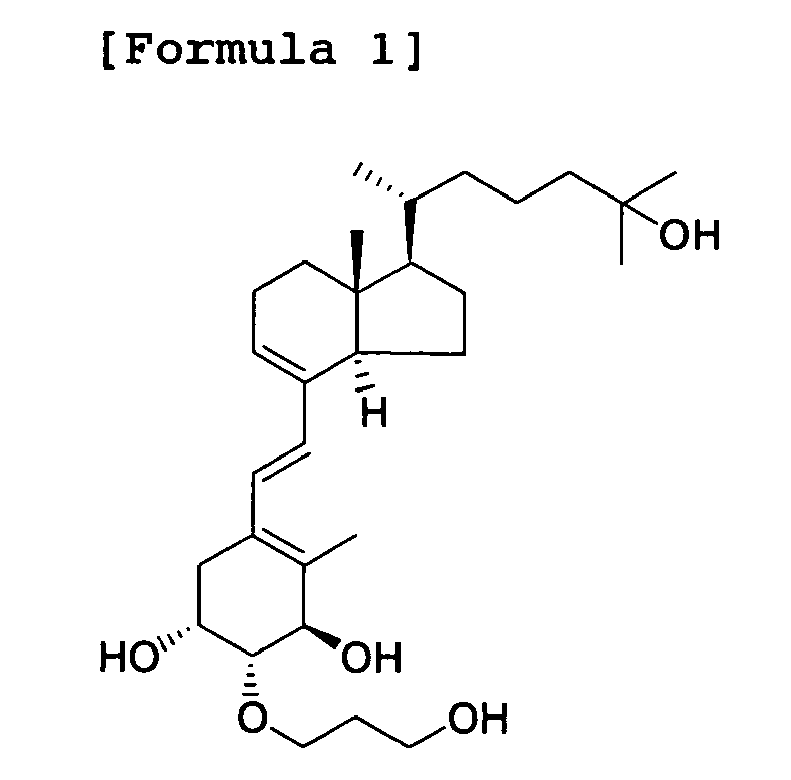
- (6E-(1R,2R,3R)-2-(3-hydroxypropoxy)-9,10-secocholesta-5(10),6,8(9)-triene-1,3,25-triol; hereinafter, also referred to as "tachysterol form" of ED-71), and a trans form of ED-71 represented by the following structural formula:
-

- ((5E,7E)-(1R,2R,3R)-2-(3-hydroxypropoxy)-9,10-secocholesta-5,7,10(19)-triene-1,3,25-triol). The present inventors have completed the present invention by further finding that the generation of these degradation products can be suppressed in an oily preparation comprising ED-71 by adding an antioxidant thereto.
- Namely, the present invention provides a preparation comprising: (1) (5Z,7E)-(1R,2R,3R)-2-(3-hydroxypropoxy)-9,10-secocholesta-5,7,10(19)-triene-1,3,25-triol; (2) fat and oil; and (3) an antioxidant.
- In the preparation, preferably, the generation of a degradation product of (5Z,7E)-(1R,2R,3R)-2-(3-hydroxypropoxy)-9,10-secocholesta-5,7,10(19)-triene-1,3,25-triol is suppressed. The degradation product of (5Z,7E)-(1R,2R,3R)-2-(3-hydroxypropoxy)-9,10-secocholesta-5,7,10(19)-triene-1,3,25-triol may be 6E-(1R,2R,3R)-2-(3-hydroxypropoxy)-9,10-secocholesta-5(10),6,8(9)-triene-1,3,25-triol and/or (5E,7E)-(1R,2R,3R)-2-(3-hydroxypropoxy)-9,10-secocholesta-5,7,10(19)-triene-1,3,25-triol. Preferably, the degradation product of (5Z,7E)-(1R,2R,3R)-2-(3-hydroxypropoxy)-9,10-secocholesta-5,7,10(19)-triene-1,3,25-triol is 6E-(1R,2R,3R)-2-(3-hydroxypropoxy)-9,10-secocholesta-5(10),6,8(9)-triene-1,3,25-triol and (5E,7E)-(1R,2R,3R)-2-(3-hydroxypropoxy)-9,10-secocholesta-5,7,10(19)-triene-1,3,25-triol.
- In the preparation, preferably, the degradation of (5Z,7E)-(1R,2R,3R)-2-(3-hydroxypropoxy)-9,10-secocholesta-5,7,10(19)-triene-1,3,25-triol into 6E-(1R,2R,3R)-2-(3-hydroxypropoxy)-9,10-secocholesta-5(10),6,8(9)-triene-1,3,25-triol and/or (5E,7E)-(1R,2R,3R)-2-(3-hydroxypropoxy)-9,10-secocholesta-5,7,10(19)-triene-1,3,25-triol is suppressed.
- In the preparation, preferably, the antioxidant is one member selected from dl-α-tocopherol, dibutylhydroxytoluene, butylhydroxyanisole, and propyl gallate. More preferably, the antioxidant is the dl-α-tocopherol.
- Preferably, the preparation is an oily preparation. More preferably, the preparation is a soft capsule, hard capsule, or oily liquid preparation (particularly, a soft capsule).
- It is also preferred that the preparation should comprise 0.000001 to 0.01% by weight of (5Z,7E)-(1R,2R,3R)-2-(3-hydroxypropoxy)-9,10-secocholesta-5,7,10(19)-triene-1,3,25-triol relative to the fat and oil and 0.0001 to 12% by weight of the antioxidant relative to the fat and oil.
- In another aspect of the present invention, a trans isomer of ED-71, (5E,7E)-(1R,2R,3R)-2-(3-hydroxypropoxy)-9,10-secocholesta-5,7,10(19)-triene-1,3,25-triol is provided.
- The ED-71 preparation of the present invention makes it possible to provide a pharmaceutical formulation capable of suppressing the generation of a degradation product of ED-71. The trans form of ED-71 can be used both as a standard in the analysis of an ED-71 preparation and as a material for the synthesis of various types of vitamin D-based compounds.
-
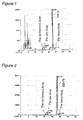
- Figure 1 shows a UV-HPLC chromatograph (265 nm) of a drug solution that has been left for 33 days under the condition of 40°C/75% RH; and
- Figure 2 shows an RI-HPLC chromatograph of the drug solution that has been left for 33 days under the condition of 40°C/75% RH.
- Hereinafter, a more specific aspect of the present invention and a method for practicing the present invention will be described.
- (5Z,7E)-(1R,2R,3R)-2-(3-hydroxypropoxy)-9,10-secocholesta-5,7,10(19)-triene-1,3,25-triol (ED-71) is a compound represented by the following structural formula:
-

- The ED-71 can be obtained, for example, in accordance with the method described in
Japanese Patent Laid-Open No. 10-72432 - An "antioxidant" used in the present invention includes nitrite (e.g., sodium nitrite), sulfite (e.g., sodium sulfite, dried sodium sulfite, sodium hydrogen sulfite, and sodium pyrosulfite), thiosulfate (e.g., sodium thiosulfate), alpha-thioglycerin, 1,3-butylene glycol, thioglycolic acid and salts thereof (e.g., sodium thioglycolate), thiomalate (e.g., sodium thiomalate), thiourea, thiolactic acid, edetate (e.g., sodium edetate), dichloroisocyanurate (e.g., potassium dichloroisocyanurate), citric acid, cysteine and salts thereof (e.g., cysteine hydrochloride), benzotriazole, 2-mercaptobenzimidazole, erythorbic acid and salts thereof (e.g., sodium erythorbate), ascorbic acid and ester compounds thereof (e.g., L-ascorbyl stearate and ascorbyl palmitate), phospholipid (e.g., soybean lecithin), metal chelating agents and salts thereof (e.g., ethylenediaminetetraacetic acid, calcium disodium ethylenediaminetetraacetate, and disodium ethylenediaminetetraacetate), tartaric acid and salts thereof (e.g., Rochelle salt), polyphenols (e.g., catechin), glutathione, dibutylhydroxytoluene, butylhydroxyanisole, propyl gallate, natural vitamin E, tocopherol acetate, concentrated mixed tocopherol, and tocopherol homologues (e.g., d-α-tocopherol, dl-α-tocopherol, 5,8-dimethyltocol, 7,8-dimethyltocol, δ-methyltocol, 5,7,8-trimethyltocotrienol, 5,8-dimethyltocotrienol, 7,8-dimethyltocotrienol, and 8-methyltocotrienol). These antioxidants can be used alone or in combination of 2 or more of them. The antioxidant is preferably one member selected from tocopherol acetate, dibutylhydroxytoluene, natural vitamin E, dl-α-tocopherol, d-α-tocopherol, concentrated mixed tocopherol, ascorbyl palmitate, L-ascorbyl stearate, butylhydroxyanisole, and propyl gallate, and more preferably, one member selected from dl-α-tocopherol, dibutylhydroxytoluene, butylhydroxyanisole, and propyl gallate, particularly preferably, dl-α-tocopherol.
- "Fat and oil" used in the present invention include medium-chain triglyceride (hereinafter, also referred to as "MCT"), tricaprilin, caproic acid, caprylic acid, capric acid, oleic acid, linoleic acid, linolenic acid, and plant oil. In this context, the plant oil includes coconut oil, olive oil, rapeseed oil, peanut oil, corn oil, soybean oil, cottonseed oil, grape oil, and safflower oil. The fat and oil are preferably MCT, tricaprilin, caproic acid, caprylic acid, or capric acid free of unsaturated fatty acid, particularly preferably MCT.
- In the present invention, "degradation product of ED-71" refers to main degradation products detected during the storage of ED-71 as an oily preparation and is specifically the tachysterol and the trans forms of ED-71.
- The tachysterol form of ED-71 is a compound which has tachysterol skeleton and which is represented by the following structural formula, and whose chemical name is 6E-(1R,2R,3R)-2-(3-hydroxypropoxy)-9,10-secocholesta-5(10),6,8(9)-triene-1,3,25-triol:
-

- The tachysterol form can be synthesized in accordance with the method described in, for example
Japanese Patent Laid-Open No. 10-72432 - The trans form of ED-71 is a compound which has a trans double bond at the 5-6 position, which is represented by the following structural formula, and whose chemical name is (5E,7E)-(1R,2R,3R)-2-(3-hydroxypropoxy)-9,10-secocholesta-5,7,10(19)-triene-1,3,25-triol:
-

- As is described above, it is important for the production of drug preparations that the content of each degradation product of an active ingredient does not exceed 1%.
- According to the studies conducted by the present inventors, after an ED-71 preparation wherein a solution of ED-71 dissolved in MCT is encapsulated in a soft capsule was stored for 12 months at 30°C, that is the upper limit of "room temperature", the amounts of both the tachysterol and trans forms generated exceeded 1%(see Tables 2 and 3 described below). Therefore, in producing ED-71 preparations, it is required to suppress the generation of these major degradation products. Namely, to put the ED-71 preparation into practical use, it is important to not only prevent the degradation of the ED-71 but also, preferably, to prevent the degradation thereof into the tachysterol and trans forms.
- The existence of the tachysterol and trans forms can be confirmed by detecting them by reverse phase liquid chromatography and measuring the absorbance at a measurement wavelength of 265 nm.
- In a state in which the generation of the degradation product of ED-71 is suppressed, the amounts of each of the tachysterol and trans forms generated after 12-month storage at room temperature under shading is preferably 1% or less, more preferably 0.3% or less, and particularly preferably 0.1% or less.
- In the present invention, "oily preparation" refers to an orally administrable preparation produced from a drug solution in fat and oil.
- The oily preparation available in the present invention includes a soft capsule, hard capsule, and oily liquid preparation.
- A soft capsule refers to a preparation where a mixture solution of a drug dissolved in fat or oil is enclosed in a shell mainly composed of a film-forming component such as gelatin. Any method for production of a soft capsule, such as a dripping method or a rotary-die method, can be used in the present invention, as long as the method is capable of producing soft capsules. The dripping method utilizes such a principle that a two-phase fluid flow of a substance serving as a capsule core and a substance serving as a capsule shell, when these are simultaneously dripped from a nozzle into a coolant, is changed into droplets by interfacial tension, which are cooled to foam capsules having hardened shells. In the rotary-die method, sheets (sheets containing a gel-forming component such as gelatin) continuously pass through two counter-rotating formation rollers, which in turn stamp capsule-forming bodies out of the sheets while filling material is injected into the space between two stamped-out sections which are then welded at their ends by thermal action to form a seamed soft capsule. Soft capsules of vitamin D's and their production methods include those described in
International Publication Nos. WO01/15702 WO02/13755 WO03/094897 PCT/JP03/07885 - A hard capsule is a preparation wherein a solution containing a drug is filled into a shell capsule consisting of a cap and a body which are mainly composed of a film-forming component such as gelatin, and wherein an overlapping portion of the cap and the body is sealed by applying a gelatin solution or the like thereto, to prevent the leakage of the solution.
- The shells of the soft capsules and the hard capsules are composed of a film-forming component, a plasticizer, a shading agent, and so on, which are mixed together.
- A film-forming component may be an animal-derived component such as various types of gelatins or a non-animal-derived component such as various types of watersoluble polymers. One or more of these components can be mixed at an arbitrary ratio for use in a film. An animal-derived component includes alkali-treated gelatin, acid-treated gelatin, and chemically modified gelatin. The chemically modified gelatin that can be used in the present invention is not particularly limited by its modification manner and may be those produced by reacting an amino group of gelatin with a substance such as succinic acid, phthalic acid, and acetic acid. The gelatin used for the chemically modified gelatin may also be alkali-treated gelatin or acid-treated gelatin. The non-animal-derived component includes: polysaccharides extracted from seaweed such as agar, carrageenan, and alginic acid; polysaccharides obtained from plant seeds such as locust bean gum, guar gum, tamarind gum, Cassia gum, and tara bean gum; polysaccharides secreted by plants such as gum arabic, tragacanth gum, almond gum, and damson gum; polysaccharides extracted from plants such as pectin, arabinogalactan, and glucomannan; polysaccharides obtained from microorganisms such as gellan gum, xanthan gum, pullulan, dextran, and curdlan; and cellulose gums such as crystalline cellulose, methylcellulose, carboxymethylcellulose and hydroxypropylmethylcellulose.
- A plasticizer includes glycerin, sorbitol, maltose, glucose, maltitose, sucrose, xylitol, mannitol, erythritol, and polyethylene glycols (molecular weight: 400 to 6000). In the present invention, one or more of these plasticizers can be used.
- A shading agent includes: metallic oxides such as titanium oxide, iron sesquioxide (colcothar), yellow ferric oxide, yellow iron oxide, and zinc oxide; inorganic compounds such as talc, calcium carbonate, magnesium carbonate, magnesium silicate, and light silicic anhydride; and food dyes such as caramel, food red No. 3 aluminum lake, food yellow No. 4 aluminum lake, food yellow No. 5 aluminum lake, food green No. 3 aluminum lake, food blue No. 2 aluminum lake, and sodium copper chlorophyllin. In the present invention, one or more of these water-insoluble shading agents can be used.
- "Oily liquid preparation" refers to a preparation wherein an oily solution containing a drug is filled into a hermetically sealed container (e.g., a glass container, a plastic container, and a stick packaging container).
- The amount of fat and oil used in the preparation of the present invention is not particularly limited. However, the amount is preferably 50 to 500 mg, particularly preferably 60 to 250 mg, per capsule (soft capsule and hard capsules). The amount of the fat and oil used in an oily liquid preparation is preferably 0.5 to 5 g, particularly preferably 1 to 3 g, per container.
- The content of ED-71 contained in a preparation is not particularly limited. However, the amount of ED-71 per unit preparation is preferably 0.05 to 5 µg, particularly preferably 0.5 to 0.75 µg. When this amount is converted to an ED-71 concentration in fat and oil, the concentration for a capsule is preferably 0.00001% or more by weight, particularly preferably 0.0002% or more by weight to preferably 0.01% or less by weight, particularly preferably 0.00125% or less by weight. For an oily liquid preparation, this concentration is preferably 0.000001% or more by weight, particularly preferably 0.000017% or more by weight to preferably 0.001% or less by weight, particularly preferably 0.000075% or less by weight.
- The amount of an antioxidant that can be mixed into fat or oil is not particularly limited. However, in general, an antioxidant can be used in amounts not higher than the maximum usage amount that is tolerated by antioxidants (e.g., amounts not higher than the maximum usage amount already approved and described in Pharmaceutical Additive Dictionary (Yakuji Nippo, 2000) or not higher than the limit of usage described in The Japan's Specifications and Standards for Food Additives (Japan Food Additives Association, 1999)).
- Among others, dl-α-tocopherol is contained in fat and oil in an amount of preferably 0.0001% or more by weight, more preferably 0.002% or more by weight, particularly preferably 0.01% or more by weight, to preferably 12% or less by weight, more preferably 1% or less by weight, particularly preferably 0.1% or less by weight, in capsules. In an oily liquid preparation, preferably 0.0001% or more by weight, more preferably 0.002% or more by weight, particularly preferably 0.01% or more by weight to preferably 1.2% or less by weight, more preferably 1% or less by weight, particularly preferably 0.1% or less by weight of dl-α-tocopherol is contained in fat and oil. Dibutylhydroxytoluene, butylhydroxyanisole, propyl gallate, and the like are the same as in the above case of d1-α-tocopherol.
- The disclosure of
Japanese Patent Application No. 2004-30702 - Hereinafter, the present invention will be described more fully with reference to Examples. However, the present invention is not intended to be limited to these Examples by any means. In Examples below, ED-71 and a tachysterol form used were synthesized by the method described in
Japanese Patent Laid-Open No. 10-72432 - ED-71 (500 mg) was placed into a 50-mL eggplant-shaped flask under a nitrogen atmosphere, to which 30 mL of liquid sulfur dioxide was injected and refluxed (approximately at -15°C) with stirring for 3 hours. The sulfur dioxide was distilled off to obtain 560 mg of (5Z,7E)-(1R,2R,3R)-2-(3-hydroxypropoxy)-6,19-sulfone-9,10-secocholesta-5(10),7-diene-1,3,25-triol (hereinafter, referred to as a "sulfur dioxide adduct") as a pale yellow solid. The sulfur dioxide adduct (200 mg), 500 mg of sodium hydrogencarbonate, and 20 mL of ethanol were added to a 50-mL eggplant-shaped flask and refluxed under stirring for 210 minutes. After cooling, insoluble matter was filtered out, and the filtrate was concentrated to dryness. The dried concentrate was dissolved in 10 mL of ethanol and 10 mL of diethylether and filtered, and then the resulting filtrate was concentrated to dryness.
- The dried concentrate was developed and treated in preparative reverse phase HPLC (apparatus: manufactured by Hitachi, Ltd., column: Kromasil ODS (KR100-7-C18, 250 × 20 mm I.D., manufactured by Eka Chemicals), mobile phase: 50%-acetonitrile solution, flow rate: 9.99 mL/min, detection: UV=220 nm and 265 nm) to fractionate a portion eluted from 54 minutes to 68 minutes. The fractionated solution was concentrated to dryness to obtain approximately 50 mg of white solid. The obtained white solid was dissolved in a small amount of ethanol and 0.5 mL of ethyl acetate and crystallized in a freezing chamber set at -20°C. A crystal thus precipitated was separated, then washed with a trace amount of ethyl acetate, and dried to obtain 39 mg of the trans form (yield: 22%).
- HPLC purity: 99.6% (HPLC conditions: Kromasil ODS 100-5C18, 5 µm, 4.6 mm I.D. × 250 mm, 55% acetonitrile solution, flow rate: 0.9 mL/min, 220 nm, 1 mg/
mL 10 µL, measured area range: 4 to 30 min).
1H-NMR (CDCl3) (ppm): 6.63 (1H, d, J = 11.2 Hz), 5.85 (1H, d, J = 11.6 Hz), 5.18 (1H, t, J = 1.8 Hz), 5.13 (1H, t, J = 1.8 Hz), 4.43 (1H, d, j = 8.3 Hz), 4.28 (1H, ddd, J = 3.6 Hz, 3.6 Hz, 3.6 Hz), 3.7-4.0 (3H, m), 3.34 (1H, dd, J = 2.8 Hz, 8.4 Hz), 1.21 (6H, s), 0.93 (3H, d, J = 6.3 Hz), 0.56 (3H, s).
13C-NMR (CDCl3) (ppm): 149.2, 145.4, 132.0, 123.4, 116.0, 109.0, 84.2, 71.3, 71.1, 66.3, 61.2, 56.5, 45.9, 44.4, 40.5, 36.4, 36.0, 31.8, 29.3, 29.2, 29.1, 27.6, 23.5, 22.3, 20.8, 18.8, 18.4, 12.2.
UV (ethanol) (λmax): 209.8 nm (ε 12300), 274.6 nm (ε 23200).
IR (KBr) (cm-1) : 3365, 2951, 2935, 2877, 2845, 1628, 1468, 1458, 1437, 1375, 1363, 1350, 1333, 1215, 1120, 1080, 1059, 1034, 997, 958, 947, 933, 904, 891, 872, 729, 715, 683, 638, 627. - Tritium-labeled ED-71 (2β-([3-3H]-3-hydroxypropyl)-1α,3β-25-trihydroxycholesta-5,7,10(19)-triene (alternatively designated as (5Z,7E)-(1R,2R,3R)-2-([3-3H]-3-hydroxypropoxy)-9,10-secocholesta-5,7,10(19)-triene-1,3,25-triol, hereinafter referred to as "3H-ED-71")) was used (J. Labeled Cpd. Radiopharm. 42, 519-525 (1999)) and dissolved together with unlabeled ED-71 in MCT (ED-71 concentration: 1 µg/100 mg, 3H-ED-71 concentration: 1.38 MBq/mL). This drug solution was filled (0.08 mL/capsule) into empty soft capsules (which had a shell consisting of 47.67 mg of gelatin, 16.68 mg of glycerin, and 0.65 mg of titanium oxide and were produced by a rotary die method) by means of a syringe with a needle. The capsules were sealed with gelatin and left for 33 days under 40°C/75% RH and shading. Degradation products generated in the drug solution were detected with HPLC (manufactured by Shimadzu) equipped with UV and RI detectors.
-
- Column: YMC-Pack ODS AM-303 (250 × 4.6 mm, 5 µm), manufactured by YMC Co., Ltd.
- Mobile phase: acetonitrile/water =1:1
- Flow rate: 1.2 mL/min
- Peak detection: UV 265 nm, RI
- Column temperature: 30°C
- The pre form of ED-71 (chemical name: 6Z-(1R,2R,3R)-2-(3-hydroxypropoxy)-9,10-secocholesta-5(10),6.8(9)-triene-1,3,25-triol) is a compound existing as an isomer having an equilibrium relationship with ED-71 in an oily or aqueous solution or in an organic solvent such as ethanol (
Japanese Patent Laid-Open No. 10-72432 -

- Example 3:
- To examine the influence of an antioxidant on the generation of the main degradation products in a preparation comprising ED-71, soft capsules filled with an MCT solution containing ED-71 and an antioxidant were stored under various types of conditions and evaluated for the generation behavior of the tachysterol and trans forms.
- The formulation of the test soft capsule is shown in Table 1. ED-71 was mixed in the formulation in an amount of 0.0001% by weight relative to MCT. dl-α-tocopherol (manufactured by Wako Pure Chemical Industries, Ltd.) and BHT (dibutylhydroxytoluene) (manufactured by Wako Pure Chemical Industries, Ltd.) were used alone or in combination as an antioxidant. The amount of each of the antioxidants added was set to 0.02% by weight relative to MCT. Formulations containing the antioxidant(s) were defined as
Formulations 1, 2, and 3, while a formulation free of the antioxidant was defined asControl Formulation 1. - [Table 1]
Table 1 Formulation of soft capsule Material name Control Formulation 1 Formulation 1Formulation 2 Formulation 3 Antioxidant-free BHT-added Tocopherol-added BHT+ tocopherol-added Capsule shell Gelatin (APB-H) 47.67 mg Glycerin 16.68 mg Titanium oxide 0.65 mg Purified water Subtotal 65.00 mg Core solution ED-71 1 µg 1 µg 1 µg 1 µg Anhydrous 1.30 mg 1.30 mg 1.30 mg 1.30 mg BHT - 0.02 mg - 0.02 mg dl-α-tocopherol - - 0.02 mg 0.02 mg MCT(ODO-C) 98.70 mg 98.68 mg 98.68 mg 98.66 mg Subtotal 100.00 mg 100.00 mg 100.00 mg 100.00 mg Total 165.00 mg 165.00 mg 165.00 mg 165.00 mg - The soft capsules were produced by a dripping method by means of a seamless capsule filling machine (SPHEREX, manufactured by Freund Corporation) so that weights of the drug solution and the shell were 100 mg and 65 mg, respectively, per capsule.
- Approximately 100 capsules each of the soft capsules were put in a vial. Then, the vials were hermetically sealed or unsealed and stored for 12 months under the conditions of 30°C/60% RH and shading.
- After the termination of the storage period, the drug solution was extracted from each of the soft capsules, and a 50-µL aliquot thereof was subjected to HPLC analysis.
-
- Column: YMC-Pack ODS AM-303 (250 × 4.6 mm, 5 µm), manufactured by YMC Co., Ltd.
- Mobile phase: acetonitrile/water =1:1
- Flow rate: 1.2 mL/min
- Peak detection: 265 nm
- Column temperature: 30°C
- A peak area ratio of the tachysterol or trans form relative to the total sum of detected peak areas was calculated and used as an index of the amount of the tachysterol or trans form generated.
- The content of ED-71 was measured by an HPLC method shown below to determine a residual rate after terminating the storage period.
- Approximately 2 mg of heptyl 4-hydroxybenzoate was precisely weighed, and ethanol was added to volume 100 mL accurately. This solution was diluted 10-fold with ethanol and used as an internal standard solution.
- Approximately 2 mg of a standard of ED-71 was precisely weighed, and ethanol was added to volume 200 mL accurately. A precisely 2.5 mL aliquot was taken from this solution, and ethanol was added to
volume 20 mL accurately. The resulting solution was used as a standard undiluted solution. - Approximately 300 mg of MCT was placed into a 10-mL pear-shaped flask, to which 2 mL of the standard undiluted solution and 2 mL of the internal standard solution were then added. This mixture solution was dried under a reduced pressure in an evaporator at room temperature for 10 or more minutes. The remaining MCT solution was used as a standard solution.
- The drug solutions were extracted from the capsules, and approximately 300 mg was precisely weighed and placed into a 10-mL pear-shaped flask. To these flask solutions, precisely 2 mL of the internal standard solution was added, and then dried under a reduced pressure in an evaporator at room temperature for 10 minutes. The remaining MCT solution was used as a sample solution.
- The sample solutions and the standard solution (50 µL each) were subjected to column-switching HPLC analysis under the conditions described below.
-
- Column: YMC-Pack ODS AM-303 (250 × 4.6 mm, 5 µm), manufactured by YMC Co., Ltd.
- Mobile phase: (precolumn) MCT is eluted in a gradient using an acetonitrile/water (1:1) mixture solution as Solution A and acetonitrile as Solution B.
-
- (Analysis column): acetonitrile/water (1:1) mixture solution
- Flow rate: 1.2 mL/min
- Detection wavelength: 265 nm
- Column temperature: 23°C
- [Table 2]
Table 2 Peak area ratio of tachysterol form after storage of a hermetically sealed or unsealed vial storing a soft capsule containing 1 µg of ED-71 under 30°C/60% RH and shading Storage conditions Storage period (month) Peak area ratio of tachysterol form Control Formulation 1 Formulation 1Formulation 2 Formulation 3 Antioxidant -free BHT Tocopherol BHT+ tocopherol 30°C/60%RH Hermetically sealed 0 N.D. N.D. N.D. N.D. 6 1.31 N.D. N.D. N.D. 12 1.85 0.56 N.D. N.D. 30°C/60%RH Unsealed 0 N.D. N.D. N.D. N.D. 6 1.54 N.D. N.D. N.D. 12 2.06 0.63 N.D. N.D. n = 1, N.D. < 0.1%[0075] - [Table 3]
Table 3 Peak area ratio of the trans form after storage of a hermetically sealed or unsealed vial storing a soft capsule containing 1 µg of ED-71 under 30°C/60% RH and shading Storage conditions Storage period (month) Peak area ratio of the trans form Control Formulation 1Formulation 1Formulation 2 Formulation 3 Antioxidant -free BHT Tocopherol BHT+ tocopherol 30°C/60%RH Hermetically sealed 0 N.D. N.D. N.D. N.D. 6 1.31 N.D. N.D. N.D. 12 1.85 0.56 N.D. N.D. 30°C/60%RH Unsealed 0 N.D. N.D. N.D. N.D. 6 1.54 N.D. N.D. N.D. 12 2.06 0.63 N.D. N.D. n = 1, N.D. < 0.1% - [Table 4]
Table 4 Residual rates of ED-71 after storage of a hermetically sealed or unsealed vial storing a soft capsule containing 1 µg of ED-71 under 30°C/60% RH and shading Storage condition Storage period (month) Residual rate of ED-71 (%) Control Formulation 1Formulation 1Formulation 2 Formulation 3 Antioxidant -free BHT Tocopherol BHT+ tocopherol 30°C/60%RH Hermetically sealed 6 96.7 99.9 100.5 100.0 12 93.0 98.3 98.3 98.6 30°C/60%RH Unsealed 6 93.6 98.0 97.6 97.9 12 88.1 93.7 95.0 95.5 n = 1 - As can be seen from Tables 2 to 3, the amounts of the tachysterol and trans forms generated in the preparation of the control formulation during 12-month storage in the unsealed state were 1.741% and 2.06%, respectively, in terms of the peak area ratio, whereas the amounts in both formulations 2 and 3 were suppressed to the detection limit (0.1%) or lower. As can be seen from Table 4, the residual rates of ED-71 in
Formulations 1, 2, and 3 were higher than that in the control formulation. The results showed that the generation of the tachysterol and trans forms is suppressed in all theFormulations 1, 2, and 3 to which an antioxidant(s) were added, as compared with the control formulation. - To examine an influence of the amount of an antioxidant added on the generation of the main degradation products in a preparation comprising ED-71, soft capsules filled with an MCT solution containing ED-71 with varying amounts of dl-α-tocopherol added thereto were stored under various types of conditions and evaluated for the generation behavior of the tachysterol and trans forms.
- The formulation of the test soft capsule is shown in Table 5. ED-71 was mixed in the formulation in an amount of 0.001% by weight relative to MCT. dl-α-tocopherol (manufactured by Eisai Co., Ltd.) was used as an antioxidant and mixed in an amount of 0.002%, 0.005%, 0.01%, 0.02%, and 0.04% by weight relative to MCT (in
Formulations - [Table 5]
Table 5 Formulations of soft capsule Material name Control Formulation 2 Formulation 4 Formulation 50% 0.002% 0.005% Capsule shell Gelatin (APB-H) 47.67 mg Glycerin 16.68 mg Titanium oxide 0.65 mg (Purified water) (71.84 mg) Total 65.00 mg Core solution ED-71 0.001 mg 0.001 mg 0.001 mg Anhydrous ethanol 1.300 mg 1.300 mg 1.300 mg dl-α-tocopherol 0.000 mg 0.002 mg 0.005 mg MCT(ODO-C) 98.700 mg 98.697 mg 98.694 mg Total 100.000 mg 100.000 mg 100.000 mg Material name Formulation 6 Formulation 7 Formulation 80.01% 0.02% 0.04% Capsule shell Gelatin (APB-H) Glycerin Titanium oxide (Purified water) Total Core solution ED-71 0.001 mg 0.001 mg 0.001 mg Anhydrous ethanol 1.300 mg 1.300 mg 1.300 mg dl-α-tocopherol 0.010 mg 0.020 mg 0.040 mg MCT(ODO-C) 98.689 mg 98.679 mg 98.659 mg Total 100.000 mg 100.000 mg 100.000 mg - The soft capsules were produced by a dripping method by means of a seamless capsule filling machine (SPHEREX, manufactured by Freund Corporation) so that the weights of the drug solution and the shell were 100 mg and 65 mg, respectively, per capsule.
- Approximately 100 capsules each of the soft capsules were put in a vial and stored at 40°C for 3 months under a shading condition, with the vial hermetically sealed. After termination of the storage period, the drug solution was extracted from each of the soft capsules, and the amounts of the tachysterol and trans forms generated were measured by the method described in Example 3.
- The detection results of the tachysterol form and the trans form by HPLC are shown in Tables 6 and 7.
-


-


- As can be seen from Tables 6 and 7, an effect of suppressing the generation of the tachysterol and trans forms was observed in Formulations 4 to 8 (even when the amount of dl-α-tocopherol added was 0.002% by weight) as compared with the control formulation. The effect of suppressing the generation of the tachysterol form was observed in such a manner that the effect was dependent on the amount of dl-α-tocopherol added. On the other hand, for the effect of suppressing the generation of the trans form, the amount of the trans form generated was 0.1% or less in all regions where the amount of dl-α-tocopherol added was 0.01% or more. These results show that dl-α-tocopherol suppresses the generation of the main degradation products of ED-71 in a concentration-dependent manner, and even when added in an amount of 0.002% by weight, has a remarkable effect of suppressing the generation of the main degradation products.
- To evaluate effects of various types of antioxidants on the generation of the main degradation products in a preparation comprising ED-71, MCT solutions containing ED-71 together with various types of antioxidants added were stored at 50°C for 1 month and evaluated for the generation behavior of the tachysterol and trans forms.
- ED-71 was mixed in an amount of 0.0017% by weight relative to MCT in formulations. dl-α-tocopherol (manufactured by Wako Pure Chemical Industries, Ltd.), dibutylhydroxytoluene (manufactured by Wako Pure Chemical Industries, Ltd.), butylhydroxyanisole (manufactured by Wako Pure Chemical Industries, Ltd.), and propyl gallate (manufactured by Wako Pure Chemical Industries, Ltd.) were used alone as an antioxidant. The amount of each of the antioxidants added was set to 0.2% by weight relative to MCT. Formulations containing an antioxidant were defined as
Formulations 9, 10, 11, and 12, while a formulation free of the antioxidant was defined as Control Formulation 3. - Approximately 1 g each of the drug solutions of Formulations 9 to 12 was placed into a sampling tube. The tube was hermetically sealed and stored at 50°C for 1 month under a shading condition. After the termination of the storage period, the amounts of the tachysterol and trans forms generated in each of the drug solutions were measured by the method described in Example 3.
- The detection results of the tachysterol form and the trans form by HPLC are shown in Table 8.
- [Table 8]
Table 8 Peak area ratios of the tachysterol and trans forms after storage of an MCT solution containing ED-71 at 50°C for 1 month under a shading condition Formulation Antioxidant Peak area ratio (%) The Tachysterol form The Trans form Control formulation 3 not used 0.76 0.43 Formulation 9 dl-α-tocopherol N.D. N.D. Formulation 10Dibutylhydroxytoluene N.D. N.D. Formulation 11 Butylhydroxyanisole N.D. N.D. Formulation 12 Propyl gallate N.D. N.D. n = 1, N.D. < 0.1% - As can be seen from Table 8, all the antioxidants used remarkably suppressed the generation of the tachysterol and trans forms.
- Preparations comprising ED-71 were prepared in accordance with the method described in Example 4, except that the test preparation capsules are soft capsules having the formulations described below, and evaluated for the generation behavior of the tachysterol and trans forms. All the preparations of the formulations suppressed the generation of the tachysterol and trans forms.
- [Table 9]
Table 9 Formulation of soft capsule Material name Formulation 13 Formulation 14 (0.02%) (0.02%) Capsule shell Gelatin (APB-H) 54.71 mg Sorbitol 8.34 mg Caramel (2MC) 1.95 mg (Purified water) (82.33 mg) Total 65.00 mg Core solution ED-71 0.0005 mg 0.001 mg Anhydrous ethanol 1.300 mg 1.300 mg dl-α-tocopherol 0.020 mg 0.020 mg MCT(ODO-C) 98.6795 mg 98.679 mg Total 100.000 mg 100.000 mg - The ED-71 preparation of the present invention makes it possible to provide a pharmaceutical formulation capable of suppressing the generation of a degradation product of ED-71. The trans form of ED-71 is useful as a standard in the analysis of ED-71 preparation and is also useful as a material for the synthesis of various types of vitamin D-based compounds.
The chromatograms obtained by HPLC measurement of the drug solution that has been left for 33 days under the conditions of 40°C/75% RH are shown in Figures 1 and 2. In the RI-chromatogram, minor peaks were detected at around both 16 minutes and 24 minutes, in addition to a main peak corresponding to ED-71 and a minor peak corresponding to the pre form of ED-71 at around 17 minutes. These two peaks are not detected in a sample before storage under 40°C/75% RH, and the peaks detected in RI-HPLC are derived from 3H-ED-71. Therefore, it was suggested that these two components are main degradation products of ED-71. The peak eluted at around 16 minutes was almost identical to the position of the main eluted peak detected in the analysis of a standard solution of the tachysterol form under the same HPLC conditions, and is therefore considered to be derived from the tachysterol form. The peak eluted at around 24 minutes was almost identical to the position of the main eluted peak detected in the analysis of a standard solution of the trans form under the same HPLC conditions, and is therefore considered to be derived from the trans form.
The detection results of the tachysterol form, the trans form, and ED-71 by HPLC are shown in Tables 2 to 4.
Claims (10)
- A preparation comprising:(1) (5Z,7E)-(1R,2R,3R)-2-(3-hydroxypropoxy)-9,10-secocholesta-5,7,10(19)-triene-1,3,25-triol;(2) fat and oil; and(3) an antioxidant.
- The preparation according to claim 1, wherein the generation of a degradation product of (5Z,7E)-(1R,2R,3R)-2-(3-hydroxypropoxy)-9,10-secocholesta-5,7,10(19)-triene-1,3,25-triol is suppressed.
- The preparation according to claim 1, wherein the degradation of (5Z,7E)-(1R,2R,3R)-2-(3-hydroxypropoxy)-9,10-secocholesta-5,7,10(19)-triene-1,3,25-triol into 6E-(1R,2R,3R)-2-(3-hydroxypropoxy)-9,10-secocholesta-5(10),6,8(9)-triene-1,3,25-triol and/or (5E,7E)-(1R,2R,3R)-2-(3-hydroxypropoxy)-9,10-secocholesta-5,7,10(19)-triene-1,3,25-triol is suppressed.
- The preparation according to claim 2, wherein the degradation product of (5Z,7E)-(1R,2R,3R)-2-(3-hydroxypropoxy)-9,10-secocholesta-5,7,10(19)-triene-1,3,25-triol is 6E-(1R,2R,3R)-2-(3-hydroxypropoxy)-9,10-secocholesta-5(10),6,8(9)-triene-1,3,25-triol and/or (5E,7E)-(1R,2R,3R)-2-(3-hydroxypropoxy)-9,10-secocholesta-5,7,10(19)-triene-1,3,25-triol.
- The preparation according to claim 2, wherein the degradation product of (5Z,7E)-(1R,2R,3R)-2-(3-hydroxypropoxy)-9,10-secocholesta-5,7,10(19)-triene-1,3,25-triol is 6E-(1R,2R,3R)-2-(3-hydroxypropoxy)-9,10-secocholesta-5(10),6,8(9)-triene-1,3,25-triol and (5E,7E)-(1R,2R,3R)-2-(3-hydroxypropoxy)-9,10-secocholesta-5,7,10(19)-triene-1,3,25-triol.
- The preparation according to any one of claims 1 to 5, wherein the antioxidant is one member selected from dl-α-tocopherol, dibutylhydroxytoluene, butylhydroxyanisole, and propyl gallate.
- The preparation according to any one of claims 1 to 6, wherein the preparation is a soft capsule, hard capsule, or oily liquid preparation.
- The preparation according to any one of claims 1 to 7, wherein the preparation is a soft capsule.
- The preparation according to any one of claims 1 to 8, wherein the preparation comprises 0.000001 to 0.01% by weight of (5Z,7E)-(1R,2R,3R)-2-(3-hydroxypropoxy)-9,10-secocholesta-5,7,10(19)-triene-1,3,25-triol relative to the fat and oil and 0.0001 to 12% by weight of the antioxidant relative to the fat and oil.
- (5E,7E)-(1R,2R,3R)-2-(3-hydroxypropoxy)-9,10-secocholesta-5,7,10(19)-triene-1,3,25-triol.
Applications Claiming Priority (2)
| Application Number | Priority Date | Filing Date | Title |
|---|---|---|---|
| JP2004030702 | 2004-02-06 | ||
| PCT/JP2005/001749 WO2005074943A1 (en) | 2004-02-06 | 2005-02-07 | Ed-71 preparation |
Publications (4)
| Publication Number | Publication Date |
|---|---|
| EP1714656A1 true EP1714656A1 (en) | 2006-10-25 |
| EP1714656A4 EP1714656A4 (en) | 2012-10-31 |
| EP1714656B1 EP1714656B1 (en) | 2017-08-16 |
| EP1714656B8 EP1714656B8 (en) | 2017-09-20 |
Family
ID=34836013
Family Applications (1)
| Application Number | Title | Priority Date | Filing Date |
|---|---|---|---|
| EP05709801.4A Expired - Lifetime EP1714656B8 (en) | 2004-02-06 | 2005-02-07 | Ed-71 preparation |
Country Status (7)
| Country | Link |
|---|---|
| US (1) | US20070129340A1 (en) |
| EP (1) | EP1714656B8 (en) |
| JP (2) | JP4921794B2 (en) |
| KR (1) | KR101166394B1 (en) |
| CN (2) | CN101721708B (en) |
| ES (1) | ES2638836T3 (en) |
| WO (1) | WO2005074943A1 (en) |
Families Citing this family (11)
| Publication number | Priority date | Publication date | Assignee | Title |
|---|---|---|---|---|
| BRPI0707333B8 (en) | 2006-01-24 | 2021-05-25 | R Tech Ueno Ltd | pharmaceutical composition comprising a bicyclic compound, method of stabilizing the bicyclic compound and soft gelatin capsule formulation |
| BR102015024165A2 (en) * | 2015-09-18 | 2017-03-28 | Prati Donaduzzi & Cia Ltda | oral pharmaceutical composition comprising cannabinoid, process for its preparation and use |
| KR101785319B1 (en) * | 2016-05-04 | 2017-10-17 | 대한뉴팜(주) | Composition of Cholecalciferol with Improved Stability by Using The Vitamine E and Method for Preparation Thereof |
| KR102583517B1 (en) * | 2016-12-28 | 2023-09-26 | 추가이 세이야쿠 가부시키가이샤 | Medicinal composition comprising ed-71 solid dispersion and oil dispersion |
| JP2019014676A (en) * | 2017-07-06 | 2019-01-31 | 東海カプセル株式会社 | Capsule |
| CN108420797B (en) * | 2018-05-09 | 2022-05-03 | 南京海融制药有限公司 | Vitamin D analogue preparation and preparation method thereof |
| KR102708351B1 (en) * | 2018-06-27 | 2024-09-20 | 추가이 세이야쿠 가부시키가이샤 | Pharmaceutical composition comprising an oil dispersion comprising ED-71 and an epoxy compound thereof during maintenance |
| JP6742487B1 (en) * | 2019-08-09 | 2020-08-19 | 日医工株式会社 | Pharmaceutical composition containing eldecalcitol |
| JP6628927B1 (en) * | 2019-08-09 | 2020-01-15 | 日医工株式会社 | Eldecalcitol soft capsule |
| CN111272902A (en) * | 2020-03-16 | 2020-06-12 | 温州海鹤药业有限公司 | Method for detecting drug concentration of digocalcitol in blood |
| CN117986172A (en) * | 2024-02-05 | 2024-05-07 | 甘肃皓天医药科技有限责任公司 | A method for synthesizing idecalcitol impurities |
Family Cites Families (21)
| Publication number | Priority date | Publication date | Assignee | Title |
|---|---|---|---|---|
| JPS5312414A (en) * | 1976-07-21 | 1978-02-03 | Chugai Pharmaceut Co Ltd | Production of preparation containing stable 1alpha-hydroxyvitamines d |
| US4666634A (en) * | 1984-12-05 | 1987-05-19 | Chugai Seiyaku Kabushiki Kaisha | vitamin D3 derivatives having a substituent at 2-position |
| JPH0780773B2 (en) * | 1986-06-05 | 1995-08-30 | 中外製薬株式会社 | New Vitamin D (3) A drug containing a derivative as an active ingredient |
| JPS63267706A (en) * | 1987-04-22 | 1988-11-04 | Dainippon Jiyochiyuugiku Kk | Insecticide containing benzyl alcohol ester for smoking combustion and thermal evaporation and production thereof |
| JPH0768208B2 (en) * | 1989-02-15 | 1995-07-26 | 大同ほくさん株式会社 | 22,23-seco-1,7,8-trihydroxyvitamin D or derivative thereof and method for producing the same |
| JPH054925A (en) * | 1991-06-27 | 1993-01-14 | Teikoku Chem Ind Corp Ltd | Soft capsule preparation of alpha calcidiol |
| ES2140433T3 (en) * | 1992-02-27 | 2000-03-01 | Duphar Int Res | METHOD OF PREPARING STEROIDS 9BETA, 10ALFA-5,7-DIENICOS. |
| JPH0687750A (en) * | 1992-09-08 | 1994-03-29 | Taiyo Yakuhin Kogyo Kk | Medicine composition |
| WO1994020143A1 (en) * | 1993-03-03 | 1994-09-15 | Fujisawa Pharmaceutical Co., Ltd. | Optical isomerization inhibitor |
| JP3429432B2 (en) * | 1996-07-01 | 2003-07-22 | 中外製薬株式会社 | Vitamin D derivative crystal and method for producing the same |
| TWI247001B (en) * | 1996-07-01 | 2006-01-11 | Chugai Pharmaceutical Co Ltd | The method for purifying vitamin d derivatives and its crystalline products |
| DE69832699T2 (en) * | 1997-05-16 | 2006-08-24 | Woman & Infants Hospital | CYCLIC ETHERIC VITAMIN D3 COMPOUNDS, 1ALFA (OH) 3-EPI-VITAMIN D3 COMPOUNDS AND ITS USES |
| WO1999062451A1 (en) * | 1998-06-01 | 1999-12-09 | Verbiscar Anthony J | Topical transdermal treatments |
| US6267985B1 (en) * | 1999-06-30 | 2001-07-31 | Lipocine Inc. | Clear oil-containing pharmaceutical compositions |
| DE60045101D1 (en) * | 1999-08-31 | 2010-11-25 | Chugai Pharmaceutical Co Ltd | CAPSULES |
| AU2001256791A1 (en) * | 2000-05-23 | 2001-12-03 | Chugai Seiyaku Kabushiki Kaisha | 5,6-trans-2-alkylvitamin d derivatives |
| US7094431B2 (en) * | 2000-10-12 | 2006-08-22 | Mickey L. Peshoff | Method of healing skin wounds in mammals and a composition therefor |
| US6660306B2 (en) * | 2000-10-12 | 2003-12-09 | Mickey L. Peshoff | Wound healing compound |
| CN100391464C (en) * | 2001-12-03 | 2008-06-04 | 诺瓦西股份有限公司 | Pharmaceutical compositions containing active vitamin D compounds |
| US7632518B2 (en) | 2002-01-15 | 2009-12-15 | Dsm Ip Assets B.V. | 25-hydroxy vitamin D3 compositions |
| US8486374B2 (en) * | 2003-08-04 | 2013-07-16 | Foamix Ltd. | Hydrophilic, non-aqueous pharmaceutical carriers and compositions and uses |
-
2005
- 2005-02-07 EP EP05709801.4A patent/EP1714656B8/en not_active Expired - Lifetime
- 2005-02-07 CN CN2009102228115A patent/CN101721708B/en not_active Ceased
- 2005-02-07 WO PCT/JP2005/001749 patent/WO2005074943A1/en not_active Ceased
- 2005-02-07 JP JP2005517763A patent/JP4921794B2/en not_active Expired - Lifetime
- 2005-02-07 CN CN2005800098776A patent/CN1938034B/en not_active Ceased
- 2005-02-07 US US10/588,609 patent/US20070129340A1/en not_active Abandoned
- 2005-02-07 KR KR1020067017923A patent/KR101166394B1/en not_active Expired - Lifetime
- 2005-02-07 ES ES05709801.4T patent/ES2638836T3/en not_active Expired - Lifetime
-
2011
- 2011-11-24 JP JP2011256586A patent/JP5529104B2/en not_active Expired - Lifetime
Also Published As
| Publication number | Publication date |
|---|---|
| JP5529104B2 (en) | 2014-06-25 |
| CN1938034A (en) | 2007-03-28 |
| EP1714656B8 (en) | 2017-09-20 |
| KR101166394B1 (en) | 2012-07-23 |
| ES2638836T8 (en) | 2017-11-28 |
| CN101721708A (en) | 2010-06-09 |
| EP1714656A4 (en) | 2012-10-31 |
| JP4921794B2 (en) | 2012-04-25 |
| CN1938034B (en) | 2010-12-08 |
| JPWO2005074943A1 (en) | 2007-10-11 |
| KR20070003904A (en) | 2007-01-05 |
| ES2638836T3 (en) | 2017-10-24 |
| HK1144179A1 (en) | 2011-02-02 |
| US20070129340A1 (en) | 2007-06-07 |
| HK1101139A1 (en) | 2007-10-12 |
| WO2005074943A1 (en) | 2005-08-18 |
| JP2012072169A (en) | 2012-04-12 |
| CN101721708B (en) | 2013-09-04 |
| EP1714656B1 (en) | 2017-08-16 |
Similar Documents
| Publication | Publication Date | Title |
|---|---|---|
| JP5529104B2 (en) | ED-71 formulation | |
| ES2217563T3 (en) | STABLE MEDICINAL COMPOUNDS CONTAINING DERIVATIVES OF 4,5-EPOXIMORFINATED. | |
| US9814775B2 (en) | Method for making and storing stable cannabinoid compositions and method for treatment using such compositions | |
| SG186981A1 (en) | Formulations of rifaximin and uses thereof | |
| EP3713562B1 (en) | Epigallocathechin gallate solution | |
| WO2012071389A2 (en) | Stable cannabinoid compositions and methods for making and storing them | |
| WO2021163023A1 (en) | Stable formulations of dronabinol | |
| JP2021024844A (en) | Eldecalcitol-containing pharmaceutical composition | |
| CN109394724A (en) | A kind of butylphthalide liquid hard capsule preparation and preparation method thereof | |
| UA68350C2 (en) | Dosage forms of encapsulated sertraline | |
| HK1144179B (en) | Ed-71 preparation | |
| HK1101139B (en) | Ed-71 preparation | |
| WO2021099901A1 (en) | Stable topical pharmaceutical composition | |
| US6201009B1 (en) | Absorption-enhancing composition for pantothenic acid derivative | |
| EP3685825B1 (en) | Isoquercitrin compositions | |
| WO2018031427A1 (en) | Pharmaceutical formulations and their use | |
| EP3351245A1 (en) | Pharmaceutical composition comprising rapamycin or derivative thereof | |
| JP2018108945A (en) | Formulation containing 4,5-epoxymorphinan derivative | |
| KR20010040717A (en) | Liquid Pharmaceutical Formulation Containing Zotepine | |
| JPS6351331A (en) | Pharmaceutical composition containing stable activated vitamin d compound |
Legal Events
| Date | Code | Title | Description |
|---|---|---|---|
| PUAI | Public reference made under article 153(3) epc to a published international application that has entered the european phase |
Free format text: ORIGINAL CODE: 0009012 |
|
| 17P | Request for examination filed |
Effective date: 20060814 |
|
| AK | Designated contracting states |
Kind code of ref document: A1 Designated state(s): AT BE BG CH CY CZ DE DK EE ES FI FR GB GR HU IE IS IT LI LT LU MC NL PL PT RO SE SI SK TR |
|
| DAX | Request for extension of the european patent (deleted) | ||
| A4 | Supplementary search report drawn up and despatched |
Effective date: 20121002 |
|
| RIC1 | Information provided on ipc code assigned before grant |
Ipc: A61K 31/593 20060101AFI20120925BHEP Ipc: A61K 47/44 20060101ALI20120925BHEP Ipc: A61K 9/08 20060101ALI20120925BHEP Ipc: A61P 19/10 20060101ALI20120925BHEP Ipc: A61K 47/22 20060101ALI20120925BHEP Ipc: A61K 9/48 20060101ALI20120925BHEP |
|
| 17Q | First examination report despatched |
Effective date: 20130619 |
|
| GRAP | Despatch of communication of intention to grant a patent |
Free format text: ORIGINAL CODE: EPIDOSNIGR1 |
|
| RIC1 | Information provided on ipc code assigned before grant |
Ipc: A61K 31/593 20060101AFI20170109BHEP Ipc: A61K 47/22 20060101ALI20170109BHEP Ipc: A61P 19/10 20060101ALI20170109BHEP Ipc: A61K 47/44 20170101ALI20170109BHEP Ipc: A61K 9/48 20060101ALI20170109BHEP |
|
| INTG | Intention to grant announced |
Effective date: 20170130 |
|
| GRAS | Grant fee paid |
Free format text: ORIGINAL CODE: EPIDOSNIGR3 |
|
| GRAA | (expected) grant |
Free format text: ORIGINAL CODE: 0009210 |
|
| RIN1 | Information on inventor provided before grant (corrected) |
Inventor name: SHIBATA, MASAKI C/O CHUGAI SEIYAKU KABUSHIKI Inventor name: MURAMATSU, KAZUNORI Inventor name: YAMAUCHI, TSUYOSHI C/O CHUGAI SEIYAKU KABUSHIKI Inventor name: SUZUKI, KOUJI C/O CHUGAI SEIYAKU KABUSHIKI Inventor name: MIZUTANI, AKIHIKO Inventor name: KATSUKI, HISAKAZU |
|
| AK | Designated contracting states |
Kind code of ref document: B1 Designated state(s): AT BE BG CH CY CZ DE DK EE ES FI FR GB GR HU IE IS IT LI LT LU MC NL PL PT RO SE SI SK TR |
|
| REG | Reference to a national code |
Ref country code: GB Ref legal event code: FG4D |
|
| RIN2 | Information on inventor provided after grant (corrected) |
Inventor name: SUZUKI, KOUJI Inventor name: YAMAUCHI, TSUYOSHI Inventor name: MURAMATSU, KAZUNORI Inventor name: KATSUKI, HISAKAZU Inventor name: MIZUTANI, AKIHIKO Inventor name: SHIBATA, MASAKI |
|
| REG | Reference to a national code |
Ref country code: CH Ref legal event code: EP |
|
| REG | Reference to a national code |
Ref country code: IE Ref legal event code: FG4D |
|
| REG | Reference to a national code |
Ref country code: AT Ref legal event code: REF Ref document number: 918427 Country of ref document: AT Kind code of ref document: T Effective date: 20170915 |
|
| REG | Reference to a national code |
Ref country code: DE Ref legal event code: R096 Ref document number: 602005052538 Country of ref document: DE |
|
| REG | Reference to a national code |
Ref country code: ES Ref legal event code: FG2A Ref document number: 2638836 Country of ref document: ES Kind code of ref document: T3 Effective date: 20171024 |
|
| REG | Reference to a national code |
Ref country code: NL Ref legal event code: MP Effective date: 20170816 |
|
| REG | Reference to a national code |
Ref country code: LT Ref legal event code: MG4D |
|
| REG | Reference to a national code |
Ref country code: AT Ref legal event code: MK05 Ref document number: 918427 Country of ref document: AT Kind code of ref document: T Effective date: 20170816 |
|
| REG | Reference to a national code |
Ref country code: FR Ref legal event code: PLFP Year of fee payment: 14 |
|
| PG25 | Lapsed in a contracting state [announced via postgrant information from national office to epo] |
Ref country code: FI Free format text: LAPSE BECAUSE OF FAILURE TO SUBMIT A TRANSLATION OF THE DESCRIPTION OR TO PAY THE FEE WITHIN THE PRESCRIBED TIME-LIMIT Effective date: 20170816 Ref country code: AT Free format text: LAPSE BECAUSE OF FAILURE TO SUBMIT A TRANSLATION OF THE DESCRIPTION OR TO PAY THE FEE WITHIN THE PRESCRIBED TIME-LIMIT Effective date: 20170816 Ref country code: NL Free format text: LAPSE BECAUSE OF FAILURE TO SUBMIT A TRANSLATION OF THE DESCRIPTION OR TO PAY THE FEE WITHIN THE PRESCRIBED TIME-LIMIT Effective date: 20170816 Ref country code: SE Free format text: LAPSE BECAUSE OF FAILURE TO SUBMIT A TRANSLATION OF THE DESCRIPTION OR TO PAY THE FEE WITHIN THE PRESCRIBED TIME-LIMIT Effective date: 20170816 Ref country code: LT Free format text: LAPSE BECAUSE OF FAILURE TO SUBMIT A TRANSLATION OF THE DESCRIPTION OR TO PAY THE FEE WITHIN THE PRESCRIBED TIME-LIMIT Effective date: 20170816 |
|
| PG25 | Lapsed in a contracting state [announced via postgrant information from national office to epo] |
Ref country code: BG Free format text: LAPSE BECAUSE OF FAILURE TO SUBMIT A TRANSLATION OF THE DESCRIPTION OR TO PAY THE FEE WITHIN THE PRESCRIBED TIME-LIMIT Effective date: 20171116 Ref country code: GR Free format text: LAPSE BECAUSE OF FAILURE TO SUBMIT A TRANSLATION OF THE DESCRIPTION OR TO PAY THE FEE WITHIN THE PRESCRIBED TIME-LIMIT Effective date: 20171117 Ref country code: PL Free format text: LAPSE BECAUSE OF FAILURE TO SUBMIT A TRANSLATION OF THE DESCRIPTION OR TO PAY THE FEE WITHIN THE PRESCRIBED TIME-LIMIT Effective date: 20170816 Ref country code: IS Free format text: LAPSE BECAUSE OF FAILURE TO SUBMIT A TRANSLATION OF THE DESCRIPTION OR TO PAY THE FEE WITHIN THE PRESCRIBED TIME-LIMIT Effective date: 20171216 |
|
| PG25 | Lapsed in a contracting state [announced via postgrant information from national office to epo] |
Ref country code: DK Free format text: LAPSE BECAUSE OF FAILURE TO SUBMIT A TRANSLATION OF THE DESCRIPTION OR TO PAY THE FEE WITHIN THE PRESCRIBED TIME-LIMIT Effective date: 20170816 Ref country code: CZ Free format text: LAPSE BECAUSE OF FAILURE TO SUBMIT A TRANSLATION OF THE DESCRIPTION OR TO PAY THE FEE WITHIN THE PRESCRIBED TIME-LIMIT Effective date: 20170816 Ref country code: RO Free format text: LAPSE BECAUSE OF FAILURE TO SUBMIT A TRANSLATION OF THE DESCRIPTION OR TO PAY THE FEE WITHIN THE PRESCRIBED TIME-LIMIT Effective date: 20170816 |
|
| REG | Reference to a national code |
Ref country code: DE Ref legal event code: R097 Ref document number: 602005052538 Country of ref document: DE |
|
| PG25 | Lapsed in a contracting state [announced via postgrant information from national office to epo] |
Ref country code: EE Free format text: LAPSE BECAUSE OF FAILURE TO SUBMIT A TRANSLATION OF THE DESCRIPTION OR TO PAY THE FEE WITHIN THE PRESCRIBED TIME-LIMIT Effective date: 20170816 Ref country code: SK Free format text: LAPSE BECAUSE OF FAILURE TO SUBMIT A TRANSLATION OF THE DESCRIPTION OR TO PAY THE FEE WITHIN THE PRESCRIBED TIME-LIMIT Effective date: 20170816 |
|
| PLBE | No opposition filed within time limit |
Free format text: ORIGINAL CODE: 0009261 |
|
| STAA | Information on the status of an ep patent application or granted ep patent |
Free format text: STATUS: NO OPPOSITION FILED WITHIN TIME LIMIT |
|
| 26N | No opposition filed |
Effective date: 20180517 |
|
| PG25 | Lapsed in a contracting state [announced via postgrant information from national office to epo] |
Ref country code: SI Free format text: LAPSE BECAUSE OF FAILURE TO SUBMIT A TRANSLATION OF THE DESCRIPTION OR TO PAY THE FEE WITHIN THE PRESCRIBED TIME-LIMIT Effective date: 20170816 |
|
| REG | Reference to a national code |
Ref country code: CH Ref legal event code: PL |
|
| PG25 | Lapsed in a contracting state [announced via postgrant information from national office to epo] |
Ref country code: MC Free format text: LAPSE BECAUSE OF FAILURE TO SUBMIT A TRANSLATION OF THE DESCRIPTION OR TO PAY THE FEE WITHIN THE PRESCRIBED TIME-LIMIT Effective date: 20170816 |
|
| REG | Reference to a national code |
Ref country code: IE Ref legal event code: MM4A |
|
| REG | Reference to a national code |
Ref country code: BE Ref legal event code: MM Effective date: 20180228 |
|
| PG25 | Lapsed in a contracting state [announced via postgrant information from national office to epo] |
Ref country code: CH Free format text: LAPSE BECAUSE OF NON-PAYMENT OF DUE FEES Effective date: 20180228 Ref country code: LI Free format text: LAPSE BECAUSE OF NON-PAYMENT OF DUE FEES Effective date: 20180228 Ref country code: LU Free format text: LAPSE BECAUSE OF NON-PAYMENT OF DUE FEES Effective date: 20180207 |
|
| PG25 | Lapsed in a contracting state [announced via postgrant information from national office to epo] |
Ref country code: IE Free format text: LAPSE BECAUSE OF NON-PAYMENT OF DUE FEES Effective date: 20180207 |
|
| PG25 | Lapsed in a contracting state [announced via postgrant information from national office to epo] |
Ref country code: BE Free format text: LAPSE BECAUSE OF NON-PAYMENT OF DUE FEES Effective date: 20180228 |
|
| PG25 | Lapsed in a contracting state [announced via postgrant information from national office to epo] |
Ref country code: TR Free format text: LAPSE BECAUSE OF FAILURE TO SUBMIT A TRANSLATION OF THE DESCRIPTION OR TO PAY THE FEE WITHIN THE PRESCRIBED TIME-LIMIT Effective date: 20170816 |
|
| PG25 | Lapsed in a contracting state [announced via postgrant information from national office to epo] |
Ref country code: PT Free format text: LAPSE BECAUSE OF FAILURE TO SUBMIT A TRANSLATION OF THE DESCRIPTION OR TO PAY THE FEE WITHIN THE PRESCRIBED TIME-LIMIT Effective date: 20170816 Ref country code: HU Free format text: LAPSE BECAUSE OF FAILURE TO SUBMIT A TRANSLATION OF THE DESCRIPTION OR TO PAY THE FEE WITHIN THE PRESCRIBED TIME-LIMIT; INVALID AB INITIO Effective date: 20050207 |
|
| PG25 | Lapsed in a contracting state [announced via postgrant information from national office to epo] |
Ref country code: CY Free format text: LAPSE BECAUSE OF FAILURE TO SUBMIT A TRANSLATION OF THE DESCRIPTION OR TO PAY THE FEE WITHIN THE PRESCRIBED TIME-LIMIT Effective date: 20170816 |
|
| P01 | Opt-out of the competence of the unified patent court (upc) registered |
Effective date: 20230515 |
|
| PGFP | Annual fee paid to national office [announced via postgrant information from national office to epo] |
Ref country code: ES Payment date: 20240301 Year of fee payment: 20 |
|
| PGFP | Annual fee paid to national office [announced via postgrant information from national office to epo] |
Ref country code: DE Payment date: 20240227 Year of fee payment: 20 Ref country code: GB Payment date: 20240219 Year of fee payment: 20 |
|
| PGFP | Annual fee paid to national office [announced via postgrant information from national office to epo] |
Ref country code: IT Payment date: 20240219 Year of fee payment: 20 Ref country code: FR Payment date: 20240130 Year of fee payment: 20 |
|
| REG | Reference to a national code |
Ref country code: DE Ref legal event code: R071 Ref document number: 602005052538 Country of ref document: DE |
|
| REG | Reference to a national code |
Ref country code: GB Ref legal event code: PE20 Expiry date: 20250206 Ref country code: ES Ref legal event code: FD2A Effective date: 20250226 |
|
| PG25 | Lapsed in a contracting state [announced via postgrant information from national office to epo] |
Ref country code: ES Free format text: LAPSE BECAUSE OF EXPIRATION OF PROTECTION Effective date: 20250208 |
|
| PG25 | Lapsed in a contracting state [announced via postgrant information from national office to epo] |
Ref country code: GB Free format text: LAPSE BECAUSE OF EXPIRATION OF PROTECTION Effective date: 20250206 |