EP1712990A2 - Intelligent auto-archiving - Google Patents
Intelligent auto-archiving Download PDFInfo
- Publication number
- EP1712990A2 EP1712990A2 EP06001247A EP06001247A EP1712990A2 EP 1712990 A2 EP1712990 A2 EP 1712990A2 EP 06001247 A EP06001247 A EP 06001247A EP 06001247 A EP06001247 A EP 06001247A EP 1712990 A2 EP1712990 A2 EP 1712990A2
- Authority
- EP
- European Patent Office
- Prior art keywords
- data
- storage device
- computing device
- data storage
- files
- Prior art date
- Legal status (The legal status is an assumption and is not a legal conclusion. Google has not performed a legal analysis and makes no representation as to the accuracy of the status listed.)
- Granted
Links
Images


Classifications
-
- G—PHYSICS
- G06—COMPUTING OR CALCULATING; COUNTING
- G06F—ELECTRIC DIGITAL DATA PROCESSING
- G06F16/00—Information retrieval; Database structures therefor; File system structures therefor
- G06F16/10—File systems; File servers
- G06F16/11—File system administration, e.g. details of archiving or snapshots
- G06F16/113—Details of archiving
Definitions
- the storage capacity of a data computing device When the storage capacity of a data computing device reaches a maximum, it becomes necessary to off-load data stored in a data storage device of the data computing device such that the data computing device operates effectively. If the data storage device reaches maximum capacity, it may not be able to provide adequate storage functionality for the data computing device. For example, a user of the data computing device may have difficulty loading and executing one or more applications when the data storage device reaches a maximum capacity. Unfortunately, the user may have to manually generate additional storage space in order to properly load and execute the one or more applications. Such manual intervention may be time consuming for the user.
- aspects of the invention allow a user to perform intelligent auto-archiving. Further aspects of the invention allow a user to perform data swapping between a data computing device and a data storage device.
- the various aspects are substantially shown and described in connection with at least one of the following figures, as set forth more completely in the claims.
- a method of automatically archiving one or more data files into a data storage device from a data computing device comprising:
- Figure 1 illustrates a block diagram of a typical system incorporating the use of a data storage device for performing intelligent auto-archiving, in accordance with an embodiment of the invention.
- Figure 2 is a block diagram of a data storage device that is used to store data that is archived from one or more data computing devices, in accordance with an embodiment of the invention.
- Figure 3 is an operational flow diagram illustrating a method of performing intelligent automated archiving of data, from a data computing device into a data storage device, in accordance with an embodiment of the invention.
- FIG. 4 is an operational flow diagram illustrating a method of employing one or more intelligent algorithms by way of using an intelligent auto-archiving software (IAAS), in accordance with an embodiment of the invention.
- IAAS intelligent auto-archiving software
- Figure 5 is an operational flow diagram illustrating a method of swapping a data file between a data computing device and a data storage device, in accordance with an embodiment of the invention.
- Various aspects of the invention provide at least a system and method of performing intelligent, automated data archiving of data from a data computing device.
- Data is archived into a data storage device when the available storage in the data computing device reaches a certain threshold, for example.
- various aspects of the invention provide at least a system and method of performing data swapping of one or more data files between the data computing device and a data storage device.
- the data computing device may comprise a personal computer (PC) or server, for example.
- the data computing device uses or runs Microsoft Media Center Edition 2005 (MCE 2005).
- one or more functions related to performing the intelligent, automated data archiving or data swapping may be executed by way of using a controller such as an MCE 2005 infrared (IR) or radio frequency (RF) remote controller.
- the data computing device may run other operating systems such as Microsoft Windows XP Professional, Microsoft Windows XP Home, Linux, and the like.
- the data computing device operating as a media computing device, may execute one or more media applications.
- a media application may comprise performing one or more personal video recording (PVR) functions, for example.
- the data computing device may interface with a display or a media receiver.
- the media receiver may process the media for output into a display device or an audio receiver, for example.
- the data computing device may archive data into a data storage device as determined by one or more intelligent algorithms, in accordance with various aspects of the invention.
- the data computing device may comprise a set-top-box employing a personal video recorder (PVR), for example.
- PVR personal video recorder
- the set-top-box with PVR may perform automated data archiving of multimedia content into the data storage device.
- the data storage device may comprise one or more data storage drives that may be used to store the data that is archived.
- the one or more data storage drives may comprise one or more hard disk drives, for example.
- the data storage device is capable of storage expansion by way of accommodating one or more additional data storage drives.
- the data storage device may be communicatively coupled to one or more data computing devices, such that auto-archiving may be performed by the one or more data computing devices.
- the one or more data computing devices and the data storage device may reside within a network.
- a switching device such as a router, may be used to route data packets between the one or more computing devices and the data storage device. Because it is connected to a data network, the aforementioned data storage device may be termed or alternatively referred to as a network attached storage device (NAS).
- NAS network attached storage device
- the data storage device may act as a central depository for any data that is archived by the one or more data computing devices.
- the one or more data computing devices may store and execute one or more intelligent algorithms for performing the intelligent auto-archiving.
- the one or more intelligent algorithms may be used to determine when auto-archiving may occur.
- the one or more intelligent algorithms may monitor one or more factors or conditions prior to initiating data archiving.
- a data computing device to perform a swapping of one or more previously archived data files (i.e., the archived data files reside in a data storage device, such as a NAS).
- This type of "data swapping" may occur when the capacity of the local drive in the data computing device cannot accommodate a requested data file, for example.
- One or more appropriately sized file(s) may be selected from the data computing device, for swapping with the requested data file, such that the requested data file may be successfully retrieved. For example, a user may wish to obtain a 10 Gbyte data file from the data storage device.
- the data computing device may select a data file that exceeds 6 Gbyte in size, such as a 7 Gbyte data file, for example.
- the "data swapping" may be performed using one or more algorithms.
- the one or more algorithms may comprise a "big-file-goes-first” (BFGF) algorithm, in which, the file swapped or transferred to the data storage device is the largest of the data files currently stored in the data computing device.
- the one or more algorithms may comprise a "least recently used” algorithm, in which, the data file that is least recently used is selected for swapping with the requested 10 Gbyte file, for example.
- a "data swapping" algorithm chosen may be based on a user's preferences.
- the user may preset or preprogram the preferences using a user interface.
- the one or more algorithms may operate transparently in the background of an operating system while one or more applications are executed.
- the user may utilize a graphical user interface that allows him to "point and click", using a mouse, for example, in order to perform such "data swapping".
- FIG. 1 illustrates a block diagram of a typical system incorporating the use of a data storage device 100 (i.e., a NAS), for performing intelligent auto-archiving, in accordance with an embodiment of the invention.
- the data storage device 100 provides data storage for auto-archiving, of one or more data computing devices.
- an exemplary switching device provides connectivity of the data storage device 100 to the one or more data computing devices.
- the switching device such as a wireless router, may be capable of providing connectivity when performing data archiving, by way of using wireless or wireline communications.
- the switching device may utilize any one of the following wireless or wireline data communications protocols: 10/100 Ethernet, gigabit Ethernet, 802.11x, Bluetooth, and the like.
- the one or more data computing devices may comprise one or more personal computers (PC)s or media computing devices, for example.
- the media computing devices are connected to a television or a monitor capable of playing multimedia content.
- the data storage device 100 may provide a centralized facility for archiving data from the one or more data computing devices.
- Intelligent automated data archiving, and/or "data swapping", as discussed, may be implemented by way of running or executing an intelligent auto-archiving software (IAAS).
- IAAS intelligent auto-archiving software
- the IAAS may be stored in memory or storage of the one or more data computing devices.
- IAAS may be stored in a local hard disk drive of each of the one or more data computing devices.
- IAAS may be stored in a memory of each of the one or more data computing devices.
- the memory may comprise a nonvolatile memory, such as a flash memory, for example.
- the aforementioned one or more intelligent algorithms may be implemented by way of using the IAAS resident in each of the one or more data computing devices.
- the IAAS may be loaded when each of the one or more data computing devices is booted up, for example.
- a processor resident within a data computing device may be used to execute the IAAS when each of the one or more data computing devices is booted up, for example.
- the IAAS may comprise a software program such as an applet that is executed in a Microsoft Windows operating system. The applet may be automatically loaded at boot time or invoked by way of a user inputting one or more commands by way of a graphical user interface.
- FIG. 2 is a block diagram of a data storage device 200 (i.e., a NAS) that is used to store data that is archived from one or more data computing devices, in accordance with an embodiment of the invention.
- the data storage device may comprise a processing engine 204 that utilizes a processor 240, a random access memory 208, a flash memory 212, an AC power interface 216, a power supply 220, one or more interfaces 224, a wireless transceiver /antenna module 228, and one or more data storage drives (such as one or more hard disk drives) 232.
- a processing engine 204 that utilizes a processor 240, a random access memory 208, a flash memory 212, an AC power interface 216, a power supply 220, one or more interfaces 224, a wireless transceiver /antenna module 228, and one or more data storage drives (such as one or more hard disk drives) 232.
- the one or more interfaces 224 may comprise, for example, the following interfaces: IEEE 1394, USB, 10/100 Ethernet, gigabit Ethernet, PCI, SATA, ATA, IDE, SCSI, GPIO, etc..
- the wireless transceiver /antenna module 228 may comprise an attachable module or mini-PCI card that may be optionally connected or attached to the data storage device 200.
- the wireless transceiver/antennae module 228 may provide wireless communication between the data storage device 200 and the one or more data computing devices.
- the AC power interface 216 and power supply 220 may be used for providing power to the data storage device 200.
- the one or more data storage drives 232 may comprise any number of hard drives depending on the data storage requirements of the one or more data computing devices in the network.
- the random access memory 208 and flash memory 212 may be used for storing and executing one or more software.
- the processor 240 may be used for executing the one or more software resident in the flash memory 212, for example.
- the data storage device 200 may execute a software (or firmware) resident in the flash memory 212, or in the one or more data storage drives 232.
- the software resident in the flash memory 212 may be used in conjunction with the previously mentioned IAAS.
- the software resident in the flash memory 212 may be referred to as a data storage version of the (IAAS).
- the data storage version of the IAAS may be termed or referred to as an IAASDSD (intelligent auto-archiving software in a data storage device).
- the execution may be controlled and monitored by way of a data computing device, such as a personal computer (PC) that is communicatively coupled to the data storage device 200.
- PC personal computer
- the IAASDSD may be installed separately or downloaded into the flash memory 212 by way of control provided by, for example, the PC or another data computing device.
- the processor 240 is implemented within the processing engine 204.
- the processing engine 204 may perform one or more other digital signal processing functions.
- the IAASDSD may comprise a software program such as a daemon, in an exemplary Linux operating system. The daemon may be invoked when the data storage device boots or when the IAAS on one or more data computing devices is executed, for example.
- the IAASDSD may be used for intelligently monitoring the available storage capacity within the data storage device or NAS. If for example, the NAS is near full or maximum storage capacity (i.e., there is little unused space available), the IAASDSD may alert a user by way of communicating to a user's data computing device or PC.
- one or more graphical user interfaces may be provided to the user, such that one or more options may be input and selected by the user.
- a first option may comprise deleting files in the NAS based on the creation date of the file, for example.
- a second option may comprise deleting files stored in the NAS based on when a file was last used by a user, for example.
- a third option may comprise deleting files based on how frequent a file is used, for example.
- the third option may invoke an algorithm that assesses the number of times a file is accessed over a period of time.
- a fourth option if permitted, may comprise expanding the current storage capacity of the data storage device by way of adding one or more data storage drives.
- the fourth option for example, may utilize any one of the disk drive upgrade methods described in United States Application Serial No. 11/049768 (Attorney Docket No. 15685US02) filed February 3, 2005.
- the IAASDSD may determine that one or more data storage drive interfaces are available for use when the fourth option is presented.
- a fifth option may comprise deleting one or more data files stored in the NAS based on size of each of the one or more data files. It is contemplated that one or more other options that are based on one or more factors and other criteria may be considered when the IAASDSD is run.
- the IAASDSD located in a data storage device may run in cooperation with an IAAS located in one or more data computing devices. Executing the IAASDSD in conjunction with the IAAS may provide a method of mapping an archived data file, such that retrieval of an an archived data file is performed transparently. For example, any application that is being executed may efficiently access any necessary data files that have been previously archived.
- the IAASDSD and IAAS may function cooperatively to facilitate the archiving of any data file into the data storage device.
- IAASDSD and IAAS may be executed to facilitate "data swapping" of one or more data files between a data computing device and a data storage device (e.g., NAS).
- a simplified graphical user interface GUI
- GUI graphical user interface
- a shortcut or localized pointer may be automatically created for one or more software applications that rely on an archived data file.
- the localized pointer may redirect an application that relies on using the archived data file, to the archived location in the data storage device.
- one or more applications may be subsequently operated seamlessly, requiring little, if any, user intervention.
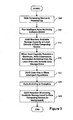
- FIG 3 is an operational flow diagram illustrating a method of performing intelligent automated archiving of data, from a data computing device into a data storage device, in accordance with an embodiment of the invention.
- a data computing device is powered up or booted up.
- the data computing device comprises one or more data storage drives which stores an intelligent auto-archiving software (IAAS).
- IAAS intelligent auto-archiving software
- the IAAS is loaded during the boot-up process such that the IAAS operates in the background transparently, without being noticed by a PC user. Automatic loading of the IAAS may be controlled and configured by a user such as an administrator.
- the IAAS monitors storage capacity provided by the one or more data storage drives (e.g.., a hard disk drive or any type of data storage drive).
- the IAAS may be configured to run as a background application of an operating system (e.g., MCE 2005).
- the IAAS may determine that the available storage has reached a critical point, such as a predetermined threshold level, and as such, may initiate automated archiving of data from a data storage drive of the data computing device into the one or more data storage drives of the data storage device (e.g., NAS).
- the predetermined threshold level may be adjusted or modified by an administrator or user.
- the threshold level may be programmed by the user.
- one or more intelligent algorithms are employed for determining what kind of data files are to be archived. Details of the one or more intelligent algorithms employed may be provided using the operational flow diagram referenced in Figure 4.
- the automated archiving process does not interrupt one or more applications that utilize (or require access) to the data to be archived. As a consequence, additional storage capacity resulting from deleting the data that is archived proceeds only after the one or more applications are terminated or have completed its task(s).
- the automated archiving process may comprise copying the data from the data computing device to the data storage device while the one or more applications are running. However, the data that is used by the one or more applications may not be deleted from the data computing device until the one or more applications are terminated (or completed).
- step 324 archiving is completed when the data storage drive reaches a particular level of available or unused data storage space.
- the data archiving procedure is completed, and at step 328, the IAAS resumes monitoring the unused or available data storage level in the data computing device's data storage drive.
- Automated data archiving may resume when the available data storage level reaches the predetermined threshold level.
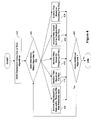
- FIG 4 is an operational flow diagram illustrating a method of employing one or more intelligent algorithms by way of using an intelligent auto-archiving software (IAAS), in accordance with an embodiment of the invention.
- Automated archiving of one or more files may be prioritized based on the one or more intelligent algorithms.
- the IAAS when executed by a data computing device, commences using one or more intelligent algorithms after it determines that a data computing device's data storage drive (i.e., local drive) has little or no available space.
- the IAAS initiates data archiving of one or more files using the one or more intelligent algorithms.
- the one or more files are archived into a data storage device or NAS, as previously mentioned.
- Use of the one or more intelligent algorithms may be determined by way of a user or administrator inputting one or more selections using a GUI, for example.
- the IAAS may determine which of the one or more intelligent algorithms will be used.
- the IAAS may select one or more of the one or more intelligent algorithms for use.
- the IAAS may determine that one or more data files may be archived based on date that the one or more files were last used, as shown in step 408. For example, the algorithm determines which of the one or more data files were "least recently used" (LRU).
- LRU least recently used
- the one or more data files selected may be based on a particular cutoff date that is provided by an administrator, for example.
- any of the one or more data files last used prior to the cutoff date is archived.
- one or more data files may be archived based on file size. Any file size that exceeds a particular threshold, for example, may be marked for archiving.
- the threshold may be configured by the administrator.
- the IAAS may first archive the largest files in the data computing device. This algorithm may be referred to as "big-file-goes-first" (BFGF).
- BFGF big-file-goes-first
- one or more data files may be archived based on frequency of use of a file. For example, a file that is used or accessed a certain number of times over a certain period of time, may be marked for archiving.
- the administrator may configure the number of times and the period of time, for example.
- the IAAS may determine that at step 420, one or more data files may be archived based on a file's date of creation, for example.
- the algorithm used may follow an "oldest-goes-first" (OGF) methodology, in which the file created earliest is archived first.
- OOGF oldest-goes-first
- a file created prior to a certain date may be marked for archiving. This date may be configured or determined by the administrator.
- the one or more dates, times, and thresholds may be input using a GUI that is provided when the IAAS is executed, for example.
- the IAAS may determine that data archiving is based on a comparison of the incoming file size to the existing files in the data computing device, as indicated at step 424.
- This type of data archiving algorithm may be termed a "larger-than-incoming-file" (LTIF) algorithm. For example, an incoming data file (or newly received data file) would be compared with all existing files. After the comparisons are made, the largest file would be automatically archived into the data storage device.
- the IAAS when executed, may determine if one or more algorithms may be further applied in determining the one or more data files to be archived. If an additional algorithm is capable of being applied, then the process may revert back to step 406.
- the IAAS may utilize the LRU algorithm and subsequently apply the LTIF algorithm.
- the least recently used data file would be initially selected; thereafter, the selected data file is compared against the incoming data file to determine which data file is archived. Otherwise, the process ends.
- aspects of the invention may incorporate one or more additional algorithms that are not shown in Figure 4, which may be used as a basis for archiving one or more data files, and as such, the scope of the present invention is not limited by the embodiments provided.
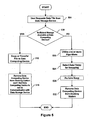
- FIG. 5 is an operational flow diagram illustrating a method of swapping a data file between a data computing device and a data storage device (or NAS), in accordance with an embodiment of the invention.
- Aspects of the invention provide a method to swap the data file prior to temporarily terminating data communications between the data computing device the data storage device. For example, a user may wish to swap one or more files prior to removing a notebook computer, from its docking station, prior to departing on a business trip.
- the docking station is used to communicatively couple the notebook computer or data computing device to the data storage device or NAS.
- the notebook computer and data storage device may communicate by way of a network, such as a local area network, for example.
- a user makes a request for a data file that is stored in the data storage device.
- the IAAS and/or the IAASDSD may be used to determine the amount of additional storage required at the data computing device, before the swapping may occur.
- the IAAS and/or the IAASDSD software assesses the size of the requested data file and the available storage within the data computing device. If, at step 508, there is sufficient storage available at the data computing device, the process continues with step 512.
- the requested file is copied or transferred over to the data computing device. Then the user disconnects or removes the data computing device from its docking station, at step 516, for example, such that any communication between the notebook computer and the data storage device is temporarily unavailable.
- the data computing device determines one or more appropriately sized files, by way of using one or more algorithms, such that a file swap may successfully occur.
- the one or more algorithms may comprise the one or more algorithms previously described in relation to Figure 4, for example. (i.e., LRU, BFGF, OGF, etc.)
- the one or more data files are selected for swapping by using the one or more algorithms.
- the data computing device (running the IAAS and/or IAASDSD) performs a swapping of the requested data file located in the data storage device with the selected data file(s) located in the data computing device.
- the data computing device is disconnected or removed from its docking station, such that the mobile user may depart on his business trip.
Landscapes
- Engineering & Computer Science (AREA)
- Theoretical Computer Science (AREA)
- Data Mining & Analysis (AREA)
- Databases & Information Systems (AREA)
- Physics & Mathematics (AREA)
- General Engineering & Computer Science (AREA)
- General Physics & Mathematics (AREA)
- Information Retrieval, Db Structures And Fs Structures Therefor (AREA)
Abstract
Description
- This application makes reference to and claims priority from
United States Provisional Patent Application Serial No. 60/670958 (Attorney Docket No. 16619US01), entitled "INTELLIGENT AUTO-ARCHIVING AND DATA RESTORATION" filed on April 12, 2005, the complete subject matter of which is incorporated herein by reference in its entirety. - This application is related to and/or makes reference to
United States Application Serial No. 11/049905 (Attorney Docket No. 1 5673US02) filed February 3, 2005, which is hereby incorporated herein by reference in its entirety. - This application is related to and/or makes reference to
United States Application Serial No. 11/049768 (Attorney Docket No. 1 5685US02) filed February 3, 2005, which is hereby incorporated herein by reference in its entirety. - [Not Applicable]
[MICROFICHE/COPYRIGHT REFERENCE] - [Not Applicable]
- When the storage capacity of a data computing device reaches a maximum, it becomes necessary to off-load data stored in a data storage device of the data computing device such that the data computing device operates effectively. If the data storage device reaches maximum capacity, it may not be able to provide adequate storage functionality for the data computing device. For example, a user of the data computing device may have difficulty loading and executing one or more applications when the data storage device reaches a maximum capacity. Unfortunately, the user may have to manually generate additional storage space in order to properly load and execute the one or more applications. Such manual intervention may be time consuming for the user.
- The limitations and disadvantages of conventional and traditional approaches will become apparent to one of skill in the art, through comparison of such systems with some aspects of the present invention as set forth in the remainder of the present application with reference to the drawings.
- Aspects of the invention allow a user to perform intelligent auto-archiving. Further aspects of the invention allow a user to perform data swapping between a data computing device and a data storage device. The various aspects are substantially shown and described in connection with at least one of the following figures, as set forth more completely in the claims.
According to an aspect of the invention, a method of automatically archiving one or more data files into a data storage device from a data computing device is provided comprising: - loading a software into said data computing device;
- executing said software, said software capable of performing said archiving;
- monitoring storage capacity of said data computing device;
- selecting said one or more data files for said archiving;
- copying said one or more data files from said data computing device to said data storage device; and
- deleting said one or more data files after said copying is successfully performed, said selecting, said copying, and said deleting performed when said storage capacity reaches a threshold level.
- loading a software into said data storage device;
- executing said software;
- monitoring storage capacity of said data storage device when said software is executed;
- alerting a user when said storage capacity reaches a threshold; and
- providing one or more options to said user to increase the available space in said data storage device.
- receiving a request for said archived data file from a user;
- assessing the amount of storage required in said data computing device for adequately receiving said archived data file; and
- utilizing one or more algorithms for selecting said one or more data files.
- a data storage device;
- a first software resident in said data computing device; and
- a first processor in said data computing device, said first processor capable of executing said first software, wherein said executing said first software provides one or more intelligent algorithms used for said automated archiving of said one or more data files, said one or more data files archived into said data storage device.
- a second software resident in said data storage device, said second software used to monitor available storage capacity of said data storage device, said second software capable of utilizing one or more algorithms to increase the available storage capacity in said data storage device; and
- a second processor used for executing said second software.
- These and other advantages, aspects, and novel features of the present invention, as well as details of illustrated embodiments, thereof, will be more fully understood from the following description and drawings.
- Figure 1 illustrates a block diagram of a typical system incorporating the use of a data storage device for performing intelligent auto-archiving, in accordance with an embodiment of the invention.
- Figure 2 is a block diagram of a data storage device that is used to store data that is archived from one or more data computing devices, in accordance with an embodiment of the invention.
- Figure 3 is an operational flow diagram illustrating a method of performing intelligent automated archiving of data, from a data computing device into a data storage device, in accordance with an embodiment of the invention.
- Figure 4 is an operational flow diagram illustrating a method of employing one or more intelligent algorithms by way of using an intelligent auto-archiving software (IAAS), in accordance with an embodiment of the invention.
- Figure 5 is an operational flow diagram illustrating a method of swapping a data file between a data computing device and a data storage device, in accordance with an embodiment of the invention.
- Various aspects of the invention provide at least a system and method of performing intelligent, automated data archiving of data from a data computing device. Data is archived into a data storage device when the available storage in the data computing device reaches a certain threshold, for example. Additionally, various aspects of the invention provide at least a system and method of performing data swapping of one or more data files between the data computing device and a data storage device. The data computing device may comprise a personal computer (PC) or server, for example. In a representative embodiment, the data computing device uses or runs Microsoft Media Center Edition 2005 (MCE 2005). When using MCE 2005, one or more functions related to performing the intelligent, automated data archiving or data swapping may be executed by way of using a controller such as an MCE 2005 infrared (IR) or radio frequency (RF) remote controller. Further, the data computing device may run other operating systems such as Microsoft Windows XP Professional, Microsoft Windows XP Home, Linux, and the like. When using the MCE 2005 operating system, the data computing device, operating as a media computing device, may execute one or more media applications. A media application may comprise performing one or more personal video recording (PVR) functions, for example. The data computing device may interface with a display or a media receiver. The media receiver may process the media for output into a display device or an audio receiver, for example. The data computing device may archive data into a data storage device as determined by one or more intelligent algorithms, in accordance with various aspects of the invention. The data computing device may comprise a set-top-box employing a personal video recorder (PVR), for example. The set-top-box with PVR may perform automated data archiving of multimedia content into the data storage device. The data storage device may comprise one or more data storage drives that may be used to store the data that is archived. The one or more data storage drives may comprise one or more hard disk drives, for example. In a representative embodiment, the data storage device is capable of storage expansion by way of accommodating one or more additional data storage drives. The data storage device may be communicatively coupled to one or more data computing devices, such that auto-archiving may be performed by the one or more data computing devices. The one or more data computing devices and the data storage device may reside within a network. A switching device, such as a router, may be used to route data packets between the one or more computing devices and the data storage device. Because it is connected to a data network, the aforementioned data storage device may be termed or alternatively referred to as a network attached storage device (NAS). The data storage device may act as a central depository for any data that is archived by the one or more data computing devices. The one or more data computing devices may store and execute one or more intelligent algorithms for performing the intelligent auto-archiving. The one or more intelligent algorithms may be used to determine when auto-archiving may occur. The one or more intelligent algorithms may monitor one or more factors or conditions prior to initiating data archiving.
- Various aspects of the invention allow a data computing device to perform a swapping of one or more previously archived data files (i.e., the archived data files reside in a data storage device, such as a NAS). This type of "data swapping" may occur when the capacity of the local drive in the data computing device cannot accommodate a requested data file, for example. One or more appropriately sized file(s) may be selected from the data computing device, for swapping with the requested data file, such that the requested data file may be successfully retrieved. For example, a user may wish to obtain a 10 Gbyte data file from the data storage device. If the data computing device has only 4 Gbyte of storage available, the data computing device may select a data file that exceeds 6 Gbyte in size, such as a 7 Gbyte data file, for example. The "data swapping" may be performed using one or more algorithms. For example, the one or more algorithms may comprise a "big-file-goes-first" (BFGF) algorithm, in which, the file swapped or transferred to the data storage device is the largest of the data files currently stored in the data computing device. The one or more algorithms may comprise a "least recently used" algorithm, in which, the data file that is least recently used is selected for swapping with the requested 10 Gbyte file, for example. If the data file chosen is not sufficiently large enough to accommodate a swap, one or more additional data files may be used to facilitate the swap. A "data swapping" algorithm chosen may be based on a user's preferences. The user may preset or preprogram the preferences using a user interface. The one or more algorithms may operate transparently in the background of an operating system while one or more applications are executed. The user may utilize a graphical user interface that allows him to "point and click", using a mouse, for example, in order to perform such "data swapping".
- Figure 1 illustrates a block diagram of a typical system incorporating the use of a data storage device 100 (i.e., a NAS), for performing intelligent auto-archiving, in accordance with an embodiment of the invention. The
data storage device 100 provides data storage for auto-archiving, of one or more data computing devices. As illustrated, an exemplary switching device provides connectivity of thedata storage device 100 to the one or more data computing devices. The switching device, such as a wireless router, may be capable of providing connectivity when performing data archiving, by way of using wireless or wireline communications. For example, the switching device may utilize any one of the following wireless or wireline data communications protocols: 10/100 Ethernet, gigabit Ethernet, 802.11x, Bluetooth, and the like. As illustrated, the one or more data computing devices may comprise one or more personal computers (PC)s or media computing devices, for example. The media computing devices, as illustrated, are connected to a television or a monitor capable of playing multimedia content. Thedata storage device 100 may provide a centralized facility for archiving data from the one or more data computing devices. Intelligent automated data archiving, and/or "data swapping", as discussed, may be implemented by way of running or executing an intelligent auto-archiving software (IAAS). The IAAS may be stored in memory or storage of the one or more data computing devices. For example, IAAS may be stored in a local hard disk drive of each of the one or more data computing devices. For example, IAAS may be stored in a memory of each of the one or more data computing devices. The memory may comprise a nonvolatile memory, such as a flash memory, for example. The aforementioned one or more intelligent algorithms may be implemented by way of using the IAAS resident in each of the one or more data computing devices. The IAAS may be loaded when each of the one or more data computing devices is booted up, for example. A processor resident within a data computing device may be used to execute the IAAS when each of the one or more data computing devices is booted up, for example. The IAAS may comprise a software program such as an applet that is executed in a Microsoft Windows operating system. The applet may be automatically loaded at boot time or invoked by way of a user inputting one or more commands by way of a graphical user interface. - Figure 2 is a block diagram of a data storage device 200 (i.e., a NAS) that is used to store data that is archived from one or more data computing devices, in accordance with an embodiment of the invention. As illustrated, the data storage device may comprise a
processing engine 204 that utilizes aprocessor 240, arandom access memory 208, aflash memory 212, an AC power interface 216, apower supply 220, one or more interfaces 224, a wireless transceiver /antenna module 228, and one or more data storage drives (such as one or more hard disk drives) 232. The one or more interfaces 224 may comprise, for example, the following interfaces: IEEE 1394, USB, 10/100 Ethernet, gigabit Ethernet, PCI, SATA, ATA, IDE, SCSI, GPIO, etc.. The wireless transceiver /antenna module 228 may comprise an attachable module or mini-PCI card that may be optionally connected or attached to thedata storage device 200. The wireless transceiver/antennae module 228 may provide wireless communication between thedata storage device 200 and the one or more data computing devices. The AC power interface 216 andpower supply 220 may be used for providing power to thedata storage device 200. The one or more data storage drives 232 may comprise any number of hard drives depending on the data storage requirements of the one or more data computing devices in the network. Therandom access memory 208 andflash memory 212 may be used for storing and executing one or more software. Theprocessor 240 may be used for executing the one or more software resident in theflash memory 212, for example. - In accordance with one or more aspects of the present invention, the
data storage device 200 may execute a software (or firmware) resident in theflash memory 212, or in the one or more data storage drives 232. The software resident in theflash memory 212 may be used in conjunction with the previously mentioned IAAS. The software resident in theflash memory 212 may be referred to as a data storage version of the (IAAS). The data storage version of the IAAS may be termed or referred to as an IAASDSD (intelligent auto-archiving software in a data storage device). The execution may be controlled and monitored by way of a data computing device, such as a personal computer (PC) that is communicatively coupled to thedata storage device 200. The IAASDSD may be installed separately or downloaded into theflash memory 212 by way of control provided by, for example, the PC or another data computing device. In a representative embodiment, theprocessor 240 is implemented within theprocessing engine 204. Theprocessing engine 204 may perform one or more other digital signal processing functions. The IAASDSD may comprise a software program such as a daemon, in an exemplary Linux operating system. The daemon may be invoked when the data storage device boots or when the IAAS on one or more data computing devices is executed, for example. - In accordance with various aspects of the invention, the IAASDSD may be used for intelligently monitoring the available storage capacity within the data storage device or NAS. If for example, the NAS is near full or maximum storage capacity (i.e., there is little unused space available), the IAASDSD may alert a user by way of communicating to a user's data computing device or PC. In a representative embodiment, one or more graphical user interfaces may be provided to the user, such that one or more options may be input and selected by the user. A first option may comprise deleting files in the NAS based on the creation date of the file, for example. A second option may comprise deleting files stored in the NAS based on when a file was last used by a user, for example. A third option may comprise deleting files based on how frequent a file is used, for example. For example, the third option may invoke an algorithm that assesses the number of times a file is accessed over a period of time. A fourth option, if permitted, may comprise expanding the current storage capacity of the data storage device by way of adding one or more data storage drives. The fourth option, for example, may utilize any one of the disk drive upgrade methods described in
United States Application Serial No. 11/049768 (Attorney Docket No. 15685US02) filed February 3, 2005. The IAASDSD may determine that one or more data storage drive interfaces are available for use when the fourth option is presented. A fifth option may comprise deleting one or more data files stored in the NAS based on size of each of the one or more data files. It is contemplated that one or more other options that are based on one or more factors and other criteria may be considered when the IAASDSD is run. The IAASDSD located in a data storage device may run in cooperation with an IAAS located in one or more data computing devices. Executing the IAASDSD in conjunction with the IAAS may provide a method of mapping an archived data file, such that retrieval of an an archived data file is performed transparently. For example, any application that is being executed may efficiently access any necessary data files that have been previously archived. The IAASDSD and IAAS may function cooperatively to facilitate the archiving of any data file into the data storage device. Furthermore, the IAASDSD and IAAS may be executed to facilitate "data swapping" of one or more data files between a data computing device and a data storage device (e.g., NAS). A simplified graphical user interface (GUI) may be presented to a user, such that a filename may be the only item that a user is required to input into the GUI when automatic archiving is performed. Further, a shortcut or localized pointer may be automatically created for one or more software applications that rely on an archived data file. As a consequence, the localized pointer may redirect an application that relies on using the archived data file, to the archived location in the data storage device. Hence, one or more applications may be subsequently operated seamlessly, requiring little, if any, user intervention. - Figure 3 is an operational flow diagram illustrating a method of performing intelligent automated archiving of data, from a data computing device into a data storage device, in accordance with an embodiment of the invention. At
step 304, a data computing device is powered up or booted up. The data computing device comprises one or more data storage drives which stores an intelligent auto-archiving software (IAAS). Atstep 308, the IAAS is loaded during the boot-up process such that the IAAS operates in the background transparently, without being noticed by a PC user. Automatic loading of the IAAS may be controlled and configured by a user such as an administrator. Atstep 312, the IAAS monitors storage capacity provided by the one or more data storage drives (e.g.., a hard disk drive or any type of data storage drive). The IAAS may be configured to run as a background application of an operating system (e.g., MCE 2005). Next, atstep 316, the IAAS may determine that the available storage has reached a critical point, such as a predetermined threshold level, and as such, may initiate automated archiving of data from a data storage drive of the data computing device into the one or more data storage drives of the data storage device (e.g., NAS). The predetermined threshold level may be adjusted or modified by an administrator or user. The threshold level may be programmed by the user. Atstep 320, one or more intelligent algorithms are employed for determining what kind of data files are to be archived. Details of the one or more intelligent algorithms employed may be provided using the operational flow diagram referenced in Figure 4. Thereafter, the automated archiving proceeds and the available data storage drive space is increased in the data computing device, as a result. In a representative embodiment, the automated archiving process does not interrupt one or more applications that utilize (or require access) to the data to be archived. As a consequence, additional storage capacity resulting from deleting the data that is archived proceeds only after the one or more applications are terminated or have completed its task(s). In a representative embodiment, the automated archiving process may comprise copying the data from the data computing device to the data storage device while the one or more applications are running. However, the data that is used by the one or more applications may not be deleted from the data computing device until the one or more applications are terminated (or completed). Next, atstep 324, archiving is completed when the data storage drive reaches a particular level of available or unused data storage space. When this occurs, the data archiving procedure is completed, and atstep 328, the IAAS resumes monitoring the unused or available data storage level in the data computing device's data storage drive. Automated data archiving may resume when the available data storage level reaches the predetermined threshold level. - Figure 4 is an operational flow diagram illustrating a method of employing one or more intelligent algorithms by way of using an intelligent auto-archiving software (IAAS), in accordance with an embodiment of the invention. Automated archiving of one or more files may be prioritized based on the one or more intelligent algorithms. At
step 404, the IAAS, when executed by a data computing device, commences using one or more intelligent algorithms after it determines that a data computing device's data storage drive (i.e., local drive) has little or no available space. As a consequence, the IAAS initiates data archiving of one or more files using the one or more intelligent algorithms. The one or more files are archived into a data storage device or NAS, as previously mentioned. Use of the one or more intelligent algorithms may be determined by way of a user or administrator inputting one or more selections using a GUI, for example. Atstep 406, the IAAS may determine which of the one or more intelligent algorithms will be used. The IAAS may select one or more of the one or more intelligent algorithms for use. The IAAS may determine that one or more data files may be archived based on date that the one or more files were last used, as shown instep 408. For example, the algorithm determines which of the one or more data files were "least recently used" (LRU). In a representative embodiment, the one or more data files selected may be based on a particular cutoff date that is provided by an administrator, for example. For example, any of the one or more data files last used prior to the cutoff date, is archived. As illustrated atstep 412, one or more data files may be archived based on file size. Any file size that exceeds a particular threshold, for example, may be marked for archiving. The threshold may be configured by the administrator. In a representative embodiment, the IAAS may first archive the largest files in the data computing device. This algorithm may be referred to as "big-file-goes-first" (BFGF). As shown atstep 416, one or more data files may be archived based on frequency of use of a file. For example, a file that is used or accessed a certain number of times over a certain period of time, may be marked for archiving. The administrator may configure the number of times and the period of time, for example. The IAAS may determine that atstep 420, one or more data files may be archived based on a file's date of creation, for example. For example, the algorithm used may follow an "oldest-goes-first" (OGF) methodology, in which the file created earliest is archived first. In another instance, a file created prior to a certain date may be marked for archiving. This date may be configured or determined by the administrator. The one or more dates, times, and thresholds, may be input using a GUI that is provided when the IAAS is executed, for example. The IAAS may determine that data archiving is based on a comparison of the incoming file size to the existing files in the data computing device, as indicated atstep 424. This type of data archiving algorithm may be termed a "larger-than-incoming-file" (LTIF) algorithm. For example, an incoming data file (or newly received data file) would be compared with all existing files. After the comparisons are made, the largest file would be automatically archived into the data storage device. Next, atstep 428, the IAAS, when executed, may determine if one or more algorithms may be further applied in determining the one or more data files to be archived. If an additional algorithm is capable of being applied, then the process may revert back tostep 406. For example, the IAAS may utilize the LRU algorithm and subsequently apply the LTIF algorithm. In this instance, the least recently used data file would be initially selected; thereafter, the selected data file is compared against the incoming data file to determine which data file is archived. Otherwise, the process ends. Aspects of the invention may incorporate one or more additional algorithms that are not shown in Figure 4, which may be used as a basis for archiving one or more data files, and as such, the scope of the present invention is not limited by the embodiments provided. - Figure 5 is an operational flow diagram illustrating a method of swapping a data file between a data computing device and a data storage device (or NAS), in accordance with an embodiment of the invention. Aspects of the invention provide a method to swap the data file prior to temporarily terminating data communications between the data computing device the data storage device. For example, a user may wish to swap one or more files prior to removing a notebook computer, from its docking station, prior to departing on a business trip. In this instance, the docking station is used to communicatively couple the notebook computer or data computing device to the data storage device or NAS. The notebook computer and data storage device may communicate by way of a network, such as a local area network, for example. At
step 504, a user makes a request for a data file that is stored in the data storage device. The IAAS and/or the IAASDSD may be used to determine the amount of additional storage required at the data computing device, before the swapping may occur. Next, atstep 508, the IAAS and/or the IAASDSD software assesses the size of the requested data file and the available storage within the data computing device. If, atstep 508, there is sufficient storage available at the data computing device, the process continues withstep 512. Atstep 512, the requested file is copied or transferred over to the data computing device. Then the user disconnects or removes the data computing device from its docking station, atstep 516, for example, such that any communication between the notebook computer and the data storage device is temporarily unavailable. Otherwise, atstep 520, the data computing device, determines one or more appropriately sized files, by way of using one or more algorithms, such that a file swap may successfully occur. The one or more algorithms may comprise the one or more algorithms previously described in relation to Figure 4, for example. (i.e., LRU, BFGF, OGF, etc.) Atstep 524, the one or more data files are selected for swapping by using the one or more algorithms. Then, atstep 528, the data computing device (running the IAAS and/or IAASDSD) performs a swapping of the requested data file located in the data storage device with the selected data file(s) located in the data computing device. Thereafter, atstep 532, the data computing device is disconnected or removed from its docking station, such that the mobile user may depart on his business trip. - While the invention has been described with reference to certain embodiments, it will be understood by those skilled in the art that various changes may be made and equivalents may be substituted without departing from the scope of the invention. In addition, many modifications may be made to adapt a particular situation or material to the teachings of the invention without departing from its scope. Therefore, it is intended that the invention not be limited to the particular embodiment disclosed, but that the invention will include all embodiments falling within the scope of the appended claims.
Advantageously, a localized pointer in said data computing device is used to redirect access to said one or more data files in said data storage device after said archiving is performed.
Advantageously, selecting said one or more data files compares the date in which each of said one or more data files were last used, to prioritize said archiving.
Advantageously, selecting said one or more data files compares the size of each of said one or more data files to prioritize said archiving.
Advantageously, selecting said one or more data files compares the frequency of use of each of said one or more data files to prioritize said archiving.
Advantageously, selecting said one or more data files compares the creation date of each of said one or more data files to prioritize said archiving.
According to an aspect of the invention, a method of intelligently monitoring the available storage capacity of a networked data storage device is provided comprising:
Advantageously, said one or more options comprises deleting one or more data files of said data storage device based on when each of said one or more data files was last used.
Advantageously, said one or more options comprises deleting one or more data files of said data storage device based on frequency of use of each of said one or more data files.
Advantageously, said one or more options comprises expanding said storage capacity by way of adding one or more data storage drives.
Advantageously, said one or more options comprises deleting one or more data files of said data storage device based on data file size of each of said one or more data files.
According to an aspect of the invention, a method of swapping one or more data files stored in a data computing device with an archived data file stored in a data storage device is provided, said method comprising:
Advantageously, said one or more algorithms comprises comparing the sizes of said one or more data files.
Advantageously, said one or more algorithms comprises comparing the creation dates of said one or more data files.
Advantageously, said one or more algorithms comprises comparing the frequency of use of each of said one or more data files.
According to an aspect of the invention, a system for providing automated archiving of one or more data files stored in a data computing device is provided comprising:
Advantageously, said one or more intelligent algorithms comprises utilizing the size of each of said one or more data files.
Advantageously, said one or more intelligent algorithms comprises comparing an incoming data file destined for storage in said data computing device with one or more existing data files stored in said data computing device.
Advantageously, said one or more intelligent algorithms comprises utilizing the frequency of use of each of said one or more data files.
Advantageously, said one or more intelligent algorithms comprises utilizing the creation date of each of said one or more data files.
Advantageously, the system further comprises:
Advantageously, said data computing device utilizes an operating system.
Advantageously, said operating system comprises a Microsoft operating system.
Advantageously, said Microsoft operating system comprises Microsoft Media Center Edition 2005.
Advantageously, said operating system comprises a Linux operating system.
Claims (10)
- A method of automatically archiving one or more data files into a data storage device from a data computing device comprising:loading a software into said data computing device;executing said software, said software capable of performing said archiving;monitoring storage capacity of said data computing device;selecting said one or more data files for said archiving;copying said one or more data files from said data computing device to said data storage device; anddeleting said one or more data files after said copying is successfully performed, said selecting, said copying, and said deleting performed when said storage capacity reaches a threshold level.
- The method of Claim 1 wherein said deleting is performed after one or more applications using said one or more data files are terminated or completed.
- The method of Claim 1 wherein a localized pointer in said data computing device is used to redirect access to said one or more data files in said data storage device after said archiving is performed.
- A method of intelligently monitoring the available storage capacity of a networked data storage device comprising:loading a software into said data storage device;executing said software;monitoring storage capacity of said data storage device when said software is executed;alerting a user when said storage capacity reaches a threshold; andproviding one or more options to said user to increase the available space in said data storage device.
- The method of Claim 4 wherein said one or more options comprises deleting one or more data files of said data storage device based on creation date of each of said one or more data files.
- A method of swapping one or more data files stored in a data computing device with an archived data file stored in a data storage device, said method comprising:receiving a request for said archived data file from a user;assessing the amount of storage required in said data computing device for adequately receiving said archived data file; andutilizing one or more algorithms for selecting said one or more data files.
- The method of Claim 6 wherein said one or more algorithms comprises comparing the dates when each of said one or more data files were last used.
- A system for providing automated archiving of one or more data files stored in a data computing device comprising:a data storage device;a first software resident in said data computing device; anda first processor in said data computing device, said first processor capable of executing said first software, wherein said executing said first software provides one or more intelligent algorithms used for said automated archiving of said one or more data files, said one or more data files archived into said data storage device.
- The system of Claim 8 wherein said one or more intelligent algorithms comprises utilizing the date when each of said one or more data files were last used.
- The system of Claim 8 wherein said one or more intelligent algorithms comprises utilizing the size of each of said one or more data files.
Applications Claiming Priority (2)
| Application Number | Priority Date | Filing Date | Title |
|---|---|---|---|
| US67095805P | 2005-04-12 | 2005-04-12 | |
| US11/173,114 US20060230136A1 (en) | 2005-04-12 | 2005-06-30 | Intelligent auto-archiving |
Publications (3)
| Publication Number | Publication Date |
|---|---|
| EP1712990A2 true EP1712990A2 (en) | 2006-10-18 |
| EP1712990A3 EP1712990A3 (en) | 2010-03-03 |
| EP1712990B1 EP1712990B1 (en) | 2011-09-14 |
Family
ID=36968474
Family Applications (1)
| Application Number | Title | Priority Date | Filing Date |
|---|---|---|---|
| EP06001247A Expired - Lifetime EP1712990B1 (en) | 2005-04-12 | 2006-01-20 | Intelligent auto-archiving |
Country Status (3)
| Country | Link |
|---|---|
| US (1) | US20060230136A1 (en) |
| EP (1) | EP1712990B1 (en) |
| TW (1) | TWI346869B (en) |
Cited By (3)
| Publication number | Priority date | Publication date | Assignee | Title |
|---|---|---|---|---|
| WO2010076140A1 (en) * | 2008-12-30 | 2010-07-08 | International Business Machines Corporation | Managing data across a plurality of data storage devices based upon collaboration relevance |
| EP2372569A1 (en) | 2010-03-22 | 2011-10-05 | Research In Motion Limited | Method, system and apparatus for archiving data |
| US8489557B2 (en) | 2010-03-22 | 2013-07-16 | Research In Motion Limited | Method, system and apparatus for archiving data |
Families Citing this family (44)
| Publication number | Priority date | Publication date | Assignee | Title |
|---|---|---|---|---|
| US8856241B1 (en) | 2007-03-30 | 2014-10-07 | Emc Corporation | Management of email archive server requests |
| US8930464B1 (en) * | 2007-03-30 | 2015-01-06 | Emc Corporation | Email content pre-caching to a local archive store |
| US8140474B2 (en) * | 2007-09-13 | 2012-03-20 | Intel Corporation | Aggregation of file/directory structures |
| US8307177B2 (en) | 2008-09-05 | 2012-11-06 | Commvault Systems, Inc. | Systems and methods for management of virtualization data |
| US8943498B2 (en) * | 2009-05-31 | 2015-01-27 | Red Hat Israel, Ltd. | Method and apparatus for swapping virtual machine memory |
| WO2010144300A2 (en) * | 2009-06-11 | 2010-12-16 | Backa Bruce R | System and method for end-user archiving |
| US20110022986A1 (en) * | 2009-07-23 | 2011-01-27 | Research In Motion Limited | Method and device for application archiving |
| US8365020B2 (en) | 2010-03-18 | 2013-01-29 | Red Hat Israel, Ltd. | Mechanism for saving crash dump files of a virtual machine on a designated disk |
| US11449394B2 (en) | 2010-06-04 | 2022-09-20 | Commvault Systems, Inc. | Failover systems and methods for performing backup operations, including heterogeneous indexing and load balancing of backup and indexing resources |
| US8667478B1 (en) * | 2010-09-17 | 2014-03-04 | Emc Corporation | Backward-compatibility using a plugin architecture |
| US9223597B2 (en) | 2012-12-21 | 2015-12-29 | Commvault Systems, Inc. | Archiving virtual machines in a data storage system |
| US9740702B2 (en) | 2012-12-21 | 2017-08-22 | Commvault Systems, Inc. | Systems and methods to identify unprotected virtual machines |
| US9190017B2 (en) | 2013-01-02 | 2015-11-17 | International Business Machines Corporation | Proportional pointer transition between multiple display devices |
| US20140196039A1 (en) | 2013-01-08 | 2014-07-10 | Commvault Systems, Inc. | Virtual machine categorization system and method |
| US9495404B2 (en) | 2013-01-11 | 2016-11-15 | Commvault Systems, Inc. | Systems and methods to process block-level backup for selective file restoration for virtual machines |
| US9286110B2 (en) | 2013-01-14 | 2016-03-15 | Commvault Systems, Inc. | Seamless virtual machine recall in a data storage system |
| US20150074536A1 (en) | 2013-09-12 | 2015-03-12 | Commvault Systems, Inc. | File manager integration with virtualization in an information management system, including user control and storage management of virtual machines |
| TWI502335B (en) * | 2013-12-06 | 2015-10-01 | Inventec Corp | Auto node deployment method and server system therefor |
| US9563518B2 (en) | 2014-04-02 | 2017-02-07 | Commvault Systems, Inc. | Information management by a media agent in the absence of communications with a storage manager |
| US20160019317A1 (en) | 2014-07-16 | 2016-01-21 | Commvault Systems, Inc. | Volume or virtual machine level backup and generating placeholders for virtual machine files |
| US9417968B2 (en) | 2014-09-22 | 2016-08-16 | Commvault Systems, Inc. | Efficiently restoring execution of a backed up virtual machine based on coordination with virtual-machine-file-relocation operations |
| US9710465B2 (en) | 2014-09-22 | 2017-07-18 | Commvault Systems, Inc. | Efficiently restoring execution of a backed up virtual machine based on coordination with virtual-machine-file-relocation operations |
| US9436555B2 (en) | 2014-09-22 | 2016-09-06 | Commvault Systems, Inc. | Efficient live-mount of a backed up virtual machine in a storage management system |
| US10776209B2 (en) | 2014-11-10 | 2020-09-15 | Commvault Systems, Inc. | Cross-platform virtual machine backup and replication |
| US9983936B2 (en) | 2014-11-20 | 2018-05-29 | Commvault Systems, Inc. | Virtual machine change block tracking |
| US10565067B2 (en) | 2016-03-09 | 2020-02-18 | Commvault Systems, Inc. | Virtual server cloud file system for virtual machine backup from cloud operations |
| US10474548B2 (en) | 2016-09-30 | 2019-11-12 | Commvault Systems, Inc. | Heartbeat monitoring of virtual machines for initiating failover operations in a data storage management system, using ping monitoring of target virtual machines |
| US10152251B2 (en) | 2016-10-25 | 2018-12-11 | Commvault Systems, Inc. | Targeted backup of virtual machine |
| US10162528B2 (en) | 2016-10-25 | 2018-12-25 | Commvault Systems, Inc. | Targeted snapshot based on virtual machine location |
| US10678758B2 (en) | 2016-11-21 | 2020-06-09 | Commvault Systems, Inc. | Cross-platform virtual machine data and memory backup and replication |
| US10896100B2 (en) | 2017-03-24 | 2021-01-19 | Commvault Systems, Inc. | Buffered virtual machine replication |
| US10387073B2 (en) | 2017-03-29 | 2019-08-20 | Commvault Systems, Inc. | External dynamic virtual machine synchronization |
| US10877928B2 (en) | 2018-03-07 | 2020-12-29 | Commvault Systems, Inc. | Using utilities injected into cloud-based virtual machines for speeding up virtual machine backup operations |
| US11200124B2 (en) | 2018-12-06 | 2021-12-14 | Commvault Systems, Inc. | Assigning backup resources based on failover of partnered data storage servers in a data storage management system |
| US10996974B2 (en) | 2019-01-30 | 2021-05-04 | Commvault Systems, Inc. | Cross-hypervisor live mount of backed up virtual machine data, including management of cache storage for virtual machine data |
| US10768971B2 (en) | 2019-01-30 | 2020-09-08 | Commvault Systems, Inc. | Cross-hypervisor live mount of backed up virtual machine data |
| US11467753B2 (en) | 2020-02-14 | 2022-10-11 | Commvault Systems, Inc. | On-demand restore of virtual machine data |
| US11442768B2 (en) | 2020-03-12 | 2022-09-13 | Commvault Systems, Inc. | Cross-hypervisor live recovery of virtual machines |
| US11099956B1 (en) | 2020-03-26 | 2021-08-24 | Commvault Systems, Inc. | Snapshot-based disaster recovery orchestration of virtual machine failover and failback operations |
| US11748143B2 (en) | 2020-05-15 | 2023-09-05 | Commvault Systems, Inc. | Live mount of virtual machines in a public cloud computing environment |
| CN113242310B (en) * | 2020-06-30 | 2024-04-12 | 浙江口碑网络技术有限公司 | Method and device for realizing service based on applet |
| US11656951B2 (en) | 2020-10-28 | 2023-05-23 | Commvault Systems, Inc. | Data loss vulnerability detection |
| US11809861B2 (en) * | 2021-06-09 | 2023-11-07 | Red Hat, Inc. | Development environment organizer with enhanced state switching and sharing |
| US12360942B2 (en) | 2023-01-19 | 2025-07-15 | Commvault Systems, Inc. | Selection of a simulated archiving plan for a desired dataset |
Family Cites Families (63)
| Publication number | Priority date | Publication date | Assignee | Title |
|---|---|---|---|---|
| US244426A (en) * | 1881-06-04 | 1881-07-19 | Alexander Graham Bell | Telephone-circuit |
| US5155835A (en) * | 1990-11-19 | 1992-10-13 | Storage Technology Corporation | Multilevel, hierarchical, dynamically mapped data storage subsystem |
| US5640595A (en) * | 1993-06-29 | 1997-06-17 | International Business Machines Corporation | Multimedia resource reservation system with graphical interface for manual input of resource reservation value |
| US5537585A (en) * | 1994-02-25 | 1996-07-16 | Avail Systems Corporation | Data storage management for network interconnected processors |
| US5615352A (en) * | 1994-10-05 | 1997-03-25 | Hewlett-Packard Company | Methods for adding storage disks to a hierarchic disk array while maintaining data availability |
| US5625811A (en) * | 1994-10-31 | 1997-04-29 | International Business Machines Corporation | Method and system for database load balancing |
| JPH08314794A (en) * | 1995-02-28 | 1996-11-29 | Matsushita Electric Ind Co Ltd | Method and system for reducing latency of access to stable storage |
| US5604862A (en) * | 1995-03-14 | 1997-02-18 | Network Integrity, Inc. | Continuously-snapshotted protection of computer files |
| US5564037A (en) * | 1995-03-29 | 1996-10-08 | Cheyenne Software International Sales Corp. | Real time data migration system and method employing sparse files |
| US5790794A (en) * | 1995-08-11 | 1998-08-04 | Symbios, Inc. | Video storage unit architecture |
| US5742818A (en) * | 1995-12-15 | 1998-04-21 | Microsoft Corporation | Method and system of converting data from a source file system to a target file system |
| US5790548A (en) * | 1996-04-18 | 1998-08-04 | Bell Atlantic Network Services, Inc. | Universal access multimedia data network |
| US5956400A (en) * | 1996-07-19 | 1999-09-21 | Digicash Incorporated | Partitioned information storage systems with controlled retrieval |
| US6578077B1 (en) * | 1997-05-27 | 2003-06-10 | Novell, Inc. | Traffic monitoring tool for bandwidth management |
| US6006264A (en) * | 1997-08-01 | 1999-12-21 | Arrowpoint Communications, Inc. | Method and system for directing a flow between a client and a server |
| US6505281B1 (en) * | 1998-06-02 | 2003-01-07 | Raymond C. Sherry | Hard disk drives employing high speed distribution bus |
| US6584509B2 (en) * | 1998-06-23 | 2003-06-24 | Intel Corporation | Recognizing audio and video streams over PPP links in the absence of an announcement protocol |
| US6005476A (en) * | 1998-07-24 | 1999-12-21 | Valiulis; Carl | Electronic identification, control, and security system for consumer electronics and the like |
| US6405284B1 (en) * | 1998-10-23 | 2002-06-11 | Oracle Corporation | Distributing data across multiple data storage devices in a data storage system |
| US6850965B2 (en) * | 1998-11-17 | 2005-02-01 | Arthur Douglas Allen | Method for connection acceptance and rapid determination of optimal multi-media content delivery over network |
| US6487170B1 (en) * | 1998-11-18 | 2002-11-26 | Nortel Networks Limited | Providing admission control and network quality of service with a distributed bandwidth broker |
| US6647415B1 (en) * | 1999-09-30 | 2003-11-11 | Hewlett-Packard Development Company, L.P. | Disk storage with transparent overflow to network storage |
| US7010701B1 (en) * | 1999-10-19 | 2006-03-07 | Sbc Properties, L.P. | Network arrangement for smart card applications |
| US6959235B1 (en) * | 1999-10-28 | 2005-10-25 | General Electric Company | Diagnosis and repair system and method |
| GB2356104B (en) * | 1999-11-04 | 2001-10-10 | 3Com Corp | Network switch including bandwidth controller |
| AU2001239780A1 (en) * | 2000-02-17 | 2001-08-27 | Minds@Work | Video content distribution system including an interactive kiosk, a portable content storage device, and a set-top box |
| US20020174227A1 (en) * | 2000-03-03 | 2002-11-21 | Hartsell Neal D. | Systems and methods for prioritization in information management environments |
| US6931657B1 (en) * | 2000-04-21 | 2005-08-16 | Microsoft Corporation | Methods and arrangements for providing a novel television and multimedia viewing paradigm |
| US6598174B1 (en) * | 2000-04-26 | 2003-07-22 | Dell Products L.P. | Method and apparatus for storage unit replacement in non-redundant array |
| US20010056434A1 (en) * | 2000-04-27 | 2001-12-27 | Smartdisk Corporation | Systems, methods and computer program products for managing multimedia content |
| US20020032903A1 (en) * | 2000-05-26 | 2002-03-14 | Sprunk Eric J. | Authorization using ciphertext tokens |
| US6721880B1 (en) * | 2000-05-31 | 2004-04-13 | Lucent Technologies Inc. | Method and apparatus for maintaining configuration information in a computing environment |
| US20020120697A1 (en) * | 2000-08-14 | 2002-08-29 | Curtis Generous | Multi-channel messaging system and method |
| SE0004476L (en) * | 2000-12-05 | 2002-06-06 | Creative Media Design At Integ | Device and system |
| US20020156973A1 (en) * | 2001-01-29 | 2002-10-24 | Ulrich Thomas R. | Enhanced disk array |
| US20020157113A1 (en) * | 2001-04-20 | 2002-10-24 | Fred Allegrezza | System and method for retrieving and storing multimedia data |
| US6963762B2 (en) * | 2001-05-23 | 2005-11-08 | Nokia Corporation | Mobile phone using tactile icons |
| WO2003001356A1 (en) * | 2001-06-25 | 2003-01-03 | Loudfire, Inc. | Method and apparatus for providing remote access of personal data |
| US20030004947A1 (en) * | 2001-06-28 | 2003-01-02 | Sun Microsystems, Inc. | Method, system, and program for managing files in a file system |
| US7019928B2 (en) * | 2001-07-06 | 2006-03-28 | Intel Corporation | Multi-ported mass storage device |
| US6640291B2 (en) * | 2001-08-10 | 2003-10-28 | Hitachi, Ltd. | Apparatus and method for online data migration with remote copy |
| US7509316B2 (en) * | 2001-08-31 | 2009-03-24 | Rocket Software, Inc. | Techniques for performing policy automated operations |
| US6976134B1 (en) * | 2001-09-28 | 2005-12-13 | Emc Corporation | Pooling and provisioning storage resources in a storage network |
| US7171624B2 (en) * | 2001-10-05 | 2007-01-30 | International Business Machines Corporation | User interface architecture for storage area network |
| KR100735693B1 (en) * | 2001-11-06 | 2007-07-06 | 엘지전자 주식회사 | Broadcast receiver and system and method for sharing video contents |
| US20030110190A1 (en) * | 2001-12-10 | 2003-06-12 | Hitachi, Ltd. | Method and system for file space management |
| US20030117500A1 (en) * | 2001-12-24 | 2003-06-26 | Icp Electronics Inc. | Network video recording system |
| US7073189B2 (en) * | 2002-05-03 | 2006-07-04 | Time Warner Interactive Video Group, Inc. | Program guide and reservation system for network based digital information and entertainment storage and delivery system |
| US7117294B1 (en) * | 2002-05-28 | 2006-10-03 | Oracle International Corporation | Method and system for archiving and compacting data in a data storage array |
| JP2003347677A (en) * | 2002-05-29 | 2003-12-05 | Sony Corp | Semiconductor laser device |
| US20040044749A1 (en) * | 2002-08-30 | 2004-03-04 | Harkin Arthur S. | Method and system for controlling class of service admission to a server |
| US7039712B2 (en) * | 2002-10-16 | 2006-05-02 | Microsoft Corporation | Network connection setup procedure for traffic admission control and implicit network bandwidth reservation |
| US20040117836A1 (en) * | 2002-12-11 | 2004-06-17 | Jeyhan Karaoguz | Method and system for network storage in a media exchange network |
| GB2414320B (en) * | 2003-02-24 | 2007-08-22 | Listen Com | Media service delivery system providing conditional access to media content from various client devices |
| US20040193824A1 (en) * | 2003-03-24 | 2004-09-30 | Johnson Steven C. | Expandable capacity storage device |
| US7053965B1 (en) * | 2003-06-10 | 2006-05-30 | Fan Nong-Qiang | Remote control for controlling a computer using a screen of a television |
| US20040258390A1 (en) * | 2003-06-20 | 2004-12-23 | Olson Anthony M. | Systems and methods for PVR real time distributed storage, playback, and archival of programs on a network |
| US20050015805A1 (en) * | 2003-07-17 | 2005-01-20 | Sony Corporation | Power line home network |
| GB2405495B (en) * | 2003-08-18 | 2006-09-20 | Orchestria Ltd | Data storage system |
| US20050050160A1 (en) * | 2003-08-29 | 2005-03-03 | Manish Upendran | System and method for accessing specialized content associated with broadcast content |
| US7191286B2 (en) * | 2004-03-25 | 2007-03-13 | International Business Machines Corporation | Data redundancy in individual hard drives |
| US7383382B2 (en) * | 2004-04-14 | 2008-06-03 | Microsoft Corporation | System and method for storage power, thermal and acoustic management in server systems |
| US7395395B2 (en) * | 2004-11-09 | 2008-07-01 | At&T Delaware Intellectual Property, Inc. | Methods, systems, and storage mediums for monitoring consumption of storage space and relocating content contained in the storage when a predetermined condition is met |
-
2005
- 2005-06-30 US US11/173,114 patent/US20060230136A1/en not_active Abandoned
-
2006
- 2006-01-20 EP EP06001247A patent/EP1712990B1/en not_active Expired - Lifetime
- 2006-04-12 TW TW095112974A patent/TWI346869B/en not_active IP Right Cessation
Cited By (3)
| Publication number | Priority date | Publication date | Assignee | Title |
|---|---|---|---|---|
| WO2010076140A1 (en) * | 2008-12-30 | 2010-07-08 | International Business Machines Corporation | Managing data across a plurality of data storage devices based upon collaboration relevance |
| EP2372569A1 (en) | 2010-03-22 | 2011-10-05 | Research In Motion Limited | Method, system and apparatus for archiving data |
| US8489557B2 (en) | 2010-03-22 | 2013-07-16 | Research In Motion Limited | Method, system and apparatus for archiving data |
Also Published As
| Publication number | Publication date |
|---|---|
| TW200708943A (en) | 2007-03-01 |
| EP1712990B1 (en) | 2011-09-14 |
| US20060230136A1 (en) | 2006-10-12 |
| TWI346869B (en) | 2011-08-11 |
| EP1712990A3 (en) | 2010-03-03 |
Similar Documents
| Publication | Publication Date | Title |
|---|---|---|
| EP1712990B1 (en) | Intelligent auto-archiving | |
| US8639917B1 (en) | Streaming a desktop image over wide area networks in which the desktop image is segmented into a prefetch set of files, streaming set of files and leave-behind set of files | |
| US10946276B2 (en) | Application state backup and restoration across multiple devices | |
| TWI599881B (en) | Method for adaptively managing a solid state drive, and associated apparatus and associated computer program product | |
| JP6521462B2 (en) | Improving backup system performance | |
| CN1248103C (en) | Unloading control device for carrying out unloading control of control software of device | |
| US20120262466A1 (en) | System and method for remotely re-imaging a computer system | |
| KR20080106412A (en) | Data Storage Management Methods and Devices | |
| US10560513B2 (en) | Small disk support for large cloud-based storage systems | |
| US8819370B1 (en) | Techniques for storage lifecycle policy management | |
| WO2018081349A1 (en) | Smart storage policy | |
| US20120260039A1 (en) | Method and a removable device for backing up and restoring a host device | |
| CA2710416C (en) | Method and device for application archiving | |
| CN104572354A (en) | Backup and restoration method for operating system based on restoration service and equipment thereof | |
| KR101722672B1 (en) | Method, system and recording medium for optimizing by condition of mobile device | |
| US20160048389A1 (en) | System and method for supporting part replacement | |
| JPWO2006075397A1 (en) | Installation method, program, peripheral device and system | |
| CN109327526B (en) | Cloud storage based portable storage device | |
| US8151135B2 (en) | System and method for recovery of primary storage resource failure | |
| WO2002079999A1 (en) | Apparatus and method for protecting data on computer hard disk and computer readable recording medium having computer readable programs stored therein | |
| CN103477320A (en) | The boot computing device has predefined functions | |
| CN100474259C (en) | Intelligent auto-archiving method and system | |
| US9800658B2 (en) | Servers and methods for controlling a server | |
| US20150120862A1 (en) | Data recovery | |
| US20230153107A1 (en) | Data storage device and method capable of quickly updating operating system |
Legal Events
| Date | Code | Title | Description |
|---|---|---|---|
| PUAI | Public reference made under article 153(3) epc to a published international application that has entered the european phase |
Free format text: ORIGINAL CODE: 0009012 |
|
| AK | Designated contracting states |
Kind code of ref document: A2 Designated state(s): AT BE BG CH CY CZ DE DK EE ES FI FR GB GR HU IE IS IT LI LT LU LV MC NL PL PT RO SE SI SK TR |
|
| AX | Request for extension of the european patent |
Extension state: AL BA HR MK YU |
|
| RAP1 | Party data changed (applicant data changed or rights of an application transferred) |
Owner name: BROADCOM CORPORATION |
|
| PUAL | Search report despatched |
Free format text: ORIGINAL CODE: 0009013 |
|
| AK | Designated contracting states |
Kind code of ref document: A3 Designated state(s): AT BE BG CH CY CZ DE DK EE ES FI FR GB GR HU IE IS IT LI LT LU LV MC NL PL PT RO SE SI SK TR |
|
| AX | Request for extension of the european patent |
Extension state: AL BA HR MK YU |
|
| RIC1 | Information provided on ipc code assigned before grant |
Ipc: G06F 9/44 20060101ALI20100125BHEP Ipc: G06F 17/30 20060101AFI20100125BHEP |
|
| 17P | Request for examination filed |
Effective date: 20100903 |
|
| 17Q | First examination report despatched |
Effective date: 20100924 |
|
| AKX | Designation fees paid |
Designated state(s): DE FR GB |
|
| GRAP | Despatch of communication of intention to grant a patent |
Free format text: ORIGINAL CODE: EPIDOSNIGR1 |
|
| GRAS | Grant fee paid |
Free format text: ORIGINAL CODE: EPIDOSNIGR3 |
|
| GRAA | (expected) grant |
Free format text: ORIGINAL CODE: 0009210 |
|
| AK | Designated contracting states |
Kind code of ref document: B1 Designated state(s): DE FR GB |
|
| REG | Reference to a national code |
Ref country code: GB Ref legal event code: FG4D |
|
| REG | Reference to a national code |
Ref country code: DE Ref legal event code: R081 Ref document number: 602006024318 Country of ref document: DE Owner name: AVAGO TECHNOLOGIES GENERAL IP (SINGAPORE) PTE., SG Free format text: FORMER OWNER: BROADCOM CORP., IRVINE, CALIF., US |
|
| REG | Reference to a national code |
Ref country code: DE Ref legal event code: R096 Ref document number: 602006024318 Country of ref document: DE Effective date: 20111117 |
|
| PLBE | No opposition filed within time limit |
Free format text: ORIGINAL CODE: 0009261 |
|
| STAA | Information on the status of an ep patent application or granted ep patent |
Free format text: STATUS: NO OPPOSITION FILED WITHIN TIME LIMIT |
|
| 26N | No opposition filed |
Effective date: 20120615 |
|
| REG | Reference to a national code |
Ref country code: DE Ref legal event code: R097 Ref document number: 602006024318 Country of ref document: DE Effective date: 20120615 |
|
| REG | Reference to a national code |
Ref country code: FR Ref legal event code: ST Effective date: 20120928 |
|
| PG25 | Lapsed in a contracting state [announced via postgrant information from national office to epo] |
Ref country code: FR Free format text: LAPSE BECAUSE OF NON-PAYMENT OF DUE FEES Effective date: 20120131 |
|
| REG | Reference to a national code |
Ref country code: DE Ref legal event code: R082 Ref document number: 602006024318 Country of ref document: DE Representative=s name: BOSCH JEHLE PATENTANWALTSGESELLSCHAFT MBH, DE Ref country code: DE Ref legal event code: R081 Ref document number: 602006024318 Country of ref document: DE Owner name: AVAGO TECHNOLOGIES INTERNATIONAL SALES PTE. LT, SG Free format text: FORMER OWNER: BROADCOM CORPORATION, IRVINE, CALIF., US Ref country code: DE Ref legal event code: R081 Ref document number: 602006024318 Country of ref document: DE Owner name: AVAGO TECHNOLOGIES GENERAL IP (SINGAPORE) PTE., SG Free format text: FORMER OWNER: BROADCOM CORPORATION, IRVINE, CALIF., US |
|
| PGFP | Annual fee paid to national office [announced via postgrant information from national office to epo] |
Ref country code: GB Payment date: 20170127 Year of fee payment: 12 |
|
| REG | Reference to a national code |
Ref country code: GB Ref legal event code: 732E Free format text: REGISTERED BETWEEN 20171005 AND 20171011 |
|
| GBPC | Gb: european patent ceased through non-payment of renewal fee |
Effective date: 20180120 |
|
| REG | Reference to a national code |
Ref country code: DE Ref legal event code: R082 Ref document number: 602006024318 Country of ref document: DE Representative=s name: BOSCH JEHLE PATENTANWALTSGESELLSCHAFT MBH, DE Ref country code: DE Ref legal event code: R081 Ref document number: 602006024318 Country of ref document: DE Owner name: AVAGO TECHNOLOGIES INTERNATIONAL SALES PTE. LT, SG Free format text: FORMER OWNER: AVAGO TECHNOLOGIES GENERAL IP (SINGAPORE) PTE. LTD., SINGAPORE, SG |
|
| REG | Reference to a national code |
Ref country code: DE Ref legal event code: R079 Ref document number: 602006024318 Country of ref document: DE Free format text: PREVIOUS MAIN CLASS: G06F0017300000 Ipc: G06F0016000000 |
|
| PG25 | Lapsed in a contracting state [announced via postgrant information from national office to epo] |
Ref country code: GB Free format text: LAPSE BECAUSE OF NON-PAYMENT OF DUE FEES Effective date: 20180120 |
|
| PGFP | Annual fee paid to national office [announced via postgrant information from national office to epo] |
Ref country code: DE Payment date: 20230111 Year of fee payment: 18 |
|
| REG | Reference to a national code |
Ref country code: DE Ref legal event code: R119 Ref document number: 602006024318 Country of ref document: DE |
|
| PG25 | Lapsed in a contracting state [announced via postgrant information from national office to epo] |
Ref country code: DE Free format text: LAPSE BECAUSE OF NON-PAYMENT OF DUE FEES Effective date: 20240801 |
|
| PG25 | Lapsed in a contracting state [announced via postgrant information from national office to epo] |
Ref country code: DE Free format text: LAPSE BECAUSE OF NON-PAYMENT OF DUE FEES Effective date: 20240801 |