EP1708998B1 - Indol-alanine derivatives as selective s1p4-agonists - Google Patents
Indol-alanine derivatives as selective s1p4-agonists Download PDFInfo
- Publication number
- EP1708998B1 EP1708998B1 EP05706935A EP05706935A EP1708998B1 EP 1708998 B1 EP1708998 B1 EP 1708998B1 EP 05706935 A EP05706935 A EP 05706935A EP 05706935 A EP05706935 A EP 05706935A EP 1708998 B1 EP1708998 B1 EP 1708998B1
- Authority
- EP
- European Patent Office
- Prior art keywords
- compound
- indole
- alanine
- carboxamido
- pharmaceutically acceptable
- Prior art date
- Legal status (The legal status is an assumption and is not a legal conclusion. Google has not performed a legal analysis and makes no representation as to the accuracy of the status listed.)
- Expired - Lifetime
Links
- 0 *c1c(cc(C(NCC(C(O*)=O)N)O)[n]2*)c2ccc1 Chemical compound *c1c(cc(C(NCC(C(O*)=O)N)O)[n]2*)c2ccc1 0.000 description 1
Classifications
-
- C—CHEMISTRY; METALLURGY
- C07—ORGANIC CHEMISTRY
- C07D—HETEROCYCLIC COMPOUNDS
- C07D209/00—Heterocyclic compounds containing five-membered rings, condensed with other rings, with one nitrogen atom as the only ring hetero atom
- C07D209/02—Heterocyclic compounds containing five-membered rings, condensed with other rings, with one nitrogen atom as the only ring hetero atom condensed with one carbocyclic ring
- C07D209/04—Indoles; Hydrogenated indoles
- C07D209/30—Indoles; Hydrogenated indoles with hetero atoms or with carbon atoms having three bonds to hetero atoms with at the most one bond to halogen, directly attached to carbon atoms of the hetero ring
- C07D209/42—Carbon atoms having three bonds to hetero atoms with at the most one bond to halogen, e.g. ester or nitrile radicals
-
- A—HUMAN NECESSITIES
- A61—MEDICAL OR VETERINARY SCIENCE; HYGIENE
- A61K—PREPARATIONS FOR MEDICAL, DENTAL OR TOILETRY PURPOSES
- A61K31/00—Medicinal preparations containing organic active ingredients
- A61K31/33—Heterocyclic compounds
- A61K31/395—Heterocyclic compounds having nitrogen as a ring hetero atom, e.g. guanethidine or rifamycins
- A61K31/40—Heterocyclic compounds having nitrogen as a ring hetero atom, e.g. guanethidine or rifamycins having five-membered rings with one nitrogen as the only ring hetero atom, e.g. sulpiride, succinimide, tolmetin, buflomedil
- A61K31/403—Heterocyclic compounds having nitrogen as a ring hetero atom, e.g. guanethidine or rifamycins having five-membered rings with one nitrogen as the only ring hetero atom, e.g. sulpiride, succinimide, tolmetin, buflomedil condensed with carbocyclic rings, e.g. carbazole
- A61K31/404—Indoles, e.g. pindolol
-
- A—HUMAN NECESSITIES
- A61—MEDICAL OR VETERINARY SCIENCE; HYGIENE
- A61P—SPECIFIC THERAPEUTIC ACTIVITY OF CHEMICAL COMPOUNDS OR MEDICINAL PREPARATIONS
- A61P1/00—Drugs for disorders of the alimentary tract or the digestive system
- A61P1/04—Drugs for disorders of the alimentary tract or the digestive system for ulcers, gastritis or reflux esophagitis, e.g. antacids, inhibitors of acid secretion, mucosal protectants
-
- A—HUMAN NECESSITIES
- A61—MEDICAL OR VETERINARY SCIENCE; HYGIENE
- A61P—SPECIFIC THERAPEUTIC ACTIVITY OF CHEMICAL COMPOUNDS OR MEDICINAL PREPARATIONS
- A61P1/00—Drugs for disorders of the alimentary tract or the digestive system
- A61P1/16—Drugs for disorders of the alimentary tract or the digestive system for liver or gallbladder disorders, e.g. hepatoprotective agents, cholagogues, litholytics
-
- A—HUMAN NECESSITIES
- A61—MEDICAL OR VETERINARY SCIENCE; HYGIENE
- A61P—SPECIFIC THERAPEUTIC ACTIVITY OF CHEMICAL COMPOUNDS OR MEDICINAL PREPARATIONS
- A61P11/00—Drugs for disorders of the respiratory system
-
- A—HUMAN NECESSITIES
- A61—MEDICAL OR VETERINARY SCIENCE; HYGIENE
- A61P—SPECIFIC THERAPEUTIC ACTIVITY OF CHEMICAL COMPOUNDS OR MEDICINAL PREPARATIONS
- A61P11/00—Drugs for disorders of the respiratory system
- A61P11/06—Antiasthmatics
-
- A—HUMAN NECESSITIES
- A61—MEDICAL OR VETERINARY SCIENCE; HYGIENE
- A61P—SPECIFIC THERAPEUTIC ACTIVITY OF CHEMICAL COMPOUNDS OR MEDICINAL PREPARATIONS
- A61P13/00—Drugs for disorders of the urinary system
- A61P13/12—Drugs for disorders of the urinary system of the kidneys
-
- A—HUMAN NECESSITIES
- A61—MEDICAL OR VETERINARY SCIENCE; HYGIENE
- A61P—SPECIFIC THERAPEUTIC ACTIVITY OF CHEMICAL COMPOUNDS OR MEDICINAL PREPARATIONS
- A61P17/00—Drugs for dermatological disorders
- A61P17/02—Drugs for dermatological disorders for treating wounds, ulcers, burns, scars, keloids, or the like
-
- A—HUMAN NECESSITIES
- A61—MEDICAL OR VETERINARY SCIENCE; HYGIENE
- A61P—SPECIFIC THERAPEUTIC ACTIVITY OF CHEMICAL COMPOUNDS OR MEDICINAL PREPARATIONS
- A61P17/00—Drugs for dermatological disorders
- A61P17/04—Antipruritics
-
- A—HUMAN NECESSITIES
- A61—MEDICAL OR VETERINARY SCIENCE; HYGIENE
- A61P—SPECIFIC THERAPEUTIC ACTIVITY OF CHEMICAL COMPOUNDS OR MEDICINAL PREPARATIONS
- A61P17/00—Drugs for dermatological disorders
- A61P17/06—Antipsoriatics
-
- A—HUMAN NECESSITIES
- A61—MEDICAL OR VETERINARY SCIENCE; HYGIENE
- A61P—SPECIFIC THERAPEUTIC ACTIVITY OF CHEMICAL COMPOUNDS OR MEDICINAL PREPARATIONS
- A61P17/00—Drugs for dermatological disorders
- A61P17/14—Drugs for dermatological disorders for baldness or alopecia
-
- A—HUMAN NECESSITIES
- A61—MEDICAL OR VETERINARY SCIENCE; HYGIENE
- A61P—SPECIFIC THERAPEUTIC ACTIVITY OF CHEMICAL COMPOUNDS OR MEDICINAL PREPARATIONS
- A61P19/00—Drugs for skeletal disorders
- A61P19/02—Drugs for skeletal disorders for joint disorders, e.g. arthritis, arthrosis
-
- A—HUMAN NECESSITIES
- A61—MEDICAL OR VETERINARY SCIENCE; HYGIENE
- A61P—SPECIFIC THERAPEUTIC ACTIVITY OF CHEMICAL COMPOUNDS OR MEDICINAL PREPARATIONS
- A61P21/00—Drugs for disorders of the muscular or neuromuscular system
- A61P21/04—Drugs for disorders of the muscular or neuromuscular system for myasthenia gravis
-
- A—HUMAN NECESSITIES
- A61—MEDICAL OR VETERINARY SCIENCE; HYGIENE
- A61P—SPECIFIC THERAPEUTIC ACTIVITY OF CHEMICAL COMPOUNDS OR MEDICINAL PREPARATIONS
- A61P25/00—Drugs for disorders of the nervous system
-
- A—HUMAN NECESSITIES
- A61—MEDICAL OR VETERINARY SCIENCE; HYGIENE
- A61P—SPECIFIC THERAPEUTIC ACTIVITY OF CHEMICAL COMPOUNDS OR MEDICINAL PREPARATIONS
- A61P25/00—Drugs for disorders of the nervous system
- A61P25/28—Drugs for disorders of the nervous system for treating neurodegenerative disorders of the central nervous system, e.g. nootropic agents, cognition enhancers, drugs for treating Alzheimer's disease or other forms of dementia
-
- A—HUMAN NECESSITIES
- A61—MEDICAL OR VETERINARY SCIENCE; HYGIENE
- A61P—SPECIFIC THERAPEUTIC ACTIVITY OF CHEMICAL COMPOUNDS OR MEDICINAL PREPARATIONS
- A61P27/00—Drugs for disorders of the senses
- A61P27/02—Ophthalmic agents
-
- A—HUMAN NECESSITIES
- A61—MEDICAL OR VETERINARY SCIENCE; HYGIENE
- A61P—SPECIFIC THERAPEUTIC ACTIVITY OF CHEMICAL COMPOUNDS OR MEDICINAL PREPARATIONS
- A61P27/00—Drugs for disorders of the senses
- A61P27/16—Otologicals
-
- A—HUMAN NECESSITIES
- A61—MEDICAL OR VETERINARY SCIENCE; HYGIENE
- A61P—SPECIFIC THERAPEUTIC ACTIVITY OF CHEMICAL COMPOUNDS OR MEDICINAL PREPARATIONS
- A61P29/00—Non-central analgesic, antipyretic or antiinflammatory agents, e.g. antirheumatic agents; Non-steroidal antiinflammatory drugs [NSAID]
-
- A—HUMAN NECESSITIES
- A61—MEDICAL OR VETERINARY SCIENCE; HYGIENE
- A61P—SPECIFIC THERAPEUTIC ACTIVITY OF CHEMICAL COMPOUNDS OR MEDICINAL PREPARATIONS
- A61P3/00—Drugs for disorders of the metabolism
- A61P3/08—Drugs for disorders of the metabolism for glucose homeostasis
- A61P3/10—Drugs for disorders of the metabolism for glucose homeostasis for hyperglycaemia, e.g. antidiabetics
-
- A—HUMAN NECESSITIES
- A61—MEDICAL OR VETERINARY SCIENCE; HYGIENE
- A61P—SPECIFIC THERAPEUTIC ACTIVITY OF CHEMICAL COMPOUNDS OR MEDICINAL PREPARATIONS
- A61P31/00—Antiinfectives, i.e. antibiotics, antiseptics, chemotherapeutics
-
- A—HUMAN NECESSITIES
- A61—MEDICAL OR VETERINARY SCIENCE; HYGIENE
- A61P—SPECIFIC THERAPEUTIC ACTIVITY OF CHEMICAL COMPOUNDS OR MEDICINAL PREPARATIONS
- A61P31/00—Antiinfectives, i.e. antibiotics, antiseptics, chemotherapeutics
- A61P31/04—Antibacterial agents
-
- A—HUMAN NECESSITIES
- A61—MEDICAL OR VETERINARY SCIENCE; HYGIENE
- A61P—SPECIFIC THERAPEUTIC ACTIVITY OF CHEMICAL COMPOUNDS OR MEDICINAL PREPARATIONS
- A61P31/00—Antiinfectives, i.e. antibiotics, antiseptics, chemotherapeutics
- A61P31/12—Antivirals
-
- A—HUMAN NECESSITIES
- A61—MEDICAL OR VETERINARY SCIENCE; HYGIENE
- A61P—SPECIFIC THERAPEUTIC ACTIVITY OF CHEMICAL COMPOUNDS OR MEDICINAL PREPARATIONS
- A61P31/00—Antiinfectives, i.e. antibiotics, antiseptics, chemotherapeutics
- A61P31/12—Antivirals
- A61P31/14—Antivirals for RNA viruses
- A61P31/18—Antivirals for RNA viruses for HIV
-
- A—HUMAN NECESSITIES
- A61—MEDICAL OR VETERINARY SCIENCE; HYGIENE
- A61P—SPECIFIC THERAPEUTIC ACTIVITY OF CHEMICAL COMPOUNDS OR MEDICINAL PREPARATIONS
- A61P35/00—Antineoplastic agents
-
- A—HUMAN NECESSITIES
- A61—MEDICAL OR VETERINARY SCIENCE; HYGIENE
- A61P—SPECIFIC THERAPEUTIC ACTIVITY OF CHEMICAL COMPOUNDS OR MEDICINAL PREPARATIONS
- A61P35/00—Antineoplastic agents
- A61P35/02—Antineoplastic agents specific for leukemia
-
- A—HUMAN NECESSITIES
- A61—MEDICAL OR VETERINARY SCIENCE; HYGIENE
- A61P—SPECIFIC THERAPEUTIC ACTIVITY OF CHEMICAL COMPOUNDS OR MEDICINAL PREPARATIONS
- A61P37/00—Drugs for immunological or allergic disorders
- A61P37/02—Immunomodulators
-
- A—HUMAN NECESSITIES
- A61—MEDICAL OR VETERINARY SCIENCE; HYGIENE
- A61P—SPECIFIC THERAPEUTIC ACTIVITY OF CHEMICAL COMPOUNDS OR MEDICINAL PREPARATIONS
- A61P37/00—Drugs for immunological or allergic disorders
- A61P37/02—Immunomodulators
- A61P37/04—Immunostimulants
-
- A—HUMAN NECESSITIES
- A61—MEDICAL OR VETERINARY SCIENCE; HYGIENE
- A61P—SPECIFIC THERAPEUTIC ACTIVITY OF CHEMICAL COMPOUNDS OR MEDICINAL PREPARATIONS
- A61P37/00—Drugs for immunological or allergic disorders
- A61P37/02—Immunomodulators
- A61P37/06—Immunosuppressants, e.g. drugs for graft rejection
-
- A—HUMAN NECESSITIES
- A61—MEDICAL OR VETERINARY SCIENCE; HYGIENE
- A61P—SPECIFIC THERAPEUTIC ACTIVITY OF CHEMICAL COMPOUNDS OR MEDICINAL PREPARATIONS
- A61P37/00—Drugs for immunological or allergic disorders
- A61P37/08—Antiallergic agents
-
- A—HUMAN NECESSITIES
- A61—MEDICAL OR VETERINARY SCIENCE; HYGIENE
- A61P—SPECIFIC THERAPEUTIC ACTIVITY OF CHEMICAL COMPOUNDS OR MEDICINAL PREPARATIONS
- A61P39/00—General protective or antinoxious agents
- A61P39/02—Antidotes
-
- A—HUMAN NECESSITIES
- A61—MEDICAL OR VETERINARY SCIENCE; HYGIENE
- A61P—SPECIFIC THERAPEUTIC ACTIVITY OF CHEMICAL COMPOUNDS OR MEDICINAL PREPARATIONS
- A61P43/00—Drugs for specific purposes, not provided for in groups A61P1/00-A61P41/00
-
- A—HUMAN NECESSITIES
- A61—MEDICAL OR VETERINARY SCIENCE; HYGIENE
- A61P—SPECIFIC THERAPEUTIC ACTIVITY OF CHEMICAL COMPOUNDS OR MEDICINAL PREPARATIONS
- A61P5/00—Drugs for disorders of the endocrine system
- A61P5/14—Drugs for disorders of the endocrine system of the thyroid hormones, e.g. T3, T4
-
- A—HUMAN NECESSITIES
- A61—MEDICAL OR VETERINARY SCIENCE; HYGIENE
- A61P—SPECIFIC THERAPEUTIC ACTIVITY OF CHEMICAL COMPOUNDS OR MEDICINAL PREPARATIONS
- A61P7/00—Drugs for disorders of the blood or the extracellular fluid
- A61P7/04—Antihaemorrhagics; Procoagulants; Haemostatic agents; Antifibrinolytic agents
-
- A—HUMAN NECESSITIES
- A61—MEDICAL OR VETERINARY SCIENCE; HYGIENE
- A61P—SPECIFIC THERAPEUTIC ACTIVITY OF CHEMICAL COMPOUNDS OR MEDICINAL PREPARATIONS
- A61P7/00—Drugs for disorders of the blood or the extracellular fluid
- A61P7/06—Antianaemics
-
- A—HUMAN NECESSITIES
- A61—MEDICAL OR VETERINARY SCIENCE; HYGIENE
- A61P—SPECIFIC THERAPEUTIC ACTIVITY OF CHEMICAL COMPOUNDS OR MEDICINAL PREPARATIONS
- A61P9/00—Drugs for disorders of the cardiovascular system
-
- A—HUMAN NECESSITIES
- A61—MEDICAL OR VETERINARY SCIENCE; HYGIENE
- A61P—SPECIFIC THERAPEUTIC ACTIVITY OF CHEMICAL COMPOUNDS OR MEDICINAL PREPARATIONS
- A61P9/00—Drugs for disorders of the cardiovascular system
- A61P9/04—Inotropic agents, i.e. stimulants of cardiac contraction; Drugs for heart failure
-
- A—HUMAN NECESSITIES
- A61—MEDICAL OR VETERINARY SCIENCE; HYGIENE
- A61P—SPECIFIC THERAPEUTIC ACTIVITY OF CHEMICAL COMPOUNDS OR MEDICINAL PREPARATIONS
- A61P9/00—Drugs for disorders of the cardiovascular system
- A61P9/08—Vasodilators for multiple indications
-
- A—HUMAN NECESSITIES
- A61—MEDICAL OR VETERINARY SCIENCE; HYGIENE
- A61P—SPECIFIC THERAPEUTIC ACTIVITY OF CHEMICAL COMPOUNDS OR MEDICINAL PREPARATIONS
- A61P9/00—Drugs for disorders of the cardiovascular system
- A61P9/10—Drugs for disorders of the cardiovascular system for treating ischaemic or atherosclerotic diseases, e.g. antianginal drugs, coronary vasodilators, drugs for myocardial infarction, retinopathy, cerebrovascula insufficiency, renal arteriosclerosis
Definitions
- the present invention describes a compound which is an agonist of the sphingosine-1-phosphate (S1P4) receptor, wherein the compound possesses selectivity for the S1P4receptor over one or more of the S1P1, S1P2, S1P3 or S1P5 receptors.
- S1P receptors are described, for example in WO 03/061567 .
- the compound is selective for the S1P4 receptor over each of the above S1P receptors.
- the compound preferably shows a selectivity of at least 10 fold, more preferably 20 fold, most preferably 100 fold for the S1P4 receptor over one or more of the above S1P receptors.
- Selectivity may be measured by determining the ratio of the EC 50 of the compound for the S1P4 receptor to the EC 50 of the compound for S1P1, S1P2, S1P3 or S1P5 receptor.
- EC 50 values may be obtained, for example, according to the GTP ⁇ 35 S binding assay or calcium mobilization assay described below.
- the compound also shows an EC 50 value for the S1P4 receptor of 1 ⁇ M or less in the GTP ⁇ 35 S binding assay or calcium mobilization assay.
- WO 03/105771 describes aryl-oxadiazol azetidine -3-carboxylate and aryl-oxadiazol pyrrolidine -3-carboxylate derivatives as S1P agonists.
- WO 03/062252 describes further pyrrolidine- and azetidine-derivatives as S1P agonists and their use in the treatment of immune mediated diseases and conditions.
- the present invention relates to a compound of formula I wherein R 1 is phenyl or naphthyl, wherein phenyl is substituted by one or two of halogen, C 1-6 alkyl, C 1-6 alkoxy or phenylC 1-6 alkyl; and R 2 is hydrogen or C 1-6 alkyl; in free or salt form.
- Any alkyl moiety may be linear or branched.
- C 1-6 alkyl is preferably C 1-4 alkyl.
- C 1-6 alkoxy is preferably C 1-4 alkoxy.
- Halogen may be F, Cl, Br, or I.
- R 1 is preferably a group of formula la: wherein one or two of R 3 , R 4 and R 5 is hydrogen; and one or two of R 3 , R 4 and R 5 is halogen, C 1-6 alkyl, C 1-6 alkoxy or phenylC 1-6 alkyl; or R 3 and R 4 , or R 4 and R 5 , together with the carbon atoms to which they are attached, together form a benzene ring.
- the compounds of formula I contain a chiral centre at the carbon atom bearing the primary amino group.
- the compound of formula I will therefore exist in two enantiomeric forms. It is to be understood that the present invention encompasses the racemate of the formula I and any enantiomeric form.
- the compounds of formula I can also be obtained in the form of their hydrates.
- the hydrates also form part of the invention.
- the present invention also provides a process for the production of the compounds of formula I, which comprises deprotecting a compound of formula II wherein R 1 and R 2 are as defined above, R 6 is C 1-6 alkyl or benzyl, R 7 is an amino protecting group, and and if desired converting the compound of formula I into a salt thereof.
- a racemic mixture of the compound of formula I may be resolved in known manner, for example using an optically active acid as a resolving agent.
- a pure enantiomeric form may be produced by utilizing optically active starting materials.
- the reaction can be effected in conventional manner.
- the reaction can be carried out in an organic solvent such as methylene chloride at a temperature between -15° to 25°.
- the leaving group X is e.g. halogen especially chlorine or hydroxy.
- an acid binding agent e.g. a tertiary amine such as pyridine, is present.
- the crude product precipitates out and is collected by filtration, washed with water and recristallised from water/isopropanol under adjustment of the pH to 6 by addition of 0.2N NaOH, yielding the title compound as a white powder, m.p. 258 - 265°.
- An expression vector for the human S1P4 gene (HSEDG4; GenBank Accession Number AJ000479) fused to the c-myc peptide tag at the C-terminus is obtained as described in Van Brocklyn et al. 2000, Blood 95(8), 2624.
- the encoding DNA for the S1P4-myc fusion protein is cloned in the mammalian expression vector pRc/CMV (Invitrogen), which confers G418 resistance for the selection of stable mammalian cells.
- the DNA sequence of the S1P4 insert is determined on both strands. No nucleotide differences are found that would lead to amino acids changes as compared with the GenBank entry for HSEDG4.
- the S1 P4-myc cDNA is inserted into the pRc/CMV vector using HindIII/XbaI. Following vectors are used.
- Human S1P1 (GenBankTM accession number M31210) and S1P3 (GenBankTM accession number X83864) cDNA containing the myc sequence in front to the human S1P1 and S1P3 sequences are inserted in the pcDNA 3.1 vector. The vectors are sequenced to completion to confirm the correctness of the construct.
- the human S1 P2 (GI: 4090955, TREMBL:0195136) is cloned by a PCR based method.
- the PCR is performed in the presence of 0.2-0.4 ⁇ g cDNA, 1x reaction buffer (10x PfuTurbo DNA polymerase buffer, Stratagene, La Jolla, CA 92037, USA), 0.5 ⁇ M primers, 0.25 mM dNTP's and 2.5 units PfuTurbo DNA polymerase (Stratagene), a first step at 95°C for 2 min, 30 cycles (30 sec at 95°C, 30 sec at 60°C and 90 sec at 72°C) and final step of 10 min at 72°C.
- the amplified product of around 1100 bp is analyzed by standard agarose gel-electrophoresis.
- the DNA inserts from different bacterial colonies are sequenced.
- the final sequence is assembled from three independent plasmid preparations that are sequenced in both directions.
- the human S1P5 (GI: 30171332 or GenBankTM accession number AY262689, TREMBL: Q9H228) is cloned by a PCR based method.
- Lung and spleen cDNA (marathon cDNA) is obtained from BD Biosciences Chlontech (BD Biosciences Chlontech, Palo Alto, CA 94303, USA); genomic DNA is isolated from HeLa cells using standard procedures.
- oligonucleotides are used for the PCR reaction: forward primer CAC C AT G GA GTC GGG GCT GCT GCG (-4 to 20, GenBankTM accession number AY262689) and reverse primer 5 ⁇ - TCA GTC TGC AGC CGG TTC TGA TAC CAG AGT C (1197 to 1131, AY262689), the initiation of the translation (ATG) and the stop codon are underlined.
- the PCR is performed in the presence of 0.2-0.4 ⁇ g cDNA, 1x reaction buffer (10x PfuTurbo DNA polymerase buffer, Stratagene, La Jolla, CA 92037, USA), 0.5 ⁇ M primers, 0.25 mM dNTP's and 2.5 units PfuTurbo DNA polymerase (Stratagene), a first step at 95°C for 2 min, 30 cycles (30 sec at 95°C, 30 sec at 60°C and 90 sec at 72°C) and final step of 10 min at 72°C.
- the amplified product of around 1100 bp is analyzed by standard agarose gel-electrophoresis.
- plasmid pRc/CMV myc-S1P4 is cut using restriction endonuclease Pvul, which cleaves the plasmid once.
- the linearized plasmid is then precipitated using a final concentration of 0.3M sodium acetate, pH5.0 and 66% ethanol. After centrifugation and washing, the DNA pellet is dissolved in 30 ⁇ l water.
- CHO-K1 (ATCC Number: CCL-61) cells are plated in MEM ⁇ medium (minimum essential medium alpha modification) containing 10% FCS (fetal calf serum) the day before transfection at a cell density of 1x10 6 cells per well of 100-mm cell culture dish (Falcon) and incubated at 37°C in a 5% CO 2 atmosphere for 24 hours.
- FCS fetal calf serum
- cell clones obtained by sorting single cells according to their forward and sideward scatter characteristics into individual wells of a 96-well cell culture plate using a FACStar Plus cell sorter (BectonDickinson). Individual clones that grew after the sort and selection procedure are expanded and one clone is finally selected based on the level of S1P4 mRNA expression determined by TaqMan quantitative PCR analysis.
- Parental CHO-K1 cells are maintained in RPMI medium (Lifetechnologies), supplemented with 10% FBS and 10 ⁇ g/ml gentamicin (Lifetechnologies).
- S1 P4/myc transfected CHO-K1 cells, including the one finally selected clone are maintained in MEM alpha medium, supplemented with 10% FBS, 10 ⁇ g/ml gentamicin and 0.5 mg/ml G418 (Lifetechnologies).
- the column is further washed by adding twice 500 ⁇ l Buffer RPE (Qiagen) and centrifuging for 15 sec at 10000 xg.
- the RNA is eluted by adding in 30-50 ⁇ l RNAse-free water directly onto the RNeasy column and centrifuging for 1 min at 10'000xg
- the RNA is reverse-transcribed with the Omniscript kit of Qiagen (Qiagen).
- RNA are mixed with 2 ⁇ l 10 x buffer, 2 ⁇ l dNTP Mix, 1 ⁇ l RNase inhibitor (10 units/ ⁇ l), 0.5 ⁇ g random hexamer, 1 ⁇ l Omniscript Reverse Transcriptase and RNase-free water to a final volume of 20 ⁇ l, and incubated at 37°C for 60 min and additional 30 min at 42°C. The reaction is inactivated for 5 min at 93°C, cooled on ice and stored at -20°C until used. To determine the relative transcription levels of S1P4 mRNA in the selected clones, real time PCR (polymerase chain reaction) analysis is performed.
- Optimal primer and probe concentrations are determined as described in the User bulletin provided by PE (Perkin/Elmer) Biosystems using a human S1 P4 containing plasmid as a template.
- the human S1 P4 oligonucleotides as well as their optimized concentrations for real-time PCR are following (based on HSEDG4; GenBank Accession Number AJ000479): Primer/ Probe label Sequence Opt.conc Forward Primer none AACTGCCTGTGCGCCTTT 50 nM Reverse Primer none GAGGATGTAGCGCTTGGAGTAGA 900 nM Probe 5'-FAM, 3'TAMRA ACCGCTGCTCCAGCCTTCTG 100 nM
- First strand cDNA is then used for quantitative PCR on the AB17700 TaqMan machine (PE Biosystems).
- 18S ribosomal RNA is used by multiplexing the S1 P4 PCR reaction with the ribosomal RNA PCR in the same tube using the TaqMan Ribosomal RNA control reagents (PE Biosystems, P/N4308310, VIC-labeled probe).
- Membrane proteins are prepared from wild type CHO-K1 and the CHO cell clones expressing human S1P4. To obtain 10-30 mg of membrane proteins, cells are grown in one large culture dish (500 cm 2 ) per cell clone to 80 and 90% confluence. The culture medium is removed and the cells are harvested on ice from the dish, by scraping in 20 ml cold HEPES 10 mM (pH 7.5) supplemented with 0.1% fatty acid-free bovine serum albumin (BSA) and protease inhibitors cocktail (one tablet per 50 ml, Roche Diagnostics, Rotnch).
- BSA bovine serum albumin
- the cells are centrifuged at 750xg for 10 min at 4°C and re-suspended in 10 ml cold membrane buffer (20 mM HEPES, pH 7.4; 100 mM NaCl; 10 mM MgCl 2 ; 1 mM EDTA; 0.1% BSA and protease inhibitors cocktail).
- the cell suspension is homogenized on ice, using a Polytron homogenizer at 25000 rpm at three intervals of 20 seconds each.
- the homogenate is centrifuged at 26'900xg for 30 min. at 4°C and the membrane protein pellet resuspended by vortexing in 2 ml of cold membrane buffer.
- the protein concentration is determined using the Bio Rad Protein Assay and human IgG as standard.
- the volume of the membrane protein suspension is adjusted to result in a final concentration of 2 to 3 mg protein/ml.
- the solution is then once again homogenized (Polytron) on ice at 25000 rpm for 20 sec before to be aliquoted into Eppendorf tubes at the volume of 0.8-1 ml.
- the selection of the clones to be tested in the GTP ⁇ S assay is based on the real time PCR assays. CHO clones expressing large amounts of human S1P4 are used in these experiments. Membrane proteins are prepared as described above. The basic protocol of GTP ⁇ 35 S-binding assay used is described in a recent publication (Brinkmann et al. 2002, J.Biol. Chem, 277, 21453) with the modifications described here below. To characterize the GTP ⁇ 35 S-binding to membrane proteins from CHO cells expressing S1 P, WGA coated PVT beads (SPA-bead, Amersham Biosciences) are used.
- the plates are centrifuged to minimize non-specific effects caused by the non bound GTP ⁇ 35 S.
- the assay is performed in 96-well Optiplates (Packard, Cat. N° 6005190) in final volume of 225 ⁇ l/well. After a short homogenization, the membrane proteins are resuspended at different concentrations (between 25 to 150 ⁇ g/ml) in 50 mM HEPES, 100 mM NaCl, 10 mM MgCl 2 , 20 ⁇ g/ml saponin (Riedel-de-Haen: Cat. N° 16109), 0.1% fat free BSA (Sigma Cat. N°A0281) pH 7.4.
- the membrane proteins are mixed with 1 mg/well SPA-bead, 10 ⁇ M GDP, different concentrations of agonists and incubated for 10-15 min at RT.
- the GTP ⁇ 35 S binding reaction is started by the addition of 200 pM GTP ⁇ 35 S (Amersham, Cat. N° SJ1308, >1000Ci/mmol).
- the Optiplates are sealed and incubated at RT for 110-120 minutes with constant shaking. The plates are then centrifuged for 10 minutes at 2000 rpm and counted with a TopCount instrument (Packard). Calculations of the EC 50 are performed with a non-linear regression fit program as available in the Origin 7 RS2 software package (Origin Lab Corporation, One Roundhouse Plaza, Northampton, MA 01060, USA).
- CHO cells are plated in black Costar plate (96 or 384 well, 50'000 cells or 12.500 cells, respectively) in ⁇ MEM with FCS and cultured for 20-24 h at 37°C in a CO 2 incubator. After the removal of the culture medium cells are incubated in HBSS medium containing 2 ⁇ M Fluo4AM (Molecular Probes, Cat. No, F-1241; 1 mg/ml stock in DMSO), 5 mM probenicid for 1 h at 37°C, rinsed with HBSS buffer, 2.5 mM probenicid and overlaid with the same medium (75 ⁇ l for 96-well plates, 50 ⁇ l for 384 plates). The plates are transferred to the FLIPR.
- HBSS medium 2 ⁇ M Fluo4AM (Molecular Probes, Cat. No, F-1241; 1 mg/ml stock in DMSO)
- the agonist in HBSS is added and the fluorescence is measured at intervals of 2 sec for 3 to 5 min.
- the cells are pre-treated for 5 h with 50 ng/ml pertussis toxin (Sigma, Cat Nr P2980).
- 2-aminoethoxydiphenyl borate (2-APB, Calbiochem, Juro Supply, Bleicherstr. 11, Lucerne, Switzerland, Cat Nr 100065) a blocker of the release of calcium from the endoplasmic reticulum (Ascher-Landsberg et al., 1999, Biochem. Biophys. Res. Commun.
- S1P4 specific and selective compounds may have an EC 50 (apparent EC 50 ) measured at S1P4 that is 10x, preferably 100x lower that that measured in wild type CHO cells or in cell expressing any of the other four S1P receptors.
- the EC 50 's in CHO cells or in CHO cells expressing S1P1,2,3,5 is preferably ⁇ 20 ⁇ M.
- the compound of example 1 has an EC 50 for S1P4 in this assay of 432 nM.
- the compounds of the invention are, therefore, useful in the treatment and/or prevention of diseases or disorders mediated by lymphocytes interactions, e.g. in transplantation, such as acute or chronic rejection of cell, tissue or organ allo- or xenografts or delayed graft function, graft versus host disease, autoimmune diseases, e.g.
- rheumatoid arthritis systemic lupus erythematosus, hashimoto's thyroidis, multiple sclerosis, myasthenia gravis, diabetes type I or II and the disorders associated therewith, vasculitis, pernicious anemia, Sjoegren syndrome, uveitis, psoriasis, Graves ophthalmopathy, alopecia areata and others, allergic diseases, e.g. allergic asthma, atopic dermatitis, allergic rhinitis/conjunctivitis, allergic contact dermatitis, inflammatory diseases optionally with underlying aberrant reactions, e.g.
- inflammatory bowel disease Crohn's disease or ulcerative colitis
- intrinsic asthma inflammatory lung injury, inflammatory liver injury, inflammatory glomerular injury, atherosclerosis, osteoarthritis, irritant contact dermatitis and further eczematous dermatitises, seborrhoeic dermatitis, cutaneous manifestations of immunologically-mediated disorders, inflammatory eye disease, keratoconjunctivitis, myocarditis or hepatitis, ischemia/reperfusion injury, e.g. myocardial infarction, stroke, gut ischemia, renal failure or hemorrhage shock, traumatic shock, others, cancer, e.g.
- T cell lymphomas or T cell leukemias infectious diseases, e.g. toxic shock (e.g. superantigen induced), septic shock, adult respiratory distress syndrome or viral infections, e.g. AIDS, viral hepatitis or chronic bacterial infection.
- infectious diseases e.g. toxic shock (e.g. superantigen induced), septic shock, adult respiratory distress syndrome or viral infections, e.g. AIDS, viral hepatitis or chronic bacterial infection.
- cell, tissue or solid organ transplants include e.g. pancreatic islets, stem cells, bone marrow, corneal tissue, neuronal tissue, heart, lung, combined heart-lung, kidney, liver, bowel, pancreas, trachea or oesophagus.
- the required dosage will of course vary depending on the mode of administration, the particular condition to be treated and the effect desired. In general, satisfactory results are indicated to be obtained systemically at daily dosages of from about 0.03 to 2.5 mg/kg per body weight.
- An indicated daily dosage in the larger mammal, e.g. humans, is in the range from about 0.5 mg to about 100 mg, conveniently administered, for example, in divided doses up to four times a day or in retard form.
- Suitable unit dosage forms for oral administration comprise from ca. 1 to 50 mg active ingredient.
- the compounds of the invention may be administered by any conventional route, in particular enterally, e.g. orally, e.g. in the form of tablets or capsules, or parenterally, e.g. in the form of injectable solutions or suspensions, topically, e.g. in the form of lotions, gels, ointments or creams, or in a nasal or a suppository form.
- Pharmaceutical compositions comprising a compound of the invention in free form or in pharmaceutically acceptable salt form in association with at least one pharmaceutical acceptable carrier or diluent may be manufactured in conventional manner by mixing with a pharmaceutically acceptable carrier or diluent.
- the compounds of the invention may be administered in free form or in pharmaceutically acceptable salt form e.g. as indicated above.
- Such salts may be prepared in conventional manner and exhibit the same order of activity as the free compounds.
- the compounds of the invention may be administered as the sole active ingredient or in conjunction with, e.g. as an adjuvant to, other drugs e.g. immunosuppressive or immunomodulating agents or other anti-inflammatory agents, e.g. for the treatment or prevention of allo- or xenograft acute or chronic rejection or inflammatory or autoimmune disorders, or a chemotherapeutic agent, e.g a malignant cell anti-proliferative agent.
- the compounds of the invention may be used in combination with a calcineurin inhibitor, e.g. cyclosporin A or FK 506; a mTOR inhibitor, e.g.
- rapamycin 40-O-(2-hydroxyethyl)-rapamycin, CCI779 or ABT578; an ascomycin having immunosuppressive properties, e.g. ABT-281, ASM981, etc.; corticosteroids; cyclophosphamide; azathioprene; methotrexate; leflunomide; mizoribine; mycophenolic acid; mycophenolate mofetil; 15-deoxyspergualine or an immunosuppressive homologue, analogue or derivative thereof; immunosuppressive monoclonal antibodies, e.g., monoclonal antibodies to leukocyte receptors, e.g., MHC, CD2, CD3, CD4, CD7, CD8, CD25, CD28, CD40.
- CD45, CD58, CD80, CD86 or their ligands other immunomodulatory compounds, e.g. a recombinant binding molecule having at least a portion of the extracellular domain of CTLA4 or a mutant thereof, e.g. an at least extracellular portion of CTLA4 or a mutant thereof joined to a non-CTLA4 protein sequence, e.g. CTLA4Ig (for ex. designated ATCC 68629) or a mutant thereof, e.g. LEA29Y; adhesion molecule inhibitors, e.g. LFA-1 antagonists, ICAM-1 or -3 antagonists, VCAM-4 antagonists or VLA-4 antagonists; or a chemotherapeutic agent, e.g. paclitaxel, gemcitabine, cisplatinum, doxorubicin or 5-fluorouracil.
- a chemotherapeutic agent e.g. paclitaxel, gemcitabine, cisplatinum, doxorubicin or 5-
- the compounds of the invention e.g. a compound of formula I
- other immunosuppressive / immunomodulatory, anti-inflammatory or chemotherapeutic therapy dosages of the co-administered immunosuppressant, immunomodulatory, anti-inflammatory or chemotherapeutic compound will of course vary depending on the type of co-drug employed, e.g. whether it is a steroid or a calcineurin inhibitor, on the specific drug employed, on the condition being treated and so forth.
- the present invention yet further describes:
- pharmaceutical combination means a product that results from the mixing or combining of more than one active ingredient and includes both fixed and non-fixed combinations of the active ingredients.
- fixed combination means that the active ingredients, e.g. a compound of the invention and a co-agent, are both administered to a patient simultaneously in the form of a single entity or dosage.
- non-fixed combination means that the active ingredients, e.g. a compound of the invention and a co-agent, are both administered to a patient as separate entities either simultaneously, concurrently or sequentially with no specific time limits, wherein such administration provides therapeutically effective levels of the 2 compounds in the body of the patient.
- cocktail therapy e.g. the administration of 3 or more active ingredients.
Landscapes
- Health & Medical Sciences (AREA)
- Chemical & Material Sciences (AREA)
- Organic Chemistry (AREA)
- Life Sciences & Earth Sciences (AREA)
- Animal Behavior & Ethology (AREA)
- Veterinary Medicine (AREA)
- Public Health (AREA)
- Medicinal Chemistry (AREA)
- General Health & Medical Sciences (AREA)
- Pharmacology & Pharmacy (AREA)
- Chemical Kinetics & Catalysis (AREA)
- Nuclear Medicine, Radiotherapy & Molecular Imaging (AREA)
- General Chemical & Material Sciences (AREA)
- Engineering & Computer Science (AREA)
- Bioinformatics & Cheminformatics (AREA)
- Immunology (AREA)
- Diabetes (AREA)
- Oncology (AREA)
- Cardiology (AREA)
- Heart & Thoracic Surgery (AREA)
- Communicable Diseases (AREA)
- Hematology (AREA)
- Neurology (AREA)
- Pulmonology (AREA)
- Dermatology (AREA)
- Virology (AREA)
- Neurosurgery (AREA)
- Biomedical Technology (AREA)
- Endocrinology (AREA)
- Hospice & Palliative Care (AREA)
- Physical Education & Sports Medicine (AREA)
- Orthopedic Medicine & Surgery (AREA)
- Urology & Nephrology (AREA)
- Rheumatology (AREA)
- Ophthalmology & Optometry (AREA)
- Gastroenterology & Hepatology (AREA)
- Vascular Medicine (AREA)
- Psychiatry (AREA)
- AIDS & HIV (AREA)
- Tropical Medicine & Parasitology (AREA)
Abstract
Description
- The present invention relates to organic compounds, a process for their production and pharmaceutical compositions containing them.
- The present invention describes a compound which is an agonist of the sphingosine-1-phosphate (S1P4) receptor, wherein the compound possesses selectivity for the S1P4receptor over one or more of the S1P1, S1P2, S1P3 or S1P5 receptors. S1P receptors are described, for example in
WO 03/061567 - M.R. Candelore et al. in Biochem. Biophys. Res. Comm. 297, 600 (2002) describes some sphingosine 1-phosphate derivatives as high affinity ligands for the S1 P4 receptor.
-
WO 03/105771 -
WO 03/062252 - Accordingly, the present invention relates to a compound of formula I

R1 is phenyl or naphthyl, wherein phenyl is substituted by one or two of halogen, C1-6alkyl, C1-6alkoxy or phenylC1-6alkyl; and
R2 is hydrogen or C1-6alkyl;
in free or salt form. - Any alkyl moiety may be linear or branched. C1-6alkyl is preferably C1-4alkyl. C1-6alkoxy is preferably C1-4alkoxy.
- Halogen may be F, Cl, Br, or I.
- R1 is preferably a group of formula la:
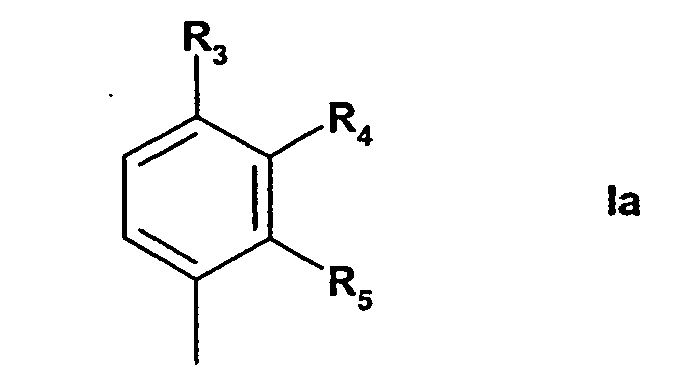
one or two of R3, R4 and R5 is halogen, C1-6alkyl, C1-6alkoxy or phenylC1-6alkyl;
or R3 and R4, or R4 and R5, together with the carbon atoms to which they are attached, together form a benzene ring. - In formula I and la the following significances are preferred independently, collectively or in any combination or sub-combination:
- a) one of R4 or R5 is other than hydrogen, more preferably R5 is other than hydrogen and R4 is hydrogen;
- b) R4 or R5 is benzyl, ethyl, butoxy, propyl, isopropyl or chloro, more preferably R5 is one of the aforementioned groups and R4 is hydrogen;
- b) R3 is hydrogen or chloro, more preferably hydrogen;
- c) R2 is hydrogen or methyl.
- The compounds or formula I can also form acid addition salts or inorganic or organic acids, e.g. hydrochloric, hydrobromic or maleic acid. The compounds of formula I can also form cationic salts deriving from the carboxy group, more particularly alkali or alkaline earth metal salts, e.g. sodium, potassium, calcium or magnesium salt, and ammonium salts derived from ammonia or organic amines.
- The compounds of formula I contain a chiral centre at the carbon atom bearing the primary amino group. The compound of formula I will therefore exist in two enantiomeric forms. It is to be understood that the present invention encompasses the racemate of the formula I and any enantiomeric form.
- The compounds of formula I can also be obtained in the form of their hydrates. The hydrates also form part of the invention.
- The present invention also provides a process for the production of the compounds of formula I, which comprises deprotecting a compound of formula II

R6 is C1-6alkyl or benzyl,
R7 is an amino protecting group, and
and if desired converting the compound of formula I into a salt thereof. - The process can be carried out using conventional methods. Examples of suitable amino protecting groups are e.g. as disclosed in "Protective Groups in Organic Synthesis" T.W. Greene, J.Wiley & Sons NY, 2nd ed., chapter 7, 1991, and references therein, e.g. acyl, e.g. tert.butyloxycarbonyl, benzyloxycarbonyl, 9-fluorenyl methoxy carbonyl, trifluoroacetyl, trimethylsilylethanesulfonyl and the like. The deprotection can be effected by e.g. hydrogenolysis, when R7 is benzyloxycarbonyl and R6 is benzyl. The reaction can then be carried out in an organic solvent such as tetrahydrofuran, methylene chloride or dioxane at room temperature using palladium-charcoal as catalyst. If R6 is C1-6alkyl, the process is conveniently effected in two steps. In the first step the carboxy group of a compound of formula II may be deprotected by mild hydrolysis with e.g. aqueous NaOH or a basic ionexchange resin in an organic solvent such as tetrahydrofuran, dioxan, methanol or ethanol at room temperature. In the second step the amino group is deprotected with e.g. iodotrimethyllsilane in methylene chloride. If R7 is benzyloxycarbonyl hydrogenolysis can be employed. The two step process is suitably employed when one or two of R3 to R5 are halogen.
- The optional formation of a salt may be carried out conventionally.
- A racemic mixture of the compound of formula I may be resolved in known manner, for example using an optically active acid as a resolving agent. Alternatively, a pure enantiomeric form may be produced by utilizing optically active starting materials.
- Compounds of formula II used as starting material can be prepared by e.g. reacting a compound of formula III


- The reaction can be effected in conventional manner. For example the reaction can be carried out in an organic solvent such as methylene chloride at a temperature between -15° to 25°. The leaving group X is e.g. halogen especially chlorine or hydroxy.
- Conveniently an acid binding agent, e.g. a tertiary amine such as pyridine, is present.
- Insofar as the production of the starting materials for the above processes is not particularly described, these may be produced in analogous manner to known compounds or the processes described herein.
- In the following Examples all temperatures are given in degrees centigrade and are uncorrected. The [α]D 20-values are also uncorrected.
- To a mixture of 0.28 g of 4-bromo-indole-2-carboxylic acid and 0.069 g of tetrakistriphenylphosphinepalladium in 11 ml of toluene and 2 ml of 2M soda is added a solution of 0.300 g of 2-ethylphenylboronic acid in 3 ml of ethanol. This mixture is refluxed for 16 h, filtered and the aqueous phase acidified with 2N HCI and extracted with ethyl acetate. Concentration of the organic phase gives the product as a brownish powder, m.p. 230 - 233°, sufficiently pure for the next step.
- To a solution of 2.11 g of 4-(2-ethylphenyl)-indole-2-carboxylic acid in 32 ml of pyridine are added 1.41 g of carbonyldiimidazole. After termination of the gas evolution, 2.29 g of methyl N(2)-Z-D-2,3-diaminopropionate are added and the mixture stirred at room temperature for 4 days. After evaporation of the solvent the residue is extracted with water/ethyl acetate, the organic phase dried, concentrated and the crude product chromatographed on silica with isopropyl acetate/toluene 4:1, yielding the desired compound as a yellow amorphous powder.
- A mixture of 2.03 g of 3-(4-(2-ethylphenyl)-2-carboxamido-indole)-N(2)-Z-D-alanine methyl ester, 4.1 ml of 2N NaOH and 10 ml of dioxane is stirred at room temperature for 2 h. After working up in conventional manner the obtained acid is dissolved in 22 ml of methylene chloride and treated with 1.03 ml of iodotrimethylsilane at 0°C. After stirring for 50 min. the mixture is concentrated to dryness and the residue taken up in water. The crude product precipitates out and is collected by filtration, washed with water and recristallised from water/isopropanol under adjustment of the pH to 6 by addition of 0.2N NaOH, yielding the title compound as a white powder, m.p. 258 - 265°.
- The compounds of formula I wherein R1 and R2 are as defined in Table 1, may be prepared by following one of the above procedures but using the appropriate starting materials.
TABLE 1 Ex. R1 R2 Melt. Point (°C) 2 2-benzyl-phenyl H 220 3 naphthalen-2-yl H 226-233 4 naphthalen-1-yl H 210 5 2-ethyl-phenyl CH3 220 6 2-butoxy-phenyl H 210-220 7 2-propyl-phenyl H 245 8 2-isopropyl-phenyl H 245-260 9 2,4-dichloro-phenyl H 235 - The compounds disclosed herein which are selective S1P4 receptor agonists (hereinafter referred to as the compounds of the invention), e.g. the compounds of formula I, in free form or in pharmaceutically acceptable salt form, exhibit valuable pharmacological properties, e.g. lymphocyte recirculation modulating properties, e.g. as indicated in in vitro and in vivo tests and are therefore indicated for therapy. In particular, the compounds of the invention are useful as functional agonists of human S1P4 (EDG6) receptors, as demonstrated in the following assays.
- An expression vector for the human S1P4 gene (HSEDG4; GenBank Accession Number AJ000479) fused to the c-myc peptide tag at the C-terminus is obtained as described in Van Brocklyn et al. 2000, Blood 95(8), 2624. The encoding DNA for the S1P4-myc fusion protein is cloned in the mammalian expression vector pRc/CMV (Invitrogen), which confers G418 resistance for the selection of stable mammalian cells. The DNA sequence of the S1P4 insert is determined on both strands. No nucleotide differences are found that would lead to amino acids changes as compared with the GenBank entry for HSEDG4. The S1 P4-myc cDNA is inserted into the pRc/CMV vector using HindIII/XbaI.
Following vectors are used.
Human S1P1 (GenBank™ accession number M31210) and S1P3 (GenBank™ accession number X83864) cDNA containing the myc sequence in front to the human S1P1 and S1P3 sequences are inserted in the pcDNA 3.1 vector. The vectors are sequenced to completion to confirm the correctness of the construct. The human S1 P2 (GI: 4090955, TREMBL:0195136) is cloned by a PCR based method. Lung cDNA (marathon cDNA) is obtained (BD Biosciences Chontech, Palo Alto, CA 94303, USA). Following oligonucleotides are used for the PCR reaction: forward primer CAC CAT GGG CAG CTT GTA CTC GGA GTA CCT GAA CCC CAA CAA GGT CCA G (1 to 45, GenBank™ accession number AF034780) and reverse primer 5'-GAT TCA GAC CAC CGT GTT GCC CTC CAG (1062 to 1039, GenBank™ accession number AF034780), the initiation of the translation (ATG) and the stop codon are underlined. The PCR is performed in the presence of 0.2-0.4 µg cDNA, 1x reaction buffer (10x PfuTurbo DNA polymerase buffer, Stratagene, La Jolla, CA 92037, USA), 0.5 µM primers, 0.25 mM dNTP's and 2.5 units PfuTurbo DNA polymerase (Stratagene), a first step at 95°C for 2 min, 30 cycles (30 sec at 95°C, 30 sec at 60°C and 90 sec at 72°C) and final step of 10 min at 72°C. The amplified product of around 1100 bp is analyzed by standard agarose gel-electrophoresis. After the cloning of the PCR product in the pcDNA 3.1 Topo V (Invitrogen Corporation) the DNA inserts from different bacterial colonies are sequenced. The final sequence is assembled from three independent plasmid preparations that are sequenced in both directions.
The human S1P5 (GI: 30171332 or GenBank™ accession number AY262689, TREMBL: Q9H228) is cloned by a PCR based method. Lung and spleen cDNA (marathon cDNA) is obtained from BD Biosciences Chlontech (BD Biosciences Chlontech, Palo Alto, CA 94303, USA); genomic DNA is isolated from HeLa cells using standard procedures. Following oligonucleotides are used for the PCR reaction: forward primer CAC CAT GGA GTC GGG GCT GCT GCG (-4 to 20, GenBank™ accession number AY262689) and reverse primer 5`-TCA GTC TGC AGC CGG TTC TGA TAC CAG AGT C (1197 to 1131, AY262689), the initiation of the translation (ATG) and the stop codon are underlined. The PCR is performed in the presence of 0.2-0.4 µg cDNA, 1x reaction buffer (10x PfuTurbo DNA polymerase buffer, Stratagene, La Jolla, CA 92037, USA), 0.5 µM primers, 0.25 mM dNTP's and 2.5 units PfuTurbo DNA polymerase (Stratagene), a first step at 95°C for 2 min, 30 cycles (30 sec at 95°C, 30 sec at 60°C and 90 sec at 72°C) and final step of 10 min at 72°C. The amplified product of around 1100 bp is analyzed by standard agarose gel-electrophoresis. After the cloning of the PCR products in the pcDNA 3.1 Topo V (Invitrogen Corporation) the DNA inserts from different bacterial colonies are sequenced. The final sequence is assembled from three independent plasmid preparations that are sequenced in both directions. - To develop stable cell lines expressing the c-myc tagged S1 P4 receptor 5 µg of plasmid pRc/CMV myc-S1P4 is cut using restriction endonuclease Pvul, which cleaves the plasmid once. The linearized plasmid is then precipitated using a final concentration of 0.3M sodium acetate, pH5.0 and 66% ethanol. After centrifugation and washing, the DNA pellet is dissolved in 30 µl water. For transfection, CHO-K1 (ATCC Number: CCL-61) cells are plated in MEM α medium (minimum essential medium alpha modification) containing 10% FCS (fetal calf serum) the day before transfection at a cell density of 1x10⁶ cells per well of 100-mm cell culture dish (Falcon) and incubated at 37°C in a 5% CO2 atmosphere for 24 hours. At the day of transfection, 5 µg of linearised pRC/CMV myc-S1 P4 plasmid are added to 270 µl of RPMI medium. After adding 60 µl of SuperFect Transfection Reagent (Qiagen) to the DNA solution and mixing for 10 seconds, the sample is incubated for 10 min to allow complex formation. The DNA-SuperFect complex is mixed with an additional 3 ml of RPMI/10%FCS and then transferred to the cell monolayer. After 3 hours of incubation, the transfection medium is removed and the cells washed with PBS. Fresh RPMI medium supplemented with 10% FCS is added and cells incubated for 72 hours at 37°C and 5% CO2. Selection for stable transformed clones is performed after adding 500 µg/ml G418 (Lifetechnologies). After about 12-14 days, cell clones obtained by sorting single cells according to their forward and sideward scatter characteristics into individual wells of a 96-well cell culture plate using a FACStar Plus cell sorter (BectonDickinson). Individual clones that grew after the sort and selection procedure are expanded and one clone is finally selected based on the level of S1P4 mRNA expression determined by TaqMan quantitative PCR analysis.
- Parental CHO-K1 cells are maintained in RPMI medium (Lifetechnologies), supplemented with 10% FBS and 10 µg/ml gentamicin (Lifetechnologies). S1 P4/myc transfected CHO-K1 cells, including the one finally selected clone are maintained in MEM alpha medium, supplemented with 10% FBS, 10 µg/ml gentamicin and 0.5 mg/ml G418 (Lifetechnologies).
- Total RNA from cells is isolated with the help of the RNeasy Mini kit (Qiagen). After the disruption of cells (grown in a monolayer) directly in culture dishes (for one 35 mm dish, 350 µl buffer are used, prepared according to the protocol of Qiagen), the lysate is pipetted onto a qiashredder spin column and centrifuged for 2 min at 21'000 xg. 350 µl of 70% ethanol are added to the flow-through, mixed well, applied to an RNeasy mini column, and centrifuged for 15 sec at 10'000xg. The flow-through is discarded, 700 µl buffer RW1 (Qiagen) are added to the RNeasy column and centrifuged for 15 sec to rinse the column. The column is further washed by adding twice 500 µl Buffer RPE (Qiagen) and centrifuging for 15 sec at 10000 xg. The RNA is eluted by adding in 30-50 µl RNAse-free water directly onto the RNeasy column and centrifuging for 1 min at 10'000xg
The RNA is reverse-transcribed with the Omniscript kit of Qiagen (Qiagen). Around 2 µg RNA are mixed with 2µl 10 x buffer, 2µl dNTP Mix, 1 µl RNase inhibitor (10 units/µl), 0.5 µg random hexamer, 1 µl Omniscript Reverse Transcriptase and RNase-free water to a final volume of 20 µl, and incubated at 37°C for 60 min and additional 30 min at 42°C. The reaction is inactivated for 5 min at 93°C, cooled on ice and stored at -20°C until used.
To determine the relative transcription levels of S1P4 mRNA in the selected clones, real time PCR (polymerase chain reaction) analysis is performed. Optimal primer and probe concentrations are determined as described in the User bulletin provided by PE (Perkin/Elmer) Biosystems using a human S1 P4 containing plasmid as a template. The human S1 P4 oligonucleotides as well as their optimized concentrations for real-time PCR are following (based on HSEDG4; GenBank Accession Number AJ000479):Primer/ Probe label Sequence Opt.conc Forward Primer none AACTGCCTGTGCGCCTTT 50 nM Reverse Primer none GAGGATGTAGCGCTTGGAGTAGA 900 nM Probe 5'-FAM, 3'TAMRA ACCGCTGCTCCAGCCTTCTG 100 nM - First strand cDNA is then used for quantitative PCR on the AB17700 TaqMan machine (PE Biosystems). As an internal control of the amount of RNA present in each sample, 18S ribosomal RNA is used by multiplexing the S1 P4 PCR reaction with the ribosomal RNA PCR in the same tube using the TaqMan Ribosomal RNA control reagents (PE Biosystems, P/N4308310, VIC-labeled probe). Although similar efficiency of the two independent amplifications for S1P4 and ribosomal RNA is not formally determined, the semi-quantitative determination of the S1 P4 transcription levels in the different cell clones is sufficient for the selection of cell clones to be further characterized in functional assays.
- Membrane proteins are prepared from wild type CHO-K1 and the CHO cell clones expressing human S1P4. To obtain 10-30 mg of membrane proteins, cells are grown in one large culture dish (500 cm2) per cell clone to 80 and 90% confluence. The culture medium is removed and the cells are harvested on ice from the dish, by scraping in 20 ml cold HEPES 10 mM (pH 7.5) supplemented with 0.1% fatty acid-free bovine serum albumin (BSA) and protease inhibitors cocktail (one tablet per 50 ml, Roche Diagnostics, Rotkreuz). The cells are centrifuged at 750xg for 10 min at 4°C and re-suspended in 10 ml cold membrane buffer (20 mM HEPES, pH 7.4; 100 mM NaCl; 10 mM MgCl2; 1 mM EDTA; 0.1% BSA and protease inhibitors cocktail). The cell suspension is homogenized on ice, using a Polytron homogenizer at 25000 rpm at three intervals of 20 seconds each. The homogenate is centrifuged at 26'900xg for 30 min. at 4°C and the membrane protein pellet resuspended by vortexing in 2 ml of cold membrane buffer. The protein concentration is determined using the Bio Rad Protein Assay and human IgG as standard. The volume of the membrane protein suspension is adjusted to result in a final concentration of 2 to 3 mg protein/ml. The solution is then once again homogenized (Polytron) on ice at 25000 rpm for 20 sec before to be aliquoted into Eppendorf tubes at the volume of 0.8-1 ml.
- The selection of the clones to be tested in the GTPγS assay is based on the real time PCR assays. CHO clones expressing large amounts of human S1P4 are used in these experiments. Membrane proteins are prepared as described above. The basic protocol of GTPγ35S-binding assay used is described in a recent publication (Brinkmann et al. 2002, J.Biol. Chem, 277, 21453) with the modifications described here below. To characterize the GTPγ35S-binding to membrane proteins from CHO cells expressing S1 P, WGA coated PVT beads (SPA-bead, Amersham Biosciences) are used. Because β-rays of GTPγ35S have significant penetration in water solution, the plates are centrifuged to minimize non-specific effects caused by the non bound GTPγ35S. The assay is performed in 96-well Optiplates (Packard, Cat. N° 6005190) in final volume of 225 µl/well. After a short homogenization, the membrane proteins are resuspended at different concentrations (between 25 to 150 µg/ml) in 50 mM HEPES, 100 mM NaCl, 10 mM MgCl2, 20 µg/ml saponin (Riedel-de-Haen: Cat. N° 16109), 0.1% fat free BSA (Sigma Cat. N°A0281) pH 7.4. The membrane proteins are mixed with 1 mg/well SPA-bead, 10 µM GDP, different concentrations of agonists and incubated for 10-15 min at RT. The GTPγ35S binding reaction is started by the addition of 200 pM GTPγ35S (Amersham, Cat. N° SJ1308, >1000Ci/mmol). The Optiplates are sealed and incubated at RT for 110-120 minutes with constant shaking. The plates are then centrifuged for 10 minutes at 2000 rpm and counted with a TopCount instrument (Packard). Calculations of the EC50 are performed with a non-linear regression fit program as available in the Origin 7 RS2 software package (Origin Lab Corporation, One Roundhouse Plaza, Northampton, MA 01060, USA).
- CHO cells are plated in black Costar plate (96 or 384 well, 50'000 cells or 12.500 cells, respectively) in α MEM with FCS and cultured for 20-24 h at 37°C in a CO2 incubator. After the removal of the culture medium cells are incubated in HBSS medium containing 2 µM Fluo4AM (Molecular Probes, Cat. No, F-1241; 1 mg/ml stock in DMSO), 5 mM probenicid for 1 h at 37°C, rinsed with HBSS buffer, 2.5 mM probenicid and overlaid with the same medium (75 µl for 96-well plates, 50 µl for 384 plates). The plates are transferred to the FLIPR. After measuring the baseline for 40 sec, the agonist in HBSS is added and the fluorescence is measured at intervals of 2 sec for 3 to 5 min. In some cases the cells are pre-treated for 5 h with 50 ng/ml pertussis toxin (Sigma, Cat Nr P2980). 2-aminoethoxydiphenyl borate (2-APB, Calbiochem, Juro Supply, Bleicherstr. 11, Lucerne, Switzerland, Cat Nr 100065) a blocker of the release of calcium from the endoplasmic reticulum (Ascher-Landsberg et al., 1999, Biochem. Biophys. Res. Commun. 264, 979) at 50 µM and/or 150 µM is added directly to the cell medium 20-40 min prior to the measurements. Calculations of the EC50 are performed using a non linear regression fit program provided in the Origin 7 RS2 software package (Origin LabCorporation) available to Novartis.
- The compounds mentioned in this application are tested for specificity, e.g. the activity they have in the parental cell line prior transformation with the S1 P4 cDNA and for selectivity on CHO cells lines transformed with the S1P1, S1P2, S1P3, and S1P5. The generation of stable cell lines for the other S1 P receptors is done as described for S1P4, using published human cDNA sequences as described above. Preferably compounds with a selectivity and specificity of 100x are chosen. For example, S1P4 specific and selective compounds may have an EC50 (apparent EC50) measured at S1P4 that is 10x, preferably 100x lower that that measured in wild type CHO cells or in cell expressing any of the other four S1P receptors.
- For example if an EC50 of 200 nM is measured for S1P4, the EC50's in CHO cells or in CHO cells expressing S1P1,2,3,5 is preferably ≥20 µM. The compound of example 1 has an EC50 for S1P4 in this assay of 432 nM.
- The EC50 values (in µM) for the compound of example 2 in CHO cells or in CHO cells expressing various S1P receptors is shown in Table 2 below:
TABLE 2 CHO S1P1 S1P2 S1P3 S1P4 S1P5 Calcium mobilization assay >6 >6 >6 >6 0.01 2.4 GTPγS binding assay >10 >10 >10 >10 0.25 >10 - The compounds of the invention are, therefore, useful in the treatment and/or prevention of diseases or disorders mediated by lymphocytes interactions, e.g. in transplantation, such as acute or chronic rejection of cell, tissue or organ allo- or xenografts or delayed graft function, graft versus host disease, autoimmune diseases, e.g. rheumatoid arthritis, systemic lupus erythematosus, hashimoto's thyroidis, multiple sclerosis, myasthenia gravis, diabetes type I or II and the disorders associated therewith, vasculitis, pernicious anemia, Sjoegren syndrome, uveitis, psoriasis, Graves ophthalmopathy, alopecia areata and others, allergic diseases, e.g. allergic asthma, atopic dermatitis, allergic rhinitis/conjunctivitis, allergic contact dermatitis, inflammatory diseases optionally with underlying aberrant reactions, e.g. inflammatory bowel disease, Crohn's disease or ulcerative colitis, intrinsic asthma, inflammatory lung injury, inflammatory liver injury, inflammatory glomerular injury, atherosclerosis, osteoarthritis, irritant contact dermatitis and further eczematous dermatitises, seborrhoeic dermatitis, cutaneous manifestations of immunologically-mediated disorders, inflammatory eye disease, keratoconjunctivitis, myocarditis or hepatitis, ischemia/reperfusion injury, e.g. myocardial infarction, stroke, gut ischemia, renal failure or hemorrhage shock, traumatic shock, others, cancer, e.g. T cell lymphomas or T cell leukemias, infectious diseases, e.g. toxic shock (e.g. superantigen induced), septic shock, adult respiratory distress syndrome or viral infections, e.g. AIDS, viral hepatitis or chronic bacterial infection. Examples of cell, tissue or solid organ transplants include e.g. pancreatic islets, stem cells, bone marrow, corneal tissue, neuronal tissue, heart, lung, combined heart-lung, kidney, liver, bowel, pancreas, trachea or oesophagus.
- For the above uses the required dosage will of course vary depending on the mode of administration, the particular condition to be treated and the effect desired. In general, satisfactory results are indicated to be obtained systemically at daily dosages of from about 0.03 to 2.5 mg/kg per body weight. An indicated daily dosage in the larger mammal, e.g. humans, is in the range from about 0.5 mg to about 100 mg, conveniently administered, for example, in divided doses up to four times a day or in retard form. Suitable unit dosage forms for oral administration comprise from ca. 1 to 50 mg active ingredient.
- The compounds of the invention may be administered by any conventional route, in particular enterally, e.g. orally, e.g. in the form of tablets or capsules, or parenterally, e.g. in the form of injectable solutions or suspensions, topically, e.g. in the form of lotions, gels, ointments or creams, or in a nasal or a suppository form. Pharmaceutical compositions comprising a compound of the invention in free form or in pharmaceutically acceptable salt form in association with at least one pharmaceutical acceptable carrier or diluent may be manufactured in conventional manner by mixing with a pharmaceutically acceptable carrier or diluent.
- The compounds of the invention may be administered in free form or in pharmaceutically acceptable salt form e.g. as indicated above. Such salts may be prepared in conventional manner and exhibit the same order of activity as the free compounds.
- In accordance with the foregoing the present invention describes:
- 1.1 A method for preventing or treating disorders or diseases mediated by lymphocytes, e.g. such as indicated above, in a subject in need of such treatment, which method comprises administering to said subject an effective amount of a compound of the invention, e.g. a compound of formula I, or a pharmaceutically acceptable salt thereof;
- 1.2 A method for preventing or treating acute or chronic transplant rejection or T-cell mediated inflammatory or autoimmune diseases, e.g. as indicated above, in a subject in need of such treatment, which method comprises administering to said subject an effective amount of a compound of the invention, e.g. a compound of formula I, or a pharmaceutically acceptable salt thereof;
- 2. A compound of the invention, e.g. a compound of formula I, in free form or in a pharmaceutically acceptable salt form for use as a pharmaceutical, e.g. in any of the methods as indicated under 1.1 or 1.2 above.
- 3. A pharmaceutical composition, e.g. for use in any of the methods as in 1.1 or 1.2 above comprising a compound of the invention, e.g. a compound of formula I, in free form or pharmaceutically acceptable salt form in association with a pharmaceutically acceptable diluent or carrier therefor.
- The compounds of the invention, e.g. a compound of formula I, may be administered as the sole active ingredient or in conjunction with, e.g. as an adjuvant to, other drugs e.g. immunosuppressive or immunomodulating agents or other anti-inflammatory agents, e.g. for the treatment or prevention of allo- or xenograft acute or chronic rejection or inflammatory or autoimmune disorders, or a chemotherapeutic agent, e.g a malignant cell anti-proliferative agent. For example, the compounds of the invention may be used in combination with a calcineurin inhibitor, e.g. cyclosporin A or FK 506; a mTOR inhibitor, e.g. rapamycin, 40-O-(2-hydroxyethyl)-rapamycin, CCI779 or ABT578; an ascomycin having immunosuppressive properties, e.g. ABT-281, ASM981, etc.; corticosteroids; cyclophosphamide; azathioprene; methotrexate; leflunomide; mizoribine; mycophenolic acid; mycophenolate mofetil; 15-deoxyspergualine or an immunosuppressive homologue, analogue or derivative thereof; immunosuppressive monoclonal antibodies, e.g., monoclonal antibodies to leukocyte receptors, e.g., MHC, CD2, CD3, CD4, CD7, CD8, CD25, CD28, CD40. CD45, CD58, CD80, CD86 or their ligands; other immunomodulatory compounds, e.g. a recombinant binding molecule having at least a portion of the extracellular domain of CTLA4 or a mutant thereof, e.g. an at least extracellular portion of CTLA4 or a mutant thereof joined to a non-CTLA4 protein sequence, e.g. CTLA4Ig (for ex. designated ATCC 68629) or a mutant thereof, e.g. LEA29Y; adhesion molecule inhibitors, e.g. LFA-1 antagonists, ICAM-1 or -3 antagonists, VCAM-4 antagonists or VLA-4 antagonists; or a chemotherapeutic agent, e.g. paclitaxel, gemcitabine, cisplatinum, doxorubicin or 5-fluorouracil.
- Where the compounds of the invention, e.g. a compound of formula I, are administered in conjunction with other immunosuppressive / immunomodulatory, anti-inflammatory or chemotherapeutic therapy, dosages of the co-administered immunosuppressant, immunomodulatory, anti-inflammatory or chemotherapeutic compound will of course vary depending on the type of co-drug employed, e.g. whether it is a steroid or a calcineurin inhibitor, on the specific drug employed, on the condition being treated and so forth. In accordance with the foregoing the present invention yet further describes:
- 4. A method as defined above comprising co-administration, e.g. concomitantly or in sequence, of a therapeutically effective non-toxic amount of a compound of the invention, e.g. a compound of formula I and at least a second drug substance, e.g. an immunosuppressant, immunomodulatory, anti-inflammatory or chemotherapeutic drug, e.g. as indicated above.
- 5. A pharmaceutical combination, e.g. a kit, comprising a) a first agent which is a compound of the invention, e.g. a compound of formula I, as disclosed herein, in free form or in pharmaceutically acceptable salt form, and b) at least one co-agent, e.g. an immunosuppressant, immunomodulatory, anti-inflammatory or chemotherapeutic drug. The kit may comprise instructions for its administration.
- The terms "co-administration" or "combined administration" or the like as utilized herein are meant to encompass administration of the selected therapeutic agents to a single patient, and are intended to include treatment regimens in which the agents are not necessarily administered by the same route of administration or at the same time.
- The term "pharmaceutical combination" as used herein means a product that results from the mixing or combining of more than one active ingredient and includes both fixed and non-fixed combinations of the active ingredients. The term "fixed combination" means that the active ingredients, e.g. a compound of the invention and a co-agent, are both administered to a patient simultaneously in the form of a single entity or dosage. The term "non-fixed combination" means that the active ingredients, e.g. a compound of the invention and a co-agent, are both administered to a patient as separate entities either simultaneously, concurrently or sequentially with no specific time limits, wherein such administration provides therapeutically effective levels of the 2 compounds in the body of the patient. The latter also applies to cocktail therapy, e.g. the administration of 3 or more active ingredients.
Claims (9)
- A compound of formula I

R1 is phenyl or naphthyl, wherein phenyl is substituted by one or two of halogen, C1-6alkyl, C1-6alkoxy or phenylC1-6alkyl; and
R2 is hydrogen or C1-6alkyl;
in free, hydrate or salt form. - A compound according to claim 1 which is selected from 3-(4-(2-Ethylphenyl)-2-carboxamido-indole)-alanine, 3-(4-(2-benryl-phenyl)-2-carboxamido-indole)-alanine, 3-(4-(naphtalen-2-yl)-2-carboxamido-indole)-alanine, 3-(4-(naphtalen-1-yl)-2-carboxamido-indole) -alanine, 3-(4-(2-butoxy-phenyl)-2-carboxamido-indole)-alanine, 3-(4-(2-propyl-phenyl)-2-carboxamido-indole)-alanine, 3-(4-(2- isopropyl-phenyl)-2-carboxamido-indole)-alanine and 3-(4-(2,4-dlchloro-phenyl)-2-carboxamido-indole)-alanine, or a pharmaceutically acceptable salt therefor.
- A compound according to claim 2 which is 3-(4-(2-Ethylphenyl)-2-carboxamido-indole)-D-alanine, in free form or in a pharmaceutically acceptable salt form.
- A compound according to any one of claim 1 to 3, in free form or in a pharmaceutically acceptable salt form, for use as a pharmaceutical.
- A pharmaceutical composition comprising a compound as defined in any one of claim 1 to 3, in free form or in pharmaceutically acceptable salt form, in association with a pharmaceutically acceptable diluent or carrier therefor.
- Use of a compound according to any one of claim 1 to 3 in free form or in a pharmaceutically acceptable salt form, or a pharmaceutical composition according to claim 5 in the manufacture of a medicament for treating or preventing disorders or diseases mediated by lymphocytes, acute or chronic transplant rejection, T-cell mediated inflammatory or autoimmune diseases, diabetes, allergic diseases, myocarditis, hepatitis, ischemia/reperfusion injury, renal failure, hemorrhage shock, traumatic shock, cancer or infectious diseases.
- A pharmaceutical combination comprising a compound according to any one of claim 1 to 3 in free form or in a pharmaceutically acceptable salt form and a further agent selected from immunosuppressant, immunomodulatory, anti-inflammatory and chemotherapeutic drug agents.
- A process for the production of the compound according to claim 1, which process comprises deprotecting a compound of formula II

R6 is C1-6alkyl or benzyl,
R7 is an amino protecting group,
and optionally converting the compound of formula I obtained in free form to a salt form or vice versa. - A compound for treating or preventing disorders or diseases mediated by lymphocytes, acute or chronic transplant rejection, T-cell mediated inflammatory or autoimmune diseases, diabetes, allergic diseases, myocarditis, hepatitis, ischemia/reperfusion injury, renal failure, hemorrhage shock, traumatic shock, cancer or infectious diseases, in a subject in need of such treatment, which compound is a compound according to any one of claim 1 to 3, or a pharmaceutically acceptable salt thereof.
Priority Applications (1)
| Application Number | Priority Date | Filing Date | Title |
|---|---|---|---|
| PL05706935T PL1708998T3 (en) | 2004-01-21 | 2005-01-20 | Indol-alanine derivatives as selective s1p4-agonists |
Applications Claiming Priority (2)
| Application Number | Priority Date | Filing Date | Title |
|---|---|---|---|
| GBGB0401332.2A GB0401332D0 (en) | 2004-01-21 | 2004-01-21 | Organic compounds |
| PCT/EP2005/000541 WO2005070886A1 (en) | 2004-01-21 | 2005-01-20 | Indol-alanine derivatives as selective s1p4-agonists |
Publications (2)
| Publication Number | Publication Date |
|---|---|
| EP1708998A1 EP1708998A1 (en) | 2006-10-11 |
| EP1708998B1 true EP1708998B1 (en) | 2008-10-15 |
Family
ID=31971237
Family Applications (1)
| Application Number | Title | Priority Date | Filing Date |
|---|---|---|---|
| EP05706935A Expired - Lifetime EP1708998B1 (en) | 2004-01-21 | 2005-01-20 | Indol-alanine derivatives as selective s1p4-agonists |
Country Status (16)
| Country | Link |
|---|---|
| US (1) | US7754896B2 (en) |
| EP (1) | EP1708998B1 (en) |
| JP (1) | JP2007518766A (en) |
| KR (1) | KR20060130122A (en) |
| CN (1) | CN1910148A (en) |
| AT (1) | ATE411289T1 (en) |
| AU (1) | AU2005206289B2 (en) |
| BR (1) | BRPI0506974A (en) |
| CA (1) | CA2552781A1 (en) |
| DE (1) | DE602005010388D1 (en) |
| ES (1) | ES2315838T3 (en) |
| GB (1) | GB0401332D0 (en) |
| PL (1) | PL1708998T3 (en) |
| PT (1) | PT1708998E (en) |
| RU (1) | RU2373195C2 (en) |
| WO (1) | WO2005070886A1 (en) |
Families Citing this family (27)
| Publication number | Priority date | Publication date | Assignee | Title |
|---|---|---|---|---|
| ATE502630T1 (en) | 2004-07-16 | 2011-04-15 | Kyorin Seiyaku Kk | METHOD FOR EFFECTIVE USE OF A MEDICATION AND METHOD FOR PREVENTING SIDE EFFECTS |
| AU2005292984B2 (en) | 2004-10-12 | 2011-01-20 | Kyorin Pharmaceutical Co., Ltd. | Process for producing 2-amino-2-[2-[4-(3-benzyloxyphenylthio)-2-chlorophenyl]ethyl]-1,3-propanediol hydrochloride or hydrate thereof and intermediate for the same |
| RU2421214C2 (en) * | 2005-10-07 | 2011-06-20 | Киорин Фармасьютикал Ко., Лтд. | Therapeutic agent for treating hepatitis, and method of treating hepatitis |
| TWI389683B (en) * | 2006-02-06 | 2013-03-21 | Kyorin Seiyaku Kk | A therapeutic agent for an inflammatory bowel disease or an inflammatory bowel disease treatment using a 2-amino-1,3-propanediol derivative as an active ingredient |
| US8232319B2 (en) | 2006-08-08 | 2012-07-31 | Kyorin Pharmaceutical Co., Ltd. | Amino phosphate derivative and S1P receptor modulator having same as an active ingredient |
| JP5140593B2 (en) * | 2006-08-08 | 2013-02-06 | 杏林製薬株式会社 | Amino alcohol derivatives and immunosuppressants containing them as active ingredients |
| TW200946105A (en) | 2008-02-07 | 2009-11-16 | Kyorin Seiyaku Kk | Therapeutic agent or preventive agent for inflammatory bowel disease containing amino alcohol derivative as active ingredient |
| JP2011514385A (en) * | 2008-03-17 | 2011-05-06 | アラーガン、インコーポレイテッド | S1P3 receptor inhibitors for treating inflammation |
| HRP20161133T1 (en) | 2008-07-23 | 2016-12-02 | Arena Pharmaceuticals, Inc. | DERIVATIVES OF SUBSTITUTED 1,2,3,4-TETRAHYDROCYCLOPENT [b] INDOL-3-IL-ACETIC ACIDS USED IN THE TREATMENT OF AUTOIMMUNE AND INFLAMMATORY DISORDERS |
| CN105816453B (en) | 2008-08-27 | 2021-03-05 | 艾尼纳制药公司 | Substituted tricyclic acid derivatives as S1P1 receptor agonists for the treatment of autoimmune and inflammatory disorders |
| UA107360C2 (en) | 2009-08-05 | 2014-12-25 | Biogen Idec Inc | Bicyclic aryl sphingosine 1-phosphate analogs |
| CA2786994C (en) * | 2010-01-27 | 2018-01-16 | Arena Pharmaceuticals, Inc. | Processes for the preparation of (r)-2-(7-(4-cyclopentyl-3-(trifluoromethyl)benzyloxy)-1,2,3,4-tetrahydrocyclopenta[b]indol-3-yl)acetic acid and salts thereof |
| CN105503882B (en) | 2010-03-03 | 2019-07-05 | 艾尼纳制药公司 | The method for preparing S1P1 receptor modulators and its crystal form |
| TW201643169A (en) | 2010-07-09 | 2016-12-16 | 艾伯維股份有限公司 | Spiro-piperidine derivatives as S1P modulators |
| TWI522361B (en) | 2010-07-09 | 2016-02-21 | 艾伯維公司 | Fused heterocyclic derivative as S1P regulator |
| USRE48301E1 (en) | 2010-07-09 | 2020-11-10 | Abbvie B.V. | Fused heterocyclic derivatives as S1P modulators |
| TW201206893A (en) | 2010-07-09 | 2012-02-16 | Abbott Healthcare Products Bv | Bisaryl (thio) morpholine derivatives as S1P modulators |
| PT2672823T (en) * | 2011-02-07 | 2016-11-21 | Biogen Ma Inc | S1p modulating agents |
| AU2016205361C1 (en) | 2015-01-06 | 2021-04-08 | Arena Pharmaceuticals, Inc. | Methods of treating conditions related to the S1P1 receptor |
| PL3310760T3 (en) | 2015-06-22 | 2023-03-06 | Arena Pharmaceuticals, Inc. | Crystalline l-arginine salt of (r)-2-(7-(4-cyclopentyl-3-(trifluoromethyl)benzyloxy)-1,2,3,4-tetrahydrocyclo-penta[b]indol-3-yl)acetic acid for use in s1p1 receptor-associated disorders |
| JP2020507610A (en) | 2017-02-16 | 2020-03-12 | アリーナ ファーマシューティカルズ, インコーポレイテッド | Compounds and methods for the treatment of inflammatory bowel disease with parenteral symptoms |
| KR20190116416A (en) | 2017-02-16 | 2019-10-14 | 아레나 파마슈티칼스, 인크. | Compounds and Methods for Treating Primary Bile Cholangitis |
| AU2019280822A1 (en) | 2018-06-06 | 2021-01-07 | Arena Pharmaceuticals, Inc. | Methods of treating conditions related to the S1P1 receptor |
| EP3847158A1 (en) | 2018-09-06 | 2021-07-14 | Arena Pharmaceuticals, Inc. | Compounds useful in the treatment of autoimmune and inflammatory disorders |
| US11466027B2 (en) | 2019-07-03 | 2022-10-11 | H. Lundbeck A/S | Modulators of the NMDA receptor |
| US11358971B2 (en) | 2019-07-03 | 2022-06-14 | H. Lundbeck A/S | Prodrugs of modulators of the NMDA receptor |
| US11535632B2 (en) | 2019-10-31 | 2022-12-27 | ESCAPE Bio, Inc. | Solid forms of an S1P-receptor modulator |
Family Cites Families (4)
| Publication number | Priority date | Publication date | Assignee | Title |
|---|---|---|---|---|
| PT708085E (en) * | 1994-10-19 | 2002-11-29 | Novartis Ag | PROTEASE ASPARTATE SUBSTRATE ISOSTERATE ETERIS ANTERIORS |
| EP1383778B1 (en) * | 2001-01-30 | 2009-10-21 | University Of Virginia Patent Foundation | Agonists and antagonists of sphingosine-1-phosphate receptors |
| ATE441654T1 (en) * | 2002-01-18 | 2009-09-15 | Merck & Co Inc | EDG RECEPTOR AGONISTS |
| US20050070506A1 (en) * | 2002-01-18 | 2005-03-31 | Doherty George A. | Selective s1p1/edg1 receptor agonists |
-
2004
- 2004-01-21 GB GBGB0401332.2A patent/GB0401332D0/en not_active Ceased
-
2005
- 2005-01-20 DE DE602005010388T patent/DE602005010388D1/en not_active Expired - Fee Related
- 2005-01-20 JP JP2006550040A patent/JP2007518766A/en active Pending
- 2005-01-20 AU AU2005206289A patent/AU2005206289B2/en not_active Ceased
- 2005-01-20 EP EP05706935A patent/EP1708998B1/en not_active Expired - Lifetime
- 2005-01-20 CN CNA2005800026852A patent/CN1910148A/en active Pending
- 2005-01-20 KR KR1020067014641A patent/KR20060130122A/en not_active Withdrawn
- 2005-01-20 US US10/586,422 patent/US7754896B2/en not_active Expired - Fee Related
- 2005-01-20 CA CA002552781A patent/CA2552781A1/en not_active Abandoned
- 2005-01-20 WO PCT/EP2005/000541 patent/WO2005070886A1/en not_active Ceased
- 2005-01-20 PL PL05706935T patent/PL1708998T3/en unknown
- 2005-01-20 BR BRPI0506974-2A patent/BRPI0506974A/en not_active IP Right Cessation
- 2005-01-20 AT AT05706935T patent/ATE411289T1/en not_active IP Right Cessation
- 2005-01-20 PT PT05706935T patent/PT1708998E/en unknown
- 2005-01-20 RU RU2006130001/04A patent/RU2373195C2/en not_active IP Right Cessation
- 2005-01-20 ES ES05706935T patent/ES2315838T3/en not_active Expired - Lifetime
Also Published As
| Publication number | Publication date |
|---|---|
| BRPI0506974A (en) | 2007-07-03 |
| PL1708998T3 (en) | 2009-04-30 |
| RU2373195C2 (en) | 2009-11-20 |
| ATE411289T1 (en) | 2008-10-15 |
| ES2315838T3 (en) | 2009-04-01 |
| WO2005070886A1 (en) | 2005-08-04 |
| EP1708998A1 (en) | 2006-10-11 |
| RU2006130001A (en) | 2008-02-27 |
| GB0401332D0 (en) | 2004-02-25 |
| DE602005010388D1 (en) | 2008-11-27 |
| CN1910148A (en) | 2007-02-07 |
| KR20060130122A (en) | 2006-12-18 |
| US7754896B2 (en) | 2010-07-13 |
| PT1708998E (en) | 2009-01-14 |
| AU2005206289A1 (en) | 2005-08-04 |
| JP2007518766A (en) | 2007-07-12 |
| US20090023797A1 (en) | 2009-01-22 |
| CA2552781A1 (en) | 2005-08-04 |
| AU2005206289B2 (en) | 2008-12-04 |
Similar Documents
| Publication | Publication Date | Title |
|---|---|---|
| AU2005206289B2 (en) | Indol-alanine derivatives as selective S1P4-agonists | |
| JP2978566B2 (en) | 5-Azabicyclo [3.1.0] hexylalkyl-2-piperidone and -glutarimide as neurokinin receptor antagonists | |
| EP0975602B1 (en) | Imidazole and imidazoline derivatives and uses thereof | |
| FI113264B (en) | Tricyclic pyrazole derivatives | |
| US7064143B1 (en) | Positive modulators of nicotinic receptor agonists | |
| EP1660449B1 (en) | Aminopropanol derivatives | |
| AU2009200915B2 (en) | Aminoalkanol derivatives | |
| RU2137759C1 (en) | Indole derivative | |
| EP1149078B1 (en) | Selective 5-ht 6 receptor ligands | |
| US20020103382A1 (en) | Selective 5-HT6 receptor ligands | |
| MXPA06008296A (en) | Indol-alanine derivatives as selective s1p4-agonists | |
| JP2004508352A (en) | Substituted condensed pyrrole imines and pyrazole imines | |
| US20100292221A1 (en) | Benzenesulfonanilide compounds suitable for treating disorders that respond to modulation of the serotonin 5-ht6 receptor | |
| SE460419B (en) | SUBSTITUTED 1-PYRIDYLOXY-3-INDOLYLALKYLAMINO-2-PROPANOLS, PROCEDURES FOR PREPARING THESE AND A PHARMACEUTICAL COMPOSITION | |
| JPH07126298A (en) | Receptor for inhibiting G protein activity and DNA encoding the same | |
| SE441924B (en) | 5-PHENYL-1,3,4,5-TETRAHYDRO-2H-1,4-BENZODIAZEPIN-2-ON DERIVATIVES SET FOR THEIR PREPARATION AND PHARMACEUTICAL PREPARATIONS CONTAINING THEM | |
| HK1026892B (en) | Imidazole and imidazoline derivatives and uses thereof | |
| MXPA97003858A (en) | Derived from in | |
| TW200920353A (en) | Phenylpyrrolidine compounds |
Legal Events
| Date | Code | Title | Description |
|---|---|---|---|
| PUAI | Public reference made under article 153(3) epc to a published international application that has entered the european phase |
Free format text: ORIGINAL CODE: 0009012 |
|
| 17P | Request for examination filed |
Effective date: 20060821 |
|
| AK | Designated contracting states |
Kind code of ref document: A1 Designated state(s): AT BE BG CH CY CZ DE DK EE ES FI FR GB GR HU IE IS IT LI LT LU MC NL PL PT RO SE SI SK TR |
|
| DAX | Request for extension of the european patent (deleted) | ||
| RAP1 | Party data changed (applicant data changed or rights of an application transferred) |
Owner name: NOVARTIS-PHARMA GMBH Owner name: NOVARTIS AG |
|
| 17Q | First examination report despatched |
Effective date: 20070831 |
|
| GRAP | Despatch of communication of intention to grant a patent |
Free format text: ORIGINAL CODE: EPIDOSNIGR1 |
|
| GRAS | Grant fee paid |
Free format text: ORIGINAL CODE: EPIDOSNIGR3 |
|
| GRAA | (expected) grant |
Free format text: ORIGINAL CODE: 0009210 |
|
| AK | Designated contracting states |
Kind code of ref document: B1 Designated state(s): AT BE BG CH CY CZ DE DK EE ES FI FR GB GR HU IE IS IT LI LT LU MC NL PL PT RO SE SI SK TR |
|
| REG | Reference to a national code |
Ref country code: CH Ref legal event code: EP Ref country code: GB Ref legal event code: FG4D |
|
| REG | Reference to a national code |
Ref country code: IE Ref legal event code: FG4D |
|
| REF | Corresponds to: |
Ref document number: 602005010388 Country of ref document: DE Date of ref document: 20081127 Kind code of ref document: P |
|
| REG | Reference to a national code |
Ref country code: PT Ref legal event code: SC4A Free format text: AVAILABILITY OF NATIONAL TRANSLATION Effective date: 20090105 |
|
| REG | Reference to a national code |
Ref country code: GR Ref legal event code: EP Ref document number: 20090400121 Country of ref document: GR |
|
| REG | Reference to a national code |
Ref country code: ES Ref legal event code: FG2A Ref document number: 2315838 Country of ref document: ES Kind code of ref document: T3 |
|
| PG25 | Lapsed in a contracting state [announced via postgrant information from national office to epo] |
Ref country code: LT Free format text: LAPSE BECAUSE OF FAILURE TO SUBMIT A TRANSLATION OF THE DESCRIPTION OR TO PAY THE FEE WITHIN THE PRESCRIBED TIME-LIMIT Effective date: 20081015 Ref country code: BG Free format text: LAPSE BECAUSE OF FAILURE TO SUBMIT A TRANSLATION OF THE DESCRIPTION OR TO PAY THE FEE WITHIN THE PRESCRIBED TIME-LIMIT Effective date: 20090115 |
|
| REG | Reference to a national code |
Ref country code: PL Ref legal event code: T3 |
|
| PG25 | Lapsed in a contracting state [announced via postgrant information from national office to epo] |
Ref country code: SI Free format text: LAPSE BECAUSE OF FAILURE TO SUBMIT A TRANSLATION OF THE DESCRIPTION OR TO PAY THE FEE WITHIN THE PRESCRIBED TIME-LIMIT Effective date: 20081015 Ref country code: FI Free format text: LAPSE BECAUSE OF FAILURE TO SUBMIT A TRANSLATION OF THE DESCRIPTION OR TO PAY THE FEE WITHIN THE PRESCRIBED TIME-LIMIT Effective date: 20081015 Ref country code: IS Free format text: LAPSE BECAUSE OF FAILURE TO SUBMIT A TRANSLATION OF THE DESCRIPTION OR TO PAY THE FEE WITHIN THE PRESCRIBED TIME-LIMIT Effective date: 20090215 |
|
| PG25 | Lapsed in a contracting state [announced via postgrant information from national office to epo] |
Ref country code: RO Free format text: LAPSE BECAUSE OF FAILURE TO SUBMIT A TRANSLATION OF THE DESCRIPTION OR TO PAY THE FEE WITHIN THE PRESCRIBED TIME-LIMIT Effective date: 20081015 Ref country code: EE Free format text: LAPSE BECAUSE OF FAILURE TO SUBMIT A TRANSLATION OF THE DESCRIPTION OR TO PAY THE FEE WITHIN THE PRESCRIBED TIME-LIMIT Effective date: 20081015 Ref country code: DK Free format text: LAPSE BECAUSE OF FAILURE TO SUBMIT A TRANSLATION OF THE DESCRIPTION OR TO PAY THE FEE WITHIN THE PRESCRIBED TIME-LIMIT Effective date: 20081015 |
|
| PLBE | No opposition filed within time limit |
Free format text: ORIGINAL CODE: 0009261 |
|
| STAA | Information on the status of an ep patent application or granted ep patent |
Free format text: STATUS: NO OPPOSITION FILED WITHIN TIME LIMIT |
|
| PG25 | Lapsed in a contracting state [announced via postgrant information from national office to epo] |
Ref country code: SE Free format text: LAPSE BECAUSE OF FAILURE TO SUBMIT A TRANSLATION OF THE DESCRIPTION OR TO PAY THE FEE WITHIN THE PRESCRIBED TIME-LIMIT Effective date: 20090115 Ref country code: MC Free format text: LAPSE BECAUSE OF NON-PAYMENT OF DUE FEES Effective date: 20090131 Ref country code: CZ Free format text: LAPSE BECAUSE OF FAILURE TO SUBMIT A TRANSLATION OF THE DESCRIPTION OR TO PAY THE FEE WITHIN THE PRESCRIBED TIME-LIMIT Effective date: 20081015 |
|
| 26N | No opposition filed |
Effective date: 20090716 |
|
| PG25 | Lapsed in a contracting state [announced via postgrant information from national office to epo] |
Ref country code: SK Free format text: LAPSE BECAUSE OF FAILURE TO SUBMIT A TRANSLATION OF THE DESCRIPTION OR TO PAY THE FEE WITHIN THE PRESCRIBED TIME-LIMIT Effective date: 20081015 |
|
| REG | Reference to a national code |
Ref country code: IE Ref legal event code: MM4A |
|
| PG25 | Lapsed in a contracting state [announced via postgrant information from national office to epo] |
Ref country code: IE Free format text: LAPSE BECAUSE OF NON-PAYMENT OF DUE FEES Effective date: 20090120 |
|
| PGFP | Annual fee paid to national office [announced via postgrant information from national office to epo] |
Ref country code: PL Payment date: 20091209 Year of fee payment: 6 |
|
| PGFP | Annual fee paid to national office [announced via postgrant information from national office to epo] |
Ref country code: CH Payment date: 20100113 Year of fee payment: 6 Ref country code: ES Payment date: 20100128 Year of fee payment: 6 Ref country code: PT Payment date: 20100113 Year of fee payment: 6 |
|
| PGFP | Annual fee paid to national office [announced via postgrant information from national office to epo] |
Ref country code: FR Payment date: 20100208 Year of fee payment: 6 Ref country code: IT Payment date: 20100118 Year of fee payment: 6 |
|
| PGFP | Annual fee paid to national office [announced via postgrant information from national office to epo] |
Ref country code: AT Payment date: 20100113 Year of fee payment: 6 Ref country code: BE Payment date: 20100125 Year of fee payment: 6 Ref country code: DE Payment date: 20100114 Year of fee payment: 6 Ref country code: GB Payment date: 20100120 Year of fee payment: 6 Ref country code: GR Payment date: 20091215 Year of fee payment: 6 |
|
| PGFP | Annual fee paid to national office [announced via postgrant information from national office to epo] |
Ref country code: NL Payment date: 20100101 Year of fee payment: 6 |
|
| PG25 | Lapsed in a contracting state [announced via postgrant information from national office to epo] |
Ref country code: LU Free format text: LAPSE BECAUSE OF NON-PAYMENT OF DUE FEES Effective date: 20090120 |
|
| PG25 | Lapsed in a contracting state [announced via postgrant information from national office to epo] |
Ref country code: HU Free format text: LAPSE BECAUSE OF FAILURE TO SUBMIT A TRANSLATION OF THE DESCRIPTION OR TO PAY THE FEE WITHIN THE PRESCRIBED TIME-LIMIT Effective date: 20090416 |
|
| REG | Reference to a national code |
Ref country code: PT Ref legal event code: MM4A Free format text: LAPSE DUE TO NON-PAYMENT OF FEES Effective date: 20110720 |
|
| BERE | Be: lapsed |
Owner name: NOVARTIS A.G. Effective date: 20110131 |
|
| REG | Reference to a national code |
Ref country code: NL Ref legal event code: V1 Effective date: 20110801 |
|
| REG | Reference to a national code |
Ref country code: CH Ref legal event code: PL |
|
| GBPC | Gb: european patent ceased through non-payment of renewal fee |
Effective date: 20110120 |
|
| PG25 | Lapsed in a contracting state [announced via postgrant information from national office to epo] |
Ref country code: CY Free format text: LAPSE BECAUSE OF FAILURE TO SUBMIT A TRANSLATION OF THE DESCRIPTION OR TO PAY THE FEE WITHIN THE PRESCRIBED TIME-LIMIT Effective date: 20081015 |
|
| REG | Reference to a national code |
Ref country code: FR Ref legal event code: ST Effective date: 20110930 |
|
| PG25 | Lapsed in a contracting state [announced via postgrant information from national office to epo] |
Ref country code: CH Free format text: LAPSE BECAUSE OF NON-PAYMENT OF DUE FEES Effective date: 20110131 Ref country code: LI Free format text: LAPSE BECAUSE OF NON-PAYMENT OF DUE FEES Effective date: 20110131 Ref country code: FR Free format text: LAPSE BECAUSE OF NON-PAYMENT OF DUE FEES Effective date: 20110131 Ref country code: PT Free format text: LAPSE BECAUSE OF NON-PAYMENT OF DUE FEES Effective date: 20110720 |
|
| PG25 | Lapsed in a contracting state [announced via postgrant information from national office to epo] |
Ref country code: GB Free format text: LAPSE BECAUSE OF NON-PAYMENT OF DUE FEES Effective date: 20110120 Ref country code: BE Free format text: LAPSE BECAUSE OF NON-PAYMENT OF DUE FEES Effective date: 20110131 Ref country code: GR Free format text: LAPSE BECAUSE OF NON-PAYMENT OF DUE FEES Effective date: 20110802 Ref country code: AT Free format text: LAPSE BECAUSE OF NON-PAYMENT OF DUE FEES Effective date: 20110120 |
|
| REG | Reference to a national code |
Ref country code: DE Ref legal event code: R119 Ref document number: 602005010388 Country of ref document: DE Effective date: 20110802 |
|
| PG25 | Lapsed in a contracting state [announced via postgrant information from national office to epo] |
Ref country code: NL Free format text: LAPSE BECAUSE OF NON-PAYMENT OF DUE FEES Effective date: 20110801 Ref country code: IT Free format text: LAPSE BECAUSE OF NON-PAYMENT OF DUE FEES Effective date: 20110120 |
|
| REG | Reference to a national code |
Ref country code: DE Ref legal event code: R082 Ref document number: 602005010388 Country of ref document: DE Representative=s name: DR. SCHOEN & PARTNER, DE Ref country code: DE Ref legal event code: R082 Ref document number: 602005010388 Country of ref document: DE Representative=s name: DR. SCHOEN, NEYMEYR & PARTNER MBB, DE |
|
| REG | Reference to a national code |
Ref country code: ES Ref legal event code: FD2A Effective date: 20120220 |
|
| PG25 | Lapsed in a contracting state [announced via postgrant information from national office to epo] |
Ref country code: ES Free format text: LAPSE BECAUSE OF NON-PAYMENT OF DUE FEES Effective date: 20110121 |
|
| PG25 | Lapsed in a contracting state [announced via postgrant information from national office to epo] |
Ref country code: PL Free format text: LAPSE BECAUSE OF NON-PAYMENT OF DUE FEES Effective date: 20110120 |
|
| REG | Reference to a national code |
Ref country code: PL Ref legal event code: LAPE |
|
| PG25 | Lapsed in a contracting state [announced via postgrant information from national office to epo] |
Ref country code: TR Free format text: LAPSE BECAUSE OF NON-PAYMENT OF DUE FEES Effective date: 20110120 |
|
| PGFP | Annual fee paid to national office [announced via postgrant information from national office to epo] |
Ref country code: TR Payment date: 20100120 Year of fee payment: 6 |
|
| PG25 | Lapsed in a contracting state [announced via postgrant information from national office to epo] |
Ref country code: DE Free format text: LAPSE BECAUSE OF NON-PAYMENT OF DUE FEES Effective date: 20110802 |