EP1705946B1 - Control node for handover of a shared channel in a CDMA cellular mobile radio system - Google Patents
Control node for handover of a shared channel in a CDMA cellular mobile radio system Download PDFInfo
- Publication number
- EP1705946B1 EP1705946B1 EP06116240A EP06116240A EP1705946B1 EP 1705946 B1 EP1705946 B1 EP 1705946B1 EP 06116240 A EP06116240 A EP 06116240A EP 06116240 A EP06116240 A EP 06116240A EP 1705946 B1 EP1705946 B1 EP 1705946B1
- Authority
- EP
- European Patent Office
- Prior art keywords
- radio
- control node
- handover
- node according
- active set
- Prior art date
- Legal status (The legal status is an assumption and is not a legal conclusion. Google has not performed a legal analysis and makes no representation as to the accuracy of the status listed.)
- Expired - Lifetime
Links
- 230000001413 cellular effect Effects 0.000 title abstract description 5
- 238000000034 method Methods 0.000 claims abstract description 10
- 108010003272 Hyaluronate lyase Proteins 0.000 claims description 14
- 238000001914 filtration Methods 0.000 claims description 2
- 230000007774 longterm Effects 0.000 claims description 2
- 230000007717 exclusion Effects 0.000 claims 1
- 230000005540 biological transmission Effects 0.000 description 2
- 238000012986 modification Methods 0.000 description 2
- 230000004048 modification Effects 0.000 description 2
- 230000011664 signaling Effects 0.000 description 2
- 230000007423 decrease Effects 0.000 description 1
- 230000002085 persistent effect Effects 0.000 description 1
Images



Classifications
-
- H—ELECTRICITY
- H04—ELECTRIC COMMUNICATION TECHNIQUE
- H04W—WIRELESS COMMUNICATION NETWORKS
- H04W36/00—Hand-off or reselection arrangements
- H04W36/16—Performing reselection for specific purposes
- H04W36/18—Performing reselection for specific purposes for allowing seamless reselection, e.g. soft reselection
-
- H—ELECTRICITY
- H04—ELECTRIC COMMUNICATION TECHNIQUE
- H04W—WIRELESS COMMUNICATION NETWORKS
- H04W72/00—Local resource management
- H04W72/30—Resource management for broadcast services
-
- H—ELECTRICITY
- H04—ELECTRIC COMMUNICATION TECHNIQUE
- H04W—WIRELESS COMMUNICATION NETWORKS
- H04W36/00—Hand-off or reselection arrangements
- H04W36/04—Reselecting a cell layer in multi-layered cells
-
- H—ELECTRICITY
- H04—ELECTRIC COMMUNICATION TECHNIQUE
- H04W—WIRELESS COMMUNICATION NETWORKS
- H04W36/00—Hand-off or reselection arrangements
- H04W36/06—Reselecting a communication resource in the serving access point
-
- H—ELECTRICITY
- H04—ELECTRIC COMMUNICATION TECHNIQUE
- H04W—WIRELESS COMMUNICATION NETWORKS
- H04W36/00—Hand-off or reselection arrangements
- H04W36/13—Cell handover without a predetermined boundary, e.g. virtual cells
Definitions
- the present invention relates to cellular mobile radio systems, and more especially to handover of a common or shared channel in such a system, particularly in a Universal Mobile Telecommunications System, UMTS.
- UMTS Universal Mobile Telecommunications System
- a shared channel or common channel is shared between or common to several users as opposed to a dedicated channel, dedicated to a particular user or a particular purpose. Either the same channel is used for dedicated use and shared purposes or different channels are used for these services, generally both services are handed over simultaneously with the change of base stations, according to prior art.
- 3GPP 3 rd Generation Partnership Project
- 3GPP Technical Specificat.ion Group Radio Access Network, Vocabulary, 3G TS 25.990 v3.0.0, France, October .1999, explains the concept of an active set using 3GPP terminology as a " Set of radio links simultaneously involved in a specific communication service between an User Equipment and a UTRAN access point. "
- EP0876008 discusses the interrelationship between spreading factor and data rate.
- the present invention relates to a control node according to the features of claim 1.
- UE user equipment
- An Active Set is a Set of radio links simultaneously involved in a specific communication service between a User Equipment and a UTRAN access point. Within an Active Set several base stations may perform almost equally well as regards received signal strength. To simply select the base station yielding the strongest received signal for hard handover of a shared channel will then cause an excessive number of handovers.
- an object of this patent application is to present a control node for selection of a new base station for hard handover in relation to the cells associated with an Active Set.
- a shared or common channel such as a Downlink Shared Channel, DSCH
- DSCH Downlink Shared Channel
- a DSCH is paired with a Dedicated Physical Channel, DPCH.
- DPCH Dedicated Physical Channel
- Hard handover and soft handover as such are well known. Using the terminology of figures 2-5 , hard handover is a category of handover procedures where all the old radio links in the User Equipment UE are abandoned before new radio links are established whereas soft handover is a category of handover procedures where the radio links are added and abandoned in such manner that the User Equipment UE always keeps at least one radio link to a Base Station (BS1-BS6). Similar measures, such as energy to noise ratio, E c /N 0 , or energy to interference ratio on a Primary Common Pilot Channel, PCPICH, Received Signal Code Power, RSCP, on the PCPICH or downlink path loss, form a basis of a performance criterion used for soft and hard handover. However, hard handover, according to prior art, of a common or shared channel will result in inferior throughput.
- E c /N 0 energy to noise ratio
- RSCP Received Signal Code Power
- the proposed hard handover within a dynamic Active Set is characterized by criteria to be used within the dynamic Active Set such as instantaneous link quality; average link quality; persistent link quality; total downlink power; usage of Physical Downlink Shared Channel, PDSCH; maximal PDSCH power; real time to non-real time traffic ratio or spreading factor as will be explained in detail below.
- Handover is not restricted only to handover between base stations. However, for reasons of linguistic simplicity the specification describes the handover process according to the invention as a handover between base stations. It should be clear that handover between antenna sectors using separate shared channels is included as well. In accordance with this specification each such sector will be treated as a base station. Also included is interfrequency handover. Interfrequency handover is performed between separate carrier frequencies or frequency bands. Each such carrier frequency or frequency band is treated as a base station below.
- respective digital user signals are separated by individual spreading codes.
- Each code represents a spreading factor.
- Sub-channels or lower rate channels are separated by sub-codes with a greater spreading factor.
- Spreading factor four represents a medium user data rate.
- a user allocated a channel of spreading factor 16 occupies the lowest data rate in this exemplary figure.
- FIG. 2 illustrates schematically a radio communication system.
- User Equipment UE is subject to soft handover involving radio links associated with Base Stations BS3, BS4 and BS5 in the Active Set.
- One of the BSs is in charge of communication on the DSCH.
- Figure 2 also illustrates Base Stations BS1, BS2 and BS3 connected to a Serving Radio Network Controller, Serving RNC or SRNC.
- the Serving RNC control.s the connection between a Core Network and the UE.
- the Serving RNC is connected to the Core Network over a so-called Iu interface, Iu.
- the Serving RNC is also connected to another Radio Network Controller, RNC, called Drift RNC or DRNC.
- the Drift RNC controls Base Stations BS4, BS5 and BS6.
- the Serving RNC and the Drift RNC are connected to the controlled base stations over a so-called Iub interface.
- the RNCs (SRNC, DRNC) are interconnected over an Iur interface.
- the User Equipment UE dissociates from BS2, it will finally be excluded from the Active Set when path loss increases and channel quality decreases, as schematically shown in figure 3 where the Active Set comprises links associated with BS3 and BS4.
- the link associated with BS3 is excluded from the Active Set due to channel and traffic situation.
- SRNC maintains the connection to the core network.
- the DRNC in figure 5 this RNC could be SRNC (interchanging the roles of the two RNCs) in figure 5 if SRNC-relocation were used.
- the common packet data channel of the serving cell is not handed over until its associated radio link is scheduled, in accordance with a specified criterion, to be excluded from the Active Set.
- a specified criterion to be excluded from the Active Set.
- the serving cell is handed over whenever another cell with an associated radio link within the Active Set shows superior performance according to some specified criteria as set out hereinafter.
- measures need to be undertaken in order not to increase the number of handovers as further explained in the proceeding.
- UTRAN Universal Terrestrial Radio Access Network
- Rapid time variations can be averaged out by long term filtering.
- An alternative is to prescribe that any change of a parameter forming a basis for handover shall persist a specified amount of time for a handover to be initiated. If, in one embodiment in accordance with the second fundamental embodiment, a performance criterion indicates that a base station does not have the best channel to/from the UE within the Active Set, a handover is initiated only if this condition persists a specified amount of time.
- a hysteresis handing over a DSCH to another base station only if the performance measure of the candidate base station supersedes the performance measure of the presently serving base station by a specified amount, i.e. introducing a threshold.
- the criteria are only applied within the Active Set. Consequently, a base station not included in the Active Set is never a candidate base station for a handover of the shared channel.
- BS3 in figure 5 is not a candidate serving base station, as it is not associated with a link within the Active Set.
- BS5 and BS6 may be handover candidates for the shared channel as they are the only base stations with associated radio links included in the Active Set.
- Preferred embodiments in accordance with the first and second fundamental embodiments implement some particular parameter selections advantageously used for cell selection from a dynamic Active Set in order to increase throughput.
- the following handover parameters, one or more of which to be combined with at least one channel criterion described above, for comparing handover candidate base stations associated with links within the Active Set are proposed,
- Total transmitted downlink power reflects the margin to congestion. Occupancy is measured as the fraction of time the PDSCH is occupied or used, as opposed to idle. Balancing PDSCH occupancy or usage within an Active Set will also increase fairness between users in different cells associated with links of the Active Set.
- a small spreading factor corresponds to a high bit rate. The smaller the spreading factor available the larger the sub-tree of a code tree available. The error rate depends on received bit energy. Everything else being kept equal for a power-limited channel, a bit rate increase implies a requirement for minimum transmission power to increase, in order not to increase the error rate. Consequently, with a high maximum power available for PDSCH the data rate on the channel can be increased without increasing the error rate more than allowed for. If the ratio of real-time traffic to non real-time traffic is high it is generally beneficiary to select another cell with a lower ratio. The requirement on the real-time traffic ratio is motivated by e.g.
Landscapes
- Engineering & Computer Science (AREA)
- Computer Networks & Wireless Communication (AREA)
- Signal Processing (AREA)
- Mobile Radio Communication Systems (AREA)
Abstract
Description
- The present invention relates to cellular mobile radio systems, and more especially to handover of a common or shared channel in such a system, particularly in a Universal Mobile Telecommunications System, UMTS.
- To conduct handover from one radio channel, connecting a mobile station to a first radio base station, to another radio channel, connecting the mobile station to a second radio base station, as the mobile station moves in a cellular mobile radio system is well known. When each radio base station covers an area, a cell, a radio channel is handed over as the mobile station moves from one cell to another.
- Use of shared or common channels, particularly for signaling purposes, is known from prior art. A shared channel or common channel is shared between or common to several users as opposed to a dedicated channel, dedicated to a particular user or a particular purpose. Either the same channel is used for dedicated use and shared purposes or different channels are used for these services, generally both services are handed over simultaneously with the change of base stations, according to prior art.
- From prior art it is also known to hand over dedicated channels from one sector to another associated with one single base station in so-called sectorized cells. In this case it is also known to use shared channels that may be common to the various sectors and consequently does not need to be handed over as the mobile station moves between the sectors associated with the base station.
- 3rd Generation Partnership Project (3GPP): Technical Specificat.ion Group Radio Access Network, Vocabulary, 3G TS 25.990 v3.0.0, France, October .1999, explains the concept of an active set using 3GPP terminology as a "Set of radio links simultaneously involved in a specific communication service between an User Equipment and a UTRAN access point."
-
International patent application WO0031988 -
International patent application WO0035206 -
International patent application WO9914972 -
International patent application WO 99 67 972 -
U.S. Patent US5781861 reveals that traffic density and power allocation are used as handover parameters. -
International patent application WO 00/79809 -
European patent application EP0876008 discusses the interrelationship between spreading factor and data rate. - The present invention relates to a control node according to the features of
claim 1. To only use base station selection criteria based on power transmitted to/from one single user equipment, UE, is inadequate in several respects. - An Active Set is a Set of radio links simultaneously involved in a specific communication service between a User Equipment and a UTRAN access point. Within an Active Set several base stations may perform almost equally well as regards received signal strength. To simply select the base station yielding the strongest received signal for hard handover of a shared channel will then cause an excessive number of handovers.
- Consequently, an object of this patent application is to present a control node for selection of a new base station for hard handover in relation to the cells associated with an Active Set.
- It is also an object to achieve relevant decision criteria for handover that are related to traffic load/congestion and to the total power consumption at a radio base station, including the power transmitted to all mobile stations communicating with the RBS, particularly on a shared channel.
- These objects are met by using a dynamic Active Set orient.ed cell selection for handover of a common downlink packet data channel, such as a DSCH, the selection being traffic related, power related or link related.
- Preferred embodiments of the invention, by way of examples, are described with reference to the accompanying drawings below.
-
-
Figure 1 displays an exemplary code tree and corresponding spreading factors, according to prior art. -
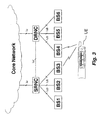
Figure 2 illustrates schematically a radio communication system and a first Active Set according to the invention. -
Figure 3 illustrates schematically a radio communication system and a second Active Set according to the invention. -
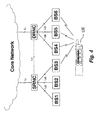
Figure 4 illustrates schematically a radio communication system and a third Active Set according to the invention. -
Figure 5 illustrates schematically a radio communication system and a fourth Active Set according to the invention. - A shared or common channel, such as a Downlink Shared Channel, DSCH, need not be time aligned between cells. As a consequence, soft handover of a shared or common channel is not immediately avail.able for this channel. A DSCH is paired with a Dedicated Physical Channel, DPCH. The Dedicated Physical Channels of various cells are time aligned and accessible for soft handover. The different time alignment of associated channels raises problems when it comes to handover of channels not being time aligned.
- Hard handover and soft handover as such are well known. Using the terminology of
figures 2-5 , hard handover is a category of handover procedures where all the old radio links in the User Equipment UE are abandoned before new radio links are established whereas soft handover is a category of handover procedures where the radio links are added and abandoned in such manner that the User Equipment UE always keeps at least one radio link to a Base Station (BS1-BS6). Similar measures, such as energy to noise ratio, Ec/N0, or energy to interference ratio on a Primary Common Pilot Channel, PCPICH, Received Signal Code Power, RSCP, on the PCPICH or downlink path loss, form a basis of a performance criterion used for soft and hard handover. However, hard handover, according to prior art, of a common or shared channel will result in inferior throughput. - The proposed hard handover within a dynamic Active Set is characterized by criteria to be used within the dynamic Active Set such as instantaneous link quality; average link quality; persistent link quality; total downlink power; usage of Physical Downlink Shared Channel, PDSCH; maximal PDSCH power; real time to non-real time traffic ratio or spreading factor as will be explained in detail below.
- Handover is not restricted only to handover between base stations. However, for reasons of linguistic simplicity the specification describes the handover process according to the invention as a handover between base stations. It should be clear that handover between antenna sectors using separate shared channels is included as well. In accordance with this specification each such sector will be treated as a base station. Also included is interfrequency handover. Interfrequency handover is performed between separate carrier frequencies or frequency bands. Each such carrier frequency or frequency band is treated as a base station below.
- In Code Division Multiple Access, respective digital user signals are separated by individual spreading codes. Each code represents a spreading factor. Sub-channels or lower rate channels are separated by sub-codes with a greater spreading factor.
Figure 1 illustrates the interrelations between data rates/sub-channels and sub-codes/spreading factors. It displays a binary code tree where a spreading factor, SF, equal to one occupies the entire code tree, i.e. all levels indicated by SF=2, SF=4, SF=8 and SF=16. This spreading factor translates into the highest user data rate. A sub-code with a spreading factor equal to two occupies only half the tree, the leftmost sub-tree or the rightmost sub-tree, in each case the sub-tree occupying the levels indicated by SF=4, SF=8 and SF=16 preventing other users from using the corresponding codes. Similarly, if a user is assigned a sub-code corresponding to a spreading factor equal to four, he occupies a sub-tree (and corresponding sub-channels) originating from the level indicated by SF=4 down to SF=16. Spreading factor four represents a medium user data rate. A user allocated a channel of spreadingfactor 16 occupies the lowest data rate in this exemplary figure. Spreading codes for SF=1, SF=2 and SF=4 are denoted at the root of the corresponding sub-tree. This code tree is only an example not limiting the scope of the invention. -
Figure 2 illustrates schematically a radio communication system. User Equipment UE is subject to soft handover involving radio links associated with Base Stations BS3, BS4 and BS5 in the Active Set. One of the BSs is in charge of communication on the DSCH.Figure 2 also illustrates Base Stations BS1, BS2 and BS3 connected to a Serving Radio Network Controller, Serving RNC or SRNC. The Serving RNC control.s the connection between a Core Network and the UE. The Serving RNC is connected to the Core Network over a so-called Iu interface, Iu. The Serving RNC is also connected to another Radio Network Controller, RNC, called Drift RNC or DRNC. In the figure the Drift RNC controls Base Stations BS4, BS5 and BS6. The Serving RNC and the Drift RNC are connected to the controlled base stations over a so-called Iub interface. The RNCs (SRNC, DRNC) are interconnected over an Iur interface. As the User Equipment UE dissociates from BS2, it will finally be excluded from the Active Set when path loss increases and channel quality decreases, as schematically shown infigure 3 where the Active Set comprises links associated with BS3 and BS4. - In
figure 4 , in comparison tofigure 3 , two more links associated with Base Stations BS5 and BS6 have been included in the Active Set. Infigures 2 ,3 and4 the Serving RNC remains the same. - In
figure 5 , the link associated with BS3 is excluded from the Active Set due to channel and traffic situation. Infigure 5 SRNC maintains the connection to the core network. However, as all Base Stations (BS4, BS5, BS6) associated with links involved in the Active Set are controlled by one RNC, the DRNC infigure 5 , this RNC could be SRNC (interchanging the roles of the two RNCs) infigure 5 if SRNC-relocation were used. - Preferred embodiments are grouped into two fundamental embodiments. In a first fundamental embodiment of the invention, the common packet data channel of the serving cell is not handed over until its associated radio link is scheduled, in accordance with a specified criterion, to be excluded from the Active Set. Considering a process where base stations are excluded and added as in the sequence of
figures 2-5 and where initially BS3 is the serving base station of the common packet data channel, it will not be handed over untilfigure 5 where the radio link associated with BS3 is excluded from the Active Set. Criteria for selection of a serving cell associated with a radio link within the Active Set, comprising Base Stations BS4, BS5 and BS6 is set out below. - According to a second fundamental embodiment of the invention, the serving cell is handed over whenever another cell with an associated radio link within the Active Set shows superior performance according to some specified criteria as set out hereinafter. In a time-varying environment with rapidly changing channel quality, measures need to be undertaken in order not to increase the number of handovers as further explained in the proceeding.
- In WCDMA/UMTS a Universal Terrestrial Radio Access Network, UTRAN, chooses the serving base station routing a DSCH to the UE. Rapid time variations can be averaged out by long term filtering. An alternative is to prescribe that any change of a parameter forming a basis for handover shall persist a specified amount of time for a handover to be initiated. If, in one embodiment in accordance with the second fundamental embodiment, a performance criterion indicates that a base station does not have the best channel to/from the UE within the Active Set, a handover is initiated only if this condition persists a specified amount of time. For embodiments in accordance with the second fundamental embodiment it can also be advantageous to use a hysteresis, handing over a DSCH to another base station only if the performance measure of the candidate base station supersedes the performance measure of the presently serving base station by a specified amount, i.e. introducing a threshold. Of vital importance to the invention is that the criteria are only applied within the Active Set. Consequently, a base station not included in the Active Set is never a candidate base station for a handover of the shared channel. For the purpose of illustration, BS3 in
figure 5 is not a candidate serving base station, as it is not associated with a link within the Active Set. Infigure 5 only BS4, BS5 and BS6 may be handover candidates for the shared channel as they are the only base stations with associated radio links included in the Active Set. - When it comes to possible choices of parameter selections using one single parameter, common in prior art, introduces problems regarding throughput. Preferred embodiments in accordance with the first and second fundamental embodiments implement some particular parameter selections advantageously used for cell selection from a dynamic Active Set in order to increase throughput. The following handover parameters, one or more of which to be combined with at least one channel criterion described above, for comparing handover candidate base stations associated with links within the Active Set are proposed,
- total transmitted downlink power from the base station or antenna sector,
- PDSCH occupancy,
- lowest spreading factor available for PDSCH,
- maximum power available for PDSCH, and
- ratio of real-time to non real-time traffic.
- Total transmitted downlink power reflects the margin to congestion. Occupancy is measured as the fraction of time the PDSCH is occupied or used, as opposed to idle. Balancing PDSCH occupancy or usage within an Active Set will also increase fairness between users in different cells associated with links of the Active Set. A small spreading factor corresponds to a high bit rate. The smaller the spreading factor available the larger the sub-tree of a code tree available. The error rate depends on received bit energy. Everything else being kept equal for a power-limited channel, a bit rate increase implies a requirement for minimum transmission power to increase, in order not to increase the error rate. Consequently, with a high maximum power available for PDSCH the data rate on the channel can be increased without increasing the error rate more than allowed for. If the ratio of real-time traffic to non real-time traffic is high it is generally beneficiary to select another cell with a lower ratio. The requirement on the real-time traffic ratio is motivated by e.g.
- it protects real-time traffic, and
- it enables free capacity to be used by PDSCH.
- The invention is not intended to be limited only to the embodiments described in detail above. Changes and modifications may be made without departing from the invention. It covers all modifications within the scope of the following claims.
Claims (11)
- A control node in a radio communications system being adapted for handover of a shared or common channel from a first radio entity to a second radio entity, the control node characterized by processing means providing control of radio entities, adapted so that only one or more radio entities associated with one or more radio links in a dynamic active set of a user equipment are considered as candidates for hard handover of the shared or common channel when the user equipment is subject to soft handover involving radio links associated with the active set.
- The control node according to claim 1, wherein the controlled radio entities are base stations.
- The control node according to claim 1, wherein the controlled radio entities are antenna sectors.
- The control node according to claim 1, wherein the controlled radio entities are carrier frequencies.
- The control node according to any of claims 1-4 characterized by the processing means being adapted to provide handover control for handing over the shared or common channel when a radio link of the first radio entity is scheduled to be excluded from the dynamic active set, the exclusion being based upon at least a first parameter and the radio entities included for hard handover being selected based upon at least a second parameter.
- The control node according to any of claims 1-4 characterized by the processing means being adapted for selecting one or more handover candidates for handover based upon at least two parameters, the first parameter being processed according to one of the processes of long term filtering, persistency checking and hysteresis thresholding.
- The control node according to claim 5 or 6, wherein the second parameter is one of total transmitted downlink power from the radio entity, PDSCH occupancy, lowest spreading factor available for PDSCH and ratio of real-time to non real-time traffic.
- The control node according to claim 5 or 6, wherein the first parameter is one of received signal strength, received bit energy, interference level, noise level, downlink path loss, error rate or a combination thereof.
- The control node according to claim 5 or 6, wherein the first parameter is one of energy to interference ratio on a Primary Common Pilot Channel and received signal code power on a Primary Common Pilot Channel.
- The control node according to any of claims 1-9, wherein the control node is a Drift Radio Network Controller.
- The control node according to any of claims 1-9, wherein the control node is a Serving Radio Network Controller.
Applications Claiming Priority (2)
| Application Number | Priority Date | Filing Date | Title |
|---|---|---|---|
| SE0004922A SE0004922D0 (en) | 2000-12-29 | 2000-12-29 | Method and system of handover |
| EP01273014A EP1346595B1 (en) | 2000-12-29 | 2001-12-28 | Method and system for handover of a shared channel in a cdma cellular mobile radio system |
Related Parent Applications (2)
| Application Number | Title | Priority Date | Filing Date |
|---|---|---|---|
| EP01273014A Division EP1346595B1 (en) | 2000-12-29 | 2001-12-28 | Method and system for handover of a shared channel in a cdma cellular mobile radio system |
| EP01273014.9 Division | 2001-12-28 |
Publications (2)
| Publication Number | Publication Date |
|---|---|
| EP1705946A1 EP1705946A1 (en) | 2006-09-27 |
| EP1705946B1 true EP1705946B1 (en) | 2010-07-14 |
Family
ID=20282497
Family Applications (2)
| Application Number | Title | Priority Date | Filing Date |
|---|---|---|---|
| EP01273014A Expired - Lifetime EP1346595B1 (en) | 2000-12-29 | 2001-12-28 | Method and system for handover of a shared channel in a cdma cellular mobile radio system |
| EP06116240A Expired - Lifetime EP1705946B1 (en) | 2000-12-29 | 2001-12-28 | Control node for handover of a shared channel in a CDMA cellular mobile radio system |
Family Applications Before (1)
| Application Number | Title | Priority Date | Filing Date |
|---|---|---|---|
| EP01273014A Expired - Lifetime EP1346595B1 (en) | 2000-12-29 | 2001-12-28 | Method and system for handover of a shared channel in a cdma cellular mobile radio system |
Country Status (7)
| Country | Link |
|---|---|
| EP (2) | EP1346595B1 (en) |
| AT (2) | ATE334563T1 (en) |
| DE (2) | DE60142593D1 (en) |
| ES (2) | ES2348629T3 (en) |
| PT (1) | PT1705946E (en) |
| SE (1) | SE0004922D0 (en) |
| WO (1) | WO2002054819A1 (en) |
Families Citing this family (6)
| Publication number | Priority date | Publication date | Assignee | Title |
|---|---|---|---|---|
| US7583633B2 (en) | 2003-02-28 | 2009-09-01 | Telefonaktiebolaget Lm Ericsson (Publ) | Hard handoff target generation in a multi-frequency CDMA mobile network |
| ES2301420B1 (en) * | 2003-08-08 | 2009-05-01 | Teltronic, S.A.U. | METHOD FOR CHANGES OF CONNECTION TO A NEW ACCESS POINT BASED ON THE TRAFFIC DEMAND. |
| WO2006008324A1 (en) * | 2004-06-23 | 2006-01-26 | Teltronic, S.A.U. | Method of changing connection to a new access point, based on traffic demand |
| CN100438686C (en) * | 2004-08-02 | 2008-11-26 | 华为技术有限公司 | A Handoff Method for Trunked Mobile Station |
| US20060142021A1 (en) * | 2004-12-29 | 2006-06-29 | Lucent Technologies, Inc. | Load balancing on shared wireless channels |
| JP4805047B2 (en) | 2006-07-20 | 2011-11-02 | 株式会社エヌ・ティ・ティ・ドコモ | Mobile station and handover control method |
Family Cites Families (11)
| Publication number | Priority date | Publication date | Assignee | Title |
|---|---|---|---|---|
| JPH0723449A (en) * | 1993-06-17 | 1995-01-24 | Oki Electric Ind Co Ltd | Channel allocation method in mobile communication |
| KR0170190B1 (en) * | 1995-12-06 | 1999-03-30 | 정선종 | Control method of traffic load of cdma mobile communication system |
| EP0876008B1 (en) * | 1997-05-02 | 2005-09-14 | Siemens Aktiengesellschaft | Adaptive data rate TDMA/CDMA communications system |
| GB2327013B (en) * | 1997-06-30 | 2002-02-13 | Ericsson Telefon Ab L M | Mobile communications system |
| FI106287B (en) | 1997-09-17 | 2000-12-29 | Nokia Mobile Phones Ltd | Improved procedure for changing base station |
| US6216004B1 (en) * | 1998-06-23 | 2001-04-10 | Qualcomm Incorporated | Cellular communication system with common channel soft handoff and associated method |
| US6018662A (en) * | 1998-09-08 | 2000-01-25 | Nortel Networks Corporation | Method for performing progressive soft handoff in CDMA systems |
| GB2343330A (en) * | 1998-10-29 | 2000-05-03 | Fujitsu Ltd | Soft handoff method using a backup link |
| FI108605B (en) | 1998-11-25 | 2002-02-15 | Nokia Corp | Procedure for location management, mobile telephones and systems |
| DE19857041A1 (en) | 1998-12-10 | 2000-06-15 | Siemens Ag | Method for data transmission in a radio communication system |
| WO2000079809A1 (en) * | 1999-06-18 | 2000-12-28 | Motorola Inc. | Method and apparatus for fast handoff in a communication system |
-
2000
- 2000-12-29 SE SE0004922A patent/SE0004922D0/en unknown
-
2001
- 2001-12-28 DE DE60142593T patent/DE60142593D1/en not_active Expired - Lifetime
- 2001-12-28 EP EP01273014A patent/EP1346595B1/en not_active Expired - Lifetime
- 2001-12-28 AT AT01273014T patent/ATE334563T1/en not_active IP Right Cessation
- 2001-12-28 ES ES06116240T patent/ES2348629T3/en not_active Expired - Lifetime
- 2001-12-28 ES ES01273014T patent/ES2269306T3/en not_active Expired - Lifetime
- 2001-12-28 AT AT06116240T patent/ATE474429T1/en not_active IP Right Cessation
- 2001-12-28 EP EP06116240A patent/EP1705946B1/en not_active Expired - Lifetime
- 2001-12-28 PT PT06116240T patent/PT1705946E/en unknown
- 2001-12-28 DE DE60121802T patent/DE60121802T2/en not_active Expired - Lifetime
- 2001-12-28 WO PCT/SE2001/002924 patent/WO2002054819A1/en not_active Ceased
Also Published As
| Publication number | Publication date |
|---|---|
| ATE474429T1 (en) | 2010-07-15 |
| SE0004922D0 (en) | 2000-12-29 |
| DE60121802T2 (en) | 2007-08-02 |
| EP1346595B1 (en) | 2006-07-26 |
| ATE334563T1 (en) | 2006-08-15 |
| EP1705946A1 (en) | 2006-09-27 |
| EP1346595A1 (en) | 2003-09-24 |
| PT1705946E (en) | 2010-09-23 |
| DE60121802D1 (en) | 2006-09-07 |
| DE60142593D1 (en) | 2010-08-26 |
| ES2269306T3 (en) | 2007-04-01 |
| WO2002054819A1 (en) | 2002-07-11 |
| ES2348629T3 (en) | 2010-12-10 |
Similar Documents
| Publication | Publication Date | Title |
|---|---|---|
| EP1510095B1 (en) | Handover in a communication network | |
| KR100606292B1 (en) | Method and system of soft handoff control based on access network capacity | |
| EP1449400B1 (en) | Method for determining a monitored set of cells associated with an active set of cells | |
| KR100244193B1 (en) | The method of hard handoff using dummy pilot | |
| EP1179961B1 (en) | A method for optimizing a number of communication links | |
| EP1405538B1 (en) | A method of ranking neighbour cells as candidates for an hand over | |
| US6690936B1 (en) | Air-interface efficiency in wireless communication systems | |
| EP1452062B1 (en) | Method, system and mobile terminal for optimal spectrum utilization in cellular systems | |
| EP1231805A1 (en) | System and method for performing inter-layer handoff in a hierarchical cellular system | |
| GB2337414A (en) | Soft handoff in cellular communications networks | |
| WO2006068881A1 (en) | Method and apparatus for mobile station-assisted load balancing in wireless packet data networks | |
| EP1943865B1 (en) | Enhanced dedicated-channel reporting for umts | |
| US20050239472A1 (en) | Allocation method and controller | |
| EP1346595B1 (en) | Method and system for handover of a shared channel in a cdma cellular mobile radio system | |
| EP1153523B1 (en) | Methods and systems for controlling hard and soft handoffs in radio communication systems | |
| KR20000075167A (en) | Hand-off Control Method for High speed Data Call in Mobile communication system | |
| KR20030068768A (en) | Method for Down Link Power Control in SSDT mode | |
| KR20020039859A (en) | Method for processing a hand-off by using site selection diversity transmission in mobile communication system | |
| WO2001089258A2 (en) | Dynamic hierarchical cell structure neighbor relations based on cell congestion |
Legal Events
| Date | Code | Title | Description |
|---|---|---|---|
| PUAI | Public reference made under article 153(3) epc to a published international application that has entered the european phase |
Free format text: ORIGINAL CODE: 0009012 |
|
| AC | Divisional application: reference to earlier application |
Ref document number: 1346595 Country of ref document: EP Kind code of ref document: P |
|
| AK | Designated contracting states |
Kind code of ref document: A1 Designated state(s): AT BE CH CY DE DK ES FI FR GB GR IE IT LI LU MC NL PT SE TR |
|
| RIN1 | Information on inventor provided before grant (corrected) |
Inventor name: ANDERSSON, ANDREAS Inventor name: DENKERT, NIKLAS Inventor name: KARLSSON, PATRICK |
|
| 17P | Request for examination filed |
Effective date: 20070327 |
|
| AKX | Designation fees paid |
Designated state(s): AT BE CH CY DE DK ES FI FR GB GR IE IT LI LU MC NL PT SE TR |
|
| 17Q | First examination report despatched |
Effective date: 20090813 |
|
| GRAC | Information related to communication of intention to grant a patent modified |
Free format text: ORIGINAL CODE: EPIDOSCIGR1 |
|
| GRAP | Despatch of communication of intention to grant a patent |
Free format text: ORIGINAL CODE: EPIDOSNIGR1 |
|
| RIC1 | Information provided on ipc code assigned before grant |
Ipc: H04W 36/18 20090101AFI20100118BHEP |
|
| RTI1 | Title (correction) |
Free format text: CONTROL NODE FOR HANDOVER OF A SHARED CHANNEL IN A CDMA CELLULAR MOBILE RADIO SYSTEM |
|
| GRAS | Grant fee paid |
Free format text: ORIGINAL CODE: EPIDOSNIGR3 |
|
| GRAA | (expected) grant |
Free format text: ORIGINAL CODE: 0009210 |
|
| AC | Divisional application: reference to earlier application |
Ref document number: 1346595 Country of ref document: EP Kind code of ref document: P |
|
| AK | Designated contracting states |
Kind code of ref document: B1 Designated state(s): AT BE CH CY DE DK ES FI FR GB GR IE IT LI LU MC NL PT SE TR |
|
| REG | Reference to a national code |
Ref country code: GB Ref legal event code: FG4D |
|
| REG | Reference to a national code |
Ref country code: CH Ref legal event code: EP |
|
| REG | Reference to a national code |
Ref country code: IE Ref legal event code: FG4D |
|
| REF | Corresponds to: |
Ref document number: 60142593 Country of ref document: DE Date of ref document: 20100826 Kind code of ref document: P |
|
| REG | Reference to a national code |
Ref country code: PT Ref legal event code: SC4A Free format text: AVAILABILITY OF NATIONAL TRANSLATION Effective date: 20100916 |
|
| REG | Reference to a national code |
Ref country code: NL Ref legal event code: T3 |
|
| REG | Reference to a national code |
Ref country code: ES Ref legal event code: FG2A Effective date: 20101126 |
|
| PG25 | Lapsed in a contracting state [announced via postgrant information from national office to epo] |
Ref country code: AT Free format text: LAPSE BECAUSE OF FAILURE TO SUBMIT A TRANSLATION OF THE DESCRIPTION OR TO PAY THE FEE WITHIN THE PRESCRIBED TIME-LIMIT Effective date: 20100714 Ref country code: FI Free format text: LAPSE BECAUSE OF FAILURE TO SUBMIT A TRANSLATION OF THE DESCRIPTION OR TO PAY THE FEE WITHIN THE PRESCRIBED TIME-LIMIT Effective date: 20100714 |
|
| PG25 | Lapsed in a contracting state [announced via postgrant information from national office to epo] |
Ref country code: CY Free format text: LAPSE BECAUSE OF FAILURE TO SUBMIT A TRANSLATION OF THE DESCRIPTION OR TO PAY THE FEE WITHIN THE PRESCRIBED TIME-LIMIT Effective date: 20100714 |
|
| PG25 | Lapsed in a contracting state [announced via postgrant information from national office to epo] |
Ref country code: SE Free format text: LAPSE BECAUSE OF FAILURE TO SUBMIT A TRANSLATION OF THE DESCRIPTION OR TO PAY THE FEE WITHIN THE PRESCRIBED TIME-LIMIT Effective date: 20100714 Ref country code: GR Free format text: LAPSE BECAUSE OF FAILURE TO SUBMIT A TRANSLATION OF THE DESCRIPTION OR TO PAY THE FEE WITHIN THE PRESCRIBED TIME-LIMIT Effective date: 20101015 |
|
| PG25 | Lapsed in a contracting state [announced via postgrant information from national office to epo] |
Ref country code: DK Free format text: LAPSE BECAUSE OF FAILURE TO SUBMIT A TRANSLATION OF THE DESCRIPTION OR TO PAY THE FEE WITHIN THE PRESCRIBED TIME-LIMIT Effective date: 20100714 |
|
| PLBE | No opposition filed within time limit |
Free format text: ORIGINAL CODE: 0009261 |
|
| STAA | Information on the status of an ep patent application or granted ep patent |
Free format text: STATUS: NO OPPOSITION FILED WITHIN TIME LIMIT |
|
| 26N | No opposition filed |
Effective date: 20110415 |
|
| REG | Reference to a national code |
Ref country code: DE Ref legal event code: R097 Ref document number: 60142593 Country of ref document: DE Effective date: 20110415 |
|
| PG25 | Lapsed in a contracting state [announced via postgrant information from national office to epo] |
Ref country code: MC Free format text: LAPSE BECAUSE OF NON-PAYMENT OF DUE FEES Effective date: 20101231 |
|
| REG | Reference to a national code |
Ref country code: CH Ref legal event code: PL |
|
| PG25 | Lapsed in a contracting state [announced via postgrant information from national office to epo] |
Ref country code: LI Free format text: LAPSE BECAUSE OF NON-PAYMENT OF DUE FEES Effective date: 20101231 Ref country code: CH Free format text: LAPSE BECAUSE OF NON-PAYMENT OF DUE FEES Effective date: 20101231 |
|
| PG25 | Lapsed in a contracting state [announced via postgrant information from national office to epo] |
Ref country code: LU Free format text: LAPSE BECAUSE OF NON-PAYMENT OF DUE FEES Effective date: 20101228 |
|
| PG25 | Lapsed in a contracting state [announced via postgrant information from national office to epo] |
Ref country code: TR Free format text: LAPSE BECAUSE OF FAILURE TO SUBMIT A TRANSLATION OF THE DESCRIPTION OR TO PAY THE FEE WITHIN THE PRESCRIBED TIME-LIMIT Effective date: 20100714 |
|
| REG | Reference to a national code |
Ref country code: FR Ref legal event code: PLFP Year of fee payment: 15 |
|
| REG | Reference to a national code |
Ref country code: FR Ref legal event code: PLFP Year of fee payment: 16 |
|
| PG25 | Lapsed in a contracting state [announced via postgrant information from national office to epo] |
Ref country code: IT Free format text: LAPSE BECAUSE OF NON-PAYMENT OF DUE FEES Effective date: 20151228 |
|
| PGFP | Annual fee paid to national office [announced via postgrant information from national office to epo] |
Ref country code: IE Payment date: 20161229 Year of fee payment: 16 Ref country code: GB Payment date: 20161228 Year of fee payment: 16 Ref country code: NL Payment date: 20161226 Year of fee payment: 16 |
|
| PGFP | Annual fee paid to national office [announced via postgrant information from national office to epo] |
Ref country code: PT Payment date: 20161205 Year of fee payment: 16 Ref country code: ES Payment date: 20161227 Year of fee payment: 16 Ref country code: FR Payment date: 20161227 Year of fee payment: 16 |
|
| PGFP | Annual fee paid to national office [announced via postgrant information from national office to epo] |
Ref country code: DE Payment date: 20161229 Year of fee payment: 16 |
|
| PGFP | Annual fee paid to national office [announced via postgrant information from national office to epo] |
Ref country code: BE Payment date: 20161227 Year of fee payment: 16 |
|
| PG25 | Lapsed in a contracting state [announced via postgrant information from national office to epo] |
Ref country code: IT Free format text: LAPSE BECAUSE OF NON-PAYMENT OF DUE FEES Effective date: 20151228 |
|
| PGFP | Annual fee paid to national office [announced via postgrant information from national office to epo] |
Ref country code: IT Payment date: 20161222 Year of fee payment: 16 |
|
| PGRI | Patent reinstated in contracting state [announced from national office to epo] |
Ref country code: IT Effective date: 20170710 |
|
| REG | Reference to a national code |
Ref country code: DE Ref legal event code: R119 Ref document number: 60142593 Country of ref document: DE |
|
| PG25 | Lapsed in a contracting state [announced via postgrant information from national office to epo] |
Ref country code: PT Free format text: LAPSE BECAUSE OF NON-PAYMENT OF DUE FEES Effective date: 20180628 |
|
| REG | Reference to a national code |
Ref country code: NL Ref legal event code: MM Effective date: 20180101 |
|
| GBPC | Gb: european patent ceased through non-payment of renewal fee |
Effective date: 20171228 |
|
| REG | Reference to a national code |
Ref country code: IE Ref legal event code: MM4A |
|
| PG25 | Lapsed in a contracting state [announced via postgrant information from national office to epo] |
Ref country code: NL Free format text: LAPSE BECAUSE OF NON-PAYMENT OF DUE FEES Effective date: 20180101 |
|
| REG | Reference to a national code |
Ref country code: FR Ref legal event code: ST Effective date: 20180831 |
|
| REG | Reference to a national code |
Ref country code: BE Ref legal event code: MM Effective date: 20171231 |
|
| PG25 | Lapsed in a contracting state [announced via postgrant information from national office to epo] |
Ref country code: FR Free format text: LAPSE BECAUSE OF NON-PAYMENT OF DUE FEES Effective date: 20180102 Ref country code: DE Free format text: LAPSE BECAUSE OF NON-PAYMENT OF DUE FEES Effective date: 20180703 Ref country code: IT Free format text: LAPSE BECAUSE OF NON-PAYMENT OF DUE FEES Effective date: 20171228 Ref country code: IE Free format text: LAPSE BECAUSE OF NON-PAYMENT OF DUE FEES Effective date: 20171228 |
|
| PG25 | Lapsed in a contracting state [announced via postgrant information from national office to epo] |
Ref country code: BE Free format text: LAPSE BECAUSE OF NON-PAYMENT OF DUE FEES Effective date: 20171231 Ref country code: GB Free format text: LAPSE BECAUSE OF NON-PAYMENT OF DUE FEES Effective date: 20171228 |
|
| REG | Reference to a national code |
Ref country code: ES Ref legal event code: FD2A Effective date: 20190704 |
|
| PG25 | Lapsed in a contracting state [announced via postgrant information from national office to epo] |
Ref country code: ES Free format text: LAPSE BECAUSE OF NON-PAYMENT OF DUE FEES Effective date: 20171229 |