EP1699760B1 - Anti-hypercholesterolemic compounds - Google Patents
Anti-hypercholesterolemic compounds Download PDFInfo
- Publication number
- EP1699760B1 EP1699760B1 EP04814836.5A EP04814836A EP1699760B1 EP 1699760 B1 EP1699760 B1 EP 1699760B1 EP 04814836 A EP04814836 A EP 04814836A EP 1699760 B1 EP1699760 B1 EP 1699760B1
- Authority
- EP
- European Patent Office
- Prior art keywords
- alkyl
- phenyl
- compound
- group
- glucuronide
- Prior art date
- Legal status (The legal status is an assumption and is not a legal conclusion. Google has not performed a legal analysis and makes no representation as to the accuracy of the status listed.)
- Expired - Lifetime
Links
- 0 C*N(C)CC#*C Chemical compound C*N(C)CC#*C 0.000 description 10
- JEOFJQIYXZBNRR-PSIQWCRZSA-N C#Cc(cc1)ccc1N([C@@H](C1CC[C@@H](c(cc2)ccc2F)O)c(cc2)ccc2O[C@@H]([C@@H]([C@H]([C@@H]2O)O)O)O[C@@H]2C(O)=O)C1=O Chemical compound C#Cc(cc1)ccc1N([C@@H](C1CC[C@@H](c(cc2)ccc2F)O)c(cc2)ccc2O[C@@H]([C@@H]([C@H]([C@@H]2O)O)O)O[C@@H]2C(O)=O)C1=O JEOFJQIYXZBNRR-PSIQWCRZSA-N 0.000 description 1
- OWRFWBHAZCRZND-RRPGIYPFSA-N CC(O[C@@H](CCC([C@@H](c(cc1)ccc1O[C@@H]([C@@H]([C@H]([C@@H]1OC(C)=O)OC(C)=O)OC(C)=O)O[C@@H]1C(OC)=O)N1C)C1=O)c(cc1)ccc1F)=O Chemical compound CC(O[C@@H](CCC([C@@H](c(cc1)ccc1O[C@@H]([C@@H]([C@H]([C@@H]1OC(C)=O)OC(C)=O)OC(C)=O)O[C@@H]1C(OC)=O)N1C)C1=O)c(cc1)ccc1F)=O OWRFWBHAZCRZND-RRPGIYPFSA-N 0.000 description 1
- DWURZHBEXYXPMW-JXVYVTROSA-N CS(NCC#Cc(cc1)ccc1N([C@@H](C1CC[C@@H](c(cc2)ccc2F)O)c(cc2)ccc2O[C@@H]([C@@H]([C@H]([C@@H]2O)O)O)O[C@@H]2C(O)=O)C1=O)(=O)=O Chemical compound CS(NCC#Cc(cc1)ccc1N([C@@H](C1CC[C@@H](c(cc2)ccc2F)O)c(cc2)ccc2O[C@@H]([C@@H]([C@H]([C@@H]2O)O)O)O[C@@H]2C(O)=O)C1=O)(=O)=O DWURZHBEXYXPMW-JXVYVTROSA-N 0.000 description 1
Classifications
-
- C—CHEMISTRY; METALLURGY
- C07—ORGANIC CHEMISTRY
- C07D—HETEROCYCLIC COMPOUNDS
- C07D205/00—Heterocyclic compounds containing four-membered rings with one nitrogen atom as the only ring hetero atom
- C07D205/02—Heterocyclic compounds containing four-membered rings with one nitrogen atom as the only ring hetero atom not condensed with other rings
- C07D205/06—Heterocyclic compounds containing four-membered rings with one nitrogen atom as the only ring hetero atom not condensed with other rings having one double bond between ring members or between a ring member and a non-ring member
- C07D205/08—Heterocyclic compounds containing four-membered rings with one nitrogen atom as the only ring hetero atom not condensed with other rings having one double bond between ring members or between a ring member and a non-ring member with one oxygen atom directly attached in position 2, e.g. beta-lactams
-
- A—HUMAN NECESSITIES
- A61—MEDICAL OR VETERINARY SCIENCE; HYGIENE
- A61P—SPECIFIC THERAPEUTIC ACTIVITY OF CHEMICAL COMPOUNDS OR MEDICINAL PREPARATIONS
- A61P3/00—Drugs for disorders of the metabolism
- A61P3/06—Antihyperlipidemics
-
- A—HUMAN NECESSITIES
- A61—MEDICAL OR VETERINARY SCIENCE; HYGIENE
- A61P—SPECIFIC THERAPEUTIC ACTIVITY OF CHEMICAL COMPOUNDS OR MEDICINAL PREPARATIONS
- A61P9/00—Drugs for disorders of the cardiovascular system
- A61P9/10—Drugs for disorders of the cardiovascular system for treating ischaemic or atherosclerotic diseases, e.g. antianginal drugs, coronary vasodilators, drugs for myocardial infarction, retinopathy, cerebrovascula insufficiency, renal arteriosclerosis
-
- C—CHEMISTRY; METALLURGY
- C07—ORGANIC CHEMISTRY
- C07H—SUGARS; DERIVATIVES THEREOF; NUCLEOSIDES; NUCLEOTIDES; NUCLEIC ACIDS
- C07H15/00—Compounds containing hydrocarbon or substituted hydrocarbon radicals directly attached to hetero atoms of saccharide radicals
- C07H15/26—Acyclic or carbocyclic radicals, substituted by hetero rings
Definitions
- the compounds of the instant invention are cholesterol absorption inhibitors and are useful for reducing plasma cholesterol levels, particularly reducing plasma LDL cholesterol levels, when used either alone or in combination with another active agent, such as an anti-atherosclerotic agent, and more particularly a cholesterol biosynthesis inhibitor, for example an HMG-CoA reductase inhibitor.
- another active agent such as an anti-atherosclerotic agent, and more particularly a cholesterol biosynthesis inhibitor, for example an HMG-CoA reductase inhibitor.
- a cholesterol biosynthesis inhibitor for example an HMG-CoA reductase inhibitor.
Landscapes
- Chemical & Material Sciences (AREA)
- Organic Chemistry (AREA)
- Health & Medical Sciences (AREA)
- Engineering & Computer Science (AREA)
- General Health & Medical Sciences (AREA)
- Life Sciences & Earth Sciences (AREA)
- Bioinformatics & Cheminformatics (AREA)
- Animal Behavior & Ethology (AREA)
- Biotechnology (AREA)
- Medicinal Chemistry (AREA)
- Nuclear Medicine, Radiotherapy & Molecular Imaging (AREA)
- Chemical Kinetics & Catalysis (AREA)
- Pharmacology & Pharmacy (AREA)
- General Chemical & Material Sciences (AREA)
- Molecular Biology (AREA)
- Genetics & Genomics (AREA)
- Public Health (AREA)
- Veterinary Medicine (AREA)
- Biochemistry (AREA)
- Obesity (AREA)
- Diabetes (AREA)
- Hematology (AREA)
- Urology & Nephrology (AREA)
- Vascular Medicine (AREA)
- Cardiology (AREA)
- Heart & Thoracic Surgery (AREA)
- Pharmaceuticals Containing Other Organic And Inorganic Compounds (AREA)
- Steroid Compounds (AREA)
- Saccharide Compounds (AREA)
- Acyclic And Carbocyclic Compounds In Medicinal Compositions (AREA)
Description
- The instant invention relates to substituted 2-azetidinones and the pharmaceutically acceptable salts and esters thereof, and to the compounds for use alone or in combination with other active agents to treat hypercholesterolemia and for preventing, halting or slowing the progression of atherosclerosis and related conditions and disease events.
- It has been clear for several decades that elevated blood cholesterol is a major risk factor for coronary heart disease, and many studies have shown that the risk of CHD events can be reduced by lipid-lowering therapy. Prior to 1987, the lipid-lowering armamentarium was limited essentially to a low saturated fat and cholesterol diet, the bile acid sequestrants (cholestyramine and colestipol), nicotinic acid (niacin), the fibrates and probucol. Unfortunately, all of these treatments have limited efficacy or tolerability, or both. Substantial reductions in LDL (low density lipoprotein) cholesterol accompanied by increases in HDL (high density lipoprotein) cholesterol could be achieved by the combination of a lipid-lowering diet and a bile acid sequestrant, with or without the addition of nicotinic acid. However, this therapy is not easy to administer or tolerate and was therefore often unsuccessful except in specialist lipid clinics. The fibrates produce a moderate reduction in LDL cholesterol accompanied by increased HDL cholesterol and a substantial reduction in triglycerides, and because they are well tolerated these drugs have been more widely used. Probucol produces only a small reduction in LDL cholesterol and also reduces HDL cholesterol, which, because of the strong inverse relationship between HDL cholesterol level and CHD risk, is generally considered undesirable. With the introduction of lovastatin, the first inhibitor of HMG-CoA reductase to become available for prescription in 1987, for the first time physicians were able to obtain large reductions in plasma cholesterol with very few adverse effects.
- Recent studies have unequivocally demonstrated that lovastatin, simvastatin and pravastatin, all members of the HMG-CoA reductase inhibitor class, slow the progression of atherosclerotic lesions in the coronary and carotid arteries. Simvastatin and pravastatin have also been shown to reduce the risk of coronary heart disease events, and in the case of simvastatin a highly significant reduction in the risk of coronary death and total mortality has been shown by the Scandinavian Simvastatin Survival Study. This study also provided some evidence for a reduction in cerebrovascular events. Despite the substantial reduction in the risk of coronary morbidity and mortality achieved by simvastatin, the risk is still substantial in the treated patients. For example, in the Scandinavian Simvastatin Survival Study, the 42% reduction in the risk of coronary death still left 5% of the treated patients to die of their disease over the course of this 5 year study. Further reduction of risk is clearly needed.
- A more recent class of anti-hyperlipidemic agents that has emerged includes inhibitors of cholesterol absorption. Ezetimibe, the first compound to receive regulatory approval in this class, is currently marketed in the U.S. under the tradename ZETIA®. Ezetimibe has the following chemical structure and is described in U.S. Patent No.'s
Re. 37721 and5,846,966 :
- Sugar-substituted 2-azetidinones, including glucuronidated analogs of the following general structure:

U.S. Patent No. 5,756,470 , wherein Ar1 and Ar2 are unsubstituted or substituted aryl groups. - Additional cholesterol absorption inhibitors are described in
WO2002/066464 A1 (applied for by Kotobuki Pharmaceutical Co.), andUS2002/0137689 A1 (Glombik et al.).WO2002/066464 A1 discloses hypolipidemic compounds of general formula

US2002/0137689 A1 discloses hypolipidemic compounds of general formula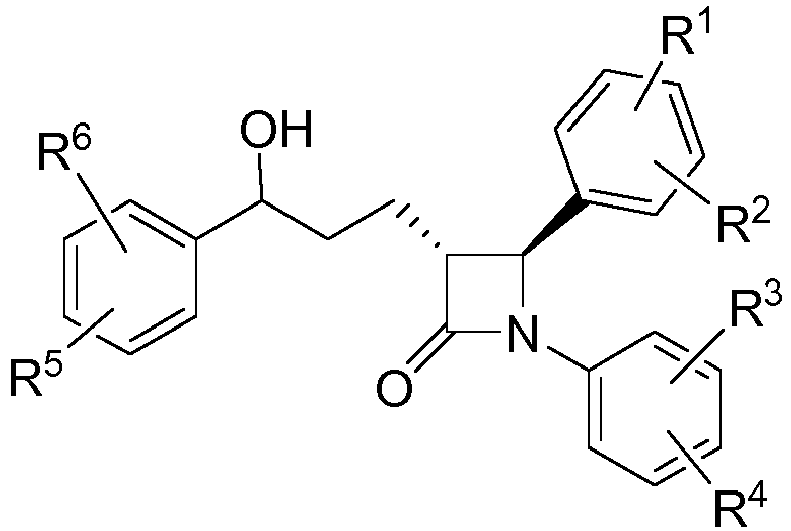
- Burnett et al. Bioorganic & Medicinal Chemistry Letters 12 (2002) 315-318 discloses fluorescent analogues of cholesterol absorption inhibitors. In the ongoing effort to discover novel treatments for hyperlipidemia and atherosclerotic process, the instant invention provides novel cholesterol absorption inhibitors, described below.
- One object of the instant invention provides novel cholesterol absorption inhibitors of Formula I

- A second object of the instant invention is to provide a compound of formula I for use in inhibiting cholesterol absorption in a patient. Another object is to provide a compound of formula I for use in reducing plasma cholesterol levels, especially LDL-cholesterol, and treating hypercholesterolemia in a patient. As a further object is a compound of formula I for use in preventing or reducing the risk of developing atherosclerosis, as well as for halting or slowing the progression of atherosclerotic disease once it has become clinically evident, in a patient who is at risk of developing atherosclerosis or who already has atherosclerotic disease. Also described are processes for making the compounds of Formula I and to provide novel pharmaceutical compositions comprising these compounds.
- Additionally the compounds of this invention, particularly radioactive isotopes of the compounds of Formula I, can be used in screening assays, where the assay is designed to identify new cholesterol absorption inhibitors that have the same mechanism of action as ezetimibe. Additional objects will be evident from the following detailed description.
- The novel cholesterol absorption inhibitors of the instant invention are compounds of Formula I

- Ar1 is selected from the group consisting of aryl and R4 -substituted aryl;
- X, Y and Z are independently selected from the group consisting of -CH2-, -CH(C1-6alkyl)- and -C(C1-6alkyl)2-;
- R is selected from the group consisting of -OR6, -O(CO)R6, -O(CO)OR9, -O(CO)NR6R7, a sugar residue, a disugar residue, a trisugar residue and a tetrasugar residue;
- R1 is selected from the group consisting of -H, -C1-6alkyl and aryl, or R and R1 together are oxo;
- R2 is selected from the group consisting of -OR6, -O(CO)R6, -O(CO)OR9 and -O(CO)NR6 R7;
- R3 is selected from the group consisting of -H, -C1-6alkyl and aryl or R2 and R3 together are oxo;
- q, r and t are each independently selected from 0 and 1;
- m, n and p are each independently selected from 0, 1, 2, 3 and 4;
- R4 is 1-5 substituents independently selected at each occurrence from the group consisting of: -OR5, -O(CO)R5, -O(CO)OR8, -O-C1-5alkyl-OR5, -O(CO)NR5R6, -NR5R6,-NR5(CO)R6, -NR5(CO)OR8, -NR5(CO)NR6R7, -NR5SO2R8, -COOR5, -CONR5R6,-COR5, -SO2NR5R6, -S(O)tR8, -O-C1-10alkyl-COOR5, -O-C1-10alkyl-CONR5R6 and fluoro;
- R5, R6 and R7 are independently selected at each occurrence from the group consisting of -H, C1-6alkyl, aryl and aryl-substituted C1-6alkyl;
- R8 is independently selected from the group consisting of C1-6alkyl, aryl and aryl-substituted C1-6alkyl;
- R9 is selected from the group consisting of -C≡C-CH2-NR10R11, -C≡C-C(O)R13, and -(CH2)3-NR10R14;
- R10 is independently selected at each occurrence from -H and -C1-3alkyl;
- R11 is selected from the group consisting of -C(O)-C1-3alkyl, -C(O)-NR10R10, -SO2-C1-3alkyl, and -SO2-phenyl; and
- R12 is selected from -H,

- R13 is -NR10R11; and
- R14 is selected from the group consisting of -C(O)-C1-3alkyl, -C(O)-NR10R10, -SO2-C1-3alkyl and -SO2-phenyl.
- In one embodiment of this invention are compounds of Formula I wherein q, r and t are each independently selected from 0 and 1; and m, n and p are each independently selected from 0, 1, 2, 3 and 4; provided that at least one of q and r is 1, and the sum of m, n, p, q are r is 1, 2, 3, 4, 5 or 6; and provided that when p is 0 and r is 1, the sum of m, q and n is 1, 2, 3, 4, or 5.
- In a second embodiment of this invention are compounds Formula I having Formula Ia,

- In a class of each of these embodiments are compounds wherein R9 is -C≡C-CH2-NR10R11.
- As used herein "alkyl" is intended to include both branched- and straight-chain saturated aliphatic univalent hydrocarbon groups having the specified number of carbon atoms. Examples of alkyl groups include, but are not limited to, methyl (Me), ethyl (Et), n-propyl (Pr), n-butyl (Bu), n-pentyl, n-hexyl, and the isomers thereof such as isopropyl (i-Pr), isobutyl (i-Bu), secbutyl (s-Bu), tertbutyl (t-Bu), isopentyl, isohexyl and the like. If there is no specified prefix (such as "n-" for normal, "s-" for sec, "t-" for tert, "i-" for iso) with a named alkyl group, then it is intended that the named alkyl goup is an n-alkyl group (i.e., "propyl" is "n-propyl").
- As used herein, "aryl" is intended to include phenyl (Ph), naphthyl, indenyl, tetrahydronaphthyl or indanyl. Phenyl is preferred.
- Suitable protecting groups (designated as "PG" herein) for the hydroxyl groups of R12 when R12 is a glucuronide or methyl ester glucuronide include but are not limited to those that are known to be useful as carbohydrate protecting groups, such as for example benzyl, acetyl, benzoyl, tert-butyldiphenylsilyl, trimethylsilyl, para-methoxybenzyl, benzylidine, and methoxy methyl. Conditions required to selectively add and remove such protecting groups are found in standard textbooks such as Greene, T, and Wuts, P. G. M., Projective Groups in Organic Synthesis, John Wiley & Sons, Inc., New York, NY, 1999.
- Compounds of Formula I may contain one or more asymmetric centers and can thus occur as racemates and racemic mixtures, single enantiomers, enantiomeric mixtures, diastereomeric mixtures and individual diastereomers. The present invention is meant to comprehend all such isomeric forms of the compounds of Formula I. All such isomeric forms of the compounds of Formula I are included within the scope of this invention. Furthermore, some of the crystalline forms for compounds of the present invention may exist as polymorphs and as such are intended to be included in the present invention. In addition, some of the compounds of the instant invention may form solvates with water or organic solvents. Such hydrates and solvates are also encompassed within the scope of this invention.
- Due to their activity as cholesterol absorption inhibitors, the compounds of the present invention can be used in screening assays, where the assay is designed to identify new cholesterol absorption inhibitors. Radioactive isotopes of the compounds of Formula I are particularly useful in such assays, for example compounds of Formula I wherein sulfur is replaced with "hot" -35S-, and particularly wherein the radioactive sulfur isotope is incorporated within the R9 moiety. All such radioactive isotopes of the compounds of Formula I are included within the scope of this invention.
- Herein, the term "pharmaceutically acceptable salts" shall mean non-toxic salts of the compounds employed in this invention which are generally prepared by reacting the free acid with a suitable organic or inorganic base, particularly those formed from cations such as sodium, potassium, aluminum, calcium, lithium, magnesium, zinc and tetramethylammonium, as well as those salts formed from amines such as ammonia, ethylenediamine, N-methylglucamine, lysine, arginine, ornithine, choline, N,N'-dibenzylethylenediamine, chloroprocaine, diethanolamine, procaine, N-benzylphenethylamine, 1-p-chlorobenzyl-2-pyrrolidine-1'-yl-methylbenzimidazole, diethylamine, piperazine, morpholine, 2,4,4-trimethyl-2-pentamine and tris(hydroxymethyl)aminomethane.
- When the compound of the present invention is basic, salts may be prepared from pharmaceutically acceptable non-toxic acids, including inorganic and organic acids. Such acids include acetic, benzenesulfonic, benzoic, camphorsulfonic, citric, ethanesulfonic, fumaric, gluconic, glutamic, hydrobromic, hydrochloric, isethionic, lactic, maleic, malic, mandelic, methanesulfonic, mucic, nitric, pamoic, pantothenic, phosphoric, succinic, sulfuric, tartaric, p-toluenesulfonic acid, and the like. Particularly preferred are citric, hydrobromic, hydrochloric, maleic, phosphoric, sulfuric, and tartaric acids.
- Examples of pharmaceutically acceptable esters include,
-C1-4 alkyl and -C1-4 alkyl substituted with phenyl, dimethylamino and acetylamino. "C1-4 alkyl" herein includes straight or branched aliphatic chains containing from 1 to 4 carbon atoms, for example methyl, ethyl, n-propyl, n-butyl, iso-propyl, sec-butyl and tert-butyl. - The term "patient" includes mammals, especially humans, who use the instant active agents for the prevention or treatment of a medical condition. Administering of the drug to the patient includes both self-administration and administration to the patient by another person. The patient may be in need of treatment for an existing disease or medical condition, or may desire prophylactic treatment to prevent or reduce the risk for diseases and medical conditions affected by inhibition of cholesterol absorption.
- The term "therapeutically effective amount" is intended to mean that amount of a drug or pharmaceutical agent that will elicit the biological or medical response of a tissue, a system, animal or human that is being sought by a researcher, veterinarian, medical doctor or other clinician. The term "prophylactically effective amount" is intended to mean that amount of a pharmaceutical drug that will prevent or reduce the risk of occurrence of the biological or medical event that is sought to be prevented in a tissue, a system, animal or human by a researcher, veterinarian, medical doctor or other clinician. Particularly, the dosage a patient receives can be selected so as to achieve the amount of LDL cholesterol lowering desired; the dosage a patient receives may also be titrated over time in order to reach a target LDL level. The dosage regimen utilizing a compound of the instant invention is selected in accordance with a variety of factors including type, species, age, weight, sex and medical condition of the patient; the severity of the condition to be treated; the potency of the compound chosen to be administered; the route of administration; and the renal and hepatic function of the patient. A consideration of these factors is well within the purview of the ordinarily skilled clinician for the purpose of determining the therapeutically effective or prophylactically effective dosage amount needed to prevent, counter, or arrest the progress of the condition.
- The compounds of the instant invention are cholesterol absorption inhibitors and are useful for reducing plasma cholesterol levels, particularly reducing plasma LDL cholesterol levels, when used either alone or in combination with another active agent, such as an anti-atherosclerotic agent, and more particularly a cholesterol biosynthesis inhibitor, for example an HMG-CoA reductase inhibitor. Thus the instant invention provides a compound of formula I for use in inhibiting cholesterol absorption and for treating lipid disorders including hypercholesterolemia to a person. Further provided is a compound of formula I for use in preventing or reducing the risk of developing atherosclerosis, as well as for halting or slowing the progression of atherosclerotic disease once it has become clinically evident in a mammal who is at risk of developing atherosclerosis or who already has atherosclerotic disease.
- Atherosclerosis encompasses vascular diseases and conditions that are recognized and understood by physicians practicing in the relevant fields of medicine. Atherosclerotic cardiovascular disease including restenosis following revascularization procedures, coronary heart disease (also known as coronary artery disease or ischemic heart disease), cerebrovascular disease including multi-infarct dementia, and peripheral vessel disease including erectile dysfunction are all clinical manifestations of atherosclerosis and are therefore encompassed by the terms "atherosclerosis" and "atherosclerotic disease."
- A compound of Formula I may be administered to prevent or reduce the risk of occurrence, or recurrence where the potential exists, of a coronary heart disease event, a cerebrovascular event, and/or intermittent claudication. Coronary heart disease events are intended to include CHD death, myocardial infarction (i.e., a heart attack), and coronary revascularization procedures. Cerebrovascular events are intended to include ischemic or hemorrhagic stroke (also known as cerebrovascular accidents) and transient ischemic attacks. Intermittent claudication is a clinical manifestation of peripheral vessel disease. The term "atherosclerotic disease event" as used herein is intended to encompass coronary heart disease events, cerebrovascular events, and intermittent claudication. It is intended that persons who have previously experienced one or more non-fatal atherosclerotic disease events are those for whom the potential for recurrence of such an event exists.
- Accordingly, the instant invention also provides a compound of formula I for use in preventing or reducing the risk of a first or subsequent occurrence of an atherosclerotic disease event to a patient at risk for such an event. The patient may or may not have atherosclerotic disease at the time of administration, or may be at risk for developing it.
- Persons to be treated with the instant therapy include those at risk of developing atherosclerotic disease and of having an atherosclerotic disease event. Standard atherosclerotic disease risk factors are known to the average physician practicing in the relevant fields of medicine. Such known risk factors include but are not limited to hypertension, smoking, diabetes, low levels of high density lipoprotein (HDL) cholesterol, and a family history of atherosclerotic cardiovascular disease. Published guidelines for determining those who are at risk of developing atherosclerotic disease can be found in: Executive Summary of the Third Report of the National Cholesterol Education Program (NCEP) Expert Panel on Detection, Evaluation, and Treatment of High Blood Cholesterol in Adults (Adult Treatment Panel III), JAMA, 2001; 285 pp.2486-2497. People who are identified as having one or more of the above-noted risk factors are intended to be included in the group of people considered at risk for developing atherosclerotic disease. People identified as having one or more of the above-noted risk factors, as well as people who already have atherosclerosis, are intended to be included within the group of people considered to be at risk for having an atherosclerotic disease event.
- The oral dosage amount of the compound of Formula I, is from about 0.1 to about 30 mg/kg of body weight per day, preferably about 0.1 to about 15 mg/kg of body weight per day. For an average body weight of 70 kg, the dosage level is therefore from about 5 mg to about 1000 mg of drug per day. However, dosage amounts will vary depending on factors as noted above, including the potency of the particular compound. Although the active drug of the present invention may be administered in divided doses, for example from two to four times daily, a single daily dose of the active drug is preferred. As examples, the daily dosage amount may be selected from, but not limited to, 5 mg, 10 mg, 15 mg, 20 mg, 25 mg, 40 mg, 50 mg, 75 mg, 80 mg, 100 mg and 200 mg.
- The active drug employed in the instant therapy can be administered in such oral forms as tablets, capsules, pills, powders, granules, elixirs, tinctures, suspensions, syrups, and emulsions. Oral formulations are preferred.
- For compounds of Formula I, administration of the active drug can be via any pharmaceutically acceptable route and in any pharmaceutically acceptable dosage form. This includes the use of oral conventional rapid-release, time controlled-release and delayed-release (such enteric coated) pharmaceutical dosage forms. Additional suitable pharmaceutical compositions for use with the present invention are known to those of ordinary skill in the pharmaceutical arts; for example, see Remington's Pharmaceutical Sciences, Mack Publishing Co., Easton, PA.
- In the uses of the present invention, the active drug is typically administered in admixture with suitable pharmaceutical diluents, excipients or carriers (collectively referred to herein as "carrier" materials) suitably selected with respect to the intended form of administration, that is, oral tablets, capsules, elixirs, syrups and the like, and consistent with conventional pharmaceutical practices.
- For instance, for oral administration in the form of a tablet or capsule, the active drug component can be combined with a non-toxic, pharmaceutically acceptable, inert carrier such as lactose, starch, sucrose, glucose, modified sugars, modified starches, methyl cellulose and its derivatives, dicalcium phosphate, calcium sulfate, mannitol, sorbitol and other reducing and non-reducing sugars, magnesium stearate, steric acid, sodium stearyl fumarate, glyceryl behenate, calcium stearate and the like. For oral administration in liquid form, the drug components can be combined with non-toxic, pharmaceutically acceptable inert carrier such as ethanol, glycerol, water and the like. Moreover, when desired or necessary, suitable binders, lubricants, disintegrating agents and coloring and flavoring agents can also be incorporated into the mixture. Stabilizing agents such as antioxidants, for example butylated hydroxyanisole (BHA), 2,6-di-tert-butyl-4-methylphenol (BHT), propyl gallate, sodium ascorbate, citric acid, calcium metabisulphite, hydroquinone, and 7-hydroxycoumarin, particularly BHA, propyl gallate and combinations thereof, can also be added to stabilize the dosage forms. When a compound of Formula I is formulated together with an HMG-CoA reductase inhibitor such as simvastatin, the use of at least one stabilizing agent is preferred in the composition. Other suitable components include gelatin, sweeteners, natural and synthetic gums such as acacia, tragacanth or alginates, carboxymethylcellulose, polyethylene glycol, waxes and the like.
- The active drug can also be administered in the form of liposome delivery systems, such as small unilamellar vesicles, large unilamellar vesicles and multilamellar vesicles. Liposomes can be formed from a variety of phospholipids, such as cholesterol, stearylamine or phosphatidylcholines.
- Active drug may also be delivered by the use of monoclonal antibodies as individual carriers to which the compound molecules are coupled. Active drug may also be coupled with soluble polymers as targetable drug carriers. Such polymers can include polyvinylpyrrolidone, pyran copolymer, polyhydroxy-propyl-methacrylamide-phenol, polyhydroxy-ethyl-aspartamide-phenol, or polyethyleneoxide-polylysine substituted with palmitoyl residues. Furthermore, active drug may be coupled to a class of biodegradable polymers useful in achieving controlled release of a drug, for example, polylactic acid, polyglycolic acid, copolymers of polylactic and polyglycolic acid, polyepsilon caprolactone, polyhydroxy butyric acid, polyorthoesters, polyacetals, polydihydropyrans, polycyanoacrylates and cross linked or amphipathic block copolymers of hydrogels.
- Also described is a process for preparing a pharmaceutical composition comprising combining a compound of Formula I with a pharmaceutically acceptable carrier. Also encompassed is the pharmaceutical composition which is made by combining a compound of Formula I with a pharmaceutically acceptable carrier.
- One or more additional active agents may be administered in combination with a compound of Formula I, and therefore an embodiment of the instant invention encompasses a drug combination. The drug combination encompasses a single dosage formulation comprised of the compound of Formula I and additional active agent or agents, as well as administration of each of the compound of Formula I and the additional active agent or agents in separate dosage formulations, which allows for concurrent or sequential administration of the active agents. The additional active agent or agents can be lipid modifying agents, particularly a cholesterol biosynthesis inhibitor, or agents having other pharmaceutical activities, or agents that have both lipid-modifying effects and other pharmaceutical activities. Examples of additional active agents which may be employed include but are not limited to HMG-CoA reductase inhibitors, which include statins in their lactonized or dihydroxy open acid forms and pharmaceutically acceptable salts and esters thereof, including but not limited to lovastatin (see
US Patent No. 4,342,767 ), simvastatin (seeUS Patent No. 4,444,784 ), dihydroxy open-acid simvastatin, particularly the ammonium or calcium salts thereof, pravastatin, particularly the sodium salt thereof (seeUS Patent No. 4,346,227 ), fluvastatin, particularly the sodium salt thereof (seeUS Patent No. 5,354,772 ), atorvastatin, particularly the calcium salt thereof (seeUS Patent No. 5,273,995 ), pitavastatin also referred to as NK-104 (seePCT international publication number WO 97/23200 US Patent No. 5,260,440 , and Drugs of the Future, 1999, 24(5), pp. 511-513); HMG-CoA synthase inhibitors; squalene epoxidase inhibitors; squalene synthetase inhibitors (also known as squalene synthase inhibitors), acyl-coenzyme A: cholesterol acyltransferase (ACAT) inhibitors including selective inhibitors of ACAT-1 or ACAT-2 as well as dual inhibitors of ACAT-1 and -2; microsomal triglyceride transfer protein (MTP) inhibitors; probucol; niacin; cholesterol absorption inhibitors such as SCH-58235, which is described in U.S. Patent No.'s5,767,115 and5,846,966 ; bile acid sequestrants; LDL (low density lipoprotein) receptor inducers; platelet aggregation inhibitors, for example glycoprotein IIb/IIIa fibrinogen receptor antagonists and aspirin; human peroxisome proliferator activated receptor gamma (PPARγ) agonists including the compounds commonly referred to as glitazones for example troglitazone, pioglitazone and rosiglitazone and, including those compounds included within the structural class known as thiazolidinediones as well as those PPARγ agonists outside the thiazolidinedione structural class; PPARα agonists such as clofibrate, fenofibrate including micronized fenofibrate, and gemfibrozil; PPAR dual α/γ agonists; vitamin B6 (also known as pyridoxine) and the pharmaceutically acceptable salts thereof such as the HCl salt; vitamin B12 (also known as cyanocobalamin); folic acid or a pharmaceutically acceptable salt or ester thereof such as the sodium salt and the methylglucamine salt; anti-oxidant vitamins such as vitamin C and E and beta carotene; beta-blockers; angiotensin II antagonists such as losartan; angiotensin converting enzyme inhibitors such as enalapril and captopril; calcium channel blockers such as nifedipine and diltiazam; endothelian antagonists; agents that enhance ABC1 gene expression; FXR ligands including both inhibitors and agonists; and LXR ligands including both inhibitors and agonists of all subtypes of this receptor, e.g., LXRα and LXRβ; bisphosphonate compounds such as alendronate sodium; and cyclooxygenase-2 inhibitors such as rofecoxib and celecoxib. Additionally, the compound of Formula Is of this invention, for example compound I, may be used in combination with anti-retroviral therapy in AIDS infected patients to treat lipid abnormalities associated with such treatment, for example but not limited to their use in combination with HIV protease inhibitors such as indinavir, nelfinavir, ritonavir and saquinavir. - A therapeutically or prophylactically effective amount, as appropriate, of a compound of Formula I can be used for the preparation of a medicament useful for inhibiting cholesterol absorption, as well as for treating and/or reducing the risk for diseases and conditions affected by inhibition of cholesterol absorption, such as treating lipid disorders, preventing or reducing the risk of developing atherosclerotic disease, halting or slowing the progression of atherosclerotic disease once it has become clinically manifest, and preventing or reducing the risk of a first or subsequent occurrence of an atherosclerotic disease event. For example, the medicament may be comprised of about 5 mg to about 1000 mg of a compound of Formula I. The medicament comprised of a compound of Formula I may also be prepared with one or more additional active agents, such as those described supra.
- The compounds of this invention inhibit cholesterol absorption as exemplified by the following. Compound 7b (shown in Example 7) was tested for inhibition of cholesterol absorption in mice, and its activity was compared to that of ezetimibe. C57BL/6 male mice (n = 6/group), aged 7-8 weeks, were dosed orally with 0.1 ml 0.25 % methyl cellulose solution with or without test compound, ezetimibe or 7b (0.12-10 mg/kg). Thirty minutes later all of the mice were dosed orally with 0.2 ml 0.25% methyl cellulose solution containing 1% cholesterol and 2 µCi [3H]-cholesterol per mouse. Three hours later, the animals were euthanized, and liver and blood were collected. Cholesterol counts in liver and plasma were determined, and percent inhibition of cholesterol absorption was calculated. Both ezetimibe and 7b inhibited cholesterol absorption by >90% at the lowest dose tested.
- Additionally, 7b was tested for inhibition of cholesterol absorption in rats, and its activity was compared to that of ezetimibe-glucuronide. Rats were anesthetized with 100 mg/kg Inactin i.p. The intestine was cannulated by passing an 18G Venocatheter through the fundus of the stomach and approximately 1-2 cm into the duodenum. The cannula was ligated in place at the pyloric valve. Rats were given either 1 ml of rat bile or test compound, 7b or ezetimibe-glucuronide (0.3-30 µg/kg) in 1 ml rat bile. Vehicle or drug remaining in the cannula after delivery was rinsed into the intestine with 1 ml saline. Within 30 minutes of compound or vehicle delivery, 3 ml of a solution containing 1 µCi 14C- cholesterol in lipid emulsion was delivered to the intestine via the cannula. After 1.5 hours, the rats were euthanized under anesthesia, and blood and liver were collected. Cholesterol counts in liver and plasma were determined, and percent inhibition of cholesterol absorption was calculated. The two test compounds exhibited similar potency for inhibition of cholesterol absorption in this model.
- The compounds of structural Formula I of the present invention can be prepared according to the procedures of the following Scheme and Examples, using appropriate materials, and are further exemplified by specific examples which follow. Moreover, by utilizing the procedures described herein, one of ordinary skill in the art can readily prepare additional compounds of the present invention claimed herein. The compounds illustrated in the examples are not, however, to be construed as forming the only genus that is considered as the invention. The Examples further illustrate details for the preparation of the compounds of the present invention. Those skilled in the art will readily understand that known variations of the conditions and processes of the following preparative procedures can be used to prepare these compounds.
- A variety of chromatographic techniques may be employed in the preparation of the compounds. These techniques include, but are not limited to: High Performance Liquid Chromatography (including normal- reversed- and chiral-phase); Super Critical Fluid Chromatography; preparative Thin Layer Chromatography; flash chromatography with silica gel or reversed-phase silica gel; ion-exchange chromatography; and radial chromatography. All temperatures are degrees Celsius unless otherwise noted.
- Some abbreviations used herein include:
Ac Acyl (CH3C(O)-) Bn benzyl calc. Calculated Celite Celite™ diatomaceous earth Dess-Martin Periodinane 1,1,1-tris(acetyloxy)-1,1-dihydro-1,2-benzodoxol-3-(1H)-one DMF N,N-dimethylformamide equiv. Equivalent(s) ES-MS Electron Spray Ion-Mass Spectroscopy EtOAc Ethyl acetate h Hour(s) HPLC High performance liquid chromatography min Minute(s) m.p. Melting point MS Mass spectrum r.t. (or rt) Room temperature TFA Trifluoroacetic acid THF Tetrahydrofuran Tic Thin layer chromatography - The general Scheme below illustrates a method for the syntheses of compounds of the present invention of structural formula 1-4. All substituents are as defined above in Formula I unless indicated otherwise. In this method, I-1 is treated with a terminal alkyne of type 1-2 in the presence of a suitable palladium catalyst such as tetrakistriphenylphosphine palladium(0) or [1,1'-bis(diphenylphosphino)ferrocene]dichloropalladium(II) or the like, and copper(I) iodide. The reaction is usually performed in an inert organic solvent such as DMF, between room temperature and 100 °C, for a period of 6-48 h, and the product is an internal alkyne of structural formula 1-3. Alkyne 1-2 may contain a radioactive atom such as 35S to provide the corresponding radiolabeled adduct upon reaction with I-1. Conversion of 1-3 to 1-4 can be achieved using a variety of hydrolytic methods known to those skilled in the art of organic synthesis. For example, a particularly mild hydrolysis protocol involves the treatment of 1-3 with a tertiary amine base such as triethylamine, or diisopropylethylamine or the like, in a mixed solvent system comprising methanol and water. The product of the reaction is a compound of structural formula 1-4.

- The following examples are provided to illustrate the invention and are not to be construed as limiting the scope of the invention in any matter. The following designations are used in the Examples for certain repetitively used intermediates:



- The compounds (3R,4S)-3-[(3S)-3-(4-fluorophenyl)-3-hydroxypropyl]-4-(4-hydroxyphenyl)-1-(4-iodophenyl)azetidin-2-one (i-6) and 4-[(2S,3R)-3-[(3S)-3-(4-fluorophenyl)-3-hydroxypropyl]-1-(4-iodophenyl)-4-oxoazetidin-2-yl]phenyl methyl β-D-glucopyranosiduronate (i-7) were prepared according to Burnett, D. S.; Caplen, M. A.; Domalski, M. S.; Browne, M. E.; Davis, H. R. Jr.; Clader, J. W. Bioorg. Med. Chem. Lett. (2002), 12, 311. Compound i-8 is the hydroxy-protected analog of i-7, where the protecting group is acyl.
- The following definitions are also used in the Examples:


- Acetyl chloride (0.52 mL, 7.3 mmol) was added to a stirred solution of propargylamine (0.5 mL, 7.3 mmol) and dimethylaminopyridine (18 mg, 0.14 mmol) in pyridine (2.5 mL) at 0°C, and the resulting mixture was allowed to warm to ambient temperature. After approximately 15 h, the reaction mixture was diluted with ethyl acetate and washed successively with 1N HCl and brine. The organic phase was dried (Na2SO4), filtered and concentrated in vacuo to afford the title compound (i-1), which was used without further purification.
- Benzene sulfonyl chloride (1.16 mL, 9.1 mmol) was added to stirred solution of propargylamine (0.62 mL, 9.1 mmol) and dimethylaminopyridine (22 mg, 0.18 mmol) in pyridine (5 mL) at room temperature. The resulting solution was aged at ambient temperature for approximately 15 h. The reaction mixture was diluted with ethyl acetate and washed successively with 1N HCl and brine. The organic phase was dried (Na2SO4), filtered and concentrated in vacuo to furnish the title compound (i-2), which was used without further purification.
- Dimethyl carbamylchloride (0.84 mL, 9.1 mmol) was added to a stirred solution of propargylamine (0.62 mL, 9.1 mmol) and dimethylaminopyridine (22 mg, 0.18 mmol) in pyridine (5 mL) at room temperature. The resulting suspension was stirred at ambient temperature for approximately 15 h. The reaction mixture was diluted with ethyl acetate and washed successively with 1N HCl and brine. The organic phase was dried (Na2SO4), filtered and concentrated in vacuo to afford the title compound (i-3), which was used without further purification.
- Methansulfonylchloride (1.12 mL, 14.5 mmol) was added to a stirred solution of N-methylpropargylamine (1.22 mL, 14.5 mmol) and dimethylaminopyridine (35 mg, 0.30 mmol) in pyridine (10 mL) at room temperature. After aging for approximately 15 h, the reaction mixture was poured into ethyl acetate and washed successively with 1N HCl and brine. The organic phase was dried (Na2SO4), filtered and concentrated in vacuo, to afford the title compound (i-4), which was used without further purification.
- Methansulfonylchloride (1.40 mL, 18.1 mmol) was added dropwise to a stirred solution of propargylamine (1.00 g, 18.1 mmol) and dimethylaminopyridine (44.0 mg, 0.36 mmol) in pyridine (10 mL) at 0 °C. After aging for approximately 15 h, the reaction mixture was poured into 1N HCl and extracted twice with ethyl acetate. The combined organic extracts were washed with saturated aqueous sodium bicarbonate, brine, dried (MgSO4), filtered and concentrated in vacuo, to afford the title compound i-5. Crude i-5 crystallized on standing and was used without further purification.
-

- Triethylamine (7 equivalents) is added to a solution of (3R,4S)-3-[(3S)-3-(4-fluorophenyl)-3-hydroxypropyl]-4-(4-hydroxyphenyl)-1-(4-iodophenyl)azetidin-2-one (i-6) (1.00 equivalent), N-prop-2-yn-1-ylmethanesulfonamide (i-5) (1.50 equivalents), tetrakistriphenylphosphine palladium(0) (0.15 equivalents) and copper(I) iodide (0.30 equivalents) in DMF (0.1 M concentration with respect to final product) under a nitrogen atmosphere and the resulting solution aged at room temperature. After completion of reaction, the volatiles are evaporated in vacuo and the crude residue can be purified by flash chromatography on silica gel to afford the title compound.
-

- Triethylamine (0.07 mL, 0.502 mmol) was added to a stirred solution of 4-[(2S,3R)-3-[(3S)-3-(4-fluorophenyl)-3-hydroxypropyl]-1-(4-iodophenyl)-4-oxoazetidin-2-yl]phenyl methyl β-D-glucopyranosiduronate (i-7) (0.050 g, 0.071 mmol), N-prop-2-yn-1-ylmethanesulfonamide (i-5) (0.014 g, 0.105 mmol), tetrakistriphenylphosphine palladium(0) (0.012 g, 0.010 mmol) and copper iodide (0.005 g, 0.026 mmol) in DMF (0.5 mL) under a nitrogen atmosphere and the resulting solution aged at room temperature for 18 h. The volatiles were evaporated in vacuo and the crude residue purified by flash chromatography on silica gel (gradient elution; 0-25% methanol/methylene chloride as eluent) to afford the title compound; m/z (ES) 713 (MH+), 505.
-

- A solution of compound 7a in methanol/water/triethylamine (1:7:2; 1 mL) was stirred at room temperature for approximately 1.5 h. The volatiles were evaporated in vacuo and the crude residue purified by preparative reversed phase high performance liquid chromatography on YMC Pack Pro C18 phase (gradient elution; 10-65% acetonitrile/water as eluent, 0.1% TFA modifier) to give the title compound (7b); m/z (ES) 699 (MH+), 505; HRMS (ES) m/z calcd for C34H36FN2O11S (MH+) 699.2024, found 699.2016.
- The following compounds of Formula Ia have been prepared (as indicated by MS data provided) or can be prepared using the general synthetic procedures described in Example 6 (shown in Table 1) or Example 7 (shown in Table 2).

TABLE 1 Compound R12 R9 6c) H 
6d) H 
6e) H 
6f) H 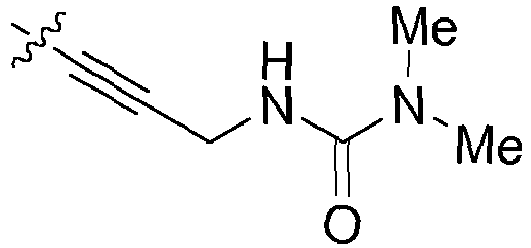
TABLE 2 Compound R12 R9 m/z (ES) HRMS m/z (ES) 7e) methyl ester glucuronide 
677 (MH+) 7f) glucuronide 
663 (MH+) (MH+) Calcd 663.2354 Found 663.2331 7g) methyl ester glucuronide 
749 (MNa+) 7h) glucuronide 
735 (MNa+) (MH+) Calcd713.2180 Found 713.2170 7i) methyl ester glucuronide 
797 (MNa+) 7j) glucuronide 
783 (MNa+) (MH+) Calcd 761.2180 Found 761.2193 7k) methyl ester glucuronide 
706 (MH+) 7l) glucuronide 
692 (MH+) (MH+) Calcd 692.2620 Found 692.2618 -

- Triethylamine (69.0 µL, 0.495 mmol) was added to a stirred solution of i-7 (50.0 mg, 0.071 mmol), trimethylsilyacetylene (12.0 µL, 0.085 mmol), tetrakistriphenylphosphine palladium(0) (13.0 mg, 0.011 mmol) and copper iodide (5.10 mg, 0.028 mmol) in DMF (0.5 mL) under a nitrogen atmosphere and the resulting solution aged at room temperature for 18 h. The volatiles were evaporated in vacuo and the crude residue purified by flash chromatography on silica gel (gradient elution; 0-25% methanol/methylene chloride as eluent) to afford the title compound (8a); m/z (ES) 660 (M-OH)+, 470.
-

- A solution of 8a in methanol/water/triethylamine (0.25 mL): 1.10 mL:0.40 mL) was stirred at room temperature for approximately 6 h. The volatiles were evaporated in vacuo and the crude residue purified by preparative reversed phase high performance liquid chromatography on YMC Pack Pro C18 phase (gradient elution; 10-65% acetonitrile/water as eluent, 0.1% TFA modifier) to give the title compound (8b); m/z (ES) 574 (M-OH)+, 398; HRMS (ES) m/z calc'd for C32H31FNO9 (MH+) 592.1983, found 592.1985.
-

- A mixture of 7a (40.0 mg, 0.056 mmol) and palladium (∼8 mg of 10 wt. % (dry basis) on activated carbon) in methanol (2 mL) was hydrogenated at atmospheric pressure for approximately 1 h. The reaction mixture was filtered through a short plug of celite, eluting copiously with methanol, and the filtrate evaporated in vacuo to afford the title compound (9a); m/z (ES) 509 (M-sugar-OH)+.
-

- A solution of 9a in methanol/water/triethylamine (1:7:2, 1 mL) was stirred at room temperature for approximately 1 h. The volatiles were evaporated in vacuo and the crude residue purified by preparative reversed phase high performance liquid chromatography on YMC Pack Pro C18 phase (gradient elution; 10-65% acetonitrile/water as eluent, 0.1% TFA modifier) to give the title compound (9b); m/z (ES) 735 (M+Na)+, 685 (M-OH)+, 509 (M-sugar-OH)+; HRMS (ES) m/z calc'd for C34H39FN2O11S (MH+) 703.2337, found 703.2337.
-

- Triethylamine (170 µL, 1.25 mmol) was added to a solution of i-8 (156 mg, 0.178 mmol), tert-butyldimethyl(2-propynyloxy)silane (43.0 µL, 0.214 mmol), dichlorobistriphenylphosphine palladium(II) (12.0 mg, 0.018 mmol) and copper iodide (7.00 mg, 0.036 mmol) in DMF (1.3 mL) under a nitrogen atmosphere and the resulting solution aged at room temperature for approximately 20 h. The reaction mixture was poured into saturated aqueous sodium bicarbonate and extracted twice with diethyl ether. The combined organic extracts were washed with water, brine, dried (MgSO4), filtered and the filtrate concentrated in vacuo. Purification of the crude residue by flash chromatography on silica gel (gradient elution; 15-40% ethyl acetate/hexanes as eluent) afforded the title compound 10a.
-

- Tetrabutylammonium fluoride hydrate (39.0 mg, 0.148 mmol) was added to 10a (136 mg, 0.148 mmol) in tetrahydrofuran (1.5mL), and the resulting solution aged at room temperature for 1 h. The reaction mixture was poured into saturated aqueous ammonium chloride and extracted twice with ether. The combined organic extracts were washed with saturated sodium bicarbonate, brine, dried (MgSO4), filtered and concentrated in vacuo. Purification of the crude residue by flash chromatography on silica gel (50% ethyl acetate/hexanes) afforded the title compound 10b.
-

- Dess-Martin periodinane (33.0 mg, 0.077mmol) was added to a solution of 10b (62.0 mg, 0.077 mmol) and pyridine (31.0 µL, 0.386 mmol) in dichloromethane (1 mL) at room temperature. After 30 min, the reaction mixture was poured into saturated aqueous sodium bicarbonate, and extracted twice with ethyl acetate. The combined organic extracts were washed with water, brine, dried (MgSO4), filtered and concentrated in vacuo. Purification of the crude residue by flash chromatography on silica gel (gradient elution; 20-40% ethyl acetate/hexanes) afforded the title compound 10c.
-

- An aqueous solution (0.1 mL) of sodium dihydrogenphosphate (9.00 mg, 0.065 mmol) and sodium chlorite (5.00 mg, 0.055 mmol) was added to a solution of 10c (37.0 mg, 0.046 mmol) in tert-butyl alchohol (0.4 mL), dioxane (0.2 mL) and isobutylene (∼0.1 mL) at room temperature. After 1.5 h, the reaction mixture was concentrated in vacuo and the crude residue triturated repeatedly with ethyl acetate. The organic washings were dried (Na2SO4), filtered and concentrated in vacuo to afford the title compound 10d.
-

- A solution of 4-{(2S,3R)-3-[(3S)-3-(acetyloxy)-3-(4-fluorophenyl)propyl]-1-[4-(carboxyethynyl)phenyl]-4-oxoazetidin-2-yl}phenyl methyl 2,3,4-tri-O-acetyl-β-D-glucopyranosiduronate (10d) and sodium cyanide (∼1mg, 0.020 mmol) in methanol (3mL) was heated to 45°C. After 22 h, the reaction mixture was concentrated under reduced pressure and dissolved in methanol/water/triethylamine (1:7:2, 1 mL). After stirring at room temperature for approximately 1 h, the volatiles were evaporated in vacuo and the crude residue purified by preparative reversed phase high performance liquid chromatography on YMC Pack Pro C18 phase (gradient elution; 10-60% acetonitrile/water as eluent, 0.1% TFA modifier) to give the title compound (10e), m/z (ES) 442.0 (M-sugar-OH)+, 618.0 (M-OH)+; HRMS (ES) m/z calcd. for C33H31FNO11 (MH+) 636.1881, found 636.1889
-

- A 1M solution of ethylamine hydrochloride and diisopropylethylamine in DMF (40.0 µL, 0.40 mmol) was added to 4-{(2S,3R)-3-[(3S)-3-(acetyloxy)-3-(4-fluorophenyl)propyl]-1-[4-(carboxyethynyl)phenyl]-4-oxoazetidin-2-yl}phenyl methyl 2,3,4-tri-O-acetyl-β-D-glucopyranosiduronate (10d) (27.0 mg, 0.033 mmol), 1-[3-(dimethylamino)propyl]-3-ethylcarbodiimide hydrochloride (19.0 mg, 0.099 mmol) and 1-hydroxybenzotriazole (8.00 mg, 0.059 mmol) in DMF (0.25 mL). After 4.5 h, the reaction mixture was poured into ethyl acetate and washed successively with water and brine. The organic layer was dried, filtered and concentrated under reduced pressure. Purification of the crude residue by flash chromatography on silica gel (gradient elution; 50-60% ethyl acetate/hexanes) afforded the title compound 11a.
-

- A solution of 4-((2S,3R)-3-[(3S)-3-(acetyloxy)-3-(4-fluorophenyl)propyl]-1-{4-(3-(ethylamino)-3-oxoprop-1-yn-1-yl]phenyl}-4-oxoazetidin-2-yl)phenyl methyl 2,3,4-tri-O-acetyl-β-D-glucopyranosiduronate (11a) (22.0 mg, 0.026 mmol) and sodium cyanide (∼1mg, 0.020 mmol) in methanol (3mL) was heated to 45°C. After 18 h, the reaction mixture was concentrated under reduced pressure and dissolved in methanol/water/triethylamine (1:3:1, 2.5 mL). After stirring at room temperature for approximately 1 h, the volatiles were evaporated in vacuo, and the crude residue purified by preparative reversed phase high performance liquid chromatography on YMC Pack Pro C18 phase (gradient elution; 10-60% acetonitrile/water as eluent, 0.1% TFA modifier) to give the title compound (11b) m/z (ES) 663.0 (M+H)+; HRMS (ES) m/z calcd. for C35H36FN2O10 (MH+) 663.2354, found 663.2341.
- The appropriate volume of [35S]methane sulfonyl chloride (see Dean, D.C.; et al., J. Med. Chem. 1996, 39, 1767) totaling 3.5 mCi was removed from a stock solution in methylene chloride and placed in a 5mL conical flask. It was then distilled at atmospheric pressure until the volume was approximately 50 µL. To this solution was immediately added 50 µL of propargylamine. After 15 min, the reaction mixture was diluted with 10 mL of ethyl acetate, washed with saturated sodium bicarbonate solution (3 x 2 mL), and dried over sodium sulfate. After filtration the resulting solution had a count of 3.3 mCi and a radiochemical purity of 99.9 % by HPLC (Zorbax XDB C8 column, 4.6 x 150 mm, 5 % acetonitrile:H2O (0.1 % TFA) to 100 % acetonitrile, 15 min linear gradient, 1 mL/min, t R = 4.4 min).
-

- Dissolved 3.0 mCi of [35S]N-prop-2-yn-1-ylmethanesulfonamide, 1 mg of compound i-7, and 1 µL of triethylamine in 100 µL of dimethylformamide inside a plastic microcentrifuge tube. To this solution was added 10 µL of a stock solution containing 8.1 mg of tetrakis(triphenylphosphine)palladium(0) and 1.4mg of copper iodide in 1 mL of dimethylformamide. Stirred at room temperature for sixty hours at which time HPLC indicated 55% conversion. This reaction mixture, which had a radiochemical purity of 44.4% by HPLC (Zorbax XDB C8 column, 4.6 x 150 mm, 5 % acetonitrile:H2O (0.1 % TFA) to 100 % acetonitrile, 15 min linear gradient, 1 mL/min, t R = 9.3 min) was taken on directly to the next step.
-

- The crude reaction mixture containing compound [35S] 7b was treated with 25 µL of methanol, 90 µL of water, and 30 µL of triethylamine and stirred at room temperature for one hour at which time it was concentrated to near dryness under a slow stream of nitrogen. The residue was dissolved in 1:1 acetonitrile:H2O and subjected to semi-preparative chromatography (Zorbax XDB C8 250 x 9.4 mm column, 70:30 acetonitrile:H2O (0.1 % TFA) 4 mL/min, 1 x 0.2 mL injections). 540 µCi of product was obtained which had a radiochemical purity of 99.9% by HPLC (Zorbax XDB C8 column, 4.6 x 150 mm, 70:30 acetonitrile:H2O (0.1 % TFA), 1 mL/min, t R = 10.4 min) and coeluted with an authentic sample of compound 7b. LC/MS m/z = 508 (product - glucuronide - H2O), SA = 769 Ci/mmol.
- The appropriate volume of [35S]methane sulfonyl chloride (see Dean, D.C.; et al., J. Med. Chem. 1996, 39, 1767) totaling 1.3 mCi was removed from a stock solution in methylene chloride and placed in a 5mL conical flask. It was then distilled at atmospheric pressure until the volume was approximately 50 µL. To this solution was immediately added a solution of 1 mg of 13a in 5 µL of pyridine (freshly distilled over calcium hydride).

- The solution was stirred at room temperature for five minutes at which time it was concentrated to near dryness under a slow stream of nitrogen. This reaction mixture, which had a radiochemical purity of 80.1% by HPLC (Zorbax XDB C8 column, 4.6 x 150 mm, 5% acetonitrile:H2O (0.1 % TFA) to 100 % acetonitrile, 15 min linear gradient, 1 mL/min, t R = 9.3 min) was taken on directly to the next step.
- The crude reaction mixture containing [35S] 7a was treated with 25 µL of methanol, 90 µL of water, and 30 µL of triethylamine and stirred at room temperature for one hour at which time it was concentrated to near dryness under a slow stream of nitrogen. The residue was dissolved in 1:1 acetonitrile:H2O and subjected to semi-preparative chromatography (Zorbax XDB C8 250 x 9.4 mm column, 70:30 acetonitrile:H2O (0.1 % TFA) 4 mL/min, 1 x 0.2 mL injections). 350 µCi of product was obtained which had a radiochemical purity of 98.4 % by HPLC (Zorbax XDB C8 column, 4.6 x 150 mm, 70:30 acetonitrile:H2O (0.1 % TFA), 1 mL/min, t R = 10.4 min) and coeluted with an authentic sample of 7b. LC/MS m/z = 508 (product-glucuronide - H2O), SA = 911 Ci/mmol.
Claims (19)
- A compound of Formula I
 Ar1 is selected from the group consisting of aryl and R4 -substituted aryl;X, Y and Z are independently selected from the group consisting of -CH2-, -CH(C1-6alkyl)- and -C(C1-6alkyl)2-;R is selected from the group consisting of -OR6, -O(CO)R6, -O(CO)OR9, -O(CO)NR6R7, a sugar residue, a disugar residue, a trisugar residue and a tetrasugar residue;R1 is selected from the group consisting of -H, -C1-6alkyl and aryl, or R and R1 together are oxo;R2 is selected from the group consisting of -OR6, -O(CO)R6, -O(CO)OR9 and -O(CO)NR6R7;R3 is selected from the group consisting of -H, -C1-6alkyl and aryl or R2 and R3 together are oxo;q, r and t are each independently selected from 0 and 1;m, n and p are each independently selected from 0, 1, 2, 3 and 4;R4 is 1-5 substituents independently selected at each occurrence from the group consisting of: -OR5, -O(CO)R5, -O(CO)OR8, -O-C1-5alkyl-OR5, -O(CO)NR5R6, -NR5R6,-NR5(CO)R6, -NR5(CO)OR8, -NR5(CO)NR6R7, -NR5SO2R8, -COOR5, -CONR5R6,-COR5,
-SO2NR5R6, -S(O)tR8, -O-C1-10alkyl-COOR5, -O-C1-10alkyl-CONR5R6 and fluoro;R5, R6 and R7 are independently selected at each occurrence from the group consisting of -H, C1-6alkyl, aryl and aryl-substituted C1-6alkyl;R8 is independently selected from the group consisting of C1-6alkyl, aryl and aryl-substituted C1-6alkyl;R9 is selected from the group consisting of -C≡C-CH2-NR10R11, -C≡C-C(O)R13, and -(CH2)3-NR10R14;R10 is independently selected at each occurrence from -H and -C1-3alkyl;R11 is selected from the group consisting of -C(O)-C1-3alkyl, -C(O)-NR10R10, -SO2-C1-3alkyl, and -SO2-phenyl; andR12 is selected from -H, R13 is -NR10R11; andR14 is selected from the group consisting of -C(O)-C1-3alkyl, -C(O)-NR10R10, -SO2-C1-3alkyl and -SO2-phenyl.
 - The compound of claim 1 wherein q, r and t are each independently selected from 0 and 1; and m, n and p are each independently selected from 0, 1, 2, 3 and 4; provided that at least one of q and r is 1, and the sum of m, n, p, q and r is 1, 2, 3, 4, 5 or 6; and provided that when p is 0 and r is 1, the sum of m, q and n is 1, 2, 3, 4, or 5.
- The compound of claim 1 wherein R9 is -C≡C-CH2-NR10R11.
- The compound of claim 2 wherein R9 is -C≡C-CH2-NR10R11.
- The compound of claim 1 of Formula Ia:

- The compound of claim 5 wherein R9 is -C≡C-CH2-NR10R11.
- The compound of claim 5 selected from the group consisting of:
Compound R12 R9 6a) H 
6c) H 
6d) H 
6e) H 
6f) H 
7a) methyl ester glucuronide 
7b) glucuronide 
7e) methyl ester glucuronide 
7f) glucuronide 
7g) methyl ester glucuronide 
7h) glucuronide 
7i) methyl ester glucuronide 
7j) glucuronide 
7k) methyl ester glucuronide 
7l) glucuronide 
9a) methyl ester glucuronide -(CH2)3-NHS02CH3 9b) glucuronide -(CH2)3-NHS02CH3 - The compound of Claim 7 selected from the group consisting of:4-[(2S,3R)-3-[(3S)-3-(4-fluorophenyl)-3-hydroxypropyl]-1-(4-{3-[(methylsulfonyl)amino]propyl}phenyl)-4-oxoazetidin-2-yl]phenyl methyl β-D-glucopyranosiduronate;4-[(2S,3R)-3-[(3S)-3-(4-fluorophenyl)-3-hydroxypropyl]-1-(4-{3-[(methylsulfonyl)amino]propyl}phenyl)-4-oxoazetidin-2-yl]phenyl β-D-glucopyranosiduronic acid; 4-[(2S,3R)-3-[(3S)-3-(4-fluorophenyl)-3-hydroxypropyl]-1-(4-{3-[(methylsulfonyl)amino]prop-1-yn-1-yl}phenyl)-4-oxoazetidin-2-yl]phenylmethyl β-D-glucopyranosiduronate;4-[(2S,3R)-3-[(3S)-3-(4-fluorophenyl)-3-hydroxypropyl]-1-(4-{3-[(methylsulfonyl)amino]prop-1-yn-1-yl}phenyl)-4-oxoazetidin-2-yl]phenyl β-D-glucopyranosiduronic acid; and the pharmaceutically acceptable salts and esters thereof.
- The compound of Claim 8 selected from the group consisting of:[35S] 4-[(2S,3R)-3-[(3S)-3-(4-fluorophenyl)-3-hydroxypropyl]-1-(4-{3-[(methylsulfonyl)amino]prop-1-yn-1-yl}phenyl)-4-oxoazetidin-2-yl]phenyl methyl β-D-glucopyranosiduronate; [35S] 4-[(2S,3R)-3-[(3S)-3-(4-fluorophenyl)-3-hydroxypropyl]-1-(4-{3-[(methylsulfonyl)amino]prop-1-yn-1-yl}phenyl)-4-oxoazetidin-2-yl]phenyl β-D-glucopyranosiduronate;
- The compound of Claim 1 wherein:R11 is selected from the group consisting of -35SO2-C1-3alkyl, and -35SO2-phenyl; andR14 is selected from the group consisting of -35SO2-C1-3alkyl and -35SO2-phenyl;and the pharmaceutically acceptable salts and esters thereof
- The compound of Claim 1 having the structural formula


- The compound of Claim 11 wherein R11 is selected from the group consisting of -35SO2-C1-3alkyl and -35SO2-phenyl; and the pharmaceutically acceptable salts and esters thereof.
- The use of a compound according to any of claims 1-7 for the manufacture of a medicament for reducing plasma cholesterol levels in a patient in need of such treatment.
- Use according to claim 13 wherein the medicament additionally comprises a cholesterol biosynthesis inhibitor.
- Use according to claim 14 wherein the cholesterol biosynthesis inhibitor is an HMG-CoA reductase inhibitor.
- The use of a compound according to any of claims 1-7 for the manufacture of a medicament for treating hypercholesterolemia, treating atherosclerosis, reducing the risk for atherosclerosis or reducing the risk for having an atherosclerotic disease event.
- A pharmaceutical composition comprising a compound of any of claims 1-7 and a pharmaceutically acceptable carrier.
- The pharmaceutical composition of claim 17 additionally comprising a cholesterol biosynthesis inhibitor.
- The pharmaceutical composition of claim 18 wherein the cholesterol biosynthesis inhibitor is an HMG-CoA reductase inhibitor.
Applications Claiming Priority (2)
| Application Number | Priority Date | Filing Date | Title |
|---|---|---|---|
| US53209603P | 2003-12-23 | 2003-12-23 | |
| PCT/US2004/042698 WO2005062824A2 (en) | 2003-12-23 | 2004-12-17 | Anti-hypercholesterolemic compounds |
Publications (3)
| Publication Number | Publication Date |
|---|---|
| EP1699760A2 EP1699760A2 (en) | 2006-09-13 |
| EP1699760A4 EP1699760A4 (en) | 2010-08-18 |
| EP1699760B1 true EP1699760B1 (en) | 2017-05-17 |
Family
ID=34738743
Family Applications (1)
| Application Number | Title | Priority Date | Filing Date |
|---|---|---|---|
| EP04814836.5A Expired - Lifetime EP1699760B1 (en) | 2003-12-23 | 2004-12-17 | Anti-hypercholesterolemic compounds |
Country Status (7)
| Country | Link |
|---|---|
| US (1) | US7622449B2 (en) |
| EP (1) | EP1699760B1 (en) |
| JP (1) | JP2007516287A (en) |
| CN (1) | CN100471835C (en) |
| AU (1) | AU2004308332B2 (en) |
| CA (1) | CA2550373C (en) |
| WO (1) | WO2005062824A2 (en) |
Families Citing this family (34)
| Publication number | Priority date | Publication date | Assignee | Title |
|---|---|---|---|---|
| GB0215579D0 (en) | 2002-07-05 | 2002-08-14 | Astrazeneca Ab | Chemical compounds |
| CA2550215A1 (en) | 2003-12-23 | 2005-07-07 | Astrazeneca Ab | Diphenylazetidinone derivates possessing cholesterol absorption inhibitory activity |
| GB0329778D0 (en) * | 2003-12-23 | 2004-01-28 | Astrazeneca Ab | Chemical compounds |
| US7696177B2 (en) | 2005-06-15 | 2010-04-13 | Merck Sharp & Dohme Corp. | Anti-hypercholesterolemic compounds |
| JP2008546784A (en) | 2005-06-20 | 2008-12-25 | シェーリング コーポレイション | Piperidine derivatives useful as histamine H3 antagonists |
| UY29607A1 (en) | 2005-06-20 | 2007-01-31 | Astrazeneca Ab | CHEMICAL COMPOUNDS |
| SA06270191B1 (en) | 2005-06-22 | 2010-03-29 | استرازينيكا ايه بي | Novel 2-Azetidinone Derivatives as Cholesterol Absorption Inhibitors for the Treatment of Hyperlipidaemic Conditions |
| MY148538A (en) | 2005-06-22 | 2013-04-30 | Astrazeneca Ab | Novel 2-azetidinone derivatives as cholesterol absorption inhibitors for the treatment of hyperlipidaemic conditions |
| AR057380A1 (en) * | 2005-06-22 | 2007-11-28 | Astrazeneca Ab | CHEMICAL COMPOUNDS DERIVED FROM 2-AZETIDINONE AND THERAPEUTIC USE OF THE SAME |
| AR057383A1 (en) * | 2005-06-22 | 2007-12-05 | Astrazeneca Ab | CHEMICAL COMPOUNDS DERIVED FROM 2-AZETIDINONE, PHARMACEUTICAL FORMULATION AND A COMPOUND PREPARATION PROCESS |
| AR054482A1 (en) * | 2005-06-22 | 2007-06-27 | Astrazeneca Ab | DERIVATIVES OF AZETIDINONE FOR THE TREATMENT OF HYPERLIPIDEMIAS |
| CA2624102A1 (en) | 2005-09-29 | 2007-04-12 | Sanofi-Aventis | Phenyl- and pyridinyl- 1, 2 , 4 - oxadiazolone derivatives, processes for their preparation and their use as pharmaceuticals |
| TW200806623A (en) * | 2005-10-05 | 2008-02-01 | Merck & Co Inc | Anti-hypercholesterolemic compounds |
| AR060623A1 (en) * | 2006-04-27 | 2008-07-02 | Astrazeneca Ab | COMPOUNDS DERIVED FROM 2-AZETIDINONE AND A PREPARATION METHOD |
| BRPI0715160A2 (en) | 2006-08-08 | 2013-06-11 | Sanofi Aventis | arylamimoaryl-alkyl-substituted imidazolidine-2,4-diones, process for preparing them, drugs comprising these compounds, and their use |
| DE102007005045B4 (en) | 2007-01-26 | 2008-12-18 | Sanofi-Aventis | Phenothiazine derivatives, process for their preparation and their use as medicines |
| EP2025674A1 (en) | 2007-08-15 | 2009-02-18 | sanofi-aventis | Substituted tetra hydro naphthalines, method for their manufacture and their use as drugs |
| DE102007054497B3 (en) | 2007-11-13 | 2009-07-23 | Sanofi-Aventis Deutschland Gmbh | Novel crystalline diphenylazetidinone hydrates and process for their preparation |
| WO2010003624A2 (en) | 2008-07-09 | 2010-01-14 | Sanofi-Aventis | Heterocyclic compounds, processes for their preparation, medicaments comprising these compounds, and the use thereof |
| WO2010068601A1 (en) | 2008-12-08 | 2010-06-17 | Sanofi-Aventis | A crystalline heteroaromatic fluoroglycoside hydrate, processes for making, methods of use and pharmaceutical compositions thereof |
| WO2010100255A1 (en) | 2009-03-06 | 2010-09-10 | Lipideon Biotechnology Ag | Pharmaceutical hypocholesterolemic compositions |
| DK2470552T3 (en) | 2009-08-26 | 2014-02-17 | Sanofi Sa | NOVEL, CRYSTALLINE, heteroaromatic FLUORGLYCOSIDHYDRATER, MEDICINES COVERING THESE COMPOUNDS AND THEIR USE |
| US8933024B2 (en) | 2010-06-18 | 2015-01-13 | Sanofi | Azolopyridin-3-one derivatives as inhibitors of lipases and phospholipases |
| WO2012120054A1 (en) | 2011-03-08 | 2012-09-13 | Sanofi | Di- and tri-substituted oxathiazine derivates, method for the production thereof, use thereof as medicine and drug containing said derivatives and use thereof |
| EP2766349B1 (en) | 2011-03-08 | 2016-06-01 | Sanofi | Oxathiazine derivatives substituted with carbocycles or heterocycles, method for producing same, drugs containing said compounds, and use thereof |
| WO2012120050A1 (en) | 2011-03-08 | 2012-09-13 | Sanofi | Novel substituted phenyl-oxathiazine derivatives, method for producing them, drugs containing said compounds and the use thereof |
| WO2012120056A1 (en) | 2011-03-08 | 2012-09-13 | Sanofi | Tetrasubstituted oxathiazine derivatives, method for producing them, their use as medicine and drug containing said derivatives and the use thereof |
| US8710050B2 (en) | 2011-03-08 | 2014-04-29 | Sanofi | Di and tri- substituted oxathiazine derivatives, method for the production, method for the production thereof, use thereof as medicine and drug containing said derivatives and use thereof |
| US8809325B2 (en) | 2011-03-08 | 2014-08-19 | Sanofi | Benzyl-oxathiazine derivatives substituted with adamantane and noradamantane, medicaments containing said compounds and use thereof |
| EP2683704B1 (en) | 2011-03-08 | 2014-12-17 | Sanofi | Branched oxathiazine derivatives, method for the production thereof, use thereof as medicine and drug containing said derivatives and use thereof |
| EP2683703B1 (en) | 2011-03-08 | 2015-05-27 | Sanofi | Novel substituted phenyl-oxathiazine derivatives, method for producing them, drugs containing said compounds and the use thereof |
| WO2012120058A1 (en) | 2011-03-08 | 2012-09-13 | Sanofi | Oxathiazine derivatives which are substituted with benzyl or heteromethylene groups, method for producing them, their use as medicine and drug containing said derivatives and the use thereof |
| CN105294426B (en) | 2014-06-09 | 2019-05-14 | 浙江海正药业股份有限公司 | Preparation method of azetidinone compound and intermediate thereof |
| AU2019318209B2 (en) | 2018-08-10 | 2025-09-25 | Diapin Therapeutics, Llc | Tri-peptides and treatment of metabolic, cardiovascular and inflammatory disorders |
Family Cites Families (37)
| Publication number | Priority date | Publication date | Assignee | Title |
|---|---|---|---|---|
| US4342767A (en) | 1980-01-23 | 1982-08-03 | Merck & Co., Inc. | Hypocholesteremic fermentation products |
| US4444784A (en) | 1980-08-05 | 1984-04-24 | Merck & Co., Inc. | Antihypercholesterolemic compounds |
| MX7065E (en) | 1980-06-06 | 1987-04-10 | Sankyo Co | A MICROBIOLOGICAL PROCEDURE FOR PREPARING DERIVATIVES OF ML-236B |
| US5354772A (en) | 1982-11-22 | 1994-10-11 | Sandoz Pharm. Corp. | Indole analogs of mevalonolactone and derivatives thereof |
| FI94339C (en) | 1989-07-21 | 1995-08-25 | Warner Lambert Co | Process for the preparation of pharmaceutically acceptable [R- (R *, R *)] - 2- (4-fluorophenyl) -, - dihydroxy-5- (1-methylethyl) -3-phenyl-4 - [(phenylamino) carbonyl] -1H- for the preparation of pyrrole-1-heptanoic acid and its pharmaceutically acceptable salts |
| JP2648897B2 (en) | 1991-07-01 | 1997-09-03 | 塩野義製薬株式会社 | Pyrimidine derivatives |
| TW223059B (en) * | 1991-07-23 | 1994-05-01 | Schering Corp | |
| US5688785A (en) * | 1991-07-23 | 1997-11-18 | Schering Corporation | Substituted azetidinone compounds useful as hypocholesterolemic agents |
| US5688787A (en) * | 1991-07-23 | 1997-11-18 | Schering Corporation | Substituted β-lactam compounds useful as hypochlesterolemic agents and processes for the preparation thereof |
| US5561227A (en) * | 1991-07-23 | 1996-10-01 | Schering Corporation | Process for the stereospecific synthesis of azetidinones |
| LT3300B (en) * | 1992-12-23 | 1995-06-26 | Schering Corp | Combination of a cholesterol biosynhtesis inhibitor and a beta- lactam cholesterol absorbtion inhibitor |
| LT3595B (en) * | 1993-01-21 | 1995-12-27 | Schering Corp | Spirocycloalkyl-substituted azetidinones useful as hypocholesterolemic agents |
| AU681419B2 (en) * | 1993-07-09 | 1997-08-28 | Schering Corporation | Process for the synthesis of azetidinones |
| US5631365A (en) | 1993-09-21 | 1997-05-20 | Schering Corporation | Hydroxy-substituted azetidinone compounds useful as hypocholesterolemic agents |
| US5627176A (en) * | 1994-03-25 | 1997-05-06 | Schering Corporation | Substituted azetidinone compounds useful as hypocholesterolemic agents |
| US5633246A (en) * | 1994-11-18 | 1997-05-27 | Schering Corporation | Sulfur-substituted azetidinone compounds useful as hypocholesterolemic agents |
| US5624920A (en) * | 1994-11-18 | 1997-04-29 | Schering Corporation | Sulfur-substituted azetidinone compounds useful as hypocholesterolemic agents |
| US5656624A (en) * | 1994-12-21 | 1997-08-12 | Schering Corporation | 4-[(heterocycloalkyl or heteroaromatic)-substituted phenyl]-2-azetidinones useful as hypolipidemic agents |
| DE69625046T2 (en) | 1995-12-22 | 2003-04-10 | Kowa Co., Ltd. | PHARMACEUTICAL COMPOSITION STABILIZED WITH A BASIC MEDIUM |
| US5756470A (en) * | 1996-10-29 | 1998-05-26 | Schering Corporation | Sugar-substituted 2-azetidinones useful as hypocholesterolemic agents |
| AR023463A1 (en) * | 1999-04-16 | 2002-09-04 | Schering Corp | USE OF AZETIDINONE COMPOUNDS |
| DE10042447A1 (en) * | 2000-08-29 | 2002-03-28 | Aventis Pharma Gmbh | Vertebrate intestinal protein that absorbs cholesterol and use of this protein to identify inhibitors of intestinal cholesterol transport |
| DE60106489T2 (en) | 2000-12-20 | 2005-10-13 | Schering Corp. | SUGAR SUBSTITUTED 2-AZETIDINONE USE AS HYPOCHOLESTERDENIC DRUGS |
| HUP0401081A3 (en) | 2000-12-21 | 2010-06-28 | Sanofi Aventis Deutschland | Novel 1,2-diphenzylazetidinones, method for producing the same, medicaments containing said compounds, and their use |
| TWI291957B (en) | 2001-02-23 | 2008-01-01 | Kotobuki Pharmaceutical Co Ltd | Beta-lactam compounds, process for repoducing the same and serum cholesterol-lowering agents containing the same |
| GB0215579D0 (en) * | 2002-07-05 | 2002-08-14 | Astrazeneca Ab | Chemical compounds |
| CN1756756A (en) * | 2003-03-07 | 2006-04-05 | 先灵公司 | Substituted azetidinone compounds, formulations and uses thereof for the treatment of hypercholesterolemia |
| US20070135357A1 (en) | 2003-10-30 | 2007-06-14 | Sings Heather L | Anti-hypercholesterolemic compounds |
| WO2005069900A2 (en) | 2004-01-16 | 2005-08-04 | Merck & Co., Inc. | Npc1l1 (npc3) and methods of identifying ligands thereof |
| CA2567149A1 (en) * | 2004-05-21 | 2005-12-01 | Sanofi-Aventis Deutschland Gmbh | Method for producing 1,4-diphenyl azetidinone derivatives |
| CN101119966B (en) * | 2004-12-20 | 2014-08-13 | 默沙东公司 | Process for the synthesis of azetidinones |
| WO2006086562A2 (en) * | 2005-02-09 | 2006-08-17 | Microbia, Inc. | Phenylazetidinone derivatives |
| US7696177B2 (en) | 2005-06-15 | 2010-04-13 | Merck Sharp & Dohme Corp. | Anti-hypercholesterolemic compounds |
| TW200806623A (en) * | 2005-10-05 | 2008-02-01 | Merck & Co Inc | Anti-hypercholesterolemic compounds |
| AU2007318058A1 (en) | 2006-11-02 | 2008-05-15 | Merck Sharp & Dohme Corp. | Heterocyclyl-substituted anti-hypercholesterolemic compounds |
| EP2124549A4 (en) | 2006-12-20 | 2010-01-20 | Merck & Co Inc | ANTI-HYPERCHOLESTEROLIC COMPOUND |
| US20080280836A1 (en) | 2007-05-08 | 2008-11-13 | Morriello Gregori J | Anti-hypercholesterolemic biaryl azetidinone compounds |
-
2004
- 2004-12-17 WO PCT/US2004/042698 patent/WO2005062824A2/en not_active Ceased
- 2004-12-17 EP EP04814836.5A patent/EP1699760B1/en not_active Expired - Lifetime
- 2004-12-17 AU AU2004308332A patent/AU2004308332B2/en not_active Ceased
- 2004-12-17 JP JP2006547201A patent/JP2007516287A/en active Pending
- 2004-12-17 CN CNB2004800382918A patent/CN100471835C/en not_active Expired - Fee Related
- 2004-12-17 CA CA2550373A patent/CA2550373C/en not_active Expired - Fee Related
-
2005
- 2005-06-15 US US11/153,192 patent/US7622449B2/en active Active
Also Published As
| Publication number | Publication date |
|---|---|
| JP2007516287A (en) | 2007-06-21 |
| CN1898202A (en) | 2007-01-17 |
| CN100471835C (en) | 2009-03-25 |
| EP1699760A2 (en) | 2006-09-13 |
| EP1699760A4 (en) | 2010-08-18 |
| WO2005062824A8 (en) | 2006-06-08 |
| US20050267049A1 (en) | 2005-12-01 |
| CA2550373C (en) | 2012-01-31 |
| WO2005062824A3 (en) | 2005-08-25 |
| CA2550373A1 (en) | 2005-07-14 |
| US7622449B2 (en) | 2009-11-24 |
| AU2004308332A1 (en) | 2005-07-14 |
| AU2004308332B2 (en) | 2008-04-10 |
| WO2005062824A2 (en) | 2005-07-14 |
Similar Documents
| Publication | Publication Date | Title |
|---|---|---|
| US7622449B2 (en) | Anti-hypercholesterolemic compounds | |
| US7696177B2 (en) | Anti-hypercholesterolemic compounds | |
| EP1934175B1 (en) | Anti-hypercholesterolemic compounds | |
| EP0681569B1 (en) | Spirocycloalkyl-substituted azetidinones useful as hypocholesterolemic agents | |
| US20070135357A1 (en) | Anti-hypercholesterolemic compounds | |
| SK48398A3 (en) | Sugar-substituted 2-azetidinones useful as hypocholesterolemic agents | |
| US20100069347A1 (en) | Heterocyclyl-substituted anti-hypercholesterolemic compounds | |
| CN102448932B (en) | Azetidinones and their medicinal applications | |
| US20100035857A1 (en) | Anti-hypercholesterolemic compounds | |
| US20080280836A1 (en) | Anti-hypercholesterolemic biaryl azetidinone compounds | |
| JP7312745B2 (en) | Azetidine derivatives and their prodrugs | |
| HK1124853A (en) | Anti-hypercholesterolemic compounds | |
| WO2008123953A1 (en) | Anti-hypercholesterolemic compound |
Legal Events
| Date | Code | Title | Description |
|---|---|---|---|
| PUAI | Public reference made under article 153(3) epc to a published international application that has entered the european phase |
Free format text: ORIGINAL CODE: 0009012 |
|
| 17P | Request for examination filed |
Effective date: 20060724 |
|
| AK | Designated contracting states |
Kind code of ref document: A2 Designated state(s): AT BE BG CH CY CZ DE DK EE ES FI FR GB GR HU IE IS IT LI LT LU MC NL PL PT RO SE SI SK TR |
|
| AX | Request for extension of the european patent |
Extension state: LV |
|
| R17D | Deferred search report published (corrected) |
Effective date: 20060608 |
|
| RAX | Requested extension states of the european patent have changed |
Extension state: LV Payment date: 20060724 |
|
| RAP1 | Party data changed (applicant data changed or rights of an application transferred) |
Owner name: MERCK SHARP & DOHME CORP. |
|
| A4 | Supplementary search report drawn up and despatched |
Effective date: 20100721 |
|
| 17Q | First examination report despatched |
Effective date: 20110905 |
|
| RAP1 | Party data changed (applicant data changed or rights of an application transferred) |
Owner name: SCHERING CORPORATION |
|
| RAP1 | Party data changed (applicant data changed or rights of an application transferred) |
Owner name: MERCK SHARP & DOHME CORP. |
|
| STAA | Information on the status of an ep patent application or granted ep patent |
Free format text: STATUS: EXAMINATION IS IN PROGRESS |
|
| GRAP | Despatch of communication of intention to grant a patent |
Free format text: ORIGINAL CODE: EPIDOSNIGR1 |
|
| STAA | Information on the status of an ep patent application or granted ep patent |
Free format text: STATUS: GRANT OF PATENT IS INTENDED |
|
| INTG | Intention to grant announced |
Effective date: 20161206 |
|
| GRAS | Grant fee paid |
Free format text: ORIGINAL CODE: EPIDOSNIGR3 |
|
| GRAA | (expected) grant |
Free format text: ORIGINAL CODE: 0009210 |
|
| STAA | Information on the status of an ep patent application or granted ep patent |
Free format text: STATUS: THE PATENT HAS BEEN GRANTED |
|
| AK | Designated contracting states |
Kind code of ref document: B1 Designated state(s): AT BE BG CH CY CZ DE DK EE ES FI FR GB GR HU IE IS IT LI LT LU MC NL PL PT RO SE SI SK TR |
|
| AX | Request for extension of the european patent |
Extension state: LV |
|
| REG | Reference to a national code |
Ref country code: GB Ref legal event code: FG4D |
|
| REG | Reference to a national code |
Ref country code: CH Ref legal event code: EP |
|
| REG | Reference to a national code |
Ref country code: IE Ref legal event code: FG4D |
|
| REG | Reference to a national code |
Ref country code: AT Ref legal event code: REF Ref document number: 894310 Country of ref document: AT Kind code of ref document: T Effective date: 20170615 |
|
| REG | Reference to a national code |
Ref country code: DE Ref legal event code: R096 Ref document number: 602004051281 Country of ref document: DE |
|
| REG | Reference to a national code |
Ref country code: NL Ref legal event code: MP Effective date: 20170517 |
|
| REG | Reference to a national code |
Ref country code: LT Ref legal event code: MG4D |
|
| REG | Reference to a national code |
Ref country code: AT Ref legal event code: MK05 Ref document number: 894310 Country of ref document: AT Kind code of ref document: T Effective date: 20170517 |
|
| PG25 | Lapsed in a contracting state [announced via postgrant information from national office to epo] |
Ref country code: ES Free format text: LAPSE BECAUSE OF FAILURE TO SUBMIT A TRANSLATION OF THE DESCRIPTION OR TO PAY THE FEE WITHIN THE PRESCRIBED TIME-LIMIT Effective date: 20170517 Ref country code: LT Free format text: LAPSE BECAUSE OF FAILURE TO SUBMIT A TRANSLATION OF THE DESCRIPTION OR TO PAY THE FEE WITHIN THE PRESCRIBED TIME-LIMIT Effective date: 20170517 Ref country code: AT Free format text: LAPSE BECAUSE OF FAILURE TO SUBMIT A TRANSLATION OF THE DESCRIPTION OR TO PAY THE FEE WITHIN THE PRESCRIBED TIME-LIMIT Effective date: 20170517 Ref country code: FI Free format text: LAPSE BECAUSE OF FAILURE TO SUBMIT A TRANSLATION OF THE DESCRIPTION OR TO PAY THE FEE WITHIN THE PRESCRIBED TIME-LIMIT Effective date: 20170517 Ref country code: GR Free format text: LAPSE BECAUSE OF FAILURE TO SUBMIT A TRANSLATION OF THE DESCRIPTION OR TO PAY THE FEE WITHIN THE PRESCRIBED TIME-LIMIT Effective date: 20170818 |
|
| REG | Reference to a national code |
Ref country code: FR Ref legal event code: PLFP Year of fee payment: 14 |
|
| PG25 | Lapsed in a contracting state [announced via postgrant information from national office to epo] |
Ref country code: BG Free format text: LAPSE BECAUSE OF FAILURE TO SUBMIT A TRANSLATION OF THE DESCRIPTION OR TO PAY THE FEE WITHIN THE PRESCRIBED TIME-LIMIT Effective date: 20170817 Ref country code: IS Free format text: LAPSE BECAUSE OF FAILURE TO SUBMIT A TRANSLATION OF THE DESCRIPTION OR TO PAY THE FEE WITHIN THE PRESCRIBED TIME-LIMIT Effective date: 20170917 Ref country code: SE Free format text: LAPSE BECAUSE OF FAILURE TO SUBMIT A TRANSLATION OF THE DESCRIPTION OR TO PAY THE FEE WITHIN THE PRESCRIBED TIME-LIMIT Effective date: 20170517 Ref country code: PL Free format text: LAPSE BECAUSE OF FAILURE TO SUBMIT A TRANSLATION OF THE DESCRIPTION OR TO PAY THE FEE WITHIN THE PRESCRIBED TIME-LIMIT Effective date: 20170517 Ref country code: NL Free format text: LAPSE BECAUSE OF FAILURE TO SUBMIT A TRANSLATION OF THE DESCRIPTION OR TO PAY THE FEE WITHIN THE PRESCRIBED TIME-LIMIT Effective date: 20170517 |
|
| PG25 | Lapsed in a contracting state [announced via postgrant information from national office to epo] |
Ref country code: DK Free format text: LAPSE BECAUSE OF FAILURE TO SUBMIT A TRANSLATION OF THE DESCRIPTION OR TO PAY THE FEE WITHIN THE PRESCRIBED TIME-LIMIT Effective date: 20170517 Ref country code: CZ Free format text: LAPSE BECAUSE OF FAILURE TO SUBMIT A TRANSLATION OF THE DESCRIPTION OR TO PAY THE FEE WITHIN THE PRESCRIBED TIME-LIMIT Effective date: 20170517 Ref country code: SK Free format text: LAPSE BECAUSE OF FAILURE TO SUBMIT A TRANSLATION OF THE DESCRIPTION OR TO PAY THE FEE WITHIN THE PRESCRIBED TIME-LIMIT Effective date: 20170517 Ref country code: EE Free format text: LAPSE BECAUSE OF FAILURE TO SUBMIT A TRANSLATION OF THE DESCRIPTION OR TO PAY THE FEE WITHIN THE PRESCRIBED TIME-LIMIT Effective date: 20170517 Ref country code: RO Free format text: LAPSE BECAUSE OF FAILURE TO SUBMIT A TRANSLATION OF THE DESCRIPTION OR TO PAY THE FEE WITHIN THE PRESCRIBED TIME-LIMIT Effective date: 20170517 |
|
| REG | Reference to a national code |
Ref country code: DE Ref legal event code: R097 Ref document number: 602004051281 Country of ref document: DE |
|
| PG25 | Lapsed in a contracting state [announced via postgrant information from national office to epo] |
Ref country code: IT Free format text: LAPSE BECAUSE OF FAILURE TO SUBMIT A TRANSLATION OF THE DESCRIPTION OR TO PAY THE FEE WITHIN THE PRESCRIBED TIME-LIMIT Effective date: 20170517 |
|
| PLBE | No opposition filed within time limit |
Free format text: ORIGINAL CODE: 0009261 |
|
| STAA | Information on the status of an ep patent application or granted ep patent |
Free format text: STATUS: NO OPPOSITION FILED WITHIN TIME LIMIT |
|
| 26N | No opposition filed |
Effective date: 20180220 |
|
| PG25 | Lapsed in a contracting state [announced via postgrant information from national office to epo] |
Ref country code: SI Free format text: LAPSE BECAUSE OF FAILURE TO SUBMIT A TRANSLATION OF THE DESCRIPTION OR TO PAY THE FEE WITHIN THE PRESCRIBED TIME-LIMIT Effective date: 20170517 |
|
| REG | Reference to a national code |
Ref country code: CH Ref legal event code: PL |
|
| REG | Reference to a national code |
Ref country code: IE Ref legal event code: MM4A |
|
| PG25 | Lapsed in a contracting state [announced via postgrant information from national office to epo] |
Ref country code: LU Free format text: LAPSE BECAUSE OF NON-PAYMENT OF DUE FEES Effective date: 20171217 |
|
| REG | Reference to a national code |
Ref country code: BE Ref legal event code: MM Effective date: 20171231 |
|
| PG25 | Lapsed in a contracting state [announced via postgrant information from national office to epo] |
Ref country code: IE Free format text: LAPSE BECAUSE OF NON-PAYMENT OF DUE FEES Effective date: 20171217 |
|
| PG25 | Lapsed in a contracting state [announced via postgrant information from national office to epo] |
Ref country code: LI Free format text: LAPSE BECAUSE OF NON-PAYMENT OF DUE FEES Effective date: 20171231 Ref country code: CH Free format text: LAPSE BECAUSE OF NON-PAYMENT OF DUE FEES Effective date: 20171231 Ref country code: BE Free format text: LAPSE BECAUSE OF NON-PAYMENT OF DUE FEES Effective date: 20171231 |
|
| PG25 | Lapsed in a contracting state [announced via postgrant information from national office to epo] |
Ref country code: HU Free format text: LAPSE BECAUSE OF FAILURE TO SUBMIT A TRANSLATION OF THE DESCRIPTION OR TO PAY THE FEE WITHIN THE PRESCRIBED TIME-LIMIT; INVALID AB INITIO Effective date: 20041217 Ref country code: MC Free format text: LAPSE BECAUSE OF FAILURE TO SUBMIT A TRANSLATION OF THE DESCRIPTION OR TO PAY THE FEE WITHIN THE PRESCRIBED TIME-LIMIT Effective date: 20170517 |
|
| PG25 | Lapsed in a contracting state [announced via postgrant information from national office to epo] |
Ref country code: CY Free format text: LAPSE BECAUSE OF NON-PAYMENT OF DUE FEES Effective date: 20170517 |
|
| PG25 | Lapsed in a contracting state [announced via postgrant information from national office to epo] |
Ref country code: TR Free format text: LAPSE BECAUSE OF FAILURE TO SUBMIT A TRANSLATION OF THE DESCRIPTION OR TO PAY THE FEE WITHIN THE PRESCRIBED TIME-LIMIT Effective date: 20170517 |
|
| PG25 | Lapsed in a contracting state [announced via postgrant information from national office to epo] |
Ref country code: PT Free format text: LAPSE BECAUSE OF FAILURE TO SUBMIT A TRANSLATION OF THE DESCRIPTION OR TO PAY THE FEE WITHIN THE PRESCRIBED TIME-LIMIT Effective date: 20170517 |
|
| REG | Reference to a national code |
Ref country code: DE Ref legal event code: R081 Ref document number: 602004051281 Country of ref document: DE Owner name: MERCK SHARP & DOHME LLC, RAHWAY, US Free format text: FORMER OWNER: MERCK SHARP & DOHME CORP., RAHWAY, N.J., US |
|
| REG | Reference to a national code |
Ref country code: GB Ref legal event code: 732E Free format text: REGISTERED BETWEEN 20220908 AND 20220914 |
|
| PGFP | Annual fee paid to national office [announced via postgrant information from national office to epo] |
Ref country code: GB Payment date: 20231108 Year of fee payment: 20 |
|
| PGFP | Annual fee paid to national office [announced via postgrant information from national office to epo] |
Ref country code: FR Payment date: 20231108 Year of fee payment: 20 Ref country code: DE Payment date: 20231108 Year of fee payment: 20 |
|
| REG | Reference to a national code |
Ref country code: DE Ref legal event code: R071 Ref document number: 602004051281 Country of ref document: DE |
|
| REG | Reference to a national code |
Ref country code: GB Ref legal event code: PE20 Expiry date: 20241216 |
|
| PG25 | Lapsed in a contracting state [announced via postgrant information from national office to epo] |
Ref country code: GB Free format text: LAPSE BECAUSE OF EXPIRATION OF PROTECTION Effective date: 20241216 |
|
| PG25 | Lapsed in a contracting state [announced via postgrant information from national office to epo] |
Ref country code: GB Free format text: LAPSE BECAUSE OF EXPIRATION OF PROTECTION Effective date: 20241216 |