EP1698474A1 - Allowing image formation using consumable item where code of consumable item is identical to code of image-formation device - Google Patents
Allowing image formation using consumable item where code of consumable item is identical to code of image-formation device Download PDFInfo
- Publication number
- EP1698474A1 EP1698474A1 EP06101211A EP06101211A EP1698474A1 EP 1698474 A1 EP1698474 A1 EP 1698474A1 EP 06101211 A EP06101211 A EP 06101211A EP 06101211 A EP06101211 A EP 06101211A EP 1698474 A1 EP1698474 A1 EP 1698474A1
- Authority
- EP
- European Patent Office
- Prior art keywords
- image
- code
- formation device
- consumable item
- memory
- Prior art date
- Legal status (The legal status is an assumption and is not a legal conclusion. Google has not performed a legal analysis and makes no representation as to the accuracy of the status listed.)
- Granted
Links
- 230000015572 biosynthetic process Effects 0.000 title description 2
- 230000015654 memory Effects 0.000 claims abstract description 73
- 238000003780 insertion Methods 0.000 claims abstract 2
- 230000037431 insertion Effects 0.000 claims abstract 2
- 238000000034 method Methods 0.000 claims description 11
- 238000001514 detection method Methods 0.000 claims description 7
- 230000004044 response Effects 0.000 claims 1
- 238000004891 communication Methods 0.000 description 8
- 238000010586 diagram Methods 0.000 description 6
- 230000008520 organization Effects 0.000 description 5
- 238000004590 computer program Methods 0.000 description 4
- 238000007641 inkjet printing Methods 0.000 description 4
- 238000007648 laser printing Methods 0.000 description 4
- 238000007639 printing Methods 0.000 description 4
- 239000004065 semiconductor Substances 0.000 description 3
- 230000006978 adaptation Effects 0.000 description 1
- 230000000712 assembly Effects 0.000 description 1
- 238000000429 assembly Methods 0.000 description 1
- 239000003086 colorant Substances 0.000 description 1
- 239000000976 ink Substances 0.000 description 1
- 238000004519 manufacturing process Methods 0.000 description 1
- 230000003287 optical effect Effects 0.000 description 1
- 239000000049 pigment Substances 0.000 description 1
Images


Classifications
-
- B—PERFORMING OPERATIONS; TRANSPORTING
- B41—PRINTING; LINING MACHINES; TYPEWRITERS; STAMPS
- B41J—TYPEWRITERS; SELECTIVE PRINTING MECHANISMS, i.e. MECHANISMS PRINTING OTHERWISE THAN FROM A FORME; CORRECTION OF TYPOGRAPHICAL ERRORS
- B41J2/00—Typewriters or selective printing mechanisms characterised by the printing or marking process for which they are designed
- B41J2/005—Typewriters or selective printing mechanisms characterised by the printing or marking process for which they are designed characterised by bringing liquid or particles selectively into contact with a printing material
- B41J2/01—Ink jet
- B41J2/17—Ink jet characterised by ink handling
- B41J2/175—Ink supply systems ; Circuit parts therefor
- B41J2/17503—Ink cartridges
- B41J2/17543—Cartridge presence detection or type identification
- B41J2/17546—Cartridge presence detection or type identification electronically
Definitions
- inkjet printers typically use inkjet cartridges
- laser printers typically use toner cartridges.
- These consumable items can be expensive.
- an organization such as a person's place of work, a library, or another organization, uses the same types of printing devices that are found in people's homes. As a result, the consumable items employed in these printing devices can be an attractive target for theft.
- FIG. 1 shows a representative image-formation device 100, in conjunction with which embodiments of the invention may be practiced.
- the image-formation device 100 is particularly an inkjet-printing device, such as an inkjet printer.
- Other types of image-formation devices in conjunction with which embodiments of the invention may be practiced include laser-printing devices, such as laser printers, as well as other types of image-formation devices.
- Image-formation device consumable items 112A and 112B are insertable into the image-formation device 100 so that the device 100 is able to form images on media, such as paper.
- the consumable items 112 are particularly inkjet cartridges containing supplies of ink and optionally inkjet printheads. Without the consumable items 112, the image-formation device 100 is unable to form images on media.
- the items 112 are consumable items in that the process of forming images on media depletes, or consumes, the items 112, such that at some point new items 112 have to be inserted into the image-formation device 100 so that image formation can continue on media.
- image-formation device consumable items are also amenable to implementation in conjunction with embodiments of the invention.
- Such other types of consumable items include ink, colorant, pigment, and toner.
- other types of consumable item include fusers or fuser assemblies, for use with laser-printing devices, as well as printheads, for use with inkjet-printing devices.
- embodiments of the invention are not limited to a particular type of image-formation device, nor to a particular type of image-formation device consumable item.
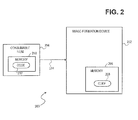
- FIG. 2 shows a system 200, according to an embodiment of the invention.
- the system 200 includes an image-formation device 202, and an image-formation device consumable item 204 that is insertable into the device 202, as indicated by the arrow 214.
- the image-formation device 202 includes a memory 206 having a code 208 programmed therein.
- the memory 206 is a non-volatile memory, and may in one embodiment be a semiconductor memory, such as flash memory.
- the consumable item 204 also includes a memory 210 having a code 212 programmed therein.
- the memory 210 is a non-volatile memory, and may in one embodiment be a semiconductor memory, such as flash memory.
- the code 212 is programmed into the memory 210 before the consumable item 204 is inserted into the image-formation device 202. That is, the code 212 is programmed into the memory 210 of the consumable item 204 outside of the image-formation device 202.
- the image-formation device 202 detects whether the memory 210 of the consumable item 204 has a code 212 programmed therein. If the device 202 detects the code 212 programmed in the memory 210, then the device 202 reads the code 212 from the memory 210 of the item 204. The device 202 compares the code 212 to the code 208 programmed in its own memory 206. If the code 212 is identical to the code 208, then the image-formation device 202 utilizes the consumable item 204 to form images on media.
- the image-formation device 202 does not utilize the consumable item 204 to form images on media.
- code matching provides theft deterrence.
- the consumable item 204 is essentially useless to the prospective thief, because the consumable item 204 is coded to be operable in image-formation devices that are programmed with the same code.
- the image-formation device 202 will still use the consumable item 204 to form images on media.
- the image-formation device 202 does not have a code programmed into the memory 206 thereof, but the consumable item 204 does have a code 212 programmed into the memory 210 thereof, the image-formation device 202 will not use the consumable item 204 to form images on media.
- the image-formation device 202 will still use the consumable item 204 to form images on media.
- the code 212 and the code 208 may be associated with a particular party, such as a particular organization, like a given company or corporation. All of the consumable items purchased by the party may be pre-programmed with the party's code at the time of purchase or at the time of manufacture, by the distributor, merchant, vendor, or manufacturer of the consumable items. Alternatively, the consumable items may be programmable by the party itself, using a specialized or general-purpose programming device for this purpose. Likewise, all of the image-formation devices purchased, leased, or otherwise used by the party may be pre-programmed with the party's code, or may be programmable by the party itself.
- the codes 208 and 212 are thus capable of being non-unique, in that other image-formation devices, besides the image-formation device 202, may have the same code 208, and other consumable items, besides the consumable item 204, may have the same code 212.
- the memory 206, and/or the memory 210 may be reprogrammable or non-reprogrammable. Therefore, in one embodiment, once either the memory 206 or the memory 210 has been programmed with a given code, the code cannot be erased from the memory and the memory cannot be reprogrammed with a new code. In another embodiment, however, once the memory 206 or the memory 210 has been programmed with a given code, the code may be erasable from the memory or the memory may be reprogrammed with a new code. A password or other authentication approach may be employed to ensure that only authorized users are able to erase codes from memory or reprogram new codes into memory.
- the programming of the code 212 into the memory 210 of the consumable item 204 before the item 204 is inserted into the image-formation device 202, and outside of the image-formation device 202, is advantageous.
- spare consumable items will be placed in a convenient location near the image-formation device in which they are to be used, so that when the consumable item already in the device is depleted, any person of the organization may switch a new consumable item for the depleted consumable item. Theft is more likely to occur of the spare consumable items that have not yet been used, rather than of the consumable item already in the image-formation device.
- a code programmed into the memories of the consumable items before they are inserted into the image-formation device ensures that they are less likely to be targets of theft. If a code is programmed into the memory of the consumable item only once the item has been inserted into an image-formation device, then the item is still likely to be a target of theft before it has been inserted into the device, especially where the item is placed in a convenient location near the device, as is common.
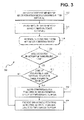
- FIG. 3 shows a method 300, according to an embodiment of the invention. At least some parts of the method 300 may be implemented as one or more computer program parts of a computer program stored on a computer-readable medium.
- the computer program parts may be software objects, subroutines, routines, computer program sections, and the like.
- the computer-readable medium may be a volatile or a non-volatile medium.
- the computer-readable medium may further be a semiconductor medium, a magnetic medium, and/or an optical medium, among other types of computer-readable media.
- a code is optionally programmed into the memory of an image-formation device consumable item (302).
- the programming of the code into the memory of the consumable item is performed before the item is inserted into an image-formation device. Furthermore, the programming of the code into the memory of the consumable item is performed outside of the image-formation device.
- a code is also optionally programmed into the memory of the image-formation device (304).
- the programming of a code into the image-formation device may be performed before or after a code is programmed into the consumable item.
- the programming of the codes into the image-formation device and the consumable item may be performed by a user of a particular party with which the codes are associated, or by a merchant of the device and the item upon purchase of the device and the item by the user of the particular party.
- the consumable item is then inserted into the image-formation device (306). If a code is detected as having been programmed in the memory of the consumable item (308), then the method 300 determines whether the code of the consumable item is identical to the code, if any, of the image-formation device (310). If so, then the consumable item is allowed to be used by the image-formation device to form images on media (312). Furthermore, if there is no code detected in the memory of the consumable item (308), then the consumable item is also allowed to be used by the device to form images on media (312). However, if the code of the consumable item differs from that of the image-formation device (310), then the consumable item is prevented from being used by the image-formation device to form images on media (314).
- FIG. 4 shows a rudimentary block diagram of one implementation of the image-formation device 202, according to an embodiment of the invention.
- the image-formation device 202 is depicted as including the memory 206, an image-formation mechanism 402, a detection mechanism 404, and a security mechanism 406.
- the image-formation device 202 may have other components, in addition to and/or in lieu of those depicted in FIG. 4.
- the memory 206 is capable of storing a code, as has been described.
- the image-formation mechanism 402 includes those components of the image-formation device 202 to form images on media, apart from consumable items.
- the mechanism 402 may be or include a laser-printing mechanism where the device 202 is a laser-printing device, or an inkjet-printing mechanism where the device 202 is an inkjet-printing device.
- the image-formation mechanism 402 uses an image-formation device consumable item inserted into the image-formation device 202 to form images on media.
- the detection mechanism 404 detects whether an image-formation device consumable item inserted into the image-formation device 202 has a code programmed in a memory thereof.
- the detection mechanism 404 may in one embodiment be a wireless radio frequency receiver to detect wireless signals broadcast by the consumable item and representative of the code programmed in the memory of the item.
- the detection mechanism 404 may in another embodiment be a communication bus to interface with a corresponding communication bus of the consumable item to receive the code programmed in the memory of the item.
- the detection mechanism 404 may further may be another type of detection mechanism.
- the security mechanism 406 is to allow the image-formation mechanism 402 to form images on media using the consumable item inserted into the image-formation device 202 where the code programmed into the memory 206 of the device 202 is identical to the code programmed into the memory of the consumable item.
- the security mechanism 406 is further to allow the image-formation mechanism 402 to form images on media using the consumable item where the consumable item has been detected as not having a code programmed in its memory.
- the security mechanism 406 is to disallow the image-formation mechanism 402 from using the consumable item to form images on media where the code of the image-formation device 202 is different than the code of the consumable item.
- the security mechanism 406 may be implemented in software, hardware, or a combination of hardware and software.
- FIG. 5 shows a rudimentary block diagram of one implementation of the image-formation device consumable item 204, according to an embodiment of the invention.
- the image-formation device consumable item 204 is depicted as including the memory 210, one or more consumables 502, and a communication mechanism 504.
- the consumable item 204 may have other components, in addition to and/or in lieu of those depicted in FIG. 5.
- the memory 210 is capable of storing a code, as has been described.
- the consumables 502 include consumables needed and used by an image-formation device to form images on media.
- the communication mechanism 504 communicates the code programmed in the memory 210 to an image-formation device into which the consumable item 204 has been inserted.
- the mechanism 504 may be an active communication mechanism, such as a wireless transmitter to broadcast wireless signals representative of the code.
- the mechanism 504 may further be a passive communication mechanism, such as a communications bus that allows a corresponding communications bus of the image-formation device to read the code from the memory 210.
Landscapes
- Control Or Security For Electrophotography (AREA)
- Accessory Devices And Overall Control Thereof (AREA)
Abstract
Description
- Nearly all printing devices, such as inkjet and laser printers, employ consumable items in printing images on media. For instance, inkjet printers typically use inkjet cartridges, whereas laser printers typically use toner cartridges. These consumable items can be expensive. Many times, an organization, such as a person's place of work, a library, or another organization, uses the same types of printing devices that are found in people's homes. As a result, the consumable items employed in these printing devices can be an attractive target for theft.
- The drawings referenced herein form a part of the specification. Features shown in the drawing are meant as illustrative of only some embodiments of the invention, and not of all embodiments of the invention.
- FIG. 1 is a diagram of a representative image-formation device in which image-formation device consumable items are insertable so that the device is able to form images on media, in conjunction with which embodiments of the invention may be practiced.
- FIG. 2 is a diagram of an image-formation device having a code programmed into a memory thereof and an image-formation device consumable item also having a code programmed into a memory thereof, according to an embodiment of the invention.
- FIG. 3 is a flowchart of a method to determine whether to allow an image-formation device consumable item to be used in an image-formation device to form images on media, according to an embodiment of the invention.
- FIG. 4 is a rudimentary block diagram of a particular implementation of an image-formation device, according to an embodiment of the invention.
- FIG. 5 is a rudimentary block diagram of a particular implementation of an image-formation device consumable item, according to an embodiment of the invention.
- In the following detailed description of exemplary embodiments of the invention, reference is made to the accompanying drawings that form a part thereof, and in which is shown by way of illustration specific exemplary embodiments in which the invention may be practiced. These embodiments are described in sufficient detail to enable those skilled in the art to practice the invention. Other embodiments may be utilized, and logical, mechanical, electrical, electro-optical, software/firmware and other changes may be made without departing from the scope of the present invention. The following detailed description is, therefore, not to be taken in a limiting sense, and the scope of the present invention is defined only by the appended claims.
- FIG. 1 shows a representative image-
formation device 100, in conjunction with which embodiments of the invention may be practiced. The image-formation device 100 is particularly an inkjet-printing device, such as an inkjet printer. Other types of image-formation devices in conjunction with which embodiments of the invention may be practiced include laser-printing devices, such as laser printers, as well as other types of image-formation devices. - Image-formation device
consumable items formation device 100 so that thedevice 100 is able to form images on media, such as paper. The consumable items 112 are particularly inkjet cartridges containing supplies of ink and optionally inkjet printheads. Without the consumable items 112, the image-formation device 100 is unable to form images on media. The items 112 are consumable items in that the process of forming images on media depletes, or consumes, the items 112, such that at some point new items 112 have to be inserted into the image-formation device 100 so that image formation can continue on media. - Other types of image-formation device consumable items are also amenable to implementation in conjunction with embodiments of the invention. Such other types of consumable items include ink, colorant, pigment, and toner. Furthermore, other types of consumable item include fusers or fuser assemblies, for use with laser-printing devices, as well as printheads, for use with inkjet-printing devices. As can be appreciated by those of ordinary skill within the art, embodiments of the invention are not limited to a particular type of image-formation device, nor to a particular type of image-formation device consumable item.
- FIG. 2 shows a
system 200, according to an embodiment of the invention. Thesystem 200 includes an image-formation device 202, and an image-formation deviceconsumable item 204 that is insertable into thedevice 202, as indicated by thearrow 214. The image-formation device 202 includes amemory 206 having acode 208 programmed therein. Thememory 206 is a non-volatile memory, and may in one embodiment be a semiconductor memory, such as flash memory. - The
consumable item 204 also includes amemory 210 having acode 212 programmed therein. Thememory 210 is a non-volatile memory, and may in one embodiment be a semiconductor memory, such as flash memory. Thecode 212 is programmed into thememory 210 before theconsumable item 204 is inserted into the image-formation device 202. That is, thecode 212 is programmed into thememory 210 of theconsumable item 204 outside of the image-formation device 202. - When the
consumable item 204 is inserted into the image-formation device 202, as indicated by thearrow 214, the image-formation device 202 detects whether thememory 210 of theconsumable item 204 has acode 212 programmed therein. If thedevice 202 detects thecode 212 programmed in thememory 210, then thedevice 202 reads thecode 212 from thememory 210 of theitem 204. Thedevice 202 compares thecode 212 to thecode 208 programmed in itsown memory 206. If thecode 212 is identical to thecode 208, then the image-formation device 202 utilizes theconsumable item 204 to form images on media. - However, if the
code 212 is not identical to thecode 208, then the image-formation device 202 does not utilize theconsumable item 204 to form images on media. Such code matching provides theft deterrence. For example, a user who knows that theconsumable item 204 has thecode 212 programmed into thememory 210 thereof, such that theconsumable item 204 can only be used within image-formation devices, like thedevice 202, that have the identical code programmed into memories therein, is less likely to steal theconsumable item 204. This is because theconsumable item 204 is essentially useless to the prospective thief, because theconsumable item 204 is coded to be operable in image-formation devices that are programmed with the same code. - In one embodiment, if the
consumable item 204 does not have a code programmed into thememory 210 thereof, but the image-formation device 202 does have acode 208 programmed into thememory 206 thereof, the image-formation device 202 will still use theconsumable item 204 to form images on media. In another embodiment, if the image-formation device 202 does not have a code programmed into thememory 206 thereof, but theconsumable item 204 does have acode 212 programmed into thememory 210 thereof, the image-formation device 202 will not use theconsumable item 204 to form images on media. In a third embodiment, if both the image-formation device 202 and theconsumable item 204 do not have codes programmed into theirmemories formation device 202 will still use theconsumable item 204 to form images on media. - The
code 212 and thecode 208, where identical, may be associated with a particular party, such as a particular organization, like a given company or corporation. All of the consumable items purchased by the party may be pre-programmed with the party's code at the time of purchase or at the time of manufacture, by the distributor, merchant, vendor, or manufacturer of the consumable items. Alternatively, the consumable items may be programmable by the party itself, using a specialized or general-purpose programming device for this purpose. Likewise, all of the image-formation devices purchased, leased, or otherwise used by the party may be pre-programmed with the party's code, or may be programmable by the party itself. Thecodes formation device 202, may have thesame code 208, and other consumable items, besides theconsumable item 204, may have thesame code 212. - The
memory 206, and/or thememory 210, may be reprogrammable or non-reprogrammable. Therefore, in one embodiment, once either thememory 206 or thememory 210 has been programmed with a given code, the code cannot be erased from the memory and the memory cannot be reprogrammed with a new code. In another embodiment, however, once thememory 206 or thememory 210 has been programmed with a given code, the code may be erasable from the memory or the memory may be reprogrammed with a new code. A password or other authentication approach may be employed to ensure that only authorized users are able to erase codes from memory or reprogram new codes into memory. - The programming of the
code 212 into thememory 210 of theconsumable item 204 before theitem 204 is inserted into the image-formation device 202, and outside of the image-formation device 202, is advantageous. Typically within an organization, spare consumable items will be placed in a convenient location near the image-formation device in which they are to be used, so that when the consumable item already in the device is depleted, any person of the organization may switch a new consumable item for the depleted consumable item. Theft is more likely to occur of the spare consumable items that have not yet been used, rather than of the consumable item already in the image-formation device. Therefore, having a code programmed into the memories of the consumable items before they are inserted into the image-formation device ensures that they are less likely to be targets of theft. If a code is programmed into the memory of the consumable item only once the item has been inserted into an image-formation device, then the item is still likely to be a target of theft before it has been inserted into the device, especially where the item is placed in a convenient location near the device, as is common. - FIG. 3 shows a
method 300, according to an embodiment of the invention. At least some parts of themethod 300 may be implemented as one or more computer program parts of a computer program stored on a computer-readable medium. The computer program parts may be software objects, subroutines, routines, computer program sections, and the like. The computer-readable medium may be a volatile or a non-volatile medium. The computer-readable medium may further be a semiconductor medium, a magnetic medium, and/or an optical medium, among other types of computer-readable media. - A code is optionally programmed into the memory of an image-formation device consumable item (302). The programming of the code into the memory of the consumable item is performed before the item is inserted into an image-formation device. Furthermore, the programming of the code into the memory of the consumable item is performed outside of the image-formation device. A code is also optionally programmed into the memory of the image-formation device (304). The programming of a code into the image-formation device may be performed before or after a code is programmed into the consumable item. The programming of the codes into the image-formation device and the consumable item may be performed by a user of a particular party with which the codes are associated, or by a merchant of the device and the item upon purchase of the device and the item by the user of the particular party.
- The consumable item is then inserted into the image-formation device (306). If a code is detected as having been programmed in the memory of the consumable item (308), then the
method 300 determines whether the code of the consumable item is identical to the code, if any, of the image-formation device (310). If so, then the consumable item is allowed to be used by the image-formation device to form images on media (312). Furthermore, if there is no code detected in the memory of the consumable item (308), then the consumable item is also allowed to be used by the device to form images on media (312). However, if the code of the consumable item differs from that of the image-formation device (310), then the consumable item is prevented from being used by the image-formation device to form images on media (314). - FIG. 4 shows a rudimentary block diagram of one implementation of the image-
formation device 202, according to an embodiment of the invention. The image-formation device 202 is depicted as including thememory 206, an image-formation mechanism 402, adetection mechanism 404, and asecurity mechanism 406. As can be appreciated by those of ordinary skill within the art, the image-formation device 202 may have other components, in addition to and/or in lieu of those depicted in FIG. 4. - The
memory 206 is capable of storing a code, as has been described. The image-formation mechanism 402 includes those components of the image-formation device 202 to form images on media, apart from consumable items. For instance, themechanism 402 may be or include a laser-printing mechanism where thedevice 202 is a laser-printing device, or an inkjet-printing mechanism where thedevice 202 is an inkjet-printing device. The image-formation mechanism 402 uses an image-formation device consumable item inserted into the image-formation device 202 to form images on media. - The
detection mechanism 404 detects whether an image-formation device consumable item inserted into the image-formation device 202 has a code programmed in a memory thereof. Thedetection mechanism 404 may in one embodiment be a wireless radio frequency receiver to detect wireless signals broadcast by the consumable item and representative of the code programmed in the memory of the item. Thedetection mechanism 404 may in another embodiment be a communication bus to interface with a corresponding communication bus of the consumable item to receive the code programmed in the memory of the item. Thedetection mechanism 404 may further may be another type of detection mechanism. - The
security mechanism 406 is to allow the image-formation mechanism 402 to form images on media using the consumable item inserted into the image-formation device 202 where the code programmed into thememory 206 of thedevice 202 is identical to the code programmed into the memory of the consumable item. Thesecurity mechanism 406 is further to allow the image-formation mechanism 402 to form images on media using the consumable item where the consumable item has been detected as not having a code programmed in its memory. Furthermore, thesecurity mechanism 406 is to disallow the image-formation mechanism 402 from using the consumable item to form images on media where the code of the image-formation device 202 is different than the code of the consumable item. Thesecurity mechanism 406 may be implemented in software, hardware, or a combination of hardware and software. - FIG. 5 shows a rudimentary block diagram of one implementation of the image-formation device
consumable item 204, according to an embodiment of the invention. The image-formation deviceconsumable item 204 is depicted as including thememory 210, one ormore consumables 502, and acommunication mechanism 504. As can be appreciated by those of ordinary skill within the art, theconsumable item 204 may have other components, in addition to and/or in lieu of those depicted in FIG. 5. - The
memory 210 is capable of storing a code, as has been described. Theconsumables 502 include consumables needed and used by an image-formation device to form images on media. Thecommunication mechanism 504 communicates the code programmed in thememory 210 to an image-formation device into which theconsumable item 204 has been inserted. Themechanism 504 may be an active communication mechanism, such as a wireless transmitter to broadcast wireless signals representative of the code. Themechanism 504 may further be a passive communication mechanism, such as a communications bus that allows a corresponding communications bus of the image-formation device to read the code from thememory 210. - It is noted that, although specific embodiments have been illustrated and described herein, it will be appreciated by those of ordinary skill in the art that any arrangement is calculated to achieve the same purpose may be substituted for the specific embodiments shown. This application is intended to cover any adaptations or variations of the present invention. Therefore, it is manifestly intended that this invention be limited only by the claims and equivalents thereof.
Claims (10)
- A method (300) comprising:programming a first code into a memory of an image-formation device consumable item, outside of an image-formation device (302);upon insertion of the image-formation device consumable item into the image-formation device (306),detecting that the memory of the consumable item has programmed therein the first code (308);determining by the image-formation device whether the first code is identical to a second code programmed into a memory of the image-formation device (310); and,where the first code is identical to the second code, allowing the consumable item to be used by the image-formation device to form images on media (312).
- The method according to claim 1, further comprising, where the first code differs from the second code, preventing the consumable item from being used by the image-formation device to form images on media (314).
- The method according to any of the above claims, further comprising, in response to detecting that the memory of the consumable item does not have programmed therein the first code, allowing the consumable item to be used by the image-formation device to form images on media (312).
- The method according to any of the above claims, wherein programming the memory of the image-formation device consumable item with the first code comprises one of:programming the memory of the consumable item with the first code by a user of a particular party with which the first code is associated; and,programming the memory of the consumable item with the first code by a merchant upon purchase of the consumable item by the user of the particular party with which the first code is associated.
- The method according to any of the above claims, further comprising, programming the memory of the image-formation device with the second code.
- The method of claim 5, wherein programming the memory of the image-formation device with the second code comprises one of:programming the memory of the image-formation device with the second code by a user of a particular party with which the second code is associated; and,programming the memory of the image-formation device with the second code by a merchant upon purchase of the image-formation device by the user of the particular party with which the second code is associated.
- An image-formation device (202) comprising:a memory capable of having programmed therein a code (206);an image-formation mechanism capable of forming images on media using an image-formation device consumable item insertable into the image-formation device (402);a detection mechanism to detect whether the consumable item insertable into the image-formation device has a code programmed in a memory thereof other than by the image-formation device (404); and,a security mechanism to allow the image-formation mechanism to form images on media using the consumable item where the code of the image-formation device is identical to the code of the consumable item (406).
- The image-formation device of claim 7, wherein the security mechanism is further to allow the image-formation mechanism to form images on media using the consumable item where the consumable item has been detected as not having a code programmed in the memory thereof.
- The image-formation device according to claim 7 or according to claim 8, wherein the security mechanism is to disallow the image-formation mechanism from forming images on media using the consumable item where the code of the image-formation device differs from the code of the consumable item.
- The image-formation device according to any of claims 7 to 9, wherein the code of the image-formation device is capable of being non-unique, such that one or more other image-formation devices are capable of having the same code.
Applications Claiming Priority (1)
| Application Number | Priority Date | Filing Date | Title |
|---|---|---|---|
| US11/061,238 US7221878B2 (en) | 2005-02-18 | 2005-02-18 | Allowing image formation using consumable item where code of consumable item is identical to code of image-formation device |
Publications (2)
| Publication Number | Publication Date |
|---|---|
| EP1698474A1 true EP1698474A1 (en) | 2006-09-06 |
| EP1698474B1 EP1698474B1 (en) | 2009-07-08 |
Family
ID=36608602
Family Applications (1)
| Application Number | Title | Priority Date | Filing Date |
|---|---|---|---|
| EP06101211A Ceased EP1698474B1 (en) | 2005-02-18 | 2006-02-02 | Allowing image formation using consumable item where code of consumable item is identical to code of image-formation device |
Country Status (3)
| Country | Link |
|---|---|
| US (1) | US7221878B2 (en) |
| EP (1) | EP1698474B1 (en) |
| DE (1) | DE602006007633D1 (en) |
Families Citing this family (12)
| Publication number | Priority date | Publication date | Assignee | Title |
|---|---|---|---|---|
| US20110110681A1 (en) * | 2003-12-19 | 2011-05-12 | Steven Miller | Method of Making an Electronic Circuit for an Imaging Machine |
| US7369784B2 (en) * | 2005-03-10 | 2008-05-06 | Fuji Xerox Co., Ltd. | Image forming apparatus and main body of the same |
| US7551859B2 (en) * | 2005-09-27 | 2009-06-23 | Steven Miller | Multiple region printer chip |
| JP2007112070A (en) * | 2005-10-21 | 2007-05-10 | Sony Corp | Destination dedicated device, printing device, print kiosk device, destination dedicated method and program |
| WO2008055244A2 (en) | 2006-10-31 | 2008-05-08 | Sensient Colors Inc. | Modified pigments and methods for making and using the same |
| KR101249843B1 (en) * | 2007-08-10 | 2013-04-05 | 삼성전자주식회사 | Image forming apparatus and cartridge and control method of the image forming apparatus |
| EP3483222A3 (en) | 2007-08-23 | 2019-08-07 | Sensient Colors LLC | Self-dispersed pigments and methods for making and using the same |
| US8027048B2 (en) * | 2007-09-27 | 2011-09-27 | Hewlett-Packard Development Company, L.P. | Method and article for determining use of consumable items in an image-forming device |
| KR101329744B1 (en) * | 2008-04-23 | 2013-11-14 | 삼성전자주식회사 | The method for authenticating the contents which is provided in image forming apparatus and image forming apparatus for performing the method |
| JP4492761B2 (en) * | 2008-06-16 | 2010-06-30 | コニカミノルタホールディングス株式会社 | Image forming apparatus and access control method in image forming apparatus |
| EP2417202A2 (en) | 2009-04-07 | 2012-02-15 | Sensient Colors LLC | Self-dispersing particles and methods for making and using the same |
| JP2019053416A (en) * | 2017-09-13 | 2019-04-04 | 東芝メモリ株式会社 | Storage device, storage control method, storage control program and storage system |
Citations (3)
| Publication number | Priority date | Publication date | Assignee | Title |
|---|---|---|---|---|
| US20020001093A1 (en) * | 1998-03-04 | 2002-01-03 | Bullock Michael L. | Electrical storage device for a replaceable printing component |
| EP1253552A1 (en) * | 2001-04-24 | 2002-10-30 | Hewlett-Packard Company | Memory on a consumer device used to designate recycle information |
| US20030031475A1 (en) * | 2001-08-09 | 2003-02-13 | Murata Kikai Kabushiki Kaisha | Image forming apparatus and process unit identification method of the image forming apparatus |
Family Cites Families (13)
| Publication number | Priority date | Publication date | Assignee | Title |
|---|---|---|---|---|
| US4961088A (en) * | 1989-04-20 | 1990-10-02 | Xerox Corporation | Monitor/warranty system for electrostatographic reproducing machines using replaceable cartridges |
| JP2985205B2 (en) * | 1990-01-25 | 1999-11-29 | ミノルタ株式会社 | Image forming device |
| KR0153420B1 (en) * | 1993-12-31 | 1998-12-15 | 김광호 | Consumable parts locking device and method by identification code in image forming apparatus |
| US6416154B1 (en) * | 1997-07-12 | 2002-07-09 | Silverbrook Research Pty Ltd | Printing cartridge with two dimensional code identification |
| US7246098B1 (en) * | 1997-07-15 | 2007-07-17 | Silverbrook Research Pty Ltd | Consumable authentication protocol and system |
| AU2001231441B2 (en) * | 2000-02-15 | 2004-02-05 | Memjet Technology Limited | Consumable authentication protocol and system |
| US7433065B2 (en) * | 2001-08-16 | 2008-10-07 | Hewlett-Packard Development Company, L.P. | Image forming device consumable monitoring methods, consumable monitoring systems and image forming devices |
| US6982810B2 (en) * | 2001-09-14 | 2006-01-03 | Hewlett-Packard Development Company, L.P. | Detecting theft of print substance from a printing device |
| US6685298B2 (en) * | 2001-09-28 | 2004-02-03 | Hewlett-Packard Development Company, L.P. | Method and apparatus for preventing theft of replaceable printing components |
| US6768877B2 (en) * | 2002-11-27 | 2004-07-27 | Hewlett-Packard Development Company, L.P. | Systems and methods for limiting access to imaging device consumable components |
| US7181572B2 (en) * | 2002-12-02 | 2007-02-20 | Silverbrook Research Pty Ltd | Cache updating method and apparatus |
| KR100533835B1 (en) * | 2004-01-26 | 2005-12-07 | 삼성전자주식회사 | Network printer system and managing method for toner cartridge thereof |
| US7399047B2 (en) * | 2004-04-29 | 2008-07-15 | Hewlett-Packard Development Company, L.P. | Consumable cartridge with theft deterrence features |
-
2005
- 2005-02-18 US US11/061,238 patent/US7221878B2/en not_active Expired - Lifetime
-
2006
- 2006-02-02 DE DE602006007633T patent/DE602006007633D1/en not_active Expired - Lifetime
- 2006-02-02 EP EP06101211A patent/EP1698474B1/en not_active Ceased
Patent Citations (3)
| Publication number | Priority date | Publication date | Assignee | Title |
|---|---|---|---|---|
| US20020001093A1 (en) * | 1998-03-04 | 2002-01-03 | Bullock Michael L. | Electrical storage device for a replaceable printing component |
| EP1253552A1 (en) * | 2001-04-24 | 2002-10-30 | Hewlett-Packard Company | Memory on a consumer device used to designate recycle information |
| US20030031475A1 (en) * | 2001-08-09 | 2003-02-13 | Murata Kikai Kabushiki Kaisha | Image forming apparatus and process unit identification method of the image forming apparatus |
Also Published As
| Publication number | Publication date |
|---|---|
| DE602006007633D1 (en) | 2009-08-20 |
| US7221878B2 (en) | 2007-05-22 |
| EP1698474B1 (en) | 2009-07-08 |
| US20060188270A1 (en) | 2006-08-24 |
Similar Documents
| Publication | Publication Date | Title |
|---|---|---|
| EP1698474B1 (en) | Allowing image formation using consumable item where code of consumable item is identical to code of image-formation device | |
| EP1428345B1 (en) | Method and apparatus for article authentication | |
| US6738903B1 (en) | Password protected memory on replaceable components for printing devices | |
| US7970292B2 (en) | Consumable unit and image forming apparatus including memory storing consumable item information | |
| US9557696B2 (en) | Image forming apparatus with replacement component management memory | |
| AU2002324757A1 (en) | Method and apparatus for article authentication | |
| US7399047B2 (en) | Consumable cartridge with theft deterrence features | |
| GB2354735A (en) | Memory tag for a replaceable printer component | |
| US7369784B2 (en) | Image forming apparatus and main body of the same | |
| US8001593B2 (en) | Authentication method and unit, and electronic apparatus having authentication unit | |
| EP1505477A2 (en) | Control of programming electronic devices | |
| EP1591255A1 (en) | Consumable cartridge theft deterrence apparatus and methods | |
| JP4661294B2 (en) | Image forming apparatus | |
| JP2006301529A (en) | Image forming apparatus | |
| US20180046137A1 (en) | Image forming apparatus and image forming control method | |
| CN114968135B (en) | Authentication method, chip, host and replaceable accessory | |
| EP4356234A1 (en) | Single-use authentication code of printing device consumable item assembly | |
| JP2013060742A (en) | Key discriminating device, and lost key invalidating system | |
| JP2009023792A (en) | Article management storage device |
Legal Events
| Date | Code | Title | Description |
|---|---|---|---|
| PUAI | Public reference made under article 153(3) epc to a published international application that has entered the european phase |
Free format text: ORIGINAL CODE: 0009012 |
|
| AK | Designated contracting states |
Kind code of ref document: A1 Designated state(s): AT BE BG CH CY CZ DE DK EE ES FI FR GB GR HU IE IS IT LI LT LU LV MC NL PL PT RO SE SI SK TR |
|
| AX | Request for extension of the european patent |
Extension state: AL BA HR MK YU |
|
| 17P | Request for examination filed |
Effective date: 20070306 |
|
| 17Q | First examination report despatched |
Effective date: 20070405 |
|
| AKX | Designation fees paid |
Designated state(s): DE FR GB |
|
| GRAP | Despatch of communication of intention to grant a patent |
Free format text: ORIGINAL CODE: EPIDOSNIGR1 |
|
| GRAP | Despatch of communication of intention to grant a patent |
Free format text: ORIGINAL CODE: EPIDOSNIGR1 |
|
| GRAS | Grant fee paid |
Free format text: ORIGINAL CODE: EPIDOSNIGR3 |
|
| GRAA | (expected) grant |
Free format text: ORIGINAL CODE: 0009210 |
|
| AK | Designated contracting states |
Kind code of ref document: B1 Designated state(s): DE FR GB |
|
| REG | Reference to a national code |
Ref country code: GB Ref legal event code: FG4D |
|
| REF | Corresponds to: |
Ref document number: 602006007633 Country of ref document: DE Date of ref document: 20090820 Kind code of ref document: P |
|
| PLBI | Opposition filed |
Free format text: ORIGINAL CODE: 0009260 |
|
| PLAX | Notice of opposition and request to file observation + time limit sent |
Free format text: ORIGINAL CODE: EPIDOSNOBS2 |
|
| 26 | Opposition filed |
Opponent name: PELIKAN HARDCOPY PRODUCTION AG Effective date: 20100408 |
|
| PLBB | Reply of patent proprietor to notice(s) of opposition received |
Free format text: ORIGINAL CODE: EPIDOSNOBS3 |
|
| PLCK | Communication despatched that opposition was rejected |
Free format text: ORIGINAL CODE: EPIDOSNREJ1 |
|
| PLBN | Opposition rejected |
Free format text: ORIGINAL CODE: 0009273 |
|
| STAA | Information on the status of an ep patent application or granted ep patent |
Free format text: STATUS: OPPOSITION REJECTED |
|
| 27O | Opposition rejected |
Effective date: 20130517 |
|
| REG | Reference to a national code |
Ref country code: DE Ref legal event code: R100 Ref document number: 602006007633 Country of ref document: DE Effective date: 20130517 |
|
| REG | Reference to a national code |
Ref country code: FR Ref legal event code: PLFP Year of fee payment: 11 |
|
| REG | Reference to a national code |
Ref country code: FR Ref legal event code: PLFP Year of fee payment: 12 |
|
| REG | Reference to a national code |
Ref country code: FR Ref legal event code: PLFP Year of fee payment: 13 |
|
| PGFP | Annual fee paid to national office [announced via postgrant information from national office to epo] |
Ref country code: GB Payment date: 20220124 Year of fee payment: 17 Ref country code: DE Payment date: 20220119 Year of fee payment: 17 |
|
| PGFP | Annual fee paid to national office [announced via postgrant information from national office to epo] |
Ref country code: FR Payment date: 20220119 Year of fee payment: 17 |
|
| REG | Reference to a national code |
Ref country code: DE Ref legal event code: R119 Ref document number: 602006007633 Country of ref document: DE |
|
| GBPC | Gb: european patent ceased through non-payment of renewal fee |
Effective date: 20230202 |
|
| PG25 | Lapsed in a contracting state [announced via postgrant information from national office to epo] |
Ref country code: GB Free format text: LAPSE BECAUSE OF NON-PAYMENT OF DUE FEES Effective date: 20230202 |
|
| PG25 | Lapsed in a contracting state [announced via postgrant information from national office to epo] |
Ref country code: GB Free format text: LAPSE BECAUSE OF NON-PAYMENT OF DUE FEES Effective date: 20230202 Ref country code: FR Free format text: LAPSE BECAUSE OF NON-PAYMENT OF DUE FEES Effective date: 20230228 Ref country code: DE Free format text: LAPSE BECAUSE OF NON-PAYMENT OF DUE FEES Effective date: 20230901 |