EP1698350A1 - Porphyrin-based compounds for tumor imaging and photodynamic therapy - Google Patents
Porphyrin-based compounds for tumor imaging and photodynamic therapy Download PDFInfo
- Publication number
- EP1698350A1 EP1698350A1 EP06110316A EP06110316A EP1698350A1 EP 1698350 A1 EP1698350 A1 EP 1698350A1 EP 06110316 A EP06110316 A EP 06110316A EP 06110316 A EP06110316 A EP 06110316A EP 1698350 A1 EP1698350 A1 EP 1698350A1
- Authority
- EP
- European Patent Office
- Prior art keywords
- alkyl
- substituted
- aryl
- alkenyl
- alkynyl
- Prior art date
- Legal status (The legal status is an assumption and is not a legal conclusion. Google has not performed a legal analysis and makes no representation as to the accuracy of the status listed.)
- Granted
Links
Images


Classifications
-
- B—PERFORMING OPERATIONS; TRANSPORTING
- B32—LAYERED PRODUCTS
- B32B—LAYERED PRODUCTS, i.e. PRODUCTS BUILT-UP OF STRATA OF FLAT OR NON-FLAT, e.g. CELLULAR OR HONEYCOMB, FORM
- B32B21/00—Layered products comprising a layer of wood, e.g. wood board, veneer, wood particle board
- B32B21/04—Layered products comprising a layer of wood, e.g. wood board, veneer, wood particle board comprising wood as the main or only constituent of a layer, which is next to another layer of the same or of a different material
-
- A—HUMAN NECESSITIES
- A61—MEDICAL OR VETERINARY SCIENCE; HYGIENE
- A61K—PREPARATIONS FOR MEDICAL, DENTAL OR TOILETRY PURPOSES
- A61K51/00—Preparations containing radioactive substances for use in therapy or testing in vivo
- A61K51/02—Preparations containing radioactive substances for use in therapy or testing in vivo characterised by the carrier, i.e. characterised by the agent or material covalently linked or complexing the radioactive nucleus
- A61K51/04—Organic compounds
- A61K51/0474—Organic compounds complexes or complex-forming compounds, i.e. wherein a radioactive metal (e.g. 111In3+) is complexed or chelated by, e.g. a N2S2, N3S, NS3, N4 chelating group
- A61K51/0485—Porphyrins, texaphyrins wherein the nitrogen atoms forming the central ring system complex the radioactive metal
-
- A—HUMAN NECESSITIES
- A61—MEDICAL OR VETERINARY SCIENCE; HYGIENE
- A61P—SPECIFIC THERAPEUTIC ACTIVITY OF CHEMICAL COMPOUNDS OR MEDICINAL PREPARATIONS
- A61P35/00—Antineoplastic agents
-
- A—HUMAN NECESSITIES
- A61—MEDICAL OR VETERINARY SCIENCE; HYGIENE
- A61P—SPECIFIC THERAPEUTIC ACTIVITY OF CHEMICAL COMPOUNDS OR MEDICINAL PREPARATIONS
- A61P43/00—Drugs for specific purposes, not provided for in groups A61P1/00-A61P41/00
-
- B—PERFORMING OPERATIONS; TRANSPORTING
- B32—LAYERED PRODUCTS
- B32B—LAYERED PRODUCTS, i.e. PRODUCTS BUILT-UP OF STRATA OF FLAT OR NON-FLAT, e.g. CELLULAR OR HONEYCOMB, FORM
- B32B3/00—Layered products comprising a layer with external or internal discontinuities or unevennesses, or a layer of non-planar shape; Layered products comprising a layer having particular features of form
- B32B3/26—Layered products comprising a layer with external or internal discontinuities or unevennesses, or a layer of non-planar shape; Layered products comprising a layer having particular features of form characterised by a particular shape of the outline of the cross-section of a continuous layer; characterised by a layer with cavities or internal voids ; characterised by an apertured layer
- B32B3/266—Layered products comprising a layer with external or internal discontinuities or unevennesses, or a layer of non-planar shape; Layered products comprising a layer having particular features of form characterised by a particular shape of the outline of the cross-section of a continuous layer; characterised by a layer with cavities or internal voids ; characterised by an apertured layer characterised by an apertured layer, the apertures going through the whole thickness of the layer, e.g. expanded metal, perforated layer, slit layer regular cells B32B3/12
-
- C—CHEMISTRY; METALLURGY
- C07—ORGANIC CHEMISTRY
- C07D—HETEROCYCLIC COMPOUNDS
- C07D487/00—Heterocyclic compounds containing nitrogen atoms as the only ring hetero atoms in the condensed system, not provided for by groups C07D451/00 - C07D477/00
- C07D487/22—Heterocyclic compounds containing nitrogen atoms as the only ring hetero atoms in the condensed system, not provided for by groups C07D451/00 - C07D477/00 in which the condensed system contains four or more hetero rings
-
- C—CHEMISTRY; METALLURGY
- C07—ORGANIC CHEMISTRY
- C07H—SUGARS; DERIVATIVES THEREOF; NUCLEOSIDES; NUCLEOTIDES; NUCLEIC ACIDS
- C07H17/00—Compounds containing heterocyclic radicals directly attached to hetero atoms of saccharide radicals
- C07H17/02—Heterocyclic radicals containing only nitrogen as ring hetero atoms
-
- B—PERFORMING OPERATIONS; TRANSPORTING
- B32—LAYERED PRODUCTS
- B32B—LAYERED PRODUCTS, i.e. PRODUCTS BUILT-UP OF STRATA OF FLAT OR NON-FLAT, e.g. CELLULAR OR HONEYCOMB, FORM
- B32B2305/00—Condition, form or state of the layers or laminate
- B32B2305/38—Meshes, lattices or nets
Definitions
- radiometal-labeled complexes and biomolecules as diagnostic agents is a relatively new area of medicinal chemistry.
- Research into 99m Tc radiopharmaceutical was the beginning of the study of coordinate chemistry as it related to diagnostic imaging. Since then, the development of novel radiopharmaceuticals for early stage diagnosis remains as one of the active areas of functional imaging.
- the imaging modalities widely used in nuclear medicine include gamma scintigraphy and positron emission tomography (PET).
- Gamma scintigraphy requires a radiopharmaceutical containing a nuclide that emits gamma radiation and a gamma camera or SPECT (single-photon emission tomography) camera capable of imaging the patient injected with a gamma-emitting radiopharmaceutical.
- the energy of the gamma photons is of great importance, since most gamma cameras are designed in the range of 100-250 KeV. Radionuclides that decay with gamma energies lower than this range produce too much scatter, while gamma energies >250 KeV are difficult to collimate, and in either case the images may not be of sufficient quality.
- PET requires a radiopharmaceutical labeled with a positron-emitting radionuclide ( ⁇ + ) and a PET camera for imaging the patient.
- Positron decay results in the emission of two 511 KeV photons 180° apart.
- PET scanners contain a circular array of detectors with coincidence circuits designed to specifically detect the 511 KeV photons emitted in opposite directions.
- Radiometal agents are also used to monitor various types of cancer therapy. In designing radiometal-based radiopharmaceuticals important factors to consider include the half-life of the radiometal, the mode of decay and the cost and the availability of the isotope.
- Radiometals for radiopharmaceuticals used in PET and gamma scintigraphy range in half-life from about 10 min ( 62 Cu) to several days ( 67 Ga).
- the desired half-life is dependent upon the time required for the radiopharmaceutical to localize in the target tissue. For example, heart or brain perfusion-based radiopharmaceuticals require shorter half-lives, since they reach the target quickly whereas tumor-targeted compounds often take longer to reach the target for optimal target-to-background ratios to be obtained.
- radiopharmaceutical agent requires optimizing the balance between specific in vivo targeting of the disease site (cancerous tumor) and clearance of radioactivity from non-target as well as the physical radioactive decay properties of the associated radionuclide.
- Several difficulties are encountered in the design of selective radiolabeled drug. These include problems related to efficient drug delivery, maximizing the residence time of the radioactivity at target sites, in vivo catabolism and metabolism of the drug, and optimization of relative rates if the radiolabeled drug or-metabolic clearance from non-target sites.
- radiopharmaceuticals for imaging and therapy of cancer is a complex problem that is not simply accomplished by attaching a radionuclide, in any fashion, to a non-radiolabled targeting vector.
- the chemistry involved in the labeling process therefore, is an integral and essential part of the drug design process.
- a radiometalated chelate is appended at some point to a biomolecular targeting entity, the structure and physiochemical properties of the chelate must be compatible with, and possibly even help promote, high specific uptake of the radiopharmaceutical at the diseased site. At the very least, this radiometal chelate should not interfere with pharmacokinetics, binding specificity or affinity to cancer cells.
- the selection of the radionuclides, and the chemical strategies used for radiolabeling of molecules are critical elements if the formulation of safe and effective imaging/therapeutic agents.
- porphyrin-based compounds have been used for the treatment of cancer by photodynamic therapy (PDT).
- PDT photodynamic therapy
- the concentration of certain porphyrins and related tetrapyrrolic systems is higher in malignant tumors than in most normal tissues and that has been the main reason to use these molecules as photosensitizers.
- Some tetrapyrrole-based compounds have been effective in a wide variety of malignancies, including skin, lung, bladder, head and neck and esophagus.
- the precise mechanism(s) of PDT are unknown; however, the in vivo animal data suggest that both direct cell killing and loss of tumor vascular function play a significant role.
- Photodynamic therapy exploits the biological consequences of localized oxidative damage inflicted by photodynamic processes. These critical elements are required for initial photodynamic processes to occur: a photosensitizer, light and oxygen.
- Superficial visible lesions or those that are endoscopically accessible, e.g. endobronchial or esophageal tumors, are easily treated but the majority of malignant lesions are too deep to be reached by light of the wavelength required to trigger singlet oxygen production in the current generation of photosensitizers.
- the technology to deliver therapeutic light to deep lesions via optical fibers "capped" by a terminal diffuser is well developed, a deep lesion is by definition not visible from the skin surface and the PDT of deep tumors has thus far been impractical.
- these compounds are 124 I-phenyl derivatives of a chlorin, bacteriochlorin, porphyrin, pyropheophorbide, purpurinimide, or bacteriopupurinimide.
- preferred compounds of the invention include compounds of the formula: or a phamaceutically acceptable derivative thereof, wherein:
- the invention also includes the method of using these compounds for imaging and simultaneously permit nuclear imaging guided implantation of optical fibers within deep tumors would enable to treat by PDT.
- the clearance of the HPPH-based compounds from tumor was found to be slower than from most of the non-tumor tissues.
- the short 6 h half-life of 99m Tc was found to be incompatible with 24-hour imaging time, suggesting that the use of a longer-lived isotope could provide a useful scanning agent.
- Another approach for developing an improved tumor-imaging agent could be to replace HPPH with those compounds that exhibit significantly higher tumor to non-tumor ratio.
- the synthesis of the related long-lived radionuclide could generate improved imaging and therapeutic (PDT) agents.
- a compound that effectively functions both as an imaging agent and a photosensitizer creates an entirely new paradigm for tumor diagnosis and therapy.
- a patient can be scanned with a scanner.
- the location of the tumor site(s) can thus be defined, and, while the patient remains in the scanner, an interventional nuclear scientist can transcutaneously insert ultra-slim needles that can act as introducers for light-transmission fibers into the lesion(s). Because each fiber diameter is ⁇ 400 microns, the introducer needles would produce negligible tissue damage.
- a light source can be coupled to the fibers, and PDT of the lesion(s) can be commenced, without any significant injury to other organs.
- the lesion(s) can be continuously imaged during needle/fiber placement, without any ambiguity in terms of localization or "misregistration" of separate diagnostic/therapeutic images.
- This paradigm would make the low-toxicity and high efficacy of PDT available to virtually any location from the skull base to the floor of the pelvis.
- Positron emission tomography is a technique that permits non-invasive use of positron labeled molecular imaging probes to image and assay biochemical processes at cellular function in living subject. Compared to single-photon-emission-computed tomography (SPECT), to produce tomographic images, PET is at least tenfold more sensitive. The short half-lives of the most commonly used positron emitting nuclides are not suitable for drugs with biological half lives in days. However, Iodine-124 is a positron emitter with a half-life of 4.2 days and is suitable for labeling probes with biological half lives of few days. This isotope has not been widely used because of the limited availability and complex decay scheme including several high-energy gamma rays. Pentlow et al . were the first to show that quantitative imaging with 124 I is possible.
- R is -COOH, -CO 2 R 3 , -CONHR 4 , monosaccharide, disaccharide, polysaccharide, folic acid residue, or integrin antagonist;
- R 1 when present, is C 1 -C 12 alkyl, R 3 is C 1 -C 12 alkyl and R 4 completes an amino acid residue.
- Methyl3-Devinyl-3- ⁇ 1'-(3-iodobenzyloxy)ethyl pyropheophorbide a As seen in Figure 3, pyropheophorbide-a 1 was obtained from chlorophyll-a by following the literature procedure.
- the trimethyltin analog 3 (50 ⁇ g) obtained by reacting 2 with hexamethyldistannane and bis-(triphenylphosphine)palladium(II)dichloride in 1,4-dioxane (See Figure 3) was dissolved in 100 ⁇ l of 10% acetic acid in methanol. Na 124 I was added in 0.1N NaOH. The solution was mixed and an IODOGEN bead was added. The reaction mixture was incubated at room temperature for 30 minutes and the reaction product was purified using HPLC ( Figure 1). The labeled product was collected. The HPLC Chromatogram of the purified product is shown in Figure 2.
- RIF tumor cells were grown in alpha-DMEM with 10% fetal calf serum, penicillin and streptomycin. Cells were maintained in 5% CO 2 , 95% air and 100% humidity. For determining the PDT efficacy, these cells were plated in 96-well plates and a density of 1x10 4 cells well in complete media. After overnight incubation to allow the cells to attach, the HPPH and the related cold-iodo derivative 2 were individually added at variable concentrations.
- the cells were washed once with PBS, and irradiated with light. After light treatment, the cells were washed once and placed in complete media and incubated for 48hrs. Then 10 ⁇ l of a 4-mg/ml solution of MTT was added to each well. After incubating for 4 hr at 37°C the MTT + media were removed and 100 ⁇ l DMSO was added to solubilize the formazin crystals. The 96-well plate was read on a microtiter plate reader at an absorbance of 560 nm. The optimal cell kill was obtained at a concentration of 1.0 ⁇ M.
- mice/group mice/group mice were sacrificed and the biodistribution of the I-124 PET agent in selected organs/gram were determined.
- Table 1 Biodistribution results of I-124 labeled photosensitizer 4 in some selected organ of mice (3 mice/group) at 48 h post injection ⁇ Parts Blood Muscle Spleen Kidney Lungs Heart Liver Gut Stomach Tumor Mouse 1 1.47 0.18 2.04 1.09 0.99 0.79 3.46 3.6 1.3 2.4 Mouse 2 1.33 0.49 2.23 1.21 1.29 1.21 3.22 2.22 0.66 2.15 Mouse 3 0.57 0.37 2.05 0.99 1.00 0.98 3.26 1.69 1.10 2.10 AVG 1.12 0.35 2.11 1.10 1.09 0.99 3.31 2.47 1.02 2.22 Std Dev 0.48 0.16 0.11 0.11 0.17 0.21 0.13 1.03 0.33 0.16
- Positron emission tomography is a highly sensitive non-invasive technology that is ideally suited for pre-clinical and clinical imaging of cancer biology, in contrast to anatomical approaches.
- PET Positron emission tomography
- radiolabelled tracers which are injected in nonpharmacological doses, three-dimensional images can be reconstructed by a computer to show the concentration and location(s) of the tracer of interest.
- I-124 has advantage due to its longer half-life (4.2 days).
- Our invention reports a first example for the preparation of I-124 labelled photosensitizers related to chlorines and bacteriochlorins with long wavelength absorption in the range of 660-800 nm. We have also shown the utility of these tumor-avid compounds for tumor detection and therapy. Our approach also provides an opportunity to develop target-specific bifunctional agents by targeting certain receptors known to have over-expression in tumors, and these studies are currently in progress.
Landscapes
- Chemical & Material Sciences (AREA)
- Organic Chemistry (AREA)
- Health & Medical Sciences (AREA)
- Life Sciences & Earth Sciences (AREA)
- General Health & Medical Sciences (AREA)
- Public Health (AREA)
- Engineering & Computer Science (AREA)
- Medicinal Chemistry (AREA)
- Pharmacology & Pharmacy (AREA)
- Veterinary Medicine (AREA)
- Animal Behavior & Ethology (AREA)
- General Chemical & Material Sciences (AREA)
- Biotechnology (AREA)
- Chemical Kinetics & Catalysis (AREA)
- Optics & Photonics (AREA)
- Nuclear Medicine, Radiotherapy & Molecular Imaging (AREA)
- Physics & Mathematics (AREA)
- Proteomics, Peptides & Aminoacids (AREA)
- Molecular Biology (AREA)
- Biochemistry (AREA)
- Epidemiology (AREA)
- Genetics & Genomics (AREA)
- Wood Science & Technology (AREA)
- Bioinformatics & Cheminformatics (AREA)
- Medicines Containing Antibodies Or Antigens For Use As Internal Diagnostic Agents (AREA)
- Pharmaceuticals Containing Other Organic And Inorganic Compounds (AREA)
- Nitrogen Condensed Heterocyclic Rings (AREA)
- Medicines That Contain Protein Lipid Enzymes And Other Medicines (AREA)
Abstract
Description
- This invention was made with funding from the National Institute of Health Grant Numbers NIH (1R21 CA109914-01 and CA 55792). The United States Government may have certain rights in this invention.
- The use of radiometal-labeled complexes and biomolecules as diagnostic agents is a relatively new area of medicinal chemistry. Research into 99mTc radiopharmaceutical was the beginning of the study of coordinate chemistry as it related to diagnostic imaging. Since then, the development of novel radiopharmaceuticals for early stage diagnosis remains as one of the active areas of functional imaging. In recent years, the imaging modalities widely used in nuclear medicine include gamma scintigraphy and positron emission tomography (PET). Gamma scintigraphy requires a radiopharmaceutical containing a nuclide that emits gamma radiation and a gamma camera or SPECT (single-photon emission tomography) camera capable of imaging the patient injected with a gamma-emitting radiopharmaceutical. The energy of the gamma photons is of great importance, since most gamma cameras are designed in the range of 100-250 KeV. Radionuclides that decay with gamma energies lower than this range produce too much scatter, while gamma energies >250 KeV are difficult to collimate, and in either case the images may not be of sufficient quality. PET requires a radiopharmaceutical labeled with a positron-emitting radionuclide (β+) and a PET camera for imaging the patient. Positron decay results in the emission of two 511 KeV photons 180° apart. PET scanners contain a circular array of detectors with coincidence circuits designed to specifically detect the 511 KeV photons emitted in opposite directions. Radiometal agents are also used to monitor various types of cancer therapy. In designing radiometal-based radiopharmaceuticals important factors to consider include the half-life of the radiometal, the mode of decay and the cost and the availability of the isotope. For diagnostic imaging, the half-life of the radionuclide must be long enough to carry out the desired chemistry to synthesize the radiopharmaceutical and long enough to allow accumulation in the target tissue in the patient while allowing clearance through the nontarget organs. Radiometals for radiopharmaceuticals used in PET and gamma scintigraphy range in half-life from about 10 min (62Cu) to several days (67Ga). The desired half-life is dependent upon the time required for the radiopharmaceutical to localize in the target tissue. For example, heart or brain perfusion-based radiopharmaceuticals require shorter half-lives, since they reach the target quickly whereas tumor-targeted compounds often take longer to reach the target for optimal target-to-background ratios to be obtained.
- The design of a radiopharmaceutical agent requires optimizing the balance between specific in vivo targeting of the disease site (cancerous tumor) and clearance of radioactivity from non-target as well as the physical radioactive decay properties of the associated radionuclide. Several difficulties are encountered in the design of selective radiolabeled drug. These include problems related to efficient drug delivery, maximizing the residence time of the radioactivity at target sites, in vivo catabolism and metabolism of the drug, and optimization of relative rates if the radiolabeled drug or-metabolic clearance from non-target sites. Because of the multiple parameters that must be considered, developing effective radiopharmaceuticals for imaging and therapy of cancer is a complex problem that is not simply accomplished by attaching a radionuclide, in any fashion, to a non-radiolabled targeting vector. The chemistry involved in the labeling process, therefore, is an integral and essential part of the drug design process. For example, if a radiometalated chelate is appended at some point to a biomolecular targeting entity, the structure and physiochemical properties of the chelate must be compatible with, and possibly even help promote, high specific uptake of the radiopharmaceutical at the diseased site. At the very least, this radiometal chelate should not interfere with pharmacokinetics, binding specificity or affinity to cancer cells. Clearly, the selection of the radionuclides, and the chemical strategies used for radiolabeling of molecules are critical elements if the formulation of safe and effective imaging/therapeutic agents.
- For the last several years porphyrin-based compounds have been used for the treatment of cancer by photodynamic therapy (PDT). The concentration of certain porphyrins and related tetrapyrrolic systems is higher in malignant tumors than in most normal tissues and that has been the main reason to use these molecules as photosensitizers. Some tetrapyrrole-based compounds have been effective in a wide variety of malignancies, including skin, lung, bladder, head and neck and esophagus. The precise mechanism(s) of PDT are unknown; however, the in vivo animal data suggest that both direct cell killing and loss of tumor vascular function play a significant role.
- Photodynamic therapy (PDT) exploits the biological consequences of localized oxidative damage inflicted by photodynamic processes. These critical elements are required for initial photodynamic processes to occur: a photosensitizer, light and oxygen. Superficial visible lesions, or those that are endoscopically accessible, e.g. endobronchial or esophageal tumors, are easily treated but the majority of malignant lesions are too deep to be reached by light of the wavelength required to trigger singlet oxygen production in the current generation of photosensitizers. Although the technology to deliver therapeutic light to deep lesions via optical fibers "capped" by a terminal diffuser is well developed, a deep lesion is by definition not visible from the skin surface and the PDT of deep tumors has thus far been impractical.
-
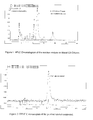
- Figure 1 shows the graph of an HPLC Chromatogram of reaction mixture on Maxsil C8 Column.
- Figure 2 shows the HPLC Chromatogram of purified labeled compound.
- Figure 3 shows a schematic diagram of preparation of compound of the invention (Scheme 1).
- Figure 4 shows a graph of percent survival versus light dose for comparative in vitro photosensitizing with iodo-analog at variable drug concentrations and light doses in RIF tumor cells.
- Figure 5 shows a graph of percentage of tumors having a size less than 400 mm3 versus time in days after in vivo photosensitizing using 3-devinyl-3-(1'-iodobenzyloxy)ethyl analog "
Compound 2" at variable concentrations for C3H mice implanted with RIF tumors exposed to laser light (665 nm, 135 J/cm2, 75 mW/cm2 for 30 minutes at 24 hours post injection ofCompound 2. - Figure 6 shows PET tumor images of mice having RIF tumors injected with I124 analog 4 (50 µCi) at (A) 24 hours, (B) 48 hours and (C) 72 hours post injection.
- In accordance with the invention, we have discovered a series of compounds that overcome the problems associated with methods in the prior art for radiation imaging of deep tumors. In particular, these compounds are 124I-phenyl derivatives of a chlorin, bacteriochlorin, porphyrin, pyropheophorbide, purpurinimide, or bacteriopupurinimide.
- More particularly, preferred compounds of the invention include compounds of the formula:

- R1 and R2 are each independently substituted or unsubstituted alkyl, substituted or unsubstituted alkenyl, -C(O)Ra or -COORa or -CH(CH3)(ORa) or -CH(CH3)(O(CH2)nXRa) where Ra is hydrogen, substituted or unsubstituted alkyl, substituted or unsubstituted alkenyl, substituted or unsubstituted alkynyl, or substituted or unsubstituted cycloalkyl where R2 may be CH=CH2, CH(OR20)CH3, C(O)Me, C(=NR20)CH3 or CH(NHR20)CH3;
where X is an aryl or heteroaryl group;
n is an integer of 0 to 6;
where R20 is methyl, butyl, heptyl, docecyl or 3,5-bis(trifluoromethyl)-benzyl; and
R1a and R2a are each independently hydrogen or substituted or unsubstituted alkyl, or together form a covalent bond;
R3 and R4 are each independently hydrogen or substituted or unsubstituted alkyl;
R3a and R4a are each independently hydrogen or substituted or unsubstituted alkyl, or together form a covalent bond;
R5 is hydrogen or substituted or unsubstituted alkyl;
R6 and R6a are each independently hydrogen or substituted or unsubstituted alkyl, or together form =O;
R7 is a covalent bond, alkylene, azaalkyl, or azaaraalkyl or =NR20 where R20 is -CH2X-R1 or -YR1 where Y is an aryl or heteroaryl group;
R8 and R8a are each independently hydrogen or substituted or unsubstituted alkyl or together form =O;
R9 and R10 are each independently hydrogen, or substituted or unsubstituted alkyl and R9 may be -CH2CH2COORa where Ra is an alkyl group;
each of Ra-R10, when substituted, is substituted with one or more substituents each independently selected from Q, where Q is alkyl, haloalkyl, halo, pseudohalo, or -COORb where Rb is hydrogen, alkyl, alkenyl, alkynyl, cycloalkyl, aryl, heteroaryl, araalkyl, or ORc where Rc is hydrogen, alkyl, alkenyl, alkynyl, cycloalkyl, or aryl or CONRdRe where Rd and Re are each independently hydrogen, alkyl, alkenyl, alkynyl, cycloalkyl, or aryl, or NRfRg where Rf and Rg are each independently hydrogen, alkyl, alkenyl, alkynyl, cycloalkyl, or aryl, or =NRh where Rh is hydrogen, alkyl, alkenyl, alkynyl, cycloalkyl, or aryl, or is an amino acid residue;
each Q is independently unsubstituted or is substituted with one or more substituents each independently selected from Q1, where Q1 is alkyl, haloalkyl, halo, pseudohalo, or -COORb where Rb is hydrogen, alkyl, alkenyl, alkynyl, cycloalkyl, aryl, heteroaryl, araalkyl, or ORc where Rc is hydrogen, alkyl, alkenyl, alkynyl, cycloalkyl, or aryl or CONRdRe where Rd and Re are each independently hydrogen, alkyl, alkenyl, alkynyl, cycloalkyl, or aryl, or NRfRg where Rf and Rg are each independently hydrogen, alkyl, alkenyl, alkynyl, cycloalkyl, or aryl, or =NRh where Rh is hydrogen, alkyl, alkenyl, alkynyl, cycloalkyl, or aryl, or is an amino acid residue.
with the proviso that the compound contains at least one Q containing a 124I-phenyl group. - These compounds provide high tumor absorption with appropriate radiological life for tumor imaging.
- The invention also includes the method of using these compounds for imaging and simultaneously permit nuclear imaging guided implantation of optical fibers within deep tumors would enable to treat by PDT.
- On the basis of a study of a series of alkyl ether analogs of pyropheophorbide-a, we developed a relatively long wavelength absorbing photosensitizer, the 3-(1-hexyloxy) ethyl-derivative of pyropheophorbide-a 1 (HPPH). This compound is tumor-avid and currently in Phase I/II human clinical trials at the Roswell Park Cancer Institute. We investigated the utility of this compound as a "vehicle" by conjugation with mono- or di-bisaminoethanethiols (N2S2 ligand). The results obtained from in vivo biodistribution experiments indicated that the tumor/non-tumor uptake ratio of the drug depends on the time and tumor size. With time, the clearance of the HPPH-based compounds from tumor was found to be slower than from most of the non-tumor tissues. However, the short 6 h half-life of 99mTc was found to be incompatible with 24-hour imaging time, suggesting that the use of a longer-lived isotope could provide a useful scanning agent. Another approach for developing an improved tumor-imaging agent could be to replace HPPH with those compounds that exhibit significantly higher tumor to non-tumor ratio. The synthesis of the related long-lived radionuclide could generate improved imaging and therapeutic (PDT) agents.
- A compound that effectively functions both as an imaging agent and a photosensitizer creates an entirely new paradigm for tumor diagnosis and therapy. After peripheral intravenous injection of this compound, a patient can be scanned with a scanner. The location of the tumor site(s) can thus be defined, and, while the patient remains in the scanner, an interventional nuclear scientist can transcutaneously insert ultra-slim needles that can act as introducers for light-transmission fibers into the lesion(s). Because each fiber diameter is <400 microns, the introducer needles would produce negligible tissue damage. A light source can be coupled to the fibers, and PDT of the lesion(s) can be commenced, without any significant injury to other organs. Because the same molecule represents the contrast medium and the therapeutic medium, the lesion(s) can be continuously imaged during needle/fiber placement, without any ambiguity in terms of localization or "misregistration" of separate diagnostic/therapeutic images. This paradigm would make the low-toxicity and high efficacy of PDT available to virtually any location from the skull base to the floor of the pelvis.
- Positron emission tomography (PET) is a technique that permits non-invasive use of positron labeled molecular imaging probes to image and assay biochemical processes at cellular function in living subject. Compared to single-photon-emission-computed tomography (SPECT), to produce tomographic images, PET is at least tenfold more sensitive. The short half-lives of the most commonly used positron emitting nuclides are not suitable for drugs with biological half lives in days. However, Iodine-124 is a positron emitter with a half-life of 4.2 days and is suitable for labeling probes with biological half lives of few days. This isotope has not been widely used because of the limited availability and complex decay scheme including several high-energy gamma rays. Pentlow et al. were the first to show that quantitative imaging with 124I is possible.
- In our attempt to develop an efficient bifunctional diagnostic/therapeutic agent, we initially synthesized and evaluated certain pyropheophorbide analogs (derived from chlorophyll-a)-N2S2-99mTc conjugates (23). The in vivo biodistribution results suggested that the short 6h half-life of 99mTc is incompatible with the 24 h imaging time (the time for maximum uptake of the drug and therapy), suggesting that the use of a longer-lived isotope could provide a useful scanning agent. Therefore, our objective was to introduce 124I positron emitter to certain tumor-avid porphyrin-based photosensitizers containing iodobenzyl functionalities and investigate their utility in tumor imaging and photodynamic therapy.
- There are several methods for labeling the compounds with iodine isotopes. Conversion of the cold iodo- to radioactive iodo- is possible, but the specific activity of the resulting product is low. It has been shown that in general iodine substituted at aliphatic chain is less stable than that present in aromatic structures. Therefore, we prepared a series of aromatic alkyl ethers and evaluated them for in vitro (RIF cells) and in vivo efficacy (RIF cells). Among a series of alkyl ether analogs with variable carbon units containing an iodophenyl group, the 3-devinyl-3- (1'-3"-iodobenzyloxy)ethyl pyropheophorbide-a (Scheme 1) in preliminary screening was found to be as effective as HPPH, a photosensitizer developed in our laboratory, and is at Phase II human clinical trials.
-


derivative 2 was isolated in 70% yield. UV-vis(CH2Cl2): 662(4.75x10⁴), 536(1.08 x10⁴), 505(1.18 x10⁴), 410(1.45 x 10⁵). 1H-NMR(CDCl3; 400 MHz): δ 9.76, 9.55 and 8.56(all s, 1H, meso-H); 7.76(s, 1H, ArH); 7.64(d, J=6.8, 1H, ArH); 7.30(d, J=8.0, 1H, ArH); 7.05(t, J=8.2, 1H, ArH); 6.00(q, J=6.9, 1H, 31-H); 5.20(dd(ABX pattern), J=19.6, 60.0, 2H, 132-CH2); 4.70(d, J=12.0, 1H, OCH2Ar); 4.56(dd, J=3.2,11.6, 1H, OCH2Ar); 4.48-4.53(m, 1H, 18-H); 4.30-4.33(m, 1H, 17-H); 3.72(q, J=8.0, 2H, 8-CH 2CH3); 3.69, 3.61, 3.38 and 3.21(all s, all 3H, for 173-CO2CH3 and 3 x ring CH3); 2.66-2.74, 2.52-2.61 and 2.23-2.37(m, 4H, 171 and 172-H); 2.18(dd, J=2.8, 6.4, 3H, 32-CH3); 1.83(d, J=8.0, 3H, 18-CH3); 1.72(t, J=7.6, 3H, 8-CH2CH 3); 0.41(brs, 1H, NH); - 1.71(brs, 1H, NH). Mass: Calculated for C41H43N4O4I : 782. Found: 805(M++ Na).
Methyl-3-Devinyl-3-{1'-(3-tertbutyltinbenzyloxyethyl}pyropheophorbide a:
1H-NMR(CDCl3; 600 MHz): δ 9.76, 9.54 and 8.55(all s, 1H, meso-H); 7.43(m, 2H, ArH); 7.36(m, 2H, ArH); 6.01(q, J=6.7, 1H, 31-H); 5.20, dd (ABX pattern), J=19.1, 87.9, 2H, 132-CH2); 4.78(dd, J=5.4, 11.9, 1H, OCH2Ar); 4.61(dd, J=1.7,12.0, 1H, OCH2Ar); 4.50(q, J=7.4, 1H, 18-H); 4.32(d, J=8.8, 1H, 17-H); 3.72(q, J=7.8, 2H, 8-CH 2CH3); 3.69, 3.61, 3.37 and 3.18(all s, all 3H, for 173-CO2CH3 and 3 x ring CH3); 2.66-2.75, 2.52-2.61 and 2.23-2.37(m, 4H, 171 and 172-H); 2.16(m, 3H, 32-CH3); 1.83(d, J=7.2, 3H, 18-CH3); 1.72(t, J=7.6, 3H, 8-CH2CH 3); 0.45(brs, 1H, NH); 0.19(s, 9H, tert-butyltin); -0.59(brs, 1H, NH). Mass: Calculated for C45H52N4O4Sn : 831. Found: 854(M+ + Na).
Preparation of 124 I- labeled photosensitizer: - The trimethyltin analog 3 (50 µg) obtained by reacting 2 with hexamethyldistannane and bis-(triphenylphosphine)palladium(II)dichloride in 1,4-dioxane (See Figure 3) was dissolved in 100 µl of 10% acetic acid in methanol. Na124I was added in 0.1N NaOH. The solution was mixed and an IODOGEN bead was added. The reaction mixture was incubated at room temperature for 30 minutes and the reaction product was purified using HPLC (Figure 1). The labeled product was collected. The HPLC Chromatogram of the purified product is shown in Figure 2.
- For evaluating in vitro photosensitizing efficacy of 3-iodobenxyloxyethyl-pyropheophorbide-a 2, RIF tumor cells were grown in alpha-DMEM with 10% fetal calf serum, penicillin and streptomycin. Cells were maintained in 5% CO2, 95% air and 100% humidity. For determining the PDT efficacy, these cells were plated in 96-well plates and a density of 1x10⁴ cells well in complete media. After overnight incubation to allow the cells to attach, the HPPH and the related cold-
iodo derivative 2 were individually added at variable concentrations. After 3 hr incubation in the dark at 37°C, the cells were washed once with PBS, and irradiated with light. After light treatment, the cells were washed once and placed in complete media and incubated for 48hrs. Then 10 µl of a 4-mg/ml solution of MTT was added to each well. After incubating for 4 hr at 37°C the MTT + media were removed and 100 µl DMSO was added to solubilize the formazin crystals. The 96-well plate was read on a microtiter plate reader at an absorbance of 560 nm. The optimal cell kill was obtained at a concentration of 1.0 µM. The results were plotted as percent survival of the corresponding dark (drug no light) control for each compound tested. (Figure 4) Each data point represents the mean from 3 separate experiments, and the error bars are the standard deviation. Each experiment used 5 replicate wells.
Methyl-3-iodo-benzyloxy-ethyl)pyropheophorbide-a: The in vitro photosensitizing efficacy of HPPH and the iodo-benzyloxyethyl-pyropheophorbide-a 2 as seen in Figure 3, was compared at variable experimental conditions and the results are summarized in Figure 4. As can be seen both photosensitizers produced similar efficacy at 0.6µM drug concentration. However, at lower concentration 0.3 µM the iodo-analog 2 was found to be slightly more effective. - The in vivo efficacy was determined in C3H mice bearing RIF tumors (5 mice/group). The tumors were exposed to light at 665 nm (in vivo absorption) with a laser light (135 J/cm2) for 30 minutes. The tumor-regrowth was measured everyday (for details see 'Methods' part of the project). As can be seen from Figure 5, the 3-devinyl-3-(1'-iodobenzyloxy)ethyl analog was quite effective at a dose of 1.0 and 1.5 µmol/kg. At lower doses (0.25 and 0.50 µmole/kg), tumor re-growth was observed at 10 and 15 days post-injection. Further studies to optimize the treatment conditions at variable fluence and fluence-rates and time intervals are currently in progress.
In vivo tumor Imaging: - In initial experiments, the I-124 labeled
photosensitizer 2 at variable radioactive doses (35, 50 and 100 µCi) was injected in three sets of C3H mice (3 mice/group, bearing RIF tumors at the shoulder) respectively and the images were taken with a small animal PET scanner at 24, 48 and 72 h time intervals (Figure 6 images A, B, and C). In all radioactive doses, the best images were obtained at 48 h post injection of the drug. However, as expected, the presence of the compound in some other organs, especially in liver was evident.
Biodistribution studies: - After PET imaging at 48 h post-injection, a group of mice (3 mice/group) were sacrificed and the biodistribution of the I-124 PET agent in selected organs/gram were determined. The results are summarized in Table 1.
Table 1: Biodistribution results of I-124 labeled photosensitizer 4 in some selected organ of mice (3 mice/group) at 48 h post injection→ Parts Blood Muscle Spleen Kidney Lungs Heart Liver Gut Stomach Tumor Mouse 1 1.47 0.18 2.04 1.09 0.99 0.79 3.46 3.6 1.3 2.4 Mouse 21.33 0.49 2.23 1.21 1.29 1.21 3.22 2.22 0.66 2.15 Mouse 30.57 0.37 2.05 0.99 1.00 0.98 3.26 1.69 1.10 2.10 AVG 1.12 0.35 2.11 1.10 1.09 0.99 3.31 2.47 1.02 2.22 Std Dev 0.48 0.16 0.11 0.11 0.17 0.21 0.13 1.03 0.33 0.16 - The imaging of specific molecular targets that are associated with cancer should allow earlier diagnosis and better management of oncology patients. Positron emission tomography (PET) is a highly sensitive non-invasive technology that is ideally suited for pre-clinical and clinical imaging of cancer biology, in contrast to anatomical approaches. By using radiolabelled tracers, which are injected in nonpharmacological doses, three-dimensional images can be reconstructed by a computer to show the concentration and location(s) of the tracer of interest. Compared to other positron emitters, I-124 has advantage due to its longer half-life (4.2 days). Our invention reports a first example for the preparation of I-124 labelled photosensitizers related to chlorines and bacteriochlorins with long wavelength absorption in the range of 660-800 nm. We have also shown the utility of these tumor-avid compounds for tumor detection and therapy. Our approach also provides an opportunity to develop target-specific bifunctional agents by targeting certain receptors known to have over-expression in tumors, and these studies are currently in progress.
Claims (3)
- A 124I-phenyl derivative of a chlorin, bacteriochlorin, porphyrin, pyropheophorbide, purpurinimide, or bacteriopupurinimide.
- A compound of the formula:
 R1 and R2 are each independently substituted or unsubstituted alkyl, substituted or unsubstituted alkenyl, -C(O)Ra or -COORa or -CH(CH3)(ORa) or -CH(CH3)(O(CH2)nXRa) where Ra is hydrogen, substituted or unsubstituted alkyl, substituted or unsubstituted alkenyl, substituted or unsubstituted alkynyl, or substituted or unsubstituted cycloalkyl where R2 may be CH=CH2, CH(OR20)CH3, C(O)Me, C(=NR21)CH3 or CH(NHR21)CH3;where X is an aryl or heteroaryl group;n is an integer of 0 to 6;where R20 is methyl, butyl, heptyl, docecyl or 3,5-bis(trifluoromethyl)-benzyl; andR1a and R2a are each independently hydrogen or substituted or unsubstituted alkyl, or together form a covalent bond;R3 and R4 are each independently hydrogen or substituted or unsubstituted alkyl;R3a and R4a are each independently hydrogen or substituted or unsubstituted alkyl, or together form a covalent bond;R5 is hydrogen or substituted or unsubstituted alkyl;R6 and R6a are each independently hydrogen or substituted or unsubstituted alkyl, or together form =O;R7 is a covalent bond, alkylene, azaalkyl, or azaaraalkyl or =NR20 where R20 is -CH2X-R1 or -YR1 where Y is an aryl or heteroaryl group;R8 and R8a are each independently hydrogen or substituted or unsubstituted alkyl or together form =O;R9 and R10 are each independently hydrogen, or substituted or unsubstituted alkyl and R9 may be -CH2CH2COORa where Ra is an alkyl group;each of Ra-R10, when substituted, is substituted with one or more substituents each independently selected from Q, where Q is alkyl, haloalkyl, halo, pseudohalo, or -COORb where Rb is hydrogen, alkyl, alkenyl, alkynyl, cycloalkyl, aryl, heteroaryl, araalkyl, or ORc where Rc is hydrogen, alkyl, alkenyl, alkynyl, cycloalkyl, or aryl or CONRdRe where Rd and Re are each independently hydrogen, alkyl, alkenyl, alkynyl, cycloalkyl, or aryl, or NRfRg where Rf and Rg are each independently hydrogen, alkyl, alkenyl, alkynyl, cycloalkyl, or aryl, or =NRh where Rh is hydrogen, alkyl, alkenyl, alkynyl, cycloalkyl, or aryl, or is an amino acid residue;each Q is independently unsubstituted or is substituted with one or more substituents each independently selected from Q1, where Q1 is alkyl, haloalkyl, halo, pseudohalo, or -COORb where Rb is hydrogen, alkyl, alkenyl, alkynyl, cycloalkyl, aryl, heteroaryl, araalkyl, or ORc where Rc is hydrogen, alkyl, alkenyl, alkynyl, cycloalkyl, or aryl or CONRdRe where Rd and Re are each independently hydrogen, alkyl, alkenyl, alkynyl, cycloalkyl, or aryl, or NRfRg where Rf and Rg are each independently hydrogen, alkyl, alkenyl, alkynyl, cycloalkyl, or aryl, or =NRh where Rh is hydrogen, alkyl, alkenyl, alkynyl, cycloalkyl, or aryl, or is an amino acid residue.
 with the proviso that the compound contains at least one Q containing a 124I-phenyl group.
 - A tetrapyrolle compound selected from the group consisting of :


Applications Claiming Priority (1)
| Application Number | Priority Date | Filing Date | Title |
|---|---|---|---|
| US65620505P | 2005-02-25 | 2005-02-25 |
Publications (2)
| Publication Number | Publication Date |
|---|---|
| EP1698350A1 true EP1698350A1 (en) | 2006-09-06 |
| EP1698350B1 EP1698350B1 (en) | 2008-04-02 |
Family
ID=36177954
Family Applications (1)
| Application Number | Title | Priority Date | Filing Date |
|---|---|---|---|
| EP06110316A Expired - Lifetime EP1698350B1 (en) | 2005-02-25 | 2006-02-23 | Porphyrin-based compounds for tumor imaging and photodynamic therapy |
Country Status (10)
| Country | Link |
|---|---|
| US (1) | US20060198783A1 (en) |
| EP (1) | EP1698350B1 (en) |
| JP (1) | JP4688709B2 (en) |
| KR (1) | KR101197871B1 (en) |
| CN (1) | CN1840531B (en) |
| AT (1) | ATE390940T1 (en) |
| DE (1) | DE602006000833T8 (en) |
| DK (1) | DK1698350T3 (en) |
| ES (1) | ES2304043T3 (en) |
| PT (1) | PT1698350E (en) |
Cited By (2)
| Publication number | Priority date | Publication date | Assignee | Title |
|---|---|---|---|---|
| CN103003369A (en) * | 2010-07-06 | 2013-03-27 | 健康研究有限公司 | Metallization enhancement in tumor imaging and PDT therapy |
| EP2905284A4 (en) * | 2012-10-08 | 2016-03-02 | Zhejiang Hisun Pharm Co Ltd | PHOTOSENSITIZATION TARGETING THYMIDINE KINASE AND PHARMACEUTICAL COMPOSITION AND USE FOR THE TREATMENT OF ASSOCIATED CANCER |
Families Citing this family (12)
| Publication number | Priority date | Publication date | Assignee | Title |
|---|---|---|---|---|
| KR100808630B1 (en) * | 2006-12-28 | 2008-02-29 | 광주과학기술원 | Anti-tumor composition for oral administration containing chlorine compound |
| KR100912446B1 (en) * | 2007-09-12 | 2009-08-14 | 인제대학교 산학협력단 | Chlorine derivatives with anticancer activity |
| US20110223102A1 (en) * | 2007-09-14 | 2011-09-15 | Health Research, Inc. | Multimodality agents for tumor imaging and therapy |
| CA2715747C (en) * | 2008-02-19 | 2016-05-24 | Health Research, Inc. | B ring reduced-d ring oxidized tetrapyrollic photosensitizers for photodynamic therapy and tumor imaging |
| KR100962267B1 (en) | 2008-03-07 | 2010-06-11 | 재단법인 한국원자력의학원 | Polpyrine derivatives, preparation method thereof, and pharmaceutical composition comprising the same |
| JPWO2011096374A1 (en) * | 2010-02-05 | 2013-06-10 | 国立大学法人 岡山大学 | Novel iodobenzyl-bleomycin compounds |
| WO2011099602A1 (en) * | 2010-02-12 | 2011-08-18 | 学校法人日本大学 | Porphyrin derivative and use thereof in radiation induced photodynamic therapy |
| CN104151386B (en) * | 2013-11-12 | 2017-01-11 | 毕毅良 | Swainsonine derivative and preparation method of research reagent of swainsonine derivative |
| CN111171030B (en) * | 2018-11-12 | 2022-11-22 | 浙江海正药业股份有限公司 | Bacteriochlorophyll derivatives and process for their preparation |
| CN111875603B (en) * | 2020-08-03 | 2021-11-12 | 南通大学 | A kind of β-carboline pyridinium salt fluorescent probe and its preparation method and application |
| KR102621851B1 (en) | 2020-11-12 | 2024-01-05 | 한국원자력의학원 | Porphyrin derivatives and Composition for imaging, diagnosing, or treating cancers |
| CN114149569B (en) * | 2021-11-30 | 2023-01-06 | 华中科技大学 | Conjugated carbon-iodine polymer, preparation and application for preparing positioning marker |
Citations (3)
| Publication number | Priority date | Publication date | Assignee | Title |
|---|---|---|---|---|
| US4968715A (en) * | 1988-07-06 | 1990-11-06 | Health Research, Inc. | Use of purified hematoporphyrin trimers in photodynamic therapy |
| US5185142A (en) * | 1989-07-28 | 1993-02-09 | The United States Of America As Represented By The Secretary Of The Department Of Health And Human Services | Antigen-specific composition and in vivo methods for detecting and localizing an antigenic site and for radiotherapy |
| US20030165426A1 (en) * | 2001-06-06 | 2003-09-04 | Michiko Miura | Use of novel metalloporphyrins as imageable tumor-targeting agents for radiation therapy |
Family Cites Families (1)
| Publication number | Priority date | Publication date | Assignee | Title |
|---|---|---|---|---|
| US6534040B2 (en) * | 1999-12-23 | 2003-03-18 | Health Research, Inc. | Chlorin and bacteriochlorin-based aminophenyl DTPA and N2S2 conjugates for MR contrast media and radiopharmaceuticals |
-
2006
- 2006-02-14 US US11/353,626 patent/US20060198783A1/en not_active Abandoned
- 2006-02-23 AT AT06110316T patent/ATE390940T1/en active
- 2006-02-23 PT PT06110316T patent/PT1698350E/en unknown
- 2006-02-23 ES ES06110316T patent/ES2304043T3/en not_active Expired - Lifetime
- 2006-02-23 DK DK06110316T patent/DK1698350T3/en active
- 2006-02-23 DE DE602006000833T patent/DE602006000833T8/en active Active
- 2006-02-23 EP EP06110316A patent/EP1698350B1/en not_active Expired - Lifetime
- 2006-02-23 KR KR1020060017711A patent/KR101197871B1/en not_active Expired - Lifetime
- 2006-02-27 JP JP2006086501A patent/JP4688709B2/en not_active Expired - Lifetime
- 2006-02-27 CN CN2006100549777A patent/CN1840531B/en not_active Expired - Lifetime
Patent Citations (3)
| Publication number | Priority date | Publication date | Assignee | Title |
|---|---|---|---|---|
| US4968715A (en) * | 1988-07-06 | 1990-11-06 | Health Research, Inc. | Use of purified hematoporphyrin trimers in photodynamic therapy |
| US5185142A (en) * | 1989-07-28 | 1993-02-09 | The United States Of America As Represented By The Secretary Of The Department Of Health And Human Services | Antigen-specific composition and in vivo methods for detecting and localizing an antigenic site and for radiotherapy |
| US20030165426A1 (en) * | 2001-06-06 | 2003-09-04 | Michiko Miura | Use of novel metalloporphyrins as imageable tumor-targeting agents for radiation therapy |
Non-Patent Citations (1)
| Title |
|---|
| PANDEY, SURESH K. ET AL: "Multimodality Agents for Tumor Imaging (PET, Fluorescence) and Photodynamic Therapy. A Possible "See and Treat" Approach", JOURNAL OF MEDICINAL CHEMISTRY , 48(20), 6286-6295 CODEN: JMCMAR; ISSN: 0022-2623, 2005, XP002378599 * |
Cited By (2)
| Publication number | Priority date | Publication date | Assignee | Title |
|---|---|---|---|---|
| CN103003369A (en) * | 2010-07-06 | 2013-03-27 | 健康研究有限公司 | Metallization enhancement in tumor imaging and PDT therapy |
| EP2905284A4 (en) * | 2012-10-08 | 2016-03-02 | Zhejiang Hisun Pharm Co Ltd | PHOTOSENSITIZATION TARGETING THYMIDINE KINASE AND PHARMACEUTICAL COMPOSITION AND USE FOR THE TREATMENT OF ASSOCIATED CANCER |
Also Published As
| Publication number | Publication date |
|---|---|
| DE602006000833T2 (en) | 2009-04-30 |
| CN1840531A (en) | 2006-10-04 |
| US20060198783A1 (en) | 2006-09-07 |
| KR20060094896A (en) | 2006-08-30 |
| KR101197871B1 (en) | 2012-11-05 |
| ES2304043T3 (en) | 2008-09-01 |
| JP2006232843A (en) | 2006-09-07 |
| DE602006000833D1 (en) | 2008-05-15 |
| CN1840531B (en) | 2011-04-13 |
| DE602006000833T8 (en) | 2009-08-13 |
| JP4688709B2 (en) | 2011-05-25 |
| ATE390940T1 (en) | 2008-04-15 |
| PT1698350E (en) | 2008-05-23 |
| DK1698350T3 (en) | 2008-07-07 |
| EP1698350B1 (en) | 2008-04-02 |
Similar Documents
| Publication | Publication Date | Title |
|---|---|---|
| US6566517B2 (en) | Metalloporphyrins and their uses as imageable tumor-targeting agents for radiation therapy | |
| US5599923A (en) | Texaphyrin metal complexes having improved functionalization | |
| Goslinski et al. | Fluorinated porphyrinoids and their biomedical applications | |
| EP1698350B1 (en) | Porphyrin-based compounds for tumor imaging and photodynamic therapy | |
| JF Calvete et al. | Tetrapyrrolic macrocycles: Potentialities in medical imaging technologies | |
| US6534040B2 (en) | Chlorin and bacteriochlorin-based aminophenyl DTPA and N2S2 conjugates for MR contrast media and radiopharmaceuticals | |
| EP1404319B1 (en) | Novel metalloporphyrins and their uses as radiosensitizers for radiation therapy | |
| KR20120074311A (en) | Paa nanoparticles for enhancement of tumor imaging | |
| AU2002310314A1 (en) | Novel metalloporphyrins and their uses as radiosensitizers for radiation therapy | |
| CN119192148B (en) | Compound DOTA-HX2-DZ and its application | |
| Das et al. | A novel 177Lu-labeled porphyrin for possible use in targeted tumor therapy | |
| Pandey et al. | Comparative positron-emission tomography (PET) imaging and phototherapeutic potential of 124I-labeled methyl-3-(1′-iodobenzyloxyethyl) pyropheophorbide-a vs the corresponding glucose and galactose conjugates | |
| Pandey et al. | Compared to purpurinimides, the pyropheophorbide containing an iodobenzyl group showed enhanced PDT efficacy and tumor imaging (124I-PET) ability | |
| US8198432B2 (en) | Porphyrin-based compounds for tumor imaging and photodynamic therapy | |
| US20070093463A1 (en) | Radiation enhancement agent for X-ray radiation therapy and boron neutron-capture therapy | |
| JPH03264599A (en) | Novel labeling agent for tissue hypoxia | |
| Das et al. | 109Pd labeled 5, 10, 15, 20-tetrakis [4-carboxymethyleneoxyphenyl] porphyrin: a potential agent for targeted tumor therapy | |
| US7078014B2 (en) | Method for using chlorin and bacteriochlorin-based aminophenyl DTPA and N2S2 conjugates for MR contrast media and radiopharmaceuticals | |
| WO1999020316A1 (en) | Single photon-emitting radiotraces and methods for their use | |
| EP0955066A2 (en) | Metal complexes of hydroxyaryl containing aminocarboxylic acid chelating agents | |
| KR100962267B1 (en) | Polpyrine derivatives, preparation method thereof, and pharmaceutical composition comprising the same | |
| Rathmann | Functional group influence on uptake and tumour to non-target ratios for iodinated melanoma imaging and therapy agents | |
| HK1038558A (en) | Chlorin and bacteriochlorin-based aminophenyl dtpa and n2s2 conjugates for mr contrast media and radiopharmaceuticals |
Legal Events
| Date | Code | Title | Description |
|---|---|---|---|
| PUAI | Public reference made under article 153(3) epc to a published international application that has entered the european phase |
Free format text: ORIGINAL CODE: 0009012 |
|
| AK | Designated contracting states |
Kind code of ref document: A1 Designated state(s): AT BE BG CH CY CZ DE DK EE ES FI FR GB GR HU IE IS IT LI LT LU LV MC NL PL PT RO SE SI SK TR |
|
| AX | Request for extension of the european patent |
Extension state: AL BA HR MK YU |
|
| 17P | Request for examination filed |
Effective date: 20061215 |
|
| 17Q | First examination report despatched |
Effective date: 20070112 |
|
| AKX | Designation fees paid |
Designated state(s): AT BE BG CH CY CZ DE DK EE ES FI FR GB GR HU IE IS IT LI LT LU LV MC NL PL PT RO SE SI SK TR |
|
| GRAP | Despatch of communication of intention to grant a patent |
Free format text: ORIGINAL CODE: EPIDOSNIGR1 |
|
| GRAS | Grant fee paid |
Free format text: ORIGINAL CODE: EPIDOSNIGR3 |
|
| GRAA | (expected) grant |
Free format text: ORIGINAL CODE: 0009210 |
|
| AK | Designated contracting states |
Kind code of ref document: B1 Designated state(s): AT BE BG CH CY CZ DE DK EE ES FI FR GB GR HU IE IS IT LI LT LU LV MC NL PL PT RO SE SI SK TR |
|
| REG | Reference to a national code |
Ref country code: GB Ref legal event code: FG4D |
|
| REG | Reference to a national code |
Ref country code: IE Ref legal event code: FG4D Ref country code: CH Ref legal event code: EP |
|
| REF | Corresponds to: |
Ref document number: 602006000833 Country of ref document: DE Date of ref document: 20080515 Kind code of ref document: P |
|
| REG | Reference to a national code |
Ref country code: PT Ref legal event code: SC4A Free format text: AVAILABILITY OF NATIONAL TRANSLATION Effective date: 20080509 |
|
| REG | Reference to a national code |
Ref country code: DK Ref legal event code: T3 |
|
| REG | Reference to a national code |
Ref country code: SE Ref legal event code: TRGR |
|
| REG | Reference to a national code |
Ref country code: GR Ref legal event code: EP Ref document number: 20080401480 Country of ref document: GR |
|
| REG | Reference to a national code |
Ref country code: ES Ref legal event code: FG2A Ref document number: 2304043 Country of ref document: ES Kind code of ref document: T3 |
|
| PG25 | Lapsed in a contracting state [announced via postgrant information from national office to epo] |
Ref country code: SI Free format text: LAPSE BECAUSE OF FAILURE TO SUBMIT A TRANSLATION OF THE DESCRIPTION OR TO PAY THE FEE WITHIN THE PRESCRIBED TIME-LIMIT Effective date: 20080402 |
|
| PG25 | Lapsed in a contracting state [announced via postgrant information from national office to epo] |
Ref country code: FI Free format text: LAPSE BECAUSE OF FAILURE TO SUBMIT A TRANSLATION OF THE DESCRIPTION OR TO PAY THE FEE WITHIN THE PRESCRIBED TIME-LIMIT Effective date: 20080402 Ref country code: BG Free format text: LAPSE BECAUSE OF FAILURE TO SUBMIT A TRANSLATION OF THE DESCRIPTION OR TO PAY THE FEE WITHIN THE PRESCRIBED TIME-LIMIT Effective date: 20080702 |
|
| PG25 | Lapsed in a contracting state [announced via postgrant information from national office to epo] |
Ref country code: LV Free format text: LAPSE BECAUSE OF FAILURE TO SUBMIT A TRANSLATION OF THE DESCRIPTION OR TO PAY THE FEE WITHIN THE PRESCRIBED TIME-LIMIT Effective date: 20080402 Ref country code: PL Free format text: LAPSE BECAUSE OF FAILURE TO SUBMIT A TRANSLATION OF THE DESCRIPTION OR TO PAY THE FEE WITHIN THE PRESCRIBED TIME-LIMIT Effective date: 20080402 |
|
| PG25 | Lapsed in a contracting state [announced via postgrant information from national office to epo] |
Ref country code: IS Free format text: LAPSE BECAUSE OF FAILURE TO SUBMIT A TRANSLATION OF THE DESCRIPTION OR TO PAY THE FEE WITHIN THE PRESCRIBED TIME-LIMIT Effective date: 20080802 |
|
| ET | Fr: translation filed | ||
| PG25 | Lapsed in a contracting state [announced via postgrant information from national office to epo] |
Ref country code: LT Free format text: LAPSE BECAUSE OF FAILURE TO SUBMIT A TRANSLATION OF THE DESCRIPTION OR TO PAY THE FEE WITHIN THE PRESCRIBED TIME-LIMIT Effective date: 20080402 Ref country code: CZ Free format text: LAPSE BECAUSE OF FAILURE TO SUBMIT A TRANSLATION OF THE DESCRIPTION OR TO PAY THE FEE WITHIN THE PRESCRIBED TIME-LIMIT Effective date: 20080402 |
|
| PLBE | No opposition filed within time limit |
Free format text: ORIGINAL CODE: 0009261 |
|
| STAA | Information on the status of an ep patent application or granted ep patent |
Free format text: STATUS: NO OPPOSITION FILED WITHIN TIME LIMIT |
|
| PG25 | Lapsed in a contracting state [announced via postgrant information from national office to epo] |
Ref country code: BE Free format text: LAPSE BECAUSE OF FAILURE TO SUBMIT A TRANSLATION OF THE DESCRIPTION OR TO PAY THE FEE WITHIN THE PRESCRIBED TIME-LIMIT Effective date: 20080402 Ref country code: RO Free format text: LAPSE BECAUSE OF FAILURE TO SUBMIT A TRANSLATION OF THE DESCRIPTION OR TO PAY THE FEE WITHIN THE PRESCRIBED TIME-LIMIT Effective date: 20080402 Ref country code: SK Free format text: LAPSE BECAUSE OF FAILURE TO SUBMIT A TRANSLATION OF THE DESCRIPTION OR TO PAY THE FEE WITHIN THE PRESCRIBED TIME-LIMIT Effective date: 20080402 |
|
| 26N | No opposition filed |
Effective date: 20090106 |
|
| PG25 | Lapsed in a contracting state [announced via postgrant information from national office to epo] |
Ref country code: EE Free format text: LAPSE BECAUSE OF FAILURE TO SUBMIT A TRANSLATION OF THE DESCRIPTION OR TO PAY THE FEE WITHIN THE PRESCRIBED TIME-LIMIT Effective date: 20080402 |
|
| PG25 | Lapsed in a contracting state [announced via postgrant information from national office to epo] |
Ref country code: CY Free format text: LAPSE BECAUSE OF FAILURE TO SUBMIT A TRANSLATION OF THE DESCRIPTION OR TO PAY THE FEE WITHIN THE PRESCRIBED TIME-LIMIT Effective date: 20080402 Ref country code: MC Free format text: LAPSE BECAUSE OF NON-PAYMENT OF DUE FEES Effective date: 20090228 |
|
| PG25 | Lapsed in a contracting state [announced via postgrant information from national office to epo] |
Ref country code: IE Free format text: LAPSE BECAUSE OF NON-PAYMENT OF DUE FEES Effective date: 20090223 |
|
| REG | Reference to a national code |
Ref country code: CH Ref legal event code: PL |
|
| PG25 | Lapsed in a contracting state [announced via postgrant information from national office to epo] |
Ref country code: LI Free format text: LAPSE BECAUSE OF NON-PAYMENT OF DUE FEES Effective date: 20100228 Ref country code: CH Free format text: LAPSE BECAUSE OF NON-PAYMENT OF DUE FEES Effective date: 20100228 |
|
| PG25 | Lapsed in a contracting state [announced via postgrant information from national office to epo] |
Ref country code: LU Free format text: LAPSE BECAUSE OF NON-PAYMENT OF DUE FEES Effective date: 20090223 |
|
| PG25 | Lapsed in a contracting state [announced via postgrant information from national office to epo] |
Ref country code: HU Free format text: LAPSE BECAUSE OF FAILURE TO SUBMIT A TRANSLATION OF THE DESCRIPTION OR TO PAY THE FEE WITHIN THE PRESCRIBED TIME-LIMIT Effective date: 20081003 |
|
| PG25 | Lapsed in a contracting state [announced via postgrant information from national office to epo] |
Ref country code: TR Free format text: LAPSE BECAUSE OF FAILURE TO SUBMIT A TRANSLATION OF THE DESCRIPTION OR TO PAY THE FEE WITHIN THE PRESCRIBED TIME-LIMIT Effective date: 20080402 |
|
| REG | Reference to a national code |
Ref country code: FR Ref legal event code: PLFP Year of fee payment: 11 |
|
| REG | Reference to a national code |
Ref country code: FR Ref legal event code: PLFP Year of fee payment: 12 |
|
| REG | Reference to a national code |
Ref country code: FR Ref legal event code: PLFP Year of fee payment: 13 |
|
| PGFP | Annual fee paid to national office [announced via postgrant information from national office to epo] |
Ref country code: NL Payment date: 20250418 Year of fee payment: 20 |
|
| PGFP | Annual fee paid to national office [announced via postgrant information from national office to epo] |
Ref country code: DE Payment date: 20250422 Year of fee payment: 20 |
|
| PGFP | Annual fee paid to national office [announced via postgrant information from national office to epo] |
Ref country code: GB Payment date: 20250418 Year of fee payment: 20 Ref country code: DK Payment date: 20250411 Year of fee payment: 20 Ref country code: ES Payment date: 20250425 Year of fee payment: 20 |
|
| PGFP | Annual fee paid to national office [announced via postgrant information from national office to epo] |
Ref country code: IT Payment date: 20250424 Year of fee payment: 20 |
|
| PGFP | Annual fee paid to national office [announced via postgrant information from national office to epo] |
Ref country code: PT Payment date: 20250403 Year of fee payment: 20 |
|
| PGFP | Annual fee paid to national office [announced via postgrant information from national office to epo] |
Ref country code: FR Payment date: 20250423 Year of fee payment: 20 |
|
| PGFP | Annual fee paid to national office [announced via postgrant information from national office to epo] |
Ref country code: GR Payment date: 20250423 Year of fee payment: 20 |
|
| PGFP | Annual fee paid to national office [announced via postgrant information from national office to epo] |
Ref country code: AT Payment date: 20250423 Year of fee payment: 20 |
|
| PGFP | Annual fee paid to national office [announced via postgrant information from national office to epo] |
Ref country code: SE Payment date: 20250429 Year of fee payment: 20 |
|
| REG | Reference to a national code |
Ref country code: DE Ref legal event code: R071 Ref document number: 602006000833 Country of ref document: DE |
|
| REG | Reference to a national code |
Ref country code: NL Ref legal event code: MK Effective date: 20260222 |
|
| REG | Reference to a national code |
Ref country code: DK Ref legal event code: EUP Expiry date: 20260223 Ref country code: ES Ref legal event code: FD2A Effective date: 20260302 |
|
| REG | Reference to a national code |
Ref country code: GB Ref legal event code: PE20 Expiry date: 20260222 |
|
| PG25 | Lapsed in a contracting state [announced via postgrant information from national office to epo] |
Ref country code: ES Free format text: LAPSE BECAUSE OF EXPIRATION OF PROTECTION Effective date: 20260224 |
|
| REG | Reference to a national code |
Ref country code: AT Ref legal event code: MK07 Ref document number: 390940 Country of ref document: AT Kind code of ref document: T Effective date: 20260223 |
|
| PG25 | Lapsed in a contracting state [announced via postgrant information from national office to epo] |
Ref country code: PT Free format text: LAPSE BECAUSE OF EXPIRATION OF PROTECTION Effective date: 20260304 |