EP1696233A1 - Method of rating hair damage with use of oxidized protein occurring in hair as indicator - Google Patents
Method of rating hair damage with use of oxidized protein occurring in hair as indicator Download PDFInfo
- Publication number
- EP1696233A1 EP1696233A1 EP04807029A EP04807029A EP1696233A1 EP 1696233 A1 EP1696233 A1 EP 1696233A1 EP 04807029 A EP04807029 A EP 04807029A EP 04807029 A EP04807029 A EP 04807029A EP 1696233 A1 EP1696233 A1 EP 1696233A1
- Authority
- EP
- European Patent Office
- Prior art keywords
- hair
- treatment
- damage
- group
- fluorescence
- Prior art date
- Legal status (The legal status is an assumption and is not a legal conclusion. Google has not performed a legal analysis and makes no representation as to the accuracy of the status listed.)
- Withdrawn
Links
- 210000004209 hair Anatomy 0.000 title claims abstract description 141
- 108090000623 proteins and genes Proteins 0.000 title claims abstract description 54
- 102000004169 proteins and genes Human genes 0.000 title claims abstract description 54
- 238000000034 method Methods 0.000 title claims abstract description 35
- 230000003700 hair damage Effects 0.000 title claims abstract description 33
- 239000007844 bleaching agent Substances 0.000 claims abstract description 25
- 230000006378 damage Effects 0.000 claims abstract description 15
- 125000002915 carbonyl group Chemical group [*:2]C([*:1])=O 0.000 claims abstract description 14
- 238000002372 labelling Methods 0.000 claims abstract description 9
- QWPPOHNGKGFGJK-UHFFFAOYSA-N hypochlorous acid Chemical compound ClO QWPPOHNGKGFGJK-UHFFFAOYSA-N 0.000 claims abstract description 7
- 239000000118 hair dye Substances 0.000 claims abstract description 6
- 230000009182 swimming Effects 0.000 claims abstract description 6
- 238000010438 heat treatment Methods 0.000 claims abstract description 5
- 239000000126 substance Substances 0.000 claims description 37
- 125000000717 hydrazino group Chemical group [H]N([*])N([H])[H] 0.000 claims description 18
- KPQYDVAFRDWIBW-UHFFFAOYSA-N 5-(dimethylamino)naphthalene-1-sulfonohydrazide Chemical compound C1=CC=C2C(N(C)C)=CC=CC2=C1S(=O)(=O)NN KPQYDVAFRDWIBW-UHFFFAOYSA-N 0.000 claims description 13
- MEUCHQDLZYLNQY-UHFFFAOYSA-N 5-(aminocarbamothioylamino)-2-(3-hydroxy-6-oxoxanthen-9-yl)benzoic acid Chemical compound OC(=O)C1=CC(NC(=S)NN)=CC=C1C1=C2C=CC(=O)C=C2OC2=CC(O)=CC=C21 MEUCHQDLZYLNQY-UHFFFAOYSA-N 0.000 claims description 12
- 238000011156 evaluation Methods 0.000 claims description 9
- 238000001514 detection method Methods 0.000 claims description 8
- 230000001590 oxidative effect Effects 0.000 claims description 7
- 239000007850 fluorescent dye Substances 0.000 claims description 3
- 238000001215 fluorescent labelling Methods 0.000 claims description 2
- 230000003647 oxidation Effects 0.000 abstract description 7
- 238000007254 oxidation reaction Methods 0.000 abstract description 7
- MHAJPDPJQMAIIY-UHFFFAOYSA-N Hydrogen peroxide Chemical compound OO MHAJPDPJQMAIIY-UHFFFAOYSA-N 0.000 description 28
- 239000003795 chemical substances by application Substances 0.000 description 21
- XLYOFNOQVPJJNP-UHFFFAOYSA-N water Substances O XLYOFNOQVPJJNP-UHFFFAOYSA-N 0.000 description 19
- 239000000203 mixture Substances 0.000 description 18
- 238000009472 formulation Methods 0.000 description 17
- 239000000243 solution Substances 0.000 description 14
- XUXNAKZDHHEHPC-UHFFFAOYSA-M sodium bromate Chemical compound [Na+].[O-]Br(=O)=O XUXNAKZDHHEHPC-UHFFFAOYSA-M 0.000 description 13
- 230000008833 sun damage Effects 0.000 description 12
- 239000000872 buffer Substances 0.000 description 11
- LOKCTEFSRHRXRJ-UHFFFAOYSA-I dipotassium trisodium dihydrogen phosphate hydrogen phosphate dichloride Chemical compound P(=O)(O)(O)[O-].[K+].P(=O)(O)([O-])[O-].[Na+].[Na+].[Cl-].[K+].[Cl-].[Na+] LOKCTEFSRHRXRJ-UHFFFAOYSA-I 0.000 description 10
- 239000002953 phosphate buffered saline Substances 0.000 description 10
- 238000006243 chemical reaction Methods 0.000 description 9
- 238000002474 experimental method Methods 0.000 description 9
- 238000005406 washing Methods 0.000 description 8
- 239000004615 ingredient Substances 0.000 description 7
- IRHWMYKYLWNHTL-UHFFFAOYSA-M sodium 2-(N-morpholino)ethanesulfonate Chemical compound [Na+].[O-]S(=O)(=O)CCN1CCOCC1 IRHWMYKYLWNHTL-UHFFFAOYSA-M 0.000 description 7
- HKAVADYDPYUPRD-UHFFFAOYSA-N 1h-pyrazine-2-thione Chemical compound SC1=CN=CC=N1 HKAVADYDPYUPRD-UHFFFAOYSA-N 0.000 description 6
- XUMBMVFBXHLACL-UHFFFAOYSA-N Melanin Chemical compound O=C1C(=O)C(C2=CNC3=C(C(C(=O)C4=C32)=O)C)=C2C4=CNC2=C1C XUMBMVFBXHLACL-UHFFFAOYSA-N 0.000 description 6
- XVOYSCVBGLVSOL-UHFFFAOYSA-N cysteic acid Chemical compound OC(=O)C(N)CS(O)(=O)=O XVOYSCVBGLVSOL-UHFFFAOYSA-N 0.000 description 6
- 239000002537 cosmetic Substances 0.000 description 5
- 230000000694 effects Effects 0.000 description 5
- 108090001008 Avidin Proteins 0.000 description 4
- PEDCQBHIVMGVHV-UHFFFAOYSA-N Glycerine Chemical compound OCC(O)CO PEDCQBHIVMGVHV-UHFFFAOYSA-N 0.000 description 4
- 102000011782 Keratins Human genes 0.000 description 4
- 108010076876 Keratins Proteins 0.000 description 4
- NBIIXXVUZAFLBC-UHFFFAOYSA-N Phosphoric acid Chemical compound OP(O)(O)=O NBIIXXVUZAFLBC-UHFFFAOYSA-N 0.000 description 4
- 238000004061 bleaching Methods 0.000 description 4
- 239000011521 glass Substances 0.000 description 4
- 230000000007 visual effect Effects 0.000 description 4
- 239000005708 Sodium hypochlorite Substances 0.000 description 3
- KRKNYBCHXYNGOX-UHFFFAOYSA-N citric acid Chemical compound OC(=O)CC(O)(C(O)=O)CC(O)=O KRKNYBCHXYNGOX-UHFFFAOYSA-N 0.000 description 3
- BNIILDVGGAEEIG-UHFFFAOYSA-L disodium hydrogen phosphate Chemical compound [Na+].[Na+].OP([O-])([O-])=O BNIILDVGGAEEIG-UHFFFAOYSA-L 0.000 description 3
- 239000000376 reactant Substances 0.000 description 3
- SUKJFIGYRHOWBL-UHFFFAOYSA-N sodium hypochlorite Chemical compound [Na+].Cl[O-] SUKJFIGYRHOWBL-UHFFFAOYSA-N 0.000 description 3
- ZAKOWWREFLAJOT-CEFNRUSXSA-N D-alpha-tocopherylacetate Chemical compound CC(=O)OC1=C(C)C(C)=C2O[C@@](CCC[C@H](C)CCC[C@H](C)CCCC(C)C)(C)CCC2=C1C ZAKOWWREFLAJOT-CEFNRUSXSA-N 0.000 description 2
- KCXVZYZYPLLWCC-UHFFFAOYSA-N EDTA Chemical compound OC(=O)CN(CC(O)=O)CCN(CC(O)=O)CC(O)=O KCXVZYZYPLLWCC-UHFFFAOYSA-N 0.000 description 2
- 244000269722 Thea sinensis Species 0.000 description 2
- 229910000147 aluminium phosphate Inorganic materials 0.000 description 2
- 230000003064 anti-oxidating effect Effects 0.000 description 2
- GVJHHUAWPYXKBD-UHFFFAOYSA-N d-alpha-tocopherol Natural products OC1=C(C)C(C)=C2OC(CCCC(C)CCCC(C)CCCC(C)C)(C)CCC2=C1C GVJHHUAWPYXKBD-UHFFFAOYSA-N 0.000 description 2
- 239000000284 extract Substances 0.000 description 2
- 235000011187 glycerol Nutrition 0.000 description 2
- 229940087603 grape seed extract Drugs 0.000 description 2
- 235000002532 grape seed extract Nutrition 0.000 description 2
- 210000004919 hair shaft Anatomy 0.000 description 2
- 229940083980 lavender extract Drugs 0.000 description 2
- 235000020723 lavender extract Nutrition 0.000 description 2
- 150000002632 lipids Chemical class 0.000 description 2
- LXCFILQKKLGQFO-UHFFFAOYSA-N methylparaben Chemical compound COC(=O)C1=CC=C(O)C=C1 LXCFILQKKLGQFO-UHFFFAOYSA-N 0.000 description 2
- 239000007800 oxidant agent Substances 0.000 description 2
- 238000010998 test method Methods 0.000 description 2
- CWERGRDVMFNCDR-UHFFFAOYSA-N thioglycolic acid Chemical compound OC(=O)CS CWERGRDVMFNCDR-UHFFFAOYSA-N 0.000 description 2
- SHWIJIJNPFXOFS-UHFFFAOYSA-N thiotaurine Chemical compound NCCS(O)(=O)=S SHWIJIJNPFXOFS-UHFFFAOYSA-N 0.000 description 2
- 229960001295 tocopherol Drugs 0.000 description 2
- 229930003799 tocopherol Natural products 0.000 description 2
- 235000010384 tocopherol Nutrition 0.000 description 2
- 239000011732 tocopherol Substances 0.000 description 2
- 229940042585 tocopherol acetate Drugs 0.000 description 2
- -1 ultraviolet rays Substances 0.000 description 2
- 239000001717 vitis vinifera seed extract Substances 0.000 description 2
- GVJHHUAWPYXKBD-IEOSBIPESA-N α-tocopherol Chemical compound OC1=C(C)C(C)=C2O[C@@](CCC[C@H](C)CCC[C@H](C)CCCC(C)C)(C)CCC2=C1C GVJHHUAWPYXKBD-IEOSBIPESA-N 0.000 description 2
- ADEORFBTPGKHRP-UHFFFAOYSA-N 1-[7-(dimethylamino)-4-methyl-2-oxochromen-3-yl]pyrrole-2,5-dione Chemical compound O=C1OC2=CC(N(C)C)=CC=C2C(C)=C1N1C(=O)C=CC1=O ADEORFBTPGKHRP-UHFFFAOYSA-N 0.000 description 1
- NCFIKBMPEOEIED-UHFFFAOYSA-N 1-acridin-9-ylpyrrole-2,5-dione Chemical compound O=C1C=CC(=O)N1C1=C(C=CC=C2)C2=NC2=CC=CC=C12 NCFIKBMPEOEIED-UHFFFAOYSA-N 0.000 description 1
- HZAXFHJVJLSVMW-UHFFFAOYSA-N 2-Aminoethan-1-ol Chemical compound NCCO HZAXFHJVJLSVMW-UHFFFAOYSA-N 0.000 description 1
- QGZKDVFQNNGYKY-UHFFFAOYSA-O Ammonium Chemical compound [NH4+] QGZKDVFQNNGYKY-UHFFFAOYSA-O 0.000 description 1
- ATRRKUHOCOJYRX-UHFFFAOYSA-N Ammonium bicarbonate Chemical compound [NH4+].OC([O-])=O ATRRKUHOCOJYRX-UHFFFAOYSA-N 0.000 description 1
- VHUUQVKOLVNVRT-UHFFFAOYSA-N Ammonium hydroxide Chemical compound [NH4+].[OH-] VHUUQVKOLVNVRT-UHFFFAOYSA-N 0.000 description 1
- KWIUHFFTVRNATP-UHFFFAOYSA-N Betaine Natural products C[N+](C)(C)CC([O-])=O KWIUHFFTVRNATP-UHFFFAOYSA-N 0.000 description 1
- JMKFWZMSPMNANE-UHFFFAOYSA-N C1=CC=C2C(COC(=O)NN)C3=CC=CC=C3C2=C1.C1=CC=C2C(COC(=O)NN)C3=CC=CC=C3C2=C1 Chemical compound C1=CC=C2C(COC(=O)NN)C3=CC=CC=C3C2=C1.C1=CC=C2C(COC(=O)NN)C3=CC=CC=C3C2=C1 JMKFWZMSPMNANE-UHFFFAOYSA-N 0.000 description 1
- KWIUHFFTVRNATP-UHFFFAOYSA-O N,N,N-trimethylglycinium Chemical compound C[N+](C)(C)CC(O)=O KWIUHFFTVRNATP-UHFFFAOYSA-O 0.000 description 1
- 239000004115 Sodium Silicate Substances 0.000 description 1
- XSQUKJJJFZCRTK-UHFFFAOYSA-N Urea Chemical compound NC(N)=O XSQUKJJJFZCRTK-UHFFFAOYSA-N 0.000 description 1
- 238000010306 acid treatment Methods 0.000 description 1
- 239000000809 air pollutant Substances 0.000 description 1
- 231100001243 air pollutant Toxicity 0.000 description 1
- 125000000539 amino acid group Chemical group 0.000 description 1
- 239000001099 ammonium carbonate Substances 0.000 description 1
- 235000012501 ammonium carbonate Nutrition 0.000 description 1
- 235000011114 ammonium hydroxide Nutrition 0.000 description 1
- BFNBIHQBYMNNAN-UHFFFAOYSA-N ammonium sulfate Chemical compound N.N.OS(O)(=O)=O BFNBIHQBYMNNAN-UHFFFAOYSA-N 0.000 description 1
- 229910052921 ammonium sulfate Inorganic materials 0.000 description 1
- 235000011130 ammonium sulphate Nutrition 0.000 description 1
- 229960003237 betaine Drugs 0.000 description 1
- 239000004202 carbamide Substances 0.000 description 1
- 239000003153 chemical reaction reagent Substances 0.000 description 1
- 238000003776 cleavage reaction Methods 0.000 description 1
- 239000011248 coating agent Substances 0.000 description 1
- 238000000576 coating method Methods 0.000 description 1
- 235000019864 coconut oil Nutrition 0.000 description 1
- 239000003240 coconut oil Substances 0.000 description 1
- 238000007796 conventional method Methods 0.000 description 1
- 230000002596 correlated effect Effects 0.000 description 1
- 235000014113 dietary fatty acids Nutrition 0.000 description 1
- ZPWVASYFFYYZEW-UHFFFAOYSA-L dipotassium hydrogen phosphate Chemical compound [K+].[K+].OP([O-])([O-])=O ZPWVASYFFYYZEW-UHFFFAOYSA-L 0.000 description 1
- 235000019797 dipotassium phosphate Nutrition 0.000 description 1
- 229910000396 dipotassium phosphate Inorganic materials 0.000 description 1
- BHCBQALBZYVPNR-UHFFFAOYSA-N dodecyl 2-amino-2-methylpropanoate Chemical compound CCCCCCCCCCCCOC(=O)C(C)(C)N BHCBQALBZYVPNR-UHFFFAOYSA-N 0.000 description 1
- 229940079593 drug Drugs 0.000 description 1
- 239000003814 drug Substances 0.000 description 1
- 238000004043 dyeing Methods 0.000 description 1
- 238000001962 electrophoresis Methods 0.000 description 1
- 239000000194 fatty acid Substances 0.000 description 1
- 229930195729 fatty acid Natural products 0.000 description 1
- 150000004665 fatty acids Chemical class 0.000 description 1
- 108010011505 fluorescein-avidin Proteins 0.000 description 1
- 238000002073 fluorescence micrograph Methods 0.000 description 1
- 125000002485 formyl group Chemical class [H]C(*)=O 0.000 description 1
- 230000003699 hair surface Effects 0.000 description 1
- DLBFLQKQABVKGT-UHFFFAOYSA-L lucifer yellow dye Chemical compound [Li+].[Li+].[O-]S(=O)(=O)C1=CC(C(N(C(=O)NN)C2=O)=O)=C3C2=CC(S([O-])(=O)=O)=CC3=C1N DLBFLQKQABVKGT-UHFFFAOYSA-L 0.000 description 1
- 235000010270 methyl p-hydroxybenzoate Nutrition 0.000 description 1
- 239000004292 methyl p-hydroxybenzoate Substances 0.000 description 1
- 229960002216 methylparaben Drugs 0.000 description 1
- 238000001000 micrograph Methods 0.000 description 1
- HLERILKGMXJNBU-UHFFFAOYSA-N norvaline betaine Chemical compound CCCC(C([O-])=O)[N+](C)(C)C HLERILKGMXJNBU-UHFFFAOYSA-N 0.000 description 1
- 150000004968 peroxymonosulfuric acids Chemical class 0.000 description 1
- 230000000704 physical effect Effects 0.000 description 1
- XAEFZNCEHLXOMS-UHFFFAOYSA-M potassium benzoate Chemical compound [K+].[O-]C(=O)C1=CC=CC=C1 XAEFZNCEHLXOMS-UHFFFAOYSA-M 0.000 description 1
- 230000007017 scission Effects 0.000 description 1
- 238000012216 screening Methods 0.000 description 1
- WXMKPNITSTVMEF-UHFFFAOYSA-M sodium benzoate Chemical compound [Na+].[O-]C(=O)C1=CC=CC=C1 WXMKPNITSTVMEF-UHFFFAOYSA-M 0.000 description 1
- 235000010234 sodium benzoate Nutrition 0.000 description 1
- 239000004299 sodium benzoate Substances 0.000 description 1
- FQENQNTWSFEDLI-UHFFFAOYSA-J sodium diphosphate Chemical compound [Na+].[Na+].[Na+].[Na+].[O-]P([O-])(=O)OP([O-])([O-])=O FQENQNTWSFEDLI-UHFFFAOYSA-J 0.000 description 1
- 235000019795 sodium metasilicate Nutrition 0.000 description 1
- 229940048086 sodium pyrophosphate Drugs 0.000 description 1
- NTHWMYGWWRZVTN-UHFFFAOYSA-N sodium silicate Chemical compound [Na+].[Na+].[O-][Si]([O-])=O NTHWMYGWWRZVTN-UHFFFAOYSA-N 0.000 description 1
- 229910052911 sodium silicate Inorganic materials 0.000 description 1
- UAZMXAXHGIZMSU-UHFFFAOYSA-N sodium tin Chemical compound [Na].[Sn] UAZMXAXHGIZMSU-UHFFFAOYSA-N 0.000 description 1
- 239000012086 standard solution Substances 0.000 description 1
- 238000009864 tensile test Methods 0.000 description 1
- 238000012360 testing method Methods 0.000 description 1
- 235000019818 tetrasodium diphosphate Nutrition 0.000 description 1
- 239000001577 tetrasodium phosphonato phosphate Substances 0.000 description 1
- MPLHNVLQVRSVEE-UHFFFAOYSA-N texas red Chemical compound [O-]S(=O)(=O)C1=CC(S(Cl)(=O)=O)=CC=C1C(C1=CC=2CCCN3CCCC(C=23)=C1O1)=C2C1=C(CCC1)C3=[N+]1CCCC3=C2 MPLHNVLQVRSVEE-UHFFFAOYSA-N 0.000 description 1
- 235000013619 trace mineral Nutrition 0.000 description 1
- 239000011573 trace mineral Substances 0.000 description 1
- 238000001262 western blot Methods 0.000 description 1
Images






Classifications
-
- G—PHYSICS
- G01—MEASURING; TESTING
- G01N—INVESTIGATING OR ANALYSING MATERIALS BY DETERMINING THEIR CHEMICAL OR PHYSICAL PROPERTIES
- G01N33/00—Investigating or analysing materials by specific methods not covered by groups G01N1/00 - G01N31/00
- G01N33/48—Biological material, e.g. blood, urine; Haemocytometers
- G01N33/50—Chemical analysis of biological material, e.g. blood, urine; Testing involving biospecific ligand binding methods; Immunological testing
- G01N33/68—Chemical analysis of biological material, e.g. blood, urine; Testing involving biospecific ligand binding methods; Immunological testing involving proteins, peptides or amino acids
- G01N33/6803—General methods of protein analysis not limited to specific proteins or families of proteins
- G01N33/6842—Proteomic analysis of subsets of protein mixtures with reduced complexity, e.g. membrane proteins, phosphoproteins, organelle proteins
-
- G—PHYSICS
- G01—MEASURING; TESTING
- G01N—INVESTIGATING OR ANALYSING MATERIALS BY DETERMINING THEIR CHEMICAL OR PHYSICAL PROPERTIES
- G01N33/00—Investigating or analysing materials by specific methods not covered by groups G01N1/00 - G01N31/00
- G01N33/48—Biological material, e.g. blood, urine; Haemocytometers
- G01N33/50—Chemical analysis of biological material, e.g. blood, urine; Testing involving biospecific ligand binding methods; Immunological testing
- G01N33/53—Immunoassay; Biospecific binding assay; Materials therefor
- G01N33/531—Production of immunochemical test materials
- G01N33/532—Production of labelled immunochemicals
- G01N33/533—Production of labelled immunochemicals with fluorescent label
-
- G—PHYSICS
- G01—MEASURING; TESTING
- G01N—INVESTIGATING OR ANALYSING MATERIALS BY DETERMINING THEIR CHEMICAL OR PHYSICAL PROPERTIES
- G01N33/00—Investigating or analysing materials by specific methods not covered by groups G01N1/00 - G01N31/00
- G01N33/48—Biological material, e.g. blood, urine; Haemocytometers
- G01N33/50—Chemical analysis of biological material, e.g. blood, urine; Testing involving biospecific ligand binding methods; Immunological testing
- G01N33/68—Chemical analysis of biological material, e.g. blood, urine; Testing involving biospecific ligand binding methods; Immunological testing involving proteins, peptides or amino acids
-
- G—PHYSICS
- G01—MEASURING; TESTING
- G01N—INVESTIGATING OR ANALYSING MATERIALS BY DETERMINING THEIR CHEMICAL OR PHYSICAL PROPERTIES
- G01N21/00—Investigating or analysing materials by the use of optical means, i.e. using sub-millimetre waves, infrared, visible or ultraviolet light
- G01N21/62—Systems in which the material investigated is excited whereby it emits light or causes a change in wavelength of the incident light
- G01N21/63—Systems in which the material investigated is excited whereby it emits light or causes a change in wavelength of the incident light optically excited
- G01N21/64—Fluorescence; Phosphorescence
- G01N21/6428—Measuring fluorescence of fluorescent products of reactions or of fluorochrome labelled reactive substances, e.g. measuring quenching effects, using measuring "optrodes"
-
- G—PHYSICS
- G01—MEASURING; TESTING
- G01N—INVESTIGATING OR ANALYSING MATERIALS BY DETERMINING THEIR CHEMICAL OR PHYSICAL PROPERTIES
- G01N33/00—Investigating or analysing materials by specific methods not covered by groups G01N1/00 - G01N31/00
- G01N33/48—Biological material, e.g. blood, urine; Haemocytometers
- G01N33/483—Physical analysis of biological material
- G01N33/4833—Physical analysis of biological material of solid biological material, e.g. tissue samples, cell cultures
Definitions
- the present invention provides a method, for evaluating a hair damage level, which comprises specifically labeling the carbonyl group of an oxidized protein in hair with fluorescence, and detecting the fluorescence, and a kit used for performing the method.
- Hair is damaged by various external factors such as perm treatment, bleach treatment, treatment with an oxidation hairdye, combing, heat treatment by a drier, exposure to ultraviolet rays, and exposure to hypochlorous acid in swimming pools. Hair cannot be repaired once damaged. In addition, the damage sometimes progresses over time. Accordingly, in order to keep one's hair healthy, it is naturally important to avoid any damage with daily care, and it is particularly important to recognize a damage level to prevent damage progression. As methods for evaluating a hair damage level, methods such as visual appreciation evaluation and physical property evaluation are known. For example, there are a method for analyzing the hair surface by scanning electron microscope (Swift J.A. et al., J. Society of Cosmetic Chemists (1972) Vol.
- Kokai (Jpn. Unexamined Patent Publication) No. 8-178920 and Kokai No. 8-271515 disclose a method for determining a hair damage level which comprises using an SH group, produced by cleavage of an S-S bond contained in large amounts in keratin produced, for example, in perm treatment, as an indicator for hair damage, and dyeing hair with fluorescence using a fluorescent substance which selectively labels the SH group, such as N-(9-acridinyl)maleimide and N-(7-dimethyl-amino-4-methylcoumarinyl)maleimide.
- the damage can be detected with eyes without any use of a fluorescence microscope, and determination steps become simple.
- a perm treatment comprises cleaving an S-S bond in hair keratin by reduction treatment to produce an SH group, and oxidizing the SH group to an S-S bond.
- Bleach treatment is consisting of only oxidation treatment.
- the SH group and the S-S bond are changed to cysteic acid (SO 3 H), which becomes a cause of hair damage.
- cysteic acid does not react with a fluorescent substance which selectively labels the SH group, it is assumed that there are cases where the result, obtained by these methods using the SH group as an indicator for hair damage, does not accurately reflect the damage level.
- the object of the present invention is to provide an easy method for evaluating a hair damage level by which actual hair damage is more accurately reflected.
- the present invention provides a method for evaluating hair damage.
- This method is characterized in that evaluation is conducted by specifically labeling the carbonyl group of an oxidized protein in hair with fluorescence and detecting the fluorescence.
- the damage can be caused by any of perm treatment of hair, bleach treatment, treatment with an oxidative hairdye, combing, heat treatment by a drier, exposure to ultraviolet rays, and exposure to hypochlorous acid in swimming pools, or a combination thereof.
- specific fluorescent labeling of the carbonyl group of an oxidized protein is carried out by reacting and binding a hydrazino-group-containing fluorescent substance to an oxidized protein.
- the hydrazino-group-containing fluorescent substance is preferably selected from the group consisting of fluorescein-5-thiosemicarbazide and dansylhydrazine.
- the above-described evaluation is performed under a fluorescence microscope.
- the hydrazino-group-containing fluorescent substance is dansylhydrazine, fluorescence can be detected with the eye.
- the present invention provides a kit used for a method for evaluating hair damage.
- the kit is characterized by containing a fluorescent substance for specifically labeling the carbonyl group of an oxidized protein with fluorescence.
- a preferable fluorescent substance is a hydrazino-group-containing fluorescent substance. More preferably, the hydrazino-group-containing fluorescent substance is selected from the group consisting of fluorescein-5-thiosemicarbazide and dansylhydrazine.
- the present invention provides an easy method for evaluating hair damage by which the actual hair damage is accurately reflected.
- damage caused by perm treatment, bleach treatment, treatment with an oxidative hairdye, combing, heat treatment by a drier, exposure to ultraviolet rays, and exposure to hypochlorous acid in swimming pools can be evaluated.
- the present invention provides a method for evaluating a hair damage level which comprises specifically labeling the carbonyl group of an oxidized protein in hair with fluorescence and detecting the fluorescence, and a kit used for performing the method.
- Hair (or a hair shaft) consists of hair cuticle coating the surface thereof, a cortex of a hair shaft which is inside thereof and accounts for main parts thereof, and hair medulla in the center part thereof. Particularly, hair cuticle imbricately coats the surface of hair from roots of hair to the tips thereof, and protects the inner parts. If hair cuticle is not damaged and is in a healthy condition, the hair looks glow. Hair mainly comprises 80 to 90 % of proteins, 1 to 8 % of lipids, 0.6 to 1.0 % of trace elements, and 12 to 13 % of water. There are a variety of proteins in hair, but the main protein is keratin.
- a carbonyl group is introduced due to oxidation caused by exposure to various factors such as a perm agent, a bleaching agent, a chemical oxidizing agent contained in an oxidative hairdye, ultraviolet rays, air pollutants, hypochlorous acid used in swimming pools, friction by combing, and heat by a drier.
- a perm agent such as a perm agent, a bleaching agent, a chemical oxidizing agent contained in an oxidative hairdye, ultraviolet rays, air pollutants, hypochlorous acid used in swimming pools, friction by combing, and heat by a drier.
- the NH 2 group of an amino acid residue such as Lys, Arg, and Pro of proteins is directly oxidized to produce a carbonyl group
- a lipid is oxidized to produce a lipid peroxide which will be further decomposed to produce a reactive aldehyde and bind to a protein.
- Fluorescent substances specifically labeling the carbonyl group of an oxidized protein used in the present invention preferably include those having a hydrazino group -NHNH 2 which can bind to the carbonyl group of an oxidized protein.
- fluorescent substances include fluorescein-5-thiosemicarbazide, dansylhydrazine, Texas Red hydrazide, and Lucifer Yellow hydrazide.
- an oxidized protein can be detected, for example, by the following steps.
- a fluorescent substance for example, dansylhydrazine, emitting visual fluorescence upon being irradiated with ultraviolet rays
- an oxidized protein labeled with fluorescence can be detected by eye without any use of a fluorescence microscope.
- Other fluorescent substances emitting visual fluorescence upon being irradiated with ultraviolet rays include N-(9-fluorenylmethoxycarbonyl)hydrazine (FMOC-hydrazine).
- a fluorescent substance for example, dansylhydrazine, emitting visual fluorescence upon being irradiated with ultraviolet rays
- an oxidized protein can be detected, for example, by the following steps.
- Biotin hydrazide As a specific fluorescent label for an oxidized protein, a combination of biotin hydrazide and fluorescently-labeled avidin can be used.
- Biotin hydrazide also has a hydrazino group, and can bind to the carbonyl group of proteins.
- biotin hydrazide is bonded to an oxidized protein, and then fluorescently-labeled avidin is bonded to the biotin hydrazide via a biotin-avidin bond whereby the oxidized protein is labeled with fluorescence.
- Biotin hydrazide is well known in industry of this field, and those manufactured and marketed by Pierce Corp. can be used.
- Fluorescein avidin can be used as a fluorescent avidin.
- an oxidized protein can be detected, for example by the following steps.
- the kit of the present invention may contain reagents required for performing the above-described various types of evaluation methods, such as various buffers, other than the above-described fluorescent substances.
- oxidizing agents used for perm treatment are generally categorized into two groups of a hydrogen peroxide type and a sodium bromate type. It is well known that the hydrogen peroxide type has more oxidizing power and gives more damage to hair.
- hair damage levels in hydrogen peroxide type perm treatment and those in sodium bromate type perm treatment were compared using an oxidized protein as an indicator, it was found that hair subjected to hydrogen peroxide type perm treatment was more damaged than that subjected to sodium bromate type perm treatment. Different from perm treatment, hair bleaching treatment only has one step of oxidizing hair.
- Simple determination of hair damage using an oxidized protein as an indicator is realized by using the above-described detection method of an oxidized protein and a kit therefor.
- the method according to the present invention does not require steps of extracting proteins, electrophoresis, and Western-blotting. It can be performed only with a fluorescence microscope. If a dansylhydrazine is used as a fluorescent substance, an oxidized protein dyed with fluorescence can be evaluated by eye upon being irradiated with ultraviolet rays. Accordingly, in the above-identified detection method of an oxidized protein and with the kit therefor, useful information for hair evaluation can be obtained by simple operation and equipments. They can be performed easily at a place such as a cosmetic sales counter.
- One hair 5 cm from a hair root and one hair 5 cm from a hair tip were taken from nine subjects (who had not experienced any chemical hair treatment). They were dipped and washed in a washing agent (formulation 1) having the following composition at room temperature for 10 min and then, they were dipped and rinsed in water for one hour. After they were dried, they were fixed to slide glass with Aron Alpha. They were reacted with 100 mM MES-Na buffer (pH 5.5) containing 20 ⁇ M of fluorescein-5-thiosemicarbazide for one hour at room temperature. After the reaction had been complete, they were thoroughly washed in PBS, and were observed under a fluorescence microscope, and four images were captured for one sample. At digitalization, hair areas are separated from the background areas in the image, and an average brightness of hair was obtained.
- a washing agent formulation 1 having the following composition at room temperature for 10 min and then, they were dipped and rinsed in water for one hour. After they were dried, they were fixed to slide glass with
- Fig. 1 shows the results. As is clear from Fig. 1, there was no individual difference in the samples taken from roots. On the other hand, there was remarkable individual difference in the samples taken from hair tips. It is assumed that the results reflect individual difference in hair care.
- Three hairs 5 cm from hair tips were taken from one subject (who had not experienced any chemical hair treatment). They were dipped and washed in the washing agent (formulation 1) at room temperature for 10 min and then, they were dipped and rinsed in water for one hour. 200 J/cm 2 of ultraviolet rays (UVA) were irradiated to the first hair. The second hair was incubated in 0.2 mM sodium hypochlorite at 37 °C for 16 hours. No treatment was conducted for the third hair. The hairs, subjected to ultraviolet rays treatment and sodium hypochlorite treatment, were finally washed in the washing agent (formulation 1) at room temperature for 10 min and then, were dipped and rinsed in water for one hour.
- UVA ultraviolet rays
- Fig. 2 is a fluorescence micrograph of hair subjected to fluorescence treatment as described above.
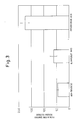
- Fig. 3 shows an average brightness of each hair. As Figs. 2 and 3 show, increased oxidized proteins in hair were observed both in the ultraviolet ray treatment and the sodium hypochlorite treatment.
- Agent "A” Name of Ingredients Blended Amount (wt%) ammonia water (28 %) 3.60 ion-exchanged water 96.40 Total 100.00
- Agent "B” Name of Ingredients Blended Amount (wt%) hydrogen peroxide (30 %) 20.00 phosphoric acid (first grade) 0.20 disodium hydrogenphosphate (anhydrous) 0.20 tin sodium 0.02 methyl paraben 0.05 ion-exchanged water 79.53 Total 100.00
- Agent "C” Name of Ingredients Blended Amount (wt%) Persulfuric acid potassium salt 74.22 sodium metasilicate 17.62 ammonium sulfate 1.91 sodium pyrophosphate 6.25 Total 100.00
- Agent 1 Name of Ingredients Blended Amount (wt%) thioglycolic acid ammonium solution (50 %) 12.90 monoethanolamine 0.90 ammonium carbonate (first grade) 2.80 urea 1.00 EDTA ⁇ 3Na 0.10 lauryldimethyl-aminoacetate betaine (40 %) 0.30 ion-exchanged water 82.00 Total 100.00
- Agent 2 sodium bromate type
- Agent 3 hydroogen peroxide type
- Fig. 4 shows an average brightness of each hair. Both in the perm treatment and the bleach treatment, increased oxidized proteins in hair were observed. Interestingly, more oxidized proteins were observed in the hydrogen peroxide perm treatment than in the sodium bromate treatment. This is assumed to indicate that the oxidation level of hair is different depending on the type of perm treatment.
- Fig. 5 shows an average brightness of each hair. Both in the perm treatment and the bleach treatment, increased oxidized proteins in hair were observed. Interestingly, more oxidized proteins were observed in the hydrogen peroxide type perm treatment than in the sodium bromate type treatment. This is assumed to indicate that the oxidation level of hair is different depending on the type of perm treatment.
- UV-B three medical ultraviolet fluorescence lamps [FL20S ⁇ E-30/DMR] were set at a height of 15 cm from the object (0.641 mW/cm 2 ).
- one artificial sunlight lamp SOLAX 500 W XC-500 B type (SELIC Ltd.) was set at a height of 40 cm from the object (UV strength: 54 W/m 2 , UV irradiance level: 210 KJ/m 2 : determined by a UV sensor [Toray Techno Co., Ltd.]).
- one artificial sunlight lamp SOLAX 500 W XC-500 B type (SELILC LTD.) was set at a height of 40 cm from the object, and irradiation was conducted for 12 hours (UV strength: 54 W/m 2 , UV irradiance level: 210 KJ/m 2 : determined by a UV sensor [Toray Techno Co., Ltd.]).
- tea extract B; lavender extract: B; grape seed extract: A; tocopherol: A; tocopherol acetate: A; thiotaurine: A; glycerin: D Results:
Landscapes
- Life Sciences & Earth Sciences (AREA)
- Health & Medical Sciences (AREA)
- Engineering & Computer Science (AREA)
- Molecular Biology (AREA)
- Immunology (AREA)
- Chemical & Material Sciences (AREA)
- Hematology (AREA)
- Urology & Nephrology (AREA)
- Biomedical Technology (AREA)
- Physics & Mathematics (AREA)
- Medicinal Chemistry (AREA)
- Pathology (AREA)
- General Physics & Mathematics (AREA)
- General Health & Medical Sciences (AREA)
- Biochemistry (AREA)
- Analytical Chemistry (AREA)
- Food Science & Technology (AREA)
- Microbiology (AREA)
- Biotechnology (AREA)
- Cell Biology (AREA)
- Proteomics, Peptides & Aminoacids (AREA)
- Bioinformatics & Computational Biology (AREA)
- Bioinformatics & Cheminformatics (AREA)
- Biophysics (AREA)
- Investigating Or Analysing Biological Materials (AREA)
- Investigating Or Analysing Materials By The Use Of Chemical Reactions (AREA)
- Cosmetics (AREA)
Abstract
Description
- The present invention provides a method, for evaluating a hair damage level, which comprises specifically labeling the carbonyl group of an oxidized protein in hair with fluorescence, and detecting the fluorescence, and a kit used for performing the method.
- Hair is damaged by various external factors such as perm treatment, bleach treatment, treatment with an oxidation hairdye, combing, heat treatment by a drier, exposure to ultraviolet rays, and exposure to hypochlorous acid in swimming pools. Hair cannot be repaired once damaged. In addition, the damage sometimes progresses over time. Accordingly, in order to keep one's hair healthy, it is naturally important to avoid any damage with daily care, and it is particularly important to recognize a damage level to prevent damage progression. As methods for evaluating a hair damage level, methods such as visual appreciation evaluation and physical property evaluation are known. For example, there are a method for analyzing the hair surface by scanning electron microscope (Swift J.A. et al., J. Society of Cosmetic Chemists (1972) Vol. 23, p. 695), a tensile test method for determining the mechanical strength of hair (Donald E.D. et al., J. Society of Cosmetic Chemists (1968) Vol. 19, p. 395), a method for determining a change in an inner structure of hair (Humphres W.T. et al., J. Society of Cosmetic Chemists (1972) Vol. 23, p. 359), and a method for determining the damage with a fluorescence microscope comprising labeling hair with a fluorescent substance (Tate M.L. et al., J. Society of Cosmetic Chemists (1993) Vol. 44, p. 347). They all have problems that a specific apparatus is required and operation is not simple.
- Kokai (Jpn. Unexamined Patent Publication) No. 8-178920 and Kokai No. 8-271515 disclose a method for determining a hair damage level which comprises using an SH group, produced by cleavage of an S-S bond contained in large amounts in keratin produced, for example, in perm treatment, as an indicator for hair damage, and dyeing hair with fluorescence using a fluorescent substance which selectively labels the SH group, such as N-(9-acridinyl)maleimide and N-(7-dimethyl-amino-4-methylcoumarinyl)maleimide. In these methods, the damage can be detected with eyes without any use of a fluorescence microscope, and determination steps become simple. Generally, a perm treatment comprises cleaving an S-S bond in hair keratin by reduction treatment to produce an SH group, and oxidizing the SH group to an S-S bond. Bleach treatment is consisting of only oxidation treatment. However, both in the perm treatment and the bleach treatment, when the reaction excessively proceeds, the SH group and the S-S bond are changed to cysteic acid (SO3H), which becomes a cause of hair damage. As cysteic acid does not react with a fluorescent substance which selectively labels the SH group, it is assumed that there are cases where the result, obtained by these methods using the SH group as an indicator for hair damage, does not accurately reflect the damage level.
- The object of the present invention is to provide an easy method for evaluating a hair damage level by which actual hair damage is more accurately reflected.
- The present invention provides a method for evaluating hair damage. This method is characterized in that evaluation is conducted by specifically labeling the carbonyl group of an oxidized protein in hair with fluorescence and detecting the fluorescence. The damage can be caused by any of perm treatment of hair, bleach treatment, treatment with an oxidative hairdye, combing, heat treatment by a drier, exposure to ultraviolet rays, and exposure to hypochlorous acid in swimming pools, or a combination thereof.
- In preferable examples, specific fluorescent labeling of the carbonyl group of an oxidized protein is carried out by reacting and binding a hydrazino-group-containing fluorescent substance to an oxidized protein. The hydrazino-group-containing fluorescent substance is preferably selected from the group consisting of fluorescein-5-thiosemicarbazide and dansylhydrazine.
- In preferable examples, the above-described evaluation is performed under a fluorescence microscope. However, if the hydrazino-group-containing fluorescent substance is dansylhydrazine, fluorescence can be detected with the eye.
- In another aspect of the invention, the present invention provides a kit used for a method for evaluating hair damage. The kit is characterized by containing a fluorescent substance for specifically labeling the carbonyl group of an oxidized protein with fluorescence.
- A preferable fluorescent substance is a hydrazino-group-containing fluorescent substance. More preferably, the hydrazino-group-containing fluorescent substance is selected from the group consisting of fluorescein-5-thiosemicarbazide and dansylhydrazine.
- The present invention provides an easy method for evaluating hair damage by which the actual hair damage is accurately reflected. In this evaluation method, damage caused by perm treatment, bleach treatment, treatment with an oxidative hairdye, combing, heat treatment by a drier, exposure to ultraviolet rays, and exposure to hypochlorous acid in swimming pools can be evaluated.
-
- Fig. 1 shows a detection result of an oxidized protein in hair using fluorescein-5-thiosemicarbazide.
- Fig. 2 shows a fluorescent micrograph showing an increased oxidized protein in hair by ultraviolet rays treatment and hypochlorous acid treatment.
- Fig. 3 is a graph in which the result of Fig. 2 is diagramed in terms of average brightness.
- Fig. 4 shows an oxidized protein in hair, represented by average brightness, increased by perm treatment and bleach treatment.
- Fig. 5 shows an oxidized protein in hair, represented by average brightness, increased by perm treatment and bleach treatment, using dansylhydrazine as a fluorescent substance.
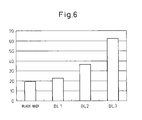
- Fig. 6 shows a result of a quantitative experiment for hair damage by a medical ultraviolet fluorescent lamp.
- Fig. 7a shows a photograph of hair damage by an artificial sunlight lamp, and Fig. 7b shows the result of the quantitative experiment.
- The present invention provides a method for evaluating a hair damage level which comprises specifically labeling the carbonyl group of an oxidized protein in hair with fluorescence and detecting the fluorescence, and a kit used for performing the method.
- Hair (or a hair shaft) consists of hair cuticle coating the surface thereof, a cortex of a hair shaft which is inside thereof and accounts for main parts thereof, and hair medulla in the center part thereof. Particularly, hair cuticle imbricately coats the surface of hair from roots of hair to the tips thereof, and protects the inner parts. If hair cuticle is not damaged and is in a healthy condition, the hair looks glow. Hair mainly comprises 80 to 90 % of proteins, 1 to 8 % of lipids, 0.6 to 1.0 % of trace elements, and 12 to 13 % of water. There are a variety of proteins in hair, but the main protein is keratin. Into hair proteins including keratin, a carbonyl group is introduced due to oxidation caused by exposure to various factors such as a perm agent, a bleaching agent, a chemical oxidizing agent contained in an oxidative hairdye, ultraviolet rays, air pollutants, hypochlorous acid used in swimming pools, friction by combing, and heat by a drier. In the oxidation, there are a case where the NH2 group of an amino acid residue such as Lys, Arg, and Pro of proteins is directly oxidized to produce a carbonyl group and a case where a lipid is oxidized to produce a lipid peroxide which will be further decomposed to produce a reactive aldehyde and bind to a protein.
- Fluorescent substances specifically labeling the carbonyl group of an oxidized protein used in the present invention preferably include those having a hydrazino group -NHNH2 which can bind to the carbonyl group of an oxidized protein. Examples of such fluorescent substances include fluorescein-5-thiosemicarbazide, dansylhydrazine, Texas Red hydrazide, and Lucifer Yellow hydrazide.
- If these hydrazino-group-containing fluorescent substances are used, an oxidized protein can be detected, for example, by the following steps.
- (1) hair is taken;
- (2) the hair is reacted with a hydrazino-group-containing fluorescent substance in suitable buffer (for example, 100 mM MES-Na buffer (pH 5.5)) at room temperature for several hours (for example, an hour);
- (3) after the reaction had been complete, the reactant is sufficiently washed with a suitable physiological solution (for example, phosphate-buffered saline (PBS)), and then an oxidized protein is detected by, for example, a fluorescence microscope; and
- (4) micrographing is optionally carried out.
- If a fluorescent substance, for example, dansylhydrazine, emitting visual fluorescence upon being irradiated with ultraviolet rays is used as a hydrazino-group-containing fluorescent substance, an oxidized protein labeled with fluorescence can be detected by eye without any use of a fluorescence microscope. Other fluorescent substances emitting visual fluorescence upon being irradiated with ultraviolet rays include N-(9-fluorenylmethoxycarbonyl)hydrazine (FMOC-hydrazine).
- If a fluorescent substance, for example, dansylhydrazine, emitting visual fluorescence upon being irradiated with ultraviolet rays is used as a hydrazino-group-containing fluorescent substance, an oxidized protein can be detected, for example, by the following steps.
- (1) hair is taken;
- (2) the hair is reacted with a hydrazino-group-containing fluorescent substance in suitable buffer (for example, 100 mM MES-Na buffer (pH 5.5)) at room temperature for several hours (for example, an hour);
- (3) after the reaction had been complete, the reactant is sufficiently washed with a suitable physiological solution (for example, phosphate-buffered saline (PBS)), and then it is irradiated with ultraviolet rays using a black light, etc.;
- (4) an oxidized protein emitting fluorescence is observed by eye; and
- (5) micrographing is optionally carried out.
- As a specific fluorescent label for an oxidized protein, a combination of biotin hydrazide and fluorescently-labeled avidin can be used. Biotin hydrazide also has a hydrazino group, and can bind to the carbonyl group of proteins. In this case, biotin hydrazide is bonded to an oxidized protein, and then fluorescently-labeled avidin is bonded to the biotin hydrazide via a biotin-avidin bond whereby the oxidized protein is labeled with fluorescence. Biotin hydrazide is well known in industry of this field, and those manufactured and marketed by Pierce Corp. can be used. Fluorescein avidin can be used as a fluorescent avidin.
- If a hydrazino-group-containing fluorescent substance is used, an oxidized protein can be detected, for example by the following steps.
- (1) hair is taken;
- (2) the hair is reacted with biotin hydrazide in suitable buffer (for example, 100 mM MES-Na buffer (pH 5.5)) at room temperature for several hours (for example, an hour);
- (3) after the reaction had been complete, the reactant is sufficiently washed with a suitable physiological solution (for example, phosphate-buffered saline (PBS)), and then it is reacted with a fluorescently-labeled avidin at room temperature for several hours (for example, an hour);
- (4) an oxidized protein is detected by, for example, fluorescence microscope; and
- (5) micrographing is optionally carried out.
- The kit of the present invention may contain reagents required for performing the above-described various types of evaluation methods, such as various buffers, other than the above-described fluorescent substances.
- The inventors of the present invention found that, as described in the following examples, the amount of oxidized proteins in hair is correlated with a hair damage level to some degree. For example, oxidizing agents used for perm treatment are generally categorized into two groups of a hydrogen peroxide type and a sodium bromate type. It is well known that the hydrogen peroxide type has more oxidizing power and gives more damage to hair. When hair damage levels in hydrogen peroxide type perm treatment and those in sodium bromate type perm treatment were compared using an oxidized protein as an indicator, it was found that hair subjected to hydrogen peroxide type perm treatment was more damaged than that subjected to sodium bromate type perm treatment. Different from perm treatment, hair bleaching treatment only has one step of oxidizing hair. As reaction excessively proceeds, SH groups and S-S bonds are changed to cysteic acid (SO3H), and damage cannot be accurately evaluated in the conventional method using an SH group as an indicator. However, when an oxidized protein was used as an indicator, and hair damage levels caused by bleach treatment and perm treatment were compared, it was found that hair subjected to bleach treatment was relatively more damaged than hair subjected to perm treatment. From these results, it was found that as hair damage level is increased, the amount of an oxidized protein in hair is increased. Accordingly, it is shown that in a method for evaluating hair damage using an oxidized protein as an indicator, actual hair damage can be accurately reflected.
- Simple determination of hair damage using an oxidized protein as an indicator is realized by using the above-described detection method of an oxidized protein and a kit therefor. The method according to the present invention does not require steps of extracting proteins, electrophoresis, and Western-blotting. It can be performed only with a fluorescence microscope. If a dansylhydrazine is used as a fluorescent substance, an oxidized protein dyed with fluorescence can be evaluated by eye upon being irradiated with ultraviolet rays. Accordingly, in the above-identified detection method of an oxidized protein and with the kit therefor, useful information for hair evaluation can be obtained by simple operation and equipments. They can be performed easily at a place such as a cosmetic sales counter.
- The present invention can be further specified with reference to the following examples.
- One
hair 5 cm from a hair root and onehair 5 cm from a hair tip (at about 20 cm from the root) were taken from nine subjects (who had not experienced any chemical hair treatment). They were dipped and washed in a washing agent (formulation 1) having the following composition at room temperature for 10 min and then, they were dipped and rinsed in water for one hour. After they were dried, they were fixed to slide glass with Aron Alpha. They were reacted with 100 mM MES-Na buffer (pH 5.5) containing 20 µM of fluorescein-5-thiosemicarbazide for one hour at room temperature. After the reaction had been complete, they were thoroughly washed in PBS, and were observed under a fluorescence microscope, and four images were captured for one sample. At digitalization, hair areas are separated from the background areas in the image, and an average brightness of hair was obtained. -
Name of the Ingredients Blended Amounts (wt%) Alscope NM (Toho Chemical Industry, Co., Ltd.) 6.80 coconut oil fatty acid amide propyl betaine solution (30 %) 1.20 citric acid 0.06 sodium benzoate 0.09 EDTA·3Na 0.01 ion-exchanged water 91.84 Total 100.00 - Fig. 1 shows the results. As is clear from Fig. 1, there was no individual difference in the samples taken from roots. On the other hand, there was remarkable individual difference in the samples taken from hair tips. It is assumed that the results reflect individual difference in hair care.
- Three
hairs 5 cm from hair tips were taken from one subject (who had not experienced any chemical hair treatment). They were dipped and washed in the washing agent (formulation 1) at room temperature for 10 min and then, they were dipped and rinsed in water for one hour. 200 J/cm2 of ultraviolet rays (UVA) were irradiated to the first hair. The second hair was incubated in 0.2 mM sodium hypochlorite at 37 °C for 16 hours. No treatment was conducted for the third hair. The hairs, subjected to ultraviolet rays treatment and sodium hypochlorite treatment, were finally washed in the washing agent (formulation 1) at room temperature for 10 min and then, were dipped and rinsed in water for one hour. After they were dried, they were fixed to slide glass with Aron Alpha. They were reacted with 100 mM MES-Na buffer (pH 5.5) containing 20 µM of fluorescein-5-thiosemicarbazide at room temperature for one hour. After the reaction had been complete, they were thoroughly washed in PBS and were observed under a fluorescence microscope, and 12 images were captured for one sample. At digitalization, hair areas were separated from the background areas in the image, and an average brightness of hair was obtained. - Fig. 2 is a fluorescence micrograph of hair subjected to fluorescence treatment as described above. Fig. 3 shows an average brightness of each hair. As Figs. 2 and 3 show, increased oxidized proteins in hair were observed both in the ultraviolet ray treatment and the sodium hypochlorite treatment.
- Four
hairs 5 cm from hair tips were taken from one subject (who had not experienced any chemical hair treatment). They were dipped and were washed in the washing agent (formulation 1) at room temperature for 10 min and, then, they were dipped and rinsed in water for one hour. The first hair was subjected to bleach treatment. The second hair was subjected to (sodium bromate type) perm treatment. The third hair was subjected to (hydrogen peroxide type) perm treatment. No treatment was conducted for the fourth hair. In the bleach treatment, the agents "A", "B" and "C" of the followingformulation 2 were mixed in a ratio of 4:6:1, and the hairs were dipped therein at room temperature for 30 min. These steps were repeated four times. In the (sodium bromate type) perm treatment, hairs were dipped in the solution of the following formulation 3-1 at 30 °C for 10 min, were washed in water for 30 sec, and were dipped in (sodium bromate type)solution 2 at 30 °C for 10 min. In the (hydrogen peroxide type) perm treatment, hairs were dipped in a solution of formulation 3-1 at 30 °C for 10 min, were washed in water for 30 sec, and were dipped in (hydrogen peroxide type)solution 3 at 30 °C for 5 min. Hairs, subjected to the bleach treatment and the perm treatment, were finally washed in the washing agent (formulation 1) at room temperature for 10 min and, then, were dipped and rinsed in water for one hour. After they were dried, they were fixed to slide glass with Aron Alpha. They were reacted with 100 mM MES-Na buffer (pH 5.5) containing 20 µM of fluorescein-5-thiosemicarbazide at room temperature for one hour. After the reaction had been complete, they were sufficiently washed in PBS, were observed under a fluorescence microscope, and eight images were captured for one sample. At digitalization, hair areas were separated from the background areas in the image, and an average brightness of hair was obtained. -
Agent "A" Name of Ingredients Blended Amount (wt%) ammonia water (28 %) 3.60 ion-exchanged water 96.40 Total 100.00 Agent "B" Name of Ingredients Blended Amount (wt%) hydrogen peroxide (30 %) 20.00 phosphoric acid (first grade) 0.20 disodium hydrogenphosphate (anhydrous) 0.20 tin sodium 0.02 methyl paraben 0.05 ion-exchanged water 79.53 Total 100.00 Agent "C" Name of Ingredients Blended Amount (wt%) Persulfuric acid potassium salt 74.22 sodium metasilicate 17.62 ammonium sulfate 1.91 sodium pyrophosphate 6.25 Total 100.00 -
Agent 1Name of Ingredients Blended Amount (wt%) thioglycolic acid ammonium solution (50 %) 12.90 monoethanolamine 0.90 ammonium carbonate (first grade) 2.80 urea 1.00 EDTA·3Na 0.10 lauryldimethyl-aminoacetate betaine (40 %) 0.30 ion-exchanged water 82.00 Total 100.00 Agent 2 (sodium bromate type) Name of Ingredients Blended Amount (wt%) sodium bromate solution (20 %) 40.00 potassium hydrogenphosphate 0.30 disodium hydrogenphosphate (12H2O) 0.20 ion-exchanged water 59.30 Total 100.00 Agent 3 (hydrogen peroxide type) Name of Ingredients Blended Amount (wt%) hydrogen peroxide solution (31 %) 6.45 phosphoric acid (1 %) 2.00 disodium hydrogenphosphate (12H2O) 0.03 ion-exchanged water 91.52 Total 100.00 - Fig. 4 shows an average brightness of each hair. Both in the perm treatment and the bleach treatment, increased oxidized proteins in hair were observed. Interestingly, more oxidized proteins were observed in the hydrogen peroxide perm treatment than in the sodium bromate treatment. This is assumed to indicate that the oxidation level of hair is different depending on the type of perm treatment.
- Four
hairs 5 cm from hair tips were taken from one subject (who had not experienced any chemical hair treatment). They were dipped and washed in the washing agent (formulation 1) at room temperature for 10 min and, then, they were dipped and rinsed in water for one hour. The first hair was subjected to bleach treatment. The second hair was subjected to (sodium bromate type) perm treatment. The third hair was subjected to (hydrogen peroxide type) perm treatment. No treatment was conducted for the fourth hair. In the bleach treatment, the agents "A", "B" and "C" of the followingformulation 2 were mixed in a ratio of 4:6:1, and the hairs were dipped therein at room temperature for 30 min. These steps were repeated four times. In the (sodium bromate type) perm treatment, hairs were dipped in the solution of the following formulation 3-1 at 30 °C for 10 min, were washed in water for 30 sec, and were dipped in (sodium bromate type)solution 2 at 30 °C for 10 min. In the (hydrogen peroxide type) perm treatment, hairs were dipped in a solution 3-1 at 30 °C for 5 min, were washed in water for 30 sec, and were dipped in (hydrogen peroxide type)solution 3 at 30 °C for 10 min. Hairs, subjected to the bleach treatment and the perm treatment, were finally dipped and washed in the washing agent (formulation 1) at room temperature for 10 min, and were dipped and rinsed in water for one hour. After they were dried, they were fixed to slide glass with Aron Alpha. They were reacted with 100 mM MES-Na buffer (pH 5.5) containing 50 µM of dansylhydrazine at room temperature for one hour. After the reaction had been complete, they were thoroughly washed in PBS, and were observed under a fluorescence microscope, and four images were captured for one sample. At digitalization, hair areas were separated from the background areas in the image, and an average brightness of hair was obtained. - Fig. 5 shows an average brightness of each hair. Both in the perm treatment and the bleach treatment, increased oxidized proteins in hair were observed. Interestingly, more oxidized proteins were observed in the hydrogen peroxide type perm treatment than in the sodium bromate type treatment. This is assumed to indicate that the oxidation level of hair is different depending on the type of perm treatment.
- Using the present method, digitalization of hair damage in healthy black hair and bleached hair by ultraviolet rays was carried out.
- As ultraviolet rays irradiation conditions, three medical ultraviolet fluorescence lamps (UV-B) [FL20S·E-30/DMR] were set at a height of 15 cm from the object (0.641 mW/cm2).
- Four standard samples were used:
- (1) healthy black hair
- (2) bleached hair 1 (healthy black hair subjected to bleach treatment for 15 min)
- (3) bleached hair 2 (healthy black hair subjected to bleach treatment for 30 min)
- (4) bleached hair 3 (healthy black hair subjected to bleach treatment for 30 min twice)
- After the hairs of the above four standards were washed and were dried, they were divided into two groups of those not for irradiation and those for irradiation. Samples for irradiation were irradiated with ultraviolet rays for 70 hours. The irradiated samples were washed together with non-irradiated samples, and hair damage was evaluated using the present method. The obtained average brightness was used in the equation below to digitalize hair damage.

- The result thereof is shown in Fig. 6.
Results: - Remarkable hair sun damage was observed in
bleached hairs - It is found that the present test method is suitable for evaluating hair damage.
- Experiments below were conducted using the most affected bleached
hair 3. - Experiments were conducted for hairs subjected to bleaching for 30 min, twice.
- As ultraviolet rays irradiation conditions, one artificial sunlight lamp SOLAX 500 W XC-500 B type (SELIC Ltd.) was set at a height of 40 cm from the object (UV strength: 54 W/m2, UV irradiance level: 210 KJ/m2: determined by a UV sensor [Toray Techno Co., Ltd.]).
- Six irradiation standards are used (3, 6, 12, 24, 48 and 72 hours)
- After the bleached hairs were washed and dried, they were divided into two groups of those not for irradiation and those for irradiation. Samples for irradiation were subjected to artificial sunlight lamp irradiation under the six standard conditions. The irradiated samples were washed together with non-irradiated samples, and hair damage was evaluated using the present method. The obtained average brightness was used in the equation below to digitalize hair sun damage.

- The results thereof are shown in Fig. 7.
Results: - It was confirmed that hair sun damage was increased, depending on the irradiation period, by the artificial sunlight lamp. It was found that the present test method is suitable for evaluating hair damage by ultraviolet rays.
- In consideration of effectiveness of an experiment, the effect of an antioxidizing agent was confirmed by irradiation with an artificial sunlight lamp for 12 hours.
- Experiments were conducted for hair subjected to bleaching for 30 min, twice.
- As ultraviolet rays irradiation conditions, one artificial sunlight lamp SOLAX 500 W XC-500 B type (SELILC LTD.) was set at a height of 40 cm from the object, and irradiation was conducted for 12 hours (UV strength: 54 W/m2, UV irradiance level: 210 KJ/m2: determined by a UV sensor [Toray Techno Co., Ltd.]).
- Test Standards: Eight standards
- (1) uncoated (ion-exchanged water)
- (2) tea extract (0.1 %: Koeikogyo K. K.)
- (3) lavender extract (0.1 %: Koeikogyo K. K.)
- (4) grape seed extract (0.1 %: Kikkoman Corp.)
- (5) tocopherol (0.001 %)
- (6) tocopherol acetate (0.001 %)
- (7) thiotaurine (0.001 %)
- (8) glycerin (0.1 %)
- After the bleached hairs were washed and dried, they were divided into two groups of those for non-irradiation and those for irradiation. Samples for irradiation were dipped in the above-described eight standard solutions for 15 min, and were taken out and dried. The dried samples were irradiated by an artificial sunlight lamp. The irradiated samples were washed together with non-irradiated samples, and hair damage was evaluated using the present method. The obtained average brightness was used in the
equations 

- For convenience, evaluation standards for a protection effect against hair sun damage were provided as below.
- A: more than 80 %
- B: 50 % or more and less than 80 %
- C: 20 % or more and less than 50 %
- D: less than 20 %
- The effects of the drugs tested are described below. tea extract: B; lavender extract: B; grape seed extract: A; tocopherol: A; tocopherol acetate: A; thiotaurine: A; glycerin: D
Results: - It was found that the present method is also suitable for screening antioxidizing agents.
Claims (9)
- A method for evaluating hair damage comprising specifically labeling the carbonyl group of an oxidized protein in hair with fluorescence, and detecting the fluorescence.
- The method according to claim 1, wherein the damage is caused by any of perm treatment, bleach treatment, treatment with an oxidative hairdye, combing, heat treatment, exposure to ultraviolet rays, and exposure to hypochlorous acid in swimming pools, or a combination thereof.
- The method according to claim 1 or 2, wherein the specific fluorescence labeling of the carbonyl group of the oxidized protein is performed by acting and binding a hydrazino-group-containing fluorescent substance to the oxidized protein.
- The method according to any one of claims 1 to 3, wherein the hydrazino-group-containing fluorescent substance is selected from the group consisting of fluorescein-5-thiosemicarbazide and dansylhydrazine.
- The method according to any one of claims 1 to 4, wherein the evaluation is conducted under a fluorescence microscope.
- The method according to claim 3, wherein the hydrazino-group-containing fluorescent substance is dansylhydrazine, and detection of the fluorescence is conducted by eye.
- A kit used for a method for evaluating hair damage, comprising a fluorescent substance for specifically labeling the carbonyl group of an oxidized protein with fluorescence.
- The kit according to claim 7, wherein the fluorescent substance is a hydrazino-group-containing fluorescent substance.
- The kit according to claim 7 or 8, wherein the hydrazino-group-containing fluorescent substance is selected from the group consisting of fluorescein-5-thiosemicarbazide and dansylhydrazine.
Applications Claiming Priority (2)
| Application Number | Priority Date | Filing Date | Title |
|---|---|---|---|
| JP2003410415 | 2003-12-09 | ||
| PCT/JP2004/018670 WO2005057211A1 (en) | 2003-12-09 | 2004-12-08 | Method of rating hair damage with use of oxidized protein occurring in hair as indicator |
Publications (2)
| Publication Number | Publication Date |
|---|---|
| EP1696233A1 true EP1696233A1 (en) | 2006-08-30 |
| EP1696233A4 EP1696233A4 (en) | 2007-06-13 |
Family
ID=34674930
Family Applications (1)
| Application Number | Title | Priority Date | Filing Date |
|---|---|---|---|
| EP04807029A Withdrawn EP1696233A4 (en) | 2003-12-09 | 2004-12-08 | Method of rating hair damage with use of oxidized protein occurring in hair as indicator |
Country Status (7)
| Country | Link |
|---|---|
| US (1) | US20070110670A1 (en) |
| EP (1) | EP1696233A4 (en) |
| JP (1) | JP4116035B2 (en) |
| KR (1) | KR20060127405A (en) |
| CN (1) | CN1902487B (en) |
| TW (1) | TW200538736A (en) |
| WO (1) | WO2005057211A1 (en) |
Cited By (4)
| Publication number | Priority date | Publication date | Assignee | Title |
|---|---|---|---|---|
| FR2947635A1 (en) * | 2009-07-01 | 2011-01-07 | Oreal | Solar protection index measuring method for keratin fibers of e.g. natural brown hair, involves determining exposure duration of stock of keratin fibers, and determining solar protection index using specific equation at irradiation times |
| WO2011071713A1 (en) * | 2009-12-07 | 2011-06-16 | The Procter & Gamble Company | Method for assessing the damage of keratin fibers |
| EP2417959A1 (en) * | 2010-12-27 | 2012-02-15 | KPSS-Kao Professional Salon Services GmbH | Oxidizing composition for hair |
| EP2468240A1 (en) * | 2010-12-27 | 2012-06-27 | KPSS-Kao Professional Salon Services GmbH | Oxidizing composition for hair |
Families Citing this family (11)
| Publication number | Priority date | Publication date | Assignee | Title |
|---|---|---|---|---|
| JP4673771B2 (en) * | 2006-03-06 | 2011-04-20 | 株式会社マンダム | Keratin fiber damage assessment method |
| JP5382903B2 (en) * | 2006-12-28 | 2014-01-08 | 株式会社 資生堂 | Method for measuring degree of hair damage using keratin film |
| JP2012242151A (en) * | 2011-05-17 | 2012-12-10 | Shiseido Co Ltd | Method for measuring degree of hair damage caused by heat by using keratin film |
| JP2015222248A (en) * | 2014-04-28 | 2015-12-10 | 株式会社ミルボン | Method for evaluating carbonylation level, method for screening component reducing carbonylation level and carbonylation level reduction agent |
| CN105259005A (en) * | 2014-07-16 | 2016-01-20 | 温州医科大学 | Applications of dansylhydrazine and derivative thereof in specific fluorescent pre-dyeing detection method of glycoproteins |
| JP6570472B2 (en) * | 2016-03-30 | 2019-09-04 | 株式会社マンダム | Method for evaluating hair damage |
| JP7109935B2 (en) * | 2018-02-20 | 2022-08-01 | 株式会社ミルボン | Methods for evaluating hair damage and methods for testing compounds or compositions |
| CN108871947B (en) * | 2018-04-23 | 2022-02-01 | 广州质量监督检测研究院 | Evaluation method for high-temperature damage prevention effect of hair product |
| WO2021074156A1 (en) * | 2019-10-18 | 2021-04-22 | Unilever Ip Holdings B.V. | Method for determining rinse properties |
| KR102414619B1 (en) | 2020-05-11 | 2022-06-30 | 피엔케이피부임상연구센타 주식회사 | Method for evaluating efficiency of UV protecting material for hair |
| KR102392796B1 (en) | 2020-09-29 | 2022-04-29 | 한국공학대학교산학협력단 | Apparatus detecting damage of hair |
Family Cites Families (8)
| Publication number | Priority date | Publication date | Assignee | Title |
|---|---|---|---|---|
| FR2431126A1 (en) * | 1978-07-12 | 1980-02-08 | Oreal | PROCESS FOR IDENTIFYING THE OXIDATION STATE OF KERATINIC FIBERS AND IN PARTICULAR HUMAN HAIR |
| US4349352A (en) * | 1980-08-14 | 1982-09-14 | Rockefeller University | Test for glucosylated hemoglobin and other glucosylated proteins |
| JPS6144353A (en) * | 1984-08-07 | 1986-03-04 | Yuki Gosei Yakuhin Kogyo Kk | Method for fluorescent marking of polydeoxyribonucleotide or polyribonucleotide |
| US5176906A (en) * | 1990-05-02 | 1993-01-05 | Dow Corning Corporation | Fluorescent organosilicon compounds and methods |
| KR960009640B1 (en) * | 1992-10-16 | 1996-07-23 | 주식회사 태평양 | Hair color rinse composition |
| JP2664043B2 (en) * | 1994-02-09 | 1997-10-15 | 国立衛生試験所長 | Novel optically active derivative of 4- (2-carbazoylpyrrolidin-1-yl) -2,1,3-benzoxadiazole |
| JPH08271515A (en) * | 1995-03-28 | 1996-10-18 | Matsushita Electric Works Ltd | Keratin damage degree measuring method and measuring apparatus |
| JPH09127105A (en) * | 1995-10-26 | 1997-05-16 | Kanebo Ltd | Hair damage diagnosis method |
-
2004
- 2004-12-08 JP JP2005516233A patent/JP4116035B2/en not_active Expired - Lifetime
- 2004-12-08 CN CN2004800402428A patent/CN1902487B/en not_active Expired - Fee Related
- 2004-12-08 US US10/581,361 patent/US20070110670A1/en not_active Abandoned
- 2004-12-08 EP EP04807029A patent/EP1696233A4/en not_active Withdrawn
- 2004-12-08 KR KR1020067011163A patent/KR20060127405A/en not_active Withdrawn
- 2004-12-08 WO PCT/JP2004/018670 patent/WO2005057211A1/en not_active Ceased
- 2004-12-09 TW TW093138171A patent/TW200538736A/en unknown
Non-Patent Citations (5)
| Title |
|---|
| BRAIDA DAMARYS ET AL: "Photoageing of hair fiber and photoprotection" SKIN PHARMACOLOGY, vol. 7, no. 1-2, 1994, pages 73-77, XP009082544 ISSN: 1011-0283 * |
| CHAUDHURI ASISH ET AL: "Oxidative stress and protein carbonylation: A fluorescence-based approach." FREE RADICAL BIOLOGY & MEDICINE, vol. 35, no. Supplement 1, 2003, page S102, XP002430537 & 10TH ANNUAL MEETING OF THE SOCIETY FOR FREE RADICAL BIOLOGY AND MEDICINE; SEATTLE, WA, USA; NOVEMBER 20-24, 2003 ISSN: 0891-5849 * |
| HIRAO TETSUJI ET AL: "OXIDATIVE MODIFICATION OF CORNIFIED ENVELOPES IN THE STRATUM CORNEUM" FREE RADICAL BIOLOGY AND MEDICINE, ELSEVIER SCIENCE, XX, vol. 35, no. SUPPL 1, 20 November 2003 (2003-11-20), page S104, XP009081902 ISSN: 0891-5849 * |
| RUETSCH S B ET AL: "Chemical and photo-oxidative hair damage studied by dye diffusion and electrophoresis." JOURNAL OF COSMETIC SCIENCE 2003 JUL-AUG, vol. 54, no. 4, July 2003 (2003-07), pages 379-394, XP009082711 ISSN: 1525-7886 * |
| See also references of WO2005057211A1 * |
Cited By (4)
| Publication number | Priority date | Publication date | Assignee | Title |
|---|---|---|---|---|
| FR2947635A1 (en) * | 2009-07-01 | 2011-01-07 | Oreal | Solar protection index measuring method for keratin fibers of e.g. natural brown hair, involves determining exposure duration of stock of keratin fibers, and determining solar protection index using specific equation at irradiation times |
| WO2011071713A1 (en) * | 2009-12-07 | 2011-06-16 | The Procter & Gamble Company | Method for assessing the damage of keratin fibers |
| EP2417959A1 (en) * | 2010-12-27 | 2012-02-15 | KPSS-Kao Professional Salon Services GmbH | Oxidizing composition for hair |
| EP2468240A1 (en) * | 2010-12-27 | 2012-06-27 | KPSS-Kao Professional Salon Services GmbH | Oxidizing composition for hair |
Also Published As
| Publication number | Publication date |
|---|---|
| CN1902487B (en) | 2012-06-13 |
| JPWO2005057211A1 (en) | 2007-07-05 |
| EP1696233A4 (en) | 2007-06-13 |
| JP4116035B2 (en) | 2008-07-09 |
| KR20060127405A (en) | 2006-12-12 |
| US20070110670A1 (en) | 2007-05-17 |
| WO2005057211A1 (en) | 2005-06-23 |
| CN1902487A (en) | 2007-01-24 |
| TW200538736A (en) | 2005-12-01 |
Similar Documents
| Publication | Publication Date | Title |
|---|---|---|
| US20070110670A1 (en) | Method for evaluating hair damage using an oxidized protein in hair as an indicator | |
| AU2002303139B2 (en) | Compositions suitable for the treatment of hair comprising chelants and methods for reducing oxidative hair damage | |
| US20070118999A1 (en) | Compositions suitable for the treatment of hair comprising chelants and methods for reducing oxidative hair damage | |
| AU2002252417B2 (en) | Oxidative treatment of hair with reduced hair damage | |
| US20040105830A1 (en) | Oxidative treatment of hair with reduced hair damage | |
| ES2242293T3 (en) | USE OF ASCORBIC ACID IN COMPOSITIONS OF PERMANENT WAVE AND HAIR COLORING. | |
| AU2002303139A1 (en) | Compositions suitable for the treatment of hair comprising chelants and methods for reducing oxidative hair damage | |
| JP6243123B2 (en) | Method for evaluating stratum corneum state and method for evaluating stratum corneum improvement effect of cosmetics | |
| US20070179198A1 (en) | Method for evaluating transparency and water holding capacity of stratum corneum using oxidized protein in stratum corneum as an indicator | |
| EP2375981B1 (en) | Method for assessing the damage of keratin fibers | |
| EP2510360B1 (en) | Method for assessing the damage of keratin fibers | |
| KR20060005380A (en) | Evaluation method of oxidized protein in stratum corneum | |
| Yıldırım et al. | The chemistry mechanism of hair dyes | |
| EP1975613A1 (en) | Kits and methods for evaluating hair | |
| JPH07330558A (en) | Oxidative dye composition of keratin fiber consisting of 2- (β-hydroxyethyl) -para-phenylenediamine, 2-methylresorcinol and 3-aminophenol and dyeing method using the same | |
| JPH09127105A (en) | Hair damage diagnosis method | |
| JP2022549842A (en) | Dentifrice composition for the treatment of dental biofilms | |
| Nacht | Sunscreens and hair | |
| EP4057887B1 (en) | Method of visualizing and quantifying remineralization | |
| CN119930760B (en) | Polypeptide for binding and dyeing hair keratin, preparation method and application | |
| JP5775219B2 (en) | Method for assessing fiber condition | |
| FI76638C (en) | FOERFARANDE FOER BESTAEMNING AV HAORSKADA. | |
| KR20110123452A (en) | Hair cosmetic composition for hair protection and restoration containing earthworm degradant | |
| JP7414973B2 (en) | Dentifrice composition for the treatment of dental biofilms | |
| FR2576105A1 (en) | METHOD FOR EVALUATING THE SURFACE CONDITION OF KERATIN FIBERS AND COMPOSITION FOR CARRYING OUT SAID METHOD |
Legal Events
| Date | Code | Title | Description |
|---|---|---|---|
| PUAI | Public reference made under article 153(3) epc to a published international application that has entered the european phase |
Free format text: ORIGINAL CODE: 0009012 |
|
| 17P | Request for examination filed |
Effective date: 20060606 |
|
| AK | Designated contracting states |
Kind code of ref document: A1 Designated state(s): DE FR IT |
|
| DAX | Request for extension of the european patent (deleted) | ||
| RBV | Designated contracting states (corrected) |
Designated state(s): DE FR IT |
|
| RIC1 | Information provided on ipc code assigned before grant |
Ipc: G01N 33/68 20060101AFI20070426BHEP Ipc: G01N 21/77 20060101ALI20070426BHEP Ipc: G01N 33/50 20060101ALI20070426BHEP |
|
| A4 | Supplementary search report drawn up and despatched |
Effective date: 20070510 |
|
| 17Q | First examination report despatched |
Effective date: 20071010 |
|
| STAA | Information on the status of an ep patent application or granted ep patent |
Free format text: STATUS: THE APPLICATION IS DEEMED TO BE WITHDRAWN |
|
| 18D | Application deemed to be withdrawn |
Effective date: 20080422 |