EP1692186B1 - Cancer cell targeting gene delivery method - Google Patents
Cancer cell targeting gene delivery method Download PDFInfo
- Publication number
- EP1692186B1 EP1692186B1 EP04720767A EP04720767A EP1692186B1 EP 1692186 B1 EP1692186 B1 EP 1692186B1 EP 04720767 A EP04720767 A EP 04720767A EP 04720767 A EP04720767 A EP 04720767A EP 1692186 B1 EP1692186 B1 EP 1692186B1
- Authority
- EP
- European Patent Office
- Prior art keywords
- chimeric ligand
- galv
- cells
- tag
- gene
- Prior art date
- Legal status (The legal status is an assumption and is not a legal conclusion. Google has not performed a legal analysis and makes no representation as to the accuracy of the status listed.)
- Expired - Lifetime
Links
Images






Classifications
-
- C—CHEMISTRY; METALLURGY
- C12—BIOCHEMISTRY; BEER; SPIRITS; WINE; VINEGAR; MICROBIOLOGY; ENZYMOLOGY; MUTATION OR GENETIC ENGINEERING
- C12N—MICROORGANISMS OR ENZYMES; COMPOSITIONS THEREOF; PROPAGATING, PRESERVING, OR MAINTAINING MICROORGANISMS; MUTATION OR GENETIC ENGINEERING; CULTURE MEDIA
- C12N15/00—Mutation or genetic engineering; DNA or RNA concerning genetic engineering, vectors, e.g. plasmids, or their isolation, preparation or purification; Use of hosts therefor
- C12N15/09—Recombinant DNA-technology
- C12N15/63—Introduction of foreign genetic material using vectors; Vectors; Use of hosts therefor; Regulation of expression
- C12N15/79—Vectors or expression systems specially adapted for eukaryotic hosts
- C12N15/85—Vectors or expression systems specially adapted for eukaryotic hosts for animal cells
- C12N15/86—Viral vectors
-
- C—CHEMISTRY; METALLURGY
- C07—ORGANIC CHEMISTRY
- C07K—PEPTIDES
- C07K19/00—Hybrid peptides, i.e. peptides covalently bound to nucleic acids, or non-covalently bound protein-protein complexes
-
- A—HUMAN NECESSITIES
- A61—MEDICAL OR VETERINARY SCIENCE; HYGIENE
- A61P—SPECIFIC THERAPEUTIC ACTIVITY OF CHEMICAL COMPOUNDS OR MEDICINAL PREPARATIONS
- A61P35/00—Antineoplastic agents
-
- C—CHEMISTRY; METALLURGY
- C07—ORGANIC CHEMISTRY
- C07K—PEPTIDES
- C07K14/00—Peptides having more than 20 amino acids; Gastrins; Somatostatins; Melanotropins; Derivatives thereof
- C07K14/005—Peptides having more than 20 amino acids; Gastrins; Somatostatins; Melanotropins; Derivatives thereof from viruses
-
- C—CHEMISTRY; METALLURGY
- C07—ORGANIC CHEMISTRY
- C07K—PEPTIDES
- C07K16/00—Immunoglobulins [IG], e.g. monoclonal or polyclonal antibodies
- C07K16/18—Immunoglobulins [IG], e.g. monoclonal or polyclonal antibodies against material from animals or humans
- C07K16/28—Immunoglobulins [IG], e.g. monoclonal or polyclonal antibodies against material from animals or humans against receptors, cell surface antigens or cell surface determinants
- C07K16/30—Immunoglobulins [IG], e.g. monoclonal or polyclonal antibodies against material from animals or humans against receptors, cell surface antigens or cell surface determinants from tumour cells
-
- A—HUMAN NECESSITIES
- A61—MEDICAL OR VETERINARY SCIENCE; HYGIENE
- A61K—PREPARATIONS FOR MEDICAL, DENTAL OR TOILETRY PURPOSES
- A61K39/00—Medicinal preparations containing antigens or antibodies
- A61K2039/505—Medicinal preparations containing antigens or antibodies comprising antibodies
-
- A—HUMAN NECESSITIES
- A61—MEDICAL OR VETERINARY SCIENCE; HYGIENE
- A61K—PREPARATIONS FOR MEDICAL, DENTAL OR TOILETRY PURPOSES
- A61K38/00—Medicinal preparations containing peptides
-
- C—CHEMISTRY; METALLURGY
- C07—ORGANIC CHEMISTRY
- C07K—PEPTIDES
- C07K2317/00—Immunoglobulins specific features
- C07K2317/20—Immunoglobulins specific features characterized by taxonomic origin
- C07K2317/24—Immunoglobulins specific features characterized by taxonomic origin containing regions, domains or residues from different species, e.g. chimeric, humanized or veneered
-
- C—CHEMISTRY; METALLURGY
- C07—ORGANIC CHEMISTRY
- C07K—PEPTIDES
- C07K2317/00—Immunoglobulins specific features
- C07K2317/60—Immunoglobulins specific features characterized by non-natural combinations of immunoglobulin fragments
- C07K2317/62—Immunoglobulins specific features characterized by non-natural combinations of immunoglobulin fragments comprising only variable region components
- C07K2317/622—Single chain antibody (scFv)
-
- C—CHEMISTRY; METALLURGY
- C07—ORGANIC CHEMISTRY
- C07K—PEPTIDES
- C07K2319/00—Fusion polypeptide
-
- C—CHEMISTRY; METALLURGY
- C07—ORGANIC CHEMISTRY
- C07K—PEPTIDES
- C07K2319/00—Fusion polypeptide
- C07K2319/33—Fusion polypeptide fusions for targeting to specific cell types, e.g. tissue specific targeting, targeting of a bacterial subspecies
-
- C—CHEMISTRY; METALLURGY
- C12—BIOCHEMISTRY; BEER; SPIRITS; WINE; VINEGAR; MICROBIOLOGY; ENZYMOLOGY; MUTATION OR GENETIC ENGINEERING
- C12N—MICROORGANISMS OR ENZYMES; COMPOSITIONS THEREOF; PROPAGATING, PRESERVING, OR MAINTAINING MICROORGANISMS; MUTATION OR GENETIC ENGINEERING; CULTURE MEDIA
- C12N2740/00—Reverse transcribing RNA viruses
- C12N2740/00011—Details
- C12N2740/10011—Retroviridae
- C12N2740/13011—Gammaretrovirus, e.g. murine leukeamia virus
- C12N2740/13022—New viral proteins or individual genes, new structural or functional aspects of known viral proteins or genes
-
- C—CHEMISTRY; METALLURGY
- C12—BIOCHEMISTRY; BEER; SPIRITS; WINE; VINEGAR; MICROBIOLOGY; ENZYMOLOGY; MUTATION OR GENETIC ENGINEERING
- C12N—MICROORGANISMS OR ENZYMES; COMPOSITIONS THEREOF; PROPAGATING, PRESERVING, OR MAINTAINING MICROORGANISMS; MUTATION OR GENETIC ENGINEERING; CULTURE MEDIA
- C12N2740/00—Reverse transcribing RNA viruses
- C12N2740/00011—Details
- C12N2740/10011—Retroviridae
- C12N2740/13011—Gammaretrovirus, e.g. murine leukeamia virus
- C12N2740/13041—Use of virus, viral particle or viral elements as a vector
- C12N2740/13043—Use of virus, viral particle or viral elements as a vector viral genome or elements thereof as genetic vector
-
- C—CHEMISTRY; METALLURGY
- C12—BIOCHEMISTRY; BEER; SPIRITS; WINE; VINEGAR; MICROBIOLOGY; ENZYMOLOGY; MUTATION OR GENETIC ENGINEERING
- C12N—MICROORGANISMS OR ENZYMES; COMPOSITIONS THEREOF; PROPAGATING, PRESERVING, OR MAINTAINING MICROORGANISMS; MUTATION OR GENETIC ENGINEERING; CULTURE MEDIA
- C12N2740/00—Reverse transcribing RNA viruses
- C12N2740/00011—Details
- C12N2740/10011—Retroviridae
- C12N2740/13011—Gammaretrovirus, e.g. murine leukeamia virus
- C12N2740/13041—Use of virus, viral particle or viral elements as a vector
- C12N2740/13045—Special targeting system for viral vectors
-
- C—CHEMISTRY; METALLURGY
- C12—BIOCHEMISTRY; BEER; SPIRITS; WINE; VINEGAR; MICROBIOLOGY; ENZYMOLOGY; MUTATION OR GENETIC ENGINEERING
- C12N—MICROORGANISMS OR ENZYMES; COMPOSITIONS THEREOF; PROPAGATING, PRESERVING, OR MAINTAINING MICROORGANISMS; MUTATION OR GENETIC ENGINEERING; CULTURE MEDIA
- C12N2810/00—Vectors comprising a targeting moiety
- C12N2810/50—Vectors comprising as targeting moiety peptide derived from defined protein
- C12N2810/60—Vectors comprising as targeting moiety peptide derived from defined protein from viruses
- C12N2810/6045—RNA rev transcr viruses
- C12N2810/6054—Retroviridae
-
- C—CHEMISTRY; METALLURGY
- C12—BIOCHEMISTRY; BEER; SPIRITS; WINE; VINEGAR; MICROBIOLOGY; ENZYMOLOGY; MUTATION OR GENETIC ENGINEERING
- C12N—MICROORGANISMS OR ENZYMES; COMPOSITIONS THEREOF; PROPAGATING, PRESERVING, OR MAINTAINING MICROORGANISMS; MUTATION OR GENETIC ENGINEERING; CULTURE MEDIA
- C12N2810/00—Vectors comprising a targeting moiety
- C12N2810/50—Vectors comprising as targeting moiety peptide derived from defined protein
- C12N2810/80—Vectors comprising as targeting moiety peptide derived from defined protein from vertebrates
-
- C—CHEMISTRY; METALLURGY
- C12—BIOCHEMISTRY; BEER; SPIRITS; WINE; VINEGAR; MICROBIOLOGY; ENZYMOLOGY; MUTATION OR GENETIC ENGINEERING
- C12N—MICROORGANISMS OR ENZYMES; COMPOSITIONS THEREOF; PROPAGATING, PRESERVING, OR MAINTAINING MICROORGANISMS; MUTATION OR GENETIC ENGINEERING; CULTURE MEDIA
- C12N2810/00—Vectors comprising a targeting moiety
- C12N2810/50—Vectors comprising as targeting moiety peptide derived from defined protein
- C12N2810/80—Vectors comprising as targeting moiety peptide derived from defined protein from vertebrates
- C12N2810/85—Vectors comprising as targeting moiety peptide derived from defined protein from vertebrates mammalian
- C12N2810/859—Vectors comprising as targeting moiety peptide derived from defined protein from vertebrates mammalian from immunoglobulins
Definitions
- the present invention relates to a chimeric ligand in the form of a fusion polypeptide of a retrovirus envelope glycoprotein and a single chain antibody capable of specifically binding to a surface antigen of a tumor associated glycoprotein; an expression vector comprising a gene encoding said chimaric ligand; a packaging cell line transduced with said expression vector; a recombinant retrovirus produced by said packaging cell line; and a pharmaceutical composition comprising said chimeric ligand as an effective ingredient.
- Gene therapy is a rapidly emerging field that aims to treat acquired diseases such as cancer, diabetes and AIDS as well as inherent metabolic abnormality.
- the retrovirus vector system has advantages over others using adenovirus, liposome, electroporation and gene gun.
- the retrovirus vector system has the ability to permanently integrate into host cells that allows stable expression of transduced cells.
- all of these systems have limitation in gene delivery to a specific target cell.
- a retrovirus e.g.; a method for linking a sugar molecule to an envelop glycoprotein of retrovirus by a chemical method so that the sugar-coupled envelope glycoprotein binds to an asialoglycoprotein receptor of target cells ( Neda, H. et al., J. Biol. Chem. 266: 14143-14146, 1991 ); a method of using a coupling antibody bridge capable of binding to both of an envelop glycoprotein of retrovirus and a target cell's receptor or surface antigen ( Goud, B. et al., Virology 163: 251-254, 1988 ; Roux, P. et al., Proc. Natl.
- a method for coupling a single-chain antibody (ScFv) to an envelope glycoprotein of retrovirus via genetic engineering and infecting target cells with the retrovirus is very useful for the specific infection of target cells.
- Single chain antibody is formed by joining the carboxy-terminal of V H and the amino-terminal of V L segments with a suitable synthetic amino acid linker.
- the antibody combining site is located at the Fv region of the molecule formed by the variable domains of heavy and light chains (V H and V L ) ( Poon et al., Molecular Immunology 39: 19-24,2002 ; Fujiwara et al., Biochemistry 41: 12729-12738, 2002 ).
- retrovirus has been studied to improve stability and transduction efficiency.
- GaLV gibbon ape leukemia virus
- Env-pseudotype retroviral vector showed 5 to 30 times higher infection efficiency than an amphotropic murine retroviral vector in several human cell lines ( Kim et al., Proc. Amer. Assoc. Cancer Res. 38: 177, 1997 ).
- Kim et al., Proc. Amer. Assoc. Cancer Res. 38: 177, 1997 the limitation in specific targeting is remained to be solved.
- the present inventors have endeavored to meet the need of a gene delivery system using a retrovirus which shows higher viral titer and transduction efficiency, and develop a chimeric ligand in the form of a fusion polypeptide of the GaLV envelope glycoprotein and a single chain antibody derived from monoclonal antibody capable of specifically binding to a surface antigen of tumor associated glycoprotein 72 (Tag-72).
- a chimeric ligand in the form of a fusion polypeptide of a retrovirus envelope glycoprotein (Env GP) and a single chain antibody (ScFv) capable of specifically binding to a surface antigen of a tumor-associated glycoprotein 72 (Tag-72).
- the single chain antibody is inserted between the 199 th and 200 th amino acid residues of a surface subunit of gibbon ape leukemia virus envelope glycoprotein.
- a recombinant expression vector comprising a gene encoding said chimaric ligand and a packaging cell line capable of producing a retrovirus by transducing with said expression vector.
- a pharmaceutical composition for cancer cell targeting gene therapy which comprises said chimeric ligand or packaging cell line as an effective ingredient.
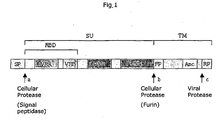
- Fig. 1 the structure of an envelope glycoprotein of mammalian type-C retrovirus similar to a GaLV envelope glycoprotein (GaLV Env GP), a: signal peptidase cleavage site, b: SU/TM cleavage site, c: R-peptide cleavage site, SP: signal peptide, VRA: variable region A, VRB: variable region B, VRC: variable region C, RBD: receptor binding domain, PRR: proline rich region, CT: C-terminal region of SU, SU: surface subunit, FP: fusion protein, Anc: anchorage region, RP: R-peptide, TM: transmembrane domain Fig.
- GaLV Env GP GaLV envelope glycoprotein
- Fig. 2 the result of amino acid alignment analysis of several retrovirus envelope glycoproteins
- VRA variable region A
- VRB variable region B
- VRC variable region C
- PRR proline rich region
- SU surface subunit
- TM transmembrane domain
- Fig. 3 the analysis of secondary structure of GaLV envelope glycoprotein
- VRA variable region A
- VRB variable region B
- TM transmembrane domain
- Fig. 4 the schematic illustration of vectors expressing the inventive ScFv-GaLV Env GP chimeric ligand FvGEL199 and wild type GaLV envelope glycoprotein, respectively
- Fig. 5 the photographic illustrations of western blot analyses examining the expression of chimeric ligand FvGEL199 in a packaging cell line
- A FvGEL199 expressed in a vector whose expression is regulated by HCMV promoter
- the present invention provides a chimeric ligand in the form of a fusion polypeptide of GaLV envelope glycoprotein and a single chain antibody specific for the surface antigen of tumor-associated glycoprotein 72 (Tag-72).
- the single chain antibody is inserted between the 199 th and 200 th amino acid residues of a surface subunit of gibbon ape leukemia virus envelope glycoprotein.
- the present inventors have employed a single chain antibody which is capable of specifically binding to the surface antigen of tumor-associated glycoprotein 72 (Tag-72) expressed in various cancer cells including colon, stomach, breast, ovary and prostate cancers. Further, in order to efficiently introduce a therapeutic gene into human target cells, the present inventors have employed GaLV (gibbon ape leukemia virus) envelope glycoprotein which shows higher transduction efficiency into human cancer cells and more stable in human blood than MuLV (Murine Leukemia Virus) envelope glycoprotein.
- GaLV green ape leukemia virus envelope glycoprotein
- the binding of envelope glycoproteins distributed on a viral envelope to cell receptors on a cell surface is essential for the infection of retrovirus into target cells, which is the key to determine the specificity of infectiousness.
- a target cell specific gene delivery system it is possible to produce a virus capable of specifically infecting target cells by manipulating a viral envelope glycoprotein endowing a cell specificity to bind to be coupled to a receptor of a target cell. Therefore, the present inventors have prepared a chimeric ligand by fusing single chain antibody Tag-72pS1 specific for Tag-72 surface antigen to a surface subunit (SU) region which determines the cell specificity of GaLV envelope glycoprotein and is capable of binding to a specific cell receptor.
- SU surface subunit
- MuLV envelope glycoprotein having a structure similar to GaLV envelope glycoprotein it has been reported that point mutation, insertion mutation or deletion mutation introduced into the envelope glycoprotein may lead to a conformational change, to produce a viral envelope glycoprotein having an abnormal function, and therefore, the viral infectiousness deteriorates ( Russell, S. J. et al., Nucleic Acids Res. 21: 1081-1085, 1993 ; Somia, N. V. et al., Proc. Natl. Acad. Sci. U.S.A. 92: 7570-7574, 1995 ; Ager, S. et al., Hum. Gene Ther. 7: 2157-2164, 1996 ; Marin, M. et al., J. Virol.
- the inventive chimeric ligand is so designed as to specifically infect target cells by inserting a single-chain antibody (ScFv) into a variable region B (VRB) selected among several SU regions of envelope glycoprotein which determine the cell specificity and cell surface binding.
- ScFv single-chain antibody
- VRB variable region B
- the present inventors have prepared a fusion chimeric ligand according to the invention which is prepared by inserting single-chain antibody Tag-72pS1 specifically binding to Tag-72 surface antigen into a site between the 199 th and 200 th amino acid residues starting from the first methionine translated from ATG initiation codon which is a variable region B of GaLV envelope glycoprotein; and an expression vector comprising said chimeric ligand.
- the GaLV envelope glycoprotein used in the present invention is a SEATO type having an R-peptide and has the nucleotide sequence of SEQ ID NO: 7 (NCBI Accession No. AAC96083).
- the single-chain antibody Tag-72pS1 specific for the Tag-72 surface antigen has the nucleotide sequence of SEQ ID NO: 8.
- the inventive chimeric ligand designated FvGEL199 has the nucleotide sequence of SEQ ID NO: 10 and encodes a fusion polypeptide having the amino acid sequence of SEQ ID NO: 11, wherein the single-chain antibody Tag-72pS1 is coupled to the GaLV envelope glycoprotein by a linker comprising 5 amino acids of Gly 4 Ser.
- the single-chain antibody GaLV envelope glycoprotein (ScFv-GaLV Env GP) chimeric ligand thus prepared is cloned in backbone vector pHYKEF1 ( Kim et al., J. Biotechnol. 93: 183, 2002 ) whose expression is regulated by HCMV promoter and the transcription activity is stimulated by EF1a intron, to obtain expression vectors pHEFvGEL199.
- the resulting expression vectors express the fusion polypeptide comprising 956 amino acids formed by inserting the single-chain antibody Tag-72pS 1 into the site between the 199 th and 200 th amino acid residues of GaLV envelope glycoprotein SU region.
- E. coli DH5 ⁇ was transformed with expression vector pHEFvGEL199 and to obtain E. coli transformants designated DH5 ⁇ /pHEFvGEL199, which were deposited on February 13, 2004 with the Korean Collection for Type Cultures (KCTC) (Address: Korea Research Institute of Bioscience and Biotechnology (KRIBB), #52, Oun-dong, Yusong-ku, Taejon, 305-333, Republic of Korea) under the accession numbers KCTC-10596BP, in accordance with the terms of Budapest Treaty on the International Recognition of the Deposit of Microorganism for the Purpose of Patent Procedure..
- KCTC Korean Collection for Type Cultures
- the present invention also provides a packaging cell line producing a retrovirus which is transduced with a recombinant retroviral vector comprising a gene encoding the inventive chimeric ligand.
- the cell line employable in the present invention is a packaging cell line which can express Gag-Pol proteins but does not contain any viral envelope glycoprotein capable of mediating virus infection into animal cell lines, for example, GP293 cell line (Clontech).
- the method for transducing a retrovirus is performed by employing any one of conventional methods well-known in the art such as a calcium phosphate coprecipitation method ( Sambrook et al., Molecular Cloning 2nd ed., 1989 ) and a lipofectamin method (Invitrogen, USA).
- Transduced cell lines may be selected as a colony by culturing them in an appropriate selection medium containing antibiotics such as G418.
- packaging cell line GP293 cells have been transduced with the recombinant retroviral vector pHEFvGEL199, and then, packaging cell line GP293HFvGEL199 capable of producing a recombinant retrovirus at a high viral titer is selected from the transduced cell lines.
- the packaging cell line thus selected can be effectively introduced into human cancer cells in a target cell specific manner and efficiently express the chimeric ligand, which effectively inhibits cancer cells from growing and metastasizing.
- the present invention further provides a pharmaceutical composition comprising an effective dose of the inventive packaging cell line or the inventive chimeric ligand and a pharmaceutically acceptable carrier.
- the inventive pharmaceutical formulation may be prepared in accordance with any one of the conventional procedures.
- the effective ingredient is preferably admixed or diluted with a carrier.
- suitable carriers, excipients, or diluents are lactose, dextrose, sucrose, sorbitol, mannitol, starches, gum acacia, alginates, gelatin, calcium phosphate, calcium silicate, cellulose, methylcellulose, microcrystalline cellulose, polyvinylpyrrolidone, water, methylhydroxybenzoates, propylhydroxybenzoates, talc, magnesium stearate and mineral oil.
- the formulation may additionally include fillers, anti-agglutinating agents, lubricating agents, wetting agents, flavoring agents, emulsifiers, preservatives and the like.
- the composition of the invention may be formulated so as to provide a quick, sustained or delayed release of the active ingredient after it is administrated to a patient, by employing any one of the procedures well known in the art.
- the pharmaceutical formulation of the present invention can be administered via intramuscular injection.
- the inventive formulation is an isotonic solution or a suspension.
- a typical daily dose of the inventive packaging cell line as an effective ingredient may range from about 10 5 to 10 8 cells/kg body weight, preferably 10 6 to 10 7 cells/kg body weight, and can be administered in a single dose or in divided doses.
- the amount of the active ingredient actually administered ought to be determined in light of various relevant factors including the condition to be treated, the chosen route of administration, the age, sex and body weight of the individual patient, and the severity of the patient's symptom; and, therefore, the above dose should not be intended to limit the scope of the invention in any way.
- Example 1 Preparation of a recombinant retroviral vector expressing ScFv-GaLV envelope glycoprotein chimeric ligand
- a chimeric ligand was prepared in the form of a fusion polypeptide of single-chain antibody Tag-72pS1 specific for Tag-72 surface antigen and GaLV envelope glycoprotein (Env GP) as follows.
- GaLV envelope glycoproteins of other retroviruses such as MuLV and HIV or a haemagglutinin (HA) of influenza A virus
- HA haemagglutinin
- the structural and functional relationship analyses between GaLV envelope glycoprotein and other retrovirus envelope glycoproteins were carried out to select a proper site of the GaLV envelope glycoprotein where the single-chain antibody is to be inserted.
- the present inventors carried out a homology search between the GaLV envelope glycoprotein and other retrovirus envelope glycoproteins using Pfarm analysis (Protein Families Database of Alignments and HMMs).
- retrovirus envelope glycoproteins have a characteristic surface subunit (SU) structure unique for the GaLV envelope glycopeotein which comprises a variable region A (VRA), variable region B (VRB), variable region C (VRC) and proline rich region (PRR), as well as an R-peptide at a carboxyl terminal (C-terminal) of transmembrane domain (TM).
- SU characteristic surface subunit
- GaLV envelope glycoprotein a highly variable region of GaLV envelope glycoprotein was examined based on amino acid alignment analysis of several subtypes of GaLV envelope glycoproteins and various mammalian type-C retrovirus envelope glycoproteins ( Fig. 2 ).
- secondary structural analysis of GaLV Env glycoprotein was conducted in terms of hydropathy, surface probability, antigenic index, ⁇ -helix, ⁇ -sheet, coil structure, turn plot, turn frequency and flexibility.
- variable region B was selected as a suitable site for the insertion of a single-chain antibody specific for Tag-72 surface antigen, the VRB being a receptor binding domain (RBD) involved in a specific recognition and binding of GaLV envelope glycoprotein to a target cell receptor.
- Fig. 3 shows the secondary structures of retrovirus envelope glycoproteins, the insertion site of the single-chain antibody glycoprotein into GaLV envelope glycoprotein being represented by a red solid line between the 199 th and 200 th amino acid residues of variable region B, the position in the amino acid sequence being identified by numbers, and the amino acid sequence thus numbered containing a signal peptide having methionine as the 1 st amino acid.
- a chimeric ligand in the form of a fusion polypeptide of GaLV envelope glycoprotein and single-chain antibody Tag-72pS1 specific for Tag-72 surface antigen was prepared from heavy- and light-chain variable regions of AKA humanized antibody (KOREA Patent NO: 318761 ) using the method disclosed by Huston et al ( Huston et al., Proc. Natl. Acad. Sci. U.S.A. 85: 5879-5883, 1988 ).
- the single-chain antibody thus prepared was inserted into the SfiI/NotI restriction sites of pCANTAB5E vector to obtain vector pCANTAB-3E8ScFvPreS1.
- a wild-type GaLV envelope glycoprotein gene (SEATO) NCBI Accession No.
- the GaLV envelope glycoprotein gene cloned in vector pHEGEL was a SEATO type having an R-peptide and has the nucleotide sequence of SEQ ID NO: 7.
- the gene encoding the single-chain antibody Tag-72pS1 specific for Tag-72 surface antigen inserted in pCANTAB-3E8ScFvPreS1 vector has the nucleotide sequence of SEQ ID NO: 8, wherein the single-chain antibody Tag-72pS1 is expressed in the form of a single chain containing the carboxy terminal of the heavy chain (H) variable region V H coupled to the amino terminal of the light chain (L) variable region V L through a linker comprising 15 amino acids of (Gly 4 Ser) 3 .
- a PreS1 epitope of SEQ ID NO: 9 was tagged to the C-terminal of the single-chain antibody.
- PCR was performed as follows.
- Vector pHEGEL was subjected to PCR using Env F primer of SEQ ID NO: 1 and 597LN primer of SEQ ID NO: 2 to amplify 680 bp PCR product.
- Vector pHEGEL was subjected to PCR using LC597 primer of SEQ ID NO: 3 and Spike R2 primer of SEQ ID NO: 4 to amplify 1,500 bp PCR product.
- Vector pCANTAB-3E8ScFvPreS1 was subjected to PCR using LnkNScFv primer of SEQ ID NO: 5 and ScFvLnkC primer of SEQ ID NO: 6 to amplify 820 bp PCR product.
- PCR reaction solution was prepared by mixing 200 ng of template DNA, 5 units of polymerase, 10 ⁇ l of PCR buffer solution, 0.2 mM of dNTP and 50 pmole each of primers and adjusted to a final volume of 100 ⁇ l.
- the PCR buffer solution comprised 200 mM Tris-HCl, 100 mM KCl, 100 mM (NH 4 ) 2 SO 4 , 20 mM MgSO 4 , 1% triton X-100 and 1 mg/ml acetylated BSA (pH 8.8).
- the polymerase employable in the present invention was Pfu DNA polymerase (Bioneer, KOREA) or Takara Ex Taq polymerase (TaKaRa, JAPAN).
- the PCR condition consisted of an initial denaturation reaction for 4 min at 94°C; 30 cycles of amplification reaction for 1 min at 94°C (denaturation), 1 min at 55°C (annealing) and 3 min at 72°C (extension); and an final amplification for 10 min at 72°C.
- the 2,930 bp PCR product encoding the ScFv-GaLV envelope glycoprotein chimeric ligand gene thus obtained was digested with restriction enzymes BamHI and XbaI.
- the fragment was inserted into the same restriction enzyme sites of highly efficient gene expression vector pHYKEF1 to obtain recombinant vectors pHEFKGEL199-expressing the ScFv-GaLV envelope glycoprotein chimeric ligand gene, wherein the expression of the foreign gene in vector pHYKEF1 and was regulated by HCMV promoter, and its transcription was activated by EF1 ⁇ intron ( Kim et al., J. Biotechnol. 93: 183, 2002 ).
- the wild-type GaLV (SEATO) envelope glycoprotein gene was inserted into the above backbone vector to obtain expression vector pHEGEL. From the results of nucleotide sequence analysis, it was confirmed that the inventive chimeric ligand gene was inserted into each of the expression vector pHEFvGEL199.
- the ScFv-GaLV envelope glycoprotein chimeric ligand was designated FvGEL199.
- the inventive chimeric ligand thus prepared had the nucleotide sequence of SEQ ID NO: 10 which encodes the fusion polypeptide having the amino acid sequence of SEQ ID NO: 11.
- Fig. 4 represents a schematic diagram of the ScFv-GaLV envelope glycoprotein fusion chimeric ligand FvGEL199.
- the retroviral vector pHEGEL expressed the wild-type GaLV envelope glycoprotein consisting of 685 amino acids.
- the recombinant retroviral vector pHEFvGEL199 expressed the fusion polypeptide consisting of 956 amino acids formed by inserting the single-chain antibody Tag-72pS1 at between the 199 th and the 200 th amino acid residues in the SU region of GaLV envelope glycoprotein.
- the single-chain antibody Tag-72pS1 in the inventive fusion chimeric ligand was coupled to the GaLV envelope glycoprotein by a linker comprising 5 amino acids of Gly 4 Ser.
- the inventive ScFv-GaLV Env glycoprotein chimeric ligand In order to produce a retrovirus expressing the inventive ScFv-GaLV Env glycoprotein chimeric ligand, it has to be expressed in the form of the chimeric ligand in host cells; the expressed chimeric ligand is subjected to posttranslational modification, trimerization and SU/TM digestion in golgi apparatus; transfered to a cell surface, and then, distributed on a viral envelope membrane during viral packaging. The chimeric ligand distributed on the viral envelope would then recognize and bind to a specific receptor of target cells during viral infection to penetrate into the cell interior, and then, the viral particle is taken up into the cytoplasm via inter-membrane fusion. Thus, it was examined whether the recombinant retroviral vector pHEFvGEL199 prepared in Example ⁇ 1-2> would express the inventive ScFv-GaLV Env glycoprotein chimeric ligand, as follows.
- Human kidney epithelial cells such as 293 or 293T cells were distributed on a 6-well plate at a concentration of 2 ⁇ 10 5 cells/well one day before transfection, and subjected to transfection with the recombinant retroviral vector pHEFvGEL199, respectively, using lipofectamin plus (Invitrogen, USA) according to the manufacture's instruction. At this time, cells transduced with pHEGEL vector were employed as a control which do not express the chimeric ligand.
- the transduced cells were cultured in DMEM (Dulbecco's modified Eagle's medium, Gibco BRL) supplemented with 10% fetal bovine serum (FBS, HyClone), 100 U/ml of penicillin G and 0.1 mg/ml streptomycin at 37°C for 3 to 6 hrs. After the cells were transferred into a fresh medium and further cultured for 2 days, the cultured cells were harvested and subjected to centrifugation to isolate cell pellets.
- DMEM Dulbecco's modified Eagle's medium, Gibco BRL
- FBS fetal bovine serum
- the cell pellets were suspended in 100 ⁇ l of phosphate buffer solution (PBS) and an equal volume of SDS-PAGE sample buffer solution (4% SDS, 20% glycerol, 10% ⁇ -mercaptoethanol, 0.05% bromo phenol blue, 125 mM Tris-HCl, pH 6.8) was added to the cell suspension.
- PBS phosphate buffer solution
- SDS-PAGE sample buffer solution 4% SDS, 20% glycerol, 10% ⁇ -mercaptoethanol, 0.05% bromo phenol blue, 125 mM Tris-HCl, pH 6.8
- SDS-PAGE was carried out according to the method of Laemmli ( Laemmli, U. K., Nature 277: 680-685, 1970 ).
- the fusion chimeric ligand developed on the electrophoresis gel was transferred to a PVDF membrane using a transfer buffer solution (10 mM glycine, 20% methanol, 0.1% SDS, 100 mM Tris-HCl) under an electric current of 80 V for 3 hrs.
- Western blot analysis was carried out according to the method of Towbin ( Towbin, H. et al., Proc. Natl. Acad. Sci. USA 76: 4350-4354, 1979 ).
- the membrane blot was washed with a TBST buffer solution (150 mM NaCl, 0.1 % tween 20, 20 mM Tris-HCl, pH 7.4) for 5 min and soaked in the TBST buffer solution supplemented with 5% (w/v) non-fat milk powder (TTM-5%) at 4°C overnight.
- a mouse monoclonal antibody raised against the PreS1 epitope (Aprogen, KOREA) of SEQ ID NO: 9 tagged at the C-terminal of ScFv was employed as a primary antibody to confirm the expression of ScFv-GaLV Env glycoprotein fusion chimeric ligand FvGEL199.
- the primary antibody was diluted with a TTM-5% buffer solution in a ratio ranging from 1:1,000 to 1:4,000, and reacted with the PVDF membrane at room temperature for 3 hrs.
- the membrane was washed three times with a TTM-0.5% buffer solution at an interval of 10 min, and reacted with a secondary antibody at room temperature for 3 hrs, the secondary antibody being prepared by diluting HRP-conjugated goat antibody anti mouse IgG with a TTM-0.5% buffer solution in a ratio ranging from 1:1,000 to 1:2,000.
- the membrane was washed five times with a TTM-0.5% buffer solution at an interval of 10 min, and then, washed with a TBS buffer solution (150 mM NaCl, 20 mM Tris-HCl, pH 7.4) for 5 min.
- Immunoblot analysis was carried out using a chemiluminescence system (SantaCruz) and Kodak Biomax MR film according to the manufacture's instruction. The molecular weight of protein was measured by using a prestained protein marker (Bio-Rad) during the electrophoration.
- the inventive fusion chimeric ligand FvGEL199 showed a band caused by antigen-antibody immune reaction at a position corresponding to the molecular weight of a peptide comprising 718 amino acids after cleavage of signal peptide and TM regions being detected (Lane 2 of Fig. 5 ), but for pHEGEL vector, there was no band detected (Lane 1 of Fig. 5 ). From these results, it was found that the transduced cells with the respective inventive recombinant expression vector pHEFvGEL199 express the fusion chimeric ligand of ScFv-GaLV Env glycoprotein.
- E. coli DH5 ⁇ was transformed with expression vector pHEFvGEL199 and to obtain E. coli transformants designated DH5 ⁇ /pHEFvGEL199, which were deposited on February 13, 2004 with the Korean Collection for Type Cultures (KCTC) (Address: Korea Research Institute of Bioscience and Biotechnology (KRIBB), #52, Oun-dong, Yusong-ku, Taejon, 305-333, Republic of Korea) under the accession numbers KCTC-10596BP, in accordance with the terms of Budapest Treaty on the International Recognition of the Deposit of Microorganism for the Purpose of Patent Procedure.
- KCTC Korean Collection for Type Cultures
- GP293 cells (Clontech, USA) expressing Gag-Pol proteins of moloney murine leukemia virus (Mo-MuLV) were employed for the production of retrovirus.
- GP293 cells were cultured in DMEM supplemented with 10% FBS (HyClone), 100 U/ml of penicillin G and 0.1 mg/ml of streptomycin, in a 5% CO 2 incubator at 37°C.
- the cultured GP293 cells were transduced with the recombinant retroviral vector pHEFvGEL199 expressing the inventive fusion chimeric ligand together with the recombinant retroviral vector pMFG/LacZ/puro expressing ⁇ -galactosidase gene under the control of LTR promoter and containing a packaging signal ( Oh et al., Mol. Cells 11: 192-197, 2001 ), according to the lipofectamine method (Invitrogen, USA). After 4 hrs, the cells were transferred into a fresh DMEM supplemented with 2% FBS, and further cultured at 37°C for 2 days to obtain a culture solution containing cells and virus.
- the culture solution was passed through a filter having a pore size of 0.45 ⁇ m to remove cell debris, to obtain a cell-free virus culture solution.
- the cell-free virus culture solution was subjected to centrifugation (Beckman sw55 rotor) at 8,000 rpm, 4°C for 12 hrs to remove the supernatant, and then, the residual viral pellet was recovered.
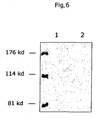
- the viral pellet was suspended in a SDS-PAGE sample buffer solution and subjected to electrophoresis and western blot analyses to examine the expression of chimeric ligand ( Fig. 6 ).
- SDS-PAGE and western blot analyses were carried out according to the same methods described in Example ⁇ 1-3>. At this time, a mouse monoclonal antibody anti-PreS1 and goat IgG anti-mouse IgG were employed as the primary and secondary antibodies, respectively.
- the inventive fusion chimeric ligand FvGEL199 showed a band caused by antigen-antibody immune reaction at a position corresponding to a peptide having a molecular weight of 718 amino acids wherein the signal peptide and TM regions were deleted (Lane 2 of Fig. 6 ). From these results, it was found that the recombinant retrovirus containing the inventive ScFv-GaLV Env GP fusion chimeric ligand is produced.
- Tag-72 surface antigen-associated cell lines To construct a mouse metastasis model using Tag-72 surface antigen-associated cell lines, the expression of Tag-72 surface antigen in several human cancer cell lines was examined by fluorescence-activated cell sorting (FACS) and immunohistochemical analyses.
- FACS fluorescence-activated cell sorting
- human colon cancer cell lines LS174T (ATCC No. CL-188) and WiDr (ATCC No. CCL-218), human breast cancer cell lines MCF7 (KCLB No. 30022), MDA-MB231 (ATCC HTB-26) and MDA-MB435 (ATCC HTB-129) were subjected to the FACS analysis.
- Anti Tag-72 monoclonal antibody CC49 was employed as a primary antibody for examining the expression of Tag-72 surface antigen in several human cancer cell lines ( Lee et al., Mol. Immunol. 36: 61-71, 1999 ). Each cancer cell line (10 6 cell/ml) was reacted with the anti Tag-72 primary antibody at 4°C for 30 min.
- the cells were washed three times with a cold PBA solution and reacted with the anti-mouse IgG secondary antibody conjugated with a FITC (Jackson Immuno Research, USA) at 4°C for 30 min. Then, the cells were washed three times with a cold PBA solution and subjected to the Facscan analysis (A of Fig 7 ).
- human colon cancer cell line LS 174T and human breast cancer cell line MCF7 showed positive signals for the Tag-72 surface antigen
- Tag-72 surface antigen by an immunohistochemical analysis was examined.
- the immunohistochemical analysis was carried out using system DAKO LSAB2 and alkaine phosphatase (#K674).
- Anti Tag-72 antibody AKA (KOREA PATENT NO: 318761 ) diluted with PBS in a ratio of 1:1,000 was employed as a primary antibody.
- the anti Tag-72 antibody was prepared by purifying the culture supernatant of chinese hamster ovary (CHO; Korea Patent Laid-Open Publication NO: 2003-13633 ) cells which express a humanized mouse monoclonal antibody against the Tag-72 surface antigen in a stable fashion, using a Hytrap Protein A column (Amersham, USA).
- a biotin-goat polyclonal antibody against human IgG H&L (ab6857-1, Aabcam) was diluted with PBS in a ratio of 1:1,000 and used as a secondary antibody. Further, a lavamisole solution (endogeous alkaline phosphatase inhibitor, ⁇ 3021) was employed to prevent background staining.
- Tag-72 surface antigen positive or negative human cancer cell lines examined in Example ⁇ 2-2-1> were infected with the recombinant retrovirus expressing the ScFv-GaLV Env GP chimeric ligand and the LacZ. After two days, the expression of LacZ gene was examined to confirm the target cell specific infection of the recombinant retrovirus.
- packaging cell line GP293 cells were distributed on a 6-well plate at a concentration of 3 ⁇ 10 5 cells/well one day before the transduction.
- 0.5 ⁇ g each of expression vectors pHEGEL (wild-type GaLV Env GP) and pHEFvGEL199 (ScFv-GaLV Env GP chimeric ligand) were mixed with 0.5 ⁇ g of pMFG/LacZ/puro transfer vector, respectively, and transduced into to the cells distributed at the well plate using a lipofectamine plus (Invitrogen, USA).
- the well plate was incubated in a mammalian cell incubator for 2 days under the condition of 37°C, 5% CO 2 to obtain a culture supernatant containing retrovirus.
- target cells were distributed on a 12-well plate at a concentration of 5 ⁇ 10 4 cells/well and left as it is for 24 hrs.
- the target cells were infected with each virus supernatant prepared above using a polybrene (Sigma) at a concentration of 8 ⁇ g/ml/well. 4 hrs after the infection, the infected cells were transferred in a fresh medium and further cultured for 48 hrs in a 37°C, 5% CO 2 incubator.
- the culture solution was removed, and the cell pellet was fixed with a cell fixing solution (1% formaldehyde, 0.2% glutaraldehyde) and kept at room temperature for 10 min to fix it.
- the suspension was washed three times with a PBS solution and subjected to X-gal staining (PBS, 0.2 M potassium ferrocyanide, 0.2 M potassium ferricyanide, 2.0 M MgCl 2 and 40 mg/ml X-gal) at 37°C overnight to examine the presence of LacZ gene expression.
- the results of LacZ gene transduction using the wild-type GaLV Env GP expression vector pHEGEL showed that the transduction efficiency of 293 cell line was 2 ⁇ 10 6 ; those of cancer cell lines MDA-MB435, MDA-MB231 and MCF-7, ranging from 0.5 to 1.5 ⁇ 10 5 ; and that of LS 174T cell line, 6 ⁇ 10 3 .
- the recombinant vector pHEFvGEL199 expressing the inventive ScFv-GaLV Env GP chimeric ligand specifically binds to Tag-72 antigen expressing cells and efficiently delivers the LacZ gene ( ⁇ -galactosidase) to target cells.
- chimeric ligands show a lower viral titer than wild-type Env in other retroviral vectors including MLV.
- ecotropic Env or amphotropic Env shows a viral titer ranging from 10 5 to 10 7 according to the kind of target cells
- most ScFv-Env GP chimeric ligands show less than a viral titer of 10 3 even though there are some difference according to the target cell receptor, and accordingly, the viral titer of ScFv-Env GP chimeric ligands is lower by a factor of 10 2 to 10 4 than that of the wild-type Env ( Chris A. Benedict.
- Packaging cell line GP293 cells expressing Gag-Pol proteins were transfected with the recombinant vector pHEFvGEL199 expressing the inventive ScFv-GaLV Env GP chimeric ligand using a lipofectamine plus (Invitrogen, USA).
- the transfected cells were treated with 400 ⁇ g/ml of G418 (neomycine) for 14 days to select 10 colonies and each colony was proliferated in an appropriate medium.
- the selected colony was transduced with 1 ⁇ g of retroviral transfer vector pMFG/LacZ/puro expressing LacZ reporter gene ( ⁇ -galactosidase) ( Oh et al., Mol.
- Tag-72 positive cell line MCF-7 (KCLB 30022) was infected with each virus and the viral transduction efficiency was confirmed by examining the LacZ gene expression.
- the colony producing virus which shows the highest transduction efficiency was selected therefrom, and designated packaging cell line GP293HEFvGEL199 which continuously expresses the inventive ScFv-GaLV Env GP chimeric ligand.
- vector pHEGEL expressing a wild-type GaLV Env was also transduced into target cells and the transduced colony was selected according to the same method described above, to obtain packaging cell line GP293HEGEL expressing the wild-type GaLV Env.
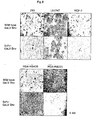
- Fig. 9 shows the results of infecting each target cell with virus which is obtained by transducing GP293HEFvGEL199 or GP293HEGEL packaging cell line prepared above with LacZ gene expressing retroviral transfer vector.
- Packaging cell line GP293 cells (3 ⁇ 10 5 cells/6 wells) were transduced with the recombinant vector pHEFvGEL199 expressing the inventive ScFv-GaLV Env GP chimeric ligand together with retroviral transfer vector pMFG/LacZ/puro (0.5 ⁇ g) using a lipofectamine plus (Invitrogen, USA).
- the transduced cells were successively treated with 400 ⁇ g/ml of G418 (neomycine) and 0.5 ⁇ g/ml of puromicin for 2 weeks and 8 colonies were selected therefrom. The selected colonies were propagated in an appropriate medium to obtain a virus containing culture solution, and MCF-7 cells were infected with the resulting culture solution.
- the colony showing the highest viral titer was selected and cultivated, to obtain a virus producing cell line GP293HEFvGEL199/lacZ which is capable of continuously producing a LacZ gene expression retrovirus, the inventive ScFv-GaLV Env chimeric ligands being distributed on its outer membrane.
- vector pHEGEL expressing a wild-type GaLV Env was also transduced into target cells and the transduced colony was selected according to the same method described above, to obtain virus producing cell line GP293HEGEL/lacZ which is capable of continuously producing the LacZ gene expression retrovirus having the wild-type GaLV Env.
- Fig. 10 shows the results of infecting each target cell with virus obtained by transducing GP293HEFvGEL199/lacZ and GP293HEGEL/lacZ virus producing cell lines prepared above, respectively.
- Example ⁇ 3-1> As a result of examining the expression of Tag-72 surface antigen in various human cancer cell lines using FACS and immunohistochemical analyses in Example ⁇ 3-1>, it was found that human breast cancer cell line MCF-7 and colon cancer cell line LS174T are Tag-72 positive and human breast cancer cell lines MDA-MB231, MDA-MB435 and colon cancer cell line WIDR are Tag-72 negative. Since MDA-MB435 cell line shows relatively higher metastasis in the lung than MDA-MB231 cell line among Tag-72 negative cell lines ( Lee & Welch, Cancer Research 57: 2384, 1997 ), MDA-MB435 cell line was employed for the construction of a cancer metastasis model.
- MCF-7 breast cancer cell line (Tag-72 positive) is not employable for in vivo experiments because lung metastasis almost never occurs in them, but liver metastasis by an intraplenic injection and lung metastasis by an intravenous injection are possible in LS174T colon cancer cell line. Therefore, LS 174T cell line was employed together with MDA-MB435 cell line for the construction of a cancer metastasis animal model.
- the cells were treated with trypsin-EDTA, harvested by centrifugation and washed twice with a serum free medium.
- the cells were washed twice with a PBS solution and injected into the tail vein of a 6-week old of female Balb/c nude mouse at a concentration of 1 ⁇ 10 6 cells/100 ⁇ l in PBS.
- the lung was extracted from the mouse and fixed in a 4% formalin solution to examine the number of lung nodules.
- Packaging cell line GP293 cells were distributed on a 6-well plate at a concentration of 3 ⁇ 10 5 cells/well, the well plate was kept for 24 hrs, and then, the cells were transduced with retroviral vector pHEFvGEL199 expressing the ScFv-GaLV Env GP chimeric ligand together with retroviral transfer vector pMFG/LacZ/puro expressing ⁇ -galactosidase using a lipofectamine plus.
- the well plate was incubated in an animal cell incubator under the condition of 37 °C, 5% CO 2 for 2 days, to obtain a virus producing cell line.
- the virus producing cell line obtained above (1 ⁇ 10 6 cells/50 ⁇ l in PBS) was injected to each mouse according to the same method described above. Then, the virus producing cell line (1 ⁇ 10 6 cells/100 ⁇ l in PBS) was intravenously injected to each mouse for 6 weeks at an interval of 3 days. After 6 weeks, the mouse was sacrificed to extract the lung, and the lung was soaked in a fixing solution, and then, subjected to X-gal staining to examine in vivo transduction efficiency.
- FIG. 12a shows dissecting microscope pictures of lung nodules stained by introducing and expressing the LacZ reporter gene ( ⁇ -galactosidase) using the inventive ScFv-GaLV Env GP chimeric ligand FvGEL199 expression retroviral vector. Further, Table 3 represents the number of nodules found in the extracted lung and the number of stained nodules, and Fig. 12b , a graph depicting the results of Table 3 in percentages (%).
Landscapes
- Chemical & Material Sciences (AREA)
- Health & Medical Sciences (AREA)
- Life Sciences & Earth Sciences (AREA)
- Organic Chemistry (AREA)
- Genetics & Genomics (AREA)
- Biochemistry (AREA)
- General Health & Medical Sciences (AREA)
- Molecular Biology (AREA)
- Biophysics (AREA)
- Engineering & Computer Science (AREA)
- Medicinal Chemistry (AREA)
- Proteomics, Peptides & Aminoacids (AREA)
- Biomedical Technology (AREA)
- Virology (AREA)
- Bioinformatics & Cheminformatics (AREA)
- Immunology (AREA)
- Biotechnology (AREA)
- Zoology (AREA)
- General Engineering & Computer Science (AREA)
- Wood Science & Technology (AREA)
- Plant Pathology (AREA)
- Cell Biology (AREA)
- Physics & Mathematics (AREA)
- Gastroenterology & Hepatology (AREA)
- Microbiology (AREA)
- Pharmacology & Pharmacy (AREA)
- Animal Behavior & Ethology (AREA)
- Public Health (AREA)
- Nuclear Medicine, Radiotherapy & Molecular Imaging (AREA)
- Veterinary Medicine (AREA)
- General Chemical & Material Sciences (AREA)
- Chemical Kinetics & Catalysis (AREA)
- Peptides Or Proteins (AREA)
- Micro-Organisms Or Cultivation Processes Thereof (AREA)
- Medicines That Contain Protein Lipid Enzymes And Other Medicines (AREA)
- Medicines Containing Material From Animals Or Micro-Organisms (AREA)
Abstract
Description
- The present invention relates to a chimeric ligand in the form of a fusion polypeptide of a retrovirus envelope glycoprotein and a single chain antibody capable of specifically binding to a surface antigen of a tumor associated glycoprotein; an expression vector comprising a gene encoding said chimaric ligand; a packaging cell line transduced with said expression vector; a recombinant retrovirus produced by said packaging cell line; and a pharmaceutical composition comprising said chimeric ligand as an effective ingredient.
- Gene therapy is a rapidly emerging field that aims to treat acquired diseases such as cancer, diabetes and AIDS as well as inherent metabolic abnormality. Among several gene delivery vector systems currently used in gene therapy, the retrovirus vector system has advantages over others using adenovirus, liposome, electroporation and gene gun.. For example, the retrovirus vector system has the ability to permanently integrate into host cells that allows stable expression of transduced cells. However, all of these systems have limitation in gene delivery to a specific target cell.
- Several methods have been developed for specifically introducing a therapeutic gene into target cells using a retrovirus, e.g.; a method for linking a sugar molecule to an envelop glycoprotein of retrovirus by a chemical method so that the sugar-coupled envelope glycoprotein binds to an asialoglycoprotein receptor of target cells (Neda, H. et al., J. Biol. Chem. 266: 14143-14146, 1991); a method of using a coupling antibody bridge capable of binding to both of an envelop glycoprotein of retrovirus and a target cell's receptor or surface antigen (Goud, B. et al., Virology 163: 251-254, 1988; Roux, P. et al., Proc. Natl. Acad. Sci. U.S.A. 86: 9079-9083, 1989; Etienne-Julan, M. et al., J. Gen. Virol. 73: 3251-3255, 1992); a method for coupling a single-chain antibody to an envelope glycoprotein of retrovirus via genetic engineering and infecting target cells with the retrovirus (Russell, S. J. et al., Nucleic Acids Res. 21: 1081-1085, 1993; Somia, N. V et al., Proc. Natl. Acad. Sci. U.S.A. 92: 7570-7574, 1995; Ager, S. et al., Hum. Gene Ther. 7: 2157-2164, 1996; Marin, M. et al., J. Virol. 70: 2957-2962, 1996; Schnierle, B. S. et al., Gene Ther. 3: 334-342, 1996); Russel, S.J. et al., Journal of Gene Medicine, Vol. 1, No. 5, pages 300-311, describes a retroviral envelope glycoprotein genetically modified by inserting small peptides, single chain antibodies or growth factors and a method for coupling a peptide ligand to the envelop glycoprotein of retrovirus via genetic engineering and infecting target cells with the retrovirus (Kasahara, N. et al., Science 266: 1373-1376, 1994; Cosset, F. L. et al., J. Virol. 69: 6314-6322, 1995; Schnierle, B. S., and Groner, B., Gene Ther. 3: 1069-1073, 1996). Dingli and Russel: "Genetic targeting of retroviral vectors", pages 272-273 (URL:http://www3.interscience.wiley.com/cgi-bin/booktext//104087763/BOOKPDFSTART) discloses strategies for specific viral targeting, including insertion of various ligands or antibodies into a retroviral envelope glycoprotein. However, these methods show very low transduction efficiency.
- There have also been developed methods using an avian or a murine retrovirus to introduce a therapeutic gene into human target cells (Chu, T-H. T., and R. Dornburg, J. Virol. 69: 2659-2663, 1995; Chu, T-H. T. et al:, Gene Ther. 1: 292-299, 1994; Valsesia-Wittmann, S. et al., J. Virol. 68: 4609-4619, 1994; Cosset, F-L. et al., J. Virol. 69: 6314-6322, 1995; Han, X. et al., Proc. Natl. Acad. Sci USA 92: 9747-9751, 1995; Kasahara, N. et al., Science 266: 1373-1376, 1994; Somia, N.V. et al., Proc. Natl. Acad. Sci. USA 92: 7570-7574, 1995; HAN, J.Y., et al., J. Virol. 71, 8103-8108, 1997). Wu, B. W. et al., Virology, Vol. 269, No. 1, pages 7-17 disclose that only certain insertions at the N-terminus, VRA and VRC variable region and prolin-rich region of a surface subunit (SU) of the Moloney Murine Leukemia Virus envelope glycoprotein (Env) do not adversely affect the viral processing and infectivity. The structure and function of a murine retrovirus have been widely studied, and, in particular, the tertiary structures of Mo-MuLV and Fr-MuLV envelope glycoproteins have been recently established by X-ray crystallography.
- If the receptor or surface antigen of target cells is identified and specific, a method for coupling a single-chain antibody (ScFv) to an envelope glycoprotein of retrovirus via genetic engineering and infecting target cells with the retrovirus is very useful for the specific infection of target cells.
- Single chain antibody (ScFv) is formed by joining the carboxy-terminal of VH and the amino-terminal of VL segments with a suitable synthetic amino acid linker. The antibody combining site is located at the Fv region of the molecule formed by the variable domains of heavy and light chains (VH and VL) (Poon et al., Molecular Immunology 39: 19-24,2002; Fujiwara et al., Biochemistry 41: 12729-12738, 2002).
- Recently, the pseudotyping of retrovirus has been studied to improve stability and transduction efficiency. For example, a gibbon ape leukemia virus (GaLV) Env-pseudotype retroviral vector showed 5 to 30 times higher infection efficiency than an amphotropic murine retroviral vector in several human cell lines (Kim et al., Proc. Amer. Assoc. Cancer Res. 38: 177, 1997). However, the limitation in specific targeting is remained to be solved.
- Therefore, the present inventors have endeavored to meet the need of a gene delivery system using a retrovirus which shows higher viral titer and transduction efficiency, and develop a chimeric ligand in the form of a fusion polypeptide of the GaLV envelope glycoprotein and a single chain antibody derived from monoclonal antibody capable of specifically binding to a surface antigen of tumor associated glycoprotein 72 (Tag-72).
- Accordingly, it is an object of the present invention to provide a retroviral gene delivery system capable of specifically targeting cancer cell which is useful for antitumor gene therapy.
- In accordance with one aspect of the present invention, there is provided a chimeric ligand in the form of a fusion polypeptide of a retrovirus envelope glycoprotein (Env GP) and a single chain antibody (ScFv) capable of specifically binding to a surface antigen of a tumor-associated glycoprotein 72 (Tag-72). The single chain antibody is inserted between the 199th and 200th amino acid residues of a surface subunit of gibbon ape leukemia virus envelope glycoprotein.
- In accordance with another aspect of the present invention, there is provided a recombinant expression vector comprising a gene encoding said chimaric ligand and a packaging cell line capable of producing a retrovirus by transducing with said expression vector.
- In accordance with another aspect of the present invention, there is provided a pharmaceutical composition for cancer cell targeting gene therapy which comprises said chimeric ligand or packaging cell line as an effective ingredient.
- The above and other objects and features of the present invention will become apparent from the following description of the invention, when taken in conjunction with the accompanying drawings, which respectively show:
Fig. 1 : the structure of an envelope glycoprotein of mammalian type-C retrovirus similar to a GaLV envelope glycoprotein (GaLV Env GP),a: signal peptidase cleavage site, b: SU/TM cleavage site, c: R-peptide cleavage site, SP: signal peptide, VRA: variable region A, VRB: variable region B, VRC: variable region C, RBD: receptor binding domain, PRR: proline rich region, CT: C-terminal region of SU, SU: surface subunit, FP: fusion protein, Anc: anchorage region, RP: R-peptide, TM: transmembrane domain
Fig. 2 : the result of amino acid alignment analysis of several retrovirus envelope glycoproteins,VRA: variable region A, VRB: variable region B, VRC: variable region C, PRR: proline rich region, SU: surface subunit, TM: transmembrane domain Fig. 3 : the analysis of secondary structure of GaLV envelope glycoprotein,VRA: variable region A, VRB: variable region B SU: surface subunit, TM: transmembrane domain
Fig. 4 : the schematic illustration of vectors expressing the inventive ScFv-GaLV Env GP chimeric ligand FvGEL199 and wild type GaLV envelope glycoprotein, respectively,
Fig. 5 :the photographic illustrations of western blot analyses examining the expression of chimeric ligand FvGEL199 in a packaging cell line, A: FvGEL199 expressed in a vector whose expression is regulated by HCMV promoter, - Lane 1: GP293 cell extract comprising pHEGEL,
- Lane 2: GP293 cell extract comprising pHEFvGEL199,
- Lane 1: viral pellets obtained from cell culture media of GP293 comprising pHEGEL, Lane 2: viral pellets obtained from cell culture media of GP293 comprising pHEFvGEL199,
- The present invention provides a chimeric ligand in the form of a fusion polypeptide of GaLV envelope glycoprotein and a single chain antibody specific for the surface antigen of tumor-associated glycoprotein 72 (Tag-72). The single chain antibody is inserted between the 199th and 200th amino acid residues of a surface subunit of gibbon ape leukemia virus envelope glycoprotein.
- In order to develop a retrovirus gene delivery system, the present inventors have employed a single chain antibody which is capable of specifically binding to the surface antigen of tumor-associated glycoprotein 72 (Tag-72) expressed in various cancer cells including colon, stomach, breast, ovary and prostate cancers. Further, in order to efficiently introduce a therapeutic gene into human target cells, the present inventors have employed GaLV (gibbon ape leukemia virus) envelope glycoprotein which shows higher transduction efficiency into human cancer cells and more stable in human blood than MuLV (Murine Leukemia Virus) envelope glycoprotein.
- The binding of envelope glycoproteins distributed on a viral envelope to cell receptors on a cell surface is essential for the infection of retrovirus into target cells, which is the key to determine the specificity of infectiousness. In a target cell specific gene delivery system, it is possible to produce a virus capable of specifically infecting target cells by manipulating a viral envelope glycoprotein endowing a cell specificity to bind to be coupled to a receptor of a target cell. Therefore, the present inventors have prepared a chimeric ligand by fusing single chain antibody Tag-72pS1 specific for Tag-72 surface antigen to a surface subunit (SU) region which determines the cell specificity of GaLV envelope glycoprotein and is capable of binding to a specific cell receptor. A retrovirus expressing the envelope glycoprotein fused with the single-chain antibody is capable of specifically binding to target cells and effectively delivering a therapeutic gene thereto.
- In case of MuLV envelope glycoprotein having a structure similar to GaLV envelope glycoprotein, it has been reported that point mutation, insertion mutation or deletion mutation introduced into the envelope glycoprotein may lead to a conformational change, to produce a viral envelope glycoprotein having an abnormal function, and therefore, the viral infectiousness deteriorates (Russell, S. J. et al., Nucleic Acids Res. 21: 1081-1085, 1993; Somia, N. V. et al., Proc. Natl. Acad. Sci. U.S.A. 92: 7570-7574, 1995; Ager, S. et al., Hum. Gene Ther. 7: 2157-2164, 1996; Marin, M. et al., J. Virol. 70: 2957-2962, 1996; Schnierle, B. S. et al., Gene Ther. 3: 334-342, 1996; Chris A. Benedict. et al., Human Gene Therapy 10: 545-557, 1999; Mariana Marin. et al., Journal of Virology 70: 2957-2962, 1996; Te-Hua Tearina C. H. and Ralph Dornburg, Journal of Virology 71: 720-725, 1997). Namely, when a foreign peptide is inserted into an envelope glycoprotein, or a certain portion of an envelope glycoprotein is deleted, virus having a significantly reduced infectiousness is produced. Accordingly, when a foreign ligand such as ScFv is inserted into a retrovirus envelope glycoprotein, the relationship between the envelope glycoprotein's structure and function must be carefully evaluated. The inventive chimeric ligand is so designed as to specifically infect target cells by inserting a single-chain antibody (ScFv) into a variable region B (VRB) selected among several SU regions of envelope glycoprotein which determine the cell specificity and cell surface binding.
- The present inventors have prepared a fusion chimeric ligand according to the invention which is prepared by inserting single-chain antibody Tag-72pS1 specifically binding to Tag-72 surface antigen into a site between the 199th and 200th amino acid residues starting from the first methionine translated from ATG initiation codon which is a variable region B of GaLV envelope glycoprotein; and an expression vector comprising said chimeric ligand. The GaLV envelope glycoprotein used in the present invention is a SEATO type having an R-peptide and has the nucleotide sequence of SEQ ID NO: 7 (NCBI Accession No. AAC96083). Further, the single-chain antibody Tag-72pS1 specific for the Tag-72 surface antigen has the nucleotide sequence of SEQ ID NO: 8. The inventive chimeric ligand designated FvGEL199 has the nucleotide sequence of SEQ ID NO: 10 and encodes a fusion polypeptide having the amino acid sequence of SEQ ID NO: 11, wherein the single-chain antibody Tag-72pS1 is coupled to the GaLV envelope glycoprotein by a linker comprising 5 amino acids of Gly4Ser.
- The single-chain antibody GaLV envelope glycoprotein (ScFv-GaLV Env GP) chimeric ligand thus prepared is cloned in backbone vector pHYKEF1 (Kim et al., J. Biotechnol. 93: 183, 2002) whose expression is regulated by HCMV promoter and the transcription activity is stimulated by EF1a intron, to obtain expression vectors pHEFvGEL199. The resulting expression vectors express the fusion polypeptide comprising 956 amino acids formed by inserting the single-chain antibody Tag-
72pS 1 into the site between the 199th and 200th amino acid residues of GaLV envelope glycoprotein SU region. - In a preferred embodiment of the present invention, E. coli DH5α was transformed with expression vector pHEFvGEL199 and to obtain E. coli transformants designated DH5α/pHEFvGEL199, which were deposited on February 13, 2004 with the Korean Collection for Type Cultures (KCTC) (Address: Korea Research Institute of Bioscience and Biotechnology (KRIBB), #52, Oun-dong, Yusong-ku, Taejon, 305-333, Republic of Korea) under the accession numbers KCTC-10596BP, in accordance with the terms of Budapest Treaty on the International Recognition of the Deposit of Microorganism for the Purpose of Patent Procedure..
- The present invention also provides a packaging cell line producing a retrovirus which is transduced with a recombinant retroviral vector comprising a gene encoding the inventive chimeric ligand.
- It is preferable that the cell line employable in the present invention is a packaging cell line which can express Gag-Pol proteins but does not contain any viral envelope glycoprotein capable of mediating virus infection into animal cell lines, for example, GP293 cell line (Clontech). Preferably, the method for transducing a retrovirus is performed by employing any one of conventional methods well-known in the art such as a calcium phosphate coprecipitation method (Sambrook et al., Molecular Cloning 2nd ed., 1989) and a lipofectamin method (Invitrogen, USA). Transduced cell lines may be selected as a colony by culturing them in an appropriate selection medium containing antibiotics such as G418. In a preferred embodiment of the present invention, packaging cell line GP293 cells have been transduced with the recombinant retroviral vector pHEFvGEL199, and then, packaging cell line GP293HFvGEL199 capable of producing a recombinant retrovirus at a high viral titer is selected from the transduced cell lines.
- The packaging cell line thus selected can be effectively introduced into human cancer cells in a target cell specific manner and efficiently express the chimeric ligand, which effectively inhibits cancer cells from growing and metastasizing.
- Accordingly, the present invention further provides a pharmaceutical composition comprising an effective dose of the inventive packaging cell line or the inventive chimeric ligand and a pharmaceutically acceptable carrier.
- The inventive pharmaceutical formulation may be prepared in accordance with any one of the conventional procedures. In preparing the formulation, the effective ingredient is preferably admixed or diluted with a carrier. Examples of suitable carriers, excipients, or diluents are lactose, dextrose, sucrose, sorbitol, mannitol, starches, gum acacia, alginates, gelatin, calcium phosphate, calcium silicate, cellulose, methylcellulose, microcrystalline cellulose, polyvinylpyrrolidone, water, methylhydroxybenzoates, propylhydroxybenzoates, talc, magnesium stearate and mineral oil. The formulation may additionally include fillers, anti-agglutinating agents, lubricating agents, wetting agents, flavoring agents, emulsifiers, preservatives and the like. The composition of the invention may be formulated so as to provide a quick, sustained or delayed release of the active ingredient after it is administrated to a patient, by employing any one of the procedures well known in the art.
- The pharmaceutical formulation of the present invention can be administered via intramuscular injection. Preferably, the inventive formulation is an isotonic solution or a suspension.
- For treating a human patient, a typical daily dose of the inventive packaging cell line as an effective ingredient may range from about 105 to 108 cells/kg body weight, preferably 106 to 107 cells/kg body weight, and can be administered in a single dose or in divided doses. However, it should be understood that the amount of the active ingredient actually administered ought to be determined in light of various relevant factors including the condition to be treated, the chosen route of administration, the age, sex and body weight of the individual patient, and the severity of the patient's symptom; and, therefore, the above dose should not be intended to limit the scope of the invention in any way.
- The present invention is further defined in the following Examples. It should be understood that these Examples, while indicating preferred embodiments of the invention, are given by way of illustration only.
- A chimeric ligand was prepared in the form of a fusion polypeptide of single-chain antibody Tag-72pS1 specific for Tag-72 surface antigen and GaLV envelope glycoprotein (Env GP) as follows.
- Unlike the envelope glycoproteins of other retroviruses such as MuLV and HIV or a haemagglutinin (HA) of influenza A virus, no information was available about the three dimensional structure and function of GaLV envelope glycoprotein. Accordingly, the structural and functional relationship analyses between GaLV envelope glycoprotein and other retrovirus envelope glycoproteins were carried out to select a proper site of the GaLV envelope glycoprotein where the single-chain antibody is to be inserted. The present inventors carried out a homology search between the GaLV envelope glycoprotein and other retrovirus envelope glycoproteins using Pfarm analysis (Protein Families Database of Alignments and HMMs). As a result, it was found that some of these retrovirus envelope glycoproteins have a characteristic surface subunit (SU) structure unique for the GaLV envelope glycopeotein which comprises a variable region A (VRA), variable region B (VRB), variable region C (VRC) and proline rich region (PRR), as well as an R-peptide at a carboxyl terminal (C-terminal) of transmembrane domain (TM). Further, the sequence homology between envelope glycoproteins of mammalian type-C retrovirus Fr-MuLV, gamma retrovirus GaLV, FLV and MuLV were examined using several computer programs. As a result, it was discovered that except for the receptor binding domain (RBD) known as a specific receptor binding site, the proline rich region (PRR) having an unknown function and C-terminal region, they showed high sequence homology and identity (Table 1 and
Fig. 1 ).<Table 1> Envelope glycoprotein NCBI Accession NO Virus Retrovirus type Homology (%) Identity (%) Env_GaLV/1-685 AAC96083 Gibbon ape leukemia virus (SEATO) Gamma 100 100 Env_GaLV/1-667 AAA46811 Gibbon ape leukemia virus Gamma 97 97 Env_FLVC6/1-668 AAA30809 Friend leukemia provirus (clone CEF-6) Gamma 61 39 Env_FLVGL/1-642 AAA43053 Feline leukemia virus (strain A/Gasgow-1) Gamma 63 41 Env_MLVF5/1-675 CAA26561 Friend murine leukemia virus (isolate 57) (Fr-MuLV) Mammalian C 66 46 Env_MLVCB/1-661 AAA46512 Cas-Br-E murine leukemia virus Gamma 65 45 Env_MLVHO/1-666 M26527 HoMuLV murine leukemia virus (Mus hortulanus virus) Gamma 64 43 Env_MLvAV/1-669 AAB03092 AKV murine leukemia virus Gamma 64 45 - Examined based on the results of the sequence homology analyses was a suitable site of GaLV envelope glycoprotein for inserting a single-chain antibody specific for Tag-72 surface antigen by analyzing the secondary structure of GaLV envelope glycoprotein in relation with the known tertiary structure of Fr-MuLV envelope glycoprotein (NCBI PDB Accession NO: 1AOL). Since the conserved region of an amino acid sequence is regarded as a structurally and functionally important region from an evolutional point of view, attention was paid first to the highly variable region which has flexibility in the course of mutation, natural selection, adaptation or evolution. Therefore, a highly variable region of GaLV envelope glycoprotein was examined based on amino acid alignment analysis of several subtypes of GaLV envelope glycoproteins and various mammalian type-C retrovirus envelope glycoproteins (
Fig. 2 ). Next, to determine a suitable site that minimizes the structural and functional change of the envelope glycoprotein, secondary structural analysis of GaLV Env glycoprotein was conducted in terms of hydropathy, surface probability, antigenic index, α-helix, β-sheet, coil structure, turn plot, turn frequency and flexibility. Further, the secondary structure of GaLV Env glycoprotein was compared with the secondary structure of Fr-MuLV glycoprotein to predict a suitable insertion site of a hypothetical tertiary structure of GaLV Env glycoprotein as a counter part of the known tertiary structure of FrMuLV Env glycoprotein. Form these results, a variable region B (VRB) was selected as a suitable site for the insertion of a single-chain antibody specific for Tag-72 surface antigen, the VRB being a receptor binding domain (RBD) involved in a specific recognition and binding of GaLV envelope glycoprotein to a target cell receptor. -
Fig. 3 shows the secondary structures of retrovirus envelope glycoproteins, the insertion site of the single-chain antibody glycoprotein into GaLV envelope glycoprotein being represented by a red solid line between the 199th and 200th amino acid residues of variable region B, the position in the amino acid sequence being identified by numbers, and the amino acid sequence thus numbered containing a signal peptide having methionine as the 1st amino acid. - A chimeric ligand in the form of a fusion polypeptide of GaLV envelope glycoprotein and single-chain antibody Tag-72pS1 specific for Tag-72 surface antigen was prepared from heavy- and light-chain variable regions of AKA humanized antibody (KOREA Patent NO:
318761 - The GaLV envelope glycoprotein gene cloned in vector pHEGEL was a SEATO type having an R-peptide and has the nucleotide sequence of SEQ ID NO: 7. The gene encoding the single-chain antibody Tag-72pS1 specific for Tag-72 surface antigen inserted in pCANTAB-3E8ScFvPreS1 vector has the nucleotide sequence of SEQ ID NO: 8, wherein the single-chain antibody Tag-72pS1 is expressed in the form of a single chain containing the carboxy terminal of the heavy chain (H) variable region VH coupled to the amino terminal of the light chain (L) variable region VL through a linker comprising 15 amino acids of (Gly4Ser)3. A PreS1 epitope of SEQ ID NO: 9 was tagged to the C-terminal of the single-chain antibody. To prepare the chimeric ligand formed by inserting the single-chain antibody Tag-72pS1 at between the 199th and 200th amino acid residues starting from the first methionine, PCR was performed as follows.
- Vector pHEGEL was subjected to PCR using Env F primer of SEQ ID NO: 1 and 597LN primer of SEQ ID NO: 2 to amplify 680 bp PCR product. Vector pHEGEL was subjected to PCR using LC597 primer of SEQ ID NO: 3 and Spike R2 primer of SEQ ID NO: 4 to amplify 1,500 bp PCR product. Vector pCANTAB-3E8ScFvPreS1 was subjected to PCR using LnkNScFv primer of SEQ ID NO: 5 and ScFvLnkC primer of SEQ ID NO: 6 to amplify 820 bp PCR product. Three PCR products thus obtained were all mixed together, and subjected to PCR using Env F primer of SEQ ID NO: 1 and Spike R2 primer of SEQ ID NO: 4 to amplify 2,930 bp PCR product. The PCR reaction solution was prepared by mixing 200 ng of template DNA, 5 units of polymerase, 10 µℓ of PCR buffer solution, 0.2 mM of dNTP and 50 pmole each of primers and adjusted to a final volume of 100 µℓ. The PCR buffer solution comprised 200 mM Tris-HCl, 100 mM KCl, 100 mM (NH4)2SO4, 20 mM MgSO4, 1% triton X-100 and 1 mg/mℓ acetylated BSA (pH 8.8). The polymerase employable in the present invention was Pfu DNA polymerase (Bioneer, KOREA) or Takara Ex Taq polymerase (TaKaRa, JAPAN). The PCR condition consisted of an initial denaturation reaction for 4 min at 94°C; 30 cycles of amplification reaction for 1 min at 94°C (denaturation), 1 min at 55°C (annealing) and 3 min at 72°C (extension); and an final amplification for 10 min at 72°C.
- The 2,930 bp PCR product encoding the ScFv-GaLV envelope glycoprotein chimeric ligand gene thus obtained was digested with restriction enzymes BamHI and XbaI. The fragment was inserted into the same restriction enzyme sites of highly efficient gene expression vector pHYKEF1 to obtain recombinant vectors pHEFKGEL199-expressing the ScFv-GaLV envelope glycoprotein chimeric ligand gene, wherein the expression of the foreign gene in vector pHYKEF1 and was regulated by HCMV promoter, and its transcription was activated by EF1α intron (Kim et al., J. Biotechnol. 93: 183, 2002). As a control, the wild-type GaLV (SEATO) envelope glycoprotein gene was inserted into the above backbone vector to obtain expression vector pHEGEL. From the results of nucleotide sequence analysis, it was confirmed that the inventive chimeric ligand gene was inserted into each of the expression vector pHEFvGEL199. The ScFv-GaLV envelope glycoprotein chimeric ligand was designated FvGEL199.
- The inventive chimeric ligand thus prepared had the nucleotide sequence of SEQ ID NO: 10 which encodes the fusion polypeptide having the amino acid sequence of SEQ ID NO: 11.
Fig. 4 represents a schematic diagram of the ScFv-GaLV envelope glycoprotein fusion chimeric ligand FvGEL199. The retroviral vector pHEGEL expressed the wild-type GaLV envelope glycoprotein consisting of 685 amino acids. Further, the recombinant retroviral vector pHEFvGEL199 expressed the fusion polypeptide consisting of 956 amino acids formed by inserting the single-chain antibody Tag-72pS1 at between the 199th and the 200th amino acid residues in the SU region of GaLV envelope glycoprotein. The single-chain antibody Tag-72pS1 in the inventive fusion chimeric ligand was coupled to the GaLV envelope glycoprotein by a linker comprising 5 amino acids of Gly4Ser. - In order to produce a retrovirus expressing the inventive ScFv-GaLV Env glycoprotein chimeric ligand, it has to be expressed in the form of the chimeric ligand in host cells; the expressed chimeric ligand is subjected to posttranslational modification, trimerization and SU/TM digestion in golgi apparatus; transfered to a cell surface, and then, distributed on a viral envelope membrane during viral packaging. The chimeric ligand distributed on the viral envelope would then recognize and bind to a specific receptor of target cells during viral infection to penetrate into the cell interior, and then, the viral particle is taken up into the cytoplasm via inter-membrane fusion. Thus, it was examined whether the recombinant retroviral vector pHEFvGEL199 prepared in Example <1-2> would express the inventive ScFv-GaLV Env glycoprotein chimeric ligand, as follows.
- Human kidney epithelial cells such as 293 or 293T cells were distributed on a 6-well plate at a concentration of 2×10⁵ cells/well one day before transfection, and subjected to transfection with the recombinant retroviral vector pHEFvGEL199, respectively, using lipofectamin plus (Invitrogen, USA) according to the manufacture's instruction. At this time, cells transduced with pHEGEL vector were employed as a control which do not express the chimeric ligand. The transduced cells were cultured in DMEM (Dulbecco's modified Eagle's medium, Gibco BRL) supplemented with 10% fetal bovine serum (FBS, HyClone), 100 U/mℓ of penicillin G and 0.1 mg/mℓ streptomycin at 37°C for 3 to 6 hrs. After the cells were transferred into a fresh medium and further cultured for 2 days, the cultured cells were harvested and subjected to centrifugation to isolate cell pellets. The cell pellets were suspended in 100 µℓ of phosphate buffer solution (PBS) and an equal volume of SDS-PAGE sample buffer solution (4% SDS, 20% glycerol, 10% β-mercaptoethanol, 0.05% bromo phenol blue, 125 mM Tris-HCl, pH 6.8) was added to the cell suspension. The sample was subjected to electrophoresis, and western blot analysis was conducted to examine the expression of fusion chimeric ligand.
- SDS-PAGE was carried out according to the method of Laemmli (Laemmli, U. K., Nature 277: 680-685, 1970). The fusion chimeric ligand developed on the electrophoresis gel was transferred to a PVDF membrane using a transfer buffer solution (10 mM glycine, 20% methanol, 0.1% SDS, 100 mM Tris-HCl) under an electric current of 80 V for 3 hrs. Western blot analysis was carried out according to the method of Towbin (Towbin, H. et al., Proc. Natl. Acad. Sci. USA 76: 4350-4354, 1979). The membrane blot was washed with a TBST buffer solution (150 mM NaCl, 0.1
% tween - As a result, the inventive fusion chimeric ligand FvGEL199 showed a band caused by antigen-antibody immune reaction at a position corresponding to the molecular weight of a peptide comprising 718 amino acids after cleavage of signal peptide and TM regions being detected (
Lane 2 ofFig. 5 ), but for pHEGEL vector, there was no band detected (Lane 1 ofFig. 5 ). From these results, it was found that the transduced cells with the respective inventive recombinant expression vector pHEFvGEL199 express the fusion chimeric ligand of ScFv-GaLV Env glycoprotein. - E. coli DH5α was transformed with expression vector pHEFvGEL199 and to obtain E. coli transformants designated DH5α/pHEFvGEL199, which were deposited on February 13, 2004 with the Korean Collection for Type Cultures (KCTC) (Address: Korea Research Institute of Bioscience and Biotechnology (KRIBB), #52, Oun-dong, Yusong-ku, Taejon, 305-333, Republic of Korea) under the accession numbers KCTC-10596BP, in accordance with the terms of Budapest Treaty on the International Recognition of the Deposit of Microorganism for the Purpose of Patent Procedure.
- GP293 cells (Clontech, USA) expressing Gag-Pol proteins of moloney murine leukemia virus (Mo-MuLV) were employed for the production of retrovirus. GP293 cells were cultured in DMEM supplemented with 10% FBS (HyClone), 100 U/mℓ of penicillin G and 0.1 mg/mℓ of streptomycin, in a 5% CO2 incubator at 37°C. The cultured GP293 cells were transduced with the recombinant retroviral vector pHEFvGEL199 expressing the inventive fusion chimeric ligand together with the recombinant retroviral vector pMFG/LacZ/puro expressing β-galactosidase gene under the control of LTR promoter and containing a packaging signal (Oh et al., Mol. Cells 11: 192-197, 2001), according to the lipofectamine method (Invitrogen, USA). After 4 hrs, the cells were transferred into a fresh DMEM supplemented with 2% FBS, and further cultured at 37°C for 2 days to obtain a culture solution containing cells and virus. The culture solution was passed through a filter having a pore size of 0.45 µm to remove cell debris, to obtain a cell-free virus culture solution. To confirm the virus production, the cell-free virus culture solution was subjected to centrifugation (Beckman sw55 rotor) at 8,000 rpm, 4°C for 12 hrs to remove the supernatant, and then, the residual viral pellet was recovered. The viral pellet was suspended in a SDS-PAGE sample buffer solution and subjected to electrophoresis and western blot analyses to examine the expression of chimeric ligand (
Fig. 6 ). SDS-PAGE and western blot analyses were carried out according to the same methods described in Example <1-3>. At this time, a mouse monoclonal antibody anti-PreS1 and goat IgG anti-mouse IgG were employed as the primary and secondary antibodies, respectively. - As a result, the inventive fusion chimeric ligand FvGEL199 showed a band caused by antigen-antibody immune reaction at a position corresponding to a peptide having a molecular weight of 718 amino acids wherein the signal peptide and TM regions were deleted (
Lane 2 ofFig. 6 ). From these results, it was found that the recombinant retrovirus containing the inventive ScFv-GaLV Env GP fusion chimeric ligand is produced. - To construct a mouse metastasis model using Tag-72 surface antigen-associated cell lines, the expression of Tag-72 surface antigen in several human cancer cell lines was examined by fluorescence-activated cell sorting (FACS) and immunohistochemical analyses.
- First, human colon cancer cell lines LS174T (ATCC No. CL-188) and WiDr (ATCC No. CCL-218), human breast cancer cell lines MCF7 (KCLB No. 30022), MDA-MB231 (ATCC HTB-26) and MDA-MB435 (ATCC HTB-129) were subjected to the FACS analysis. Anti Tag-72 monoclonal antibody CC49 was employed as a primary antibody for examining the expression of Tag-72 surface antigen in several human cancer cell lines (Lee et al., Mol. Immunol. 36: 61-71, 1999). Each cancer cell line (106 cell/mℓ) was reacted with the anti Tag-72 primary antibody at 4°C for 30 min. The cells were washed three times with a cold PBA solution and reacted with the anti-mouse IgG secondary antibody conjugated with a FITC (Jackson Immuno Research, USA) at 4°C for 30 min. Then, the cells were washed three times with a cold PBA solution and subjected to the Facscan analysis (A of
Fig 7 ). As a result, while human colon cancer cell line LS 174T and human breast cancer cell line MCF7 showed positive signals for the Tag-72 surface antigen, human breast cancer cell line MDA-MB231, human colon cancer cell lines WiDr and MDA-MB435, negative signals for the Tag-72 surface antigen. - Further, the expression of Tag-72 surface antigen by an immunohistochemical analysis was examined. The immunohistochemical analysis was carried out using system DAKO LSAB2 and alkaine phosphatase (#K674). Anti Tag-72 antibody AKA (KOREA PATENT NO:
318761 2003-13633 - As a result, while 10 to 20% or less of cells were stained in the breast cancer cell line MCF-7, 80 to 90% or more of cells of colon cancer cell line LS174T were stained, which means that the Tag-72 surface antigen was distributed on the cell surface. From these results, it was found that the colon cancer cell line LS174T and breast cancer cell line MCF-7 are Tag-72 positive cell lines, and the colon cancer cell line WiDr and breast cancer cell lines MDA-MB435 and MDA-MB231 are Tag-72 negative cell lines (B of
Fig 7 ). - Tag-72 surface antigen positive or negative human cancer cell lines examined in Example <2-2-1> were infected with the recombinant retrovirus expressing the ScFv-GaLV Env GP chimeric ligand and the LacZ. After two days, the expression of LacZ gene was examined to confirm the target cell specific infection of the recombinant retrovirus.
- In particular, packaging cell line GP293 cells were distributed on a 6-well plate at a concentration of 3×10⁵ cells/well one day before the transduction. 0.5 µg each of expression vectors pHEGEL (wild-type GaLV Env GP) and pHEFvGEL199 (ScFv-GaLV Env GP chimeric ligand) were mixed with 0.5 µg of pMFG/LacZ/puro transfer vector, respectively, and transduced into to the cells distributed at the well plate using a lipofectamine plus (Invitrogen, USA). The well plate was incubated in a mammalian cell incubator for 2 days under the condition of 37°C, 5% CO2 to obtain a culture supernatant containing retrovirus. 293, LS174T, MCF-7, MDA-MB231 and MKN-75, target cells, were distributed on a 12-well plate at a concentration of 5 ×10⁴ cells/well and left as it is for 24 hrs. The target cells were infected with each virus supernatant prepared above using a polybrene (Sigma) at a concentration of 8 µg/mℓ/well. 4 hrs after the infection, the infected cells were transferred in a fresh medium and further cultured for 48 hrs in a 37°C, 5% CO2 incubator. When the cultivation was completed, the culture solution was removed, and the cell pellet was fixed with a cell fixing solution (1% formaldehyde, 0.2% glutaraldehyde) and kept at room temperature for 10 min to fix it. The suspension was washed three times with a PBS solution and subjected to X-gal staining (PBS, 0.2 M potassium ferrocyanide, 0.2 M potassium ferricyanide, 2.0 M MgCl2 and 40 mg/mℓ X-gal) at 37°C overnight to examine the presence of LacZ gene expression.
<Table 2> Target cell Retroviral vector Wild-type ScFv- GaLV Env GP 293 2×10⁶ 36 LS174T 6×10³ 17 MCF-7 5×10⁴ 121 MDA-MB435 9×10⁴ 0 MDA-MB231 1.5×10⁵ 0 - As shown in Table 2 and
Fig. 8 , the results of LacZ gene transduction using the wild-type GaLV Env GP expression vector pHEGEL showed that the transduction efficiency of 293 cell line was 2×10⁶; those of cancer cell lines MDA-MB435, MDA-MB231 and MCF-7, ranging from 0.5 to 1.5×10⁵; and that of LS 174T cell line, 6×10³. As a result of the LacZ gene transduction using the recombinant retroviral vector pHEFvGEL199 expressing the ScFv-GaLV Env GP chimeric ligand, it was found that while the LacZ gene was expressed in Tag-72 positive cell lines MCF-7 and LS 174T together with 293 cell line, Tag-72 negative cell lines MDA-MB435 and MDA-MB231 do not express the LacZ gene. In particular, although there was no report that 293 cell line is Tag-72 positive, the reason why 293 cell line was infected with the inventive ScFv-GaLV Env GP chimeric ligand is because of non-specific infection due to its significantly higher infection efficiency than others. From these results, it was found that the recombinant vector pHEFvGEL199 expressing the inventive ScFv-GaLV Env GP chimeric ligand specifically binds to Tag-72 antigen expressing cells and efficiently delivers the LacZ gene (β-galactosidase) to target cells. - It has been reported that chimeric ligands show a lower viral titer than wild-type Env in other retroviral vectors including MLV. For example, while ecotropic Env or amphotropic Env shows a viral titer ranging from 105 to 107 according to the kind of target cells, most ScFv-Env GP chimeric ligands show less than a viral titer of 103 even though there are some difference according to the target cell receptor, and accordingly, the viral titer of ScFv-Env GP chimeric ligands is lower by a factor of 102 to 104 than that of the wild-type Env (Chris A. Benedict. et al., Human Gene Therapy 10: 545-557, 1999; Mariana Marin. et al., Journal of Virology 70: 2957-2962, 1996; Te-Hua Tearina C. H. and Ralph Dornburg, Journal of Virology 71: 720-725, 1997). This phenomenon is due to the reason that the original structure of the retrovirus is modified by an inserted foreign ligand into its envelope glycoprotein, which leads to the reduction of viral infectiousness. Generally, when a surface subunit (SU) of the envelope glycoprotien recognizes a specific receptor and binds to it, a conformational change is induced in the transmembrane (TM) region capable of fusing, and then, virus infects target cells. At this time, the insertion of a foreign ligand induces a modification of the original structure and destroys the signal transfer from SU to TM, which in turn cannot cause the conformational change. As a result, although virus binds to a target cell and enters into the cell interior, membrane fusion does not occur, and accordingly, viral particles are not be introduced into the cytoplasm, which is the result of postbinding block and a major cause for the reduction of infectiousness. From the results stated above, it was found that the inventive ScFv-GaLV Env GP chimeric ligand FvGEL199 is capable of specifically infecting target cells at a higher transduction efficiency than any other retroviral vector reported before, and accordingly, effectively delivering a therapeutic gene to target cells.
- Packaging cell line GP293 cells expressing Gag-Pol proteins were transfected with the recombinant vector pHEFvGEL199 expressing the inventive ScFv-GaLV Env GP chimeric ligand using a lipofectamine plus (Invitrogen, USA). The transfected cells were treated with 400 µg/mℓ of G418 (neomycine) for 14 days to select 10 colonies and each colony was proliferated in an appropriate medium. The selected colony was transduced with 1 µg of retroviral transfer vector pMFG/LacZ/puro expressing LacZ reporter gene (β-galactosidase) (Oh et al., Mol. Cells 11: 192-197, 2001) and each virus was harvested 48 hrs after the transduction. Tag-72 positive cell line MCF-7 (KCLB 30022) was infected with each virus and the viral transduction efficiency was confirmed by examining the LacZ gene expression. The colony producing virus which shows the highest transduction efficiency was selected therefrom, and designated packaging cell line GP293HEFvGEL199 which continuously expresses the inventive ScFv-GaLV Env GP chimeric ligand. Further, vector pHEGEL expressing a wild-type GaLV Env was also transduced into target cells and the transduced colony was selected according to the same method described above, to obtain packaging cell line GP293HEGEL expressing the wild-type GaLV Env.
Fig. 9 shows the results of infecting each target cell with virus which is obtained by transducing GP293HEFvGEL199 or GP293HEGEL packaging cell line prepared above with LacZ gene expressing retroviral transfer vector. - Packaging cell line GP293 cells (3×10⁵ cells/6 wells) were transduced with the recombinant vector pHEFvGEL199 expressing the inventive ScFv-GaLV Env GP chimeric ligand together with retroviral transfer vector pMFG/LacZ/puro (0.5 µg) using a lipofectamine plus (Invitrogen, USA). The transduced cells were successively treated with 400 µg/mℓ of G418 (neomycine) and 0.5 µg/mℓ of puromicin for 2 weeks and 8 colonies were selected therefrom. The selected colonies were propagated in an appropriate medium to obtain a virus containing culture solution, and MCF-7 cells were infected with the resulting culture solution. As a result, the colony showing the highest viral titer was selected and cultivated, to obtain a virus producing cell line GP293HEFvGEL199/lacZ which is capable of continuously producing a LacZ gene expression retrovirus, the inventive ScFv-GaLV Env chimeric ligands being distributed on its outer membrane. Further, vector pHEGEL expressing a wild-type GaLV Env was also transduced into target cells and the transduced colony was selected according to the same method described above, to obtain virus producing cell line GP293HEGEL/lacZ which is capable of continuously producing the LacZ gene expression retrovirus having the wild-type GaLV Env.
Fig. 10 shows the results of infecting each target cell with virus obtained by transducing GP293HEFvGEL199/lacZ and GP293HEGEL/lacZ virus producing cell lines prepared above, respectively. - As a result of examining the expression of Tag-72 surface antigen in various human cancer cell lines using FACS and immunohistochemical analyses in Example <3-1>, it was found that human breast cancer cell line MCF-7 and colon cancer cell line LS174T are Tag-72 positive and human breast cancer cell lines MDA-MB231, MDA-MB435 and colon cancer cell line WIDR are Tag-72 negative. Since MDA-MB435 cell line shows relatively higher metastasis in the lung than MDA-MB231 cell line among Tag-72 negative cell lines (Lee & Welch, Cancer Research 57: 2384, 1997), MDA-MB435 cell line was employed for the construction of a cancer metastasis model. Further, MCF-7 breast cancer cell line (Tag-72 positive) is not employable for in vivo experiments because lung metastasis almost never occurs in them, but liver metastasis by an intraplenic injection and lung metastasis by an intravenous injection are possible in LS174T colon cancer cell line. Therefore, LS 174T cell line was employed together with MDA-MB435 cell line for the construction of a cancer metastasis animal model.
- After the cultivation of Tag-72 positive LS 174T colon cancer cell line and Tag-72 negative MDA-MB435 breast cancer cell line, the cells were treated with trypsin-EDTA, harvested by centrifugation and washed twice with a serum free medium. The cells were washed twice with a PBS solution and injected into the tail vein of a 6-week old of female Balb/c nude mouse at a concentration of 1×10⁶ cells/100 µℓ in PBS. After observing the mouse's condition for 6 weeks, the lung was extracted from the mouse and fixed in a 4% formalin solution to examine the number of lung nodules. As a result of examining lung metastsasis ability via an intravenous injection, it was found that 7.6 nodules were formed in LS174T colon cancer cell line and 12.2 nodules, in MDA-MB435 breast cancer cell line, on the average (
Fig. 11a and 11b ). Consequently, the lung metastasis model of human colon cancer cell line LS174T was employed as an animal model for testing the effectiveness of Tag-72 antigen specific cancer cell targeting gene therapeutic agent. - Packaging cell line GP293 cells were distributed on a 6-well plate at a concentration of 3×10⁵ cells/well, the well plate was kept for 24 hrs, and then, the cells were transduced with retroviral vector pHEFvGEL199 expressing the ScFv-GaLV Env GP chimeric ligand together with retroviral transfer vector pMFG/LacZ/puro expressing β-galactosidase using a lipofectamine plus. The well plate was incubated in an animal cell incubator under the condition of 37 °C, 5% CO2 for 2 days, to obtain a virus producing cell line. Immediately after the cultured LS174T cells (1×10⁶ cells/50 µℓ in PBS) and MDA-MB435 cells (1×10⁶ cells/50 µℓ in PBS) were injected into the tail vein of each of 6-week old female Balb/c nude mice at a concentration of 1×10⁶ cells/100 µℓ in PBS, the virus producing cell line obtained above (1×10⁶ cells/50 µℓ in PBS) was injected to each mouse according to the same method described above. Then, the virus producing cell line (1×10⁶ cells/100 µℓ in PBS) was intravenously injected to each mouse for 6 weeks at an interval of 3 days. After 6 weeks, the mouse was sacrificed to extract the lung, and the lung was soaked in a fixing solution, and then, subjected to X-gal staining to examine in vivo transduction efficiency.
- As a result, it was found that in case of forming lung nodules by the intravenous injection of Tag-72 positive cell line LS174T, the transduction of LacZ reporter gene mediated by the inventive ScFv-GaLV Env GP chimeric ligand was effective and Tag-72 specific, at efficiency of 37.8%. Meanwhile, only 9.77% of lung nodules formed by the intravenous injection of Tag-72 negative cell line MDA-MB435 was stained. From these results, it was found that the cancer cell targeting gene delivery system using the inventive ScFv-GaLV Env GP chimeric ligand expression vector is very specific for Tag-72 surface antigen and efficiently transduced into target cells.
Fig. 12a shows dissecting microscope pictures of lung nodules stained by introducing and expressing the LacZ reporter gene (β-galactosidase) using the inventive ScFv-GaLV Env GP chimeric ligand FvGEL199 expression retroviral vector. Further, Table 3 represents the number of nodules found in the extracted lung and the number of stained nodules, andFig. 12b , a graph depicting the results of Table 3 in percentages (%).<Table 3> Mouse LS174T/ScFv-Env/LacZ MDA-MB435/ScFv-Env/LacZ Nodule Dying Transduction efficiency (%) Nodule Dying Transduction efficiency (%) 1 5 2 40 8 0 0 2 3 1 33 6 1 16.7 3 6 2 33 6 0 0 4 2 1 50 3 0 0 5 7 2 29 7 0 0 6 2 0 0 4 1 25 7 3 2 67 12 2 16.7 8 40 4 40 11 2 18.2 9 11 3 28 15 0 0 10 12 7 58 19 4 21.1 Average 6.1 2.4 37.8 9.1 1 9.77 -
- <110> INJE UNIVERSITY
- <120> CANCER CELL TARGETING GENE DELIVERY METHOD
- <130> PCA31275/IJU
- <160> 11
- <170> Kopatent In 1.71
- <210> 1
<211> 36
<212> DNA
<213> Artificial Sequence - <220>
<223> Env F primer - <400> 1
cgcggatccg aattccatac ctggtgttgc tgacta 36 - <210> 2
<211> 47
<212> DNA
<213> Artificial Sequence - <220>
<223> 597LN primer - <400> 2
agctggacct ggctgccacc acctccgcta ttttggtccc attttac 47 - <210> 3
<211> 49
<212> DNA
<213> Artificial Sequence - <220>
<223> LC597 primer - <400> 3
caaccccgcc gcaggtggag gaggcagtga atggactcaa aaatttcaa 49 - <210> 4
<211> 35
<212> DNA
<213> Artificial Sequence - <220>
<223> Spike R2 primer - <400> 4
tgctctagaa ttcttaaagg ttaccttcgt tctct 35 - <210> 5
<211> 36
<212> DNA
<213> Artificial Sequence - <220>
<223> LnkNScFv primer - <400> 5
ggaggtggtg gcagccaggt ccagctagtg cagtct 36 - <210> 6
<211> 36
<212> DNA
<213> Artificial Sequence - <220>
<223> ScFvLnkC primer - <400> 6
actgcctcct ccacctgcgg cggggttgaa gtccca 36 - <210> 7
<211> 2058
<212> DNA
<213> SEATO type of GaLV Env glycoprotein - <220>
<221> sig_peptide
<222> (1)..(126) - <220>
<221> misc_feature
<222> (127)..(1467)
<223> surface subunit region - <220>
<221> misc_feature
<222> (1468)..(2025)
<223> transmembrain domain - <400> 7


- <210> 8
<211> 786
<212> DNA
<213> Tag-72pS1 - <220>
<221> misc_feature
<222> (346)..(390)
<223> (Gly4Ser)3 linker - <220>
<221> misc_feature
<222> (739)..(777)
<223> PreS1 Tag - <400> 8


- <210> 9
<211> 13
<212> PRT
<213> PreS1 epitope at C-terminal of Tag-72pS1 - <400> 9

- <210> 10
<211> 2871
<212> DNA
<213> Artificial Sequence - <220>
<223> ScFv-GaLV Env GP chimeric peptide (FvGEL199) DNA - <400> 10 .


- <210> 11
<211> 956
<212> PRT
<213> Artificial Sequence - <220>
<223> ScFv-GaLV Env GP chimeric ligand (FvGEL199) - <400> 11
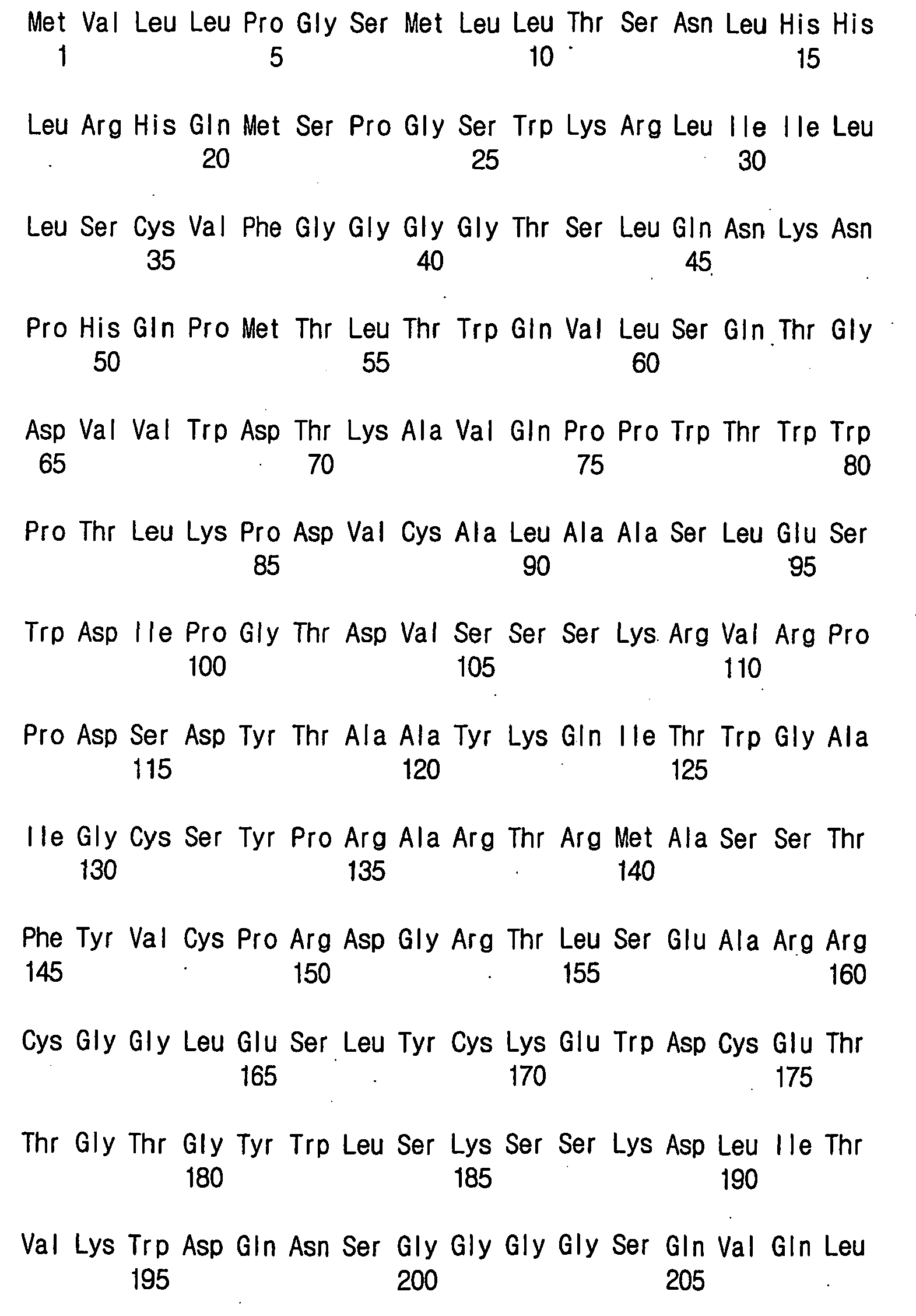


Claims (9)
- A chimeric ligand protein in the form of a fusion polypeptide of a single-chain antibody specific for a surface antigen of tumor associated glycoprotein 72 and gibbon ape leukemia virus envelope glycoprotein, wherein the single-chain antibody is inserted between the 199th and 200th amino acid residues of a surface subunit of gibbon ape leukemia virus envelope glycoprotein.
- The chimeric ligand protein of claim 1, which has the amino acid sequence of SEQ ID NO: 9.
- A gene encoding the chimeric ligand protein of claim 1.
- The gene of claim 3, which has the nucleotide sequence of SEQ ID NO: 8.
- A recombinant expression vector containing the gene of claim 3.
- The recombinant expression vector of claim 5, which is pHEFvGEL199 as contained in Accession No: KCTC-10596BP.
- A packaging cell line transduced with the recombinant expression vector of claim 5.
- A recombinant retrovirus produced by the packaging cell line of claim 7, wherein the chimeric ligand of claim 1 is distributed on its outer membrane.
- An anti-cancer agent composition comprising the chimeric ligand of claim 1 as an effective ingredient and a pharmaceutically acceptable carrier.
Applications Claiming Priority (2)
| Application Number | Priority Date | Filing Date | Title |
|---|---|---|---|
| KR1020030079897A KR100555688B1 (en) | 2003-11-12 | 2003-11-12 | Cancer cell target gene delivery method |
| PCT/KR2004/000545 WO2005047338A1 (en) | 2003-11-12 | 2004-03-15 | Cancer cell targeting gene delivery method |
Publications (3)
| Publication Number | Publication Date |
|---|---|
| EP1692186A1 EP1692186A1 (en) | 2006-08-23 |
| EP1692186A4 EP1692186A4 (en) | 2008-03-26 |
| EP1692186B1 true EP1692186B1 (en) | 2010-01-27 |
Family
ID=36676152
Family Applications (1)
| Application Number | Title | Priority Date | Filing Date |
|---|---|---|---|
| EP04720767A Expired - Lifetime EP1692186B1 (en) | 2003-11-12 | 2004-03-15 | Cancer cell targeting gene delivery method |
Country Status (7)
| Country | Link |
|---|---|
| US (1) | US7473430B2 (en) |
| EP (1) | EP1692186B1 (en) |
| JP (1) | JP4459964B2 (en) |
| KR (1) | KR100555688B1 (en) |
| AT (1) | ATE456374T1 (en) |
| DE (1) | DE602004025375D1 (en) |
| WO (1) | WO2005047338A1 (en) |
Families Citing this family (5)
| Publication number | Priority date | Publication date | Assignee | Title |
|---|---|---|---|---|
| KR100620554B1 (en) * | 2004-06-05 | 2006-09-06 | 한국생명공학연구원 | Humanized antibody against TA-72 |
| WO2012169822A2 (en) * | 2011-06-10 | 2012-12-13 | 강원대학교산학협력단 | Fusion protein for suppressing cancer cell growth and suppressing vasculogenesis, and anticancer composition comprising same |
| KR101397088B1 (en) | 2011-06-10 | 2014-05-19 | 강원대학교산학협력단 | A fusion protein for inhibiting both angiogenesis and tumor cell proliferation, and composition comprising the same |
| ES2830392T3 (en) | 2014-07-23 | 2021-06-03 | Ohio State Innovation Foundation | Methods and compositions related to antibody fragments that bind to tumor-associated glycoprotein 72 (TAG-72) |
| US20240390531A1 (en) * | 2021-07-09 | 2024-11-28 | Imaginab, Inc. | Novel antibody sequences for diagnostics and therapeutics |
Family Cites Families (2)
| Publication number | Priority date | Publication date | Assignee | Title |
|---|---|---|---|---|
| DE69420033T2 (en) * | 1993-04-06 | 1999-12-23 | The Government Of The United States Of America As Represented By The Secretary Of The Department Of Health And Human Services, Bethesda | GIBBON LEUKEMIA VIRUS RETROVIRALE VECTORS |
| FR2786773B1 (en) * | 1998-12-03 | 2002-03-08 | Univ Paris Curie | ENVELOPE PROTEINS, METHODS AND USES |
-
2003
- 2003-11-12 KR KR1020030079897A patent/KR100555688B1/en not_active Expired - Fee Related
-
2004
- 2004-03-15 EP EP04720767A patent/EP1692186B1/en not_active Expired - Lifetime
- 2004-03-15 US US10/578,839 patent/US7473430B2/en not_active Expired - Fee Related
- 2004-03-15 AT AT04720767T patent/ATE456374T1/en not_active IP Right Cessation
- 2004-03-15 JP JP2006539363A patent/JP4459964B2/en not_active Expired - Fee Related
- 2004-03-15 WO PCT/KR2004/000545 patent/WO2005047338A1/en not_active Ceased
- 2004-03-15 DE DE602004025375T patent/DE602004025375D1/en not_active Expired - Fee Related
Also Published As
| Publication number | Publication date |
|---|---|
| US20070244032A1 (en) | 2007-10-18 |
| DE602004025375D1 (en) | 2010-03-18 |
| EP1692186A1 (en) | 2006-08-23 |
| JP4459964B2 (en) | 2010-04-28 |
| KR100555688B1 (en) | 2006-03-03 |
| ATE456374T1 (en) | 2010-02-15 |
| EP1692186A4 (en) | 2008-03-26 |
| US7473430B2 (en) | 2009-01-06 |
| WO2005047338A1 (en) | 2005-05-26 |
| JP2008500018A (en) | 2008-01-10 |
| KR20050045727A (en) | 2005-05-17 |
Similar Documents
| Publication | Publication Date | Title |
|---|---|---|
| EP1885186B1 (en) | Method of targeted gene delivery using viral vectors | |
| JP5760023B2 (en) | Expression vector with improved safety | |
| JP2021500909A (en) | Adapter-based retroviral vector system for selective transduction of target cells | |
| Forestell et al. | Novel retroviral packaging cell lines: complementary tropisms and improved vector production for efficient gene transfer | |
| EP1104482A2 (en) | Cell type specific gene transfer using retroviral vectors containing antibody-envelope fusion proteins and wild-type envelope fusion proteins | |
| US20110020901A1 (en) | Methods of Making Viral Particles Having a Modified Cell Binding Activity and Uses Thereof | |
| US7473430B2 (en) | Cancer cell targeting gene delivery method | |
| US6277601B1 (en) | Expression of a foamy virus envelope protein | |
| US6762031B2 (en) | Targeting viral vectors to specific cells | |
| AU733948B2 (en) | Expression of a modified foamy virus envelope protein | |
| Haynes et al. | Retroviral vector targeting through insertion of epidermal growth factor into receptor binding deficient influenza A hemagglutinin results in fusion defective particles | |
| WO2000071578A9 (en) | New polypeptides and their use for the rescue of fusion defective virus or retrovirus glycoproteins | |
| CA2229515A1 (en) | Expression of a foamy virus envelope protein |
Legal Events
| Date | Code | Title | Description |
|---|---|---|---|
| PUAI | Public reference made under article 153(3) epc to a published international application that has entered the european phase |
Free format text: ORIGINAL CODE: 0009012 |
|
| 17P | Request for examination filed |
Effective date: 20060515 |
|
| AK | Designated contracting states |
Kind code of ref document: A1 Designated state(s): AT BE BG CH CY CZ DE DK EE ES FI FR GB GR HU IE IT LI LU MC NL PL PT RO SE SI SK TR |
|
| RIN1 | Information on inventor provided before grant (corrected) |
Inventor name: SO, IN SEOP Inventor name: HONG, HYOJEONG Inventor name: KIM, YEON-SOO Inventor name: LEE, YOUNG-KWAN Inventor name: KIM, JONGPIL Inventor name: KANG, MOONKYUNG |
|
| DAX | Request for extension of the european patent (deleted) | ||
| RIN1 | Information on inventor provided before grant (corrected) |
Inventor name: SO, IN SEOP Inventor name: HONG, HYOJEONG Inventor name: KIM, JONGPIL Inventor name: LEE, YOUNG-KWAN Inventor name: KANG, MOONKYUNG Inventor name: KIM, YEON-SOO |
|
| RIC1 | Information provided on ipc code assigned before grant |
Ipc: C07K 7/08 20060101ALI20080214BHEP Ipc: A61K 38/00 20060101AFI20080214BHEP Ipc: C07K 16/30 20060101ALI20080214BHEP Ipc: C07K 14/15 20060101ALI20080214BHEP Ipc: C07K 19/00 20060101ALI20080214BHEP Ipc: C12N 15/867 20060101ALI20080214BHEP |
|
| A4 | Supplementary search report drawn up and despatched |
Effective date: 20080222 |
|
| 17Q | First examination report despatched |
Effective date: 20080725 |
|
| GRAP | Despatch of communication of intention to grant a patent |
Free format text: ORIGINAL CODE: EPIDOSNIGR1 |
|
| GRAS | Grant fee paid |
Free format text: ORIGINAL CODE: EPIDOSNIGR3 |
|
| GRAA | (expected) grant |
Free format text: ORIGINAL CODE: 0009210 |
|
| RIN1 | Information on inventor provided before grant (corrected) |
Inventor name: HONG, HYOJEONG Inventor name: KANG, MOONKYUNG Inventor name: SO, IN SEOP Inventor name: KIM, JONGPIL Inventor name: LEE, YOUNG-KWAN Inventor name: KIM, YEON-SOO |
|
| AK | Designated contracting states |
Kind code of ref document: B1 Designated state(s): AT BE BG CH CY CZ DE DK EE ES FI FR GB GR HU IE IT LI LU MC NL PL PT RO SE SI SK TR |
|
| REG | Reference to a national code |
Ref country code: GB Ref legal event code: FG4D |
|
| REG | Reference to a national code |
Ref country code: CH Ref legal event code: EP |
|
| REG | Reference to a national code |
Ref country code: IE Ref legal event code: FG4D |
|
| REF | Corresponds to: |
Ref document number: 602004025375 Country of ref document: DE Date of ref document: 20100318 Kind code of ref document: P |
|
| REG | Reference to a national code |
Ref country code: NL Ref legal event code: VDEP Effective date: 20100127 |
|
| PG25 | Lapsed in a contracting state [announced via postgrant information from national office to epo] |
Ref country code: AT Free format text: LAPSE BECAUSE OF FAILURE TO SUBMIT A TRANSLATION OF THE DESCRIPTION OR TO PAY THE FEE WITHIN THE PRESCRIBED TIME-LIMIT Effective date: 20100127 |
|
| PG25 | Lapsed in a contracting state [announced via postgrant information from national office to epo] |
Ref country code: NL Free format text: LAPSE BECAUSE OF FAILURE TO SUBMIT A TRANSLATION OF THE DESCRIPTION OR TO PAY THE FEE WITHIN THE PRESCRIBED TIME-LIMIT Effective date: 20100127 Ref country code: PT Free format text: LAPSE BECAUSE OF FAILURE TO SUBMIT A TRANSLATION OF THE DESCRIPTION OR TO PAY THE FEE WITHIN THE PRESCRIBED TIME-LIMIT Effective date: 20100527 Ref country code: ES Free format text: LAPSE BECAUSE OF FAILURE TO SUBMIT A TRANSLATION OF THE DESCRIPTION OR TO PAY THE FEE WITHIN THE PRESCRIBED TIME-LIMIT Effective date: 20100508 |
|
| PG25 | Lapsed in a contracting state [announced via postgrant information from national office to epo] |
Ref country code: FI Free format text: LAPSE BECAUSE OF FAILURE TO SUBMIT A TRANSLATION OF THE DESCRIPTION OR TO PAY THE FEE WITHIN THE PRESCRIBED TIME-LIMIT Effective date: 20100127 Ref country code: SI Free format text: LAPSE BECAUSE OF FAILURE TO SUBMIT A TRANSLATION OF THE DESCRIPTION OR TO PAY THE FEE WITHIN THE PRESCRIBED TIME-LIMIT Effective date: 20100127 Ref country code: PL Free format text: LAPSE BECAUSE OF FAILURE TO SUBMIT A TRANSLATION OF THE DESCRIPTION OR TO PAY THE FEE WITHIN THE PRESCRIBED TIME-LIMIT Effective date: 20100127 |
|
| PG25 | Lapsed in a contracting state [announced via postgrant information from national office to epo] |
Ref country code: MC Free format text: LAPSE BECAUSE OF NON-PAYMENT OF DUE FEES Effective date: 20100331 Ref country code: RO Free format text: LAPSE BECAUSE OF FAILURE TO SUBMIT A TRANSLATION OF THE DESCRIPTION OR TO PAY THE FEE WITHIN THE PRESCRIBED TIME-LIMIT Effective date: 20100127 Ref country code: SE Free format text: LAPSE BECAUSE OF FAILURE TO SUBMIT A TRANSLATION OF THE DESCRIPTION OR TO PAY THE FEE WITHIN THE PRESCRIBED TIME-LIMIT Effective date: 20100127 Ref country code: GR Free format text: LAPSE BECAUSE OF FAILURE TO SUBMIT A TRANSLATION OF THE DESCRIPTION OR TO PAY THE FEE WITHIN THE PRESCRIBED TIME-LIMIT Effective date: 20100428 Ref country code: EE Free format text: LAPSE BECAUSE OF FAILURE TO SUBMIT A TRANSLATION OF THE DESCRIPTION OR TO PAY THE FEE WITHIN THE PRESCRIBED TIME-LIMIT Effective date: 20100127 Ref country code: CY Free format text: LAPSE BECAUSE OF FAILURE TO SUBMIT A TRANSLATION OF THE DESCRIPTION OR TO PAY THE FEE WITHIN THE PRESCRIBED TIME-LIMIT Effective date: 20100127 Ref country code: BE Free format text: LAPSE BECAUSE OF FAILURE TO SUBMIT A TRANSLATION OF THE DESCRIPTION OR TO PAY THE FEE WITHIN THE PRESCRIBED TIME-LIMIT Effective date: 20100127 |
|
| REG | Reference to a national code |
Ref country code: CH Ref legal event code: PL |
|
| PG25 | Lapsed in a contracting state [announced via postgrant information from national office to epo] |
Ref country code: BG Free format text: LAPSE BECAUSE OF FAILURE TO SUBMIT A TRANSLATION OF THE DESCRIPTION OR TO PAY THE FEE WITHIN THE PRESCRIBED TIME-LIMIT Effective date: 20100427 Ref country code: CZ Free format text: LAPSE BECAUSE OF FAILURE TO SUBMIT A TRANSLATION OF THE DESCRIPTION OR TO PAY THE FEE WITHIN THE PRESCRIBED TIME-LIMIT Effective date: 20100127 Ref country code: SK Free format text: LAPSE BECAUSE OF FAILURE TO SUBMIT A TRANSLATION OF THE DESCRIPTION OR TO PAY THE FEE WITHIN THE PRESCRIBED TIME-LIMIT Effective date: 20100127 |
|
| PLBE | No opposition filed within time limit |
Free format text: ORIGINAL CODE: 0009261 |
|
| STAA | Information on the status of an ep patent application or granted ep patent |
Free format text: STATUS: NO OPPOSITION FILED WITHIN TIME LIMIT |
|
| REG | Reference to a national code |
Ref country code: FR Ref legal event code: ST Effective date: 20101130 |
|
| 26N | No opposition filed |
Effective date: 20101028 |
|
| PG25 | Lapsed in a contracting state [announced via postgrant information from national office to epo] |
Ref country code: FR Free format text: LAPSE BECAUSE OF NON-PAYMENT OF DUE FEES Effective date: 20100331 Ref country code: DK Free format text: LAPSE BECAUSE OF FAILURE TO SUBMIT A TRANSLATION OF THE DESCRIPTION OR TO PAY THE FEE WITHIN THE PRESCRIBED TIME-LIMIT Effective date: 20100127 Ref country code: IE Free format text: LAPSE BECAUSE OF NON-PAYMENT OF DUE FEES Effective date: 20100315 |
|
| PG25 | Lapsed in a contracting state [announced via postgrant information from national office to epo] |
Ref country code: CH Free format text: LAPSE BECAUSE OF NON-PAYMENT OF DUE FEES Effective date: 20100331 Ref country code: LI Free format text: LAPSE BECAUSE OF NON-PAYMENT OF DUE FEES Effective date: 20100331 Ref country code: DE Free format text: LAPSE BECAUSE OF NON-PAYMENT OF DUE FEES Effective date: 20101001 |
|
| PG25 | Lapsed in a contracting state [announced via postgrant information from national office to epo] |
Ref country code: IT Free format text: LAPSE BECAUSE OF FAILURE TO SUBMIT A TRANSLATION OF THE DESCRIPTION OR TO PAY THE FEE WITHIN THE PRESCRIBED TIME-LIMIT Effective date: 20100127 |
|
| PG25 | Lapsed in a contracting state [announced via postgrant information from national office to epo] |
Ref country code: LU Free format text: LAPSE BECAUSE OF NON-PAYMENT OF DUE FEES Effective date: 20100315 Ref country code: HU Free format text: LAPSE BECAUSE OF FAILURE TO SUBMIT A TRANSLATION OF THE DESCRIPTION OR TO PAY THE FEE WITHIN THE PRESCRIBED TIME-LIMIT Effective date: 20100728 |
|
| PG25 | Lapsed in a contracting state [announced via postgrant information from national office to epo] |
Ref country code: TR Free format text: LAPSE BECAUSE OF FAILURE TO SUBMIT A TRANSLATION OF THE DESCRIPTION OR TO PAY THE FEE WITHIN THE PRESCRIBED TIME-LIMIT Effective date: 20100127 |
|
| PGFP | Annual fee paid to national office [announced via postgrant information from national office to epo] |
Ref country code: GB Payment date: 20160321 Year of fee payment: 13 |
|
| GBPC | Gb: european patent ceased through non-payment of renewal fee |
Effective date: 20170315 |
|
| PG25 | Lapsed in a contracting state [announced via postgrant information from national office to epo] |
Ref country code: GB Free format text: LAPSE BECAUSE OF NON-PAYMENT OF DUE FEES Effective date: 20170315 |