EP1687267B1 - Modified mscl protein channel - Google Patents
Modified mscl protein channel Download PDFInfo
- Publication number
- EP1687267B1 EP1687267B1 EP04808728A EP04808728A EP1687267B1 EP 1687267 B1 EP1687267 B1 EP 1687267B1 EP 04808728 A EP04808728 A EP 04808728A EP 04808728 A EP04808728 A EP 04808728A EP 1687267 B1 EP1687267 B1 EP 1687267B1
- Authority
- EP
- European Patent Office
- Prior art keywords
- protein
- channel
- compound
- mscl
- modified
- Prior art date
- Legal status (The legal status is an assumption and is not a legal conclusion. Google has not performed a legal analysis and makes no representation as to the accuracy of the status listed.)
- Expired - Lifetime
Links
- 0 CCCCCCC(CC)(C[C@](C)CCCCCC(C)C1(CCC)C(CC2)CCC2(*)C1)*C(CC)CCCCC1(C)C(C(C)CC2)C2CC1 Chemical compound CCCCCCC(CC)(C[C@](C)CCCCCC(C)C1(CCC)C(CC2)CCC2(*)C1)*C(CC)CCCCC1(C)C(C(C)CC2)C2CC1 0.000 description 5
Images







Classifications
-
- A—HUMAN NECESSITIES
- A61—MEDICAL OR VETERINARY SCIENCE; HYGIENE
- A61K—PREPARATIONS FOR MEDICAL, DENTAL OR TOILETRY PURPOSES
- A61K9/00—Medicinal preparations characterised by special physical form
- A61K9/10—Dispersions; Emulsions
- A61K9/127—Synthetic bilayered vehicles, e.g. liposomes or liposomes with cholesterol as the only non-phosphatidyl surfactant
-
- A—HUMAN NECESSITIES
- A61—MEDICAL OR VETERINARY SCIENCE; HYGIENE
- A61K—PREPARATIONS FOR MEDICAL, DENTAL OR TOILETRY PURPOSES
- A61K47/00—Medicinal preparations characterised by the non-active ingredients used, e.g. carriers or inert additives; Targeting or modifying agents chemically bound to the active ingredient
- A61K47/50—Medicinal preparations characterised by the non-active ingredients used, e.g. carriers or inert additives; Targeting or modifying agents chemically bound to the active ingredient the non-active ingredient being chemically bound to the active ingredient, e.g. polymer-drug conjugates
- A61K47/69—Medicinal preparations characterised by the non-active ingredients used, e.g. carriers or inert additives; Targeting or modifying agents chemically bound to the active ingredient the non-active ingredient being chemically bound to the active ingredient, e.g. polymer-drug conjugates the conjugate being characterised by physical or galenical forms, e.g. emulsion, particle, inclusion complex, stent or kit
- A61K47/6905—Medicinal preparations characterised by the non-active ingredients used, e.g. carriers or inert additives; Targeting or modifying agents chemically bound to the active ingredient the non-active ingredient being chemically bound to the active ingredient, e.g. polymer-drug conjugates the conjugate being characterised by physical or galenical forms, e.g. emulsion, particle, inclusion complex, stent or kit the form being a colloid or an emulsion
- A61K47/6911—Medicinal preparations characterised by the non-active ingredients used, e.g. carriers or inert additives; Targeting or modifying agents chemically bound to the active ingredient the non-active ingredient being chemically bound to the active ingredient, e.g. polymer-drug conjugates the conjugate being characterised by physical or galenical forms, e.g. emulsion, particle, inclusion complex, stent or kit the form being a colloid or an emulsion the form being a liposome
-
- A—HUMAN NECESSITIES
- A61—MEDICAL OR VETERINARY SCIENCE; HYGIENE
- A61K—PREPARATIONS FOR MEDICAL, DENTAL OR TOILETRY PURPOSES
- A61K9/00—Medicinal preparations characterised by special physical form
- A61K9/10—Dispersions; Emulsions
- A61K9/127—Synthetic bilayered vehicles, e.g. liposomes or liposomes with cholesterol as the only non-phosphatidyl surfactant
- A61K9/1271—Non-conventional liposomes, e.g. PEGylated liposomes or liposomes coated or grafted with polymers
-
- A—HUMAN NECESSITIES
- A61—MEDICAL OR VETERINARY SCIENCE; HYGIENE
- A61P—SPECIFIC THERAPEUTIC ACTIVITY OF CHEMICAL COMPOUNDS OR MEDICINAL PREPARATIONS
- A61P35/00—Antineoplastic agents
-
- C—CHEMISTRY; METALLURGY
- C07—ORGANIC CHEMISTRY
- C07C—ACYCLIC OR CARBOCYCLIC COMPOUNDS
- C07C381/00—Compounds containing carbon and sulfur and having functional groups not covered by groups C07C301/00 - C07C337/00
- C07C381/04—Thiosulfonates
-
- Y—GENERAL TAGGING OF NEW TECHNOLOGICAL DEVELOPMENTS; GENERAL TAGGING OF CROSS-SECTIONAL TECHNOLOGIES SPANNING OVER SEVERAL SECTIONS OF THE IPC; TECHNICAL SUBJECTS COVERED BY FORMER USPC CROSS-REFERENCE ART COLLECTIONS [XRACs] AND DIGESTS
- Y02—TECHNOLOGIES OR APPLICATIONS FOR MITIGATION OR ADAPTATION AGAINST CLIMATE CHANGE
- Y02A—TECHNOLOGIES FOR ADAPTATION TO CLIMATE CHANGE
- Y02A50/00—TECHNOLOGIES FOR ADAPTATION TO CLIMATE CHANGE in human health protection, e.g. against extreme weather
- Y02A50/30—Against vector-borne diseases, e.g. mosquito-borne, fly-borne, tick-borne or waterborne diseases whose impact is exacerbated by climate change
Definitions
- the invention relates to the field of drug delivery.
- the invention particularly relates to compounds and methods for the chemical modification of a proteinaceous substance, such as a channel protein, suitable for use in pharmaceutical delivery vehicles for controlled and/ or localised release of therapeutic molecules (e.g. small molecules, peptides, proteins or other macromolecules).
- a proteinaceous substance such as a channel protein
- therapeutic molecules e.g. small molecules, peptides, proteins or other macromolecules.
- liposomes became a promising tool for the drug delivery. Since that period, many methodologies have been developed for liposomal compositions, efficient drug encapsulation and retention, stability and targeting ( Woodle, M. C., Lasic, D. D., Biochim. Biophys. Act. 1992, 1113, 171- 199 ). After being loaded with the desired amount of drug and being stable enough to accumulate in the target site, the next step generally is to release the content of the liposomes in response to a specific stimulus at the target.
- the present invention relates to a set of novel compounds which, upon attachment to a proteinaceous valve (protein channel), confer a specific sensitivity to the modified protein channel such that the channel responds to specific stimuli present at the target site (e.g. pH, light), leading to opening of the channel.
- a modified protein channel of the invention is advantageously used in a drug delivery vehicle (such as liposomes) to achieve a controlled and localised unloading of the contents of the vehicle at a target site, such as a tumour.
- a protein that is modified with a pH-responsive or light responsive compound, wherein said compound is of the general formula Q-L-C or P-L-C.
- L is a linker group L 1 , L 2, L 3 or L 4 , according to the formula
- the coupling group C allows covalent attachment of the compound to a protein.
- the chargeable group Q can be either in a charged or uncharged state, depending on the local pH environment.
- Proteins modified with a light-sensitive compound comprise a photocleavable chargeable group P and a coupling group C.
- any one of the coupling groups C 4, C 5 and C 6 is used, it is however also possible to incorporate two Q- or P-groups, or a combination of a Q and a P-group, in one compound. Examples of such compounds are 2(P 6 )-C 4 ,2(Q 1 )-C 6 , 2(P 1 )-2(L 1 )-C 5 and 2(Q 1 )- 2(L 1 )-C 5 .
- a P-group can be regarded as a chargeable moiety provided with a photocleavable moiety which blocks charging of the chargeable moiety.
- a compound of the invention which comprises a P group is not chargeable. Only upon illumination of a P-containing compound, the photocleavable moiety of group P dissociates to release a chargeable moiety (see for example Figure 3 ). Similar to the Q groups described above, the chargeable moiety will be protonated at a pH lower than the pKa of the chargeable moiety.
- the invention herewith provides pH-responsive compounds which only become pH-responsive upon illumination. The dual sensitivity of these compounds allows to modify a protein (channel) in such a manner that its activation can be tightly controlled in time.
- a compound comprises a linker group L selected from the group of linker groups consisting of L 1 -L 4 shown in Figure 1 .
- the linker group connects the chargeable group Q or the photocleavable chargeable group P to the coupling group C.
- the general formula of those compounds with a linker group is either Q-L-C or P-L-C.
- a modified protein is a modified proteinaceous valve, herein also referred to as a modified channel protein.
- a protein may also be modified with more than one compound, for example with two or three identical compounds or with different compounds.
- any type of proteinaceous substance may be modified as long as it contains at least one residue to which a coupling group C can be attached.
- the invention will be illustrated by the modification of a protein channel with a compound of the invention.
- other types of proteins can of course also be modified with a light- and/or pH-responsive compound to confer a specific sensitivity to the protein that allows for controlling the functionality of the protein with local or external stimuli (pH, light).
- the Shaker Kv channel is a channel protein gating in response to voltage changes in the membrane.
- Introduction of hydrophilic residues into the activation gate of Shaker Kv channels causes channel gating independent of the membrane voltage ( Sukhareva, M., et al., 2003, J. Gen. PhysioL 122:541-556 ).
- the coupling group C comprises an SSO 2 CH 3 moiety (group C 8 in Fig. 1 ) to yield a methylthiosulfonate (MTS) conjugate.
- MTS conjugates react very rapidly and specifically with cysteine sulfhydryls of a protein and are therefore particularly suitable as coupling group (see Figure 2 ). It has been previously shown that the G22C mutant of the MscL channel protein can be activated in spheroplasts ( Yoshimura, K., et al., Biophys. J. 2001, 80, 2198- 2206 ) and growth cultures ( Batiza et al., Proc. Natl. Acad. Sci.
- the present invention relates to pH- and also light responsive methylthiosulfonate compounds (i.e. those comprising coupling group C 8 ), as well as pH- and light-responsive compounds with alternative coupling groups.
- Some pH-responsive compounds of the invention are designed to be protonated only at a pH lower than approximately 7.4 (the physiological pH of mammals including humans), whereas others have a slightly higher pKa (typically around 7.9).
- Compound protonation introduces a charge into the constriction part of a mechanosensitive channel (e.g. the MscL channel protein), which in turn leads to channel opening.
- a decreased pH can for example be found around solid tumors, liver cells, sites of inflammation and ischemic areas in the body.
- a pH-responsive or light responsive compound capable of controlling the channel activity of a mechanosensitive channel protein, preferably MscL channel protein of E . coli. or a homologous mechanosensitive channel from another organism, or a mutant of otherwise chemically altered MscL protein, said compound being of the General formula Q-L-C or P-L-C as defined herein above.
- pH-responsive compounds of the general formula Q 1 -L 1 -C 3 are pH-responsive compounds of the general formula Q 1 -L 1 -C 3 .
- An example of such a compound is R 1 R 2 N-CH 2 -(CO)O-(CH 2 ) 2 - S(SO 2 )-CH 3 , wherein R 1 and R 2 are each independently H or CH 3 , preferably wherein R 1 and R 2 are CH 3 .
- Light-sensitive pH-responsive compounds of the invention have the general formula P-L-C. It will be understood that, according to the invention, many different combinations can be made with the different photocleavable groups P 2 -P 4 , coupling groups C 1 -C 6 , and; linker groups L 1 -L 4 .
- a light-sensitive or pH-responsive compound of the invention is easily attached to a protein, for example a mechanosensitive (MscL) channel protein, via the coupling group C.
- MscL mechanosensitive
- the synthesis of a pH-responsive compound and a light-sensitive pH-responsive compound of the invention is exemplified in Example 1 and 5 (see also Fig. 4 , 6 and 12 ).
- the starting materials required for the synthesis are typically commercially available in high purity.
- a further aspect of the invention relates to a method for providing a modified mechanosensitive channel of large conductance, preferably the MscL channel protein of E . coli, or a homologous mechanosensitive channel from another organism, or a mutant or otherwise chemically altered MscL protein, comprising the chemical modification of the protein with a compound according to the invention by the covalent attachment of said compound to a target cysteine residue of said protein, and wherein said cysteine residue is located in a region of said protein which upon introduction of a charge and/or polar group modulates the functionality of said protein.
- the channel works as a membrane tension sensor. It protects cells from lysis under hypoosmotic shock conditions.
- a method of the invention for providing a modified mechanosensitive channel protein, such as the MscL protein, or a functional equivalent thereof comprises the chemical modification of the channel protein with a compound of the invention by the covalent attachment of said compound via the coupling group C to a cysteine target residue of said channel protein, wherein said target residue is located in a region of said channel protein which upon introduction of a charge and/or a polar group induces opening of said channel.
- Functional equivalents of the MscL channel protein of E . coli comprise homologues of mechanosensitive channels from other organisms. The genes encoding MscL homologues from various prokaryotes are cloned ( Moe, P.C., Blount, P.
- MscL proteins Nucleic acid and amino acid sequences are available and have been used to obtain heterologous (over)-expression of several MscL proteins ( Moe, P.C., et al. J. Biol. Chem., 2000, 40, 31121-31127 ).
- a useful MscL homologue can be found in Lactococcus lactis. Also, mutants or otherwise chemically altered MscL proteins can be used.
- a light-sensitive or pH-responsive compound, or a compound that becomes pH-responsive after photocleavage provided herein is covalently attached to a target cysteine amino acid residue of a protein.
- the target residue may be naturally present or it may be artificially introduced into the protein using mutagenesis, preferably site-directed mutagenesis.
- the target residue of a protein to be modified by a compound of the invention is preferably located in or near a region that modulates the functionality of said protein.
- the channel activity refers to the gating threshold, the frequency of change between the open, intermediate (if present) and the closed states and the residence time in the open/ intermediate state (also known as dwell time).
- One region of interest for modifying a channel protein is the region that corresponds to the first cytoplasmic domain of MscL of E.coli .
- This region constitutes the N-terminal part of the protein (residues 1 - 14) and it is proposed that there might be a supplementary gate formed by the first 9 amino acids of the N terminus, which occlude the channel even when the transmembrane helices have spread apart. ( Sukharev, S., et al., Nature ,2001, 409, 720 - 724 , Sukharev, S., et al, Biophysical J., 2001, 81, 917 - 936 )).
- TM1 helix Another region corresponds to the first transmembrane domain, TM1 helix, of E.coli MscL (residues 15 - 45). This is the most conserved region ( Chang, G. et al., Science, 1998, 282, 2220 - 2226 , Spencer, R. H., et al.,Curr. Opin. Struct. Biol., 1999, 9, 448 - 454 ) within the MscL family.
- loop region Another region useful for modification may be the loop region (residues 46- 75). Mutagenesis studies have implicated this region as being important in MscL gating ( Blount, P., et al., Proc. Natl. Acad. Sci. USA, 1996, 93,11652-11657 , Maurer, J. A., et al., J. Biol.Chem., 2000, 275, 22238 - 22244 , Ajouz et al., J. Biol. Chem., 2000, 275: 1015-1022 , Gu et al., Biophys. J., 1998, 74, 2889-2902 ).
- mutation Gln56His led to changes in channel kinetics and tension sensitivity depending on the pH on the periplasmic but not cytoplasmic side of the membrane ( Blount et al., The EMBO J., 1996, 15, 4798-4805 , Blount, P., et al., Proc. Natl. Acad. Sci. USA ,1996, 93,11652-11657 ).
- glutamine 56 is mutated to proline it causes changes in the gating sensitivity.
- Replacement of the 46th position (normally a glycine residue) with aspartic acid creates a severe gain-of-function mutant ( Ou, X., et al., Proc. Natl. Acad. Sci. USA, 1998, 95, 11471- 11475 ).
- Yet another region of interest for modification corresponds to amino acid residues 76-100 of the MscL protein.
- a protein channel is modified with a compound of the invention at the position that corresponds to residue 22 of the E. coli MscL protein.
- the original amino acid at the 22nd position glycine
- glycine is mutated to a cysteine in order to create a target site for the attachment of pH-sensitive compound.
- Bartlett et al identified new amino acid residues in the transmembrane domain of MscL that can be modified with MTSET, a positively charged MTS reagent, and gate the channel even in iso-osmotic conditions in intact E. coli cells ( Bartlett, et al., PNAS 2004, 101, 10161-10165 ). These residues can be modified with a compound of the invention.
- Target residues for attachment of compounds that are pH-sensitive, light-sensitive or a combination of both can also be used to control functional properties of the channel protein.
- target residues for attachment can be combined with other mutations that modify channel function. These can be located either closely together in the primary sequence or in different regions of the polypeptide, or even in different polypeptide chains of the multimeric channel protein.
- the invention further provides a modified mechanosensitive channel protein wherein said channel protein is modified with at least one compound of the invention.
- said modified mechanosensitive channel protein is the MscL channel protein of E. coli , or a functional equivalent thereof.
- a compound can be straightforwardly attached to a desired target residue, optionally via cysteine modification, by contacting the protein with the compound under conditions that allow the formation of a covalent bond between said cysteine residue and group C of said compound, preferably followed by removal of excess compound (see Example 2).
- Modification of the channel protein with a compound of the invention can be used to modify the gating properties of a proteinaceous valve. More specifically, the compounds allow to convert a channel which was previously only mechanosensitive into a pH- and/ or light-responsive channel. In some cases, in addition to the pH- and/ or light-responsive gating, the mechanosensitivity of the channel protein is retained.
- a modified channel protein according to the invention is highly attractive for use as a triggerable valve in drug delivery vehicles, e.g. for controlled and/or localised release of therapeutic molecules at a target site.
- a modified protein channel can be reconstituted in a lipid-based delivery vehicle such as proteoliposomes, which can subsequently be loaded with one or more therapeutic molecules.
- MscL is active in lipid vehicles that consist of positively and/or neutrally charged lipids as well as negatively and/or neutrally charged lipids.
- Lipid vehicles comprising said positively and/or neutrally charged lipids are more resistant to uptake by cells of the mononuclear phagocytic system.
- Lipid vehicles of the invention therefore preferably comprise positively and/or neutrally charged lipids.
- Such vehicles exhibit improved half-lives in the bloodstream. Such vehicles also demonstrate improved targeting to non-mononuclear phagocytic system cells.
- the lipid part directed towards the exterior of a lipid vehicle of the invention preferably consists predominantly of positively and/or neutrally charged lipids, thereby postponing or nearly completely avoiding cellular uptake through negatively charged lipids.
- different lipids can also be used to alter the amount of added pressure needed to activate the channel in the vehicle. This results from changes in the lateral pressure profile across the membrane associated with alterations in membrane composition.
- the lipid vehicle contains neutral lipids as well as lipids with a polymer chain attached to the polar headgroup, preferably polyethyleneglycol (PEG), more preferably with a molecular weight (of the PEG chain) of approximately 2000.
- PEG polyethyleneglycol
- these liposomes may contain negative charge, they have been shown to have an increased circulation time in blood (see e.g. Drummond, D. C., et al., Pharmacol. Rev. 1999, 51, 691-744 and references therein) compared to liposomes that do not expose polymer chains on their surface.
- Therapeutic molecules are typically biologically active compounds or precursors thereof, such as pro-drugs which are converted in the body into an active drug. They include anti-neoplastic agents, microbial compounds, immunomodulators, peptides and peptidomimetics.
- a biologically active compound may be included in the delivery vehicle as a single active agent or in combination with other biologically active compounds.
- a delivery vehicle according to the invention may also comprise targeting ligands to achieve site-specific targeting of the vehicle to a predetermined target site.
- targeting ligands may be attached to the liposome surface, including (anti-tumour) antibodies or fragments thereof, carbohydrates and vitamins.
- a method for controlling the release of therapeutic molecules at a target site of a subject comprising loading a delivery vehicle comprising a modified channel protein, such as MscL or a functional equivalent thereof, with one or more drugs, introducing the loaded delivery vehicle into the subject to allow delivery to the target site and triggering release of the drug(s) by a physiological trigger (pH below appr. 7.4), optionally following an external trigger (illumination with light).
- a pharmaceutical composition comprising a delivery vehicle with a modified MscL protein of the invention and a pharmaceutically acceptable carrier is also provided.
- a modified channel protein or a delivery vehicle comprising a channel protein is of use for the (time) controlled release of a therapeutic molecule to a target site.
- a therapeutic molecule for instance, it is known that in tumours the pH is very often considerably lower than in the normal tissue surrounding the tumour. Other areas in the body that have a lowered pH are the liver, areas of inflammation and ischemic areas.
- a pH-sensitive delivery vehicle of the invention it is now possible to safely deliver an anti-cancer drug in an encapsulated form to a tumour-site, where its release is subsequently triggered by the locally lowered pH, which release may be further controlled by an external light stimulus.
- anti-cancer drugs including cisplatin, carboplatin, methotrexate, 1-8-D-arabino-furanyl-cytosine (ara-C), 6-fluoro-uracil, floxuridine, and gemcitabine.
- the compound-modified protein channel molecule in the liposomes should be sensitive enough to respond to the small changes of stimuli.
- the pH in solid tumours and at sites of inflammation is about 0.4-0.8 pH unit lower than physiological pH (pH 7.3-7.5).
- pH 7.3-7.5 physiological pH
- We herein provide a modified channel protein that is highly pH-sensitive; when this channel protein was reconstituted in proteoliposomes a decrease of only 0.2 pH units resulted in up to 30 % more channel activity. This pH range of activity is also compatible with physiological conditions.
- the response time to the trigger may also be important.
- the liposomes should respond to the pH of endosomes within 10-30 minutes before going to the lysosomal degradation route.
- the modified channel proteins according to the invention respond to pH changes almost immediately. Incorporation of a photocleavable group in a compound of the invention provides a control mechanism over the response time of the compound such that it can be decided when to activate the compounds by removal of the photolysable group.
- the modified channel proteins of the invention do not negatively affect the integrity and stability of the drug delivery vehicle.
- Methylthiosulfonate (MTS) derivatives react very rapidly and specifically with cysteine sulphydryls and introduce the functional group into the protein.
- the sulfinic acid by-product of the reaction decomposes rapidly to low-molecular-weight volatile products, which do not, in general, affect the stability of the disulfide bond formed, or the activity of the enzyme.
- This example shows the synthesis of both pH and light sensitive MTS-based compounds.
- the yield of the first synthesis reaction was over 95%, and the purity of the compound, 2-bromo-ethyl ester of glycine or its N alkylated derivative (2), was over 98%.
- the yield of the second reaction was 70 - 90%.
- the resulted compound, 2-methanesulfonylsulfanyl-ethyl ester of glycine or its N alkylated derivative (3), may contain small amount ( ⁇ 5%) NaCl.
- the yield of the first reaction was 85%, that of the second reaction was 48%.
- a membrane pellet fraction was obtained from a fermentor culture of E.coli PB104 cells containing the plasmid pB 104 carrying the MscL(G22C)-6His construct. MscL, was isolated to near homogeneity via a single nickel-nitriloacetic acid (Ni-NTA) metal-affinity chromatography step.
- Ni-NTA nickel-nitriloacetic acid
- the modified protein was reconstituted in synthetic lipid membranes in order to follow the channel activity.
- DOPC Cholesterol: DSPE-PEG (70:20:10 Molar ratio) liposomes were titrated with Triton- X100 until saturation. Titrated liposomes were mixed with modified protein in 1: 120 (wt: wt) protein to lipid ratio. Biobeads were used to remove the detergent. A self-quenching dye, calcein, was added and included into the interior of the proteoliposomes during reconstitution.
- wet weight membrane pellet was obtained from a 10 liter fermentor culture of E.coli PB104 cells. Approximately 3 mg protein/l of fermentor culture was isolated to near homogeneity via a single metal-affinity chromatography step. The isolated detergent soluble protein was stable at least 6 months at -80 °C. The efficiency of protein modification with the compound was monitored by both a calcein assay and by mass spectroscopy.
- Proteoliposomes containing modified MscL protein were analyzed by a fluorescencent dye efflux assay.
- the activity of the channel was measured as an increase in the fluorescence of a reporter molecule, the dye calcein.
- Calcein is included in the liposome interior at a self quenching concentration, but when the calcein escapes into the exterior medium the dilution is such that quenching is completely abolished.
- a portion of the liposomal fraction is placed in 2 ml iso-osmotic buffer and the activity of the channels is followed by measuring the increase in fluorescence as calcein becomes dequenched upon being released through the channel protein in response to a stimulus ( Figure 7B ). Fluorescence was monitored with a SLM 500 spectrofluorometer Excitation and emission wavelengths were 490 (slit 2 nm) and 520 nm (slit 4 nm), respectively.
- a positively charged MTS reagent (MTSET) was used as a positive control. Since MTSET always carries a positive charge, it always opens the channel after it has reacted with MscL at the free sulfhydryl residue at the 22 nd position ( Figure 7C ).
- the calcein efflux assay gives an opportunity to follow the activity of MscL channels in model drug containing proteoliposome ensembles in response to an applied stimulus.
- the system works fast and gives reproducible results.
- Example 4 A. Channel activity of the protein modified with a pH-responsive compound
- the MscL protein was modified with the different pH-responsive compounds.
- the activity of the channel in response to pH was analyzed by the calcein efflux assay. In order to do that the same buffer at different pH's were prepared and the same sample is analyzed in each buffer.
- the modified protein showed a pH dependent activation, especially at lower pH's although there was some activity at physiological pH.
- the modified protein showed a pH dependent activation. Its pKa is approximately 8. This particular compound started to show channel activity below pH 8.
- the modified protein had no activity at pH 7.5, and started to be active at around pH 7.03. This is an ideal compound for the drug delivery to a target site at which the pH is lower than physiological pH.
- the modified channel will stay close at the normal body pH of 7.4 but will be activated (opened) at the low pH of the target site.
- Example 4 Channel Activity of the protein modified with a light-sensitive compound.
- the MscL protein was modified with a light sensitive compound.
- the activity of the channel was analyzed in response to pH. After measuring the initial fluorescence value for samples at each pH, they were exposed to 366 nm light for 5-10 minutes. Then the measurement was continued as before. Results are given in Figure 11 . The compound stayed inactive until the photolysis occurs. After the cleavage of the light- sensitive part by illumination, the chargeable group left behind showed a pH dependent activity.
- the light sensitivity can be used both as a separate control tool to open the channel but also as a masking group to protect the chargeable group until the time a response (i.e. release) is desired.
- the activity of the chemically modified MscL is analyzed real time at single molecule level with patch clamp, a classical electrophysiological technique. This technique allows to seal a patch of membrane, which has embedded channel proteins in it, into the tip of a glass micropipette, and to monitor the ionic current flowing through the open channels in response to different conditions.
- This example shows the patch clamping of modified channel proteins at different pH's with or without applied negative pressure.
- the channel activity was measured by following its conductance.
- the protein from cysteine mutant MscL (cysteine in its 22 nd amino acid position) was isolated, modified and reconstituted as explained in Example 2 .
- giant proteoliposomes were prepared as indicated ( Delcour, A. H., Martinac, B., Blattner, F. R., Kung, C., Biophys. J.56, 1989, 631-636 ).
- 10 ⁇ l rehydrated lipids were placed in 100 ⁇ l bath solution and resulting giant liposomes were patched by using glass pipettes with 1 ⁇ m tip size. They were made from 100 ⁇ l borosilicate capillaries in Sutter 97/IVF micropipette puller.
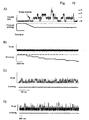
- FIG. 12 A A schematic presentation of unmodified MacL activity in patch clamp analyses is given in Figure 12 A . It shows single channel openings in response to the applied negative pressure to the patch pipette. When there is no pressure, no current can pass through the channel but as soon as pressure is applied, then channels open and the characteristic ionic current can be measured.
- the modified channel protein behaved as unmodified one because the pH- responsive compounds were mainly in their neutral form.
- the channels also required very high negative pressure on the membrane in order to gate at high pH if they did at all. Most of the time it was so high that the patch membrane bursted before seeing any channel activity.
- the channels gated simultaneously without any tension.
- This example shows the modification of a mechanosensitive channel protein MscL into a light sensitive channel.
- illumination of the sample lyses the photocleavable part of the compound and leaves a negative charge attached to the protein in its hydrophobic constriction site. Again generation of charge within the pore region of the channel leads spontaneous channel gating.
- the resulted modified channel was reconstituted in the presence of a fluorescent dye as explained in Example 3 for the calcein efflux experiment.
- Another sample of the modified channel was prepared for patch clamp experiments as indicated in Example 6.
- the first step is the cleavage of the light-sensitive protection part. This property gives an opportunity to control the time of channel activation.
- Example 3 The protein was isolated and modified as in Example 2 and reconstituted in the presence of calcein as indicated in Example 3. The resulting liposomes were tested at different pH's at dark or after illumination with 366 nm light.
- the modified and reconstituted protein was analyzed in calcein efflux assay. 5 sets of the same sample were analyzed at pH 5.7 and pH 7.2. All samples were measured for their initial fluorescence and then one group was left at dark and the duplicate was illuminated with 366 nm light for 10 min. The pH of one of the samples was immediately changed from 5.7 to pH 7.2 and the fluorescence of each sample was followed in time.
- the new compound provides a tool to control the time of activation of the channel.
- Example 8 New targets on MscL channel protein for the chemical modification: Combination of the 22 nd and 23 rd amino acid positions
- the 23 rd position is also replaced with cysteine. This way if all the subunits are modified, one can introduce two times more charge.
- This example compares the single and double cysteine mutants for their performance in efflux from proteoliposomes.
- This example shows that we can combine different target positions in the protein and control the channel gating.
Landscapes
- Health & Medical Sciences (AREA)
- Chemical & Material Sciences (AREA)
- Veterinary Medicine (AREA)
- Organic Chemistry (AREA)
- Medicinal Chemistry (AREA)
- Pharmacology & Pharmacy (AREA)
- Life Sciences & Earth Sciences (AREA)
- Animal Behavior & Ethology (AREA)
- General Health & Medical Sciences (AREA)
- Public Health (AREA)
- Epidemiology (AREA)
- Dispersion Chemistry (AREA)
- Engineering & Computer Science (AREA)
- Bioinformatics & Cheminformatics (AREA)
- Chemical Kinetics & Catalysis (AREA)
- General Chemical & Material Sciences (AREA)
- Nuclear Medicine, Radiotherapy & Molecular Imaging (AREA)
- Peptides Or Proteins (AREA)
- Medicines That Contain Protein Lipid Enzymes And Other Medicines (AREA)
- Medicinal Preparation (AREA)
Abstract
Description
- The invention relates to the field of drug delivery. The invention particularly relates to compounds and methods for the chemical modification of a proteinaceous substance, such as a channel protein, suitable for use in pharmaceutical delivery vehicles for controlled and/ or localised release of therapeutic molecules (e.g. small molecules, peptides, proteins or other macromolecules).
- After their discovery in 1965 (Bangham, A D., et aL, J. Mol. BioL 1965, 13, 238-253), liposomes became a promising tool for the drug delivery. Since that period, many methodologies have been developed for liposomal compositions, efficient drug encapsulation and retention, stability and targeting (Woodle, M. C., Lasic, D. D., Biochim. Biophys. Act. 1992, 1113, 171- 199). After being loaded with the desired amount of drug and being stable enough to accumulate in the target site, the next step generally is to release the content of the liposomes in response to a specific stimulus at the target. It has been hypothesized that enhanced release at the target site will significantly improve the specificity and efficacy of a liposomal drug (Drummond, D. C., et al., Pharmacol. Rev. 1999, 51, 691-744; Bally., M. B., et aL, J. Liposomes Res. 1998, 8, 299- 335; Fenske, D. B., at al, Curr. Opin. Mol. Ther. 2001, 3, 153-158).
- Various strategies have been used for triggering liposomal release at the target site. Formation of channels and defects in the liposomal bilayer, lamellar-micellar or lamellar-hexagonal phase transition, lipid phase separation and liposome fusion are some examples (Meers, P. Adv. Drug Deliv. Rev. 2001, 53, 265- 272; Drummond, D. C., et al., Prog. Lipid Res. 2000, 39, 409- 460; Asokan, A., Cho, M. J., J. Pharm. Sci. 2002, 91, 903- 913; Chu, C. J, Szoka, F. C., J. Liposome Res. 1994, 4, 361-395; Thomas, J. L., Tirrel, D. A., Acc. Chem. Res. 1992, 25, 336- 342). All these efforts have been focused on the lipid components of the liposomes, and a very limited success has been achieved (Guo, X., Szoka F. C. Acc. Chem. Res. 2003, 36, 335- 341).
- The present invention relates to a set of novel compounds which, upon attachment to a proteinaceous valve (protein channel), confer a specific sensitivity to the modified protein channel such that the channel responds to specific stimuli present at the target site (e.g. pH, light), leading to opening of the channel. A modified protein channel of the invention is advantageously used in a drug delivery vehicle (such as liposomes) to achieve a controlled and localised unloading of the contents of the vehicle at a target site, such as a tumour.
- Provided is a protein that is modified with a pH-responsive or light responsive compound, wherein said compound is of the general formula Q-L-C or P-L-C. wherein
Q is a chargeable group Q1, Q2, or Q3, according to the formula
- P is a photocleavable chargeable group P2, P3 or P4, according to the formula


R3 = H, O-methyl - C is a coupling group C1, C2, C3, C4, C5 or C6 according to the formula

wherein in case any of the groups C4, C5 or C6 is used two Q-or P-groups, or a combination of a C- and P- group, may be used in one compound: and - L is a linker group L1, L2, L3 or L4, according to the formula

- The coupling group C allows covalent attachment of the compound to a protein. The chargeable group Q can be either in a charged or uncharged state, depending on the local pH environment. Proteins modified with a light-sensitive compound comprise a photocleavable chargeable group P and a coupling group C. In case any one of the coupling groups C4, C5 and C6 is used, it is however also possible to incorporate two Q- or P-groups, or a combination of a Q and a P-group, in one compound. Examples of such compounds are 2(P6)-C4,2(Q1)-C6, 2(P1)-2(L1)-C5 and 2(Q1)- 2(L1)-C5.
- A P-group can be regarded as a chargeable moiety provided with a photocleavable moiety which blocks charging of the chargeable moiety. Thus, in the absence of illumination a compound of the invention which comprises a P group is not chargeable. Only upon illumination of a P-containing compound, the photocleavable moiety of group P dissociates to release a chargeable moiety (see for example
Figure 3 ). Similar to the Q groups described above, the chargeable moiety will be protonated at a pH lower than the pKa of the chargeable moiety. Thus, the invention herewith provides pH-responsive compounds which only become pH-responsive upon illumination. The dual sensitivity of these compounds allows to modify a protein (channel) in such a manner that its activation can be tightly controlled in time. - In addition to groups Q (or P) and C, a compound comprises a linker group L selected from the group of linker groups consisting of L1-L4 shown in
Figure 1 . The linker group connects the chargeable group Q or the photocleavable chargeable group P to the coupling group C. The general formula of those compounds with a linker group is either Q-L-C or P-L-C. Preferably, the linker group is of the formula - (CH2)n- wherein n= 1-10 (i.e. group Li), more preferably (CH2)2-. - In a preferred embodiment, a modified protein is a modified proteinaceous valve, herein also referred to as a modified channel protein. A protein may also be modified with more than one compound, for example with two or three identical compounds or with different compounds. Essentially any type of proteinaceous substance may be modified as long as it contains at least one residue to which a coupling group C can be attached. The invention will be illustrated by the modification of a protein channel with a compound of the invention. However, other types of proteins can of course also be modified with a light- and/or pH-responsive compound to confer a specific sensitivity to the protein that allows for controlling the functionality of the protein with local or external stimuli (pH, light). It has been shown for some other biological systems that a charged or polar substitution in the hydrophobic pore region of gated channels, like MscL, creates easily or constitutively gating channels. For instance, the Shaker Kv channel is a channel protein gating in response to voltage changes in the membrane. Introduction of hydrophilic residues into the activation gate of Shaker Kv channels causes channel gating independent of the membrane voltage (Sukhareva, M., et al., 2003, J. Gen. PhysioL 122:541-556).
- In a preferred embodiment, the coupling group C comprises an SSO2CH3 moiety (group C8 in
Fig. 1 ) to yield a methylthiosulfonate (MTS) conjugate. MTS conjugates react very rapidly and specifically with cysteine sulfhydryls of a protein and are therefore particularly suitable as coupling group (seeFigure 2 ). It has been previously shown that the G22C mutant of the MscL channel protein can be activated in spheroplasts (Yoshimura, K., et al., Biophys. J. 2001, 80, 2198- 2206) and growth cultures (Batiza et al., Proc. Natl. Acad. Sci. USA 2002, 99, 5643-5648) by the addition of MTS reagents. The present invention relates to pH- and also light responsive methylthiosulfonate compounds (i.e. those comprising coupling group C8), as well as pH- and light-responsive compounds with alternative coupling groups. Some pH-responsive compounds of the invention are designed to be protonated only at a pH lower than approximately 7.4 (the physiological pH of mammals including humans), whereas others have a slightly higher pKa (typically around 7.9). Compound protonation introduces a charge into the constriction part of a mechanosensitive channel (e.g. the MscL channel protein), which in turn leads to channel opening. A decreased pH can for example be found around solid tumors, liver cells, sites of inflammation and ischemic areas in the body. Provided is a pH-responsive or light responsive compound capable of controlling the channel activity of a mechanosensitive channel protein, preferably MscL channel protein of E. coli. or a homologous mechanosensitive channel from another organism, or a mutant of otherwise chemically altered MscL protein, said compound being of the General formula Q-L-C or P-L-C as defined herein above. - As will be described below, of particular interest are pH-responsive compounds of the general formula Q1 -L1-C3. An example of such a compound is R1R2N-CH2-(CO)O-(CH2)2- S(SO2)-CH3, wherein R1 and R2 are each independently H or CH3, preferably wherein R1 and R2 are CH3.
Figure 5 shows the structures of the compounds wherein R1 and R2 are both H (panel A; compound A: Q1[R1=R2=H]-L1[n= 2]-C3), wherein R1 is H and R2 is CH3 (panel B; compound B : Q1[R1= H, R2=Me]-L1[n=2]-C3) and wherein R1 and R2 are both CH3 (panel C; compound C: Q1[R1=R2=Me]-L1[n=2]-C3) - Light-sensitive pH-responsive compounds of the invention have the general formula P-L-C. It will be understood that, according to the invention, many different combinations can be made with the different photocleavable groups P2-P4, coupling groups C1-C6, and; linker groups L1-L4. Preferred compounds of this type include compound P1[R3= OMe, R1= H]-L1[n=1]-C3 (compound D;
Fig. 6 ) and compound P2[R3= OMe, R1= Me]-L1[n=2]-C3 (compound F;Fig. 13 ). A light-sensitive or pH-responsive compound of the invention is easily attached to a protein, for example a mechanosensitive (MscL) channel protein, via the coupling group C. - Also provided herein are methods for providing a compound according to the invention that involve standard step-by-step synthesis methods, reactions and reagents well known in the field of (medicinal) organic chemistry. The synthesis of a pH-responsive compound and a light-sensitive pH-responsive compound of the invention is exemplified in Example 1 and 5 (see also
Fig. 4 ,6 and12 ). The starting materials required for the synthesis are typically commercially available in high purity. - A further aspect of the invention relates to a method for providing a modified mechanosensitive channel of large conductance, preferably the MscL channel protein of E. coli, or a homologous mechanosensitive channel from another organism, or a mutant or otherwise chemically altered MscL protein, comprising the chemical modification of the protein with a compound according to the invention by the covalent attachment of said compound to a target cysteine residue of said protein, and wherein said cysteine residue is located in a region of said protein which upon introduction of a charge and/or polar group modulates the functionality of said protein. In nature the channel works as a membrane tension sensor. It protects cells from lysis under hypoosmotic shock conditions. Upon shock, water influx creates a turgor pressure in the cells and as a result, tension in the membrane increases. The MscL channel senses the increase in the membrane tension and forms an approximately 3.5 nm non-selective pore in the membrane and releases osmolytes to protect the cell from bursting (Sukharev S., I., et al., Annu. Rev. Physiol. 1997, 59, 633- 657; Cruickshank, C., et al., Biophys. J. 1997, 73, 1925-1931). A method of the invention for providing a modified mechanosensitive channel protein, such as the MscL protein, or a functional equivalent thereof, comprises the chemical modification of the channel protein with a compound of the invention by the covalent attachment of said compound via the coupling group C to a cysteine target residue of said channel protein, wherein said target residue is located in a region of said channel protein which upon introduction of a charge and/or a polar group induces opening of said channel. Functional equivalents of the MscL channel protein of E. coli comprise homologues of mechanosensitive channels from other organisms. The genes encoding MscL homologues from various prokaryotes are cloned (Moe, P.C., Blount, P. and Kung, C., Mol. Microbiol. 1998, 28, 583-592). Nucleic acid and amino acid sequences are available and have been used to obtain heterologous (over)-expression of several MscL proteins (Moe, P.C., et al. J. Biol. Chem., 2000, 40, 31121-31127). A useful MscL homologue can be found in Lactococcus lactis. Also, mutants or otherwise chemically altered MscL proteins can be used.
- A light-sensitive or pH-responsive compound, or a compound that becomes pH-responsive after photocleavage provided herein is covalently attached to a target cysteine amino acid residue of a protein. The target residue may be naturally present or it may be artificially introduced into the protein using mutagenesis, preferably site-directed mutagenesis. Of course, the target residue of a protein to be modified by a compound of the invention is preferably located in or near a region that modulates the functionality of said protein. For example, in case of channel protein MscL, it is the region that controls the channel activity. The channel activity refers to the gating threshold, the frequency of change between the open, intermediate (if present) and the closed states and the residence time in the open/ intermediate state (also known as dwell time).
- One region of interest for modifying a channel protein is the region that corresponds to the first cytoplasmic domain of MscL of E.coli. This region constitutes the N-terminal part of the protein (residues 1 - 14) and it is proposed that there might be a supplementary gate formed by the first 9 amino acids of the N terminus, which occlude the channel even when the transmembrane helices have spread apart. (Sukharev, S., et al., Nature ,2001, 409, 720 - 724, Sukharev, S., et al, Biophysical J., 2001, 81, 917 - 936)). Another region corresponds to the first transmembrane domain, TM1 helix, of E.coli MscL (residues 15 - 45). This is the most conserved region (Chang, G. et al., Science, 1998, 282, 2220 - 2226, Spencer, R. H., et al.,Curr. Opin. Struct. Biol., 1999, 9, 448 - 454) within the MscL family.
- Another region useful for modification may be the loop region (residues 46- 75). Mutagenesis studies have implicated this region as being important in MscL gating (Blount, P., et al., Proc. Natl. Acad. Sci. USA, 1996, 93,11652-11657, Maurer, J. A., et al., J. Biol.Chem., 2000, 275, 22238 - 22244, Ajouz et al., J. Biol. Chem., 2000, 275: 1015-1022, Gu et al., Biophys. J., 1998, 74, 2889-2902). Observation of a significant number of loss-of-function mutants in this region recently led to the hypothesis that the loop serves as a spring connecting the first and the second transmembrane domains (Maurer et al., J. Biol. Chem., 2003, 278, 21076-21082). Besides gain-of-function and loss-of function mutations, there are also mutations in the loop region that are known to alter the channel kinetics and sensitivity. For example, mutation Gln56His led to changes in channel kinetics and tension sensitivity depending on the pH on the periplasmic but not cytoplasmic side of the membrane (Blount et al., The EMBO J., 1996, 15, 4798-4805, Blount, P., et al., Proc. Natl. Acad. Sci. USA ,1996, 93,11652-11657). When glutamine 56 is mutated to proline it causes changes in the gating sensitivity. Replacement of the 46th position (normally a glycine residue) with aspartic acid creates a severe gain-of-function mutant (Ou, X., et al., Proc. Natl. Acad. Sci. USA, 1998, 95, 11471- 11475). Yet another region of interest for modification corresponds to amino acid residues 76-100 of the MscL protein.
- Of particular interest is the modification of a target residue in the region that corresponds to around position 23 of the MscL protein of E. coli. Mutagenesis experiments have shown the region located around Val 23 to be structurally and functionally very important (Perozo, E., et al., Nature, 2002, 418, 942 - 948, Ou, X., et al., Proc. Natl. Acad. Sci. USA,1998, 95, 11471-11475, Maurer, J. A, et al., J. Biol.Chem., 2000, 275, 22238 - 22244). In addition, it has been shown that mutation of residue K31 can lead to changes in MscL gating (Blount, P., et al., Proc. NatL Acad. Sci. USA ,1996, 93,11652-11667). Furthermore, mutagenesis experiments have pointed out the 22nd amino acid position in the MscL channel as one of the important sites that affect the channel gating properties and kinetics. While a hydrophobic moiety at this position makes the channel constriction more stable, a hydrophilic residue destabilises this region and leads to channel opening without any extra energy input (Yoshimura, K, et al., Biophys. J. 1999, 77, 1960- 1972). Thus, in a preferred embodiment of the invention, a protein channel is modified with a compound of the invention at the position that corresponds to residue 22 of the E. coli MscL protein. In case of a preferred E.coli MscL, the original amino acid at the 22nd position, glycine, is mutated to a cysteine in order to create a target site for the attachment of pH-sensitive compound. Recently, Bartlett et al. identified new amino acid residues in the transmembrane domain of MscL that can be modified with MTSET, a positively charged MTS reagent, and gate the channel even in iso-osmotic conditions in intact E. coli cells (Bartlett, et al., PNAS 2004, 101, 10161-10165). These residues can be modified with a compound of the invention.
- Combinations of different target residues for attachment of compounds that are pH-sensitive, light-sensitive or a combination of both can also be used to control functional properties of the channel protein. Alternatively, target residues for attachment can be combined with other mutations that modify channel function. These can be located either closely together in the primary sequence or in different regions of the polypeptide, or even in different polypeptide chains of the multimeric channel protein. The invention further provides a modified mechanosensitive channel protein wherein said channel protein is modified with at least one compound of the invention. In a preferred embodiment, said modified mechanosensitive channel protein is the MscL channel protein of E. coli, or a functional equivalent thereof. As said, a compound can be straightforwardly attached to a desired target residue, optionally via cysteine modification, by contacting the protein with the compound under conditions that allow the formation of a covalent bond between said cysteine residue and group C of said compound, preferably followed by removal of excess compound (see Example 2). Modification of the channel protein with a compound of the invention can be used to modify the gating properties of a proteinaceous valve. More specifically, the compounds allow to convert a channel which was previously only mechanosensitive into a pH- and/ or light-responsive channel. In some cases, in addition to the pH- and/ or light-responsive gating, the mechanosensitivity of the channel protein is retained. A modified channel protein according to the invention is highly attractive for use as a triggerable valve in drug delivery vehicles, e.g. for controlled and/or localised release of therapeutic molecules at a target site. A modified protein channel can be reconstituted in a lipid-based delivery vehicle such as proteoliposomes, which can subsequently be loaded with one or more therapeutic molecules. It has been found that MscL is active in lipid vehicles that consist of positively and/or neutrally charged lipids as well as negatively and/or neutrally charged lipids. Lipid vehicles comprising said positively and/or neutrally charged lipids are more resistant to uptake by cells of the mononuclear phagocytic system. Lipid vehicles of the invention therefore preferably comprise positively and/or neutrally charged lipids. Such vehicles exhibit improved half-lives in the bloodstream. Such vehicles also demonstrate improved targeting to non-mononuclear phagocytic system cells. The lipid part directed towards the exterior of a lipid vehicle of the invention preferably consists predominantly of positively and/or neutrally charged lipids, thereby postponing or nearly completely avoiding cellular uptake through negatively charged lipids. Apart from increasing the half-life of the vehicle in the blood stream, different lipids can also be used to alter the amount of added pressure needed to activate the channel in the vehicle. This results from changes in the lateral pressure profile across the membrane associated with alterations in membrane composition.
- In another preferred embodiment, the lipid vehicle contains neutral lipids as well as lipids with a polymer chain attached to the polar headgroup, preferably polyethyleneglycol (PEG), more preferably with a molecular weight (of the PEG chain) of approximately 2000. Although these liposomes may contain negative charge, they have been shown to have an increased circulation time in blood (see e.g. Drummond, D. C., et al., Pharmacol. Rev. 1999, 51, 691-744 and references therein) compared to liposomes that do not expose polymer chains on their surface. It is believed that this results from the fact that the polymer chains exclude (at least partially) other macromolecules from the exterior of the liposome, reducing in this way binding of blood plasma opsonins, and consequently, uptake by the reticuloendothelial system.
- Therapeutic molecules are typically biologically active compounds or precursors thereof, such as pro-drugs which are converted in the body into an active drug. They include anti-neoplastic agents, microbial compounds, immunomodulators, peptides and peptidomimetics. A biologically active compound may be included in the delivery vehicle as a single active agent or in combination with other biologically active compounds.
- A delivery vehicle according to the invention may also comprise targeting ligands to achieve site-specific targeting of the vehicle to a predetermined target site. Depending on the target site, various types of targeting ligands may be attached to the liposome surface, including (anti-tumour) antibodies or fragments thereof, carbohydrates and vitamins.
- The application of a modified protein channel as a valve in proteoliposomes that can be triggered is nicely illustrated by a fluorescent efflux assay described in Example 3. Herewith, a method is provided for controlling the release of therapeutic molecules at a target site of a subject, comprising loading a delivery vehicle comprising a modified channel protein, such as MscL or a functional equivalent thereof, with one or more drugs, introducing the loaded delivery vehicle into the subject to allow delivery to the target site and triggering release of the drug(s) by a physiological trigger (pH below appr. 7.4), optionally following an external trigger (illumination with light). A pharmaceutical composition comprising a delivery vehicle with a modified MscL protein of the invention and a pharmaceutically acceptable carrier is also provided. A modified channel protein or a delivery vehicle comprising a channel protein is of use for the (time) controlled release of a therapeutic molecule to a target site. For instance, it is known that in tumours the pH is very often considerably lower than in the normal tissue surrounding the tumour. Other areas in the body that have a lowered pH are the liver, areas of inflammation and ischemic areas. By using a pH-sensitive delivery vehicle of the invention, it is now possible to safely deliver an anti-cancer drug in an encapsulated form to a tumour-site, where its release is subsequently triggered by the locally lowered pH, which release may be further controlled by an external light stimulus. Various anti-cancer drugs may be used, including cisplatin, carboplatin, methotrexate, 1-8-D-arabino-furanyl-cytosine (ara-C), 6-fluoro-uracil, floxuridine, and gemcitabine.
- For an ideal triggered drug release system, the compound-modified protein channel molecule in the liposomes should be sensitive enough to respond to the small changes of stimuli. The pH in solid tumours and at sites of inflammation is about 0.4-0.8 pH unit lower than physiological pH (pH 7.3-7.5). We herein provide a modified channel protein that is highly pH-sensitive; when this channel protein was reconstituted in proteoliposomes a decrease of only 0.2 pH units resulted in up to 30 % more channel activity. This pH range of activity is also compatible with physiological conditions.
- In addition to the sensitivity, the response time to the trigger may also be important. For instance in endosome targeted delivery, the liposomes should respond to the pH of endosomes within 10-30 minutes before going to the lysosomal degradation route. The modified channel proteins according to the invention respond to pH changes almost immediately. Incorporation of a photocleavable group in a compound of the invention provides a control mechanism over the response time of the compound such that it can be decided when to activate the compounds by removal of the photolysable group. The modified channel proteins of the invention do not negatively affect the integrity and stability of the drug delivery vehicle.
-
-
Figure 1 . The compounds of the inventi are composed of different groups. Compounds comprise a coupling group C1-C6 in combination with either a chargeable group Q1-Q3 or (in case of the light sensitive compounds) with a photocleavable chargeable group P2, P3 or P4 photocleavage of group P leads to unmasking of a chargeable moiety. The chargeable group Q or chargeable moiety of group P released upon illumination can either be in a charged or uncharged state depending on the environment or external stimuli and will be directly responsible for alternation of the protein properties. The coupling group C can bind to a cysteine residue of the protein, thereby attaching the compound to the channel protein. The Q or P group is connected to a C group through a linker L. The Q groups are designed to achieve a suitable pKa of the charged group. Me = methyl; Et= ethyl; Pr=propyl; iPr= isopropyl; Ph=phenyl; Bn=benzyl; -
Figure 2 . The general chemical modification mechanism of a cysteine sulfhydryl of a protein (e.g. MscL channel protein) with methylthiosulfonate (MTS)-based compounds i.e. those comprising C3 as coupling group. Methylthiosulfonate reacts very rapidly and specifically with cysteine sulphydryls and attaches the compound to the protein. The sulfinic acid by-product of the reaction decomposes rapidly to low-molecular-weight volatile products, which do not, in general, affect the stability of the disulfide bond formed, or the activity of the channel protein. -
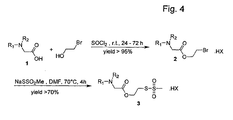
Figure 3 . The photocleavage reaction of compound D: P1[R3= OMe, R1= H]-L1[n= 1]-C3Figure 4 . Schematic presentation of the synthesis of a pH-responsive compound wherein the coupling group is based on MTS (compound Q1-L1-C3). (1): Glycine or its N alkylated derivative; (2): 2-bromo-ethyl ester of glycine or its N alkylated derivative; (3): 2-methanesulfonylsulfanyl-ethyl ester of glycine or its N alkylated derivative. -
Figure 5 . Examples of pH-sensitive compounds of the formula Q1-L1-C3. A) R1 and R2 are both H (compound A: Q1[R1=R2=H]-L1[n=2]-C3 ). B) R1 is H and R2 is CH3 (compound B: Q1[R1= H, R2=Me]-L1[n= 2]-C3 ). C) Both R1 and R2 are CH3 (compound C: Q1[R1=R2=Me]-L1[n=2]-C3 ). -
Figure 6 . Schematic presentation of the synthesis of a light-sensitive pH-responsive compound of the formula P1[R3= OMe, R1= H]-L1[n= 1]-C3 (compound D). (1): 2-bromoethylamine hydrobromide; (2): Methanethiosulfonic acid S-(2-amino-ethyl) ester hydrobromide; (3): Methanethiosulfonic acid S-[2-(4,5-dimethoxy-2-nitro-benzyloxycarbonylamino)-ethyl] ester. -
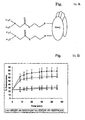
Figure 7 . Calcein Efflux Assay A) Calcein containing proteoliposomes were prepared and liposomal fraction was separated from the free calcein by a Sephadex G50 size exclusion column; B) The schematic presentation of the efflux ; C) An example of an activity measurement in the efflux assay. Arrow indicates the time when the trigger is applied (In this particular case the trigger is the application of 0.8 mM final concentration of [2-(Trimethylammonium)-ethyl]-methanethiosulfonate bromide (MTSET) into the measurement cuvette containing proteoliposomes). -
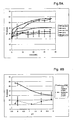
Figure 8 . Calcein efflux assay using proteoliposomes containing the MscL channel protein modified with the pH-responsive compound A (Q1[R1=R2=H]-L1[n=2]-C3). The efflux assay was performed at different pH's. A) Channel activity at different pH's; B) the maximum % fluorescence is shown as a function of pH. -
Figure 9 . Calcein efflux assay using proteoliposomes containing the MscL channel protein modified with the pH-responsive compound B (Q1[R1= H, R2=Me]-L1[n=2]-C3). The efflux assay was performed at different pH's. A) Channel activity at different pH's; B) the net % fluorescence is shown as a function of pH. -
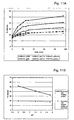
Figure 10 . Calcein efflux assay using proteoliposomes containing the MscL channel protein modified with the pH-responsive compound C (Q1[R1=R2=Me]-L1[n=2]-C3). The efflux assay was performed at different pH's. A) Channel activity at different pH's; B) the maximum % fluorescence is shown as a function of pH. -
Figure 11 . Calcein efflux assay using proteoliposomes containing the MscL channel protein modified with the light-sensitive pH-responsive compound D (P1[R3= OMe, R1= H]-L1[n=1]-C3). Calcein efflux assay of liposomes containing the modified protein is performed at different pH's. A) Channel activity at different pH's after initial illumination (+) or no illumination (-); B) The maximum % fluorescence is shown as a function of pH. -
Figure 12 . Patch Clamp analysis of pH-responsive compounds. In all the cases, the upper trace shows the current and the lower one shows the negative pressure. The dashed lines indicate the value "0" for the particular signal. The channel openings are seen as boxes or spikes in the current signal. The numbers (0-3) indicates the number of MscL channels. A) A trace of unmodified MscL gating in response to the negative pressure. B) Patch clamp recording of compound B (Q1[R1=H, R2=Me]-L1[n=2]-C3)-modified MscL at pH 7.2. C) Patch clamp recording of compound B-modified MscL at pH 6.2. D) Patch clamp recording of compound C (Q1(R1=R2=Me]-L1[n=2]-C3)-modified MscL at pH 6.3. -
Figure 13 . Light-sensitive pH-responsive activity of MscL modified with compound F (P2[R3=OMe, R1=Me]-L1[n=2]-C3). A) The mechanism of charge generation in response to light and pH. B) Calcein efflux assay of the modified MscL. -
Figure 14 . The activity of double cysteine MscL mutant modified with two compounds C per subunit of MscL. A) The schematic presentation of a modified MscL. B) Calcein efflux assay of the modified MscL. Error bars indicate the standard deviation of two independent experiments. - Methylthiosulfonate (MTS) derivatives react very rapidly and specifically with cysteine sulphydryls and introduce the functional group into the protein. The sulfinic acid by-product of the reaction decomposes rapidly to low-molecular-weight volatile products, which do not, in general, affect the stability of the disulfide bond formed, or the activity of the enzyme. This example shows the synthesis of both pH and light sensitive MTS-based compounds.
- The schematic presentation of the compound synthesis is given in
Figure 4 . In the first reaction glycine or its N alkylated derivative (1) in the form of the free compound or as a HCl salt (20 mmol) was suspended in 2-bromoethanol (14.3 ml, 200mmol) and cooled to 0°C. Thionyl chloride (1.8 ml, 25 mmol) was added dropwise and reaction mixture was stirred at room temperature until a clear solution was obtained. Resulting solution was poured into 200 ml of ether, precipitated solid was filtered, washed with ether and dried in vacuo. In the case that only oil separates instead of precipitate, ether was decanted; oil was washed with ether (2x 100ml) and all the residual solvents were removed in vacuo. Oil usually solidifies upon standing overnight at 4°C. Compound bromo-ethyl ester of glycine or its N alkylated derivative (2), was obtained as HCl salt. - In the second reaction the salt of 2-bromo-ethyl ester of glycine or its N alkylated derivative (2) (10 mmol) was dissolved in DMF (10 ml) and sodium methanethiosulfonate (1.47g, 11 mmol) was added. Mixture was heated at 70°C for 4 hours, solid precipitate was filtered out and DMF was evaporated in vacuo. The residue was dissolved in small amount of boiling acetonitrile (20 ml), filtered and filtrate evaporated in vacuo. Product, 2-methanesulfonylsulfanyl-ethyl ester of glycine or its N alkylated derivative (3), is also obtained as HCl salt. Solid products can be recrystallized from acetonitrile-ether or ethanol-ether.
- The yield of the first synthesis reaction was over 95%, and the purity of the compound, 2-bromo-ethyl ester of glycine or its N alkylated derivative (2), was over 98%. The yield of the second reaction was 70 - 90%. The resulted compound, 2-methanesulfonylsulfanyl-ethyl ester of glycine or its N alkylated derivative (3), may contain small amount (<5%) NaCl.
- 1.A.1. The first pH responsive compound obtained by a starting compound in which both two functional groups (R1 and R2) of the Glycine or its N alkylated derivative (1) were hydrogen. The synthesized molecule (compound A: Q1[R1=R2=H]-L1[n=2]-C3) is shown in
Figure 5A . - 1.A.2. The second pH compound obtained by a starting compound in which the functional groups (R1 and R2) of the Glycine or its N alkylated derivative (1) were a hydrogen and a methyl, respectively. The synthesized molecule (compound B: Q1[R1= H, R2=Me]-L1[n=2]-C3) is shown in
Figure 5B . - 1.A.3. The third pH compound obtained by a starting compound in which both functional groups (R1 and R2) of the Glycine or its N alkylated derivative (1) were methyls. The synthesized molecule (compound C: Q1[R1=R2=Me]-L1[n=2]-C3) is shown in
Figure 5C . - 1. B. General Synthesis of Light- Sensitive pH-responsive Compounds
- The schematic presentation of the synthesis of a light sensitive compounds is given in
Figure 6 . In the first reaction sodium methanethiosulfonate (1.47g, 11 mmol) was added to the solution of 2-bromoethylamine hydrobromide (1) (2.05g, 10 mmol) in DMF (5 ml) and mixture was heated at 70°C for 4 hours, solid precipitate was filtered out and DMF was evaporated in vacuo. The residue was dissolved in a small amount of boiling acetonitrile (20 ml), filtered and the filtrate evaporated in vacuo. The recrystallization from acetonitrile-ether gave product. - In the second reaction, 236 mg, 1 mmol of methanethiosulfonic acid S- (2-amino-ethyl) ester hydrobromide (2) was dissolved in 3 ml of DMF and 6-nitroveratrylchlorofotmate (303 mg, 1.1 mmol) and pyridine (0.5 ml) were added. After overnight stirring, the mixture was poured into water (10 ml) and extracted with dichloromethane (
3x 30 ml). All the solvents were evaporated in vacuo and product, methanethiosulfonic acid S-[2-(4,5-dimethoxy-2-nitro-benzyloxycarbonylamino)-ethyl] ester (3; compound D; P1[R8= OMe, R1= H]-L1[n= 1]-C3), chromatographed on Si-gel using dichloromethane as an eluent. - The yield of the first reaction was 85%, that of the second reaction was 48%. The product (3; compound D; P1[R3=OMe, R1= H]-L1[n=1]-C3) was soluble in DMF and DMSO, was a little soluble in dichloromethane and chloroform and was very badly soluble in other common solvents.
- All synthesized compounds were attached to the MscL protein from E. coli via cysteine modification. In this example, the 22nd position of the protein was mutated to a cysteine.
- A membrane pellet fraction was obtained from a fermentor culture of E.coli PB104 cells containing the plasmid pB 104 carrying the MscL(G22C)-6His construct. MscL, was isolated to near homogeneity via a single nickel-nitriloacetic acid (Ni-NTA) metal-affinity chromatography step.
- 1 volume of isolated, detergent solubilized MscL (0.3 mg/ml) was incubated with 0.5 volume of 160 mM compound (A-C) for 15 minute at room temperature. The protein modification reaction was stopped and the excess label was removed by applying the sample into a gel filtration column. The protein concentration of elution fractions was determined by Bradford Assay.
- The modified protein was reconstituted in synthetic lipid membranes in order to follow the channel activity. For this purpose, DOPC: Cholesterol: DSPE-PEG (70:20:10 Molar ratio) liposomes were titrated with Triton- X100 until saturation. Titrated liposomes were mixed with modified protein in 1: 120 (wt: wt) protein to lipid ratio. Biobeads were used to remove the detergent. A self-quenching dye, calcein, was added and included into the interior of the proteoliposomes during reconstitution.
- 5-8 g wet weight membrane pellet was obtained from a 10 liter fermentor culture of E.coli PB104 cells. Approximately 3 mg protein/l of fermentor culture was isolated to near homogeneity via a single metal-affinity chromatography step. The isolated detergent soluble protein was stable at least 6 months at -80 °C. The efficiency of protein modification with the compound was monitored by both a calcein assay and by mass spectroscopy.
- Proteoliposomes containing modified MscL protein were analyzed by a fluorescencent dye efflux assay. The activity of the channel was measured as an increase in the fluorescence of a reporter molecule, the dye calcein. Calcein is included in the liposome interior at a self quenching concentration, but when the calcein escapes into the exterior medium the dilution is such that quenching is completely abolished.
- The schematic presentation of the efflux assay is given in
Figure 7 . During reconstitution of the protein into the mixture of synthetic lipids in the presence of a detergent, a self quenching dye, calcein, is also added in to the mixture to a final concentration of 50 mM. After the reconstitution is completed by the removal of the detergent, the calcein containing liposomal fraction was separated from the unencapsulated free calcein by passing the sample through a Sephadex G50 size exclusion column (Figure 7A ). - A portion of the liposomal fraction is placed in 2 ml iso-osmotic buffer and the activity of the channels is followed by measuring the increase in fluorescence as calcein becomes dequenched upon being released through the channel protein in response to a stimulus (
Figure 7B ). Fluorescence was monitored with a SLM 500 spectrofluorometer Excitation and emission wavelengths were 490 (slit 2 nm) and 520 nm (slit 4 nm), respectively. A positively charged MTS reagent (MTSET) was used as a positive control. Since MTSET always carries a positive charge, it always opens the channel after it has reacted with MscL at the free sulfhydryl residue at the 22nd position (Figure 7C ). - The calcein efflux assay gives an opportunity to follow the activity of MscL channels in model drug containing proteoliposome ensembles in response to an applied stimulus. The system works fast and gives reproducible results.
- The MscL protein was modified with the different pH-responsive compounds. The activity of the channel in response to pH was analyzed by the calcein efflux assay. In order to do that the same buffer at different pH's were prepared and the same sample is analyzed in each buffer.
- The first pH compound has -CO(O)-CH2NH2(Q1[R1=R2=H]) as a chargeable group Q. The activity of proteins modified with compound A (Q1[R1=R2=H]-L1[n=2]-C3) is shown in
Figure 8 . The modified protein showed a pH dependent activation, especially at lower pH's although there was some activity at physiological pH. - The second pH compound has -CO(O)-CH2NHCH3 (Q1[R1=H, R2=Me]) as a chargeable group Q. The activity of proteins modified with compound B (Q1[R1=H, R2=Me]-L1[n= 2]-C3) is shown in
Figure 9 . The modified protein showed a pH dependent activation. Its pKa is approximately 8. This particular compound started to show channel activity belowpH 8. - The third pH compound has -CO(O)-CH2N(CH3)2 (Q1[R1=R2=Me]) as a chargeable group Q. The activity of proteins modified with compound C (Q1[R1=R2=Me]-L1[n=2]-C3) is shown in
Figure 10 . The modified protein had no activity at pH 7.5, and started to be active at around pH 7.03. This is an ideal compound for the drug delivery to a target site at which the pH is lower than physiological pH. The modified channel will stay close at the normal body pH of 7.4 but will be activated (opened) at the low pH of the target site. - The MscL protein was modified with a light sensitive compound. The activity of the channel was analyzed in response to pH. After measuring the initial fluorescence value for samples at each pH, they were exposed to 366 nm light for 5-10 minutes. Then the measurement was continued as before. Results are given in
Figure 11 . The compound stayed inactive until the photolysis occurs. After the cleavage of the light- sensitive part by illumination, the chargeable group left behind showed a pH dependent activity. The light sensitivity can be used both as a separate control tool to open the channel but also as a masking group to protect the chargeable group until the time a response (i.e. release) is desired. - This example shows the synthesis of a light responsive compound (compound E: P6-C1[X=I]).
- To the solution of 6-nitroveratrylalcohol (0.43g, 2 mmol), Et8N (0.56 ml, 4 mmol) and DMAP (24 mg, 0.2 mmol) in CHCl3 (5 ml) was slowly added bromoacetylbromide (0.19 ml, 2.2 mmol). After stirring at room temperature for 5 h CH2Cl2 (20 ml) was added and mixture was washed with HCl (1M, 2x10 ml), NaHCO8 (sat., 10 ml) and water (10 ml). Organic phase was dried over Na2SO4, evaporated and purified by chromatography (Si-gel, CH2Cl2) to yield 4.5-dimethoxy-2-nitrobenzyl 2-bromoacetate (368 mg, 55%).
- A 4.5-dimethoxy-2-nitrobenzyl 2-bromoacetate (100 mg, 0.3 mmol) was dissolved in acetone (2 ml) and NaI (50 mg, 0.33 mmol) was added. After stirring for 2h at room temperature mixture was filtered, evaporated and purified by chromatography (Si-gel, CH2Cl2) to yield 4.5-dimethoxy-2-nitrobenzyl 2-iodoacetate (compound E: P6-C1[X=I]) (97 mg, 85%).
- The activity of the chemically modified MscL is analyzed real time at single molecule level with patch clamp, a classical electrophysiological technique. This technique allows to seal a patch of membrane, which has embedded channel proteins in it, into the tip of a glass micropipette, and to monitor the ionic current flowing through the open channels in response to different conditions.
- As a mechanosensitive channel, unmodified MscL needs significant amount of tension on the membrane to gate. In patch clamp conditions it corresponds to the application of negative pressure almost as high as that causes rupturing of the patched membrane. On the other hand, the presence of charge in the pore region of the protein reduces this need significantly, and channel protein starts to gate even without any tension.
- This example shows the patch clamping of modified channel proteins at different pH's with or without applied negative pressure. The channel activity was measured by following its conductance.
- The protein from cysteine mutant MscL (cysteine in its 22nd amino acid position) was isolated, modified and reconstituted as explained in Example 2 .After reconstitution, giant proteoliposomes were prepared as indicated (Delcour, A. H., Martinac, B., Blattner, F. R., Kung, C., Biophys. J.56, 1989, 631-636). 10 µl rehydrated lipids were placed in 100 µl bath solution and resulting giant liposomes were patched by using glass pipettes with 1 µm tip size. They were made from 100µl borosilicate capillaries in Sutter 97/IVF micropipette puller. Single channel recordings performed at +20 mV in symmetrical buffer conditions in 200 mM KCl, 100 mM MgCl2, 5 mM HEPES, pH 6-8. Data were amplified and filtered in AxopatchlD amplifier and sampled in Digidata 1322A digitizer. Recordings were analyzed with pCLAMP8 software.
- A schematic presentation of unmodified MacL activity in patch clamp analyses is given in
Figure 12 A . It shows single channel openings in response to the applied negative pressure to the patch pipette. When there is no pressure, no current can pass through the channel but as soon as pressure is applied, then channels open and the characteristic ionic current can be measured. - The patches containing the channel protein, which was modified with a pH-responsive compound "compound B (Q1[R1= H, R2=Me]-L1[n=2]-C8)" were analyzed at two pH's. As shown in
Figure 12B the channel didn't give any activity at pH 7.2 under the patch clamp conditions (n=10) even when negative pressure was applied to the membrane until the patched membrane ruptured (the mean negative pressure was 79 mmHg ± 27 mmHg). At this pH, the label is mainly in its neutral form. - On the other hand, at pH 6.2, below the pKa of the pH-responsive compound, where the compound is mainly in its protonated form, channel gated even without any applied negative pressure (n=4) (
Figure 12 C) . - The channel protein, which was modified with a pH- responsive compound "compound C (Q1[R1=R2=Me]-L1[n=2]-C3)" was analyzed at different pH's.
Figure 12D shows the pH dependent spontaneous gating of the modified channel at pH 6.3. The channel gated only at low pH environment. - In experiments, at high pH's the modified channel protein behaved as unmodified one because the pH- responsive compounds were mainly in their neutral form. The channels also required very high negative pressure on the membrane in order to gate at high pH if they did at all. Most of the time it was so high that the patch membrane bursted before seeing any channel activity. On the other hand, at low pH's as soon as compounds became charged, due to their location within the channel protein, the channels gated simultaneously without any tension.
- The results of this example are in good agreement with that of Example 4.A.2. and 4.A.3. In those cases channels, which were modified with compound B (Q1[R1= H, R2=Me]-L1[n=2]-C3) and compound C (Q1[R1=R2=Me]-L1[n=2]-C3), respectively, were analyzed in calcein containing liposomes in the calcein efflux assay.
- This example shows the modification of a mechanosensitive channel protein MscL into a light sensitive channel. The light-sensitive compound of the formula P6-C1 (compound E: P6-C1[X=I]) is designed to stay uncharged until being illuminated with 366 nm wavelength light. After modification of the channel protein with the compound, illumination of the sample lyses the photocleavable part of the compound and leaves a negative charge attached to the protein in its hydrophobic constriction site. Again generation of charge within the pore region of the channel leads spontaneous channel gating.
- The protein from cysteine mutant MscL (cysteine in its 22nd amino acid position) was isolated and modified as explained in Example 2, except that the light-responsive compound E (P6-C1(X=I]) was dissolved in DMSO and incubated with the protein at a 1:500 molar ratio (protein: compound) for 45 minutes.
- The resulted modified channel was reconstituted in the presence of a fluorescent dye as explained in Example 3 for the calcein efflux experiment. Another sample of the modified channel was prepared for patch clamp experiments as indicated in Example 6.
- A compound of the formula P2-L1-C8 (compound F: P2[R3=OMe, R1=Me]-L1[n=2]-C3) was synthesized and coupled to the protein. Illumination of the modified protein with 366 nm light cleaves off a part of the P2 group to generate "compound B (Q1[R1=H, R2=Me]-L1[n=2]-C3)" in its protein attached form. Then, if the pH of the environment is high, only a small portion of the label has charge and there is not so much channel activity. On the other hand, if the pH of the environment is low after the photolysis of the light sensitive part, then, compound B (Q1[R1=H, R2=Me]-L1[n=2]-C3) is mainly in a protonated form and channels start to gate spontaneously. However, for channel to gate even at low pH, the first step is the cleavage of the light-sensitive protection part. This property gives an opportunity to control the time of channel activation.
- The protein was isolated and modified as in Example 2 and reconstituted in the presence of calcein as indicated in Example 3. The resulting liposomes were tested at different pH's at dark or after illumination with 366 nm light.
- The structure of the light-sensitive pH-responsive compound F (P2[R3=OMe, R1=Me]-L1[n=2]-C3) is given in
Figure 13A . - The modified and reconstituted protein was analyzed in calcein efflux assay. 5 sets of the same sample were analyzed at pH 5.7 and pH 7.2. All samples were measured for their initial fluorescence and then one group was left at dark and the duplicate was illuminated with 366 nm light for 10 min. The pH of one of the samples was immediately changed from 5.7 to pH 7.2 and the fluorescence of each sample was followed in time.
- As can be seen in
Figure 13 B , samples left at dark didn't release any fluorescent dye independent of the pH (samples marked with the cross and the plus). On the other hand, if samples were illuminated, the one at low pH (solid diamonds) gave a much higher efflux than the one at high pH (solid triangles). When the last sample was first illuminated at pH 5.7 and immediately experienced pH 7.2 (open diamonds), it gave almost the same initial kinetics as the sample which was illuminated at pH 5.7. But after the point where the buffer pH was increased, the efflux stopped. - The results clearly indicates a light protection of an otherwise pH-responsive compound. The new compound provides a tool to control the time of activation of the channel.
- In order to further improve modulation of the activity of chemically modified MscL, in addition to the amino acid at the 22nd position of the channel, the 23rd position is also replaced with cysteine. This way if all the subunits are modified, one can introduce two times more charge.
- This example compares the single and double cysteine mutants for their performance in efflux from proteoliposomes.
- The protein from each mutant was obtained and modified with the Compound C (Q1[R1=R2=Me]-L1[n=2]-C8) as explained in Example 2 and the reconstitution for calcein efflux assay was as in Example 3.
- The schematic presentation of the modified double mutant is shown in
Figure 14 A . It shows one subunit of MscL out of 5. - The modification of the single and double mutant was confirmed with the mass spectrometry.
- As shown in
Figure 14 B , the double mutant (solid squares) gave a better release at low pH than the single mutant (solid diaomonds). (Results were from two separate experiments). Both modified channels didn't release the liposomal content at high pH. - This example shows that we can combine different target positions in the protein and control the channel gating.
Claims (13)
- A protein modified with a pH-responsive or light responsive compound, wherein said compound is of the general formula Q-L-C or P-L-C,
wherein
Q is a chargeable group Q1, Q2, or Q3 according to the formula
P is a photocleavable chargeable group P2, P3 or P4, according to the formula

R3 = H, O-methyl;
C is a coupling group C1, C2, C3 C4, C5 or C6, according to the formula
wherein in case any of the groups C4, C5 or C6 is used two Q- or P-groups, or a combination of a C- and P- group, may be used in one compound; and
L is a linker group L1, L2, L3 or L4, according to the formula
- Modified protein according to claim 1, wherein said protein is a mechanosensitive channel protein, preferably MscL channel protein of E. coli, or a homologous mechanosensitive channel from another organism, or a mutant or otherwise chemically altered MscL protein.
- A pH-responsive or light responsive compound capable of controlling the channel activity of a mechanosensitive channel protein, preferably MscL channel protein of E. coli, or a homologous mechanosensitive channel from another organism, or a mutant of otherwise chemically altered MscL protein, said compound being of the general formula Q-L-C or P-L-C as defined in claim 1.
- Compound according to claim 3, being a pH-responsive compound of the formula R1R2N-CH2-(CO)O-(CH2)2- S(SO2)-CH3, wherein R1 and R2 are each independently H or CH3, preferably wherein R1 and R2 are CH3.
- Method for providing a modified protein, preferably a mechanosensitive channel protein, more preferably the MscL channel protein from E.coli, or a homologous mechanosensitive channel from another organism, or a mutant or otherwise chemically altered MscL protein comprising the chemical modification of the protein with a compound according to claim 3 or 4 by the covalent attachment of said compound to a target cysteine residue of said protein, and wherein said cysteine residue is located in a region of said protein which upon introduction of a charge and/or polar group modulates the functionality of said protein.
- Method according to claim 5, wherein said target residue is introduced into said protein using mutagenesis.
- Method according to claim 5 or 6, wherein said protein is a mechanosensitive channel protein, preferably MscL channel protein of E. coli or a homologous mechanosensitive channel from another organism, or a mutant or otherwise chemically altered MscL protein, and wherein introduction of a charge and/or polar group induces opening of said channel.
- Method according to claim 7, wherein said target residue is located in a region that corresponds to amino acid residues 1-14, residues 15-45, residues 46-75 or residues 76-100 of the MscL protein of E.coli.
- Method according to claim 8, wherein said target residue is located in the region that corresponds to the region around position 23 of the MscL protein of E. coli.
- Method according to claim 9, wherein said target residue corresponds to amino acid residue 22.
- A delivery vehicle for controlled and/or localised release of therapeutic molecules, preferably a lipid-based delivery vehicle, comprising a modified channel protein according to claim 3 or obtainable by a method according to any one of claims 7 to 10.
- Delivery vehicle according to claim 11 comprising a therapeutic molecule.
- A pharmaceutical composition comprising a delivery vehicle according to claim 12 or 13.
Priority Applications (1)
| Application Number | Priority Date | Filing Date | Title |
|---|---|---|---|
| EP04808728A EP1687267B1 (en) | 2003-11-25 | 2004-11-25 | Modified mscl protein channel |
Applications Claiming Priority (3)
| Application Number | Priority Date | Filing Date | Title |
|---|---|---|---|
| EP03078718A EP1535903A1 (en) | 2003-11-25 | 2003-11-25 | Modified MscL protein channel |
| EP04808728A EP1687267B1 (en) | 2003-11-25 | 2004-11-25 | Modified mscl protein channel |
| PCT/NL2004/000812 WO2005051902A2 (en) | 2003-11-25 | 2004-11-25 | MODIFIED MscL PROTEIN CHANNEL |
Publications (2)
| Publication Number | Publication Date |
|---|---|
| EP1687267A2 EP1687267A2 (en) | 2006-08-09 |
| EP1687267B1 true EP1687267B1 (en) | 2011-10-05 |
Family
ID=34442990
Family Applications (2)
| Application Number | Title | Priority Date | Filing Date |
|---|---|---|---|
| EP03078718A Withdrawn EP1535903A1 (en) | 2003-11-25 | 2003-11-25 | Modified MscL protein channel |
| EP04808728A Expired - Lifetime EP1687267B1 (en) | 2003-11-25 | 2004-11-25 | Modified mscl protein channel |
Family Applications Before (1)
| Application Number | Title | Priority Date | Filing Date |
|---|---|---|---|
| EP03078718A Withdrawn EP1535903A1 (en) | 2003-11-25 | 2003-11-25 | Modified MscL protein channel |
Country Status (5)
| Country | Link |
|---|---|
| US (2) | US7393828B2 (en) |
| EP (2) | EP1535903A1 (en) |
| AT (1) | ATE527237T1 (en) |
| DK (1) | DK1687267T3 (en) |
| WO (1) | WO2005051902A2 (en) |
Families Citing this family (18)
| Publication number | Priority date | Publication date | Assignee | Title |
|---|---|---|---|---|
| EP1535903A1 (en) | 2003-11-25 | 2005-06-01 | Applied NanoSystems B.V. | Modified MscL protein channel |
| EP1832575A1 (en) * | 2006-03-06 | 2007-09-12 | Sulfidris S.r.l. | Anti-inflammatory agents |
| US20100189777A1 (en) * | 2007-07-20 | 2010-07-29 | Basf Se | Functionalized nanocompartments with a transport system |
| US8227204B2 (en) | 2007-10-18 | 2012-07-24 | The Invention Science Fund I, Llc | Ionizing-radiation-responsive compositions, methods, and systems |
| US8684898B2 (en) | 2007-10-18 | 2014-04-01 | The Invention Science Fund I Llc | Ionizing-radiation-responsive compositions, methods, and systems |
| US9557635B2 (en) | 2007-10-18 | 2017-01-31 | Gearbox, Llc | Ionizing-radiation-responsive compositions, methods, and systems |
| US8164074B2 (en) | 2007-10-18 | 2012-04-24 | The Invention Science Fund I, Llc | Ionizing-radiation-responsive compositions, methods, and systems |
| US8529426B2 (en) | 2007-10-18 | 2013-09-10 | The Invention Science Fund I Llc | Ionizing-radiation-responsive compositions, methods, and systems |
| US8168958B2 (en) | 2007-10-18 | 2012-05-01 | The Invention Science Fund I, Llc | Ionizing-radiation-responsive compositions, methods, and systems |
| US20090104113A1 (en) * | 2007-10-18 | 2009-04-23 | Searete Llc | Ionizing-radiation-responsive compositions, methods, and systems |
| EP2127640A1 (en) * | 2008-05-27 | 2009-12-02 | Koninklijke Philips Electronics N.V. | Azide modified proteins |
| RU2531639C2 (en) | 2009-06-24 | 2014-10-27 | Конинклейке Филипс Электроникс Н.В. | Method and device to programme microcontroller |
| PL213159B1 (en) | 2010-04-23 | 2013-01-31 | Inst Biolog Doswiadczalnej Im Marcelego Nenckiego Pan | Mutant strains of Escherichia coli, method for testing potential antibacterial compounds using these strains and a testing kit |
| WO2014081300A1 (en) * | 2012-11-22 | 2014-05-30 | Tagworks Pharmaceuticals B.V. | Channel protein activatable liposomes |
| CN111801232B (en) * | 2018-01-29 | 2023-12-15 | 法雷奥气候控制公司 | HVAC modules for electric vehicles |
| US12583885B2 (en) * | 2020-11-13 | 2026-03-24 | Cornell University | Compositions of hybrid supported lipid bilayers and methods for producing |
| CN115902186A (en) * | 2021-08-30 | 2023-04-04 | 四川大学 | A kind of hole-membrane complex based on MtMscL nanopore and its application |
| CN114854431B (en) * | 2022-05-24 | 2023-06-13 | 江南大学 | A kind of intelligent Pickering emulsion based on dynamic covalent bond and preparation method thereof |
Family Cites Families (5)
| Publication number | Priority date | Publication date | Assignee | Title |
|---|---|---|---|---|
| US2743260A (en) * | 1953-05-25 | 1956-04-24 | Us Rubber Co | Polymeric methyeol maleimide and derivatives |
| NL247005A (en) * | 1959-01-05 | |||
| DE2100440A1 (en) * | 1971-01-07 | 1972-07-20 | Farbwerke Hoechst AG, vormals Meister Lucius & Brüning, 6000 Frankfurt | Maleimides and process for their preparation |
| US4011327A (en) * | 1975-01-31 | 1977-03-08 | Research Corporation | Compositions containing 7β-alkylthiodeoxynupharadin-6α-ols |
| EP1535903A1 (en) | 2003-11-25 | 2005-06-01 | Applied NanoSystems B.V. | Modified MscL protein channel |
-
2003
- 2003-11-25 EP EP03078718A patent/EP1535903A1/en not_active Withdrawn
-
2004
- 2004-11-25 EP EP04808728A patent/EP1687267B1/en not_active Expired - Lifetime
- 2004-11-25 DK DK04808728.2T patent/DK1687267T3/en active
- 2004-11-25 WO PCT/NL2004/000812 patent/WO2005051902A2/en not_active Ceased
- 2004-11-25 AT AT04808728T patent/ATE527237T1/en not_active IP Right Cessation
-
2006
- 2006-05-19 US US11/437,873 patent/US7393828B2/en not_active Expired - Fee Related
-
2007
- 2007-10-29 US US11/978,743 patent/US7608582B2/en not_active Expired - Fee Related
Non-Patent Citations (1)
| Title |
|---|
| A. KOÇER, ET AL.: "Rationally designed chemical modulators convert a bacterial channel protein into a pH-sensory valve", ANGEWANDTE CHEMIE, INTERNATIONAL EDITION, vol. 45, no. 19, 5 May 2006 (2006-05-05), Wiley-VCH Verlag, Weinhem, DE, pages 3126 - 3130, ISSN: 1433-7851, DOI: 10.1002/anie.200503403 * |
Also Published As
| Publication number | Publication date |
|---|---|
| US20060258587A1 (en) | 2006-11-16 |
| WO2005051902A8 (en) | 2005-08-11 |
| DK1687267T3 (en) | 2012-01-23 |
| WO2005051902A3 (en) | 2005-10-27 |
| EP1687267A2 (en) | 2006-08-09 |
| US7608582B2 (en) | 2009-10-27 |
| US7393828B2 (en) | 2008-07-01 |
| EP1535903A1 (en) | 2005-06-01 |
| ATE527237T1 (en) | 2011-10-15 |
| WO2005051902A2 (en) | 2005-06-09 |
| US20080138401A1 (en) | 2008-06-12 |
Similar Documents
| Publication | Publication Date | Title |
|---|---|---|
| US7608582B2 (en) | Delivery vehicle comprising a modified MscL protein channel | |
| AU682308B2 (en) | Self-assembling polynucleotide delivery system | |
| JP4470197B2 (en) | Sterol derivatives, sterol derivative-containing liposomes and methods for loading liposomes with active substances | |
| Delfino et al. | Design, synthesis, and properties of a photoactivatable membrane-spanning phospholipidic probe | |
| JPH11511757A (en) | Composition comprising a cationic amphiphile and an auxiliary lipid for intracellular administration of a therapeutic molecule | |
| FR2741066A1 (en) | NOVEL TRANSFECTION AGENTS AND THEIR PHARMACEUTICAL APPLICATIONS | |
| US7476401B2 (en) | Protein and peptide delivery to mammalian cells in vitro | |
| US5948925A (en) | Cationic amphiphiles containing linkers derived from neutral or positively charged amino acids | |
| KR20230145124A (en) | Unsaturated dendrimer compositions, related formulations, and methods of using the same | |
| Lainé et al. | Folate‐equipped pegylated archaeal lipid derivatives: Synthesis and transfection properties | |
| Radchatawedchakoon et al. | The effect of polar headgroups and spacer length on the DNA transfection of cholesterol-based cationic lipids | |
| EP1420010B1 (en) | Amphoteric lipid compound and use thereof | |
| EP2296626B1 (en) | Azide modified proteins | |
| US5942634A (en) | Cationic amphiphiles for cell transfections | |
| KR100373845B1 (en) | Cationic lipids and method for preparing the same | |
| Whitehead | Design and Synthesis of Lipid Probes Used for Membrane Derivatization and Fusion | |
| WO2001047911A1 (en) | Cationic amphiphiles, uses and synthesis method thereof | |
| KR20240128505A (en) | Polymeric filler using vitamin B derivatives and polymeric fillers | |
| Ma | Promotion and Inhibition of Molecular Recognition at Interfaces in Aqueous Solution |
Legal Events
| Date | Code | Title | Description |
|---|---|---|---|
| PUAI | Public reference made under article 153(3) epc to a published international application that has entered the european phase |
Free format text: ORIGINAL CODE: 0009012 |
|
| 17P | Request for examination filed |
Effective date: 20060602 |
|
| AK | Designated contracting states |
Kind code of ref document: A2 Designated state(s): AT BE BG CH CY CZ DE DK EE ES FI FR GB GR HU IE IS IT LI LU MC NL PL PT RO SE SI SK TR |
|
| DAX | Request for extension of the european patent (deleted) | ||
| RIN1 | Information on inventor provided before grant (corrected) |
Inventor name: WALKO, MARTIN Inventor name: ROBILLARD, GEORGE, THOMAS Inventor name: KOCER, ARMAGAN |
|
| 17Q | First examination report despatched |
Effective date: 20061004 |
|
| GRAP | Despatch of communication of intention to grant a patent |
Free format text: ORIGINAL CODE: EPIDOSNIGR1 |
|
| GRAS | Grant fee paid |
Free format text: ORIGINAL CODE: EPIDOSNIGR3 |
|
| GRAA | (expected) grant |
Free format text: ORIGINAL CODE: 0009210 |
|
| AK | Designated contracting states |
Kind code of ref document: B1 Designated state(s): AT BE BG CH CY CZ DE DK EE ES FI FR GB GR HU IE IS IT LI LU MC NL PL PT RO SE SI SK TR |
|
| REG | Reference to a national code |
Ref country code: GB Ref legal event code: FG4D |
|
| REG | Reference to a national code |
Ref country code: CH Ref legal event code: EP |
|
| REG | Reference to a national code |
Ref country code: IE Ref legal event code: FG4D |
|
| REG | Reference to a national code |
Ref country code: CH Ref legal event code: NV Representative=s name: BOVARD AG |
|
| REG | Reference to a national code |
Ref country code: DE Ref legal event code: R096 Ref document number: 602004034748 Country of ref document: DE Effective date: 20111215 |
|
| REG | Reference to a national code |
Ref country code: NL Ref legal event code: T3 |
|
| REG | Reference to a national code |
Ref country code: DK Ref legal event code: T3 |
|
| PG25 | Lapsed in a contracting state [announced via postgrant information from national office to epo] |
Ref country code: SI Free format text: LAPSE BECAUSE OF FAILURE TO SUBMIT A TRANSLATION OF THE DESCRIPTION OR TO PAY THE FEE WITHIN THE PRESCRIBED TIME-LIMIT Effective date: 20111005 |
|
| REG | Reference to a national code |
Ref country code: AT Ref legal event code: MK05 Ref document number: 527237 Country of ref document: AT Kind code of ref document: T Effective date: 20111005 |
|
| PG25 | Lapsed in a contracting state [announced via postgrant information from national office to epo] |
Ref country code: BE Free format text: LAPSE BECAUSE OF FAILURE TO SUBMIT A TRANSLATION OF THE DESCRIPTION OR TO PAY THE FEE WITHIN THE PRESCRIBED TIME-LIMIT Effective date: 20111005 Ref country code: IS Free format text: LAPSE BECAUSE OF FAILURE TO SUBMIT A TRANSLATION OF THE DESCRIPTION OR TO PAY THE FEE WITHIN THE PRESCRIBED TIME-LIMIT Effective date: 20120205 |
|
| PG25 | Lapsed in a contracting state [announced via postgrant information from national office to epo] |
Ref country code: PT Free format text: LAPSE BECAUSE OF FAILURE TO SUBMIT A TRANSLATION OF THE DESCRIPTION OR TO PAY THE FEE WITHIN THE PRESCRIBED TIME-LIMIT Effective date: 20120206 Ref country code: SE Free format text: LAPSE BECAUSE OF FAILURE TO SUBMIT A TRANSLATION OF THE DESCRIPTION OR TO PAY THE FEE WITHIN THE PRESCRIBED TIME-LIMIT Effective date: 20111005 Ref country code: GR Free format text: LAPSE BECAUSE OF FAILURE TO SUBMIT A TRANSLATION OF THE DESCRIPTION OR TO PAY THE FEE WITHIN THE PRESCRIBED TIME-LIMIT Effective date: 20120106 |
|
| PG25 | Lapsed in a contracting state [announced via postgrant information from national office to epo] |
Ref country code: MC Free format text: LAPSE BECAUSE OF NON-PAYMENT OF DUE FEES Effective date: 20111130 Ref country code: CY Free format text: LAPSE BECAUSE OF FAILURE TO SUBMIT A TRANSLATION OF THE DESCRIPTION OR TO PAY THE FEE WITHIN THE PRESCRIBED TIME-LIMIT Effective date: 20111005 |
|
| PG25 | Lapsed in a contracting state [announced via postgrant information from national office to epo] |
Ref country code: SK Free format text: LAPSE BECAUSE OF FAILURE TO SUBMIT A TRANSLATION OF THE DESCRIPTION OR TO PAY THE FEE WITHIN THE PRESCRIBED TIME-LIMIT Effective date: 20111005 Ref country code: EE Free format text: LAPSE BECAUSE OF FAILURE TO SUBMIT A TRANSLATION OF THE DESCRIPTION OR TO PAY THE FEE WITHIN THE PRESCRIBED TIME-LIMIT Effective date: 20111005 Ref country code: CZ Free format text: LAPSE BECAUSE OF FAILURE TO SUBMIT A TRANSLATION OF THE DESCRIPTION OR TO PAY THE FEE WITHIN THE PRESCRIBED TIME-LIMIT Effective date: 20111005 Ref country code: BG Free format text: LAPSE BECAUSE OF FAILURE TO SUBMIT A TRANSLATION OF THE DESCRIPTION OR TO PAY THE FEE WITHIN THE PRESCRIBED TIME-LIMIT Effective date: 20120105 |
|
| PLBE | No opposition filed within time limit |
Free format text: ORIGINAL CODE: 0009261 |
|
| STAA | Information on the status of an ep patent application or granted ep patent |
Free format text: STATUS: NO OPPOSITION FILED WITHIN TIME LIMIT |
|
| PG25 | Lapsed in a contracting state [announced via postgrant information from national office to epo] |
Ref country code: PL Free format text: LAPSE BECAUSE OF FAILURE TO SUBMIT A TRANSLATION OF THE DESCRIPTION OR TO PAY THE FEE WITHIN THE PRESCRIBED TIME-LIMIT Effective date: 20111005 Ref country code: IT Free format text: LAPSE BECAUSE OF FAILURE TO SUBMIT A TRANSLATION OF THE DESCRIPTION OR TO PAY THE FEE WITHIN THE PRESCRIBED TIME-LIMIT Effective date: 20111005 Ref country code: RO Free format text: LAPSE BECAUSE OF FAILURE TO SUBMIT A TRANSLATION OF THE DESCRIPTION OR TO PAY THE FEE WITHIN THE PRESCRIBED TIME-LIMIT Effective date: 20111005 |
|
| 26N | No opposition filed |
Effective date: 20120706 |
|
| REG | Reference to a national code |
Ref country code: DE Ref legal event code: R097 Ref document number: 602004034748 Country of ref document: DE Effective date: 20120706 |
|
| PG25 | Lapsed in a contracting state [announced via postgrant information from national office to epo] |
Ref country code: AT Free format text: LAPSE BECAUSE OF FAILURE TO SUBMIT A TRANSLATION OF THE DESCRIPTION OR TO PAY THE FEE WITHIN THE PRESCRIBED TIME-LIMIT Effective date: 20111005 |
|
| PG25 | Lapsed in a contracting state [announced via postgrant information from national office to epo] |
Ref country code: ES Free format text: LAPSE BECAUSE OF FAILURE TO SUBMIT A TRANSLATION OF THE DESCRIPTION OR TO PAY THE FEE WITHIN THE PRESCRIBED TIME-LIMIT Effective date: 20120116 |
|
| PG25 | Lapsed in a contracting state [announced via postgrant information from national office to epo] |
Ref country code: LU Free format text: LAPSE BECAUSE OF NON-PAYMENT OF DUE FEES Effective date: 20111125 |
|
| PG25 | Lapsed in a contracting state [announced via postgrant information from national office to epo] |
Ref country code: FI Free format text: LAPSE BECAUSE OF FAILURE TO SUBMIT A TRANSLATION OF THE DESCRIPTION OR TO PAY THE FEE WITHIN THE PRESCRIBED TIME-LIMIT Effective date: 20111005 |
|
| PG25 | Lapsed in a contracting state [announced via postgrant information from national office to epo] |
Ref country code: TR Free format text: LAPSE BECAUSE OF FAILURE TO SUBMIT A TRANSLATION OF THE DESCRIPTION OR TO PAY THE FEE WITHIN THE PRESCRIBED TIME-LIMIT Effective date: 20111005 |
|
| PG25 | Lapsed in a contracting state [announced via postgrant information from national office to epo] |
Ref country code: HU Free format text: LAPSE BECAUSE OF FAILURE TO SUBMIT A TRANSLATION OF THE DESCRIPTION OR TO PAY THE FEE WITHIN THE PRESCRIBED TIME-LIMIT Effective date: 20111005 |
|
| REG | Reference to a national code |
Ref country code: FR Ref legal event code: PLFP Year of fee payment: 12 |
|
| REG | Reference to a national code |
Ref country code: FR Ref legal event code: PLFP Year of fee payment: 13 |
|
| PGFP | Annual fee paid to national office [announced via postgrant information from national office to epo] |
Ref country code: GB Payment date: 20161128 Year of fee payment: 13 Ref country code: FR Payment date: 20161123 Year of fee payment: 13 Ref country code: NL Payment date: 20161126 Year of fee payment: 13 Ref country code: DK Payment date: 20161123 Year of fee payment: 13 Ref country code: IE Payment date: 20161123 Year of fee payment: 13 Ref country code: DE Payment date: 20161123 Year of fee payment: 13 Ref country code: CH Payment date: 20161128 Year of fee payment: 13 |
|
| REG | Reference to a national code |
Ref country code: DE Ref legal event code: R119 Ref document number: 602004034748 Country of ref document: DE |
|
| REG | Reference to a national code |
Ref country code: DK Ref legal event code: EBP Effective date: 20171130 |
|
| REG | Reference to a national code |
Ref country code: NL Ref legal event code: MM Effective date: 20171201 |
|
| GBPC | Gb: european patent ceased through non-payment of renewal fee |
Effective date: 20171125 |
|
| PG25 | Lapsed in a contracting state [announced via postgrant information from national office to epo] |
Ref country code: LI Free format text: LAPSE BECAUSE OF NON-PAYMENT OF DUE FEES Effective date: 20171130 Ref country code: CH Free format text: LAPSE BECAUSE OF NON-PAYMENT OF DUE FEES Effective date: 20171130 |
|
| REG | Reference to a national code |
Ref country code: FR Ref legal event code: ST Effective date: 20180731 |
|
| REG | Reference to a national code |
Ref country code: IE Ref legal event code: MM4A |
|
| PG25 | Lapsed in a contracting state [announced via postgrant information from national office to epo] |
Ref country code: NL Free format text: LAPSE BECAUSE OF NON-PAYMENT OF DUE FEES Effective date: 20171201 Ref country code: FR Free format text: LAPSE BECAUSE OF NON-PAYMENT OF DUE FEES Effective date: 20171130 Ref country code: IE Free format text: LAPSE BECAUSE OF NON-PAYMENT OF DUE FEES Effective date: 20171125 Ref country code: DE Free format text: LAPSE BECAUSE OF NON-PAYMENT OF DUE FEES Effective date: 20180602 |
|
| PG25 | Lapsed in a contracting state [announced via postgrant information from national office to epo] |
Ref country code: GB Free format text: LAPSE BECAUSE OF NON-PAYMENT OF DUE FEES Effective date: 20171125 Ref country code: DK Free format text: LAPSE BECAUSE OF NON-PAYMENT OF DUE FEES Effective date: 20171130 |